

Home Archive by category Sections (Page 31)

Sections

Community Spotlight

Community Spotlight

By Mark Morris

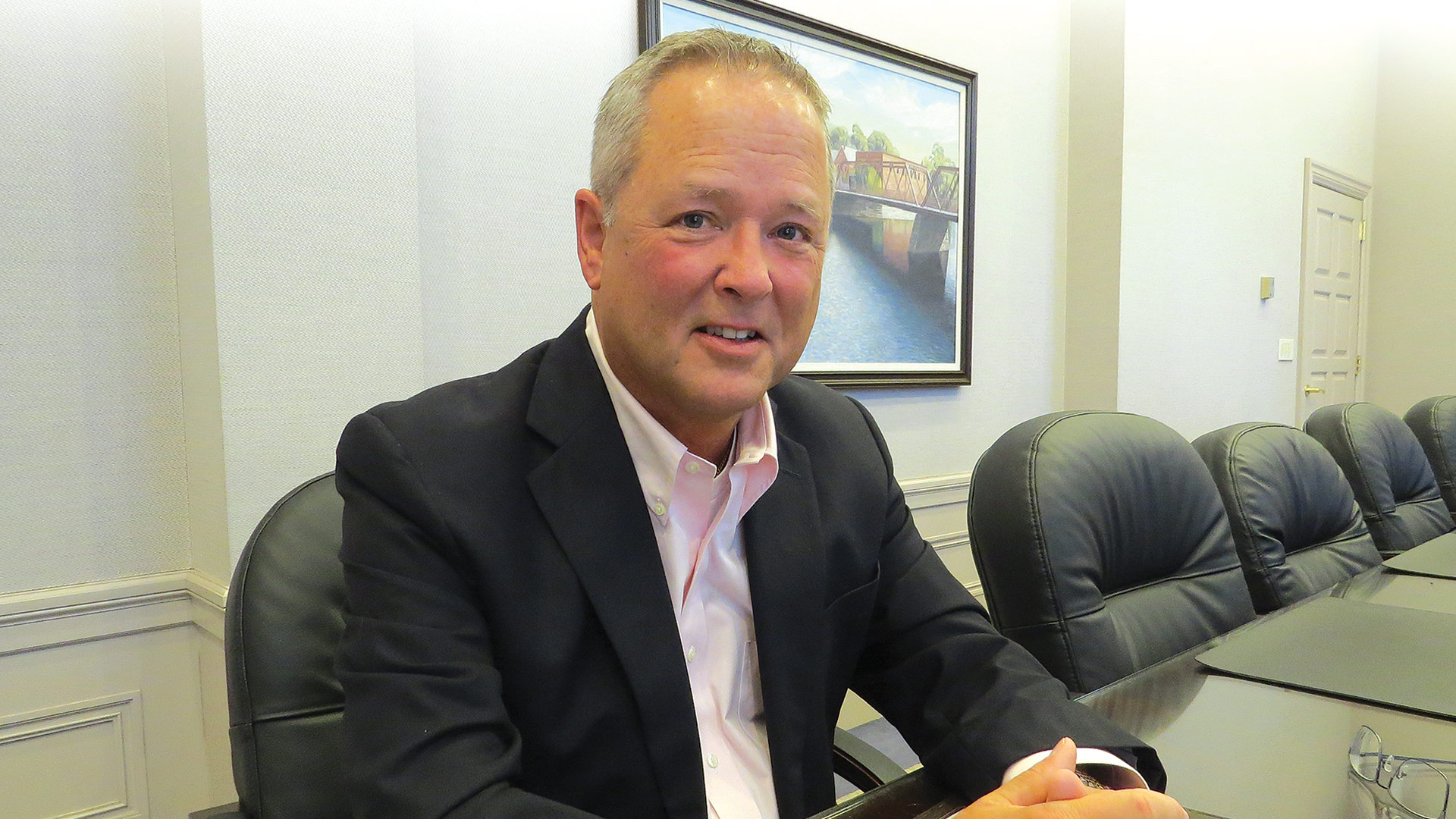
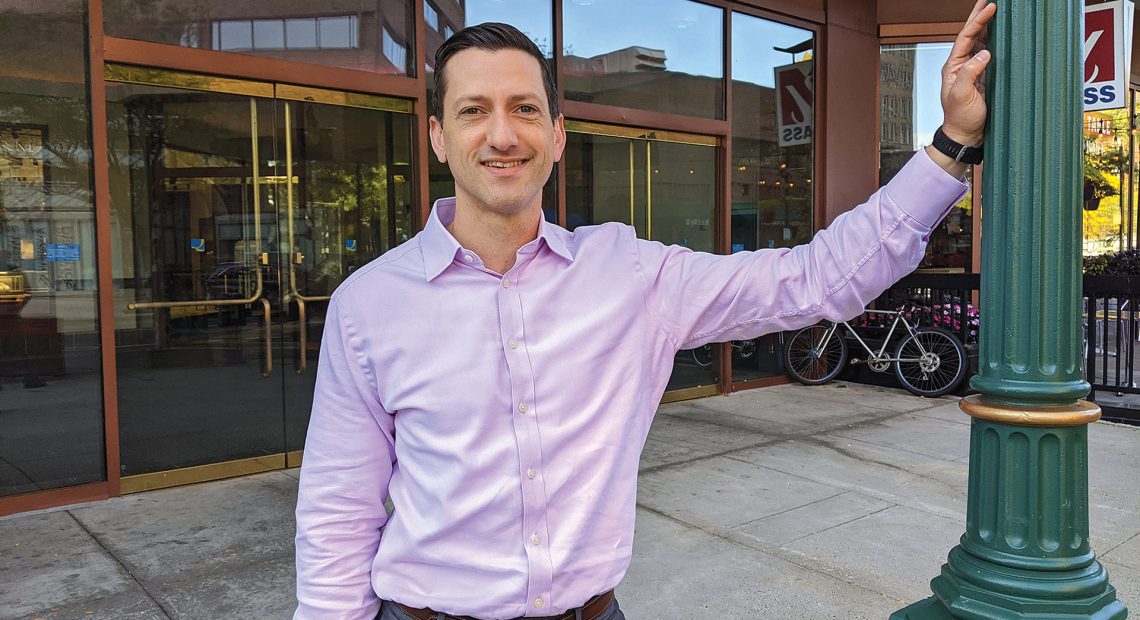
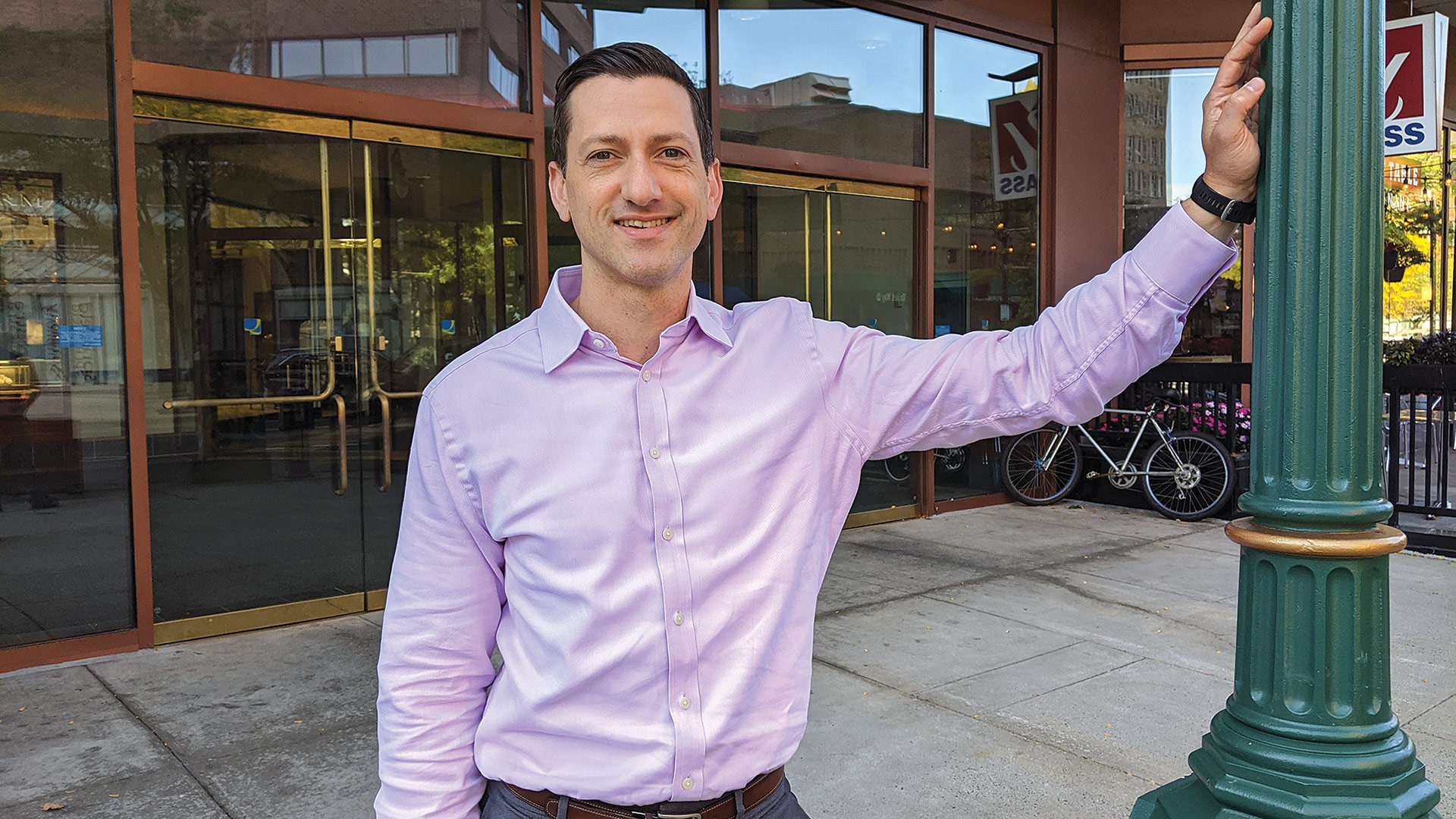
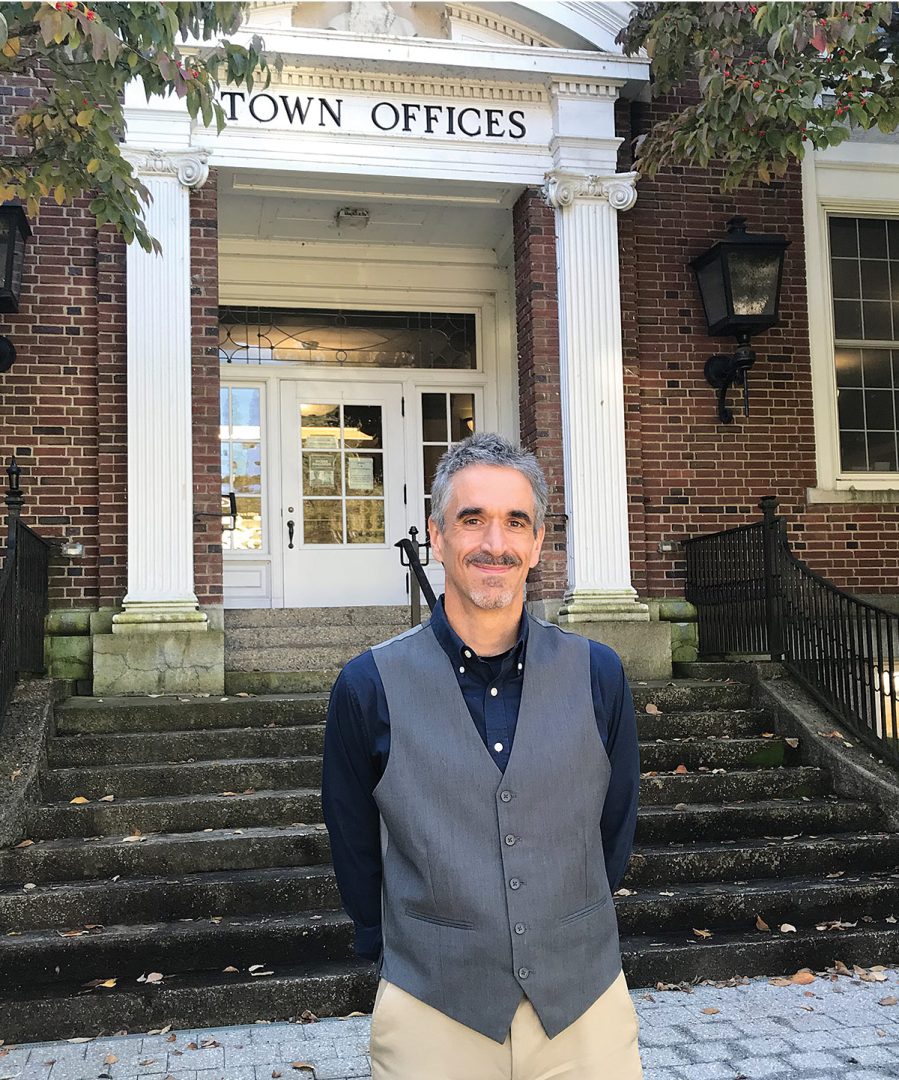
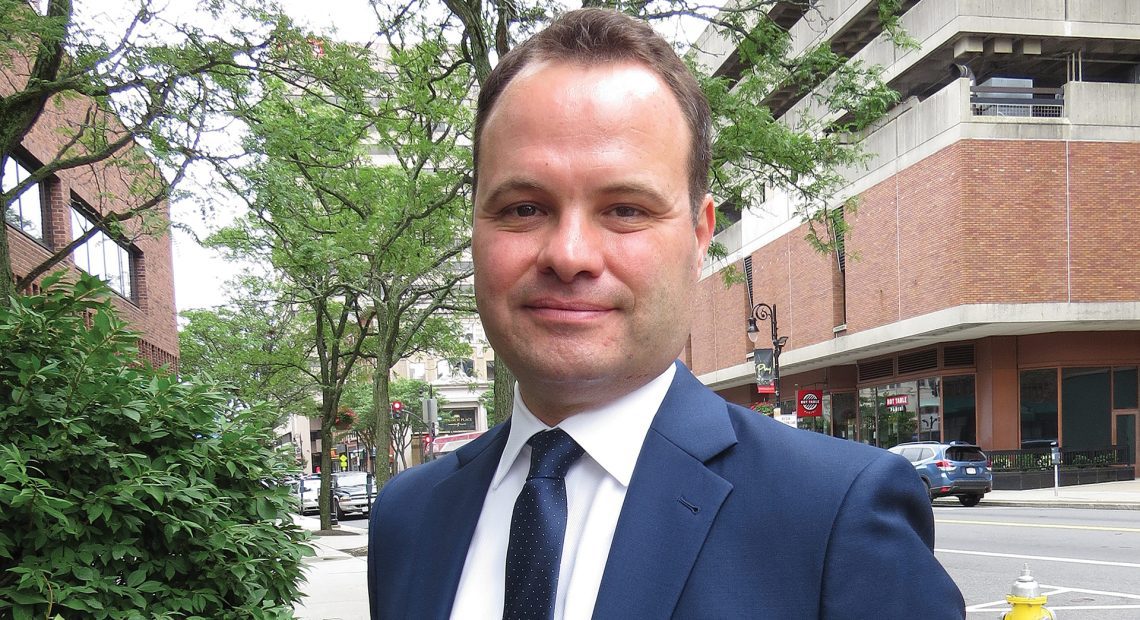
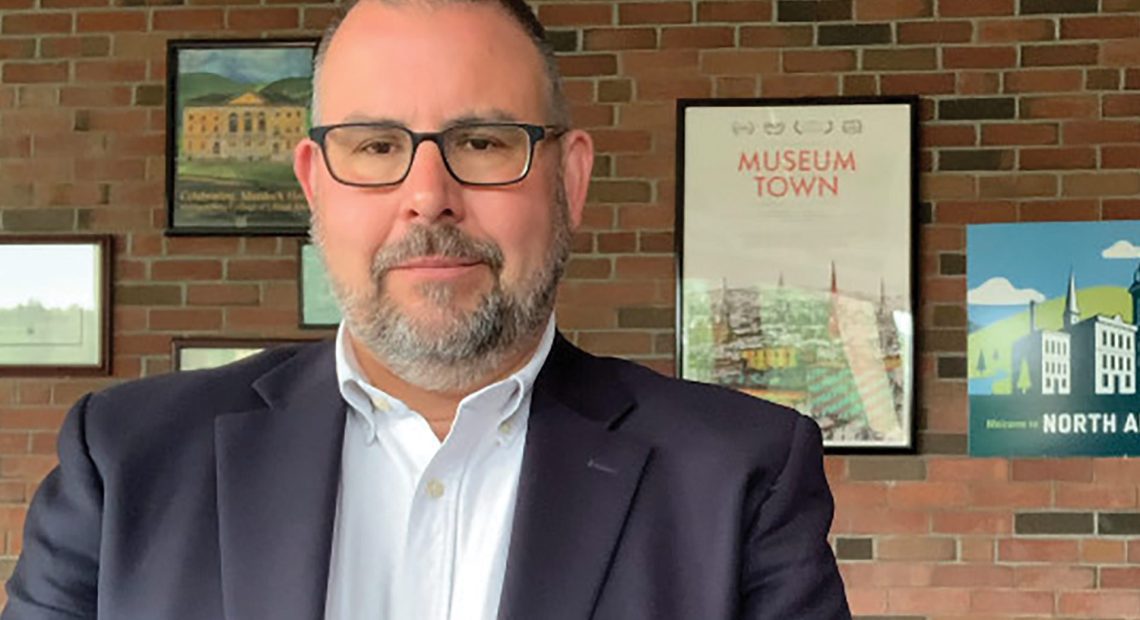
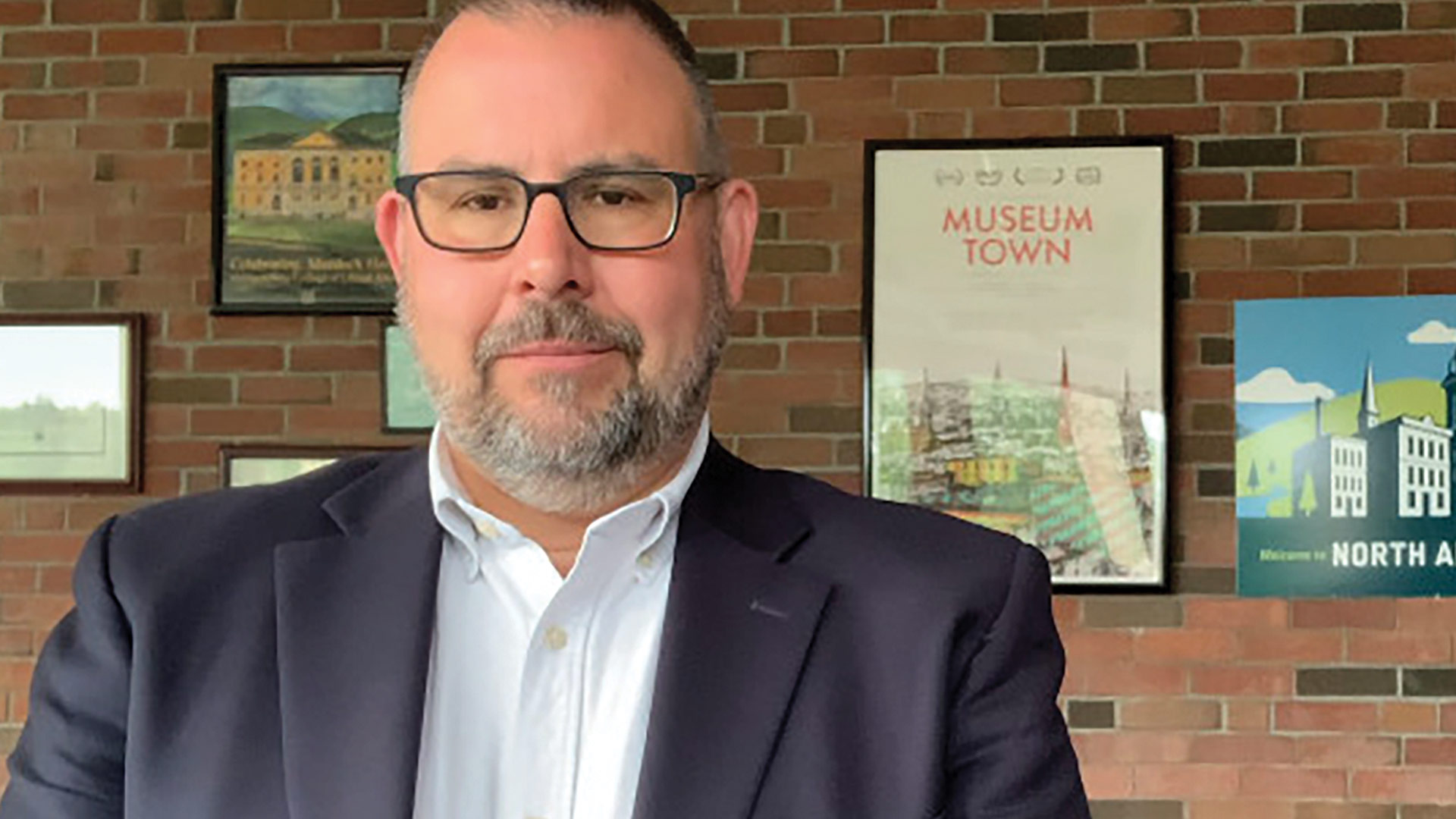
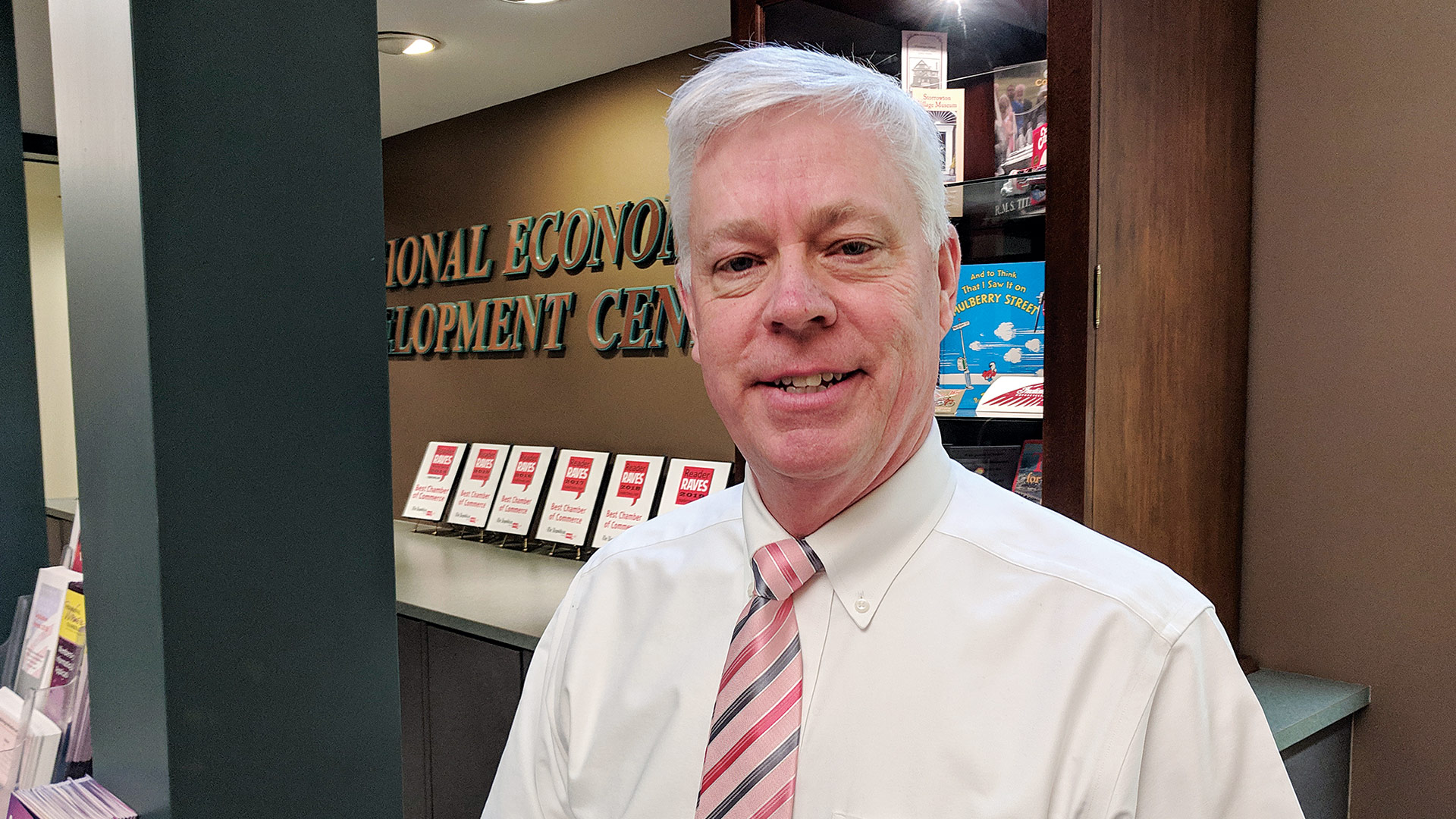
Mayor Thomas Bernard

Mayor Thomas Bernard is gratified to see events like the FreshGrass Festival and the Fall Foliage Parade return to North Adams.

While North Adams tries to return to familiar norms, many are prepared to adjust if new pandemic concerns arise.

That’s the perspective of Mayor Thomas Bernard, anyway, who said his community has slowly and cautiously taken steps to bring back the positive routines of daily life.

“The moment that stands out for me is our first concert at Windsor Lake in early to mid-June,” Bernard said. “There were people who hadn’t seen neighbors and friends for more than a year. The sound of kids laughing and playing, great music, the spirit was unbelievable.”

More recently, he pointed to MASS MoCA’s FreshGrass Festival in September as an example of holding a popular event and exercising caution, as attendees had to show proof of vaccination or a negative COVID-19 test before entering.

“Returning to these events is the fulfillment of the promise we made to each other when things were shutting down — that we would be back,” Bernard said.

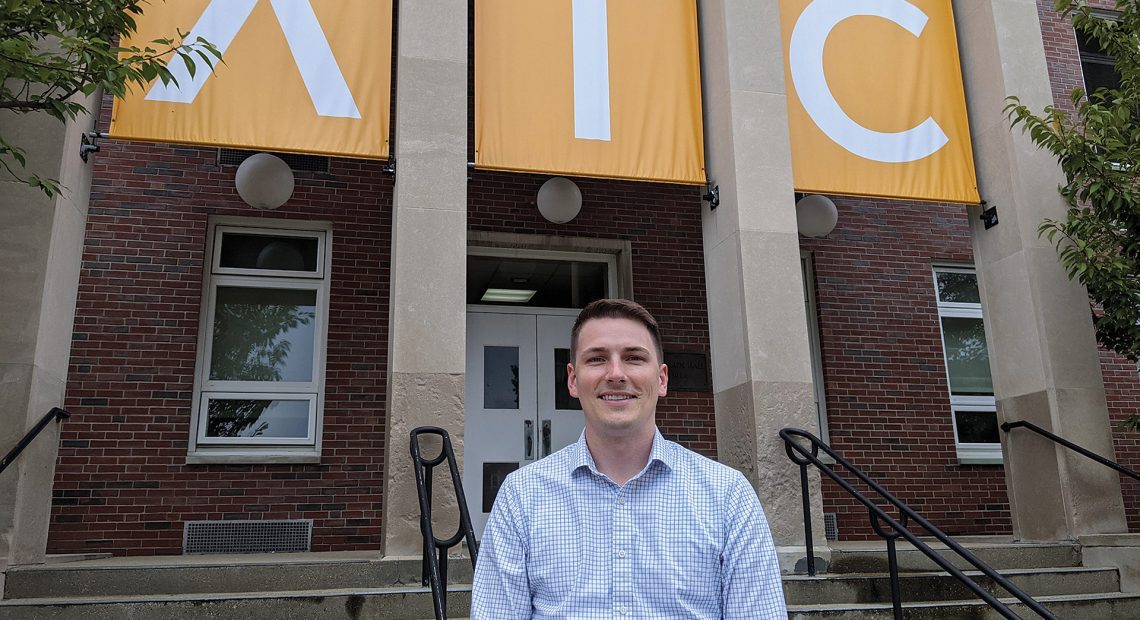
Though no one can predict what the future holds, Nico Dery said North Adams businesses are prepared to make a quick pivot if necessary.

“Businesses now have COVID plans in place that were developed from an entire season of figuring out what worked and what didn’t,” said Dery, business development coordinator for the North Adams Chamber of Commerce.

The city was the site for a robust vaccination effort that began in January and ran through June, during which time volunteers at the Northern Berkshire regional vaccination center held 40 clinics and administered nearly 25,000 vaccines to residents.

Right now, the vaccination rate in North Adams is around 65%, but that percentage does not reflect a fair number of residents who received their vaccine in Vermont or New York, the mayor pointed out. With North Adams located in the northwest corner of the state, the borders to both adjacent states are easily accessible.

“However you figure it, I’m not going to be happy until the numbers get above 80%,” he added.

“I’m optimistic and believe we’re going to have a great foliage season. Many businesses I’ve spoken with are preparing for lots of visitors this fall.”

Members of the regional emergency-planning committee who ran the COVID-19 operations center were honored at the 65th annual Fall Foliage Parade on Oct. 3.

“Everyone who was involved in the public-health response and the vaccination efforts are the folks who will be celebrated and honored as a sign of how far we have come,” Bernard said the week before the event — and a year after the parade was cancelled due to the coronavirus.

“The theme of this year’s parade was “Games, Movies, Takeout” — “everything that kept many of us going during the darkest times of the pandemic,” the mayor added.


No Summertime Blues

Businesses in North Adams experienced what Dery called a “great summer,” with lots of visitors exploring the Berkshires.

“In the past, we had seen many people come here from New York City, but because of COVID, we’ve seen a big increase of people from the Boston metro area,” she noted, crediting the increased visitor traffic to people choosing to forgo a European or cross-country vacation and instead stay closer to home.

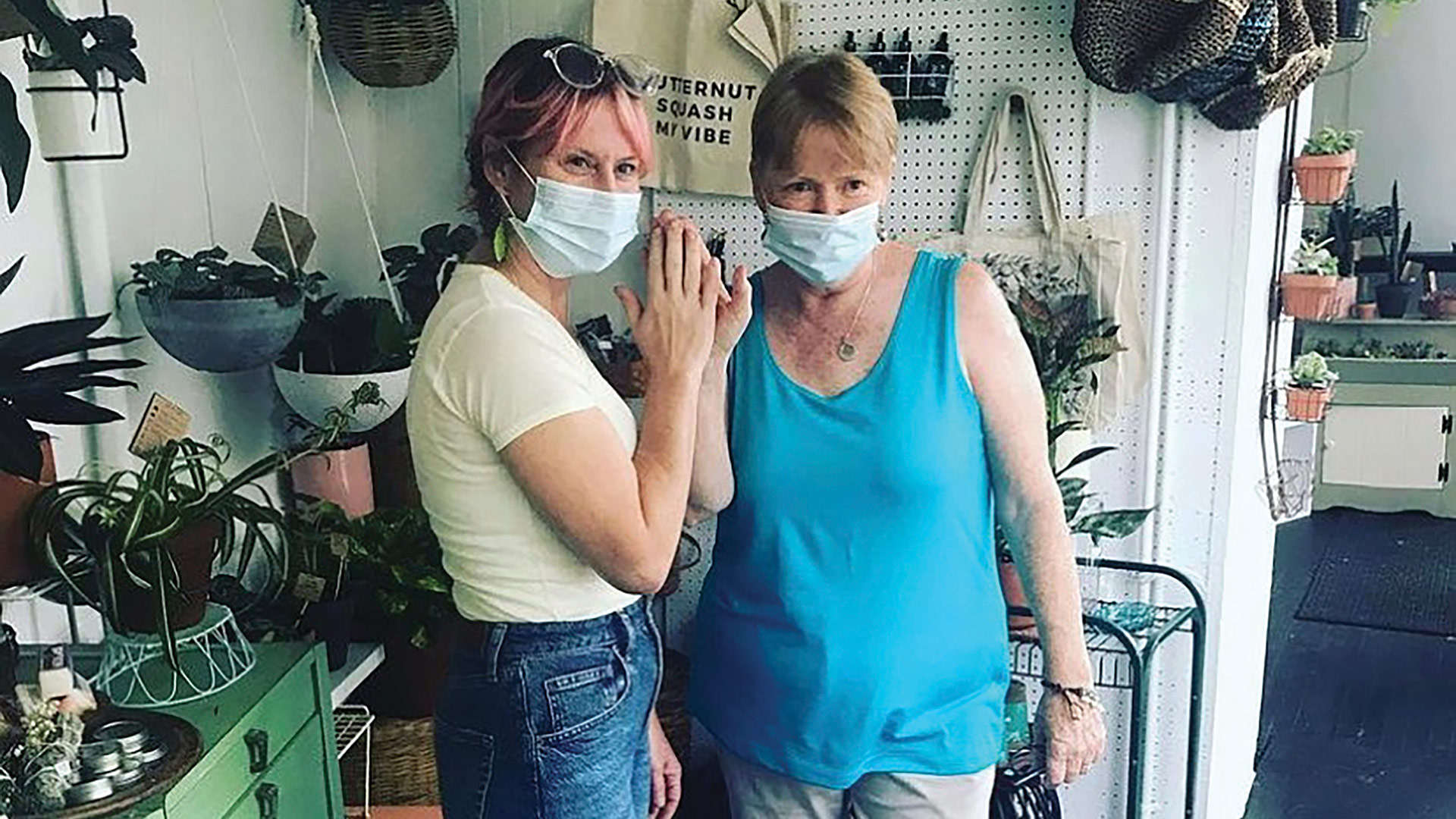
Emilee Yawn and Bonnie Marks, co-owners of the Plant Connector

Emilee Yawn and Bonnie Marks, co-owners of the Plant Connector, recently shared this photo on social media depicting their opening day last fall.

“I’m optimistic and believe we’re going to have a great foliage season,” she added. “Many businesses I’ve spoken with are preparing for lots of visitors this fall.”

North Adams has also seen a number of businesses open during the pandemic. Bernard pointed to the Clear Sky Cannabis dispensary, which opened in March, and the Bear and Bee Bookshop in June.

The Plant Connector opened in September 2020 before vaccines were available. Emilee Yawn, a co-owner of the shop, heard from naysayers who said North Adams was a tourist destination and, since there were no tourists during the pandemic, no one would come in.

However, “from the moment we opened, we’ve been bustling,” she said. “I had been growing plants in my one-bedroom apartment, and in no time, we had sold 120 plants. We had to quickly find a wholesaler and become a real business.”

Yawn and co-owner Bonnie Marks met at Jacob’s Pillow Dance Festival, where Yawn was office manager and Marks was a bookkeeper. When Yawn was laid off at the beginning of the pandemic, the idea of a store to promote their mutual passion for plants became more real.

Recently celebrating the first anniversary of the Plant Connector, Yawn noted that, since the opening, more than 6,700 people have walked through the door, and they’ve been averaging around 800 people a month — not bad for a 400-square-foot space.

While they have a website and have recently sold plants to customers in New Jersey, nearly 90% of their sales are from local people in the Berkshires.

North Adams at a Glance

Year Incorporated: 1878
Population: 13,708
Area: 20.6 square miles
County: Berkshire
Residential Tax Rate: $18.64
Commercial Tax Rate: $39.83
Median Household Income: $35,020
Family Household Income: $57,522
Type of government: Mayor; City Council
Largest Employers: BFAIR Inc.; Massachusetts College of Liberal Arts
* Latest information available

“We feel very supported by the community,” Yawn said. “North Adams is a special place; I’ve never felt connected to so many awesome people.”

As the weather starts getting cooler, business is picking up, and Yawn is looking forward to leaf peepers drawn to the Mohawk Trail and surrounding areas. “We’re excited for them to come peep around our shop,” she added.

Businesses in North Adams are also gearing up for the holiday season and what’s known as Plaid Friday. The North Adams Chamber promotes this annual effort with posters and through social media to businesses throughout the Northern Berkshires.

“We started this initiative to encourage people to spend money in their communities on the day after Thanksgiving instead of going to the big-box stores,” Dery said. “Many retailers will run Plaid Friday all that weekend.”

Similar to most communities, hiring in North Adams, particularly in restaurants, remains a challenge. So far, many restaurants are operating at reduced hours to retain staff and prevent burnout.

“This upcoming winter will be interesting because many people are thinking outside the box on how to best manage this,” Dery said.


The Next Phase

Bernard will also have an interesting winter after deciding not to run again for mayor. On the job since 2018, he called his time in office a “privilege of a lifetime, to serve North Adams, the community where I grew up.”

He looks forward to an historic election as voters will choose the first woman mayor in the city’s history. The two candidates who emerged from the runoff election, Jennifer Macksey and Lynette Bond, will face each other in the mayor’s race in November.

Bernard said he is still exploring the next move in his career. “I’m asked so often about my future plans, I feel like a senior in college,” he said with a laugh.

As she reflected on the success of the Plant Connector, Yawn admitted she thought the store would flop and she would have to sell plants on eBay and Etsy to survive. Shortly after opening, however, she saw they had something special there.

“I always say this about North Adams,” Yawn said. “This city chooses its people, and people don’t choose it. That’s why there’s a high concentration of awesome people here.”

Law

Discipline for Social-media Speech

By Kevin Maynard


In any given week, a news outlet or website will spotlight an employee being suspended or fired by an employer for a social-media post. These posts range from expressions of political sentiments and individual beliefs to commentary on the employee’s workplace or even the employer itself.

With the prevalence of social media in the daily lives of most individuals, employers are increasingly disciplining their employees for off-duty social-media posting, and employees are pushing back with legal actions.

In the resulting legal disputes, employees often mistakenly believe that the First Amendment protects all in-person and online speech. In reality, the First Amendment’s free-speech protection is limited to protection against government action. While public employers have a First Amendment obligation to respect some of their employees’ speech, private individuals and employers generally have no such constitutional obligation.


Public Employee Speech

Generally, a public employee’s speech is protected when it relates to a matter of public concern or importance. However, this is not an absolute, and a court must balance an employee’s right to free speech against an employer’s interest in an efficient, disruption-free workplace.

For example, a public-school teacher brought a lawsuit against her school district after being fired for making negative blog posts regarding supervisors, union representatives, and fellow teachers. In upholding the termination of employment, the Court of Appeals in the Ninth Circuit ultimately held that the blog posts harmed the Washington State public-school district’s legitimate interest in the efficient operation of its workplace because other teachers refused to work with the former teacher, and the termination was, therefore, appropriate.

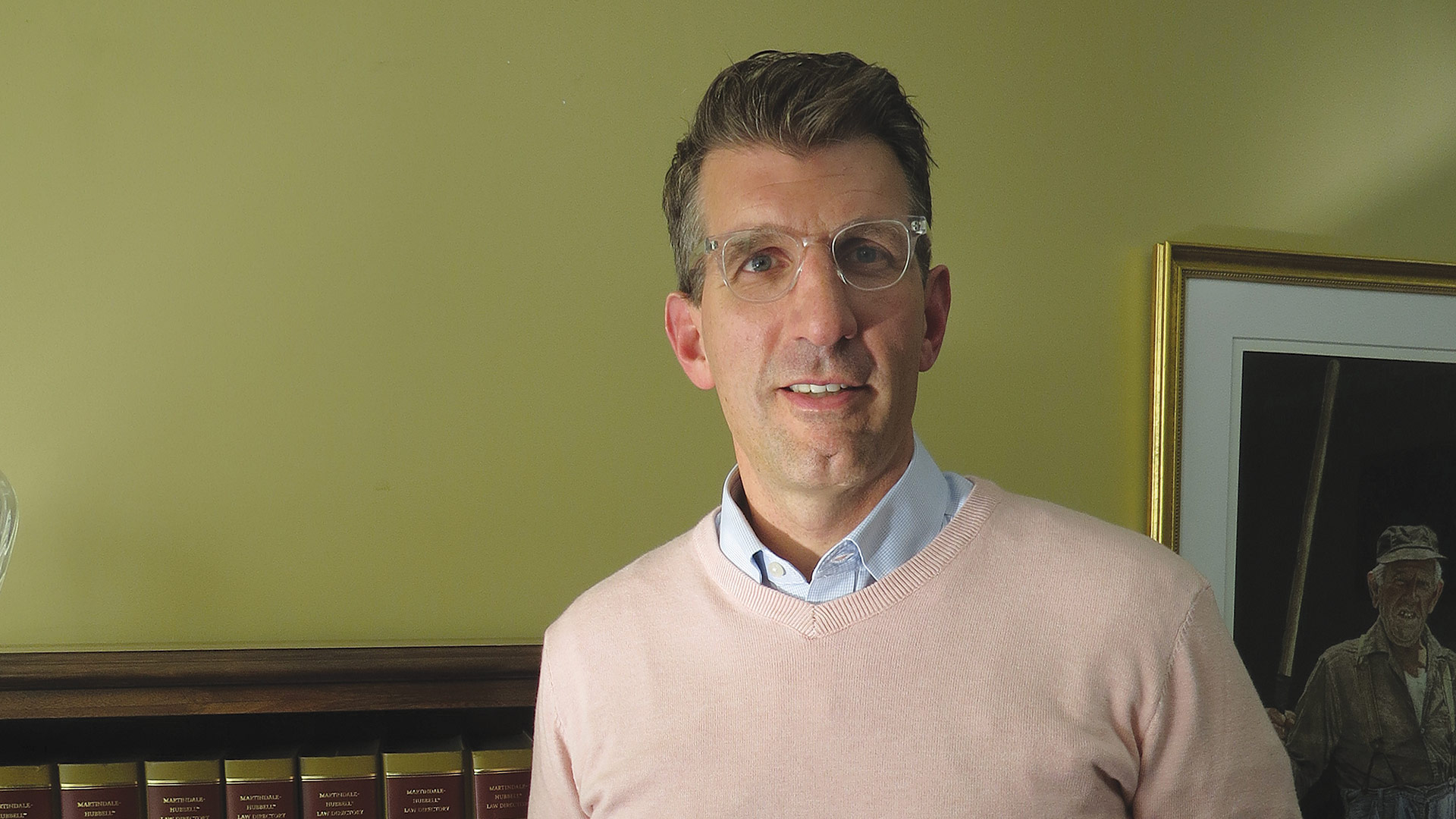
Kevin Maynard

Kevin Maynard

“In the resulting legal disputes, employees often mistakenly believe that the First Amendment protects all in-person and online speech. In reality, the First Amendment’s free-speech protection is limited to protection against government action.”

Earlier this year, a public-school teacher in Fall River was fired for posting allegedly political and racist comments on social media. The teacher filed a lawsuit in Massachusetts federal court, claiming the city did not have “good cause” to terminate her employment and that her teachers’ union breached its duty of fair representation by not providing her any representation following the termination of her employment. An arbitrator to whom the matter was referred by agreement has reportedly found in the teacher’s favor, ordering reinstatement to her position and payment of all back wages. According to her attorney, the teacher intends to sue for retaliation and defamation.


Private Employee Speech

Unlike in the public sector, the First Amendment generally does not apply to the actions of private employers. However, private employers even in a non-union setting must be compliant with the National Labor Relations Act, which gives private employees the right to engage in “concerted activities” for the purposes of collective bargaining.

Examples of concerted activities include an employee talking with co-workers about working conditions, circulating a petition about improving working conditions, or joining with co-workers to talk directly to their employer. Regardless of whether the concerted activity occurs in person or over social media, an employer cannot interfere with such an activity taking place during or after work hours. Beyond this concerted-activity issue, the concepts of ‘at-will employment,’ ‘good cause’ for termination, or other common law or contractual issues may be relevant.


State-specific Protection for Lawful Off-duty Activity

Some states have laws that protect lawful off-duty activities of both public and private employees. In Colorado, an airport-operations supervisor was terminated for posts on her Facebook page regarding her support for preserving the ‘Rebels’ mascot of her high school, particularly one post that depicted the mascot with the Confederate flag.

A Colorado court vacated her termination of employment because it violated a Colorado statute making it unlawful to terminate an employee for engaging in a lawful activity outside of work. California, Louisiana, New York, and North Dakota have similar laws prohibiting employers from taking adverse employment actions based on lawful off-duty activities. Massachusetts has not enacted such a law.


Advice for Employers

Employers may choose to adopt social-media policies that address off-duty conduct. Anti-harassment and anti-discrimination policies should also address off-duty social-media activity. Any social-media policies should be enforced reliably to ensure the consistent treatment of employees.

In enforcing a social-media policy, employers must assess the effects of an employee’s social-media post on a workplace, including its impact on the ability of employees to work with one another. Social-media policies can be a helpful way for employers to set clear expectations regarding the standard of online conduct they expect of employees. The absence of such a policy can make the results of an employee’s challenge to an employer’s disciplinary action for inappropriate social-media posts much more unpredictable.


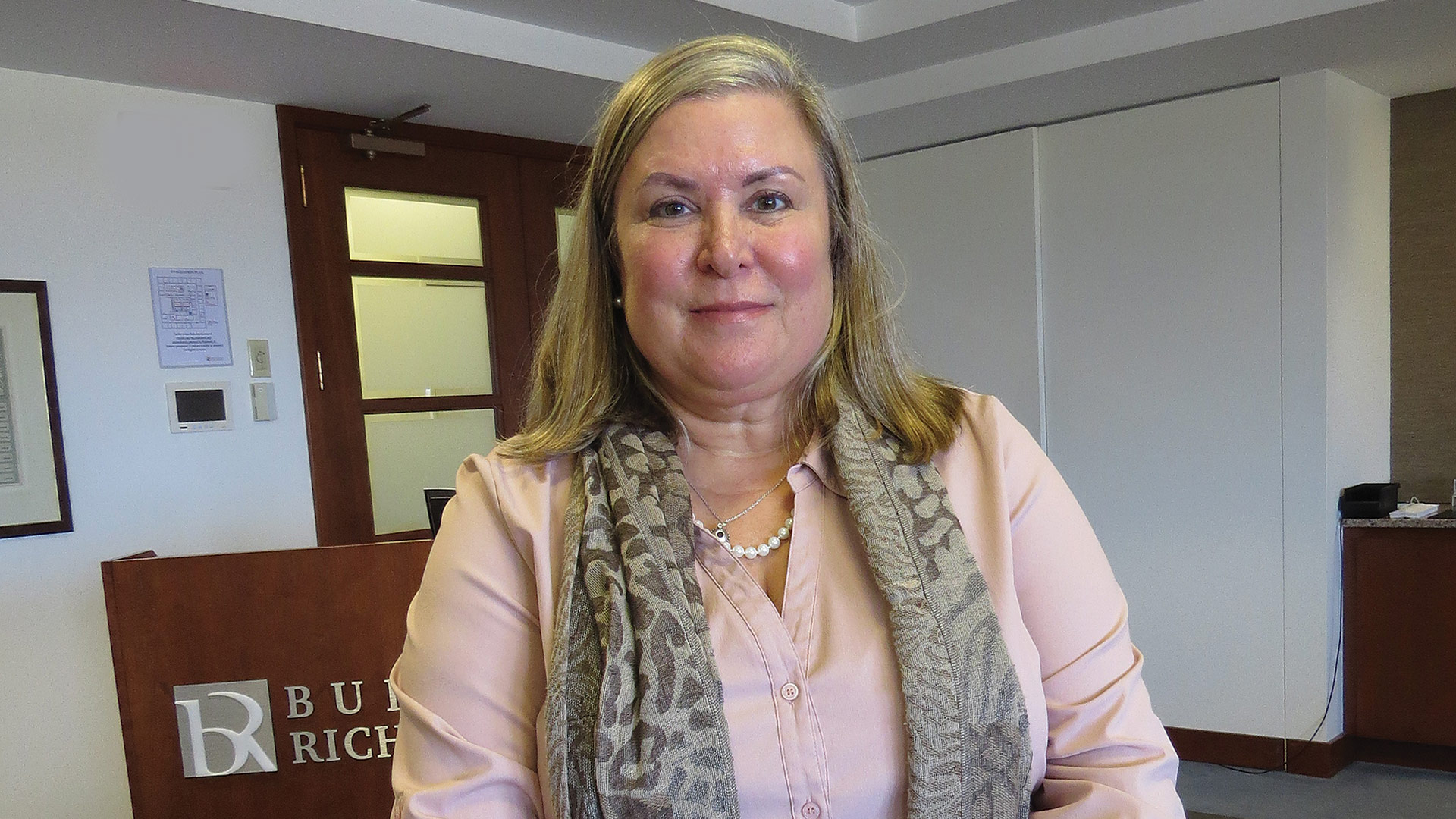
Kevin Maynard is an employment law and litigation partner at Bulkley Richardson; (413) 272-6200.

Law

Remodeling Woes

Joshua L. Woods, Esq.


Many of us love watching home renovations on television. Whether the redos are taking place at a beach-house bungalow, a tiny apartment, or a Victorian mansion, it’s always entertaining to live vicariously through people remodeling a house or building their dream home.

But what happens when opportunity knocks in real life, and you have the chance to create a space of your own design? Perhaps you envision a beautiful, blue-tiled backsplash against white kitchen cabinets, heated bathroom floors, or a cozy living room with a gas fireplace. With a reliable and trustworthy contractor, all things are possible.

Unfortunately, not all contractors are reliable and trustworthy. Someone close to me recently experienced firsthand the horrors of hiring the wrong renovation company. My friends lived to tell the tale, but along the way, their family suffered through considerable delays, shoddy work resulting in added expenses and additional repairs, and the all-consuming worry of working with an uncommunicative contractor. Here is the story of a ‘craftsman’ remodeling company whose primary craft proved to be collecting payments for unperformed work.

It all began when my friends, first-time homebuyers, hired a local contracting company to perform a complete restoration and remodel of a charming 1930s colonial-style house. After interviewing five separate contractors, my friends decided to work with ‘Craftsmen’ (the company’s name has been changed to protect their anonymity). The contractor was extremely charismatic, proposed a comparable bid, and seemed to have just the right can-do attitude needed to complete the project. Craftsmen provided three references who, when contacted, sang the company’s praises. Craftsmen also had great online reviews. My friends decided to move forward and agreed to the terms of a proposal from Craftsmen, officially hiring the company for their project.

Joshua L. Woods

Joshua L. Woods

“They had to live through an enormous amount of stress, the upheaval of an unfinished living space, hideously long delays, and considerable additional expenses. You can learn from their mishaps.”

Craftsmen requested a down payment, and upon receiving the funds, the first step of the project — demolition — was scheduled. Pursuant to the payment schedule on the written proposal, the second payment would be due on demolition day, the third would be due when rough plumbing was installed, the fourth upon installation of rough electrical, the fifth upon installation of drywall, and the sixth and final payment would be due when the project was completed.

To their chagrin, my friends soon discovered the problem with this payment schedule: the majority of the fees would be paid prior to the rebuilding. That is, four hefty payments were required before the demolished spaces would be fully rebuilt.

At first, the contractor completed the demo work on schedule, but then they went silent. The house sat in disarray, unfinished, for months after the first payments were made. Nothing was accomplished properly. The plumbing was installed incorrectly, there was an old toilet left in the dining room for months, the trim was unfinished, the hardwood floors were ruined, exposed electrical wires dangled from the walls, and the list went on. My friends finally decided they could no longer tolerate the situation and made the decision to fire Craftsmen.

For anyone considering renovations, keep the following steps in mind, which can help protect you from a similar experience:

• Verify the contractor is in good standing. Ask for the contractor’s business-license number and research it on the state’s website to ensure there are no lawsuits against the company. You should also search the Better Business Bureau for complaints.

• Look into the contractor’s partners and vendors. Request a copy of the business license for all subcontractors who may work on your project.

• Contact references. Before hiring a contractor, always ask for multiple references and contact as many as you can. Listen closely to what they say. When speaking with references, you will certainly wish to inquire about the ‘big stuff,’ including satisfaction with the final project and pricing, but it may also be wise to inquire about smaller details including punctuality, cleanliness on the job site, responsiveness to calls and requests, etc. Looking back, my friend should perhaps have seen a red flag when Craftsmen provided only three references. A reputable company should be able to provide evidence of a great many satisfied customers.

• Have an attorney review the fine print. Another red flag should have been the lack of a formal contract at the outset and the lack of itemized billing during the project. Craftsmen provided only a written proposal, which is not sufficient for a project of this magnitude. When hiring a contractor, be sure to protect yourself by having a qualified attorney review all documents, proposals, and contracts before you sign. All contracts should include a clear payment schedule in which the final payment is typically 25% of the entire fee, provided only upon completion of the project and a satisfactory final walk-through with the contractor. Once hired, all communication should be in writing, and you should request regular written updates from the contractor, so there is a clear understanding of the status of work completed and work to be done.

• Document the process. As the saying goes, a picture is worth a thousand words, and that is certainly true where renovation projects are concerned. Be certain to take many photos of your project, including shots of the site before, during, and after the renovation is complete.

My friend and his family were ultimately able to pivot their renovation to another contractor, who repaired Craftsmen’s mistakes and finished the project. The family is now happily enjoying their beautiful, freshly remodeled home.

If my friends had only done more diligent research and consulted with an attorney before working with Craftsmen, they could have potentially avoided the entire awful experience. Instead, they had to live through an enormous amount of stress, the upheaval of an unfinished living space, hideously long delays, and considerable additional expenses. You can learn from their mishaps and use the steps above as important preventive measures. They may be your — and your house’s — saving grace. v


Attorney Joshua L. Woods is an associate with Bacon Wilson, P.C. and a member of the firm’s business, corporate, and commercial law team. He has extensive experience in matters of business law, including all aspects of corporate formation, franchising, joint ventures, leasing, and business and commercial litigation. He is licensed to practice in both Massachusetts and Connecticut; 413-781-0560; [email protected]

Cybersecurity

Vulnerable Population


When people think about cybersecurity threats, Stephanie Helm said, they often think only about the technical side — the ways in which electronic devices can be compromised and data stolen.

They sometimes forget about the human side of the equation — but that’s where older adults are often especially at risk.

“There’s a technical vulnerability that can be exploited, whether it’s somebody’s password, exploiting a vulnerability because they failed to update the device to include a patch, or maybe they’re using an unsecured WiFi when they’re in a public location,” said Helm, director of the MassCyberCenter. “So there’s a technical component that everyone using the internet is facing today.”

Just as critical, however, is what she calls the “social engineering of the individual,” where a victim willingly divulges information based on the fact that somebody’s engaging them in a personal way.

Stephanie Helm

Stephanie Helm

“These are professional people who know how to hit those emotional buttons and continue that relationship with the hope that somebody is going to divulge information.”

“Older folks might not have the comfort level with the technology to secure their information,” she said, “and they may be more vulnerable to the social engineering.”

Helm shared these thoughts and others during a webinar presented last week by LeadingAge Massachusetts, titled “Cybersecurity: Helping Older Adults Stay Safer on the Internet.” She joined Rubesh Jacobs, managing director of 24/7 Techies USA, and Judy Miller, director of Technology and Accounting for Kendal at Oberlin in Ohio, to discuss the reasons seniors are increasingly falling prey to online and e-mail scams, and what can be done about it.

“The number of scams leading to financial loss has been dramatically increasing since 2019,” Jacobs said, citing a Federal Trade Commission (FTC) report that the number of online scams tripled between 2019 and 2020, outpacing phone-call scams — which actually declined slightly — for the first time. Meanwhile, e-mail scams more than doubled.

“The acuteness of that spike is shocking,” he added. “We’ve also noticed this trend in our own call centers; 28% of calls we get for help are somehow related to fraudulent activities online.”

According to the FTC, Americans age 60 and up are falling prey to tech-support scams — in which someone poses as a computer technician to gain remote access to the victim’s computer — about 475% more often than those ages 20 to 59. (By contrast, the younger group falls victim to online-shopping scams 60% more often than seniors.)

“Senior citizens are really in that nexus where a criminal can get at them through technical means, or they can get at them through social engineering” — and often a combination of both, Helm said. “The protections you put in place have to look at both of those aspects because you’re not quite sure which of those things a person might be most vulnerable for. I think that’s really troublesome.”

Judy Miller

Judy Miller

“Seniors lose an average of $500 or more when they’re scammed, sometimes due to the fact that they are often trusting and polite, they own their own home, and they have good credit, so they make a good target.”

Effective cybersecurity, she explained, considers people, processes, and technology working together to make someone more resilient and likely to recognize scams.

“The components of social engineering are worth thinking about,” she added, noting that a scam might begin with a realistic bot, either on the phone or online, that shifts over to a live scammer if the victim responds.

Those victims, Helm said, are often lonely and want to talk to someone, or they’re trusting and grateful that someone wants to help them solve a problem, which is why scammers try to establish trust.

One reason for the recent spike in cases is that many older adults were much more isolated starting early in 2020, with family members avoiding most visits until after COVID-19 vaccinations arrived, she noted. But families do need to engage with these topics. “Having an ability to ask questions or to talk about things they’ve been presented with in a safe manner is really important.”

But seniors are far from the only victims, Helm said. “If they continue the engagement, these are professional people who know how to hit those emotional buttons and continue that relationship with the hope that somebody is going to divulge information.”


It Takes a Village

Miller has worked for Kendal Corp. for 28 years, so she’s seen these threats evolve at her own facility, which offers units for independent and assisted living, memory care, and skilled nursing.

“Seniors lose an average of $500 or more when they’re scammed, sometimes due to the fact that they are often trusting and polite, they own their own home, and they have good credit, so they make a good target,” she explained. “They have also been falling prey to cyber incidents because of their increased use of the internet.”

Scams that have targeted her residents have taken many forms, from imposters posing as legitimate government agencies or companies requesting payments to fake but attractive offers for gift cards, and much more. Most originate from e-mail, she noted.

When Jacobs asked Miller how often she hears such things, she responded, “it’s almost more important how much we don’t hear about them.”

To make sure people stay educated, if she hears of a scam targeting a resident, all residents are alerted, and some tech-savvy residents will even spread the word themselves if they encounter a scam attempt. “It’s really engaging the entire community to help each other in preventing some of those things from happening.”

Once a scammer gains someone’s trust, Helm said, they often introduce an element of urgency — the idea that the victim has to act now to get a deal or avoid a penalty or legal trouble.

“We should talk about how these scams exist and give senior citizens the confidence that they can recognize when this doesn’t make sense and avoid that sense of urgency to act, because that’s where you make a mistake,” she explained. “It’s perfectly acceptable to say, ‘I do all my business by mail — put a letter in the mail to me, and I’ll respond to you.”

But it’s easier said than done, she admitted, especially at a time when many seniors — and younger people, for that matter — have been more isolated than usual.

“I think it’s difficult for anybody in society to be fully armed and resilient. I feel if people become isolated in their old age and are not as familiar with some of the technology, they can get intimidated. So this is an area where we’re trying to see if we can be more helpful to them.”

Family members can help educate their older loved ones by asking gentle but probing questions about what may be going on, the webinar participants noted, and encourage residents of senior-living communities to call an administrator if they encounter a suspicious e-mail or think their information may have been compromised. And, of course, they should emphasize the importance of protecting passwords and other sensitive information, not clicking suspicious links, and shopping only at reputable, well-known websites.

“If it sounds like it’s too good to be true, it probably isn’t true,” Helm said. “I like to talk with senior citizens about having confidence in the skeptical skills they had throughout life. These are scams that happen to be on a computer, but they’re scams we grew up with since we were kids — bait and switch, or acting like an imposter.”

She takes a broad view of threats, having served in the U.S. Navy for 29 years. After her retirement as a captain, she taught military operations, specifically on integrating cyberspace operations into wargames.

“That was an opportunity to talk about how cybersecurity or cyber operations can affect operations that you traditionally would not think they would impact,” she explained. Now, in her role with the Mass Cyber Center, she knows there are few areas cybersecurity doesn’t impact — and that older Americans are often especially at risk.

“Today,” she said, “we all know this has great consequences to our daily lives.”


Joseph Bednar can be reached at [email protected]

Health Care

‘A Wonderful, Wonderful Fit’


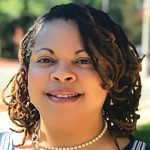
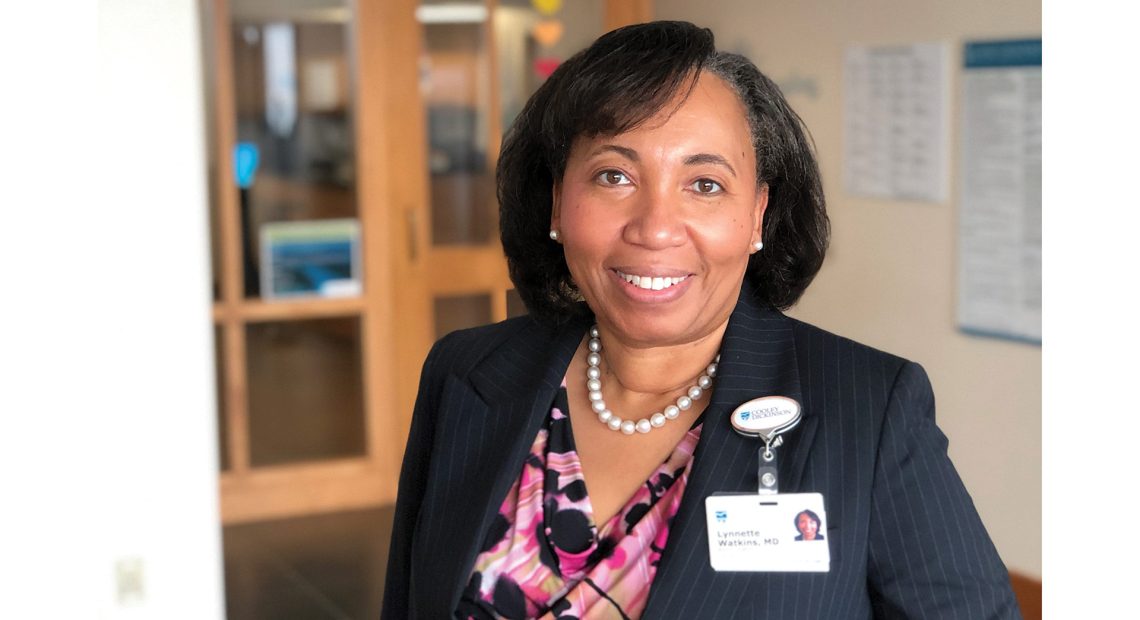
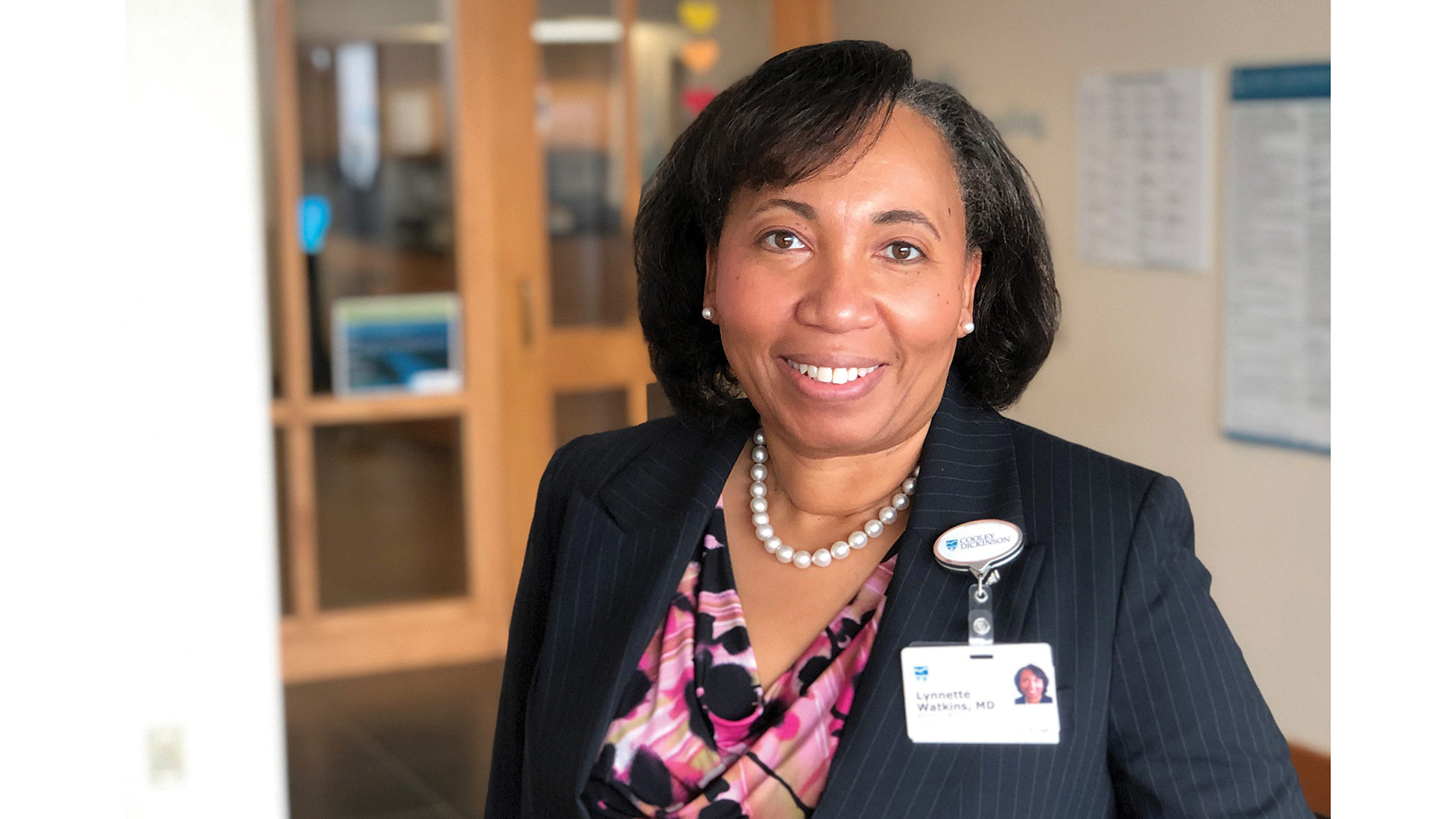
Dr. Lynnette Watkins says she is most definitely her father’s daughter.

By that, she meant she is a second-generation ophthalmologist, following the lead set by her father, L.C. Watkins, who is one of the first African-Americans practicing in that specialty in St. Louis.

“When I say that I stand on the shoulders of giants, I don’t take that lightly, and first and foremost is my dad,” she noted. “He’s been my biggest supporter, mentor, and point of light.”

But there were other influences as well, including her mother, an educator, and, more specifically, an early-childhood-development administrator, who was one of many who taught her the importance of giving back.

“It was always expected that, with the privileges and opportunities that were afforded to me, there was an expectation to serve and to give back,” she said. “Which is why, with each position and opportunity that I’ve pursued, I’ve always had that mindset first and foremost in my mind; it’s why I wanted to have a career in healthcare.”

This is the philosophy Watkins brings to her latest assignment, as president and CEO of Cooley Dickinson Hospital in Northampton. 

She takes the helm at CDH after a lengthy stint as chief medical officer for the Baptist Health System/Tenet Healthcare – Texas Group, and arrives at an obviously stressful, tenuous, and uncertain time for all healthcare providers, one still dominated in every way by the COVID-19 pandemic and its latest surge.

“While there’s been a lot of challenge and a lot of sadness during the pandemic, there’s also been some wonderful lessons and teachings in the resilience of people.”

Watkins, who arrived at the hospital on Sept. 27, brings to this challenge, and CDH, a wealth of experience. Like a growing number of those leading hospitals and healthcare systems, she has made the transition from direct patient care to managing those who provide that care. For her, it was a seismic but, in many ways, natural change.

“Many people have asked if the transition was difficult, and I’ve said that it was not,” she explained. “That’s because I found myself at peace moving from a clinical role to one that still has clinical elements, but instead of being the one-on-one patient-physician relationship, which is incredibly treasured, it’s one where I have the ability to impact multiple patients and improve the working lives of staff, medical staff, and other providers. I can make a bigger impact on a broader scale.”

She said there were many factors that went into her decision to come to CDH, summing them up with that often-used phrase “it was a perfect fit.” Elaborating, she said the area served by Cooley Dickinson, mostly Hampshire and Franklin counties, is one with a great deal of need, and she has experience working with such populations, as we’ll see.

Beyond that, she said this opportunity allows her an opportunity to take what she has learned at many different stops during her career and apply them to what will be a different — and obviously significant — challenge.

Lynnette Watkins says one of her first priorities will be meeting with as many community leaders and constituencies

Lynnette Watkins says one of her first priorities will be meeting with as many community leaders and constituencies — as well as frontline caregivers and hospital staff — as possible.

Watkins said the learning process has continued through COVID, which she believes has brought out the very best in those working in healthcare, while also putting an even greater focus on teamwork, collaboration, and innovation.

“While there’s been a lot of challenge and a lot of sadness during the pandemic, there’s also been some wonderful lessons and teachings in the resilience of people, resilience of systems, the importance of self-care and downtime, and the importance of working with others and understanding that it’s OK to say, ‘I need help,’” she explained. “What this has also done is challenged us to innovate, whether it’s in processes, such as supply-chain initiatives with PPE or the distribution of vaccinations and other pharmaceuticals such as monoclonal antibody infusions, or working together in groups to really take care of our community.

“That resilience, that collaboration, that innovation, that devotion to self and others have really been positive,” she went on. “The patience and working with a team have really helped me grow — as an individual, as a physician, and as a healthcare leader.”

For this issue, BusinessWest talked at length with Watkins about her latest assignment, why she came to CDH, and … how being her father’s daughter will help her as she takes on this latest career challenge.


Background — Check

In some ways, Watkins said, coming to CDH is like coming home — or at least coming back to that part of the country where she did her residency.

Specifically, that would be Mass Eye and Ear in Boston. But she did get out to the Northampton area on several occasions during those residency years, so she’s not a total stranger to the 413.

There were several career stops between Boston and CDH, including a lengthy stint back at Mass Eye and Ear, where, from 1999 to 2004, she directed the Emergency Ophthalmology Service and walk-in clinic and was an attending physician in the Ophthalmic Plastic Surgery Service. And Watkins said all of them have helped her grow as both a provider of care and a manager of people. And she intends to put all of that experience to work at CDH.

Our story starts in Missouri, where Watkins, as noted, became intent on following her father into the medical field and earned her undergraduate and medical degrees at the University of Missouri – Kansas City and an internship in internal medicine at Truman Medical Center in Kansas City.

“I grew up wanting to go into medicine, and I was asked quite often if I was going to be an ophthalmologist like my father,” she recalled. “Candidly, I got tired of the question. It was through a series of rotations and the fact that I needed money for car insurance that my father said, ‘why don’t you come work for me in my office?’

“I did, and I liked it,” she went on. “I didn’t tell him for a while, but I did make that transition, and eventually declared that this was the specialty I wanted to be in.”

This decision brought her to Mass Eye and Ear in 1995 for her residency and stint at the at the walk-in clinic and Ophthalmic Plastic Surgery Service. She was there during 9/11, a moment in time and her career that convinced her to be closer to family and, in her words, “focus more on family.”

Elaborating, she said she went into private practice in Indiana and eventually became managing partner of a multi-specialty group, one with a large geographic footprint.

The administrative leadership of that group would later put it in “a significant financial disadvantage,” as Watkins put it, adding that she was thrust into the role of interim CEO. She said she would eventually wind down the two parent companies into multiple spinoffs, which are still ongoing today, an experience she described as both challenging and rewarding, and  one that would in many ways inspire her transition into management and leadership roles.

“We were able to keep patients seen, keep people employed, and move colleagues forward so they were able to practice — it was a huge, huge learning experience,” she told BusinessWest. “I joined one of the spinoff groups, but found myself wondering why I went through that experience.

“And it was actually a couple of colleagues, neither of whom had medical backgrounds but did have healthcare-industry backgrounds, who said, ‘this happened to you for a reason; you have this knowledge — why don’t you consider leading a hospital or healthcare system and pursue healthcare administration?’”

She thought about it and talked with family members, especially her father, to get buy-in and support. After securing it, she started pursuing healthcare administrative positions.

Her first stop was at Trinity Health in South Bend, Ind., and from there she joined Tenet’s Abrazo Community Health Network in Arizona as chief medical officer.

When that position was one of many eliminated in a round of budget cuts, she used connections she’d made to land a job as chief medical officer and chief operating officer at Paris Regional Medical Center in Texas, a system that was and is surrounded by some of the poorest counties in Texas and neighboring Oklahoma. Her time there was another important learning experience.

“One of the great joys of working there was working with people who keep in mind the individual who has limited access, limited transportation, and limited resources,” she said. “And in rural facilities where often there is one specialist or one type of provider, and there is limited access, having a high level of collaboration, particularly with the medical staff and the provider staff, is very important.

“Overall, that was an incredible learning experience, understanding the intricacies of running a facility that’s technically complex,” she went on, adding that, as chief medical officer and chief operating officer, she had oversight over just about everything except nursing, finance, and HR.


Right Place, Right Time

The learning experiences continued at the Baptist Health System/Tenet Health Care, where that system confronted not only COVID, but the severe — and highly unusual — weather pattern that visited most of Texas near the end of February.

Some called it ‘Snowvid,’ said Watkins, adding that healthcare systems had to confront not only the pandemic, but extreme cold that knocked out power and water to many communities.

“We had COVID patients, we had no electricity, we were on generators, and we did not have water, she recalled. “Managing through all that was a challenge, although what each of these events has shown is that it has not changed why we do what we do, but it does force us to change how we do it.”

Elaborating, she said some recent developments or trends will continue for the foreseeable future, including telehealth, which she described as a game changer for both the inpatient and outpatient sides of the equation. This became evident in Texas, as well as the hospital that would become the next line on her résumé.

Watkins told BusinessWest that the position at CDH came to her attention through a recruiter, and after more talks with family and friends, she decided that managing a smaller community hospital would be an appropriate next step on her career journey.

“It’s a wonderful, wonderful fit,” she said of CDH, adding that her views on the delivery of healthcare and areas of focus are in sync with those of the hospital and its staff. “First and foremost, I’m a physician, and I want to make sure that we’re delivering safe, high-quality care and that we’re great stewards of resources, whether it’s finance or personnel or capital, and that’s what Cooley Dickinson does.”

Elaborating, she said the opportunity to lead a hospital that is an affiliate of the Mass General Brigham system, formerly Partners Healthcare, was also appealing.

When she talked with BusinessWest before her arrival, Watkins said one of her first priorities is to familiarize herself with the community and meet with many different leaders and constituencies — in whatever ways COVID will allow. Which means a lot of Zoom meetings, some phone calls, and, when possible and appropriate, in-person gatherings.

“My goal is to get out there and meet the community where they are at as quickly as possible,” she said. “I think it’s also important that I meet the team; meet our front-line caregivers, staff, and providers; and understand what’s working well and where we have opportunities.”

Returning to her thoughts on the lessons learned from the pandemic, Watkins said that  managing through this crisis has enabled her to grow and mature as a leader — out of necessity.

“Physicians inherently have trouble delegating,” she told BusinessWest. “And I fully disclose that I am one of those physicians. It’s been a journey, but the pandemic has really helped me to leverage and trust the team and be a better partner, a better collaborator, and a better support.

“One of the things I work hard to do is listen and gather information before executing,” she went on. “And that’s been incredibly important during this time.”

When asked about the management style she brings to CDH, Watkins started by saying she is an optimist by nature, and she believes this is an important trait in this business.

“We have the singular privilege of being able to take care of patients and the community, whether it’s one-on-one or on a larger scale,” she explained. “And from that optimism, I assume good intentions and assume that those who chose this profession want to take care of people as well. We will have challenging conversations, and it will be important to challenge and push each other to do better and innovate, but I would like to consider myself to be collaborative, open, very much driven, direct, and someone who feels it’s important to have fun at work. That’s because this work makes for long days, and there needs to be some form of celebration, some sort of fun.”


George O’Brien can be reached at [email protected]
Health Care

Danger Zone

By Mark Morris

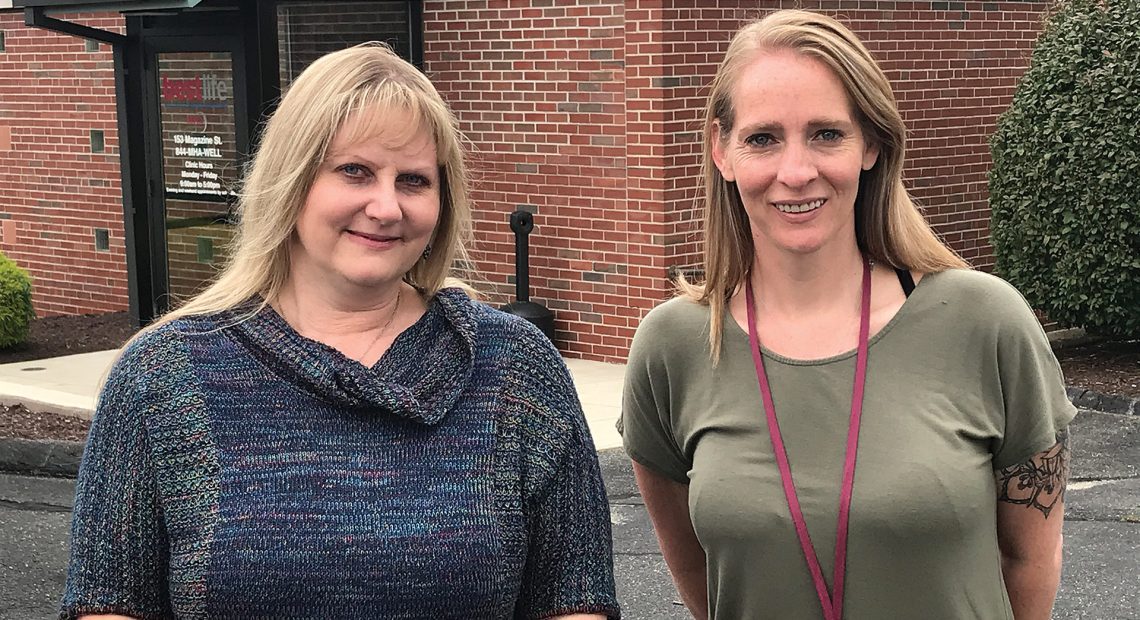
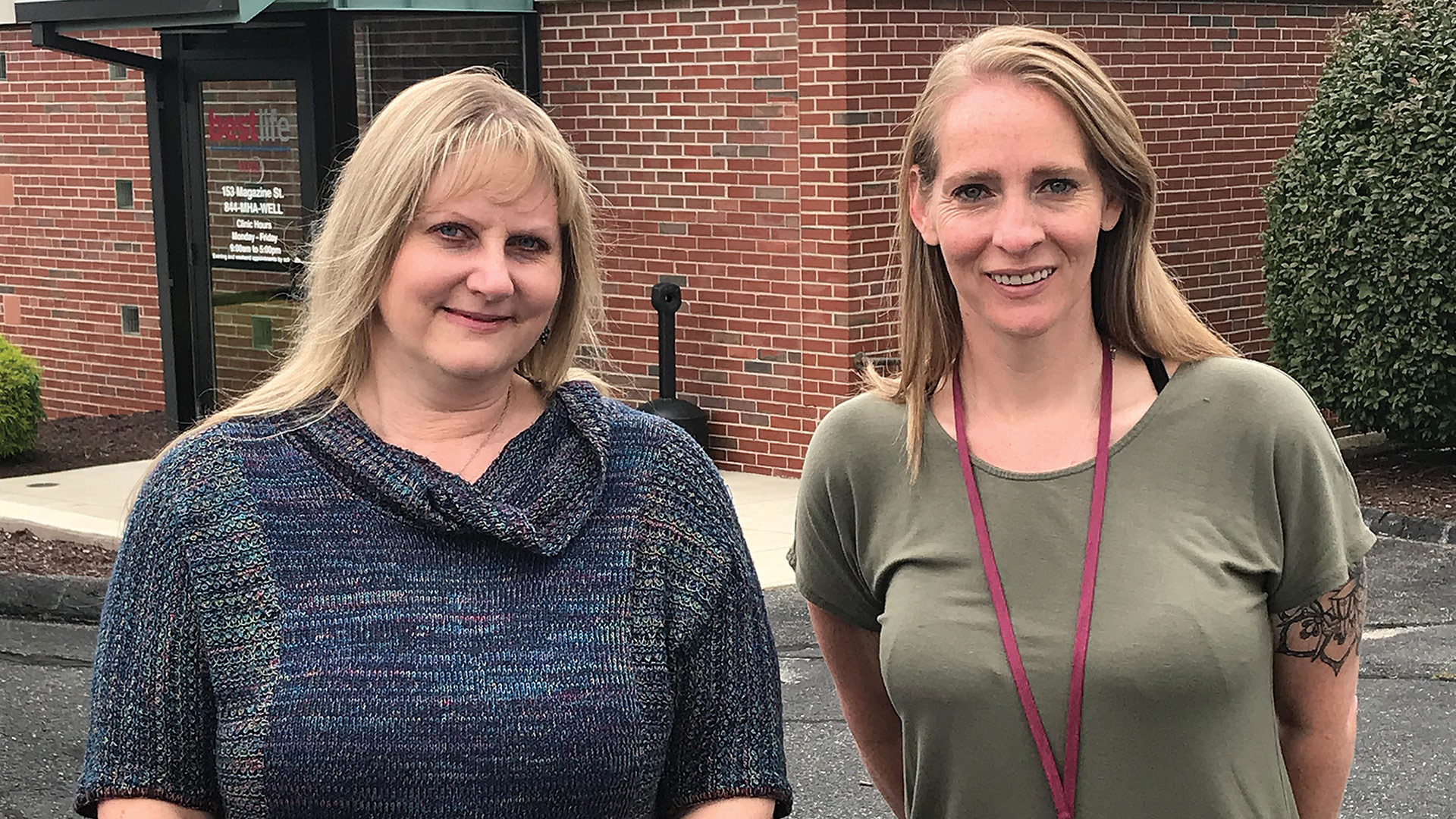
MHA’s Alane Burgess (left) and Kristy Navarro

MHA’s Alane Burgess (left) and Kristy Navarro say social isolation during the pandemic has been problematic for young people.


According to the Centers for Disease Control and Prevention, the national suicide rate declined slightly in 2019, the last year for which full statistics are available.

Unfortunately, the latest government data does not take into account the arrival of COVID-19 early in 2020. But area mental-health professionals know what they’re seeing and hearing almost 20 months into the pandemic.

Amanda Hichborn, director of Outpatient Clinical Services for River Valley Counseling Center’s Westfield office, said the impact of COVID has in some ways been a double-edged sword when it comes to suicide risk.

“The risk factors for suicide have definitely increased,” she said. “At the same time, we’ve also seen protective factors that have come into play.”

On top of fears about our health, Hichborn explained, the pandemic also affected basic needs such as food — as evidenced by shortages in grocery stores — as well as the ability to sleep well, employment security, and freedom to move around wherever and whenever we want.

At the same time, she has seen people spend more time with their family, increase their fitness by taking walks to get outside, and improve their diets by eating more at home.

“Vulnerable groups like disenfranchised people were already struggling with basic needs. Throw the pandemic on top of it, and their needs are impacted tenfold.”

“These protective factors work to actually decrease the risk of suicide,” Hichborn said. “When we go through something as a community, we feel a kind of connectedness, which also helps decrease suicide risk.”

However, she was quick to point out that, while we may all be in this together, we’re not all in the same boat.

“Vulnerable groups like disenfranchised people were already struggling with basic needs,” she said. “Throw the pandemic on top of it, and their needs are impacted tenfold.”

Young people in particular have had a tough time with the pandemic. Alane Burgess, clinic director of the BestLife Emotional Health & Wellness Center at the Mental Health Assoc. (MHA), noted that, while depression and anxiety have increased for all ages, it’s been particularly tough for adolescents, and suicidal thoughts and attempts are on the rise.

“With adolescence, there is a sense of permanency that things won’t change,” Burgess said. “When they experience social isolation, it feels like forever to them.”

Kristy Navarro, a clinical supervisor at MHA, said keeping young people safe in a pandemic can run counter to how parents raise their kids.

“Normally we want our kids to share, but now we’re saying, ‘don’t share, and don’t touch anything,’” she said. “When we discourage sharing things with friends, it can be a hindrance to the growth and development of young children and adolescents.”


Managing the Stress

Dan Millman agrees that the pandemic has affected young people in unique ways.

“It can be hard for young people who miss rites of passage like graduations and other celebrations and rituals,” he said. “Another part is the social stuff like having fun with friends and being independent. All of that has been much harder to do with the pandemic.”

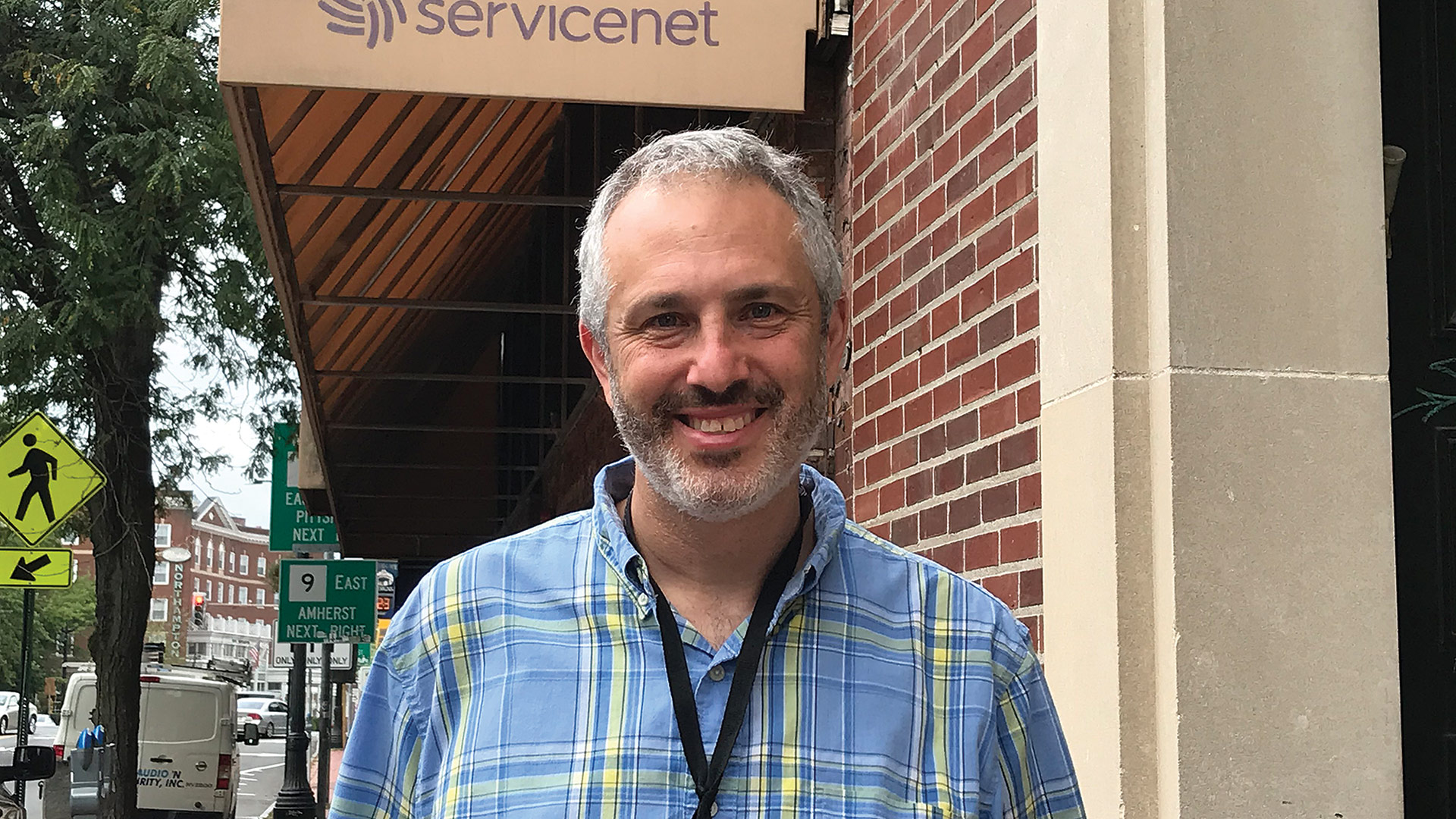
Millman is the director of ServiceNet’s DBT program, or dialectical behavior therapy, an evidence-based approach to psychotherapy that can be effective with people who are exhibiting self-destructive behaviors.

Amanda Hichborn says staying home more has benefited people’s health

Amanda Hichborn says staying home more has benefited people’s health in some ways, but the pandemic has had plenty of negative effects, too.

DBT differs from conventional therapy in that it follows a more structured protocol. The six-month program is designed to give clients the skills to manage the urges to engage in self-harming behaviors. Millman described four main techniques of DBT:

• Mindfulness, a skill that helps the client focus on healthy coping skills to prevent negative thought patterns and impulsive behavior, and which is integrated throughout DBT techniques;

• Distress tolerance, which is most effective in improving a moment with soothing or distraction skills. “The point of this skill is to help survive the crisis without making things worse,” Millman said;

• Emotion regulation, a technique that allows clients to strengthen their emotional resiliency to more effectively navigate powerful feelings; and

• Interpersonal effectiveness, which Millman described as developing assertiveness skills so clients can ask for what they want, better address their needs, and set limits when necessary.

“The point of DBT is to help people feel like their life is worth living and has improved,” he explained. “It’s not a good outcome to have someone stay alive while still suffering the torment they have been feeling.”

Relieving the torment starts with allowing the client to accept they have suicidal thoughts. In this context, acceptance means acknowledgement, not approval.

“When someone has suicidal thoughts, it’s a sign to them that something is wrong in their lives that needs to change,” he said. “Acknowledging those thoughts can actually be protective for the person.”

Another area of DBT involves stepping into painful emotions. Millman explained how human instincts try to protect us and avoid things that make us feel anxious, so we tend to put them off. Avoiding a difficult conversation is a good example of something that needs to be done, but creates anxiety before we do it.

“I talk with people about what they can and cannot control. Though we can’t control events outside, we can control ourselves and our responses to those events.”

One way clients deal with emotional pain is to engage in self-harming behaviors such as cutting themselves.

“We ask the client to just sit with the urge to cut themselves without acting on it,” he said. “In that way, we are asking them to step into the pain. It’s easier said than done, and it’s really challenging.”

The point is to show the client they confronted the moment and got through it. A distraction like a funny video or throwing themselves into an activity can also help, he added. “Once they are ready for the next step, they can use some of the other skills to influence the emotions that are underneath the urge and begin to think differently about it.”


Support Systems

The pandemic looked like it was going to subside this past spring as warm weather arrived and many people were getting vaccinated, but then the Delta variant reared its head, and vaccine levels plateaued. While that created frustration for everyone, it was particularly hard on people with pre-existing conditions related to anxiety and depression.

Dan Millman runs a program

Dan Millman runs a program that helps people take control of self-destructive tendencies.

Navarro said the confusion of starting to feel safe, and then, suddenly, not so safe, can lead to hopelessness, a huge risk factor in suicidal tendencies. A person who feels hopeless will often make vague statements such as “I can’t do this anymore,” “I don’t want to be here,” and “this is too hard,” she noted.

“I talk with people about what they can and cannot control. Though we can’t control events outside, we can control ourselves and our responses to those events.”

During the pandemic, social media can either help people feel more connected or lead to more hopelessness. Hichborn noted that, while it’s good to see friends and loved ones from across the country, social media also creates misleading impressions. The people smiling in the photo look happy, but they might be feeling lots of stress in their lives.

“The effect of social media is counterintuitive because it makes us feel more connected upfront, but in the long run makes us feel a lot more depressed and isolated,” she said.

Two other groups emotionally affected by the pandemic are very young children and seniors. Hichborn said she sees clients from ages 3 to 77. When a parent with young children dies, it can create a suicide risk.

“The child has a concept of mom or dad dying, and they want to see them again,” Hichborn said. “The child might feel like they have to die in order to see their mom or dad.”

Older people who are at risk of suicide tend to show warning signs such as saying goodbye to people, giving away their prized possessions, and cleaning out their house. When family members see this type of behavior, it’s important to talk with the person.

“If you see any suicidal ideations or any warning signs within a family member, don’t beat around the bush — ask them directly, ‘are you feeling suicidal? Are you having thoughts of harming yourself?’” she said.

If they’re not having those thoughts, Hichborn added, the question will not encourage people to start thinking about it. “It doesn’t work that way.”

In addition to asking direct questions, Burgess suggested active listening and being supportive.

“Sometimes the most important thing to do is listen and acknowledge the person’s experience,” she said. “They don’t need you to fix it, they just want to be heard.”

Hichborn recommends a safety plan displayed on the refrigerator to help a person who might struggle with suicidal thoughts.

“The plan can have support people to call and emergency numbers like the police, suicide hotline, or poison control,” she explained. “Everything is written out in a place that’s easily seen, so when someone isn’t thinking straight and their thoughts are all over the place, they don’t have to think about what to do — it’s right there.”


Stay Connected

Though we might feel alone in our thoughts, Burgess encouraged people to reach out to those they are comfortable with to talk about their feelings.

“What’s profound about the pandemic is that it’s a collective experience everyone is going through,” she said — and one that no one should have to confront alone.

Features Special Coverage

Putting the Pieces Together

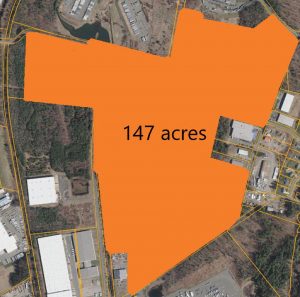
It’s called a ‘hyper-scale data center.’ That’s the name attached to a $2.7 billion proposal planned for a 155-acre parcel in Westfield. The complicated project, now entering the local-approval phase, has cleared perhaps the biggest hurdle — the aggregation of a site that can check a unique set of boxes, including accessibility to huge amounts of power and data. If it comes to fruition — and there are still many challenges to overcome — the project could make the region a player in the emerging sector known as Big Data.

Demetrios Panteleakis

Demetrios Panteleakis


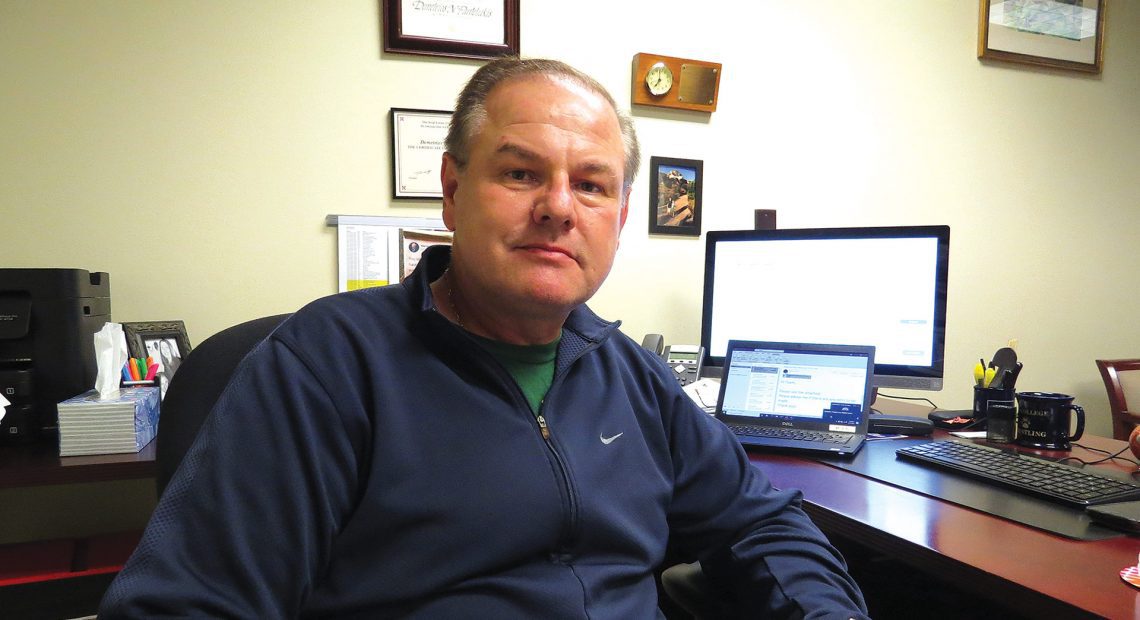
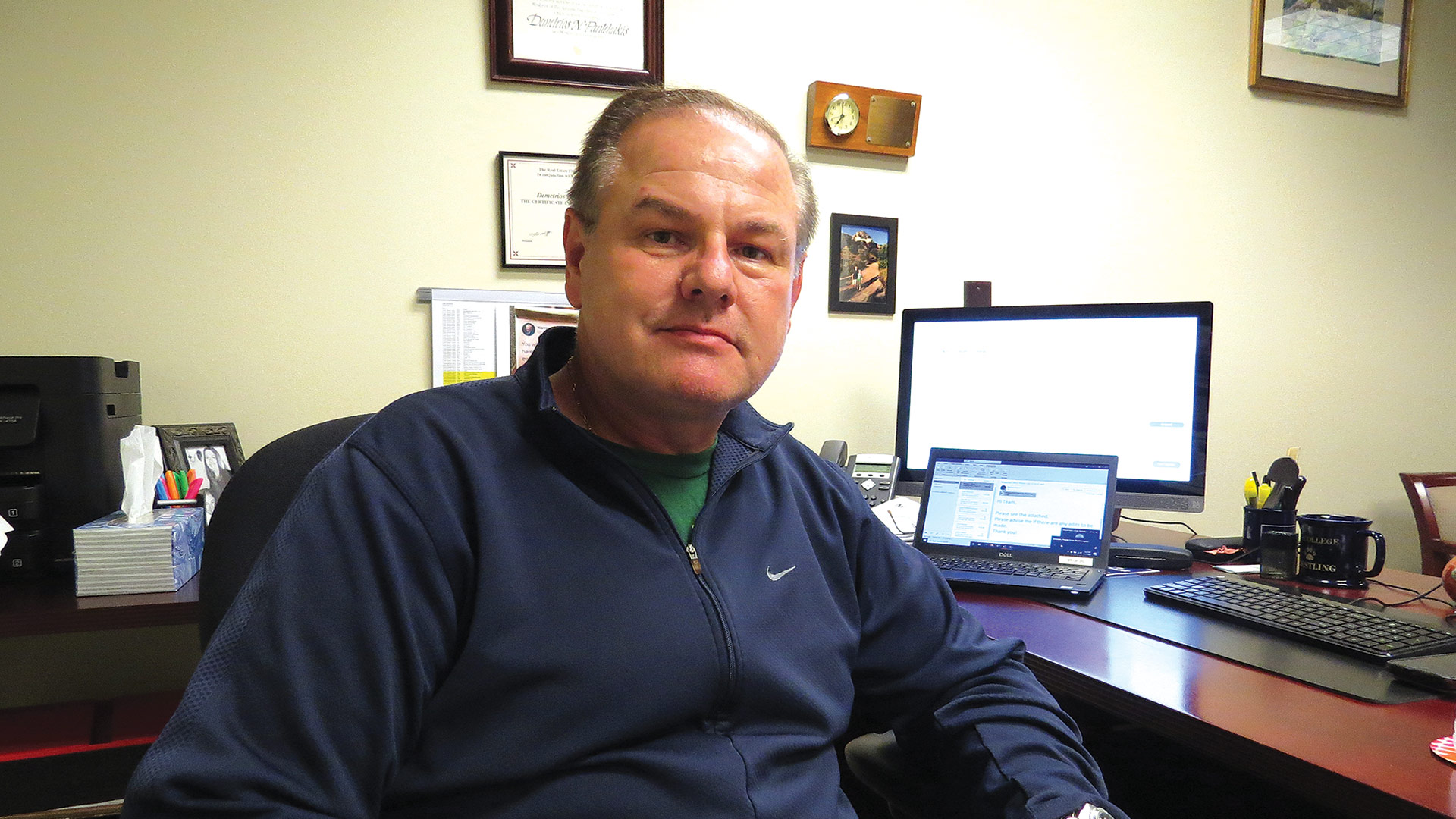
Demetrios Panteleakis says he spent a good part of the winter, spring, and some of the summer walking through all 150 acres of mostly raw land in the northwest corner of Westfield.

“I probably know every inch of it by now,” Panteleakis, the principal commercial broker with Springfield-based Macmillan Group, who was charged with assembling the parcel, told BusinessWest, adding that he’s been through it in every type of weather imaginable. “I think my family thought I had gotten into hiking and the outdoors.”

These walks in the woods — and wetlands — were a necessary part of a complicated process to aggregate land for what could be the largest private development the region has ever seen and one of the largest initiatives of its kind anywhere — a $2.7 billion proposal to build a massive data center (a ‘hyper-scale data center,’ as it’s called) that will attract the likes of Amazon, Google, and Facebook.

Plans call for constructing 10 buildings totaling 2.7 million square feet over the next 12 to 18 years, said Erik Bartone, CEO of Servistar Realty, the project’s developer. He told BusinessWest he hopes to obtain local approvals by the end of the year and state approvals by mid-2022, and break ground in 2023.

It’s a daring project, one that comes complete with all kinds of large numbers and adjectives (like hyper-scale) that connote size and scope affixed to everything from acreage to the projected cost of the initiative to the number of landowners with which Panteleakis and the Servistar had to negotiate.

That last number would be 11, just one indicator of the level of complexity involved with getting just this far, said Panteleakis, adding that finding a location and assembling the land are perhaps the biggest hurdle for a project that will face many of them — everything from required approvals for a tax-incentive plan to steps to protect endangered species, such as the eastern box turtle.

As for securing a site … a project of this nature and scope requires that a number of unique boxes be checked, said Panteleakis. These include the ability to draw power, and large amounts of it, straight from the grid — two recently upgraded 115 kV high-transmission lines run through the center of the site — as well as access to a reliable, high-speed fiber communications network. Competitive cost of doing business is also high on the list, as is a skilled workforce and easy access to major markets.

“Finding the right location in New England for a hyper-scale data-center development is difficult.”

When all is said and done, it certainly isn’t easy to find a parcel — or parcels that can be aggregated — that can check all those boxes.

“Finding the right location in New England for a hyper-scale data-center development is difficult,” Bartone said. “Access to the electric transmission grid, robust fiber communication network, sufficient land, and the ability to develop the project in an environmentally responsible manner are all very important issues that must be fully evaluated before proceeding with a particular location.”

As noted, the proposal still has many hurdles to clear, but it’s not too early to speculate on what this could mean for the city and the region.

Rick Sullivan, who can speak about the project from a number of perspectives — he’s president and CEO of the Western Mass. Economic Development Council, but also former mayor of Westfield and a current city councilor — said it represents an opportunity to show what the region can do for the emerging sector known as Big Data — and perhaps do more of.

Rick Sullivan says the Westfield data-center project

Rick Sullivan says the Westfield data-center project, if it becomes reality, could open the door to new opportunities in the realm known as Big Data.

“This is somewhat of a new sector for us, so I think there’s an opportunity to get attention,” he explained. “Sometimes, getting that first development in a sector is the hardest thing, and then, once that happens, the others do take notice.”

Jeff Daley, president and CEO of WestMass Area Development Corp., which has been hired as a consultant on the Westfield project, agreed.

“It’s an exciting project — this is a game changer,” he said. “If we get this project across the goal line, it opens up an entire industry; we would have the potential to bring other data centers here.”

As for Panteleakis, the data-center project represents another bullet point on a résumé complete with a number of big projects with complicated logistics, something he’s becoming known for within the development industry.

Indeed, when he was not walking the Westfield property and negotiating with all those owners, he was flying to Miami to put the final touches on a massive, $1 billion project that combines residential living with transportation, retail, and office space.

“This is somewhat of a new sector for us, so I think there’s an opportunity to get attention. Sometimes, getting that first development in a sector is the hardest thing, and then, once that happens, the others do take notice.”

The two projects offered a number of different challenges, with COVID presenting new and different issues to contend with, he said, adding that they epitomize what has come to be one of his trademark talents — putting the many pieces together on complicated real-estate puzzles.

For this issue, BusinessWest takes an in-depth look at how this complicated Westfield project came together and how this initiative could change the landscape — in all kinds of ways.


Big Bytes

Panteleakis told BusinessWest that, on many of his flights to and from Florida, he didn’t have much company on the airplane.

“I was on a 747 out of Boston — because you couldn’t fly out of Bradley to Florida — that had two other people on it,” he said. “It was weird. Logan was a ghost town, Miami International was a ghost town; it was very strange.”

That was how things were as he was working on two massive projects on opposite ends of the Atlantic seaboard.

The Miami initiative was a complicated matter of putting the pieces together for a project called Virgin MiamiCentral, a nine-acre living center in the heart of the city that includes 3 million square feet of commercial, office, and retail space, capped with twin residential towers, each more than 40 stories high, sitting atop a train station and retail hub.

Jeff Daley says the data-center project could be a game changer for the region.

Jeff Daley says the data-center project could be a game changer for the region.

Meanwhile, what is now known as the Westfield data-center campus became a very complicated matter of aggregating property that could meet all those unique requirements listed earlier.

In most all cases, the land required for such projects doesn’t come in one parcel, but several of them, which means negotiations on acquiring options — as in quiet negotiations — have to take place with a number of parties simultaneously.

Panteleakis, who compared it to cutting the Gordian knot, tried to put it in perspective for BusinessWest.

“We worked with about four or five different brokers in Western Mass. who represented some of the 11 owners, which at times made things easier, but a predominance of the owners self-represented,” he explained. “And that included people who had ongoing businesses, and it was very arduous and long and, of course, highly confidential.

“It was heavy lifting,” he went on, “and to see it at this stage is very gratifying.”

Overall, it took roughly 14 months to put the parcel in place to the point where the developer could move forward, he said, adding that the site, while challenged by wetlands and environmental issues, provides the size, location, and direct access to the grid needed by Servistar and its eventual clients.

“There’s currently nothing of this scale in the region due primarily to very high retail electricity costs, high property taxes, and significant regulatory challenges.”

The company has a considerable amount of experience with such projects, said Bartone, adding that Servistar has been in the electricity-procurement and energy- management business for 30 years, supporting large-scale commercial and industrial clients, including data and IT service clients.

“Our firm has provided advisory services to several data-center clients, including the management and procurement of their wholesale electricity requirements,” he told BusinessWest, adding that the company currently represents a hyper-scale data-center client that is looking to enter the New England market once local approvals are obtained for the Westfield project.

Elaborating, he said there are several smaller-edge data centers in New England, including in the Boston area, but there are currently no hyper-scale data centers in New England, and for several reasons.

“There’s currently nothing of this scale in the region due primarily to very high retail electricity costs, high property taxes, and significant regulatory challenges,” he explained. “Our firm specializes in the wholesale electricity-procurement markets along with the integration of innovative load-management strategies to proactively reduce the electricity costs for data centers and large power users. 

“This is a key cost driver for the industry and critical to making the hyper-scale data-center project feasible,” he went on. “Electricity expenditures typically represent 50% to 60% of the operating costs of a data center. Property taxes typically represent 10% to 15% of operating expenses. These two operating cost components, along with local regulatory approvals, are the primary drivers to locate hyper-scale data centers to New England.”

Bartone said Servistar reviewed numerous sites in Connecticut, Rhode Island, and Massachusetts before focusing on Westfield, a community that emerged in this search roughly 18 months ago.  

“We identified various parcels in the city’s industrial zones that met the requirements for the site, but the area is challenging to develop due to wetlands and endangered species, including the eastern box turtle,” he noted. “So we needed a substantial amount of land that would support the 10 data-center building development while also allowing us to minimize environmental impacts.”

Beyond meeting the energy, fiber, and property-tax requirements, the site is also centrally located between Boston, New York City, Providence, Albany, and Hartford, said Bartone, thus providing access to more than 34 million people in the Greater New York metropolitan area and New England. It is also in close proximity to the Westfield-Barnes regional airport with corporate service, only 20 miles from Bradley International Airport, and approximately 100 miles from Logan International Airport.

“Boston also has a high-tech, information-based economy that is an attractive market for corporate offices of companies locating to Westfield for their IT services,” he said, adding that this concentration of trained tech workers was still another selling point.


Powerful Statement

As he talked about the project and its prospects for becoming reality, Sullivan turned to the often-used analogy of getting over the goal line.

He said this project isn’t in the proverbial red zone yet, but it is certainly past midfield and making steady progress.

“There’s still a long way to go, but once they have options on the property and they’re doing work around wetlands and having discussions with the electricity suppliers, you’re past midfield, but you’re not home yet,” he explained. “I don’t think you can have a higher, better use of that property.”

Daley said the next important step is approval of what’s known as a 121A, or PILOT (payment in lieu of taxes) property-tax agreement that locks in the assessed value of the property, with built-in annual increases in property-tax payments. Westfield officials have said the project would bring in $1.2 million in tax payments within three years, making the campus the largest taxpayer in the city.

A joint public hearing between the Planning Board and City Council on the proposed agreement is slated for early October, said Daley, adding that there are other approvals, on both the local and state levels, that must be secured in the coming months.

“We’re hoping to have all local permits in hand by the end of the year,” he explained. “Shortly thereafter, we’d begin work on designs and infrastructure; it would be about 18 to 24 months from go date to being operational.”

Meanwhile, speculation continues about what this project could mean for Westfield and the region. That discussion takes place on many levels, starting with immediate, tangible benefits.

That list includes 1,800 construction jobs, 1,200 indirect jobs that will result from creation of the center, and what is projected to be 400 jobs that will pay between $85,000 to $100,000 at the entry level.

“When people in economic development talk about job creation, these are the kinds of jobs that you’re looking to create,” Sullivan said. “These employees will live in our communities, they’ll invest in our communities, they’ll shop in our communities, and they’ll support the charities in our communities, as will the companies.”

There’s also the tax revenue; Servistar has negotiated a 40-year property-tax agreement with the city that is expected to produce more than $350 million in direct property-tax payments over the term of that agreement. 

Beyond these direct benefits, though, is that opportunity Sullivan and Daley mentioned for the region to not only get in the game when it comes to Big Data, but become a player in that sector, which would appear to have almost unlimited potential.

“If you look in the crystal ball, this is a sector that’s only going to grow,” Sullivan said. “And of you overlay data storage and data transmission and all the issues that are somewhat related, such as cybersecurity and other Big Data, I think there’s a real opportunity for us in Western Massachusetts to grow and in some ways lead, if you will, in this sector.

“We have out colleges, especially Bay Path and the University of Massachusetts, that are doing a lot of cutting-edge work in cybersecurity and Big Data, and others will certainly follow,” he went on. “And this will help train a workforce, which is always significant as these companies look to grow.”

As for some of those other boxes that need to be checked, Sullivan acknowledged that the cost of doing business in this state is not as low as in some other areas of the Northeast, but Western Mass. is certainly more cost-friendly that Boston and other metropolitan areas. “Developing in New England may not be the cheapest, but we’re still competitive.”


Bottom Line

Panteleakis — who, as noted, has been involved in large development projects in many areas of the country — said the Westfield data-center campus project represents the type of development that all regions are striving for.

“I’ve done a lot of work in Florida and Texas, and this is how they drive economic development for the 21st century in their areas; they’re focusing on new sectors and technologies,” he explained. “This project will have a tremendous impact on quality of life in Westfield and across the region. It will have a very broad impact.”

As those we spoke with noted, there are still many hurdles to overcome before this proposal becomes reality. If it can clear those obstacles, it could be transformative in many different ways.


George O’Brien can be reached at [email protected]
Education Special Coverage

Continuing Education

Matthew Scott says the double protection of vaccines and masks

Matthew Scott says the double protection of vaccines and masks are a good start to keeping AIC’s campus safe.


After a year when colleges offered a wide variety of learning options during the pandemic, from in-person to remote to a blend of both, the vast majority have opened their classrooms, residence halls, and athletic fields for a true on-campus experience this fall. But they’re doing so with caution, both internally — in the form of vaccine requirements — and backed by municipalities that are issuing broad mask mandates. The bottom line through all the changes? The idea that young people need the full college experience, and no one wants to risk a disheartening retreat to Zoom.


Everyone is tired of pivoting, Matthew Scott said. But, by now, they’re good at it, too.

“We’ve learned that our students are adaptable. They don’t always want to be, but they’ll go with the flow and make it happen. And our staff members have just rolled up their sleeves and said, ‘what needs to be done?’”

As vice president for Student Affairs and dean of students at American International College (AIC) in Springfield, Scott is just one of countless higher-education administrators who have spent the past 18 months adapting to one unexpected development after another when it came to COVID-19 and how students could best learn and interact during the pandemic.

“You want to plan in times when you aren’t in the middle of a crisis, so that you’re ready to use that plan when a crisis occurs,” he said. “But when you’re thinking through your crisis-planning process, you’re thinking of things like a fire or a hurricane coming through. Nobody planned for a pandemic. We had protocols for a specific outbreak, but not something like this.”

The lesson? “We learned that we need to be agile. You might spend weeks planning something, and then one order comes through from the local or state government, and you need to pivot.”

The latest pivot for AIC, one similar to what most colleges and universities are doing, involves students living and learning on campus, with residence halls open and clubs and sports in full swing. But a facemask requirement is back, too, at least indoors. And AIC is also requiring students and employees to be vaccinated against COVID.

“We learned that we need to be agile. You might spend weeks planning something, and then one order comes through from the local or state government, and you need to pivot.”

“At last count, we were at 98%, which is a phenomenal number to get to,” Scott said, noting that religious and medical exemptions are being given, but those people are required to be tested weekly, and their quarantine and isolation protocols in the case of infection differ from those of a vaccinated individual. “So far, the vaccination rate has been helping us quite a bit.”

Elms College in Chicopee has also mandated both masks indoors and vaccination for everyone (students, faculty, and staff) without a legitimate exemption.

“Last year, masks were required everywhere. Now, they are not required outdoors if you don’t have anyone within six feet of you,” President Harry Dumay said. “We don’t have distancing in the clasrooms like last year. But we’ll be functioning with a campus that is fully vaccinated.”

While students could choose to take classes in person or remotely last year, Dumay said the college is asking all undergraduates to be in classrooms this year, although remote capabilities are in place in case someone needs to quarantine.

President Harry Dumay says Elms College not only has a plan

President Harry Dumay says Elms College not only has a plan for this fall, but “a backup to the plan and a backup to the backup.”

“We thought this year would be completely free of all these things, but what we’re seeing in the region and on campus are a lot of breakthrough cases, and Delta is more contagious than the original virus,” Dumay said.

When asked about pushback from students on the vaccine mandate, he said he wouldn’t use that word, exactly. “We certainly had quite a few inquiries from parents, saying, ‘is that necessary?’ Or from staff or employees asking, ‘so what does that mean if I don’t do it?’ I don’t know if anyone resigned on our campus or decided not to come because of the vaccination. There might be one or two cases, but I haven’t heard that.”

Scott said students tend to understand that vaccines not only prevent COVID in many cases, but reduce its severity in others.

At the same time, however, “college-age people are not particularly concerned about hospitalization or death because, for the vast majority of them, they’re able to weather the storm and get through it. But part of the education process is making sure they understand it’s not just about them, it’s about the people around them who might have underlying conditions they might not know about.”

If there has been any pushback, he noted, it has taken the form of questions about why both vaccines and masks are necessary.

“We thought this year would be completely free of all these things, but what we’re seeing in the region and on campus are a lot of breakthrough cases, and Delta is more contagious than the original virus.”

“We’d say, ‘yes, you’re vaccinated, and yes, that probably means there’s a lower likelihood of you contracting COVID, but if you do, you might not know you have it, and you might pass it on to somebody else — maybe a child who can’t get a vaccine, or maybe someone who’s immunocompromised,’” he explained. “For the most part, people get it. More than 1,000 U.S. colleges are requiring vaccines, so we’re among many at this point.”


Taking Their Shot

Holyoke Community College President Christina Royal said HCC balanced the desire among many students to get back to in-person learning with the constantly changing health metrics around the Delta variant. “So we decided to open with about a third of classes in person, face to face; a third online; and another third blended of some sort.”

The original plan earlier this summer called for about 25% of classes in person, she explained, “but as those classes were filling up, we heard students wanted more of them, so we added some additional sections. Then we increased class sizes, which were lowered during the pandemic.”

Now 15 students are allowed in a class, still small enough to allow for social distancing, Royal said.

At the same time, “we were also hearing from other students who were not comfortable coming back in, given the conditions in the world. So that’s where we are this semester — we wanted to have a range of options for students so we can match whatever their comfort level is.”

HCC has had a mask mandate on campus since the start of the pandemic and has never lifted it. The college also modified its ventilation systems. “We have several classrooms that don’t have windows, and we wanted to make sure people felt comfortable in the learning spaces.”

In addition, the campus added protective barriers in many places and signage reminding students about masks, social distancing, and hand washing, as well as the need to get vaccinated.

Holyoke Community College President Christina Royal

Holyoke Community College President Christina Royal says the state’s community-college presidents are unified in their support of a vaccine mandate.

That is more than a nudge now, as all 15 community colleges in Massachusetts instituted a vaccine mandate last week for all students, faculty, and staff, which must be fully met by January.

“During the last 18 months, the Massachusetts community colleges have prioritized the health and safety of our communities while also recognizing that many of our students have been disproportionately impacted by the COVID-19 pandemic,” the presidents said in a statement shared with their campuses. “While a significant number of students, faculty, and staff are already vaccinated or are in the process of becoming vaccinated, the 15 colleges are seeking to increase the health and safety of the learning and working environment in light of the ongoing public health concerns and current guidance from the Centers for Disease Control and Prevention.”

In her own message to the HCC community, Royal noted that, “while there is no ironclad defense against coronavirus, extensive public-health research has shown that vaccination greatly reduces the risk of hospitalization and death.”

While the UMass system has not yet instituted a vaccine mandate, UMass Amherst is strongly advising shots for all students and employees. “The science is clear that vaccination is the best way to stop COVID-19 from spreading, and our best way to continue protecting each other’s well-being,” an official statement reads.

In the meantime, individuals who are not vaccinated are required to participate in the university’s asymptomatic testing program.

UMass Amherst is also back to in-person learning, but is following public-health guidelines for wearing masks indoors and distancing where possible.

“If we need to do more education and bring some public-health experts in to reduce misinformation and allow for people to get the facts, then we’ll certainly do that as part of our strategy.”

“The use of indoor masks, required on campus and in the town of Amherst … reduce the spread of infection, said Ann Becker, Public Health director, and Jeffrey Hescock, executive director of Environmental Health and Safety, in the campus’ Public Health Promotion Center, in a statement. But they also laid out the stark facts when it comes to vaccination.

“Our data shows that, among our vaccinated population, only 1.7% have tested positive. Among the approximately 500 individuals who have received religious or medical exemptions from vaccination, 10.05% have tested positive. We urge those not yet vaccinated to consider doing so.”

They noted, however, that positive cases have been predominately among undergraduate off-campus students connected to unmasked social activities. “We have not seen any spread in academic settings. Most cases continue to be of short duration, resulting in mild to moderate illness.”

UMass makes vaccine clinics readily availabe on campus, as do the 15 community colleges. HCC offers free COVID-19 vaccinations for four hours every Tuesday, as well as COVID-19 testing six days a week on campus through the Holyoke Board of Health.

Royal was adamant that a vaccine mandate was the right call.

“I think this is in our collective best interest, for our community colleges and for our region as well,” she told BusinessWest. “At this point, the vaccines have been shown to be effective when we’re talking about preventing disease or reducing hospitalizations and deaths.”

She recognizes that people have many different perspectives that should be respected, but that the college has a duty to combat misinformation.

“If we need to do more education and bring some public-health experts in to reduce misinformation and allow for people to get the facts, then we’ll certainly do that as part of our strategy.”


Life of the Campus

In some ways, it has been a frustrating start to the semester, Dumay said, noting that the general feeling earlier in the summer was that masks would be optional, let alone vaccines, as COVID gradually retreated. While it hasn’t, he noted that it’s important for students to safety enjoy the full Elms experience.

“One of the distinctive features of an Elms College education … is that it offers a vibrant and nurturing environment, and not just with the instruction that happens in the classroom,” he said. “It’s all the interactions and how people behave with one another.”

College leaders believe important personal growth occurs through that interaction, he added.

“You can’t really do that with an online model. You can approximate it, but it’s not ideal. So to the extent we can, we’ll take the steps that are necessary so we’re safe and have an on-campus education, particularly for young people who are at that stage in their life where they’re forming their character.”

Like Scott, Dumay said the key lesson from the pandemic has been that it’s good to have a plan, but one thet can be modified at any given time. “We have a backup to the plan and a backup to the backup. We’re prepared to shift as the environment changes.”

The second lesson is the importance of transparent communication, he noted, because without it, people tend to fill the gaps with misinformation.

“We’re not pretending the pandemic is over by any means,” AIC’s Scott said. “We’re complying with the Springfield mask mandate right now and requiring masks indoors and outdoors when you can’t maintain the six feet. But we still have a tent set up outside; we’re trying to drive people outside as much as possible, just as an extra layer of protection.

“But the 98% vaccination rate, along with masking — I don’t want to give people a false sense of security where you don’t have to be vigilant, but we’re feeling pretty confident that we’re doing what we need to do to keep people safe.”

If a pocket of infection arises, the campus is ready to bring in more testing supplies and trigger quarantine protocols, but Scott feels like the double protection offered by vaccines and masks are the best way to keep that possibility at bay.

“There’s no one to be mad at,” he added. “I’m not mad at the mayor for putting in a mask mandate; he’s doing what needs to be done to keep the people in the community safe. But is it frustrating when you think you have a plan and the pandemic doesn’t cooperate? Of course, but a virus doesn’t cooperate.”

What makes all the planning and inconveniences worthwhile, he said, was seeing the energy of the students as they moved back onto campus a month ago.

“It was kind of a heartwarming moment seeing some of these returners … they left in March of 2020, and they didn’t come back until the beginning of this September. So when they see each other in person for the very first time in a long while, you can see it, you can feel it. They want to be with each other.

“We believe in the on-campus experience,” he added. “They’re coming here for all these things — to participate in athletics, to live in the residence halls, to eat in the dining commons. We’re on an online campus in this moment.”

Dumay saw the same energy at the Elms — and doesn’t want to do anything that might threaten to snuff it out.

“The first week, seeing students back on campus, was fantastic,” he said. “They’re happy to be here. They don’t want to be sent back to Zoom. They’re happy to be with each other. And we’re happy to see them.”


Joseph Bednar can be reached at [email protected]

Business of Aging Special Coverage

Pivoting … Again

By Mark Morris

David Ianacone says infection-control expertise

David Ianacone says infection-control expertise in the skilled-nursing world predates COVID by far.

Just when it seemed COVID-19 was getting under control, the Delta variant of the virus took hold — and has encouraged many communities in Western Mass. to once again mandate wearing masks indoors.

With the variant showing no signs of slowing, BusinessWest checked in with several companies that serve seniors in the area — through home care, assisted living, and skilled nursing — to ask how they are navigating this stubborn virus that won’t go away.

They all have different stories, but one constant stands out: all of them have kept safety protocols in place that exceed the requirements of state and local mandates.

For David Ianacone, administrator at the Center for Extended Care and Rehabilitation at Amherst, rigid protocols are in place at all times to prevent infection problems.

“In the nursing-home business, we’re experts in infection control,” he said. “Long before the virus, we’ve had protocols in place known as ‘universal precaution.’”

Indeed, everyone who enters the facility must get their temperature taken and fill out a health questionnaire. Masks are required for staff and visitors at all times. Ianacone said 99% of the patients are fully vaccinated, and he estimated that 92% of the staff have received the vaccine.

“We have around 15 unvaccinated staff, most of whom work in the office or dietary area and are not in direct contact with patients,” Ianacone said. “They are tested every day before their shift begins.” If the test comes up positive, they have to leave.

The protocols have certainly been working; since January, when one patient at the center contracted the coronavirus, no staff or patients have tested positive.

This clean bill of health has allowed visitors to once again see their loved ones in person, but Ianacone pointed out there are restrictions based on the visitor’s vaccination status.

“If they are vaccinated and their loved one is also, they can meet with them closely in their room,” he explained. “But if a visitor is not vaccinated, we have a special room where they can visit in private, but they must maintain social distancing.”

Visitors to Cedarbrook Village at Ware have also returned to restricted visits with residents due to the resurgence of the virus.

Before Delta, Executive Director Kelly Russell said, families could visit with loved ones in their apartments and take meals with them. Since the resurgence, only a few guests can meet with the resident in a designated area that is disinfected after each visit.

“We’re actually going above and beyond what the CDC is recommending for our community,” she noted.

Before the Delta variant, the assisted-living facility was starting to return to normal activities like outings and even a trip to MGM Springfield.

“The residents had a great time at the casino, but we had to stop all trips like that because of the variant,” she said. “We also had to cancel the one-year anniversary of our opening that we had planned for September.”

Russell said her focus is now on “out-of-community risks,” meaning staff and residents out in public, residents coming out of acute settings, and visitors. Protocols are in place to mitigate risk in all these areas.

Patricia-Lee Baskin-Scholpp says she requires her home-care staff to be vaccinated to protect senior clients.

Patricia-Lee Baskin-Scholpp says she requires her home-care staff to be vaccinated to protect senior clients.

With vaccination rates among Cedarbrook staff at nearly 80%, the next challenge will be a state mandate that takes effect on Oct. 31 requiring everyone who works with seniors to be vaccinated.

“We have a responsibility to keep the residents in our community safe,” Russell said. “If there are still some people who refuse to get vaccinated, there’s a good chance they will not be able to work here.”


Girding for Battle

Patricia-Lee Baskin-Scholpp isn’t waiting for the state to act. The owner of Caring Solutions, a home-care company based in West Springfield, will not hire anyone who is not vaccinated. And, while 98% of her current staff is vaccinated, home care is an industry with lots of turnover.

“It’s already hard to find candidates, and by requiring a vaccination, the pool becomes that much smaller,” Baskin-Scholpp said. “Despite that, I won’t put my seniors at risk.”

A nurse by training, she discussed the reason she is passionate about vaccinations to prevent the spread of the coronavirus. “When you hold someone’s hand who is dying of COVID, it changes something in you.”

Baskin-Scholpp also believes we are in a war against COVID, and that one battle strategy worth embracing is wearing a mask. “I have N95 masks in many colors so our staff can make them part of their wardrobe,” she said. “We have to wear a mask anyway, so let’s own it.”

After several months without them, residents at Cedarbrook are back to wearing masks when they leave their apartments. For most, Russell said, it’s simply retraining.

“We opened at the height of COVID when many of our residents moved in. At that time, they had their masks with them at all times. Now they just need occasional reminders.”

“We opened at the height of COVID when many of our residents moved in,” she recalled. “At that time, they had their masks with them at all times. Now they just need occasional reminders.”

Because the virus is prone to change, Ianacone said he and his peers at other long-term-care facilities have an open communication stream with the Massachusetts Department of Public Health and the state office of epidemiology. “From time to time, they will recommend new protocols for us to implement to keep everybody safe.”

State health officials had raised concerns when several nursing homes discovered cases of the Delta variant. Ianacone pointed out that the protocols to protect against the Delta variant are the same as protecting against the original coronavirus, so staying consistent in COVID-prevention practices works.

“Because our patients are vulnerable, we always go the extra mile in our safety measures,” he added.

Baskin-Scholpp and her staff of 70 caregivers routinely go the extra mile based on a simple principle.

“If you treat people the way they want to be treated, it works,” she said. “We believe people should be able to stay in their own home and shouldn’t have to pay a fortune to do so.”

She named her company Caring Solutions because she believes every challenge has a solution, even COVID.

“This virus isn’t going anywhere right now, so let’s do everything we can to keep everybody safe,” she told BusinessWest. “It’s really less about individual rights and more about protecting each other.”

As a new facility, Cedarbrook still has apartments available for new residents. When the pandemic first hit, many seniors and their families were fearful of moving into a senior community.

Since that time, as everyone gains more knowledge about the virus, Russell and her staff have continued their diligence with cleaning and safety protocols, which have helped many of those fears to subside.

“People are still able to take tours, and we simply follow a cleaning schedule after the visit,” she said. “As a result, we’re seeing four to six move-ins a month, which is great.”


Life on the Front Line

Reflecting on the past 18 months, Ianacone said he appreciates how grateful the families of his patients have been during a time of constant adjustment.

“Hearing from the families is very warming to us staff members because they feel we are doing a good job taking care of their loved ones and keeping them safe.”

While these senior service professionals wage their fight against a stubborn virus, they continue to succeed in keeping seniors in our community safe. Baskin-Scholpp may have summed up the reason for everyone’s dedication.

Simply put, she said, “I am very passionate about our seniors.”

Community Spotlight

Community Spotlight

By Mark Morris

Amy Cahillane says the city is in a better place

Amy Cahillane says the city is in a better place than it was a year ago, but staffing remains a problem for businesses.

As Northampton works through the various stages of the pandemic, one term best describes any discussion about looking ahead.

“I’ve used the phrase ‘cautiously optimistic’ hundreds of times in the last several weeks, never mind the last year and a half,” said Amy Cahillane, executive director of Downtown Northampton Assoc. (DNA) — cautious because the city reimposed mask mandates before many other communities did, and optimistic because, despite all the challenges, Northampton can point to many successes.

Janet Egelston, owner of Northampton Brewery, said the last 18 months have been an ongoing process of pivoting, adapting, and learning, adding that “we call what we’re going through ‘pandemic university.’”

Northampton enjoys a long tradition as a dining destination. With more than 100 places to eat in the city, restaurants are a key sector to Northampton’s economy. Vince Jackson, executive director of the Northampton Chamber of Commerce, said economic studies have shown that, when restaurants are thriving, other business sectors do, too.

“Every job a restaurant creates results in another job in the community,” he explained. “Think about a typical date night — go out for dinner, go see a show, and then maybe a drink at the end of the evening.”

That’s why the pandemic, and the business restrictions that have accompanied it, have been so disruptive to the city’s economy. And the disruptions have come in waves; earlier this spring, when vaccines became widely available and COVID-19 infection numbers began to decrease, Northampton, like many communities, was able to relax masking requirements. Once vaccination levels began to plateau and the Delta variant of the virus kicked in, infections began to trend back up.

And when the city’s Health Department found several breakthrough cases that forced a couple restaurants to close for testing and quarantine, Mayor David Narkewicz made the decision to bring back indoor mask mandates.

“We are very fortunate to have this outdoor space, but it wasn’t as simple as opening the doors.”

“It’s never easy to be out front and be the first, but since we brought back masking, the communities around us have followed suit,” he said, adding that the city’s priority is keeping everyone safe and healthy. “We need businesses open for customers. Otherwise, the engine that drives Northampton isn’t going to run.”

The return to wearing masks was an easy change for Egelston’s staff at Northampton Brewery.

“In the restaurant business, we often make quick adjustments,” she said. “We also have a box of masks at our entrance for customers who arrive without one.”

In 2020, when the first wave of the pandemic closed all kinds of businesses for several months, Egelston delayed her reopening until Aug. 10, the 33rd anniversary of the brewery. Even though outdoor dining has always been a part of the restaurant, with two levels of rooftop decks, she still had to retrofit the space for the times.

“We installed plexiglass barriers and socially distanced our tables outside as if we were inside. We are very fortunate to have this outdoor space, but it wasn’t as simple as opening the doors,” she said, adding that all employees are vaccinated. “It’s our policy.”

Janet Egelston says she is “eternally optimistic”

Janet Egelston says she is “eternally optimistic” despite 18 months of pivoting and persistent staffing challenges.

Since reopening last August, the brewery has operated at a lower capacity, not due to mandates, but because of trouble finding enough staff.

“The core staff who work here are great,” Egelston said, adding that, while there is always some amount of turnover, she hasn’t received many applications in the last several months. “That’s starting to improve, but we’re not yet ready to go to full capacity.”


Workforce Crunch

While the city is in a better place than it was a year ago, Cahillane said, staffing remains a challenge for most businesses.

“When everyone is hiring, it perpetuates the issue further because employers are all looking for the same people,” she noted. “They are also filling positions at every conceivable level, from dishwasher to front of house to store manager.”

Despite the staffing challenges, Jackson said most businesses in Northampton had a great summer. In talking with business owners in the restaurant, retail, and construction sectors, he said many reported success at pre-pandemic levels.

“A caterer I spoke with has 200 events booked through the end of the year,” he said. “One restaurant owner said her numbers are better than they’ve been in a long time.”

Northampton at a glance

Year Incorporated: 1883
Population: 28,483
Area: 35.8 square miles
County: Hampshire
Residential tax rate: $17.37
Commercial tax rate: $17.37
Median Household Income: $56,999
Median Family Income: $80,179
Type of government: Mayor, City Council
Largest Employers: Cooley Dickinson Hospital; ServiceNet Inc.; Smith College; L-3 KEO
* Latest information available

‘Summer on Strong’ was a successful effort to close an entire section of Strong Avenue to traffic and turn it into an outdoor dining pavilion shared by a few different eateries. Narkewicz credited local restaurants for suggesting and leading the effort. When ideas like this were proposed, the mayor said the city would “move mountains” to streamline the permitting process to make them happen.

“Northampton is a regional magnet for people who want to come here for entertainment, arts, dining, and the vibe of a walkable city where people like to hang out,” he noted.

The city lost businesses during the pandemic, including Silverscape Designs, which closed at the end of 2020. Despite the optics of that vacancy in the middle of downtown, Cahillane said a mix of new businesses have been opening at an encouraging pace.

“Between Northampton and Florence, we had roughly 18 businesses that left,” she noted. “And nearly 17 new places opened.”

The return of students to Smith College and campuses in the surrounding towns marked a sign of life before the pandemic. Cahillane said the students brought a needed emotional lift. “There has been a noticeable lightening and brightening downtown since the students have come back. Their return is what Northampton usually feels like in the fall.”

The return of events this summer has also provided a boost to Northampton. Cahillane said it’s satisfying to look at a calendar and see events scheduled once again. “The Arts Council held several concerts this summer, we recently started Arts Night Out, and the Jazz Festival is coming back the first weekend in October.”

Jackson is “cautiously optimistic” that momentum from the summer will continue into fall leaf-peeping season. In this area, Indigenous Peoples Weekend marks prime time for leaf peepers.

“One hotelier told me if you don’t book early for that weekend, you won’t find a place to stay,” he said, adding that he’s hopeful activities in November and December will also bring people to the city and surrounding towns.

This fall will be different for Narkewicz, as he will not seek re-election as Northampton’s mayor. Looking back on his 10 years in office, he discussed several areas in which he’s proud of his administration’s achievements, such as improving the fiscal health of the city and being one of the first communities to stand up for the important role immigration plays in the U.S.

“We stand up for equality for all our residents,” he said. “We’ve received high marks for our commitment to LGBTQ folks and have been doing more work around racial equality.”

For the next few months, he hopes to develop a blueprint for the next mayor. “My goal is to provide a map of the immediate needs and available resources, so the next administration can work with stakeholders in the community to make sure we see a strong, equitable recovery to COVID.”


Keep Moving Forward

Among many in Northampton, the consensus is to keep moving forward, but also stay safe.

“I don’t know what’s going to happen, but I am eternally optimistic,” Egelston said. “It’s the only way I’ve been able to be in the restaurant business for so many years.”

Jackson said having events return to the city, sometimes in different forms, went a long way to giving people reasons to come to Northampton. “I won’t say this is a new normal, but it feels right for this moment.”

Features

Doing More with Less


At a recent virtual seminar, Delcie Bean asked attendees to think back 20 years and ask themselves, did they foresee a time when phone books and yellow pages would not be a thing?

After all, he asked, every home had one, and they were the primary way small businesses advertised and shared their contact information with the public.

Now, “look at what’s happened to that world,” said Bean, president of Paragus Strategic IT. “That’s the pace at which technology is changing. These things we took for granted, that we felt were never going to change, that were part of the fabric of our ecosystem, have changed. And it’s not just phone books. Think of all the landfills that are chock full of technology that, at one point in time, we didn’t think we could live without.”

And it’s not just tools, but the way we do business, he said, pointing out the short jumps between dominant communication methods over the past century. That idea was one jumping-off point for Bean’s virtual seminar on Sept. 15, titled “Automation: the Time Is Now,” and subtitled “How Automation Can Streamline Your Business and Offset the Labor Shortage.”

At this event, presented by BusinessWest and Comcast Business, he said everyone should ask themselves a simple question: “What’s my phone book? What’s the thing in my business that is still antiquated and should have been replaced by now?

“What’s my phone book? What’s the thing in my business that is still antiquated and should have been replaced by now?”

For example, he went on, “do I have employees entering data into a system that could easily be automated? Am I still doing things on paper forms that then need to be scanned into a system or, God forbid, typed in manually into another system? Do I have antiquated processes that require people to get manual approval and shuffle things around and put things in inboxes and outboxes, and do I still have tasks being done manually that are just ripe to automate?”

The 60-minute presentation focused on the benefits of automation and the ways it can be utilized to save businesses time, trouble, and expense — anything from onboarding a new employee or client to gathering information when someone signs up for something on a website, to the steps involved in the approval process when employees want to request a new computer. All of this, and more, can be automated, Bean said.

One common tool helping businesses do that today is the Microsoft 365 platform, an evolution of the Microsoft Office suite that offers subscription tiers and features including secure cloud storage, business e-mail, advanced cyberthreat protection, and the popular Microsoft Teams program.

“Microsoft has made a very deliberate, very intelligent decision to be the leader in small-business workforce automation, and they have invested infinite money in trying to do that,” Bean said. “And it’s actually paid off.”


Perfect Storm

The need to streamline processes through automation impacts most businesses and, as such, is a timely topic of discussion, Bean said — “maybe more than we’d want it to be.” And that’s partly because of the unique set of economic stressors that have emerged over the past 18 months.

“We’re probably all feeling busier right now than we’ve ever felt,” he said. “I know there’s a lot going on that’s causing us to have a lot more on our plates, a lot more challenges to solve, a lot more obstacles to overcome than we’ve had to in the past. So why are we taking time out of our day to have this conversation?”

Well, first of all, businesses are being forced to do more with less. Roughly 3.5 million Americans are not in the workforce but used to be — largely because of the pandemic, but not totally. Population growth has slowed, and the massive exodus of Baby Boomers from the workforce has accelerated somewhat.

“That has a huge impact on the ecomomy, one we cannot minimize,” Bean noted — and one that will continue to ripple throughout organizations of all sizes at a time when everyone seems to be wearing more hats than before, juggling more tasks, and trying to keep up with less help. And that leads to more stress in the workforce.

“We’re seeing more employees comment that they feel overwhelmed, people are leaving their jobs, looking for new jobs, changing industries,” he said. “Or they’re managing the working-remote, working-in-the-office challenges, healthcare challenges … it’s a lot of stress and pressure on the workforce that’s still working.”

On the other hand, the workforce crunch has also created a talent shortage and one of the best-ever markets for job seekers, who have more leverage than before, Bean said, making it harder to hire and retain employees.

Wage growth has accelerated, and so have employee demands regarding everything from remote work to more autonomy to relaxed dress codes, he noted. “Employers are working really hard to try to manage and keep up with those demands while also managing the business.”

It’s an incredibly difficult economy, he added, and just for small employers; the situation is really trickling up to larger and higher-paying employers as well. “It’s not ignoring anybody.”

And it comes, Bean explained, in the midst of what’s known as the Fourth Industrial Revolution, which builds on the third (which began in the mid-20th century and was known as the digital revolution, marked by the rise of computerization). This fourth revolution is melding technologies like artificial intelligence, robotics, cloud computing, augmented reality, smart sensors, 3D printing, and many other advances, and promises to transform the way people live and work.

“There’s a lot going on right now that is digitizing and changing the way we interact with pretty much every aspect of our life,” he said. “And it’s happening at a rate we are very unaccustomed to handle.”

As noted, businesses trying to adapt to this fast-changing world are doing so amid all the recent challenges stemming from the pandemic and the labor situation. Small businesses also lament the growing culture of acquisition, and find it difficult to compete with larger companies with more resources, more innovation, and the ability to pay more for talent.

“All in all, it makes you feel like, if you’re a small firm, you’re in a race that’s a losing battle,” Bean said. “Exhausted? I don’t blame you.”


No Standing Still

But exhaustion is no excuse for inaction, he argued, before refuting the common myths around automation: that it’s too expensive, too complicated, and takes too long to implement. All are untrue, he explained during the virtual seminar, and again during a sit-down with BusinessWest Editor George O’Brien during a recent edition of the magazine’s podcast, Business Talk (businesswest.com/blog/businesstalk-with-delcie-bean-ceo-of-paragus-strategic-it).

In other words, there’s no excuse for any business to avoid this conversation any longer.

“We don’t want to be the next Blockbuster,” Bean told the seminar attendees. “We don’t want to be the company that could see that things were changing, stuck to our guns, hung on, and ultimately worked their way into oblivion.”


—Joseph Bednar

Education

Access and Opportunity


The University of Massachusetts recently announced it will receive a cash gift of $50 million from Robert and Donna Manning. The gift, the largest of any kind in the university’s history, is aimed at increasing access and opportunity across the five-campus university system.

The first distribution of the $50 million will be $15 million to endow the UMass Boston Nursing program, which will become the Robert and Donna Manning College of Nursing and Health Sciences. The funds will be focused on supporting student diversity and ensuring that the new cohort of nursing professionals are champions of equitable patient care.

Donna Manning’s 35-year career as an oncology nurse at Boston Medical Center inspired the decision to focus the gift on nursing at UMass Boston. Known for her dedication to patients, Manning donated her salary to the hospital each year.

“For the majority of my career in Boston, I was struck by the fact that most of the nurses looked like me, while most of the patients didn’t,” she said. “UMass Boston plays a critical role in supporting diversity in Boston, and I have seen firsthand how diversity in the nursing workforce can improve patient care and address health inequities. We look forward to actively working with the college on these important goals.”

The College of Nursing and Health Sciences is the fastest-growing college at UMass Boston and offers the only four-year public programs in nursing and exercise and health sciences in the Greater Boston area. The undergraduate and graduate population of approximately 2,100 students in the college is 19% black, 12% Latinx, and 11% Asian-American/Pacific islander.

“This transformational gift from Rob and Donna comes at the right time and the right place and for a beautiful cause: to foster a culture of healing and health equity in Boston and beyond. It will enable UMass Boston to take the education of the next generation of nurses nobly serving as caregivers to the next level of excellence and engagement,” UMass Boston Chancellor Marcelo Suárez-Orozco said. “Amidst a pandemic, rampant medical disinformation, nursing shortages, and the heroism of healthcare workers, we at UMass Boston are more committed than ever to cultivating extraordinary nursing talent. The Mannings’ historic gift will be put to use to nurture the next generation of health and wellness scientific expertise, but also the humane heart, the empathy and cultural awareness that define caregiving in its truest sense.”

In the coming months, the Mannings plan to announce distributions from the overall gift to improve access and opportunity on the other UMass campuses in Amherst, Dartmouth, Lowell, and Worcester.

“Donna and I are at a point in our lives where we want to make a real difference, and this was the best way to do that because we know what UMass does for students — it transforms lives,” said Robert Manning, who is chairman of MFS Investment Management and the long-time chair of the UMass board of trustees. “We firmly believe that UMass is the most important asset in the Commonwealth and that the greatest thing we can do to support the Commonwealth is to support the UMass campuses and UMass students.”

The $50 million gift from the Mannings is a transformational moment for the UMass system and would represent the largest-ever commitment received by the university even if it were not an upfront, cash gift.

“The significance of this gift cannot be overstated,” UMass President Marty Meehan said. “Rob and Donna are two of our own. As first-generation college graduates, they experienced the transformational impact UMass has on students’ lives. Rob and Donna have always led by example in their philanthropy, and this remarkable gift is a call to action to the philanthropic community. It says that UMass is a good investment and an opportunity to have direct and immediate impact on the future of the Commonwealth. On behalf of the five campuses, we thank the Mannings for their incredible generosity and commitment to students.”

The Mannings are Methuen natives and were high-school sweethearts. They both commuted to UMass Lowell, with Robert receiving a degree in information systems management from UMass Lowell in 1984 and Donna receiving a nursing degree in 1985 and an MBA from UMass Lowell in 1991. They each received an honorary doctorate of humane letters from UMass Lowell in 2011.

Immediately after graduating from UMass Lowell, Robert Manning began working at MFS Investment Management as a research analyst in its high-yield bond group, and credits his UMass education with giving him a competitive edge. Over his career at MFS, he rose to become president, CEO, and then chair. Under his leadership, MFS has grown to manage more than $670 billion in assets annually. He will retire this year. Donna Manning retired from Boston Medical Center in 2018. The couple plans to be heavily engaged in the UMass programs their gifts will support.

The Mannings were already among UMass’ greatest supporters, having committed more than $11 million to UMass Lowell, where the Manning School of Business bears their name. On the Lowell campus, they have endowed several faculty chairs, sponsored a nursing-simulation lab, and established the Robert and Donna Manning Endowed Scholarship Fund. The Manning Prize for Excellence in Teaching is awarded to faculty on all five UMass campuses for high-impact teaching.

Education

Dollars and Sense

By Mark Morris

From left: Square One’s Dawn DiStefano, Melissa Blissett, and Kristine Allard; and FP Investment Group’s Flavia McCaughey, Flavia Cote, and Peter Cote.

Given the scope of Square One’s work for children and families, it’s not unusual for the organization to receive contributions to support its efforts.

But recently, FR Investment Group offered a donation that goes far beyond writing a check.

“Instead of making a monetary donation, we’ve chosen to do something harder,” said Peter Cote, president of FP Investment Group. “We’re giving our time and services to help Square One clients and staff improve their financial literacy.”

Dawn DiStefano, Square One’s executive director, had seen similar attempts at financial education fizzle out, despite good intentions. This latest proposal was different.

“The FR group wanted to understand who we are and what we want for our clients and staff,” she said. “They were curious, inquisitive, and showed us they valued our expertise as well.”

The Empower Financial Literacy program is now a monthly offering at Square One. Flavia Cote, executive vice president of FR Investment and Peter’s wife, runs the session each month with FR staff, including her daughter, Flavia McCaughey, a vice president with FR.

McCaughey presented the idea to her parents that working with families at the lowest income levels to help them understand the basics of finance could have a huge impact on those families — and also on the community at large. The Cotes supported the idea but also offered some sage advice.

“My parents told me to be prepared that maybe only one person would show up to the meeting,” McCaughey said. “I discussed that possibility with the team, and we decided if the program makes a difference in even one person’s life, it’s worth it.”

Instead, 14 people have signed up for the program, with eight or nine regularly attending the monthly sessions.

“Given that we’re still dealing with COVID and that everyone has busy lives, I’m excited about 14 sign-ups,” DiStefano said. “The program will be here when they’re ready. It’s not a one-and-done.”

“Instead of making a monetary donation, we’ve chosen to do something harder.”

Far from it. Peter has committed his firm to running the financial-literacy program for the next 30 to 50 years.

“That’s how long it’s going to take to make real change in the financial well-being of our community,” he said. “You have to be on the ground and commit to the long term.”


Changing the Narrative

This kind of commitment is necessary to break what DiStefano called a self-fulfilling prophecy of bad outcomes.

“Those who grew up in a family where they worried about how they were going to eat and get to school often end up creating that same unstable environment for themselves when they are adults,” she said. “They’re not surprised when they lose an apartment or don’t care about their credit score because they feel they couldn’t buy a car anyway.”

Just like savings, tough situations also have a way of compounding and growing. DiStefano gave an example of someone who lost a job, and in order to receive housing assistance, they had to be in arrears on their rent, which would then negatively affect their credit score. “This is what people are dealing with,” she said.

Melissa Blissett, vice president of Family Support Services at Square One, asks people what’s going on that prohibits them from living a better life and uses a tool called the family-goal plan to help them.

Flavia McCaughey leads a financial-literacy session at Square One.

Flavia McCaughey leads a financial-literacy session at Square One.

“The FR folks speak the same language we use with our families, and we both use the SMART goal approach,” Blissett said. SMART, a popular goal-setting technique, is an acronym for specific, measurable, achievable, relevant, and timely.

Flavia Cote said her team encourages people to set a goal such as buying a reliable car, and the FR staff breaks it down to the actions needed to eventually reach the goal.

“We encourage people to try to save at least $10 a month,” she said. “Even if they can’t save $10 next month, they have started to think about saving.”

To prevent being overwhelmed by a large goal, Peter suggests taking it one step at a time. “I don’t want people to think about years from now — just think about the next 24 hours. When you bring it down to 24 hours, you help people see an attainable goal.”

In their monthly sessions, the FR staff help people with figuring the numbers and, more importantly, understanding the emotions that come with handling finances.

“If someone can’t save for one month, we encourage them to set the goal for next month,” Flavia said. “We want to bring hope and make finance simple enough for people to achieve some sort of financial independence.”

Like dedicated saving, positive actions can also have a compounding effect. Recently, a class-action case involving overdraft fees at a regional bank reached a settlement for several million dollars. Once all the claimants received their share, $23,000 remained. This final amount is usually provided to a nonprofit program in alignment with the core theme of the case and is known as a ‘cy pres,’ from a French phrase meaning ‘as near as possible.’

The plaintiff’s counsel, Angela Edwards, learned about the Square One program from Flavia Cote and thought it sounded perfect. “I recommended the cy pres for Square One, the defense counsel agreed, and the judge approved it.”


Making Progress

Peter Cote sees his main job not as a financial person, but as a champion for others. “We’re dealing with people who have a variety of financial challenges, and we are their champions to let them know it will be OK.”

When people attend the sessions at Square One, Flavia said, they show they are ready to make progress with their lives. “We try to help people understand their situation is not permanent and there is a way to change it.”

While a term like financial literacy might sound academic, Peter offered a few different terms that might better describe the course.

“You could call it financial well-being, or Life 101,” he said. “Maybe Figuring It Out 101.”

Business of Aging

An Impactful Gift


Allison Vorderstrasse says the $21.5 million gift from the Marieb Foundation

Allison Vorderstrasse says the $21.5 million gift from the Marieb Foundation will allow the nursing program to move forward with its mission more rapidly.


Transformative.

Allison Vorderstrasse acknowledged that this is a powerful word with specific meaning; it is not, or should not be, used arbitrarily.

But when it comes to the $21.5 million donation from the Elaine Nicpon Marieb Foundation to UMass Amherst, and, more specifically, its College of Nursing — the largest single gift ever given to the school — that descriptive adjective certainly fits.

“We know that, in order to transform care, we must first transform education,” said Vorderstrasse, dean of the school of Nursing, noting that the school will now bear the name of the woman who graduated with a master’s degree from the program in 1985 and passed away in 2018. “As a center of discovery — and true to our namesake — the Elaine Marieb College of Nursing will inspire individual and collective growth as we help prepare tomorrow’s leaders and advance the field.

“This gift will support multiple areas of our mission that align so well with Elaine Marieb’s legacy,” she went on. “It will certainly allow us to move forward in those areas in a more rapid fashion than we could without it.

These areas include the university’s Center for Nursing and Engineering Innovation, said Vorderstrasse, adding that the gift will also impact how the school delivers its curriculum and programs, enable enhanced use of simulation, and, perhaps most importantly, put more nurses in the pipeline at a time when they are desperately needed.

“There is a demand for nurses, obviously, and for us to be able to provide a program that can facilitate nurses coming into the profession, especially here in Western Massachusetts, where we’ve seen an even more dramatic nursing shortage, is an important part of our mission.”

When asked about the gift, how it came about, and what it means for the university and its Nursing program, Vorderstrasse started by talking about the message it sends and the trust it implies, something that’s very important to her.

Elaine Marieb

“What was really exciting to me was the enthusiasm at the foundation about honoring Elaine Marieb’s legacy in this way, and the faith and the trust that they had in us as an institution and a college to really make this gift transformative,” she explained. “They truly felt that the work we were doing was innovative, exciting, and, in many ways, unique, and this meant it was a good fit with her legacy and that they would see the impact of that gift. It was very exciting to hear the degree of enthusiasm that they had for what we do.”

For this issue, BusinessWest talked at length with Vorderstrasse about the many ways her program, and the university, intend to honor that trust and put this gift to work in ways that have far-reaching implications.


Paying It Forward

The gift from the Marieb Foundation, announced on Sept. 16, is only the latest significant donation to come to UMass in recent months.

It comes after a $50 million gift from Rob and Donna Manning aimed at increasing access and opportunity across the five-campus university system (see story on page 28), and a $170 million gift from the Morningside Foundation to UMass Medical School, further positioning the university as a leading public education institution in the nation.

Together, these donations provide growing evidence that the system and its individual programs are growing in stature and reputation and are “well-positioned to advance education, research, and access for students at scale in the Commonwealth,” said UMass President Marty Meehan in a prepared statement.

Vorderstrasse echoed those sentiments and noted that this latest gift — again, the largest ever given to UMass Amherst — creates more momentum, enthusiasm, and exposure for the school at a pivotal time in its history.

“It’s such an exciting time for the whole university to see this come in,” she said, “because it says that the foundation and others who have been good friends of the university for a long time really do feel that this is a pivotal time to support UMass.”

Meanwhile, the $21.5 million gift is only the latest of many from Marieb and the foundation she created to area schools. Previously, she had made gifts of more than $2 million for campus-wide scholarships at UMass Amherst. She and the foundation have also made several gifts to Holyoke Community College and its Center for Life Sciences, which now bears her name.

Marieb, a Northampton native, died in 2018 at age 82, and ranks among the nation’s most influential nursing educators. As noted, she earned a master’s degree from UMass Amherst’s College of Nursing in 1985 with a specialization in gerontology. Prior to that, she received a Ph.D. in zoology from the College of Natural Sciences at UMass in 1969. She also held degrees from Holyoke Community College, Fitchburg State College, Mount Holyoke College, and Westfield State College. Her distinguished career included time teaching at Springfield College and Holyoke Community College.

Ultimately, Marieb became the author or co-author of more than 10 bestselling textbooks and laboratory manuals on anatomy and physiology after she started writing textbooks to address complaints from her nursing students that the materials then available were ineffective. Her work has been read by more than 3 million nurses and healthcare professionals practicing today.

Marieb’s impact on nursing education will only become more profound with the foundation’s latest gift, said Vorderstrasse, adding that it comes after six to nine months of collaborative discussions with foundation leaders about nursing education, the UMass program, and its mission moving forward.

In many ways, the nursing engineering program, launched last January, became a catalyst for the gift. Seed-funded by other donors and friends of the School of Nursing, the initiative was conceptualized to support graduate students in their research training and experience at UMass across various disciplines, Vorderstrasse explained.

“It functions at that nexus of healthcare, engineering, and healthcare professionals, especially nurses, and the development and application of new technologies or even existing technologies — how we apply those in an ethical manner and develop them in such a way that takes into consideration patients and the people who will use them, as well as nurses who are on the front lines using these technologies.

“We hope that it will evolve into a center that collaborates not only on our campus, but with industry partners, because Massachusetts is a hub for healthcare technology,” she went on, adding that the grant from the Marieb Foundation will fund research at the center, especially new initiatives and pilot programs that need seed funding to get off the ground.

Meanwhile, the gift will be used to help expand the nursing programs and put more nurses into the pipeline, she said. Plans call for student scholarships to be expanded to improve access for underrepresented students, and to link scholarships to academic and professional success.

Elaborating, Vorderstrasse said the traditional bachelor’s-degree program graduates roughly 65 students each year and sees more than 2,000 applicants for those seats.

Expansion of that program will be incremental, perhaps eight to 10 students at a time, she told BusinessWest, adding that a program like this cannot, and should not, double in size overnight. But over a period of years, growth can be achieved that will make a significant impact in the number of nurses entering the field.

Growth is also projected for what’s known as the second-degree nursing program, for individuals who have a degree in another field and want to venture into nursing, said Vorderstrasse, adding that this program currently graduates roughly 90 students each year.


Bottom Line

Getting back to the word transformative, it is saved for those occasions when someone or something can bring about profound, meaningful change.

The someone in this case, Marieb, has already done so much to change the landscape when it comes to nursing education. The something is a gift, the latest of many, that will accelerate the pace of growth and progress for the Nursing program and enable more people to earn degrees there.

As Vorderstrasse said, that adjective ‘transformative’ certainly fits in this case.


George O’Brien can be reached at [email protected]
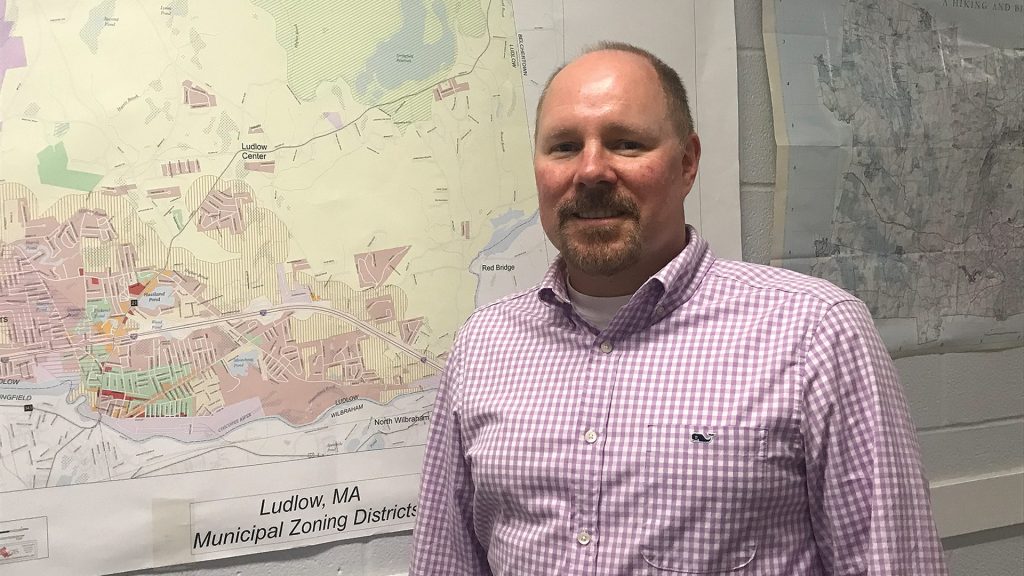
Business of Aging

Regaining Control

By Kimberley Lee


In addition to community-based programming, Nigel Cooper serves as program coordinator for one of nine residences MHA operates as part of its New Way division in the Greater Springfield area for individuals with acquired brain injury.

The division, which also includes a day component, serves those whose brain injury is severe and acquired after birth as the result of a trauma or medical condition. Impairments can range from the physical to the cognitive to the behavioral.

“Our residents were not born with their disabilities,” Cooper said. “Some are college graduates, some have had jobs, some have wives, husbands, children. Something happened in their lives, could be an accident, they could have had a stroke, something that causes the brain not to function as well as it did.”

The specialized care an acquired brain injury patient might need often results in a nursing-home placement, something Cooper calls “unfortunate,” as “some are 30 years old, 50 years old, and find themselves living their life out there. A week or month or days before, they were going through their everyday life in their community.”

This is when New Way, under division Vice President Sara Kyser, can help those referred by the state, after assessment by a skilled-nursing facility, transition from that facility into one of its neighborhood residences.

“Basically, we are transitioning them back to life. They may not have the same life as they had before, but we try to make it as close to that as possible.”

“We interview the individuals and find a good fit for them in one of our homes,” Cooper said. “Basically, we are transitioning them back to life. They may not have the same life as they had before, but we try to make it as close to that as possible.”

His determination and respect for New Way residents mirror how staff engage with them and the programming that includes both rehabilitation and outreach. Services are aimed at helping residents integrate back into their community life, be it through work, volunteer opportunities, or participation in the Resource Center, a New Way program that is also open to those with a disabling medical condition.

“Yes, we provide care, but what I like to say is that we provide support — the difference being that, whatever our residents can do, we approach them to keep on doing that,” he explained. “That is where we meet them; that is where we start our work with them.

“We don’t want people to get discouraged because they need support,” he went on. “There can be depression and a lot of anxiety. So, if someone can cook, we encourage that. If someone can wash their clothes, we encourage that. If someone can bathe themselves, we encourage that.”

The goal, he said, is “to build an independent life for them as far as we can with their injuries.” In the case of one resident in his 30s whose memory was greatly impacted by a drug overdose, this meant getting the support need to be matched with a job, finding his own way over time to and from certain destinations, and eventually moving from a four-bed New Way residence into a less supervised two-bed home.

“We helped move him out of a nursing home and recreated a life that would work for him and his injury,” Cooper said.

For another resident, it has meant regaining the ability to eat without assistance and working toward being able to stand and walk again with less help. “We push 150% to get the residents in all our homes into the communities they live in — reuniting them with family members, keeping them involved in activities outside the residences.

“We are not into just housing people,” he added. “We want to get people out and into society to do whatever they want to do. We are not just ‘housers’ of our residents.”

One key to success, he said, is the trust that develops between staff and residents.

“The job is about making relationships and being motivators, getting people to invest back in themselves — helping them to understand their situation happened, but it is not the end of the world. There is life, there are resources, there is a way you will now live that is different from before, but you will eventually get to a point where you can enjoy your life.”

He added, “I tell staff all the time that the house will get clean, the floors will get swept.”

Cooper noted that “what we need to build is relationships through consistency and being there. We are the people the residents see every day and depend on and trust for support. Once a relationship is built, residents will go to appointments with you, allow you to do personal care and take suggestions. They understand you are in this with them.”

Richard Johnson, who works under Cooper as a site manager, echoed his comments.

“We are all about making the residents feel comfortable,” said Johnson, whose job includes coordinating volunteer opportunities for residents such as cooking and serving meals for the homeless or preparing and distributing COVID hygiene packages for seniors.

He also arranges for residents to attend events like Springfield College’s recent “Be the Change” presentation that was held to promote community service. Staff and residents attend events together but without any indication of their association.

Johnson said such outreach is about the residents continuing to “build relationships” on their own terms and improving their integration skills.

“One of the residents who attended the Springfield College event told me that it was the most comfortable he has felt in years in terms of being out in the community and talking to people,” he noted. “Everything was free, and he just liked being able to go up to a vendor, get nachos and a drink. That engagement on his own was important to him in building a sense of normal for himself.”

Johnson said he builds relationships with the residents through “really hard, honest conversations through which I learn how to navigate and pick up on what they like and what they want to do.”

He noted that transitioning into more active community engagement is not always easy for residents with their disabilities, but he enjoys helping them make that transition and working with Cooper to find related opportunities.

Cooper added that it is this “giving someone a chance to have possibilities and control in their life again” that gives him job satisfaction.

“A lot has been taken away from our residents,” he went on. “The life they were used to living is no longer. They are not living with their families. They can’t just go out to the store or into the kitchen to make what they want to eat or jump on an airplane and travel. What makes me feel good is to see some sort of normalcy return to their lives and for them to get to a certain level where they have control.”


Kimberley Lee is vice president of Resource Development & Branding at MHA.

Features

2021 Women of Impact Judges

Soon, BusinessWest will unveil its Women of Impact for 2021, our fourth annual celebration of area women who are accomplishing great things, standing out in their field, and doing impactful work in the community. As in past years, we’ve asked a panel of three independent judges to read and review dozens of nominations to determine the class of 2021. They are:

Michele Cabral is interim executive director of Professional Education and Corporate Learning at Holyoke Community College and director of Training & Workforce Options. She started her career as a CPA for KPMG Peat Marwick, graduated from the Leadership Development Program at CIGNA Insurance Companies, and joined Farm Credit Financial Partners Inc. as CFO and COO. At HCC, Cabral has held positions as an Accounting professor, then dean of the Business and Technology Division, and she currently leads the HCC Women’s Leadership Series.

Dawn Fleury is the first senior vice president of Corporate Risk at Country Bank in Ware. In her current role, she oversees the bank’s comprehensive risk-management programs. Before joining Country Bank, she had a 21-year career with the FDIC as a commissioned senior bank examiner in the Division of Supervision. Fleury serves on the board of Christina’s House in Springfield, which provides transitional housing for women and their children, as well as educational programming as families transition from homelessness to permanent, stable living environments.

Ellen Freyman is a shareholder with Shatz, Schwartz and Fentin, P.C. in Springfield. Her practice is concentrated in all aspects of commercial real estate: acquisitions and sales, development, leasing, permitting, environmental, and financing. She has been recognized for her community work and was named to Difference Makers and Women of Impact by BusinessWest, Massachusetts Lawyers Weekly Excellence in Law, and the Professional Women’s Chamber Women of the Year. She also earned a Pynchon Award from the Ad Club of Western Massachusetts.

Sports & Leisure

Swinging in the Rain


When it hasn’t been raining, Mike Fontaine notes, this has been a very solid year for the region’s golf courses.

When it hasn’t been raining, Mike Fontaine notes, this has been a very solid year for the region’s golf courses.


Mike Fontaine has been working in the golf business for more than three decades now. As the general manager at the Ledges Golf Club in South Hadley, he speaks from experience when he says this season has been unlike anything course owners and managers have seen in a long while, if ever.

The rain has been almost constant, bringing with it lost rounds, lost days, damage to fairways and greens, logistical problems when it comes to all that has been postponed, additional expense on the course-maintenance side, and … well, you get the idea.

“It’s been a challenge at best,” said Fontaine, with a heavy dose of understatement in his voice. “In all my years in golf, this weather pattern has been the toughest I’ve seen. It was probably the wettest July on record, and August brought the humidity and more rain. And with no one wanting to work and it being very difficult to find people in all departments, not just food and beverage…”

His voice tailed off, but he got his key points across: 2021 has been a struggle, in every way.

But it hasn’t been a lost year by any means. Indeed, it’s been a solid season for many golf operations, especially those that are membership-based or are mostly private but allow public play. That’s because a good number of those who took up the game, or rediscovered it, during the pandemic, when there was seemingly nothing else to do, stayed with it.

At least … when the weather would allow them to.

“When we were open, it lived up to the expectations we had at the start of the year,” said Kevin Piecuch, head pro at Country Club of Greenfield, a quasi-public operation, noting that, based on last year’s strong numbers, the bar was set fairly high for 2021. “It wasn’t quite as busy as last year, but it has still been a solid year, although the weather has certainly hurt us.”

Fontaine concurred. “When it’s not raining, we’ve been packed.”

E.J. Altobello, head pro at Springfield Country Club, a private club in West Springfield, went further. He said that, despite the rain, which has taken five whole days from the calendar, by his count, and parts of countless others, the club is doing nearly as well as it did last year, and much better than the years immediately preceding the pandemic.

“When we were open, it lived up to the expectations we had at the start of the year.”

“We didn’t reach 2020 numbers, but we surpassed all our 2019 numbers,” he noted. “And we destroyed 2018 numbers — absolutely clobbered them.”

Like Fontaine and Piecuch, Altobello said the surge the game witnessed in 2020 appears to have staying power, manifesting itself in everything from those impressive numbers of rounds to a waiting list for membership, something this club, and most area clubs, haven’t seen in quite a while.

“We’re back to an initiation fee at the club, for the first time in 15 years or more,” he noted. “Every category is filled up. We’re still taking some social memberships and things like that, but everything else is full; we have 20 people on a waiting list trying to get in for 2022.”

The hope, of course, is that the rain subsides for the last few months of this year and courses continue to build momentum for 2022. But as everyone has seen this past summer, forecasting can be difficult.


Clouding the Issue

The 8th hole at Greenfield is a fairly short par 5, while the 9th is a stout par 4 of nearly 400 yards. There were times this year, though, when the former was a par 4 and the latter a par 3, because portions of those fairways were just too wet for play and adjustments had to be made, said Piecuch, who also has 30 years of experience under his belt and can say with hesitation that he’s never seen this much rain.

“We’ve had to flop some holes around and take some other steps,” he said, adding that there has been some shuffling of the schedule as well, especially with league play, which has seen a number of cancellations.

There have been adjustments like this at many area clubs over the course of the year, with the relentless rains taking their toll on courses that were soft most all of the time and waterlogged a good deal of the time.

At many courses, carts were not permitted on some days, and were only permitted on the cart paths on many others. Some holes were simply unplayable, and others had to be shortened. And those were some of the minor steps to be taken.

Indeed, following some of the many heavy downpours, especially those accompanying Hurricane Ida just before Labor Day weekend, courses had to close and dry out.

Fontaine, like others in the business, has kept careful count of the days, and rounds, lost to the weather. “It rained parts of 19 days in July, enough for us to lose revenue each one,” he said, adding that there were other days when it didn’t rain but the course was closed, at least part of the day, because it wasn’t playable.

“There was standing water on holes where we don’t have cart paths, or the cart paths were impassable, or trees came down,” he told BusinessWest, adding that, overall, the couse has held up well through it all.

Often, the rain came with heavy winds. Altobello said a rare microburst took down 17 trees on the Springfield Country Club property in late August.

The rain became more poignant, and even more of a story, because, as noted, this was supposed to be a big year for area courses, a time to build on the momentum gained last season, when, because almost everything done indoors was closed, golf saw a resurgence. It wasn’t like 1997, when Tiger Woods was fueling almost unprecedented interest in the game and new courses — like the Ledges — were conceptualized and built to capitalize on that surge.

But it was certainly, well … greener times for courses in a region that had seen some tracks close — Southwick Country Club and Hickory Ridge in Amherst, for example — and many private courses struggle to find members and actively market themselves (something rarely seen in years past) in search of more.

And while it would have been much better in a normal weather year, 2021 was decent in many respects. Those we talked with said it didn’t rain much on weekends, their most important days, and the clubs were able to salvage at least part of the most of the days when it did rain.

“On most all days, we were able to salvage half a day — play in the morning, get rained out in the afternoon, for example,” said Altobello, noting that, even at private clubs, rounds matter because they add up to cart and food and beverage revenues. “For the amount of rain we received, we did way better than we could have.”

Perhaps more important than the number of rounds recorded this year is the evidence collected that the resurgence the game saw in 2020 might have some legs.

“There’s a ton of interest — people who quit the game for years have gotten back into it,” he said, adding that this interest is across the board, young and old, men and women. “They’re still using it as a way to get out and spend time with people they like or love without being in an indoor setting.”

Piecuch agreed. He said that, as challenging as 2021 has been — and it has been a challenge — it has certainly maintained and in some ways built upon the momentum gained in 2021.

“We rely on our membership, and our membership is up 15% — it’s the highest it’s ever been,” he noted, adding that the pandemic certainly had something to do with this. “We’ve had a solid year overall, despite everything, and I think that bodes well for the future.”


When It Rains…

Looking ahead to next year, Fontaine said area courses will likely have considerable work to do to make sure fairways, tees, and greens are in good shape for the spring given all the rain in 2021.

“I think everyone is a little nicked up, a little banged up from all the sitting water on the fairways — when the sun comes out, that just burns the turf,” he explained. “So I’m sure most courses will be overseeding and praying for recovery; there’s going to be extra fertilizer put down and a lot of grass seed planted over the next few weeks.”

Meanwhile, a different kind of seed — a pandemic-fueled resurgence in the game — seems to have already taken root in this region. And it continues its growth spurt despite weather patterns that haven’t been seen in decades, if ever.

And that’s why the future of this business seems, well, sunny.


George O’Brien can be reached at [email protected]
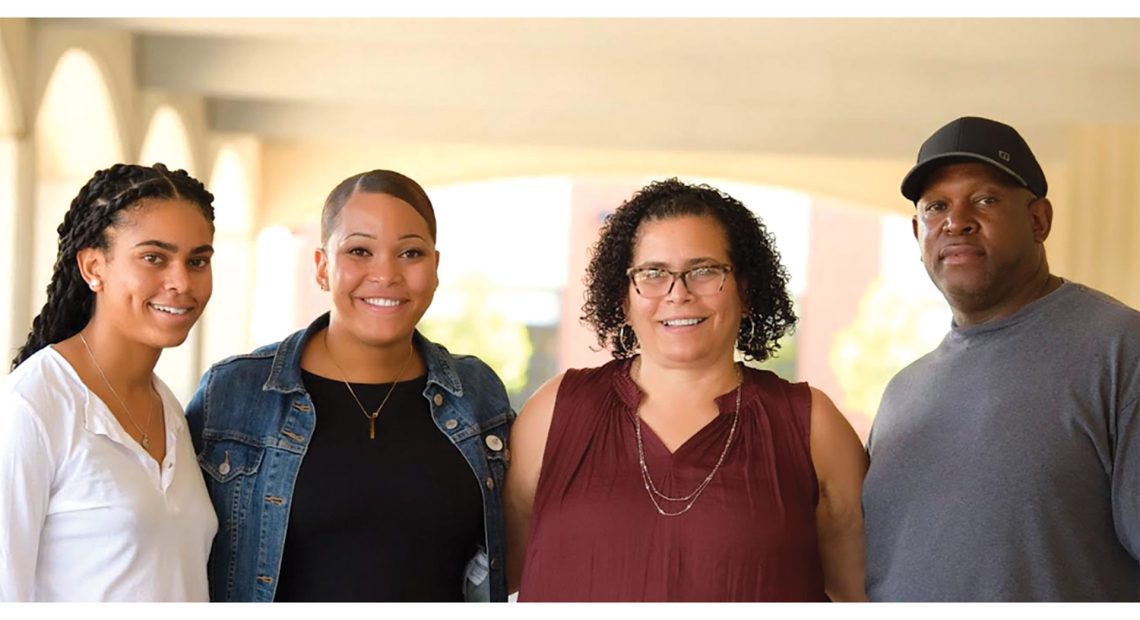
Features Special Coverage

Hire Ground?


For months now, business owners and elected officials have pinned the region’s mounting labor woes and all those ‘help wanted’ signs on too-generous federal unemployment assistance. Now that those benefits have expired for more than 3 million Americans, we’ll soon find out just how much of a factor those benefits were. Many involved in economic development and workforce matters say the problem has much deeper roots and that it might be some time before there is a return to anything approaching normal — whatever that is.


Dave Gadaire says considerable thought went into the timing of the massive, statewide job fair he helped coordinate last month.

Indeed, he said the week-long virtual gathering, said to be the largest such event ever staged, was scheduled for a time when employers across every sector of the economy were struggling to fill vacancies, often to the point where it was impacting productivity, if not profits — and when large numbers of individuals would be staring down the loss of federal unemployment benefits (specifically those weekly $300 bonus checks) in less than a month.

The thinking was that the convergence of these factors would create a sense of urgency and that the foundation would be laid for some good matches between employers and job seekers at this job fair.

And while that happened, and all those involved with the job fair, from the governor on down, have declared it a success, there are certainly question marks as to just how many matches will be made and whether this event will put a dent in a labor shortage that is, by all accounts, without precedent.

In many ways, the job fair, and the uncertainty concerning the bottom-line results from it, are a microcosm of what’s happening with the job market here and elsewhere, said Gadaire, president and CEO of MassHire Holyoke Career Center. The ongoing plight of employers seeking help and the end of those federal benefits would, logically, seem to indicate that jobs are going to be filled — probably sooner than later.

Rick Sullivan

Rick Sullivan

“States that ceased the incentive on their unemployment earlier have not seen huge upticks in labor participation. But we’ll see what happens; we certainly think some people will enter the workforce when the benefit goes away.”

But more evidence is indicating this is not going to be the easy fix that some employers and many elected officials — people who have been pinning the ‘workforce crisis,’ as it’s called, on an over-generous federal government — thought it would be.

Rick Sullivan, president and CEO of the Western Massachusetts Economic Development Council (EDC), told BusinessWest that data and anecdotal evidence from states that did away with the federal bonus checks months ago indicate this has not been the cure most thought it would be.

“States that ceased the incentive on their unemployment earlier have not seen huge upticks in labor participation,” he noted. “But we’ll see what happens; we certainly think some people will enter the workforce when the benefit goes away.”

He was quick to note, however, that he has heard from some of his members that, through smaller, more-targeted job fairs and other recruiting efforts, they are seeing an uptick in the numbers of applications and hirings. Still, he said far more evidence is needed to get a real grasp of what’s happening with the labor market, let alone project what will happen over the next few quarters and beyond.

Kevin Lynn, president and CEO of MassHire Springfield Career Center, agreed. “Murky” was the word he used repeatedly to describe the future of the jobs market in this region.

“This whole thing is not new. We’ve been hanging this lack of applicants on COVID and the unemployment situation. But if you go back to, let’s say July through December of 2019, all you heard from companies was that they had no applicants, and when they did have an applicant, they were being ghosted — ghosting became the new term.”

“It’s an incredibly murky time, because it’s all unprecedented,” he explained. “And there are so any variables. This is not a recession, it’s a healthcare crisis, and it’s been like a rollercoaster; we seem to be on a rollercoaster going down again, and that does not play well psychologically.”

Lynn went further and said that, while the problems and frustrations currently being experienced by area employers may be heightened by the pandemic and factors related to it — childcare shortages, fear of returning to the office, mass retirements, and an unwillingness to work for low wages (he and others would get into all those) — in many ways, it’s all simply a continuation of what was happening before the pandemic.

“This whole thing is not new,” he said. “We’ve been hanging this lack of applicants on COVID and the unemployment situation. But if you go back to, let’s say July through December of 2019, all you heard from companies was that they had no applicants, and when they did have an applicant, they were being ghosted — ghosting became the new term.

“Companies were having major recruiting problems prior to COVID,” he went on. “What we’re seeing is nothing new.”

For this issue, BusinessWest talked with several area economic-development leaders about the workforce crisis and the murkiness that surrounds just what will come next.


Food for Thought

Lynn told BusinessWest he was in Boston over Labor Day weekend. During his time there, he had an experience at a restaurant that was eye-opening if not frightening — a hard look at how things are for employers, especially in hospitality, and how they might — that’s might — continue to be.

“There were 15 tables there, and one woman was waiting on all 15 tables — I couldn’t believe it,” he said, using exasperation in his voice to add an exclamation point. “She was hustling, and I mean hustling. They had one woman on the tables, they had one person busing, and they had a bartender — I don’t know how many they had in the kitchen. The food was coming out, and she was hustling.”

Nancy Creed

Nancy Creed

“It’s such a competitive market, and it’s so hard to find talent that … you may hire some great talent, and two weeks later another company scoops them from you. And there is no employee loyalty.”

While that situation represents an extreme, it encapsulates what many employers are facing these days — an inability to staff up in the manner they want and need, often in ways that impact service, the customer experience, and, in many cases, the bottom line.

In Western Mass. and many other regions, print shops have been working overtime filling orders for ‘Help Wanted,’ ‘We’re Hiring,’ and ‘Join Our Team’ signs. Meanwhile, other signs get far more specific, listing benefits as well as as wage scales and sign-on bonuses. Meanwhile, most restaurants in the region have cut back days of operation and closed portions of their establishments, school systems struggle to hire bus drivers, and healthcare providers tussle with one another to find nurses and other professionals.

And the fight certainly doesn’t end when the person is hired, said Nancy Creed, executive director the Springfield Regional Chamber, adding that loyalty among employees is a thing of the past, and retention is every bit as challenging as hiring.

“It’s such a competitive market, and it’s so hard to find talent that … you may hire some great talent, and two weeks later another company scoops them from you,” she noted. “And there is no employee loyalty.”

The questions on the minds of everyone in business and economic development concern just when, and to what extent, the pendulum will swing back in the direction of an employers’ labor market.

And the answer is a universal ‘I don’t know … we’ll have to wait and see,’ or words to that effect.

While the massive virtual job fair didn’t provide any hard answers to what’s ahead, neither did the most recent jobs report, which was a headscratcher to most analysts; only 235,000 jobs were added in August, the lowest number since January, following expectations for three times that number.

Getting back to the job fair, it was large in every respect, said Gadaire, who broke down the numbers. The event drew more than 1,700 employers from across the state and across all sectors of the economy, and 17,264 job seekers. Over the course of week, 21,046 résumés were exchanged, and there were nearly 1.4 million virtual visits to the companies’ booths.

While those totals are all impressive, they will not ultimately define how successful this event was, he went on, because the numbers that really count concern the number of jobs to be added in the weeks and months to come.

“We felt we at least got some mass when it comes to what we were trying to do,” said Gadaire. “What we’re doing now is doing all the follow-up to find out how much of that turned into job offers and hires; we’re getting that information back from the companies now as we speak, and it looks like a pretty successful event.”

Time will tell, obviously, and there are a number of factors that will ultimately determine how much of a dent will be put in the state’s labor crisis.

Indeed, those we spoke with said the federal unemployment benefits were certainly a contributor to the deepening of the labor shortage that’s been witnessed over the past year and especially the past nine months. But it appears it’s not as big a factor as many thought, and in the meantime, there are many other factors.

Childcare, or a lack thereof, is a huge issue, said Creed, noting that many working parents — or parents who were working, especially single mothers — cannot return to the workplace without childcare, which is suffering from its own workforce crisis and other issues. Fear of COVID is another factor, she added, noting that the recent surge in cases spawned by the Delta variant will, in all likelihood, slow any kind of return to something approaching normalcy when it comes to the labor market.

“There are three large contributors — the federal stimulus, childcare, and the virus itself,” Creed said. “They all play a role to some degree within specific demographics and populations, and we just need to give it some time to play out and see what happens.”


Money Talks

Which leads to another question: just what constitutes normal these days?

Is normal what was seen in 2019, as described by Lynn and others? Is normal what existed a decade or more ago when unemployment was low, yet candidates were far more plentiful?

More to the point, what will be … wait for it … the new normal? And what do employers have to be thinking about as they try to navigate that new normal?

That’s a lot of questions, many of them without easy answers.

Indeed, as a result of the labor shortage of the past several months, wage inflation has become a matter to contend with, and it is one of many factors keeping matches from being made.

“Job seekers have realized that they’re in a bit of a buyer’s market right now,” Gadaire said. “They are in high demand, so they’re asking for higher wages than what most companies are offering or can offer, and that’s certainly a problem.”

Creed agreed. “Not every business can afford to pay $40 an hour,” she noted. “So when you hire someone, and they get pennies more at another company, they’re going to switch; it creates a wage competition that small businesses just can’t afford.

“A lot of these businesses already have very thin margins — so there’s not a lot of wiggle room,” she went on, adding that budget concerns are further compounded by unemployment-insurance issues, paid family leave, hiring incentives and bonuses, and more.

Also, the surge in the pandemic has brought a whole new level of concern, as some people are afraid to enter the workforce, Gadaire noted. “A few months ago, I thought that problem was going away, but now, here we are again.

“And that has the ripple effects attached to it, like childcare and transportation,” he went on. “And then there’s the very real onset of people realizing, and businesses realizing, that remote work is now not just a luxury, it’s a reality, and people are redefining how they do work.”

For some companies, he explained, especially those in hospitality or the broad service sector where workers are face to face with customers, remote work is simply not an option. But for those where it is an option … those companies should look long and hard at creating such remote-work opportunities because doing so will greatly increase the amount of talent available to them.

Creed said the companies may also need to rethink how they hire and whom they hire moving forward.

“Does that position really need a four-year degree? Can it be a two-year degree, or a certificate, or just a GED?” she asked rhetorically, while noting just one way companies may be able to widen the pool of applicants for a job. “We need to rethink our recruitment practices, which is something we’ve always talked about, but now, I think you have to start digging deep into your workforce and saying, ‘how can I adjust?’”

While companies have to be creative and innovative, so too does the region, said Sullivan, adding that a new ‘job trail,’ created by the Greater Springfield Convention & Visitors Bureau and supported by the EDC, is one such example.

On Sept. 8 and 15, participating businesses throughout this region put out signage and orange and blue balloons to identify the ‘trail.’ Interested applicants could visit those businesses, fill out an application, and perhaps schedule an interview (participating companies were required to have people on site to handle inquiries during designated hours).

“There’s a focus on restaurant and hospitality jobs, but we have Yankee Candle, United Personnel, Big Y, Monson Savings Bank … we’ve had a really good response,” he said. “It’s a good cross-section of jobs, and the timing of it is not incidental — we appreciate the fact that the unemployment benefits are running out.”


The Job at Hand

As with so much else with this evolving story, time will tell regarding how effective outreaches like the job trail have been when it comes to easing what has become a historically challenging labor market for employers.

For months, experts have speculated about why so many jobs have gone unfilled when so many people are out of work and supposedly looking for work. The federal unemployment benefits were presumed to be the main culprit, but as the weeks and months go by, it’s becoming clear that there is far more to this story. And, as Lynn and others noted, what’s going on is really a continuation, and perhaps an escalation, of what was already happening before the pandemic.

Answers to this crisis have been slow to emerge, and the hope is that, in the weeks and months to come, matters will become more clear and the pendulum will finally begin to swing back.


George O’Brien can be reached at [email protected]
Insurance Special Coverage

Rising Tide

After a summer of heavy rains in Massachusetts — and across the Northeast, for that matter — plenty of homeowners discovered their insurance policies don’t cover flood damage, and many are no doubt considering whether they should add such coverage. And it’s a question that may be raised even more often in the future, as climate change produces stronger and more frequent storms.

Last week, President Biden sat with state government officials to talk about the growing dangers of hurricanes and floods.

“For decades, scientists have warned that extreme weather would be more extreme and climate change was here. And we’re living through it now,” he said. “We don’t have any more time.”

But it wasn’t Florida he was visiting, or Louisiana or Mississippi. It was New Jersey, which had just experienced, according to one county commissioner, its fourth 100-year storm in the past two decades. The event turned tragic, with close to 40 people dead in New Jersey and New York, many trapped in basements and cars.

In other words, the effects of climate change on storms is no longer a problem for other regions. It’s a problem for the Northeast, too.

And it’s on the minds of those in the insurance industry.

“What was once a 100-year flood is now a 10-year flood,” said Trish Vassallo, director of Operations at Encharter Insurance in Amherst. “We’re seeing things now that we never anticipated.”

Trish Vassallo

Trish Vassallo

“What was once a 100-year flood is now a 10-year flood. We’re seeing things now that we never anticipated.”

Western Mass. residents know this well after a summer of often-incessant rain, punctuated by a few big storms that left a trail of flooded basements in their wake — most of which were not covered by insurance. But it doesn’t have to be that way.

“A homeowners’ policy is going to provide coverage for a hurricane or tornado — which is on everyone’s mind this time of year,” Vassallo said. “We’re covering for wind damage and hail. If the whole house blows away, we’re covering for that as well.

“But flooding is always going to be excluded,” she went on. “You need to purchase a specific flood policy. The basic policy is from the ground up — not the flood coming in from the surface.”

There are two types of coverage homeowners can add to their policy to cover floods, Vassallo noted. Flood insurance covers water damage that results from water that has already hit the ground, pouring in from oversaturated yards, flooded streets, or overflowing rivers, streams, or ponds. Meanwhile, water backup coverage reimburses the homeowner for water that backs into the home through an outside sewer or drain.

“The key phrase is surface and/or groundwater coming into the building,” said David Griffin Jr. senior vice president at the Dowd Agencies in Holyoke. “If a pipe bursts, causing water damage, or water gets in through the roof, or a tree falls through the house and water comes in behind it, that’s all covered [by a basic policy]. But if water from outside the home comes in — if the yard floods and starts to spill into the basement — you’ll need a flood policy to respond to that.”

David Griffin Jr.

David Griffin Jr.

“We’ve had so much water this summer — it’s unprecedented, and it’s becoming an issue for everybody.”

While add-ons like earthquake insurance don’t sell big in New England for a reason, flood insurance is becoming an “absolute necessity,” Vassallo said, noting that it’s required in Massachusetts for mortgages in designated flood zones. “A person no longer has the option; mortgages require it. You can’t close on a loan without it.”

Griffin said his team recently ran some numbers and found that only 3.5% of all homeowners in Massachusetts have a flooding policy. Considering that flood-zone requirement, the percentage of people who aren’t forced to buy the coverage but opt for it anyway is strikingly low.

Will a summer of heavy rain — or talk of more intense storms in the future — change that? Insurance professionals are watching closely.


A Disconnect?

While flooding from rushing water and rain is generally not covered by regular homeowners’ insurance policies, floods remain the most common and most destructive natural disaster in the U.S., according to the National Assoc. of Insurance Commissioners.

From 1988 through 2017, flood damage in the U.S. cost almost $200 billion, according to the Natural Academy of Sciences, and the increase in precipitation due partly to climate change was responsible for $73 billion, or more than a third of that, Investopedia reported this month. These figures include all property damage, not just homes.

Nonetheless, only about 15% of homes in the U.S. are insured against floods, according to both a report from the reinsurance company Swiss Re and a survey by the Insurance Information Institute.

Dowd said homeowners should take a five- to 10-year perspective on what potential flood damage would actually cost. “Do I want to spend 800 bucks a year on a flood-insurance policy? Over 10 years, that’s $8,000. What’s the likelihood of having a loss beyond that if I have to self-insure? You can look at insurance as a long-term budget item.”

Consumers can access a cost estimator, where they can input data about their home, including its age, location, construction style, square footage, and contents, and get back replacement-cost numbers that can help guide policy decisions, Dowd said.

And current events may affect that formula; these days, in the case of major, widespread damage, homeowners may run into supply-chain issues and shortages of wood and other materials, which can significantly jack up costs.

“If you haven’t looked at your limits in a while and they’re $325,000 and it actually costs $425,000 to replace it, you don’t want that kind of gap in case of a total loss,” he noted. “It’s important to be on top of that.”

But protecting a home from water damage — or any other disaster — extends beyond the policy itself, Vassallo said.

“We talk about preparedness — making sure people do the right thing to limit their losses,” she noted, which includes everything from securing movable items to cutting back tree branches that threaten windows and roofs. “This is something we deal with on a day-to-day basis here in New England. You want to limit your damage as a homeowner.

Griffin agreed. “There’s always a level of preparedness you need to have in order to limit damages in a storm. That’s something you want to think about — it can sometimes eliminate bad things.”

Meanwhile, after an incident occurs, the homeowner can take steps to minimize further damage while documenting their losses.

“Always take photos of loss of everything, and make immediate emergency repairs — put that blue tarp on the roof to prevent rain damage,” Vassallo said. “If you do need to make emergency repairs, most insurance companies will honor the photographs. I would recommend you retain damaged materials, which can prevent questions from arising. If you rip out the rug in the house, you don’t want the adjuster to pay you for builder’s grade, when you had a high-grade rug. That’s stuff we deal with all the time.”

The homeowner is expected to not just respond quickly to minimize damage, but to help prevent it as well, she noted. That means regularly cleaning gutters so they’re not backed up with leaves during heavy summer rains, which can lead to water pouring into the foundation and leaking into the basement — or contributing to ice dams in the winter.

In other words, “if you have gutters, clean them — but be careful on that ladder,” Vassallo said. “If you can do your preventive work ahead of time, you’re ahead of the game.”


Warning Signs

As he noted earlier, flooding has been on Griffin’s mind lately.

“Typically, this is the time of year when we see the biggest uptick in those types of claims, especially in New England,” he said. “We also see it in March, when the ground is frozen, and we may get two or three inches of rain, which slides across the frozen ground and into your home. But we’ve had so much water this summer — it’s unprecedented, and it’s becoming an issue for everybody.”

He said carriers have been sounding the alarm about this topic. “Storms are getting a lot stronger. It’s definitely something that’s been noted on the carriers’ end.”

They’re not alone, of course.

“Every part of the country is getting hit by extreme weather. And we’re now living in real time what the country’s going to look like,” Biden said in New Jersey last week. “We can’t turn it back very much, but we can prevent it from getting worse.”

And make sure we’re properly insured against the next big storm.


Joseph Bednar can be reached at [email protected]
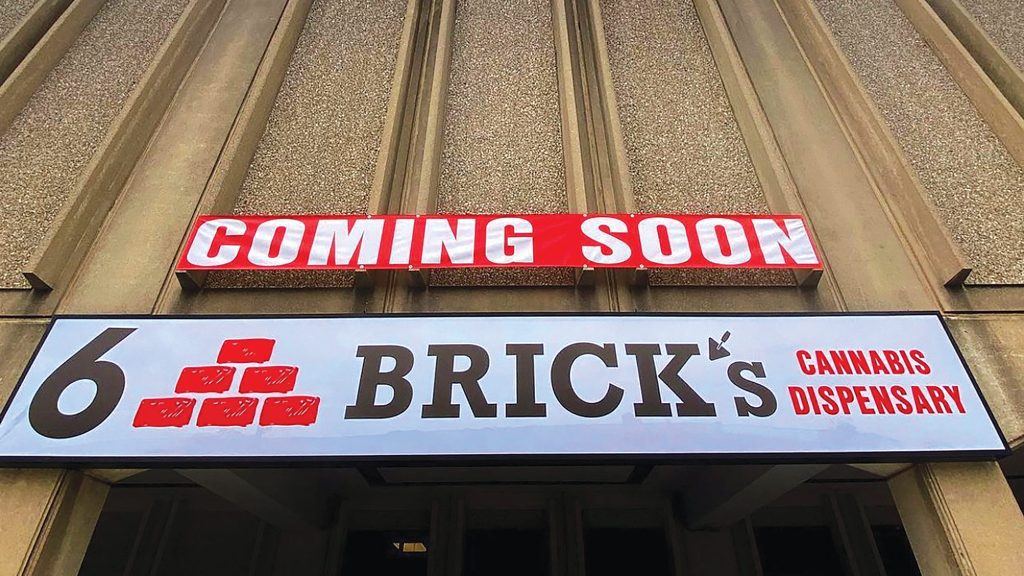
Berkshire County Special Coverage

Walking the Walk

Mindy Miraglia was inspired to launch Berkshire Camino by her treks in Northern Spain.

The COVID-19 pandemic has provided many individuals with the motivation, opportunity, and time to pursue their entrepreneurial dreams. That’s certainly been the case in the Berkshires, where new ventures launched, or set to be launched, include a new brewery, a guided-hikes venture, and a treasure-hunt concept that introduces consumers to area businesses.

Like most of those people who find themselves walking the Camino de Santiago — the pilgrim trail (actually, several different trails) that end at the Spanish city of Santiago de Compostela — Mindy Miraglia was at a crossroads in her life.

Indeed, after many years in advertising and market research, subsequent burnout, and some time working at the Kripalu Center for Yoga and Health that didn’t end well, she was trying to figure out what could — and should — come next for her.

So, like hundreds of thousands of people each year, she decided to walk the Camino, also known as the Way of St. James, to pause, reflect, and maybe, just maybe, find an answer to her question. And as she tells the story, the Camino — and, specifically, her experiences on the 250-mile trek across Northern Spain — became the answer.

Sort of. Let’s just say it’s a work or progress. Or a business in progress.

It’s called Berkshire Camino LLC, which specializes in guided hikes through the Berkshires, many of which take people from community to community and are thus patterned after what Miraglia experienced in Spain on her two treks on the Camino.

“If you want to get romantic about it … we felt that there was never going to be a better sign from God that it was time to make a change.”

But that was not the original plan. Instead, she wanted to create hostels — the lower-cost, dorm-like hotels that are an important part of the Camino experience — in the Berkshires and thus bring a different type of accommodation for tourists to that market. But reality, in the form of skyrocketing real-estate prices, as well as a lack of capital and few options for obtaining it, has kept that dream in check — at least for now.

But Miraglia, at the advice of mentors assigned to her by the nonprofit EforAll Berkshires, has pivoted and now leads a number of guided hikes within the Berkshires through a venture that is not yet profitable but showing some forms of promise.

Overall, she can find countless ways, and phrases, to compare the rugged challenge that is the Camino to that of starting and growing a business.

Mike Dell’Aquila and Sara Real

Mike Dell’Aquila and Sara Real found the inspiration, and the time, to launch Hot Plate Brewing during the first year of the pandemic.

“It’s a hero’s journey,” she said of the trek in Spain, but also entrepreneurship. “You put yourself onto that path, and you have to overcome challenges and see who you are.”

Miraglia is part of what many are calling a surge in entrepreneurship in the Berkshires, one fueled in part by the pandemic, which left many out of work and looking to start their own business. It left others wanting to leave the city and head for far more rural areas — and, again, start their own business. For still others, the pandemic triggered imaginative ideas for ways to get people out and about, and generate revenue while doing so.

Mike Dell’Aquila and his wife, Sara Real, don’t fit neatly into any of those categories, but in some ways, they encompass all three. They left their condo in Brooklyn for a home in Lenox in July, and are advancing plans to launch Hot Plate Brewing Co. in Pittsfield.

As with all breweries, there’s a story behind the name; in this case, the couple lost gas service in their condo for a period of time just as they were getting serious about transforming this from a hobby to a business. So they famously bought a hotplate so they could continue honing their craft.

There’s more to this story than the name, though, said Dell’Aquila, adding that the pandemic certainly helped provide the motivation — and the time — to take their dream, which has been, well, brewing since 2018, off the drawing board.

“If you want to get romantic about it … we felt that there was never going to be a better sign from God that it was time to make a change,” he told BusinessWest, adding that he and Real were both working day jobs, from home, during the pandemic. Motivated by this ‘sign’ from above, they used the extra hour and half they gained each day from not commuting, as well as Zoom technology, to advance their concept.

They are closing in on a location for their venture and plan to start brewing beer by early next year.

As for Liam Gorman, the pandemic certainly helped inspire his venture, CozQuest, which he bills as “the new way to explore the Berkshires.” It’s a local treasure hunt, as he called it, one that connects consumers and businesses “through their love of community and adventure.”

“The overall demand for services in the tourism and hospitality sector hasn’t changed a lot, and because of that, it’s created opportunities for entrepreneurs to make a run at whatever they wanted to do. We have seen a lot of that kind of activity.”

Using their phones, players solve a puzzle, follow a map, and find and scan a QR code to win a prize from a local business. If a player finds all the prizes, he or she can win some cash. German has created a number of these hunts, in cities and attractions such as Hancock Shaker Village and MASS MoCA, and says the business has developed a loyal following among both players and sponsoring businesses. His plan is to expand the concept and perhaps take it to other markets.

These entrepreneurs and many others are part of an emerging story in the Berkshires. It’s about people finding entrepreneurial energy during the pandemic — and finding ways to harness it.


It’s No Walk in the Park

As she goes about trying to grow her venture, Miraglia says there are times when she will actually tell herself that she’s “on the Camino.”

By that, she meant she’s on an arduous journey, one where you’re just trying to get to the next day and really don’t know what’s around the next bend.

“It’s hard,” she said, using that phrase to describe both the Camino and entrepreneurship, which has tested her in every way imaginable.

Indeed, while her concept has drawn interest from adventure seekers across the country and even other countries — not to mention a significant amount of press locally — there have been countless challenges to overcome. These include everything from the weather, which has canceled many hikes, to lingering anxiety about gathering in, or even walking in, large groups, to lingering anxiety about how to generate revenue in the winter months.

Liam Gorman, seen here with his children

Liam Gorman, seen here with his children, believes he’s found a scalable venture in CozQuest.

“I’ve had to refund 15% of my deposits so far because of the weather,” said Miraglia as she referenced a spring and summer of almost incessant rain, adding that these seasons have been challenging enough; winter is a matter that will be decided another day.

Meanwhile, Dell’Aquila, while obviously confident and enthusiastic about his venture, was quite candid about his leap from a steady paycheck to the uncertainty of entrepreneurship.

“It’s definitely terrifying,” he noted. “I vacillate from being super-excited to being super-scared.”

By all accounts, there are more people experiencing these mood swings in the Berkshires these days.

Deb Gallant, executive director of EforAll Berkshire, told BusinessWest that the agency, part of a larger, statewide network that also includes an office in Holyoke, staged its first accelerator program just before COVID-19 arrived in the winter of 2020; it had eight participating businesses. The agency then saw a considerable uptick in applications for the next few cohorts, at the height of COVID, and for all the reasons mentioned above.

“We were really able to spend the quality time needed to put together a business plan, to work on the financial forecast, and do all of that upfront work, so that you’re not just a home brewer with a dream.”

“A lot of people were unemployed, especially those in hospitality,” she explained, noting that many large employers in that sector, such as Canyon Ranch, Kripalu, and others, shut down or curtailed operations. “We had a huge uptick in applications for the next two cohorts.”

The number of applications declined somewhat for the upcoming fall cohort, which she attributes to improved stability at many of those businesses that had shut down partially or completely during the pandemic. But the agency will still have a large cohort, said Gallant, adding there is still a good amount of entrepreneurial activity in this region, which has been reinventing itself for the past 30 years from an economy dominated by manufacturing, and especially General Electric’s massive transformer complex in Pittsfield, to one that is far more diverse and driven in many ways by tourism, hospitality, and the arts.

Jonathan Butler, executive director of 1Berkshire, a multi-faceted economic-development agency, agreed.

From the early days of the pandemic, he noted, he could sense that, while COVID would bring a wide range of challenges to the region, it would also provide some opportunities for the Berkshires as well.

They have come in all forms, he went on, from professionals relocating to the area from urban centers, a migration certainly helped by the growing success of remote working and one that is prompting population growth in cities and towns that have needed such a surge, to an unparalleled explosion in the real-estate market, which has created opportunities and challenges of its own.

And, as noted, COVID has prompted a surge in entrepreneurship, said Butler, adding that it involves both new owners of businesses that failed during the pandemic — there were many, especially in the broad hospitality realm — and a wide range of new businesses as well, many of them fueled by an even greater interest in visiting the area and taking in many types of attractions.

“The overall demand for services in the tourism and hospitality sector hasn’t changed a lot, and because of that, it’s created opportunities for entrepreneurs to make a run at whatever they wanted to do,” he explained. “We have seen a lot of that kind of activity.”


Something’s Brewing

For Dell’Aquila, it wasn’t really a matter of whether he and Real would launch their brewery operation. The questions were when and where they would launch.

And COVID helped answer both, but especially the former, he said, adding that it provided the time and impetus to move ahead with their plans. “We were really able to spend the quality time needed to put together a business plan, to work on the financial forecast, and do all of that upfront work, so that you’re not just a home brewer with a dream.”

Now, he and Real are home brewers with firm plans and, hopefully, a location. They are finalizing commitments for investing in their venture from friends and family, exploring possible incentives from local and state sources, and meeting with architects to finalize blueprints for their operation. They also have a slot in the next accelerator cohort for EforAll Berkshire, during which they hope to gain both a better understanding of the local business landscape and garner more feedback and mentoring on their plans and their brand, which they believe will be a solid addition to the local craft-beer landscape.

He said he and Real will bring what he called a “culinary approach” to brewing, with such as offerings as a chamomile-infused blonde ale and a Jalapeno pale ale, in addition to more traditional stalwarts such as Belgian-style farmhouse beers, some classic American pale ales, and an IPA.

Dell’Aquila acknowledged that the Berkshires were already home to a number of solid craft-beer labels, but there is room for more — and more, in his view, creates opportunities for both himself and others.

Indeed, with Barrington Brewery in Great Barrington, Bright Ideas Brewing in North Adams, Shire Breu-Hous in Dalton, and others, the addition of Hot Plate in Pittsfield boosts the potential for what Dell’Aquila called a “beer trail” from the southern part of the county to the northern region.

“One of the things we found when we were really digging in is that there is a lot of excitement and desire for craft beer,” he explained. “And adding more options will only help; to me, density is a good thing.”

While Hot Plate is preparing to launch, CozQuest is looking to build on a solid first year and explore a number of possible growth opportunities, said Gorman, who brings a varied background to his venture. Originally in journalism, he moved to Los Angeles and ventured into television.

After relocating to the Berkshires five years ago in a search for a more stable environment in which to raise children, he became part-owner of the bar Thistle and Mirth and helped reverse its sagging fortunes. He sold his share just prior to COVID’s arrival in the region, and used some of that windfall to start CozQuest, which is in many ways inspired by geocaching, a type of global treasure hunt where seekers use GPS devices to find hidden caches.

“The engagement level has been pretty high; I like to call CozQuest a foot-traffic-building machine,” he told BusinessWest. “It brings people to places they might otherwise not have known about to discover and explore.”

German was a participant in the spring cohort of 2020, and said the experience of working with mentors and other local business owners gave him the confidence to move ahead with the concept, which is currently in what he calls phase 1, where he’s honing the concept and gauging its revenue potential.

The plan is to scale up in all ways, starting with the website, which he built himself. “It looks like someone’s first website, but … it works,” he said, adding that his ultimate goal is to take the concept to other markets.

As for Miraglia, her first 14 months in business have been a learning experience on many levels.

As noted earlier, she did a hard pivot, from hostels to guided hikes, thanks to input from mentors and what she called a “reckoning with reality” when it came to the costs and other challenges or making those hostels reality.

After pivoting and focusing on hikes, she did some proof-of-concept testing in the late summer of 2020, often giving away her product away as she did so. She found that there is promise, but likely more refinement of the business model as she gains more evidence concerning what will sell and generate profits.

Indeed, she’s learned there is considerable interest in private hikes — small groups and even one person going where they want to go and not necessarily on a pre-set course.

As she noted, there have been many challenges and hurdles for this venture. She started it too late to qualify for any PPP money, and has wound up bootstrapping the operation herself, drawing down a retirement fund to do so.

“As a for-profit venture, grant opportunities are scarce,” she said. “I joke that Joe Biden has invested in Berkshire Camino since I’ve invested the pandemic aid that I received as a citizen into the business. He’s welcome to come on a hike with us at no charge.

“My aim is to establish a solid baseline in 2021 that I can use to demonstrate to a lender or investor that this has viability,” she went on, adding that the business is not yet profitable and she is not drawing a salary. “I learned from walking the Camino de Santiago that the journey is long and you take one step at a time, stay present and flexible. Just like in business.”


The Finish Line

Miraglia didn’t finish the Camino on her second trek in 2019. She had completed roughly 250 of the 500 miles before she injured herself and was forced to eventually call a halt, pack up, and head home.

She remembers exactly where she had to call it quits, and has plans to go back to back there — 2024, when she turns 60, is the current goal — and finish the walk the Santiago de Compostela.

Between now and then? She has more immediate goals and dreams, especially to take the venture she started to stability and profitability. She is not at all sure she will get there — the road ahead is paved with question marks and uncertainty.

As it is for all entrepreneurs. There are more of them in the Berkshires these days, by many accounts. They’ve launched ventures that have been inspired by, accelerated by, or facilitated by the pandemic — which has provided the time and opportunity to reflect and, and in these cases, move a dream to reality.


George O’Brien can be reached at [email protected]
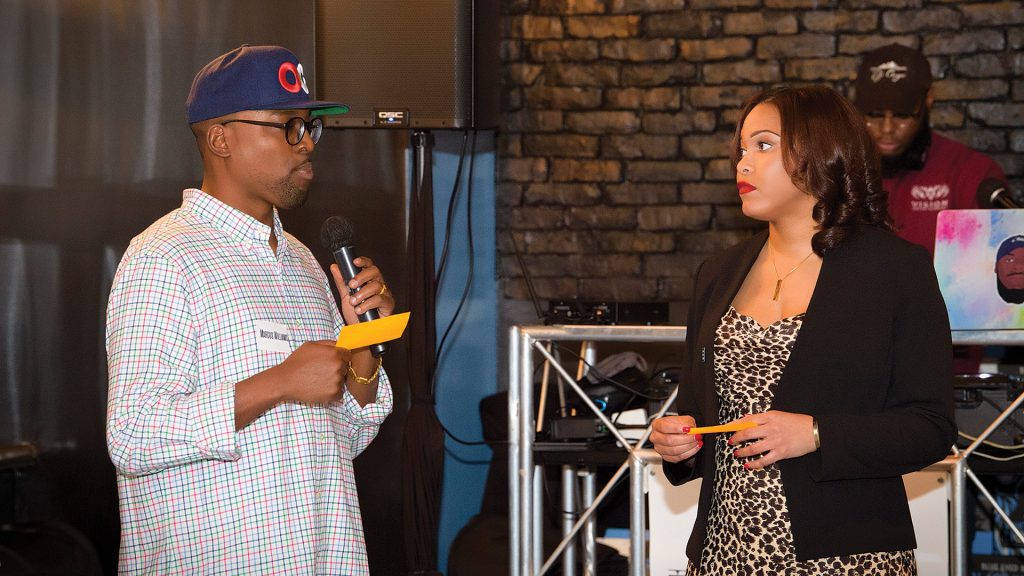
Construction

Greener Days

MassDevelopment announced that Abercrombie Greenfield, LLC will receive $450,000 in financing for energy improvements to its office building at 56 Bank Row in Greenfield, the first project financed under the agency’s new Property Assessed Clean Energy (PACE) Massachusetts program.

Through PACE Massachusetts, capital provider Greenworks Lending from Nuveen will provide financing for a range of energy upgrades that were installed to the building, including  efficient electrification of space heating, energy-recovery ventilation, LED lighting and controls, improvements to windows and insulation, and a solar photovoltaic system on the roof. This financing will be repaid via a betterment assessment on the property.

“PACE Massachusetts stands to be a key financing tool for making commercial properties more energy-efficient,” said Housing and Economic Development Secretary Mike Kennealy, who serves as chair of MassDevelopment’s board of directors. “These efforts will benefit the Commonwealth and its communities by creating jobs, reducing energy consumption, and making progress towards Massachusetts’ clean-energy goals.”

MassDevelopment President and CEO Dan Rivera noted that energy upgrades at 56 Bank Row are the first to be financed under PACE Massachusetts. “We encourage property owners throughout the Commonwealth to consider how this flexible, long-term financing tool can help them tackle an energy-improvement project.”

Launched in July 2020, PACE Massachusetts is a new long-term option for financing energy improvements to commercial and industrial buildings, multi-family properties with five or more units, and buildings owned by nonprofits. The program enables commercial property owners to fund energy-efficiency and renewable-energy projects by agreeing to a betterment assessment on their property, which repays the financing.

“The renovation of the Abercrombie Building rescued a blighted historic property that was structurally failing.”

Offering more flexibility than a direct loan, PACE Massachusetts allows property owners to undertake comprehensive energy upgrades without adding new debt to their balance sheet and through longer financing terms of up to 20 years. MassDevelopment administers PACE Massachusetts in consultation with the Massachusetts Department of Energy Resources (DOER).

“DOER commends PACE’s first approved project for its commitment to comprehensive energy improvements and building electrification using heat pumps,” Department of Energy Resources Commissioner Patrick Woodcock said. “As the number of municipalities opting into PACE grows, we look forward to having more commercial properties take advantage of this program to finance renovations and retrofits to help meet the Commonwealth’s ambitious greenhouse-gas emission-reduction goals.”

Massachusetts cities and towns are required to opt into PACE Massachusetts by a majority vote of the city or town council or the board of selectmen, as appropriate, in order for a property within that municipality to be eligible for the program. Forty-seven cities and towns have opted in; the city of Greenfield was one of the earliest to do so in April 2018.

“This historic PACE financing for the complete energy-efficiency renovation of an underutilized building on Bank Row joins many energy-efficiency ‘first’ accomplishments in our city since we became the first green community in Massachusetts in 2010,” Greenfield Mayor Roxann Wedegartner said. “It’s a legacy we should all take pride in and continue to support.”

Built in 1896, 56 Bank Row is a 12,696-square-foot office building. The energy improvements are projected to save 189,000 kilowatt hours from the grid annually compared to a building built to current Massachusetts energy-efficiency code, which equates to a 28% overall reduction.

“Greenworks Lending from Nuveen is very proud to have worked with MassDevelopment to bring financing for Massachusetts’s first C-PACE project at 56 Bank Row,” said Greenworks Lending from Nuveen CEO and President Jessica Bailey. “We hope that this is the first of many C-PACE projects to come with MassDevelopment as we work together to bring financial and environmental benefits to local businesses and communities in Massachusetts.”

Bradley McCallum, owner of 56 Bank Row, added that “the renovation of the Abercrombie Building rescued a blighted historic property that was structurally failing. The project combines factors including a long-term lease with the Northwestern District Attorney’s Office, state and federal historic tax credits, an innovative design by Tom Douglas Architects, and a committed contractor, Mowery & Schmidt, and their team of subcontractors. Thanks to this team, we were able to transform the bones of this historic structure into a vibrant resource for the city of Greenfield.

“As with projects of this ambition and scale,” he went on, “we faced cost overruns, and one of the positive contributions that PACE Massachusetts provides Abercrombie Greenfield is the ability to retroactively refinance key energy-efficiency investments that we made and consolidate the outstanding bridge financing and private loans into a fixed 20-year repayment structure, providing credit beyond the 80% LTV, which our primary mortgage with Berkshire Bank is capped at. Berkshire Bank, which is our tax-credit investor and lender, has worked in partnership with Abercrombie Greenfield to secure our PACE Massachusetts financing.”

Construction

From Parking Lot to Plaza

MassDevelopment has awarded a $10,000 grant to the North Adams Chamber of Commerce to transform the Center Street parking lot at 55 Veterans Memorial Dr. in North Adams into a seasonal public dining corridor dubbed Mohawk Plaza.

The organization will use funds to add outdoor seating, a sidewalk surface mural, wayfinding signage, ambience lighting, and landscape work. The chamber will also crowdfund this summer and fall; if the organization reaches its $7,850 goal, it will receive an additional $7,850 matching grant from MassDevelopment.

The funds are awarded through MassDevelopment’s special Commonwealth Places COVID-19 Response Round: Resurgent Places, which was made available specifically to assist local economic-recovery efforts as community partners prepare public spaces and commercial districts to serve residents and visitors.

“Before this pandemic, the vibrant centers of our cities and towns were not only a driving force behind the strength of local economies, they were the places where we gathered to dine, to shop, and to be entertained, and the Commonwealth Places program is one way that we can help these areas bounce back stronger than ever,” said Housing and Economic Development Secretary Mike Kennealy, who serves as chair of MassDevelopment’s board of directors.

“The Baker-Polito administration continues to support downtowns and town centers through various economic-recovery programs,” he added, “and these Resurgent Places grants are providing nonprofit community organizations with the resources to activate public spaces, boost economic activity, and support an equitable recovery.”

Created in 2016, Commonwealth Places aims to engage and mobilize community members to make individual contributions to placemaking projects, with the incentive of a funding match from MassDevelopment if the crowdfunding goal is reached. In response to the pandemic, MassDevelopment announced the opening of the first Commonwealth Places COVID-19 Response Round: Resurgent Places in June 2020, and from August through October 2020, $224,965 in funding was awarded for 21 placemaking projects across Massachusetts.

In December 2020, MassDevelopment announced the availability of $390,000 in funding for a second Commonwealth Places COVID-19 Response Round: Resurgent Places. Nonprofits and other community groups can apply to MassDevelopment for seed grants of between $250 to $7,500 to fund inclusive community engagement, visioning, and local capacity building that will support future placemaking efforts, or implementation grants of up to $50,000 to execute a placemaking project. For implementation grants, up to $10,000 per project may be awarded as an unmatched grant; awards greater than $10,000 must be matched with crowdfunding donations.

“Amazing things can happen when communities reimagine underutilized public spaces, such as North Adams Chamber of Commerce’s vision for a parking lot steps away from the city’s Main Street,” MassDevelopment President and CEO Dan Rivera said. “MassDevelopment is pleased to help the organization create Mohawk Plaza, a space that will increase foot traffic downtown, provide additional outdoor dining, and reinvigorate a prime public way.”

Insurance

Expanding the Footprint


Berkshire Hills Bancorp Inc. and Brown & Brown Inc. recently announced the execution of a definitive agreement for the sale of the assets and operations of Berkshire Insurance Group Inc. (BIG), a subsidiary of Berkshire Hills, to Brown & Brown of Massachusetts, LLC, a subsidiary of Brown & Brown. The transaction is subject to customary conditions and is expected to be completed in the third quarter.

BIG has been providing insurance coverage to customers across the Northeast since its inception in 2000, growing into one of the largest insurance agencies in Western Mass. It provides personal and commercial property and casualty insurance solutions.

Sean Gray

Sean Gray

“Berkshire has entered into an exciting partnership with Brown & Brown through which we will be able to serve our customers better with an expanded offering of insurance solutions.”

“Consistent with Berkshire’s Exciting Strategic Transformation (BEST) program, this transaction allows us to simplify our operating model, repurpose valuable resources, and redeploy capital to support core businesses and strategic initiatives that will enhance long-term stakeholder value,” Berkshire Bank CEO Nitin Mhatre said. “As a result of this transaction, we will record a net gain on sale of approximately $0.55 per share on a GAAP basis in the third quarter, and anticipate $0.02 lower earnings per share in the second half of 2021.”

Sean Gray, president and COO of Berkshire Bank, added that “Berkshire has entered into an exciting partnership with Brown & Brown through which we will be able to serve our customers better with an expanded offering of insurance solutions. I also want to thank the dedicated team of employees at BIG, whom I’ve had the privilege of working alongside for the past 10 years, for their contributions to Berkshire and all our communities. I know they will continue to serve Berkshire customers well in their new roles with Brown & Brown.”

Brown & Brown has offered positions to existing BIG employees, resulting in no job eliminations. Following the acquisition, BIG will become a new standalone operation within Brown & Brown’s retail segment under the leadership of John Flaherty.

BIG’s offices in Greenfield, Longmeadow, Pittsfield, Stockbridge, and Westfield will continue to operate from their current locations, and its other locations will physically combine with existing Brown & Brown offices. In addition, through a partner relationship, Berkshire Bank will continue to refer customers to Brown & Brown. Don McGowan, a regional president in Brown & Brown’s retail segment with responsibility for various offices in Massachusetts and the Northeast, will oversee the new combined operations.

Don McGowan

Don McGowan

“This transaction allows us to further expand our footprint in Massachusetts with several new strategic locations that we believe enable us to better serve our customers.”

“This transaction allows us to further expand our footprint in Massachusetts with several new strategic locations that we believe enable us to better serve our customers,” McGowan said. “We are excited to welcome all of the talented BIG teammates to the Brown & Brown organization and look forward to finding fresh opportunities to offer a wide range of insurance products and services to new and existing customers.”

RBC Capital Markets is acting as financial advisor to Berkshire, and Luse Gorman, P.C. is acting as legal advisor to Berkshire on this transaction.

Berkshire Hills Bancorp is the parent of Berkshire Bank. Headquartered in Boston, the bank has $12.3 billion in assets and operates 115 banking offices, primarily in New England and New York. Brown & Brown Inc. is an insurance brokerage firm delivering risk-management solutions to individuals and businesses, and boasting more than 300 locations across the U.S. and select global markets.

Berkshire County

No Standing Still

Susan Wissler says visitorship is way up

Susan Wissler says visitorship is way up at the Mount — not just from 2020, but from pre-pandemic 2019.

It may not stack up to Edith Wharton’s best novels, but it’s a compelling story.

“We’ve had an incredibly good season, despite the challenge of staying in compliance with the latest CDC and local health recommendations regarding COVID,” said Susan Wissler, executive director of the Mount, Wharton’s former estate in Lenox that is now a hub for all kinds of arts, nature, and cultural programming.

In fact, Wissler said, this year’s visitorship has doubled that of 2020 — maybe not a striking statistic in itself, given the economic shutdown of that spring and a hesitancy among many people to leave their homes for much of the year. But this year’s figures are also 50% higher than they were in 2019.

Part of that success may be attributed to a decision last year to open up the property’s outdoor grounds and gardens for free. “We opened as a public park so people had a place to walk and enjoy beauty and nature in relative safety,” she noted. “We’ve got a pretty big space, and people really appreciated it.”

“We opened as a public park so people had a place to walk and enjoy beauty and nature in relative safety. We’ve got a pretty big space, and people really appreciated it.”

The house itself still requires admission, and Wissler worried people would take advantage of the free outdoor experience and leave. And maybe some did come with that plan — but many felt compelled to go inside, too. Thus, paid visitation topped the previous two years.

So did weddings, all of which were cancelled in 2020, many of them moved into this year. The Mount typically hosts about 12 weddings per year; it will welcome 26 between May and October.

Meanwhile, NightWood — an ethereal, immersive walking experience featuring original music, lighting, and sculptural elements — was a huge hit last winter, bringing in desperately needed revenue with limited attendance and timed tickets; the Mount will stage the attraction again later this year.

Still, the new focus on outdoor space — which included a lecture series under tents this summer — posed its own issues, particularly weeks when it rained and rained. “That has been a huge frustration for all culturals and restaurants, anyone focusing more attention outdoors,” Wissler said. “The weather was a punch in the stomach.”

MASS MoCA in North Adams also offers programming inside and outdoors, and found plenty of success with both in 2021. “June and July were actually our highest-attended months we’ve ever had — and that includes pre-COVID visitorship,” said Jenny Wright, the museum’s director of Communications.

“We had that brief moment after Memorial Day when we were able to lift restrictions — but we do have an indoor mask mandate in place since August 4 and require our staff to be vaccinated. But we’re very fortunate to have the luxury of lots of indoor and outdoor space on our side,” she noted, adding that, in addition to the museum’s wide corridors and spacious galleries making it easy to physically distance, MASS MoCA made good use of outdoor courtyard space this year to stage performances. “We’re very fortunate to have space on our side during this period.”

The museum’s robust artist-residency programs continued throughout the pandemic as well.

“When people are unable to come here, we can still get that story out through our digital programming, whether it’s visual or performing arts.”

“Even before we reinstated our performances, we were housing artists in residence to develop new work. That was the catalyst for us developing new digital programming. That was something we hadn’t done much of before,” Wright said, noting that the museum told artist stories with behind-the-scenes documentaries it then posted online as a way to keep the public connected even when they weren’t in the building. It’s also creating 360-degree virtual tours, starting with its famed Sol Lewitt exhibit, to post to the MASS MoCA website.

“Our mission is to make art … new art that has never existed before,” Wright noted. “When you come here and see that, it’s a powerful experience. But when people are unable to come here, we can still get that story out through our digital programming, whether it’s visual or performing arts.

“For us, it’s really thinking about ways to create multiple points of entry for people, not just the front door,” she went on. “That was something we hadn’t explored in too much depth before.”

Wissler said the Mount found similar success reaching new audiences virtually. “We were really reluctant to get into the pool of virtual programming, but COVID forced us to dive right in — and Zoom programming has been amazing.”

Specifically, events featuring guest authors have been a hit — and found a much broader audience than before. Now, an event that typically drew authors from the mid-Atlantic and New England can bring in guests from pretty much anywhere — and the potential audience has also expanded around the country and even around the world.

“That’s something we’ll continue as we move forward,” Wissler said. “We haven’t found a way to monetize it yet, but from a visitor standpoint, it’s a huge success.”


Dramatic Shifts

While many regional destinations and arts organizations shut down completely in 2020, Berkshire Theatre Group (BTG) turned in one of the year’s most notable success stories, creatively staging an outdoor, socially distanced run of Godspell in August in September — the only show featuring Equity stage actors in the entire country at the time.

Nick Paleologos, executive director, said planning for the 2021 season began in late 2020, and the general feeling as the calendar turned was that current health conditions weren’t going to change dramatically until late 2021 or even 2022.

“So we decided to build on what we learned in the summer of 2020, when we did Godspell outdoors. We planned for a modest but slightly more robust outdoor season on both our campuses, in Stockbridge and Pittsfield.”

In Stockbridge, that meant outdoor runs for The Importance of Being Earnest and a newer play, Nina Simone: Four Women, while in Pittsfield, the theater planned a community version of The Wizard of Oz, but with a slightly scaled-back supporting cast. The organization also scheduled a series of outdoor music performances.

“Then, quite suddenly, Gov. Baker decided to lift all restrictions on Memorial Day weekend, and that caught us a little off guard,” Paleologos said. “We had a planned a whole series of protocols, and now, all of a sudden, we were being told, ‘no problem, go back indoors, you don’t have to wear masks,’ all that.”

So the Stockbridge performances were shifted indoors, to the 120-seat Unicorn Theatre, while The Wizard of Oz in Pittsfield remained outdoors, under tents. While it didn’t have to mandate masks, the Unicorn did require them, even though it had recently upgraded its HVAC system.

“We decided on an abundance of caution — we would require masks and suffer any pushback there might be,” Paleologos went on. “But we encountered very little pushback. People were quite happy, even with the protocols, to wear masks for the entire indoor production. We had hardly any complaints. I think they were grateful to be back inside, in an air-conditioned space, instead of outdoors in Stockbridge during the summer.”

Meanwhile, in Pittsfield, attendees didn’t have to wear masks under the tents if they chose not to, and most didn’t.

But another “curveball,” as Paleologos called it, would follow — and, unlike Baker’s decision in May, it wasn’t a positive one. As the Delta variant of COVID-19 emerged and dramatically increased infection rates in a state where COVID had been largely under control, BTG had a decision to make. It was headed into the Nina Simone part of the season and opted to keep that show indoors — but require proof of vaccination for entry.

“Again, we braced outselves for a backlash which never came,” he said, adding that the theater did have to turn away a few people who did not carry that proof with them, even though they claimed to be vaccinated. But in most cases, those patrons requested a credit for a future performance rather than their money back, and other patrons thanked Paleologos for holding fast to the policy, he noted.

“They said the only reason they were there was because of the protocol. I think we’ve gotten to a stage where the issue of concern over spreading the virus has become almost a reflective action; I think people are kind of acclimated to that.”


Places in the Heart

The winter-season holiday show at BTG’s Colonial Theatre in Pittsfield will be held indoors, with masks and vaccination required, as well as distancing by placing an empty seat between seated parties.

In other words, the show goes on at this company that has learned not only how to pivot, but that its audience is willing to pivot right along with it.

Paleologos said the various shifts this year have not only made the organization more flexible, but have shown him that the public is willing to adapt as well — and that bodes well for any future ‘curveballs.’

“It’s been a real learning experience for us. As we look ahead, we’ve become more nimble with what we do and how we do it.”

It’s just one example of how people are seeking meaningful experiences right now and are, for the most part, accepting of whatever protocols are required to engage in them.

“I think people came out of 2020 feeling starved and lonely,” Wissler said. “They’re thinking about the Mount as a destination — a nice place to meet with friends and socialize. I think people are coming for many reasons other than tourism — it’s a great place to keep up and enjoy personal relationships.”

Wright agreed that the pandemic has driven home the importance of what destinations like MASS MoCA offer.

“After everything that’s happened over the past 18 months,” she said, “it really underscores the importance of the arts and cultural destinations during these difficult times — particularly contemporary art, which is not just reflections of the moment we’re in, but can present us with a view of what’s possible. And I think people really need that right now.”


Joseph Bednar can be reached at [email protected]

Special Coverage Wealth Management

Dollars and Sense


There are many myths concerning money, with many of them transcending generations of people in the same family. The truth is that many of these myths — including the one about how money will make you happy and solve all your problems — are false. Worse, these myths tend to limit one’s thinking and limit their financial success.

By Charlie Epstein


Most people do not realize they have myths about their money.

And even more people don’t take the time to analyze where these myths come from and why people hold them to be true.

I have worked with thousands of people over the past 41 years as a financial advisor. In the process, I have identified 15 myths people have about their money, which limit their financial and personal success.

A myth is defined as “an unproved or false collective belief that is used to justify something.” The biggest myth we have about money is that “it will make me happy and solve all my problems.”

Do you think money makes you happy?

Are you sure? Want to bet?

Did you know that 90% of all lottery winners go bankrupt within three to five years of winning the lottery? I’m talking millionaires. And the majority have stated they wish they never won the money. They’re miserable, depressed, and suicidal. How can this be?

“I am convinced that your money myths limit your thinking and impact how you approach your life and your finances.”

This happens because the most important thing in their life has been to get money, and now that they have it, they have no idea what to do with it. They often go on a massive shopping spree and buy all sorts of material items that don’t bring any lasting joy or fulfillment. And, more importantly, they stop working or doing anything productive to give their life purpose, meaning, and real value. What they fail to do is stop and ask themselves, “beyond money, what makes me happy?”

I am convinced that your money myths limit your thinking and impact how you approach your life and your finances. The three biggest financial myths most people have are:

1. My home mortgage needs to be paid off when I retire so I don’t have a payment;

2. I’ll be in a lower tax bracket when I retire; and

3. My home is an investment.

My father believed all three of these myths. When he retired, he and my mother moved to Florida to build the house of their dreams, on the golf course of his dreams. He was going to pay cash for that house — $500,000. He was 68 at the time. I said, “Dad, I want you to take out a mortgage instead.”

My dad was shocked. “A mortgage! For how long?”

I said, “for 30 years.”

“Thirty years!” my Dad bellowed. “I’ll be dead before it’s paid off!”

“So what do you care?” I smiled. “You’ll be dead!”

To which my father asked, “what will your mother do?”

I said, “she doesn’t play golf, and she doesn’t play mahjong, so if you die before her, I will sell that house and move her back north!”

I convinced my Dad to put $100,000 down and finance the other $400,000 with a 30-year mortgage at 5%. This was 1992. Bill Clinton had come into the White House and raised the marginal tax rate from 36% to 39.6%. There went money myth #2 — the belief he would be in a lower tax bracket when he retired (a belief I am sure many of you reading this article share).

That didn’t happen. The good news was, he could write off and deduct 40% of his mortgage payments in the first 15 years because it was all mostly interest. My dad was now ‘leveraging’ other people’s money (OPM) by using the bank’s money to take out a mortgage, and Uncle Sam’s money (USM) by deducting 40% of his mortgage payments.

The net cost for my dad to borrow the bank’s money was 3% (5% x 40% = 2%, which he could deduct, so his net cost to borrow that money was 3%). I said to my parents, “If I can’t make you net more than 3% on your $400,000, fire me as your financial advisor.” We averaged 7% to 8% on their money for the next 13 years of his life.

When my dad passed away, I sold my mother’s home in Florida, at a $100,000 loss. This was 2005, and the real-estate market in Florida was overbuilt, and no one wanted to be on a golf course. So much for the third money myth about your home being an investment. I than moved my mother back north and built her a home in an over-55 community. She was 79 at the time, and she said to me, with a twinkle in her eye, “son, do I get to take out a mortgage?” My mother is now 94, and she still has a mortgage — at 2.5%.

What does my mother care about? She only cares that she has enough money to pay for everything she desires to do. What do I care about? That I’m not tying up her money in a ‘dead asset’ — her home. She can’t eat it or drink it, and it doesn’t generate any income for her. And it is not an investment. I know I can make more than 2.5% on her money by using OPM to generate her even more income.

The key to being financially successful with your money is to understand how to maximize OPM and USM to make money on ‘the spread.’ The spread is the difference between what it costs to use other people’s money and what you can make investing your money somewhere else.

Let me add one big caveat to this discussion. If, psychologically, you must have your mortgage paid off so you can sleep at night … then pay it off. I always say psychology trumps economics. Just remember, you may feel good having it paid off, but economically, you won’t make as much of a return on your money and your assets.


Charlie Epstein is an author, entertainer, advisor, entrepreneur, and principal with Epstein Financial. He also presents a podcast, Yield of Dreams; yieldofdreams.live; (413) 478-8580.

Banking and Financial Services Special Coverage

Open for Business

Romika Odedra says the branch’s layout emphasizes the customer experience.

Holyoke-based PeoplesBank recently expanded its presence in Connecticut with a branch in West Hartford. The new location is projected to help the bank grow its already considerable portfolio of consumer and commercial business from south of the border, especially in an ongoing climate of mergers and acquisitions.


When PeoplesBank opened its newest branch in West Hartford on August 30, it wasn’t exactly its first foray into Connecticut’s capital region. Far from it.

“This is a retail opening in West Hartford, but half of our commercial business is in Connecticut already — actually, about 60%,” said Matt Bannister, the bank’s senior vice president of Marketing & Corporate Responsibility.

“Some is up in the Granby-Windsor-Suffield area,” he went on, alluding to PeoplesBank’s first three Connecticut locations, in East Granby, Suffield, and West Suffield. “Some is down here in the Hartford region, and it actually goes all the way down to the shore. We’re kind of catching up with this retail storefront because the commercial customers want a presence here. They’ve been saying to us, ‘come down to Connecticut.’ And West Hartford just makes sense; it’s a great community, and a good place to be.”

Aleda De Maria, executive vice president of Consumer Banking and Operations, said a growing commercial presence in Hartford County cried out for a full-service physical branch.

“The banking centers are there for when they need a little more contact, when they have a little more complexity, or they just want to expand their relationship. We need to make sure we have everything.”

“We absolutely need it. The majority of our new accounts are still opened at brick-and-mortar locations. For more complex conversations, customers want to talk to a person, and they want to have that live interaction. There still is a need for that face-to-face contact.

“I think what the industry is trying to do with the self-service channels — with online, with mobile, with video bankers — is give people the ability to do the quick, day-to-day transactions when they want to, without having to park and go in and talk to somebody, and get it done quickly,” she went on. “The banking centers are there for when they need a little more contact, when they have a little more complexity, or they just want to expand their relationship. We need to make sure we have everything.”

Michael Oleksak, executive vice president and chief lending and credit officer, said all those Connecticut dollars in the bank’s commercial portfolio have not come mainly from the Granby-Suffield area, but predated those physical locations.

Matt Bannister with one of the West Hartford branch’s two interactive video teller machines.

Matt Bannister with one of the West Hartford branch’s two interactive video teller machines.

“We have a significant amount of business in the Greater Hartford area, specifically in the Farmington, Glastonbury, West Hartford communities and downtown Hartford, but we also go as far as New Haven and Greenwich. So our tentacles are fairly long when it comes to our Connecticut presence.

“Most of that is in commercial real estate, which tends to be more transactional,” he went on. “We are able to do a lot of full-service banking for these commercial real-estate customers because of our cash-management expertise and the different products we have, but without a branch presence, it’s really difficult to do business banking.”

The branch presence in West Hartford allows the team to do more commercial and industrial (C&I) lending, and complements a recent expansion of the bank’s C&I team with former TD Bank veterans, Oleksak noted.

“We have a very strong following now, and I think by having a physical presence there, we’ll become a more visible part of the community,” he went on. “We do support our current borrowers, including with a lot of their philanthropic initiatives, but it’s kind of behind the scenes because we don’t have a presence there. But with a physical presence, and with the disruption in the market with the M&T acquisition of People’s United, it will really open the door for us to be a bigger part of the community.”

De Maria agreed. “We’ve already created such a solid foundation with our name and then with the physical presence from the acquisition we did in Suffield in 2018,” she told BusinessWest. “And now, with our West Hartford presence, I think we have a solid opportunity to bring the service we provide for our commercial customers to our retail-customer world, and really marry those two sides together and make an impact.”


Making Contact

Many visitors to the new branch will first notice the interactive video tellers, one in the entry and one in the drive-thru lanes, bringing the bank’s total number of such machines to 22 at 17 locations. Users can call up a live teller in Holyoke who manages four or five machines at once.

“That way, we can be open seven days a week and have extended hours and not have to have people physically in the branch. And the video banker can do almost any transaction,” Bannister said, noting that Peoples is the only bank in the Hartford to offer the service. “Part of our technology story is good, consumer-facing technology.”

Romika Odedra, vice president and regional manager, said customers appreciate face time with a live person rather than interacting with a machine and the more limited options available at an ATM. And Bannister added that, with the pandemic still raging, many customers appreciate being able to conduct complex transactions in a contactless way.

“We are able to do a lot of full-service banking for these commercial real-estate customers because of our cash-management expertise and the different products we have, but without a branch presence, it’s really difficult to do business banking.”

“Video tellers are something we’re proud to bring to the market,” De Maria said. “It brings seven-day-a-week banking to West Hartford and our surrounding areas.”

Once inside the branch, customers will see pods instead of traditional customer lines — a model Peoples and other banks have been implementing for years. Customers can stand beside the teller and even see what he or she is looking at on the computer screen, if necessary. “In the beginning, people were like, ‘where do I go?’” Odedra said. “But it’s so easy — it’s warm, it’s welcoming, it’s not ‘there’s the line.’ It’s nice to have that one-on-one experience.”

The branch also employs a ‘universal banker’ model, Bannister said. “Any bank employee you see out here can do all the transactions. You can go to a teller pod or pop into an office if it’s more convenient or you just want privacy to have a conversation.” In other, more specialized offices down the hallway from the main area, he added, the bank will offer a mortgage expert, a wealth adviser, and other ancillary services.

And in front, at the main entrance, is a high table, couch, and coffee bar. “We’re trying to say to people, ‘come on in and hang out; get to know us a little bit,” Bannister said. “The thought is, we want to have sort of an open storefront.”

That’s partly to reflect the neighborhood the branch is in, with restaurants and small shops lining the streets and the shopping and dining mecca Blue Back Square just down the road.

“This area really is hopping with foot traffic,” he said. “And if you’re a bank with a retail storefront, you want foot traffic.”

Those who drive to PeoplesBank will appreciate the free parking lot the bank shares with the town’s Post Office.

“I used to work at a different bank, and that was the biggest issue we had, the parking,” Odedra said. “I’m so glad we have the parking we have. We don’t have to rush the customer out; we have time to have that one-on-one with them and invite them to have a cup of coffee.”

Bannister said West Hartford has been an enthusiastic town to work with, from its Chamber of Commerce to local economic-development leaders.

“Right from the start, when we were saying we wanted to come down, they were like, ‘how can we help?’ We’re in a lot of communities, and some of them are very welcoming, and some are maybe not so much. This one has been great to work with.”


Opportunity Knocks

The branch is fully staffed as well, with a mix of on-site and hybrid workers, reflecting the current makeup of the entire PeoplesBank organization. Some are West Hartford natives who know the market, Bannisher said, while some were attracted by working near all the nearby restaurants and other neighborhood amenities.

Aleda De Maria

Even in an age of mobile banking, Aleda De Maria says, people still want face-to-face interaction at branches for many services.

There’s room to expand in Hartford County, he added, with plans to open at least two more branches in the next couple of years.

“We’re coming in with a message of ‘we’re here, and we’re here to stay, and we can do everything the big banks do, but with a local feel and local decisions,’” De Maria said. “And I think that’s what’s missing in banking in general nowadays — being able to bank how you want to bank but also at a community bank where you don’t have to worry about who’s going to buy them.”

That presence means civic involvement and philanthropy as well, Bannister said, noting that PeoplesBank plans to give close to $60,000 in the first month alone to local organizations like Habitat for Humanity, Hands on Hartford (which assists with food pantries and the homeless population), the United Way, Foodshare, and even two West Hartford community events the bank will sponsor this fall and next summer.

“Right from the start, when we were saying we wanted to come down, they were like, ‘how can we help?’ We’re in a lot of communities, and some of them are very welcoming, and some are maybe not so much. This one has been great to work with.”

“We feel like we’re leading with the values we want to be known by in the community, which are innovation, technology, customer service, and the community support.”

De Maria agreed with Bannister than broadening the bank’s footprint in Connecticut is a must. “We will continue to actively look for physical locations, primarily in Hartford County,” she said. “We’re not opposed to outside Hartford County should it make sense, but in Hartford County, we feel we have an opportunity for our brand to really make an impact in the community.”

And that means expanded business, including commercial lending, Oleksak said. “I think there’s tremendous opportunity in this market for us, given our size and the experience of our lending staff. We’re very diverse, and between small business, large commercial real-estate loans, and now C&I expertise, I think we bring a lot to the table. It’s a great opportunity for us.”


Joseph Bednar can be reached at [email protected]

Community Spotlight Special Coverage

Community Spotlight

By Mark Morris

Russell Fox (left) and Karl Stinehart say Southwick benefits from its recreational amenities

Russell Fox (left) and Karl Stinehart say Southwick benefits from its recreational amenities, but needs commercial and industrial development as well.

When they talk about managing their town into the future, officials in Southwick emphasize the word “balance.”

In order for the town to remain a desirable place to live, said Karl Stinehart, chief administrative officer, there needs to be a combination of housing and recreation areas as well as commercial and industrial development.

“We like to point out that Southwick is a recreational community,” he noted. “We also want to make sure our zoning allows for commercial and industrial developments because the taxes they contribute will keep our town an affordable place to live.”

Russell Fox, vice chair of the Southwick Select Board, reinforced the recreational community description by pointing to the Congamond Lakes, which make up nearly 500 acres of recreational space in town. “Also, the Southwick Rail Trail has become a gem in our community, running 6.5 miles through town.”

Another big recreation activity happens at the Wick 338, the popular motocross track that hosted a national event in July and drew more than 30,000 people to Southwick.

In recent years, living at the lakes has become more desirable, and, as a result, prices for houses and lots are skyrocketing. As lake property increases in value, it also drives up the tax bill for residents there.

“I’m concerned about the retirees who have lived on the lake for years who may now have trouble staying in their homes because of the tax increases,” Fox said. “If we can attract more business to Southwick, we can help offset that tax burden.”

One company, Carvana, proposed to build a 200,000-square-foot facility off Route 10 and 202 in Southwick. Carvana is a website that allows consumers to buy used cars completely online and have them delivered to their home. The $100 million facility would have stored, repaired, and cleaned cars for delivery across the Northeast. Carvana projected the Southwick site would have employed 400 people and paid $900,000 each year in property taxes to the town.

The project was initially approved by the town’s Planning Board and Select Board, but hit a snag when a local group called Save Southwick strongly opposed the facility. In a series of public meetings, the group cited concerns about safety, traffic, and burdens on the town’s infrastructure. As the project became more controversial, Carvana withdrew its proposal this summer.

To kill the project that late in the process was frustrating for some, but Fox looks at the Carvana situation as a learning experience for everyone involved.

“It became clear from a vocal group that if a project is too big, they won’t support it,” Fox said. “Even those opposed to Carvana learned how government works, so if that encourages more civic engagement, then we’re all for it.”

Stinehart said the town is currently developing a new master plan that includes a process to allow earlier citizen input on zoning decisions to avoid episodes like Carvana in the future.

“The idea is to have these discussions sooner rather than later when we are considering a project,” he explained. “This also gives citizens an opportunity to learn more about the laws and the process of getting things done.”


Responding to a Crisis

When the pandemic struck last year, Southwick was still able to keep the town’s services running.

“All our departments in town continued to provide services and got us through the height of the pandemic by being flexible and adaptive,” Stinehart said.

The Town Hall building where many municipal functions are located remained open for most of the pandemic. Like towns everywhere, Southwick relied on remote online platforms like Zoom for meetings when necessary.

In March 2020, Southwick was one of the first communities to hold a town meeting outside. Because Southwick has an open-meeting form of government, Fox explained, a town meeting was held in the Southwick High School parking lot.

The west side of the Greens of Southwick

The west side of the Greens of Southwick is almost full, while homes on the east side have yet to be constructed.

“It was a special meeting with one agenda item, the decision to treat the lakes with alum,” he noted. Alum — or aluminum sulfate — is commonly used to keep algae blooms down and improve water quality. “The timing was important because we had to treat the lakes by the first week of April, otherwise the alum would not be effective.”

In 2020, Stinehart noted, it was especially important to make the lakes usable. “People couldn’t wait to get outside and do something recreational, so we made sure the lakes were ready for the summer.”

Southwick at a glance

Year Incorporated: 1770
Population: 9,502
Area: 31.7 square miles
County: Hampden
Residential Tax Rate: $17.59
Commercial Tax Rate: $17.59
Median Household Income: $52,296
Family Household Income: $64,456
Type of Government: Open Town Meeting; Select Board
Largest Employers: Big Y; Whalley Computer Associates; Southwick Regional School District
*Latest information available

People also spent more time in their yards, which benefited Southwick farmers. Fox said area farms sold more plants for flower beds than ever before in 2020. “Most plants sold out early because people were stuck at home and wanted to get outside to do things in their yard.”

The pandemic also delayed the full celebration of Southwick’s 250th anniversary from happening in 2020. After a kickoff event on New Year’s Eve in 2019 that brought out hundreds of residents and featured fireworks, an outdoor event in February 2020 followed, featuring ice sculptures. Then the pandemic kicked in and put further events on hold.

On Nov. 7, the actual 250th anniversary of the town’s founding, officials in Southwick arranged a call with officials in Southwick, England. That was followed by a parade that traveled through all the neighborhoods in town.

“It was a rolling parade that was well-received because people could go out their door or to the end of their street to see it,” Stinehart said. “The people in town really appreciated it.”

The 250th celebration still has one event remaining, a full parade for people to attend on Oct. 16 with fireworks later that evening at Whalley Park. Fox called the October events a “belated birthday celebration.”

Both Stinehart and Fox have been impressed with the interest in the anniversary, as more than 50 residents joined the organizing committee for the 250th celebration.

“We had a good mix of people on the committee, some who had just moved to town and others who have lived here their entire lives,” Fox said.

Stinehart quickly added, “no other committee in town has that kind of turnout.”

As the town gradually makes its way out of the pandemic, Stinehart mentioned a regional grant program undertaken with the town of Agawam to provide microlending for small businesses.

The town treated the Congamond Lakes in the spring of 2020

The town treated the Congamond Lakes in the spring of 2020 to improve water quality for people clamoring to enjoy the outdoors during the pandemic.

“We are encouraging small businesses that need help to apply for these grants,” he said, adding that Agawam is the lead community on the grant.

Looking forward, Stinehart hopes to use funds from the American Rescue Plan Act (ARPA) to address water and sewer projects in Southwick. Fox spoke in particular about a water-pressure situation town leaders are hoping to address with the ARPA funds. He said projects like this sound like mundane details but can have real and lasting impacts on the town.

“If we address the water-pressure problem, it improves our fire-protection ability and ultimately affects homeowners’ insurance rates for residents,” Fox added.


Places to Call Home

The town has more new homes in the works, most notably the Greens of Southwick, where new, homes are being custom-built on each side of College Highway on the property of the former Southwick Country Club. The west side of the Greens development is nearly full, while construction on the east side has not yet begun.

Stinehart said he would like to leverage ARPA funding to increase broadband infrastructure in Southwick. In a separate effort, the town has met with Westfield Gas + Electric’s Whip City Fiber division to explore the feasibility of fiber-optic internet service for Southwick.

To address future energy savings for the town, Southwick has applied for a Massachusetts Green Community designation which would make it eligible for grant funding on a number of energy-efficient projects.

The tax rate for Southwick is scheduled to be released in the fall, and Stinehart said the goal is for a single uniform rate that will be competitive with other communities “because that’s good for business.”

Despite the issues around Carvana, Fox added, Southwick has welcomed plenty of new businesses and has seen expansion for some already there.

“By letting everyone know Southwick is open for business, we can keep this beautiful place where people want to live,” he said. “It’s all about that balance.”

Wealth Management

How the Pandemic is Reshaping This Decision for Americans

By Jean M. Deliso, CFP


After a year of Zoom calls, a deadly virus, inflated real-estate values, and a crazy stock-market surge, many Americans, mostly Baby Boomers, who can afford to retire are taking the plunge.

This pandemic caused mayhem for everyone. It drove the healthcare industry almost to collapse, families lost loved ones prematurely, parents became teachers, and many businesses did not survive. But amid all the gloom and doom was a silver lining for many. The government became efficient with quick economic actions, families re-evaluated the benefits of family time, pollution got a brief time out, and businesses became more electronically efficient, to name a few.

Through all the challenges, people took time to re-evaluate their priorities in life. Many are choosing to rethink their future and what is important to them going forward. In fact, about 2.7 million Americans 55 or older are contemplating retirement years earlier than they had imagined because of the pandemic, according to a Bloomberg report. Between increasing retirement-account values, those lucky enough to have pensions, an increase in home values, and government funds that have been put back into the economy, retirement is happening sooner than expected for many.

Jean M. Deliso

Jean M. Deliso

“Whatever your circumstance, achieving your retirement objectives will not happen automatically. The earlier you start planning, the better off your chances are of enjoying a happy, fulfilling, and long retirement.”

As a certified financial advisor, I have met with many individuals contemplating retirement who have decided “enough is enough — life is too short.” Some reasons include a scare with cancer five years ago that made my client reconsider his commitment to climbing the corporate ladder, or “I’m just not happy doing what I’ve been doing for years; it’s no longer fun.” Potential retirees have either saved enough or have decided to spend less in their retirement years.

In contrast, many Americans who were pushed out of their jobs by the economic slide of the pandemic had to take an early retirement against their wishes. This has resulted in them receiving lower Social Security benefits and pension amounts. Twenty-two percent say the pandemic has forced them to spend their emergency savings, 10% have reduced their retirement-plan contributions, and 12% have withdrawn money from their retirement accounts, according to a survey by the National Institute for Retirement Security.

Unfortunately, both scenarios have resulted in increased stress to Americans in the workforce regarding retirement. None of us know our date of death, which makes retirement planning tricky for most.

Too many Americans rely solely on Social Security. This pandemic proved that those benefits do work; checks were consistently received by Americans as the pandemic raged around them. This experience shows that the Social Security system works. Also, checks were sent to those who couldn’t find jobs.

Whatever your circumstance, achieving your retirement objectives will not happen automatically. The earlier you start planning, the better off your chances are of enjoying a happy, fulfilling, and long retirement. Here are a few steps to consider for a successful retirement:

1. Determine your cost of retirement. This includes your monthly living expenses, your age to retire, and your life expectancy.

2. Apply your income sources. Review what you will have available to you, such as Social Security, pensions, immediate annuity payments.

3. Withdraw from your portfolio assets. Take withdrawals against your portfolio assets to make up any difference needed. These assets may include brokerage accounts, money-market accounts, 401(k)s, 403(b)s, IRAs, and annuities. (Withdrawals may be subject to regular income tax and, if made prior to age 59½, may be subject to a 10% IRS penalty. In addition, surrender charges may apply.)

4. If necessary, consider changes. If, after steps 1-3, you are falling short on your plan, consider changes such as saving more, redefining your retirement age, or considering part-time employment during retirement.

5. Consider a professional. This can help you clarify your goals and objectives in retirement.


Jean M Deliso, CFP is a financial adviser offering investment-advisory services through Eagle Strategies LLC, a registered investment adviser.

Wealth Management

And When It Comes to Investing, That’s Not a Good Thing

By Jeff Liguori


Malcolm Gladwell, prolific non-fiction writer, journalist, and podcaster, has written extensively about mastering a subject. In his book Outliers, Gladwell builds upon the idea that it takes a person 10,000 hours to become a master, or expert, at something.

The premise was originally put forth nearly 50 years ago by two academics, Herbert Simon and William Chase, and published in the American Scientist specifically to address how one becomes an expert chess player. Gladwell elaborated on the idea by saying that an innate ability, or even exceptional intelligence, on a particular subject was not enough to excel or master that subject. In an article he wrote for the New Yorker in 2013, he stated “nobody walks into an operating room, straight out of a surgical rotation, and does world-class neurosurgery. And second — and more crucially for the theme of Outliers — the amount of practice necessary for exceptional performance is so extensive that people who end up on top need help.”

Today it seems that expertise is under attack. Whether it is climate science, economics, or healthcare. There are no hurdles to gathering information, factual or not, which has emboldened many to opine on, and in some instances act on, areas for which they are not equipped. Being informed and questioning authority is not a bad thing. But acting as an expert has the potential for serious long-term damage.

Let’s break down the 10,000 hours concept. A young woman decides on majoring in accounting her junior year in college. She has four semesters until graduation, where most of her classes are related to her major. Let’s assume that is a total of 100 hours of study. She graduates, gets a job in a major accounting firm where she likely works 50 hours per week. At night she studies for her CPA exam. After three years, between college study, work, and prepping for the CPA, she has logged approximately 3,200 hours of work in a single subject: accounting.

And it is likely in a specific area, either audit or tax work. At 25 years of age, she is about one third of the way toward the 10,000-hour rule. This is precisely why a business or individual, with complex accounting issues, would not hire a young person with that level of experience. The analogy could be made for doctors, lawyers, or diesel mechanics as well.

In the investment field, the information needed to manage one’s money is widely available. I’m not aware of a network that dedicates 24 hours to the practice of medicine. But turn on CNBC and it is a non-stop barrage of stock quotes and ideas, complete with bright colors, loud voices, and blinking lights. It thrives on our culture of excitement and reality TV.

Almost anyone with a decent Internet connection can invest his or her hard-earned funds. And early success reaffirms the dangerous bias that ‘I’m a talented investor.’ Until one morning, inevitably, that “hot stock” that had appreciated 78% is down 50% before the market even opens because the drug the company produced killed people in the FDA trial, or the company missed earnings by a wide margin, or the CEO was a fraud. Much of which could’ve been fleshed out by skilled analysis and a disciplined approach to investing to avoid such scenarios.

There is nothing inherently wrong with the do-it-yourself trend. However, the intersection of social media, and the assault of information from a variety of sources (some questionable), has empowered many to shun traditional expertise that has been built upon years of study. Logging on to WebMD to diagnose your poison ivy or watching a YouTube video on installing a garbage disposal, or even learning about a public company’s business on Yahoo! Finance is smart. Reputable sources with solid information. But these are part-time tasks, which don’t carry significant consequences if done incorrectly. They are suited for the curious individual with a penchant to learn.

But for more complex matters, requiring a longer success horizon — say preserving your retirement funds to support your lifestyle once your earning years are over — it is best to leave that to a full time, educated, disciplined professional. They’re called experts.


Jeff Liguori is the co-founder and chief Investment officer of Napatree Capital, an investment boutique with offices in Longmeadow as well as Providence and Westerly, R.I.; (401) 437-4730.

Banking and Financial Services

Developments of Interest

By Mark Morris

John Howland calls the recent flood of deposits an “unprecedented” situation.

John Howland calls the recent flood of deposits an “unprecedented” situation.

John Howland admits that the word ‘unprecedented’ is overused these days. But for him and others in the banking business, it seems like the right word to describe all that’s going on.

Howland, president and CEO of Greenfield Savings Bank, was talking specifically about the record amounts of deposits flooding into banks — and what’s happening with those deposits, or not happening, as the case may be.

In the early months of the pandemic, from January to June of 2020, banks in the U.S. saw a surge of nearly $2 trillion in deposits. At that time, most people were staying close to home and had reduced their spending to necessities.

As a local example, PeoplesBank reported deposit increases of 33% since last April, or nearly $700 million in additional deposits.

More deposits arrived as businesses applied for Paycheck Protection Program (PPP) loans and consumers received stimulus checks from the government. During normal times, money gets deposited but does not stay in an account for long. These days, however, deposits are staying and growing to an extent Howland and his counterparts in Western Mass. have never seen before.

And while record deposits would seem like a good thing, all that cash is sitting still, for the most part, and the key to any bank generating revenue and earning profits is loaning its deposits out to borrowers.

“I never thought I would say there are too many deposits and not enough people to lend the money to,” said Tony Worden, president and chief operating officer of Greenfield Cooperative Bank. “The point of our business is to get deposits … so this goes against everything we were taught.”

In normal times, banks take in deposits and lend that money out to businesses and individuals. Balancing the number of loans to deposits helps determine what interest rates will be paid to savers and charged to borrowers. Banks profit on the difference between the two.

“I never thought I would say there are too many deposits and not enough people to lend the money to. The point of our business is to get deposits … so this goes against everything we were taught.”

But these are certainly not normal times. These days, banks have record deposits and diminished loan demand — for several reasons, which we’ll get into later — which translates to lower interest rates for savers and borrowers, as well as lower profits for banks.

Howland pointed out that the lower interest rates are great news for people looking for a business loan or a mortgage.

“The residential and commercial rates are down to levels that were inconceivable 10 years ago,” he said, adding that, moving forward, banks will be competing much harder to entice people to borrow money than deposit it.


By All Accounts

There are many theories as to why deposits have soared at area banks — and why those deposits are going largely untouched.

Dan Moriarty, president and CEO of Monson Savings Bank, suggested that once people tightened their spending during the pandemic, they may have changed their overall spending patterns, which is in many ways good for consumers, but not for the overall economy.

“It’s good for consumers to increase their savings and their capacity to have money, but it also slows down the economy,” Moriarty told BusinessWest. “We believe there is still some pent-up rebound spending by both consumers and businesses that we will be seeing.”

Howland agreed, noting that there are a number of reasons contributing to the surge in deposits, with one of them bring what he called a “flight to quality.”

“With all the uncertainty in the world, people understand that putting their money into a bank where their deposits are insured by the FDIC is one of the safest moves you can make,” he said, adding that, despite the consistently upward movement of the stock markets, many consumers are seeking a safe harbor in which to park their money.

Tony Worden says he never expected there to be too many deposits and not enough people to lend to.

Tony Worden says he never expected there to be too many deposits and not enough people to lend to.

As for the business of converting those deposits into loans — and revenue — many of those same factors are holding some consumers back from borrowing, said those we spoke with, although many have pressed ahead with purchases of new cars, new homes, and vacation homes.

Meanwhile, a number of businesses, still struggling to fully recover from the pandemic, are being cautious about moving ahead with expansions or new ventures. And for those that have the confidence to move forward, the current workforce crisis is keeping them from doing so.

Indeed, Worden said the current labor market is affecting activity in commercial lending. “We have businesses that can’t take on all the jobs they want because they don’t have enough staff to get them done.”

Moriarty agreed, but spoke optimistically about the prospects for improvement when people return to the workforce in large numbers. “Once our businesses can hire the staff they need and expand their products and services, they may look to the banks to borrow and grow.”

The surge in deposits and frustrating inability to put much of them to work has been one of many stories to unfold during what has been a challenging — and very different — year for area banks.

They all played a key role in helping businesses apply for PPP loans when they became available last spring. During two rounds of PPP loan offerings, Moriarty said, Monson Savings processed 565 loans totaling nearly $50 million.

In the early days of the pandemic, qualifications for PPP loans included every small business that was affected by COVID-19. Tom Senecal, president and CEO of PeoplesBank, said many applied because they didn’t know if they were going to be impacted.

“It’s good for consumers to increase their savings and their capacity to have money, but it also slows down the economy. We believe there is still some pent-up rebound spending by both consumers and businesses that we will be seeing.”

“There were many businesses that thought they were going to be hit hard but really weren’t,” he noted, giving an example of construction companies that were closed early in the pandemic but were then designated as essential and allowed to reopen.

Worden added that many companies that received PPP loans in the first round didn’t touch the money until it became clear their loan would be forgiven by the government. Once they figured out how to get loan forgiveness, they didn’t sit on the next round.

“We’ve had around 96% of our first- and second-round PPP loans forgiven with no denials,” he said. “The only ones who haven’t been forgiven have all started the process.”

All the bankers who spoke with BusinessWest said they were grateful to process PPP loans for area businesses. Worden said the urgency to get the first-round applications done required an “all hands on deck” approach that brought in many outside the loan department. His story reflects similar efforts from the other banks.

Dan Moriarty

Dan Moriarty says the pandemic changed people’s spending patterns, which may not be good for the overall economy.

Another dominant story during the pandemic was the real-estate boom, driven in part by record-low interest rates. Moriarty said activity on the buying and selling side has been brisk for some time. “We’ve seen a lot of activity where people are moving into a new house or buying a second home, whether it’s for vacation or an investment.”

The low interest rates have also brought a significant increase in people looking to refinance their mortgage.

“While it’s smart for people to refinance their current debt to get a lower rate, it doesn’t necessarily create new funds for the bank,” Worden said.

In early 2020, Monson Savings opened a new branch in East Longmeadow to increase its access to more companies and consumers. Moriarty admitted he had some anxiety about the timing.

“We made the decision back when no one predicted the pandemic would last so long,” he said, noting that, after a soft opening in August 2020, the branch has performed far above its forecasted numbers. “We’ve seen deposits increase 40% to 50% from when we opened.”


Bottom Line

All the bankers we talked with agreed the next three to six months will give everyone a better idea of where the economy, COVID, and the prospects for area banks are headed.

“I think we need to focus on getting through these next few months, and let’s get through the Delta variant,” Worden said. “We all have short-range goals, but we’re also keeping our eye on the long range.”

And that long-range forecast will hopefully call for taking that surge in deposits and putting it to work in ways that will bolster the local economy.

Banking and Financial Services

Know the Rules

By James T. Krupienski, CPA


At the start of the COVID-19 pandemic in the early parts of 2020, the concern of business survival was the number-one thought of countless businesses, with each industry having its own struggles. The medical industry was not without its own real concerns at that time, particularly given its role in the pandemic fight. People would continue to get sick, require treatment, and see their physicians, but how could it be done safely?

Recognizing the financial crisis that was about to overtake this industry, along with how detrimental it was for the industry to remain open and accessible to patients, the federal government took dramatic steps. In addition to Paycheck Protection Program (PPP) loans, for which medical practices were eligible, the Coronavirus Aid, Relief and Economic Security (CARES) Act also allocated funds directly to the medical industry through the Department of Health and Human Services (HHS) and the newly created Provider Relief Fund (PRF).

James T. Krupienski

James T. Krupienski

“While the COVID-19 relief provisions, as part of the CARES Act, provided a lifeline for many medical, dental, and other healthcare-related practices during the pandemic, that support was not without certain compliance requirements and reporting.”

The first round of funding, which was completely unexpected to many, occurred in early April 2020, when $30 billion was deposited directly into the accounts of eligible practices. Throughout 2020, additional funds were later rolled out in phases 2 and 3, as well as through targeted distributions to specific industries, such as rural providers and skilled-nursing facilities. Of importance is that, for all practices receiving these funds, there are several rules to be followed.

While the COVID-19 relief provisions, as part of the CARES Act, provided a lifeline for many medical, dental, and other healthcare-related practices during the pandemic, that support was not without certain compliance requirements and reporting, which we will dive into within this article.


Attestations

First, within 90 days of receipt of the funds, each provider was required to attest to certain terms of use. For those electing to return the funds, it was required to be done within 14 days of this attestation. Attestations were required for receipt of funds in all phases and were to be completed through use of a portal with the HHS (www.hhs.gov/coronavirus/cares-act-provider-relief-fund/for-providers/index.html#how-to-attest).


Reporting

As part of the attestation process, any provider receiving more than $10,000 in payments through the PRF would be required to report on use of the funds. While the specifics on the exact reporting took months to be finalized and continued to be reworked by the HHS, the general guidelines were known. Barring no future changes, PRF dollars are to be applied in the order of:

1. Certain qualifying expenses that can be directly attributable to coronavirus; and

2. Lost revenues.

Of greatest importance is the understanding that the use of these funds must be kept separate and distinct from the use of other coronavirus-relief aid. For example, if you report on the use of a personnel or payroll related expense, it cannot also be tied to dollars used in applying for PPP loan forgiveness. Essentially, a practice cannot ‘double-dip.’

Initially, reporting was set to begin back in the summer of 2020, which was then pushed to the fall of 2020 and then again to Jan. 15, 2021. However, because of updated legislation and a change in administration, reporting had been delayed even further. In late June 2021, the reporting requirements were finalized, and the reporting portal is now open to many, depending on when funds were received (see chart).

For all recipients of the fund, it is important to continue to monitor this process so that a reporting deadline is not missed. To stay on top of this process, the HHS has been updating its site (www.hhs.gov/coronavirus/cares-act-provider-relief-fund/reporting-auditing/index.html) with current regulations.


Audit Requirement

One stipulation, not known to many, is that a government single audit is required if the combined federal funds (PRF and other federal assistance) received were more than $750,000. Note that PPP funding does not count towards this total.

A single audit would be required of an organization that has $750,000 or more in federal awards. While typically, federal funding is awarded to not-for-profits and governmental organizations, the HHS PRF has opened many organizations, including for-profit medical practices, to these compliance requirements. If a practice has received combined federal awards though the Provider Relief Fund in excess of $750,000, a single audit will be required.

While the majority of relief programs under the CARES Act (such as the Paycheck Protection Program) are subject to reporting requirements, the PRF has its own distinct rules to navigate. If your healthcare practice took advantage of the PRF in any amount, it is highly encouraged that you speak with an advisor as soon as possible to fully understand the compliance requirements. Navigating federal compliance can be intimidating and confusing, especially if this is your first time doing so. Speaking with an advisor can demystify this process and help ensure that you understand the regulations.


James T. Krupienski, CPA, MSA, is a partner in the Healthcare Services niche for Holyoke-based Meyers Brothers Kalicka, certified public accountants and business strategists; (413) 536-8510; www.mbkcpa.com

Home Improvement Special Coverage

Summer Special

Andrew Crane says the Home Show helps contractors fill their pipeline with future work.

Even though they’re busy now, Andrew Crane says the Home Show helps contractors fill their pipeline with future work.

By Mark Morris

In the old days — prior to the pandemic — when homeowners wanted to make improvements to their property, they called several contractors for competitive bids. Once a contractor was selected, the job would start shortly after that.

Since the pandemic, those days are long gone. Contractors are busier than ever, and building materials have been affected by worldwide supply shortages and price hikes. Now, homeowners seeking a contractor can leave a phone message, but may not receive a call back.

For those reasons and many more, the Home Builders and Remodelers Assoc. of Western Massachusetts is staging a “special summer edition” of the Western Mass Home & Garden Show, usually held each March.

Andrew Crane, executive director of the association, told BusinessWest that, even though contractors are busy, the event (scheduled for Aug. 20-22) fills an important need.

“Many people will research their home project online, but at some point they need to see and touch the products they want and speak to professionals who can get the job done,” Crane said. “The Home Show allows them to move the project forward and not wait for a callback.”

The Home Show also works for contractors because it allows them to fill their project pipeline with future work.

“While most contractors are straight out right now, many don’t know what their business will be like in the coming fall and winter months,” Crane said.

By labeling it a “special summer edition,” Crane made it clear this is intended to be a one-time event. Plans are full speed ahead for the 2022 Home Show in its traditional late-March timing. The summer show is a way to fill the void left when COVID-19 forced cancellation of the 2020 and 2021 editions of the Home Show.

The special edition will be a scaled-down version of the full show, running only three days instead of four and setting up in only one building at the Eastern States Exposition grounds. The smaller event will still look similar to past shows, with booths set up in the Better Living Center and several outdoor displays.

Chris Grenier, owner of Grenier Painting & Finishing, said he appreciates having any version of the Home Show this year.

“I’m very busy right now, but it’s well worth it for me to be at the show because I still need a steady stream of work that I can plan for in the months ahead,” he explained.

Chris Grenier says even a scaled-back show brings value to vendors.

Chris Grenier says even a scaled-back show brings value to vendors.

BusinessWest spoke with a few contractors who have found both short-term and long-term benefits from participating in the show.

Frank Webb Home in Springfield sells a wide range of kitchen and bath fixtures, as well as lighting. Manager Lori Loughlin said taking a booth at the Home Show is well worth the investment.

“We often see a 40% increase in business right after the Home Show,” Loughlin said. “Even though we’re in a busy time right now, that can change, so we want people to keep us in the loop when they plan their kitchen and bath projects in the future.”

For the last five years, Gisele Gilpatrick, project manager for Pro-Tech Waterproofing Solutions in Chicopee, has chaired the Home Show organizing committee. Her company has always done well at the event.

“It’s a chance to meet people one on one and for them to collect business cards,” she said. “People will often call us six months to a year after the show to say they are ready to fix their wet basement.” She also said it’s not unusual to hear from people up to five or six years later.

When Gilpatrick meets people at the Pro-Tech booth, they often share photos with her, but they are not of children and pets. “They bring us pictures of their basements and say, ‘this is what my nightmare looks like,’” she said, adding that an interesting dynamic happens when someone describes the specifics of their wet-basement problem.

Gisele Gilpatrick says the lingering pandemic has forced show organizers to constantly reassess safety protocols.

Gisele Gilpatrick says the lingering pandemic has forced show organizers to constantly reassess safety protocols.

“One person might be telling us their story, and others who overhear become interested in the conversation because they have similar problems in their basements,” she said. “The next thing you know, a group of people are gathered around our booth.”


Safety First

While gathering at a booth can be good for business, this year, people will need to take social distancing into consideration when they congregate. The emergence of the Delta variant of COVID has show organizers making constant adjustments to their safety protocols.

“In planning the show, we’ve gone back and forth from wearing masks to not wearing masks as mandates keep changing, so it won’t be a surprise if they change again,” Gilpatrick said.

The maintenance staff at the Exposition grounds have boosted their protocols with more frequent surface cleaning during the show. They have also strongly encouraged people to wear masks. Crane advised, “if you are at all uncomfortable, wear your mask.”

Despite all that, Gilpatrick believes it’s worth attending the show, and for some, the scaled-down version might be easier to navigate.

“The crowds at the March Home Show can be overwhelming for some people,” she said. “This edition of the show will be easier to get around, and we will still have lots of quality exhibitors.”

Lori Loughlin says finding a contractor can be difficult right now

Lori Loughlin says finding a contractor can be difficult right now, and the Home Show can help make those connections.

As people have stayed closer to home for the last 18 months, many have set aside the money they would normally have spent on vacations and going out, and are using those funds instead to make improvements to the inside and outside of their homes, a trend Loughlin said is far from over. “People who are planning home projects now have been looking at their houses for a year and a half, and they are ready to make some changes.”

Crane emphasized the importance of planning and noted that the combination of busy contractors, shortages of certain building materials, and difficulty finding enough laborers all contribute to projects taking more time than in the past.

“Plan as far ahead as you possibly can,” he said. “I don’t want to scare anyone from doing a project, but planning is more important than it’s ever been.”

Grenier said good planning starts with recognizing that everyone is busy right now. “If folks go to the Home Show looking to make an interior improvement, they should plan it as a winter project. If it’s an exterior project, plan for next spring.”

Crane agreed. “The days of getting prices from four or five contractors are going away. If you talk with a contractor who gives you a reasonable price and you have a comfort level with them, sign them up.”

Loughlin said just finding a contractor to start a project is now more challenging. “The Home Show gives people an opportunity to meet contractors they might not have known about who can help them. It’s a chance to meet contractors in person and establish a point person to contact.”

The real opportunity is moving past thinking about a project, to making it happen, she added. “I believe people will come to the Home Show because many are at the point where they’ve done all they can online, and now it’s time to broaden what’s actually possible.”

Crane also emphasized how the Home Show has become a social event. For a $10 admission, it gives people an inexpensive time outside the house. It also allows people to see and touch new products.

“For the low cost of getting into the Home Show,” he said, “you might see that one thing that completes the puzzle of putting together your project.”

Autos Special Coverage

A Different World

Ben Sullivan says an ongoing inventory crisis

Ben Sullivan says an ongoing inventory crisis has forced dealers to place late-model vehicles under the showroom lights.

Auto dealers are used to adjusting to changing economic conditions and fluctuations with the laws of supply and demand. But in recent months, they’ve had to contend with an almost unprecedented mix of challenges — from dwindling inventory to an historic shortage of used cars. There is no real consensus on just when ‘normal’ will return, but all indications are that it won’t arrive until at least the first quarter of 2022.

As they talked about the past 18 months and what they project for the next few quarters, area auto dealers sounded similar tones and eventually came back to the same word. They are all adjusting.

To be more specific, they’re adjusting to some conditions they’ve rarely, if ever, seen before, and all at once. Things like:

• Used cars populating the showrooms. Yes, there have at times been some higher-end used models or a 1930 Model A in the showroom for effect, but now, area dealerships are showcasing cars with ‘2019’ and ‘2018’ stickers on the windshield, out of necessity — because that’s all they have.

• Lots that are half, or more than half, empty. Inventories of new cars are at levels never seen before as factories, confronting an ongoing microchip shortage, struggle, unsuccessfully, to keep up with what has been steady or even better-than-steady demand because many consumers still have money to spend, and it’s burning a hole in their collective pockets. Meanwhile, used cars are also in short supply. Most dealers report total inventory (new and used cars) to be one-quarter to one-third of what would be considered normal, with many being able to count new-car inventory using just two hands — with a few fingers left.

• Factory ordering becoming the new way of doing business.

• A complicated used-car market that is finally starting to level off in some respects. Still, cars are hard to find, dealers are going to great lengths to find them, and they must be careful not to pay too much and risk watching the market change quickly and profoundly.

• Even some workforce issues. Indeed, dealerships are not immune to the challenges facing businesses in seemingly every sector when it comes to hiring and retaining workers.

Add it all up, and it’s been a year described, alternately and by different people, as ‘interesting,’ ‘challenging,’ and ‘frustrating.’

“We went from trying to jump-start the auto industry after COVID happened — we had these great incentives and offers for customers who maybe weren’t in the market to incentivize them to buy a car — to now not even having the inventory levels to support that. It’s been a wild ride.”

“It’s an interesting world out there, that’s for sure,” said Ben Sullivan, chief operating officer for Balise Motor Sales, noting that, over the past 18 months, dealers have had all sorts of challenges thrown at them, from the sudden standstill after COVID-19 hit to the current situation where they simply don’t have enough cars to sell.

Carla Cosenzi, president of the TommyCar Auto Group, which includes Northampton Volkswagen, Country Nissan, Country Huyndai, Volvo Cars Pioneer Valley, and Genesis of Northampton, agreed.

“We went from trying to jump-start the auto industry after COVID happened — we had these great incentives and offers for customers who maybe weren’t in the market to incentivize them to buy a car — to now not even having the inventory levels to support that,” she said. “It’s been a wild ride.”

Moving forward, the $64,000 questions concern how long this period of extreme adjustment will continue, and what things will look like when it does.

There is no real consensus on the answers, but most believe it will be well into 2022, and perhaps a year or more from now, before the dust fully settles and the lots at area dealerships start to look like they did back in early 2020, when the challenges were much different and there were … too many cars.

Mike Kuzdzal says his lot in Chicopee has historically boasted more than 400 total vehicles, new and used. Now, there are often fewer than 100 of each.

Mike Kuzdzal says his lot in Chicopee has historically boasted more than 400 total vehicles, new and used. Now, there are often fewer than 100 of each.

“I think we’re at the bottom of the curve when it comes to availability,” said Sullivan. “From now through the fourth quarter, it will start to improve, but it won’t be back up to what we would call normal historical levels until June of next year.”

Cosenzi agreed. “They’re saying that October is when we’re going to see the inventory slowly start to trickle back in,” she said, noting that ‘they’ means the manufacturers. “We’re not going to get back to the same levels by then, and the expectation is that, by mid-2022, we’ll be back to something approaching normal.”

Mike Kuzdzal, general manager of Metro Chrysler Dodge Jeep Ram in Chicopee, concurred.

“The manufacturers are optimistic month over month that they’ll hopefully be able to ramp up production, but they just can’t keep up with current demand,” he noted. “As they make these cars and put them in an in-transit mode to us, we’re selling them before they even hit the ground.

“My hope is that, by the end of quarter one next year or the beginning of quarter two, we can get back to what we used to be,” he went on. “But the manufacturers are going to have to go double or triple time to get us there.”


A Different Gear

Kuzdzal told BusinessWest his dealership is one of many in the area that have placed signs on the property saying ‘we buy used cars’ — or words to that effect.

And, by and large, these signs are working, he said, noting that, just before he spoke with us, he bought a car off the street.

Such transactions, once quite rare, have become somewhat commonplace, said Kuzdzal and others we spoke with, noting, first, that COVID has yielded conditions whereby many families can do with at least one fewer car in the driveway, and, second, that prices for such vehicles have never been higher — and no one knows how long they’ll stay this high.

“Because of the pandemic and people working from home, a second or third car is not required,” Kuzdzal explained. “They’re sharing one car and saying, ‘I’m going sell my car at an all-time high and save that monthly payment, the excise tax, and insurance — and if I do go back to work, I’ll get back in the market.’”

Transactions like one he described are more than welcome, because traditional sources of used cars — everything from new-car trade-ins to rental cars — have dried up in dramatic fashion. So dealers have had to get creative.

“We’ve been acquiring a lot of vehicles from our service customers and past customers,” said Cosenzi, adding that her dealerships are now also buying essentially any car that comes off lease, where before they would cherry-pick. “We came up with a really easy five-minute trade process that has helped us generate quite a bit of used vehicle inventory.”

Overall, those signs offering to buy used cars or print, TV, and radio ads stating that ‘no one will pay more for a used car than we will’ are just part of the changed landscape in auto sales.

Carla Cosenzi (with her kids, Nico and Talia) is among many dealers expecting a return to something approaching normal by next spring.

Carla Cosenzi (with her kids, Nico and Talia) is among many dealers expecting a return to something approaching normal by next spring.

The dramatically lower volumes of inventory, used cars in the showroom, factory ordering, and essentially selling cars long before they reach the showroom, or even leave the factory, are other components of this altered state, one in which dealers say business is still solid in many respects, but altogether different.

Inventory is perhaps the biggest issue, and it has changed the landscape in all kinds of ways, the most noticeable being the lonesome lots at area car stores. The dealers aren’t used to it, and neither are local residents.

Indeed, Sullivan noted that more than a few people have asked if Balise has divested itself of the massive Chevrolet dealership on West Columbus Avenue. That Chevy store is quite visible from I-91, especially the ramp leading to the South End Bridge, which means people can see — or, in this case, not see — the rows of vans and trucks that have historically populated the south end of the property.

“Every single car that comes in is sold the day it lands there,” he said, adding that this phenomenon helps explain the bare pavement and put the inventory problem in perspective.

But not as well as some of the numbers offered by the dealers we spoke with.

“Where we normally run with 350 to 450 new cars and maybe 150 used cars, now we’re down to south of 100 of both, so we’re at a quarter of our running inventory,” Kuzdzal said.

Sullivan noted that the Balise family of dealerships includes more than a dozen makes, foreign and domestic, each one having inventory issues that have fluctuated over the past several months, with some doing better now than they were in the spring and others still struggling. He noted that, at the huge Honda store on Riverdale Street in West Springfield, there are normally 250 new cars on the lot. One day a few weeks ago, there were seven.

“It’s a situation we certainly haven’t seen, and each manufacturer will hit that low point at a different time. When Honda was out, Toyota had cars; when Toyota was out, Honda had cars. Each month, it kind of moves around, but at this point, heading into the fourth quarter, things will start to get back to what we call a more normal state.”

“It’s a situation we certainly haven’t seen, and each manufacturer will hit that low point at a different time,” he explained. “When Honda was out, Toyota had cars; when Toyota was out, Honda had cars. Each month, it kind of moves around, but at this point, heading into the fourth quarter, things will start to get back to what we call a more normal state.”

Cosenzi, who concurred with that assessment, noted that the TommyCar stable was helped initially by the fact that it traditionally keeps large volumes of inventory on its lots to offer consumers a wide selection.

“Our dealerships are usually crammed with cars,” she noted. “And that really helped us when this happened; we had a larger supply available to us when the chip shortage hit. Some dealers that only carry a one- or two-month supply ended up in trouble, while we carried a three and a half or four-month supply.”


Shifting Expectations

Given the shortages of microchips and other parts they’re facing, Sullivan said manufacturers, for the most part, are now only churning out the most popular, and sellable, variations of given models, and customers are adapting to this altered state.

“We’re used to carrying hundreds and hundreds of vehicles at every dealership, and customers are used to looking at 30,000 buildable combinations of a Honda Accord,” he explained. “They’ll say, ‘I want a blue one with a beige interior and this sunroof; I want this, but I don’t want that.’ The way the manufacturers have adapted through this is they’re only building the most commonly sold and fastest-churning vehicles that they have — they’re only doing certain trim levels.

“You’d think that customers would be mad,” he went on. “But they actually seem relieved. They’re saying, ‘OK, that’s the way they’re going to come in; I’ll take that one.’ Customers have been unbelievably accommodating, saying, ‘I really wanted a red one, but I guess a black one is OK.’”

Kuzdzal concurred, and noted that, in most ways, it’s easier to sell the few cars that the dealers do have on their lots.

“The consumer is coming in with his or her defenses down,” he explained. “They know it’s a tough time to get cars, and if we have it, they should buy it. If they don’t, we’ll sell it to the next person, so that makes the negotiations much easier.

“It’s never been like this,” he went on. “It’s a very comparable time to when we had the gas issue, when we spiked over $5 a gallon. But it has not slowed business down like it did then; it’s a different time, and we have to react to what’s coming our way. Inventory is at an all-time low, used cars are at an all-time high as far as value is concerned, and people are taking advantage of that.”

In addition to using that word ‘adjusting,’ all those we spoke with inevitably came back to that other word you hear and read so often these days — normal.

Some spoke of what is obviously a new normal, while others speculated on when and even if things would return to what used to be the norm.

But Sullivan spoke for everyone, and put things in their proper perspective, when he said, “I can’t wait to return to the old normal.”

Just when that will happen is anyone’s guess, but it seems certain that it can’t be a short drive from here.


George O’Brien can be reached at [email protected]

Cannabis Special Coverage

Growing Concerns

Meg Sanders says the state’s onerous regulatory hurdles have made the cannabis space an unfair playing field

Meg Sanders says the state’s onerous regulatory hurdles have made the cannabis space an unfair playing field, especially for smaller shops and social-equity applicants.

Everyone has seen the dispensaries and other cannabis businesses sprouting up in communities across Massachusetts — and the long lines of customers often stretching out the door. And they might think this business is easy money. But that’s far from the truth, thanks to an onerous tax situation, the illegal nature of the product on the federal level making it tough to enlist financial and other partners, and the slow march from stigma to acceptance of this still-new industry. All of that, however, could be changing, although it will take federal action to loosen some of those shackles.

Meg Sanders is a cannabis-industry veteran, most notably in Colorado, the nation’s first regulated market for legal cannabis. So she’s no stranger to the growing pains the industry is now dealing with in Massachusetts.

But as a local business owner — as CEO of Canna Provisions in Holyoke and Lee — she’s frustrated by them, too.

“We’re limited on what we can do with advertising, and the amount of product we can sell to a customer at a time,” she said, citing just two examples of regulations set forth by the state’s Cannabis Control Commission (CCC).

“The whole idea was to regulate cannabis like we regulate alcohol, and we’re not doing that. Actually, they’re going way above and way over the top, and I don’t think that’s helpful to the industry. I don’t think it’s helpful to individual businesses, and it’s definitely, in my opinion, not in the spirit of the CCC, which is supposed to promote social-equity and economic-empowerment applicants. But the bar for entry is really high, and the bar to stay out of trouble with the CCC is really high.”

“The whole idea was to regulate cannabis like we regulate alcohol, and we’re not doing that. Actually, they’re going way above and way over the top, and I don’t think that’s helpful to the industry.”

In other words, despite the number of cannabis businesses currently operating across Massachusetts — 267 and rising every week — this is a tough field to enter and a tougher one to succeed at, Sanders told BusinessWest.

“I think of people who are bootstrapping, mom-and-pop stores, teams that are working with a limited amount of cash, and it’s not a level playing field,” she went on. “And a lot of things we worry about in this industry are things that really do not matter. The amount of money this industry spends on packaging alone, that just goes in a landfill, is awful, and it’s driven by these rules and regs — it has to be childproof, it’s got to have 57 warning labels on it. I feel ethically horrible about the mounds of packaging in landfills. And the burden it puts on mom-and-pop manufacturers who are trying to make a really cool chocolate bar and the expense that’s going into that packaging … it’s really tricky.”

It doesn’t help, she added, that many state regulations can be challenging to interpret, mainly because the CCC is going through the same growing pains businesses are.

Scott Foster says federal decriminalization of cannabis has gained momentum

Scott Foster says federal decriminalization of cannabis has gained momentum, but the timeline is still uncertain.

“I’ve seen this in other states — the agency tasked with regulating and monitoring the industry has a very steep learning curve,” Sanders said. “One investigator will tell you one thing, and another investigator will tell you another thing. So they’re not always on the same page for specific rules.”

Many of those regulations address diversion of product, she noted. “We’ve spent millions of dollars building this business. The last thing we’re going to do is flush it down the toilet trying to sneak a pound out the back door. It’s just absurd.”

So are onerous background checks to get into the industry, keeping out some of the individuals — from communities that have been inordinately affected by the Drug War — who should be able to enter and prosper, she added. “Regulators and business owners should be partners to build a better business and correct things that need correcting, understanding everyone is doing their best.”

Those challenges are strictly state-level, but others on the federal level are just as burdensome, and boil down to the fact that the U.S. government still classifies cannabis as an illegal controlled substance. That means most banks and credit unions have avoided doing business with cannabis operators, though that’s slowly changing.

“In the early days, there weren’t a lot of professionals willing to take the career risk to enter the industry, so it was hard to find talent to come in and help grow the business. But, again, you’re starting to see that shift as more states legalize and you see the social proofs play out.”

“The federal illegality is a big challenge, and it doesn’t stop with the banking issue,” said Patrick Gottschlicht, chief operating officer of Insa. “That’s been extremely detrimental to us, but that carries across to other companies that we can work with — payroll processors, ERP [enterprise resource planning] companies, any big national or international software companies, accounting firms, security vendors … they can’t work with us because of that federal illegality.”

That has started to shift as more professional services and banks are opening up to this industry, though many still won’t, and many that do are startups themselves, with less at stake, said Peter Gallagher, Insa’s CEO.

“There’s no playbook for this industry,” he added. “There’s been a lot of trial and error to get to where we are. In the early days, there weren’t a lot of professionals willing to take the career risk to enter the industry, so it was hard to find talent to come in and help grow the business. But, again, you’re starting to see that shift as more states legalize and you see the social proofs play out. People’s friends are getting into it, talking positively about it, and they see the success of the industry, and you’re seeing more willingness to work with cannabis.”

Some bills have been introduced in Washington to, if not legalize cannabis, at least decriminalize it.

“Those bills would make it easier for us, and also de-risk the industry around the margins for a lot of partners,” Gallagher said. “The trend is definitely there, but in what time frame will that happen? From our perspective, it’s been happening a lot faster than we ever expected. When we got into this, we thought the legal conversation would take 20 or 30 years to play out.”


Taking No Credit

Sanders is hopeful, too. “At the federal level, we have big challenges. We can’t even take credit cards. That’s so silly. We can take a debit card and cash, and that’s it. That alone would be a really big help.”

Scott Foster, a partner at Bulkley Richardson and one of the attorneys in that firm’s cannabis practice group, believes sentiment is growing that Congress will act sooner rather than later on some degree of allowing banks into the cannabis space or remove the threat of federal enforcement against entities that partner with cannabis operators.

“That will help create some stability. And the biggest thing it’ll do is allow people to use credit cards at the facilities; it’s largely cash right now. If Congress changes that law, boom — you can use your Visa card, you can use your Mastercard. And the reason that you can’t now is not because Visa and Mastercard have a particular ethical or moral problem with it — they’ve just got a legal problem.”

Patrick Gottschlicht (left) and Peter Gallagher say cannabis is a much more challenging business than it seems — but it’s a rewarding one.

Patrick Gottschlicht (left) and Peter Gallagher say cannabis is a much more challenging business than it seems — but it’s a rewarding one.

Some federal bills have bipartisan support, he added, “but Congress has a lot of other things going on.” Still, with almost 40 states and territories having legalized medical cannabis and more than 20 giving the OK to adult-use cannabis, “I think the tide is definitely turning on this; it’s just a matter of how far it goes, and how quickly.”

Even without a change in the law, Foster explained, “the banking situation is getting better. We’re seeing some banks and some credit unions more willing to lend into the cannabis space now — much more than a couple years ago. They’re becoming more comfortable with lending for real-estate purposes — not for buying things, necessarily, but for buildout and for creating a space, including cultivation spaces. So that’s a change. A very small change, but the fact that it’s happening at all is a big deal.”

The other federal law cannabis operators want to see changed is Internal Revenue Code Section 280E, which severely limits tax deductions for business that deal in controlled substances prohibited by federal law. In short, businesses can deduct the cost of goods sold, but are not allowed any other deductions or credits on their return, including for wages.

“The taxes are crushing — you can’t deduct wages, rent, or other ordinary deductions. Most of these companies are looking at an effective tax rate of 70% to 90% in that, of their profit at the end of the day, 70% of it goes to pay federal taxes.”

“The taxes are crushing — you can’t deduct wages, rent, or other ordinary deductions,” Foster said. “Most of these companies are looking at an effective tax rate of 70% to 90% in that, of their profit at the end of the day, 70% of it goes to pay federal taxes. And this is after they pay state and local taxes. So the federal government is making a lot of tax money off of cannabis companies across the U.S.

“It’s been challenged multiple times in multiple states,” he went on, “and every tax court and every appellate court has said, ‘Congress can change it, but they were unequivocal in what they said.’ It’s a completely constitutionally valid statute.”

Decriminalizing cannabis federally would neuter the impact of 280E on the industry, which would be massive news for cannabis businesses that are already paying higher-than-average state taxes, while their host communities get a cut of between 3% and 6% as well.

But decriminalization would open many other doors as well, like broadening the market for insuring these businesses.

“There’s a risk that your insurance company could, almost at any point, say, ‘well, what you’re doing is a violation of federal law; therefore, we’re not going to insure you,’” Foster said. “The companies are getting insurance — they’re required to get insurance by the CCC — but they’re not the traditional companies; they’re not the Allstates or the companies you see advertising. They’re smaller, specialty, boutique insurance companies that have figured out it’s worth the risk to them to get into that space because the premiums are appreciably higher than they would be for a comparable business.”

So, again, the lack of federal legislation to decriminalize cannabis is increasing the cost of doing business, he went on. “If that happened, I think the cost of insurance would go down because you’d have more competition overnight in the space.”

Another barrier to continued growth that is slowly coming down is stigma surrounding the products themselves.

“For decades, it was drilled into people’s heads that this was a bad thing,” Gallagher said. “It’s going to take time to change that, and the most powerful tool is social proof and people seeing their friends and relatives using it to either treat various ailments or enhance their lifestyle; they see they’re successful, healthy individuals, and this is just a way to improve their lives. But I think it’s going to take time.”

For example, Gottschlicht added, “we have a bedtime edible to help you sleep, and we’ve seen people who were non-cannabis users start using that and come into the space because of that. It’s incredible how many people have gotten off standard pharmaceuticals and gone to half a gummy every night. The feedback has been, ‘it doesn’t make me groggy; it doesn’t give me the melatonin hangover I’ve gotten in the past. I feel normal in the morning, and it helps me sleep through the night.’”

Hearing those testimonies from friends and family is often how the stigma barrier falls for people who have been nervous about stopping by, he noted. “They think, ‘hey, there’s some good benefit to this.’ Or as an alternative to opioids after surgery — we’ve had a lot of people come in who just don’t want to take opioids for pain after surgery; they want to try cannabis because it’s not as addictive as some of the opioids out there.”

Sanders agreed. “I personally think the biggest move you can make to convert non-cannabis users to cannabis is this one-on-one experience, people telling people, or people coming in and finding relief from something — maybe sleep issues or aches and pains. And when you convert one person, they tell someone, and then they tell someone.”


Business Is Blooming

It’s been fulfilling to see the industry grow, Foster said — not to mention a boost to his own professional practice.

“The big uncertainty now is what consolidation in this industry is going to look like, and when is it going to happen. Everyone knows big players are going to come in and buy up companies and create brands that stretch across the nation; it’s already occurring, though not a lot … yet.”

But as more investors become comfortable with industry — there’s that idea of breaking through stigma again — that consolidation will happen, he went on. Drawing on the beer industry, he noted there’s no Anheuser-Busch in cannabis yet — it’s all microbreweries, so to speak. But even when large, national companies spread across the space, there will always be room for the boutique experience, for small companies that continue to research and promote the effects of new and different strains.

Research that is not currently happening to the degree it could because much research, especially clinical research at universities, is dependent on … wait for it … federal funding.

But once that research takes off and the cannabis industry escapes the shackles of federal illegality — a development that industry players generally agree will happen at some point — the products will continue to become more legitimized in the public eye, and the potential customer base will expand.

“People are asking, is the industry tapped out? No, I’m not seeing that,” Foster said. “Every business that opens up has a line out the door, and every facility that opens up can sell everything it makes. So, we have not reached a point of saturation by any means.”

That ever-expanding competition is another challenge, Sanders said, but one that should benefit all players because it further legitimizes the products in more people’s minds. But it also means individual businesses need to work harder to stand out. Canna does that with a strong focus on the individual experience and locally sourced products — including its own brand, Smash — with interesting, local stories behind them.

“There’s more good people than not in this space, and we owe it to consumers who are cannabis-curious to put our best foot forward and make sure they have as much information about our products as possible, so they don’t have any unexpected reactions,” she said. “Our commitment is to great products we can tell a story about, that we understand and respect and can get behind and provide the best experience we can possibly provide, and educate our customers.”

Insa, which has a production facility in Easthampton and four dispensaries across the region, including a flagship store in Springfield, has also expanded nationally, with a production facility in Pennsylvania selling to about 100 dispensaries and a Florida license to build a production site and medical dispensaries. And Gallagher embraces the growing competition in all those regions.

“The way we look at it, this is a much bigger industry than exists today,” he said. “If we all do a good job and operate responsibly and create good quality products, it will encourage more people to enter the industry and experiment and try it, and this will get much, much bigger. A rising tide lifts all boats, and as long as you have good, responsible players in the market, it’s going to be a benefit to everyone.”

Still, he added, “it’s a tough business. One of the common misperceptions is, people think it’s going to be easy. But it’s probably the hardest thing I’ve had to do. You have to be on it every day. And when you’re dealing with any biological product, the number of variables to control are immense. So it’s extremely challenging.

“But it’s been great,” he added. “The relationships we’ve built along the way have been fantastic. I wouldn’t change it for anything.”

Except, of course, for some pesky federal laws.


Joseph Bednar can be reached at [email protected]

Features

Moving Up to the Show


documentary on his one-man show, Yield of Dreams, Charlie Epstein

For the documentary on his one-man show, Yield of Dreams, Charlie Epstein visited the actual ‘field of dreams’ stadium in Iowa, a visit he said was inspirational on many levels.

Charlie Epstein joked that he has more people working for him on his one-man show — Yield of Dreams: A Financially Entertaining Experience — than he does at the financial-services company he founded, now part of Hub International.

Only … it’s no joke.

Indeed, over the past 21 months or so, Epstein, known to many as the 401k Coach, has hired comedians, directors, stage managers, animators, and more (the cast of supporters keeps growing) as he prepares to bring his show to the stage — in this case, the Northampton Arts Center — on Aug. 26 and 27.

That show, which has been delayed in some respects by COVID-19, will indulge both of Epstein’s passions — acting and financial advising, both of which he’s been doing for decades now.

The acting? That’s been a passion since childhood, and a diversion that was a big part of his life for more than a dozen years. He’s done everything from standup comedy in New York to another one-man show at the former CityStage called Solitary Confinement, in which he played seven roles.

The financial advising? That, too, has been a passion that has taken a number of forms, from books — Paychecks for Life and Save America, Save! — to a podcast to a video series.

Bringing the two worlds together has become yet another passion for Epstein, one that will put him on a live stage for the first time since he did an off-off-Broadway show just before 9/11.

After the final production of that show, he said a voice inside him told him it was time to leave the stage and move onto other things, including the books and the 401k Coach entrepreneurial endeavor.

“I’d pretty much accomplished everything I wanted to,” he recalled of his acting career. “I was done.”

Turns out, he was only done for a while. OK, a long while.

What brought him back was a desire to present his message in a new, different, and more entertaining way, and in the process, spread the message and attract new customers.

“We’re calling this a financially entertaining experience,” he said, “because the show asks the question: ‘what did you want to be when you grew up? And what happened to that promise?’ Everyone made a promise to themself growing up, only how many people kept the promise? My promise to myself was I always wanted to be an entertainer, and I kept the promise and figured out to successfully navigate living in both worlds.

“Most people are not pursuing their life’s passions — they are stuck in a job that is less than fulfilling, working for a paycheck, hoping one day they will finally get to do what they have always dreamed of.”

“Most people are not pursuing their life’s passions — they are stuck in a job that is less than fulfilling, working for a paycheck, hoping one day they will finally get to do what they have always dreamed of,” he went on. “In this show, I’ll bust your myths about money that hold you back from living the life you have always dreamed of.”

To do so, he’ll draw on some of his own real-life experiences, specifically with his acting career.

“I had basically taken three to five months off a year from 1988 to 2001,” he told BusinessWest. “And I discovered that the more time I took off from my financial business to pursue my acting and entertainment career, the more money I made every year.”

As noted, this show has been in the works for more than two years now and was inspired by a desire to return to the stage. Epstein said he met with Mike Koenig, serial entrepreneur, author, podcaster, and founder of the Superpower Accelerator, in the early fall of 2019 to discuss his plans.

“He told me that I should be like Leno and Letterman and all the great comics who have shows and hire my own comedy team to help me write these ideas that I had,” Epstein recalled, adding that, in exchange for being named producer of the show, Koenig said he would find the comedians — which he did.

“I flew out to La Jolla, California, and holed up for two days in a condo he [Koenig] has overlooking the Pacific,” Epstein went on. “I was there with three comedians, and I basically acted out all the ideas I had in my head. And with those three comedians, we crafted the outline of the one-man show. Then I went home and wrote 168 pages from October to Thanksgiving, then went back out to California in January for another two days of going over things. Then COVID hit, and we spent the next three or four months on Zoom, editing, writing, and acting things out.”

Subsequently, he has hired a director, a stage manager, a lighting designer, animators, and more to bring the show to life. He also traveled across the country for the filming of a documentary on the making of the show, created by Emmy Award winner Nick Nanton. There were location shoots in a variety of settings, including a mountaintop in California, New England, and the actual ‘field of dreams’ in Iowa, the one made famous in the movie starring Kevin Costner, a visit that Epstein said was inspirational on a number of levels.

“It’s like a shrine — it was fantastic being there,” he said, noting that he rented out for the field for two days so he and his crew could film at dusk. “I finally got to do what I always wanted to do, like James Earl Jones — walk into that cornfield like a ghost.”

Epstein, who is now spending several hours a day rehearsing, will perform Yield of Dreams: A Financially Entertaining Experience twice at the Northampton Arts Center, on Aug. 26 and 27 at 7 p.m. There is no cost to attend those shows; seats can be reserved, and that aforementioned documentary can be viewed, by downloading the app at yieldof dreams.live.

After those shows … the plan is to take the show on the road, as they say.

“The goal is to go city to city, tour the country, and teach people that they, too, can achieve their dreams,” he said, adding that the timing for such a show is ideal because many people have been cooped up during COVID, thinking about the present — and the future.

“They’re thinking, ‘I’m working in a job I can’t stand for a paycheck, and I’m miserable. Why don’t I just go for my dream?” Epstein said. “That’s what this show is. It’s me living my passion and trying to be an inspiration to other people.”


—George O’Brien

Community Spotlight

Community Spotlight

By Mark Morris

Bob Boilard says infrastructure improvements, including a broadband plan for the town, have moved forward during the pandemic.

Bob Boilard says infrastructure improvements, including a broadband plan for the town, have moved forward during the pandemic.


Robert Boilard credits people in town working together as the reason Wilbraham has come through the pandemic so far with minimal impact on the community.

“We incorporated our protocols early and have been very fortunate that most people have remained safe from COVID,” said Boilard, who chairs the Wilbraham Board of Selectmen.

Officials from the Police and Fire departments, as well as the town’s public-health nurse, provide weekly updates to the selectmen of the number of positive cases, illnesses, and hospitalizations so they can continue to closely monitor the community’s health.

Boilard pointed to a new DPW garage and a storage facility for the Parks and Recreation department as two projects the town was able to complete during the pandemic. As a community that has received funds from the American Rescue Plan Act (ARPA), the board is hoping to use the money on water-infrastructure projects and expanding broadband internet.

“We have a master plan to install broadband throughout Wilbraham,” Boilard said. “This is a project that will be ongoing for the next few years.”

Another big project on the horizon involves a new senior center. On Oct. 18, Wilbraham will hold a special town meeting to discuss building the facility behind Town Hall. Paula Dubord, the town’s director of Elder Affairs, said she and others have led a 10-year effort for a senior center that can better accommodate the community’s growing senior population.

“Our current location is in a lovely building, but the space is only 3,840 square feet,” Dubord said. “With more than 4,000 seniors in town, it’s just too small.”

The drive for a new senior center began in 2012 with a study committee, which concluded the existing senior center did not meet the town’s needs, even at that time. Next, a feasibility committee was formed and brought in an architect to do a deep dive on what made sense for a new facility. After seven years and consideration of nearly 40 different sites in Wilbraham, the feasibility study recommended building a new structure on municipally owned land behind Town Hall. October’s town meeting will give residents a chance to vote on that recommendation.

“Our current location is in a lovely building, but the space is only 3,840 square feet. With more than 4,000 seniors in town, it’s just too small.”

There were some in town who pushed for locating the new senior center in an available former school. Dubord said the senior center has been located in old schools twice before, and it’s an approach that just doesn’t work.

“The experts who took part in the feasibility study told us a new building was a more practical way to meet the current and future needs for Wilbraham residents,” he said.


Booming Population

When the study committee began its work in 2012, members looked at the potential growth in the over-60 population in Wilbraham.

“We projected that, by 2025, nearly 40% of our town — with a population of nearly 15,000 — will be considered a senior,” Dubord said. “We are very close to that projection right now.”

As Wilbraham residents age, she added, many of them say they prefer to stay in their own home or move to one of the 55+ communities in town.

In its current location, more than 100 residents visit the senior center every day. Dubord emphasized that the real goal of the center is to keep people socially connected. Last March, when the pandemic forced the center to shut down, she and her staff quickly found new ways to stay connected with local seniors.

“We immediately started grocery shopping for people and picking up essential items like masks and toilet paper — both of which were hard to get in the beginning — as well as their prescription medicines,” she said.

The staff at the center put their full focus on meeting the needs of Wilbraham seniors, she added. “Because everyone was isolated, we did lots of phone check-ins with people to keep them engaged.”

In the spring, when vaccines first became available for people 65 and older, Dubord and her staff helped seniors sign up online to receive their shots when the state made them available at the nearby Eastfield Mall in Springfield.

“The registration process was not easy for seniors to complete, so we became like vaccination headquarters,” she said. “Because we had done a number of them, our staff was able to quickly get people registered for their shot.”

Dubord estimates they helped nearly 400 residents sign up for the initial vaccine offering. Later, the senior center hosted its own vaccine clinic run by staff from the Public Health and Fire departments.

Grace Barone says Wilbraham businesses are looking forward

Grace Barone says Wilbraham businesses are looking forward to getting back to some semblance of normalcy.

“Through all those efforts, we are confident that everyone who wanted to get a shot was able to get one,” she said.

Like many senior centers in the area, Wilbraham also offed a grab-and-go lunch program when it could not open the center for meals. “The real plus to the grab-and-go was it introduced us to people we’ve never seen before at the senior center,” Dubord said.

Happy to open the doors at the senior center almost three months ago, she said having someplace to go gives people a purpose and plays a key role in our health as we age.

“Many of our seniors live alone, so the center is important because it gives them access to vital community services and for the social connections they make,” she noted. Indeed, according to a Harvard Health study, the negative health risks of social isolation are comparable to smoking and obesity, increasing mortality risk by up to 30%.

Wilbraham at a glance

Year Incorporated: 1763
Population: 14,868
Area: 22.4 square miles
County: Hampden
Residential Tax Rate: $22.96
Commercial Tax Rate: $22.96
Median Household Income: $65,014
Median Family Income: $73,825
Type of government: Board of Selectmen, Open Town Meeting
Largest Employers: Baystate Wing Wilbraham Medical Center; Friendly Ice Cream Corp.; Big Y; Home Depot; Wilbraham & Monson Academy
*Latest information available

While a new senior center can address the needs of Wilbraham’s growing elder population, Dubord said the plan is for the new building to also house services for veterans in town.

“There are benefits for the new center beyond seniors,” she explained. “The larger space can be used by Boy and Girl Scouts, as well as women’s groups or other organizations in town.”


Moving Forward

Gradual easing of COVID-19 mandates is also good news for Wilbraham businesses. Grace Barone, executive director of East of the River Five Town Chamber of Commerce, noted that, like everyone else, Wilbraham businesses are looking forward to something resembling business as usual once again.

She pointed to a recent annual meeting of the chamber which more than 130 members attended in person while others joined remotely as an example of gradually getting back to attending events while still staying safe.

“The chamber’s golf tournament at the end of September is another way to get back to networking and taking advantage of the outdoors while we can,” she added.

New to her role at the chamber, Barone has been in the job since late June after working with the Keystone Commons retirement community in Ludlow for the last five years.

“I’m hoping to take what we’ve learned from the past 18 months to help our businesses succeed going forward,” she said. “It’s going to take some time, but we can get there together.”

Boilard shares Barone’s optimism about the future.

“It’s awesome to see how well everyone works together,” he said. “From boards to community groups, they are all focused on making Wilbraham a better place to live.”

Home Improvement

The Clock Is Ticking


With state financing now in place, construction is expected to begin in early 2022 on a $29.9 million project to transform the landmark Mill 8 at the historic Ludlow Mills complex into 95 mixed-income apartments for adults 55 and older and a center for supportive healthcare services, Westmass Area Development Corp. and WinnDevelopment announced.
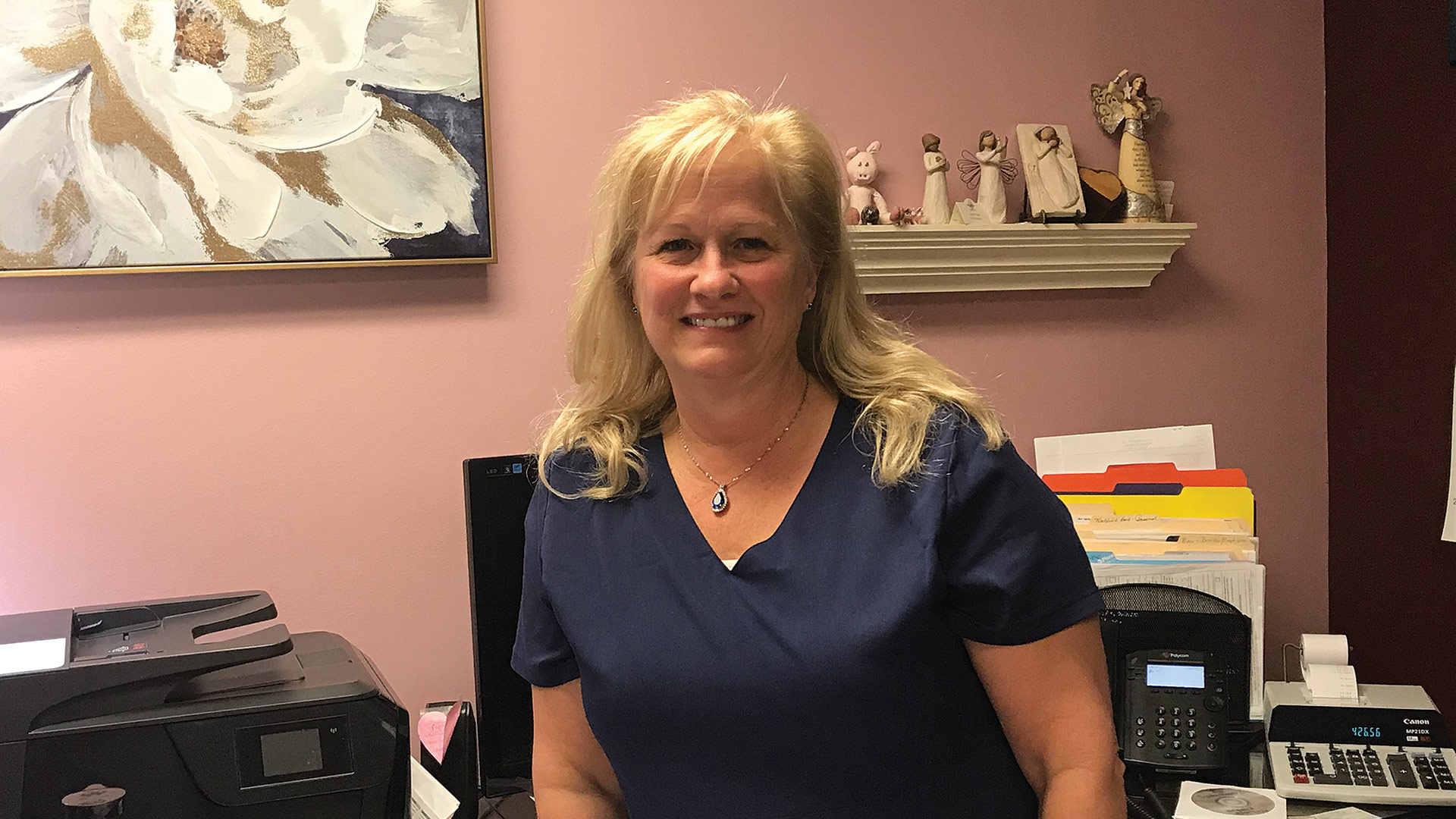
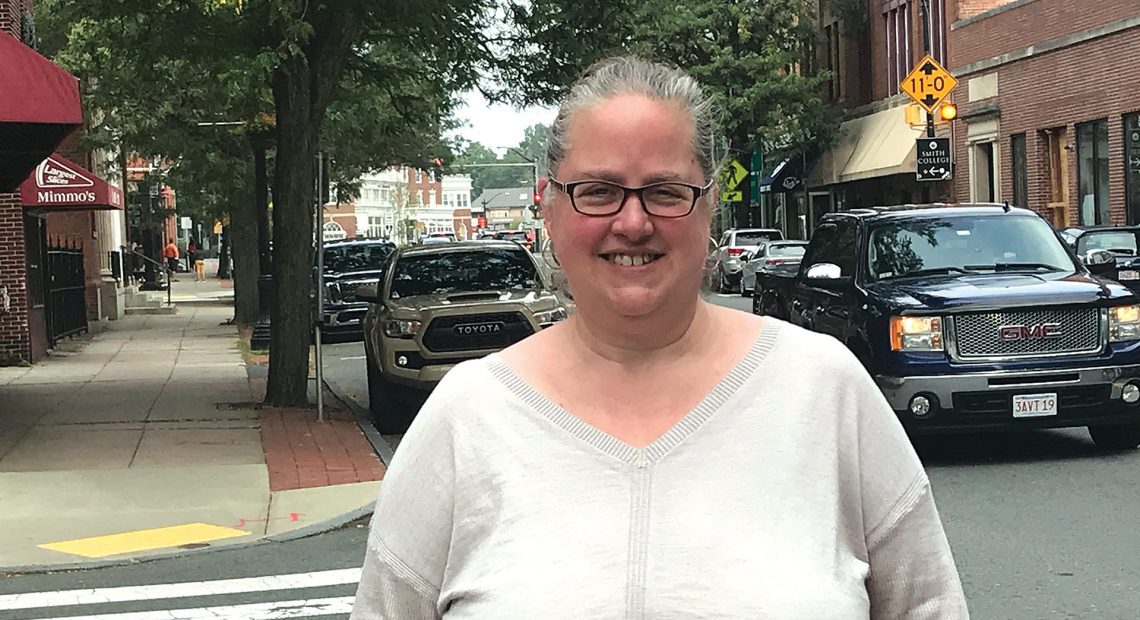
The Massachusetts Department of Housing and Community Development recently announced new tax credits and subsidies to support the next phase of the ambitious adaptive-reuse project, focusing on the section of the 116-year-old complex that contains the clock tower shown on the town’s seal. The Mill 8 project follows the successful transformation of Mill 10, which offers 75 units of mixed-income housing for adults 55 and older.

“There is a three to five-year wait for vacancies in the Residences at Mill 10, proving how vitally important it is to deliver additional quality apartment homes to seniors in and around Ludlow,” said Larry Curtis, president and managing partner of WinnDevelopment. “The continued support of the Baker-Polito administration was the last piece of the financing puzzle needed for us to begin the next phase of work to preserve and revive one of the town’s most treasured historic assets.”

Overseen by WinnDevelopment Senior Vice President Adam Stein and Senior Project Director Lauren Canepari, the project has received enthusiastic support from local, state, and federal officials representing Ludlow. The town has committed state and federal money for several key infrastructure improvements, including the ongoing construction of Riverside Drive and the addition of a wastewater pumping station for the area. In addition, the National Park Service has committed federal historic tax credits to the effort.

Support from the Baker-Polito administration includes federal and state low-income housing tax credits, as well as money from the state’s Affordable Housing Trust Fund, Housing Stabilization Fund, and HOME program.

“As Westmass continues its redevelopment of the Ludlow Mills, we are excited to see the long-awaited Mill 8 transformation begin. Westmass will also benefit from this as we will retain the majority of the first floor for commercial development.”

The 95 apartments to be built inside Mill 8 will cater to a wide range of incomes, offering 43 affordable units for rent at 60% of area median income (AMI), 40 market units, and 12 extremely low-income units available at 30% of AMI. The first phase of the project, the Residences at Mill 10, is 88% affordable.

“The cost of housing is one of the single greatest challenges facing our Commonwealth, and that challenge has been amplified dramatically by the pandemic,” state Sen. Eric Lesser said. “This development will be a welcome addition to Ludlow with 95 new affordable housing units. It will unlock opportunity and alleviate some pressure for housing access right here in Western Mass.”

Gov. Charlie Baker added that “projects like Mill 8 that bring mixed-unit, affordable housing to the community are an important part of the solution required to address the Commonwealth’s housing crisis, and our administration is proud to support them. Unlocking additional opportunities for community and economic development across the state will require more housing of all types in every corner of Massachusetts, and this project stands as an example of how we can continue making progress toward our goals.”

Mike Kennealy, secretary of Housing and Economic Development, argued that the Commonwealth’s housing crisis will be resolved only by the production of more housing — and through more projects like Mill 8. “Thanks to their many partners and the town of Ludlow, these new units will be specially designed for families of all incomes and with supportive services to help people stay in the community they call home.”

In addition to modern apartments, the project has partnered with WestMass Eldercare to create a 5,000-square- oot Adult Day Health Center inside the building that will provide on-site, enhanced supportive services to residents of Mill 8 and Mill 10, including nurse visits, a service coordinator, healthy-living programming, and transportation to the nearby Ludlow Senior Center.

“I am proud to see the public and private partnership between federal, state, and local government with Westmass Area Development Corp. and WinnDevelopment to breathe new life into the iconic Mill 8,” state Rep. Jake Oliveira said. “ As the project enters its next stage, I’m excited to see the clock tower mill building that adorns our town seal to finally become fully functional once again.”

The redeveloped property also will contain common area amenities, including on-site laundry facilities, on-site management, a fitness room, a resident lounge, and several outside recreation areas to serve future residents.

“Since Westmass began this project over 10 years ago, it has always been a priority to get Mill 8 redeveloped,” said Antonio Dos Santos, board chair of Westmass Area Development Corp. “This building has the marquee presence of the entire mill complex, and we are excited that the transformation of this iconic building will be getting underway soon.”

Nearly 43,000 square feet of space on the first floor of Mill 8 will be available for lease to local businesses.

“As Westmass continues its redevelopment of the Ludlow Mills, we are excited to see the long-awaited Mill 8 transformation begin. Westmass will also benefit from this as we will retain the majority of the first floor for commercial development,” said Jeff Daley, president and CEO of Westmass Area Development Corp. “As we pull together different uses in the mills complex, housing is one of the priorities, and we are excited to partner again with WinnDevelopment with the continued support of the Baker-Polito administration.”

The design and construction of Mill 8 will meet the standards of Enterprise Green Communities (EGC), an environmental certification program for affordable housing that includes milestones for water conservation, energy efficiency, healthy materials, and green operations and management.

— By George O’Brien

Home Improvement

Target Acquired

The Baker-Polito administration recently announced it has established an ambitious greenhouse-gas (GHG) emissions-reduction goal for the next three-year Mass Save Energy Efficiency Plan. The goals, established as part of comprehensive climate legislation signed into law by Gov. Charlie Baker in March, are intended to help the Commonwealth meet its ambitious goal to reduce GHG emissions 50% below 1990 levels by 2030.

The GHG reduction goal for the three-year energy-efficiency plan, established in a letter issued by Energy and Environmental Affairs Secretary Kathleen Theoharides to Mass Save program administrators, builds upon the framework established in the administration’s 2050 Decarbonization Roadmap and 2030 Interim Clean Energy and Climate Plan. The goal requires the Commonwealth’s utility companies to pursue an ambitious emissions-reduction goal through Mass Save in a cost-effective and equitable manner while creating jobs and opportunities for economic development throughout Massachusetts.

“Massachusetts continues to lead the nation in ambitious clean-energy and energy-efficiency policies with programs like Mass Save, helping residents save money on their energy bills while making substantial progress on our climate goals,” Baker said. “The goals we are setting today will help spark innovative efficiency solutions and lead to significant reductions in harmful greenhouse-gas emissions to combat the effects of climate change.”

“In establishing this emissions-reduction goal, our administration is laying the groundwork for significant investments in energy-efficient infrastructure and job creation across the Commonwealth,” Lt. Gov. Karyn Polito said. “These investments will reduce air pollution in our cities and towns, create new economic opportunities, and lower energy costs for our residents and businesses across the state.”

The GHG reduction goal for the 2022-24 Joint Statewide Energy Efficiency Plan for electric utility companies requires the reduction of 504,955 metric tons of carbon dioxide equivalent (CO2e) emissions, while the emissions reduction for gas-utility companies requires the reduction of 335,588 metric tons of CO2e.

Gov. Charlie Baker

Gov. Charlie Baker

“The goals we are setting today will help spark innovative efficiency solutions and lead to significant reductions in harmful greenhouse-gas emissions to combat the effects of climate change.”

“Massachusetts remains a national leader in energy efficiency, but we continue to pursue innovative approaches to make our buildings more efficient, drive investment to our cities and towns, and help our state meet its ambitious target of net-zero emissions by 2050,” Energy and Environmental Affairs Secretary Kathleen Theoharides said. “The goals set today will not only help residents and businesses increase efficiency and reduce emissions, but also ensure that equity is a central priority in our efficiency programs as we continue to transition to a clean-energy future.”

The climate legislation signed by Baker requires both economy-wide and sector limits, which will be set first for 2025, then for 2030. The Mass Save program prepares three-year investment plans, one for gas programs and another for electricity and delivered heating fuels. Those plans include goals and reporting requirements for three sectors: residential, residential income-eligible ratepayers, and commercial customers.

The Mass Save energy-efficiency programs are funded by utility customers. All residents and businesses located in investor-owned utility territories in Massachusetts pay into a fund through their utility bill, which supports these programs. The three-year plan directs how these funds will be spent on financial-incentive programs for homes and businesses. The development, implementation, and evaluation of three-year plans is overseen by the Energy Efficiency Advisory Council (EEAC), which is chaired by the Department of Energy Resources (DOER). A resolution created by the EEAC this past March details the EEAC’s priorities for the upcoming three-year plan, as well as providing specific recommendations to support these priorities.

The letter sent by heoharides to the utility companies that administer the Mass Save Program details the goals and priorities for the 2022-24 energy-efficiency plans, which are currently in development and which must be voted on by the Energy Efficiency Advisory Council and submitted to the Department of Public Utilities (DPU) by Oct. 31.

It is anticipated that Mass Save will achieve the GHG emission-reduction goals by increasing the number of buildings retrofitted and weatherized each year, making significant investment in electrification of existing buildings to transition customers away from fossil fuels, reducing support for fossil-fuel heating incentives, phasing out LED lightbulb incentives, increasing equitable program investments in environmental-justice communities and low- to moderate-income households, and increasing workforce-development investments to expand diversity in the workforce. The goals build on the administration’s effort to promote long-term decarbonization in coordination with the EEAC and its priorities, such as promoting passive home adoption and air-source heat pumps.

“Energy-efficiency measures are the most cost-effective way for residents and businesses to lower their energy bills and to lower our greenhouse-gas emissions,” Department of Energy Resources Commissioner Patrick Woodcock said. “DOER looks forward to our continued partnership with the Mass Save program administrators and the EEAC to design a plan that meets this ambitious mandate.”

The final 2022-24 energy-efficiency plans, to be filed with the DPU in October, are required to be designed to achieve the GHG goals established in the secretary’s letter and should focus on programs that accelerate the market transformation needed to achieve net-zero emissions by 2050. The plan should reflect the GHG-reduction goals and include a performance-incentive mechanism that ensures that electric and gas utilities are incentivized to achieve these goals.

On March 26, Baker signed comprehensive climate-change legislation that significantly increased protections for environmental-justice communities across Massachusetts; authorized the administration to implement a new, voluntary, energy-efficient building code for municipalities; and allowed the Commonwealth to procure an additional 2,400 megawatts of clean, reliable offshore wind energy by 2027. Recognizing the significant impact of climate change on environmental-justice communities overburdened by poor air quality and disproportionately high levels of pollution, the legislation statutorily defined environmental-justice and environmental burdens, including climate change as an environmental burden.

The legislation also expanded Massachusetts Environmental Policy Act review to require an environmental-impact report for all projects that impact air quality within one mile of an environmental-justice neighborhood and required the Department of Environmental Protection to conduct a stakeholder process to develop a cumulative impact analysis as a condition of permitting certain projects.

Home Improvement

Survey Says

Home renovation spending has grown 15% in the last year to a median $15,000, according to the tenth annual Houzz & Home survey of more than 70,000 U.S. respondents. Higher-budget projects (with the top 10% of project spending) saw an increase from $85,000 or more in 2020, compared with $80,000 in the two years prior.

Kitchen projects are the most popular among renovating homeowners, and while median spending has been flat on these projects for the past three years, investment on major remodels of large kitchens jumped 14% to $40,000 in 2020 compared with $35,000 in 2019. The study also found that the busy renovation market will continue through 2021, with 56% of homeowners renovating or planning to renovate this year, the highest share since 2017 (52%).

“While the pandemic caused initial concern for the residential-renovation industry, many homeowners finally had the time and financial means to move forward with long-awaited projects in the past year,” said Marine Sargsyan, senior economist for Houzz. “This pent-up demand, along with other long-standing market fundamentals such as accumulated equity, will empower homeowners to continue investing in their current homes rather than face skyrocketing prices in the housing market.”

With homeowners homebound due to the pandemic in 2020, the share who reported that they had wanted to pursue a home renovation all along and finally had the time increased by six percentage points in 2020 (44%versus 38% in 2019), and remains the top renovation trigger. Wanting to do it all along and finally having the financial means also rose (as reported by 36% of homeowners compared with 34% in 2019). Meanwhile, 25% of homeowners claimed to have renovated instead of moving to find a home that fit their needs because it was the more affordable option. Surprisingly, remodeling to adapt to recent changes in lifestyle only increased by two percentage points in 2020 (18%) from 2019 (16%).

“Kitchen projects are the most popular among renovating homeowners, and while median spending has been flat on these projects for the past three years, investment on major remodels of large kitchens jumped 14% to $40,000 in 2020 compared with $35,000 in 2019.”

While cash remains the leading form of payment for home renovations (83%), the share of homeowners opting to finance their projects with credit cards fell significantly to 29% (from 37% in 2019). Tax refunds gained popularity among renovating homeowners in 2020 (10%), especially when funding small projects up to $5,000.


Gen-Xers Step Up Spending

While Baby Boomers (ages 55-74) have historically led in both renovation activity and spending, Gen-Xers (ages 40-54) narrowed the gap in 2020. Median spending for Baby Boomers, who represent 52% of renovating homeowners (down from 55% in 2019), remained flat at $15,000. Gen-Xers now account for 32% of renovating homeowners (up from 30% in 2019) and increased their median spending to $14,000 (from $12,000 in 2019). That said, the top 10% of both generations increased their investment in 2020, but Baby Boomers did so at a more significant rate (from $80,000 to $90,000 versus $82,000 to $85,000 among Gen-Xers). Median spending among Millennials (ages 25-39), who represent 12% of renovating homeowners, remained unchanged in 2020 ($10,000), with the top 10% investing $65,000.


Outdoor Projects Heat Up

While interior room remodels remain the most common projects (68%), outdoor areas have increased in popularity since 2018, with 2020 showing a jump of six percentage points (57%) among renovating homeowners. Improvements to outdoor spaces were directed toward the grounds, with beds or borders and lawns seeing significant growth in popularity (35% and 20%, respectively). Exterior upgrades, such as decks and porches or balconies, also increased in popularity in 2020 (14% and 12%, respectively), with homeowners investing 25% more in deck and porch upgrades ($2,500 and $1,500, respectively) compared with 2019.


Smaller Spaces See Higher Spending

Homeowners are investing in smaller areas that may once have been considered a luxury and are now a necessity. Demand for home-office projects jumped four percentage points (14%) and were 10% more expensive in 2020 ($1,100). Median spending on closet upgrades also saw a significant jump of 43% to $1,000.


Homes Get Smarter

Smart-home technology purchases continue to rise in popularity, with streaming-media players and TVs experiencing the greatest increases (14% and 12%, respectively) compared with 2019 (10% and 7%, respectively). A larger share of renovating homeowners purchased smart-technology products for their outdoor spaces than the previous year, including security cameras, light fixtures, and speakers or sound systems (19%, 7%, and 3%, respectively).


Homeowners Hire More Than One Professional

Nearly seven in eight homeowners hired professional help for their renovations in 2020 (87%), typically engaging more than one professional per project. Among professionals hired, specialty service providers were the most common (49%), followed by construction and design-related professionals (36% and 18%, respectively).


The Survey

The annual Houzz & Home survey is the largest survey of residential remodeling, building, and decorating activity published. The survey covers a wide range of renovation projects in 2020, from interior remodels and additions to home systems, exterior upgrades, and outdoor projects. Data gathered includes historical and planned spends, professional involvement, motivations and challenges behind building, renovation and decorating projects, as well as planned activities for 2021. The 2021 study includes more than 70,000 respondents in the U.S. alone. The survey was sent to registered users of Houzz and fielded in April and May 2021, and published earlier this summer.

Autos

New World Order

Rob Pion says factory ordering has long been the norm with trucks and some SUVs

Rob Pion says factory ordering has long been the norm with trucks and some SUVs, but the wait time for some vehicles is now six months to a year.


When asked how many new cars he had on his lot, Rob Pion, general manager of Bob Pion Buick GMC in Chicopee, quickly said “eight.”

And he did so with a subdued voice that conveyed the frustration that he and every other auto dealer in the 413 is feeling right now regarding a situation that is clearly out of their control, but also a reality that must be confronted.

And the depth of that reality become clear when Pion paused after adding up his new-car inventory in his head and acknowledged that his number is certainly higher than some of his fellow dealers in the area.

“I guess that’s not really too bad compared to some others,” he told BusinessWest, adding that this situation is not going to get appreciably better anytime soon, especially when it comes to the trucks and large SUVs that comprise his bread and butter. Consumers don’t have a lot to choose from, so unless they want to settle, and many of them don’t, they must order what they want and wait for it to come in.

Before, you didn’t see that many factory orders — it would be the oddball unit. Now, we’re almost in a build-to-delivery stage, particularly with some of the domestics, like Ford; they’re really encouraging people to just put in their order — they know they’re making a car that the customer wants.”

Or, as the case may be with many truck models, and to borrow that famous line from the start of Casablanca, ‘wait, and wait, and wait.’

Indeed, these have become the days of factory-ordered vehicles — a trend that is a world removed from what dealers in this area are generally used to.

Yes, there have always been times when a customer would have to order and then wait for a model with a number of specific features, packages, or even a rare color. And when it comes to pickups, especially the larger models used for towing, factory ordering has long been a common practice.

But in these days when factories — dealing with shortages of not only microchips but a host of other parts — are well behind in production at a time when demand is high, factory ordering has become, well, the order of the day for many makes, especially pickups and SUVs, but also luxury models, which customers are generally more willing to wait for.

Peter Wirth says that, while Mercedes-Benz of Springfield has always handled a good number of factory-ordered vehicles

Peter Wirth says that, while Mercedes-Benz of Springfield has always handled a good number of factory-ordered vehicles, those numbers have never been higher than they are now.

“We’ve never had so many cars factory-ordered,” said Peter Wirth, co-owner of Mercedes-Benz of Springfield. “We have perhaps 50 cars at the moment that are already sold and just waiting to come in. Next month, for example, we have cars coming for inventory, and we have another 25 cars that are pre-sold.”

These factory-ordered cars are certainly helping dealers cope with inventory levels that are unprecedented, said Wirth, adding that, currently, perhaps 75% of total new-car sales are happening in this fashion.

“How many cars we have in our inventory is not a good measuring stick for us,” he went on. “It’s more a question of ‘what percentage of people who want to buy a car from us can we take care of?’ And the answer is still relatively high, as long as the customer is willing to work with us. And two things are helping us — the first is that the luxury-car buyer is generally more patient, and two, it’s been all over the media, so they’re generally used to it; they’ve heard from another brand they may have looked at, or maybe they heard it while they were trying to buy a kitchen appliance or building materials.”

Ben Sullivan, chief operating officer at Balise Motor Sales, agreed. He noted that factory ordering is becoming more prevalent, and the manufacturers are seeing some advantages to this profound change in the way things are being done — in this country, at least.

“Before, you didn’t see that many factory orders — it would be the oddball unit,” he told BusinessWest. “Now, we’re almost in a build-to-delivery stage, particularly with some of the domestics, like Ford; they’re really encouraging people to just put in their order — they know they’re making a car that the customer wants.”

Could this new way become a more permanent model for the future given what appear to be real advantages for the manufacturer and even the dealer? Sullivan acknowledged that this is a legitimate question, and that factory ordering is far more prevalent in other parts of the world, where huge showrooms and hundreds of cars on a lot are simply not practical. But he and others wondered out loud if Americans would tolerate such a process in anything but an emergency situation.

“The United States market has never operated that way,” he noted. “Ford has gone public and said they would like to move that way, so we’ll see. It will be a component of where things go, but I don’t know if it will ever completely replace what we’re used to here. Americans, once they’ve made a decision that they want to buy something, whether it’s a car or a TV … it’s a matter of immediacy.

“When you tell people you necessarily can’t get X, Y, or Z — or, if you can, you don’t know when — some people will wait, but others will say ‘I don’t need a truck right now,’” he explained. “Before, people would order vehicles, then they became trained to buy one off the lot — that Amazon-like mentality where, if I can’t have it in one day, I don’t want it, or I’ll move along.”

“I’ve had customers that have had vehicles on order for nine or 10 months for one reason or another. They haven’t been built, and they may never be built because of shortages of certain things.”

Moving forward, Sullivan said, dealers will ultimately have to be ready, willing, and able to serve customers in both ways — those who want to factory order a car and those who want to come to a lot, pick out a car, and drive it home a few days or even a few hours later.

“The way that we look at it as retailers is that we have to be adaptable enough to handle the people that want a car absolutely today, and those who want to put in an order and get it exactly how they want it and wait 12 weeks. For us, we have to be able to do both.”

Wirth concurred, noting that the current trends represent a minor shift from the way things were for his brand. Indeed, he said maybe two-thirds of those looking to buy a car wouldn’t drive home with something already on the lot. Instead, they would want something close, and the dealership would try to find it through its “pipleline” — a sister store in New Jersey or other dealerships in the Northeast.

Now, with inventories low everywhere, finding the car in the desired color and with all the preferred options and packages is becoming far more difficult. So the preferred route is now factory-ordering one and waiting for it.

Generally, the wait is a few months, but for some trucks, it can be half a year or more, said Pion, demonstrating that, even with factory ordering, there are limitations and challenges — for the dealer and the consumer.

“I’ve had customers that have had vehicles on order for nine or 10 months for one reason or another,” he told BusinessWest. “They haven’t been built, and they may never be built because of shortages of certain things.

“The problem you run into when you get to trucks is they get so granular,” he went on. “It could be as simple as ‘I want this wheel,’ and they just don’t have that wheel available. A simple option here or there makes a vehicle unbuildable.”

In this climate, some consumers are settling for somewhat less than everything they want, while others are not. “Some say, ‘it doesn’t matter if it takes a year or a year and a half for the truck to come in; I want what I want,’” Pion explained, adding that, in such cases, a new model year may arrive before the order is filled, and a 2021 model becomes a 2022.


—George O’Brien