
Home Archive by category Sections (Page 8)

Sections

Tourism & Hospitality

It’s called “Illustrators of Light.”

One of the current exhibititions at the Norman Rockwell Museum in Stockbridge, it’s a collection of advertisements created by Rockwell, and several of his notable peers in the world of 1920s illustration, for Edison Mazda Lamps, a division of General Electric.

“These amazing, large-scale paintings were done as advertisements, and now they’re being put on view to the public for the first time,” said Stephanie Plunkett, the museum’s chief curator, adding that “we constantly change our collections to highlight the influence that illustration has had across time and how Rockwell is a part of that great tradition that continues today.”

While the museum houses the world’s largest collection of art by Rockwell (998 original paintings and drawings in all), many other exhibitions rotate through, including, currently, “All for Laughs: the Artists of the Famous Cartoonist Course,” which was a popular 1950s correspondence course designed to teach artists to be funny; and “Original Sisters: Portraits of Tenacity and Courage,” a series of portraits by Anita Kunz that honor the contributions of history-making women.

Starting in June is “I Spy! Walter Wick’s Hidden Wonders,” showcasing Wick’s iconic photographic creations, and opening in November is “Jazz Age Illustration,” which explores popular illustration during the 1920s and 1930s and the cultural impact of that work,

Many visitors are surprised at the variety of exhibitions, Plunkett said.

“It’s a very mixed audience. Some people grew up with Rockwell’s illustrations; their families may have received the Saturday Evening Post or the Ladies’ Home Journal, and they have a real familiarity with his work. But we’re getting people across the age spectrum, lots of families with children and young adults. We had a Mad magazine exhibition that brought in an audience interested in comics and cartoons and satire. In addition, we have people who are travelers, people who may view us as a destination location.”

During the warm months, visitors can also visit the actual studio where Rockwell — who lived in Stockbridge for the last 25 years of his life — worked. The building was originally located in the backyard of his home on South Street and moved to the museum grounds in 1986. “It’s fun for people to experience Rockwell’s workspace,” Plunkett said.

The Norman Rockwell Museum is open every day except Wednesday, 10 a.m. to 4 p.m. on weekdays and 10 a.m. to 5 p.m. on weekends. Learn more at www.nrm.org.

—Joseph Bednar

Tourism & Hospitality


It’s called “Through the Eyes of Igor Sikorsky.”

It’s one of several new exhibits at the New England Air Museum in Windsor Locks, Conn., and, like the others, it’s designed to be interactive and take visitors beyond static displays of aircraft — although those are still quite popular.

Sikorsky, the Russian-American aviation pioneer, is known for developing the first American helicopter, although he also developed several fixed-wing aircraft, including ocean-crossing flying boats. His story is a fascinating one, said Stephanie Abrams, president and CEO of the museum, noting that the new exhibit, like the others, is designed to take visitors beyond the aircraft themselves and tell the stories of the people who designed and built them, flew them, and made history in them.

“Every aircraft in this museum, and it’s the seventh-largest of its kind in the country, has a story — a story of human genius, of courage, of innovation,” she said. “Instead of just looking at an aircraft, we want visitors to understand the story of the men and women behind them.”

This same philosophy guided the creation of new exhibits on the Tuskegee Airmen, New England women in aviation, and the famed Kosciuszko Squadron, the Polish squadron, formed with the help of American volunteers, that fought against Russia in 1919 and against the Germans in the Battle of Britain.

Abrams explained that her father was a crew chief on a B-29 Superfortress during World War II and transferred his passion for aircraft and the people behind him to his daughter. Abrams was in the media and later produced documentary films before making a significant and rewarding career change, taking the helm at the air museum.

Since arriving four years ago, she has made significant strides in efforts to “modernize the museum, making it more interactive, creating activation, using flight simulators so people experience flight, and using augmented reality to bring history, or the future, to light.”

Her team’s efforts have helped boost visitorship at the museum, which is now averaging roughly 50,000 a year.

Those who discover this somewhat hidden gem will find these new exhibits, as well as aircraft such as the B-29, a B-25, the A-10 Thunderbolt, one of Sikorsky’s flying boats, the Lockheed Electra, the plane flown by Amelia Earhart, several helicopters, and more, as well as engines and other displays.

The museum is open Tuesday to Sunday, 9 a.m. to 4 p.m. Learn more at www.neam.org.

—George O’Brien

Tourism & Hospitality

You’re never too old for the Eric Carle Museum of Picture Book Art.

“I tell everyone who’s been here before, when their kids were little, to bring them back when they’re older because there’s always something new to see,” said Rebecca Miller Goggins, director of Development. “Our ever-changing art galleries are sophisticated, beautiful, and inspirational for everyone. Our mission is to elevate the art of the picture book.”

The museum features a hallway dedicated to the life of Carle and the iconic children’s books he created (most notably The Very Hungry Caterpillar), but there are three other galleries of works by other artists that change twice yearly, a daily film in the auditorium, regular story times in the reading library, and hands-on activities in the art studio that change every six weeks or so.

“We may coordinate with something going on in the galleries; like, if there’s a watercolor artist, we’ll do watercolors in the art studio,” Goggins explained. “It’s an incredible creative space, and it’s a great place for families with young kids who don’t want to make a mess in their own house — they can come to the Carle and make a mess in our studio. And adults really enjoy making art in the studio as well.”

The museum’s expansive, award-winning bookshop typically carries every book in print by any author featured in a current exhibition, and authors and artists often come in for readings, lectures, and book signings.

Current exhibitions include Jerry Pinkney’s The Lion & the Mouse, featuring the cover art and more than 32 pieces from that book; a 50-year commemoration of Free to Be You and Me; “Created in Color: The Picture Book Art of Raúl Colón”; and an exhibit of work by Margaret Wise Brown, author of Goodnight Moon, and artists she has inspired.

There are also plenty of activities pitched at adults, from lectures and gallery tours to art-making programs, Goggins said, and plenty of reasons to come back, between the rotating exhibits and more than 10,000 pieces in the permanent collection.

And people do come back; the museum attracts more than 40,000 visitors annually and has welcomed more than 1 million since its opening in 2002.

“It’s a remarkable place,” she added. “Picture book art is not just for children; it’s for everyone. It’s ageless and evergreen. So come visit again, and be newly inspired.”
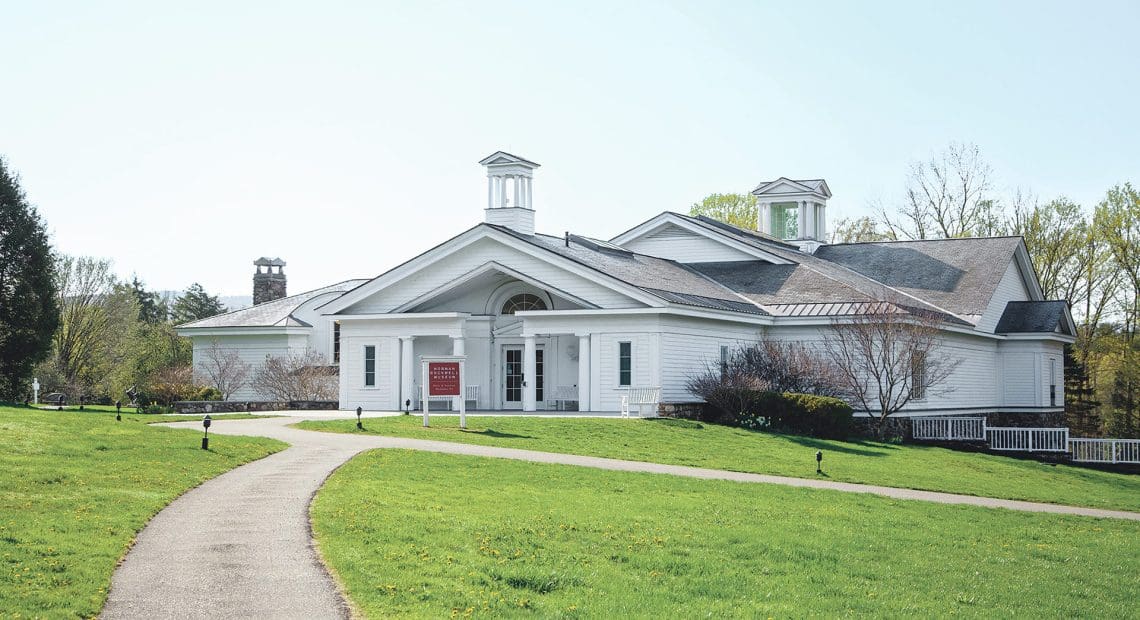
The museum is open Wednesday through Friday from 10 a.m. to 4 p.m., Saturday from 10 a.m. to 5 p.m., and Sunday from noon to 5 p.m. Learn more at www.carlemuseum.org.

—Joseph Bednar

Tourism & Hospitality

Many museums tout themselves as a chance to go back time, but few actually ‘go’ anywhere. For that, one might consider taking a ride at the Connecticut Trolley Museum.

“We’re a historic trolley and transportation museum, and we mostly see families with young children, but we get everyone, including a lot of visitors who are interested in railroad history,” Executive Director Gina Alimberti said.

“We have a large visitor center packed with trolleys. You can go on and view them and take in our exhibits and history,” she added. “We also have some trolleys outside. We have a full fire-truck museum on the same property, with 20 to 30 old trucks you can view.”

In all, the museum houses more than 70 pieces of rail equipment dating as far back as 1869, not only from Connecticut, but from cities across the U.S. and around the world. But the highlight of the visit for most is taking a ride on an historic streetcar.

“You feel like you’re riding back in time because you would never see yourself riding on these cars,” Alimberti said. “It’s a cool experience, and we try to keep it alive. We don’t want that history to go away. A lot of seniors remember from back in the day, whether it was downtown Springfield or downtown Hartford; they remember it, and they get to experience it again, which is really cool.”

Meanwhile, she added, kids tend to know very little about trolleys, so the museum teaches them that slice of history, and hopefully gains clientele who will keep coming back when they’re older.

Speaking of kids, many events at the Connecticut Trolley Museum are geared toward the younger set and their families, from the current season’s Easter Eggspress days, featuring Easter-themed crafts, exhibits, and movies, as well as a visit from the Easter bunny; the Dino Trolley in July, with dinosaur-themed activities; the Pumpkin Patch Trolley in the fall; and the evening Winterfest and Tunnel of Lights between Thanksgiving and Christmas.

The events are a big draw, and they’re critical to museum operations, Alimberti said. “We’re a nonprofit, and the only way we stay afloat are our events. It’s a big revenue maker for us to keep the museum and trolleys maintained.”

The Connecticut Trolley Museum is open weekends from 10 a.m. to 4 p.m. in April, May, June, and September; every day except Monday from 10 a.m. to 4 p.m. in July and August; and for special events later in the year. Learn more at www.ct-trolley.org.

—Joseph Bednar

Tourism & Hospitality


When the weather warms up each spring, Berkshire East and Zoar Outdoor — two neighboring outdoor recreation facilities in Charlemont owned by the same company — roll out a raft (pun intended) of activities, from whitewater rafting and kayaking to ziplining and mountain biking.

Take the Thunder Mountain Bike Park at Berkshire East, where bikers take a lift to the top and can access downhill trails of all skill levels.

“We’ve got quite an assortment of summer racing for families, friends, even school groups. We get folks from all over New England and as far as away as Canada,” said Nathan Marr, director of Marketing. “If you’ve never done downhill mountain biking before, we have clinics and a rental bike shop. It also attracts professionals and experts from all over the world.”

The popular Eastern States Cup racing series comes to the mountain twice a year, in the summer and fall, and over the past three seasons, an event called Thunderstruck has drawn a host of women professional mountain bikers. “It’s not competitive, really,” Marr said. “It’s just a show of what they can do, to show the sport to young women and girls and say, ‘hey, you can compete with the boys, too.’”

Both Berkshire East and Zoar Outdoor also offer rafting trips along the Deerfield River for all ages and skill levels.

“We have a family float trip for kids as young as 5. It’s gentle, fun, and a pretty way to see the river and get outside. Young kids with families can gently float down the river,” Marr said.
“Then, our mid-level trip is class 1 and 2 whitewater, with one class 3 rapid. That’s good for kids who are a little bit older, or someone who may have never been whitewater rafting before.”

An advanced whitewater rafting trip, with a minimum age of 14, features class 3 and 4 rapids along the way, he added. “We see a lot of college students, a lot of adventure camps, bachelor parties, things like that.”

Then there’s the famous Thunderbolt mountain coaster at Berkshire East, which pulls riders up the mountain, and they can enjoy the scenic descent at whatever speed they choose.

“There’s a whole range of things to do,” Marr said. “For folks with a tighter budget, we’ll see families do the mountain coaster and pack a picnic lunch, spread out on the lawn under a tree, and just enjoy being outside the house at a low cost, which is nice.”

Visit www.berkshireeast.com and www.zoaroutdoor.com for updated activities and schedules.

—Joseph Bednar

Features

Pages of the Past

The original Springfield Library

The original Springfield Library has been lost to history, but the planned bus tour is designed to generate appreciation for the libraries still standing.


Kate Benson says she doesn’t know why the original Springfield Library, opened in 1871, was eventually torn down.

The impressive, Gothic-style structure was only 40 years old when its replacement, the central library that still stands on State Street today, was opened, she said, adding that it was moved a few hundred yards to make way for the new library and serve the city while it was being built. And, in theory, it could have been moved again to another location

“We don’t really know why it came down — and there’s no real record of why,” said Benson, a special-education team chair in Chicopee by day, and also a member of the Springfield Preservation Trust (SPT) and self-described “history addict,” adding that it doesn’t really matter why the landmark was demolished. What does matter is that a piece of the city’s past and an architectural treasure can now be seen only in grainy photos and color postcards, which were very popular in the day.

It is a desire to enable the public to fully appreciate similar structures — and to perhaps ensure that they don’t suffer the same fate as the original library — that has prompted the SPT and several partnering organizations to come together to create a bus tour (set for Saturday, April 12, with Benson as the tour guide) of the central library and several branches, including four structures known simply as the Carnegie libraries.

These are the central library, the Forest Park branch, the Indian Orchard branch, and the former Memorial Square branch, now the Greek Cultural Center — four of the 2,509 libraries built between 1883 and 1929 with money donated by Scottish-American businessman and philanthropist Andrew Carnegie.

Built in the early 1900s, those four libraries, and the others on the tour, are blasts from the past that can still be enjoyed today. And so, in many respects, is this bus tour, called “Pages of the Past,” said Erica Swallow, president of the SPT.

“The library went from being a membership-only establishment to being open to the public, open to the community. To have four of those buildings in Springfield that really symbolized access to knowledge, and access to betterment, is really special.”

Indeed, the once-annual Bus Tour of Historic Springfield, a partnership between the SPT and Peter Pan Bus Lines, is back after a nearly 30-year hiatus, and with many goals in mind, said Swallow, adding that this endeavor is a collaboration between several groups, including the SPT, the Springfield Museums, the Springfield City Library, and Peter Pan.

As for goals, she listed everything from showcasing those libraries to cultivating the next generation of preservationists in Springfield.

“The trust has been trying to bring in the next generation of preservationists,” Swallow explained, adding that new programs like the libraries tour, as well as existing initiatives such as house tours and walking tours (more on them later), are effective ways to bring people into Springfield’s past, while also celebrating the present and getting them involved.

Danielle Veronesi, senior director of Marketing at Peter Pan Bus Lines, who was approached by Swallow about resurrecting the bus tour, agreed, noting that Peter Pan, which has a lengthy history in Springfield and this region, is enthusiastic about its role in the partnership presenting the tour.

Springfield’s Central Library will be among the highlights of the bus tour.

Springfield’s Central Library will be among the highlights of the bus tour.

“We’re proud to be part of Springfield history, and also proud of the role we’ve played in enabling others to learn that history and better appreciate the city and many of its architectural landmarks,” she told BusinessWest. “That’s why we wanted Peter Pan to be a partner in this initiative.”


Chapter and Verse

Rachel Gravel, manager of Adult & Youth Information for the Springfield Libraries, said the building of the Carnegie libraries represented a major shift in how libraries were perceived — and used by the public.

“The library went from being a membership-only establishment to being open to the public, open to the community,” she said, noting that, until that time, most libraries, including Springfield’s, were private. “To have four of those buildings in Springfield that really symbolized access to knowledge, and access to betterment, is really special.”

This shift will be among the many talking points on the tour, said Swallow, adding that the program is designed to provide insight into Springfield’s most historically and architecturally significant libraries, offering a glimpse into their storied pasts and lasting impact on the city’s cultural and educational landscape.

Benson agreed, noting that her research into the libraries that will be showcased on tour — seven in all, including the four Carnegie libraries — has been an intriguing and rewarding experience.

“I was unaware that we had Carnegie libraries, and I have a minor obsession with Carnegie libraries in New York City because they had hidden apartments, which, unfortunately, the Springfield ones don’t, because they were not 24-hour libraries, like New York’s,” she explained. “It was interesting to do the research to figure out how they made the decisions to create branch libraries, who got one first, and how they funded it — and also how they took the original Springfield Library, which was a private library, and made it something that was open to the public; it’s an incredibly interesting history.”

Jeanne Fontaine, travel coordinator for Springfield Museums, a partner on many SPT initiatives, agreed, noting that the upcoming bus tour dovetails effectively with the Springfield Museums’ own program of monthly day trips to other museums and destinations, such as the Newport Flower Show and the Metropolitan Opera.

From left, Rachel Gravel, Marilyn Sutin, Jeanne Fontaine, and Erica Swallow at the bust of Andrew Carnegie inside Springfield Central Library.

From left, Rachel Gravel, Marilyn Sutin, Jeanne Fontaine, and Erica Swallow at the bust of Andrew Carnegie inside Springfield Central Library.

The most recent such trip was to the American Heritage Museum in Hudson, where visitors can explore the nation’s conflicts, from the Revolutionary War to today.

Swallow said the bus tour is another initiative undertaken by the SPT to bring attention to city landmarks and encourage preservation of sites with historic or architectural significance, or both.

Others include its popular Second Saturday Walking Tours, which originate at the Museums and focus on the downtown area, an annual walking tour of Springfield Cemetery, and a winter lecture series.

There’s also the annual Historic Homes Tour. Previously a bus tour that took participants to different corners of the city, it is now a walking tour focused annually on a specific neighborhood; this year it will be McKnight, said Swallow, adding that the homes tour is how many long-time SPT members first became engaged with the organization.


History Lessons

That was the case with Marilyn Sutin, who first went on the tour in 1979, became heavily involved with the Springfield Preservation Trust, and is still volunteering for the group 45 years later.

Like Swallow, she said the libraries tour is another way to bring Springfield’s past into the present and encourage others to get involved in preservation efforts.

Tickets for the bus tour can be purchased on Eventbrite; the cost is $20 for SPT and Springfield Museums members, and $25 for non-members. All proceeds go toward the trust’s mission of historic preservation in Springfield.

Women in Businesss

Something to Celebrate

Emma deVillier says the small details of an event add up to big impact.

Emma deVillier says the small details of an event add up to big impact.

Emma deVillier has been around the hospitality industry for a long time, starting at age 14 working at a country club, first busing tables, then as a beer-cart girl, then as a waitress.

“I was always learning the steps of hospitality, treating people how they should be treated. The service industry is a tough industry, but I always loved it,” she told BusinessWest.

“I grew up in a family with my mom setting up all of our birthday parties at home, and I always added my two cents: ‘no, we’re going to set up this way.’ I grew up going to my grandma’s house and seeing her set up the tables, and they looked like they were coming from Homes & Gardens magazine. So setting up was always super important to me.

“Then, as I evolved and started doing more banquets and weddings at the country club where I worked, I was always trying to add my two cents and my touches, and the members there started recognizing my talents,” she went on. “I never thought I was that good, but one day, a member asked me to plan her daughter’s baby shower.”

“My number-one goal is to make sure that my clients are creating memories and feeling that all their needs are being taken care of, and that, at the end of the day, every guest involved is going to enjoy their time and look back on it and say, ‘wow, that was amazing.’”

Not long after, she was opening her own business, called deVillier Designs.

“My company specializes in creating memorable experiences,” she said. “It doesn’t really matter how big or small the event — my number-one goal is to make sure that my clients are creating memories and feeling that all their needs are being taken care of, and that, at the end of the day, every guest involved is going to enjoy their time and look back on it and say, ‘wow, that was amazing.’”

In the six years since deVillier launched the company at age 19, she has grown it into a well-known name on Greater Springfield’s event-planning scene, not just for private clients planning weddings and showers, but some major companies as well.

For example, a few years ago, she planned the Howdy Awards at the MassMutual Center, an event presented by the Greater Springfield Convention & Visitors Bureau to recognize top performers in the hospitality sector.

“That was a huge opportunity for me because not only am I in the hospitality industry, but I was also recognizing all of the top people in the hospitality industry,” she said. “Since it was the 25th anniversary, they gave me a little bit of leniency with running with my own ideas. So we did a Great Gatsby theme, which was so much fun. It was a lot of work, but looking back, that was probably one of my favorite events, just because it was a whole different kind of event for me to plan.”

She also handles all events for MGM Springfield; has planned corporate events at Springfield Country Club, the MassMutual Center, and a host of other major area venues; and has a long-running relationship with Naples Realty Group.

“They plan a corporate event every single year, and it’s gotten bigger and bigger every year,” deVillier explained. “They call it their Naples Summit, and that recognizes not only their successes, but other Realtors in the area, and just brings everyone together. They’re one of my favorite companies to work with. That event is always so much fun to plan.”

Emma deVillier has handled events for many notable businesses, including this one for Naples Realty Group.

Emma deVillier has handled events for many notable businesses, including this one for Naples Realty Group.

Whatever the event, she added, “the goal has always been to do things the right way the first time. That’s the mantra I live by, and I make sure my clients are always feeling that way.”


All in the Details

The first meeting with a client, either in person or over Zoom, typically hashes out big-picture details like budget, venue, and type of event.

“If they don’t have a theme or specific ideas in mind or don’t even know what goes into planning an event, I’ll walk them through all of those steps,” deVillier said. “People think an event is pretty simple to put together, but it’s not. Obviously, there are many, many factors that come into play, so I’ll help them through picking out all of those factors, and then I’ll create a custom vision board with them, just to pull everything together.

“Sometimes I feel like I’m almost too much for my clients because I love to be so involved with them,” she added, “but I want them to always feel that I’m going to hold their hand through the entire process, and they’re never going to be alone.”

That hand-holding especially applies when a client gets anxious about some detail — not an uncommon occurrence.

“A minor thing can come up, and it kind of triggers them a little bit, but it’s my job, at the end of the day, to be like, ‘listen, it’s going to be OK.’ Like the weather, for example. I’ve had several close calls with clients, and it’s like, ‘listen, you can’t control the weather, you can’t control the little things, you can only control the bigger picture.’ It’s my job, obviously, to help them get through that.”

That doesn’t mean she’s not human, of course. “Deep down, I’m thinking, ‘oh God, what are we going to do?’ But I can never show that because my client trusted me and hired me, so I need to be there to make sure that everything goes off without a hitch.”

“There’s no better feeling than taking a step back right before the event’s about to start, and you’re just like, ‘wow, we did this.’”

Sometimes a client will come in with a distinct vision, and other times deVillier will have more leeway in guiding the process.

“Some come to me, and they’re like, ‘listen, I want a baby shower. You figure out a theme and run with it.’ Those are really fun because I get to use my creative ideas,” she said. “But then I obviously love the clients that have a strong vision because we can collaborate and work together. That’s the best of both worlds. I love both parts of it, but at the end of the day, I’m always going to put my creative spin on it to make it better than they could have thought.”

A successful event is all in the details, she added.

“With an event, you have the theme, and that’s great, but you have to master and bring in every component of the event to make it make sense. For example, dessert tables are my favorite thing to set up at an event. And those are colored — they’re themed to the overall aesthetic. My cocktail napkins match the aesthetic. I think it’s the little details that make people say, ‘wow, I never would have thought to do that,’ but it makes everything make more sense.”

deVillier calls herself a perfectionist, which can be personally challenging when she has to let go and let her team take charge, especially as she expands her footprint to the Boston, Cape Cod, and Newport, R.I. areas.

“Some days, I have events where one’s in Boston and one’s in Springfield. And I can’t spread myself too thin, so I have to trust my team back home and be like, ‘listen, you have to handle this. I’m just a phone call away.’ That’s probably my biggest challenge, just because I have a hard time letting go.”


Positive Influences

deVillier isn’t surprised she wound up succeeding in a competitive event-planning industry, considering all her influences and how far back they go.

“I admire so many people in this industry. When I was a little girl, I would watch Martha Stewart, and I would watch all the wedding shows. I’ve always been super into it, and I’ve just admired people who do this work,” she said. “There are so many talented people that I look up to, and I’ve studied their work, and I’m like, ‘OK, how can I do better?’

“It is very challenging, but I think, in this area, I’ve made a name for myself, not just through my work, but also how I present myself. I think you have to be a good person. At the end of the day, your clients always must come first. So I think having those core values not only makes my company stronger, but also gives my clients trust in me, which I think is super important in owning a company.”

She also appreciates how every day is different, and that she gets to meet many different vendors and clients.

“Overall, it’s a very happy industry to be in. We’re celebrating life’s most precious moments, whether it be a wedding or a company success or a new baby on the way. It’s just a very happy company, which makes my life a lot better.

“I’m very lucky to have flourished into where I am now, but there’s always room for growth,” deVillier said, adding that there’s also room for gratitude. “There’s no better feeling than taking a step back right before the event’s about to start, and you’re just like, ‘wow, we did this.’”

Wealth Management

Planning for the Future

By Andrew R. Beaudry, CFP and Ryan T. Cummings, CFP


Is your retirement savings on track?

If you’re like most people, you may feel it’s not. In fact, concerns about running out of money in retirement are very common.

Andrew R. Beaudry

Andrew R. Beaudry

Ryan T. Cummings

Ryan T. Cummings

Many people today believe they’ll need at least $1.5 million saved to retire comfortably. But is that number right for you? The real ‘magic number’ varies widely depending on your current savings, future goals, and lifestyle plans.

A clearer picture of retirement readiness starts with understanding some general rules of thumb, strategies for calculating your personal magic number, and practical tips to help build a reliable nest egg for your future.


Five Retirement-savings Milestones

Setting retirement-savings milestones can help you determine what to save monthly and annually to stay on track. While these targets may vary, here are some helpful benchmarks to consider.

Age 30 = your salary. By age 30, aim to save at least one year’s worth of your salary for retirement. Hitting this goal allows you to start benefiting from the power of compound growth.

Age 40 = three times your salary. Though expenses may grow as families do, keeping pace with retirement-savings goals may mean saving at least three times your salary by roughly age 40.

“Are you dreaming of frequent travel, a quiet life filled with hobbies, or something in between? The more you can clarify your lifestyle goals, the better you’ll understand the financial resources you’ll need to enjoy your future comfortably.”

Age 50 = six times your salary. As you get closer to retiring, look at ways to pay down debt to enter retirement with minimal liabilities and maximize retirement contributions to reach about six times your salary by age 50.

Age 60 = eight times your salary. As you approach retirement, think about how and when you might transition to retirement and whether a part-time role could be part of your plan, while aiming to have at least eight times your salary saved by age 60.

Age 67 (average retirement age) = 10 times your salary. If you plan to retire around age 67, which is the full retirement age for Social Security benefits, aim for about 10 times your annual salary. For instance, a salary of $100,000 would suggest a target of $1 million by retirement.

Keep in mind that these recommendations provide broad estimates for guidance and tracking progress. As you gain experience and your salary grows, these milestones may shift as your income changes. These benchmarks may not fit everyone’s personal retirement plans and should be adapted to individual goals.


Five Factors That Impact Savings Goals

While general savings milestones provide helpful guidelines, personal factors can greatly influence your actual retirement needs. Here are five key considerations to help you define your unique retirement target:

When do you want to retire? What age do you envision for retirement? Deciding when to retire can dramatically affect how much you’ll need, especially if you plan to stop working before becoming eligible for full Social Security benefits.

What lifestyle do you want in retirement? Are you dreaming of frequent travel, a quiet life filled with hobbies, or something in between? The more you can clarify your lifestyle goals, the better you’ll understand the financial resources you’ll need to enjoy your future comfortably.

Where will you live? Do you plan to stay put, downsize, or relocate? Your choice of location impacts cost of living, taxes, and potential housing expenses, including maintenance if you own a home. These variables can influence how much you should save.

Will you retire with debt? Are there ways to limit the debt you’ll retire with? Ideally, entering retirement with minimal or no debt allows more flexibility with your income. The more debt you carry, the more challenging it may be to cover expenses comfortably in retirement.

What about healthcare when you retire? Healthcare and long-term care can be significant expenses. The average retiree may need upwards of $157,000 for healthcare alone, and those costs typically rise with age and inflation.

While these may not be the only factors to consider, they’re valuable starting points for refining your magic number and setting a solid foundation for retirement planning.


Seven Actionable Ideas for Retirement Savings

Reaching your retirement goals often requires more than knowing general milestones or understanding personal factors. Here are seven tips to help you stay on course and save strategically.

Start saving early and maximize compound growth. The earlier you start saving, the more time your investments will have to grow. Even small contributions early on can balloon over time.

Maximize employer contributions. If your employer offers a match on your 401(k) or another retirement plan, aim to contribute enough to capture the full match. It’s essentially free money for your retirement.

Set aside a percentage of your salary. Commit a portion of your salary directly to retirement savings — ideally, around 15% of your annual income, including any employer match. Hitting this target can keep you on track toward long-term goals.

Diversify your investments. Balance your portfolio with a mix of stocks, bonds, and other assets. Diversification can better insulate your retirement savings from volatility, especially as you get closer to retiring.

Reassess and adjust savings regularly. As life changes, you may need to reassess your savings plan and retirement contributions. That’s why it’s important to regularly revisit your retirement-savings strategies to make sure they still work for you and are the best options for achieving your objectives.

Plan for unexpected expenses. Life is full of surprises. Setting up an emergency fund can help you deal with any unexpected expenses, so you don’t have to dip into your retirement savings prematurely.

Keep track of your retirement income sources. Estimate your monthly retirement income from Social Security, pensions, and personal savings. Then, compare this with projected monthly expenses in retirement to see if your income will meet your needs. This will give you a clearer picture of your future financial landscape.


Next Steps for Achieving Your Ideal Retirement

Building the retirement you envision takes careful planning and a steady commitment to saving. It requires understanding how retirement savings work, clarifying your goals, and adopting smart strategies to secure your future.

The good news? You don’t have to do it alone. Partnering with an experienced financial professional can provide valuable guidance, helping you discover effective strategies tailored to your unique retirement goals.


Andrew R. Beaudry is the registered principal, and Ryan T. Cummings is a financial advisor, at Private Financial Design, LLC in South Hadley.

Commercial Real Estate

Down on Main Street

Mary McGovern says the location at 1350 Main St. gives Country Bank great visibility in downtown Springfield.

Mary McGovern says the location at 1350 Main St. gives Country Bank great visibility in downtown Springfield.


Mary McGovern says Country Bank has been looking to create a stronger presence in downtown Springfield for at least five years now.

The institution, which has a lending office on the 17th floor of Tower Square, has considered several sites for a banking center with strong visibility, she said, including the space in Monarch Place that would eventually become home to the corporate offices of New Valley Bank.

“We were looking strongly at that site, but we were beaten out for it,” she said, adding that other players were as well.

Undeterred, the Ware-based bank kept looking in Springfield while shifting its immediate focus to Worcester and establishing a stronger presence there (Country now has three locations in that city), said McGovern, the bank’s president. But the search in Springfield entered a new phase late last year with a call from Evan Plotkin, co-owner of the 1350 Main St. tower.

That call concerned the long-vacant space last occupied by Santander Bank, and … fast-forwarding a little, this large space will soon be sporting a Country Bank sign.

The bank’s move into that large, ground-floor location, likely to happen in the third quarter of this year after a comprehensive build-out, will give Country a much more visible presence downtown and, by that time, its second banking center in the western part of Hampden County. Indeed, the bank is finalizing a lease on a space in Longmeadow close to the Enfield line, said McGovern, adding that expansion in this region has emerged as one of the bank’s key strategic initiatives.

“We’ve been focused on branching out both in the Worcester area and in Springfield. Overall, 2024 was more eastern-focused, and in 2025, we’ll be focusing more on our western market.”

“We’ve been focused on branching out both in the Worcester area and in Springfield,” she said. “Overall, 2024 was more eastern-focused, and in 2025, we’ll be focusing more on our western market.”

As for the location in 1350 Main St., it continues a strong comeback for that property, which has seen many of its long-vacant spaces absorbed in the past 24 months, while it also continues a movement by the banking sector into the central business district; in addition to New Valley, Chase recently established a branch on the ground floor of 1391 Main, known to most as Harrison Place.

Plotkin, president of NAI Plotkin as well as co-owner of 1350 Main, said the space being taken by Country has been vacant for about a dozen years now. Over that span (most of which the first five floors were owned by a separate party; Plotkin and partners gained control in 2023), there has been interest of varying degrees from a broad range of businesses.

White Lion Brewing Co. took a long look at the space before eventually settling on a site in Tower Square, he noted, adding that a few restaurants and retailers have looked at it as well.

Banks … not so much, said Plotkin, adding that Country apparently sees what others haven’t, and that is an emerging corner, if you will, in downtown Springfield, with the MassMutual Center diagonally across Main Street, a new parking garage behind that, a revitalized Court Square across Court Street, and the new apartments at 31 Elm St. just beyond the park.

Mary McGovern and Evan Plotkin

Mary McGovern and Evan Plotkin say 1350 Main St. is an emerging corner in downtown Springfield.

“That’s one of the best corners in the city,” he told BusinessWest. “It’s next to City Hall, it’s across from the MassMutual Center … it’s where the life and the heart of the city is. The center of gravity has moved to this block.”

Plotkin categorized Country’s arrival as a win-win. It’s a win for the bank, which gains a highly visible location in the city, and it’s a win for all those at 1350 Main, because a long-dark space will see the lights go back on again.

“To have a dark space on the ground floor of a building of this stature is an impediment, if not from an economic basis, but from a visibility standpoint,” Plotkin said. “To have the lights on in there, with the activity of a bank, transacting business, changes the building quite a bit.”

Like most other downtown bank branches, the location lacks parking and a drive-thru lane, but it will be convenient for people working or doing other business in that area, and will provide additional support for the bank’s many customers in the Greater Springfield and Northern Connecticut markets, said McGovern, adding that, while most banking customers visit a branch infrequently, some, including small-business owners and mortgage customers, prefer that level of service.

“To have the lights on in there, with the activity of a bank, transacting business, changes the building quite a bit.”

As noted, the space at 1350 Main is large, around 4,000 square feet, much larger than most branches being built or moved into today. She noted that one portion of the space will be devoted to the banking center, with the rest put to other uses, such as hoteling other bank employees doing business in Springfield or attending events there.

Meanwhile, the location will give Country much greater visibility in the 413’s largest city, an important consideration in ongoing efforts to grow the institution and build its brand.

“Some people know we’re in Tower Square, but sometimes it feels that not many people know because there isn’t a sign at street level,” McGovern said. “There’s nothing like a sign on a banking center to let people know you’re there.”

—George O’Brien

Special Coverage Women in Businesss

Beyond the Courtroom

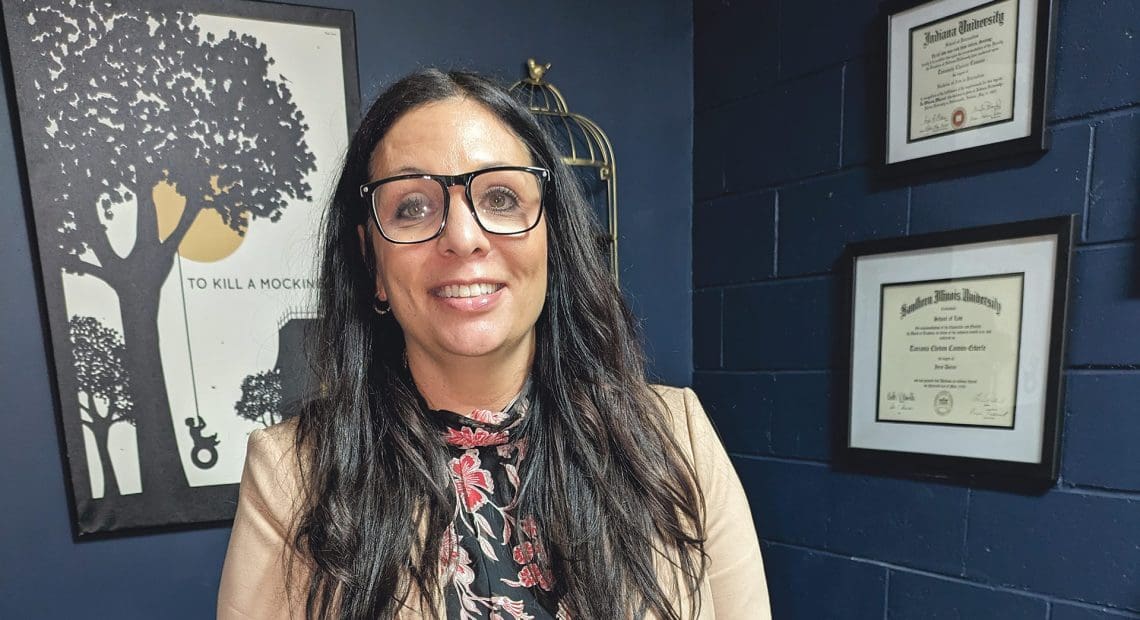
Tanzi Cannon

Tanzi Cannon

Tanzi Cannon knows litigation. And she enjoys litigation.

But there’s something she found she likes even more, which is why she built a law practice around it.

Backing up a bit, in her previous role, Cannon was the chief litigation officer at the Royal Law Firm. “We were obviously heavy on litigation, but we also did a lot of advice and counsel,” she recalled. “Litigation is strategic, and there’s competition, and every case is different, and I’m a certified investigator, so I got to use those investigation skills.

“But I found that the enjoyable part was actually when the litigation was over and I could go back to the business and say, OK, ‘here are the things that could have prevented litigation for you. Here are some things that we can do to improve this department.’ I’m a business person, so I also had some business advice,” she added.

Unfortunately, once litigation was over, clients were typically tired of talking about legal matters — and tired of spending money on them. “Consequently, those preventive conversations were the short conversations, and I really wanted those to be the long conversations.”

That’s why she decided to leave Royal and launch her own firm, General Counsel by Cannon, which specializes in business law for small businesses — focusing not on litigation, though she will handle that if need be, but on the nuts and bolts of helping businesses avoid the courtroom and create healthier, safer, more successful companies.

“ I found that the enjoyable part was actually when the litigation was over and I could go back to the business and say, OK, ‘here are the things that could have prevented litigation for you.’”

“When I left the firm, it was to start this model of business advice and counsel — that’s why it’s General Counsel by Cannon, a fractional general-counsel law firm,” Cannon told BusinessWest. “I felt like I wanted to not only do litigation, but to focus on prevention, and also be able to add some of that business advice in there as well.”

Many clients, she explained, have business contracts that need be renegotiated, reviewed, or drafted anew, or need assistance with human-resources law. She also assists with organizational development, succession planning, change management, and writing a company’s standard operating procedures.

“Having a fractional general counsel is kind of a one-stop shop for many legal issues that impact businesses,” she said. “I want to be the go-to person for my clients — if they even think they may have a concern, I want them to call me without having to watch the clock because they are concerned about the billables. I want to be the person they trust. I want to be a part of the team without adding a full-time employee.”

Tanzi Cannon stands in the brewery she co-owns with her husband, Joe Eckerle

Tanzi Cannon stands in the brewery she co-owns with her husband, Joe Eckerle, which shares a building with General Counsel by Cannon.

The reason they don’t have to worry about cost is the model Cannon has put in place, charging a monthly fee — there are different subscription levels — that clients pay for whatever services they might need, including advice and counsel, regulatory audits, training … essentially, whatever issues are within the scope of their service contract.

“Essentially, they have a general counsel on call without having to hire an attorney every time they need something, and it also costs less than hiring an attorney to be on staff,” she explained. “What I have found is that it allows me to better defend people when they do get audited or they get a case because I have become familiar with the business. Because they just pay that monthly fee, they’re not really worried about how often I call them.”

They’re also not concerned with how often she stops by and spends time with the staff, as it’s all in the service of preventing problems down the road.

“I help people grow and become better businesses and prevent a lot of litigation. One of my clients actually told me that, since I did training for them, their litigation has gone down by 90%.”.”

“I become a part of their team, kind of. They see me, and I know a lot about the business. So when I do have to defend them, I already know that stuff. I already know who the managers are, what they do, I’ve probably seen the complainant, and I can see red flags when not all the managers are seeing those red flags — and I can train to those red flags.”

In short, Cannon said she and her clients are both gratified by this work.

“The pivot was just natural. And it makes me happy. I help people grow and become better businesses and prevent a lot of litigation. One of my clients actually told me that, since I did training for them, their litigation has gone down by 90%.”


Brewing Up Solutions

Cannon noted that Western Mass. is home to many labor and employment law firms, but she aims to stand out from them through her focused service model.

“They’re really good, but it’s mostly litigation. Then, if they’ve got a long-standing client, they’re going to call and get some advice and counsel. I’m hoping to flip that model; I’ll do litigation if my clients want me to, but I really want them to call me before that happens.”

For example, she noted, “I have the ability to understand when someone might need an ADA accommodation. I can walk into a place and see a management practice or a business practice that might not be good, like inconsistent application of the rules or blatant safety concerns.

“If it’s a sales floor and there’s a chair that’s in the way of the fire extinguisher or if there’s a mat in front of the door that’s getting stuck and nobody knows anything about it, that tells me they probably need some OSHA training because those are safety issues, and they don’t know that it’s not OK for that to happen, or they don’t realize it’s their responsibility,” she elaborated. “Lots of managers don’t realize that they could be on the hook and be sued personally for the conduct of the people they’re supervising. And when I tell them that, their ears perk up.”

“Sometimes, when you have small businesses, especially in family businesses, it’s so close and they’re so friendly that it’s difficult to draw boundaries and set the expectations and hold people accountable. And that is a recipe for disaster.”

Relationships in the workplace can be another red flag, and sometimes those become evident when Cannon visits a site.

“Sometimes there’s a lot of resistance about what it’s OK to say, or there being too close of a relationship between an owner and a manager. Not that it’s a sexual relationship or any sort of love relationship, but I think sometimes, when you have small businesses, especially in family businesses, it’s so close and they’re so friendly that it’s difficult to draw boundaries and set the expectations and hold people accountable. And that is a recipe for disaster.”

Cannon’s knowhow in maintaining a healthy workplace comes not just from her law experience, but from working in a broad variety of jobs in her life. She’s waited tables, cleaned hotel rooms, flipped burgers, owned an apartment building, and owned a cleaning service, as well as working at a golf course, in event planning, at a marketing firm, at a financial brokerage firm, as an HR director, and as an internal investigator.

“I’ve done so many jobs, I know what it takes to start a business. I know what it takes to keep a business going,” she said, and all that certainly applies to her current side business, Brew Practitioners, a brewery she and her husband, Joe Eckerle, have owned for the past decade.

After he took up craft brewing, the couple embarked on an educational brewery tour in Germany, and Cannon took a course at the Siebel Institute of Technology in Chicago, which is a brewing school.

“By the time we got back here, I was like, ‘you know what? We have so much beer, and we’re just giving it away; we might as well start a business.’ So we did — we started it in Florence, and then moved here after COVID,” she said of the East Longmeadow property that houses both Brew Practitioners and General Counsel by Cannon, as well as a small library she uses as a meeting and community space.

“We have remained small. We’re self-funded,” she said. “We haven’t grown bigger, but we’ve maintained a profitable business for going on 10 years now. And we love it. It’s our happy space.”

Putting her law hat back on, she added, “because I’m an entrepreneur, I understand where the needs are, and I understand the pain points. Especially in the brewery industry, I understand that there’s the feds, there’s the state, there’s the local licensing, and I know how much time these things take. So I can walk the walk with my brewery clients. I know exactly what they’re going through. I know that, if I’ve dealt with something in my business, the rest of these breweries are dealing with this too; let me see if I can help them. And wineries and distilleries are similar.”


Constant Learning

Cannon emphasized more than once that, while litigation is exciting, challenging and all-consuming, so, too is being a fractional general counsel.

“I have a growth mindset,” she said. “I spend a good deal of time on continuing education and keeping apprised of new trends and issues in the corporate world. I have to be on top of all the legislation, all the regulations, all the cases that come out, in addition to new business endeavors and new trends.”

As one example, she is now taking a 12-week leadership class at Western New England University where she’s learning about AI and how businesses should strategically manage that trend. “My clients need that information; my knowledge is for their use.”

Because she represents only corporations and businesses, not individuals, Cannon sometimes refers business to colleagues at other firms. That narrower focus keeps her busy as a solo practitioner, though she’s looking to hire an attorney or two in the coming year.

One example of what keeps her on her toes is the changing regulatory environment brought on by a new federal administration — especially one so aggressive about changing workplace rules and guidance.

“Regulations, by definition, are supposed to be purposeful and narrowly tailored to meet that purpose. I will say over the years that ‘narrowly tailored to meet that purpose’ has been broadened, very much so. So, I agree with regulations if they are purposeful, and if that purpose is a sound purpose. That has gone to the wayside for years, and I think we’ve all just gotten used to it.

“Now, I do believe that there will be some narrowing. I think they’re doing it with a sledgehammer, and it shouldn’t be done that way, but I do think some of the fallout will lessen. And what remains will get built back up when it needs to be.”

That said, some of the regulations that could be loosened are safety regulations, which were put in place to create better workplaces.

“If you’re a good business and you have best practices, you’re not doing it just because the regulators tell you to,” Cannon noted. “You’re doing it because it’s a good way to do business. If some of these regulations go by the wayside, but it’s going to hurt your business, or it’s just not a good ethical way to do business, then I’m going to counsel you to continue on with this.”

One major discussion in HR and employment-law circles is the topic of civility in a fiercely divided political climate.

“I do train for that as well. How do we maintain our authentic selves but still be civil to other people, to someone who may not have your same belief set?” she said. “I tell people all the time, ‘I can’t control how you feel inside.’ However, when you walk into the workplace, I can set the expectation of what is appropriate conduct and what’s acceptable and what we expect here at our company and the vision and the mission that we have.

“You bring your true self to work. And we want you to bring your true self, your authentic self, to work. That’s why they hired you,” she went on. “But you need to be civil with everyone else’s true self, too.”


Playing the Long Game

Speaking of unpleasant interactions, Cannon also counsels employers on how to discipline and, if necessary, terminate difficult employees.

“Many employers are walking on eggshells around their employees; they are afraid to say or do anything to upset them out of fear that they will get sued, even if the employee is a toxic employee. But it doesn’t have to be that way,” she explained. “You can’t control who goes down to the courthouse to sue, but if you do it right, set the stage for a proper defense, you don’t have to tiptoe.

“When you’re managing employees, you must play the long game,” she added. “You must be consistent with the application of company rules and policies and provide continuous training, especially manager trainings. I can assist with that. I can team up with an employer to implement a strategy over the long haul that will benefit the company and keep their staff happy, too. That is what I do. It’s what I love to do.”

Special Coverage Wealth Management

The Big Box Barometer

By Jeff Liguori

Walmart and Costco might be two of the most important businesses in the U.S. today. Costco, the bulk retailer, sells nearly $255 billion worth of products annually, ranging from patio furniture to olive oil to diamond rings. It is arguably the most diverse outlet in terms of product mix and customer base. Walmart, the largest retail chain, holds about 20% share of the U.S. food and beverage market, serving 240 million customers weekly, with stores located within 10 miles of 90% of the U.S. population.

In a recent Trusted & Liked Companies Survey of 14,000 consumers by the Caliber Group, Costco ranked second in quality of reputation, slightly behind Amazon, on a list of the 30 most trusted retailers in the U.S., while Walmart ranked 10th.

During Costco’s last quarterly earnings conference call, CFO Gary Millerchap discussed the company’s plan to deal with tariffs and the potential effect on their customers. Predicting the impact is a challenge, he said, because of the “uncertainty around the timing and scope” of the tariffs. As part of its plan, Costco has been pulling inventory forward — in other words, adding excess inventory in anticipation of prices rising in the future.

The tariffs being levied on exporting countries by the Trump administration are a headwind for many businesses and routinely discussed by CEOs and CFOs of major companies. A tariff is a tax on a foreign country, a tactic to help generate greater tax revenue for the U.S. from countries where there is either a trade imbalance, an adversarial relationship, or — in the case of our neighboring states, Canada and Mexico — to curb illegal drug trafficking.

Most economists agree that tariffs will ultimately result in higher prices for the consumer. Walmart issued a cautious outlook on its last conference call. John Rainey, the CFO, told analysts there are too many uncertainties related to consumer behavior and global economic and geopolitical conditions to give clear guidance to analysts — a nice way of saying “we have no idea what the tariffs might mean for the global economy.” The stock price fell nearly 11% following the earnings report.

“When companies like Walmart and Costco import, the tariff gets passed on to them, which gets passed on to the consumer. The Trump strategy is tricky at a time when inflation remains stubborn.”

When companies like Walmart and Costco import, the tariff gets passed on to them, which gets passed on to the consumer. The Trump strategy is tricky at a time when inflation remains stubborn. At the last meeting of the Federal Reserve in January, the Federal Open Market Committee left interest rates unchanged, pausing the rate-cutting cycle that started last September because inflation remains elevated. Continuing to cut rates would put additional upward pressure on prices. Tariffs may exacerbate that dynamic further.

The Tax Policy Center, an independent think tank, estimates that tariffs would reduce imports by $9 trillion over 10 years. Currently, imports are at the highest level in history; the U.S. imported about $4.1 trillion in goods in 2024, up 20% from 2021, and have increased by 6% annually, on average. A decrease of $9 trillion, spread over a decade, would be about a 25% decrease in imports per year. Presumably, goods produced domestically would replace those that are imported, but such a transition doesn’t occur overnight.

So, what does this mean for the U.S. economy? Increasing inventories by retailers, as a measure to protect against higher prices related to tariffs, might be coming at the exact wrong time. From Costco’s conference call, the CFO noted that recent shopping habits have trended more toward lower-priced groceries, and the company saw a shift to more food eaten in the home. The CEO, Ron Vachris, suggested that customers have been making more pragmatic choices in recent months.

Jeff Liguori

Jeff Liguori

“Increasing inventories by retailers, as a measure to protect against higher prices related to tariffs, might be coming at the exact wrong time.”

Such behavior is consistent with recent consumer surveys, which illustrate more cautious spending by individuals and families. Higher inventories, or supply, and weaker demand will soften inflation without any help from the Fed’s monetary policy.

Prices matter. The most Googled economic term in 2024 was ‘inflation.’ Costco and Walmart have the wherewithal to manage through uncertainty, but we, as consumers, may not. What we spend accounts for 70% of GDP; what we import accounts for 14%. It is not difficult to see how the U.S. economy could tip into recession if those two categories contract.

At a recent meeting of the Economic Club of Chicago, Doug McMillon, the CEO of Walmart, told an audience he expects the situation to worsen with increased price pressure ahead amid shoppers already experiencing “frustration and pain.”

Time will tell if that pain will be worth it for the long-term financial well-being of our country.


Jeff Liguori is managing partner and chief investment officer of Napatree Capital, with offices in Longmeadow and Westerly, R.I.

Commercial Real Estate Special Coverage

Back to the Future

Cesar Ruiz bought Wyckoff with a sports complex in mind

Cesar Ruiz bought Wyckoff with a sports complex in mind, but his intention now is to keep it a country club and grow both membership and events.


Cesar Ruiz says it was only a few hours after he wrapped up a well-attended press conference in early February 2024, announcing his plans to bring a large sports complex to Holyoke, when his phone first pinged with someone offering some real estate for the initiative.

“He texted, ‘I’m a Holyoke boy. I’ve got five and half acres in downtown Holyoke. I’d like to do my part,’” Ruiz said. “So we followed that thread, but it was nothing we were interested in.”

The second time it pinged … well, that was a little different.

“It was a text sent to the mayor and forwarded to me, saying, ‘I have 100 acres in Holyoke, and you may be interested in looking at it,’” Ruiz recalled. “I was thinking to myself … ‘where is there 100 acres in Holyoke?’”

Some quick research revealed that the parcel in question was Wyckoff Country Club, and its beleaguered owners were looking to sell.

And Ruiz, anxious to gain some momentum for his project and unwilling to be “outflanked,” as he put it, by other potentially interested parties, was willing to not only listen, but enter into a purchase-and-sale agreement.

Fast-forwarding our story a little, the Wyckoff site, bordering a thickly settled residential neighborhood off already-busy Route 141, was essentially deemed impractical for Ruiz’s plans for a sports complex that might become the new home to the Volleyball Hall of Fame but also include fields and courts for several other sports.

“This change in management has generated interest and some real momentum, I believe.”

But Ruiz, who closed on the property late last month for $2.8 million, is now committed to a different future for Wyckoff — its past, specifically the more distant past.

Indeed, the Donald Ross-designed course and its clubhouse and other facilities have fallen on hard times recently, with Wyckoff not fully enjoying the post-COVID surge many clubs are experiencing.

“There’s been no real work done on this place in 50 years,” said Ruiz, referring to both the course and the facilities, adding that this has led to a decline in both play and events staged at the club.

Ruiz, a serial entrepreneur with experience in everything from formalwear to healthcare, has started making investments — everything from chemicals for the course (little, if any, fertilizer was applied last year) to new golf carts to needed renovations within the clubhouse — and plans to keep making them to facilitate a comeback for the club, now 92 years old.

Cesar Ruiz says the plan is to make the needed investments to return Wyckoff Country Club to prominence.

Cesar Ruiz says the plan is to make the needed investments to return Wyckoff Country Club to prominence.

“This change in management has generated interest and some real momentum, I believe,” he said, adding that he hopes to use his connections in the business world and the Latino community to bring more events — from weddings to wine tastings; from bingo to quinceañeras (sweet-15 birthday parties for Latinas) — to the property.

For this issue and its focus on commercial real estate, we talked with Ruiz at length about his acquisition of Wyckoff and his plans to return the facility to something approaching its former glory.


Course of Action

When asked if there would be a steep learning curve for him when it comes to running a golf club, Ruiz offered a light laugh and then a slight shrug.

Both gestures were might to acknowledge that, while he doesn’t have any experience running a club, he does have considerable experience — and quite a bit of success — in business.

And, as noted earlier, it has come in several different fields. These include men’s fashions — he was a franchisee of Gingiss Formal Wear, with a location in the Riverdale Shops, before opening his own store, Cesar’s Formal Wear, in Springfield’s X neighborhood — then financial services (specifically the mortgage business), and then healthcare, opening the hugely successful Golden Years, a home-care company that developed a staffing division as well, which he sold last fall.

Golf and events management are new and different businesses for him, Ruiz acknowledged, but the basics are … well, the basics.

And they include understanding the consumer and what they’re looking for; providing consistent, quality service; and making the necessary investments in people, technology, systems, and infrastructure.

Ruiz is focused on all three, especially, at this critical juncture, the needed investments. And there are many of them, starting with the property, where crews are working, or soon will be, on the roof, foyer, bathrooms, ballroom walls and ceiling (complete with new chandeliers), bar area (which will mirror the foyer), and more.

“We certainly have an opportunity to expand membership locally and perhaps beyond our borders to Worcester and Hartford, and we’re optimistic on that.”

The intent is to have this and other projects done for some upcoming events, including one on March 15, both to improve the experience for those gatherings and to showcase the improvements for potential future clients.

Meanwhile, on the course, Ruiz said he intends to make it green again — aerial photos from last year revealed too much brown from the lack of fertilizer — while also doing some work on the cart paths and other areas in need of work.

When asked about the planned initial investments, he said it’s a moving target — now about $300,000 and expected to move higher.

The initial investments, and talk of those to come, has generated interest and momentum, said Ruiz, adding that, since last April, with the announcement of the purchase-and-sale agreement, there was widespread speculation about the club’s future and whether it even had one.

The more recent announcement — that not only would it remain a golf course, but there would be significant reinvestment in the course and property — has spurred interest in membership and future events alike.

On the golf side, he intends to leverage his investments in the course and grounds; market aggressively to women, young people, Hispanics, and other constituencies; and try to take full advantage of the surge that many courses are still enjoying.

“They lost a lot of the women members, and we’d like to bring them back,” he said. “We’d like to bring youth back. We certainly have an opportunity to expand membership locally and perhaps beyond our borders to Worcester and Hartford, and we’re optimistic on that.”

Overall, Ruiz said he intends to rely on another of those business basics — creativity — when it comes to maximizing the potential of both the course and the facilities.

By that, he meant looking at other opportunities, from cross-country skiing and even snowmobiling to generate revenue during the winter months to staging different kinds of events, from an already-planned bridal showcase to quinceañeras and other types of events involving the Hispanic community.


Next Big Swing

While Ruiz will still be leading the efforts to bring a sports complex to Holyoke, his immediate focus is on those 100 acres first brought to his attention in that text just over a year ago.

In fact, his office has officially moved from the Golden Years complex to the back of the clubhouse at Wyckoff.

There, he’s planning the next stages in what he believes will be a true comeback story, one in which this Holyoke landmark strides confidently into the future by first turning back the clock.


Community Spotlight Special Coverage

Community Spotlight

Hagop Toghramadjian stands outside phase one of the Residences on Appleton, which features 88 units of mixed-income housing.

Hagop Toghramadjian stands outside phase one of the Residences on Appleton, which features 88 units of mixed-income housing.

Aaron Vega calls them ‘meet and greets.’

And they are, well … just what that name suggests. They’re meetings between city officials and small-business owners, many of them representing ventures in the emerging ‘climate tech’ sector who have heard about Holyoke and the companies that now call it home, and want to hear more with an eye toward following them.

“They’re hearing about Clean Crop, they’re hearing about Sublime Systems, they’re hearing about Simple Pack, and they want to know what’s going on,” said Vega, director of the city’s Office of Planning and Economic Development, referring to three cutting-edge businesses we’ll get to back to later that are either already in Holyoke or advancing plans to locate there.

As city leaders listen to these business owners, a common thread — and a real challenge for the community — emerges.

“The biggest challenge for these companies that want to come to Holyoke as they move from their startup space is that there’s no built, ready space for them,” Vega noted. “There’s no white-box office space to move into. These guys don’t want to get involved in a rehab project; they want to be able to move in and get to work.”

“The biggest challenge for these companies that want to come to Holyoke as they move from their startup space is that there’s no built, ready space for them. There’s no white-box office space to move into. These guys don’t want to get involved in a rehab project; they want to be able to move in and get to work.”

Holyoke’s meet and greets and other aspects of its efforts to bring more small businesses to this former manufacturing hub — and early-stage efforts to create more spaces for them to move into — are just a few of the many converging storylines in Holyoke.

Others include:

• New housing projects, including a WinnDevelopment initiative at the former Farr Alpaca Co. complex — a $60 million endeavor that will create 88 units of mixed-income housing for adults 55 and over in phase 1 and another 70 in phase 2, while preserving a huge piece of the city’s past — and another project at Open Square that will create 80 units of market-rate housing;

• A cannabis cluster in flux: Holyoke welcomed the cannabis industry with open arms, and for a time, it looked like a large cluster of different businesses, from growers to dispensaries, would settle there. Some have, but as the sector faces growing pains and overall contraction, the city faces challenges, including businesses that are fighting to survive and one large grow facility, Trulieve, that has closed, with its huge plant sitting idle;

• New businesses and greater energy downtown. The city continues to ride a wave of entrepreneurship that has generated several new restaurants and storefronts in and around High Street, Vega said, adding that the new housing units coming online should generate more new-business activity;

• Those aforementioned companies in the green-energy and climate-tech sectors, headlined by Sublime Systems, which will manufacture environmentally friendly concrete at a plant on Water Street;

• A sports complex that is still in its early stages, with a site identified on Whiting Farms Road and other properties being assembled, as well as new ownership of Wyckoff Country Club (see related story on page 31).

• A reinvigorated Holyoke Community College, which has received a huge boost from MassEducate, the state’s free community-college program, and is making adjustments in the wake of a 24% rise in enrollment over the past two years;

• A new strategic plan for the city now being prepared, which is expected to help create a road map for continued progress in a city that has seen momentum on several fronts in recent years; and

• Existing businesses and traditions, especially the upcoming Holyoke St. Patrick’s Day Parade and Road Race.

Slicing through all that, Mayor Joshua Garcia, the Holyoke native now in his fourth year in the corner office, said the city is achieving progress with many goals and on several fronts, but there is still considerable work to do and projects to bring to the goal line.

These include everything from the sports complex to renovation of the historic Victory Theatre, a project now 40 years in the making. Those behind the effort are still struggling to close a significant gap between the funding that’s been raised and what will be needed to revitalize the landmark.

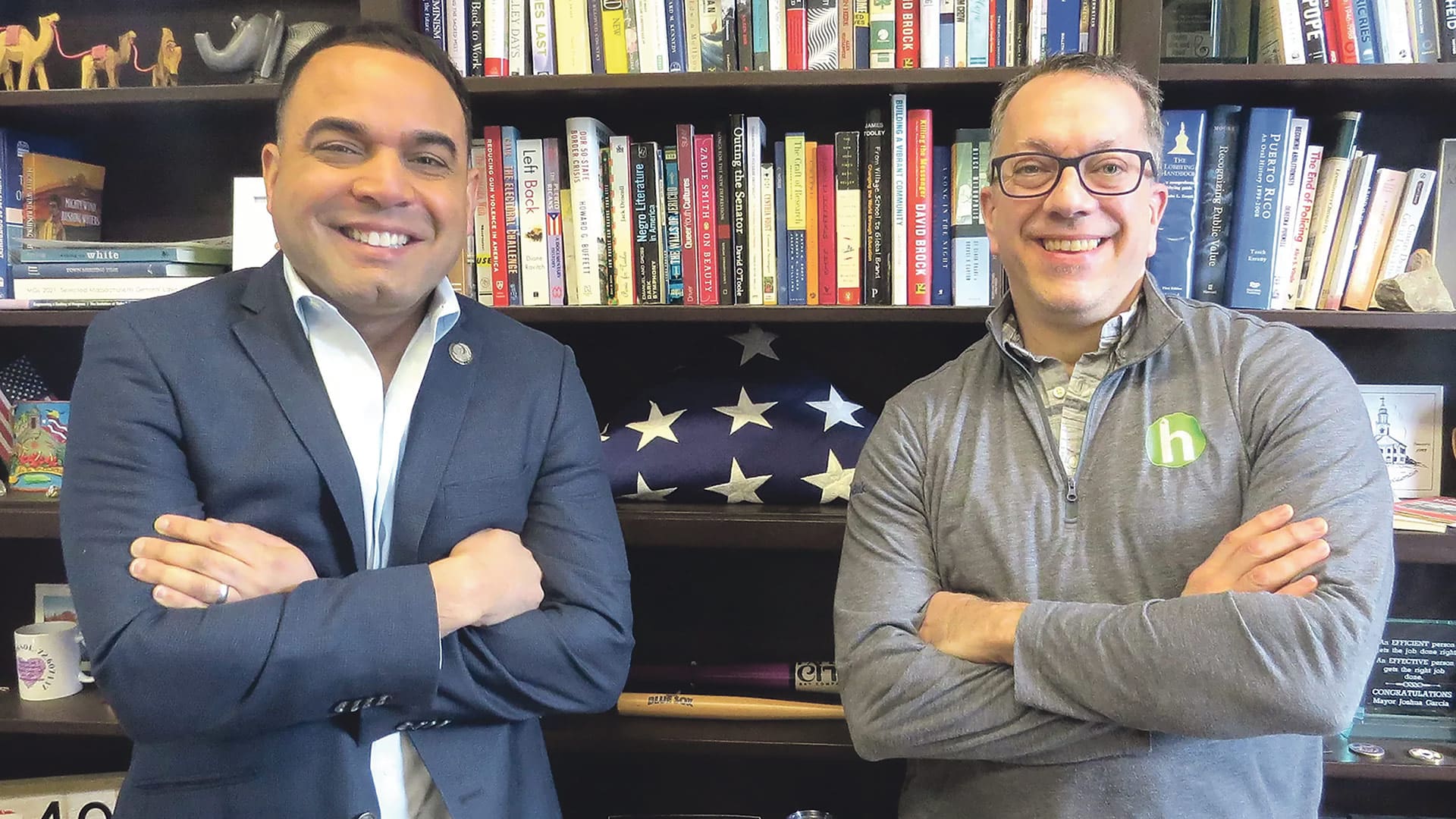
Mayor Joshua Garcia, left, and Aaron Vega

Mayor Joshua Garcia, left, and Aaron Vega say Holyoke continues to pursue — and add — new businesses in the broad realm of climate tech.

Garcia described economic development in the city as an ecosystem, one including manufacturing, small — and often very small — businesses, hospitality, the arts, food, and sports.

“The question is, how can we get all the boats to rise together so we’re establishing sustainability in our city?” he asked, adding that the answer to that question is the ongoing priority of his administration.


Not Your Run-of-the-mill Project

“Daunting.”

That’s the word Hagop Toghramadjian, a project director and development counsel with Boston-based WinnDevelopment, settled on as he was asked to describe the ongoing work at Appleton Street at the former Farr Alpaca complex.

Elaborating, he said he considers the project, called the Residences on Appleton, now far more than a decade in the making, to be the most challenging building-conversion initiative that WinnDevelopment has undertaken. And that’s saying something.

Indeed, the company has taken on many complex projects locally, including 31 Elm St. (Court Square) in Springfield and several buildings in the Ludlow Mills complex, and in numerous other communities as well.

But this conversion of the 125-year-old former mill complex into housing is on another level, said Toghramadjian as he talked with BusinessWest in the kitchen of one of the nearly finished units. He noted that there are several reasons why — from the extremely poor condition of the mill to the need to assemble property for parking and a three-story amenities building, to simply securing access to a building bordered on one side by a canal and the other by the Pioneer Valley Railroad.

As with all projects of this nature, there was also the challenge of pulling together the requisite pots of money, which, in this case, included everything from state and federal historic tax credits to state and federal low-income housing funds.

“We want to keep these small businesses local; we want to keep them here and give them an opportunity to grow their business.”

“Where we’re standing now … there was thin air, the floor had rotted through, the roof had rotted through — only the brick walls were still standing,” he said. “It was very dark, the air quality was bad … you would never dream that this could become comfortable, beautiful housing.”

But the various groups involved have persevered because this project is as important as it is difficult, he noted.

“Given its location and given how blighted it was, it cast a shadow on the whole downtown — it was a top priority for the city,” said Toghramadjian, noting that the site sits between Main and High streets, the city’s two main commercial districts, and directly across from Holyoke Heritage State Park and the Massachusetts Green High Performance Computing Center. “Because of that, they’ve been really good partners, and that’s why Winn came to Holyoke and made this investment here — it’s because the city knew what it took to make this kind of project happen.”

Jim Lavelle

Jim Lavelle

“We’ve been trying to promote not only the lower utility rates here, but the clean energy that customers can promote with their products and hopefully help with sales.”

As phase 1 continues, with leasing to commence and tenants due to start moving in this fall, Toghramadjian and others we talked with said that, while these 88 units will make a welcome addition to the landscape and help spur economic development in the area, they represent a drop in the bucket when it comes to the city’s overall housing needs.

Indeed, Garcia said a recent report put that need at roughly 1,600 units of new housing over the next 20 years across the broad spectrum of income levels, which is another key element in the equation because different types of housing, including market-rate and homeownership, enables residents to stay in the city as their financial situation improves.

“The Appleton Street project doesn’t address the magnitude of the problem, but we’re chipping away at it,” said the mayor, noting that there may be as many as 600 units already in the pipeline.

That includes phase 2 of the Appleton Street initiative, he said, noting that WinnDevelopment is currently assembling the required pots of money for that initiative, as well as the market-rate units planned for Open Square and other ongoing housing initiatives.

There are several smaller housing initiatives taking place, said Vega, including many involving the upper floors of properties along High Street, projects that provide a few or a few dozen units, all of which help meet growing need.

The problem, he went on, is the immense competition for limited state and federal support for such initiatives, with seemingly every community in the Commonwealth in need of housing.

“All the developers are going for the same pots of money, whether they’re in Holyoke, Springfield, Chicopee, or West Springfield,” he said, adding that, in this environment, having a solid mix of projects, large and small, in the pipeline is a must.


Current Events

As noted earlier, there are several projects in various stages of development in Hoyoke, and many converging storylines.

One of the most intriguing involves new-business development, especially in green energy and related sectors, where a cluster is emerging as companies eye Holyoke for location, available and relatively inexpensive real estate, and, especially, its lower-cost, clean electricity, said Jim Lavelle, general manager of Holyoke Gas & Electric (HG&E), which provides that energy.

“We’ve been trying to promote not only the lower utility rates here, but the clean energy that customers can promote with their products and hopefully help with sales,” said Lavelle, adding that Sublime Systems is just one of many businesses, large and small, that have chosen Holyoke for that reason, among others.

As an example, he cited Simple Pack, a company now located in Open Square that manufactures green food packaging to restaurants, schools, hospital cafeterias, and food distributors. Being able to say such products are produced with clean energy, in this case hydropower, is important to the company’s mission and a strong selling point with its clients, he said.

There are several similar examples, said Lavelle, who will gain a different title in a few days — grand marshal of Holyoke’s annual St. Patrick’s Day Parade.

While his father served in that role decades ago, Lavelle never expected to wear that hat himself because, while he’s long been somewhat involved in the parade, he has never served on its committee.

He considers the honor a nod to HG&E’s important role in the city, and is enthusiastic about fulfilling the many duties of grand marshal, including attendance at myriad events and, in accordance with tradition, responsibility for parade-day weather.

“I have a much greater appreciation for the effort that goes into all these different events that the parade committee puts on,” he said. “And I have a much greater appreciation for how strong a regional collaboration exists between the different communities’ parade committees and other civic organizations and the sponsors; they really work hand-in-hand on all these different events that happen across Western Mass.”

Putting his HG&E hat back on, figuratively if not literally, Lavelle said Sublime Systems, which he believes should be ready to starting building its facility later this year or early next, will soon become the utility’s largest customer, with 10 to 12 megawatts of demand. That’s a huge draw, but one it can easily absorb thanks to transmission-system upgrades, he went on, adding that the HG&E has the capacity to attract several more large users and dozens of smaller ones.

Attracting these businesses is one of many priorities for the city, said Vega, noting that there have been a steady volume of meet-and-greets in recent years, and more are on the schedule.

Many of these sessions involve early-stage companies, many of them in green-energy or green-manufacturing ventures, he said, adding that, in addition to city officials, the leaders of companies like Clean Crop, which uses electricity to revolutionize food safety, are often in the room to discuss Holyoke and its many selling points.

“If they’re a little further along and they have specific questions, we’ll bring in Holyoke Gas & Electric to talk about the energy portfolio they can provide,” the mayor went on. “We’re on people’s radar — we just need to put the package together to bring them in.”

Holyoke at a Glance

Year Incorporated: 1786
Population: 38,247
Area: 22.8 square miles
County: Hampden
Residential Tax Rate: $17.46
Commercial Tax Rate: $38.54
Median Household Income: $37,954
Median Family Income: $46,940
Type of Government: Mayor, City Council
Largest Employers: Holyoke Medical Center, Holyoke Community College, ISO New England Inc., PeoplesBank, Universal Plastics, Marox Corp.
* Latest information available

Which brings him back to that ongoing challenge of offering them spaces that are ready to move into. There aren’t many of them in the city, but he’s in discussions with some building owners about possibly partnering with the city to develop co-work, start-up, or innovation space.

“That’s a direction we want to go in,” he told BusinessWest. “We want to keep these small businesses local; we want to keep them here and give them an opportunity to grow their business.”


Bottom Line

As for businesses already growing in Holyoke, there are many in the cannabis sector, which, while it is experiencing strong growing pains, remains a force in Holyoke, Garcia said.

He noted that social consumption, or so-called cannabis cafés, constitutes the next frontier for this industry — the Cannabis Control Commission is taking up regulatory reforms on such facilities — and for some establishments in Holyoke, it could be a real lifeline in this time of growing challenge.

“In Holyoke, we want to be among the first communities to adapt and implement that opportunity for on-site consumption,” he said, likening these establishments to bars and restaurants in the sense of attracting people to the community. “If we can bring people into our city to spend money, that’s a plus.”

With cannabis, as with many of the other storylines unfolding in Holyoke, Garcia said he remains a “glass-full leader.”

That means he’s optimistic, but also realistic. It means he understands that, while much has been accomplished, there’s still much to do, and on many fronts.

It means he’s more bullish on his hometown than ever.

Features

Trade Talk

With President Trump moving quickly to make good on promises of widespread tariffs on products from U.S. trading partners, consumers and businesses are left trying to understand the ramifications.

But while the mechanisms behind tariffs can be complex, Anna Nagurney says the impact on consumers is easily explained.

“The tariff works like a tax,” she told BusinessWest. “It’s essentially paid by the importers of the particular product, but consumers will ultimately bear the cost.”

Nagurney, the Eugene M. Isenberg chair in Integrative Studies in the Isenberg School of Management at UMass Amherst, is a supply-chain expert who has spoken at length in a number of outlets about tariff policy and how it might play out.

“Tariffs on products from our major trading partners will be felt quickly — prices for our favorite fresh produce along with beef and dairy will rise, and even certain alcoholic beverages will cost more, challenging consumers already dealing with inflation,” she said. “We can also expect increases in costs for housing, cars, clothes, laptops, and smartphones.”

The other factor involves how U.S. trading partners will respond — or have already responded, she added. “Retaliatory tariffs will cause further pain for U.S. producers and consumers. Before long, workers in the underlying supply chains will lose their jobs.”

ANNA NAGURNEY

ANNA NAGURNEY

“We can’t produce all the aluminum we need for cans and cars and airplanes. We can’t grow all our fruits and vegetables we get from Mexico. Our North American allies are very important.”

One concern among economists is what’s known as the US-Mexico-Canada Trade Agreement, or USMCA, which Trump’s administration negotiated during his first presidential term, and is up for renegotiation in 2026.

Elmore Alexander, dean emeritus of the Ricciardi School of Business at Bridgewater State University and a member of the Board of Economic Advisors at Associated Industries of Massachusetts (AIM), recently posted an article on the AIM website, to be published in the spring issue of the Bridgewater Review, explaining the potential impacts of Trump’s promised — but currently delayed — tariffs of 25% on goods from Canada and Mexico.

“It is likely that this will create major disruptions in trade and relations among the three countries. The impact of these tariffs will be felt across the entire spectrum of U.S. manufacturing and service industries,” he explained, noting that the U.S. imports large amounts of energy — both oil and electricity — from Canada and a majority of automobiles and automobile parts from Mexico.

“Since the tariffs proposed by President Trump violate USMCA, these actions will throw the entire agreement into flux. The agreement governs many elements of North American business and economic relationships. Thus, the implications of the tariffs could reverberate well beyond just U.S. imports from Mexico and Canada.”

Nagurney agreed. “Ironically, in Trump’s first administration, he signed the USMCA agreement to supersede NAFTA,” she said, referring to the North American Free Trade Agreement. “Now he’s violating his own agreements.”

Alexander notes, however, that rhetoric and action are two different things, and the tariff threats could be a means to extract concessions from trading partners — as evidenced when Trump delayed the proposed 25% tariffs on Canada and Mexico when those countries promised to address his border concerns.

Threats and Realities

Trump has long been enamored of tariffs, and has deployed them — or the threat of them — for essentially three reasons: to increase revenue, to balance trade, and as leverage in negotiations with other nations.

In a keynote address to the annual meeting of the World Economic Forum in January, he issued a call for businesses to make their products in the U.S. and benefit from promised lower taxes, with the tax revenue in U.S. coffers offset by external tariffs.

“If you don’t make your product in America, which is your prerogative, then, very simply, you will have to pay a tariff — differing amounts, but a tariff — which will direct hundreds of billions of dollars, and even trillions of dollars, into our treasury to strengthen our economy and pay down debt,” the president said.

Political rivals disagree — often vehemently. After Trump announced 25% tariffs on all steel and aluminum imports on Feb. 10, U.S. Sens. Richard Neal and Linda Sánchez issued a blistering joint statement.

“Tariffs alone will do little to stop the unfair trade practices in these industries or bring back American jobs,” they said. “Our workers and producers in steel and aluminum deserve relief that will deliver results, and we could do that by working with our allies who are also being hurt by the flood of steel and aluminum in our markets from bad actors. Unfair trade practices undercut our workers and businesses and warrant more than the president’s dithering and façades of victory. Thoughtful action builds effective strategy that will re-establish fair trade for these products, and that’s what the people deserve.”

One of the major issues with tariffs, Nagurney said, has to do with economic stability and certainty, and an environment that mixes threatened, delayed, and active tariffs isn’t doing businesses any favors.

“What businesses really care about, where they thrive, is with is certainty and confidence. They can hire the right number of people, and they know the kinds of prices they can expect to get. Now, the volatility is extremely disorienting and very, very uncomfortable for everyone who’s involved in manufacturing and trade, and retailers as well.”

As for Trump’s call to manufacture in America, “we can’t produce all the aluminum here,” Nagurney noted. “We can’t produce all the aluminum we need for cans and cars and airplanes. We can’t grow all our fruits and vegetables we get from Mexico. Our North American allies are very important.

“And it’s important not only for the health and well-being of people and the economy, but also security. When we talk about having enough aluminum and steel, that affects military planes and other products that are really important,” she added. “We can’t just go it ourselves. It’s a global marketplace.”


Cause and Effect

Nagurney noted that Trump’s tariffs on steel during his first administration did benefit U.S. manufacturers and increased wages and employment in the steel industry. But the landscape isn’t the same for aluminum, as the U.S. depends on foreign trading partners for much of its supply.

And, as noted earlier, tariffs are considered inflationary by most economists, and inflation has already started to tick back up in 2025.

“It’s generating so much confusion among businesses and our close allies, and people are worried about inflation,” she said. “I mean, look what happened to eggs. Yes, that’s the avian flu, but eggs are now over $8 a dozen. Stores and restaurants are charging 50 cents extra for each egg. And people care about the cost of food.

“So when you slap these tariffs on Mexican produce, people will notice that, and will be extremely fast because we’re dealing with perishable products,” she added. “And now you’re talking about semiconductors and pharmaceuticals as well. We’re living in very interesting times.”

Banking and Financial Services

Preparing for 2025

By Daniel Cardi


If there’s one thing we all learned in 2024, it’s this: scammers aren’t slowing down. From texts that pose as Amazon to fake job offers asking you to deposit checks, their deception is getting more creative — and more effective. In fact, the Federal Trade Commission (FTC) estimates Americans will lose more than $10 billion to fraud this year alone.

The good news? Protecting financial data doesn’t have to be complicated. With a few smart strategies and a healthy dose of skepticism, you can avoid becoming a statistic in 2025. Let’s break down what’s deceiving people, why it’s working, and what you can do about it.


Scammers Got Smarter in 2024

Last year, we saw some old tricks making a comeback. Counterfeit checks were still common — people receiving fake checks, depositing them, and being asked to forward the funds before the check bounces. These scams often target folks selling things online or applying for jobs.

Daniel Cardi

Daniel Cardi

“Scammers thrive on urgency. They’ll tell you your account’s been compromised or there’s a suspicious charge on your card, hoping you’ll panic and act without thinking.”

But one thing really stood out: fraudulent text messages. Criminals sent fake texts pretending to be from retailers like Walmart or Amazon, claiming there were “suspicious charges” on your account. The goal? Get you to click a link, enter your banking info, and give them instant access to your money.

These scams are working for a reason. As a society, we use our phones for everything, and we trust them with a lot of information — from shopping to banking to ordering pizza. Scammers know this and are doubling down on texts and emails because they know we’ll respond quickly, often without a second thought.


What Scams to Expect in 2025

These tactics aren’t going anywhere. In fact, they’ll likely get more advanced. Cybercriminals are already using artificial intelligence (AI) to create more convincing fake messages. It’s only going to get harder to tell the difference between a legitimate message and a computer-generated one.

Who’s most at risk? Unfortunately, older people are still a primary target because they’re less familiar with digital tools. But anyone who’s too quick to click or too trusting can fall victim, especially as scams get more sophisticated.

For our part, the financial industry is fighting back. Many institutions, like Community Bank, are embracing AI to catch fraudulent activity faster. These systems analyze millions of transactions in real time to flag suspicious activity. But even with all the technology in the world, the best defense is still a vigilant consumer.


How You Can Protect Yourself in 2025

So what can you do to stay ahead of scammers? Luckily, the best strategies are simple and don’t require a computer science degree.

Slow down. Scammers thrive on urgency. They’ll tell you your account’s been compromised or there’s a suspicious charge on your card, hoping you’ll panic and act without thinking. Pause and look closely at the message. Does it seem real? Check the link — is it actually from a legitimate source, or is it some random string of letters and numbers? When in doubt, call your financial institution’s customer-care center directly and have them research the activity.

Change your passwords. I know — it’s inconvenient. But using old, weak passwords is like leaving your front door wide open. Make a habit of updating your passwords regularly and using different ones for different accounts. If that sounds overwhelming, get a password manager to do the hard work for you.

Use multi-factor authentication. MFA is an added layer of protection for devices and accounts — a gateway guard that says “prove it’s really you.” When you log in, you’ll need to verify your identity with a code sent to your phone or email. It’s an extra step, but it’s worth it to keep scammers out of your accounts.

Be skeptical of offers that seem too good to be true. If someone offers you a job out of the blue or says you’ve won money but need to send funds to claim it — run. Scammers love to bait people with promises that sound amazing but aren’t real.

Report fraud ASAP. If you think you’ve been scammed, don’t stay silent. Call your bank immediately. Not only can we help you secure your account, we might also be able to recover your money. In 2024, our team at Community Bank helped recover more than $235,000 on behalf of our customers who would have otherwise lost that money to scams.


The Role of AI and What’s Next

Here’s the silver lining: 2025 is shaping up to be a turning point for fraud prevention. Like I mentioned earlier, financial institutions, like Community Bank, are rolling out advanced AI systems that can adapt in real time to catch new scams as they emerge. Because these tools use machine learning to analyze millions of transactions daily, they can spot patterns that humans might miss. Any new trend will be addressed instantly, with new or updated alerts to our team.

But with every advancement in fraud prevention comes new strategies from the scammers. They’re also experimenting with AI to create fake emails, texts, and even phone calls that are more convincing than ever. This is why vigilance and skepticism will always be your best tools.

We also expect more regulations in 2025 aimed at improving cybersecurity. Businesses will need to comply with stricter rules to protect sensitive data — which is great news for consumers. But at the end of the day, personal accountability remains key.


Don’t Rush and Stay Skeptical

The main takeaway for this year? Take your time. Whether it’s a text about a suspicious charge or an email requesting urgent action, don’t rush to respond. Scammers rely on speed and panic — take that away, and you take away their power.

Remember, if something feels off, don’t hesitate to call and ask questions. By staying informed, skeptical, and proactive, you can outsmart the scammers and protect what matters most.

In short, 2025 will bring new challenges, but with the right mindset and tools, you’ll be ready.


As vice president and Corporate Security officer for Community Bank, Daniel Cardi draws on more than three decades of experience in policework, gaming investigations and security analysis to stay ahead of emerging threats and prevent financial losses for customers. He specializes in risk management, fraud prevention, and physical security, overseeing security upgrades and modifications across the bank’s branch network. He also supervises a dedicated team of corporate security investigators committed to investigating allegations of fraudulent financial activity across the bank’s footprint to foster a safer banking environment for all customers.


Banking and Financial Services

Scammed in a Crypto Scheme?

By Sean Wandrei


Have you received a text lately from strangers who think they know you or want to be your friend? I have been receiving those for a while now. I thought I was popular, and these people wanted to be my friend. Maybe a few of them want to be, but many of these texts are from people looking to find their next target.

‘Pig butchering’ has become increasingly prevalent in recent years. That’s the term for a scam that deceives individuals into giving up money under false pretenses. The scammer fattens the victim, the ‘pig,’ by slowly guiding them into making increasingly large investments before disappearing with the victim’s money. These schemes can be presented as an opportunity to help someone out, find love, or take advantage of an incredible investment opportunity. With the boom in the cryptocurrency market, many of these schemes involve investments in crypto.

The scammer gradually builds trust with the victim over time. Once the trust is built, the scammer tells the victim about a great investment opportunity where they made a lot of money from investments, or how they need money for other reasons. The scammer may show the victim evidence of investment gains.

Sean Wandrei

Sean Wandrei

“The key difference between these two situations is the victim’s intent — if the individual engaged in the transaction with the expectations of earning income or capital gains, then the loss suffered can be treated as an investment loss rather than a personal expense.”

Eventually, the victim is guided to a website or app to invest in crypto. The app could look like a platform such as Coinbase. The platform is set up by the scammer, and eventually the victim’s crypto is transferred off the platform and gone forever. Or the crypto never existed — the money the victim sent simply went into the scammer’s account.


Deducting Losses from the Scam

Internal Revenue Code (IRC) Section 165 provides the taxpayer with an opportunity to deduct losses incurred from various transactions, subject to specific rules and limitations. The deductibility of losses suffered from fraudulent schemes depends significantly on the nature of the transaction and the taxpayer’s motive at the time of the transaction. Two distinct scenarios arise in the context of pig-butchering schemes: losses incurred from transactions driven by personal motives (helping someone out or looking for love) and losses incurred from a transaction entered into for a profit (investing in crypto).

When a loss is incurred because an individual gives money to help someone out or in the pursuit of a romantic relationship, the transaction is typically characterized as a personal expense. These losses could be seen as a theft loss arising from non-business, personal transactions. Under IRC 165(c)(3), theft losses generally are not deductible due to the Tax Cuts and Jobs Act, which limited the deductibility of personal casualty and theft losses to those incurred in a federally declared disaster area.

In this context, the taxpayer’s motive was not profit-driven, but rather a personal connection or desire to help, which means this loss would be a theft loss and not deductible. The rationale is that the tax code does not provide relief for personal financial mistakes or misguided generosity when they lead to fraud.

Contrast this with the scenario where the pig-butchering scheme is one where the victim believes that they are investing in an asset such as crypto. In this case, the victim’s primary motive is to earn a profit by investing in crypto. Under IRC 165(c)(2), losses incurred from transactions entered into for profit, which are not connected to a trade or business, are deductible.

The key difference between these two situations is the victim’s intent — if the individual engaged in the transaction with the expectations of earning income or capital gains, then the loss suffered can be treated as an investment loss rather than a personal expense. The IRS treats crypto as property, so a case can be made that the victim was investing in property with a profit motive of investment income.

If the victim is going to deduct the loss under IRC 165(c)(2), he or she must adhere to substantiation requirements. Detailed records of the transaction, evidence of the profit motive, and clear documentation of the loss are necessary to support any deduction claimed on the tax return.

For example, consider a taxpayer who entered into a crypto scheme that ultimately turns out to be a pig-butchering scheme. If the taxpayer entered the transaction with a clear profit motive, expecting to realize gains from a booming cryptocurrency market, the loss from the scheme can be characterized as an investment loss. This categorization aligns with the general principle that taxpayers are allowed to deduct losses on investments when those losses result from a transaction entered into for profit.


Bottom Line

There is little case law on this subject, as it is relatively new. To deduct these losses, a taxpayer must maintain clear documentation of all interactions with the scammer, deposit dates, and evidence of profit motive.

Falling victim to these scams can have major financial consequences for the victim and his or her family. The monetary loss could be alleviated by deducting the loss and reducing the taxpayer’s tax liability. As mentioned above, there is limited tax precedent on this subject, so taxpayers should contact a tax professional to ensure the claim is legally sound and in full compliance with current laws.


Sean Wandrei, CPA, MST is a senior lecturer in the Department of Accounting at Isenberg School of Management at UMass Amherst.

Home Improvement

Selling Your Small Business

By Sasha Wilde


Selling your small business is a pivotal moment in your life. It marks the culmination of your hard work, dedication, and vision. Whether you’re selling to retire, pursue a new venture, or capitalize on your business’s value, the process demands strategic thinking, preparation, and a clear understanding of the steps involved. This guide will walk you through the essentials to consider ahead of a sale.


Are You Ready to Sell?

Selling a business isn’t just a financial decision — it’s an emotional one, too. Before starting the process, ask yourself:

• What legacy do you want to leave behind? Think about the impact your business has had on your community, employees, and customers.

• What’s your plan after selling? Will you retire, start a new business, or focus on personal projects? (Keep in mind that most buyers will want you to sign a non-compete.)

• Is succession planning necessary? Consider whether there are people (employees, family members, or partners) within your network who might be the right fit to take over.


Consider Your Stakeholders

Your decision to sell directly impacts those around you, including:

• Your family. Discuss your decision with family members, especially if they’ve been involved in the business.

Sasha Wilde

Sasha Wilde

“Whether you’re selling to retire, pursue a new venture, or capitalize on your business’s value, the process demands strategic thinking, preparation, and a clear understanding of the steps involved.”

• Your employees. Transparency is key. Plan for how you’ll communicate the sale and secure their future during the transition. (The timing of this communication is important to consider as well.)

• Your customers and community. Think about how the sale might impact those who rely on your business.


Define Why You’re Selling

Understanding your motivations will help clarify your goals and approach. Common reasons include:

• Personal milestones, like retirement or burnout;

• Shifting focus to a new venture; and

• Capitalizing on the current value of your business.

Clearly defining your ‘why’ will also make your pitch to potential buyers more authentic and compelling.


Determine What Your Business Is Worth

The first and most vital step is understanding the value of your business. Buyers will ask for evidence backing your valuation. Here are some factors you should consider:

• Cash flow. Strong, predictable cash flow makes a business more appealing.

• Management structure. Is the business independent of you? The less reliant the business is on the owner, the more valuable it is.

• Revenue type. Recurring or subscription revenue is typically more stable and attractive to buyers than one-time sales (a/k/a project-based).

• Assets and liabilities. Tangible and intangible assets (intellectual property, equipment, or customer relationships) influence your valuation.

Tip: A professional appraiser or M&A (mergers and acquisitions) advisor can provide a more precise valuation based on your specific industry and market.


Build Your Dream Team of Advisors

Selling a business is complex. It’s important to gather a team of professionals who can guide you through the process, including:

• Legal advisors, to help you draft contracts, review sale agreements, and protect your interests.

• Accountants/tax experts, to ensure the sale is compliant with tax laws and to help reduce tax liabilities.

• M&A professionals or business brokers, specialists who can help market your business, find buyers, and negotiate the best deal for you.


Where to Find Buyers

There are multiple ways to promote your business to potential buyers. Some popular routes include:

• Business brokers and M&A professionals can act as intermediaries, negotiating on your behalf and helping to connect you with serious buyers. They can also bring expertise in marketing and legal compliance.

• If your business includes real estate, commercial real-estate agents can help you sell both the business and its physical location.

• Reach out to your local chamber of commerce or business associations, as they are well-connected and knowledgeable about the local community.

• List your business on reputable websites such as bizbuysell.com, bizscout.com, or businessesforsale.com. These online platforms allow you to connect with a global network of buyers. For example, businessesforsale.com offers more than 53,000 business listings worldwide, making it one of the largest marketplaces for buying and selling businesses.


Tips for a Successful Sale

• Be transparent and organized. Buyers want assurance that your business is healthy and well-run. This means having detailed financial records, operational documents, and contracts readily available for due diligence. Transparency builds trust and increases the chances of closing the deal.

• Highlight your business’s strengths. Create a compelling narrative about why your business is valuable. This may include a strong customer base, a clear competitive advantage or unique selling proposition, and/or opportunities for growth.

• Stay patient. Selling a business takes time. It’s normal for the process to last several months, or even longer, depending on the market and buyer interest.


Final Thoughts

Selling your small business is a major step that requires careful planning, communication, and execution. By aligning your emotional readiness, understanding the value of your business, and building a team of trusted advisors, you’ll be better prepared to achieve a favorable sale.

Looking to start the process? Reach out. I am happy to be a resource to get you headed in the right direction. Email me at [email protected].

Make the next chapter of your entrepreneurial story just as successful as the one you’re closing!


Sasha Wilde is co-owner of Sexton Roofing & Siding.

Home Improvement

Meeting a Growing Need

As the demand for HVAC technicians continues to grow, Greenfield Community College (GCC) is actively seeking new instructors to join its Workforce Development team and help train the next generation of skilled technicians.

GCC recently graduated its first cohort of HVAC technicians from the new entry-level HVAC technician course, and a waiting list of future trainees is already building.

At this time of year, when the heat goes out, homeowners rely on HVAC technicians as emergency responders to ensure their comfort. However, the HVAC industry is facing a critical shortage of workers. Many seasoned technicians are retiring, creating a significant gap in the workforce, even as the need for skilled technicians increases due to Massachusetts’ decarbonization targets and incentives promoting the transition to electric heat pumps and other advanced systems.

“Our HVAC program is aimed at addressing this urgent need,” said Kristin Cole, vice president of Workforce Development at GCC. “However, to continue meeting the demands of local employers and the community, we need more experienced instructors who can share their expertise with aspiring HVAC professionals.”

GCC’s entry-level HVAC technician program, funded by an Equity Workforce Training Implementation Grant from the Massachusetts Clean Energy Center, equips students with valuable skills, including five industry-recognized credentials: OSHA 10, NORA Bronze, Massachusetts Oil Burner, NATE Ready-to-Work, and the EPA 608 Universal certification. The curriculum, developed by HVAC Program Coordinator Sharon Cates and Instructor Joel Tognarelli, combines technical principles with hands-on training to ensure students are well-prepared for careers in the field.

Kristen Cole

Kristen Cole

“Becoming an instructor is a fantastic opportunity for HVAC professionals to make a meaningful impact on their community while also addressing the workforce gap in our industry.”

The need for HVAC instructors is complemented by the growing interest in the program. In this expanding environment, GCC is seeking individuals with HVAC experience who are passionate about teaching and mentoring the next generation of technicians.

“Becoming an instructor is a fantastic opportunity for HVAC professionals to make a meaningful impact on their community while also addressing the workforce gap in our industry,” Cole said. “We encourage anyone with HVAC expertise who wants to give back to consider this rewarding teaching opportunity.”

In addition to the technical training, the HVAC program emphasizes the importance of service in the community. Students learn not just how to fix systems, but also the responsibility they carry as technicians who help keep families safe and comfortable in their homes.

With a coalition of local employers and ongoing feedback on curriculum development, GCC is aligning its training programs with the needs of the HVAC industry. This collaboration aims to ensure that graduates are equipped with the skills necessary to thrive in a rapidly changing workforce.

HVAC experts interested in teaching opportunities at GCC are encouraged to email Cole at [email protected].

Healthcare News

Heart of the Matter

The Healey-Driscoll administration recently announced partnerships with Blue Cross Blue Shield of Massachusetts Foundation and Atrius Health Equity Foundation as part of the administration’s Advancing Health Equity in Massachusetts (AHEM) initiative, which works to eliminate racial, economic, and regional disparities in health outcomes. The partnerships will finance initiatives in Chicopee and New Bedford.

These partnerships will fund community-level initiatives that will identify and understand community needs related to maternal health or social drivers of cardiometabolic health. Cardiometabolic disease, which refers to disease of the heart and blood vessels, diabetes, high blood pressure, and chronic kidney disease, is a leading cause of death across Massachusetts. The initiative works to improve health outcomes in 30 communities that have been identified as having the greatest health disparities for maternal health and social drivers of cardiometabolic health.

“While we recognize that disparities in these health conditions occur in these regions, we strongly believe that each community may face different challenges in addressing them, and that requires solutions at the community level,” Secretary of Health and Human Services Kate Walsh said. “I look forward to hearing from the programs in the communities and am grateful to the Blue Cross Blue Shield of Massachusetts Foundation and Atrius Health Equity Foundation for their support and partnership that will have a real difference in the lives of people in the communities.”

John Vieau

John Vieau

“Improving the health and well-being of Chicopee residents begins with understanding the issues and complications facing our community. The work sponsored by the BCBSMA Foundation and performed by the Public Health Institute of Western Massachusetts will help us to determine the best way to positively affect the health of our residents.”

BCBSMA Foundation has approved $100,000 in funding for the first year of a two-year Strategic Health Equity Grant to the Public Health Institute of Western Massachusetts. The nonprofit organization will lead a community engagement process in Chicopee to identify and understand community needs related to maternal health or the social drivers of health that impact cardiometabolic conditions and maternal perinatal morbidity. The coalition-building work will engage communities of color and other marginalized communities to inform the identification of needs, preferred solutions, and the implementation of those solutions.

“We are pleased to partner with leaders from EOHHS and DPH on a place-based community-engagement model that will help advance our shared health-equity goals,” said Audrey Shelto, president and CEO of BCBSMA Foundation. “Our grant partner is well-positioned to serve as a backbone organization for the AHEM initiative in Chicopee and to support community members as they develop solutions to the health disparities in their region.”

Chicopee Mayor John Vieau added that “improving the health and well-being of Chicopee residents begins with understanding the issues and complications facing our community. The work sponsored by the BCBSMA Foundation and performed by the Public Health Institute of Western Massachusetts will help us to determine the best way to positively affect the health of our residents.”

In Southeastern Mass., Atrius Health Equity Foundation is committing $500,000 over two years to establish Youth Creating a Healthier New Bedford, a youth-led initiative that empowers young people in New Bedford to identify the social drivers impacting cardiometabolic health, engages them in developing a shared agenda for promoting community health and wellness, and supports them as emerging leaders.

The foundation is partnering with SouthCoast Community Foundation to convene local organizations to align efforts for broad, sustainable support for the initiative, while helping integrate other areas, such as the arts, environmental sustainability, and community development, to foster long-term transformative change in the community.

The partnerships with Atrius Health Equity Foundation and BCBSMA Foundation are the first of many partnerships AHEM seeks to create with private-sector partners to address health inequities.

Banking and Financial Services Special Coverage

Setting Its Sites

Rich Kump says UMassFive College Federal Credit Union is persevering

Rich Kump says UMassFive College Federal Credit Union is persevering through challenging times for this sector.

Rich Kump says UMassFive College Federal Credit Union is in a mood to “make up for some lost time.”

Elaborating, he flashed back more than two years, to when the institution was starting to move ahead with plans to move its flagship location in Hadley to a new location just down Route 9, while also advancing efforts to make a push into Hampden County with a location in or near Springfield and a smaller satellite office within Springfield that would serve one of the city’s many banking deserts.

Returning to today, he said the credit union — which he serves as president and CEO — has made very little, if any, progress on those fronts, due to issues with all three sites that we’ll get into later.

He summed it all up with some understatement, and a needed sense of humor, saying, “what I have surmised from all this is that we’re not very good at picking branch sites.”

Now, the institution is looking at 2026 for the Hampden County locations, and a longer timeline for the new Hadley location, which he admits is less of a priority now than it was back in late 2022, due primarily to remote-work options that have alleviated space concerns that were a prime motivator for relocating the flagship branch.

“Moving the Hadley branch does not generate a whole bunch of new loans and deposits and members.It provides some great visibility, but not many growth opportunities.”

These are all still priorities, but they have been supplanted by larger concerns and dramatically changing times — for all banks and credit unions, one in which the rising interest rates of 2023 and early 2024 tightened already-thin margins, reduced profits, and pushed many credit unions to the point where they needed to merge with another institution or close.

“It’s been a troubling time, with many credit unions posting losses,” Kump said, noting that there were 41 credit-union mergers nationwide in the fourth quarter of 2024 alone, some of them generated by a need for small credit unions to expand services, but many others prompted by poor financial condition.

UMassFive has been looking to move its flagship branch in Hadley

UMassFive has been looking to move its flagship branch in Hadley (pictured) to a new location down Route 9, but other priorities are currently more important.

UMass Five, which has six branches across Western and Central Mass., including one at its namesake, UMass Amherst, is not so imperiled, but it has seen deposits tumble and overall performance slide due to these colliding factors.

“We had to increase our rates to keep the deposits we had, and, of course, that increased our cost of funds quite a bit. And while the cost of funds increased, we still have a loan portfolio, much of which was at much lower than market rates,” he said, explaining, in simple terms, the main challenge facing all institutions.

UMass Five, with roughly $570 million in deposits and around $700 million in total assets, didn’t load up its balance sheet with large numbers of low-interest borrowings, he went on, but it certainly felt the pinch.

“Our net interest margin did shrink a little — not as much as others, but overall, we saw our net income decline,” Kump said, adding that the bank grew at just 0.24% in 2024, what would normally be considered an off year, but, under these circumstances, acceptable.

Moving forward, the credit union, like many other financial institutions, must balance life in these more difficult times with the need to grow, attain more deposits, and create economies of scale, and thus become better able to handle the ongoing headwinds.

UMassFive is not in a position to be acquired, and it is not exactly looking for opportunities to acquire others, although it will certainly consider them as they emerge, said Kump, adding that, for now, the preferred method of growth is organic.

Which brings us back to those branches that have been in the planning stages. They are important parts of the credit union’s overall growth strategy, and while the institution will move forward, it is not going to rush anything.

Indeed, while he regrets losing time with these initiatives, as he said at the top, the process of selecting new branch locations — an art and science that involves everything from visibility to the volume of other traffic-generating businesses, to the number of competing banks and credit unions in the general vicinity — is necessarily slow and involved, and UMassFive will take its time and get it right.

“We’re back to square one,” he said of the Hampden County locations. “But it’s more important to do this well then do it quickly.”

For this issue and its focus on banking and financial services, we talked with Kump at length about what’s in the business plan for UMassFive, and just how the institution will make up for that lost time.


Points of Interest

Recapping what’s happened with those three planned branches, Kump said not much has gone right, and each story is different.

In Hadley, the property where the credit union intends to go is occupied by an auto-repair shop and a small single-family home being rented from the property owner. Long story short (we’ll do a lot of that), that tenant has not gone quietly — the matter has wound up in Housing Court in a protracted battle — and won’t be out for another six months or so.

“We’re still interested in that site … we’re putting together a new purchase agreement because we hadn’t anticipated such a lengthy delay,” Kump said. “But it’s still in our future, and we do want to move our flagship location to that more visible site on Route 9.”

Meanwhile, in Hampden County, at a location in East Longmeadow near the Springfield line, a site chosen after extensive research, a new branch has been scrapped due to issues with the sewer system. And that satellite location? After more than a year of deliberations, the owner of that property ultimately decided not to sell or lease it.

So UMassFive is now essentially where it was two and half years ago on all three projects — waiting to get started in Hadley and trying to find the right sites in Springfield, Kump noted, adding that, over that time, the landscape for credit unions and banks has changed when it comes to liquidity, profitability, and, in this specific case, priorities and growth strategies.

“As many other financial institutions are doing, we’re managing our growth,” he explained. “Your income fuels growth, and when your income is down, you can’t grow as much.”

Elaborating, he said the Hadley initiative is certainly still important, just less so in the larger scheme of things, adding that the relocation of that flagship branch is now targeted for completion in 2028 at the earliest, for a few reasons, starting with logistics.

A few years ago, the plan was to close an operations center in Hadley and move the employers there into space created by moving the headquarters branch to that aforementioned location at the Amherst/Hadley line. But with heavy use of telecommuting and hybrid schedules, the credit union has moved the last department from the operations center into the flagship site, with the branch still operating.

Meanwhile, with a focus on gaining new members and growing deposits, the credit union’s top priority now is expanding into Hampden County.

“Moving the Hadley branch does not generate a whole bunch of new loans and deposits and members,” Kump explained. “It provides some great visibility, but not many growth opportunities.”

He expects these to come in Hampden County, where the credit union has a small presence — a branch in Mercy Medical Center — with intentions to become a larger player in that region, through further use of what he called a “hub-and-spoke” operating philosophy.

Elaborating, he said this model calls for a main facility, such as the one in Hadley, with smaller, satellite facilities around it, including those at UMass Amherst, downtown Northampton, and the Veterans Administration facility in Leeds.

There were plans to create something similar in Hampden County, starting with the property at the East Longmeadow/Springfield line, as the hub. But, as we’ve seen, that site didn’t work out, a huge disappointment for the institution.

“We were very excited … we did an extensive branch study, used lots of data, socio-economic factors, traveling routes, destination points at this one location, and it came up roses for us,” he explained, adding that the roses soon wilted amid sewer-backup issues that could not be resolved, forcing the credit union to walk away from the deal four months ago.

Now, as he said, UMassFive is back to square one, and it will take its time putting a new plan together. With that, he gave some insight into the complicated nature of finding sites for branches, an undertaking many institutions are familiar with as they seek out growth opportunities in a no-growth area with many communities that could only be described as ‘overbanked.’

“There is a lot that goes into this … for bank branches, you have to be visible, you have to be in high-traffic areas, and there have to be destination points around you,” he said, adding that, to find such sites, institutions must invest time, money, and resources — and then hope things go right with the sites they choose.

But as difficult as finding good branch sites can be, securing them is critical, said Kump, adding that, in this environment, pursuing growth and achieving size are critical for all financial-services institutions.

“Eventually, you have to grow again, and we feel that will happen,” he said, adding, again, that, while the organic route is preferred, the credit union will certainly look at merger opportunities as they emerge.

“We’re not aggressively seeking mergers, but if there is a credit union that has interest in merging into us, we would definitely consider that, and that’s really who we’ve been throughout our existence,” he said, adding that the institution’s locations at Mercy and the VA facility came about through mergers.


Location, Location, Location

Looking ahead to the balance of 2025 and beyond, Kump said it’s difficult to project what will happen — with both the economy and financial-services institutions.

Indeed, only a few months ago, the Fed was projecting several interest rate cuts in 2025; by December, it was anticipating few, if any.

“All bets are off,” he said. “We see employment numbers coming down, inflation numbers seem to be going up, and if inflationary pressures continue to push, it wouldn’t surprise me if, in 2025, we saw some rate increases again.”

In this climate, UMassFive will continue to work to manage its growth and align its priorities to that end.

It will also endeavor to make up for some lost time and find some better luck and good fortune when it comes to picking branch sites and taking full advantage of those new locations.

It is certainly overdue.

Home Improvement Special Coverage

All Under One Roof (Actually, Two)

Andy Crane says the home show thrives

Andy Crane says the home show thrives, even in the internet age, because home-improvement business owners need to stay visible and put work into the pipeline.

Andy Crane acknowledged that many contractors and home-improvement companies are busy these days, thanks to a combination of factors, from people staying in their homes — due to higher interest rates and a shortage of inventory — to finding enough help to get jobs done.

They’re so busy that some — but certainly not all — are booking jobs several months out and even into next year, in some cases.

But even in this climate, where some contractors can’t touch new business for a few more quarters, it’s important to stay in front of consumers and continue to put business into the pipeline, said Crane, president of the Home Builders and Remodelers Assoc. of Western Massachusetts (HBRAWM).

And that’s why he’s not only expecting a sellout of booth space when it comes to this year’s Original Western Mass Home & Garden Show, taking place March 27-30 at the Eastern States Exposition — the 70th edition of this spring tradition — but also why the show is expanding into a second building this year, one dedicated almost exclusively to the ‘garden’ aspect of the event.

And with that move, the show is turning back the clock in some respects.

“Back in the day, we had two buildings, and a few years, we had three buildings,” Crane told BusinessWest. “This year, we’re going to have at least two and an outdoor area.”

The second building, known as the A Barn, will be geared toward yard equipment and accessories, plantings, and landscapes, with some details still to be finalized, he said, adding that this has been an element missing since COVID.

But getting back to his thoughts about contractors and why they want to be at this show, Crane said many aren’t coming to the Big E grounds looking for work — they already have enough. Instead, they want to make connections and enable consumers to at least get the process started.

“It gets the juices flowing — you might get some ideas and talk to some people,” he said. “Let’s say they can’t do it for a while … if you don’t get that process moving along, you’ll never get it done.”

Adam Quenneville, president of Adam Quenneville Roofing & Siding, agreed. His company has been part of the home show for roughly 25 years, and he comes back each year to help make sure the phones keep ringing.

“I would think that people still enjoy touching and feeling products and getting a sense for what they think that person is like. You can’t get that off a laptop; you just can’t.”

This is a quieter time of the year — although roof crews can work pretty much year-round — and a good time to make connections and add projects for the rest of the year, he said.

“It’s great to get out and see potential customers, and it’s an opportunity to get leads, give estimates, and secure business. A lot of people are going there because they have a home improvement in mind, and it’s nice to be able to let them see us in person, talk to us, get information, and go from there.”

With that, Quenneville spoke for every vendor at the show, including the ones who sell beer nuts and pickles, most of whom are focused not on making sales that day, but on the ‘go from there’ part of the equation.

It’s why the show has thrived for 70 years, and why the 2025 edition is shaping up as another opportunity to build back from the tumultuous COVID years and continue to grow.


Through the Roof

Crane said the home show, which annually attracts between 12,000 and 15,000 visitors and, recently, about 300 to 400 vendors, will be marking 70 years in some subtle ways, with additional giveaways and other promotions.

But mostly, this show will be like the 69 that have come before it, in that it presents an opportunity for the public to gather, see what’s new (or not so new, but still important), talk with experts, maybe finalize some plans for what they want to do, and put a face and business card with a person and company they’ve seen on the internet or heard about from neighbors, friends, or relatives.

Adam Quenneville says he’s been coming back to the home show for 25 years

Adam Quenneville says he’s been coming back to the home show for 25 years because it provides valuable exposure and leads for new projects.
Staff Photo

It’s been this way since the mid-’50s — except that part about the internet, said Crane, adding that, before social media and before consumers could click on websites, contractors had to get out in front of people. The home show was created to give members of the HBRAWM an opportunity to show what they do, how they do it, and, yes, how much it will cost.

And while consumers can learn much about a product or contractor by visiting a website, and still more by following up with friends and neighbors who placed a specific contractor’s sign on their lawn, there is still much to be gained from seeing these professionals in person, Crane said.

“I would think that people still enjoy touching and feeling products and getting a sense for what they think that person is like. You can’t get that off a laptop; you just can’t. “If it’s a zero-turn mower, would you rather sit on one than look at a picture?” he asked rhetorically. “How about picnic tables and high-top tables … you might as well get the exact one you want and the exact color. As for sheds, isn’t it better to stand in the shed rather than look at a picture of one? You can visualize where your mower is going to go and where your pool equipment is going to go or the pellets for your wood stove. That’s what the show brings that computers don’t bring.”

It still does that, but it has become much more, he went on, adding that the event has become a rite of spring for many, and a social gathering for some, with friends and neighbors often gathering at the show and then going elsewhere for dinner.

“The show is still a great place to talk, shop, and get ideas about your home, your property, some of the things that people like to do in their homes,” he said, adding that, while some things have changed since Dwight Eisenhower was patrolling the White House, the best things about the home show are what hasn’t changed.

For 2025, there will be more of the same, said Crane, with the emphasis on more, especially when it comes to space for visitors to roam and take in the many exhibitors, who cross every spectrum of home and garden improvement, from who can do the work to how to pay for it.

Indeed, there will be several banking and finance institutions on hand, he noted, adding that the categories for vendors runs the alphabetical gamut, from air filtration to women’s clothing, with more than eight dozen in between, everything from awnings and canopies to foundation repair; kitchens and baths (huge items of interest) to mosquito protection; sheds and gazebos to wells and pumps.

It will all be under … well, two large roofs in 2025, said Crane, adding, again, that a second building is something the public has asked for, and something that’s needed to properly showcase vendors and products.

Fast Facts:

What: The 70th edition of the Original Western Mass Home & Garden Show
Where: Eastern States Exposition
When: March 27-30
Show Producer: Home Builders & Remodelers Assoc. of Western Massachusetts
Admission: General admission: $10; with coupon: $7; children under 12: free
For More Information: Call (413) 733-3126

As noted, the A Barn will focus on lawn and garden equipment, furniture, and accessories, everything from mowers and snow throwers to chairs, tables, firepits, and fountains — items that couldn’t be displayed as effectively in years past due to a lack of space.


Starting the Conversation

While the additional space provides room for more vendors and a chance to spread out, it also further activates the outdoor spaces at the Big E, said Crane, adding that there will now be traffic between the buildings — and opportunities to capture the attention of that traffic.

Over the years, those staffing the Adam Quenneville booth have succeeded in gaining the attention of visitors, said the company’s owner, adding that it has generated a steady flow of leads — and eventually customers.

“If I have to guess, I’d say we get about 100 opportunities,” he said, meaning actual estimates for potential customers. “We’ll probably give 90 people prices and secure about 50% of that — 45 to 50 jobs.”

That more than justifies the cost of the booth, he said, adding that the show has been one of the more successful methods of getting right in front of the public, telling the company’s story, and keeping the pipeline of work flowing.

Nick Riley, president of Chicopee-based N. Riley Construction, agreed. His firm specializes in home remodeling and new construction, and he’s been a regular participant at the show for the past 20 years because of the opportunities it provides to be visible, talk to people directly, and hand out business cards.

“We do really well at the home show, and that’s why we keep coming back,” he said, adding that he doesn’t take leads directly at the show, but instead instructs visitors to call and make appointments — and many of them do. “It’s about more than the eventual leads … it’s about getting in front of people, seeing them in person, and saying hello.”

Hundreds of other home and garden professionals can say the same thing, and they have — some of them for a half-century or more.

They keep coming back because the Western Mass Home & Garden Show has long been a spring tradition, a social event for some, a chance to gather ideas for most, and an opportunity, for those on the vendor list, to get down to business.

Healthcare News Special Coverage

More Than a Name Change

Executive Director Roseann Martoccia

Executive Director Roseann Martoccia

As WestMass ElderCare celebrated its 50th anniversary last year, its leaders decided a new name was in order for the next 50.

“We really wanted to look at where are we today as opposed to where we started, why are we doing what we’re doing, and what the community understands about us,” Executive Director Roseann Martoccia said of the effort that led to a new brand and strategy, under the name Access Care Partners.

“It was a process of talking internally and then talking with community partners, as well as having some focus groups, so we could better understand not only how people know about us, but what’s important to them, particularly caregivers,” she explained. “What are they looking for when they’re up at night, searching on the internet or thinking about, ‘how am I going to help mom when I have to go to work and I have to do all these other things?’ What’s important to them?”

Partnering with Davis Advertising of Worcester, WestMass ElderCare conducted one-on-one interviews, online surveys, and focus groups involving around 200 community members, as well as internal staff, to gather input on how the organization is perceived and how it can continue to meet the needs of the community.

“The agency had rebranded in the early ’90s, and ‘ElderCare’ is the term that they came to, which at the time made a lot of sense,” Martoccia said. “But if someone is 68 or 75 or … well, pick an age, do they want to be called a senior? Do they want to be called an elderly person? ‘Older adult’ seems to be what people want to be called. Also, the people in the community that we serve include children, adults, and older adults.”

The name Access Care Partners better reflects the organization’s mission of providing care and support to people of all ages and abilities, ensuring they have access to the services they need to live independently, noted Sarah Aasheim, the organization’s director of Community Programs, who broke each word down for BusinessWest.

“It’s not one-size-fits-all. Some people have chronic health conditions, other people have memory loss, other people have behavioral-health issues, or a combination of these things. So every situation is a little bit different, and we start by meeting people where they are, and then go from there.”

“We landed on Partners because one consistent bit of feedback we got from everyone we talked to was that the older adults that we serve, the people with disabilities that we serve, don’t want someone doing things for them; they’d like a partner to do something alongside. They want to have agency and choice in the decisions that impact them,” she noted.

“Access was also a common denominator because, no matter who you’re serving, whether it’s an older adult, a caregiver, or someone who’s younger, we’re trying to make things simpler for them,” she went on. “And Care is just integral to who we are. That was one carryover from our previous name.”

With about 200 full-time staff, in addition to around 40 part-time Meals on Wheels drivers, the rebranding process was an exercise in helping the entire team reflect and refocus on their roles and how they fit into the whole, Aasheim added.

Some of the individuals served by Access Care Partners

Some of the individuals served by Access Care Partners enjoy lunch at a Community Table site in Ludlow.
(Photo courtesy of Access Care Partners)

“You come into work, and you’re focused on ‘what do I have to do today? What is my role?’ But sometimes it’s good for all of us to lift up our heads and think, ‘oh, this is something else that’s happening,’ or ‘maybe this is within our scope as well, and we should have this integration and collaborative approach.’

In addition, Martoccia noted, when talking about clients, “it’s not one-size-fits-all. Some people have chronic health conditions, other people have memory loss, other people have behavioral-health issues, or a combination of these things. So every situation is a little bit different, and we start by meeting people where they are, and then go from there.”


Foundational Values

The services to meet those needs at Access Care Partners run the gamut from home care, adult family care, and personal care management to nutrition services, care coordination, benefits counseling, money management, behavioral health, housing services, and many more.

“Some of the things that we were founded on and started with are still with us today — services like Meals on Wheels, for example,” Martoccia said. “Our foundational values are still with us, which are to help people be independent in the community, with both the services we provide and supports that they get elsewhere — because we can’t do everything for everybody.

“And that speaks to how we interface with families and caregivers as well, because they can’t do everything, right?” she went on. “Yes, you live with someone, you do a lot for them, but you have to go out, you have to go work, you have to take care of your other business. Oftentimes, we can be a gap-filling support or peace of mind.”

The initial mission 50 years ago, which obviously continues today, is to work with older adults and caregivers, Martoccia explained, but over the years, that has expanded to working with younger people with disabilities. “It’s really the same — supporting people who want to be independent, supporting people who have some needs, and complementing the support and care they already have in their own lives.”

“Even before this recent change in the administration at the federal level and the potential impacts of that, we’ve recognized that we have to diversify our revenue sources and think about how to get a footprint in the private fundraising space.”

When clients are referred to Access Care Partners — from a hospital stay, by a rehabilitation facility, by family members, or through other means — the process to access services begins with a conversation around what they need, be it in-home care, helping with personal care, helping with household tasks and errands, or any number of other things, she noted.

“Money management is a great example of one of our programs that contributes to the mission of allowing people to stay at home,” Aasheim added. “We have a money-management director who provides supervision and support to a team of volunteers who support consumers in a couple of different ways.”

For example, “we have bill-payer clients, folks who might just need someone to visit them once or twice a month to make sure that their bills are getting paid, make sure their checks are coming in — providing the kind of support that a family member would provide,” she further explained. “That’s a game changer for a lot of people who otherwise might need a higher level of care and couldn’t stay in their own home. But with that level of support, it allows them to.”

There’s also a higher level of care called a representative payee program.

“These are folks who get a letter from their doctor basically saying that they have difficulty with capacity to manage their finances, so that authorizes the Social Security Administration to send their Social Security checks to us. We are the representative payees for those consumers, and we pay their bills directly,” Aasheim said. “When these individuals don’t have the sort of community or family support to help them with those things, it can really impair their ability to stay independent in their own home.”

Sarah Aasheim

Sarah Aasheim says each word in the organization’s new name, Access Care Partners, was chosen thoughtfully and deliberately.

The nutrition program is another example of a safety-net service that allows people to live independently.

“Sometimes it’s the only meal that our consumers who get home-delivered meals eat each day,” she noted. “So it ensures a certain level of nutrition, but at the same time, the delivery driver might be the only person that someone will see every day, too. For a caregiver, it’s immense peace of mind to know that someone’s going to lay eyes on mom or dad and make sure that they’re OK, they’re upright, they’re operating in their environment normally.

“Drivers get to know their consumers, and they notice subtle changes in their behaviors,” she added. “So that service offers, again, not just nutrition delivery, but really a safety check for those individuals to make sure that they’re OK. And if they’re not OK, that prompts a phone call back to our team here, followed by our case management.”

Sometimes, Martoccia said, the most important part of the process is the initial call from a caregiver who is overwhelmed and trying to understand their options.

“We’re not the answer for everyone, but we do connect people with other resources in the community. Maybe they have the resources to move to a different housing setting or pay for some services on their own, but they’re not sure where to start and how to get that ball rolling.

“Generally, when people come to us, they do have some chronic, ongoing conditions, but that’s not true in all cases. Sometimes it’s short-term,” she added. “But more often than not, it’s a longer term. There are many people receiving our services who would otherwise be in a nursing home.”


Time of Uncertainty

While clients and caregivers contribute to the cost of services, Access Care Partners also works with the Executive Office of Aging & Independence on state appropriations and MassHealth coverage, and works with third-party insurers as well.

But the new regime in Washington, D.C. — which so far has taken an aggressive approach to cost cutting and scaling back services in many areas of public life — has the organization’s leaders cautiously watching how that activity may eventually affect state funding, even though direct federal money accounts for just 10% of its revenue stream.

“Even before this recent change in the administration at the federal level and the potential impacts of that, we’ve recognized that we have to diversify our revenue sources and think about how to get a footprint in the private fundraising space. So we’ve invested here in the last couple of years in more capacity to do marketing and fundraising,” Aasheim said.

“We’re really just beginning that journey, but part of the education that we need to do in rolling out our new brand is to develop a partnership with the private philanthropic community to say, ‘we need support from the community to be able to continue to do what we’re doing.’ We don’t want to be in a situation where we’re having to take wait lists to deliver Meals on Wheels. But with the public funding crises that we may face, it may come to that.

“For people who are on a fixed income, the last few years have not been easy, and they’re not getting any easier,” Aasheim continued. “We help with health-related social needs in many ways and bring services into the home and into the community, but we’re not paying people’s food bills, their utility bills, their basics, their gasoline. This is something that, as a community, we’re all feeling, but it’s really playing out with people who are not in the workforce any longer and are living on a fixed income.”

Which is why the support services offered by Access Care Partners are so important, Martoccia said.

“Massachusetts has quite robust public and community-based systems, not only for our clientele, but across the board,” she told BusinessWest. “But as everyone is watching the federal landscape, we don’t know how that’s going to impact state appropriations in the future, and the rules. There’s a lot of integration between our state — any state — and the federal government. So as one thing shifts, we don’t know how things are going to play out. I think we’re just being cautious and watching every day to see what happens.”

Community Spotlight Special Coverage

Community Spotlight

Wendy Healey

Wendy Healey

When it comes to the subject of ghosts at Ventfort Hall, Wendy Healey is … well, decidedly “neutral.”

Roughly translated, that means that she’s never seen or otherwise encountered one. But she acknowledges that other people have experienced “something,” and she further acknowledges that ghosts are just one of the many intriguing storylines involving the cottage built by Sarah Spencer Morgan, J.P. Morgan’s sister, and her husband (and seventh cousin), George Hale Morgan, in 1893, and now home to the Gilded Age museum.

“We have what I would call friendly spirits in this house,” said Healey, the facility’s executive director, as she talked with BusinessWest in the billiard room, to which male guests would retire for cigars and brandy after one of the lavish dinners hosted by the Morgans.

The far bigger story, and the one she’d certainly prefer to talk about, is the comprehensive restoration of the landmark, now the site of a wide array of events, from weddings and teas to concerts and ghost tours. It has been ongoing for decades now, and at least another 20 years of work lies ahead, according to the most recent master plan.

“We are a restoration in progress — we are far from done,” said Healey, who assumed her role at the landmark two years ago. “We have millions and millions of dollars of work ahead of us.”

Ventfort Hall is a “restoration in progress.”

Ventfort Hall is a “restoration in progress.”

Ventfort Hall, its restorations and its ghosts, comprise one of the many storylines in Lenox, which has become a tourist destination and center of arts, culture, and healthcare, with many of the destinations located on the grounds of other Gilded Age cottages.

That list includes Tanglewood, summer home to the Boston Pops; Shakespeare & Company; the Mount, Edith Wharton’s home; and the resort spas Canyon Ranch and Miraval.

It is winter, which means most of these facilities are planning for the busier seasons to come, but some are busy year-round.

At Shakespeare & Company, an intriguing slate of shows is taking shape, said Jaclyn Stevenson, director of Marketing and Communications, noting that performances of Macbeth (with an all-female cast and a comedic touch) start in March, with most other shows taking place in the summer.

They will include a “Shakespeare Cabaret,” performances of Romeo and Juliet and The Taming of the Shrew, as well as August Wilson’s The Piano Lesson, with a few other performances still to be finalized.

“We have what I would call friendly spirits in this house.”

Equally busy these days is Gilbert Santana, general manager at the Miraval resort spa, which features the mansion known as Wyndhurst as its centerpiece. He the facility, which has been under the Miraval name since the fall of 2020, the height of COVID, has been improving overall visitation each year since, with that trend expected to continue in 2025.

Continually growing confidence among the guest population, which now includes virtually all age groups, is a big reason, he said, noting that there are now frequent bookings six months or more out, unusual in the spa universe. Meanwhile, new initiatives, such as so-called Family Connect weeks, where children can join their parents at the spa, have also helped.

The most recent Family Connect week came during the recent February school vacation week, said Santana, adding that it piggybacked a strong Valentine’s weekend to get this year off to a strong start.

“We wanted young people to start their well-being journey early, and it’s made an incredible impact; we’ve doubled the amount of guests this go-around than we had last year,” he said of the program, adding that Miraval is a true four-season resort spa that boasts more than 180 different kinds of programs — from meditation to a ropes course to yoga — and at all levels, beginner to expert.

A scene from The Comedy of Errors, performed in 2024 at Shakespeare & Company. (Photo courtesy of Katie McKellick)

A scene from The Comedy of Errors, performed in 2024 at Shakespeare & Company.
(Photo courtesy of Katie McKellick)

For this latest installment of its Community Spotlight series, we focus on Lenox and all that it has to offer.


In the Right Spirit

“This house was built for big parties.”

With that, Healey summed up the design philosophy behind the Elizabethan-style Ventfort Hall, as well as one of the enduring characteristics of the Gilded Age — large, lengthy gatherings.

Indeed, when guests came to a party at this home on Walker Street, they didn’t stay for a few hours and reach for their coats. Instead, they stayed for several days in one of the 14 guest rooms, said Healey, noting that, sadly, Sarah Morgan didn’t get to host many of these soirees: she died in 1896, only three years after Ventfort Hall was completed.

Slicing through the next 129 years in a concise yet effective manor, Healey said there was a succession of owners — and uses.

After being a private residence for a few decades, it later served as everything from a dormitory for Tanglewood students to a summer hotel known as Festival House; from a ballet camp to the home of Bible Speaks, a religious community that used the mansion for housing.

During this last chapter, the home fell into a serious state of disrepair, and was eventually slated for demolition for the construction of a nursing home.

“It was in such bad condition … no one wanted it, no one wanted to do anything with it, and it was, in the opinion of this developer, worth more flattened and to build a nursing home than to try to save it,” said Healey. “In the dining room, you could see daylight — you could see down to the basement, and you could see up through the roof.”

But in 1997, it was purchased by the Ventfort Hall Assoc., formed by Lenox residents dedicated to its restoration, which began soon thereafter.

Indeed, the building took a star turn in the movie The Cider House Rules, filmed in 1998, serving as the orphanage known as St. Cloud’s — its exterior, anyway (the interior shots were filmed at Northampton State Hospital), with its weathered condition being just what the film’s producers were looking for.

Gilbert Santana says Miraval celebrates its ability to promote wellness during all four seasons, and in many different ways.

Gilbert Santana says Miraval celebrates its ability to promote wellness during all four seasons, and in many different ways.

The movie — and there would be others to follow — provided both capital and momentum, said Healey, adding that restoration has a been a slow, very expensive undertaking over the past 28 years, with perhaps that many more still to come as the association works to ensure that the home will remain part of the fabric of Lenox for decades to come.

Phase 1A of a master plan launched in 2016 has been completed, said Healey, noting that it addressed critical building envelope and life-safety issues. Phase 1B is now underway, focusing on restoring the exterior masonry and roofing to ensure the long-term stability of the mansion.

One focal point of recent efforts has been shoring up of the east-end wall as well as the rebuilding and restoration of the mansion’s four chimneys, said Healey, noting that three have been painstakingly restored, and the fourth will be addressed this spring.

And in the years to come, many of the rooms on the upper floors, the massive basement, the carriage house, and other areas will be restored. That work, projected to cost more than $20 million, is to be funded through a combination of revenue from events, admission to the museum, and other programs, as well as donations and grants from organizations including the Massachusetts Cultural Council Facilities Fund, the Town of Lenox Community Preservation Committee, and others.

Lenox at a Glance

Year Incorporated: 1767
Population: 5,095
Area: 21.7 square miles
County: Berkshire
Residential Tax Rate: $9.05
Commercial Tax Rate: $13.18
Median Household Income: $85,581
Median Family Income: $111,413
Type of Government: Select Board, Open Town Meeting
Largest Employers: Canyon Ranch, Miraval, Boston Symphony Orchestra, Kimball Farms
* Latest information available

While the restoration work continues, the mansion hosts a growing number of events each year, welcoming guests who wouldn’t have been on the invite lists for the Gilded Age parties, said Healey, adding that there are several weddings each year, as well as concerts, tea-and-talks, a spring fashion fundraiser called Berkshique, and more.

There are also very popular ghost tours, at least once a month, led by Robert Oakes, author of Ghosts of the Berkshires. He provides a full tour of the house, by flashlight, while also relating both its history and the tales of those who say they’ve encountered a spirit on the property. And he’s heard many, from staff members and guests alike, Healey said.


Frame of Mind

It’s called ‘mindful golf.’

It’s … well, let’s call it golf with the edge taken off.

“We have a golf pro who walks you through the process of how you think when you swing and your intentions behind playing golf, which many times are jaded around winning and doing better,” Santana explained. “This helps you understand the purpose of playing your sport; it’s very well-defined and built around the person playing.”

Actually, the team at Miraval could put that word ‘mindful’ in front of almost everything they do, and that’s a long list, from activities such as kayaking and cross-country skiing to the weddings it hosts to the overall spa experience, which guests enjoy on visits lasting a day or several weeks.

Summing it all up, Santana said it’s about meeting people where they are.

Miraval, which also has resorts in Arizona and Texas, is coming up on five years in the Berkshires, although Santana said it’s more like three, with the first two greatly disrupted by COVID.

He said Miraval is continually looking at ways to bring wellness to more people across a wider age group. A good example is the two annual Family Connect weeks, which the facility test-drove last year to solid reviews that translated into bigger numbers this winter.

“We’re the only Miraval that does a Family Connection week where we allow kids to join their parents and other family members and experience it at a very young age,” he told BusinessWest. “One thing we do is make sure that everything we do has an educational purpose. Everything is defined here on growing your mindset — not necessarily redefining you, but giving an understanding of something that’s more than recreational.”

Education is a huge part of the mission at Shakespeare and Company as well, said Stevenson, adding that, in addition to the performances slated each year, the institution also schedules several actor-training programs as well as initiatives for young people and professional-development workshops.

These include Shakespeare in the Courts, a program staged in conjunction with the Berkshire Juvenile Court system, whereby adolescent offenders work with Shakespeare and Company artists and participate in classes, rehearsals, and performances of scenes from the Bard’s plays. During the six-week project, participants explore Shakespeare’s text and prepare their own performance pieces as part of their term of probation.

There’s also “Riotous Youth,” one-, two-, and three-week summer theater programs that introduce students (ages 7 to 17) to Shakespeare’s language, stories, characters, and themes using imaginative and playful methods.

As for actor-training programs, they take place in the spring and summer and are geared for those with different experience levels, from the novice to mid-career professionals, said Stevenson, adding that there are also several in-person workshops and online classes and workshops focused on everything from wit to movement and dance to public speaking.

Stevenson said Shakespeare and Company enjoyed a solid 2024, actually exceeding overall projections, continuing, as other venues in this community have, to build back from the COVID years, which took a serious toll on Lenox.

“We’re still working our way back a little bit, but we’ve come a long way,” she said of the COVID recovery. “It feels more in the rear-view mirror than ever before.”

Law

The New Pay-transparency Law

By Amelia J. Holstrom, Esq. and John S. Gannon, Esq.


Last year, Massachusetts joined a growing list of states with pay-transparency laws when Gov. Maura Healey signed “An Act Relative to Salary Range Transparency” into law. The law, which takes effect in various stages this year, will require many Massachusetts employers to disclose salary and pay ranges in all job postings and advertisements. The law also requires larger businesses to file certain wage data and information with the Commonwealth of Massachusetts.

According to the state Office of Labor and Workforce Development, the pay-transparency law is aimed at eliminating gender, racial, and other wage disparities, as well as boosting employee loyalty and improving morale. Here is what employers need to know.

Beginning Oct. 29, all businesses in the Commonwealth with 25 or more employees will be required to:

• Disclose pay-range information in all job postings and/or advertisements. This includes “any advertisement or job posting intended to recruit job applicants for a particular and specific employment position,” regardless of whether the employer recruits directly or utilizes a third party for such purposes;

• Disclose pay-range information to current employees who are transferred or promoted to a new position for the new position; and

• Upon request, provide pay-range information to employees for the positions they hold and applicants for the positions to which they applied.

The law defines pay range as the “annual salary or hourly wage range that the covered employer reasonably and in good faith expects to pay for that position at that time.” The statute also prohibits employers from retaliating against any employee, or applicant, who requests pay-range information. Employers who violate the new pay-transparency law can be fined by the Massachusetts attorney general. Conceivably, violations could also trigger a larger inspection of the employer’s pay practices.


Larger Employers Required to File Wage Reports

In addition to the new pay disclosure obligations discussed above, employers with 100 or more employees in the Commonwealth who are subject to the federal EEO-1, EEO-3, EEO-4, or EEO-5 reporting requirements will be required to file certain workforce demographic data with the Commonwealth of Massachusetts on an annual or every-other-year basis. Currently, EEO reports contain workforce demographic and pay data categorized by race, ethnicity, sex, and job category.

As of this past Feb. 3, employers with 100 or more employees in the Commonwealth subject to the EEO-1 reporting requirements were required to file a copy of their EEO-1 data report with the Commonwealth of Massachusetts. The law requires this to be done annually for EEO-1-covered employers on Feb. 1 or the next business day.

On the same date, employers subject to the EEO-3 (covered unions) and EEO-5 (covered schools) reporting requirements were required to file a copy of those reports with the Commonwealth. EEO-3 and EEO-5 reports need to be filed every other year. Likewise, employers subject to the EEO-4 (covered state and local governments) reporting requirements will need to file a copy of those reports every other year, beginning on Feb. 1, 2026.

Recently, the Massachusetts Executive Office of Labor and Workforce Development published a set of frequently asked questions designed to help employers determine if they are covered by the new filing requirements and, if so, what they need to do to comply. The FAQs can be found at www.mass.gov/info-details/workforce-data-reporting-faqs.

The reports submitted by employers will not be public records under Massachusetts law. In other words, members of the public will not be able to request and receive copies of these records. The Commonwealth, however, will use the data submitted by employers to publish aggregate wage and workforce data on the Department of Labor and Workforce Development’s website no later than July 1 of each year, beginning in 2025. These aggregate reports will be broken down by industry.


Next Steps

Needless to say, if you have more than 100 employees in Massachusetts and are subject to EEO reporting requirements, and you have not filed your wage-data report with the Commonwealth of Massachusetts, you need to act fast. As for the salary-range disclosures, although Oct. 29 may seem far away, employers should start preparing now to comply with the deadlines. If not already in place, employers need to start developing pay ranges for each position in their workforce.

Employers also need to consider how and to what extent posting pay ranges in job postings will impact morale in the workplace. For example, consider a scenario where your business places an advertisement for an entry-level position at $28 per hour. Now, let’s assume someone with your company has been working in that role (or a similar job) for a few years, and is earning the same wage. That current employee is likely to learn about the advertisement and question why they are not making more money. Employers need to be prepared with a communication strategy should this situation unfold.

Businesses may also want to consider conducting a pay-equity audit to ensure there are not any pay disparities, as employees will now be able to request and discuss this information in the workplace. There are other important benefits to conducting a pay-equity audit under the Massachusetts Equal Pay Act. For starters, it may help identify if you have any potential pay-equity liability in your workplace. Also, employers who conduct good-faith self-evaluations of their pay practices may have an affirmative defense against a pay-equity lawsuit.

If you plan to conduct a pay-equity audit, you should strongly consider working with your employment counsel to preserve the attorney-client privilege, which may prevent certain information from being disclosed in any subsequent litigation.


Amelia Holstrom and John Gannon are partners with the Springfield-based law firm Skoler, Abbott & Presser, P.C., a law firm exclusively practicing labor and employment law for more than a half-century, focusing on litigation avoidance, employment litigation, and labor law and relations; (413) 737-4753.

Law

After the DEI Executive Order

By Krupa Kotecha, Esq.


In January 2025, President Trump issued the “Ending Illegal Discrimination and Restoring Merit-based Opportunity” executive order, which significantly impacts private employers, particularly those that implement diversity, equity, and inclusion (DEI) programs. This order aims to curtail employment practices that provide preferential treatment based on race, sex, or other protected characteristics, reinforcing a strict adherence to merit-based hiring and advancement.

For private employers, especially federal contractors and organizations with established DEI initiatives, understanding the legal implications of this order is essential to ensure compliance while mitigating potential liabilities.


Key Legal Implications for Private Employers

• Revocation of affirmative-action mandates for federal contractors. The order revokes prior mandates, including Executive Order 11246, which required federal contractors to adopt affirmative-action programs to address historical disparities in hiring. The revocation effectively eliminates federal obligations for contractors to develop workforce diversity plans or set hiring goals based on demographic representation.

• Regulatory scrutiny of employment practices. Federal agencies, particularly the Department of Justice (DOJ) and the Equal Employment Opportunity Commission (EEOC), have been directed to investigate employment policies that could be deemed discriminatory under the new legal framework. Employers must ensure that any DEI initiatives remain neutral and do not grant or deny opportunities based on race, gender, or other protected classifications.

• Merit-based employment enforcement. The executive order underscores the importance of meritocracy, requiring employers to justify employment decisions strictly based on qualifications, experience, and performance. Organizations implementing hiring quotas, targeted recruitment efforts, or employee resource groups may need to re-evaluate these programs to avoid potential litigation risks.

• Compliance audits and investigations. The attorney general is tasked with formulating an enforcement plan that includes identifying employers whose DEI initiatives may conflict with federal non-discrimination laws. Employers should anticipate increased oversight, potential audits, and legal challenges if their policies include race- or gender-conscious hiring, promotions, or training programs.


Compliance Strategies for Employers

Given the legal uncertainties surrounding this order, private employers must take proactive steps to avoid violations and potential legal repercussions.

• Conduct an internal policy review. Employers should undertake a comprehensive audit of all DEI programs, training materials, hiring practices, and workplace policies. Any language or initiatives that suggest preferential treatment based on race, gender, or ethnicity should be reassessed to ensure alignment with the updated legal framework.

• Emphasize equal opportunity and non-discrimination. To remain compliant, companies should reaffirm their commitment to equal opportunity without the use of race- or gender-based preferences. Employee training programs should be reviewed to ensure they focus on compliance with federal anti-discrimination laws rather than implicit bias or identity-based initiatives.

• Monitor federal guidance and legal challenges. Since the implementation of this order may lead to litigation and policy revisions, employers should stay informed of further legal developments from the DOJ, EEOC, and other regulatory bodies. It is advisable to consult employment-law attorneys to navigate these changes effectively.

• Prepare for increased scrutiny and potential investigations. Employers, particularly those with government contracts, should be prepared for potential audits and legal reviews. Documentation demonstrating that hiring and promotion decisions are based solely on qualifications and performance will be crucial in defending against any claims of discriminatory practices.


Conclusion

The repeal of affirmative-action mandates and the increased focus on merit-based employment and advancement signal a substantial shift in workplace compliance requirements for private employers. Organizations that have historically engaged in DEI initiatives must carefully reassess their programs to ensure they do not run afoul of federal regulations. While diversity efforts are not outright prohibited, any policies that confer advantages or disadvantages based on protected characteristics may expose employers to legal liability.

To mitigate risks, employers should prioritize objective hiring and promotion criteria, eliminate race- or gender-based preferences, and stay informed on regulatory updates. Consulting legal experts and conducting internal audits will be critical steps in ensuring compliance with this evolving legal landscape.


Krupa Kotecha is an attorney who specializes in labor and employment-law matters at the Royal Law Firm LLP, a woman-owned, women-managed corporate law firm that is certified as a women’s business enterprise with the Massachusetts Supplier Diversity Office, the National Assoc. of Minority and Women Owned Law Firms, and the Women’s Business Enterprise National Council.


Law

No Wedding, No Ring

By Alexandre P. Pereira, Esq.


In a recent decision, the Massachusetts Supreme Judicial Court (SJC) created new legal precedent surrounding the return of engagement rings when the engagement ends and the planned wedding does not ensue. The court’s ruling in Johnson v. Settino abolishes a six-decade-old, fault-based analysis, paving the way for a more contemporary standard for ownership in such cases.

In 1938, Massachusetts took its stance on the extent to which courts would resolve disputes arising from private relationships. Massachusetts enacted the Heart Balm Act, which prohibited plaintiffs from seeking compensation for emotional damages stemming from the end of a romantic relationship. Specifically, breaches of contracts to marry will not be causes of action recognized by courts in the Commonwealth (M.G.L. c. 207, §47A).

Alexandre P. Pereira

Alexandre P. Pereira

“A failed engagement that prevented in what all likelihood would have been a failed marriage is not a situation where a court should be required to impute blame to one party.”

In 1959, the case of De Cicco v. Barker marked a significant moment in this legal landscape. De Cicco held that engagement rings were, in essence, “pledges given on the implied condition that the marriage take place,” meaning that the Massachusetts Heart Balm Act would not preclude actions for the recovery of an engagement ring. The decision was rooted in principles of equity, aiming to prevent the person who received the ring from becoming unjustly enriched when the engagement fails. De Cicco created a fault-based analysis, allowing the donor to reclaim the ring only if the engagement ended without any fault of their own.

Over the years, jurisdictions across the country have shifted away from the fault-based approach. Until recently, Massachusetts had not revisited this standard — until the SJC took up Johnson v. Settino.

The facts of Johnson v. Settino embody the tumultuousness of modern relationships. In the summer of 2016, Johnson began dating Settino. Over the course of their relationship, he showered her with lavish gifts of jewelry, clothing, shoes, and handbags. A year later, Johnson proposed to Settino with a $70,000 diamond engagement ring.

In November 2017, Johnson discovered text messages on Settino’s phone indicating an intimate relationship with another man. Following this discovery, he terminated the engagement. Johnson subsequently sought the return of the diamond engagement ring and wedding bands.

At trial, the judge ruled that Johnson had given the rings on the condition of marriage but held him at fault for the breakup due to his unfounded suspicions of infidelity. Settino was awarded the engagement ring and wedding band. After an appeal to the Massachusetts Appeals Court, the trial court’s judgment was reversed after holding that ending an engagement does not inherently assign blame to that party. The Appeals Court concluded that Johnson’s actions were reasonable, and the case was ultimately heard by the Massachusetts Supreme Judicial Court.

The SJC’s ruling in Johnson v. Settino overturned the fault-based standard that stood firm for the better half of a century. Although the standard was equitable in theory, time has shown the standard to be less practicable. Engagements often fail without clear fault by either party. An engagement period can be, and perhaps should be, viewed as a time to test the permanency of a relationship prior to marriage.

A failed engagement that prevented in what all likelihood would have been a failed marriage is not a situation where a court should be required to impute blame to one party. The court argued that assigning fault in such circumstances contradicts the equitable principles the analysis was meant to promote.

Additionally, the SJC pointed out that the fault-based standard is largely irrelevant in Massachusetts divorce proceedings. Likewise, the justices determined that fault should not be a relevant consideration in the termination of engagements.

The court ultimately ruled in favor of Johnson, the plaintiff, marking a notable shift in Massachusetts law. Engagement rings are gifts contingent on marriage. When the marriage does not occur, the ring is to be returned to the donor, irrespective of fault.


Alexandre P. Pereira is an attorney with the law firm of Bacon Wilson, P.C. He is a member of the Hampden County Bar Assoc. and the Estate Planning Council of Hampden County, and concentrates his prapracticectice in the areas of elder law, estate planning, long-term-care planning, probate, and special-needs estate planning; (413) 781-0560; [email protected]


Features Special Coverage

Tapping into Tradition

Chip Williams (pictured) and his sisters represent the fifth generation making maple syrup at the family’s sugarhouse.

Chip Williams (pictured) and his sisters represent the fifth generation making maple syrup at the family’s sugarhouse.


Chip Williams has his eye on the weather reports around Deerfield. He’s not looking for long stretches of mild weather, or cold, for that matter. He wants both. Every day.

That’s because sugar maple trees in this region are tapped beginning in late February, and temperatures are critical for sap production — specifically fluctuating temps, with the ideal conditions being nights in the low 20s followed by days in the 40- to 45-degree range. This freeze-thaw cycle is necessary because, as the temperature warms, the ice inside the trunk melts, and the ice-compressed gases expand, forcing the sap out of the trunk.

“It’s all temperature-dependent. We need the right weather, and when I say right weather, it’s the freezing and thawing cycles. If we have that for an extended period of time, we’ll have a decent season,” said Williams, who is part of the fifth generation operating Williams Farm Sugarhouse, which starts selling maple syrup — and breakfast — to the public on Feb. 21.

“What often happens is a week of warm and then a week of cold, longer cycles of ups and downs,” he noted, “but we really want a freeze at night, warm during the day, freeze at night, warm during the day, and not so much warm for a week and then cold for a week.”

The reason, he said, is that the sap flows only on a warm-up. “So, after a freeze, that next day, when it warms up, it’ll flow, but it’ll only flow for a certain amount of time before you need it to freeze again. If it warms up and stays warm, it’ll run for a little while, and then you won’t get anything.”

That thermometer watching is just one of many challenges he and his sisters, Kelly Scofield and Casey Williams, take on when they work at the sugarhouse every spring. They all have regular jobs — Chip is the athletic grounds supervisor at Deerfield Academy, while Kelly and Casey work in hotel management in Eastern Mass. — but the maple-syrup season is a labor of love for the siblings, who are also joined by their father, Sandy, who comes up from Florida during tapping and boiling season.

“After a freeze, that next day, when it warms up, it’ll flow, but it’ll only flow for a certain amount of time before you need it to freeze again. If it warms up and stays warm, it’ll run for a little while, and then you won’t get anything.”

It’s also a tradition for plenty of local families as well, in a region that boasts a number of sugarhouses, few with as long a history as this one. The facility is open Friday through Sunday for pancakes, french toast, waffles, and more, all topped with that fresh maple syrup. And if they like what they taste, they can bring home syrup, maple cream, maple candy, and more from the store.

“We see a lot of the same families every year,” Chip said. “And when we’re boiling, we invite people to come back and ask questions, and we’ll explain the process. It’s really interesting to get people’s feedback — a lot of people have no idea how you even start making maple syrup, and people are amazed you take this product that looks like water and make it into this all-natural sweetener.”

It’s a product that has brought some sweet times for the Williams family since Milton Hubbard Williams began the syrup tradition in the mid-1800s, followed by his son, Kenneth Sanderson Williams. The original Williams sugarhouse was one of 13 located on Mount Toby in Sunderland.

The Williams Farm Sugarhouse

The Williams Farm Sugarhouse has been at its current location along Route 5 since 1994.
Staff Photo

In his diary, Hubbard Williams wrote, “March 6, 1853, commenced sugaring. March 25, 1853, traded sugar for coat and pants in Amherst.” Thirty-six years later, he was still sugaring, and on April 1, 1889, he wrote, “Gathered 20 bls [barrels] sap for four successive days. Had the best week I ever knew … syrup sells readily.”

In the mid-1960s, amid growing success and realizing the need for a better retail location, Kenneth Williams Jr. and his brother, Milton, moved the third-generation sugarhouse off the mountain to Route 47 in North Sunderland. The final move came in 1994, when the family, led by fourth-generation operator Sandy Williams, built a sugarhouse on Route 5 in Deerfield, near its sweet-corn farm.

“The reason we moved here is our farm was just right up the road in Old Deerfield,” Chip said. “We would drive over to Sunderland every day to operate the sugarhouse during the sugaring season, so when this property here came up for sale, my family bought it, and we were able to move everything closer to our operation.”

“When we’re boiling, we invite people to come back and ask questions, and we’ll explain the process. It’s really interesting to get people’s feedback — a lot of people have no idea how you even start making maple syrup.”

In Sunderland, they served coffee, donuts, ‘sugar on snow,’ and the like, but the move to Deerfield saw the food-service operation expand to serving meals — first on weekends, then seven days a week for a while, and currently three days a week. They stopped growing corn up the road 2012, but the sugarhouse — and its almost two centuries of tradition — lives on.


From Tree to Plate

Some years are weaker than others because of the uncertainty of the weather, Williams said. Last year wasn’t particularly strong for sap production, but 2010 was much worse, with only about 20% of the normal crop.

“It just warmed up around the middle of March, and it never froze again. It just stayed warm. So we didn’t get any more sap,” he explained, adding that an early start to those cold-warm cycles are important. “Here at our sugarhouse, if we don’t make any syrup in February, a lot of years it’s hard for us to have a really good year; we find that whatever we miss early, we never make up on the other end.”

When tapping a sugar maple, it’s best to drill a taphole that can provide an ample amount of sap while maintaining the long-term health and sap production of the tree. In a good year, one tap can yield around 10 gallons of sap, or almost one quart of syrup. Sap is, on average, about 2% sugar, and it takes about 45 gallons of sap to make one gallon of syrup.

Sap flows best from the trees when freezing nights are followed by warm days.

Sap flows best from the trees when freezing nights are followed by warm days.
Staff Photo

The traditional method of gathering sap is to hang four-gallon buckets below the tap to catch the drip. The process is very labor-intensive, and buckets must be gathered and emptied up to once a day. The Williams Farm enterprise hangs about 3,000 buckets each season, tapping more than 1,000 trees in Deerfield and Sunderland.

A less labor-intensive way of collecting sap is through a tubing pipeline, which utilizes gravity to gather sap into holding tanks that are positioned lower than the trees or at a slope. While the initial cost of setting up lines is greater than that of buckets, once lines are established, they can hold for 15 to 20 years. The farm has about 1,000 taps on pipelines, but is looking to expand that number in the future.

As noted earlier, the sap gathered from a sugar maple tree is not the same as what’s poured on pancakes. Sap has a large concentration of water and a small concentration of sugar, and the additional water must be boiled off in an evaporator.

In the sugarhouse, sap is continuously fed into the evaporator, where it flows through a series of troughs. The sap is boiling the entire time, and when it reaches the proper density at 219 degrees, it can then be called syrup. The more water that is boiled away from the syrup, the thicker it gets. Products like maple cream, candy, hard blocks, and granulated sugar are all made by further reducing the syrup at higher temperatures.

Williams noted that the team starts boiling as soon as they begin to get sap into the sugarhouse, and the sap is processed at its freshest in order to ensure the highest-quality syrup.

They always try to boil on weekends so the visiting public can witness the process, although, because sap flow is so dependent on the weather, they can’t guarantee they will be boiling on any given day, so for customers who want to see the process, it’s best to call ahead or check the website for projected boiling times.

“We like to get started in February, but it doesn’t always pan out. We’re just at the mercy of Mother Nature,” Williams told BusinessWest. “That’s some of what makes it interesting too — you don’t know. People will ask, ‘how’s this year going to be?’ And it’s like, ‘well, we don’t know until April, once it’s all over.’ We almost always make enough syrup for our customers, and it’s always good syrup. So, any year we can do this is a good year.”


Sweet Moments

Williams said he looks forward to this season for a number of reasons, including being close to nature.

“As the days get longer and it starts to warm up a little bit, it’s nice just getting out in the woods and working on the lines. I don’t get to be out as much as I did when we were farming full-time. I’d be out all the time, if not for my full-time job, so we have some people that help us.”

The sugarhouse is open to the public from late February into early April, and those dates aren’t set in stone so much as dependent, as noted earlier, on the weather and the frequency of that freeze-thaw cycle.

“Traditionally, we would always start right around the week of school vacation. Growing up, I remember having that February break, going out with the guys tapping,” he recalled, adding that sugaring season has long been a community tradition as well. “Because this craft is native to this region, it seems like people really have a tradition of visiting these houses and looking forward to it.

“And it’s important to my sisters and me to keep the tradition going,” he added, noting that he has three sons of his own. “Obviously, I don’t want to put any pressure on them doing this, but they love it here, and they help out. My 11-year-old likes to run the register up front.”

Williams Farm Sugarhouse does some wholesaling as well, selling syrup to local farmstands and maple candy to Richardson’s Candy Kitchen, right across the street. There are online sales as well, “but that’s tricky; you’re just a small fish in a big ocean. But once you make a few sales and people like your product, they’ll keep buying.”

And the family will keep tapping, boiling, and serving breakfast.

“There are times, like on a busy Sunday toward the end of the year, when we’re just dragging, but it’s fun,” he said. “We have three generations of family helping us out, too, so that’s great. Everyone kind of chips in to get it done.”

Law Special Coverage

The Massachusetts Parentage Act

By Julie A. Dialessi-Lafley, Esq. and Britaney N. Guzman-Bailey, Esq.

The Massachusetts Parentage Act (MPA), a new law that went into effect on Jan. 1, revolutionizes how parentage may be legally recognized in the Commonwealth.

The MPA replaces outdated language with inclusive, gender-neutral language so that its provisions reflect the great diversity of families in Massachusetts. For example, ‘paternity’ is now ‘parentage,’ ‘mother and father’ is now ‘parents,’ and the statute is now titled “Non-marital Children and Parentage of Children” rather than “Children Born Out of Wedlock.”

Parentage is the legal relationship between a child and a parent of the child. Establishing parentage is important for the well-being of a child because the relationship is the foundation of various rights and responsibilities for the parent and child alike, including access to educational and medical records, tax benefits, health insurance, government benefits, inheritance rights, financial support, custody, and parenting time.

The MPA does not make changes to custody, parenting time, or child support. The changes pertain to who can be the legal parent of a child and how parentage can be established. Pathways to parentage include giving birth, executing a voluntary acknowledgement of parentage (VAP) with the birth parent, adoption, assisted reproduction and surrogacy, obtaining an adjudication of parentage, de facto parentage, and presumptions of parentage.

A VAP is a simple form that parents can sign in the hospital or later to voluntarily establish parentage. VAPs were previously available only to genetic parents. Now, the act codifies that, in addition to genetic parents, presumed parents and intended parents can establish parentage through a VAP.

This means that a person who utilizes assisted reproduction when building their family, or a person who does not have a genetic relationship with the child but receives the child in their home and openly holds out the child as their own, has new options to establish parentage.


New Protections

As a VAP is an equivalent to a court decree of parentage, this change is particularly important for the security of LGBTQ families who often face discrimination and worry about the status of their parent-child relationship. Prior to the MPA, LGBTQ families routinely relied on confirmatory adoptions, or second-parent adoptions, to establish parentage.

Julie Dialessi-Lafley

Julie Dialessi-Lafley

Britaney Guzman-Bailey

Britaney Guzman-Bailey

“As a VAP is an equivalent to a court decree of parentage, this change is particularly important for the security of LGBTQ families who often face discrimination and worry about the status of their parent-child relationship.”

Although a VAP may now be an easier route for LGBTQ families to establish parentage, it is important for individuals to speak with an attorney regarding the specific facts surrounding their family to obtain advice on whether a confirmatory adoption is still recommended as an additional level of protection.

A de facto parent is a parent that does not have a biological relation to the child but has meaningfully participated in the child’s life as a family member. Although Massachusetts courts have long acknowledged de facto parenthood, the common-law doctrine only permitted de facto parents to seek parenting time. The MPA now includes persons who establish de facto parentage within the legal definition of ‘parent,’ therefore permitting de facto parents to petition for all rights and responsibilities that may stem from the parent-child relationship. Accordingly, de facto parents may now obtain custody of their child if a court determines doing so is in the best interest of the child.

The person seeking to establish de facto parentage must demonstrate seven requirements: they resided with the child as a regular member of the child’s household for a period determined by the child’s age, they engaged in consistent caregiving of the child, they undertook full and permanent responsibilities of a parent of the child without expectation or payment of financial compensation, they held out the child as their own child, they established a bonded and dependent relationship with the child that is parental in nature, the child’s parent(s) consented to the bonded and dependent relationship, and adjudicating them to be the child’s parent is in the child’s best interest.

Consent can be implied when a parent has not engaged with the child directly or participated in decision making or provided regular financial support for at least two years. Notably, a parent cannot bring a de facto parentage action against another to request child support under the MPA; the act only authorizes the alleged de facto parent to commence the action.

The act also authorizes the court to adjudicate a child to have more than two parents if doing so is in the best interest of the child. This can happen when more than two people have competing claims to parentage of a child. The court will consider the child’s age, the length of time each parent has assumed the role of parent, the nature of the parent-child relationship, the basis for each person’s claim to parentage, the harm to the child if the relationship is not recognized, and any other factor arising from disruption of the relationship between the child and each person.


Further Implications

Assisted reproduction is a method of causing pregnancy other than sexual intercourse, including but not limited to artificial insemination; intrauterine, intracervical, or vaginal insemination; donation of gametes or embryos; IVF; and transfer of embryos. The MPA provides that a person who consents to assisted reproduction shall be a parent of the child.

Consent can be shown through a record signed by the birth parent and the intended parent on or after the birth of the child. If there is no written record, consent can be established through a finding by the court that, prior to conception or the birth, the parties agreed that they would be parents of the child, or the person who seeks to be a parent of the child, together with the person giving birth, voluntarily participated in and consented to the assisted reproduction that resulted in the conception of the child.

Now, a person who becomes a parent through assisted reproduction can obtain a pre-birth judgment declaring them to be the parent of the child immediately upon the birth of the child, ordering that parental rights and responsibilities vest immediately upon birth, and designating them as the parent on the child’s birth certificate.

Finally, the MPA provides clear instruction on the requirements of and enforceability of surrogacy agreements. Parties to a surrogacy agreement must be at least 21 years old. The surrogate must have previously given birth to at least one child and must undergo a medical evaluation and a mental-health consultation. The intended parent(s) must also undergo a mental-health consultation. The agreement must be signed by the surrogate, their spouse if applicable, and the intended parent(s), and all parties to the agreement must be represented by counsel.

The requirements relative to when the agreement is signed, and enforceability and validation of the surrogacy agreement by the court, depend on whether the surrogacy is a gestational surrogacy or genetic surrogacy. It is therefore important to consult with an attorney prior to attempting conception through surrogacy to ensure the requirements are met and for assistance in drafting the agreement.

The MPA offers families long-overdue rights and protections by providing updated paths to parentage, and is a critical step toward parentage equality for all.


Julie A. Dialessi-Lafley is a shareholder with the law firm Bacon Wilson, P.C. and chairs the firm’s Family Law department. She is a certified family law mediator and a member of the Springfield Women’s Leadership Council, and is licensed to practice law in both Massachusetts and Connecticut; (413) 781-0560; [email protected]


Britaney N. Guzman-Bailey is an associate with the law firm of Bacon Wilson, P.C. She is a member of the Hispanic National Bar Assoc., the Hampden County Bar Assoc., and the Massachusetts LGBTQ Bar Assoc. She concentrates her practice in the areas of domestic relations and family law; (413) 781-0560; [email protected]

Insurance Special Coverage

Insuring Against the Worst

Amid the wildfires that ravaged Los Angeles last month, the U.S. Department of the Treasury’s Federal Insurance Office (FIO) released the most comprehensive data on homeowners’ insurance in history, along with a report showing that homeowners’ insurance is becoming more costly and harder to procure for millions of Americans as the costs of climate-related events pose growing challenges to insurers and their customers alike.

The report draws data from more than 330 insurers and more than 246 million homeowners’ insurance policies. That data was collected through a first-of-its-kind effort by the National Assoc. of Insurance Commissioners, state insurance regulators, and FIO.

Among the report’s key findings:

• Homeowners’ insurance costs are rising quickly across the nation, although with significant variation by region and ZIP codes. Average homeowners’ insurance premiums per policy increased 8.7% faster than the rate of inflation from 2018 to 2022, according to the data analyzed. Some consumers faced substantially larger premium increases than the national average.

• Homeowners in communities affected by substantial weather events are paying far more than those elsewhere. From 2018 to 2022, consumers living in the 20% of ZIP codes with the highest expected annual losses to buildings from climate-related perils paid $2,321 in premiums on average, 82% more than those in the 20% lowest climate-risk ZIP codes.

• Policy non-renewal rates also are higher in areas with the highest expected losses from climate-related perils. Consumers in the highest-risk ZIP codes faced higher policy non-renewal rates, with average non-renewal rates about 80% higher than those in the lowest-risk ZIP codes. Moreover, average non-renewal rates increased more in the highest-risk areas than in the lowest-risk areas over this period, which indicates that consumers faced decreasing availability.

• Climate change is making it more costly for insurers to operate. Insurers’ costs in the 2018-22 period were higher in areas with the highest expected losses from climate-related perils. The paid loss ratio, which reflects how much insurers paid for claims relative to what they received in premiums, was highest in the highest-risk ZIP codes. These areas had a higher frequency of claims and severity of claims, about $24,000 on average compared to an average of about $19,000 for lowest-risk areas.


Storm Brewing

In a recent article about insurance trends and changes in 2025, Lisa Eugin, manager of Marketing and Administration at Encharter Insurance in Amherst, noted that costs due to increased frequency of natural disasters will likely continue to impact homeowners’ insurance premiums.

“The climate-related disasters are so large that insurance companies will spread the increased costs across the entire country, and this will affect us here in New England. Many companies will be introducing stricter underwriting guidelines or higher deductibles,” she wrote.

“In many cases, we may advise you to leave your policy with the current insurer to avoid a new company inspection with stricter guidelines leading to either cancellation or higher-than-expected pricing,” she added. “On a positive note, many insurers are expanding discounts for smart-home technology, such as security systems and water-leak detectors, which help mitigate risk.”

Financial Preparation Saves Time, Money, Heartache

Wildfires in California. Hurricanes in Florida. While natural disasters like these are less common here in Western Mass., blizzards, tornadoes, fires, and more still pose threats. The experts at Freedom Credit Union shared some advice to help residents prepare in advance to save time, money, and heartache if disaster strikes.

Glenn Welch

Glenn Welch

“Disaster, whether personal or widespread, can strike anytime,” Freedom Credit Union President Glenn Welch said. “The more you can prepare now, the better off you’ll be later. Just as you stock up on salt, shovels, and other supplies before a blizzard, you should anticipate your financial needs in an emergency, so you have what you need on hand.”

Compiling important documents and storing them in a safety deposit box at your financial institution — or another safe place that is waterproof and fireproof — is the first step. This includes:

• Savings and checking-account numbers;

• Tax statements;

• Insurance policies;

• Debit- and credit-card information;

• Pay stubs; and

• Legal documents, including birth, marriage and adoption certificates, deeds and titles, Social Security cards, military service records, wills, and other estate-planning documents.

Include a list of important contacts and phone numbers, such as your mortgage representative, landlord, healthcare providers, insurance agent, lawyer, and others you might need to reach in an emergency if you didn’t have access to your mobile phone.

“It’s also wise to have cash set aside in case you don’t have access to banks or ATMs,” Welch advised. “Think about what you might need to ensure you can access food and other necessities easily in a time of crisis.”

He added that photos and videos of valuables can also help make insurance claims proceed more quickly after a disaster. “Record a video of your home and its contents, and take pictures of items of special value. Store all the documents, contacts, cash, and images you gather in a single, safe place where you can easily access them if needed. Be sure to add a reminder on your calendar to review all the materials once a year and make any necessary updates.”

Homeowners insurance is important to U.S. consumers, the economy, and the financial system. For many Americans, their home is their largest financial asset, and the cost and availability of adequate homeowners’ insurance has a direct impact on housing expenses and the value of homes. The cost and availability of insurance can also have significant consequences for local governments whose tax bases rely on property values.

Moreover, homes are increasingly vulnerable to natural disasters. The National Oceanic and Atmospheric Administration reported that, from 2018 to 2022, 84 billion-dollar disasters (excluding floods) cost more than $609 billion, and costs for such disasters have continued to rise since then.

Last month’s report considers homeowners’ insurance costs in the context of nine types of climate-related perils, explicitly excluding flooding (which is not typically covered by homeowners’ insurance policies) and non-climate-related disasters like earthquakes.

Insurance in the U.S. is regulated at the state level. In March 2024, FIO announced it was engaging in a first-of-its-kind partnership with the National Assoc. of Insurance Commissioners on behalf of state insurance regulators to collect data on the homeowners’ insurance market. The NAIC shared a subset of the collected data with FIO, with regular meetings between both to collaborate, review, and assess the data.

This latest report and the data-collection effort complements the efforts that states and local communities are undertaking to understand and address market challenges from the higher costs of climate-related disasters and other factors weighing on homeowners’ insurance markets.


Weather or Not

A new study by First Street Foundation called “Property Prices in Peril” analyzes the effects of climate change on real estate, noting at the outset that residential real estate, valued at around $50 trillion, is the bedrock of the U.S. economy, nearly double the country’s $27.4 trillion GDP.

That said, the report noted that climate risk is reshaping real-estate fundamentals, transforming the U.S. housing market through two forces: soaring insurance costs and shifting consumer preferences.

Specifically, First Street estimates that unrestricted risk-based insurance pricing would drive a 29.4% increase in average premiums by 2055 — comprising a 18.4% correction for current underpricing and an 11% increase from growing climate risks.

Meanwhile, by 2055, 70,026 neighborhoods (84% of all census tracts) may experience some form of negative property-value impacts from climate risk, totaling $1.47 trillion in net property-value losses due to insurance pressures and shifting consumer demand.

These trends reach well beyond the U.S. According to a report from the Canadian Broadcasting Co., the Insurance Bureau of Canada recently reported that, as a result of events like that country’s Jasper wildfire and flooding in Eastern Canada, 2024 set a record for insurance payouts in Canada, at $8.55 billion.

This will inevitably lead insurers to raise rates as they try to manage the broader risk. But as premiums rise and some regions become uninsurable, it could have a cascading effect that could lead to a financial crisis, Gary Yohe, Huffington Foundation professor emeritus of Economics and Environment at Wesleyan University in Connecticut, told the CBC.

“What’s happening now is that the really, really dark [climate events] are just catastrophic and all in one place, happening at the same time,” Yohe said, adding that, in terms of insurance, “it creates a societal problem, not just an individual problem.”


Community Spotlight Special Coverage

Community Spotlight

In the last 12 months, Deerfield has attracted more than 1.1 million visits

In the last 12 months, Deerfield has attracted more than 1.1 million visits, with 48.5% of all visitors classified as tourists, with their home residence more than 50 miles away.
Staff Photo

While Deerfield is home to Yankee Candle Village, Historic Deerfield, the Magic Wings Butterfly Conservatory, and other tourist attractions, its economy is broad, covering sectors ranging from agriculture and manufacturing to retail, restaurants, and the arts.

That diversity is an asset, said Jessye Deane, executive director of the Franklin County Chamber of Commerce, which is based in Deerfield. And the community continues to add assets, thanks to a series of developments over the past few months.

Like the Golf Club, a new, 24/7, membership-based indoor golf simulator.

“I’m an avid golfer,” owner Frank Messana explains on his website. “When COVID forced-retired me from Comcast due to downsizing, I realized I wasn’t ready to sit around all day. So I decided to chase a dream I’ve had for many years of opening a state-of-the-art driving range when I retired.

“Then, I thought, what golf in this area really needs is a great place to go when the courses (and us golf nuts) are freezing cold for too many months. You know how it goes … spend all the warm months playing, practicing, and improving only to have to start at square one after the long, cold layoff from the game we love. I want to help golfers of all skill levels stay sharp over the winter season, when those bitter nor’easters keep us off the course.”

On the municipal front, development plans continue around the town campus, a collection of buildings including the current Town Hall, two churches, and a former elementary school.

Last month, the Zoning Board of Appeals granted the what’s known as the 1888 Building — that’s the former school, at 67 North Main St. — a variance to allow the structure to exceed the town’s 35-foot height limit. That clears the way for the 136-year-old building to be converted into a modern town hall, with a full renovation and a 2,600-square-foot addition. The $8 million project, funded by $3.8 million in Community Preservation Act money and a $4 million federal earmark, is expected to begin construction this summer.

Meanwhile, Deane said, “Tilton Library is being renovated and is a very involved, very impressive project.”

The project at 71 North Main St. will nearly triple the building’s space to 12,784 square feet and include expanded teen and children’s rooms, meeting and co-working spaces on the second floor, and what’s being called a ‘nighttime suite,’ which will be accessible after library hours and feature meeting spaces, a small kitchen, and bathrooms.

“Tree House Brewing is expanding their outdoor music concert series, and it has generated foot traffic.”

Nearby, Rivermoor Energy recently completed a new electric-vehicle (EV) fast-charging hub in downtown South Deerfield, in partnership with the town and the Federal Highway Administration. The project was funded by a $2.46 million federal Charging and Infrastructure grant, made possible by the Bipartisan Infrastructure Law. The EV-charging hub, located at 59 North Main St., is open to the public.

“This project is not only an impactful one for the environment and the advancement of clean energy, but it’s also a boost for the economic backbone of our town,” Town Administrator Christopher Dunne said at the opening. “With the added accessibility, climate-change mitigation, and new pedestrian walkways leading to downtown businesses, Deerfield can continue to thrive and serve its local business owners and attract new customers to our business community.”

Speaking of downtown development, a just-announced, $500,000 Complete Streets grant will fund the construction of a 10-foot-wide, shared-use path with plantings on the north side of Elm Street and a crosswalk on the south side. Other improvements will include curb ramps, flashing beacons, and bicycle racks.


Music in the Air

Just up Route 5, Tree House Brewing Co. has become a destination unlike any other in town — not only as a thriving brewery, but as host to a summer outdoor concert series that’s drawing big crowds to see some big names.

While the venue did generate some neighborhood noise complaints toward the end of its 2024 season, Tree House Compliance and Business Development Manager Allison Masley assured residents at a hearing last month that the venue has been trying to readjust the way its stage faces in an effort to mitigate the issue.

Attendees gather early for one of Tree House Brewing’s summer concerts last year.

Attendees gather early for one of Tree House Brewing’s summer concerts last year.

But, at the same time, Tree House Director of Finance Mark VanAtta noted that, with 62% of concertgoers living at least 50 miles away, the business generated about $8 million in revenue to the community, while Tree House itself contributed $137,000 in taxes and another $35,000 in meal taxes, as reported in the Greenfield Recorder.

“Not only are people coming and spending money at Tree House, but these are people that are coming from different communities to this community to spend money to have a good time,” VanAtta said.

Deerfield at a Glance

Year Incorporated: 1677
Population: 5,090
Area: 33.4 square miles
County: Franklin
Residential Tax Rate: $13.25
Commercial Tax Rate: $13.25
Median Household Income: $74,853
Median Family Income: $83,859
Type of Government: Open Town Meeting
Largest Employers: Yankee Candle Co., Pelican Products Inc.
* Latest information available

The chamber sees the concert series as a definite plus, Deane noted. “Tree House Brewing is expanding their outdoor music concert series, and it has generated foot traffic.”

Indeed, over the last 12 months, Deerfield has attracted more than 1.1 million visits. By the state’s definition, 48.5% of all visitors can be classified as tourists, meaning their home residence is more than 50 miles away.

During that time, Tree House’s South Deerfield location attracted 240,500 visits from 145,500 visitors. Of those visitors, 23.3% had a household income of $200,000 or more, 37.9% of all Tree House tourists stopped at least one local business before going to Tree House, and 42.9% visited a local business after their visit.

Meanwhile, back at the chamber, Deane said many Deerfield businesses are participating in a redesigned, relaunched Franklin County gift card, another reason for visitors to head to this town of just over 5,000 residents.

“Through our work as both Franklin County’s Chamber of Commerce and Regional Tourism Council, we are especially attuned to the critical role Deerfield plays in Franklin County’s economy, thriving on a diverse economic base and hosting businesses ranging from retail to advanced manufacturing,” Deane said. “With attractions like Historic Deerfield, Sugarloaf Mountain, Yankee Candle, Clarkdale Fruit Farms, Berkshire Brewing Company, Tree House Brewing Company, and more, Franklin County is fortunate to benefit from Deerfield’s vibrant mix of industries and a steady stream of visitors who contribute to our regional economy.”


Community Spotlight

Community Spotlight

From left, Lee Pouliot, Krista Benoit, Brett Brown, and Bob Alger stand in the main entrance to the former main library in Chicopee, now undergoing historic rehabilitation for use as a community hub.

From left, Lee Pouliot, Krista Benoit, Brett Brown, and Bob Alger stand in the main entrance to the former main library in Chicopee, now undergoing historic rehabilitation for use as a community hub.


‘Historic rehabilitation.’

That’s the phrase Lee Pouliot and others used to describe work at Chicopee’s historic City Hall and the neighboring, long-closed main library.

In doing so, they made the distinction between this type of work and historic restoration.

Indeed, the latter returns something to what it once was at a specific point, said Pouliot, director of the city’s Planning Department, adding that this will not be the case with either building.

Indeed, the library, closed since 2004, when a new facility was built, will be renovated for use as a community hub, home for a farmer’s market, and meeting space, said Pouliot, while phase 2 of a project at City Hall and its annex will involve an office-by-office renovation of spaces to suit current needs and technology and make the best use of those spaces.

“One purpose of the project is to right-size some of the office spaces; we have some offices that have too many people crammed into too small a space,” he explained. “Another priority is building security. In working with all the department heads, we identified the offices that get the most visitation on a daily basis and tried to relocate them to the lower floors of the building, so we didn’t have the public accessing areas that they don’t need to.”

The City Hall project, which has been ongoing for a decade, has been slowed by the pandemic, but also a lengthy — as in more than three years — design phase that required large amounts of data collection from city department heads and employees about space requirements and specific needs.

Historic rehabilitation of the two downtown landmarks, work that has been ongoing through four mayoral administrations, is just one of the storylines involving Chicopee, the region’s second-largest city.

“One purpose of the project is to right-size some of the office spaces; we have some offices that have too many people crammed into too small a space.”

Others include everything from ongoing efforts to repurpose several old mills and create sorely needed new housing — projects that dovetail nicely, as we’ll see — to efforts at Elms College to cope with the many issues and challenges in higher education today, especially the so-called demographic cliff, a sharp decline in the number of the number of 18-year-olds entering college. But there are others as well, including the soaring cost of higher education and the need to help students and their parents meet it, as well as free community college, which is both a challenge and an opportunity.

The college is taking steps to help bring that cost down and afford more opportunities for a college education through initiatives such as the recently announced Elms Promise, a financial-aid program designed to provide full tuition coverage for students from families earning less than $85,000 annually.

“The cost of a college education has been on the increase, and families’ income has not increased as fast as the rise in tuition,” Elms College President Harry Dumay said in explaining the genesis of the program, adding that, since its inception, the school has placed an emphasis on being affordable for all types of students.

For this, the latest installment of its Community Spotlight series, we take an in-depth look at Chicopee and how it is building momentum — in all kinds of ways.


History in the Remaking

As they talked with BusinessWest in the former City Council meeting chambers on the fourth floor of City Hall, Pouliot; Krista Benoit, a project manager for Northampton-based D.A. Sullivan & Sons; and Bob Alger, senior project manager for NV5, a Hadley-based engineering firm, noted that the renovation of City Hall, opened in 1871, has been a decade-long project that essentially began when two panes of stained glass fell out of the rose window at the front of the building.

Phase 2 of the ambitious City Hall project will follow recent work like this renovated auditorium.

Phase 2 of the ambitious City Hall project will follow recent work like this renovated auditorium.

Then-Mayor Richard Kos asked Pouliot to undertake an emergency stabilization and historic-structure analysis to determine if there were physical deficiencies in the building’s structure. Dietz & Company Architects of Springfield was hired to work on both, and the firm determined that there were a number of significant deficiencies that needed to be addressed in both City Hall and the annex.

Emergency stabilization work included everything from the removal of stones from the clocktower amid fear of them falling to removal of the stained glass throughout the building for protection, Alger said.

Following these initiatives, funding was secured for phase 1 of historic rehabilitation work, which entailed work on the building envelope and the HVAC systems, he went on, adding that this included roof replacement, stone and masonry repair, brick repair, replacement of all the windows in both buildings, and a stunning renovation of the auditorium, a $17 million endeavor overall.

Phase 2, a $16 million project, will involve a three-year schedule of moving through the building, renovating and rightsizing offices, said Benoit, who first became involved in the project while working as a designer for Dietz and Company, and is now on the construction side with D.A. Sullivan, which also handled phase 1.

She noted that D.A. Sullivan has a strong track of work for area municipalities and in the areas of historic restoration and rehabilitation.

“We’ve been around for so long now, 1897, we’re now renovating many of the projects we actually built,” she said, adding that the Chicopee projects involve buildings on the National Register of Historic Places.

Pouliot noted that the contractors will hopscotch through the buildings, renovating a few offices at a time.

“We’re taking two to three office spaces offline at any given time, relocating staff to vacant office space, remodeling those offices, and moving staff back in,” he explained, adding that several departments will be moved to different floors or different areas that better suit their needs and those of the public.

These will be gut remodels, he went on, adding that it will take three to eight months to ready each space for its new occupant.

As for the library, Pouliot said there have been several requests for proposals issued for the city’s old library, and, over the years, a few intriguing uses have been proposed.

There was talk of a brewery that never really got off the ground, he said, adding that the concept that gained the most traction — but not enough to become reality — was to make the landmark home to the largest private collection of Franklin D. Roosevelt memorabilia, some 10,000 pieces, once housed in Worcester. There was even talk of the possible creation of a Roosevelt Study Institute and a collaboration between the museum and Elms College.

The ‘community hub’ concept was ultimately deemed the alternative that made the most sense, said Pouliot, adding that it transforms the library into a different kind of community resource, one that will hopefully bring more people and vibrancy to the Market Square area.


Grade Expectations

While the city works to rehabilitate its landmarks, one of its leading institutions, Elms College, is trying to build a more secure future by taking a proactive approach to the many challenges facing higher ed today, especially smaller, private institutions.

“There’s never a moment to rest,” said Dumay of this challenging time, describing Elms as being “healthy, not wealthy.”

By that, he meant that the school has a small endowment — $12 million, although it’s much larger than it was even a few years ago — but it remains in solid fiscal heath, thanks to steady enrollment in many of its divisions. These including transfers, continuing education, and graduate programs, making up for a decline in enrollment among high-school graduates, something being seen across this region and across the country, a situation exacerbated by what Dumay (and many others) have called the “less than adequate rollout” of Free Application for Federal Student Aid, or FAFSA.

“We had a really good year of students transferring to Elms College, a good year for students completing their degrees through our continuing-education program, and a good year of graduate students,” he explained. ‘Overall, we took in around the usual number of 500 students that we traditionally take in for all categories, despite the fact that, with our first-time freshmen, we didn’t reach the target that we were looking for.”

In this environment, schools need to be aggressive in telling their stories, stress their strengths and values — and the value they provide — and be responsive to those challenged by the high cost of a college education, he said, adding that the Elms Promise was created to help empower those students least likely to afford higher education, and it underscores the school’s affordability.

Chicopee at a Glance

Year Incorporated: 1848
Population: 55,560
Area: 23.9 square miles
County: Hampden
Residential Tax Rate: $15.16
Commercial Tax Rate: $32.62
Median Household Income: $35,672
Median Family Income: $44,136
Type of Government: Mayor; City Council
Largest Employers: Westover Air Reserve Base; J. Polep Distribution Services; Callaway Golf Ball Operations; Dielectrics; MicroTek
* Latest information available

“Having this Elms Promise out there clearly and crisply conveys to students and their families that an Elms College education can be as within their reach as some of the other alternatives available to them,” he explained, adding that this includes MassEducate, the state’s free community-college initiative, which, as noted earlier, is both another challenge and a great opportunity down the road.

“I’ll always be in favor of any initiative that makes college accessible for students,” said Dumay, a first-generation college graduate himself. “And we already know that this has increased enrollment at community colleges significantly, in this area and beyond. And because of the articulation agreements we have with all the area community colleges, and because many of the community-college students transfer to us, we’re expecting the number of students that will transfer to us to increase, and we see that as an opportunity down the road.”


Developing Stories

While Elms copes with its challenges, the city continues its work to put some of its former mills back to productive use while also addressing an urgent need for more housing.

Pouliot said the owners of the last remaining building in the Facemate manufacturing complex, the so-called Baskin parcel, are finalizing the securing of resources from the Commonwealth, and a groundbreaking is expected in the near future on 105 units of housing.

Meanwhile, a developer has been recommended for the four remaining buildings within the massive Uniroyal tire-manufacturing complex, the redevelopment of which has been a more-than-40-year saga, said Pouliot, adding that a mixed-use development that includes housing is being eyed.

These projects are moving slowly, he noted, because of the high cost of rehabilitating former mills of this kind into housing and other uses, as well as the time-consuming process of securing the various forms of financing, often including historic tax credits, needed to make such endeavors viable.

“Slow but steady wins the game when it comes to mill conversion,” he told BusinessWest, adding that the Uniroyal project will most likely develop in phases over several years.

In the case of another huge old mill, Cabotville Industrial Park, formerly home to dozens of various-sized businesses but now mostly vacant, progress has come very slowly, and its fate remains a large question mark.

“There have been a number of owners that have suggested a significant redevelopment project there,” Pouliot said, adding that such talks have been going on for more than 20 years now. “We’ve been stuck in this current round with the current owner, Silverbrick, for two or three years. But it’s a viable project for the right developer with the right experience.”

Housing remains a critical need in the city, he noted, adding that, in addition to the Facemate property and its 105 units, other, smaller projects are advancing, including plans to develop the site of a former Masonic lodge on East Street and the conversion of the former Belcher Elementary School into 24 apartments.

Melissa Breor, executive director of the Chicopee Chamber of Commerce, said redevelopment of Cabotville and other large mills, as well as the smaller projects in and around the downtown area, form one of the keys to continued growth and greater vibrancy in the central business district, which has seen many new businesses open in recent years amid of a spurt of entrepreneurship, which continues today.

She cited the planned redevelopment of a large Victorian home on Grove Street in Chicopee Falls into a mix of housing on the upper floors and a possible wine bar on the first, being undertaken by the owner of nearby Falls Pizza, as an example of this entrepreneurship and the importance of new housing.

“In terms of economic development and workforce development, housing is at the center of all that,” she said. “We have some great developments that are in process and at various stages, and with those housing developments, people are going to need services and places to go. To have a business owner have that vision is really exciting.

“Investments like the one at Falls Pizza show great vision,” she went on, adding that new housing, in general, spurs new business development, which is good news for a city with a rich past and a promising future.


Construction

Chairman of the Boards

Joe Marois, left, and Carl Mercieri.

Joe Marois, left, and Carl Mercieri.


When asked why he left work as an insurance adjuster to start his own construction business, Joe Marois gave an answer as direct as it was insightful.

“It was a conscious decision to do something on my own so I wouldn’t have anyone to blame if I was a failure,” he told BusinessWest. “In the corporate world … I played that game for a while, but I wasn’t going to try to rely on someone when I was older, waiting for that promotion; I couldn’t deal with that.”

A half-century of change and economic ups and downs later, ‘failure’ is certainly not a word that comes to mind when assessing not only Marois Construction, but also his other ventures, the Orion Farm equestrian centers — there are two, one in South Hadley and the other in Wellington, Fla. — and what could be called his commercial real-estate subsidiary as a self-storage business. Indeed, they are all success stories.

And now, 52 years after he got his start in his mother’s garage, Marois will be spending maybe a little more time with those latter two ventures.

Indeed, he is passing the torch of management at Marois Construction to Carl Mercieri, a 35-year employee of the company who, like Marois, got his start as a field carpenter and then worked his way up to estimating and eventually project management.

Mercieri will take the title of president, while Marois will serve as chairman of the board. Together, they plan to continue following the blueprint drafted in 1972, one of seizing opportunities as they emerge and following what has become the company’s marketing tagline: “Building What Others Envision.”

They also plan to continue a course of expansion and diversity, one that has seen the company take on more public-sector work and broaden its geographic reach up and down the I-91 corridor, into Berkshire County and beyond.

“It’s simple … we want to keep growing and building on what we’ve been able to accomplish,” said Mercieri, adding that, aside from some titles and responsibilities, little else will change at this company that can borrow a term from the horse farm and say it has a great track record.


Building on the Foundation

Marois, who copied Morse code while serving in the Air Force in Alaska before landing work as an insurance adjuster, said he started his construction venture with a tool belt and a used Royal typewriter to type invoices.

He also had the requisite entrepreneurial energy, that aforementioned desire to control his own fate, and confidence in his own abilities born from experience — as well as lessons and encouragement from mentors.

“I always had a proclivity for carpentry,” he explained. “I worked in high school for some contractors, framing houses and so forth. I liked it, and I had some good mentors in those days; they recognized that I had some ability, and they took the time to teach me stuff.”

“It was a conscious decision to do something on my own so I wouldn’t have anyone to blame if I was a failure. In the corporate world … I played that game for a while, but I wasn’t going to try to rely on someone when I was older, waiting for that promotion; I couldn’t deal with that.”

Marois also had a few contacts, and one of them helped him land a job rehabbing the lower floors of a block of buildings in Holyoke into apartments.

“I did the drawings at my house on the kitchen table,” he said, adding that the project eventually led to others in the Paper City, and soon he had a foundation on which to build his company.

Over the years, the firm has handled a good mix of public and private work, with clients ranging from most of the area’s colleges and universities to municipalities (public-safety facilities are one of the firm’s niches) to several area banks and other businesses.

Recent projects have included everything from extensive renovation of a former computer-assembly facility into the new home of Veritas Preparatory Charter School to an emergency-systems upgrade at the John Adams high-rise dorm at UMass Amherst; from a LEED-rated PeoplesBank branch in Northampton to conversion of the former HUB Insurance building in Agawam into a new public-safety facility.

Such diversity, crucial to success in this sector, is what has developed over the years, said Mercieri, who, as noted, also started out as a carpenter.

“I was a millwright, and I worked at a mill; a friend of mine’s father was a VP at this company, and he got me a job,” he recalled. “I was young, so I was the guy carrying everyone’s tools, and I worked for plumbers, electricians, masons … I learned all the different trades. I spent 10 years there earning my ribbons, and then I went out on my own and did residential work for four or five years before landing here.

“Going back to my millwright days, that was quite the experience, learning all those different trades,” he went on. “I go to a job site, and I see electricians and plumbers … I’m no expert at it, but we can speak the same language.”

“I was young, so I was the guy carrying everyone’s tools, and I worked for plumbers, electricians, masons … I learned all the different trades.”

Building on the company’s portfolio of diverse projects and keeping a steady flow of projects in the pipeline are the primary goals as Mercieri and Marois complete this transition of leadership, something that has been in the works for several years now.

“Succession planning is important, and it’s unique to each company that does it,” Marois said. “It’s been a smooth, amicable process on our side … it was just about the bells and whistles.”

What emerged is a plan whereby Mercieri will manage the construction company and Marois will maintain ownership of — and remain active in — the various businesses under what could be called the Marois umbrella.

That includes a portfolio of commercial real-estate properties, as well as Orion Farms North and South, with the former sitting on 40 rolling acres in South Hadley, an old dairy farm that Marois acquired decades ago, and the latter an equestrian facility in Wellington, Fla., where Evans trains during the cold months and competes at the Winter Equestrian Festival.

“I wasn’t sure what I was going to do with it, but the more I got into it, the more I fell in love with the prospect of having some type of farm there,” he said, noting that the acreage is now home to a multi-faceted business. He and partner Linda Evans, an accomplished rider and trainer who has competed in shows resulting in many national champions, have a riding school catering to beginners and experts alike, with a stable of 40 horses (Warmblood show jumpers for the most part), as well as boarding and other services.

Like the construction company, the horse farms are a labor of love for Marois, who grew up near the South Hadley farm and developed a passion for riding himself, although he’s mostly retired from that activity.


Bottom Line

He has no plans to retire from his various businesses, though.

He joked that the announced transition plans are designed to “let people know that they don’t have to call me; they can call Carl — although they can call me if they want.

“And I can focus on getting old,” he continued with a laugh, adding quickly that his focus will actually be on his businesses, people, horses, and the continuation of what he started 52 years ago.

That would be a success story on every level imaginable.

Health Care Healthcare News

Food for Thought

New research from Anna Maria Siega-Riz, professor of Nutrition and Epidemiology and dean of the School of Public Health and Health Sciences at UMass Amherst, finds a pervasive low-quality diet among pregnant and postpartum individuals, reflecting “an urgent need for widespread improvement.”

The study, recently published in the American Journal of Clinical Nutrition and co-led by the Eunice Kennedy Shriver National Institute of Child Health and Human Development, assessed diet quality in the same individuals from the beginning of pregnancy through one year postpartum. Few studies have analyzed diet quality in pregnancy and postpartum in the same participants.

Siega-Riz and her colleagues used the USDA’s Healthy Eating Index (HEI), which is based on federal dietary guidelines, to develop a diet quality score for participants in the Pregnancy Eating Attributes Study (PEAS). Because diet quality during pregnancy and postpartum impacts short- and long-term health outcomes for parent and child, the team of perinatal nutritionists and epidemiologists aimed to identify risk factors for low diet quality to develop effective interventions.

The overall average HEI score for the study participants’ diets was ranked on a 0-100 scale at 61.6. On a traditional A-F scale, the grade would be barely passing, a D, although that score is 10% higher than the average HEI score of the overall U.S. adult population. The HEI score is based on the adequate consumption of nine foods — total fruit, whole fruit, total vegetables, greens and beans, whole grains, dairy, total protein, seafood, and plant proteins, as well as fatty acids — and the consumption of four foods in moderation: refined grains, sodium, added sugars, and saturated fats.

Anna Maria Siega-Riz

Anna Maria Siega-Riz

“You’re only capable of changing your diet if your income and your environment support it. And that, I think, is something that a lot of people forget.”

Among all the study participants, HEI scores were stable from early pregnancy through one year postpartum. But researchers noted differences in scores according to sociodemographic characteristics, weight status, lactation duration, and tobacco smoking.

“You would think that pregnant women are highly motivated to eat better during pregnancy, precisely because they are pregnant. And that’s true in certain populations,” said Siega-Riz, the study’s senior author. “You saw higher-income women having a higher-quality diet, and lower-income women having a lower-quality diet.”

She noted that lower-income women may be working multiple jobs and either don’t have access to higher-quality foods, can’t afford them, or need more overall support from family, friends, and healthcare providers. “You’re only capable of changing your diet if your income and your environment support it. And that, I think, is something that a lot of people forget.”

Unmarried study participants and those participating in more than one federal assistance program recorded the lowest mean HEI scores. In addition, a higher body-mass index (BMI) was associated with a lower-quality diet. The highest mean HEI scores were seen in participants with higher education and among those who reported never smoking.

“What women eat during pregnancy is mostly the same things they eat in the postpartum period, with the exception of a few foods,” Siega-Riz said. “They sometimes return to caffeine and alcohol and resume eating more refined carbohydrates after giving birth.”

The study participants’ diets were assessed at six points — in each trimester of pregnancy and two months, six months, and one year postpartum. Overall, they scored high (A+) on eating enough whole fruits, total protein, and greens and beans. They scored lowest — a failing grade — on eating adequate whole grains and fatty acids, and lower on dairy products. On the moderation side, they scored a lower grade on sodium intake and saturated fats than on added sugars and refined grains, though there were no high scores.

The message of the study? “Healthcare needs to change, to be more comprehensive. And right now, that’s not our model,” Siega-Riz said. “Policymakers and prenatal care providers need to understand that even pregnant women need support and guidance to be able to change their dietary habits for the better.”

In a related PEAS study published in the Journal of Nutrition, Siega-Riz and her team performed a genomic analysis of the gastrointestinal microbiome of participants during the second trimester of pregnancy after collecting fecal swabs.

“We wanted to look at the relationship between diet and what’s in the microbiome, and then also how the microbiome might be at interplay with what’s happening in utero that the fetus ends up being imprinted by,” she said.

The researchers found an association between a diet with higher saturated fat and added sugar and the composition and function of the microbiome during pregnancy. But they don’t know yet what that means. They will continue to examine both the parent’s and the child’s microbiome in ongoing and future research.

“Although the results provide an initial landscape of microbial factors that are associated with specific dietary components, such as dietary sugar, fat, and dairy, the story is complicated and evolving, and we hope that these findings will be a foundation for future hypothesis-driven research and investigation,” the paper concludes.


Health Care Healthcare News

Thinking About Losing Weight?

The numbers tell the story.

Nearly one in three adults are overweight, more than two in five adults have obesity, and about one in 11 adults have severe obesity.

When most people think of obesity, their thoughts usually don’t go much further than the notion of being overweight. But, in truth, there is a lot more to obesity than the numbers on the scale.

“Obesity is itself a disease that often triggers a number of severe health conditions. Over time, those conditions can become chronic, progressive, debilitating, and potentially life-threatening,” said Dr. John Romanelli, medical director of Bariatric Surgery and chief of the Division of General Surgery at Baystate Health. “For many, the struggle to lose weight is complicated by the challenge of managing those health conditions. Individuals who are unable to sustain a healthy weight and are experiencing chronic conditions are often strong candidates for weight-loss surgery.”

Dr. John Romanelli

Dr. John Romanelli

“Obesity is itself a disease that often triggers a number of severe health conditions. Over time, those conditions can become chronic, progressive, debilitating, and potentially life-threatening.”

Factors that may contribute to excess weight gain among adults include genetics; types and amounts of food and drinks consumed; level of physical activity; degree of time spent on sedentary behaviors, such as watching TV, engaging with a computer, or talking and texting on the phone; sleep habits; medical conditions or medicines; and where and how people live, including their access to and ability to afford healthy foods and safe places to be active.

Here, Romanelli answers several key questions for those considering losing weight to benefit their health.

Q: Why should you always check with your primary-care physician before starting any diet?

A: Changing your diet could alter how your medications work, and you need to be certain that you are in good cardiovascular health before starting a fitness plan.

Q: How can you determine if you truly need to lose weight?

A: The bottom line is, if you think you need to lose weight, you likely do and should discuss it with your primary-care physician. Normal body-mass index (BMI) is 25 or below. Sadly, most Americans are above this number. BMI is your weight in kilograms divided by height in meters squared. There are many BMI calculators available online to help.

Q: Why is it important to lose weight?

A: Our body physiology works more effectively when we are the correct weight. Virtually every body system is adversely affected by being overweight. The most obvious systems are cardiovascular — high blood pressure, heart disease — and endocrine (diabetes). But all body systems work less well when you are overweight.

Q: Losing weight safely and at a realistic pace is the best way to reach your healthy weight and to maintain that loss in the long term. How much should you lose in a week or month?

A: It is different for all patients, so this is hard to generalize. But the best weight-loss intervention is to do something that is sustainable in the long term. Otherwise, you risk reverting to ‘normal’ eating behaviors and habits, which got you into the need to diet in the first place.

Q: How do you make heads or tails among all the advertising promoting various diets?

A:  Any significant diet should be discussed with a healthcare professional prior to starting it. Two tenets: if it sounds too good to be true, you are likely correct, and if it sounds like it isn’t good for you, you are also probably correct.

Q: How can a dietitian help?

A: Most of us know very little about how to eat correctly, and what we are taught in schools is inaccurate, unhelpful, and, for those of us in our 40s or older, has been debunked. Dietitians can teach many things about hunger, appetite, and making good food choices. For example, do you read the labels on the food products that you buy? You should, but very few people do so.

Q: When should bariatric surgery be considered?

A: It should be seriously considered when sustained efforts at dieting and exercise have failed, and a doctor thinks it is the next step for a patient. Ours is a comprehensive program that will take patients anywhere from six months to one year to complete. Patients need to know that this is not something that can be done overnight. Weight-loss surgery is a tool that can be very helpful when employed the right way and only works well in coordination with calorie-burning exercise, substantial behavioral changes, and a firm commitment to eating a better diet.

Weight-loss surgery is an option for people who are severely obese (about 100 pounds over your ideal body weight and a BMI of 35 and above) and cannot lose weight with diet and exercise alone. Improving your lifestyle, eating right, and staying active is still important.


Cybersecurity

In Times of Turmoil, Patience and Communication Are Key

By Sean Hogan


The day began long before the sun rose. At 3 a.m. that summer morning, I found myself groggily pulling myself out of bed to prepare for a 5:30 flight to a business conference in Montana. The early-morning hours are never the easiest, but the promise of a productive trip and the excitement of the conference kept me going.

Arriving at Bradley International Airport at 4:30 a.m., I was met with the usual hustle and bustle of travelers, all with their own destinations and stories. After clearing security, I found a quiet spot to sit and wait for boarding. As I sipped on a hastily bought coffee, I read a brief article on my phone about flights being canceled in Australia. Little did I know that this was a harbinger of the chaos that lay ahead.

Shortly thereafter, the first signs of trouble began to emerge. Flights and monitors at Bradley International started shutting down one by one. It was an eerie sight, and a sense of unease settled over the terminal. The day, which had started so early, was about to get much longer.

As the minutes turned into hours, it became clear that this was no ordinary delay. Delta, the airline I was flying with, was one of the hardest-hit by what was later revealed to be a widespread issue with their cybersecurity software, provided by CrowdStrike. The software update had inadvertently disabled Delta’s primary communication method — its app.

Sean Hogan

Sean Hogan

“In Delta’s defense, it did have a solid commitment to CrowdStrike and leveraged its cybersecurity software to protect its systems. However, the unintended consequences of the software update highlighted a crucial lesson: the importance of effective communication, especially in times of crisis.”

Throughout the day, as the delays dragged on, one of the most frustrating aspects was the lack of communication from Delta. In our interconnected world, where information is always at our fingertips, the silence was deafening. The uncertainty and lack of updates left us all in a state of limbo, not knowing when or if we would be able to reach our destination.

In Delta’s defense, it did have a solid commitment to CrowdStrike and leveraged its cybersecurity software to protect its systems. However, the unintended consequences of the software update highlighted a crucial lesson: the importance of effective communication, especially in times of crisis.

The entire experience was a true test of patience. As the hours passed, I tried to remain calm and focused, but the stress and frustration of the situation were palpable. It was a stark contrast to the level of communication we have at my company, Hogan Technology, where transparency and timely updates are prioritized.

Eventually, after a grueling 12 hours of delay, we did manage to get to Montana. The relief of finally boarding the plane and taking off was immense, but the day had left a lasting impression on me.

This ordeal taught me several valuable lessons about the customer experience. In moments of uncertainty and disruption, clear and consistent communication is paramount. Customers need to feel informed and reassured, even if the news isn’t always positive. The silence from Delta only amplified the stress and frustration of the situation.

Furthermore, the experience underscored the importance of patience. In our fast-paced world, delays and disruptions can be incredibly frustrating, but maintaining a calm and composed demeanor can make a challenging situation more bearable.

Again, in the end, we made it to Montana, and the business conference proved to be productive and insightful. But the journey there was a stark reminder of the importance of effective communication and the value of staying patient in the face of adversity.


Sean Hogan is president of Hogan Technology Inc.


Construction Manufacturing Special Coverage

An Industry Leader — Hands Down

Bill Gagnon stands near one of the living walls

Bill Gagnon stands near one of the living walls in the environmentally friendly, and worker-friendly, addition to the company’s plant in East Longmeadow.


“David vs. Goliath.”

That was how Bill Gagnon chose to describe the ongoing fight between the still-emerging high-speed hand-dryer industry and the huge paper industry for the right to put their products in restrooms across the county and the around the globe.

It’s always been an uphill battle, said Gagnon, executive vice president and chief operating officer at East Longmeadow-based Excel Dryer, noting that the paper industry has spared no expense, and no energy, in its quest to portray hand dryers as unhygienic — essentially blowing germs around the bathroom and on one’s hands.

But through a series of commissioned studies and diligent work to educate consumers, the high-speed hand-dryer sector was making some real progress on the battlefront. That was, until … the pandemic.

Indeed, COVID hit many industries hard, and in different ways, from restaurants that saw business come to a virtual standstill to event venues that could no longer book gatherings. But COVID threw a huge wrench into the hand-dryer sector, Gagnon explained, resulting in several years of turmoil from which it is still emerging.

“I lost 10 years of my life those three years,” he said of the period from early 2020 to early 2023, when the dust started to settle somewhat.

And now, COVID may wind up being … not a blessing, but a benefit for this sector thanks to all the work done to promote the health of these products, to bring industry players together as they had never been before, and to weather a huge storm.

“We basically wanted to create a model for other people who are designing commercial spaces on how to achieve a sustainable and healthy workplace that could be both LEED- and WELL-certified.”

“I believe the pandemic, while it took the legs out from under us, will be a giant springboard for our entire industry globally and drive our success in the future,” he said, “because people realized there was so much conspiracy and snake oil and BS during the pandemic — knee-jerk reactions with nothing backed by science.”

Recovery from the havoc wreaked by COVID and its aftereffects — including the skyrocketing cost of new construction, which stalled or scrapped the building of many new facilities into which Excel products could be placed — is one of many storylines involving this company, which burst onto the scene nearly a quarter-century ago with the XLERATOR, a hand dryer that would do what its predecessors couldn’t: thoroughly dry one’s hands.

Others include everything from donating mobile hand dryers to relief sites in Turkey, where survivors are rebuilding from an earthquake 18 months ago, to an addition to the plant in East Longmeadow that is environmentally friendly and worker-friendly as well, featuring everything from ‘living walls’ to carpets made from used fishing nets to lights that follow the natural circadian rhythm of humans.

A mobile XLERATOR hand-dryer station in a Turkish container shelter community following the deadly earthquake in 2023.Photo courtesy of Excel Dryer

A mobile XLERATOR hand-dryer station in a Turkish container shelter community following the deadly earthquake in 2023.
Photo courtesy of Excel Dryer

“We basically wanted to create a model for other people who are designing commercial spaces on how to achieve a sustainable and healthy workplace that could be both LEED- and WELL-certified,” said Gagnon, referring to the Leadership in Energy and Environmental Design designation and a standard for delivering more thoughtful and intentional spaces that enhance human health and well-being, respectively.

“We’ve won a dozen awards on the design of this space in architecture magazines,” he went on, adding that more important than these accolades is the manner in which the space creates an attractive, healthy space in which to work.

Meanwhile, efforts to bring high-speed hand dryers into more restrooms continues, he said, adding that, in this country, hand dryers are included in only 10% to 15% of new construction. That’s an improvement over the 5% rate years ago, but there is still considerable room for improvement, which is another area of focus moving forward.

And one potential strong avenue for growth, said Gagnon, is hybrid systems make use of Excel’s sink systems — integrated products whereby users can wash their hands and dry them at the same sink — along with paper towels.

“That’s the best of both worlds; it doesn’t have to be one or the other — it can be both,” he told BusinessWest. “You put the dryer next to the faucet for hand drying, and if people need paper for anything else or just to dry their hands, it’s there.”

Such hybrid systems could be a viable alternative for the architects and business owners still favoring paper, he said, citing the case of the USDA headquarters in Washington, a 1 million-square-foot building where bathrooms with two sinks and two towel dispensers were switched to two sinks, one towel dispenser, and one high-speed hand dryer.

“Every single thing in this office I picked myself with the architect, and it has a story behind it. Whether it helps with health and wellness or it uses recycled materials, everything here helps in some way.”

“They ran the stats, and it led to one fewer full dumpster load of waste per week,” he noted. “That equated to a $30,000-a-year savings in waste alone, just from the dumpster fees, not even looking at the cost of buying, shipping, and installing paper towels, and this is something we’re educating architects on.”

For this issue and its focus on manufacturing and construction, we talked with Gagnon about the XLERATOR and its continued evolution, as well as the Excel company, how far it’s come over the past 25 years or so, and where the growth potential lies as David continues to battle Goliath.


Air Apparent

Turning block the clock to January 2020, Gagnon recalled watching the news on television, having his eyes diverted to a crawler at the bottom of the screen, and seeing some reference to a coronavirus in China.

He couldn’t have imagined what was to come, but he already knew that this was real trouble for his company and his sector.

And he was right.

Excel Dryer’s leaders aimed to make the recent office renovation both energy-efficient and human-centric.Photo courtesy of Excel Dryer

Excel Dryer’s leaders aimed to make the recent office renovation both energy-efficient and human-centric.
Photo courtesy of Excel Dryer

With the world soon laser-focused on controlling the spread of germs, the high-speed hand dryer was soon to come under more scrutiny than ever, with orders for the products slowing and long-time clients asking questions about just how safe they were to use.

“The pandemic was a gift that fell right into the paper industry’s lap,” Gagnon explained. “They’d been saying that hand dryers blow bacteria and germs all over the air, and here comes an airborne virus. There couldn’t be anything worse to happen to the high-speed hand-dryer industry; it bubbled that stuff back up, and we were in crisis mode during the pandemic.”

One low point, and there were many, came early on during the pandemic, when Denver International Airport, one of the largest and most modern in the country, placed stickers on its XLERATORs stating, “for your safety, these hand dryers have been turned off.”

“Think about all the traffic going in and seeing our product tied to coronavirus and that it wasn’t safe to use,” he said. “That was a killer.”

Meanwhile, the Centers for Disease Control, in its many messages urging people to wash their hands — and showing them how best to do so — featured paper towels as the drying method.

“Only in one place on one page did it say that you use either towels or a hand dryer — and I thought to myself, ‘we need to update this,’” said Gagnon, noting that he didn’t really know where to begin or whom to call to achieve change at Denver’s airport, the CDC’s public-service messages, and other fronts in this battle, but he went to work rallying the players in the industry and devising a strategy for digging out.

He commissioned a study on the company’s recently introduced HEPA filters and their ability to filter viruses — not knowing what the results would be. That study, which involved 3 million viruses going through the dryer to see what would come out the other end, revealed a striking 99.99% filtration of viruses.

“I said, ‘that’s great news — we have to market the heck out of this,’” he recalled. “That gave me something to work with, and I ended up reaching out to everyone that I knew in my network asking for help to get to the CDC and get this information to the right people.”

“Every single thing in this office I picked myself with the architect, and it has a story behind it. Whether it helps with health and wellness or it uses recycled materials, everything here helps in some way.”

In fact, he called this his new mission.

“I talked to a business coach of mine, and he connected me to someone who used to work for the government in the state of Massachusetts who knew a lobbyist who could help get you to D.C. and places — we had never used a lobbyist before,” he said. “And this is the short version of that story; I’m calling everybody and looking at everything to find some path. And I found a path.”

Indeed, eventually the stickers came off the dryers in Denver, he said, and, through the lobbyist, Gagnon was able connect with then-Vice President Mike Pence’s COVID team, which helped set up a call with the coronavirus team at the CDC it was working with.

“We found a way in, and by the end of the year, the CDC had updated all its hand-washing pages and its main images to show a paper towel and a hand dryer, and that was a huge win for us,” he said, adding that these developments helped save the business, although it was still a very challenging time.

“Every sale became harder, and every single person we talked to … we had to address the health issue,” he went on, adding that these ultra-trying times have ultimately helped put the product, and the company, in what could be called a better place — and give the hand-dryer industry a louder voice.


Net Results

While helping to create this better place and louder voice, the team at Excel has been making advances on other fronts as well, including the expansion of the plant on Chestnut Street in East Longmeadow.

This expansion became a labor of love for Gagnon, who, as noted earlier, wanted to create a model for other businesses to follow. And he spared little expense in doing so.

He said the various design elements were spurred by statistics showing that people spend 80% to 90% of their time indoors, putting an exclamation point on the need to improve what’s known as indoor environmental quality, or IEQ.

Excel produced custom XLERATOR hand dryers featuring designs by art students.Photo courtesy of Excel Dryer

Excel produced custom XLERATOR hand dryers featuring designs by art students.
Photo courtesy of Excel Dryer

“Every single thing in this office I picked myself with the architect, and it has a story behind it. Whether it helps with health and wellness or it uses recycled materials, everything here helps in some way,” he said, pointing to the carpet in the conference room as just one example.

“It’s made, 100%, from used fishing nets in third-world countries,” he explained. “They would either get thrown away, or they would just leave them in the water, which is really bad for the ecosystem; it’s bad for those nets to stay in the water.”

The carpeting, walls, lights, windows, and more all contribute to improved IEQ and provide a space people want to work in, he added. “I tasked the interior designer … I said from the beginning, ‘we are going to tell a story with this space, and we’re going to show people how to create the most beautiful, sustainable, and healthiest office space possible.’”

The space, which is outfitted with Excel products, also serves as a marketing vehicle, he said, adding that this helped justify the price tag.

Asked to look ahead to 2025, Gagnon started by saying that 2024 was a somewhat slow year as large corporations and small businesses alike waited to see what would happen with interest rates, inflation, the overall economy, and the presidential election. But he is already seeing signs that 2025 will be a much better year.

“It’s going to bounce back, and it’s going to bounce back fast — we’re starting to see it already,” he said, noting that Walmart has committed $5.5 billion to upgrades in Mexico and $8 billion to upgrades in the U.S. and Canada, with bathrooms bring a primary focus. And he expects other chains to follow suit as construction costs stabilize and even come down slightly, a new administration takes over in Washington, and there is ever-more focus put on the cleanliness of facilities, and especially restrooms.

If this bounceback comes as he expects, that will be yet another positive development for a company that has consistently broken new ground in this emerging sector and emerged as one of its clear leaders — hands down.


Cybersecurity Special Coverage

Bracing for Change

By Delcie Bean

In 2024, artificial intelligence (AI) achieved significant milestones that have set the stage for transformative developments in 2025.


Key AI Milestones of 2024

Regulatory Frameworks: The European Union finalized its comprehensive AI Act, establishing a framework that balances innovation with ethical considerations. This legislative milestone is expected to influence global AI policies and governance.

Technological Advancements: Breakthroughs in AI-powered scientific discoveries, particularly in biomedicine, were highlighted by DeepMind’s AlphaFold, which demonstrated remarkable progress in protein folding. This advancement opened new avenues for drug development and biological research, showcasing AI’s potential to revolutionize science and healthcare industries.

Consumer Technology: The launch of the first AI-native smartphone, equipped with a dedicated AI chip, marked a shift toward more intelligent and personalized mobile devices. This innovation pushes the boundaries of user experience and sets the stage for future advancements in consumer electronics.


The Outlook on AI in 2025

Artificial intelligence continues to be one of the most transformative forces of our time, and 2025 is shaping up to be a pivotal year. As the pace of innovation accelerates, industries, businesses, and individuals are grappling with the opportunities and challenges AI presents. Among the current trends are:

Advancements in Generative AI: Generative AI is expanding beyond text, venturing into video production and other media forms. Tools like HeyGen, Sora, and Runway ML enable the creation of realistic and personalized video content, democratizing video production for businesses and individual creators.

AI Integration Across Sectors: Industries are adopting AI at scale in fields like:

Healthcare: AI-powered diagnostics, personalized treatment plans, and drug discovery are becoming mainstream, enhancing patient care and operational efficiency.

Finance: Predictive analytics and fraud-detection systems are improving efficiency and security in financial operations.

Manufacturing: AI-driven automation and predictive maintenance are optimizing production lines, reducing downtime, and increasing productivity.


Predictions for AI in 2025

2025 promises exciting developments and disruptions:

Technology Breakthroughs: AI models will become more powerful, efficient, and accessible. Recent advances in energy-efficient AI, such as Google’s Pathways model, suggest that future systems will require less computational power while delivering superior performance. Moreover, multimodal AI — capable of processing text, images, and videos simultaneously — will enhance virtual assistants, enabling them to understand and respond in richer contexts.

For example, consider a smart-home system that can analyze both audio commands and video input to adjust lighting, recommend entertainment, or detect potential hazards.

Consumer-centric AI: Apple’s rumored ventures into AI are likely to materialize in 2025, potentially redefining personal technology. Imagine an AI-driven iOS system that not only anticipates user needs but also offers proactive suggestions, such as ordering groceries or suggesting health routines based on daily activity patterns.

Industry Disruptions: AI will reshape several sectors, with standout changes in:

Education: Adaptive learning platforms like Squirrel AI are expected to evolve, offering highly personalized curriculums that cater to individual student needs. AI tutors could become commonplace, providing real-time feedback and assistance across subjects.

Logistics: Companies like Amazon and FedEx are already testing AI-driven autonomous delivery systems. By 2025, we might see widespread use of drone deliveries and autonomous vehicles in urban centers.

Urban Planning: Smart cities will leverage AI for everything from traffic management to waste reduction. Projects like Sidewalk Labs in Toronto are early examples of how AI can transform urban living.

Challenges and Considerations: Despite its promise, AI’s growth is not without hurdles:

Data Privacy and Security: As AI systems handle sensitive information, ensuring robust data protection will be crucial to maintaining trust.

• Bias and Inclusivity: Addressing biases in AI algorithms remains a pressing issue. Inclusive development practices are essential to prevent perpetuating inequalities.

• Economic and Social Impact: The balance between innovation and job displacement will be a critical conversation. Preparing for AI’s impact on the workforce is imperative for a smooth transition.

Opportunities for Businesses and Individuals: AI in 2025 isn’t just about challenges; it’s also about immense opportunities:

• Leveraging AI for Growth: Businesses of all sizes can use AI to gain a competitive edge. From automating routine tasks to enabling new product innovations, the potential is vast.

• Upskilling the Workforce: Training and reskilling will be key. Organizations investing in their employees’ AI literacy will thrive in the evolving landscape.

• AI as a Partner, Not a Threat: Collaborative human-AI workflows can enhance productivity and creativity, showing that AI complements human capabilities rather than replacing them.


Conclusion

As we look to 2025, AI’s trajectory is clear: it will become more integrated, powerful, and impactful across all facets of life. However, with great power comes great responsibility. It’s up to businesses, governments, and individuals to steer AI’s development toward ethical, inclusive, and beneficial outcomes.

The future of AI is not set in stone — it’s a story we’re all writing together. By staying informed, adapting to change, and embracing innovation, we can ensure that 2025 marks another milestone in AI’s journey toward improving lives and transforming industries.


Delcie Bean is CEO of Paragus Strategic I.T.


Cannabis Features Special Coverage

Use Rising Among Older Adults Locally, Nationally

Senior living facilities like the Arbors have seen residents get together become educated about cannabis products.

Senior living facilities like the Arbors have seen residents get together become educated about cannabis products.

In the six-plus years since cannabis became legal for all adults in Massachusetts, all demographics have increasingly used the substance in its various forms. A 2024 study published by Statista reported that almost 30% of Massachusetts residents used cannabis in 2022, the fifth-highest rate of any of the 24 states where it is legal for recreational use.

But one group, while not among the highest-rate cannabis users, has been rapidly catching up, and that’s seniors.

“We talk about it with our residents,” said Karen Walters-Zucco, executive director of the Arbors Assisted Living in Amherst and Greenfield. “A lot of people are thinking about it for relaxation, for sleep, or just to feel good, mood adjustments. Some are using it to lower anxiety, and a lot of folks have been using it for pain relief, for arthritis in their hands and joints.”

That doesn’t surprise cannabis-industry veteran Meg Sanders, CEO of Canna Provisions, which has dispensaries in Holyoke and Lee.

“I can tell you that traditional medicine has failed them in lots and lots of ways,” she told BusinessWest. “They’ve done the surgeries, they’ve done the anti-inflammatories, they’ve done all of the cortisol shots. They’re trying everything that the medical profession throws at them. And in a lot of ways, it’s just not succeeding.

“The number-one thing we hear from seniors is the inability to get a full night’s sleep,” she added. “I would say that is probably the number-one reason why we see [older] people come through our doors. ‘Is there something that will help me calm down or something that will relax me or help me sleep through the night?’”

Another interesting factor in the trend toward older adults using cannabis is postmenopausal women, she added. “That is a fascinating demographic; they are going through aches and pains that they’ve never had before because of estrogen loss. So joints hurt, and muscles aren’t recovering as fast because their hormones are diminishing. So they’re turning to cannabis for relief of aching joints and different pains that they might have, as well as the sleep aspect.”

“A lot of people are thinking about it for relaxation, for sleep, or just to feel good, mood adjustments. Some are using it to lower anxiety, and a lot of folks have been using it for pain relief, for arthritis in their hands and joints.”

But they’re also turning on because, well, it’s enjoyable.

“We are finding in assisted-living communities that this has become a social aspect of their everyday life,” Sanders said. “So they’re having gummy parties and watching movies, they’re having tinctures in their drinks, or they’re buying seltzers or various things off the shelf, and they’re having fun little parties in their group.

“And I love that it’s becoming so social for them because, ultimately, isn’t that how cannabis got started? It’s all of us standing in a circle passing a joint, right? It makes us happy,” she went on. “They’re not passing joints, maybe, but they are passing gummies. I hope they’re having a lot of fun.”


Higher Numbers

National statistics bear out what Sanders and Walters-Zucco are seeing locally. According to the 2024 University of Michigan National Poll on Healthy Aging, about one in five people (21%) in the 50-plus age group said they used some form of cannabis — food, drink, flower, or another type — at least once in the last year, up from 12% in the 2021 poll. Meanwhile, 12% of respondents reported using cannabis at least once a month.

In 2015 and 2016, a time when cannabis was legal in very few places, about 3% of adults 65 and older were using it, according to research published in JAMA Internal Medicine.

According to AARP, older adults are increasingly turning to cannabis to alleviate pain, help them sleep, improve mental health, or cope with other medical conditions.

Specifically, according to the poll data, adults 50 and older are turning to cannabis to relax (81%), get help with sleep (68%), enjoy the effects or feel good (64%), get help with pain relief (63%), get help for mental health or mood (53%), treat a medical condition (40%), make a social gathering more fun or connect with others (31%), celebrate (26%), or experiment (18%).

Still, the AARP notes that, while many older adults are turning to cannabis to help with health issues, 44% of people who use it regularly have not discussed that use with a healthcare provider, which health experts say they definitely should.

Meg Sanders

Meg Sanders

“We are finding in assisted-living communities that this has become a social aspect of their everyday life. So they’re having gummy parties and watching movies, they’re having tinctures in their drinks, or they’re buying seltzers or various things off the shelf, and they’re having fun little parties in their group.”

“Even if your doctor, nurse practitioner, or pharmacist doesn’t ask if you’re using cannabis products, it’s important to offer this information, no matter whether you’re using it to address a physical or mental-health concern or simply for pleasure,” Dr. Jeffrey Kullgren, a primary-care physician at the VA Ann Arbor Healthcare System and director of the National Poll on Healthy Aging, said in a news release.

Walters-Zucco agrees.

“It has to be a coordinated effort with their primary-care physician,” she said. “They want to make sure that their PCP is aware and can effectively treat other conditions; they don’t want anything to be counteractive or interfering with other medications they’re taking.”

That said, she has spoken with doctors and communicated with residents on the topic, and she believes cannabis can be a way for older individuals to avoid the pitfalls of opioid use, which remains a massive problem in Massachusetts, among other health benefits.

“But, again, what we’re talking about with residents is, you have to have a conversation with your primary-care physician to make sure that, if you’re going to take certain dosages, it’s not going to counteract with other medications that you’re taking for, say, your liver or kidneys, and that your gut can process cannabis.”

The University of Michigan poll highlighted the types of cannabis products favored by older adults. Seventy-four percent reported consuming edibles and beverages, which, Sanders noted, offers a smoke-free alternative to those concerned about respiratory health. Meanwhile, 58% smoke the flower, 26% opt for vaping, and 19% use dabs, butane hash oil, or other concentrates.

She added that the rising trend of cannabis use among older adults presents an opportunity for dispensaries in a highly competitive market, and shops should educate their staff on the specific benefits and considerations of cannabis use for seniors, as well as curating senior-friendly products, creating gift bundles with seniors in mind, hosting educational events, and generally fostering a welcoming environment, which may include accessible facilities, comfortable seating areas, and staff training to engage respectfully with older adults.

“I have people that hug me on a regular basis, saying, ‘thank you, you’ve helped me finally sleep.’ That right there is a huge healing aspect. So I think that’s part of it.”

“Every single day, we see multi-generational shoppers come in together, and daughters are walking their mothers through, granddaughters are walking their grandparents through — ‘this is a really great thing, try this, I love this, you might love it,’” Sanders added, noting that family members are often influenced by the success and enjoyment experienced by trusted loved ones.

“I have people that hug me on a regular basis, saying, ‘thank you, you’ve helped me finally sleep.’ That right there is a huge healing aspect. So I think that’s part of it.”


Joint Efforts

Cannabis has taken hold across America, with those 24 states with legal recreational use joined by 14 more that have legalized for medical use. And that means more concern around using the substance safely.

In addition to possible contraindications from prescription drugs, medical professionals also caution about cannabis possibly affecting parts of the brain that are responsible for coordination and reaction time, according to the AARP, which cites a 2021 study in the journal Brain Sciences finding that older adults who used cannabis had a higher fall risk, worse balance, and slower gait speed than people who didn’t use cannabis.

The University of Michigan poll also found that 21% of older adults surveyed weren’t aware that many cannabis products available today are much stronger than they were decades ago, contributing to concerns about dose levels.

That’s why the Arbors has begun to take an educational role in residents’ cannabis use, even while acknowledging the potential benefits.

“They’re very interested in alternative medication and ways to treat diseases besides typical pharmaceuticals,” Walters-Zucco told BusinessWest. “So we ask them if they’re open to having a person come in and do a presentation about cannabis and answer any questions they may have.”

Many residents trying out cannabis have already used CBD products, she noted, but cannabis, which contains the psychoactive compound THC, is a much different animal. “We’re asking them to ask to talk to their primary-care physician before starting to take gummies, and dosages are definitely something they want to learn about.”

Walters-Zucco noted that, for some, it’s never too late to try something new.

“I talk to to residents, and one resident who’s 90 went to the pot shop for the first time — yes, she called it a pot shop. She said, ‘I can’t believe this.’ If it can help people with increased relaxation, better sleep, better pain relief, maybe elevate people’s moods, yes, absolutely — but it needs to be done safely and effectively with conversations with their primary-care physician.”


Community Spotlight

Community Spotlight

Aaron Marcavitch

Aaron Marcavitch says Enfield would benefit from a balance of different types of new housing.


In a region with plenty of dying, dead, or deteriorating shopping centers, Enfield Square stands out — just Target and a few smaller retailers occupying a largely empty structure where anchors such as Macy’s, JCPenney, and Sears once thrived.

But it’s also a property with an intriguing location, sitting between two very busy thoroughfares in Elm Street and Hazard Avenue, each dotted with retail, restaurants, and plenty of traffic.

And 2024 brought a ray of hope when the mall property — all but the Target — was purchased by Woodsonia Acquisitions, which has proposed a $250 million project that will feature retail and restaurant businesses, hundreds of residential units, and a small hotel.

Woodsonia also worked with the town on an application for a $20 million Connecticut Community Investment Funds program grant. After much back and forth with the state, an amended, $10 million version was recently resubmitted.

“It was narrowed down a little bit,” said Aaron Marcavitch, who has had a busy several months since coming on board as Enfield’s Economic & Community Development director last April. “It’s a $10 million request, basically for the demolition of the building and for the critical infrastructure elements of it — pipes in the ground and some of those types of things. We should hear by March whether or not that will happen. If it goes forward, that process will take six to nine months before you might see demolition.”

He said the town and developer share a vision for the property involving the mixed-use blend of housing, a hotel, and “some upscale strip elements” on the retail side, including an organic grocery store.

“It’s been said for 50 years now that Thompsonville is going to be revitalized, but I feel like some positive movement is happening. We’re actually putting those plans into action.”

“It’s likely that the developers are a little bit more housing-focused, so they’ll get that part done, and the rest will happen as they acquire potential retailers or restaurants or whatever,” Marcavitch went on. “If the project were to go sideways, there may be other ways for us to go with this. It is a really great location for retail.”

The housing element is especially intriguing at a time when most cities and towns in the region need more of it. At the same time, a 140-unit residential development is taking shape on North River Street, near the critically important train stop project taking shape in the Thompsonville neighborhood (more on all of that later).

“I think the balance that Enfield is looking for is in truly affordable housing — really low-income versus workforce housing,” Marcavitch said, citing a term often used in the social-services world: ALICE, which stands for asset-limited, income-constrained, employed. “It basically means that you’re well above the poverty line, but it’s still hard to make ends meet. And I think that’s the area of housing we’ve been hearing about, as well as some of the 55-plus and elderly types of housing.

Enfield Square has been in decline for many years

Enfield Square has been in decline for many years, but a planned mixed-use development there has city officials excited.

“We’re a predominantly single-family type of community, but we’ve got some really interesting projects,” he went on. “I mean, the 140 apartments on the river are being built essentially as one-bedroom majority because they’re looking for the commuting professional with no kids. That’s their target audience. With demographics changing, we kind of have to stay on our toes for what the community is looking for.”


Train Not in Vain

The entire rail-centric project in Thompsonville has certainly made waves — with real ripple effects when it comes to development.

Late in 2023, the Connecticut Department of Transportation attached hard dates to the $45 million project to build the train station. Those dates included the summer of 2024 for the final design to be completed, the winter of 2025 for the construction bid to be awarded, the spring of 2027 for accompanying rail and bridge work to be completed, and the fall of 2027 for completion of the station and platform.

That plan is largely on track (no pun intended), though there’s plenty of bid and permit work to be completed this year, Marcavitch said, and shovels may be in the ground by September.

“If you can encourage somebody to come here, that’s great, but I don’t want you just getting on a train and disappearing every day. At the end of the day, I want you to go to a dog park, I want you to go hike a trail, whatever it is, and stay in Enfield as much as possible.”

Enfield’s station is expected to be more than a metro stop, bringing people to Hartford to work; it will also be a larger hub for Amtrak for more distant destinations, while a planned spur off the Windsor Locks stop will bring people to and from Bradley International Airport. The project has also, as noted earlier, gained the attention of the development community.

The 140-unit project on North River Street is being developed by HGRE Ventures, a partnership between Avon-based Honeycomb Real Estate Partners and GRAVA Properties of West Hartford. HGRE plans a $100 million, two-phase project that would eventually bring more than 300 units to the riverfront section of Thompsonville, near the much larger Bigelow Commons apartment complex.

Enfield at a Glance

Year Incorporated: 1683
Population: 42,141
Area: 34.2 square miles
County: Hartford
Residential Tax Rate: $32.23
Commercial Tax Rate: $32.23
Median Household Income: $67,402
Median Family Income: $77,554
Type of Government: Town Council, Town Manager
Largest Employers: Empower Retirement LLC, Town of Enfield, Advance Auto Parts Distribution Center, Eppendorf Manufacturing
* Latest information available

The HGRE property sits on the former Bigelow Carpet manufacturing plant, and the developers recently secured $4 million from the state brownfields program to remediate the property, Marcavitch said. “That actually used to be the power plant for Bigelow. At one point, they were burning garbage in there. There was oil being used, coal being used, so there’s a lot of stuff on the grounds that needs to be cleaned up.”

He noted that the project will include some publicly accessible waterfront walking space, and HGRE will also seek to acquire an additional parcel at Main and North River streets, currently owned by Eversource, for the project’s second phase.

“The intention from the developer is to be able to use that area where the Eversource property is to build a waterfront restaurant location,” he said. “You get off the train, you can get something to eat, you can go to your apartment, whatever it might be, and that trail then would continue to Main Street, at least. There’s also been a long-term vision to have some sort of a pier that goes out into the river. That’s part of my job — to see if we can find funding for that and find a way to do it.”

Meanwhile, the town has received $1 million in federal funding to be used for streetscaping, from the train station up Main Street. “That’s going to trees, sidewalks, lighting, parking, striping, and making the road a bit more narrow,” Marcavitch explained.

“We’ve also been having some conversations about parking issues,” he went on. “We’ve had conversations with a group that’s being formed, a nonprofit group that would function as a Main Street program. They’re still in development.”

Taken together, Thompsonville definitely has some buzz. “It’s been said for 50 years now that Thompsonville is going to be revitalized, but I feel like some positive movement is happening. We’re actually putting those plans into action.”


Further Down the Track

That action has brought a sense of momentum to town, Marcavitch said, even if not everyone is feeling it yet.

“I feel there is a sense in Enfield that people don’t believe it until they start to see it. And nobody is seeing that shovel in the ground. But there are some people who know it’s happening, and they want to get ahead of it — whether it’s small developers on Main Street wanting to do small projects or big developers doing 140 apartment units.”

That said, other areas of town have seen some progress, too — even in the industrial sector, still reeling from Lego’s departure.

“We’ve had some really good conversations with the logistics industry, and we’re hopeful to see some projects that might be coming out of that relatively soon,” Marcavitch said, adding that one property owner is working with Martin Brower, the primary trucking company for McDonald’s, on an expansion and redesign of the site’s truck-management space, while USA Hauling, which owns the former Lego building, is talking to some high-tech companies.

“I have heard sometimes that Enfield is difficult to work with from a development standpoint. I don’t think that’s true, but we hear that, so I’ve been trying to be much more accessible to be that point of contact for businesses,” he added. “I was on a phone call with a gentleman who’s looking to put a restaurant in: ‘OK, great, tell me what you need. Let me know whenever you run into a snag.’ We’re just trying to be more helpful and more open.”

It’s the same with the few existing mall tenants, he added. “They don’t know what’s going to happen. So we’ve had some good conversations with those tenants. There’s only so much the town can do, but if we can at least be a receptive ear, sometimes that’s helpful.”

Since taking his role last April, Marcavitch has tried to put the same energy into other types of properties, from open spaces to historical sites.

“If you can encourage somebody to come here, that’s great, but I don’t want you just getting on a train and disappearing every day. At the end of the day, I want you to go to a dog park, I want you to go hike a trail, whatever it is, and stay in Enfield as much as possible. So it’s a multi-pronged process to bring up our sites and attractions, bring up our parks, bring up our community amenities, and bring up our businesses, too.”


Education

Balancing School and Life


Amy Woody

Amy Woody stands in the new Marieb Adult Learner Success Center.


Amy Woody knows something about adult learners — students who enroll in college later in life than the typical 18-year-old high-school graduate — because she was one.

When she started at Holyoke Community College in her 20s, she had a 1-year-old son, so she also knows what it’s like to be a student and parent at the same time. So it’s been personally gratifying for her to see the development of a new support program for adult learners and student parents at HCC, which opened last month.

The Marieb Adult Learner Success Center and the Parent Learning Center are funded through a $1 million gift from the Elaine Nicpon Marieb Foundation, established by the late Elaine Marieb, an HCC alum and long-time member of its biology faculty who went on to become a bestselling author of anatomy and physiology textbooks.

“In her generosity and love of lifelong learning, she earmarked this money for the adult-learner and student-parent community,” said Anne Medina, HCC’s associate director of Enrollment and Recruitment. “She herself was an adult learner and understood the unique challenges adult learners face as older students. She firmly believed that they needed dedicated programs and spaces on campus to be successful in their studies.”

Woody agrees. As coordinator of the Marieb Adult Learner Success Center, she told BusinessWest that, as the college began to see an influx of adult learners coming in from MassReconnect — a state program launched in 2023 offering free community-college tuition to students over age 25 — one of the things it was missing was a space where students could be on campus with their children. The Parent Learning Center fills that need.

“She herself was an adult learner and understood the unique challenges adult learners face as older students. She firmly believed that they needed dedicated programs and spaces on campus to be successful in their studies.”

“We were finding they had gaps in their schedules, and they just wanted some place where they could go be with their kids and study,” Woody said. “So we realized this could be a valuable place for students to be on campus, include their children in a family-oriented space, and not feel as though they’re distracting others, or that their kids don’t have a place here. We really believe that education is a family affair, so we’re trying to create spaces and programming that bring the whole family in and not just the student.”

Meanwhile, the Marieb Adult Learner Success Center is for older students in general, not just parents, she added. It’s a more quiet space where students can study, have coffee and snacks in the kitchen, but also access academic advising and workshops to support both academic and life skills.

“It’s not just about turning your work in on time, but how do you manage that with your entire life, your kids and your family and your cooking and your cleaning and all of that fun stuff?” Woody said. “So we try to do programming that honors the adult learner as an entire person and not just a student.”

The Marieb Adult Learner Success Center is a small lounge and study area with adjoining staff offices, while the Parent Learning Center, just across the hall, is a much larger space that contains a desk with a secure play or napping area for small children, as well as a pack and play, changing station, large-screen TV, conference table, art easel, and learning corner with children’s books and toys.

grand opening with a ribbon-cutting ceremony on Dec. 11.

HCC President George Timmons (third from left) helps celebrate the grand opening with a ribbon-cutting ceremony on Dec. 11.

“The Parent Learning Center is a workspace where students can bring their laptops, sit and work on group projects, or just kick back and relax for a while, where they can have their kids with them and feel safe and welcome,” Medina said.


Evolving Effort

Before the Marieb Adult Learning Success Center, HCC housed a program in that space called New Directions for Adult Learners, as well as its Pathways program, which is a transfer program mostly focused on adult women learners.

“The New Directions program was relatively small — it was just one academic advisor who was really running that whole program,” Woody said. “Now we have three full-time staff members, and we’ve been able to scale up the program significantly. When the New Directions program ended, there were between 60 and 80 students, and now, in our first year, we have about 200 enrolled in this program.”

More students have expressed interest as well, she added. “so we were able to take a model that was working — offering this extra, holistic support to adult learners — but scale that up to a much bigger level so that we can serve more students.”

Woody feels that having such a resource could encourage adult students to enroll while helping them stay successful on their academic journey.

“That’s one of the big things — can we make it any easier for them? We recognize that they’re sacrificing a lot of time away from their families, so that’s one of the reasons why we wanted to give back with these spaces where the whole family can be involved.

“A big part of our program is recognizing that being an adult learner is just one aspect of their identity, and there are so many other things going on in their lives,” she added. “So offering programming in the evenings, or by Zoom, or just doing little things that make us more accessible to them in their busy lives, is really helpful. So is that holistic advising piece, having a person you can call up with whatever issue you’re having, and they can help you troubleshoot and walk you through it and just remind you that you belong here at HCC, no matter what’s going on.”


Generational Impact

The ceremonial check from Elaine Marieb still hangs in the center named after her, for two reasons, Woody said.

“First of all, her generosity is what made all of this possible, and I think that’s amazing. But also, she’s a wonderful example of an adult learner, somebody who came to HCC as an adult, pursuing a nursing career.”

She noted that about 70% of students in HCC’s nursing program would be classified as adult learners, so that demographic is helping to fill persistent shortages of talent in the field, which lends another layer of importance to efforts to support them on their academic journey.

“And I was an adult learner here at HCC,” said Woody, who used her associate degree there as a springboard to a bachelor’s degree at Westfield State University. Meanwhile, her son is now 18; he’ll graduate from high school this spring and just completed his first psychology class at HCC.

“So, when I say it’s a family thing, I really believe that,” she went on. “I think seeing me here was a big push for him to say, ‘I can do this.’ It’s made a big impact on how he approaches his education.”