Home Archive by category Special Coverage (Page 7)

Special Coverage

Features Special Coverage

Goal to Go

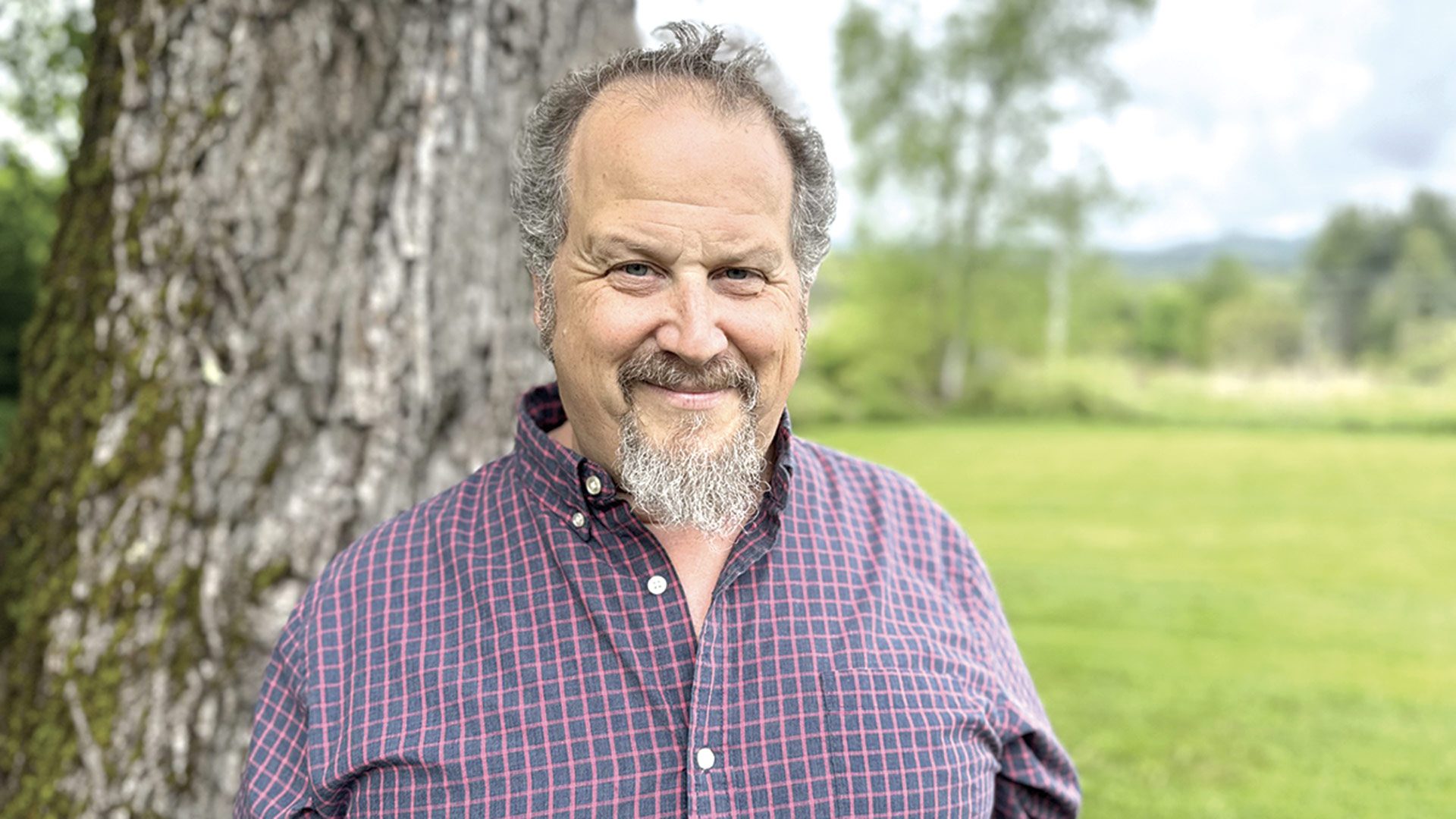
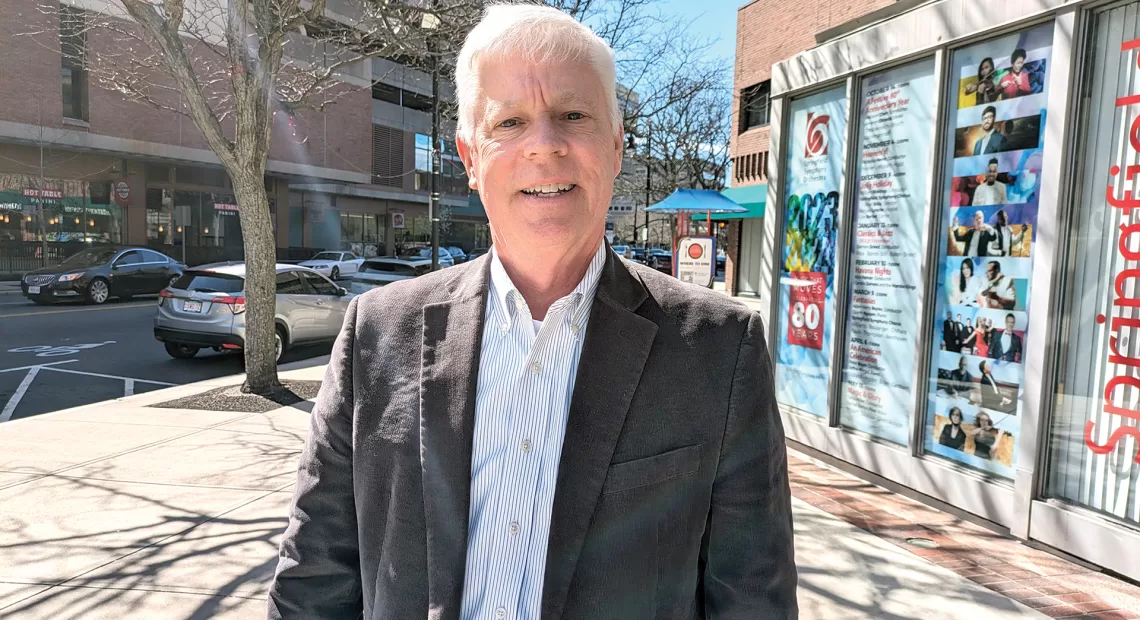
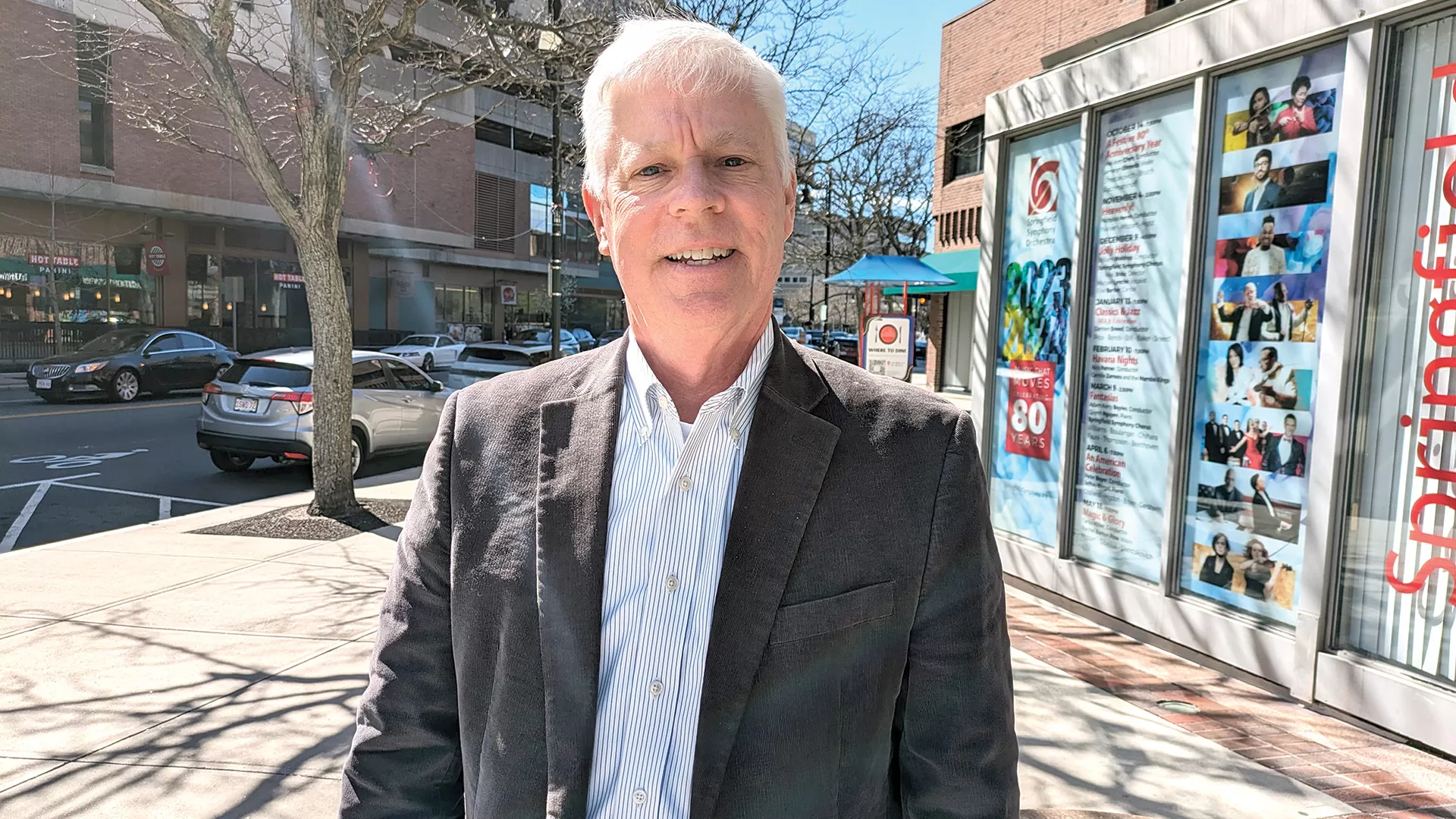
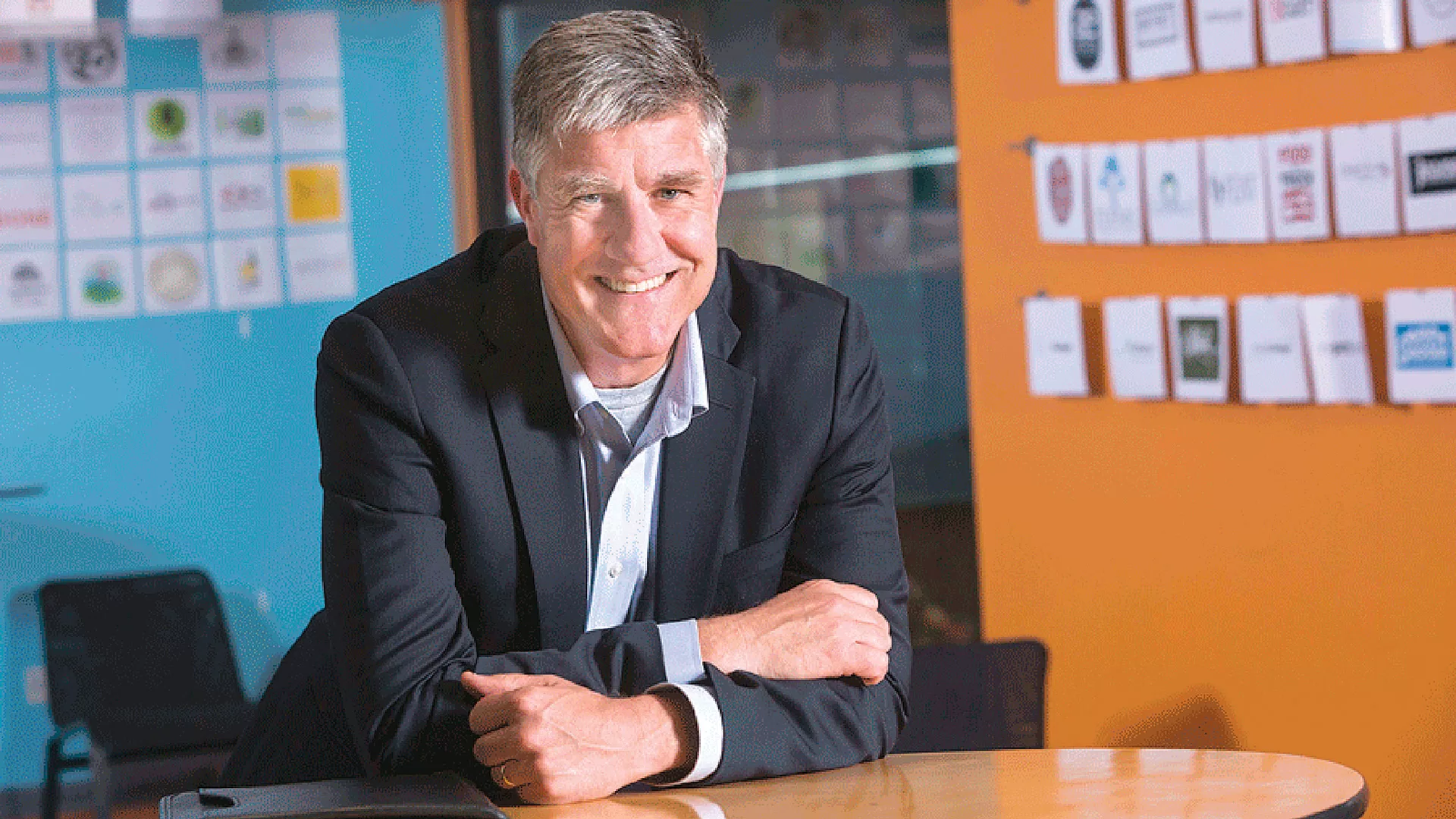
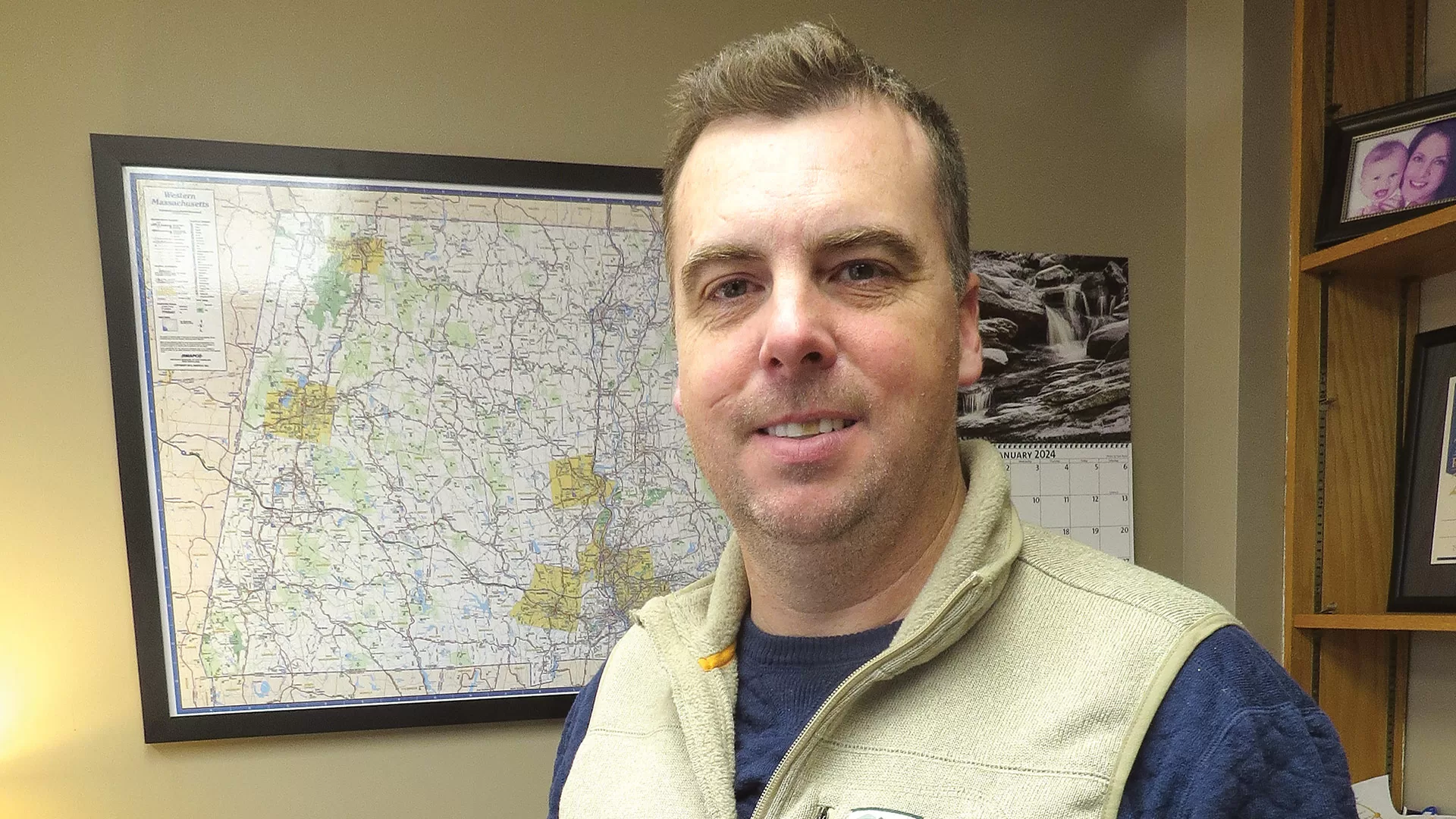
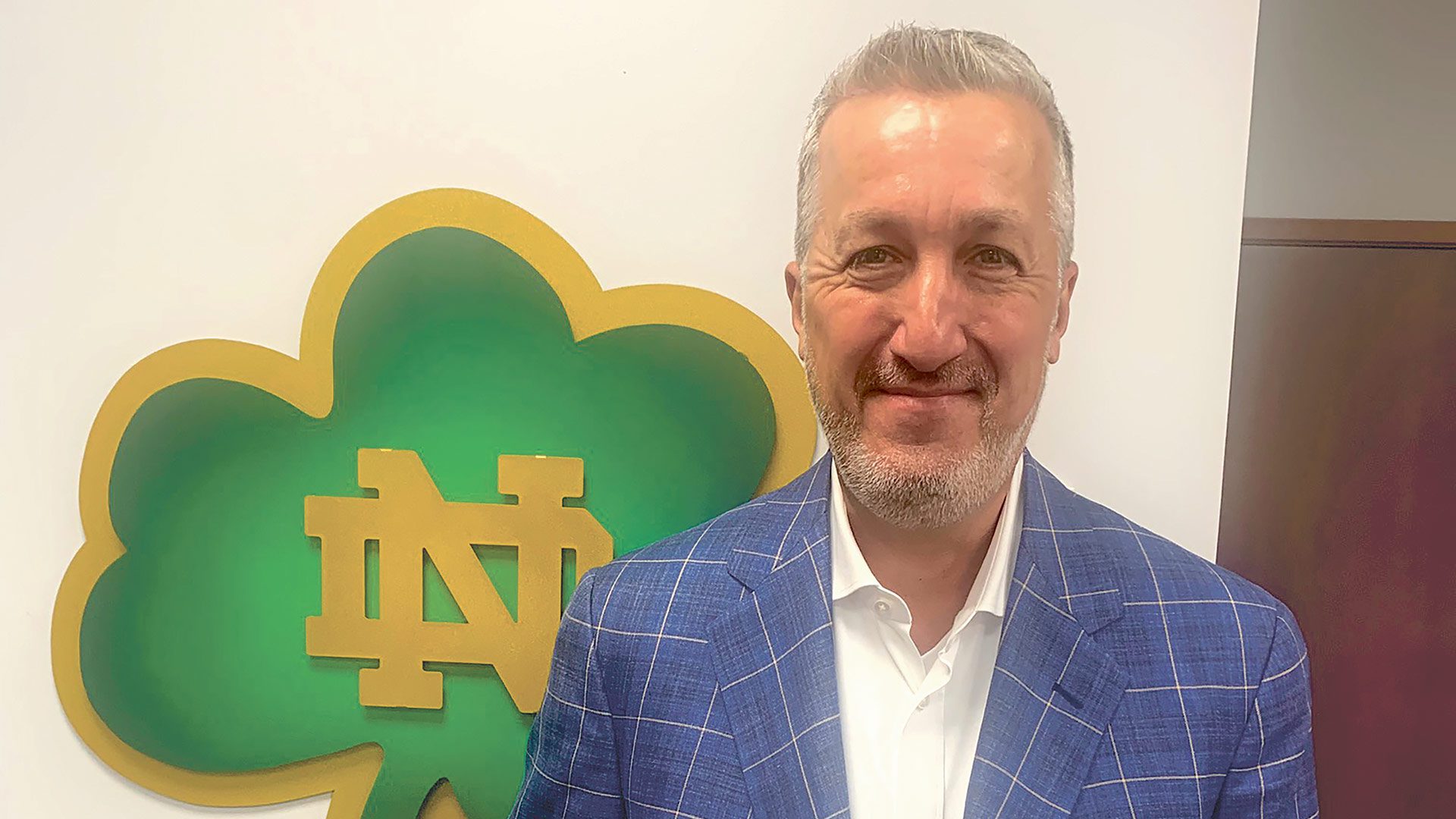
Peter Banko

Peter Banko

Peter Banko earned a bachelor’s degree at Notre Dame in the late ’80s.

And as with most people who attend that university, his connection to it — and its football team — remains quite strong, manifesting itself in many ways.

Indeed, his office on the sixth floor at 280 Chestnut St. boasts everything from signed photos of players from his era — including one of Pat Terrell, who famously broke up that two-point conversion in the so-called ‘Catholics vs. Convicts’ game against the University of Miami in 1988, Banko’s senior year — to a replica of the famous ‘Play Like a Champion Today’ sign that players smack as they exit the locker room. Meanwhile, he has season tickets and goes to most games in South Bend each fall.

But the connections to Notre Dame don’t end there, and they extend, coincidentally, to his eventual arrival at Baystate Health, where he took the helm as president and CEO on June 3.

As Banko tells the story, he was standing in line at the men’s room at Notre Dame Stadium during the game against USC last October when the person two ahead of him in that line, someone who places executives in healthcare systems, started talking about the top position being open at Baystate, and how he might want to think about pursuing it.

“In meeting with the board and others, what came across was a commitment to mission and community. The academic nature, but also the community nature of the system was very attractive.”

“He turned around and said, ‘hey … are you open to looking at something?’ I said ‘yes,’ and he said, ‘Baystate,’” Banko recalled. “I said, ‘in Springfield?’ and he said, ‘yeah.’” (More on this later.)

And then … well, there’s his commitment to taking the Notre Dame family’s philosophy, if you will, about taking care of one another — long after they’ve graduated or stopped playing football — to healthcare in general, and now to Baystate Health.

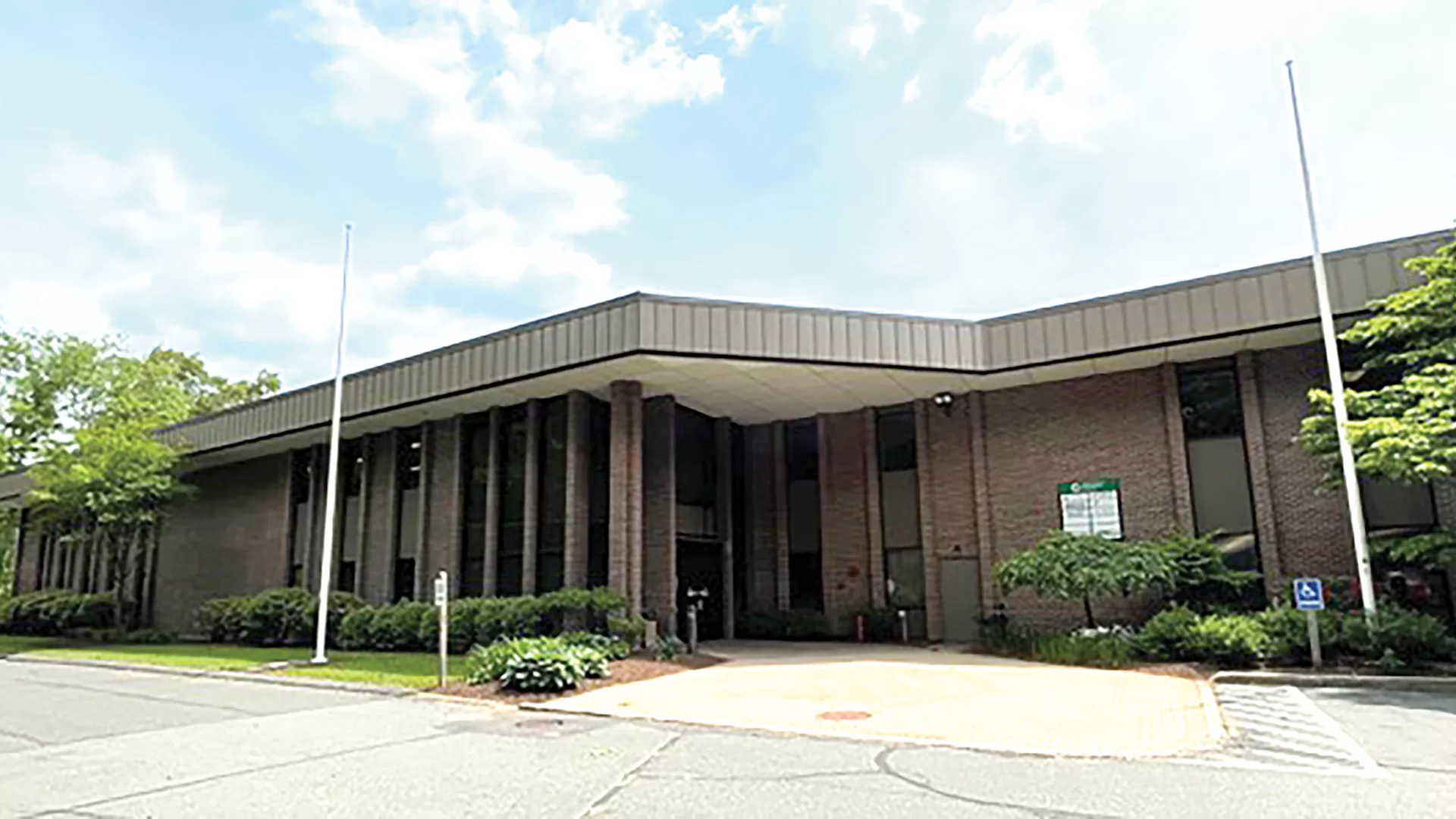
Baystate Medical Center

Peter Banko says these have been difficult times for Baystate Health and its flagship hospital, Baystate Medical Center, but the system’s goals are “within reach.”

“There’s a way that you’re indoctrinated, that you take care of each other,” he said, referring those who are called ‘Domers,’ a reference to the campus’s famous golden dome. “From a healthcare perspective, this is a people business, and we have to take care of the people who provide the care. That’s the business lesson learned — you take care of the people; the rest works itself out.”

Putting aside all the Notre Dame memories and connections for a moment, Banko said he came to Baystate because he was well aware of its strong reputation within the industry and wanted to be part of it.

“I’m also having fun again. Sometimes big is not great,” he said, adding that he wasn’t having much fun — or, at least, not as much as he used to — at Centura Health in Centennial, Colo. (which he served as president and CEO), which is part of the massive, $4 billion CommonSpirit Health system.

How much fun he has at Baystate will likely be a function of how well the system, which consists of four hospitals — Baystate Medical Center, Baystate Noble Hospital, Baystate Wing Hospital, and Baystate Franklin Medical Center — as well as several neighborhood clinics and other community-based services, fares with the many challenges facing all healthcare systems today.

“I heard someone say I’ve got the toughest job in town, and I said, ‘no, I’ve got the easiest job in town; I’ve got a great group of people.’”

These include workforce issues, which started before COVID and were amplified by the pandemic; inadequate reimbursements from public payers; and, in general, maintaining a healthy bottom line.

Perhaps the biggest of those challenges is building and maintaining a workforce, he said, adding that a number of factors, from retiring Baby Boomers to COVID-induced burnout that prompted many to leave the industry, are conspiring against healthcare providers on this front.

“We’re facing all the demographics — people are retiring, and there aren’t people replacing them,” he said, adding that Baystate’s status as a teaching hospital will likely be an advantage as it confronts these workforce issues moving forward.

As for financial challenges, he takes over a health system that experienced an operating loss of $178 million in FY 2022, lost $63 million on operations in FY 23, and saw operating losses carry over into FY 24. Nonetheless, Banko sees light at the end of this tunnel.

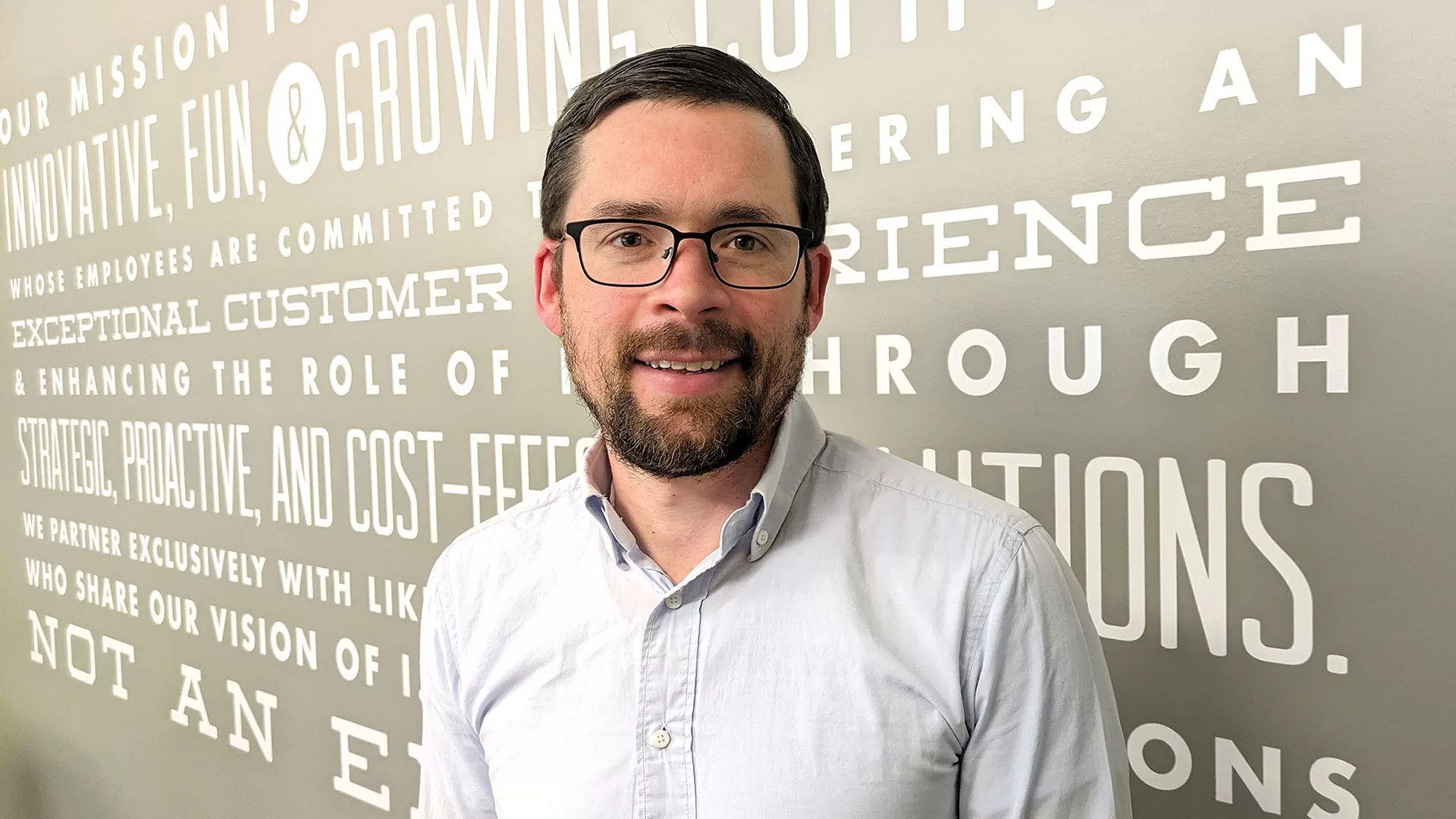
Peter Banko says workforce issues are the biggest challenge

Peter Banko says workforce issues are the biggest challenge facing Baystate Health, and all healthcare providers, today.

“We’re poised and in a good situation, even though we’ve had a couple of rough years,” he went on. “Folks have said, ‘yeah, it’s been really rough here. I said, ‘well, if it was too rough, I wouldn’t have come.’ We’re poised to do some really good stuff.”

Overall, he said his primary goal is to build on the solid foundation put down his predecessor, Dr. Mark Keroack, and take full advantage of the system’s many assets, especially its core of physicians and clinicians.

“As I told the board then and I keep telling people now, I can move mountains with the group of physicians we have here,” he told BusinessWest. “We can do anything.”

For this issue, we talked at length with Banko about healthcare, the challenges facing the industry, his plans for meeting them head on, and, yes, Notre Dame football and all those connections to his alma mater.


His Chosen Field

Banko calls it his “week of fame.”

It came in 2006, when he was serving as administrator of the CHRISTUS Spohn Health System in Corpus Christi, Texas, and it started when he got a phone call alerting him that Vice President Dick Cheney had been shot while quail hunting and had been taken to what was known then as Corpus Christi Memorial Hospital, part of the system. Upon arrival, Banko found out that wasn’t the case, and also that, while no one was saying it out loud, let alone officially, it seemed that Cheney had likely shot the person who was in his hospital.

“I did a few interviews with national news outlets that evening on the phone, and I came in the next day at 6:30, and every news outlet on the planet was parked outside the hospital,” he recalled. “I did all the press conferences every day; I had a direct line to the White House.”

And what he remembers as much as those press briefings and his hotline to 1600 Pennsylvania Ave. is how his doctors eventually solved the mystery surrounding the victim’s heart-attack-like reaction to the shooting.

“We couldn’t figure out what it was,” he recalled. “We had doctors in from three major teaching hospitals and the White House. I was in the cath lab with seven cardiologists and three heart surgeons on our side, and one of our docs found an obscure article about a Vietnam vet who had shrapnel in his heart, and years later he had the same symptoms. So they treated him based on that one article.”

The rest of Banko’s career has brought considerably less fame, if you will, but myriad rewards and rich learning experiences. And except for one very brief stint in the private sector, as he called it, he’s spent that career in healthcare administration.

He actually got his start in healthcare as a junior volunteer in his home state of New Jersey while attending Notre Dame. His specific assignment was patient transport, which enabled him to meet hundreds of people and compile a large portfolio of stories.

“I had a lot of great conversations, and I learned a lot,” he said, adding that the administrator of the hospital — a Notre Dame football fan — told him he a knack for health leadership.

“Being an academic center has put us in a better position. We can more easily work with the universities and colleges, we can partner more, and we have that academic setting where we can train and keep our own, which puts us in a unique position.”

“I said, ‘I don’t even know what you do,’” he recalled. “She spent a few hours with me and encouraged me down a path. So, other than one week working in a supermarket as a porter, I’ve never worked anywhere other than a hospital or physician group or health plan.”

After earning his bachelor of business administration degree at Notre Dame and his master of health administration degree from the Sloan Program in Health Services Administration at Cornell, where they take their football far less seriously, he worked in a succession of jobs in healthcare administration, starting at Saint Clare’s Health Services in Denville, N.J. Later, there were stints as president and CEO of CHI St. Vincent in Little Rock, Ark.; and at CHRISTUS Spohn in Texas.

With CommonSpirit Health, he spent nearly two decades in various capacities, including vice president of Southeast Operations and national chief integration officer, before becoming president and CEO of Centura Health, with facilities, including 20 hospitals, across Colorado, Kansas, and Utah.

“I was at CommonSpirit for 17 years, and I was ready for a refresh and a chance to do something different,” he said.

Which brings us to that encounter with the executive recruiter in the men’s room at Notre Dame Stadium.


New Team Leader

Banko said he was late, as in very late, to the game when it came to Baystate’s search for a successor for Keroack, but, with some additional encouragement from his executive coach, who once worked in the Baystate system and told him he needed to look into this opportunity, he hustled and became part of a large field of candidates. As noted earlier, he said he was familiar with the organization and its strong reputation within the industry.

“And in meeting with the board and others, what came across was a commitment to mission and community,” he told BusinessWest. “The academic nature, but also the community nature of the system was very attractive.”

He persevered through several rounds of interviews, including a lengthy discussion with the board about his vision for the system, and was chosen by the search committee in March.

Summarizing that vision, he said there are several components to it, everything from honoring a mission and legacy that dates back to 1883 to having a “more physician- and clinical-centered system”; from achieving growth and operating at scale to having a healthy balance sheet.

“We want to use our physicians and other clinicians to drive our strategy and what we do going forward,” he explained. “One of the things that impressed me being here and interviewing is that our cadre of physicians is one of the best I’ve seen in the country in terms of training, expertise, skills, and leadership.”

As for the bottom line, that balance sheet, he said COVID and its after-effects have obviously taken a toll on this and every other healthcare system across the country.

“But it’s all within reach,” Banko added. “Financially, our future is easily within our reach; it’s nothing that’s not attainable. I heard someone say I’ve got the toughest job in town, and I said, ‘no, I’ve got the easiest job in town; I’ve got a great group of people.’

“COVID wasn’t great, and the recovery afterwards has been worse, almost,” he went on. “We’re not facing any problems anybody else isn’t dealing with nationally — some more, some less — but I feel our future is attainable and within our grasp; we just have to go for it.”

Elaborating, he noted that, while all healthcare systems are facing the same issues and challenges, the solutions are local.

“The problems are generally the same … the solutions and how you work at them are very locally contextual,” he elaborated. “Workforce challenges in Boston are different than the ones we face here, but we both have them, and our solutions are not the same as what our colleagues in Boston are doing.”

As for those workforce issues he mentioned earlier, he said Baystate Health does have some advantages as it works to attract and retain talent, including its status as a teaching hospital, but also its location and comparatively lower cost of living.

“Being an academic center has put us in a better position,” he explained. “We can more easily work with the universities and colleges, we can partner more, and we have that academic setting where we can train and keep our own, which puts us in a unique position.

“Plus, this is a great area,” he went on. “It’s affordable, you can raise a family here, and that’s not true of a lot of places around the country.”

One of the keys to success with workforce moving forward is taking care of people, which includes the wages paid, but certainly doesn’t end there, he told BusinessWest.

“My view is that, if you take care of people and help them produce a good product, then growth and profitability will take care of themselves,” he said. “That’s where we have to start; we need to make sure that people want to work here and that we’re a workplace of choice and that we’re delivering a quality product for our community.”

Since arriving at Baystate, Banko says he’s been on a listening tour, one involving both internal and external constituencies, which will continue for the next several months.

What he hears, what he learns, and what he shares will all be part of a report to the board on his first 100 days at the helm, one that will update and likely add new layers of specificity to that vision he has for where this system can go in the years and decades to come — and how to get there.


Passing Thoughts

Getting back to those season tickets Banko has had since 2017 … there are four of them for each game, and he likes to share the wealth. And that includes work colleagues.

Which means some of his new team members will be journeying to South Bend in the autumns to come as the Irish pursue their first national championship since … well, Banko’s senior year.

They’ll also be contributing to another journey, one in which they’ll help write the next chapters in the history of this institution — a game with much higher stakes, and one for which he believes the winning formula is already in place.

As they say in football, it’s a matter of execution — and that will be a big part of Banko’s new job.

Banking and Financial Services Special Coverage

Lending Perspective

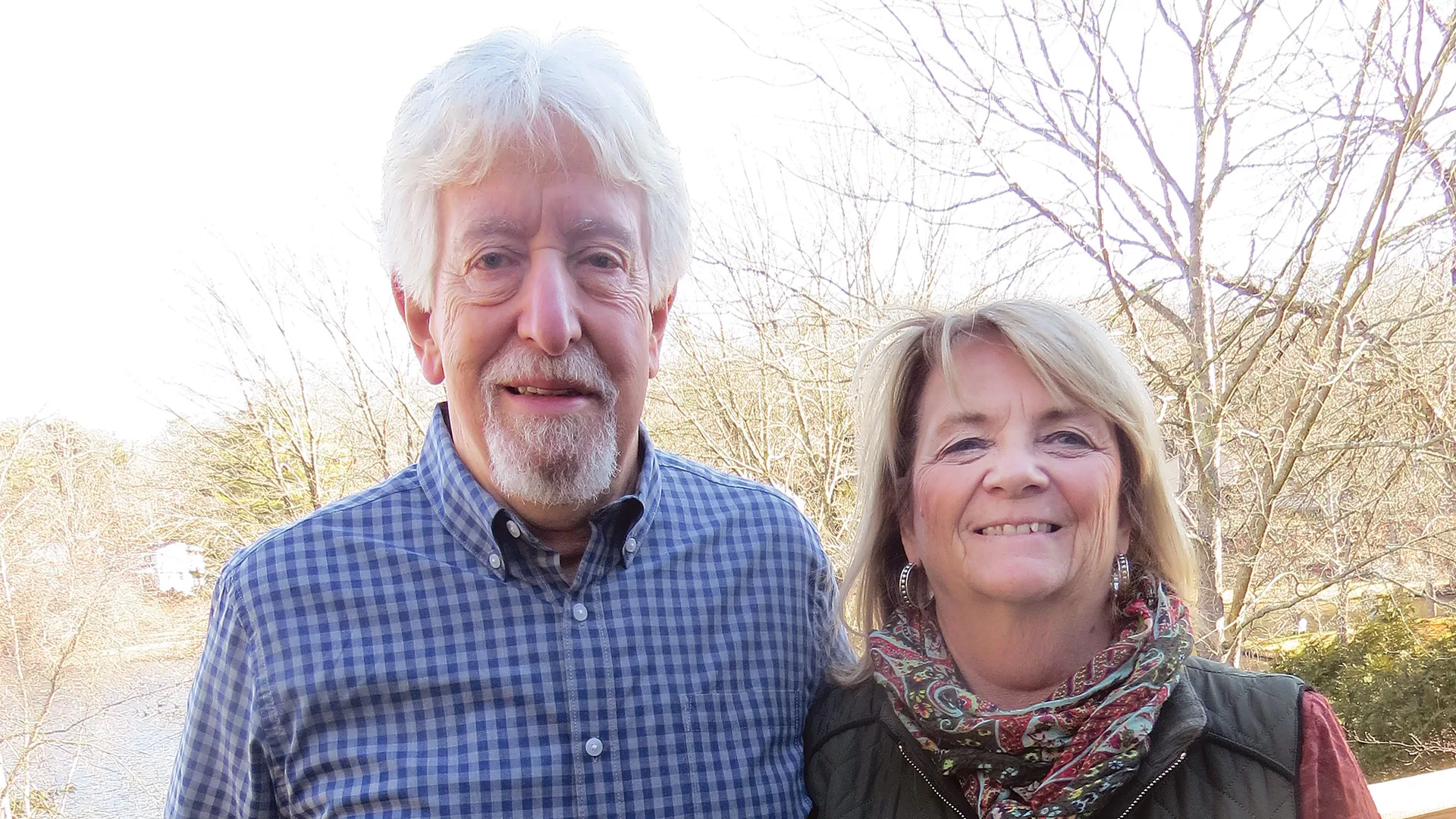
President and CEO Tony Worden

President and CEO Tony Worden

Tony Worden has worked at several banks in his career, of various types and sizes, but there’s something about a small community bank that … well, just suits him.

For starters, “there’s less pressure,” said Worden, president and CEO of Greenfield Cooperative Bank (GCB). “I mean, we certainly have to grow, and we have to make money, but there’s less emphasis on that and more emphasis on relationships. I’m not trying to pat us on the back because I know Florence is like this, bankESB is like this, Greenfield Savings, too — we all need to make money, we need to grow, but we also get how important we are to the communities that we serve.

“There are loans we make that, at a previous bank, we never would have made,” he went on. “They just would have said, ‘no, we’re not doing that.’ But community banks find ways to stretch to get people’s mortgages done, and even on commercial loans. As a community bank, we have to think about how we’re serving our community, and bigger banks worry less about that. It’s easier for them to turn loans down because they’re not as involved.”

Worden knows a lot about commercial lending after working in that realm for the vast majority of his career before former GCB President and CEO Michael Tucker persuaded him, in 2019, to pursue that role as Tucker prepared to retire. Worden knew he’d have a steep learning curve in areas ranging from finance to IT to human resources — but he embraced the challenge.

“My thought was, someday, if I play my cards right, maybe I’ll get a chance to be the senior lender somewhere. And I got to be that here. It was not part of my grand plan to be president.”

“A lot of people get into this business, and their dream or goal is to become president of a bank. But I never really thought about that. My thought was, someday, if I play my cards right, maybe I’ll get a chance to be the senior lender somewhere. And I got to be that here,” he said. “It was not part of my grand plan to be president.”

But Tucker was convinced Worden was the right candidate to put forth internally, and the board eventually chose him over two external candidates. Worden, a longtime senior commercial loan officer, initially worked alongside Tucker as chief operating officer through 2020, then took over as president at the start of 2021; Tucker stayed in the CEO role until the start of 2022, when he retired and passed that mantle to Worden as well.

The long transition period working alongside Tucker turned out to be a blessing in more than one way. Not only was Worden learning the ins and outs of a much broader job than his previous career in commercial lending, but the emergence of the pandemic threw a major wrench into the banking world.

“The transition got stunted a little by the pandemic,” he recalled. “Obviously, I was excited when I accepted the job, and we knew COVID was a thing that was happening, but no one knew exactly what it was going to do. And literally within a week, my excitement ended because it was, ‘OK, now we have survive this.’”

Greenfield headquarters

While nine of its 10 branches are in Franklin and Hampshire counties, including its Greenfield headquarters (pictured), GCB has been making inroads into Hampden County as well.

Worden said bank leaders will be telling stories for decades about the adventure of PPP loans and everything else they had to do to help customers navigate that whitewater, but they are gratifying stories to tell.

“It’s amazing, in hindsight, to think about what all the banks accomplished. There were certainly technological hurdles because the SBA was not set up to be doing this volume.”

But in the years that followed, Worden has become accustomed to many other challenges, from a shifting rate environment — and its impact on lending — to the continued evolution of digital banking platforms, to Greenfield Co-op’s own growth trajectory.

“As a community bank, we have a responsibility to serve our customers’ needs as fully as we possibly can,” he told BusinessWest. “So we all stretch a little bit more to get loans done, to get projects done.”


Steady Growth

Greenfield Cooperative Bank has grown in numerous ways over the past decade, most notably by merging with Northampton Cooperative Bank in 2015, which increased its branch total from five to nine; a tenth branch opened in South Hadley in 2020, the first outside of Franklin or Hampshire county.

At the time of the merger, Greenfield Co-op boasted roughly $350 million in assets, and Northampton brought roughly $150 million, to create a $500 million bank.

“Right now, we’re just under $800 million in total,” Worden said. “So, in a decade, we’ve had about $300 million worth of growth, which, obviously, for a bigger bank or a publicly traded bank, wouldn’t be acceptable. But we don’t have stockholders, so we can grow sensibly.”

“The real growth, from a demographic perspective, is in Hampden County. And with all the mergers and acquisitions, there are fewer banks in Hampden County than there used to be.”

That said, he views Hampden County as a big part of GCB’s future, and the South Hadley branch as a jumping-off point to do more business in that region. In fact, many of the bank’s lenders have worked at Springfield-area institutions in the past and have maintained relationships there.

“If you look at the demographics, Hampden County is growing. Franklin County is not; it’s actually retracting. Hampshire County’s growing a little bit, but the real growth, from a demographic perspective, is in Hampden County. And with all the mergers and acquisitions, there are fewer banks in Hampden County than there used to be.

“So we see opportunity,” he went on. “We’ve had some success on the commercial side, and this past winter, we hired a mortgage originator from a local competitor who’s based out of Holyoke and knows that market, and we’re making a push to start doing some residential mortgages in all of Hampden County. But our focus right now is Holyoke, Chicopee, and Springfield because we feel like we can handle that through a branch in South Hadley, which isn’t technically in Hampden County, but it’s not that far away. So we’re taking tentative steps to be more of a presence down there.”

Greenfield Cooperative Bank

Greenfield Cooperative Bank partners with many community organizations, such as Montague Public Libraries (pictured) for programs like its bilingual children’s music and movement program.

That said, when Worden joined the commercial lending team at GCB 15 years ago, the bank had $29 million in commercial loans; that number is now $260 million, and the bank employs more lenders, credit analysts, and administrative staff.

“But we’ve also seen some significant payoffs of our loans — not because they’ve gone and refinanced somewhere else, but because they sold their properties when the market got so hot,” he noted.

At the same time, “I think the rising rate environment has made people shyer about going out and pursuing things because, again, no one wants to finance something at the top of the market and have the rates start to go down the day after they do it. So I think what we’ve seen is people kind of sitting and waiting: ‘is the economy going to tank or not?’

“As time has gone on, I think more people are buying into this idea that there could be a soft landing,” he went on. “But I think it would help to see the rates drop because I think that would get people active again. There’s a lot of wait and see at this point.”

That said, a large swath of the customer base never lived through really high rates.

“When I first started, I was a junior commercial credit analyst at Vermont National Bank up in Brattleboro,” Worden said. “And people were saying, ‘you know, if prime would just get down to 10%, that would be perfect.’ And then we were so low for so long that people started to think that was normal.”

He recently watched a recording of a Red Sox game from the 1980s, complete with commercials, and one in particular made him laugh. “It was a car commercial, and it said, ‘low, 11.99% financing for well-qualified buyers.’ Today, people would see that, and their heads would explode.”

Historical perspective isn’t the only thing separating younger from older bank customers — they have different banking habits as well, as Millennials and Gen Z grew up with technolology and are more apt to eschew physical branches.

“They go in as little as possible. They want to do as much remotely and through their phone as they possibly can,” Worden said. “That’s a new reality, making sure we have the technology and the channels for them to bank the way they want to bank.”

But there will always be a need for a physical presence and face-to-face interactions, he added, which is why banks continue to expand geographically.

“For a decade or so before the pandemic, if you went to any banking-industry events, they said, ‘get rid of your branches, get rid of the bricks and mortar; they’re expensive. The fintechs are eating your lunch because they don’t have those costs. They’re not paying real-estate taxes. They’re not paying for AC. They’re not paying for the lights.’ But now, we’re hearing, ‘lean into your branch network because that’s your advantage over the fintechs. The fintechs wish they had a building on the corner that people could walk into.’

“If everything is going well for you as a customer, maybe you don’t need to talk to somebody face-to-face. But as soon as something goes sideways, it’s nice to know you can walk into a building and talk to somebody face-to-face and deal with them,” he went on. “We, as a bank and as an industry, have to do a better job explaining to people what the value is of having someone local working with you.”


Different Kind of Dream

That local face and relationship banking may be even more important at a time when mergers are creating ever-larger institutions — and fewer of them, Worden noted.

“Some people say to me, ‘you must be happy when you see these bank mergers because it’s one less piece of competition for you.’ But no — I think it’s a shame that local options are going away.

At a Massachusetts Bankers Assoc. meeting he attended last fall, attendees were told there are half as many banks in Massachusetts as there were 20 years ago, and it’s estimated that, over the next decade, that figure could be halved again. “I left there thinking, ‘we have to focus on what it will take for us to make sure we’re one of those banks that survive.”

But it’s a challenge he’ll enjoy, even though it’s not one he dreamed about taking on earlier in his career.

“When it was announced that I got this job, people would come up to me and say, ‘you got your dream job.’ And I’d say, ‘no, actually, I gave up my dream job for this job.’ If someone offers you the chance to be the president of a bank, you take the job. But what’s been fun is focusing on other parts of the bank than commercial lending.”

One of those is philanthropy, and Worden appreciates being in a place where community giving decisions are made locally, rather than regionally or nationally, as is the case at larger banks.

“The decisions we make about where we’re going to give our money happen right here in this building, for the most part,” he noted. “We certainly upped our giving during COVID, and then we never went back down to the historical level — not that it was low before.”

Overall, Worden said, GCB is a relatively uncomplicated bank to run. “We’re very vanilla. I think my senior staff gets sick of hearing me say that, but I say it as a good thing. We’re not in all kinds of weird things. We stick to what we know how to do, and we do them well.”

While Greenfield Co-op isn’t among the region’s largest banks in terms of assets, it’s well on its way to $1 billion, and Worden is looking forward to that milestone.

“Things will change a little bit; there’s more regulation,” he told BusinessWest. “But it’s gratifying to see the growth and to know I played a small part in that. A lot of the reason for the success was Mike Tucker. He did a great job for 20 years; he got the ball rolling. I’m just trying to keep the thing moving down the road.”

Commercial Real Estate Special Coverage

A Matter of Speculation

‘What happens now?’

That’s the question that was on the minds of many as Hampshire Mall was sold at a foreclosure auction last month — to the company that holds the mortgage on the property, and for far less than half its assessed value.

Actually, people have been asking that question for a while now, as the fate of the mall becomes less clear after years of struggle, even after its former owner, Pyramid Management Group (which also owns Holyoke Mall), started doing the things malls are supposed to do in these changing times, especially shifting gears and devoting far more square footage to entertainment-related venues — everything from a large gym to escape rooms to taekwondo.

Apparently, all that simply wasn’t enough, said John Benoit, a principal (with his two brothers) of Vantage Point Retail in Longmeadow, which leases and sells retail properties and finds locations for a few national chains, such as Five Guys, Advance Auto Parts, and 99 Restaurant.

“Zoning is complicated, to say the least, and sometimes, when people hear about an effort and there’s a lack of specificity surrounding it, they can draw conclusions that are not appropriate.”

He noted that Hampshire Mall, located near the Amherst line in Hadley on busy Route 9, is just one of many malls across the U.S. that are suffering and destined for new life; others in this region include Eastfield Mall, which has already been demolished, to be replaced by a large power center, and Enfield Square, which is also awaiting its fate. Meanwhile, the retail sector itself is a state of flux.

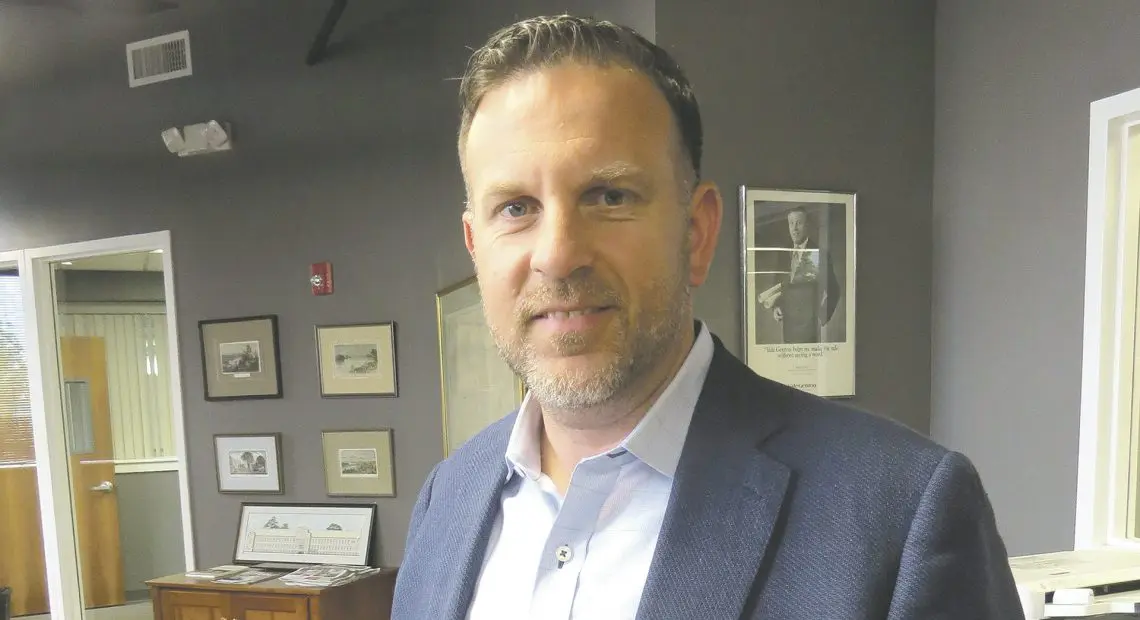
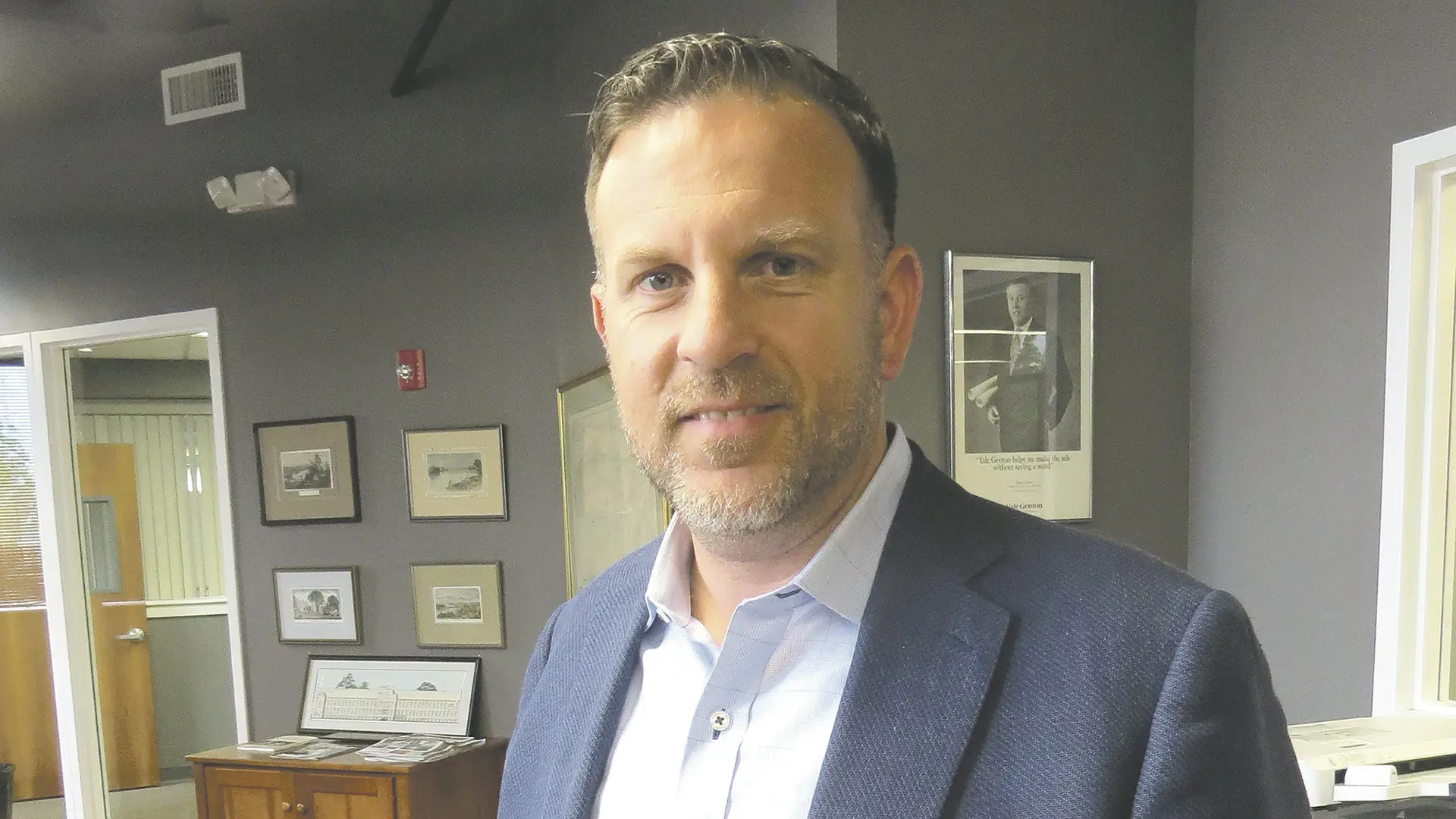
John Benoit

John Benoit says Route 9 is a retail destination, but he wonders how much more retail can come to that busy thoroughfare.

“Retail has been undergoing change for a long time, and I don’t know if it’s settled,” Benoit told BusinessWest. “There was a time when online was a new world in retail and the discussion in the trade journals and at the trade association meetings going back 10 to 15 years was about whether brick-and-mortar locations would go away — would people just do business online?”

What has emerged, he went on, is the concept of multi-channel retail that includes online as well as bricks-and-mortar elements, with some consumers using one or the other for research, buying, returns, or some combination of the above.

“It changes every year,” he added. “Some of the statements I just made … I don’t even know if they’re current.”

Nothing is expected to happen at Hampshire Mall for a while, as the new owner, Deutsche Bank Trust Co. Americas and Wells Fargo Commercial Mortgage Securities Inc., which, as noted, held the mortgage on the property, figures out what it wants to do. The bank foreclosed on the mall after Pyramid defaulted on its mortgage.

Shardool Parmar, a more-than-interested observer at the auction — that’s because the Pioneer Valley Hotel Group, which he serves as president, owns three hotels on Route 9 in Hadley and is building a fourth — said it will likely be years before the fate of the property is known.

“It’s a big unknown what will happen to the mall property,” he said. “That’s because it’s difficult to say what the future market will be when it comes to whether this will remain retail or become residential. There are a lot of unknowns.”

The most obvious future uses are more (and perhaps different) retail — because of the emergence of the Route 9 retail corridor as one of the strongest, if not the strongest, in the region, rivaled perhaps only by Memorial Drive in Chicopee, said Benoit — and housing, mostly because of the size of the parcel and the huge need for more housing in that region.

But both of those options come with question marks. Indeed, while Route 9 is a retail hub, there are vacancies — actually, several of them — along that corridor, Parmar said. Meanwhile, Benoit added, while successful retail and especially grocery stores (and there are lot of them on this corridor) attract more retail, most of the major players, from Walmart to Home Depot, are already there.

“They did what people said what malls could do and should do, and they did it early — and that’s entertainment, as compared to shopping. They had the shopping, but they also had an entertainment component.”

As for housing, a zone change would be required, said Hadley Select Board member Molly Keegan, noting that the town will likely pursue creation of what’s known as a 40R, otherwise known as a smart growth zoning overlay district, which, according to the state’s website, “seeks to substantially increase the supply of housing, and decrease its cost, by increasing the amount of land zoned for dense housing.”

“The Planning Board has been working with the Pioneer Valley Planning Commission on researching and potentially bringing a zoning change to town meeting in either the spring or fall of 2025 that would allow for additional types of development, specifically using Chapter 40R,” Keegan explained, noting that the intent of 40R is to encourage municipalities to create dense housing or mixed-use zoning districts.

Such a proposal would require educating town residents about just what such a zone is for and what could happen if one becomes reality on that corridor, she noted, adding that, if a vote comes to fruition, it will Hadley’s first attempt at creating a 40R.

Molly Keegan

Molly Keegan says information and education will be the keys to passing a needed zone change to permit dense housing at the Hampshire Mall site.

“There’s an awful lot of education that needs to go along with this,” Keegan said. “Zoning is complicated, to say the least, and sometimes, when people hear about an effort and there’s a lack of specificity surrounding it, they can draw conclusions that are not appropriate. So the most important thing the town can do right now is educate.”

For this issue and its focus on commercial real estate, we take an in-depth look at Hampshire Mall and what might come next for this retail and cultural landmark.


Landmark Decisions

Hampshire Mall is one of the several area spots that gets some exposure in the recently released Janet Planet, a coming-of-age movie set in Western Mass. in the early ’90s.

In a recent Boston Globe article intended to help readers understand just what ‘Western Mass.’ is — and how the movie helps explain that geography — it is noted that the mall became a solid locale for the movie because … well, with a JCPenney and a rollerskating rink, it looks the part of an early-’90s mall.

In the larger scheme of things, that’s probably not a good look, even though, as noted earlier, the mall has made some significant changes in recent years to make it more viable, especially that shift to more entertainment-related venues. Indeed, in most respects, it doesn’t look like an early-’90s mall, with tenants that include FunHub Action Park, All In Adventures, LaserBlast Ancient Adventure, Planet Fitness, and PiNZ, a bowling alley.

“They did what people said what malls could do and should do, and they did it early — and that’s entertainment, as compared to shopping,” he explained. “They had the shopping, but they also had an entertainment component.”

This shift helped, but it certainly hasn’t stemmed the mall’s decline, said Benoit, theorizing that habits changed during the pandemic — people didn’t want to be indoors around a lot of other people — and they haven’t really changed back.

This reality, coupled with the many changes in retail — and the proliferation of other retail on Route 9 — conspired to all but seal the fate of Hampshire Mall, he noted, adding that similar stories have been written at malls around the country. The ones changing the narrative for the better have embraced reinvention.

“Malls are really struggling, and that struggle didn’t just start — it’s been going on a long time,” Benoit said, emphasizing that word ‘long.’ “Malls are big, complicated financial and physical arrangements.”

Using Eastfield as an example, he said talks about converting it to a large power center with a housing component have been going on for at least 15 years, by his count. Advancing those plans have been complicated by everything from the Great Recession to the pandemic; from ownership of some footprints by the anchors themselves, which slows and adds more layers of complexity to the equation, to the fate of existing tenants.

“The more information people have, and the earlier they have it and have time to ask questions and digest it, the better they’ll understand what they’re voting on what they get to town meeting.”

That question of what might come next at Hampshire became an assignment — “Reimagining the Hampshire Mall: Exploring Opportunities for Intergenerational Housing and Community Development” — for 40 juniors in the architecture and landscape architecture programs at UMass Amherst.

Teams of five students presented different concepts for the mall property. Each one included 350 to 700 new housing units, designed for young professionals, working families, and seniors; site amenities for residents and visitors; parking for tenants and shoppers alike; and some portions of the existing mall. Many of those elements are likely to be included in whatever the mall becomes next, said those we spoke with.

Getting back to a possible 40R zone at the Hampshire Mall site, Keegan said the Planning Board has formed a smart-growth subcommitee that is specifically working on the next steps in the process of creating such a zone. Informational sessions will be scheduled to help inform the public of what is involved and what it means for the community moving forward.

“The more information people have, and the earlier they have it and have time to ask questions and digest it, the better they’ll understand what they’re voting on what they get to town meeting,” she added, noting that, while there is a recognized need for more housing in the community, 40R and its emphasis on dense housing is a new concept for Hadley.

What certainly isn’t a new concept is retail on Route 9. With five colleges only a few miles away and several smaller communities without their own retail centers, the stretch between the Coolidge Bridge and the center of Amherst has been a retail destination for more than 50 years now, one that has consistently added new regional and national brands to the portfolio, becoming what Benoit called a ‘super-regional trade area.’

As a measuring stick, he pointed to all those aforementioned supermarkets. As he commenced counting them, he started with Big Y and Stop & Shop and ended with Maple Farms, a smaller, independent outlet, and listed eight in all. And he was quite sure there was a ninth that he couldn’t recall.

In any case, all those supermarkets attract other retail, he said, adding that there may still be room for more on Route 9, including at a reshaped Hampshire Mall property, where a power center, at which “every store has a front door,” as he put it, could — that’s could — be part of the equation.


History Repeats?

That’s what happened at Mountain Farms Mall, which opened in 1973 and, ironically enough, became known as the ‘dead mall’ after its precipitous decline and the closing of all but a few of its 35 stores.

Converted to an open-air mall and anchored by Whole Foods Market and Walmart, it is now thriving — so much so that Benoit wondered out loud if there is, in fact, room for more retail on that stretch.

“I’m not sure retail is that strong anymore,” he said. “And with the Mountain Farms Mall thriving, a lot of tenants that are in business are already in that market. Between there and the Stop & Shop center, there’s already a lot of retail. The anchors are there — Home Depot, Lowe’s … there’s no one left.”

Parmar concurred, noting that, whatever comes of the site, it will be costly and probably complex.

“There are a lot of variables, including the cost of construction,” he told BusinessWest. “To bring something to light there is not going to be cheap, and will there be a return on investment? There is a lot to investigate before someone can say ‘this will work’ or ‘that will work.’”

Cybersecurity Special Coverage

Training Ground

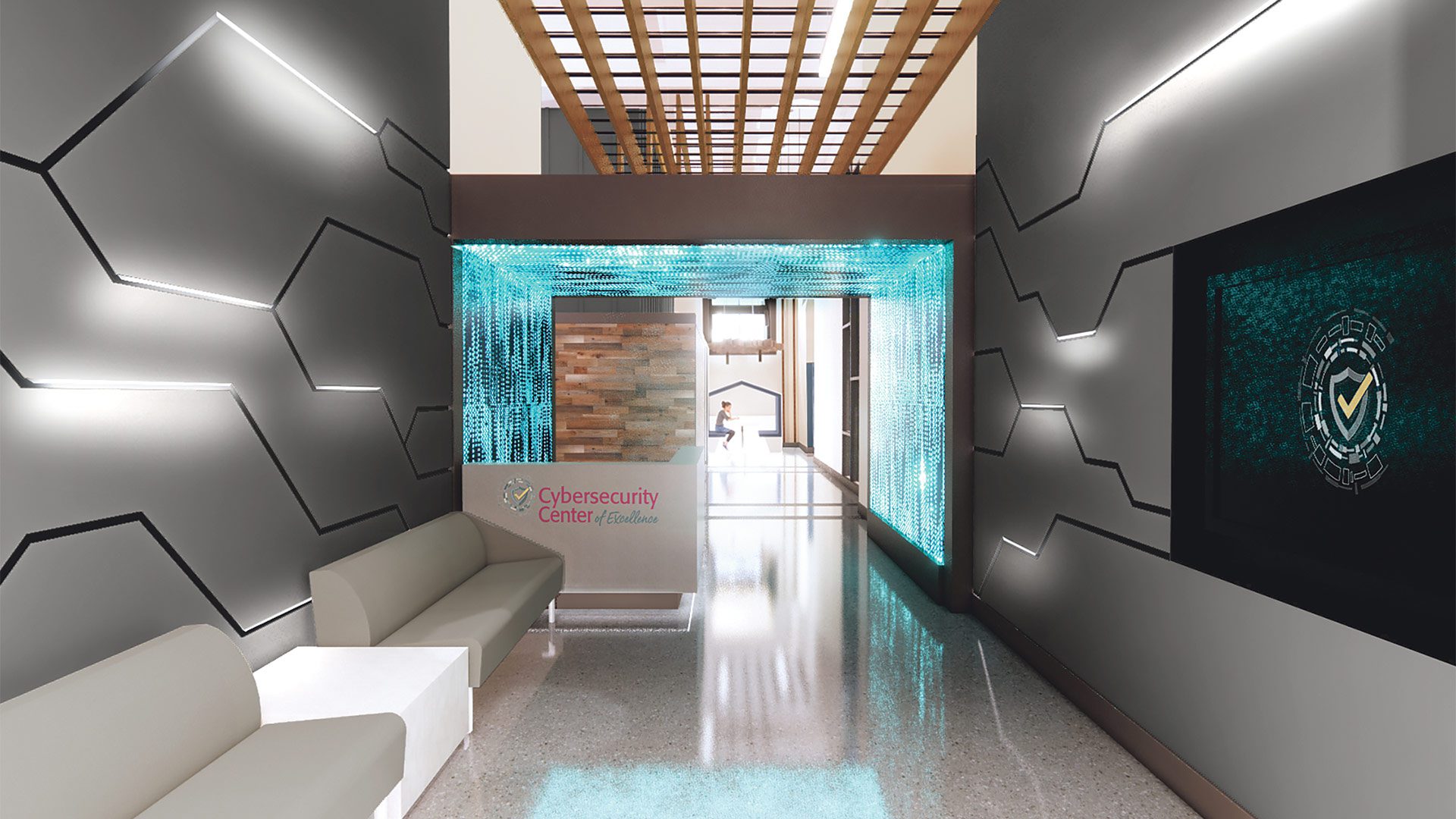
The main entry of the new Richard E. Neal Cybersecurity Center of Excellence.

The main entry of the new Richard E. Neal Cybersecurity Center of Excellence.


There are plenty of ways to learn about cybersecurity, Gene Kingsley said, but none better than actually doing it.

“It’s a huge advantage to be immersed in an environment where you’re undergoing what you’re learning about. You’re not just learning coding; you’re actually applying coding. You’re not just reading a book; you’re applying knowledge that you can replicate on your next job, having had this experience.”

Kingsley, cyber range manager for the Richard E. Neal Cybersecurity Center of Excellence, was describing the value of the center, which will open later this summer, to students studying cybersecurity — but also to an industry that desperately needs an influx of talent.

The project, housed at Springfield Union Station, is just one component of a multi-million-dollar series of investments, announced in 2022, to bolster cybersecurity resilience — and the related workforce — across the state.

These awards included a $1,086,476 grant to support the launch of CyberTrust Massachusetts, a nonprofit that works with business and academia statewide to grow the cybersecurity talent pipeline by increasing career pathways for underrepresented groups, while promoting security operations to address the day-to-day needs of resource-constrained municipalities, nonprofits, and small businesses.

“It’s a huge advantage to be immersed in an environment where you’re undergoing what you’re learning about. You’re not just learning coding; you’re actually applying coding. You’re not just reading a book; you’re applying knowledge that you can replicate on your next job.”

The state also awarded $1,462,995 award to Springfield Technical Community College (STCC) and $1,200,000 to Bridgewater State University to establish a security operations center (SOC) and cyber range in each city. The Neal Center at Union Station, managed by STCC, also benefited from $500,000 in ARPA funding from the city of Springfield.

Springfield’s 6,000-square-foot center — a collaboration between STCC, the Springfield Redevelopment Authority, and CyberTrust Massachusetts — aims to be a hub for advancing cybersecurity awareness, education, and innovation while battling global security threats. Its cyber range is a simulated, hands-on training environment, and its SOC is envisioned as a support service for Massachusetts municipalities, as well as regional businesses, to detect cybersecurity events in real time and respond quickly.

“Springfield Union Station has re-established the city of Springfield as the crossroads of New England, and it will soon serve as home to a state-of-the-art cybersecurity training center that will greatly benefit our region,” U.S. Rep. Richard Neal said during a walk-through earlier this year.

Now that it’s set to open, Mary Kaselouskas, vice president and chief information officer at STCC, is excited to see its applications for students; three STCC classes will conduct work there this fall.

“Any of the students involved in the cybersecurity courses will have the cyber-range experience embedded in that,” she told BusinessWest, “and other classes will use the range as well.”

The facility’s security operations center

The facility’s security operations center will be a support service for municipalities and businesses to detect cybersecurity events in real time and respond quickly.

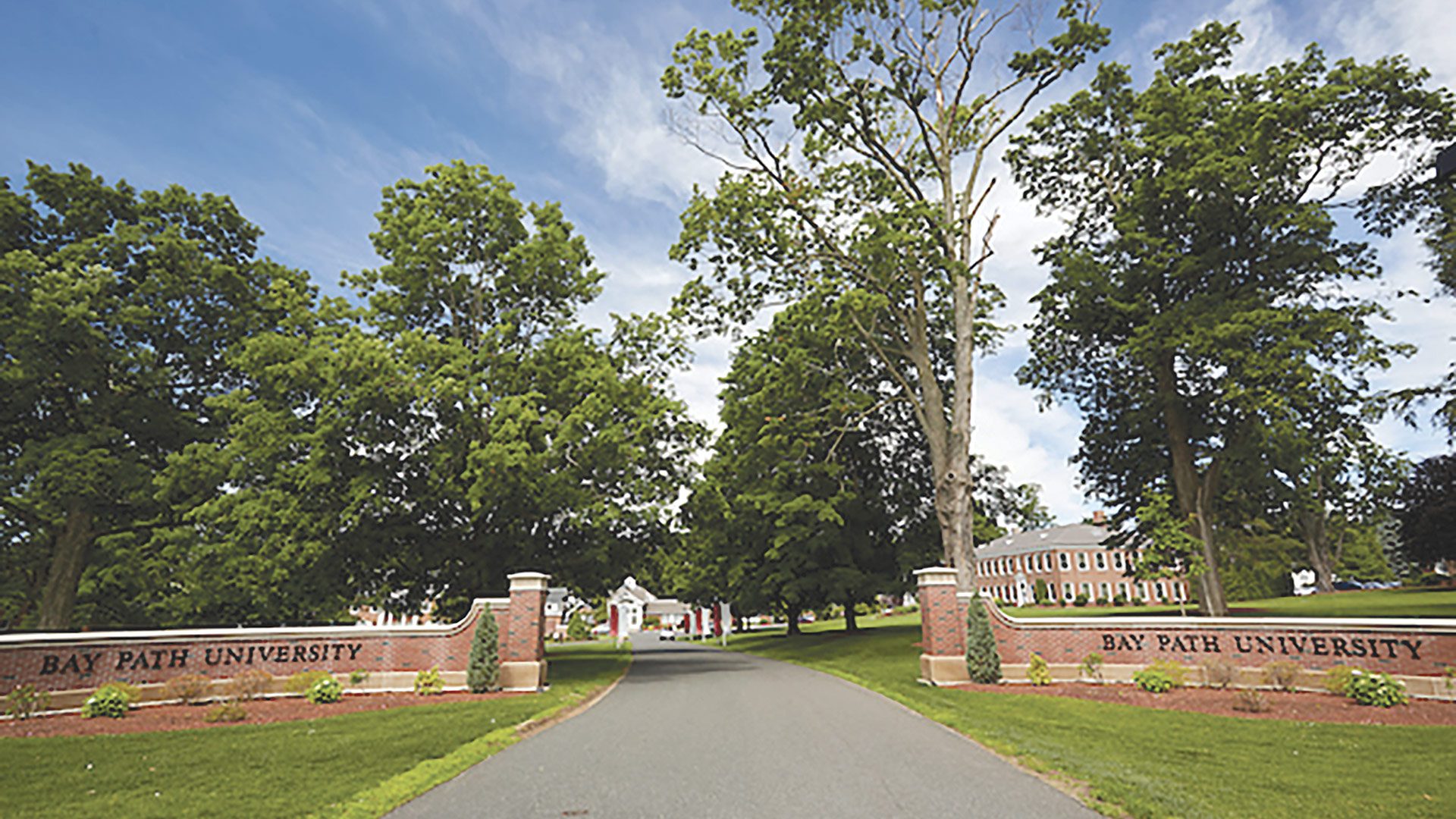
And not just STCC students; other institutions partnering on the project include Bay Path University, UMass Amherst, Western New England University, Elms College, and Springfield College, each of which offer a range of certificate and degree programs in cybersecurity, computer science and programming, digital forensics, criminal justice, and more.

“This is a very important initiative,” said Doug Keevers, program director of the School of Management and Technology at Bay Path. “It definitely benefits all students in the region by providing them with a facility where they can gain practice and hands-on experience. They’re going to be exposed to mentors, professionals in the field, real-life situations, different types of things — even competitions.

“We are very focused on knowledge, and taking the intangible and making it more tangible — giving students more hands-on, real-life experience. That’s what we’re all about,” he went on. “This will not be just for Bay Path and the partners involved, but any schools who want to use this facility as a resource. That’s very important in a field that can change dramatically on a daily basis.”


Essential Components

Essentially, the Neal Center will provide threat monitoring and other cybersecurity services for Commonwealth municipalities and small-business and nonprofit customers. The SOC will be able to monitor, detect, and respond to cyberthreats 24/7/365, protecting organizations’ assets.

Meanwhile, the cyber range is a testing lab that mirrors real-world IT environments to provide hands-on training opportunities to local companies, universities, and other cyber-focused organizations. It will allow both students and employees of companies and municipalities to experience simulated threats in a virtual environment, including hands-on training in live-fire attacks, blue-team/red-team events (in which one team attacks a system and the other defends it), and other training models, potentially leading to certification in security fields for students.

“We are very focused on knowledge, and taking the intangible and making it more tangible — giving students more hands-on, real-life experience. That’s what we’re all about.”

CyberTrust Massachusetts CEO Pete Sherlock called the center a critical piece of the Commonwealth’s overall effort to grow and diversify the cyber workforce and address the security needs of municipalities, nonprofits, and businesses. “With its state-of-the-art cyber range, educational facilities, and security operations center, this cyber center of excellence is a world-class resource to serve the region’s people and institutions.”

For its part, CyberTrust was launched to address four key imperatives for the state:

• Boosting security, as organizations across Massachusetts are challenged to find affordable resources to defend themselves against growing cybersecurity threats and maintain resiliency in the digital world;

• Underemployment in cybersecurity, with almost 800,000 cybersecurity job openings in the U.S. — a number expected to grow — and more than 20,000 in Massachusetts alone. The center also puts a particular focus on women and communities of color, which are underrepresented in the cybersecurity workforce and frequently overlooked for employment due to a lack of opportunity to obtain hands-on experience;

• Employee training, as businesses across the Commonwealth typically do not have a location to send their employees to receive such training at an affordable rate; and

• Business and economic development, specifically a need to convene regional hubs for business development where cybersecurity entrepreneurs can establish and grow startups, or where specific industry segments, such as defense contractors, can receive specialized support.

Gene Kingsley

Gene Kingsley says the new center could be an economic boost for downtown Springfield as well as benefiting the cybersecurity workforce.

Students who train at the center will have access internships and industry partnerships that help them build experience and career networks, research opportunities that establish best practices combined with emerging technologies, and community outreach and education forums to raise awareness about cybersecurity risks and solutions.

Kingsley said it could also be an economic booster for downtown Springfield. “Obviously, more traffic downtown is ideal. The idea is bringing people from the community to upskill them. And this is a growth field; we’re looking to get people into the field right now.”

Kaselouskas agreed, noting that the new center could be a way to boost the security workforce by creating training opportunities in an easy-to-access location.

“What’s nice about the center is that it’s a centralized location available by train and bus and it’s very easily accessible,” she said, adding that the city is interested in using the center for training its own employees. “It offers them an economy of scale. It’s cost-prohibitive to buy the platform or services on your own.”

Businesses can also use the center to upskill employees, Keevers said.

“Cybersecurity permeates every industry, every field, every department. I’ve heard advisory-board members say, ‘we have an employee who has an affinity for cybersecurity; they just need some upskilling.’ So it’s an opportunity to do that.”


Creating a Hub

Kaselouskas said the state’s recent focus on cybersecurity investments is intended not just to buy tools and give them to businesses to fight cyberthreats, but to train the future workforce.

“Bridgewater’s center is on campus, and ours is at a different location, but the vision and goal are the same: to train students to allow them to get jobs.”

Combined with MassReconnect, the program that now makes community college free for Massachusetts residents age 25 and up — and which has boosted enrollment at STCC and other colleges — the Neal Center promises to draw more talent into a field that needs it.

“My personal passion is for Massachusetts to become a cyberhub. And I think this is an opportunity to do that,” Keevers added, noting that, while some young people are hesitant to enter what they feel is an overly technical field, cybersecurity jobs span a wide range of skills and expertise.

“It’s not one size fits all. The biggest threat in cybersecurity is people, and the best way to stay safe is to educate and train people.”

Employment Special Coverage

Hire Expectations

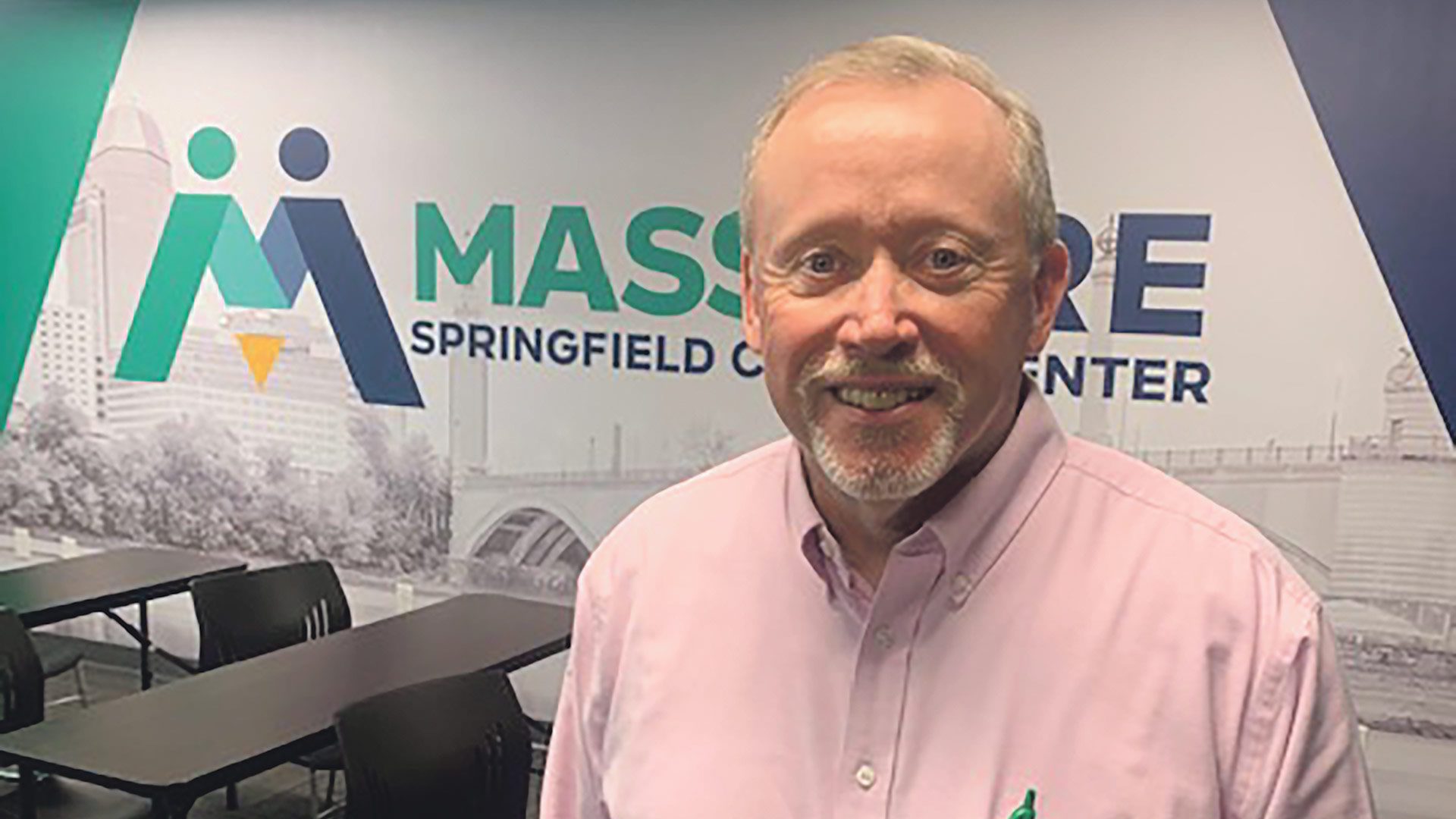
Kevin Lynn

Kevin Lynn, executive director of the MassHire Springfield Career Center.


It was the spring of 2022, and Kevin Lynn was starting to think the job fairs conducted three times a year at the Basketball Hall of Fame by MassHire Springfield Career Center — which he serves as executive director — had run their course.

Attendance among job seekers, which had been running at roughly 300 pre-pandemic, had dropped to maybe 100, even though employers across the region and in virtually all sectors of the economy were seeking help — many of them desperately.

As for the job seekers themselves … the very generous unemployment benefits awarded at the height of the pandemic, when millions of jobs disappeared almost overnight, were all but gone. Yet, many people were still sitting on the sidelines, not at all anxious to enter the workforce.
“I didn’t know what was going on — nothing made any sense, really,” said Lynn, who has spent more than 20 years with the entity now known as MassHire Springfield Career Center, 10 as its director. People were still hunkered down, and people like me were asking, ‘how can these individuals not afford to work?’”

While waiting for an answer to that question — one that never really came — two things happened. The first is that the picture started righting itself with regard to people getting back to work. The second is that MassHire Springfield, in Lynn’s words, “started acting more like a business.”

By that, he meant the agency started to more aggressively market itself and its services, especially through digital platforms.

“We had to get our name in front of people and remind them of exactly what we do and how we do it,” he recalled. “Also, we had to pull in what I’ll call a new generation because we’d been on pause for the better part of four years. That natural flow that we had established since 1997 had been disrupted, so we needed to prime that pump again with our core constituency.”

Those efforts have succeeded in bringing the customer base back to pre-pandemic levels, as we’ll see. And roughly two years after he was thinking about retiring the job fairs, attendance is pretty much back to where it was pre-pandemic, said Lynn, adding that the program will actually be expanded this year from three fairs to four, with the fourth likely to take place at the agency’s facility on Liberty Street in Springfield.

“We had to pull in what I’ll call a new generation because we’d been on pause for the better part of four years. That natural flow that we had established since 1997 had been disrupted, so we needed to prime that pump again with our core constituency.”

“We think we need a fourth because of the demand,” he said. “We’ll see how it goes.”

As for the job market itself … Lynn said things have not exactly returned to normal — whatever that is — although he is seeing an overall softening of the job market, with many challenges remaining for those needing skills, older workers (over age 55), and other constituencies.

Most employers are still struggling to find good help, he said, adding quickly that, while some are willing to train and shape candidates who may not have the full package, others are holding out for the “fully formed” applicant, and sometimes losing out in the process.

Meanwhile, on the wage front, many employers are still not fully embracing the need to move the needle higher. Instead, they’re focusing on what they think they can afford, and not the proverbial big picture — meaning what they spend to hire, and then to hire again when someone brought in at a comparatively lower wage leaves after a few months, or a few weeks, because he or she can secure a dollar or two more an hour elsewhere (more on this later).

These are just some of the observations made by Lynn as he talked about his agency, the job market, and what could, and likely will, come next.


The Job at Hand

“Blocking and tackling.”

That’s what Lynn said MassHire Springfield is back to focusing on these days after what can only be called a turbulent period that includes the pandemic and its aftermath.

By blocking and tackling, he means work with both employers and job seekers to put people in jobs. Such work with job seekers includes training available through the agency’s upskilling program, workshops on everything from handling tough interview questions to helping mature workers prepare for today’s job-search process, job fairs, connecting individuals with resources, and much more.

job fairs

Kevin Lynn says the job fairs conducted in partnership with Audacy Springfield and the Basketball Hall of Fame are back to pre-pandemic numbers.

As for the pandemic and its aftermath, this was a difficult, stressful time, when the agency’s mission — connecting job seekers with employers and helping those job seekers garner the skills needed to not only land jobs, but secure careers — didn’t really change. But the overall need for it did — sort of.

“COVID killed our customer base,” he said matter-of-factly. “Customers weren’t coming in, and they weren’t even using us virtually.”

Quantifying the matter, he noted that, in fiscal 2019, prior to COVID, the agency served roughly 11,500 people over the course of the year. For fiscal 2020, which included the first several months of the pandemic, the number fell to 8,500. And for fiscal 2021, a full and very traumatic year of COVID, the number of customers tumbled to 4,300, roughly a third of the pre-pandemic total.

Why? There were several reasons, Lynn recalled. First, many were content to collect those generous unemployment benefits and not enter, or re-enter, the workforce, he said, adding that, during those times, people not actively seeking employment could receive unemployment benefits, something that wouldn’t happen in more ‘normal’ times. Meanwhile, many of those who had jobs were content to stay put given the large amounts of uncertainty that accompanied that environment — and a desire to work remotely.

“It was the devil you knew versus the one that you didn’t know,” he recalled. “Also, people were desperate to get working-at-home arrangements set up; everyone wanted to be remote. And if you were in a remote situation, and it was solid, you weren’t going to risk that by going to a new employer.”

Meanwhile, with the pandemic came the loss of day-care services for many, he went on, adding that some people had no choice but to quit their jobs — or not seek a job or a better job — so they could be home with their children. It was the same for many of those caring for elderly parents.

“A large section of the labor market just literally pulled back and chose not to work,” he said. “And that impacted us greatly.”

Indeed, the phone started ringing at a much slower pace, and there was a considerably quieter atmosphere at the career center, Lynn recalled, adding that, by the end of 2022, as the number of customers served rose slightly to more than 5,000 (still less than half the pre-pandemic totals), the agency responded by being proactive.

It launched a six-month advertising campaign, much of it digitally with Audacy Springfield (the agency’s partner on the job fairs), designed to raise awareness of the agency, its services, and those fairs.

“A large section of the labor market just literally pulled back and chose not to work. And that impacted us greatly.”

And for fiscal year 2023, the customer base jumped to more than 9,300, a 56% increase, he went on, adding that this was a byproduct of both those aggressive efforts to prime the pump and what he considers a softening of what had been a very attractive market for job seekers, with employers struggling to replace retiring Baby Boomers and simply handle the turnover that was impacting almost every sector.


Searching … for Answers

As Lynn explained, “if you have skills, you’re in a good spot in terms of being able to find job opportunities and get offers. But the job market has softened over the past few months; it’s not as strong as it was prior to this.”

Elaborating, he said the market remains challenging for many subgroups within the workforce and those looking to join it, including older workers, many of whom have skills but struggle to find employers willing to recognize and pay for them.

“They continue to have problems breaking through and getting jobs simply because of their age,” he told BusinessWest. “We see it all the time; you look at people, and they have a solid résumé, and you think, ‘this person is at least worth a conversation.’”

But often, they aren’t part of the conversation.

“Maybe the person isn’t right for the organization; I get all that,” Lynn went on. “But when you have people who have come to us, and they’re working very diligently and a lot of times working with our job developers even, and they’re trying to find work … it can be a tremendous struggle to come out on the other end.”

For those older workers who do come out on the other end with a job, their search will have been much longer than for those who are younger, as many employers are hesitant to look past someone’s date of birth and instead focus on what they might be able to bring to an organization.

Overall, and as noted earlier, Lynn said many employers are still looking for the full package, the “fully formed” applicant, as he called it, when hiring.

“They’ll vocalize that they’re not,” he said, noting that many will say or hint that they are willing to train. “But that’s not the case. They’re holding out for the fully formed applicant, and that’s a problem for the job seekers.”

Another problem is what he referred to as “ghost postings,” which are, well … what that phrase indicates they are: postings that aren’t exactly real.

“They may not have the opening, but they’re posting the job on the anticipation that they may have an opening,” he explained, adding that such phantom postings are prompting him to question the actual level of demand in certain fields and for certain jobs. Meanwhile, they are bringing new forms of stress to job seekers, who are investing time, energy, and emotion in pursuit of a job that may or may not exist.

Meanwhile, for those pursuing work, or a better job, the bigger challenge may not be finding a job, but finding one they can live on.

“It takes more diligence to find the right job,” he said. “Anyone can find a job; the issue is finding a job with a living wage — pay and benefits that you can live on. We see companies that post jobs that do not pay a living wage.

“My staff has conversations with employers on this topic; they’ll say, ‘we can post this job for you, but at the wage you are offering, you are not going to get any applicants,’” he noted. “If you’re at $17 or below, you’re going to have a tough time — a very tough time.”

He said most employers fully understand that a lower wage number shrinks the applicant pool. What they may not fully appreciate is that, even if they do hire someone, that lower wage serves to further increase turnover, bringing costs that will likely exceed a higher wage.

As for those job fairs, they certainly provide a window into what’s happening with the job market, he said, noting that the one in May drew more than 300 job seekers and 54 companies, a growing number of which were represented not by recruiters, but by decision makers — even the CEO.

Such was the case with Conval Inc., a Connecticut-based valve manufacturer. The president of the company was behind the table at the job fair and managed to not only talk with an applicant for a machinist’s position, but hire him on the spot.

“That made his night because he can’t find machinists anywhere,” said Lynn, adding that, while such on-the-spot hirings are quite rare, the goal of these fairs is for employers and job seekers alike to make connections, and these are, indeed, happening.

In short, the clock hasn’t been turned all the way back to 2019, but it’s looking and feeling more like those times.

Healthcare News Special Coverage

Achieving the Dream

Clockwise from top left: Kristen Racine Melendez, Faith Ackerman, Roxana Toledo, and Abby Candee.

Clockwise from top left: Kristen Racine Melendez, Faith Ackerman, Roxana Toledo, and Abby Candee.

For every individual who enters the nursing field, there’s a story. Sometimes, several stories.

They involve everything from the people and circumstances that inspired them to choose this profession to the challenges that had to be overcome on the way to earning their degree and then starting their first shift; from how the dream of becoming a nurse is often deferred, for any of myriad reasons, to how those dreams were kept alive and eventually fulfilled.

These storylines, and many others, are captured in the profiles of four recent nursing graduates presented in what is now our annual salute to nurses.

The profiles below, both intriguing and inspirational, involve women who got into nursing somewhat later in life, after experiencing other professions — everything from the military to paramedic work — and raising children.

Their stories are all different, but there are some common denominators, especially the ability to overcome challenges and make the dream of becoming a nurse reality — at a time when an influx of young nursing talent is more needed than ever.

Read Their Stories:

Kristen Racine-Melendez

Faith Ackerman

Abby Candee

Roxana Toledo


Law Special Coverage

Such a Move Could Bring Order to Cannabis Control Commission

By Scott Foster, Esq. and Johannah Huynh

For business and civic leaders in Springfield, the appointment in 2004 of the Springfield Control Board remains a watershed moment in the city’s fiscal history.

Regardless of how one felt about the city being plunged into receivership by the Legislature through the appointment of the Control Board, the results were unmistakable, as the city went from having an annual budget deficit of $41 million in 2004 to having cash reserves of $34.5 million when the Control Board was disbanded in 2009. Springfield has continued to enjoy the fruits of the newfound fiscal responsibility with an ever-increasing bond rating since 2009.

Bruce Stebbins, a longtime resident of Western Mass., but then a recent resident, was elected to Springfield’s City Council in the midst of the Control Board’s tenure and had a ringside seat to the Control Board’s temporary reign over the city. He continued to serve on the council through the end of the Control Board and then became become Springfield’s Business Development administrator, reporting to the city’s chief Development officer.

Scott Foster

Scott Foster

Johannah Huynh

Johannah Huynh

Stebbins’ experience engaging with the Control Board and helping bring the city to financial stability may prove immensely valuable if the Massachusetts Office of the Inspector General (OIG), the top watchdog agency in Massachusetts responsible for preventing fraud and waste and abuse of public funds, get its wish.

In a recent six-page letter addressed to the Commonwealth’s top elected officials, the OIG strongly urged the Massachusetts Legislature to immediately appoint a receiver to run the day-to-day operations of the Cannabis Control Commission (CCC) while the Legislature concurrently reviews the CCC’s statutory governance structure.

Over the past two years, the CCC has been plagued by internal turmoil, which the OIG suggested is partially a result of the CCC’s enabling statute failing to clearly define or delineate the duties and responsibilities of the leadership hierarchy. The OIG’s recommendations for the Legislature to overhaul the governance structure seek to address the root of the CCC’s problems.

“Not only might the temporary appointment of a receiver allow the Legislature to resolve the CCC’s governance structure, but it could also better promote the efficiency of a regulatory body, which would be a welcome development for the hundreds of businesses that rely on the CCC’s oversight.”

Since the enabling statute is, according to the OIG, “unclear and self-contradictory with minimal guidance on the authority and differing responsibilities of the CCC’s commissioners and staff,” it’s surprising that the CCC has been able to oversee $322 million in tax and non-tax revenue in the most recent fiscal year.

The OIG was also concerned that, despite spending $160,000 on mediation services since May 2022 to draft a governance charter, the commissioners have yet to release meeting minutes relating to the discussion of the charter, publicly release a draft charter, approve the new charter, or even provide assurance that the mediation process is complete. Even if a governance charter were adopted, the OIG emphasized, such a charter would not have the force of law — only binding the CCC to the extent the commissioners agree.


Internal Strife

Acting CCC Chair Ava Callender Concepion has pushed back on the call for a receivership by citing the commission’s recently proposed blueprint of a governance structure in its final stages of legal review subject to a public meeting.

The ongoing lack of an official chair of the CCC was also cited by the OIG as an area of concern. Amidst the suspension of CCC Chair Shannon O’Brien by the treasurer since Sept. 14, 2023, the commissioners have disagreed on who held the appropriate authority to appoint Callender Concepcion to the role of acting chair. Just last month, the CCC voted to relieve the acting executive director, Debbie Hilton-Creek, of her day-to-day responsibilities, leaving the CCC without a duly appointed leader to oversee the operations of the agency.

Even in the absence of clarity on who has authority to do what, the OIG notes that compliance with the Open Meeting Law, which prohibits two or more commissioners from discussing matters outside of a publicly posted meeting, is simply impractical with respect to a large state agency overseeing day-to-day operations.

With such decentralization of management and ambiguous authority at the CCC, the OIG has stressed the urgency of appointing a receiver with the authority to manage the day-to-day operations of the CCC. Specifically, the OIG recommended that the receiver should be expressly authorized to both carry out the daily administrative functions of the CCC and carry out said functions notwithstanding any assertion of by the chair, acting chair, or commissioners under Chapter 76.

If the Legislature were to heed the OIG’s findings, the appointed receiver would have unchallenged authority to carry out the CCC’s administrative operations until the Legislature has resolved the CCC’s governing structure.

In this context, for an agency responsible for bringing in approximately $322 million in tax and non-tax revenue in FY 2023 alone, a receiver that was statutorily authorized to do what the CCC cannot, per the OIG, would be in the best interests of the cannabis industry, its consumers, and ultimately the constituents.

Not only might the temporary appointment of a receiver allow the Legislature to resolve the CCC’s governance structure, but it could also better promote the efficiency of a regulatory body, which would be a welcome development for the hundreds of businesses that rely on the CCC’s oversight.


Scott Foster is a partner at Bulkley Richardson in Springfield, and Johannah Huynh is a summer associate at the firm.

Commercial Printing Special Coverage

Rolling with the Changes

Co-owners Greg Desrosiers (left) and Chris Desrosiers

Co-owners Greg Desrosiers (left) and Chris Desrosiers


Looking back on 2020 and 2021 — when business ground to a halt for many industries, then began to ramp back up way too slowly — Chris Derosiers is grateful that Hadley Printing Co. was able to weather the storm after clients of all kinds halted jobs and dramatically scaled back on the volume of orders.

And he’s equally grateful for 2022, a historically strong year for this more-than-125-year-old Holyoke mainstay, when much of that business returned.

But the lingering effects of the pandemic years — namely inflation that has impacted Hadley Printing’s own costs as well as the marketing budgets for many of its clients — has lent an unusual inconsistency to a flow of business that had normally been very predictable.

“You hear that whole cliche term in business, ‘pent-up demand,’ and that’s what 2022 was; it was a strong bounce-back year,” he said. “But from COVID, we launched right into inflation, and prices just started to escalate, and supply chains were not quite there. And that really forced pricing up everywhere. It was a challenge, not just in our industry, but every industry.”

Hadley’s business is split fairly evenly among the educational market, direct business, and ad agencies and designers, and all three client buckets have altered spending habits in this current inflationary era, he explained; both 2023 and 2024 started slow, but eventually picked up.

“We have months where it’s all hands on deck, and then we have months where we’re looking for work or we’re catching up on maintenance because there’s not enough work in the building.”

“Inflation has caught up with everyone, and I think people are just kind of waiting to see what develops in the year ahead,” Desrosiers said, adding that even the peak Great Recession years of 2008-09 had a lesser impact on business than the past few years because that crisis ended more quickly.

“We’ve still got great things happening here. The work that we do, 98% of it is repeat customers. We really have a great staff and a great group of customers that support us,” he told BusinessWest. “But inconsistent is the right word. We have months where it’s all hands on deck, and then we have months where we’re looking for work or we’re catching up on maintenance because there’s not enough work in the building. That’s the takeaway for me; that COVID time has created inconsistency in the market.”

It has also created an environment for shops to expand their reach. Vice President Greg Desrosiers, who co-owns the third-generation family business with his brother, noted that the company is competing with printers from as far away as Maine these days, which makes sense because Hadley has also broadened its reach.

“We’ve found ourselves having to branch out and go a little bit farther when it comes to acquiring new customers,” Chris noted. “We’re going a little bit more east on the pike, and we’re going a little bit more west, trying to supplement some of that inconsistency in our business model.

Hadley Printing

Hadley Printing has been in its current location on one of Holyoke’s historic canals for the past 48 years.

“That market in Worcester has been a good one for us because there are printers in Boston, but that Central Mass. area has fewer commercial printers,” he went on. “So we tend to do well in that market because we’re priced a little bit more economically than that Boston printer who’s also coming in.”


One-source Solution

Hadley Printing offers a range of services, including digital printing, offset printing, and mail services, to a wide variety of customers in New England. Chris Desrosiers noted that it’s been critical to keep investing in new technology, but also to never neglect the human touch and the value of strong service.

“We have constantly reinvested back into our business every year with new equipment to better serve our customers,” he said. “But the biggest thing that I’ve seen is that people are looking to get it done at a fair price, on time, and make sure they’ve got a good product.

“We have a lot of repeat customers here because we take a lot of pride in what we do and make sure that, when we deliver, we’re delivering on time, we’re delivering a superior product, and it’s at a fair price,” he went on. “There’s always going to be that customer that’s looking for a cheaper price, but usually you get what you pay for. Sometimes, if we have a customer who goes somewhere else for a lower price, they’ll do that once or twice, and then they end up back here. That’s not to say that we’re superior to everyone else, but we do put a high focus on quality and delivering for our customers.”

Another selling point, he said, is to be a one-stop shop for all types of jobs.

“Whether it’s something as simple as a business card or anything from small quantities to large quantities, we like to be that one-source solution so that we don’t have to say ‘no’ to a customer. So we have a lot of different equipment on the floor to be able to support all of our customer demands and requests, and it allows us to service the customer from top to bottom.”

Desrosiers noted that Hadley has two 40-inch Komori offset presses that service the higher-end, large-volume offset market, but the shop can also focus on the quick-turn, smaller-volume digital market. The business has also added mailing capabilities over the last five years.

“There’s always going to be that customer that’s looking for a cheaper price, but usually you get what you pay for. Sometimes, if we have a customer who goes somewhere else for a lower price, they’ll do that once or twice, and then they end up back here.”

“We found that, usually five times out of 10, the customer is looking to have a piece mailed as well. So that’s part of that whole one-source solution — a customer can come to us and have it printed and dropped in the mail stream; we can handle the whole process,” he explained. “We’ve also brought a lot of finishing techniques in-house. We do in-house foil stamping, embossing, and die cutting. That’s something that we’ve really expanded into in the past five years.”

As a result, he said, “for any account, no matter what they throw at us, nine times out of 10, we can say ‘yes, we do that.’ We do use outside vendors, but, decreasingly so in the last five to 10 years. We’ve really set up our company to be a one-source solution.”


Seeking Sustainability

Hadley Printing originated in South Hadley, but in 1976, it moved to its current location on Canal Street in Holyoke, a 32,000-square-foot former silk mill alongside one of the city’s historic canals.

“It’s been a good spot,” Desrosiers said. “Up until 2006, we were renting part of our space out, but we’ve now taken over the entire building, and we’re using every inch of it.”

Because of its location, at least 50% of its power comes from hydroelectric energy. “That’s obviously a selling point. A lot of customers are looking for that environmental factor, the green manufacturing. And we have two things going in our favor there: hydroelectric power, and we’re also an FSC-certified printer.”

Certification by the Forest Stewardship Council ensures that the products in a print job come from responsibly managed forests, and Hadley Printing, which has been certified since 2011, must undergo an audit each year to retain that mark.

“It’s about chain of custody, and it assures the end user that the product was manufactured in a sustainable, green way,” Desrosiers added. “For example, we just did the UMass commencement. We printed 20,000 programs, and on the back of that program, they’ve got the FSC logo that states that it was printed on FSC paper in a sustainable way. And then it’s got a message that encourages people to either recycle that program, archive it, or share it with others.

“That’s usually driven by the customer; what it takes is a customer that wants to print an FSC order. We do about 50 FSC orders a year; it’s just an added level of service that we provide. Most businesses out there are environmentally aware, and they want to print in a sustainable way.”

While the focus on sustainability has increased over the years, the number of commercial printers in the market has consolidated somewhat — though, as noted earlier, they’re competing for a shrinking, or at least more unpredictable, pool of jobs.

“It’s a very capital-intensive business as well,” Desrosiers said. “You constantly have to reinvest in equipment to be able to produce work in an economical way and be competitive. Some of the businesses that didn’t reinvest in new equipment on their floor have had challenges being able to meet customers’ demands.

“Putting a 40-inch commercial press on the floor is a big financial commitment, sure. And you’ve got to make sure you’ve got the volume of work to support it,” he added. “But once you do have that equipment, it allows you to produce work in a more efficient way. So it’s a double-edged sword. But not reinvesting in the business is where I think a lot of companies have fallen out of being competitive in this market.”

A more predictable market, as in the pre-pandemic days, would help all players in this field, but Desrosiers knows his industry not alone there.

“Whether it’s printing, whether it’s construction, whether it’s banking, everyone is just trying to ride the roller coaster,” he said. “But overall, we’re doing well. We’re adapting to those changes. And I think we’re well-positioned in this market going forward.”

40 Under 40 Class of 2024 Event Galleries Special Coverage

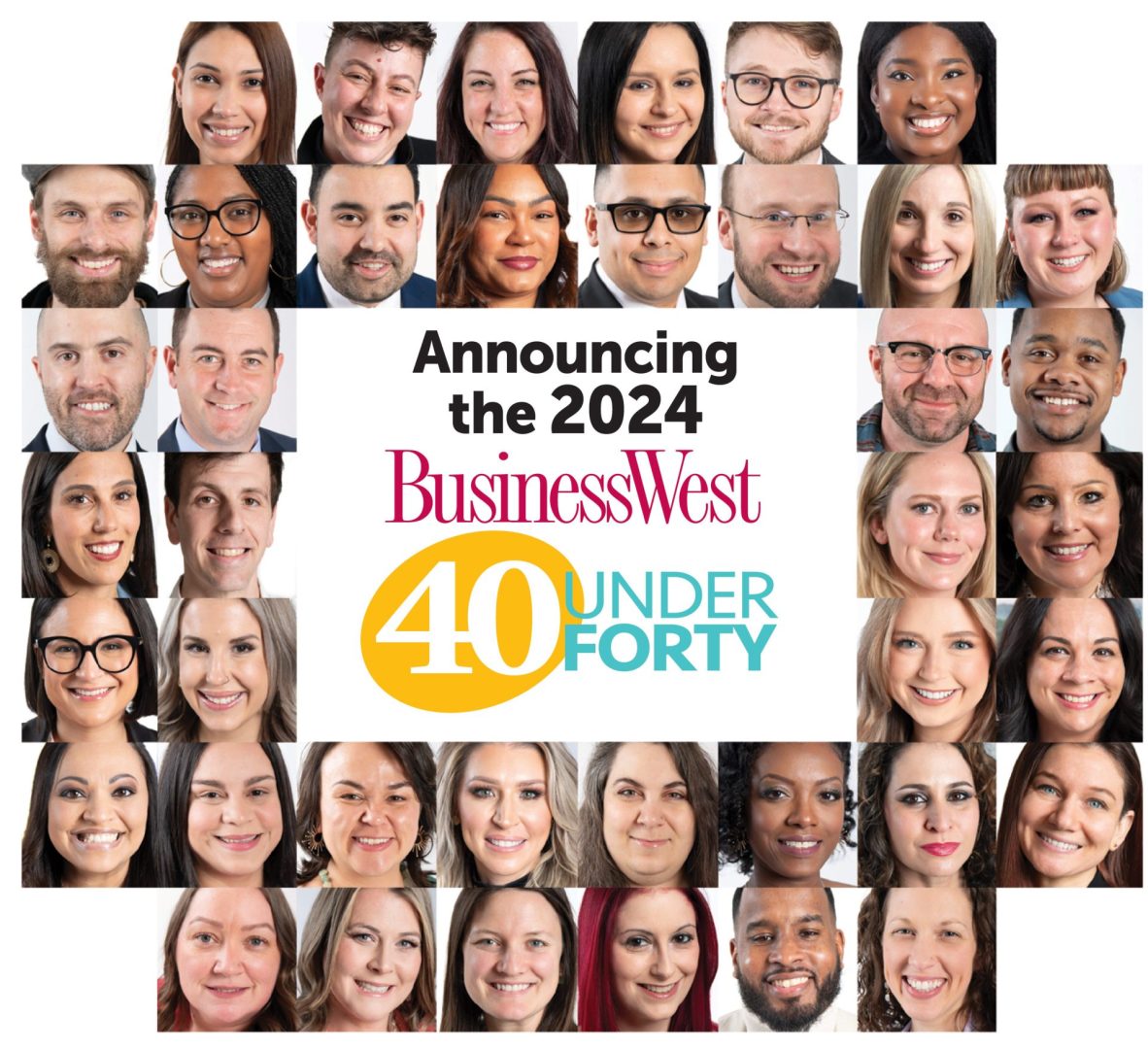
The 2024 40 Under Forty

Click on each name to read their story

When BusinessWest launched a program in 2007 to honor young professionals in Western Mass. — not only for their career achievements, but for their service to the community — there was little concern that the initial flow of nominations might slow to a trickle years later.

We were right. In fact, 40 Under Forty has become such a coveted honor in the region’s business community that it makes the job of five independent judges a challenging one — but also a gratifying one.

“That was fun!” one judge emailed along with her scores. “What an amazing way to get to know so many people, and so many better. This was an enjoyable process.” Another wrote, “what an amazing group of individuals! I was amazed to see such talent in Western Mass.”

We agree; in fact, we thought all 40 of this year’s cohort are deserving for many reasons — and so many different reasons — and also felt for the many worthy individuals who barely missed the cut. But there’s always next year, and nominations are welcome all year long.

As usual, this year’s winners hail from a host of different industries, from law to banking; from retail to healthcare; from restaurants to nonprofits, just to name a few. Many are advancing the work of long-established businesses, while others, with an entrepreneurial bent, created their own opportunities instead of waiting for them to emerge.

Almost all would be justified in saying their careers leave them no time for volunteer service. Yet, almost all are doing what they can for their communities and local nonprofits.

They’re all success stories — just 40 among so many more we haven’t gotten around to telling yet.

Meghan Rothschild Wins BusinessWest’s 10th Annual Alumni Achievement Award

At Thursday evening’s 18th annual 40 Under Forty event at the MassMutual Center, BusinessWest announced that Meghan Rothschild, president and owner of Chikmedia, is this year’s Alumni Achievement Award (AAA) winner. 

Click HERE to nominate next year’s Alumni Achievement Award.

This year’s 40 Under Forty sponsors include presenting sponsor PeoplesBank and partner sponsors the Isenberg School of Management at UMass Amherst, Live Nation Premium, Mercedes-Benz of Springfield, and Mercy Medical Center/Trinity Health. The presenting sponsor of the Alumni Achievement Award is Health New England.

2024 Presenting Sponsor

2024 Partner Sponsors

Alumni Achievement Award

Read about past Alumni Achievers.

Please nominate for 2025 HERE

2024 Presenting Sponsor Alumni Achievement Award

Features Special Coverage

At a Tipping Point

Paul Kozub with his children

Paul Kozub with his children, from left, Weston, Ela, Augustin, and Vincent, at the distillery in Kamien, Poland, that he acquired in 2019.

When asked about all that has changed since he first started finalizing plans for creating his own vodka label 20 years ago, Paul Kozub chose to start with the personal side of his life.

“Back then, I was a single guy living alone with not many cares in the world; now, I’m married with four kids under the age of 10,” he said, adding that this reality explains why he only visits the distillery he owns in Poland maybe once a year instead of three or four times, as he did earlier, and why he presides over maybe 20 in-store tastings a year instead of the 50 or 60 he was averaging a few years ago.

As for the business side of the equation, there have been equally significant changes. He started with one flavor in one region of the Bay State, the 413. Now, there are 10 flavors, including a lemon that changes colors and a hugely popular double espresso. And they are now available in eight states — the six New England states as well as New Jersey and Texas — although they can be shipped almost anywhere, as we’ll see.

And there’s that distillery in Poland, which Kozub now owns a 51% share in. He made that investment in 2019 in a critical step that saw him move from outsourcing production to overseeing (officially if not literally) every step in the process.

And while there have been huge leaps in overall growth — from 700 to 1,000 cases produced and sold per year early on to more than 20,000 today — there have been myriad challenges as well, everything from a global pandemic to the war in Ukraine (the distillery is only a few miles from the border); from huge swings in the cost of getting containers from Poland to the U.S. ($4,200 per shipment to $16,000 back down to $4,200) to the burgeoning cannabis industry (in states where cannabis is legalized, there is an accompanying decline in alcohol sales, Kozub reported).

But while looking back — and then ahead — Kozub chose to focus mostly on what hasn’t changed. The goal, then and now, has been to become a national and then international vodka label, and in some respects, that’s already been accomplished; he does sell some vodka in Poland, but not much, as V-One’s prices are higher than other brands because of how it’s made.

And while the original goal was to make a living selling vodka, something he could do when he was selling 1,000 cases a year, the overriding ambition has been to continually grow the label by taking it to more markets in more states and, eventually, more countries.

While that hasn’t changed either, this desire to grow has morphed into a critical need — because of that distillery and the importance of keeping it busy.

Kozub summed it all up directly, and poignantly.

“For me, V-One is at a crucial tipping point,” he explained. “We’re either going to stay small — a Massachusetts, Connecticut, Rhode Island business — or we’re going to get bigger, and a lot bigger, as a national brand or even an international brand.

“For me, V-One is at a crucial tipping point. We’re either going to stay small — a Massachusetts, Connecticut, Rhode Island business — or we’re going to get bigger, and a lot bigger, as a national brand or even an international brand.”

“And the decision has kind of been made for me because of the distillery purchase — the capacity that facility has and the need to keep it busy on a daily basis, which it is not right now,” he went on, adding that, with this decision — and a subsequent capital raise involving local investors — Kozub is moving forward aggressively with plans to more than double his current sales force and move into more states, starting with Florida, then New York, then other states on the East Coast.

It’s an intriguing next chapter in a story that has featured a number of plot twists and turns but a continued focus on the proverbial big picture and how to make it become reality.

V-One now boasts 10 flavors

V-One now boasts 10 flavors, and Paul Kozub hints that more additions to the lineup may be coming soon.
(Photo courtesy of Chris Marion)

For this issue, BusinessWest talked at length with Kozub about the latest, quite significant adjustments to the V-One business plan and how they provide more proof — yes, that’s an industry term — of how those original plans haven’t exactly changed. They’ve just been supersized.


Proof Positive

By now, most people around here know at least the basics of the V-One story.

With a small, $6,000 inheritance from an uncle and some entrepreneurial vigor that ran in the family (his father started Janlynn Corp.), Kozub put aside a career in banking — he was a commercial lender with TD Bank — to fulfill a long-held dream to launch his own vodka label.

That was in 2005. He started with a small still in his basement and soon made his way to Poland to meet with a world-renowned vodka expert for advice, but also inspiration. He made the critical decision to become the first producer of vodka made exclusively from organic spelt wheat (most other vodkas are made from corn).

Over the next 19 years, V-One has grown and evolved, adding new flavors, winning several awards, expanding its reach across New England and beyond, and increasing the number of cases sold each year. Along the way, there have been several milestones — from the opening of V-One’s world headquarters in the former St. John’s Church on Route 9 in Hadley to a rebranding that saw a new look to the bottles, to the acquisition and subsequent expansion of the distillery in Kamien, Poland, a multi-million-dollar investment fueled by a desire to take more control of the process.

“I’ll make this analogy … instead of buying milk from the store, we now own the cow. We need to keep the distillery busier, and we need to essentially double the business that we’re doing now.”

BusinessWest has chronicled the story, and along the way, Kozub has earned two of the magazine’s awards — inclusion in the inaugural 40 Under Forty class of 2007, then being named the magazine’s Top Entrepreneur for 2016.

As he noted at the top, he now has four young children — “life has gotten a little more complicated” — so that means fewer trips to Poland, although he was recently there for some end-of-fiscal-year matters, and more Zoom calls with his master distiller there.

“He has things handled pretty well as far as production goes, so I don’t need to go as much as I used to,” Kozub said, noting, again, that the critical to keep that distillery busy — at optimum output, the facility could increase production 10-fold — has prompted the latest adjustments to the business plan, capital raise, and plans to aggressively move into other states.

Paul Kozub says the need to keep the distillery in Poland busy

Paul Kozub says the need to keep the distillery in Poland busy — busier than it is now — is fueling the company’s aggressive plans for continued growth.

“Before, it was a case of wanting to grow; now, it’s kind of like we have to grow,” he told BusinessWest. “I’ll make this analogy … instead of buying milk from the store, we now own the cow. We need to keep the distillery busier, and we need to essentially double the business that we’re doing now.”

Elaborating, he said he has no real desire to produce other vodka labels in Kamien, only V-One. Which means producing more of it.

“And to do that, we need to put more people, more salespeople, on the street, and tell the V-One story,” he said, adding that this need to hire and ratchet up marketing efforts — although the company still relies heavily on social media — was the impetus for the recent capital raise.

“My next goal is to get V-One in at least five more states in the next 12 to 24 months,” he said, adding that Florida will be the next target.


Entrepreneurial Spirit

The Sunshine State should be a natural next step, Kozub went on, noting that, while consumption of vodka in Poland is higher during the colder months of the year — primarily because people there drink it straight — in the U.S., vodka is generally mixed with other ingredients that are put over ice, making it a warmer-weather choice.

“A place like Florida has great, year-round weather for vodka drinking,” he said. “And there’s obviously a lot of vacationing, a lot of people by the pool. You really don’t want to drink heavy drinks when you’re by the pool; you want lighter drinks like a vodka soda or mojito.”

As he noted earlier, entering new states and new markets is difficult — and expensive. With immense competition in the vodka aisle, there is a strong need to build brand awareness and gain a foothold. And this requires boots on the ground, he said, adding that, while V-One works with distributors, those large companies represent literally thousands of different labels.

“You have distributors in each market, but you also want to have someone talking to those bars and restaurants and liquor stores,” he told BusinessWest. “You need to have someone else telling the story because these distributors are selling 3,000, 4,000, maybe 5,000 other items, and they’re pushing the big brands, so the smaller brands just get left by the wayside.

“So you have to put someone in each market to tell your story,” he went on, adding that he is looking to bring on several additional salespeople in the coming months to do this storytelling.

While Florida is the next primary target, the goal, as he mentioned, is to be in a handful of other states within the next year or two.

New York is another primary target, he said, adding that the plan after making some headway in that all-important state is to move down the East Coast, perhaps into Virginia, Delaware, and North and South Carolina.

“We want to keep things on this side of the country for now,” he said, adding that the ability to ship products to different states (35 of them at present) enables V-One to expand its presence in that fashion. It’s a small but nonetheless meaningful arrow in the quiver, but one that is growing steadily and has potential to continue the growth trajectory.

Overall, expansion into a new state comes with a price tag of $100,000 to $250,000 for marketing, additional salespeople, and other expenses, he said, adding that this is just part of the cost of doing business.

And it’s a critical aspect of being at this important tipping point for V-One, as Kozub called it. As he noted, the company has progressed from wanting to grow to needing to grow.

“For me, it’s time to take that next big step,” he said, adding that he’s approaching this next phase for his company the way he has all those that have come before it — with a focus on that original dream of creating a vodka label and then taking it around the world.

Environment and Engineering Special Coverage

Engineering a Youth Movement

Ashley Sullivan, president of O’Reilly, Talbot & Okun.

Ashley Sullivan, president of O’Reilly, Talbot & Okun.


Ashley Sullivan can think of plenty of reasons why someone might want to go into engineering.

“It is a very rewarding field where you get to see your work benefit your family and your community,” the president and CEO of Springfield-based O’Reilly, Talbot & Okun said. “And you’re always going to need civil engineers, so there’s job protection there. There’s so much opportunity in the field, whether you want to go into construction or consulting or the regulatory side. There’s a lot of different options, and each individual can find what’s right for them.”

That said, the industry is facing the same headwinds seen in other fields these days, ranging from construction to manufacturing to insurance: retirements outpacing the number of young people coming on board.

“We’ve had a lot of retirements; as quick as I hire, we have people retire or leave the industry,” Sullivan said. “We’re trying to grow, we’re trying to hire, and we make progress one year, and then a few months later, we might fall back. We’re trying to hire about five more by the end of the year, but, just like with everybody else, it’s been very challenging.

“Previously, being a smaller, local firm, we didn’t necessarily compete with the larger firms or state agencies because if somebody liked a small firm, they liked a small firm, versus a larger firm. Now we’re finding we’re going up against those agencies and larger firms,” she went on. “I’m not sure if that’s because of the hybrid or remote potential. We’ve really focused on the ones that want to work near where they live, but now it’s getting hard to do that. There are also a lot of competitive salaries out there, so we’ve had to adjust to that. It’s definitely a challenge.”

Westfield-based Tighe & Bond is at the other end of the hiring spectrum, boasting about 600 employees at 17 locations across the Northeast. The firm is growing significantly at a time when a surge of federal funding — from the $1.2 trillion Bipartisan Infrastructure Law of 2021 to the Inflation Reduction Act and CHIPS Act of 2022 — is creating plenty of opportunity for civil-engineering firms.

“They’re requiring technical talent throughout the country to do all the work that’s coming,” President and CEO Bob Belitz said, noting that the firm has more employees dedicated to recruiting and onboarding than in the past. “We’ve made an investment in that function because it’s such a big part of our business.”

He added that the firm’s broad footprint across the Northeast makes it easier to recruit and retain talent. “Before, if somebody was working for us and got married and moved to New Hampshire, Maine, or New York, they might have to leave us to go work for somebody else because we didn’t have offices there. Now we do. From a growth perspective, it helps to be able to transfer you among other offices.”

Bob Belitz

Bob Belitz says work opportunities for engineering firms are high right now, and so is the need to attract new talent.
Staff Photo

But with some turnover to be expected in a company this size, and with a goal of growing both organically and through acquisitions, Tighe & Bond needs to onboard more than 100 new employees each year, and doing so successfully requires it to stand out from its competitors in a number of ways, Belitz said, from its employee-ownership model to hybrid work schedules; from a strong benefits program to a broad mix of projects.

Sullivan said communicating the culture of a company to job seekers is also critical.

“When we’ve had conversations where we effectively communicate that, people are very interested in working here,” she said, adding that another factor is communicating a clear path to career advancement.

“One of the things I think is so great about engineering — particularly about civil engineering or the environmental engineering that we do — is that we make our community better.”

“I am looking for future business partners. You’re working with the people that are managing the business, you’re getting day-to-day experience in that, and there’s real, clear potential for somebody to be a stockholder, be on the board of directors, and guide the company sooner than they might at a larger company. We can give examples of that. So that’s something that we try to explain. We feel that, if we’re effective in communicating that, we’ll find the right people.”


Mission Driven

As a civil engineer teaching at a women’s liberal-arts college, Glenn Ellis, a professor of Engineering at Smith College, said his students often come to the field from a specific mindset — namely, social impact.

“The number-one thing I hear from students is they want to do some good for the world, to make the world a better place,” he told BusinessWest. “They’re very interested in sustainability. That’s the number-one draw for many students as an engineer. And you can really make an impact on all sorts of things.”

That line of thinking resonates with Sullivan. “One of the things I think is so great about engineering — particularly about civil engineering or the environmental engineering that we do — is that we make our community better,” she said. “We’re an important part of that, and you can see it.”

Ellis noted that the industry code of ethics now includes sustainability as a key tenet, which dovetails with what his students are demanding. But he also said young people are drawn to the sheer diversity of engineering and how broadly it impacts the world.

“The more young people know what an engineer is, the more they’re interested in it. Studies show that the reason why way fewer women than men are engineers is not because women leave these programs at a higher rate than men; they leave at the same rate. It’s that they don’t go into engineering programs to begin with.”

And the time to start capturing their interest, he added — not just for engineering but for all STEM fields, where women have been historically underrepresented — is not college or even high school, but middle school.

“I say to a lot of young people, ‘you know, everything you can see has been designed by engineers. Engineers literally designed the entire world.’”

“I think that’s the time to develop a STEM identity. When you ask kids in middle school if they want to be engineers, they say, ‘I don’t know what that is,’ or ‘that’s really boring; you just work on pipes and buildings.’”

Ellis spoke with one young girl who said she wasn’t interested in engineering, but she wanted to work in the medical realm, helping to design artificial limbs that will help people.

“I said, ‘that’s engineering — that’s bioengineering.’ Young people don’t know what engineering is, so you need to introduce them at a young age, show them that it’s not just building bridges and wearing hardhats. This is a creative profession, a collaborative profession. If you want to change the world, this is the place to do it.”

And employers know talented young engineers have options in choosing where to make their mark, so recruitment, onboarding, and benefits are all critical.

“When we think about our benefit programs, we need to think about things that are important to the younger generations,” Belitz noted, and these run the gamut at Tighe & Bond from student-loan assistance to wellness programs to pet insurance, but also include a strong focus on mentorship, learning, and professional-development opportunities, including the addition of a female mentoring program last year.

“We’re also always giving back to our communities, and we try to talk about that as much as we can when we’re recruiting people,” he went on. “Hopefully that total package, along with the work that we have in the backlog, is attractive to the younger and mid-career people, who are the hardest ones to retain.”

O’Reilly, Talbot & Okun, while a much smaller firm, is also in a growth mode.

“There is a lot of work to be done, and the clients need us to get their work done,” Sullivan said, adding that the industry is facing a bit of an experience gap as veterans retire and young engineers replace them.

“We knew this was coming, so you have to invest in your people and make sure that you’re narrowing that gap continuously,” she told BusinessWest. “One of the things that we’ve done — and that I continue to do — is really invest back in people, try to give them the skills and get them the training.

“And not just the technical training, but also business development, project management, and entrepreneurial skills that get you even further,” she went on. “That’s something that I knew I had to do five years ago, and I’ve continued to do that. We just finished a big team training about presentation skills, whether in a small meeting or a large group, but it was also about team building, communication, and all that.”


Making a Difference

Ellis said Smith has been graduating a few dozen engineers each year, and they’re entering a market that’s tilted somewhat to job seekers.

Conversely, for employers, “it’s very challenging,” Sullivan said. “It’s just really hard to find people right now. We’ve had some people with a verbal acceptance, and then a few weeks later, they get a counteroffer and stay where they are.”

Meanwhile, Ellis hopes more young people — particularly young women — get the message early on that this is a meaningful, impactful career with plenty of opportunity.

“Women are definitely more attracted to engineering when they can be involved in messy, complex societal issues, which actually is what engineering is all about. It’s all about taking math and science and solving problems for society,” he said.

“I say to a lot of young people, ‘you know, everything you can see has been designed by engineers. Engineers literally designed the entire world. You can go into it and move up in the world and make a difference.’”

Special Coverage Workforce Development

Culture Shift

Nicole Polite, CEO of the MH Group. (Staff Photo)


Diversity, equity, and inclusion — commonly known as DEI — has become a well-recognized expression in the world of employment, human resources, and executive suites.

But Nicole Polite prefers the term DEIB, which incorporates the word belonging, and there’s a reason for that.

“The belonging factor is making sure that your employees feel like they’re part of a community or environment where they all feel connected, regardless of race, color, creed, and everything else,” said Polite, CEO of the MH Group, which provides a range of staffing services to client employers. “I’m glad belonging is being emphasized; I believe that’s a key factor. Because if you don’t feel like you belong somewhere, then it’s not a good space for you.”

While the term DEI has become politicized in some corners, Polite doesn’t see the concepts behind it fading in importance.

“We’re not going to move away from it. The world has changed so radically,” she said. “And the employees are the ones driving it. They’re the ones asking, ‘how are you supporting me? How do I belong here? What are the steps you’ve been taking to make sure that there’s representation here?’”

John Henderson, director of Learning and Development at the Employers Assoc. of the Northeast (EANE), agrees.

“In this politically and socially divisive world, how do we create a culture where people feel valued? That stems from the diversity, equity, and inclusion piece,” he said, before explaining what each of those terms means for EANE.

“As employees are more educated, they’re more authentic with themselves. And that creates a culture of self-value for employees, a stronger sense of belonging, which makes it easier for them to be fully engaged with the workforce.”

Specifically, he explained, diversity is about representation — not only in terms of race and gender, but in backgrounds, viewpoints, and experiences.

Then, “when you look at equity, it’s about recognition — recognizing what people need in order to be successful. As a business, what do my people need in order to be successful? And what you need and what I need might be totally different. That’s why equity is so important.”

Inclusion, meanwhile, is about the actions a business takes to make people feel like they’re included.

Dan Moriarty

Dan Moriarty says efforts to create a more diverse, inclusive workplace have to start at the top.
Staff Photo

“All three of those really create a sense of belonging. So it’s diversity, equity, and inclusion, and then you have the B, the belonging piece,” Henderson explained. “If I feel valued, if I feel trusted, if I feel I can be my authentic self at work, I feel like I belong.”

It’s a message more and more companies seem to be getting — and even reaching out for help in implementing, he added. “We do get a lot of calls and do trainings around that piece. We want people to understand that differences bring creativity and increased productivity. And when you foster a culture of respect and people feel that they belong, it increases retention rates, and it makes it easier to recruit people.”

Monson Savings Bank President Dan Moriarty has been actively been involved in DEI strategy for some time, not only at his own institution, but his past co-leadership of an executive council established by the Massachusetts Bankers Assoc. to promote DEI efforts across member institutions.

Adopting some best practices recommended by Mass Bankers, Monson Savings has created a DEI commitment statement, developed and implemented a DEI program that continues to evolve, provided DEI training to board members and employees, identified and monitored key performance metrics, and conducted periodic self-assessments of the program.

In addition, he said, the bank has reviewed numerous documents, including its strategic plan, along with communications, processes, and facilities, to ensure that potential barriers are identified and removed and that DEI expectations are reflected, while also conducting outreach and expanding the bank’s relationships with key community members and organizations.

John Henderson

John Henderson says businesses increasingly want to create a culture where people feel valued.
Staff Photo

“We’ve developed a program which is a lot about education and training, from board members to senior management to the entire staff,” Moriarty said, adding that the bank conducted an employee summit a few weeks ago to discuss topics aroud DEI that some might not be familiar with, and explaining the reasons why they’re important.

“As employees are more educated, they’re more authentic with themselves. And that creates a culture of self-value for employees, a stronger sense of belonging, which makes it easier for them to be fully engaged with the workforce,” he added. “If they feel valued, feel like they belong, they’ll be better employees and better people. I just want to enhance those communications and make DEI more transparent, both internally and externally.”


Welcomed, Valued, and Heard

Jackson Davis, who heads up the DEI program for MassMutual, said that organization’s strategy is focused on creating an environment that is equitable and inclusive for its employees, customers, business partners, and the communities it serves.

“When it comes to our workforce, we strive to create teams that reflect our customers and communities, fostering an environment where all employees are welcomed, valued, and heard,” Davis explained. “To do this, we’ve integrated DEI into all that we do, taking specific actions like monitoring and being transparent about our progress in increasing the overall diversity of our workforce, encouraging both a diverse candidate pool and interview panel for open positions, and providing employee benefits and supports that will help us attract and retain a diverse workforce.”

These benefits include a variety of things, from eight employee business resource groups to holistic, flexible benefits that are designed to meet the diverse, evolving needs of employees. And that investment in DEI isn’t just the right thing to do, he added; it pays off in many ways from a business perspective.

“Having a diverse workforce is important because it brings together different perspectives, which in turn can help us solve problems faster, innovate with more success, and go above and beyond for our customers in order to deliver them the best possible experience.”

“Having a diverse workforce is important because it brings together different perspectives, which in turn can help us solve problems faster, innovate with more success, and go above and beyond for our customers in order to deliver them the best possible experience,” Davis noted. “From a customer perspective, having a diverse and inclusive workforce allows us to better understand and meet the needs of those we serve.”

Bob Belitz, president and CEO of Tighe & Bond (see related story on page 20), agreed, noting that the civil-engineering firm’s roster of projects is so broad and affects so many different communities and demographics that it’s important to have team with backgrounds and experiences that are equally varied.

“I think that makes a difference, and we’re really committed to that because of the project portfolio we have,” he said. “We’re also trying to expand the schools that we recruit from, expanding our reach to produce more talent.”

A company that wants to be truly diverse may approach its strategy through many goals, Polite said, from training employees to recognize and prevent unconscious bias in their actions and comments to using gender-neutral language in outward communication, to making sure job postings and promotion opportunities reflect a commitment to diversity.

That doesn’t mean hiring based on checking demographic boxes, she added, but it may mean considering where and how employees are recruited — such as recruiting from a broader range of colleges or partnering with cultural organizations in the community or reaching out to staffing agencies that specialize in DEI.

“I also love it when I see employers have supplier diversity goals,” Polite said. “That tells an employee that they’re committed to diversity; that really shows inclusiveness as a organization. And that makes you, as a minority or someone from a different culture, feel more relaxed. It’s like, ‘OK, there is some commitment here.’ But if you don’t have those types of mechanisms set up, like how do you convey that to the job seeker? How do you convey that to your organization?”


Leading by Example

The answer to that question takes many forms, Polite said, but it has to begin at the top.

“You’ve got to start on the leadership level. Starting from the bottom up doesn’t typically work; you have to start from the top down. And you have to have some accountability with your initiatives, too.”

There, she paused for a moment to add that she’s trying to stay away from the word ‘initiatives’ when she talks to clients because it lacks a key sense of permanence.

“We’re trying to weave it into the employer mission, what they do every day. Initiatives change all the time, correct? So we want to make sure we’re not just doing initiatives; what can we can do on a daily basis?”

Henderson also spoke to the importance of executive leadership in crafting effective DEI strategies.

“We know it increases productivity, it increases employee engagement, it increases retention, and it makes it easier to recruit,” he said. “But some companies don’t know where to start; they’ll say to the HR person, ‘hey, create a DEI plan and implement it.’ And then the HR person has that responsibility.

“But it really has to come from the leadership,” he went on. “If the leadership is not a champion for any initiative, including DEI, it’s not going to stick. You can’t change the culture from the middle up or the bottom up. It has to come from leadership. When a leadership team decides it wants to focus on diversity, equity, inclusion, and belonging, that’s a step in the right direction because it has to come from the top, not the middle.”

Moriarty agreed. “It has to start at the top. I had to start by providing leadership, advocating, training for DEI, and actively trying to foster a bank culture where we promote and support an environment where everyone feels valued and respected and has a strong sense of belonging. The goal is to have everyone be their authentic self at work.”

As Polite noted, it’s something companies of all types and sizes are taking seriously.

“I think employers are more committed than they’ve ever been. Even now, we still get a lot of requests for DEI training,” she said, adding quickly that the result must go beyond mere lip service.

“It still goes back to the commitment. As the leader of an organization, you have to draw the line and say, ‘this is what I’m going to commit to.’ A lot of employers have started to engage the topic of diversity and discrimination, and others have been too scared to touch it — not because they don’t believe in it, but they don’t want to offend, and they don’t know how to approach it.”

She recommends connecting with a consultant on hard questions — and, importantly, conducting internal surveys to gauge the workplace culture and reactions to any changes.

After all, Moriarty said, by creating a workplace where all feel welcome, the bank should become a more attractive employer for people from a variety of backgrounds.

“We’re fostering that culture where we can inspire our existing workforce, but also attract the diversity of experience from outside our walls, so they say, ‘hey, Monson Savings Bank is committed. They talk the talk and walk the walk.’”

The end goal, he noted, is a more diverse workplace, a more diverse vendor profile, and a more diverse customer base. “It’s definitely an ongoing journey along the path to do what’s right.”

Accounting and Tax Planning Special Coverage

With Legislation Stalled, 2024 Sees Few Changes

By Kristina D. Houghton, CPA


After overwhelming approval by the House Ways and Means Committee on Jan. 19, the Tax Relief for American Families and Workers Act of 2024 was sent to the House under rules that would limit the ability to amend the text but would require approval by two-thirds of the chamber.

After a delay caused by a minor revolt of some GOP members who were trying to get an increase in the state and local tax deduction limit added to the bill as well as modifications of the child tax credit, an agreement was made to consider those in a separate bill in the near future, so the legislation passed by the House is the same version that was passed out of committee.

The bill provides for increases in the child tax credit, delays the requirement to deduct research and experimentation expenditures over a five-year period, reinstates the depreciation and amortization add-back through 2025 for purposes of calculating the business interest limitation, extends the 100% bonus depreciation through 2025, and increases the Code Sec. 179 deduction limitation, among other business-friendly provisions.

“Standard deduction amounts for 2024 have been inflation-adjusted and are higher than they were last year.”

Unfortunately, the Senate never addressed the bill. Due to the large number of provisions that are retroactively applicable to the 2023 tax year, and in some cases even earlier, the original hope was to get the bill passed before the start of the 2024 filing season. Since that deadline has passed, the goal is still to get the bill passed as soon as possible to minimize the administrative burdens on the IRS. There is no current date set for a Senate vote, and with this being an election year, the likelihood is slim.

As a result, planning for 2024 will not be much different than 2023, but let’s summarize the few changes, primarily inflation-related adjustments, effective for 2024. Pay attention to these changes because they can hurt or help your bottom line. Use this information now so you can hold on to more of your hard-earned money when it’s time to file your 2024 federal income tax return in early 2025.


Individual Tax Changes

Retirement Savings

Key dollar limits on workplace retirement plans and IRAs increase in 2024. The maximum 401(k) contribution is $23,000. People born before 1975 can contribute an extra $7,500. These limits also apply to 403(b) and 457 plans.

SIMPLEs have a $16,000 cap, plus $3,500 for individuals age 50 and older.

The 2024 contribution cap for traditional IRAs and Roth IRAs is $7,000, plus $1,000 as an additional catch-up contribution for individuals age 50 and older.

The income ceilings on Roth IRA pay-ins are higher for 2024. Contributions phase out at adjusted gross incomes of $230,000 to $240,000 for joint filers and $146,000 to $161,000 for single filers.

2024 deduction phaseouts for traditional IRAs range from adjusted gross incomes of $123,000 to $143,000 for joint filers covered by 401(k) plans and $77,000 to $87,000 for single filers and heads of household. If only one spouse is covered by the plan, the phaseout range for deducting pay-ins for the uncovered spouse is $230,000 to $240,000.


Adoption Tax Credit

The adoption credit is taken on up to $16,810 of qualified expenses in 2024. The full credit is available for a special-needs adoption even if it costs less. The credit phases out for filers with modified AGIs over $252,150 and ends at $292,150.


Standard Deduction

Standard deduction amounts for 2024 have been inflation-adjusted and are higher than they were last year.

The income-tax brackets for individuals are much wider for 2024 because of inflation during the 2023 fiscal year. Tax rates are unchanged.


Capital Gains and Qualified Dividends

The favorable tax rates on long-term capital gains and qualified dividends do not change. But the income thresholds to qualify for the various rates go up for 2024. The 0% tax rate applies at taxable incomes up to $94,050 for joint filers, $63,000 for heads of household, and $47,025 for single filers. The 20% tax rate starts at $583,751 for joint filers, $551,351 for heads of household, and $518,901 for single filers. The 15% tax rate is for filers with taxable incomes between the 0% and 20% break point.

The annual gift tax exclusion for 2024 is $18,000 per donee. That means in 2024, you can gift up to $18,000 ($36,000 if your spouse agrees) to each child, grandchild, or any other person without having to file a gift-tax return or tap your lifetime estate and gift tax exemption. Annual gifts over the exclusion amount will trigger filing of a gift tax return for 2024, but no gift tax will be due unless your total lifetime gifts exceed $13,610,000.


Business Tax Changes

Depreciation

First-year bonus depreciation isn’t as valuable in 2024. Last year, businesses could deduct 80% of the cost of new and used qualifying business assets with lives of 20 years or less. This year, the 80% writeoff decreases to 60%.

However, Section 179 expensing is higher. $1,220,000 of assets can be expensed in 2024. This limit phases out dollar for dollar once more than $3,050,000 of assets are put into use in 2024.

Note that the amount of business assets expensed can’t exceed the business’s taxable income. Bonus depreciation doesn’t have this rule.


Pass-through Income

A key dollar threshold on the 20% deduction for pass-through income rises in 2024. Self-employed individuals and owners of LLCs, S-corporations and other pass-throughs can deduct 20% of their qualified business income, subject to limitations for individuals with taxable incomes of more than $383,900 for joint filers and $191,950 for all others.


Conclusion

It is difficult to do tax planning in anticipation of what might happen in Washington, especially with this being an election year and the great divide on tax policy between the parties. Maybe the best planning would be to plan for possible tax changes in 2025 depending not only on the party that wins the presidential election, but also on the mark-up of the House and the Senate.

It could well be time to accelerate gifting, accelerate income, and postpone deductions. Perhaps with optimism, you can imagine that those postponed R&D and interest deductions will give you a deduction at a higher tax rate, and maybe this can lessen the pain of accepting possible increased tax rates.

Finally, remember that this article is intended to serve only as a general guideline. Your personal circumstances will likely require careful examination and should be discussed with your tax adviser.


Kristina D. Houghton, CPA is a partner at the Holyoke-based accounting firm Meyers Brothers Kalicka, P.C.

Commercial Real Estate Special Coverage

‘We Love Real Estate’

Architect’s renderings of the Clocktower Building and the Colonial Block (below).

Architect’s renderings of the Clocktower Building and the Colonial Block (below).
(Images courtesy of Pickard Chilton)

Colonial Block

Colonial Block

When Ed Woodbury was encouraged by close friend Tim Brangle, president of Chicago Consultants Studio, to closely consider the Clocktower Building project in Springfield, he immediately challenged him to back up that request.

“He said, ‘Ed … you should take a look at this,’” recalled Woodbury, president of Chicago-based McCaffery Interests, which has a wide and deep portfolio of urban development and redevelopment projects, many of them clustered in Pittsburgh, Washington, D.C. and Northern Virginia, and the Windy City, and considers hundreds, if not thousands, of requests for proposals each year. “And I said, ‘why? Why do you think this is for us?’

“He spoke very highly of the city and its leadership, pointed out the inherent attributes of the Basketball Hall of Fame and the casino, and then gave a brief history of how Springfield had turned the corner from previous down times, if you will,” Woodbury said of Brangle, who has consulted with Springfield officials on the design of the casino and economic development surrounding it. “Naturally, none of that was familiar to us, so we looked at it, and the story happened to be true. And we liked that story.”

That’s a brief synopsis of how the Clocktower initiative, which involves three properties owned by the Springfield Redevelopment Authority — the Clocktower Building (113-117 State St.), the Colonial Block (1139-1155 Main St.), and a smaller building on Stockbridge Street — came to be part of that impressive portfolio.

On the McCaffery website, the project is listed among others like in size and character, including 1600 Smallman, the historic renovation of a 1921 structure in the Strip District of Pittsburgh into office spaces with views of the downtown skyline and the Allegheny River, and the Cork Factory project, an award-winning restoration and redevelopment of the Armstrong Cork Factory, also in Pittsburgh (more on that later).

In many ways, the Springfield project, which will add more than 90 units of market-rate housing to the mix, fits right in with these others, said Woodbury, adding that it involves redevelopment of historic properties, but also represents economic development and efforts to revitalize that area of the city.

“This will require multiple sources — you don’t just make one or two phone calls and someone says, ‘yeah, I like that project; I’ll fund it with you. It’s going to take more than a village — it’s going to take a little city.’”

“It’s a neat little project — it’s not big in our world,” Woodbury said of the Springfield initiative. “But I think we’re adding something to the downtown, both by the restoration but also through our development approach and how we look at projects and think about them.

“We don’t look at the buildings themselves,” he went on. “We look at the context of the buildings and where they sit — in this case, across from the casino and across from the MassMutual Center.”

From what he’s heard and seen himself — he’s now visited Springfield a few times — the city is in what he called the early stages of a rebirth, and this project could help bring it to the next stage.

“One of the things that adds to a rebirth is, in some cases, retail, but in a lot of cases, it’s getting people to live back downtown,” he said, “rather than working there, leaving there, and going back to their home in another part of town or one of the suburbs.”

While there are opportunities with this project, with a projected price tag of $55 million to $60 million, there are challenges as well, especially when it comes to funding, said Woodbury, listing the current economy and rising interest rates among those challenges, factors that will require more creativity when it comes to what he called the ‘capital stack,’ or the blend of resources that will be needed to make this project reality.

“This will require multiple sources — you don’t just make one or two phone calls and someone says, ‘yeah, I like that project; I’ll fund it with you,’” he said. “It’s going to take more than a village — it’s going to take a little city.”

Armstrong Cork Factory in Pittsburgh

Ed Woodbury says restoration of the Armstrong Cork Factory in Pittsburgh is one of several projects in the McCaffery Interests portfolio similar to the Springfield undertaking.
(Photo courtesy of Ed Massery)

The company has vast experience assembling needed funding, he went on, adding that he’s confident that the ‘little city’ he mentioned can come together, and that this project will play a significant role in Springfield reaching the next stages of a rebirth.

For this issue and its focus on commercial real estate, BusinessWest talked at length with Woodbury about McCaffery Interests, the Clocktower building project, and how this Springfield initiative fits the company’s mission — “to transform underutilized urban assets into dynamic destinations that serve modern lives as they intersect at work, home, and play.”


Landmark Decisions

Woodbury said McCaffery handles a broad range of work, from development to property management. And in that first category, it focuses on both redevelopment of existing (again, usually underutilized) properties to new construction.

But the common denominator, if you will, is that essentially all this work is carried out in cities.

“The focus has always been in urban areas,” he told BusinessWest. “We like the life, the vitality, and even the grit of cities.”

Most projects are in larger cities, including Pittsburgh, Chicago, D.C. and the surrounding area, and, most recently, Denver, where the company has several projects in various stages, including T3 RiNo, a mixed-use, 250,000-square-foot office project in that city’s burgeoning River North (RiNo) District.

“The focus has always been in urban areas. We like the life, the vitality, and even the grit of cities.”

Formed in 1991 by Dan McCaffery (Woodbury said he joined him “almost immediately”), the company’s first signature project was the revitalization of a former Saks Fifth Avenue store on Michigan Avenue in Chicago.

“We renovated it, leased it out, and put in Nike, Sony, and Cole Hahn; it was the height of what we call Main Street retail,” he recalled, adding that the project set the tone for other initiatives to come.

These include restoration of another historic property, 400 Post St. in San Francisco’s Union Square, that was destined to be torn down. “It was a great piece of real estate that had been overlooked for years,” Woodbury recalled. “We said, ‘heck, this is a cool, old building; let’s restore it.’ We put in a Disney store and a Borders Books.”

Reliance Building in Chicago

Restoration and redevelopment of the Reliance Building in Chicago, now home to the Hotel Burnham, is another project in the McCaffery portfolio similar to the one in Springfield.

As he cited those names, he noted that retail has certainly changed over the past few decades and especially the past several years; thus, the company now focuses mostly on mixed-use projects, be they new construction or renovation of existing structures, with retail on the ground floor and residential in the floors above — which is what is proposed for the Springfield project, as we’ll see.

And while McCaffery does most of its work in larger metropolitan areas, the company considers projects in communities across the country.

“We’re opportunity-focused — we search for unique opportunities and chase them,” Woodbury said. “The other thing is, we love real estate — old buildings, new buildings, it doesn’t matter; we love real estate.

“For us, it’s about finding high-quality real estate and exploring and seeing what we can do — with the land or existing properties,” he went on, adding that, with Springfield and its Clocktower Building initiative, what it can do — what it wants to do — is bring that aforementioned mix of uses, specifically retail on the ground floors and residential on the upper floors.


Lofty Expectations

Indeed, architect’s renderings of both the Clocktower Building and the Colonial Block portray well-lit shops with sidewalks crowded with passersby, elements certainly missing from the current picture — and missing for the past several years, in fact.

To make those colorful images become reality, McCaffery Interests will call on 34 years of experience with dozens of projects in several different cities and high levels of creativity with putting together a needed funding stack.

As he talked about the Springfield initiative, Woodbury said there are several projects in the portfolio that are somewhat similar — maybe not in terms of overall size and scope, but certainly in terms of restoring landmark properties, using historic tax credits to finance the work, and creating higher levels of vibrancy in downtowns or other key districts.

These include restoration and redevelopment of the Reliance Building in Chicago, now home to the Hotel Burnham, which was built in 1895 and is listed among the 100 most historically significant skyscrapers in the world.

“It’s one of the original high-rises in Chicago and one of the first places where an elevator was utilized in high-rise construction,” he explained. “We renovated it, but didn’t return it to an office building; we converted it to a hotel with restaurants on the ground floor.”

His short list also includes restoration of the Armstrong Cork Factory in Pittsburgh, originally constructed in 1901, and converted into 297 loft apartments, a project that earned several awards, including an Award for Excellence in 2009 from the Urban Land Institute and a Western Pennsylvania Golden Trowel Award in 2007.

“We took a building that was old and abandoned and invested side by side with a great partner in Pittsburgh and put the property on the historic register,” he said, adding that the project is one of the key contributors to growing vibrancy in the Strip District.

Springfield’s Clocktower Building and Colonial Block are similar in that they both boast considerable amounts of history — and have been largely vacant for several years now.

And, in Woodbury’s estimation, they have a future that can be as significant as their past.

“The Clocktower Building has great bones to it, and it’s the same with the Colonial Block,” he said. “The Clocktower Building is older, and some of the renovations over the years have unfortunately disrupted its historic character, but it adds a nice scale to the street — State and Main — which is fun to say, because it’s literally State and Main.

“And the Colonial Block was originally residential on the upper floors, which lends itself nicely to converting it back to that,” he went on, adding that, overall, Springfield is “looking forward being optimistic about what a city can and should be — and those are the kinds of places where we like to work.”

As for the challenges ahead, especially funding, Woodbury returned to that notion of this project needing not a village, but a small city of resources contributing to the capital stack.

“Federal and state tax credits are going to be a big source — they will be the lead bell cow in our funding stack,” he explained. “But there will be some funding needed from the State House, there might be some funding needed from the city, and then there’s obviously some private monies to be put in place as well; all of those food groups will come into play.”

The overall goal is to start construction late this year or early next year, he said, adding that it will be 24 months from when the company submits final drawings until the first tenants — residential and commercial — can move in.

Woodbury is confident this goal can be met, and equally confident that this initiative can do what so many other projects in the McCaffery portfolio have: revitalize not only real estate, but entire neighborhoods and cities.

Business Talk Podcast Special Coverage

We are excited to announce that BusinessWest has launched a new podcast series, BusinessTalk. Each episode will feature in-depth interviews and discussions with local industry leaders, providing thoughtful perspectives on the Western Massachuetts economy and the many business ventures that keep it running during these challenging times.

Go HERE to view all episodes

Episode 218: June 17, 2024

Editor Joe Bednar talks with Nicole Nell, president of Visual Sound Productions

A former competitive dancer who later found a passion — and skill — for DJing, Nicole Nell has forged an intriguing career, both as DJ Nicki Nell and as president of Visual Sound Productions, an award-winning, multi-operational production company. On the next episode of BusinessTalk, Nicole talks to BusinessWest Editor Joe Bednar about all of that, as well as her exciting project to renovate a historic building 130 Union St. in Springfield and turn it into her company’s headquarters — and what she hopes will be a bustling center of activity in the heart of downtown. It’s must listening, so tune in to BusinessTalk, a podcast presented by BusinessWest.

Also Available On

Special Coverage Travel and Tourism

Hot Times Ahead

Summertime is a great time to get away, but in Western Mass., it’s also a great time to stick around and enjoy the many events on the calendar. Whether you’re craving fair food or craft beer, live music or arts and crafts, historical experiences or small-town pride, or sports ranging from baseball and 3-on-3 basketball to motocross and boat racing, the region boasts plenty of ways to celebrate the summer months. Admittedly, the following 20 events only scratch the surface, so we encourage you to get out and explore everything else that makes summer in Western Mass. a memorable time.


Valley Blue Sox

Valley Blue Sox

Valley Blue Sox

MacKenzie Stadium, 500 Beech St., Holyoke

valleybluesox.pointstreaksites.com/view/valleybluesox

Admission: $7; 12 games, $59; season tickets, $99

Now through July 30: Western Mass. residents don’t have to trek to Boston to catch quality baseball. The Valley Blue Sox, two-time champions of the New England Collegiate Baseball League, play the home half of their 44-game schedule close to home at MacKenzie Stadium in Holyoke. Frequent promotional events like postgame fireworks and giveaways help make every game a fun, affordable event for the whole family.


Westfield Starfires

Bullens Field, 181 Notre Dame St., Westfield

www.westfieldstarfires.com

Admission: $10; 20 games, $99; season tickets, $140

Now through Aug. 4: Still can’t get enough baseball? Celebrating their sixth season of action, the Starfires, a member of the Futures Collegiate Baseball League of New England, play a slightly longer schedule (56 games) than the Blue Sox. The team plays at Bullens Field in a city with a rich baseball history, and peppers its games with plenty of local flavor and fan experiences.


Juneteenth Jubilee

Juneteenth Jubilee

Juneteenth Jubilee

Downtown Springfield

facebook.com/juneteenthspfldma2023

Admission: Free

June 14-15: Juneteenth is a federal holiday celebrating the emancipation of those who had been enslaved in the U.S. two years after the Emancipation Proclamation was issued. Juneteenth in Springfield will celebrate this holiday with two days of activities, including a flag raising at the Black Vietnam Veterans Memorial at Mason Square and an adult block party at Level 5 restaurant on June 14, and a family fun day featuring music, kids’ activities, youth and business award presentationsl, complimentary food from Black-owned restaurants, and more.


Worthy Craft Beer Showcase

201 Worthington St., Springfield

www.theworthybrewfest.com

Admission: $50

June 15: Smith’s Billiards and Theodores’ Booze, Blues & BBQ, both in the city’s entertainment district, will host more than two dozen breweries at an event that also features live music and plenty of food. The event will also feature a home-brew contest; Loophole Brewing will make the winner’s beer and serve it at next year’s Brew Fest. Designated drivers pay reduced admission of $10.


Green River Festival

One College Dr., Greenfield

www.greenriverfestival.com

Admission: One-day passes, $79.99 to $89.99; two-day passes, $145; weekend passes, $99.99 for teens, $199.99 for adults

June 21-23: For one weekend every summer, Franklin County Fairgrounds hosts a high-energy celebration of music; local food, beer, and wine; handmade crafts; and games and activities for families and children — all topped off with hot-air-balloon launches and a Saturday-evening ‘balloon glow.’ The music is continuous on three stages, with 48 bands slated to perform, headlined by Cake on Friday, Fleet Foxes on Saturday, and Gregory Alan Isakov on Sunday.


Hooplandia

Eastern States Exposition and Naismith Memorial Basketball Hall of Fame

www.thebige.com/p/hooplandia

Admission: Free for spectators

June 21-23: For the second straight year, Hooplandia, the Northeast’s biggest 3-on-3 basketball tournament, will be hosted by Eastern States Exposition (ESE) and the Naismith Basketball Hall of Fame. The event takes place on the ESE grounds, with youth championship games held at the Hall of Fame. Seventy-five basketball courts will be set up to accommodate more than 650 games played by approximately 2,100 participants of all ages. Divisions have been created to provide an all-inclusive environment for players of all ages and playing abilities, including young girls, boys, women, men, high-school-level, college-level, OGs, veterans, and more.


Municipal Fireworks

Admission: Free

June and July: Western Mass. communities will host numerous fireworks events around the Fourth of July this year. Sites include Look Memorial Park, Northampton, June 22; Holyoke Community College, June 28; Westfield Middle School, June 29; UMass Amherst McGuirk Stadium, July 2; Smith Middle School, South Hadley, July 3; Franklin County Fairgrounds, Greenfield, July 4; Six Flags New England, Agawam, July 4-6; Riverfront Park, Springfield, July 4; and Beacon Field, Greenfield, July 6.


Southwick AMA Pro Motocross National

The Wick 338, 46 Powder Mill Road, Southwick

thewick338.com

Admission: $35-$435

June 29: The Southwick National at the Wick 338 is round 5 of the 2024 Lucas Oil Pro Motocross Championship, sanctioned by AMA Pro Racing. Gates open at 7 a.m., and ticket prices span a wide range of viewing opportunities, from general admission to a ‘preferred viewing island’ in the center of the track to multiple VIP locations offering spectacular views, tented seating, a live monitor feed, lunch, and private adult-beverage bars and facilities. 


Monson Summerfest

Main Street, Monson

www.monsonsummerfestinc.com

Admission: Free

July 4: In 1979, a group of parishioners from the town’s Methodist church wanted to start an Independence Day celebration focused on family and community, The first Summerfest featured food, games, and fun activities. With the addition of a parade, along with booths, bands, rides, and activities, the event has evolved into an attraction drawing more than 10,000 people every year. This year’s parade steps off at 10 a.m. on Main Street, followed by activities, music, and a beer garden later in the day.


Berkshires Arts Festival

380 State Road, Great Barrington

www.americanartmarketing.com

Admission: $14; weekend pass, $16; students, $7; under 10, free

July 5-7: Ski Butternut plays host to the Berkshires Arts Festival, a regional tradition for more than two decades. Thousands of art lovers and collectors are expected to stop by to check out and purchase the creations of 200 jury-selected artists and designers from across the country, in both outdoor and air-conditioned indoor exhibition spaces. The family-friendly event also features demonstrations, food, and live music.


Brimfield Outdoor Antiques Show

Route 20, Brimfield

www.brimfieldantiquefleamarket.com

Admission: Free

July 9-14, Sept. 3-8: After expanding steadily through the decades, the Brimfield Antique Show now encompasses six miles of Route 20 and has become a nationally known destination for people to value antiques, collectibles, and flea-market finds. Some 6,000 dealers and close to 1 million total visitors show up at the three annual, week-long events; the first was in May.


Springfield Jazz and Roots Festival

Stearns Square, Springfield

www.springfieldjazzfest.com

Admission: Free

July 12-13: The annual Springfield Jazz & Roots Festival descends upon Stearns Square and surrounding streets this summer, offering a festive atmosphere featuring locally and internationally acclaimed musical artists. More than 10,000 people are expected to attend. The musical lineup will be announced soon on the website.


Glasgow Lands Scottish Festival

300 North Main St., Florence

www.glasgowlands.org

Admission: $5-$28; under 6, free

July 20: Held at Look Memorial Park, this 29th annual festival celebrating all things Scottish features bagpipes, heavy athletics, Celtic dance, drumming, vendors, historical demonstrations, musical guests, children’s events, and much more. Guests can also attend a whiskey-tasting master class ($30) where they can sample and learn the differences and complexities of single-malt scotch whiskey, as well as learning the history of the spirit and how it is made.


Springfield Dragon Boat Festival

121 West St., Springfield, MA

www.pvriverfront.org

Admission: Free for spectators

July 20: The seventh annual Springfield Dragon Boat Festival returns to North Riverfront Park. Hosted by the Pioneer Valley Riverfront Club, this family-friendly festival features the exciting sport of dragon-boat racing and will include music, performances, food, vendors, kids’ activities, and more. The festival is an ideal event for businesses and organizations looking for a team-building opportunity, and provides financial support for the Riverfront Club.


Brew at the Zoo

The Zoo in Forest Park, Springfield

forestparkzoo.org/brew

Admission: $55-$75; designated drivers, $25-$35

Aug. 3: Brew at The Zoo is a fundraiser at the Zoo in Forest Park, featuring unlimited craft-beer samples from more than 15 local breweries, a home-brew competition, live music, food trucks, games, and, of course, animal interactions. The fundraiser supports the general operating costs of the more than 225 animals that call the zoo home, many of which have been deemed non-releasable by a wildlife rehabilitator for reasons relating to injury, illness, permanent disability, habituation to humans, and other factors.


Agricultural Fairs

Admission: Varies; check websites

August and September: As regional fairs go, the Big E (thebige.com), slated for Sept 13-29, is still the region’s main draw, and there’s something for everyone, whether it’s the copious fair food, livestock shows, Avenue of States houses, parades, local vendors and crafters, or live music. But the Big E isn’t the only agricultural fair on the block. The Middlefield Fair (middlefieldfair.org) kicks off the fair season on Aug. 9-11, followed by the Westfield Fair (thewestfieldfair.com) on Aug. 16-18, the Cummington Fair (cummingtonfair.com) on Aug. 22-25; the Three County Fair in Northampton (3countyfair.com) on Aug. 30 to Sept. 2, the Franklin County Fair in Greenfield (fcas.com) on Sept. 5-8, and the Belchertown Fair (belchertownfair.com) on Sept. 20-22, to name some of the larger gatherings.


Glendi

22 St. George Road, Springfield

www.stgeorgecath.org/glendi

Admission: Free

Sept. 6-8: Every year, St. George Cathedral offers thousands of visitors the best in traditional Greek foods, pastries, music, dancing, and old-fashioned Greek hospitality. In addition, the festival offers activities for children, tours of the historic St. George Cathedral and Byzantine Chapel, vendors from across the East Coast, icon workshops, movies in the Glendi Theatre, cooking demonstrations, and more.


Mattoon Arts Festival

Mattoon Street, Springfield

www.mattoonfestival.org

Admission: Free

Sept. 7-8: Now celebrating its 51st year, the Mattoon Arts Festival is the longest-running arts festival in the Pioneer Valley, featuring about 100 exhibitors, including artists that work in ceramics, fibers, glass, jewelry, painting and printmaking, photography, wood, metal, and mixed media. Food vendors and strolling musicians help to make the event a true late-summer destination.


FreshGrass Festival

1040 MASS MoCA Way, North Adams

www.freshgrass.com

Admission: Three-day pass, $64-$169

Sept. 20-22: The Massachusetts Museum of Contemporary Art is known for its musical events, and the FreshGrass festival is among the highlights, showcasing dozens of bluegrass artists and bands on four stages over three days. This year, the lineup includes Shakey Graves, Molly Tuttle & Golden Highway, the Devil Makes Three, Drive-By Truckers, Béla Fleck, Edmar Castañeda, Antonio Sanchez Trio, Steel Pulse, and more.


Old Deerfield Craft Fair

8 Memorial St., Deerfield

www.deerfield-craft.org

Admission: See website

Sep. 21-22: This award-winning show that closes out the summer tourism season has been recognized for its traditional crafts and fine-arts categories and offers a great variety of items, from furniture to pottery. And while in town, check out all of Historic Deerfield, featuring restored, 18th-century museum houses with period furnishings, demonstrations of Colonial-era trades, and a collection of Early American crafts, ceramics, furniture, textiles, and metalwork.


Healthcare News Special Coverage

Progress Report

Jason Pacheco doesn’t like using that phrase ‘new normal’ any more than anyone else these days.

It’s more than a little tired, and in most settings, it’s been retired.

But when it comes to the workforce issues facing healthcare providers these days, it ultimately works. Four full years after the height of the pandemic and maybe a decade after some not-so-subtle shifts in the workforce landscape, especially the retirement of Baby Boomers, there is what appears to a new normal, and one that will continue for the foreseeable future.

It’s no longer a crisis, in the true sense of that word, although there are certainly many challenges, said Pacheco, director of Workforce Planning, Analytics, and Compensation for Baystate Health.

He noted that Baystate and other providers are no longer using large numbers of very expensive travel nurses, and there is no longer a sense of desperation over if and how vacancies will be filled. But in this new normal, there are still many open positions at any given time — more than before the pendulum started to swing.

“Baystate has implemented several key training programs … for example, we’ll go out and recruit a cohort of medical assistants. Instead of people having to go to school to become a medical assistant, we’ll hire them, and we’ll pay them to train to become a medical assistant.”

There is also a greater need to be competitive with compensation, benefits, and other perks; added emphasis on retention and the many elements of that equation; many more pay-to-train programs, education-assistance efforts, and other inititiatives to get individuals into healthcare and then provide them with the skills to succeed at one job and then advance to others; greater collaboration with area colleges to train existing employees and help them advance; and an ever-growing need to listen to employees and create an environment they want to be part of.

Dr. Robert Roose says a focus on culture has helped to “reset” the workforce crisis.

Dr. Robert Roose says a focus on culture has helped to “reset” the workforce crisis.

“Baystate has implemented several key training programs … for example, we’ll go out and recruit a cohort of medical assistants. Instead of people having to go to school to become a medical assistant, we’ll hire them, and we’ll pay them to train to become a medical assistant,” said Pacheco, adding that the system is partnering with Holyoke Community College to deliver a medical assistant training course, just one of myriad examples of how providers and systems are being proactive, and getting creative, when it comes to recruiting talent and retaining it.

Dr. Robert Roose, chief administrative officer for the Springfield market of Trinity Health Of New England, overseeing Mercy Medical Center, Johnson Memorial Hospital, and the affiliates of both, said both elements of the equation are equally important.

And as he acknowledged that the workforce crisis in healthcare has eased — or “reset,” he said — there are many reasons for this, including, at Mercy and elsewhere, a healthy emphasis on culture.

“Our colleagues have found that culture is what has ultimately compelled people to come to a system and stay within a system and continue to engage in the wellness professions,” he told BusinessWest. “We’re looking at how we better redesign work to attend to the ways that healthcare delivery has changed and will continue to be changing, and looking at ways to reinforce what matters to people to retain them in our hospitals and healthcare systems, while recruiting more individuals.”

Emily Davis, senior director of Human Resources at Cooley Dickinson Hospital, concurred.

“From a retention standpoint, it comes down to … how do we provide an environment where employees feel not only appreciated, but where, in every position, they can understand and feel the impact they’re having on patient care?

Emily Davis says it’s important for employees to feel they are appreciated — and to feel the impact they have on patient care.

Emily Davis says it’s important for employees to feel they are appreciated — and to feel the impact they have on patient care.

“Also, how does the environment they work in every day contribute positively to not just their livelihood, but their lives?” she went on, adding that providers’ ability to answer those questions in a positive fashion will go a long way toward determining their ability to retain the employees they have worked so hard to attract and invested so much in terms of onboarding and continued training and professional development.

For this issue and its forcus on the healthcare workforce, we’ll get back to those questions, how systems and individual providers are answering them, and how they are looking to make additional progress in living with this new normal.


Hire Power

As he talked about the workforce issues still confronting healthcare providers — but also about the progress made on some levels — Pacheco used numbers to help get his points across.

He said the system has been averaging 1,600 to 1,650 job vacancies at any given time, a number that is more than double what the system was averaging (maybe 700 to 800 vacancies) before the pandemic, but a significant improvement over the more than 2,000 vacancies at the height of COVID.

Meanwhile, more than 600 individuals are currently in the onboarding process at Baystate, including more than 200 nurses, many of them recent graduates of area colleges, he said, adding that these numbers are one indication of the system’s ability to bring more individuals into postitions, an improvement over a few years ago.

“We’re looking at how we better redesign work to attend to the ways that healthcare delivery has changed and will continue to be changing, and looking at ways to reinforce what matters to people to retain them in our hospitals and healthcare systems, while recruiting more individuals.”

“We are making significant progress in terms of bringing people in,” he said. “For example, we’ve implemented a number of new training programs — we’re training medical assistants, patient care technicians, and our newest one is a sterile process technician; we’re teaching folks how to clean and work with surgical instrumentation. However, all of that requires a significant investment in orienting people.”

Meanwhile, when it comes to retention, while there has been some progress in bringing those vacancy numbers down, “we have not yet returned to a normal place, like what we experiencing pre-pandemic, for turnover levels,” said Pacheco, adding that the system is averaging roughly 19% turnover, with much of it coming in the first year of employment.

Michele Anstett

Michele Anstett says competition for workers in the home-care arena is fierce, and there is little loyalty to employers.

“So, are we making headway in terms of bringing people into healthcare? Absolutely,” he went on. “Do we still have a long way to go? You bet.”

Roose agreed, adding that, at both Mercy and Johnson Memorial, there has been recorded progress in both hiring and retention, with a roughly 40% reduction in turnover the past two years — 50% at Johnson Memorial and 35% at Mercy.

“Reducing those that are leaving the organization to levels that are under 20% has been very stabilizing,” he said. “And while reducing turnover, we’ve also, over the past several months, seen that the number of people coming into Mercy and Johnson Memorial has outpaced the number of those leaving, so the balance has shifted.”

This is true across many professions, especially nursing, where there has been reduced turnover and improved recruitment, he said, adding that other realms, such as transport, food and nutrition, and others, have recorded less progress.

Indeed, while things have stabilized somewhat, building and maintaining a workforce remains quite challenging for most healthcare providers.

Michele Anstett, president of the West Springfield-based home-care provider Visiting Angels, said conditions have improved somewhat since the height of COVID, when people were afraid to enter others’ homes. But competition for workers is intense, and the biggest problem is retention.

Indeed, there is comparatively little loyalty to employers, she said, adding that workers will often chase an additional dollar an hour in wages or some other benefit. She stays ahead of the game, if can be called that, first by “hiring, hiring, hiring,” as she put it, and then taking steps to try to hang on to some of those she brings in.

“People tend to fly more; because of the economy, because of society and everything being on the move, and people being really strapped, they go where they can best provide for their family,” she said. “So I’m going to hire faster than they go; I’m hiring about five a week. How many go a week? Maybe two. That’s how we’re adjusting to this new reality.”

“For a mom in the workforce, the most important thing is her family and making sure she can get them to doctors’ appointments, she can get to school functions, she can make sure that if they’re sick, they’re taken care of without repurcussions from the employer. And those are things that we find are intangible and so important to our workforce, so we do our best to make sure that their family needs are met.”

When it comes to retention, Anstett says she has what she calls a magic formula — a focus on the work-culture factor.

“It’s about how they’re treated, how we respect them, how all those different qualities that they find in an employer make them want to say,” she said, adding that working in such an environment often weighs more heavily with employees than an additional dollar an hour.

“About 95% of our employees are women, and I would say 80% of those women are moms with dependent children,” she went on. “For a mom in the workforce, the most important thing is her family and making sure she can get them to doctors’ appointments, she can get to school functions, she can make sure that if they’re sick, they’re taken care of without repurcussions from the employer. And those are things that we find are intangible and so important to our workforce, so we do our best to make sure that their family needs are met.”


Staying Power

Addressing the broad subject of retention, those we spoke with said there is strong need for being creative and showing employees at all levels that they are valued and part of something larger than their own job.

And it all starts with listening, Davis said. “A lot of it is really paying attention to our workforce — what they’re telling us, but also what we’re learning from paying attention to them, not only in their words, but what we see them struggle with and what we see them strive in doing.”

Another key to retention is effective recruitment, she said, attracting people who understand — and value — the environment they’ll be working in and the team they will be joining, and want to be part of all that.

“The key to successful recruiting is agility,” Davis said. “It’s changing our strategies as we see what’s happening outside our walls, what’s happening in our area from the standpoint of where we have people that we can attract, and how we attract them.

“What we’ve been doing recently is getting back into what I call the ‘milk and cookies’ of in-person recruitment,” she went on. “We’ll have a team of talent-acquisition partners, along with leaders, and have a day when people can come in for a given position. They can fill out the application, they can interview with the talent-acquisition partner, interview with the manager, and have a decision about their hiring right on the spot. And then they can meet with the onboarding coordinator. So before they even leave the building, they have an answer, and they’ve started on their journey.”

Elaborating, she said this strategy was recently deployed for the successful hiring of several environmental-services personnel, but it can be used — and has been — for other positions as well, including nurses.

Another key element in the equation is compensation, said all those we spoke with, adding that systems and individual providers must continue making the investments needed to remain competitive — to the extent they can, given the hard reality that reimbursement rates for care provided by those facilities continue to lag far behind the cost of providing that care.

Davis agreed, but said providers who want to retain talent have to go beyond compensation. And this brings her back to that notion of making employees at all levels feel valued.

“Compensation matters,” she said. “But what matters when you get your foot in the door is … how do I feel about the place that I work at? Am I valued? Am I making a difference? Am I treated well? Do I feel like I belong?”

There are many factors that go into how employees will answer those questions, she went on, listing everything from wages and benefits to flexibility in schedules to the willingness of leadership to listen to employees and repond to what they are hearing.

At Cooley Dickinson, there are surveys, said Davis, but the more important strategy is the rounding conducted by members of the leadership team and the visbility of those leaders.

“The staff needs to understand that there is someone there that they can check in with, someone that will get back to me, whether it’s an answer I want or an answer that I wish was different,” she said, adding that rounding, an ever-evolving practice that takes place on many different levels, is key to all-important visbility as well as the listening process.

Roose agreed, noting that Mercy and Johnson Memorial have placed additional emphasis on listening and responding to what is heard through initiatives such as a ‘new-colleague culture experience,’ to start later this month.

“We’ll provide every new colleague that enters our organization with an opportunity to really focus on what about the culture they do identify with and how we can best attend to that during the early period of their orientation and work with us,” he explained. “We find that most people who are going to leave the organization leave within the first year, and a lot of that has to do with expectations around work and whether they’re able to connect with what brought them there.”


Bottom Line

But there are other strategies as well, including educational assistance that will help existing employees seize other career opportunities.

At Baystate, the system has essentially doubled the amount allowable per year for tuition assistance, said Pacheco, adding that the new ceilings went into effect in January, and the investment (probably an additional $300,000 to $400,000) is already showing signs of paying off.

“We have people studying to become nurses, we have folks working on various lab occupations … it varies,” he said. “As long as there is a connection to the healthcare system, we’ll support them with educational assistance.”

Returning to the subject of pay-to-train initiatives, Pacheco said that, in addition to the program for medical assistants, there are others for patient-care technicians (another partnership with Holyoke Community College) and other positions, as well as apprenticeship programs, including one that trains individuals to read heart monitors.

All these initiatives are part of a broad response to a new reality — yes, a new normal — one that should prevail, and test healthcare providers across the board, for the foreseeable future.

Building Trades Special Coverage

Energy for Change

Professor William Halloran teaches HVAC students at STCC.

Professor William Halloran teaches HVAC students at STCC.

Dr. Fahad Khan said the HVAC program at Springfield Technical Community College (STCC) has been around since the 1960s.

“Many in the field around here went to STCC at some point,” said Khan, a professor in the college’s Engineering department. “It’s a legacy program.”

It’s also a program that has seen plenty of change and evolution over the years — which has only accelerated in the past decade or so.

Take, for example, an associate degree added in 2019 that focuses on building automation and control systems. Or advances in fuel, such as the emergence of biodiesel.

“Things have evolved a lot since the 1970s; boilers have improved in efficiency,” Khan said. “We still have to use combustion; some people hope that, in the next 10 years, we won’t need to use combustion for heat, but that’s probably too optimistic.”

But changes are already emerging, said Scott Cernak, owner of Western Mass Heating, Cooling & Plumbing in Haydenville.

“The big change in the past few years is the initiative to convert people from fossil fuels to heat-pump technology, or anything electric-driven.”

“The big change in the past few years is the initiative to convert people from fossil fuels to heat-pump technology, or anything electric-driven,” Cernak said, citing a broad push among government leaders in Massachusetts to move toward decarbonization through climate-technology investments and programs like Mass Save.

“People who have the money and care about the environment enough to do it are going to heat pumps — whole-house conversions, partial conversions, a lot of it driven by Mass Save rebates and tax incentives as well. It’s been about a decade-long push, but especially strong over the last two to three years.”

A heat-pump conversion can cost to to three times more up front than replacing one fossil-fuel system with another, he noted, which is why those rebates and incentives are so critical. And the Mass Save program recently committed to a three-year plan in which rebates will not decrease.

“There’s been a lot of training for our sales and estimation staff, manufacturer trainings, climate-initiative trainings from Mass Save,” Cernak added.

In addition, “it’s been a different mindset for people heating their homes. With fossil fuels, it’s very easy to make heat, it’s very efficient, and people feel that warmth right away. Heat pumps are different. You’re harnessing electricity through the heat-pump system, and the heat isn’t as profound as the fossil-fuel heat. So there’s a level of adjustment for the homeowner. And you also need to make sure the house has good-enough infrastructure to support it.”

Scott Cernak

Scott Cernak says a focus on indoor air quality and a move away from carbonization (in the case of heat pumps) are two major ongoing trends in the HVAC world.

While heat pumps have replaced carbon fuels in many residential and commercial systems, Khan said, the efficiency remains a work in progress.

“They have improved in terms of coefficient of performance, with how much heat you can extract from the outside to the inside. That varies depending on the temperature outside,” he added, explaining that, at very low temperatures, heating costs can rise dramatically. “With heat pumps, you can end up paying a lot of money between December and February.”

One way to combat that, he added, is with water-to-air geothermal heat-pump systems that draw on the stable temperature of the earth’s ground or water sources to provide efficient heating and cooling.

The other big shift in the HVAC world in recent years has been an emphasis on indoor air quality, which was certainly accelerated during the COVID years, but had taken root even before then, Cernak said.

“Indoor air quality has become a focal point in our business as well. A lot of people with allergies and sensitivities have embraced air scrubbers or electronic air cleaners because of all the ancillary benefits. They do kill bacteria and viruses, such as coronavirus. It won’t prevent you from getting sick out in the wild, but it can help you in your own home.”

“These guys are not going to be outsourced anytime soon. You’re not going to see a robot come into the house; somebody has to do the work. An engineer can be outsourced, but who’s going to install and cut metal and lay down the ductwork and do the wiring? Somebody has to do it.”

While technologies continue to advance, Khan said, the state is also focusing on incentives for weatherizing houses, making them more efficient in terms of heat loss and gain. “We’ll still rely on combustion, at least for the next 10 years.”


Priming the Pipeline

With business split about 75% residential and 25% commercial and industrial, Western Mass Heating, Cooling & Plumbing handles all aspects of that name, from installation and retrofitting to new construction and service, Cernak said. “We’ve had a steady incline since our inception in 2020 — we’ve tripled our sales and doubled our workforce.”

That employee growth is impressive in itself, at a time when all building trades are struggling with retention as retirements outpace new talent in the pipeline.

“We’ve seen challenges, especially at first. But we have a strong training program,” Cernak said. “It’s been relatively easy to hire young talent coming up from the trades. They’re not ready to run their own jobs yet, so we’re training them extensively to bring them up into our workforce. The growth has to come from within.

“For a young kid coming out of high school or college, bringing them up to speed usually takes one to three years, depending on the position,” he explained, adding that internal training has been very effective in bolstering his workforce.

Fahad Khan

Fahad Khan says STCC is equipping students to take the first steps into an HVAC field that needs young talent.

Cernak said the question of whether to go to a four-year college or enter a training program in the trades is one each young person needs to make based on their interests and needs.

“But what I can offer is, we pay for training, and you start making money immediately. Even in an internship, you’re making a livable wage, and then there are frequent increases, good benefits, and it’s satisfying at the end of the day, knowing that, by providing heating or cooling or plumbing, you’re providing comfort, safety, and efficiency in someone’s home.”

Khan also recognizes the need to bring more young talent into the world of HVAC.

“There is a vacuum in this field, as a lot of folks are retiring, or have taken early retirement since COVID. We’re trying to fill the gap.”

While STCC also offers a two-year degree program in HVAC, he explained, the one-year certificate program starts with the basics, and “by the time you finish, you’ve gotten your feet wet. You’ll still require some in-field training; you’re not going to hit the road and start fixing stuff. You’ll want to shadow somebody. But we have a lot of success covering all the bases, so, by the end of the year, you can start training in an internship.”

It helps, he said, that the state offers funding for businesses to take on interns for six months.

“It helps the employer, so they don’t have to carry the burden of training somebody and paying them, and it also helps the students with training hours, and gives them a chance to see if they really want to do it or not.”

Many do, of course, and the pay is a factor; HVAC professionals can make $55,000 after a year, or up to $75,000 or more if they go into automation and control, Khan said.

“These guys are not going to be outsourced anytime soon. You’re not going to see a robot come into the house; somebody has to do the work. An engineer can be outsourced, but who’s going to install and cut metal and lay down the ductwork and do the wiring? Somebody has to do it.

“So it’s a good area to be in, with a lot of job security, and it’s not going anywhere soon,” he added. “We can diagnose things faster, make things more efficient, but in the end, somebody’s got to go into the house for the actual repair.”


Changing Environment

The statewide push toward climate and energy innovation aren’t slowing down, and will continue to impact the worlds of construction and HVAC.

In a speech last month to the New England Council, Gov. Maura Healey cited figures from a UMass Donahue Institute report suggesting that the $1.3 billion her administration wants to invest in climate technology over 10 years would result in $16.4 billion in new economic activity and as many as 7,000 new jobs.

The state spending figure includes $400 million in bond authorizations for capital projects, $300 million in tax incentives, and $300 million to support the Massachusetts Clean Energy Center’s operations, as well as an expansion in eligibility for existing offshore wind tax credits that could cost up to $350 million.

At the same time, the Center for EcoTechnology in Florence — which has been at the forefront of innovation when it comes to energy efficiency and climate impacts for almost a half-century — expects to dramatically expand its work, President and CEO Ashley Muspratt recently told BusinessWest.

“The work we do ultimately rolls up to reducing carbon emissions and shepherding in all of the benefits that come with that,” she said. “Carbon reduction can allow for a better lifestyle in terms of cost savings, health benefits, energy independence, and a more comfortable, better livelihood. We could be tackling this crisis while also paving the way to a better way of life.”

And where there’s a will, innovation will follow.

“The technology is advancing tremendously. It has been forever, but especially the past few years. And that trajectory will probably continue as manufacturers learn new technologies to heat and cool homes efficiently,” Cernak said. “The next change is a new refrigerant which is more environmentally friendly and has a wider range of capability. By 2025, every manufacturer will be affected by that.

“It’s ever-moving,” he added. “We have administrative staff people who are always keeping up with regulations and changes and Mass Save incentives and tax incentives and manufacturer trainings. There are a lot of moving parts, but it all makes it better for the consumer.”

Insurance Special Coverage

A Powerful Partnership

Baystate, MassMutual Collaborate on New Community Health Center

From left: LaMar Cook and Kristen Elechko from Gov. Maura Healey’s Western Mass. office; Roger Crandall, chairman, president, and CEO of MassMutual; Springfield Mayor Domenic Sarno; U.S. Rep. Richard Neal; Baystate Health trustee Denise Jordan, executive director of the Springfield Housing Authority; Baystate Health President and CEO Dr. Mark Keroack; and Harriet DeVerry, chair of the Baystate Health board of trustees.


On May 21, in an effort to improve health equity and meet the growing needs of the Springfield community, Baystate Health announced a plan to build a comprehensive community health center in the heart of the city, made possible by the support of its longstanding partner, MassMutual.

MassMutual is donating approximately 10 acres of land valued at an estimated $5 million in the southeast corner of its Springfield campus, as well as providing financing and other support for the project. In addition, the MassMutual Foundation is donating $5 million over five years to support the new, state-of-the-art health center that will be owned and operated by Baystate Health. The expected total cost for the project is $45 million to $50 million.

The proposed 90,000-square-foot community health center, which will be accessible at the intersection of Wilbraham Road and Alden Street, will centralize services, creating a medical neighborhood caring for children, families, and adults and providing comprehensive primary care, integrated behavioral health, and ancillary services for the Greater Springfield area. The new center will have greater access by public transportation, ample free parking, and easy access from major thoroughfares.

Prior to conveyance to the Baystate Health Foundation, MassMutual will clear the site of the existing buildings, and the lot will be subdivided into its own parcel, separate from MassMutual’s headquarters. Construction is expected to begin sometime in 2025 and be completed in 2027.

“Thanks to the generous donations and substantial support provided by MassMutual and the MassMutual Foundation, Baystate Health’s vision to create a comprehensive, integrated community health and wellness center to serve the most vulnerable populations in Greater Springfield can advance toward realization.”

“Thanks to the generous donations and substantial support provided by MassMutual and the MassMutual Foundation, Baystate Health’s vision to create a comprehensive, integrated community health and wellness center to serve the most vulnerable populations in Greater Springfield can advance toward realization,” Baystate Health President and CEO Dr. Mark Keroack said.

With the new community health center and wellness hub in place, Baystate Health will consolidate services from four of its existing Springfield health centers to the new building, where they will continue to provide services, plus more, for adult and pediatric patients at the new location. These centers will remain open and fully functional until their services can be transitioned to the new health center, and Baystate Health is committed to engaging the community and local leaders during the planning phase of the project.

The centers and their services that will be transitioned to the future Wilbraham Road location include Mason Square Neighborhood Health Center, Baystate High Street Health Center, Baystate High Street Pediatrics, and Wesson Women’s Clinic.

Roger Crandall

Roger Crandall says MassMutual and Baystate Health have long been committed to each other’s success.

These existing community-based facilities are limited in size and scope with many infrastructure challenges that require significant upgrading and capital investment to allow for growth and expansion of services. The new center will provide Baystate Health with a state-of-the-art, modern facility to provide robust care for patients as well as attract top providers.

“We intend to co-locate four of our existing Springfield community health centers into a larger, modern facility to create this unified healthcare delivery wellness hub,” Keroack said. “Several convergent factors have informed our vision. The positive outcomes we have demonstrated in our Medicaid accountable care organization, involving more than 50,000 of the region’s most underserved patients, have provided value to this population, improved health, and allowed us to begin to address health disparities and inequities. We could not do this without the generosity of MassMutual and the MassMutual Foundation.”

In addition to MassMutual’s support, the project will also benefit from some expected state and federal grants. The land that will be donated to Baystate Health represents roughly 10% of MassMutual’s approximately 100-acre Springfield campus. The company’s move toward digitization and bringing its employees together in its iconic main office building on State Street has left a portion of its property underutilized, including two vacant buildings. Rather than leave this space unused, the company wanted to find a better, more long-term meaningful use for the land, one that would serve the community MassMutual has called home since 1851.

“Throughout our long histories in Springfield, both MassMutual and Baystate have had an enduring commitment to each other’s success as we’ve worked toward our own respective, yet similar pursuits, helping people live better, more fulfilling lives,” said Roger Crandall, chairman, president, and CEO of MassMutual. “We are incredibly proud that a portion of our property will serve a more meaningful purpose and a greater good, expanding access to high-quality medical care to improve the health and well-being of our community for generations to come.”

“We are incredibly proud that a portion of our property will serve a more meaningful purpose and a greater good, expanding access to high-quality medical care to improve the health and well-being of our community for generations to come.”

Combined, the four existing community health centers planned for the move currently serve 125,000 patient visits annually. In the envisioned community health center campus on the land to be donated by MassMutual, Baystate Health expects patient visits to increase to 145,000 annually by 2028.

As two of the area’s largest organizations, MassMutual and Baystate Health have come together to support the Springfield community before. A few examples include:

• Baystate Health’s role in the MassMutual Foundation’s work in the North End of Springfield focused on bringing together residents, service providers, community leaders, and other stakeholders to identify and prioritize removal of barriers to community financial well-being for the neighborhood’s residents;

• MassMutual and Baystate Health’s support of the Alliance for Digital Equity, a regional coalition of community-focused organizations working toward digital equity for all people;

• MassMutual’s $3 million donation to help Baystate Health fund its Hospital of the Future expansion; and

• MassMutual’s donation of medical supplies to Baystate Health and redeployment of Springfield-based health professionals working in MassMutual’s Wellness Center to serve broader community needs in the early days of the COVID-19 pandemic.

“Two titans of their industries once again come together for the betterment of our Springfield community to continue to proactively facilitate good health outcomes, especially when dealing with mental-health situations,” Springfield Mayor Domenic Sarno said of the community health center, the organizations’ newest collaboration. “My administration was proud to support this health initiative with nearly $1 million in ARPA funding.”

Business Talk Podcast Special Coverage

We are excited to announce that BusinessWest has launched a new podcast series, BusinessTalk. Each episode will feature in-depth interviews and discussions with local industry leaders, providing thoughtful perspectives on the Western Massachuetts economy and the many business ventures that keep it running during these challenging times.

Go HERE to view all episodes

Episode 216: June 3, 2024

Joe Bednar talks with the man known online as Dave Hayes the Weather Nut

Dave Hayes was fascinated by storms in his youth, and even more intrigued by the weather forecasts he saw on TV, and how they were quickly mirrored by the skies above him. That passion never went away, and he eventually began sharing it with the world — with surprising results. On the next episode of BusinessTalk, BusinessWest Editor Joe Bednar talks with the man known online as Dave Hayes the Weather Nut about his career creating community around weather, and what he plans next for his popular daily platform (it involves a mobile app). It’s must listening, so tune in to BusinessTalk, a podcast presented by BusinessWest.

Also Available On

Business Talk Podcast Special Coverage

We are excited to announce that BusinessWest has launched a new podcast series, BusinessTalk. Each episode will feature in-depth interviews and discussions with local industry leaders, providing thoughtful perspectives on the Western Massachuetts economy and the many business ventures that keep it running during these challenging times.

Go HERE to view all episodes

Episode 215: May 27, 2024

George Interviews Darby O’Brien

Darby O’Brien is the dean among the local marketing and public relations professionals, and he speaks with more than 40 years of experience in that field. He’s also famous for speaking his mind, being candid any subject you want to talk about, and not caring if he ruffles any feathers while doing so. Sounds like an intriguing guest for BusinessTalk. And he is. Indeed, in a candid talk with BusinessWest contributing writer George O’Brien (no relation — and both are thankful for that) Darby opines on everything from the state of modern advertising — “where has all the creative gone?” — to what can be expected during the 2024 presidential campaign — “it’s going to get ugly.” This is certainly must listening, so tune in to BusinessTalk, a podcast presented by BusinessWest.

Also Available On

Restaurants Special Coverage

Good Vibrations

Andrea and Tim Monson

Andrea and Tim Monson, owners of Monsoon Roastery, are two of the original partners who brought the Urban Food Brood to life.

Almost a decade ago, Tim and Andrea Monson started a small business roasting and selling coffee, which grew to the point where they opened a retail and operating space on Albany Street in Springfield in 2019.

Not long after, the owners of Monsoon Roastery began talking to the owners of two other small businesses — Nosh, a downtown Springfield eatery, and Urban Artisan Farm, which specializes in hydroponic food production — about a concept that has now become one of the city’s most unique food-centric success stories.

“It started after COVID when small businesses were struggling to survive,” Andrea said. “We already did business with Nosh — we would carry her food products, and then they would carry our coffee. So that kind of social capital started very early on. We actually did that with a lot of small businesses. So we started to think … what if we were a small business corporation — a bunch of us kind of fighting together?”

That’s how the Monsons, Nosh owner Teri Skinner, and Urban Artisan Farm owner Jack Wysocki launched their concept, envisioning a place where small businesses could support each other in a shared space with a common kitchen and other amenities, and people could come stop by for lunch or a coffee and bring home some fresh produce, meat, or other items.

“We started to think … what if we were a small business corporation — a bunch of us kind of fighting together?”

“It took us three years to get financing and to get organized,” Monson explained. “This was an office building. So we had to transform it into food-manufacturing collaborative, which cost a lot of money. In the middle of COVID, there were a lot of shortages, a lot of delays. But we kept fighting for this dream and investing our own funds and sacrificing a lot of time and a lot of sweat equity, and it finally came together in July of last year.”

Skinner recalls collaborating with the other founders on ideas, looking into grant funding to turn the building on Albany Street — a stretch of road known as Gasoline Alley, due to the giant fuel tanks that line it — into a collaborative workspace that eventually became known as the Urban Food Brood.

“The three of us sort of came together, wanting to expand our businesses,” she said, adding that the project ran into a lot of infrastructure and renovation issues that weren’t expected, and cost more money than expected. “But now it’s flourishing,” she added.

Nosh is actually the latest — and largest — operation to move into the space, which, along with Monsoon and Urban Artisan Farm, also includes Corsello Butcheria, Happy Man Freeze Dried, Wicked Whisk, and Rocka Docka Foods.

Vincent Corsello

Vincent Corsello says the Urban Food Brood offers fresh options amid a food desert.

“Happy Man had a certified home kitchen, but he was expanding tremendously. He needed a kitchen, so he ended up taking a room here,” Skinner said. “Wicked Whisk acquired a food truck, but she also needed a commercial kitchen so she could produce her products, as she was growing as well.”

Vincent Corsello, who runs Corsello Bucheria, an Easthampton business that has expanded into the Urban Food Brood, said he took part in a pig roast on Albany Street a few years ago and was struck by the uniqueness of the setup.

“This place is magic. There’s such a vibe here,” he remembered thinking. “So I started coming — I don’t know to what end, exactly, but they were open to a collaboration. They got a grant to do a community kitchen, and I said, ‘can I be a part of it?’ And they said ‘yes.’ And then we went from there.”


Creating a Vibe

The building, with its community spirit and that creative vibe — the walls are lined with works from local artists, which are displayed on a rotating basis and available for sale — is a stark contrast to its surroundings, Corsello said.

“It’s in the middle of a brownfield, essentially. They call it Gasoline Alley for a reason; we’re surrounded by a million gallons of gasoline.

“I have a big window, and I did a brick facade outside the bakery so you can look through the window and see the bakers cooking.”

“But it’s easy to get to, and there’s plenty of parking, so it’s a good location,” he was quick to add. “And the vibe really attracted me to this this campus; it’s like a modern-day boys’ club, only it includes all different types of people.”

Indeed, Monson noted that she’s seen people of different backgrounds, experiences, and even religious persuasions enjoying the welcoming vibe of the space together.

“We have students, we have professionals, we have the police, we have the firefighters, we have EMTs, social workers, teachers … we have so many different people that come in here to enjoy the food or the coffee or the environment. Everybody’s here.

“The one thing I hear over and over again — unfortunately — is, ‘wow, I can’t believe this is in Springfield,’” she went on. “I both love and hate that. As a Springfield resident, a Springfield business owner, someone who grew up in Springfield, I feel like Springfield always gets the short end of the stick. There’s a lot of negative perception about Springfield. And we’re trying to disprove that. We’re saying, ‘hey, look, we built this thing, and people are coming.’

“I’ve heard, ‘this feels like I stepped into Northampton,’ which is, I guess, a compliment. But we’re not Northampton; we’re Springfield.”

Teri Skinner

Teri Skinner, seen here at her downtown Nosh location, is the most recent of the original Urban Food Brood partners to move to Gasoline Alley; she will continue to operate at both sites.

Corsello said the uniqueness extends to the business model, with the various tenants sharing one register, and the businesses sharing their products.

“So when I make sandwiches, I use Teri’s bread, and I use Jack’s vegetables. We use each other’s products to create. So you not only have an opportunity to get something for yourself, but if you like what you taste, you can buy any of those components here at the market. Plus, a lot of Springfield is kind of a food desert, and we’re small businesses offering locally created food products.”

He said patrons appreciate being able to eat or drink something on site, then bring something home to prepare.

“Anybody can come in here and get a cup of coffee, they can shop, they can get some vegetables, they can get some meat, they can get something freeze-dried. For us, it’s a model that doesn’t come without its challenges, and we’re still figuring some of that stuff out, but it’s very unique. People like a one-stop shop.”

Skinner, whose downtown Nosh location has long had an artistic, funky décor, appreciates the way the Urban Food Brood prioritizes art as well.

“People come here, and they’ll pick up some sausage and go, ‘you know, let me get a kombucha, let me get some mushrooms, let me get some spinach.’ And you go home, and you have all of this really good product that’s manufactured here in Springfield.”

“We have lots of artists that come in and display their work on a monthly basis, and then people can purchase their artwork. They’re in a rotation; if the art is there for too long, it seems like it’s just part of the décor. So it moves in and out, and there are some super talented artists that provide works for us.”

Monson said many artists have sold works in the space, or even gotten commissions based on their displays. “So it’s very cool that we can provide that.”

Skinner appreciates other elements of the Urban Food Brood vibe, like how it feels like the center of a town, only indoors and on a smaller scale, with each of the businesses acting as a storefront of sorts.

“I’m super happy with how it all came out,” she said. “I have a big window, and I did a brick facade outside the bakery so you can look through the window and see the bakers cooking. Vincent has the same idea; so do the others. That’s kind of neat.”

The complex, which is open Tuesday through Friday from 7 a.m. to 2 p.m. and Saturday from 9 a.m. to 2 p.m., also hosts regular events, such as food truck Fridays and Thursday farmers markets from 4 to 8 p.m., which have already begun for this season.

“It’s early in the season for farmers markets, but hopefully, as the season progresses, we’ll have more and more items. We’re also going to try to do music,” Skinner said.

A sign outside the Urban Food Brood

A sign outside the Urban Food Brood lists the businesses currently operating there.

“The thing that’s great about the nighttime market is that all of our downtown Springfield markets have always been during the day, when people are at work. What are they going to do with their products after they’ve purchased them? Are they going to put them in the car or bring them back to the office? So this is kind of nice. People can just stop on their way home.”


Fueling Growth

Andrea Monson said the partners in the Urban Food Brood have been pleased with the organic growth of the Gasoline Alley complex.

“We don’t actively market; we rely on word of mouth,” she told BusinessWest. “And I have to say that the people who come here are very cool. They’re great customers. They’re great to my staff, they’re great to all of us, and they’re very supportive. They tell people who tell people who tell people, and now we have this amazing group of people that come here to support us.

“The cool thing is, we all have our own following. Wicked Whisk has their own following. Nosh has their own following. People come here, and they’ll pick up some sausage and go, ‘you know, let me get a kombucha, let me get some mushrooms, let me get some spinach.’ And you go home, and you have all of this really good product that’s manufactured here in Springfield.”

And it’s not just people from the city, Corsello said. Urban Food Brood has been drawing from all the surrounding towns, steadily developing a reputation … not as something vaguely Northampton-ish, but something uniquely and vibrantly Springfield.

“We’re really excited about it,” he said. “It’s only the beginning.”

Features Special Coverage

Beyond the Forecast

Dave Hayes

Dave Hayes

Like many New Englanders, Dave Hayes remembers the significant weather events of his childhood, like the Mother’s Day snowstorm that struck the region in 1977, dropping more than a foot of snow on parts of Massachusetts, and the Blizzard of 1978 that crippled much of Southern New England the following February.

But he also remembers something else weather-related from his youth: watching a Boston-area forecast, intrigued by the bright colors of the radar display, and then almost immediately watching the skies outside his living room grow dark, and a storm suddenly arise.

“Five minutes later, what was on the radar was overhead, and something lit up inside of me. I became obsessed with the weather,” he said — to the point where he’d flip between local TV forecasts to compare them. “I found I gravitated toward the meteorologist who explained why the weather is doing what it’s doing, rather than just what it’s doing.”

Hayes never lost that obsession with the weather, and it led to an unlikely, donation-funded career as Dave Hayes the Weather Nut, through which he posts and discusses the day’s current weather and upcoming forecast on social media, as his myriad followers converse about it all in the comments.

And there are a lot of followers — more than 57,000 on Facebook, in fact, and 6,600 on Twitter.

But while Hayes is widely known on Facebook today, early in 2011, he had become disenchanted with the site and deactivated his account.

“I didn’t get it yet. I didn’t understand virality and sharing with people and the idea that this might possibly be useful in some way.”

However, when a tornado struck Springfield and a host of other communities on June 1 of that year, he heard talk of his friends chattering online about what he thought about the destructive event. So he eventually logged back on and started talking more often about weather events. When an acquaintance complained that he was doing too much of that, Hayes decided to create a page separate from his personal account, called Dave Hayes the Weather Nut, where friends — or anyone else — could follow him if they wanted to.

And what a year that was for weather in Western Mass. — 2011 featured not only the tornado, but Tropical Storm Irene in August, the freak pre-Halloween snowstorm that felled countless trees, and a few other events. His reporting between 2011 and the summer of 2012 had about 200 people taking part in the local weather conversation, and his reports in the fall of 2012 on Hurricane Sandy — which seemed to be threatening New England before turning toward New Jersey — tripled that, to more than 600.

“People wanted to know what was going on,” he said. “I didn’t get it yet. I didn’t understand virality and sharing with people and the idea that this might possibly be useful in some way — a hub for weather that’s interesting. But I kept doing it.”

Dave Hayes collects raw data from numerous sources and uses it to craft his daily reports.

Dave Hayes collects raw data from numerous sources and uses it to craft his daily reports.

A blizzard in February 2013 saw Hayes’s audience crest to more than 1,000 people. “People said how helpful my work was to them. And as someone who hadn’t really launched in life yet, I wanted to be helpful to people. So that lit a fire inside of me, and I said, ‘I’m going to do this daily. This is something that people find useful.’”

When he began daily reports, which continue today, the audience doubled to 2,000, then swelled above 10,000 early in 2014, during a colder and snowier winter than any Western Mass. has seen since. Around the same time, he was laid off from a sales job when his company downsized due to the lingering effects of the Great Recession.

“Without a job, looking for work, not finding anything, I went deeper into weather reporting,” he said, and began attracting the attention of public radio, the Daily Hampshire Gazette, and other media — and wondering if this could actually become a career.


Weather or Not

Indeed, when the page was taking off in 2014, Hayes’s father and others in his life started asking him seriously if he could make a living at this, he recalled. “I said I didn’t know. I hadn’t even thought of it. I was just doing something I love.”

But around that time, crowdfunding was becoming more popular, so he threw up a GoFundMe link.

“Without a job, looking for work, not finding anything, I went deeper into weather reporting.”

“I figured, if people want to support my work financially, they’ll do it. If they think it has value, they’ll kick me a few bucks. I linked to it during big storms, and during 2015, I produced a crowdfunded support drive, about four or five weeks, talking about different aspects of what I was doing. I was teaching myself as I went along. It was a very unorthodox way of making a living.”

But Hayes did, in fact, begin to slowly generate a steady income through voluntary donations, and while he still does some paralegal work on the side, Dave Hayes the Weather Nut is, in fact, his living now. He compares the model to Patreon, a popular site through which people can directly support artists and writers producing content.

“It’s very unorthodox, how my life has played out,” he added. “You never know what’s going to happen until you work on something and share it with others.”

In creating daily content, Hayes curates his reports by gathering information from multiple sources, gathering data and modeling from the National Weather Service, private meteorological subscriptions, and personal weather stations, then creates his own forecasts and analysis that people from across Massachusetts and parts of Vermont, New Hampshire, and Connecticut have come to rely on.

“I’m not a meteorologist,” he said. “I pay for data subscriptions, read multiple forecast discussions from regional National Weather Service meteorologists, and obtain other trusted weather data in the Northeast region. I take all that information, along with my 35-plus years living in the Western Mass. region, and use my own process to produce my reports.”

Dave Hayes says winter storm trends can be slow-moving

Dave Hayes says winter storm trends can be slow-moving, while severe summer weather can emerge with little warning.

The next phase for Hayes will be a mobile app, which he plans to introduce in 2025, and which he hopes will replace his social-media presence, given a widespread problem of algorithms restricting the reach of social-media content creators — a real problem during fast-developing storms.

“Three out of four people look at my info from their smartphone, so I figured I need to have a way to reach people more directly, especially during the summer severe events,” he explained. “Winter storms develop more slowly. You see them building across the country over three or four days. But thunderstorms, microbursts, and tornadoes can form within five, 10, or 15 minutes.”

He plans to offer both free and paid versions of the app with different features, and will definitely retain the all-important interactive aspect, with users able to comment. After all, that may be the most compelling and popular aspect of his passion turned unlikely career.

“The way we watch the forecast has traditionally been on TV; you consume the forecast, and that’s it. There’s no conversation about it,” Hayes explained. “What I’ve tried to create with social media is a two-way street where we can go back and forth and answer as many questions as we can.”

It essentially adds another dimension to weather reports, one he’s been delighted to find so many people are passionate about.

“The way we watch the forecast has traditionally been on TV; you consume the forecast, and that’s it. There’s no conversation about it. What I’ve tried to create with social media is a two-way street where we can go back and forth and answer as many questions as we can.”

“People are talking to each other — ‘I got this much snow in Belchertown.’ ‘Oh, I got this much down in Palmer.’ It’s a whole community vibe around something that we all have to deal with. Everyone has unique lives, but we all have to deal with the weather. So by fostering this community, we can all talk about what’s impacting all of us.”

It also lends an element of “ground truth” in real time, he added. Because a temperature difference of a degree or two can turn rain into snow quickly, not only can he quickly adjust a report based on comments, but a weather forecast becomes not a static report, frozen in time, but a living, evolving thing.


Seeing the Light

Speaking of evolving, Hayes has taken note of the trend toward warmer, wetter winters over the past decade, as well as more flooding events. But he says he’s not a climatologist and continues to focus on his bread and butter — forecasting, reporting, and talking about each day’s weather with a growing fanbase in the tens of thousands.

Even “space weather,” as he put it, got plenty of attention recently, as followers snapped, shared, and commented on photos of the aurora borealis making a rare appearance across the U.S. on May 10. With the solar maximum not having hit its peak yet, such a shared experience might happen again within the next year or so.

“It was beautiful and otherworldly; humans think they’re amazing, and it really puts things into perspective, shows how small we are,” Hayes told BusinessWest. “But you don’t want too many solar storms. The Carrington Event in 1859 fried the entire telegraph system. One hundred and sixty-five years later, we’re a lot more reliant on the power grid for a lot of things. So while the aurora is fun to see, I don’t want to see it too often.”

Education Special Coverage

A Bold Step Forward

Bay Path University President Sandy Doran

Bay Path University President Sandy Doran


As she talked about how Bay Path University’s acquisition of Cambridge College came about — and, more importantly, why — Sandy Doran, Bay Path’s president, turned the clock back almost a year to when the university undertook a ‘strengths and opportunities’ analysis to understand where its growth opportunities might lie.

This led to creation of a cross-disciplinary leadership task force to conduct an analysis of strategic growth opportunities, building on the things the school does well while also focusing on ways to amplify those traits.

This task force eventually identified five opportunities for growth — everything from graduate programs to business-to-business corporate sponsorships; from expansion of its online American Women’s College to growth in enrollment among Latino populations.

As it considered these opportunities and how to seize them, Doran said Bay Path, its leadership, and its board could “do some things around the edges” with all or several of them, as she put it, or “do something bold and think about our future in a transformational way.”

Given Bay Path’s recent history — one that has seen it achieve dramatic growth and rise from a two-year college to a four-year university with a growing slate of degree options and national recognition in fields like cybersecurity — the latter course was essentially a given, said Doran, now in her fifth year as president of the college, adding quickly that the question became what this bold move would be.

“Outside of Puerto Rico and New York City, Western Massachusetts has the largest Hispanic population in the United States. We knew that, in order to meet the needs of that population, we needed to grow our student services, we knew we needed additional support, and we identified it as a potential growth opportunity.”

As different opportunities were considered, the answer became an acquisition of Cambridge College, a Boston-based, private, nonprofit institution established in 1971, a move that should enable Bay Path to double its overall enrollment; gain a presence in other markets, including Boston and Puerto Rico, which Cambridge as a campus; and, overall, achieve growth in all those areas identified by the task force.

This includes enrollment among Hispanic populations, she said, noting that this is one of the fastest-growing constituencies in this region.

“Outside of Puerto Rico and New York City, Western Massachusetts has the largest Hispanic population in the United States,” Doran told BusinessWest. “We knew that, in order to meet the needs of that population, we needed to grow our student services, we knew we needed additional support, and we identified it as a potential growth opportunity.

“We wanted a partner that had experience serving this Hispanic market,” she went on, adding that Cambridge College, which is a designated Hispanic-serving institution, has this experience, among many other qualities.

Indeed, overall, Bay Path and Cambridge share a number of other strengths — everything from online programs (locally, Cambridge, which had a location in Springfield’s Tower Square, now offers programs only online) to meeting the needs of first-generation college students, said Doran, adding that the schools also share missions and values.

Longmeadow campus

Much of Bay Path’s growth is taking place beyond the borders of its Longmeadow campus.

“Those cultural aspects — of serving the same student populations, of thinking about our values and joining together with another organization and making sure that their values were compatible and strengthened ours — are key; we just knew that, without that shared mission, those shared values, we wouldn’t be able to move forward,” she said, adding that this merger represents the latest in a series of bold moves for Bay Path.

The ones to come before have taken it to levels that might not have been imagined 25 years ago. This latest one will build on those efforts and take the university to different places — quite literally, in the case of Puerto Rico and the Boston market — and figuratively when it comes to needed size and higher status among the region’s and country’s higher-ed institutions.

For this issue and its focus on education, BusinessWest takes an in-depth look at this intriguing merger — how it came about and what it means for Bay Path as it continues its recent history of taking bold steps.


Course of Action

Sounding much like area bank presidents, which have been harping on the need for size in a changing financial-services environment for years now, Doran said growth is perhaps more important than ever for institutions of higher education.

Given the spiraling costs of doing business and the many challenges facing colleges and universities, including demographics in the form of smaller high-school graduating classes, growth in overall enrollment is critical.

“To be a financially sustainable institution, it’s important to have 5,000 students or more,” she said, adding that Bay Path now surpasses that number. “Five thousand students gives you the resources, it gives you the financial strength, the revenue streams — all those things that are essential to a sustainable institution.”

And, as in the banking industry, there are different ways to achieve growth in higher education. One method is organic growth, through everything from more aggressive marketing to creation of new degree programs, especially at the graduate level, a course taken by many schools locally, including Bay Path.

But there are also opportunities to partner with other schools and, increasingly, to acquire them, especially as more struggle with enrollment, face uncertain futures, and, in some cases, even close their doors.

Doran said Bay Path has been looking at many growth strategies, including acquisition, and had looked at several different institutions.

“We talked to some colleges in the Southeast, we talked to some in the Southwest, we talked to some in the middle of the country, and ultimately, we were very fortunate to find a partner here in Massachusetts,” she said, adding that Cambridge College emerged as the option that made the most sense, for many reasons, especially those shared traits and values, as well as areas of focus — particularly online programs and service to Hispanic students — that would provide Bay Path with avenues for growth. “They had so much of what we were looking for in a partnership. What they have to offer lines up beautifully with what we were looking for.”

Doran said she didn’t know if Cambridge was looking to be acquired, but did know that it was looking to partner, as many schools are in these challenging times. Elaborating, she said Cambridge certainly suffered during the pandemic — again, as many schools did — but coming out of COVID, its enrollment has been increasing over the past few years, with much of that growth coming in online programs.

“It’s not a just a checklist of how you communicate with students and families whose first language is Spanish. Are we offering all the right supports? Do we understand the cultural nuances of how to serve the Hispanic market, which is very much growing in Western Mass.?”

And while talks with other potential acquisition candidates progressed to different degrees, Bay Path eventually crossed the finish line with Cambridge College because the ‘fit’ — the word you hear so often in these transactions — was right for both sides, and especially Bay Path.

“It’s one thing to read about mission and culture and values on a website and talk about it with people inside an organization,” Doran said. “But it’s really when the boards sit down, the leaders sit down, and you have a chance to meet with students that you get a true picture. I had the chance to meet with students at Cambridge College, and that is really what convinced me, the board, and others that this is really the right fit.

“And that’s because their students are our students,” she went on. “Half are students of color, half are first-generation students, 60% of their students are in graduate programs, and 60% are online.”


Class Acts

Getting back to the growth-strategy exercises of a year ago and the establishment of a matrix to determine whether a potential partner might be right for Bay Path, Doran said several necessary common threads were identified, with shared mission and values being just one.

Others include everything from a strong culture of innovation to an opportunity to “expand our reach,” as she put it; from a commitment to workforce development to strong business-to-business partnerships.

When it comes to expanding reach, this is a broad term that covers considerable ground, said Doran, encompassing everything from expansion into new geographic regions to reaching new populations to expansion of online and graduate programs.

Merging with Cambridge College allows the university to do all of that, she said, adding that the acquisition brings with it a number of huge growth opportunities.

As one example, she returned to the Hispanic population and Bay Path’s desire to better serve — and, yes, capture more of — that market, explaining why this acquisition makes sense for the institution.

“We have here a limited experience in terms of fully serving the Hispanic market,” she explained. “We’ve developed some student supports; we’ve given them some academic supports. If you peruse our website, you’ll see that many of our web pages are now in Spanish, so we can speak directly to students whose native language is Spanish and to their parents.

“But we knew that we didn’t know enough because there’s a huge cultural component,” she went on. “It’s not a just a checklist of how you communicate with students and families whose first language is Spanish. Are we offering all the right supports? Do we understand the cultural nuances of how to serve the Hispanic market, which is very much growing in Western Mass.?

“We really wanted to reach into that marketplace because we knew how important it was for Western Mass., and for the nation, for that matter,” she continued. “This is the fastest-growing population in the country, and as an institution, our job, our mission, is to serve those students with equally robust and dedicated resources.

There are other benefits to be gained from this acquisition, obviously, said Doran, who listed Cambridge College’s portfolio of graduate programs as another of them.

Elaborating, she explained that developing new graduate programs and bringing them to market is a costly, very involved process that can take years, when time is a luxury few institutions have.

“To bring a new program to market can take two to five years,” she explained. “So the opportunity to grow graduate programs by acquiring another college was absolutely essential to what we were thinking about, and with Cambridge, we’re acquiring about 30 new graduate programs.

“So if you think about it, even taking two years to bring a program to market, it would have taken 60 years,” she went on. “That’s a long time, even for me.”


Grade Expectations

Doran said full integration of Cambridge College into Bay Path will take 18 to 24 months, and over that time, several issues will be settled, including whether — and in what ways — the Cambridge College name will live on.

That name has some value in various markets, she said, adding that she hopes the brand lives on in some form.

Meanwhile, she’s more certain about other aspects of this acquisition, especially the part about it being a bold, decisive step at a time when such actions are required of higher-ed institutions looking to fully emerge from the challenging pandemic and post-pandemic periods in a position to not merely survive, but grow and thrive.

“I will credit our board with being such strong partners,” he said. “They’ve always been bold, they’ve always been strategic — we were the first in the region to have online education — and that kind of support is very critical.”

And it’s yet another example of how a school with a rich past is focused, as Doran put it, on thinking about the future in a transformational way.

Commercial Real Estate Special Coverage

The Next Chapter

Brendan Greeley, president of the R.G. Greeley Co.

Brendan Greeley, president of the R.G. Greeley Co.

Growing up, Brendan Greeley never thought much about going to work for his father at the commercial real-estate firm he started the same year Brendan was born — the R.J. Greeley Co.

But as his undergraduate work was wrapping up at St. Michael’s College in Vermont, his father, Robert Greeley, asked him to start thinking about it.

And there was a lot to think about. Brendan didn’t really know much about this business, or business in general, and his college work didn’t exactly prepare him for that industry.

“I was a sociology and anthropology major with a minor in religion,” he said. “I was a singer in a band … and I never really thought much about my career.”

After telling his father he’d think about his invitation, Brendan sought the advice of one of his uncles, who told him, among other things, that commercial real estate was a good business for meeting … well, all kinds of people in many different businesses, exposure that could lead to different types of career opportunities.

“He said, ‘at the very least, you can go work for your dad for a little while, get a snapshot into different kinds of businesses, and see what you like,’” he recalled, adding that he went to work for his father for more than a little while, and eventually determined that commercial real estate was something he liked.

Fast-forwarding a little (we’ll go back and fill in some details later), Brendan learned a lot from his father, gradually assumed more responsibilities for running the business, and eventually became its president in 2017. After what he described as a somewhat difficult transition process, he bought his father out in 2019 and steered the company through the difficult COVID years and their aftermath.

Now, just over a year after his father passed away at age 73, the younger Greeley is writing new chapters in the history of the 43-year-old company. The firm is smaller now, with a staff of just two, but “doing more with less,” as he put it.

He is continuing to build on the portfolio of properties the firm handles, which is anchored by the Technology Park at Springfield Technical Community College in a collection of buildings that were once part of the Springfield Armory and later home to a massive Digital Equipment Corp. operation.

“My father always impressed upon me, from the beginning, that you have to go out and establish your network, the people you’re going to be doing business with — the people, as my father used to say, that you’re going to be in the trenches with.”

The Tech Park, as it’s called, has been around about as long as Brendan Greeley has been with the family business (which calls the park home itself), and it has been a career-long focal point and passion, he said, adding that the company has successfully filled most of the space vacated by a Liberty Mutual call center and continues to work to fill remaining vacancies in the sprawling complex.

“We had a great year last year — we brought on the Department of Developmental Services with a lease for just under 30,000 square feet for 10 years,” he said, adding that the state agency and other signed tenants now fill most of the 55,000 square feet once occupied by Liberty Mutual.

Meanwhile, the R.J Greeley Co. continues to respond to changes and trends within the market — everything from growing inventories on the office side of the ledger (a byproduct of remote work and hybrid schedules at businesses in virtually every sector) to an extreme tightening of the industrial and distribution markets, a byproduct of rising interest rates that have produced an environment in which it is far more advantageous to buy or lease than build new.

Technology Park at STCC

Brendan Greeley continues to build on his firm’s portfolio of properties, which is anchored by the Technology Park at STCC.

For this issue and its focus on commercial real estate, BusinessWest talked with Greeley about the market and what the future might bring, and about what might come next for the company that was started by his father and still bears his initials, but is now being steered by his youngest child.


Right Place and Time

As he talked about his time with the company, and especially about life in a family business, Greeley spoke for everyone who has ever had that experience when he said, “it’s not all rainbows and sunshine, that’s for sure.”

Elaborating, he described his father as a great real-estate broker, teacher, and mentor — “I wish I had his ability to mentor people and bring them along” — but not the easiest person to work with or for, and someone who didn’t think much about succession planning, didn’t really want to think about it, and did so only when the matter was pressed.

Indeed, when asked when his father first started talking to him about succession planning, Greeley laughed and said, “never.”

“That was a painful process,” he recalled. “Succession planning was really hard for him. He never really thought about wanting to retire, it seems, and he was pretty reluctant to think about it.”

So much so that Greeley admitted to thinking about perhaps doing something else because of that reluctance.

“I had to impose some timelines to move things along,” he went on. Eventually, a successful transition was achieved, made easier by some very strong years leading to that changing of hands, punctuated by the brokered sale of the former Westinghouse property to one of the players trying to bring a casino to Springfield.

Flashing back further, Greeley recalled that, as he entered the business, he certainly learned a lot from his father, especially when it came to the all-important work of getting in front of people building and maintaining relationships — duties that he referred to collectively as the “grunt work.”

“Those first few years, I was going out and getting to know people,” he told BusinessWest. “My father always impressed upon me, from the beginning, that you have to go out and establish your network, the people you’re going to be doing business with — the people, as my father used to say, that you’re going to be in the trenches with.

“So the first few years were filled with inserting myself into circles of attorneys, accountants, bankers, insurance people — those we work with often — and just making friends with them and creating a network,” he went on.

“There was a lot of driving around, pulling up to businesses, knocking on doors and saying, ‘I’m Brendan Greeley with the R.J. Greeley Co. — I just want to let you know that we’re out there and that, if there’s anything you need with commercial real estate, give us a call.’ There was a lot of going to lunches, playing in golf tournaments, and just … being out there.”

This grunt work has certainly paid off over the years, as the Greeley company has continued its run of success, even during times of stress and duress for the commercial real-estate industry, which is still coping with many lingering effects from the pandemic.

“When I came into the business, a manufacturing building was $50 a square foot, and now, it’s commonly $100 a square foot or more. To build new would be $200 a square foot.”

Foremost among those is the sea change in the office market, which has definitely slowed since the pandemic and has seen vacancies increase as remote work impacts whether companies will renew leases, as well as how much space they take if they do renew.

“Firms are creating opportunities for people to work at home, and that has certainly created some shifts in the office market,” he said. “We have some big chunks of office space that are available or coming available; as leases expire, people are renewing for less space, and that adds up to more inventory.”

This shift is certainly countered by a tightening on the industrial and distribution side of the ledger, where fewer properties are coming on the market and those frequented by ‘for sale’ or ‘for lease’ signs are not on the market for long, and for obvious reasons.

“There are far fewer construction projects taking place in this market because of higher interest rates, and this obviously helps with the value of existing inventory,” Greeley said, citing the laws of supply and demand. “The alternative is to build new, and building new is going to be very expensive.

“When I came into the business, a manufacturing building was $50 a square foot, and now, it’s commonly $100 a square foot or more,” he went on. “To build new would be $200 a square foot.”

As for the value of commercial properties — a huge issue in most major markets and communities of all sizes in the wake of COVID — Greeley said that, by and large, most properties in the region are holding their value, but this ability is being sternly tested by rising interest rates.

“Someone can afford to pay less for an investment property if they’re financing some portion of the transaction,” he explained. “So I would say that investment real estate has deflated some, although the quality inventory seems to be holding value better than the lesser-quality inventory.”


Bottom Line

Looking ahead, Greeley said his company will continue to do more with less in terms of office staff, but continue to look for growth opportunities.

This could include hiring an additional broker or perhaps more, he said, adding that he is always looking for good fits. Meanwhile, the firm is looking at opportunities on the property-management side of the ledger and on the development side as well.

“I have an open mind for opportunities that may present themselves in the future,” he said. “I’m always looking at ways to grow.”

Not bad for someone who never gave much thought to working at the family business growing up — and is now the owner of the family business.

Special Coverage Technology

Inside the IT Academy

Academy’s Pathway to Cybersecurity program at STCC.

April Bellafiore teaches the IT Academy’s Pathway to Cybersecurity program at STCC.

The IT Academy at Springfield Technical Community College (STCC) is a “life changer” for Juan Burgos.

Echoing comments from other students enrolled in the IT Academy at STCC, Burgos said he’s excited to be working toward certifications that are tickets to good-paying jobs in the cybersecurity industry. Students in the first cohort, held this spring, are enrolled for free, supported by a grant.

“This opportunity came up, and I jumped on it,” Burgos said one Wednesday afternoon at STCC, where he was seated in a classroom with the other students. “This is a life changer. This is going to change everything.”

Launched on March 12, the IT Academy’s Pathway to Cybersecurity program at STCC supports non-traditional students who are new to information technology (IT) and computer technology. They are learning skills that set them up for entry-level IT careers. Students also have the option of moving into the two-year Cybersecurity program, which can lead to an associate degree.

The comprehensive curriculum combines theoretical knowledge with practical, hands-on experience. The program includes a part-time option running classes three evenings a week for nine months. A summer and winter boot camp will be offered that runs for 10 weeks (full-time day program), which allows students to attend classes five days a week.

Eventually, students who follow the cybersecurity track will use the Richard E. Neal Cybersecurity Center of Excellence in Springfield, scheduled to open later this year. The facility will serve as a dynamic hub for advancing cybersecurity awareness, education, innovation, and battling global security threats.

“This opportunity came up, and I jumped on it. This is a life changer. This is going to change everything.”

The 6,000-square-foot facility will include a cyber range, which is a simulated training environment, and security operations center, which is envisioned as a support service for Massachusetts municipalities, as well as regional businesses, to detect cybersecurity events in real time and respond quickly.

STCC offers a number of training opportunities through its Workforce Development division, from a free program that prepares students to be paraeducators in Springfield to the Hampden Prep program, which provides basic computer skill training.

“We are excited to offer a wide range of training programs that help non-traditional students pursue their dream careers,” said Gladys Franco, assistant vice president of Workforce Development at STCC. “Our goal is to make it easier for people looking to get started in a career. We’re particularly excited about the IT Academy, which provides a pathway to build a career in IT and cybersecurity. It’s a growing field with many opportunities.”


Immersive Education

Students in the Pathway to Cybersecurity program are learning in person in a classroom taught by April Bellafiore, Cruz Antonio Pagan, and Andrew Collins, a professor for the Cybersecurity program at STCC.

Students also participate in interactive computer training labs focused on obtaining CompTIA certifications, which are industry standards that IT professionals can use to demonstrate their knowledge and skills to potential employers.

The training is “beginner-friendly,” Bellafiore said. The course provides students with skills to be successful in the Cybersecurity program and in the workforce.

Students enrolled in the course come from a variety of backgrounds. Shelby Kiendzior graduated from STCC with a degree in dental hygiene and worked in the field, but plans on changing her career.

“We are excited to offer a wide range of training programs that help non-traditional students pursue their dream careers.”

“I will be getting four certifications in different IT-related courses,” Kiendzior said. “This course will set me up for where I want to go in IT or tech.”

Luz Padilla, who hails from Puerto Rico, called the IT Academy “the best thing that’s ever happened to me.”

She added, “I love computers. I love troubleshooting, and I would like to work in homeland security someday. The class is amazing. The teacher’s great. I got a lot of encouragement from everybody here, especially Miss April.”

She was referring to Bellafiore, an instructor who has taught in-person and online courses for more than 20 years.

“I am excited to work with the IT Academy students to prepare them for a dynamic and exciting industry,” Bellafiore said. “We also encourage students to continue their education and apply for the STCC Cybersecurity two-year degree program. In today’s digital age, every industry relies on IT expertise. It’s a growing field with many rewarding and diverse job opportunities.”

Business Talk Podcast Special Coverage

We are excited to announce that BusinessWest has launched a new podcast series, BusinessTalk. Each episode will feature in-depth interviews and discussions with local industry leaders, providing thoughtful perspectives on the Western Massachuetts economy and the many business ventures that keep it running during these challenging times.

Go HERE to view all episodes

Episode 214: May 20, 2024

Editor Joe Bednar talks with Ashley Muspratt and Emily Gaylord

Since its inception in 1976, the Center for EcoTechnology (CET) has been on the cutting edge of big issues like energy efficiency, waste reduction, and, more recently, decarbonization. On the next episode of BusinessTalk, BusinessWest Editor Joe Bednar talks with Ashley Muspratt, president and CEO of the Florence-based Center for EcoTechnology, and Emily Gaylord, the organization’s director of Communications & Relationship Development, about CET’s evolving mission and broad impact, why the organization expects to grow dramatically in the coming years, and how individuals and businesses can take steps to move toward a greener, healthier future. It’s must listening, so tune in to BusinessTalk, a podcast presented by BusinessWest.

Also Available On

Law Special Coverage

Firm Resolve

Sean Buxton was talking about why he chose to join the Springfield-based law firm Bulkley Richardson, and what he’s found since he came on board not quite a year ago.

“It’s been an amazing experience,” said Buxton, who handles general commercial litigation and is currently doing a lot of work in the firm’s new office in Greenfield, referring specifically to being around — and being mentored by — seasoned attorneys with decades of experience.

“Just in the Litigation department alone, we have Sandy Dibble — I can’t even tell you how long he’s been practicing — and Mike Burke, too; they’re such valuable asssets,” he said. “In the legal field, you get this feeling sometimes that the problem you’re coming on is something you’re seeing for the first time and that no one’s ever dealt with this before. To have someone to go to and have them say, ‘that same exact circumstance hasn’t happened to me, but here’s what my instincts say’ and ‘here’s what I’ve experienced,’ that is so valuable.

“You can bounce ideas off so many people here and make sure that your decisions are informed not only by you and what you’ve learned, but by the instincts and experience of everyone around you,” Buxton went on. “And they’re just fascinating people; we have Judge [John] Greaney here, who sat on the Appeals Court and the Supreme Judicial Court, and Sandy as well; the stories they tell and the experiences they can relate … they’re great mentors.”

While the names of the older lawyers and mentors may have changed, and the exact words used to describe their impact may have changed as well, generations of lawyers who have worked at the firm have been saying pretty much the same things as Buxton.

“You can bounce ideas off so many people here and make sure that your decisions are informed not only by you and what you’ve learned, but by the instincts and experience of everyone around you.”

And that’s just one of many things the firm is celebrating as it marks its centennial this year in what could be described as quiet, poignant fashion (we’ll get back to that in a bit).

It’s taking place at a time of change in the business landscape, such as the rise of the cannabis industry, and at a time when many firms are smaller or have been merged into larger entities. Meanwhile, the firm’s ongoing commitment to the community has become a focal point of the centennial, said Managing Partner Dan Finnegan, who came on board in 1992.

“We wanted to celebrate all of the amazing work that has gone into supporting, celebrating, and engaging in the communities in which we live, work, and play through initiatives such as helping to feed the hungry and addressing food insecurity, supporting arts and culture, contributing funds to lifesaving healthcare and research organizations, and providing pro bono legal services to those in need, among many, many others,” he explained. “Members of the firm have contributed time, resources, and finances to help so many worthy causes over the past century, and we plan to continue that legacy.”

Dan Finnegan

Dan Finnegan says the firm’s commitment to the community has become a focal point of its centennial celebration.

Elaborating, he said the firm has launched a new campaign called ‘Be the Change.’ It will connect lawyers and staff with opportunities to engage with organizations in Western Mass. and beyond so they can act together to bring positive change.

The campaign was launched last fall, with a team of 50 from the firm taking part in the annual Rays of Hope breast-cancer walk. Other specific initiatives include a YMCA clean-up day on May 3, when attorneys and staff rolled up their sleeves and helped prepare Stony Brook Acres, a YMCA camp in Wilbraham, for a June opening; partnering with Greater Springfield YMCA to assist area boys and girls attend summer camp (the firm will send 16 youth campers to a YMCA-run camp this summer for one week); and a $10,000 donation to Baystate Health to purchase infusion chairs.

“Giving back to the community is one of the core values that differentiates us,” said Peter Barry, who joined the firm in 1982 and preceded Finnegan as managing partner, adding that this is one of many qualities and traditions that essentially go back to 1924.

For this issue and its focus on law, BusinessWest takes a look at 100 years of tradition, expansion, innovation, entrepreneurship, and giving back — and at how these traits will continue to define the firm moving forward.


Making Their Case

When asked how Bulkley Richardson intends to celebrate its centennial — beyond ‘Be the Change’ — Finnegan suggested that the annual holiday party “might be a little more robust this year.”

In most respects, though, it will be business as usual.

And it has been this way since 1924, when R. DeWitt Mallary became associated with the law firm of Frederick Wooden and Harold Small, located in an office at 387 Main St. in Springfield, several blocks south of where the firm is headquartered now, in Tower Square. Eventually, the firm would become Wooden, Small & Mallary.

Peter Barry

Peter Barry says the firm has had a noticeable impact on Springfield and surrounding communities over the years.

Mallary would later partner with Morgan Gilbert to form Mallary & Gilbert, and in 1934, J. Bushnell Richardson, a graduate of Springfield’s Central High School, Amherst College, and Harvard Law School, would join them, and in 1947, the firm became Mallary, Gilbert & Richardson.

In 1950, the firm was reorganized, with the law practice conducted in collaboration by two separate partnerships — Mallary & Gilbert, and Richardson Dibble & Atkinson, adding Norris Dibble and Robert Atkinson as partners. The firms practiced together in shared office space.

Fast-forwarding through the middle of the 20th century, Richardson Dibble & Atkinson merged with the firm of Gordon, Bulkley, Godfrey and Burbank in 1956, and the firm was renamed Bulkley, Richardson, Godfrey and Burbank. A year later, Robert Gelinas joined the firm, and in 1964, Godfrey left to form a partnership with Edwin Lyman. Matthew Ryan Jr., elected as district attorney, a part-time office in those days, joined Bulkley, Richardson, Godfrey & Burbank soon thereafter. And with Burbank’s departure in 1972, the firm was renamed Bulkley, Richardson, Ryan, and Gelinas.

In 1978, the district attorney’s role became full-time, and Ryan left the firm, whch was renamed Bulkley, Richardson, and Gelinas. By 1983, the firm consisted of 27 attorneys and was occupying a suite of offices at Baystate West, which later became Tower Square.

It is still there and recently renewed its lease, said Finnegan, so it will be there for a long while to come. Meanwhile, the firm recently opened a Greenfield location (it also has one in Hadley), and now consists of 40 attorneys and more than 30 staff.

“We work hard, and we provide quality service, but we’re pretty good at work-life balance and understanding that folks have to have lives outside of the office.”

That brings us to today, when the firm is marking what have remained constants through all those changes to the letterhead over the past 100 years — especially quality service to a wide array of clients across dozens of different specialities, and an environment where generations of lawyers have, as Buxton noted, worked together and mentored those new to the profession.

It is also marking change, including the contunuing expansion of its practice areas — there are now 32 of them, Finnegan noted.

“We’ve always been a full-service law firm, one of the biggest, if not the biggest, in the area,” he said. “And we’ve always been able to provide a wide array of services to clients.”

Within those 32 practice areas there have long been specific strengths, such as health law, said Barry, noting that the firm has long represented many of the region’s larger providers, as well as education, representing several colleges and universities.

Bulkley Richardson’s leaders say the firm was built on excellence and has maintained it through the decades.

But there have been important additions to the portfolio over the years as well, he went on, citing the broad realm of cyber law and service to the growing, changing cannabis industry as just two examples.


Continuing a Legacy

Barry, who has been with the firm for 42 of its 100 years, joined it just before it relocated from State Street to Tower Square, a big move and a rather large risk for the partners at the time, he said, adding that downtown Springfield was a much different place at the time.

And the firm has been involved in many of the changes that have taken place since, representing entities ranging from the Basketball Hall of Fame, which built its new home just over 20 years ago, to the Springfield Redevelopment Authority, which presided over the renovations that brought Union Station back to productive life after nearly 40 years of dormancy, to the Massachusetts Convention Center Authority, which operates the MassMutual Center.

“It’s nice to be able to drive around and say, ‘we were involved with that,’” Barry said, adding that the firm has also represented the Westover Metropolitan Development Corp. in its many endeavors in Chicopee and Ludlow and countless other clients as well.

Like Finnegan, Barry said many changes have come to the field of law and the firm over the past few decades, let alone the past century — everything from the demise of law libraries, with all that material now online, to the advent of depositons and other legal functions via Zoom.

What’s probably more important is what hasn’t changed — and won’t change, they said, especially the firm’s commitment to excellence as well as the environment that Buxton described earlier, one where lawyers and staff with wide ranges of experience and knowhow work together to generate positive results for clients while learning from each other.

In fact, both Barry and Finnegan used similar words and phrases to describe those who mentored them when they arrived four and three decades ago, respectively.

“I’ve had a lot of great mentors here,” said Barry, noting that he and others now serve as mentors to the younger atttorneys.

Finnegan said the firm has created a strong culture, one that has promoted many lawyers (he’s one of them), and staff members as well, who then spend their entire careers at Bulkley Richardson.

“That’s a testament to the culture of the firm,” he said. “We work hard, and we provide quality service, but we’re pretty good at work-life balance and understanding that folks have to have lives outside of the office.”

Looking ahead, Barry and Finnegan said the business plan is rather simple. It calls for continued growth and building upon the solid foundation laid in 1924.

“We’ve made a commitment to growth. Within the past few years, we’ve hired quite a few young lateral attorneys, as well as several attorneys right out of law school,” said Finnegan, adding that the firm has what he calls a rather robust summer associate program (he was one himself) that has served to help keep talent flowing through the pipeline. “We have a lot of young lawyers that we’ve hired over the past few years.”

“Overall, the firm has long managed to maintain an important mix of older attorneys, those in the middle of their careers, and those just joining the profession,” said Barry, adding that such a mix is critical to the ongoing success of any law firm.

Finnegan agreed, noting that this quality is one of many that have defined the firm since Warren Harding was in the White House, and will continue to do so moving forward.

“When I got here, the word I always heard was ‘excellence’ — this firm was built on excellence,” he said. “The firm has always been a collection of exceptional lawyers providing top-quality legal services to our clients. I don’t think that’s ever changed over the 100 years the firm has been in existence, nor is it going to change moving forward.”

Healthcare News Special Coverage

Breaking Down Barriers

Gándara’s Family Resource Centers

Gándara’s Family Resource Centers each provide a number of services for families in one location.


There’s no doubt, Lois Nesci said, that the COVID years triggered or exacerbated a lot of mental-health issues, which makes the multifaceted of Gándara Center more important than ever.

At the same time, the pandemic’s impact on mental health also got more people talking than ever before — and that’s good for everyone.

“The need has increased, absolutely,” said Nesci, Gándara’s CEO. “But at the same time, as we continue to break the stigma around mental health, people become more and more willing to discuss some of their struggles or ask for help. We as a society have been educating people: what are the signs people exhibit if they’re not doing well, if they’re depressed, anxious, or struggling with substance abuse?”

To help those who fall into those categories, as well as many others, Gándara’s services fall into five buckets:

• Behavioral health, which encompasses a broad array of clinical and substance-use services for adults, families, children, and adolescents, including individual and group psychotherapy, diagnostic assessments, and treatment;

• Youth, young-adult, and family services, including children’s behavioral health, foster care, and youth and young-adult residential ​homes;

• Substance use and recovery, with services include recovery coaching, peer recovery centers, and long-term residential treatment for men, women, and young adults with substance-use disorder and co-occurring mental-health disorders;

• Community and prevention, including health-education programs and initiatives that provide resources and information addressing numerous public-health areas while representing the multicultural needs of the region; and

• Intellectual and developmental disability services, which promote the health and well-being of adults with intellectual and developmental disabilities and those with behavioral health and/or substance-use disorders.

Gándara’s mental-health services — its most robust collection of offerings — focus on a few key areas: outpatient behavioral-health clinics, children’s behavioral health, substance-use and recovery services, and adult community clinical services.

“As we continue to break the stigma around mental health, people become more and more willing to discuss some of their struggles or ask for help.”

“Gándara has always had a mission to help people at the grassroots level,” Nesci said. “We’re in communities where people live. We’re accessible and very visible. We provide the linguistic ability to meet people where they’re at, and the staff reflects the population we serve.”

As a multi-service organization with a geographic footprint statewide, Gándara targets many of its programs at specific populations, such as recovery programs for Hispanic individuals and a residential group home for LGBTQ+ youth, Nesci noted. “Gándara has always responded to individual needs in the community.”


Five Decades of Growth

According to its website, Gándara Center was founded in Springfield in 1977 to advocate and provide for equal, culturally competent behavioral-health services for the Hispanic community.

The 1970s saw a large wave of Hispanic migration to the Greater Springfield area, and the portion of newcomers who had mental-health and substance-use issues had limited access to services that could help them.

Lois Nesci

Lois Nesci says mental-health needs have increased, but so have the conversations around them.

Fortunately, in 1977 — and later, as a part of President Carter’s Mental Health Systems Act of 1980 — funding was made available to communities across the U.S. to address the mental-health needs of individuals suffering from serious mental illness, including the elderly as well as racial and ethnic minority communities.

The city of Springfield submitted a citywide application that included needs in both the Hispanic and African-American communities. This funding strengthened the city’s mental-health services and aided the Gándara Center, whch was named after Dr. José Gándara Cartagena, a prominent physician and public servant from Puerto Rico who dedicated his life to providing services for those who could not afford medical care. He also advocated for urban renewal, especially the construction of much-needed new public housing.

Gándara Center was first housed in a storefront on Main Street in Springfield and then on the Mercy Hospital campus on Carew Street. In 1982, when the center opened an outpatient clinic on Main Street, it was the only agency in the area specifically providing culturally sensitive care to the Hispanic community.

In the early years, Gándara’s first executive director, Dr. Philip Guzman, laid the foundation for what the agency would later become. In 1982, Dr. Henry East-Trou joined the team as a supervisor for the agency’s psychiatric day treatment program. At the time, Gándara had just one Springfield location and approximately 50 staff to house all of residential, outpatient, and substance-use programs. Over the years, the agency secured numerous contacts and grants, expanded services, created additional programs, and increased staff size.

In 1989, when East-Trou began shepherding Gándara Center through an unprecedented era of growth as executive director, the agency employed 100 people and served approximately 2,000 individuals.

“We’re in communities where people live. We’re accessible and very visible. We provide the linguistic ability to meet people where they’re at, and the staff reflects the population we serve.”

After 30 years of service, East-Trou retired in May 2019. Throughout his tenure, he further expanded the agency and its services, which by that time offered behavioral-health, substance-use, prevention, and educational services to more than 40 communities throughout the Commonwealth, employed more than 900 staff, and served nearly 13,000 adults, children, and families from all backgrounds.

Gándara’s foster care program

Gándara’s foster care program has been placing youth in temporary, safe, therapeutic home environments for more than 30 years.

In 2020, Nesci joined the agency and assumed the role of CEO, bringing experience working with individuals from all races and ethnic backgrounds. In her time at the agency, she has led several relocation projects, program expansions, and agency-wide accreditation from the Council on Accreditation.

Today, around 1,100 Gándara employees serve more than 17,000 clients at more than 100 locations.

“We have a full complement of behavioral-health services delivered in community-based clinic settings, as well as our home behavioral-health services for youth and families,” Nesci said. “We’ve expanded and grown our in-home services to include hospital diversion for youth. In addition to that, we also provide services for people who are struggling with substance abuse. We have six recovery centers statewide, and then we are also providing recovery coaching to individuals in the community who are in recovery.

“I’ve been here almost four and a half years,” she added, “and during that time, I’ve seen our services grow in a lot of areas, particularly in the area of substance-abuse services, our youth services, and our behavioral-health services to children and adults.”

The organization’s footprint has also grown, expanding into the Berkshires, Fitchburg, Falmouth, and Worcester, to name a few more recent locations.


Starting the Conversation

May is Mental Health Awareness Month, but Nesci wants critical conversations to happen year-round.

“There was a time when mental health was something that was never discussed,” she said. “People didn’t understand it; therefore, they feared it. Subsequently, they made judgments about it.”

Participants in Gándara’s PhotoVoice educational campaign

The Problem Gambling Prevention: Youth and Caregivers Photovoice 2.0 program provides youth with leadership skills and knowledge to become change agents in their community, committed to raising awareness and prevention of underage gambling.

Though stigma still exists, she added, plenty of progress has been made to break down those barriers, and Gándara’s focus on cultural competency is part of that.

“When we started talking about mental health being just as important as physical health, it began to change the rhetoric around providing safe spaces for individuals to be able to get services.

“It’s very important to have a space that’s judgment-free,” Nesci continued. “When an agency like us meets people where they are in the community, as recovery coaches or with behavioral-health therapy in their homes, speaking the language of individuals, understanding cultural backgrounds, people feel welcome. They don’t feel judged. They feel like someone understands them.”

And that builds trust and relationships, which she calls the greatest catalyst for people to make needed improvements in their lives — which has, after all, been Gándara Center’s mission for almost 50 years.

Law Special Coverage

Challenging the Rule

By Trevor Brice, Esq.


On April 23, the Federal Trade Commission (FTC) issued a final rule banning non-competition agreements for all employees. While this action by the FTC was expected, there were many unanswered questions about the final impact of the non-compete rule in regard to existing non-compete agreements and its scope as applied to future non-compete agreements. These questions were answered under the final rule as promulgated.


Most Non-competition Agreements Banned

The FTC’s final rule banning all non-competition agreements is effective 120 days after its publication in the Federal Register. As of the effective date, all non-competition agreements are banned, with close to no exceptions, except for franchisor/franchisee relationships and for sales of a business between buyer and seller.

Independent contractors are also included under the umbrella of employees that would no longer be subject to non-competition agreements under the final rule. This would effectively mean that many employees in industries such as film, finance, and other professional services now have the right to switch between employers, which the FTC states “will ensure Americans have the freedom to pursue a new job, start a new business, or bring a new idea to the market.”

Trevor Brice

Trevor Brice

“The U.S. Chamber of Commerce has already vowed to block the rule, calling it ‘an unlawful power grab’ and arguing that the authority to govern non-competition agreements should be left to the states.”

However, and of note, the FTC does not have jurisdiction over nonprofit employers, so non-competition agreements are enforceable in this regard despite the FTC’s final rule.


Final Rule Retroactive as to Lower-wage Workers

In addition to prohibiting all non-competition agreements after the effective date of the final rule with limited exceptions, the FTC’s rule is retroactive, prohibiting certain non-competition agreements before the effective date of the rule as well.

Existing non-competition agreements can remain in effect as to senior executives, which are defined in the rule as employees in ‘policy-making positions’ making at least $151,164 per year. Existing non-competition agreements with employees who do not meet this definition are no longer enforceable per the final rule.

Despite the final rule, employers do not need to modify existing non-competition agreements by rescinding them. Employers do, however, need to notify their workers that the employer will not enforce non-competition agreements in the future. The FTC has included in its final rule model language for informing employees of this change, which can be communicated through email, text, or in paper format.

The final rule does not generally impact non-disclosure agreements or non-solicitation agreements unless they prohibit a worker from seeking or accepting work or operating a business. Employers should be aware that more restrictive state laws governing non-competition agreements remain in effect.


Challenges to Final Rule Looming

As of the announcement of the FTC’s final rule, challenges are already looming. The U.S. Chamber of Commerce has already vowed to block the rule, calling it “an unlawful power grab” and arguing that the authority to govern non-competition agreements should be left to the states.

The statement issued by the Chamber of Commerce goes on to note that, “since its inception over 100 years ago, the FTC has never been granted the constitutional and statutory authority to write its own competition rules. Non-compete agreements are either upheld or dismissed under well-established state laws governing their use.”

This announcement by the U.S. Chamber of Commerce will undoubtedly lead to other challenges through the court system. Indeed, a Dallas-based global tax-services and software provider has already filed suit against the Federal Trade Commission over the impact of the final rule.

The FTC, as the Chamber of Commerce rightly points out, has no authority to write its own competition rules. The FTC can, however, make rules if it goes through the proper rule-making process, including introducing proposed legislation and leaving it open to comment for a certain amount of time, which did occur here.

However, even following this process does not ensure that the rule will stand. The rule still remains open to court challenges from the Chamber of Commerce, individuals, or organizations affected by the rule or any other stakeholders within the final rule. This could mean that changes would be on the horizon for the rule, and possibly a narrowing of its already expansive application.


Takeaways

As noted, the FTC’s final rule is already being challenged through the court system, and a challenge from the Chamber of Commerce will most likely follow suit. Therefore, if an employer has existing non-competition agreements, the employer may not need to rescind them just yet.

Further, if employers are intending to enter into non-competition agreements that are reasonable and enforceable under existing state laws, other options, such as non-disclosure agreements and non-solicitation agreements, may have to be used, but it would be prudent to wait on further ruling from the existing challenges to the final rule.

In the meantime, consultation with an attorney will aid in navigating the changing landscape of non-competition agreements.


Trevor Brice is an attorney who specializes in labor and employment-law matters at the Royal Law Firm LLP, a woman-owned, women-managed corporate law firm certified as a women’s business enterprise with the Massachusetts Supplier Diversity Office, the National Assoc. of Minority and Women Owned Law Firms, and the Women’s Business Enterprise National Council.

Health Care Special Coverage

Toward Their Best Life


The Mental Health Assoc. (MHA) recently announced the launch of its new community support program (CSP), which is part of its BestLife Clinic.

The program aims to help individuals who are facing social, economic, and environmental factors that significantly impact their ability to access healthcare and live independently. CSP is a mobile, short-term (three to six months), intensive case-management service that helps clients who are dealing with unemployment, food insufficiency, transportation, and housing issues.

CSP services are available to individuals who have been diagnosed with a mental-health, substance-use, or co-occurring disorder. To qualify for these services, individuals must have had either a psychiatric hospitalization discharge within the past six months, multiple emergency-room visits within the past 90 days, or documented barriers to accessing and consistently utilizing essential medical and behavioral-health services. Clients must be at least 18 years old and actively enrolled in therapy, and they must be residents of Hampshire or Hampden county and not receiving other case-management services.

“The services they provide allow for our clinicians, recovery coaches, and medication prescribers to focus on their main tasks of providing therapy, peer support, and treatment, while they also serve as another set of eyes helping to monitor our participants’ needs and overall well-being.”

“Community support programs are very important for our participants as well as for our other service providers, such as clinicians, recovery coaches, and medication prescribers,” said René Piñero, vice president of Behavioral Health and Clinical Operations. “The services they provide allow for our clinicians, recovery coaches, and medication prescribers to focus on their main tasks of providing therapy, peer support, and treatment, while they also serve as another set of eyes helping to monitor our participants’ needs and overall well-being.”

Clients who qualify will work with MHA’s behavioral-health case managers to improve their overall lives by developing their daily living skills and helping them access critical resources such as benefits, housing, and healthcare. Clients will also receive assistance with accessing recovery-oriented peer-support groups and temporary assistance with transportation to essential medical and behavioral health appointments.

CSP services are available via community outreach, telehealth, and in-person. MHA accepts referrals through its Central Intake Department and accepts MassHealth and some insurances. To get in touch, call (844) 642-9355 or email the BestLife Clinic at [email protected].

MHA provides access to therapies for emotional health and wellness; services for substance use recovery, developmental disabilities, and acquired brain injury; services for housing and residential programming; and more. Its goal is to provide person-driven programming to foster independence, community engagement, wellness, and recovery.

Business Talk Podcast Special Coverage

We are excited to announce that BusinessWest has launched a new podcast series, BusinessTalk. Each episode will feature in-depth interviews and discussions with local industry leaders, providing thoughtful perspectives on the Western Massachuetts economy and the many business ventures that keep it running during these challenging times.

Go HERE to view all episodes

Episode 212: May 6, 2024

Joe Interviews Kara Bombard, president of the Young Professional Society of Greater Springfield

If she could redo her 20s, Kara Bombard says she would have become involved with the Young Professional Society of Greater Springfield much earlier than she did, because the relationships she has built at YPS — which she currently serves as president — have proven valuable. On the next episode of BusinessTalk, BusinessWest Editor Joe Bednar talks with Bombard about her work at YPS and why the organization is so important 17 years after it was first launched. They also talk about her intriguing role as marketing manager at Performance Foodservice, which helps area restaurants run their businesses more successfully — and her recent selection as one of this year’s 40 Under Forty. It’s must listening, so tune in to BusinessTalk, a podcast presented by BusinessWest.

Also Available On

Features Special Coverage

Seed Money

Rick Sullivan

Rick Sullivan says the new report calls for admittedly significant financial investments — but that other regions have met such challenges with positive results.

The surprise was food science.

At least, that industry’s prominent place on a recent report outlining economic potential in Western Mass. was a mild surprise to some, Rick Sullivan said, but maybe it shouldn’t have been.

The report in question — commissioned and funded by the Western Massachusetts Economic Development Council (EDC) and produced by MassINC and Cambridge Econometrics — is called “Accelerating Inclusive Growth in the Pioneer Valley: A Prospectus for Transformative Investment.”

At its heart, it determines that the Pioneer Valley has considerable strength in certain industries and technologies poised to grow with the transition to a low-carbon future, specifically detailing competitive advantages — and, hence, major economic opportunity — in the realms of food science, advanced materials, and clean energy.

Sullivan, EDC president and CEO, noted that Big Y Executive Chairman Charlie D’Amour, who sat on the project’s advisory group, knows his way around matters of food science, food security, and food-delivery systems. “And I think he didn’t even have any idea about how deep the work being done at UMass was and their leadership position in this field, and how we could tie it all in together. I mean, UMass has the number-one food-science program in the country. Who knew?”

When the report was released last month, D’Amour noted that Western Mass. should capitalize on disruptive changes in the food industry. “From biotechnologies under development at UMass to innovative efforts to support local food entrepreneurs, the Pioneer Valley is situated to generate broadly shared wealth, positioning itself as a leading producer of sustainable food products.”

The report makes a broad case for transformative investment, pointing out data showing that:

• The Pioneer Valley retains manufacturing strength, but lacks growing industry clusters;

• The Valley is underperforming relative to its potential to conduct research and development and commercialize new technology;

• GDP per capita in the Pioneer Valley is half that of Greater Boston and below the metro-area average for the U.S., heightening the need for new, high-growth clusters;

• Inflation-adjusted median household income in the Pioneer Valley grew by less than 5% over the past decade, compared to nearly 9% nationally and 12% for Massachusetts statewide; and

• High concentrations of poverty undermine the potential of the region’s future workforce.

The report also details success stories of transformative investment to the east and west, with high returns on investment: the Albany, N.Y. nanotech cluster, which drew on hundreds of millions in state funding and tax incentives; and the Worcester health research and biomanufacturing cluster, which is similar to the Albany model but achieved over a longer time period and with more modest state investment.

Javier Reyes

“As the Commonwealth’s land-grant university, our researchers make new discoveries and develop technologies that support local industry and prepare the workforce required for the Commonwealth to flourish in the decades ahead.”

“The Pioneer Valley certainly has the preconditions to compete globally in knowledge industries — it is home to the University of Massachusetts flagship campus at Amherst, along with 10 four-year colleges and three community colleges. Together, these institutions develop an enormous amount of talent, as well as a significant volume of basic and applied research,” the report notes, also highlighting the region’s abundant outdoor recreation opportunities, strong healthcare and hospital systems, an international airport, advanced manufacturers, and a rich food ecosystem, from farmers and specialty food producers to larger-scale food manufacturing.

Hence, the region is ripe for dramatic investment and growth in general, and in the three sectors the report focuses on — food science, advanced materials, and clean energy — specifically.

“With these indisputable economic assets, it is striking how little proactive economic-development investment the region has seen in the past several decades,” it continues. “Blinded by Boston’s enormous output, it is difficult for many to appreciate the true potential of the Pioneer Valley.”

UMass Amherst Chancellor Javier Reyes agrees. “UMass Amherst is committed to working closely with our partners in Western Massachusetts to play a central role in fostering economic development and growth for the benefit of our region,” he said. “As the Commonwealth’s land-grant university, our researchers make new discoveries and develop technologies that support local industry and prepare the workforce required for the Commonwealth to flourish in the decades ahead.”

But, as we will see, investment means money — lots of it.


Not a Small Ask

Specifically, the report calls for establishing what it calls a Fund for the Pioneer Valley — a dedicated pool of resources for transformative investment in advanced industries that positions the region for growth while supporting the state’s overall economic-development strategy as it relates to the clean-energy transition.

Charlie D’Amour

Charlie D’Amour

“From biotechnologies under development at UMass to innovative efforts to support local food entrepreneurs, the Pioneer Valley is situated to generate broadly shared wealth, positioning itself as a leading producer of sustainable food products.”

Based on similar efforts, the report calls for committing at least $50 million per year in state resources to targeted economic investments in the Pioneer Valley over a 10-year period: $400 million for a strategic portfolio of innovation investments, $90 million for site development, and $10 million for economic-development implementation capacity.

To help ensure that the fund makes worthy investments and that it fully leverages the state’s capital, the report continues, each allocation should leverage additional federal and private investment at a ratio of at least one-to-one, resulting in at least $1 billion in total investment in the Pioneer Valley economy over the next 10 years.

“I’ll be the first one to sit here and say that’s a big number,” Sullivan told BusinessWest, but the results of similar efforts in places like New York and Georgia have borne fruit, and investments in IT, life sciences, and even offshore wind in the eastern part of the Commonwealth haven’t generated much spillover for the Pioneer Valley economy — meaning this region needs its own targeted strategy.

“Is there a component where we will seek state investment? Yes. Will it involve federal investment? We hope so. But at the end of the day, if it’s going to truly be successful, there has to be the private investment on the other side,” Sullivan added, pointing to the example of Clean Crop Technologies, which BusinessWest profiled in its March 18 issue, and which hopes to revolutionize food safety and production in the green-tech sector.

“Other companies are, if not outright investing in Clean Crop, they’re working with or contracting with them. Those are dollars that are coming into the region from well outside the region, and from companies that have typically not played in this region,” Sullivan explained.
“So for this to be successful for the long term, there absolutely has to also be that private investment. This cannot just be a government initiative. It can start as a government initiative, but it clearly must have private investment.”

While the federal government has been discussing ways to transition to a low-carbon future — and, in so doing, spur new forms of economic activity in metropolitan areas across the U.S. — Gov. Maura Healey has called for the development of a clean-energy corridor across all of Massachusetts, and the investments suggested in the report could dovetail with that effort.

Jay Ash

“This research illuminates promising opportunities unique to the Pioneer Valley as we develop low-carbon technologies. We must work together to help the region tap these opportunities to generate strong and equitable growth.”

“This research illuminates promising opportunities unique to the Pioneer Valley as we develop low-carbon technologies,” said Jay Ash, president and CEO of the Massachusetts Competitive Partnership. “We must work together to help the region tap these opportunities to generate strong and equitable growth.”

In the clean-energy realm, the report notes that the Valley has been a regional leader in clean energy, with ISO New England headquartered in Holyoke, extensive hydroelectric power (Holyoke Gas & Electric and FirstLight), early adoption of solar generation (conversion of the Mount Tom coal-fired power plant), and an effort to promote equitable business ownership and workforce training in the sector in partnership with the Emerald Cities Collaborative.

“Despite these advances, the region has struggled to define its economic role in the clean-energy transition,” it adds. “A robust strategy is critical because the clean-energy transition is the largest market opportunity by several orders of magnitude. Efforts to decarbonize the economy are drawing $2.8 trillion in investment globally each year, and estimates suggest spending must increase to $4.5 trillion annually to reach net zero by 2050. The Healey-Driscoll state economic-development plan seeks to position the entire Commonwealth to complete for this investment.”

Clean tech is a broad umbrella, Sullivan said, and includes the region’s broad research involving water — security, delivery systems, purification, and more — much of it from UMass, but also from a host of small companies.

“There’s a real opportunity to grow that. We’re looking at sectors that are only going to be more important in five and 10 years, not less,” he added. “The issues around water — water purity, water scarcity, water delivery — those aren’t going to go away. And they’re international problems. So that market is always going to be there. It’s an area that will grow.

“It’s the same thing with food,” he went on. “With climate change and global warming, the issue of how we raise, grow, deliver, and manufacture food isn’t going away. These are transformative in the sense that they’re sectors that are not totally built out — and they fit into the fabric of who we are as a community. They are environmentally based for the most part, particularly food science and clean tech. And they’re not going to go away.”


Drawing on Strengths

The report, which also drew financial support from the Community Foundation of Western Massachusetts, the Davis Foundation, MassDevelopment, and the Massachusetts Competitive Partnership, is available online at www.westernmassedc.com/wp-content/uploads/2024/03/white-paper-FINAL.pdf, and includes exponentially more detail than this article can convey, including specific ventures (along with specific dollar figures) by which the sectors of food science, advanced-materials, and clean energy may be cultivated.

The vision is to create clusters that become nationally recognized, drawing more companies and more investment, and make Western Mass. a dynamic and attractive place to launch businesses of all kinds, raising all boats, so to speak.

That was the goal of the Georgia Research Alliance (GRA), established in 1990. That nonprofit, public-private partnership was created to help industry, research universities, and state government agencies collaborate to build a technology-driven economy fueled by advanced research.

The state of Georgia provides the alliance with about $23 million annually to support its operations, from recruiting top research talent to building state-of-the-art labs. GRA also provides seed funding, legal assistance, and other services to support the researchers as they work to move their discoveries to the marketplace.

The result? Since its founding, GRA estimates it has produced a return on investment approaching $12 billion.

“We didn’t invent that model. That’s what’s happened in biotech, and that’s what’s happened in Upstate New York and in Georgia,” Sullivan said. “We’re looking to be the catalyst to get this thing to move, to show that it can work. Somebody has to tell the story of why this makes sense for Western Mass., and that’s an important part of this report. That, and we had to pick sectors that made sense.”

Ben Forman, MassINC research director and co-author of the study, is eager to see the state act with urgency.

“We have overlooked the Pioneer Valley for decades, jeopardizing its economic base,” he said. “It’s time to recognize and build on the region’s considerable economic assets.”

Business of Aging Special Coverage

Golden Opportunity

OT programs at Bay Path

While the OT programs at Bay Path involve plenty of classroom time (as pictured here), students are doing innovative work in the community as well.
Photo by Leah Martin Photography


When Dr. Julie Watson arrived at Bay Path University, she recognized a rapidly growing population in need of occupational therapy: senior citizens.

So Watson — who directs Bay Path’s health science doctorate, master of public health, and post-professional occupational therapy doctorate programs — had an idea to enrich the post-professional OT doctorate program, which is for working occupational therapists seeking their clinical doctorate while they practice.

“Given my experience with older adults and caregivers, I saw a need to have something that focuses on the aging U.S. population. Almost a quarter of the population is going to be older than age 65 by 2030.”

So she developed a concentration for the OTD program called productive aging. “It focuses on the idea that older adults can remain active and productive even as they’re aging — that we can maximize the independence of older adults so they can stay in their homes and continue to engage in activities that are important to them, whether that’s working part-time or volunteering or spending time with their grandkids or even leisure activities like gardening.”

As noted, the track started as a concentration for the post-professional OTD program. “Then we launched a doctor of health science degree, and I wanted to incorporate the concentration into that as well. Then we had a re-evaluation of our master of public health program. And what’s more public health than a population-based approach for older adults?

“So it became an interdisciplinary concentration,” she explained, “where students from a variety of backgrounds can come together and take four courses that prepare them to address these needs of a lot of older adults in our communities.”

“It focuses on the idea that older adults can remain active and productive even as they’re aging — that we can maximize the independence of older adults so they can stay in their homes and continue to engage in activities that are important to them, whether that’s working part-time or volunteering or spending time with their grandkids or even leisure activities like gardening.”

Those four course descriptions go a long way toward explaining how the concentration puts the ideas behind productive aging to use in the community, to help older people maximize their independence and quality of life:

• “Aging in Place” examines supports to keep people in their homes, maintaining their independence in the community — and also barriers that prevent them from doing so.

• “Chronic Disease Management for Older Adults” acknowledges that older adults are faced with many chronic diseases, from congestive heart failure to cancer, and discusses strategies to help them with their chronic conditions, to improve their outcomes and their quality of life.

• “Specialized Assessment” takes a public-health approach to evaluating communities — and the services available in those communities — to make sure they’re meeting older adults’ needs when it comes to infrastructure and programs in place to support older adults.

• Finally, “Neuroscience of Aging and Impact on Mental Health” examines the neurological changes that can happen with older adults, including cognitive impairment and Alzheimer’s disease.

“I love working with older adults so much. When I was a clinical OT, I enjoyed that specific aspect of my practice,” Watson said, noting that most Baby Boomers coming from hospital care or simply dealing with normal aging want to stay in their homes, which has led to a boom in home care.

Dr. Julie Watson

Dr. Julie Watson

“It’s a win-win because students are getting the experience working with older adults, and the older adults are getting much-needed services that allow them to remain independent and have a higher quality of life.”

“I think we’re poised for a shift in how we meet the needs of older adults; we want to be educating the practitioners, the healthcare professionals, about these needs in advance.”


Changing Times

In a widely read article last fall, the the New York Times editorial board addressed these growing needs.

“Thanks to falling birth rates, longer life expectancy, and the graying of the Baby Boomer cohort, our society is being transformed,” the editorial board wrote. “This is a demographic change that will affect every part of society. Already, in about half the country, there are more people dying than being born, even as more Americans are living into their 80s, 90s, and beyond. In 2020, the share of people 65 or older reached 17%, according to the Census Bureau. By 2034, there will be more Americans past retirement age than there are children.”

The purpose of the article was partly to call attention to the economic impact of the shift. In Japan, for instance, declining births combined with a surging senior population has caused a wave of school closings, labor shortages, and a steep drop in revenue for retirement programs, causing Japanese people to increasingly work into their 60s and 70s. But the writers also noted opportunities when it comes to the business of aging.

“A cottage industry of products and services has emerged to help people adjust their homes and their lives for aging. A demographic shift this significant calls for a broad-based response, and the longer the challenges go unaddressed, the more formidable they become,” they wrote. “There are many pieces to this puzzle, including who will care for older people, where they will live, how our cities are designed, and how businesses will adapt.”

One barrier, of course, is funding, Watson noted.

“You’re dealing with federal, state, city, and county budgets, and this isn’t a high priority in a lot of places,” she told BusinessWest. “So, the ideas are well-received, and public-health and healthcare professionals know they’re needed, but — aside from councils on aging in all our local communities — there hasn’t been a huge shift in funding for the types of services that are needed. But we need to make these things happen, and it would be great if we could see federal, state, and local investment money into this sort of thing.”

The students at Bay Path are already applying their education to the community in ways that are mutually beneficial. The master of occupational therapy students work with faculty at Ruth’s House, an assisted-living community in Longmeadow, and also participate in a monthly stroke support group at the Enfield Senior Center.

Nora Moreno Cargie

Nora Moreno Cargie

“We are inclusive and center the work in community. These initiatives originated with older people, including people of color, people from the LGBTQ+ community, and others facing systemic barriers, demonstrating the power of proximity and the creativity of community.”

The OT department has also held an event that helps older drivers adjust their cars for optimum safety, and OTD students do projects educating healthcare practitioners and families about services available in the community for older adults.

“When we have the students out in the community with practitioners,” Watson said, “it’s a win-win because students are getting the experience working with older adults, and the older adults are getting much-needed services that allow them to remain independent and have a higher quality of life.”


Age-friendly Developments

Bay Path’s heightened attention on aging reflects a national demographic shift that began a couple decades ago and continues today: a U.S. population whose average age is on the rise.

That reality inspired a podcast launched by the Healey-Driscoll administration last fall called ReiMAgine Aging, which aims to tell the story of the age- and dementia-friendly movement taking place in Massachusetts.

The podcast highlights efforts to make Massachusetts a better place to grow older, including updating infrastructure, promoting volunteer and employment opportunities, expanding affordable supportive housing, increasing transportation options, supporting caregivers, and improving digital access.

“Equity, access, and justice are foundational to the age- and dementia-friendly movement,” Secretary of Elder Affairs Elizabeth Chen said when the podcast was unveiled. “We are grateful to the older adults, caregivers, communities, and organizations who shape and lead this work and who have helped us reframe aging to be an asset.”
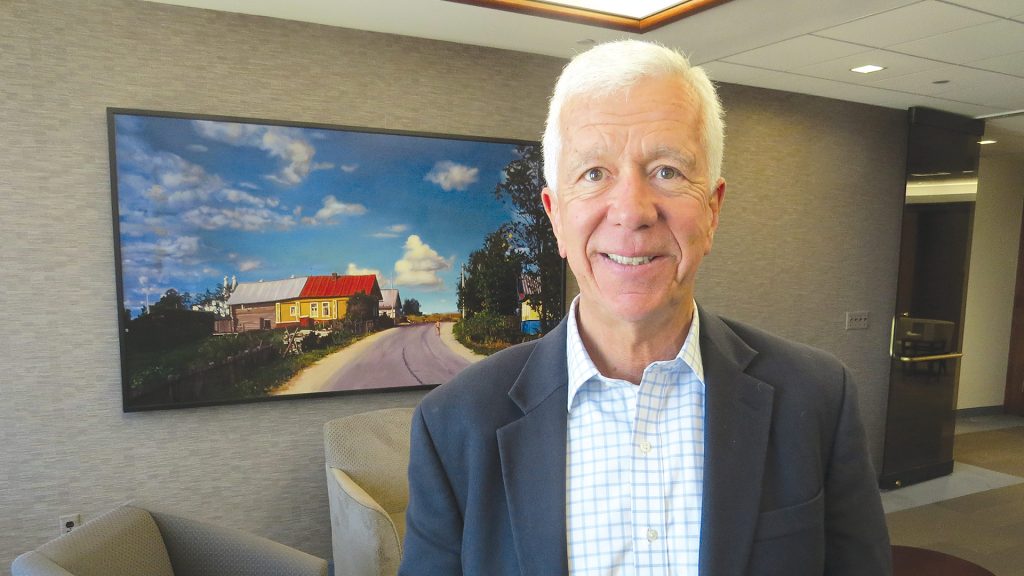
The podcast, accessible at mahealthyagingcollaborative.org/reimagine-aging, highlights voices from statewide and community leaders, older adults, and nonprofits through six episodes: “Aging with Purpose and Meaning,” “Buildings That Bring People Together,” “Enhancing Digital Equity for All,” “Moving Forward,” “Savoring Food That Matters,” and “Shaping Compassionate Communities.”

The podcast was produced in partnership with the Massachusetts Healthy Aging Collaborative with funding from Point32Health Foundation.

“The country is looking to Massachusetts as a leader in the age-friendly movement,” said Nora Moreno Cargie, Point32Health Foundation president. “We are inclusive and center the work in community. These initiatives originated with older people, including people of color, people from the LGBTQ+ community, and others facing systemic barriers, demonstrating the power of proximity and the creativity of community.”
At Bay Path, Watson is gratified to see faculty and students to do their part in creating that paradigm.
“The productive-aging concentration is very unique in higher education, and the fact that we have students at different levels who have the opportunity to develop programs and interact with people in the community while they’re learning … it’s just a special thing.”

Commercial Real Estate Special Coverage

Going by the Book

Development Associates President Ken Vincunas

Development Associates President Ken Vincunas


Ken Vincunas says he’s long kicked around the idea of writing a book, one that would call on nearly 40 years of experience in the broad realms of development and commercial real estate.

He even has a working title: What’s the Rent?

That’s a simple question, one that property owners and leasing agents probably get asked every day, and hopefully several times a day, said Vincunas, president of Agawam-based Development Associates, which has a broad portfolio of office, retail, and industrial properties across Western Mass. and into Connecticut. But coming up with an answer is usually anything but simple.

“There have to be 20 subjective factors and no objective factors that go into this, and every time one of them comes up, you have to hope that you have the experience to know your market, know your tenant, know your building, know your rates, and try to make a deal that’s fair to everyone and keep the place leased,” he said, adding that COVID and its aftereffects, including the strong movement toward remote work and hybrid schedules, have only further complicated this equation, as we’ll see.

While addressing the rent question, Vincunas said his book — if and when he ever gets around to writing it — would also include some case studies, and there are many he can piece together involving the myriad scenarios he and others in this business face regularly.

“There are things that can’t possibly happen, but they do,” he explained. “Like this … you get no one for a space for six months, and then, you have two people. The one you want is slow and can’t quite figure out, but they’re a better prospect; the one you don’t really want is champing at the bit — ‘let’s go, we’re ready.’ What do you do? That’s probably happened 15 times to me; it’s really something.”

“There have to be 20 subjective factors and no objective factors that go into this, and every time one of them comes up, you have to hope that you have the experience to know your market, know your tenant, know your building, know your rates, and try to make a deal that’s fair to everyone and keep the place leased.”

As he talked about this book waiting to be written, Vincunas said he’s always calling on the years of experience that would go into it, especially at this time of challenge in commercial real estate and development, one he summed up quickly and effectively by saying, “we would look to acquire things if prices were fine or if we had a tenant lined up, but we’re in no hurry, and we’re going to hope for better times in the next seven to eight months.”

Elaborating, he noted that, on the development side, this is mostly a time to hit pause, noting that several colliding factors — from higher interest rates to the still-climbing costs of materials; from supply-chain issues to mandates for electric heat — are making this a difficult time to build.

And on the leasing side of the equation, it’s a time to tough out those aforementioned challenges, try to keep buildings full, and take advantage of the opportunities that present themselves. He’s doing all that at the Greenfield Corporate Center, where a large (as in 55,000-square-foot) vacancy, left by the Greenfield District Court when it moved back to downtown Greenfield and a new facility there, has been mostly backfilled.

The StubHub Building in East Granby

The StubHub Building in East Granby, acquired by Development Associates in early 2020, is still vacant, but the company is optimistic this will soon change.

“We had counted on them staying — government contracts never come in on time,” he said with a laugh, referring to the construction of a new courthouse, which did come in on time, adding that the vacant space has been largely filled by an allergist, a CPA, the Sheriff’s Department, and other tenants, and the two buildings on the property are mostly occupied.

And Vincunas and his team are doing it at other properties as well, which are seeing those colliding forces from COVID, including businesses eyeing less space, in many cases, with fewer people coming to the office to work, but also different space as it comes on the market and deals can be made.

Meanwhile, DA, as his firm is called, is pushing ahead with some new projects, including a 55,000-square-foot office building in East Granby, Conn., known as the StubHub Building, which it acquired just prior to the pandemic in 2020, and nearby property — a five-acre parcel and a larger 19-acre parcel — that awaits development.

“The industrial market is exceedingly tight — purchase prices have doubled, at least. No one can afford to build with the high interest rates and the high cost of construction. Those who had industrial space in place could rent it for much more than they could have years ago.”

For this issue and its focus on commercial real estate, BusinessWest talked with Vincunas about everything from the state of the market, and the many factors that go into the current picture, to the manner in which he’s calling on all of his experience in these different — and challenging — times.


The Next Chapters

As he talked with BusinessWest about the Development Associates portfolio of existing properties and what might come next, Vincunas got up from his chair and retrieved a piece of paper thumbtacked to a board hanging next to his desk.

It was a timetable of sorts for the project in Northampton that has come to be called the Atwood campus. And he marveled that it has been 13 years since the former Clarion Hotel & Conference Center was demolished to make way for the office complex that sits there now.

The Atwood campus in Northampton

The Atwood campus in Northampton is one of the many success stories scripted by Development Associates.

The Atwood campus is one of many success stories in the DA portfolio. The three buildings on the property are full, with tenants ranging from Cooley Dickinson Hospital and Clinical & Support Options to several professionals. And while the success of the complex would seem to welcome development of another office building on the remaining space within the footprint, current conditions, including ongoing questions about the long-term strength and resiliency of the office market, but also the soaring costs of building, dictate caution, Vincunas said.

“We’d love to do it, but you have to have some pre-leasing,” he told BusinessWest. “And how much is the rent a year and a half from now? When you commit to someone today, you say, ‘you’re going to take 30% to 40% of the building.’ Sure, we’ll start building it, hope we get some others, and carry on with you until we get them. But what’s the rent a year and a half from now? It’s not easy to know.”

These sentiments reflect the high levels of challenge and uncertainty, but also opportunity, that define the commercial real-estate market at present, he said, adding that some segments of this market are doing very well, especially industrial — again, because building new is not an attractive option, and also because the work done at these facilities, be it manufacturing or warehousing, can’t be done remotely.

“So the industrial market is exceedingly tight — purchase prices have doubled, at least,” he said, noting that the same is true of lease rates. “No one can afford to build with the high interest rates and the high cost of construction. Those who had industrial space in place could rent it for much more than they could have years ago.”

Meanwhile, the office market is certainly slower, but there is movement as leases expire and business owners mull options, which bode well for properties like the StubHub Building, which remains vacant but may soon be landing a federal agency, said Vincunas, adding that DA acquired the property knowing it would take some time to lease it out, and COVID only exacerbated that challenge.

Greenfield Corporate Center

Development Associates has been successful in backfilling space at the Greenfield Corporate Center.

“It’s a very solid, very attractive building, and we know it’s going to work based on the price that we paid,” he said, adding that those same sentiments apply to the five-acre parcel just down busy Route 20, where DA is envisioning a a retail complex at that location, as well as the larger, 19-acre parcel. In both cases, the company can afford to be patient.

“I’m bullish on that whole area,” he said. “There are 400-plus apartments being built within three miles, so that whole area, in our estimation, is going to take off.”


The Plot Thickens

As he assessed the current office market, Vincunas said that, despite the convictions of many in this business that workers will eventually return to the office because companies function more efficiently if people are all in one place, the reality is that remote work and hybrid schedules are very likely here to stay.

That means most of those same businesses have decisions to make as leases expire, about how much space they need and where they want to be. And for those trying to keep buildings full, or as full as possible, it means working hard with both existing tenants, to keep them in some capacity, while also trying to attract those using their own expiring leases to explore the many other opportunities presenting themselves.

He’s seeing that at several of the DA properties, including Greenfield, where that successful backfilling is ongoing, and also 200 Silver St. in Agawam, where the company is trying to fill a vacancy left by a departing fitness center.

“Overall, you have to know your market and try to strike a balance. People don’t want to move, and people have options. And each situation is different. If you know the people love the location and the building, they might feel more strongly about staying where they are, and you work with them to make that happen.”

“We’re entertaining two companies in the insurance business; one wants to get out of Springfield, and one wants to consolidate its offices,” he said, adding that these are some of the forces impacting the market at present, ones that create uncertainly and volatility, but also opportunities, especially in smaller communities and smaller office facilities.

But there are risks everywhere, he added quickly, noting that, across the broad office market, the trends toward consolidation and putting fewer people in smaller spaces cast long shadows over the market.

To manage these sea changes, real-estate firms must call on their experience and handle each case individually.

“Overall, you have to know your market and try to strike a balance,” Vincunas said. “People don’t want to move, and people have options. And each situation is different. If you know the people love the location and the building, they might feel more strongly about staying where they are, and you work with them to make that happen.”

Returning to that aforementioned book he’s looking to write and its unofficial title, he reiterated that each case is different and each time is different, and companies like Development Associates must adjust to the conditions at that moment in time.

“When it comes to office space, you’re either in a strong position or a weak position, and you have to respond accordingly,” he said. “It’s the same as ever.”

Sales and Marketing Special Coverage

Getting the Message Across


Marketing and communications in 2024 are evolving further, with no signs of slowing down. The year ahead promises groundbreaking shifts, from artificial intelligence revolutionizing marketing and user engagement to big brands capitalizing on social media’s bite-sized content for enhanced product exposure. Add to this the rise of immersive digital experiences, and you have a transformative landscape. Here’s what the experts at the integrated marketing agency 9Rooftops have to say:


Creative Shifts: Renewed Nostalgia and Inspiration

By Scott Seymour

Adaptable Personalization: With advancements in customization and AI workflows, new opportunities arise to resonate in ways we never thought possible. People will have the freedom to consume content tailored specifically for them. The ability to create adaptable creative to match someone’s current mood or their desired need state is worth exploring. Then, having the design expressed in a way that is completely in sync with their personal aesthetic preferences will be incredibly valuable.

Minimalism and Decluttering: Now more than ever, with massive amounts of information coming at us at any given moment, a movement toward simplification is welcomed. Reducing clutter throughout all aspects of our lives, including incoming communications, allows people to truly focus on what matters most without unnecessary distractions. Carefully curated content and purposeful design choices will genuinely deliver on the principle that less is more.

“With advancements in customization and AI workflows, new opportunities arise to resonate in ways we never thought possible.”

Fantastical Inspiration: Sparked by AI image generation and fueled by possibility, we anticipate an acceleration of surreal, fantastical styles that provoke a sense of wonder and escapism. A hyper-real utopian aesthetic blurs the lines between reality and imagination. With this extraordinary style of captivating imagery, surreal illumination, and dreamlike color palettes, they will continue to delight and defy reality.

Rise of Kindness: Acts of kindness uplift people when they need it most. Brands that tap into this concept will deepen connections with their consumers in new ways. This will promote empathy, fostering a sense of gratitude that can be contagious.

Nostalgia Reimagined: Fueled by a need for authenticity, optimism, and a desire for what’s next, a foundation of shared nostalgic cultural connections, themes, and designs will create stronger social bonds. Blending this charm with a modern twist will keep things fresh and interesting.


Social Media Shifts: Connecting Through Social-first Tactics

By Julia Repisky

TikTok: It’s no surprise that this social-media platform will continue to reign; in fact, TikTok is anticipated to increase its user base to 900 million, an 8% increase, so being active is more paramount than ever in 2024, especially as the audience continues to diversify beyond just kids.

Bite-sized Content: Short, easily digestible content led TikTok and Instagram reels to their huge success, especially as attention spans continue to shrink. People want content they can consume in seconds, and your brand should be able to deliver that in an authentic way.

SEO on Social: Gen Z and Millennials rely on social for more than entertainment. About 40% of young adults between 18 and 24 use social media like a search engine, meaning you’ll need to go beyond just hashtags to hit the right keywords to make your social presence known.

Hybrid, AI Content: The AI buzz won’t calm down anytime soon and will become an integral part of social-media content creation, whether to help with inspiration, optimize content, or create something completely new. Don’t be afraid to play around with what AI can help you do.

Raw, Authentic Content: Social media isn’t the place for polished product placement anymore. Users don’t want perfection, but a feed full of relatable, highly (or even completely) unedited content that feels natural. In 2024, aim for less overanalyzing and creating more content in the moment.


Customer Relationship Management: Emerging Patterns and Insights

By Jenny Brenner

Decisioning and Personalization Relevancy: This has always been a key driver in connecting effectively with prospects and customers, and with new AI tools aiming to decrease technical barriers, automate, and ease integration, anticipate an even higher baseline for personalized product offerings, content, and communications in the marketplace. Revisit your personalization capabilities to ensure you’re scoring and maximizing output across transactional, behavioral, and situational data.

Zero-Party Data Campaigns: They’re not going anywhere, gaining popularity in 2023 as an initial outcome of cookie-deprecation announcements. Expect brands to continue to take advantage of these for turnkey data collection and application, which are well-suited for on-the-fly personalization, situational and environmental touchpoints, and driving conversion-rate optimization results.

Interactivity: In an increasingly digital environment, it’s even more challenging for brands to break through the clutter in inboxes and experiences. Increasing the interactivity of your digital touchpoints, from email to MMS/SMS, can help significantly boost engagement and results. Make interactive features and formats, like GIFs, quizzes, and countdown clocks a regular part of your digital brand experience to engage customers and deliver offers and content in a unique and memorable way.

Experiential Rewards: Engaging loyalty-program members requires a blend of transactional and emotional benefits. While transactional benefits — discounts, offers, points — can drive direct replenishment and purchase retention, incorporating experiences, whether gamified or as exclusive rewards, can drive brand differentiation, preference, and loyalty. Pilot a gamified or exclusive experiential element in your loyalty program to spark member interest and engagement.

“In an increasingly digital environment, it’s even more challenging for brands to break through the clutter in inboxes and experiences.”

Prioritizing Customer Key Performance Indicators (KPIs): Increases in consumer privacy policy will continue into 2024, and as key platforms and providers decrease the amount of data shared back to marketers, brands need to find alternative measurement solutions across digital ecosystems. Prioritize defining, regularly calculating, and placing weight on customer-centric metrics alongside campaign KPIs in 2024 to provide a bigger picture of your campaign’s impact on ultimate goals: changing key behaviors and growing customer lifetime value.


Experience Marketing: Transformational Engagement

By Kate Bradbury

Immersive Digital Experiences: The introduction of the Sphere in Las Vegas has sparked a ton of excitement around the power of immersive artistic experiences where visual, sound, and physical form all come together in awe-inspiring ways. Advances in technology have made production more flexible and affordable for smaller-scale events. Moreover, discussing experiential marketing ROI through data science remains a way forward to measure results for a diversity of experience marketing strategies.

Scalable and Reusable: Efficient execution and long-term thinking around event assets will be critical as larger economic trends put pressure on marketing budgets. Creating event platforms that can scale up and down and reusable assets can help stretch marketing dollars. Plus, reusable assets help make events more sustainable.

Tech-powered Personalization and Customization: AI has seen a rapid technological increase and adoption rates. We think AI will enhance targeting and customization exponentially, allowing marketers to build dynamic experiences precisely tailored to their consumers from beginning to end. AI will also allow for consumer-driven, personalized experiences.

Exclusivity: FOMO (fear of missing out) is real, and post-COVID consumers are again placing an emphasis on gathering once-in-a-lifetime-style memories and experiences. Highly curated events with a level of exclusivity are a perfect fit for the right brand and can be magnified via an influencer approach.

“Online shopping is more convenient than ever, so if people are going to spend time going to a store, they want something special.”

Experiential Retail and Pop-ups: Online shopping is more convenient than ever, so if people are going to spend time going to a store, they want something special. Creating unique experiences with the full transformation of spaces or launching memorable pop-up shops are ways for brands to stand out. These dynamic and bespoke experiences help drive social sharing, additional brand impressions, and customer loyalty.


Digital Experience: Advancements in Personalization and AI

By Patti Mulligan

Hyper-personalization: As the practice of being treated as a unique individual increases loyalty, the demand for personalized experiences will continue to grow. AI will be increasingly reliant on analyzing customer data to facilitate these experiences. In fact, AI will offer real-time personalization of user experiences, which may result in immediate data analysis. An AI algorithm will immediately analyze a user’s actions on platforms, including clicks, navigation, and internal search queries, and adjust the website page’s products.

Sustainability: Developers will focus on improving performance of digital solutions, requiring less from servers and networks. There is a general concern across the spectrum of designers, developers, users, and customers who are committed to social responsibility and the environmental impacts of their experiences and products.

AI Integration: This is an obvious trend that is only gaining traction from development tools for more efficient coding to image generation and behavior insights. In fact, by 2030, the global revenue forecast for AI is projected to reach a mind-numbing $1.3 billion. Every big brand is traversing the AI landscape, including Google’s generative AI search experience. In theory, this will result in more data-driven designs that revolve around user insights.

Immersive Experiences: AR and VR will grow in usage and popularity and will be used increasingly to enable product interactions that are key to encouraging customer loyalty. Future evolutions will allow for virtual stores, enhanced product visualizations and experiences, and interactive product demonstrations. AR already enables virtual try-ons, which allows users to see how products look on them with their smartphones, helping encourage more confidence in the purchase process. Moreover, AR personalization allows you to see if that sofa looks right in your living room, or if that hat you found online will match your sport coat. Expect all these examples to evolve and expand into more consumer use cases.

Accessibility: A timeless requirement rather than a trend, accessibility should never fall out of the limelight. With one in four Americans having a disability, it is imperative for all users to be able to access websites. By implementing ADA guidelines, the benefits to companies are great as accessibility fosters inclusivity and quality, expands audiences, builds brand image and reputation, and prevents costly litigation.


The Creator Economy: New Influences

By Pamela Pacheco

Brand and Influencer Collaborations: Influencer marketing has become an integral part of brand promotion. In a 2023 Influencer Marketing Hub survey, an overwhelming 83% of respondents said they believe influencer marketing continues to be effective. Now, brands are taking it a step further by collaborating with influencers to create new products. This approach enables brands to leverage the influencer’s creativity and knowledge of their audience, resulting in more authentic products for their target audience. It also generates greater engagement and loyalty among consumers. This mutually beneficial collaboration between brands and influencers has proven to be effective in enhancing the overall success of marketing campaigns and will continue to evolve during 2024.

Social Commerce: In 2024, the alliance between influencer marketing and social commerce is set to rewrite the rules of online shopping. As the annual average social commerce sales per buyer is projected to grow 21.3% (according to an eMarketer report) this year and social media platforms like TikTok, Instagram, and YouTube continue to incorporate shopping features, influencers will act as the center, providing first-hand product reviews, live demonstrations, and real-time purchasing guidance to their audiences. This trend will enhance the shopping experience and offer brands a dynamic way to reach and convert consumers directly within their favorite social platforms.

“In a fun twist, employees are stepping into the spotlight as new influencers, leveraging their connection to the brand’s values and culture to cultivate deeper trust and engagement with consumers.”

Brand Employees Become Influencers: As this industry continues to evolve, brands are recognizing the potential within their staff. In a fun twist, employees are stepping into the spotlight as new influencers, leveraging their connection to the brand’s values and culture to cultivate deeper trust and engagement with consumers. Employees turned influencers will be encouraged to share their experiences, opinions, and knowledge about the brand to create authentic content that fosters deeper connections with consumers. So how are brands selecting these employees? They look for employees who are active on social media, have a considerable following, and possess strong communication skills. Now, anyone from the CEO to a sales associate can become a brand ambassador.

Macro- and Micro-Influencers Combine: The combination of macro- and micro-influencers will become a popular strategy for brands looking to diversify their audience reach and engagement in the world of influencer marketing. Macro-influencers typically have a larger following and higher social-media reach, while micro-influencers are more relatable and have a more niche following, which can result in higher engagement rates. By combining both types of influencers, brands can create a marketing campaign that appeals to a wide range of consumers and generates a higher level of engagement and loyalty.

Community-centric Influence: Influencers will shift their focus from chasing follower counts to nurturing social communities. This trend emphasizes meaningful engagements, discussions, and immersive experiences within niche communities, reshaping the influencer landscape.


Scott Seymour is executive vice president and chief creative officer, Julia Repisky is senior content and social media strategist, Jenny Brenner is group director of digital strategy and CRM solutions, Kate Bradbury is managing director, Patti Mulligan is vice president and director of digital experience, and Pamela Pacheco is senior social media strategist at 9Rooftops.

Business Talk Podcast Special Coverage

We are excited to announce that BusinessWest has launched a new podcast series, BusinessTalk. Each episode will feature in-depth interviews and discussions with local industry leaders, providing thoughtful perspectives on the Western Massachuetts economy and the many business ventures that keep it running during these challenging times.

Go HERE to view all episodes

Episode 209: April 15, 2024

Joe speaks with Tara Brewster, vice president of Business Development and director of Philanthropy at Greenfield Savings Bank

Tara Brewster has come a long way from her years in the world of men’s clothing. Over the past several years as vice president of Business Development and director of Philanthropy at Greenfield Savings Bank — a role in which no two days are the same, she says — Brewster has only grown her heart for the business community (which she also expresses as host of the Western Mass Business Show on WHMP) while continuing to find impactful ways to serve local nonprofits and community organizations. On the next episode of BusinessTalk, she talks with BusinessWest Editor Joe Bednar about all of this and more — and how she manages to find balance in a very busy and meaningful life. It’s must listening, so tune in to BusinessTalk, a podcast presented by BusinessWest.

Also Available On

Class of 2024 Event Galleries Special Coverage

MEET THE 2024 DIFFERENCE MAKERS!

BusinessWest Editor Joseph Bednar interviews with 2024 Difference Makers: Rock 102, Paul Lambert from Springfield Symphony Orchestra, Beth Welty from the Springfield Chamber Players and Shannon Rudder from MLK Family Services.
BusinessWest Editor Joseph Bednar interviews with 2024 Difference Makers: Scott Keiter of Keiter, Linda Dunlavy of Franklin Regional Council of Governments, Matt Bannister of PeoplesBank and Delcie Bean of Paragus Strategic I.T. Special Thanks to GCAI

Thank You to our Partner Sponsors

Thank You to our Supporting Sponsors

Watch the Sponsor Videos

Features Special Coverage

The State of the Bay State


Brooke Thomson said her story is of the kind the Bay State and its leaders like to write.

Hailing from the Midwest, she graduated from Mount Holyoke College, went to law school in Boston, and then made the decision to start her career and raise a family here.

It wasn’t easy, she recalled, noting that she needed roommates when she got her first apartment, and housing in the Boston area, as well as countless other expenses, made those early years — and even the later ones — a stern challenge.

But she stayed and is now president and CEO of Associated Industries of Massachusetts (AIM), a position from which she reflects on, and often retells, her story while noting, with large doses of frustration and even dismay, that it is becoming a harder story to write today.

Indeed, some of the thousands who graduate from Bay State colleges and universities each year are opting not to start their careers here, said Thomson, who sat down recently with BusinessWest to discuss the state of the Bay State. And some who did start here are finding it too difficult to stay amid sky-high prices for everything from homes to daycare and tax burdens that are far less friendly than many other states, including several in the Northeast.

This exodus, if you will, is one of many forces, most of them interconnected in some ways, that are colliding at what is an inflection point for the state, said Thomson, a critical time in its history, when the dust has largely settled from COVID and its aftermath, and this state, like all others, must devise a business plan, if you will, for coping with a new set of realities.

“Businesses, municipal leaders, state leaders, and federal leaders must make sure we’re putting in place the economic incentives and the regulatory pathways so that we can continue to have a strong economy in Massachusetts.”

These forces include the momentous shift in how and where people work post-pandemic, a swing toward remote work and hybrid schedules that is impacting everything from commercial real estate to hospitality and service businesses in central business districts in cities from Boston to Springfield and everywhere in between. They also include demographics — everything from smaller high-school graduating classes to huge numbers of retiring Baby Boomers — a persisting workforce crisis impacting most all sectors of the economy, falling state tax revenues, transportation issues led by the famously unreliable MBTA, a housing crisis that is impacting most of the 351 cities and towns in the Commonwealth, high energy costs and the growing need to address climate change, and, of course, the spiraling cost of living, punctuated by sky-high home prices, not just in Boston, but in an ever-wider radius around the city and many other parts of the state as well.

A poignant example of how many of these forces are intertwined came late last month, when Boston Mayor Michelle Wu proposed legislation to increase commercial property tax rates amid a decline in property values post-pandemic — and as many buildings suffer from remote-work-related issues — in an effort to protect residents from what she called “sudden and dramatic tax increases.”

The matter went to a subcommittee last week, where its fate is in question, especially in an election year, and amid warnings from real-estate trade groups and business leaders that the move would increase the burden on an already-struggling office market and could deter new investment.

Brooke Thomson

Brooke Thomson says housing — and the need to build more of it — is among the many challenges confronting the Bay State at this critical time.

Wu’s proposal, and the reaction to it, are examples of how complicated these problems are — neither side is really in a position to absorb a higher tax burden — and how elected leaders, the business community, and even residents are going to have to work collaboratively in this time of stern challenges, Thomson noted, adding that the state’s businesses, despite some rumors to the contrary, cannot shoulder the burden itself.

“I think this is a critical time because there is so much uncertainty and because we are coming out of the COVID bubble,” said Thomson, who took the helm at AIM at the start of this year. “Businesses, municipal leaders, state leaders, and federal leaders must make sure we’re putting in place the economic incentives and the regulatory pathways so that we can continue to have a strong economy in Massachusetts.

“I think we’ve seen elsewhere in the country that, depending on what actions are taken, certain cities that used to be centers of business and growth are no longer there,” she went on. “Part of this was out of our control, part of it was this COVID bubble where everything was shut down and then people re-evaluated how they worked and where they worked, and businesses re-evaluated where they located and what their space looks like and where they draw talent from. But as we are moving out of that, we must collectively figure out the right sauce, the right recipe, sort of speak, for success.”

For this issue, BusinessWest talked with Thomson about this recipe and the ingredients that might go into it.


Work in Progress

Thomson said she can usually tell what day it is — or isn’t — by the volume of traffic in and around Boston.

While it’s still difficult to get where one wants to go most of the time, Mondays and Fridays are at least somewhat better, she said, adding that, by and large, these are the days when many who can and do work a hybrid schedule are not in the office. And the impact of that many people working from their home offices or dining-room tables is felt not just on the roads, but in the office towers in that city, where valuations are falling, and the countless diners, restaurants, and service businesses that rely on foot traffic from people working in the city.

“Tuesday, Wednesday, and Thursday — that’s when people are coming in,” she said. “And that presents a whole host of challenges; it exacerbates transit, and if you have a workforce, like ours, that’s in this sandwich generation where they’re caring for children but also caring for parents, not only do we not have enough support there, but our systems are not set up where daycare facilities have a Tuesday-Wednesday-Thursday schedule.”

“There are a lot of things we have to move on quickly, meaning right now, to set ourselves up to be in a place of continued growth so that, 10 years from now, some of these trends that we’ve seen, like outmigration and tax-return dips, don’t continue. But it’s going to require some strong action right now.”

While Boston is the poster child for the challenges that have come post-pandemic, the same issues are being seen in communities across the state and in businesses of all sizes and in most every sector.

Indeed, she said AIM, which employs more than 25 people full-time, exemplifies the current colliding forces and trends. It has seen a few of its valued employees leave the agency and the Commonwealth for more affordable states, she said. Meanwhile, it is preparing to move into new quarters and reduce its overall footprint to reflect a need for less space amid more remote work.

“Like a lot of businesses in the wake of COVID, we re-evaluated what our footprint should look like and where we should be,” she said, adding that the agency is slated to move in June into space that is slightly smaller, but also features more “collaborative space,” as she called it, and more gathering and event space amid fewer private offices.

As for losing employees to other states, “we’ve lost two people in the past year who were under 30,” she said. “It’s not because they didn’t love Massachusetts; it’s not because they didn’t love AIM. One moved to Tennessee, and one moved to Texas because those states are more affordable, and they have the prospect of buying a home.”

Extrapolate these recent developments across the state and its business community, and it’s easy to see why this is a critical juncture for the Commonwealth, Thomson said.

She can cite some positives and possible reasons for optimism — everything from the tax cuts Gov. Maura Healey signed into law last fall to projections that falling state tax revenues may pick up in the last few months of the fiscal year; from persistently low unemployment rates to signs on Beacon Hill that leaders there understand what needs to be done.

“I remain cautiously optimistic because many municipal leaders, and our administration, are laser-focused on providing incentives to try to make it very clear to the business community that Massachusetts wants businesses to be here and wants businesses to grow,” she said. “And they recognize that, for there to be good jobs and good quality of life and affordable housing, we have to have a strong economy.

“I haven’t seen that messaging in recent years as strong as I’m hearing it now,” she went on. “The question is … will the actions that go along with that be put into place and be effective? From AIM’s perspective, that’s why we’re working alongside the administration and the Legislature to say, ‘now is the time to act.’”

Elaborating, and citing ways in which in the state and its leaders need to act, she listed the housing bond bill proposed by Healey, as well as the so-called ‘Mass Leads’ legislation, an economic-development bill that contains incentives for businesses.

“We have to look at this because, as we see the demographic shift, as we see folks retiring, we’re going to have a real problem if we’re not saying to those young folks, ‘this is where you want to stay and work and raise a family.’”

“There are a lot of things we have to move on quickly, meaning right now, to set ourselves up to be in a place of continued growth so that, 10 years from now, some of these trends that we’ve seen, like outmigration and tax-return dips, don’t continue,” she went on. “But it’s going to require some strong action right now.”


It’s About Time

Thomson kept repeating those words ‘right now’ for emphasis, and they apply to everything from housing to how the state will meet its energy needs in the future as it moves on from nuclear power and some fossil fuels to natural gas and clean-energy sources such as solar, wind, and hydro, for which infrastructures must be built.

“If it’s not done quickly, 10 years from now, 15 years from now, I don’t think we’re going to be at a point where we have as much control over turning the ship around,” she told BusinessWest, adding, again, that the responsibility for turning the ship, and the costs involved, must be borne by all constituencies, and not simply the business community.

“We have to be thoughtful and intentional about how everyone has a role,” she went on. “What AIM has said consistently is that this cannot be a burden that is carried by the business community alone. We know that our businesses are really taxed right now; they’re at a point where many of them are just barely getting by, and they’re in a real competition for talent and resources.”

While she’s generally optimistic that the ship can, in fact, be turned, she is troubled by much of what she’s seeing, especially the exodus of talent to other states. She noted that 22- to 35-year-olds are leaving the state at a rate of 35%, a number significantly higher than it has been historically.

And they’re leaving primarily because of the high cost of living, she said, noting that, while it’s always been expensive to live in Greater Boston — she had to work two jobs to afford her first home — it is much harder to make ends meet now, as evidenced by those two AIM employees who packed the car and moved south and west.

“That’s what I worry about — that’s your talent, those are your creative minds,” Thomson said. “Those are the folks who are going to bring the innovation that has made our economy so great. And we’re not selling them on staying here in Massachusetts.”

And these young people are leaving just as the Baby Boomers are leaving the workforce, she went on, noting that the state now has what would be called an older workforce, with an average age around 40.

“We have to look at this because, as we see the demographic shift, as we see folks retiring, we’re going to have a real problem if we’re not saying to those young folks, ‘this is where you want to stay and work and raise a family,’” she noted. “I really do worry about it, and it’s worse in certain areas and worse in certain industries; the average age of a utility lineman is 57 years old. How are we going to make the energy investments, upgrades, and transitions we need if we don’t have the workforce that’s capable of doing it?”

There are ongoing initiatives to generate interest in such fields, Thomson went on, but the challenge is the full slate of issues that must be addressed simultaneously — and soon.

Which begs the question: where to start?

“The hard thing is, we’re going to have to do a lot of things at once,” she said. “We must take aggressive actions on housing because it’s going to take long, and the price of not acting now is that, once you start losing folks at a high rate, they’re not going to come back. And even if we can build more housing and find creative ways to make some affordable housing, Massachusetts is going to be more expensive than some states.”

It’s the same with the other issues on that long list as well, Thomson went on, adding that, when it comes to housing, new businesses, or other forms of change, communities will need to be willing to adjust — or suffer the consequences.

“Communities that say, ‘this is what my community looks now, change is hard, and we don’t want to adapt,’ those communities are going to lose out to those who are willing to be more adaptive,” she noted. “And then the question is … do we have enough consensus as a state, enough communities willing to step up and do it, that we’re successful?”

Construction Special Coverage

Building on Momentum

Wonderlyn Murphy (standing, center) with her leadership team at City Enterprise.

Wonderlyn Murphy (standing, center) with her leadership team at City Enterprise.


To Wonderlyn Murphy, a successful construction project can be defined in different ways. And one of those is how gratifying it is.

Take the new digital marquee sign at the MassMutual Center, which displays upcoming events, weather, and other information. Springfield-based City Enterprise built the structure that holds the digital display in place and ran the electrical work. The stone exterior in that area of the building had to be removed, reconfigured, and reinstalled after significant steel reinforcement was added to the wall structure to support the 40-by-25-foot display.

“That’s a brand-new sign, and it’s a big deal for Springfield and a big deal for us. We wanted that contract because of everything that Springfield is doing,” said Murphy, City Enterprise president, noting other developments happening in the downtown area, like the transformation of the former Court Square Hotel into housing. “To be part of what’s happening in Springfield, for me, is important.”

Another gratifying project is City Enterprise’s work on Martin Luther King Jr. Community Presbyerian Church, which was set ablaze by an arsonist in December 2021.

“We’re currently working on rebuilding that, to make sure that they have services again,” Murphy told BusinessWest. “It’s a very significant project for us, being a local contractor, and that being an African-American church with all its history. It’s an important project for us, very close to home.”

In terms of sheer volume of work, Murphy said, “it’s been challenging finding the right opportunities for us to bid. We have found them — we have an excellent estimating department that fishes out all these opportunities to bid. But it’s slim pickings out there.”

That said, she added, “it’s cyclical. As the summer comes along, we’ll find more opportunities that fit within our wheelhouse.”

City Enterprise has been involved in an array of intriguing projects, though, from laboratory renovations at UMass Lowell and two projects at UMass Amherst’s Mullins Center — an HVAC system overhaul and chiller replacement — to work at the Moakley federal courthouse in Boston and a complete rebuild of a security entryway for the Air National Guard at Westfield-Barnes Regional Airport.

J.L. Raymaakers & Sons has been busy on a project at Gardner Municipal Airport.

J.L. Raymaakers & Sons has been busy on a project at Gardner Municipal Airport.

“That’s a very significant project,” Murphy said of the latter. “We’ll take on any type of challenge.”

Dan Jodice has a similar take on being involved in a variety of projects. As a co-owner of PDS Engineering & Construction in Bloomfield, Conn., he’s seen the 60-year-old firm specialize in a widening list of sectors, including automotive, aviation, education, healthcare, retail, public safety, and more.

“Self-storage facilities are popular now, and car washes and car dealerships have been very popular with our clients over the past three years,” he said. “We can also do schools; we’re renovating a $40 million school in Hartford right now. Usually we do one school at a time, so we’ll do a school job, and when that ends, we’ll start on another one. We’ve also done a handful of churches over the years, and aerospace and aviation are pretty popular.

“We probably could be busier, but we’re happier with what we have now,” Jodice went on. “I’d say 60% of our work is repeat clients, and the other 40% is just getting out there and finding every lead possible.”


Challenge and Opportunity

John Raymaakers Jr. and Josh Raymaakers, directors at J.L. Raymaakers & Sons in Westfield, are plenty optimistic about how business is going, noting that all this year’s projects had been booked by last June.

The firm specializes in excavation, site work, and construction projects of all kinds, including airport runways and taxiways, pump stations, and, most recently, the foundation technique known as sheet shoring. Recent jobs include multiple bridge projects, Gardner Municipal Airport, a pump station in Great Barrington, and a Dunkin’ Donuts in Easthampton. “I’d say it’s a good mix right now,” Josh said.

“These are jobs funded through federal money and have been trickling into our local economy, which is helping us out and giving work for our employees.”

That said, they’ve dealt — like every other firm — with the key challenges of the past several years in construction: higher costs, supply-chain delays, and workforce shortages.

“They’ve been challenges, every one of them,” Josh said. “The pump stations require a lot of electrical components, and those have been an issue.”

Jodice agreed. “The biggest supply-chain issue is for electrical switchgear. If you order that now, it seems like it’s a year out, for some reason. Since COVID, that has not rebounded at all. Everything else is back to normal. Prices aren’t the same — I wish the prices were lower — but the supply chain is better. Ordering a metal building during COVID took six months. Today, it’s three months or faster.”

As for workforce, “we do pretty well,” Josh Raymaakers Jr. said. “Obviously, we would like more, but it’s a difficult challenge to find good people who have experience in our field.”

John recognizes the challenges across the industry as retirees are outpacing new blood, but as someone who grew up around the family business, he said construction is a stable and satisfying career — for those willing to put in the work.

entryway for the Air National Guard in Westfield

One current job at City Enterprise is rebuilding a security entryway for the Air National Guard in Westfield.

“You can’t be scared to get your hands dirty at first. The problem is, everyone wants to start at the top. But you have to work in the field and get your hands dirty. You have to learn. That’s what our parents made us do,” he explained. “That knowledge from being in the field is crucial, and that’s the hardest thing we’ve got to teach people. We have a project manager and bidder who started as a laborer, then became an operator, then a foreman, and now he’s a project manager. And his experience has been crucial for us.”

Challenges aside, “we’re very busy, and it doesn’t look like it’s slowing down, even with the private-sector work,” John continued, noting that about 75% of Raymaakers jobs are public, and 25% private.”

A great deal of the public work is being driven by a recognition that much infrastructure in Massachusetts is in need of repair, and federal money has been flowing in to help address those needs.

“Those are good opportunities,” he told BusinessWest. “These are jobs funded through federal money and have been trickling into our local economy, which is helping us out and giving work for our employees.”

Jodice said PDS doesn’t do as much public bidding as it does private, bidding maybe six public-sector jobs a year. “We try to stay busy in the private market. Public, you’re bidding against 10 to 15 GCs, and private, it’s maybe five, so there’s a better chance you get the project. And if it’s private, you can land a job more by building on a relationship with the owner and having them select you rather than the low number getting the bid.”

PDS got started six decades ago erecting pre-engineered steel buildings, and still does that work today, along with a much wider variety of projects ranging from commercial and industrial buildings to small fit-outs and large college projects — typically about $60 million worth of work each year across Connecticut, Western Mass., and Rhode Island. It also touts its expertise in the design-build realm.

“The convenient thing is we do our own design in-house; we can design and build rather than have the client go to an architect and have several different parties involved. The process is quicker because we’re doing everything here.”


From the Ground Up

Several years ago, J.L. Raymaakers & Sons launched a second business called ROAR (Raymaakers Onsite Aggregate Recycling), through which it collected and resold the dirt it dug up from construction jobs. That enterprise, which then expanded into bark mulch, processed gravel, and all kinds of rock, now employs four people full-time.

Because both businesses have been growing, the family bought land on Progress Avenue in Westfield and is building a new, 4,000-square-foot office space, which will be followed next year by a 7,000-square-foot maintenance garage. That property will be the new home of J.L. Raymaakers & Sons, while the current headquarters on East Mountain Road will exclusively house the ROAR operation.

“ROAR started strong, and it complements our other company,” John Raymaakers Jr. said. “We’re able to take the topsoil materials off of our jobs and then recycle them and sell them. That’s been a huge aspect of our business.”

City Enterprise has seen growth over the years as well, and now touts “the best team in the industry,” Murphy said.

“I have core values here, and I have people working with me that are really aligned with those,” she added. “Each department has their expertise, and we have a vision, and we’re working to get things done.”