Home Posts tagged Business Management (Page 3)
Company Notebook Departments

Doctors Express Forges Partnership with Large Practice Group
WORCESTER — Doctors Express, the largest independent urgent-care provider in the Commonwealth, announced a partnership with one of the largest independent cooperative physician groups, the Central Massachusetts Independent Physicians Assoc. (CMIPA). This first-of-its-kind partnership will offer more resources for patients, better communication between providers and patients, as well as continuity of care. Doctors Express operates under parent company Medvest, LLC, which serves as the master developer of the urgent-care franchise throughout Massachusetts, Maine, New Hampshire, and Vermont. In particular, this will be an opportunity for patients in Worcester to find accessible and affordable care. Doctors Express and CMIPA plan to launch their first site in Worcester (115 Stafford St., late spring) and another Worcester location (address and date to be announced shortly). This announcement comes on the heels of a successful partnership between Doctors Express and the Steward Health Care System, based in the Greater Boston area. Through the partnership, urgent care provided by Doctors Express is now available to all Steward patients. As Doctors Express continues to grow with more locations, affiliations between urgent-care providers and major medical systems is the way of the future, said Jim Brennan and Rick Crews, CEO and president, respectively, of Medvest, LLC. “Our partnership with CMIPA continues the objective at Medvest to redefine how patient care is delivered,” said Brennan. “We are partnered with Steward Health Care System, the largest fully integrated community care organization and community hospital network in Eastern Massachusetts, and now CMIPA, one of the largest physician cooperative groups in the Commonwealth of Massachusetts.” Existing urgent-care locations have not completely satisfied the need for affordable and accessible care, said Gail Sillman, CEO of CMIPA. “We thought about setting up our own urgent-care center while evaluating our options. We even hired a consultant and became familiar with all the urgent-care providers nationally and locally.” With the help of a consultant, Sillman identified Doctors Express as the most viable option. “Together we saw the benefits of a true partnership where other urgent-care providers did not,” she said. “Doctors Express will honor our patient relationships and extend patient care on nights and weekends for a true, mutually beneficial partnership. Furthermore, Doctors Express has the name brand and market recognition that we were looking for, largely due to the quality of their patient care.” Doctors Express currently has Massachusetts locations in Braintree, Burlington, Dedham, Malden, Marlboro, Natick, North Andover, Saugus, Springfield, Waltham, Watertown, and West Springfield, with several new locations in development. In addition to the two Worcester locations to be opened this year, the company plans to open a location in New Bedford later this month. The Marlboro location is the most recent addition to the Massachusetts-based operations of Doctors Express, having opened on Dec. 5 under the leadership of Managing Director Bing Yeo.

UMass Amherst, Amazon.com Create Virtual Bookstore
AMHERST — UMass Amherst has contracted with Amazon.com to replace its traditional on-campus textbook store with a virtual bookstore expected to save students about 30% compared with current prices on course materials and provide free, one-day shipping to the campus and nearby communities. This will be Amazon’s first online university store in the Northeast and its third nationwide, with potential annual savings of $380 per student. “We know students struggle with the high cost of textbooks and other course materials, and they have been moving to online purchasing. We are delighted to help them get the most competitive prices and first-rate service,” said James Sheehan, UMass Amherst’s vice chancellor of administration and finance. “By seamlessly linking our online campus information system to Amazon, we will make it convenient as well as economical for students to get the items they need for their classes, delivered in one day with no shipping charge to campus and nearby addresses.” Beginning in May, students will be able to order new, used, rental, and digital textbooks and other course materials through Amazon or through personalized links in SPIRE, the university’s online student-information system. To make finding UMass textbooks easier for students, Amazon will integrate relevant course and section information on customized Amazon product pages. In June, Amazon will also open a staffed customer pick-up and drop-off location in the Lincoln Campus Center. For several years, students have been turning from traditional textbook stores to online sources to save money. The university’s five-year contract with Amazon will accelerate the online-purchasing trend and save UMass Amherst students money, particularly through free shipping either to campus or to addresses in Amherst, Hadley, Northampton, Pelham, South Deerfield, and Sunderland. UMass Amherst officials said Amazon was chosen from six companies that submitted proposals because of its low prices and its ability to deliver superior customer service. Based on a sample of more than 1,500 course materials used in UMass Amherst classes during the 2014 spring semester, Amazon estimates it can offer UMass students a savings of 31% versus current bookstore prices, or around $1.4 million based on sales of textbooks at the existing UMass Bookstore. The College Board estimates that a student at a four-year state university spends $1,225 per year on textbooks and supplies, but that number varies across courses of study. Based on this rough estimate, UMass Amherst students could save about $380 annually.

Atlantic Fasteners Moves to Larger Facility
AGAWAM — Atlantic Fasteners has moved to a 44,500-square-foot facility in Agawam, bringing all employees under one roof. The 100%-employee-owned company, which sells industrial and aerospace fasteners and supplies nationwide, previously operated out of three locations in neighboring West Springfield. The new facility has the capacity to hold four times the company’s current inventory and accommodate 25% more office employees. It includes a 22-foot pickup counter, complete with 17 technical fastener wall charts to help customers with measuring fasteners, identifying head styles, and other important information. The ISO 9001:2008 and AS9120-certified firm was founded by Western Mass. businessman Patrick O’Toole in 1981. He sold the company to his employees in 2005.

WSU Online Programs Lauded by U.S. News
WESTFIELD — Westfield State University led Massachusetts’ state universities and placed in the top 30% out of 214 schools in U.S. News & World Report’s 2015 “Best Online Education Programs” rankings. Westfield State’s official ranking was 58 out of 214 in the category of online-education bachelor’s programs. “We are committed to finding new ways to expand access to a high-quality college education,” said Elizabeth Preston, president of Westfield State University. “Offering online access to our academic programming allows us to support the needs of students who might not otherwise be able to take advantage of the educational opportunities we offer.” Westfield State has offered online classes since 2002 and currently offers six online bachelor’s-degree-completion programs, in business management, criminal justice, liberal studies, history, sociology, and psychology. Evolving the program has been key to its success and expansion. Last year, Westfield State signed the MassTransfer Plus agreement that allows students who have completed an online associate’s degree at Holyoke Community College (HCC) to transfer to the university’s online bachelor’s-degree program, making it possible for them to complete a four-year degree fully online. The MassTransfer Plus agreement builds on the growing number of fully online degree programs available at HCC and Westfield State, as well as the institutions’ determination to make it easier for Massachusetts residents to obtain an education and move into higher-paying, in-demand career fields.

VertitechIT Launches New, Interactive Website
HOLYOKE — With sales at an all-time high, a modern headquarters, and a new, national business alliance focused on IT network infrastructure and unified communications, VertitechIT is celebrating with the launch of its new, interactive website, www.vertitechit.com. The site uses humorous, black-and-white photography and poignant headlines to draw in visitors, poking light fun at what can be a very staid and highly technical profession. “IT industry websites tend to be rather formulaic,” said VertitechIT Principal Partner Greg Pellerin. “It was important for our new site to reflect our corporate culture, one that promotes fun and creativity along with cutting-edge technical expertise.” The privately held company, which caters to the business and healthcare industries, just concluded its most successful year ever and recently moved into its new national headquarters in a converted 19th-century paper mill in Holyoke. VertitechIT also recently announced the formation of a national IT-solutions coalition with Microsoft platform provider Software Logic and unified communications expert Partner Consulting. The new Stability Alliance (www.stabilityalliance.com) is focused on building IT network infrastructures that allow businesses and healthcare systems to increase capacity, reduce costs, and improve efficiency.

SC Recognized for Community Engagement
SPRINGFIELD — Springfield College has been recognized by the Carnegie Foundation as one of a select group of colleges and universities throughout the country to earn its community-engagement classification. This classification recognizes Springfield College for its curriculum, which involves students and faculty addressing community needs, as well as outreach and partnerships that benefit the external community and the campus community. “This classification is highly respected and valued by the higher-education community,” said Springfield College Provost and Vice President for Academic Affairs Jean Wyld. “The essence of a Springfield College education is preparing students for careers and personal lives that improve the lives of other people, and this classification attests to that mission.” Springfield College is one of 361 institutions that now hold the community-engagement classification. This honor represents a higher-education institution’s excellent alignment among mission, culture, leadership, resources, and practices that support dynamic and noteworthy community engagement.

Springfield JCC Receives Grant for Wellness Project
SPRINGFIELD — The Springfield JCC Kehillah Special Needs Department’s Fitness Buddies Program is the recipient of a $10,000 grant from Ronald McDonald House Charities of Connecticut & Western Mass. for a wellness project that will significantly improve quality of life for young people with special needs. Recognizing the need in the Greater Springfield area for a fitness center with adapted equipment for teens with special needs, the JCC established a Fitness Buddies program with seed money from the Doug Flutie Foundation in 2013. As the popularity of the program increased, additional specialized equipment was needed to accommodate individuals with Down syndrome, Williams syndrome, and autism-spectrum disorders. Ronald McDonald House Charities stepped in to underwrite the cost of two Expresso S3Y youth bikes, which are safer than a conventional treadmill or elliptical machine. This type of bike is also being used in a pilot program with Harvard School of Public Health. Adding modified equipment puts special-needs individuals on a par with their friends and gives them access to aerobic and fitness equipment that otherwise would be excluded from their workout. “Innovations such as these accessible bikes for teens and young adults with special needs opens up yet another opportunity for profound self-development — in this case, exercising in a typical fitness center,” said Stocky Clark, executive director of Ronald McDonald House Charities of Connecticut & Western Mass. “RMHC is honored to partner with the JCC to bring this innovation to individuals with a range of special needs participating in the Kehillah Special Needs Department of the JCC.” Increased social interaction between the special-needs community and general members helps create healthy relationships and empowers individuals with special needs. Best Buddies matches teens and young adults who have social challenges with teens and adults in the community. Together, they work out at the Springfield JCC, and participants make new friends while learning healthy habits. Research shows that exercise yields a range of physical and mental-health benefits for children. The Springfield JCC serves the Greater Springfield and Northern Conn. communities, offering hundreds of programs for all ages with a strong commitment to individuals with special needs.

WMECo to Rebrand as Eversource Energy
SPRINGFIELD — Western Massachusetts Electric Co. (WMECo) announced it will undergo a corporate rebranding, complete with a new name, Eversource Energy. The change will become official on Feb. 2. All subsidiaries of Hartford-based Northeast Utilities will take the new name, including WMECo, NSTAR, Connecticut Light and Power Co., Public Service Co. of New Hampshire, and Yankee Gas Services Co. Tom May, chairman, president, and CEO of Northeast Utilities, stated in a press release that “consolidating our brand was the obvious next step for us as we continually strive to improve energy delivery and customer service to our 3.6 million electricity and natural-gas customers across the region.”

Real Pickles Wins Good Food Award
GREENFIELD — Dan Rosenberg and Addie Rose Holland of Greenfield-based Real Pickles joined top artisan food producers from around the country on Thursday for the Good Food Awards ceremony at the Palace of Fine Arts in San Francisco. Real Pickles was awarded a top honor at the event for its organic beet kvass, a fermented beverage traditional to Eastern Europe. “One of our goals at Real Pickles has always been to promote the flavor and health benefits of fermented foods,” said Rosenberg. “Receiving a national honor like the Good Food Award helps us get this message out.” Real Pickles uses the traditional pickling process — without vinegar — to make its line of fermented vegetables. The organic beet kvass is made with certified organic vegetables from northeast family farms, as are all of the company’s products. The kvass is available by the bottle from area retailers, including Green Fields Co-op Market in Greenfield, River Valley Co-op Market in Northampton, and Whole Foods Market in Hadley. The Good Food Awards are given to artisan producers in five regions of the U.S. in 11 categories — beer, charcuterie, cheese, chocolate, coffee, confections, honey, oil, pickles, preserves, and spirits — and highlight outstanding American food producers who are making food that is exceptionally delicious and supports sustainability and social good.

MassMutual to Continue Sponsorship of Hampden County Legal Clinic
SPRINGFIELD — The Hampden County Bar Assoc. announced that MassMutual will be continuing its sponsorship of the Hampden County Legal Clinic for 2015 with a grant of $20,000. The grant will help carry on the expansion of pro bono activities as well as the promotion of the clinic. MassMutual has been the Hampden County Legal Clinic’s exclusive sponsor since 2012, not only providing financial support but also taking a leadership role in developing new pro bono opportunities and encouraging its in-house lawyers, paralegals, and staff to participate in the clinic’s programs. “Sponsoring the Hampden County Legal Clinic enhances access to justice for a significant number of local residents, ultimately benefiting the Greater Springfield community as well,” said Mark Roellig, executive vice president and general counsel. “We are proud to continue this relationship and hope to see growing numbers of legal volunteers donating their time through the clinic’s programs.”

Daily News

SPRINGFIELD —Springfield College and the Naismith Memorial Basketball Hall of Fame recently presented the third annual Hoophall Classic Leadership Award to Springfield College sport management students Eric Pouliot and Emily Vance. Springfield College President Mary-Beth Cooper and Naismith Memorial Basketball Hall of Fame President and Chief Executive Officer John Doleva made the formal presentation during the 2015 Spalding Hoophall Classic at Blake Arena. Both Pouliot and Vance served as head supervisors for the 2015 Hoophall Classic, the leading high school basketball tournament in the country showcasing the nation’s top recruits. As part of their responsibilities, Pouliot and Vance created and developed work schedules for more than 75 student event staff workers and more than 30 student liaisons; created and conducted training sessions for volunteers of the event; collaborated with Springfield College Office of Conferences & Special Events, the Naismith Memorial Basketball Hall of Fame, and ESPN to ensure schedules of events; and supervised all event operations during the five-day tournament. Pouliot is a member of the Springfield College Sport Management Club. In 2014, he worked as a supervisor during the Hoophall Classic, helping to direct in-game operations and operational procedures. Along with working toward a degree in sport management, Pouliot also has a double minor in business management and economics. He is a member of the Springfield College Business Club, and also works on the campus as a student assistant for the Springfield College Office of Conferences & Special Events. Currently a dean’s list student, Pouliot continues to volunteer for the Special Olympics assisting basketball teams with scheduling and coaching. Vance is the president of the Springfield College Sport Management Club. She recently served as the club’s director of social media and marketing preparing agendas for all executive board meetings, and ensuring that on-campus events were being promoted using all social media outlets. In 2014, Vance worked as a supervisor for the Hoophall Classic, and served as head supervisor for the Junior Hoophall Classic. Currently a dean’s list student, Vance remains an office assistant in the Sport Management and Recreation Department, assisting faculty members with marketing tools for prospective students. Vance maintains a minor in business management and has volunteered at events for the Special Olympics and the Doug Flutie Foundation. The Hoophall Classic Leadership Award is presented annually to both a male and female junior majoring in sport management who has demonstrated a combination of service to Springfield College, the Hoophall Classic, and who has maintained a successful grade point average. Each recipient is awarded a $2,500 scholarship to be used during their senior year at Springfield College.

Daily News

WESTFIELD — Westfield State University led Massachusetts’ state universities and placed in the top 30% out of 214 schools in U.S. News & World Report’s 2015 “Best Online Education Programs” rankings. Westfield State’s official ranking was 58 out of 214 in the category of online-education bachelor’s programs.

“We are committed to finding new ways to expand access to a high-quality college education,” said Elizabeth Preston, president of Westfield State University. “Offering online access to our academic programming allows us to support the needs of students who might not otherwise be able to take advantage of the educational opportunities we offer.”

Westfield State has offered online classes since 2002 and currently offers six online bachelor’s-degree-completion programs, in business management, criminal justice, liberal studies, history, sociology, and psychology. Evolving the program has been key to its success and expansion.

Last year, Westfield State signed the MassTransfer Plus agreement that allows students who have completed an online associate’s degree at Holyoke Community College (HCC) to transfer to the university’s online bachelor’s-degree program, making it possible for them to complete a four-year degree fully online. The MassTransfer Plus agreement builds on the growing number of fully online degree programs available at HCC and Westfield State, as well as the institutions’ determination to make it easier for Massachusetts residents to obtain an education and move into higher-paying, in-demand career fields.

When determining scores, U.S. News chose factors that weigh how online programs are being delivered and their effectiveness at awarding affordable degrees in a reasonable amount of time. Rankings were determined by four different criteria: student engagement (40%), faculty credentials and training (20%), peer reputation (20%), and student services and technology (20%).

Business Management Sections
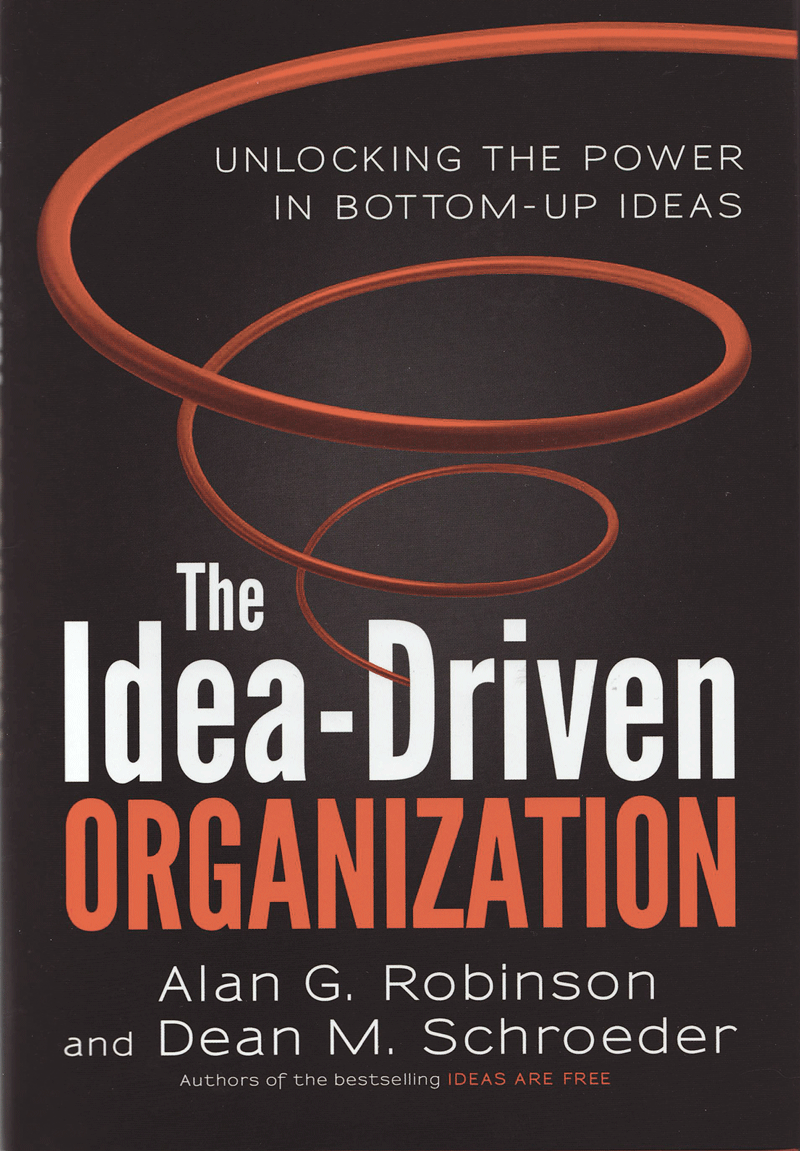
Alan Robinson’s Second Book on Ideas Shows Organizations How to Get ‘There’

Alan Robinson

Alan Robinson says “The Idea-Driven Organization” is designed to be a road map for companies looking to glean ideas from frontline employees.

When asked what prompted his second book on the broad subject of ideas in the workplace and how to generate them, Alan Robinson said there was something rather obvious missing from the first one, called Ideas Are Free.

Only, it wasn’t obvious to Robinson and co-author Dean Schroeder at the time.

“When we wrote Ideas Are Free, we made the same mistake a lot of writers make,” said Robinson, a professor at the Isenberg School of Management at UMass Amherst. “We went out and we looked at organizations — companies, nonprofits, and government agencies — that were doing the best in the world at this; wherever we found these systems, we went and studied them, and we said, ‘this is how they work; here’s what they look like.’

“Then the book came out, and it went all over the world, and soon we were starting to get inquiries,” he went on, noting that it became a bestseller on Amazon. “People were saying, ‘this is great … but how do we do it?’ It took us maybe a couple of years to realize that it is an entirely different problem to show what it’s like to live in this environment and then to show how to get there from being an average company.”

So, The Idea-Driven Organization: Unlocking the Power in Bottom-Up Ideas was conceived to show how.

Released a few months ago, it provides what Robinson called a road map that companies can follow in their efforts to replicate some of the organizations on the leading edge of what some would call a movement.

Elaborating, he said Ideas Are Free was a comprehensive look at best practices. The sequel, if one can call it that, is all about the journeys that bring companies to that point.

And in the course of chronicling dozens of such journeys, Robinson and Schroeder included lessons that could be taken from three local organizations — Big Y Foods, Health New England, and Springfield Technical Community College, which is, in Robinson’s estimation, one of the few institutions of higher education, if not the only one, that has enjoyed any real success in this realm (more on that later).

Those organizations, like the others cited in the book, have fully grasped what too many companies and their managers still haven’t, said Robinson, and that would be the simple math he calls the ‘80-20 rule,’ meaning that 80% of the overall improvement comes from frontline ideas, and only 20% comes from management-driven initiatives.

“This is the big gorilla in the room, and most organizations just leave it on the table,” he said. “Globalization means that companies have a lot more competition, whether they know it or not, and the Internet means people can find those competitors much more easily and compare. So the pressure on you to perform and to innovate and to get better is higher than it ever was — and, yet, most organizations have very weak cycles of continuous improvement, if they have any at all.”

For this issue and its focus on business management, BusinessWest talked with Robinson about his new book and what it offers to readers, but also about the contributions made by the three area organizations to this so-called road map, and why the author considers them some of the clear leaders in what would have to be called the ideas movement.

The Write Stuff

As he talked about Ideas Are Free, which was released roughly a decade ago, Robinson described it as a labor of love, a work, years in the making, that chronicled what leading-edge companies around the world were doing to generate ideas, review them, and, when appropriate, implement them.

But, as he said, this was a look at best practices.

“There are barriers that organizations have to remove to make their systems work — you don’t just collect ideas; you also fix the policies and the systems, the resource issues, and all the stuff that blocks ideas,” he told BusinessWest. “The process is only 20% of this issue; these obstacles to ideas are something you have to address. But when we were going in and looking at the best in the world, you don’t see those barriers, because they’d already been removed.”

Thus, The Idea-Driven Organization takes the reader back to the barrier-removal process, he went on, and to specific cases, such as one at Big Y that has been oft-cited by Robinson in his many talks on this subject, and has become known simply as the ‘eco bag idea.’

Elaborating, he said a checkout clerk at one of the chain’s stores noted that, often, after he recited the question ‘paper or plastic?’ an embarrassed customer would say that he or she left their eco bags in the car. Therefore, he suggested that signs be put in the parking lot reminding people to remember their eco-bags — a common-sense recommendation that has since been copied by many competitors.

But this sound idea didn’t get put in place for a while, because of some miscommunication and a lack of clarity concerning who was responsible for escalating ideas.

“The store manager was new, and he thought, ‘I don’t have the authority to do this,’” said Robinson, paraphrasing a section from the book called “How Effective Idea Processes Work.” “The idea goes up to the regional manager, who says, ‘it’s the store manager’s authority,’ and doesn’t take any action because he assumes he’s just being informed.”

Fortunately, the company had a policy in place whereby ideas such as this one were red flagged if they were not implemented within a certain period, Robinson went on, adding that, in the course of investigating what went wrong, company executives, including CEO Donald D’Amour, realized that store managers and other executives weren’t being trained properly in what their responsibilities were in such cases.

There are hundreds of other examples of effective obstacle removal in the book, said Robinson, adding that it was designed to help others possibly avoid such barriers to progress.

Overall, the book was undertaken to stress the importance of encouraging, gathering, weighing, and implementing frontline ideas — those that originate with individuals who work in the trenches rather than the corner office — and then provide that road map for putting a system in place.

As for the first part of that equation, the authors sum up neatly why many managers are often blind to frontline ideas — and why, if they want to take their companies forward, they can’t be.

BookJacket“Consider the constant reminders of their superiority that managers are bombarded with in the course of their daily work,” they write. “They wear the suits, they have the private offices, they are the ones chosen for promotion, they are more highly educated and paid significantly more than their subordinates, and everyone defers to them. They are the ones in charge. With all of these signals continually reminding them that they are superior to their employees, it is easy for managers to come to believe that they actually are.”

Robinson told BusinessWest that, among other things, leadership at the three local organizations he cites in The Idea-Driven Organization don’t have that problem, and that’s a big reason why they’ve been so successful.

“One of the messages of our book is that you need to be humble enough to realize that the people who work for you know a lot more than you do, and your job as manager is not to tell them what to do and be the smartest person in the room,” he explained. “Your job is to tap that know-how, and these three companies have done that very well.”

Chapter and Verse

Overall, more than 100 businesses and organizations were cited for their success in The Idea-Driven Organization, and HNE, Big Y, and STCC, all of which have worked extensively with Robinson on their systems, receive prominent mention.

While each was highlighted for different types of obstacle-clearing and pace-setting work, Robinson summed up their contributions to the book — and the ideas movement in general — by telling BusinessWest that each organization highlights the importance of getting a high level of involvement from top management in the creation of an ideas system, implementation, and problem solving.

He started with high praise for STCC and especially its president, Ira Rubenzahl.

“I have my thumb pretty much on what’s going on in this business, and this is the only institution of higher education in the United States that’s doing this,” he said of the 47-year-old college. “They’re the only ones who are actually going out to their frontline people — the registrars, the librarians, and others — and soliciting ideas.

“President Rubenzahl is in higher education, he’s the only one doing this, and higher ed could really benefit from this,” he went on. “Of all the leaders I’ve worked with over the years, he’s put more of his personal self into this than anyone I’ve seen. We did lots of training sessions at STCC, we had lots of meetings, and he sat through every one of them. He really sent a message with that; if you ask him any details about the system, he knows them cold because he’s really engaged in it, and there’s a lesson there for other organizations.”

At Big Y, D’Amour has also taken a leadership role in the ideas process, said Robinson, adding that perhaps his most notable contribution to the process was getting senior management involved early on — especially during a pilot phase involving five of the company’s stores.

“He determined that the executive team would meet every two weeks and review every idea that came up,” Robinson recalled. “The senior team at this 5,000-person company was going to look at every single idea; what that showed them was what kind of things to expect, and the senior management team said, ‘wow, this is really cool. This can really help; we need more of this.’

“The other thing they saw was how these ideas were getting hung up,” he went on, returning to the eco bag. “They said, ‘we have this idea, and it’s a great idea; why isn’t it being implemented?’”

In HNE’s case, Robinson praised now-retired President and CEO Peter Straley for having the foresight to understand years ago that the healthcare industry was heading into uncharted waters, and that his company would have to be imaginative — and nimble — to handle whatever was coming down the road.

“He said, ‘we’re facing Obamacare, we’re also looking at big changes in Medicaid, and no one knows how this is all going to shake out, and the best way to prepare my company is to make it great at improving, great at adapting, and very flexible,’” noted Robinson. “[Straley] knew his company was facing massive change and needed to get better at handling change. That was his rationale, and it was a brilliant piece of leadership.”

The authors praised Straley for his ability to put together a seven-member team to design and oversee an ideas system — one that included the IT director, general counsel, a member of the executive leadership team, several middle managers, and a frontline employee known for proposing improvement ideas — and then provide it with the proper training and the time needed to do its job properly.

“Once the design team is assembled, it must be provided with a thorough education in idea management. Its members will need to have a strong understanding of what high-performing idea processes look like, how they work, and how to address the challenges they will face in creating one,” the authors write. “The initial training can involve classes taught by experts, reading relevant books, and perhaps visits to idea-driven organizations. For the HNE team, the process began with a day of training in idea systems, and then reading and studying two books on managing ideas.

“Once the team began to apply its new knowledge, it began to learn by doing, starting with the assessment of HNE from an ideas perspective,” the authors continue. “As the team members interviewed frontline employees, supervisors, and middle and upper managers, they discovered impediments to the flow of ideas that needed to be addressed. This action learning continued as the team designed their system and rolled it out through their company. In the end, the members of the design team developed considerable expertise in the management of ideas, and HNE went on to successfully implement a high-performing idea system.”

Not the End

Robinson told BusinessWest that he’s already hard at work gathering material for the next book on ideas.

He didn’t say what the specific subject matter would be or when it would be ready to write, but he did note that the ideas movement is still in its relative infancy, and that the process of learning — and teaching others how to do this — is, like the process of soliciting ideas itself, ongoing.

And it seems likely that these Western Mass. companies, and perhaps others, can and will be part of that teaching process.

George O’Brien can be reached at [email protected]

40 Under 40 The Class of 2014
Risk Oversight Officer, PeoplesBank, age 27

Robert-Raynor-01Armed with a business management degree from Springfield College, Robert Raynor said he wasn’t looking specifically at the banking world. “But it was definitely the most interesting option out there.”

So he joined PeoplesBank as a management development trainee in 2009 and was soon promoted to risk oversight auditor and then risk oversight officer. In that role, he develops and completes detailed financial and operational audits to evaluate the effectiveness of management controls, accuracy of financial information, and policy compliance.

“It’s a lot of testing, a lot of report writing, and a lot of interactions with various departments,” he said, adding that he enjoys this diversity because he has the opportunity to learn about many different areas of the bank, including ever-changing regulations, processes, and technology.

But Raynor also appreciates how PeoplesBank provides plenty of opportunities to improve its internal culture, which he takes by serving on the institution’s social committee, professional book club, employee appreciation committee, and especially the environmental committee, for which he’s currently co-president. On that group, he helped launch a program to promote and track employee carpooling, helps plan and run an annual environmental fair, contributes articles to a newsletter about green initiatives, and coordinates community events like cleanup days and tree plantings.

“Sometimes I feel like I really lucked out with where I work, and being able to come here directly after college,” he said. “I feel extremely lucky because not only do I have a number of opportunities professionally, but many opportunities to get involved in things like the environmental committee. I feel very good about the work I do and know I’m helping an organization involved in helping the community.

“It’s something that gets all the employees active,” he added. “The bank is great about giving us the time and resources to do these things.”

His community involvement extends to other organizations as well, including extensive work on the board of the Boys and Girls Club of Greater Holyoke.

“The Boys and Girls Club is such an amazing organization,” Raynor said. “I see the work that gets done there. It’s a great way to be involved in a community organization that directly helps children better themselves. It works.”

— Joseph Bednar

Cover Story
Yasir Osman Has Taken a Long, Twisting Ride to Entrepreneurship

COVER-0214bWhen Yasir Osman arrived in New York from his homeland of Sudan in 1989, he had $100 in his pocket and very limited knowledge of English.

“I knew ‘yes,’ ‘no,’ and had a good smile,” he said in a still-thick accent. “That was essentially it.”

Actually, he brought a few other things with him, although it would take several years before some would emerge. One was a basic understanding of business he gained while doing the books for his father, the owner of a butcher shop in Sudan’s capital city of Khartoum, starting at age 6. Another was an entrepreneurial spirit he believes he acquired from his time spent in that shop, watching his father work for himself, enjoy it, and take great pride in it.

And then, there were the business values that he would also take from his father, especially transparency and honesty, terms he would use early and often as he talked about how he runs what has become a multi-faceted operation.

Indeed, he has put all of the above to extremely good use as he’s made the shift from employee to business owner — and in a big way.

Osman, who would relocate to Springfield a few years after arriving in Brooklyn — only a few months after meeting his future wife, who grew up in the City of Homes — has taken an intriguing ride from being an attendant in a parking garage on East Court Street to working his way up with that enterprise to regional manager, to starting his own company, Executive Parking. That venture now manages more than a dozen garages and surface lots and hundreds of metered spaces for the parking authorities in Springfield and Holyoke. Osman also owns taxi operations that operate in both communities, and serves as a chaplain for the state Department of Corrections.

And he makes it abundantly clear that this entrepreneurial ride, which began just over five years ago, is really just getting started.

He wants to make Executive Parking more of a regional force, perhaps expanding it into Hartford, New Haven, and other New England cities, and then, perhaps, becoming a national player.

“There’s really no limit to where we can go from here,” he said, adding that he believes he has the know-how, the lean business model (more on that later), and the entrepreneurial drive to take this venture well beyond Springfield and the Northeast.

The Columbus Center Garage in downtown Springfield

The Columbus Center Garage in downtown Springfield is one of many facilities now managed by Executive Parking and its president, Yasir Osman.

But while casting a wide net in terms of hopes and aspirations, Osman is keeping a hard focus on his home of Springfield. In addition to basing two of his businesses here, he lives just a few blocks from downtown in the Hill-McKnight neighborhood, and is becoming increasingly vested in — and involved in — a city he believes is awash in potential and bound for better days.

“I love it here — I love being in Springfield,” he said. “I’ve been in the city for 22 years, and I’ve seen many ups and downs. But I’ve seen a lot of progress, and I think the city is heading in the right direction, especially with the economy; Springfield will see a lot happen in the next year or so.”

By that, he was referring to the casino slated to be built in the South End — a development that certainly has the potential to impact both of his business enterprises — but also other developments in and around downtown.

And as he looks ahead to a brighter future for the city, and himself, he has become one of the faces of a new breed of entrepreneur — minority business owners who are creating jobs as well as momentum in a city still trying to reinvent itself.

For this issue, BusinessWest talked at length with an individual who is still mastering English, but has become an entrepreneurial success story in any language.

His Lot in Life
As he wrapped up his talk with BusinessWest, and the conversation turned to the weather, as it often does in this winter that seemingly won’t end, Osman clicked on his phone to check the conditions in Khartoum, something he does regularly enough to have his device programmed to do so.

“It’s 72 degrees and sunny there,” he said with a nod of his head and a smile on his face, adding that he keeps tabs on much more than the forecast for the city he left 25 years ago. He still has family in Sudan, including his mother, whom he visited recently. In fact, his gray hair was mostly black from the dye job that his mother insists that he get before returning to what is still, in many respects, home.

By the late ’80s, though, it was a home that Osman knew he had to leave — and soon.

“The economy was very bad, and I was one of 10 children,” he said. “I saw my family struggling, I saw my father struggling, so I decided that something needed to be done.”

Osman Yasir

Osman Yasir says he has the team, and the experience, to take his parking venture regional and then national.

Picking up and leaving for the U.S. — something a growing number of people in that East African country were doing, or thinking about doing — was not an easy proposition, nor one without a good deal of risk. But it was certainly preferable to staying put.

Osman scraped together enough money to get a plane ticket to New York, and soon, with the help of a fellow countryman he connected with, was introduced to the city’s subway system. He would ride the train to Queens each day and actively pursue work, especially in realms where one could get by with just a little English — or very little, in his case — such as construction and security.

And while securing a succession of jobs, Osman was also working to gain a foothold with the English language. He took a few classes on the subject in New York, but has picked things up mostly from interacting with others — a broad constituency that has included everyone from his wife and children to customers in various parking garages.

“In my language [Sudanese], we move from right to left,” he explained. “In English, we move from left to right. That’s the hardest thing about learning the language; you have to think it in your mind before you speak it.”

He eventually saved enough money to buy a car, and was getting by in the Big Apple, when, through the intervention of another Sudanese native — a woman who was asked by Osman’s mother to help him find a wife — he met Asilla Eubanks. Five months later, they were married, and soon thereafter, the dateline for this story shifted to Springfield.

After relocating here, Osman soon took a job as a parking attendant at a small lot on East Court Street, working for a Hartford-based outfit called Professional Parking. He would stay with that firm for more than 15 years, serving in roles ranging from maintenance person to location manager; supervisor to city manager, meaning he oversaw all the lots and garages in Springfield.

The last title he had was regional manager, he noted, but in 2008 he was laid off from that post, a development that ultimately kick-started the next chapter of his career — as an entrepreneur.

The Space Race

He started by buying, at auction, a closed gas station with an accompanying convenience store on Allen Street in Springfield, and immediately began applying lessons in business not only from his youth and his father’s butcher shop, but also from the classroom, specifically the one at Cambridge College, where he earned a master’s degree in business management.

With a loan from NUVO Bank, he put the gas station back in operation and soon launched a taxi service and ran it out of a trailer on the Allen Street property. He now operates Ace Taxi, with eight cars, in Springfield, and Metro Taxi, with five vehicles, in Holyoke.

But the business he knew best was parking, and toward the end of 2008 he created Executive Parking.

“I just thought it was common sense to get into the business I understood most — and that’s parking,” he told BusinessWest, adding that his venture got a huge boost roughly a year ago, when it captured the contract to service the garages, surface lots, and metered spaces controlled by the Springfield Parking Authority (SPA) after submitting a bid $2.5 million lower than the company that previously had that assignment — Republic Parking.

When asked how he was able to submit such a number — and then convince the parking authority that service would actually improve — Osman laughed.

“Like I said, I know how to do parking,” he told BusinessWest. “Plus, I’m the owner of the company and the general manager of the company. I work … we don’t have a lot of overhead, like those other companies do.”

He’s also been applying those aforementioned lessons he learned while watching, and working for, his father all those years ago.

“You need transparency and to be honest in everything that you do — that’s what he taught me,” he explained, noting that his father passed away in 2007. “Communication is also important — communication with the people in the city, with your employees, with the managers, and with the public.

“Also, dedication — when you do something, give it 200%, not 100%,” he went on. “That’s another thing I learned from watching my father.”

Looking ahead, Osman is focused on what he called smart, controlled growth.

His first priority has been to bring stability to the lots and garages operated by the SPA, something he believes he’s done.

“We’ve stabilized the operation in Springfield — right now, things are going smooth,” he went on. “In the last year, since we’ve taken over the operation, we haven’t had even one complaint.

“Our plan is to take this operation to the next level and make it more customer-friendly, actually,” he went on. “We have training for our employees every three months, we talk to them about being more customer-friendly, and we talk to them about being sensitive to customers’ needs; we’re drilling into their heads the need to put customers first, and we’re getting results.”

The next challenge will be to expand regionally and, in essence, replicate the success registered in Springfield and Holyoke. And he believes there are opportunities to do so within New England.

“There are many possibilities with neighboring cities, such as Hartford, New Haven, Stamford — wherever we can help stabilize operations and make money for the city, we’ll be there,” he said. “We can do for them what we did in Springfield, where our low-cost, efficient operations enabled the Springfield Parking Authority to give $300,000 a year to the Springfield Police Department to put more officers downtown.”

Venturing Forth

Osman said he’s not sure how far he can take Executive Parking. But he is sure that, wherever this venture goes, Springfield will still be the base of the operation — and, more importantly, his home.

The Hill-McKnight neighborhood is nearly half the globe and worlds apart from the still-struggling country he left 25 years ago, but the same business principles that worked there are creating results — and opportunities — here.

In short, Osman has done quite a bit with that $100, those two words of English he knew, and those all-important lessons from his father.

And, as he said, the ride is really just getting started.

George O’Brien can be reached at [email protected]

Departments People on the Move

Dianne Fabrocini

Dianne Fabrocini

The Affiliated Chambers of Commerce of Greater Springfield (ACCGS) announced that Dianne Fabrocini has joined the organization as Executive Director of the ACGCS affiliate, the East of the River Five Town Chamber of Commerce (ERC5).
Fabrocini will serve as the liaison between the ERC5 and the ACCGS and will be responsible for carrying out the direction set by the board of directors. She will also work with ACCGS staff in developing membership programs, benefits, and services; producing events; and enhancing municipal relations in the five communities served by the ERC5: East Longmeadow, Hampden, Longmeadow, Ludlow, and Wilbraham. Fabrocini brings to the organization nearly 20 years of experience in marketing, public relations, and management. Most recently, she served as office manager for Vulcan Products Co. in Enfield, Conn. Prior to that, she owned Fabro & Associates, a professional sports-management company providing event planning, promotions, player representation, and contract negotiations to various clients throughout Western Mass., where she founded the Legends Celebrity Golf Classic and brought the first United Soccer League professional men’s soccer team to the region. Fabrocini also served as general manager and owner of the Springfield Sirens women’s soccer team, now known as the New England Mutiny, and held the position of regional director for the National Kidney Foundation. Fabrocini is a graduate of the University of Akron in Ohio.
•••••
The Board of Directors of the Amherst Area Chamber of Commerce recently announced new officers for 2014, led by second one-year-term president Larry Archey, Director of Facilities and Grounds at Hampshire College. Archey will be joined by Nancy Buffone, UMass Executive Director of External Affairs and University Events, as First Vice President, and Julie Marcus, Director of Marketing at New England Environmental, as Second Vice President. Other new board members include:
Mark Ellsworth, Center for Extended Care, treasurer;
Jerry Guidera, Spanish Studies Abroad, secretary; and
Jim Brassord, Amherst College, at large.
Kathryn Grandonico, Lincoln Real Estate, remains immediate past president. Returning board members include Aaron Jolly, the Pub; Meredith Schmidt, UMass Campus Center; Meghan Gregoire, PeoplesBank; Felicity Hardee, attorney; Niels la Cour, UMass Planning; Reza Rahmani, Lit and Moti; Barry Roberts, EV Realty Trust; G. Christopher Blauvelt, Innovara; John Kokoski, Mapleline Farm; and Youssef Fadel, New England Promotional Marketing. The appointments were effective Jan. 1 and formally ratified at the chamber’s annual meeting at the Lord Jeffery Inn on Jan. 15. The mission of the Amherst Area Chamber of Commerce is to create, maintain, and promote a vital, thriving business climate throughout the Amherst area and to initiate and support the civic, educational, recreational, and economic well-being of the Amherst area.
•••••
AJBmediab&w
Benjamin Coyle

Benjamin Coyle

The Springfield-based regional law firm Bacon Wilson, P.C. recently announced that Adam Basch and Benjamin Coyle have been named shareholders of the firm. Basch, a member of the litigation department, practices in the areas of construction litigation, personal injury, general litigation, and commercial litigation. He is a former secretary of the Hampden County Bar Assoc., a six-time recipient of the SuperLawyers Rising Stars distinction, and serves as a member of the Wilbraham Planning Board and the United Way Allocation Committee. He teaches litigation and business law at Bay Path College and is the author of numerous construction and general litigation articles. Basch earned his JD from Western New England University School of Law and his B.A. from Union College. He is a member of the firm’s business and corporate, estate planning and elder, litigation, and municipal departments. He is a five-time recipient of the SuperLawyers Rising Stars distinction and a board member of the Western Mass. Council of the Boy Scouts of America. He earned his JD from Western New England University School of Law and his BSBA from Western New England University.
•••••
William Fontes

William Fontes

Easthampton Savings Bank announced that William Fontes has joined the bank as Vice President Commercial Lending. Fontes has more than 30 years of banking experience in commercial lending and most recently was senior vice president, commercial banking team leader at United Bank and, prior to that, a commercial banking team leader at People’s United Bank. Fontes earned his bachelor’s degree in business management from the University of Massachusetts and his MBA, majoring in finance, from Bryant University.
•••••


David Pinsky

David Pinsky

The Food Bank of Western Massachusetts recently elected President and CEO David Pinsky to its board of directors. His three-year term, serving the nonprofit organization that has been fighting hunger in Western Mass. for more than 30 years, began this month. Pinsky, who serves as Tighe & Bond’s President and CEO, has worked at the engineering firm since 1988.  He also serves on the board of directors for the American Council of Engineering Companies of Massachusetts and the Community Foundation of Western Massachusetts. A professional engineer for more than 25 years, Pinsky holds an MS in environmental engineering from the University of North Carolina at Chapel Hill, and a BS in civil engineering from the University of New Hampshire. He is also an active member of numerous professional societies and organizations in the engineering profession, such as the American Water Works Assoc., the Massachusetts Water Works Assoc., and the New England Water Works Assoc.
•••••
Thomas Dowling

Thomas Dowling

Thomas Dowling, CPA, MST, was recently hired by Meyers Brothers Kalicka, P.C. for the position of Senior Associate, where he will be responsible for guiding staff-level accountants in their duties and helping to manage the day-to-day operations of engagements. Dowling has worked in various capacities at small to mid-sized CPA firms for four years. He graduated magna cum laude with a bachelor in accountancy degree from Bentley University and continued at Bentley to earn his master’s in taxation, graduating with high distinction. He is a member of AICPA, MSCPA, and the Beta Gamma Sigma International Business Honor Society.
•••••


Lydia Martinez

Lydia Martinez

Sarah Williams

Sarah Williams

The YMCA of Greater Springfield recently announced the addition of Lydia Martinez, Assistant Superintendent of Springfield Public Schools, to its corporate board of directors, and named Sarah Williams the new chairperson. Williams, the Vice President of Enterprise Risk Management at the Hartford Insurance, joined the YMCA of Greater Springfield board in 2011.
•••••


Dr. Junie Baldonado

Dr. Junie Baldonado

Dr. Junie Baldonado recently joined Ludlow Family Dentistry and doctors R. Carl Szarlan, Joseph Wegiel, Frank Mitera, and Michelle Roberts in providing general dentistry to the families of Ludlow and the surrounding towns. Baldonado is a graduate of Loma Linda University School of Dentistry in Riverside, Calif. He attended NYU for his undergraduate work and majored in fine arts, while completing the pre-med requirements for entrance into dental school. Baldonado had been practicing in the Sacramento, Calif. area prior to joining the Ludlow dental practice and is now accepting new patients and in all phases of dentistry.
•••••


M. Dale Janes

M. Dale Janes

Springfield-based NUVO Bank & Trust Co. recently announced that Chief Executive Officer M. Dale Janes was awarded the Sally Barnhart Leadership Award from the Assoc. for Community Living in appreciation for his voluntary leadership as president of the board of directors. Janes is the immediate past president and has been a member of the board of directors since 2006. He has also served on the finance and audit, investment, executive, and ad hoc committees, providing guidance throughout the purchase of a new headquarters, major renovations at the Inclusive Community Center located in Hadley, expansion of services for the medically challenged in Hampshire County, and developing a two-year strategic plan.
•••••
Christopher Boino

Christopher Boino

Christopher Boino was recently appointed President of Western Builders, a construction management and general contracting firm, a subsidiary company of the O’Connell Companies, headquartered in Granby. Joining Western Builders as a project manager in 2013, Boino brings more than 14 years of experience in the construction industry and is now responsible for the successful day-to-day operation of the company. Boino earned his MBA from Bentley University and a bachelor of science in Construction Management from Arizona State University’s Del Webb School of Construction. Boino is a LEED-accredited professional and is a certified project-management professional. He was previously employed in the Boston area with Shawmut Design & Construction and Cafco Construction. Western Builders was established in 1975 and has successfully completed new construction and renovation projects throughout New England in the areas of academics, healthcare, and housing.

Features
Western Mass. Business Expo Features a Full Slate of Programs

1_WMBEstevensSilverSponsor24x18.inddWhen she registered to run in the 1967 Boston marathon, she signed her name ‘K.V. Switzer,’ as she always did. Thus, it wasn’t until the race began that fellow runners, spectators, the press, and race officials realized that the individual wearing bib number 261 was, in fact, a woman.
And when they did so, some of those race officials tried to stop her and rip that number off of her, because no woman had ever run in the Boston Marathon, and none were invited to run in this one.
Kathrine Switzer refused to step off the course, and by persevering and finishing the race, she ran her way into history.
Switzer, known as the ‘Marathon Woman,’ will tell her story — and also convey her inspiring message about creating success in a difficult environment, turning negatives into opportunities, and implementing social and cultural change — during a luncheon hosted by the Professional Women’s Chamber at the Western Mass. Business Expo, slated for Nov. 6 at the MassMutual Center.
And this won’t be the only long-running success story to be highlighted that day. Indeed, Jim Koch, founder of Boston Beer Co. — maker of Samuel Adams — will be the keynote speaker at the Expo breakfast, hosted by the Affiliated Chambers of Commerce of Greater Springfield.
When Koch (pronounced ‘cook’) started his venture, he had a dream, a generations-old family recipe, and a large supply of determination — which he would need, because he didn’t have any bank financing or distributors to carry his product.
He overcame those obstacles to create one of most intriguing success stories in American business history. Today, while continuing to add to the portfolio of flavors his brewery produces, Koch is a motivational speaker and ardent supporter of small-business owners.
The breakfast and lunch programs are just part of an impressive slate of programs now coming togther for the Expo, which will again be produced by BusinessWest, managed by Rider Productions, and presented by Comcast Business.
Also on the schedule is a pitch contest and ‘demo day,’ being presented by Valley Venture Mentors (VVM) and BusinessWest.
Formed more than two years ago, VVM, as the name suggests, matches entrepreneurs with mentors to help businesses get off the ground or to that proverbial next level. VVM leaders will field applications for the pitch contest, selecting as many as 10 to make their cases in front of a panel of experts.
There will be cash prizes for the top three finishers, and also the ‘audience’s choice’ among the contestants.
“One of the keys to the future vitality of this region is its ability to cultivate new businesses, and Valley Venture Mentors is doing inspiring work in this regard,” said Kate Campiti, associate publisher of BusinessWest. “The pitch contest to take place at the Expo will feature some of the promising new ventures taking shape in our region in what will be spirited competition for both the approval of the judges — and prize money.”
After the competition, those businesses that made pitches will have their ideas on display at the event-capping Expo Social, which is one the region’s premier networking events, said Campiti.
In addition to these programs, the Expo will also feature a number of educational seminars, she noted, adding that subjects will range from the future of sales and marketing to the best and worst uses of social media.
The full slate of seminars has been assembled, and detailed information is available for viewing at www.wmbexpo.com. Here’s what’s on tap:

Sales and Marketing
• “The Art and Science of Cold Calling,” presented by Jim Mumm, CEO of Sandler Training;
• “The Future of Sales: How to Achieve Extraordinary Sales Results in Today’s Crowded Markets,” presented by Duane Cashin, president of Cashin & Co.;
• “Make an Impact with Multi-channel Marketing,” presented by Tina Stevens, principal and creative director of Stevens 470; and
• “Building Smart Websites,” presented by Peter Ellis, president of DIF Design.

Social Media

• “How TV and Social Media Have Affected Media Consumption,” presented by Jay Frogameni, senior director of sales for New England Local, Comcast Spotlight;
• “YouTube SEO,” presented by Alphonso Santaniello, president and CEO of the Creative Strategy Agency;
• “Am I Wasting Money and Time Doing Social Media?” presented by Paul Stallman, the ‘web guru’ at Alias Solutions; and
• “The Emdees: The Best and Worst in Social Media,” presented by Carie Schelfhaudt, director of digital marketing at McDougall & Duval Advertising.

Business Management
• “Leading Change,” presented by Ravi Kulkarni and Lynn Whitney Turner, business growth strategists and executive leadership coaches with Clear Vision Alliance, LLC;
• “The Emerging Workforce,” presented by Sandy Mazur, division president for Spherion Staffing Services;
• “Understanding Immigration Law: Immigration and International Employment Issues,” presented by Joseph Curran, Esq., Curran & Berger LLP; and
• “The New Business of a Nonprofit,” presented by Kirk Smith, president and CEO of the YMCA of Greater Springfield.

And That’s Not All

Other programming for the Expo is being finalized, said Campiti, who urged those interested to visit the website regularly and check for updates.
To register for the seminars, visit www.wmbexpo.com. To register for the breakfast, call the ACCGS at (413) 787-1310 or visit www.myonlinechamber.com. To register for the luncheon, call (413) 787-1310 or visit www.professionalwomenschamber.com.
In addition to Comcast Business, the Expo is also being sponsored by ABC 40/Fox 6 (gold sponsor), and silver sponsors DIF Design, Health New England, Johnson & Hill Staffing Services, and MGM Springfield.

Expo Fast Facts

What: The Western Mass. Business Expo
When: Nov. 6
Breakfast: 7:30 a.m.
Show Floor: 9 a.m. to 4 p.m.
Luncheon: 11:30 a.m.
Expo Social: 4 to 6:30 p.m.
Where: The MassMutual Center, Springfield
Highlights: Breakfast and luncheon programs; pitch contest; educational seminars; Show Floor Theater presentations; free educational seminars; Expo Social; more than 150 exhibitors
For More Information: Visit www.wmbexpo.com or call (413) 781-8600

Departments People on the Move

Jeffrey Fialky, shareholder of the Springfield-based law firm of Bacon Wilson, P.C., was recently named Chairman of the Springfield Chamber of Commerce. Fialky is a member of the firm’s corporate, commercial, banking, and municipal departments, where he specializes in sophisticated business, financing, and commercial real-estate transactions, representing the interests of business owners and lending institutions, as well as municipalities and landowners. Fialky is the former President of the Young Professional Society of Greater Springfield, and is also currently Chair of the Springfield Museums membership and development committee, and serves as a director on the boards of the United Way of Pioneer Valley, the Scibelli Enterprise Center at STCC, Alden Credit Union, and the Jewish Federation of Western Mass. Fialky earned his BA from the University of New Hampshire and his JD from Western New England University School of Law.
•••••
Bulkley Richardson recently announced that several of the Springfield-based firm’s lawyers were selected by their peers for legal-industry accolades. The following lawyers were named to The Best Lawyers in America 2014:
• Francis Dibble Jr. was named the Best Lawyers 2014 Springfield Litigation – Labor and Employment Lawyer of the Year. Dibble was also recognized in the areas of bet-the-company, commercial, antitrust, and securities litigation;
• David Parke was named the Best Lawyers 2014 Springfield Corporate Law Lawyer of the Year; and
• John Pucci was named the Best Lawyers 2014 Springfield Criminal Defense: Non-white-collar Lawyer of the Year. Pucci was also recognized in the area of criminal defense (white collar);
• In addition, the following Bulkley Richardson lawyers were also selected for the 2014 edition of Best Lawyers in specific practice fields:
• Peter Barry, construction law;
• Michael Burke, medical-malpractice law (defendants) and personal-injury litigation (defendants);
• Mark Cress, bankruptcy and creditor-debtor rights, insolvency and reorganization law, and corporate law;
• Daniel Finnegan, administrative/regulatory law and litigation (construction);
• Robert Gelinas, personal-injury litigation (defendants);
• William Hart, trusts and estate;
• Kevin Maynard, commercial litigation and litigation (banking and finance, construction);
• Melinda Phelps, medical-malpractice law (defendants) and personal-injury litigation (defendants);
• Donn Randall, commercial litigation;
• Ellen Randle, family law; and
• Ronald Weiss, corporate law, mergers-and-acquisitions law, and tax law.
•••••
United Bank recently announced the promotions of seven staff members at the bank’s corporate offices in West Springfield:
• Nira Flatley was promoted to Assistant Vice President, Collections Manager. A graduate of Bay Path College with nearly 25 years of banking experience, she is responsible for managing residential delinquencies within the bank’s loan portfolio;
• Kristyn Samere, who joined the bank in 2010, is now Assistant Vice President of Training and Development. She is an active member of the Society for Human Resources Management and the American Society for Training and Development. A business administration graduate of Roberts Wesleyan College, she is currently pursuing an MBA at Northeastern University;
• Amy Ganci was appointed Assistant Vice President, Commercial Lending Administration. With more than 21 years of experience in the commercial-lending field, Ganci joined the bank in 2011. She holds a degree in business/financial management from Westfield State University and an associate’s degree from Greenfield Community College;
• Jennifer DeBarge was promoted to Marketing Officer. A graduate of Westfield State University, she joined the bank in 1998 as a teller and transferred to the marketing department in 2003 as marketing assistant;
• Ana Ricardo, who joined the bank in 2008 and has more than 15 years of residential lending experience, was promoted to Underwriting Officer;
• Ann Vallance was promoted to Business Banking Officer. She began her banking career in 2004 and joined the bank in 2012 in the areas of commercial lending and credit analysis; and
• Patricia Pasterczyk was promoted to Business Banking Officer. She joined the credit department in 2011 with more than 30 years of financial-services experience. She graduated magna cum laude from Elms College with a bachelor’s degree in business management. She also attended the School for Financial Studies at Babson College and holds a certificate in advanced paralegal studies from Elms College.
•••••
Shatz, Schwartz, and Fentin, P.C. announced that eight of the Springfield-based firm’s attorneys were recently selected by their peers for inclusion in The Best Lawyers in America 2014:
Stephen Shatz was named the Best Lawyers 2014 Springfield Real Estate Law Lawyer of the Year. Shatz, first listed in the publication in 1993, was selected for his work in the specialty areas of banking and finance law and real-estate law. A shareholder since 1969, he concentrates his practice in the areas of real-estate development, real-estate finance, and commercial leasing;
• Steven Schwartz was selected for the areas of corporate law, business organizations and closely held companies, and family-business law. He concentrates his practice in the areas of family-business planning, mergers and acquisitions, corporate law, and estate planning;
• Gary Fentin was selected for his work in the areas of commercial transactions and banking and finance law. His practice areas include commercial and real-estate finance and development, industrial revenue bonds, affordable housing, estate planning, business law, and business foreclosures and workouts. Fentin manages the firm’s tax-exempt bond practice and is the only counsel west of Worcester approved as bond counsel to the Mass. Development Finance Agency;
• Michele Feinstein was selected in the areas of elder law and trusts and estates. She concentrates her practice in the areas of estate planning and administration, elder law, probate litigation, health law, and corporate and business planning;
• Carol Klyman, first listed in the publication in 2007, was selected for her work in the area of elder law. Her practice areas include elder law, estate planning and administration, special-needs trust planning, estate settlement, guardianships, and probate litigation;
• Timothy Mulhern, first listed in the publication in 2008, was selected for his work in the areas of tax law and corporate law. He concentrates his practice in family-business planning, taxation, corporate law, and estate planning;
• Ann (Ami) Weber, first listed in the publication in 2007, was selected for her work in the area of elder law. She practices in the areas of estate-tax planning, estate administration, probate, and elder law; and
• Steven Weiss, first listed in the publication in 2008, was selected for his work in the areas of bankruptcy and creditor-debtor rights as well as insolvency and reorganization law. His practice areas include commercial and consumer bankruptcy, reorganization, and litigation. Weiss manages the firm’s bankruptcy, reorganization, and workout practice, and has been a member of the private panel of Chapter 7 trustees for the District of Massachusetts since 1987, and also serves as a Chapter 11 trustee.

Features
Expo Seminars to Identify Paths and Obstacles to Growth

Duane Cashin says the Internet has — or should have — changed the way people approach selling.

“These days, when people want to buy something, they enter that process with a ton of information,” said Cashin, owner of Hartford-based Cashin & Co. and a noted expert in the areas of prospecting, sales process, and sales management. “With the Internet, people can thoroughly research things — consumers are more informed than ever, and that impacts the way people should sell.”

This development is one of many that Cashin will discuss in a program he calls “The Future of Sales and the Adjustments You Need to Make” — although he acknowledged that, in many ways, the future is now.

His talk is one of a dozen seminars now on the slate for the Western Mass. Business Expo, set for Nov. 6 at the MassMutual Center in downtown Springfield, an event expected to draw more than 150 exhibitors and 3,000 visitors.

Other topics to be explored include everything from immigration law to cold calling; from the emerging workforce in this country to raising a company’s profile through YouTube.

And then, there are the “Emdees.” That’s the name that Amesbury-based McDougall & Duval Advertising Agency has given to a program — in the form of an awards ceremony — involving examples of the best and worst uses of social media.

“There are many issues and challenges involved with operating a business, large or small, today,” said Kate Campiti, associate publisher of BusinessWest, which is once again presenting the Expo. “And as we approached this year’s event and its educational component, which is an important part of the show, we wanted to address some of these challenges and give business owners and managers information they could take to the office or the plant the next day.”

The seminars, which will run from 9:15 a.m. to 4 p.m., are grouped into three tracks — Sales & Marketing, Social Media, and Business Management — and are designed to be as interactive as possible, said Campiti, adding that the roster of programs was compiled after careful consideration of several dozen submitted proposals.

The full schedule of seminars is currently posted on the show’s website, www.wmbexpo.com. The programs to be presented include:

• “How TV and Social Media Have Affected Media Consumption,” presented by representatives of Comcast Spotlight;

• “Beyond an Entrepreneur,” presented by Paul DiGrigoli, president of DiGrigoli Salons and a noted motivational speaker;

• “Make an Impact with Multichannel Marketing,” presented by Tina Stevens, president of Stevens 470;

• “Leading Change,” presented by Lynn Whitney Turner and Ravi Kulkarni, principals with Clear Vision Alliance;

• “Am I Wasting Money and Time Doing Social Media?” presented by Paul Stallman, owner of Alias Solutions; and

• “Branding Bootcamp,” to be led by Meghan Lynch, president of Six-Point Creative Works.

Campiti said additional components of the Expo program, including breakfast and lunch speakers and other presentations, are being finalized, and will be announced in future issues of BusinessWest and posted on the website.

The day-long event will conclude with the Expo Social, which has become a not-to-be-missed networking opportunity since it was first staged at the 2011 Expo.

Comcast Business is once again the presenting sponsor for the Expo. Other sponsors include ABC 40/Fox 6, Health New England, and Johnson & Hill Staffing Services. Additional sponsorship opportunities are still available.

Fast Facts:
What: The Western Mass. Business Expo
When: Nov. 6
Where: The MassMutual Center, Springfield
Highlights: Breakfast and lunch programs; keynote speakers; educational seminars; Expo Social; more than 150 exhibitors
For More Information: Visit
www.wmbexpo.com or call (413) 781-8600.
 

Business Management Sections
Executive Coach Helps Clients Get to the Next Level

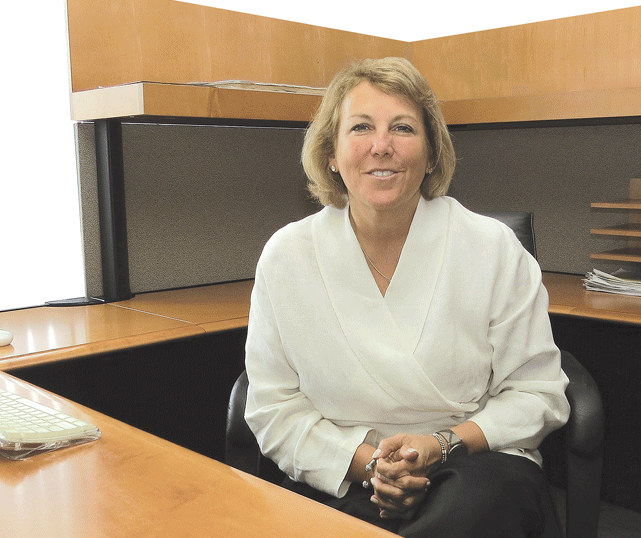
Anne Weiss

Anne Weiss says that, while she sometimes helps clients affect change, more often, she is engaged in “tweaking” their habits and thought processes.

Amy Jamrog remembers the first time she met Anne Weiss — and coming away both impressed and more than a little scared, which, in this case, was a good thing.
“She thinks really, really big,” recalled Jamrog, a wealth-management adviser and principal with the Jamrog Group, affiliated with Northwestern Mutual, adding that her career in financial services was then about five years old and at what could only be described as a crossroads, which is why colleagues had referred her to an executive coach and, specifically, Weiss.
“If you mention that someday, one day, you hope to accomplish ‘X,’ she’ll want to get that done in the first year,” said Jamrog while elaborating on what she found scary about her new coach. “And that’s what we did; I told her my three-year vision for my practice, and she said, ‘why don’t we do that in 12 months?’
“She’s synonymous with ‘tough love’ — if you say this is what you want to accomplish, she will not let up in seeing that you do,” Jamrog went on, adding that, overall, what Weiss helped her find professionally were consistency, accountability, and a calendar that consistently generated a proper work/life balance as her circumstances changed.
And because she’s been able to do that for a number of clients, she’s considered one of the most successful executive coaches in this area.
Over the years, she’s grown her client portfolio to include bank presidents, lawyers, accountants, architects, executives with large corporations, owners of small businesses, and even some business consultants.
They all have specific needs, and all were at some kind of proverbial crossroads when they decided to seek out her services, said Weiss, but there is a simple and basic pattern to the client-coach relationship, one that she has mastered to the point where she now counts nearly 20 clients from both inside this region and well outside it.
“It starts with both parties being clear about the result that they want to be accomplished,” she said, “and then creating a plan to have that goal accomplished, and then holding people to account for accomplishing it.”
Sometimes, this accountability process requires a phone call a week, other times one lengthy meeting each month, she went on, adding that, in general, having a coach makes them more effective, gives them peace of mind, or both.
She said her coaching role, which is a huge part of her consulting practice, involves working with clients on any number of issues or challenges, from teaching them how to network (a critical skill when it comes to building a business) to advising them on setting and reaching goals, to enabling busy professionals to effectively learn how to say ‘no’ to some of those requests for their invaluable time.
“A lot of times, I don’t have the answer,” she said as she said as she talked about her work. “But in talking with the client, we come up with something that would be an answer, and then we say, ‘this is good — let’s go for it.’”
Overall, Weiss said, while she sometimes brings about real change in people, more often she is “tweaking” their style when it comes to everything from how they interact with people to how they manage time to how to become more punctual.
“Sometimes people need to change, and other times people need to be tweaked, but even tweaking can often make a profound difference,” she said, referring to both an individual’s career and a company’s bottom line.
For this issue and its focus on business management, BusinessWest talked at length with Weiss about executive coaching and how she uses that tough love Jamrog described to help get through the crossroads and into the fast lane when it comes to personal and professional growth.

Getting Down to Business

Amy Jamrog

Amy Jamrog says Anne Weiss helped her with many aspects of career and business development, the most significant being the ability to work consistently.

Weiss told BusinessWest that executive coaching is certainly not a recent phenomenon — people have been doing it for decades, and in recent years, as in many fields, it has become a specialized profession, with individuals developing niches in sometimes quite specific aspects of business management.
What might be considered new, she went on, is a realization among a growing number of business owners and managers that, while they may know their industry and vocation, they don’t know everything about succeeding professionally.
And this is why her client list has grown steadily over the years, with the notable exception of the peak years of the Great Recession, when many executives decided that, despite apparent need, they felt they just couldn’t afford a coach during those lean times.
The portfolio is now larger than it was prior to the crash of 2008, said Weiss, adding that this is both a good barometer when it comes to the economy and an indication that a growing number of professionals are becoming comfortable with the concept of hiring a coach.
When asked how someone will know when they’re ready for that step, she said simply, “when you need to produce something you can’t produce on your own.”
And in the business world today, that’s most people, she went on, adding that a coach can provide such individuals with a unique, outside perspective not available from a mentor, per se, or from someone inside a company or organization.
“I’m not their advisory board, and I’m not their board of directors,” she explained. “So there’s a level of accountability and understanding, so they’re free to be able to say, ‘here’s what’s working, and here’s what’s not working.’”
Weiss brings a broad range of experience to her role as coach. Earlier in her career, she worked in sales and marketing, and eventually segued into consulting, with a heavy emphasis on executive coaching. In the mid-’90s, she partnered with two others in a venture called TLD Consulting, which was based in New York, but has been on her own for the past 16 years.
Most all of her business comes from referrals, she noted, adding that she works with individuals in a wide array of sectors, including financial services, education, and manufacturing, and has assisted a number of entrepreneurs as they have struggled to take ventures to the next level or juggle several initiatives simultaneously.
As she elaborated on what she does and how she does it, Weiss came back repeatedly to the phrase “holding people accountable” for meeting or surpassing the goals they have set for themselves.
And she does so with a passion that that prompted Jamrog to summon not only that word ‘scary’ but also ‘intimidating,’ and another business owner to note in an online testimonial that she has “ruthless compassion,” which sounds like a synonym for tough love.
“She asks really hard questions and then waits for you to figure out the answer,” said Jamrog, adding that, shortly after becoming a client, she developed a strong desire not to disappoint the coach.
“When I had to be accountable to her, and pay her, that became a real motivator for me — when I told her I was going to do something, I didn’t want to let her down,” she said. “And that made it an interesting relationship, different from anything I’d had before. She wasn’t my boss, she wasn’t my mom, she wasn’t even a colleague, but I wanted to do what I said I was going to do, because she was counting on me. The coaching relationship is very interesting like that.”

Accounting Lessons
When asked what problem, or professional weakness, Weiss was most helpful with, Jamrog said it was consistency in her work.
“I would work really hard, then I wouldn’t, then I’d work really hard again, and then I wouldn’t,” she explained. “It was a very inconsistent — and also very stressful — way to work. She helped me really build in consistent practices that became habits over time.”
But that proved to be simply one of many ‘projects’ the two would work on over a coaching relationship that would last eight years and ended only because Jamrog had reached a point professionally where she was comfortable and simply didn’t want to take on any more projects.
Weiss said her clients have different motivations for seeking out her services. Many, like Jamrog, had reached a point in their career where they realized that to get to the next level — whatever that might be — they would need some help getting there. Others, meanwhile, don’t feel accomplished in their career, despite a decent level of success, and need help reaching that station. And still others understand that, while they may be good at what they do professionally, they need a coach to help them to maximize their potential, set the bar higher, and then clear the bar.
Sometimes clients simply need some help with those people skills that are often as important as technical ability when it comes to growing a book of business.
“It’s not the same dynamic anymore,” she said of business in general. “What used to be a handshake now requires a contract, and what used to be an old-boys kind of network isn’t like that anymore. Being in business requires a lot more networking, and one of the trends I’ve seen is that people need to be trained in how to network, in how to grow their business.
“Lawyers went to school to practice law; they didn’t know that they were going to have to be accountable for going out and growing their business,” she continued. “Architects thought their job was just to draw and build. Instead, they need to be the ones on the street meeting with facility managers and learning that there’s a new job at Smith College, and that company should get it.”
Beyond these hard lessons and the broad assignments of holding clients accountable for their stated goals for themselves or their company, Weiss said she also helps with that ‘tweaking’ she described earlier, noting that, quite often, seemingly small changes in style and performance can bring about significant impact in both the efficiency of an operation and how a leader is perceived by employees, customers, and the business community in general.
“If someone alters some way that they act — they’re on time, they answer e-mails, they return phone calls — those little things will matter in how people interface with that individual and how they respond to that person,” she said. “If you show up to a meeting with an agenda, start it on time, and end it on time, there’s a respect that people will have for you, and as you keep doing that, people will start to respond very positively.”
As an example of such tweaking, Weiss cited a local banking executive who was consistently late for appointments and, more importantly, not feeling accomplished professionally.
“So we took apart his entire job to find out why,” she explained. “And what we found is that he had said ‘yes’ to more requests to be on boards, to be on committees, to be on subcommittees to committees … it’s no wonder he couldn’t handle it all. He said ‘yes’ to way too many things, so we had to unravel and undo and revoke some of the things he had said ‘yes’ to and replace him on some of those boards and committees, while keeping him on in the things that mattered most to him.”

Coach Class
Weiss noted that, while her work can at times be frustrating — over the years, a few clients have eventually been deemed ‘uncoachable’ — it is usually quite rewarding.
That’s because people come to her when they realize that they need to produce something and can’t produce it on their own, she said, adding that helping them get there by asking the hard questions, working with them to find answers, and then holding them accountable for results is very fulfilling work.
This is the essence of tough love, or “ruthless compassion” in the business world, and Weiss has it down to a science.

George O’Brien can be reached at [email protected]

40 Under 40 The Class of 2013
Vice President of Commercial Lending, Country Bank, age 32

Leap-JeremyPatience.
That’s a virtue Jeremy Leap says he lacked while growing up in Johnstown, Pa., and one he didn’t acquire until it became necessary. And it didn’t happen while attending the U.S. Air Force Academy Preparatory School and then the academy itself, or when he left to complete his quest for a degree in Business Management at the University of Pittsburgh.
No, Leap found patience through … bodybuilding, a pursuit inspired by his brother, Ryan, who discovered it earlier, and one that would eventually become a passion and outlet for his competitive nature; he placed second in the novice division at the 2008 Northeast Classic Men’s Amateur Bodybuilding Championship, and sixth in the same event in 2011.
“Competitive bodybuilding teaches you patience, and it was a cool kind of lesson, especially for what I do — commercial lending,” he noted. “Nothing comes quick, nothing comes easy … it always takes time.”
Through patience and commitment, Leap has risen quickly in the local banking sector, moving from commercial credit analyst to vice president of Commercial Lending at People’s United Bank. (He was in that position when nominated for the 40 Under Forty Class of 2013, but recently took that same title with Country Bank in Ware.)
In addition to his professional accomplishments, he has also been active in the community, especially with the group Rick’s Place, which provides a space for children under 18 and their families to receive bereavement support; it was created in memory of Rick Thorpe, who lost his life in the World Trade Center on 9/11. Joining that board was poignant for Leap, whose best friend in fourth grade lost his father, a firefighter, in a blaze — a breaking story that was played over and over on the local news.
“All of a sudden, Richie was a different person, and there was no real outlet for him,” Leap recalled, adding that Rick’s Place now provides that outlet for kids and families who have suffered a similar loss.
Leap has also been involved with the Rotary Club of Springfield, Friends of the Homeless, the United Way Day of Caring, and the Young Professional Society of Greater Springfield and its Young Professionals Cup dodgeball tournament — all of which benefit from his patient determination.

— Elizabeth Taras

40 Under 40 The Class of 2013
Director of Franchise Support & Development and Field Consultant, Fitness Together; Owner, Elements Therapeutic Massage, age 34

Pantera-JohnIt would be an understatement to say that John Pantera achieved business success, while also satisfying an entrepreneurial urge, as an operator of two new franchises for the Fitness Together chain in Eastern Mass. As a certified fitness trainer with a nutrition license and an MBA in Finance and Economics from UMass Amherst, he helped position Fitness Together on Entrepreneur magazine’s Franchise 500 list in 2007, its Fastest Growing Franchises compilation in 2007 and 2008, and on America’s Top Global Franchises magazine’s list in 2007.
But like most successful entrepreneurs, he was ready, willing, and able to aim higher. He sold his franchises, moved to Western Mass., and opened an East Longmeadow franchise of Fitness Together’s sister operation, Elements Therapeutic Massage, in 2009. But when he did so, the fitness-club side of the corporation wasn’t ready to see Pantera go.
A new position was created just for him to direct the network of 54 locations (globally, there are 300) in New Hampshire and Massachusetts that deliver more than $20 million in annual revenues. Pantera now supports operators in their sales, marketing, customer service, and employee relations.
Meanwhile, at Elements Therapeutic Massage, Pantera oversees 25 employees, 19 of whom are therapists, in one of the largest massage spas in the region. He said the extremely high and deeply personal level of customer service required by both the personal-fitness and therapeutic-massage industries is a perfect fit for his personality and style of business management.
“Think about it … we’re basically asking perfect strangers to come in, get naked, and trust us that we will provide them with a high level of professionalism and service,” he said. “So the delivery of the service has to be a perfect 10.”
He’s also an adjunct professor of Entrepreneurship at Western New England University, his alma mater, and is involved with the Young Professional Society of Greater Springfield and Rotary International.
While doing all that, Pantera has found time to write a book titled All Diets Die: How to Win and Be Thin (for Life). “No matter your age or what condition you’re in, there are some foundational basics of a healthy lifestyle that can be permanent,” he said of the basic message. “And this is how to go about doing it.”
Balancing business acumen with a passion for wellness, Pantera is keeping plenty of balls in the air.

— Elizabeth Taras

40 Under 40 The Class of 2012
Practice Manager and Registered Nurse, Pediatric Services of Springfield

Nordstrom-NeilBeing the practice manager of a growing pediatric group — one that started in East Longmeadow in 1983 and added a second location in Wilbraham in 2005 — certainly keeps Neil Nordstrom busy. But he still craves something more.
“I basically run all facets of the business,” he said. “I do accounting, manage the personnel, basically all the day-to-day operations. I help the billers out. And then I’m a registered nurse, so I also help the nurses out. We have people in each department, but I’m the person they see to put out a lot of fires.
“I enjoy all those aspects of running a business. It’s very challenging, but I look forward to coming to work every day,” said Nordstrom, who has also spearheaded technological innovation in the practice, such as incorporating tablet devices in patient care.
What he craves, however, is more interaction with patients — and he’s doing something about it. “I enjoy the kids, and I love pediatrics, so I’m going back to school and finishing my doctorate as a family nurse practitioner,” he said. “I love business management, but now I’m actually going to get back into the clinical world, and I’ll start seeing patients in 2013.”
But his workplace isn’t the only venue Nordstrom has shown a commitment to young people. He has coached multiple sports in Wilbraham over the years, in addition to five years as baseball coach at Minnechaug High School and a stint as board member at the Scantic Valley YMCA.
When his three boys started growing up, he couldn’t devote time to all those activities, but he’s still active in youth sports, coaching his kids’ baseball and basketball teams.
“Over the past year, I’ve been helping the Wilbraham Recreation Department to build its baseball program,” he explained, including a clinic for coaches on teaching fundamentals to young athletes.
“That’s one of the things I love to do,” he said. “I love to coach, I love kids, and I love allowing kids to get better, getting them the skills they need to succeed.”
— Joseph Bednar

Departments People on the Move

Edward J. Garbacik

Edward J. Garbacik

Edward J. Garbacik, Vice President of FSB Financial Group at  Florence Savings Bank, has completed his CFP certification requirements from the Certified Financial Planner Board of Standard. Certification encompasses seven major financial planning areas — general principles of financial planning, insurance planning and risk management, employee-benefits planning, investment planning, income-tax planning, retirement planning, and estate planning. Individuals must also agree to meet ongoing continuing-education requirements and to uphold the CFP Board’s Code of Ethics and Professional Responsibility, Rules of Conduct, and Financial Planning Practice Standards.
•••••
Tina M. Bennett has been named President of Conservation Services Group in Westborough. She runs the company’s day-to-day operations and oversees the executive committee. She also serves as an ex-officio member of the board of directors.
•••••
Cathy Jocelyn

Cathy Jocelyn

Cathy Jocelyn has been promoted to Assistant Vice President/Marketing Manager at Westfield Bank. In this new role, Jocelyn is responsible for day-to-day marketing, promotion, and public relations, along with coordinating community outreach and the Future Fund.
•••••
Michael B. Ginsberg has joined Accenture as a Partner in the life-insurance industry practice. He will work in Accenture’s Hartford office and serve several large insurance customers in Massachusetts and Connecticut in a client-account leadership role.
•••••
David J. Ericson, Physician Assistant, joined Cooley Dickinson Hospital’s Medical Staff and Pioneer Valley Ear, Nose and Throat Surgeons. Ericson treats adults and children for a variety of ear, nose, and throat disorders, including allergy and sinus problems, hearing and balance disorders, and voice and swallowing problems.
•••••
Warren R. LaBerge has been promoted to Manager of Amherst Tire.
•••••
Robert Dellatorre has been named Senior Relationship Manager in the New England Middle Market Banking Group for First Niagara. Dellatorre will manage the bank’s relationships with middle-market companies located in Connecticut, Rhode Island, and Massachusetts.
•••••
Tracey Burke has joined Park Square Realty in its Westfield office as a Sales Associate.
•••••
Janelle Holmboe was recently named Dean of Admissions at American International College in Springfield. Most recently, Holmboe served as Associate Director of Graduate Admissions in Forest Grove, Ore.
•••••
William Dowding has been named Director of Marketing at A.W. Hasting & Co. in Enfield. The firm is a distributor of Marvin Windows and Doors.
•••••
Atlantic Fasteners announced the following:
• Tony Orvis has joined its industrial fastener division; and
• Bruce Bonzey has been named Director of Quality.
•••••
InteliCoat has announced the following:
• Dave Burgos has joined the firm as inside Sales Representative. He is responsible for supporting and growing the firm’s digital-imaging business with key distributor partners.
• Candice Bakke has joined the firm as National Telesales Representative. She is tasked with raising brand awareness for the Magic, Magiclée, and Museo product lines, as well as increasing and improving customer contact and support.
•••••
Julie M. Quink

Julie M. Quink

Burkhart, Pizzanelli, P.C. announced that Julie M. Quink, CPA, has recently joined the firm. Her experience is in the accounting and auditing and forensic and fraud consulting areas of public accounting.  Her past experience includes 16 years with J.M. O’Brien and Co., P.C. in Springfield, and three years with KPMG Peat Marwick, LLP in Springfield prior to its office relocation. She received her bachelor’s degree in Accounting and Business Management from Elms College.  Her professional affiliations include membership in the American Institute of Certified Public Accountants, the Mass. Society of Certified Public Accountants, and the Assoc. of Certified Fraud Examiners.
•••••
Reliable Temps announced that Erin Corriveau has joined the firm as Marketing Manager. She will be responsible for overseeing daily marketing and public relations duties for the three Massachusetts Reliable temps locations: Agawam, Easthampton, and Greenfield.
•••••
Lynda Zukowski, manager of Radiology and Imaging at Baystate Franklin Medical Center, has received the credential of Certified Radiology Administrator (CRA) through the Radiology Administration Certification Commission.

Employment Sections
Program Readies Students for Arts, Entertainment Careers

Jeanie Forray

Jeanie Forray describes the arts and entertainment field as a growth industry.


As he talked about his exploits with the bass guitar, or at least as far as organized performances are concerned, Jonathon Eells made repeated use of the past tense.
“I was in a band with some friends … we played in high school for a while, but that was pretty much it,” said Eells, his voice tailing off. But he made it abundantly clear that, while his performing days are apparently over, he very much wants to still be involved with music — and make it his career, perhaps in the realm of managing bands, individuals, or a concert hall.
“I know a lot of people who play still, and I’d like to manage a band,” he said, adding that there are many directions his passion for the industry could take. “I could also manage a venue; I just want to be around music.”
This explains why Eells became one of the first students at Western New England University to sign on for a program that gives him one of the more intriguing — and envied — answers to the age-old question, ‘what are you majoring in?’
His reply is ‘Arts and Entertainment Management,’ and it’s a comeback that he says has earned more than a few responses like ‘that’s cool,’ or ‘I wish I was majoring in that.’
But he isn’t out to impress his classmates; he’s trying to position himself for a career in a sector that many 21-year-olds are intrigued by, and one that Jeanie Forray, associate professor and chair of the Department of Management (and chief architect of the new program), believes is very much a growth field, in both the arts and entertainment realms.
“This is a multi-billion-dollar industry with a need for individuals with knowledge and skills focused on the business side of the creative enterprise,” she said. “This is considered a growth field, especially with what’s happening with technology and the Internet, and graduates of this program will be prepared for a wide range of careers.”
Alyssa Beecy certainly hopes she’s right. She is another of the students who switched into this major, and, like Eells, she has her eye on a career in music, preferably representing artists or handling bookings for a venue. She knows this is the ambition of many people, and she’s still trying to figure out the road in front of her — probably to begin with one of many large firms (most of them located in Los Angeles or New York) that manage musicians and bands.
She also wants to be positioned for other kinds of opportunities in this broad realm, and for that reason she is interning this spring at CityStage and Symphony Hall in Springfield.
“We’ll see if that changes my direction at all,” she said of her internship, adding that she’s leaving her options open regarding both what she wants to do and where the jobs are. But for now, she believes she’s in the right major at the right time.

Achievements of Note
Forray told BusinessWest that the Arts and Entertainment Management program came about the way most recent additions to the portfolio of degree offerings have — through collaborative discussions among faculty members in various disciplines.
In this case, the dialogue focused on the recognized need for a management program focused specifically on arts and entertainment — similar to how Sports Management concentrates on that still-emerging field — and how the university could meet that need.
“I have had contact with the theater instructor and the music instructor at various times, and we’ve talked about the arts on campus and the curriculum,” said Forray, who brings to the table extensive experience in television production and post-production, facilities operations and sales, and work with such production companies as Entertainment Tonight, the Disney Channel, and Paramount. “And I’ve always had an interest in somehow linking my professional background with academia.”
The answer was a new major that would address both universal aspects of business management, and issues and challenges unique to the arts and entertainment worlds. And there are many of each, she noted, listing everything from the many challenges involved with running a not-for-profit agency (a description that covers most arts-related endeavors) to the rigors of the musician-management positions both Eells and Beecy are eying.
Meanwhile, it would also dovetail nicely with an institution-wide strategic initiative to elevate the arts on campus. “It seemed like an ideal collaboration to situate arts and entertainment in the college of business in a way that would be attractive to students who have an interest in the arts, but who are not planning to be performers or creatives in the process, but rather the people behind the art, behind the scenes,” Forray said.
Students who complete the program could see their diplomas translate into a number of intriguing job titles on business cards, representing talent or managing everything from arts festivals to community theaters; orchestra companies to television stations; art galleries to historical museums, she explained.
Forray told BusinessWest that the first offering in the program this past fall, a course she taught called ‘Managing Arts and Entertainment Organizations,’ featured textbooks, some guest speakers from within the industries, and some learning by doing — and that many of the courses will unfold in the same manner.
In this case, students read both Management of the Arts and Performing Arts Management: A Handbook of Professional Practices, while also hearing from a broad range of speakers. That list include Alexander Kennedy, executive director of the Eric Carle Museum of Picture Book Art; Tina D’Angostino, interim president, and Bevan Brunelle, marketing manager for Springfield CityStage and Symphony Hall; Dawn Helsing Walters, managing director of the Milwaukee Repertory Theater; Becky Schutt, senior consultant with Festivals & Events International, and Michael Kane, managing partner of Mt. Auburn Associates, the Boston-based planning, strategy, and evaluation company that has become a leader in the creative-economy field.
“This class is an introduction to the structure of arts organizations and entertainment organizations, which tend to be somewhat different than other industries in that they have both creative and functional sides,” she explained. “Students do research on a company in an area that interests them to determine what the challenges are for that kind of organization in the current business environment, and we have a number of speakers.”
Other arts- and entertainment-specific courses include:
• Business Law for Arts and Entertainment Management, which focuses on, among other things, industry-related matters such as intellectual property, copyright, First Amendment, representing talent, provenance, and autehtication;
• Arts and Entertainment Venue Operations, which provides an overview of venue management, including issues related to various arts and entertainment facilities;
• A Seminar in Arts and Entertainment Management, a capstone course that examines contemporary issues and challenges for managers in the industry; and
• The Arts and Entertainment Practicum, which focuses on the management process involved in producing events within the arts and entertainment domain. During the course, students produce an arts or entertainment event on campus or in the local community.
As with other business and management programs at the university, internships will be a key part of the learning experience, said Forray, adding that such opportunities provide exposure to the industry, hands-on work in that field, and the potential to make a connection that could lead to employment upon graduation.
She said students like Beecy are finding internships with area organizations like CityStage and Symphony Hall, and that such experiences could help keep graduates in Western Mass., where they could become part of the effort to expand the cultural community regionwide.

The Big Finale
Eells said he looked into sports management early in his college career because he was (and still is) intrigued by that industry.
But he found that his real passion is music, which holds a number of career possibilities beyond performing, as he’s learning. If all goes well, he’ll accomplish his main goal of “still being around music,” but going much further and making it a rewarding career as well.
In other words, even though he doesn’t perform on stage anymore, he can still make some achievements of note — quite literally.

George O’Brien can be reached at [email protected]

Company Notebook Departments

Elms, HCC Launch Joint Programs
CHICOPEE — Elms College will launch two new accelerated degree-completion programs for Holyoke Community College (HCC) alumni and students beginning in August. Classes will be taught on the weekends by Elms faculty on the HCC campus, earning students bachelor’s degrees within 20 months. The Health Services Administration program will prepare students to serve in management positions in the health care industry. The Early Childhood Leadership program will provide students with a background in human resources, staff development, fiscal accountability, and legal issues necessary for assuming leadership roles in the field. This program is designed for experienced early-childhood educators who are not seeking PreK-2 licensure in Massachusetts. The new programs augment the existing degree offerings, which currently include accounting and information systems, business management, and psychology. “This joint program is faster and less expensive than the traditional route, enabling students to quickly see the rewards of higher education realized in their careers,” said Betty Hukowicz, associate academic dean of the Division of Graduate Studies and Continuing Education at Elms. For more information, call the Elms at (413) 265-2490.

Big Y Donates $100,000 to Japan Earthquake and Tsunami Relief
SPRINGFIELD — In response to community interest in helping the millions of people affected by the Japan earthquake and Pacific tsunami, Big Y World Class Markets recently hosted a customer donation program in all of its 58 Massachusetts and Connecticut stores. For four weeks following the March earthquake and tsunami, Big Y collected donations from customers and employees, resulting in a total of $100,000 for the American Red Cross Japan Earthquake and Pacific Tsunami Relief Fund. Funds were raised through a special in-store customer/employee donation program and through employees in all other Big Y locations from the Store Support Center to distribution centers. A formal check presentation to the American Red Cross Pioneer Valley Chapter was staged May 25. Big Y President and COO Charles D’Amour, along with Jeff Hamel, store director for the Cooley Street Big Y, presented the contribution to Paige Thayer, deputy director of chapter support for the Pioneer Valley Chapter. Big Y customers and employees have a strong tradition of supporting those in need, according to D’Amour.  Past initiatives include campaigns to support relief efforts following both international and domestic disasters such as the 2004 tsunami, Hurricane Katrina, and more. Following the January 2010 earthquake in Haiti, Big Y World Class Markets collected donations from customers and employees, resulting in a total of $108,277.32 for the American Red Cross International Response Fund.

Tighe & Bond Rated a Top National Design Firm
WESTFIELD — The Engineering News-Record (ENR) has again ranked Tighe & Bond among the top 500 design firms in the nation. ENR ranks companies on the previous year’s gross revenue for providing design services to domestic and international markets. The firm ranked 309th in ENR’s 2011 report, a reflection of its 2010 annual gross revenue of $32 million. “Although the recession in the engineering and construction industry seems to have bottomed out and the market is turning around slowly, the market is still soft, and that means competition remains tough,” said David Pinsky, president, in a statement. “However, as this rating suggests, our firm has more than held its own in these economically challenging times. In fact, this year marks our 100th anniversary. We owe our longevity and success, at least in part, to our careful strategic planning and our commitment to deliver the highest-quality services to our clients on time and within budget.” In other company news, the Boston Business Journal ranked Tighe & Bond as one of the largest engineering firms in Massachusetts. In its 2011 Book of Lists, the magazine ranked Tighe & Bond 15th among 25 top-billing firms.

Winstanley Partners
Wins ADDYs
LENOX — Winstanley Partners recently walked away with two gold ADDY awards. The agency was lauded for two entries created for its client, Smith & Wesson, based in Springfield. The first, a trade-show display for Walther America, a line of firearms imported by Smith & Wesson, won in the sales promotion category. The display featured photographed products on clean white backgrounds to portray a sense of high-tech, high-quality German engineering. The second entry won in the consumer or trade publication category, and highlighted the agency’s work with a Smith & Wesson company, Thompson/Center. A product promotion of the T/C Venture firearm included a bold headline, denoting anything “less” as a ridiculous proposition. Ralph Frisina, creative director for Winstanley Partners, noted in a statement that both executions were recognized for breathing new life into a category that has suffered in the past from a lack of sophisticated approaches and design. “Winning at the regional ADDYs this year was particularly rewarding because, for the first time, the participants included some of Boston’s largest ad agencies,” said Frisina. The annual ADDY competition is presented by the American Advertising Federation and locally by the Advertising Club of Western Mass. to honor exceptional work in advertising and marketing.

Hampden Bank Opens 10th Office
SPRINGFIELD — Hampden Bank opened its 10th office at 977 Boston Road on May 24, featuring a ribbon-cutting ceremony with Springfield Mayor Domenic Sarno and Thomas Burton, president and CEO of Hampden Bank. William Marsh III, senior vice president/division executive, and Peg Daoust, manager of the Boston Road office, were also on hand for the festivities. Lobby hours are Monday through Wednesday, 9 a.m. to 4 p.m.; Thursday, 9 a.m. to 6 p.m.; Friday, 9 a.m. to 6 p.m., and Saturday, 8 a.m. to 2 p.m. The bank features a drive-up window and SUM ATMs.

Entrepreneur Recognized for Performance
HOLYOKE — Rick Frasier, owner of the Sears Hearing Aid Center at Holyoke Mall at Ingleside and Eastfield Mall in Springfield, recently earned the prestigious 2010 Platinum Club Award from the Miracle-Ear franchise organization. Miracle-Ear presents the award to the top franchisees in their network for achievements in adhering to compliance standards and excelling in four weighted sales-performance categories. “It’s an honor for Frasier to be recognized amongst peers for this award,” said Diana Beaufils, senior vice president of franchise operations of Miracle-Ear. “This annual competition drives all of our franchisees to do their best in a friendly battle to deliver great service and the latest in hearing-aid technology to their customers.” The Platinum Club Award is Miracle-Ear’s longest-running contest among franchisees. This year’s winners earned a trip for two to the Netherlands Antilles. “Our Platinum Club winners represent the best of the best in an organization that prides itself on delivering world-class quality and service,” added Beaufils.

Comcast Introduces Xfinity Signature Support
BOSTON — Comcast Corp. recently launched a 24/7 technical-support and equipment-protection program for 1.8 million Comcast subscribers in Eastern
Mass., Southern N.H., and Maine, for the growing number of home-electronics devices — like laptops, home networking equipment, gaming consoles, wi-fi-enabled smartphones, and tablets — people are using to connect to Comcast’s services. Called Xfinity Signature Support, this service offers customers a single source for troubleshooting and support for their computers, home networks, and many other devices and is another step in the company’s focus on delivering an end-to-end exceptional customer experience backed by the Comcast Customer Guarantee. Comcast expects to offer the service in Western Mass. later this year, as well as to the rest of the U.S. not currently receiving the service. The new offering enables customers to select an enhanced level of technical support with monthly subscription plans and one-time support options, and is offered in addition to the 24/7 support Comcast already provides for its video, high-speed Internet, and phone services.

Sections Supplements
Area Colleges Report Heated Interest in Summer Classes

Debbie Bellucci

Debbie Bellucci says a number of factors have led to a surge in summer enrollment, including a still-uncertain economy.

Summer school is certainly not a new development at area colleges and universities, but interest in this educational option has been picking up in recent years, especially at community colleges. The economy has a lot to do with it, but there are other factors, including the increasing popularity of online offerings and a greater number of summer-month program options.

Summer used to be a time when college students took a break from classes and earned a little cash. But the downturn in the economy has changed that dynamic, especially at state schools where tuition is comparatively low.
Many students are trying to fast-track their education, while others who attend private schools are signing up for transferable summer courses at community colleges where tuition is inexpensive. The faltering economy has also led many adults back to school year-round to maintain or boost their marketability. They are often juggling myriad responsibilities, so the increasing demand for online courses, which are convenient and flexible, is changing the face of higher education.
The trend has also given birth to a variety of degree-completion options, as well as what are called hybrid classes, which combine online and face-to-face meetings, as the requirements for all courses can’t be completed online.
Bill McClure, executive director of the Continuing Education Department at UMass Amherst, said the university has seen an increase in demand for courses year-round. “It is generally accepted that, when the economy is down, the demand for education goes up,” he said.
Summer is no exception, and UMass students are taking summer classes in both undergraduate and graduate programs. “Last summer, online courses across the board were up by 30% overall,” he said. “However, face-to-face classes did see a decrease.”
Kimberly Tobin, dean of graduate and continuing education at Westfield State University, has also seen a pronounced demand for summer classes that began in 2008. “From 2008 to 2010, we had a 77% increase in the number of students taking summer courses online,” she said. “That’s huge for us. In addition, many faculty members have moved to hybrid courses, where they use the Web shell to post assignments, readings, supplemental materials, or PowerPoint presentations, and these numbers don’t include those classes.
“We are finding that more traditional students are also taking summer courses because they are less expensive here than at private schools,” she continued, referring to students who go to college after high school and have not spent much time in the workforce.
Greenfield Commun-ity College (GCC) is mirroring the trend. Last summer, 715 students took credit courses there, and 387 took non-credit courses. In 2009, there were 596 students taking credit courses and 342 taking non-credit summer courses.
“The increase has been substantial,” said Shane Hammond, dean of enrollment at GCC. “Historically, there has always been an increase in enrollment when the economy is struggling. People who are unemployed are interested in moving through their education as quickly as possible because they want to get back into the workforce. Many are looking to retrain, so they come to us for that education. We have also seen an increase in students with bachelor’s and master’s degrees taking courses in an effort to advance their education or change their field.”
For this edition and its focus on education, BusinessWest takes a look at the changing trends in summer sessions at local colleges and how they are responding to the growing demand.

Balancing the Budget
Tobin said books about college written for parents advise them to have children take core credit courses at less-expensive schools. Some do this at community colleges, while others turn to places like Westfield State.
The option offers a number of benefits, in addition to cost savings. It allows students to lighten their course load during the traditional school year and accelerates the time it takes to complete their education.
“Since 2008, we have seen a 25% increase in traditional students taking summer classes at Westfield,” said Tobin. “Students can take a course online here and get it transferred. This summer, we are offering 80 online courses. Last summer, we only had 64. We are trying to make sure they are the courses most in demand, and have also added an online bachelor’s completion program in business management. Plus, we are about to offer three more online degree-completion programs in sociology, history, and liberal studies.”
Tobin said the average age of students enrolled in these courses is 30. Many live in the eastern part of the state, and half of those are in the Business Management program. “It’s one of our largest growth programs in continuing education,” she explained. “People are asking, ‘what can I go to school for that will give me an edge in the workforce?’ and management is one of those areas.”
She added that today’s students want and need the flexibility that online courses offer. “At Westfield State, most of our students have to work to afford school. So we are giving them an option that allows them to do that.”
Summer courses concentrate a semester’s worth of learning into a few short weeks, which makes them rather intense. “They are not easy, but our students aren’t afraid of work; they just need balance and flexibility, which they get with online courses,” said Tobin, adding that many students take only one course per semester, which allows them to really focus on doing well, which can be difficult with more than one if they have families and other responsibilities.
Another increasing segment of the summer population is high-school students.
If their guidance counselors agree, they can take college courses during the summer and earn both high-school and college credits for them. “Most are taking basic core courses, but some are incredibly motivated and are taking advanced math and science classes,” Tobin explained, adding that classes that span generations offer different perspectives in learning. “Imagine being in a class online or in person with high-school students, traditional college students, and adult learners. To me, that is an amazing educational experience that you can only get in summer coursework.”
Springfield Technical Community College has also experienced an increase in demand for summer courses.
“In 2010, we had an 11% increase in students during the summer; that was a 25% increase in credits sold over the previous summer’s enrollment,” said Debbie Bellucci, dean of the School of Continuing Education and Distance Learning. “We attribute the increase to several things — the economy, our affordability, the wide range of summer courses that STCC offers, and the availability of summer Pell grants for returning students last year.”
STCC typically sees two types of students. The first group is composed of individuals who didn’t do as well as they wanted at their home institutions and want to lighten their loads for the upcoming semester with a cost-effective option. The second group is students who need health and nursing prerequisite courses required for entrance into many health or nursing programs.
The courses in greatest demand are Anatomy and Physiology I and II and Microbiology. General-education courses are also very popular, since they are required in every major, and include English Composition, Psychology, History, Math, Biology, Chemistry, and various business courses.
“STCC also offers several upper-level and unique courses, such as Organic Chemistry and Calculus I-IV, that attract students from other institutions who are home for the summer. They can transfer the course credits back to their home college or university,” Bellucci said, explaining that the school is continuously adding new courses.
This summer, new offerings include Physics of Green Energy, Fundamentals of CNC Machining, and Fundamentals of Acting, as well as online offerings such as Environmental Biology and Principles of Biology.

Private Offerings
McClure said all indications are that this summer will be a strong term at UMass at both the undergraduate and graduate levels. “Our registration staff is putting in overtime so folks aren’t delayed in signing up for classes,” he said.
However, students also want online courses, and enrollment in face-to-face classes has dropped. “Students find online classes more adaptive to their lifestyles, as they can take a class anywhere at any time. It is a national trend that online classes and degree programs are experiencing a lot of growth. So we are offering 30% more online courses this summer,” McClure said. “Frankly, we are astounded by the demand.”
About two-thirds of the university’s summer-school enrollees are traditional students. Some have double majors and want to ease their course loads in the spring and fall, but many work year-round and are able to take only 12 credit hours per semester. “So summer courses allow them to compensate for that; across the board, we are very pleased that we are getting this type of response,” said McClure, adding the university is holding three summer terms beginning in May. “We are highly motivated and continuously looking for new courses to meet people’s needs.”
Frank Bellizia, dean of Continuing Education at American International College, said AIC’s numbers have held steady during the past few summers. However, the school encourages adults thinking about returning to school to “test the waters” with a summer course. “Most of our continuing-education students are in degree-completion programs and are 45 to 50 years old,” he said.
This summer, AIC is launching a pilot program with about a dozen online courses. “We are probably among the last to get into this and want to see if it will make a difference in enrollment,” he said. “Not all courses can be offered online, but we are encouraging our instructors to try it out. We’ll see what happens.”
Bellizia isn’t surprised that state schools are reporting an increase in student population during the summer months. “Cost is a big factor, and we can’t compete with them, plus public schools are able to offer a wider range of summer courses. Holyoke Community College and STCC are our biggest competitors,” he said.
However, this summer AIC is offering a certificate program to try to expand its offerings in Institutional Advancement, Grant Writing, Fundraising, and Therapeutic Touch. “The programs are targeted at area professionals who want to get their certifications,” Bellizia said.
Matt Fox is director of recruiting and marketing for Western New England College, where summer enrollment has also held steady over the past few years. “We saw a significant spike in the summer of 2008, but since that time it has leveled out, and there has not been as much interest,” he said. “We feel it is due to the economy. Students are looking for more economical options. In the past, we had visiting students picking up courses, but we didn’t see the numbers last year.”
However, the school has six accelerated degree programs, which adult learners find attractive. The courses offer a mix of face-to-face, online, and hybrid courses, and adults like them because they have the ability to mix and match. “Some students prefer to take math courses face to face, especially if they have not been in school for some time,” Fox said.
But overall, there in an increasing trend toward spending a year or two at a community college and transferring the credits. “A lot of it is related to the cost of education; we do give discount tuition for part-time students, but the reality is that community colleges provide great opportunities,” he explained.
WNEC has seen an uptick in interest from adults who are thinking about returning to school. “They figure, if the economy takes a downturn again, more education will make them more employable,” Fox said, but most have a “wait-and-see mentality” because they don’t want to incur more debt. “If anything is changing, it’s that we are offering more and more online courses as people prefer them.”
The bottom line is that the demand for summer courses has risen. The economy and changing lifestyles are leading savvy consumers to meet their needs in a cost-effective and convenient manner, and those lazy, hazy days of summer have all but disappeared.

40 Under 40 The Class of 2010

James Krupienski: 31

CPA Manager, Health Care and Pension Audit Divisions,
Meyers Brothers Kalicka, P.C.

James Krupienski wears multiple hats at Meyers Brothers Kalicka, serving as CPA manager for two divisions, Health Care and Pension Audits — an uncommon combination.

“Not too many people are in two very diverse areas like that,” he said. “I was hired for an opening in the Health Care Division, and I’ve grown into that role, but before I came here I had quite a bit of experience in retirement plans, so I moved into that area as well. The two have very different reporting periods, so I’m able to work in both throughout the year.”

When Krupienski enrolled in Stonehill College, he said he had no idea what he wanted to do professionally. At the start of his freshman year, he switched from psychology to business management. During that first year, he started working with some accounting professionals on different class projects and eventually chose that as his field.

“I like the variety,” he said of his work. “Even if it’s the same client year after year, there’s always something different for me — different questions, different hot topics, always something new that you need to learn.”

Krupienski also volunteers for the Westfield State College Accountancy Mentor Program, helping to cultivate the next generation of talented accountants.

“A lot of people think I sit behind a desk crunching numbers all day, but it’s not that,” he added. “Sure, the numbers have to be right, but helping clients get there through the course of the year is where the variety comes into play.”

Those challenges pale, of course, compared to the one Krupienski’s family (he and his wife, Megan, have two children, James and Hayley) faced when Megan was diagnosed with breast cancer three years ago at age 28. But they turned that difficult situation into a chance to help others, gathering a large team of walkers and raising significant funds for Rays of Hope, while sharing Megan’s survival story at the event’s kickoff rally.

That’s someone who understands that life adds up to much more than numbers. —Joseph Bednar

<<Back

Features
A Sagging Economy, Other Forces Push Some into Business Ownership

Entrepreneurs of NecessityMaking the transition from employee to business owner is usually a scary proposition. What’s prompting more people to take such a plunge is the realization that the corporate world is no less scary and, in many ways, even less secure. But whether one chooses this route by choice or out of necessity, a challenging roller-coaster ride almost always awaits.

Trisha Thompson called it “working for the Mouse,” as opposed to ‘the man.’

That’s a phrase used by many of those who find themselves in the employ of the massive Disney Corp., which Thompson was, as executive editor of a Northampton-based monthly publication for parents called Wondertime.

That’s was.

Indeed, the corporation abruptly shut down the magazine roughly a year ago, despite what most all involved considered solid early success. “We made all our numbers,” said Thompson, referring to the start-up’s performance over its first several years. “We received some awards, we were on track with our circulation … we were a good magazine. We went from an original staff of seven to 32, but they decided to just shut it down.”

Fast-forwarding things a little, Thompson said this sudden, completely unexpected turn of events provided the rather violent push she and her husband, Fred Levine, then a freelance writer and editor, needed to start their own business venture, called Small Batch Books. Operated out of their home in Amherst, this vanity-press operation specializes in personal memoirs, family histories, and commemorative books.

It was launched last summer after some extensive job hunting and soul searching led the two to determine that this was the best, most practical route for them to take given their ages (Trisha was 49, Fred 52), their career aspirations, and the decidedly unsteady state of the print publishing industry.

“It doesn’t feel safe anywhere anymore — there’s no place to go that’s really all that secure,” said Thompson as she explained why she turned down a few other opportunities in publishing, including one in Iowa, and then stopped looking, even if that meant entering the often-scary world of entrepreneurship. “I thought to myself, I’m going to uproot my family to go to Des Moines, and then in a year they’re going to shut that down? No, thank you.”

And because no place is safe in most all sectors of the economy, many, like Thomson and Levine, have become what Dianne Fuller Doherty calls “entrepreneurs of necessity.”

Elaborating, Doherty, director of the Mass. Small Business Development Center Network’s western regional office, said that most who go into business for themselves do so out of choice or opportunity. But all economic downturns, and especially the so-called Great Recession, have seemingly removed choice from the equation for some who have found themselves downsized and with few, if any, attractive job opportunities.

“We’re seeing many people who are choosing this path out of necessity,” she said, “which isn’t always a good thing. Some people are cut out for this, and some people aren’t.”

Sometimes, such entrepreneurial leaps are brought on by other factors, such as a company’s relocation, discontinuation of programs, changes in administration at a company or institution, or others. For Dan Touhey, the ‘push,’ as those who have made this transition call it, came when his long-time employer, Spalding, which he most recently served as vice president of marketing, announced it would be moving out of Springfield.

The first announced destination was Atlanta, home to Russell Athletic, which bought Spalding several years ago, Touhey explained. But then, when Fruit of the Loom bought Russell, employees were told that if they wanted to stay in the organization they would have to relocate to Bowling Green, Ky.

And Touhey never gave that mailing address any serious consideration.

So after sifting through some offers from recruiters and rejecting them — none looked solid enough in these days of unrest and consolidation in corporate America — he decided to go out on his own last spring with DPT Consulting.

There are two aspects to this business. The first, concerning his primary client, the Berkshire Opportunity Fund, involves channeling small businesses looking for funding to that venture-capital outfit. The second is centered on offering Touhey’s vast experience in business and marketing to small businesses that can use it. These include a cycling-apparel company in Northampton and a start-up that manufactures a product called the ‘bunt-down bat.’

As in all cases when individuals mull the shift from being an employee to being self-employed, those who take this step out of necessity must still perform the needed due diligence, said Lyne Kendell, senior business advisor for the MSBDC, who has counseled many people weighing such a decision.

In short, such individuals must have a solid business concept and a plan of attack, she explained, but also the needed skill sets to be an entrepreneur (not everyone has them), and a passion for what they want to do.

“It can’t be something they just feel like they want to do or should do,” she explained. “And it shouldn’t be just a way to make money. It has to be something they’re passionate about. Without that, it won’t succeed.”

By the Book

This requisite passion was apparently missing the first time Thomson and Levine met with Kendell.

That was seven years ago, when they were pondering a different kind of venture, one involving custom publishing in the corporate realm, or what Thompson described as “extended advertorials” for products and services.

“Within about 10 minutes, she was giving us this weird eye, the stink-eye kind of thing,” Thompson recalled. “We were looking over our shoulders saying, ‘who’s she making this face at?’ It was us. She said, ‘do you really want to do this? I’m getting the feeling you don’t, but feel you could or should.’

“We said, ‘well, of course we do,’” Thompson continued. “But shortly thereafter, we found out she was right, but by then, we had already rented office space and spent money unnecessarily.”

Things were different when Levine and Thompson were again sitting across the MSBDC conference table from Kendell, this time explaining Small Batch Books. The two told Kendell (and BusinessWest) that they believed they had a somewhat unique concept — a soup-to-nuts vanity publishing operation — and something that they truly believed in.

This time around, the body language conveyed the necessary confidence and passion, said Kendell, who said she gave Levine and Thompson a homework assignment of sorts, one they ultimately scored well on.

“I gave them some tasks to do and things to think about, on both the personal side and the business side, and a few weeks later, they came back with those tasks completed and with the confidence that they could take the plunge,” she said. “On the personal side, they have to do what I call a personal retreat — do they have the personal wherewithal to do this? If they’re going to work together, what would the guidelines be for the home life and business life? On the business side, it’s more looking at skills, contacts, potential revenue streams, whether you really know the market, and whether you could, if necessary, live on a part-time job or savings for 12 to 18 months.”

Kendell has been assigning lots of homework these days, as she and others at the MSBDC handle a larger portfolio of cases than would be considered normal, mostly due to the recession.

Many of these cases involve businesses that are hurting, said Allen Kronick, senior business advisor for the MSBDC, noting that some wait too long to seek help. For these businesses he sometimes uses the term ‘dead on arrival’ to describe their condition, meaning that there is nothing he or anyone else can do for them. Many others can be helped, he said, adding that his own portfolio has many cases involving companies trying to find ways to hang on until the economy improves — and succeeding.

Meanwhile, many other cases involve startups, with a good percentage of them blueprinted by individuals who have been downsized and can’t find another job, or at least one to their liking, or who could perhaps find a job similar to what they had before, but are tired of what Kendell called the “rat race.”

Looking over his portfolio, Kronick said he has several clients that fit this description. They include everything from a former MSPCA employee — laid off when that agency shut down its Springfield facility — who is now making and selling cat scratch posts, to a laser engineer who knew his days were numbered with his now-former employer and started his own venture, to some other former executives at Spalding trying to figure what to do next.

Tuohey’s situation involves both the recession and general uncertainty about corporate America. He told BusinessWest that, in this economy, even though things have improved somewhat since last spring, opportunities in marketing, and especially senior marketing positions, are few and far between. But recruiters did call, he continued, and upon listening to what they were saying, he became increasingly convinced that there were few, if any, situations that provided the real security and peace of mind he was seeking.

“When I did find situations, they were less than ideal,” he explained. “They were too similar to what I had just left, and I knew how quickly things could change. I looked at a couple of situations, gave them serious consideration, and decided to decline.”

Eventually, he said he simply grew tired of waiting for the ideal situation to come about and for the economy to rebound, and started his own venture. The work with the Berkshire Opportunity Fund has been steady and has given him a solid foundation, he explained, adding that he’s slowly but surely building a portfolio of clients in sports-related businesses that can tap into his marketing and brand-building expertise.

VOmax, a Northampton-based cycling-apparel maker, is one such client. Tuohey said he recently helped the company secure licenses with the National Basketball Assoc., National Hockey League, and Major League Baseball, to make clothes with team logos and colors. Meanwhile, with the Bunt Down Bat venture, he is helping the owner build brand recognition and take manufacturing operations to a higher level.

Gifted and Talented

For Marge Slinski, the push into entrepreneurship didn’t come from the recession. Instead, it came first from a change of direction regarding the UMass program she had been involved with — one concerning youths at risk — and an informal policy at the school that acted as a career barrier.

Elaborating, Slinski said she had a position of authority with a national program, one that won several million dollars in grants to create and replicate initiatives involving youths at risk. She eventually lost that position when the school opted for a different course, and found out rather quickly that, to attain a position with similar responsibilities, challenges, and opportunities to grow, she would need a doctoral degree, which she didn’t have and didn’t want to put her life on hold to earn.

Instead, she went to the Smith College Career Center (she’s an alum) to get some counseling on what to do next. “I was essentially a person who lost a great job and had no way to replace it,” she explained, adding that those at Smith told her that she could take some of her strengths, specifically those in the arts, and what she called “collaboration building” and perhaps use them to start a business.

She took that advice and started Choices, LLC, a venture run out of her home that is focused on helping companies find appropriate gifts for their corporate clients.

Through collaborations with American artists such as Stephen Schlanser, Jennifer McCurdy, Geoffrey Smith, and others, she’s commissioned suitable, meaningful gifts for clients ranging from Fortune 100 companies to locally based banks. The recipients vary, from Mideast oil sheiks to Chinese businessmen to retiring employees, and the occasions vary as well, from celebrations of $1 billion sales (for those Fortune 100 companies, obviously) to employees’ 25th anniversaries.

“I had a new mission,” said Slinski. “Instead of youth at risk, I’m getting corporations to value American arts and crafts as key corporate gifts for their VIPs.”

Starting with a few leads given to her by her husband, who’s in business, Slinski has managed to steadily grow the company over the past few years, and is now looking to take on a partner and take it to the next level.

Meanwhile, Levine and Thompson, who worked in Western Mass. several years ago, then relocated for other job opportunities before returning nearly a decade ago, told BusinessWest that they’ve pretty much understood for some time that they would likely have to go into business for themselves, given the rocky state of the publishing industry in recent years.

“We knew when we moved back here that staying in publishing is not the best place to be, and that we’d probably have to come up with something on our own at some point,” said Levine. “We were lucky along the way in that we did find some staff jobs and we were able to cobble things together with freelance work. But after this last round, with Trisha getting let go, and with the economy taking a huge, huge bite out of print publishing in general, we knew we’d have to do something on our own that would be more stable.”

Over the past several months, they’ve been able to approach stability through several projects involving personal or family histories or other legacy initiatives, most all of them for customers outside the 413 area code; one current work in progress is for a client in Australia.

“There are many who won’t have fortunes to leave behind, but will have thoughts and memories and words,” said Thompson, noting, as one example, the remaining World War II veterans and Holocaust survivors, many of whom, as they approach or reach their ’90s, are thinking about putting their stories into something that can be preserved for future generations.

“They have a legacy to leave behind,” she said, adding that this phenomenon certainly provides some growth potential for their fledgling business.

Free Spirits

When asked about making the transition from employee to employer, or sole proprietor, those we spoke with said there is a definite learning curve that is part and parcel to such a career shift.

There are things to absorb, especially on the financial side of things, and there are some trade-offs. There is no steady paycheck anymore, said Thompson, stressing, as she did repeatedly, that there are no sure things in the corporate world either in this day and age. But there is freedom, more responsibility, and, in general, a pride in ownership that doesn’t come with working for someone.

“It’s very freeing, but’s also a little scary when you’re not working for the mouse,” said Thompson, who noted that, without the strong push that came with the closing of Wondertime, she and Levine may have not made the leap. “It’s freeing because you have as much autonomy and decision-making power as you do responsibility, and that’s unusual. There’s no one else to blame if something doesn’t go right.”

Said Levine, “on the days when it gets dicey for us and we start to get a little scared, we take a step back and look at the people we know from the long careers we’ve had who have stayed with a large publishing company and lost their jobs because the magazine got sold to some other huge conglomerate. It isn’t always better on the other side.

“But maybe the biggest difference for me is realizing how much energy you spent in a
taff job just dealing with personalities and the whole political machinery of it,” he continued. “Now, you can take all that energy and put it into building your business, and also on the creative side as well. Just think about all the time you lose sitting in meetings.”

Roughly a year after he made the transition, Tuohey has no regrets and isn’t looking back, only ahead. He, too, likes the freedom and greater sense of satisfaction that comes with business ownership.

“You definitely make your own breaks,” he said. “The thing about what I’m doing that’s so fulfilling for me is that I’ve earned every penny that I’ve made doing this, and I’ve become much more well-rounded of a professional. I think I’m more determined, and more confident in my abilities.

“Those are the absolute positives,” he continued, “plus I don’t have to jump on a plane every week and fly off and not see my kids.”

Slinski said her background has been in program development, not business management, so she has had to learn many of the basics, from balance sheets, which she’s still mastering, to pricing.

“The hardest thing to learn was to ask for the money I deserved; I would tend to underprice, but I’m getting better at it,” she said. “Overall, I was never a business person; I was great at creating things and developing things systematically, but the business side was all new to me, and I had to learn.”

All those who make the transition to business owner, whether by choice or out of necessity, should be prepared for what Tuohey called a “roller-coaster ride.”

“There are a lot of ups and downs and emotional swings,” he explained. “Most of all, people have to be prepared to work hard and have some determination and some perseverance; it’s not an easy ride by any means.”

The Bottom Line

Touhey says he still hears from recruiters.

“I get calls once in a while,” he said. “I tell them that I’ve stopped looking for a job, but if they want to talk to me, and there’s an ideal situation, I’ll certainly listen.

“But I’m going to be the one dictating the terms; I’m not just going to jump back in,” he continued. “I’ve found something I think I can grow, and in the meantime, I’ve proven to myself and my family that I’m capable of providing for us with this, and there’s a certain amount of accomplishment in that.”

In other words, a former entrepreneur of necessity is now one by choice — and he’s not alone.

George O’Brien can be reached at[email protected]

Uncategorized
Blueprint for Success

When Kerry Dietz was a high-school student in Sylvania, Ohio in the late ’60s, she said, there was nothing even approaching a support network for a young woman looking to become an architect.

“They had no idea how to counsel me, and they had no idea what to tell me to study,” she said of teachers and administrators at her school. “I got no support for wanting to be an architect, because I was a girl — at least I assume that’s why; it was considered not something that girls did.

“When I tried to take a drafting class instead of my German III class, my German teacher was horrified,” she continued. “She insisted that I take the German class because drafting class was where the shop boys were.”

But Dietz persevered. With no clear career-track blueprint to follow, she essentially drafted her own — a public-school education (specifically a bachelor’s in Architecture), followed by a master’s in that subject, or what’s known as an M-Arch, and then a relocation to where she thought the jobs would be.

“If you grow up in Ohio, for the most part, you end up wanting to leave,” she explained. “I looked at both coasts, and, at the time, Seattle was not the Seattle that it is today. Boeing had just done a huge layoff, there was no Microsoft, so the job prospects weren’t all that great.”

As it turned out, Western Mass. didn’t provide anything resembling a smooth, easy ride, but four recessions after entering this challenging, highly competitive field, Dietz is not only still surviving, she’s thriving, with one of the larger firms in the region, a solid niche in affordable-housing design, and a positive outlook on the future.

Dietz doesn’t get to spend much time actually designing these days — not that architects actually devote many hours to the computer and drafting table anyway (more on that later) — but she likes the blend of business management, teaching others how to run a business through a course she teaches at UMass Amherst, and giving back to the community, especially the city of Springfield through her work on the Planning Board and elsewhere.

In this, the latest installment of its Profiles in Business series, BusinessWest looks at how Dietz has achieved success on several levels — by design.

Dietz told BusinessWest that, before she started confounding guidance counselors at Sylvania High School with questions about architecture and how to prepare for life in that field, her main interests in high school were German and biology.

All that changed when her parents starting building a new house, commissioning a close friend of the family (“or what in Ohio we called an ‘uncle,’” said Dietz) to handle the design work. “I got to see the process and became intrigued by it; I would come home from high school and work on the house,” she said, adding that architecture combined many elements she was interested in, including math, science, design, and its problem-solving nature. “And besides, I had come to the conclusion that biology or German probably wasn’t going to get me anywhere.”

Upon graduating from high school, Dietz went to Kent State University (just a few months after the infamous Vietnam War protest there that left four dead), and later earned her M-Arch at the University of Michigan. After choosing the East Coast and, specifically, Western Mass. — “I don’t like cities” — she worked first at Architects Inc. in Northampton and then Studio One in downtown Springfield.

In 1985, she started her own firm, Dietz & Company Architects, now specializing in affordable housing, secondary and higher educational institutions, health care, commercial projects, and historic renovations, with a focus on sustainable, or ‘green,’ practices.

Over the years, affordable housing has become the core of the practice. Over the past 25 years, the firm has produced or renovated thousands of units of family, elderly, and special-needs housing representing more than $100 million worth of construction. Among the company’s signature projects is the award-winning Hope VI affordable housing in Holyoke’s Churchill neighborhood, completed in the late ’90s, and new facilities for the Greater Springfield YWCA, including a state-of-the-art battered-women’s shelter that has become a model for communities across the country.

The firm has grown steadily over the past quarter-century, with Dietz moving increasingly from design work to practice management, an evolution that comes with a few minor regrets, she says, but is part of life in this business.

“I miss some of the client contact because I don’t get to work one-on-one as much as I did in the beginning,” she said. “But one of the things I’ve learned how to do is hire good design talent. I don’t consider myself to be a world-class designer — my interest in the business is a little more technical, and my skills lie more in the problem solving, big-picture thinking, and strategic thinking. So I’m not a traditional architect in the public view of what an architect is.”

Overall, she said architecture is not as glamorous as many in the general public might perceive it to be. In other words, there’s far more paperwork, bureaucracy, and meetings with municipal officials than time spent actually designing.

“If you followed one of us around, you’d find it pretty boring,” she explained. “Mostly, we’re doing phone calls and paperwork, following things up, checking codes, coordinating our consultants. The actual time one spends sitting at a computer drawing a building and doing design is minimal, and that’s unfortunate.”

While building her firm and surviving recessions that always take a heavy toll on all construction-related businesses, Dietz has become heavily involved in the community — in particular, Springfield, where she lives and works.

“That’s part of what makes me tick,” she said, adding that she has been a long-time member of the Planning Board and is currently helping to rewrite the city’s zoning codes, a time-consuming initiative. In the past, she was involved with drafting a new master plan for downtown, and was a founding member of the ‘X’ Main Street Corp., a local effort to preserve and enhance that section of the city.

She also enjoys teaching her course within the Architecture program at UMass, which underscores her belief in the importance of public higher education, especially in this field, and provides her the opportunity to impart lessons in business management that she never received 35 years ago.

Overall, it’s been a fulfilling career for someone who couldn’t get any support for her choice of vocation back in high school.

Then, as now, she’s created a blueprint for success.

—George O’Brien

Departments

The following business incorporations were recorded in Hampden, Hampshire, and Franklin counties and are the latest available. They are listed by community.

AMHERST

All College Inc., 161 North Pleasant St., Amherst MA 01002. Parker Holcomb, same. Student-owned and operated laundry service in the Pioneer Valley.

The Common Foundation Inc, 52 Hitchcock Road, Amherst, MA 01002
Jennifer Acker, same. Provides charitable, educational and scientific print subsidized and online content in the area of literature and the visual and performing arts to the public.

HPPR Inc., 55 University Dr., Amherst, MA 01002. Harold Tramazzo, same. Restaurant business.

BELCHERTOWN

Danalevi Corp., 732 Daniel Shays Highway, Belchertown, MA 01007. Ross Hartman, same. Manufacturing service.

CHICOPEE

Auto Damage Appraisers of Chicopee Inc., 257 Hampden St., Chicopee, MA 01013. Ricci A. Tomassetti, same. Auto-damage appraisers.

FEEDING HILLS

Dave Anthony Photography Inc., 8 Marlene Dr., Feeding Hills, MA 01030. David A. Niedziela, same. Photography.

LONGMEADOW

Bently Management Group Inc., 696 Bliss Road, Longmeadow, MA 01106 David Steinberg, 31 Brookwood Dr., Longmeadow, MA 01106. Business Management.

NORTHAMPTON

Evolvegan Inc., 27 Highland Ave., Northampton, MA 01060. Derek Goodwin, 2 Linden St. #2 Northampton, MA 01060. A nonprofit organization formed to create art, performance and media to educate and increase public awareness about the connections between dietary choice, personal health, cultural ethics, and global sustainable ecology.


SPRINGFIELD

DIF Inc., One Federal St., Springfield, MA 01105. Dennis Driscoll Jr., 150 Pine St., #114 Manchester, CT 06040. Digital imaging and graphic design

In My Father’s House Inc., 15 Olive St., Springfield, MA 01109. Elizabeth Garrett-Leak, same. Non-profit organization created to provide the following programs a free clothing, adult literacy, youth self-expressions, employment search, prayer sessions, and a resource lending library.

WEST SPRINGFIELD

Anova Hearing Lab Inc., 425 Union St., West Springfield, MA 01089. James F. Caldarola, same. Hearing testing and distribution of hearing aids.

Led Trucking Inc., 96 Kings Highway, West Springfield, MA 01089. Elena Dipon, same. Transportation services.

WESTFIELD

Diamond Custom Coating, 3 Progressive Ave, Westfield, MA 01085. John Balicki, 15 Rosalie, Lane, Southampton, MA 01073. Custom painting and coatings.

Ily Corporation, 41 Caitlin Way, Westfield, MA 01085. Abdallah Faozi Ghalayini, same.

WILBRAHAM

CAGD, Inc., 29 Stonegate Circle, Wilbraham, MA 01095. Giuseppe Deguglielmo, same. Food service provider.

Sections Supplements
Year-end Is a Time for Businesses to Focus on Planning, Improving

Kevin Vann says that budgets are, by and large, discouraging, and they are especially so in times like these.

“Sometimes you look at it, and you think, ‘my God, another year of thinking about just trying to break even,’ or you wonder, ‘am I going to have to trim payroll?’” he explained. “You can be discouraged with a budget, and from my experience, that’s why a lot of clients put them away or don’t follow them.”

But putting together a solid budget is one of the key ingredients in successful business planning — short-term and long-term — and it’s one of the many management matters that business owners should be thinking about as they prepare to turn the calendar, said Vann, president of the Springfield-based Vann Group, a business-consulting firm.

Actually, things like budgets, retirement plans, tax planning, insurance packages, benefits programs, employee handbooks, and many more are topics that business owners should be thinking about all the time, said Vann, who owns or co-owns a number of ventures and practices what he preaches. But because people are busy — and now seemingly busier than ever — often they don’t, and thus year-end, as hectic as it is, can be an effective time to take action on such issues.

“People make resolutions every Jan. 1,” said Vann. “Well, businesses can and should do the same.”

Joe Messer agreed. A certified public accountant with the Holyoke-based accounting firm Meyers Brothers Kalicka, he said year-end is obviously a time to be thinking about, and executing, effective tax planning. But it’s also a good time to make commitments to address everything from evaluating technology needs to preparing a succession plan — something far too many business owners put off until they have to, or until it’s too late.

“A lot of business owners tend to think that they’re invincible and they’ll be around forever,” he said. “And that’s why they don’t think about succession, which puts them in a bad situation when the time comes and they have to confront it.”

There are myriad other issues that should be confronted on a regular basis, and year-end is a practical time to visit or re-visit them, said Sean Wandrei, a tax manager at Meyers Brothers Kalicka who listed matters ranging from retirement plans to cash-flow issues; from bank finance issues, such as covenants, to tax matters including income deferral and accelerating deductions.

In this, its final issue of 2009, BusinessWest takes a look at how business owners and managers can use the act of turning the calendar to help make their ventures run more efficiently and effectively plan for the long term.

Date with Destiny

Vann said that one of the things business owners and managers might want to do at year-end is look at their computer desktop.

“I have about 35 icons on mine, and I’ll bet I’m using three or four of them, just those things required to do my job,” he said, adding that, as part of an exercise in technology planning, individuals may want to examine why all those icons are there. “All those other things … someone either taught it to me or installed it for me, and I’m not utilizing it properly.

“Technology is a huge part of business management today,” he continued, “not just on the strategic side, but on the process side; we’re all waiting for that next wave of technology to drive our backroom processes and help us manage our time better.”

What business owners can, and should, be thinking about this time of year is taking their desktop review exercise and doing roughly the same thing with every aspect of their organization, said Vann, who outlines several types of planning that managers should be doing in a related story on page 23. And they should do so with an eye toward making their operation run more smoothly, while also prepping it for long-term success.

But they must do so with the understanding that effective planning, be it with technology, taxes, personnel, or succession, are truly year-round exercises.

“These are things that people have to be thinking about at all time, not just year-end,” said Messer, adding quickly that the start of a new year can indeed be an effective time to make what may amount to resolutions. And one area he says should be at or near the top of the list is succession planning.

“It’s one of the most important, but also one of the most overlooked, aspects of business,” he said. “Who are we going to transition the business to when we’re ready to retire and move on to sunnier days?”

To answer that question, business owners and managers have to identify who that ‘next generation’ is going to be, he continued, and revisit the issue of succession on a regular basis to make sure the right party or parties have been identified and that the transition process stays on the right track.

While succession planning is important, especially for those business owners who have preferred to put off the inevitable, there are other business-management and planning issues that should also be considered at year-end, said Messer, who listed everything from cash flow to disaster-recovery plans, or, to be more specific, the lack thereof.

As for cash flow, accounts receivable is an issue impacting virtually every company in these trying economic times. Business managers should wait for year-end to put firm policies and procedures in place for collecting payments that are due, but if they don’t have them, now would be a good time to put them in place.

“In these tough economic times, receivables tend to get dragged out on a longer period and can make it very difficult for businesses to keep a positive cash flow,” Messer explained. “So business owners need to be proactive and implement strict collection policies and processes to help the cash flow remain positive.”

And a key element in such policies must be consistency, he continued, adding that the best approach for businesses is to be proactive, not passive, when it comes to collecting bills.

Other matters to consider at year-end, said Messer, include health plan coverage and whether a better package is appropriate, the broad subject of inventory (how to reduce it and examination of why it’s not moving), and retirement plans — and perhaps the need to diversify offerings.

“One size doesn’t fit all with respect to retirement benefits and retirement options you can offer to your employees,” he said. “Business owners and managers really need to look to identify the target group they’re trying to benefit. Do they want to benefit the business owner and a few key employees, or do they want to provide a benefit across the board to all employees?

“Once you make those determinations and identify your key goals,” he continued, “then you can structure a plan and put it in place to meet those goals. There are so many variables out there.”

Another important item for business owners to consider is insurance, said Wandrei, noting that year-end might be an appropriate time to think about possible courses of action when existing policies expire.

John Dowd, fourth-generation principal, specifically executive vice president, of the James J. Dowd & Sons Insurance Agency, said there are a number of factors to consider when reviewing one’s insurance package and determining whether it is appropriate.

Businesses change and expand from year to year, he explained, and insurance coverage must be adjusted to meet those changes, a point that is often lost on business owners trying to meet the day-to-day requirements of running their venture.

“It happens all the time; people say, ‘we don’t need to meet and review things because nothing’s changed,’” he said. “But then you sit down and talk, and the business owner says, ‘yes, we sold that piece of equipment, and we bought that piece of equipment, and, by the way, we’re storing things in a different location.’ All those things are important because they impact the coverage you need.”

Overall, Dowd said business owners must consider the worst-case scenario when it comes to calamity and possible loss, but, unfortunately, many do not, and they pay the consequences when the worst happens in a fire, flood, or other disaster.

“I have to think of the worst-case scenario, because what if it happens?” said Dowd, speaking as a broker. “Granted, it’s not likely to happen, but if it does happen, you’ll be out of business if you’re not properly covered. Business owners have to think about what they’ll be faced with when they get that call in the middle of the night that their business has just burned down.”

Another matter to consider at year-end is staffing, said Vann, noting that this issue has taken on a heightened sense of priority in this economic downturn. Indeed, many companies have downsized in recent months, and a good number have concluded that the smaller size is the right size. For others, more analysis is needed to answer that question.

“A lot of people are looking at staffing right now and wondering if they can continue to make do without people who have been laid off,” he said. “It’s a critical issue right now, and a very big part of the budgeting process.”

The Bottom Line

That’s the often-discouraging budgeting process, as he described it, and one of those matters that business owners and managers let slide, for whatever reason.

Putting together a solid, realistic budget — and then sticking to it — is just one of many commitments that people should make as they approach the new year, said Vann, stressing, again, that such matters deserve year-round attention.

Let the resolution-making begin.

George O’Brien can be reached at[email protected]

Departments

C. Gene Kirby has been named President of NewAlliance Bank, based in New Haven, Conn. In his new position, Kirby will oversee each of NewAlliance Bank’s primary lines of business — retail banking, business banking, trust services, and investments.

•••••

Attorney Carol Cioe Klyman of Shatz, Schwartz and Fentin, P.C. recently presented a training session titled “Drafting Effective Durable Powers of Attorney and Health Care Proxies” for the Mass. Bar Assoc. In her presentation, Klyman covered the practical intricacies of health care proxies and durable powers of attorney, such as choosing the right person to serve, tailoring documents that work and meet a client’s needs, and avoidance of common pitfalls. The event was part of the six critical-skills sessions, “Expanding Your Practice in a Shrinking Economy — Is It Time to Rethink Your Practice,” sponsored by the Mass. Bar Assoc.

•••••

Douglas A. Price has been hired by the Boston general office of New York Life Insurance Co. as an agent. Price has been in the financial-services business for more than 25 years.

•••••

Peter P. Fenton has joined Royal & Munnings to practice in the area of labor relations. He brings more than 26 years of experience in management-side labor relations to the firm.

•••••

The Board of Trustees of Springfield Technical Community College announced the following elected officers for April 2009 through March 2010:
• Ronald A. Copes, retired Vice President for Community Relations at MassMutual, was re-elected Chairman;
• Hector F. Toledo, Vice President and Director of Retail Sales at Hampden Bank, was elected Vice Chair; and
• David P. Fontaine, President of Fontaine Brothers Inc., was re-elected Secretary.

•••••

Communication Solutions Partners announced the following:
• Mike Lata has been name to the Account Executive Team; and
• Melissa Derouin has been promoted to manage the back-office operations.

•••••

Dr. Ian L. Goldsmith has joined Baystate Neurology at Baystate Medical Center’s outpatient care facility in Springfield. Goldsmith specializes in the treatment of epilepsy and other neurological disorders.

•••••

The Baystate Health Foundation in Springfield announced the following:
• David J. Obedzinski has been appointed Director of Major Gifts and Planned Giving. He has worked in fund-raising for over 23 years, was previously chief development officer and executive director of Institutional Advancement for the Hospital of Central Connecticut. He successfully directed two capital campaigns for the hospital and supervised mergers of operations. He has also served as director of Development and director of Alumni Affairs at Southern Connecticut State University in New Haven, Conn.; and
• Carol L. Baribeau has been appointed Director of Annual Fundraising and Events. Baribeau, who began working with New England Telephone and Telegraph while in high school, most recently was regional director of public affairs for Verizon’s Western and Central Mass. districts before retiring after 38 years with the company. Since leaving Verizon, Baribeau started her own consulting business, which specializes in business management and marketing and public-relations strategies.

•••••

Sandra J. Marsian has been promoted to Vice President of Membership, Marketing, and Public Relations for AAA Pioneer Valley.

•••••

Ken K. Toong, Executive Director of Dining and Retail Services at UMass Amherst, has been named Food Service Director magazine’s Food Service Director of the Year for 2008.

•••••

Denise M. Dowd has been named Program Director of the Eastern Connecticut Health Network Center for Wound Healing at Manchester Memorial Hospital. The center is slated to open this month in Manchester, Conn.

•••••

The Spirit of Springfield announced two new officers elected for two-year terms:
• Dan Walsh, Vice President for Columbus Hotels, was voted to serve as Vice Chair; and
• John Hesslein, Station Manager of CBS3-Springfield, was elected Treasurer.

•••••

Judy Rickson of Shannon Donohue Real Estate in Palmer has completed the loss-mitigation certification course of the Massachusetts Assoc. of Realtors. The course covered foreclosures, properties at auction, short sales, and properties owned by banks.

•••••

Jeffrey E. Pilgrim, Associate Director of Admissions at Williston Northampton School in Easthampton, has been appointed Director of Admissions at Emma Willard School in Troy, N.Y.

•••••

Samuel E. Johnston II has joined Environmental Compliance Services in Agawam as an Energy Services Program Manager.

•••••

Zack Colson has joined the Feeding Hills office of Park Square Realty in Westfield as a Sales Associate. Colson specializes in residential listings and sales.

•••••

Michael Petro has been named Director of Business Development at Erland Construction., working in the company’s East Windsor, Conn. office.

Features
‘Profit Recovery’ Firm Is Changing the Methodology and Image of Collections

Alan Surprenant says he can understand why some companies and professionals are somewhat passive when it comes to the matter of collecting past-due bills.

There is a fine line that most must walk, he explained, noting that, while business owners obviously want and need to get paid, they usually don’t want to offend long-time — or potential long-time — customers, who may end a relationship if they sense over-aggressiveness in pursuit of payment.

Meanwhile, many business owners and managers simply don’t want to turn over a percentage of what they are owed (usually 25% to 50%) to a collection agency, he continued. Some try small-claims court (if the amount owed fits that category), but often they just get a ruling in their favor, and not a check. “Courts don’t collect money.”

So many companies try to do things on their own and mostly wait and hope that the payment will come in soon, said Suprenant, Western Mass. and Northern Conn. sales representative for a company called GreenFlag Profit Recovery. This strategy, if one can call it that, often leads to bills getting ‘stale’ — six months overdue or older — when the odds of getting paid are much lower than when a bill is 60 or 90 days out.

GreenFlag takes care of most all of these concerns, said Surprenant and Michael Bernier, the company’s sales manager. It does so by convincing companies to more-aggressively, but not over-aggressively, pursue payment much earlier than they might otherwise, and in a manner that Bernier says “takes some of the stink out of collections.” And the company also has a flat-fee schedule, sometimes as a low as $10 or $12 per bill.

Thus, it relies on volume, which it achieves through both its 123 offices scattered across the country and a willingness to accept everything from a five-figure bill all the way down to a few bounced checks.

Summing things up, Surprenant said GreenFlag acts more like an extension of a company’s accounts-receivable department than a hired gun brought on to go after a few past-due bills.

“I like to call what we do pre-collection work,” he explained, adding that the company takes its name because it’s not recovering money, but instead is recovering profits, and at a time when many business owners are facing noticeably slimmer margins. “What we’re doing is putting a system in place that prevent accounts from going into what most would consider the ‘collections’ state.”

Bernier told BusinessWest that his company, like all collections businesses, is busier at times like these, when the economy is slower and when consumers, be they individuals or businesses, have decisions to make about which bills to pay, and when, because they can’t pay them all on time. Virtually every industrial sector and individual business sees its accounts-receivable file impacted by times like this, but some, including professionals such as health and dental care providers, lawyers and accountants, and service-oriented ventures, feel it more, usually because of the size of the bills they send out.

And then there are the fuel-oil dealers, who deliver a commodity that is essential but increasingly difficult to afford.

“Some have just gone out of business, and a lot of it has to do with getting paid, or not getting paid, as the case may be,” said Bernier, noting that some, when possible, are demanding cash on delivery. “When you talk to talk to those people today, they’re generally not as concerned with how many gallons they’re delivering as they are with just getting their money.”

In this issue, BusinessWest takes an indepth look at GreenFlag and its different approach to collections. In the process of doing so, we’ll shed some light on an all-important but still somewhat overlooked aspect of business management — getting paid.

Due Diligence

As he talked about those ‘decisions’ now facing individuals and business owners, Bernier recalled a recent visit to the convenience store.

“There was a guy in line ahead of me who had $10,” he explained. “He bought a pack of cigarettes and said, ‘put the rest on pump 2.’ He needed those cigarettes, and put what was left on gas, which was what … just over a gallon — maybe?’”

The anecdote is somewhat extreme, but drives home a point, he explained. Specifically, most all people have less buying power than they did a few weeks or a few months ago, and they have decisions to make about how they spend what they have. There are some things they need (or believe they need), like cigarettes, some things they can do without (many are in fact cutting back), and some things they need but don’t necessarily have to pay for right away — and don’t.

Anyone who handles accounts receivable can see this phenomenon at work, said Surprenant, adding that, while collections are an ongoing issue for most businesses, they are a far-more-pressing concern at the moment, because more people are having trouble paying bills, and small businesses, which are also facing rising costs, need proper cash flow. If they don’t have it, then they can easily find themselves on the other end of the bill-collection problem.

Despite all this, Surprenant says he consistently sees a lack of proper attention and/or a lack of understanding regarding the matter of getting paid. Thus, he says he spends a good amount of time educating or re-educating clients about the art and science of collections.

It certainly isn’t rocket science, he explained, but there are some points that business owners should keep in mind, starting with the long-held mindset concerning this business.

“A business owner always thinks that they’re going to figure out a way to collect the money without going to collection,” he explained. “And the reason they do is because their thought is that ‘collections’ is percentages, or giving up a big piece of what they’re owed, and they don’t want to do that.”

At the top of that list when it comes to re-educating clients is emphasizing the need to start getting serious about collecting a debt well before it becomes stale, said Surprenant.

Elaborating, he said that too many business owners will wait several months before thinking about taking a bill to collection, and for all those reasons listed earlier. The basic mentality held by many is to take a bill to collection only when they’ve become convinced they’re not going to get paid, and when they are subsequently less concerned about paying the collector’s percentage.

“This is backward thinking,” said Bernier, who told BusinessWest that there are ways to go after past-due bills earlier, and without being over-aggressive to the point of alienating people.

He calls GreenFlag’s methodology “a diplomatic and professional approach.”

It starts with what he calls a “courtesy letter,” which politely asks if the tardiness is an oversight. The letter then invites and encourages prompt payment to the vendor in question and not the collection agency, which is the standard procedure so that the agency can take its cut first.

This letter generally yields one of four responses, said Bernier: prompt full payment, partial payment, negotiation of a payment schedule, or it’s ignored. And in this last scenario there is a series of follow-up letters (one issued every 10 days) designed to generate a different, better response.

Generally, GreenFlag is able to generate one, he said, adding that the company has been able to recover roughly 56% of the debts it is assigned, a rate four times the national average of 14%, as estimated by the American Collectors Assoc.

This track record has enabled Green-Flag’s regional office to build a client list that includes everything from sole proprietorships to a health care system to a pharmacy chain (which needs ongoing help collecting from people who order prescriptions online and then don’t pay).

It also includes several oil dealers, said Bernier, who expects this coming winter to be as difficult for those businesses (from a collections standpoint) as it will be for those facing soaring fuel-oil prices.

But the current bill-collecting climate is challenging for most all businesses, he continued, noting that some physicians have reported growing problems with self-pay accounts, and many dentists are being challenged to collect the difference between what they are owed and what the insurance company will pay.

“Every business that extends credit or accepts checks is feeling the pinch right now,” said Bernier, who noted that many expect conditions to get worse before they get any better.

By All Accounts

Returning to the matter of that fine line he referenced — the one that everyone has to walk when it comes to accounts receivable — Surprenant said business owners must be aware of it and respect it.

But they don’t have to be paralyzed by it, and thus become passive with regard to an important issue for everyone doing business.

“These are your profits we’re talking about,” he said. “Many professionals and business owners are concerned about diplomacy, and they need to be, but the bottom line is, well … the bottom line, and making sure its healthy.”

Cover Story
Those Driving Diversity Say This Is a Matter Involving Everyone

Visael (Bobby) Rodriguez was exaggerating, but clearly making a point when he said that there are “probably a million” definitions of the word ‘diversity’ being put to use in businesses and organizations across the country.

He has his own.

“Diversity includes everyone; specifically, it is the unique combination of human characteristics of self and others,” he said, quoting from a page of a PowerPoint presentation he uses in his role as the chief diversity officer for Baystate Health, a post he assumed in March. “Diversity is the foundation” — a word he underlines — “of cultural competence.”
And he defines that phrase, as it applies to Baystate, as “the ability of individuals and organizations to effectively understand and address the unique perspectives and health needs of all populations.”

How all this manifests itself varies, he explained, but includes everything from the fact that the information printed on his business card is also in braille to Baystate’s participation this past spring in Northampton’s Gay Pride Parade, a first for the system.

“Diversity looks at embracing differences, and means taking into account the needs of everyone,” said Rodriguez, who must have used that word, and with accompanying emphasis, a dozen times as he spoke with BusinessWest. “This includes males, females, whites, blacks, Hispanics, Moslems, Christians, Jehovah’s Witnesses, lesbians, gays, bisexuals, transgenders, single mothers, people caring for elderly parents … everyone! And it means acknowledging differences.”

Rodriguez is one of a fairly new breed of administrator, at least in this market, the individual charged with not merely defining diversity, but also institutionalizing it and formalizing it within a given organization.

The titles for such employees vary — ‘chief diversity officer,’ ‘global diversity and inclusion executive,’ ‘vice president of Workplace Culture, Diversity, and Compliance,’ and ‘senior vice president and chief people officer’ are among the myriad contrivances now in use across the country — as do the written job descriptions. But their basic mission is the same: to drive diversity, however it may be defined.

And this is not an assignment that amounts to political correctness or just doing the proverbial right thing, said Lorie Valle-Yanez, who was recently named vice president of Diversity and Inclusion at MassMutual. Rather it’s an extremely important strategy for long-term growth, one that touches everything from sales to the supply chain; from employee recruitment and retention to strategic thought processes.

“It’s as much about diversity of thought and perspective as it is about some of the more visible aspects of diversity,” said Valle-Yanez, who came to MassMutual from a similar position at ESPN. “If you’re in a room full of people and there’s visible diversity, you’ll tend to have more diversity of thought, ideas, and perspective — there’s a connection.”

Valle-Yanez told BusinessWest that, as the huge Baby Boom generation enters retirement, corporate America will be faced with replacing tens of millions of workers, and will be fishing in a smaller, historically diverse pool of workers as it goes about that task.

Companies that embrace and effectively exude diversity will thrive in this environment, she said, and those that don’t will likely fare less well.

Greg Michael agreed. He’s the executive director of Human Resources and the Career Center at Western New England College. He told BusinessWest that employers will face two huge challenges in the foreseeable future — attracting qualified talent and then keeping it, at a time when loyalty doesn’t mean what it once did, at least on the employee’s side of the equation.

“The challenge for people in HR over the next five to 10 years is going to be hiring, because the numbers tell us we’re going to lose more people than there will be available to fill the slots,” he explained. “But getting them in the door is only the beginning of the issue. Retention is going to be more and more of an issue; companies have to look at how they’re going to keep people, and one of the ways to do that is to create an environment that is friendly and tolerant.”

In this issue and this focus on business management, BusinessWest looks at how diversity managers will go about creating such environments, and why doing so is simply part of their work to create a ‘diversity strategy.’

Not a Black-and-white Issue

As he talked with BusinessWest, Rodriguez stopped to retrieve the June edition of DiversityInc magazine from his credenza.

This was the annual compilation of the national publication’s “Top 50 Companies for Diversity.” Rodriguez referenced it to help refresh his memory regarding which corporations were at the top of the list — Verizon, Coca-Cola, Pricewaterhouse-Coopers, Procter & Gamble, and Cox Communications were the five highest scorers — but also to point out that the Henry Ford Health System in Detroit was ranked No. 40.

This was the first time that a health care provider had cracked the top 50, said Rodriguez, who told BusinessWest that one of his hard goals is to put Baystate in that position, and within five years.

“That won’t be easy,” he said, noting that many of those on the top-50 list are seemingly permanent fixtures that continue to hone elaborate diversity strategies. “Displacing any of those companies will be difficult.”

But Rodriguez is committed to achieving that goal, and he says the reason isn’t the plaque that comes with the honor or the publicity it will generate. Rather, it’s what achieving that status will mean.

In short, it means the company will have taken some huge steps toward becoming one of those employers of choice that Michael referenced.

And that will be an important designation because, by his count, the Baystate system will have to fill roughly 18,000 positions over roughly the next decade, a figure he arrived at by calculating needs from continued expansion, especially construction of a $250 million addition, the so-called ‘Hospital of the Future,’ and also turnover and replacing retirees.

But cracking the top 50 will also mean the system will be better able to serve the region than it is today, he said, because it will better understand the needs and challenges of the many constituencies that comprise the local population.

As he talked about the work to be done at Baystate, and why he left a similar position at Blue Cross/Blue Shield in Florida to join the system after being recruited by a ‘diversity headhunter’ to interview for the position, Rodriguez used the phrase “starting from scratch.”

He quickly elaborated, noting that, while diversity has long been a matter of discussion and, in many ways, part of the culture at Baystate, the process of formalizing it, or institutionalizing it, is essentially just beginning.

When asked how he will go about that assignment, he said the work will take many forms, but the broad mission is to create a workforce within the system that is what he considers “culturally competent, and that reflects changes in the population.”

And by that, he means a workforce that really understands how various demographic groups are different and is able, in effect, to get inside those worlds.

“Because I have, say, 100 employees who speak Spanish doesn’t mean they’re culturally competent,” he noted. “Cultural competence means acknowledging differences and understanding them; it’s a male acknowledging that a woman is different and that he understand her needs; it’s understanding that Vietnamese women are five times more prone to cervical cancer than American women; it’s understanding that Hispanics comprise 20% of new tuberculosis cases.

“That’s what I mean by cultural competence,” he continued, “and having it will make us a better health care system.”

These are some specific examples of the many ways diversity efforts manifest themselves, he said, adding that his general job description is to make diversity a strategic initiative and not a buzzword.

Policy Shift

In many ways, Valle-Yanez assumed a similar challenge at ESPN, which had no formal diversity programs prior to her arrival, and she’s now doing essentially the same at MassMutual.

She told BusinessWest that the company, which has more than 10,000 employees and financial professionals across the country, has undertaken a number of initiatives in the name of diversity. It will be her job to coordinate all of them and provide more structure.

“MassMutual certainly has many efforts going on with regard to diversity,” she explained. “My job is to hopefully align them all so they’re all pointing in the right direction and we can leverage those efforts; I’m here to put together an integrated strategy.

“It starts with understanding the business and its culture, finding out where the company is, and then putting together a strategy that makes sense culturally to create some forward momentum,” she continued. “A company needs to focus on how diversity and inclusion really help from a business perspective.”

Listing some of the ways it helps, she mentioned recruiting and retaining employees, but said it goes much deeper. It can also help cultivate new customer bases at a time when demographics are changing, in this region and across the country — the term ‘minority majority’ sums up the census numbers in most urban areas.

“Recruiting and retaining talent is a big piece of the diversity pie,” she said, “but it’s also about really serving the diversity of our customer base and reaching new markets that are untapped or currently underserved.”

Summing up her assignment at MassMutual, she said it is to create what she calls a “diverse mindset.” Elaborating, she described this as “an overarching strategy that people can align themselves to.

“This occurs when it starts to really take hold in an organization and becomes part of the culture,” she explained. “Diversity becomes top-of-mind, and people start to think differently … they even think about how to approach their work differently.”

Valle-Yanez could truly be described as a veteran of the diversity movement, if one could call it that. Before joining ESPN, she worked for more than 20 years at the Lawrence Livermore National Laboratory in California, and eventually took the lead diversity role as group leader of the Diversity Programs Office. She is a member of something called the Diversity Collegium, 25-member think tank dedicated to advancing the field of diversity and inclusion.

She said there have been diversity directors on the West Coast for 20 years or more — largely because that area has historically been more culturally diverse — and that she has seen this trend, like many others, move west to east.

Many large companies now have diversity directors and/or departments in place, she explained, and most colleges now have an administrator charged with promoting diversity.

Myra Smith is one of them.

A 30-year employee of Springfield Technical Community College, Smith, who has held several titles at the school, including assistant vice president of Human Resources, was promoted in 2005 to vice president of Human Resources and Multi-cultural Affairs.

One of her first assignments was to create a diversity council. It currently has 27 members from several constituencies, including students, faculty, and staff, and exists not merely to promote diversity but also to celebrate it.

“The council takes a look at all aspects of the campus, to make sure that they properly reflect the diversity that exists here, especially with our students,” she said, mentioning marketing as one area in which the council has generated change to what existed prior to its existence. “We began to make sure that we had more inclusion in the marketing materials that were sent out, in everything from race to age, so they better reflect the people we serve here.”

Not by the Numbers

Smith, like all those who spoke with BusinessWest, said that diversity is often confused with affirmative action when, in reality, it is, or should be, something different and much broader. Corporations and institutions such as colleges must approach their diversity efforts with such a mindset, she added, or they won’t reach their full potential.

Affirmative action is a term that has come to describe a host of often-controversial efforts to increase the representation of women and minorities in areas of employment, education, and business from which they have been historically excluded. Diversity, meanwhile, according those now placed in charge of it, is not about numbers — although numbers are usually a good barometer of whether diversity programs are working, and they are a big part of explaining why companies are Diversity-Inc’s top 50.

“I don’t look at the numbers,” said Smith, adding that diversity, as it has come to be defined, doesn’t mean setting out to create quotas for hiring. Instead, it means creating a broad, inclusive pool of candidates that will, or should, help create a workforce that is diverse and, in the case of STCC, more reflective of the student body it serves.

To achieve this, campuses and companies must be, in a word, “friendly,” or accepting of people who are in some way, or ways, different, said WNEC’s Michael.

“Everybody works for money,” he explained, “but most people choose to work in a place that provides them with qualitative returns on their investment in labor, rather than just monetary returns. Companies have to create feelings of comfort, feelings of belonging — that’s how they’re going to attract talented individuals and generate loyalty.”

Like others we spoke with, Smith said diversity must be a top-down process, with a huge commitment from the CEO that moves throughout an institution. This was what happened at STCC, she explained, noting that President Ira Rubenzahl, who arrived on the campus four years ago, brought with him a firm belief in the importance of diversity and making the campus better reflect its student body.

This commitment was soon adopted by the board of trustees, which moved to create and fund her position.

This role has evolved since then, she said, but it generally involves helping a host of constituencies (especially students and future students) understand what diversity is, incorporate programs to help achieve it, and, in general, help prepare students for a diverse world.

“You’re working to ensure that everyone in your business or your school has a seat at the table, everyone has a voice, and everyone is heard,” she said, explaining the basic role for all diversity directors. “Here, we want to help prepare people to succeed in a global world where you do have all these people at the table. To do that, they need to be knowledgeable and sensitive to various cultures.”

Rodriguez concurred, and referred back to his experiences with Xerox (where he worked before Blue Cross Blue Shield), a company that worked hard to ensure that its teams and divisions were diverse.

“It’s been proven that, when you have a group that reflects differences in people, the thinking process is different, and you bring ideas to the table that can be very innovative,” he explained. “If I have a team that is only white males or white females, you’re going to get the same input — and output. But if you bring a diverse group together, you’re going to get better input and better ideas.”

Diversity efforts come with a price tag, say those we spoke with, and one that is not insignificant.

But rather than a cost, most consider such an expenditure an investment that should, or must, be made.

“It is an investment, and one we see as critical to our mission,” said Paula Dennison, senior vice president of Human Resources at Baystate Health, who worked with other administrators to create a budget for diversity efforts and then hire an experienced veteran in that field such as Rodriguez.

“We need someone with the expertise needed to get us where we want to be,” she explained. “This is an important strategic initiative for us.”

Debra Palermino used similar words to describe the mindset at massMutual, which she serves as vice president of Corporate Human Resources.

“We have a clear mandate from our CEO [Stuart Reese] that this is not just a workforce imperative, it’s a business imperative,” she explained. “This is a long-term business, and we need to understand our demographics; we’re looking to diversify our sales force, diversify our products and the way we bring them to the market, diversify the customer base, and, because we’re doing all this, we have to diversify our workforce.”

The Last Word

Summing up his ultra-broad job description, Rodriguez said his task is to “embed” diversity into everything at Baystate, from hiring to the menu in the cafeteria; from marketing to the supply chain; from community involvement to his business cards.

Only when such a state is reached can a company or institution truly be “culturally competent,” he explained, adding that, while this phrase doesn’t dominate all of those of millions of definitions of diversity, it does his.

And so it might be fair to say that his real job description is to make definitive changes.

40 Under 40 Class of 2008
Age 21: President, Valley Computer Works / Valley Technology Outreach

Delcie Bean had a lemonade stand in his youth like a lot of other kids, but his took the concept to a slightly higher level than most.

“I remember we had four tables with snow cone machines and laminated signs,” he said with a laugh, noting that, as long as he can remember, he’s had that entrepreneurial drive. “I’ve always loved the idea of running a business, making things grow, and seeing things change.”

He also didn’t wait long to move on to more serious pursuits after cornering the lemonade market. As a freshman in high school, Bean founded Valley Computer Works (then called Vertical Horizons), a computer-repair service. He wasn’t old enough to drive a car or open a checking account, but with some help from his family, he parlayed equal interests in business management and technology into a successful venture that continues to grow today.

Valley Computer Works still offers repair services, and also works with small businesses to manage IT operations. A third concentration, selling and servicing point-of-sale hardware and software, especially within the hospitality and restaurant industries, is growing.

At 21, Bean has already accomplished more than many seasoned professionals, but his ongoing interest in facilitating growth and change is not relegated to his own business. Six months ago, he launched Valley Technology Outreach, a nonprofit agency that collects and refurbishes computers in order to pass the hardware on to other nonprofits in the region.

This philanthropic endeavor is the latest in a string of efforts Bean has already put forth. At 17, he organized a ‘climb-a-thon’ of Mount Monadnock to raise money to build a women’s shelter in his native New Hampshire — “I loved seeing a need gradually turn into a building we could actually walk into,” he said — and after moving to Western Mass. with his family in 2000, he joined the board of directors for the Amherst Ballet, for which his sister is a dancer.

In the future, Bean has a few other ideas up his sleeve, including a foray into the real-estate sector. He’s also a consummate student, happy to admit he’s got plenty left to experience.

“I’m entirely self-taught,” he said. “I’ve always loved taking stuff apart and putting it back together — the more I pull things apart, the more I diversify my experience, and the more I learn.”

Jaclyn Stevenson

Sections Supplements
The Arbors Moves Well Beyond Old-school Thinking
The Arbors, Chicopee

The Arbors, Chicopee

The Arbors recently opened its fifth assisted-living facility in Greenfield, giving the company a wide-ranging presence across Western Mass. at a time when the need for assisted-living services is on the rise. But the Arbors’ most striking success story might be in Chicopee, where seniors sometimes get to hang out with the little kids next door.

Say you’ve got a prime slice of real estate on Memorial Drive in Chicopee, you’re building an assisted-living facility, and you’ve got several acres left over. What do you do?

In some cases, it depends on your kids.

A few years ago, siblings Carol Veratti and Ernie Gralia III faced that very question upon purchasing the land on which they would build their third Arbors assisted-living center, following facilities in Amherst and Taunton.

With 12 acres in reserve, the partners decided to provide a chance for Veratti’s son, Gary, and her son-in-law, Shad Hanrahan, to run a very different business on the property — but one equally focused on caring for others. And that’s how Arbors Kids was born.

“I went to school for early childhood education, and so did my brother-in-law, so we said, ‘let’s build a child-care center,’” said Hanrahan, now director of Arbors Kids.

Today, it stands along Route 33 as a testament to seizing opportunities — and providing unique interactive experiences for children and seniors alike. And it makes the Arbors one of the few companies providing on-site services to clients ranging in age from a few weeks old to 101.

Getting On with Life

That 101-year-old at the Arbors in Chicopee speaks to the fact that not all senior citizens need regular nursing care these days, said Noreen Geraghty, wellness coordinator.

Indeed, when Veratti and Gralia made their transition from construction into business management, it couldn’t have come at a more opportune time. In the years following that decision, the average age of Massachusetts residents would continue to rise; meanwhile, not only are senior citizens living longer, but they’re often active and relatively healthy. Those trends — which aren’t likely to reverse course in the coming years — increased the need for assisted-living services.

“We were actually contractors; my dad was a contractor, too,” Veratti said. “We had built housing for the elderly and several nursing homes. We became friendly with some of the owners of the nursing homes, and that led to our transition into assisted living.”

After successfully launching the Arbors at Amherst, Veratti and Gralia went about expanding their business, gradually opening sites in Taunton, Chicopee, and Westfield; the Arbors at Greenfield, which opened on June 1, brings the tally to five centers. Each site includes an Alzheimer’s unit called Reflections, which provides a higher level of care.

The basic assisted-living model at the Arbors offers residents 45 minutes of personal care per day, from bathing, dressing, and light housecleaning to help removing a hearing aid or an escort walking to the dining room.

“I know our staff goes in there more than 45 minutes a day, too — sometimes just to visit,” said Sondra Jones, marketing coordinator.

Medication reminders are an important factor as well, she said. “Sometimes families come to us because mom is forgetting to take her medications, and they’re busy going to work and taking care of their own kids. Here, they don’t have to worry about it.”

However, Jones said, there’s a fine line in assisted living defining what the nurses’ aides on staff can and cannot do for residents. For example, while the nursing staff can remind seniors to take their medications, they cannot crush pills, and residents must be able to swallow them on their own. An aide might help guide the hand of a resident putting in eyedrops, but cannot actually squeeze the dropper.

In many cases, the reminder is the important thing — and is often a key reason why the resident has been placed in assisted living, Geraghty said.

“We have plenty of situations where a daughter comes in and administers medications,” Jones said. “There’s no medicine cart here; residents keep medications in the privacy of their own apartments.”

Senior Circuit

As Geraghty explained, assisted living isn’t meant to be nursing care; that’s why nursing homes exist, for those who need help with daily living that goes beyond a few minutes a day. Meanwhile, the Arbors hosts monthly clinics for blood pressure, vision, hearing, and foot care.

“What’s nice is that this model keeps them independent,” she said. “The goal is for them to stay as independent as they can. And to that end, the building doesn’t have a medical-center feel to it. The apartments feel like home, and we don’t wear uniforms beyond khakis and white shirts.”

“We’re not walking around in scrubs like a nursing-home or hospital environment,” Jones agreed.

She said the Arbors keeps residents occupied with a steady menu of games, activities, and outings, but she noted that they organize many such efforts themselves. This active lifestyle, she suggested, is one reason why assisted living is becoming more popular among seniors who don’t need the round-the-clock care of a nursing home.

“People have told me, ‘my mom fell and broke her hip; she was in rehab, but now I want to get her out of there,’” Jones said. “Sometimes people in nursing homes are so overmedicated that they can’t talk. But here, it’s the socialization that keeps them going — the activities we have, and everyone getting out and doing things together. It’s like an older high school. They can even be gossipy and have certain cliques.”

That said, residents know they’re not teenagers anymore, and they look out for each other, Geraghty said. “At meal times, they’ll knock on each other’s doors,” she said. “They know who’s more forgetful and who missed lunch or who hasn’t eaten for awhile.”

If an aide feels like a resident needs the attention of a doctor, family will be notified, while an ambulance will be called immediately for emergency situations. “Of course, many of them do get sick,” Geraghty said. “We send them out to the hospital, they recuperate, and they come back.”

Many go far beyond merely recuperating. One resident swims three times a week at Elms College — one of many at the Arbors who seem a long time away from nursing-home life.

The Kids Next Door

If the need for assisted-living services is on the rise, Hanrahan learned quickly that education-focused child care is in demand as well; he has seen Arbors Kids gradually become one of the area’s larger centers, with plenty of parents waiting for an opening.

“We started with just a basic infant program, a preschool program, and a small summer camp,” he said, a model that has since grown to include 154 children at the Chicopee site, three off-site after-school programs, a before-school program, and a much larger summer camp — “and a lengthy waiting list.”

He said he and his brother-in-law aimed to build an educational program geared toward getting children ready for kindergarten, but also one built around fun, with a curriculum of creative arts, movement, and music in addition to the expected language skills, motor skills, and number and letter recognition. Those aspects of child care wouldn’t be out of place at any accredited facility. However, the intergenerational program is a different story.

“We’ll have classroom visits, with the residents next door doing projects with the older children on a weekly basis,” Hanrahan said. “The kids also have tea parties with the residents. And they’re working on a garden for the first time, and the residents are helping the children manage the garden.”

Meanwhile, the younger children interact with the seniors as well through seasonal activities such as Easter egg hunts, pumpkin picking days, and Halloween trick-or-treating in the Arbors corridors.

“Believe me, the older people enjoy those things more than the children do,” Hanrahan said, “especially the ones who don’t have grandchildren in the area.”

Since opening the child-care arm of the business, the Arbors has also taken over management of the Mason-Wright Retirement Community in Springfield, as well as the child-care center at that property, which had been a Springfield Day Nursery site.

Hanrahan said he would like to see expansion of the after-school programs the Arbors offers, but chuckled when asked whether another full-service child-care facility is on the horizon. Running one center — keeping up with accreditations; juggling curricula, programs, and food service; and maintaining low turnover on the staff — has been a successful venture, he said, but an all-consuming one.

Still, at the end of the day, it’s the one-on-one interaction he enjoys the most.

“I like greeting the parents every day,” Hanrahan said. “We’re a family business that takes pride in taking care of your family.”

No matter how young, or how old.

Joseph Bednar can be reached at[email protected]

Sections Supplements
STCC’s Student Business Incubator — Where Ideas and Passion Come Together
Nancy Kotowitz

Incubator tenant Nancy Kotowitz has created a business out of helping people become better step-parents.

Since its formation in 2000, the Student Business Incubator in the Andrew M. Scibelli Enterprise Center in STCC’s Technology Park has helped many young, and not so young, entrepreneurs turn ideas and dreams into successful ventures. Technically a room with nine cubicles and a mailing address, the incubator is, in reality, a community of determined business owners trying to learn by doing.

Nancy Kotowitz says it’s hard enough raising one’s own children, let alone someone else’s.

She should know. She has two stepchildren in addition to the five children she had with her first husband and another with her second spouse. She told BusinessWest that, not long after her second marriage, she went on a mission to become, in her words, the “perfect step-parent,” and later went about creating a support group for those facing the same challenges she was.

Her many experiences in this realm led to her conclude that there was a huge need for support services within the large step-parent population, and she went about trying to meet it.

Her vehicle is called step-parenting.com, a Web-based business and one of the many intriguing ventures in various stages of development within the Student Business Incubator in the Andrew M. Scibelli Enterprise Center (SEC) in the Technology Park at Springfield Technical Community College.

Technically speaking, the incubator is a large room on the building’s ground floor that contains nine small cubicles (eight are currently occupied) in which each tenant entrepreneur may conduct some business duties. But in reality, said the facility’s coordinator, Karen Knight, the incubator is actually a community — one without any real walls.

The student entrepreneurs, who have ranged in age from 14 to around 70 since the incubator opened in 2000, share their experiences, frustrations, and hopes for the future. They also take valuable lessons in business and how to grow a venture from agencies within the SEC and individuals across the region who have been there and done that. And ultimately, they work to take their often-unique product or service to the marketplace.

“There is a lot of cross-fertilization of ideas here; it’s an extraordinary place,” said Knight. “People share resources, but they also share their dreams.”
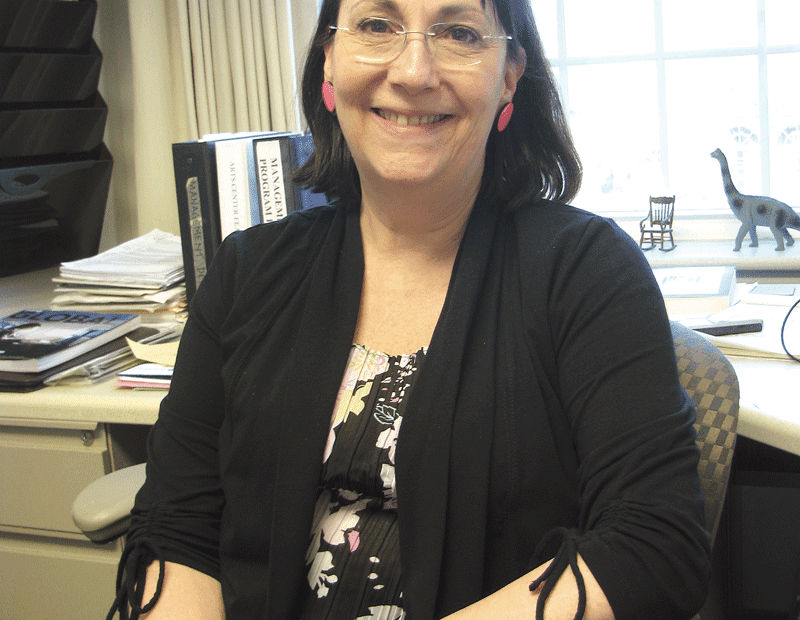
The current mix of businesses is representative of the diversity that has defined the facility since it opened its doors. In addition to Kotowitz’s venture, there is Jx2 Productions, an event-management company that provides DJ, lighting, sound, staging, and other services; thingreen computing, a remotely hosted desktop services venture; Multicultural Multimedia, producers of promotional advertising video clips for local Latino and Hispanic-owned businesses; Kristoriya, a company that designs and distributes customized decorative gift baskets; Tip Off Sales Force, a provider of in-store merchandising and promotions for specialty product manufacturers; Beyond Brackets, creators and producers of an innovative shelf and bracket system; and the latest addition, Irie Designz, which designs and prints high-end T-shirts.

The entrepreneurs are as diverse as their ventures. Andrew Jensen, 20, a graduate of Agawam High School, started Jx2 with his twin brother when he was 14, and has grown it steadily since. Viktoriya Romanchenko, who has partnered with Kristen Thornton to operate Kristoriya, immigrated to the U.S. from Russia earlier this decade. Paul Wilson, 45, owner of Irie Designz, is a native of Jamaica who came to the U.S. in 1995 and spent several years in the Army, among other diversions, before getting into the screen-printing business.

Knight and Diane Sabato, director of STCC’s Entrepreneurial Institute at the SEC, told BusinessWest that there is a lengthy process for getting one’s name and business on one of the cubicles in the incubator.

There are interviews, tours of the facility, an eventual request for a business plan, and some more interviews, said Sabato, adding that, in addition to good answers, officials at the facility are looking for something else — passion, for both a concept and the rugged process of making it into a viable business venture.

And when asked how one recognizes passion, Sabato said it’s not very hard.

“They exude it,” she said of those who possess that quality, adding that this makes it fairly easy to spot those who don’t.

In this issue BusinessWest goes inside the incubator, or hatchery, as officials there call it, to see how it helps tenants get their ventures off the ground — while creating a self-supporting entrepreneurial community in the process.

Not an Eggs-act Science

The business card/bookmark that Kotowitz hands out for her business describes her Web site as “First aid for your stepfamily.” It includes some bullet points that hint at the challenges her clients and potential clients face, and some of the many things that can be accomplished by seeking help, such as:

  • ‘Get your step-child to like you before your marriage self-destructs’;
  • ‘Pacify your lover and your stepchild without losing your sanity’;
  • ‘How to outmaneuver the most devious ex’; and
  • ‘How to win and influence your stepchildren’s lives.’

“People from all over the world have come to this Web site; there is a huge need for this service,” said Kotowitz, adding quickly that she knows her business is viable because others are trying to emulate what she’s doing.

Learning about step-parenting came largely by doing — and listening to others who had experience in the subject and wisdom to impart, said Kotowitz, adding that this is basically the same approach she and others take as tenants of the incubator, where they are, as the name implies, students of business and entrepreneurship.

Kotowitz said that she and other tenants are obviously skilled in whatever it is they do or make. But this skill is never enough to make a business successful, she continued, adding that the incubator and its various programs have provided help with everything from marketing to reading the economic tea leaves.

In her case, advice from officials with the Small Business Development Center, SCORE, other agencies headquartered at the SEC, and staff with the Entrepreneurail Institute helped convince her to convert what she intended to be a nonprofit venture into a for-profit business — the operating model for which is still a work in progress.

And at present, step-parenting.com isn’t as profitable as she’d like, in part because she finds herself essentially giving away her products and services to those desperately in need of them. Finding a balance between providing help and turning a profit is one of the things she’s trying to master.

“Experiential learning” was the phrase Knight used to describe how the incubator, one of two at the SEC (the other is for established businesses), builds a bridge between the classroom and the real (business) world.

It does so by providing both physical space and a forum in which ideas can become successful business ventures, said Knight, adding that students learn from each other, administrators at the incubator (who are known as ‘facilitators,’ not teachers), experts in subjects ranging from marketing to sales, and business owners in the larger incubator within the SEC.

“These students have ideas, and they have enthusiasm,” said Sabato. “What’s missing is experience in business, and that’s what we try to provide; this is a learning environment designed to prepare people for what they’ll find when they leave here.”

This environment has enabled many to successfully cross the bridge Knight described. Blondell McNair is one of them.

She is the owner of Blondell’s Fashion Gallery and the Designer Fashion School of Technology, a multi-faceted business she operates out of a 1,000-square-foot studio in the Indian Orchard Mills. Before moving there nearly a year ago, she spent three years in the incubator, honing her design skills, but mostly learning about what it takes to stay in business.

“My time at the incubator helped me develop a lot of skills, like knowing how to market my business and utilize my time better,” she said, adding that when she talks of being a procrastinator, she uses the past tense.

Beyond time management, however, McNair said the incubator helped her broaden her focus — from her designs, for people of all ages, to the many nuances of running a business.

“That was the biggest help to me,” she told BusinessWest. “Before, I was doing my business, but not doing the things that would help my business grow. Today, I’m more keenly aware of what business is all about.

“I’ve been doing this now for four or five years, and there have been a lot of ups and downs,” she continued. “Having people to talk to during those down times was a huge help; without that encouragement, I might have given up.”

Overall, the incubator has played a key role in the establishment of more than a half-dozen businesses now operating across the Pioneer Valley, said Sabato. The products range from Blondell’s fashions to a brand of gourmet ice cream, she noted, adding that while most of the entrepreneurs who started the ventures remain sole proprietors, there is real hope that they will someday create jobs for the region.

Birth of a Notion

Knight, who assumed her role in 2006, told BusinessWest that one of the things she enjoys about the student incubator is its fluid nature. Indeed, while most tenants stay for more than a year, and some much longer, there is a steady dose of movement to the tenant mix.

This serves to enhance the ongoing learning experience by bringing a steady supply of enthusiasm, energy, and new voices to the discussions about how to succeed in business.

The latest arrival is Wilson, who started developing an interest in design while working at a small garment factory in Kingston after graduating from high school. There, he heeded the advice of his uncle who told him to “try to find out how everything works.” He did, learning how to make silk screens and actually print the designs on the garments.
It’s taken a while to bring his design skills and entrepreneurial drive together, but he has high hopes for Irie Designz. He already has contracts to produce T-shirts for some salons in this area and New York City, but he expects his contacts in the Caribbean to generate larger deals involving sports teams, musicians, carnivals, and other entities.

“I’ve always been a very technical guy; I’m fascinated with how things work,” he said. “But some of the intricacies of business are missing, and I hope my time in the incubator will help me become a better business person.”
Wilson, like Kotowitz and John Reynolds, co-owner of Beyond Brackets, is an example of an older, non-traditional student who has become a tenant. Others, like Jensen, have earned a coveted cubicle while still in high school.

While only 20, Jensen, considered one of the rising stars in the incubator, has already put a number of accomplishments on his resume. He was named a Small Business Administration Young Entrepre-neur of the Year for Massachusetts in 2006, for example. That was a busy year for Jensen; he was also named a Young Entrepreneurial Scholar as part of the YES program administered by STCC, and one of the Top 25 Young CEOs of the U.S., as identified by the Initiative for a Competitive Inner City. Meanwhile, he also won a Harold Grinspoon Charitable Foundation Entrepreneurial Spirit Award .

All this, and much more, for an enterprise he started with his brother, Erik (hence the name Jx2). The name hasn’t changed, but Andrew is the only Jensen still involved, and he has big plans for his venture, to which he has added a sister business called JenMark Events, which handles a broad range of corporate functions.
These include a recent conference for Texas Instruments’ T3 Educational Division and the New England Bar/Bat Mitzvah & Party Showcase, slated for Oct. 7 at the CT Expo Center. Jx2, meanwhile, provides a wide range of music services for proms, birthdays, and other events. In fact, Jensen didn’t just go to his high school prom at Chez Josef in 2006 — he managed the event.

Jensen’s inventory of equipment is rather extensive — from Madison 18” subwoofers to Gemini DJ mixers — and he hopes to complement it with practical lessons in business management at the incubator and the SEC as a whole.

“There’s a lot of knowledge and experience in this building; there’s so much going on and so many people you can learn from,” he said. “I love bouncing ideas off people and picking their brains.”

Getting a business off the ground isn’t easy, and neither is earning a cubicle in the Student Business Incubator.

There is one slot currently open, said Sabato, and competition for it has been keen, with the winner, from among two or three finalists, to be chosen within a few weeks.

Interested applicants, who need only be attending an area high school or college to be eligible, start with an interview and a tour. There is then a written introduction, in which students explain everything from their product to their market to their competition. Applicants are then asked to submit a business plan and references; the former can be preliminary in nature but should address short- and long-term goals, market research, start-up and operating costs, financing, break-even analysis, and much more. All this goes to a screening committee — comprised of members of the Entrepreneurial Institute, STCC faculty, business owners, and student incubator tenants — which conducts a thorough interview.

It’s designed to discern the requisite level of passion, said Knight, but also determine not only what the incubator can do for the applicant, but what the applicant can do for the incubator.

Indeed, this is a community, a team in some respects, she said, noting that when Jensen managed a large event recently, a number of other tenants were on hand to help and show support.

This camaraderie is appealing to Kotowitz, who said that enthusiasm is palpable inside the incubator, and it helps tenants stay upbeat and survive the downs that inevitably come with the ups.

“I’ve had a lot of people say, ‘why are you doing something so negative?’ or ‘why are you doing this?’” she said of her unusual venture. “Being here is like a breath of fresh air; everyone is up, they’re happy, they’re on your team. They say, ‘you can do this,’ and you need to hear that to keep going.”

It’s Not Kid Stuff

“How to outmaneuver the most devious ex.”

Sounds like a lesson plan born from experience. It also sounds like a skill that can be acquired only by doing — and listening to others who have gone before you.
As Kotowitz said, step-parenting isn’t easy. Neither is taking an idea and turning it into a successful venture. The incubator, or the hatchery, was created to make it a little easier. There, students can learn about crafting a business plan, developing some marketing materials, and even some basic accounting. They cannot, however, be taught passion.

They have to bring that with them.

George O’Brien can be reached at[email protected]

Opinion
Why the Control Board Should Stay in Control

During a recent appearance at American International College, Lt. Gov. Tim Murphy stated that it’s time for the Finance Control Board that has been managing Springfield for the past 30 months to go. I believe that once he and Gov. Deval Patrick fully understand Springfield’s situation, they’ll come around to my way of thinking — which is that the control board’s work is not finished.

During the FCB’s first two and a half years, I have watched as the city has made steady progress, due in large measure to the board’s undivided efforts. Created by unanimous vote of our legislators, the control board was a thoughtful response to a very complex situation. Rather than impose a single receiver, as was the case in Chelsea in the 1980s, the Legislature created a body that would be reflective of the democratic process. Elected officials — the mayor and the rotating position of City Council president — represent two of the board’s five votes.

Beyond the financial difficulties Springfield experienced prior to the election of Mayor Charles Ryan and the arrival of the FCB, the city was quite literally starving for legitimate attention. Corruption placed a stranglehold on the way Springfield conducted its business.

As a result, very little of the city’s business got done — and not very well.

Thanks to the FCB’s hiring of some effective managers, Springfield’s $41 million budget deficit has been eliminated, and the city now operates with a balanced budget. More than 20 contracts have been negotiated. (It wasn’t that long ago that our police, firefighters, and teachers were working without contracts.) Our resource-deprived departments are now gaining ground on the adoption of 21st-century technology. (It wasn’t long ago that records were kept on index cards and filed in cardboard boxes.)

According to the Finance Control Board, more work needs to be done, particularly in the area of technology: a computerized financial-management system still needs to be implemented. The city should have a centralized payroll system. There is more work to integrate data so that various departments can come to the same conclusions on matters such as permitting and licensing. Zoning reform is still a work in progress.

These critical initiatives — too long neglected — require an effective, non-politicized body in place so that they can move forward in an expeditious manner.

During the receiver’s four-year tenure in Chelsea, citizens were given enough time to lay the groundwork for a new form of government. The charter-review process resulted in the hiring of a city manager. According to my research, two successive city managers have kept Chelsea’s finances in good order for the past 20 years.

I’m not suggesting we need to adopt Chelsea’s solution. Chelsea is a city a fifth the size of Springfield with a land mass about the size of Springfield’s South End. I am advocating for time equivalent to that given Chelsea so that we can conduct a charter review.

Springfield is a complex, $450 million enterprise that gears up for a management change every two years. Can you imagine a private enterprise preparing for a transition in the corner office every 12 months? We need time to review the best practices of other cities our size, facing our urban challenges. Certainly there are ways to combine professional business management with political leadership.

If the Patrick administration is concerned about Springfield, and I have to believe that it is, it needs to keep the Finance Control Board in Springfield for at least two more years. If it’s a simply a matter of semantics, label the next two or three years of the FCB’s tenure transitional. Place the onus on the citizens of Springfield to get their collective act together to lay the groundwork for life after the control board.

In the meantime, allow the FCB to finish what it was created to do.-

Nancy Urbschat is owner of TSM Design in Springfield; (413) 731-7600.

Departments

“Doing Well By Doing Good”

Sept. 12: The Western New England College Law and Business Center for Advancing Entrepreneurship will open its 2006-2007 Entrepreneurship Speaker Series at 5:30 p.m. in the S. Prestley Blake Law Center. Nadine Thompson, chief executive officer and president of the beauty and wellness products company Warm Spirit, will speak on “Doing Well By Doing Good.” Warm Spirit, founded in 1999, is dedicated to socially responsible entrepreneurship and empowering women. The company boasts more than 20,000 direct-sales consultants nationwide. The event is free and open to the public. For more information, call (413) 736-8462 or visit www.law.wnec.edu/lawandbusiness.

Course for Artists, Artisans

Sept. 13-Dec. 13: The Valley Community Development Corporation (Valley CDC), under contract with the City of Easthampton, will present a 13-week course titled Business Planning for Artists on Wednesdays from 6 to 9 p.m. in Plimpton Hall, Railroad Street, Easthampton. The course is designed for qualified artists and artisans who live in town or whose studios are located in Easthampton. Course topics will include small business management, copyright protection, contracts, market research, working with galleries, trade shows, selling to retail customers and financial management. The deadline to register is Aug. 25 in person at the Valley CDC, 116 Pleasant St., Easthampton. For more information and registration forms, call (413) 529-0420.

The Big E

Sept. 15-Oct.1: The 2006 edition of The Big E will present more than $1.7 million in free entertainment, a ticketed Brad Paisley concert, the Miss Latina U.S.™ Pageant, the return of Marriage on the Midway, and BiggiE’s Character Breakfast as well as the Mardi Gras Parade, rides, crafts, good food, animals and the best of the old and new that fairgoers have come to expect and enjoy. The Big E is located on Memorial Avenue in West Springfield. Advance discount tickets and 17-day value passes are available online at www.thebige.com and the Big E Box Office by calling (800) 334-2443, now through Sept. 9. Tickets are also sold at Big Y World Class Markets now through Sept. 13.

‘Team Creativity Disney Style’ Workshop

Sept. 26: The Center for Business and Professional Development at Holyoke Community College will sponsor an all-day workshop titled Team Creativity Disney Style from 8 a.m. to 4:30 p.m. at the Kittredge Center for Business and Workforce Development on the HCC campus. The Disney Institute will share with participants the motivational tools that can unleash the creative power of one’s entire organization. The cost is $349 per person which includes continental breakfast, lunch and materials. For more information, contact Maria at (413) 552-2122 or via e-mail at [email protected].

HCC Business Summit

Sept. 27: The Holyoke Community College Center for Business and Professional Development is sponsoring a free workshop for business owners and managers who are looking for more effective ways to train their employees. Titled “Training for the 21st Century,” the workshop is planned from 8:30 a.m. to 12:30 p.m. at HCC’s Kittredge Center for Business and Workforce Development. The workshop will introduce employers to a new training approach that uses real-life scenarios, follow-up sessions, ongoing contact with instructors, and actual homework for participants. The deadline to register is Sept. 13. For more information, call (413) 538-5817 or (413) 538-5815.

Western Mass. Entrepreneurship Hall of Fame

Oct. 5: The seventh annual induction ceremony for the Western Massachusetts Entrepreneurship Hall of Fall is planned Oct. 5 at the Log Cabin Banquet and Meeting House in Holyoke. The event is sponsored by Springfield Technical Community College. Inductees are include The Fontaine Family (Fontaine Bros. Inc.); Jesse and Barbara Lanier (Springfield Food Systems); Horace Smith and Daniel Baird Wesson (Smith & Wesson); The Balise Family (Balise Motor Sales), and The Grenier Family (Grynn & Barrett.)

Super 60

Oct. 27: The Affiliated Chambers of Commerce of Greater Springfield, Inc. will present its annual “Super 60” program at Chez Josef in Agawam. The event is a salute to the entrepreneurial spirit of the region’s privately owned businesses.

Departments

‘Building Business’ Workshop

April 25: The Western New England College Law and Business Center for Advancing Entrepreneurship will host guest speaker Laura Gordon at 5:30 p.m. in the S. Prestley Blake Law Center on the college’s main campus, 1215 Wilbraham Road, Springfield. Gordon will speak on Building Business from a Base of Strength. The free event is open to the public. Gordon is a licensed CPA in California and founder and owner of Gordon & Associates. Her mission is to provide professional business management and accounting services based on sound business practices and biblical principles. A UCLA graduate, Gordon also became a licensed minister in November 2002. She is enrolled at Kings Seminary, completing a Masters of Divinity. For more information on the program, call (413) 736-8462 or visit www.law.wnec.edu/lawandbusiness.

Auxiliary Fashion Show

April 30: Fashions from Talbots and Yale Genton will be featured at the Mercy Medical Center Auxiliary’s Spring Fashion Show at Wyckoff Country Club, 233 Easthampton Road, Holyoke, beginning at noon. Brenda Garton will host the event. Tickets are $25 and reservations may be made by calling (413) 748-9745. Proceeds raised from the fashion show will fund patient-oriented programs and enhancements at Mercy Medical Center.

ACS Gala

May 13: The American Cancer Society will honor Sr. Mary Caritas, S.P., former president of Mercy Medical Center, at its 2006 Omar T. Pace, M.D., Gala at the MassMutual Center in downtown Springfield. The black tie affair, beginning at 6 p.m., will feature a silent auction, formal dinner, and an evening of dancing to the tunes of the Floyd Patterson Band. For more information or to make a reservation, call (413) 734-6000, option 3.

‘State of the Region’ Conference

May 5: The Hartford Springfield Economic Partnership will stage its 5th Annual ‘State of the Region’ Conference at the MassMutual Corporate Center in Enfield., from 8 a.m. to 11:30 a.m. Sponsored by TD Banknorth, the event will address the question: Is Hartford-Springfield Positioned for Success? The keynote speaker will be Michael Gallis, a principal with Michael Gallis & Associates, considered the country’s leading expert in large-scale metropolitan regional development strategies. To register, call (860) 728-2280; or visit www.HartfordSpringfield.com.

Cover Story
’InterActors’ Blend Stage Savvy With Business Sense
DramaWorks

DramaWorks

DramaWorks, a Northampton-based consulting company that uses theater to address the many challenges of the business world, has created a national presence for itself in under a decade. While its business model is hard to define, managing partners Tim Holcomb and Erik Mutén explain that because theatrical flair blends so well with the lessons of life, drama in the corporate world does, in fact, work.

In the theater world, acting jobs like those provided by DramaWorks InterActive are called ’corporate gigs.’

That phrase is just one way to describe what the company does, however, as it fails to fit into any one category. Some might call DramaWorks a theater troupe, others a consulting firm, and still others, an educational resource.

Hard as it may be to define the business, though, DramaWorks has created a successful niche by combining the disciplines of theater, psychology, and business management to create a surprisingly cohesive set of services.

DramaWorks InterActive was launched in 1997, under the direction of Erik Mutén, a psychologist and organizational consultant with an MFA in Stage Direction, and Tim Holcomb, founding director of the Hampshire Shakespeare Company in Amherst and a seasoned member of the theater, film, and television industries. The partners wanted to create a company that would take the organizational issues that exist in all types of companies and put them center stage, quite literally, in order to allow managers and employees alike to consider them, examine them, and ultimately, change them for the better.

What they have created is a nationally-known consulting business that provides a unique set of tools for its clients — beginning with the story-telling power of theatrical productions and continuing with facilitated discussion and problem-solving exercises needed to help move an organization forward.

"The core concept of DramaWorks is to help organizations move toward specific goals through action-learning," said Mutén. "A big problem with a lot of trainings is that they often lead to big discussions that eventually fall flat and go nowhere. Our model is much more effective at highlighting what the issues are, and allowing groups of people to gather ideas and work through them."

Setting the Stage

The company addresses a wide range of internal corporate issues, from gender and power dynamics, multi-culturalism, teambuilding, and leadership styles, to more specific issues, such as patient safety and privacy for clients in health care, or succession planning for family businesses. By staging largely improvisational skits, DramaWorks’ ’InterActors,’ as they’re dubbed, call attention to the complex interactions within a given company that can make it work, or detract from productivity, communication, or even the organization’s overall mission.

DramaWorks has collaborated with all types of businesses, and provides a tailored suite of programs for family businesses, health care facilities, and corporations hoping to evaluate their internal culture, sometimes during a time of change. In addition to live performances and workshops, the company also publishes videos for training purposes and soon hopes to add an interactive, online component to its services.

Its current client list includes several prominent names in business, education, and health care, among them IBM, Lucent Technologies, Harvard University, Brigham and Women’s Hospital, and State Farm Insurance. But the concept for a business that would couple theater with theories of psychology and management, and eventually appear at major corporations across the country, grew out of one small production staged locally.

A short play was drafted and performed for the UMass Amherst Family Business Center, dealing with the stresses of family-owned and operated business.

"We improvised a play and held two performances, and we thought that would be it," said Mutén. "But other family business centers across the country began calling and the idea started to take off."

Gradually, he said, DramaWorks expanded to offer improvisational theater pieces for a more- diverse set of businesses. One constant is the examination of what he calls "the human factor" that can often derail an existing or developing business plan or goal — the feelings, emotions, opinions, work habits, or simply the different types of people that must work together in various positions for a business to succeed.

The company typically performs assessments, surveys, and interviews within an organization in order to become more familiar with its structure and background, and stages a production that directly addresses the needs of the client. Sometimes, the skits performed are already part of the DramaWorks repertoire; other times, entirely new scenes are drafted.

In either case, Holcomb explained, the lack of conventional scripts, replaced by ’spines’ — improvisational tools that provide a framework of a story, but no actual lines to memorize — allows InterActors to remain fluid in their words and actions, and ultimately reach their clients on a deeper level while not hitting too close to home.

"We customize everything we do," said Holcomb, "to show the dysfunctional patterns that are holding a given organization back. Typically, a company will approach us with a specific problem, but often discover problems they hadn’t anticipated. We always stay one degree left of center from the company we’re dealing with, in order to remain hypothetical."

That could mean addressing issues at a health care facility through the guise of ’St. Everywhere Hospital,’ for instance. The effect is often one that gets people talking, both within an event and about it.

"Seeing something like a play being staged in the workplace tells people that management is trying something creative and different to address that company’s problems," said Holcomb. "That alone is important right there. It creates a buzz and shows people that their management team is doing Ö something."

Audience Participation

Holcomb was quick to point out, though, that while the dramatic portion of DramaWorks’ services provides its backbone, the additional components of the experience that involve the audience — an organization’s employees — are integral to its purpose.

He explained that each DramaWorks appearance, dubbed a ’learning event,’ attempts to meet the needs and reflect the corporate structure of each client, and thusly the event could last a few hours or a full day.

"We’ve really tried to integrate the consultancy part of the business as much as possible," he said. "We are called DramaWorks InterActive precisely because that interaction with our clients is such a large part of our goal, which is to facilitate and help create the work environments that we would like to see evolve."

Employees are always engaged in the experience following a performance, discussing the scenes they’ve been shown, the various characters, and how they contribute to the overall culture of the ’company’ in which they work.

"Generally, we show them a scenario that attempts to illustrate the things that aren’t working well," Mutén explained. "Then, we have people gather into groups to come up with a different vision of the same scene; a new way it could be played out that would lead to a better result. That scene is actually played out, and people have a chance to comment, again, on what worked and what did not."

The model allows people within an organization to see things from a new perspective, while remaining in a safe, private, and entertaining environment, Mutén said, noting that the ability to see mistakes being made, and later the more effective practices put into place, is another strength of the DramaWorks method.

"Only through action learning can we arrive at better solutions," he said. "Through simulation, people are able to try things out and make mistakes in an environment where it’s OK and even fun to make mistakes. They will play out a number of revisions to the original scenario, and begin to see very quickly what is working and what is not."

Christine Stevens, an InterActor with DramaWorks who has also collaborated on storylines for productions in the past, said gauging a group’s reaction to a performance is another way to begin dialogue among coworkers and move toward the eventual implementation of better work strategies and relationships.

"People are given a chance to share and talk about what they saw," she said, "And we’ll sometimes use sociometrics to reflect how people feel."

A sociometric exercise, Stevens explained, could be asking participants to stand at different points within the room based on how well a production reflects their day-to-day experiences, creating a tangible spectrum.

A health care-based performance, for instance, titled Who Cares? brings to light the many issues surrounding safe, comprehensive health care and the challenges hospitals face daily in order to provide it. As a nurse struggles to care for her patient as well as direct her aide, collaborate with doctors, fill staffing shortages, and learn new equipment (she’s also asked to chair the Nurse Appreciation Banquet Committee in the middle of it all), several characters come and go out of a patient’s room. These include an orderly, a dietary, a doctor, maybe a billing agent — and their interactions are seen by the audience through the eyes of a sick patient. A phlebotomist taking blood, for instance, uses a plunger rather than a needle, exactly how it might feel to a frightened patient.

Following the performance, the audience — typically health care workers themselves — are asked to create that visible spectrum. Stevens said she often stands at the spot where clients who feel they relate most to the scene are asked to move, and nurses usually crowd around her quickly.

"It’s very visceral for the people in the room to see, literally, where people stand," she said.

The 25-minute Who Cares? Performance and the accompanying 2 to 2 1/2-hour interactive session will be staged later this month at the National Patient Safety Seminar held by the Risk Management and Patient Safety Institute in Gaylord, Mich. It’s one of the largest groups DramaWorks will assist with facilitating change this year.

"Hopefully, the CEOs and managers that attend will come out of this seminar ready to promote a new level of communication among their staffs," Holcomb said. "It’s all about changing old paradigms into new ones."

Curtain Call

And although some seasoned theater-folk might smirk and call the performance a ’corporate gig,’ Mutén knows his company rises beyond any label. Further, he suspects his fellow InterActors, as well as their audience, will leave the event with a greater understanding of the wisdom that can be gleaned from groups, rather than individuals working alone.

"Live events like this are so important because working as a group, people can better create resilient, sustainable solutions," he said. "Together, people are smarter."

Jaclyn Stevenson can be reached at[email protected]