Home Posts tagged Education (Page 15)
Daily News

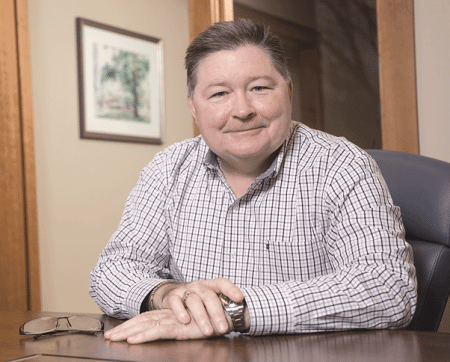
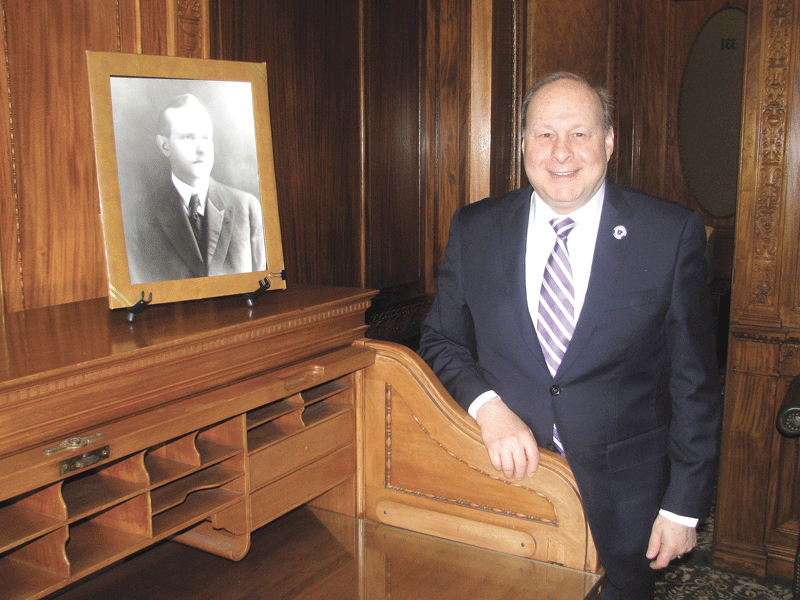
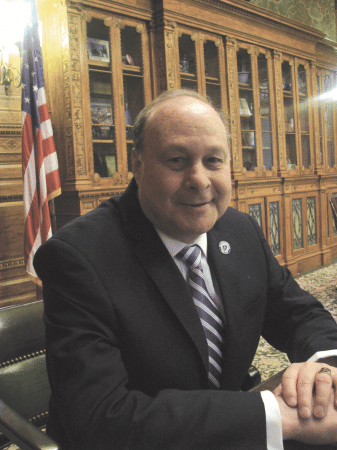
CHICOPEE — Last week, the Elms College board of trustees announced that Harry Dumay has been named the college’s 11th president.

Dumay, who was chosen after a nationwide search, has served in higher education finance and administration at senior and executive levels for 19 years. He holds a Ph.D. in higher education administration from Boston College, an MBA from Boston University, and a master’s degree in public administration from Framingham State University.

“Dr. Dumay is a multifaceted leader who understands Elms College and the importance of a liberal-arts education based in the Catholic intellectual tradition. He has a collaborative style and a demonstrated record of strengthening organizational and academic effectiveness, and he is enthusiastic about the future of Elms College,” said Cynthia Lyons, chair of the board of trustees. “At the very heart of his vision for our students, faculty, and the whole college community is excellence for all. He strongly believes education is the best tool to lift people out of poverty, to encourage positive discourse, and to create pathways to successful employment, while also supporting opportunities for strengthening ethical and spiritual development. This vision fits perfectly with the mission of Elms College.”

Dumay, who hails from Ouanaminthe, Haiti, is currently the senior vice president and chief financial officer at St. Anselm College in Manchester, N.H. He formerly served as chief financial officer and associate dean at Harvard University’s Paulson School of Engineering and Applied Sciences, associate dean at Boston College’s Graduate School of Social Work, and director of finance for Boston University’s School of Engineering. He also served as an adjunct faculty member at Boston College for nine years.

“Elms College is committed to serve a diverse group of women and men and to combine an excellent liberal-arts education with strong professional preparation. That resonated strongly with my belief in education that prepares individuals holistically for leadership, service, and citizenship,” Dumay said. “My campus visit reinforced my sense that Elms College is a special community in which the Sisters of St. Joseph’s spirit of Catholic solidarity pervades the campus. The students whom I met were all quite impressive, fully engaged with their campus community, and ready to contribute to the world. The faculty and staff are welcoming and enthusiastically dedicated to the teaching and learning that happens in and out of the classroom. The board is engaged and extremely supportive. I am honored and excited to lead Elms College as, together, we write the next chapter in the institution’s history.”

Sr. Maxyne Schneider, president of the Congregation of the Sisters of St. Joseph and a member of the presidential search committee and board of trustee, noted that, “since its founding by the Sisters of St. Joseph in 1928, the College of Our Lady of the Elms has served those for whom Catholic higher education would be essential to a life rich in faith, learning, and economic opportunity. Dr. Dumay brings the professional and lived personal experience to continue this mission. We sense in him a spirit truly compatible with the charisma of our sisters, and will support him in his leadership with our prayer and good will.”

Elms College’s most important goal is the success of its students, Lyons said. “The value of a liberal arts education, combined with career skills and a strong sense of the Elms values of faith, justice, community, and mission, is a defining strategy for our students now and in the future,” she added. “We look forward to Dr. Dumay’s leadership as we continue to strengthen the Elms experience for all.”

Dumay’s appointment is effective July 1, 2017, and his inauguration will be held in the fall. He succeeds Mary Reap, IHM, Ph.D., who will retire after serving as Elms president for the past eight years. Lyons indicated that, during the rest of the academic year, the campus will celebrate the contributions of Reap and her lasting legacy at Elms.

Daily News

SPRINGFIELD — It’s official: whiskey passed vodka as the number-one spirit of choice in the U.S. back in 2014, and the trend is more than a passing one. The Springfield Symphony Orchestra’s Whiskey & Cigar Night, slated for Thursday, March 2, at 6 p.m. at Nadim’s Downtown Mediterranean Grill, provides novice and connoisseur whiskey drinkers with a chance to savor a variety of vodkas, while raising funds for the SSO’s artistic, education, and community programs.

For a $75 admission ticket, attendees will enjoy a variety of cigars on an outdoor patio, food-pairing stations to accompany the drink, and several stations to taste a wide variety of whiskey, from Scotch and Irish whiskey to bourbon and rye. Expert representatives from local distributors and distilleries will be on hand to answer questions and provide tasting notes.

In addition to the whiskey, food, and cigars, a silent auction will be running throughout the event, featuring sports memorabilia, high-end experiences, and trips.

Participation is limited to ensure the highest quality experience for all attendees. Nadim’s Downtown Mediterranean Grill is located at 1390 Main St., Springfield. To learn more or purchase a ticket, call (413) 733-0636, ext. 118, or e-mail [email protected].

Daily News

HOLYOKE — Holyoke Mall has partnered with Hampden County District Attorney, Anthony Gulluni and the West Springfield CARE Coalition to bring ‘Hidden in Plain Sight’ to the shopping center.

‘Hidden in Plain Sight’ is an interactive exhibit that can help to educate parents on the signs that could potentially indicate substance abuse among their children through a display of a mock teen bedroom.  Many of the items are commonly found in some teen bedrooms but could also have a double meaning, and can be used to hide or mask the use of drugs.

“A major element in battling this disease is working collectively in the area of prevention and education,” said Hampden District Attorney Anthony D. Gulluni. “The Hampden County Addiction Taskforce is proud to partner with all involved in sponsoring this display and working to end the stigma of addiction through constructive discussion and outreach.”

The display will be open during mall hours until Feb. 28, and will be located on the lower level in Sears Court.  Holyoke Mall’s General Manager, Bill Rogalski shared, “Given the tragic impact the opioid epidemic is having on our community, we naturally agreed when the West Springfield CARE Coalition approached us to host the event.”

Visitors to the display can pick up a flyer provided by the West Springfield CARE Coalition and tour the exhibit to see which everyday items could have a hidden, double use. The goal of the exhibit is to bring awareness to the opioid epidemic, help prevent drug use, educate parents and youth to recognize the signs of drug use, and help erase the stigma attached to the disease of addiction. In addition to the exhibit, there will be information about resources available for those who need to seek help.

Mercy Behavioral Health Care’s Robert Roose, MD, Chief Medical Officer and Vice President of Addiction and Recovery Services said of the initiative, “in addition to providing access to high-quality treatment, a comprehensive strategy addressing substance use in our community must have a strong focus on prevention and early intervention.

“Providing education, and real-life scenarios like those in ‘Hidden in Plain Sight,’ which help individuals and families understand addiction and identify when someone is at risk, can be an incredibly valuable tool in this fight and improve countless lives,” he went on. “As a leading provider of substance use disorder treatment in our community, Mercy Behavioral Health is proud to partner with Hampden County District Attorney’s Office and Holyoke Mall at Ingleside to provide this innovative program to engage and educate our community and be a resource to individuals in need of care.”

Other shopping centers around the country have also hosted similar ‘Hidden in Plain Sight’ displays, including Hanover Mall and Natick Mall in Massachusetts.  The display will be staffed by volunteers from the Hampden County Addiction Taskforce at scheduled times on Saturdays and Sundays through the 28th as well as weekdays during school vacation from Feb. 20-24. For more information on scheduling, visit www.holyokemall.com.

Daily News

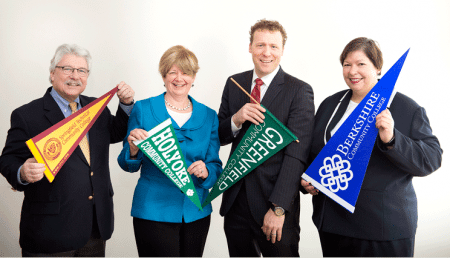
PITTSFIELD — Berkshire Community College (BCC) announced new faculty and staff additions as well as recent promotions:

  • Julia Curletti has joined BCC as staff assistant to the dean of enrollment management and student success. She previously worked at Brigham & Women’s Hospital in Boston as a program coordinator. She garnered a bachelor’s degree from UMass Amherst and attended New England Law;
  • Alyssa Felver has been named assistant professor of practical nursing. A registered nurse in Massachusetts and New Hampshire, she previously worked at Berkshire Medical Center. Prior to that, she was a critical care registered nurse at Dartmouth Hitchcock Medical Center. She holds a bachelor’s degree in nursing from the University of South Florida and a bachelor’s in biology from Southeastern University in Lakeland, Fla.;
  • Lori Moon has joined BCC’s faculty as an assistant professor of practical nursing. Prior to joining BCC, she was a case manager and education specialist at Berkshire Medical Center. She previously worked at HospiceCare in the Berkshires for approximately 20 years. She earned an associate’s degree from Springfield Tech Community College, an associate’s degree in nursing from BCC and a bachelor’s degree from UMass Amherst;
  • Lawrence Stalvey has been promoted to academic counselor with BCC’s TRIO (Talents, Resources, Initiative, Opportunity) Program, a federally funded program designed to identify and provide services for individuals from disadvantaged backgrounds. He previously was a learning specialist with TRIO. He holds an associate’s degree from BCC and a bachelor’s degree from Williams College;
  • Charles Stephens has joined BCC as the coordinator of career planning and placement. He is responsible for providing counsel to students regarding career options. He previously held numerous positions at Philadelphia University, Saint Louis University, and Michigan State University. He most recently worked as area coordinator for residence education at Philadelphia University. A graduate of Michigan State University, he holds a bachelor’s degree in finance and a master’s degree in student affairs administration; and
  • Peggy Williams has been promoted to academic coordinator with BCC’s TRIO Program. She previously worked for more than a decade as an academic counselor and learning specialist with TRIO. She has a breadth of experience working in administrative/management roles at human services organizations in Berkshire County. She earned a bachelor’s degree from Boston College and a master’s degree from the University at Albany’s Rockefeller College of Public Affairs & Policy in Albany, N.Y.
Daily News

SPRINGFIELD — Massachusetts Mutual Life Insurance Company (MassMutual) and the Hampden County Bar Association (HCBA) have announced MassMutual’s ongoing support for the HCBA’s Hampden County Legal Clinic, including a $160,000 grant intended to support its expansion and continuation of legal services.

The Hampden County Legal Clinic is a legal aid program that provides pro bono services to individuals at no charge, most of whom have limited financial resources and who meet specific eligibility guidelines. The Legal Clinic provides services in the Housing, District, and Probate & Family Courts in Hampden County. It also works with unrepresented individuals on issues regarding foreclosure, tenant and consumer matters, and with regional attorneys to match their legal skills and expertise with pro bono opportunities. These opportunities provided by the Legal Clinic include general legal advice and services, limited assistance representation, mentoring with students at local law schools, legal education programming, and other community outreach programs.

MassMutual is continuing its support of the Legal Clinic at a critical time when a significant number of litigants in local courts are unable to afford legal representation. Currently, more than 85% of the cases in the Western Division Housing Court involve people who are without legal representation. The current grant brings MassMutual’s total financial support of the Legal Clinic to approximately $250,000.

“MassMutual is proud to continue its support of the Hampden County Legal Clinic, which provides legal guidance and counsel for those in our community with low or no income,” said Michael O’Connor, General Counsel, MassMutual. “MassMutual has a long tradition of supporting the communities in which it does business, and this grant reflects our ongoing commitment to invest our time, talent and resources to ensure access to legal services for all members of our community.”

MassMutual began its association with the HCBA six years ago with grant funding, enabling the Legal Clinic to expand its lawyer-for-a-day programs and increasing the services it provided. The funding from MassMutual has enabled the Legal Clinic to become the center piece for pro bono services in Western Mass. Importantly, in addition to the financial support MassMutual has provided, its attorneys have participated in Legal Clinic programing for nearly 10 years.

“We’re elated with MassMutual’s increased funding, and their involvement in making the Legal Clinic an invaluable community resource,” said Attorney Kevin V. Maltby, president of the Hampden County Bar Assoc.

Daily News

SPRINGFIELD — Throughout the month of February, Black History Month, American International College (AIC) is using the college’s social-media platforms and website to feature prominent African-Americans who have helped shape the culture and fabric of our country and our world. Leaders from the civil-rights movement, the military, literature, exploration, sports, and entertainment will be highlighted daily.

As an institution of higher learning with nearly half of its population comprised of first-generation students, one of the hallmarks of American International College is the value it places on diversity.

“The diversity that results from a population with mixed backgrounds is one of our strengths,” said President Vince Maniaci. “AIC is very student-centric and believes that, while a college education includes academic and intellectual growth, it must also include the development of personal, spiritual, and emotional intelligence. We all see things through a different prism based on the environment we come from; being culturally diverse leads to deeper discussions and increased awareness as AIC students make their way into a rapidly changing world.”

To join AIC in this month-long tribute, visit its website at www.aic.edu, on Facebook at www.facebook.com/americaninternationalcollege, or on Twitter, @aiconcampus.

Daily News

SPRINGFIELD — The African Hall subcommittee of the Springfield Museums is seeking nominations for the 26th annual Ubora Award and the ninth annual Ahadi Youth Award. The African Hall subcommittee is a volunteer group comprised of educators, business people, and community leaders from the African-American community. The nomination deadline for both awards is March 31.

The Ubora Award is presented to an African-American adult who has demonstrated a commitment to the Greater Springfield area and exhibited excellence in the fields of community service, education, science, humanities, or the arts. The Swahili word ‘ubora’ means ‘excellence.’

Named for the Swahili word for ‘promise,’ the Ahadi Youth Award is presented to a young African-American who has excelled in academics and performed admirable service to the Greater Springfield community. Eligible candidates must be age 19 or younger, live in or have strong ties to the Greater Springfield area, and be currently enrolled in grades 10, 11, or 12.

The Ubora and Ahadi Awards will be presented at a ceremony at the Springfield Museums in September. Nomination forms can be downloaded by visiting springfieldmuseums.org/ubora. For additional information, call (413) 263-6800, ext. 325, or e-mail Valerie Cavagni at [email protected]. Nominations may be e-mailed to Cavagni or mailed to African Hall Subcommittee, c/o Valerie Cavagni, Springfield Museums, 21 Edwards St., Springfield, MA 01103.

Features

A Real Page Turner

Diane Pikul

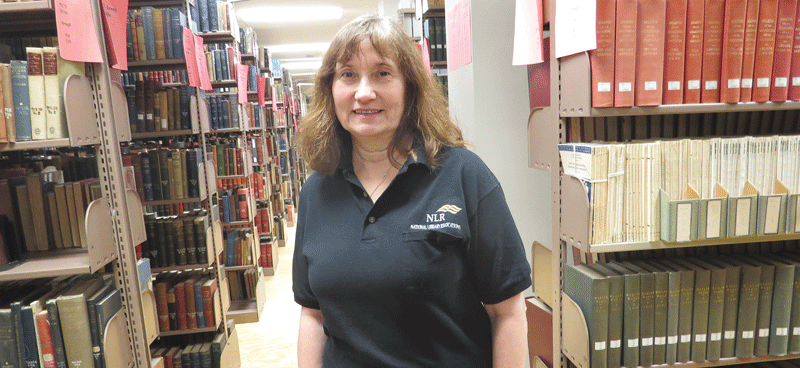
Diane Pikul, Northeast regional sales manager for National Library Relocations.

You might say this is a business that does things by the book. But that tells only part of the story. It also stores, moves, cleans, and inventories everything from maps to photographs; from pieces of art to railroad equipment. And if you called National Library Relocations a ‘volume business,’ that wouldn’t exactly be accurate, either. Here, they measure collections in linear inches and feet — lots of them. In fact, just last summer, the company, with a huge warehouse in Palmer, moved more than 20 miles of books.

As she walked among the seemingly endless rows of books, journals, and boxes of photographs, Diane Pikul stopped to admire what is easily one of the more intriguing items now in her care.

And one that, like those books on the shelves, tells a story. Well, sort of.

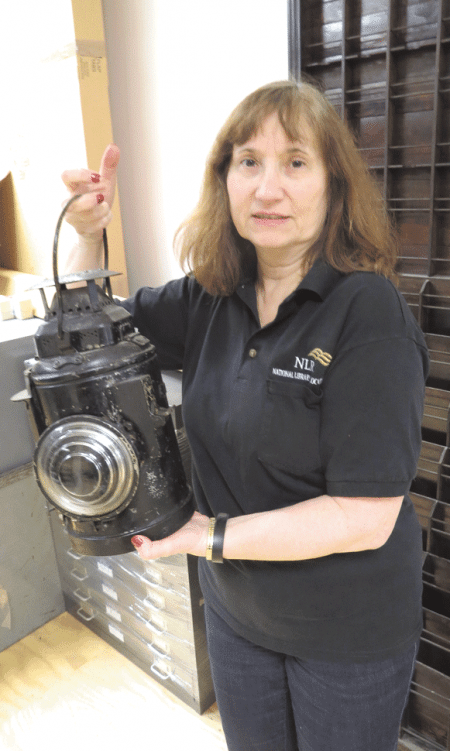
The old train lantern is from the collection owned by the National Railway Historical Society. Pikul, Northeast regional sales manager for National Library Relocations (NLR), looked for some clue as to how old this artifact was, and couldn’t find one. She did learn, however, that the lantern was put to use in Chicago.

It is stored next to a large wooden rack that once held dozens of train schedules, an indication of just how dominant that mode of transportation was a century ago and even 60 years ago. And it’s just one small part of a collection measured not in pieces, or volumes, as one might expect, but in linear feet, as will be explained later.

The story it helps tell? Well, it’s more the NLR story than anything else.

Indeed, the railway historical society’s library was kept in the Robert Morris Building in Philadelphia’s Center City, a handsome Gothic Revival structure built in 1914 by hotelier Rutherford Jennings that later served as a college dormitory and academic building and then as an office tower until 2007. That’s when it was acquired by 806 Capital with designs to remake it into a hotel, plans that were scuttled by the recession and later revamped to feature upscale apartments.

We’re unique because we can offer customers a unique blend of experience from the fields of architecture, library science, and transportation.”

To make a long story short, the NRHS needed a new home for its library collection — and it still needs one, although Pikul says it’s closing in on a site. The extended search for new quarters, which has featured a number of twists and turns, explains why this collection, which was supposed to be in NLR’s care for maybe a year or two, has now been at the company’s location in the old Tambrands complex in Palmer for close to a decade.

“It’s a really fascinating collection and a great client — they’re a joy to work with,” said Pikul, who deploys such language to talk about most every client — and means it when she says it.

Indeed, the client list includes some of the most famous and revered institutions in the world, from Harvard University to the Smithsonian to the Clark Art Institute. And what NRL provides to those clients is solutions to problems, or issues.

They range from renovations to fallout from natural disasters; forced relocations (like the NRHS’s) to simple space limitations, which many facilities are now facing.

That constituency includes Wellesley College, which currently stores thousands of books and journals at NLR. Collectively, these items fall into the category of “lesser-used,” said Pikul, which doesn’t mean not used. Indeed, requests from students and teachers at the renowned women’s college for items in the stacks at NLR come in almost daily — with the volume increasing during finals week, she noted, adding that they are overnighted and in the hands of those who requested them within 24 hours.

It also includes Bay Path College, Springfield Technical Community College, and a host of other clients, she said, adding that long-term (or what could also be considered permanent) storage is just one line on the company’s list of services.

Others include far more temporary storage for libraries dealing with some of those aforementioned issues, especially renovations and expansions, and also cleaning of collections, inventorying items, and, as the name of the business suggests, moving them as well.

“We’re unique because we can offer customers a unique blend of experience from the fields of architecture, library science, and transportation,” said Pikul, a former librarian at STCC, as she explained what sets the company apart.

And despite those rumors that the Internet will soon make books and libraries somewhat obsolete, Pikul is firmly of the belief that this is a growth industry. Indeed, as more books are published and institutions grapple with space limitations, storing lesser-used books, as Wellesley and other schools do, is far less costly than building an addition or a new library, she explained.

For this issue, BusinessWest takes an in-depth look at a rapidly growing company in a truly unique industry, a business that continues to add new chapters to a compelling success story.

Reading Between the Lines

Pikul has a large, well-appointed office within NLR’s 28,000-square-foot home in what is now known as the Palmer Technology Center, home to dozens of small businesses. But you won’t find her there much these days.

Instead, she’s on assignment, if you will, handling aspects of a massive initiative involving several of the Five Colleges in the Amherst-Northampton area to relocate parts of their vast library collections in a huge annex now being constructed on a 12-acre parcel in Hatfield.

Due to open in the spring, the facility will have the capacity to shelve 2.1 million to 2.5 million volumes, which is sorely needed because the space now being used by the colleges — the famous Cold War-era bunker built into the side of Bare Mountain in the Holyoke Range in 1957 — has now reached capacity.

The current schedule calls for starting to move things in May, said Pikul, adding that much of her time over the past several months has been spent on this project — “I go into the office on weekends to do payroll; people like to get paid,” she joked — in preparation for the move. NLR has been hired to clean items and get them ready for travel, storage, and, if needed, retrieval.

And in many ways, the annex project, although much larger in size and scope than most initiatives, is exemplary of what the company does and how it does it.

Diane Pikul shows off the train lantern

Diane Pikul shows off the train lantern, part of the collection amassed by the National Railway Historical Society, that is one of the more intriguing items now in her care.

NLR goes  — meaning Pikul usually goes — where its clients need it to go, be it to area libraries or to the University of the Pacific’s main campus in Stockton, Calif. (she and other team members will be going there next month to measure a collection in advance of a renovation project), or to Harvard’s campus in Cambridge, where NLR handled a number of projects over the years, including the relocation of one of the its collections to China.

“That was a fun project … that library was shipped to the Ocean University in Qingdao,” she said, searching her memory bank for details on a project undertaken a dozen years ago. “We packed the books into boxes and then used conveyor belts to put the boxes into sea containers; it took a few months for the books to get there, and they used a manual I wrote to put the collection back on shelves; everything is packed left to right and top to bottom.”

Such projects help explain why Pikul, who has been with NLR for nearly two decades now, talks repeatedly about just how much she enjoys what she does.

“I love my job — I think I have the best job in the world. We have terrific clients, and helping them with their collections is very rewarding work,” she said, adding that her role blends elements of library science, architecture, mathematics (adding up all those linear feet), and even antiquities. The company moved a Gutenberg Bible on one of its assignments, for example, and more valuable items stored at the Palmer site, including some pictures of trains owned by the NRHS, are kept in what’s known as the ‘inner-sanctum room,’ which features additional security and climate control.

Our story begins nearly 50 years ago with NLR President Scott Miller. He was working for a company that was part of the Allied Van Lines family in the mid-’60s when his unit was assigned the task of moving a library. Eventually, the company — and Miller — became good at this kind of work. After struggling to find employment after graduating from college with a degree in architecture, Miller returned to Allied (and moving libraries) before starting his own venture in 1985.

Then, as now, libraries comprised the main focus, said Pikul, adding that, from the beginning, there has always been a steady supply of work, because there are tens of thousands of school, college, and municipal libraries, as well as museums and archives, and eventually, most all of them will require some of the services offered by the company.

This is made clear by a look at NLR’s portfolio of projects. It’s broken down by year, and each one has dozens of bullet-pointed undertakings.

In 2011, for example, the company did work with almost every college in the Ivy League, including Harvard (a frequent customer, as noted), Columbia, Princeton, Yale, and the University of Pennsylvania. But the ledger also lists work with dozens of other colleges, several school libraries, nearly two dozen public libraries, a medical library, and several ‘special libraries,’ including those at the Metropolitan Museum of Art in New York, the Smithsonian Institution in Washington, and Travis Air Force Base in California.

The consistency and high volume of work is also reflected in Pikul’s comments about next summer — and the one after that, as well — because that is traditionally the busiest time of year as colleges and public schools try to get work done when students are on break.

“This coming summer is completely booked,” she said slowly and without acknowledging there was a decent pun within that explanation. “This past week, I’ve been telling people, ‘we’ve been booked for eight months now; I can’t even give you a quote.’ They call and say, ‘we’d like to move in May,’ and I say, ‘this May, really?’

“When things are really good, we’re booked a year in advance,” she went on. “I have several projects booked for 2018 already.”

Good Story Lines

As she talked about the various forms of work undertaken by NLR, Pikul said that, as one might expect, part of it is simple physical labor — loading books onto trucks (or shipping containers, as in that case involving Harvard mentioned earlier) and transporting them to and from the warehouse in Palmer, or to other locations, including China.

But the vast majority of this work would be described as both delicate and intricate, undertaken by people — a good deal of them retired librarians or educators — who have an understanding of books and library science itself.

Indeed, Pikul and those she works with (mostly on a project basis, although she is hopeful to add more permanent employees in the future) have a thorough understanding of not simply the Dewey Decimal System, but the many other library classification methods.

These include the Library of Congress System, the Cutter System, the Pettee, or Union Classification System, and many others, she said, adding that this cumulative knowledge enables the company to play an invaluable consultative role for clients and potential clients.

Elaborating, she said NLR representatives can provide advice on everything from how much space to leave for a collection or parts of it (not only for today but years and decades down the road) to how to design a library or expansion, to the best course of action when mold attacks a book or a collection — which it often does.

And Pikul, as you might expect by now, is well-versed on that subject as well.

“My staff is trained to recognize mold issues,” she said. “Sometimes, you get dead mold, which you can just wipe right off. But sometimes it can be colorful — black or psychedelic (I’ve seen some interesting things out there), and that’s when our staff knows enough to stop, recognize that there’s something wrong, and bring the item to me.

“If it’s a small thing, we can treat it with isopropyl alcohol, isolate the item, see how it dries, and then decide whether it can go back in the collection,” she went on. “If it’s really, really bad, those spores can spread and get into carpeting and curtains and upholstery.”

Meanwhile, simple cleaning of books is not exactly simple, she said, adding that great care is taken to preserve the materials, meaning no chemicals are used in these processes.

the company moved more than 20 miles of books last summer alone

At NLR, they measure volume of business not by volumes, but by linear feet of materials; the company moved more than 20 miles of books last summer alone.

Actually, there are several options for clients when it comes to cleaning, depending on how serious they want to get with such an undertaking.

“If they’re going from one building to another, and it’s a newer collection, we can do a reverse vacuum where we just blow the dust off the tops of the books,” she explained. “We can do a light cleaning where we’re doing the spines and the tops of the books just to get the surface dust off, and then there’s a really detailed cleaning we’ve done for some clients, especially special collections, where we clean all six sides of the book and wipe the shelf down using cloth treated with mineral oil so it’s anti-static and you’re not getting dust glomming back onto the shelf.”

The vacuums are triple-filtered, like those used in hospitals, and the brushes used are made of natural horse hair so as not to scratch the items, she went on, adding that attention to details like this has enabled NLR to become one of the top companies nationally in what is now a highly competitive field.

Looking forward, Pikul said the company is looking to grow, has the capacity to do it — there is considerably more space at the Palmer Technology Park for the company to rent if it so desires, and it has already expanded several times — and the need will certainly be there.

As evidenced by the massive project in Hatfield involving the Five Colleges, schools, public libraries, and other kinds of institutions will continue to add to their collections, and many will need help storing, cleaning, and moving items, or perhaps all of the above.

Part of the growth equation is education, said Pikul, adding that libraries need to understand that those assignments listed above are not — or should not be — do-it-yourself projects.

Thus, the best marketing strategy the company has is word-of-mouth referrals, and there have been hundreds of those over the years, she told BusinessWest.

“We rely on testimonials — they’re very important in this business because of the work that’s involved and the trust that clients are putting in us,” she explained, adding that the phone is ringing even more often these days thanks to the company finally earning placement on the state bid list for such projects involving the moving of libraries.

Tome-honored Practices

As for those references to linear feet, Pikul actually summoned a different unit of measure to convey how busy this company has been.

Indeed, just last summer — remember, that’s the busy season — it moved some 20 miles of books.

How many volumes is that? Pikul doesn’t know, and doesn’t really care, because that number is not particularly relevant; 500 children’s books would certainly take up far less space than 500 books from a law library.

This is just one of the many intriguing nuances in a business where things are done by the book — and the journal, map, microfilm box, and, yes, train lantern.

That’s what makes it so fascinating, and enjoyable, to Pikul, and why it’s a business story that has become a real page turner.

George O’Brien can be reached at [email protected]

Community Spotlight Features

Community Spotlight

By Kathleen Mitchell

Mayor Linda Tyer

Mayor Linda Tyer says Pittsfield has made great strides in re-inventing itself and moving beyond its industrial past, dominated by General Electric.

Mayor Linda Tyer is a strong believer in the power of collaboration.

Several weeks ago, she gave the first State of the City address in Pittsfield’s history and outlined a myriad of multi-faceted projects that have come to fruition in the last year as a result of collaborative efforts.

Tyer told BusinessWest that investments designed to revitalize the city have taken root and change is occurring on a daily basis, which is good, because it’s needed as the city continues the process of reinventing itself.

“Pittsfield has a long history as an industrial town primarily because of GE’s large manufacturing facility,” she explained, referring to the massive complex that once employed more than 13,000 people. “The city relied on it for decades as its economic driver for real-estate taxes, employment, and community engagement.”

GE closed in the ’80s, which was a devastating blow and led to what Tyer refers to as a “grieving period that created self-doubt for the people who live here.”

Although a period of disinvestment followed, change began in 2000 when city officials decided to redefine Pittsfield’s identity.

Tyer was on the City Council at that time and recalled the city realized a robust cultural economy existed in the towns around them, but Pittsfield, which is the geographic and commercial hub of the area, was not participating in it.

Investments began downtown, and thanks to a collaborative effort by partners that included city officials, the community, state and federal legislators, and investors, today Pittsfield’s downtown boasts a thriving district that includes the Barrington and Colonial theaters, an independently owned movie theater, popular restaurants, and market-rate housing that followed as thousands of visitors flocked to the area.

“People want to live in our downtown, which is proof that the investments paid off,” Tyer said.

City officials have also helped local businesses, and the mayor said the belief that there are no jobs in Pittsfield is a myth. Indeed, numbers are rising: last January, the unemployment rate was 6.6%, which dropped to 3.3% by November.

“We strengthened workforce relationships last year and developed innovative training programs,” Tyer said, explaining that the workforce system generated $1.8 million that was used to train 1,250 people in healthcare, advanced manufacturing, STEM careers, finance, and customer service, and 70% of them found employment.

The city has also worked to retain local companies. Last July, after Covanta announced that it planned to close its Pittsfield facility, the City Council granted the waste-burning plant $562,000 to help with capital repairs and keep it open. The move saved 25 jobs and prevented a huge increase in trash-disposal costs, as a shutdown would have forced Pittsfield to have its trash and recyclables hauled away at an estimated annual cost of $462,000, in addition to losing $960,000 in property taxes, water and sewer user fees, and host-community fees over a four-year period.

Fiscal challenges lie ahead. But many steps will be taken to stabilize the issue, including cost containment, debt management, new revenue, and strategic investments that will prepare Pittsfield to not only survive, but thrive well into the future.”

The Hubbard Avenue facility incinerates 85,000 tons of waste per year and turns it into steam energy, which is then sold to Crane & Co. and Neenah Technical Materials. Republic Services hauls the city’s curbside collection to the site, including recyclables that are stored and later shipped in bulk to the Springfield Massachusetts Materials Recycling Facility.

The financial package Covanta received included state energy-tax credits, extended its contract with the city until 2020, and allowed the company to continue to sell steam energy to Crane and Neenah.

“But Covanta wasn’t the only company on our radar,” Tyer said, adding that five additional businesses were provided with assistance from a variety of incentive programs.

For this, the latest installment in its Community Spotlight series, BusinessWest looks at revitalization efforts in Pittsfield and what is being done to make it a place where Millennials want to live, which is one of the mayor’s goals. She noted they typically choose that place first, then look for a job, which is markedly different than past generations who moved to areas where they found employment.

“Millennials have a very different way of planning their lives,” said Tyer. “But we plan to capitalize on our growing art, culture, and entertainment economy; maximize our spectacular natural environment by updating our recreation and open space; invest in our housing stock; safeguard our educational institutions; and support small and mid-sized businesses and their aspirations for growth in new markets for the people who live here now as well as future generations that will call Pittsfield home.”

Neighborhood Focus

Over the past year, the Tyler Street business corridor has been the focus of combined energy, effort, and investment. The area is adjacent to North Street, Pittsfield’s downtown thoroughfare, and is bookended by Berkshire Health Systems, the city’s largest employer, and the William Stanley Business Park.

In December 2014, Pittsfield’s Community Development Department, the Pittsfield Economic Development Authority, and the Tyler Street Business Group applied to have the neighborhood become a state-designated Transformative Development Initiative (TDI) district.

The application was accepted, and the agencies have formed a core partnership in this program, administered by MassDevelopment, that leverages public dollars to stimulate private investment in selected neighborhoods in gateway cities.

“We are very privileged to have MassDevelopment as a partner,” the mayor said. “This will allow Pittsfield to receive enhanced technical assistance, real-estate services, and equity investments to support our vision for redevelopment. We’re learning what the citizens want, as well as working to understand the needs of small businesses there, and will develop a plan to help Tyler Street become a unique, thriving, working, residential neighborhood where typical day-to-day needs can be met within walking distance.”

Amewusika “Sika” Sedzro is the TDI fellow for Pittsfield, and she noted that MassDevelopment hired a consulting firm to conduct an assessment of the area and come up with recommendations for an action plan.

Two meetings were held to get public input, and a forum was staged for developers to find out what is needed to spur interest in structures that have been vacant for long periods of time.

The final report was due when BusinessWest went to press, but Sedzro said it quickly became clear that developers want easy access to data about available parcels, information about incentive programs, and a streamlined process to help bring submitted plans to fruition.

“There is a lot of property of this size available in the Tyler Street District, and we’re working with businesses and developers to understand the barriers to entry given current market conditions,” Sedzro noted, adding that she is available to talk about properties and incentives available from the city and MassDevelopment that include low-interest loans, access to capital, and technical assistance.

The Tyler Street neighborhood has a growing Latino and Asian population, and a number of new businesses have been opened by entrepreneurial immigrants.

“It’s a really positive indicator, especially since Berkshire Health, Sabic Innovative Plastics, and the William Stanley Business Park are in close proximity to the neighborhood,” Sedzro said, explaining that Pittsfield TDI plans to coordinate measures that could lead to an even more diverse economy.

The city is also working to expand the Housing Development Incentive Program into the Tyler Street District, which could benefit a developer who hopes to purchase the St. Mary’s Church campus and convert three of its buildings into market-rate housing. The campus has been vacant for more than two decades and contains the church, a school, a convent, and a rectory.

The developer is in negotiations with the Diocese of Springfield, and the city and state are working to provide incentives to move forward.

The Tyler Street TDI is part of the Morningside neighborhood, and last June that area received a $75,000 grant from the Kresge Foundation.

“It’s a grass-roots effort that includes efforts aimed at the arts, pride of place, and increasing food options and availability,” Sedzro said.

The money will be used to create a soup kitchen in the Berkshire Dream Center, an urban working farm in Springside Park, and an augmentation of community gardens that would allow their produce to be used by local businesses.

Continued Improvements

The cultural and entertainment district in Pittsfield’s downtown continues to grow as infrastructure improvements add to its attractiveness.

A four-phase streetscape project was recently completed, and North Street has a new look that includes street resurfacing, sidewalk improvements, decorative street lighting, increased seating, medians with plantings, and high-visibility crosswalks compliant with Americans with Disabilities Act standards.

New, solar-powered parking kiosks were installed last month as part of the city’s parking-management plan, and are equipped with a parking app that provides a simplified way to manage parking needs.

“Pittsfield’s parking is still friendly; the first 30 minutes are free, and so are nights and weekends,” Tyer said, noting that parking is also free for people with handicap placards.

A grass-roots movement led voters to approve the adoption of the Community Preservation Act in November, which will provide funds that can be used for public and private projects including historic preservation, recreation, open space, and housing.

“The next step is to establish a community-preservation committee that will develop a plan and identify priorities so projects can be funded early in 2018,” Tyer said.

She outlined other collaborations in her State of the City Address that include the revitalization of Willard and Rosemary Durant Park in the Westside.

Neighborhood volunteers installed a new playground and swingset paid for by Community Development Block Grant funds, and Greylock Credit Union has made a commitment to build a permanent pavilion there.

Other collective efforts aimed at youth include a free Sticks for Kids golf program and Dig This Volleyball initiative that have helped children learn new skills. In addition, donations from local businesses have led to innovative art and education programs, and grant money will pay for a strategic plan to provide high-quality education to more preschool children.

The city is also getting help with municipal finances due to a community compact that was formed with Lt. Gov. Karyn Polito’s office and gives officials access to financial expertise from UMass Collins Center.

Tyer said they hope to meet two goals as a result of the collaboration. The first is to create a comprehensive, five-year financial forecast that will serve as a guide in establishing budget priorities and matching them against projected revenues and funding obligations such as pensions, health insurance, and debt service.

The second is the development of a comprehensive budget document that will allow the City Council and residents to understand the mission of different city departments and the spending plan for the upcoming year.

“Fiscal challenges lie ahead. But many steps will be taken to stabilize the issue, including cost containment, debt management, new revenue, and strategic investments that will prepare Pittsfield to not only survive, but thrive well into the future,” Tyer said.

She added that the city is also addressing blight. Last summer, four vacant residential properties were demolished, and six additional properties were scheduled for demolition last month.

Bright Future

All of the economic-development efforts planned or underway have involved a collaborative effort between stakeholders that include community organizations, businesses, residents, and city, state, and federal officials.

“My administration respects and values cross-collaborations internally and seeks partnerships outside of city government that will help Pittsfield to thrive; we have turned the corner in terms of designing our future, and the city is on its way to becoming the vibrant, dynamic place it deserves to be,” the mayor said, noting that many well-attended events were held last year, including the municipal airport’s first air show, the 10th Third Thursday street festival, and the fifth Upstreet Arts Festival, which attracted more than 10,000 people.

Indeed, this former industrial city is on an upward trajectory. Its future is brighter than it has been for decades, and the positive forecast should continue as Pittsfield redefines its image and alerts developers and businesses to opportunities in its diverse neighborhoods.


Pittsfield at a Glance

Year Incorporated: 1761
Population: 44,737 (2016)
Area: 42.5 square miles
County: Berkshire
Residential Tax Rate: $39.78
Commercial Tax Rate: $19.63
Median Household Income: $50,765 (2015)
median family Income: $65,297 (2015)
Type of Government: Mayor, City Council
Largest Employers: Berkshire Health Systems; General Dynamics; Petricca Industries Inc.; SABIC Innovative Plastics
* Latest information available

Health Care Sections

Meeting an Emergency Need

An architect’s rendering of Holyoke Medical Center’s new Emergency Department, set to open in May or June.

An architect’s rendering of Holyoke Medical Center’s new Emergency Department, set to open in May or June.

The numbers alone speak to Holyoke Medical Center’s need for a new Emergency Department, with the current ER designed for 25,000 visits per year but actually logging almost 43,000. But HMC’s new facility, set to open this spring, will do much more than better handle the traffic; it will also call on cutting-edge ideas in design and workflow — not to mention an innovative, dedicated behavioral-health area — to reflect a truly 21st-century vision of emergency care.

Running an emergency room is more than a numbers game for hospitals, involving a complex weave of triage and treatment to ensure that patients’ needs are met efficiently and effectively.

But the numbers at Holyoke Medical Center … well, they were simply unsustainable.

“The existing ER is designed to see about 25,000 patients per year,” said Carl Cameron, the hospital’s chief operating officer. “We saw almost 43,000 last year in that small area located in the back of the hospital, which is difficult to find.”

When Spiros Hatiras came on board as president and CEO of Holyoke Medical Center (HMC) in 2013, one of the first concerns brought to him by the board of directors was the existing Emergency Department, which desperately needed an overhaul and more space. They talked about expanding the existing ER, but the finances suggested building a new one would make more sense — not to mention that a construction project in a working ER would disrupt patients.

“We started the dialogue about what we are going to do with the ED in October of 2014,” Hatiras said. “We talked about the concept of expanding in place, but the exercise proved to be futile because we’d lose a lot of space with the construction. So we changed course and said, ‘maybe we need a completely new building.’”

The end result of those discussions will be unveiled this spring: A new Emergency Department that will expand the current space from 8,500 square feet to approximately 20,750 square feet. A second floor above the new ER will house a medical office building of 18,000 square feet.


List of Acute Care Hospitals in the region


The expansion will increase the ER’s treatment beds from 26 to 40, 12 of those designated as behavioral-health beds, part of a new Crisis Center for Psychiatric Services, segregated from the main ED to give those patients more privacy. The ED will also include two multi-patient trauma rooms, advanced life-saving equipment, six fast-track spaces, and a patient-navigation service as well. “It’s a large increase from where we’re currently at,” Cameron said.

Carl Cameron

Carl Cameron says capacity alone — the current ER is designed to see 25,000 patients annually, and saw almost 43,000 last year — is reason enough to build a new one.

The exterior space will be bigger as well, with room for four ambulances instead of the current two.

Meanwhile, the second floor will be the home of a comprehensive weight and health-management program, including services for bariatric surgery, general surgery, diabetes counseling, behavioral and nutritional education, as well as a patient fitness center.

“It’s a state-of-the-art space up there, with plenty of room,” Cameron said. “One of the rooms is a large auditorium where we can have sessions with bariatric patients.”

The weight-management program, launched last March, has “grown beyond anyone’s imagination,” Hatiras added, noting that it recently saw its 500th new patient. “It’s been amazing, and it continues to grow. This is the result of planning ahead, knowing we’re going to need more space for that program, and potentially more providers.”

With the new ED and medical office building ahead of schedule — the goal of cutting the ribbon in late June may be pushed up to late May — BusinessWest takes a peek into what is now a mesh of steel framing, but promises to become the state-of-the-art emergency area this community hospital has long needed.

Modern Design

Once the decision was made to build a new structure, Hatiras said, discussions began from a blank slate, incorporating current best practices in layout, workflow efficiencies, and design elements.

“Throughout the waiting area, we’re incorporating a lot of natural light and finishes that make it feel more like the lobby of a hotel than a medical space,” he told BusinessWest. “There’s a lot of glass. Most of the treatment rooms are going to have a window where the natural light comes in. And every single one of the treatment rooms is private — no more lying next to somebody else, separated by a curtain.”

Meanwhile, finishes in the behavioral-health area, including materials, colors, and lighting, are meant to promote a decrease in anxiety. “Behavioral-health patients come in to the hospital in an anxious state,” he explained, “and often the environment — the noise, light, colors ­­— amplifies that instead of toning it down.”

Planners convened a behavioral-health peer group, soliciting input from former patients, to improve their understanding of how behavioral health should be delivered, and those discussions influenced some of the design choices.

Speaking of design, there was also an effort to make the new building match architecturally with its surroundings, which include buildings that date back to the 1800s, so the exterior brick and metal façade will blend in with both HMC’s recently renovated front lobby and the older buildings on campus.

“Not only will this be a functional improvement,” Hatiras said, “but when we’re done, this will be the most beautiful campus in the Valley, and I can say that with confidence, because I know what it will look like, and I’ve seen the other ones.”

Of course, all this function and design costs money, which for years has been a stumbling block to progress, he went on. The current project began with a $13 million to $14 million price tag, which increased to $23.8 million when the second floor was added.

However, approximately $5.5 million is being provided through the federal New Markets Tax Credit program. Hatiras credits U.S. Rep. Richard Neal with helping secure those funds, which will reduce the hospital’s debt service on the project, allowing it to keep healthy reserves and invest in additional health programs.

Meanwhile, HMC also scored a Community Hospital Acceleration, Revitalization, and Transformation (CHART) grant, a state program that promotes care coordination, integration, and delivery transformation to enhance community hospitals in Masachusetts. The $3.9 million grant ­— the largest in CHART’s phase 2 round of funding — supports the integration of behavioral-health services in the Emergency Department. Additional financing partners for the project include Valley Health Systems, MassDevelopment, People’s United Bank, JPMorgan Chase, and A.I. Wainwright.

Spiros Hatiras

Spiros Hatiras says talk of expanding in place was quickly scuttled in favor of a plan that would provide more space, easier access, and no disruption of current emergency services.

“Our total cost is $15 million, which is fantastic because an independent community hospital doesn’t have access to capital,” Hatiras said. “So to be able to do this for 60 cents on the dollar with the rest being New Markets Tax Credits and grants is really fantastic.”

A recently launched capital campaign seeks another $3 million to further reduce the hospital’s project costs. More than $1 million has been raised to date, with campaign donations to support some of the new ED’s ancillary needs and additional equipment.

Raising the Bar

One of the late additions to the project, piling on some additional cost, is a second entrance from the main hospital via the second floor, which adds functionality and easier patient access to the new building, Hatiras noted. But the most innovative element in the new ED is the emphasis on behavioral health, which is a growing issue across Massachusetts.

“In our existing ED, we didn’t have enough capacity for private behaviorsal-health areas,” Cameron told BusinessWest. “The new location is going to include six private rooms and another six detox chairs. I can imagine those will be full on a daily basis.”

In addition to the new building and new equipment being purchased, Cameron added, the ER will employ a more efficient workflow system that moves patients more quickly through the triage station and into a treatment room. The nursing station will be centralized and have visibility to all the treatment areas, to better keep track of what’s going on with each patient and, again, promote better flow.

Parking has long been an issue at Holyoke Medical Center — really, at what area hospital is it not an issue? — and the new building took over a small parking lot. But at the same time, the hospital created 100 new spots elsewhere on campus and launched a valet service to get patients in and out quickly without having to look for parking, Cameron said. “All that has definitely improved parking for patients.”

Hatiras said hospital leadership is formulating some long-term solutions to the parking issue, but they’re solutions to a good problem — that is, how to create more access to a hospital that has been growing to meet the needs of its community. This fact, he said, should be considered by neighbors who might be annoyed at some of the parking spillover onto side streets while HMC strategizes to create more space on its campus.

“In the three years since we started the effort to revitalize Holyoke Medical Center, we’ve added more than $20 million in revenue and a couple hundred employees,” he said. “Even the neighborhood property values are affected positively by the new emergency room and a thriving hospital.”

That progress has been reflected in some of the hospital’s recent honors, he added, including a Top Hospital Award from the Leapfrog Group in two of the past three years, which is given to more than 100 institutions nationwide for their commitment to patient safety. Selection is based on many areas of hospital care, including infection rates, maternity care, and the hospital’s ability to prevent medication errors.

“We want to raise this institution to a level the neighborhood and the city can be proud of,” Hatiras said.

That the hospital earned such recognition while operating an ER in half its optimal space is a testament to the hospital’s providers, he noted, and the expansion will provide opportunities to further boost that performance.

Local Impact

Hatiras is proud that most of the construction has been subcontracted to local workers.

“We’ve made a huge effort so that most, if not everything, stays local,” he said. “That’s a big shot in the arm, an economic boost for the area, with that work flowing through here.”

There’s also a sense of pride that the expansion is on schedule and on budget, he added.

“We finished design plans in February 2015, and were bidding out to the general contractor and getting financing before Christmas 2015,” he said. “The whole thing was lightning-fast. Everyone worked really hard on something that can sometimes take a half-decade of planning before it even gets off the ground.”

That wasn’t an option at Holyoke Medical Center, where emergency patients had been feeling the squeeze for much too long.

Joseph Bednar can be reached at [email protected]

Health Care Sections

Healing Touch

Hazel Ferriter

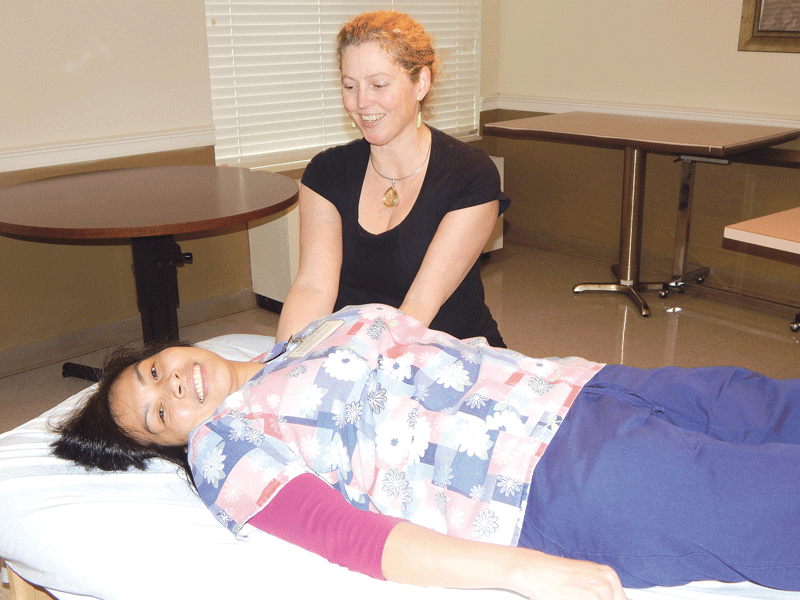
Hazel Ferriter says massages by Saskia Cote at Bottom-Line Bodywork help her to relax before she starts a 12-hour shift.

Twice each week, the assisted dining room at the Life Care Center of Wilbraham is transformed into a quiet, relaxing oasis.

The blinds are drawn, and soothing music plays softly as employees enter the dimly lit room and are treated to a 15-minute massage designed to alleviate stress, treat aches and pains, and allow them to return to work feeling rejuvenated and ready to help the people they care for.

The service is provided by Body-Line Bodywork, LLC in Palmer, which brings massage therapy into the workplace with a focus on nursing homes, assisted-living facilities, hospitals, and doctors’ offices.

“We specialize in short, targeted sessions to reduce tension, relieve stress, and help prevent carpal-tunnel and other repetitive-motion injuries,” said founder and CEO Saskia Cote, explaining that all massages are done on a massage table as opposed to a massage chair, which allows people to lie down and completely relax.

Although Life Care Center Senior Executive Director Dennis Lopata says the free massages are a simple perk, the benefit is appreciated and important to employees whose work duties include lifting people, assisting them with ambulation, and helping with tasks necessary to daily living.

“The job can be really demanding, especially for certified nursing assistants, who use and abuse their bodies to meet everyday challenges,” Lopata told BusinessWest. “The signup sheets fill quickly every week, and employees tell me the service makes them feel like Life Care cares about their personal well-being. It’s a well-regarded service, and we are happy to have Saskia as part of our team.”

Life Care Center is one of a growing number of companies that are incorporating massage therapy into wellness programs. Studies show the alternative health practice is an effective treatment for stress and pain relief, and doctors and healthcare professionals endorse its benefits.

Research has demonstrated that, in addition to decreasing stress, anxiety, and depression, massage therapy relieves muscle tension and pain, improves sleep, helps headaches, lowers blood pressure, prevents repetitive-strain injuries, increases immune function, treats carpal tunnel and tendinitis, and increases focus, energy, and mental clarity.

A recent study by Beth Israel-Deaconess Center for Alternative Medicine Research and Education and the Center for Health Studies in Seattle concluded that therapeutic massage is an effective treatment for chronic low back pain, while other workplace studies show it results in reduced absenteeism and workers’ compensation claims.

Indeed, it has become a benefit that pays for itself. According to the “2015 Report on Corporate Wellness” by IBISWorld, corporate wellness programs that include massage therapy average a $3 to $6 return on every dollar of investment.

Life Care has not been able to quantify benefits in terms of a dollar amount, but Lopata believes workers’ compensation claims and sick days have been reduced as a result of  the massages that several dozen employees take advantage of each week.


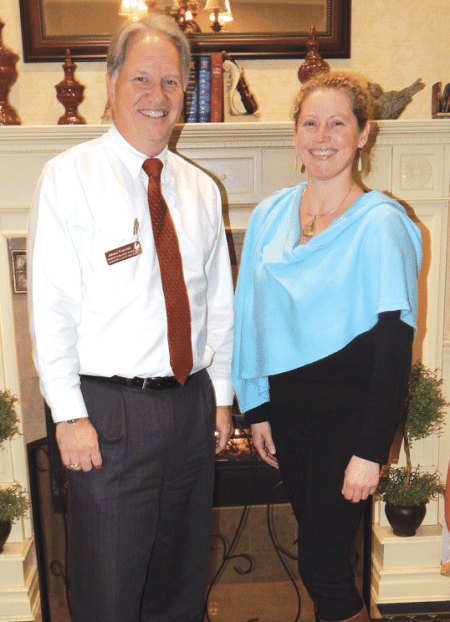
Dennis Lopata says massage therapy provided by Saskia Cote

Dennis Lopata says massage therapy provided by Saskia Cote of Body-Line Bodyworks has proved to be highly beneficial to employees at Life Care Center of Wilbraham.

Restorative aide Deborah Rivera is a proponent of workplace massage and has donated her time to peers who are having a difficult day and aren’t on the schedule.

“We try to provide every resident with the utmost in care, but sometimes we can’t do everything we would like to. We see some heartbreaking situations,” she said as she spoke about dementia and other age-related illnesses. “But this takes us away from the unit and puts us in a different stage of mind. We are being cared for and attended to, which is very relaxing.”

She added that a single session has alleviated back pain that stemmed from lifting and transferring patients. “When I leave the massage room, I feel rejuvenated and ready to go back on the floor and be a super aide.”

Winsome Roberts is another massage advocate who signs up for massages at Life Care every week. “I used to get a lot of migraine headaches, but they stopped after several months of massage,” said the certified nursing assistant. “Fifteen minutes may not seem like much, but it helps me to be more relaxed and flexible. The job can be physically and mentally demanding, but this makes a real difference and helps me to help residents who need assistance.”

Healing Journey

Cote has been a licensed massage therapist for 25 years, and has taught massage therapy to students in the U.S. as well as seven foreign countries.

She grew up in the Netherlands and began bodywork training at the Upledger Institute Europe in 1990.

She moved to the U.S. following a spiritual retreat to Santa Fe, N.M., where she learned about the New Mexico Academy of Healing Arts and was accepted into the program.

“I fell in love with massage there,” she said, adding that, after graduation, she worked at Ten Thousand Waves Spa in Santa Fe, which has been consistently named one of the top 10 spas in the world.

In 2002, Cote and her husband left New Mexico and moved to Massachusetts because they wanted to live closer to his family in the Boston area. They settled in Palmer, and she began work as an independent massage therapist. She also taught massage therapy at the Muscular Therapy Institute in Watertown, which recently changed its name to the Cortiva Institute. She was promoted to director of the institute’s continuing-education program and continued in that role until three years ago, when she left to teach at the Massage School in Easthampton.

During a time when she was questioning what else she could do with her life, she received a phone call about a counseling program at Elfinstone College in Rockport. She enrolled and graduated in 2008 with a doctorate that proved to be an important adjunct to her career.

“People store emotions and memories of trauma in their bodies, which sometimes come out when they are touched with compassion,” Cote told BusinessWest, recalling people who received massages after 9/11 and began crying on the massage table.

Three and a half years ago, she was hired to replace a massage therapist working for the Life Care Center in Wilbraham, and the joy she found helping people in the workplace led Cote to found Bottom-Line Bodyworks in 2015.

In addition to massage therapy, she is trained in a number of other healing modalities that include craniosacral therapy, myofascial release, lymphatic drainage, Reiki, and Qi Gong. She also offers hot-stone massage and cupping, which is popular with nursing-home employees because it helps with pain and inflammation while providing a sense of well-being.

“People often think of massage as a luxury, but when they have the opportunity to get a massage at work, it becomes part of their self-care,” Cote said, adding that it helps employees in nursing homes alleviate stress and physical discomfort in their knees, backs, and shoulders that results from working on their feet all day or lifting residents.

Cote also enjoys being able to provide local therapists with work, especially since it can be difficult for them to maintain a steady flow of clients. She has two employees and plans to hire a third in the Foxboro area, as a company there has requested her firm’s services.

In December, Wingate at Wilbraham signed a six-month contract with Body-Line Bodywork, and employees began signing up for weekly massages last month.

Administrator Darryl LeCours said the money for the service came from an $11,000 Pay for Performance Award the facility received last year from the state. The award has to be spent on staff, and after taking a poll and holding meetings to see what employees preferred, it became evident that their top choice was massage.

“Things such as gift cards or food for the break room, which were suggested, have a very short-lived impact,” she noted. “Massage is therapeutic and something tangible we can do to help employees have a better week physically and mentally.”

LeCours added that certified nursing assistants and other front-line caregivers are often exhausted at the end of a shift. But she noted that everyone has a smile on their face when they come out of a session.

“We’re trying to bring happiness into the nursing home, and it’s important for our employees to feel good so they can provide compassionate care to our residents,” LeCours said.

Other companies have called upon Body-Line Bodywork to give massages at employee-appreciation days and similar events, and their numbers are growing.

Beneficial Effects

When Cote arrives at a nursing home, the signup list is always full, and on a recent day, employees at Life Care Center kept stopping by for shoulder or back therapy even though they weren’t on the schedule.

Although it’s difficult to quantify the therapeutic benefits of this service, people have reported they are less anxious, sleep better, and have enjoyed better health as a result of massage.

It also provides them with a refuge from stress in a temporary oasis created expressly for that purpose.

“It’s a nice 15 minutes of silence that allows me to put everything in perspective,” said Ann Caseldan, a speech-language pathologist at Life Care who has enjoyed massages for the past two years.

Hazel Ferriter agrees. She usually signs up for a massage before her 12-hour shift at Life Care Center begins. “It loosens up your muscles and has helped me with a migraine and back pain that comes from lifting. Massage makes you feel better,” said the certified nursing assistant.

Indeed, it’s a win-win situation. “People are always happy to see me, which brings me great joy,” Cote said. “When they receive a massage, they learn how to touch the residents in a healing and loving way and may be able to go the extra mile for a patient because they feel nurtured themselves. It’s a ripple effect of compassionate touch; once someone is touched with love and compassion, they are much more likely to be loving and compassionate towards others.”

Which is a priceless benefit, especially in settings where employees care for loved ones who can no longer care for themselves.

Briefcase Departments

State Unemployment Rate Drops to 2.8% in December

BOSTON — The state’s total unemployment rate dropped to 2.8% in December, marking the sixth consecutive month the rate has declined, the Executive Office of Labor and Workforce Development reported Thursday. The last time the state’s unemployment rate was at 2.8% was in December 2000. In December, preliminary estimates from the Bureau of Labor Statistics indicate Massachusetts added 6,600 jobs over the month. The November job gain had an upward revision, with the state adding 7,000 jobs compared to the previously published 5,800-job-gain estimate. Over the year, Massachusetts has added 75,000 jobs. At 2.8%, the seasonally adjusted unemployment rate is down 2.1% over the year from 4.9% in December 2015. There were 73,300 fewer unemployed residents and 112,900 more employed residents over the year compared to December 2015. “For the past six months, the unemployment has continued to drop, and the labor-force participation rate has held steady over the year, which is very good news for the state,” Labor and Workforce Development Secretary Ronald Walker II said. “We are also pleased to see the state continues to add jobs in key sectors, such as education and health services; professional, scientific, and business services; information; and construction.” In December, over-the-month job gains occurred in the education and health services; construction; professional, scientific, and business services; information; leisure and hospitality; financial activities; manufacturing; and other services sectors. The state’s labor-force participation rate — the total number of residents 16 or older who worked or were unemployed and actively sought work in the last four weeks — is 64.7%. Over the year, the labor-force participation rate has increased 0.2% compared to December 2015. Over the year, the largest private-sector percentage job gains were in construction; professional, scientific, and business services; education and health services; and leisure and hospitality. Massachusetts’ unemployment rate has remained lower than the national rate since April 2008. The Bureau of Labor Statistics reported the December national rate at 4.7%. Since the statewide rate peaked at 8.8% in September 2009, there are now 335,600 more Massachusetts residents employed and 202,700 fewer residents unemployed, as the labor force increased by 133,000.

VVM Announces 36 Startups in 2017 Accelerator

SPRINGFIELD — Valley Venture Mentors (VVM) announced the 2017 Startup Accelerator cohort this week. The 36 startups, chosen from more than 200 applicants received from around the world, represent high-quality, early-stage startups across more than eight industries, including technology, beauty, healthcare, transportation, and publishing. “We are excited by the diversity of industries represented in this cohort,” VVM CEO Liz Roberts said. “We are honored that they are choosing to invest their time in our accelerator. They will get intensive training, mentorship, and resources to take their startups to the next level.” Sixty-five percent of this year’s startups are led by women, and 36% are led by people of color. International teams from Canada, India, and Ghana will participate. “Educating startup founders is all about helping them minimize their startup risks. Over the next four months, these entrepreneurs and their teams are going to spend time analyzing their products, services, business models, and the markets they intend to disrupt,” said Paul Silva, VVM chief innovation officer and co-founder. “They will learn from successful entrepreneurs — people who have been exactly where these founders are.” VVM Startup Accelerator participants also develop relationships with funders and are eligible to win up to $50,000 in equity-free cash at the end of the program. The winners will be announced on Thursday, May 25 at an awards ceremony with an expected 600 people in attendance at the MassMutual Center. VVM’s visionary partners include MassMutual, MassDevelopment, the Irene E. and George A. Davis Foundation, MassTech Collaborative, and the Community Foundation of Western Massachusetts. Another aspect of this year’s program is VVM’s partnership with Pathlight, a local organization which serves people with intellectual disabilities. The two organizations put out a national call for entrepreneurs with technology ideas that could increase independence for those with intellectual disabilities. After a rigorous selection process, two such startups were selected to participate in the accelerator: Galactic Smarties and Habit Stackr. Several of the companies accepted to the 2017 VVM Startup Accelerator are graduates of VVM’s mentorship program, including AlignMeeting, Bhlue Publishing, FootCare by Nurses, Hot Oven Cookies, Listen2aBook, Lumme, RecordME, Streamliners, TripleTote, and Yummy Yammy. The 2017 VVM Startup Accelerator cohort includes:
• AlignMeeting, business-productivity software facilitating best meeting practices to improve team efficiency before, during, and long after meetings;
• AuCoDe, the Google Alerts of controversies and crisis situations, providing early detection as a signal for hedge funds;
• Barakat Bundle, a curated package of life-saving solutions for mothers and newborns in South Asia;
• Bhlue Publishing, a cloud-based career-development platform for teens and young adults who are struggling to figure out a career direction;
• Bharat Babies, which produces developmentally appropriate children’s books that are inspired by the stories of India and South Asia;
• Connecticut Horse, a bimonthly print and online magazine for horse enthusiasts in Connecticut;
• Emotive Agility Training Center, a consulting company offering training tools and curricula for people with autism to crack the non-verbal code of social interactions;
• Enrichment Express, which provides instructors with the curriculum, materials, and logistical support needed to teach engaging enrichment classes to children 5 to 12 years old;
• Ernest Pharmaceuticals, programmed bacteria to eliminate metastatic cancer;
• Fields Center, which provides help for individuals with autism and families;
• FirmOffer, a software solution for legal recruiting enabling law students to make binding offers to law firms;
• FootCare by Nurses, foot-wellness experts;
• Galactic Smarties, which makes technology that supports independence for people of all ages and abilities;
• GeneRisk, which identifies genetic variants of autism allowing for better understanding of risk and ID targets for more personalized intervention;
• Genoverde Biosciences Inc., an agricultural biotech startup focused on improving crop yield for commercial farming through bioengineering;
• Habit Stackr, which helps people keep daily routines through brain science and a mobile app;
• Hot Oven Cookies, a handcrafted cookie bakery specializing in the delivery and curbside sales of warm, gourmet cookies;
• Kwema, which developed a smart bracelet that can call for help to friends and family, authorities, and Kwema’s safety communities;
• Listen2aBook, which makes audiobook production accessible to everyone;
• Lumme Inc., a startup funded by the National Cancer Institute that develops smart technology to help people quit smoking;
• M1 Tapes, which makes premium, contractor-grade tape measures;
• MEANS Database, a nonprofit technology company devoted to business-friendly food recovery;
• MyBarber, which provides on-site haircuts at offices, apartment complexes, and co-working spaces;
• NERv Technology, which is developing an implantable biochip platform to detect post-operative complications;
• New England Breath Technologies, which developing a pain-free diabetic monitoring device to improve outcomes of patients;
• Nonspec, which has created a low-ost, durable, and adjustable prosthetic system;
• Paysa, which is developing a fingerprint-authorized cashless payment system for stores in rural India with the goal of increasing bank-account owners;
• ProjectMQ, a social-media app for independent game studios and fans worldwide;
• RateFrame, which helps users highlight and share the best parts of any video;
• RecordME, a studio-recording company that provides hardware, engineers, and distribution so content creators and venues can make more money;
• Streamliners, which sells aerodynamic devices to the trucking industry, saving $4,000 per truck per year in fuel costs, paying for itself in three months;
• Trabapido, an online marketplace that helps individuals and businesses find and hire service providers, such as plumbers, painters, and tutors;
• TripBuddy, a ride-sharing startup;
• Tripletote, which manufactures consumer products that help people carry items as they travel, commute, shop, and work;
• VaxAtlas, which provide real-time access to one’s vaccine history, helping to avoid unnecessary repeat vaccines, identify missed vaccines, and alert for outbreaks; and
• Yummy Yammy, which helps busy people eat better, one deliciously addictive sweet potato at a time.

Simon Youth Foundation Seeks Scholarship Applicants

LEE — Simon Malls and Simon Premium Outlets in New England announced that, once again, its malls and centers — including Lee Premium Outlets — will help deserving graduating seniors pay for college. Simon Youth Foundation, a national nonprofit that provides educational opportunities for at-risk high school students, is looking for qualified applicants. Each year, Simon Youth Community Scholarships are awarded in every community across the country that is home to a Simon Malls or Premium Outlets center. The application period ends on March 1. Students can apply online by visiting syf.org/scholarships. Any student who will be graduating in the class of 2017 and lives in the community surrounding a Simon property is eligible. Applicants can check their eligibility by entering their ZIP code at syf.org/scholarships. Recipients will receive up to $1,500 to enroll in an accredited college, university, or vocational or technical school. In addition, 11 regional Awards of Excellence will be given to top candidates. The regions eligible are Atlanta, Austin, Boston, Chicago, Dallas, Indianapolis, Miami, New York, Orange County (Calif.), Orlando, and Seattle/Tacoma. Students from these areas will have the opportunity to receive a $10,000 award ($2,500 for up to four years). In 2016, the Simon Youth Foundation awarded $1.2 million to 300 students nationwide. Scholarship recipients will be selected by International Scholarship and Tuition Services Inc., a third-party administrator. Students are selected based on a variety of criteria, including financial need, academic performance, leadership skills, and participation in school and community activities. Students who are the first in their family to pursue a post-secondary education will also be given close consideration. Recipients will be notified in May.

Horace Smith Fund Calls for Scholarship, Fellowship Applications

SPRINGFIELD — The Horace Smith Fund, a private foundation that offers scholarships and fellowships, has extended the application deadline date for the Walter S. Barr Scholarships and Fellowships until March 1, 2017, due to the low number of applications so far. Last year, The fund awarded $258,000 to 25 area students. “To date, we have received only 46 scholarship applications and 16 fellowship applications. It is surprising that more students haven’t applied yet,” said Teresa Regina, trustee and chair of the scholarship committee. “Applications can be downloaded or completed online. They are also available at every area high school and college or by contacting our office.” The Walter S. Barr Scholarship is available for graduates of Hampden County public and private high schools. Applicants may either be graduating high-school seniors or in college. Scholarship awards of $10,000 are distributed in annual installments of $2,500 and renewable each year until graduation. Recipients are selected on a variety of criteria, including their test scores, class rank, extracurricular activities, and a personal written account of why the student feels deserving of financial assistance. The Walter S. Barr Fellowship awards are made annually to those wishing to enroll in full-time graduate studies. In general, applicants must be residents of Hampden County. Awards are made to students pursuing a specific post-graduate degree. The award of $12,000 is distributed in annual installments of $4,000 for a maximum of three years. Awards will be made on the basis of all available information, including school records, recommendations, and examination scores. Consideration will be given to both the merit and financial need of the applicant. “We hope students take advantage of this local resource,” Regina said.

Company Notebook Departments

News and notes about area businesses February 6, 2017

Bay Path Launches Graduate Program in Genetic Counseling

LONGMEADOW — The need for genetic counselors keeps growing; there are just 4,000 certified genetic counselors in the country today, or one for every 80,000 Americans. To respond to this need, Bay Path University has launched a new master of science program in genetic counseling, naming Nancy Steinberg Warren program director. “I am excited to help launch Bay Path’s genetic counseling graduate program,” Warren said. “By taking advantage of current instructional technology through hybrid course delivery, students from varied backgrounds will have maximum accessibility and flexibility to become genetic counselors in 21 months. Graduates will be poised to fill future clinical, research, and laboratory-based roles in this growing field.” The program is a hybrid of on-ground and online learning that will prepare graduates for careers in the burgeoning field of genetic counseling. As a profession, genetic counseling is the process of helping people understand and adapt to the medical, psychological, and familial implications of genetic contributions to disease. The program will accommodate students in the university’s East Longmeadow graduate health science facility, the Philip H. Ryan Health Science Center. Online courses and hands-on field-work experience in nearby genomic laboratories will further prepare students for the growing list of jobs available in the industry. Warren comes to Bay Path with more than 30 years of experience in genetic counseling. Her primary expertise has been in education and training of students, healthcare professionals, and the public. She developed and directed the genetic-counseling graduate program at the University of Cincinnati for two decades, and she was interim director of the Long Island University Genetic Counseling Program in 2013. She has held many leadership roles in the field, including serving on the board of the National Society of Genetic Counselors (NSGC) and the American Board of Genetic Counseling. Warren is credited with developing a web-based cultural and linguistic competence toolkit for the genetic-counseling profession and an online case-module series approved for continuing education, the Genetic Counseling Cultural Competence Toolkit, available at geneticcounselingtookit.com. In 2013, she was further recognized as a thought leader in the field as the first recipient of the NSGC Cultural Competency Award. She holds a bachelor’s degree in biology from the State University of New York at Stony Brook, and a master’s degree in human genetics from Sarah Lawrence College.

Square One Awarded Mutual Impact Grant by MassMutual

SPRINGFIELD — Square One has been awarded a $100,000 grant by MassMutual through the company’s Mutual Impact community-investment program. Mutual Impact is funded by MassMutual employees through the company’s annual employee-giving program and matched by the MassMutual Foundation, a dedicated corporate foundation established by MassMutual. This is the second year that Square One has received a Mutual Impact grant. “We are so incredibly grateful to the MassMutual team for their belief in our mission and long-standing, generous support for our work,” said Kristine Allard, chief development & communications officer for Square One. “The funds we receive through this grant will support over 1,000 children and families who rely on Square One for innovative literacy programming.” The Mutual Impact program is completely driven by MassMutual employees. Employees choose cause areas and nonprofit organizations to receive funding, make donations which are matched dollar-for-dollar by the MassMutual Foundation to fund grants, and volunteer in support of the organizations they select. Selected nonprofits have demonstrated excellence in their organization, volunteer opportunities, and community impact. “Corporate responsibility and community involvement are part of our DNA, and we take great pride in helping people in the communities where we live and work secure a better future,” said Dennis Duquette, head of Community Responsibility with MassMutual and president of the MassMutual Foundation board of directors. “Square One tirelessly devotes time and energy in support of families in our local community, and we are pleased to support them through the Mutual Impact program.” Mutual Impact grants were awarded to 21 nonprofit organizations for programs that fit within specific cause areas, including early-grade reading proficiency, food security, violence prevention, family economic self-sufficiency, returning veterans, successful advancement in school, child hunger, and education.

Comcast Donates Computers to CHD Residential Program

SPRINGFIELD — The Center for Human Development (CHD) announced that Comcast has made a donation of 25 Dell Latitude laptop computers with an estimated value of $5,000 to its Caring Together residential programs. “Comcast is committed to digital literacy,” said Dan Glanville, vice president of Government and Regulatory Affairs for Comcast’s Western New England Region, which includes Western Mass. “We want the next generation of young people to be literate, use computers, and understand the resource that computers can be in their lives. Since CHD Caring Together Residential Programs focus on improving the lives of some of our community’s most vulnerable young people, we hope that these laptops can help make a crucial difference in their lives today and for their future. It is truly inspiring to learn of some of the successful stories of these youth, especially considering the challenges they have faced in their life’s journey.” The laptops will be distributed among the eight CHD Caring Together residential treatment group home locations in Western Mass. Caring Together serves youth who struggle with issues related to trauma, abuse, depression, self-harm, and substance use, among others. CHD’s on-site teams provide the youth with integrated mental-health, occupational-therapy, and nursing services, combined with direct-care staff members who are specially trained and included in the treatment plan. Referrals to all Caring Together residential treatment group homes are made through the state Department of Children and Families or Department of Mental Health. “Just about everyone these days has a phone, but the young people we serve through Caring Together do not typically come from homes where computers were either available or seen as a learning resource,” said Kimberley Lee, vice president, Office of Advancement at CHD. “The youth we serve are at transition age and may soon be living on their own, so helping them develop independent living skills is truly critical. Comcast understands the breadth and scope of CHD’s work, and their people determined that CHD Caring Together would be a prime and relevant partner to receive these donated laptops. We could not be more excited.” According to Lee, having computers on site at Caring Together programs will provide great tools to help the residents get organized with homework and research projects at school, access learning resources such as Kahn Academy, improve financial literacy and money-management skills, apply for employment, register for SATs and scholarships, complete applications for higher education, and more. “It’s important to understand that state contracts and federal funds that help pay operating expenses for Caring Together are highly prescriptive and cannot be used for things like computers,” said Lee. “This generous donation by Comcast will help CHD made a crucial difference in the lives of youth who can benefit greatly from the resources available through digital literacy.”

NetLogix Scores 99.4% Customer-satisfaction Rating for 2016

WESTFIELD — NetLogix engaged a third-party monitoring system, SmileBack, in 2016 that allows customers to rate their satisfaction with each service event. In 2016, NetLogix received an extremely favorable customer satisfaction rating of 99.4%. This is an aggregate rating over thousands of service events from clients. “We are honored that our clients are happy with the services we provide,” said Marco Liquori, CEO of NetLogix. “We continue to listen to our clients to understand and deliver the best customer experience and IT services in the region.” NetLogix posts on its website the rolling, 90-day customer-satisfaction (CSAT) scores. SmileBack also recognized NetLogix in its Dec. 21, 2016 blog as being a standout with the highest net CSAT score achieved in 2016. NetLogix is one of thousands of service providers that use the service. Headquartered in Westfield, NetLogix is a network-management, cloud, and systems technology integrator providing end-to-end solutions that ensure business integrity for small, medium, and enterprise-level clients.

Berkshire Bank Receives Three Davey Awards

PITTSFIELD — Berkshire Bank announced it has received three Davey Awards for advertising design. The bank received silver awards for “2015 Berkshire Hills Bancorp,” an annual report; “Firestone Financial, a Berkshire Bank Company,” a brochure; and “What’s Your Game Plan?” direct sales support collateral. The Davey Awards honor the best creative products in design, web, video, mobile, advertising, and social media from small agencies all over the world. Endorsed and judged by the Academy of Interactive and Visual Arts, the Davey is an invitation-only body consisting of top-tier professionals from a host of acclaimed media, advertising, and marketing firms. For more information on the Davey Awards, or to read the full listing of all 2016 winners, visit www.daveyawards.com.

Valley Blue Sox Announce 2017 Schedule

SPRINGFIELD — The Valley Blue Sox recently announced their 2017 schedule. As was the case in 2016, the Sox will play a 44-game slate, with their home opener set for Thursday, June 8 against the Winnipesaukee Muskrats at 6:35 p.m. at MacKenzie Stadium in Holyoke. The Blue Sox have 10 home games slated for the month of June and 12 scheduled for July. The full schedule is available at www.valleybluesox.com. “The biggest and most important thing is that all but three home games this season will be played on a Thursday, Friday, Saturday, or Sunday,” said Blue Sox President Clark Eckhoff. “That maximizes the accessibility for fans — they won’t have to worry as much about school nights, getting to work the next day, and the like. They can come out and do what they’re supposed to do at a baseball game — and that’s have fun with their families.” The Blue Sox will kick off 2017 on the road on Tuesday, June 6 versus North Adams. It’s the first time the Blue Sox have opened on the road in four years. “You know the home opener is coming no matter what — but it’s always nice to have those few extra days to get things ready the way you want them to be,” said Blue Sox General Manager Hunter Golden. “For the fans, the slightly later start date will just mean a better experience right out of the gate.” The Blue Sox promotional schedule will also be released in the coming months, Eckhoff said. “We’ve got some really exciting things on tap. Some staples like Star Wars night and Friday night fireworks will be back — and we’ve got about five new promotions that we think the fans will get really excited about.” Individual game tickets will go on sale starting March 1 and will cost $7 for adults and $5 for kids and seniors. Season tickets, flex packs, and group tickets are already on sale, and can be purchased either online at www.valleybluesox.com or by calling the Blue Sox ticket office at (413) 533-1100.

Departments People on the Move

Local news hires, promotions, awards, and appointments February 6, 2017


Barb Chalfonte

Barb Chalfonte

Springfield Technical Community College (STCC) announced the promotion of Barb Chalfonte to serve in the newly created role of Vice President of Institutional Effectiveness. The creation of the new position elevates Institutional Effectiveness (IE) and underscores the importance of seeking to enhance the college’s processes and promote student success, said STCC President John Cook. With Chalfonte at the helm, IE will become its own division and have a broader reach. Previously, Institutional Effectiveness had been nested under Academic Affairs. Chalfonte, who came to STCC in 2010, had served as dean of Institutional Effectiveness and senior research analyst. In her new role, Chalfonte will report directly to Cook and serve as part of his cabinet. Created in 2012, Institutional Effectiveness helps sustain and improve the teaching and learning environment through ongoing data and research-based planning, assessment, and improvement processes. The work of this division going forward will be to facilitate and promote planning and analysis throughout the college. “We collaborate with diverse groups to review the college’s mission, goals, and outcomes and demonstrate the achievements of our faculty, staff, and students,” Chalfonte said. Often colleges have several offices charged with enhancing pedagogy, institutional research, enrollment analysis, and assessment. STCC, however, is one of only a few community colleges in the Northeast that integrates this work into a single entity. Bringing these offices under one umbrella fosters collaboration toward the mission of supporting students as they transform their lives. The Institutional Effectiveness department includes the offices of Assessment, Institutional Research, and Professional Development. The department also supports strategic planning, process improvement, enrollment reporting, and New England Assoc. of Schools and Colleges (NEASC) accreditation activities and reporting, and convenes the Student Success Council. Since 2012, the IE department has helped to obtain more than $2.7 million in funding, including a $650,000 state grant for assessment-related work and a state-funded convening grant to explore initiatives and research related to Hispanic-serving institutions. IE was part of a group that crafted a $2.1 million Title III grant that supports pedagogy- and cultural-competency-related professional development. Members of the IE team contributed to the $3.4 million HSI-STEM grant that the college received last year to help Hispanic and low-income students obtain degrees in science, technology, engineering, and math. Chalfonte brings a background in science and learning research to the position. She earned a doctorate from Princeton University in cognitive psychology and a bachelor’s degree from Williams College in psychology. She is an adjunct faculty member in the Psychology Department at Westfield State University. After receiving her Ph.D., she taught in the Psychology Department at Mount Holyoke College and worked as a researcher at the National Priorities Project in Northampton before joining STCC. She served as data coach for Achieving the Dream, an initiative that champions institutional improvement and student success. Part of her work was to help community colleges close race/ethnicity- and income-based achievement gaps.

•••••

Matthew Sosik, president and CEO of bankESB, announced the promotion of three individuals:

Maryann Geiger was promoted to Senior Vice President and Director of Operations. She joined the bank in 2002 as Deposit Operations supervisor and in 2003 was promoted to Deposit Operations officer. She was promoted to assistant vice president, Deposit Operations in 2006 and was promoted to vice president, Deposit Operations in 2013. Geiger is responsible for implementing strategic initiatives and management of customer service and operations of the bank’s call center, electronic banking channels, ATM network, and processing of deposit products and services. She is also responsible for Bank Secrecy Act and fraud management. She has more than 36 years of banking experience and graduated from the New England School of Financial Studies. She is a volunteer for Highland Valley Elderly Money Management Services;

Michael Fitzgerald was promoted to Assistant Vice President, senior IT officer; He started with the bank in 2004 as a systems administrator and was promoted to IT manager in 2011. In 2014, he was promoted to IT officer and then to senior IT officer in 2015. He graduated from the Graduate School of Banking’s Bank Technology Management School in 2013. He is a volunteer for Junior Achievement of Western Mass. and participates with his family running Toys for Tots fund-raisers and collecting jars of peanut butter and jelly to donate to local food pantries; and

Emily Drapeau was promoted to Assistant Vice President, Electronic Banking. She joined the bank as a teller in 1995 and was promoted to customer service representative in 1997. She became a senior teller in 2000 and Deposit Operations specialist in 2001. She was promoted to Deposit Operations supervisor in 2004 before being promoted to Deposit Operations manager in 2011. She was promoted to Deposit Operations officer in 2014. She graduated from the New England School for Financial Studies in 2012.

•••••

Jessica McGarry

Jessica McGarry

Country Bank announced that Jessica McGarry has joined its Commercial Lending Division. McGarry brings with her 17 years of experience in the industry. Beginning as a part-time teller, she worked her way through the branch system for several years, then to the commercial credit department, where she learned commercial lending from the ground up. She has been a commercial lender in the Worcester market for the past four years, coming to Country Bank from Webster Five. McGarry earned her bachelor’s degree in business from Nichols College, was a recipient of the Forty Under 40 designation in 2014 from the Worcester Business Journal, and was a member of the Leadership Worcester class of 2015-16. “As a person, I am serious and diligent when it comes to my work. I take great pride in making sure my customers are well taken care of, with the right products, a high level of service, and a lender that is both qualified and caring,” McGarry said. “I live and work in Worcester County, so the success of the people and businesses here is something that I hold close to my heart.”

•••••

Margaret Tantiallo

Margaret Tantiallo

For the first time since the organization was founded in 2005, Dress for Success of Western Massachusetts will have a full-time executive director to lead the organization and expand its impact in the region. Margaret Tantiallo brings more than 20 years of experience and proven success in nonprofit management. Her past employment includes a senior leadership position for a nonprofit organization with more than 65,000 members and an $11 million budget. She is experienced in strategic planning, philanthropy, governance, board relations, and program management. “We are beyond thrilled to welcome Margaret to the Dress for Success team,” said Dawn Creighton, president of the Dress for Success board of directors. “It’s amazing what has been accomplished by our team of volunteers over the years. In order for us to grow and positively impact the lives of more women in our community, we needed someone dedicated to work of the organization on a full-time basis. Margaret’s experience and caring, compassionate personality make her the perfect fit.” Margaret earned her undergraduate degree from SUNY Buffalo and her master’s degree from Springfield College. She currently serves as vice president of Belchertown Day School and as treasurer of the Hampton Ponds Assoc. Dress for Success of Western Massachusetts is on a mission to promote the economic independence of all women by providing professional attire, a network of support, and the career-development tools to help women thrive in work and in life.

•••••

Matthew Scott

Matthew Scott

American International College (AIC) has announced the promotion of Matthew Scott to Dean of students. In his new role, Scott will oversee the Department of Student Life, which includes the Office of Residence Life, the Saremi Center for Career Development, and the Center for Student Engagement. Among the services and programs that fall under Scott’s purview are residence education, housing operations, student success and retention, student conduct, student activities, diversity and community engagement, international student advising, and campus recreation programs such as intramural sports, fitness and wellness programs, and the fitness center. Scott served in residence-life and student-involvement roles at area colleges before joining AIC in 2013 as the associate dean of students and director of Residence Life. He graduated with a bachelor’s degree in business administration from Springfield College and received his master’s degree in higher education administration from UMass.

•••••

Lynne Colesano, formerly of Health New England and an insurance professional since 1998, has joined Webber & Grinnell Employee Benefits LLC. She will be responsible for consulting with companies and supporting them with their employee-benefits programs. In addition, her SHRM-CP certification as a professional in human resource management will further help Webber & Grinnell be a trusted advocate for its clients. “I am privileged to introduce Lynne to the community,” said Michael Welnicki, the division’s head. “She brings unparalleled insight into the benefits, insurance, and financial challenges of organizations of all scopes and sizes, and the expansion allows Webber & Grinnell to add group medical, dental, life, and disability insurance to its portfolio of business insurance.”

•••••

Community Enterprises announced the appointment of Paula Tessier as Director of Employment and Training Programs at the Greenfield office. She will manage all aspects of those programs and implement the organization’s mission and values by overseeing community-based employment and training services for individuals with disabilities. Previously in Boston, Tessier managed statewide community programs in youth violence and suicide prevention and also managed federal grants that refined protocols for the state Department of Public Health. She has a history of assisting Greenfield residents, as she was previously responsible for overseeing the coordination of five local, grass-roots, anti-poverty programs. She also managed the Woman in Action Center and the local Food Pantry sites while serving as the Community Programs director for Community Action of Franklin County. Tessier earned her master’s degree in social work from the University of Connecticut and completed master studies in international and intercultural service, leadership, and management at the School of International Training in Brattleboro, Vt.

•••••

Proteus Fund appointed activist, advocate, nonprofit executive, and philanthropic leader Paul Di Donato as its new President and CEO. He brings a wealth of experience from his 30 years of fighting for justice and equality in the areas of LGBTQ rights, HIV/AIDS and public health, gender and racial justice, and other rights and social-change issues. He has served as interim president of Proteus Fund for the past year and worked at the organization for more than nine years. Di Donato served for eight years as director of the Proteus Fund’s Civil Marriage Collaborative (CMC), a funder collaborative that granted more than $21 million in its 11-year existence to advocacy organizations engaged in comprehensive public-education and organizing efforts. The strategic philanthropic leadership provided by the CMC contributed to the massive turnaround in public opinion and support on this issue, culminating in the June 2015 Supreme Court ruling extending marriage equality nationally. “We couldn’t have asked for someone with greater philanthropic, leadership, and networking skills, combined with a deep understanding of Proteus’ social-justice work,” said Jason Franklin, chair of Proteus Fund’s board of directors. “Paul played a central role on a critical issue where our side had a clear win — civil marriage. Philanthropy must play an even greater and more aggressive leadership role to achieve these types of victories which will be needed now more than ever.” This past year as interim president, Di Donato has successfully overseen a record-breaking grant-making year, a deepening of the scope and impact of the program portfolio, and development of important new work opportunities. He feels the organization’s greatest strength is that it engages philanthropists as strategic partners, utilizing a collaborative approach to create outcome-oriented social-justice grant-making initiatives. “Of central importance to our success is the ability to master the delicate balance between crafting and executing effective long-term philanthropic strategies while remaining flexible enough to shift tactics and priorities in response to evolving circumstances on the ground,” Di Donato said. “Every program, every issue area we work on is more relevant and urgent than ever given this current social, economic, and political climate.”

•••••

Maria Acuña

Maria Acuña

Kathy Hardy

Kathy Hardy

Stephen Holstrom

Stephen Holstrom

Stefanie Renaud

Stefanie Renaud

The Gray House recently inducted four new board members to a three-year term: Maria Acuña, Kathy Hardy, Stephen Holstrom, and Stefanie Renaud. The newly elected board president is Kathleen Lingenberg. Other board officers are Susan Mastroianni, Vice President; Rick Marcil, Clerk; and Candace Pereira, Treasurer. Acuña is broker/owner of Maria Acuña Real Estate, a family-owned business located on Sumner Avenue in Springfield. Hardy has been the human resource manager for the Springfield Housing Authority since 2009. Holstrom is an attorney at Alekman DiTusa, LLC in Springfield. Renaud is an associate in the Springfield office of Skoler Abbott & Presser. Lingenberg is the owner of Community Outcomes in Longmeadow, which provides consulting services on housing and community-development activities. Mastroianni is a media consultant and was previously partner and director of Media Services at FitzGerald & Mastroianni Advertising in Springfield. Marcil is the owner of Golden Ear Studios, a voiceover and music studio in Southwick. Pereira is a commercial portfolio loan officer for Farmington Bank in West Springfield. The Gray House is a small, neighborhood service agency located in the North End of Springfield at 22 Sheldon St. Its mission is to help neighbors facing hardships to meet their immediate and transitional needs by providing food, clothing, and educational services in a safe, positive environment.

Agenda Departments

Supper for Six

Feb. 7: Supper for Six, hosted by Women’s Way, a program of the United Way of Franklin County, will be held from 5:30 to 7 p.m. at St. James Episcopal Church, 8 Church St., Greenfield. Attendees are requested to bring $5 and one or more Supper for Six bags. Light refreshments will be offered. A Supper for Six bag is a reusable grocery bag filled with non-perishable items for dinner (and, in many cases, breakfast and lunch, too) for a family of six. “Due to the generous support of our community, hundreds of families in Franklin County will receive food donations through United Way partner agencies, to help during February school vacation week, when the need for food at home is higher than usual,” said Stephanie Gale, director of Resource Development & Community Engagement at the United Way. Agencies receiving donations include Franklin County Community Meals, the Center for Self-Reliance, the United Arc, Big Brothers Big Sisters of Franklin County, and the Salvation Army. In 2016, the Supper for Six food drive gathered more than 600 reusable grocery bags filled with more than 7,000 pounds of non-perishable food items that were subsequently distributed to needy families across Franklin County. RSVP is requested for the event by e-mailing [email protected] or calling (413) 772-2168.  If you cannot attend the event, you may drop off grocery bags at the United Way office, 51 Davis St., Suite 2, Greenfield on or before Feb. 9, between 8:30 a.m. and 4:30 p.m.

Heart-health Lecture

Feb. 9: Holyoke Medical Center (HMC) will host a free discussion, “Heart Health: Congestive Heart Failure,” at 5:30 p.m. in the HMC Auxiliary Conference Center. February is American Heart Month. There are more than 200,000 cases of congestive heart failure (CHF) each year in the U.S. Dr. Nirav Sheth, HMC cardiovascular specialist, will cover signs and symptoms, as well as how to help prevent CHF. This program is free and open to the public, and is part of the hospital’s community-education programming, one in a series of dozens of workshops held throughout the year to help people learn about specific health issues, wellness, prevention, and treatment. To register for this event, visit www.holyokehealth.com/events or call (413) 534-2789.

Dress for Success Tag Sale

Feb. 10-12: In keeping with its mission to empower women to be more confident in their personal and professional lives, Dress for Success is hosting a tag sale at the Eastfield Mall in Springfield to raise funds and awareness, while also working to meet the needs of women throughout the community. Customers may peruse the racks of new and gently used donated items, including suits, dresses, pants, blouses, skirts, shoes, accessories, and more. Items may be purchased by filling a shopping bag for only $25. The event will run from 10 a.m. to 6 p.m. on Friday and Saturday, Feb. 10-11, and from 11 a.m. to 6 p.m. on Sunday, Feb. 12. It will be staged in a temporary location two doors down from the Western Mass. Dress for Success Boutique. All proceeds will benefit Dress for Success. Volunteers are needed to staff the event. If interested, e-mail [email protected]. This event follows two years of successful tag sales, each raising thousands of dollars and engaging the help of hundreds of community volunteers.

‘I Love Wine’ at Wistariahurst

Feb. 10: “I Love Wine,” the popular annual wine-tasting event, returns to Wistariahurst from 6 to 8 p.m. Attendees can sample fine wines from around the world in the elegant atmosphere of Wistariahurst. Light refreshments will be served. Admission is $25 in advance and $30 at the door. Tickets are limited, so advance purchase is strongly encouraged. Tickets may be purchased online at www.wistariahurst.org. The event is sponsored by Historic Holyoke at Wistariahurst, and fine wines are provided courtesy of Liquors 44.

Nonprofit Board Fair

Feb. 16: The Franklin County Young Professionals Group (FCYPG), a program of the United Way of Franklin County, will host its first annual Nonprofit Board Fair in partnership with Leadership Pioneer Valley’s Leaders OnBoard program. The event will be held at Terrazza at the Country Club of Greenfield. Doors open at 5:30 p.m., and the fair runs until 8 p.m. Sponsored by Ramon Financial Services, Greenfield Cooperative Bank, and Franklin First Credit Union, the event is free and open to the public. RSVP is requested by visiting [email protected] or calling (413) 772-2168. “FCYPG’s first annual Nonprofit Board Fair has been at the top of our young professionals group’s list for quite some time. We are pleased to finally make it happen and support the work of exceptional local organizations here in Franklin County by helping them recruit volunteers and committee and board members,” said Stephanie Gale, director of Resource Development and Community Engagement at United Way. Currently, 15 organizations will be represented: Leadership Pioneer Valley, Friends of the Franklin County Regional Dog Shelter, YMCA in Greenfield, Franklin County Community Meals Program, New England Learning Center for Women in Transition, Stone Soup Café, Stavros Center for Independent Living, Salvation Army, Big Brothers Big Sisters of Franklin County, LifePath Inc., Franklin County Young Professionals, Center for New Americans, Children’s Advocacy Center, Friends of Children, and Montague Catholic Social Ministries. There’s still time to sign up for a table at the event by e-mailing [email protected] or calling the United Way at (413) 772-2168. “We are looking forward to this event and working with individuals and organizations to expand and strengthen their pool of volunteers, which is essential to a nonprofit’s success,” said Amy Proietti, program coordinator, Leadership Pioneer Valley, Leaders OnBoard Program. “Local residents looking for opportunities to give back to their community or make connections with area nonprofits are highly encouraged to attend the fair.”

40 Under Forty Nomination Deadline

Feb. 17: BusinessWest magazine will accept nominations for the 40 Under Forty Class of 2017 through the end of the work day (5 p.m.) on Friday, Feb 17. The annual program, now in its 11th year, recognizes rising stars within the Western Mass. community, which includes Berkshire, Franklin, Hampden, and Hampshire counties. This year’s group of 40 will be profiled in the magazine’s April 17 edition, then toasted at the June 22 gala at the Log Cabin Banquet & Meeting House in Holyoke. The nomination form, which can be found online HERE, requests basic information and can be supported with other material, such as a résumé, testimonials, and even press clippings highlighting an individual’s achievements in their profession or service to their community.

Wheelchair-basketball Clinic

Feb. 20: CDH Disability Resources will offer a free wheelchair-basketball clinic from 4:30 to 6 p.m. at CHD’s gymnasium at 69 Capital Dr., West Springfield. There is no cost to attend, and all participants qualify for raffles, prizes, and giveaways. The clinic will be led by Paul Weiland, a certified health and physical education teacher with an adaptive physical education certification. Weiland, Adapted Sports Program coordinator for Chapter 126 Sports & Fitness, has coached wheelchair basketball at the high-school and college levels and was part of the USA Paralympics wheelchair-basketball selection committee in 2008. He will be supported by volunteer staff, including therapeutic recreation students from Springfield College and varsity basketball players from Springfield College and American International College. “We’re thrilled to have Paul Weiland running our wheelchair-basketball clinic,” said Jessica Levine, program manager for CHD Disability Resources. “He is passionate about helping individuals of all abilities realize their full potential on the field of play and in life. Like every Disability Resources program, this wheelchair-basketball clinic enables people to focus on what they can do, as individuals and as teammates. Especially for people who are new to wheelchair basketball, this clinic will provide a great introduction along with opportunities to meet other interested players and families and to learn more about Disability Resources in general. We’re all about access and ability for kids, adults, and families in Western Mass.” For people interested in getting more involved with wheelchair basketball, in addition to the Feb. 12 clinic, Disability Resources is offering a 10-week program on Friday evenings from March 3 through May 5, 5:30 to 6:30 p.m., at the Pace Gym, 69 Capital Dr., West Springfield. Players will be taught fundamental skills and game-related strategies while focusing on the values of teamwork and respect. To learn more about wheelchair basketball or to sign up for programs, contact Levine at (413) 788-9695.

‘Create at the Carle!’

Feb. 27 to March 20: The Eric Carle Museum of Picture Book Art will offer adult art classes for people 55 and over thanks to a new grant from Aroha Philanthropies. “Create at the Carle!” is a new program for adults interested in expressing themselves through visual art. The first of a series of three workshops, this one on printmaking, begins Feb. 27 from 10 a.m. to noon, and runs for eight weeks. The cost is $90, or $76.50 for members. Teaching artist Lynn Peterfreund, who concentrates on printmaking, painting, and drawing, is offering this class for beginners or more experienced students. The goals are to learn processes, become more aware of different art styles, and learn to identify and tell one’s own stories with visual tools. Enrollment is limited to 20 participants. “It’s a wonderful opportunity to work in a community of people, sharing stories, efforts, and working spaces. I think our participants will enjoy working in the Carle’s light-filled art studio, and getting a behind-the-scenes look at our collection,” said Courtney Waring, director of education. The workshop includes a visit from artist Lyell Castonguay, who will share his woodcut technique and experiences as director of BIG INK, and concludes with an art show for friends, family, guests, and the general public to enjoy. “Create at the Carle!” is presented in partnership with Aroha Philanthropies to support the development and expansion of Artful Aging programs. The Carle was selected as one of only 15 nonprofit organizations throughout the U.S. to receive a grant from Aroha Philanthropies through its new national initiative, Seeding Artful Aging. Following printmaking, additional classes in 2017 will include guest artists teaching collage and bookmaking. For more information about the classes or to sign up, visit www.carlemuseum.org.

Caritas Gala

March 11: Plans are underway for Mercy Medical Center’s first annual Caritas Gala at the MassMutual Center in Springfield. Themed “All You Need Is Love,” the inaugural gala will raise funds to expand and enhance Mercy Behavioral Health Care’s Opioid Treatment and Addiction Recovery programs. The major goal of the project is to create a new inpatient step-down treatment program for post-detox services, giving individuals a better chance at long-term recovery. John Sjoberg and Brenda Garton-Sjoberg are the Caritas Gala honorary chairpersons. Sjoberg serves as chairman of the board for Mercy and as vice chairman of the board for Trinity Health New England. Garton-Sjoberg has served as honorary chairperson of Mercy Gift of Light. “Brenda and I are inspired by the selfless work of the Sisters of Providence, and our family has made their legacy our personal mission,” said Sjoberg. “The sisters have responded to the needs of our community for more than 140 years. But today we face a new crisis: the opioid epidemic, a problem that impacts all ages, races, and economic levels. Mercy Behavioral Health Care looks beyond the stigma of addiction and provides treatment that supports and allows people to recover.” The Caritas Gala will begin at 6:30 p.m. with a cocktail reception, live entertainment from the band Beantown, and a silent auction. Dinner will be served at 8 p.m., followed by a live auction and dancing until midnight. Pre-registration is required by Feb. 17. For more information or to purchase tickets, visit www.mercycares.com/caritasgala.

Difference Makers

March 30: The ninth annual Difference Makers award program, staged by BusinessWest, will be held at the Log Cabin Banquet & Meeting House. The winners, profiled in the Jan. 23 issue and at BusinessWest.com, are the Community Colleges of Western Mass. (Berkshire Community College, Greenfield Community College, Holyoke Community College, and
Springfield Technical Community College); Friends of the Holyoke Merry-Go-Round; Denis Gagnon Sr., president and CEO of Excel Dryer Inc.; Junior Achievement of Western Mass.; and Joan Kagan, president and CEO of Square One. Tickets to the event cost $65 per person, with tables of 10 available. To order, call (413) 781-8600, ext. 100. Difference Makers is a program, launched in 2009, that recognizes groups and individuals that are, as the name suggests, making a difference in this region. Details on the event can be found HERE. Sponsors include First American Insurance; Health New England; JGS Lifecare; Meyers Brothers Kalicka, P.C.; Northwestern Mutual; O’Connell Care at Home; Royal, P.C.; and Sunshine Village.

‘Mini Golf in the Library’

April 7-8: Friends of the Holyoke Public Library will host its second annual “Mini Golf in the Library” fund-raiser on the weekend of April 7-8. Hole sponsors and event sponsors are now being recruited. At last spring’s event, more than 250 players putted their way through five levels of the Holyoke Public Library building, laughing and enjoying unique obstacles added by enterprising hole sponsors. Funds raised help the Friends of the Library support library programs and resources, especially those for children and youth. Sponsors will be publicized and thanked in local media, social media, and the library’s website in connection with this event. Logos of sponsors will be printed on the scorecard given to each player. Names of sponsors will be displayed in the library, ranked by level of sponsorship. Sponsors will be invited as guests to the Friday-evening cocktail party, with the opportunity to preview (and play through) the course. In addition to event sponsors and hole sponsors, the event planning committee, chaired by Sandy Ward, is seeking donors of in-kind services and items for a silent auction to be held during the Friday cocktail party. Hole sponsorships start at $250. Those who wish to sponsor (and decorate) one of the 18 holes are encouraged to act quickly, as holes are being sold on a first-come, first-served basis. Event sponsorships are available at five levels ranging from $250 to $1,000. An exclusive title sponsorship is possible at $2,500. For more information, visit www.holyokelibrary.org/aboutfriendsgolf.asp or e-mail Sandy Ward at [email protected].

Daily News

CHICOPEE — Chicopee Police Chief William Jebb and Public Information Officer Michael Wilk visited Elms College this week to present the School of Nursing with a special donation.

This December, the Chicopee Police Department participated in a new fund-raising event based on ‘Movember’ (also known as ‘No-Shave November’) in which the officers were challenged to grow goatees for charity. Department members grew out their facial hair from Nov. 27 through Jan. 1, and they each paid an entry fee of $40.

The department raised money for Chicopee charities because it wanted to serve the citizens of Chicopee rather than national organizations. One of the local organizations it chose to support is the Elms College caRe vaN, a free health clinic on wheels that serves homeless and underserved people in Chicopee.

The mobile clinic offers free healthcare services including blood-pressure checks and monitoring, blood-sugar checks, foot care, episodic first aid, minor wound care, and patient education. It also gives nursing students hands-on healthcare experience and allows them to live the Elms College mission of empowering students to effect positive changes in the community and in the world.

Jebb and Wilk presented a check for $1,010 to caRe vaN director Br. Michael Duffy, assistant professor, coordinator of the Accelerated Second Degree in Nursing Program, and conventual Franciscan friar; Elms College President Mary Reap; and Kathleen Scoble, dean of the college’s School of Nursing.

This donation is significant, Duffy said. “It will pay for gas for the caRe vaN for an entire year.”

Added Jebb, “we were happy to be able to raise money to give back to the community. We realize the importance of the Elms caRe vaN, and we hope this donation helps those in our community the van assists.”

Daily News

SPRINGFIELD — Jared James, a national real-estate speaker and trainer, will be the featured speaker at the 24th annual Education Fair & Expo taking place on April 4 at the MassMutual Center in Springfield. The event is sponsored by the Realtor Assoc. of Pioneer Valley.

The program features a day of educational presentations including two breakout sessions from James, three continuing-education classes, and two technology classes. A sellout trade show with more than 50 vendors is anticipated. Anyone interested in attending as a trade-show vendor should contact Kim Harrison, membership and meetings coordinator at the Realtor Assoc. of Pioneer Valley, at (413) 785-1328 or [email protected] by March 10.

Daily News

PITTSFIELD — Berkshire Bank Foundation announced that it awarded a total of $1,862,265 in grants to nonprofit organizations operating in the bank’s footprint in 2016. The giving represents a 3% increase in contributions compared to 2015. The grants supported a variety of education and community-development initiatives, as well as health and human service and cultural programs.

“Our philanthropic investments impacted millions of individuals in 2016, helping to enhance economic opportunities and improve the quality of life for members of our community,” said Lori Gazzillo, vice president and director of the Berkshire Bank Foundation. “We are so pleased to continue our support of so many community initiatives throughout our footprint.”

In total, the foundation’s funding affected more than 5 million individuals who received programming support from nonprofit organizations in the areas of education, especially reading, as well as community and economic development, including affordable housing, downtown revitalization, and employment. In addition, the foundation also helped meet the basic needs of individuals through funding to various health and human services initiatives.

Berkshire Bank Foundation recently announced changes to its philanthropic strategy, allowing it to continue meeting the growing needs of the communities it serves, while maximizing the impact of its contributions. As part of the transition, the foundation will continue to focus its funding in the areas of education and community/economic development, but will now seek specific outcomes associated with the programs it supports. In addition, the foundation plans to allocate a limited pool of funds to basic-need funding that will rotate each year to provide organizations doing good work, but that don’t necessarily fall within the foundation’s major focuses, the opportunity to receive funding.

Daily News

LONGMEADOW — The Center of Excellence for Women in STEM at Bay Path University will welcome Dr. Becky Wai-Ling Packard to the Women in STEM Speaker Series for a talk and interactive session on Thursday, Feb. 9 at 5:30 p.m. at Breck Suite on the university’s Longmeadow campus.

Packard is a professor of Psychology and Education at Mount Holyoke College in South Hadley, where she also directs the Weissman Center for Leadership. She will take a closer look at professional mentoring from both the mentor and mentee perspective during her presentation, “Why Mentoring Matters for Success in STEM.”

Packard will provide guidance and best practices for mentors to help shepherd students in STEM fields. She will also help student participants better diagnose the issues they face, identify priorities, and develop appropriate action plans to best achieve their career goals. Professionals and students across disciplines, career stages, and industries are welcome to attend. Attendees will be eligible to win a signed copy of Packard’s book, Successful STEM Mentoring Initiatives for Underrepresented Students: A Research-Based Guide for Faculty and Administrators.

Packard received a bachelor’s degree in psychology from the University of Michigan and a PhD in educational psychology from Michigan State University. Her research focuses on mentoring, with an emphasis on how first-generation college students, women, and people of color construct and sustain successful mentoring networks with a focus on pathways in STEM fields.

This presentation is sponsored by Bay Path’s Center of Excellence for Women in STEM, created in response to the overwhelming need for education, advanced training, and continued support for women who are beginning or advancing careers in STEM. Registration is strongly recommended and available at www.baypath.edu/womeninstem.

Daily News

SPRINGFIELD — Behavioral Health Network Inc. (BHN) has been awarded a $100,000 Mutual Impact Grant by MassMutual through the company’s Mutual Impact community-investment program. BHN will use this grant to bring the Elizabeth Freeman Center’s Money School program model to Springfield.

These Mutual Impact funds will offer Money School to survivors of domestic or sexual violence who are also in recovery from addiction. BHN will provide participants with the skills and supports necessary to move out of poverty. Participants will be given individually tailored financial and career mentoring as well as intensive advocacy and support for their addiction recovery and healing in the aftermath of domestic or sexual violence.

One in four women report experiencing domestic violence. In addition to physical abuse, domestic-violence survivors also experience financial duress, and almost half of domestic violence victims struggle with substance-use disorder.

Mutual Impact is funded by the MassMutual Foundation, a dedicated corporate foundation established by MassMutual. The Mutual Impact program is completely driven by MassMutual employees. Employees choose cause areas and nonprofit organizations to receive funding, make donations which are matched dollar-for-dollar by the MassMutual Foundation to fund grants, and volunteer in support of the organization they select.

“Corporate responsibility and community involvement are part of our DNA, and we take great pride in helping people in the communities where we live and work secure a better future,” said Dennis Duquette, head of Community Responsibility with MassMutual and president of the MassMutual Foundation board of directors. “BHN tirelessly devotes time and energy in support of families in our local community, and we are pleased to support them through the Mutual Impact program.”

Mutual Impact grants were awarded to 21 nonprofit organizations for programs that fit within specific cause areas, including early-grade reading proficiency, food security, violence prevention, family economic self-sufficiency, returning veterans, successful advancement in school, child hunger, and education.

Daily News

SPRINGFIELD — The Center for Human Development (CHD) announced that Comcast has made a donation of 25 Dell Latitude laptop computers with an estimated value of $5,000 to its Caring Together residential programs.

“Comcast is committed to digital literacy,” said Dan Glanville, vice president of Government and Regulatory Affairs for Comcast’s Western New England Region, which includes Western Mass. “We want the next generation of young people to be literate, use computers, and understand the resource that computers can be in their lives. Since CHD Caring Together Residential Programs focus on improving the lives of some of our community’s most vulnerable young people, we hope that these laptops can help make a crucial difference in their lives today and for their future. It is truly inspiring to learn of some of the successful stories of these youth, especially considering the challenges they have faced in their life’s journey.”

The laptops will be distributed among the eight CHD Caring Together residential treatment group home locations in Western Mass. Caring Together serves youth who struggle with issues related to trauma, abuse, depression, self-harm, and substance use, among others. CHD’s on-site teams provide the youth with integrated mental-health, occupational-therapy, and nursing services, combined with direct-care staff members who are specially trained and included in the treatment plan. Referrals to all Caring Together residential treatment group homes are made through the state Department of Children and Families or Department of Mental Health.

“Just about everyone these days has a phone, but the young people we serve through Caring Together do not typically come from homes where computers were either available or seen as a learning resource,” said Kimberley Lee, vice president, Office of Advancement at CHD. “The youth we serve are at transition age and may soon be living on their own, so helping them develop independent living skills is truly critical. Comcast understands the breadth and scope of CHD’s work, and their people determined that CHD Caring Together would be a prime and relevant partner to receive these donated laptops. We could not be more excited.”

According to Lee, having computers on site at Caring Together programs will provide great tools to help the residents get organized with homework and research projects at school, access learning resources such as Kahn Academy, improve financial literacy and money-management skills, apply for employment, register for SATs and scholarships, complete applications for higher education, and more.

“It’s important to understand that state contracts and federal funds that help pay operating expenses for Caring Together are highly prescriptive and cannot be used for things like computers,” said Lee. “This generous donation by Comcast will help CHD made a crucial difference in the lives of youth who can benefit greatly from the resources available through digital literacy.”

Daily News

SPRINGFIELD — Square One has been awarded a $100,000 grant by MassMutual through the company’s Mutual Impact community-investment program. Mutual Impact is funded by MassMutual employees through the company’s annual employee-giving program and matched by the MassMutual Foundation, a dedicated corporate foundation established by MassMutual. This is the second year that Square One has received a Mutual Impact grant.

“We are so incredibly grateful to the MassMutual team for their belief in our mission and long-standing, generous support for our work,” said Kristine Allard, chief development & communications officer for Square One. “The funds we receive through this grant will support over 1,000 children and families who rely on Square One for innovative literacy programming.”

The Mutual Impact program is completely driven by MassMutual employees. Employees choose cause areas and nonprofit organizations to receive funding, make donations which are matched dollar-for-dollar by the MassMutual Foundation to fund grants, and volunteer in support of the organizations they select. Selected nonprofits have demonstrated excellence in their organization, volunteer opportunities, and community impact.

“Corporate responsibility and community involvement are part of our DNA, and we take great pride in helping people in the communities where we live and work secure a better future,” said Dennis Duquette, head of Community Responsibility with MassMutual and president of the MassMutual Foundation board of directors. “Square One tirelessly devotes time and energy in support of families in our local community, and we are pleased to support them through the Mutual Impact program.”

Mutual Impact grants were awarded to 21 nonprofit organizations for programs that fit within specific cause areas, including early-grade reading proficiency, food security, violence prevention, family economic self-sufficiency, returning veterans, successful advancement in school, child hunger, and education.

Daily News

SPRINGFIELD — American International College (AIC) has announced the promotion of Matthew Scott to dean of students. In his new role, Scott will oversee the Department of Student Life, which includes the Office of Residence Life, the Saremi Center for Career Development, and the Center for Student Engagement.

Among the services and programs that fall under Scott’s purview are residence education, housing operations, student success and retention, student conduct, student activities, diversity and community engagement, international student advising, and campus recreation programs such as intramural sports, fitness and wellness programs, and the fitness center.

Scott served in residence-life and student-involvement roles at area colleges before joining AIC in 2013 as the associate dean of students and director of Residence Life. He graduated with a bachelor’s degree in business administration from Springfield College and received his master’s degree in higher education administration from UMass.

Class of 2017 Difference Makers

Steady Course

The Community Colleges of Western Massachusetts

Berkshire Community College, Greenfield Community College,
Holyoke Community College, and Springfield Technical Community College

The region’s community-college presidents

The region’s community-college presidents, from left, Bob Pura, Ellen Kennedy, John Cook, and Christina Royal.

Jeff Hayden had spent more than an hour talking about the critical roles played by community colleges in this region — while also listening to colleagues do the same — and desired to put an exclamation point of sorts on matters with a story about a woman whose case he had come to know first-hand.

She was about to earn a certificate of completion in a specific field from Holyoke Community College (HCC), and had a job interview set for the following week. She still had considerable ground to cover in terms of starting and then forging a new career, but she had a new-found confidence and sense of purpose, and wanted to let HCC officials know that — and know why.

“She said, ‘I’ve been out of work for almost five years; I thought I wasn’t worth anything, I didn’t think I could do anything, and my kids thought I could never do anything,’” Hayden, vice president of Business and Community Services at the school, told BusinessWest. “She went on, ‘the opportunity you’ve given us through this program is something that has not only changed my life, but changed my children’s lives as well.’

“Frankly, those of us at the region’s community colleges hear those stories often, which is great, and it’s a feel-good kind of thing,” Hayden went on. “But it’s one story at a time, and with the power of the four institutions here, it’s thousands of stories a year that happen in our region, where people are changed, and hopefully changed in a way that helps them with their family and with their career.”

Jeff Hayden, seen here with new HCC President Christina Royal

Jeff Hayden, seen here with new HCC President Christina Royal, says community colleges provide a vital pathway to an education, especially for first-generation college students.

With that, Hayden effectively and somewhat concisely explained why the four community colleges serving residents of Western Mass. — HCC, Berkshire Community College (BCC), Greenfield Community College (GCC), and Springfield Technical Community College (STCC) — have been chosen collectively as Difference Makers for 2017.

Through use of those phrases ‘the power of the four institutions’ and ‘thousands of stories,’ he hit upon the real and profound impact of the four schools, which have been making a difference now for almost 60 years in some cases.

Echoing Hayden, Bob Pura, president of GCC, said the community colleges act as both a door of opportunity, especially for those who don’t have many open to them, and a pathway to both careers and four-year degrees at other schools.

And GCC is a perfect example. It is the only institution of higher learning in Franklin County, the poorest and most rural in the state, said Pura, while stressing that point about access to an education, and it has one of the highest rates of transfer to four-year schools among the state’s 15 community colleges.

“I don’t think there is a region in this state better served by community colleges,” said Pura, who stressed the plural and saw the six other people gathered around the table in a classroom at HCC’s Kittredge Center nod their heads in agreement. “We’re the pathway for the infrastructure in our community; the socioeconomic futures of our communities pass through the doors of our collective colleges.”

By ‘better served,’ Pura meant work beyond the schools’ historic mission of providing potentially life-altering opportunities to their students. Indeed, they are also playing important roles in a host of ongoing economic-development initiatives across Western Mass.

HCC’s involvement in the Cubit building project

HCC’s involvement in the Cubit building project in downtown Holyoke is just one example of how community colleges have become forces in economic-development efforts.

In fact, if one were to name a key issue or specific program, one will likely find one of the community colleges involved with it at one level or another.

Start with the region’s workforce. The schools are the proverbial tip of the spear in initiatives ranging from the retraining of manufacturing workers displaced by the decline of that sector to preparing individuals for the myriad jobs in the broad healthcare field that will have to be filled in the years to come; from training area residents for many of the 3,000 or so jobs to be created by the MGM Springfield casino to providing specific help with closing the so-called skills gap now plaguing all sectors of the economy and virtually every business, a problem addressed mostly through a program called TWO, as we’ll see later.

But there are other examples, as well, from STCC’s work to help precision manufacturers build a steady pipeline of talent to BCC’s involvement with efforts to create new opportunities for jobs and vibrancy at the sprawling former General Electric complex in Pittsfield, to HCC’s decision to move its culinary arts program into a mostly vacant former mill building in downtown Holyoke, thus providing the needed anchor for its revitalization.

All of these examples and many more help explain why the region’s community colleges — individually, but especially as a group — are true Difference Makers.

Schools of Thought

Community colleges, formerly known in some states as junior colleges, can trace their history back to 1901 (Joliet Junior College in Illinois is generally considered to be the first).

There are now nearly 1,200 of them enrolling close to 8 million people. They come in all shapes and sizes, some with just a few hundred students and others with enrollment in the tens of thousands.

In the Bay State, community colleges can trace their roots to 1958, when an audit of state needs recommended the establishment of a community-college system to address the need for more diversity and access to higher education in the Commonwealth, which, then as now, has been dominated by a wealth of prestigious (and expensive) private colleges and universities.

The reality is that the mission of a community college — to provide access to excellent education for the local community — is what we do, and we do it in sometimes unique ways. But what we also do is recognize the fact that there are times when shaking the hand and working together is far more effective than trying to go out on our own.”


The recommendation was adopted by the Legislature in August of that year, and the accompanying legislation included formation of the Board of Regional Community Colleges, which established nine of the current 15 schools within a five-year period, starting with BCC in 1960.

“We were the first one,” said Ellen Kennedy, president of that Pittsfield-based institution, with a discernable note of pride in her voice, while acknowledging that what is now HCC has a longer history, because that school began as Holyoke Junior College, which opened in 1946.

GCC opened its doors in 1962, and STCC, housed in the historic Springfield Armory complex, which was decommissioned in the mid-’60s, opened amid some controversy — HCC is only eight miles away as the crow flies, and many thought there wasn’t a need for two community colleges that close together — in the fall of 1967.

Today, community colleges in Massachusetts and across the country face a number of common challenges, including smaller high-school graduating classes, which are impacting enrollment; funding levels that are imperiled by dips in the economy and devastated by serious recessions, such as the one that began nearly a decade ago; and graduation rates that are impacted by the many burdens faced by the community-college constituency — everything from finances to life issues (jobs and family) to even transportation.

But overall, community colleges are seeing a surge of sorts. Indeed, amid the soaring costs of a college education and the ever-rising amounts of debt students are being saddled with, the two-year schools are being seen by many as a practical option to at least begin one’s education.

Meanwhile, host cities and regions are becoming more cognizant of their ability to help provide solutions to workforce and other economic-development-related issues and problems.

This is especially true in Western Mass., where many gateway cities, including Springfield, Holyoke, and Pittsfield, are facing stern challenges as they attempt to reinvent themselves and move on from their collective past as industrial centers, and regions (especially Franklin County) face spiraling unemployment, aging populations, and outmigration of young people.

ge-pittsfield-aerial-1946

BCC’s efforts to develop new opportunities for the former GE complex

BCC’s efforts to develop new opportunities for the former GE complex in Pittsfield (in its heyday, above, and today) is another example of community colleges becoming involved in economic-development initiatives.

But at their very core, community colleges are still all about access — that open door that Pura mentioned. They all have what’s known as open admission, meaning anyone who has a high-school diploma or GED must be admitted. But while getting in isn’t a problem, staying in, and hanging in until a diploma or certificate is earned, can be, and often is.

Thus, increasingly, schools have been focusing on that broad, multi-faceted assignment of helping students succeed — with whatever it is they are trying to succeed at.

There are many elements that go into this equation, said those we spoke with, from programs focused on basics, including language skills, to new degree and certificate programs to meet specific industry needs, to a host of partnerships with area four-year schools that include not only articulation agreements but efforts to bring those schools’ programs onto the community-college campuses to help those facing time and transportation issues.

Meeting this role, this mission, makes the community colleges unique in the pantheon of higher education, and even public higher education. It is a niche, if you will, or, for many, including those we spoke with, a career path they’ve chosen for any of several reasons, but often because they can relate to the students in their charge.

Such is the case with Christina Royal, the recently named president of HCC, who is so new to the role she chose to let others, like Hayden, speak about the school’s history and specific current projects while she got fully up to speed.

But in a candid interview with BusinessWest upon her arrival, she said that, when she went to Marist College, a private liberal-arts school in Poughkeepsie, N.Y., she was the first in her family to attend college, and it was a struggle for the family to send her there.

So she understands what community-college students are up against, and chose that constituency, if you will, as the one she wanted to serve.

“The experience of community colleges — dealing with a lot of first-generation college students who don’t always understand the value of what they’re doing and also how to navigate it to be successful — these are things I can relate to from my own background,” she said. “And I think that has created a connection with the community colleges for me and helps me understand the students we serve. I’ve found a home in the community-college system.”

The original faculty and staff at STCC

The original faculty and staff at STCC pose in front of the old officers’ quarters at the Springfield Armory. The school was created in 1967 to focus on preparing students for careers in technology-related fields.

John Cook, who succeeded Ira Rubenzahl as president of STCC last summer, is similarly attracted to the community-college mission and unique role.

Formerly the vice president of Academic Affairs at Manchester (N.H.) Community College, he cast a wide net when seeking opportunities to lead a school, but was specifically focused on community colleges, which, he said, have a direct role in serving their communities (hence that middle name for all these institutions) and their residents, not employers across the country or halfway around the world, as the major private institutions do.

Pura agreed. “The students who come to our colleges are those who stay here,” he explained. “They’re the ones who will run the ice cream shop and the small nonprofit, and they’re going to be part of the leadership for our hospitals.”

The Jobs at Hand

Beyond providing access and pathways to opportunities, however, the region’s community colleges have become increasingly larger role players in area workforce and other economic-development-related initiatives.

Such roles are natural, said Cook, noting that the schools pride themselves on being nimble, responsive, and, overall, good listeners when it comes to the community — including the business community — expressing specific concerns and needs.

And while such programs solve problems for businesses, the communities they’re based in, and the region as a whole, said Bill Fogarty, HCC’s vice president for Administration and Finance, who served as interim president until Royal arrived, they also benefit individuals who may or may not have a job, but instead need a career.

“All of our capital investments, whether it’s the new Center for Health Education or the Cubit Building and the culinary center, or any of the others, have been geared toward getting people in the door,” he explained, “and getting them a basic type of credential they can use, and then providing pathways so they can further their education.”

Examples of economic-development-related initiatives that are also creating opportunities for individuals abound, and we’ll start with BCC, which has been active in efforts to help that region move past the huge shadow left by GE and other elements of a manufacturing-based economy, said Bill Mulholland.

He recently retired after a lengthy career at BCC, most recently as vice president of Community Education and Workforce Development, a title that speaks volumes about the work he was involved with in recent years. And as he started talking about that work, he referenced a Berkshire Eagle headline — “High-paying Jobs Going Unfilled” — from January 1998.

Upon reading it, he called Pura and invited him to lunch, at which there was broad discussion that eventually led to creation of something called the Berkshire Applied Technology Council.

“This is an industry-driven organization focused on workforce development,” Mulholland explained. “As we got all the companies together, we said, ‘what are your biggest needs?’ And when we boiled it all down, the commonality was basic math, writing, all of the basic skills.”

That’s where organizers started with a program that would be called (here comes that word again) Pathways, he went on, adding that the initiative effectively checks many of the boxes community colleges are trying to check, including direct involvement with businesses, providing individuals with the basic skills needed to contend for jobs and careers, working in collaboration with other community colleges and other partners, and creating progress with efforts to keep young people from migrating out of the region.

Another very specific example is the college’s involvement in the work to create an advanced manufacturing facility (the Berkshire Innovation Center) that will become the centerpiece of the William Stanley Business Park, created on the former GE site. Specifically, the school is developing training programs for individuals that will be employed by companies based there.

“What’s significant about this, for us and for the Commonwealth, is that we’re reinventing our manufacturing,” he said. “It’s about high-technology capabilities; so many of the original equipment manufacturers are outsourcing up to 70% to small and mid-sized enterprises because we’re quick, we’re nimble, and we innovate. That’s the focus of the innovation center, and it’s more about the human capital now than it is about the equipment, although that’s important as well.”

Human capital, and creating more of it, is at the heart of many BCC initiatives, he went on, adding that the school is also involved with efforts to bolster the creative economy that is becoming a force across Berkshire County and especially a revitalized Pittsfield, as well as the tourism industry that has always been a pillar.

As examples, he cited a filmmaking course designed to help provide trained individuals for the many film companies and special-effects houses that now call that region home, and also a special customer-service course for those seeking to enter the hospitality industry.

Manufacturing Momentum

Meanwhile, at GCC, manufacturing is also a prime focus, said Pura, adding that the region has lost a number of large employers in this sector over the past several decades and is intent on both retaining the companies that remain and attracting new ones.

To this end, a manufacturing collaborative was formed involving the college, employers such as Yankee Candle and Valley Steel Stamp, the Regional Employment Board, career centers, and area high school.

“What became clear was that we needed to invest in our infrastructure; facilities were very antiquated,” said Alyce Stile, dean of Workforce Development and Community Education (same title as Mulholland) at GCC, adding that, with $250,000 in seed money from many of the employers and grant money attained as a result of that investment, Franklin County Technical School has been transformed into a state-of-the-art facility.

With that foundation, GCC was able to start its first adult-education evening program — one firmly focused on the basics — with the help of considerable feedback from STCC, BCC, and other partners.

No, the region’s community college presidents have not been reassigned

No, the region’s community college presidents have not been reassigned. They’re merely using some artistic license to display a pattern of cooperation and collaboration that is only growing.

To date, more than 100 students have gone through the program, said Stiles, with the even better news being an employment rate of more than 80%.

Other recent initiatives have included a nursing ladder program designed to put more individuals in that important pipeline, and also a comprehensive study of just what area employees want and need from the workers of today and tomorrow. The results were not exactly surprising, but they were enlightening.

“Employers made it clear that what’s needed are the communication skills, the ability to critically think through and problem-solve in an innovative way, and the ability to work well with other people,” he explained, adding that a panel comprised of area employers ranging from Herrell’s Ice Cream to Baystate Franklin Medical Center recently emphasized these needs and discussed the next critical step — programming to help ensure workers possess these skills.

In Hampden County, meanwhile, initiatives involving the two community colleges there have generated considerably more press, and, like those in the other regions, have involved high levels of collaboration between the schools and a wide variety of other partners.

At the top of the list, perhaps, is TWO (Training and Workforce Options), a joint effort between STCC and HCC that provides custom contract training for area businesses and industry-sector collaborations.

To date, TWO has created training programs for call centers and customer-service workers, manufacturing production technicians, hospitality and culinary positions, home-health-aide workers, and healthcare-sector employees who need to become versed in the recently introduced medical coding system known as ICD-10, among others.

Another collaborative effort, this one involving all the community colleges, is the Mass. Casino Careers Training Institute, which, as that name suggests, is designed to help area residents become qualified for many of the positions that MGM Springfield — or any of the other casinos to open in the Commonwealth — will need to fill.

Other specific examples range from STCC’s involvement with CRRC, the Chinese company that will soon be building subway cars in Springfield’s East End, to secure a trained workforce, to HCC’s investment in Holyoke’s Innovation District through the Cubit project.

Degrees of Progress

As the presidents of the region’s four community colleges posed for some photographs for this piece, they each gathered up their respective school’s pennant, in a colorful, pride-nurturing exercise in effective identification.

Then, as a bit of fun, Pura had them shuffle the deck, if you will. This drill yielded some laughs and intriguing facial expressions, but also some symbolism if one chooses to look for it and accept it.

Indeed, while the schools remain immensely proud of their histories and track records for excellence, and do compete on a number of levels — for students, in some cases, and on all sorts of playing fields, especially — they also collaborate, and in ways that are often changing the local landscape.

It wasn’t always this way, especially when it came to HCC and STCC, mostly because of their proximity to one another and often-overlapping programs. But this spirit is certainly in evidence now, and the obvious reason is that the schools have realized that they can do more for the region by working together than by trying to do it alone, often with parallel initiatives.

“The reality is that the mission of a community college — to provide access to excellent education for the local community — is what we do, and we do it in sometimes unique ways,” said Hayden. “But what we also do is recognize the fact that there are times when shaking the hand and working together is far more effective than trying to go out on our own.”

Maybe the best example of both sides of this equation is the TWO program. Prior to its formation, the schools went about trying to forge skills-gap solutions themselves, and would often “bump into each other,” as he put it.

“It was not uncommon for a business owner to say, ‘Jeff, you’re here … but the guy from STCC was here last week,’ or vice versa,” he explained. “What we’ve recognized through some of these partnerships is that we need to work together; it’s better for the customer, it’s better for the student, and it’s better for the business.”

The effectiveness of that particular collaboration caught the attention of the Boston Foundation, which awarded the two schools the inaugural Deval Patrick Award for Community Colleges in 2015 (it came with a $50,000 unrestricted grant that they split), and in many ways it serves as an example of what other schools can do together — if they are so inclined.

The Mass. Casino Careers Training Institute, which will train workers for MGM Springfield

The Mass. Casino Careers Training Institute, which will train workers for MGM Springfield (see here in this rendering) and other casinos, is another workforce initiative involving the region’s community colleges.

“In the Boston market, they’re still really trying to figure out how to put such partnerships in place,” Hayden went on. “We talk about how we’re eight miles away from STCC or 21 miles away from Greenfield or 58 miles or whatever it is from Berkshire, but in Boston, you have four community colleges that could almost throw rocks at one another, and they can learn from this.

“The establishment of that kind of collaboration was more common sense than anything else,” he went on. “Why duplicate efforts? Why waste resources? Why not work together?”

There are countless other examples of this mindset, said Mulholland, who cited BCC’s addition of a medical-coding program.

“Our local health system said, ‘we’re going to ICD-10 — we need help here,’” he recalled. “We picked up the phone and called STCC, and we had the curriculum in no time. We were able to put it in and met the system’s needs in ways we never could have without partnering like that.”

Such partnering continues on many levels, and the schools are constantly looking for new ways to forge collaborations, said Cook, adding that he was calling and texting Royal within days of her arrival on Jan. 9 to initiate such discussions and continue a legacy of cooperation that has been handed down to the two of them.
“We have an obligation to do well by that tradition of cooperation,” he said. “It’s good for our schools, and it’s good for this region.”

Course of Action

Hayden said he doesn’t make a habit of it, but once in a while he will allow himself to think about what it would be like if HCC did not exist in that city.

It’s a whimsical exercise, but a nonetheless important one, he said, adding that, while some schools provide jobs, vibrancy, and a boost to service-related businesses in the city or town they call home, community colleges have an impact that runs much deeper. And it goes back to those words he and others would use early and quite often — ‘door’ and ‘pathway.’

Pura agreed, and to further the point, he summoned a comment he attributes to Allen Davis, former director of GCC’s foundation, and one he relates often.

“He said, ‘if Amherst College were to close, those students would find somewhere else to go; if GCC were to close, it would devastate this community,’” noted Pura. “And I think you can say that about all four of our institutions; if you were to close any of them, students would come to dead ends.”

The community colleges have instead made it their mission to provide inroads to better lives. And their success with that mission makes them more than worthy of the title of Difference Maker.

George O’Brien can be reached at [email protected]

Class of 2017 Difference Makers

Paying Dividends

JA Provides Critical Lessons in Business, Life
Jennifer Connolly

Jennifer Connolly stands beside the portrait of JA co-founder Horace Moses at the agency’s offices in Tower Square.

Jennifer Connolly likes to say Junior Achievement works hard to present young people — and, in this case, that means kindergartners to high-school seniors — with eye-opening and quite necessary doses of reality.

And one of the more intriguing — and anecdote-inspiring — examples is an exercise involving second-graders — specifically, an individual wearing a nametag that reads simply, ‘Tax Collector.’

The best story I ever heard from one of our volunteers was about how he announced to the class that it was time to take the taxes, and this one boy dove under his desk and said, ‘no, no, my daddy says taxes are bad … I don’t want to pay taxes!”

You guessed it. This is a direct lesson in how the amount of money one earns certainly isn’t the amount taken home on payday. In this case, the tax collector, often one of the students, literally takes away two of the five dollars a student has ‘earned’ for work they’ve undertaken.

The exercise has yielded some keepsake photos for the archives, and colorful stories that Connolly, president of Junior Achievement of Western Massachusetts, has related countless times.

The ‘tax collector’ makes his rounds at a local school

The ‘tax collector’ makes his rounds at a local school. The exercise provides important lessons and has yielded some colorful anecdotes.

“The best story I ever heard from one of our volunteers was about how he announced to the class that it was time to take the taxes,” she recalled, “and this one boy dove under his desk and said, ‘no, no, my daddy says taxes are bad … I don’t want to pay taxes!’

“And the students … they don’t want to be the tax collector,” she went on. “We sometimes have to get one of our volunteers to do it. The kids cry — they don’t want to take money away from people; they say, ‘I can’t do this.’ It’s adorable.”

That’s not a word that applies to all the lessons, obviously, including one that Connolly imparted on a local high-school student herself.

“One girl couldn’t decide between being an early-childhood educator or a doctor,” she explained. “She looked at the income for an early-childhood worker and said, ‘that’s terrible,’ and I said, ‘unfortunately, yes.’

“So she said, ‘I’ll go into allied health, become a doctor, and make a lot of money,’” Connolly went on. “That’s when I told her about one of my daughter’s friends who became a dentist; she owes $250,000 in student loans, is back home living with her parents, and drives the same minivan she had when she was in college. I told this student there are no easy choices, and you have to weigh the impact, and she replied, ‘you’ve given me so much information, my head is going to explode.’”

Whether adorable or biting in their nature, the lessons provided by JA are, in a word, necessary, said Connolly and others we spoke with. That’s because they help prepare young individuals for the world beyond the classroom, where wrong decisions about finances can have disastrous consequences, and also where hands-on experience with the world of business can pay huge dividends and perhaps even inspire future entrepreneurs and business managers.

“It’s rewarding to watch the students and see the lightbulbs go on,” said Al Kasper, president and chief operating officer of Savage Arms in Westfield, who has been a long-time JA volunteer and board member.

At present, he mentors two entrepreneurship classes, or “company programs,” at East Longmeadow High School taught by Dawn Quercia, who has been doing this for nearly 20 years now, and is such a believer in the program that she fronts the startup money needed for her classes to place orders for the products they are to sell.
 

Dawn Quercia

Dawn Quercia, who fronts the money for her business students’ ventures, says the JA program provides hands-on lessons one can’t get from a textbook.

“It’s a little risky … I’m not a wealthy person, but I believe in the kids,” she said, adding that the most she’s ever lost is $200, and all she ever gets back is her investment — there’s no interest.

The dividend, she went on, is watching students learn by doing and gain maturity and life lessons while doing so.

“I could teach this out of a book, and that’s what I did when I first started here,” she went on. “And I didn’t feel the kids were learning as much as they could, and I said, ‘why don’t we just start a business?’”

Young people have been doing just that since 1919, when Horace Moses, president of Strathmore Paper Co., collaborated with other industry titans to bring the business world into the classroom by having students run their own venture.

And it continues today with a wide range of programs involving the full spectrum of young students — from those learning their colors to those trying to decide which college to attend.

JA is coming up on its centennial celebration, and since it was essentially born in Western Mass. (although now headquartered in Colorado Springs, Colo.), Connolly is hoping that Springfield, and perhaps the Big E — where the so-called Junior Achievement Building, built in 1925 and funded by Moses, still stands — can be the gathering spot for birthday celebrations.

But while she’s starting to think about a party, she’s more focused on providing more of those hard, yet vital lessons described earlier. And that’s why this organization was named a Difference Maker for 2017, and is clearly worthy of that honor.

Thinking Outside the Box

They’re called ‘memory boxes.’

That’s the name a small group of students from Roger L. Putnam Vocational Technical Academy in Springfield assigned to a product they conceived, assembled themselves, and took to the marketplace just over a year ago.

As the name suggests, these are decorated wooden boxes, complete with several compartments designed to store jewelry or … whatever. They were hand-painted, with stenciling and paper flowers glued on the top, and priced to sell for $15, with were being the operative word. That’s because, well, they just didn’t sell, and are now more collectors’ items than anything else.

But it wasn’t for lack of trying.

“They did everything to sell them — they kept getting knocked down, and they kept getting back up,” said Connolly, referring to the students involved in this exercise, which she supervised as part of the JAYE (Junior Achievement Young Entrepreneurs) program. “They tried craft fairs, flea markets, they tried online, they sold from a table at Tower Square … the boxes just didn’t sell.

“The girls just wouldn’t take ‘no’ for an answer,” she went on, adding quickly, though, that they heard ‘no’ more than enough times to convince them it was time to develop a new product. “They learned to take rejection very well.”

From left, Sabrina Roberts, Dajah Gordon, and Johnalie Gomez

From left, Sabrina Roberts, Dajah Gordon, and Johnalie Gomez have learned some critical lessons selling ankle anklets — and not selling memory boxes.

And that, as it turned out, was only one of many lessons imparted upon them during that exercise, as was made clear by these comments from Dajah Gordon, a team member and JAYE veteran who has been part of far more successful ventures, including the team that went to the program’s national finals, staged in Washington, D.C., two years ago with a company that sold charm bracelets.

“Whenever we fail, like we did with the boxes, we have to step back, look at the company, and say, ‘where are we lacking?’” she said of the six-month odyssey with that ill-fated product, which all the participants can look back on now and laugh. “For us, with the boxes, something we didn’t focus on much was our target market; we were trying to sell to everybody, but we needed a specific target group or audience.

“Later, we got that part down,” she went on, adding that the identified audience — young people like themselves — has become far more receptive to the team’s new product, the so-called ‘wish anklet.’ (The wearer is to make a wish upon tying it around her ankle; if she keeps it on until it naturally falls off, the secret wish will come true.)

While there is no documented or even anecdotal evidence that the product performs as advertised, the anklets, introduced just a few months ago, have been selling well, and the three young women involved are certainly optimistic about fast-approaching Valentine’s Day, and are hard at work replenishing depleted inventory.

These collective exploits are typical of the JAYE initiative, an after-school version of the JA Company Program, which is the very bedrock on which the Junior Achievement concept was built in the months after World War I ended and when the nation was returning to what amounted to a peacetime economy.

Horace Moses; Theodore Vail, president of American Telephone & Telegraph; and Massachusetts Sen. Murray Crane got together behind the notion that, as the nation shifted from a largely agrarian economy to an industrial-based system, young people would need an education in how to run a business, said Connolly. A decidedly hands-on education.

Four and perhaps five generations of young people have formed enterprises and brought products to market through what is still known as the JA Company Program, as evidenced by the front lobby of the JA office on the mezzanine level in Tower Square, which has a number of artifacts, if you will, on display.

There are no memory boxes, but on one table, for example, is what would now be considered a very rudimentary, wooden paper-towel-roll holder, as well as a small rack for key chains, both products conceived by high-school classes in the ’70s, said Connolly.

On another table by the front window, near a large, imposing painting of Horace Moses (a prized possession for this JA chapter), is a wooden lamp, a product produced in the late ’70s through a JA Company Program called Bright Ideas, sponsored by what was then called Western Mass. Electric Co. (now Eversource). Connolly noted that lamps of various kinds were a staple of early JA ‘company’ classes, which started as after-school exercises and eventually moved into the classroom in the late ’50s.

Today, there are in-class and after-school programs that are providing students with tremendous opportunities to not only learn how a business is run, but operate one themselves, experiencing just about everything the so-called real world can throw at them.

Learning Opportunites

That would definitely be the case with another after-school JAYE program, said Connolly, this one called the Thunderpucks.

A collaborative effort involving students at Putnam, Chicopee High School, and Pope Francis High School, this bold initiative essentially makes a team of students part of the staff of the Springfield Thunderbirds, the new AHL franchise that started play last fall amid considerable fanfare and promise.
Al Kasper

Al Kasper says he enjoys seeing the “lightbulbs go on” as he mentors students involved in JA programs at East Longmeadow High.

This team has been assigned the March 3 tilt against the Lehigh Valley Phantoms and will coordinate many aspects of it, from the band that plays the National Anthem to the T-shirt toss, to some ticket sales, said Connolly.

“They’re going to be reaching out to businesses and groups and trying to sell them ticket packages,” she explained. “They’re going to be handling almost all aspects of the game; it’s an incredible learning experience.”

Those last two words, and even the one before them, would apply to most all JA initiatives, she went on, adding, again, that they start with children at a very young age.

With that, she took BusinessWest through the portfolio of programs, if you will — one that involved some 11,500 students across the region during the 2015-16 school year — starting in kindergarten.

At that age, the focus is on very basic financial literacy, such as understanding currency and the concept of a savings account. By first grade, students are acquainted with jobs, businesses, the assembly line (they create one to make paper donuts), and the term ‘income,’ and how families must live within one. This is when they are told about the difference between a ‘want’ and a ‘need.’

Moving along, in second grade, the tax collector makes his arrival — money is taken from those working to make donuts and given to those working for the government, so students can see where their tax dollars go, among other lessons. In third grade, students learn how a city operates and are introduced to concepts such as zoning, planning, and the basics of running a business.

And on it goes, said Connolly, adding that, by sixth grade, students are learning about cultural differences and why, for example, they can’t sell hamburgers in India. By middle school, there are more in-depth lessons in personal finances, budgeting, branding, and careers — and how to start one — as part of the broad Economics for Success program.

By high school, the learning-by-doing concept continues with everything from actual companies to stock-market challenges; from job shadowing to lean-manufacturing concepts. And while students learn, they also teach, with high-school students mentoring those in elementary school, and college students returning to coach those in high school.

The work of providing all these lessons falls to a virtual army of volunteers, said Connolly, adding that the Western Mass. chapter deployed more than 400 of them last year. They visited 522 classrooms and donated more than 73,000 hours to the area’s communities.

“JA is taking what students are learning in school, the math, the communications, the writing, all of that, and giving it a real-life reason,” she explained, summing up all that programming and its relative importance to the students and the region as a whole. “You need math because … you have to figure out your finances, or you might run a business. You need to understand social studies and geography because we’re an integrated world — where do the products come from?

“And the activities we have in JA are really hands-on, so we really promote critical thinking, analyzing, and problem solving,” she went on. “These are the 21st-century skills that students will really need.”

Returning to that episode involving the high-school girl trying to decide between early-childhood education and the medical field, and the choices involved with each path, Connolly said it reflects many of the lessons and experiences that JA provides.

“We don’t want to show them that everything’s easy — it’s not easy, no matter what you pick,” she explained. “We’re trying to make them think and make intelligent decisions.”

And this is certainly true when it comes to the JA Company Program, as we’ll see.

Course of Action

“Good cop … bad cop.”

That’s how Katie Roeder, a junior at East Longmeadow High School, chose to describe how she and Seth Bracci, co-presidents of a company now selling sweatshirts, work together at their JA venture.

And she’s the bad cop, a role she thinks she’s suited for, and that she enjoys.
Katie Roeder

Katie Roeder says she enjoys her ‘bad cop’ role as co-president of a company at East Longmeadow High School selling sweatshirts.

“I’m the one who lays out the schedule, and I go around to different groups and check on them, and if they’re not where they need to do be, I ask them to do those things as soon as possible,” she explained. “And Seth … he comes in after that and says, ‘c’mon, guys, let’s do it,’ evening out the seriousness with a bit of fun.”

It all seems to be working, she went on, adding that this business doesn’t have a name, really; it’s merely identified by the class title and time slot: Entrepreneurship H Block (12:20-1:01 p.m.). It is one of two JA classes at the school, with the other selling water bottles, as we’ll see shortly.

The H Block class spent a good amount of time deciding on a product, Roeder told BusinessWest, adding that, while young people can buy sweatshirts in countless places, online and in the store, they can’t find one with the distinctive Spartan logo, or mascot, that has identified ELHS since it opened in 1960 — unless they’re on a sports team.

The class then spent even more time — too much, by some accounts — coming up with a design (gray sweatshirt with a red logo, covering both of the school’s colors), she went on, adding that Quercia insisted on making this a democratic exercise, with input from all those involved, to achieve as much buy-in as possible. Then it spent still more time conducting what would be considered market research on who might purchase the product before placing a large order with the manufacturer.

This was a fruitful exercise, Roeder noted, because it informed company officers that those most likely to buy were underclassmen and students at nearby Birchland Park Middle School who would soon become ninth-graders. Thus, the order was for large numbers of smalls and mediums, and only a handful of XLs and XXLs, presumably to be sold to alums at the Thanksgiving Day football game (and there were a few such transactions).

Such hands-on lessons in how businesses run, or should run, are what JA’s entrepreneurship program is all about, said those we spoke with, adding that the year-long exercise is an intriguing departure from learning via a textbook, such as in AP Calculus, which is where Roeder was supposed to be at that moment, only she got a pass so she could talk with BusinessWest.

“It’s great because it’s different from the day-to-day classroom things we do,” she noted. “We handle real money; this is a real business with real stakes. It doesn’t feel like a class at all. We’re learning, but it doesn’t feel like we are. All that knowledge still goes into our mind, and we keep it there.”

Bracci agreed. “It’s interesting to see the inner workings and just how hard it is to create your own business,” he explained, “and how there are many different obstacles you can run into as someone trying to get a product out there.”

Meanwhile, at the water-bottle-selling company gathered next door, in room 111, the discussion focused on sales to date — and how to sell the 30 or so units still in inventory.

Co-president Bridget Arnesen, while occasionally drinking from one of the Spartan-logo-adorned bottles, exhorted her classmates to not rest on their laurels — bottle sales did well in the run-up to the holidays — and keep selling when and where they could, such as at the big basketball game slated for that night against league powerhouse Central.

This was where Kasper stepped in to evoke the ‘80-20 rule,’ which, he said, predicts how roughly 80% of a company’s products will be sold by 20% of its representatives.

A quick look at a tote board of sorts that detailed how many units each class member had sold, revealed that the 80-20 rule certainly held up in this case, with some class members clearly motivated by the $5.67 in commission they make for each bottle sold (one enterprising young woman logged 40 transactions), and others … not so much.

But the walking-around money is just one of the things students can take home from these classes, said Quercia, adding that the doses of reality can help in a number of ways, especially for those who have intentions of getting into business.

And Roeder already has such plans in the formative stage. She’s not sure where she’ll attend college — she says she’ll start kicking some tires next year — but does know that she intends on majoring in pediatric dentistry and probably owning her own practice.

“Business will help with my future career because I want to run a pediatric dentistry,” she explained. “I hope all the things I’ve learned stay in my head, because I’m going to need them.”

Life Lessons

Such comments help explain why those at BusinessWest chose Junior Achievement of Western Massachusetts as a Difference maker for 2017 and, more importantly, why the organization continues to broaden its mission and find new ways to impart hard lessons.

Indeed, it is comments of various types and from a host of constituencies that drive home the point that JA’s programs are more important now than perhaps ever before.

We could start almost anywhere, but maybe the best place is with Robbin Lussier, a business teacher at Chicopee High School and another educator who has a long history with JA.

It has included a number of initiatives, including a career-preparation program that has grown to include 120 students, who receive tips on résumés and how to search for a job, and actually take part in mock interviews with area business owners and managers.
Bridget Arnesen and Nathan Santos

Bridget Arnesen and Nathan Santos, co-presidents of the company at East Longmeadow High School selling water bottles, say their class provides real-life lessons in running an enterprise.

The lessons eventually turned into life experiences, she said, adding that many students actually earned jobs with area companies, prompting employers to come back year after year as they searched for qualified help.

Other involvement with JA has included programs in budgeting, personal finance, and the stock-market challenge, she went on, adding that they provided what she called a “heightened sense of reality” that a classroom teacher could not provide.

“It’s a whole new dimension — students are walking away with memorable lessons learned,” Lussier said, adding that some of the more intriguing things she hears are from those who are not taking part in these programs, but wish they could, or wish they had.

“I teach a personal-finance class this year,” she said, “and if I had a nickel for every time a teacher, administrator, or parent at open-house night said, ‘I wish I could take this class’ or ‘I wish they had this when I was in school,’ I could retire.”

Connolly agreed, and cited a 50-question quiz on debit and credit cards given recently to middle-school students at Springfield’s Duggan Academy as an example.

“At the end, after the volunteer had gone through all the questions, one girl turned to another and said, ‘this has been the best day … I learned so much today,’” she recalled. “And another said, ‘can I take this home so I can show my parent? Can I take this home so I can show my grandmother? I want to save this so when I go to college I can make the right decisions.’

“That’s what you live for, students who have that reaction,” she said, adding that she sees it quite often, which is encouraging.

Also encouraging is seeing students learn by doing, even if it’s difficult to watch at times, said Quercia, who was happy to report that both classes, first those selling water bottles and then those peddling sweatshirts, paid back the seed money she invested.

“They handle everything, I act as their consultant, and Al [Kasper] explains how everything they’re learning is like the real world,” she told BusinessWest. “Together, the students face challenges and confront problems and get creative in finding solutions together.”

Kasper, who has been involved with JA in various capacities since the early ’80s and at ELHS for 15 years now, concurred.

“This isn’t MCAS, ‘memorize-this-stuff’ learning,” he said of the company program. “It’s real-life stuff that students get excited about, and because of that, we’ve really grown this program.

“They’re excited to come to class,” he went on. “It’s something new, it’s reinforcing what they’re learning, and it’s fun. They’re still learning, but they’re having fun doing it, so the retention is great, and their confidence goes up.”

It’s All About the Bottom Line

When asked what she had learned about business through her involvement with JAYE, Johnalie Gomez, another member of the team from Putnam now selling wish anklets, thought for a moment before responding.

“It’s not … easy,” she said softly, deploying three little words, in reference to both business and life itself, that say so much that those around her immediately started shaking their heads — not in disagreement, but rather in solid affirmation, as if to say, ‘no, it’s not.’

Everyone who has ever been in business would no doubt do the same. And that’s because they probably have at least one ‘memory box’ or something approximating it somewhere on their résumé — a seemingly good idea that just didn’t work. With each one, there are hard lessons that bring pain, maturity, and, hopefully (someday), laughs.

Delivering such vital lessons when someone is in the classroom — or the conference room in the suite at Tower Square — so that they may resonate later and throughout life is why Junior Achievement was formed, why it continues to thrive, why it is even more relevant now than it was 98 years ago, and why the organization is a Difference Maker.

Just ask the ‘tax collector,’ or, more specifically, those young students who don’t want to be him.

George O’Brien can be reached at [email protected]

Class of 2017 Difference Makers

The ‘Unflappable’ Joan Kagan

Leader Guides Square One Through All Kinds of Adversity

Photo by Leah Martin Photography

Photo by Leah Martin Photography

Joan Kagan’s corner office on the second floor of 1095 Main St. in Springfield comes complete with two large windows offering stunning views of the ongoing construction of MGM Springfield.

That’s the good news — and the bad news.

Indeed, while she and others have been fascinated by the panorama presented by this front-row seat, Kagan readily admits that at times — or most of the time, to be more precise — it can be a huge distraction and even an impediment to workflow.

“It’s … amazing,” Kagan said of the beehive of activity that has been a constant for more than a year now. “A few days ago, I’m at my desk working, and all of the sudden I see this huge piece of equipment dangling in front of my window; I look out, and they’re placing it on an 18-wheeler parked on Main Street.”

She acknowledged that, while she, other staff members, and certainly the children at Square One have been captivated by the construction work and giant cranes moving steel and equipment just a few feet from those windows, the demolition work that preceded it was equally, if not more, compelling and attention-diverting.

“When they were moving the [former First Spiritualist] church, I think we were down to about 10% productivity,” she said with a wry smile, noting that the historic structure seemed to move at a snail’s pace, but that didn’t stop observers from becoming entranced by the exercise. “It was fascinating, but it made it tough to get work done.”

She’s seen worse impediments to productivity, unfortunately. Much, much worse.

Start with the June 1, 2011 tornado that roared down Main Street and then through Square One’s former offices just a few hundred yards to the north, displacing young students and staffers alike and leaving the agency without a permanent home for … well, even the current quarters wouldn’t exactly be considered permanent.

Joan Kagan with several of the students at Square One

Joan Kagan with several of the students at Square One. Since 2003, she has led the agency through profound change — and large amounts of adversity.

But the tornado did more than dislocate employees and programs. It seriously impacted cash flow by removing from the equation invaluable seats in early-childhood-education classes, and it would be years before those losses could be made up.

Then there was the natural-gas explosion roughly 18 months later that absolutely erased the gentlemen’s club on Worthington Street next to another Square One facility, leaving it uninhabitable, thus displacing more people and programs and further imperiling the bottom line.

Kagan’s actions during both disasters, but especially the tornado, have been described as heroic, in both a literal and figurative sense, with the latter saved for how she fashioned response plans and rallied the various troops. As for the former, she acted quickly and calmly that June afternoon to help move young students and employees — and even a technician in the building working on the air conditioning — to safety in the basement. Then, while standing in the middle of Main Street surveying the considerable damage and hearing police issue loud warnings about gas leaks and a second tornado, she essentially commandeered a school bus to get students and staff to a shelter set up down the street at the MassMutual Center.

“She was … unflappable,” said Kevin Maynard, an attorney with Springfield-based Bulkley Richardson, a long-time (now former) Square One board member, and current volunteer, who would use that word often to describe Kagan’s work before, during, and well after those calamities . “After both the tornado and the gas blast, Joan leaned on the board for support, but the board really leaned on Joan. She was rock-solid, knew what she had to do, and worked with others to get it all done.”

She continues to fight every day, through all the bureaucracy, to make sure that Square One and other organizations are heard and they’re able to meet their individual mission statements.”

While being unflappable in the face of natural and man-made disasters is certainly part of the reason Kagan was named a Difference Maker for 2017, there is, of course, much more to this story — and this individual.

It involves not only her work to stabilize, diversify, and expand Square One, an agency that was in a definite state of disarray when she arrived in 2003, but also her tireless efforts to bring attention to the critical need for not only early-childhood education, but other programs focused on strengthening families and championing their cause — on Capitol Hill, Beacon Hill, and everywhere in between.

Bill Sullivan, a long-time Square One board member

Bill Sullivan, a long-time Square One board member, said of Joan Kagan’s outlook on children and families and society’s responsibilities to them, “she gets it.”

Bill Sullivan, first vice president of Commercial Loans at PeoplesBank and another long-time board member, summed it all up succinctly and effectively.

“She gets it,” he told BusinessWest. “She understands that human services, and especially childcare, is really the foundation of the whole local — and national — economy. If you have an employee who doesn’t have safe, secure childcare, what is that employee’s attendance going to be like?

“Joan gets that,” he went on. “And she continues to fight every day, through all the bureaucracy, to make sure that Square One and other organizations are heard and they’re able to meet their individual mission statements.”

Not Child’s Play

As he talked further about Kagan, Sullivan said the place to start the discussion was not with the day she was hired at Square One — and he was one of those on the search committee that hired her — or that fateful June day in 2011, or even the day after Thanksgiving in 2012, when the natural-gas explosion leveled a city block.

Instead, he chose an unlikely place and time — the funeral services he attended for Kagan’s mother in Pittsfield 2013. That’s when and where he gained a real understanding of — and a deeper appreciation for — her passion for helping others, and especially children.

“Her mother really was involved in the community, and she understood the social activism that’s needed to make sure people are heard, especially the people who are less fortunate than we are,” Sullivan explained. “My epiphany at that time was ‘Joan’s pretty good, but now I understand why she’s pretty good. She comes from a family that has a long heritage of giving back.”

That heritage has defined her career through a number of career stops, including an unlikely starting point, and a certainly intriguing 14-year stint at Square One, one that has seen everything from the adaptation of that name (the agency was formerly known as Springfield Day Nursery) to a profound broadening of its mission to what everyone would agree has been far too much practice dealing with adversity.

Our story begins in New York City in the fall of 1975. Kagan had recently earned a master’s degree in social work (MSW) at Columbia University, but was confronting a historically bleak job market.

Indeed, the Big Apple was in the depths of its worst financial crisis since the height of the Great Depression, and was teetering on bankruptcy that would only be avoided when President Gerald Ford, who initially balked at a $4 billion federal bailout of the city (the New York Daily News headline on Oct. 29 famously read ‘Ford to City: Drop Dead’), eventually relented.

But the federal assistance would come far too late to improve in any way Kagan’s job-search prospects.

“I couldn’t buy a job, and in fact, some of the people I was calling to inquire about opportunities with were telling me they were getting laid off,” she explained while talking about the months after she graduated. “So I went back home with my tail between my legs.”

Kevin Maynard

Kevin Maynard says that, during times of crisis, Joan Kagan would lean on her board, but the board would really lean on her.

Home was Pittsfield, a city dominated in every way, shape, and form by its largest employer, General Electric. And while she thought ever-so-briefly about trying to work there, Kagan instead joined the field she was trained for. Well, not really, but it was in the ballpark, as they say.

She found an opportunity at Berkshire Home Care, tending to the needs of the elderly, not those at the other end of the spectrum, as she desired. But it was work, and it was actually much better than that.

Indeed, at age 25, she was named client-service supervisor — the job demanded an MSW, and there were not many people with that credential — and tasked with overseeing co-workers and coordinating services with other community agencies. This would be the first of a host of leadership roles on her résumé.

The next would come a few years later, after a short stay as a social worker at Child & Family Services of Springfield Inc., when she became supervisor of Social Services at Brightside for Families and Children in 1979.

She would stay with that West Springfield-based agency for 17 years, serving in no fewer than 12 positions, ranging from program manager for the Family Resource Unit to the last one, vice president of Community Development.

“I kept getting promoted and given new management responsibilities and training,” she explained. “Brightside was going through a major transition, and I had a lot of opportunities for growth and development, and appreciated that very much.”

In 1996, she would apply those skills to a new career challenge serving as administrator of the Western Mass. region for the Mass. Society for the Prevention of Cruelty to Children (MSPCC), a position — one that saw her supervise a staff of nearly 400 — she would keep for seven years before deciding she was ready for “something else.”

That turned out to be the administrator’s role at a Springfield institution with a proud past, a shaky ‘present,’ and uncertain future.

Name of the Game

Indeed, as he talked about the situation at Springfield Day Nursery when Kagan arrived, Maynard spoke in measured tones, choosing his words in a careful, diplomatic manner, while still getting his point across.

His point was that the agency was at a crossroads in many respects, and in need of strong leadership to return it to stability.

“We had gone through some tumultuous times and several changes in leadership,” he explained. “The organization very much needed someone like Joan, with her credentials and her experience, to right the ship, which had been roiled by some pretty big waves.”

Kagan, being equally diplomatic, agreed.

“When I arrived, Springfield Day Nursery needed a lot of restructuring, fiscally as well as programmatically and administratively,” she said, adding that the CFO left just before she arrived, and the agency’s board had just closed its center in East Longmeadow and was in the process of closing the facility in Tower Square.

“Eight centers immediately became seven, and I consolidated two of those centers, so the seven became five, and that’s how we were rolling along until the tornado,” she said, before replaying the tape and moving much more slowly.

June 2011 tornado

In many ways, Joan Kagan and Square One became the face of the June 2011 tornado and its aftermath.

Her first eight years would see expansion of the agency well beyond its Springfield roots (into Holyoke, for example) and its primary mission — to provide daycare services. To undertake this diversification of services, Kagan called upon experience, and perspective, amassed at several of her previous stops.

“They hired a social worker who was coming to them with a background in child welfare and mental health,” she said of her career path. “And with that came a perspective, or philosophy, that the strategic point of intervention in making a difference with children is the family.

“You cannot work with just the child — you must work with the family,” she went on. “I said that before I even got hired during the interview phase; I said I wanted to integrate early-childhood education, child welfare, and mental health.”

That’s because many of the same families she saw at the MSPCC were arriving at the doors at Springfield Day Nursery, she said, adding that a far more holistic approach to serving children was needed.

So, over her first several years, she implemented one, after first educating the board and then gaining its blessing.

“I’m not sure anyone really knew what I was talking about or quite understood it,” she said with a laugh. “But I think it was intriguing enough that they went with it.”

In 2006, Kagan, amid some skepticism, hired the agency’s first social worker with the help of a grant and some other funding cobbled together, thus beginning the process of changing the conversation from a focus on the child to a focus on family-support services.

“I remember someone saying to me, ‘how can you hire someone? — this is a one-year grant; you’re just going to have to lay her off,’” she recalled. “I said, ‘welcome to the world of nonprofits — this is what we do. And over the next year, we’re going to work very hard to find more funding and hire more of these people.’”

And she did. There are now 40 social workers, funded in large part by a contract through the Children’s Trust Fund called Healthy Families. Other contracts would follow, including one with the Hampden County Sheriff’s Department to work with individuals who have been incarcerated.

These various forms of expansion involving geography and programming created the need for a name change, she explained, adding that neither ‘Springfield’ nor ‘day nursery’ really worked anymore.

Several options were considered, before the board, after much debate, decided upon ‘Square One,’ a name crafted to connote that this was where a child got a solid start and a foundation he or she could build on.

Little did board members and agency administrators know they would be going back to square one themselves in the years to come, and in ways they probably couldn’t have imagined.

A Force in the Community

Before moving on to Columbia, Kagan earned a bachelor’s degree in sociology at Washington University in St. Louis. While there, she received an informal education in a much different subject matter — tornadoes.

Indeed, while that Missouri city located on the banks of the Mississippi River isn’t as noted for twisters as sections of Oklahoma and Kansas, it is visited by them frequently, she told BusinessWest. “We never had a direct hit while I was there, but there were times when it got pretty scary; it would get very dark and very still, and the winds would pick up, and the pressure would build.”

She would call on those experiences nearly 40 years later on that fateful afternoon in 2011, reacting instinctively, for example, to get her assistant away from the large window through which she first spotted the twister, and then herd everyone into the basement, including that reluctant air-conditioning technician.

Joan Kagan chats with state Sen. Eric Lesser

Joan Kagan chats with state Sen. Eric Lesser. Over the years, she’s lobbied tirelessly for programs benefiting children and families.

Thinking back, Kagan said that, while everything happened very quickly — three minutes total, by her estimate — she remembers events unfolding almost in slow motion. And what she remembers most are sights and sounds.

Starting with the latter, while most would compare the noise generated by the twister as it passed over and through the building to a freight train moving at high speed, she would get into even more detail.

“It was deafening,” she said while recalling the brief time she and several others spent in the basement listening to what was going on overhead. “It was like you were on a airport tarmac, and jumbo-jet engines were running, and someone was taking pieces of metal and throwing them into those engines. It was like metal crunching, and it was very loud.”

As for the sights, there are too many to recount, but the one that resonates most, perhaps, was the view she had of the building next door to Square One’s after arriving on a chaotic Main Street.

“The wall had been sheared off … I’m looking at it, and I’m looking at people’s offices; I can see their pictures on the wall,” she recalled. “It was totally exposed; it was like a doll’s house.”

In the days and weeks after the tornado, Square One, and especially its president and CEO, would become the face of the tornado and the recovery that followed — quite literally.

Indeed, the June 20 issue of BusinessWest, bearing the headline “Blown Away: Business Community Grapples with the Tornado Aftermath,” features a picture of a grim-but-determined-faced Kagan with a pile of rubble that used to be the Square One offices in the background.

And that verb grapple was the operative word. While the tornado packed a wallop, the aftermath was in many ways far more grueling, said those we spoke with, noting that the challenges were many, ranging from simply finding new quarters to the immediate and severe cash-flow problems, to dealing with insurance companies that covered the agency.

“The tornado totally took out our infrastructure — the administration building was demolished — and dramatically altered our business plan,” Kagan explained. “That spring, we had just secured funding to renovate our King Street site; our plan was to add 100 more children there. When we lost the Main Street site, instead of being able to add 100 children, I ended up having to place the 100 children we were serving on Main Street to King Street.”

Those renovations weren’t ready until August, she went on, adding that the agency had to find temporary space for the displaced children while waiting for an insurance settlement and finding a new home for administrative offices.

Unfortunately, and almost unbelievably, the agency’s misfortunes would be compounded by a different disaster, the natural-gas blast 18 months later. Kagan was actually out of town traveling when it happened, but quickly returned to handle an aftermath that featured far too much déjà vu.

“Just as we were getting things together from the tornado, the gas explosion hit, and we lost the capacity to serve another 100 children,” she said. “We were rocking and reeling and trying to find places for those kids, dealing with staff issues, dealing with the insurance companies, dealing with Columbia Gas … on it went.”

The twin disasters certainly tested the agency’s mettle, said Sullivan, adding that, in many ways, the present tense is still needed, because Square One is still dealing with infrastructure and cash-flow issues and still rewriting its business plan; it has gone from serving 1,000 children to handling roughly 700.

“Instead of growing, we were just trying to keep things together,” he said, adding that Kagan’s calm, determined brand of leadership has been a key factor in weathering those storms. “She never gets rattled; she’s been the voice of reason, and that has certainly helped us as we’ve fought our way back.”

Battle Tested

But while Kagan has in many ways become best-known for her leadership in the form of disaster response — something they don’t teach people in business school, let alone the social-work program at Columbia — her work before and after those calamities has more far-reaching implications for Square One and the community as a whole.

In recent years, that work has increasingly focused on the day-to-day fiscal challenges facing all nonprofits today, as well as bringing attention to a challenging, almost debilitating system for funding agencies like Square One and lobbying for a replacement that enables such institutions to function more effectively.

“They pay you per child, per day,” said Kagan, adding that this puts enormous pressure on efforts to build capacity, efforts that have been, as noted, crippled by those twin disasters, but also by simple demographics.

Joan Kagan and students at Square One

Joan Kagan and students at Square One pose with members of the Western Mass. delegation to the state Legislature.

“Because of the population we serve, it’s very hard to keep children in the seats day after day,” she explained, adding that the current system would be akin to a college being paid only for the classes a student attends, rather than a designated tuition amount set to cover a host of expenses. “We have all these fixed costs, and they’re the same whether we have 15 kids in the class or 20. But if we only have 15, they’ll only pay us for 15, which makes it very difficult to operate.”

For years, Kagan and others have been lobbying for change, and a sliver of hope for such a system has come in the form of a pilot program, which Square One is now part of, whereby agencies are paid on a reimbursement system based not on students in the classrooms, but costs incurred.

“It’s still difficult, but it’s better; if I spend this amount on teachers, that’s the bill I submit,” she explained, adding that there are still challenges, because the agency incurs expenses one month, bills the state the next month, and gets reimbursed the third, which adds up to serious cash-flow-management issues at an already-difficult time for nonprofits.

“We can manage now,” she went on, adding that the challenge ahead is to convince the state to change its funding model because, with the old (current) one, center-based care is simply not viable, let alone profitable.

Fighting this fight is just one example of the strong leadership Kagan has provided to the larger community of Greater Springfield and all of Western Mass., said Sullivan, adding that she has never stopped battling for children and families — and won’t.

“The state looks at centers like this, and it figures there will be 50% private pay, something you can make margin on, and 50% are poor children who have to be subsidized,” he explained. “Well, Square One doesn’t have that benefit; all our children are subsidized. The children we serve are the future employees in this city, and she’s out there saving souls every day.

“Joan’s been a director, but also a kind of battlefield commander,” he told BusinessWest, referring specifically to the twin disasters but also to the sum of the challenges she and the agency have confronted. “She gets her arms around things quickly and can understand what has to be done.”

Family Business

As he talked about Kagan’s career — the chapters that have been written and those still to be penned — Bill Sullivan harkened back to the woman he came to know and fully appreciate at that memorial service in Pittsfield more than three years ago.

“I think about how proud Joan’s mother would be knowing what a tremendous human-service advocate her daughter has been, and how she has continued that family legacy by passing it on to her children,” he said, adding quickly that Irene Besdin Kagan certainly wouldn’t be the only proud one.

All those who had the foresight to hire her daughter would fall into that category, he said, as would everyone who has the opportunity to work with her — at Square One, all her other career stops, and within the community as well.

Through more than 40 years of service to children and families in need, she has been not only a true leader, but, as Maynard so eloquently put it, “unflappable,” especially during the times when that quality was most urgently needed.

And for that, Joan Kagan is truly a Difference Maker.

George O’Brien can be reached at [email protected]

Features

Man of the People

Senate President Stan Rosenberg

Senate President Stan Rosenberg

Massachusetts Senate President Stan Rosenberg — one of the few legislators from Western Mass. who have held that position — began his career as an aide to then-Sen. John Olver, and has served as Olver’s successor for the past 26 years. During that time, he has worked on myriad issues important to his constituents, from education funding to energy policy; from labor matters to mass transit. The common threads, he said, are the importance of continually making investments in the state’s future, and his philosophy of government as a ‘helping profession.’

A leader in the Massachusetts State House with deep roots in Hampshire County. Passionate about issues ranging from wage equity to expanding rail service across the Commonwealth. Known for his lengthy career as a legislator, including election in ’15 as president of the Massachusetts Senate.

Meet Calvin Coolidge, the 30th president of the United States.

Or, alternately, current state Senate President Stan Rosenberg, considering how remarkably those careers intersect, a century apart.

“He was a Republican, but he was quite a progressive in some ways,” Rosenberg, a Democrat, said of someone he counts as a role model; in fact, when he gives State House tours, he always brings visitors to see Coolidge’s desk, which has a home in his suite of offices. “He was involved in the minimum wage, he was involved in rail — his goal was to get rail everywhere in Massachusetts. Then the automobile interrupted the progress they’d made, and the rail system started to diminish while highways expanded.

“Well, guess what?” he went on. “It’s 100 years later, and we’re still working on the same problems. We’re still talking about pay equity. We’re still talking about rail.”

For Rosenberg, 67, whose career as a state legislator stretches back to 1986, transportation issues are matters of access and opportunity for state residents, a concept he would return to several times during his recent talk with BusinessWest.

Sen. Stan Rosenberg arrived at the State House

Sen. Stan Rosenberg arrived at the State House as Sen. John Olver’s aide in 1980 and never left, succeeding Olver in 1991.

“These are 21st-century issues, whether we’re talking about transportation and connecting regions outside metro Boston, or talking about ensuring that everyone has access to higher education. Those are the kinds of issues where, if you don’t ensure availability statewide, then people’s economic opportunities get constrained.

“It isn’t just nice to have rail,” he went on, explaining that getting people back and forth to jobs means allowing them to work far from where they live, which helps fill up underused housing stock. Rosenberg was involved in efforts to secure $33 million to upgrade the Pan Am line from Connecticut to Vermont via Springfield and Northampton, as lawmakers continue to eye east-west rail service from Boston to the Pioneer Valley.

“The same with education,” he said. “If you don’t have access to quality education, you’re not going to line up with the jobs that are available. Even in the Pioneer Valley, we have vacant positions that don’t have people to fill them. The skills gap is a really big issue. The achievement gap is a big issue. We have 100,000 vacant jobs statewide, and 100,000 people looking, according to the unemployment numbers. We’ve got to match them up, and that means education, training, and retraining for opportunities.”

Two years ago, Rosenberg became the first senator hailing from Western Mass. elected president of that chamber since 1971, but he dismisses talk that his region’s issues are pushed to the side on Beacon Hill.

“There’s often a feeling about Western Mass. getting the short end of the stick, but all of the regions — north, south, and west — outside the metro Boston area have a similar feeling,” he said. “We’re not unique.”

One thing Western Mass. legislators have been adept at, he went on, is speaking with a unified voice to promote the region’s shared needs and hopefully impact policy.

“Our delegation in Western Mass. has been very nimble and adept at building coalitions to make sure, when there are opportunities, we have a seat at the table,” he said, citing a few examples, from the MGM casino opening in Springfield in 2018 — area legislators fought to ensure the region would win one of the projects — to ongoing life-sciences and research projects.

“The same thing with high-tech projects: the largest big-data center in the state is actually not in Boston; it’s in Holyoke,” he said of the Massachusetts Green High Performance Computing Center. “Having that center there is an enormous positive for the region.”

Rosenberg also touted the partnership between UMass Medical School and Baystate Health to bring a medical-school campus to Springfield later this year, forming a sort of medical-education and research triangle between Springfield, Worcester, and Amherst.

“We keep finding opportunities to develop things that are uniquely ours while also making sure we are not left out of the discussion when planning statewide initiatives, so the Pioneer Valley gets to be the beneficiary.”

Calvin Coolidge would undoubtedly be proud. But there’s far more to Rosenberg’s personal story and career.

Through the Ranks

Raised in foster care, Rosenberg graduated from Revere High School in 1967 before attending UMass Amherst, and embracing the region he would come to represent in Boston.

“I went to school part-time and worked full-time at UMass because of my financial situation in the late ’60s and early ’70s,” he told BusinessWest. “While attending UMass, he founded and headed the Arts Extension Service and then became director of Community Development and Human Service Programs in the Division of Continuing Education.

“As a result, I started to make a lot of connections with people and became politically engaged,” he explained. In 1980, then-state Sen. John Olver asked if he was interested in working in Boston as his aide. “I left my job on a Friday, and on Monday arrived at the State House for my first day of work.”


All across the country, we’re seeing declining state appropriations and higher education driving up student charges, driving up student debt. And when graduates get into the economy, they have no disposable income, so it’s harder to stay in state.”


Rosenberg went on to serve as executive director of the state Democratic party from 1983 to 1985, and as the district director for U.S. Rep. Chester Atkins from 1985 to 1986. He then sought and won a seat on the Massachusetts House of Representatives in 1986, representing Amherst and Pelham. In 1991, he won a special election for the state Senate seat being vacated by Olver, a role he has maintained for 26 years, representing 25 communities, mainly in Hampshire and Franklin counties.

While in the Senate, he has served as chair of the Election Laws Committee, the Banking Committee, and the Senate Ways and Means Committee, followed by assistant majority leader from 1999 to 2002 and Senate president pro tempore from 2003 to 2013. He was appointed Senate majority leader in 2013 and Senate president at the start of 2015.

The issues he cared about early on aren’t much different than what he prioritizes now, and reflected the mindset of his district. His interest in higher education dovetailed with the fact that the state’s flagship university is located in Amherst. With many environmentally minded residents in his district, he worked on recycling and the greenhouse-gas issue, now commonly known as climate change. And with the closings of Northampton State Hospital and Belchertown State School, social services to help people in need became a main concern as well.

“You can’t live in the Pioneer Valley without thinking about economic development, but also social justice,” said Rosenberg, who has had a personal stake in some of those issues, notably the Bay State’s first-in-the-union legalization of gay marriage a decade ago, a law he and his husband, Bryon Hefner, availed themselves of last year. “In representing that constituency, you’ve got to be prepared to work in both of those areas.”

He recognizes that businesses have concerns about employment regulations that favor workers, such as minimum-wage laws, equal-pay rules, and family-leave advances, but believes that, given enough time to adapt, companies always do. As one example, provisions of the equal-pay law passed last summer, aiming to ensure women are paid equally with men for equivalent work, don’t take effect until the summer of 2018.

“If a business or agency has time to adapt, it is clearly understood in the public-policy realm that you’ll have a very modest impact when you raise the minimum wage, for example. It may be different for individual businesses, but for the economy as a whole, there’s a very minor impact — and it’s even better when there’s warning and you can plan for it.”

Ideally, he said, the public and private sector works together for mutual benefit, as seen in the 2006 health-insurance law that provided tax credits and tools through the Health Connector to help employers ensure their employees were covered in an affordable way. “Not that there won’t be some pain in that or some dislocation in some situations, but by working together, we can minimize that pain.”

Creating a culture where the workforce has access to affordable healthcare, family leave, and other work-life benefits is critical, Rosenberg said, to retaining top talent in the state. “We have a knowledge-driven economy, and we want people to settle here, to locate their businesses here. By doing these things, we are making a difference.”

He noted that Massachusetts was among the first states, more than a century ago, to establish a minimum-wage law. “We were one of the innovators, and now it’s national practice. We have the third-highest per-capita income in the country, and by most measures, the balance between the strength of the economy and quality of life here is extremely strong.”

Providing that quality of life takes public investment, he insists, and public education is a good example. As a co-chair on the Senate Task Force on Public Higher Education and the Public Higher Education Caucus, he advocated for higher state appropriations for colleges, while holding institutions accountable for how they spend the money.

“All across the country, we’re seeing declining state appropriations and higher education driving up student charges, driving up student debt,” he said. “And when graduates get into the economy, they have no disposable income, so it’s harder to stay in state. If they don’t have disposable income, if it’s all going to pay rent and student debt, they don’t have money to go out and buy things. That hurts small businesses in particular.”

Again, it’s that concept, one of the defining ones in today’s Democratic party, that public investment benefits everyone, but Rosenberg doesn’t simply want to issue legislation from on high (well, high on Beacon Hill, anyway); he wants to engage constituents on what matters to them.

“You have to have a robust and open process for people to engage with you,” he told BusinessWest, “so they have a seat at the table and a voice in discussions that are going to affect them.”

Out and About

Rosenberg noted that each of the state’s 40 senators chairs a committee or acts in some other leadership position, and in the past two years, they have been working to “transform the organization” according to best practices of shared responsibility, shared leadership, teamwork, and engagement with constituents to identify solutions to key issues.

“We’re less hierarchical in the Senate than we used to be,” he noted. “Members are much more engaged at every level, and we’re trying to expand transparency within the body and engagement with the public.”

One concrete strategy for doing the latter is a practice known as Commonwealth Conversations. That project divides the state into nine regions, each with their own specific needs and priorities. Groups of senators spend a day in each region talking to constituents about projects they want to see accomplished, but also the community values they hold.

“We hear similarities of concern, but also differences,” he said. “Boston isn’t the Pioneer Valley, and Pittsfield isn’t Springfield, for that matter.”

Sen. Stan Rosenberg says transportation, education, and labor matters aren’t just political issues

Sen. Stan Rosenberg says transportation, education, and labor matters aren’t just political issues; they’re access points to a better quality of life for Massachusetts residents.

The idea, he explained, is to develop statewide policy that can be adapted for regional differences, such as meeting skills gaps that differ throughout the Commonwealth.

“For example, we’ve been rebuilding the machining industry sector in Western Mass. Not that it’s not going on elsewhere, but it’s a big priority in our area,” he said, noting initiatives from the Middle Skills Manufacturing Initiative to train manufacturing workers in Franklin County to efforts to attract the Chinese rail-car manufacturing giant CRRC to Springfield. “The pieces all seem disparate, but they’re all connected.”

Even though a heavily Democratic Legislature and a Republican governor in Charlie Baker make for divided government in the technical sense, those officials maintain strong working relationships, Rosenberg said, noting that he meets with Baker, the House speaker, the Ways and Means chair, and the minority leaders every Monday afternoon — the location rotates between their offices — to talk about current issues before the Legislature.

“Even if we don’t have a specific agenda, we always talk about the common ground we have to build solutions to the problems of the day. Those meetings reach back to Bill Weld, Billy Bulger, and Charles Flaherty, and that tradition has been maintained whether we have a unified or divided government. It really makes a difference when you’re communicating.”

There are issues that rankle one side or the other, of course, and the divisions between Democrat-dominated Massachusetts and the national arena will only grow following the improbable rise of President Trump, who seems poised to lead with the same bluster and scattershot style that proved a winner on the campaign trail — only, with the ability to do actual damage to policies progressives value, beginning with the Affordable Care Act.

“We have to be mindful of a lot of change coming out of Washington,” Rosenberg said. “I’m worried about what’s happening on the health-insurance front. We had a universal plan that was working and got disrupted by the federal plan, but we adapted. The administration signed a $53 million, five-year plan for health transformation in Massachusetts. Now, the question is, will the administration honor that commitment, or will they make so many changes in the universal federal health program that it disrupts the state program again?”

Other shifting priorities in Washington could cause disruption in the Bay State as well. When it comes to climate change, for example, Massachusetts, as a coastal state, is trying to plan for the future, including possible coastline impacts, in a “balanced but aggressive way,” the Senate president said. “Whether or not they upturn federal policies might have an impact on state policies.”

Then there’s marijuana, which is legal for medical use in 28 states and for recreational enjoyment in eight; both apply in Massachusetts. Although using the drug continues to violate federal law, President Obama’s administration took a hands-off policy when the will of the states went their own way.

“If Mr. [Jeff] Sessions is appointed attorney general, will he stick to the policies of the Obama administration, where, if it’s heavily regulated and you follow those regulations, we’ll leave you alone?” Rosenberg asked. “Or will Mr. Sessions follow federal law and say, ‘I don’t care if your voters voted for it; you can’t do it anymore’? If they do come in and start enforcing it, that could be a pretty big deal.”

Helping Profession

It’s clear that legislative matters of all kinds, and the way they impact people’s lives, are a big deal to Stan Rosenberg.

When asked what gratifies him most, though, he returned again to the work he and his colleagues are doing to, as he called it, “transform the Senate as an institution.”

After all, he told BusinessWest, it’s very easy for malaise to set in within legislative bodies. “What we’re doing in the Senate has empowered our members, and that empowerment has excited them, and that excitement leads to an enormous amount of energy around trying to produce quality legislation that moves our communities forward.

“This is a helping profession,” he went on. “Every day, you get phone calls and meetings that challenge your thinking and keep you on the cutting edge of life. Every day you find opportunities to help one person, one business, one institution, one community.”

He likens those opportunities to winning a bit of money on a scratch ticket. “And every so often, it’s like winning the lottery when you pass a big piece of legislation that affects the future of the whole Commonwealth.”

Calvin Coolidge certainly made his mark — eventually, well beyond the borders of the Bay State. For now, Rosenberg is happy to keep making a difference for his constituents at home.

“Every day, you’re presented with opportunities to be helpful,” he said. “That keeps me going.”

Joseph Bednar can be reached at [email protected]

Opinion

Opinion

By Christopher Geehern

Three-quarters of Massachusetts employers would face increases in their compensation costs if state lawmakers pass a $15 per hour minimum wage, according to two recent surveys by Associated Industries of Massachusetts (AIM). And those compensation increases would be enough to force some companies to postpone hiring or consider leaving the Commonwealth altogether.

Both the monthly survey question attached to the AIM Business Confidence Index in December and the annual AIM HR Practices Survey, also taken in December, found that 13% of companies employed people at the former $10 per hour state minimum wage, while another 24% employed people at between $10 and $15 per hour and would have to raise those wages if the minimum moved to $15.

Thirty-four percent employed people at slightly more than $15 and would have to increase pay for some of those employees to deal with wage compression. Thirty-seven percent of companies said they pay much more than $15 per hour and will not be affected by a minimum-wage increase. The Massachusetts minimum wage rose by $1 to $11 per hour on Jan. 1, the final step in a three-year increase.

“While we are empathetic with the challenges facing lower-wage staff, it is also the case that we will employ fewer hourly employees at higher minimum wages. Each dollar increase costs our company $1.5 million per year,” wrote one employer on the Business Confidence Survey.

Another noted, “this would be too much for the small-business community to absorb. You’ll lose many small businesses.”

AIM believes that raising the minimum wage to $15 per hour, while emotionally appealing and politically expedient, is an ineffective way to address income inequality. Raising the minimum wage, in fact, represents a fundamental distraction from addressing the real economic impediments that prevent all Massachusetts citizens from sharing in the state’s prosperity. These are the same impediments, ironically, that contribute to the persistent skills shortage that threatens innovation and economic growth in Massachusetts.

Workers are ultimately compensated according to the skills, education, work ethic, and value they bring to the enterprise.

Minimum-wage increases impose an arbitrary standard of value on entry-level jobs, disproportionately burdening small businesses while creating no long-term improvement in living standards for people at the lower end of the wage scale. The issue in an economy with a staggering 3.3% unemployment rate is not how to raise the wage but instead how to raise the economic value of each employee.

Consider a sandwich shop in Cambridge serving food to employees of companies such as Google, Biogen, or Novartis that have made Massachusetts a global center for information technology, biosciences, research, and development.

Given the degree to which those highly paid professionals are bidding up housing and other prices in Massachusetts, increasing the minimum wage for the restaurant workers represents a dead-end and pyrrhic victory that keeps them outside the economic mainstream.

The task instead should be to pave the way for those restaurant employees to cross the street and join the high-value economy, which will once and for all allow them to support their families and achieve financial stability.

How does that happen? Start by improving the ability of our educational system to teach all students, reducing the long waiting lists for vocational schools, making community colleges accountable for graduating students with the skills needed in the marketplace, creating more high-tech software-coding academies, and promoting other efficient structures to provide people with the skills to succeed in the areas of fastest economic growth.

Those tasks are far more complex than raising the minimum wage but ultimately more effective. The alternative is not attractive.

Christopher Geehern is executive vice president of Marketing & Communication at Associated Industries of Massachusetts.

Education Sections

RoyalChristina Royal recently took the helm at Holyoke Community College. She brings with her a phrase, or saying, that she contrived and uses often as she talks about higher education and her approach to it: “it takes a village to raise a student.”

Before accepting the position of provost and vice president of Academic Affairs at Inver Hills Community College just outside the Twin Cities in Minnesota, Christina Royal first turned down an offer to become president of a school in Texas.

The stated reasons for that somewhat unusual career decision — many who have spent years working in higher education and believe they’re ready to apply for president positions yearn for that opportunity to lead their own school — speak volumes about Royal and her priorities. And also about the next school that would choose her to occupy the corner office: Holyoke Community College.

“I didn’t feel like it was going to be the best fit to get me the college experiences that I needed to prepare me ultimately to step into a college presidency and succeed,” she said in reference to job in the Lone Star State. “I’m a lifelong learner through and through, and when I look at my career to date, I tend to seek out positions where I see opportunities for growth and opportunities where I can make an impact.

“While it’s been helpful to be upwardly mobile in my career trajectory,” she went on, “it’s more important for me to feel that I can make a difference in that role and that I can learn something.”

Which says something about the provost’s job in Minnesota — and she did quite a bit of learning there, as we’ll see later — and also about the job she started on Jan. 9.


I really believe that having partnerships with business and industry and the community is essential for an institution of higher education to thrive.”


Starting with her visit to the campus on Homestead Avenue, she said she felt a “connection” — to the school, its mission, its current efforts to meet it, and the community as a whole. And the subsequent interviews and conversations with a host of constituencies, including students, faculty, and staff, only made the connection stronger.

At HCC, she saw an opportunity to forge an even stronger connection between the school and the community it serves, and thus make both stronger and more vibrant.

“I have a phrase that I’ve used often during my career — that ‘it takes a village to raise a student,’” she noted. “And I really believe that having partnerships with business and industry and the community is essential for an institution of higher education to thrive.

“Likewise, for a community with a community college to thrive, it needs to have a strong community college,” she went on. “I look at it as a bi-directional relationship and partnership.”

Royal arrives at HCC at an intriguing time for that school, community colleges in general, the ones in this state, and the four that serve this region. Indeed, those four institutions were chosen by BusinessWest as one of its Difference Makers for 2017, for their efforts to not only provide convenient, affordable access to higher education, but for becoming huge role players in regional economic-development efforts.

And, as that story goes on to note, the community colleges in this region have increasingly been working in collaboration among themselves and myriad other partners to address a host of workforce issues, including the skills gap plaguing virtually every sector of the economy.

Royal touched on some of these efforts when she talked with BusinessWest just a few days after her arrival — “nothing in this office is mine,” she said of what was in the credenza and on the walls — and noted that they fit right in with those basic criteria she was looking for in a move up the career ladder (and a college presidency) — opportunities to learn and grow professionally, and opportunities to make a difference.

As for community colleges as a whole, they are facing a host of common challenges, including enrollment — high-school graduation classes are getting smaller, and the economy is doing generally well, two factors that certainly don’t help drive individuals to community-college gates — and also financial pressures, and ongoing efforts to improve graduation rates, or ‘success rates,’ as many like to call them, because not all students are seeking a degree.


The $43 million renovation of HCC’s campus center

The $43 million renovation of HCC’s campus center is just one of many opportunities and challenges facing the school’s new president.

HCC is confronting these issues just as all schools are, said Royal, while it is also focused on some of its own specific challenges, including a soon-to-commence renovation of its campus center and a host of area workforce-development issues.

For this issue and its focus on education, BusinessWest talked at length with Royal about why she ultimately took this opportunity to become a college president, why she focused her career on the community-college community, as she called it, and what kind of learning opportunities she’s expecting at HCC.

Facing Stern Tests

Before getting into all that, though, Royal spent some time addressing the question often put to those putting ‘president’ on their business card for the first time — how and when did she know she was ready for that level of responsibility and challenge?

She said she recalls no specific morning when she woke up with that realization, but, rather, that it came with time, the accumulation of experience, the stockpiling of needed confidence … and confirmation from others in the industry that she was, indeed, ready to ascend to the top rung.

“I had a very well-rounded background, both in business and in higher education, that gave me a sense of the issues within higher education and the changing landscape of community colleges,” she told BusinessWest. “Given the number of college presidents that have been in these roles for many years and had started to retire, I was thinking this was a good time to be looking at pursuing one of those jobs.”

As for that accumulation of experience, it has come across the broad spectrum of higher education, starting in the private sector with CompUSA Inc. There, she provided instruction to more than 2,000 students for the Social Security Administration — and a host of other corporate clients — on various software-application programs.

From there, she went to the Beacon Institute for Learning in Florida, where, among other things, she was responsible for curriculum development, implementation, and assessment of technical training and certification programs for more than 20 colleges and universities, including Duke, Notre Dame, and Rutgers.

She then returned to her alma mater, serving from 2001 to 2006 as director of Technology-Assisted Learning in Marist College’s School of Graduate and Continuing Education in Poughkeepsie, N.Y.

In early 2006, she would take a job that would eventually inspire a career-path decision. It was executive director of Distance Learning at Cuyahoga Community College (CCC) in Cleveland, a massive school with four campuses, two corporate colleges, a $270 million budget, and roughly 52,000 credit and non-credit students. She would later become assistant vice president of eLearning & Innovation in 2010, a post she would hold until mid-2013.

It was during her tenure at CCC that Royal would first earn her doctorate in education (in 2007, at Capella University’s School of Education) a pre-requisite for most high-level jobs in higher education, especially president, and later achieve that aforementioned confidence and skill set also needed to ascend to those levels.

“My college president at the time said, ‘this is not for the faint of heart, but if you’re interested in this, then I’m going to send you to an executive-leader program focused on the job and the role of the president,’” she recalled. “She went on, ‘if you’re still interested when you come, let’s talk.’”

Christina Royal

Christina Royal says it take a village to raise a student, and this means more and stronger relationships between the college and the community.


She went, was interested when she came back, and the two did talk, she went on, adding that she considered herself ready for a presidency when there were “few surprises in the job,” and she had acquired a set of experiences that made her ready. She would cross that threshold at her next career stop — Inver Hills.

And it was also while in Cleveland, she said, that she began to focus on that aforementioned community-college community as her career ambition.

That mindset was only solidified at Inver Hills (which she chose over that Texas school), where she led a number of academic and workforce-development initiatives, including the South of the River Education Center, a workforce partnership with a host of other schools and economic-development-related agencies.


I had a very well-rounded background, both in business and in higher education, that gave me a sense of the issues within higher education and the changing landscape of community colleges.”


She told BusinessWest she has been looking at a number of president positions over the past several months, but made HCC the her main focus for a host a reasons, including geography (her family is still in the Albany area), but especially those aforementioned opportunities to grow professionally and make a difference — at the school and within the community it serves.

Grade Expectations

Since arriving on the campus during its winter intercession — students were not due back until late in January — Royal said she has taken advantage of that quiet time to meet with several of the constituencies she’ll be working with and beside.

These included staff and, later, faculty, as well as Holyoke Mayor Alex Morse, several state legislators, the school’s foundation, the Greater Holyoke Chamber of Commerce, and the other area community college presidents (through a photo shoot for the Difference Makers program).

She and Springfield Technical Community College President John Cook have already talked more than a few times, continuing a dialogue — and pattern of collaboration — forged by their respective predecessors, Bill Messner at HCC and Ira Rubenzahl at STCC, who retired within a few weeks of each other last summer. (You can read more about those collaborative efforts in the story on page A4).

Royal has also become acquainted with many of HCC’s current initiatives, and there are many of them, including:

• A $43.5 million renovation of the school’s campus center. The two-year project will change the look, feel, and orientation of the campus, and give it what administrators are calling “a new front door.”;

• The Mass. Casino Careers Training Institute, a joint effort among all the state’s community colleges to train people for careers at gambling facilities, including the $950 million MGM Springfield now taking shape in that city’s South End;

• The Cubit Building. That’s the name given to an old mill in downtown Holyoke that takes that shape. HCC will be moving its culinary-arts program into the first two floors of that structure, thus making it the anchor tenant in a building that will also feature market-rate housing and is touted as one of the keys to revitalization of the city’s Innovation District;

• TWO (Training & Workforce Options), a collaborative effort with STCC to provide training programs to help business sectors and individual companies close recognized skills gaps; and

• The school’s designation as an Hispanic Serving Institution, a federal designation from the U.S. Department of Education. Schools earn it when they have an enrollment of undergraduate full-time-equivalent students that is at least 25% Hispanic, a threshold HCC has reached. If it maintains that number for a year, it will be eligible to apply for certain grants that can be used to assist that specific constituency, Royal said.

As might be expected, Royal said one of her first priorities for the school will be to undertake development of a new strategic plan, which would be the first in decades, in her estimation.

She doesn’t expect that a new plan will yield many surprises in terms of recognized priorities, growth opportunities, and a specific strategic direction (although one never knows), but instead will provide needed affirmation of a host of agenda items.

These include the broad issues of access, enrollment, and how to grow it given the current, and lingering, challenges, and developing programs to improve students’ chances for success — whether they’re seeking a certificate, a two-year degree, or a pathway to a four-year degree.

And with that, we turn to what Royal wrote to the search committee that would choose HCC’s next president as she expressed her interest in the position.

“I have been intentional in my career about serving the community-college mission,” she said. “Growing up as a first-generation, low-income, biracial college student, I understand the community-college student and the challenges they face. Student success is most effectively achieved when an institution understands the unique support needs of students in two-year colleges.”

To further emphasize ‘unique,’ she would go on to discuss — with the search committee in that letter, and then, several months later, with BusinessWest — an initiative called the Mobile Food Pantry at Inver Hills.

As that name suggests, this program, created in partnership with a Minnesota-area nonprofit called Open Door, which has a mission to end local hunger, allows Inver Hills’ students in need of food support to receive healthy food on a bus that travels directly to the college.

And there were, and are, plenty of students in need, said Royal, adding that 60% of Inver Hills’ students were classified as low-income.

Whether HCC needs a mobile food pantry or something like it remains to be seen, said Royal, adding that it is merely one example of the ways community colleges can and should work to address the many obstacles standing in the way of students’ success.

“The reason programs like Food Pantry are important is that you cannot educate a hungry student,” said Royal in a firm, direct voice. “We do have students who are struggling, their food insecure, their housing insecure, there are transportation problems … these issues are real, and they impact their quality of focus as they try to concentrate on their studies and improve the quality of their life and the lives of their children.

“We have to look at how we’re able to address, or partner with someone who can address, some of these social-service issues that come with some of the students we serve,” she went on. “So I’ll be looking at community partnerships to address some of these issues.”

Food for Thought

As Royal noted, it takes a village to raise a student.

She is now in a leadership position within that village, and is intent on using that power and responsibility to make success less of a goal and more of a reality.

And, while doing so, she’ll be focused on creating more and different learning experiences — not only for the students, but for her as well.

That’s why she came to HCC, after all.

George O’Brien can be reached at [email protected]
Education Sections

Course of Action

Julia Chevan (right) leads Associate Professor of Physical Therapy Angela Abeyta Campbell

Julia Chevan (right) leads Associate Professor of Physical Therapy Angela Abeyta Campbell through an exercise in the simulation lab at Springfield College.

Many students work hard to earn a college degree, then find there are no jobs that match their credentials.

But the demand for people to work in healthcare settings continues to rise, and high-school graduates or individuals seeking a career change are likely to be hired quickly after graduating from a certificate or degree program in any of several fields.

“Each year, we graduate 125 to 150 students from our healthcare programs, and they walk into jobs within months of passing their exams,” said Julia Chevan, dean of Springfield College School of Health Sciences and Rehabilitation Studies. “In the past three years, our placement rate has been 100%.”

Christopher Scott told the BusinessWest that students in all 75 of the healthcare programs at Springfield Technical Community College are in great demand, and their placement rate is also high. “The lowest figure is 90%; we have close to a 99% placement rate for nursing, and 100% for medical stenography,” said the dean of the college’s School of Health and Patient Simulation.

These numbers bear out what is happening on the job front both regionally and nationally, and what is expected in the years to come.

Indeed, the Bureau of Labor Statistics estimates there will be 2.3 million new jobs in healthcare occupations by 2024. Growth in the field is much faster than the average for all other occupations, and the types of jobs available are almost unlimited.

Several things account for the demand: more people have insurance, and due to advances in medicine, adults are living longer.

“Baby Boomers are getting older, people are having fewer children, and there are not enough young people to care for the aging population,” said Holly Martin-Peele, interim dean of Health Sciences at Holyoke Community College (HCC), adding that there will always be people who get sick and need healthcare.

Elizabeth Hayward-Jansen agreed. “Many students come here with tunnel vision: they tell us they want to become a nurse because it’s a job they know about. There is certainly a demand for nurses, but we try to educate them about other options: there are literally more than 200 allied health careers,” said the professor in HCC’s Foundations of Health program.

Officials from area colleges are doing all they can to prepare students for fulfilling careers in these fields, which includes working with community partners that include Baystate Health and Mercy Medical Center, which is part of the Sisters of Providence Health System.

They have created new degree and certificate programs in response to demand, and some offer options such as hybrid schooling, which is done mostly online and only requires students to be in the classroom for a limited number of sessions.

Christopher Scott and Karolyn Ryan

Christopher Scott and Karolyn Ryan say STCC offers students a 10-month and associate-degree program for students who want to become a medical assistant.

Officials at STCC report that one of the fastest-growing fields is medical assisting. “There is a tremendous demand, and Baystate calls us all the time looking for graduates,” said Karolyn Ryan, chair of the Medical Assistant Department at STCC.

The school offers a two-year degree program as well as a Pathways certificate program that can be completed in one year. Entry-level pay is $14 per hour or about $30,000 annually, and most graduates are hired as soon as they complete their studies.

“These programs also prepare them to go into other fields,” Ryan said, explaining that graduates with an associate degree often end up as office or clinic practice managers or in leadership roles because there are two prongs to the program: clinical skills, and administrative skills, such as billing and coding.

Students in both programs take the same classes for the first 10 months. At that point, they become eligible to take the certification exam, and some start working immediately, while others continue their schooling and complete the requirements needed for an associate degree.

“Many people find this career very rewarding because they can work in an administrative role, have the gratification that comes from helping people at tough times in their lives, or use it as a stepping stone to go on to other programs,” Ryan, said noting that many of their graduates have enrolled in respiratory therapy, nursing, or radiography programs.

The Commonwealth doesn’t require medical assistants to be certified, but due to changing insurance regulations, Ryan said, medical facilities cannot get reimbursed by insurers such as Medicare and Medicaid unless their nursing assistants are certified.

As a result, Baystate Health approached STCC two years ago and asked for help because the exam has to be taken within five years of graduation and many employees had passed that mark. The college responded by starting a program that prepared the working professionals to take the exam. More than 150 students took part, and the final class finished last summer.

Scott said STCC also hopes to start a medical-assistant program with evening classes and will work with its partners to find ways for students in them to fulfill internship requirements that are usually done during the day.

For this issue and its focus on employment, BusinessWest looks at several other college programs in the healthcare field, many of which have been developed, amended, or expanded in response to feedback from community partners.

Expanding Options

Dental hygiene is a popular associate-degree course at STCC, and Scott said it attracts a large number of applicants.

“We operate a clinic for the community and deliver dental care at a reduced cost; we’re trying to increase its size so we can accept more students,” he said, noting that students work in highly supervised settings.

The median wage for licensed dental hygienists is $70,000, although the Bureau of Labor Statistics reports salaries range from $60,000 to $98,000.

Radiology is another fast-growing field, and due to the demand for specialization, STCC will soon kick off two new, one-year certificate programs in MRI and CAT scans. Both will involve hybrid learning and will be open to radiologic technicians who have completed an associate-degree program.

“It will give them the opportunity to go into a specific area where they can work with the latest technology available,” Scott said.

Medical stenography is also popular but highly competitive; there are hundreds of applicants for the ten new spots at STCC each year.


A large number of nurses are retiring, and as graduates advance into specialty areas, there is a real need to backfill open positions.”


In addition, the demand for nurses is so great that the college added 20 openings to its program last year.

“A large number of nurses are retiring, and as graduates advance into specialty areas, there is a real need to backfill open positions,” Scott said, noting that STCC offers an associate-degree program and has articulation agreements with baccalaureate programs in the area, and its advisory boards spend a lot of time researching what the community needs.

“Our community partners ground us and drive our mission of educating students to provide community healthcare, and we adapt to address local needs,” he continued.

Specialized Study

Springfield College offers three graduate-degree programs that include a three-year doctorate program in physical therapy, a master’s degree in physician assistant studies, and a master’s degree in occupational therapy.

“The college also has a number of other programs in healthcare, including nutrition, athletic training, and clinical exercise physiology, and these three specifically address professions with an identified workforce shortage,” Chevan said.

She added that occupational therapy is attractive to adults who want to change careers due to its many rewards and the diverse settings where they are employed.

“Most people only think of three areas when they envision where occupational therapists work: in schools with children who have developmental issues, in outpatient clinics as a therapist, or at a rehabilitation hospital,” she said, explaining that many people don’t know their training includes behavioral health, which qualifies them to work with patients with psychological disorders. For example, they may be employed at a clinic and help people who have panic attacks or a brain injury, or who suffer from depression. Entry-level hourly pay averages $33.39, and in 2014 the median annual salary was $78,810.

“Their goal is to help the person manage the world independently in a way that has meaning to them,” Chevan said.

The physician assistant master of science degree is another popular option. The Bureau of Labor Statistics reports that such professionals are needed in a wide variety of settings, and the career is ranked as one of the fastest-growing areas in healthcare, with a median hourly wage of $47.20 and an average annual salary of $98,120.

“But there are no shortcuts to this degree, and admission is very competitive,” Chevan said, noting that it’s a 27-month, full-time program with seven semesters; students must maintain a 3.0 cumulative grade point average with at least a ‘B’ grades, and must have been employed in healthcare before they can apply for the program.

The college’s doctorate in physical therapy is a clinical degree, which Chevan noted is different than a Ph.D. or doctor of philosophy degree. She told BusinessWest that, although physical-therapy assistants can begin working in the field with an associate degree, only licensed physical therapists with a doctorate can manage a patient’s plan of care.

Students who choose to pursue their doctorate degree can enter an accelerated, three-year undergraduate program, or take the more traditional route that requires three additional years of schooling after earning a bachelor’s degree. Starting salaries for physical therapists with their doctoral degrees begin at about $86,000.

But participants in all of the healthcare programs at Springfield College work together in team settings to ensure they understand their role as part of an interprofessional team of providers and prepare them to collaborate with peers after they enter the workforce.

Chevan said Springfield College works hard to makes changes to programs that reflect what the nation, community, and local healthcare providers need.

For example, after the Institute of Medicine issued a report titled “To Err is Human: Building a Safer Health System,” outlining strategies to prevent accidents from occurring as a result of poor communication between people in the healthcare field, the college made adjustments to its curriculum that put more emphasis on team building, safety, and health simulation.

Unique Program

Holyoke Community College started a Foundations of Health (FOH) program in 2010 that introduces students to a wide variety of careers and includes two tracks; one leads to a certificate or an associate degree, while the other prepares students to transfer to a four-year college or university.

Laura Christoph, acting department chair for the program, says it was developed to meet the needs of local healthcare employers and help the 800 to 1,000 students at HCC who elect to enter the healthcare field each year.

“It’s especially important since most of them start out thinking they want to become nurses, and the college only admits a limited number of applicants each year,” she told BusinessWest.

However, students can begin this pathway by becoming certified as a nursing assistant, which requires completing a 15-week semester, then passing the state exam. Entry-level pay is about $12 per hour, which increases to $15 to $18 with experience, and the demand for people with this training continues is on the rise.

“We recently received a call from a local healthcare organization that wants to start an affiliation with us because they are having a problem attracting and retaining CNAs,” said Hayward-Jansen, explaining that they often get some experience in the workforce, then leave their jobs to continue their education.

However, there are many other career paths to choose from, and one of the first courses all FOH students take is titled “Introduction to Health Careers,” which introduces them to a variety of career choices. Other courses help students determine whether they want to work directly with patients or enter an administrative field, such as the college’s one-year course in medical coding and billing.

“Insurance-company regulations have become so complex that it’s vital for every physician’s office to have a well-trained billing practitioner,” Martin-Peele said, adding that the certificate is ideal for people who need to continue working, as most classes are held online or in the evenings.

However, Christoph noted that, although hybrid or online courses are becoming increasingly popular, some students prefer to be in a classroom, where they can interact with peers and learn directly from the instructor, so HCC does its best to offer students both options.

The school also responds to feedback from its partners. To that end, in 2014 it developed a direct care and community health certificate program.

Janet Grant, the community health worker certificate coordinator and Department of Labor grant manager, says it can be an especially good career choice for people who are bilingual, as these workers provide services that include helping non-English-speaking clients fill out forms and access healthcare, which can be difficult because of issues that range from transportation to language barriers.

Other job-related activities include client advocacy, health education, and health-system navigation to promote, support, and protect the health of individuals and families.

“Many urgent-care centers are starting to employ community healthcare workers,” said Grant, adding that the certificate program takes only a year to complete, and entry-level pay is $15 to $16 per hour.

It has become a popular offering, and students in the program often become certified, then continue their education because an associate degree in the field allows them to become a supervisor or middle manager, while a bachelor’s degree in an area such as public health opens up a wide range of opportunities.

But every student who enters the FOH program is assigned to an advisor who helps them decide what courses to take to meet their goals, and Hayward-Jansen has helped many, whose choices have included public-health professionals, physical-activity therapists, occupational therapists, registered dieticians, or clinical nutritionists.

“These career paths are expanding,” she said, adding that the need for nutritionists and dieticians is increasing to help people with chronic conditions such as diabetes and heart disease.

Changing Landscape

This spring, HCC will launch a new paramedic program in collaboration with STCC, which is one example of how institutions of higher education work closely with each other and their partners to make needed changes to programs or start new ones.

Due to advances in medicine and the way healthcare is delivered, which includes a dramatic increase in walk-in clinics and urgent-care centers, the possibilities are seemingly endless.

It’s good news for people willing to spend valuable time, money, and energy seeking a healthcare certificate or degree because, in today’s world, graduates are almost guaranteed a job that will pay well, be rewarding, and yield untold benefits and opportunities for growth in years to come.

Departments Incorporations

The following business incorporations were recorded in Hampden, Hampshire, and Franklin counties and are the latest available. They are listed by community.

AGAWAM

Translink Community Transport Inc., 270 Main St., Agawam, MA 01001. James Ngugi, 103 Fern St., Springfield, MA 01108. Non-emergency, non-medical transportation agency.

Unique Transport Inc., 242 River Road, Agawam, MA 01001. Serge Nakhabenko, same. Trucking.

AMHERST

The Valley Winds Inc., 9 Hedgerow Lane, Amherst, MA 01002. Brian Eugene Messier, same. Non-profit organization designed to enhance the performance of quality wind band music and to deliver accessible and enjoyable performances to the Pioneer Valley community.

Western Massachusetts Emdria Regional Network Inc., 26 South Propspect St., Amherst, MA 01002. Jim A. Helling LICSW, same. Group of local EMDR therapists dedicated to disseminating knowledge about EMDR, advancing the practice of EMDR, facilitating access to EMDR therapy among underprivileged and traumatized populations, and strengthening regional community.

CHICOPEE

Zafer Reis Inc., 466 Chicopee St., Chicopee, MA 01013. Hasan Huseyin Gizli, 76 Park St., Chicopee, MA 01014. Pizza restaurant.

EAST LONGMEADOW

The Coating House Inc., 9 Lombard Ave., #2, East Longmeadow, MA 01028. Kimberly A. Casineau, same. Manufacturing company.

Twin Lacrosse Inc., 609 Somers Road, East Longmeadow, MA 01028. Brian Calandruccio, same. Development, marketing, sale of lacrosse equipment.

FLORENCE

The Right to Immigration Institute Inc., 589 Burtspit Road, Florence, MA 01062. Munis Safajous, 415 South St., Waltham, MA 02453. Non-profit organization designed to provide representation to aliens in immigration proceedings.

LEE

Yuvaram Inc., 435 Laurel St., Lee, MA 01238. Kara Steeger, same. Investment opportunities.

LONGMEADOW

Unchain America Inc., 47 Lynnwood Dr., Longmeadow, MA 01106. Robin Budon, same. Non-profit organization dedicated and operated as a dog rescue.

PITTSFIELD

ZAM808 Inc., 27 East Housatonic St., Pittsfield, MA 01201. Dan Talmi, same. Ballet touring company.

SPRINGFIELD

Urban Potential Corporation, 361 Sumner Ave., Springfield, MA 01108. Phyllis Williams-Thompson, 80 Bellevue Ave., Springfield, MA 01108. Non-profit organization which celebrates, enriches and supports urban life in the Greater Springfield area and promotes the joys of living in our city through education, the arts and community partnerships.

Briefcase Departments

Employer Confidence Hits 12-Year High

BOSTON — Confidence among Massachusetts employers hit its highest level in 12 years during December amid the prospect of growth initiatives from the new administration in Washington and a continued strong state economy. The Associated Industries of Massachusetts (AIM) Business Confidence Index (BCI) rose 2.3 points to 60.4 last month, a full 5.1 points higher than its level in December 2015 and the highest reading since December 2004. It marked the fourth consecutive monthly increase in sentiment among employers in the Commonwealth, where the unemployment rate recently fell to 2.9%. The November and December BCI readings mirror the post-election rally in U.S. financial markets, which have risen 5% as President-elect Donald Trump prepares to work with a Republican Congress on business-friendly issues such as tax reductions, regulatory reform, and infrastructure spending. The AIM survey showed a 5.5-point jump in confidence in the national economy last month, leaving that indicator at its highest level since 2007. “Massachusetts employers are taking the president-elect at his word that he will prioritize economic growth at the national level, especially if he is able to work with Congressional Democrats on a $1 trillion infrastructure initiative,” said Raymond Torto, chair of AIM’s Board of Economic Advisors (BEA) and lecturer at Harvard Graduate School of Design. “But employer enthusiasm is also based upon a solid economic expansion during 2016 that most analysts believe will continue in a methodical manner though the first half of 2017.” The AIM Index, based on a survey of Massachusetts employers, has appeared monthly since July 1991. It is calculated on a 100-point scale, with 50 as neutral; a reading above 50 is positive, while below 50 is negative. The Index reached its historic high of 68.5 on two occasions in 1997-98, and its all-time low of 33.3 in February 2009. The index has remained above 50 since October 2013. Almost all of the sub-indices based on selected questions or categories of employer were up in December. The Massachusetts Index, assessing business conditions within the Commonwealth, gained 2 points to 61.8, leaving it 5.5 points ahead of the same time last year. The increase in the U.S. Index of national business conditions put that figure 7.5 points higher than its level of a year ago, but still short of the Massachusetts index. It marked the 80th consecutive month in which employers have been more optimistic about the Massachusetts economy than the national economy. The Current Index, which assesses overall business conditions at the time of the survey, increased 2.2 points to 59.1, while the Future Index, measuring expectations for six months out, rose 2.5 points to 61.7. The future outlook was 5.5 points better than a year ago and higher than at any point since March 2015. The sub-indices bearing on survey respondents’ own operations also strengthened considerably. The Company Index, reflecting overall business conditions, rose 1.4 points to 60.9, while the Sales Index increased 3.2 points to 61.4. The Employment Index was the only indicator to lose ground, falling 0.2 points to 57.2. The AIM survey found that nearly 38% of respondents reported adding staff during the past six months, while 19% reduced employment. Expectations for the next six months were stable, with 37% planning to hire and only 10% downsizing. “One of the most positive results of the December survey is that business confidence is strengthening uniformly across almost every sector of the economy,” said Elliot Winer, chief economist at Winer Economic Consulting and a BEA member. “Employers both large and small, manufacturers and non-manufacturers, from the Pioneer Valley to Greater Boston, are more optimistic about their prospects than at any time since prior to the Great Recession.” The BCI Manufacturing Index jumped 0.6 points during the month and 2.6 points for the year. The overall Business Confidence Index among non-manufacturers was 63.3 compared to 56.7 for manufacturing companies. Companies in the eastern part of the Massachusetts were slightly more optimistic at 61.4 than those in the western part of the state at 57.6. AIM President and CEO Richard Lord, also a BEA member, said employers appear to be encouraged by the prospect that Trump and a Republican Congress will be able to pass their tax and regulatory agenda. At the same time, Lord said, there remains uncertainty about a possible repeal of federal healthcare reform and the future of international trade agreements that are critical to Massachusetts companies. “The only certainty appears to be uncertainty for the next six months,” Lord said. “The key will be to ensure that any tax reductions and regulatory reforms made on the national level are not obviated by state measures intended to make Massachusetts a progressive model for the rest of the country.”

Advertising Club Calls for Scholarship Applications

SPRINGFIELD — The Advertising Club of Western Massachusetts announced that its 2017 scholarship applications are now available online at adclubwm.org. Applications will also be available through guidance departments at high schools in Hampden, Hampshire, and Franklin counties, or by contacting the Ad Club at (413) 736-2582. Western Mass. seniors who plan to attend an accredited college or technical school in the fall of 2017 to study advertising, communications, marketing, or graphics arts are encouraged to apply. The scholarship must be applied against tuition and fees at the school. Candidates will be judged on academic performance; extracurricular activities; community service and/or work experience; a demonstrated interest in advertising, communications, marketing, or graphic design; personal recommendations; and a letter of introduction outlining future plans. In 2017, one $1,000 scholarship will be awarded. Completed scholarship applications and all support materials must be submitted to the Ad Club and postmarked by Friday, Feb. 24. Scholarship decisions are made by the scholarship committee of Advertising Club of Western Massachusetts, and are considered final. The scholarship will be awarded at the Ad Club’s Creative Awards show in May.

Grinspoon Foundation, Big Y AnnounceLocal Farmer Awards

AGAWAM — In partnership with Big Y, the Harold Grinspoon Charitable Foundation (HGCF) announced the third year of the Local Farmer Awards, a program to support local farmers with projects that will help them compete in the marketplace. The awards are for equipment and physical farm improvements. “Big Y has been partnering with and supporting local farmers since we began over 80 years ago,” President and Chief Operating Officer Charles D’Amour said. “Through our partnership with the Grinspoon Foundation, we are providing one more way to help the local growers to thrive in our community.” In an effort to have the widest impact, individual award recipients  a total of over $110,000 in awards. Realizing the importance of local farms in our region, Grinspoon launched these awards in 2015. The 2016 awards were distributed to 47 of the 128 applicants. The two regional Buy Local farm advocates, Berkshire Grown and Community Involved in Sustaining Agriculture (CISA), will continue to provide insight and assistance. Philip Korman, executive director of CISA, noted that “we are so pleased to continue to work with everyone involved in this unique farm awards program to support the vital role family farms play in our communities.” Added Barbara Zheutlin, executive director of Berkshire Grown, “we’re thrilled about the continuation of these financial awards for farmers in Western Massachusetts to strengthen their farm businesses. This helps build the local food economy in our region.” The deadline for applying is Tuesday, Jan. 31. Interested applicants are encouraged to visit www.farmerawards.org for more information.

Greater Springfield Named 13th-least-dangerous Metro Area for Pedestrians

SPRINGFIELD — In light of Smart Growth America naming Greater Springfield the 13th-least dangerous metro area in the country for pedestrians, as well as Massachusetts ranking in the top 10 least-dangerous states for pedestrians, as part of its 2016 edition of “Dangerous by Design,” the Pioneer Valley Planning Commission (PVPC) is highlighting some of its collaborative efforts to make the streets of the Pioneer Valley safer for automobiles, bikers, and pedestrians. “While we are obviously happy to see Greater Springfield named the 13th-least-dangerous metro area in the United States [for pedestrians], there is clearly much more work to be done, especially on behalf of older residents, residents of color, and low-income families, who are disproportionately vulnerable as pedestrians, according to this recent report,” said Gary Roux, PVPC principal transportation planner and traffic manager. “Our regional efforts to implement complete street design into our communities will ensure our future roadways will be safe for all forms of travel.” In the pursuit of safer roadways in the Pioneer Valley, the PVPC has been actively working in partnership with the Metropolitan Area Planning Council, WalkBoston, and the state Department of Public Health on Vision Zero Planning, an approach to transportation safety planning that sets a target of eliminating all serious injuries and deaths due to road traffic crashes; collaborating with member communities to apply Complete Streets design into local roads, implementing the state Department of Transportation Complete Streets funding program that promotes roadway planning that considers the safety of drivers, bikers, and pedestrians; contributing $2 million in planning and public-engagement efforts for Live Well Springfield, a community movement to support healthy and active living; and partnering with the communities of Holyoke, Springfield, Northampton, and South Hadley on bike-pedestrian visioning and planning efforts. Additionally, the PVPC has released a draft update report of the “Top 100 High-crash Intersections in the Pioneer Valley,” to help the region’s urban communities target their roadway safety-improvement efforts. A community-by-community listing of dangerous intersections is also currently being prepared to allow all 43 PVPC member communities to address their most pressing transportation-design needs.

Springfield Leadership Institute to Begin Session

SPRINGFIELD — The 2017 Springfield Leadership Institute will emphasize strategies and techniques designed to create high-energy and high-involvement leadership for middle and upper mangers who have potential to make an impact on their organization and the community, and who serve in key roles in volunteer organizations. The Institute, which begins on Feb. 9 and runs for seven consecutive Thursdays from 1 to 4:30 p.m., is directed by Robert Kleine III, dean of the Western New England University College of Business, and Jack Greeley, executive-in-residence at the university. Greeley has a strong background in management, strategic planning, and consulting to a variety of organizations. Sessions will focus on problem solving, learning to ask the right questions, and implementing creative and innovative solutions for both nonprofit and for-profit organizations. Participants will actively explore best practices of leaders; analyze their own leadership, learning, and problem solving styles; and experience the synergies that result from high-performing teams. The emphasis will be on experiential activities that provide opportunities to identify, develop, and refine skill sets for effective leadership. All sessions will be held at the TD Bank Conference Center, 1441 Main St., Springfield. Upon successful completion of Leadership 2017, participants will be eligible to enroll in a free graduate course offered through the College of Business at Western New England University (subject to certain requirements). Applications must be received by Wednesday, Feb. 1. Tuition is $885 per participant. For questions about the program or the application process, e-mail Jessica Hill at [email protected].

Community Foundation Gives $1,306,600 to Nonprofits

SPRINGFIELD — The Community Foundation of Western Massachusetts is awarding $1,306,600 to 78 local nonprofit organizations in the Pioneer Valley, with awards ranging from $3,700 to $30,000. The Community Foundation awards competitive grants each year, with funds targeting projects addressing community needs in arts and culture, education, the environment, health, housing, and human services for residents of Hampden, Hampshire, and Franklin counties. Over 40 of the projects funded were supported by trusts administered by Bank of America. The Community Foundation receives and reviews grant applications on behalf of Bank of America for four charitable trusts for which the bank serves as a trustee. One award was made as part of the Community Foundation’s Challenge Program to support capital campaigns taking place in the Pioneer Valley region. The $30,000 award requires a one-to-one match. Berkshire Hills Music Academy is the 2017 Challenge Grant recipient. Other grants include $20,000 to the Center for New Americans to support the training of staff and volunteers who work annually with immigrants living in the Pioneer Valley on immigration legal issues; $25,000 to Dakin Pioneer Valley Humane Society Inc. for masonry repairs to the exterior of the organization’s Springfield location; $25,000 to Community Music School of Springfield Inc. for its children’s chorus music program; and $25,000 to Baystate Health Foundation Inc. for its new surgical center at Baystate Franklin Medical Center. “These grants are a tremendous investment in our community and in the nonprofits that under take this important work. We are fortunate to have generous donors and committed volunteers to make this investment possible,” said Community Foundation Senior Program Officer Sheila Toto. Grant funding comes from distributions from 38 funds established by various individuals and groups committed to supporting local nonprofits. These donors rely on the Community Foundation’s volunteers and staff to focus their funds for effective use by nonprofit agencies in the Hampden, Hampshire, and Franklin county communities. Thirteen volunteer members of the Community Foundation’s Distribution Committee and 12 project reviewers carefully evaluated 109 applications for funding requests totaling more than $2.1 million.

Federal Funding Helps Area Farms Save Energy

NORTHAMPTON — Farms and rural small businesses in Massachusetts seeking to reduce energy costs or install clean energy technologies have long relied on the state Department of Agricultural Resources’ (MDAR) Mass. Farm Energy Program (MFEP) for funding and technical assistance. New funding from the U.S. Department of Agriculture Rural Development (USDA RD) will support the work of the MFEP. The USDA has awarded a $33,000 Rural Business Development Grant to the Center for EcoTechnology (CET), a nonprofit based in Northampton, which manages MFEP. CET will use the grant to provide timely information, funding request assistance, and technical assistance to rural farms that wish to improve their energy efficiency and reduce operating costs. MDAR Commissioner John Lebeaux will join Massachusetts elected officials, USDA RD Southern New England Director Scott Soares, and Lorenzo Macaluso of CET on Friday, Jan. 6 at 10 a.m. at Smith’s Farmstead, 20 Otter River Road, Winchendon. Attendees will have the opportunity to tour the farm’s renewable and efficiency projects. USDA funding adds to funding sources the MFEP draws on to provide help to farms, including funding from public utilities, the USDA, MDAR, municipal utilities, the Mass. Clean Energy Center, and a variety of energy-efficiency and clean-energy rebates.

State Earns Top Ranking for Public-health Preparedness

BOSTON — The Trust for America’s Health (TFAH) has recognized Massachusetts as first in the nation when it comes to preventing, responding to, and recovering from public health emergencies such as disease outbreaks, bioterrorism, and natural and man-made disasters. The findings were published in TFAH’s annual “Ready or Not?” report, which ranks all 50 states on a set of key preparedness indicators. “Our top ranking in the Trust for America’s Health report is a testament to the collaborative efforts of public-health and emergency-management agencies, hospitals, health centers, healthcare providers, community-based organizations, and residents to make Massachusetts as prepared and resilient as possible, no matter what,” said Public Health Commissioner Dr. Monica Bharel. The TFAH report ranks each state on 10 indicators, including public-health funding commitment, National Health Security Preparedness Index, public-health accreditation, flu-vaccination rate, climate-change readiness, food safety, reducing healthcare-associated infections, public-health laboratories (biosafety training), public-health laboratories (biosafety professional on staff), and emergency healthcare access. Massachusetts was the only state in the nation to receive credit for all 10 indicators.

Report Details STEM Employment in State

BOSTON — The New England Information Office of the U.S. Bureau of Labor Statistics (BLS) released data on occupational employment and wages for scienc, technology, engineering, and math (STEM) occupations in Massachusetts’ metropolitan areas and divisions for May 2015. These data are supplied by the Occupational Employment Statistics (OES) program, which produces employment and wage estimates for the U.S., by state, and by metropolitan area for more than 800 occupations. Among selected metropolitan areas in Massachusetts, the Boston-Cambridge-Nashua New England City and Town Area (Boston NECTA) had wages that were significantly higher than the respective national averages for three STEM occupations — computer-user support specialists ($63,840), applications-software developers ($109,540), and systems-software developers ($115,180). Leominster ($58,940) also had above-average wages for computer-user support specialists, while Pittsfield ($40,790) had wages that were significantly lower than the U.S. average for this occupation. Wages for applications software developers in the Lawrence NECTA division ($112,050) were significantly higher than the national average of $102,160. Conversely, Springfield ($94,610) had wages that were significantly below the national average for this occupation. The Boston NECTA had a combined employment of 69,990 for the three selected STEM occupations, with 49,230 of these jobs in the Boston-Cambridge-Newton NECTA division. Among the other selected areas, Worcester and Springfield had a combined employment of 2,630 and 2,450, respectively, for the three occupations.

PVPC Releases New Edition of Hiking and Biking Guide

SPRINGFIELD — Recognizing both the abundance of outdoor recreational opportunities and natural beauty within the region, as well as its unique involvement in the creation and protection of much of it, the Pioneer Valley Planning Commission (PVPC) has released its second edition of “Pioneer Valley Trails: A Hiking and Biking Guide.” Self-published using revenue from the sale of the guide’s first edition, which has sold over 2,200 copies since 2011, the PVPC is hoping this comprehensive map of Hampden and Hampshire County’s recreational opportunities remains a popular item within the region’s many outdoor outfitters. In preparing the guide, the PVPC reached out to many cooperating entities for data and map information, including all 43 PVPC member municipalities, the state Department of Conservation and Recreation, as well as nonprofit partners such as the Trustees of Reservations and Mass Audubon. The guide includes many of the Pioneer Valley’s most popular trails, including the New England National Scenic Trail and the Robert Frost Trail for hiking, as well as the Manhan Rail Trail and Norwottuck – Mass Central Rail Trail for biking. It also includes many smaller trails spread out across the region’s cities and towns, allowing visitors and residents alike to discover new opportunities to enjoy nature. Since 1962, the Pioneer Valley Planning Commission has been the designated regional planning body for the Pioneer Valley region, which encompasses 43 cities and towns in Hampden and Hampshire counties. PVPC is the primary agency responsible for increasing communication, cooperation, and coordination among all levels of government as well as the private business and civic sectors in order to benefit the Pioneer Valley region and to improve its residents’ quality of life.

Departments People on the Move
Christopher Visser

Christopher Visser

Christopher Visser, formerly an associate attorney with the firm, was elected Partner at Bulkley, Richardson and Gelinas, LLP effective Jan. 1. He joined Bulkley Richardson in 2011 and works principally in its Springfield office, where he is a member of the firm’s Litigation/ADR Department and Health Law Practice Group. Visser’s practice consists primarily of handling complex litigation with a focus in professional malpractice defense. He has represented physicians, mid-levels, nurses, and healthcare organizations in all types of medical-malpractice cases, ranging from labor and delivery cases to cancer cases. He has also successfully represented physicians before the Board of Registration in Medicine, and other healthcare providers before their licensing boards. He also has experience representing clients in insurance-coverage litigation, insurance subrogation, products liability, personal injury, trust litigation, and other civil-litigation matters. He has handled all aspects of prosecuting and defending civil-litigation actions and has represented clients in housing, district, and superior courts, as well as in federal and appellate courts. He has also represented clients in administrative proceedings, arbitrations, and mediations. Visser is a 2003 graduate of Brock University in St. Catharines, Ontario. He attended Western New England University School of Law, where he was a member of the National Moot Court team, and earned his juris doctor in 2009, cum laude. He returns annually to Western New England University School of Law to mentor first-year students in the Introduction to the Legal Profession course. After graduating, he worked for an immigration firm in Hartford and a civil-litigation firm in Springfield prior to joining Bulkley Richardson. He is admitted to practice in Massachusetts and New York.

•••••

The Gaudreau Group Insurance and Financial Services Agency recently welcomed back to its team Kate Roy, Director of Marketing. In her new role, Roy helps communicate the firm’s mission: “we help our clients discover, protect, and enhance the people, places, and things that are important to them.” Working closely with the Gaudreau Group’s strategy advisors, account managers, and President Jules Gaudreau, Roy delivers communications that help current and prospective clients understand the benefits of working with the Gaudreau Group. As a certified insurance counselor, she has a deep understanding of the insurance industry and worked for several years in the personal-insurance business, both for a large national carrier and for several agencies. “We’re excited to have Kate back on our team. Her combination of marketing expertise and in-depth insurance experience is rare, resulting in a greater ability to communicate the Gaudreau Group’s mission to a broad audience in a unique and effective way,” Gaudreau said. A graduate of Springfield Technical Community College’s teleproduction technology program, Roy has experience in several different media channels. She was featured on roughnotes.com, the online presence of Rough Notes magazine, for her expertise on digital marketing in the insurance-agency world. She is also a graduate of the Springfield Leadership Institute, has volunteered with the East of the River Five Town Chamber of Commerce (ERC5) and Minnechaug Regional High School’s Career Readiness collaboration, and is a current contributor to the Westfield Education to Business Alliance. Roy was with the Gaudreau Group previously from 2008 to 2014 in customer-service and administrative roles. Prior to her years in the insurance industry, she was a videographer and editor for a local NBC TV affiliate.

•••••

Whittlesey & Hadley announced Lisa Wills, CPA has been elected to partner, effective Jan. 1. Wills has been working primarily with nonprofits over her 25-year career, growing her practice and navigating ever-changing regulation. Her progressive approach to complex audits has helped her build a reputation as an industry thought leader. Wills is an active member of the AICPA as well as the CTCPA. “Lisa is a talented auditor and trusted advisor to nonprofits throughout Connecticut and Massachusetts,” said Managing Partner Drew Andrews. “Nonprofits are one of Whittlesey & Hadley’s largest practice areas, so expanding our leadership team with a professional of Lisa’s caliber demonstrates our ongoing commitment to providing exceptional service to the nonprofit community.”

•••••

HealthSouth Rehabilitation Hospital of Western Massachusetts recently welcomed Susan Barone to its senior leadership team as director of Marketing Operations. She brings extensive healthcare experience to HealthSouth, as she has worked in the Western Mass. community for 25 years as a registered nurse and has held roles in hospital operations and medical practice leadership. Barone’s area of expertise includes healthcare business development and marketing, with a vast knowledge of the area’s healthcare community. She received her nursing education from Baystate Medical Center School of Nursing, a bachelor’s degree from Bay Path University, and an MBA in healthcare leadership from Elms College.

•••••

Jill McCarthy Payne

Jill McCarthy Payne

American International College (AIC) Professor of Criminal Justice Jill McCarthy Payne has been appointed by Gov. Charlie Baker to a two-year term on the Gaming Policy Advisory Committee, a subcommittee of the Massachusetts Gaming Commission. The committee advises the Gaming Commission on matters including annual resource agenda, public safety, addiction as it relates to gambling, mitigation, and other issues. Along with Payne, committee members include two senators, two legislators, representatives from public health and labor, and Gaming Commission Chair Stephen Crosby. Payne, who resides in Springfield and represents Region B as a Springfield member, was selected by Baker because of her previous involvement with the casino project in Springfield. Appointed by Mayor Domenic Sarno, Payne served on his five-member committee that helped select MGM as the casino of choice for Springfield. In addition, and prior to her recent appointment by the governor, Payne was tapped to be a member and chair of the local Community Mitigation Committee, thereby serving dual roles at the state and local level. “I’m excited to be part of this opportunity for Springfield. Although streets are narrowed currently due to construction, upon its completion, the casino will bring a new vibrancy to downtown,” Payne said. “The MGM project itself is unique in the gaming industry because it is considered an ‘inside-out’ model, meaning that patrons will be able to visit all amenities, including restaurants and entertainment venues, without ever entering the casino itself. In addition, the casino is being built within an urban area, using the MassMutual Center, Symphony Hall, and CityStage, to become part of the fabric of the community. It is really a first of its kind.” While initial meetings have already begun in Boston, the work of the Gaming Policy Advisory Committee will begin in earnest once all facilities are open.

•••••

Loyalty360, the professional association for customer loyalty, tapped PeoplesBank Senior Vice President of Retail Sheila King-Goodwin to present on the bank’s approach to customer engagement at the 2016 Engagement & Experience Expo in Denver. Her presentation was titled Branch of the Future: It’s Not Just About the Building, It’s Your Brand. King-Goodwin touched on a number of aspects of customer engagement, including service, innovation, and authenticity. “When they come in a branch, we really have to nail that customer experience,” she said. “We create differentiation through authenticity.”

•••••

Kerry Bartini

Kerry Bartini

Berkshire Design Inc. announced that Kerry Bartini, AIA, earned her architectural license in December and is now a registered architect in Massachusetts. Bartini has more than 14 years of experience in the architectural profession, and her expertise encompasses design and project administration for residential and commercial architectural design projects. Bartini has been a member of the Berkshire Design team for over five years. Her recent projects in collaboration with the Berkshire Design team include work on private residences throughout Berkshire County, as well as work on a new community building for Gould Farm in Monterey, the redevelopment of the former DeSisto School property in Stockbridge, and the Residences at Bellefontaine Canyon Ranch Condominiums in Lenox. In December, Bartini was honored as one of only 12 recently licensed architects from across the country who were selected to participate in the 2016 National Council of Architectural Registration Boards (NCARB) Think Tank. Participants in the think tank are responsible for providing critical feedback to the NCARB regarding its mission, programs, and services. Bartini graduated from Roger Williams University in 2003 with a bachelor’s degree in architecture.

•••••

Holyoke Rotary President Venus Robinson announced the selection of Helene Florio as the 2016 recipient of the William G. Dwight Distinguished Service to Holyoke Award. The selection jury, chaired by last year’s recipient, Carl Eger Jr., has chosen Florio to be the latest recipient of this coveted award. The first award was presented in 1940 by the Transcript-Telegram to Joseph Weis. Holyoke Rotary was pleased to take over presentation of the awards when the Dwight family was no longer involved in the newspaper business in the city. A native of Holyoke, Florio attended schools in Torrington and Goshen, Conn., graduating from Wamogo Regional High School in Litchfield, Conn. before coming back to this region. She attended school at the University of Miami followed by Katharine Gibbs School in Boston. Florio most recently was president of the Rotary Club of Holyoke during its centennial year. During this time, she was awarded Rotary’s highest recognition, the Paul Harris Fellowship, which acknowledges individuals who contribute, or who have contributions made in their name, to the Rotary Foundation of Rotary International. Paul Harris was the founder of Rotary in 1905, and the foundation was established in 1957. Florio joined the Holyoke Rotary Club in 2002, becoming the first third-generation Rotarian in the Club, and has a community-service classification within Rotary. She currently serves as executive director of the Holyoke Taxpayers Assoc., where she is also president of the board of directors. She is also vice president of the WestMass Elder Care board of directors. She has also served as president of the former Junior League of Holyoke, the Area Mental Health Center, the Holyoke Hospital Aid Assoc., and the former Holyoke YWCA. She has served on the boards of the United Way, the Holyoke chapter of the American Red Cross, Loomis Communities, and Holyoke Junior Achievement Foundation. She has lent her skills to Wistariahurst Museum Assoc. In addition, Florio is a trustee of the Mansir Fund, serving the needs of disabled children in the Greater Holyoke area. In 2009, she was elected as one of the nine local citizen volunteers to serve on the Charter Revision Committee. From CIT experience at Camp Maria Pratt as a Girl Scout to Brownie leader in Holyoke, to Ski Club and PTO, she has worked to serve children in and throughout the area. During Holyoke’s centennial celebration, she was honored as one of Holyoke’s top 100 volunteers. Florio follows in the footsteps of an aunt, Hortense Alderman Cooke, and her father, Wayne Alderman, previous recipients of this award. She will be honored at a celebration on Wednesday, Feb. 8 at the Delaney House in Holyoke. Call Deb Buckley at (413) 534-7355 for information about tickets to the dinner.

Daily News

AMHERST — Proteus Fund appointed activist, advocate, nonprofit executive, and philanthropic leader Paul Di Donato as its new president and CEO. He brings a wealth of experience from his 30 years of fighting for justice and equality in the areas of LGBTQ rights, HIV/AIDS and public health, gender and racial justice, and other rights and social-change issues. He has served as interim president of Proteus Fund for the past year and worked at the organization for more than nine years.

Di Donato served for eight years as director of the Proteus Fund’s Civil Marriage Collaborative (CMC), a funder collaborative that granted more than $21 million in its 11-year existence to advocacy organizations engaged in comprehensive public-education and organizing efforts. The strategic philanthropic leadership provided by the CMC contributed to the massive turnaround in public opinion and support on this issue, culminating in the June 2015 Supreme Court ruling extending marriage equality nationally.

“We couldn’t have asked for someone with greater philanthropic, leadership, and networking skills, combined with a deep understanding of Proteus’ social-justice work,” said Jason Franklin, chair of Proteus Fund’s board of directors. “Paul played a central role on a critical issue where our side had a clear win — civil marriage. Philanthropy must play an even greater and more aggressive leadership role to achieve these types of victories which will be needed now more than ever.”

This past year as interim president, Di Donato has successfully overseen a record-breaking grant-making year, a deepening of the scope and impact of the program portfolio, and development of important new work opportunities. He feels the organization’s greatest strength is that it engages philanthropists as strategic partners, utilizing a collaborative approach to create outcome-oriented social-justice grant-making initiatives.

“Of central importance to our success is the ability to master the delicate balance between crafting and executing effective long-term philanthropic strategies while remaining flexible enough to shift tactics and priorities in response to evolving circumstances on the ground,” Di Donato said. “Every program, every issue area we work on is more relevant and urgent than ever given this current social, economic, and political climate.”

Daily News

HOLYOKE — Holyoke Medical Center (HMC) will host a free discussion, “Heart Health: Congestive Heart Failure,” on Thursday, Feb. 9 at 5:30 p.m. in the HMC Auxiliary Conference Center.

February is American Heart Month. There are more than 200,000 cases of congestive heart failure (CHF) each year in the U.S. Dr. Nirav Sheth, HMC cardiovascular specialist, will cover signs and symptoms, as well as how to help prevent CHF.

This program is free and open to the public, and is part of the hospital’s community-education programming, one in a series of dozens of workshops held throughout the year to help people learn about specific health issues, wellness, prevention, and treatment. To register for this event, visit www.holyokehealth.com/events or call (413) 534-2789.

Daily News

BOSTON — The state’s total unemployment rate dropped to 2.8% in December, marking the sixth consecutive month the rate has declined, the Executive Office of Labor and Workforce Development reported Thursday. The last time the state’s unemployment rate was at 2.8% was in December 2000.

In December, preliminary estimates from the Bureau of Labor Statistics indicate Massachusetts added 6,600 jobs over the month. The November job gain had an upward revision, with the state adding 7,000 jobs compared to the previously published 5,800-job-gain estimate. Over the year, Massachusetts has added 75,000 jobs.

At 2.8%, the seasonally adjusted unemployment rate is down 2.1% over the year from 4.9% in December 2015. There were 73,300 fewer unemployed residents and 112,900 more employed residents over the year compared to December 2015.

“For the past six months, the unemployment has continued to drop, and the labor-force participation rate has held steady over the year, which is very good news for the state,” Labor and Workforce Development Secretary Ronald Walker II said. “We are also pleased to see the state continues to add jobs in key sectors, such as education and health services; professional, scientific, and business services; information; and construction.”

In December, over-the-month job gains occurred in the education and health services; construction; professional, scientific, and business services; information; leisure and hospitality; financial activities; manufacturing; and other services sectors.

The state’s labor-force participation rate — the total number of residents 16 or older who worked or were unemployed and actively sought work in the last four weeks — is 64.7%. Over the year, the labor-force participation rate has increased 0.2% compared to December 2015.

Over the year, the largest private-sector percentage job gains were in construction; professional, scientific, and business services; education and health services; and leisure and hospitality.

Massachusetts’ unemployment rate has remained lower than the national rate since April 2008. The Bureau of Labor Statistics reported the December national rate at 4.7%. Since the statewide rate peaked at 8.8% in September 2009, there are now 335,600 more Massachusetts residents employed and 202,700 fewer residents unemployed, as the labor force increased by 133,000.

Daily News

LEE — Simon Malls and Simon Premium Outlets in New England announced that, once again, its malls and centers — including Lee Premium Outlets — will help deserving graduating seniors pay for college. Simon Youth Foundation, a national nonprofit that provides educational opportunities for at-risk high school students, is looking for qualified applicants.

Each year, Simon Youth Community Scholarships are awarded in every community across the country that is home to a Simon Malls or Premium Outlets center. The application period ends on March 1. Students can apply online by visiting syf.org/scholarships.

Any student who will be graduating in the class of 2017 and lives in the community surrounding a Simon property is eligible. Applicants can check their eligibility by entering their ZIP code at syf.org/scholarships. Recipients will receive up to $1,500 to enroll in an accredited college, university, or vocational or technical school.

In addition, 11 regional Awards of Excellence will be given to top candidates. The regions eligible are Atlanta, Austin, Boston, Chicago, Dallas, Indianapolis, Miami, New York, Orange County (Calif.), Orlando, and Seattle/Tacoma. Students from these areas will have the opportunity to receive a $10,000 award ($2,500 for up to four years). In 2016, the Simon Youth Foundation awarded $1.2 million to 300 students nationwide.

Scholarship recipients will be selected by International Scholarship and Tuition Services Inc., a third-party administrator. Students are selected based on a variety of criteria, including financial need, academic performance, leadership skills, and participation in school and community activities. Those students who are the first in their family to pursue a post-secondary education will also be given close consideration. Recipients will be notified in May.

Daily News

LONGMEADOW — The need for genetic counselors keeps growing; there are just 4,000 certified genetic counselors in the country today, or one for every 80,000 Americans. To respond to this need, Bay Path University has launched a new master of science program in genetic counseling, naming Nancy Steinberg Warren program director.

“I am excited to help launch Bay Path’s genetic counseling graduate program,” Warren said. “By taking advantage of current instructional technology through hybrid course delivery, students from varied backgrounds will have maximum accessibility and flexibility to become genetic counselors in 21 months. Graduates will be poised to fill future clinical, research, and laboratory-based roles in this growing field.”

The program is a hybrid of on-ground and online learning that will prepare graduates for careers in the burgeoning field of genetic counseling. As a profession, genetic counseling is the process of helping people understand and adapt to the medical, psychological, and familial implications of genetic contributions to disease.

The program will accommodate students in the university’s East Longmeadow graduate health science facility, the Philip H. Ryan Health Science Center. Online courses and hands-on field-work experience in nearby genomic laboratories will further prepare students for the growing list of jobs available in the industry.

Warren comes to Bay Path with more than 30 years of experience in genetic counseling. Her primary expertise has been in education and training of students, healthcare professionals, and the public. She developed and directed the genetic-counseling graduate program at the University of Cincinnati for two decades, and she was interim director of the Long Island University Genetic Counseling Program in 2013. She has held many leadership roles in the field, including serving on the board of the National Society of Genetic Counselors (NSGC) and the American Board of Genetic Counseling.

Warren is credited with developing a web-based cultural and linguistic competence toolkit for the genetic-counseling profession and an online case-module series approved for continuing education, the Genetic Counseling Cultural Competence Toolkit, available at geneticcounselingtookit.com. In 2013, she was further recognized as a thought leader in the field as the first recipient of the NSGC Cultural Competency Award. She holds a bachelor’s degree in biology from the State University of New York at Stony Brook, and a master’s degree in human genetics from Sarah Lawrence College.

Daily News

MARLBOROUGH — The second annual First Event Professional Training, “Guiding Our Clients Towards Healthy Gender Affirmation and Actualization,” will take place on Thursday, Jan. 26 from 7:30 a.m. to 4:30 p.m. at Best Western Royal Plaza Hotel in Marlborough.

The specialized training will take place within the First Event Transgender Conference presented by the Tiffany Club of New England. First Event is in its 37th year and planned in the same location on Jan. 25-29. All professional and non-professional supporters of the transgender community are invited to attend the professional training, including therapists, family, partners, friends, and clergy.

First Event Professional Training offers attendees a way to bring a client-centered, clinically-based, and holistic approach to their work with transgender, transsexual, and gender-non-binary individuals. Attendees have the choice of 11 workshops within four separate learning tracks. Eight specialists will present and address relevant topics relating to gender identity and gender therapy from diverse professional backgrounds and perspectives. Attendees will learn how to guide individuals to develop a ‘gender team’ as a support system in the gender-affirmation process. Once established, a gender team will provide the medical, social, mental-health, and support services necessary for a healthy gender-affirmation process and positive impact on the individual.

Keynote Speaker, Julie Graham, director of Transgender Health Services at the San Francisco Department of Public Health, will present on “The Impact of Minority Stress and Trauma on Transgender Clients and Its Implications for Informed Consent.”

Continuing-education units (CEUs) will be provided for social workers, licensed mental-health counselors, and marriage and family therapists. CEUs for American Assoc. of Sexuality educators, counselors, and therapists are pending.

The training costs $250 for individual attendees, $235 each for more than three attendees, and $75 for student attendees. For nonprofit agency registration of three or more clinicians, e-mail Grace at [email protected]. For more information or to register for the First Event Professional Training, click here.

For information on the separate registration and fees for the First Event Transgender Conference, visit www.firstevent.org. Special pricing upgrades are available for training attendees to attend the conference’s evening events, including networking.

Daily News

AMHERST — The Eric Carle Museum of Picture Book Art will offer adult art classes for people 55 and over thanks to a new grant from Aroha Philanthropies. ‘Create at The Carle!’ is a new program for adults interested in expressing themselves through visual art.

The first of a series of three workshops, Printmaking, begins Feb. 27 from 10 a.m. to noon, and runs for eight weeks. The cost is $90; $76.50 for members.

Teaching artist Lynn Peterfreund, who concentrates on printmaking, painting, and drawing, is offering this class for beginners or more experienced students. The goals are to learn processes, become more aware of different art styles and learn to identify and tell your own stories with visual tools. Enrollment is limited to 20 participants.

“It’s a wonderful opportunity to work in a community of people, sharing stories, efforts and working spaces. I think our participants will enjoy working in the Carle’s light-filled art studio, and getting a ‘behind-the-scenes’ look at our collection,” said Courtney Waring, the director of education.

The workshop includes a visit from artist Lyell Castonguay, who will share his woodcut technique and experiences as director of BIG INK, and concludes with an art show for friends, family, guests, and the general public to enjoy.

‘Create at The Carle!’ is presented in partnership with Aroha Philanthropies to support the development and expansion of Artful Aging programs. The Carle was selected as one of only 15 non-profit organizations throughout the U.S. to receive a grant from Aroha Philanthropies through its new national initiative, “Seeding Artful Aging.”

Following Printmaking, additional classes in 2017 will include guest artists teaching collage and bookmaking as well. For more information about the classes or to sign up, visit www.carlemuseum.org.