Home Posts tagged Education (Page 14)
Briefcase Departments

Massachusetts Tops U.S. News Ranking of States

BOSTON — The Commonwealth of Massachusetts has been named the best overall state in U.S. News & World Report’s inaugural report. This best-state ranking evaluates all 50 states in various categories, with Massachusetts ranked the top overall state, first in healthcare, second in education, and among the top 10 for economy and crime and corrections. Massachusetts was recognized for having the most accessible healthcare and is ranked third for pre-K through grade-12 education. “Massachusetts is a great place to live, work, and raise a family because of the strength and character of all those who call the Commonwealth home,” said Gov. Charlie Baker. “Everyone should be proud that Massachusetts continues to lead the nation in healthcare access and public education for all citizens, and our administration will continue to build on these accomplishments to bring more economic success to every corner of Massachusetts.” Massachusetts ranked well above the national average as number one in enrollment for Medicare Advantage plans, higher-education educational attainment, and college readiness, and number two in patents granted and populations with fast download speed.

Connecticut River Watershed Council Applauds Clean-water Legislation

BOSTON — Gov. Charlie Baker recently introduced legislation that — if signed into law along with his budget proposal to begin increasing staffing at the state Department of Environmental Protection (DEP) — will start a several-year process of rebuilding and significantly changing the state’s clean-water program. The immediate focus of the announced legislation is to begin the process of delegating Clean Water Act permitting, enforcement, and compliance authority to the state. Massachusetts is currently one of three states in the country that does not have this authority. “The Connecticut River Watershed Council supports creating a top-notch water-quality program that administers the federal Clean Water Act at the Mass. DEP. The governor’s budget proposal combined with this legislation is a first step to begin creating such a program,” said CRWC Executive Director Andrew Fisk. “We stand ready to work with the administration and the Legislature to enact additional legislation that will create a program based on strong and achievable standards, timely and fair permitting, robust enforcement, and widely available technical assistance.” The Connecticut River Watershed Council works to protect the watershed from source to sea by collaborating, educating, organizing, restoring, and intervening to preserve its health for generations to come.

Survey: Most Businesses That Chose Massachusetts Would Do So Again

WATERTOWN — A large majority of companies that chose Massachusetts as a place to expand their business would do it again, primarily based on its innovative economy, industry clusters, and skilled workforce, according to “Choosing Massachusetts for Business: Key Factors in Location Decision Making,” an 18-month study commissioned by MassEcon, a non-partisan economic-development organization, and conducted by the UMass Donahue Institute’s Economic and Public Policy Research group. A statewide survey of businesses that had expanded within Massachusetts found that more than three out of four (77%) would choose to locate or expand here again, if faced with the same decision, and 64% rated the state as a “good” or “very good” place to do business. Nearly all of the surveyed companies (96%) cited the state’s high-quality workforce as a key factor in choosing Massachusetts. According to survey respondents, the top three strengths of doing business in Massachusetts were workforce, superior industry clusters, and the community environment. “This report is a valuable tool for us to use to measure our successes in creating a business environment that supports employer growth and uncover opportunities to strengthen collaboration across the state to help our cities and towns increase jobs and investment,” said Housing and Economic Development Secretary Jay Ash. “I look forward to the solutions that we can implement with our partners across business, nonprofit and government sectors to improve the business environment for the benefit of all Massachusetts residents.” The comprehensive study was drawn from a multi-faceted survey and in-depth interviews of nearly 90 companies that had expanded or relocated within Massachusetts over the past 10 years. “We are heartened by the validation of Massachusetts as an outstanding location for business expansion,” said Susan Houston, executive director of MassEcon, “but equally important, this study tells us that we can’t be complacent. For Massachusetts to maintain — and grow — its leadership position, we must continue to nurture our key assets and address the challenges that could undermine our economic competitiveness.”

Pioneer Valley Home Sales Down Slightly in January

SPRINGFIELD — The Realtor Assoc. of Pioneer Valley reported that single-family home sales in January were down 0.6% in the region compared to the same time last year. The median price was up 5.9% to $195,000. In Franklin County, sales were up 2.9%, while the median price rose 8.2%. In Hampden County, sales were down 11.4%, while the median price was up 0.6%. And in Hampshire County, home sales rose by 41.3%, while the median price fell by 1.9%.

Commonwealth Adds 13,000 Jobs in January

BOSTON — The state’s total unemployment rate increased to 3.2% in January from the revised December rate of 3.1%, the Executive Office of Labor and Workforce Development announced Thursday. The preliminary job estimates from the Bureau of Labor Statistics (BLS) indicate Massachusetts added 13,000 jobs in January. Over-the-month job gains occurred in trade, transportation, and utilities; financial activities; construction; leisure and hospitality; education and health services; information; and government. From January 2016 to January 2017, BLS estimates Massachusetts has added 65,100 jobs. The January state unemployment rate remains lower than the national rate of 4.8% reported by the Bureau of Labor Statistics. “Massachusetts continues to experience low levels of unemployment with the largest year-over-year percentage gains in jobs in the construction, education, and health services sectors. We remain focused on fostering an employment environment where businesses can grow and create jobs while having access to workers with the skills and training needed to fill them,” Labor and Workforce Development Secretary Ronald Walker II said. The labor force increased by 1,600 from 3,561,700 in December, as 9,800 more residents were employed and 8,200 fewer residents were unemployed over the month. Over the year, the state’s seasonally adjusted unemployment rate dropped 1.1% from 4.3% in January 2016. There were 40,400 fewer unemployed people over the year compared to January 2016. The state’s labor-force participation rate — the total number of residents 16 or older who worked or were unemployed and actively sought work in the last four weeks — increased to 64.9% over the month. The labor-force participation rate over the year has decreased 0.1% compared to January 2016. The largest private-sector percentage job gains over the year were in construction; education and health services; financial activities; professional, scientific, and business services; and leisure and hospitality.

State Expands Residential Substance-use Treatment Programs for Women

BOSTON — The Baker-Polito administration recently announced it is awarding contracts to programs in Pittsfield, Lowell, and Salisbury to support and expand residential substance-use-disorder treatment for women in Massachusetts. The contracts will fund 60 long-term, residential treatment slots that, when operational, will provide services to approximately 240 women each year. “The opioid and heroin epidemic has tragically impacted too many people and communities in our Commonwealth, and we are committed to helping those struggling with addiction,” said Gov. Charlie Baker. “Support for these residential treatment slots underscores not only our comprehensive approach to addressing the opioid epidemic, but also adds to the investment we’ve already made to strengthen our treatment and recovery infrastructure.” Since coming into office in 2015, the Baker-Polito administration has increased spending on addiction services by 50%, from $120 million to $180 million, and has added more than 500 substance-use treatment beds to the system. “As the Commonwealth continues to fight the opioid and heroin epidemic from all angles, our administration is pleased to announce these contracts for communities in need,” said Lt. Gov. Karyn Polito. “We will keep investing in this public-health crisis and partnering with communities in every corner of the state to offer resources and treatment for those struggling with this horrific epidemic.” The $1.75 million in annual funding awarded to the three programs was based on a competitive procurement and will support expansion of one existing and two new programs. The funded programs are:

• The Brien Center/Seymour House, Pittsfield: funding to create a new, 17-bed program serving the needs of pregnant or post-partum women.

• Megan’s House, Lowell: funding to support 28 beds in its existing program serving the needs of young women, ages 18-25. This new funding will ensure greater access to treatment for women without health insurance.

• John Ashford Link House/Seacoast Recovery Home for Women, Salisbury: funding to create a new 15-bed program with a focus on serving the needs of women on the North Shore, some of whom are criminal-justice-involved.

Residential treatment programs provide a highly structured and supportive environment to assist each resident’s recovery from substance-use disorders. Programs include individual and group counseling, comprehensive case management, and assistance with skills necessary to maintain a drug- or alcohol-free lifestyle. Work on each of the funded programs will begin immediately and are expected to be fully operational by the end of June.

Company Notebook Departments

Hogan Technology Invited to Technology Assurance Group Convention

EASTHAMPTON — Hogan Technology announced that Sean Hogan, the company’s president, has been invited to attend the 17th annual Technology Assurance Group Convention, an organization of dominant unified-communications companies in North America representing $350 million in products and services. The event, to be held in Houston on April 2-5, brings together the most successful leaders in the unified-communications sector in order to elevate the industry as a whole, through the sharing of best business practices, CEO-to-CEO collaboration, and exchange of viewpoints as the future of technology. The theme of this year’s convention is “teamwork drives success.” It will focus on the power of teamwork, and is fittingly situated at the nation’s epicenter for space exploration. “We’re proud to have Sean Hogan attend our event,” stated Brian Suerth, president of Techology Assurance Group (TAG). “Sean brings a tremendous amount of insight, and we’re thrilled to have him share his views with our membership. His contributions throughout the year to his fellow members have raised the bar for every company in the technology space. In sum, we’re honored to have Sean in attendance.” One of the keynote speakers at the TAG Convention is Col. Richard “Mike” Mullane, a former pilot and astronaut who developed his expertise in leadership and teamwork through an array of combat reconaissance missions in Vietnam and space-shuttle missions for the U.S. Mullane will share his insights and collaborate with TAG members in order to help advance their leadership and teamwork abilities. Also in attendance will be some of North America’s elite technology manufacturers. These providers will deliver futuristic technology to TAG members in order to accelerate the technological proficiency of small to mid-sized businesses. With their new software, cloud computing, and auxilary equipment, businesses will be better-positioned for strong growth in 2017. “I look forward to attending this year’s event and coming back with new ideas to improve our customer experience,” Hogan said. “The better we understand teamwork, leadership, and technological expertise, the more profitable our customers will become. We consider this event a privilege to attend, especially because of the high-caliber peers, and it also serves as a very effective way to keep our customers miles ahead of their competitors, sustaining their competitive edge through our delivery of futuristic technology.”

Health Program at STCC Wins Accreditation

SPRINGFIELD — The Health Information Technology program at Springfield Technical Community College was awarded accreditation, a big step forward for an area of study that can help hospital workers like Pamela Rau advance in their careers. Rau, 53, of Southampton, worked at Shriners Hospitals for Children in Springfield for more than 20 years when she decided to seek an associate degree in health information technology from STCC. She needed the diploma to continue working as a supervisor in health-information management. Rau was part of the first graduating class in June. “It was interesting because what I learned on the job coincided with what I learned in school,” she said. “And the things I learned in school helped me grow in this position in my job.” Her next step is to take a certification exam to become a registered health-information technician. She also hopes to earn a bachelor’s degree in healthcare administration. But her academic journey started with STCC’s Health Informatics and Information Management (HIIM) program, which awards degrees in health-information technology. On Dec. 20, the two-year-old program received accreditation from the Commission on Accreditation for Health Informatics and Information Management Education (CAHIIM). Accreditation, a tool for assuring academic quality, shows that the program meets a certain minimum standard. A graduate of the accredited HIIM program at STCC becomes eligible to take professional certification exams. Tracey McKethan, department chair and professor of Health Information Technology, said the program went through a rigorous process involving an on-site review by accreditors and met 33 standards. “There are no other programs like this in Western or Central Mass. or in Northern Conn.,” McKethan said, noting that STCC’s program has a 100% graduation rate. The HIIM program prepares students, who are awarded degrees in health-information technology, for certification and practice as registered health-information technicians. The program has transfer agreements with four-year institutions, which means students can apply their credits from STCC to pursue bachelor’s degrees. Master’s programs also are available. The technicians typically work at hospitals, nursing homes, long-term-care facilities, mental-health centers, or large medical practices. As the custodians of patient medical records, the technicians must be able to translate complex data into understandable, simplified information for the general public. For more information, call the admissions office at (413) 755-3333 or visit www.stcc.edu/apply. Fall applications are due by April 30.
Rick’s Place Wins Grant from New York Life Foundation

WILBRAHAM — Rick’s Place recently received a $10,000 Grief Reach grant from the New York Life Foundation, which will enable the organization to make significant improvements to its technological capacities, including major website enhancements. The New York Life Foundation created the Grief Reach program to help providers overcome barriers to bringing grief-support services to youth not served by existing bereavement programs. One hundred and ninety-five Grief Reach grants totaling nearly $6 million have been awarded since the program’s inception in 2011. The New York Life Foundation has been one of the leading funders in the childhood-bereavement field, investing more than $30 million to date in support of grieving children and their families.

Departments People on the Move

Meyers Brothers Kalicka, P.C. (MBK) announced the following:

• Kara Graves, CPA has been promoted from audit and accounting senior associate to Manager. Graves, who has been with MBK since 2011, has spent the past six years developing a diversified technical skill set with a focus in the company’s commercial audit niche. She has also had the opportunity to develop a leadership skill set, serving as the in-charge accountant on a variety of large-scale projects. During that time, she has demonstrated her ability to lead teams through challenging projects, all while delivering a quality client service experience. Before coming to MBK, Graves worked as an associate at a regional public accounting firm in Westwood. She earned a bachelor’s degree from Roger Williams University and a master’s degree from Western New England University;

• Joe Vreedenburgh has been promoted from from audit and accounting associate to Senior Associate. Vreedenburgh, who was promoted to senior associate in the audit and accounting niche, has been with MBK since 2014. His promotion is the result of his continued commitment to technical development, excellent client service, and team-oriented approach. As a senior associate, he will be leveraging his 10 years of accounting experience to help lead teams in conducting the audit process. He specializes in commercial audits and accounting, employee-benefit plans, not-for-profit entities, and individual and business taxation. He earned his bachelor’s degree at the University of Washington and holds an master’s degree from UMass Amherst. He is a member of the AICPA and MSCPA and treasurer of the Hitchcock Center for the Environment;  and

• The company welcomed Nathan Nicholson to the firm as a Tax Senior Associate. Nicholson comes to MBK from the Ayco Company, L.P., a subsidiary of Goldman Sachs in Latham, N.Y., where he worked as a tax associate, handling individual, trust, and gift-tax returns for high-net-worth individuals. He has a range of experience working with governmental, nonprofit, and for-profit entities, including banking, manufacturing, healthcare, real estate, and small family-owned businesses. He holds a bachelor’s degree in accounting from Siena College. He has mentored high-school business classes on the basics of tax preparation and financial planning.

“Kara and Joe have worked hard to develop themselves technically and as leaders within our organization,” said partner Howard Cheney, CPA. “Our succession plan demands that our next generation be not only technically competent, but ready to deliver premier service and value our clients have come to expect. We are confident in Kara and Joe’s ability to provide that exceptional experience, and Nathan’s addition to our team only serves to strengthen our next generation.”

•••••

Bert Gardner

Bert Gardner

Caolo & Bieniek Associates Inc., a full-service architecture, planning, and interior-design firm located in Chicopee, announced that Bert Gardner has become a principal. A graduate of Roger Williams University, Gardner is a registered architect in Massachusetts and New Jersey. Since joining Caolo & Bieniek Associates in 1999, Gardner has served in key roles on numerous project teams with increasing levels of responsibility. Most recently, he has been the project architect for projects at Westfield State University, UMass, and the Dupont Middle School in Chicopee (former Chicopee High School), and is currently overseeing the Maple Street Elementary School project in Easthampton. He has been an active board member for the Chicopee Boys & Girls Club, serving as president in 2013 and 2014. Caolo & Bieniek Associates has been providing architectural services since 1955. Its design process integrates a creative approach to problem solving with a sustained commitment to client needs. The firm’s scope of services includes renovations, adaptive reuse, new construction, facilities assessment, feasibility studies, master planning, interior design, historic preservation, and sustainable and ‘green’ design expertise.

•••••

Elizabeth Daley

Elizabeth Daley

Elizabeth Daley, a 20-year veteran in the public and private accounting sector and a 10-year employee of Webber and Grinnell Insurance, has been named Finance Manager at the agency. Daley is also concurrently pursuing her SHRM-CP certification in human resources from Westfield State University School of Graduate Studies. She will oversee accounting, finance, and human resources. “Elizabeth has been a great asset to our organization for many years, and it’s nice to fill this position from within the agency,” said company President Bill Grinnell. “The fact that Elizabeth has chosen to earn her Society for Human Resource Management certification is a professional distinction that sets her apart and further elevates both her own and the agency’s credentials.”

•••••

Blair Robidoux

Blair Robidoux

Elise Kowal

Elise Kowal

Melissa Mann

Melissa Mann

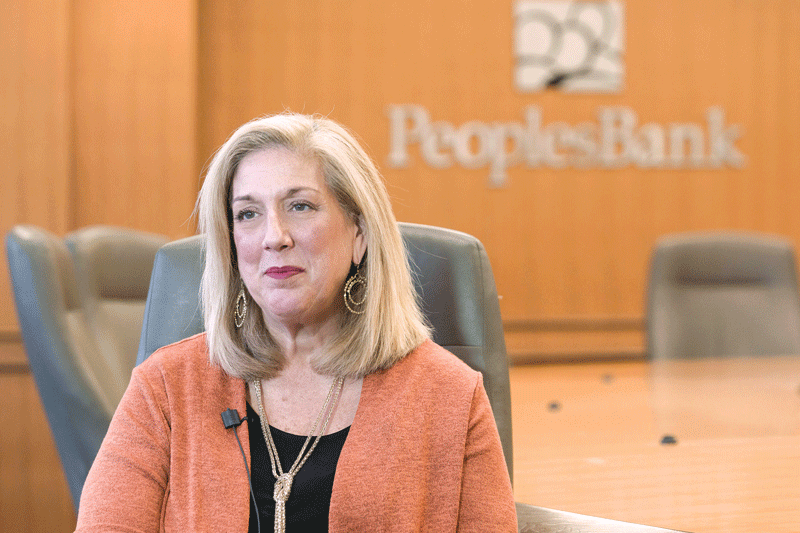
Country Bank announced that Blair Robidoux has been appointed Branch Manager of the West Street Office. It also welcomed two new branch managers to its Retail Banking division — Elise Kowal and Melissa Mann. Robidoux has been with the bank for 12 years and began her career as a teller before working her way up to branch manager. Robidoux’s strong operational and management skills, along with her desire to help people, provides leadership at one of the bank’s busiest offices. Kowal is located at the West Brookfield office and has been in banking for more than eight years. She began her career at Country Bank as a teller and worked her way to a teller supervisor position before moving to the bank’s Corporate Risk Department. She will graduate this summer from Western New England University, where she is studying for her bachelor’s degree in business administration. “I love working with people, educating others, and providing encouragement and guidance in reaching their professional and financial goals,” she said. Mann will work in the Belchertown office. She has been in the banking industry for 14 years in various positions in Western Mass. and Central Conn., most recently at PeoplesBank in Sixteen Acres. She is a graduate of Belchertown High School. Relocations, family needs, and professional development have brought her back to Belchertown. “As a branch manager, I’m most proud of the personal connections that my team builds with our customers,” she said. “We want our customers to know just how much we appreciate them.”

•••••

Robert Cummings

Robert Cummings

Robert Cummings, CEO and founder of American Benefits Group (ABG), has been nominated for the 2017 EBN Innovator Award by Employee Benefit News, a leading national benefits-industry publication serving 106,800 senior-level benefits decision makers across all platforms. This audience includes human-resources executives and benefits directors, whose sphere of responsibility and influence spans health and retirement plans, voluntary benefits, legal and regulatory compliance, employee training and development, benefits procurement, technology, strategic direction, and finance. Cummings founded ABG in 1987 and was an early adopter and innovator of flexible spending accounts in the late 1980s. The company added COBRA administration services and commuter benefit accounts in the 1990s, and health savings accounts and health reimbursement arrangements when they came into being in the early 2000s. For decades, ABG focused exclusively on working with Western Mass. employers, providing full benefits strategy, funding, communications, and administrative solutions. The company began to focus on a national expansion of its specialty employee-benefits administrative services beginning in 2007. Today, ABG serves a diverse base of more than 1000 employer clients nationwide from its home offices near downtown Northampton. ABG’s employer clients range from small and mid-size businesses to high-profile Fortune 1000 employers and global organizations, covering all of the continental U.S. Recognition on the national stage is not new for ABG. In 2014, the Institute for Health Care Consumerism presented the company with a Superstar Innovator Award, and in 2015 ABG was recognized by its platform provider, consumer account technology giant Alegeus Technologies, as its national Customer Service Champion. ABG also serves as the preferred platform partner for consumer-account-based plans and COBRA administration services for NFP, one of the largest global insurance and corporate benefits brokers and consultants. Cummings has been on the leading edge of technology innovation since before the Internet, as ABG was one of the first benefits administrators in the nation to adopt debit-card payment technologies. The ABG debit card allows consumers to pay expenses from their consumer pre-tax accounts directly at the point of service, and auto-substantiates the majority of their transactions. ABG was one of the first adopters of web-based participant portals and mobile applications that offer instant account access and management anytime, anywhere. In 2010, ABG was again at the forefront of the market with its introduction of a live participant-feedback review portal, where participants could rate their experience and post live reviews that are shared online. Basically a private Yelp review and rating portal for its own clients, the company has leveraged this to garner thousands of five-star feedback reviews. Working with the top global benefits consulting and brokerage organizations like Mercer, Lockton, HUB, Gallagher, and NFP, as well as leading independent benefits consulting and brokerage firms from across the country, ABG has been able to achieve consistent growth. In 2016, the company grew revenue by a record 35%, and it has achieved compound annual growth since 2010 of more than 20% per year.

•••••

Springfield College Assistant Professor of Physical Education Tan Leng Goh recently received the 2017 Hally Beth Poindexter Young Scholar Award presented by the National Assoc. for Kinesiology in Higher Education (NAKHE). The award was presented at the annual NAKHE Conference in Orlando, Fla. “Tan Leng Goh’s recent award from NAKHE is a true testament to her commitment to her scholarly work,” said Springfield College School of Health, Physical Education, and Recreation Dean Tracey Matthews. “I look forward to her continued scholarly successes at Springfield College.” During the 2017 NAKHE’s annual conference, Goh presented her paper titled, “Children’s Physical Activity and On-task Behavior Following Active Academic Lessons.” Goh’s presentation focused on the amount of hours a day children remain sitting when receiving academic instruction. Goh’s presentation hypothesizes that sitting for an extended amount of time is detrimental to children’s physical health, and may cause off-task behavior in the classroom. The purpose of the study was to examine the effect of active academic lessons on children’s physical activity and on-task behavior. The NAKHE organization provides a forum for interdisciplinary ideas, concepts, and issues related to the role of kinesiology subdisciplines in higher education with respect for social, cultural, and personal perspectives. Kinesiology is an academic discipline that involves the study of physical activity and its impact on health, society, and quality of life. It includes, but is not limited to, such areas of study as exercise science, sports management, athletic training and sports medicine, socio-cultural analyses of sports, sport and exercise psychology, fitness leadership, physical-education teacher education, and pre-professional training for physical therapy, occupational therapy, medicine, and other health-related fields.

•••••

Berkshire Bank Foundation Inc., the philanthropic arm of Berkshire Bank, announced the appointment of Thomas Barney to its board of trustees. Barney, a certified financial planner, is a senior vice president and wealth advisor with Berkshire Bank Wealth Management in Lenox. Barney has spent more than 19 years with Berkshire Bank, rejoining the wealth group out of retirement to work on all aspects of client relationships, including financial planning and strategy implementation. He previously served as an officer of the foundation. “While Berkshire Bank has grown as a successful company, serving the community has always been at the forefront,” he said. “The Berkshire Bank Foundation was established to demonstrate the bank’s dedication to its communities and neighbors. I am honored to join their board and support the foundation’s work.” The mission of the Foundation is to strengthen and improve quality of life in communities where Berkshire Bank or its affiliates have offices. The foundation supports programs that enhance opportunities for children and adults, specifically in the areas of community and economic development, education, and meeting the needs of low- and moderate-income individuals. The foundation also administers the bank’s comprehensive volunteer program, called the X-Team, in addition to a scholarship program for high-school seniors. Barney has more than 40 years of experience working on investments, trusts, and planning, including tenures at Michigan Avenue Financial Group of Chicago, Bank of Boston’s Private Bank, Fleet Investment Services, and the First National Bank of Geneva. He is a member of the Estate Planning Council of Hampden County, recently serving as its treasurer, vice president, and president. He is a graduate of Monmouth College, Loyola University of Chicago, the National Trust School, and the Trust Management School at Northwestern University. “We are so pleased to welcome Tom to the foundation’s board as he shares our vision to support the many community needs throughout our growing footprint,” said Lori Gazzillo, director of Berkshire Bank Foundation. “Tom’s close community ties and breadth and depth of knowledge will serve as a valuable asset to our talented board.”

Agenda Departments

Understanding Gender Identity in the Workplace

March 22: HRMA of Western New England will present a half-day symposium event on understanding gender identity and supporting transgender and gender non-binary individuals in the workplace. This important topic is impacting local employers across the region. This program will help attendees understand the difference between gender identity and sexual orientation, learn ways to foster respectful work environments for all employees, and gain an understanding of the legal protections for the transgender community. Speakers will include Dr. Eunice Aviles, gender specialist and clinical psychologist; Erica Tabias, public speaker, transgender advocate, and life coach; and Jonathan Miller, chief of the Public Protection & Advocacy Bureau for the state Attorney General’s Office. The event runs from noon to 4 p.m., with a buffet lunch included. Tickets are $75. For more information, contact Allison Ebner at (413) 789-6400 or [email protected], or visit www.hrmawne.org.

Mini Medical School

March 23 to May 11: Itching to get out of the house as the winter draws to an end? Consider signing up for a little dose of continuing education as part of Baystate Medical Center’s Mini Medical School, where you can broaden your knowledge of the field of medicine with professors from the teaching hospital. Mini Medical School, which begins its spring session on Thursday, March 23, offers area residents an inside look at the expanding field of medicine, minus the tests, homework, interviews, and admission formalities. The program continues through May 11. Baystate’s Mini Medical School program is an eight-week health-education series featuring a different aspect of medicine each week. Classes this spring will include sessions on various medical topics such as surgery, deep-brain stimulation, emergency medicine, dementia, pathology, and several others. For a full list of topics and instructors, visit www.baystatehealth.org/minimed. While it is not difficult to be accepted into the program, slots are limited, and early registration is recommended. Many of the students, who often range in age from 20 to 70, participate due to a general interest in medicine and later find that many of the things they learned over the semester are relevant to their own lives. The goal of the program, offered in the hospital’s Chestnut Conference Center, is to help members of the public make more informed decisions about their healthcare while receiving insight on what it might be like to be a medical student. Baystate Medical Center is the region’s only teaching hospital, and each course is taught by medical center faculty, who explain the science of medicine without resorting to complex terms. All classes are held Thursday nights starting at 6 p.m. and run until 8 or 9 p.m., depending on the night’s topic. No basic science knowledge is needed to participate. Each participant is required to attend a minimum of six out of eight classes in order to receive a certificate of completion. Tuition costs $95 per person and $80 for Senior Class and Spirit of Women members. To register, call (413) 794-7630 or visit www.baystatehealth.org/minimed.

Cultivate & Nest Open House

March 25: Cultivate & Nest, a collaborative workspace for businesspeople with children, will host Bloom, its annual open house, from 10 a.m. to 4 p.m. in its Hadley office center. Terra Missildine, founder and owner of Cultivate & Nest, said the event will offer talks on the topic of entrepreneurship and parenting. A highlight of the day will be a flower-hat-making craft and a hat parade around the grounds. Face painting, puzzles, and other activities will also be offered. Tours of the workspace will be offered to parents hourly, while children will enjoy story time. In addition, a drawing will be held for a one-month Cultivate & Nest membership, valued at $99. All Pioneer Valley families are invited to take part in the event and bring their children. Registration is not required, and the event is free. Cultivate & Nest is the first membership-based collaborative workspace in the Valley to incorporate a childcare component. Located on the first floor in the Hadley Crossing business park, Cultivate & Nest offers roughly 3,400 square feet of work and community space. Members of Cultivate & Nest pay in cost tiers that range from $100 to $600 per month, depending on amenities and level of office access. Event and workshop space is also available for members and the community at large to host family friendly events. To learn more about Cultivate & Nest, visit cultivateandnest.com or call Missildine at (413) 345-2400.

Mass. Restaurant Day for No Kid Hungry

March 27: Eight Massachusetts Restaurant Assoc. restaurants across the state will participate in Massachusetts Restaurant Day for No Kid Hungry. Inspired by Chef Andy Husbands of Tremont 647, who has hosted a dinner for this cause for the past 20 years, the MRA announced the program’s expansion across Massachusetts. Last year, participating Boston restaurants raised more than $60,000 to end childhood hunger in Massachusetts. This year, Hotel Northampton is hosting the Western Mass. branch of the event, a multi-course meal with wine pairings. The hotel’s culinary team is working alongside and co-sponsoring with four well-known restaurants in town, including Sierra Grille, Spoleto’s, Packard’s, and Union Station. Attendance at this event will not only help to curb childhood hunger in Massachusetts, but will also help local programs that feed children of all ages at school and in the home. The goal is to ensure all children get the healthy food they need, every day. To purchase tickets or provide sponsorship for the event, visit www.eventbrite.com/e/massachusetts-restaurant-day-for-no-kid-hungry-the-hotel-northampton-tickets-31735014282.

Regional Career Fair

March 29: The College Career Centers of Western Massachusetts will hold a career fair from noon to 3 p.m. in the Alumni Healthful Living Center on the campus of Western New England University. Nearly 100 companies will be recruiting college students for paid and unpaid internships, as well as full-time and part-time employment opportunities. This annual event is a unique opportunity for employers and graduate-school representatives to connect with motivated students and alumni who are looking to launch and advance their careers. The College Career Centers of Western Massachusetts is a consortium of career-center professionals representing the eight colleges in Hampden County, including American International College, Bay Path University, Elms College, Holyoke Community College, Springfield College, Springfield Technical Community College, Western New England University, and Westfield State University. These eight institutions of higher education enroll more than 27,000 students from diverse backgrounds, and graduate approximately 5,000 students each year with a wide range of academic degrees.

‘Stay in the Game’

March 29: The community is invited to join staff from the Baystate Wing Hospital Physical Therapy and Rehabilitation team for an education session about staying active and injury-free. The program, “Stay in the Game,” will be held in the Snow Conference Room from 6 to 7 p.m. Participants will learn about the most effective types of stretching, nutrition, and hydration that will help to avoid injury when working out. Physical therapist Dena Plante and physical therapist assistant Karen Kiernan will be on hand to answer questions and offer educational materials. The program is open to student athletes and adults interested in staying active and exercising without injury. The Physical Therapy and Rehabilitation team at Baystate Wing Hospital provides a full range of rehabilitation services to help patients regain function and achieve recovery. For more information or to register, call (413) 370-5254.

Difference Makers

March 30: The ninth annual Difference Makers award program, staged by BusinessWest, will be held at the Log Cabin Banquet & Meeting House. The winners, profiled in the Jan. 23 issue and at businesswest.com, are the Community Colleges of Western Mass. (Berkshire Community College, Greenfield Community College, Holyoke Community College, and
Springfield Technical Community College); Friends of the Holyoke Merry-Go-Round; Denis Gagnon Sr., president and CEO of Excel Dryer Inc.; Junior Achievement of Western Mass.; and Joan Kagan, president and CEO of Square One. Tickets to the event, which is nearly sold out, cost $65 per person. To order, call (413) 781-8600, ext. 100. Difference Makers is a program, launched in 2009, that recognizes groups and individuals that are, as the name suggests, making a difference in this region. Sponsors include First American Insurance; Health New England; JGS Lifecare; Meyers Brothers Kalicka, P.C.; Northwestern Mutual; O’Connell Care at Home; Royal, P.C.; and Sunshine Village.

Education Fair & Expo

April 4: Jared James, a national real-estate speaker and trainer, will be the featured speaker at the 24th annual Education Fair & Expo taking place at the MassMutual Center in Springfield. The event is sponsored by the Realtor Assoc. of Pioneer Valley. The program features a day of educational presentations including two breakout sessions from James, three continuing-education classes, and two technology classes. A sellout trade show with more than 50 vendors is anticipated. Anyone who is interested in attending as a trade-show vendor should contact Kim Harrison, membership and meetings coordinator at the Realtor Assoc. of Pioneer Valley, at (413) 785-1328 or [email protected].

Art Show Reception

April 5: The National Alliance on Mental Illness of Western Massachusetts (NAMI Western Mass.) will hold an opening reception for its sixth annual art show featuring the work of artists living with mental illness from 6 to 8 p.m. at the Chicopee Public Library, 449 Front St. The reception and parking adjacent to the library are free. The exhibit runs through the end of April. The art show, originated by Karen West, an artist and art teacher at Westfield High School, will feature works for sale to the public, with proceeds going to the artists. Complimentary refreshments will be served and the public is welcome. Headquartered in Agawam, NAMI Western Mass. is an affiliate of the nation’s largest grass-roots mental-health organization dedicated to building better lives for the millions of Americans who are affected by mental illness.

EANE Management Conference

April 6: The Employers Assoc. of the NorthEast (EANE) announced its 13th annual Management Conference will be held at the Springfield Marriott. With a focus on the power of passion in leadership, the full-day conference will address how managers and supervisors can motivate themselves and their teams to create a culture of high performance. The program will feature keynote speakers Rick Barrera and Bruce Christopher. Barrera, the head of faculty for the Center for Heart Led Leadership, works with Fortune 500 CEOs, world-class mountain climbers, astronauts, professional actors, and SEAL Team Six leaders teaching them how to build high-performance teams. Christopher, a psychologist and humorist, offers cutting-edge content with a mix of comedy, showing audiences how to embrace change and giving them practical skills to apply for success. The cost for the program is $350 per person with discounts for three or more. Register at www.eane.org/management17 or by calling (877) 662-6444. It will offer 6.25 credits from the HR Certification Institute and SHRM. Sponsoring the program are Johnson & Hill Staffing Services and the HR Certification Institute.

‘Mini Golf in the Library’

April 7-8: Friends of the Holyoke Public Library will host its second annual “Mini Golf in the Library” fund-raiser on the weekend of April 7-8. Hole sponsors and event sponsors are now being recruited. At last spring’s event, more than 250 players putted their way through five levels of the Holyoke Public Library building, laughing and enjoying unique obstacles added by enterprising hole sponsors. Funds raised help the Friends of the Library support library programs and resources, especially those for children and youth. Sponsors will be publicized and thanked in local media, social media, and the library’s website in connection with this event. Logos of sponsors will be printed on the scorecard given to each player. Names of sponsors will be displayed in the library, ranked by level of sponsorship. Sponsors will be invited as guests to the Friday-evening cocktail party, with the opportunity to preview (and play through) the course. In addition to event sponsors and hole sponsors, the event planning committee, chaired by Sandy Ward, is seeking donors of in-kind services and items for a silent auction to be held during the Friday cocktail party. Hole sponsorships start at $250. Those who wish to sponsor (and decorate) one of the 18 holes are encouraged to act quickly, as holes are being sold on a first-come, first-served basis. Event sponsorships are available at five levels ranging from $250 to $1,000. An exclusive title sponsorship is possible at $2,500. For more information, visit www.holyokelibrary.org/aboutfriendsgolf.asp or e-mail Sandy Ward at [email protected].

Walk of Champions

May 7: The 12th annual Walk of Champions to benefit the Baystate Regional Cancer Program at Baystate Mary Lane Outpatient Center in Ware will step off at the Quabbin Reservoir. Since 2006, the Walk of Champions, founded by field-hockey coach John O’Neill of Quaboag Regional Middle High School, has served as a tribute to the compassionate care his mother received at the Baystate Regional Cancer Program in Ware during her cancer journey. Over the years, the walk has grown into a collection of teams and individuals, each walking for their own reason. There are friends and family members celebrating victory over cancer. Others are encouraging their loved ones in their personal fight over cancer, while others walk in memory of those who have lost their battle with cancer. The Baystate Regional Cancer Program at Baystate Mary Lane Outpatient Center provides the majority of outpatient cancer services in the Baystate Health Eastern Region, which includes Ware, Palmer, and surrounding communities. Since its inception, the Walk of Champions has raised more than $740,000 to assist, support, and instill hope in those facing cancer. All funds raised remain local to support those cared for in the Baystate Health Eastern Region at the Baystate Regional Cancer Program located at Baystate Mary Lane Outpatient Center in Ware. The route offers a one-mile loop that allows walkers to choose the number of miles they walk among the comfortable walking terrain of the Goodnough Dike. Along the way, walkers will enjoy entertainment and refreshments. Pledge forms, fund-raising resources, giving opportunities, and more are now available at www.baystatehealth.org/woc for businesses, community organizations, and individuals who wish to participate.

Daily News

SPRINGFIELD — Robinson Donovan, P.C. announced that Partner Carla Newton, in collaboration with Thomas Kenefick III, will co-chair the “Cutting Edge Issues in Western Massachusetts” symposium for family-law professionals as part of the upcoming Massachusetts Continuing Legal Education (MCLE) regional conference. The event, to be held at the Sheraton Springfield on March 22, is expected to gather distinguished family lawyers and judges with substantive knowledge and regional expertise. This will be the third year Newton has co-chaired the event.

“Family law is constantly evolving, and it is imperative to stay abreast of emerging issues,” said Newton. “The symposium will facilitate a thoughtful exchange and will undoubtedly help all of us to better serve the needs of our clients.”

The full-day event will feature discussions on the current state of the probate and family court, including insights on pilot programs; case law and legislative updates; presentations on social-media considerations and alimony obligations; and an information exchange with members of the judiciary.

Newton is a divorce and family-law practitioner, with additional practice areas in corporate and business counseling, commercial real-estate law, and litigation. A member of the American Bar Assoc., Massachusetts Bar Assoc., Hampden County Bar Assoc., International Assoc. of Collaborative Professionals, and the Massachusetts Collaborative Law Council, she has regularly been recognized for outstanding achievements, including selection to the Best Lawyers in America list (2013-present) and the Massachusetts Super Lawyers list (2013-present). Additionally, she was recognized by Best Lawyers as the 2015 family-law Lawyer of the Year in Springfield and among the Top 50 Women Massachusetts Super Lawyers in the same year. She was also a St. Thomas More Society honoree in 2013.

The March 22 event gives qualified attendees the opportunity to earn up to six continuing legal education (CLE) credits. Those interested in in attending are asked to register by calling MCLE Customer Service at (617) 482-2205 or e-mailing [email protected]. More information about the event, including tuition information, is available at mcle.org.

Daily News

NORTHAMPTON — Cooley Dickinson Health Care will receive $50,000 over the next two years from Florence Bank. The funding will underwrite a major initiative to help community members struggling with opioid-use disorders.

The Cooley Dickinson initiative will be a two-year, coordinated, comprehensive, organization-wide approach designed to prevent and treat people living with opioid-use disorders. Key components of Cooley Dickinson’s plan include education, screening, and new treatment services and interventions.

“Cooley Dickinson is a premier resource for healthcare in our region,” said John Heaps Jr., president and CEO of Florence Bank. “They have done extensive research on this growing problem here in the Pioneer Valley, and they have put a great deal of thought into how to deal with this issue. They are on the front lines of this epidemic, and we fully support their important work.”

Statistics show the seriousness of the issue. In 2016, 27 people died from opioid overdose in Hampshire County, which is an increase from 16 deaths in 2015, according to data provided by the Northwestern District Attorney’s Office. For every fatal overdose, there are between 10 and 12 which are non-fatal. In Massachusetts, only 10% of individuals using opioids receive treatment, meaning that there are 60,000 opioid users who are not treated.

“This crisis impacts the communities we all serve; these are our neighbors and friends,” Heaps said. “We believe we should all do what we can to help find a solution that is both effective and compassionate.”

Cooley Dickinson President and CEO Joanne Marqusee underscored the importance of the initiative. “We are very pleased to partner with Florence Bank on an initiative that so deeply affects our region. Cooley Dickinson recognizes opioid-use disorder is a disease, and our providers and staff treat it as a disease, not as a moral or character flaw. With this approach, we are developing a comprehensive, coordinated approach with our community partners to reduce opioid-use dependence. We are grateful to Florence Bank for sending this strong message of support and understanding to our communities in need.”

The two partnering institutions are organizing a panel discussion and community conversation, aimed at increasing awareness about opioid-use disorders and helping change the public perception of this issue from one seen through a legal perspective to one seen as people in the healthcare field see it — a medical issue. The specific date for the forum will be announced in the near future.

Daily News

EASTHAMPTON — Pioneer Valley Ballet (PVB), located on the first floor of the Eastworks Building in Easthampton, recently welcomed two members to its staff: Jonathan Riseling, the marketing and development coordinator; and Martha Potyrala, program and operations director.

Riseling is a former member of Alvin Ailey, touring the world with the company as well as teaching at the Ailey School. In recent years, he has worked as the director of the Dance Department at the Putney School, and has taught at Ballet Academy East and Central Pennsylvania Youth Ballet.

“We are absolutely elated to have Jonathan join the development and training program this year. His contributions will create a tremendous amount progress in both our fund-raising and marketing goals,” said Maryanne Kodzis, PVB artistic director.

Potyrala, who received her bachelor’s degree from Curry College and her master’s degree in education from UMass Amherst, has worked with Pioneer Valley Ballet in various roles since 2006, including as a board member, faculty member, Educational Outreach Program coordinator, and guest performer. She also has spent the past five years working at the Academy of Music in Northampton as a co-director of the Winter Musical and Summer Musical Workshops.

As a team, Potyrala and Riseling want to extend PVB’s community involvement, with emphasis on health and wellness for the youth of the Pioneer Valley. Their goals also include moving the pre-professional program forward and growing the visions of artistic directors Maryanne Kodzis and Thomas Vacanti for the professional company, FLUXChoreolab.

Daily News

LONGMEADOW — The Women’s Fund of Western Massachusetts and Bay Path University announced a groundbreaking partnership aimed at driving women’s leadership and educational access by providing college credits as part of the Women’s Fund Leadership Institute for Political and Public Impact (LIPPI) program.

Through this partnership, which aims to educate women for leadership roles, the LIPPI program will give participants access to Bay Path’s online classroom tools, including access to virtual sessions with instructors and with their cohort. LIPPI participants will also be able to opt in to receive three undergraduate or graduate credits from Bay Path or, upon approval, credits that can be transferable to a college or university of their choice. To date, more than 250 women have graduated from the LIPPI program.

“We think this is a natural partnership for our organizations because we both invest in creating strong communities through leadership development,” said Elizabeth Barajas-Román, CEO of the Women’s Fund. “In addition to running for office, LIPPI graduates have led, or are leading, some of the most exciting gender-equity campaigns in the state, including pay equity, expanding workplace accommodations for pregnant employees, and paid family leave. Together with Bay Path University, LIPPI will generate leaders of tomorrow who will create strong communities and help the region thrive.”

Bay Path President Carol Leary added that “the Women’s Fund and Bay Path University share a common mission of supporting and empowering women. Since their founding, women’s colleges have been a driving force in educating women to hold key leadership positions in business, politics, and social-service agencies, as well as encouraging pioneers in the sciences and medicine, and fostering women in the arts. We are honored to work with the Women’s Fund to keep that legacy of women leaders alive and flourishing.”

The Women’s Fund of Western Massachusetts fuels progress toward gender equity by funding the most promising solutions, collaborating with results-oriented partners, and elevating the collective power of local women to take charge and to lead with purpose. Its signature, non-partisan program, LIPPI, is designed to provide women with the tools, mentors, and confidence they need to become powerful and effective civic leaders and elected officials.

Bay Path University’s mission is to provide an education that empowers undergraduate women and graduate women and men to become leaders in their careers and communities with an innovative approach to learning that prepares students to flourish in a constantly changing world.

Daily News

HADLEY — Jeffery Still, an Eagle Strategies financial adviser and registered representative since 2012, has opened an office at 2 Bay Road, Suite 100, in Hadley.

Still is a fiduciary in the capacity of financial adviser, focusing on core components for clients when planning for retirement. He helps his clients with retirement planning, estate planning, investments, and life-insurance planning. His office was previously located in Westborough and Holyoke.

“I really love Western Mass.,” Still said. “I grew up here, and I have a lot of family ties in the area. There’s nowhere else I’d rather be. I look forward to serving the needs of local consumers and businesses and to contributing to the area’s economic and civic vibrancy in a meaningful way. I’m passionate about financial education for my clients and making sure that they have the best possible options available to them across a wide range of retirement and insurance planning concerns.”

For the last four years, Still has been a member of New York Life’s Executive Council, members of which are among the most successful of the company’s sales force of 12,000 licensed agents. He is a member of the Northampton Chamber of Commerce.

Still earned a bachelor’s degree from American International College in Springfield and studied finance and business management at the University of Florida.

Daily News

BOSTON — The state’s total unemployment rate increased to 3.2% in January from the revised December rate of 3.1%, the Executive Office of Labor and Workforce Development announced Thursday.

The preliminary job estimates from the Bureau of Labor Statistics (BLS) indicate Massachusetts added 13,000 jobs in January. Over-the-month job gains occurred in trade, transportation, and utilities; financial activities; construction; leisure and hospitality; education and health services; information; and government.

From January 2016 to January 2017, BLS estimates Massachusetts has added 65,100 jobs. The January state unemployment rate remains lower than the national rate of 4.8% reported by the Bureau of Labor Statistics.

“Massachusetts continues to experience low levels of unemployment with the largest year-over-year percentage gains in jobs in the construction, education, and health services sectors. We remain focused on fostering an employment environment where businesses can grow and create jobs while having access to workers with the skills and training needed to fill them,” Labor and Workforce Development Secretary Ronald Walker II said.

The labor force increased by 1,600 from 3,561,700 in December, as 9,800 more residents were employed and 8,200 fewer residents were unemployed over the month.

Over the year, the state’s seasonally adjusted unemployment rate dropped 1.1% from 4.3% in January 2016. There were 40,400 fewer unemployed people over the year compared to January 2016.

The state’s labor-force participation rate — the total number of residents 16 or older who worked or were unemployed and actively sought work in the last four weeks — increased to 64.9% over the month. The labor-force participation rate over the year has decreased 0.1% compared to January 2016.

The largest private-sector percentage job gains over the year were in construction; education and health services; financial activities; professional, scientific, and business services; and leisure and hospitality.

Daily News

SPRINGFIELD — The health information technology program at Springfield Technical Community College was awarded accreditation, a big step forward for an area of study that can help hospital workers like Pamela Rau advance in their careers.

Rau, 53, of Southampton, worked at Shriners Hospitals for Children in Springfield for more than 20 years when she decided to seek an associate degree in health information technology from STCC. She needed the diploma to continue working as a supervisor in health information management. Rau was part of the first graduating class in June.

“It was interesting because what I learned on the job coincided with what I learned in school,” Rau said. “And the things I learned in school helped me grow in this position in my job. I was very impressed with the program.”

Her next step is to take a certification exam to become a Registered Health Information Technician (RHIT). She also hopes to earn a bachelor’s degree in health care administration. But her academic journey started with STCC’s Health Informatics and Information Management (HIIM) program, which awards degrees in health information technology. On Dec. 20, the two-year-old program received accreditation from the Commission on Accreditation for Health Informatics and Information Management Education (CAHIIM).

Accreditation, a tool for assuring academic quality, shows that the program meets a certain minimum standard. A graduate of the accredited HIIM program at STCC becomes eligible to take professional certification exams.

Tracey A. McKethan, department chair and professor of health information technology, said the program went through a rigorous process involving an on-site review by accreditors and met 33 standards. “There are no other programs like this in Western or Central Mass. or in Northern Conn.,” McKethan said, noting that STCC’s program has a 100% graduation rate.

The HIIM program prepares students, who are awarded degrees in health information technology, for certification and practice as registered health information technicians. The program has transfer agreements with four-year institutions, which means students can apply their credits from STCC to pursue bachelor’s degrees. Master’s programs also are available.

The technicians typically work at hospitals, nursing homes, long-term care facilities, mental health centers or large medical practices. As the custodians of patient medical records, the technicians must be able to translate complex data into understandable, interesting and simplified information for the general public.

“It’s a growing field,” McKethan said. “With more regulations being pushed out by the government and insurance companies, you really need these highly skilled, credentialed people in certain positions at hospitals and larger practices.”

For more information, call the admissions office at (413) 755-3333 or visit www.stcc.edu/apply. Fall applications are due by April 30.

Creative Economy Sections

Broad Strokes

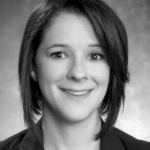
Springfield Central Cultural District Director Morgan Drewniany

Springfield Central Cultural District Director Morgan Drewniany

As director of the Springfield Central Cultural District, Morgan Drewniany doesn’t see the arts in a vacuum. Rather, they’re one of the connecting threads joining the realms of economic development, social justice, and a city’s walkability and livability, which are, of course, among the keys to any community’s future. To that end, the SCCD is raising the profile of the arts in and around downtown Springfield — and that of its myriad artists as well.

Morgan Drewniany recognizes the connections in her passions. That’s why she doesn’t think it strange that she went from studying soil chemistry at Hampshire College to leading the Springfield Central Cultural District (SCCD).

The specific connecting fiber is a passion for improving society. For example, to write a thesis on the political and physical environment in Northern New Mexico, she stayed on a reservation there, and later brought 200 soil samples — packed into the back of her Volvo — on a cross-country trek back to Amherst.

When she thinks back to her early interest in environmental health and social justice, “what I loved most was working with economically disadvantaged communities, those with lower education levels, lower income levels, communities of color in general. So, when I looked for a job, I didn’t look in the science field; I looked in art and nonprofits.”

The job Drewniany found was assistant director of the Springfield Business Improvement District. “It seemed like a good fit,” she told BusinessWest, explaining that the idea of lending her skills and passions to economic development appealed to her, particularly in the City of Homes. “I grew up in Westfield, and my parents brought me to Springfield all the time as a kid, to the museums or the symphony — I thought it was the coolest place ever. So to come back and help out during its revitalization was really gratifying for me.”

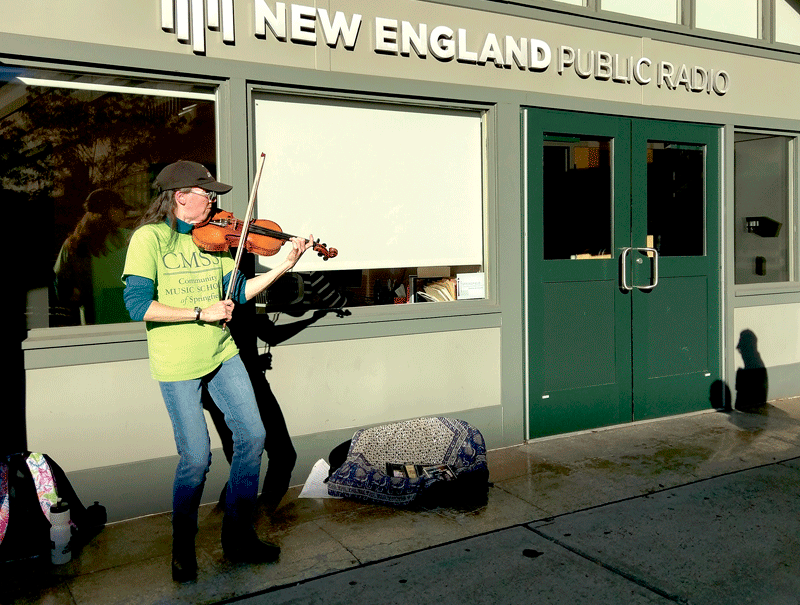
Violinist Anne Marie Messbauer

Violinist Anne Marie Messbauer plays in front of New England Public Radio during last fall’s Art Stop. NEPR will again host an Art Stop gallery next month.

But another opportunity would emerge that she’d find more intriguing. In 2013, the Massachusetts Cultural Council introduced the Cultural District Program as a way to brand areas densely populated with architectural, historical, and cultural assets. A consortium of cultural entities in Springfield applied for the designation, launching the SCCD in 2014. A year later, the organization sought a new director.

“When the opportunity came up, I knew the players, I personally have a passion for the arts, I have a lot of friends who are artists … it was a pretty natural fit,” Drewniany said, adding that she was drawn by the district’s untapped potential. “We were still applying for 501(c)(3) status, finalizing our bylaws and structure, a lot of internal stuff … it was a really exciting time. Now we know who we are. We want to be a unified voice for arts culture, not just within Springfield, but statewide, and even nationally.”

Today, the SCCD is supported by 55 members, ranging in size from the Mattoon Street Arts Festival, an annual weekend event, to larger players like Springfield Museums, New England Public Radio, the Community Music School of Springfield, and the Eastern States Exposition.

Representatives of these groups have long attended conferences on the state and national levels to advocate for the role of the arts, but the SCCD can represent the entire range of arts in Greater Springfield, Drewniany explained.

“We have a mission and vision — in short, to make Springfield a more friendly arts culture through civic engagement and arts engagement. That’s very broad, so it leaves us a lot of opportunities to interpret that.”

Forging Links

The district’s website explains its mission this way: “To bring more vitality to the city by highlighting its outstanding cultural offerings and adding new creative opportunities for artists and the greater community. We aim to make arts and culture in Springfield more accessible, while creating connections between artists, cultural landmarks, and visitors.”

One of those connections is the partnership known as Futurecity Massachusetts, a joint initiative of the Massachusetts Cultural Council and the Boston Foundation. Futurecity is working with mayors, urban planners, and arts and business leaders in Springfield, Boston, and Worcester on key real-estate projects in state-designated cultural districts in the three cities, targeting areas ready for development and job growth. The organization has created more than 200 such partnerships across the globe that reposition cultural assets from community amenities to marketplace drivers.

“We took on the Futurecity Massachusetts initiative with the Massachusetts Cultural Council with the idea of talking about a paradigm shift of art from nicety to necessity,” Drewniany said. “That has involved not just arts people but developers, city department heads, and city leaders talking about how, in order to create a 21st-century city, you have to integrate the arts. When you look at competitive cities right now, like London or Boston, developers are one-upping each other, saying, ‘we have art in our gallery.’ ‘Our building is totally made of art, and we have a huge sculpture outside!’”

She noted the example of London, where the developers behind a recent train-station project invested so much money in the building’s aesthetics that people started hanging out there because it was so beautiful. In short time, cafés started popping up, and adjacent vacant buildings were bought up and converted to lofts. “The revitalization of that neighborhood was based around the choice not to build a regular train station,” she said. “They didn’t just slap a mural on a wall and call it a day.”

The utility-box painting project

The utility-box painting project has brought splashes of color and whimsy to Springfield’s downtown.

That’s not to say public art of any size isn’t valuable. For example, starting last spring, the SCCD commissioned 26 artists to paint utility boxes around the district’s footprint, transforming the gray, bland boxes with a splash of bright color. The program was intended to both encourage walking downtown and provide a source of income to working artists, and was funded by matching local businesses and organizations to individual artists. The net effect has been increased feelings of positivity downtown, Drewniany said, which hopefully impacts pedestrian traffic.

“We’re so focused on walkability right now, and connecting spaces. If we have more people on the street, it portrays a more positive, friendly environment, and that affects public safety and also helps bring dollars to downtown businesses,” she explained. “And we advertised the times the artists would be painting so people could watch something be created right in front of their eyes, so it served a secondary purpose. We want people to interact with each other, even if it’s for a second. It’s a way to start building a bridge to a more connected community.”

Play and Pay

Other efforts to connect the district’s institutions through art include a new video map to accompany the Downtown Springfield Cultural Walking Tour, and the second annual Art Stop event slated for later this month.

The walking tour, first introduced in the summer of 2015, is a tool designed to be used by visitors or residents to learn more about the city’s architectural, historic, and cultural highlights. Printed maps are available at all downtown hotels, visitor’s centers, and cultural institutions.

The video map, available digitally on the SCCD website, springfieldculture.org, brings a new dimension to the walking tour. Viewers gain insight into the history of each location on the map and have the chance to learn an unexpected fact about the venue or building. Each short video (under two minutes, for easy viewing while out and about) is presented by a member of the SCCD on location.

The Art Stop initiative — essentially a pop-up gallery program — also encourages foot traffic downtown, while giving artists a chance to sell their work in one of three locations downtown: New England Public Radio, SilverBrick Lofts, and 1550 Main.

A request for proposals closes on March 8, and the exhibits will be displayed starting the first week of April. All pieces will be available for sale, with 100% of proceeds going directly back to the creators. Like last fall’s inaugural Art Stop, a joint reception will be held between the three locations on April 5, with artist talks, street art, and performances between the locations to encourage walking, and light food and drinks provided by the SCCD and artist hosts.

“Property owners had contacted me about how to activate a space, to get people interested in it, because it felt bland,” Drewniany said of the inspiration behind the program. “We felt we could provide economic impact for artists by creating galleries in these spaces, where the artists can actually sell their work. We also hire musicians and street performers and pay for their performances. That’s definitely a focus of ours — whenever artists are doing work, they’re getting paid like everyone else.”

Too many people, she went on, are too willing to ask artists to perform and produce work as a public service, when other industries don’t get treated that way. “You’d never invite an electrician into your house and say, ‘if you do this, I’ll tell my friends; it’ll be great exposure for you.’”

Other SCCD programs are one-off events intended to create buzz around often-unappreciated cultural genres. For example, in November, the district presented a free concert with three local organists in Old First Church in Court Square, playing the church’s full-size 1958 Aeolian-Skinner organ with its 56 ranks and 3,241 pipes.

The organizers hoped to both show how beautiful and versatile the Old First Church space is — demonstrating the potential in a historic building and encouraging future activity there — and, again, provide income to local artists.

Coming into Focus

While the district is prioritizing Springfield artists in its applications and trying to build a culture of artistic excellence downtown, Drewniany said, SCCD outreach includes artists from across the whole region, recognizing that Western Mass. is rich in cultural resources and individual artists. “But we want to make our downtown a place where artists want to be showing.”

Member fees fund roughly 75% of the district’s programs and expenses, she told BusinessWest, while most of the remainder is covered by grants, and a few projects, like the utility boxes, are sponsored. She treats her grant-application efforts like all her endeavors — in other words, seeking connections between art and community betterment.

“I’ve applied for public-health grants; I’ve applied for economic-development grants,” she said. “Really, the arts have such a unique way to reach people and solve problems — if you find the right partners and take the right approach. We want to make sure everyone has the opportunity to have their voice heard.”

That’s a vision worth painting — and it sure beats the cold gray of an unadorned metal box.

Joseph Bednar can be reached at [email protected]

Creative Economy Sections

Space to Create

Mike Stone (left) of Cofab Design and Dan Battat of Battat Glass

Mike Stone (left) of Cofab Design and Dan Battat of Battat Glass, two of the founding members of Brick Coworkshop.

Dan Battat is a glassblower, and that can be a solitary art. But he prefers company.

“As someone who has worked in a solo shop setting, it’s awesome to look up from the bench and see someone pouring concrete into molds, or these guys in the machine shop cutting metal, all in my view from my workspace. Seeing them, it’s hard not to think of new ideas.”

That iron-sharpening-iron philosophy is one of the driving forces behind Brick Coworkshop in Holyoke, a co-working space that currently houses eight artists of varying disciplines — from glass, metal, concrete, and wood art and fabrication to ceramics, painting, and product design and engineering — who themselves represent six small businesses.

Battat said several of the players knew each other and were looking for this kind of shared space when an opportunity arose — 15,000 square feet of opportunity, to be specific — in the Wauregan Building on Dwight Street, along the downtown canal network.

“A lot of us had talked about this concept of an arts center before the space suddenly became available,” he said, noting that many of them knew each other through the region’s broad ‘maker’ community.

“We were all in the right place at the right time,” said Mike Stone, one of three members of Cofab Design who moved their operations to Brick. “There were zero days of downtime. The previous tenant got out, and we moved right in.

Aaron Cantrell of Cofab Design gets down to work at Brick.

Aaron Cantrell of Cofab Design gets down to work at Brick.

“Everyone had some kind of shop before that,” he added. “We all moved a lot of equipment in. It looked nothing like it does now. But we were intrigued by the idea of being able to share resources and inspire one another to work together on projects.”

Brick’s founders describe it as a shared work environment for artists, fabricators, engineers, and designers, where members work individually, collaboratively, and for the community in a variety of disciplines and mediums.

Besides Battat Glass and Cofab Design, Brick currently houses the creative entrepreneurs behind Kamil Peters Metal, concrete specialist Karmody Worldwide, Cog Ceramics, and Paul Palmgren, a fine-art painter. Other members have come and gone in the nearly four years since Brick opened, but most of the current ones have been there since the beginning.

Stone said the various members pursue their own business goals but also contribute energy to the collective, whether that’s through grant applications to fund educational programs or working with community groups on artistic projects. “We’ve let it develop as organically as possible, but we continue to formalize it.”

He sees more collaboration in the future, believing Brick has potential as a different kind of workspace — one where members from different disciplines work together as much as they do separately. “One of the things that differentiates us from the traditional model of co-working space, what makes us different, is that we don’t fit neatly into any category — maker space, co-work, incubator … we’re halfway between all of those.”

Building Momentum

Take, for example, a recent collaboration with Wistariahurst in Holyoke to create a traveling museum experience, comprised of installation space for interchangeable panels, protective cases for artifacts and objects, and a recording area where members of the community can document and share their memories. The idea, museum Director Kate Preissler noted last year, was to interact with people who’ve never heard of Wistariahurst and may never have visited the museum.

The traveling museum project involved many facets of what the artists at Brick do, Stone said, from preliminary research through design and fabrication of the actual exhibit infrastructure, and leveraging their collective expertise to benefit the community.

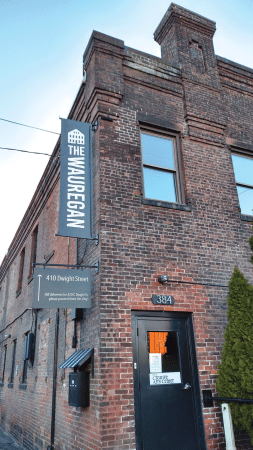
Brick Coworkshop

Brick Coworkshop has set up shop on the second floor of the Wauregan Building alongside Holyoke’s canal network.

“Kate was looking for an intriguing way to take the rich collection of history at Wistariahurst collection over the years, get that out of the bounds of the museum itself,” Stone said. “How do we take this great content and make it more accessible and more relatable to people? It was a great example of taking a project from concept to design to implementation.”

Meanwhile, Stone and Battat both say educational and community programming will be an increasingly more significant aspect of Brick. Some members, like Battat, offer private lessons in their specific discipline, while group classes are occasionally scheduled as well, in addition to school-group tours.

By bringing kids into the sprawling, open space where glass, metal, concrete, and more gets manipulated into both conceptual art and products they may use every day, Stone said, “maybe we can spark something in a young person’s mind.”

The collective is still working out strategies for a more robust educational program, perhaps in collaboration with the Holyoke Creative Arts Center, located downstairs in the Wauregan Building. Whether it’s a six-week course or a one-weekend session, Stone said he hopes each member can find the right niche to make education a bigger part of the Brick ecosystem.

“I like being able to teach here, having the space to do that, pulling in all the multiple disciplines we have,” Battat added. “We knew that aspect would become an important part of the picture.”

There’s also an element of sharing resources between members that makes their operations less capital-intensive, Stone said, and not just the common areas like the woodworking shop available to all. “It acts as a resource multiplier — if Dan’s got something I need, instead of running to Home Depot, I can borrow it from him, or vice versa.

“And if I ever need a tool that doesn’t exist yet,” Battat added, “we can probably make it within the hour.”

But it’s the sharing of expertise and inspiration that makes a bigger difference, Stone told BusinessWest.

Metalwork artist Kamil Peters

Metalwork artist Kamil Peters creates a mask, one of the many striking products he forges at Brick.

“It really comes down to the fact that it’s exciting and invigorating to share space with creative people. We all pick up knowledge with each other, have discussions, foster that crucible where ideas get bumped around — even just in passing each other in the hall. And when the time is right, we may work directly with each other. It’s a cool way to hone our individual disciplines and all work toward becoming a little more multi-disciplinary.”

Come Together

In the end, Battat said, not every artist or artisan will benefit from such a collaborative environment, but those with the right personality for it will find they accomplish more than working alone.

Stone agreed, calling the arrangement a creative multiplier effect. “Having eight to 10 people in the space as collaborators, we’re able to speak in a louder voice than one individual in a shop. Not that there’s anything wrong with that model; for the right type of person, it definitely works. But we’ve lucked out with a great group of people, sharing a similar mindset, that keeps the momentum moving forward.”

With more event and educational programming on the horizon and a better sense of how Brick fits into the Holyoke community, the organization is ready to increase its profile alongside the canals and beyond.

“We want to leverage our energy and potential down here and play off things going on in the community,” Stone said, “and keep all this moving forward.”

Joseph Bednar can be reached at [email protected]

Manufacturing Sections

On the Cutting Edge

Marianne Halpern

Marianne Halpern displays the Thunderbird, one of the knives now being produced by Three Rivers Mfg., a subsidiary of Halpern Titanium.

Marianne Halpern says the company used to be called Custom Knife Supply because … well, that’s what it did — that’s all it did.

It supplied custom parts — blades, handles, hinges, and other components — to knife makers across the country, she said of the venture that she and her husband, Les, started out of their home in Monson, more as a money-making hobby than anything else.

When it became much more than that — the two eventually left their day jobs to pursue this full-time — and did much more than supply knife parts, a name change was certainly in order, Halpern told BusinessWest.

The search for something new and more accurate wasn’t exactly involved or scientific in nature, Halpern went on, adding that credit for what’s now in block letters on the business cards goes to the woman who handled that printing job.

“She asked what we did and what materials we worked with,” Halpern noted, adding that, when given a quick primer, the printer, desiring to make the principals’ name part of the equation, said, ‘how about Halpern Titanium?’

This question soon became the answer, said Halpern, because ‘Titanum,’ all by itself, says a quite a bit. “It has a definite ring to it.”

Indeed, this silver-colored, low-density, high-strength metal is practically synonymous with ‘cutting edge’ when it comes to its use in everything from artificial joints and dental implants to golf clubs; from eyeglass frames to Corvette engine parts.

Meanwhile, the metal itself is not exactly easy to fabricate into any of the above, Halpern went on, adding that, in many ways, this name connotes precision and expertise to those who read it.

Exactly how much the new name has helped the company is a matter of debate, but what isn’t is the fact that Halpern Titanium, now located in the Palmer Technology Center (the old Tambrands complex in Three Rivers) continues to grow and diversify itself into a major player within this industry.

The company, which also specializes in other materials, including carbon fiber, fiberglass, and stainless steel, now makes parts for a number of knife makers, many based in Oregon due to very liberal knife laws there (quite of the opposite of what are on the books in the Bay State), but manufacturers of other projects as well. And within the past 18 months or so, it has taken its expertise to a new and different label by introducing its own brand of knives, produced by a subsidiary named Three Rivers Manufacturing (TRM).

That venture has already produced several models, including the Nomad, the Class Action, the BT 1000, and the Thunderbird, which earned an enthusiast review from a trade publication called Knife News.

The Nomad Slipjoint

The Nomad Slipjoint, complete with titanium frames and royal blue G-10 handle, is one of several knives now bearing the Three Rivers Mfg. (TRM) name.

“Designed by company founder Les Halpern, the Thunderbird’s distinctive geometry injects some new life into familiar tactical knife attributes like a wharncliffe blade, titanium framelock, and sculpted pocket clip,” the magazine wrote. “The narrowing frame is embellished with deep milled-out grooves to create a look that harkens back to the tail fins found on the classic 1950s American-made automobiles.”

TRM, currently selling direct to consumers from its website, hopes to roll out several new models in the years to come, said Halpern, adding quickly that the parent company’s main purpose in life is to help a host of major knife makers earn similar platitudes for their products.

For this issue and its focus on manufacturing, BusinessWest takes an in-depth look at a company with a sharp — as in sharp — focus on controlled growth and further expansion of each of the many components within the business plan.

Cutting to the Chase

The printer who handled the Halperns’ business cards had more to do than help come up with a new name. Her eventual assignment was to pack a ton of information on that small space, while putting it all in something approximating titanium’s color on a black background.

In short, there’s a lot to read there.

Beyond the typical name, address, phone, and e-mail, the card provides a quick education into the services provided and materials used — at least to those versed in this field and the language associated with it.

Indeed, there are phrases like ‘dynamic waterjet cutting’ and ‘swiss turning,’ and listed materials including ‘titanium sheet bar and plate’ and the related ‘6AL/4V, CP Grades 1-4’ (an alloy of that metal), as well G-10 (fiberglass) and carbon fiber sheet. One could also note that free quotes are available and that this is a certified women-owned business.

Like we said, there’s a lot to read. And it all translates into the fact that this company has come a long way from the Halperns’ basement in Monson.

That’s where things started almost 20 years ago, said Marianne, noting that she was a teacher at Tantasqua Regional Senior High School and Les was a designer in the adaptive equipment department at the Monson Developmental Center when they started to fashion parts for knife makers on the side — and got really good at it.

So good, as noted, that they started thinking about this as a career move.

“I took a leave of absence from my job in 2000, and never went back — and I never looked back, either,” she told BusinessWest. “Les retired, and he never looked back.”

Instead, they’ve been looking both outward and inward with an eye on finding new ways to do what the company has essentially done from the very beginning — serve as a solution finder for many of the nation’s most prominent knife makers.

“Companies come to us with a specific need they need to address,” she said, adding that solutions include everything from parts to whole-knife manufacturing and assembly (although not much of that) to assistance with designing new products for the market.

When asked to list some of these customers for which solutions are provided, Halpern said those names are among the many things are kept confidential within this large, tight, and highly competitive business.

To effectively convey what the company does, Halpern had to repeatedly stop in mid-sentence, get up from her chair, and find a knife with which she could show the company’s contribution rather than explain it.

She picked up an elaborate multi-tool product assembled by one of those companies she couldn’t name to explain how it makes one small carbon-fiber piece that holds the tool bit in place. She picked up another knife to show off one of the many types of handles (a good number of them produced from G-10), and on it went.

Les Halpern

Les Halpern, seen here at the prototype CNC machining center, wears many hats for the company, including knife designer.

“For many customers, we’ll make one part, like the handle, and they’ll make the rest,” she explained. “We’re a team with that company, and we have many, many relationships like that. They don’t have to worry about that part of the knife.”

Getting to the Point

There are many visible signs of growth at Halpern Titanium, starting with its facility in Palmer.

The company started with roughly 3,000 square feet, a few machines, and the Halperns handling almost all the assigned duties. The footprint has expanded to 20,000 square feet, there are now 12 employees and 25 machines, and the Halperns, while they still work long hours, don’t have to do it all.

A growing client list is another measure of success, she said, adding that the company has staked out a position as one of the clear leaders in this field.

“There’s not a lot of competition out there — it’s not easy to do what we do,” she said, noting, again, the difficulty of working with titanium, G-10, and other materials.

The new subsidiary, TRM, is still another sign of growth and progress, she said, adding that she and Les decided roughly 18 months ago to take their acquired expertise and put the company’s name on its work instead of someone else’s.

“We had been making private-label knives for other companies for 18 years, and we often thought that it would be a good idea to do some of our own,” she explained. “And we recognized that making something for someone else that they sell is very different from making something yourself that you have to market, but we wanted to give it a try.”

Working in tandem with some noted custom knife designers, TRM brought a few products to the marketplace last year, she went on, including the Nomad, complete with an array of handle colors, such as ‘blaze orange,’ ‘cranberry,’ ‘forest green,’ and ‘battleship gray.’ The Thunderbird will be available online shortly.

Results thus far have been generally positive, said Halpern, and the company is learning the new elements of business associated with this venture, especially the marketing side of the equation and its various social-media platforms.

“It’s a whole different experience trying to market a product,” she explained. “I’m very active on social media — Twitter, Facebook, Instagram … and I’m gradually building a following for our company.”

She and others will attempt to expand this following in June at the Blade Show in Atlanta, billed as the largest knife show in the country, sponsored by Blade magazine. Attendees will include custom knife makers, manufacturing operations, collectors, and many more constituencies.

This means those representing both TRM and Halpern Titanium can multi-task, which is essentially what those at this corporation are now doing on a daily basis.

Indeed, Halpern noted, with the many different kinds of operations, including production of its own brands, now taking place, the company must conduct what she called a “balancing act” to ensure that each has the ability to thrive and grow.

“On the private label, we want to continue with those companies that want to add new products and grow with them,” she explained. “Meanwhile, we’re adding new customers selectively, making sure it’s a good fit, and we want to continue with our own models, introducing maybe a few new ones each year. Let’s see where that all takes us.

“It’s definitely a balancing act; we keep evolving as we need to,” she went on. “You can’t just stand still — in any kind of business, but especially this one. You have to be ready to add things to your repertoire.”

Getting a Handle

Things like the Thunderbird, with its narrowing frame and deep milled-out grooves, and the Nomad, with its blaze-orange, cranberry, and battleship-gray handles.

This company that was started in a basement continues to build upon its repertoire and its track record of excellence within the knife industry.

As the name suggested by that printer a while back suggests, this company is on the cutting edge — in just about every aspect of that phrase.

George O’Brien can be reached at [email protected]

Departments Incorporations

The following business incorporations were recorded in Hampden, Hampshire, and Franklin counties and are the latest available. They are listed by community.

BELCHERTOWN

Medical and Life Care Consulting Services Inc., 38 Barton Ave., Belchertown, MA 01007. Cynthia M. Bourbeau, same. Medical consultation.

CHICOPEE

JFR Investments Inc., 26 Lorraine St., Chicopee, MA 01013. Fernando Ramirez, same. Real estate.

M&S Bluebird Inc., 727 Grattan St., Chicopee, MA 01020. Stanley R. Grochmal, Jr., 26 Candlewood Drive, Otis, MA 01253. Rental mobile home park.

HOLYOKE

Mater Dolorosa Church Preservation Society of Holyoke Inc., 62 Richard Eger Dr., Holyoke MA 01040. John Fydenkevez, 384 East Main St., Chicopee, MA 01020. Nonprofit organization designed to preserve and maintain the Mater Dolorosa Church building at 71 Maple St. in Holyoke, Massachusetts, for its historical and architectural attributes.

PITTSFIELD

Movemint Inc., 82 Wendell Ave., Suite 100, Pittsfield, MA 01201. Julian Dano, same. Nonprofit committed to combining innovation in technology and nonprofit work to establish and support sustainable projects for communities in need which benefit education, health, economy, environment, and other designated areas within a given community.

Hearing Aid Associates Inc., 169 1st St., Pittsfield, MA 01201. Darren Rucch, same. Sales — selling hearing aids.

SPRINGFIELD

Krex Transport Inc., 32 Lindsay Road, Springfield, MA 01128. Kevin C. Roberts, same. Delivery services.

Liu 138 USA Inc., 309 Berkshire Ave., Springfield, MA 01109. Wen Qing Liu, 141-15 33rd St., Flushing, BY 11354. Food services.

Lou Cadorette & Co., 11 Maplewood Terrace, Springfield, MA 01108. Lou Cadorette, same. Business consulting and tax preparation.

SOUTH DEERFIELD

Mighty Mentorship Inc., 18 Grey Oak Lane, South Deerfield, MA 01373. Justin Denial Davis, same. Nonprofit organization mentoring emerging adults and military veterans to encourage positive personal results to benefit the community.

SOUTHWICK

LJ’s Unlimited Landscaping Inc., 10 Lexington Circle, Southwick, MA 01077. Leonard J. Allen III, same. Lawn care and landscaping.

WEST SPRINGFIELD

Kalmm Times Child-Center Corp, 30 Ames Ave., West Springfield, MA 01089. Keyla Diaz, same. Child care services.

Departments People on the Move
 David Griffin Jr.

David Griffin Jr.

The Dowd Insurance Agencies announced that David Griffin Jr. has been promoted to Vice President. Griffin is based out of the Holyoke office and works with the other branches based in Hadley, Southampton, Ludlow, and Indian Orchard. “The Dowd Insurance Agencies is the oldest family-owned agency in Massachusetts,” said David Griffin Sr., “and I am very proud that my son has chosen to continue that legacy of family leadership. We look forward to the future with a strong management team in place. Now a part of that team, Dave earned his place by honing in on his sales and customer-service skills and adding responsibilities that benefit our internal team and our customers.” Griffin began his role as vice president this past December and looks forward to continuing to grow the organization through new-business development, strategic initiatives, operational efficiency, and managing the firm’s use of technology. “Dave has grown considerably in his evolving role here at Dowd,” said John Dowd Jr., president and CEO of the Dowd Insurance Agencies. “While sales is his primary function, his aptitude and enthusiasm for technology has been a welcome skill set for our agency, and he is now in charge of IT here at Dowd. Dave has demonstrated a command of these responsibilities in a relatively short period of time. We decided it was time to make him an officer of the corporation where he can interact regularly with senior management and help manage the overall direction of the agency going forward.” David Griffin Jr. has been a member of the Dowd team since June 2009. He began his career in the insurance industry as a property and casualty underwriter for Liberty Mutual with stops in Schaumburg, Ill. and Charlotte, N.C., before coming back to Western Mass. He is a 2007 graduate of Bentley University in Waltham, where he earned his degree in finance, and he received his designation as a certified insurance counselor in 2014. Currently, Griffin is an active member of the community, serving on the boards of directors for the Holyoke Rotary Club, the Sisters of Providence Health System (foundation board), and Wistariahurst. Additionally, he also supports the United Way of Pioneer Valley as a member of the resource development committee.

••••••


Sarah Knowlton

Sarah Knowlton

Molly Desroches

Molly Desroches

United Personnel announced the recent promotion of two staff members: Sarah Knowlton and Molly Desroches. Knowlton, formerly a junior recruiter and administrative coordinator for the Professional Staffing Division in Springfield, has been promoted to the Light Industrial Staffing Division’s Recruiter position. She has been with United Personnel for two and a half years. In her new role, she will work on the candidate pipeline for some of United Personnel’s largest clients. Knowlton is currently enrolled in the business administration program at Holyoke Community College in pursuit of her associate degree. Desroches, formerly a Light Industrial Staffing senior recruiter, has been promoted to staffing consultant for United Personnel’s Professional Staffing Division. Desroches, hired the same day as Knowlton, will serve as a resource for United Personnel’s clients and candidates, overseeing contract and direct-hire placements. She holds a bachelor’s degree in marketing from Bryant University. She is captain of a Holyoke recreational soccer team and an ambassador for the Holyoke Chamber of Commerce. Both Knowlton and Desroches serve on United Personnel’s social-media team, leveraging their human-resources knowledge to create content for various social-media platforms. “The United team is proud to see two colleagues earn promotions as part of our ‘promote from within’ policy,” President Tricia Canavan said. “We look forward to the innovation and creativity they will bring to their new roles.”

•••••


Meghan Avery

Meghan Avery

Unemployment Tax Control Associates Inc. (UTCA), a national unemployment-insurance service provider based in Springfield with an office in Boston, announced the promotion of Meghan Avery to Director of Operations. Avery draws expertise from her undergraduate studies at Hofstra University and brings nearly a decade of professional experience to UTCA, six of which were gleaned in-house. She joined the team as senior analyst in 2011, quickly advancing to lead analyst and then Client Services manager, before her most current promotion. As director of Operations, she will oversee client services and all aspects of the claims department, management education, and sales functions. She will manage key areas of the operational budget and employee development. Additionally, liaising with the CEO and director of Finance, she will be tasked with deliverables related to the company’s financial objectives, profitability, and alignment of corporate strategic goals. “Meghan’s promotion is certainly well-deserved. In addition to commendable qualifications and experience, she has demonstrated success in-house relative to operational performance,” said Tim Phelan, chief legal counsel and vice president of Client Services. “Drawing on her expertise in the cost-management area of our business, Meghan’s talents have supported the growth of UTCA, furthering the company’s ability to effectively speak to our value proposition. She is a rising star at UTCA and embodies our mission of providing the best service in the industry focusing on the client, first and foremost.”

•••••

Ruby Pontbriand has joined the Realtor Assoc. of Pioneer Valley as its Marketing and Communications Director. She brings more than five years of experience, having previously served as a corporate marketing communications specialist at MAPFRE Insurance in Webster. Previous positions include front office manager and sales director at the Hampton Inn in Sturbridge. For two years, she served as a peer advisor at the Worcester State University Academic Success Center. Pontbriand is a 2011 magna cum laude graduate of Worcester State University with a major in communications and a concentration in public communications, with a minor in theatre. Additional staff changes announced by the 1,600-member trade association include the following title changes for current staff: Laura Herring from education coordinator to director of operations, and Kim Harrison from membership and outreach coordinator to membership and meetings coordinator.

•••••


David Horgan

David Horgan

David Horgan was recently named Director of Advertising for Pride Markets. His focus has been launching the Pride 100 anniversary celebration, with outreach through television, radio, MassLive, and a newly launched website. His experience includes creating the early Gary Rome and Marcotte Ford TV campaigns, as well as election commercials for more than 30 winners, including U.S. Rep. Richard Neal, Springfield Mayor Domenic Sarno, and state Sen. James Welch. Previously, Horgan was director of Marketing for 1st Alliance Lending in Hartford. As part of the ongoing Pride Gives Back program, he teaches media and filmmaking to inner-city children at the Springfield Conservatory of the Arts on Wednesdays.

•••••

NetLogix recently welcomed Jenny Aldrich as Business Development Representative. Aldrich brings a background in a variety of technology organizations, ranging from IT network planning, security, and management, as well as SaaS business applications. Leveraging her experience with medical and insurance business systems will be a benefit to NetLogix’s new clients. Over the years, she has seen firsthand where IT networking solutions have provided stability, security, and growth to companies in the legal, medical, insurance, nonprofit, manufacturing, distribution, banking, and engineering fields. “I really enjoy helping companies focus on their ‘top line’ by delivering effective technology solutions,” Aldrich said. “I have worked for large, small, and tech startup companies, and one thing stays consistent: you have to really love your clients’ business as much as they do.” Added Marco Liquori, NetLogix CEO, “I am extremely excited about the opportunities that Jenny can create for NetLogix. The addition of a dedicated resource for new clients is a key to our success.”

Daily News

SPRINGFIELD — Springfield College Assistant Professor of Physical Education Tan Leng Goh recently received the 2017 Hally Beth Poindexter Young Scholar Award presented by the National Assoc. for Kinesiology in Higher Education (NAKHE). The award was presented at the annual NAKHE Conference in Orlando, Fla.

“Tan Leng Goh’s recent award from NAKHE is a true testament to her commitment to her scholarly work,” said Springfield College School of Health, Physical Education, and Recreation Dean Tracey Matthews. “I look forward to her continued scholarly successes at Springfield College.”

During the 2017 NAKHE’s annual conference, Goh presented her paper titled, “Children’s Physical Activity and On-task Behavior Following Active Academic Lessons.”

Goh’s presentation focused on the amount of hours a day children remain sitting when receiving academic instruction. Goh’s presentation hypothesizes that sitting for an extended amount of time is detrimental to children’s physical health, and may cause off-task behavior in the classroom. The purpose of the study was to examine the effect of active academic lessons on children’s physical activity and on-task behavior.

The NAKHE organization provides a forum for interdisciplinary ideas, concepts, and issues related to the role of kinesiology subdisciplines in higher education with respect for social, cultural, and personal perspectives.

Kinesiology is an academic discipline, which involves the study of physical activity and its impact on health, society, and quality of life. It includes, but is not limited to, such areas of study as exercise science, sports management, athletic training and sports medicine, socio-cultural analyses of sports, sport and exercise psychology, fitness leadership, physical education-teacher education, and pre-professional training for physical therapy, occupational therapy, medicine and other health-related fields.

Daily News

PITTSFIELD — Berkshire Bank Foundation Inc., the philanthropic arm of Berkshire Bank, announced the appointment of Thomas Barney to its board of trustees. Barney, a certified financial planner, is a senior vice president and wealth advisor with Berkshire Bank Wealth Management in Lenox.

Barney has spent more than 19 years with Berkshire Bank, rejoining the wealth group out of retirement to work on all aspects of client relationships, including financial planning and strategy implementation. He previously served as an officer of the foundation.

“While Berkshire Bank has grown as a successful company, serving the community has always been at the forefront,” he said. “The Berkshire Bank Foundation was established to demonstrate the bank’s dedication to its communities and neighbors. I am honored to join their board and support the foundation’s work.”

The mission of the Foundation is to strengthen and improve quality of life in communities where Berkshire Bank or its affiliates have offices. The foundation supports programs that enhance opportunities for children and adults, specifically in the areas of community and economic development, education, and meeting the needs of low- and moderate-income individuals. The foundation also administers the bank’s comprehensive volunteer program, called the X-Team, in addition to a scholarship program for high-school seniors.

Barney has more than 40 years of experience working on investments, trusts, and planning, including tenures at Michigan Avenue Financial Group of Chicago, Bank of Boston’s Private Bank, Fleet Investment Services, and the First National Bank of Geneva. He is a member of the Estate Planning Council of Hampden County, recently serving as its treasurer, vice president, and president. He is a graduate of Monmouth College, Loyola University of Chicago, the National Trust School, and the Trust Management School at Northwestern University.

“We are so pleased to welcome Tom to the foundation’s board as he shares our vision to support the many community needs throughout our growing footprint,” said Lori Gazzillo, director of Berkshire Bank Foundation. “Tom’s close community ties and breadth and depth of knowledge will serve as a valuable asset to our talented board.”

Daily News

BOSTON — The Commonwealth of Massachusetts has been named the best overall state in U.S. News & World Report’s inaugural report. This best-state ranking evaluates all 50 states in various categories, with Massachusetts ranked the top overall state, first in healthcare, second in education, and among the top 10 for economy and crime and corrections. Massachusetts was recognized for having the most accessible healthcare and is ranked third for pre-K through grade-12 education.

“Massachusetts is a great place to live, work, and raise a family because of the strength and character of all those who call the Commonwealth home,” said Gov. Charlie Baker. “Everyone should be proud that Massachusetts continues to lead the nation in healthcare access and public education for all citizens, and our administration will continue to build on these accomplishments to bring more economic success to every corner of Massachusetts.”

Massachusetts ranked well above the national average as number one in enrollment for Medicare Advantage plans, higher-education educational attainment, and college readiness, and number two in patents granted and populations with fast download speed.

Daily News

SPRINGFIELD — The Western New England University College of Pharmacy will hold its seventh annual Continuing Pharmacy Education and Preceptor Development Conference on Thursday, March 16 from 8:15 a.m. to 4 p.m. in Rivers Memorial Hall. The conference is one way the College of Pharmacy supports the educational needs of pharmacists in the region.

Hundreds of regional pharmacists from New England participate each year in the full-day training program, which will provide insight into legal issues impacting the pharmacy profession, preceptor development, and updates on clinical therapeutics.

The workshops this year include “Naloxone: How It Will Impact the Community,” with Victoria Celetti, PharmD; “Drug Therapy in the Elderly,” with Corey Laskey, PharmD, BCPP; “Annual Pharmacy Law Review,” with David Baker, BS Pharm, MBA, JD; “Patient-centered Care,” with Katelyn Parsons, PharmD, RPh; and “The Focus of Pharmacy Education,” with Kim Tanzer, PharmD.

Upon completion of the program, attendees will earn up to six contact hours of ACPE-accredited continuing pharmacy education. There is no charge to attend the conference, but advanced registration is required. To register, visit wnerxce.org. For more information, contact Joanne Moore at [email protected] or (413) 796-2046.

For more information about the other training opportunities at the Western New England University College of Pharmacy, e-mail Kim Tanzer, assistant dean, Experiential Affairs, and Continuing Education administrator, at [email protected].

Daily News

HOLYOKE — Jazz icons have performed at the annual Holyoke Community College (HCC) Jazz Festival for 20 years, but, according to Robert Ferrier, the festival organizer and one of its founders, the two-day event has always been more about education.

Each year, eight to 12 high schools and some area colleges bring their music students to the festival to watch, play, jam, and attend clinics and workshops. It gives students an opportunity to meet other emerging musicians, form friendships, and exchange ideas. It’s also a lot of fun, he said. The only thing students don’t do is compete.

“I love it,” said Ferrier, a jazz guitarist and HCC music professor. “It’s educational. No one leaves thinking they lost.”

The annual festival will celebrate its 20th anniversary March 10-11 with jazz trombonist Steve Davis as guest artist. Davis, a renowned trombonist who has played with some of the greatest performers in jazz. A graduate of the Hartt School’s Jackie McLean Institute at the University of Hartford in Connecticut, he began his career with Art Blakey and the Jazz Messengers, later playing with McLean’s group. He has taught alongside McLean at the Hartt School and Artists Collective.

The concept of a regional jazz festival began in 1998 with Ferrier kicking around ideas with Dan Oberholtzer, the former chairman of HCC’s Music Department, and Oberholtzer’s son Chris, a jazz trombonist who was also teaching at HCC.

At the time, nothing like it existed in the area. The concept of a jazz festival for high-school students was a novel idea. Right away, musicians from the Pioneer Valley Performing Arts Charter School and high schools in Westfield, Holyoke, Amherst, Easthampton, and Springfield, among others, joined in. Soon, local colleges began participating. This year, for the first time, middle-school students from Westfield will also take part.

“We started this, and a year later UMass started one, too,” Ferrier said of the larger festival that generally comes a month after the HCC event. “We start making plans in September.”

The structure of the festival has not changed significantly in 20 years. For the Friday-night kickoff concert, the guest performer plays with the Amherst Jazz Orchestra under the musical direction of David Sporny, in the Leslie Phillips Theater in the college’s Fine and Performing Arts building, beginning at 8 p.m.

“It’s a special event,” said Sporny, a former trombone professor at UMass who has brought his large jazz orchestra to the festival every year. “The festival is not an arts war. It’s not a competition. It’s all educational. The percentage of kids that go on to play professionally is small, but for the kids involved in music, it helps them learn discipline. And the ones who are really passionate about music find each other there.”

The festival continues on Saturday, March 11, from 9 a.m. to 5 p.m. with big band and jazz combo performances by high-school and HCC students. Clinics, workshops, and jam sessions will be held throughout the day, with Davis participating in music clinics at 11 a.m. and 1 p.m.

All Saturday events are free and open to the public, including the closing concert from 4 to 5 p.m. in the Leslie Phillips Theater.

Daily News

SPRINGFIELD — American International College (AIC) announced that its master’s-level occupational therapy pass rate for 2016 is 100%, as designated by the National Board for Certification in Occupational Therapy Inc. (NBCOT).

NBCOT is a not-for-profit credentialing agency that provides certification for the occupational-therapy profession, setting a world-class standard for certification of occupational-therapy practitioners. It also works with state regulatory authorities and employers, providing information on credentials and professional conduct. NBCOT develops, administers, and continually reviews its certification process based on current and valid standards that provide reliable indicators of competence for the practice of occupational therapy.

Occupational therapists are healthcare professionals, committed to providing safe and effective occupational-therapy services to children, adults, the elderly, and communities. NBCOT initial certification is a requisite for licensure in all 50 states and the District of Columbia. To be eligible for certification, the OTR (occupational therapist registered) or COTA (certified occupational therapy assistant) candidate must meet specific eligibility requirements, and to maintain certification, they must satisfy the professional-development requirement and agree to abide by the organization’s practice standards and code of conduct.

According to Cesarina Thompson, dean of AIC’s School of Health Sciences, “we are extremely proud of this accomplishment at American International College. Employment for occupational therapists is projected to grow by 29% through 2022, a much faster growth than the average for all other occupations. With the growing demand for rehabilitation and disabilities services, there is a need to prepare occupational therapists who will be equipped to practice in an evolving and complex healthcare system and advocate for the profession. As 2017 marks the 100th year of the existence of occupational therapy, this achievement underscores the centennial vision for the practice.”

In addition to the master’s-level OT program at AIC, the college launched a new online post-professional occupational therapy doctorate (OTD) program last fall. The online program, approved by the New England Assoc. of Schools and Colleges, is designed to create faculty and educator leaders for the future who incorporate their occupational-therapy knowledge with experience from clinical practice, research, education, and advocacy while integrating the core philosophy of the profession.

Daily News

SPRINGFIELD — Bay Path University and Western New England University’s School of Law recently signed a 3+3 articulation agreement that allows undergraduate students attending Bay Path to apply for admission to the law school and begin their legal education during their senior year. This could shorten the time for students to earn both their bachelor’s and JD degrees from seven years to six years.

“We are so proud to offer this opportunity for our students to pursue JD degrees,” said Bay Path Provost Melissa Morriss-Olson. “The 3+3 program not only enhances the strength of the existing partnership between our institutions, but provides our students with expanded access to the education they need to complete a cost-effective degree in law. I am very grateful for attorney Justin Dion’s leadership on Bay Path’s behalf in bringing this to fruition.”

Law impacts virtually every area of modern society. The 3+3 law program enables students to merge two passions — their primary major and an interest in law. Political science majors may use law as a stepping stone to holding political office. Accounting majors may find growing opportunities in tax law. Common majors through which students can develop legal skills include English, business, history, political science, economics, mathematics, and health sciences.

School of Law Dean Eric Gouvin explained that the program “will open up opportunities for undergraduate students who want to focus a law degree in the field of study they are passionate about, and save them precious time and money in the process. While many students will find this arrangement attractive, it may be especially appealing to students who are returning to school later in life following a military deployment or after devoting time to family matters.”

With an emphasis on the development of practical lawyering skills, the JD program provides extensive experiential opportunities in legal clinics and externships. The 3+3 program becomes effective beginning in the 2017-18 admission cycle for students planning to begin law school in the fall of 2018.

Daily News

SPRINGFIELD — Ruby Pontbriand has joined the Realtor Assoc. of Pioneer Valley as its marketing and communications director. She brings more than five years of experience, having previously served as a corporate marketing communications specialist at MAPFRE Insurance in Webster.

Previous positions include front office manager and sales director at the Hampton Inn in Sturbridge. For two years, she served as a peer advisor at the Worcester State University Academic Success Center. Pontbriand is a 2011 magna cum laude graduate of Worcester State University with a major in communications and a concentration in public communications, with a minor in theatre.

Additional staff changes announced by the 1,600-member trade association include the following title changes for current staff: Laura Herring from education coordinator to director of operations, and Kim Harrison from membership and outreach coordinator to membership and meetings coordinator.

Daily News

SPRINGFIELD — Unemployment Tax Control Associates Inc. (UTCA), a national unemployment-insurance service provider based in Springfield with an office in Boston, announced the promotion of Meghan Avery to director of Operations.

Avery draws expertise from her undergraduate studies at Hofstra University and brings nearly a decade of professional experience to UTCA, six of which were gleaned in-house. She joined the team as senior analyst in 2011, quickly advancing to lead analyst and then Client Services manager, before her most current promotion.

As director of Operations, she will oversee client services and all aspects of the claims department, management education, and sales functions. She will manage key areas of the operational budget and employee development. Additionally, liaising with the CEO and director of Finance, she will be tasked with deliverables related to the company’s financial objectives, profitability, and alignment of corporate strategic goals.

“Meghan’s promotion is certainly well-deserved. In addition to commendable qualifications and experience, she has demonstrated success in-house relative to operational performance,” said Tim Phelan, chief legal counsel and vice president of Client Services. “Drawing on her expertise in the cost-management area of our business, Meghan’s talents have supported the growth of UTCA, furthering the company’s ability to effectively speak to our value proposition. She is a rising star at UTCA and embodies our mission of providing the best service in the industry focusing on the client, first and foremost.”

Daily News

LONGMEADOW — On Wednesday, March 8, from 2 to 5 p.m., Bay Path University, in partnership with the Women’s Fund of Western Massachusetts, will hold a capsulated re-enactment of the historic 1977 First National Women’s Conference, called the On the Move Forum 2017, in the Blake Student Commons. This event is free and open to the public. March 8 is also the United Nations International Women’s Day.

“This partnership highlights the critical need to support the work of higher-education institutions within the community,” said Ellen Moorhouse, Women’s Fund program officer. “By offering such exciting programming around International Women’s Day, we acknowledge our history while building our capacity to work together.”

The On the Move Forum was developed by Bay Path Professor Janine Fondon along with Diana Mara Henry, the official photographer for the 1977 First National Women’s Conference. Henry will be the keynote speaker at the forum. She began her career in photojournalism at Radcliffe, as photo editor of the Harvard Crimson from 1967 to 1969. Her photographs are currently in the collections of the Library of Congress, the Smithsonian Institution, the National Archives, the Schlesinger Library on the History of Women in America, and the W.E.B. Du Bois Library at UMass Amherst.

In 1977, more than 20,000 people gathered in Houston for the historic women’s conference, as well as to celebrate International Women;s Year. This conference was the first and only national women’s conference to be sponsored by the federal government. The primary job of the conference was to formulate and pass a national plan of action, based on recommendations from state meetings held across the U.S.

The 2017 On the Move Forum will mirror the format and topics from 40 years ago, such as education, business and finance, and health and wellness. As in 1977, a key component of the forum will have the participants and delegates engaging in discussion about how to advance women in the workplace and communities.

“We look forward to reinventing the conference with a renewed relevance in today’s world, thus attracting all generations and communities,” Fondon said.

As space is limited, attendees must register by clicking here. This event is sponsored in part by NAMIC New England and ESPN. For additional details, visit www.onthemoveforum.com.

Opinion

Opinion

By Janine Fondon


Where do we go from here? As we explore the future of diversity in this time of transition and change across our country and world, let us acknowledge that priorities might change, but inclusion will always matter to both individuals and organizations.

Inclusion is the asset that is hidden in plain sight. Today, the goal is to learn how to access it as a tool for success.

Over the years, priorities for diversity and inclusion have been different for each company, organization, educational institution, community, and individual — especially considering the geographic location or decade it existed. Yet, through it all, many companies and select groups of people continue to wrestle with equity, advancement, and retention issues. Milestones, over the years, signal the strides and struggles of advancement in diversity and inclusion. For example:

• In the Executive Order 9981 (1948), President Truman officially desegregated the armed forces;

• The Civil Rights Act of 1964 made it illegal for any business, private or public, to practice discriminatory hiring (and firing) practices; and

• Other milestones over the years have included work/life balance, equal pay, reasonable accommodations for people with disabilities, veterans’ preferences, and the rights of lesbian, gay, bisexual, and transgender (LGBT) individuals.

Today, considering many of the strides and transitions over the years, research now shows that companies with more diverse workforces perform better financially. A recent McKinsey study shows that companies in the top quartile for gender or racial and ethnic diversity are more likely to have financial returns above their national industry medians. The bottom line is that, when companies commit themselves to diverse leadership, they are more successful.

Diversity can offer many benefits in today’s workplace, but not without working toward inclusion. As Korn Ferry reports, “diversity by itself is not enough: leadership in the 21st century demands that executives and their organizations move beyond diversity alone to capture the potential that comes from inclusion. If diversity is ‘the mix,’ then inclusion is making the mix work by leveraging the wealth of knowledge, insights, and perspectives in an open, trusting, and diverse workplace.” The key to success is how inclusive we are in balancing the mix in an effort to get the best possible advantage.

Here are some thoughts about making the mix work:

• Get beyond the single lens of identity and enter the world of ‘ultradiversity.’

According to Andres Tapia of Korn Ferry, the Los Angeles-based organizational-advisory and executive-search firm, diversity is no longer viewed via a single lens, so inclusion must incorporate some acknowledgement of the complexities of identity. He says, “what the scientists are witnessing at the genetic level is also taking place in society. Demographic changes have been so massive in the past generation — in nearly every country in the world — that, while diversity is more relevant than ever, the way we think about it is obsolete. The stalwart paradigms of group identity based only on race, gender, age, sexual orientation, or disability no longer cover the scope of our multidimensional identities. No one is just black. Or Latino. Or female. Or gay. Or blind. We are much more complex than that. We have entered the age of ultradiversity. This ultradiversity leads to intersected identities such as GayVeteranXer. Or an ElderlyPersonwithaDisability. Or a MillennialIntrovertedFemaleManager. Or BoomerAfricanAmericanGeneralManagerMalewithAdultKids. Or a LesbianSingleMother.”

This new time of ultradiversity calls upon us to accept the total self in a world that wants people to check a box. While we can still check boxes in the age of inclusion, self-expression includes one’s complete identity with more fluidity, while also incorporating a person’s changes over time.

• Explore the diversity of  being ‘human’ in the world of artificial intelligence.

To value inclusion, business leaders focus on the traditional view of diversity (race, sex, gender, education, etc.), yet many people may not understand that what makes us truly diverse is also what makes us human. Our human ability to develop our authentic view of the world will offer many advantages to boost survival in a digital age where computers can triumph on Jeopardy!, do surgery, and assess our faults. While computers can quantify what has been already experienced, the data crunching will never uncover the uncertainties of human thought, potential, and innovation, where ideas and perceptions are based on the human response of emotion, not data.

According to a report by Deloitte, “With intelligence augmentation, the ultimate goal is not building machines that think like humans, but designing machines that help humans think better.” The key to diversity and inclusion is using all of an organization’s human assets to benefit that organization — in ways that extend the boundaries of the boxes we sit in. The true asset is not silencing sectors of our world, but designing a world for all to think about what actions should be taken for greater and more inclusive success.

• Diversity training – evolving our dialogue and actions.

Since 1950, many organizations — from private enterprise to education and government — have incorporated some form of diversity education to avoid lawsuits and prompt success and change in industry and government. In the late 1980s, the Hudson Institute prepared the Workforce 2000 report for the U.S. Department of Labor to project trends. In 2017, we see now that the trends were not only on target, but they remain issues to solve as we move toward the next marker, 2020:

• Trend 1: a skills mismatch or ‘gap’ was predicted to emerge between the abilities of new workers and the increasing skill requirements of new jobs.

• Trend 2: women, minorities, and immigrants were expected to dominate the small net growth of workers, altering traditional workforce demographic patterns.

• Trend 3: if the U.S. continues to prosper as it has since 1900, policy makers must find ways to (1) maintain the dynamism of an aging workforce; (2) reconcile the conflicting needs of women, work, and families; (3) integrate black and Hispanic workers fulIy into the economy; and (4) improve the educational preparation of all workers.

Again, all these proved true, and all remain important issues.

To meet the changing demands of our world, training is still needed, but the expectations are evolving. Dr. Amer Ahmed, director of Intercultural Teaching and Faculty Development at UMass Amherst, reminds organizations that a process of learning (with no end point) must be established, so diversity and inclusion training extends beyond the training session in formal and informal ways. He also suggests that “we must acknowledge the core competencies and skills that allow us to learn.”

These core competencies include self-awareness (understanding your worldview), communication style, empathy (how to validate someone else’s experiences), patience, flexibility, ambiguity, and curiosity.

Ahmed emphasized that we should all strive to be part of a learning organization as well as build our own individual learning plan. “Training alone will not get us to where we (our companies, organizations, or us as individuals) need to be, but it is one of the most important elements of our learning process that helps us progress.”

Toward 2020

As we move toward the magical year 2020, Oxford Economics cites that “people management” is not adequately represented in the C-suite and boardroom. It notes that many companies lack the culture and tools they need to engage employees, track their performance, and measure the effectiveness of HR initiatives. Oxford Economics’ key report on 2020 proposes the following key areas where businesses must take action in order to thrive in the future:

• The Millennial misunderstanding. There is widespread agreement that the generation entering the workforce is different in key ways — but research shows that executives do not really understand what those differences are.

• What matters most at work. Engagement and loyalty are vital to a successful workforce, yet there is a meaningful gap between the incentives and amenities companies offer and those that employees really want.

• The leadership cliff. Research shows that companies are ill-prepared for the leadership challenges of workforce 2020, and are not doing enough to meet future demands.

• Bridging the skills gap. Successful companies will create a learning culture that captures and perpetuates knowledge while empowering employees.

Companies should re-evaluate the success of their diversity and inclusion efforts and move to not only make a difference in the lives of their employees, communities, and business, but also consider some tough decisions and changes to their own corporate culture. Andres Tapia sums it all up when he says, “to have inclusion, we need to call out and manage our differences in a constructive fashion.” Also, he suggests that we do the following:

• Get to know the people you work with. “We cannot make interpersonal and group collaborations work effectively with people that we don’t know or understand. Relationships are built on trust and honest dialogue”;

• Bond with women of color, who may experience slower time to promotion and be less trusting;

• Understand how people with disabilities redefine what it means to be disabled;

• Embrace inclusive leadership and effectiveness; and

• Create new relationships with Millennials (understanding that experience and knowledge no longer correlate with age).

As you explore diversity and inclusion strategies, take the time to think about the limitations of your mindset and focus on how you will find opportunities to learn by engaging others. As Ahmed says, “every person has a story that people need to hear and learn from. The skill to master is being open, transparent, and willing to listen.”

Janine Fondon is president and CEO of UnityFirst.com.

Cover Story

New Sheriff in Town

Nick Cocchi

Nick Cocchi

Nick Cocchi called him the “Babe Ruth of corrections.” That’s one of the many ways the current sheriff of Hampden County paid respect to the former sheriff, Michael Ashe. Following the Babe Ruth of anything is an extremely daunting task, but Cocchi says he has the experience, the confidence, and, perhaps most importantly, the blueprint Ashe left him to succeed in that assignment.

Nick Cocchi says he can easily understand why someone would be intimidated by the prospect of succeeding Michael Ashe as sheriff of Hampden County.

After all, Ashe held that post for more than four decades, becoming a regional institution in the process. He won accolades on the local, regional, and national levels — including BusinessWest’s Difference Maker award in 2016 — and received phone calls and letters from correctional leaders across the country and around the world seeking to tap into his vast reservoir of knowledge and experience.

Meanwhile, his annual fund-raiser, known colloquially as the ‘clambake,’ drew a veritable who’s who of local and state elected officials — as well as those hoping to join those ranks. The coveted prize at those gatherings was getting one’s picture with the sheriff in the paper the next day.

Yes, Ashe’s tenure represents the quintessential hard (maybe impossible) act to follow.

And yet, Cocchi was more than enthusiastic about the prospect of being the individual to script the next one. In fact, he told BusinessWest during a very candid interview, he was far more intimidated by the possibility of losing the sheriff’s race — and therefore likely losing his job with the department — than he was by the prospect of being the next individual to wear the badge.

“For all the reasons most people wouldn’t want to follow him, I do,” he explained. “I’ve had the pleasure of working with him for 23 years; this is the Babe Ruth of corrections, and I’ve watched his policies, I watched how he carried himself, I saw how he did things. The former sheriff was all about giving people second chances and opportunities; he spent the taxpayers’ money wisely and appropriately, and he gave people the right tools to go back to our communities. I’ve learned from him.”

Nick Cocchi says his department’s goal is to give inmates at the county’s jails (the men’s facility in Ludlow is seen here) the tools they need to contribute to society.

Nick Cocchi says his department’s goal is to give inmates at the county’s jails (the men’s facility in Ludlow is seen here) the tools they need to contribute to society.

Overall, there are many reasons why the new sheriff isn’t fazed by following such a giant in this profession. For starters, Cocchi, who started working for Ashe when he was a student at Western New England College and never left his employ, is certainly not lacking for confidence. Nor does he want for experience in virtually every aspect of corrections, as the résumé we’ll review shortly will make clear. And, perhaps most importantly, he’s also firm in his belief that he’s had more than a little to do with those aforementioned phone calls, letters, and awards.

“I’m excited about the prospect of following the sheriff because I’m prepared to do it,” said Cocchi, who credited Ashe with creating what would have to be called a blueprint for other correctional leaders, including himself, to follow. “When you look at the work the sheriff has done, we’re not a good facility, we’re one of the best facilities, not in the Commonwealth, but in the country. I’m not the one saying that, and it’s not Mike Ashe saying that; the National Institute of Corrections will tell you that, and the Large Jail Network will tell you that.

“The fact that people come from not only this country but around the world to see our correctional operations speaks to the work that we do,” he went on. “I’ve learned 23 years under Mike Ashe; he came in as a social worker from the outside, and look at what he’s done. Look at how much he’s progressed and advanced corrections around the country. Imagine what I can do after working side by side with Sheriff Ashe and being mentored by him.”

Looking forward, Cocchi displayed some of that aforementioned confidence by saying he doesn’t want to merely continue Ashe’s programs — all designed to rehabilitate inmates, not simply warehouse them — but instead intends to build upon them, improve them, and add to the portfolio.

“I see our future being very bright and very progressive,” he said. “We will continue to set benchmarks and continue to set the pace for corrections around the country, not because of me, but because of our staff.”

For this issue, BusinessWest talked at length with Cocchi about just how he intends to follow Ashe, and why he is not at all intimidated by the huge shadow cast by the man who held the job before him.

Complete Sentences

As mentioned earlier, Cocchi’s path to the sheriff’s office — both the post and his digs at the jail in Ludlow — started when he was a student at WNEC, majoring in government with a minor in criminal justice.

He was approaching the summer break between his junior and senior years and, like most of his classmates, looking for some gainful employment. The rest, as they say, is history in the making.

He applied for a job as a summer correctional officer at the recently opened jail in Ludlow, one of the individuals who would fill in for those on vacation. As you can no doubt gather by now, he was hired, and he came away with a lot more than that summer job.

“I was as low on the totem pole as you can get — I wasn’t even a full-time employee,” he explained. “And as bizarre as it might sound to some people, I absolutely fell in love with the work.”

When asked to elaborate on just what he fell in love with and how, Cocchi started with the teamwork aspects of the assignment.

“At Ludlow High School, I played soccer, hockey, and baseball, and in college, I played fall baseball and then put my focus on hockey; I played for three years,” he explained. “I had always been around teams and embraced the team concept. When you work at the jail as summer relief, you need a team more than ever.

“You went in and you were part of a team,” he went on. “You were told to get out and go home safe, and to make sure the place was safe; you had to act like a team for the eight hours you were there and beyond. That settled well with me. I enjoyed it.”

His specific assignment that summer was working in what’s known as the ‘special operations unit,’ which responded to incidents such as fights, assaults, and shakedowns, where officers go into cells looking for contraband, gang paraphernalia, tattoo guns, homemade weapons and brew, and other items — work he summed up as educational, eye-opening, and “exciting.”

So much so that he was apparently willing to at least suspend his educational pursuits and go to work at the jail full-time. But Ashe wasn’t about to let him do that.

“He said, ‘Nick, if I hire you, you have to graduate from college,’” he explained. “He said, ‘you’ll have two full-time jobs — college and here.’ I agreed, and I held up my end of the deal, going to school during the day and working the 4-12 shift at the jail.”

Thus began a career that would see the title on the business card (when he actually had one) change a number of times. Indeed, after serving as a correctional officer from 1993 to 1996, he was promoted to corporal of that same 4-to-midnight shift, and in 1998 was again promoted to sergeant of the 8 a.m. shift at the Davis Tower living unit.

From there, he went on to serve as a lieutenant in Special Operations, focused on training and staff development, and in 2004, he was named assistant superintendent of Training and Staff Development.

In 2008, he was promoted again, this time to assistant superintendent of Specialized Housing, where he was responsible for the care, custody, and supervision of pre-trial and newly sentenced inmates. And in 2011, he was named assistant superintendent and deputy chief of security, where he was responsible for overseeing the daily inmate operations, the health and safety of all staff and inmates, and the Standards and Compliance Department, as well as the Training and Staff Development Department.

It wasn’t until he was given that assignment in specialized housing, he recalled, that he really allowed himself to think about being Ashe’s successor — about as much as anyone in his department thought about that subject.

“It was at that point in my career that I thought I’d come full circle; I didn’t know it all, but I had an ability to witness and see all or most of what we do,” he said, adding that, while he was progressing through the ranks, as outlined earlier, he understood that he was amassing knowledge and experience, but didn’t feel fully ready until that juncture.

Learning Experience

Thus, when Ashe, who won yet another six-year term as sheriff in 2010, told staff members in February 2014 that it would be his last, Cocchi did some soul-searching and decided that he would, indeed, seek to succeed him.

And from the moment he announced that he was a candidate, Cocchi focused on the depth and diversity of his experience factor and how he understood all aspects of corrections, from day-to-day operations to the many fiscal matters. By doing so, he desired to separate himself from contenders such as former Springfield Mayor Michael Albano.

Nick Cocchi says he will follow Mike Ashe’s blueprint, but he will put his own stamp on programs carried out by his department.

Nick Cocchi says he will follow Mike Ashe’s blueprint, but he will put his own stamp on programs carried out by his department.

When asked about the race, how it unfolded, and the experience of running against politicians with little or no knowledge of corrections, Cocchi paused for a moment as if he was deciding whether to go ahead and say what he wanted to say.

And, in keeping with his character, he did say it.

“It was very frustrating,” he said, referring mostly to Albano (Tom Ashe, the other main primary contender, possesses some experience in corrections). “He was so smooth during those debates, but nothing he said made sense to a corrections professional. It was bad correctional policy, things were fabricated, but man, was he smooth when he was delivering it.”

Cocchi told BusinessWest that he gained both inspiration and even more confidence from others now in what would be considered law-and-order positions who had themselves triumphed over career politicians at the polling booth.

That list includes Laura Gentile, clerk of courts for Hampden County (who also ran against Tom Ashe); Anthony Gulluni, district attorney for the same county; and Suzanne Seguin, who defeated long-time state Sen. Gale Candaras in 2014 to become Hampden County register of probate after serving in that role on an interim basis.

“Laura Gentile runs, and she was getting beat according to the polls four weeks out from the election,” Cocchi recalled. “When all was said and done, the professional in the office doing the job won.

“Then, Anthony Gulluni runs, and he runs against some people who may have more experience in the courtroom,” he went on. “But here was a guy who was in that office as an assistant DA; again, the professional won. And Suzanne Seguin … no one gave her a chance, but she came out on top. Why? Again, she was in the office doing the job, showing up to work every day.

“So when people said to me, ‘you can’t win,’” he continued, “I said, ‘the heck I can’t. I know how to do the job, and I’ll hit the ground running, just like Laura, Anthony, and Suzie.’ These are all county-wide positions, and the voters said, ‘we’re going to stop the politicians from taking soft landings.’ That energized me.’”


When you look at the work the sheriff has done, we’re not a good facility, we’re one of the best facilities, not in the Commonwealth, but in the country.”


As mentioned earlier, Cocchi said he was basically nonplussed about the prospects of having to follow Ashe, but was certainly concerned about his fate should he happen to lose to one of the politicians running against him and campaigning on a platform that serious change was needed. Indeed, he said he would certainly expect that individual to quietly nudge him out the door, a proposition that certainly motivated him as the Democratic primary race progressed.

“I thought about it every single day of the campaign — my wife never let me forget it,” he said, adding that, even with 23 years in, at his age his pension would be maybe 26% of what he was earning. “I would have been out of a job and out of a career; that was quite a motivator, believe me.”

Coming to Terms

As he talked about the primary role carried out by the Sheriff’s Department, Cocchi said it can be described in many ways, but in most respects, it’s a public-safety function.

Indeed, while the office is charged with incarcerating individuals, the primary assignment is making such individuals ready to return to the communities from which they came, and in a position to contribute, rather than be a detriment — a role Ashe fully understood, and Cocchi does as well.

“We take men and women at the lowest points in their lives, where they’ve proven over and over again that they just can’t get it right — they can’t conform to society’s rules,” he explained. “We take them, and we try to put them back into the community, because if you’re doing time in the county facility, your average stay is probably eight months.

“We take the men and women in, and we try to put them back into the community as better husbands, better brothers and sisters, better sons and daughters,” he went on. “And by doing that, we give them tools to be successful.”

By tools, he meant everything from housing to job skills to the ability to battle and hopefully overcome both addiction (nearly 90% of those who arrive at jail come with some kind of substance-abuse issues) and mental-health disorders (some 37% to 42% of inmates have been diagnosed with one).

“We have to do a lot of work in a very short period of time,” said Cocchi. “Our public-safety efforts are, very simply, taking people who come to us angry, violent, addicted, and mentally unstable at times, and putting them back into the community less violent, less angry, less likely to be dependent on substances, and much more able to make cognizant decisions; we want to return someone to their community far more likely to be productive, and less likely to be disruptive.”

When asked how all this is accomplished, Cocchi said a big part of it comes down to making people accountable — not just while they’re serving time, although that’s certainly part of it, but for what they do with their lives.

And it starts with those eight months, on average, that they spend at the Ludlow facility or the one for women in Chicopee.

“We hold our inmates accountable; they have to answer the bell,” he explained. “They get up in the morning, eat, shower, go to classrooms. It’s a 40-hour work week, for them and for us. We’re challenging them to be busy 40 hours a week — we’re not going to let them sit in a pod and watch Jerry Springer; that we don’t do.”

As for how he will go about doing all this and the style he will bring to the job, Cocchi said that, while he admires Ashe, learned a lot from him, and fully intends to follow the blueprint the now-former sheriff laid down, he will certainly put his own stamp on the Sheriff’s Department and the work it carries out.

“When you look at my overall philosophy and the way I’ll manage the department, I’m going to tweak it; I’m going to put my fingerprint and my thumbprint on it,” he explained. “It’s about refining things and moving things forward, being creative and trying new things.

“We never rested on our laurels here — every year, we’d go through our programming and rip it apart, and we’d all get frustrated,” he went on. “Here we are thinking we’re one of the best, and we are one of the best, and yet we tear ourselves apart from within to make it better. That’s not going to change.”

When asked about how he intends to measure success amid what will inevitably be comparisons to his predecessor, he said there will be many barometers, including everything from the funding to be received from the state (Cocchi said Ashe was “brilliant” when it came to bringing home the bacon, as he called it) to those aforementioned phone calls, letters, and visits from other correctional facilities. He fully expects them to continue at their current pace, and if they do, that will be one sign that things are being done correctly.

But on an even more practical level, he said overall success will be measured by the results to be generated at facilities like the setting for his interview with BusinessWest — the Addiction & Wellness Center.

This is the facility carved out of the former Ring Nursing Home on Mill Street in Springfield, where roughly 150 ‘residents’ are trying to turn around a life turned inside out by addiction, in many cases to the opioids that have become the most pressing public-health issue facing the region and the nation.

“With this issue, where the stigma of ‘addict’ has shifted to ‘disease,’ I think I’m going to be judged on our success rate here,” he noted. “And I know that. We must continue to provide aggressive and progressive substance-abuse education and treatment, coupled with mental-health services. That’s one way I’ll know I’ve touched every family in Hampden County, and hopefully around the Commonwealth.”

Food for Thought

Looking down the road, and not that far down it, actually, Cocchi answered the question that seemingly everyone is putting to him: yes, he will have an annual fund-raising get-together like his predecessor.

“We have a committee, and we’re starting to talk about things now,” he said. “It could be a clambake, it could be a barbecue, it could be a pig roast … we don’t know yet; we’ll do something.”

And although he’s not sure about this, he expects that his event will be like Ashe’s in that it didn’t really raise a significant amount of money, but it did bring people out, including governors and lieutenant governors, senators and congressmen, and a whole host of state officials, thus giving the area’s elected leaders and residents access to such people and, thus, a voice.

“They all come, whether they’re Republican or Democrat, office holders or candidates, and why wouldn’t they?” he asked, before answering his own question. “It’s great exposure for them, and it’s great for the people out here; I think it’s incumbent upon me as sheriff of Hampden County to continue to bring Boston to Western Mass.”

Thus, the clambake appears to be yet another part of the Ashe blueprint that his successor will look to emulate, improve upon if possible, but put his own stamp on.

It’s an assignment that would intimidate most, but not Cocchi.

George O’Brien can be reached at [email protected]

Employment Sections

Shifting IT’s Focus

By Joanna Smiley

Keyla Centeno

Keyla Centeno, team lead and graphic designer at Tech Foundry, teaches a class on soft skills.

When it was founded in 2013, Tech Foundry, a program conceived to create a steady pipeline of workers for the IT sector, focused primarily on area high-school students. But research — and experience — revealed that these young people were choosing other destinations (especially area colleges) rather than area technology firms. So today, the classrooms feature a much more diverse group of students.

Bruce Stoller is a 58-year-old displaced worker with aspirations to forge a new career in information technology. He holds a law degree, and has a background in facilities management.

Maura Kavanh, 29, used to study political science and women’s gender studies at UMass Amherst, but took a leave from college when she noticed an interesting trend: organizations she aspired to work at, like Planned Parenthood, had a far greater need for those with tech skills than policy work.

What do Stoller and Kavanh have in common?

Both are students in Tech Foundry’s class of 2017, a group far more diverse than those that came before it. And that’s by design and out of necessity.

Indeed, the Springfield-based workforce development program was launched in 2013 and designed to prepare job seekers — and not necessarily individuals like Stoller and Kavanh — for entry-level tech careers. But a year ago, the organization decided to shift its focus from a program designed for high-school students to one that has no age restriction. Tech Foundry’s current class is an eclectic mix of students ranging in age from 20 to 60.

Jonathan Edwards, director of Strategic Partnerships at Tech Foundry, notes that the organization’s shift was about responding to employers’ needs for a bigger pipeline of IT workers.

“We know that people in mid-career transition are the perfect candidates to expand that pipeline,” he explained. “They’re looking for something different; people who wake up and say ‘I want to do IT’ isn’t enough. Introducing people who already possess strong work backgrounds to a sustainable IT career is really a great match between the needs of employers and needs of our student population.”

Brandon McGee hopes to land a job in software sales

Brandon McGee hopes to land a job in software sales once he completes the Tech Foundry program in May.

Ann Burke, vice president of the Economic Development Council of Western Mass., agreed.

“The good-news, bad-news experience from the first class was that these young people became excited about fields in technology, but instead of going directly into the workforce, many decided to continue their education in community college or college,” she explained. “This was great for the students, but not for tackling the issue of developing a pipeline for entry-level technology employees.

“Tech Foundry has been piloting different approaches to finding those individuals interested in tech job opportunities,” she went on. “The student body has evolved to include a much more diverse group, including veterans, people with some community-college experience, women, and others with some work experience but not necessarily in the tech field.”

Tech Foundry still welcomes 18-year-olds who would like to go into a job in the tech field, she went on, adding that the program’s leaders found that many employers are looking for candidates with at least some work experience and soft skills, even if they do not have past technology experience.

“Tech Foundry is an innovative program that will continue to evolve to meet the needs of this growing sector,” said Burke. “It actually is interesting and exciting to see the diversity of age, gender, experience, and ethnicity in the most recent graduating class. I’m excited about how the organization is continuing to scale and prepare more candidates to be a part of the technology workforce. We know that there is a need for qualified, entry-level technology workers across industry sectors in the region.”

For this issue and its focus on employment, BusinessWest takes an in-depth look at this change in focus for Tech Foundry and its implications for the workforce, job seekers, and area companies.

Technically Speaking

Tech Foundry prides itself on partnering with a broad range of companies in the region, and Edwards said he has noticed a cross-section of employer size and industry. Partners range from Bay State Health to Smith & Wesson to startups that seek the type of talent Tech Foundry is producing.

Its success in meeting its important mission is made clear by several testimonials from area business owners and one elected official.

Andrew Anderlonis, president of Rediker Software, has been partnering with Tech Foundry for more than a year, and says the organization has helped him solve a major problem — finding passionate, talented, and committed professionals who can meet the continuously evolving workforce needs of the region’s tech community.

“Rediker Software has now hired four graduates from Tech Foundry, and all of them are performing exceptionally well, a testament to the strength of the program,” he noted. “Working with Tech Foundry has been a wonderful experience as they have put together a terrific program for the students.”

Michael Arian, co-founder and CEO of Prophit Insight, says Tech Foundry not only provides him with talented IT employees, but the opportunity to give back to the Springfield community.

“We’ve been working with Tech Foundry since their beginning. It has been a very important program for us,” he told BusinessWest. “Tech Foundry has allowed us to acquire talented IT employees in a more cost-effective manner, and it has been very successful so far.

“It also provides us the opportunity to give back to the Springfield community and help out some fantastic people who just need an opportunity, this is very important to us,” he went on. “We’ve hired three employees from Tech Foundry and currently have another who is interning, and we hope to bring him on full-time shortly.”

State Sen. Eric Lesser agreed, and said Tech Foundry’s model is one he is working to replicate statewide.

“In just three short years, Tech Foundry has shown itself to be very nimble and responsive to our region’s employment needs. Western Mass right now faces a substantial ‘skills gap’ between the available jobs in growing fields like technology and advanced manufacturing, and workers looking for employment. There is a particular challenge facing older workers who are already out of school, who either need to update their training or learn new skills to stay competitive as our region’s economy continues to shift toward fields dependent on technology and innovation. I’m glad Tech Foundry is taking this on. Their model has already proven very successful at getting workers the specific training they need quickly and efficiently for younger students, so expanding to older members of the workforce is welcome and desperately needed.”

Edwards said Tech Foundry’s goal is to eventually have twice the number of employers seeking candidates as there are students in the program. Currently, the agency partners with 60 companies in the area. Starting salaries for graduates of the program can range from $30,000 to $50,000 per year.

tech-foundry-logo

On a recent afternoon at Tech Foundry’s space in downtown Springfield, Keyla Centeno was teaching a roomful of students gathered around ping-pong tables how to hone their professional communication and interpersonal skills. They were taking part in a team-building exercise that required careful listening and negotiation.

“This is one of our most diverse cohorts,” she noted. “It’s a pleasure to see them help each other and come out of their shells. This older demographic we have tells me a lot of people want to change their careers and break off from what they’re doing right now; some employers even require tech training now.”

Stoller, 58, is the oldest student in this cohort. The Springfield native lived in Boston for 20 years and recently moved back to Western Mass. He practiced criminal law before retiring from his legal career to work in facilities management.

Stoller was let go during his company’s “reorg,” and because his position was eliminated, he qualified to be what’s called a displaced worker, meaning any training or schooling he attends is paid for in full for up to one year. His end goal? To land a new job at a help desk, not necessarily doing programming, but using his sales skills.

Brandon McGee, 29, was born and raised in Springfield. He found his calling in technology at the age of 13, when he would sit in his bedroom at 3 a.m. tinkering on his Dell computer. Currently enrolled at Springfield Technical Community College, he said he “took advantage of anything his professors gave me a heads-up on,” and that included a recent suggestion to look into Tech Foundry.

After working in the telecommunications industry for a number of years, McGee knew he needed an additional skill set to advance to his dream career — software sales.

“I knew I wasn’t coming from a top school, I didn’t have the greatest GPA, and I wanted to immerse myself in a way where I could be competitive and acquire transferrable skills; I want to work for a company where staying relevant is a priority,” he explained. “I started out thinking printers and passwords were IT — now I know there’s so many more avenues in the field.”

Bottom Line

McGee says he’s a “little nervous to leave the coop” in May when he graduates from Tech Foundry.

“The people at Tech Foundry have been immensely supportive — it’s a free program with huge opportunity,” he noted. “We’re all in different aspects of our life, and every opportunity here is one to get your name out there and go for it.”

Today, there is a more diverse group of people ‘going for it’ thanks to Tech Foundry, a development that bodes very well for the region, its workforce, and companies struggling to find needed IT workers.

Employment Sections

Value Proposition

From left, Phil Michaud, Alisa Feliberty, and Robert Raynor

From left, Phil Michaud, Alisa Feliberty, and Robert Raynor say PeoplesBank’s efforts to keep young professionals engaged with the company’s values and connected to the community are among the qualities their generation values in an employer.

It’s difficult to pigeonhole the Millennial generation — though many have tried — in terms of what they want in a job and a workplace.

But one recurring theme is a sense of purpose and meaning, one that goes beyond their list of duties. And on this front, employers are largely falling short.

In fact, according to a recent Gallup study, “How Millennials Want to Work and Live,” only about one-third of young professionals strongly agree that the mission or purpose of their organization makes them feel their job is important. And just 40% feel strongly connected to their company’s mission. This is a problem, the study notes, that leaders need to take seriously because Millennials currently make up 38% of the U.S. workforce, and that percentage will continue to rise.

They might do well to listen to three Millennials whose employer, PeoplesBank, seems to understand what makes them tick.

“As an employee, I feel appreciated, I feel heard, like my opinion actually matters,” said Alisa Feliberty, call center manager. “That’s a big thing for me, knowing I’m not just a body here, but a person considered for her thoughts and beliefs.”

Phil Michaud, a loan service associate, recalled being part of a meeting in which top bank officials candidly outlined their growth strategy for the next decade. “Having that kind of access to the direction the company is looking to grow, getting into the nitty gritty of all that, says they value you, and you’re worth telling.”

Then there’s Robert Raynor, who stumbled into banking after studying business management in college.

“I’d say the biggest thing for me is connection to the community,” said Raynor, now assistant vice president of Compliance. “To be able to work for a company that reaches out to the community, that makes a positive impact in the community and makes a difference, you know you’re working to help out the less fortunate in your area, not just coming in and making a widget and making a profit.”

These opinions aren’t happy accidents, said Janice Mazzallo, the bank’s chief Human Resources officer, but part of an overall strategy to create a culture that draws and retains top talent by making sure they feel connected.

“Values is something we get right in the organization,” she said. “Attracting Millennials isn’t just about having the right employee benefits, though we do that. We also recognize that Millennials — and all employees, for that matter — want to connect; when they go to work, they want to feel engaged, that what they do matters.”


List of area Employment Agencies


These efforts have drawn the attention of the Boston Globe, which has named PeoplesBank among its Top Places to Work five years running — in fact, the only company based in Western Mass. to be named to the most recent list.

“We put a lot of energy into that effort, and we don’t take it for granted,” Mazzallo said. “But it’s also not something that HR does in a vacuum.”

Rather, creating a workplace culture that keeps employees engaged and committed to the brand is an effort that requires buy-in across the organization. For this issue’s focus on employment, BusinessWest explores why PeoplesBank’s leaders feel the effort is worth it.

Making Connections

The benefits of engaging Millennials extends far beyond accolades in a magazine. In the coming years, employers must learn what makes this large, diverse group tick if they want to retain top talent.

The Gallup survey found that 67% of Millennials are engaged at work when they strongly agree that the mission or purpose of their company makes them feel their job is important. In contrast, just 14% are engaged when they strongly disagree with this statement. Because engagement leads to increased retention, fostering a connection to purpose can help companies fight Millennials’ propensity for job-hopping.

“When a company’s purpose is evident through its culture and brand, Millennials are better able to connect it to their role,” write Brandon Rigoni, associate director for Selection and Development at Gallup, and Bailey Nelson, a writer and editor at the polling company. “Leaders should strategically align the company’s purpose, brand, and culture to create an environment in which mission is something employees experience daily. By integrating purpose company-wide, leaders give employees the opportunity to own the company’s mission and transform it into enhanced performance.”

The values PeoplesBank tries to espouse, Mazzallo said, range from an extensive volunteerism culture to environmental awareness (which takes the form of an active committee that seeks out ways to make the bank and the surrounding community ‘greener’); from technological innovation to an emphasis on work-life balance.

Janice Mazzallo

Janice Mazzallo says creating a culture that has earned multiple ‘Top Places to Work’ accolades starts at the top but includes input across the organization.

“I think the fact that we’re an employer that cares about our community and gives employees opportunities to get involved in the community — whether it’s volunteerism or board involvement or the social aspect — that’s certainly important to them,” she went on. “We have a lot of opportunities here to get involved.”

The bank’s employee-driven committees tackle everything from wellness and the environment to organizing social events, such as bowling outings and trivia nights. A popular annual event called Employee Fest is another opportunity to make workers feel connected and appreciated.

“Everyone looks forward to Employee Fest; it’s a week where the company kind of caters to you, but you also realize how everyone contributes to our success,” Felberty said.

Michaud agreed, noting that various departments compete in contests, and it’s good to see people, especially those in far-flung branches, he doesn’t talk to on a regular basis. “At face value, it looks like we’re playing games, but I think about the connections we’re making and what that does for everyone in the bank. It’s more about building community and building relationships in this place where we spend the majority of our time.”

None of these efforts — the events or the committees — would happen if they didn’t have support at the top, Mazzallo stressed. “We have a senior management team that believes strongly that this is important, and support the idea that people want to feel engaged, and without that engagement, the high performance doesn’t come. We know that; we’ve seen it. Our financial performance over the last five years has been phenomenal, and that’s no coincidence — we have highly engaged employees.”

Getting Ahead

The three young professionals we spoke with also praised the company’s advancement efforts, from its management-development program to its support of continuing education and a willingness to move people around if they desire a new challenge.

“Management here supports us and allows us to take time to develop our skills,” Michaud said. “I started off as a less-than-part-time teller, and in a short period of time, I made this position. The opportunities are definitely there. You see people moving up in departments and transferring between them. If you find it’s not a great fit or you’re interested in something else, they’ll move you to another department.”

Feliberty agreed. “They’re interested in making sure you’re happy and successful. It’s important for them to retain you as an employee, and they’d rather move you from one department to another than keep you stagnant in one position.”

That flexibility is married, they added, to encouragement by bank leaders to communicate their goals and ambitions.

“I’m always surprised at the open doors to communication,” Raynor said. “I’ve had the opportunity to sit down with the then-CFO — now president — and talk about my career path, and what my interests are. With that busy schedule, to take time to sit down and talk about my thoughts and plans is pretty amazing to me. You don’t hear about that taking place that often.”

Michaud agreed, citing coffee events held with senior officials, who share their own paths to success. “The feeling is, they’re looking for you to ask questions and discover your own path to success, and then give you the tools to do that. They’re incredible at that. They’re giving you confidence that they’re here for you — you’re not on your own here.”

Added Raynor, “it’s not a canned message. It’s, ‘this is my story, this is what happened — the obstacles I faced, what happened in my personal life that helped me make this decision or that decision.’ It’s incredibly helpful.”

It’s also not the way most companies operate. According to the Gallup survey, only 26% of millennials say that, in the past seven days, they have heard someone talk about how their daily work connects with their organization’s mission and purpose. And just 34% of millennials report that they have heard a story in the past 30 days about how their company impacted a customer to improve their business or life.

PeoplesBank’s openness, Raynor added, breeds pride in the company and one’s place within it, which suppresses the natural urge to believe the grass is greener somewhere else. “Being at a place like Peoplesbank and having those conversations, I know where the grass is greener, and that’s a pretty good feeling.”

Just a Little Respect

Mazzallo called on one more word to describe the workplace culture at PeoplesBank: Respect.

“I’ve worked for a lot of organizations in my life, and there’s something about this bank that, I think, leads with respect. When you have that in place, there are so many lessons that can be learned,” she told BusinessWest. “When we have strategic initiatives, we want to hear from every level of the organization … I think there’s a healthy respect for the people who are directly involved in day-to-day projects.”

Feliberty said young employees definitely want to be heard. “It’s important to feel we’re included, that we matter, that what we think is considered when making decisions.”

There’s also a healthy regard for trying new ideas that arise from those discussions, Mazzallo said, whether it’s a new product or a new technological innovation.

“It’s OK to make mistakes,” she said. “I don’t think a lot of employers will say that. But if you want to have an innovative organization, you have to take risks — smart risks. I think people feel they can be creative and take risks, and, as a result, some very, very innovative ideas have been created.”

Like the brainstorm, cultivated over time, that clearly communicating the company’s values — and making employees feel connected to those values — will not only keep them around, but motivate them to new heights.

Joseph Bednar can be reached at [email protected]

Architecture Sections

Come Together

By Joanna Smiley

The homes at the Pioneer Valley Cohousing community

The homes at the Pioneer Valley Cohousing community are tightly clustered around a pedestrian loop, fostering informal social interactions and preserving open space on the rest of the site.

It’s no understatement to say Laura Fitch has dedicated her life to the philosophy of cohousing — not only through her architecture career, but because she has lived in a cohousing community for nearly 20 years. The model, which encourages togetherness and elements of both private and communal living, is becoming more popular among young families, retirees, and students, making it an ideal opportunity for intergenerational connection.

It’s hard to miss Fitch Architecture & Community Design’s Amherst office.

The space is nestled inside a sun-drenched building at the entrance of Pioneer Valley Cohousing, a 22-acre stretch of private homes clustered around a communal space.

Laura Fitch, a principal with the company, helped design the community, which has garnered attention as the East Coast’s first cohousing development. Fitch herself has lived in Pioneer Valley Cohousing for nearly 20 years.

“I grew up in Concord, Mass.,” she explained. “We had Thoreau and Walden, and I lived in a sort of cluster subdivision where we shared green space and community land and resources. It left an impact on me.”

A past board member of the Cohousing Assoc. of the U.S., Fitch first learned about cohousing during a trip to Denmark in 1980, the country where the concept was first developed.


List of Architecture Firms in the region


That knowledge was followed by a stint with Peace Corps in Mali, West Africa in 1984, an experience that built in her a desire to seek out socially and ecologically responsible projects — and which partly explains why cohousing has become the heart and soul of her firm.

Laura Fitch (right, with intern architect Aviva Galaski)

Laura Fitch (right, with intern architect Aviva Galaski) says cohousing builds community ties that can enhance the health and well-being of residents.

Houses in most cohousing communities range anywhere from 600-1,400 square feet. A complex typically includes a shared community room, where group meals are served several times a month, prepared by community members on a rotating basis. At Pioneer Valley Cohousing, members are encouraged to eat together twice a week. A 4,200-square-foot common house includes a communal multi-purpose room, commercial kitchen, children’s playroom, two guest rooms, and additional recreational space.

Cohousing members are expected to participate in the work that needs to be done to keep the community running smoothly, and Fitch relies on what is called an ‘affinity work system.’ That means she ensures every member pitches in by giving them the option to choose a task they’d like to complete that will benefit the community as a whole. Fitch’s husband, for example, helps with the members’ plowing each winter.

For this issue and its focus on architecture, BusinessWest talks to Fitch about why the cohousing model is an ideal choice for certain people, and how she has crafted a career around her long-time passion for community.

Welcoming Environment

Since the first cohousing community was completed in the U.S. — Muir Commons in Davis, Calif., which recently celebrated 25 years — more than 160 such communities have been established in 25 states plus the District of Columbia, with more than 120 in process. Most cohousing communities are intergenerational, with both children and elders; in recent years, senior cohousing focused on older adult needs have grown. Small and large, urban and rural, newly built and retrofits, these communities have consistently been at the forefront of environmental and socially sustainable neighborhoods, according to the Cohousing Assoc. of the United States.

Cohousing units are intentionally designed to feel welcoming and comfortable to surrounding neighbors, so they may freely stop by each other’s homes to converse, share resources, or help watch young children. That said, families living in such proximity also have the potential to conflict. Fitch preemptively mitigates potential arguments by encouraging open lines of communication with fellow neighbors and peaceful negotiation. The complex also designates a ‘community life issue member’ who can facilitate classes for non-violent conflict resolution.

Fitch calls her cohousing community, and others like it across the country, “community at your doorstep, with privacy at your home.”

Young families, single working parents, retirees, professionals, and even students are among the demographics typically attracted to cohousing. Fitch believes cohousing offers a desirable model, one that is universal for people from all walks of life who, simply put, seek togetherness.

“If you went to summer camps, enjoyed undergrad time in dorms, if those were things you liked when you were younger, then I always tell people, you can naturally understand what it’s like to live in cohousing,” Fitch said.

She sees the senior cohousing movement exploding across the U.S. and believes that this trend will continue to grow in the coming years as a better alternative to costly assisted-living facilities or elderly people living in isolation.

“There are studies that show community is healthy for you,” she told BusinessWest. “People age faster and have more problems when they’re aging alone. Senior cohousing is becoming a real phenomenon.”

In addition to the social issues central to the design of a cohousing community, the ecological concerns of sustainability are a primary focus for cohousing groups. Many groups include sustainability as part of their vision statement, and Fitch’s firm has helped them to reflect these goals in the built community.

In general, she explained, site design is sensitive to land use. The buildings have solar access, and energy-efficient construction practices are employed. Materials and systems are specifically selected to minimize ecological impact and maximize indoor air quality. Units have front porches, which provide a bridge between public and private spaces in a cohousing community. Meanwhile, the houses are scaled to ensure they’re friendly to pedestrians.

Earth Friendly

Fitch’s specialized focus on sustainable design has earned the firm a spot in Natural Home & Garden magazine as one of the top 10 green-architecture firms in North America.

“People are recognizing now that it makes business sense … if you invest enough to reduce mechanical costs, that’s where you get to the sweet spot,” she said.

The new theater studio at Smith College

The new theater studio at Smith College was created by capturing space from a large and underutilized lobby at the Mendenhall Center for Performing Arts.

Fitch and her team have led hundreds of residential, commercial, and institutional projects, including net-zero-energy homes, educational facilities, and deep-energy retrofits.

In 2013, the firm received a Historic Preservation Award from the Northampton Historical Commission for its work at Smith College’s Dewey House. The 1827 building needed significant upgrades, so, after completing an initial feasibility study, Fitch’s firm was asked to complete full services for energy improvements and a new exterior lift. Working with energy consultants, it ultimately achieved a 65% reduction in air infiltration.

Meanwhile, the Hartsbrook School, a Waldorf educational facility in Hadley, chose to work with Fitch and her team for a project focused on creating a new early-education building.

The new classroom building at the Hartsbrook School.

The new classroom building at the Hartsbrook School.

But cohousing remains Fitch’s calling card, and she has earned national accolades for her work in this field. Alice Alexander, executive director of the Cohousing Assoc. of the U.S., calls Fitch a “real pioneer” in getting the nationwide cohousing movement off the ground.

“Laura Fitch is one of our outstanding cohousing professionals,” Alexander said. “Not only is she an outstanding architect, but also she is adept at group process — at working collaboratively with large numbers of folks who can come to the table with diverse views. That takes talent. Laura is also committed to environmental sustainability and nurturing community for health and resilience.”

Fitch’s fusion of professional and personal interest in cohousing has proved to be an asset to her firm’s clients. “It enables me to understand what early cohousing groups are going through when it comes to making tough decisions about their money and the future,” she noted. “I can answer questions on the architecture, process, and what its like to live there as a resident.”

One of Fitch’s best ideas so far? An outdoor ping-pong table at the cohousing development she calls home.

“It reinvigorated our community life,” she said with a smile. “We all sit around the courtyard after meals egging each other on in ping-pong matches.”

It’s just one more way she has made a career — and a life — out of creating connections and community.

Architecture Sections

Living Spaces

WASHINGTON, D.C. — Nearly three quarters of U.S. architects say the health impacts of buildings are influencing their design decisions. That finding parallels a strong market demand by building owners, with a solid two-thirds surveyed also reporting that health considerations affect how they design and construct buildings.

These findings and others were featured in a new report, “The Drive Toward Healthier Buildings 2016” by Dodge Data & Analytics, in partnership with Delos and the Canada Green Building Council, and with the participation of the American Institute of Architects (AIA) as a critical research advisor and partner.

The report documents the value and need for more of the research, education, collaboration, and outreach efforts that are hallmarks of the AIA’s Design and Health initiative. Since 2013, AIA has invested in expanding the body of knowledge on the connection between design and health, including professional continuing education and the 17-university Design & Health Research Consortium.

“As a society, we spend nearly 87% of our time indoors,” said AIA Chief Executive Officer Robert Ivy. “Designing and constructing healthy buildings is crucial to our own well-being.

“Working with architects, we can accelerate this need for healthier buildings and improve quality of life across the country,” he continued. “This report documents how architects can help clients have a positive effect on human health, through the built environment.”

That positive result includes increasing employee participation and fulfillment, the report found. Sixty-nine percent of owners who measure employee satisfaction and engagement reported improvement in both attributes due to their healthier building investments.

According to the report, the top five healthier building features implemented by architects include better lighting and daylight exposure, products that enhance thermal comfort, spaces that enhance social interaction, enhanced air quality, and products that enhance acoustical comfort. Use of nearly all of these is expected to grow considerably along with further pioneering approaches like the use of biophilic design features, spaces that enhance tenant mood, and opportunities for physical activity, the report found.

“The increased attention to building health impacts is just beginning,” said Stephen Jones, senior director of Industry Insights at Dodge Data & Analytics. “In a similar way several years ago, companies engaged in green construction because of the demonstrable business and financial benefits they were able to achieve. The findings of this report demonstrate that the focus on buildings that enhance the health and well-being of their occupants is likely to follow a similar trajectory, boosted by those who have committed to sustainability in their organizations.”

Additional highlights from the report include:

• Most owners are not aware how healthy building investments result in business benefits like leasing rates (52%) and asset values (58%). However, among those that report an effect, 73% report faster rates, and 62% report higher values.
• According to architects and interior designers, the top driver for greater investment in healthier buildings is improved public awareness of the health impacts of buildings.
• Public-health professionals report that the most common policies currently in place to support healthier building practices are requirements to avoid the use of hazardous materials in buildings (65%). The key policy areas that are currently being considered include incentives that encourage physical activity (47%) and requirements for ongoing building air-quality measurement (46%).
• Ninety-two percent of public-health professionals also report that their institutions are actively conducting research on the influence buildings have on occupant health and well-being.
• Architects are most aligned with their clients (owners) when it comes to understanding the goals of healthy-building investments, as compared to other industry players, recognizing that improved tenant/employee satisfaction and happier and healthier occupants is the primary focus for owners related to their investments.
• The largest percentage of owners, at 42%, identify that they are very interested in partnering with architects to help increase their ability to implement healthy-building practices. While low, it is notably more than the next two highest potential partners — facility managers and educational institutions, both at 31%.

The report also received key support from CBRE, Dewberry, and the U.S. Green Building Council, with additional support from Armstrong Ceiling Solutions and the Regenerative Network. Other organizations that participated in the research process include the American Society of Interior Designers, the National Assoc. of Real Estate Investment Managers, and the World Green Building Council.

This article was prepared by the American Institute of Architects, which works to create more valuable, healthy, secure, and sustainable buildings, neighborhoods, and communities.

DBA Certificates Departments

The following business certificates and trade names were issued or renewed during the months of January and February 2017.

AMHERST

Al Manar Education Consultancies
135 East Hadley Road
Mohamed Ibrahim, Magda Ahmed

KF Web Development
43 Greenwich Road
Fabrice Ketchakeu

BELCHERTOWN

Brain On Tutoring
39 A Maple St.
Amanda Halperin

Green Diamond Systems
125 Blue Meadow Road
Alan Page

HB Hive Co.
641 Daniel Shays Highway
Ross Hartman

Ivy HR
125 Mill Valley Road
Chris Abbuhl

CHICOPEE

Angel Snipe Gaming
70 Post Road
Derek Dobosz

Chicopee St. Patrick’s Parade Committee
62 Davenport St.
Ketherine Sliwa

Couture Event Designs
136 Crestwood St.
Maria Sousa

Pizza Express
557 East St.
Tekin Boluk

Truehart Massage
264 Exchange St.
Rochelle Truehart-Lambert

EAST LONGMEADOW

Avalanche Landscape Design Inc.
40 Crane Ave.
Eric Weichselbaumer

Bodyworks Unlimited Inc.
347 Elm St.
Antonio Bordoni

Fogueria
621 North Main St.
Manual Coelho

Harbourside Wealth Management
96 Shaker Road
Gary LaVallee

Milecast Media
273 Westwood Ave.
Stefany Schaefer

GREENFIELD

Ace of the Trades
43 B Fort Square
Anthony Ellis

Jessica Fiske LMT
239 Main St., Suite 5
Jessica Fiske

Regency Mortgage
21 Mohawk Trail, Suite 306
Lendusa, LLC

RMC Wholesale
21 Mohawk Trail, Suite 306
Lendusa, LLC

HAMPDEN

Green Valley Preschool and Day Care
10 Allen St.
Carmela Fitzpatrick, Traci Croteau

HOLYOKE

Capri Pizza & Restaurant
18-20 Cabot St.
Fiore Santaniello

Divine Beauty Salon
1312 Dwight St.
Angela Burgos

Gods & Legends Apparel
Luis Caraballo
33 Belcher St.

Holyoke Hummus Co.
285 High St.
John Grossman

Joel’s Moving Services
507 Whitney Ave.
Edgar Ramos

R & R Variety
207 ½ Sargeant St.
Rosalie Pratt

Tony’s Auto Sales
800 High St.
Anthony Trabal, Megali Trabal

LUDLOW

Easy Shop Convenience
546 A Center St.
Tahir Humayun

Hairstyles by Helena at Hair West
322 West Ave.
Helena Ferreira

Our Town Variety
259 Fuller St.
Sheetal Patel

Red Caravel Antiques
200 Center St., Suite 8
Elizabeth Teixeira

Tenczar Contractors
58 Wilno Ave.
Andrew Tenczar

NORTHAMPTON

Creative Curations
46 Cross St.
Laura Bergstrom

D.L. Hain
123 Hawley St.
Diane Lanoue

Law Office of Katherine Callaghan
55 Golden Dr.
Katherine Callaghan

Next Step Sales & Marketing Partners
115 Elm St., #1
Gregory Barrett

Notes
48 Main St.
Steven Campbell

Pioneer Valley Writers’ Workshop
267 Turkey Hill Road
Joy Baglio

Silent Source
58 Nonotuck St.
Harry Ridabock II

PALMER

Anne-Marie Olread Day Spa for Hands and Feet
3051 Pleasant St.
Anne-Marie Olread

Cutting & Styling Mart
1005 Central St.
Robin Dane

DPN Investigative Backgrounds & Security Services
2258 Main St.
Daniel Narreau

Girly’s Grill Inc.
1315 Park St.
Lori Beth Lind

Images Salon
1207 South Main St.
Wendy DeBoise

Northern Construction Service LLC
1516-1520 Park St.
John Rahkonen

Townies
1618 North Main St.
Pamela Kirkland

SOUTHWICK

Industrial Gas Turbine Support
13 Industrial Road
Jeffrey Vangelder

My Time LLC
627 College Highway
Allyson O’Dell

SPRINGFIELD

41st and 3rd
34 Front St.
Justin Oriel

A 2 Z Convenience Store
123 Chestnut St.
Sajid Zaman

Berliner Law
1441 Main St.
L. Jed Berliner

Blanco o Negro Promotion
15 Merida St.
Jesus Fontanez

Blue Lagoon Restaurant
180 State St.
Lewis Boynton

El Mango Market
2881 Main St.
Jorge Colon

Fresh Cut 2
1655 Boston Road
Ernesto Padilla

GRN Consulting
One Monarch Place
Karen Roberts

JDCole-TV, LLC
59 Meredith St.
Jeremy Cole

Kilpatrick Mebane Property Management
65 Westford Ave.
Tony Mebane

Main Food Shop
176 Main St.
Amarilis Perez

Optimal Office Cleaning
26 Lafayette St.
Kimberley Berry

Sonia Noemi Munoz Hope
14 Lombard St.
Yamira Rodriguez

Super Brush, LLC
800 Worcester St.
Donna Roy

WARE

An Honest Handyman
30 Highland St.
Charles Edler

WEST SPRINGFIELD

Eddie Shore Enterprises
1305 Memorial Ave.
Catherine Pokorny

Fuelboys
41 Chapin St.
Rene Thibault

Gilbert’s Handyman Service
65 Paulson Dr.
Norman Gilbert

IHOP
640 Riverdale St.
Deborah Pusen

Lawn Pro
161 Great Plains Road
William Paquette

Mattress Firm
935 Riverdale St.
Kindel Elam

Rafa Transportation LLC
203 Circuit Ave.
Rafael Mkanga

Stars Delivery
41 Irving St.
Gheorghe Rahubenco

WILBRAHAM

Core and More LLC
2141 F Boston Road
Arice Mackintosh

Homebuyers Inspection Service
17 Shady Lane
David Falvey

Jahn Building & Remodeling
376 Mountain Road
William Jahn

Michael R. Alexander, Electrician
84 Manchonis St.
Michael Alexander

NovaCare Rehabilitation
2377 Boston Road
David Chernow, Robert Ortenzio, Michael Tarvin, Scott Romberger

Ricciardi Construction Co.
840 Main St.
Gary Ricciardi

Wilbraham Tire and Auto Service Inc.
2694 Boston Road
Kurt Zimmerman, Peter Kearing

Briefcase Departments

VVM Graduates Manufacturing Cohort

SPRINGFIELD — This week, Valley Venture Mentors (VVM) celebrated the graduation of participants in its Massachusetts Manufacturing Accelerator. The graduation ceremony took place at VVM World Headquarters at Tower Square in front of a crowd of nearly 100 friends, supporters, and members of the political and business communities. The Manufacturing Accelerator delivered intensive and immersive training sessions to seven small precision manufacturers over four months to help them identify new revenue streams and connect them with new industries and customers. “This program is unique because it takes startup methodology and applies it to established manufacturers,” said Paul Silva, VVM co-founder. “We encouraged these businesses to boldly question the way they’ve been doing business for decades and discover new markets and opportunities. We’re very excited about the results.” Funding for this program was provided by the Advanced Manufacturing Futures Program administered by MassDevelopment. “The manufacturers who participated in the Massachusetts Manufacturing Accelerator benefited from the creative and thoughtful approach Valley Venture Mentors and its partners took with this program, and MassDevelopment is pleased to support the accelerator with a grant from the Manufacturing Futures Fund,” MassDevelopment President and CEO Marty Jones said. “Congratulations to everyone on this accomplishment, which will help Western Massachusetts’ innovative manufacturing industry continue to grow.” Graduates of the program include BSS Additive, Boulevard Machine & Gear, Decker Machine Works Inc., Mitchell Machine Inc. and Precise Turning and Manufacturing.

Nominees Sought for Ubora, Ahadi Awards

SPRINGFIELD — The African Hall subcommittee of the Springfield Museums is seeking nominations for the 26th annual Ubora Award and the ninth annual Ahadi Youth Award. The African Hall subcommittee is a volunteer group comprised of educators, business people, and community leaders from the African-American community. The nomination deadline for both awards is March 31. The Ubora Award is presented to an African-American adult who has demonstrated a commitment to the Greater Springfield area and exhibited excellence in the fields of community service, education, science, humanities, or the arts. The Swahili word ‘ubora’ means ‘excellence.’ Named for the Swahili word for ‘promise,’ the Ahadi Youth Award is presented to a young African-American who has excelled in academics and performed admirable service to the Greater Springfield community. Eligible candidates must be age 19 or younger, live in or have strong ties to the Greater Springfield area, and be currently enrolled in grades 10, 11, or 12. The Ubora and Ahadi Awards will be presented at a ceremony at the Springfield Museums in September. Nomination forms can be downloaded by visiting springfieldmuseums.org/ubora. For additional information, call (413) 263-6800, ext. 325, or e-mail Valerie Cavagni at [email protected]. Nominations may be e-mailed to Cavagni or mailed to African Hall Subcommittee, c/o Valerie Cavagni, Springfield Museums, 21 Edwards St., Springfield, MA 01103.

Nominations Sought for Pynchon Award

SPRINGFIELD — The Advertising Club of Western Massachusetts is seeking nominations from throughout Hampden, Hampshire, Franklin, and Berkshire counties for the Pynchon Award, which recognizes citizens of this region who have rendered distinguished service to the community. The Order of William Pynchon was established by the Advertising Club in 1915 to recognize and encourage individuals whose lives and achievements typified the ideals of promoting citizenship and building a better community in Western Mass. Past recipients include war heroes, social activists, teachers, volunteers, philanthropists, historians, clergy, physicians, journalists, public servants, and business leaders. A complete list of recipients since 1915 can be found at www.adclubwm.org/events/pynchonaward. To nominate an individual, submit a one-page letter explaining why the nominee should be considered. Include biographical information, outstanding accomplishments, examples of service to the community, organizations he or she is or has been active in, and the names, phone numbers, and e-mail addresses of at least three people who can further attest to the nominee’s eligibility for induction into the Order of William Pynchon. All nominees will be considered and researched by the Pynchon trustees, comprised of the current and five past presidents of the Advertising Club. Nominations must be submitted by Tuesday, Feb. 28 to William Pynchon Trustees, Advertising Club of Western Massachusetts, P.O. Box 1022, West Springfield, MA 01090-1022, or by e-mail to [email protected]. Pynchon medalists are chosen by unanimous decision of the Pynchon trustees. The 2017 recipients will be announced in June, with an awards ceremony scheduled for Oct. 19 at the Log Cabin in Holyoke. Recipients are presented with a bronze medal cast with the name and likeness of Springfield’s founder, William Pynchon, and bearing the inscription, “They honor us whom we honor.”

Company Notebook Departments

MassMutual Continues Support of Legal Clinic

SPRINGFIELD — MassMutual and the Hampden County Bar Assoc. (HCBA) announced MassMutual’s ongoing support for HCBA’s Hampden County Legal Clinic, including a $160,000 grant intended to support its expansion and continuation of legal services. The Hampden County Legal Clinic is a legal-aid program that provides pro bono services to individuals at no charge, most of whom have limited financial resources and who meet specific eligibility guidelines. The Legal Clinic provides services in the Housing, District, and Probate & Family courts in Hampden County. It also works with unrepresented individuals on issues regarding foreclosure, tenant, and consumer matters, and with regional attorneys to match their legal skills and expertise with pro bono opportunities. These opportunities provided by the Legal Clinic include general legal advice and services, limited-assistance representation, mentoring with students at local law schools, legal education programming, and other community outreach programs. MassMutual is continuing its support of the Legal Clinic at a critical time when a significant number of litigants in local courts are unable to afford legal representation. Currently, more than 85% of the cases in the Western Division Housing Court involve people who are without legal representation. The current grant brings MassMutual’s total financial support of the Legal Clinic to approximately $250,000. “MassMutual is proud to continue its support of the Hampden County Legal Clinic, which provides legal guidance and counsel for those in our community with low or no income,” said Michael O’Connor, MassMutual’s general counsel. “MassMutual has a long tradition of supporting the communities in which it does business, and this grant reflects our ongoing commitment to invest our time, talent, and resources to ensure access to legal services for all members of our community.” MassMutual began its association with the HCBA six years ago with grant funding, enabling the Legal Clinic to expand its lawyer-for-a-day programs and increasing the services it provided. The funding from MassMutual has enabled the Legal Clinic to become the centerpiece for pro bono services in Western Mass. Importantly, in addition to the financial support MassMutual has provided, its attorneys have participated in Legal Clinic programming for nearly 10 years. “We’re elated with MassMutual’s increased funding and their involvement in making the Legal Clinic an invaluable community resource,” said attorney Kevin Maltby, president of the Hampden County Bar Assoc.

Country Bank Supports QVCDC with $50,000 Donation

WARE — Country Bank announced it has donated $50,000 to the Quaboag Valley Community Development Corp., to assist the QVCDC in its commitment to economic development and helping small businesses grow and prosper in the Quaboag Hills region. The QVCDC offers many programs to help small businesses, including training programs such as computer courses, how to write a business plan, or individual consulting, in addition to offering small-business loans.

Berkshire Bank Foundation Awards Nearly $1.9 Million

PITTSFIELD — Berkshire Bank Foundation announced that it awarded a total of $1,862,265 in grants to nonprofit organizations operating in the bank’s footprint in 2016. The giving represents a 3% increase in contributions compared to 2015. The grants supported a variety of education and community-development initiatives, as well as health and human service and cultural programs. “Our philanthropic investments impacted millions of individuals in 2016, helping to enhance economic opportunities and improve the quality of life for members of our community,” said Lori Gazzillo, vice president and director of the Berkshire Bank Foundation. “We are so pleased to continue our support of so many community initiatives throughout our footprint.” In total, the foundation’s funding affected more than 5 million individuals who received programming support from nonprofit organizations in the areas of education, especially reading, as well as community and economic development, including affordable housing, downtown revitalization, and employment. In addition, the foundation also helped meet the basic needs of individuals through funding to various health and human services initiatives. Berkshire Bank Foundation recently announced changes to its philanthropic strategy, allowing it to continue meeting the growing needs of the communities it serves, while maximizing the impact of its contributions. As part of the transition, the foundation will continue to focus its funding in the areas of education and community/economic development, but will now seek specific outcomes associated with the programs it supports. In addition, the foundation plans to allocate a limited pool of funds to basic-need funding that will rotate each year to provide organizations doing good work, but that don’t necessarily fall within the foundation’s major focuses, the opportunity to receive funding.

Cambridge College Named a Best School for Latinos

SPRINGFIELD — Aside from purchasing a home, deciding where to attend college is one of the costliest, most long-term investments most individuals will make in their lifetime. Latino Leaders magazine identified the top 50 best colleges in the U.S. for Latinos, and two schools in Massachusetts made the grade, including Cambridge College. Increasingly competitive job markets demand the right academic credentials to more aptly begin a career track. Yet, for minorities like Latinos, only 15% have a bachelor’s degree or higher, according to recent data by the Pew Research Center. Yet, there are numerous reasons why some academic institutions better serve Hispanic students. They include the percentage of total Latino enrollment and the percentage of Latino faculty, the percentage of students who apply and receive financial aid, academic resources for minority students to acclimate to academic rigors of college life, and outreach efforts by schools to add to their overall diversity. Institutional information provided by universities, along with independent sources like the Hispanic Assoc. of Colleges and Universities, joined data by U.S. News and World Report and other reporting agencies to serve as the basis for the research methodology in compiling the top 50 universities for Latinos, institutions that have excelled in their performance, outreach, and academic level in their relation to the nation’s Latino student population.

STCC Offers Fast-track Customer-service Training

SPRINGFIELD — Springfield Technical Community College will offer a 16-week ‘fast-track’ customer-service certificate training program this spring that is designed to help students develop a range of skills, from interview techniques to job-hunting strategies. The fast-track option allows students to earn 24 college credits over two eight-week sessions that begin March 20. They can apply these credits directly to an associate degree in business administration. Four courses are offered per session, and classes are held Monday through Friday, 8 a.m. to 2:30 p.m. An STCC fast-track customer-service certificate allows people to become eligible for jobs in a number of different industries, including call-center operations, financial services, sales, hospitality, customer service for manufacturing operations, and retail and other organizations. “Customer-service employees typically are considered the face of the companies they represent. They need to have good problem-solving skills,” said Lidya Rivera-Early, GPSTEM (Guided Pathways to Success in Science, Technology, Engineering and Mathematics) project director at STCC. “Customer service is a great starting point for a career in any company.”

Rivera-Early said someone working in customer service will need a good foundation of skills in marketing, computer literacy, communication, and business etiquette to support the needs of both the customer and employer. Requested by area industry partners, the fast-track customer service essentials certificate program will help students develop essential workforce-readiness skills.  The program will include speed-interview networking sessions and job-placement assistance. Students will hear from guest speakers and go on company tours. To enroll in the program, call the STCC Admissions Office at (413) 755-3333 or visit www.stcc.edu/admissions. Space is limited. The program is not free, but financial aid is available for those who qualify.

BHN Awarded $100K Mutual Impact Grant

SPRINGFIELD — Behavioral Health Network Inc. (BHN) has been awarded a $100,000 Mutual Impact Grant by MassMutual through the company’s Mutual Impact community-investment program. BHN will use this grant to bring the Elizabeth Freeman Center’s Money School program model to Springfield. These Mutual Impact funds will offer Money School to survivors of domestic or sexual violence who are also in recovery from addiction. BHN will provide participants with the skills and supports necessary to move out of poverty. Participants will be given individually tailored financial and career mentoring as well as intensive advocacy and support for their addiction recovery and healing in the aftermath of domestic or sexual violence. One in four women report experiencing domestic violence. In addition to physical abuse, domestic-violence survivors also experience financial duress, and almost half of domestic violence victims struggle with substance-use disorder. Mutual Impact is funded by the MassMutual Foundation, a dedicated corporate foundation established by MassMutual. The Mutual Impact program is completely driven by MassMutual employees. Employees choose cause areas and nonprofit organizations to receive funding, make donations which are matched dollar-for-dollar by the MassMutual Foundation to fund grants, and volunteer in support of the organization they select. “Corporate responsibility and community involvement are part of our DNA, and we take great pride in helping people in the communities where we live and work secure a better future,” said Dennis Duquette, head of Community Responsibility with MassMutual and president of the MassMutual Foundation board of directors. “BHN tirelessly devotes time and energy in support of families in our local community, and we are pleased to support them through the Mutual Impact program.” Mutual Impact grants were awarded to 21 nonprofit organizations for programs that fit within specific cause areas, including early-grade reading proficiency, food security, violence prevention, family economic self-sufficiency, returning veterans, successful advancement in school, child hunger, and education.

College of Pharmacy Hosts Visitor from Chinese Hospital

SPRINGFIELD — Dr. Yongfang Hu, director of Clinical Pharmacy at Beijing Tsinghua Chang Gung Hospital, recently visited the Western New England University College of Pharmacy to learn about clinical pharmacy education and the program-assessment process from university faculty and students. During the visit, Hu had a variety of discussions with College of Pharmacy administration and faculty, toured the college facility, and observed didactic lectures. Beijing Tsinghua Chang Gung Hospital, a comprehensive public institution, is the affiliated teaching hospital of Tsinghua University. As one of China’s most renowned universities, Tsinghua has become an important institution for fostering talent and scientific research. In 2015, Tsinghua University established the School of Pharmaceutical Sciences, which stemmed from Tsinghua’s strong foundation in biomedical-related disciplines, including life science, basic medical science, chemistry, biomedical engineering, chemical engineering, and material science.

Departments People on the Move

The Women’s Fund of Western Massachusetts named experienced fund-raiser Monica Bogatti the foundation’s new Director of Philanthropy. Borgatti comes to the Women’s Fund with a strong fund-raising background, including experience creating and coordinating strategic fund-raising plans, special-event planning, and planned-giving campaigns. In addition, she has been a long-time volunteer for the Women’s Fund, serving on several of the organization’s committees, including the grant-making committee, which has awarded more than $3 million since 1997. “We are thrilled to welcome Monica to the organization,” said Elizabeth Barajas-Román, CEO of the Women’s Fund. “Her dedication to the fund’s mission is evident in her over eight years of volunteer service. Monica has outstanding fund-raising and partnership skills, familiarity with our donors, and a passion for our work. I’m confident all this will allow her to hit the ground running.” Prior to arriving at the Women’s Fund, Borgatti served as the Major and Planned Giving officer for WGBY. A native of Western Mass., she is the immediate past president of Women in Philanthropy of Western Massachusetts and currently serves as an at-large board member. She also volunteers as a team coach for Leadership Pioneer Valley. She is an alumna of Bay Path University, where she earned a bachelor’s degree and a master’s degree in nonprofit management and philanthropy. In 2011, she was named a 40 Under Forty honoree by BusinessWest. “It is with great excitement that I join the Women’s Fund team,” Borgatti said. “I look forward to connecting more people to this dynamic organization while helping to expand our impact and influence.”

•••••

Phillips Insurance Agency Inc. announced the following:

Amber Dieffenwierth is the agency’s new Personal Lines Manager. Her responsibilities will include growing the agency’s client base for personal auto, homeowners, and related insurance lines. She has more than 15 years of experience in the personal insurance market and holds the AIC (associate in claims) designation as well as a Massachusetts broker’s license; and

• Sarah Whiteley Whiteley joins the agency as an Account Manger. She is a graduate of Elms College, where she earned her bachelor’s degree in business management. She previously worked in benefits administration for a regional payroll company.

•••••

Robert Fazzi, founder and managing partner of Fazzi Associates, announced that Tim Ashe has been promoted to chief operating officer and is now responsible for the firm’s day-to-day leadership. Ashe joined Fazzi in 2006 and became a partner in 2007. Since that time, he has led the firm’s Operational Consulting Division to provide organizational, operational, turnaround, and change-management services to home-care and hospice agencies across the country. Under his leadership, Fazzi has helped hundreds of agencies improve outcomes and profitability through best practices in organizational structure, clinical and operational processes, and new models for staffing, supervision, and care management. More recently, he also assumed responsibility for the company’s Outsourced Billing, Finance, and Information Technology divisions. Along-time leader in the field of home care and hospice, Ashe’s expertise and career has included a unique blend of clinical, operational, fiscal, and academic roles. He is a frequent presenter at national and state conferences and is often asked to contribute to industry forums. He is also the co-director of the 2016-17 National Home Care and Hospice State of the Industry Study. Dr. Robert Fazzi, the firm’s founder, will continue as Fazzi’s managing partner. But in transferring the leadership of the firm’s daily operations to Ashe, Fazzi will devote more time to the company’s future investments as well as to national and international community-based-care issues that are near and dear to his heart. “I want to say, at this milestone in Fazzi’s history, that I am extremely proud of what we have accomplished and contributed to our industry thus far, and I’m also incredibly excited about what the future holds,” Fazzi said. “Tim is an incredible leader. I am looking forward to working closely with him as we expand our national and international efforts.”

•••••

United Way of Pioneer Valley (UWPV) announced several changes and additions to its team:

Jennifer Fernandes

Jennifer Fernandes

• The agency announced the addition of Jennifer Fernandes as the new case coach for Thrive Financial Success Centers in Westfield and Holyoke. Fernandes will coordinate the UPWV’s Thrive program, which serves to strengthen the financial capacity of community college students and residents. Through community collaborative efforts, Thrive promotes and supports activities related to financial literacy, including access to a one-stop financial resource center, workforce development services, and public benefit screening and enrollment. Fernandes has a B.A. in Psychology from UMass Amherst and a M.A. in Clinical Mental Health Counseling from Lesley College. She has been working with the Adult Basic Education program in Holyoke, and has been involved in financial literacy, academic and career counseling;

• Chris Woods

• Chris Woods

• Chris Woods is the new part-time volunteer coordinator. Woods earned his B.S. in Marketing from Bentley University. Following graduation, he became an Americorps National Civilian Community Corps (NCCC) member for a year and traveled across the country working on volunteer projects. For the past year, he has been a math tutor with Springfield Math Fellows, and he continues as an assistant swim team coach with the West Springfield Torpedoes. Woods will be coordinating volunteer activities for United Way Youth Generate, Stuff the Bus, and Day of Caring programs, among other projects; and

LaTonia Naylor

LaTonia Naylor

LaTonia Naylor has been promoted of from community impact manager to senior manager of Community Investments. She will oversee grants management for the education, basic needs, small grants and emergency food and shelter programs. She’ll also provide technical assistance to United Way grantees and community partners and become the UWPV community liaison for education initiatives.

•••••

Berkshire Community College (BCC) announced new faculty and staff additions as well as recent promotions:

Julia Curletti has joined BCC as staff assistant to the dean of enrollment management and student success. She previously worked at Brigham & Women’s Hospital in Boston as a program coordinator. She garnered a bachelor’s degree from UMass Amherst and attended New England Law;

Alyssa Felver has been named assistant professor of practical nursing. A registered nurse in Massachusetts and New Hampshire, she previously worked at Berkshire Medical Center. Prior to that, she was a critical care registered nurse at Dartmouth Hitchcock Medical Center. She holds a bachelor’s degree in nursing from the University of South Florida and a bachelor’s in biology from Southeastern University in Lakeland, Fla.;

Lori Moon has joined BCC’s faculty as an assistant professor of practical nursing. Prior to joining BCC, she was a case manager and education specialist at Berkshire Medical Center. She previously worked at HospiceCare in the Berkshires for approximately 20 years. She earned an associate’s degree from Springfield Tech Community College, an associate’s degree in nursing from BCC and a bachelor’s degree from UMass Amherst;

• Lawrence Stalvey has been promoted to academic counselor with BCC’s TRIO (Talents, Resources, Initiative, Opportunity) Program, a federally funded program designed to identify and provide services for individuals from disadvantaged backgrounds. He previously was a learning specialist with TRIO. He holds an associate’s degree from BCC and a bachelor’s degree from Williams College;

Charles Stephens has joined BCC as the coordinator of career planning and placement. He is responsible for providing counsel to students regarding career options. He previously held numerous positions at Philadelphia University, Saint Louis University, and Michigan State University. He most recently worked as area coordinator for residence education at Philadelphia University. A graduate of Michigan State University, he holds a bachelor’s degree in finance and a master’s degree in student affairs administration; and

Peggy Williams has been promoted to academic coordinator with BCC’s TRIO Program. She previously worked for more than a decade as an academic counselor and learning specialist with TRIO. She has a breadth of experience working in administrative/management roles at human services organizations in Berkshire County. She earned a bachelor’s degree from Boston College and a master’s degree from the University at Albany’s Rockefeller College of Public Affairs & Policy in Albany, N.Y.

•••••

Dr. Robert Roose has been named vice president of Mercy Behavioral Health Care. In this role, Roose oversees Providence Behavioral Health Hospital (PBHH) and leads the behavioral-health service lines, which include psychiatric and addiction and recovery services. He also represents behavioral health services as a member of the senior leadership team. Since his arrival at PBHH in 2013, Roose has spearheaded the expansion and renovation of opioid-treatment programs, secured the addition of an office-based practice utilizing all medication-assisted treatments, developed new partnerships with community providers, and gained DPH backing to open a new clinical stabilization service at Providence. He most recently served as chief medical officer and vice president of Addiction and Recovery Services at PBHH. In addition to his responsibilities at Providence, Roose is currently on the Quality Improvement Council of the American Society of Addiction Medicine, the Substance Use Disorder Prevention and Treatment Task Force of the Massachusetts Hospital Assoc., the Hampden County Addiction Task Force, and Gov. Charlie Baker’s Opioid Addiction Working Group. He has presented and published on various aspects of addiction treatment, focusing primarily on patients receiving medication-assisted treatment for opioid-use disorder. His work integrating hepatitis C treatment and a peer program into an opioid-treatment program is also featured in an award-winning documentary, The Fix: The Healing Is Mutual. Roose earned his doctor of medicine and master in public health degrees at George Washington University School of Medicine and Health Sciences in Washington D.C. and completed his residency training at Montefiore Medical Center/Albert Einstein College of Medicine in the Bronx, N.Y.

Agenda Departments

Wheelchair-basketball Clinic

Feb. 20: CDH Disability Resources will offer a free wheelchair-basketball clinic from 4:30 to 6 p.m. at CHD’s gymnasium at 69 Capital Dr., West Springfield. There is no cost to attend, and all participants qualify for raffles, prizes, and giveaways. The clinic will be led by Paul Weiland, a certified health and physical education teacher with an adaptive physical education certification. Weiland, Adapted Sports Program coordinator for Chapter 126 Sports & Fitness, has coached wheelchair basketball at the high-school and college levels and was part of the USA Paralympics wheelchair-basketball selection committee in 2008. He will be supported by volunteer staff, including therapeutic recreation students from Springfield College and varsity basketball players from Springfield College and American International College. For people interested in getting more involved with wheelchair basketball, in addition to the Feb. 20 clinic, Disability Resources is offering a 10-week program on Friday evenings from March 3 through May 5, 5:30 to 6:30 p.m., at the Pace Gym, 69 Capital Dr., West Springfield. Players will be taught fundamental skills and game-related strategies while focusing on the values of teamwork and respect. To learn more about wheelchair basketball or to sign up for programs, contact Levine at (413) 788-9695.

Real-estate Licensing Course

Feb. 22: Beginning Wednesday, Feb. 22, the Realtor Assoc. of Pioneer Valley will sponsor a 40-hour, 14-class sales-licensing course to help individuals prepare for the Massachusetts real-estate salesperson license exam. The course will be completed on March 23. Tuition costs $359 and includes the book and materials. For an application, call the Realtor Assoc. of Pioneer Valley at (413) 785-1328.

Estate Planning for Blended Families

Feb. 23: Linda Manor Assisted Living will host a discussion at 5:30 p.m. about meeting the estate-planning challenges of blended families. The event is free and open to the public, but those wishing to attend are asked to register by calling (413) 588-3316. A light dinner will be served. Attorney Valerie Vignaux of the law firm Bacon Wilson is a specialist in estate planning and elder law. Her discussion will focus on the unique challenges blended families can face. Common concerns are asset division, guardianship, long-term-care planning, and future decision making.

‘Create at the Carle!’

Feb. 27 to March 20: The Eric Carle Museum of Picture Book Art will offer adult art classes for people 55 and over thanks to a new grant from Aroha Philanthropies. “Create at the Carle!” is a new program for adults interested in expressing themselves through visual art. The first of a series of three workshops, this one on printmaking, begins Feb. 27 from 10 a.m. to noon, and runs for eight weeks. The cost is $90, or $76.50 for members. Teaching artist Lynn Peterfreund, who concentrates on printmaking, painting, and drawing, is offering this class for beginners or more experienced students. The goals are to learn processes, become more aware of different art styles, and learn to identify and tell one’s own stories with visual tools. Enrollment is limited to 20 participants. The workshop includes a visit from artist Lyell Castonguay, who will share his woodcut technique and experiences as director of BIG INK, and concludes with an art show for friends, family, guests, and the general public to enjoy. “Create at the Carle!” is presented in partnership with Aroha Philanthropies to support the development and expansion of Artful Aging programs. The Carle was selected as one of only 15 nonprofit organizations throughout the U.S. to receive a grant from Aroha Philanthropies through its new national initiative, Seeding Artful Aging. Following printmaking, additional classes in 2017 will include guest artists teaching collage and bookmaking. For more information about the classes or to sign up, visit www.carlemuseum.org.

Whiskey & Cigar Night

March 2: It’s official: whiskey passed vodka as the number-one spirit of choice in the U.S. back in 2014, and the trend is more than a passing one. The Springfield Symphony Orchestra’s Whiskey & Cigar Night, slated for 6 p.m. at Nadim’s Downtown Mediterranean Grill, provides novice and connoisseur whiskey drinkers with a chance to savor a variety of vodkas, while raising funds for the SSO’s artistic, education, and community programs. For a $75 admission ticket, attendees will enjoy a variety of cigars on an outdoor patio, food-pairing stations to accompany the drink, and several stations to taste a wide variety of whiskey, from Scotch and Irish whiskey to bourbon and rye. Expert representatives from local distributors and distilleries will be on hand to answer questions and provide tasting notes. In addition to the whiskey, food, and cigars, a silent auction will be running throughout the event, featuring sports memorabilia, high-end experiences, and trips. Participation is limited to ensure the highest quality experience for all attendees. Nadim’s Downtown Mediterranean Grill is located at 1390 Main St., Springfield. To learn more or purchase a ticket, call (413) 733-0636, ext. 118, or e-mail [email protected].

Caritas Gala

March 11: Plans are underway for Mercy Medical Center’s first annual Caritas Gala at the MassMutual Center in Springfield. Themed “All You Need Is Love,” the inaugural gala will raise funds to expand and enhance Mercy Behavioral Health Care’s Opioid Treatment and Addiction Recovery programs. The major goal of the project is to create a new inpatient step-down treatment program for post-detox services, giving individuals a better chance at long-term recovery. John Sjoberg and Brenda Garton-Sjoberg are the Caritas Gala honorary chairpersons. Sjoberg serves as chairman of the board for Mercy and as vice chairman of the board for Trinity Health New England. Garton-Sjoberg has served as honorary chairperson of Mercy Gift of Light. “Brenda and I are inspired by the selfless work of the Sisters of Providence, and our family has made their legacy our personal mission,” said Sjoberg. The Caritas Gala will begin at 6:30 p.m. with a cocktail reception, live entertainment from the band Beantown, and a silent auction. Dinner will be served at 8 p.m., followed by a live auction and dancing until midnight. Pre-registration is required by Feb. 17. For more information or to purchase tickets, visit www.mercycares.com/caritasgala.

Mini Medical School

March 23 to May 11: Itching to get out of the house as the winter draws to an end? Consider signing up for a little dose of continuing education as part of Baystate Medical Center’s Mini Medical School, where you can broaden your knowledge of the field of medicine with professors from the teaching hospital. Mini Medical School, which begins its spring session on Thursday, March 23, offers area residents an inside look at the expanding field of medicine, minus the tests, homework, interviews, and admission formalities. The program continues through May 11. Baystate’s Mini Medical School program is an eight-week health-education series featuring a different aspect of medicine each week. Classes this spring will include sessions on various medical topics such as surgery, deep-brain stimulation, emergency medicine, dementia, pathology, and several others. For a full list of topics and instructors, visit www.baystatehealth.org/minimed. While it is not difficult to be accepted into the program, slots are limited, and early registration is recommended. Many of the students, who often range in age from 20 to 70, participate due to a general interest in medicine and later find that many of the things they learned over the semester are relevant to their own lives. The goal of the program, offered in the hospital’s Chestnut Conference Center, is to help members of the public make more informed decisions about their healthcare while receiving insight on what it might be like to be a medical student. Baystate Medical Center is the region’s only teaching hospital, and each course is taught by medical center faculty, who explain the science of medicine without resorting to complex terms. All classes are held Thursday nights starting at 6 p.m. and run until 8 or 9 p.m., depending on the night’s topic. No basic science knowledge is needed to participate. Each participant is required to attend a minimum of six out of eight classes in order to receive a certificate of completion. Tuition costs $95 per person and $80 for Senior Class and Spirit of Women members. To register, call (413) 794-7630 or visit www.baystatehealth.org/minimed.

Difference Makers

March 30: The ninth annual Difference Makers award program, staged by BusinessWest, will be held at the Log Cabin Banquet & Meeting House. The winners, profiled in the Jan. 23 issue and at businesswest.com, are the Community Colleges of Western Mass. (Berkshire Community College, Greenfield Community College, Holyoke Community College, and
Springfield Technical Community College); Friends of the Holyoke Merry-Go-Round; Denis Gagnon Sr., president and CEO of Excel Dryer Inc.; Junior Achievement of Western Mass.; and Joan Kagan, president and CEO of Square One. Tickets to the event cost $65 per person, with tables of 10 available. To order, call (413) 781-8600, ext. 100. Difference Makers is a program, launched in 2009, that recognizes groups and individuals that are, as the name suggests, making a difference in this region. Details on the event will be published in upcoming issues of the magazine. Sponsors include First American Insurance; Health New England; JGS Lifecare; Meyers Brothers Kalicka, P.C.; Northwestern Mutual; O’Connell Care at Home; Royal, P.C.; and Sunshine Village.

Education Fair & Expo

April 4: Jared James, a national real-estate speaker and trainer, will be the featured speaker at the 24th annual Education Fair & Expo taking place at the MassMutual Center in Springfield. The event is sponsored by the Realtor Assoc. of Pioneer Valley. The program features a day of educational presentations including two breakout sessions from James, three continuing-education classes, and two technology classes. A sellout trade show with more than 50 vendors is anticipated. Anyone interested in attending as a trade-show vendor should contact Kim Harrison, membership and meetings coordinator at the Realtor Assoc. of Pioneer Valley, at (413) 785-1328 or [email protected] by March 10.

‘Mini Golf in the Library’

April 7-8: Friends of the Holyoke Public Library will host its second annual “Mini Golf in the Library” fund-raiser on the weekend of April 7-8. Hole sponsors and event sponsors are now being recruited. Funds raised help the Friends of the Library support library programs and resources, especially those for children and youth. Sponsors will be publicized and thanked in local media, social media, and the library’s website in connection with this event. Logos of sponsors will be printed on the scorecard given to each player. Names of sponsors will be displayed in the library, ranked by level of sponsorship. Sponsors will be invited as guests to the Friday-evening cocktail party, with the opportunity to preview (and play through) the course. In addition to event sponsors and hole sponsors, the event planning committee, chaired by Sandy Ward, is seeking donors of in-kind services and items for a silent auction to be held during the Friday cocktail party. Hole sponsorships start at $250. Those who wish to sponsor (and decorate) one of the 18 holes are encouraged to act quickly, as holes are sold on a first-come, first-served basis. Event sponsorships are available at five levels ranging from $250 to $1,000. An exclusive title sponsorship is possible at $2,500. For more information, visit www.holyokelibrary.org/aboutfriendsgolf.asp or e-mail Sandy Ward at [email protected].

Daily News

CHICOPEE — To expand opportunities for school nurses to fulfill Massachusetts state education requirements, the School of Nursing at Elms College announced a new master of science degree and a graduate certificate in school nursing.

In Massachusetts, school nurses are required to earn a board certification in school nursing or a master’s degree within five years of starting employment — but there is currently only one school-nursing-focused graduate program in New England.

“The addition of the school nursing track to our MSN program demonstrates Elms College’s commitment to addressing the needs of the surrounding communities, as well as the needs of nurses to continually develop themselves as professionals,” said Cynthia Dakin, director of graduate nursing studies at Elms.

School nursing is a multi-faceted role that includes assessment; diagnosis; outcomes identification; planning, implementing, and coordinating care; health teaching and health promotion; and consulting. The school nurse must work with school physicians, licensed practical nurses, health aides, counselors, and psychologists. School nurses often oversee the health of a large group of students with vastly different needs, and these students are sometimes spread over several schools.

The new school-nurse track at Elms College will include the college’s current MSN curriculum components, with a special focus on school nursing: four courses in the graduate nursing core, three courses in the direct-care core, four courses in functional-area content (in this case, courses focused on content specific to the role and practice of the school nurses, as defined by professional standards, plus two courses related to technology and informatics), and two school nurse practicum courses.

The graduate certificate in school nursing will be similar to the certificate programs Elms offers for the other MSN tracks. It will not fulfill the state American Nurses Credentialing Center board-certification requirement, but will benefit nurses who have completed a graduate degree in another area or discipline and want to update their knowledge base specifically related to school nursing.

All bachelor’s-level nurses will be eligible to enroll in the graduate certificate in school nursing. This program will consist of 12 credits, with four functional-area courses and one direct-care course from which the student could choose to complete the 12 credits. This track will offer multiple class options over the course of study: traditional classroom attendance, live stream, and archived videos.

The school nursing track is already enrolling students to start in required graduate core classes in fall 2017, and the first school-nursing functional-content courses will roll out starting in spring 2018. Elms College’s MSN program is accredited by the Commission on Collegiate Nursing Education (CCNE), which encourages and evaluates programs for high-quality educational programming that plans and delivers academic excellence and innovation while fostering partnerships within the diverse healthcare setting.

Daily News

WESTFIELD — The Community Foundation of Western Massachusetts (CFWM) is now accepting applications for three Tighe & Bond scholarships for Hampden and Hampshire county students pursuing civil and environmental engineering degrees. Graduating high-school seniors and enrolled college students can apply for Tighe & Bond’s 2017 academic year scholarships through March 31 by visiting communityfoundation.org/scholarships/apply.

Headquartered in Westfield, and one of the most experienced engineering and environmental consulting firms in the Northeast, Tighe & Bond has been dedicated to supporting communities where its staff live and work. The firm has a strong commitment to progressing the engineering profession and providing education assistance to promising students. More than 20 years ago, Tighe & Bond initiated the establishment of its annual CFWM scholarships to honor the careers and contributions of three former company leaders who were instrumental in setting the long-term direction and success of the firm. The goal is to help fund higher education for talented young students who are pursuing engineering careers.

Tighe & Bond established its first memorial scholarship fund in 1996 to honor past President George McDonnell, a lifelong South Hadley resident. Students who are residents of South Hadley and who are majoring in either civil or environmental engineering are welcome to apply for this scholarship.

In 1999, the firm established another scholarship to honor Holyoke resident and past President Edward Bayon. Students graduating from Holyoke High School who plan to attend a four-year college and major in civil engineering (or a related field) are welcome to apply for this scholarship.

In 2006, Tighe & Bond established yet another scholarship to honor past President Philip Sheridan, who served the firm for 46 years. Graduating high-school seniors from Hampden or Hampshire counties who plan to attend a four-year college and major in civil engineering (or a related field) are welcome to apply for this scholarship.

Founded in 1991, the Community Foundation of Western Massachusetts administers more than 550 charitable funds, which have been created either for the benefit of or by residents of the Pioneer Valley.

Daily News

SPRINGFIELD — The Community Foundation of Western Massachusetts (CFWM) has added two full-time members to its team: Vice President for Philanthropic Services Ellen Leuchs and Director of IT Amy Schaeffler.

Leuchs has held a variety of positions in the nonprofit sector, both in programs and, more extensively, in development and fund-raising. She has worked in an array of settings, including institutions of higher education, the country’s largest victim-assistance agency, community-based service and advocacy programs, and a national policy organization. Her range of experience led her to develop a successful consulting career over the last decade, through which she has helped organizations throughout the Pioneer Valley as well as Boston and Vermont strengthen their fund-raising programs and achieve their goals.

Leuchs has successfully guided many local, multi-million-dollar capital campaigns, including the Amherst Survival Center, the Northampton Survival Center, the Hitchcock Center for the Environment, and the current campaign for the John P. Musante Health Center in Amherst. She is a graduate of Columbia College, Columbia University.

Schaeffler has served CFWM as an IT consultant for the past 18 months. She has an extensive financial background, having held tech and systems positions at Deutsche Bank, Morgan Stanley, and Societe Generale. She was a senior software engineer and most recently a financial systems analyst at Dartmouth College before moving to Western Mass. two years ago.

CFWM encourages charitable giving throughout the Pioneer Valley and helps improve life in the region through donor-advised funds, grant programs, scholarships, and Valley Gives.