Home Posts tagged Education (Page 29)
Daily News

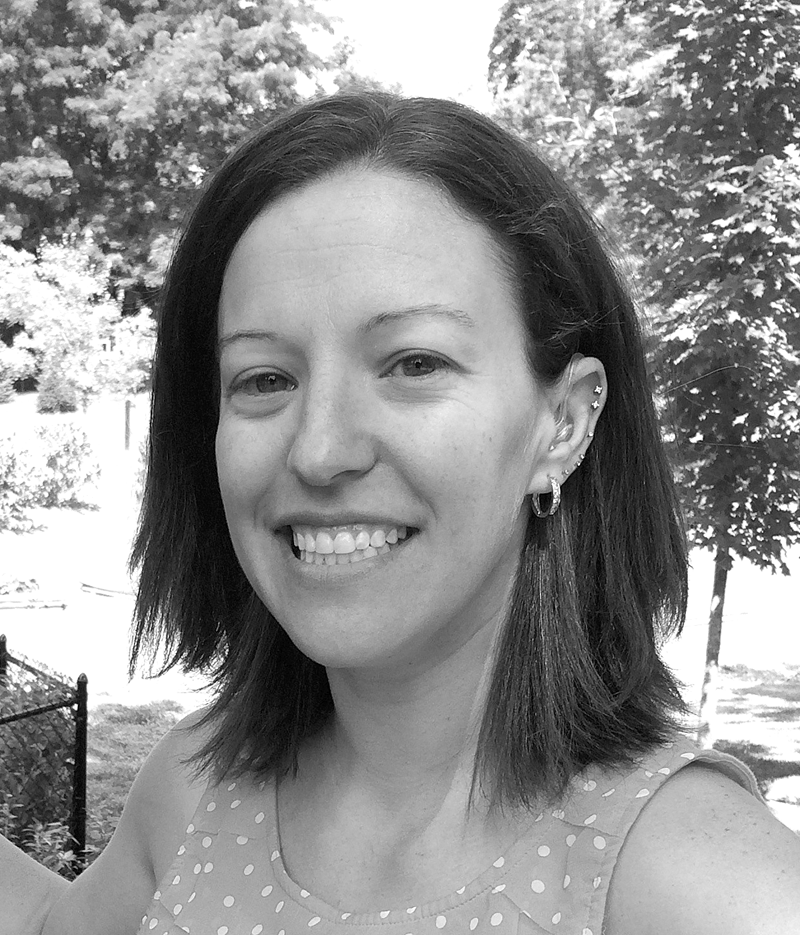
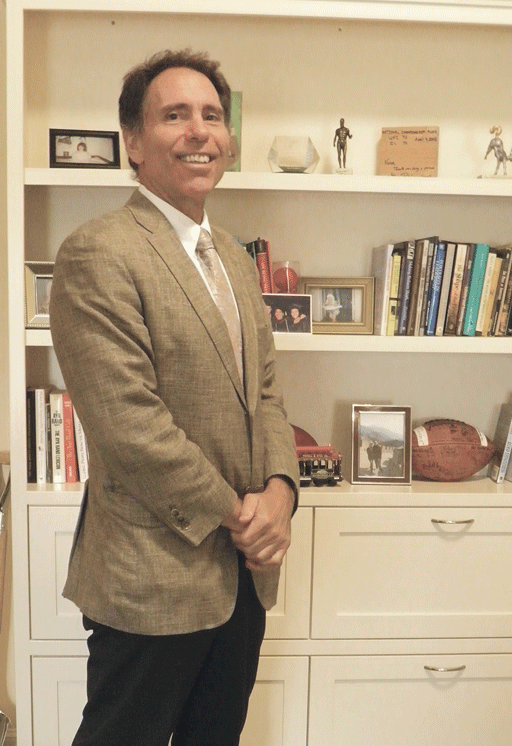
SPRINGFIELD — The Community Foundation of Western Massachusetts has appointed Janet Daisley vice president of programs effective immediately. Daisley reports to Katie Allan Zobel, president and CEO.

“Janet will provide leadership and strategic vision for the foundation’s grant-making programs and help with building capacity for the region’s nonprofit sector,” Zobel said.

In her new role, Daisley will be responsible for the team that distributes approximately $3.5 million each year in grants to 100 local nonprofits, and awards scholarships to more than 700 area students. Janet’s area is also responsible for continuing Valley Gives Day, which will happen on May 3, 2016.

“We are fortunate to have someone with Janet’s skills and broad experience to work with the foundation to continue to expand our presence in the Pioneer Valley,” said Liz Sillin, who chairs the foundation’s distribution committee, which oversees grant recommendations.

Daisley joined the foundation in September after serving as vice president of programs at VentureWell in Hadley, where she led the development, design, and management of a portfolio of programs focused on training young scientists seeking to launch ventures that improve life for people and the planet.

Prior to that, she was the director at Commonwealth Corp., where she oversaw a $17 million state contract to provide education and workforce training of youth in Massachusetts’ juvenile justice system.

Her experience also includes working on K-12 education policy issues for both the Massachusetts State Legislature and the Connecticut General Assembly. She has served as a volunteer on the boards of the Amherst Education Fund and the Performance Project. She also led an Amherst-based Girl Scout troop for 12 years. She holds a bachelor’s degree in political science from Colgate University and a master’s degree in public and international affairs from the University of Pittsburgh.

Opinion

Editorial

It is September, and by now, thousands of college students have returned to campuses across the region.

Thus, this is a good time to re-emphasize the importance of higher education to this region and its economy. The colleges and universities that call Western Mass. home generate thousands of jobs, purchase products and services from a number of locally based companies, and spur research that can be generated into companies that employ area residents.

But these schools provide another important resource for this region — the students themselves.

They also purchase goods and services, and therefore make an important contribution to the economy, but they play a potentially larger role by taking internships, co-ops, and part-time jobs with companies large and small across the four counties. In doing so, they provide skills, energy, ideas, and the perspective of a generation that will soon dominate the workforce and the consuming public.

It is important for area businesses to take full advantage of this resource — in a careful and thoughtful manner.

Indeed, interns and part-term employees can make valuable contributions to a company — while also positioning themselves for full-time employment later — if they are brought into situations that could be described with the phrase ‘win-win.’

And we encourage both area schools and the business community as a whole to generate more of these situations by creating opportunities for students and employers to meet one another.

Doing so will only benefit all the parties in this equation. But, as we said, it needs to be done properly.

Companies create problems for themselves when they look upon interns as a solution to workforce problems, budget concerns, or both. Too many companies have looked at pressing problems and loaded calendars and responded with the well-worn phrase, ‘let’s get some interns.’

These young people can’t, and should not, be expected to do the work of seasoned employees. Nor should they be thrust into situations where the demands exceed their skill levels.

But, as we said, when interns are placed in proper positions — ones where they contribute and learn — they can be invaluable assets and become future members of a workforce.

Young people can bring energy to a staff, but they can also bring a fresh perspective. Baby Boomers and those who came just behind them can’t look at the world from the perspective of a 21-year-old, but a college junior or senior can, and that kind of insight can be critical, especially in an age when rapidly advancing technology is changing the way people communicate, shop, get their news, market their companies, and gain the public’s attention.

Today’s young people are in many ways driving this change, and they understand it at least as well as those of us born decades before them.

Area colleges are back in session. That’s good for this region in a number of ways. One of the most important is the sum of the contributions students can make to area businesses, nonprofits, and governmental agencies.

This is a tremendous resource, one that should be recognized and capitalized upon.

Community Spotlight Features

Community Spotlight

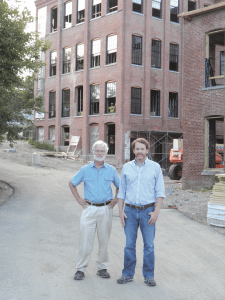
Andy Hogeland (left) and Hugh Daley

Andy Hogeland (left) and Hugh Daley say the conversion of the former Cable Mills into new apartments is an example of a public/private partnership that will add vitality to the town.

Williamstown is in the process of creating its first economic-development plan, and the Board of Selectmen, as well as key figures from major town institutions, are excited about its potential.

The Economic Development Committee, or EDC, was established in January, and members include Andy Hogeland and Hugh Daley from the select board, business owners, educators, and officials from Williams College and the Clark Art Institute, major employers in town.

“It’s a significant team effort, and I am delighted with the composition and dedication of our committee, as well as the fact that hundreds of people have shown up at public hearings to give us ideas,” Hogeland said.

Fred Puddester agrees. “It’s an important effort; we have a really good working group, and I know we will end up with a great product,” said the EDC member and vice president for Finance and Administration at Williams College.

The initiative came to life late last year after the selectmen identified priorities they wanted the committee to focus on. The most important is stimulating economic growth by attracting new businesses and residents, but it is tempered by an equally strong resolution to protect existing businesses and institutions as well as the town’s educational system, quality of life, and bucolic environment.

“The town is open to doing whatever we can to improve our vitality without losing our character; it’s something we’re all protective of,” Daley said. “But if the Clark is getting 150,000 visitors a year, the question is, how can we can get them to come to Spring Street to frequent our restaurants and businesses?”

In order to answer this and develop a comprehensive plan, the committee has been divided into three subdivisions with different functions:

• The best-practices group, which measures and evaluates findings about the town’s economic health and strategies for growth compared to congruent communities;
• The town-outreach group, which is focused on implementing communication between the team and residents, businesses, enterprises, and town officials; and
• The reporting group, which has developed an interim report and will create a draft and a final report to be presented to the selectmen in December.

Hogeland and Daley told BusinessWest that data compiled by the outreach subcommittee will weigh heavily in the final report. “We want to make sure we understand and incorporate what residents are looking for,” Daley said.

To that end, the committee has hosted two public forums, which included question-and-answer periods. “They were well-attended and turned into discussions about what kind of town people want this to be; values centered around culture, education, the quality of life we have, and our natural beauty,” Hogeland explained. “People said they like the town the way it is, but would enjoy it if it was a little more economically vibrant.”

The feedback was posted on the town’s website, and a survey with eight questions was included with every tax bill, which could be filled out online or on the questionnaire.

“We received 500 responses, which proved that people are actually interested in what we’re doing,” Daley said. “They included a wide range of suggestions, which points to excitement about our plan.”

Hogeland concurred. “Hundreds of ideas were submitted, and the concerns and ideas people expressed were not just about money and jobs, but about the quality of life and what it’s like to live here,” he said. “Some things were as simple as improving the town website, which we are in the process of doing. But it’s our job to distill all of the ideas and come up with a feasible, actionable focus.”

The outreach group also conducted a forum for the business community, and impediments to growth were identified and ideas were generated to help create a more robust economy.

Meetings of the entire committee are held twice a month, and key individuals present profiles of their work, along with updates on institutional and professional efforts relevant to economic development within the community.

Concrete Progress

Williams College, which has close ties to the town, recently kicked off a huge capital program, which benefits local businesses and tradespeople.

“We have a number of interesting projects underway, but the largest is the construction of our new science facilities,” Puddester said, noting that an addition will be put on an existing building and an old building will be torn down and replaced with a state-of-the-art science center. The cost estimate for the projects is $200 million.

The space for the addition contains two houses, and one that is in good condition will be relocated to a vacant lot this fall. “It’s a similar situation that occurred last year when we built a new dorm,” Puddester said, explaining that a house on the site was purchased by the owner of Guntlow Engineering, who moved it and is using the first floor for business and the second floor as apartments.

The college is also building a $15.5 million, 60-bed dormitory that will be used as swing space when renovations are needed on older dorms, and undertaking a $12.5 million renovation of an old fraternity house on Route 2.

“It’s a restoration of a fabulous building that will be used to house our admissions and financial-aid offices,” Puddester continued. “We’re also renovating the performance space in Chapin Hall, a $5.5 million project.”

In addition, an architect has been hired to design a new, two-story building downtown on Spring Street. The first floor will become a college bookstore with a children’s section, coffee bar, and space for poetry readings, book signings, and other events, while the second floor will contain office space.

The Log, located across the street, is also being restored with $4.5 million from alumni who cherish memories of the place that constituted a primary meeting ground for them before the new Student Center was built.

“It will become a fabulous gathering space for people in the community and will contain a restaurant and area for students to practice poetry readings or standup comedy,” Puddester said.

He added that the college has a terrific working relationship with the town and is doing all it can to help the EDC. The college supported the best-practices subcommittee by supplying it with two interns to collect and analyze data from 12 communities in New England, New York, and Ohio that were chosen for comparison and inspiration.

Economics Professor Stephen Sheppard, also a member of the EDC, is supervising the interns, and Daley said the data they collect will allow the committee to identify key characteristics of successful towns.

“We can bounce it against ideas we have generated and learn what works, then use those programs,” he noted. “We don’t have to reinvent the wheel.”

The town is already on the path to enhanced vitality, however, and construction is taking place in a number of arenas, including the Cable Mills buildings downtown, where Phase I of converting them into apartments is well underway.

A total of 61 units will be constructed during the first phase, and 13 will be dedicated to affordable housing, Hogeland said, adding that the $26 million project is a good example of how the town works with developers via public/private partnerships.

Daley concurred. “We used $1.525 million of Community Preservation Act funds for this because it supports affordable housing, historic preservation, and open space.

“The buildings were empty for over a decade and had started to deteriorate, but the new units will be extremely nice,” he continued. “They will have one to three bedrooms, and the adaptive reuse of the existing infrastructure will increase the economic vitality of Williamstown. When the buildings are filled with people again, it will change the surrounding area.”

Units in the new Highland Woods complex for low-income seniors, built on land donated by Williams College, will also be ready for occupancy this winter and will help replace affordable housing lost when Tropical Storm Irene flooded Spruces Mobile Home Park.

“It contained about 300 residents, many of whom were elderly, and we have done everything possible to make sure they have an opportunity to live here,” Daley said, adding that the town contributed $100,000 in Community Preservation Act funds, boosted by $2.6 million from a FEMA grant, to make the project possible.

“It’s an example of how we work to protect our citizens and shows the character of our town, which is one of the things residents want to preserve; everyone knew someone who lived in the Spruces,” he continued, noting that the project came about as a result of a partnership between the town and three nonprofit organizations.

Implementation Process

Officials on the EDC committee are dedicated to the project, and a draft of strategic priorities will be finalized in October.

“At that point, it will go out for public comment — there will be a lot of publicity, and we will host meetings so people can give us feedback,” Hogeland said, adding that modifications will be made after input is received.

The selectmen will receive the final document in December, which will include strategized priorities, an assessment of feasibility, and the projected impact of change, as well as recommendations about implementation.

“Williamstown has great things coming over the next few years; Williams College has kicked off a huge $278 million capital building plan, and the town has taken steps to deal with housing affordability for families and seniors,” Daley said. “And with the creation of an economic-development plan that focuses on increasing the vitality of our local economy without sacrificing the character of our town, Williamstown will continue to be a great place to live and invest.”

Williamstown at a glance

Year Incorporated: 1765
Population: 7,754 (2010)
Area: 46.87 square miles
County: Berkshire
Residential Tax Rate: $15.61
Commercial Tax Rate: $15.61
Median Household Income: $72,203 (2013)
Type of Government: Town Manager; Board of Selectmen
Largest Employers: Williams College, Steinerfilm, Town of Williamstown
* Latest information available

Sections Women in Businesss

The Art and Science of ‘Finding Out’

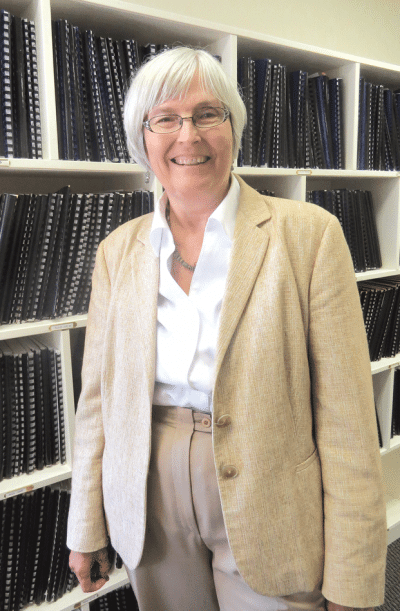
Julie Pokela

Julie Pokela

Much has changed since Julie Pokela and partner Nancy Mihevc decided to go into business doing market research nearly 40 years ago. One thing that hasn’t changed is the simple mission for the company now known as Market Street Research: finding answers for clients who need information to understand their audience and grow their business.

Julie Pokela says it was already shaping up to be a busy summer for Market Street Research (MSR), the firm she helped lay the groundwork for nearly 40 years ago. And then, some additional work start pouring in.

Funneled by the Wallace Foundation, started by the founders of Readers Digest, as part of an ongoing initiative concerning the arts, these projects involve several noted institutions — the Seattle Opera, the Pacific Northwest Ballet, and the New York-based Alvin Ailey American Dance Theater — that want some insight into how to grow their audiences.

A major focal point of these analyses will be the Millennial generation, members of which now statistically outnumber the Baby Boomers, said Pokela, and remain a point of fascination — and mystery — for businesses across all sectors.

“People are trying to figure out how to tap into this generation,” she said, adding that these arts-related projects will utilize focus groups and a host of other methodologies to gain some insight.

When asked to speculate on what these studies may reveal about the Millennials and their attitudes about the arts, Pokela thought for a second and said, “I don’t know … we’re going to find out.”

‘Finding out’ has been the simple two-word answer to the question of what this company does since Pokela and partner Nancy Mihevc joined together in a venture called the Research Group in 1978 (more on the company’s history later). They’ve been finding answers for clients ranging from political candidates to regional and national banks; from private colleges to major medical systems; from retail chains to nonprofit agencies.

The specific questions to which they’ve sought to find answers have varied, but the common denominator has essentially been market share and the universal goal of improving it.

Today, achieving that goal involves successfully marketing to and then serving several generations, each with distinct attitudes and preferences, said Pokela, adding that the Millennials are proving to be particularly challenging for many sectors.

“Banks are really interested in this subject,” she noted. “And we do a lot of work with independent schools and colleges to help them figure how they’re positioned among the students and parents looking at colleges — and how to grow their enrollment.”

Over the years, the size and composition of MSR’s client base has changed, said Pokela, noting that, in the ’80s, the company did considerable work with banks, and later put a heavy focus on healthcare, specifically hospitals and medical systems that wanted insight into what the public thought of the services they were providing.

While the company still serves both those sectors, its overall strength has been diversity, said Pokela, adding that this trait has enabled it to survive the many economic downturns over the past four decades.

The business itself has also evolved. Years ago, MSR employed those who would do the actual data collection for the research projects. Now, those services are outsourced, noted Pokela, adding that, while laying off dozens of employees constituted the most painful moment of her career, the resulting entity is smaller and more manageable, and enables her to spend the vast majority of her time doing what she likes most — research and interpreting what it means.

For this issue and its focus on women in business, BusinessWest talked at length with Pokela about her company, the intriguing world of research, and the art and science of ‘finding out.’

Answering the Call

Tracing the history of her company, Pokela said the intriguing story began when she was pursuing her doctorate in communication at UMass Amherst, studying under, among others, Mihevc, who taught political communication.

One of Mihevc’s other students at the time became involved with Ed McColgan’s campaign to unseat Congressman Silvio Conte, and she asked Mihevc to conduct some research for the candidate.

She agreed, and asked Pokela if she wanted to assist with the polling, which she did.

Those efforts didn’t succeed in getting McColgan elected — he triumphed in the Democratic primary, but was buried by Conte in November — but they did get the attention of other candidates, who recruited the two for similar polling.

“Eventually, a business person with one of the campaigns asked if we could do some market research for his company,” said Pokela, “and from there, an advertising agency asked if we could do marketing research for their clients.

“We got to the point where Nancy was coming up for tenure, and I was looking at finishing my Ph.D., and had to decide — do we want to start a company or continue with our expected lives of being academics?” she went on. “We decided that it wouldn’t hurt anything to start a company, so we did.”

Given a boost by some work they did for the Center for Human Development in Springfield, which received a grant to conduct a telephone survey on community attitudes toward foster parenting, the pair enjoyed success early on, working mostly on political campaigns and projects for ad agencies.

The recession of the early ’80s nearly took them out, though, said Pokela, adding that she and Mihevc turned to the Mass. Small Business Development Center and then-Director Merwin Tober for some assistance on how to position the company for growth and sustainability.

Tober came up with the idea of generating a recurring form of income — or several of them — rather than being solely what amounted to a job shop. And from that suggestion, the two partners eventually conceptualized something they would call the “Quarterly Bank Survey.”

As that name suggests, the initiative surveyed area residents on a quarterly basis about their banking habits and preferences, said Pokela, adding that most all area banks bought the reports.

“It ended up being a great product and a solid source of regular, predictable income — we did it for maybe 10 years,” she said, adding that this effective niche was substantially weakened by a wave of consolidation that swept over the industry in the late ’80s and other consequences of a deep and prolonged recession that took a severe toll on the financial-services sector.

But, while bolstering its portfolio with banks, the company — which became known as Market Street Research in 1986 after Pokela and Mihevc parted ways and the former joined forces with Elizabeth Denny — was doing the same with the healthcare industry.

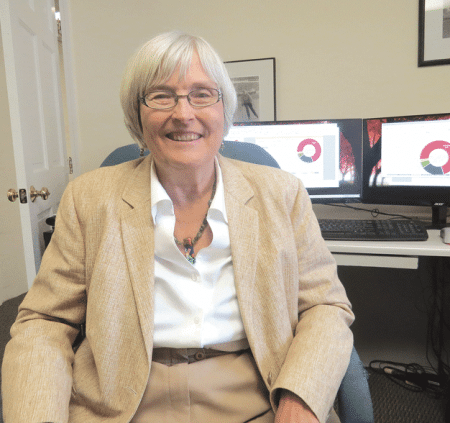
Julie Pokela says there are businesses

Julie Pokela says there are businesses across many sectors that want to know what the Millennials are thinking — and how they’re spending.

That remains the primary source of business today, accounting for roughly 70% of annual revenues, said Pokela, adding that now, as then, the industry relies on a steady flow of data concerning its services and how they are perceived.

The company started with a hospital survey similar to the one produced for banks, she said, adding that, by the late ’80s, most healthcare providers were ratcheting up their marketing efforts in response to changes within the industry, especially a shift from inpatient to outpatient care and the resulting increase in bed capacity.

“Length of stay was greatly reduced, and as a result, hospitals had all this excess capacity for inpatient beds,” Pokela explained. “So they started looking at the edges of their markets and saying, ‘where can we pick up more patients in areas that we haven’t traditionally looked at?’ So hospitals learned how to compete very quickly.”

Surveying the Landscape

This phenomenon has generated a steady source of revenue for the company ever since, she went on, noting that MSR has a number of prominent hospitals in its portfolio, including Mass General, NYU Langone Medical Center, the Cleveland Clinic, Dartmouth Hitchcock, and many others.

Most are steady, repeat customers that require in-depth marketing studies at least every two years, and often on a more frequent basis.

The nature of the work varies, but much of it comes down to two key issues in this sector and most all others — awareness and image.

“If you look at the process by which someone makes a decision to use any kind of organization, it starts with awareness — people are more likely to use an organization they’re aware of,” she explained. “So we track what their awareness levels are, and ask people, ‘when you think about hospitals in your area, which ones come to mind?’”

Overall, the company tailors its questions and surveys to meet the specific needs of clients and business sectors, and the ability to help companies in a host of industries has driven solid growth over the years and enabled MSR to weather the economic downturns in recent years.

The firm has clients in healthcare, financial services, the nonprofit arena, governmental agencies, retail, technology, manufacturing, and, especially this summer, the arts, which Pokela has identified as a potential source of growth for MSR.

In higher education, for example, the company has worked with a number of institutions, including Bryn Mawr College, Mount Holyoke College, Smith College, Western New England University, and UMass Amherst, with research focused on a number of areas, including:

• Satisfaction of faculty, staff, and students with the services the school provides;
• Effectiveness of communications, including marketing and promotional materials; and
• Satisfaction of alumni or alumnae regarding services for alumni and communication with their alma mater.

The company also works with private elementary and secondary schools and also public school systems and school boards, in matters ranging from attracting and retaining high-caliber students to communicating information and specific strengths to the community.

In retail, meanwhile, the company has provided services for national chains, mom-and-pop stores, and entities that fall in between. It helps those clients with everything from assessing awareness (there’s that word again) to customer satisfaction, site-location selection, market feasibility of new products, and more.

Increasingly, those in each sector want to know what the members of each generation are thinking and what they’re looking for in terms of products and services.

She joked that those in healthcare are not yet fascinated by the wants and needs of the Millennial generation — “young people don’t get sick” — but just about everyone else is, including those arts institutions that have recently become clients.

“They want to know how to get the next generation interested in the arts,” she explained. “They want to know how to get them interested not only in going to see these groups, but also interested in becoming subscribers and then eventually donors.

“At the focus groups I’ve been going to with people in their 20s and 30s who are going to the arts — they’re very passionate about it,” she went on. “That’s very exciting to see. The question is how to translate the passion exhibited by the people who are going, to the people who are not going.”

As for the answers to that question … the reports commissioned for those arts institutions should be completed by this fall, she went on, adding that there may be some answers there.

Poll Position

Looking ahead, Pokela said the company’s primary goal is to continue to log steady, manageable growth.

She believes it can continue to do so because, overall, it scores well in those areas for which it gauges results for its many customers — awareness, quality of service, and image. And, especially, because it continues to raise and clear the bar in that one realm for which it was formed, a service that has become both an art and science: finding out.

George O’Brien can be reached at [email protected]

Sections Sports & Leisure

Pioneer Volley

George Mulry

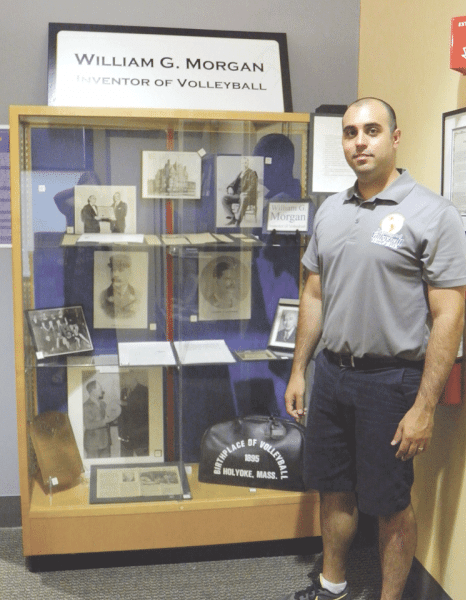
George Mulry stands in front of one of the many displays at the Volleyball Hall of Fame, which is seeing a rise in visitorship.

In 1895, William Morgan invented a game he called ‘mintonette’ for adult males at the Holyoke YMCA in hopes of retaining members who were leaving because they found another recently invented game, basketball, to be too violent.

“He was the Y’s physical-education director, and he created the sport so middle-aged businessmen would have something to do on their lunch break,” said George Mulry, executive director of the International Volleyball Hall of Fame in Holyoke. “The name of the game was changed to volleyball a year later by a professor at Springfield College, and today, it’s played by more than 880 million people. It is an international powerhouse sport, the second-most-popular game in the world, and one of the most popular at the Summer Olympics.”

Indeed, the game has come a long way since it began in a small gymnasium in Holyoke. It ranks as one of the top sports in nine countries, and the Fédération Internationale de Volleyball (FIVB) boasts 220 members, making it the largest sports federation in the world.

“I see more people smiling when they are playing volleyball than I do in any other sport; it’s a great game, and people at any level not only enjoy it, but appreciate the camaraderie it promotes,” said Charlie Diner, a member of the Hall’s board of directors. “Volleyball is a game that is fun.”

In many ways, the Hall of Fame created to honor the games, founder, legacy, and greatest players, coaches, and contributors has followed a somewhat similar path.

It started in a closet in Wistariahurst Museum, with some additional space in Holyoke City Hall for storage. It has moved a few times over the years, but has generally struggled to find adequate space and resources to properly tell the game’s intriguing story.

But the Hall has gained some much-needed momentum in recent years, building awareness, gaining visitorship, hosting more events, and adding new displays to capture the game’s progression and impact on society.

Visits to the museum are on the rise, and today, 4,000 to 5,000 guests embark on the self-guided tour inside the space each year. One thing they particularly enjoy is trying on the Gold Medal won by Maurico Lima at the 1992 Summer Olympics. The athlete was inducted in 2012 and donated the medal to the museum, along with other memorabilia.

“Many people pose for photos wearing it around their necks. It’s a popular thing to do,” Mulry said. “Donating items is a way for Hall of Famers to keep their legacy going.”

The nonprofit changed its name from the Holyoke Volleyball Hall of Fame to the International Volleyball Hall of Fame last year to reflect the fact that it has been inducting international players for some time. This will be the Hall’s 30th year holding the ceremonies, and so far, 125 inductees from 21 countries have been honored.

But the museum operates on a tight annual budget of $215,000. Mulry is the only full-time employee, and the museum relies heavily on fund-raisers, donations, and sponsors to keep it operational.

For this issue and its focus on sports and leisure, BusinessWest offers some quick history lessons on the sport of valleyball and a detailed look at how its shrine is scoring points as it strives to gain relevance and increase visitorship.

Spike in Interest

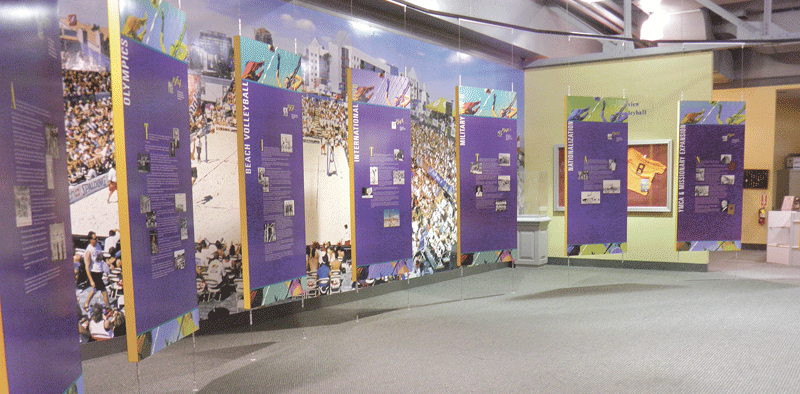
A display of large, colorful panels

A display of large, colorful panels with photos documents volleyball’s historical timeline.

Mulry told BusinessWest the Hall of Fame has always had close ties to Springfield College, a relationship that began when Morgan met James Naismith, who founded the game of basketball in 1891 while teaching at the International YMCA Training School (now Springfield College).

Morgan was on Northfield Mount Hermon’s football team, and after watching him play during a game at the college, Naismith successfully recruited the young athlete and brought him to Springfield College. “He had wanted to become an engineer, but abandoned those plans to teach physical education,” said Mulry.

After graduating, Morgan became director of physical education at the Holyoke YMCA and gave birth to his own game. “He borrowed from a lot of different sports to create it. He took the net from tennis, the ball from basketball, and the innings from baseball, which were used when the game was first played,” Mulry explained.

The game of mintonette received its new name after it was introduced to the public at a tournament at Springfield College that was held during a national conference for YMCA directors. “Professor Alfred Halsted decided volleyball was a more appropriate name because the players were volleying the ball across the net,” Mulry said. “After the demonstration, the game spread through the nation’s YMCAs, then was adopted by the military because the troops were looking for something to do that was not physically taxing.

“The YMCAs took the game to the Philippines and a few other countries, but the military introduced it to Europe and the rest of the world during World War I,” he went on, “and the level of play increased dramatically.”

The first national championship was held in 1922 at the Brooklyn YMCA, but the game was played on an almost a purely recreational basis through the early 1930s. However, a dramatic change occurred in April 1947, when representatives from 14 nations formed the FIVB and began recruiting teams from across the world to play in tournaments.

The first world championship for men was held in 1949, followed by the first world championship for women in 1952, and the game reached an even broader audience a dozen years later when it was introduced and played at the Tokyo Olympics by both men’s and women’s teams. Beach volleyball wasn’t added for another 32 years, however, and that inaugural Olympic competition took place in Atlanta.

Despite the game’s popularity, it wasn’t until the early ’70s that anyone proposed creating a museum to house memorabilia and recount the game’s history and the success of its players.

“At that time, the Greater Holyoke Chamber of Commerce was looking for ways to position the city and make it interesting to tourists,” Mulry noted, adding that, even though it established an ad hoc committee to promote the idea of Holyoke becoming home to a Volleyball Hall of Fame, the only thing it did was host an tournament for YMCA teams.

However, in 1978, the Holyoke Volleyball Hall of Fame was officially incorporated, and the first induction ceremony was held in 1985. But the organization still didn’t really have a home.

Points of Interest

“All it consisted of was a closet in Wistariahurst Museum and space in City Hall that was used to hold memorabilia,” Mulry said, adding that things changed in 1987, when the city of Holyoke gave the Hall an area in a building on Dwight Street to use free of charge. “The space was small, and the only things put on display were a few jerseys, nets, and uniforms,” Mulry said.

However, when the building was renovated a year later, the museum was given an area three times larger, which encompassed 4,500 square feet.

Mulry told BusinessWest it was only supposed to be a temporary home, and a capital campaign was launched with the goal of raising $27 million for a new building. “An architect was hired, and 15 possible sites were looked at before it became clear that it wasn’t feasible to raise that amount. So, the temporary space became our permanent home.”

Although a few exhibits were added at that time, the majority of displays, as well as the annual events the organization stages, have been developed over the last four years as officials take a proactive stance to attract new visitors and increase interest in the sport.

Their efforts were helped two years ago, when the museum received additional space in the building, which allowed them to move their archives there.

“We’re categorizing them, and we created a special exhibit titled ‘Volleyball in the Military,’ a 1964 Olympic exhibit, and we continue to put single artifacts on display,” Mulry said. “We also set an area aside for local events, and have hosted a lot of receptions over the past two years.”

Glass display cases

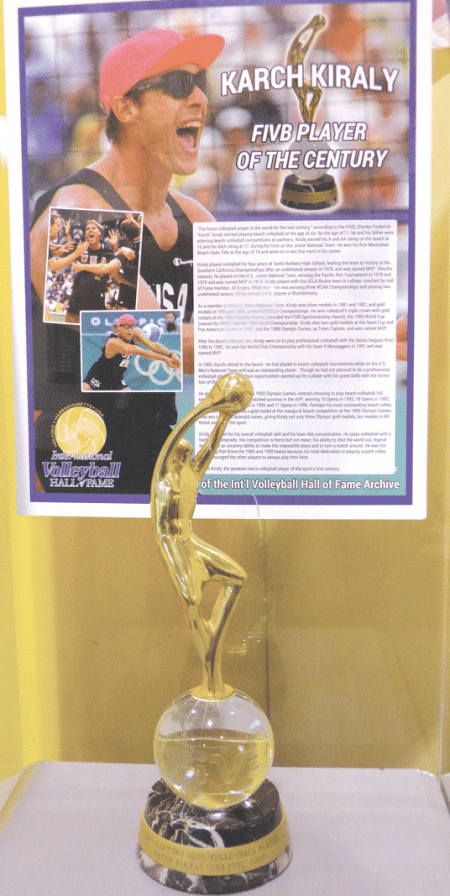
Glass display cases for current inductees house donated memorabilia, including photos, uniforms, medals, and other significant keepsakes.

Popular tournaments include the annual Police and Fire Challenge, which pits members of the New York City fire and police departments against teams composed up of emergency personnel from across New England. “There is a great rivalry between the Holyoke and Springfield teams,” Mulry said, adding that they are among many groups that participate.

During last year’s tournament, state Sen. Don Humason and state Rep. Aaron Vega unveiled a new exhibit titled “Humanity and Sports,” which was dedicated to two members of the New York City team who lost their lives in 9/11. “It has been one of our most well-received displays,” Mulry said.

In addition, the Hall of Fame began holding the Spalding Western Mass. Boys & Girls High School All-Star Games and the Massachusetts Boys & Girls High School All-State Games in Holyoke high schools four years ago, which include free clinics for players ages 10 to 12 throughout Western Mass.

To carry out these various programs, the Hall relies heavily on support from the community and, especially, Holyoke-based businesses and institutions.

“What we do would not be possible without the business community; they help offset our expenses, and we are certainly grateful for their help,” Mulry said, adding that the city of Holyoke, Holyoke Medical Center, and Holyoke Gas and Electric are major sponsors, while Dinn Brothers and the Dowd Agencies have been sponsors for more than a decade.

“They continue to make significant contributions and fund our induction ceremonies and events. PSI 91 is our newest sponsor, and we have many other local firms that support us,” he noted.

The organization also relies on an annual appeal, and donations are collected from 40 participating regions under the umbrella of USA Volleyball, which provides a dollar-for-dollar match, resulting in about $30,000 each year.

“They certainly see the value in having the museum on U.S. soil,” Mulry said, as he discussed how he and the 15 members of the board of directors are doing all they can to promote interest in the museum. “We’re working with the governing body of the Fédération Internationale de Volleyball to finalize an agreement that would make us the official repository for artifacts in the world. We expect make an announcement about it in October during the induction ceremony.”

That will allow the Hall to open its fund-raising to the 220 federations associated with the FIDV, and additional funds raised will be used to make improvements and update the displays.

Net Gains

“We’re the one true Volleyball Hall of Fame for the world, and anyone who is at all interested in the history of any sport should come here,” said Mulry. “We offer people a chance to see artifacts and learn about a sport that started out in Holyoke.”

Diner agreed. “We’re trying to expand awareness of the sport and its history to help grow the game, and this is a good place for community organizations to hold events. It’s steeped in Holyoke’s history,” he said.

It’s an intriguing history indeed, and it’s likely that Morgan could never have imagined that the simple game he created for aging businessmen would become a hugely popular sport played in nations throughout the world.

Meanwhile, the sport’s Hall of Fame still has considerable work to do to build its profile and visitorship, but it is making net gains — in many different respects.

Agenda Departments

Northampton Jazz Festival

Sept. 8-12: The 2015 Northampton Jazz Festival will begin Tuesday, Sept. 8 with a performance at the Northampton Jazz Workshop and various other performances during that week, culminating with the main-stage, all-day event on Saturday, Sept. 12. The main concert event will take place from 11 a.m. to 10 p.m. in downtown Northampton on Hampton Avenue, behind Thornes Marketplace. At Saturday’s signature performance, which is free and open to the public, featured performers will include the Gretchen Parlato & Lionel Loueke Duo, the Zaccai Curtis Latin Jazz Quartet featuring Ray Vega, the Edmar Casteneda Trio, Pete McGuinness, the Jeff Holmes Quartet, and the Franz Robert/Benny Woodard Trio featuring Conner Duke. Paul Arslanian, co-creative director of the Northampton Jazz Festival, said the lineup for this year’s main event is unique from that of previous years. “We’re featuring young, unique voices and artists who are exploring different avenues of jazz. We’re hoping to showcase a wide variety of jazz genres.” The week’s events begin Tuesday, Sept. 8 with a performance by tenor saxophonist Felipe Salles at the Northampton Jazz Workshop at the Loft at the Clarion Hotel, starting at 7:30 p.m. Saxophone students from UMass Amherst will be performing with Salles, along with the Green Street Trio. From Wednesday, Sept. 9 to Friday, Sept. 11, Downtown Struts are planned in Amherst, Easthampton, and Northampton, respectively. The struts will give music lovers a chance to explore many different venues in each town and hear local and regional jazz musicians perform. David Picchi, co-creative director of the Northampton Jazz Festival alongside Arslanian, said performers for the Amherst Downtown Strut on Wednesday, Sept. 9 are still being finalized. However, Free Range Cats will be one of the bands featured. On Thursday, Sept. 10, the Easthampton Downtown Strut, which will commence at 5:30 p.m., will feature the Pangeans in front of the Old Town Hall, the Nancy Janoson Trio at Galaxy, and the Carol Smith Trio at Nini’s Ristorante. The Northampton Downtown Strut on Friday, Sept. 11 will include seven additional bands, starting at 6 p.m.: Mtali Banda Oneness Project on the Northampton Court House lawn, the O-Tones at McLadden’s, the Claire Arenius Trio at One Bar & Grill, the Scott Mullett Trio at the Deck Bar, the Jeremy Turgeon Quartet at Ibiza Tapas Wine Bar, FlavaEvolution at Sierra Grille, and Mammal Dap at Bishop’s Lounge. The main performances on Saturday, Sept. 12 will kick off with the Jazz Futures Stage on the Hampshire Courthouse Lawn with student bands from six local schools: UMass Amherst, Amherst College, Holyoke Community College, Greenfield Community College, Pioneer Valley Performing Arts High School, and Northampton Community Music Center. The Saturday main-stage concert will be hosted by two notable emcees from New England Public Radio. Tom Reney, host of the radio show Jazz à la Mode, will announce the performers in the first half of the festival, followed by Kari Njiiri, host of Jazz Safari and a senior news reporter for NEPR. In addition, at least 10 food trucks will be on site to offer such fare as pizza, sausage, organic burgers, and ice cream throughout the day. The second annual Northampton Jazz Festival Home Brew Challenge will take place from 3 to 5 p.m.; regional home brewers will have an opportunity to put their brews to the test with guest tasters. For more information or to help sponsor the event, contact Yvonne Mendez at [email protected]. Jazz fans can get more information at www.njfest.org. Major sponsors include Baystate Urgent Care, TD Bank, North Coast Brewing Co., Thelonius Monk Institute of Jazz, UMass Fine Arts Center, Northampton Arts Council, MassLive, McLadden’s, Northampton Jazz Workshop, Silverscape Designs, Florence Bank, the Artisan Gallery, Hampshire Hospitality Group, the Clarion Hotel, 90+ Cellars, Delap Real Estate, Lia Auto Group, Log Cabin/Delaney, Thornes Marketplace, and Daury Wealth Management.

Diversity & Inclusion Interactive Workshop

Sept. 10: Exploring unconscious bias will be the topic for discussion at the 2015 Diversity & Inclusion Interactive Workshop, sponsored by Baystate Health, to be conducted Thursday, Sept. 10 at the MassMutual Center in Springfield. The event is open to the public. Participants can select either the morning session from 7:30 a.m. to 12:15 p.m. or a repeated session from 1 to 5:45 p.m. “At Baystate Health, we understand that diversity and inclusion are a business imperative. In alignment with our business and development goals, and in support of the community, we are pleased to offer hands-on education and best-practice workshops to the region’s diversity champions and leaders, including our own employees,” said Dr. Mark Keroack, president and CEO of Baystate Health. During the half-day interactive learning experience, skills will be gained in decision making, building inclusive teams and cultures, intercultural communications, and increasing employee engagement. Attendees will have an opportunity to better understand the science, research, and impact of unconscious bias; become aware of their own background and its impact on individual perceptions; explore functions of the unconscious mind and their impact in the workplace; apply new strategies for practicing more conscious awareness to concrete action steps; and recognize the business case for a reinvented approach to diversity and inclusion. Presenters include principal consultant and keynote speaker Rosalyn Taylor O’Neale, who will be joined by Armers Moncure, Joe Gerstandt, and Melanie Miller, all from Cook Ross, a premier diversity and inclusion consulting firm. Registration, which includes parking, is $150. To register, visit baystatehealth.org, then click “About Us,” then click “Diversity and Inclusion.” For more information, call (413) 794-7722.

Walk for Love Walkathon and Barbecue

Sept. 12: Come celebrate the 90th anniversary of Shriners Hospitals for Children in Springfield at the sixth annual Walk for Love Walkathon and Barbecue. This easy, three-mile walk begins at the hospital and continues through Van Horn Park and back to the hospital for a barbecue. The day of family fun includes Shrine clowns, Zoo on the Go, K-9s for Kids, face painting, a photo booth, music, food, and more. Registration begins at 9 a.m., and the walk begins at 10 a.m.The barbecue and entertainment run from 11 a.m. to 1:30 
p.m. The event will be held rain or shine. Registration fee for walkers and non-walkers alike is $25 per person,
$5 for children 12 and under, and $40 per family. A waiver must be signed to participate in the walkathon. No pets are allowed, except for service animals. Free parking will be available at the Boys and Girls Club located directly across from Shriners Hospital on Carew Street. All proceeds from this event benefit Shriners Hospitals for Children in Springfield. Register online at www.walkforlove.org. Forms will also be available on the day of the walk. For additional information, contact Lee Roberts, the hospital’s public relations specialist, at (413) 755-2307 or [email protected].

Dinner Forum on Business Decision Making

Sept. 16: The UMass Amherst Family Business Center will present a dinner forum from 5 to 8:30 p.m. at the Clarion Hotel and Conference Center in Northampton. The program is called “Effective Business Decision Making in the Fast-changing Environment of the 21st Century.” How many decisions do you make in the course of each business day? How often are they based on a gut feeling, versus measurable, relevant data? How accurate is your gut, and how well can you really tune into it? And how do you know which data is accurate, not to mention relevant? How can you be sure you’re considering all the consequences? Are you reaching for solutions that worked before, not sure they’re what is needed for more complex dilemmas? Are you influenced by biases you’re not even aware of? This presentation could help you, by exploring the practical aspects of the latest research on effective decision making and how family and closely held businesses are using it to create success. Presenters include Vana Nespor, chief learning officer and dean of Online and Adult Studies at Bay Path University, and Tom Loper, associate provost and dean of Bay Path’s graduate Business program. Call Ira Bryck, Family Business Center director, at (413) 545-4545 for more information.

Status Report on Casinos

Sept. 18: Stephen Crosby, Massachusetts Gaming Commission chair, will be the keynote speaker for the upcoming Greater Westfield Chamber of Commerce September Breakfast. His presentation is titled “A Status Report on Casinos in Massachusetts — and What is Unique About Them.” The breakfast will be hosted by the 104th Fighter Wing located at 175 Falcon Dr., Westfield. Baystate Noble Hospital is the platinum sponsor. The gold sponsor is United Bank, and the silver sponsors are Tighe & Bond and United Way of Pioneer Valley. The coffee-bar sponsor is Spherion Staffing. Registration begins at 7 a.m.; breakfast will be served at 7:20 a.m., and the program will end by 9 a.m. The cost is $25 for chamber members and $30 for non-members. Registration is mandatory for the breakfast, and a driver’s license is required for entry onto the ANG base. Contact Pam Bussell at (413) 568-1618 to reserve tickets or to donate a door prize, or e-mail [email protected].

‘Fall Back in Time’ at Holyoke Merry-Go-Round

Sept. 18: The Holyoke Merry-Go-Round, the prized carousel with a storied history that dates back to the early 1900s, announced a “Fall Back in Time” fund-raiser to remember the magic of Mountain Park, to be held at the carousel site, 221 Appleton St., from 6 to 10 p.m. Tickets are on sale now for the event, which will support the ongoing maintenance and operation of the ride. The Holyoke Merry-Go-Round — also known as Holyoke’s Happiness Machine — has delighted children and families since the 1920s, when it was featured at Mountain Park, an amusement park on the side of Mount Tom. The carousel arrived in Holyoke for the 1929 season and remained in Mountain Park until its closure in 1987. The fund-raiser will feature food and a cash bar prepared by the Log Cabin; live music including sax player Tom Tisdell, his musicians, and a banjo player; train rides to the mall and back provided by the Pioneer Valley Railroad; and carousel rides. Tickets are $45 per person or $400 for a table of 10. A grand raffle will also be held, with $8,000 in prizes: $5,000 for first place, $2,000 for second place, and $1,000 for third place. Raffle tickets are $100 each. Event and raffle tickets are available now at the Holyoke Merry-Go-Round concession or by calling Meghan O’Connor at (413) 427-7629 or Susan Leary at (413) 592-7573. For more information or to purchase tickets, call (413) 538-9838 or visit holyokemerrygoround.org.

Mutts & Mimosas

Sept. 20: Dakin Humane Society has been awarded a $7,500 grant from the Petco Foundation as the Top Dog sponsor of Dakin’s annual fund-raiser, Mutts & Mimosas. The brunch event will take place from 11 a.m. to 2 p.m. at Quonquont Farm & Orchard in Whately, rain or shine. Guests, who are encouraged to bring their dogs, can enjoy a make-your-own mimosa bar, live traditional Irish music, a raffle and silent auction, apple-picking, dog-walking trails, and other fun activities. The food will be catered by Seth Mias, and an optional dog meal is available for $10. Event attendees are asked to bring dry or canned cat food to support Dakin’s Pet Food Bank program. Tickets are $50 per person and can be ordered online at www.dakinhumane.org or by calling event manager Gina Ciprari at (413) 781-4000, ext. 136. According to Dakin Executive Director Leslie Harris, “Mutts & Mimosas has become a tradition among Dakin supporters and dog enthusiasts around the region, and we’re happy to know that they look forward to coming to this event with their dogs each year. With Petco Foundation’s support, we will be able to leverage other donations to Mutts & Mimosas and extend our services to more animals and their people.” Other sponsors for Mutts & Mimosas include Gage-Wiley & Co. Inc., Walter’s Propane, Sarah’s Pet Services, Rice Family Foundation, Five Star Building Corp., WHMP, WMAS, Western Mass News, MassLive.com, and Quonquont Farm & Orchard.

Get On Board!

Oct. 8: OnBoard, a Springfield-based nonprofit organization that matches qualified individuals and area boards of directors, is inviting local organizations and businesses to participate or become a sponsor in the “Get On Board!” event in October. The event, to be held from 5 to 7 p.m. at the Naismith Memorial Basketball Hall of Fame, will connect local organizations with individuals looking to increase their community involvement. OnBoard was founded in the mid-’90s by attorney Ellen Freyman of Shatz, Schwartz & Fentin, P.C. The group’s mission is to help organizations expand their governance diversity by enlisting women, people of color, and other under-represented populations to their boards of directors/trustees, committees, and advisory groups. OnBoard has been connecting qualified people in the Greater Springfield area with organizations seeking leadership that reflects the diversity of the region. “Our goal with ‘Get On Board!’ is to facilitate an introduction of new talent and organizations around Greater Springfield,” said Freyman. “Diversifying your board of directors by recruiting members of under-represented populations can provide you with insight into different ways to engage with the community at large. Our goal is to create new relationships for both the individuals and the organizations who will benefit from each other’s resources and experience.” The cost for organizations to register to participate in the event is $100 before Aug. 31 and $125 if submitted after Aug. 31. As a nonprofit organization itself, OnBoard relies on the support of local businesses in order to hold ‘Get On Board.’ A number of funding options are available to local businesses who are interested in contributing to the event, including a $500 community-partner sponsorship and a $1,000 general-sponsorship opportunity. To register or become a business sponsor, visit www.diversityonboard.org.

Williamstown Film Festival Presents Wind-Up Fest

Oct. 15-18: The annual Williamstown Film Festival (WFF), now in its 17th year, welcomes big changes with new faces, a new name, and new programming focus. Slated for Oct. 15-18, WFF Presents: Wind-Up Fest is a nonfiction festival with documentary film as its backbone. Other forms of nonfiction will be in conversation with documentaries, including long-form journalism, radio podcasts, photography, and social-practice art. The event’s new artistic director, Paul Sturtz, is also the co-director at the True/False Film Fest in Columbia, Mo., and its new managing director, Sandra Thomas, is the former executive director of Images Cinema in Williamstown. “Our aim is to provide a unique, distinctive event for North Adams and Williamstown while serving as a destination festival for lovers of nonfiction. We are living in a time when nonfiction storytelling is offering one of the most vital, urgent ways forward,” Sturtz said. The festival will be curated by Sturtz, who was selected (along with his True/False co-director David Wilson) as one of 40 people in the inaugural Indiewire Influencers list, described as “visionaries that are changing the course of film.” With the addition of Sturtz and return of Thomas, the board of directors announced the retirement of festival Executive Director Steve Lawson. The festival has offices in North Adams and Williamstown and can reached at [email protected] or (413) 458-9700.

51st Anniversary Noble Ball

Oct. 17: Baystate Noble Hospital is preparing for the 51st Anniversary Noble Ball co-chaired by the Queenin family: Kevin, Barbara, Jay, Janine, Jon and Lisa. “Magic of Motown – Motor City Review” will take place the MassMutual Center in Springfield. More than 800 guests are expected to attend the black-tie event, which will feature live entertainment, silent and live auctions, formal dinner, cocktails, dancing, and more. Since the first ball in 1959, the Hospital has used this signature event to raise money for operating funds, building improvements, equipment purchases, and more. Proceeds from this year’s ball will be added to last year’s funds and used to enhance Baystate Noble’s entrance and reception area to provide updated ADA (Americans with Disabilities Act) access. “Our goal is to make Baystate Noble easily accessible for all,” said Allison Gearing-Kalill, vice president of Community Development. For more information or to purchase tickets, visit www.baystatenoblehospital.org/ball or e-mail [email protected].

Western Mass. Business Expo

Nov. 4: Comcast Business will present the fifth annual Western Mass. Business Expo at the MassMutual Center in downtown Springfield, produced by BusinessWest and the Healthcare News in partnership with Go Graphix and Rider Productions. The business-to-business show will feature more than 100 booths, seminars and Show Floor Theater presentations, breakfast and lunch programs (the former featuring Harpoon Brewery CEO Dan Kenary as keynote speaker), and a day-capping Expo Social. Current sponsors include Comcast Business, presenting sponsor; Health New England, Johnson & Hill Staffing Services, MGM Springfield, and Wild Apple Design, director-level sponsors; the Isenberg School of Business at UMass Amherst, education sponsor; Elms College, information-center sponsor; and 94.7 WMAS, media sponsor. Additional sponsorship opportunities are available. Exhibitor spaces are also available; booth prices start at $750. For more information on sponsorships or booth purchase, call (413) 781-8600, ext. 100.

Daily News

SPRINGFIELD — The Springfield Preservation Trust’s City of Homes 2016 Calendar will be for sale at the 43rd annual Mattoon Street Arts Festival on Sept. 12 and 13.

Calendars cost $15 each and showcase 12 seasonal photographs of historic homes in Springfield. Proceeds help support the Springfield Preservation Trust’s (SPT) work promoting and advocating for historic places in Springfield.

The organization, known for its work preserving of the architectural heritage of Springfield, decided that creating a calendar featuring the historic homes of Springfield was a good way to promote local preservation, education, and advocacy efforts, while at the same time showcasing the character the city has to offer. This is the second year the SPT has produced such a calendar.

According to Tim Cummings, SPT calendar committee chair, “each month highlights an architectural style represented in Springfield and features a photograph of a property representative of that style. It was a great project which was more than a year in the making, and we had many more styles and properties to highlight than we had months of the year, making our job very difficult. The calendar committee, comprised of Marilyn Sutin and Denise Moccia, really got out there and tried to feature as many of the hidden gems of Springfield as possible.”

Following the Mattoon Street Arts Festival, the calendar will be available online at springfieldpreservation.org, at select Springfield retail outlets during the holiday season, and at upcoming SPT events, including the Cemetery Tour in October.

Daily News

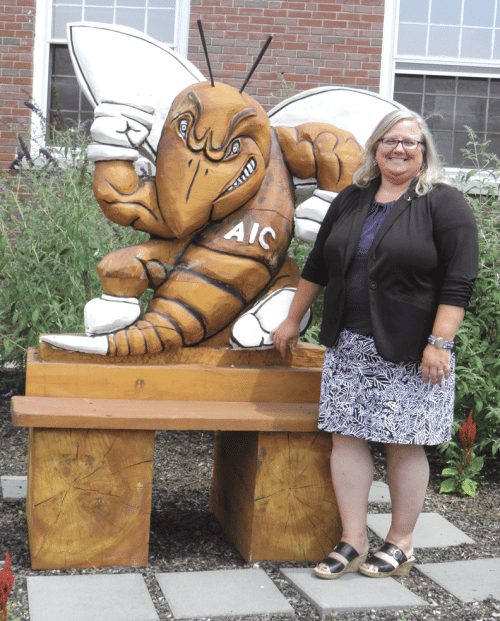
SPRINGFIELD — The Chronicle of Higher Education recently named American International College (AIC) one of the fastest-growing colleges in the U.S. for the fourth time. Among private, nonprofit master’s institutions, AIC placed among the top 20 colleges and universities in the country with a 131.5% growth rate, more than doubling its enrollment over a 10-year span, 2003 to 2013.

In categorical comparison to other colleges and universities in the Commonwealth, Worcester Polytechnic Institute ranked sixth among private, nonprofit, doctoral-degree institutions with a 69% growth, Bay Path University ranked 17th in private, baccalaureate institutions with 79.4% growth, and AIC ranked 18th in private, master’s institutions with 131.5% growth.

“We are extremely proud to have been recognized for our efforts,” said President Vincent Maniaci. “We’re very student-centric at AIC and believe that a college education is more than academic and intellectual growth. It includes personal, spiritual, and professional development, building a sense of community and trust between staff and students. These ideals, coupled with the college’s commitment to identify future trends as we develop programs, give our students a solid foundation on which they can build to reach their full potential, paving the way for them to compete successfully in a rapidly changing world.”

Data collected for the Chronicle of Higher Education was based on fall enrollments of full-time and part-time students and included all U.S. degree-granting programs with a minimum 500-student enrollment in 2003.

Daily News

BOSTON — In an effort to arm the next generation of doctors with the tools to curb the opioid epidemic, Gov. Charlie Baker recently met with the Mass. Medical Society (MMS) and deans from four medical schools to discuss opportunities for enhancing curriculum and establishing cross-institutional best practices in pain management and safe prescribing of opioids.

“The avenue prescription pain pills can provide to addiction and heroin use further stresses the need for advancing safe and responsible prescribing methods in the medical community,” Baker said. “I am proud that the leaders of the major medical schools here today are committed to working collaboratively with us and each other to review the existing curricula for medical students around safe prescribing and proper use in order to begin curbing this public-health epidemic.”

Providing doctors additional training on opioids was part of the comprehensive set of 65 recommendations released in June by the Governor’s Opioid Working Group.

“Massachusetts is home to the best medical care in the world. We are a national leader of cutting-edge diagnostics and innovative technologies to treat complex conditions,” said MMS President Dr. Dennis Dimitri. “With this collaboration by four major medical schools, we are again setting a new standard — this time for giving our young medical students and residents enhanced education to manage pain properly, while identifying addictive behaviors and getting patients into treatment when needed.”

The four medical institutions — UMass Medical School, Harvard Medical School, Boston University School of Medicine, and Tufts School of Medicine — instruct about 3,000 medical students per year. In the first meeting, attendees agreed to continue toward making recommendations regarding best practices, curricula enhancements, and opportunities for public/private, cross-institutional collaboration.

“Whether they aspire to be a primary-care doctor, emergency physician or a surgeon, participating in this type of training early on gets them thinking about the importance of pain management for their patients as well as the importance of choosing the right pain-management tool,” said Dr. Monica Bharel, commissioner of the state Department of Public Health.

Daily News

LONGMEADOW — A recent report published by the Chronicle of Higher Education recognizes Bay Path University as one of the fastest-growing colleges in the U.S.

The university ranked 17th on the Chronicle’s “Almanac of Higher Education 2015,” a top-20 list of the fastest-growing private baccalaureate institutions nationwide, with enrollment growth of nearly 80% over a 10-year span.

“This is the second year in a row that Bay Path has been recognized as one of the fastest-growing baccalaureate institutions in the country,” President Carol Leary said. “As the only women’s college on the top-20 list and one of only three New England colleges listed, it affirms our mission in providing academically relevant programs and the unique learning experience for undergraduate women of all ages.”

Data contained in the report are based on fall enrollment of full- and part-time graduate and undergraduate students from 2003 to 2013. The report included all U.S. degree-granting institutions with at least 500 students in 2003.

Daily News

HOLYOKE — Teenagers in Western Mass. now have another educational option. LightHouse Personalized Education for Teens opens its doors on Tuesday, Sept. 8 with an initial cohort of 30 students.

“We serve the most interesting teens in Hampden County — teens who have vision and goals for their futures, and are inspired to learn outside the box and spend their energies on projects they find engaging and meaningful,” said Co-director Catherine Gobron.

LightHouse is holding several open houses in September, including Friday, Sept. 4, 3-4 p.m.; and Thursday, Sept. 10, 3-4 p.m. See the whole list at lighthouseteens.org/open-houses.

Gobron was Program Director for North Star: Self-Directed Learning for Teens in Hadley for more than a decade, and has now opened LightHouse, an independent affiliate program to North Star, with Co-director Josiah Litant, who left his position as senior associate dean of Students at Hampshire College to launch LightHouse with Gobron.

“This last year has been a whirlwind, but it’s all come together,” said Litant. “Our brand-new facility in the STEAM building of Holyoke’s Innovation District is gorgeous, and we are especially excited about our Maker Space and Music Studio. It’s been very exciting to begin to get to know our new students. Our incoming teens and families understand that learning is something you do, and they are excited to start now.”

LightHouse is open to teens ages 13 to 18, focusing on optional pathways of entrepreneurship, arts, tech, and college prep.
To learn more, visit lighthouseteens.org.

Daily News

PITTSFIELD — Berkshire Community College’s (BCC) Office of Community Education & Workforce Development, in collaboration with Greylock Insurance Agency, will offer a new workshop, “Introduction to Insurance” (INS 21), starting in September.

The workshop, which will run on Tuesdays from 6 to 9 p.m. from Sept. 22 through Nov. 10, will explore the many diverse careers in the insurance industry, from IT to marketing.

Students will identify and describe the basic principles of insurance as well as how insurance jobs relate to one another, and will become familiar with the principles that underlie property and liability insurance. The course will also introduce students to insurance contracts, marketing, underwriting, claims adjustment, risk management, and general policy provisions.

The course, which will be taught by Sharon MacEachern, assistant vice president of Operations at Greylock Insurance, is made possible through Greylock Insurance Agency and its matching grant donation from Arbella Insurance Foundation. The cost per participant is $240 and includes all materials. Classes will be held in Melville Hall (Room 201) on BCC’s main campus in Pittsfield.

“Introduction to Insurance” is the first of three eight-week courses required to earn an AINS (associate in general insurance) designation. Participants who complete all three courses will also receive a certificate of completion from Berkshire Community College. To register, visit www.berkshirecc.edu/workshops or call (413) 236-2127.

Agenda Departments

Walk for Love Walkathon and Barbecue

Sept. 12: Come celebrate the 90th anniversary of Shriners Hospitals for Children in Springfield at the sixth annual Walk for Love Walkathon and Barbecue. This easy, three-mile walk begins at the hospital and continues through Van Horn Park and back to the hospital for a barbecue. The day of family fun includes Shrine clowns, Zoo on the Go, K-9s for Kids, face painting, a photo booth, music, food, and more. Registration begins at 9 a.m., and the walk begins at 10 a.m.The barbecue and entertainment run from 11 a.m. to 1:30 
p.m. The event will be held rain or shine. Registration fee for walkers and non-walkers alike is $25 per person,
$5 for children 12 and under, and $40 per family. A waiver must be signed to participate in the walkathon. No pets are allowed, except for service animals. Free parking will be available at the Boys and Girls Club located directly across from Shriners Hospital on Carew Street. All proceeds from this event benefit Shriners Hospitals for Children in Springfield. Register online at www.walkforlove.org. Forms will also be available on the day of the walk. For additional information, contact Lee Roberts, the hospital’s public relations specialist, at (413) 755-2307 or [email protected].

Dinner Forum on Business Decision Making

Sept. 16: The UMass Amherst Family Business Center will present a dinner forum from 5 to 8:30 p.m. at the Clarion Hotel and Conference Center in Northampton. The program is called “Effective Business Decision Making in the Fast-changing Environment of the 21st Century.” How many decisions do you make in the course of each business day? How often are they based on a gut feeling, versus measurable, relevant data? How accurate is your gut, and how well can you really tune into it? And how do you know which data is accurate, not to mention relevant? How can you be sure you’re considering all the consequences? Are you reaching for solutions that worked before, not sure they’re what is needed for more complex dilemmas? Are you influenced by biases you’re not even aware of? This presentation could help you, by exploring the practical aspects of the latest research on effective decision making and how family and closely held businesses are using it to create success. Presenters include Vana Nespor, chief learning officer and dean of Online and Adult Studies at Bay Path University, and Tom Loper, associate provost and dean of Bay Path’s graduate Business program. Call Ira Bryck, Family Business Center director, at (413) 545-4545 for more information.

‘Fall Back in Time’ at Holyoke Merry-Go-Round

Sept. 18: The Holyoke Merry-Go-Round, the prized carousel with a storied history that dates back to the early 1900s, announced a “Fall Back in Time” fund-raiser to remember the magic of Mountain Park, to be held at the carousel site, 221 Appleton St., from 6 to 10 p.m. Tickets are on sale now for the event, which will support the ongoing maintenance and operation of the ride. The Holyoke Merry-Go-Round — also known as Holyoke’s Happiness Machine — has delighted children and families since the 1920s, when it was featured at Mountain Park, an amusement park on the side of Mount Tom. “The merry-go-round plays a vital role in the history of Holyoke, and our residents should be proud of their efforts to preserve it,” said Angela Wright, executive director. “The Holyoke Merry-Go-Round is a nonprofit that is totally self-supporting and does not receive city, state, or federal funding to maintain its operation. We rely on our annual preservation fund, donations, and various fund-raising events to keep the carousel spinning.” The fund-raiser will feature food and a cash bar prepared by the Log Cabin; live music including sax player Tom Tisdell, his musicians, and a banjo player; train rides to the mall and back provided by the Pioneer Valley Railroad; and carousel rides. Tickets are $45 per person or $400 for a table of 10. A grand raffle will also be held, with $8,000 in prizes: $5,000 for first place, $2,000 for second place, and $1,000 for third place. Raffle tickets are $100 each. Event and raffle tickets are available now at the Holyoke Merry-Go-Round concession or by calling Meghan O’Connor at (413) 427-7629 or Susan Leary at (413) 592-7573. For more information or to purchase tickets, call (413) 538-9838 or visit holyokemerrygoround.org.

Mutts & Mimosas

Sept. 20: Dakin Humane Society has been awarded a $7,500 grant from the Petco Foundation as the Top Dog sponsor of Dakin’s annual fund-raiser, Mutts & Mimosas. The brunch event will take place from 11 a.m. to 2 p.m. at Quonquont Farm & Orchard in Whately, rain or shine. Guests, who are encouraged to bring their dogs, can enjoy a make-your-own mimosa bar, live traditional Irish music, a raffle and silent auction, apple-picking, dog-walking trails, and other fun activities. The food will be catered by Seth Mias, and an optional dog meal is available for $10. Event attendees are asked to bring dry or canned cat food to support Dakin’s Pet Food Bank program. Tickets are $50 per person and can be ordered online at www.dakinhumane.org or by calling event manager Gina Ciprari at (413) 781-4000, ext. 136. According to Dakin Executive Director Leslie Harris, “this generous grant from Petco Foundation will help us to produce an effective — and memorable — fund-raiser. Mutts & Mimosas has become a tradition among Dakin supporters and dog enthusiasts around the region, and we’re happy to know that they look forward to coming to this event with their dogs each year. With Petco Foundation’s support, we will be able to leverage other donations to Mutts & Mimosas and extend our services to more animals and their people.” The Petco Foundation has served as a voice for companion animals across the country since 1999. Today, with more than 8,000 local animal welfare partners across the country, the foundation donates approximately $15 million a year to make a difference in the lives of millions of animals. Money raised helps fund animal-welfare organizations, spay-and-neuter efforts, animal-assisted therapy programs, and humane education. The majority of the funds raised remain in the communities where they were raised, as well as benefiting animal-welfare efforts nationwide. Other sponsors for Mutts & Mimosas include Gage-Wiley & Co. Inc., Walter’s Propane, Sarah’s Pet Services, Rice Family Foundation, Five Star Building Corp., WHMP, WMAS, Western Mass News, MassLive.com, and Quonquont Farm & Orchard.

Get On Board!

Oct. 8: OnBoard, a Springfield-based nonprofit organization that matches qualified individuals and area boards of directors, is inviting local organizations and businesses to participate or become a sponsor in the “Get On Board!” event in October. The event, to be held from 5 to 7 p.m. at the Naismith Memorial Basketball Hall of Fame, will connect local organizations with individuals looking to increase their community involvement. OnBoard was founded in the mid-’90s by attorney Ellen Freyman of Shatz, Schwartz & Fentin, P.C. The group’s mission is to help organizations expand their governance diversity by enlisting women, people of color, and other under-represented populations to their boards of directors/trustees, committees, and advisory groups. OnBoard has been connecting qualified people in the Greater Springfield area with organizations seeking leadership that reflects the diversity of the region. “Our goal with ‘Get On Board!’ is to facilitate an introduction of new talent and organizations around Greater Springfield,” said Freyman. “Diversifying your board of directors by recruiting members of under-represented populations can provide you with insight into different ways to engage with the community at large. Our goal is to create new relationships for both the individuals and the organizations who will benefit from each other’s resources and experience.” The cost for organizations to register to participate in the event is $100 before Aug. 31 and $125 if submitted after Aug. 31. As a nonprofit organization itself, OnBoard relies on the support of local businesses in order to hold ‘Get On Board.’ A number of funding options are available to local businesses who are interested in contributing to the event, including a $500 community-partner sponsorship and a $1,000 general-sponsorship opportunity. To register or become a business sponsor, visit www.diversityonboard.org.

Williamstown Film Festival Presents Wind-Up Fest

Oct. 15-18: The annual Williamstown Film Festival (WFF), now in its 17th year, welcomes big changes with new faces, a new name, and new programming focus. Slated for Oct. 15-18, WFF Presents: Wind-Up Fest is a nonfiction festival with documentary film as its backbone. Other forms of nonfiction will be in conversation with documentaries, including long-form journalism, radio podcasts, photography, and social-practice art. The event’s new artistic director, Paul Sturtz, is also the co-director at the True/False Film Fest in Columbia, Mo., and its new managing director, Sandra Thomas, is the former executive director of Images Cinema in Williamstown. “Our aim is to provide a unique, distinctive event for North Adams and Williamstown while serving as a destination festival for lovers of nonfiction. We are living in a time when nonfiction storytelling is offering one of the most vital, urgent ways forward,” Sturtz said. The festival will be curated by Sturtz, who was selected (along with his True/False co-director David Wilson) as one of 40 people in the inaugural Indiewire Influencers list, described as “visionaries that are changing the course of film.” “I’m excited to work with Paul to make his creative vision a reality,” said Thomas. “Working in partnership with the community, engaging a broad audience, and strengthening the festival’s presence are all important elements of the fest.” With the addition of Sturtz and return of Thomas, the board of directors announced the retirement of festival Executive Director Steve Lawson. “It’s been an exhilarating ride, but after 15 seasons as executive director, I felt it was time to pass the torch,” said Lawson. The festival has offices in North Adams and Williamstown and can reached at [email protected] or (413) 458-9700.

Noble Ball

Oct. 17: Baystate Noble Hospital is preparing for the 51st Anniversary Noble Ball co-chaired by the Queenin family: Kevin, Barbara, Jay, Janine, Jon and Lisa. “Magic of Motown – Motor City Review” will take place the MassMutual Center in Springfield. More than 800 guests are expected to attend the black-tie event, which will feature live entertainment, silent and live auctions, formal dinner, cocktails, dancing, and more. Since the first ball in 1959, the Hospital has used this signature event to raise money for operating funds, building improvements, equipment purchases, and more. Proceeds from this year’s ball will be added to last year’s funds and used to enhance Baystate Noble’s entrance and reception area to provide updated ADA (Americans with Disabilities Act) access. “Our goal is to make Baystate Noble easily accessible for all,” said Allison Gearing-Kalill, vice president of Community Development. For more information or to purchase tickets, visit www.baystatenoblehospital.org/ball or e-mail [email protected].

Western Mass. Business Expo

Nov. 4: Comcast Business will present the fifth annual Western Mass. Business Expo at the MassMutual Center in downtown Springfield, produced by BusinessWest and the Healthcare News in partnership with Go Graphix and Rider Productions. The business-to-business show will feature more than 100 booths, seminars and Show Floor Theater presentations, breakfast and lunch programs (the former featuring Harpoon Brewery CEO Dan Kenary as keynote speaker), and a day-capping Expo Social. Current sponsors include Comcast Business, presenting sponsor; Health New England, Johnson & Hill Staffing Services, MGM Springfield, and Wild Apple Design, director-level sponsors; the Isenberg School of Business at UMass Amherst, education sponsor; Elms College, information-center sponsor; and 94.7 WMAS, media sponsor. Additional sponsorship opportunities are available. Exhibitor spaces are also available; booth prices start at $750. For more information on sponsorships or booth purchase, call (413) 781-8600, ext. 100.

Daily News

SPRINGFIELD — Springfield College Assistant Professor of Research and Statistics Elizabeth Mullin has been awarded a one-year grant by the Assoc. for Applied Sport Psychology (AASP) for her research in developing the “Heterosexist Attitudes in Sport — Gay Male scale.” Funding will assist in the development of a questionnaire that will include national and regional samples from NCAA male athletes.
Grants from the AASP are intended to provide support to professionals and students for their research endeavors. Preference is given to proposals that integrate research and practice, are submitted by early professionals or students, and require money to conduct a worthy project and no other funding is available.

“I want to thank the AASP and Springfield College director of Grants and Sponsored Research Linda Marston for their help in receiving this grant,” said Mullin, who earned a master’s degree in sport and exercise psychology in 2008 and a PhD in sport and exercise psychology in 2011, from Springfield College. “The research conducted will produce real stats and results that can be utilized in the classroom and on the field at Springfield College.”

Mullin has been recognized by her peers for her exemplary teaching abilities, her multiple presentations and published works in physical and health education, and her outstanding administration and strong leadership roles within the Society of Health and Physical Educators (SHAPE) America. Mullin received the 2015 Mabel Lee Award during the recent annual SHAPE America National Conference in Seattle. The Mabel Lee Award recognizes members of SHAPE America who have demonstrated outstanding potential in scholarship, teaching, and professional leadership.

Mullin recently served as the Research Committee chair for the SHAPE America Eastern District Conference hosted at the Springfield Sheraton Hotel in February 2015. More than 40 combined Springfield College faculty members, students, and alumni accounted for more than 25% of the presentations at the Eastern District Conference.

Features

Save the Date

WMBExpo 2015 LOGO

The Western Mass. Expo, set for Nov. 4 at the MassMutual Center, will be the fifth produced by BusinessWest.

The first four have constituted what Kate Campiti, the magazine’s associate publisher, described as both an effective way for BusinessWest to expand its mission, and an intriguing learning experience on a number of levels.

Regarding the former, she said the show has become another way in which the magazine has moved beyond the printed word to serve the region’s evolving business community. As for the latter, she said that phrase ‘learning experience’ applies not only to the art and science of event planning and execution, but also, quite literally, to understanding more about the players and issues shaping the scene locally.

“Over the first four years, we’ve learned not only what area business owners and managers want and expect from the year’s biggest business-to-business event,” she noted, “but also about how quickly and profoundly the world of business — and this region — are changing, and how people have to be diligent to avoid being left behind.”

Lessons from those first four years will be applied to the fifth show, she went on, adding that organizers are still putting together pieces to the show, and those basic goals of informing attendees and helping participating businesses become better able to compete will shape the day’s schedule of events and programs.

Several components of the roster of offerings are known — from the return of the Pitch Contest staged by Valley Venture Mentors to demonstrations featuring participants in a robotics program at Pathfinder Regional High School, to seminars on a wide range of topical issues — and others will come together over the next few weeks, said Campiti, adding that details and updates can be found at wmbexpo.com.

Fast Facts

What: The Western Mass. Business Expo
When: Nov. 4
Where: The MassMutual Center, Springfield
Events and Activities: Breakfast hosted by the ACCGS; lunch hosted by the Professional Women’s Chamber; Show Floor Theater presentations; informational seminars; Pitch Contest; matchmaking opportunities; and more.
Exhibitor Information: Booth sizes and rates are: 20×20 showcase unfurnished: $2,250; 20×20 showcase furnished: $2,400; 10×20 double unfurnished: $1,250; 10×20 double furnished: $1,350; 10×10 corner unfurnished: $850; 10×10 corner furnished: $925; 10×10 standard unfurnished: $750; 10×10 standard furnished: $825.
For More Information: Call (413) 781-8600, or visit www.wmbexpo.com


The expo will again be presented by Comcast Business, which has been the show’s lead sponsor since BusinessWest began producing it in 2011. Director-level sponsors are Health New England, Johnson & Hill Staffing Services, MGM Springfield, and Wild Apple Design. The Isenberg School of Management at UMass Amherst is the education sponsor, 94.7 WMAS is the media sponsor, and Elms College is the information-center sponsor.

The day-long Expo will kick off with a breakfast hosted by the Affiliated Chambers of Commerce of Greater Springfield (featuring keynote speaker Dan Kenary, CEO of Harpoon Brewery) and conclude with the Expo Social, one of the year’s most popular networking events. In between will be a lunch hosted by the Professional Women’s Chamber, more than 150 exhibitors, opportunities for ‘matchmaking,’ and myriad chances to network, learn and gain exposure.

The learning component has been an important part of the Expo since the beginning, she went on, adding that this year’s edition will no exception. The seminar’s tracks — sales & marketing, workforce development, and ‘hottest trends’ — speak to what’s happening in business today and also to a desire by Expo organizers to provide attendees and exhibitors with insight they can take back to their offices and plants the next day.

“Today, the biggest issue facing business owners and managers is their workforce,” said Campiti. “People want to know how to put a great team together, how to keep together, how to identify talent, and how to cultivate talent, and we’ll be putting together a track of seminars that will help them do all that and more.

“Meanwhile, two of the biggest challenges remain marketing your business and selling your products and services,” she went on. “And in many respects, the landscape is changing in both realms.”

Sponsorship opportunities are still available, said Campiti, with many forms of exposure provided for those who attach their names to the show. Those interested in exhibiting should call (413) 781-8600 or visit www.wmbexpo.com.

Company Notebook Departments

Paragus IT Acquires Applied Software Technologies

HADLEY — Paragus IT has continued its pattern of active growth with its first acquisition: West Springfield-based Applied Software Technologies. Prior to the acquisition, AST provided IT services to businesses in the region and beyond for more than 20 years. “We are very happy to welcome the staff and clients of Applied Software Technologies into the Paragus family,” said Paragus CEO Delcie Bean. “They are a great company, and we’re excited that we will be able to give their clients the opportunity to maintain their relationships with the people they know while also having access to the resources we are able to offer as the largest IT provider in Western Massachusetts.” The acquisition of AST is the latest in a strong trend of growth for Paragus. Since Bean founded the company at age 13, Paragus has grown from a one-man operation to a regional leader in business computer service, consulting, and information-technology support. Inc. Magazine has ranked Paragus as one of the fastest-growing privately held companies in the U.S. for four years running. With a 650% growth rate over seven years, Paragus is the second-fastest-growing outsourced IT firm in New England. “We have every intention of acquiring more businesses as we continue to expand our market and services, but it has to be the right deal,” Bean noted. “What matters to us is that the customers, both our current ones and the ones being acquired, are always benefited by the transaction. We refuse to compromise on quality and service. Second-best just isn’t good enough.”

Dave’s Soda and Pet City Highlighted by National Retail Federation

AGAWAM — The National Retail Federation’s ‘Retail Across America’ team recently stopped by Dave’s Soda and Pet City in Agawam to film for NRF’s Retail Across America campaign. They talked with Dave Ratner, who has been involved with the organization for many years, about his work advocating for Massachusetts retail stores on Capitol Hill. According to the NRF, Bay State retailers support 920,000 jobs, and retail contributes nearly $58 billion to the state’s economy. A film crew spoke with Dave’s employees about their jobs — their favorite part of their job, what their typical day involves, etc. The footage will be used to put together a glimpse into surprising jobs in retail. Retail Across America is part of the NRF’s award-winning “This is Retail” campaign, which brings together retailers, universities, and students with state retail associates, legislators, and opinion leaders. The NRF launched the program to highlight life-long careers, how retailers strengthen communities, and the critical role that retail plays in driving innovation. Dave’s Soda and Pet City is one of two businesses chosen to represent Western Mass. retailers on NRF’s road trip through four New England states. Dave’s Soda and Pet City is a mini-chain of seven superstores with more than 100 employees.

TommyCar Auto Group Donates Used Vehicle for Fire-rescue Training

NORTHAMPTON — Country Hyundai and Northampton Volkswagen recently provided a used vehicle to the Northampton Fire Department for rescue training. Firefighters spend countless hours training and honing their skills to ensure they are prepared for any emergency. The vehicle will be put to work in upcoming training exercises in which firefighters will utilize their extrication equipment on the vehicles, also known as the Hurst Tool or the Jaws of Life. “Ensuring firefighters have the latest training is critical to the safety of this community,” said Carla Cosenzi, president of Country Hyundai and Northampton Volkswagen, two dealerships in the TommyCar Auto Group chain. “We’re proud to be able to help in such a meaningful way, knowing so many people will ultimately benefit.” Added Bill Schuetze, captain and training officer for the Northampton Fire Department, “we really want to thank Country Hyundai and Northampton Volkswagen for the generous contribution. We will get a lot of use out of this car to train our firefighters on rescue efforts.” Country Hyundai and Northampton Volkswagen hope to have an ongoing relationship with the Northampton Fire Department and be able to offer more vehicles in the future.

Monson Savings Bank Announces New ‘Back to Banking’ Program

MONSON — As part of its ongoing efforts to improve financial literacy and capability, Monson Savings Bank (MSB) has introduced Fresh Start Checking accounts. These accounts are designed for people who might not otherwise be able to open a bank account based on their prior banking history. At the same time, MSB understands that life happens, and there are times when maintaining financial soundness may be difficult. Through the use of the Fresh Start Checking account, the “Back to Banking” program is designed to educate customers on money management, how to maintain accounts in good standing, and work toward paying off any unpaid account balances at other banks. As part of the program, free education materials are provided to customers through the National Endowment for Financial Education. The education modules include “Money Management — Control your Cash Flow,” “Borrowing — Use, Don’t Abuse,” “Earning Power — More Than a Paycheck,” Investing — Money Working for You,” “Financial Services — Care for Your Cash,” and “Insurance — Protect What You Have.” Another benefit of this program is a pay-as-you-bank option, which is designed to help customers pay down prior financial debts. With a companion savings account, funds can be set up to automatically transfer from checking to savings on a weekly, biweekly, or monthly basis. According to President and CEO Steve Lowell, “at Monson Savings Bank, we have become increasingly concerned about financial literacy and the fact that many people lack the money-management knowledge and skills they need to ensure long-term stability for themselves. Our new “Back to Banking” program is another way in which we help individuals within our communities become more financially secure.”

GZA GeoEnvironmental Awards Grant to Gardening the Community

SPRINGFIELD — GZA GeoEnvironmental Inc., a leading environmental and geotechnical engineering consulting firm, has awarded a $2,500 Shareholder’s Grant to Gardening the Community (GTC) in Springfield, based on an application from Anja Ryan Duffy, a professional landscape architect in the Springfield office of GZA. GZA bestows four roughly $2,500 grants each year to organizations whose specific programs would best benefit from the award. The Shareholder’s Grant program was established to support employee volunteerism and charity work in the firm’s communities and throughout the world. Duffy proposed Gardening the Community as a recipient of the GZA Shareholder’s Grant to assist in the development of the organization’s new Walnut Street site, a project for which she has volunteered her landscape-architecture services. Gardening the Community is a food-justice organization engaged in youth development, urban agriculture, and sustainable living to build healthy and equitable communities. In her grant application, Duffy said the Walnut Street project location is a 0.6-acre abandoned lot which “for decades has been an eyesore and served as an illegal dumping ground.” GTC purchased the site in July 2014 with the vision of transforming it into a “vibrant, green space which would also help feed the neighborhood and provide service and leadership opportunities for local youth.” The GZA Shareholder’s Grant will help fund the placement of fencing and perimeter plantings along the Walnut Street site. Duffy has been with GZA for nearly eight years. Her areas of specialization include site design, planting design, low-impact development, and graphics. A graduate of UMass Amherst with a bachelor’s degree in landscape architecture, she is an avid gardener and started a community garden in her former apartment complex.

Kingdom Master Jewelers Opens in Holyoke

HOLYOKE — Kingdom Master Jewelers, is a family-run business operated by Gabriel Serrano and Idoel Ortiz Jr., opened its doors today at 2020 Northampton St. in Holyoke. Previously a Hadley-based business since 2012, Serrano and Ortiz have become specialists in buying precious metals such as gold, diamonds, and silver, and have more tham 25 years of experience in custom-making one-of-a-kind pieces of jewelry. Kingdom Master Jewelers formally ran jewelry gallery repair shops for Kay, Hannoush, Jared, and many other jewelers in the area.

Departments People on the Move

Douglas Bowen

Douglas Bowen

Thomas Senecal

Thomas Senecal

The PeoplesBank board of directors announced that bank President and CEO Douglas Bowen will retire in July 2016, to be succeeded by Thomas Senecal, currently Executive Vice President and Chief Operating Officer. The board’s leadership-succession plan calls for Senecal to become president at the bank’s annual meeting in February 2016. Bowen will become chairman and CEO at that time. Senecal will be named president and CEO in July 2016 upon Bowen’s retirement. During this transition period, Bowen will remain active in his position and the bank’s management and strategy implementation. Bowen joined PeoplesBank in August 1975 as a teller in the management-development program. He has since worked in almost every department at the bank. In 1986, he started the Commercial Lending department and, in 2002, was named executive vice president and chief lending officer. He was named president and CEO in 2007 and, since that time, has led the bank to its current position in the market, with more than $2 billion in assets and a substantial track record of innovation, community support, environmental sustainability, and employee engagement. Under Bowen’s tenure, PeoplesBank opened six branches, three of which are LEED-certified; has financed more than $80 million in sustainable-energy projects; and has been named a “Top Place to Work” by the Boston Globe three years in a row. The bank was also named a “Top Charitable Contributor” by the Boston Business Journal seven years in a row. The American Bankers Assoc. gave PeoplesBank a Community Commitment Award for its environmental-sustainability efforts in 2013. The Boston Globe also named Bowen a “Globe 100 Innovator” in 2011. In 2009, BusinessWest named Bowen one of its first Difference Makers. Meanwhile, Senecal possesses more than 25 years of progressive financial experience. In his current position, he has managed all accounting, financial reporting, and treasury and facility operations. He has overseen asset growth of the bank from $460 million to $2 billion in 2015. In addition to Senecal’s responsibility for the Finance department, as the COO, he will oversee the Retail, Operations, Internal Control, and Risk Oversight functions. Early next year, he will also be responsible for the Commercial and Consumer Lending, Cash Management, and Human Resources functions. Senecal holds a bachelor’s degree in business administration from UMass Amherst. He also attended the Tuck Executive Program at Dartmouth College. He is a certified public accountant and a U.S. Coast Guard veteran. He currently serves on the boards of directors of Holyoke Community College, where he is chair of the investment committee; Loomis Communities Inc.; and the Hampshire Regional Chamber of Commerce. He also serves on the advisory council of the Isenberg School of Management at UMass Amherst, and is a member of the Federal Home Loan Bank – Boston advisory panel. “Under his leadership, I am confident that our customers, our staff, and our future are in very capable hands,” said Bowen, making a statement on behalf of the bank’s board of directors. “Tom and I believe in our bank’s mutual charter. We will remain a mutual bank going forward — committed to helping our customers achieve financial success and to serving the community. It is our mutual charter that powers our values. It is also the structure that allows us to invest in innovation, to contribute to nonprofit and civic causes, to support environmental sustainability, and, perhaps most important of all, to help our associates grow and succeed. Our mutual charter has served us well for 130 years, and it is the key to our future as well.”
•••••

Carla DiLoreto

Carla DiLoreto

Greg Musante

Greg Musante

Christopher Fager

Christopher Fager

Sean Millane

Sean Millane

Jeffrey Lomma

Jeffrey Lomma

James Hagan, president and CEO of Westfield Bank, announced several recent changes to the bank’s retail and commercial banking staffs:
• Carla DiLoreto has joined the bank as Manager of the Enfield, Conn. office. DiLoreto has nearly 10 years of retail banking experience. Prior to joining Westfield Bank, she was Banking Center manager of the Somers, Conn. office of Webster Bank. While serving there, she was inducted in the Somers Women’s Club, where she helped raise money for its scholarship and charitable-giving programs;
• Greg Musante has been hired as Assistant Branch Manager and Business Specialist in the Holyoke office. Musante has 15 years of banking experience in commercial and mortgage lending. Most recently, he was mortgage bank officer at Webster Bank and also held the positions of cash management analyst and business specialist at Bank of America. A graduate of Greenfield Community College and Plymouth State College, he is an active member of several area chambers of commerce;
• Christopher Fager has joined the bank as Assistant Vice President, Commercial Loan Officer. Fager joins Westfield Bank following a successful six-year career at Citizens Bank, where he served as both branch manager and business banking officer. In his new role, he will be responsible for developing and managing commercial banking relationships. A graduate of UMass Dartmouth, he is active in local chambers of commerce;
• Sean Millane, previously Manager of the bank’s Enfield office, has been promoted to Commercial Loan Officer. Millane has 15 years of banking experience and joined Westfield Bank in 2014 as manager of the Enfield branch. Previously, he was branch manager and business development officer of the Ellington and East Windsor, Conn. offices of Rockville/United Bank. In addition to his professional accomplishments, he is president of the East Windsor (Conn.) Chamber of Commerce and treasurer of the North Central Connecticut PTSD Foundation; and
• Jeffrey Lomma, previously Assistant Manager and Business Specialist in the Enfield office, has been promoted to Branch Manager of the Tower Square office in Springfield. Lomma joined Westfield Bank in 2007. Prior to being named branch manager of the Tower Square office, he served as assistant manager and business specialist at the bank’s Enfield branch. A graduate of Western New England University, he is active in the community, serving as treasurer of the North Central Connecticut Chamber of Commerce and board member for both the Springfield Performing Arts Development Corp. (Symphony Hall and CityStage) and the Springfield Hockey Heritage Society.
“I am pleased to announce these exciting changes to our retail and commercial banking staffs,” Hagan said. “At Westfield Bank, we are committed to delivering the best possible banking experience for our retail and commercial customers in Western Massachusetts and Northern Connecticut. In addition to their proven accomplishments, Carla, Greg, Chris, Sean, and Jeff truly epitomize what better banking’s all about.”
•••••
Square One recently announced the addition of two senior-level individuals to its leadership team:
Kristine Allard

Kristine Allard

• Joining the organization as Vice President of Development is Kristine Allard. She will oversee the nearly $10 million organization’s fund raising, communications, and program development. She comes to Square One from the YMCA of Greater Springfield, where she led the fund-development and communications team, as well as family-center operations. In addition to fund raising, grant writing, and special-event planning, she has an extensive background in marketing and media relations. Allard is active on a number of community boards and committees, including Leadership Pioneer Valley and the Baystate Academy Charter School. “We are very pleased to welcome Kris to Square One,” said Joan Kagan, president and CEO. “She brings a wealth of knowledge, experience, and talent to our organization. Her enthusiasm, positive energy, and team spirit are contagious, making her a great addition to our team. Kris is a true asset to Square One, and we are fortunate that she has joined us.”
Frank Tate III

Frank Tate III

• Also joining the Square One team is Frank Tate III. As Food Service Director, Tate will develop menus and oversee daily food preparation for the organization’s 400 preschool and after-school program participants, assuring compliance with government regulations and Square One’s commitment to encouraging a healthy lifestyle. Tate comes to Square One following senior-level positions at YSET Academy in Springfield and the Early Childhood Centers of Greater Springfield. “We know that proper nutrition is a critical part of every child’s ability to succeed academically, physically, emotionally, and socially,” said Kagan. “Frank’s extensive experience and expertise make him a perfect fit to help fulfill our mission. Not only does he bring knowledge, creativity, and a diversity of nutritious food to our kitchen, but also a cheerful disposition that our staff and families have come to embrace.”
•••••
Moriarty & Primack, P.C. announced several promotions and additions to the firm. The new hires include Dahimeli Mercado, Associate; Jonathan Normand, Associate; and Laurie Bonano, Associate. Meanwhile, Timothy Provost has been promoted to Manager, and Daniel Duncan has been promoted to Senior Associate.
•••••
Springfield Falcons President Sarah Pompea recently announced five front-office staff promotions:
• Chris Thompson has been promoted to Senior Vice President. Thompson will continue to oversee the team’s corporate sales with an expanded focus on driving ticket sales. In his new role, he will be working closely with Pompea in the day-to-day operations of the organization;
• Cortney Hersom has been promoted to Vice President. Hersom is currently responsible for all Falcons financials and human resources. In addition, she will take a stronger lead in the daily operations of the office;
• Andy Zilch has been promoted to Manager of Communications/Broadcasting. Zilch, the Falcons’ play-by-play broadcaster, also has responsibilities in ticket and corporate sales. He will oversee the team’s communications and community-relations efforts and act as the primary media contact for the Falcons;
• Marija Ward has been promoted to Manager of Ticket Operations. Ward oversees all aspects of the organization’s ticket operations and serves as the box-office liaison. She has been tasked with streamlining the ticket department, increasing efficiency, and enhancing the fan experience; and
• Luke Pawlak has been promoted to Manager of Game Operations/Creative Services. Pawlak spearheads all creative aspects for the organization and will also be able to utilize new technology this season to enhance the fan experience. He has cultivated a positive leadership role with the team’s game-night staff.
•••••
Erika Kaftan

Erika Kaftan

Erika Kaftan has been appointed assistant Director of Educational Services at the Willie Ross School for the Deaf. She succeeds Linda Carfora, who is retiring after more than 20 years at Willie Ross. Kaftan will oversee the Mass. Comprehensive Assessment System Alternate Assessment (MCAS-Alt) portfolios and the School-to- Work program. She also will assist in supervising and evaluating staff, hiring new staff, and reviewing and approving quarterly progress reports. Prior to joining Willie Ross last month, Kaftan was the individualized education plan (IEP) coordinator at the EDCO Program for the Deaf and Hard of Hearing in Newton. She also worked as a teacher for the deaf at the high-school level at EDCO. Kaftan began her career as a paraprofessional and substitute teacher for elementary-school students at a charter school in California. She received her bachelor’s degree in liberal arts from California State University, Northridge, with a focus in American Sign Language, and went on to earn two master of education degrees, from Boston University in deaf education and from Endicott College in organizational management. The Willie Ross School for the Deaf provides a comprehensive educational program stressing academic excellence that focuses on the development of students’ intellectual, social, and emotional growth from the early childhood level through high school. Willie Ross serves students at its main campus in Longmeadow and at its partnership campus located in the East Longmeadow public schools. Mainstreaming opportunities are provided at the partnership campus.
•••••

Burkhart Pizzanelli announced the promotion of Julie Quink to Managing Principal. Quink has more than 20 years serving clients in the public accounting industry along with several years in private industry. She received a bachelor’s degree in accounting from Elms College and recently returned to her alma mater as an adjunct professor in the MBA program. She is a member of the American Institute of Certified Public Accountants, the Mass. Society of Certified Public Accountants, and the Assoc. of Certified Fraud Examiners. She also serves on the Pathfinder Regional Vocational Technical High School Committee, the finance committee for the East Quabbin Land Trust, and the board of directors for the Quaboag Hills Chamber of Commerce. In addition to her firm management responsibilities, Quink will continue to actively serve clients, primarily in the accounting and auditing area and as a specialist in forensic accounting. She succeeds Richard Burkhart, who is a co-founder of the firm and has served as managing principal from its inception in 1986. Burkhart will continue to provide his clients with service and expertise as a principal of the firm, sharing his 40 years of experience in public accounting.
•••••
HUB International New England, a division of HUB International Limited, a leading global insurance-brokerage, risk-advisory, and employee-benefits firm, announced that Cynthia Squires has joined HUB International New England as manager of Select Business for small to medium-sized business accounts in the Commercial Lines department. Squires will be responsible for the day-to-day management and servicing of small-business accounts, providing oversight and direction to commercial-lines staff, leading quality-control and product-analysis processes, managing departmental retention and acquiring new-business goals, keeping abreast of the latest industry changes and trends, while providing the highest level of service standards and value to clients. She will be based in the East Longmeadow office. Most recently, Cynthia served as a Commercial Lines account executive for Goss & McLain Insurance Agency, where she had worked for almost 30 years. She started her career in the Personal Lines department as a customer-service representative, then worked her way up the ranks to Personal Lines manager and Marketing manager. She then switched over to the Commercial Lines department, where she worked for five years on small and medium-sized accounts. “HUB International New England is dedicated to building a team of experts with local market specialization and industry experience,” said Timm Marini, president of HUB International New England, formerly FieldEddy. “Cynthia brings a wealth of insurance knowledge with her, which will synergize well with our Commercial Lines team. Her extensive knowledge of the insurance industry and leadership skills will provide our clients with value-added solutions and innovative products that are specific to this market.”

Daily News

SPRINGFIELD – Exploring unconscious bias will be the topic for discussion at the 2015 Diversity & Inclusion Interactive Workshop, sponsored by Baystate Health, to be conducted Sept. 10 at the MassMutual Center in Springfield.

Open to the public, participants can select either the morning session from 7:30 a.m. to 12:15 p.m. or attend a repeated session from 1 to 5:45 p.m.
“At Baystate Health, we understand that diversity and inclusion are a business imperative. In alignment with our business and development goals, and in support of the community, we are pleased to offer hands-on education and best practice workshops to the region’s diversity champions and leaders, including our own employees,” said Dr. Mark A. Keroack, president and CEO of Baystate Health.

During the half-day interactive learning experience, skills will be gained in decision-making, building inclusive teams and cultures, intercultural communications, and increasing employee engagement.

Attendees will have an opportunity to:
• Better understand the science, research, and impact of unconscious bias;
• Become aware of one’s own background and its impact on individual perceptions;
• Explore functions of the unconscious mind and their impact in the workplace;
• Apply new strategies for practicing more conscious awareness to concrete action steps; and
• Recognize the business case for a reinvented approach to diversity and inclusion.

Presenters include principal consultant, and keynote speaker, Rosalyn Taylor O’Neale, who will be joined by Armers Moncure, Joe Gerstandt and Melanie Miller, all from Cook Ross, a premier diversity and inclusion consulting firm.

O’Neale has more than 30 years of experience leading the diversity and inclusion efforts of businesses and organizations in over 25 countries. She designs global diversity and inclusion strategic initiatives, identifies diverse talent, and provides leadership and executive coaching for multinational, Fortune 500 and mid-sized organizations.

Moncure began consulting as a diversity practitioner in 1999 at Allegis Group, the largest privately held staffing company in the U.S., where he assumed the responsibility of developing and executing a strategic plan to recruit and retain more diverse talent, created more inclusive work environments, and participated in the development of the corporate mission statement for the company’s Diversity Council. Today, his areas of speaking, consulting and training focus on unconscious bias, cultural competency, and employee engagement.

Gerstandt has worked with organizations from Fortune 500 corporations to small non-profits. He is a featured contributor for the Workforce Diversity Network Expert Forum and his insights have been published in numerous print and on-line journals.

Miller previously served for several years in corporate America in a sales and advertising capacity. She now uses her “business lens” to provide consulting, training, culture audits, speaking/keynoting, and needs assessments throughout North America and internationally. She has developed numerous programs incorporating the multi-facets of leading, managing and leveraging organizational strength through leadership, inclusion and cross-cultural competence.
Registration, which includes parking, is $150. To register, visit the baystatehealth.org website, then click on “About Us,” then click on “Diversity and Inclusion.” For more information, call (413) 794-7722.

Daily News

LONGMEADOW — Bay Path University was awarded a $10,000 presidential grant for a study with the four other private institutions of the Cooperating Colleges of Greater Springfield on investigating collaborative purchasing to reduce expenses. The grant was received from the Davis Educational Foundation established by Stanton and Elisabeth Davis after Stanton’s retirement as chairman of Shaw’s Supermarkets Inc.

“The work conducted could have positive implications for other small institutions also wishing to lower administrative costs and make undergraduate education more affordable for American students,” said Dr. Carol Leary, Bay Path president.

The grant affords Bay Path University, American International College, Elms College, Springfield College, and Western New England University the opportunity to hire an independent consultant to evaluate consortium collaboration and better efficiencies, explore the combined purchasing power of the institutions and estimate potential cost savings, and determine human-resource needs to achieve successful joint purchasing practices. The assessment will span costs associated with energy and technology to sports equipment and uniforms, among many others.

Daily News

LONGMEADOW — Erika Kaftan has been appointed assistant director of Educational Services at the Willie Ross School for the Deaf. She replaces Linda Carfora, who is retiring after more than 20 years at Willie Ross.

Kaftan will oversee the Massachusetts Comprehensive Assessment System Alternate Assessment (MCAS-Alt) portfolios and the School to Work program. She also will assist in supervising and evaluating staff, hiring new staff, and reviewing and approving quarterly progress reports.

Prior to joining Willie Ross last month, Kaftan was the individualized education plan (IEP) coordinator at the EDCO Program for the Deaf and Hard of Hearing in Newton. She also worked as a teacher for the deaf at the high-school level at EDCO.

Kaftan began her career as a paraprofessional and substitute teacher for elementary-school students at a charter school in California. She received her bachelor’s degree in liberal arts from California State University, Northridge, with a focus in American Sign Language, and went on to earn two master of education degrees, from Boston University in deaf education and from Endicott College in organizational management.

The Willie Ross School for the Deaf provides a comprehensive educational program stressing academic excellence that focuses on the development of students’ intellectual, social, and emotional growth from the early childhood level through high school. Willie Ross serves students at its main campus in Longmeadow and at its partnership campus located in the East Longmeadow public schools. Mainstreaming opportunities are provided at the partnership campus.

Daily News

SPRINGFIELD — Dakin Humane Society has been awarded a $7,500 grant from the Petco Foundation as the Top Dog sponsor of Dakin’s annual fund-raiser, Mutts & Mimosas. The brunch event will take place Sunday, Sept. 20 from 11 a.m. to 2 p.m. at Quonquont Farm & Orchard in Whately, rain or shine.

Guests, who are encouraged to bring their dogs, can enjoy a make-your-own mimosa bar, live traditional Irish music, a raffle and silent auction, apple-picking, dog-walking trails, and other fun activities. The food will be catered by Seth Mias, and an optional dog meal is available for $10. Event attendees are asked to bring dry or canned cat food to support Dakin’s Pet Food Bank program. Tickets are $50 per person and can be ordered online at www.dakinhumane.org or by calling event manager Gina Ciprari at (413) 781-4000, ext. 136.

According to Dakin Executive Director Leslie Harris, “this generous grant from Petco Foundation will help us to produce an effective — and memorable — fund-raiser. Mutts & Mimosas has become a tradition among Dakin supporters and dog enthusiasts around the region, and we’re happy to know that they look forward to coming to this event with their dogs each year. With Petco Foundation’s support, we will be able to leverage other donations to Mutts & Mimosas and extend our services to more animals and their people.”

The Petco Foundation has served as a voice for companion animals across the country since 1999. Today, with more than 8,000 local animal welfare partners across the country, the foundation donates approximately $15 million a year to make a difference in the lives of millions of animals. Money raised helps fund animal-welfare organizations, spay-and-neuter efforts, animal-assisted therapy programs, and humane education. The majority of the funds raised remain in the communities where they were raised, as well as benefiting animal-welfare efforts nationwide.

Other sponsors for Mutts & Mimosas include Gage-Wiley & Co. Inc., Walter’s Propane, Sarah’s Pet Services, Rice Family Foundation, Five Star Building Corp., WHMP, WMAS, Western Mass News, MassLive.com, and Quonquont Farm & Orchard.

Opinion

City2City Pioneer Valley Editorial August 10, 2015

The City2City program, an initiative that has taken city business and nonprofit leaders and elected officials to a number of cities experiencing economic progress — in many different forms — has a new name and new focus.

Well, sort of. The name is somewhat new. Actually, it’s been expanded to ‘City2City Pioneer Valley.’ And that name hints broadly on the new focus that isn’t really new. Indeed, while these visits have always included individuals from across the region, it has been perceived as, well, a Springfield thing.

Before, during, and after the initial visits to Winston-Salem and Greensboro, N.C., Grand Rapids, Mich., and Allentown and Bethlehem, Pa. (the latter being home to a casino), the overarching question was, ‘what can Springfield learn from this community?’

Those trips, organized with support from the Federal Reserve Bank of Boston, were technically regional in nature, but Springfield tended to dominate the conversation. It will likely do so again, when City2City Pioneer Valley, now being overseen by the Pioneer Valley Planning Commission and supported by several area businesses and foundations, travels to Chattanooga, Tenn. on Oct. 26-28.

But there will be plenty that communities of all sizes can take away from this visit, and we strongly encourage planning officials, municipal leaders, bank officials, and economic-development administrators to be part of the travel party.

That’s because, while there has been progress recorded in many area cities and towns — in realms ranging from infrastructure to entrepreneurship; from the arts to education — there is considerable room for improvement. And while there is plenty of talent and many good ideas to be found in the Valley, it never hurts to see how others are tacking issues common to cities across the country.

During past trips, participants have seen how Greensboro took full advantage of a new minor-league baseball stadium; how Grand Rapids has revitalized its riverfront and created thousands of new jobs in education and healthcare; how Bethlehem has not only opened a new casino, but found many other uses for the massive steel mill that gave the city its identity.

But they’ve also seen how individual neighborhoods have been revitalized, how Grand Rapids has addressed the complex issue of racism, and how each community has prospered through strong leadership and effective public-private partnerships.

Some of the lessons are being directly applied — perhaps the most notable being the Healing Racism Institute of Pioneer Valley, which grew from the Grand Rapids experience — but area communities have benefited indirectly from seeing not only that other cities have overcome extreme challenges, but how.

Thus we encourage participation in this year’s trip, especially when it comes to the region’s younger leaders — those who have chosen to launch or continue a career in this region and will likely play a big part in shaping its future course.

Many of these young leaders have been exposed to great learning experiences through participation with such groups as the young professionals’ societies and organizations such as Leadership Pioneer Valley. City2City can and will broaden their horizons in many different ways.

Continuing and expanding the City2City initiative can only help this region, and area communities and business leaders should take full advantage of this unique opportunity.

Health Care Sections

Roundtable Refinements

David Cruise

David Cruise says employers consider the partnership a good way to find quality workers, among other benefits.

Anticipating the workforce needs of healthcare providers five, 10, or 20 years down the road doesn’t require a crystal ball. It does require forward thinking, initiative, and effective partnerships between the many players involved with creating a large, effective workforce. And these are the ingredients that go into the Healthcare Workforce Partnership of Western Mass., an arm of the Regional Employment Board of Hampden County.

Dramatic changes are expected to take place in the field of healthcare and the way it is delivered over the next five years. But graduates from local colleges should be well prepared to fill the needs of regional employers, thanks to the Healthcare Workforce Partnership of Western Mass., an arm of the Regional Employment Board of Hampden County, or REB.

“Our partners come together to think through strategies to respond to ever-changing workforce needs,” said David Cruise, the REB’s president and CEO. “Part of the challenge is to be forward-thinking, innovative, and able to anticipate and balance supply versus demand within the healthcare workforce sector.”

The partnership has two divisions: the Western Mass. Nursing Collaborative, composed of employers and nursing school deans, directors, and faculty members; and the Allied Health Committee, which includes employers, educators, training providers, one-stop career centers, and project managers and personnel. They have each collaborated on a number of new programs and initiatives that Cruise believes are making a difference in educating, attracting, and retaining qualified healthcare professionals.

One of the workforce partnership’s current projects is an on-the-job training program that allows new hires to earn while they learn, and provides them with the knowledge or skills needed to succeed in their specific position. It’s funded through a two-year grant, and reimburses employers 50% of the workers’ salaries during a pre-set training period that cannot exceed 20 weeks.

Cruise said the first year was spent developing the program with employers. And although the wage reimbursement offsets the cost of the additional training the program provides, employers say it’s a secondary benefit.

“They believe it’s an efficient way to find good candidates and regard the reimbursement simply as a value added,” Cruise told BusinessWest as he talked about the process of selecting and presenting employers with a pool of qualified job applicants.

They come from a variety of venues, and a significant number are referred by local colleges. Others come from the one-stop career centers (FutureWorks and Career Point) which conduct assessments before choosing candidates, while the remainder apply directly for advertised positions in a traditional manner.

However, a large percentage have some clinical experience, because the grant can only be used to fund training for nurses or people in allied healthcare fields, and each employer has to provide the REB with a monthly progress report on their new hires.

Although the grant limits what professions are eligible for reimbursement, the program was enhanced in late June by a $25,000 grant from Bank of America that does not specify what jobs it can be used for.

“It will offer us greater flexibility and can be cobbled with other grants,” Cruise explained. “The REB is matching the $25,000, and the money will provide reimbursements for 10 new employees in nursing, medical assisting, health information technology, medical billing/coding, and other positions that include pharmacy technicians and community health workers.

“We’re trying to shorten the recruitment period for employers with this program,” he went on. “They have complete authority over the final hires, and this is putting people to work and giving them opportunities.”

Targeting Young People

The Healthcare Workforce Partnership works on many fronts, but has prioritized its goals, said Cruise.

They include creating more workforce diversity in Hampden, Franklin, and Hampshire counties; educating more advanced nurse practitioners and physician assistants; the formation of a Career Pathways Initiative that brings together high schools and community colleges to create industry-specific programs that align education, training, and employment opportunities for today’s youth; support for new graduates as they transition into jobs; and education that promotes team-based healthcare.

Cruise said Chicopee Comprehensive High School and Holyoke Community College are piloting a Pathways to Prosperity Health Sciences program that is similar to a grade-9-to-14 career path model that was launched several years ago at West Springfield High School to fill jobs in the precision manufacturing sector.

The impetus began after Cruise contacted Kenneth Widelo, Comp’s career and technical education director, and explained the grade-9-to-14 model, then met with officials from Holyoke Community College (HCC) and set up a meeting between the two schools.

“It quickly became obvious that a program could be mutually beneficial, and although there wasn’t any funding to create a healthcare model, they felt it was so important that they cobbled resources to make it work,” said Cruise.

Widelo said they had several meetings with representatives from HCC to create an appropriate curriculum before the program was launched. “We had researched healthcare-delivery systems used by other vocational technical schools, but they all put students into one very specific track, such as working as a certified nursing assistant,” he told BusinessWest, adding that their goal was to offer a broader range of options.

The pilot program kicked off two years ago with 10th graders, which allowed the high school to make refinements to the curriculum. It has been highly successful, and allows students to earn 21 credits at HCC before they graduate high school.

“After they matriculate, they can transfer to the community college or attend a four-year college and go into nursing, work to become a doctor, or pursue a degree in healthcare business management,” Widelo said, noting that internships are part of the curriculum.

However, both schools are looking forward to the fall semester, which will mark the first class of incoming freshmen in their newly created Medical Science Academy, which is in line with the grades-9-to-14 career pathway they set out to establish.

Wideo said recruitment efforts for participants involved a variety of measures. Students from the city’s two middle schools completed a career-assessment survey, and two career counselors talked with them, then worked with the middle school guidance departments to identify interested candidates. They were interviewed, and a group of 40 graduating eighth-graders was selected and will begin their course of study this month in HCC’s science laboratory.

“We’re really excited about the program,” said Widelo, adding that students had expressed interest in healthcare careers in the past before the track was created.

Cruise said the students are enthusiastic and understand that the program will help them jumpstart a career.

“The academy has a rigorous academic program that has been aligned with the demands students need to satisfy in order to move seamlessly into an associate-degree program,” he told BusinessWest, noting that the five college courses they take in high school will save each student approximately $3,000 in tuition.

“It’s a model we think could be used by other schools, and once we get the template down, there is no doubt that it could be replicated,” he went on. However, it will require willing partners and involvement by the private sector, which could include summer jobs that bring the students’ academic studies to life.

Filling a Critical Need

The Western Mass. Nursing Collaborative, meanwhile, is also doing its best to guarantee there will be enough well-educated nurses to fill a growing need in Western Mass., which is especially important because registered nurses represent the largest segment of the healthcare workforce.

“They’re working from a set of priorities and updating their strategic plan by setting specific goals,” Cruise noted. “We have more than 40 very active educational institutions and employers who are members, and it’s important to provide a forum for them because the healthcare landscape is changing rapidly. The needs are so dramatic that they have to be innovative and responsive as they make plans to move forward and meet the workforce needs of the future.”

Their priorities include increasing the diversity of the nursing workforce, ensuring that nurses have the competencies and full scope of practice needed to meet the changing health needs of the community; increasing the number of nurses with a bachelor’s degree or higher; increasing the supply and diversity of nursing faculty in area programs and the retention of new nurses in all care settings; and sustaining the partnership.

Patricia Samra, a registered nurse and director of Clinical Workforce Planning and Finance for Baystate Health, said the Western Mass Nursing Collaborative was formed in 2006, thanks to a three-year grant, and was initially called Partners Invested in Nursing. “It focused on workforce initiatives and marked the first time that major healthcare providers and educators in the region convened,” she said, explaining that they included all area schools of nursing along with employers that ranged from hospitals to long-term care providers, who have been working steadily to make sure there is a pipeline of qualified nursing students who are supported after they graduate and get jobs.

The support is imperative, because approximately 30% of nurses leave the profession less than two years after they begin working.

“They burn out due to a lack of confidence,” said Samra, adding that Baystate has created a program to lower that rate.

It brings newly hired nurses together monthly to share emotions as well as clinical challenges, and they are given a case study to analyze, which involves discussing best practices and allows them to reflect on their own experiences.

“They may go into our simulation lab and practice techniques, but the goal is not to gain clinical experience, it’s about critical thinking at the bedside centered around quality care and patient safety,” said Samra, noting that their retention rate has risen significantly since the program began.

Karen Rousseau, director of the Division of Nursing at American International College, says the school works closely with Baystate, and some of its staff members are clinical instructors.

The school also has alliances with other employers, because nursing students have to complete a designated number of clinical hours, which is done in a variety of settings.

“One of the biggest projects our students have been involved with in the past two years is helping patients transition from an acute-care setting to their homes,” said Rousseau, noting that they have shadowed nurses from visiting nurse associations, then worked with the nurses to identify gaps to improve care.

AIC is also a partner in the Health Inter-professional Educators of Pioneer Valley, which seeks to promote communication between students in areas such as ethical dilemmas.

Baystate’s Patricia Samura (left) and AIC’s Karen Rousseau

Baystate’s Patricia Samura (left) and AIC’s Karen Rousseau say the Western Mass. Nursing Collaborative has forged strong bonds between hospitals and nursing schools.

“It grew out of the Cooperating Colleges of Greater Springfield, and encompasses AIC, Western New England University, Elms College, Springfield Technical Community College, HCC, Baypath University, Springfield College, Westfield State University, UMass Amherst, and members from Baystate Medical Center who are interested in supporting interprofessional education and collaboration in health care,” Rousseau said.

Keeping Pace

The programs created by the Healthcare Workforce Partnership of Western Mass under REB’s umbrella ensure that communication takes place between schools, training facilities, and employers. “It’s a challenge to meet the headwinds we are facing, but there is a growing demand for healthcare professionals both at the patient level and away from the bedside,” Cruise noted.

As a result, the collaborations that are formed are taken seriously by members.

“We all believe the partnership is very valuable,” said Samra. “The REB helps get organizations to the table for two to four hours each month, and even though we are all busy, full-time working professionals, it’s worthwhile because it adds value to all of our programs.”

And it also helps ensure a steady flow of workers in the pipeline to meet the growing healthcare needs of this region for years to come.

Sections Travel and Tourism

Fair Forecast

Big E Crowd

Since taking over as CEO of the Eastern States Exposition in 2012, Gene Cassidy has overseen record-setting attendance during the 17-day Big E fair and a robust series of year-round events that, together, generate nearly a half-billion dollars in economic impact. But that success is no fluke; it’s a result of year-round work and the ability to plan years down the road. That road will soon bring several challenges, from increased competition for dollars (notably from a Springfield casino) to a very worrisome highway reconstruction. But with a century of history behind it, the Big E seems poised for a promising future.

Gene Cassidy buys groceries just like everyone else, but he doesn’t look forward to it.

“I’ve said this before: There are very few places to work, places you can establish yourself as a professional, where your patrons look forward to supporting you,” said Cassidy, CEO of the Eastern States Exposition (ESE). “Don D’Amour [CEO of Big Y] is a good friend of mine, but, as much as I like Don, I hate grocery shopping. But people want to come to the fair. So we have to work 24/7/365 to make sure this stays relevant in people’s minds and they come to support us.”

That year-round effort — which is intensifying this month as the Big E, the ESE’s flagship, 17-day agricultural fair, prepares to open on Sept. 18 — has resulted in record-setting attendance figures every year since Cassidy, who has been with Eastern States since 1993, took the reins from Wayne McCary in 2012.

Gene Cassidy

Gene Cassidy says record-setting attendance for the past three fairs is a result of year-round planning.

“Obviously, our goal is to set records,” he said. “We want to create an event that people want to be a part of, and we really operate 365 days a year with that in mind. We want people to buy into the whole product that is the Eastern States Exposition.”

And they do, he continued. But it’s fun with a purpose.

“We’re geared toward families and geared toward fun, but we have a mission,” Cassidy told BusinessWest. “We are stewards of a nonprofit organization that’s charged with the promotion of agriculture and industry for the six New England states.”

Cassidy reveres the fair’s founder, Joshua L. Brooks, an industrialist so concerned that agriculture was losing ground in New England at the turn of the last century — with so much being produced out of the Midwest and South Central states — that he persuaded the National Dairy Show to move its annual event from Chicago to West Springfield in 1916, christening the new event the Eastern States Agricultural and Industrial Exposition.

“That name was so cumbersome that, in 1923, Mr. Brooks shortened it to Eastern States Exposition,” Cassidy said. “But he was an industrialist; he wanted to make sure we pay attention to industry in our region, and that’s something that’s easily lost in translation to the average fair patron. Even residents of West Springfield may not associate Eastern States with industry, but we play a significant role in supporting educational endeavors to that end.”

As treasurer of the Regional Employment Board of Hampden County (REB), Cassidy has long been involved in efforts to meet the workforce needs of area industries by supporting education and training programs. “We need to make sure we have the resources to keep building a workforce for the future.”

He noted that trades aren’t taught in high schools like they were 25 years ago, having been replaced by an emphasis on preparing students for a liberal-arts education in college, and that shift has contributed to a skills gap area companies grapple with today.

From Maine lobster to Rhode Island chowder

From Maine lobster to Rhode Island chowder to anything that can possibly be deep-fried, the Big E offers food for every taste.From Maine lobster to Rhode Island chowder

“The machine-tool industry will need 44,000 more people in the next 10 years, and at the rate we’re educating these kids, we can only produce half that number,” he said. “We have to change the way we’re doing things today if we want to keep these core industries relevant in our economy. Otherwise, those companies will move somewhere else.”

The Big E has long played a role in raising awareness of industry in the region, but that has become an increasingly difficult task.

“We’ve struggled with that,” Cassidy said. “There was a time at the fair when there were more elements of industry; we had big trucks and combines, machine-tooling equipment on display. In this age, there are now trade shows that satisfy those specific markets, and they advertise on the Internet.”

Years ago, he explained, companies like Westinghouse and General Electric would introduce new products at the Big E, and Nash Motors would put brand-new models on display. “In this contemporary age, fairs don’t fill that need anymore; there are other means by which companies communicate with customers.”

To fill that gap, Cassidy and his team bring as many niche trade shows as possible to the fairgrounds throughout the year, but the Big E itself has had to evolve past its industry-centric roots. No worries, though — there’s still plenty on tap.

Farm System

Agriculture, for instance.

“The lion’s share of our revenue goes to supporting best practices in agriculture production,” Cassidy told BusinessWest, and it’s an effort that extends throughout the year.

“Because of the way agriculture has changed over the past 100 years, our reach goes way beyond New England,” he added. “Last week, we had a youth sheep show that attracted people from 20 states, including Michigan, Missouri, and Oklahoma.

“Our agriculture schedule takes place all year,” he went on. “Obviously, it’s very important for us, as it was to our founder. We play a material role in subsidizing the horse-show industry. Two of the oldest horse shows in the country are produced during our fair. It’s historically important — a part of our DNA.”

But Cassidy admitted that plenty of people attend the Big E for the wide array of food.

“We’re always searching for new food products, and that search goes on every day,” he said, noting that the recent food-truck festival held on the fairgrounds — which featured 41 trucks and attracted almost 30,000 attendees, double the expected turnout — reflects how important food offerings are to the success of the fair. “And nowadays, the food trailers have incredible technology; they can cook virtually anything.”

Still, he added, “it’s not easy to get into the Big E. We’re very, very concerned about people’s health. We work very closely with the town of West Springfield’s health inspector, and we also have an independent health inspector on our own payroll to make sure the food products are second to none,” he said, noting that, for example, all frying oil must be changed daily, where restaurants might reuse a batch for two or three days.

In a time when an incident can spread across social media with viral speed, the Big E takes its reputation seriously.

“Food safety is extremely important to all of us,” he added. “All you need is one person to get sick, and that’s the end of you. You’ve got to be diligent with refrigeration. It’s not inexpensive to be a food purveyor on the fairgrounds because we insist on high standards.”

The animal shows and competitions also feature much more behind the scenes than patrons realize, he added.

“We have very high ethical standards on our agricultural programming; in fact, the code of ethics at Eastern States has been copied by other agricultural entities across the country. If you’re competing at that level, people will drug their cattle, so we have to do a lot of animal testing. Just like with steroids in baseball, we make sure they’re not chemically tampered with.

“We take that stuff seriously,” he went on. “Just this week, the headlines in the agriculture industry were that all the people showing cattle at the Indiana State Fair last year were stripped of their ribbons after it was determined there was some drugging going on. We wouldn’t want our cattle show to be compromised. That’s our frontline reputation, same as if someone got sick with salmonella at a food stand.”

This year has brought another threat — breakouts of avian flu, which is lethal to poultry.

“The avian flu is a big issue for us. That’s why this is the first year in maybe 60 years we won’t have a chick hatchery,” Cassidy explained. “We just can’t take a chance of contributing to the spread. It doesn’t harm humans, but we don’t want to take any chance of spreading avain flu to other birds.

“People won’t like that,” he said regarding the hatchery closing. “They do look forward to it. But we’ll have an exhibit about poultry, educating people about avian flu.”

Music, Music, Music

Musical entertainment has been a staple of the Big E for generations. But every year, Cassidy noted, it has become more expensive to book top acts, so several years ago, the Big E started charging for a top musical act or two while charging fair attendees nothing for the rest.

The midway lined with carnival rides

The midway lined with carnival rides is typically a big hit with the younger set at the Big E.

“You have to budget for a profit so you can pay your bills, but you have to invest in your product so people can enjoy their experience. We give away a lot of entertainment, so that everyone can participate at no extra cost,” he said, noting that this year’s live concerts include Kansas, Ace Frehley, Bridgit Mendler, the Charlie Daniels Band, Southside Johnny & the Asbury Jukes, Anita Ward, and about a dozen more, including a visit from DJ Paris Hilton, who, it turns out, enjoys spinning records when she’s not earning tens of millions annually in the fashion world.

“Now, as we speak, in the early weeks of August, we’re really focused on 2016,” Cassidy said, adding that John Juliano, the Big E’s long-time special-events director, is already working on securing entertainment contracts for next fall. “He’s constantly building his contact network so we’re able to attract good-quality talent. So much of our ability to promote ourselves is connected to these big names.”

He added that the Big E has a strong reputation in the entertainment industry for managing talent, which is critical. “We make it so these people have a great experience here, so we can attract the next batch. And we have to be really good at it, because we’re competing in a very difficult marketplace.”

It’s a constant battle, he went on. “Within three days of the fair closing down, John is in Nashville, meeting with talent agents, and the management team from Eastern States will be fully engaged, out at national conventions, looking for exhibitors and vendors. It’s a lot of fun, but it’s a lot of work. You have to get 2016 booked up; if you don’t have everyone lined up by May 1, you’re in trouble.”

There’s plenty at stake when planning a successful fair, he noted. According to a report the ESE produced last year, the 17-day Big E, plus all the other events that take place on the fairgrounds each year — which feature exhibitions for animal lovers, car enthusiasts, gun owners, campers, and dozens of other groups — benefit the region with an annual economic impact of $479 million.

The tax revenues alone include $3 million in income tax, $1.4 million in sales tax, $427,000 in hotel tax, and $3.3 million in food and beverage tax. More significantly, events generate $299 million in gross regional product and account for 3,000 jobs in Hampden County that generate $91.9 million in personal income. The exposition’s impact on the rest of New England and New York include 2,000 jobs generating $134 million in personal income. In all, 2.5 million visitors stop by the fairgrounds each year, well over 1 million for the Big E alone.

“A lot of my time is dedicated to discovering more non-fair events, trying to draw people to the region year-round with trade shows and other stuff,” he said. “It’s a means by which to promote the region, get more people here to our hotels, drive people to our airports, and create a mechanism for commerce.”

Home Stretch

Of course, most of the staff’s attention is acutely tuned to the Big E — everything from the big picture to the smallest details.

“We’re making sure the fairgrounds are tuned up,” Cassidy said. “Everything has to be tested — door locks, fire suppression, make sure the drains are clear. We do a lot of maintenance during the year, but this is the time everything gets tested.

“If we didn’t start setting up the fair until very late, we’d have way too many people working way too many hours, and mistakes would happen,” he added. “So, right now, we’re a steam locomotive going downhill.”

That preparation mingles with a healthy dose of hope — mostly for favorable weather, as a weekend of steady rain can wreak havoc with revenues. But weather isn’t the only challenge. As Cassidy mentioned, the entertainment market has been crowded in recent decades by the two Connecticut casinos (and more to come in Massachusetts, including MGM Springfield right across the river in 2017), civic centers, and other venues.

showcase for local talent from schools and clubs

The annual fair also provides a showcase for local talent from schools and clubs.

“The addition of the [Springfield] casino is terrific in terms of a rising tide lifting all boats,” he told BusinessWest. “I’m looking forward to a time when we can help them with promotion and some talent, and maybe they would be interested in helping us as well. Working in unison, they can benefit from the traffic we drive to them, and people experiencing their facility for the first time may learn about the existence of the Eastern States Exposition.”

That casino might not open until 2018, however, thanks to a major highway reconstruction project that will shut down a portion of I-91 in downtown Springfield for more than two years.

“The highway job scares the hell out of me; it really, really does,” Cassidy said. “This could extend beyond two fairs, and it’s something we have very serious concerns about. Frankly, everyone in the region who is in business needs their awareness raised about this. Once it’s done, it will be a marvelous thing, a terrific improvement. But between now and then, it’s going to tax businesses — and the ability of facilities such as ours to attract people.”

But, when it comes to such challenges, he’s accustomed to planning ahead, because that’s how a century-old institution remains vital in the public’s mind.

“In a 100-year-old organization, I have to be thinking 25 years out,” he said. “This place has got to be as relevant in 2040 as it is in 2015. Mr. Brooks, when he conceived of this place, he was thinking way into the future.”

The fairgrounds have seen plenty of change; Cassidy recalled how the site was once an ice-hockey mecca before the rink was eliminated in 1992. And he showed BusinessWest detailed plans for how the Big E grounds might have been used for several Olympic events in 2024, including cycling and cross-country — plans that are now defunct, obviously, since Boston is no longer competing to host those Games. But the effort demonstrates how Eastern States Exposition leaders need to think outside the box to remain relevant in the next 100 years.

“We have a responsibility to families to maintain ourselves as a place that provides a family environment an outlet for socializing and learning about agriculture and industry, and I think those things won’t change; those are staples of American society,” he said. “There’s a sense of community at Eastern States, and fewer and fewer places have that sense.”


Joseph Bednar can be reached at [email protected]

Sections Travel and Tourism

Walk on the Wild Side

Joan Lupa shows off a baby two-toed sloth

Joan Lupa shows off a baby two-toed sloth, one of many exotic animals that have found a home at Lupa Zoo.

It’s early in the morning at Lupa Zoo.

And while visitors have yet to arrive, the creatures that live there are doing all they can to make their presence known.

Laughing kookaburras have been screeching since 4 a.m. to announce a new day, macaws are squawking loudly, monkeys chatter excitedly as they execute gracious leaps in their cages, and the braying of donkeys echoes throughout the entire 15-acre park.

But the sounds don’t penetrate into the community; although the sanctuary houses more than 300 species that include a giraffe, llamas, two camels, a menagerie of monkeys, a black leopard, a large reindeer, a zebra, arctic foxes, bears, and oddities such as capybaras (large rodents from South America), it’s a hidden treasure that cannot be seen or heard from the front gate on Nash Hill Road in Ludlow.

When visitors pass through the gate, they travel along a long driveway that leads to a spacious parking lot. The roadway is peppered with cages that house strutting ostriches and other animals, and when they leave their vehicles, guests enter an exotic world created by Henry Lupa and his wife Joan, who painstakingly carved out a habitat for animals in the deep woods behind their home with enclosures that mimic what each creature would find in its natural environment.

Joan glows as she talks about their venture into the unknown and its success, and is tearful when her late husband Henry is mentioned.

They were married for 48 years before his passing two years ago, and the zoo was a dream he nurtured for years before they brought it to reality in a way that exceeded their wildest imaginations. “Henry wanted to create a natural habitat for animals that would serve the community,” Joan recalled, as she spoke about her husband’s living legacy, adding that it’s a very good place for children as well as adults, who stroll along the shaded brick walkways and relax on benches as they watch the animals and learn about species from all over the world.

Her pride in and passion for the venture is evident as she talks about the school groups it hosts and the excitement the zoo generates in visitors, how her son brings some of the animals into inner-city schools and nursing homes to educate people and make them happy, and how the family does everything possible to keep entrance fees affordable so the zoo is accessible to everyone.

It’s no easy feat, because the annual operating costs for the privately owned operation are $400,000, which doesn’t include the cost of snowplowing and other services provided by the family’s company, N.L. Construction, which started out as Henry’s landscaping business and morphed into a larger entity, thanks to hard work by him and Joan, who always played a major role in the business.

That same company, which specializes in commercial projects, including schools, fire stations, and other municipal buildings, provided the bulk of the money needed to build the zoo and the funds needed to maintain it.

And although Joan refers to it as a “hobby,” much of the endless labor required to keep the zoo open is donated by family members who don’t earn a salary. They include Joan; the couple’s son Wally, who is a veterinary assistant; his wife Ewa, who does the bookkeeping; and Joan’s two grandsons.

“Our son Stanley is the only family member who gets paid,” Joan said, explaining that he’s in charge of educational programs and oversees personnel, which include a zookeeper and two staff members. “But everything else is accomplished by a great staff of volunteers, an annual fund-raiser, and grants, which have made a significant difference.”

The business community also plays a small role in the upkeep: some companies sponsor an animal, while others send volunteers to do much-needed work.

“Last year, 30 volunteers from Keller Williams Realty painted the cages, benches, tables, and entranceway and did a fabulous job,” said Joan. “And this year, volunteers from Big Y in Ludlow helped us plant flowers in all of our gardens; it was a huge help.”

For this issue and its focus on travel and tourism, BusinessWest looks at how Henry Lupa’s dream became reality, and how his family continues to keep that dream alive.

Near and Deer

Joan and Henry grew up on small farms in Poland that were self-sustaining. They emigrated to the U.S. in 1964, married a year later, purchased a 32-acre parcel in Ludlow in 1976, then bought their house and an additional three acres when the adjacent parcel became available, then added 13 more adjoining acres in 1991.

They had grown up with animals, and by the ’70s, Henry was raising pheasants and miniature horses.

“They were our pets, and he did it for our family’s enjoyment,” Joan said, noting that, by the ’90s, the neighborhood children and their sons’ friends made a habit of visiting frequently to see their small menagerie.

After Henry emigrated, he started a landscaping company, which he grew into the highly successful N.L. Construction business, in which Joan played an active role. They were very busy with their business, home, and family, so she was shocked one day when he told her he wanted to open a zoo.

Lupa Zoo’s giraffe enjoys some branches fed to him by Joan Lupa

Lupa Zoo’s giraffe enjoys some branches fed to him by Joan Lupa, who stands on a high platform built so guests can enjoy the experience.

“I thought he was off the wall,” Joan recalled. But she agreed to try it, since the initial application was inexpensive, and before they knew it, they were deep into the complex licensing and permitting process. “It was a challenge to put everything together, but we wanted to serve the community, and in 1996 we received a license from the Mass. Wildlife and Fisheries Department and the United States Department of Agriculture, and starting buying exotic animals. The rest is history.”

It’s a storied history well worth recounting, as the couple turned an idea that seemed … well, nearly impossible, at least to Joan, into a reality that grew beyond anything they envisioned. “You start something, and when you come to the point where it is well-received by the community, you just can’t stop and go back. You have keep going,” Joan said. So, although the construction company continued to thrive, after Henry retired due to health issues, he devoted himself entirely to the zoo, and Joan continues to work there year-round.

But talking about the past takes away from the excitement of the zoo, so she jumps up, eager to show off its occupants.

Her first stop is inside one of their two heated barns, which are backed up by generators and used to house many of the animals during the winter. She heads straight for her newest favorites, twin baby two-toed sloths.

“I’m going to take the female out; the male tends to bite,” she said as she reached inside and removed a baby who stuck its head out, then buried it in the towel she held beneath it.

A short distance away, she stopped at a cage containing squirrel monkeys which leapt from bar to bar to get close to her as she called out to them. “They think I’m going to give them a banana,” she laughed, explaining that this is something she does in the evening. “They recognize me, but it’s all about the food.”

Joan told BusinessWest that visitors are allowed to feed the hoof stock with compressed hay and grain they buy on the premises and place in tubes, but no one is allowed to have direct contact with any of the animals. However, an exception is made for their most famous resident — a 20-foot-tall giraffe they’ve owned for 15 years.

A special staircase was created so patrons can climb to see its face and feed it carrots and branches from nearby trees, and it takes his time and chews slowly as Joan offers it a handful of food.

Paws for Effect

After leaving the giraffe’s enclosure, she pointed out other animals, providing details about their personalities.

She knows them all, and even though the zoo houses many endangered species, every creature in it was carefully chosen. “You have to study where it comes from to figure out the kind of environment it will need and the size of its cage; we do whatever we can to make our animals comfortable, and we do it for all the right reasons,” Joan explained, adding that their exhibits mimic the species’ natural environments.

Since the ability to hide is important to the health and well-being of many of the creatures, sometimes visitors have to take time to look closely to discover where they are.

The zoo’s newest additions are a pair of Asian river otters. “We got them this spring, and they’re very, very playful,” Joan said as she stood near their enclosure and watched them roll over and over near a fast-moving water slide.

She told BusinessWest that the upkeep of the zoo and maintenance of the facility is never-ending. But the work the family has done and continues to do is a labor of love and has less to do with meeting government regulations than ensuring that the animals and patrons are happy.

But she admits it’s not easy to comply with the USDA codes required for different animals, and they are closely monitored. “We’re also inspected several times each year by the Board of Health; they keep an eye on all exhibitors,” Joan said. “We’re doing a very good job, but the government wants to be sure that animals are taken care of according to their needs.”

As she walked, she added that the cost of building the zoo was mitigated in part by the fact that the family’s construction company used recycled materials it obtained when it demolished old structures to build it. Joan pointed them out during the tour; they ranged from bricks used to create the walkways to large boulders inside cages, to a railing taken from the grounds of a school in the Berkshires.

“We used all of our resources, and instead of throwing away lumber, we recycled it; most of the fencing comes from job sites, and a lot of it was donated by local contractors,” she noted.

Many of the extras in the zoo are paid for by grants, such as the signs outside each cage that contain the name of the animal inside, a map showing its natural habitat, and printed information about its lifestyle and habits.

“We bought them with a grant we received seven years ago from the Community Foundation,” Joan explained. “They’ve had to be replaced since then, but they are important so children can identify each animal and where it comes from by looking at its name, a picture of it, and the map.”

State grants distributed between the Commonwealth’s three zoos also help; last year Lupa Zoo received $60,000, and this year it was given $46,000.

“We really hope Governor Baker doesn’t cut these funds because they help us keep the admission price low. It’s only $6 for each child in a school group as well as their chaperones, and we do everything in our power to keep it affordable because many of the students who come here are from low-income families,” she noted.

Living Legacy

Joan and her family are happy the zoo has flourished and hope it will serve the community for generations to come. It contains a playground that was added six years ago and is bordered by a beautiful raised garden; an area with fiberglass animals that children can sit on and have their photos taken; and also a concession stand, gift shop, educational center, and two large pavilions with picnic benches where people can relax and enjoy a snack in the shade.

There is also a replica of a blacksmith’s shop because Henry’s father was a blacksmith in Poland, and a small area with a miniature merry-go-round and other pint-sized rides.

But the main attraction is the animals, which is exactly what Henry hoped for, and the entire zoo is a living legacy that continues to grow.

The success of the endeavor has been astonishing, especially to Joan.

“In my wildest dreams, I never thought this would become such a popular place. The initial permitting process was difficult, but it you are determined to do something and have a good intention, you can get it done,” she said. “Henry’s dream is a reality, and we will do our best to keep it going as the patrons who come here really enjoy it.

“The chores will always be there,” she added, “but we made the right choice, and we hope the zoo will be here for many, many years to come.”

Departments Incorporations

The following business incorporations were recorded in Hampden, Hampshire, and Franklin counties and are the latest available. They are listed by community

AMHERST

81 January Inc., 81 January Hills Road, Amherst, MA 01002. William Shaine, same. Sales of vintage watch accessories.

Gem Show Live Inc., 248 Flat Hills Road, Amherst, MA 01002. Joseph D. Chenelle, same. Live online coverage of gem shows.

BELCHERTOWN

E. T. Construction Corp., 46 Shea Avenue, Belchertown, MA 01007. Eric T. Scalise, same. All phases of construction.

Shree Manki Inc., 2 Stadler St., Belchertown, MA 01007. Ramesh Patel, 305 Bullard St., Fairfield, CT 06825. Retail convenience and liquor store.

DEERFIELD

Blazing Light Photography Inc., 19 Kelleher Dr., Deerfield, MA 01373. Richard F. Logan, same. Professional photography. 

EASTHAMPTON

Hallapoolooza Inc., 35 West St., Easthampton, MA 01027. Kelly L. Hall, 35 West St., Easthampton, MA 01027. Billiards franchise.

GREENFIELD

Pioneer Valley Pediatric Dentistry, P.C., 51 Church St., Greenfield, MA 01302. Ashish Parameswaran, 48 Holy Family Road, Springfield, MA 01040. Dentist offices.

HOLYOKE

Sexton Roofing & Siding Inc., 102 Pine St., Holyoke, MA 01041. Everett J. Sexton Sr., same. Roofing and siding.

Vet Air Inc., 82 Nonotuck St., Holyoke, MA 01040. Jesus M. Pereira, same. To transport veterans via general aviation aircraft to medical appointments.

PITTSFIELD

GHI Greenhouse Initiative Inc., 800 Dalton Ave., Pittsfield, MA 01201. Marcus McGuire, 16 Maiden Lane, Chatham, NY 12037. Providing sustainability training related to food production and alternative energy independence.

Global Education Institute of America Inc., 82 Wendell Ave., Ste 100, Pittsfield, MA 01201. Henry Muliono, 3045 22 nd Ave., San Francisco, CA 94132. Supporting international student exchange programs at the high school and university levels.

SPRINGFIELD

Luis Deli Grocery Corp., 74 Eastern Ave., Springfield, MA 01109. Luis R. Carrasco Nunez, same. Grocery store and deli.

Metaneo Teleois Ministry Inc., 10 Commonwealth Ave., Springfield, MA 01108. Nathan A. Daniels, same. Church organizations.

Paint Sip Fun Inc., C/O 33 State St., Springfield, MA 01103. Erin Rhindress, same. Operate painting instructional events.

Company Notebook Departments

Westfield Financial Posts Solid Second Quarter

WESTFIELD — Westfield Financial Inc., the holding company for Westfield Bank, reported net income of $1.4 million, or $0.08 per diluted share, for the quarter ended June 30, compared to $1.3 million, or $0.07 per diluted share, for the quarter ended June 30, 2014. For the six months ended June 30, 2015, net income was $2.7 million, or $0.15 per diluted share, compared to $3.0 million, or $0.16 per diluted share, for the same period in 2014. Among other selected financial highlights for second quarter of 2015:
• Total loans increased $73.3 million, or 10.7%, to $759.4 million at June 30, 2015 compared to $686.1 million at June 30, 2014. This was primarily due to increases in residential loans of $47.3 million, commercial and industrial loans of $23.4 million, and commercial real-estate loans of $2.1 million.
• Securities increased $20.7 million, or 4.2%, to $516.7 million at June 30, 2015, compared to $496.0 million at June 30, 2014. On a sequential-quarter basis, securities were relatively flat at June 30, 2015, compared to $515.2 million at March 31, 2015.
• Net interest and dividend income increased $78,000 to $7.8 million for the quarter ended June 30, 2015 compared to $7.7 million for the comparable 2014 period. On a sequential-quarter basis, net interest and dividend income increased $189,000 for the quarter ended June 30, 2015, compared to the quarter ended March 31, 2015.
• The bank prepaid $10 million in Federal Home Loan Bank borrowings with a weighted average rate of 2.77% and incurred a pre-payment expense of $278,000 in the second quarter of 2015 in order to eliminate a higher-cost liability. Net gains on the sales of securities of $276,000 were used to partially offset the pre-payment expense.
• Non-interest expense increased $334,000 to $6.9 million for the quarter ended June 30, 2015 compared to the second quarter of 2014. On a sequential-quarter basis, non-interest expense increased by $154,000 for the quarter ended June 30, 2015, compared to $6.7 million for the quarter ended March 31, 2015. The efficiency ratio, excluding non-core items, was 76.1% for the second quarter of 2015, compared to 78.1% for the quarter ended March 31, 2015.
“Over the past twelve months, we have seen significant momentum in our efforts to grow both the loan portfolio and our deposit base. With loans increasing 10.7% year over year, we are demonstrating our commitment to growing our core customer franchise,” said President and CEO James Hagan. “We are also pleased to announce that Christopher Fager, assistant vice president, Commercial Lending, has recently joined Westfield Bank’s commercial team. Christopher brings more than six years of banking experience and is based in our commercial-lending office in downtown Springfield, which was established in August 2014.” Finally, Hagan noted, “we continue to see success in Westfield Bank’s recent market expansion into Northern Connecticut. Our two Connecticut offices now have over $36.6 million in deposits. The Granby, Connecticut office has been open just over two years, and Enfield, Connecticut opened in November 2014. The customer base in the Connecticut market is very receptive to our brand of banking, and our objective is to continue to develop loan and deposit relationships.”

Fallon Health Expands Services in Region

WORCESTER — Fallon Health, a not-for-profit healthcare-services organization, announced it is strengthening its commitment to the people it serves in Western Mass. Members of its NaviCare program — a Medicare Advantage Special Needs Plan and Senior Care Options program — now have access to Baycare Health Partners, a physician-hospital organization serving five Baystate Health hospitals and more than 200 medical practices in the Pioneer Valley. Fallon members enrolled in the plan’s NaviCare program are able to access Baycare’s participating facilities and physicians including Baystate Medical Center, Baystate Mary Lane Hospital, Baystate Franklin Medical Center, Baystate Noble Hospital, and Baystate Wing Hospital. “Fallon has a high regard for Baycare Health Partners’ commitment to improving the quality, safety, efficiency, and sustainability of healthcare in the community,” said Patrick Hughes, president and CEO of Fallon Health. “We’re pleased to partner with them to increase accessibility to high-quality healthcare for one of the most vulnerable populations we serve — frail elders with complex care needs.” NaviCare is a unique product for adults age 65 and over. It combines in one package all Medicare and Medicaid benefits, plus additional benefits and services designed to promote independence and quality of life. NaviCare is available to those ages 65 and over who are enrolled in MassHealth Standard. For those who qualify, NaviCare is available at a $0 premium with $0 co-payments. All healthcare is coordinated by a team of doctors, specialists, nurses, and social workers who develop a plan of care specific to each member. “For more than 25 years, Fallon has remained committed to helping older adults with complex care needs to live as independently as possible in the communities in which they are comfortable,” said Richard Burke, president of Senior Care Services and Government Programs. “Each time we expand our NaviCare network, we’re able to provide more options that can have a positive impact on the health and well-being of older adults and their families.” In addition to NaviCare, Fallon offers other products and programs for Medicare beneficiaries in Western Mass. and throughout the state, including a variety of plan choices for its Medicare Advantage product, called Fallon Senior Plan. Fallon also offers a Program of all-inclusive care for the elderly, called Summit ElderCare.

BCC, Elms Create Unique Weekend Program

Berkshire Community College (BCC) and Elms College in Chicopee have signed a memorandum of understanding allowing qualified BCC human services graduates, as well as graduates with associate degrees from other accredited institutions, to complete Elms College’s bachelor’s-degree program in social work at BCC’s main campus on West Street in Pittsfield. BCC President Ellen Kennedy and Elms College President Mary Reap originally signed an agreement regarding the off-campus program for social work in May 2013. Classes previously offered in Lee will shift to BCC’s main campus starting next month. Students will work with BCC advisors as they complete their associate degrees at BCC and then with Elms advisors as they transition into the bachelor’s-degree completion programs. “We know that students are the most successful when they have the flexibility to balance studies with work and personal commitments,” Kennedy said. “Having top-notch educators from Elms College at our campus offering weekend classes will most certainly benefit students interested in earning a bachelor’s degree in social work close to home.” Added Reap, “social work is a growing, vitally important field with expanding job opportunities for Western Massachusetts. We’re pleased to partner with Berkshire Community College to set students on the path to bachelor’s degrees leading to rewarding careers, empowering them to change lives for the better in the Berkshire community.” In addition to social work, Elms will also offer two online degree-completion programs as part of the memorandum of understanding, including a bachelor’s degree in speech language pathology assistant and a bachelor’s degree in healthcare management. Classes taught by Elms College faculty will be held at BCC on Saturdays from 8:30 a.m. to 12:30 p.m. and 1 to 5 p.m. Students who complete coursework in 10 eight-week sessions over a 20-month period will be awarded a bachelor of science degree in social work. Two cohorts, consisting of new and returning students, will begin classes Aug. 29. To qualify for transfer to Elms or enrollment into the off-campus program, BCC students must have earned an associate degree and have a minimum grade-point average of 2.5. The two institutions originally signed an articulation agreement for social work majors in 2004. The first off-campus social work cohort launched in August 2013 and graduated this past May. BCC currently has approximately 50 transfer-articulation agreements with colleges and universities throughout the country, including Clarkson University, Colorado State University, Union College, Rensselaer Polytechnic Institute, Russell Sage College, Southern Vermont College, the University at Albany, the College of Saint Rose, and Worcester Polytechnic Institute. BCC also has MassTransfer agreements with all Massachusetts state colleges and universities, including UMass Amherst and Massachusetts College of Liberal Arts. In addition to BCC, Elms College has a number off-campus agreements with institutions — including Greenfield Community College, Holyoke Community College, Mount Wachusett Community College, Quinsigamond Community College, and Springfield Technical Community College — in dozens of programs, including early care and education, management and marketing, social work, nursing, accounting, and psychology. For more information about BCC’s human-services program, visit www.berkshirecc.edu/humanservices or e-mail Audrey Ringer at [email protected]. For information about Elms College’s social work program, e-mail Maureen Holland at [email protected]. For information about Elms College’s social work degree-completion program, contact Wanda Banks at [email protected] or (413) 313-4287.

Baystate Noble Cited for Financial Improvement

WESTFIELD — Baystate Noble Hospital recently accepted the 2014 Financial Improvement Performance award at the 2015 MedAssets Healthcare Business Summit. Every year, this award is presented to a healthcare organization that achieved significant financial improvement and realized substantial cash acceleration in 2014. MedAssets is a performance-improving company that focuses on helping providers understand financial and operational gains so they can effectively serve the needs of their community. Its main focus is the healthcare industry and its core values include compassion, character, confidence, and commitment. MedAssets values people who are committed to supporting their clients in upholding their cherished healthcare missions. They have a passion to improve healthcare and find it essential to value relationships with organizations such as Baystate Noble Hospital. “This award helps to validate all the hard work we have put into it and that we are on the right track,” said Cristina Fialho, revenue coordinator at Baystate Noble Hospital.

PVRR Among Railroads to Receive Grants

WESTFIELD — MassDOT recently announced the awarding of five grants totaling more than $2 million for industrial rail projects as part of the 2015 Industrial Rail Access Program (IRAP). Among the grants awarded is $175,045 to Pioneer Valley Railroad for installation of new rail siding at Railroad Distribution Services facility in Westfield. The IRAP funding for the five projects is being matched by more than $1.7 million in private-sector funds for a total $3.7 million investment in freight-rail improvements in the third year of the IRAP program. Created as part of the 2012 Transportation Bond Bill, IRAP provides grants to railroads, rail shippers, and municipalities that identify a public benefit gained through improved rail transportation usage or economic growth that would be realized through improved access to rail assets. The five 2015 IRAP recipients represent a variety of projects meeting the program objective of improving the rail network while boosting economic growth.

Departments People on the Move

Local news hires, promotions, awards, and appointments August 10, 2015

Kathy Tobin

Kathy Tobin

The Food Bank of Western Massachusetts announced the appointment of Kathy Tobin as its new director of Development and Marketing. In this role, she will oversee all fund-raising and marketing activities for the Food Bank, including special events, individual donor cultivation, communications, corporate relations, grants, and education outreach. She will assume her position on Aug. 31. “We’re very excited to have Kathy joining our organization,” said Food Bank Executive Director Andrew Morehouse. “She brings with her a breadth of knowledge and experience from her current role at Friends of the Homeless in Springfield — a member agency that receives food from us — as well as her career in media.  We are confident that her proven track record for leadership and creativity will be a tremendous asset in forwarding the mission of the Food Bank.” Since 2009, Tobin has served as the director of Program Development for Friends of the Homeless, where she increased visibility for the nonprofit and helped more community partners learn about the critical role it plays in meeting the needs of homeless in the region. Under her direction, it established a formalized annual appeal, expanded corporate outreach, coordinated volunteer engagement, and held an annual donor event. In addition, she oversaw the establishment of the Friends of the Homeless Store, providing people with access to free personal-care items and clothing. Tobin will continue in her current position at Friends of the Homeless through the end of August. “Her talents will certainly be missed,” said Bill Miller, executive director of Friends of the Homeless. “I know I speak for our board, our staff, and our clients in acknowledging her efforts to initiate and sustain a development program for the organization. We will build upon the foundation Kathy helped us establish as we expand the support required to meet the needs of our homeless population.” Moving forward, Friends of the Homeless will be seeking someone to assume the responsibility of development and community outreach and will formalize a search process to identify someone who can continue to build on its established programs, Miller said. Prior to joining Friends of the Homeless, Tobin enjoyed a 30-year career as a television news journalist with WGGB ABC40 in Springfield, where she was honored with a number of awards for news coverage, including the prestigious Edward R. Murrow Award. Among the many issues she covered during her television career were the plight of area homeless and the community campaign and planning which led to the development and construction of the Friends of the Homeless Resource Center on the organization’s Worthington Street campus. Tobin is also involved with a number of community organizations. She serves as a trustee for Elms College in Chicopee, a director of Spirit of Springfield, a director of the Women’s Commission in Springfield, and a scholarship committee member for the Valley Press Club.

•••••

Cristina Perez

Cristina Perez

Tighe & Bond, an environmental engineering and consulting firm, recently hired Cristina Perez to lead and expand its asset-management services for the firm’s clients. A civil and environmental engineer with more than 15 years of consulting experience, she has more than nine years of experience with infrastructure asset management, capital-improvement planning, and geographic information systems (GIS). Perez will work primarily out of Tighe & Bond’s new Westwood, Mass. office. Perez has consulted with numerous public and private clients on asset-management, GIS, facilities-management, pavement-management, sustainability, and climate-change projects. She leverages her background in civil engineering for designing and architecting targeted asset-management solutions for her clients. “We are happy to welcome Cris to our growing team of experts,” said David Pinsky, president and CEO of Tighe & Bond. “Her expertise will benefit our communities and clients greatly as they become increasingly focused on asset management to prioritize and properly budget improvements within the constraints of limited funding.” Perez earned her master’s degree in civil and environmental engineering from Tufts University. She received her bachelor’s degree in civil engineering from the Universitat Politecnica de Catalunya in Barcelona, Spain.

•••••

Robert Accorsi

Robert Accorsi

Springfield College has named Robert Accorsi its faculty athletic representative to the National Collegiate Athletic Association (NCAA). Appointed by Springfield College President Mary-Beth Cooper, Accorsi is currently an associate professor of Sport Management and Recreation at the College. He succeeds immediate past Dean and Associate Professor of Exercise Science and Sports Studies Charles Redmond, who retired following this past academic year. As faculty athletic representative, Accorsi will represent the college to the NCAA, the New England Women’s and Men’s Athletic Conference, the Eastern Collegiate Athletic Conference, and all other athletic conferences and associations. Accorsi will oversee that academic integrity, institutional control of intercollegiate athletics, and enhancement of student-athletes’ experience are college priorities. Accorsi will also advise the college president, director of athletics, faculty, students, and other constituencies on intercollegiate athletics. Additionally, he will monitor student-athletes’ eligibility, academic progress, and graduation rates, and support their nominations for various awards. Student-athletes may discuss any aspect of their student-athlete experience with him, and he will consult with NCAA legislative services for interpretations. “I am delighted that Bob has agreed to serve in this critical position for the college. His deep understanding of sport and the needs of our student-athletes make him a perfect fit for assuming this leadership role,” Cooper said. “I look forward to working with him in this capacity. He is more than qualified to represent and advise Springfield College on intercollegiate athletics.”

•••••

Doreen Fadus

Doreen Fadus

Doreen Fadus, executive director of Community Benefit and Health at Mercy Medical Center, has been tapped to serve as president of the board for the National Health Care for the Homeless Council, a network of more than 10,000 doctors, nurses, social workers, patients, and advocates who work to eliminate homelessness by ensuring comprehensive healthcare and secure housing for all. In this role, Fadus serves as the council’s lead representative on the national stage for advocacy issues such as the Accountable Care Act, Medicaid reimbursements, and housing and health collaboration. “Doreen personifies our mission to serve as a transforming, healing presence. She is a tremendous advocate for the local homeless community, and her selection to this national position will allow her dedication and talent to benefit a greater number of individuals,” said Yvonne Boudreau, senior vice president of Mission Services for the Sisters of Providence Health System. As Mercy’s executive director of Community Benefit and Health, Fadus oversees the hospital’s community health programs, including Health Care for the Homeless, which works in partnership with the city of Springfield and Open Pantry to provide primary-care services at 23 homeless shelters, soup kitchens, job-placement sites, and transitional programs. These services are delivered to more than 2,200 people each year in Hampden, Hampshire, and Franklin counties. She also oversees Mercy’s Vietnamese Health Project, Faith Community Nursing, High End Utilizer Program, and Community Benefit. Fadus began her career at Mercy Medical Center as director of Health Care for the Homeless in 2001, and she has an extensive background in community service. She currently serves as co-chair of the Western Mass. Network to End Homelessness; an advisory board member of the Hampden County Continuum of Care Board, the Catholic Charities Diocesan Board, and the Western Mass. Task Force on Homelessness; and a member of the Regional Employment Board of Hampden County. The founder and past president of Dress for Success Western Massachusetts, Fadus also serves on the board of Friends of the Homeless. “The National Health Care for the Homeless Council works with government agencies and private institutions to foster collaboration on the varied and complex problems associated with homelessness,” said Fadus. “These remarkable individuals have dedicated their lives to this important cause, and it is an honor to serve as their leader.”

Agenda Departments

Valley Fest

Aug. 29: White Lion Brewing Co. announced that it will host its inaugural beer festival, called Valley Fest, at Court Square in downtown Springfield. MGM Springfield will be the presenting sponsor. The festival is poised to be White Lion’s signature annual event, introducing the young brand to craft-beer enthusiasts throughout New England and beyond. White Lion Brewing Co., the city of Springfield’s only brewery, launched in October 2014. Founder Ray Berry and brewmaster Mike Yates have released three selections under the White Lion brand and have been busy promoting their efforts in venues all over Massachusetts and other New England states. “Valley Fest will have the best of the best local, regional, and national beer and hard cider brands,” Berry said. “Even in our inaugural year, Valley Fest will be the largest one-day beer festival in Western Massachusetts. We expect to draw up to 2,000 enthusiasts from throughout New England. We are very excited to showcase the fourth-largest city in New England and all of its amenities.” Berry anticipates that more than 50 breweries and several local food vendors will converge on Court Square for two sessions. Enthusiasts will have an opportunity to sample more than 100 varieties of beer and hard cider alongside pairing selections by local chefs. A portion of Valley Fest proceeds will support the American Cancer Society and Dakin Humane Society. For more information, visit www.valleybrewfest.com.

Williamstown Film Festival Presents Wind-Up Fest

Oct. 15-18: The annual Williamstown Film Festival (WFF), now in its 17th year, welcomes big changes with new faces, a new name, and new programming focus. Slated for Oct. 15-18, WFF Presents: Wind-Up Fest is a nonfiction festival with documentary film as its backbone. Other forms of nonfiction will be in conversation with documentaries, including long-form journalism, radio podcasts, photography, and social-practice art. The event’s new artistic director, Paul Sturtz, is also the co-director at the True/False Film Fest in Columbia, Mo., and its new managing director, Sandra Thomas, is the former executive director of Images Cinema in Williamstown. “Our aim is to provide a unique, distinctive event for North Adams and Williamstown while serving as a destination festival for lovers of nonfiction. We are living in a time when nonfiction storytelling is offering one of the most vital, urgent ways forward,” Sturtz said. The festival will be curated by Sturtz, who was selected (along with his True/False co-director David Wilson) as one of 40 people in the inaugural Indiewire Influencers list, described as “visionaries that are changing the course of film.” “I’m excited to work with Paul to make his creative vision a reality,” said Thomas. “Working in partnership with the community, engaging a broad audience, and strengthening the festival’s presence are all important elements of the fest.” With the addition of Sturtz and return of Thomas, the board of directors announced the retirement of festival Executive Director Steve Lawson. “It’s been an exhilarating ride, but after 15 seasons as executive director, I felt it was time to pass the torch,” said Lawson. “This seemed like the right moment to segue to new voices and directions. Paul and Sandra have exciting plans in store for the festival which promise to build on all that we’ve achieved so far. Here’s hoping the first 16 years of WFF will prove to be the prelude to a dazzling future.” The festival has offices in North Adams and Williamstown and can reached at [email protected] or (413) 458-9700.

Noble Ball

Oct. 17: Baystate Noble Hospital is preparing for the 51st Anniversary Noble Ball co-chaired by the Queenin family: Kevin, Barbara, Jay, Janine, Jon and Lisa. “Magic of Motown – Motor City Review” will take place the MassMutual Center in Springfield. More than 800 guests are expected to attend the black-tie event, which will feature live entertainment, silent and live auctions, formal dinner, cocktails, dancing, and more. Since the first ball in 1959, the Hospital has used this signature event to raise money for operating funds, building improvements, equipment purchases, and more. Proceeds from this year’s ball will be added to last year’s funds and used to enhance Baystate Noble’s entrance and reception area to provide updated ADA (Americans with Disabilities Act) access. “Our goal is to make Baystate Noble easily accessible for all,” said Allison Gearing-Kalill, vice president of Community Development. For more information or to purchase tickets, visit www.baystatenoblehospital.org/ball or e-mail [email protected].

Western Mass. Business Expo

Nov. 4: Comcast Business will present the fifth annual Western Mass. Business Expo at the MassMutual Center in downtown Springfield, produced by BusinessWest and the Healthcare News in partnership with Go Graphix and Rider Productions. The business-to-business show will feature more than 100 booths, seminars and Show Floor Theater presentations, breakfast and lunch programs, and a day-capping Expo Social. Details about specific events, programs, and featured speakers will be printed in future issues of BusinessWest. Current sponsors include Comcast Business, presenting sponsor; the Isenberg School of Business at UMass Amherst, education sponsor; Johnson & Hill and Health New England, director level sponsors; and 94.7 WMAS, media sponsor. Additional sponsorship opportunities are available. Exhibitor spaces are also available; booth prices start at $750. For more information on sponsorships or booth purchase, call (413) 781-8600, ext. 100.

Daily News

MONSON — As part of its ongoing efforts to improve financial literacy and capability, Monson Savings Bank (MSB) has introduced Fresh Start Checking accounts. These accounts are designed for people who might not otherwise be able to open a bank account based on their prior banking history.

At the same time, MSB understands that life happens, and there are times when maintaining financial soundness may be difficult. Through the use of the Fresh Start Checking account, the “Back to Banking” program is designed to educate customers on money management, how to maintain accounts in good standing, and work toward paying off any unpaid account balances at other banks.

As part of the program, free education materials are provided to customers through the National Endowment for Financial Education. The education modules include “Money Management – Control your Cash Flow,” “Borrowing – Use, Don’t Abuse,” “Earning Power – More Than a Paycheck,” Investing – Money Working for You,” “Financial Services – Care for Your Cash,” and “Insurance – Protect What You Have.”

Another benefit of this program is a pay-as-you-bank option, which is designed to help customers pay down prior financial debts. With a companion savings account, funds can be set up to automatically transfer from checking to savings on a weekly, biweekly, or monthly basis.

According to President and CEO Steve Lowell, “at Monson Savings Bank, we have become increasingly concerned about financial literacy and the fact that many people lack the money-management knowledge and skills they need to ensure long-term stability for themselves. Our new “Back to Banking” program is another way in which we help individuals within our communities become more financially secure.”

Monson Savings Bank can assist with answering financial questions at any time during branch lobby hours or by calling (413) 267-4646.

Daily News

SPRINGFIELD — The Regional Employment Board of Hampden County (REB) received a $2,500 grant award from PeoplesBank to support the work of the Talk/Read/ Succeed (TRS) program.

Talk/Read/Succeed is a place-based holistic program and currently serves 150 low- to moderate-income families at two Springfield Housing Authority (SHA) developments in Springfield. The goal of TRS is to have all children enter kindergarten ready to learn and go on to read proficiently by fourth grade.

The $2,500 grant award is part of PeoplesBank’s Community Care Program and will be used to support parent-education programs at the SHA sites that will focus on how to support children in reaching critical developmental milestones, family health and wellness, adult education and career exploration, and financial literacy.

In announcing the award, Susan Wilson, first vice president of PeoplesBank, indicated that, “at Peoples Bank, we welcome the opportunity to help others. As part of your community, we take an active interest in supporting programs that promote academic excellence for our youth.”

David Cruise, REB president and CEO, noted that “this award from PeoplesBank allows the REB and its partners to strengthen our parenting-education and school-engagement programming to support parents as active partners in our work to accelerate student achievement.”

Added William Abrashkin, executive director of the SHA, added that “building community support is vital to the success of Talk/Read/Succeed and its families and children. In particular, it is so important that PeoplesBank, a key member of the business community, has chosen to provide its support. We all know that, without an educated workforce, businesses cannot grow and create wealth, and the most effective way to create an educated workforce is to reach families when their children are very young to help ensure that the children are brought up with positive values, including a love of reading, learning, and achievement. That is what TRS is all about, making this a win-win for both the business community and the families we serve.”

Daily News

BURLINGTON — John Myers, chairman of the Associated Industries of Massachusetts Mutual Insurance Companies (AIM Mutual), has been named the 2015 Insurance Professional of the Year by the Insurance Library Assoc. of Boston. The award will be presented at a luncheon ceremony at the Boston Park Plaza Hotel on Oct. 16.

The Insurance Library Assoc. noted that Myers was selected for the honor because of “his dedication to the insurance industry and community at large.” Myers served as AIM Mutual’s chief executive for 19 years and was elected chairman of the board of directors in 2012. His insurance career has spanned more than 40 years.

During Myers’s tenure with AIM Mutual, he has worked to establish the company as an industry leader in the region, known for its contributions to workers’ compensation insurance legislation and workplace initiatives on behalf of employers and injured workers. AIM Mutual is now the second-largest workers’ compensation insurer in the Commonwealth and provides workers’ compensation coverage for 17,000 employers throughout Massachusetts, New Hampshire, and Connecticut.

Under Myers’s leadership, the AIM Mutual Insurance Companies have been consistently rated A (Excellent) by A.M. Best Co. for their financial strength and stable outlook and have been recognized for their innovative approach to the business.

Myers was elected to the governing committee of the Massachusetts Workers’ Compensation Rating and Inspection Bureau in 2004 and served as its chair in 2006. He has been a member of the Property Casualty Insurers Assoc. of America’s terrorism Risk Alternative Task Force since July 2007.

The Insurance Library Assoc. of Boston, founded in 1887, provides literature, information services, and professional education for the insurance industry and related interests. More information on its annual recognition award and this year’s recipient can be found at www.insurancelibrary.org.

Daily News

PITTSFIELD, CHICOPEE — Berkshire Community College (BCC) and Elms College in Chicopee have signed a memorandum of understanding allowing qualified BCC human services graduates, as well as graduates with associate degrees from other accredited institutions, to complete Elms College’s bachelor’s-degree program in social work at BCC’s main campus on West Street in Pittsfield.

BCC President Ellen Kennedy and Elms College President Mary Reap originally signed an agreement regarding the off-campus program for social work in May 2013. Classes previously offered in Lee will shift to BCC’s main campus starting next month. Students will work with BCC advisors as they complete their associate degrees at BCC and then with Elms advisors as they transition into the bachelor’s-degree completion programs.

“We’re pleased to welcome Elms College to our Pittsfield campus,” said Kennedy. “We know that students are the most successful when they have the flexibility to balance studies with work and personal commitments. Having top-notch educators from Elms College at our campus offering weekend classes will most certainly benefit students interested in earning a bachelor’s degree in social work close to home.”

Added Reap, “social work is a growing, vitally important field with expanding job opportunities for Western Massachusetts. We’re pleased to partner with Berkshire Community College to set students on the path to bachelor’s degrees leading to rewarding careers, empowering them to change lives for the better in the Berkshire community.”

In addition to social work, Elms will also offer two online degree-completion programs as part of the memorandum of understanding, including a bachelor’s degree in speech language pathology assistant and a bachelor’s degree in healthcare management.

Classes taught by Elms College faculty will be held at BCC on Saturdays from 8:30 a.m. to 12:30 p.m. and 1 to 5 p.m. Students who complete coursework in 10 eight-week sessions over a 20-month period will be awarded a bachelor of science degree in social work. Two cohorts, consisting of new and returning students, will begin classes Aug. 29.

To qualify for transfer to Elms or enrollment into the off-campus program, BCC students must have earned an associate degree and have a minimum grade-point average of 2.5.

The two institutions originally signed an articulation agreement for social work majors in 2004. The first off-campus social work cohort launched in August 2013 and graduated this past May.

BCC currently has approximately 50 transfer-articulation agreements with colleges and universities throughout the country. Examples include Clarkson University, Colorado State University, Union College, Rensselaer Polytechnic Institute, Russell Sage College, Southern Vermont College, the University at Albany, the College of Saint Rose, and Worcester Polytechnic Institute. BCC also has MassTransfer agreements with all Massachusetts state colleges and universities, including UMass Amherst and Massachusetts College of Liberal Arts.

In addition to BCC, Elms College has a number off-campus agreements with institutions — including Greenfield Community College, Holyoke Community College, Mount Wachusett Community College, Quinsigamond Community College, and Springfield Technical Community College — in dozens of programs, including early care and education, management and marketing, social work, nursing, accounting, and psychology.

For more information about BCC’s human-services program, visit www.berkshirecc.edu/humanservices or e-mail Audrey Ringer at [email protected].

For information about Elms College’s social work program, e-mail Maureen Holland at [email protected]. For information about Elms College’s social work degree-completion program, contact Wanda Banks at [email protected] or (413) 313-4287.

Education Sections

An architect’s rendering of the planned Pope Francis High School.

An architect’s rendering of the planned Pope Francis High School.

Many of the decisions hanging over Cathedral High School — and Catholic education in this region — since the tornado ripped through Springfield in 2011 have been answered. The diocese will rebuild, it will merge Cathedral with Holyoke Catholic, it will name the new high school after Pope Francis, and it will build the new facility for a population of roughly 500 students. But much work remains, principally the task of generating momentum for Catholic education at all levels, and creating a system that is truly sustainable.

Paul Gagliarducci says it’s likely ground won’t be broken for the new Pope Francis High School — the institution resulting from the merger of Springfield Cathedral and Holyoke Catholic High Schools — until September 2016.

While the location for the school (the site of the old Cathedral, destroyed by the 2011 tornado) has been chosen — after months of weighing various options — as has the name and nickname (Cardinals), and a working architect’s rendering of the facility has been circulated, much work remains to be done before a shovel can be put on the ground, he noted.

Indeed, administrators must decide how many classrooms to include, the nature and size of those facilities, and myriad other specifics before architects can begin, let alone finalize, designs, said Gagliarducci.

And from the big picture perspective, administrators involved in this endeavor have much more to do than construct a new school, he went on. They are also building enthusiasm — and a student body — for this facility, while also ensuring its long-term sustainability.

And all this is reflected in the unofficial title Gagliarducci, former school superintendent for the Minnechaug region and Somers, Conn., and long-time education consultant, now carries with regard to this endeavor.

That would be ‘interim executive director of the Pope Francis High School project,’ an assignment of indeterminate length — “I’m here as long as it takes to get the job done” — that will involve everything from coordinating the merger of the two schools to building the new facility, to designing a new governing structure for the diocese, all at a time when there are huge question marks hanging over the institution of Catholic education in this region and around the country.

Those question marks are reflected in statistics kept by the National Catholic Educational Assoc. (NCEA), based in Arlington, Va. They show that enrollment is not only down considerably from the peak years for Catholic education in the early ’60s, when there were 5.2 million students enrolled in 13,000 schools across the nation, but that the decline is an ongoing phenomenon, with no apparent bottom in sight.
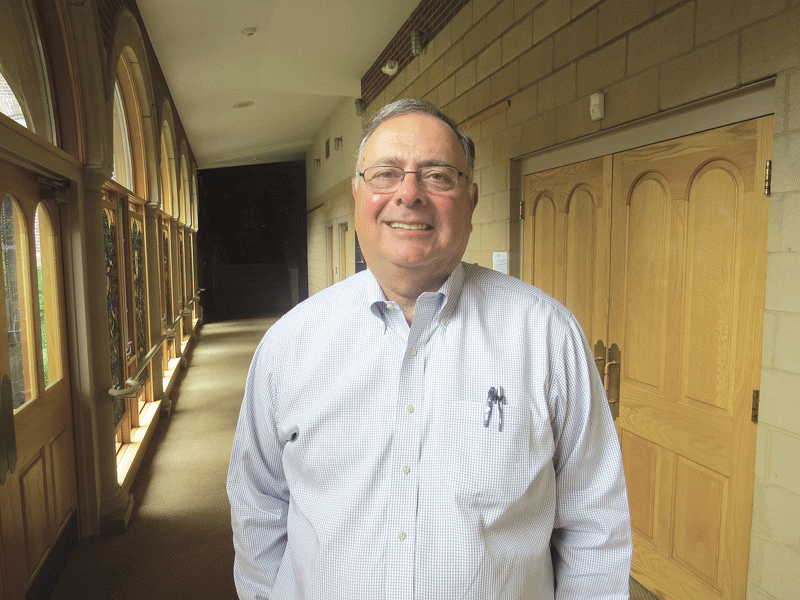
Paul Gagliarducci

Paul Gagliarducci says the unofficial goal for Pope Francis High School is to make it one of the few Catholic facilities that has a waiting list for students wishing to enroll.

Indeed, total Catholic enrollment was 2.42 million for the 2004-’05 school year, less than half what it was 40 years earlier; 2.12 million for ’09-’10; and 1.94 million for ’14-’15, a roughly 20% falloff over a decade. The rate of decline was even more severe for pre-school and K-8. Enrollment for that constituency was 1.8 million for ’04-’05, 1.52 million for ’09-’10, and 1.38 million for ’14-’15, a nearly 25% drop.

There are many reasons for this decline, said Sr. Dale McDonald, PBVM, Ph.D., director of Public Policy and Education Research for the NCEA, who cited everything from the recession that came near the middle of this statistical period, to a sharp drop in the number of priests and nuns who once taught in Catholic schools, to the financial woes facing a number of dioceses across the country.

Overall, though, sharply falling enrollment comes down to a continuing decline in the number of people both willing and able to pay the tuition ($9,000 on average nationwide at the high school level, and $3,800 at the elementary school level) for a Catholic education.

Over the past decade, decline in enrollment has averaged between 1.8% and 2.5% per year, and 21% of the schools have closed, McDonald went on, and there is little, if anything, to indicate that this trend will slow, let alone stop.

“Unless we have some serious interventions, enrollment will continue to decline and schools will continue to close,” she said, adding that by interventions, she meant actions that would enable more families to afford those tuition figures mentioned earlier.

Cathedral and Holyoke Catholic have certainly not been immune to these trends. At Cathedral, for example, enrollment was at or near 3,000 in the early ’70s, and stood at merely 400 when the tornado tore across Springfield on June 1, 2011.

The current trends and uncertainly concerning the future certainly played a factor in the lengthy discussion about whether to rebuild Cathedral, where, and how — and also in the preliminary design of the school and projected capacity — roughly 500 students.

That’s about 115 more than the combined enrollment of the two high schools at present, said Gagliarducci, adding that this number reflects both realism and confidence moving forward.

“Looking at the group of freshmen coming in, the class of 2019, has just over 100 students, and that’s a pretty good number,” he said, adding that this is the combined enrollment for both schools, “If we can maintain that 100 to 125 students, and I think we can, we’ll have our 400-500 students and something we can build on.” Such confidence, he went on, stems from everything from the impact of a new facility on those weighing their education options, to efforts to emphasize the value and benefits of a Catholic education.

But making the school accessible to families of all income levels will be crucial, and for this issue and its focus on education, BusinessWest looks at that challenge and how it might be met.

Setting a Course

As he talked about his assignment, the Pope Francis High School project, moving forward, Gagliarducci said that while it doesn’t say as much on any formal or informal job description, his mission is to make the new facility one of those Catholic high schools that actually has a waiting list for enrollment.

Doing so will accomplish many things, he went on, listing everything from fiscal flexibility to greater prestige to long-term sustainability.
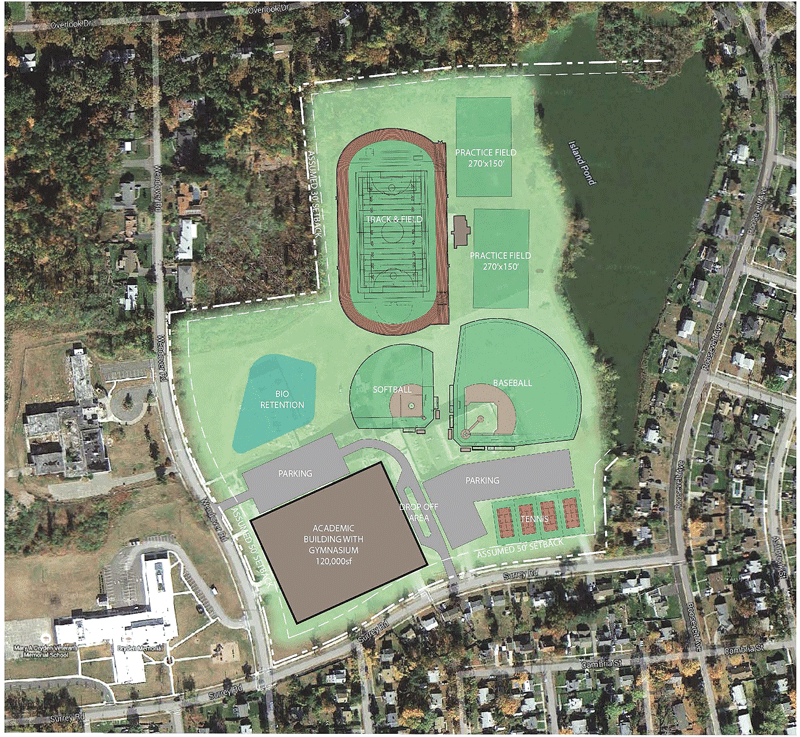
plan for the property on Surrey Road

While designs for the new school are still being finalized, the plan for the property on Surrey Road is coming into focus.

“Right now, people know we want them,” he said, referring to the current, and aggressive, recruiting efforts. “But if we can get to a point where we get 175 to apply and we only take the top 100 to 125, that’s going to bring some competition, and that’s going to be good for us; that’s what our hope is.”

Such an eventuality would have seemed impossible a few years ago, especially after Cathedral was relocated into a shuttered elementary school in Wilbraham months after the tornado — and this scenario still seems like a real stretch of the imagination to many.

But Gagliarducci and others involved with this endeavor believe such a fate is possible, if the school can focus on those two parts of the enrollment equation mentioned earlier, and put more people in those categories of individuals willing and able to pursue a Catholic education for their children.

Essentially, it will come down to the laws of supply and demand, and reversing the picture that has defined the scene both regionally and nationally for years — where demand doesn’t come close to approaching supply.

And that assignment will come down to a host of factors, said Tom Brodnicki, senior partner with Partners in Mission, a consulting firm specializing in Catholic education that has been hired by the diocese to help coordinate the merger of the high schools and raise money for the endowment fund.

He listed listing everything from building a market for Catholic education to growing the endowment so more students can attend; from broadening enrollment among certain demographic groups, such as the Hispanic population (more on that later), to convincing area parents that the sticker price for Pope Francis is a relative bargain; from building what he and others called a “culture of philanthropy” in the region, to convincing parents of the need to start saving early for a Catholic education for their children.

All of those action items would fall into that category of ‘interventions,’ as described by McDonald. The question is whether they will be enough to stem the current tide.

Indeed, creating a waiting list for Pope Francis will certainly be a challenge, said those we spoke with, noting that while there are, in fact, schools where demand exceeds supply (often where the supply has been reduced through a merger), there are many more that are closing their doors or merging with others, as has happened with the Springfield diocese.

Statistics from the NCEA show that while 27 new Catholic schools opened over this past school year, 88 consolidated or closed. And those numbers have become the trend over the past few decades, said McDonald, adding that the rate of closure and consolidation has actually slowed considerably because there are simply fewer schools left to take such steps.

And while the economy and even demographic trends have had something to do with these developments — the decline of many cities in the Rust Belt/Bible Belt has resulted in falling Catholic school enrollments in that traditional stronghold — tuition, the inability to meet it, and the fiscal difficulties that ensue, are the primary reasons.

“As tuition moves higher, fewer people are able to afford it,” McDonald noted. “But schools facing lower enrollment still have expenditures, or operating costs, and many of these costs are fixed or increasing dramatically, such as health insurance for teachers and staff.”

Per-pupil costs generally far exceed tuition and are met through fund-raising efforts by the diocese in question, she went on, adding that there is help available to families facing those tuitions costs ranging from scholarships to tax credits made available in many states.

But the burden is proving too steep for many, especially those families with several children in school at the same time, McDonald noted, adding that, overall, there is little prospect for improvement.

“Without programs that will provide help for families, it’s not a happy forecast in many respects,” she said, “when it comes to the ability of parents to continue to pay the tuition that’s required to have a quality education.”

One of the serious, and ongoing, challenges for those in Catholic education is attracting members of the Hispanic population, said Patricia Weitzel-O’Neill, president of the Barbara and Patrick Roche Center for Catholic Education at Boston College.

Hispanic populations are growing in most urban centers, including Springfield and Holyoke, and, overall, Hispanics comprise roughly 60% of the nation’s Catholic-school-age children (those ages 3 to 18), but only 2.3% of those children are enrolled in Catholic schools.

“This is the crux of the problem in Catholic education today,” she told BusinessWest, adding that there are several reasons behind that statistic, including the fact that many Hispanic parents did not attend Catholic schools, and doing so is not a “part of their culture.” But the inability to meet tuition costs is also a huge factor.

“One of the issues facing Catholic education today is the inability to recognize the need to diversify what we’re doing, to be much more welcoming, and to be more open to introducing and welcoming the second culture and the second language,” she said, adding that there is movement nationally to address the problem.

Crosses to Bear

It was in this environment that the Springfield diocese was forced to make critical decisions after Cathedral was essentially destroyed by the tornado.

And it took all of four years to make most of those decisions, including whether to rebuild, under what circumstances (eventually via a merger with Holyoke Catholic), where to build, and how big to build.

After surveying the landscape and analyzing the data, officials decided to build a 120,000-square-foot school that can handle a population of 500 students. That is a small fraction of the total number of Catholic high school students in this region from a typical year decades ago — and a figure smaller than many alums of those schools think is possible — but it is quite realistic, said Gagliarducci.

“Some people think we should be doing much better — some of the critics said earlier that this area should be able to support four high schools,” he said. “Dream on … that’s just not going to happen.”

But Gagliarducci stressed that the facility can, and hopefully will, be expanded to accommodate more students in the future.

Facilities such as the auditorium, gymnasium, and cafeteria are being designed for closer to 700 students, he went on, adding that they cannot be expanded later, and thus must be built accordingly. But additional classrooms and facilities can be added later.
Tom Brodnicki

Tom Brodnicki says that one challenge for the diocese is to convince parents that their tuitions costs are a sound investment.

When asked how the diocese intends to arrive at the point where Pope Francis will need to be expanded, Gagliarducci and Brodnicki went back to the laws of supply and demand.

By building a first-class facility — not only a new building, but one outfitted with the latest technology and offering attractive programs of study — they hope to build demand. And it will take more than a new structure, because several area communities, including Longmeadow, West Springfield, Wilbraham (Minnechaug), and Chicopee (two facilities) have opened new state-of-the-art high schools in the past decade.

“The key is to develop a program that parents can get excited about,” Gagliarducci explained. “But ultimately, if I’m deciding as a parent to send my child to Pope Francis High School, I’m doing so because I believe in a strong religious education for my kids, so that has to be the paramount thing that’s going to attract people.

“But then you have to follow that up with a rich academic program,” he went on, “one where, at the end of four years, students are getting into the college of their choice; that’s very important.”

By growing an endowment, meanwhile, they intend to increase accessibility. Also, with economies of scale gained through the merger, they expect Pope Francis to be an efficient operation, one better suited to manage through the time it will take to build the endowment and grow enrollment.

“We believe that with the new facility and some of the excitement that it builds — along with this endowment fund, which will help with the affordability factor for some families — that a school with a projected enrollment of 500 is within reason,” said Brodnicki. “The real key is the level of academic excellence that’s provided, and convincing people that they are making a valuable investment in their children’s future.”

Elaborating, Brodnicki and Gagliarducci said Catholic education has not gone out of favor — it has simply become a less-appealing option for many families due to its cost.

The initial goal for the endowment, set by Bishop Timothy McDonnell, who retired last year, was $10 million. But Gagliarducci and Brodnicki want to set the bar higher to broaden accessibility and therefore meet demand.

Approximately one third of the 200 students now attending Cathedral receive a substantial amount of financial assistance to attend, said Brodnicki, adding that a large endowment and other forms of philanthropy will enable more low-income families to attend the school.

But to achieve sustainability, the new school must be able to attract students across all income levels, said Gagliarducci, adding that the goal is to continue the current breakdown — where roughly one third of the students pay full tuition, another third get some support, and the rest get substantial assistance — only with a larger student population.

Building Momentum

Surveying the national Catholic education scene, Brodnicki, who has had a front row seat to the changing landscape and has worked in a number of major metropolitan areas, said most cities are experiencing declines consistent with the statistics quoted by McDonald.

The Boston area is a notable exception, he added quickly, noting that most Catholic schools there are thriving, in part because the economy is more robust, but more so because of strong philanthropic support from wealthy individuals, many of whom are graduates of those schools and now serve on their boards of trustees.

“A few things happened in Boston,” said Brodnicki. “First, the economy took off; second, there is incredible wealth and a strong tradition of philanthropy. There are a number of Catholic individuals who have come together and made a firm commitment to Catholic education, especially the inner-city schools.”

The Western Mass. Catholic community can’t expect to approach that level of support, he went on, but it can — and, in essence, must — build a stronger base of philanthropic generosity if it hopes to create a sustainable Catholic education system.

And he said Cathedral, and to a lesser extent Holyoke Catholic, has a large alumni base, with many individuals in a position to provide support. The diocese must be more aggressive in reaching out to alums and making its case for support, he went on.

“Cathedral has a reputation for having many well-known graduates who have achieved wealth,” Brodnicki explained. “We’re going to go and visit those folks and lay out the case for support.”

While building a stronger base of support through its endowment and other forms of philanthropy, the Springfield diocese must also more aggressively promote Catholic education and convince current young parents, as well as those that will follow them, that it is a viable option and worthwhile investment.

Part of this equation involves making Catholic education more of a K-12 phenomenon, said those we spoke with, who again cited the more-rapid rate of enrollment decline at the elementary school level.

Springfield is a good example of that trend; not long ago there were five Catholic elementary schools in the city, but by the time the tornado touched down, they had been merged into one — St. Michael’s Academy.

Meanwhile, the diocese, as it goes about selling the new high school, must also sell a Catholic education, and this one in particular, as an investment, rather than as an expense that must somehow be met.

“People often view that $9,000 as tuition, not necessarily as an investment, Brodnicki explained. “We have to show someone who’s looking at spending $40,000 on their child’s education that, on average, graduates of Cathedral and Holyoke Catholic are receiving scholarship opportunities that average in the $80,000 to $90,000 range; people have essentially doubled their money in four years. Give me a stock that will do that, and I’m all over it.”

Grade Expectations

How well Gagliarducci, Brodnicki, and the diocese fare with the many aspects of the Pope Francis High School project remains to be seen. With some elements of the equation, such as the endowment, real progress may not be realized for years.

One thing that all agree on, though, is that given the many changes and challenges confronting those in Catholic education today, this will certainly be a stern test.

Ultimately, though, they believe this is a test they can, and will, pass.

George O’Brien can be reached at [email protected]

Education Sections

Life Lessons

Vincent Maniaci

Vincent Maniaci says AIC has a three-pronged plan for growth that includes programs to help students become prepared to enter the workforce.

American International College President Vincent Maniaci has been studying the booklet for weeks.

It contains quick snapshots of each member of the incoming freshmen class. His goal is to commit them all to memory so he can greet every student by name when classes begin this fall. Although it’s a small measure, Maniaci believes it’s important for him to make students feel special, especially since 44% of the student population is aiming to become first-generation college graduates.

“We try to get to know our students on a personal basis, and first- generation students always struggle more than those who come from an affluent background and have parents who have gone to college,” Maniaci explained, adding that understanding a student’s history helps staff give advice that is pertinent to each individual’s situation and aspirations.

Susanne Swanker agrees, and told BusinessWest that AIC has been successful in developing a sense of community between staff and students.

“It’s uncommon to walk anywhere on campus without having people greet you,” said the school’s acting chief academic officer and dean of the School of Business, Arts and Sciences. “It doesn’t matter whether you know them or not; it’s part of a culture in which everyone is supported and encouraged to do their best.”

That culture has been carefully cultivated by Maniaci and stems from his personal experience. Indeed, his path to success differs greatly from most people in his position, and he said it has made him aware of the importance of providing students with exposure and access to college, as well as what it takes to keep them there.

“I come from a blue collar background and had no plans to attend college; it was very alien to me,” he said, adding that no one in his family had a college degree and the only reason he enrolled at City College of San Francisco, a community college, was because he and a friend wanted to continue playing football after they graduated from high school.

So he signed up for courses, but didn’t attend a single class and had no plans to do so until he injured his knee during the third game of the season. At that point, Maniaci realized that the only way he could continue interacting with other team members was to show up for class.

“I’ve always been competitive, and once I started I did well,” he said, as he outlined the rest of his educational career.

But he will never forget his first day on campus.

“Adjusting to the environment is especially difficult for students from socio-economic backgrounds where college attendance is not a given,” he said, explaining how intimidated he felt when other students began quoting famous people he had never heard of.

Today he believes that mixing students from different backgrounds adds depth to the curriculum and helps prepare them for the world of work.

“The diversity that results from a population with mixed backgrounds is one of our strengths; we’re very student-centric and believe a college education is more than academic and intellectual growth,” he noted. “It includes personal, spiritual and professional development entwined with emotional intelligence, which takes place both inside and outside of the classroom. We all see things through a different prism based on the environment we come from, so being culturally diverse leads to deeper discussions.”

Course of Action

AIC has a strategic plan for growth that is focused on three areas, said Maniaci.

“Our first goal is to build the demand curve — we need to give parents and students a better reason to come here, give them a reason to borrow money or pay out of pocket for schooling; education is expensive, and they need to know what the return on their investment will be,” he explained, adding that students and their families need to understand that in addition to the fact that college graduates earn $1 million more over their lifetime than non-graduates, valuable lessons result from dealing with social, interpersonal, or political issues on campus.

The second pillar of the plan is to increase capacity, an initiative that runs the gamut, from the quality of the dining experience to student safety and course offerings, while the third component is to identify new programs that would benefit students.

“The world is changing so quickly that it’s important to identify future trends as we develop new programming,” Maniaci said.

Susanne Swanker says AIC’s new master’s program in Resort and Casino Management will help individuals take full advantage of opportunities in that industry.

Susanne Swanker says AIC’s new master’s program in Resort and Casino Management will help individuals take full advantage of opportunities in that industry.

Initiatives have been established to meet these goals, and for the past two years Dean of Students Brian O’Shaughnessy has worked closely with his staff to make sure that what is taught in the classroom correlates to students’ outside activities, something he said employers are looking for.

To that end, AIC also has a new four-year career-development program. Students in the federal work-study program, which comprise the majority of the population, apply for positions on campus during their first semester by working with career development staff members who help them to create a preliminary resume and teach them interviewing skills. Students receive assistance in applying for campus positions suited to their interests or major.

“In the past, students walked into different departments and asked if there were any job openings,” O’Shaughnessy said, adding that they are also bridging classroom connections by inviting underclassmen to attend sessions in their residence halls on topics such as using social media as a tool to market themselves, while upperclassmen are offered classroom presentations specific to their field of study.

The way housing is assigned has also changed, and the assumption that seniors are entitled to better options is not the rule of thumb. Every freshman on campus lives in a residence hall with a roommate and shares experiences and common spaces, including bathrooms.

“If they develop a sense of community and pride in their residence hall and feel safe and secure, it reduces the likelihood of damage or student-on-student crime,” O’Shaughnessy told BusinessWest, adding that for some students, feeling pride in the place they live in is a new concept.

During their sophomore or junior year, students can move into a suite which gives them more space. “A bathroom might be shared by four people instead of 30,” O’Shaughnessy said. “And seniors are eligible for full kitchens which provide them with opportunities to shop and maintain a household.”

Each student is also assigned a professional academic advisor who works with them during their freshman and sophomore years. They are experts in the college’s shared general-education requirements, which is helpful because many aren’t sure about what they want to major in. Swanker said they transition to a faculty advisor in their field of study during their junior year, a model adopted in 2013 that helps them focus on specifics that will help them find employment.

She added that the support they receive is especially important to first-generation college students who are highly motivated but often under a great deal of pressure if their family has invested everything they have into their education.

There is also a Center for Student Engagement and Leadership Develop-ment linked to clubs and organizations on campus.

“I tell all incoming freshmen that what they are learning is not specific to textbooks,” said O’Shaughnessy. “They’re learning how to think critically and solve problems whether they are a member of a club, dealing with an issue with their roommate, or in a leadership role on campus. We also stress that the skills they learn here can be applied to careers that haven’t even been invented yet.”

And since AIC works to respond to student’s individual needs, a number of new programs have been added to its Center for Academic Success. Today, they include the ACE (AIC Core Education) Program, a federally-funded initiative for first-generation college students as well as those with limited financial means. Services range from personal mentoring to academic support, career counseling, disability referral services, financial aid assistance, graduate school preparation, and specialized workshops and activities.

AIC also has a Supportive Learning Services program, which operates under the umbrella of its Curtis Blake Learning Services. It’s a fee-based program that provides students with one-on-one tutorial assistance to help with goal-setting, note-taking, time management, study skills, test taking, written expression, and self-advocacy.

Keeping Pace With the Times

Over the past few years, AIC has developed a number of new majors, and last November, officials finalized a decision to create a master’s degree program in Resort and Casino Management. Although it had been talked about when casino legislation was passed in 2011, Swanker said the school waited until voters cast ballots last November that ensured casinos would become a reality.

“The program will start this fall, and include courses in business specific to resort and casino management,” she said. “We’ve worked with executives at MGM to review the curriculum and make sure we’re covering topics that are relevant. We see career possibilities for graduates locally and in the region.”

Meanwhile, seven students were awarded a bachelor of science degree in Public Health for the first time during the commencement ceremonies in May.

“It’s a new, four-year program. We started it two years ago, but had some transfer students move into the major,” Swanker explained, adding that graduates have a wealth of opportunities in the growing healthcare field.

Another new offering is a graduate Family Nurse Practitioner degree. “We launched the program last fall; it’s very exciting because it’s an area of tremendous growth relevant to the direction in which healthcare professions are moving,” she continued.

AIC’s doctorate in Physical Therapy program also continues to thrive, and enrollment in its master’s program in Occupational Therapy is growing, thanks to its excellent reputation and the increase in students interested in health services.

Swanker said people employed in that field typically take part in team meetings that address specifics to a patient, so to prepare them for that aspect of a job, AIC began holding day-long workshops two years ago to mirror what they will experience when they begin their clinical rotations.

There are also new undergraduate majors, and last year a Visual and Digital Arts degree was offered for the first time. “It allows students with an artistic bent to combine their interest with technology,” Swanker said. “It was something that was missing because we didn’t have a major for people interested in the arts.”

Some students in the program are minoring in business or taking a double major in both fields, which will be beneficial if they want to run a small theater or an art gallery.

“The beauty of this degree is that it can be tailored to a student’s interests, because it includes writing, directing, acting and costume design. It has increased our enrollment and we have students coming here just for this major,” Swanker said.

Another new offering is a minor in Fraud and Financial Crime, which includes courses in criminal justice and accounting. “Students can take an exam when they complete the course and become certified in the field, which increases their chances for employment,” Swanker said.

Forging Ahead

Ground was broken in May on an $8 million renovation to the dining commons. The new, state-of-the-art space will include a wide variety of seating options as well as food choices and services, including customized preparation, an open concept kitchen with a Mongolian grill, a wood-fired pizza oven, and more.

“The dining commons is an important student and academic hub on campus,” Maniaci told BusinessWest. “The new facility will give students a more comfortable and modern place to come together and was designed to serve their needs and expectations.”

It’s part of a larger effort to create a campus that caters to the needs of students today, and will enhance the new programs that are helping students succeed and integrate lessons they learn inside and outside of the classroom.

“We’re teaching them that everything they do here can play a role in their future career, which ranges from how they present themselves to how they speak or how they conduct themselves as a member or leader of an organization on campus,” O’Shaughnessy explained in summation.

The changes have all been positive, and Maniaci is optimistic about the future. This sentiment is backed by facts: The Chronicle of Higher Education named AIC as one of the fastest-growing colleges from 2002-2012, due to a growth rate of 127%, which more than doubled their enrollment in ten years.

And the upward trajectory is expected to continue, thanks to the welcoming culture and the efforts to create new programs and majors that meet the changing needs of students today.

“I expect to make as much progress in the next 10 years as we’ve made in the last decade,” Maniaci said.

Briefcase Departments

Meehan Praises UMass Transparency Measure in New State Budget
BOSTON — The new state budget will allow UMass to bring a key business practice into the national mainstream, and dramatically advances the cause of “straightforwardness and transparency” in billing, UMass President Marty Meehan said Friday. The fiscal year 2016 budget signed into law by Gov. Charlie Baker will allow UMass, as of 2016-2017, to retain the tuition paid by resident undergraduate students, rather than passing those funds along to the state. “I am pleased that the governor signed what the Legislature sent to him and that the reform UMass has sought for more than two decades has become law. This is a victory for students, for UMass and for transparency,” Meehan said. At the same time, Meehan said he was disappointed by a veto that reduced funding for the five-campus UMass system from the $531.8 million approved by a House-Senate conference committee to $526.6 million. “This veto presents challenges that we must now assess as we pursue our overarching goals of building quality, while at the same time protecting the university’s long-term fiscal stability,” Meehan said. In allowing UMass to retain tuition payments, the budget brings Massachusetts in line with virtually every state in the nation. In recent years, UMass was given the authority to retain the tuition paid by out-of-state students, but had been unable to extend the practice to resident undergraduate students until now. The new policy, which will not take effect until next year, is responsive to calls from state and federal officials for greater transparency and accountability in higher education.

Report: Massachusetts Economy on the Upswing
BOSTON — In a number of important respects, the Massachusetts economy is experiencing its strongest expansion since the heady days of the late 1990s, according to the editorial board of MassBenchmarks. As the board anticipated, this year’s severe winter weather had only a transitory, and ultimately minor, impact on economic conditions in the Bay State. Employment and the labor force are growing strongly, and payroll survey shows consistent and strong growth in employment. And gross state product growth, as estimated by the MassBenchmarks Current Economic Index (CEI), continues to outpace that of the nation. Once again, the state’s knowledge-intensive sectors are its primary growth drivers. Industrially, the expansion is being led by the dynamic professional, scientific, and technical services sector, which includes architectural, engineering, and specialized design services; computer services; computer-systems design; consulting services; research services; and other related services. Employment in software development is also growing strongly. These sectors rely heavily upon the Commonwealth’s highly educated work force, which remains in high demand, as reflected by the fact that college-educated workers continue to have the lowest unemployment rate among all socioeconomic groups in the state. While conditions for less well-educated workers have improved, unemployment and underemployment rates in many communities remain troublingly high. Economic growth continues to be disproportionately concentrated in the Greater Boston region and within the Route 495 belt. While there are notable exceptions to this pattern of imbalanced growth, including the cities of Lowell and Worcester, conditions in regions outside of the Greater Boston region are improving, but their economic performance continues to lag. Notwithstanding the solid performance of the Massachusetts economy, there are a number of short- and long-term threats to growth that could serve to slow and in some cases derail the Commonwealth’s expansion. Growth pressures in the immediate Greater Boston region are placing increased stress on the state’s transportation infrastructure, which this past winter’s severe weather revealed to be in serious need of attention and investment. These same growth pressures, along with inadequate housing production, are fueling rapidly rising home prices throughout Eastern Massachusetts. While this is good news for incumbent homeowners, it puts upward pressure on the cost of living, making it more difficult for the Greater Boston region to attract the highly educated workers it needs to meet the needs of growing knowledge-intensive organizations. And the state’s high electricity prices, which have risen in every corner of the state, are beginning to limit economic growth in regions that are sorely in need of more economic opportunities. In Berkshire, Franklin, and Hampshire counties, new natural-gas hookups have been suspended, which is directly constraining business expansions in Western Massachusetts. Additionally, the relatively slow growth of the global economy and considerable economic and geopolitical uncertainty continue to weigh heavily on the economic outlook for the nation and the Commonwealth. Greece and Puerto Rico appear to be headed for sovereign debt defaults, with highly uncertain impacts for Europe and North America. Critically important trading partners in Asia, including China and Japan, continue to face serious economic challenges. And the Middle East and Eastern Europe remain politically volatile. Going forward, while the Commonwealth’s leaders have little control over what happens internationally, it is well within their power to tackle the challenges presented by aging infrastructure and imbalanced growth patterns, MassBenchmark’s board notes. Toward this end, policies that improve the state’s transportation systems, both within Greater Boston and beyond, and extend educational and economic opportunities to more people and regions that have yet to experience the full benefits of the current economic expansion, should be priorities going forward.

REB Receives Grant from PeoplesBank to Support Talk/Read/Succeed Program
SPRINGFIELD — The Regional Employment Board of Hampden County, Inc. (REB) has received a $2,500 grant award from PeoplesBank to support the work of the Talk/Read/ Succeed (TRS) program. Talk/Read/Succeed is a place-based holistic program and currently serves 150 low- to moderate-income families at two Springfield Housing Authority (SHA) developments in Springfield. The goal of TRS is to have all children enter kindergarten ready to learn and go on to read proficiently by 4th grade. The $2,500 grant award is part of PeoplesBank’s Community Care Program and will be used to support parent education programs at the SHA sites that will focus on how to support children in reaching critical developmental milestones, family health and wellness, adult education and career exploration, and financial literacy. In announcing the award, Susan B. Wilson, first vice president of PeoplesBank said, “at PeoplesBank, we welcome the opportunity to help others. As part of your community, we take an active interest in supporting programs that promote academic excellence for our youth.” David M. Cruise, president & CEO of the REB indicated that, “this award from PeoplesBank allows the REB and its partners to strengthen our parenting education and school engagement programming to support parents as active partners in our work to accelerate student achievement.” William H. Abrashkin, Executive Director of the SHA said “Building community support is vital to the success of Talk/Read/Succeed and its families and children. In particular, it is so important that PeoplesBank, a key member of the business community, has chosen to provide its support. We all know that without an educated workforce, businesses cannot grow and create wealth, and the most effective way to create an educated workforce is to reach families when their children are very young to help ensure that the children are brought up with positive values, including a love of reading, learning, and achievement. That is what TRS is all about, making this a win-win for both the business community and the families we serve.”

Agenda Departments

Workshop on Estate Planning, Medicaid, Medicare
August 4: Monson Savings Bank will conduct a complimentary workshop titled “Straight Talk on Estate Planning, Medicaid Qualification and Medicare Pitfalls,” featuring attorney Karen G. Jackson, Esq., senior partner at Jackson & Torrone, P.C. The event is designed to help people understand what is needed for an effective estate plan and why it’s so important. In clear-cut language, Jackson will explain the “Big 5” pillars of estate and health care planning — a will, durable power of attorney, health care proxy, HIPAA release, and the living will or advance directive. She will also address some significant issues with Medicare and Medicaid that too often unnecessarily cost people a lot of money. The workshop will be conducted from 5 to 6:30 p.m. at the Gardens of Wilbraham, 2301 Boston Road in Wilbraham. It is free and open to the public. “Understanding estate planning, Medicaid, and Medicare can be daunting,” said Steve Lowell, President and CEO of Monson Savings Bank. “This workshop will simplify the steps needed to create an effective estate plan so that people may better protect themselves, their families and their assets.” Those interested may call Anna Calvenese at (413) 267-1221 e-mail to [email protected] to RSVP. Seating is limited. Refreshments will be served.

Information Session on Earned-sick-time Law
August 6: The Greater Northampton, Amherst Area, and Greater Easthampton chambers of commerce will host an informational session on the earned-sick-time law, presented by the Mass. Attorney General’s Office, at the Hadley Farms Meeting House. The session, one of several offered statewide and online, aims to educate employers and employees about the new law, which went into effect July 1. It will offer guidance on implementation, explain employers’ and employees’ rights and responsibilities, and provide opportunities to get specific questions answered. The earned-sick-time law was approved by voters on Nov. 4, 2014 and entitles employees in Massachusetts to earn and use up to 40 hours of sick time under certain conditions. The attorney general enforces this law and also wrote and published final regulations to clarify practices and policies in its administration. More information, including the final regulations and sample documents, may be found at www.mass.gov/ago/earnedsicktime. The information session is expected to last two hours, including time for questions and answers. Questions regarding these information sessions and the earned-sick-time law may be directed to Morgan Callahan at [email protected] or (617) 963-2024.

Bridge of Flowers Classic Races
August 8: Baystate Franklin Medical Center is the presenting sponsor for the Greater Shelburne Falls Area Business Association’s 37th annual Bridge of Flowers Classic Races. While the 10K race through Shelburne Falls draws elite athletes from throughout the Northeast, the 3K charity run/walk offers an option for others to participate at their own pace and fitness level. “We are fortunate to live and work in an area that is prime running and walking country,” said Dr. Thomas Higgins, chief medical officer and interim president of Baystate Franklin. “And the Bridge of Flowers races serve as goals for many people in our communities during their spring and summer training. Physical fitness is central to overall health and well-being, and we are delighted to support this inspiring event.” The Bridge of Flowers Classic Races attract more than 1,000 participants to Shelburne Falls. The 10K race, which starts at 9 a.m., is a spectator-friendly, figure-8 course that begins with a gradual climb from the village center’s historic iron bridge, then wends its way through neighborhood streets before circling back to the bridge, up Crittendon Hill, and back into town along shady downhill roads and flats. The 3K charity run/walk begins at 8:15 a.m. and follows the same first loop as the later run.  An awards ceremony and after party will follow the 10K run in a spot overlooking the falls. Race-day registration opens at 7 a.m. Registration may be completed online at www.bridgeofflowers10k.com; at the pre-race Spaghetti Fest on Friday, Aug. 7, 5:30-7:30 p.m., at the Buckland-Shelburne Elementary School, 75 Mechanic St., Shelburne Falls; or on the day of the race. All participants will receive a commemorative T-shirt featuring artwork by a local artist.

Jazz & Roots Festival
August 8: The second annual Springfield Jazz & Roots Festival celebrates the emergence of Springfield’s Cultural District and promotes an arts-driven, community-oriented, and sustainable revitalization of the city. The free event in Court Square will offer a festive atmosphere featuring locally and internationally acclaimed musical artists, dance and theater workshops, local arts and crafts, and plenty of food. More than 5,000 people are expected to attend and enjoy the sounds of jazz, Latin jazz, gospel, blues, funk, and more. The festival is produced by Blues to Green, which uses music and art to celebrate community and culture, build shared purpose, and catalyze social and environmental change. For more information and a lineup of performers, visit springfieldjazzfest.com.

Valley Fest
August 29: White Lion Brewing Co. announced that it will host its inaugural beer festival, called Valley Fest, at Court Square in downtown Springfield. MGM Springfield will be the presenting sponsor. The festival is poised to be White Lion’s signature annual event, introducing the young brand to craft-beer enthusiasts throughout New England and beyond. White Lion Brewing Co., the city of Springfield’s only brewery, launched in October 2014. Founder Ray Berry and brewmaster Mike Yates have released three selections under the White Lion brand and have been busy promoting their efforts in venues all over Massachusetts and other New England states. “Valley Fest will have the best of the best local, regional, and national beer and hard cider brands,” Berry said. “Even in our inaugural year, Valley Fest will be the largest one-day beer festival in Western Massachusetts. We expect to draw up to 2,000 enthusiasts from throughout New England. We are very excited to showcase the fourth-largest city in New England and all of its amenities.” Berry anticipates that more than 50 breweries and many local food vendors will converge on Court Square for two sessions. Enthusiasts will have an opportunity to sample more than 100 varieties of beer and hard cider alongside pairing selections by local chefs. Michael Mathis, MGM Springfield president, said his company “is excited to take the lead in sponsoring the inaugural Valley Fest. The local entrepreneurial spirit of White Lion Brewing, coupled with the historic Court Square setting, is a winning combination to start a new Springfield tradition. We look forward to Aug. 29.” A number of sponsors have already committed to the event, including MassMutual Financial Group, the Young Professional Society of Greater Springfield, the Dennis Group, Springfield Sheraton Monarch Place, Paragus Strategic IT, Williams Distributing, and the Springfield Business Improvement District (BID). “We are honored to sponsor Valley Fest and look forward to it being an annual event that shares in the facilitation of growth within the downtown community,” said Chris Russell, executive director of the Springfield BID. Visit www.valleybrewfest.com for event details, ongoing updates, and sponsorship opportunities. A portion of Valley Fest proceeds will support several local charities.

Williamstown Film Festival Presents Wind-Up Fest
Oct. 15-18: The annual Williamstown Film Festival (WFF), now in its 17th year, welcomes big changes with new faces, a new name, and new programming focus. Slated for Oct. 15-18, WFF Presents: Wind-Up Fest is a nonfiction festival with documentary film as its backbone. Other forms of nonfiction will be in conversation with documentaries, including long-form journalism, radio podcasts, photography, and social-practice art. The event’s new artistic director, Paul Sturtz, is also the co-director at the True/False Film Fest in Columbia, Mo., and its new managing director, Sandra Thomas, is the former executive director of Images Cinema in Williamstown. “Our aim is to provide a unique, distinctive event for North Adams and Williamstown while serving as a destination festival for lovers of nonfiction. We are living in a time when nonfiction storytelling is offering one of the most vital, urgent ways forward,” Sturtz said. The festival will be curated by Sturtz, who was selected (along with his True/False co-director David Wilson) as one of 40 people in the inaugural Indiewire Influencers list, described as “visionaries that are changing the course of film.” “I’m excited to work with Paul to make his creative vision a reality,” said Thomas. “Working in partnership with the community, engaging a broad audience, and strengthening the festival’s presence are all important elements of the fest.” With the addition of Sturtz and return of Thomas, the board of directors announced the retirement of festival Executive Director Steve Lawson. “It’s been an exhilarating ride, but after 15 seasons as executive director, I felt it was time to pass the torch,” said Lawson. “This seemed like the right moment to segue to new voices and directions. Paul and Sandra have exciting plans in store for the festival which promise to build on all that we’ve achieved so far. Here’s hoping the first 16 years of WFF will prove to be the prelude to a dazzling future.” The festival has offices in North Adams and Williamstown and can reached at [email protected] or (413) 458-9700.

Western Mass. Business Expo
Nov. 4: Comcast Business will present the fifth annual Western Mass. Business Expo at the MassMutual Center in downtown Springfield, produced by BusinessWest and the Healthcare News in partnership with Go Graphix and Rider Productions. The business-to-business show will feature more than 100 booths, seminars and Show Floor Theater presentations, breakfast and lunch programs, and a day-capping Expo Social. Details about specific events, programs, and featured speakers will be printed in future issues of BusinessWest. Current sponsors include Comcast Business, presenting sponsor; the Isenberg School of Business at UMass Amherst, education sponsor; Johnson & Hill, Health New England, and MGM Springfield as director level sponsors; and 94.7 WMAS, media sponsor. Additional sponsorship opportunities are available. Exhibitor spaces are also available; booth prices start at $750. For more information on sponsorships or booth purchase, call (413) 781-8600, ext. 100.

Daily News

HATFIELD — The Food Bank of Western Massachusetts announced the appointment of Kathy Tobin as their new director of Development and Marketing. In this role, she will oversee all fundraising and marketing activities for The Food Bank, including special events, individual donor cultivation, communications, corporate relations, grants, and education outreach. She will assume her position on August 31.

“We’re very excited to have Kathy joining our organization,” said The Food Bank’s executive director, Andrew Morehouse. “She brings with her a breadth of knowledge and experience from her current role at the Friends of the Homeless in Springfield — a member agency that receives food from us — as well as her career in media. We are confident that her proven track record for leadership and creativity will be a tremendous asset in forwarding the mission of The Food Bank.” Since 2009, Tobin has served as the director of Program Development for The Friends of the Homeless, where she increased visibility for the non-profit and helped more community partners learn about the critical role they play in meeting the needs of homeless in the region. Under her direction, it established a formalized annual appeal, expanded corporate outreach, coordinated volunteer engagement, and held an annual donor event. In addition, she oversaw the establishment of the Friends of the Homeless Store, providing people with access to free personal care items and clothing. Tobin will continue in her current position at Friends of the Homeless through the end of August.

“Her talents will certainly be missed,” says Bill Miller, executive director of Friends of the Homeless. “I know I speak for our board, our staff, and our clients in acknowledging her efforts to initiate and sustain a development program for the organization. We will build upon the foundation Kathy helped us establish as we expand the support required to meet the needs of our homeless population.”

Moving forward, Friends of the Homeless will be seeking someone to assume the responsibility of development and community outreach and will formalize a search process to identify someone who can continue to build on their established programs, Miller said.

Prior to joining Friends of the Homeless, Tobin enjoyed a 30-year career as a television news journalist with WGGB-ABC40 in Springfield, where she was honored with a number of awards for news coverage including the prestigious Edward R. Murrow Award. Among the many issues she covered during her television career were the plight of area homeless, and the community campaign and planning, which led to the development and construction of the Friends of the Homeless Resource Center on the organization’s Worthington Street campus.

Tobin is also involved with a number of community organizations. She serves as a trustee for Elms College in Chicopee, a director of Spirit of Springfield, a director of the Women’s Commission in Springfield, and sits on the Scholarship Committee for the Valley Press Club.

Daily News

SPRINGFIELD — Camp Massasoit at Springfield College is celebrating its 80th anniversary of continuously providing campers ages 5 to 16 with programs that are developmentally appropriate for each stage of their physical and cognitive growth. Originally known as Springfield College Day Camp in 1934, Camp Massasoit is centered at the College’s East Campus Outdoor Learning Center, 82 acres of a forest ecosystem located one mile from the main campus. Divided into four separate two-week sessions, Camp Massasoit offers campers a chance to experience a variety of activities that include participation in the East Campus Challenge Course, archery, swimming, Project Wild, boating, arts, crafts, and games. As part of the challenge course, small teams of campers work together toward a common objective and learn problem-solving skills while developing their leadership abilities. Project Wild assists campers in the development of awareness, knowledge, skills, and commitment to make informed decisions, behave responsibly, and be mindful and respectful of wildlife and the environment. “The most important part of Camp Massasoit is that our mission has remained the same and continues to be focused on education and development of the whole person,” said Springfield College Director of East Campus and Outdoor Programs Ben Taylor. “An integral component of camp and the development of the whole person is the understanding of respect for yourself, your counselors, your peers, and environment. This is the foundation of Camp Massasoit.” The camp also offers adventure-based programs that allow campers to increase their current knowledge and skill-set through outdoor adventures. These options continue to hone camper’s team-building and communication skills and include off-site trips during which campers go biking, flat-water paddling, rock climbing, and canoeing. “Through both our day camps and adventure-based camps, we provide an environment where our campers learn by doing,” said Springfield College Assistant Director of East Campus and Outdoor Programs Angela Veatch. “They practice how to be healthy and creative, and they gain confidence through their experiences.” Camp Massasoit will continue its 80th anniversary celebration through Aug. 21. To help celebrate, individuals can participate in the 80-for-80 Challenge, which consists of a goal of 80 gifts of $80 or more that benefit the Friends of East Campus Fund. The financial support provides items and improvements that are essential to campers and students. For more information, visit springfieldcollege.edu/giving-to-springfield-college/springfield-college-fund/friends-of-east-campus.