
BOSTON — The new state budget will allow the University of Massachusetts to bring a key business practice into the national mainstream, and dramatically advances the cause of “straightforwardness and transparency” in billing, UMass President Marty Meehan said Friday. The fiscal year 2016 budget signed into law by Gov. Charlie Baker will allow UMass, as of 2016-2017, to retain the tuition paid by resident undergraduate students, rather than passing those funds along to the state. “I am pleased that the governor signed what the Legislature sent to him and that the reform UMass has sought for more than two decades has become law. This is a victory for students, for UMass and for transparency,” Meehan said. At the same time, Meehan said he was disappointed by a veto that reduced funding for the five-campus UMass system from the $531.8 million approved by a House-Senate conference committee to $526.6 million. “This veto presents challenges that we must now assess as we pursue our overarching goals of building quality, while at the same time protecting the university’s long-term fiscal stability,” Meehan said. In allowing UMass to retain tuition payments, the budget brings Massachusetts in line with virtually every state in the nation. In recent years, UMass was given the authority to retain the tuition paid by out-of-state students, but had been unable to extend the practice to resident undergraduate students until now. The new policy, which will not take effect until next year, is responsive to calls from state and federal officials for greater transparency and accountability in higher education. The tuition-retention model approved by the governor and the Legislature was endorsed by the Higher Education Finance Commission and the Mass. Taxpayers Foundation, and was recommended by the Saxon Commission when it created the blueprint for the five-campus UMass system in 1989.
SOUTHWICK — The West of the River Chamber of Commerce will host its 12th annual golf tournament at the Ranch in Southwick on Monday, Aug. 17.
The cost to golf is $125 per player, which includes 18 holes with cart, lunch, and dinner. The cost to attend dinner only is $35. Tournament sponsors include OMG Inc., United Bank, Harvard Pilgrim Health Care, Health New England, Bart Truck Equipment LLC, Spherion Staffing Services, and Insurance Center of New England. Sponsorship opportunities are still available for the tournament. For details on sponsorship packages, visit www.westoftheriverchamber.com.
During the tournament’s reception and dinner, the West of the River Chamber of Commerce will award scholarships to one student each from Agawam High, West Springfield High, and the Lower Pioneer Valley Education Collaborative.
For more information, call the West of the River Chamber of Commerce office at (413) 426-3880 or e-mail [email protected].
The following business incorporations were recorded in Hampden, Hampshire, and Franklin counties and are the latest available. They are listed by community.
AMHERST
Redeemed Christian Church of God Inc., 33 Kellogg Ave., Amherst, MA 01002. Kekeletso Mohasi, same. Church.
CHICOPEE
Iklim Inc., 76 Main St., Chicopee, MA 01020. Murat Citlak, 231 Howard St., Ludlow, MA 01056. Pizza shop.
She-Rock Interiors Inc., 19C Ames Ave., Chicopee, MA 01013. Jennifer Cavaliere, same. WBE construction company.
EASTHAMPTON
Arnould Inc., 181 Northampton St., Easthampton, MA 01027. Vicki Arnould, same. Family therapy practice.
FLORENCE
Blueway Art Alliance Inc., 50 Ladyslipper Lane, Florence, MA 01062. Kathleen D. Jacobs, same. Nonprofit education in arts.
Simply Serenity @ Franki’s Inc., 40 Main St., Suite 102, Florence, MA 01062. Salon and spa.
GRANBY
Pearl Construction Partners Inc., 58 Morgan St., Granby, MA 01033. John M. Lukasik, same. Construction.
HATFIELD
All Seasons Heating & Air Conditioning Inc., 93 Elm St., Hatfield, MA 01038. David B. Lampron, same. HVAC services.
Tempasure Inc., 139 Main St., Hatfield, MA 01038. Gregory C. Schurch, same. Sales and marketing.
HOLLAND
Halfway Home Cat Rescue Inc., 11 White Road, Holland, MA 01521. Robin Fiskaa, same. Cat shelTerrace
HOLLAND
Christians Chaplains Shama Inc., 172 Sargeant St., second floor, Holyoke, MA 01040. Efrain Ortiz Minister, same. Church organization.
Duygu Inc., 420 High St., Holyoke, MA 01040. Necmi Kupuc, same. Pizza restaurant.
SPRINGFIELD
Hora Zero Media Group Corporation, 156 Florence St., Springfield, MA 01105. Evelyn Edwards, same. Christian media network.
Iglesia Pentacostal Bajo La Uncion Del Santo Inc., 111 Renee Circle, Springfield, MA 01105. Adrian Lopez, same. Church organization.
The United Way of Pioneer Valley held its 93rd annual meeting and celebration recently to elect new board members and honor donors, community partners, volunteers, corporate partners, and employee campaign managers. Bennet Markens, President and CEO of the Markens Group Inc., was elected Chairman of the board. Also:
• Jennifer Endicott, Chief Strategy Officer and Senior Vice President of Baystate Health, was elected Vice Chair;
• Brian Smith Sr., Vice President and Treasurer of People’s United Bank, remains as Treasurer;
• Susan Mielnikowski, attorney with Cooley, Shrair, P.C., remains as board Clerk; and
• Denis Gagnon Jr., Vice President of Excel Dryer Inc., and Michael Mathis, President of MGM Springfield, were elected as new board members for a three-year term. Gagnon was also named chairman of the Resource Development Council, the volunteer fund-raising arm of the United Way. Stephen Spelman, attorney at Egan, Flanagan and Cohen, P.C., was named vice chair of the council.
•••••

Mary Shea
•••••
Lisa Kraus, Western Massachusetts vice president and mortgage sales manager at United Bank in West Springfield, has been named 2015 Affiliate of the Year by the Realtor Assoc. of Pioneer Valley. The announcement was made during the association’s annual awards banquet on June 11 at the Log Cabin in Holyoke. As the highest honor given to an affiliate member, the award is bestowed upon one person who has shown outstanding service and devotion to the organization during the past 17 months in the areas of affiliate-related association activity, community service, and business activity. A member of the Realtor Assoc. since 1999, Kraus is chairperson of the community service committee and a member of the affiliate-Realtor committee. She is an active participant in the association’s many charitable fund-raising efforts, serving as co- chairperson of the annual benefit golf tournament, and the calendar raffle. She chaired the Minute to Win It charitable fund-raising event. She is involved in shopping, wrapping, and delivering gifts to area homeless shelters as part of the association’s activities during the holidays. Kraus is a co-presenter of financing classes as part of the “If the Realtor Had Only Known” series and at the annual Education Fair & Expo. She regularly participates in association membership meetings and networking events. Her business activities include hosting a monthly Meeting of the Minds, a gathering of local lenders, attorneys, and appraisers who come together to discuss real-estate market trends and challenges, and craft potential resolutions. She is also a member of the Home Builders & Remodelers Assoc. of Western Massachusetts.
•••••
Unemployment Tax Control Associates Inc. (UTCA), a national unemployment-insurance service provider based in Springfield, with offices in Boston and Houston, announced the addition of Carrie Jo Dennis as Vice President of Business Development. Dennis, based in Houston, will be responsible for managing sales and marketing strategies to accommodate corporate goals and will ultimately develop and lead the future sales team. Prior to joining UTCA, Dennis was a client-development consultant for a background screening firm serving the healthcare industry, helping to ensure the safety of patients and staff. She holds a bachelor of business administration degree in marketing from Mays Business School at Texas A&M University, holds certifications in Paradigm Sales Training and Integrity Selling Training, and has completed the Franklin Covey Organizational Course.
•••••
Following the firm’s annual stockholder meeting, Tighe & Bond announced the promotion of three of its veteran managers to vice president: Christopher Bone, Antonio da Cruz, and John McClellan:

Christopher Bone

Antonio da Cruz

John McClellan
•••••
Amanda Murray has joined the Berkshire Museum staff as the Curator of the Little Cinema. In her new role, Murray will be choosing films for the weekly showings, as well planning special screenings, organizing film-themed talks and events, and improving the moviegoing experience for Little Cinema audiences. “Coming from both the museum world and the independent-film world, I was so excited to learn that the Berkshire Museum is home to a thriving independent cinema. What a rare combination — and a rare opportunity for a film programmer,” said Murray. “In my own life, I’ve relished opportunities to see the latest independent films at festivals and historic, small theaters around the country, and it’s a joy to now be representing and programming such a unique venue for independent film.” Berkshire Museum’s Little Cinema has been showing independent and foreign films for 66 years in downtown Pittsfield. Little Cinema is a single-screen movie theater inside the museum; typically, one first-run independent or foreign film is shown each week. As the film curator, Murray will be developing new initiatives, such as presenting films and film-related programs that complement the museum’s exhibitions and support its mission to create inspiring connections among art, history, and natural science.
•••••

Sandy Weicher
Positively Holyoke Summer Concert Series
July 8, 15, 22, 29: The Holyoke Rotary Club has announced the lineup of the 2015 Positively Holyoke Summer Concert Series. The free concerts will be held on Wednesday evenings in July, from 6 to 8 p.m., at Heritage State Park in Holyoke. Performances canceled due to weather will be scheduled for the following evening (Thursday of the same week). The schedule is as follows: July 8, Out of the Blue (rock & roll); July 15, Brass Attack (classic/modern rock); July 22, the Franny O Show (covers and original songs); and July 29, Ireland Parish (Irish ballads). Heritage State Park is a family-friendly area located between the Volleyball Hall of Fame, the Holyoke Children’s Museum, and historic Holyoke Merry-Go-Round. The park has no formal seating, and concertgoers are encouraged to bring folding chairs and picnic blankets. “The Positively Holyoke Summer Concert Series began five years ago at the request of the City of Holyoke Parks & Recreation Department. The department approached the Holyoke Rotary Club with the knowledge that many local Rotary clubs provide this form of entertainment in the communities they serve. The events are fun and family-friendly,” said Maureen Ross O’Connell, co-chairperson of the concert committee. Attendees are welcome to enjoy food at the Rotary Grill, provided this year by Sláinte, which will open at 5:30 p.m. each week. Beer and wine will be available for purchase courtesy of Brennan’s Place from 5:30 to 8 p.m. New this year, attendees will be allowed to take their purchases from the beer garden onto the grounds of Heritage State Park. Coolers and beverages not purchased at the event will not be allowed. The concert series will also feature a 50/50 raffle each week. Free parking is provided in the Proulx Garage on Dwight Street after 5 p.m. (entrance on Front Street). Major sponsors of the Positively Holyoke Summer Concert Series include Holyoke Gas & Electric Department and Holyoke Parks & Recreation. Band sponsors include Ross Insurance Agency Inc., O’Connell Care at Home, and the O’Connell Companies. To learn more about the concert series, visit www.positivelyholyoke.com. For sponsorship opportunities, call Maureen Ross O’Connell at (413) 536-8380.
Indian Motocycle Day
July 26: From 9 a.m. to 3 p.m., the Springfield Museums will present their sixth annual Indian Motocycle Day, the continuation of a long-standing tradition honoring the classic motorcycles that were manufactured in the city from 1901 to 1953. Last year, more than 1,000 people attended the event, which featured more than 60 classic, Springfield-built Indians owned by local collectors, The event is sponsored by the Sampson Family and AAA Pioneer Valley; the media sponsor is Rock 102 WAQY. MassMutual is the 2015 premier sponsor of the Springfield Museums. The museums re-established the Indian Day tradition in 2010 after a five-year hiatus. From 1970 to 2005, the event was held at the now-closed Indian Motocycle Museum on Hendee Street in Springfield. Esta Manthos, together with her late husband Charlie, were the owners of the former museum. In 2007, Manthos donated her extensive collection of Indian Motocycles, artifacts, and memorabilia to the Springfield Museums, where it is now on view in the Lyman & Merrie Wood Museum of Springfield History. This year’s Indian Day will pay tribute to Bob’s Indian of Etters, Pa., for its many years of supporting the heritage of classic Indian cycles. The original dealership was founded in the 1950s by Bob and Kay Markey, and has been a treasure trove of motorcycle history for over half a century. In addition to the motorcycles on display, there will be a variety of vendors, food and beverages, music provided by Rock 102, and the awarding of trophies for the best Indians in a variety of categories. Commemorative T-shirts will be available for purchase. Anyone bringing a pre-1953 Indian will receive a free admission pass plus a commemorative Indian Day button. Exhibitors, and especially vendors, are encouraged to pre-register by calling (413) 263-6800, ext. 304. Admission to the event is $10 for adults and $5 for children ages 3-17. For those wishing to attend the event and tour museum buildings, general admission is $18 for adults, $12 for seniors and college students, and $9.50 for children ages 3-17. Admission to the event and the museums is free for members of Springfield Museums; free museum admission is available for Springfield residents after 3 p.m. For information, call (413) 263-6800, ext. 304, or visit www.springfieldmuseums.org.
Advance Directives and Healthcare Proxies
July 29: Hillcrest Commons Nursing and Rehabilitation Center will offer an informational session on advance directives and healthcare proxies at 10 a.m. at the Ralph Froio Senior Center in Pittsfield. The event will include a free continental breakfast. Part of Hillcrest’s “Berkshire Senior Subjects” monthly series, the presentation will focus on advance directives, healthcare proxies, and MOLST forms. The guest speaker is Patricia Tremblay, MS, RN. The presentation is free and open to the public; registration is requested by calling (413) 445-9747 by July 27. Hillcrest Commons Nursing & Rehabilitation Center, a nonprofit organization that has been caring for people in the Berkshire area since 1995, provides personalized short-term rehabilitation, long-term skilled-nursing care, respite care, and specialized Alzheimer’s and dementia care, all in a homelike setting. Specialty services include a ventilator program to support ventilator-dependent patients or to wean dependence, and a behavioral-health program for those with chronic psychiatric conditions. Hospice services are available for compassionate end-of-life care. For more information, visit www.hillcrestcommons.org.
Springfield Jazz & Roots Festival
Aug 8: The second annual Springfield Jazz & Roots Festival celebrates the emergence of Springfield’s Cultural District and promotes an arts-driven, community-oriented, and sustainable revitalization of the city. The free event in Court Square will offer a festive atmosphere featuring locally and internationally acclaimed musical artists, dance and theater workshops, local arts and crafts, and plenty of food. More than 5,000 people are expected to attend and enjoy the sounds of jazz, Latin jazz, gospel, blues, funk, and more. The festival is produced by Blues to Green, which uses music and art to celebrate community and culture, build shared purpose, and catalyze social and environmental change. For more information and a lineup of performers, visit springfieldjazzfest.com.
Driving for the Cure Golf Tournament
Aug. 17: The seventh annual Tom Cosenzi Driving for the Cure Charity Golf Tournament will tee off at Crestview Country Club in Agawam. The presenting sponsor for this year’s tournament is Autotrader. The tournament will be a four-player scramble. Tournament-day check-in begins at 10:30 a.m., and tee time is at 12:30 p.m. The event includes lunch, golf, dinner, raffle prizes, contests, and more. The tournament was started by Carla and Tommy Cosenzi, owners of TommyCar Auto Group, in memory of their father, Tom Cosenzi, who passed away from a glioblastoma brain tumor in 2009, in the hopes of carrying on his legacy and finding a cure for this disease. To date, this tournament has raised a total of $480,000 in its six-year partnership with the Jimmy Fund, one of the largest organized golf programs in the U.S. All proceeds support Dr. Patrick Wen and his team of researchers in the Neuro-Oncology Department at Dana Farber Cancer Institute. “My father’s vision was that no other family would have to endure the pain of cancer,” said Carla Cosenzi. “It was his wish that we continue to raise money for cancer research at Dana Farber through its Jimmy Fund.” To register an individual or team, or to become a tournament sponsor, visit www.tomcosenzidrivingforthecure.com. For more information, contact Kayla Currie at (413) 570-1319 or [email protected].
Valley Fest
Aug. 29: White Lion Brewing Co. will host its inaugural beer festival, called Valley Fest, at Court Square in downtown Springfield. MGM Springfield will be the presenting sponsor. The festival is poised to be White Lion’s signature annual event, introducing the young brand to craft-beer enthusiasts throughout New England and beyond. White Lion Brewing Co., the city of Springfield’s only brewery, launched in October 2014. Founder Ray Berry and brewmaster Mike Yates have released three selections under the White Lion brand and have been busy promoting their efforts in venues all over Massachusetts and other New England states. “Valley Fest will have the best of the best local, regional, and national beer and hard cider brands,” Berry said. “Even in our inaugural year, Valley Fest will be the largest one-day beer festival in Western Massachusetts. We expect to draw up to 2,000 enthusiasts from throughout New England. We are very excited to showcase the fourth-largest city in New England and all of its amenities.” Berry anticipates that more than 50 breweries and many local food vendors will converge on Court Square for two sessions. Enthusiasts will have an opportunity to sample more than 100 varieties of beer and hard cider alongside pairing selections by local chefs. A number of sponsors have already committed to the event, including MassMutual Financial Group, the Young Professional Society of Greater Springfield, the Dennis Group, Springfield Sheraton Monarch Place, Paragus Strategic IT, Williams Distributing, and the Springfield Business Improvement District (BID). “We are honored to sponsor Valley Fest and look forward to it being an annual event that shares in the facilitation of growth within the downtown community,” said Chris Russell, executive director of the Springfield BID. Visit www.valleybrewfest.com for event details, ongoing updates, and sponsorship opportunities.
Western Mass. Business Expo
Nov. 4: Comcast Business will present the fifth annual Western Mass. Business Expo at the MassMutual Center in downtown Springfield, produced by BusinessWest and the Healthcare News in partnership with Go Graphix and Rider Productions. The business-to-business show will feature more than 100 booths, seminars and Show Floor Theater presentations, breakfast and lunch programs, and a day-capping Expo Social. Details about specific events, programs, and featured speakers will be printed in future issues of BusinessWest. Current sponsors include Comcast Business, presenting sponsor; the Isenberg School of Business at UMass Amherst, education sponsor; Johnson & Hill and Health New England, director level sponsors; and 94.7 WMAS, media sponsor. Additional sponsorship opportunities are available. Exhibitor spaces are also available; booth prices start at $750. For more information on sponsorships or booth purchase, call (413) 781-8600, ext. 100.
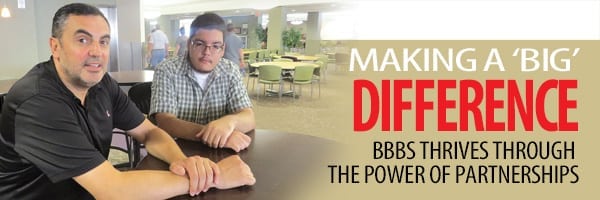
BBBS Thrives Through the Power of Partnerships
Big Brothers Big Sisters of Hampden County, like the agency’s 370-odd other affiliates, specializes in creating matches that ultimately provide learning experiences for mentors and mentees alike. To do that, the organization relies on partnerships with a host of constituencies, but especially the business community.
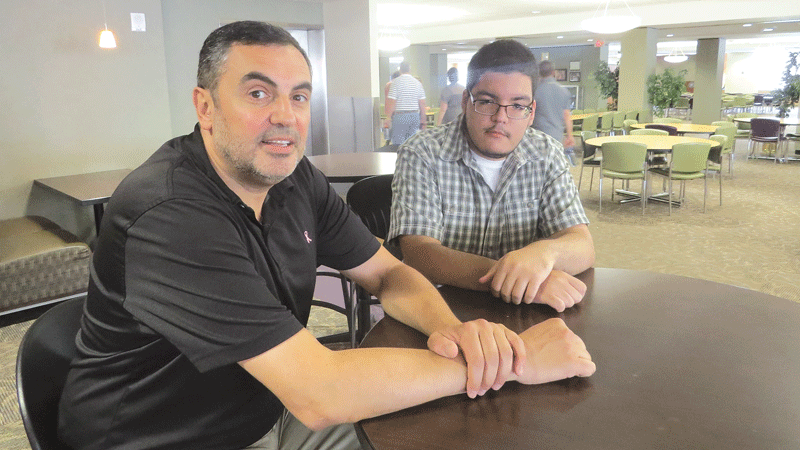
Sergio Dias, seen here with Angel, says the ‘littles’ he’s mentored through BBBS have inspired him and motivated him to think differently about the problems he’s confronted.
He said much depends on the individual in question — he’s served as a ‘big’ to many of them over the years — and the issues they’re dealing with at the time. But many times, he noted, he’s advising the young men on college, everything from why it’s important to the nuances of an application form.
“Some of them just need support based on the issues they’re facing at home, while for others, it’s more about getting them ready for college, including all the paperwork that’s related to getting accepted to a school,” said Dias, an analyst in the Marketing Department at MassMutual. “For others, it’s helping them figure out what they want to do, what their skills are; I’m helping them find themselves.”
He started to elaborate, but quickly changed the tenor of the conversation, focusing on what his interaction with these ‘littles,’ as they’re called, has meant to him. And he stressed that this is an equally important part of the equation.
“Initially, I thought I was giving back — sharing my knowledge and experiences,” said Dias, who is currently mentoring Angel, who will start his freshman year at Springfield College in a few weeks. “But I was really surprised by how much I was learning from them, even though I have three kids of my own. Many times, I’ve been inspired by what these kids have going on in their lives and their outlook and perspective on things. I think I have issues and problems, and I see the issues they’re dealing with and how they’re confronting them, and it really motivates me to think differently.”
Heather Bushey, assistant director of Continuing Education at Bay Path University, can certainly relate.
She’s been a ‘big’ to Springfield resident Destiny for eight years now, and has watched her grow from a young girl in the second grade to a young woman soon to enter her junior year of high school.
Destiny has grown in a number of ways, obviously, but so, too, has Bushey.
“I’ve learned a lot about myself, that’s for sure — about my limits and abilities and what drives me as far as motivating factors and seeing her grow and benefit from the program,” Bushey told BusinessWest. “It’s a very rewarding experience, and it has certainly helped me grow as a person.”

Heather Bushey, right, has been a mentor for Destiny for eight years now.
Indeed, it is like other BBBS chapters in that it:
• Serves an area that includes urban centers populated by large numbers of young people who are living in single-parent households or with grandparents or other relatives, and are very much in need of a positive role model and mentor;
• Struggles mightily to meet the demand for individuals — professionals and retirees alike — who are willing and able to serve in those roles. David Beturne, executive director of BBBSHC, said the chapter now serves roughly 225 young people at any given time, but could, if it had the needed resources and demand, serve twice that number; and
• Is very much dependent on partnerships with the community, especially the business community, to carry out its vital work. Indeed, BBBSHC has forged relationships with corporations and institutions ranging from MassMutual to Bay Path; from St. Germain Investment Management to Veritas Preparatory Charter School in Springfield, to effectively serve area young people.
The obvious goal moving forward, said Beturne, is to close that large gap between the number of young people who need mentoring and those who currently can be served. And to do that, the organization must generate more resources — each match between a ‘big’ and ‘little’ costs about $1,000 — and therefore create more of those critical partnerships.
For this issue, BusinessWest takes an in-depth look at the Hampden County chapter of BBBS to gain an appreciation not only for this organization’s broad mission, but how the business community plays a huge role in carrying it out.
Striking a Match
On the day that BusinessWest caught up with Bushey and Destiny for a few photos, they were on their way to dinner, although the specific destination was still to be determined.
They dine out together regularly, said Bushey, adding that they also frequent area malls — “Destiny loves to shop” — venture out for frozen yogurt, and take in various cultural events. They’ve been to downtown Boston, the beach, and a host of other destinations.
That list includes the Bay Path campus in Longmeadow. Bushey said she’s taken Destiny there several times with the goal of familiarizing her with that lifestyle and cementing a college education as a goal worth committing to.
“Right now, school is a tough experience for her,” said Bushey. “I try to get her to focus on setting goals for herself; we talk a lot about future goals and plans, with the hope that college will be part of that. I want to expose her to it now so she can start thinking about it.”
Relationships like the one between Bushey and Destiny are somewhat rare, at least in terms of this one’s duration, but, as stated earlier, typical in the way in which both the mentor and mentee learn from one another and grow personally.
Writing such scripts is the singular purpose behind BBBS, said Beturne, adding that it’s a reality, and a sad one at that, that there will always be a need for this organization, and that there are more young people who need help than there are individuals receiving it.
Addressing this reality is the core mission of the 370-odd BBBS affiliates, said Beturne, noting that the Hampden County chapter was launched nearly 50 years ago (1967) and has evolved greatly over the ensuing decades.
BBBSHC is one of several affiliates in Western Mass., but easily the most urban of those organizations, he explained, adding that Hampden County includes the area’s three largest cities — Springfield, Chicopee, and Holyoke — and some of the state’s poorest communities.
But the need for the agency’s services extends to each city and town in the county, Beturne went on, adding that this need is met through several initiatives, but primarily both community-based matching programs and site-based initiatives, which, as the name suggests, involves mentors visiting mentees at a specific site, such as a school, YMCA, or college campus.
In Hampden County, the specific programs are:
• The community-based model, used nationwide, whereby matches (such as Bushey and Destiny) spend at least eight hours a month together for at least a year and participate in all types of activities in the community;
• ‘Lunch Buddies’: During the school year, matches meet for lunch weekly at the child’s school for about 30 minutes;
• ‘Mentor Springfield’: During the school year, matches meet weekly for one hour at three Springfield middle schools. Activities ranges from writing in journals to working on homework; and
• The ‘Pathways Program’: Also during the school year, eligible students from Springfield’s Putnam and Sci Tech high schools meet with mentors from MassMutual (such as Dias) once a week for 50 minutes (more on this initiative later).

David Beturne, left, seen here with BBBSHC Director of Development Jesse Vanek, says the need for ‘bigs’ far exceeds the supply.
Results obviously vary with each individual, but a recent study conducted by the national research firm Public/Private Ventures in Philadelphia revealed that participants in BBBS programs are 46% less likely to begin use of illegal drugs, 27% less likely to begin using alcohol, 52% less likely to skip school, 37% less likely to skip a class, 37% less likely to hit someone, and, overall, more confident of their performance in school and better able to get along with their families.
Unfortunately, demand for mentors far exceeds supply, said Beturne, adding that, while BBBSHC serves about 400 young people a year, there are maybe 225 to 250 matches at a given time; some matches close out because the child reaches a certain age or moves out of the area.
“Demand is huge — I would like to serve at least 500 children in Hampden County, doubling our capacity,” he said. “If we could do that, I would be happy with that — I wouldn’t be satisfied totally, but I’d be happy.”
Escalating demand — there is currently a waiting list for mentors with upwards of 80 names on it (and that’s typical) — and a desire to meet it were the primary motivations behind creation of the site-based initiatives, said Beturne, adding that they allow more young people to receive mentoring services and more busy professionals to get involved in some capacity.
“As we were out doing recruitment, trying to get people to volunteer for the [community-based] program, the one thing we always heard was, ‘I’d love to, but I’m busy — I work, I have a family, I’m doing this or that,’” he explained. “So we started doing the school-based program, where a volunteer can see a child in school during the day. People are able to go out on their lunch break and spend 40 to 45 minutes with a child, maybe more.”
The Power of Relationships
Returning to his comments about how his participation with BBBS has helped him grow as an individual, Dias said he’s worked with six young people over the years, and each one has taught him something about life and how to deal with all that it can throw at you.
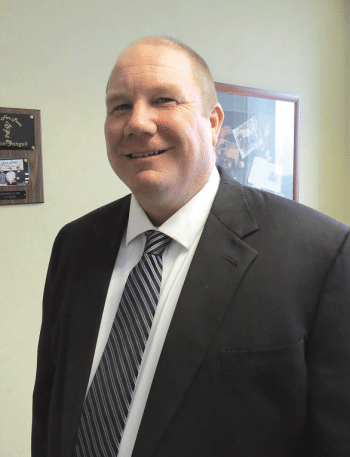
Dan Morrill says Wolf & Co. has supported BBBS in many ways, including the large team that took part in the annual bowl-a-thon.
“It felt like I was having a conversation with a 40-year-old,” Dias recalled, noting that the Springfield resident told him at their first meeting that he was determined to overcome a host of problems at home and not only graduate from Sci Tech High School and go to college, but graduate as a junior — and be valedictorian.
“At first I was like, ‘OK, yeah, sounds great … I’ll support you in any way I can,’” Dias said. “By the second month, I remember thinking, ‘he’s going to do it.’ He faced all kinds of challenges — the school didn’t want to let him do it at first, there were a lot of issues at home — but he did it. He got all kinds of scholarships I helped him with, and now he’s thriving at UMass. He was such an inspiration to me.”
Certainly not all stories involving BBBS participants involve such happy or unlikely endings — or beginnings, depending on one’s outlook. But everyone who takes part in this program benefits in some way, said Beturne, adding that the simple goal, again, is to enable more people — big and little — to take part.
And this brings him back to partnerships, all of which in some way enable BBBSHC to meet its mission and broaden its impact.
One such partnership has been forged with Bay Path, and it’s taken on many forms in recent years — from escalating participation in the annual BBBS bowl-a-thon, its largest annual fund-raiser, to the agency being named the school’s designated charity for the 2014 holiday party — but especially with Bay Path students going into Veritas Charter School as ‘bigs,’ creating 20 more of those all-important matches.
“Veritas is very much a college-preparatory school — their mission is to get students to move on, to graduate from high school and attend college,” said Beturne. “Being able to have Bay Path students go into the school and share their experiences — many of the school’s students are first-generation college attendees — is a win for Big Brothers Big Sisters, Veritas, and Bay Path. Their students are able to gain exposure and give back, and students at Veritas are able to see this real world, too.”
Rachel Romano, founder and executive director of Veritas, agreed, noting that students at the school participate with BBBS through the Bay Path initiative and others.
She said only 17 of the school’s roughly 240 students take part (again, demand is greater than supply), but those who do participate benefit from the relationship and the reinforced message concerning the importance of a college education and how it can become a reality.
“Our mission is to prepare our students for college,” she explained. “And what we love is the idea that these ‘bigs’ would stay with these guys and be a support person in their lives who would help them stay on the path to college once they leave Veritas.”
Carol Leary, long-time president of Bay Path, said the school is active with a number of area nonprofits, like BBBS, that reflect the its core values, enable its students to become active in the community, and support young people and education.
Several employers, including Bushey, have served as ‘bigs,’ while students have been doing site-based work at schools such as Veritas for three years, said Leary, adding that BBBSHC was this year’s designated nonprofit at Bay Path, and thus the focus of a well-orchestrated campaign of support.
“We go out to the community and ask if there is a nonprofit that they would like us to highlight and spotlight for Bay Path’s generosity at the holiday party,” she explained. “This year, Big Brothers Big Sisters had the most support of any nonprofit, so we chose them. They gave us a list of things of they need — everything from games for the children to books to gift cards so that the big brothers and big sisters can take a child to Friendly’s — and we send that list to the people at Bay Path, who make donations.”
Case in Point
Another key relationship has been forged with MassMutual, which had a desire to add a case-management component to an existing but evolving mentorship program, and found a willing partner in BBBSHC.
“We wanted to look at mentoring somewhat differently, and look at how we could use mentoring as a method to help focus students on college- and career-readiness issues,” said Pam Mathison, a community-responsibility consultant for the company who specifically focuses on education programs within the city of Springfield, as she talked about the corporation’s larger Career Pathways initiative.
“Initially, we started working with Mass Mentoring Partnership, and they helped build the model along with Springfield School Volunteers and the Springfield School Department,” she went on. “As we got into the experience, we determined that we needed a mentoring partner whose job is the management of a mentoring program, and for that, we approached Big Brothers Big Sisters.”
The motivation for the partnership was to improve the overall experience for both the students and the mentors, she went on, adding that this has certainly happened since the relationship began more than three years ago.
Roughly 40 employees across virtually all departments and all levels within the corporation have made a three-year commitment to serve as ‘bigs,’ said Mathison, adding that students, like Angel, are recruited during their freshman year and essentially begin work with their mentor during their sophomore year.
As with Bay Path’s initiative, there are multiple winners in this scenario, including the company, which is always mindful of creating a pipeline of future employees, the students themselves, and BBBSHC, said Beturne.
He noted that the organization benefits from partnerships with companies large and small, whose employees make donations ranging from stints as ‘bigs’ to service on the board of directors, to raising money through the annual bowl-a-thon.
St. Germain is one of those companies, and its president, Michael Matty, said the support stems from need, but also from the results generated by the agency.
“I have a high level of involvement with a lot of organizations, but rarely do I see people more passionate than those at BBBS,” Matty said. “I love passion; their passion is one of the reasons we are involved. But as a businessperson, I also recognize that passion is perhaps pointless if there are no results.

Mike Matty says BBBS might fly under the radar, but its impact on the lives of underprivileged youth will reap long-term benefits across the region.
Another prominent local partner is Wolf & Co., the Boston-based accounting firm with a large Springfield presence.
Dan Morrill, CPA, a principal responsible for the company’s Professional Practice Group — and a one-time ‘big’ — said the company’s support comes in many forms, from his service on the board of directors to a large, company-wide turnout for the bowl-a-thon.
“The first year we had a bowling team, I think we had three people — this year, we had about 70,” he explained. “That speaks to how the company values the important work Big Brothers Big Sisters does within the community. Giving back is a big part of the culture at Wolf, and this organization has always been one of those we choose to support because it is really making a difference within the community.”
Work in Progress
Bushey told BusinessWest that young people “age out” of BBBS when they reach 19. By that, she meant that the formal relationship between the ‘big’ and ‘little’ ends.
Often, however, a new one begins, she said, adding that the young people sometimes remain active with the organization in several ways as alums, while staying in touch with their mentor.
“I definitely anticipate remaining involved with Destiny,” she said, adding that she doesn’t know what the future holds for her, but intends to keep providing whatever support she can.
In a nutshell, that’s what this organization is all about — people stepping up, getting involved, and positively influencing young lives.
It takes individuals with time, energy, and commitment to make such a difference, but overall, it takes a community to enable this agency to meet its all-important mission.
George O’Brien can be reached at [email protected]
East Longmeadow Touts Residential, Business Gains
By GERRY FITZGERALD
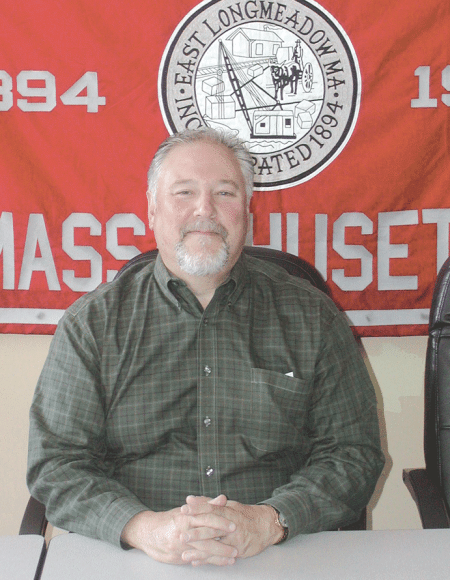
Paul Federici says East Longmeadow’s strong balance, in the form of both residential and commercial growth, has made it an attractive location for businesses.
Finally, he shrugged and almost apologetically offered, “well, we’ve got two issues on the horizon that we’re going to have to deal with, but I’m not sure I’d say either one is a problem.”
And if they are problems, they could well be placed in that category of ‘good problem to have,’ he told BusinessWest, referring to a recognized need to build a new high school and an ongoing study to determine if this town of 16,000 people should change its form of government, from the present three-member Board of Selectmen to a mayor, town manager, or other format.
“As much as I enjoy being a selectman, we’ve got a $50 million corporation here, and it may be time for full-time professional management in town,” said Federici, adding that the two issues he mentioned are tied directly to the town’s strong recent pattern of growth, both commercial and residential.
And there are many reasons for both — everything from available, buildable land to an attractive location near several affluent communities; from an alluring commercial tax rate to a host of quality-of-life amenities (everything from the attractive parks to the region’s largest Fourth of July parade) — that collectively make this an attractive place to live, work, and launch a business.
“The town continues to grow,” said Federici. “Homes are selling in all price ranges, from the smaller starter homes on up to the high-end luxury homes in the developments off Prospect Street, which is a very positive sign, and the business climate here has probably never been better.”
East Longmeadow businessman John Maybury, president of Maybury Material Handling, located in the Denslow Road Industrial Park since 1981, echoes Federici’s comments about East Longmeadow’s commercial economy.
“The industrial park is just about completely filled,” said Maybury, “although there still may be a couple of buildable parcels left. The Deer Park industrial area just south of Denslow is also growing nicely, and all of these companies are doing very well. And, of course, we still have the big ones, Hasbro and Lenox, which has invested $60 million in the plant since its purchase by Newell Rubbermaid in 2003.”
Federici pointed to recent newcomers to town as great examples of the positive business climate of East Longmeadow. He listed the Arbors Day Care, WhiteStone Marketing Group and Go Graphix, a new self-storage facility, Toner Plastics, All Hose Inc., and the recently opened, $15 million Philip H. Ryan Health Science Center of Bay Path University on Denslow Road.
Bay Path’s first physician-assistant class to use the new building graduated in May. “It’s great to have Bay Path University in town,” said Federici. “The new building is fabulous, inside and out, and we’re proud to have it in East Longmeadow.”
That facility is one of many recent success stories recorded in town, and, for this latest installment of its Community Spotlight series, BusinessWest chronicles many others while speculating on what might come next.
In Good Company
Asked to pinpoint the core reason why East Longmeadow is thriving financially — the town’s bond rating is at its highest point ever — and has become an attractive landing spot for families and businesses alike, both Federici and Maybury repeatedly used the word ‘balance.’
“It’s the great balance we have between the commercial, retail, and residential sectors that makes East Longmeadow unique,” noted Maybury. “We’ve got some huge industrial companies, and big employers, in Hasbro and Lenox, along with a great mix of large and small commercial firms in the industrial parks, several thriving retail areas, and a growing residential market. That’s a great mix.”
Federici concurred. “That balance is why we have a strong tax base and reasonable taxes, good infrastructure, and good schools,” he told BusinessWest. “It’s why East Longmeadow is a great town for families.”
And for businesses as well, he added, noting that growth has come in virtually all sectors of the economy, from manufacturing to education.
That extends to the retail sector as well, said restaurateur Bill Collins, who, with his business partner, Michael Sakey, opened the Center Square Grill in May 2014.
According to Collins, the restaurant has far exceeded its first-year projections. “Knock on wood, of course,” he said with a grin, “but business has been great, better than we’d hoped for.”
He is quick to attribute much of the restaurant’s success to the centralized location of the town between Wilbraham, Hampden, Springfield, Longmeadow, and Somers, Conn.
“We draw our customers from a five- to 10-mile radius that cuts through five surrounding towns plus all of East Longmeadow,” he explained. “If you look at a map, the center of East Longmeadow is just a fabulous location for retail businesses, and all of the stores, restaurants, and services in the area are doing very well.”
He also credits the town government for creating a positive business environment. “When were first looking to open at Center Square, the Planning Department, selectmen, and the licensing people could not have been more helpful or more welcoming,” said Collins. “They bent over backward to help us get up and running as soon as possible, and that means a lot to a new business.”
Bring up the 100-pound gorilla that every Western Mass. restaurant is at least wary of, the MGM Springfield casino coming to downtown Springfield in a few years, and Collins says he is aware but not overly concerned. “We’re quickly creating many, many loyal, return customers,” says Collins. “We don’t see these people suddenly heading into downtown Springfield to eat at a casino.”
Federici has a similar reaction to the impact of MGM Springfield. “We’ll see,” he said with a shrug. “I don’t think the casino will have a huge impact on us. Two different impact studies, one by the Pioneer Valley Planning Commission and the other by the casino people, both predicted an increase in traffic in the town of about 6%. For a few hours on certain days, we may feel that, but I don’t think it’s going to be anything dramatic.”
Returning to those aforementioned ‘good problems to have,’ Federici said the School Department has concluded that the nearly 60-year-old high school, built when the town was roughly half its current size, is clearly in need of replacement.
“The selectmen gave the approval to the School Committee to go to the state for funding,” he said. “Last year, the project didn’t make the list of 100 or so building projects approved for partial state reimbursement, but it will be submitted again this year.”
Even if approved for partial state reimbursement, the new high school will be a costly burden for the town. “The estimated cost for a new high school is $80 million,” said Federici, “and some significant part of that is going to have to be picked up by the town. But that will be a problem we’ll overcome, and then, we’ll have a beautiful new high school for our children.”
The Bottom Line
As for a possible change in the town’s governmental structure, Federici chose to discuss it with humor, in the form of a story the town clerk once told some visitors to Town Hall.
“He told them, ‘East Longmeadow has a three-member Board of Selectmen and an open town meeting … the pilgrims had a three-member Board of Selectmen and an open town meeting.’ So maybe it is time to make a change.”
If one does come, it will be a clear sign — yet another one in a series of signs, actually — that this community is in a growth mode, and that the trend will only continue and accelerate.
East Longmeadow at a glance
Year Incorporated: 1894
Population: 15,720 (2010)
Area: 13.0 square miles
County: Hampden
Residential Tax Rate: $20.72
Commercial Tax Rate: $20.72
Median Household Income: $62,680
Family Household Income: $70,571
Type of Government: Open Town Meeting, Board of Selectmen
Largest Employers: Hasbro, Lenox Tools, East Longmeadow Skilled Nursing, Redstone, Plastipak
* Latest information available
Social Security: A Modest Suggestion
By BEN BRANCH
The U.S. retirement system is beset with challenges. First, the shift from defined-benefit to defined-contribution plans coupled with low contribution rates and poor investment performance means many will have inadequate resources at retirement. Second, longer life expectancies and declining birth rates are increasing the ratio of retirees to workers. Third, the Social Security trust fund is projected to run dry in about 20 years.
The present system does provide a comfortable retirement for those with generous coverage under the remaining defined-benefit plans as well as for those with large sums in their defined-contribution accounts or elsewhere. Those having modest pre-retirement incomes may, however, have little or nothing built up in their retirement accounts. They must largely look to Social Security, which was not designed to be their sole support.
Moreover, unless something is done about it, the Social Security System will in the future be unable to continue to fully fund its payment obligations.
Suggested approaches include increasing the Social Security tax rate and/or increasing the standard retirement age (very difficult politically). Moreover, a higher standard retirement age would force everyone to defer retirement or accept a lower benefit when many people are physically unable to continue working. And even if something is done to improve the system’s finances, that would not necessarily address the problem facing those who retire with too little put aside to live comfortably.
Under the current system, those over age 62 who wish to retire prior to their standard retirement age (66 for most people) must do so at a reduced benefit rate. If, however, they are willing to defer drawing benefits beyond their standard retirement age, their benefit rate increases by 8% for each year they defer up to their 70th birthday.
Note, however that each additional year deferred has a greater impact in terms of reducing the post-retirement payments. A 66-year-old with a 20-year life expectancy who defers a year reduces the years of drawing benefits by 1/20th. One who defers one more year, five years later, with a 15-year life expectancy, has reduced the remaining years of drawing benefits by 1/15th.
To the extent that people can be induced to defer their retirement, our Social Security system benefits both from the additional tax revenues and from the years for which benefits are not paid. Similarly, the overall economy benefits from the additional production of those who continue working. Even the Medicare system would benefit to the extent that those covered by their employer would defer signing up for Medicare.
Clearly, increasing the propensity of people to defer their retirement has many pluses for both the individual and the economy. Can such deferrals be increased? I suggest the following ways for encouraging people to defer their retirement:
• Allow the benefit rates to continue to increase for those who wish to defer retirement past age 70;
• Allow retirees the option of drawing partial benefits while the percentage of benefits that are deferred continue to be increased;
• Promote SSI-benefit-payment deferrals with an education campaign; and
• Encourage additional years of deferral by increasing the rate of increase in the benefit. For example, benefits could be increased by 7% for the first year, 7.5% in the second, 8% in the third, and so on. This process would reflect the advantage to the system for people retiring well past age 66.
Clearly, increasing retirement deferrals would reduce the payments going out while increasing the funds coming in to the Social Security trust fund. Once benefits begin, the benefit rate will be higher, but paid for fewer years. Thus, the total amount paid out may not be very different from what would have been paid out without the deferral. Indeed, the overall economic system would also have been helped out by the tax payments resulting from the additional years of working.
This modest proposal would not only allow, but encourage those who are able to do so to continue to work productively well past the standard retirement age, without forcing continued employment on those who would find such a requirement onerous.
Ben Branch is a professor of Finance at the Isenberg School of Management at UMass Amherst; [email protected]
Mini Dental Implants Provide a Permanent Solution to Lost Teeth
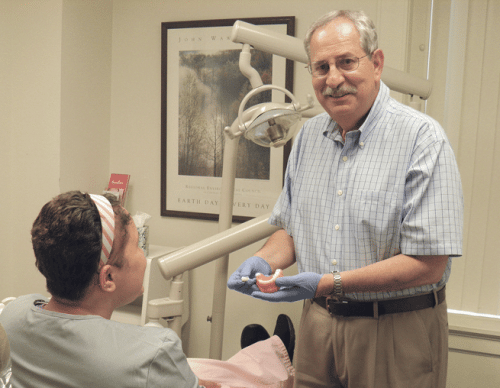
Dr. David Hirsh calls mini implants a fast, affordable way to replace missing teeth and stabilize dentures without surgery, pain, or bleeding.
But thanks to advances in medicine, today people can replace their pearly whites with mini dental implants, which offer a permanent solution to the problem.
“They’re a fast, affordable, and permanent way to replace missing teeth and stabilize dentures — they don’t require surgery, there is no pain or bleeding, and they are half the cost of traditional implants,” said Dr. David Hirsh of Hirsh and Associates in Springfield.
This development is important because, in addition to detracting from a person’s cosmetic appearance, failing to replace missing teeth leads to other problems. Hirsh said the remaining teeth tend to migrate to fill in the space, which puts so much pressure on them, they can also be lost. “Filling in the spaces not only corrects how someone looks when they smile, it protects the remaining teeth and prevents the bone loss that occurs when they are not replaced.”
Mini dental implants, or MDIs, offer people with dentures a lasting solution to the problem of slippage because they provide an anchor to hold dentures or partials in place and gives them the strength and stability they need to eat foods such as corn on the cob or apples, which they would otherwise have to forego as they are too difficult to chew.
“When a person can only eat soft food because their dentures don’t fit well, being able to eat whatever they want in a restaurant is a tremendous change. If mini implants are holding the denture in place, they don’t have to use paste or powder, which they end up tasting more than the food, and there are no sore spots as the dentures don’t rub against the gums,” Hirsh said, adding that, when they are used to stabilize upper dentures, the palate portion of the denture can be cut away, which makes it much more comfortable and improves the taste of food.
MDIs are solid, one-piece, titanium-coated screws that take the place of a tooth root. They are much thinner than traditional dental implants and were originally designed to hold dentures in place. However, they have other benefits, including the fact that they stimulate and maintain the jawbone, which prevents bone loss and helps to maintain facial features. In addition, they are stronger and more durable than crowns and bridges that have been cemented into place.
They were first used in the ’90s and have been approved by the Food and Drug Administration for long-term use for fixed crowns and bridges and removable partial and full upper and lower dentures.
When Hirsh first heard about MDIs, he was skeptical. But after conducting research and learning more, he became convinced they could change people’s lives, so he attended classes in the Shatkin Fabricated Implant Restoration and Surgical Technique in Bufffalo, N.Y. and received his certification.
Six months ago, after rave reviews from patients, he said, he opened one of 27 Mini Dental Implants Centers of America. He told BusinessWest it is associated with the Shatkin Institute, which is the largest training center in America and has the largest lab and dental office in the country.
Dr. Todd Shatkin, who founded the institute, is president emeritus of the International Academy of Mini Dental Implants, and Hirsh is a member of that organization as well as the American Dental Assoc., the Massachusetts Dental Society, the Valley District Dental Society, and the prestigious Crown Council.
Hirsh said that, although traditional implants, which require surgery and months of healing time, were the standard of care for many years, a study by Shatkin that involved placing 10,000 mini implants in patients and following them for 10 years showed they had a 95% success rate, which is exactly the same rate as traditional implants.
The total cost of a single MDI in his center is $2,500, which includes the temporary and permanent crowns, while the cost of the four MDIs needed to hold a partial or denture in place is $4,000.
Something to Chew On
The process in Hirsh’s implant center begins with a panoramic X-ray, which allows the dentist to check the bone density and make sure there is enough room to place the MDI. Next, an impression is taken of the area that will be restored, which is sent to the Shatkin Institute.
“They fabricate a surgical stent that will be used to determine the exact spot where the MDI will be placed,” Hirsh said, noting that the institute also determines the size of the drill bit that needs to be used and the length and width of the implant.
When the patient returns to the office, the area is numbed, and Hirsh places the surgical stent, which is made of plastic, over the surrounding teeth. Next, he drills a hole through the gum into the bone and screws the implant into it, then secures a temporary crown onto it. “The color of the temporary is matched to the surrounding teeth,” he said, adding that, if any modifications need to be made, the information is sent to the lab before the permanent crown is created.
If the MDIs are being used to hold a denture or partial in place, it can be snapped onto the MDIs immediately after tiny holes about the size of a pen tip are drilled into the bone through the gum where the implant will be placed.
“Although a denture can contain about 12 teeth, you only need four implants to secure it,” Hirsh said, adding that, in cases where the denture doesn’t fit well, it may need to be modified before it can be used with the implants.
Losing a lot of weight can cause dentures to stop fitting properly, and if that occurs, people often find it difficult to keep them in their mouths. However, if the denture is secured by mini implants, it is not a problem. It will stay in place, and although people may want to get it realigned, Hirsh said the MDIs will never have to be adjusted.
MDIs have also helped many people with partials because they snap onto the mini implants, eliminating the need for metal clasps on adjoining teeth that hold them in place.
In addition, if people who are replacing a tooth have gum loss, crowns attached to the MDI can eliminate the cosmetic problem. “We put pink porcelain at the bottom or top of the crown so the tooth doesn’t look like it’s too long; it can be matched exactly to the color of a person’s gums and looks very natural,” Hirsh said.
He told BusinessWest the only instance in which a traditional dental implant works better than a mini is if someone has a very low maxillary sinus. “There may not be enough bone to put in the two implants that are needed, and in that case, we refer the patient to a local specialist. But it’s very, very rare.”
Evolving Science
Hirsh said misinformation has been circulated about MDIs in the general community, including the belief that MDIs can’t be used to replace molars or used for a full-mouth restoration, and only last about five years.
“They can last 20 years or a lifetime, just like traditional implants,” he noted, adding that they can be placed in people aged 17 and older once their jaw has stopped growing.
“I believe in 10 years, more dentists will use mini implants than traditional ones,” he said. “It’s a wonderful procedure that results in a wonderful cosmetic appearance. It’s just a matter of education; they’re life-changing.”
IT Industry Confronts a Perplexing Shortage of Workers
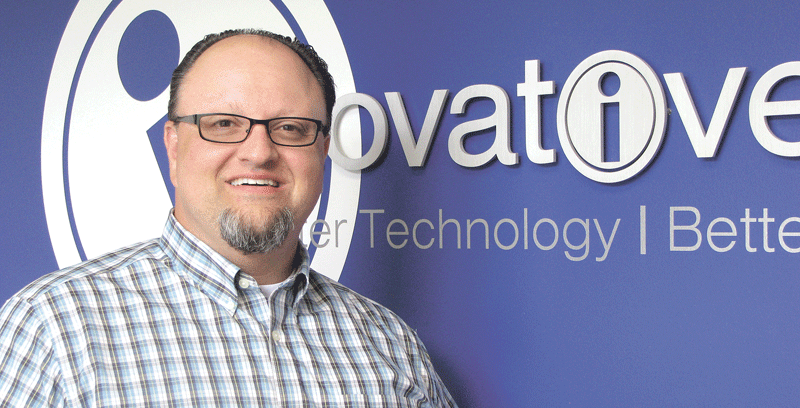
Dave DelVecchio says technical skill is important in a prospective employee, but so is a willingness and desire to learn new things.
Around the turn of the millennium, when dot-com startups were riding high, computer science was an attractive career option for college students choosing majors. Ironically, however, although technology has become even more pervasive in daily life over the past 15 years, the number of people entering the IT field has plummeted, slowing growth at high-tech companies that would be expanding faster if they could only find the talent. The key, industry leaders say, is working together to reignite interest in what remains a well-paying, in-demand, often exciting field.
As a mechanical-engineering major in college, Joel Mollison didn’t expect to one day own a successful computer-services business. But then he taught himself computer repair, which — along with his growing distaste for his chosen major — led him to change direction, and eventually launch what’s now known as Northeast IT in West Springfield.
That means he’s always looking for people like him, who at some point discover a love for computers and information technology and are skilled at it. But finding those people has not been easy.
“Technology encompasses such a vast range of jobs,” he told BusinessWest. “Programmers and coders are a completely separate thing from people who do what we do, providing managed services, managing people’s networks … and that’s totally different from, say, web design.”
By all accounts, opportunities in those fields and many others in the IT realm are only growing. Yet, at the same time, the number of young people graduating from college with the necessary skills to succeed in IT is falling.
Indeed, according to Code.org, a national nonprofit dedicated to expanding participation in computer science, by 2020, the U.S. will have 1.4 million computing jobs available, but only 400,000 computer-science graduates available to fill them.
That’s a reflection of two colliding trends, the organization notes. As computers increasingly run virtually every facet of our lives, fewer college students are choosing to major in computer science. Specifically, 60% of all jobs in the broad realm of math and science have a computing element, but only 2.4% of all college students majoring in a math or science field are choosing computer science.
“We’ve absolutely been dealing with this for the last five years, and the problem will only get worse before it gets better. In general, we need a lot more folks than there are out there,” Mollison said. “There are a lot of different facets to IT, and each requires its own unique skill set, although there is some overlap. To be a professional in any of these sectors, you need to possess a vast range of knowledge.”
Dave DelVecchio, president of Innovative Business Systems in Easthampton, has experienced the same struggle.
“The pool of qualified talent is not deep enough to provide the exact mix of talent we need,” he said. “Typically, we somebody to come to the table and demonstrate they have the ability to learn — someone with good, broad-based knowledge to draw from, but also a desire and willingness to learn new things.”
Delcie Bean IV, president of Paragus Strategic IT in Hadley, understands the scope of the national problem, but also how it affects his firm, one of the country’s fastest-growing IT companies, on a daily basis.
“Being a top-paying career and the second-fastest-growing career, it’s absolutely the right career to be in, but fewer people are graduating today than 10 years ago; interest is actually shrinking,” he said. “And when we talk about where women and people of color fit in, it’s abysmal.”
He cited statistics from Code.org noting that women, who claim 57% of all bachelor’s degrees, earn just 12% of all computer-science degrees. Meanwhile, at the high-school level, 3.6 million students take the advanced-placement computer-science exam, but only 3,000 of those seats are occupied by African-American and Hispanic students.
Combined, all these numbers tell Bean there’s plenty of untapped potential to draw students of all demographics into an IT field that desperately needs them.
“Paragus, at any given time, has four to eight open positions,” he noted. “Every open position represents an opportunity lost, because every employee has ROI and generates profit. If a position isn’t filled, that’s profit we’re not capturing.”
The net effect is that a company that has been growing at 25% to 30% per year could be growing at 45% to 50% if the talent gap wasn’t an issue and Paragus could hire whenever it wanted to.
For this issue and its focus on technology, BusinessWest examines some of the reasons behind a drought of IT workers that could become critical in the next decade — and what both public- and private-sector entities are doing about it.
Digital World
It’s ironic, Mollison said, that the more people rely on high-tech devices to run their lives, fewer young people are interested in computer science as a career.
“Everything runs on computers now,” he noted. “Because of that, there’s a wide array of services, a wide array of products out there. Career opportunities are growing exponentially, and there are not enough people out there with the experience to fill those gaps.”
Thinking back to his college days 15 years ago, Mollison recalled there were a lot of people entering the IT field drawn by the promise of making a lot of money in an exciting, fast-growing field. It’s a different time, though, and Millennials are known for following their passions, not necessarily just a paycheck.
“If you don’t have a true passion for IT, if you’re not exposed to it at a young age, and if the desire isn’t there to begin with, I think a lot of people may be overwhelmed by the time they reach high school and college, and are figuring out what they want to do with the rest of their lives,” he said. “The tech field can be a bit overwhelming if you’re not absolutely sure that’s where you want to be.”
With the goal of increasing exposure to computer science at an early age, Bean serves on the advisory board of the Massachusetts Computing Attainment Network, or MassCAN, which has developed a set of standards, now being considered by the state Board of Elementary and Secondary Education, for making computer science part of the K-12 curriculum.

Joel Mollison says young people often don’t grasp the sheer breadth of career opportunities available in IT.
The standards would likely be recommendations to start, Bean said, “but if they were to make it mandatory, it would put Massachusetts ahead of the curve in graduating some of the best talent from the K-12 system. And we’re already known for our higher-education system.”
Training young people in computer science is something Bean takes seriously, which is why he launched Tech Foundry last year. The Springfield-based nonprofit, which trains promising students to enter well-paying IT jobs right out of high school, recently graduated its first class of 24 participants.
DelVecchio sees, in the promise of Tech Foundry, echoes of Javanet back in the mid-’90s. A locally based Internet service provider, that company was later acquired by RCN, a large, regional player, which created large numbers of entry-level positions in its call center and support services, providing opportunities to work in the IT field when interest in such careers was peaking.
Then, “when RCN decided to move its call center to Pennsylvania, all those folks scattered to the wind — but many of them ended up pursuing a career in IT,” DelVecchio said. “We’ve got four people who have RCN on their résumé.”
In fact, he went on, many local IT companies were seeded with those former RCN workers, who have moved up to management-level positions. A decade or so down the road, DelVecchio hopes a vibrant IT industry in the Valley will be similarly peppered with Tech Foundry graduates. “You might not see the impact this year, but it will benefit the region 15 years from now.”
Bean certainly hopes his brainchild has such an impact, because it’s not just small computer firms that crave IT talent, but some of the region’s largest employers.
“It’s a huge problem with a national impact. Look at MassMutual. Look at Baystate. If they don’t have good tech employees, that’s a problem for them — and a problem for everyone.” Many companies, he added, have experimented with outsourced or even offshore IT services, but find that in-house talent is more efficient and produces better return on investment.
But the talent lag has everyone struggling to meet those needs.
“All we’re doing is shifting people from one company to the next,” Bean said. “There’s a lot of poaching going on — giving someone a raise to be your employee. We all have to do a little bit of that to survive, because the talent pool isn’t wide enough. But it’s not good for the region.”
High-tech, High-touch
When Bean and others talk about IT skills, however, they’re not thinking only about the inner workings of computer hardware and software, but also about ‘soft skills’ — in particular, communication skills — so critical to today’s IT world.
“That’s one of the really big challenges facing a lot of companies like ours,” Mollison said. “We have a lot of people who have to face the public, and you can have great technical people, but if they’re unable to communicate, if they don’t have those soft skills, they’re not as great an employee as they could be; it’s difficult to send them out into the world.”
Some of this reflects one particular type of person who embraces technology early in life, he added.
“A lot of folks are introverted and love computers — it’s a way for people to escape into another world; that’s how they get into it,” he explained. “But as they grow in that facet, and become technically mature, they can lose those soft skills, not being a part of day-to-day life.
“Personally,” he added, “I’ve seen some people who have been sheltered, not been outgoing, who have been turned around. But they need to be exposed to a group of tech people who are more outgoing, who can help break them out of their shell and be more personable, so they can work in a job where they deal with people on a regular basis.”
It doesn’t help, DelVecchio said, that too many IT graduates of the region’s highly regarded colleges and universities take their skills to the Boston area or out of state completely. This talent drain is one of the top-priority issues of the Hampshire County Regional Chamber, of which he’s a founding member.
“This region has vast assets we bring to the table,” he told BusinessWest. “We hear stories of people who moved away for job opportunities, then moved back because this is a place they want to raise a family. We need to be louder about the fact that they don’t have to move away; they can start a career, they can thrive here, and raise a family in the Pioneer Valley. That’s true not just for IT careers, but for many industries.”
Bean hopes the network of entities actively working on the IT talent problem — from state departments to regional workforce-development agencies; from community colleges to initiatives like Tech Foundry — will start to make a dent by not only cultivating young people’s interest in IT, but helping them attain both computer expertise and the soft skills necessary to work with a public that, again, is becoming ever-more reliant on technology.
“I think it’s about exposure,” he concluded. “Typically, people choose their career path based on what they’re exposed to in school — and computer science has really dropped off the radar.”
He noted that CSI: Cyber, the latest iteration of CBS’ popular criminal-forensics TV franchise, is one media entity showing an attractive and exciting side to IT work.
“I’m interested to see its impact; I think that will do more for computer science than anything else. Four years ago, there was a huge increase in students wanting to be physicists, and they traced it back to The Big Bang Theory. I think we underestimate how much exposure pop culture has to do with career paths.”
Meanwhile, his work — and that of others — to promote the computer-science industry locally continues.
“If we can get people more exposure to IT jobs, how exciting this field is, how much it pays, how fast it’s growing,” Bean said, “we can really start to move the needle.”
Joseph Bednar can be reached at [email protected]
WEST SPRINGFIELD — The West of the River Chamber of Commerce recently announced its new board of directors for the upcoming year.
Chairman for 2015-16 is Chuck Kelly, who has served on the board of directors for several years. He also serves on several West of the River committees, including the economic development committee, and co-chairs the membership/marketing committee. He is the general manager of Flowers By Webster, which has locations in West Springfield and Westfield.
First vice chairman is Brian Houle, a recruitment and staffing operations professional at Spherion in West Springfield. He joined the West of the River board of directors last year and participated on the education and finance committees.
Second vice chairman is Frank Palange, who has served on the board for several years and has been an active member of the economic development committee. He is the owner of V&F Auto in Agawam and also serves as the chairman of the Planning Board in West Springfield.
Treasurer is Lori Stickles, a two-year board member who chairs the finance committee. She is the manager of United Bank’s Agawam branch on Silver Street.
Clerk is Patty Parker-Flores, who has served on the board and several committees over the last few years and this past year chaired the education committee. She is the Cooperative Education coordinator at Lower Pioneer Valley Technical School in West Springfield.
Other West of the River board members for the 2015-16 term include John Weiss (immediate past chairman), Ormsby Insurance Agency; Bonnie Massoia, Canary-Blomstrom Insurance Agency; David Chase, Freedom Credit Union; Donna Safford-Fleury, Crestview County Club; Jennifer Lichlyter, Six Flags New England; Jaime Smith, Westfield Bank, West Springfield branch; Noreen Tassinari, Eastern States Exposition; Michele Brennan, Bridgeport Bindery; Matthew Roberts, Insurance Center of New England; Melissa Richter, PeoplesBank; Tanya Moriarty, Johnson, Sclafini & Moriarty; Dee Emery-Ferrero, DEF Enterprises; John O’Farrell, Boys & Girls Club of West Springfield; Bridget Fiala, Marinosci Law Group; and Bill Lucardi, Marketing Doctor.
WESTFIELD — Tighe & Bond, a New England leader in civil and environmental engineering and consulting, opened its doors this month to a new Eastern Mass. office in Westwood.
The 4,800-square-foot workplace provides a strong base of operation to better serve the company’s Greater Boston-area clients. Staffed initially with a team of 10, Tighe & Bond plans to expand its workforce at this office to approximately 20 employees.
Director of Business Development F. Adam Yanulis and Senior Project Manager Benjamin Levesque are providing leadership for the upstart of Tighe & Bond’s newest office. Yanulis has more than 30 years of experience providing leadership to the public-sector engineering and construction industry in Eastern Mass. Levesque is a civil and environmental engineer and senior project manager with more than 16 years of experience in the municipal water and wastewater industry.
“We are a firm that is committed to our clients and the many longstanding relationships we have developed,” said Tighe & Bond President and CEO David Pinsky. “Locating an office minutes from Boston allows Tighe & Bond to more readily respond to growing client-service demands. Plus, our team at this location has a strong local knowledge of the region and years of experience providing comprehensive engineering and environmental services, which is sure to benefit both existing and new clients. Also, as we continue growing our business, this office addition provides a great opportunity to tap into the talented workforce available in the Greater Boston area.”
In addition to better serving its Eastern Mass. clients, Tighe & Bond is continuing its plan for geographic growth to further reinforce its position as a New England leader in engineering and environmental services. This new office represents yet another growth opportunity for the firm, which is seeing office expansions and staffing growth in multiple offices throughout New England.
Tighe & Bond currently has more than 260 employees. Its other office locations include Westfield (its headquarters), Pocasset, and Worcester, Mass.; Middletown and Shelton, Conn.; and Portsmouth, N.H.
The firm also has seen substantial revenue growth. This past March, Environmental Business Journal, a research publication providing strategic business intelligence to the environmental industry, presented Tighe & Bond with a bronze medal for the mid-size firm’s notable business achievement in revenue growth in 2014.
Founded in 1911, Tighe & Bond provides engineering and environmental services for clients in government, industry, healthcare, education, real-estate, energy, and water/wastewater markets. Engineering News Record annually ranks Tighe & Bond among the top design and environmental engineering firms nationally. ZweigWhite also has recognized Tighe & Bond several times as one of the best engineering firms to work for in the nation.
SPRINGFIELD — The Naismith Memorial Basketball Hall of Fame announced that Bob Delaney, veteran NBA official and current vice president of the league’s referee operations, has been elected to the Hall’s board of trustees. One of 30 current trustees, he is the first referee to serve on the board.
“The Naismith Basketball Hall of Fame honors the game, and being the first referee to be a board of trustee member is humbling,” said Delaney. “The opportunity to represent the officiating community is a great honor. I embrace this responsibility with dedication, commitment, and enthusiasm to my fellow board members and the Hall of Fame.”
Delaney spent 14 years in law enforcement prior to his officiating career. His work with post-traumatic stress, providing education and awareness for military, law enforcement, firefighters, first responders, and their families has gained international recognition. In 2011, Delaney was recruited by NBA Commissioner David Stern to serve as an NBA Cares ambassador, and in 2014 the Hall of Fame named Delaney a recipient of the Mannie Jackson Basketball’s Human Spirit Award.
“Bob Delaney is one of the most well-respected referees the game has ever seen,” said John Doleva, president and CEO of the Basketball Hall of Fame. “This is because of the tremendous man he has proven to be both on and off the court. He represents the game with the utmost integrity, and we are very pleased to have him joining our board of trustees.”
The board of trustees serves as the group responsible for preserving the fundamental mission and financial well-being of the Basketball Hall of Fame. Trustees serve as ambassadors for the Hall, promoting its core mission, which is to celebrate the greatest moments and people in basketball. Made up of individuals that work in or have worked in the game, as well as business leaders that have supported the game, the board also elects all governors of the Hall.
UMass Grad Marty Meehan Now Leads the System
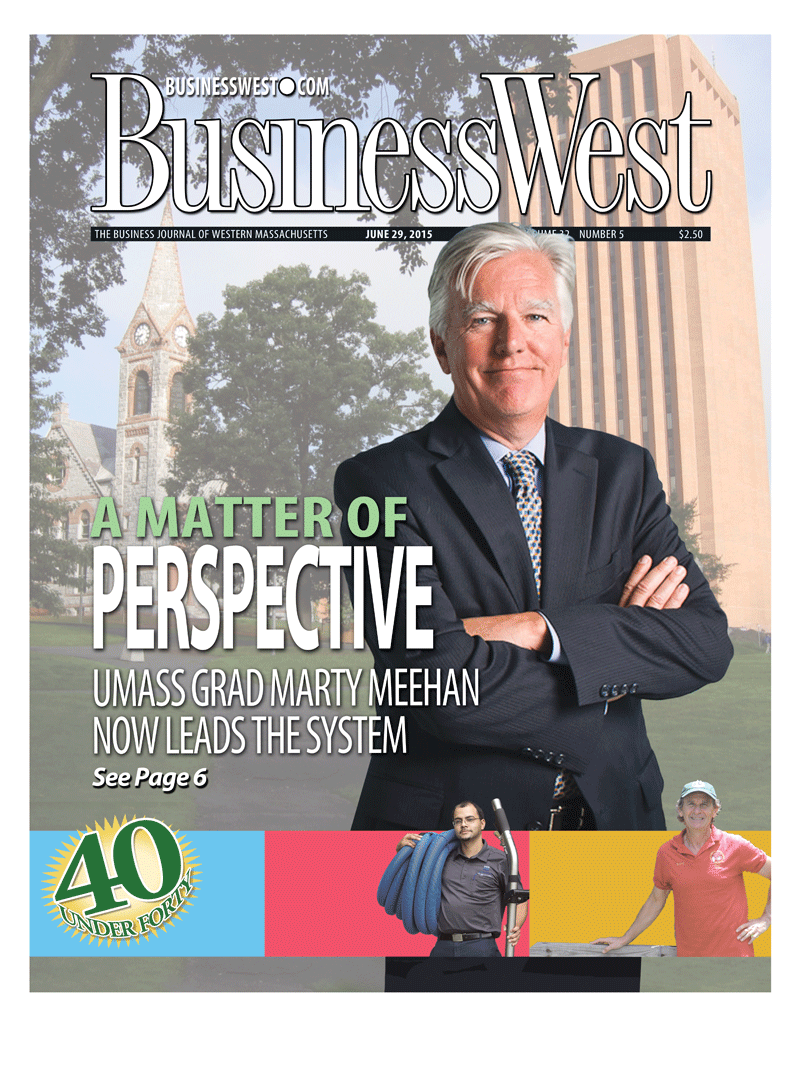 Marty Meehan acknowledged that, when someone decides to run for Congress, and then succeeds in that mission, they’ve done more than win an election. They’ve also more or less committed to a career in politics.
But when Meehan set out to capture the Bay State’s 5th Congressional District seat, anchored by his hometown of Lowell, in 1993, at age 37, he said he did so with a much different mindset.
“I knew I didn’t want to serve in Congress for the rest of my life,” he told BusinessWest, adding quickly that he didn’t know exactly what path his career should ultimately take.
So in 2001, he engaged the services of New Directions, an executive career-development firm that, in essence, helps clients determine a path and, in Meehan’s words, “tells you what you’re good at.”
After an extensive three-week process that included several tests and interviews with people who knew him well, those at New Directions told Meehan he’d be good at running a professional sports league or taking an executive position in higher education.
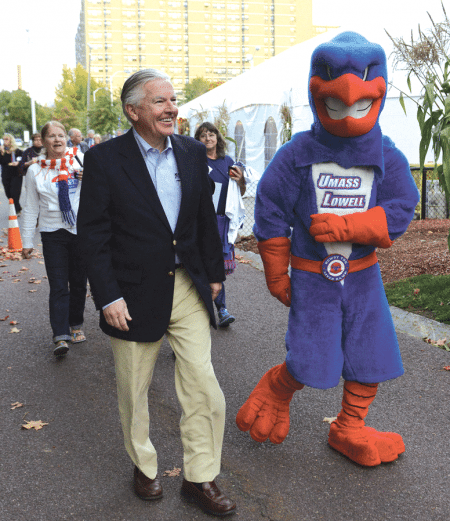
Marty Meehan, seen here with the mascot for UMass Lowell, says graduating from the university gives him a unique perspective that will serve him well as president.
Meehan, who said he essentially put himself on a track for either of those pursuits, eventually became chancellor of UMass Lowell, where, by all accounts, he led a stunning resurgence at the school.
And last month, he was chosen to succeed Robert Caret as president of the entire university system, thus becoming the first UMass undergrad (he earned a degree in education and political science at the Lowell campus) and first chancellor within the five campuses to ascend to the president’s office.
He said those two qualities, if you will, provide him with a unique perspective, one he believes will serve him well in his new position.
“I have a passion for the University of Massachusetts, and I view that as an asset,” he explained. “When I interact with students, I literally say, ‘I was where you are.’ I have a passion for the institution because I was a student here. I fundamentally understand at my core what it means to have a great university system.”
In a wide-ranging interview, Meehan, who takes the helm July 1, touched on a number of issues involving the university and his role as its president. They include:
• The overall accessibility of the university’s campuses: “The fact is that public higher education in this state has been privatized over the past three decades; the cost of a UMass education has stayed the same, adjusted for inflation, but the burden of paying that cost has shifted from the Commonwealth to students and their families”;
• His perceived role: “A big part of my job is to make the case for this system and demonstrate why it’s important to make the investment in a world-class public research university”;
• His quick take on his job description: “My job is to provide leadership, inspiration, and passion to help the university get what it needs in terms of funding and what it needs in terms of stature, prestige, and reputation. Universities are all about students, faculty, and the interaction that takes place between students and faculty; the rest of us are there to support and embrace that interaction”;
• His leadership style: “I’m very strategic in everything I do; I’m also collaborative and accessible”;
• The importance of the Amherst campus: “UMass Amherst sets the standard for what the UMass brand is all about. So it’s in the interest of all the UMass campuses for UMass Amherst to improve its ranking; that’s where the brand comes from.”
• The role of the system as a whole: “I think the economy of Massachusetts runs through this university”;
• His expectations for the Baker administration: “The governor fundamentally understands how the economy of this state works, and he understands the role UMass plays in the economy. I think he’s thoughtful, he’s smart, and the University of Massachusetts could do quite well under Governor Baker”; and
• His commitment to stay for the “long haul,” as he put it: “I didn’t take this job to get another job — I’m not thinking about what else I’m going to be doing. When I got the job at Lowell, everyone thought I was going to run for the Senate a couple of different times or run for governor. What I said was that I didn’t think you could take a job like that and not make at least an eight-year commitment, and I feel the same about this job.”
For this issue, BusinessWest delves into much greater detail on these and other matters as we talk at length with the next leader of the state university.
School of Thought
As Meehan wrapped up his comments with BusinessWest in the office of the UMass Amherst athletic director — he was at the Mullins Center to attend the June board of trustees meeting — he used that setting and its view of the arena to segue into one of the dilemmas he’ll be facing as president, if one could call it that.
“Someone in the press asked me who I was going to root for when UMass Amherst plays UMass Lowell,” he said, referring specifically to two hockey squads that face off against each other and the 10 other teams in the highly competitive Hockey East conference. “I said, ‘that’s an easy one; when the game’s in Amherst, I’ll be rooting for the Minutemen, and when the game’s in Lowell, I’ll be rooting for the Riverhawks; that’s how I’ll solve that.’”
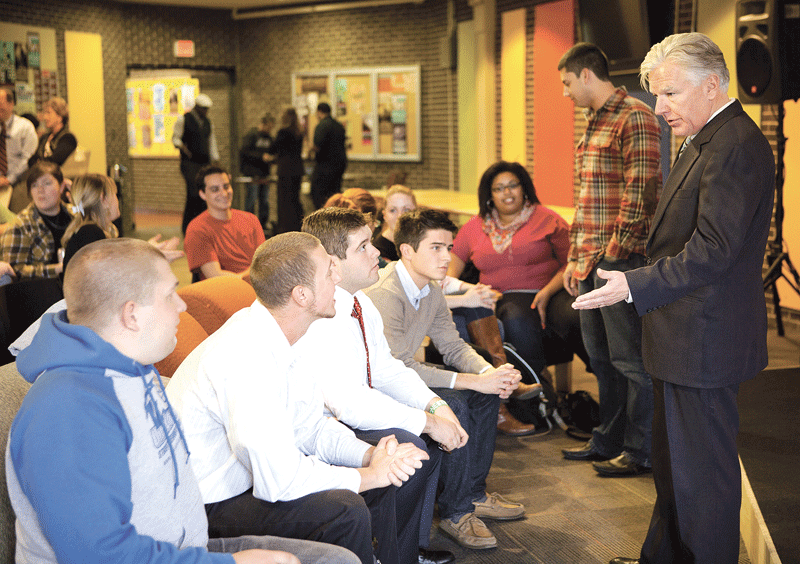
Marty Meehan says one his first priorities is to initiate a new strategic plan for the UMass system, one that will be conducted from the ground up.
Such confidence stems from a career in leadership positions, which have yielded a wide range of learning experiences.
They came in Congress, where he served seven terms, served on the Armed Services and Judiciary Committees, and established a national reputation for his work with everything from campaign finance reform to tobacco control; before that, in stints as the first assistant district attorney of Middlesex County and Massachusetts deputy secretary of state for securities and corporations; and especially at UMass Lowell — which brings him back to that determination readied by New Directions.
Meehan said he worked to position himself for possible management roles with sports leagues — on the House Judiciary Committee, he became more involved in anti-trust issues that affect professional sports leagues, for example — but soon became more focused on the second career path recommended to him.
Indeed, the post at UMass Lowell was actually the second opportunity within the broad realm of higher education that he considered. The first was his pursuit of the job as dean of the law school at Suffolk University, where he earned both his master’s and juris doctor degrees and was also on the board of trustees. But it wasn’t a hard pursuit.
“I told the search firm that I didn’t think I was what the law school needed at that point,” he recalled. “I felt it needed a nationally known academic or perhaps a former federal judge.
“But during the course of an hour-and-a-half conversation, I got an opportunity to talk about higher education,” he went on. “And when the Lowell position came up, the same search firm was hired to handle that search, and after that long conversation we had, I knew they’d be calling me for that position.”
They did, and after overcoming some reluctance to being named a finalist — he was concerned about both publicly acknowledging his pursuit of the job and competing against seasoned academics — Meehan was awarded the job.
He believes that aforementioned passion resulting from his student experiences there — and his ability to communicate it — was a big factor.
“I wanted the job because I felt that I could make a difference at an institution that meant so much to me personally,” he explained. “Number one, it’s in my hometown, and number two, I graduated from the school. And I felt UMass Lowell could be a much greater institution than what it was.”
At Lowell, he took over a school that was, by most all accounts, underperforming, and certainly changed that dynamic.
Indeed, during Meehan’s tenure, the school, founded in the 1890s as the Lowell Normal and Lowell Textile schools, achieved record growth in enrollment, student retention, research, and scholarship funding. The school has also undergone a dramatic physical transformation, with new academic buildings and residence halls; upgraded academic, research, and athletic facilities; and enhanced student-activity spaces.
Meehan’s comprehensive portfolio of improvements includes:
• Rating as a top-tier university by U.S. News & World Report for the first time in 2011. The school has subsequently seen a four-year gain of 27 spots, from number 183 to 156, the second-largest leap in the nation;
• A 50% increase in enrollment over the past seven years, to more than 17,000 students;
• An accompanying rise in academic qualifications, as the average SAT score of incoming freshmen, math and verbal combined, has increased 80 points since 2008;
• A 10% increase in freshman retention, from 75% to 85%;
• A dramatic rise in research expenditures, specifically 80% since FY ’07 to $65 million;
• The construction of 10 new buildings on campus. That boom includes two new academic buildings (the first in 35 years) — the Mark and Elisia Saab Emerging Technologies and Innovation Center and the Health and Social Sciences Building. It also includes two new residential facilities that are now home to a quarter of the 4,000 students living on campus, a 33% increase in three years;
• Purchase of an underutilized hotel in the city’s downtown and converting it into the UMass Lowell Inn & Conference Center, which provides housing for 500 students as well as conference space, lodging, and a restaurant for the public;
• Acquisition of the 6,500-seat Tsongas Arena in 2010 (it’s now known as the Tsongas Center at UMass Lowell); and
• The opening in 2014 of University Crossing, a $95 million student-engagement center created in a former hospital site purchased by the university in 2011.
Degrees of Progress
When asked how all that and more was accomplished, Meehan said it resulted from assembling a great team, putting in place an ambitious strategic plan titled “UMass Lowell 2020,” and achieving critical buy-in on its many initiatives.
This is the same formula he intends to use as president of the system, which, he believes, has already achieved considerable progress in a number of areas, ranging from enrollment to academic qualifications to new building on each of the campuses.
But there is still considerable room for improvement, said Meehan, who was asked to interview during the system’s last presidential search, in 2010, but eventually withdrew, believing the timing wasn’t right and because then-Gov. Deval Patrick had his own preference for a candidate — someone else.
Looking back, he said that decision was a good one, because it gave him additional opportunities to build on his track record of success at UMass Lowell and ultimately learn from the man he would eventually succeed.

Moving forward, Marty Meehan says his primary role as UMass president is to advocate for the system and secure funding to ensure that the schools are accessible.
Looking ahead, Meehan, as he mentioned earlier, said one of his primary responsibilities will be as an advocate for the UMass system — in Boston, Washington, and wherever else that broad assignment takes him.
And as advocate, one of his duties is to articulate how the university’s role has changed and broadened — within the Bay State but also nationally and even globally — and what that means in terms of how the system should be viewed and, more importantly, funded.
“Historically — and when I say historically, I mean over the past 30 years — the political leadership in this state has often viewed the University of Massachusetts as a safety net for students who either can’t get into the elite private colleges or can’t afford to go to those schools,” he explained. “The paradigm has changed dramatically; the elite private universities in this state are not training residents of this state, by and large.”
Thus, with this change in role, the university has taken on an even bigger role when it comes to fueling the state’s economy — an assignment that involves everything from sparking startup businesses to educating and training the workers that ventures across all business sectors will need to succeed.
“I think the argument is powerful: if you want a strong economy, you must have a strong university of Massachusetts,” he told BusinessWest.
“The truth is that social mobility and economic development in this state really drives through the university on every level. We’re an innovation economy; we literally educate the workforce in Massachusetts in terms of the engineers we produce, the nurses, the teachers. So Massachusetts is very reliant on a world-class public research university, and we have to keep the quality up,” he continued, adding that 88% of the graduates of the schools in the UMass system stay in the state for at least five years after earning their diplomas, and 66% stay longer.
“In an innovation economy, you need a workforce that’s well-trained and highly educated, and I think this state gets the fact that our graduates are the key to economic development and economic growth. I sure get it.”
Course of Action
Making sure everyone gets it will help the university achieve a better commitment from the state and therefore the more sustainable financial model it needs in the decades to come, said Meehan, adding quickly that the economy, and specifically state revenues, need to improve for this to happen.
The Baker administration inherited a severe budget crisis, he went on, one that has forced painful mid-year cuts, hard decisions, a slowing of the momentum achieved over the past few years when it comes to state funding of public higher education, and, ultimately, the rate increases approved by the trustees at their June meeting.
The scope of those increases isn’t known yet, said Meehan, adding that any increase impacts accessibility and grows already-worrisome student debt.
To attain more attractive funding levels, the economy must improve, but the university as a whole must continue to become more efficient and thus worthy of a larger investment from the state.
“The governor is going to want to hold UMass accountable in terms of performance, graduation rates, student-success rates, fund-raising, and more,” he said. “And I think the university is ready to be held accountable in exchange for a deeper investment by the state government.”
One of the other priorities moving forward, said Meehan, is to draft a new strategic plan for the university, something similar in many ways to “UMass Lowell 2020” but much larger in scope.
It’s been 25 years since a new comprehensive strategic plan has been created for the university, he said, which means the system is overdue for such a document. And like the one at UMass Lowell, this plan will come from the bottom up.
“We had more than 200 faculty, deans, administrators, and students who all came up with a strategic plan,” he explained. “It took us 13 months to create it, and because we included all those constituencies, we had buy-in. And that’s how it’s accomplished in any large, complex organization, and a university is certainly a large, complex organization.
“We need to evaluate what the system has done well over the past 25 years and what it needs to improve,” he continued, referring to the broad scope of such a strategic plan. “And we need to bring in some of the best high-level academics from public research institutions around the country to help us determine whether this can become the best public university in the country.”
As for the immediate future, Meehan said he plans to spend considerable time visiting the various campuses and gaining feedback from a host of constituencies.
These include the chancellors of those institutions, staff, faculty, students, and alumni. But he also intends to gain perspective from a business community that has placed workforce issues at the very top of its list of priorities — and concerns.
“I look at corporations like EMC and Raytheon, and the majority of the people they hire come from UMass,” Meehan explained. “I want to talk with those major CEOs in the state, not only get some advice on UMass, but also to get them to join with us to fight for more state funding and more federal funding. The business community should be UMass’s biggest cheerleader because of the huge contribution we make to making sure these companies get the best, most highly qualified employees they can get; it makes Massachusetts more competitive.”
Checking Some Boxes
Returning to the subject of those hockey teams and the intense rivalry that has developed between them, Meehan related a conversation with UMass Amherst Athletic Director John McCutcheon, who was lamenting how his school has come up on the short end of many recent contests between the schools.
Meehan said he responded first with some sarcasm, then a challenge, wrapped in the form of a leadership philosophy.
“He [McCutcheon] said, ‘you guys at UMass Lowell have been beating us up the past few years,’” Meehan recalled. “I said, ‘the problem is, everyone has been, and you have to work at this — I want attendance up.’
“Sometimes, I get into a lot of various details, but there’s a reason,” he went on, explaining why he was dwelling on hockey. “I think good leaders need to say, ‘we want excellence in everything we do.’”
That has been Meehan’s approach throughout a career that’s taken him to the House of Representatives and then the career in education recommended years ago. And it’s one he believes will ultimately help drive continuous improvement at the state university. n
George O’Brien can be reached at [email protected]

Carpet-cleaning Venture Advances HRU’s Mission
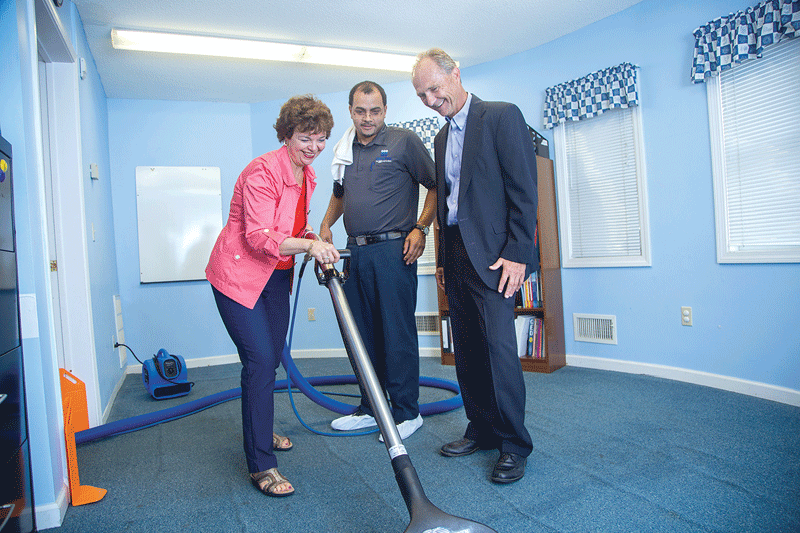
Zerorez’s Luis Cerrano (center) demonstrates the company’s equipment for Sue Mastroianni, board member of the Gray House in Springfield, and HRU president Don Kozera.
“We looked around the country and found there were few not-for-profits owning franchises, and then we set up specific criteria around what we hope to achieve, how much revenue we need, how much risk we’re willing to accept, and what the tradeoff is between profits and mission,” said Don Kozera, HRU’s long-time president.
The agency wound up looking at 600 chains, then took a harder look at 60 of them, before narrowing its search to three that fit the organization’s criteria. One of those was Zerorez, a carpet-surface cleaning company based in Salt Lake City with a national presence — except in New England.
“What attracted us was its patented ‘green’ approach to cleaning,” he said of Zerorez’s innovative use of what it calls “empowered water” (more on that later). “And if you can innovate in carpet cleaning, you can probably innovate the world. It’s also a technology-based company. With this phone in my hand, I know where all the vehicles are, if their machines are on, how much we booked today, where those leads came from … I know exactly what’s going on.”
But there was some hesitancy based on the perceived lack of a ‘wow’ factor. “People said, ‘really? Carpet cleaning? Don’t we want to do something more exciting?’ But the more we investigated it, the more we talked to franchises across the country and sat down with the owners and looked at their technology, looked at the environmentally friendly detergents being used, that there was a social cause, it made sense.”
So HRU opened its first Zerorez franchise in Holyoke in March, with more likely to follow. “We have a bigger strategy,” Kozera said. “We have the rights to the Hartford and Boston markets. We didn’t do this to own one franchise; we did it as a strategy of revenue generation and job development. It’s solely owned by HRU, but it might not be solely owned in the future; it depends on how much capital we need for expansion plans.”
None of this, of course, answers the question of why Human Resources Unlimited, which trains and places clients in some 120 area businesses and has started and closed myriad businesses of its own to achieve the same goals, embraced the franchise model. Simply put, Kozera said, it’s because HRU eventually wants to do some franchising of its own.
Active Intent
It starts with a program HRU created called Move to Work.
“It’s a platform designed to help people who have been out of the workforce — chronically unemployed people, not just people with disabilities. It’s a unique approach that uses physical health, emotional health, and financial health to create a healthy, productive worker.”
The concept is explained by the program’s original title, the admittedly clunkier Changing Habits and Transforming Lives. It takes principles not typically applied to job training, including exercise and physical fitness, and meshes them with conventional job training and the ‘soft skills’ — communication skills, personal work habits, etc. — so in demand by companies.
“With most people who are chronically unemployed, the data will show they’re physically not healthy, emotionally not healthy,” Kozera said. “Of course, being unemployed for a long time can lead to bad habits and losing self-esteem.”
Move to Work, he went on, “was originally to better our services. If people exercise for 20 to 40 minutes at 60% to 80% of their maximum heart rate, their ability to learn and retain information is greatly increased for up to four hours. That’s a scientific fact. So every one of our sessions starts with that.
“But, really, the foundation is our soft-skills training program,” Kozera explained. “Employers in this area are saying, ‘we cannot find qualified workers — at any level.’ The Federal Reserve did a report on Springfield five years ago that really outlined those issues. Companies said, ‘what do we need? People who come to work on time, with a good social skill set. We’ll train them on what we do technically. But we need those types of people.’”
So Move to Work was developed as an eight- or 16-week course to build those skills while incorporating the benefits of exercise for greater mental focus. Recently, HRU applied the program at Tech Foundry, a nonprofit that trains high-school students for information-technology jobs.
Having demonstrated its value, Human Resources Unlimited would like to turn Move to Work into a national model. And that’s something the agency has never before attempted.
“Our goal is to bring this new model into the marketplace as both an innovative program and something that can earn money,” Kozera told BusinessWest. “But it’s not easy to do. How can we raise enough revenue to support the expansion of that model?”
The answer was another question. “It’s taking a self-replicating model to the marketplace, and who does that? Franchises. They take a brand and replicate the brand. Through this confluence of activities, we said, ‘well, if we’re going to learn more about the replication and expansion of a brand into a national model, where else to learn from than franchises?’ So we started looking around, saying, ‘maybe we can start a franchise and look at owning franchises as a way to support ourselves and learn how to be a franchisor of Move to Work.’”
Workplace Legacy
A company like Zerorez is certainly new terrain for HRU. But doing things a little differently has long been the agency’s bread and butter.
Realizing that many employers didn’t believe people with developmental disabilities could work in complicated job environments, Human Resources Unlimited — then knwn as the Carval Workshop — was created in 1970 to be the vocational training center for Belchertown State School residents and provide employment opportunities for residents of the facility.

Zerorez recently donated its services to clean high-traffic areas of the Gray House to demonstrate its work and help another mission-driven organization.
Kozera, who joined the organization in 1980 as fiscal director before moving into the president’s chair, said Zerorez is a good match for HRU because of it’s mission-driven approach to cleaning.
“Zerorez uses technology that was borrowed from the oil-cleanup industry,” he explained. What the national company calls ‘empowered water’ is actually electrolyzed and oxidized to create an environmentally friendly cleaning solution.
Traditional steam cleaning, the company notes, uses heated water mixed with soaps, detergents, and toxic chemicals that are injected into the carpet under pressure, which soak the carpets, pads and backing. Even though some of the soap, dirt, and water are removed, a considerable portion of this mixture remains embedded in the carpet. As the carpet dries, the detergent attaches to the carpet fibers and acts as a magnet for dirt and other substances. Empowered water, on the other hand, is applied to carpet fibers by a patented high-pressure spray system that loosens embedded dirt and removes it.
Zerorez cleans rugs, tiles, wood floors, furniture, counters … basically anything that people walk on, sit on, or work on, Kozera said. The primary market is residential, although it has commercial clients as well.
“We haven’t burst on the market,” he added, noting that the Holyoke franchise, which boasts three trucks and four employees to start, had 37 clients in May and is on track for 50 in June. But in the long run, Zerorez’s established structure and recognized name will help the local office succeed and, importantly, grow its roster of employees and fleet of trucks.
“What has a higher rate of success in business, Joe’s Burger Shop or McDonald’s? With a franchise, there’s a system, a proven model, there’s support. Other franchisees are amazing about sharing everything they know. They help each other. I don’t know how many networks are like that. They tell us what’s successful, what’s not successful. It’s a nice family created by the franchisors.”
Kozera said franchisors wanted HRU to commit to more than one market, adding that, overall, franchised businesses are more often sold to corporations than individuals these days. “You can’t buy just one; you have to buy three, so you have to have $2 million just to enter the market.”
At the same time, national networks have become more willing to sell franchises to nonprofits, while nonprofit boards, which tend to be conservative in their risk taking, like the security of partnering with a known commodity.
Furthermore, “Zerorez has a 90% retention rate in an industry that probably has a 10% retention rate,” Kozera said. “The other appealing part of this is that every customer has to rate us … and if they don’t rate us at least 9 out of 10, we fail.” The idea, he added, is to leverage great customer service into customers for life, one floor at a time.
Destination Unknown
Kozera knows that nothing is a given in any industry. “Any time you open a business,” he said, “the reality is, you don’t know what’s going to happen.”
But if it succeeds, the Holyoke Zerorez office — the first of what might be several across the region — will benefit HRU in three ways, by generating revenue, providing an education in franchising the agency can apply to Move to Work, and, of course, providing jobs for clients.
“It has a call center, and we place a lot of people in call centers at multiple locations; that’s a skill base many of our members have, and they’ve been very successful at that job,” he said, adding quickly, “we’re not creating jobs that don’t exist. We have one technician for one van; we’re not going to put two people there just to create a job.”
As for Human Resources Unlimited in general — which recently moved to a larger headquarters in Springfield — a (slowly) strengthening economy is ramping up demand for qualified workers at all kinds of companies, which can only benefit clients.
“We want to use these franchise concepts throughout the whole business, not just Zerorez,” Kozera said, referring mainly to the key factors of consistency and trust that drive consumers to known brands.
“We want to apply that to everything we do. We don’t have a whole lot of experience in business to business. But the sales process and the marketing process are things that will help us organizationally because human services — in particular placement organizations — don’t invest a lot in marketing and sales. We invest a lot in human capital; we just don’t measure it well.”
HRU’s first franchise business could help change that, while creating cross-learning opportunities across the organization that, hopefully, help more individuals find work.
And that, more than anything, is what makes carpet cleaning exciting.
Joseph Bednar can be reached at [email protected]

Wilderness Experiences Unlimited Is in the Confidence Business

Wilderness Experiences
Unlimited
These and other adventures, such as kayaking, which take place during the summer camp run by Wilderness Experiences Unlimited in Southwick, are structured to help young people build confidence, self-esteem, and pride in achievement, all while enabling them to gain an appreciation for the outdoors.
“Our youth group adventures are designed to be safe, exciting, educational, and most of all, fun. It is never too early or too late to instill a sense of respect and wonder for the natural environment in children,” said T. Scott Cook, who founded the business 34 years ago. “We use adventure sports as a carrot to get kids outdoors.”
However, the offerings at Wilderness Experiences also extend to adults who want to embark on adventurous vacations.
They can learn to scuba dive in Southwick, then use their newfound skill on a trip to the Cayman Islands or Florida. Or they can choose an exotic destination such as Africa, where they can interact with orphaned animals in the wild that are being rehabilitated, and enjoy other excursions as they make memories that will last a lifetime.
Cook, who says outdoor play requires skills and knowledge, has written a book titled Outdoor Leadership: the Noble Gift.
“Play is a value-added necessity in life; it’s fun to have fun, but you have to know how,” he said, quoting Dr. Seuss and adding that he believes people often forget that play is critical to living a balanced life.
It’s something he keeps front and center in his own life. The morning of his interview with BusinessWest, he climbed off his bicycle after a relatively short — at least for him — 30-mile ride.
“I would have gone farther if I didn’t have this meeting,” he said, parking his bike in front a poster that shows his daughter Aubrey carrying a kayak. She shares his love of the outdoors and is a professional tri-athlete who will serve as assistant director of the camp this summer.
An impressive ropes course stands behind the poster — there are huge nets, sky-high poles with a network of lines, an enormous spiderweb configuration of ropes, and features such as the ‘rickety bridge’ and ‘multi-vine’ that were created to help summer campers challenge themselves individually and in groups as they master the course with the help and support of team members.
Meanwhile, an almost-Olympic-size swimming pool in the building on 526 College Highway provides a perfect setting for children and adults to learn to swim. Scuba-diving lessons are also conducted there, and seniors enjoy staying fit in special water-aerobics classes.
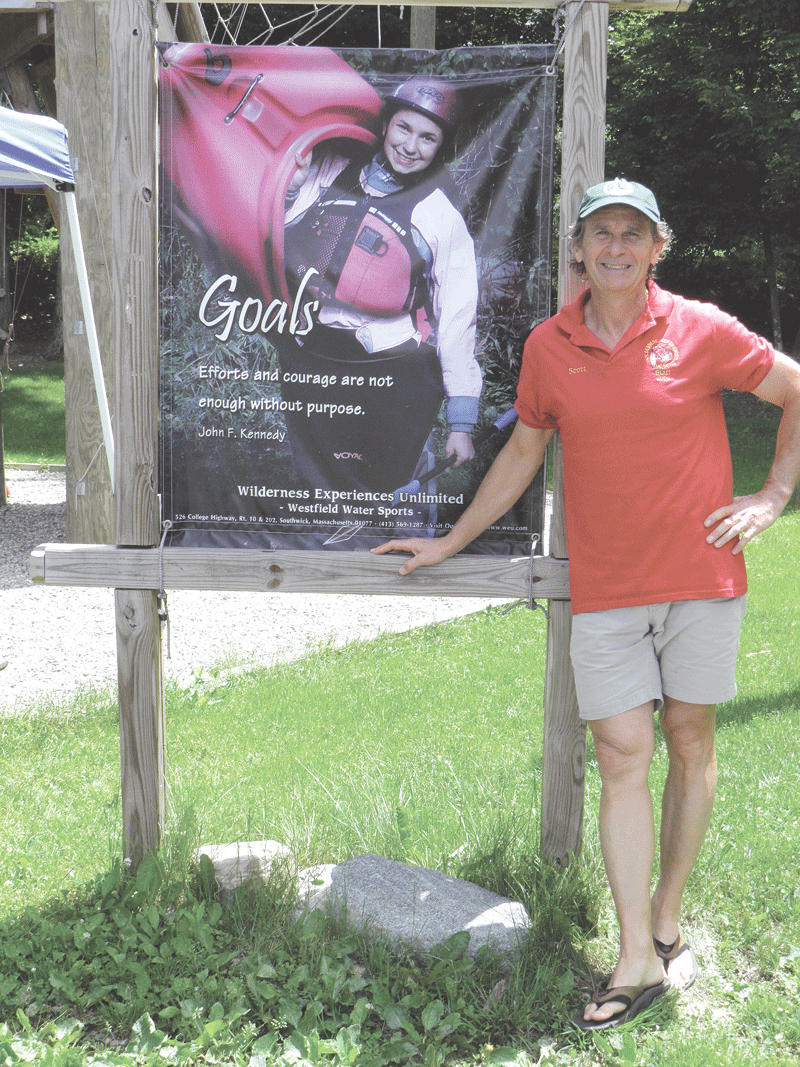
T. Scott Cook believes people forget that play is critical to living a balanced life — and he’s trying to change that.
However, Cook keeps the camp small and accepts only about 50 young people in each session, which runs from Monday to Friday, with overnight programs and field trips for older campers. Although he could easily have grown due to demand, he chooses to remain small so he has the time to get to know each child and be sure everyone has a meaningful experience.
“When I started this, I had been running large camps with 300 kids and 70 staff members, so I really never got to know the campers, or even all of the staff. I prefer to keep it manageable,” he told BusinessWest.
Still, the scope of offerings at Wilderness Experiences has expanded since Cook opened his first camp. At that time, his primary goal was to teach children about the outdoors, help them build confidence by mastering physical challenges, and give them opportunities to learn sports they could continue for a lifetime.
That’s still the goal, but there are now many more ways to embrace and meet it.
Early Exposure
Cook’s parents ran outdoor camps when he was young, and he was involved in scouting for many years.
“Playing in the outdoors has always been a big piece of my life,” he said, adding that, in his early college years, he majored in photojournalism but found the career didn’t offer much potential, so he sought out an outdoor-recreation leadership program and eventually earned a doctorate in the field. “I had always worked in summer camps, and when I finished my schooling, I founded Wilderness Experiences Unlimited.”
During the school year, he served as a consultant and worked with children in local school systems who had emotional and behavioral challenges.
“I provided their physical education via an incentive-based program; if their behavior faltered, they were not allowed to participate,” he said, noting that he took them on field trips that included rock climbing and kayaking as well as other outdoor activities they enjoyed. “It was a positive experience.”
After 15 years in that role, he was offered a job running the Wilderness Leadership Program at Westfield State University. He retired from the position last spring, but hosts a special Outdoor Wilderness Leaders program in Southwick for campers ages 12 to 18 who have been recommended by three counselors. It runs year-round, and participants advance through the ranks, volunteer at different organizations, and host their own trips and social events.

In addition to his offerings in Southwick, Cook has led people on excursions as far away as Africa.
Although not everyone qualifies, every camper gains self-knowledge. “When campers navigate the ropes course, they build their confidence and self-esteem. They have to dig deep inside and share their feelings and emotions because it can seem daunting,” Cook said.
He cited the example of climbing to the top of a telephone pole, then jumping off. It’s a group exercise, and although each camper is carefully outfitted with a full body harness, helmet, and other protective gear, it’s a virtual leap of faith that requires trust in other team members.
“The perceived risk is big, but the actual risk is small due to all of the safety measures in place,” he explained.
Every camp session contains an aquatics segment. “The campers do some type of swimming, whether it’s in our pool or in a mountain stream where they get to know the natural world better. We also take them to state parks to explore the outdoors and go on hikes and play outdoor games,” Cook noted.
His joy in introducing campers to the outdoors has never diminished.
“If a child goes for a walk in the woods and understands nature and learns how to track animal behavior, the woods don’t seem as overwhelming; we present it as a story, a habitat with living things,” he explaned. “When you understand something, it’s easy to respect it, and when you respect it, it’s easy to love and value it. And if you introduce kids to things they have fun doing when they are young, they are likely to continue to play as adults and enjoy their lives. People who recreate have goals and reasons to stay fit.”
Each camp session also contains a spiritual element, which is focused on the way young people view nature. “When they’re outdoors, they are part of a circle of life, and we have campfires where we tell Native American stories of days gone by and how these people perceived the world around them,” Cook said.
Change in Venue

One program of Wilderness Experiences Unlimited teaches participants how to scuba dive, then arranges trips to Florida and the Cayman Islands to help them enjoy that new skill.
The acquisition allowed them to bring scuba diving into the mix because the store sold scuba gear, and it was then that Cook built a pool where he could conduct diving and swim classes, and later added the ropes course.
Prior to the acquisition, Wilderness Experiences Unlimited had operated out of a number of sites, including Huntington and a variety of spots in Westfield. But location has never been a critical ingredient in the camp’s success.
“It doesn’t take an amazing property to make an amazing camp — it takes amazing people,” Cook told BusinessWest. “All I needed was a place where I could launch adventures from.”
He closed the retail end of his business in January, and New England Bike moved into the space and took over the scuba operation. “My wife Laura and I both had careers, and we were running two businesses,” he noted, adding that she was a nurse at Shriners Hospital. “So we left the retail side and can focus now on what we love best — the pool, our summer camps, and our travel business, which Laura launched about 20 years ago.
“We’ve always traveled, so we take people to our favorite locations around the world,” he went on. “We’ve hosted trips on every continent except Antarctica, and we’re going there in 2017.”
The focus is on visiting historical and cultural sites, but participants are also taken off the beaten track so they can see what life is like in small towns. “We may spend as much time in someone’s personal wine cellar having a six-hour meal as we do at a tourist attraction.”
There is an adventure component included in every trip, and excursions have included whitewater rafting on the Zabezzi River in Africa and diving to see great white sharks.
“On one side trip, we met orphaned juvenile lions under age 2 and went for a walk with them. Once they are grown, they stop having contact with people and their offspring are released into the wild,” Cook noted, adding that they have done the same thing with young elephants and giraffes at responsible rehabilitation facilities.
Cook firmly believes that play is a necessary component in a balanced life. “But many adults get distracted. They’re busy working, being a good parent, and watching their children play sports, so they don’t take the time to have fun themselves,” he said.
He and his daughter have been traveling around the world for years to compete in national and world-championship triathlons, and he made sure she became acclimated to the outdoors at an early age. “She spent three nights living in a tepee with me during her first year of life,” he said.
Although he realizes that’s far more than most people want to do, his mission at Wilderness Experiences Unlimited remains unchanged.
“It’s a place where people of all ages can face their fears and accomplish things they didn’t ever think they could do,” he explained. “We hope to continue to open up new worlds for young people and adults.” n
ACCGS Golf Tournament
July 13: The Ranch Golf Club in Southwick will be the setting for the Affiliated Chambers of Commerce of Greater Springfield’s (ACCGS) 2015 Golf Tournament. The tournament is sponsored by Bacon Wilson, P.C., Barr & Barr Inc., Florence Savings Bank, Frank Webb’s Bath Center, HealthSouth, Insurance Center of New England, and Vanasse Hangen Brustlin Inc. The tournament will kick off with registration and practice on one of its six target greens, two pitching greens, and pitching nets at 11 a.m. A course-side lunch, sponsored by the MassMutual Center, will be served from 11 a.m. until noon, with a shotgun start at 12:30 p.m. Golfers will enjoy a scramble format, hole-in-one contests sponsored by Rocky’s Ace Hardware and Teddy Bear Pools & Spas, longest-drive and closest-to-the-line competitions, a putting contest sponsored by Chicopee Savings Bank, and an opportunity to win from a wide selection of raffle prizes, including Red Sox tickets and gift cards. The day will conclude with a reception, buffet dinner, and awards ceremony. An added attraction this year will be the opportunity to win the use of a fully-stocked golf cart for the tournament, completed with snacks, cigars, additional raffle tickets, alcoholic and non-alcoholic beverages, and more. The tournament entry fee is $600 per foursome (individual golfers are welcome at $150) and includes greens fees, cart, lunch, reception, and souvenir photo sponsored by Arrow Security Co. Inc. and Eastfield Mall. Non-golfers may attend the reception only for $30 per person. To register, visit www.myonlinechamber.com or e-mail ACCGS Member Services Director Sarah Mazzaferro at [email protected].
Indian Motocycle Day
July 26: From 9 a.m. to 3 p.m., the Springfield Museums will present their sixth annual Indian Motocycle Day, the continuation of a long-standing tradition honoring the classic motorcycles that were manufactured in the city from 1901 to 1953. Last year, more than 1,000 people attended the event, which featured more than 60 classic, Springfield-built Indians owned by local collectors, The event is sponsored by the Sampson Family and AAA Pioneer Valley; the media sponsor is Rock 102 WAQY. MassMutual is the 2015 premier sponsor of the Springfield Museums. The museums re-established the Indian Day tradition in 2010 after a five-year hiatus. From 1970 to 2005, the event was held at the now-closed Indian Motocycle Museum on Hendee Street in Springfield. Esta Manthos, together with her late husband Charlie, were the owners of the former museum. In 2007, Manthos donated her extensive collection of Indian Motocycles, artifacts, and memorabilia to the Springfield Museums, where it is now on view in the Lyman & Merrie Wood Museum of Springfield History. This year’s Indian Day will pay tribute to Bob’s Indian of Etters, Pa., for its many years of supporting the heritage of classic Indian cycles. The original dealership was founded in the 1950s by Bob and Kay Markey, and has been a treasure trove of motorcycle history for over half a century. In addition to the motorcycles on display, there will be a variety of vendors, food and beverages, music provided by Rock 102, and the awarding of trophies for the best Indians in a variety of categories. Commemorative T-shirts will be available for purchase. Anyone bringing a pre-1953 Indian will receive a free admission pass plus a commemorative Indian Day button. Exhibitors, and especially vendors, are encouraged to pre-register by calling (413) 263-6800, ext. 304. Admission to the event is $10 for adults and $5 for children ages 3-17. For those wishing to attend the event and tour museum buildings, general admission is $18 for adults, $12 for seniors and college students, and $9.50 for children ages 3-17. Admission to the event and the museums is free for members of Springfield Museums; free museum admission is available for Springfield residents after 3 p.m. For information, call (413) 263-6800, ext. 304, or visit www.springfieldmuseums.org.
Driving for the Cure Golf Tournament
Aug. 17: The seventh annual Tom Cosenzi Driving for the Cure Charity Golf Tournament will tee off at Crestview Country Club in Agawam. The presenting sponsor for this year’s tournament is Autotrader. The tournament will be a four-player scramble. Tournament-day check-in begins at 10:30 a.m., and tee time is at 12:30 p.m. The event includes lunch, golf, dinner, raffle prizes, contests, and more. The tournament was started by Carla and Tommy Cosenzi, owners of TommyCar Auto Group, in memory of their father, Tom Cosenzi, who passed away from a glioblastoma brain tumor in 2009, in the hopes of carrying on his legacy and finding a cure for this disease. To date, this tournament has raised a total of $480,000 in its six-year partnership with the Jimmy Fund, one of the largest organized golf programs in the U.S. All proceeds support Dr. Patrick Wen and his team of researchers in the Neuro-Oncology Department at Dana Farber Cancer Institute. To register an individual or team, or to become a tournament sponsor, visit www.tomcosenzidrivingforthecure.com. For more information, contact Kayla Currie at (413) 570-1319 or [email protected].
Valley Fest
Aug. 29: White Lion Brewing Co. announced that it will host its inaugural beer festival, called Valley Fest, at Court Square in downtown Springfield. MGM Springfield will be the presenting sponsor. The festival is poised to be White Lion’s signature annual event, introducing the young brand to craft-beer enthusiasts throughout New England and beyond. White Lion Brewing Co., the city of Springfield’s only brewery, launched in October 2014. Founder Ray Berry and brewmaster Mike Yates have released three selections under the White Lion brand and have been busy promoting their efforts in venues all over Massachusetts and other New England states. Berry anticipates that more than 50 breweries and many local food vendors will converge on Court Square for two sessions. Enthusiasts will have an opportunity to sample more than 100 varieties of beer and hard cider alongside pairing selections by local chefs. A number of sponsors have already committed to the event, including MassMutual Financial Group, the Young Professional Society of Greater Springfield, the Dennis Group, Springfield Sheraton Monarch Place, Paragus Strategic IT, Williams Distributing, and the Springfield Business Improvement District (BID). Visit www.valleybrewfest.com for event details, ongoing updates, and sponsorship opportunities. A portion of Valley Fest proceeds will support several local charities.
Western Mass. Business Expo
Nov. 4: Comcast Business will present the fifth annual Western Mass. Business Expo at the MassMutual Center in downtown Springfield, produced by BusinessWest and the Healthcare News in partnership with Go Graphix and Rider Productions. The business-to-business show will feature more than 100 booths, seminars and Show Floor Theater presentations, breakfast and lunch programs, and a day-capping Expo Social. Details about tevents, programs, and featured speakers will be printed in future issues of BusinessWest. Sponsors include MGM Springfield, presidential and Expo Social sponsor; the Isenberg School of Business at UMass Amherst, education sponsor; Johnson & Hill and Health New England, director level sponsors; and 94.7 WMAS, media sponsor. Additional sponsorship opportunities are available. Exhibitor spaces are also available; booth prices start at $750. For more information on sponsorships or booth purchase, call (413) 781-8600, ext. 100.
Tighe & Bond Acquires New Hampshire-based Waterfront Engineers
WESTFIELD — Waterfront Engineers LLC, a New Hampshire-based firm known for providing specialized engineering services for shoreline challenges and waterfront facilities, joined forces this week with Tighe & Bond, a New England leader in engineering and environmental services. Tighe & Bond acquired Waterfront Engineers to offer its clients additional expertise and targeted solutions for complex and challenging coastal projects. Tighe & Bond’s Portsmouth, N.H. office will serve as the hub for these expanded services. “It is a pleasure to welcome Waterfront Engineers to our team. Over the years, we have collaborated regularly with the firm’s chief engineer, Duncan Mellor, and know that his 30-plus years of proven coastal engineering success will benefit our waterfront clients,” said Tighe & Bond President and CEO David Pinsky. Based in Stratham, N.H. for 10 years, Waterfront Engineers has provided a range of specialized engineering for the assessment (above and underwater), design, and construction of structures built along shorelines, waterways, ports, and harbors. These include piers, wharves, bulkheads, quay walls, revetments, breakwaters, bridges, parks, marinas, dredging, tidal turbines, and many other specialized coastal studies, grant applications, and structures. Tighe & Bond has long provided structural, geotechnical, and civil-engineering services for buildings, dams, and seawalls throughout New England. However, the addition of Waterfront Engineers’ coastal engineering capabilities deepens this expertise, and supports the firm’s ongoing growth and presence in New Hampshire.
WNEU Expands Opportunities for International Students
SPRINGFIELD — Western New England University (WNEU) is expanding opportunities for international students to enroll in undergraduate and graduate degree programs through a new language-instruction partnership with Denver-based Bridge Education Group. The arrangement will facilitate establishment of a BridgePathways Intensive English Center on the university campus this fall. The first cohort of students will be enrolled in January 2016. WNEU is dedicated to providing international students with the tools they will need to succeed while studying in the U.S., said Vice President for Strategic Initiatives Richard Keating. Western New England University is one of three universities to open BridgePathways Centers this year, and the only program in New England, joining three previously established programs in other parts of the U.S. Full-immersion experiences, academically, culturally, and socially, are an essential component of the program. BridgePathways students at Western New England will be housed on campus and provided with structured activities designed to get them actively participating in daily campus life and the surrounding community. An intensive academic English curriculum will focus on critical writing, with coursework designed to prepare students for university-level assignments. Students also practice essential speaking and listening skills needed for successful participation in discussions and lectures. The rigorous curriculum was designed using a three-pronged approach, addressing linguistic, academic, and intercultural skills. BridgePathways at Western New England University will have six start dates throughout the year, offering eight-week terms, and will accept students at an intermediate English proficiency level. Students in the language program will receive conditional admission to the university, allowing them to enroll in one more than 60 academic programs upon successful completion of the BridgePathways curriculum. Founded in 1986, Bridge Education Group is a world leader in language education for international students. Headquartered in Denver, it offers a wide spectrum of services, including language training and immersion programs, teacher training and development courses, language testing, translation and interpretation services, and cross-cultural exchange programs. During the spring 2015 semester, WNEU hosted about 130 international undergraduate and graduate students in its academic programs from 27 different countries, including Bolivia, Brazil, Canada, China, Egypt, Ethiopia, France, Hong Kong, Iceland, India, Iran, Ivory Coast, Japan, Kazakhstan, Malaysia, Panama, Russia, Saudi Arabia, South Korea, Taiwan, Togo, Turkey, United Kingdom, Venezuela, Vietnam, Yemen, and Zambia. The students matriculated in the colleges of Engineering, Business, Arts and Sciences, and Pharmacy, as well as the School of Law.
Springfield College Sports Communication Department Lauded
SPRINGFIELD — The Springfield College Sports Communication Department was recently recognized by the American Volleyball Coaches Assoc. (AVCA) for its successful efforts in the advancement and promotion of the sport of volleyball. The college earned NCAA Division III Sports Information Director Women’s Volleyball Regional Honors for the New England area and also NCAA Division III Sports Information Director Men’s Volleyball Conference Honors during the announcement of the annual AVCA Grant Burger Media Award. Led by Director of Sports Communication Brian Magoffin and Assistant Director of Sports Communication Jonathan Santer, Springfield College was the only institution in the country across NCAA Division I, II, and III, as well as the NAIA, to be recognized by the AVCA in both men’s and women’s volleyball. Their efforts included traditional releases and statistical coverage, in addition to enhanced web and video efforts to promote the success of the men’s and women’s programs, including highlight packages, postgame interviews, and features throughout the season. “Brian and Jonathan have a knack for capturing the essence of what it means to be a student-athlete,” said Springfield College Director of Athletics Cathie Schweitzer, who will be retiring at the end of June after 15 years in her current role. “Our sports-information team creatively thinks of ways to keep Springfield College athletics at the forefront, and the coverage they provide promoting players, coaches, and the volleyball programs is unparalleled.” The AVCA Grant Burger Media Award recognizes members of the media who have been involved in the advancement of the sport of volleyball, whether through consistent coverage in all mediums (sports information, print, broadcasting, web content, college student reporting, and social media), production of volleyball-specific publications, or extensive radio and/or television exposure.
Country Bank Awards Scholarships to Graduating Seniors
WARE — Country Bank recently awarded $80,000 in scholarship money to 32 students in its market area. Two students from each of the 16 high schools will each receive $2,500 to help them get started with their higher-education dreams. These students have been selected by scholarship committees established at the individual schools. “We are so pleased to be able to provide these students a helping hand as they plan their future,” stated Paul Scully, president and CEO of Country Bank. “The students have each shown their dedication and hard work in the classroom and in the community, and their teachers have chosen them for this special honor. We wish them all the best of luck.” The seniors awarded the 2015 Country Bank Scholarship include: Ryan Paul Lagasse and Jena Marie Desroches, Bay Path Regional High School; Sienna Nielsen and Kathleen Sera Royal, Belchertown High School; Constance Morgan-Poirer and Tyler Golden, David Prouty High School; Cullen Mars and Alexandria DiCentes, Leicester High School; Zacharry Frangules and Emily Sevigne, Ludlow High School; Viviana Angel and Maxine Girard, Minnechaug Regional High School; Haley Arbour and Justin Maloney, Monson Innovation High School; Danielle Mierzejewski and Alex Ouellet-Poulin, North Brookfield High School; Jacob Sifuentes and Elisah Huynh, Palmer High School; Shannon Kennedy and Michael Desjardins, Pathfinder Regional High School; Sophia Kornitsky and Sonja Josephson, Quabbin Regional High School; Monica Greenlaw and Benjamin Webber, Quaboag Regional High School; Benjamin White and Emily Ijams, Shepherd Hill Regional High School; Kendal Danna and Morgan Button, Tantasqua Regional High School; Artur Bielecki and Michaela Scott, Wachusett Regional High School; Emily Houle and Mihaela Sousa, Ware High School.
Polish National Credit Union Supports Families with Food Drive
CHICOPEE — In honor of Military Appreciation Month in May, Polish National Credit Union held a month-long food drive at all branch locations, collecting non-perishable food items, toiletries, and school supplies for military families in need. The credit union also held three dress-down days during May that required employees to donate two food items each time they wanted to dress down, as well as encouraging members to donate and promoting the drive to the public through social media. The credit union supplemented their efforts by donating a pallet of bottled water. “At Polish National Credit Union, our mission is to grow lasting relationships that improve people’s lives,” said Jennifer Boyle, the institution’s vice president of marketing. “We are so pleased to be able to partner with the Pioneer Valley USO to assist military families in need. We appreciate the opportunity to be of service to our community.” The Pioneer Valley USO encourages business and community support for active troops. For more information, call (413) 557-3290.
Berkshire Bank Announces Scholarship Recipients
PITTSFIELD — Berkshire Bank announced that it has selected 30 high-school seniors to receive a total of $45,000 in scholarships through its Berkshire Bank Foundation Scholarship Awards Program. Each of the recipients will receive $1,500. A team of 200 Berkshire Bank employee volunteers reviewed nearly 300 applications to select the winners. The winners all live in the regions served by Berkshire Bank, including communities in Massachusetts, New York, Connecticut, and Vermont. Berkshire Bank representatives surprised the students with their scholarship awards at their respective high schools. The six recipients from the Pioneer Valley are Wilda Joseph and Samantha Cross, Cathedral High School; Alyssa Hogan, Chicopee High School; Jessie Walton, Gateway Regional High School; Nathan Drewniak, Holyoke Catholic High School, and Kadeja Miller, Roger L. Putnam Vocational Technical Academy. The scholarship awards recognize students who have exemplified community service through their volunteer efforts, have been successful academically, and have a financial need.
State Unemployment Drops to 4.6% in May
BOSTON — The state’s total unemployment rate dropped to 4.6% in May, a 0.1% decrease from the previous month, the Executive Office of Labor and Workforce Development announced Thursday. The unemployment rate is the lowest it has been in the state since December 2007. The new preliminary job estimates from the Bureau of Labor Statistics indicate Massachusetts gained 7,400 jobs in May, marking the ninth consecutive month of jobs gains. Over the year, the state’s seasonally adjusted unemployment rate fell 1.2% from 5.8% in May 2014. The unemployment rate in Massachusetts peaked in September 2009 at 8.8%. The May state unemployment rate is 0.9% lower than the national rate of 5.5% reported by the Bureau of Labor Statistics. The Bureau of Labor Statistics also revised upward its April job figure, reporting the state gained 11,200 jobs, instead of 10,100, which the agency reported last month. “We have had solid job growth in the last three months, with approximately 30,000 jobs added in the state,” Labor and Workforce Development Secretary Ronald Walker II said. “As more jobs are created, more people are coming back into the labor market.” Over the month, jobs were up 7,400, with a private-sector gain of 7,100. Since May 2014, jobs grew by 70,600, with 59,300 private-sector job gains. Sectors that gained jobs over the month include construction, which added 3,500 jobs; retail trade, 1,500 jobs; and wholesale trade, 1,500 jobs. Transportation and warehousing lost 500 jobs. Manufacturing gained 600 jobs, and financial activities gained 700 jobs. Education and health services and professional, scientific, and business services had the largest job gains over the year.
Women’s Fund Announces $240,000 in Grants
EASTHAMPTON — The Women’s Fund of Western Massachusetts (WFWM) announced a total of $240,000 in new grant commitments in Berkshire, Franklin, Hampden, and Hampshire counties. Working within focus areas of educational access and success, economic justice, and safety and freedom from violence, partners in these communities will each receive $60,000 over three years to deploy innovative programs that will help shift the landscape for women and girls. Grantees include Berkshire County’s Flying Cloud Institute and ROPE/Women of Color Giving Circle for their Berkshire Collaborative for GIRLS in STEM project; Franklin County’s Greenfield Community College, Montague Catholic Social Ministries, New England Learning Center for Women in Transition, and Seeds of Solidarity for their Women’s GARDEN Project Collaborative effort; Hampden County’s Neighbor to Neighbor and Voices from Inside for their Voice Activated project; and Hampshire County’s MotherWoman, UMass Amherst, and Hampshire College for their Firm Foundation: Policy Change for Mothers project. “We had an extremely competitive applicant pool,” said Elizabeth Barajas-Román, Women’s Fund CEO. “The grants committee made difficult choices based on projects with meaningful collaborations, clear and attainable impact on the community, and on proposals that balanced our portfolio of funded projects already in the field.” The new 2015 grantees join exiting Women’s Fund grant partners funded through 2017: Berkshire United Way for a coalition effort titled Face the Facts Teen Pregnancy Prevention Coalition; the Prison Birth Project in Hampden County, which will continue its social- and reproductive-justice efforts for incarcerated and post-incarcerated mothers; and, in Hampshire County, the Treehouse Foundation’s project, Re-envisioning Foster Care Together. “Collectively, these grantees will help leverage the WFWM’s impact on the lives of women and girls in Western Massachusetts,” Barajas-Román said. “The WFWM will also continue to convene skill-building sessions and support the programming of organizations that work on issues that impact women and girls.” In addition to the financial award, WFWM will invest an additional $20,000 into the partnership by giving each organization the opportunity to nominate its staff, constituents, or board members as participants of the WFWM’s Leadership Institute for Political and Public Impact (LIPPI), a program that has equipped 200 women from across the four western counties to become civic leaders in their communities; impact policy on the local, state, and national levels; and seek and retain elected positions. The WFWM is a public foundation that invests in the lives of local women and girls through strategic grant making and leadership development.
Tree-planting Program Expands to Chicopee
CHICOPEE — At a tree-planting ceremony at Fredericks Park in Revere, state Energy and Environmental Affairs Secretary Matthew Beaton announced an initiative to expand the Greening the Gateway Cities Program (GGCP) to include the cities of Chicopee and Revere. The program, which targets the Commonwealth’s 26 gateway cities, is designed to utilize tree plantings as a way to reduce energy use in urban neighborhoods and lower heating and cooling costs for residents and businesses. “By extending the Greening the Gateway Cities Program to include the communities of Revere and Chicopee, our administration continues its commitment to work closely with cities and towns across the Commonwealth to provide resources that benefit municipalities and improve the state’s environment,” said Lt. Gov. Karyn Polito. Added Beaton, “increased tree canopy will provide our communities with the first, and best, line of defense from excessive urban summer heat and the biting winds of winter. In addition to benefiting the Commonwealth in terms of energy efficiency, the Greening the Gateway Cities Program will provide the residents of Revere and Chicopee with cleaner air and water, reduced noise pollution, and the beatification of homes and neighborhoods within their community.” With a defined goal of a 10% increase in urban tree canopy in selected neighborhoods within gateway cities, the increase in tree cover is expected to reduce heating and cooling costs in the selected areas by approximately 10%, with an average homeowner saving approximately $230 a year, once the trees reach maturity. Over their lifespan, the trees are expected to lead to $400 million in energy savings for residents and businesses. Aimed at improving the often-low tree canopy found in the Commonwealth’s gateway cities due to their urban character and history of manufacturing, the program’s benefits are not isolated to energy efficiency. By planting trees, communities will see a reduction in stormwater runoff, higher air quality, an increase in property values and tax receipts, and a safer, healthier environment for residents. Under the program, the Department of Conservation and Recreation (DCR) is spearheading tree-planting efforts and is in the process of planting up to a combined 15,000 trees in Holyoke, Chelsea, and Fall River. Agency staff, working in partnership with local municipalities and grass-roots organizations, have developed a successful approach to planting the number of trees required to have an energy impact, focusing on high-density urban neighborhoods, where planting on average 10 trees per acre will provide benefits to 15 to 25 households. Planting this number of trees will increase canopy by an estimated 1% in eight years, and 10% in 30 years. “The Greening the Gateway Cities Program is not only an important tool in our overall urban forestry plan, but will be an engine for job creation and energy sustainability in these communities,” said DCR Commissioner Carol Sanchez. “DCR is proud to continue the long-standing partnership between the Bureau of Forestry and the cities of Chicopee, Revere, Chelsea, Holyoke, and Fall River. With the help of local community and grass-roots organizations, GGCP will pay dividends in these high-density urban communities where green space is needed most.” To implement the expansion of the Greening the Gateway Cities Program, the DCR will partner with the city governments of Chicopee and Revere and community groups to plant approximately 100 trees this June, and thousands more to come. The program will also benefit the cities’ local economies by creating jobs for residents. DCR will hire local workers for tree-planting teams in each city, and every tree will be purchased from Massachusetts nurseries. “The City of Chicopee greatly appreciates the Commonwealth’s commitment to our city and its neighborhoods by providing us with a number of replacement trees,” said Chicopee Mayor Richard Kos.
State Offices Partner on Financial Education
BOSTON — The state Division of Banks, in partnership with the state Treasurer’s Office, announced the creation of the Financial Education Innovation Fund, which will provide an opportunity for high schools to develop or expand financial-education fairs. These events, most commonly known as Credit for Life fairs, are designed to be a fun and effective way for students to learn about making real-world financial decisions when it comes to saving, spending, and budgeting based on career choices and lifestyle decisions. “I feel strongly that students need to be exposed to financial literacy earlier and more often. We need to teach these skills so they can be used every day, so individuals can make sound financial decisions about their future,” said Gov. Charlie Baker. “I am pleased that the Division of Banks is joining the Treasurer’s Office in promoting future Credit for Life fairs.” Massachusetts school districts are not required to teach financial education, and these courses are taught on a voluntary basis. Approximately 50 high schools in the Commonwealth currently offer money-management events to their students. Initially, $50,000 will be allocated to the Innovation Fund from the Division of Banks to support a pilot financial-education program. High schools throughout the Commonwealth that may not otherwise be able to sponsor this type of program may apply for funding to conduct a Credit for Life fair. This financial-education initiative will be funded with monies received by the division in settlement of alleged unlawful lending practices. For the first year, up to 15 schools will be selected to receive funding from the Innovation Fund. Schools must submit a completed application to the Treasurer’s Office by June 30 for consideration of an Innovation Fund award of up to $5,000. Award grantees will be notified in August, and financial-education events will be conducted by Dec. 31. “The Division’s goal of consumer protection goes beyond the implementation and enforcement of laws and regulations,” said John Chapman, undersecretary of Consumer Affairs and Business Regulation. “It is also our responsibility to provide consumers of all ages the proper information to make wise financial decisions.” The application for the Innovation Fund initiative is available at www.mass.gov/treasury/financial-education/innovation-fund. The Division of Banks is an agency within the Office of Consumer Affairs and Business Regulation that oversees state-chartered banks and credit unions, check sellers, debt collectors, foreign transmittal agencies, mortgage lenders, and brokers. For more information, visit www.mass.gov/dob or call (800) 495-2265.
SPRINGFIELD — Local law firm, Shatz, Schwartz and Fentin, P.C. announced that partner Steven Weiss has been chosen as a panelist for a Massachusetts Continuing Legal Education (MCLE) seminar about the issues real-estate professionals face when encountering a foreclosure.
“How to Dissect and Scrutinize a Foreclosure” will be held Monday, July 13 from 2 to 5 p.m. at the MCLE Conference Center located at 10 Winter Place in Boston. The session will also be broadcast live via webcast and recorded for purchase.
The program is designed to help real-estate practitioners and conveyancers better understand changes to case law, statutory enactments and revisions, and regulatory changes that have altered the Massachusetts foreclosure landscape. Attendees will be able to recognize how what they do — or don’t do — at the closing table may come back to haunt them.
The panelists, including Weiss, will focus on how to review documents from a current foreclosure or a foreclosure in your back title to ensure that the appropriate documents are, or have been, obtained. They will also review common pitfalls conveyancers must avoid in closing transactions, as well as the role of the bankruptcy trustee in the foreclosure process.
Topics to be covered include foreclosure checklist, deed in lieu as an alternative to a foreclosure, key court decisions and statutory enactments in the foreclosure world, common title issues that arise during the foreclosure process and how they may be addressed, and the role of the bankruptcy trustee in the foreclosure process. There will be an ‘ask the experts’ question-and-answer session.
The cost of the event is $245 and includes “Massachusetts Mortgages, Foreclosures and Workouts,” a comprehensive, practical guide to the mortgage and foreclosure issues facing Massachusetts attorneys today. Cost for MCLE sponsor members is $220.50. A 50% discount of $122.50 is available for new lawyers admitted to practice after 2012. Attendees can earn up to three CLE credits. To register, visit www.mcle.org/product/catalog/code/2150336P01.
Weiss concentrates his practice in the areas of commercial and consumer bankruptcy, reorganization and litigation. He supervises the firm’s bankruptcy, reorganization, and workout practice, and represents creditors, debtors, and others in both commercial and consumer bankruptcy cases throughout Massachusetts.
AMHERST — The Five College Schools Partnership is celebrating its 30th anniversary by organizing two national institutes, one exploring Native Americans of the region and the other focused on the value of global children’s picture books as teaching tools. Both institutes are aimed at helping K-12 teachers develop tools to make them more effective in the classroom.
Native Americans of New England, funded by the National Endowment for the Humanities (NEH), will bring K-12 educators from around the country to UMass Amherst in July. These 25 NEH summer scholars will explore the history of indigenous peoples of the region through site visits, primary source analysis, and presentations by native and non-native lecturers.
Field trips to the Wôpanâak Language Reclamation Project, Plimoth Plantation, the Mashantucket Pequot Museum and Research Center, and the Mohegan Nation will help expand their knowledge of current research on Native American history and communities as well as their understanding of what that research means for teaching native history in K-12 classrooms.
The summer scholars will develop materials to incorporate Native American studies into their classroom curricula. These materials will be available for other educators through the Five College website. Native Americans of New England is one of 25 NEH seminars and institutes offered for college and university teachers this summer. The 544 NEH summer scholars who participate will teach more than 68,000 students the coming year.
In the second institute, titled Summer Institute for Educators, pre-K through third-grade teachers and librarians will meet in the Eric Carle Museum of Picture Book Art in Amherst to explore diversity and representation in international children’s literature and create resources to integrate global picture books and related materials into their teaching.
The lesson plans and materials these teachers develop during the institute in July will become the first components of a website that uses global picture books as entry points for deepening children’s understanding of the world and of themselves. The website will be piloted in the fall and will be launched through an international webinar next spring.
According to Five College Schools Partnership Director Marla Solomon, this summer’s institutes are in keeping with the professional-development opportunities her office has offered K-12 educators since its inception in 1985.
“The Five College Schools Partnership has worked for 30 years with a consistent mission: to strengthen education from kindergarten to college by supporting communication and sharing resources among K-12 schools and the colleges,” she said. “Our programs are powerful because they build on the mutual interests of college and K-12 faculty members to improve their own teaching and the quality of student learning throughout the educational system. Teachers and faculty members work collaboratively in specific areas of their expertise, often, as in the case of these two projects, developing resources that can be shared broadly and used by many other teachers. Increasingly, we can use technology to help with that kind of dissemination.”
SPRINGFIELD — Lisa Kraus, Western Massachusetts vice president and mortgage sales manager at United Bank in West Springfield, has been named 2015 Affiliate of the Year by the Realtor Assoc. of Pioneer Valley. The announcement was made during the association’s annual awards banquet on June 11 at the Log Cabin in Holyoke.
As the highest honor given to an affiliate member, the award is bestowed upon one person who has shown outstanding service and devotion to the organization during the past 17 months in the areas of affiliate-related association activity, community service, and business activity.
A member of the Realtor Assoc. since 1999, Kraus is chairperson of the community service committee and a member of the affiliate-Realtor committee. She is an active participant in the association’s many charitable fund-raising efforts, serving as co- chairperson of the annual benefit golf tournament, and the calendar raffle. She chaired the Minute to Win It charitable fund-raising event. She is involved in shopping, wrapping, and delivering gifts to area homeless shelters as part of the association’s activities during the holidays.
Kraus is a co-presenter of financing classes as part of the “If the Realtor Had Only Known” series and at the annual Education Fair & Expo. She regularly participates in association membership meetings and networking events. Her business activities include hosting a monthly Meeting of the Minds, a gathering of local lenders, attorneys, and appraisers who come together to discuss real-estate market trends and challenges, and craft potential resolutions. She is also a member of the Home Builders & Remodelers Assoc. of Western Massachusetts.
SPRINGFIELD — Ben Markens, president and CEO of Springfield-based the Markens Group Inc. (TMG), was elected chair of the United Way of Pioneer Valley’s (UWPV) board of directors during the organization’s 93rd annual meeting and celebration last week at Chez Joseph in Agawam.
Markens has served as vice chair of UWPV’s board for the past two years, and is succeeding outgoing Chair William Messner, president of Holyoke Community College.
At TMG, a boutique association management and consulting firm, Markens has been helping companies and nonprofits drive vision, strategy, and operational excellence for the past three decades.
“I am honored to help UWPV advance its mission by serving as chair,” said Markens. “During my tenure, I plan to focus on aligning strategy with UPVW’s overall goal of creating meaningful and measurable impact to better communities across the Valley.”
During his address to the 200 guests who attended the annual meeting and celebration, Markens stressed his plans to encourage increased engagement among board members, volunteers, and other shareholders. This will help UWPV achieve its community impact goals in the areas of education, financial stability, health and well-being, basic needs, and emergency assistance.
“Not only does Ben have a keen business sense and the strategic vision to move UWPV forward, he has a deep commitment to bettering the lives of those in need,” said Dora Robinson, president and CEO of the UWPV. “Through his leadership, I believe we will be able to expand impact and achieve our goals.”
To support UWPV, visit uwpv.org. To learn more about TMG, visit markensamc.com.
SPRINGFIELD — The Springfield College board of trustees recently announced its 2015-16 board elections during its annual meeting on the campus.
Gregory Toczydlowski has been elected board chair. He is the president for personal insurance for the Travelers Companies Inc. He earned a bachelor’s degree in business management from Springfield College in 1989, and has been on the college’s board of trustees since 2011.
Toczydlowski takes over for Douglass Coupe, who served as chair for four years. Coupe is the retired vice president of State Street Global Investor Services. He earned a bachelor’s degree, master’s degree, and certificate of advanced studies at Springfield College, and has been a trustee more than 20 years.
James Ross III will serve as vice chair of the board of trustees. He is the former chief development officer for Grupo TorreSur in Southboro.
The following individuals have been re-elected to serve a three-year term on the Springfield College board of trustees:
• Bridget Belgiovine, the current Physical Education, Recreation, and Athletics Department chair at Wellesley College. She earned a master’s degree from Springfield College in 1987;
• William Burke III, chief operating officer for Newell Rubbermaid in East Longmeadow;
• Lisa Emirzian, co-owner of Emirzian, Mariano & Associates in East Longmeadow, and a dentist focusing on esthetic and restorative dentistry. She earned a bachelor’s degree from Springfield College in 1979;
• Jeni Ellis Halliday, owner of Wellness at Work;
• MaryLynn Jacobs, founder and partner of Attain Therapy + Fitness in East Longmeadow. She earned a bachelor’s degree from Springfield College in 1981;
• Stephen McCarthy, director of Real Estate and Facilities for Shields Health Care Group in Quincy. He received a bachelor’s degree from Springfield College in 1986;
• Michele Megas-Ditomassi, a community volunteer and retired teacher who earned a bachelor’s degree from Springfield College in 1979, and a certificate of advanced study from the college in 1989;
• Linda Moffat, a retired media consultant for Moffat Communications. She earned a bachelor’s degree from Springfield College in 1973;
• John Odierna, an attorney at law for the Law Offices of John A. Odierna in Springfield. He earned a bachelor’s degree from Springfield College in 1964; and
• Robert Sullivan Jr., president and owner of the Sullivan Companies in Springfield.
New to the board of trustees will be:
• Kevin Washington, elected to serve a three-year term. Washington is president and CEO of YMCA of the USA; and
• Jonathan Reidy, elected Springfield College student trustee. Reidy is an athletic training major and will be entering his senior year this fall.
WASHINGTON, D.C. — The Supreme Court spared a key part of the Affordable Care Act in a 6-3 decision in King v. Burwell Thursday, ruling that the federal government may continue to subsidize health insurance in states that did not set up their own exchanges.
Chief Justice John Roberts and Justice Anthony Kennedy joined the court’s four liberal justices to hand Obama a major victory, possibly sparing his signature legislation.
“The American Medical Association is relieved that today’s Supreme Court decision will allow millions of patients to continue accessing the health care they need and deserve,” said Dr. Steven Stack, AMA president. “Physicians know that the uninsured live sicker and die younger, so the AMA has been a leading voice in support of expanding health-insurance access to ensure patients can get the care they require.
“The subsidies upheld today help patients afford health insurance so they can see a doctor when they need one and not have to wait until a small health problem becomes a crisis. The subsidies provide patients with peace of mind that they will not risk bankruptcy should they become seriously ill or injured and experience catastrophic healthcare costs,” Stack continued. “With this case now behind us, we hope our country can move forward and continue strengthening our nation’s healthcare system.”
The law’s challengers argued that four words in the statute — “established by the state” — meant that only people who bought insurance from exchanges in states that set up their own marketplaces would be eligible for tax credits and other government assistance. However, the Supreme Court ruled that the overall context and structure of the Affordable Care Act demonstrates that Congress intended financial assistance to be available to residents of all states, regardless of how states’ exchanges are managed. More than 6 million people would have lost those subsidies if the court had ruled against the government, likely causing premiums to skyrocket.
“Today’s decision by the Supreme Court in King v. Burwell will let millions of Americans breathe a little easier knowing that their health insurance is secure and will remain affordable,” said Lily Eskelsen García, president of the National Education Assoc. “The subsidies provided by the Affordable Care Act help increase school children’s access to quality health insurance and medical care.”
SPRINGFIELD — On Wednesday, July 2, Springfield Mayor Dominic Sarno and area legislators and community leaders will welcome the community to tour the brand-new Baystate Academy Charter Public School location on Roosevelt Avenue.
The innovative health-sciences charter school is holding a sneak peek of the building and soon-to-be-completed renovations for parents, community partners, and the press from 10 to 11 a.m. on July 2. Students will start classes in the new school building this August.
In its first two years of operation, the school has been housed in the former Our Lady of the Rosary Church on Franklin Street in Springfield, and served grades 6 through 8. The growing charter school uses the acclaimed expeditionary-learning model to ignite passion for learning, teach important skills like critical thinking and perseverance, and build students’ capacity to succeed in college and beyond.
“Students in Springfield deserve a top-notch education, and Baystate Academy is helping to make that possible. We’re very proud to have Baystate Academy bringing a rigorous college-prep curriculum to our children that emphasizes excellence in science and math,” said board president Frank Robinson, Baystate Health’s vice president of Community Relations and Public Health.
Baystate Academy grew out of the Baystate Health Springfield Educational Partnership, which employs Baystate Health’s resources and staff to offer educational programs designed to give students better access to healthcare career pathways. The academy will partner with Baystate Medical Center, Mercy Medical Center, and local colleges and universities to bring in medical and health-science professionals to emphasize the importance of a college degree in realizing students’ potential. When Baystate Academy has students in grades 10, 11, and 12, they will have access to summer internships and jobs at these and other area institutions.
“We need a more diverse group of young people preparing for careers in medicine, nursing, physical therapy, medical research, and other health professions,” said Baystate Academy Executive Director Tim Sneed. “They’re bright, they’re capable, and they have big dreams. In the long run, our hope is to help reduce health inequities by preparing the young people of Springfield for success in health professions.”
BOSTON — The state Division of Banks, in partnership with the state Treasurer’s Office, announced the creation of the Financial Education Innovation Fund, which will provide an opportunity for high schools to develop or expand financial-education fairs.
These events, most commonly known as Credit for Life fairs, are designed to be a fun and effective way for students to learn about making real-world financial decisions when it comes to saving, spending, and budgeting based on career choices and lifestyle decisions.
“I feel strongly that students need to be exposed to financial literacy earlier and more often. We need to teach these skills so they can be used every day, so individuals can make sound financial decisions about their future,” said Gov. Charlie Baker. “I am pleased that the Division of Banks is joining the Treasurer’s Office in promoting future Credit for Life fairs.”
Massachusetts school districts are not required to teach financial education, and these courses are taught on a voluntary basis. Approximately 50 high schools in the Commonwealth currently offer money-management events to their students.
“I have seen first-hand the profound impact these Credit for Life fairs have on the high-school students participating,” said state Treasurer Deb Goldberg. “This Innovation Fund allows us to expand our financial-literacy outreach to more communities across the Commonwealth, educating a new group of students on the realities they will face as adults.”
Initially, $50,000 will be allocated to the Innovation Fund from the Division of Banks to support a pilot financial-education program. High schools throughout the Commonwealth that may not otherwise be able to sponsor this type of program may apply for funding to conduct a Credit for Life fair. This financial-education initiative will be funded with monies received by the division in settlement of alleged unlawful lending practices.
For the first year, up to 15 schools will be selected to receive funding from the Innovation Fund. Schools must submit a completed application to the Treasurer’s Office by June 30 for consideration of an Innovation Fund award of up to $5,000. Award grantees will be notified in August, and financial-education events will be conducted by Dec. 31.
“The Division’s goal of consumer protection goes beyond the implementation and enforcement of laws and regulations,” said John Chapman, undersecretary of Consumer Affairs and Business Regulation. “It is also our responsibility to provide consumers of all ages the proper information to make wise financial decisions.”
The application for the Innovation Fund initiative is available at www.mass.gov/treasury/financial-education/innovation-fund.
The Division of Banks is an agency within the Office of Consumer Affairs and Business Regulation that oversees state-chartered banks and credit unions, check sellers, debt collectors, foreign transmittal agencies, mortgage lenders, and brokers. For more information, visit www.mass.gov/dob or call (800) 495-2265.
BOSTON — The state’s total unemployment rate dropped to 4.6% in May, a 0.1% decrease from the previous month, the Executive Office of Labor and Workforce Development announced Thursday. The unemployment rate is the lowest it has been in the state since December 2007.
The new preliminary job estimates from the Bureau of Labor Statistics indicate Massachusetts gained 7,400 jobs in May, marking the ninth consecutive month of jobs gains.
Over the year, the state’s seasonally adjusted unemployment rate fell 1.2% from 5.8% in May 2014. The unemployment rate in Massachusetts peaked in September 2009 at 8.8%. The May state unemployment rate is 0.9% lower than the national rate of 5.5% reported by the Bureau of Labor Statistics.
The Bureau of Labor Statistics also revised upward its April job figure, reporting the state gained 11,200 jobs, instead of 10,100, which the agency reported last month.
“We have had solid job growth in the last three months, with approximately 30,000 jobs added in the state,” Labor and Workforce Development Secretary Ronald Walker II said. “As more jobs are created, more people are coming back into the labor market.”
Over the month, jobs were up 7,400, with a private-sector gain of 7,100. Since May 2014, jobs grew by 70,600, with 59,300 private-sector job gains. Sectors that gained jobs over the month include construction, which added 3,500 jobs; retail trade, 1,500 jobs; and wholesale trade, 1,500 jobs. Transportation and warehousing lost 500 jobs. Manufacturing gained 600 jobs, and financial activities gained 700 jobs.
Education and health services and professional, scientific, and business services had the largest job gains over the year.
SPRINGFIELD — Tech Foundry presented a graduation ceremony last night for its inaugural class of 24 future IT leaders.
Founded by Paragus IT CEO Delcie Bean, Tech Foundry is a nonprofit education and job-placement program for high-school students looking to work in the world of information technology. Tech Foundry educates ambitious local students in order to create a homegrown workforce for the many area businesses looking for tech professionals. Upon completing the program and graduating high school, the goal is to place students in an entry-level IT job in the $30,000-$40,000 range.
The graduation ceremony was highlighted by the unveiling of an entire wall dedicated to the signatures of Tech Foundry students as well as a video highlighting the successes and vision of Tech Foundry. Speakers included Springfield Mayor Dominic Sarno, Western Massachusetts Economic Development Council President Rick Sullivan, and Assistant Secretary of Housing and Economic Development Katie Stebbins.
“This group of students is testimony to the success of Tech Foundry in training workers to immediately fill IT jobs in the region,” Bean said. “We are creating the IT hub of Western New England right here in Springfield, and this graduating class is just a hint of the caliber of the IT workforce that this region will showcase in the years ahead.”
HOLYOKE — The ninth annual 40 Under Forty award program, staged by BusinessWest, will be held at the Log Cabin Banquet & Meeting House tonight. The sold-out event honors the region’s most accomplished and civic-minded professionals under age 40, and this year’s class was profiled in the April 20 issue.
This year’s winners represent virtually every sector of the economy — from financial services to manufacturing; retail to healthcare; technology to nonprofit management; education to law. They also show the seemingly innumerable ways people can give back to the community.
This year’s event features a new wrinkle — the Continued Excellence Award, presented to the previous 40 Under Forty honoree who has most impressively built upon their track record of excellence. The finalists are Delcie Bean, Kamari Collins, Jeff Fialky, Cinda Jones, and Kristin Leutz, and the winner will be announced at tonight’s gala.
The 40 Under Forty program and gala are sponsored this year by Northwestern Mutual (presenting sponsor), Paragus Strategic IT (presenting sponsor), Fathers & Sons, the Isenberg School of Management at UMass Amherst, Moriarty & Primack, and United Bank.
Fast-growing, Women-led Company Aims to Clarify Health Information
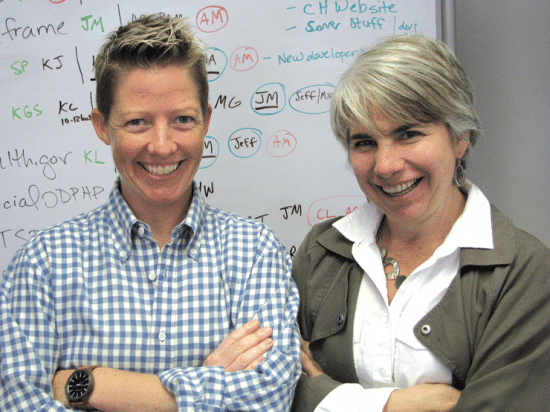
Stacy Robison, left, and Xanthi Scrimgeour saw a need for clearer health information, and turned that need into a fast-growing, multi-faceted business.
But six years after she and Xanthi Scrimgeour launched CommunicateHealth in Northampton, that gap is narrowing — as quickly as their company is growing.
“We both come out of traditional public-health backgrounds,” Robison said of Scrimgeour, her partner in both life and business. “Xanthi was doing some health-education work for one of the bureaus for the state Department of Public Health. I did a lot of work at the federal level. I was doing some policy work around health literacy, looking at how people understand health information.”
On both levels, she said, “public health is historically underfunded. They don’t traditionally get cool design, creativity, technology.”
At the same time, data showed that people were increasingly struggling with health information at a time when society in general is shifting the burden, more than ever before, onto individuals to manage their health and seek relevant information.
“The other part of the equation is how poorly designed and poorly written information in public healthcare can be — it was a huge gap,” she told BusinessWest. “So that was really the vision for the company: let’s fill this gap. There was clearly a business case for this.”
So, in 2009, the two left their jobs and launched a startup business from their attic, with the goal of developing and rewriting health-information documents in a way that would be clear and engaging for all readers. By 2011, CommunicateHealth, as they called it, was approaching $1 million in revenue annually; it ended 2014 with just over $6 million. Meanwhile, a three-person operation six years ago now boasts a staff of 36 in Northampton and a second office in Rockville, Md. The Women Presidents’ Organization recently ranked the enterprise 44th on its list of fastest-growing women-owned companies.
That rapid success might surprise Robison and Scrimgeour, but only to a point. After all, they knew the vast health-information industry had a need for professionals who could clean up and redesign often-confusing communications.
“We consider ourselves a mission-based company,” Robison said. “We asked ourselves, ‘can we do this? Can we bring some creativity and new technology to a field that hasn’t had a chance to benefit from it? That’s really the mission — what can we do to make people’s lives better by simplifying the complexity of the public-health system? And, obviously, it was a good business model. We’ve done really well.”
Plain Speaking
Robison has been rewriting poorly presented health information since her previous career working with federal public-health agencies, and that was initially the bread and butter of CommunicateHealth. But as the startup has grown, it has also expanded its scope of services, moving from a subcontracting role to that of a prime contractor.
“We started doing content — focusing on how we can write this information more clearly. Since then, ‘plain language’ has become a buzzword in the federal arena. So we would do that and hand it off to a designer, and it was out of our our hands. But then we’d see it and say, ‘this is horrible.’ You can simplify the language, but if you put it in a 10-point Times New Roman font crammed onto a page with no pictures, you haven’t succeeded.”
So she and Scrimgeour introduced a design element into the firm, starting with one graphic designer and boasting four today, and will typically handle both content and design. Meanwhile, web-based health information was becoming more prominent — moving “beyond the brochure,” as Robison put it.
“It became more apparent that, if we’re going to do this well, we need to know how to make this interactive and work with technology, so we brought web developers onto the team,” she went on. “As we brought more and more resources in house, the business model expanded and became more full-service.”
With any project, Robison said, the team starts with determining who the audience is and how best to deliver the material, whether it’s pandemic information from the Centers for Disease Control and Prevention or childhood-obesity messages from the American Academy of Pediatrics, to name two past clients. And the process of determining the direction of a project is one that sets CommunicateHealth apart.
“One thing that makes us really different is our testing process. We involve the end users of our materials in the development process,” she said, using the example of a health-information app to explain. “Before we design a new app, we’ll go out and interview focus groups, ask what features people like, how they feel about this type of information. Once we get a prototype, we put it back in front of people. ‘Are we right on track? Would you use an app like this?’ Then we test it again, and ask, ‘did we accomplish what we wanted to accomplish?’ That process creates better products, but it also really connects us with people who will use them.”
Government agencies comprise about 70% of CommunicateHealth’s client base, with private entities, from large health plans to small health-information startups, making up the rest.
“We run a huge gamut,” Robison said. “One project right now is for parents of young children who may be worried their kids have some kind of motor delay or developmental delay. We’re looking to create information for parents that’s supportive but not overwhelming, and also really accurate.”
Part of that project involves creating web-based GIF animations to demonstrate what it means when a toddler has a wobbly gait or some other movement impairment. “Parents reading this online can see this is what it looks like. We’re testing it with parents, all in hope of delivering a tool that’s supportive and easy and clear — nothing that’s too complex.”
The company will also be handling some communications around upcoming dietary guidelines for Americans, which are updated every five years. “We’ll be supporting that work, so we’re doing a lot of work right now with surveys, focus groups, and background work,” Robison said of the federal-level project.

The ‘Show Me’ app developed by Communi-cateHealth helps people with hearing or language barriers ‘talk’ to first responders.
“That’s our favorite kind of project, because it was a blank slate — there was nothing like it,” Robison said. “So it allowed us to do our process, talk to people, figure out what’s going to work. We ended up with a simple app, all icon-based. That was a fun project.”
Give and Take
Robison, in fact, kept coming back to that back-and-forth dialogue with end users and its importance to every project, whether it’s taking an agency’s jargon-filled content and simplifying it for public consumption or creating something brand new, as in the case of the emergency app.
She also gets plenty of input from editorial boards and educational review boards, who help ensure accuracy and consistent messaging, but even then, research gathered from the public can sway content. “They’ll inevitably push back on everything, but we can show them the user testing — that we put [the original material] in front of people, and they didn’t understand it. We say, ‘you have a choice — and if you’re going to communicate, this is how you do it.’”
To private companies like health plans, clear communication can affect the bottom line as well, she added.
“Large health plans sometimes bring us on to improve communication with their members. We’ll take a look at a handful of their communications — transactional letters about co-payments, welcome guides, enrollment materials — and work with them to create a voice that’s more appropriate for consumers. We’ll test it to find out what’s working and what’s not.”
Overall, Robison said, it’s rewarding to be a business owner with such a wide array of projects, so no one gets stuck in a rut. “We’re a mission-based company. The people who come to work here, come to work because of the mission. They ultimately care about the end product; they want to deliver high-quality products.”
At the same time, she and Scrimgeour have also experimented with work-life arrangements inspired by Silicon Valley that fosters employee growth, autonomy, and satisfaction, including an unlimited time-off policy. Also, Friday afternoons are mandatory “creative time,” where everyone gathers to brainstorm ideas and sometimes help fellow employees stuck at a critical point in a project.
“It has been interesting for us to find those models,” Robison said. “How can we engage people and do things differently, treat our employees differently? There are a lot of traditional business models, but not a lot of people shaking it up.”
CommunicateHealth has risen to prominence at a time when healthcare in general is being shaken up by shifts in how care is delivered and paid for — and when consumers are increasingly anxious about the issues they’re dealing with, and just want some clear answers.
At the same time, Robison and Scrimgeour have become active supporters of the National Women’s Chamber of Commerce in its efforts to increase the share of federal contracts awarded to women-owned businesses. The goal? Five percent of the tens of billions of dollars available. “So, yeah,” Robison said, “we haven’t evened out that playing field yet.”
Still, the continued growth of CommunicateHealth serves as an inspiring example of two women who turned a passion into a business plan, which then became a local success story with a national reach.
“If you’d asked me years ago if I’d be a business owner, I’d have said never in a million years,” Robison said. “But it’s really nice for us to be this mission-based company and do well, which ultimately means we can do well for our employees and be a provider of jobs and training and good things like that. There are not a lot of models for this in public health, so to be able to do this is really gratifying.”
Joseph Bednar can be reached at [email protected]
MGM Springfield Could Seek Delay in Opening
SPRINGFIELD — City officials confirmed Tuesday that MGM Springfield may coordinate its $800 million casino project in the South End with the reconstruction of the Interstate 91 viaduct through the city’s downtown, which could delay the casino opening until 2018. The original target date was late 2017. “While the actual opening date is subject to the approval by the Massachusetts Gaming Commission, the city recognizes that changes may be required to the schedule set forth in the host-community agreement to coordinate with the viaduct construction schedule,” said City Solicitor Ed Pikula. “The city intends to work cooperatively with MGM, the Massachusetts Department of Transportation, and the Massachusetts Gaming Commission to hold MGM to the promises it made in the host-community agreement, while allowing for the flexibility required to assure a successful opening.” An MGM Springfield spokesman said the company plans to bring the discussion before the Gaming Commission. Its host-community agreement with Springfield sets financial penalties for opening more than 33 months after licensing, which occurred on Nov. 7, 2014. The I-91 viaduct project is expected to last until the summer of 2018, but financial incentives for an early finish could see it completed by February 2018.
DCR Seeks Applications for Park-improvement Effort
BOSTON — The state Department of Conservation and Recreation (DCR) is now seeking applications for the first phase of the fiscal year 2016 Partnerships Matching Funds Program from park-advocacy groups, civic and community organizations, institutions, businesses, municipal governments, and dedicated individuals with an interest in improving the Commonwealth’s natural, cultural, and recreational resources. Through the program, DCR will allocate $1.25 million in matching funds to finance capital projects at the agency’s parks, beaches, and other facilities. Past projects include the design and construction of a new playground, repairs to historic buildings, trail and path enhancements, and landscape improvements. “The Partnerships Matching Funds Program is a great example of how DCR works together with residents and stakeholder organizations to improve our public resources,” said DCR Commissioner Carol Sanchez. “We are proud to continue to build upon the success of the Partnership Matching Funds Program, which has been responsible for a combined investment by the Commonwealth and public and private partners in trails, green spaces, historic structures, and water resources of more than $10 million since 2004.” Applications for DCR’s matching-funds program must provide a match of non-state funds for capital projects at the agency’s parks, beaches, and facilities to be considered. Projects that require more than one year to plan and complete will be under consideration. Once approved, DCR will manage the implementation of the projects in close consultation with the partners making contributions. The agency will match projects dollar for dollar and will also consider providing a two-to-one match in certain instances. For more information on the program, and to receive an application, call (617) 626-4989 or e-mail [email protected]. Information and applications are also available at www.mass.gov/dcr; click the ‘Get Involved’ tab, then click on ‘Partnerships.’
Business Confidence Falls Again in May
BOSTON — The Associated Industries of Massachusetts (AIM) Business Confidence Index fell 1.8 points in May to 57.3, its second consecutive monthly decline after reaching a 10-year high in March. “We’re up 2.5 points from last May, but coming off an upward surge from August through March, business confidence seems to have lost momentum,” said Raymond Torto, Chair of AIM’s Board of Economic Advisors (BEA) and lecturer at Harvard Graduate School of Design. “The index performed well during the first quarter of this year, when the national economy barely grew, but now it is weakening even as growth appears to be picking up.” Torto noted that economists’ forecasts for expansion in 2015 have moderated. “Our survey does reflect lower expectations for the six months ahead. We also see lagging confidence among manufacturers, whose exports are hurt by the strong dollar, and among mid-size companies.” AIM’s Business Confidence Index has been issued monthly since July 1991 under the oversight of the Board of Economic Advisors. Presented on a 100-point scale on which 50 is neutral, the index attained a historical high of 68.5 in 1997 and 1998; its all-time low was 33.3 in February 2009. The sub-indices based on selected questions or respondent characteristics almost all declined from April to May, though all were up from a year before. The U.S. Index assessing national business conditions lost 3.7 points to 50.1, and Massachusetts Index of conditions within the Commonwealth was off 2.7 at 55.9. “It is now six full years that the state indicator has led its national counterpart,” said BEA member Katherine Kiel, professor of Economics at the College of the Holy Cross. “Our state’s favorable industry mix and skilled workforce have enabled it to perform relatively well economically during a period of recovery and slow growth.” The Current Index, tracking employers’ assessment of existing business conditions, was down 0.9 to 57.4 points, while the Future Index, measuring expectations for the next six months, lost 2.8 points to 57.1. “These results indicate that Massachusetts employers do not foresee better business conditions over the period ahead,” Kiel said. “The readings are solidly positive, but expectations for marked improvement have faded.” Two of the three sub-indices related to survey respondents’ own companies lost ground in May: the Company Index, which assesses the situations of their own operations, was off 0.8 to 60.2 points, and the Sales Index dropped 1.7 points to 60.0. The Employment Index, meanwhile, added 0.7 to 58.0 points, “its highest reading since September 2005,” noted Michael Goodman, executive director of the Public Policy Center at UMass Dartmouth. “Employment expectations for the next six months are particularly strong, as 37% of responding employers plan to add staff, while 14% expect reductions. This compares favorably to a 23%-12% split for the past six months.”
State Announces $10M Energy-storage Initiative
BOSTON — The Baker-Polito administration announced the launch of a new, $10 million initiative aimed at making Massachusetts a national leader in energy storage. The Energy Storage Initiative (ESI) includes a $10 million commitment from the Department of Energy Resources (DOER) and a two-part study from DOER and the Massachusetts Clean Energy Center (MassCEC) to analyze opportunities to support Commonwealth storage companies, as well as develop policy options to encourage energy-storage deployment. “The Commonwealth’s plans for energy storage will allow the state to move toward establishing a mature, local market for these technologies that will, in turn, benefit ratepayers and the local economy,” said Gov. Charlie Baker. “Massachusetts has an exciting opportunity to provide a comprehensive approach to support a growing energy-storage industry with this initiative’s analysis, policy, and program development.” Added EEA Secretary Matthew Beaton, “Massachusetts is nationally recognized for energy efficiency and clean-energy job growth. This Energy Storage Initiative will ensure the Commonwealth continues to be on the forefront of advancing innovative clean technology. Through this initial $10 million announcement and the subsequent studies, Massachusetts is primed to leverage the expertise of the storage industry to reduce barriers to project implementation, ultimately advancing a crucial component of modernizing our electric grid.” Massachusetts’ $10 billion clean-energy industry already supports a promising energy-storage cluster, said MassCEC CEO Alicia Barton. “By launching the Energy Storage Initiative and fostering this sector at home, Massachusetts will position itself to grab a disproportionate share of the economic opportunities arising out of the fast-growing global markets for storage technology.” The worldwide market for grid-scale energy storage alone is estimated to reach $114 billion by 2017, according to an analysis by Lux Research. Common methods of energy storage include batteries, flywheels, compressed-air energy storage, pumped storage, hydrogen storage, and thermal-energy storage. The two-part study will start by analyzing the industry landscape, economic development, and market opportunities for energy storage, while also examining potential policies and programs that could be implemented to better support energy-storage deployment in Massachusetts. The second part of the study will provide policy and regulatory recommendations along with cost-benefit analysis for state policymakers. In parallel, DOER will leverage $10 million in Alternative Compliance Payments (ACPs) to establish and support the Commonwealth’s energy-storage market. DOER will work to identify and evaluate the appropriate value of the services energy storage can provide to ratepayers and the grid through a market signals assessment, while funding demonstration projects from the utility to residential scales. DOER will work with MassCEC and key market players, in state and across the country, to assist in the development of innovative projects in the Commonwealth. Through this initiative, Energy and Environmental Affairs will hold several forums to engage experts and industry in storage-policy opportunities in the coming months. “Massachusetts continues to play a leading role in creating solutions for a more flexible and resilient grid,” said Matt Roberts, executive director of the Energy Storage Assoc. “These investments … will undoubtedly spur continued advancement in the industry.”
DevelopSpringfield, ReGreen Springfield to Plant on Pine Street
SPRINGFIELD — DevelopSpringfield announced a collaborative project with ReGreen Springfield to provide plantings to help spruce up a vacant DevelopSpringfield-owned lot on Pine Street in the Maple High Six Corners neighborhood. ReGreen Springfield collaborates with a variety of community organizations, businesses, and government agencies to promote reforestation in Springfield. Founded following the 2011 tornado, the organization has since planted nearly 2,000 trees across the city and provided educational programming throughout its neighborhoods. “DevelopSpringfield is pleased to support and partner with ReGreen Springfield on this project. Like ReGreen, we are committed to encouraging sustainable redevelopment, especially in tornado-impacted areas, and we always strive to collaborate with other aligned nonprofit organizations. Working with ReGreen Springfield is a natural fit,” said Jay Minkarah, president and CEO of DevelopSpringfield. In 2013, DevelopSpringfield purchased several residential lots in the Central Street corridor with a goal of preparing them for redevelopment into owner-occupied housing. Some of the properties are currently under redevelopment. The Pine Street location will be among the lots available for a future development. In the meantime, the plantings will create an attractive, environmentally sustainable backdrop that will help jumpstart tree growth in the neighborhood in advance of site redevelopment. For more information on DevelopSpringfield, visit www.developspringfield.com.
MMS Launches Website on Opioid, Prescription Abuse
WALTHAM — The Mass. Medical Society (MMS) announced the launch of the Smart Scripts MA website (www.massmed.org/smartscriptsma) as part of a comprehensive effort to reduce prescription-drug abuse in the Commonwealth. The website is the cornerstone of the campaign announced last month by the physicians’ group to educate doctors and patients about safe prescribing and the storage and disposal of prescription pain medications. “There are two groups that perhaps more than any others can help to reduce prescription drug abuse. They are the physicians who write the prescriptions and the patients who take the medicines,” said Dr. Dennis Dimitri, president of the Mass. Medical Society. “This new website reaches out to both groups. By helping physicians ensure that opioids are available only to patients who truly need them, and by educating patients about the proper storage and disposal of prescription drugs, we believe we can make a big impact on the Commonwealth’s opioid crisis.” The medical society’s campaign consists of three components: guidelines for prescribers, free educational courses for prescribers, and information on storage and disposal of prescription drugs. The new website establishes all three components in one, easily accessible location. The prescriber-education section includes the MMS’ recently released Opioid Therapy and Physician Communication Guidelines for physicians. The section also contains links to its continuing medical-education courses, offered free to all prescribers until further notice, Dr. Dimitri said, “to remove as many barriers as possible to prescriber education.” Courses include those on managing pain, identifying drug dependence, opioid prescribing, and principles of palliative care. Five courses are currently available, with more to be added later this month. Recognizing the critical importance of proper storage and disposal of prescription medicines by patients, Smart Scripts MA includes separate sections on medication storage and medication disposal. According to the Centers for Disease Control, more than 80% of people who misuse prescription pain medications are using drugs prescribed to someone else, and the MMS believes patient education must be a key component of any effort to reduce prescription abuse. The website also includes content from the Partnership for Drug-Free Kids, a nonprofit organization founded in 1987 and dedicated to reducing teen substance abuse and helping families impacted by addiction, and a link to the Medicine Abuse Project, a five-year campaign by the Partnership that aims to prevent a half-million teens from abusing medicine by the year 2017. “Opioid abuse has become a public-health crisis affecting every community,” Dimitri said. “Physicians and patients can make a real difference in reducing the abuse of prescription drugs. We believe our effort can help both groups do just that — make a difference — because people’s lives depend on it.”
Baystate Announces Workforce Reduction
SPRINGFIELD — Baystate Health recently announced a reduction in its workforce in response to current fiscal challenges and changes in the provision of health care. On June 4, 24 Baystate employees received notifications that their employment in their current positions will end in 30 days, and 17 employees are seeing their hours reduced. An additional 45 open positions at Baystate Health are being eliminated, effective immediately. Driving the decision to eliminate these positions is a current budget shortfall, across Baystate Health, of about $22 million. The shortfall represents the difference between Baystate Health’s budget for the year — the financial performance required to enable the organization to re-invest in its services, facilities and technology in the coming year — and current projections for its yearly financial results. All the affected positions are Springfield-based, mainly at Baystate Medical Center. No bedside nurses or physicians are losing their employment. The jobs include management positions. “We take any decision to end any person’s employment very seriously, and we regret the necessity of it,” said Nancy Shendell-Falik, chief operating officer of Baystate Medical Center. “We will do everything possible to help those affected find new opportunities, either within or outside Baystate Health.” Affected employees will receive severance pay and extension of benefits in accordance with their tenure of service, and job placement assistance. Baystate’s actions are part of a multi-faceted effort to reduce costs and return the system to its budgeted operating margin, including work underway in supply chain, process improvement, energy efficiency and other areas. Every dollar of positive margin at the end of a fiscal year is re-invested into Baystate’s facilities, technology, programs and services. Improvements such as the renovation of operating rooms at Baystate Franklin Medical Center and construction of the MassMutual Wing and Davis Family Heart & Vascular Center at Baystate Medical Center, as well new clinical technologies and equipment and the development of new clinical programs, are funded primarily by that margin. “Like many healthcare providers, we are facing a need to adjust our human, material and financial resources to adapt to the rapidly changing healthcare environment,” said Shendell-Falik. “Difficult decisions such as these make it possible for us to continue to invest in the services we’re able to provide our patients, whether it’s a new program, a new or renovated facility, surgical supplies or a CT scanner.” Baystate Medical Center is one of the largest providers of Medicaid services in Massachusetts, and provided more than $112 million in unreimbursed care in 2014. “We are committed to providing these services in line with our charitable mission; unfortunately the reimbursements we receive for providing Medicaid services are well short of our costs, typically between 70 and 80 cents on the dollar,” said Shendell-Falik. Baystate Medical Center remains the lowest-cost teaching hospital in Massachusetts.
MBA, Five Banks Launch ‘Common Cents’ Program
BOSTON — The Mass. Bankers Assoc. (MBA) and five banks, including Holyoke-based PeoplesBank, have launched Common Cents, a financial-education competition with participating high-school students from around the state. The program is featured online at www.masscommoncents.com. Recorded last autumn, Common Cents is a quiz-show competition hosted by the MBA and the five bank partners located around the Bay State: Bank of America, BayCoast Bank, Cape Cod Five Cents Savings Bank, PeoplesBank, and the Savings Bank. The 80 high-schoolers compete for prizes and learn about important financial-education concepts and practices along the way. The schools include Barnstable High School, Barnstable; Madison Park High School, Boston; Chicopee Comprehensive High School, Chicopee; Chicopee High School, Chicopee; Lynnfield High School, Lynnfield; Natick High School, Natick; Gateway to College Program, Fall River; Dennis-Yarmouth Regional High School, South Yarmouth; and Wakefield High School, Wakefield. Common Cents is being introduced to every Massachusetts high school with a guide and special classroom instructions that can also be found on the website. In addition, a video of the program has been sent to public-access television stations across the Commonwealth, encouraging both students and the general public to engage and embrace the important financial information highlighted in the competition. The 2015 Common Cents program, the third of its kind, was produced in support of the Financial Literacy Pilot Program established by the Massachusetts Legislature in 2012. This three-year pilot in 10 high schools in gateway cities throughout the Commonwealth is designed to test the potential viability of installing required financial-education programs in all Massachusetts high schools. Hosted by New England Cable News anchor Latoyia Edwards, radio celebrity Ashlee Feldman of JAM’N 94.5, and financial expert Jeffrey Fuhrer, executive vice president of the Federal Reserve Bank of Boston, the program also features a special guest appearance by former New England Patriot Jermaine Wiggins. For more information and to view the program, visit www.masscommoncents.com.
Dowd Holds Open House at Renovated Location
INDIAN ORCHARD — The Dowd Insurance Agencies staged an open house to celebrate its newly renovated space on Main Street in Indian Orchard on May 20. The open house featured a ribbon cutting with the Affiliated Chambers of Commerce of Greater Springfield (ACCGS) and provided customers and neighbors the opportunity to tour the new office space. Moskal-Dowd and Orchard-Dowd recently moved to 485 Main St., Indian Orchard, to provide more services under one roof. Moskal-Dowd was originally acquired by the Dowd Insurance Agencies in 2009; Orchard-Dowd was acquired in early 2014. The new location offers easier access to agents in one convenient location. “In an era when online and 800-number agencies proliferate, we remain what we have been since 1898: a community-based company committed to insurance professionalism with local service,” said John Dowd Jr., president and CEO of the Dowd Insurance Agencies. “Our new facility will allow us to provide more personalized attention to our valued customers.” The benefits of the new office include ample parking, a large conference room for meetings, and, most important, a larger staff to provide customers a broader range of service. Services available at the new Indian Orchard location include personal insurance, including auto, homeowner, boat, RV, and umbrella insurance; commercial insurance for businesses of all sizes; and life insurance and employee benefits.
Baystate Announces Leadership Changes After Bradley Steps Down
GREENFIELD — Dennis Chalke, senior vice president of Community Hospitals for Baystate Health, announced that Steven Bradley, president of Baystate Franklin Medical Center (BFMC) and Baystate Health’s Northern Region, is stepping down from his position to deal with unexpected and urgent family-related issues. Dr. Thomas Higgins, chief medical officer of BFMC and the Northern Region, will take on the additional role of interim president of the hospital and the region, effective immediately. “Steven played a major role in moving forward BFMC’s project to modernize and renovate its operating rooms, and over the years strengthened Baystate Health’s relationships with many community-based organizations. We thank him for those contributions, and we wish him well in his future endeavors,” said Chalke. In his prior role at Baystate Health, as vice president of Government and Community Relations and Public Affairs, Bradley was a crucial contributor to Baystate’s work to bring healthcare out of the hospital and into the community, advocating for social justice and public health and partnering with community-based organizations across Western Mass. Higgins is a graduate of Boston University with a bachelor’s degree in medical science; he continued at BU to earn his medical degree. He completed his internship and residency in internal medicine at the Cleveland Clinic. He completed a residency in anesthesiology, was chief resident, and completed a fellowship in critical care at Massachusetts General Hospital. He also earned an MBA at the Isenberg School of Management at UMass Amherst. Higgins joined Baystate Health in 1996 as chief of Baystate Medical Center’s Critical Care Division. Since 2012, he has served as vice chair for Clinical Affairs in the Department of Medicine and as interim chief in the Division of General Medicine/Community Health. He is a professor of Medicine, Surgery, and Anesthesiology at Tufts University School of Medicine. “Serving as the chief medical officer for BFMC and the Northern Region — and seeing for myself the ways a community hospital can influence a community’s health — has inspired me,” Higgins said. “I’m eager to accept this new challenge and continue the work of advancing our mission in Franklin County.”
UMass System Issues Faculty Awards Totaling $1.17 Million
BOSTON — Describing faculty research and scholarship as work that “distinguishes us as a university and is essential to our quest for a better and richer future,” UMass President Robert Caret announced the awarding of $1.17 million in grants to faculty members. The awards will fund work ranging from a project that will see faculty members engage with industry partners in the development of a big-data research center in Amherst, to a project aimed at bringing local history to life for Lawrence school children. Caret made the announcement as the board of trustees’ committee on academic and student affairs held its quarterly meeting in Boston. The grants are being made available via two programs established to spur research, scholarship, and outreach throughout the UMass system. The President’s Science and Technology Initiative Fund this year is awarding $914,000 to support nine promising research projects. Including this year’s awards, this fund, created in 2004, has provided $11 million in funding for nearly 90 projects that have helped to accelerate research on all five UMass campuses. The UMass presidential funding has helped to attract more than $245 million in federal and private funding. The President’s Creative Economy Initiatives Fund this year provides nearly $260,000 for nine projects aimed at enhancing the quality of life in communities across the Commonwealth. Including this year’s awards, the fund has, since 2007, distributed more than $2 million for 82 projects and has contributed to historical preservation, artisan cooperatives, music, theater, and many other projects. Trustee Alyce Lee, chair of the Committee on Academic and Student Affairs, said both programs support the trustees’ strategic priority of strengthening the university’s research enterprise and “contribute to the economic and social well-being of the Commonwealth.”
Marie Bowen has been appointed assistant vice chancellor for human resources at UMass Amherst following a nationwide search. Bowen, who will join the university administration in August, will serve as the chief human-resources officer for the campus. She will be responsible for developing human-resources policies and strategies, and will advise Chancellor Kumble Subbaswamy and the Campus Leadership Council on human-resources policies, procedures, and regulations. James Sheehan, vice chancellor for administration and finance, said, “we are excited to have someone of Marie Bowen’s caliber join the UMass Amherst community. She brings a wealth of human-resources experience to this key position, most recently serving as the associate dean and chief human resource officer at the Harvard Law School. Prior to that, she served as the director of human resources at the Massachusetts Port Authority. We look forward to working with Marie in her new role and on new initiatives that will continue to make UMass Amherst an employer of choice for faculty and staff.” Bowen graduated cum laude from Harvard College and received a master’s degree from Simmons College and a juris doctor degree from the University of Virginia School of Law. She is also certified as a senior professional in human resources.
•••••
Florence Bank announced that Rachel Dionne has been named to the President’s Club for 2015. Employees nominate their peers for the President’s Club honor, which recognizes superior performance, customer service, and overall contribution to Florence Bank. Dionne, a commercial credit analyst who has been with the bank since 2011, was nominated by numerous colleagues. Dionne is a graduate of American International College, where she received a bachelor’s degree in accounting and her master’s degree in nonprofit management. Her numerous volunteer endeavors include serving as a board of trustees member with the Pioneer Valley Performing Arts Charter Public School in South Hadley; she is also a member of the school’s finance committee. In addition, she is a youth ministry group volunteer, eucharistic minister, and lector at Our Lady of the Blessed Sacrament Church in Westfield. “We received so many comments about Rachel — everything from ‘I was amazed at how much work she was able to accomplish on a project and still maintain her regular workload’ to ‘she always goes well above what is expected of her,’” said John Heaps Jr., president and CEO of Florence Bank. “Rachel’s remarkable work ethic and sincere desire to contribute make her an outstanding member of the President’s Club.”
•••••

Brian Risler
•••••

Heidi-Jo Kemp
Workshop on Retirement Planning, Social Security
June 16: Monson Savings Bank is holding a complimentary workshop titled “Social Security: The Choice of a Lifetime.” It will be presented by Kevin Flynn, regional vice president of Nationwide Financial, and an expert on retirement planning and helping people to understand Social Security and how to optimize their benefits. The event is designed to give people a comprehensive understanding of the rules and details regarding when and how to file for Social Security. It will be held from 5 to 6:30 p.m. at the Hampden Senior Center at 104 Allen St. in Hampden. The free event is open to the public. “This workshop is back by popular demand,” said Steven Lowell, president of Monson Savings Bank. “Knowing when and how to file for Social Security can have a big impact on retirement income. We have offered this workshop before, and those who attended were very appreciative of the information.” Those interested in attending should call Anna Driscoll at (413) 267-1221 or e-mail [email protected]. Seating is limited. Refreshments will be served.
EANE Workshop
June 17: The Employers Assoc. of the NorthEast in Agawam will host a workshop, “Six Secrets for Promoting Products and Services with Confidence,” from 8:30 a.m. to 4:30 p.m. This program, presented by Lyn Murphy, will provide participants with proven strategies and practical tools to feel more comfortable and ultimately become more effective at suggestive selling. It is targeted toward business owners, consultants, lawyers, accountants, architects, and customer-service representatives whose positions include sales goals. Attendees will learn how to enhance their personal presence and build rapport with current and potential clients, discover tools to avoid feeling pushy or rejected when promoting products and services, use tools to identify and adapt to prospects with different communication and behavioral styles, and learn strategies to positively influence sales outcomes. The $285 fee includes the electronic DiSC Sales Assessment. To register, visit www.eane.org/six-secrets-for-promoting-products-and-services-with-confidence.
ERC5 Annual Meeting
June 17: The East of the River Five Town Chamber of Commerce will hold its annual meeting from 11:30 a.m. to 1:30 p.m. at Blake Commons Dining Hall, Bay Path University, Longmeadow. The keynote speaker will be talk-show host and bestselling author Howie Carr, discussing politics, crime, and entertainment. A member of the Radio Hall of Fame, Carr’s evening drive show can heard on more than 20 stations throughout New England. He is also a columnist for the Boston Herald and a contributor to Breitbart.com. Carr’s bestselling books include The Brothers Bulger and Hitman. Crime boss Whitey Bulger was so infuriated by Carr’s groundbreaking reporting that he once put out a murder contract on Carr, a story detailed on 60 Minutes. At his 2013 trial on murder and racketeering charges, Bulger tried to have Carr banned from the courtroom by calling him as a defense witness. Now imprisoned for life in Arizona, the crime czar still says his greatest regret was not murdering Carr when he had the chance. Bulger’s story will be featured in the upcoming film Black Mass, starring Johnny Depp. To register, visit www.erc5.com or contact Amanda Brodkin at the chamber. The cost is $45 for chamber members, $55 for non-members.
Clinical Notes Concert
June 18: Baystate Franklin Medical Center’s Clinical Notes, a hospital-based women’s a cappella chorus, will perform a free summer concert, “Good Ole — and New — a Cappella,” from 5:30 to 6:30 p.m. in the hospital’s Conference Rooms B and C. Under the direction of Kathryn Aubrey-McAvoy, the group will perform a variety of selections, including classical, jazz, traditional, and rock. Individual members of the group will be featured as soloists. Hospital staff, patients, visitors, and the public are invited to attend. Guests should feel free to come and stay for the whole concert or for a short time, as time allows. Clinical Notes was formed in 2003 by Phyllis Stone and Annginette Anderson, who shared a love of a cappella singing. Though members have come and gone over the 12 years, most of the singers have been in the group since its inception. The group performs two formal concerts yearly (during the holidays and at the beginning of summer), and sings at various hospital-related functions, such as the annual Valentine’s Day Chocolate Festival, Nurses’ Week, and other celebrations. They have also performed during the Relay for Life Sacred Gathering, the Hospice of Franklin County Tree Lighting, and the United Way A Cappella Festival. For more information, contact Stone at (413) 773-2573 or [email protected].
40 Under Forty
June 18: The ninth annual 40 Under Forty award program, staged by BusinessWest, will be held at the Log Cabin Banquet & Meeting House the evening of June 18. The event honors the region’s most accomplished and civic-minded professionals under age 40, and this year’s class was profiled in the April 20 issue. This year’s winners represent virtually every sector of the economy — from financial services to manufacturing; retail to healthcare; technology to nonprofit management; education to law. They also show the seemingly innumerable ways people can give back to the community. This year’s event will feature a new award — the Continued Excellence Award, presented to the previous honoree who has most impressively built upon their track record of excellence (see nominees HERE). Always one of the most anticipated events and best networking opportunities on the calendar, the gala, which is sold out, will feature lavish food stations, entertainment, and the introduction of this year’s class. The 40 Under Forty program and gala are sponsored this year by Northwestern Mutual (presenting sponsor), Paragus Strategic IT (presenting sponsor), Fathers & Sons, the Isenberg School of Management at UMass Amherst, Moriarty & Primack, and United Bank.
Leadership Conference
June 19: Springfield Technical Community College (STCC) School of Business & Information Technologies will host a free Leadership Conference from 8 a.m. to 2 p.m. at the Scibelli Hall (Building 2) Theater at STCC. This one-day event will feature a variety of guest speakers, including Rebecca Corbin, president and CEO of the National Assoc. of Community Colleges for Entrepreneurship; Alden Davis; Robert Hensley, president of Robert Hensley & Associates, LLC; Nicole Murdoch, small-business owner; Gail Ward Olmsted, STCC professor and department chair in the School of Business and Information Technology; Rob Parslow, Accounting director at American Express; Ira Rubenzahl, STCC President; Diane Sabato, STCC professor of Business Administration; Kirk Smith, president and CEO of the YMCA of Greater Springfield; and Paul Thornton, STCC professor of Business Administration. The event will include interactive group discussions and opportunities for networking. Lunch will be provided. For more information or to register, call (413) 755-4008 or e-mail [email protected].
ACCGS Panel on Health-plan Changes
June 23: The Affiliated Chambers of Commerce of Greater Springfield (ACCGS), in collaboration with the Greater Chicopee, Easthampton, Holyoke, and Westfield chambers of commerce, will present a panel discussion on health-plan changes associated with the Affordable Care Act (ACA) from 3 to 4 p.m. at the UMass Center at Springfield, 1500 Main St., Springfield. Sponsored by the Regional Employment Board of Hampden County, Massachusetts Assoc. of Health Plans (MAHP) President and CEO Lora Pellegrino and Senior Vice President Eric Linzer will present “The State of the Massachusetts Marketplace.” Despite the Commonwealth’s 2006 Health Care Reform Law serving as the model for the ACA, according to MAHP, Massachusetts faces significant challenges five years after its passage. Massachusetts employers, particularly small and mid-size companies, will need to confront significant changes to the marketplace, which, MAHP says, will have a substantial impact on health-care costs, including the expansion of the small-group market to include companies with up to 100 employers and the elimination of the state’s rating factors. Pellegrino and Linzer will discuss the current state of the health-plan market, what the ACA changes mean for employers, how employees can address the impact of the ACA changes, how mandated benefits and other changes at the state level may exacerbate the challenges employers face, and what employers can do to get involved. The cost is $10 for members of the participating chambers and $15 for general admission. To register, visit one of the chambers online or e-mail Kara Cavanaugh at [email protected].
Berkshire Region MITS Summer Institute
July 6-10: Berkshire Museum will host the Berkshire Region Museum Institute for Teaching Science (MITS) summer session for middle- and high-school teachers. This year’s theme is “Going with the Flow: Using Inquiry Methods to Teach Watershed Science.” The Berkshire Museum is the lead educational partner for MITS in the Berkshires. The program is presented with instructing partners Housatonic Valley Assoc., Flying Cloud Institute, and American Rivers. This exciting professional-development program will focus on the ecology and history of local rivers and watersheds. Participants will learn from experts about what is affecting water quality in the rivers that flow through area communities and how scientists effectively measure watershed health using principles of ecology, engineering, and robotics. The week-long institute includes outside exploration of local rivers and time indoors at the museum for hands-on, inquiry-based projects. Institute participants will build and use a SeaPerch underwater remotely operated vehicle (ROV) and then take it back to their classrooms. The SeaPerch ROV is used to take videos of underwater ecosystems and collect water samples. SeaPerch curriculum serves as an introduction to basics in engineering, ship and submarine design, and an exploration of ways that engineers have been able to explore places that are too dangerous or unreachable for humans to visit. The educators will explore a variety of methods to test water quality. They also will build miniature urban landscapes to prototype methods for remediating runoff in an exploration of low-impact-development solutions to non-point source pollution. Participants will learn from experts about the science and politics of dam removal that have been affecting New England rivers, and they will hear the story of PCB pollution and removal in the Housatonic River watershed and examine issues surrounding urban and agricultural runoff into rivers and aquifers. Throughout the course, participating educators will try out, develop, and implement inquiry-based approaches and project ideas for use in the classroom that amplify the concepts covered in the course and that will encourage students to become critical, inquisitive thinkers. Throughout the institute, the educators will be working with proven methods of assessing student learning. Educators who complete the institute earn professional development points and/or graduate credits from either Massachusetts College of Liberal Arts or Cambridge College, based on a teacher’s chosen level of participation. All activities will be linked to Massachusetts Common Core state standards and STEM (science, technology, engineering, math) initiatives. All teachers from grades 5 to 12 are welcome to attend. Online registration for the institute is available at www.mits.org. There will be an orientation on June 20 before the July 6-10 session. The deadline to guarantee a spot is June 1; late sign-ups will be accepted based on space availability. The registration fee, which includes the cost of the SeaPerch kit, is $400 for individual participants and $375 for two or more participants from same school district. Meghan Bone, Berkshire Museum’s School and Teacher Program specialist, can answer questions about the program; she can be reached at (413) 443-7171, ext. 332, or [email protected].
Valley Fest
Aug. 29: White Lion Brewing Co. announced that it will host its inaugural beer festival, called Valley Fest, at Court Square in downtown Springfield. MGM Springfield will be the presenting sponsor. The festival is poised to be White Lion’s signature annual event, introducing the young brand to craft-beer enthusiasts throughout New England and beyond. White Lion Brewing Co., the city of Springfield’s only brewery, launched in October 2014. Founder Ray Berry and brewmaster Mike Yates have released three selections under the White Lion brand and have been busy promoting their efforts in venues all over Massachusetts and other New England states. “Valley Fest will have the best of the best local, regional, and national beer and hard cider brands,” Berry said. “Even in our inaugural year, Valley Fest will be the largest one-day beer festival in Western Massachusetts. We expect to draw up to 2,000 enthusiasts from throughout New England. We are very excited to showcase the fourth-largest city in New England and all of its amenities.” Berry anticipates that more than 50 breweries and many local food vendors will converge on Court Square for two sessions. Enthusiasts will have an opportunity to sample more than 100 varieties of beer and hard cider alongside pairing selections by local chefs. A number of sponsors have already committed to the event, including MassMutual Financial Group, the Young Professional Society of Greater Springfield, the Dennis Group, Springfield Sheraton Monarch Place, Paragus Strategic IT, Williams Distributing, and the Springfield Business Improvement District (BID). “We are honored to sponsor Valley Fest and look forward to it being an annual event that shares in the facilitation of growth within the downtown community,” said Chris Russell, executive director of the Springfield BID. Visit www.valleybrewfest.com for event details, ongoing updates, and sponsorship opportunities. A portion of Valley Fest proceeds will support several local charities.
Western Mass. Business Expo
Nov. 4: Comcast Business will present the fifth annual Western Mass. Business Expo at the MassMutual Center in downtown Springfield, produced by BusinessWest and the Healthcare News in partnership with Go Graphix and Rider Productions. The business-to-business show will feature more than 100 booths, seminars and Show Floor Theater presentations, breakfast and lunch programs, and a day-capping Expo Social. Details about tevents, programs, and featured speakers will be printed in future issues of BusinessWest. Sponsors include MGM Springfield, presidential and Expo Social sponsor; the Isenberg School of Business at UMass Amherst, education sponsor; Johnson & Hill and Health New England, director level sponsors; and 94.7 WMAS, media sponsor. Additional sponsorship opportunities are available. Exhibitor spaces are also available; booth prices start at $750. For more information on sponsorships or booth purchase, call (413) 781-8600, ext. 100.

AIM Action Plan Strives to Make the Commonwealth More Competitive
 Chris Geehern says he didn’t contrive the phrase (or this particular application of it) — attribution belongs to a Baystate business owner requesting anonymity — but he certainly puts it to work liberally as he talks about the Commonwealth’s innumerable business regulations and the manner in which they are enforced.
“He called it the ‘bad-waiter syndrome,’” Geehern, executive vice president for the Associated Industries of Massachusetts (AIM), said of the individual in question. “He said doing business in Massachusetts is like going to a restaurant where you really like the food, the atmosphere is terrific, and the dessert and drinks are just what you wanted. But the whole experience gets ruined because the waiter is rude and doesn’t really care about whether you like the place or not.
“What we’ve heard repeatedly from employers is that it’s less about the regulations themselves,” he continued, “and much more about the way they are interpreted and enforced — which drives companies crazy.”
Bringing attention to this bad-waiter syndrome and actually doing something about it are two of the many stated goals in a document titled “Blueprint for the Next Century,” the drafting of which is one of several ways — and perhaps the most meaningful — AIM has chosen to mark its 100th anniversary this year.
Composed following extensive polling of the organization’s 4,500-odd members, the blueprint identifies four major public-policy issues, or areas of concern, that members say must be addressed if the state is to remain competitive in an increasingly global economy.
In addition to the need to establish what the report’s authors call a “world-class state regulatory system … that meets the highest standards of efficiency, predictability, transparency, and responsiveness,” these are:
• “Workforce,” meaning a system for educating and training workers and providing them with the skills necessary for companies to succeed;
• “A uniformly strong business climate.” Roughly translated, this involves taking the stunning success enjoyed by the Greater Boston region and expanding it to the rest of the Commonwealth, while also providing opportunity to all business sectors; and
• “Health insurance and energy costs” and the need to lower them to make the state more competitive.
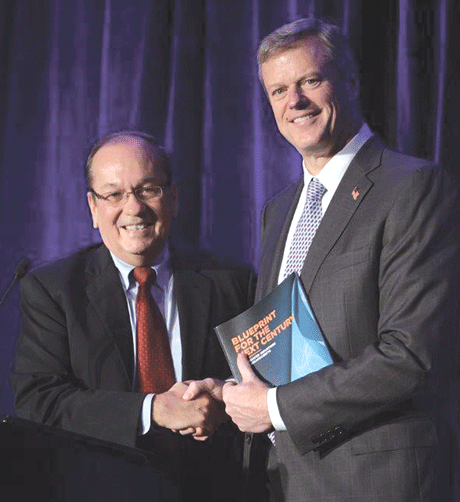
AIM President and CEO Rick Lord, seen here with Gov. Charlie Baker, says workforce issues are by far the number-one concern among the state’s employers.
“None of these have easy solutions,” he noted. “But we hope to have a second release of this blueprint at the end of this year that will include recommendations that will hopefully move us forward.”
To illustrate these concerns, or challenges, and the threats they pose to the future of the state’s economy, AIM presents the example of a Western Mass. company, Northampton-based MachineMetrics.
Led by Eric Fogg, Bill Bither, and Jacob Lauzier, the venture has created a cloud software solution that improves the productivity of manufacturing facilities by collecting, analyzing, and visualizing data from machines, parts, and people. In many ways, its future is dependent on the health of the state’s manufacturing sector, its ability to attract and retain qualified help, and its proficiency with navigating the state’s costly and highly regulated business environment.
“MachineMetrics is the kind of company that may ultimately determine the ability of Masachusetts to build upon an economy that in many ways remains a paradox — an international center of technology, innovation, medical research, financial services, and higher learning near Greater Boston, but a more traditional, amorphous economy just outside of Route 128,” write the report’s authors. “Fogg, Bither, Lauzier, and innovators like them hold the unique promise of joining the ‘eds and meds’ economy of the 617 area code with existing industries struggling to create jobs for residents in the rest of the state.
“It is a promise that will be played out against a vibrant and unforgiving global economy in which investment, resources, jobs, people, and capital flow at blinding speed to the most competitive environments,” they go on. “States, regions, and nations no longer have the luxury of taking their job bases for granted — failure to nurture the business climate not only impedes the growth of existing companies, but also leads to a silent and corrosive flow of job expansions to other locations that provide employers with the best opportunities for success.”
For this issue, BusinessWest takes an indepth look at “Blueprint for the Next Century” and the challenges and opportunities it identifies for the Bay State moving forward.
History Lessons
Lord said AIM traces its roots to 1915, perhaps the apex of the state’s manufacturing sector, when 27 manufacturers came together in the belief that their interests would be better served by a statewide organization charged with advocating on their behalf.
“They felt they needed an organization that would be their voice in the State House,” said Lord, adding that several of those original 27 members were from the western part of the state, and four — Crane Paper in Dalton, Package Machinery in Holyoke, Hampden Papers in Holyoke, and GE, which had several locations, including a huge complex in Pittsfield — are still paying dues a century later.
AIM remained an association of manufacturers until 1989, when membership was opened to all business sectors and the entity became an employers’ association. Today, there are more than 4,500 members, with roughly 30% of them in the manufacturing sector.
AIM will mark its first 100 years of service in a number of ways. The celebration began, unofficially, with the organization’s annual meeting in May, and will climax with a huge gala slated for Nov. 16 (close to the actual anniversary date) at the Boston Convention Center.
Between now and then, there were will be ceremonies in different regions of the state, staged to mark the centennial but also to honor companies and individuals that have made major contributions to the state’s business community and the cities and towns in which they are based.
One such ceremony will take place in Springfield, in the Lyman & Merrie Wood Museum of Springfield History, on June 15. The honorees will be MassMutual, Yankee Candle founder and Kringle Candle co-founder Michael Kittredge, and the Hampden County Sheriff’s Department’s vocational training program.
Meanwhile, in Dalton, on June 11, AIM honored Onyx Specialty Papers, Berkshire Health Systems, and SABIC Innovative Plastics.
But the most significant aspect of the centennial celebration is “Blueprint for the Next Century,” which attempts to not only identify the challenges facing business owners of all sizes, but also take on the much more difficult task of pinpointing potential solutions.
And this brings Lord and Geehern back to MachineMetrics, which, as they said, embodies both the promise of the future and the considerable obstacles to achieving that promise.
To put things in perspective, the report’s authors presented MachineMetrics’ case and asked a number of poignant questions that apply to most ventures doing business in the Bay State or looking to do so:
• Will the advanced-manufacturing companies to which they want to sell their idea survive in the relentlessly high-cost, high-regulation environment in Massachusetts?
• Will MachineMetrics find the skilled, educated, and motivated people it needs to grow and to develop new iterations of the company’s software?
• Will young companies located in Western Mass. and other areas outside the Cambridge/Boston innovation beltway develop the critical mass needed to extend opportunity throughout the state?
• Will the MachineMetrics platform make manufacturers so efficient that they will be able to increase business without creating new jobs?
• Will government regulators encourage the growth of companies like MachineMetrics, or will they set up bureaucratic impediments like the one that recently convinced a neighboring software company in Amherst to move to Texas?
• Finally, will the government research money that built Massachusetts into a world-class center of higher education, medical science, biotechnology, and defense technology continue to flow or slow to a trickle?
How the state — meaning its business leaders and especially its elected leaders — answer these and other questions will go a long way to determining how the next century, or at least the next few decades, will unfold, Lord said.
Help Wanted
There is probably no issue where the answers are more important than the broad issue of workforce, he went on, adding that virtually every business sector, and every individual business, will be challenged in the years to come with the task of attracting and retaining individuals with the skills needed for that business to succeed.
“This was by far the number-one concern among Massachusetts employers,” said Lord. “We heard it in all geographic areas of the state, from Boston to Western Mass., and we heard it in all industries — particularly, and quite loudly, in manufacturing.
“That’s because the age of the workforce is high — 50% of the sector’s workforce will retire in the next 10 years,” he went on. “So they’re facing a crisis in filling jobs that will become available.”
But the reality is that the word ‘crisis’ is not restricted to that industry, he told BusinessWest, adding that solutions to it lie mostly in the ability of the business community and the state’s education system — meaning preschool to college — to work together to ensure that businesses will have qualified workers.
Specific recommendations include, among other things, taking better advantage of the opportunities provided by the Workforce Innovation and Opportunity Act of 2014; elevating the role of vocational education; renewed emphasis on the fundamentals, such as math, science, and communications skills; and expanding performance-based funding for the state’s community colleges and public four-year institutions.
Beyond workforce issues, though, there are other issues challenging business sectors and individual ventures, said Lord and Geehern, adding that one of the most critical is the matter of creating a uniformly competitive structure across all industries, geographic regions, and populations.
Elaborating, Lord said that what the state has done in recent years amounts to picking winners and losers. And this phrase applies to both geography and business sectors.
“We’ve heard from a lot of companies that they believe we need to promote economic opportunity uniformly across the state,” he explained. “The Greater Boston area survived the recent economic downturn pretty well, but other areas of the state suffered more significantly, so economic opportunity is unevenly spread throughout Massachusetts. In addition, over time, the state has adopted policies or incentives that favor certain industries over others. The sense is that economic opportunity ought to be more evenly distributed.”
Geehern agreed, noting that state government, in general, has a tendency to chase whatever the ‘sexy’ industry might be at the moment. In the ’80s, it was personal computers, and at the start of this century, it was Internet-based ventures, he went on, adding that, in recent years, it’s been biotech, a focus punctuated by former Gov. Deval Patrick’s commitment of $1 billion to that sector, an expenditure that primarily benefits the eastern part of the state.
“What we’re trying to say with this [blueprint] is that you can’t just chase after the cool industry, whatever that might be at the moment,” he continued. “You have to think about what industries match up with the skills that are available in Massachusetts and do your best to encourage business growth throughout — meaning throughout all industries and throughout all regions.”
As with the workforce initiative, however, stating the problem and finding solutions to it are two completely different things, they acknowledged.
The blueprint recommends a number of steps, but especially increased focus on the state’s so-called gateway cities, older manufacturing centers, including several in Western Mass., such as Springfield, Holyoke, Pittsfield, and Westfield.
“A lot of this inequity exists in our older, urban areas,” said Lord. “There has been some focus on the gateway cities, but I think there’s more that can be done there; I think the Baker administration will try to do some creative things.”
By Any Measure
Another major issue for the state moving forward is both the number of regulations on the books and the manner in which they are enforced, said Geehern, who drew upon the example of that aforementioned software company in Amherst — the one compelled to relocate to Texas — to get his point across.
“During their first few years in operation, companies usually lose money, and this one was no exception,” he explained. “And the Department of Revenue required them to file their return electronically. That’s fine, but the DOR would not let this company use any of the typical, commercially available online platforms to submit those returns.
“Instead, they had to go out and buy this specialized piece of software that I believe cost about $2,500,” he went on. “Things like this prompted this company — which was a medical software company run by an M.D., so it’s exactly the kind of company that’s in the wheelhouse of Western Mass. — to move to Texas. And when the founder sells in five or 10 years for lots and lots of money, all those capital gains are going to Texas, rather than Massachusetts, not to mention all those jobs.”
Such stories are hardly isolated incidents, said Geehern and Lord, adding that they are a key element in the prevalence of that bad-waiter syndrome described earlier.
“There’s a sense that Massachusetts is just a tough place to do business because of the multitude of government regulations that impact companies in all sorts of ways,” said Lord, adding that, by AIM’s count, there are roughly 2,200 of these regulations, and they are often not reviewed in anything approaching a systematic fashion.
Which is why business leaders were encouraged by the Baker administration’s imposition of a 90-day moratorium on new regulations (since extended) as well as a comprehensive review of all existing regulations announced in April.
“All agencies are in the process of looking at the regulations that their agency has promulgated, and they have to justify whether they should be kept, amended, or repealed,” said Lord. “And we’re soliciting input from our members to help in this process.”
The desired result, he said, are regulations and enforcement policies that protect society, but don’t punish businesses.
But while companies must cope with a highly regulated environment, they must also deal with high costs, especially when it comes to energy and health insurance, said Lord, adding that, as with the other public-policy initiatives, these do not constitute a recent phenomenon.
But they are becoming more of a factor, he said, adding that the Commonwealth now boasts (if that’s the right term) the second-highest per-capita healthcare costs in the nation (15% higher than the national average) and the third-highest electric rates.
“And these put us at a competitive disadvantage to lower-cost places, both in the United States and around the world,” said Lord, adding that relief from these costs will not come easily.
Steps toward progress outlined in the report include, for healthcare, everything from maintaining the current definition of ‘full-time employee’ — the state’s benchmark is 35 hours, while federal reforms put the number at 30 — to repealing the medical-device tax under federal health reform.
As for energy costs, the report recommends steps such as new pipelines to transport natural gas into the Commonwealth and reorganization of the Mass. Department of Public Utilities.
Getting a Tip
Ridding Massachusetts of the ‘bad-waiter syndrome’ is not an assignment for the faint of heart. Such perceptions about the Commonwealth and its general attitude toward business have existed for most all of the time AIM has been in existence.
Real progress is the goal, and AIM is striving to achieve some by not only stating the problems, but eventually providing a road map for finding improvement.
And if that destination can be reached, then this century-old organization will really have something to celebrate.
George O’Brien can be reached at [email protected]
Continued Excellence Award Finalists Are Announced
 The judges have cast their ballots, and their scores have determined the five finalists for BusinessWest’s first Continued Excellence Award, or CEA.
And, as with the 40 Under Forty competition that inspired this new recognition program, the defining element for the list of finalists is diversity.
Indeed, those with the highest scores among nearly 40 nominees for the CEA include a serial entrepreneur, an attorney, one of the forces behind the region’s hugely successful Valley Gives program, the current president of one of the state’s oldest family-run businesses, and an administrator in the region’s large and prestigious higher-education sector.
“We created the Continued Excellence Award to recognize 40 Under Forty honorees who have done anything but rest on their laurels,” said BusinessWest Associate Publisher Kate Campiti. “We wanted to single out for recognition those who have built upon their strong records of service in business, within the community, and as regional leaders. And these five finalists have certainly done that.”
The winner of the inaugural CEA will be announced at this year’s 40 Under Forty Gala, slated for June 18 at the Log Cabin Banquet & Meeting House.
The finalists, as determined by scores submitted by three judges — Carol Campbell, president of Chicopee Industrial Contractors; Eric Gouvin, dean of the Western New England School of Law; and Kirk Smith, former director of the YMCA of Greater Springfield — are:
Delcie Bean IV

Delcie Bean IV
Meanwhile, within the community, Bean started the nonprofit Tech Foundry, an organization that provides training and workplace skills to high-school students. He’s also been active with Valley Venture Mentors, River Valley Investors, and DevelopSpringfield; is a board member for Up Academy Springfield; and serves as a board member for the Mass. Department of Elementary & Secondary Education’s Digital Literacy and Computer Science Standards Panel.
Kamari Collins
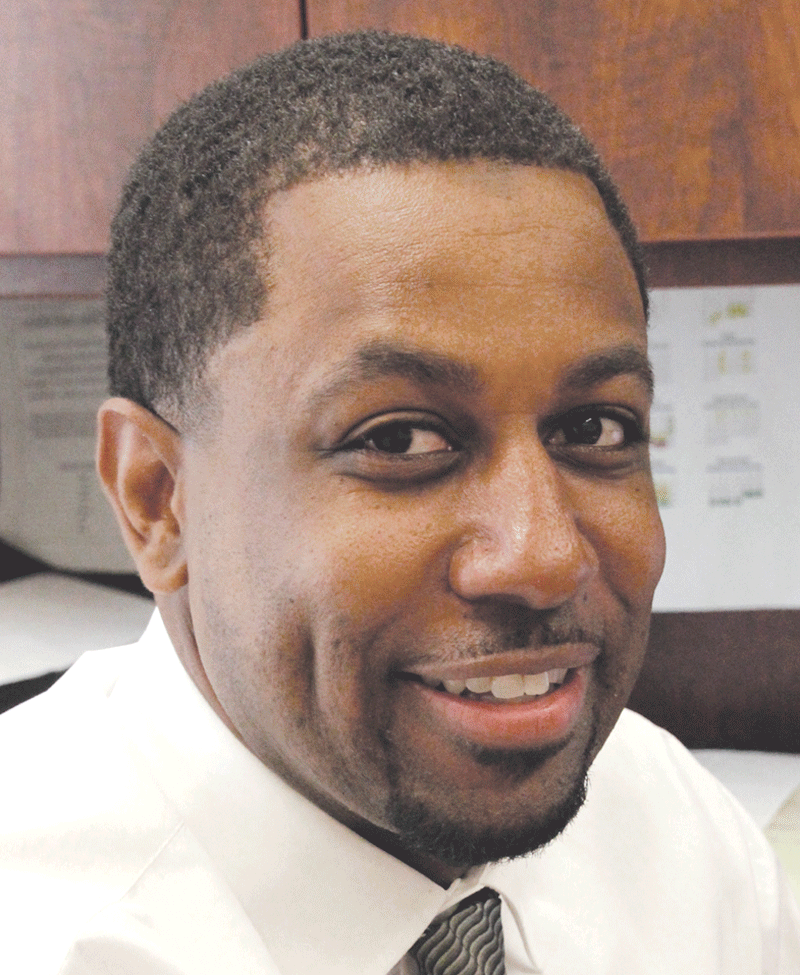
Kamari Collins
Collins was promoted to director of Academic Advising at STCC in 2012, and in 2014, he was named dean of Academic Advising and Student Success, and currently leads a staff of more than 25 professionals.
Within the community, he lends his time, energy, and imagination to several organizations, including the Children’s Study Home, the Urban League of Springfield Inc., the Community Foundation Education Committee, the Pioneer Valley AHEC/Reach Advisory Board, and the Lower Pioneer Valley Career and Technical Education Center’s Building and Property Maintenance Advisory Board.
Jeff Fialky
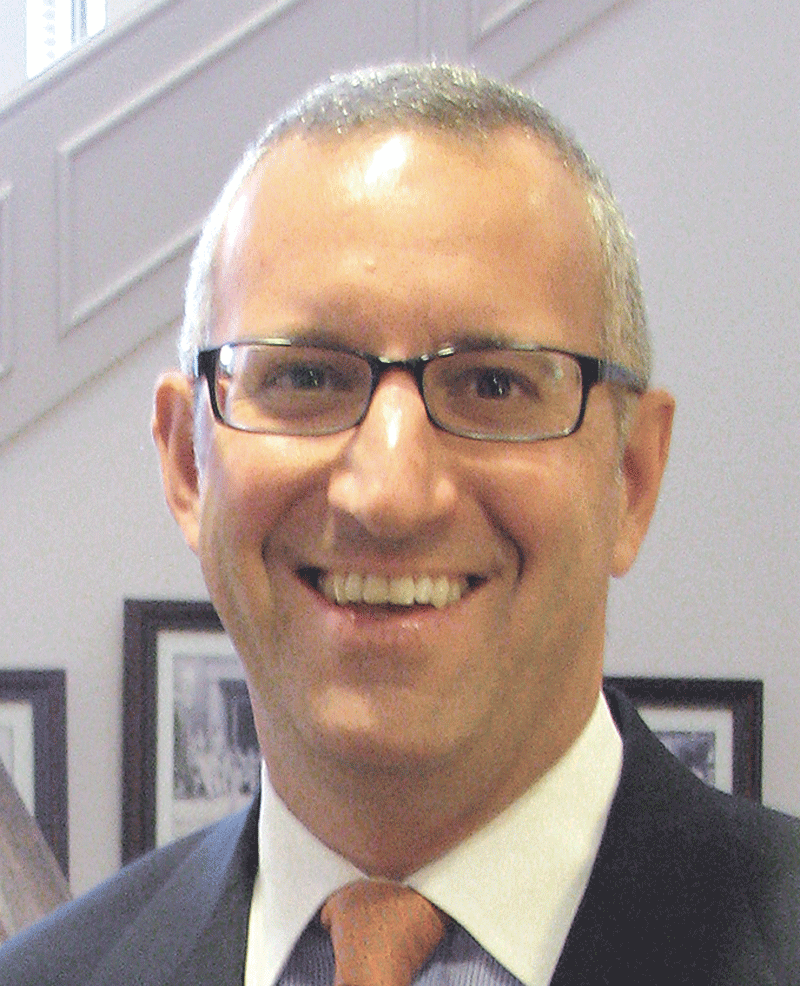
Jeff Fialky
For starters, in 2012, he was named a partner at the Springfield-based law firm Bacon Wilson, which he joined as an associate, and is active in leadership capacities with the firm. But he has also become a leader within the Greater Springfield business community.
Former president of the Young Professional Society of Greater Spring-field, Fialky currently serves as chair of the Springfield Chamber of Commerce, and is also on the board of trustees of the Springfield Museums. In his capacity with the chamber, he has spent the past several years working with city officials and groups such as Valley Venture Mentors to foster economic development in the city and advance a 10-year economic strategic plan for Springfield.
Cinda Jones

Cinda Jones
Indeed, she has expanded the Cowls business in several directions, but primarily through an initiative to convert the company’s sawmill into a multi-purpose arts and entertainment facility called the Mill District. One multi-use building, the Trolley Barn, hosts the Lift Salon and Bread & Butter Café, along with several residential units, and additional development is planned on the sprawling site.
While entrepreneurial, Jones is also a staunch protector of the environment. In 2011, for example, she brokered and closed the state’s largest-ever private conservation project, the Paul C. Jones Working Forest, a 3,486-acre conservation restriction in Leverett and Shutesbury named for her recently deceased father.
Kristin Leutz
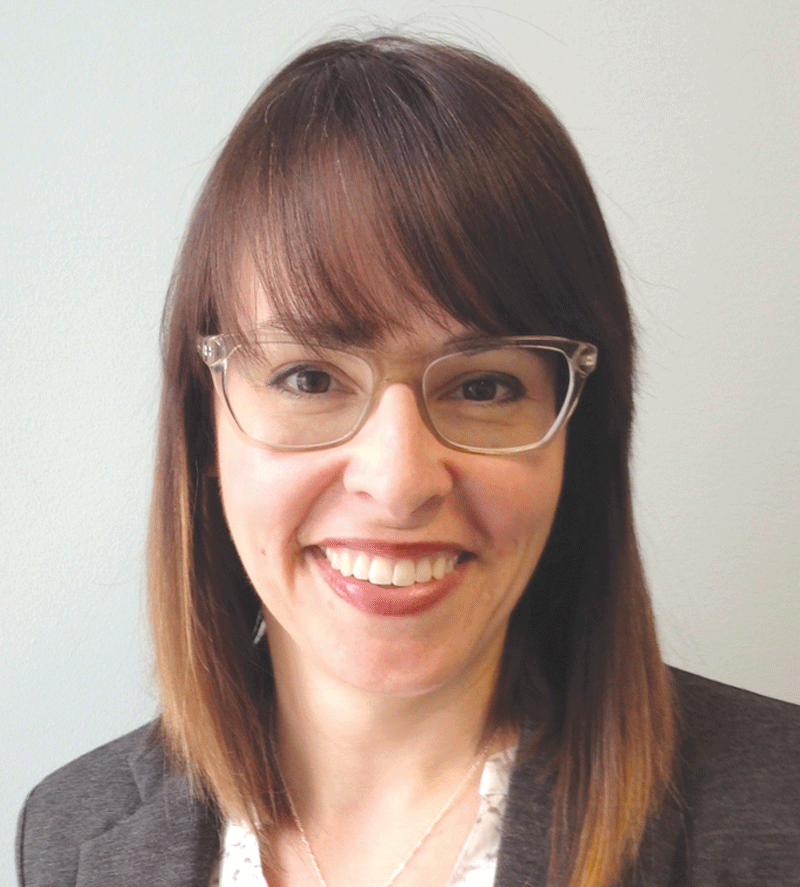
Kristin Leutz
As vice president of Philanthropic Services for the Community Foundation, she played a leading role in efforts to bring Valley Gives from a concept on a drawing board to a hugely successful three-year pilot program that raised more than $5 million for hundreds of nonprofits across Western Mass.
Within the community, meanwhile, Leutz, who has started several businesses, has become a mentor to other entrepreneurs, donating time and energy to Valley Venture Mentors and contributing to the launch of its Accelerator program.
She has also been involved with a number of nonprofit groups, including the Women’s Fund of Western Mass., and often meets with nonprofit leaders, volunteers, and staff to coach them, especially with regard to fund-raising and organizational development.


Our Annual Guide to Summer Fun in Western Mass.
Vacations are highlights of anyone’s calendar, and summertime is, admittedly, a perfect time to get away. But it’s also a great time to stay at home and enjoy the embarrassment of riches Western Mass. has to offer when it comes to arts and entertainment, cultural experiences, community gatherings, and encounters with nature. From music festivals and agricultural fairs to zoos and water activities — and much more — here is BusinessWest’s annual rundown of some of the region’s outdoor highlights. For a more comprehensive list go HERE. Have fun!
Music, Theatre, and Dance
Jacob’s Pillow Dance Festival
358 George Carter Road, Becket
(413) 243-0745; www.jacobspillow.org
Admission: $19 and up
June 13 to Aug. 30: Now in its 83rd season, Jacob’s Pillow has become one of the country’s premier showcases for dance, featuring more than 50 dance companies from Cuba, the Netherlands, Germany, France, Canada, and across the U.S. Participants can take in 200 free performances, talks, and events; train at one of the nation’s most prestigious dance-training centers; and take part in community programs designed to educate and engage audiences of all ages. Never Stand Still, the acclaimed documentary about Jacob’s Pillow, will be screened on Aug. 30 at 4:30 p.m.

Tanglewood
297 West St., Lenox
(617) 266-1200; www.bso.org
Admission: $12 and up
June 19 to Sep. 5: Tanglewood has been the summer home of the Boston Symphony Orchestra since 1937, and like previous years, it has a broad, diverse slate of concerts in store for the 2015 season, including the Festival of Contemporary Music on July 20, the String Quartet Marathon on July 29, Chamber Music Concerts on Sundays throughout July and August, and a roster of popular-music shows featuring Sheryl Crow with the Boston Pops, Diana Krall, Huey Lewis and the News, Tony Bennett and Lady Gaga, and Idina Menzel. To celebrate its 75th anniversary, Tanglewood has also commissioned some 30 new works for performance during the 2015 season.
Wilco’s Solid Sound Festival / Bang on a Can Plays Art / Fresh Grass Festival
1040 MASS MoCA Way, North Adams
(413) 662-2111; www.massmoca.org
Solid Sound: Festival pass, $149; individual days, $65-$99
Bang on a Can Plays Art: Festival pass, $75; individual concerts, $5-$24
Fresh Grass: Festival pass, $93
The Massachusetts Museum of Contemporary Art is known for its roster of musical events during the summer. Wilco’s Solid Sound Festival (June 26-28) returns with three days of music — from the festival’s namesake band plus dozens of other artists — and an array of interactive and family activities. The Bang on a Can Summer Music Festival, a residency program for composers and performers, is highlighted by Bang on a Can Plays Art (July 25 to Aug. 1), a weeklong series of shows culminating in a blowout finale on Aug. 1. Finally, the Fresh Grass Festival (Sep. 18-20) showcases more than 20 bluegrass artists and bands over three days. Whatever your taste in music, MassMOCA delivers all summer long. And check out the galleries, too.
Williamstown Theatre Festival
1000 Main St., Williamstown
(413) 597-3400; www.wtfestival.org
Admission: $35 and up
June 30 to Aug. 23: Six decades ago, the leaders of Williams College’s drama department and news office conceived an idea: using the school’s theater for a summer performance program with a resident company. Since then, the festival has attracted a number of notable guest performers, including, this summer, Kyra Sedgwick, Blair Underwood, Cynthia Nixon, Eric Bogosian, and Audra McDonald. This season will spotlight a range of both original productions and plays by well-known writers such as William Inge and Eugene O’Neill, as well as a number of other programs, such as post-show Tuesday Talkbacks with company members.
CityBlock Concert Series
Worthington and Bridge streets, Springfield
(413) 781-1591; www.springfielddowntown.com/cityblock
Admission: Free
July 2 to Aug. 27: The Stearns Square Concert Series reverts to its original name this year, but the Thursday-night lineup remains studded with national touring acts and local lights, including Jane Monheit (July 2), Jon Butcher Axis (July 9), Willie Nile (July 16), Cinderella’s Tom Keifer (July 23), Dwayne Dopsie and the Zydeco Hellraisers (July 30), Denny Laine of Wings (Aug. 6), Dana Fuchs Band (Aug. 20), and FAT (Aug. 27). The 6:30 p.m. shows will be preceded at 4:30 p.m. by a new Local Music Showcase on a second stage, featuring up-and-coming acts. The series is sponsored by the Springfield Business Improvement District.
Green River Festival
Greenfield Community College, One College Dr., Greenfield
(413) 773-5463;
www.greenriverfestival.com
Admission: Weekend, $99.99; Friday, $19.99; Saturday, $59.99; Sunday, $59.99
July 10-12: For one weekend every July, Greenfield Community College hosts a high-energy celebration of music; local food, beer, and wine; handmade crafts; and family games and activities — all topped off with four hot-air-balloon launches and a spectacular Saturday-night ‘balloon glow.’ The music is continuous on three stages, and this year features Steve Earle & the Dukes, Punch Brothers, Tune-Yards, Preservation Hall Jazz Band, J Mascis, and more than three dozen other artists. Children under 10 can get in for free, and they’ll want to, as the family-friendly festival features children’s music performers, a kids’ activity tent, games, circus acts, a Mardi Gras parade, and other surprises.
Springfield Jazz & Roots Festival
Court Square, Springfield
(413) 303-0101; springfieldjazzfest.com
Admission: Free
Aug 8: The second annual Springfield Jazz & Roots Festival celebrates the emergence of Springfield’s Cultural District and promotes an arts-driven, community-oriented, and sustainable revitalization of the city. The event will offer a festive atmosphere featuring locally and internationally acclaimed musical artists, dance and theater workshops, local arts and crafts, and plenty of food. More than 5,000 people are expected to attend and enjoy the sounds of jazz, Latin jazz, gospel, blues, funk, and more. The festival is produced by Blues to Green, which uses music and art to celebrate community and culture, build shared purpose, and catalyze social and environmental change.
Community Gatherings
 Worthy Craft Brew Fest / Valley Fest
Worthy Craft Brew Fest: 201 Worthington St., Springfield, MA
(413) 736-6000; www.theworthybrewfest.com
Valley Fest: Court Square, Springfield, MA
(413) 303-0101; www.valleybrewfest.com
Admission (both): Free
If you like craft beer, you’re in luck this summer, with two events coming to downtown Springfield. On June 20, Smith’s Billiards and Theodores’ Booze, Blues & BBQ, both in the city’s entertainment district, will host some 20 breweries, with music by General Gist and the Mexican Cadillac. The event will also feature a home-brew contest; Amherst Brewing will make the winner’s beer and serve it at next year’s Brew Fest. Then, on Aug. 29, White Lion Brewing Co. will host its inaugural beer festival, called Valley Fest, at Court Square. MGM Springfield will be the presenting sponsor. More than 50 breweries and many local food vendors will converge downtown, and attendees will have an opportunity to sample more than 100 varieties of beer and hard cider alongside pairing selections by local chefs.
Springfield Dragon Boat Festival
121 West St., Springfield, MA
(413) 736-1322; www.pvriverfront.org
Admission: Free
June 27: The third annual Springfield Dragon Boat Festival returns to Riverfront Park. Hosted by the Pioneer Valley Riverfront Club, this family-friendly festival features the exciting sport of dragon-boat racing and will include music, performances, food, vendors, kids’ activities, and more. Watch the dragon-boat races, starting at 9 a.m., and stay for a day of fun along the riverfront. The festival is an ideal event for businesses and organizations looking for a new team-building opportunity, and provides financial support for the Riverfront Club as it grows and strengthens its presence in Springfield and the Pioneer Valley.
 Berkshires Arts Festival
Ski Butternut, 380 State Road, Great Barrington
(845) 355-2400; www.berkshiresartsfestival.com
Admission: $6-$13; children under 10, free
July 3-5: Now in its 14th year, the Berkshires Arts Festival has become a regional tradition. Thousands of art lovers and collectors are expected to descend on the Ski Butternut grounds to check out and purchase the creations of more than 175 artists and designers, as well as experiencing theater and music from local and national acts. Founded by Richard and Joanna Rothbard, owners of An American Craftsman Galleries, the festival attracts top artists from across the U.S. and Canada. Visitors can also participate in interactive events like puppetry and storytelling, all the time enjoying a respite from the sun under tents and in the ski resort’s air-conditioned lodge.
Monson Summerfest
Main Street, Monson
(413) 267-3649; www.monsonsummerfestinc.com
Admission: Free
July 4: In 1979, a group of parishioners from the town’s Methodist church wanted to start an Independence Day celebration focused on family and community, The first Summerfest was held at the church, featuring food, games, and fun activities. With the overwhelming interest of nonprofit organizations in town, the event immediately grew, and relocated onto Main Street the following year. With the addition of a parade, along with booths, bands, rides, and activities, the event has evolved into an attraction drawing more than 10,000 people every year. The festivities will be preceded this year by a town fireworks display on June 27.
 Brimfield Antique Show
Route 20, Brimfield, MA
(413) 283-6149; www.quaboaghills.com
Admission: Free
July 14-19, Sep. 8-13: What began humbly — when a local auctioneer decided to hold open-air auctions on his property, and grew into a successful flea market — eventually began including neighboring properties as it grew. It expanded in the ’80s and ’90s to a one-mile stretch of Route 20 on both sides, and these days, the Brimfield Antique Show is a six-mile stretch of heaven for people to value antiques, collectibles, and flea-market finds. Some 6,000 dealers and close to 1 million total visitors show up at the three annual, week-long events (the first was in May). The Brimfield Antique Show labels itself the “Antiques and Collectibles Capital of the United States,” and — judging by its scope and number of visitors — it’s hard to disagree.
Iron Bridge Dinner
Iron Bridge over Deerfield River, Shelburne Falls and Buckland, MA
(413) 625-2526; www.mohawktrail.com
Admission: TBA
Aug. 16: Local restaurants and food providers will prepare an elegant, one-of-a-kind dinner on the Iron Bridge for ticket holders at sunset. Seating is at 5:30 p.m., and dinner begins at 6 p.m. Athletes from the Mohawk Athletic Assoc. will serve the meal, while local musicians serenade the diners. The Iron Bridge spans the towns of Buckland and Shelburne, and this event, modeled after a similar community dinner in France, celebrates all the connections there are between the two communities. Held rain or shine. Tickets go on sale July 17.
Agricultural Fairs
Various locations and admission costs; see websites:
www.thewestfieldfair.com; www.cummingtonfair.com; www.3countyfair.com; www.theblandfordfair.com; www.fcas.com; www.belchertownfair.com
Starting in late August and extending through September, the region’s community agricultural fairs are a treasured tradition, promoting agriculture education and science in the region and supporting the efforts of local growers and craftspeople. The annual fairs also promise plenty of family-oriented fun, from carnival rides to animal demonstrations to food, food, and more food. The Westfield fair kicks things off Aug. 21-23, followed by the Cummington Fair on Aug. 27-30, the Blandford Fair and the Three County Fair in Northampton on Sept. 4-7, the Franklin County Fair in Greenfield on Sept. 10-13, and the Belchertown Fair on Sept. 18-20, to name some of the more popular gatherings.
History and Culture
 Hancock Shaker Village
1843 West Housatonic St., Pittsfield, MA
(413) 443-0188;
www.hancockshakervillage.org
Admission: $8-20; children 12 and under, free
In 1774, a small group of persecuted English men and women known as the Shakers — the name is derived from the way their bodies convulsed during prayer — landed in New York Harbor in the hopes of securing religious freedom in America. Nearly 250 years later, their utopian experiment remains available to the public in the restored 19th-century village of Hancock. Through 20 refurbished buildings and surrounding gardens, Shaker Village successfully illuminates the daily lives of its highly productive inhabitants. After spending a day in the recreated town, visitors will surely gain a greater appreciation of the Shakers’ oft-forgotten legacy in the region.
Yidstock
Hampshire College, 893 West St., Amherst
(413) 256-4900; www.yiddishbookcenter.org/yidstock
Admission: Concert pass, $160; tickets may be purchased for individual events
July 16-19: Boasting an array of films, concerts, lectures, and workshops, Yidstock 2015: The Festival of New Yiddish Music lands in Amherst in mid-July. The fourth annual Yidstock festival will bring the best in klezmer and new Yiddish music to the stage at the Yiddish Book Center. The festival includes concerts, lectures, and music and dance workshops.
The weekend will offer an intriguing glimpse into Jewish roots and jazzy soul music through popular Yiddish bands like the Klezmatics, Klezperanto, Sklamberg & the Shepherds, and more. The festival pass is sold out, but four-day concert passes and tickets to individual events are still available.
Glasgow Lands Scottish Festival
Look Park, 300 North Main St., Florence, MA
(413) 862-8095; www.glasgowlands.org
Admission: $16; children 6-12, $5; under 6, free
July 18: This 22nd annual festival celebrating all things Scottish features Highland dancers, pipe bands, a clan parade, sheep herding, spinners, weavers, harpists, Celtic music, athletic contests, activities for children, and the authentically dressed Historic Highlanders recreating everyday life in that society from the 14th through 18th centuries. Inside the huge ‘pub’ tent, musical acts Albannach, Soulsha, Prydein, Jennifer Licko, Charlie Zahm, and the Caseys will keep toes tapping in the shade. Event proceeds will benefit programs at Human Resources Unlimited and River Valley Counseling Center.
Pocumtuck Homelands Festival
Unity Park, 1st St., Turners Falls, MA
(413) 498-4318; www.nolumbekaproject.org
Admission: Free
Aug. 1: This celebration of the parks, people, history, and culture of Turners Falls is a coordinated effort of the Nolumbeka Project and RiverCulture. The event features outstanding Native American crafts, including baskets, pottery, jewelry, and demonstrations of primitive skills; Native American food; and live music by Native American flute maker Hawk Henry, Medicine Mammal Singers, Urban Thunder Singers, and the Visioning B.E.A.R. Singers. Attendees may also take part in craft activities, storytelling, and traditional dances. The Nolumbeka Project is dedicated to the preservation of regional Native American history through educational programs, art, history, music, heritage seed preservation, and cultural events.
 Old Sturbridge Village Family Fun Days
1 Old Sturbridge Village Road, Sturbridge, MA
(800) 733-1830; www.osv.org
Admission: Adults, $24; children, free
Sep. 5-7: Bring the whole family to Old Sturbridge Village on Labor Day weekend, when the largest outdoor history museum in the Northeast opens its doors to children for free (normally, youth admission is $8). Guests are invited to play baseball the way early New Englanders did, make a craft, join a game of French & English (tug of war), meet the oxen in training, try their hand at marbling paper, see a puppet show, watch a toy fire-balloon flight, visit the Freeman Farm, stop and see craftsmen at work, and much more. In addition, the weekend will feature appearances by Bob Olson, performing 19th-century magic, as well as the Old Sturbridge Village Singers and the Old Sturbridge Village Dancers. Let your kids step back into the 1830s and enjoy the last summer weekend before school.
Glendi
St. George Cathedral, 22 St. George Road, Springfield, MA
(413) 737-1496; stgeorgecath.org
Admission: Free
Sep. 11-13: Every year, St. George Cathedral offers thousands of visitors the best in traditional Greek foods, pastries, music, dancing, and old-fashioned Greek hospitality. In addition, the festival offers activities for children, tours of the historic St. George Cathedral and Byzantine Chapel, various vendors from across the East Coast, icon workshops, movies in the Glendi Theatre, cooking demonstrations, and a joyful atmosphere that the whole family will enjoy.
Old Deerfield Craft Fair
10 Memorial St., Deerfield, MA
(413) 774-7476; www.deerfield-craft.org
Admission: $7; children under 12, $1
Sep. 19-20: With New England in its autumnal splendor, the village setting for the Old Deerfield Craft Fair couldn’t be more picturesque. This award-winning show has been recognized for its traditional crafts and fine-arts categories, and offers a great variety of items, from furniture to pottery. And while in town, check out all of Historic Deerfield, an authentic, 18th-century New England village, featuring restored museum houses with period architecture and furnishings, demonstrations of Colonial-era trades, and a world-famous collection of Early American crafts, ceramics, furniture, textiles, and metalwork.
More Fun Under the Sun
Berkshire Botanical Garden
5 West Stockbridge Road, Stockbridge, MA
(413) 298-3926; www.berkshirebotanical.org
Admission: $15; children under 12, free
If the flora indigenous to, or thriving in, the Berkshires of Western Mass. is your cup of tea, try 15 acres of stunning public gardens at the Berkshire Botanical Garden in Stockbridge. Originally established as the Berkshire Garden Center in 1934, today’s not-for-profit, educational organization is both functional and ornamental, with a mission to fulfill the community’s need for information, education, and inspiration concerning the art and science of gardening and the preservation of the environment. In addition to the garden’s collections, among the oldest in the U.S., visitors can enjoy workshops, special events, and guided tours.
 Berkshire East / Zoar Outdoor
Berkshire East: 66 Thunder Mountain Road, Charlemont, MA
(413) 339-6617; www.berkshireeast.com
Zoar Outdoor: 7 Main St., Charlemont, MA
(800) 532-7483;
www.zoaroutdoor.com
Admission: Varies by activity
Neighbors and friendly rivals in Charlemont, Berkshire East and Zoar Outdoor don’t shut down when ski season ends in early spring; they morph into hubs for warm-weather fun. Berkshire East touts its 5,450-foot mountain coaster, as well as three different zipline canopy tours, whitewater rafting and ‘funyaking’ on the Deerfield River, and other activities. Meanwhile, Zoar Outdoor also offers plenty of options for the adventurous soul, from kayaking, whitewater rafting, and canoeing on the river to rock climbing and ziplining in the trees down a scenic mountain. The staff also lead overnight rafting and zipping tours into the wilderness.
Lady Bea Cruise Boat
1 Alvord St., South Hadley, MA
(413) 315-6342;
www.brunelles.com
Admission: $10-$15; kids 3 and under, free
Interstate 91 is not the only direct thoroughfare from South Hadley to Northampton. The Lady Bea, a 53-foot, 49-passenger, climate-controlled boat operated by Brunelle’s Marina, will take boarders up and back on daily cruises along the Valley’s other major highway: the Connecticut River. If you don’t feel like sharing the 75-minute narrated voyage with others, rent the boat out for a private excursion. Amenties include a PA system, video monitors, a full bar, and seating indoors and on the sun deck — but the main attraction is the pristine water, sandy beaches, and unspoiled views along the river. Summer cruises generally run Thursday through Sunday.
Lupa Zoo
62 Nash Hill Road, Ludlow, MA
(413) 583-8370; www.lupazoo.org
Admission $8-12; children under 2, free
Lupa Zoo brings the African savannah to Western Mass. residents. The late Henry Lupa fulfilled his lifelong dream of creating a zoo right next to his Ludlow house, filling it with hundreds of animals and instilling a warm, familial atmosphere. Visitors can be entertained by monkeys, feed giraffes on a custom-built tower, and marvel at the bright colors of tropical birds. In addition to offering animal shows and animal-feeding programs, the staff at Lupa Zoo promotes conservation and sustainability.
Nash Dinosaur Track Site & Rock Shop
594 Amherst Road, South Hadley, MA
(413) 467-9566;
www.nashdinosaurtracks.com
Admission: Adults, $3; children, $2
Walk where the dinosaurs walked, literally. It’s hard to believe that the first documented dinosaur tracks found in North America were on the shores of the Connecticut River, near today’s site of Nash Dinosaur Track Site and Rock Shop in South Hadley. Originally uncovered in 1802 by a farmboy plowing his family farm, the findings weren’t officially called dinosaur tracks until the 1830s. Over the years, thousands of dinosaur tracks have been discovered; many were sold to museums and private individuals all over the world, but many more can be seen due to the extensive work of Carlton S. Nash. Visit the site and learn about some of this region’s earliest inhabitants, and also about the geology of the area.
Six Flags New England
1623 Main St., Agawam, MA
(413) 786-9300; www.sixflags.com/newengland
Admission: $59.99; season passes, $66.99
Continuing an impressive run of adding a new major attraction each spring, Six Flags New England recently unveiled the Wicked Cyclone, converting the 1983 wooden coaster into a wood-steel hybrid with overbanks, corkscrews, and plenty of air time. Other recent additions include the 409-foot-tall swings of New England Sky Screamer, the 250-foot Bonzai Pipeline enclosed waterslides, and the massive switchback coaster Goliath — in addition to a raft of other thrill rides, like the award-winning Bizarro coaster. But fear not: the park has attractions for everyone along the stomach-queasiness spectrum, from the classic carousel, bumper cars, and two kiddie-ride areas to the giant wave pools and lazy river in the Hurricane Harbor water park, free with admission.
Valley Blue Sox
MacKenzie Stadium, 500 Beech St., Holyoke
(413) 533-1100; www.valleybluesox/pointstreaksites.com
Admission: $4-$6; season tickets, $89
Through Aug. 1: Western Mass. residents don’t have to trek to Boston to catch quality baseball (and this year, that’s especially true). The Valley Blue Sox, members of the New England Collegiate Baseball League, play close to home at MacKenzie Stadium in Holyoke. These Sox feature a roster of elite collegiate baseball players from around the country, including some who have already been drafted into the major leagues. Myriad food options, frequent promotional events like postgame fireworks, and numerous giveaways throughout the season help make every game at MacKenzie a fun, affordable outing for the whole family. Play ball!
Joseph Bednar can be reached at [email protected]
Jo-Ann Davis Becomes First General Counsel for Baystate System
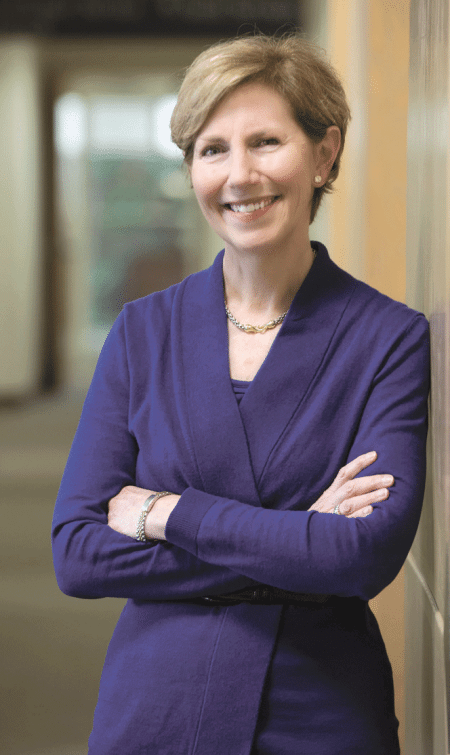
Jo-Ann Davis says her office will handle matters ranging from bond financing to mergers and acquisitions to labor negotiations — and much more.
She agreed to take on that assignment, but not long afterward came to the conclusion that she was at least as qualified for this position, if not more so, than the applicants she would be screening.
“I started to scratch my head and say, ‘I think that I could actually do this … I’d like to throw my hat into the ring,” she told BusinessWest, adding that, by sharing this observation with those same Baystate administrators, she went from being an assessor of candidates to a candidate being assessed.
Fast-forward a few months, and Davis now has what she considers to be the best job within what would be considered the region’s legal community.
Her new business card identifies her as senior vice president and chief general counsel, which means she’s responsible for overseeing the handling of all legal matters involving a system that now includes four hospitals (Baystate Medical Center, Baystate Franklin Medical Center, Baystate Mary Lane Hospital, and Baystate Wing Hospital — with negotiations underway for a fifth, Noble Hospital in Westfield), more than 11,700 employees, and nearly $2 billion in net revenues.
This is a multi-faceted position, she said, one that involves everything from labor contracts to real-estate matters; from regulatory compliance to litigation management. She will also serve as primary legal advisor to the chief executive and the president’s cabinet, and chief legal officer to the board of trustees.
“This involves planning, overseeing, and managing all legal services for the system,” she said, reading directly from the lengthy job description that came with that business card, adding this is a professional challenge she fully embraces.
“I’m very excited about this for a lot of reasons,” she explained. “One, we need this role and function here. Two, there’s an excitement for me when it comes to building a department and starting from scratch, and as a professional woman, I’m very proud of the fact that Baystate, when it had the opportunity to hire its first senior leader and general counsel, they chose a woman for the position.”
Jo-Ann Davis says her office will handle matters ranging from bond financing to mergers and acquisitions to labor negotiations — and much more.
[/caption]Davis said one of the first items on her to-do list is to assemble a staff — one that she believes will eventually consist of several lawyers (perhaps five to eight) and several support staff, including paralegals. And before deciding the size and makeup of that staff, she said she must first itemize, if you will, the system’s legal needs and then decide how best to meet them.
Historically, the system has contracted with several area firms to handle matters ranging from bond financing (for the massive, $353 million Hospital of the Future project, for example) to mergers and acquisitions to labor negotiations. And it will continue to do so with the new general-counsel structure, although more matters will now be handled in house.
Davis said the Baystate system has long considered adopting the general-counsel model — one used by most major corporations and health systems — and new President and CEO Mark Keroack, who took the helm 11 months ago, made it one of the priorities of his administration.
“As the system grows and expands, and as healthcare and health law become increasingly complex, you need to have in-house counsel so you have that expertise at your fingertips,” she explained, adding that, while the system is expecting to lower its overall legal bills through this model, the primary motivation is to more effectively manage (that’s a word she would use often) the myriad legal services required by a system of Baystate’s size.
For this issue, BusinessWest talked at length with Davis about her new role and all that entails.
Offering Testimony
Davis began her law career in 1982 as a human-resources consultant for the Springfield-based law firm Sullivan & Hayes, where she landed after earning first a bachelor’s degree in political science at Wheaton and then a master’s in education at Harvard.
She would add a juris doctor to her educational résumé in 1988, graduating from Western New England University, and became an associate with Sullivan & Hayes that year. She made partner in 1994 and remained with the firm until 1998, when she joined Springfield-based Skoler Abbott & Presser, becoming a partner in 1999.
At Skoler Abbott, she worked with a wide range of clients, developing strategies with regard to the many aspects of employment and labor-law matters, and representing them in federal and Massachusetts courts and before such bodies as the Equal Employment Opportunity Counsel (EEOC), the Mass. Commission Againt Discrimination (MCAD), and the National Labor Relations Board. Baystate wasn’t one of her clients (although the firm did some work for it); however, the system became the next line on her résumé.
She came on board as director of Employee Relations in 2003, and became director of Human Resources Consulting and Employee relations in 2009, and vice president overseeing that department in 2012.
In those latter roles, she built, developed, and managed the department, supervising six HR directors system-wide and leading a staff of 25. She also handled the full gamut of employment and labor-related matters, including employment litigation in state and federal courts, before the EEOC, MCAD, and other bodies.
It was the breadth and depth of her experience with the system, and also in private practice, that convinced her she was capable of handling the general counsel’s role — and not merely coordinating the search for that individual — and those who did conduct that search eventually came to the same conclusion.
Indeed, Davis, who prevailed over a host of candidates from across the country, took on her new role in late March. And she’s spent the past two months undertaking that aforementioned analysis of the system’s legal needs.
“A big part of my role is to build the department,” she explained, adding that this means analyzing how much is spent (she said she was still getting her arms around the budget), where it’s spent — in business transactions or employment and labor matters, for example — and then determining what types of lawyers should be hired (meaning which aspects of the law they specialize in) as well as which work will be handled in-house and which assignments will be contracted out.
“This analysis is typical of what any general counsel’s office would do,” she went on. “You have to decide what your bread and butter is — what you can handle internally — and what is too complex and sophisticated, where you really need specialists.”
This will be an involved analysis, she continued, adding that she expects it will take several months to determine the size and character of her staff and fill those positions.
When it’s staffed and operating, she expects that the general counsel’s office will bring more efficiency to the task of managing the system’s legal matters, simply because those individuals are in house and employed by Baystate.
“I sit on the president’s cabinet, and when we meet weekly, there isn’t an issue or strategy or business imperative, or any discussion around patient care, that doesn’t involve or have legal implications,” she explained. “To have that expertise sitting at the table, in the moment, is invaluable.”
Using the Hospital of the Future as an example, she said that huge project involved everything from bond financing to regulatory compliance matters to construction issues. Outside counsel was used for each aspect of that initiative, but with the general-counsel model, many, though certainly not all, of these matters can be handled in house.
“Areas that are very sophisticated, that are not done on a day-to-day basis … you still want to contract those out,” she explained. “But things internally that we’ll be doing include general contract review, employment and labor relations, physician contracting, professional-services agreements, and much more.”
Summary Judgment
As she talked about why she left private practice and a partnership with one of the region’s leading employment-law firms to join Baystate a dozen years ago, Davis said there were many motivating factors, but primarily a desire to represent one client, not a portfolio of them.
“When you work for a private firm, a lot of it becomes marketing your own services instead of practicing law,” she explained. “I got to the point where I wanted to represent one client; you form deep relationships with that one client, and you have a vested interest in the success and opportunities of that one client.”
Today, she’s not only representing that client, but representing it as general counsel. That role represents a host of responsibilities, but a tremendous opportunity as well. “As a lawyer in this community, I have the best job,” she said.
Not bad for someone who was originally asked to weigh the candidates for that job.
WARE — Country Bank recently awarded $80,000 in scholarship money to 32 students in its market area. Two students from each of the 16 high schools will each receive $2,500 to help them get started with their higher-education dreams. These students have been selected by scholarship committees established at the individual schools.
“We are so pleased to be able to provide these students a helping hand as they plan their future,” stated Paul Scully, president and CEO of Country Bank. “The students have each shown their dedication and hard work in the classroom and in the community, and their teachers have chosen them for this special honor. We wish them all the best of luck.”
The seniors awarded the 2015 Country Bank Scholarship include: Ryan Paul Lagasse and Jena Marie Desroches, Bay Path Regional High School; Sienna Nielsen and Kathleen Sera Royal, Belchertown High School; Constance Morgan-Poirer and Tyler Golden, David Prouty High School; Cullen Mars and Alexandria DiCentes, Leicester High School; Zacharry Frangules and Emily Sevigne, Ludlow High School; Viviana Angel and Maxine Girard, Minnechaug Regional High School; Haley Arbour and Justin Maloney, Monson Innovation High School; Danielle Mierzejewski and Alex Ouellet-Poulin, North Brookfield High School; Jacob Sifuentes and Elisah Huynh, Palmer High School; Shannon Kennedy and Michael Desjardins, Pathfinder Regional High School; Sophia Kornitsky and Sonja Josephson, Quabbin Regional High School; Monica Greenlaw and Benjamin Webber, Quaboag Regional High School; Benjamin White and Emily Ijams, Shepherd Hill Regional High School; Kendal Danna and Morgan Button, Tantasqua Regional High School; Artur Bielecki and Michaela Scott, Wachusett Regional High School; Emily Houle and Mihaela Sousa, Ware High School.