Home Posts tagged Education (Page 36)
Daily News

SPRINGFIELD — Springfield College was named a finalist for the President’s Award for Community Service by the Corp. for National and Community Service (CNCS). The college was one of four finalists in the education category and also was awarded Honor Roll with Distinction status in the category of general community service.

This nationwide designation is part of the 2014 President’s Higher Education Community Service Honor Roll, and recognizes institutions and their students across the country for their commitment to volunteer service. The award was based on data from the 2012-13 academic year, during which more than 3,500 Springfield College students completed more than 480,000 hours of service to the Springfield community through volunteer work, service learning, internships, practica, fieldwork, and other activities.

“Students come to Springfield College with a desire to serve and to immerse themselves in academic and co-curricular programs that will allow them to make a difference in their community,” said President Mary-Beth Cooper. “The college offers a wealth of meaningful service opportunities allowing students to develop as scholars and engaged citizens. Our students work extremely hard throughout the academic year to be part of our community. This recognition is a reflection of their continued dedication to service.”

The Springfield College AmeriCorps Program and the Partners Program remain two of the college’s constant and long-standing community outreach programs, which, combined, are responsible for the contribution of more than 50,000 hours of service. Springfield College AmeriCorps members provided more than 44,000 hours of service to 479 at-risk students from pre-kindergarten through grade 12 at Square One, Head Start, and Springfield Public Schools during the 2012-13 academic year. As part of the Student Success Corps, now known as the School Turnaround Initiative, AmeriCorps academic coaches and school counselors provided interventions and support for students struggling with low attendance, course failure in English and math, and behavioral, social, and emotional issues.

AmeriCorps literacy tutors implemented the nationally recognized Minnesota Reading Corps pre-K model in an effort to ensure that all children enter kindergarten ready to learn how to read. This pilot of the Minnesota Reading Corps evolved into the Massachusetts Reading Corps, which is currently providing early-literacy support to more than 400 pre-kindergarten students in Springfield.

“The goal of the AmeriCorps programs at Springfield College is to give students the support they need to remain on the path to high-school graduation,” said Springfield College AmeriCorps Program Director Shannon Langone. “Our programs are based on research-driven models and interventions that have been shown to effectively target risk factors for dropping out. By using what we know works in a very intentional way, we can have a measurable impact on the academic achievement of youth in Springfield.”

The AmeriCorps programs at Springfield College are funded in part by the Corp. for National and Community Service, the Massachusetts Service Alliance, the Funder Collaborative for Reading Success, and the Irene E. and George A. Davis Foundation.

For more than 20 years, the Springfield College Partners Program has paired college mentors with Springfield Public School students from both the Brookings and DeBerry elementary schools. Since the program’s inception, more than 600 elementary-school students have been mentored. Previous research indicates that youth who participate in the program report better grades, improved attendance, increased confidence about themselves and the future, and fewer behavioral issues in and out of school.

In total, more than 760 higher-education institutions were named to this year’s honor roll. From that group, four schools were selected to receive the President’s Award in one of four categories — general community service, economic opportunity, education, or interfaith community service. An additional 16 schools are named as finalists for the President’s Award, the highest federal honor a higher-education institution can receive for its commitment to community service. A complete list of this year’s winners can be found at www.nationalservice.gov/honorroll.

Daily News

AMHERST — Building on the Patrick administration’s historic commitment to strengthening the advanced-manufacturing industry in Massachusetts, Housing and Economic Development Secretary Greg Bialecki on Monday joined Labor and Workforce Development Secretary Rachel Kaprielian and State Senate Majority Leader Stan Rosenberg to announce nearly $2 million in funding to support manufacturing workforce training across the Commonwealth. The announcement was made at the Advanced Manufacturing Collaborative (AMC) Pioneer Valley Summit, held at UMass Amherst.

“I am proud of the work the AMC has accomplished over the years, creating opportunities for workers with a range of skill levels that will strengthen our economy for years to come,” said Bialecki. “Collaborative efforts like this are a critical reason why Massachusetts is leading the nation in growing a 21st-century advanced-manufacturing sector.”

Nearly $1.5 million of the total funding was awarded through the Advanced Manufacturing Pipeline Training Grants Program to support five regional workforce-investment boards throughout Massachusetts. This funding will help recruit and train approximately 280 unemployed or underemployed participants for careers in advanced manufacturing. The grants program is a cross-secretariat initiative between the Executive Office of Housing and Economic Development and the Executive Office of Labor and Workforce Development. Two Western Mass. organizations are among those receiving funding:

• The Hampden Regional Employment Board received $219,960 to conduct the Advanced Manufacturing Training Program, in partnership with the Western Mass. Chapter of the National Tooling and Machining Assoc. The Hampden Regional Employment Board will contract with local community colleges, part-time instructors from two vocational technical high schools, and an advanced-manufacturing company to train unemployed or underemployed adults of Hampden County.

• The Franklin/Hampshire Regional Employment Board received $276,705 to continue collaboration with employers from across the region, as well as community partners such as Greenfield Community College (GCC), the two area vocational-technical schools, and two adult-education sites, to enable the Regional Employment Board and GCC to offer three additional cycles of entry-level precision-machine training over the next two years in Franklin County. This will expand it from 220 hours to 300 hours and add skill building in the areas of blueprint reading, metrology, grinding, and lean manufacturing.

“The quick turnaround in awarding these grants reflects the urgency the Patrick Administration has adopted in scaling up these pipelines to help fill current job openings in advanced manufacturing all over the state,” said Kaprielian. “These awards will allow the grantees to build upon their proven successes and their capacity to work collaboratively through industry partnerships to increase the number of seats in their existing pipelines.”

Through a separate grant program, the Industry Training Capital Equipment grant program, also aimed at supporting the manufacturing industry in Massachusetts, Smith Vocational and Agricultural High School in Northampton was awarded $400,000 to rebuild its precision-manufacturing training program. With the support of more than 25 regional manufacturing and workforce leaders in Hampshire County, the rebuilt training program will be a site for daytime students and evening adult learners, in partnership with the Franklin-Hampshire Regional Employment Board.

Daily News

SPRINGFIELD — In celebration of International Education Week (IEW), Western New England University recently hosted a week-long series of events called Passport to the World.

IEW is a joint initiative of the U.S. Department of State and the U.S. Department of Education with a mission to promote programs that prepare Americans for a global environment and attract future leaders from abroad to study, learn, and exchange experiences in the U.S. Students who participate in education abroad gain the knowledge, skills, and self-reliance that are needed to compete in today’s globalized economy. Through Passport to the World, the university focused awareness of the many education-abroad opportunities provided to students and faculty, and provided assistance to students to obtain a U.S. passport.

“Studies show that employers are increasingly interested in international experience among job applicants,” said International Student Coordinator Katie Ahlman. “One of the first steps to studying abroad or gaining international work experience is obtaining a valid passport.”

The week’s activities included a Study Abroad Showcase and an International Student Fair, which included information on how to study or intern abroad. Discussion sessions included global recycling and transgender awareness. Students had the opportunity to attend henna and hijab-wearing demonstrations; view Argentinian, French, and Iranian movies; and learn to pronounce their name in Mandarin, Persian, Portuguese, and French.

“International experiences connect students, scholars, and emerging young leaders from around the world, enabling them to collaborate and tackle today’s shared challenges like climate change, global health, and sustainable energy,” said Richard Keating, vice president for Strategic Initiatives and the Centers for Internationalization and Academic Initiatives at WNEU. “By welcoming international students who are attracted to the excellence and diversity of U.S. higher-education institutions, and by encouraging U.S. students to participate in education abroad, we create a more secure and stable world.”

Daily News

LOWELL — Secretary of Labor and Workforce Development Rachel Kaprielian awarded more than $12.2 million in the latest round of grants to help train healthcare providers to improve patient service and reduce healthcare costs. The funding goes to 53 organizations across the state as part of the Patrick administration’s effort to encourage economic growth by supporting innovation in the Commonwealth’s healthcare industry.

“These grants will help ensure healthcare providers succeed in implementing new models of service delivery and adapt to new payment structures,” said Kaprielian. “By providing resources to develop new and innovative training and education programs, Massachusetts will continue to solidify its place as a leader in healthcare modernization and advances.”

In 2012, Gov. Deval Patrick signed a law making Massachusetts the first state in the country to enact healthcare quality-improvement and cost-containment legislation. The act allocated $20 million to prepare the healthcare industry for the new demands and innovations called for in the legislation. Patrick announced the first round of grants in March, allowing businesses to assess their workforce and determine what skills and training they will need to change operations and deliver more efficient healthcare.

For many of this week’s grantees, the training activity ahead builds on that planning work. All the grantees have identified a set of operational changes that are driving their need for increased workforce skills. The training activity will support new models for coordinating care across professions, institutions, and settings; focus on patient-centered care, stronger patient engagement, and health education to promote health and wellness; and spur the integration of primary care and behavioral health.

In Western Mass., grants were awarded to Berkshire Health System ($249,286), Community Health Programs ($148,349), Baystate Medical Center ($249,682), Gandara Center ($250,000); Springfield Technical Community College ($156,338); and Carson Center for Human Services ($249,996).

Daily News

CHICOPEE — The Economic Development Council of Western Mass. voiced its concerns Tuesday regarding the rising costs of natural gas and electricity in the region.

“More expensive energy affects all of us negatively. All of us need to be concerned. Individuals face a reduction of disposable income and increased hardship,” the agency said in a prepared statement. “Businesses face reduced competiveness that threatens job growth and retention. Municipalities face increased energy costs while facing decreasing revenues. Hospitals and higher-education institutions must divert more resources to energy purchases, thus diverting resources from their core missions. Shrinking business and consumer spending reduces investments in those things that define quality of life in Western Massachusetts.”

Through a series of meetings and discussions with entities familiar with the issues, the EDC infrastructure committee released the following findings:

• Recent and future closings of oil- and coal-fired plants have boosted, and will continue to increase, Massachusetts’ dependency on natural gas for electric power generation. Nearly 50% of all electricity in Massachusetts is generated by natural gas, and that proportion is rising. These conditions, when combined with inadequate supplies of natural gas, are resulting in dramatically increased power costs during the winter.

• Gas companies serving this region are reaching the limits of their capacity to serve new customers. Berkshire Gas will stop adding customers in Greenfield at the end of 2014, and in Amherst in 2016. Columbia Gas is reaching the end of its capacity to serve Northampton and Easthampton. It could serve 10,000 more customers in the region if it had additional capacity. The inability to serve new customers will negatively affect economic growth in the region.

• Kinder Morgan is proposing a pipeline-extension project through Northern Mass. that will increase natural-gas supply to Berkshire, Franklin, and Hampshire counties as well as Eastern Mass.

• NU/Spectra proposes an expansion of the Algonquin Pipeline that would increase natural-gas supplies available to the Springfield area and Eastern Mass.

• Several New England states have been working to bring electricity generated by Hydro Quebec to the region.

EDC Infrastructure Committee Chair Paul Nicolai summarized the committee’s work, suggesting that “supplying cost-effective, responsibly clean energy for our people and businesses is a complicated problem requiring balanced approaches and moderate thinking. EDC has struck that balance and encourages policymakers to do so as well.”

At a recent meeting, the EDC board of directors approved a resolution supporting the following actions, which, if implemented, will help to provide an adequate, stable supply of energy at competitive prices:

• Increase natural-gas supply by permitting both natural-gas pipeline-expansion projects proposed for the region and state;

• Increase the sources of power generation by enabling the purchase of hydro-generated electricity from the north;

• Continue support of conservation and renewable-energy technologies; and

• Encourage a regulatory environment that promotes market stability and competitive outcomes.

Daily News

SPRINGFIELD — Skoler, Abbott & Presser, P.C., a labor and employment law firm serving the Greater Springfield area, announced an upcoming briefing, to be co-hosted by the Employers Assoc. of the NorthEast (EANE), focused on the new Massachusetts sick-leave initiative. The event will take place Thursday, Dec. 18, at the Berkshire Bank Community Room in Pittsfield from 8 to 10 a.m.

The sold-out program demonstrates an extraordinary need to educate business owners and human-resource professionals about the change in law that will go into effect on July 1. Specifically, Massachusetts voters backed paid sick leave, which was a question on the ballot this past November. The law entitles employees to earn up to 40 hours of paid sick time each year if they work for businesses with 11 or more employees; workers at smaller companies may earn 40 hours of annual unpaid sick time.

“Very rarely does an event sell out so quickly,” said Mark Adams, director of human resource solutions for EANE. “It’s a big indicator that this law will have a major impact on business here in Massachusetts. We like to stay on top of the most recent laws governing the workplace and are thrilled to see so many professionals learning more through EANE programs.”

Attorney Amelia Holstrom of Skoler Abbott will present the briefing as part of the firm’s partnership with EANE. She will provide answers to the most common questions about the new law, including:
• What does the law require?
• How is sick time earned?
• When do employees begin to earn this time?
• When can employees begin to use this time?
• What happens to unused sick time left over at the end of a calendar year?
• What can sick time be used for?
• Must employees give advanced notice before taking sick time?
• Can an employer require documentation when an employee uses sick time earned under this law?
• Does unused sick time need to be paid out when an employee leaves a company?
• Are there notice requirements?
• What are the penalties for non-compliance?

“At Skoler, Abbott & Presser, we specialize in these niche matters of employment and represent only the needs of employers,” said Holstrom. “This briefing is one of many resources we offer for business owners and human-resource professionals, and we are available to help employers navigate through the changes needed in order to stay in compliance with the law. Although the changes will not go into effect until July 1, the new year is a great time to re-evaluate sick-time policies and update professional protocol. We encourage all employers to become educated on the new law and make any necessary changes.”

Additional EANE forums for education about the new sick-time-leave initiative will be considered after further guidance is issued by the state Attorney General’s Office. The attorney general is expected to announce interpretations of the law between now and when it takes effect.

Daily News

LONGMEADOW — On Thursday, Bay Path University President Carol Leary joined President Obama, the first lady, and Vice President Biden, along with hundreds of college presidents and other higher-education leaders, to announce new actions to help more students prepare for and graduate from college. The White House College Opportunity Day of Action helped support Obama’s commitment to partner with colleges and universities, business leaders, and nonprofits to support students across the country.

“I am honored to participate in this important initiative and to represent the 76.6 million adult women in this country who do not have a baccalaureate degree,” said Leary. “Through the launch of the American Women’s College at Bay Path University, we are making a bold commitment to provide a truly revolutionary model of higher education for underserved adult women. It is time that we as a country focus on this population. Higher education has the potential to transform a woman’s life and, in so doing, positively impact her community, her workplace, and her family.

“The generational impact of educating adult women is profound,” Leary continued. “Research demonstrates that only 13% of children of women without a degree go on to college. When a woman earns a degree, that figure escalates to 49%. A focus on the education of adult women is critical to President Obama’s goal of restoring our nation as a global leader in college-educated citizenry.”

Leary is among the participants being asked to commit to new action in one of four areas: building networks of colleges around promoting completion, creating K-12 partnerships around college readiness, investing in high-school counselors as part of the first lady’s Reach Higher initiative, and increasing the number of college graduates in the fields of science, technology, engineering, and mathematics.

Expanding opportunity for more students to enroll and succeed in college, especially low-income and underrepresented students, is vital to building a strong economy and a strong middle class. Today, only 9% of those born in the lowest family income quartile attain a bachelor’s degree by age 25, compared to 54% in the top quartile.

In an effort to expand college access, the Obama administration has increased Pell scholarships by $1,000 a year, created the new American Opportunity Tax Credit worth up to $10,000 over four years of college, limited student-loan payments to 10% of income, and laid out an ambitious agenda to reduce college costs and promote innovation and competition.

Daily News

HADLEY — Paragus Strategic IT was recently honored with an Employer of Choice award by the Employers Assoc. of the NorthEast at the organization’s Employment Law and HR Practices Conference in Sturbridge. Paragus CEO Delcie Bean was also a featured speaker at the 21st Century Talent event focused on how top employers are changing today’s workforce.

Winners of the Employer of Choice award are recognized for developing a culture of transforming and rewarding employee performance. Entrants are judged in categories including company culture, training and development, communication, recognition and reward, and work-life balance. Past winners include Maybury Material Handling, PeoplesBank, and Health New England.

The 21st Century Talent conference was organized by Bank of America, Commonwealth Corp., and Grads of Life. Along with representatives from Harvard and Udacity, Bean was invited to speak about Paragus Strategic IT’s commitment to the next generation of workforce.

Since Bean founded the company at age 13, Paragus has grown from a one-man operation to a regional leader in business computer service, consulting, and information-technology support. And despite a sluggish economy, Paragus IT has continued to thrive and expand. In 2012 and 2013, Paragus was named in Inc.’s annual ranking of the 5,000 fastest-growing businesses. With a 546% growth rate over six years, Paragus is the second-fastest-growing outsourced IT firm in New England.

Most recently, Bean started Tech Foundry, a nonprofit education program designed to provide area high-school students with strong education and career training in technology.

Daily News

WASHINGTON, D.C. — Construction spending increased in October amid growing public-sector demand for construction and continued modest growth in residential work, according to an analysis by Associated General Contractors of America. Association officials said the new spending figures underscore the need for measures to increase the supply of qualified construction workers as firms worry about growing labor shortages.

“Today’s data shows that construction growth remains volatile,” said Ken Simonson, the association’s chief economist. “While overall construction spending jumped by more than 1% in October, the gain followed two months of stagnation. Public construction was the fastest-growing segment for the month but the slowest-growing over the past year and for the first 10 months of 2014 combined. Conversely, private, non-residential construction inched down from September to October but has risen at double-digit rates — 11% — for the combined January-through-October period. And private residential construction continues to grow very modestly, with multi-family construction taking the lead on an annual basis.”

Construction spending in October totaled $971 billion at a seasonally adjusted annual rate, up 1.1% from the September total and 3.3% higher than in October 2013, Simonson noted. Private residential spending edged up 1.3% from September and 1.9% from a year earlier, while private non-residential spending dropped 1.0% for the month but rose 6.4% year-over-year. The third component of the total — public construction spending — increased 1.5% from September and 2.3% from a year ago.

Single-family home construction gained 1.8% for the month and 13.2% over 12 months, and multi-family work increased 1.0% from the September level and jumped 27.2% from a year earlier. The largest private non-residential type, power construction — which includes oil and gas fields and pipelines as well as electric power — slumped 1.9% in October but rose 0.3% from the prior year.

Commercial construction — comprising retail, warehouse, and farm projects — decreased 2.6% for the month but increased 9.3% for the year. Manufacturing construction increased 3.4% for the month and 23% year-over-year. Among the largest public segments, highway and street construction inched up 1.1% for the month and declined 0.1% from October 2013. Public-education construction inched up 2.2% and 6.1%, respectively.

“For 2014 as a whole and 2015, private non-residential spending and multi-family spending should be the strongest segments, followed by single-family construction, with very limited prospects for public construction,” Simonson said.

Association officials said the spending increases come as many firms report growing labor shortages. They urged elected and appointed officials to act on a series of measures the association has identified that will help expand the supply of qualified construction workers. “We need to make sure there are enough workers available to meet growing demand for construction,” said Stephen Sandherr, the association’s CEO.

Daily News

SPRINGFIELD — Cathedral High School has received a $500,000 donation from Cathedral alumnus John Gormally, owner and publisher of BusinessWest magazine. Cathedral High School President Dr. Ann Southworth said the gift “will be used to provide immediate tuition assistance to students desiring a Cathedral High School education, as well as support faculty.”

But the money is more than just a donation. Gormally is also challenging the business community in Western Mass. to “step up to the plate and show their support” like he has done.

“I have confidence in Catholic education,” said Gormally, a 1978 graduate of the school. “I think it is important to have a Catholic high school in Springfield. It is my hope and desire that the Springfield Diocese finds a way to rebuild Cathedral on Surrey Road in Springfield. I would also hope that the business community steps up to recognize Cathedral as the important resource it is in the community and financially support it.”

Currently the fate of Cathedral High School, which was heavily damaged in the 2011 tornado, has yet to be decided by Bishop Mitchell Rozanski. A nonprofit group called the Committee for Cathedral Action has been rallying support and raising funds for the school, and is about halfway to its $10 million goal.

Cover Story
Collaborative Seeks to Grow the Film, Media Industry in Western Mass.

WMassFilmDPartDiane Pearlman says Massachusetts looks like a lot of places — in this country and around the globe.

“Maybe it doesn’t look like the Sahara Desert, but it can look like most of the rest of the world,” she told BusinessWest, adding that this is one of many reasons why the Bay State is becoming increasingly popular with filmmakers at all levels.

Massachusetts, or at least the Franklin County community of Shelburne, looks enough like rural Indiana — the setting for the story behind The Judge — to become the chosen location for the shooting of most scenes in that recently released film starring Robert Downey Jr. and Robert Duvall, said Pearlman, executive director of a nonprofit called the Berkshire Film and Media Collaborative.

Bringing more high-profile pictures like The Judge, not to mention the many types of economic opportunities they represent, to Western Mass. is a part of the agency’s reason for being, said Pearlman, adding quickly that this challenging assignment falls much more to the Massachusetts Film Office (more on that later).

The Berkshire Film and Media Collaborative, whose name is somewhat of a misnomer because its work encompasses the four counties of Western Mass., is instead tasked with shaping film and media production into a greater economic force in this region, one that she believes might keep more young people from leaving this area code.

“Our focus over the past year and a half has been more on job training, education, and addressing the need to attract and retain young people here,” she explained. “And we really believe that film and media is an industry that can do that in Western Massachusetts.”

The collaborative’s core objective is to facilitate film, television, and media projects by providing assistance to production outfits with everything from location scouting to permitting, to finding local crew and equipment. At the same time, the agency works to help individuals attain and hone the skills needed to work in the industry.

Pearlman said the BFMC, formed in 2009, is committed to:

• Nurturing its community of film and media professionals through educational courses, lectures, and seminars;

• Creating job opportunities in the film and media sector through adult workforce-development courses;

• Networking area professionals and introducing them to local businesses in need of film and media services; and

• Marketing the region’s film and media professionals and undiscovered locations to national and international film and television markets.

Diane Pearlman

Diane Pearlman says the film and media industry can be an economic engine in the Pioneer Valley, and the collaborative is committed to making it one.

Most of these facets of the agency’s mission came together in late October at the inaugural Western Mass. Film & Media Exchange, staged at the Baystate Health Conference Center in Holyoke.

In addition to keynote speaker Douglas Trumbull, a filmmaker and special-effects pioneer whose film credits include everything from Close Encounters of the Third Kind to Blade Runner, the event featured a number of workshops and lectures, as well as a networking social.

Among those in attendance was Michail Charalampidis, a recent Hampshire College graduate who wasn’t quite ready to return to his homeland of Greece after commencement and chose instead to pursue opportunities within the film industry in Western Mass. — or wherever else he could find them.

He’s landed a few minor positions with some productions, and is currently working with Trumbull at his studio in the Berkshires. More importantly, thanks to Trumbull, Pearlman, and others, he’s meeting people, learning about the business, and making all-important connections.

“Diane put me in touch with the visual-effects producer of Game of Thrones, and I could be working for them starting in January; maybe not, but I’m touch with him,” said Charalampidis. “I’m also in touch with the visual-effects producer of Interstellar, who’s starting a new movie in January, and they put me in touch with people working on the new Avengers, so I could go work for them.

“All of these are up in the air,” he went on, “but I’ve become part of this chain where you get involved in conversations. People say, ‘do you want to work on The Avengers?’ and I say, ‘of course.’ Diane and her people have really helped me connect.”

That one word probably best sums up the mission of the collaborative, said Pearlman, adding that, in many ways, Charalampidis’s story personifies the ongoing work of the BFMC.

“Film is a word-of-mouth industry,” she explained, adding that the collaborative’s overarching goal is to generate word-of-mouth referrals for individuals, companies, communities — and the region as a whole.

For this issue, BusinessWest looks at how the agency goes about doing just that.

First Take

It was called ‘Get a Grip.’

That was the name attached to a program dedicated to helping individuals eventually attach their name to that often-recognized but mostly misunderstood position listed within the credits at the end of a movie — the ‘grip,’ maybe even the ‘key grip.’

“These are essentially the stage hands on a film set — if you needed to put a cameras on a dolly where you built track and push the cameraman, a grip would do that; they operate camera cranes, they do everything but the lights,” said Pearlman, adding that 25 people took the class, staged last March.

And additional courses are in the planning stages, she went on, adding that the next one may focus on another profession within the industry — gaffer, an electrician — or cinematography.

Such programs constitute one of the many ways the BFMC carries out that aforementioned mission, said Pearlman, adding that training new talent is just part of the equation.

Indeed, the region already boasts a number of talented individuals, including some who have won Academy Awards, she noted, adding that the collaborative wants to bring more work to them and help their businesses succeed and grow.

And it does this by attracting more projects, making constituencies, including the business community, more aware of that existing talent, and providing education to small-business owners in this broad sector, such as the workshops at the Film & Media Exchange.

“Many of the panels we did were about how to better run your business, because filmmakers are artists, and we want them to be able to ask the questions, know how to set up their businesses, and know how to market their businesses,” she explained. “We also invited local companies, because they need video. Whether it’s for a conference or for the web, more and more businesses need video, and they don’t know where to go. A lot of times, they’ll call their brother in L.A. or their cousin in New York and say, ‘how do I get this video done?’ They don’t know that they have all the talent they need right here.”

The BFMC’s work began in 2009, said Pearlman, and, as the name suggests, the initial focus was on the Berkshires, which, during the ’90s, was home to a number of special-effects houses, including Lenox-based Mass.Illusions, which she served as executive producer and general manager, supervising a workforce of more than 200.

That Mass.Illusions facility was eventually closed in 1998, when the parent company shifted production work to California, she went on, adding that other shops in that area have closed as well, in part because large production houses are not needed as much as they were years ago.

“You can work on Game of Thrones from your house,” she explained, adding that there a number of sole proprietors and small outfits based in the 413 area code.

Michail Charalampidis

Michail Charalampidis says the Berkshire Film and Media Collaborative has enabled him to make invaluable connections as he searches for work within the industry.

And not all of them are in the Berkshires, she went on, adding that the collaborative’s work became more regional in nature— and the words ‘of Western Massachusetts’ were added to the title — years ago.

Today, the collaborative works with a host of partners, including the Economic Development Council of Western Mass., Berkshire Creative, and colleges across the region to grow the film and media sector in the Pioneeer Valley and, in the process, create opportunities for individuals, businesses, and communities like Shelburne.

“We want to keep the dollars in Western Mass.,” said Pearlman, who brings more than 25 years of experience in media creation and production, including work as an independent entertainment producer, studio executive, and business owner.

She came to the Berkshires to work with Trumbull at his studio. Later, at Mass.Illusions, she was involved with a host of films, including The Matrix and What Dreams May Come (both of which won Academy Awards for best visual effects), Starship Troopers, Evita, Eraser, Die Hard with a Vengeance, Judge Dredd, and others. Her résumé also includes everything from work producing television commercials and feature-film title sequences to a stint as production manager for the creation of a web-based health initiative for Canyon Ranch in Lenox, to work as a partner, producer, and lead writer in KinderMuse Entertainment, a developer of children’s and family entertainment.

She is currently producing two independent films, a screen adaptation of Edith Wharton’s novel Summer, written and directed by feature-film art director and production designer Carl Sprague, as well as a film based on a short story by Carson McCullers that is being written and directed by actress Karen Allen.

But the collaborative now demands a good amount of her time, she told BusinessWest, adding that she and others stayed in the Berkshires because of the region’s high quality of life. She believes there are many in that category, and their numbers could swell — if there are solid career opportunities.

Setting the Scene

Pearlman said Massachusetts currently has many things going for it when it comes to being the setting for major motion pictures.

For starters, there’s an attractive 25% tax credit, initiated in 2005, available to those outfits that reach certain production-spending thresholds. There have also been some intriguing Bay State-based stories that Hollywood has decided to tell, including those involving South Boston gangster James (Whitey) Bulger (Black Mass was shot this past summer) and Lowell boxer Mickey Ward (The Fighter was released in 2010), among others.

Meanwhile, some Bay State natives and notable transplants, including Ben Affleck, Matt Damon, and Mark Wahlberg, like shooting here, and have brought many major productions to the Boston area.

And then, there’s the Mass. Film Office and its executive director, Lisa Strout, whom Pearlman credits with making the business of shooting films here a fairly smooth and easy process.

However, with a few exceptions, such as The Judge and Labor Day, parts of which were also filmed in Shelburne, the wealth hasn’t been spread equally across the state.

“By 2008, $350 million had been spent in the state, and a bunch of us looked at each other and said, ‘why is it all going to Boston?’” said Pearlman. “We have some great locations and talent … they should be coming here.”

If they did, a number of businesses would benefit, she said, listing everything from hotels to hardware stores; caterers to rental car agencies.

But while bringing more major films, like The Judge, is certainly among the BFMC’s goals, Pearlman said the collaborative wants to attract production work of all kinds, including smaller independent films, special-effects projects, television commercials, fashion shoots, training and promotional videos for businesses, and more.

Achieving that goal is a multi-faceted process, she said, one that includes everything from raising awareness of the talent and locations for shooting in the region to assembling and promoting a talented workforce. The desired effect from such efforts is to bring work to this region rather than have it go elsewhere because people are not aware of the talent and resources available.

“The big films are great, but there are many other aspects to the film and media industry,” said Pearlman. “We want to focus on all of them.”

Meanwhile, Charalampidis, while keeping his options open, is nonetheless setting his sights high.

As he mentioned earlier, he doesn’t know what he’ll be doing next month or even next week — a byproduct of working in the field, one further complicated by the fact that he’s in this country on a work visa, one with an expiration date that could be extended, but only if the right opportunity, or opportunities, present themselves.

“I’m getting to the point where I’m going where there’s good and interesting work,” he said, adding that this could be in the Pioneer Valley, New York, Los Angeles, or elsewhere. “I’m past being at the bottom of a very small production, and now I’m going after interesting projects, ones that are educational — and big.”

What he does know is that the collaborative has put him in a better position to possibly seize such opportunities.

“The collaborative can help students get out there faster and move through the low jobs more quickly and then start working for bigger projects that will help them move their career forward faster,” he explained. “You need to come out of college with a lot of skills that colleges just don’t teach you, and the collaborative has certainly helped me in that regard.”

Roll Credits

When asked what it is about Shelburne that is attracting the attention of Hollywood, Pearlman said quickly and succinctly, “it’s a great little town.”

There are many more like it across the region, she said, adding that one of the collaborative’s goals is to acquaint people in the industry with them. To that end, photos of various potential filming sites — everything from parks to farms; churches to college buildings — have been placed on the BFMC’s website.

Overall, though, the collaborative is focused on the big picture — growing this sector, creating jobs, keeping young people in the region, and spurring economic development.

That’s quite a production, but Pearlman and others believe they have a hit in the making. n

George O’Brien can be reached at [email protected]

Education Sections
Report Urges Action to Increase Number of College Graduates

StateGradsUrgencyDPartRichard Freeland says the numbers don’t lie. If anything, they’re conservative, which should be cause for alarm or — preferably, in his view — decisive action.

He was referring to projections contained the latest Vision Project report released recently by the Mass. Department of Higher Education. Titled “Degrees of Urgency: Why Massachusetts Needs More College Graduates Now,” the report uses rhetoric, but mostly numbers to explain that thesis.

Starting with 72%. That’s the percentage of Massachusetts jobs that will require some college education by 2020, said Freeland, the state’s commissioner of Higher Education. That number is the highest in the country, he added, and a reflection of the high-tech jobs that are now dominating the state’s economy.

But there’s also 55,000 to 65,000 — that’s the projected shortfall in the number of college graduates the state will experience by 2030, according to the report. Then there are 6:1 and 17:1, the current ratios of job openings to recent bachelor’s degree recipients in the fields of healthcare and information technology, respectively. And finally, there’s -9%. That’s the projected drop in Massachusetts high-school students graduating annually between 2009 and 2020.

Add all these numbers up, figuratively, and the state is facing what Freeland calls a “perfect storm,” one that could seriously threaten or slow its high-tech economy.

“The Massachusetts workforce has become heavily dependent on the graduates of public higher education,” he said. “And unless we raise the level of our game, we’re not going to have the workforce we need.”

This is a message that should resonate with incoming Gov. Charlie Baker and the Legislature, he said, adding that the state’s ability to compete with leading technology states such as California, New York, and New Jersey will be imperiled unless steps are taken.

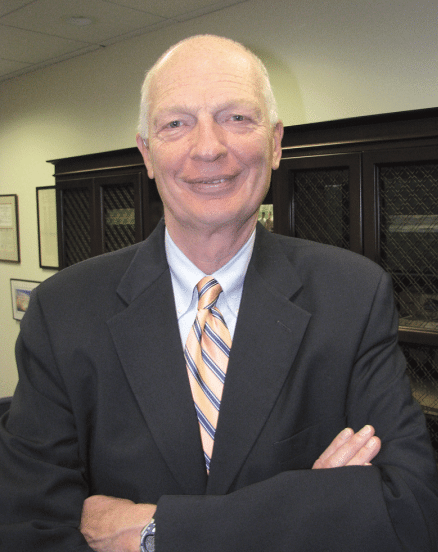
Richard Freeland

Richard Freeland

“Degrees of Urgency” recommends three: boosting college-completion rates; closing achievement gaps, especially those involving the African-American and Latino populations; and attracting and graduating more students from underserved populations.

None of the above constitutes rocket science, and these steps have been the basic goals spelled out in the Higher Education Department’s Vision Project, said Bill Messner, president of Holyoke Community College, who said the problem outlined in the report and the solutions to it appear relatively simple. In reality, though, they are not.

“We have to get more people into college, and we have to get more people through college — it’s as simple as that,” he said, adding quickly that changing demographics across the state and especially in the Pioneer Valley (more on them later), current funding levels for the state’s public institutions, and those projections of falling numbers of high-school graduates will make these stern challenges.

What will help, said Freeland, is a broader commitment from the Legislature to fund public higher education at a level well above the current one, which is, in every sense of the word, average, in terms of national statistics.

“Massachusetts still ranks very much in the middle of the pack among the states in terms of per-student investment in public higher education,” he said while explaining his department’s call for an additional $475 million over five years that would be spread out over the state’s community colleges, state universities, and the many campuses of the University of Massachusetts. “We still haven’t made a commitment to investing in genuine excellence in public higher ed, and that’s the point of this report; Massachusetts can’t get by with an average system of public higher education and an average level of investment.”

Such a boost will make the state’s public schools more affordable and, thus, more attractive to those challenged by the cost of higher education, he said, and also to the comparatively high number of high-school graduates who feel compelled to leave the Bay State to attend college.

Overall, recent funding increases for public higher education have essentially restored what was lost in the fiscally trying years following the Great Recession, Freeland said, adding that a greater investment is needed to build on recent momentum and enable the public colleges to meet the additional burden they’ve been asked to absorb.

For this issue and its focus on education, BuinessWest takes an in-depth look at the “Degrees of Urgency” report and the suggested steps for possibly clearing the skies.

Course of Action

Messner told BusinessWest that the gathering storm outlined in the report is already much in evidence at HCC, in the form of recent enrollment figures.

In 2009, the year after the Great Recession began, there were 7,400 students enrolled, he noted. By 2011, the number was down to 7,100. In 2013, it was 6,700 (down more than 5%), and in 2014, it was 6,600. And another 1% to 2% drop is projected for 2015.

Bill Messner

Bill Messner says falling high-school populations, coupled with demographic changes, have impacted enrollment at Holyoke Community College.

Behind these statistics is declining high-school enrollment, Messner acknowledged quickly, but there’s much more to it than that, especially changing demographics.

“Whatever bubble was moving through has come and gone,” he said of the high-school population. “Meanwhile, the demographic mix in our region is changing, and that’s no surprise — we’re seeing it at HCC, and other people are seeing it as well.

“We have more first-generation, low-income students coming to us, and that reflects the population as a whole,” he went on. “We have fewer college-educated students moving into the area, and more non-college-educated people moving in, which results in more first-generation college students.

“The other way of saying that,” he continued, “is that the only growth population in Western Massachusetts tends to be immigrants, and the large majority of these immigrants do not have a college education, and they’re not coming from cultures where a college education is necessarily the priority it is here in the United States.”

But while enrollment is down, the number of graduates has not changed appreciably, Messner went on, noting that, in 2011, the high-water mark, there were 1,128. In 2013, there were 958, and in 2014, there were 1,105, a nearly 15% increase. These numbers clearly show that the college is becoming more successful in moving those students who do enroll through to graduation.

And these real-time developments add some exclamation points to the “Degrees of Urgency” report and those three steps outlined to put more students into the pipeline, see them through to the other end, and make them part of a qualified workforce, said Messner, adding that, while the report talks mostly about conditions projected for down the road, many of the anticipated changes in numbers are already taking place.

“Community colleges are pretty good canaries in the coal mine, so to speak,” he said. “If you look at our enrollment — and our enrollment is no different than any other community college — it peaked in 2008 and has been on a steady decline since then, and there’s little to indicate that this will change.”

Messner noted that, while there has been progress in closing achievement gaps and improving graduation rates, as his statistics show and the report states, there is considerable work to be done.

Completing His Thoughts

Freeland agreed, and returned to what the “Degrees of Urgency” report calls the “Big Three” strategies to increase the number of students graduating with degrees or certificates.

He said declining high-school enrollment is a reality the state will have to live with, and, given those numbers, there must be a commitment to improving completion rates in general, attracting more students from underserved populations to the public colleges and universities, and closing achievement gaps.

Included in that ‘underserved populations’ category are adult students (those ages 25-65 who have some college credits but not a degree), military veterans, and high-school graduates heading to out-of-state colleges.

Massachusetts has more individuals in that third category than most states (it ranks 29th in that category), said Freeland, listing as possible causes everything from the small size of the Commonwealth — “if you want to get away, as many students do, you almost have to leave the state” — to a lack of awareness, or appreciation, when it comes to the public higher education system here.

“Public higher education in Massachusetts has never enjoyed a strong reputation,” he explained. “You have students leaving Massachusetts to attend public colleges and universities in other states. Staying in state and going to one of the public schools doesn’t have a lot of cache among high-school students, although UMass Amherst may be beginning to acquire that.”

Changing this equation won’t happen quickly or easily, he went on, adding that the quality of education being provided and its cost are two big factors that could be addressed through a greater investment in public higher education in this state.

As for those adult students, they most aspire to jobs that require a college degree or certificate, but they are not yet ready for college-level work, said Freeland, adding that, in addition to the challenge of getting them enrolled or re-enrolled, these individuals must also confront competing job and family pressures.

Thus, they embody two components of the report’s three-pronged strategy — getting into college and then getting through it.

As the report states, there have been some improvements in graduation rates, such as those logged at HCC, but additional efforts, encompassing everything from mentoring to making more enrollees ‘college-ready,’ will be needed.

“We have been working very hard on what we call ‘student success,’ which is shorthand for retaining and graduating more students, and we’re not peculiar in that — everyone’s working on that,” said Messner, adding that this hard work, coupled with more emphasis on attaining a degree, rather than taking certain courses and attaining a certain number of credits for transfer, is at least partially responsible for that rise.

But there are still many challenges ahead, most of them manifesting themselves in those lower enrollment figures he relayed.

As he talked about ways to stem that tide, he focused on one of the big problems — poor high-school graduation rates in many area cities, especially Springfield and Holyoke — while relaying some comments he made at a recent United Way meeting on that subject (see related story on page 27).

“I told people, ‘this is not a problem for the Springfield School Department or the Holyoke School Department — anyone who hires people from the local workforce is going to be impacted by this,’” he recalled. “If we don’t increase our high-school graduation rates, we’re going to see a dramatic decline in the number of college graduates, and that doesn’t bode well for our economy.”

The Bottom Line

Looking ahead about six months, Messner said the final tally for the number of graduates at next spring’s commencement ceremony will be very telling. And right now, he’s not at all sure what to expect.

“If it’s up or even close to the number we had for last spring, it will be a really good sign that something positive is going on,” he said, adding quickly that, whatever the number is, stern challenges remain for those looking to put more students in the pipeline — and hire them if and when they graduate.

Freeland concurred, and noted that all those numbers in the Vision Project report add up to an ominous forecast — one for a perfect storm.

It probably won’t miss this region, he noted, and, in fact, it will hit harder than most others. But with appropriate steps, the state can weather it.

George O’Brien can be reached at [email protected]

Opinion
Invest in Public Higher Education

Over the past several years, the state Department of Higher Education has devised imaginative and compelling ways to make its case for increased funding for the state’s public colleges and universities. And this year is no exception.

In its recent report, creatively titled “Degrees of Urgency: Why Massachusetts Needs More College Graduates Now” (see related story page 24), the department uses words and numbers (lots of them) to describe what it calls a “perfect storm” of conditions that threaten to leave the state with a dramatic shortage of college graduates to fuel its technology-driven economy.

These conditions include everything from falling numbers of high-school students entering college following a somewhat lengthy population surge, to the rising percentage of jobs in the Commonwealth that will require some college education: 72% is the projection for the year 2020.

“In Massachusetts today, there are an estimated six job openings for every college graduate holding an associate degree or certificate in computer science or IT, and more than 17 openings for every graduate with a bachelor’s degree,” the report states. “Put another way, Massachusetts needs more than 5,000 computer-science and information-technology graduates right now.”

The report contains a number of quotes from business leaders about how finding qualified help is the biggest impediment to their success, and also many charts verifying the state’s merely average performance when it comes to funding public higher education. It’s all intended to open some eyes on Beacon Hill and change some attitudes about the state’s public colleges, and we hope the report is successful in doing all that.

That’s because the report’s authors hit the nail on the head when they say there has never been a time when the public institutions were more important to the economic health and well-being of the Commonwealth.

Indeed, the state’s bevy of prestigious private colleges, a list that includes Harvard, Wellesley, Smith, Mount Holyoke, and MIT, educate the world — people who traditionally go back to the country or state they came from to earn a living. Meanwhile, the state’s public schools educate those who will stay in this state, or their region, to forge a career.

A quick look at the business community in Western Mass. provides strong evidence of this. While area companies do boast employees who graduated from Harvard, Boston College, Amherst, Babson, Western New England University, and the Elms, the ranks are far more populated with graduates from UMass Amherst, Westfield State University, Holyoke Community College, and Springfield Technical Community College.

And it is the same in other regions of the state.

If Western Mass., and those other areas of the state as well, are to remain competitive when it comes to attracting and retaining businesses and, therefore, jobs it must have a solid pipeline of qualified workers. And this pipeline is going to be filled mostly by the public colleges and universities.

The Department of Higher Education report calls for a stronger commitment, or investment (that’s the more fitting term) in public higher education. It specifically calls for an additional $475 million over the next five years to help bring more individuals into the pipeline — and see them through to the end.

We hope the Legislature will heed this request and make that investment. That’s because Higher Education Commissioner Richard Freeland was right when he told BusinessWest that the state has been historically average when it comes to funding public higher education in comparison to other states.

And average isn’t going to be good enough in the future.

Features
When It Comes to the Family Business, Explore All Your Options

By MICHAEL KLEIN, PsyD

While we often think of family-run enterprises as corner mom-and-pop shops, more than one-third of the S&P 500 are family-owned. Companies as significant as media giant Comcast are family-owned. Mars, the food manufacturer, is also family-owned. Ford Motor Co. still retains family leadership, and, of course, there’s always Walmart, owned and operated by the Walton family.

As many family-business consultants will affirm, family-owned companies can be incredibly complex. Due to the overlap of roles between owners, employees, board members, and family, there is frequently a lack of clarity surrounding fundamental business facets and processes, including job responsibilities, performance expectations, individual development and advancement, as well as compensation policies, among many others.

Page8DarkPortrait

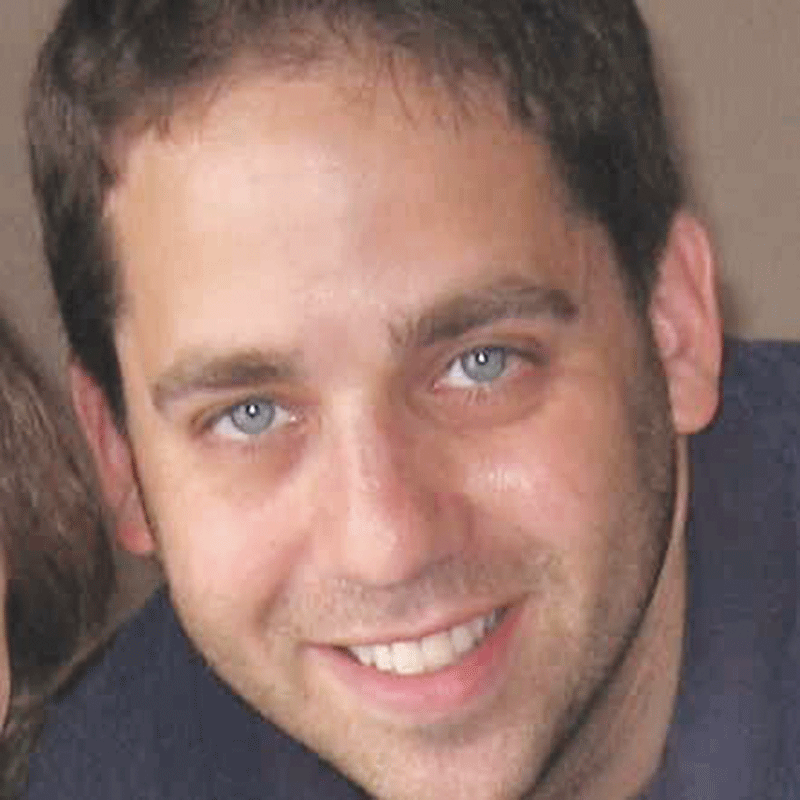
Michael Klein

Michael Klein

Add in a variety of topics that are often undiscussable — including substance abuse, estate planning, share transfers, leadership succession, and many others — and one can often find a tornado of conflict and emotion just waiting to touch down.

The more mature (i.e., older) a family business is, the more likely that lessons have been learned from generation to generation. However, no matter how old a family business may be, complexity is always present. Unfortunately, the individual family member often loses out due to the greater issues of family and business. Many, if not most, family-business consultants focus their attention on maintaining engagement and involvement, maximizing the business while understanding the family dynamics. Few are focused on what is in the best interest of an individual.

Family-business processes, systems, strategies, and planning are all critical issues if the business is to survive and thrive. A focus on individual interests, growth, satisfaction, and development comes only after larger issues are addressed. Sadly, the individual family member can become an afterthought.

Consider the prevalence of this theme of family-business expectations for employment versus individual talents, desires, and dreams. Many recent children’s movies are centered fundamentally around the individual’s conflict with family legacy, tradition, and power. As just one example, Brave’s Merida is pressured to follow in her mother’s footsteps (and the family business) as a properly behaved queen despite her desire for very ‘unqueenly’ activities and passions.

Back in the real world, however, decisions about family-business employment are far more complicated and have more than one side to the story.

Three Perspectives

In my research, as well as experience with family-business clients, the following three perspectives are exceedingly common but rarely discussed openly, thoroughly, or objectively:

• As an active member of the family business: “Is this the best path for me going forward?”
• As a current family-business owner or parent: “What is the role of the family business in the future of my children?”
• As a next-generation member: “Should I join the family business?”

With each of these perspectives comes the underlying question, is this the best fit between person and career/job? The answer doesn’t fall out of the sky, but requires patience, tolerance for ambiguity, and a willingness to change direction when needed.

Quick decisions should be avoided at all costs. The following is a sample of some of the questions each constituency should start asking, followed by some important things to remember.

Questions for active family-business members include:

• How satisfying is my current role?
• Do I have options to change my role?
• Which family relationships are most important to me?

Keep in mind, nobody can decide your path for you. There are always pros and cons to any decision or change. You owe it to yourself and your family to either fully engage or disengage from the business sooner or later.

Questions for owners/parents include:

• What would make me most satisfied for my children?
• What skills, talents, or interests do they have that might fit well in the family business?
• Am I considering other options for my children?

Keep in mind, your own feelings about the business may be very different from your son or daughter. If your child decides not to join initially, they might be interested when they are older. In the meantime, be as objective as you can about your child’s personality, skills, interests, and motivations.

Questions for next-generation family members include:

• What excites me about the family business?
• What traits or skills do I have that will contribute to the business?
• Is there something I would be giving up if I joined?

Try as best you can to separate the idea of being a member of your family from working in the family business. Focus on understanding and developing your skills, not making a lifelong commitment to one path or another. You probably won’t have all the answers about what you may want from work until you have worked for a while.

Go with the Flow

Regardless of what the genetic lottery hands us at birth, our personal and professional experiences should result in new insights into who we are and what we are capable of. As our work lives progress, we should be able to develop new skills and abilities, as well as perhaps discover interests and passions we didn’t know we possessed. Ultimately, our jobs and other professional experiences should guide us toward finding out where our true strengths and talents lie.

For some, the family business provides an unmatched arena for this type of professional development. Unfortunately, for far too many, the family business stands directly in the way of this — and, as a result, it stands in the way of healthy adult development.

Family businesses are wonderful career and professional opportunities for many family members. While it is not a secret that the primary beneficiaries of arranged marriages are the families, we do not as easily admit this is often the case in family-business employment.

Family businesses can be wonderful opportunities for professional and personal growth, satisfaction, and success. But they should never be the only option. n


Michael Klein, PsyD, is a business consultant and author of Trapped in the Family Business: A Practical Guide for Uncovering and Managing This Hidden Dilemma. He holds a doctoral degree in professional and applied psychology, and supports family businesses and their advisors by providing assistance in the hiring, management, and development of leaders, managers, and employees. He has more than 20 years of experience working in multiple industries, including manufacturing, insurance, healthcare, construction, financial services, education, pharmaceuticals, real estate, and entertainment; mkinsights.com;trappedinthefamilybusiness.com

Education Sections
Conference Focuses on Ways to Boost Springfield’s Graduation Rate

By KATHLEEN MITCHELL

Michael Smith

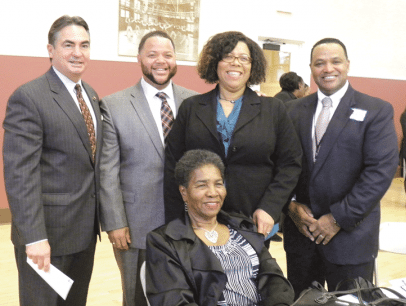
Michael Smith (second from left) introduces Springfield Mayor Dominic Sarno (left) to his parents and grandmother, who helped him succeed in school.

Many businesses donate to local nonprofit organizations and do their best to support the community. But Michael Smith says they inadvertently fail to recognize the role they can play in a critical area of need.

“Businesses often think that lowering the high-school dropout rate is a job for schools, nonprofit organizations, and the government. But they need to pay attention to what is happening if they expect the country to have an educated workforce,” said the Springfield native during a keynote speech at the GradNation Summit 2014 luncheon held last month at Springfield College for community and business leaders. “They may be writing checks or hosting grant competitions, but it is not enough. They need to establish apprenticeship programs, bring high-school students into their companies, and send their employees into the schools.”

Smith was recently appointed a special assistant to President Obama and is senior director of Cabinet Affairs for the presidential My Brother’s Keeper initiative, which addresses opportunity gaps faced by boys and young men of color that prevent them from reaching their full potential.

He traveled to the Bay State from Washington, D.C. to attend the day-long GradNation event, at which summit leaders shared best practices aimed at keeping inner-city students interested in their own education, with a focus on the relationship between success in middle school and the path to graduation.

Springfield was one of 100 cities across the nation selected by America’s Promise Alliance to hold a GradNation conference, with the goal of boosting the high-school graduation rate to 90% by 2020. And the United Way of Pioneer Valley convened the event as part of its Stay in School initiative launched last year in partnership with Springfield’s public schools.

“Middle school is a time when kids often get off track; adolescence can be really challenging, and we can’t wait until high school to make sure students are achieving at grade level. We need to get them in the pipeline early,” Smith said, adding that an overwhelming number of dropouts are “kids of color.”

He told BusinessWest that he grew up in the Hill McKnight area of Springfield. “It was a rough neighborhood with drugs, crime, violence … you name it,” he said. “I had many opportunities to fall off the path, but thanks to my parents, my grandmother, and the Boys & Girls Club, which provided me with opportunities to volunteer as well as my first job, I became a success.

“But I think about the kids I went there with who are not standing in a similar position today,” he went on. “A lot of them dropped out of school or had children early, and way too many dreams were deferred.”

However, there are strategies that can make a difference, and Smith said peer mentoring is an effective tool in middle school. But he quickly dispelled the belief that focusing solely on improving academics is the most important strategy in reducing the dropout rate.

“It takes far more than academics for a child to be successful,” he said, citing the Harlem Children’s Zone as a program that works. “They use innovative educational programs to help children, but they feed them breakfast first. You have to look at all of the roadblocks, and we need to disrupt the way we have been doing things because it is not working.

“Good enough is not good enough; we invest far too much money in things that don’t bear fruit, and governments and nonprofits can’t save children,” he went on, adding that, while nonprofits spend $300 billion each year, the dropout rate remains high.

“So, it’s clear that we need to form new partnerships, invest in innovation, and set the same goals if we want to attain a 90% graduation rate,” he told the audience.

Working Together

Springfield Mayor Dominic Sarno told those assembled that a number of success stories have come out of Springfield, adding quickly that considerable work remains.

“We need to push the needle if we are going to knock down poverty. The number-one priority is education, followed by jobs, and you get jobs through education,” he said, acknowledging that middle school is a difficult time for young people.

“If we are going to make any real improvements in the dropout rate, the entire community needs to be behind it,” the mayor went on. “We have a moral imperative to improve urban schools, but it will require bold and difficult measures to get dramatic outcomes.”

Springfield College President Mary Beth Cooper was among a bevy of speakers who outlined their efforts to help Springfield schools, and said the college has tutors in preschools who focus on early literacy skills of at-risk children.

“Our Springfield College School Turnaround Initiative also places 48 Americorps members in Level 4 schools. In 2013-14, they implemented targeted interventions to improve attendance, academic achievement, and the behavioral-social-emotional health of the students,” she said, adding that, as a result, 55% showed an increase in academic engagement.

Dora Robinson, president and CEO of United Way of Pioneer Valley, stressed the fact that GradNation was not simply an event. “It’s a call to action, and we really need a lot of support,” she said. “If we invest time and effort on the front end, more young people will graduate and move into the workforce. We have made some inroads in moving the needle, but until we are willing to stand up and support young people, we shouldn’t point fingers.”

In addition to speakers, the event included both youth and community panels, and the participants took note of what it will take to formulate an action plan to inspire middle-school students to do well in class. Measures that were outlined include engaging parents and young people, establishing safe places for students to go, providing them with individual mentors and social and emotional supports, and putting early-warning response systems in place that will alert educators when a student is at risk of dropping out.

“If anyone can do this, Springfield can,” Smith said. “But in order to reach a 90% graduation rate, we have to interrupt the status quo. People keep doing the same things over and over, while millions of kids fall through the cracks. Everyone needs to lock their arms together with a common goal.”

Moving Forward

Although 80% of students across the nation graduate from high school today, jut over half (54.9% last year) of Springfield high-school students earn their diploma.

Progress has been made, but Henry Thomas III, president of the Urban League, said the future of the region and the local economy depends on students not only graduating, but obtaining the credentials they need to get a job after high school. “The whole community needs to put education front and center.”

The information gleaned from the GradNation Summit will be distilled into a three-year community action plan to support Springfield’s middle-school students that will be submitted to America’s Promise Alliance by early January.

“This summit is the beginning, but nothing we do in school matters if a child is not eating, or drugs are being sold in violence outside their windows,” Smith said, as he spoke about a program in Washington, D.C. that matches children with paid mentors who do everything from getting them help for depression to providing assistance to parents looking for a job.

“But we also need investments, mentors, and slots for apprenticeships and internships so young people can gain practical experience,” he went on. “We need to come together to figure out our workforce needs in the next few years and make sure we are investing time and money to fill these jobs instead of having to look elsewhere.”

Education Sections
WNEU’s Biomedical Engineering Program Is in a Growth Mode

By KEVIN FLANDERS

Dr. Robert Gettens

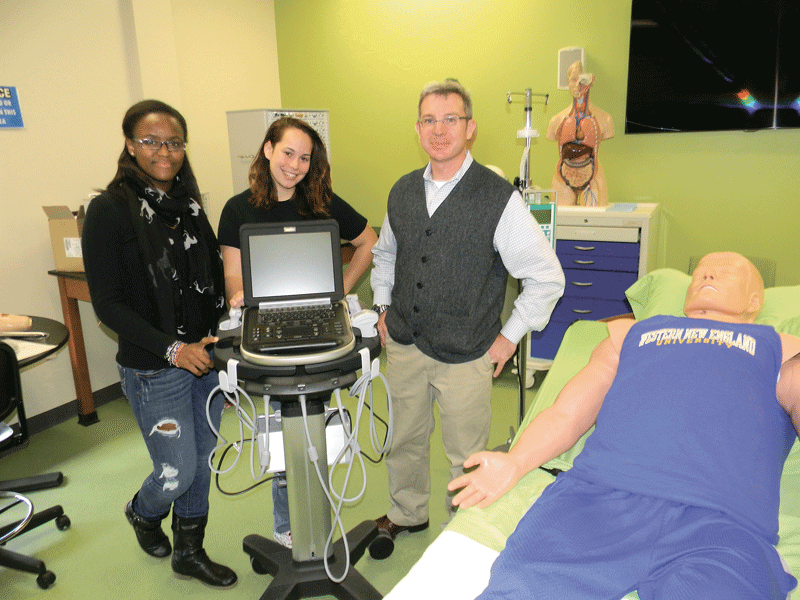
Dr. Robert Gettens, right, with students Hadiatou Barry (left) and Dena Navarroli, check out lab equipment in the Biomedical Engineering department at WNEU.

Inside the labs at Western New England University’s Biomedical Engineering (BME) department, students aren’t simply studying the technologies behind medicine. They’re constantly searching for ways to improve them.

It’s a philosophy, acting Department Chair Dr. Robert Gettens and BME students agree, that prepares them well to be leaders in a variety of careers. Many recent WNEU graduates have become specialized medical attorneys. Others have gravitated toward research. One particularly accomplished alumnus, Ryan Turner, is on his way to becoming a brain surgeon. But, regardless of what path graduates choose, they all share an ability to comprehensively analyze and enhance technology, a trait that is imbued in each student while studying at WNEU.

“Rather than teach students what the functions are of particular medical devices, we focus on the fundamentals of engineering so they will be able to go out and design new products,” said Gettens, an associate professor who will remain the acting department chair until Dr. Judy Cezeaux returns from her sabbatical.

Named by U.S. News to its “Best in Undergraduate Engineering” list, WNEU’s Biomedical Engineering department has seen a marked increase in enrollment over the past five years. What was once a fledgling department with fewer than 10 graduates per year has become a paragon of biomedical pedagogy that sends about 20 students each year into the field. With five professors — each boasting impressive credentials to go along with a Ph.D. — the department has inspired students from throughout the nation to pack their cold-weather gear in preparation of continuing their studies in Western Mass.

“The numbers have skyrocketed,” said Gettens, who praised his students for their commitment and relentless pursuit of knowledge. “The students are always so engaged and dedicated to learning.”

Training Future Inventors

Take a moment to reflect on how far medical devices and the technologies that allow for their creation have come in the last 10, 20, and 50 years, enabling millions of individuals to have hope that wouldn’t have existed in the past. Now project those same time frames into the future, and the possibilities for expansion and invention seem unimaginable.

But for BME professors and students, future technologies are not only imaginable but viable. Every invention starts somewhere, and perhaps the incipient traces of tomorrow’s next breakthrough are currently confined to the notebook of a student in Western Mass. It’s not that much of a stretch, considering that 10 BME students at WNEU have been listed as inventors on patents since 2010. Moreover, almost 22% of graduating seniors since 2001 have received regional or national awards for their senior design projects. Engineering careers are no longer dominated by men, either, as more than 40% of WNEU’s BME students are women.

“What we teach here is engineering, which is all about designing,” Gettens told BusinessWest. “By the time they graduate, our students know how to design medical devices.”

The BME department also collaborates with several area hospitals to ensure that students are provided with the best opportunities possible. Among its partners are Baystate Medical Center, Mercy Medical Center, and Shriners Hospital for Children, as well as other local organizations and hospitals that utilize and advance medical technology. Additionally, a few seniors are currently teamed up with hospitals or companies to develop new devices that could potentially transcend the way patients are cared for.

In short, at WNEU, the future truly does lie in the here and now.

And the BME department hasn’t grown exclusively from an enrollment perspective. Following a two-phase, $12.8 million renovation and expansion project at Sleith Hall that concluded in September, students and staff are benefiting daily from two brand-new laboratories. The bioinstrumentation lab is dedicated mostly to the electronic components of engineering, including electrocardiography, bioamplifier design, ultrasound, signal-processing systems, and pulse oximetry. The second lab, meanwhile, serves as a simulated hospital room, complete with a dummy patient decked out in WNEU apparel who occupies the hospital bed. In this lab, students get to see the latest technologies in action and record their effectiveness in a medical setting. That way, when it comes time for these innovations to serve actual patients in hospitals, they will function at the highest levels possible.

In addition to their work inside the labs, WNEU students also have an opportunity each year to take part in a global health and technology course that includes a trip to Guatemala to learn about healthcare in a foreign environment. The BME department, which also includes professors Dr. Anthony English, Dr. Michael Rust, and Dr. Brent Ulrey, know a thing or two about travel, as they’ve earned degrees from several universities and conducted research throughout the nation.

What’s Next?

For thousands of graduating college seniors each year, a degree doesn’t necessarily translate into a job. In some cases, it’s a matter of too many graduates and limited positions to be filled within that field, while in others the problem is rooted in choice of major. But for those emerging from the BME program at WNEU, it’s not a question of whether they will find a job, but which position they’ll choose.

Sometimes opportunities abound to the extent that graduates must first determine what field they’ll choose, then begin the process of applying for positions.

“Many of our graduates work for companies that make medical devices, and others are working for the government,” said Gettens, who earned his Ph.D. in biomedical engineering from Syracuse University and also served as an engineering officer in the U.S. Army. “They can also go to graduate school to do more research, or they can go to medical school. It depends on what interests them.”

Nationally, 20% of all BME students go on to medical school, according to WNEU’s statistics. But since the university offers a unique, six-year engineering/law program, many of its students have selected the two-for-one degree and backed up their knowledge of medical technology with legal education, a decision that opens many doors.

For WNEU seniors Hadiatou Barry and Dena Navarroli, it will soon be time to say goodbye to William H. Sleith Hall and begin their careers. Armed with advanced training that will serve them well in any field, it will surely be a bittersweet departure.

“I love it here — the professors are really down to earth; you have your fun moments and your serious moments,” said Barry, who is originally from New York City. “It’s the best of both worlds.”

Navarroli, who came to WNEU from Gilbert, Ariz., added, “I was really scared moving all the way from Arizona, but the professors have really supported me. They’ve been great, and they provide so many opportunities here that you can’t find anywhere else.”

For their senior design projects, Barry is researching quantum dot nanocarrier systems for targeted drug delivery, while Navarroli is working with a clinical sponsor on an innovative breast-cancer-surgery device. Both students have excelled in the BME program, and Barry is taking advantage of the rigorous six-year engineering/law opportunity. When she graduates, she’ll be able to choose between patent law and medical litigation if she selects a legal career, both of which are branches of law that require extensive knowledge of medical technology.

“It’s definitely been challenging, but this was my top choice, and it’s been a great experience,” she said.

Both Barry and Navarroli have bright futures ahead of them, as employment of biomedical engineers is expected to increase by nearly 30% by 2022, according to the U.S. Bureau of Labor Statistics. In recent years, WNEU seniors have gone on to work for such major healthcare companies and institutions as Active Medical Devices, Covidien, St. Louis University, Cornell University, Respironics Novametrix LLC, and Microtest Laboratories Inc., among others.

Rewarding Field

Interests and specialties aside, WNEU’s BME students and professors were drawn together by a common passion — helping people in need.

Though many biomedical-engineering students throughout the nation may never operate on a single patient in their careers, the technologies they develop help doctors and nurses save countless lives. From advanced imaging systems to pioneering point-of-care devices, BME students situate themselves on the cutting edge of technology by studying thousands of applications and mechanisms during their college years. They also dedicate several hours each week to reviewing case studies and staying current on the latest research and literature pertaining to the constantly evolving field.

And the research is hardly limited to the students. With busy teaching schedules, professors sometimes struggle to find enough time to complete multiple research projects each semester.

“The faculty members have done a lot of research lately in micro- and nano-devices,” said Gettens, whose department recently received a $500,000 grant from Massachusetts Life Sciences. “Because the professors usually do 12 credit hours of teaching [per semester], trying to find time for research can definitely be a challenge.”

Gettens said the grant will allow for the purchase of equipment that facilitates micro- and nano-fabrication for medical devices. To outsiders, these words might as well be written in a different language, but for those immersed in the innovative, collaborative culture of biomedical engineering, the more complex the application, the more enthralling the endeavor.

And that explains why the program — and the job opportunities it creates — are both on the rise.

Construction Sections
Houle Builds on Its Expertise in Healthcare Contracting

By KEVIN FLANDERS

Houle Construction President Tim Pelletier, left, and Vice President Bob Langevin

Houle Construction President Tim Pelletier, left, and Vice President Bob Langevin, with a ‘baffle box’ used to keep air free of dangerous particulates.

As a contractor specializing in projects at medical facilities, Raymond R. Houle Construction has seen the industry evolve dramatically since opening in 1977. Practices have changed. Regulations have tightened. Competition has increased.

But Ludlow-based Houle hasn’t been daunted by change, instead employing innovation and reinvention to succeed in a challenging business where plenty of other enterprises have failed.

Leading the way have been President Timothy Pelletier and Vice President Robert Langevin Jr., with more than 40 years combined at the company.

“We are healthcare-contractor-certified and have a tremendous amount of experience working in hospitals,” Pelletier said. “Our staff is up to date on all of the latest infection-control procedures.”

That’s critical in an age when construction at medical facilities has been far more closely scrutinized and regulated than in past decades. With the emergence, over the past 15 years, of new policies and protocols governing every project — from emergency departments to patient rooms — contractors must be certified before they can even consider working inside a hospital. Houle, boasting a staff of around 30 employees, is one of a few commercial builders in the area with experience in all aspects of healthcare construction.

Simply put, Pelletier said, his staff knows how to get the job done in situations where planning and execution are crucial. Hospitals are among the most challenging construction venues, partly because they can’t be shut down for weeks or months at a time to facilitate site work. As such, every member of the construction team must be adept at working seamlessly in an active medical environment, with minimal disruption to patients and staff.

For instance, “when you’re renovating an emergency department, you have to create a construction environment within the existing environment. The ER isn’t going to close so you can work,” he explained. And with hospital patients often resting in close proximity to where the work is being completed, he added, every procedure must be completed with an emphasis on safety and efficiency.

History in Healthcare

Operating in the beginning out of founder Raymond Houle’s garage in South Hadley, Houle Construction has evolved and grown to become one of the region’s noted contractors, particularly in the realm of medical facilities. The company’s clients have included Cooley Dickinson Hospital, Baystate Medical Center, Baystate Wing Hospital, Holyoke Medical Center, Mercy Medical Center, the Sisters of Providence Health System, and Genesis Health Ventures, among others.

Tim Pelletier

Tim Pelletier says working on medical facilities means completing projects efficiently while keeping patients safe.

But becoming a leading area name in healthcare construction has been far from easy. For example, each time a new infection-control procedure is introduced, the company must adapt accordingly, and each time a new healthcare mandate is instituted, the staff must align its practices to the fresh industry standard. In some instances, uncertainty over new regulations required the Houle team to rely on innovation.

“We were told to figure it out and come up with a solution,” Pelletier said, recounting a situation about eight years ago when hospital infection-control departments began to implement new asbestos-abatement regulations in windowless areas of facilities.

In response to the changes, the staff invented what is now known in the industry as a ‘baffle box’ — a device used to diffuse torrents of air generated by negative air machines during asbestos-removal projects. Now made of plexiglass, the first such devices made by Houle were constructed of plywood and helped to safely exhaust dust and particles.

Not long after the creation of baffle boxes, Pelletier and Langevin recalled, hospitals were requiring the use of similar devices, and the competition was mimicking Houle’s design. Today the staff continues to search for new strategies to maximize safety and efficiency on the job site, well aware that they can’t afford to be complacent in a rapidly changing, increasingly policed industry.

The reasons for tighter controls are numerous. First, patient privacy laws have been tightened under the Health Insurance Portability and Accountability Act (HIPAA). As for the renewed emphasis on infection control, there’s good reason for that. In 1999, the Institute of Medicine dropped a bombshell of a report called “To Err Is Human — to Delay Is Deadly,” claiming that up to 98,000 people were dying needlessly each year because of preventable medical harm, including hospital-acquired infections.

Since that time, hospitals have aggressively ramped up their infection-control protocols, and contractors that want a piece of the lucrative medical-facility construction niche have done the same. In fact, the New England Regional Council of Carpenters has created a training program for members who perform work in a clinical environment. The curriculum covers everything from controlling airborne contaminants to mold remediation to routing materials and personnel around patients and staff.

Bob Langevin

Bob Langevin says Ray Houle, the company’s founder, was a believer in figuring things out for himself, a trait he passed on to the current leadership.

“Hospital construction is a whole different animal,” Pelletier said. “It really isn’t like any other kind of construction. We are always looking for new ways to improve infection-control equipment. As we continue to do more projects, we learn better and faster ways to achieve results. You have to continually research the latest products so you can stay ahead of the curve and provide the best possible service to customers.”

Demonstrating the breadth of the firm’s work, he cited renovations to the fourth and fifth floors at Mercy Medical Center as one of the company’s largest recent projects, as well as a $10 million project for Specialized Technology Resources in Enfield, Conn., that converted a mushroom plant to a solar manufacturing facility. Houle also led a recent laboratory renovation at the John W. Lederle Graduate Research Center on the campus of UMass Amherst.

Drawing on Experience

Pelletier and Langevin ascribe their company’s sustained success to not only the staff’s commitment and hard work, but also the experience of each member. From the management team to those leading work in the field, Langevin said, everyone is on the same page and works collaboratively during each project.

“The core of the staff has been here for a minimum of 10 years. We all work really well together,” he noted.

Neither Pelletier nor Langevin went to college, instead receiving education in construction from hundreds of projects over the years. Starting off as carpenters, they slowly progressed through the ranks — every jobsite their classroom, every supervisor a de facto professor in a different subject.

“There is no replacement for being out in the trenches and doing it yourself,” Pelletier said. “We have a tight group here — it’s like a family environment.”

Both men learned much of what they know from Raymond Houle himself, who has now been retired for 15 years after handing the reigns to Pelletier.

“He worked his way up through the trade just like us and eventually started his own business,” said Langevin, who works closely with owners, project managers, and architects on a daily basis — all skills he learned from Houle and others. “He really wanted you to get out there and figure things out for yourself, but he was always there if you had a problem.”

He and Pelletier agree that taking time to appreciate all aspects of the job is integral, especially the lighter moments. In a business that often abounds with stress — particularly when deadlines near — the staff does its best to keep the atmosphere loose and upbeat. “I think it’s important to keep a good sense of humor,” Langevin said.

It’s far more important, of course, to ensure that each project stays on time and within its budget, which is often made even more difficult by tight parameters. For hospital leaders, the goal is to get work done as quickly as possible to reduce disruptions to staff and patients, although speed and attention to detail can be a tricky blend unless a company has many years of experience balancing those needs.

Sometimes, Pelletier told BusinessWest, meeting a condensed deadline can feel like achieving the impossible, even for veterans who have been in the industry for decades. But those who dedicate their careers to the industry learn to embrace the innate challenges of deadlines.

“It’s rewarding,” Pelletier said of finishing ahead of a difficult deadline, especially for jobs in medical settings. “Everyone has to work together, from the hospital staff to all of the contractors involved. It’s always a team effort, and we try to keep everything coordinated so it gels like it’s supposed to.”

Pelletier said business has taken a slight dip this year for Houle, with an array of smaller projects dominating the 2014 schedule. The staff has high hopes for a solid 2015, though. Overall, the local industry has been trending in a positive direction, and with such recent announcements as Holyoke Medical Center renovating its Emergency Department to include a behavioral-health component, contractors working in the medical niche hope construction opportunities will be available at area hospitals in 2015.

Then it’s up to Pelletier and his staff to decide which projects they will pursue.

“Things have been really busy over the last five years,” he noted. “It’s tailed off a little, but the drop hasn’t been significant, just a little downturn this year. I am optimistic that things will pick up. It all depends on what our customers are doing.”

Departments Incorporations

The following business incorporations were recorded in Hampden, Hampshire, and Franklin counties and are the latest available. They are listed by community.

AGAWAM

White Creek Traders Inc., 611 Suffield St., Agawam, MA 01001. Jason Morris, same. Internet sales.

GRANBY

United Siding & Painting Inc., 82 Pleasant St., Granby MA 01033. Fabio Cardoso, same. Residential and commercial siding & painting.

HADLEY

Pioneer Power Inc., 83 Rocky Hill Road, Hadley, MA 01035. David Moskin, same. Retail sales.

River Valley Dental of South Hadley, P.C., 63 East St., Hadley, MA 01035.Babak Gojgini, 607 George Hannum Road, Belchertown, MA 01007. Dental office.

HOLYOKE

Sports Stuff Inc., 2255 Northampton St., Holyoke, MA 01040. Soo Hyun Yoo, 2255 Northampton,Holyoke, MA 01040. Retail shoe company.

LONGMEADOW

Off the Grid Solutions Inc., 208 Shaker Road, Longmeadow, MA 01106.Taylor Scyocurka, same. Engineering and engineering design services, utility metering and supply.

LUDLOW

Overeasy Inc., 17 Cedar St., Ludlow, MA 01056. Kelly Maureen Dias, same. Restaurant.

The Gomes Agency Inc., 364 East St., Ludlow, MA 01056. Miguel Gomes, same.Insurance broker.

NORTHAMPTON

Northampton Family Dentistry, P.C., 69 Bridge St., Northampton, MA 01060. Chulhwan Kim, D.M.D., same.Dental practice.

Tattoo Afterlife Mass Inc., 110 Pleasant St., Northampton, MA 01060. Matthew Olivieri, same. Tattooing, massage therapy, and retail sales.

Waralee Inc., 257 Main St., Northampton, MA 01060. Saowanee Deechanupong, 201 Grove St., Northampton, MA 01060. Full-service restaurant.

Wheel of Color Inc., 123 Main St., Northampton, MA 01060. John Thomas Baldwin,75 Ashfield St., Shelburne Falls, MA 01370. Interior and exterior paint contracting.

PITTSFIELD

Perspective Property Maintenance Inc., 295 Partridge Road, Pittsfield, MA 01201. Gene Shepard, same. Landscaping, and property maintenance.

Robert J. Boylston Inc., 152 North St., Suite 330, Pittsfield, MA 01201. Robert Boylston, 50 Tucker St., Lenox, MA 01201. Psychotherapy/social work.

Stenna Inc., 140 High St., Pittsfield, MA 01201. Senen Maruli, same. Limited food service.

United Educators of Pittsfield Inc., 188 East St., Pittsfield, MA 01201. Brendan Sheran, 62 Spadina Parkway, Pittsfield, MA 01201. Association established to support students, increase student academic achievement, protect employee rights, uphold high professional standards and advance economic well-being and improve the quality of public education.

Williams Elementary School, PTO Inc., 50 Bushey Road, Pittsfield, MA 01201. Ann Wildgoose, 77 Glory Dr., Pittsfield, MA 01201.

SPRINGFIELD

Primera Iglesia Cristiana Gedeones Del Senor Inc., 105 Jefferson Ave., Springfield, MA 01107. Ramonita Rodriguez, same. Independent church and place of worship.

TNT Promotions 22 Corporation, 66 Appleton St., Springfield, MA 01108. Guillermo Negron, same. Music, sports, radio show, recording music and magazine.

Upper State Street Community Development Corporation, 471 Wilbraham Road, Springfield, MA 01109. Glenrose Tamesar, same.

Vido Foods Inc., 326 St., James Ave., Springfield, MA 01129. Reino Muesus, 53 Haskins St., Springfield, MA 01109. Business engaged in the preparation and distribution of traditional and non-traditional food among others, Caribbean ethnic.

WEST SPRINGFIELD

Parra-Dise Inc., 97 Adrian Ave., West Springfield, MA 01089. Gustavo Parra, same. Independent broker business.

The JGM Group Inc., 901 Prospect Ave., West Springfield, MA 01089. Joseph Malkoon, same. Food-brokerage business.

ZQHW Corp., 83 Therese Marie Lane, West Springfield, MA 01089. Zahoor Mian, same. Convenience store and gas station.

WILBRAHAM

Neighborhood Pizza Inc. 2481 Boston Road, Wilbraham, MA 01095. Ilyas Yanbul, 82 Bluebird Circle, Ludlow, MA 01056. Pizza restaurant.

Briefcase Departments

EDC Names Sullivan New President, CEO
SPRINGFIELD — Richard Sullivan, former mayor of Westfield and currently chief of staff for Gov. Deval Patrick, has been chosen to become president and CEO of the Economic Development Council of Western Mass., succeeding Alan Blair, who will retire Dec. 31. Sullivan prevailed in a lengthy search for Blair’s successor that began when Blair announced his intention to retire almost a year ago. Sullivan, an attorney, brings to the job a résumé that includes a lengthy stint as Westfield’s mayor as well as work with the Patrick administration, first as commissioner of the Department of Conservation and Recreation, then as secretary of the Mass. Executive Office of Energy and Environmental Affairs, and then as chief of staff, a position he assumed in June.

Massachusetts Adds 1,200 Jobs in October
BOSTON — The Executive Office of Labor and Workforce Development (EOLWD) reported that preliminary estimates from the Bureau of Labor Statistics (BLS) show Massachusetts added 1,200 jobs in October for a total preliminary estimate of 3,424,600. The October total unemployment rate remained unchanged at 6.0%. Since October 2013, Massachusetts has added a net of 52,600 jobs, with 50,400 jobs added in the private sector. The total unemployment rate for the year is down 1.2% from the October 2013 rate of 7.2%. BLS also revised its September job estimates to a 7,800-job gain from the 9,400-gain previously reported for the month. Here’s an October 2014 employment overview:
• Information added 1,900 jobs (+2.0%) over the month. Over the year, the sector added 7,900 jobs (+9.1%);
• Construction gained 1,300 jobs (+1.1%) over the month. Over the year, the sector has added 2,400 jobs (+2.0%);
• Education and Health Services added 800 jobs (+0.1%) over the month. Over the year, the sector gained 16,000 jobs (+2.2%); 
• Professional, Scientific and Business Services gained 200 jobs (0.1%) over the month. Over the year, the sector added 14,500 jobs (+2.9%);
• Other Services had no change in its jobs level over the month. Over the year, Other Services are up 1,100 jobs (+0.9%);
• Trade, Transportation, and Utilities lost 1,800 jobs (-0.3%) over the month.  Over the year, the sector gained 7,200 jobs (+1.3%);
• Leisure and Hospitality lost 1,500 jobs (-0.4%) over the month. Over the year, the sector added 100 jobs (0.1%);
• Financial Activities lost 500 jobs (-0.2%) over the month. Over the year, the sector added 1,900 jobs (+0.9%);
• Manufacturing lost 400 jobs (-0.2%) jobs over the month. Over the year, Manufacturing lost 700 jobs (-0.3%); and
• Government added 1,200 jobs (+0.3%) over the month. Over the year, the sector gained 2,200 jobs (+0.5%).
The October 2014 estimates show 3,334,800 Massachusetts residents were employed and 211,000 were unemployed, for a total labor force of 3,545,800. The October labor force increased by 14,100 from 3,531,700 in September, as 16,400 more residents were employed and 2,300 fewer residents were unemployed over the month. The labor force was an estimated 61,800 above the 3,484,000 October 2013 estimate, with 100,600 more residents employed and 38,800 fewer residents unemployed. The unemployment rate is based on a monthly sample of households. The job estimates are derived from a monthly sample survey of employers.  As a result, the two statistics may exhibit different monthly trends.

Baystate Health Opens TechSpring Center
SPRINGFIELD — Representatives from companies that are developing new products to improve healthcare joined leaders from Baystate Health, the Massachusetts Life Sciences Center, and a host of elected officials on Nov. 14 to celebrate the opening of TechSpring, Baystate Health’s technology innovation center based in Springfield’s emerging innovation district. The facility will match private enterprises with partners and expertise from Baystate to take on some of healthcare’s most difficult challenges.
TechSpring owes its existence in large part to a $5.5 million grant from the Massachusetts Life Sciences Center, an investment agency charged with implementing Gov. Deval Patrick’s 10-year, $1 billion Life Sciences Initiative that supports life-sciences innovation, research, development, and commercialization. “Being part of the innovation ecosystem that’s developing in downtown Springfield was a major incentive for us in locating here,” said Joel Vengco, Baystate Health’s vice president of Information & Technology and chief information officer. “There is very real potential and a strong foundation in our community for real progress in creating employment and economic opportunities in the areas of healthcare technology and informatics. The fact that these innovators and companies have come here to invest time and resources is a testament to the potential here, and we’re thrilled to be part of it.” TechSpring, which is housed at 1350 Main St. in downtown Springfield, is already hosting work between Baystate and private-industry partners to create new technology solutions and products that could be used to improve health outcomes. TechSpring’s founding sponsors and innovation partners are IBM, Premier Inc., Cerner Corp., Dell, Medecision, and Mainline Information Systems. All are engaging in collaborative work and product development in the new space. “In this space, my colleagues and their industry partners are putting information technology to work in service of better health outcomes for people here in our community and across the nation,” said Dr. Mark Keroack, president and CEO of Baystate Health. “They’re also working toward bringing opportunity — a real potential for better economic health — for our city and our community. We’re very proud to be here downtown, and we’re proud of the partnerships on display, with industry, with academia. and with government.”

Patrick Announces $1.5 Million for Water-technology Innovation
AMHERST – Gov. Deval Patrick announced $1.5 million in funding to build on his administration’s efforts to make Massachusetts a hub for the emerging water-innovation sector. Patrick was joined by UMass Amherst and Environmental Protection Agency (EPA) officials as they announced $4.1 million in federal funding for a national center for drinking-water innovation at the university. “All over the world and right here at home in the Commonwealth, water challenges are threatening the environment and the economy,” said Patrick. “Investing in the development of water-innovation technologies not only protects precious natural resources and public health, but creates high-quality local jobs.” The Water Infrastructure Bill, signed by Patrick in August, calls for $1.5 million in investments from the Mass. Department of Environmental Protection for water innovation. The federally funded center will be one of two national research centers focused on testing and demonstrating cutting-edge technologies for small drinking-water systems. The Patrick administration, through MassCEC, matched the federal investment with a $100,000 grant. “Under Gov. Patrick’s leadership, Massachusetts has pursued cost-effective innovations to address environmental concerns,” said Curt Spalding, the U.S. Environmental Protection Agency’s regional administrator for New England. “We are very pleased to join the governor as both the EPA and the Commonwealth announce investments in further research and technology development at UMass Amherst that will help continue to provide clean and safe drinking water to people.” Providing safe, clean drinking water is critical for maintaining the health and security of the Commonwealth, said UMass Amherst Chancellor Kumble Subbaswamy. “Researchers here at UMass Amherst are on the front lines of efforts to make sure that clean water is a reality for all our communities and citizens. This new funding will help the Commonwealth’s flagship campus make an important contribution to this key public need.” During the Massachusetts-Israel Innovation Partnership (MIIP) mission in May, Patrick announced the winners of the first MIIP water-innovation challenge. The governor made this announcement with Israeli Chief Scientist Avi Hasson during the U.S.-Israel Connected Summit “Going Global with Water Tech” forum. The MIIP was launched in 2011 as a direct result of Patrick’s first innovation-partnership mission to Israel. During that 10-day trade mission in March 2011, a coalition of the state’s leading business executives and senior government officials explored growth opportunities of common interest to Massachusetts’ and Israel’s innovation industries. During that mission, Patrick and Shalom Simhon, Israeli minister of Economy, signed a memorandum of understanding in Jerusalem resulting in this partnership. “Safe, reliable drinking water has always been a critical need. In the 21st century, we will need to develop new technologies to meet growing demand,” said U.S. Rep. Jim McGovern. “I’m pleased that the federal government is joining with the Commonwealth and UMass Amherst in this promising effort.”

Women’s Fund to Issue $240,000 in Grant Funding
EASTHAMPTON — The Women’s Fund of Western Massachusetts (WFWM) announced the availability of $240,000 in grant funding for organizations that serve women and girls in Berkshire, Franklin, Hampden, and Hampshire counties. Grant recipients will each receive $60,000 over three years to deploy innovative programs that help shift the landscape for women and girls within the agency’s focus areas of educational access and success, economic justice, and safety and freedom from violence. Grant applications will be available on the WFWM website on Jan. 10 and will be due on March 23. “Due to renewed and expanded investments from community members in the Women’s Fund mission, we are thrilled to be able to offer another round of multi-year grants in 2015,” said Elizabeth Barajas-Román, chief executive officer of the WFWM. “Multi-year grants allow us to partner with organizations in a sustained way that helps make a significant impact in communities. This funding will increase our ability to scale up and positively affect the lives of women and girls.” Successful applications will demonstrate meaningful partnerships among two or more organizations, agencies, or projects. “We know that effective solutions require creative collaboration,” said Barajas-Román. In addition to the financial award, the Women’s Fund will invest an additional $20,000 into each grantee by giving each project the opportunity to select two staff, constituents, or board members as participants of the Women’s Fund’s Leadership Institute for Political and Public Impact (LIPPI). LIPPI, a Women’s Fund program, has equipped 200 women from across Western Mass. to become civic leaders in their communities; to impact policy on the local, state, and national levels; and to seek and retain elected positions. Since 1997, the WFWM has awarded more than $2 million to more than 150 nonprofit organizations, impacting more than 80,000 women and girls.

Company Notebook Departments

Florence Bank Opens New Hadley Branch
HADLEY — Florence Bank, a mutually owned savings bank serving the Pioneer Valley through nine branch locations, celebrated the opening of its new Hadley location at 377 Russell St. last month, with local and state officials, as well as more than 100 well-wishers. Florence Bank CEO John Heaps Jr. and bank officials were joined by State Senate Majority Leader Stan Rosenberg, state Rep. John Scibak, Hadley Town Administrator David Nixon, and Amherst Chamber of Commerce Executive Director Don Courtemanche, along with customers, friends, and supporters who turned out to welcome the bank to its new home. In addition to the ribbon cutting, bank officials officially dedicated a new tractor weathervane, which sits atop the new building, to the Devine family of Hadley. John Devine, who was a lifelong farmer and a member of Hadley’s Planning Board, was instrumental in recommending that the bank consider a cupola and weathervane as part of the new building’s design. Bank officials wanted to do something to honor the memory of Devine, who passed away unexpectedly a year ago. Florence Bank Senior Vice President Sharon Rogalski presented a replica of the weathervane to John Devine Jr., who accepted the gift on behalf of his family. Toby Daniels, vice president and  branch manager of the Hadley Branch, will continue in that role in the new location. “Hadley has been our home for nearly 20 years,” said Heaps. “We are especially pleased to renew our commitment to this community with our new location. We thank our many customers and friends for their ongoing support and look forward to serving everyone for years to come.”

PeoplesBank Named a ‘Top Place To Work’
HOLYOKE — Recently, the Boston Globe recognized PeoplesBank as a “Top Place to Work” for the third year in a row. Massachusetts-based companies that are eligible for Top Place to Work consideration undergo a rigorous evaluation by survey firm WorkplaceDynamics. More than 76,000 individuals’ responses were submitted by the companies regarding key factors related to employee happiness, company direction, execution, employee connection, work load and responsibility, management, and pay and benefits. 
“While there is definite value in these indicators, many signs of recovery cannot be boiled down to pure economics,” said Boston Globe Business Editor Mark Pothier. “The companies on our Top Places to Work list foster productivity and innovation by investing in the happiness of their employees, which cannot solely be measured in dollars and cents.” Said Douglas Bowen, president and CEO of PeoplesBank, “our intent was to establish the values and culture necessary to support a great organization. Over time, we learned that those values and that culture would improve our bottom line and make PeoplesBank a top place to work.” Employee engagement is critical to a high-performance culture, according to Janice Mazzallo, executive vice president and chief human resource officer at PeoplesBank. “Associates become engaged when they know we care about them,” she said. “We want to know their ideas, so we have associate think tanks. We want them to grow, so we have innovative development programs, mentoring, and learning centers. And we want to encourage life-work balance because our values are abou more than just work. We need to have fun, too.” As part of the Top Place to Work award to PeoplesBank, the Boston Globe highlighted two efforts by bank associates. The first, called the Smoothie Patrol, started at an associates’ organized wellness fair and was so well-received that associates decided to take it on the road and make surprise visits to each of the bank’s 17 offices. Xiaolei Hua, an assistant vice president and credit officer at PeoplesBank and Habitat for Humanity volunteer, was interviewed by the Boston Globe regarding the bank’s support of volunteerism. “I know that the bank cares about more than just getting the work done,” Hua told the paper. “They care about me, my family, and the community.”

Polish National Credit Union Donates $15,000 to Westfield Senior Center
WESTFIELD — At a check-presentation ceremony last month, Polish National Credit Union made a $15,000 donation to the capital campaign of Friends of the Westfield Senior Center Inc. The donation was made at the Westfield River Branch of the PNCU by Branch Manager Cynthia Houle to Friends of the Westfield Senior Center’s board of directors. PNCU President and CEO James Kelly commented on the credit union’s commitment to the Westfield community. “Our branch in Westfield is one of our largest and most vibrant locations, and we enjoy being involved in supporting the community in any way we can. The new senior center is going to be a wonderful asset to the community, and PNCU is thrilled to be a part of it.” The donation will be used for furnishings at the new senior center, currently under construction on Noble Street in Westfield. “The Polish National donation will enable us to provide comfortable furniture and accessories for the new senior center that Westfield’s seniors will benefit from for years to come,” said board member Tom Keenan. “Polish National is genuinely concerned about the community and making Westfield a better place to live.” Founded in 1921, Polish National Credit Union is one of the largest credit unions in the Pioneer Valley. Headquartered on Main Street in Chicopee, the credit union operates full-service branches in Chicopee, Granby, Westfield, Southampton, Hampden, and Wilbraham.

Grainger Foundation Supports STCC Foundation
SPRINGFIELD — The Grainger Foundation, an independent, private foundation located in Lake Forest, Ill., has donated $5,000 to the Springfield Technical Community College (STCC) Foundation in support of its Foundation Innovation Grant program. “This grant will be used to help us continue to support faculty and staff innovation here at STCC,” said President Ira Rubenzahl. “The Foundation Innovation Grant program helps us to improve excellence in the delivery of academic or student retention services at STCC. We are grateful to the Grainger Foundation for its generosity and in helping us to continue our mission.” In addition to the contribution from the Grainger Foundation, the STCC Foundation will match Grainger’s $5,000 contribution this year. Foundation Innovation Grants are awarded in the spring. “We want to thank the Grainger Foundation for its generous support,” said STCC Foundation President Kevin Sweeney. “With their assistance, the STCC Foundation will continue its commitment to support innovative projects at the college that promote community impact, economic growth, workforce development, and quality of life in our region.” The donation to the STCC Foundation was recommended by John Duffy, market manager of W.W. Grainger Inc.’s Springfield location. Grainger has been a part of the Western Mass. business community for nearly 40 years as the leading broad-line supplier of maintenance, repair, and operating products. “We are proud to recommend the programs offered by STCC,” said Duffy. “We understand the need for active engagement and partnership between our technical education providers, businesses, and the community.” The Grainger Foundation was established in 1949 by William Grainger, founder of W.W. Grainger Inc.

Mercy Hosts Topping-off Event for Cancer Center
SPRINGFIELD — The construction project to expand the Sr. Caritas Cancer Center at Mercy Medical Center is on schedule, and a topping-off ceremony was held Nov. 20 to mark the completion of the project’s main structure with the placement of the top steel beam. A topping-off ceremony is a tradition within the construction industry and is held when the highest structural point in the building construction is attained. To celebrate this event, the last steel girder is signed, lifted into place, and welded to the structure. A small evergreen tree and the American flag are also secured to the girder as it is hoisted to the top of the structure. The tree is meant to represent the strength of the new building and the desire for the construction project to remain injury-free. The $15 million expansion of the Sr. Caritas Cancer Center, which will add an additional 26,000 square feet of space on two levels, is designed to provide more comprehensive care delivery and added convenience for patients. In addition to radiation-oncology services, medical-oncology offices, physician offices, and exam rooms will be located on the first floor. Medical-oncology treatment and infusion space, an oncology pharmacy, and laboratory space will be located on the second floor.

Departments People on the Move

Carol Campbell

Carol Campbell

Dr. Howard Trietsch

Dr. Howard Trietsch

Maura McCaffrey, Health New England president and CEO, and Dr. Mark Keroack, Baystate Health president and CEO, announced that Carol Campbell and Dr. Howard Trietsch have been named to the HNE board of directors. Campbell is the president of Chicopee Industrial Contractors Inc., a company she founded in 1992. She is a member of the Board of Associated Industries of Massachusetts, the Chicopee Chamber of Commerce, the Westmass Area Development Corp., and the Women’s Fund of Western Mass. She has a distinguished record of community service and leadership, and was recognized as the 2014 Woman of the Year by the Professional Women’s Chamber. She has previously been recognized among the Top 100 Women-led Businesses in Massachusetts, as Business of the Year by the Chicopee Chamber of Commerce, as a Super 60 Business Growth recipient, and as a Paul Harris Rotary International honoree. Campbell holds several industry licenses and certifications and is a graduate of UMass. Trietsch is a full-time attending physician at Baystate Ob/Gyn Group Inc., where he has served as managing partner since 1990. He recently completed his term on the Baystate Health board of trustees. He also serves on the BHIC board and the Baycare board of directors. Trietsch is a member of many medical societies and serves on community boards including the Springfield Jewish Community Center, Jewish Geriatric Services, and the Jewish Federation of Western Mass. “Ms. Campbell and Dr. Trietsch are both accomplished professionals and exemplary stewards of our community. HNE’s mission is to improve the health status and overall quality of health of our regions,” said McCaffrey. “We are pleased to welcome them to our board and look forward to their contributions to help us fulfill our mission.”
•••••
Gary Rivers

Gary Rivers

Northeast IT Systems Inc
. announced that Gary Rivers has joined its team as a Senior Systems Engineer. Rivers received an associate’s degree in computer systems engineering from Springfield Technical Community College, and has been a business specialist throughout the Northeast. He has more than 10 years of experience in the IT field with numerous industries, including manufacturing, medical, emergency services, architecture, and engineering.
•••••


Beth McGinnis-Cavanaugh

Beth McGinnis-Cavanaugh

The Carnegie Foundation for the Advancement of Teaching and the Council for Advancement and Support of Education (CASE) have named Springfield Technical Community College Professor Beth McGinnis-Cavanaugh its 2014 Massachusetts Professor of the Year. McGinnis-Cavanaugh was selected from 400 nominated professors in the U.S. Last month, she and the other 30 state winners were honored at the National Press Club in Washington, D.C. McGinnis-Cavanaugh, who teaches physics and engineering mechanics at STCC, is one of the principal creators of the “Through My Window” project, a multi-media engineering-education website that provides children and young teens, especially girls, with innovative learning experiences in engineering. The program, which began in 2012, is the result of a partnership between STCC and Smith College and is funded by a $3 million grant from the National Science Foundation. She has been on sabbatical this academic year to focus solely on the grant project. A printed young-adult novel, Talk to Me, will be published next month by the grant collaborative. “The goal of the Through My Window program is to expose young girls to engineering so they see engineering like they do traditionally female fields,” said McGinnis-Cavanaugh. “We hope that they see that engineering is a way to help people, impact society, and solve the really important challenges the world faces.” McGinnis-Cavanaugh is an STCC alumna who began her academic career in the 1990s. After receiving her associate degree in engineering transfer, she went on to continue her education and received her bachelor’s and master’s degrees in civil engineering from UMass Amherst. “This award is really a validation of very hard work,” said McGinnis-Cavanaugh. “I had somewhat humble beginnings here at STCC as a non-traditional student and as a woman in engineering. I challenged myself academically and continue to do so professionally. In addition to teaching, I’m invested in my research grants and am constantly improving my knowledge of teaching and learning.”
•••••
Westfield State University alumna Jessica Kennedy, Assistant Principal at South Middle School in Westfield, was one of eight educators to receive the Massachusetts State Universities Alumni Recognition Award for 2014. The state universities of Massachusetts honored eight of the Commonwealth’s outstanding K-12 educators who graduated from the system’s teacher-preparation programs in a ceremony held in Boston last month. Kennedy was selected by WSU for her accomplishments as a teacher and as a role model for students in service to the community. She received her bachelor’s and master’s degrees at Westfield State in 2008 and 2010. Her first teaching job was as an English teacher at Powder Mill Middle School in Southwick, where she also served as mentor teacher, team leader, and pre-advanced placement lead teacher. In 2013, she was hired as assistant principal at South Middle School.
•••••
Springfield Mayor Domenic Sarno traveled to Cambridge late last month to speak to about 100 students interested in urban renewal and economic development. The students are all graduate students at Harvard’s Kennedy School of Government with experience in economic development and urban planning. They have been reviewing case studies in economic development and renewal projects that have worked and failed. Sarno spoke about economic development and Springfield’s revitalization, and provided a perspective on how to grow and sustain a city in today’s urban America. Topics included an overview of Springfield and its history, demographics, income, as well as issues relating to affordable housing, access to transportation, poverty reduction, economic development, and access to quality education.
•••••
Karen DeMaio has been named IRA Services and Special Projects officer at Easthampton Savings Bank. DeMaio joined the bank in 2006 as a part-time IRA/Special Projects assistant. Her previous employment was with Friendly Ice Cream Corp. In her seven years at Friendly’s, she was an auditor and then became a senior marketing analyst. Prior to Friendly’s, she worked for KPMG Peat Marwick as a senior accountant. She earned her bachelor’s degree in business administration from Western New England University. DeMaio manages the bank’s IRA activities and coordinates its vendor-management program, business-continuity planning, insurance review, and unclaimed-property reporting.

Agenda Departments

Women’s Fund Leadership Workshop
Dec. 6: The Women’s Fund of Western Massachusetts (WFWM) will offer a community workshop addressing strategic negotiation, leadership, and conflict. The workshop is based on the WFWM’s popular Leadership Institute for Political and Public Impact (LIPPI), a 10-month training program that equips women to become more involved as civic leaders in their communities; impact policy on the local, state, and national levels, serve on boards; and seek and hold on to elected positions. Running from 9:15 a.m. to 2:30 p.m. at Holyoke Community College, the workshop will address conflict from the starting point of understanding human behavior to the end goal of developing successful courses of action that will enhance leadership. This program will be led by Brenda and Debbie Oppermann. Brenda Oppermann is an advisor and senior program manager for several organizations, including the U.S. Agency for International Development, the United Nations, the Organization for Security and Cooperation in Europe, the U.S Army, the Multi-national Corps – Iraq, International Security and Assistance Force – Afghanistan, the U.S. Institute of Peace, and assorted NGOs. Debbie Oppermann is an administrator and consultant specializing in program development, implementation, and management in the nonprofit and government sectors. The workshop is open to the public. Tickets start at $40 for small nonprofit professionals and students, while standard tickets are $60. Donations are also accepted above the $60 ticket price to help ensure the Women’s Fund is able to provide community workshops at discounted rates for small nonprofits and young professionals. Register online at www.womensfund.net or by contacting Julie Holt, office manager, at (413) 529-0087, ext. 10.

SSO ‘Home for the Follidays’ Concert
Dec. 6: More than 100 choral voices, an audience sing-along, and a chorus line of tap-dancing Santas — all that and more is on the slate for the Springfield Symphony Orchestra’s annual “Home for the Follidays” concert at Symphony Hall. Guest conductor Harvey Felder will lead members of the Springfield Symphony Orchestra and renowned Jeans ‘n’ Classics vocalists Gavin Hope and Andrea Koziol in delivering a festive musical celebration with a hint of rock. The evening’s holiday performance will continue this year’s partnership with Jeans ‘n’ Classics, star performers in the arts and entertainment scene, who combine popular sounds with the power of a world-class symphony. The show will also feature the return of the SSO’s Tap Dancing Santas, under the direction of choreographer and dance instructor David Michael Bovat, plus special guest cantor Martin Levson from Sinai Temple in Springfield, as well as a visit from St. Nick himself. The evening will also feature the SSO’s 12th annual silent auction, a fund-raising event that benefits its educational and outreach programs. Auction items include spa packages, ski lift tickets, a getaway weekend, restaurant gift cards, and much more. Items will be available for browsing and bidding before the performance and during intermission, and winning bidders may claim their items immediately following the concert. The SSO will also continue its tradition of supporting Springfield’s Children’s Study Home with a toy drive. On concert night, audience members are encouraged to make the holidays a little happier for local families in need by bringing a donation of a new, unwrapped toy. Collection bins will be available on the lobby level at Symphony Hall. “Home for the Follidays” will begin at 7:30 p.m., with doors opening at 6 p.m. For group and individual tickets, call the Springfield Symphony Box Office at (413) 733-2291 or visit in person at 1350 Main St., Springfield. Tickets are also available online at tickets.springfieldsymphony.org.

Financial-education Event
Dec. 6:
Monson Savings Bank will conduct a financial-education event for veterans, service members, and their families, in collaboration with Monson High School and the Veterans Task Force of the MassSaves Coalition. The event will be held from 5:30 to 7:30 p.m. at Monson High School at 55 Margaret St. in Monson. There will be workshops on budgeting, setting financial goals, dealing with debt, and repairing credit. Attendees may also speak one-on-one with financial coaches and get help pulling and reviewing credit reports. All of the speakers and coaches are approved by the Department of Defense. There will be a kids’ activities table, supervised by National Honor Society students, so that parents can bring their children and also take full advantage of the program. Refreshments will be served, and the event is free. Questions about the event can be directed to Carolyn Weeks, manager of MSB’s Monson branch, at (413) 9267-1215.

Difference Makers
March 19: The sixth annual Difference Makers award program, staged by BusinessWest, will be held at the Log Cabin Banquet & Meeting House. Details on the event will be published in upcoming issues of the magazine. Difference Makers is a program, launched in 2009, that recognizes groups and individuals that are, as the name suggests, making a difference in this region. The editors and publishers of BusinessWest will accept nominations for the class of 2015 through Dec. 15. The nomination form is available online at www.businesswest.com/difference-makers-nomination-form.

Daily News

LONGMEADOW — On Dec. 4, Bay Path University President Carol Leary will join President Obama, the first lady, and Vice President Biden at the White House College Opportunity Summit. The summit will bring together colleges and universities, business leaders, nonprofits, and others that are committed to supporting more college opportunities for students across the country.

This year’s summit will focus on building sustainable collaborations in communities with strong K-12 and higher-education partnerships to encourage college enrollment, and supporting colleges to work together to dramatically improve persistence and increase college completion, especially for first-generation, low-income, and under-represented students.

Daily News

SOUTH HADLEY — Play Date Place, a creative and interactive play and party experience for children ages 6 and under, is open for business. The vision of founder Darlene Sattler is to bring a kid-sized, interactive town to Western Mass., promoting imaginative play in a clean, safe, enclosed environment.

Children can interact with parents, grandparents, caregivers, and friends in a climate-controlled, camera-monitored facility, which includes a six-building town — fire station, market, restaurant, theatre, boutique, and gas station. The town also includes a train station, park, and ball-pit ‘lake,’ as well as an infant play area.

Play Date Place, which is located at 470 Newton St., also offers party packages, with the ability to host two parties simultaneously with the use of two party rooms. Party packages can be purchased, as well as private rental of the entire facility. Each weekend, Play Date Place has the capability to book eight parties plus 12 hours of open play. Operating hours are Monday through Thursday, 10 a.m. to 5 p.m.; Friday, 10 a.m. to 7 p.m.; and Saturday and Sunday, 10 a.m. to 4 p.m.

The facility features several amenities for parents and caregivers, too. A flat-panel television and free wi-fi are available along with a wall monitor showing camera views of the entire facility so children can be monitored at all times. Play Date Place is a socks-only facility and will have socks available for purchase for those who come without them.

“We aim to be the only facility of its kind promoting old-fashioned imaginative play, and encourage growing a strong family bond and social skills without the use of electronic devices,” said Sattler.

There is reason to support imaginative play. Dr. Scott Barry Kaufman, a cognitive psychologist specializing in the development of intelligence, creativity, and imagination in education, business, and society, noted in Psychology Today that “systematic research has increasingly demonstrated a series of clear benefits of children’s engagement in pretend games.” More specifically, imaginative play develops social and emotional skills, language skills, and critical-thinking skills.

Daily News

MONSON — Monson Savings Bank will conduct a financial-education event for veterans, service members, and their families, in collaboration with Monson High School and the Veterans Task Force of the MassSaves Coalition. The event will be held Tuesday, Dec. 9, from 5:30 to 7:30 p.m. at Monson High School at 55 Margaret St. in Monson.

There will be workshops on budgeting, setting financial goals, dealing with debt, and repairing credit. Attendees may also speak one-on-one with financial coaches and get help pulling and reviewing credit reports. All of the speakers and coaches are approved by the Department of Defense. There will be a kids’ activities table, supervised by National Honor Society students, so that parents can bring their children and also take full advantage of the program. Refreshments will be served, and the event is free.

“This event is another step in our ongoing efforts to help people throughout our communities become more financially secure,” said Steve Lowell, president of Monson Savings Bank. “It is also another example of why we became a strategic partner with the MassSaves Coalition. Through MassSaves, we are able to bring high-quality, vetted resources to our communities to help people improve their financial knowledge and confidence and to build wealth.”

Questions about the event can be directed to Carolyn Weeks, manager of MSB’s Monson branch, at (413) 9267-1215.

Daily News

WASHINGTON — The Carnegie Foundation for the Advancement of Teaching and the Council for Advancement and Support of Education (CASE) have named Springfield Technical Community College (STCC) Professor Beth McGinnis-Cavanaugh their 2014 Massachusetts Professor of the Year. McGinnis-Cavanaugh was selected from 400 nominated professors in the United States. On Thursday, McGinnis-Cavanaugh along with the 30 other state winners were honored at the National Press Club in Washington, D.C. “I was surprised, humbled, and honored to be recognized for this award,” said McGinnis-Cavanaugh. “As academics, this is the one of the highest honors we can receive. There are many fabulous faculty here at STCC, so I’m grateful to have been selected.” McGinnis-Cavanaugh, who teaches physics and engineering mechanics at STCC, is one of the principal creators of the “Through My Window” project — a multimedia engineering education website that provides children and young teens, especially girls, with innovative learning experiences in engineering. The program, which began in 2012, is the result of a partnership between STCC and Smith College and is funded by a $3 million grant from the National Science Foundation. She has been on sabbatical this academic year to focus solely on the grant project. A printed young adult novel, “Talk to Me,” will be published next month by the grant collaborative. “The goal of the Through My Window program is to expose young girls to engineering so they see engineering like they do traditionally female fields,” said McGinnis-Cavanaugh. “We hope that they see that engineering is a way to help people, impact society, and solve the really important challenges the world faces.” McGinnis-Cavanaugh is an STCC alumna who began her academic career in the 1990s — raising her children while attending school part-time. After receiving her associate degree in engineering transfer, she went on to continue her education and received her bachelor’s and master’s degrees in civil engineering from the UMass Amherst. “This award is really a validation of very hard work,” said McGinnis-Cavanaugh. “I had somewhat humble beginnings here at STCC as a non-traditional student and as a woman in engineering. I challenged myself academically and continue to do so professionally. In addition to teaching, I’m invested in my research grants and am constantly improving my knowledge of teaching and learning.” CASE and the Carnegie Foundation have been partners in offering the U.S. Professors of the Year awards program since 1981. Additional support for the program is received from Phi Beta Kappa, which sponsors an evening congressional reception, the Professional and Organizational Development (POD) Network in Higher Education and other higher education associations.

Daily News

BOSTON — The Executive Office of Labor and Workforce Development (EOLWD) reported this week that preliminary estimates from the Bureau of Labor Statistics (BLS) show Massachusetts added 1,200 jobs in October for a total preliminary estimate of 3,424,600. The October total unemployment rate remained unchanged at 6.0%. Since October 2013, Massachusetts has added a net of 52,600 jobs, with 50,400 jobs added in the private sector. The total unemployment rate for the year is down 1.2% from the October 2013 rate of 7.2%. BLS also revised its September job estimates to a 7,800-job gain from the 9,400-gain previously reported for the month. Here’s an October 2014 employment overview:
• Information added 1,900 jobs (+2.0%) over the month. Over the year, the sector added 7,900 jobs (+9.1%);
• Construction gained 1,300 jobs (+1.1%) over the month. Over the year, the sector has added 2,400 jobs (+2.0%);
• Education and Health Services added 800 jobs (+0.1%) over the month. Over the year, the sector Education gained 16,000 jobs (+2.2%);
• Professional, Scientific and Business Services gained 200 jobs (0.0%) over the month. Over the year, the sector added 14,500 jobs (+2.9%);
• Other Services had no change in its jobs level over the month. Over the year, Other Services jobs are up 1,100 jobs (+0.9%);
• Trade, Transportation and Utilities lost 1,800 jobs (-0.3%) over the month. Over the year, the sector gained 7,200 (+1.3%) jobs;
• Leisure and Hospitality lost 1,500 jobs (-0.4%) jobs over the month. Over the year, the sector added 100 (0.0%) jobs;
• Financial Activities lost 500 jobs (-0.2%) over the month. Over the year, the sector added 1,900 jobs (+0.9%);
• Manufacturing lost 400 jobs (-0.2%) jobs over the month. Over the year, Manufacturing lost 700 jobs (-0.3%); and
• Government added 1,200 jobs (+0.3%) over the month. Over the year, the sector gained 2,200 jobs (+0.5%).

The October 2014 estimates show 3,334,800 Massachusetts residents were employed and 211,000 were unemployed, for a total labor force of 3,545,800. The October labor force increased by 14,100 from 3,531,700 in September, as 16,400 more residents were employed and 2,300 fewer residents were unemployed over the month. The labor force was an estimated 61,800 above the 3,484,000 October 2013 estimate, with 100,600 more residents employed and 38,800 fewer residents unemployed. The unemployment rate is based on a monthly sample of households. The job estimates are derived from a monthly sample survey of employers. As a result, the two statistics may exhibit different monthly trends.

Daily News

SPRINGFIELD — The Grainger Foundation, an independent, private foundation located in Lake Forest, Ill., has donated $5,000 to the Springfield Technical Community College (STCC) Foundation in support of its Foundation Innovation Grant program. “This grant will be used to help us continue to support faculty and staff innovation here at STCC,” said STCC President Dr. Ira H. Rubenzahl. “The Foundation Innovation Grant program helps us to improve excellence in the delivery of academic or student retention services at STCC. We are grateful to The Grainger Foundation for its generosity and in helping us to continue our mission.” In addition to the contribution from the Grainger Foundation, the STCC Foundation will match Grainger’s $5,000 contribution this year. Foundation Innovation Grants are awarded in the spring. “We want to thank the Grainger Foundation for its generous support,” said STCC Foundation President Kevin Sweeney. “With their assistance, the STCC Foundation will continue its commitment to support innovative projects at the College that promote community impact, economic growth, workforce development, and quality of life in our region.” The donation to the STCC Foundation was recommended by John Duffy, market manager of W.W. Grainger Inc.’s, Springfield location. Grainger has been a part of the Western Massachusetts business community for nearly 40 years as the leading broad line supplier of maintenance, repair, and operating products. “We are proud to recommend the programs offered by STCC,” said Duffy. “We understand the need for active engagement and partnership between our technical education providers, businesses and the community.” The Grainger Foundation, an independent, private foundation based in Lake Forest, Ill., was established in 1949 by William W. Grainger, founder of W.W. Grainger Inc.

Health Care Sections
Demand for Nurses Rises — Along with a Push for More Education

Joyce Thielen

Joyce Thielen says a significant shortage of nurses nationwide is on the horizon, with some specialties, like OR nursing, expected to be in particular demand.

If you want to be a nurse, the jobs are plentiful. If you want to be a certain kind of nurse, well … that’s more complicated.

At issue is the so-called nursing shortage, which made headlines 15 years ago but has receded somewhat since then, yet is expected to percolate again as Baby Boomer nurses finally move into retirement.

“I think, because of the age of our workforce right now, a shortage is going to happen,” said Joyce Thielen, associate dean of the Elms College School of Nursing, adding that many were ready to retire several years ago, but postponed that step when the economy went south in 2008.

“But as the market improves, as the economy improves, more people will start to retire. That’s the current thinking, anyway,” she noted. “There are specialties where that is particularly true. One example is the OR; many of the nurses in the operating rooms in area hospitals have been here for many years, and they’re predicting a shortage of them coming up.”

Nancy Craig-Williams, assistant dean of Nursing at Greenfield Community College, also sees plenty of opportunity, noting that all her school’s recent graduates who have passed the National Council Licensure Examination have received job offers in fairly short order.

However, “the opportunities may be changing from what people stereotypically think of as nursing,” she told BusinessWest. “Some students come in and expect to see the ER all the time, or they come into the nursing program and say, ‘I want to work in the hospital; can you guarantee me that?’ Well, no — we educate you to become a nurse and use the knowledge and skills you learn in school at a facility that needs those skills. Sometimes their ideas change once they’re in school.”

Some graduates, she said, don’t find themselves working immediately in their preferred environment, or working as many hours as they’d like, while about 20% of GCC’s nursing graduates move on from the two-year program and enroll in bachelor’s-degree programs elsewhere, reflecting a trend toward higher education for nurses in general.

“For them, this is a stepping stone as opposed to an end point,” Craig-Williams noted. “I think it has become more apparent to our associate-degree students that a bachelor’s degree will get them into positions, like acute care, that they want to go on to. Some of our graduates do go right to acute care, though, because they’ve been working at the facility or an opportunity presents itself.”

The Institute of Medicine (IOM), among other groups, has been calling for a better-educated nursing workforce, Thielen noted, especially at a time when a shortage of primary-care physicians is becoming more acute and nurses are being called upon to do more.

“Overall, we’re seeing a trend where associate-degree programs are highly encouraging their graduates to get their bachelor’s degree right away, and those with bachelor’s degrees are thinking about graduate schools,” she said, noting that fields like physical therapy, occupational therapy, and pharmacy are starting to require doctoral degrees for certain jobs, and nursing may not be far behind, especially at a time when the accountable-care model of care requires healthcare providers from various disciplines to work more collaboratively. “In order to be equal around the disciplinary table, nurses need to be better educated; it’s all about better patient outcomes.”

Still, she said, these trends shouldn’t scare prospective nurses from a field that’s sure to pose plenty of career opportunity over the next decade and beyond, at every education level. “It’s still a real phenomenon. It’s looking up. The last few years have been brigher, and opportunities continue to improve.”

Driving Demand

Healthcare economist Peter McMenamin told American Nurse Today recently that a combination of factors, from the aging of the nursing workforce to implementation of the Affordable Care Act, is driving rising demand for new nurses.

“Nursing is a good job,” he said. “Work satisfaction is high. If you look at the employment in U.S. hospitals for the last decade, month after month, there’s only a single month where employment went down. Hospitals have been continuing to hire during the recession.”

He cited U.S. Labor Department projections that 712,000 new jobs for registered nurses would be created between 2010 and 2020. “Everyone is expecting there are going to be more jobs. We’re hoping that there will be enough nurses to fill all of those jobs.”

The problem is that nursing schools are actually turning away applicants en masse, with capacity issues stemming partly from a long-standing lack of nursing professors.

From 2012 to 2013, for example, enrollment in bachelor’s-degree nursing programs increased by 2.6%, the slowest increase in five years. Meanwhile, nursing programs turned away 53,819 applicants in 2013.

Nancy Craig-Williams

Nancy Craig-Williams says the nursing profession provides a variety of opportunities and practice environments for graduates at every level of education.

That needs to change, according to a U.S. Bureau of Labor and Statistics (BLS) report that projects a 22% increase in available registered-nurse openings by 2025 and a 25% increase in licensed-practical-nurse and vocational-nurse jobs. Meanwhile, according to a study published in Medical Care, the nurse-practitioner workforce is expected to surge by 94% between 2008 and 2025.

“One of the trends is, we’re seeing hospitals offering residencies — they’re waiting for the right graduates to become licensed, and they’re offering residency programs that allows for a very intense orientation and helps with their entry into the practice,” Thielen explained. “And, again, we’re seeing a lot of graduates going to graduate programs earlier than ever. We’ve seen a lot of that because of IOM’s recommendation that nurses become a better-educated workforce. And the need for nurse practitioners is increasing because we have a decreasing number of primary-care providers. These are all trends.”

Craig-Williams agreed. “There’s a huge call for nurse practitioners right now. We do have students graduate from our program and transition to nurse-practitioner programs. In some cases, if they have other education or background, there are a lot of opportunities.”

Thielen also noted that a graduate’s chance of getting the job they want might depend on how willing they are to relocate.

“Our graduates are getting jobs, and they’re getting them right away if they go beyond New England,” she said. “We’ve had students go to North Carolina and other states — there are many more opportunities if you’re able to move out of the area. People staying in the area are taking a little more time; they may start out with part-time positions that grow into full-time positions or evolve into something else.”

According to the BLS, Texas, Florida, Washington, and Virginia ranked highest in job postings for nurses in the first quarter of 2014, while other states that showed significant growth over the last year include Georgia, Minnesota, and New Mexico.

“I believe that most of our national organizations, including the departments of Education and Labor, are saying we’re still looking at a nursing shortage,” Craig-Williams said. “Maybe it’s not as pronounced here in the Northeast, but it certainly is apparent in other areas of the country.”

Golden Years

Demographics — specifically, what’s commonly referred to as the aging of America — creates demand for nurses in two ways: by creating a wave of retiring older nurses, and by keeping people alive longer and needing more nursing care.

In fact, according to the American Medical Assoc. (AMA), adults 65 years and older represent the fastest-growing segment in American society, and this group is expected to surpass 40 million, or 13% of the nation’s population, in the next decade. America’s adult mortality rate, for men and women combined, ranks only 49th in the world.

At the same time, the AMA notes, chronic diseases account for 75% of American healthcare dollars spent, while more than half of Americans have some sort of chronic disease, like diabetes, heart disease, or cancer. Meanwhile, obesity has reached epidemic levels, with more than 72 million Americans, including 12.5 million American children, classified as obese.

The result is an American healthcare system approaching a state of dire need for many types of healthcare providers, nurses foremost among them — in all sorts of care settings, not just hospitals.

“Many of our students are getting positions in step-down, subacute units, long-term care, rehabilitation services. Some are working in the community, doing visiting-nurse or home-care placements. There are a few working in acute care,” Craig-Williams said, adding that a number of GCC graduates work at the Brattleboro Retreat, a behavioral-health facility just over the Vermont line, due to an ongoing relationship between the center and the nursing program. “Every year we do a rotation there.”

Overall, she told BusinessWest, nursing provides an abundance of opportunity for young people considering careers.

“We’re a small school, and we don’t graduate a large population of students, but our graduates are excellent candidates,” she said, adding that many are adult learners with bachelor’s or master’s degrees in other fields who considered nursing as a career later in life.

Whatever the case, she added, it’s becoming an increasingly good idea for many nurses to attain as much education as possible. “The research is pretty clear — a bachelor’s in nursing is going to increase your possibility of working where you want.”

Wherever that is, it’s important to remember that the greatest career benefit of nursing may be the ability to do something meaningful each day to help other people, Vicki Good, president of the American Assoc. of Critical Care Nurses, recently told nursezone.com.

“It may sound cliché, but we need to keep our eye on the ball, which is our patients and their families,” she said. “It’s so easy to become overwhelmed and distracted by the inevitability of change that we forget on whose behalf we do what we do.”

Joseph Bednar can be reached at [email protected]

Company Notebook Departments

PeoplesBank Again Named a Top Corporate Charitable Contributor
HOLYOKE — PeoplesBank was honored by the Boston Business Journal with a “Top Corporate Charitable Contributor” award for the seventh year in a row. The bank was recognized along with other recipients at the publication’s annual Corporate Citizenship Summit on Sept. 10 at the Westin Copley Place hotel. The award was accepted by Douglas Bowen, president and CEO of PeoplesBank, on behalf of the bank’s more than 250 associates. Susan Wilson, first vice president of Corporate Responsibility at PeoplesBank, noted that, “through our Community Care Program, we have contributed millions of dollars to local nonprofit organizations that provide services to the residents of Hampden and Hampshire counties. Our bank associates are committed to the community through their own generosity as well. They enthusiastically volunteer their time to help local schools, teach financial-education classes, clean up parks, plant trees, and help revitalize neighborhoods.” Wilson added that the bank’s charitable-giving program focuses on academic excellence, community vibrancy, and environmental sustainability. She also noted that PeoplesBank associates devote an average of 6,000 hours to volunteer work each year, and that 48 of the bank’s officers serve on the boards of directors and committees of 115 area nonprofit organizations.

Southwick Forastiere Funeral Home Celebrates 30 Years in Business
SOUTHWICK — Forastiere Family Funeral & Cremation announced the 30th anniversary of Southwick Forastiere Funeral Home, which opened on College Highway in Southwick in 1984. “For three decades, we have had a professional and compassionate team caring for families in Southwick and surrounding communities,” said Frank Forastiere, president and funeral director of Forastiere Family Funeral & Cremation. “Building a connection within the community and earning the trust of the families we work with are important aspects of our longevity, and we hope to continue to provide the same quality of service for years to come.” Forastiere Family Funeral & Cremation has served the Greater Springfield area since 1905, when Frank M. and Carmela Forastiere opened the original storefront on Water Street (now Columbus Avenue) in Springfield. In 1911, Forastiere’s flagship facility moved to William Street in Springfield before finally settling on Locust Street in Springfield, where it still resides today. Colonial Forastiere Funeral Home, located in Agawam, opened its doors in 1980, followed by Southwick Forastiere Funeral Home in 1984. “We have a vested interest in this community. We care for its members during times of grief,” said Forastiere. “Our staff is dedicated to meeting the needs of each and every family that passes through our doors. That dedication means a lot to our clients.” For more information, visit www.forastiere.com.

Monson Savings Bank Wins Gold Community Champions Award
MONSON — For the second year in a row, Monson Savings Bank has won the Gold Community Champions Award given by the New England Financial Marketing Assoc. (NEFMA). This year, the award was based on the bank’s extraordinary measures to improve and increase financial literacy throughout its communities. While the award was given by NEFMA, in order to insure impartiality, the judging was done by members of the PennJerDel Bank Marketing Assoc. in Pennyslvania, New Jersey, and Delaware, so that there was no connection to any of the banks being reviewed. Efforts by banks and credit unions all over New England were considered. According to Vincent Valvo, the organizer of the competition, “we received a record number of submissions, yet we gave out a more limited number of awards this year. That’s a clear reflection that judges held the submissions to a high bar and only rewarded the best of the best.” Monson Savings was the only winner in the financial-literacy category in which up to nine awards could have been given (gold, silver, and bronze for large, medium, and small banks). “We were extremely pleased to receive this award,” said Steve Lowell, president of Monson Savings. “We have become increasingly concerned about financial literacy and the fact that many people lack the money-management knowledge and skills they need to ensure long-term stability for themselves. We’ve made this a strategic priority and are addressing the issue on many fronts, including teaching in the schools; holding complimentary workshops on important financial topics that are open to everyone in the community; partnering with MassSaves, a statewide effort to help people improve their financial knowledge and build wealth; and offering banking products and services specifically designed to help young people learn how to bank and save. Our people are working very hard at this, and I am so very proud of them.”

MassMutual Approves $1.6B Dividend Payout to Policy Holders
SPRINGFIELD — Massachusetts Mutual Life Insurance Co. (MassMutual) announced that its board of directors has approved an estimated dividend payout of $1.6 billion for 2015, marking the third consecutive year the company has paid a record dividend to eligible participating policy owners and members. The dividends to be paid in 2015 reflect a dividend interest rate of 7.10% — maintaining the same rate as 2014 — for eligible participating permanent life and annuity blocks of business. The approved estimated payout represents an increase of $92 million — or 6.2% — over 2014, and reflects updated investment, mortality, expense, and other experience, as well as the distribution of other business earnings from the company’s asset-management and non-participating businesses. The 2015 MassMutual dividend payout marks the 17th consecutive year that it exceeds $1 billion. MassMutual has paid more than $21 billion in dividends over the last two decades, and although dividends are not guaranteed, the company has paid dividends to eligible participating policyowners consistently since the 1860s.

HMC Receives $3.9M for Behavioral Health, ED Enhancements
HOLYOKE — Holyoke Medical Center (HMC) has been awarded $3.9 million by the Mass. Health Policy Commission (HPC) for a project to enhance behavioral healthcare services for patients. The two-year project has an aggressive completion deadline of January 2017. The funds awarded by HPC are Phase 2 of the Community Hospital Acceleration, Revitalization, and Transformation (CHART) investment program, dubbed “Driving System Transformation.” HPC awarded $60 million for projects throughout the Commonwealth, for which they received requests of more than $117 million. HMC’s award was the highest award for a single hospital and reflects the recognition of the need for improved conditions as well as the vital role HMC plays in the community. The award also came with the expressed support from many local and state officials, including state Reps. Aaron Vega, Joseph Wagner, and John Scibak and state Sen. Don Humason. “This funding will allow us to create significantly improved conditions for all our patients, especially those with behavioral-health needs. Programmatic changes and designated treatment space for behavioral-health patients in the Emergency Department will help to avoid unnecessary hospitalization and reduce re-hospitalization of behavioral-health patients,” said HMC President and CEO Spiros Hatiras. Approximately half of the funds awarded by HPC, nearly $2 million, are designated to assist in a designated treatment space in the ED for behavioral-health patients, of which the total cost is estimated to be between $6 million to $7 million. Holyoke Medical Center will organize a capital campaign and invest in the balance of funds needed to complete the Emergency Department redesign project. The HMC Emergency Department serves more than 45,000 patients per year and will continue to serve the community through the redesign and construction phase of the project. The renovations of the ED will provide a designated treatment area needed to deliver safe, comprehensive behavioral-health services to a wide range of patients. The renovations are expected to begin in early 2015 and be completed by the end of the same calendar year. This initiative will also introduce robust care navigation in partnership with community organizations to ensure that patients receive targeted interventions, are referred to the ‘right’ services, and successfully follow through on their care plans to achieve optimal short- and long-term health outcomes. “This project is an amazing opportunity to provide specialized emergency care for people with mental-health and substance-abuse issues,” said HMC Director of Behavioral Health Baxter Chandler. “Not only will we more effectively address a patient’s emergency behavioral-health needs, we will also enhance our ability to connect patients with appropriate treatment and community services, reducing the need to return to the ED.”

Springfield Museums Announce Major Grants to Fund Renovations
SPRINGFIELD — The Springfield Museums have received two major grants to fund exterior renovations to the William Pynchon Memorial Building (formerly known as the Connecticut Valley Historical Museum). Through $120,000 from the Cultural Facilities Fund of the Massachusetts Cultural Council and another $50,000 from the Beveridge Family Foundation Inc., the Museums will be able to repair and restore the building’s slate roof, replace its gutters, rebuild its shutters and dormers, and paint the building in accordance with historical-preservation standards. Renovations to the building have already commenced, with completion targeted for the spring of 2015. The ultimate goal of the renovation is to reclaim the museum’s aesthetic appearance and prepare it for the installation of an exhibition honoring the life and work of Theodor Geisel (Dr. Seuss). Working in close collaboration with community leaders and educators, the museums plan to design and build a literacy-based, interactive exhibition titled “The Amazing World of Dr. Seuss” that will make his works come alive for children and their families, while also helping to boost Springfield’s profile as a regional and national destination. “The Pynchon Memorial Building is an integral component of the architectural landscape of the Quadrangle and cultural life of downtown Springfield, and we’re deeply indebted to the Massachusetts Cultural Council and the Beveridge Family for their help in reviving this elegant building,” said Springfield Museums Vice President Kay Simpson. Named after the founder of Springfield, the William Pynchon Memorial Building was built in 1927 to house the extensive collections of the Connecticut Valley Historical Society. Designed by Springfield architect Max Westhoff, the building exemplifies the Georgian Colonial Revival style that was popular in the early 20th century and reflected the prevailing attitudes about the importance of preserving and interpreting America’s colonial past. The central doorway has a ‘broken scroll’ pediment, pineapple centerpiece, and flanking pilasters, all characteristic hallmarks of Connecticut Valley homes of the 18th century. The Massachusetts Cultural Facilities Fund is a program of the Commonwealth of Massachusetts, administered through a collaborative arrangement between MassDevelopment and the Massachusetts Cultural Council.

Cooley Dickinson Recognized for Patient-safety Record
NORTHAMPTON — Cooley Dickinson Hospital was honored with an ‘A’ grade in the fall 2014 Hospital Safety Score, which rates how well hospitals protect patients from errors, injuries, and infections. The Hospital Safety Score is compiled under the guidance of the nation’s leading experts on patient safety and is administered by the Leapfrog Group, an independent industry watchdog. The first and only hospital-safety rating to be peer-reviewed in the Journal of Patient Safety, the score is free to the public and designed to give consumers information they can use to protect themselves and their families when facing a hospital stay. “Cooley Dickinson is fortunate to have a community of staff and providers who make delivering quality and safe care their daily priority,” said Joanne Marqusee, president and CEO of Cooley Dickinson. “But high quality and patient safety require not only skilled people with a commitment to great care, it also requires leadership at all levels to make safe systems and teamwork a priority.”

Visual Changes Announces Start of Construction Project
EAST LONGMEADOW — Visual Changes Inc. has announced its plans to build a premier day spa and salon at 100 Shaker Road in East Longmeadow. The company will partner with Craig Sweitzer & Co., LLC on the project. The site is a former post office and currently houses Atrium Dental Group, another Sweitzer construction project. With the addition of Visual Changes, the property is near full occupancy. “The design goal for Visual Changes is to create an environment that is simultaneously serene and high-tech with a cosmopolitan feel,” said founder Mark Maruca. The 2,300-square-foot facility will feature vaulted ceilings, state-of-the-art private spa spaces, and upscale stations for salon services.

Briefcase Departments

DevelopSpringfield to Create Downtown Innovation Center
SPRINGFIELD — Gov. Deval Patrick’s recent announcement of $2 million in MassWorks Infrastructure Program funding to MassDevelopment marks a critical step toward the creation of the Springfield Innovation Center. The project is a collaboration between DevelopSpringfield, the state Executive Office of Housing and Economic Development, MassDevelopment, the city of Springfield, Valley Venture Mentors, the Springfield Innovation Hub, and MassMutual. “The Patrick administration has been committed to providing support to communities like Springfield so that they can grow and prosper,” said Secretary of Housing and Economic Development Greg Bialecki. “Revitalizing a community through infrastructure improvements will make it easier for businesses to grow and communities to flourish.” The project includes rehabilitation of more than 16,000 square feet of mixed-use space, which will include a 9,000-square-foot business-accelerator program with co-working, presentation, and function space and an innovation café, as well as additional office space. “We are really looking forward to collaborating on this project,” said Paul Silva, co-founder of Valley Venture Mentors. “This new space will provide a home that will bring together more than 50 startups a year to collide with each other, investors, customers, and the local business community.” The Springfield Innovation Hub’s goal is to create a series of “watering holes” throughout the Pioneer Valley with the flagship location being in downtown Springfield, said Delcie Bean, founder of the Springfield Innovation Hub. “These cafés will cater to audiences ranging from students to professors, business people to entrepreneurs, and just about anyone else looking for a cool, energetic spot to grab a coffee, have a meeting, or meet a friend. We will be featuring a mix of high-tech and low-tech solutions that will create a space that is both exciting and approachable. The objective of these watering holes is to create concentrations of energy and people where ‘collisions’ can occur. The Springfield Innovation Hub will be a 501(c)(3) organization which seeks only to spur economic growth and development by creating centers for energy, collaboration, and collision.” DevelopSpringfield purchased a building earlier this month at 276-284 Bridge St. in a block of historic buildings known as the Trinity Block. On Oct. 20, the Springfield City Council approved the sale of a vacant adjacent building at 270-272 Bridge St. to DevelopSpringfield in the same block to support the project. Funds to advance the development of this project, including property acquisition and rehabilitation of the two buildings, have been provided by the Commonwealth through a MassWorks Infrastructure Program grant to MassDevelopment by MassMutual. “Less than 500 feet around the corner from 1550 Main, the Springfield Innovation Center will represent an exciting addition to the city of firsts,” said MassDevelopment President and CEO Marty Jones. “MassDevelopment appreciates this vote of confidence in us from MassWorks, and looks forward to partnering with Mayor [Domenic] Sarno, DevelopSpringfield, and the local business community to continuing to make downtown Springfield a more attractive destination for businesses old and new alike.” Planned rehabilitation includes the installation of an elevator, window restoration and replacement, mechanical-system upgrades, re-roofing, and re-pointing on the front exterior and interior fit-out for Valley Venture Mentors’ business accelerator and office space. “The Springfield Innovation Center is conceived as a cornerstone of downtown Springfield’s newly designated Innovation District, building on the legacy of the area’s 19th-century history of industry and innovation, a wealth of architecturally significant historic buildings, and proximity to the downtown core,” said Jay Minkarah, President and CEO of DevelopSpringfield.

Western Mass. Sports Commission Launches ‘Fan in a Can’ Initiative
SPRINGFIELD — The Western Mass. Sports Commission (WMSC), a division of the Greater Springfield Convention and Visitors Bureau (GSCVB), recently put together a memorable direct-mail campaign called “Fan in a Can,” providing rights holders with all of the necessities they need to be a fan … literally. With plenty of indoor and outdoor facilities to choose from, along with the area’s outstanding attractions, full complement of lodging and restaurants, easy accessibility, and great affordability, Western Mass. offers everything event planners need to host an unforgettable and highly successful event. Close to 200 cans are in the process of being mailed out across the nation to senior-level planning executives within sports organizations for all types of events from disc golf, rowing, and bowling to more traditional sports like soccer and basketball. The eye-catching tin can includes a foam finger that screams “we’re #1,” a pom-pom, a cowbell, a temporary tattoo, a Lands End winter beanie, and a printed, call-to-action sales piece. “We hope that, by doing such a fun and interactive direct-mail piece, potential event planners who would not have considered Western Mass. as a location for their next event will now reach out and have a conversation with us about bringing their event to our area,” said Mary Kay Wydra, president of the GSCVB. “On behalf of the Western Mass. Sports Commission, we look forward to working with event planners and are excited to bring a diverse mix of sports to the area.” The WMSC will be at TEAMS Expo in Las Vegas in November where rights holders will be able to find a Fan in a Can on display and speak to a representative from this region regarding hosting potential events. For regional information, visit the GSCVB website at www.valleyvisitor.com, or contact Director of Sales Alicia Szenda at (413) 755-1346 or [email protected] to plan your next sports event.

Construction Employment Rises in Most Metro Areas
WASHINGTON, D.C. — Construction employment expanded in 236 metro areas, declined in 53, and was stagnant in 50 between September 2013 and September 2014, according to a new analysis of federal employment data released by Associated General Contractors of America. Association officials said that, as firms expand their payrolls, many are finding a limited supply of available qualified workers. “It is good news that construction employment gains have spread to more than two-thirds of the nation’s metro areas,” said Ken Simonson, chief economist for the association. “But there is a growing risk that contractors in many of these regions will have trouble finding qualified workers to complete the rising volume of projects.” According to a recent construction-industry survey conducted by the association, 83% of construction firms report having a hard time finding qualified craft workers. They called on federal, state, and local officials to act on the measures outlined in the association’s workforce-development plan to make it easier to establish new programs designed to prepare students for high-paying careers in construction.

Grants Awarded for Workforce-development, Job-training Efforts
SPRINGFIELD — In July 2014, the city of Springfield issued an RFP soliciting proposals from providers for job training and workforce development. As a result of this solicitation, the city is awarding a total of $250,000 in HUD Community Development Block Grant Disaster Recovery (CDBG-DR) funds to three separate agencies to provide job-training and workforce-development programs to residents of disaster-impacted neighborhoods. There will be a special focus on recruiting residents of the Six Corners and South End neighborhoods, as the residents of these neighborhoods face multiple barriers to employment, and both areas were heavily impacted by both the long- and short-term effects of the natural disasters that occurred in 2011. Training Resources of America will receive $85,100; Springfield Technical Community College will receive $94,449; and Window Preservation, LLC, in partnership with the Hampden County Sheriff’s Department, will receive $70,451. “Providing education and job training to our residents is vital in our efforts in knocking down poverty and crime,” said Mayor Domenic Sarno. “Whenever we can step up and provide opportunity, it is a win-win for us all.” The city anticipates that the contracted organizations will provide training to a minimum of 100 Springfield residents. The programs will involve a variety of educational instruction subjects, including high-school-equivalency preparation, English language, math, computers, customer service training, and more. The varied programs will prepare and enable trainees to obtain permanent positions in fields such as educational and health services, food service, leisure and hospitality, social assistance, wholesale and retail trade, financial and business services, insurance and real estate, office and administrative support, accounting, bookkeeping, payroll services, legal services, advertising, manufacturing, asbestos/lead abatement, and construction.

Springfield Museums Announce Major Grants to Fund Renovations
SPRINGFIELD — The Springfield Museums have received two major grants to fund exterior renovations to the William Pynchon Memorial Building (formerly known as the Connecticut Valley Historical Museum). Through $120,000 from the Cultural Facilities Fund of the Massachusetts Cultural Council and another $50,000 from the Beveridge Family Foundation Inc., the Museums will be able to repair and restore the building’s slate roof, replace its gutters, rebuild its shutters and dormers, and paint the building in accordance with historical-preservation standards. Renovations to the building have already commenced, with completion targeted for the spring of 2015. The ultimate goal of the renovation is to reclaim the museum’s aesthetic appearance and prepare it for the installation of an exhibition honoring the life and work of Theodor Geisel (Dr. Seuss). Working in close collaboration with community leaders and educators, the museums plan to design and build a literacy-based, interactive exhibition titled “The Amazing World of Dr. Seuss” that will make his works come alive for children and their families, while also helping to boost Springfield’s profile as a regional and national destination. “The Pynchon Memorial Building is an integral component of the architectural landscape of the Quadrangle and cultural life of downtown Springfield, and we’re deeply indebted to the Massachusetts Cultural Council and the Beveridge Family for their help in reviving this elegant building,” said Springfield Museums Vice President Kay Simpson. Named after the founder of Springfield, the William Pynchon Memorial Building was built in 1927 to house the extensive collections of the Connecticut Valley Historical Society. Designed by Springfield architect Max Westhoff, the building exemplifies the Georgian Colonial Revival style that was popular in the early 20th century and reflected the prevailing attitudes about the importance of preserving and interpreting America’s colonial past. The central doorway has a ‘broken scroll’ pediment, pineapple centerpiece, and flanking pilasters, all characteristic hallmarks of Connecticut Valley homes of the 18th century. The Massachusetts Cultural Facilities Fund is a program of the Commonwealth of Massachusetts, administered through a collaborative arrangement between MassDevelopment and the Massachusetts Cultural Council.

Mullins Center Hosts Toy Drive to Benefit Children
AMHERST — The Mullins Center and Global Spectrum Charities have partnered with Toys for Tots to host the Holidaze Toy Drive, running through Saturday, Nov. 29. The goal of the drive is to collect new toys for less-fortunate children during the holidays. Gearing up for the “Cirque Dreams Holidaze” performance at the Mullins Center on Thursday, Dec. 11, the venue is hosting this toy drive to tie into the performance. Members of the public are urged to drop items off at the Mullins Center box office Monday through Friday between 9 a.m. and 5:30 p.m. and Saturday between 10 a.m. and 2 p.m. Everyone who donates a toy will receive $5 off their ticket to see “Cirque Dreams Holidaze” on Dec. 11.

AMA Supports Regulation to Restrict E-cigarettes
DALLAS — As electronic cigarettes continue to gain popularity among youth in the U.S., the American Medical Assoc. (AMA) is reinforcing its support for regulatory oversight of e-cigs. The nation’s largest physician organization adopted new policy that would establish the minimum legal purchase age of 18, place marketing restrictions on manufacturers, and prohibit claims that electronic cigarettes are effective tobacco cessation tools. According to estimates from the National Youth Tobacco Survey, electronic cigarette use among middle-school and high-school students in the U.S. has grown at a rapid rate in recent years. The prevalence of those who said they’ve tried an e-cigarette doubled among both of these groups from 2011 to 2012. The survey also found that more than 263,000 middle- and high-school students who had never before smoked reported using electronic cigarettes in 2013, a threefold increase from 79,000 in 2011. “The AMA supports the FDA’s proposed rule to regulate electronic cigarettes, and we urge the federal government to implement more stringent regulations that will further protect our nation’s youth and overall public health,” said AMA member Dr. William Kobler. “The new policy will continue the AMA’s efforts to deter the sale of electronic cigarettes to minors.”

Daily News

SPRINGFIELD — Mayor Domenic J. Sarno will be traveling to Cambridge today to speak to a group of approximately 100 students interested in urban renewal and economic development. The students are all graduate students at Harvard’s Kennedy School of Government with experience in economic development and urban planning. Students have been reviewing case studies in economic development and renewal projects that have worked and failed. Sarno will be speaking about economic development and Springfield’s revitalization. Sarno will be providing a perspective on how to grow and sustain a city in today’s urban America. Topics will include an overview of the city of Springfield and its history, demographics, income, as well as issues relating to: affordable housing, access to transportation, poverty reduction, economic development, and access to quality education. Commenting on the invitation to speak, Sarno stated, “it is an honor to be invited to speak to tomorrow’s leaders. Providing a firsthand account of the tireless work done here in Springfield; from bankruptcy to rebirth during the “great recession”, is remarkable. I look forward to sharing our story with the next generation.”

Daily News

PITTSFIELD — Berkshire Bank Foundation announced that it has awarded $46,225 in grants to nine Pioneer Valley nonprofit organizations during its third-quarter grant cycle. The grant receipients include:

• Amherst Survival Center, to support its Emergency Food Pantry Summer Boost program;
• Holyoke Community College, to support its Center for Health Education outreach programs;
• Jewish Geriatric Services in Longmeadow, to support its Project Transformation campaign;
• Springfield Boys & Girls Club, to support its Teen Enrichment Program;
• Girls Inc. of Holyoke, to support its Literacy First Initiative;
• HAP Inc. in Springfield, to support its First Time Homebuyer and Counseling program;
• YMCA of Greater Springfield, to support its Early Learning Center revitalization project;
• Springfield Symphony Orchestra, to support its Education Connection concert series; and
• Springfield Partners for Community Action, to support its first-time homebuyer program.

“We are excited to make grant awards to these diverse nonprofit organizations that are all doing important work to contribute to the economic, education, and social vitality of our Pioneer Valley community,” said Lori Gazzillo, vice president and foundation director. “We are proud to play a small role in all of their efforts and look forward to working together to make our communities stronger.”

In addition to financial support, the X-TEAM, the bank’s award-winning employee-volunteer program, provides employees with paid time off to volunteer during regular business hours. In 2013, 70% of Berkshire Bank’s employees donated in excess of 40,000 hours of service to benefit community organizations across the bank’s service area. Due to its substantial commitment to the community through financial support and corporate volunteerism, Berkshire Bank was recognized by Boston Business Journal as one of Massachusetts’ most charitable companies.

Daily News

BOSTON — Running on a platform aimed at providing tax relief for small businesses and increasing state aid to cities and towns, Republican Charlie Baker rebounded from his 6-point loss to Gov. Deval Patrick four years ago by defeating Democrat Martha Coakley in this year’s governor’s race. The tally was 48.4% for Baker and 46.6% for Coakley. The remaining 5.0% of the vote was split between three independent candidates, Evan Falchuk (3.3%), Scott Lively (0.9%), and Jeff McCormick (0.8%).

On the campaign trail, Baker laid out an economic plan that would lower taxes for small business while increasing the earned income tax credit. He also stressed the need to increase state aid to communities, improve education, connect schools with job-training programs, and lift the cap on charter schools. Meanwhile, U.S. Sen. Ed Markey bucked the national wave of Republican victories by easily dispatching challenger Brian Herr, 62.01% to 37.99%.

The other high-profile vote of Election Day determined the fate of casinos in the Bay State. Voters turned back a measure that would have barred gaming resorts from the state, 60% to 40%. That means already-approved projects in Springfield (by MGM Resorts International) and Everett (by Wynn Resorts) will move forward, as well as a slots parlor in Plainville. MGM, which is developing an $800 million resort casino in Springfield’s South End, will now pay an $85 million licensing fee and move forward with the project, expected to open in 2017.

In other ballot questions, Massachusetts voters approved, by a 59.5% to 40.5% margin, a measure allowing workers at companies with at least 11 employees to earn paid sick time. When the law goes into effect in July, employees whose companies do not offer sick time as a benefit will be able to earn it incrementally. Workers at companies with fewer than 11 employees will be able to earn unpaid sick time. The measure was opposed by restaurant and retail associations.

Meanwhile, voters repealed, by a 52.9% to 47.1% margin, a law that automatically indexed the state’s gas tax to inflation. Going forward, gas-tax increases may be raised only through legislation. Finally, voters overwhelmingly rejected a measure to expand recycling fees to non-carbonated drinks. The vote was 73.4% to 26.6%.

Features
Professional Service Providers Must Hone Networking Skills

Networking is a key business-development tool and is often the best method of building new connections and expanding your influence in the business community.

Kristi Reale, CPA, CVA

Kristi Reale

But as professional service providers, our education and training is often focused on technical skills, leaving little or no room for soft-skills training on subjects like networking or business development. Further, networking can put many of us outside of our natural comfort zone. In the end, however, the gain is worth the pain, and by building a plan and following the tips below, your next networking experience might just be a little more enjoyable and productive.

In reality, networking should be exciting, fun, and a path toward advancement. Remember that people, not companies, make decisions; therefore, it is imperative that, as professionals, we expand our referral sources. People do business with and refer business to people they know, like, and trust. Networking allows us to expand our circle of influence and develop and cultivate new relationships. Our professional network can open doors for us that would have otherwise remained closed.

If you are new to the networking process or looking to improve your networking capabilities, the following tips may help you achieve your goals.

Plan ahead. Time is very valuable, so you want to make sure the events you attend are of good quality, with the type of people you want to do business with. You want to meet and establish relationships with other referral sources and decision makers. There are various organizations that specialize in business networking as well as industry-specific organizations. The more relevant your target audience is, the more relevant your meetings and referrals will be.

Set goals. Before you attend a networking event, do your best to set concise and attainable goals. For example, ‘I am going to speak with three people in the manufacturing industry.’ Having clear goals allows you to focus your efforts and determine success based on a measurable outcome.

Observe. If you are just getting started with business development, try to watch others closely. See how the experts are working the room. Determine if there is an experienced team member in your organization whom you can ask to take you under their wing and show you how they make connections. Not only can this be helpful in the learning process, it will also help you build a reputation within your own organization as someone focused on and committed to networking.

Be prepared. Networking opportunities can happen anywhere, often when you least expect it. You should always have your business cards readily available and be prepared to make an effective introduction of yourself and your company. Sometimes this is referred to as an elevator pitch. In less than two minutes, you should be able to introduce yourself and your company and provide a very brief explanation of what sets you apart from the competition. Get to the point quickly; you can always delve into detail later at a follow-up meeting.

Listen. When you are meeting a referral source, let them speak. People are passionate about their businesses and are usually willing to tell you about them. They will also appreciate when you take a genuine interest in what they are saying. Do not hesitate to ask open-ended questions, such as, ‘what separates you from your competition?’ This expands the conversation, shows you are engaged and sincere about learning more about their business.

Be a giver. As you are listening, you should be asking yourself, ‘how can I help this person?’ and ‘What can I do for them?’ Listen for their pains and see what relief you can offer. If their concern is outside of your expertise, whom can you recommend? By having a giving mentality and not expecting anything in return, you establish trust, while at the same time strengthening the relationship with the connection you have now recommended. This can turn into a win-win for everyone involved.

Take notes. Before leaving a networking event, take notes on the back of the business cards you received. List your topics of conversation with those individuals and any notable facts or other interesting items. This will help tremendously with follow-up. Additionally, when you take the time to remember small details about people, they appreciate it. Just as when you were in school, retention comes from taking good notes.

Be patient. When networking, you need to think long-term; networking is much more than an exchange of business cards or connecting on social media. Just as with a personal relationship, it takes time to establish trust. The point is to make long-lasting valuable relationships that are mutually beneficial to both parties. Having connections can open doors, but relationships can close deals.

Follow up. Hold yourself accountable; having a pile of business cards is not going to make relationships. Follow up with either a personalized e-mail or telephone call, and make sure you mention something you discussed at the event. Invite this person to lunch or for coffee. If you are reading a publication and see an article that would interest them, forward it. This shows you are sincerely interested in their business and in building a relationship.

Be prepared for rejection. Not every connection made when networking will turn into a relationship. You will have e-mails and telephone calls ignored, meetings cancelled and, inevitably, people who forgot they even met you. Keep this in mind: it is better to strike out then never get up to bat, and if you keep trying, you will eventually knock it out of the park.

By preparing for a networking event, having a plan, executing the plan, and following up, you will inevitably find more success in your professional networking efforts. Remember that people, not companies, make decisions, and people do business with and refer business to people they know, like, and trust.

Kristi Reale, CPA, CVA is a senior manager with Meyers Brothers Kalicka, P.C. in Holyoke. In addition to the tax, accounting, and consulting services she provides clients, she is also a certified valuation analyst; (413) 536-8510.

Sections Super 60
Program Marks 25 Years of Honoring the Top-performing Companies

Super60logoIt started a quarter-century ago.

The program was smaller — it was known as the Fabulous 50 back then — and was conceived as a fund-raising event for what is now the Affiliated Chambers of Commerce of Greater Springfield (ACCGS), and also as an opportunity to celebrate the top-performing companies that characterized the region’s diverse economy.

Along the way, it has become a fall tradition, and the phrase ‘Super 60 company’ has become a bragging right for businesses large and small, said ACCGS President Jeff Ciuffreda, as he referenced the class of 2014.

It will be celebrated on Nov. 14 at Chez Josef in Agawam, which has traditionally been sold out for the Super 60 luncheon, and should be this year as well.

And, as in the previous 24 years, the Super 60 lists are characterized by diversity — in a number of forms (see snapshots below). First, geographically. Nearly 20 cities and towns in Western Mass. are represented by the companies in the Total Revenue and Revenue Growth categories, including both the larger cities, such as Springfield, Holyoke, and Westfield, but also the smaller towns, such as Ware, Belchertown, and Southwick.

There’s also diversity in terms of the industrial sectors represented on those lists. There are winners from the financial-services sector, retail, manufacturing, education, healthcare, technology, service, distribution, construction, and the region’s large nonprofit realm. And there’s diversity in terms of size, with some of the region’s largest employers on the Total Revenue list, and some of its smaller rising stars on the Revenue Growth compilation.

Add it all up, and this year’s winners provide ample reason for optimism as the region continues to battle its way back from the prolonged recession that began in 2007.

“Small business is the backbone of our region,” said Ciuffreda, “and the success of this year’s winners is a clear indication that our regional economy is strong.”

This strength is reflected in the numbers posted by this year’s winners. The average revenue of the companies in the Total Revenue category exceeded $35 million, with combined revenue of more than $1 billion. Meanwhile, one-third of the companies in the Revenue Growth category posted growth in excess of 50%, with the average growth of all honorees in that category at more than 49%.

Topping the Total Revenue category is West Springfield-based Balise Motor Sales, which now boasts more than 20 facilities (new- and used-car dealerships, collision-repair shops, and car washes) in Massachusetts and Rhode Island. Placing second is the Stavros Center for Independent Living, with NUVO Bank & Trust Co. placing third.

In the Revenue Growth category, Springfield-based City Enterprise Inc., a woman-owned commercial and residential builder, finished on top, followed by Troy Industries Inc. and Chemex Corp.

Also, 16 companies qualified for both categories. They include the Dennis Group, Gandara Mental Health, Joseph Freedman Co., Maybury Associates, M.J. Moran, Northeast Treaters, NUVO Bank & Trust Co., PC Enterprises (Entre Computer), Pioneer Valley Concrete Services, Premier Source Credit Union, Tighe & Bond, Troy Industries, Universal Plastics Corp., and Whalley Computer Associates. Each was placed in the category where it finished highest.

The winners will be saluted at the annual luncheon, which this year will feature Friendly Ice Cream President and CEO John Maguire as keynote speaker.

Maguire is credited with engineering a strong turnaround at the company, which began with a single shop in Springfield in 1935, grew into a regional powerhouse, but struggled through the ’90s and the first part of this century, eventually filing for bankruptcy.

The celebration luncheon is presented by Health New England and sponsored by Hampden Bank, Zasco Productions, and WWLP-TV22.

Reservations for the luncheon are required and can be made online at www.myonlinechamber.com or by e-mailing Sarah Mazzaferro at [email protected]. Tickets are $50 for ACCGS members, $70 for non-members. The deadline for reservations is Nov. 7.

Fast Facts:

What: The Super 60 Luncheon
When: Nov. 14, 11:30 to 1:30 p.m.
Where: Chez Josef, Agawam
Keynote Speaker: John Maguire, president and CEO, Friendly’s
For more Information: Visit www.myonlinechamber.com

TOTAL REVENUE

1. Balise Motor Sales
122 Doty Circle, West Springfield
(413) 733-8604
www.baliseauto.com
Jeb Balise, President and Dealer
Now one of the largest retailers of new and used automobiles in New England, Balise Motor Sales, which traces its roots back to 1929, operates more than 20 dealerships, collision-repair shops, and car washes in Massachusetts and Rhode Island. Brands sold and serviced include Buick, Chevrolet, GMC, Ford, Honda, Hyundai, Lexus, Mazda, Nissan, Scion, Subaru, Toyota, and Volkswagen. The company now employs more than 1,000 people at its various facilities.

2. Stavros Center for Independent Living
210 Old Farm Road, Amherst
(413) 256-0473
www.stavros.org
Jim Kruidenier, Director
The Stavros Center for Independent Living, founded in 1976, is one of the oldest independent-living centers in the country. It is the goal at Stavros to give people with disabilities the tools to take charge of their life choices, act on their own behalf, and overcome situations that reduce their potential for independence. The company operates three offices, in Amherst, Springfield, and Greenfield. Offerings include deaf and hard-of-hearing services, housing services, building services, options counseling, a transition-to-adulthood program, personal-care-attendant services, and many others.

3. Nuvo Bank & Trust Co. *
1500 Main St., Springfield
(413) 787-2700
www.nuvobank.com
Dale Janes, CEO
NUVO Bank is a locally owned, independent small-business bank located in downtown Springfield. NUVO provides loans, deposits, and cash-management services for personal-banking and business-banking needs.

The Assoc. for Community Living
220 Brookdale Dr., Springfield
(413) 732-0531
www.theassociationinc.org
Barbara Pilarcik, R.N., Executive Director
For 60 years, the Assoc. for Community Living has been creating opportunities, building relationships, and improving lives of children and adults with developmental disabilities and their families. The agency’s caring and experienced workforce empowers individuals with developmental disabilities to live with dignity, bringing fulfillment, community, and valuable relationships into their lives.

Charter Oak Insurance and Financial Services Co.

330 Whitney Ave., Holyoke
(413) 374-5430
www.charteroakfinancial.com
Peter Novak, General Agent
A member of the MassMutual Financial Group, Charter Oak been servicing clients for 127 years. The team of professionals serves individuals, families, and businesses with risk-management products, business planning and protection, retirement planning and investment services, and fee-based financial planning.

City Tire Company Inc.
25 Avocado St., Springfield
(413) 737-1419
www.city-tire.com
Peter Greenberg, President
Brothers Peter and Dan Greenberg, the third generation of a family-owned business founded in 1927, have grown the business to 11 locations in Massachusetts, Connecticut, New Hampshire, and Vermont. The company offers one-stop shopping for tires of all shapes and sizes and a full compliment of maintenance and repair services.

Commercial Distributing Co. Inc.
46 South Broad St., Westfield
(413) 562-9691
www.commercialdist.com
Richard Placek, Chairman
Founded in 1935 by Joseph Placek, Commercial Distributing Co. is a family-owned and -operated business servicing more than 1,000 bars, restaurants, and clubs, as well as more than 400 package and liquor stores. Now in its third generation, the company continues to grow through the values established by its founder by building brands and offering new products as the market changes.

The Dennis Group, LLC *
1537 Main St., Springfield
(413) 746-0054
www.dennisgrp.com
TOM DENNIS, CEO
The Dennis Group offers complete planning, design, architectural, engineering, and construction-management services. The firm is comprised of experienced engineering and design professionals specializing in the implementation of food-manufacturing processes and facilities.

Environmental Compliance Services Inc.
588 Silver St., Agawam
(413) 789-3530
www.ecsconsult.com
MARK HELLSTEIN, PRESIDENT AND CEO
For more than 25 years, ECS has specialized in environmental site assessments; testing for asbestos, lead, indoor air quality, and mold; drilling and subsurface investigations; and emergency-response management.

Gandara Mental Health Inc. *
147 Norman St., West Springfield
(413) 736-8329
www.gandaracenter.org
Dr. Henry East-Trou, CEO
Focusing on the Latino/Hispanic community, Gandara Center provides substance-abuse recovery, mental-health, and housing services for men, women, children, adolescents, and families throughout the Pioneer Valley.

Joseph Freedman Co. Inc. *
115 Stevens St., Springfield
(888) 677-7818
www.josephfreedmanco.com
John Freedman, President
Founded in 1891, the company provides industrial scrap-metal recycling, specializing in aluminum, copper, nickel alloys, and aircraft scrap, and has two facilities in Springfield — a 120,000-square-foot indoor ferrous facility, and a 60,000-square-foot chopping operation.

Kittredge Equipment Co. Inc.
100 Bowles Road, Agawam
(413) 304-4100
www.kittredgeequipment.com
Wendy Webber, President
Founded in 1921, Kittredge Equipment Co.is one of the nation’s leading food-service equipment and supply businesses. It boasts 70,000 square feet of showroom in three locations — Agawam, Williston, Vt., and Bow, N.H., making it the largest total showroom in New England, with in-stock inventory of equipment and smallware consisting of more than 7,000 different items. The company also handles design services, and has designed everything from small restaurants to country clubs to in-plant cafeterias.

Marcotte Ford Sales
1025 Main St., Holyoke
(800) 923-9810
www.marcotteford.com
BRYAN MARCOTTE, PRESIDENT
The dealership sells new Ford vehicles as well as pre-owned cars, trucks, and SUVs, and features a full service department. Marcotte has achieved the President’s Award, one of the most prestigious honors given to dealerships by Ford Motor Co., on multiple occasions over the past decade.

Maybury Associates Inc.*
90 Denslow Road, East Longmeadow
(413) 525-4216
www.maybury.com
John Maybury, President
Since 1976, Maybury Associates Inc. has been designing, supplying, and servicing all types of material-handling equipment throughout New England. Maybury provides customers in a wide range of industries with solutions to move, lift, and store their parts and products.

Northeast Treaters Inc./Chemical Wood Treaters *
201 Springfield Road, Belchertown
(413) 323-7811
www.ntreaters.com
David Reed, President
Northeast Treaters, founded in 1985 in Belchertown, is a manufacturer of pressure-treated lumber. In 1996, an additional facility was added in Athens, N.Y. to produce fire-retardant treated lumber.

Quabbin Wire & Cable Co. Inc.
10 Maple St., Ware
(413) 967-6281
www.quabbin.com
Paul Engel, President
Quabbin Wire & Cable Co. is a privately held corporation that manufactures a variety of thermoplastic shielded and unshielded cables that are sold through distribution. Cable applications and markets include local area networks (LANS), industrial LAN systems, telecommunications systems, control and Instrumentation, process-control interconnect, computer peripherals, low-capacitance data, point-of-sale equipment, sound and audio instrumentation, fire alarm and security systems, medical devices, and custom-designed signaling applications.

Rediker Software Inc.

2 Wilbraham Road, Hampden
(800) 213-9860
www.rediker.com
RICHARD REDIKER, PRESIDENT
Rediker software is used by school administrators across the U.S. and in more than 100 countries, and is designed to meet the student-information-management needs of all types of schools and districts.

Sarat Ford Lincoln
245 Springfield St., Agawam
(413) 789-5400
www.saratford.com
Jeff Sarat, President
Founded in 1929 by John Sarat Sr., Sarat Ford has become the largest Ford dealership in Western Mass., and today, grandson Jeff Sarat leads the company. The full-service dealership includes a state-of-the-art body shop, and a new, 10,000-square-foot expansion offers a 24-bay service center that houses a $1 million parts inventory featuring Ford, Motorcraft, Motorsport, and a variety of other specialty manufacturers.

Specialty Bolt & Screw Inc.
235 Bowles Road, Agawam
(413) 789-6700
www.specialtybolt.com
Kevin Queenin, President
Founded in 1977, Specialty Bolt & Screw (SBS) is a full-service solutions provider of fasteners, vendor-managed inventory (VMI) programs, and c-class commodities. Based in Agawam, it has locations in Valcourt, Quebec; Juarez, Mexico; Queretaro, Mexico; Rovaniemi, Finland; and Kaohsiung, Taiwan.

Spectrum Analytical Inc.
11 Almgren Dr., Agawam
(413) 789-9018
www.spectrum-analytical.com
Hanibal Tayeh, CEO
For more than a decade, Spectrum Analytical Inc. has provided quantitative analysis of soil, water, and, more recently, air samples, as well as petroleum products. Consulting firms, industries, municipalities, universities, and the public sector are among the constituencies that make up the client list.

Springfield College
263 Alden St., Springfield
(413) 748-3000
www.springfieldcollege.edu
Mary-Beth Cooper, President
Founded in 1885, Springfield College is a private, independent, coeducational, four-year college offering undergraduate and graduate degree programs with its Humanics philosophy — educating students in spirit, mind, and body for leadership in service to others.

Tighe & Bond Inc. *
53 Southampton Road, Westfield
(413) 562-1600
www.tighebond.com
David Pinsky, President
Having celebrated its 100th anniversary in 2011, Tighe & Bond specializes in environmental engineering, focusing on water, wastewater, solid-waste, and hazardous-waste issues, and provides innovative engineering services to public and private clients around the country and overseas.

United Personnel Services Inc.
1331 Main St., Springfield
(413) 736-0800
www.unitedpersonnel.com
PATRICIA CANAVAN, PRESIDENT
United provides a full range of staffing services, including temporary staffing and full-time placement, on-site project management, and strategic recruitment in the Springfield, Hartford, and Northampton areas, specializing in administrative, professional, medical, and light-industrial staff.

University Products Inc.
517 Main St., Holyoke
(413) 532-3372
www.universityproducts.com
John Magoon, President
University Products is one of the nation’s leading manufacturers and suppliers of materials for conservation, restoration, preservation, exhibition, and archival storage. The company’s catalog includes thousands of paper and plastic enclosures, specialty tapes and adhesives, preservation framing supplies, and archival storage boxes. In addition, it distributes furnishings, tools, equipment, chemicals, and other materials that contribute to the field of preservation.

Valley Fibers Corp.

75 Service Center Road, Northampton
(413) 584-2225
www.yarn.com
Steve Elkins, CEO
Valley Fibers Corp., operating as Webs Amera’s Yarn Store, was founded in 1974, and ships products for knitters, weavers, and spinners in Alaska, Hawaii, Canada, the continental U.S., and internationally. Products consist of all forms of natural and man-made fibers for clothing and accessories in addition to crochet accessories, tools, and more.

Valley Opportunity Council Inc.

35 Mount Carmel Ave., Chicopee
(413) 552-1554
www.valleyopp.com
Stephen Huntley, Executive Director
The Valley Opportunity Council (VOC) is the largest and most diverse community-action agency in the region. It has a network of support and collaborative services that include energy assistance, nutrition, early education and childcare, adult education, senior services, housing, money management, and transporation.

WestMass ElderCare Inc.
4 Valley Mill Road, Holyoke
(413) 538-9020
www.wmeldercare.org
Priscilla Chalmers, Executive Director
WestMass ElderCare is a private, nonprofit agency with a mission to “to preserve the dignity, independence, and quality of life of elders and disabled persons desiring to remain within their own community.” The agency offers a variety of services for elders, their families and caregivers, and persons with disabilities. Programs and services include supportive housing, home care, options counseling, adult family care, nutrition programs, adult foster care, and group adult foster care.

Whalley Computer Associates Inc. *
One Whalley Way, Southwick
(413) 569-4200
www.wca.com
JOHN WHALLEY, PRESIDENT
WCA is a locally owned family business that has evolved from a hardware resale and service group in the ’70s and ’80s into a company that now focuses on lowering the total cost of ownership of technology and productivity enhancement for its customers. Whalley carries name-brand computers as well as low-cost performance compatibles.

YMCA of Greater Springfield
275 Chestnut St., Springfield
(413) 739-6951
www.springfieldy.org
Kirk Smith, President and CEO
The YMCA of Greater Springfield, established in 1852, is the fourth-oldest Y in the world, second-oldest in the country, and third-oldest in North America only to Montreal and Boston. The Y provides services annually to more than 115,000 members, and the program participates in 14 cities and towns across the region. Facilities include the Downtown Springfield YMCA Family Center, the Scantic Valley YMCA Family Center in Wilbraham, the Agawam YMCA Wellness & Program Family Center, and the Dunbar YMCA Family & Community Center in Springfield.

* Indicates company qualifed in both categories

REVENUE GROWTH

1. City Enterprise Inc.
38 Berkshire Ave., Springfield
(413) 726-9549
www.cityenterpriseinc.com
Wonderlyn Murphy, president
City Enterprise Inc. offers skilled general-contracting services to the New England region. The company prides itself on custom design and construction of affordable, quality homes and the infrastructure surrounding each project.

2. Troy Industries Inc. *
151 Capital Dr.,
West Springfield
(866) 788-6412
www.troyind.com
Erhan Erden, president
Troy Industries is a leading U.S. government contractor that designs and manufactures innovative, top-quality small-arms components and accessories and complete weapon upgrades. Many iconic firearms manufacturers incorporate Troy products into their weapons, including Smith & Wesson, Sturm Ruger & Co., Viking Tactics, POF-USA, LaRue Tactical, LWRC International, Noveske, and HK Defense.

3. Chemex Corp.
11 Veterans Dr., Chicopee
(413) 331-4460
www.chemexcoffeemaker.com
Liz Grassy, president
The Chemex coffeemaker was invented in 1941 by Dr. Peter Schlumbohm. Made simply from non-porous, borosilicate glass and fastened with a wood collar and tie, it brews coffee without imparting any flavors of its own. Chicopee-based Chemex Corp., a family-owned company, manufactures Chemex coffeemakers, bonded filters, handblown water kettles, and accessories for worldwide distribution.

American Pest Solutions Inc.
169 William St., Springfield
(413) 781-0044
www.413pestfree.com
Robert Russell, president
For about a century, American Pest Solutions has been taking care of families and business owners to keep their properties free from ants, bedbugs, rodents, roaches, termites, and other harmful pest infestations. By utilizing products and pest-treatment solutions designed to minimize impacts on the surrounding environment, American takes an ecologically sensitive approach to pest control for the environmentally concerned client.

Boys & Girls Club Family Center Inc.
100 Acorn St., Springfield
(413) 739-4743
www.bgcafamilycenter.org
O’Rita Swan, executive director
The Boys & Girls Club Family Center, featuring a regulation-size gym, a full-size indoor swimming pool, and rooms where kids study and play, is devoted to the idea that children need a place where they are nurtured, protected, and loved. The center offers a variety of activities for children and teens, at all times of the day and early evening. Open year-round, its programs include a pre-school program, after-school program, teen drop-in program, and summer camp.

CanAm Fibers
100 State St., Ludlow
(413) 525-9018
www.canamfibers.net
Peter Meuiner, president
CanAm Fibers has established itself as a well-known and highly respected supplier of varied and specialty-grade paper products to export markets, particularly third-world countries, a segment that allows CanAm to offer domestic suppliers a feasible and economically advantageous avenue in which to dispose of excess material.

Convergent Solutions Inc.
9501 Post Office Park, Wilbraham
(413) 509-1000
www.convergentsolutions.com
Arlene Kelly, CEO
A healthcare billing solutions provider founded in 2006, Convergent Solutions provides hardware and software products that help eliminate human error in medical billing processes, thus helping bring down the cost of healthcare.

Dietz & Co. Architects Inc.
17 Hampden St., Springfield
(413) 733-6798
www.dietzarch.com
Kerry Dietz, CEO
Dietz & Co. provides a full range of architectural services in the public and private sectors, including work in housing, education, healthcare, commercial facilities, historic preservation, and sustainable projects. The firm seeks to bring the benefits of integrated design into all its projects, from individual buildings to entire neighborhoods.

FIT Solutions, LLC
25 Bremen St., Springfield
(413) 733-6466
www.fitsolutions.us
Jackie Fallon, president
Since 2004, FIT Solutions has been partnering with clients, from small-business owners who have only a few IT needs to large companies that have small IT departments, to provide the best candidates for a variety of IT positions. Serving both the Massachusetts and Connecticut markets, FIT Solutions determines the exact qualifications and skills needed, as well as the personality traits desired, in order to find candidates that fit an array of technology-based positions.

The Gaudreau Group
1984 Boston Road, Wilbraham
(413) 543-3534
www.gaudreaugroup.com
Jules Gaudreau, president
A multi-line insurance and financial-service agency established in 1921, the Gaudreau Group combines the traditional service philosophy of an agency with the talents of a dynamic marketing organization. With the expertise and resources that enable clients to respond to an ever-changing economic environment, the agency offers a broad range of insurance and financial products from basic life, home, and auto insurance to complex corporate services, employee benefits, and retirement plans.

GMH Fence Company Inc.
15 Benton Dr., East Longmeadow
(413) 525-3361
www.gmhfence.com
Glenn Hastie, owner
Serving the Western Mass. area for more than over 20 years, GMH Fence Co. is one of largest and most respected fence companies in the region. The fencing contractor offers quality service and fence installations from a selection of wood, aluminum, steel, and vinyl fencing that are durable and virtually trouble-free for residential, commercial, and industrial fencing requests.

Haluch Water Contracting Inc.
399 Fuller St, Ludlow
(413) 589-1254
Thomas Haluch, president
For 30 years, Haluch Water Contracting has served the region as a water-main construction and excavation contractor specializing in water, sewer, pipeline, and communications and power-line construction.

Hampden County Career Center / CareerPoint
850 High St., Holyoke
(413) 532-4900
www.careerpointma.com
David Gadaire, executive director
Since 1996, Hampden County Career Center Inc., d/b/a CareerPoint, has been serving the workforce and economic-development needs of individual job seekers, social-service agencies, and the business community throughout Hampden County and beyond. The center transforms the maze of complex, bureaucratic employment and training programs into one seamless service-delivery system for job seeking and employer customers alike.

Holyoke Community College Foundation Inc.
303 Homestead Ave., Holyoke
(413) 552-2546
www.hcc.edu/the-hcc-foundation
Erica Broman, executive director
The Holyoke Community College Foundation was created four decades ago to help the college meet the needs of the region’s citizens and workforce, by raising both funds and awareness and supporting programs and activities in keeping with the mission of the college.

Innovative Business Systems Inc.
161 Northampton St,. 
Easthampton
(413) 584-4274
www.for-ibs.com
Dave DelVecchio, president
For a quarter-century, IBS has provided information-technology solutions designed to meet the stated business objectives of its customers through a process-oriented, consultative approach, with services including exchange conversions, data-replication solutions, disaster recovery and business continuity, and much more.

Janice Yanni, DDS
180 Westfield St., West Springfield
(413) 739-4400
www.yanniorthodontics.com
Dr. Janice Yanni, owner
Dr. Janice Yanni specializes in orthodontic treatment for children, teens, and adults with offices in West Springfield as well as Tolland, Conn., using the latest in technology and a variety of treatment options, including Invisalign, Invisalign Express, Incognito, Six Month Smiles, and traditional braces.

M.J. Moran Inc. *
4 South Main St., Haydenville
(413) 268.7251
www.mjmoraninc.com
James Moran, CEO
The M.J. Moran company was formed in February of 1978 and has steadily grown in size. Services include plumbing, HVAC systems, process piping systems, high-pressure gas and steam systems, medical-gas systems, design/build services, and mechanical construction management. Repeat customers include Top Flite/Callaway Golf, Milton Bradley, Suddekor, Smith College, Mount Holyoke College, Amherst College, Eaglebrook School, Northfield Mount Hermon, and the Cooley Dickinson Hospital.


Market Mentors, LLC

1680 Riverdale St., West Springfield
(413) 787-1133
www.marketmentors.com
Michelle Abdow, principal
A full-service marketing firm, Market Mentors handles all forms of marketing, including advertising in all mediums, media buying, graphic design, public relations, and event planning.

Netlogix Inc.
181 Notre Dame St., Westfield
(413) 586-2777
www.netlgx.com
Marco Liquori, president
NetLogix offers a wide range of IT services, including equipment sales; managed network services and remote monitoring; network design, installation, and management; network security and firewalls; disaster-recovery and business-continuity services; VoIP; wi-fi; and more.

Northeast Security Solutions Inc.
33 Sylvan St.,
West Springfield
(413) 733-7306
www.northeastsecuritysolutions.com
George Condon, president
Northeast Security Solutions takes a unique, integrated approach to security by bringing together locks, access control, alarms, safes, camera systems, and door-replacement systems to enhance clients’ security.

O’Connell Professional Nurse Service Inc.
14 Bobala Road, Holyoke
(413) 533-1030
www.opns.com
Francis O’Connell, president
For more than two decades, O’Connell Professional Nurse Service has grown to deliver a range of home-health and staffing services across the Pioneer Valley. Services range from nursing care and geriatric healthcare management to advocacy and transportation.

Paragus Strategic IT
84 Russell St., Hadley
(413) 587-2666
www.paragusit.com
Delcie Bean IV, president
While still in high school, Delcie Bean founded Paragus IT in 1999, first under the name Vertical Horizons and then Valley ComputerWorks. Under the Paragus name, it has grown dramatically as an outsourced IT solution for area clients. From information technology solutions to CMR-17 compliance to EMR implementation, Paragus provides business computer service, computer consulting, information-technology support, and other proactive services to businesses of all sizes.

PC Enterprises / Entre Computer *
138 Memorial Ave., West Springfield
(413) 736-2112
www.pc-enterprises.com
Norman Fiedler, CEO
PC Enterprises, d/b/a Entre Computer, assists organizations with procuring, installing, troubleshooting, servicing, and maximizing the value of technology. In business since 1983, it continues to evolve and grow as a lead provider for many businesses, healthcare providers, retailers, and state, local, and education entities.

Pioneer Valley Concrete Service Inc. *
66 North Chicopee St., Chicopee
(413) 534-8171
Dan Smith, owner and president
Pioneer Valley Concrete Service is one of the largest open-shop concrete contractors in New England with experience in warehouse, industrial, institutional, foundation, flatwork, and mass concrete construction, with single-limit bonding capacity in excess of $12 million and aggregate bonding capacity in excess of $20 million, and more than 80 field personnel in addition to a fully staffed office.

Premier Source Credit Union *
232 North Main St.,
East Longmeadow
(413) 525-2002
premier-sourcecu.com
Bonnie Raymond, CEO and president
Premier Source Credit Union (formerly Kelko Credit Union) was founded in 1941 by the employees of Kellogg Envelope Co. Kelko merged with Twin Meadows Federal Credit Union in 2000, with Spalding Employees Credit Union in 2001, and with Embeco Credit Union (Hasbro Games) in 2006. Combining the resources of these credit unions has allowed it to continue providing personal attention, while expanding its products and services.

Topato Corp.
14 Industrial Parkway, Easthampton
www.topatoco.com
Jeffrey Rowland, president
Topato Corp. is a widely recognized online retailer of webcomic and related merchandise established around 2004 by artist Jeffrey Rowland. Its services are exclusively for established, original, independent Internet creators with a proven record of solid updates and a considerable existing audience.

Universal Plastics Corp. *
75 Whiting Farms Road, Holyoke
(800) 553-0120
www.universalplastics.com
Joseph Peters, CEO
Since 1965, Universal Plastics has been a leading force in the custom thermoforming industry. It specializes in precision custom thermoforming, a plastic-manufacturing process that converts a sheet of plastic into a highly detailed finished product with less tooling investment than other plastic molding processes.

V&F Auto Inc.
443 Springfield St, Agawam
(413) 789-2181
www.vfauto.com
Frank Palange, owner and president
Since 1988, V & F Auto Inc. has been a local, family-owned and -operated auto-repair center servicing Agawam and neighboring areas. As an approved AAA auto-service shop, its ASE-certified technicians have years of experience working on both domestic and import vehicles of all makes and models and can work with customers to find cost-effective repair and maintenance alternatives.

Valley Home Improvement Inc.
340 Riverside Dr.,
Florence
(413) 517-0158
www.valleyhomeimprovement.com
Steven Silverman, owner
Valley Home Improvement has specialized in home improvement, renovations, and remodeling service in Leeds, Hadley, Amherst, Sunderland, Florence, and Northampton since it was founded in 1991. Home-improvement and remodeling services include kitchen design, bathrooms, additions, sunrooms, screen porches, basement finishing, weatherization/insulation services, garages, and custom cabinetry and countertops.

Westside Enterprises Inc.
1004 Shoemaker Lane, Agawam
(413) 786-1414
www.westsideenterprises.com
Gary Mitchell, president
With a proven track record for project management and superior craftsmanship, Westside Enteprises is a general contractor offering project management, consulting/site management, project estimating, contract negotiations, quality-control management, subcontractor coordination, material purchasing and handling, site work, interior fit-up, and in-house craftsmen. Other specialties include all types of landscaping, retaining walls, snow removal, and emergency construction.

* Indicates company qualifed in both categories

Insurance Sections
At AXiA Insurance, Creating Value Is the Rule — Literally

President Michael Long

AXiA Insurance Services President Michael Long

Everyone who works for Michael Long follows what he refers to as his “Always Rules.”

They are part of a vision he created long before he opened AXiA Insurance Services Inc. and are the cause and reason behind the laughter that peals frequently from meeting rooms and cubicles in his Springfield headquarters, the smiles on the faces of employees, and the myriad perks, rewards, and awards they receive that range from engraved crystal wineglasses and decanters to unusual birthday gifts they are given at employee-appreciation events.

Their happiness translates into superb customer service, which falls precisely in line with Long’s belief system. “You can’t create value for your customers if you don’t create it for your employees first,” he said, explaining the reasons behind the eight rules he originally created and two he added later.

“I had been in the insurance business for 30 years before I launched this company, and during that time, I saw many valuable employees leave,” he said. “So I realized, if I wanted to be the best agency — not necessarily the biggest — I had to train my employees well and create an environment where they felt valued.

“I consult with my employees about where the agency is going and what is coming next. I also allow them to map their own careers and chart their own destination,” Long went on, adding that he posts the courses and/or certifications needed to move from one position to another and gives employees paid time off to get the education they need to move up in the company.

“What difference does it make to my employees if I am doing well, but they are not moving up with me?” he asked rhetorically. “People want to know what will happen to them.”

The majority of employees work four days a week on a rotating schedule, although they can work five instead if they prefer to do so. But longer workdays result in benefits to clients because it allows AXiA to be open from 7:30 a.m. to 6 p.m.

There are also three ‘snow teams,’ and if there is a blizzard, two of the teams can work from home. In addition, every employee is given two paid days off to volunteer for any charitable organization they choose.

Long’s belief that employees who feel appreciated provide better customer service has led to measurable success, and he has achieved every goal he outlined in the 10-year plan he created before he opened his full-service insurance agency in October 2001. “We’ve averaged more than 15% growth every year,” he said.

AXiA began as a one-man operation in a rented room in Market Place in Springfield. Today the business has 32 employees in six locations that include Springfield, Easthampton, Natick, North Kingston, R.I., and two offices inside MassMutual.

Long makes it a point to understand his employees’ strengths and weaknesses and avoids delegating any duty to an employee that he or she doesn’t truly enjoy or excel at.

“I’ve seen agencies that failed and others that were very successful,” said Long. “But I also saw many skilled and talented people fail because they were told to do things they were not good at. They should be allowed to become great in the areas they enjoy.”

He learned this lesson as a child and said it remained with him as he matured. Long said his mother and teachers did so many things to try to improve his poor spelling that it robbed him of time that would have been better spent focusing on subjects he enjoyed.

“So, what I bring to the table is a different view. I believe everyone has unique abilities, so I try to structure job duties so people are using those abilities,” he said. “The things they don’t do well are passed off to someone else who is great at those tasks and enjoys them.”

Natural Consequences

Long said the rules he created and the happiness of his employees has a direct relationship on the way customers are treated. A positive attitude must start at the top, he said, as he listed his rules, which are:

• Always create value for employees, customers, and vendors;
• Always plan toward the future with reasonable deadlines and objectives;
• Always support the people you work with;
• Always treat everyone with great respect;
• Always seek out education and growth;
• Always keep a positive attitude and outlook;
• Always work with the strengths of others;
• Always look for lessons from mistakes, not blame;
• Always look for and take advantage of opportunities; and
• Always work within your strengths and unique abilities.

“These principles allow us to provide the best service possible at the best price,” Long said, noting that, whenever the cost of someone’s insurance policy goes up by 10% or $100, they are contacted and given alternative options, which is possible because AXiA represents 20 insurance carriers.

Agents also analyze each client’s policies on a regular basis. “Customers are not insurance experts, and sometimes people are paying for things they don’t need, but lack coverage in other areas they should have,” Long said.

He told BusinessWest that the company began conducting annual team reviews for commercial clients two years ago to make sure their policies do not have any gaps or overlaps. They also do a full review of each personal insurance policy every two years, and clients receive a letter about any areas of concern, which are typically sent via e-mail.

“We have 80% of our clients’ e-mail addresses; the average in the industry is only 20%, and we also text information,” Long added. “It’s very important to our clients to communicate with them this way because they are busy.

“But everything we do comes back to my theory and the name of the company,” Long said, explaining that AXiA is a Greek word which translates to “value, capability, merit, worth, and worthiness” in English.

Director of Operations Alana Sambor said the approach makes a difference. “We have already reviewed the policies of more than 2,500 of our clients this year,” she said. “We want to make sure they have the right coverage at the right price, and we publish information we think they need to know.”

Alana Sambor

Alana Sambor says AXiA goes out of its way to regularly review clients’ coverage to make sure it reflects their needs.

One thing Long believes sets AXiA apart from other insurance agencies is its approach to new clients. “We don’t just ask to see a copy of their current policy and provide them with a quote,” he said. “We analyze it and ask them a series of questions, such as whether they own more than one piece of property, then come back with a report or recommendation about how their policy should look. It’s not an apples-to-apples quote; it’s based on what the person really needs.”

For example, a person may have a $250 deductible on their homeowner’s insurance policy. “But since it’s unlikely they will turn in a small claim, we may advise them to take out a larger deductible and purchase other coverage for things such as backed-up sewers or drains with the money they save,” Long said.

The company also continuously works to improve communications with clients. Two years ago, AXiA put an emergency phone number in place so customers can contact a representative 24 hours a day, seven days a week. “And we are looking at creating a mobile app as well as an interactive website, which we hope to launch next year,” Long said, explaining that it will give clients instant access to their claim history and premiums, so they can see what they paid for a policy years ago.

The new website will also allow commercial clients to issue certificates of insurance for themselves around the clock by logging into the system. “Many contractors, who range from painters to landscapers to truck drivers, need a certificate when they arrive at a new job site, and they often start work at 6 a.m., before we are in the office,” said Sambor. “We have had truck drivers who found they couldn’t leave California without a new certificate, which can be problematic due to the time difference. This will allow them to print whatever they need, any time of day or night.”

Caring Atmosphere

Long promotes his company by having the name AXiA emblazoned on special vanity license plates that are issued to all of his employees. He also purchases shirts, sweaters, and other articles of clothing that display the company name and logo.

But he believes it is his positive attitude and the gratitude passed on to clients by satisfied employees that most accounts for his growth and success.

Sambor noted the company is growing so fast that it interviews at least one new job applicant every month, but added they are very choosy about who works for them.

In fact, before Long hires someone, he spends a great deal of time making sure he or she will fit in well and comply with the company’s rules. “We always want to do what is right for the customer, so our employees must show up on time, finish what they start, and say ‘please’ and ‘thank you’ to every client,” he said.

“When I began my company, I laid out everything that I wanted to do for clients and told prospective employees about my value plan, and the majority of them are still with me today,” he went on. “But it’s a fast-paced environment, so we screen candidates carefully.”

That extends to making sure their unique abilities fit the role they will play in the business. “For example, our receptionist is not only very pleasant, she has real empathy for people. It’s important because she is the first person people talk to, which sets the stage for further transactions,” Long said.

Sambor agrees. “The atmosphere at AXiA makes it a place that is fun to work at, and even the small perks, such as a hot cookie machine and cappuccino/espresso machine, make a difference to employees. We spend more time together every day than most people do with their families, so we need to enjoy our jobs,” she said. “We have a team-oriented environment, and if one person is struggling or engrossed in a project, another person will cover for them while they complete what they need to do.”

Long also publishes jobs on the company website that don’t yet exist, but will be available in the future, as well as pay grades and levels so people know how much money they can expect to make as they advance through the ranks.

He feels that’s important because it helps him retain employees. “I sit down with each of my employees once a year and go over their individual goals,” he said.

The company is dedicated to going green, which has provided employees with additional perks and also resulted in benefits to clients.

“Eight years ago, we began going paperless, so we don’t have rows and banks of file cabinets. We e-mail policies to customers, unless they ask for a hard copy, and we plan to install solar panels in the building,” Long said. He added that allowing employees to work four days a week provides additional fuel savings and reduces emissions.

The company also recently began giving employees partial subsidies for gas if they drive vehicles that get high mileage. “And next year, we plan to do something smaller for the balance of our employees,” he added. “We don’t do things halfway.”

Bottom Line

Long identifies himself as a problem solver, and said it’s the approach he used when he began formulating the principles that would become the cornerstone of his insurance agency.

“I spend time identifying things that could hold us back, and look at situations and find resolutions other people wouldn’t think of,” he said. “I often tease my employees, but I believe people are supposed to laugh at work. If they are having a good time, they are more effective and efficient, and if they like their jobs, they do better at them, which leads to happier clients.”

Briefcase Departments

Decision Reduces Electric Transmission Profits, Benefits Consumers
LUDLOW — New England electricity consumers will get a roughly $60 million refund and pay less for transmission service in the future due to a federal ruling reducing the profit that power-grid owners are allowed to earn on their investments. The Massachusetts portion of the refund is expected to be about $28 million, with Massachusetts municipal utilities receiving a refund of approximately $4 million. The decision by the Federal Energy Regulatory Commission (FERC) reduces the allowed rate of return on equity (ROE) for transmission owners from 11.14% to 10.57%. In a 2011 complaint to the FERC spearheaded by the Massachusetts Attorney General’s Office, the Massachusetts Municipal Wholesale Electric Company (MMWEC) and others claimed the 11.14% profit margin was too high, given changes in economic conditions and interest rates since 2006, when the ROE was established. Utility regulators and consumer advocates from throughout New England, as well as U.S. Sen. Edward Markey, also supported the complaint. The Oct. 16 FERC decision found the higher rate to be “unjust and unreasonable,” set the new rate at 10.57%, and ordered refunds of overpayments for the period from October 2011 through December 2012. Litigation is continuing at the FERC to secure additional refunds. “This is an important and positive decision for all New England consumers, and it’s gratifying to see these years of effort coming to a close with a large net benefit for our customers,” said MMWEC CEO Ronald DeCurzio. “We are pursuing additional refunds of overpayments made in 2013 and 2014 and will continue our work to ensure that transmission investments are justified and beneficial to consumers.” DeCurzio said the refunds certainly are welcome, but the benefit increases as the lower rate of return is applied in years ahead to long-term transmission investments. The current $7 billion invested in New England transmission facilities is expected to increase to $11 billion by 2017, and the costs avoided with a lower rate of return will increase as the transmission investment base grows. The FERC has ordered New England’s transmission owners to file a refund report within 45 days of the Oct. 16 order. The transmission companies include National Grid, Northeast Utilities, NStar, Unitil, and Fitchburg Gas & Electric. MMWEC, a nonprofit, public corporation and political subdivision of the Commonwealth of Massachusetts, is the joint action agency for public power in Massachusetts, providing a variety of power-supply, financial, risk-management, and other services to the state’s consumer-owned, municipal utilities.

Massachusetts Employment Numbers Up 9,400 in September
BOSTON — The Executive Office of Labor and Workforce Development reported that preliminary estimates from the Bureau of Labor Statistics (BLS) show Massachusetts added 9,400 jobs in September, for a total preliminary estimate of 3,425,000. The September total unemployment rate was 6.0%, up 0.2% over the August rate. Since September 2013, Massachusetts has added a net of 64,100 jobs, with 62,000 jobs added in the private sector. The total unemployment rate for the year is down 1.2% from the September 2013 rate of 7.2%. BLS also revised its August job estimates to a 4,900-job loss from the 5,300-loss previously reported for the month.

Construction Employment Increases in 39 States
WASHINGTON, D.C.­ — Construction firms added jobs in 39 states between September 2013 and September 2014 while construction employment increased in 34 states and the District of Columbia between August and September, according to an analysis of Labor Department data by Associated General Contractors of America. Association officials noted that the construction job gains come as more construction firms report having a hard time finding qualified workers to fill key positions. “Construction firms in most states have been expanding during the past year,” said Ken Simonson, the association’s chief economist. “But as those firms expand, they have to work harder to attract their skilled craft workers and key construction professionals.” Florida added the most construction jobs of any state (41,900 jobs, 11.2%). Ten states shed construction jobs during the past 12 months, with construction employment unchanged in D.C. and New Mexico. Association officials said the new employment figures show that the industry continues to add new workers after its years-long downturn. But they cautioned that more and more firms are reporting labor shortages. “Hard as it is to imagine, given what this industry has been through the past few years, but many firms are very worried about their ability to find, recruit, and retain qualified workers as the industry continues to rebound,” said Stephen Sandherr, the association’s CEO.

MMS Urges Adoption of Regulations Governing Licensure, Health IT
WALTHAM — The Mass. Medical Society recently urged the state Board of Registration in Medicine (BRM) to adopt a set of proposed regulations that would satisfy a statutory requirement that physicians demonstrate proficiency in health information technology as a condition of maintaining their license to practice medicine. Testifying before the BRM, society Vice President Dr. James Gessner said the requirement is a provision of Chapter 224, the state health-reform law on cost control and quality enacted in August 2012. Chapter 224 required the BRM to establish as a condition of licensure regulations that physicians “demonstrate proficiency in the use of computerized physician order entry, e-prescribing, electronic health records, and other forms of health-information technology, as determined by the board.” The law further specified that, to demonstrate such proficiency, physicians must establish the skills to comply with federal meaningful-use requirements for health information technology. The requirement takes effect Jan. 1, 2015. According to the Massachusetts eHealth Institute, however, only 15,000 physicians who practice in the state have met or are expected to meet federal meaningful-use requirements. The state currently licenses more than 40,000 physicians. “Most of the remaining physicians are, under the law, ineligible for meaningful-use incentives and could lose their license if this statute were interpreted to require meaningful use as a standard for licensure,” said Gessner, adding that this situation would severely affect patient access to care across the Commonwealth, as physicians are prohibited from practicing medicine without a license. “The board has been left to interpret this statutory requirement on its own in a logical manner that is productive and serves the interests of the public. The Massachusetts Medical Society strongly supports the proposed regulatory approach the board has taken in compiling a thoughtful way to implement this requirement.” Among the BRM’s proposals are a provision that applicants may demonstrate skills through their employment with, credentialing by, or contractual agreements with an eligible hospital or critical-access hospital with a federally certified meaningful-use program; by being either a participant or authorized user in the Massachusetts Health Information Highway; or by completing three hours of continuing medical education in electronic records and meaningful use. The BRM also proposed several exemptions from the requirement, including those not engaged in the practice of medicine, such as researchers; medical residents and interns who are experienced with electronic records; those holding an administrative license and not engaged in direct patient care; those with a volunteer license, as these physicians often provide care to the most vulnerable and needy patients; and those on active military duty called into service during a national emergency. Another provision has been proposed to allow physicians coming to Massachusetts who have never been exposed to such a requirement to have the opportunity to be licensed and complete the requirement either through their employment site or other categories after arrival. Gessner, while indicating that large numbers of physicians will be able to comply with the statutory requirement by participating in one of the proposed categories, also cautioned BRM members that, “should any of these categories be eliminated or substantially changed, the impact would be profound on physicians, patients, and the board itself to process such denials of licensure.”

Regional Children’s Hospitals Begin Clinical Collaboration 
 
SPRINGFIELD — Baystate Children’s Hospital and Connecticut Children’s Medical Center have launched a new collaboration addressing potential ways to improve access to high-quality and high-value healthcare for children in Western Mass. and Connecticut. The two organizations, which both provide high-level inpatient pediatric and neonatal care as well as comprehensive outpatient services for children and adolescents, will work together to determine whether they can increase the availability, sophistication, and coordination of pediatric services throughout the Connecticut River Valley, and collaborate with community pediatric providers to improve the overall health and wellness of children in the region. Both have been recognized by U.S. News and World Report among the top U.S. children’s hospitals. “We recognize that an opportunity exists to bring together the talent, vision, and expertise of some of the leading healthcare providers in Western and Southern New England,” said Dr. Fernando Ferrer, chief physician executive at Connecticut Children’s Medical Center. “As the pediatric healthcare environment becomes more complex, the responsible approach is to consider what is in the best interests of our children and families. We are committed to working together with this in mind.” Added Dr. John Schreiber, chief physician executive of Baystate Health, “our two organizations have a lot in common: similar cultures of placing the patient at the very center of our focus and strong commitments to the health of our communities in the broadest sense. In these common traits, we see the foundations of a very successful collaboration.” Examples of areas where both organizations agree that a collaborative approach could improve access and quality of care include pediatric neurosurgery, ophthalmology, pulmonology, and urology, all areas where current provider shortages can make getting care difficult for patients and families. The proposed collaboration may extend beyond clinical-care delivery as the organizations will also jointly explore the potential for expansion of a new pediatric accountable-care organization (ACO) that is now being developed in Western Mass. by Baycare Health Partners, Baystate’s affiliated physician-hospital organization. The goal of an expanded children’s ACO will be to improve the coordination of care between pediatric primary-care providers, specialists, and hospitals throughout the Connecticut River Valley; support the continuing development and implementation of healthcare-quality measures specific to caring for children; and continue the paradigm shift in the provision of care, from treating children when they’re sick to focusing on keeping them well. Another area of potential will be developing research collaborations between the organizations in order to expedite discovery and treatment of pediatric conditions. Both facilities are Children’s Miracle Network hospitals.

Features
Springfield Welcomes a New Industry — and a Brighter Economic Outlook

SubwayPage6DPA few hundred new jobs in Springfield is always cause for celebration. But city leaders are thinking much bigger than that.

For instance, David Cruise recalled his first meetings with representatives of CNR Changchun Railway Vehicles, the Chinese-based rail-car manufacturer that announced a $565 million deal last month to build at least 284 new subway cars for the MBTA, and to base its operations at the former Westinghouse site in Springfield.

“We were very excited about the opportunity to have CNR Changchun here in the area — it’s a very unique opportunity to bring sustaining wages and career opportunities to people of all ages,” said Cruise, president and CEO of the Regional Employment Board of Hampden County (REB). “We believe they’re very, very committed — not only to fulfilling this contract with the MBTA, but using that contract to expand their business in other parts of the country, while keeping their corporate offices and manufacturing facility here in Springfield.”

Kevin Kennedy, Springfield’s chief development officer, said he and Mayor Domenic Sarno have the same idea.

“In our discussions, what really intrigued the mayor and me the most is that they immediately said to us, ‘we want to make this our American manufacturing headquarters,’” Kennedy told BusinessWest. “Their goals went well beyond the MBTA contract, and it says to us that they plan to have prolonged growth, sustained growth, both from a jobs point of view and and from an ecomomic-development point of view … from every point of view we could think of.”

In other words, the world’s largest rail-car maker setting up shop in Springfield could represent far more than the expected initial 100 to 125 construction jobs and 225 to 250 jobs at the plant.

David Cruise

David Cruise says he was impressed with CNR Changchun’s commitment to growing in Springfield.

“They are very serious about getting into the American rail-car market,” Kennedy continued. “After the original contract, they’re looking at other opportunities, and we could see significant job growth. And I think the key right now — the thing everyone in political and private life is talking about — is jobs.”

Sarno agreed. “The impression I get from them is, this is really going to blossom for them,” he said. “Increased jobs are going to come from this — good-paying jobs, hundreds of jobs — and will solidify and strengthen the tax base. But I think this is something even bigger. This will be their North American hub; they’re already looking at secondary projects in the Springfield area.”

In other words, CNR Changchun’s decision to set up shop in Springfield, catalyzed by the MBTA’s decision to award the company the contract to manufacture almost 300 new cars, could lead to many more economic benefits down the road — or the track, as the case may be.

Mass Appeal

The saga that eventually brought CNR Changchun to Springfield began late last year, when the MBTA first announced the project.

“We’re always looking for different opportunities, and when we came across the MBTA advertising for the bid, we contacted them and got the list of bidders who had taken out bid specs, and we contacted all of them to talk about Springfield, how Springfield would be very receptive to them coming here,” Kennedy said. “As it turned out, potential bidders had already looked at Springfield. We ended up with two that already had half a stake down in the ground here, and we met with both over a period of months.”

Those companies were CNR Changchun — which bought the former Westinghouse site from Pinnacle Entertainment — and Hyundai Rotem, which aimed to build a plant on Progress Avenue. Both companies met extensively with city officials and learned about potential workforce-training initiatives involving Springfield Technical Community College, Holyoke Community College, Western New England University, and Roger L. Putnam Vocational Technical Academy, as well as the region’s two one-stop career centers, CareerPoint and Future Works, and entities like the REB and the Economic Development Council.

“One of my first questions for the CNR folks, when they indicated they had taken an option on the property from Pinnacle, was ‘why Springfield?’” Kennedy said. “They said to me, ‘you’ve got a great workforce, a great location, great transportation system. We think this would be a really good place for workforce development and for our employees to work.’”

The city’s appeal would only be heightened, he added, by the MGM Springfield resort casino to be built in the South End if a ballot measure aimed at barring casinos in Massachusetts is defeated this Tuesday. “A number of Millennials are interested in quality-of-life issues, and we’re not talking about gambling; we’re talking about entertainment.”

Meanwhile, the entire Page Boulevard corridor around the Westinghouse site could see a bump in quality of life, Sarno added.

“The restaurants in that area are ecstatic. Now we’re going to get spinoff businesses — people are going to want to eat, get their hair cut, need this, need that,” the mayor said. “We also have great housing stock there. Someone may say, ‘hey, I work here; if I buy a house in the area, I can walk to work.’ There’s tremendous potential there for the long haul.”

Cruise also used that term ‘long haul’ when describing his interactions with CNR Changchun over the past several months.

“We would have been pleased with whomever was selected if they were coming into the area, but we’re particularly pleased by this selection,” he said. “In the discussions we were part of, it was pretty evident to us that this company was committed to being in the area for the long haul — that the MBTA contract to provide rail cars in Boston was critical to them, but they were going to use this as a platform for additional business around the country.”

In addition, “our impression was that they were committed to making certain that local residents were hired for their production and assembly positions, and that was really important to us,” Cruise said. “Their reputation as the largest builder of railway cars in the world certainly wasn’t lost on us. I was impressed by a number of things they had to say. This could be very, very significant.”

Sarno said the company appreciated the way the city seamlessly brought together players from the business, political, and workforce-development realms to craft a vision of what the city and its environs could offer.

“They really liked the red carpet we rolled out for them here in Springfield,” the mayor said. “CNR Changchun is very good with grassroots, with reaching out, and had meetings with Putnam, WNEU, workforce-development people, the media, vendors, the employment base. They really wanted to touch every base they could here in Springfield, and we helped facilitate that.”

Added state Sen. Gale Candaras, at the recent press conference where Gov. Deval Ptrick announced the MBTA deal, “their level of engagement with people here was amazing. Right from the beginning, they wanted to be here; they were committed to this site.”

Engine for Growth

Like Kennedy, the mayor said the city’s greatest appeal to CNR Changchun — which will do business here under the name CNR MA — is its worker pool and, more importantly, the infrastructure already being built to train it for what are expected to be well-paying precision-manufacturing jobs.

For the REB’s part, Cruise explained, it will take a three-pronged approach. It will coordinate with the CareerPoint and Future Works career centers, the Department of Veterans Services, and area vocational high schools to identify existing candidates for jobs; help develop training programs at Putnam, STCC, and WNEU to increase that pool; and work closely with labor unions whose members have the required skills associated with rail-car assembly, as well as the REB’s network of advanced-manufacturing firms to connect CNR MA with area companies that can manufacture required parts and components.

“When trying to build a workforce of this size, you have to have educational outreach programs to make certain the community as a whole is aware of the positions that will be available — primarily production opportunities, but I suspect some in the corporate office in Springfield as well,” Cruise told BusinessWest.

“It’s critical that companies assist CNR in their efforts to get the workforce,” he continued, “but also make certain, as the workforce is selected, that we have an infrastructure in place to continue to provide skills to their incumbent workforce. In my opinion, this area has the educational infrastructure to be able to respond to workforce needs, which is not something you find in too many areas. I suspect one of the reasons CNR chose Springfield as a location for their facility was that they saw the resources available here, and I think that was important to them.”

CNR MA expects to break ground on its new, $60 million plant sometime in 2015, just as planned worker-training programs begin to gear up. The initial project to build 152 Orange Line cars and 132 Red Line cars — replacing vehicles that have been in use for between 35 and 45 years — is set to continue until a planned delivery date of 2021, but by then, the company is hopeful that an expanded workforce will be busy with other projects well into the future.

“This is huge,” Cruise said, “not only for the whole issue of job creation, but also for some of the smaller companies, sheet-metal companies, and the labor unions here in the area, who can be suppliers and partners in this work.

“We think it will have a ripple effect on other companies,” he continued. “Whenever you bring a manufacturing facility of this magnitude in the area, there will be some spinoff for some of the smaller companies that provide goods and services to them. That’s critical.”

Richard Davey, secretary and CEO of the Mass. Department of Transportation, recognized the importance of this project to the people of Springfield.

“The governor has talked about transportation not being about just trains and buses, but lifting communities, about jobs and economic development,” he said.

Added Patrick, “they’ve been thoroughly vetted; they’ve constructed these kinds of cars all over the world, and they’re very well-respected. One condition of this deal is that they do the assembly and manufacturing here in Western Mass., and they have chosen to do that right here in East Springfield.”

Springfield Bound

Sarno suspects that most people didn’t consider his city a front-runner, yet, after CNR Changchun officials visited about 50 sites along the Northeast corridor, it settled on Springfield.

“Even though the region’s manufacturing base has eroded since the old days, dating back to the ’70s, it’s still a hotbed for precision machining,” he told BusinessWest. “And they liked what they saw here. They liked the supports from the city and state, they liked the workforce development we have here, our farm system, and they really loved the property.”

The mayor also believes the rise of a new industry in Springfield could be a catalyst to attract other manufacturing firms of all types. “I think it’s the best advertisement to come to Springfield.”

Kennedy said a manufacturer of this size and reputation locating in Western Mass. is unheard of these days, but in a way, it fits in perfectly with the other positive changes happening in Springfield, from MGM Springfield and Union Station to the area colleges procuring a presence downtown and the development of an innovation district plan.

“All these pieces of the puzzle are coming together — it’s happening,” he said. “There’s certainly enthusiasm happening in the business community, recognizing what’s happening here. What we need now is to translate this into a real marketing effort for Springfield, so the general public can see it.”

And other businesses, of course.

“We really are at a pivotal moment in the city’s history,” Sarno said, citing not just potential new jobs, but planned improvements in public safety and education. “We’re moving in the right direction, though obviously we always want to do more.

“I’m bullish on Springfield,” he concluded, “and I think people are starting to be bullish on Springfield as well.” Including, in CNR Changchun, one more large firm that’s betting big on the City of Homes.

Joseph Bednar can be reached at [email protected]

Features
Nominations Sought for BusinessWest’s Recognition Program

BizDiffMakrsLOGO2011When BusinessWest launched its Difference Makers program in 2009, it did so with the sentiment that there are many different ways in which an individual or a group can make a difference in the region.

Since then, the various groups of winners have proven that such thoughts are merely an understatement, and the class of 2014 did that perhaps better than any other.

The honorees were Paula Moore, a school teacher who started the Youth Social Educational Training (YSET) Academy to help keep young people off the streets and out of trouble; the Gray House, a nonprofit that provides a host of programs and services ranging from a food pantry to adult education to its Kids Club; Michael Moriarty, an attorney and director of Olde Holyoke Development Corp., who has been passionate about childhood literacy; Colleen Loveless, who has expanded the reach and the impact of Rebuilding Together Springfield in dramatic ways; and the Melha Shriners, a fraternal organization that changes lives in many ways, but especially through its efforts to help fund the many Shriners Hospitals for Children.

“The class of 2014 showed that difference makers come in many forms and take on a wide range of missions,” said Kate Campiti, associate publisher of BusinessWest. “In each case, though, the overriding goal is to improve life for the people who live in this region.”

And there are many more stories still to be told, she went on, adding that BusinessWest is now accepting nominations for the Difference Makers class of 2015.

The nomination form on page 13 explains essentially how this process works, said BusinessWest Editor George O’Brien, who noted that the phrase ‘Difference Maker,’ as the class of 2014 proved, is a truly subjective phrase with a number of meanings.

“Since Difference Makers was launched, we’ve recognized business executives, nonprofit managers, college presidents, a crusading police chief, and a woman who founded a program to fill the shelves of school libraries,” he explained. “All these stories are different, but the common thread is people — and organizations — stepping up to improve quality of life here in Western Mass.”

“Since the beginning, the readers of BusinessWest have helped its staff with the difficult task of selecting honorees by relating these remarkable stories of how individuals and groups are making a difference,” he went on. “And we’re seeking your assistance again.”

As with another BusinessWest recognition, 40 Under Forty, Difference Makers is a nomination-driven process, Campiti said, urging those who propose an individual or group for consideration to be thorough with their nomination and, in simple terms, effectively answer the question ‘why is this nominee a Difference Maker?’

Nominations, which can also be completed online here, are due at the end of the business day (5 p.m.) on Dec. 15. The winners, as chosen by a review panel comprised of BusinessWest writers and editors, will be profiled in the magazine’s Feb. 9 edition and saluted at the annual Difference Makers gala, to take place in late March.

Questions about the program and the nomination process can be forwarded to [email protected], or call (413) 781-8600, ext. 102.

Previous Difference Makers

2009
• Doug Bowen, president and CEO of PeoplesBank
• Kate Kane, managing director of the Springfield office of Northwestern Mutual Financial/the Zuzolo Group
• Susan Jaye-Kaplan, founder of GoFIT and co-founder of Link to Libraries
• William Ward, executive director of the Regional Employment Board of Hampden County
• The Young Professional Society of Greater Springfield

2010
• The Irene E. and George A. Davis Foundation
• Ellen Freyman, attorney and shareholder at Shatz Schwartz and Fentin, P.C.
• James Goodwin, president and CEO of the Center for Human Development
• Carol Katz, CEO of the Loomis Communities
• UMass Amherst and its chancellor, Robert Holub

2011
• Tim Brennan, executive director of the Pioneer Valley Planning Commission
• Lucia Giuggio Carlvalho, founder of Rays of Hope
• Don Kozera, president of Human Resources Unlimited
• Robert Perry, retired partner/consultant at Meyers Brothers Kalicka
• Anthony Scott, Holyoke police chief

2012
• Charlie and Donald D’Amour, president/COO and chairman/CEO of Big Y Foods
• William Messner, president of Holyoke Community College
• Majors Tom and Linda-Jo Perks, officers of the Springfield Corps of the Salvation Army
• Bob Schwarz, executive vice president of Peter Pan Bus Lines
• The Women’s Fund of Western Massachusetts

2013
• Michael Cutone, John Barbieri, and Thomas Sarrouf, organizers of Springfield’s C3 Policing program
• John Downing, president of Soldier On
• Bruce Landon, president and general manager of the Springfield Falcons
• The Sisters of Providence
• Jim Vinick, senior vice president of Investments at Moors & Cabot Inc.

2014
• The Gray House
• Colleen Loveless, executive director of the Springfield chapter of Rebuilding Together
• The Melha Shriners
• Paula Moore, founder of YSET Academy and a teacher at Roger L. Putnam Vocational Training Academy
• Michael Moriarty, attorney, director of Olde Holyoke Development Corp., and supporter of childhood-literacy programs