Home Posts tagged Opinion (Page 9)
Opinion
Developing a Skilled Workforce

Gov. Deval Patrick recently disclosed plans to include $112 million in the state budget for the MASSGrant college-scholarship program. It was no surprise he chose to make the announcement during a visit with students at Springfield Technical Community College’s Smith & Wesson Technology Applications Center. The center teaches precision machining and other skills needed in modern manufacturing.

The governor has strongly stated his intention to support the state’s fifth-largest employment sector, manufacturing. As states struggle with limited budgets, he recognizes manufacturing education as an investment in long-term growth. And that is why the Society of Manufacturing Engineers (SME) is especially pleased to return to West Springfield this May for EASTEC, the largest manufacturing event in the Northeast.

Manufacturing education is in crisis. While the national unemployment rate remains near 8% (Massachusetts was at 6.7% in December), as many as 600,000 manufacturing jobs have gone unfilled because of a shortage of skilled workers. The question for state government executives is how to replace retiring skilled workers with the next generation of workers who can operate and maintain sophisticated machinery designed to speed production times and cut costs.

Massachusetts is already taking many of the actions SME outlines in its Workforce Imperative: A Manufacturing Education Strategy, including:

• Partnering with business. The state’s Advanced Manufacturing Collaborative is an excellent example of how business, government, and educators can identify the skills that are needed, understand and update the curriculum, and engage students in real-world projects through design-build competitions and internships.

• Access to education. The governor signed into law last year reforms of the state’s community-college system. The goal is to make community colleges “more responsive to the needs of businesses and help fill the skills gap that can often leave employers with a shortage of well-trained job prospects.” We hope the reform will also include national accreditation for schools and skills certification for students.

• Supporting STEM. The SME education strategy calls for building a strong foundation for science, technology, engineering, and mathematics. Earlier this year, Lt. Gov. Timothy Murray announced the expansion of five programs across the state to prepare workers for careers in STEM fields. In addition to approximately $428,000 from the state’s STEM Pipeline Fund, the programs will leverage more than $1.3 million in matching funds from participating corporations, private foundations, and federal government sources.

A major challenge is to dispel the antiquated stereotypes students may have about manufacturing and STEM programs. A major focus of EASTEC will be a new “Dream It Do It” manufacturing student challenge. It gives students and educators the opportunity to see and experience the ‘wow’ factor in modern manufacturing — new, cutting-edge technologies that are transforming how we make things.

Massachusetts is leading the way on building a workforce prepared to tackle the challenges ahead of us. We hope other states will follow.


Mark C. Tomlinson, CMfgE, EMCP, is executive director and CEO of the Society of Manufacturing Engineers (SME). SME, the organizer of EASTEC, is a leader in workforce-development issues in manufacturing, working with industry, academic, and government partners to support the current and future skilled workforce.

Class of 2013 Difference Makers

President and General Manager of the Springfield Falcons

Bruce Landon

Bruce Landon
Photo by Denise Smith Photography

It was a few days before the National Hockey League was to begin its abbreviated and condensed season — salvaged by a new collective bargaining agreement reached in early January — and Bruce Landon was talking about the many ways the division-leading Springfield Falcons, the organization he’s been involved with for more than 40 years, would be impacted by those developments.

“We’ve lost six players,” said the team’s president, general manager, and minority owner, referring to the roster members who have been called up to the American Hockey League affiliate’s parent club, the Columbus Blue Jackets, since the labor impasse was resolved. “Every team has lost three to nine; whether we get one, two, or three back remains to be seen.

“They’re going to play 48 games in 99 days, so there are going to be a lot of injuries,” he continued. “So depth is going to be the key to success for teams in this league [the AHL]. It will be important for us to stay healthy here.”

Actually, the team already has a lot of depth, he went on, noting that it was built with the NHL’s labor situation in mind. In fact, the Falcons are carrying between 28 and 30 players, when they normally have 22 or 23 on the roster.

“And when you carry extra guys, it’s always expensive,” said Landon, who would quickly move on to other headaches, including everything from attendance still described by the word ‘flat’ to weather forecasts — not actual weather itself — that are often enough to keep people from driving to the MassMutual Center for a game.

But dealing with such challenges is obviously a labor of love for Landon, and this passion for hockey in Springfield is the sole reason why he’s still dealing with such issues as buying more tape and booking more hotel rooms because he has to keep more players on his roster.

Indeed, on three separate occasions, Landon has put together ownership groups that have allowed the city to keep an AHL affiliate, something it’s been able to do since 1936. And the most recent rescue was also the most harrowing.

It was the 11th hour, and the clock was getting ready to strike midnight. After negotiating with 28 potential ownership groups from Chicago, Washington, and even Russia, an exhausted Landon, whose wife, Marcia, was starting to worry about his health, was running out of options and nearly running out of hope that he could keep the team in Springfield.

That’s because the ownership group in place at that time was almost out of patience and applying some pressure to sell — even it meant to a group that would take the team to another city, like Des Moines, Iowa, which was coming ever more prominently into view as the likely landing spot.

But then, Landon had one more conversation with Charlie Pompea, a Florida-based businessman who had kicked the tires on the Falcons but was hesitant about pulling the trigger. It was after hearing Landon deliver an impassioned speech after the golf tournament they had just played in together — one in which he talked about the importance of preserving the team’s mailing address at Falcons Way in Springfield — that they initiated the talks that got a deal done.

Landon acknowledged that, while his business card says president and general manager, his unofficial job description for much of his tenure has been to keep a team in Springfield. And the main reason, he went on, is because, while Springfield has historically been good for hockey, the community should know and understand that hockey is very good for the city.

“Springfield should be proud to have a team in the American Hockey League,” he said, prefacing his remark by saying that he makes it quite often. “There are only 30 teams, and 30 cities across North America and Canada, and we’re one of them.”

For his untiring work to enable the city to say it is still one of those 30, Landon has been named a member of the Difference Makers Class of 2013.

Several Big Saves

As he talked with BusinessWest, Landon referenced an e-mail he had just received from Chris Olsen, one of the hundreds of interns he’s worked with over the years.

Olsen is currently vice president of Football Administration for the Houston Texans, who were still battling for an NFL championship until the New England Patriots beat them on Jan. 13.

“He wrote to basically say that he was following us and he was happy with our success, and he wanted to thank me for giving a young man an opportunity to get into the business,” said Landon. “Those things are so rewarding, and we’ve seen so many of them over the years.

“I love it when we see people come here and either work for us, or go on to bigger and better things, because that’s what we’re all about,” he went on. “We’re not just a development team for players … we’re also a development business for a lot of aspiring sports professionals as well.”

Helping individuals contemplating careers in everything from broadcasting to marketing to merchandising by giving them real-world experience is just one of the many ways in the which the Falcons have made an impact on this region, said Landon, listing others ranging from direct economic impact to providing wholesome family entertainment.

“We’re more than just a professional hockey team providing great sports entertainment for families,” he explained. “We are, and should be looked at as, a catalyst for downtown; on a good year, we can draw 180,000 people into the city, and the economic spinoff from that is in the millions of dollars.

“We create jobs for people at the MassMutual Center — we have 38 guaranteed dates there,” he continued. “Our players live here and spend money here, we employ people ourselves, we help the parking garage … our franchise is very important to the city in many different ways.”

Landon has been making such comments since Jimmy Carter was in the White House, making him perhaps the most enduring and significant sports figure in the city’s history.

And by now, most people in Greater Springfield know at least the basics of the Bruce Landon story — how the Kingston, Ontario native was drafted by the NHL’s Los Angeles Kings and came to the Springfield franchise (then also named the Kings) in 1969, and how he injured his shoulder in the later stages of the Calder Cup championship season of 1970-71, paving the way for future Hall of Famer Billy Smith.

They probably also know that he later went on to play for the New England Whalers in the World Hockey Assoc. (which eventually merged with the NHL in 1979) before returning to Springfield and the AHL in the late ’70s. And they likely know that, while playing for the team, he was also doing some front-office work, something that became a full-time endeavor when he blew out his knee at age 28 in 1977, forcing him to retire.

They might also know that he’s held just about every title one can have with a pro sports franchise, from player to broadcaster; from director of marketing and public relations to general manager and part owner, and that he has plaques in his den, including the James C. Hendry Award, presented annually to the AHL’s outstanding executive, which he earned in 1989.

Less well-known, perhaps, are Landon’s successful efforts behind the scenes to assemble ownership groups. He first did it in 1994 after the then-Springfield Indians (the name the team had for decades in a nod to the famous motorcycles made in the city) were sold to out-of-town interests and moved to Worcester. Partnering with Wayne LaChance, Landon started a new franchise and named it the Falcons after the birds that had famously begun to nest in downtown Springfield office towers.

And he did it in 2002, when he expanded the ownership base to provide more stability for the franchise. He managed to pull together a group of local business people to commit to the team and then stay with it through a succession of parent clubs and seasons that ended with the club at or near the bottom of the standings.

Eventually, the ownership group tired of the team’s lackluster financial performance and initiated the process of exiting the AHL. And it was this latest effort to secure ownership that would keep the team in Springfield that is considered the biggest save of Landon’s career — and the most difficult.

Goal-oriented Individual

“Selling the team at that time was a real challenge,” he recalled, “because no one wanted to keep the team in Springfield — they all wanted to move it. They were looking at other cities and other venues that were available … it’s a great league, and people want to be part of it.

“Had Charlie not stepped up and brought the franchise, there was a significant offer from a group that wanted to move it to Des Moines,” he continued, adding that he’s never made that information public before. “That [Falcons] ownership group had said, ‘there’s not much more we can do — we don’t want to lose money anymore.’ They were getting to the point where they wanted to sell, and if we couldn’t find a local buyer, then they’d take the best offer they could, even if that meant the team would be moved. A message was being sent, and Charlie saved the day.”

But, to borrow a term from his sport, Landon obviously earned a huge assist.

Returning to that golf tournament at which the two played together, Landon said his remarks at dinner obviously struck a chord with Pompea.

“He said, ‘you’re really serious about this, aren’t you?’” Landon recalled, adding that his lengthy answer to that query obviously convinced him he was. “We talked some more, and a few weeks later, we had a deal.”

Looking ahead, something Landon is far more comfortable doing than looking back, especially at his own exploits, he said that, despite the team’s recent success and position at the top of the Northeast Division, well ahead of the Bridgeport Sound Tigers and Hartford Whale, there are still many question marks about the future.

“There are no more rabbits left in the hat,” Landon said candidly when referring to the team’s status, using those words to convey his belief that there will be no more 11th-hour rescues for this franchise if the current ownership situation deteriorates.

“We have our lease through next year, and we have our affiliation agreement through next year,” he noted. “But, as Charlie and I talk about, this is a business, not a hobby, and we have to assess how we’re doing from a business standpoint; are we seeing some light at the end of the tunnel, and are we making progress?

“He wants to see this work,” Landon went on, referring to Pompea. “But he is a businessman, as I am. Overall, we’re cautiously optimistic that we’re going to get this thing headed in the right direction.”

He said the team is well-positioned in many respects. It has a solid partnership with the Columbus franchise, a favorable lease arrangement with the MassMutual Center, travel expenses far lower than most other AHL franchises because of its central location, and a lean operation. The keys moving forward are improving attendance, obviously, but also growing revenues across the board.

And this can only be accomplished, he went on, by gaining a full buy-in from the residents of not only Springfield but the entire region.

“I hope that fans understand that they have to engage and embrace this team so it stays here for many more years to come,” he said in summation. “I’ll eventually be leaving this position, and I just hope that the fans — and not just the fans, but the community — realize how lucky they are to have a team of this caliber, and never take it for granted.”

A Game Changer

On several occasions during his recent talk with BusinessWest, Landon heaped praise on Pompea, crediting him with the fact that Springfield currently has a team stirring dreams of another Calder Cup banner hanging from the rafters at the MassMutual Center.

“If it wasn’t for Charlie, this team would have been gone,” he said. “He’s the one who saved hockey here.”

That’s one man’s opinion. Most, however, would say that Landon himself is the individual worthy of that sentiment, earned through more than four decades of dedication to the Kings, Indians, Falcons — and the Greater Springfield area.

For that, he’s truly a Difference Maker.

George O’Brien can be reached at [email protected]

Class of 2013 Difference Makers

Managing Director of Investments for Moors & Cabot Inc.

Jim Vinick

Jim Vinick
Photo by Denise Smith Photography

As he talked about one of his latest — and most intriguing — endeavors, Jim Vinick’s passion, perseverance, and dedication to those causes that are special to him came across quickly and clearly.

And so did his no-nonsense approach to getting things done.

This particular project involves a statue he’s commissioned that will honor the late Einer Gustafson — the individual identified fairly late in his life as the young boy who became the ‘Jimmy’ in the Jimmy Fund — and the man who treated him, Dr. Sidney Farber, founder of the Children’s Cancer Research Foundation (eventually renamed the Dana-Farber Cancer Institute) and the father of modern chemotherapy.

The initiative is the latest manifestation of a 35-year commitment Vinick has made to the Jimmy Fund, service that escalated, and took on a far more personal character, after his son, Jeffrey, was treated at Dana-Farber but eventually lost his battle against rare form of testicular cancer in 1982, and his daughter, Beth, became a cancer survivor.

Originally, the plan was to have the statue also include Red Sox slugger Ted Williams, long known for his devotion to the Jimmy Fund. But Vinick knows his Jimmy Fund history. So he also knows that, when the then-12-year-old Gustafson was selected to speak on Ralph Edwards’ national radio program Truth or Consequences from his hospital bed in 1948, he was surrounded by members of the Boston Braves, the National League franchise that actually started the Jimmy Fund (the Red Sox picked up the mantle after the Braves moved to Milwaukee in 1953).

Thus, Vinick decided to remove Williams from his plans, even though he was his close friend for many years and actually still owns the rights to produce his life’s story on screen (more on that later).

But there’s much more to this saga.

Originally, officials wanted the statue placed in what Vinick considered to be a remote corner of a huge facility cluttered with more than 19,000 pieces of art. “I said to them, ‘if we’re going to hide this, I’m not going to do it — not for this price [$150,000],” he told BusinessWest, adding that he then secured a far more prominent location where the statue would be virtually impossible to miss. Meanwhile, Farber’s son wanted some specific wording on the accompanying plaque.

“He wanted it certain ways, and I wanted it certain ways, and finally, I got it may way — and it was going to be my way or the highway,” said Vinick. “I told them, ‘this is my project, and I’m not doing this for Dr. Farber, I’m doing it for the original Jimmy.’ Dr.’s Farber’s obviously a massive part of it, but this all germinated with Jimmy.”

“My Way” is the title to a song made famous by Frank Sinatra and Elvis Presley, among others, but those two words constitute Vinick’s MO as well.

His way has been to be an ardent, nearly life-long supporter of the Naismith Memorial Basketball Hall of Fame, a commitment described by the Hall’s president, John Doleva, this way: “he is unequivocally one of the most passionate and involved board members in the history of Basketball Hall of Fame, and can be seen supporting our important events across the U.S., sharing the pride of the birthplace of basketball.”

His way has been to get deeply involved with the Western Mass. Jimmy Fund Council and stay involved for more than 35 years. His passion has been the Jeffrey Vinick Jimmy Fund Golf Tournament, which has raised more than $9 million in the 34 years it has existed.

His way has been to lend his time, energy, and imagination to groups ranging from the Jewish Community Center to the Willie Ross School for the Deaf; from Temple Beth El to the Springfield Armor basketball team (he’s a partner in that venture).

And his way has been to right some things that he sees as wrong — like the Dana-Farber Cancer Institute not having a memorial to either Farber or the young man who inspired a charitable institution that has raised hundreds of millions of dollars to find cures for a killer.

Because he’s always done things his way, and because that approach has greatly impacted so many lives, Jim Vinick has been chosen as a Difference Maker for 2013.

Star Power

The walls and shelves in Vinick’s office on the 15th floor of One Financial Plaza in Springfield are crowded with photographs, news clippings, and other assorted memorabilia that do a decent job of summing up his life, career, and philanthropic exploits.

The collection includes everything from photos of family members, including his son Jeff, to news reports involving Friendly’s — he controlled a large amount of stock in the Wilbraham-based corporation and was often quoted in recent years on the many developments that have shaped the company — to a snapshot from his early days doing The Vinick Report, the region’s first business-news segment, on Channel 40.

And then, there’s a photo that captures the moment in February 1986 when Ted Williams signed the contract giving Vinick exclusive rights to his life’s story.

“The check was for $125,000 — that was a down payment — and that was the biggest check he’d ever seen in his life,” Vinick recalled, adding that the Splendid Splinter, as he was called, never surpassed $100,000 as a ballplayer, and that figure represented the annual amount paid to him by Sears Roebuck for 20 years to be one of its top pitchmen.

“Ted was under the gun — in 1980, he dropped Sears Roebuck,” Vinick recalled. At the time, the two were close friends who had worked together on many Jimmy Fund initiatives, including the annual Western Mass. sports banquet, at which Williams spoke on several occasions.

Vinick has never been able to get the Williams project off the ground, although it’s not from lack of effort, and he says he’s not through trying. He had a screenwriter interested, fielded inquiries from several actors looking to play the part (including Treat Williams and David Hasselhoff), shopped the project at various Hollywood studios, and spent a lot of money trying to pull a script together. But the pieces never fell into place.

However, frustration with the Williams project has been one of the very few real setbacks for Vinick, who has historically seen his persistence and passion take him — and the organizations he’s supported — to where he wants to go.

Perhaps the best example of this is the Jimmy Fund, which he has served for more than 35 years as a member of the Western Mass. Council, work that could best be described as a mix of personal tragedy, triumph over extreme adversity, and true inspiration.

Most in the region know the story of how Vinick’s son Jeffrey succumbed to cancer after a long fight, and they probably know also how his daughter, Beth, won her battle against the disease, but not before her mother (Vinick’s wife, Harriet) took her own life just days after Beth’s cancer was diagnosed.

“Those are my daughter’s twins there,” said Vinick, pointing at a photo on his wall, adding that his work with the Jimmy Fund takes many forms. The golf tournament is the most visible, but there are many other fund-raising events, including the recent Chef’s Night at Chez Josef.

“For the past several years, the Western Mass. Jimmy Fund Council has raised over $1 million,” he said, “and my family’s been an integral part of that.”

And for his efforts on behalf of the Jimmy Fund, Vinick has receieved one of the highest awards bestowed by the organization, the Bob Cheyne Lifetime Achievement Award.

Far from satisfied, he’s pushing ahead with the statue of ‘Jimmy’ and Dr. Farber. He’s commissioned Brian Hanlon, who he met through the Hall of Fame (he’s the shrine’s official sculptor), who will add this project to a portfolio that includes a statue of Shaquille O’Neal on the LSU campus, one of Bob Cousy at Holy Cross, and planned works on Chuck Bednarik and Yogi Berra.

Court of Opinion

Beyond the Jimmy Fund, Vinick is best noted for his work with the Basketball Hall of Fame, an institution he’s been involved with for about as long as he can remember. Actually, it started with his father. He ran a dry-cleaning business and eventually became involved in the building of the first Hall of Fame on the campus of Springfield College, a project that started in 1959, but was often delayed by funding problems and wasn’t completed until 1968.

Jim Vinick was intricately involved in both the building of the second Hall (the first on Springfield’s riverfront), which opened in 1983, and the current structure, which opened nearly a decade ago.

“I guess that’s my legacy to the city of Springfield,” he said of the current Hall complex. “Obviously, we’ve had a tremendous amount of help everywhere, and I’m just a cog in the wheel … but I’m devoted to it, and I’ve been involved since day one.”

One of his signature projects was the creation of the Jeffrey Vinick Memorial Locker Room in the first Hall on the riverfront.

“He was always in the locker room, so I thought this was the most appropriate way to honor him,” Vinick said of his son, who starred in three sports at Longmeadow High School.

Over the years, Vinick has held a number of positions and titles with the Hall, including board member, governor, treasurer, member of the Audit & Finance Committee, and chairman of the Endowment Fund. For his efforts, he was recognized with the Chairman’s Cup Award in 2010.

Doleva told BusinessWest that it’s not only what Vinick has accomplished, but also how, that stands out.

“He’s a very intense individual, let me put it that way,” he explained. “When I first met him, I kind of felt that he was a little over the top. But you have to take time to understand what Jim is all about, especially when he’s passionate about an organization you’re involved with.

“And it does take time to completely understand where he’s coming from,” he continued. “But there is no one more impassioned, more connected to this organization, than he is.

“We have events all over the country, and very few of my Board of Governors members, who live throughout the country, attend them,” Doleva went on. “Jim’s at almost every one of them, and he’s a local governor. He’ll go to the Final Four, he’ll go to a statue unveiling, he’ll be at various basketball tournaments around the country staged to support the Hall of Fame. And he doesn’t just go to be there and enjoy a good basketball game and a few social events; he’s there, and the switch never goes off — he’s talking about Springfield and the Hall of Fame and the birthplace of basketball. He just never stops.”

This ‘never stops’ quality equates to always looking for new and different ways to give back to the community — such as with another of his more recent endeavors, restoration of Robert Lewis Reid’s historic mural, titled “The Light of Education,” which hung in the auditorium of his alma mater, Classical High School, for more than 70 years.

When the school was converted into condominiums in the late ’80s, the mural was removed and subsequently damaged, said Vinick, adding that he and other members of the class of 1958 are working in conjunction with the Springfield Council for Cultural and Community Affairs to restore the piece and then hang it in the Springfield Library.

“We’re up to about $109,000, and we’re still collecting money,” he said, adding that the efforts recently received a boost in the form of a $23,000 check from Audrey Geisel, widow of Theodor Seuss Geisel (Dr. Seuss). “This is a piece of Springfield’s history, and it should be there for citizens and visitors to enjoy.”

Art of the Deal

Work on the Jimmy statue had been delayed somewhat — Vinick said it took several months to get permission to use the 1948 Boston Braves uniform given to Gustafson by the team’s manager, Jimmy Southworth, in the statue’s design — but everything now appears on track for a spring unveiling.

There have been several challenges to overcome and many logistical hurdles to clear, but they are now all in the past tense.

That’s because Vinick is doing things his way, and also because, as Doleva said, the switch never goes off when it comes to something he’s passionate about.

George O’Brien can be reached at  [email protected]

Construction Sections
Cissell Investigative Engineering Gets to the Bottom (and Top) of Things

Jeff Cissell saw many scenes like this throughout New England

Jeff Cissell saw many scenes like this throughout New England during the harsh January of 2011.

When homeowners call Jeff Cissell about a damaged roof or a crack that suddenly appeared in a wall, they have a tendency to think the worst.

That’s why he considers peace of mind one of the many services his company, Cissell Investigative Engineering, provides.

“I feel like we’re actually helping people in that way,” he said. “People don’t know why something is happening, and they get scared. Sometimes all we’re doing is giving them peace of mind. They see a crack and think the structure is ready to fall down. But 99% of the time, it’s a common thing, and we can make a simple suggestion to keep it from happening again. Most times, they’re just happy to know they don’t have to move out.”

Cissell’s job is essentially to uncover why an adverse event — from a torn-up roof to a workplace accident — took place, and the extent of the property damage. He works for a variety of clients, but mostly insurance companies — specifically, claims adjusters trying to assess liability after a storm, fire, or other incident causes damage to a property.

He said 2011 — which began with a harsh, icy January that took its toll on roofs, but also included the June 1 tornadoes, a microburst and a tropical storm later in the summer, and the freak snowstorm just before Halloween that took down countless trees — was an exceptionally busy year, but every season provides plenty of opportunities.

“A lot of damage, a lot of structural issues arose out of those events,” he said. “Usually what happens is, claims adjusters will call us to take a look at a problem when they have questions about whether a policy would cover it.

“We don’t interpret the policy,” he emphasized, “but we interpret why the damage occurred. We go in there and objectively look at what the problem is and come up with a conclusion about what caused it, and the insurance company uses that information to decide whether it’s covered and what the extent of that coverage should be. We also provide some qualified ideas about how to make the repairs.”

For example, he said, “a lot of times, we’re asked to come take a look after a hailstorm comes through. Hail generates different-sized pellets, with different wind velocities and different wind directions. We’ve been successful in ascertaining when hail has damaged a roof and when it hasn’t. We’ve developed some fairly sophisticated ways to ascertain that.”

It’s an important task, and not just for insurance purposes, but sometimes to save homeowners money out of pocket. Cissell noted that many out-of-state roofing contractors moved into Massachusetts after the ice and snow of January 2011 and stuck around after the tornado, and they typically want to push customers for major repairs.

“People want an objective opinion. When they ask a roofer what the problem is, they’ll say they need a new roof. The same goes for a window salesman; they’ll say you need a new window. We don’t sell anything; we just tell you why something happened. I’ve personally been involved in dozens of cases where we come in after someone told a homeowner they needed a new roof, and we find something that can be fixed quickly.”

For this issue’s focus on construction services, Cissell spoke recently with BusinessWest about how his Connecticut-based company, which works at sites across Southern New England and beyond, is bringing clients a welcome dose of clarity when it’s needed most.


When Disaster Strikes

The 2011 tornado rattled plenty of Western Mass. home and business owners — not just those with obvious, catastrophic loss, but those whose properties might have been buffeted by wind and debris to a lesser — and difficult-to-determine — extent.

“When the tornado went through, a lot of people were scared; it’s one thing to lose a few shingles, but another to sustain roof damage to the structure itself,” Cissell said. “If a structure has been compromised, there are clues for us to find. We’ve done about 5,000 of these, so we know where to look.”

Roofs, in fact, comprise a good portion of Cissell’s investigative business, and on this front he’s seen it all, from a shopping-center roof that collapsed weeks after the building was vacated to flat-roofed schools that couldn’t handle ice and snow buildup — some of which had inherent structural defects to begin with.

Property managers reach out to Cissell as well, when they’re unsure about the extent of storm damage or don’t understand where a water leak is coming from. “A large complex in New York called us when people were getting mold on their walls and they couldn’t understand why,” he said. “We can determine where the potential water sources are.”

Cissell is also called upon in legal proceedings in cases like slip-and-fall injuries, to determine whether a property or business owner should be liable for damages. “Are there code-related conditions? We determine who’s responsible for the accident — did someone just lose their balance and fall, or did something contribute to that?

“Sometimes we’re working for the defense, and sometimes we’re working for the plaintiff,” he added. “It doesn’t matter who is buttering our bread. But we don’t take sides; we apply scientific methods to come up with an answer. For example, we have a machine that tests the friction of surfaces. And we can stand up in court and take a lot of the subjectivity out of insurance liability.”

He said building a reputation for objectivity is critical to the success of his business, and clients appreciate that quality — even when his findings don’t match up with their hopes. “I tell them, ‘I’ll tell you what you need to know, not necessarily what you want to hear, and let the chips fall where they may.’”

He recalled a case where a worker was installing trim on a building and fell over a handrail. But the investigation concluded that he had failed to secure himself according to normal worksite protocol. “That’s why he fell. He was suing the property owner, but he was, in fact, violating all kinds of OSHA rules. He should have known better.”

Whether it’s a home or business owner faced with such an incident, he added, “most people don’t know why something happens and what they are obligated to do. But we look at these things objectively.”

By ‘we,’ Cissell is also referring to a team of independent professionals who work as subcontractors for his investigative business. Paul Huijing, a Wilbraham-based general contractor, is one of them.

“I’ve done mostly roofs lately — looking at storm damage, hail damage, and whether it’s significant or not,” Huijing said. “I’ve also looked at structural issues with severe winters, where we’ve had the weight of ice and snow cause cracks and structural problems.”

Some of these are minor and easily fixed, he explained, but homeowners usually can’t determine this on their own. He echoed Cissell’s contention that a roofer or other contractor isn’t always the best source of information because they’re trying to sell additional products and services.

“I was on a roof the other day; there were some cracks in the roofing,” he recalled. “A roofer had gone up there and told the homeowner they had some wind damage; I went there and looked at it, and they had some cracks in the roofing material, but it wasn’t the result of wind damage, just the expansion and contraction of the shingles themselves.”


Career Change

Cissell, who studied engineering in college and earned his master’s in environmental engineering, has worked in a variety of settings over the years, specializing in power and petrochemical plants, wastewater-treatment facilities, and construction, along with a stop in Clinton, Conn. as the town engineer. In 1991, he hung out his own shingle, doing mainly design work for various clients.

But when an attorney for an architect asked him to look at a slip-and-fall claim, his career path began to change. “I was looking for another revenue stream and include more of my talents. So I started doing more and more of this, and by 2003, I was doing very little site-design work; that just kind of faded away. By 2005, my work was almost exclusivfely forensics-related.”

Cissell Investigative Engineering performs work throughout Connecticut, Massachusetts, and Rhode Island, as well as Western New York — essentially anywhere within a two-hour drive.

“There aren’t a lot of people doing this, in part because it’s so multidisciplinary; not everyone has the tools to do it,” he said. “The guys who work best for me get their hands dirty and aren’t afraid of climbing a ladder. They think of the big picture and don’t focus on just one possibility; they bring all the tools to the table.”

Even though he might show up at a house as a representative of an insurance company, Huijing said his role as an investigator provides an opportunity for education as well.

“I usually end up meeting the homeowner there, so I can at least educate them about what’s going on,” he told BusinessWest. “So I feel that adds value; what I find may or may not be covered, but hopefully they learn more about their house and other peripheral issues — what does the chimney look like? Do they have enough ventilation? If I’m in an attic, I might talk about how they need more insulation, and how they can get that through the MassSave program at reduced cost. I try to bring my broad experience to the homeowner in addition to the specific thing I’m looking at.”

But the education aspect is often a two-way street, Huijing noted.

“It’s an interesting sideline for me because my main business is building and remodeling, and it’s useful and instructive to see these problems,” he said. “You are only the sum of your mistakes or what you’ve learned from other people’s mistakes, so it’s a good way for me to gain even more experience on items I might not normally see.”

As for Cissell, he loves the variety of the work, with a roster of jobs that constantly changes. “This just conglomerates all the experiences I’ve had in my career,” he said. “Plus, it’s fairly quick; I get an assignment, and we usually have things figured out in a day or two.”

Which is a relief for property owners clamoring for answers — and a little peace of mind.


Joseph Bednar can be reached at [email protected]

Opinion
Mentoring Positively Impacts Two Lives

The beginning of the year is a time when people make resolutions and think about things they want to improve in their lives. From exercising more to eating healthier to making a career change, people use the new year to make a personal goal or commitment to they want to achieve.

The new year is also when we celebrate National Mentoring Month and raise awareness about mentoring and its impact in our communities. January is a time to highlight the importance of mentoring for young people while also putting a spotlight on the need for more caring adults to step up and become mentors. At a time when people are assessing their lives and identifying ways to improve them, mentoring a young person is a valuable option for impacting the community and oneself.

This year’s National Mentoring Month theme is ‘mentoring works.’ Research shows that the presence of a caring adult in the life of a young person helps prepare them for school, set them on a career track, and develop important life skills. All of these things also help to prevent many of the challenges that young people can experience, such as violence, substance abuse, and bullying. Spending consistent, quality time with a young person makes a big difference in their life, as it helps to give them guidance, support, and a caring role model to look up to.

What people might not realize is that mentoring actually impacts two lives. The impact for the young person is well-known, but the difference that mentoring makes for the mentor is an unknown benefit to most. The experience of spending time with a young person, listening to them, and building a friendship with them makes a huge impact on an adult and enables them to both learn and be a part of new things while sharing their skills and life experiences. Mentoring works by impacting both the mentee and the mentor, and when you stop to think about it, most of us have benefited by someone who mentored us along the way.

As the CEO of Mass Mentoring Partnership, with more than 15 years of management experience in nonprofits in Boston, I personally know the impact that mentors and caring adults have made in my own life. Growing up in a single-parent household with a mom who often worked two or three jobs just to support our family, mentoring was vital to my future path. As part of the first generation in my family to go to college and achieve things that others in my family never had the opportunity to experience, I remember those mentors who helped give me confidence and guided me down the right path. It was those caring adults that helped prepare me to go to college and think about the skills and lessons I needed to learn to get a job and plan for my future career.

They helped me figure out my path and plant the seed that my interest in giving back to others could turn into a nonprofit career. Their support and guidance enabled me to figure out what my interests were, what my goals could be, and what I could become.

My personal experience and life story proves to me that mentoring works. Professionally, there is so much we can do to help bring more caring adults into the lives of young people and give them that same chance at a brighter future. Using National Mentoring Month to highlight this issue is a great time for all of us to think about what we can do to impact young people and support this important prevention strategy in our communities.

As we march into this new year and reflect on those things we want to improve in our lives and changes we want to make, think about getting involved as a mentor and spending quality time with a young person. Not only can it impact and improve our communities, but it can make a big difference in your own life. Let’s resolve to invest our time, our energy, and our resources to close the mentoring gap and ensure that every young person who needs a caring adult in their life has one.

Marty Martinez is president and CEO of the Mass Mentoring Partnership.

Opinion
Banks Dodge Accountability for Collapse


Ruining the economy means never having to say you’re sorry. And it means never having to take ownership of, or even acknowledge, the desolation that has washed over the country over the last five years.

Most of the instigators of the 2008 financial collapse (the ones that survived the crash intact) have long since moved on. They were greatly aided by a government policy that extracted cash, but not admissions of guilt, as the price of walking away from the collapse. As a recent filing in a Manhattan courtroom shows, that policy continues to leave victims of the financial meltdown in the lurch years after the crisis itself.

The prominent hedge-fund manager John Paulson approached Goldman Sachs in late 2006, when the subprime-mortgage market was sputtering toward its inevitable end. Banks were acquiring, and reselling, flawed mortgages at a furious pace. Paulson told Goldman he wanted to bet against some of the worst mortgages the banks were pushing onto the market. The result was a mortgage instrument named Abacus 2007-AC1.

Goldman’s Abacus deal was like a rancid, $2 billion subprime sausage. The bank took risky slices of 90 subprime-mortgage bonds, stuffed them together, and sold the new mortgage instrument to investors. Normally, investors in deals like Goldman’s Abacus made money when their mortgages performed. Paulson laid a relatively modest bit of money on the other end of the deal, betting that the mortgages would fail; when they did, he’d make a killing.

Deals like Goldman’s Abacus were the worst stuff the financial crisis produced, since they concentrated the riskiest, lowest-rated bits of dozens of disparate mortgage bonds into a single instrument. That’s what Paulson’s fund was looking for: a loser of a deal to bet against. Paulson’s fund selected shaky mortgages to stuff into Abacus, then had Goldman sell the instrument to other clients.

The Abacus deal blew up months after it closed, netting Paulson’s firm a quick $1 billion. A Senate subcommittee investigating the financial crisis would later label Paulson’s role in crafting Abacus a massive conflict of interest; an executive at a rival investment bank compared it to a gambler betting against a football team after asking the team’s coach to bench his quarterback. The Securities and Exchange Commission sued Goldman in 2010 for allowing Paulson’s fund to craft the deal for itself, and extracted a $550 million settlement.

Goldman never admitted any wrongdoing connected to Abacus. That’s normal. Federal regulators’ most vigorous response to the 2008 financial collapse was to buttonhole financial firms into paying a civil fine, without ever making the firms admit that the fines represented punishment for grave misdeeds. Companies paid to make cases go away and never had to admit guilt. This arrangement enabled the SEC to issue press releases trumpeting multi-million-dollar fines against unpopular banks and mortgage companies, while shielding the companies from far greater liabilities that would follow the firms’ admission of securities fraud. So while Goldman conceded it made mistakes in not describing Paulson’s true Abacus role, the bank didn’t have to cop to any wrongdoing. For the ridiculously profitable bank, it’s as if the whole affair never happened.

Although Goldman didn’t get hit with a foul over Abacus, it certainly caused harm. Investors lost billions. A financial insurer called ACA Financial, which backed the safest half of Abacus and lost millions in the deal, sued Goldman over Abacus two years ago. ACA claims Goldman lied, telling the insurer Paulson was betting with the mortgage instrument, not against it. The insurer has been chasing Goldman for $120 million, and for two years, Goldman has been hiding behind the fine print in its SEC settlement.

The government’s Abacus settlement said that, while the SEC was happy to take the bank’s money, it wasn’t making it admit to doing anything wrong. That’s been enough to let Goldman dodge wider accountability from the customers, like ACA, that it put on the wrong side of a deal built to fail. Out of frustration, ACA’s lawyers moved last week to draw Paulson’s hedge fund into their suit against Goldman. But that effort is really just a leverage play to try to break Goldman — a firm that has danced away from Abacus thus far, because its federal regulator let it dodge accountability and contrition.

Paul M. McMorrow is an associate editor at CommonWealth Magazine.

Opinion
An Achievement of Note in Springfield

Last Spring, Gary Bernice raced into a banquet hall, leapt on top of a chair, and led 100 young jazz musicians in a full-blown, off-the-charts performance at the NEPR Arts & Humanities Award. I knew I had to meet him.

The Springfield High School of Science and Technology (Sci-Tech) welcomed Bernice as its new band director in 2007. Initially comprised of only 20 students, the band has grown 15-fold under Bernice’s direction.

So why is this important to the region’s business community?

Today, just as in 2007, the vast majority of students have never picked up an instrument before meeting Bernice. In fact, an entire generation of students within the Springfield public schools has had little to no exposure to the visual and performing arts.

There are 2,076 teachers in the district; only 70 are visual- and performing-arts teachers. Currently, 11 elementary schools have no designated art teacher; many schools have a part-time instructor. In that case, students receive only 24 hours of instruction during the entire course of the school year. What’s more, it’s up to each school principal to determine whether or not to offer visual and performing arts as part of the school’s curriculum.

With a student population of 25,000 and so few arts educators, you can see why some kids get little or no art, music, theater, or dance.

I recently spoke with Carol Hausamann, a retired Springfield public-school drama teacher. She said it was a sad day in 1992 when the decision was made to cut visual and performing arts from the district’s curriculum.

Wayne Abercrombie, director of the Children’s Chorus of Springfield, recently told me about the physical effect of not having vocal music in the schools. “Kids come to our choir without developed vocal muscles,” he said. “The good news is, we can do something about it.”

I’m not saying that the Springfield public schools have no visual and performing arts. I’m saying there aren’t nearly enough — especially when you consider the positive impact they have on students’ academic performance.

A recent longitudinal study among at-risk youth found that 75% of eighth-graders from poor households showed significantly higher scores in science and reading when involved in the arts from kindergarten through elementary school. With 80% of students within the district coming from low-income households, Springfield should take this study to heart.

Just under 84% of Sci-Tech students are from low-income households and are already proving that such a relationship with the arts can be extremely beneficial. According to Bernice, students who were enrolled in band for more than one year have a graduation rate of 80%. Students who stayed in band for two or more years have a dropout rate of 0%.

Keep in mind: the band is a pretty significant proportion of Sci-Tech’s students. This fall, Bernice had 588 students — nearly half the school — trying to get into the band. He could take only 300.

Without diving too deep into the data, it seems pretty clear that art, music, theater, and dance are more than extracurricular activities. And with a decreasing district graduation rate of 52.1% (down from 53% in 2010), the Springfield public schools could use some more of Bernice’s graduation magic.

In a perfect world, every Springfield school would have a Gary Bernice engaging his students and making music. That’s not possible, but with compelling data about the efficacy of programs like the Sci-Tech jazz band and an annual district budget of more than $410 million, it’s clear that we could be doing better.

The Springfield public schools’ number-one core value is: “our students will always come first.” Given this, I trust we’ll see the return of visual and performing arts to the curriculum in every classroom, and in every school, in the district.


Nancy Urbschat is president of Springfield-based TSM Design.

City2City Sections
City2City

the historic center of the city.

By most accounts, the Sands casino has neither helped nor hurt businesses in the historic center of the city.

Matt Assad was covering a variety of matters at Bethlehem City Hall for the Morning Call newspaper, as well as some general assignment work, when he was handed what essentially became the casino beat in 2005.

He told BusinessWest that he probably filed more than 100 stories on the broad topic over the next several years, including a few involving a community roughly 1,500 miles to the west.

That would be Council Bluffs, Iowa, where three casinos had opened over the previous few years.

Assad visited that community of 63,000 people to gain some perspective on what happens when a casino opens its doors, with regard to everything from business to crime to the character of the city in question. Summing up what he learned rather quickly, and in no particular order, he said there was no prostitution (at least that anyone knew of), no mob figures patrolling the casino floors, no huge impact (good or bad) on existing business, some problems with gambling addiction, and, overall, few people with many bad things to say about the arrival of organized gaming.

And seven years later, he says that essentially the same things have happened, or not happened, as the case may be, in Bethlehem and surrounding communities.

That was the gist of the message he left with the City2City delegation from Greater Springfield that visited the Sands Casino Resort Bethlehem late last month. In fact, as he addressed that group, he apologized (sort of) to the man sitting two seats down from him at the head table, Robert DeSalvio, president of the casino, before noting, “if you didn’t come to Bethlehem to visit the casino, you probably wouldn’t even know it’s here. And I guess that’s a good thing.”

In a later interview with BusinessWest, Assad said there has been an increase in crime, but about what would be expected from any enterprise that brings 20,000 people into a community each day, be it a casino or a shopping mall or an amusement park. And there have been some unexpected problems, such as the need for the county’s court system to hire employees who can speak Mandarin and Cantonese — spending necessitated by mostly minor crimes committed by the thousands of Asians who come to the casino from the New York metropolitan area, only 85 miles to the northeast, every day.

But overall, Assad wore out the phrase ‘neutral’ to describe the overall affect of the complex at 77 Sands Blvd.

“It hasn’t been as beneficial as the advocates said it would be,” he said. “And it hasn’t been as bad as the naysayers predicted.”

Assad told BusinessWest that, while there were never any guarantees that a casino license would be awarded to Lehigh County, it was generally believed that the region’s close proximity to New York and New Jersey and what he would call in one of his stories the “Asian invasion” — it is a shorter ride from those areas to Bethlehem than it is to either Atlantic City or Central Connecticut (Foxwoods and Mohegan Sun) — would make it an attractive option for casino operators.

And eventually there were several proposals for that area, including one in Allentown and two in Bethlehem, he said, adding that one of the plans for the latter, a greenfield proposal, never gained a strong measure of support from city officials.

This then left Allentown pitted against Bethlehem and a proposal for the old steel mill there, in what he described as a fairly bitter contest.

“Allentown and Bethlehem … there’s quite a bit of tension between them because the mayors don’t like each other at all,” said Assad. “And the mayor of Allentown’s contention all along was that Allentown needs this more than Bethlehem.”

That argument didn’t prevail at the state level, he went on, adding that, perhaps in an effort to ease all that tension, a revenue-sharing agreement between those communities and a few others was worked out. It’s a strategy he believes Western Mass. leaders should attempt to replicate.

Looking back, Assad said there was both support for a casino in Bethlehem and opposition, primarily from the large and vocal Moravian community. And while there were fears about crime, prostitution, and problem gambling, perhaps the biggest concern was that the city would lose its character, he noted.

“People thought that Bethlehem had found its niche in historic preservation, tourism — it was the Christmas City,” he said. “The city had kept to its roots of sort of being that quaint, historic town, and many felt it didn’t have to do anything as unseemly as a casino.”

As things have worked out, that reputation has not been compromised, he went on, adding that, in his opinion, Bethlehem hasn’t become a casino town — it’s simply a community with a quaint downtown and a huge piece of American industrial history just a few blocks away, that also has a casino.

Meanwhile, that casino’s operators have collaborated with the city and several nonprofit agencies to bring additional development of the massive former Bethlehem Steel plant, which had lay mostly dormant for many years after it ceased all operations in 1995, said Assad, noting that the casino has, in some ways, been a force in economic development.

It has not, however, been any real help to existing businesses, especially in the area around it, what’s known as South Bethlehem.

Indeed, while those who don’t come to Bethlehem for the casino might not know it’s there, the great majority of those who do come for it don’t see anything else, said Assad, adding that revamped traffic patterns make it all too easy to get into the casino and then back on the highway and home.

“Most people who go to the casino never see Bethlehem in daylight,” he explained. “They come in their car, they get out of the car in the parking garage, they do their thing, and then they leave again. They never really see any of Bethlehem.”

Still, the casino has a huge overall economic impact, he told BusinessWest, noting the $9 million in real-estate taxes and that $19 million host fee paid annually.

These numbers, along with the related developments at the steel site, the revenue-sharing agreement, and the few negative effects on surrounding communities, lead Assad to conclude that the Sands is probably the most successful casino operation in Pennsylvania, for all parties involved

He advises Western Mass. leaders to take what they can from that experience, but above all, to understand the huge stakes involved, short and long term, and “get it right.”


— George O’Brien

Opinion
Collaborative Model Spurs Redevelopment


From historic mill buildings stretched along our rivers to vacant properties in our downtown centers, Massachusetts is home to challenging brownfields in need of critical redevelopment. Through our combined experiences working with local officials and promoting economic development, we are committed to revitalizing these contaminated sites to increase housing, business growth, and job creation across the Commonwealth.
Through a collaborative model known as the Brownfields Support Team (BST) Initiative, we are targeting brownfields cleanup and partnering with municipalities to transform once-stalled, blighted parcels into prime development opportunities. We are experiencing tremendous results, including an improved environment and regional economic growth.
First launched in 2008, the BST has coordinated 24 state, local, and federal agencies over the last several years to tackle some of the state’s most complex brownfields. By working closely with key stakeholders, including our partners in the state Legislature, we have delivered more than $18 million in funding to accelerate cleanup, streamline processes to overcome technical roadblocks, and reuse more than 300 acres of valuable property for community and economic development.
We have made great strides in each BST community thanks to the hard work and dedication of municipal leaders, including Mayor Domenic Sarno in Springfield and Mayor Michael Bissonnette in Chicopee. For example, Springfield’s Indian Orchard Park, consisting of 54 acres, was approved by the Springfield Redevelopment Authority to use 12 acres for a 2.2-megawatt solar-power-generating facility. The success of this collaborative approach in redeveloping the site was recognized at the Brownfields 2011 Conference Transaction Forum in Philadelphia.
In neighboring Chicopee, the former Facemate Property was designated in the second round of the BST. Since 2010, we have worked with the city to demolish unused property and help pave the way for mixed-use redevelopment. Construction began on the first phase of the new complex — now known as RiverMills at Chicopee Falls — earlier this year to create a 21,000-square-foot senior center.
Similar success is underway in other BST communities, including Worcester, Grafton, Fall River, and Haverhill, each designated in the first round of the BST initiative, and Gardner, Attleboro, Somerville, and Chelmsford, designated in the second round. We have also collaborated with the city of Brockton to assess a list of sites in need of redevelopment.
In both our leadership roles, we often hear about the need to balance environmental protection with economic development. Fortunately, these are not mutually exclusive goals. By increasing collaboration across state agencies and working with stakeholders, we have made brownfields reclamation a priority for the Patrick-Murray administration and the Commonwealth.
With local, state, and federal government working together, once-blighted and contaminated parcels are becoming launching pads for community renewal and business growth.
Massachusetts has been recognized nationally for the success of the BST model. Most recently, the U.S. Environmental Protection Agency noted our strategy in redeveloping complex brownfields sites and awarded $6.75 million to Massachusetts.
This federal funding is a testament to the effective approach we are using in our communities, and we are extending the BST strategy to more cities and towns across Massachusetts. During Brownfields Month in November, sites in Ludlow, Fitchburg, Boston, Amesbury, and New Bedford were designated in the latest round of the BST Initiative.
We look forward to engaging more communities to transform brownfields into development-ready parcels and spur housing and job creation. With this strategy, we will continue to promote this partnership to help deliver long-term economic growth and environmental sustainability in Western Mass. and beyond.

Timothy P. Murray is lieutenant governor of Massachusetts. He launched the Brownfields Support Team Initiative in 2008 with Gov. Deval Patrick. Marty Jones is president and CEO of MassDevelopment, a key member of the Brownfields Support Team and administrator of the Commonwealth’s Brownfields Redevelopment Fund.

Features
An Already Intense Casino Battle Is Getting Even Hotter

Holyoke Mayor Alex Morse

Holyoke Mayor Alex Morse says he hasn’t changed his mind on casinos, but wants to protect Holyoke’s interests.

Holyoke Mayor Alex Morse spoke at the podium placed at the back of his office at City Hall for perhaps 15 minutes. But very few people heard anything that he had to say.

Whatever microphones there were at the podium for a raucous press conference on Nov. 26 did not carry his voice past the first few rows of people — most of them press representatives — gathered in front of him. And even those people couldn’t hear much due to the loud and incessant catcalls coming from the more than 100 city residents who couldn’t squeeze in to Morse’s office, but made sure the 24-year-old, first-term mayor knew they were there — and not happy with him.

Among the comments heard: “No casino” (that was a constant, heard throughout); “Morse lied to Holyoke”; “shame on you”; “this is wrong”; “sellout”; and even “get a real job.” There were also plenty of signs, including one that read, “Don’t Bet on Another Term.”

What Morse was attempting to explain — and there were plenty of copies of his remarks made available so people would know, even if they couldn’t hear — is that, at this moment, he is only considering a proposal forwarded by Holyoke resident and business owner Eric Suher to place a resort casino on land he now owns on Mount Tom and from which he operates a concert venue.

But even the fact that he is considering such a proposal sent shock waves through the region and took the hotly contested casino fight in this region to another dimension.

“Let me be absolutely clear,” said the mayor. “There is no agreement in place between a casino-development group and me. There have been no back-room deals. My intent today is to inform the people of Holyoke of my shift in strategy before any advanced discussions or negotiations take place, so that everyone in the city may voice their ideas, concerns, and suggestions.”

The press conference had long been scheduled for that date, the mayor told the press after his remarks, but it was made more necessary — and far more hostile — by the fact that information about Morse’s consideration of a Mount Tom casino were leaked to the Boston Globe days before. In fact, the newspaper already had a copy of Morse’s remarks long before anyone else.

The intriguing turn of events has sent Ward 7 residents of Holyoke scrambling for a new candidate to support, and added even more layers of speculation and intrigue to what was already an intense fight for the license to be granted for a Western Mass. casino, one that has become all-consuming and even entertaining.

Indeed, several days before Morse’s stunning “shift in strategy,” as he called it, representatives of the three companies trying to place a casino in Springfield — MGM, Ameristar, and Penn National — essentially took turns calling each other names in a rambling, gloves-are-off story in the Republican.

The casino officials basically tried to shoot holes in their opponents’ plans before the court of public opinion, casting aspersions on everything from traffic plans to the size of planned hotels. And this is months before anything is remotely close to being put on an election ballot.

But back to Holyoke. It’s certainly not unusual for a city official to say that he’s looking hard at a plan to bring a casino to his community. What is quite unusual is for such a pronouncement to come from someone so passionate in opposition to gaming that he wrote the following in a recent issue of Commonwealth magazine (in a point-counterpoint segment with Springfield Mayor Domenic Sarno):

“A casino does not create wealth; it transfers it. Regions benefit from casino gambling when people from outside the region come to spend money there. But there is no evidence that this would be the case at a Holyoke site. A casino in Holyoke would not be a destination gambling site, but a convenience gambling site. It would thus serve primarily to remove money from the local economy and put it in the hands of casino owners who do not live here. This is how casinos work — by design. Because of this, I do not believe a casino would be useful even as part of a holistic approach. We have the resources and the drive to create an economy that will benefit all, and for generations to come.”

On Nov. 26, and the day before in the Globe, Morse, who studied urban planning at Brown, essentially said he hasn’t exactly changed his mind on casinos, only his perception of the situation now facing not only his community, but the region as a whole.

“For me, in an ideal world, we would not have a casino in our boundaries. My views on casinos haven’t changed, and neither has my belief that a casino is unequivocally not  our saving grace,” he said in his prepared remarks. “The only thing that has changed is my weighing of that option with the alternative, which would be locating a box-style casino right at our doorstep. Map out driving directions on your favorite GPS: Springfield’s would be 15 minutes from [Holyoke] City Hall; one at Mountain Park would be 12. We share one metropolitan area, and I cannot assume that our city boundaries will provide us any protection from a casino down the road.

“I have thus come to the conclusion that in order to mitigate the effects of having a casino in Western Mass., it is not enough to oppose one in our boundaries. … The best way to control the outcome of this process, such that we reap the benefits and mitigate the downsides, is to ensure that we negotiate a host agreement that best addresses our concerns and our values, and then, once such an agreement is reached, put it before the voters. My overarching goals for Holyoke’s economic future remain the same; today’s announcement marks the deployment of a new strategy, given current realities, for achieving them.”

Read between the lines (or just the lines, really), and Morse seems to be saying that, if you can’t control what goes on with a Springfield or Palmer casino, you’d be better off having one built in your city, where you can exercise some control.

And with that, Morse possibly added not one, but two more casino proposals to the already-crowded mix in Western Mass. — the one he’s discussing with Suher, and another plan to place a facility at nearby Wyckoff Country Club, an initiative that was practically abandoned on Election Day 2011, when Morse triumphed over incumbent, and casino supporter, Elaine Pluta.

When pressed repeatedly by members of the media to explain to be what appears to be a huge flip-flop on the issue that most decided that mayoral race, Morse said, in essence, that it is anything but.

“I wasn’t elected to keep a casino out of the city of Holyoke,” he said. “I was elected to represent everyone in the city of Holyoke.”

Whether the voters ultimately agree with that sentiment remains to be seen, and what happens in Holyoke politically is only a part of the story.

The bigger picture is that the casino fight in this region may soon include three communities and six proposals — an intense competition that exists nowhere else in the state — and is certain to get even more intense in the weeks and months to come.


George O’Brien can be reached at [email protected]

Education Sections
Kittredge Center Course Teaches Soft Skills That MBAs Overlook

Richard Steiner, CEO of MD Enterprises

Richard Steiner, CEO of MD Enterprises

It’s a familiar scenario in the workplace.

The venerated top sales professional gets his big break and lands the coveted manager position. But soon, something is wrong. The top seller has no idea how to manage people, and it’s affecting the entire office. He’s been doing his own thing for years, and it’s always worked, but now he’s got to deal with everyone else’s personalities and problems.

Meanwhile, the expectations from upper management are not only higher than in his previous position, but completely different. In some cases, add to that the jealousy factor in the office because someone feels they were overlooked for the job.

“This new situation has to be based on facts, not opinions, and in the workplace, emotions — like guns and knives — need to be left at the door,” said Richard Steiner, CEO of MD Enterprises and a freelance business trainer at Holyoke Community College (HCC). “It’s critical that you recalibrate the relationship to recognize that this is a ‘professional’ relationship.”

But knowing how to ‘recalibrate’ that professional relationship, from peer to manager, requires behavioral skills that may seem obvious, yet unfortunately don’t come naturally to some, and are completely foreign to others.

That’s where the American Management Assoc. comes in.

The AMA offers a certificate in Management program through the Kittredge Center at HCC. Steiner explained that the cost-effective courses are held either one day a week for two weeks, or one evening a week for five weeks.

Instead of the analytical and technical hard skills that MBAs focus on, this series of courses is all about dealing with people, time, and how both affect company profits.

“It’s a program of study that focuses on a practical way to learn the soft skills of management,” said Steiner, “the sorts of things you don’t pick up at an MBA course.”

Of the 14 courses, each of which costs $325, the subject matter covers “The ABCs of Management,” “Effective Team Building,” “Essentials of Supervision,” “Conducting Productive Performance Appraisals,” and “Effective Communication Skills,” to name a few. If an individual completes five of the 14 courses successfully, Steiner said, the AMA issues an internationally recognized management certificate through HCC.

Jim Phaneuf sees the value in such a program.

While nothing was broken from within, Phaneuf, president of Bell & Hudson Insurance Agency in Belchertown, knew that he could use some help in the area of time management. But not all company executives, or those on the fast track to the C-suite, think they need help.

“A lot of business people think they have things right where they want them to be,” said Phaneuf. “I’ve always had the feeling that, if we’re not improving all the time, someone else is.”

For several professional levels of management and front-line supervisors at Holyoke Gas and Electric (HG&E), the courses on communications, supervision, and management ‘ABCs’ were eye-openers, said Comptroller Brian Richards. He called the courses a ‘framework’ in which a mix of those with MBAs and those lacking any management training could put what they learn to real use.

“There are ideas that are not inherent, but once you are exposed to them, you may use them,” he explained. “But unless you have the framework to actually put those ideas to use, the actions are not always effective. These courses give you that type of framework to put ideas into action and practice.”

Brian Richards

Brian Richards says the courses are useful to both those with MBAs and those lacking any management training.

The beauty of the program, both Phaneuf and Steiner said, is that, no matter who takes one of the 14 courses — a professional on the management fast track or a business student — the vital soft skills can be used immediately as soon as they walk out the door.

Steiner’s said too few companies pay attention to the importance of people skills, “and they wind up losing a valuable employee and gaining an ineffective or even destructive manager.”

For this issue’s focus on education, BusinessWest sat down with Steiner and some of his former students, all professionals in the region, to learn about the unique AMA courses, and how their focus on soft skills often overlooked in MBA college programs can help not only office morale, but productivity ― and, ultimately, the bottom line.


Talk Is Cheap

While it’s hard for Steiner to pick which course is the most important overall, communication training is high on his list because it’s often overlooked in the workplace, or at least not identified as a major problem for companies.

Steiner said the course, “Effective Communication Skills,” is as important, and as basic, as it gets.

“If a manager is complaining about communication, he or she should look in the mirror,” he said. “Communications is a loop: message transmitted, received, and the receiver gives feedback. They either do what the instruction was, answer what the question was, or agree or disagree with a proposition and close that loop.

“As a transmitter,” he continued, “if you don’t get that feedback, ask for it.” But closing the loop all the way doesn’t happen often enough, and when communication is hampered, time is wasted and productivity goes down.

One of Steiner’s classic examples is what he calls the “stone story.” A manager asks an employee to go get him a stone. The employer goes out and brings back a stone, but the manager says, “I wanted a rounder stone.” The employee returns several times with more stones, none of which are the right kind because little to no direction or description was given. But, Steiner added, “the employee is also wasting time by not asking.”

While humorous, Steiner said everyone can identify with a similar situation in the past where they were the one searching fruitlessly for something — or the one, sadly, who was giving the weak instructions for what kind of ‘stone’ they wanted.

For Richards and the professionals from HG&E, the communication classes were well-received, due partly to what Richards calls Steiner’s ability to speak to everyone’s discipline. “He did a good job of a balancing act by not making it too boring for some and not too much for others,” he said. “For many, this was their first time being exposed to these types of ideas, and it was conducive for people who are in different jobs — engineering, accounting, etc. — working together, and those younger and older were able to share their experiences about how situations come up and how people handle them.”

While communication is high on Steiner’s list, he said “Essentials of Supervision” is another key course for someone on the management fast track, who learns what to expect in the transition and some of the pitfalls to avoid.

Steiner teaches why first-line supervisors are important and the issues they have to deal with, like the balance between needing time to learn management skills and understanding what management is expecting of the group. Add to that the new, required workload that can’t be delegated to others, as well as the challenge of managing a group of different personalities.

One pitfall to avoid: reverse delegation. This is a scenario, Steiner said, in which an employee is given a task, then comes back and says he or she doesn’t know how to do it, so the new supervisor says, “OK, I’ll do it; let me find something else for you to do.”

The consistent act of reverse delegation trains the employee to know the manager will always finish the job, similar to a child learning that when a parent says ‘no,’ it doesn’t mean that at all.

With almost a wink, Steiner added, “in essence, management is very much like bringing up children.”

He also teaches the balance between being a micromanager and letting the staff freewheel through their day with no oversight whatsoever. In the “Managing and Resolving Conflict” course, students learn that those in charge who don’t want to deal with conflict professionally are going to see problems grow and fester beyond the area of the manager’s responsibility and up to the next level, which reflects badly on the manager and his or her obvious lack of skills.

At this point, one starts to see how the specifics of each session melts into other topics. A manager’s consistent avoidance can lead to employees who lose motivation or escalate to major conflicts that never get resolved — and that can affect every area of company business.


Planning Makes Perfect

Of all the AMA courses, Steiner said the one he really enjoys teaching is “Conducting Productive Performance Appraisals” because it is absolutely the most misunderstood area of management.

“Feedback should be a continuous process, both positive and negative,” he told BusinessWest. “The idea of performance appraisal is to improve performance and productivity all year long; it should not be a point where the boss unloads on the employee … it should be a summary.”

Steiner said the contents of an annual performance review should not be a surprise to anyone, and bad reviews are a classic sign of manager avoidance.

During the weekly meetings leading up to the review, one of Steiner’s rules is to never play the blame game. Start with determining how the process broke down, and use ‘I,’ not ‘you.’ His example of what not to say: “you’re always late; you never meet your deadlines.” Instead: “on this day, I observed that you were late,” or “I saw that you missed your deadline by a few days.”

Steiner said this makes the feedback more easily accepted because the situation, similar to the jealousy problem, should be unemotional and based on facts, not opinions.

Meanwhile, the “Managing Multiple Priorities” course discusses a trap that many new managers fall into: automatically putting a new job at the top of the priority list, which endangers the deadlines of everything else. It’s all about planning, said Steiner.

“We do a lot of meetings in our office,” Phaneuf noted, “and one of the courses helped us learn about planning agendas and making sure only the most important items are covered in meetings. And we now have a great understanding the cost of meetings … and the importance of not ‘meeting people to death,’ because when you add up what people are making per hour, meetings are expensive when nothing is accomplished.”

To sum up the program, Steiner argues that a good management foundation is necessary to have the most profitable bottom line. “Then success brings visibility and approval from peers outside the team, resulting in pride in a job well done and the motivation to do even more.”

From years of being a consultant and working in management-level positions, he also weaves into his teaching an affirmation he calls “Plan. Do. Learn.”

“Plan what you want to do. Do it. Analyze the lessons learned after to find if it worked or not and what you would do differently in the future,” he explained. “That way, you don’t make the same mistake twice.”

Richards said the courses provide a framework so that participants can look back later to see which ideas are most successful and determine how to do a better job moving forward.

Phaneuf added that the courses were helpful to him and his staff, not only for the basic, yet vital concepts, but because of the ability to literally go back to school.

“Sometimes it’s good to have an outside person give a second opinion,” he said, “because you’re just too close to it.”

He and Richards are among a growing group of managers who understand that going back to school at any age or level of professional management can only help the company as a whole, by getting the most out of its greatest asset — its employees.


Elizabeth Taras may be reached at [email protected]

Opinion
Electronic Health Records Bring Change

Implementation of electronic health records (EHRs) is bringing a cultural change to daily medical practice operations in the Bay State. The National Center for Health Statistics estimates that 71.2% of Massachusetts office-based physician practices used some kind of EHR in 2011.

For practices that haven’t adopted EHR technology yet, the time is now. EHRs are important for enhancing patient care delivery and collaborating in accountable-care organizations (ACOs) or integrated care networks. In order to adopt EHRs effectively, practices should be aware of several points essential for success.

Evaluate Information Use and Flow: EHR implementation can disrupt a well-functioning system. Before adopting a new system, a practice should evaluate its own existing care system and consider the following questions: What systems are already in place? How is information recorded and exchanged? Who needs what kinds of information? Where do they use it? Once equipped with those answers, practices should be prepared to take the next step.

Find a Compatible EHR: Several key considerations must be made when choosing an EHR, including flexibility, user-friendliness, mobility, and transition support. Flexibility must account for customization of the system, mobility is necessary for sharing patient information throughout the care setting, and transition support ensures a smooth integration of the EHR into the practice’s workflow.

Institute Team-wide Acceptance: Most importantly, groups should ensure that the workplace dynamic is maintained throughout EHR implementation. Teamwork should not suffer at the hands of technological innovation. Therefore, it is paramount that the system sustains the work environment.

EHR use will benefit patients and practices alike. Streamlined data will allow for streamlined care. Not only can patient care be enhanced through EHRs, but practice-wide improvements in communication, productivity, and data utilization can occur as well.

For assistance with EHR implementation or general practice issues, contact the Mass. Medical Society’s Physician Practice Resource Center at (781) 434-7702 or [email protected]. v


Leif Brierley writes about medical-practice issues for Vital Signs, a publication of the Mass. Medical Society. The MMS is the statewide professional association for physicians and medical students, representing more than 24,000 members statewide. The MMS is also a leader in continuing medical education for healthcare professionals throughout Massachusetts, conducting a variety of medical-education programs for physicians and healthcare professionals.

Opinion
The Dangers of Our Budget-deficit Minuet

The day after Barack Obama was re-elected, the Dow Jones lost 312.96 points. It wasn’t just that investors were hoping for the lower taxes and further deregulation that would have come with a Romney win. The news from Europe was bad, and pundits were obsessively focused on the ‘fiscal cliff’ of mandatory budget cuts that will drive the economy into a new recession unless Congress jumps off its own budgetary cliff first.

For once, the markets are right. But the news from Europe entirely contradicts conventional assumptions about the fiscal cliff.

Greece, which has dutifully cut its budget as demanded by the leaders of the European Union and the European Central Bank, is deeper in depression than ever. The latest reports show that its economy has shrunk by more than 20% over four years and that the more that it cuts its deficit, the more its national debt grows.

How can that be? Budget cutting in a depression just deepens the depression. The deeper the depression, the less revenue the government takes in.

So if the U.S. does not want to become like Greece, cutting the deficit in a still-depressed economy is the wrong way to go.

The ravages of Hurricane Sandy, with rising oceans forecasted to worsen in coming years, suggests that we will need to spend hundreds of billions of dollars on rebuilding coastal infrastructure — a policy that will also create jobs and stimulate a recovery.

But the deficit-reduction minuet is proceeding as if Sandy never happened.

President Obama and House Speaker John Boehner are on track to cut a deal that Wall Street has been slavering over for a decade — a small dollop of revenue increases, mainly through loophole closings, coupled with massive spending cuts, including in Social Security and Medicare, adding up to $4 trillion to $5 trillion of budget cuts over a decade.

Obama is convinced that this sort of grand bargain is necessary because financial markets expect it. Yet the same financial markets are happy to lend the government money for 30 years at less than 3% interest.

If Obama and the Republicans do make such a deal, growth will slow to a trickle.

Ironically, the president, having humiliated the Republicans on Election Day, holds most of the cards.

He can declare that he has no intention of cutting Social Security or Medicare and instead propose new, must-pass infrastructure legislation. And he can insist that any budget deal needs to include higher taxes on the rich. (California Gov. Jerry Brown just demonstrated that such a stance is good politics. The initiative that he sponsored and worked for, raising taxes on the rich to increase funding for California’s public schools, was approved by the voters.)

Time is on Obama’s side. On Jan. 1, taxes increase on everybody, and automatic spending cuts of $1.2 billion kick in. He needs to set up the Republicans to take the blame because of their wildly unpopular conditions for a deal. Bill Clinton, who won a similar game of chicken with Newt Gingrich in 1996, can give Obama lessons in the art of the bluff.

Re-elected presidents often face a jinx in their second terms. The worst possible start for President Obama would be to agree to a deal that harms the economy and sells out the people who just re-elected him.

If there is one thing worse than a fiscal cliff, it is a fiscal cave. This is no time for Obama to cave into Republican and Wall Street pressure for a budget deal that will leave history to remember him as the Democrat who presided over eight years of a depressed economy. v


Robert Kuttner is co-founder and editor of The American Prospect.

Opinion
The Casino is a Citywide Issue in Springfield

The Springfield City Council is apparently still gathering information and formulating a decision on whether the vote to support a specific resort-casino proposal in the community should be citywide. We understand the need to be thorough and to hear different voices on this subject, but in our opinion, this is a no-brainer, a decision that should have been made a long time ago.

This is a matter that impacts every section and every citizen of Springfield, no matter where the casino is built, so it should certainly be an issue for the entire city to decide.

This has become even more clear over the past several weeks as details have emerged on the three dueling casino plans — in some cases more than others. When one looks at the size and scope of the proposals, it becomes evident that a casino will alter the look, the feel, the perception, and, most importantly, the future of the city.

The phrase ‘game-changer’ has come into vogue in recent years — mayors seem to love it — and it is often overused and used incorrectly. But in this instance it fits; a casino will definitely change the game in Springfield and in surrounding communities as well.

There are some who would argue that, because a casino will be located in a certain neighborhood, only that ward, or precinct, should be able to vote on the matter, because those residents will be the ones most affected by such a development. Boston’s Mayor Thomas Menino seems to be in that camp, because he’s fearful that residents who don’t live in Revere or East Boston might not support a huge casino proposed for Suffolk Downs.

And such thinking probably explains why the state’s new gambling law permits large cities like Boston and Springfield to limit a casino vote to a host ward.

But Springfield’s officials shouldn’t take advantage of that provision. Whether a Springfield casino is built off Page Bouvelard, in the South End, or in the North End, it will have implications that will reach into Sixteen Acres, Forest Park, Mason Square, and Indian Orchard. There will be jobs, tax revenue, and donations from the chosen casino operator to groups and causes that represent the entire city. There will also be inconveniences from construction, traffic problems, and a negative impact on many different kinds of businesses because of the dollars that will instead be flowing into a casino.

Springfield will become the destination that people have long wanted it to be, and because of that, it will change in every way that an urban center can change. Such a decision can’t be left to a small fraction of the city’s population.

There are many decisions that have to be made in Springfield over the next several months on the casino issue. Most, including the ultimate decision on which plan or plans will go before the voters on a referendum, will involve a high degree of difficulty.

Indeed, as details on the proposals emerge, it becomes clear that they all have merit, question marks, and potential. Choosing a finalist or finalists will be a hard decision.

What shouldn’t be hard is deciding who gets a voice on this matter. Everyone who calls Springfield home should have a say.

Opinion
Valley Gives: A Celebration of Generosity

The Pioneer Valley has a long tradition of philanthropy — a culture of giving that has benefited youth- and family-serving organizations, educational initiatives, colleges and universities, healthcare institutions, and many other community-serving organizations in Franklin, Hampshire, and Hampden counties.

This generosity has had a meaningful impact on life in the Valley, even if this can be difficult to quantify. For much of the previous century, this generosity in our region sometimes was quiet, because those with means directed their contributions to one particular organization or even anonymously to the causes for which they had a passion.

In time, there came a desire to gather the philanthropic instinct of the Valley into an organized movement. Thus, in 1991, a group of local visionaries — led by our friend, the late Dick Stebbins, and others — helped to form and launch the Community Foundation of Western Mass.

In just over 20 years, the Community Foundation has grown into a respected institution, responsible for $121 million in assets for which it has grant-making responsibility. In just the last year alone, the foundation rendered $7.8 million in grants, $2 million of which went to scholarships and educational loans. And philanthropy continues to be on the rise in the Valley, as new gifts to the foundation for the most recent fiscal year totaled $8.4 million.

These are impressive numbers for sure. But there are many nonprofits in the Valley that need help, and, currently, there are not sufficient resources to support all of them adequately. We also know there are so many more in the Valley who are generous, who want to help the causes, organizations, and initiatives that make living in here so special.

At the same time, there is ample and growing evidence that philanthropy from the grassroots is well on its way to dwarfing traditional philanthropy. In 2001, just 4% of Internet users made an online donation. By last year, 65% of Internet users, a huge number, made an online donation. Over the past five years, fund-raising through social media alone has doubled to almost $1 billion.

Early last year, as longtime supporters of the Community Foundation, we approached the organization’s leadership to discuss how to get more individuals, from every corner of the Valley, involved in growing this culture of giving in the region.

After much discussion, research, and outreach to find successful models for inspiring new donors, we discovered community ‘giving day’ campaigns throughout the U.S. that in a single 24-hour period have raised millions for nonprofits. This tapping in to community-wide generosity served as the inspiration for the launch of Valley Gives.

The impact of community-giving days has been swift and impressive. In Minnesota, Nevada, Michigan, and New Haven, Conn., millions of charitable dollars have been raised from tens of thousands of donors in just one day. These results confirm that Americans welcome online giving. We think we can have the same success here.

In short, Valley Gives is a one-of-a-kind celebration of generosity in Franklin, Hampshire, and Hampden counties. On Dec. 12 — 12/12/12 — residents of the three counties will join together for 24 hours of special events and online campaigns with the goal of getting thousands of Valley residents to make gifts to their favorite charities and nonprofits.

Anyone with a computer or mobile device, which is just about everyone, can participate. Starting at 12:01 a.m., residents of the Valley can visit the website, find the cause they care most about — or several at the same time — and make their contribution online. On the 12th, there will also be mobile giving stations located at areas of high foot traffic, such as malls.

The choices in spreading generosity and making a difference will be many — more than 250 nonprofits and the critical work they do will be represented on the Valley Gives website.

The initiative has an ambitious goal of raising $1 million in a single day from thousands of donors, large and small, via the Internet, much of it driven through social media, to help our nonprofits sustain and expand the important work they do.

We hope you will join us in supporting the causes and initiatives you care about by giving in this new way. Valley Gives is likely to engage more individuals supporting more causes in our region than ever before. Visit the website valleygivesday.org and be a part of starting something new, something big, in the Pioneer Valley.

Al Griggs and Paul Doherty are business leaders, supporters of the Community Foundation, and catalysts for the
Valley Gives initiative.

Banking and Financial Services Sections
Principals Say NUVO Has Become a ‘Proven Commodity’

Jeff Sattler

Jeff Sattler says NUVO is on target with its goals for assets, revenue, and gaining respectability in the local banking market.

Jeff Sattler says he feels an attachment to the small-business owners sitting across the conference room table from him, a bond that most commercial-lending officers probably wouldn’t understand.

That’s because he’s been in their shoes.

Indeed, five years ago, he was one of the principals trying to lure investors and amass the capital needed to launch the venture that would become NUVO Bank, which he now serves as president.

“When you’re dealing with a banker, most of them haven’t owned a business — they have to critique the business owner,” he told BusinessWest. “I started this thing with the same mentality as other entrepreneurs — ‘I’m going to do this; there’s a market, and I’m going to make this work.’ And I had the same growth pains, issues, challenges, and fears that any entrepreneur has. I can talk the same language as that business owner.”

This linguistic ability is one of the factors that Sattler and NUVO’s CEO, Dale Janes, believe have contributed to the bank’s steady growth and recent momentum. Like most of its commercial clients, NUVO’s primary objective has been to gain a strong measure of respectability and build a solid foundation for growth, said Janes, adding that, despite being launched just as the worst downturn since the Great Recession was taking hold, the bank has, in his opinion, achieved that goal.

Dale Janes

While other banks rush to add branches, Dale Janes says NUVO will stay with its business model and maintain one location.

“We’ve come a tremendous distance,” he said. “We are now what I call a proven commodity.”

Sattler agreed. “We’re profitable right on plan,” he said. “I don’t want to be the biggest in this market; I want to be the most profitable, and that’s return on assets, return on equity, efficiency ratios … key bank ratios that we want to be leaders in eventually, and we’re getting there now.”

Janes told BusinessWest that the institution’s first four-plus years in business have proven that its basic model — operating through one location with a reliance on technology that would ensure that most clients would rarely see that facility on the ground floor of Tower Square — works, and there is no need to change it.

“Our overhead is so low, we can afford to be aggressive on retail CD rates, savings rates, and the costs of accounts,” he said while citing the main advantages to being small and efficient. “The core of our model is small business, small business, small business — and it’s worked; about a year ago, it really started to kick in.

“With longevity comes credibility,” he continued. “So, more and more now, customers who used to do business with Jeff or with me are saying, ‘these guys are around, and they’re going to be here; let’s go check them out.”

Doing some quick math, Sattler noted that NUVO, which just passed the $100 million mark in assets, has something approaching 1% of the regional market, and is by far the smallest bank in the region. While that number may not sound impressive, he said — while noting that doubling or tripling it would still give the bank only 2% or 3% of a market dominated by huge national and regional players — it is a solid base on which to build.

And as he surveyed the local banking market, especially the smaller, community institutions, Janes, who has been in the business for more than 30 years, sees ample opportunity to grow.

“There is going to be more consolidation within this market; it’s inevitable,” he said with a large dose of certainty in his voice. “And with that consolidation, there will be opportunities for banks with the right products and the right approach to customer service. We’ve positioned ourselves to be one of those banks.”

For this issue and its focus on banking and financial services, BusinessWest looks at how far NUVO has managed to come in four challenging years, and what the future could hold for the institution.


By All Accounts

As he prepared to talk with BusinessWest, Sattler was closing on another small-business loan, giving NUVO just over 80 such clients in its portfolio.

That’s another comparatively small number, especially when put alongside the other institutions with downtown Springfield mailing addresses, but Janes and Sattler both take a ‘glass is much more than half-full’ mentality.

“Every new customer is another dot on the map,” said Sattler, adding that the bank’s approach from the day it opened has been to achieve to measured, smart growth, while also carving out a specific niche in the market — in this case, what would be considered small, or even very small, loans.

And both officers believe the institution has achieved those missions, while also establishing the NUVO brand across Greater Springfield and into Northern Connecticut.

“This is the reason why we knew we were going to be successful — we have a niche,” said Sattler, referring to the small-business loans like the one he closed on that afternoon late last month. “Everyone thought we were going to fail, but we succeeded, because we created that niche.”

Both men said that virtually every bank in the region can write the kinds of small loans that NUVO has made its specialty, but most don’t have the need or desire to do so, and can’t do it as well.

“We’ll look at every single deal, no matter what the industry,” he explained. “I won’t say ‘yes’ to every deal, but if we can’t do it, then nobody can do it.”

Meanwhile, another advantage is the aforementioned ability to “speak the language,” as Sattler described it.

“I appreciate their passion,” he said of entrepreneurs. “They have a vision of where they want to take their company, and I can relate to that. I try to get under the tent with them and say, ‘how are we going to make this loan?’

“They say, ‘Sattler, I’m not talking to you like a banker,’” he continued. “And I’m not; I’m a business owner, not just a banker, who started the same way most of these businesses started.”

Overall, the bank has been “on target” with everything from asset growth to profitability to brand recognition, said Janes, adding that the current momentum has manifested itself in a number of ways.

For starters, there have been roughly 18 months of continued monthly profits, he said, adding that another commercial-lending officer, the bank’s third, was recently hired, and another addition is planned for the first quarter of next year. Meanwhile, the bank is planning another capital raise — the prospectus is currently being finalized — to provide the wherewithal to continue growing.

“We’re doing well against our original plan, and super well against our model,” Janes explained. “We have a lot of focus and a lot of discipline around the business model; we can’t be everything to everyone, and we’re honest about that.”


Balance Statement

Moving forward, Janes and Sattler said NUVO is in the process of scripting a new three-year strategic plan.

When asked what it will likely include, they said, in essence, there would be more of the same that has marked the bank’s four-plus years of existence — with the emphasis on more.

The planned additions to the commercial lending staff — “we’re now building a lending team,” said Sattler — and the capital raise are part of this strategic initiative, noted Janes. Overall, he believes that, given the bank’s steady growth and the current landscape in financial services, NUVO is well-positioned to add market share for the short and long term.

Elaborating, he said there are two trends in the marketplace that are working in NUVO’s favor. The first is a significant shift among consumers, business owners, and investors away from large regional and national banks and toward community banks.

“And why not? They’re just smaller, and they have more flexibility and more options for the small-business customer,” he told BusinessWest. “And we plan to take advantage of that, especially on the investor side, because as we grow, we’re going to need to raise more capital.”

The second trend, although it has slowed in recent years, is a movement toward greater consolidation, said Janes, adding that the many publicly owned regional and community banks serving Western Mass. are both candidates for additional expansion themselves or targets for acquisition. And both scenarios, which will be driven by shareholders and their desire for better returns, bode well for banks like NUVO that can take on customers left wary by such transactions.

“This is a very challenging time to provide a return to your shareholders,” he said of the situation facing the public banks. “Everyone’s had what amounts to a free pass because of the recession, because everyone made bad loans and business slowed down, but that free pass is going to get called in, and banks are going to have to start producing, either a dividend or growth in the market price of the stock.

“People are going to instigate,” he continued, “and get these banks to either perform better on an earnings-per-share basis through the organic nature of their business, or by selling.”

And while NUVO has plans for more lending officers, employees, loans, and assets, one thing there won’t be more of is branches.

“People keep asking me, ‘why don’t you open a branch here?’” said Janes, adding that there have been many suggestions when it comes to ‘here.’

“That’s not who we are or ever intend to be,” he continued. “We will never have a huge branch network, and probably will not have a traditional branch. We will expand our footprint; we will take our model and replicate it somewhere else, in a market where there are a lot of small businesses. That was our intent, and it’s still our intent. We’re not ready for it yet, but our three-year plan contemplates something like that.

“Right now, we just want to dominate where we are,” Janes went on, “and earn our keep in this region.”

Despite its lone location, NUVO has been able to grow its presence and build its brand through track record and word-of-mouth referrals. And with presence and referrals, the bank has opportunities to show what it can do, said Janes, which is an important component in the growth equation.

“Once we get in front of people,” he said, “we’re pretty good at bringing in some business.”


Brand Equity

Looking at the numbers compiled by area banks for assets, deposits, and loans (see pages 38 and 39), Janes and Sattler know they will be looking up at the rest of the region’s banking community for quite some time.

But after four recession-riddled years, the bank is starting to see some real momentum. As Janes said, there is enough statistical and anecdotal evidence to show that the bank is indeed a proven commodity — and that things are truly looking up.


George O’Brien can be reached at [email protected]

Opinion
Not All Jobs Are Created Equal

We heard the presidential candidates discuss their views again at the most recent debate, and it is clear that they agree on at least one thing: jobs and job-creation policies are critical to the future of the economy. Yet, like many politicians, policy makers, and pundits, the candidates continue to gloss over what both men certainly know to be true: not all jobs are created equal.

Based on our work at the Martin Trust Center for MIT Entrepreneurship, we see two clear and distinct routes to new job creation.

There are small and medium-sized companies created to offer traditional goods and services to a local or regional market. Think ‘mom-and-pop’ operations. They include your yoga studio and the pizza place down the street. While valuable to the economy in general, these companies are not large enough to serve as a growth engine for the entire economy. They do, however, offer important opportunities for employment and provide valuable services.

The other route to job creation comes from exploiting new technological advances to create businesses that aim to compete in a global market. Think of a large pharmaceutical company or biotech firm.

Both small companies and innovation-driven enterprises create jobs, but the types and numbers of jobs they create are remarkably different.

Small businesses are a vital part of our economy, particularly for individuals with relatively lower levels of education and skills. They give people the opportunity to work independently and to use their skills, particularly in times when large, established companies are laying off workers. Unfortunately, many small businesses employ only the founder and spouse or just a handful of workers. These companies create jobs, but they typically provide lower-than-average wages and poor benefits.

Contrast these companies with the innovation-driven enterprises. These companies seek to address global markets — offering goods and services based on some kind of substantial innovation linked to a clear understanding of a specific market.

These companies generally employ individuals with high levels of education and training. New biotechnology companies, for example, are usually founded, led, and staffed by physicians or individuals with MBAs or PhDs in molecular biology. As these companies grow, they also create a wealth of high-quality, auxiliary employment for those with lower skills — laboratory technicians, manufacturing staff, hospital workers, etc. The Massachusetts governor’s office has calculated that for every high-level biotechnology job created, five lower-level jobs are also created.

Yet politicians and policy makers often fail to make a distinction between jobs created by small ‘mom-and-pop’ enterprises and innovation-driven enterprises. It is a critical mistake. They are different, and the policies to support them differ.

Small-business creation is an important part of job creation, but it is only a part of what is needed to create large transformations in the economy. Innovation-driven companies generate many more new jobs and exports than small business.

If job creation and economic prosperity are the goals, innovation-driven entrepreneurship must be a major element of government strategy and policymaking. Not all jobs are created equal, and we need both kinds of companies in order to create the vibrant economy both candidates are seeking and voters are demanding. As a result, separate and equitable organizations need to be set up, with different programs and mindsets. From training programs and tax incentives to business accelerators and mentoring activities, entrepreneurial support programs must be designed differently for innovation-driven enterprises and small-business entrepreneurs.

Policies and politicians who lump both sorts of entrepreneurs together are likely to fail. Going forward, both candidates need to address job creation in a way that recognizes the distinction between the two types of organizations.


Bill Aulet is managing director at the Martin Trust Center for MIT Entrepreneurship and senior lecturer at the MIT Sloan School of Management. Fiona Murray is faculty director of the Martin Trust Center for MIT Entrepreneurship and professor of Management of Technology at the MIT Sloan School of Management.

Holiday Party Planner Sections
New Ownership Has Ambitious Plans in Place for Chez Josef

Marc Sparks

Marc Sparks has worked his way up the ladder from waiter to operations manager, and now to owner of Chez Josef.

Marc Sparks, the new owner and general manager of Chez Josef in Agawam, has a saying for his staff during the vital and busy prom season. “A prom is not just a prom; it’s a room of future brides and grooms.”

But that saying could also be refashioned to fit his new position. It would go something like this: ‘a waiter is not just a waiter; he or she could be the owner of the company someday.’ And that would fit the story of Sparks’ life perfectly.

On July 2 Sparks, through his new hospitality-management company, finalized acquisition of Chez Josef from the Skole family, thus beginning a new chapter in his intriguing career in the hospitality business, one that started in 1990, when he was a waiter in the main ballroom, aptly named the ‘Allan Room’ after Allan Skole, one of three founders of the complex.

“It’s been an exiting ride,” said Sparks of the acquisition process and subsequent developments and strategic initiatives. “Our vision is to grow this business, to honor where we came from, and look forward to the future.”

His obvious pride for his place of employment for nearly two decades is matched only by his respect for the Skole family, who, starting in 1969, built and managed one of the first-of-its-kind banquet halls in the region.

“Allan and Ron [Allan’s son, who passed away in 1999] were visionaries in this business, and they showed me the ropes,” said Sparks. “It’s why I say we honor the past and look to the future.”

The banquet hall, which has been long known as a grand location for weddings, proms, gala fashion shows, and corporate events such as the Super 60 and Pynchon Awards, will soon be given an extensive facelift, said Sparks, adding quickly that, while the look may change somewhat, what won’t is the facility’s dedication to customer service — and being on the cutting edge of change in this highly competitive business.

For this issue’s holiday party planner and focus on area banquet facilities, BusinessWest talked with Sparks about his entrepreneurial gambit and how he intends to make the past prologue for this Agawam landmark.


Trendsetters

In 1991, Sparks was attending UMass and working his way toward a degree in Psychology. He applied for work at Chez Josef as a bartender, but the Skoles talked him into waiting tables, and he caught the hospitality bug.

He would stay with the company, taking several titles, and eventually operations manager. Throughout his tenure, he said he carried out his various duties as if he had a “vested interest” in the company, and admitted that, if the opportunity to acquire the facility ever came about, he would work to find some way to make it happen.

And in 2010, those pieces starting falling into place.

“I said to the Skoles, ‘if there is ever an opportunity to step in and purchase’ … and that started the ball rolling,” he explained, adding that the progression was a natural one, due to his many years there. The parties explored options together, and the result, said Sparks, was a transition as seamless as possible.

And a big reason for this is the staff, he said, noting that many, like him, have modest beginnings and long tenures with Chez Josef.

For instance, Executive Chef Marcel Ouimet has been with the company for 42 years, and started as a dishwasher. Anne Wright, second in charge in the kitchen, has 30 years with Chez Josef, as does Edmond Flebotte, executive assistant and purchaser. In comparison, Robin Wozniak, director of sales and marketing, is a relative newcomer, having started just five years ago.

Sparks noticed something in Wozniak, who soon rose up through the ranks, just as Sparks had done, and became a trainer and supervisor. But it was a bit iffy at first, he admitted.

“The first day, I wasn’t sure she was going to make it, but she proved me wrong,” laughed Sparks. “There’s a lot of longevity here; people don’t leave.”

As this experienced team takes the landmark into a new era, one of the keys to future success, said Sparks, is to change with the trends in the industry. But this is something it has always been able to do.

“Chez Josef has historically been a trendsetter, in my opinion,” he told BusinessWest. “We will continue that mission though research and attending trade shows around the country.”

This trendsetting began with Allan Skole in the late ’60s, when standalone banquet houses were a rarity. In fact, most get-togethers, such as proms, happened in the gym at the local high school, and wedding receptions were smaller or held at the local country club. Skole, a classically trained culinary artist, and two partners were pioneers with their concept for Chez Josef, named for one of the partners.

“Even with pioneering this facility, the way that Allan designed the building is brilliant,” said Sparks, adding that the center hallway in the middle of the building that guests never see is a sound-dampening feature to keep the clatter of the kitchen from the guests. Oversized bars were also unique for that time, as were the two grand curving staircases, reminiscent of southern mansions.


Fare Game

Sparks said he plans to continue this pattern of trendsetting. His plans are to remain on top of every new wrinkle and curve in the banquet business, and he’ll get to customers’ hearts through their stomachs.

“Everybody is a foodie,” he explained. “With developed palates, you really have to be on top of your game to wow your customers.”

He noted that banquet cuisine is now a global experience, and the fare is a result of East meets West. But the way in which the food is served is also changing.

“There are more chef-attended ‘action’ stations, small-plate and sampling stations, and not sitting down to a four- or five-course meal,” said Wozniak. “Even brides are looking for the action stations; they want the interaction, the camaraderie, and the socialization.”

Sparks and Wozniak both see multiple reasons for this shift from sit-down to stand-up, and number one is the ability to more readily network. Station fare also allows clients to be more creative with the menu while maximizing often-limited budgets.

But keeping up with all that’s new will require due diligence.

“We made a decision, as a company, to constantly reinvest in our staff, in tradeshows, food shows, classes, seminars, and the annual Catersource Conference & Tradeshow in Las Vegas,” said Sparks. “Our job is to be cutting-edge, with the Chez Josef spin; we call it the ‘Chez Josef experience.’”

And that ‘experience’ is in a seemingly constant state of change, he went on, because that is the way things are in this industry now, as the Internet has made clients more savvy about trends and products, while technology makes this almost a 24/7 business. As a result, the pace of the hospitality industry has accelerated, and in many ways.

“I share with my staff that we are in a time like no other; it’s real-time information,” said Sparks. “Brides, clients, they all want accessibility, they want to know what’s going on, and we are linked remotely, in the field, in real time.”

Wozniak said Internet-educated clients are ever-more demanding, which poses both challenges and opportunities.

“They have a definite vision, so we need to meet and exceed that vision,” she said, adding that there are obvious rewards when they do. “All this encourages us to think outside the box.”

Sparks calls this personalized process “active listening as a team,” and said that, of 20 proposals received per week, half are customized, a number that continues to rise.

As the close-knit team works to build the Chez Josef of the future, a new catering arm called Chez Gourmet is being added. It will offer full-service catering, from dinner or holiday pickups and deliveries to 10-person luncheons, said Wozniak.

“We’re rebranding ourselves and growing this business,” added Sparks.

Also on the horizon is an extensive, multi-faceted renovation effort, with the first aspects of that initiative due to be completed next spring, said Sparks, adding that the facility plans to have one capital project going on every year.

“And we’re committed to working with local contractors who are willing to work in off times, overnight, so as not to interrupt business.”


Giving Back, Moving Forward

One of the other commitments Sparks has involves giving back to the community.

For two full days just after the June 1, 2011 tornado struck the Greater Springfield area, Chez Josef chose to take on the task of helping to feed a few hundred people breakfast, lunch, and dinner at a local church, allowing the women who had started the process a few days to rest.

And during Hurricane Irene, the staff worked with the American Red Cross to deliver food to a few of the elderly-housing units in Springfield, said Sparks, adding that assistance to area nonprofits, in the form of special pricing for fund-raising events, is ongoing.

“One of my thoughts when taking on this role is that we have to give back till it hurts,” said Sparks. “It’s our task to give back and build relationships, and that’s one of the reasons this [ownership] transition has gone so smoothly.”

It’s all about teamwork, and there are no short cuts, added Sparks. “I tell my staff, ‘we wouldn’t cut corners on your day; don’t do it on someone else’s.’”

This is one of many sayings, or operational philosophies, that have guided the company for more than 40 years, he noted, while getting ready to get back to work. And they will continue to guide it through this next chapter in a storied history.


Elizabeth Taras can be reached at [email protected]

Opinion
United Way: 90 Years of Meeting Needs

On occasion, we are asked, “why give to the United Way and not simply make a direct contribution to my agency of choice?” This is a very important question for all of us at the United Way, and here are a few answers.

The United Way is a volunteer-driven organization committed to addressing the most critical needs in our community. We determine those needs by researching and analyzing the prevalence of a social problem and the critical needs in the communities we serve. After gathering the data, we look for opportunities where an investment of funding will yield a measurable return on the investment.

We are no longer simply reporting the number of people served, but also focusing on the outcomes of the service provided. This no easy feat given the reality that it often takes years to change behaviors and achieve tangible outcomes and results, but we know we are making an impact based on benchmarks and regular reports. We are also implementing and supporting science-based and results-oriented approaches and service-delivery models that have demonstrated positive outcomes in communities like ours. We are holding the organizations (funded through a competitive grant-making process) accountable, and we are holding ourselves accountable to the thousand of donors and investors.

United Way of Pioneer Valley has embarked on its celebration of 90 years of service in the Pioneer Valley. Over the past decade, UWPV has distributed more than $50 million dollars to nonprofits serving children, families, elders, and individuals with special needs and circumstances. The dollars help support those services that feed the hungry and offer emergency housing and assistance for victims of domestic violence, homelessness, and fires. Critical funding is also dedicated to improving high-school graduation rates, early-childhood education, reading by grade 4 in Holyoke and Greater Springfield, and youth development and prevention services.

We recently launched a regional initiative to address income disparities, workforce development, and the financial stability of low-income and working families. These efforts will not only strengthen families, but will impact quality of life and economic development throughout the Pioneer Valley. Over the last three years, we have also committed resources to help nonprofits build greater capacity through partnerships and collaborations, so limited resources can provide expanded services to youth and families; every dollar invested leverages additional dollars from other funding sources.

Additionally, our financial support of Mass 211, an information and referral system, provides an immediate response to individuals searching for social services in their respective communities. Residents in our service area (Hampden County, South Hadley, and Granby) are the second-highest users of Mass 211 in the Commonwealth. What an amazing resource financed through contributions made to the United Way. These are examples of investments for the common good, and we will all benefit.

Our 90th anniversary has provided an opportunity to reflect, rejuvenate, and rejoice. We would like to thank our corporate, business, and social-service partners for hosting annual workplace campaigns, and our donors who make online contributions or send a check in the mail. Special thanks to the board of directors and our volunteer leaders, campaign coordinators, and local, regional, and statewide supporters. Your contributions of time, talent, and money truly make a difference.

Our resolve is to continue the rich tradition and history of this organization and do more to address the escalating social needs and conditions confronting our communities. How can we do more? Through the generosity and investment of individuals who believe they have a responsibility and desire to contribute to the common good of all. These people remain essential to our efforts. Please join us in celebrating our 90th anniversary. Visit our website (www.uwpv.org) for information about how you, too, can Live United … Today. Tomorrow. Forever.

Dora Robinson is the president and CEO of the United Way of Pioneer Valley.

Law Sections
So What Does That Mean for Massachusetts Employers?

John S. Gannon

John S. Gannon

In its most significant decision of the year, and arguably the last decade, the U.S. Supreme Court recently upheld most of the Patient Protection and Affordable Care Act (PPACA), the controversial health care legislation also known as ‘Obamacare.’

But a blessing from the Supreme Court only seemed to take the health care debate to more contentious levels as Republican politicians, including presidential hopeful Mitt Romney, have promised to repeal the law. Even so, businesses cannot wait for a ceasefire in Washington. Employers must forge ahead and continue efforts to implement the law as provisions pertaining to the employer-employee relationship become effective.


The Court’s Ruling

At the forefront of the dispute over the PPACA’s legality was a constitutional challenge to the so-called individual mandate, which requires individuals to carry health insurance or pay a penalty. Opponents argued that Congress overstepped its authority when it enacted this part of the law. The Supreme Court majority disagreed, concluding that the individual mandate is a valid exercise of Congressional power to tax. “Because the Constitution permits such a tax, it is not our role to forbid it, or to pass upon its wisdom or fairness,” wrote Chief Justice John Roberts, author of the majority opinion.

Notably, the Supreme Court rejected the Obama administration’s principal argument in support of the individual mandate. Trying to avoid labeling the provision a tax, the government contended throughout that the mandate was a valid exercise of Congress’ power to regulate interstate commerce. That contention failed. “The individual mandate forces individuals into commerce precisely because they elected to refrain from commercial activity,” declared Roberts. “Such a law cannot be sustained under a clause authorizing Congress to regulate commerce.”

Massachusetts is viewed by many as the birthplace of the individual mandate. The state health care reform law includes a similar provision requiring residents of the Commonwealth to carry health insurance or pay a fine, although the formula for calculating the penalty is different from the method used under federal law.


Next Steps for Employers

Now that the uncertainty surrounding health care reform has been resolved, at least from a legal perspective, employers must be prepared to comply with significant provisions of the PPACA that kick in over the coming months. Starting this year, employer-sponsored group health plans will need to provide employees with a summary of benefits and coverage (SBC), which must include certain coverage details. Insurance carriers may provide the SBC notification for fully insured group plans, but plan administrators will have to provide the notification for self-funded plans.

The PPACA also requires employers to report the aggregate cost of employer-sponsored health coverage on Forms W-2. Employers that filed more than 250 Forms W-2 for tax year 2011 must ensure that the cost of coverage is reported next year. Smaller employers may be off the hook until 2014.

Beginning Jan. 1, 2013, the PPACA limits employee contributions to an FSA to $2,500 per year. The $2,500 FSA cap applies only to employee pre-tax contributions to a health care FSA, and does not affect employer contributions toward health care premiums, health savings accounts, health reimbursement arrangements, or other similar accounts.

Looking Ahead

In addition, savvy employers should begin planning to implement parts of the law set to take effect in 2014, including an employer mandate that penalizes businesses for failing to offer adequate health-insurance coverage.

The controversial employer mandate kicks in a little over a year from now. Starting in 2014, employers with more than 50 full-time employees must provide a minimum level of health-insurance coverage or pay a $2,000 penalty per full-time employee. As noted above, this concept is not entirely new to Massachusetts employers, many of which have been required to provide health insurance to employees since 2006, when the Commonwealth enacted its own version of health care reform. However, Massachusetts employers need to be aware that the penalty for failing to offer coverage is far greater under federal law.

The PPACA also requires that the coverage be ‘affordable’ and provide ‘minimum value.’ Coverage is considered affordable if the employee’s required contribution does not exceed 9.5% of household income. An employer provides a ‘minimum-value’ plan if the plan covers at least 60% of the participant’s covered expenses. If the coverage fails to meet these requirements, the employer may be subject to an excise tax of $3,000 if an employee declines to enroll in the plan.


PPACA Uncertainty

Calls to repeal the PPACA will echo throughout the 2012 electoral season. But rescinding the law is no small task. For starters, it will almost certainly take a makeover in the Oval Office. Until that day comes, employers need to be sure they are in compliance with the provisions of the PPACA that are set to go into effect this year and next. They also need start planning for the critical employer mandate set for 2014.


John Gannon is an associate in the Springfield labor and employment law firm of Skoler, Abbott & Presser, P.C., which represents employers exclusively and specializes in helping employers understand their obligations under state and federal employment law; (413) 737-4753; [email protected]

Cover Story
High-end Burgers Coming to Greater Springfield

It’s called ‘the Frankenstein.’
This is the creation of a Providence-based restaurant called Luxe Burger, and, as the menu declares, it is truly a “monster sandwich.”
How about four so-called “gold-label” burgers (5 ounces each), two jumbo Nathan’s all-beef hot dogs, four slices of bacon, and American cheese, topped with Hereford black bean chili, cole slaw, and relish, two buttered rolls, and a double order of French fries? Finish it all (and your cardiologist would certainly prefer that you didn’t), and you get a free T-shirt.
The Frankenstein will be among many new menu items, including a host of burger concoctions, that area residents will soon have to sort through, as a new and different type of business competition (no, not casinos) unfolds in Greater Springfield.
Indeed, in a region where, until very recently, there were none of the high-end burger restaurants that have begun to populate other areas of the country, there will soon be at least three, depending on how you define that phrase ‘high end.’ Max Burger, part of the Max Restaurant Group, recently opened in the Longmeadow Shops, while Plan B Burger Bars will open an outlet in the Basketball Hall of Fame complex (the former Pazzo site) in early September, and Luxe Burger hopes to open its second location in the former tourism center, just a block away from the Hall of Fame, in time for the holidays. Recently, Five Guys Burgers and Fries, one of the fastest-growing chains in the country and one that some would put in the high-end category, recently opened locations in Westfield, West Springfield, and Enfield, and an independent operation, Bruburger, has opened in Feeding Hills.

Tim Taillefer

Tim Taillefer says Max Burger is off to a fast start in Longmeadow.

With these developments, there have already been several additions to the local culinary lexicon, with many more to come. Max Burger has a Kobe Classic, for example, as well as a shrimp burger and a portabella burger, among many others, while Luxe Burger also touts something called Death By Burger, the Fatty Melt Burger, served between two grilled-cheese sandwiches (Max Burger has one of those, too), and Tory’s Breakfast Burger. Plan B Burgers can get creative, too, with a Double Double (referring to both the burger and the cheddar cheese), an Atlantic salmon burger, the Squeeler (a half-pork, half-beef burger), and even a ‘pretzel burger.’
Just how much of an appetite — in both a literal and figurative sense — the region has for all this is soon to become known, but all those involved are optimistic about their chances for success, even as the field becomes more crowded.
“It’s going to be interesting, and I’m glad we’re in first,” said Timothy Taillefer, manager of the Max Burger location, noting that, at the moment, he’s focused not on the competition, but on getting his establishment, which opened July 23, off to a solid start. And he says it’s already exceeding expectations that were set very high.
Al Gamble

Al Gamble, seen outside the site of the Plan B Burger to open at the Basketball Hall of Fame in September, says his eatery will complement the many restaurants already at the Hall.

Al Gamble, CEO and co-founder of the Locals 8 Restaurant Group, which counts four existing Plan B Burger Bars (all in Connecticut) among the six restaurants in its family, told BusinessWest that the picture unfolding in Springfield mirrors what eventually happened in Hartford.
“We were the pioneers in Hartford,” he said, noting that the group’s first location opened in 2006. “And then others followed — Max Burger, Gold Burger, Burger Baby, and others — and in Springfield, you’re seeing the same thing. What we’ve found is that the competition creates an exciting synergy — people will want to go and try different things; they’ll try us, try them, and then come back to us.”
John Elkhay, president of Providence-based Chow Fun Food Group, which includes the first Luxe Burger, opened in 2010, agreed. He said that, contrary to popular opinion, competition is generally a good thing in the restaurant industry, because it creates a critical mass that can make a city, or even a specific neighborhood, a dining destination. He’s seen it in Providence’s Federal Hill area.
“There are more Italian restaurants side by side there than there probably are in the North End of Boston,” he explained. “People might think, ‘there’s 15 to 18 restaurants in a quarter-mile block; how can anyone survive? They survive because everyone goes there for Italian food; you wouldn’t dare eat anywhere else.
“As a restaurateur, you want to be on Federal Hill,” he continued. “And I think the same will be true for that part of Springfield. More competition drives more people, and everyone gets a bigger piece of the pie.”
For this issue, BusinessWest gives its readers a taste of what could become a compelling battle of the high-end burgers in Greater Springfield, with a side order of speculation on how all this might turn out.

Meat and Greet
Taillefer told BusinessWest that the 200-seat Longmeadow location is the ninth in the Max Restaurant Group family of eateries, and the second Max Burger.
The first was opened in West Hartford in 2010, he noted, adding that, since its debut, results have far exceeded expectations — so much so that company officials began scouting sites for a second location more than a year ago.
They eventually found one they considered ideal in a former Blockbuster video store in the Longmeadow Shops, a large retail complex located less than a mile from East Longmeadow and Enfield, two other growing, affluent communities.
“Based on the success in West Hartford, we felt Longmeadow would be a great fit,” he explained. “The communities are very similar in many respects, although West Hartford has many more restaurants; Longmeadow doesn’t have many, and nothing like this.”
Taillefer, like the others we spoke with, said that what defines high-end or upscale burgers is essentially the quality of the beef — hormone-free, with no antibiotics or steroids, and always fresh, not frozen. Beyond that, it’s how the beef is prepared and the environment in which it’s served that defines this growing class of restaurant that Max Burger has joined.
Overall, he expects that the restaurant’s diverse menu — in addition to burgers, there are also appetizers, salads, soups, and entrees — as well as the large selection of craft beers and full bar will make Max Burger a true destination.

John Elkhay

John Elkhay, seen with some friends and several of the Luxe Burger concoctions, believes competition only helps those in the restaurant business by making the city a destination.

And he believes that term will definitely apply to Sunday afternoons (and maybe Sunday, Monday, and Thursday nights, as well) in the fall. “People have already been telling me this will be a great place to watch a football game,” he said as he started switching on the nine flat-screen televisions, with a 10th likely to be located on the patio.
Taillefer, who spent six years as assistant manager at Max’s Tavern (also within the Hall of Fame complex) before being named general manager of the second Max Burger, spent several months “in training” at the West Hartford location, an experience he believes will prove invaluable.
His previous experience includes stints at the Delaney House in Holyoke, Legal Sea Foods in Boston, and, when he was in high school, the Captain Rivi’s food stand at what was then known at Riverside Park in Agawam (now Six Flags).
“The burgers would come at you on a conveyer belt,” he said of his assignment at the amusement park’s fast-food eatery. “Let’s just say I’ve come — and burgers have come — a long way since then.”

Steer — Clear
Gamble would agree, and he’s had a front-row seat for some of the latest evolutionary twists and turns. He formed Plan B Burgers (the ‘B’ stands for beef, burgers, beer, and bourbon) with partner Shawn Skehan in 2006. The chain is a division, of sorts, of the Locals 8 Restaurant Group — which also owns the Half Door European Beer Bar and Tisane Tea & Coffee Bar, both in Hartford’s West End — so named because, in some parts of Europe, the neighborhood restaurant is known simply as the ‘local.’
“That’s a play on who we are culturally — it defines what we’re about,” he explained. “We want to create a lot of restaurants where locals feel like it’s their restaurant; to do that is a long, complicated process that revolves around connecting to the community you open restaurants in.”
From its roots in West Hartford, the chain expanded into Simsbury, Glastonbury, and Milford, said Gamble, adding that, beyond the next wave (Springfield and Stamford, Conn.), the group — named one of the fastest-growing U.S. companies by Inc. magazine in 2009 and 2010 — plans to take the concept national.
Locals 8 was contacted by the Basketball Hall of Fame to gauge interest in assuming the space vacated by Pazzo, which shut its doors more than a year ago, Gamble continued, adding that the company believes the location offers great opportunity in the form of the local demographic base, the tens of thousands of cars that traverse that stretch of I-91 on a daily basis, and the growing restaurant infrastructure in and near the Hall.
He described that complex as a high-profile site, with a good tenant mix that includes restaurants such as Max’s, Samuel’s, and Mama Iguana’s.
“That was something we scrutinized internally,” he explained. “We asked ourselves, ‘if we came to that site, would we split the demographic of consumers or would we add to it?’ We talked to the restaurateurs who were there and talked to people in the South End, and felt that we would add to the mix and bring more people seeking diverse products to that area. I think we’re a complement to the mix that’s there.”
As he talked with BusinessWest amid construction workers readying the former site for its new use, Gamble said he was eyeing a Sept. 1 opening date — roughly a week ahead of the Basketball Hall of Fame induction ceremonies.
Elkhay said the Chow Fun Food Group has grown steadily over the years, and now includes an eclectic mix of eateries.
There’s Rick’s Roadhouse, which markets itself as “an escape from fine dining”; Ten Prime Steak and Sushi; XO Café, which “celebrates the fusion of fine cuisine, wine, and funky art”; Harry’s Bar & Burger, a small (600 square feet) establishment that serves sliders, hot dogs, shakes, and craft beers; and Luxe Burger, which was created with the logic that spawned many of the high-end (or higher-end) burger restaurants.
“Every restaurant has a hamburger, except really high-end dining, and even they’re in the hamburger business,” said Elkhay. “So I’m thinking that I must be crazy to do an exclusive hamburger place. But when you go into a niche, you get so many loyal customers.
“And when you’re focused on a hamburger, and a hamburger only, you’re able to be better, be more consistent, and do it for value because that’s all you’re doing; you’re not doing all the other things that are distracting, like entrees, fish cutting, and other things. It’s just hamburgers.”
He said the restaurant did extensive research and testing before launching, eventually settling on Hereford beef (“it tastes just like it did when the cowboys ate it 150 years ago — it’s like an American heartland steak”), a unique method of cooking it (the skillet), and a build-your-own format that he believes has created several thousand possible combinations of everything from toppings to buns to side orders.
The Springfield venture represents the first time the group has replicated one of its concepts, said Elkhay, adding that the group sees vast potential in Springfield and, more specifically, the growing restaurant corridor along the riverfront.
“Springfield wants to be a restaurant destination place like Providence,” he noted, “and we’re very proud to be part of the new turning point in Springfield. The more, the merrier — that’s our philosophy.”

The Ground Game
Elkhay said the Frankenstein has become part of the culinary culture in Providence. One of the local television news anchors tried (unsuccessfully) to polish one off recently, he said, adding that there is about a 30% success rate when it comes to finishing the $17.99 burger.
“We have a lot of hockey players who have tried it,” he said, noting that Providence College is not far from the eatery. “Usually, though, it’s not the size of the person that will determine whether they can finish it; sometimes, the skinny guys can finish it more easily than the bigger guys.”
Whether the sandwich becomes a hit in Springfield remains to be seen. But one thing Elkhay is certain about is the climate for high-end burgers in Greater Springfield. He believes the market is ready for some spirited burger competition, and will benefit from having so many options when it comes to what can be placed between two buns — or grilled-cheese sandwiches, as the case may be.
And that’s no bull. Well, actually, it is — lots of bull, and it’s coming to Greater Springfield.

George O’Brien can be reached at [email protected]

Features
New CEO John Maguire Is Shaping a Turnaround Strategy
John Maguire

John Maguire acknowledges that ‘going back to basics’ is hardly a new refrain at Friendly’s, but he believes the chain now has the requisite pieces, and attitude, to get it done.


When it comes to turning around troubled companies, John Maguire has been there and done that.
Well, sort of.
In many ways, he compares his current undertaking — which he said others have described succinctly with the two-word phrase “fixing Friendly’s” — to one of his first assignments with the Boston-based fast-casual bakery and café chain known as Au Bon Pain (later to be renamed Panera Bread Co.), close to 15 years ago.
“In 1993, I had the opportunity to run a commissary in Chelsea,” he recalled. “It was a 17,000-square-foot facility located under the Tobin Bridge, and this was a wonderful opportunity for me because I was going to get to run what was a broken business.”
Elaborating, he said this division of the company produced baked goods, sandwiches, salads, and fresh juice for all the Au Bon Pain restaurants in the Greater Boston area; products were shipped twice each day. By the time Maguire arrived, the business was failing, he said, noting that there were many ways to quantify and qualify the decline.
“Customer satisfaction, with regard to the quality of the product and service coming out of the building, was terrible,” he noted. “The employee satisfaction and how they felt about their jobs was terrible. And, oh, by the way, it was losing several million dollars a year.
“My approach to all this was that I wasn’t thrilled as much as I was scared to death,” he went on, adding that he soon found out that few if any of the 100 employees in the facility (except those that delivered products) had ever been to an Au Bon Pain and seen the fruits of their labor. So he took them.
“They had no connection to what we were trying to do and to what success would look like for us,” Maguire told BusinessWest. “One Saturday, I came in at 5 a.m. I had a Ford Explorer, and I picked a few people off the production floor and said ‘come with me.’ We drove to downtown Boston before the traffic hit and went into some of the restaurants. I was able to say to the people, ‘see how good your baked products look on the shelves? See why we want you to spin the lettuce for 30 seconds to remove all the moisture from the container?’ By doing that, we got people connected.
“That shaped my entire philosophy on leadership in business,” he continued. “You have to come up with a plan, and then you get people involved in what that plan is going to be. You focus them in the right direction, and then it’s your people who will make the determination if a business is successful.”
Maguire said he took this same philosophy to a number of career steps at Panera, from president of retail operations to executive vice president, and he intends to continue in that vein at Friendly’s, where he is now CEO — only without the Explorer, at least in a literal sense.
Indeed, he still intends to get people connected and make them part of the brand-resurgency process. And in a lengthy interview with BusinessWest, he explained how he will do that, while also delineating the scope of the challenge and the broad strokes of the strategic initiative to return the chain to prominence.
“In a nutshell, I would say that Friendly’s has lost its focus on what really makes it special,” Maguire explained. “It’s lost its perspective on who its customer is and what is the best way to deliver for that customer, and, most importantly, what gives us credibility with our customers.”
Successfully reversing those trends will not happen quickly or easily, he continued, adding, however, that it can be done, because he’s seen it happen at other chains, such as Boston Market, Steak & Shake, and even McDonald’s, and because he believes the right ingredients are, or soon will be, in place for it to happen here.
“The leadership teams that came in here tried really hard — it wasn’t that they didn’t have good ideas or do things,” he explained, noting the high rate of turnover in the corner office. “There’s some fundamental things that need to take place that didn’t happen. There’s no quick fix to any of this business. It took a long time for Friendly’s to lose its way; it’s going to take some time for us to find our way back.”

Any Given Sundae
Before discussing what he wants to do at Friendly’s — the chain that filed for Chapter 11 bankruptcy last fall, closing dozens of restaurants as it did so, before emerging from bankruptcy this past spring — Maguire, who took over on May 29, first explained why he tackled this assignment.
After nearly two decades at Panera Bread, he said he understood that he would only leave for another opportunity if it represented a chance to lead an organization (he was second in command at Panera) and was also something, or some company, that he was passionate about.
And Friendly’s certainly fit that description.
Maguire grew up in South Weymouth, only a few blocks from one of the chain’s locations, and said he spent considerable time there, creating memories at virtually every stage of his life.
“Some of my most memorable experiences have taken place in a Friendly’s restaurant,” he said, “from when I was a kid, when I would go to Friendly’s on weekends with my grandfather, to when I was a teenager — that was the spot where you hung out with your friends — to more recently with my daughter; Friendly’s was a place where we’d spend ‘Katie-dad time.’”
But there was far more to this than nostalgia.
“This was a brand that I not only grew up with, but also have rooted for,” Maguire told BusinessWest, adding that, in recent years, it was a chain that he watched decline, and from a very intriguing perspective.
“As someone who’s been in the industry, I was keenly aware of some of the challenges they’ve had over the past 10 or 15 years,” he noted. “There were times when I would speculate and say, ‘if I had the opportunity to run Friendly’s, what would I do? How would I approach it?’”
And now that he has that opportunity, he sums up the strategy moving forward quickly and succinctly with the phrase ‘getting back to basics,’ while acknowledging that the three or four men who occupied his office before he arrived said essentially, if not exactly, the same thing.
But there is a difference between saying something and doing it, he continued, adding that previous CEOs have understood Friendly’s main problem as well as he now does — getting away from what brought it success decades ago and instead trying to be all thing to all people. The problem has come in the execution of strategies to change that equation.
And with that, he referenced the several different Friendly’s menus on the conference-room table, while noting that there are still many items on it that are far removed from the company’s core and its success quotient.
“Things like steak tips,” he explained, adding that ‘under-555-calorie’ meals would also fall into this category — things the chain does, but doesn’t do especially well, and constitute items that do not bring many people to a restaurant known for decades as a source of what Maguire called “an indulgent experience.”
But they’re still on the menu, he went on, adding that it’s often hard for restaurant executives to pull them off.
“Everyone gets this — everyone understands there are too many items on the menu, but when push comes to shove, to actually do it, it’s difficult,” he said. “People are going to be nervous — we’re going to hear from a vocal minority of our customers who say, ‘I want this.’ It’s going to take some discipline and sticktoitiveness; we’re going to need the fortitude not to react and to give it a chance to succeed.”

Shaking Things Up
Summing up what has happened to the franchise he grew up with, Maguire said it’s a scenario he’s seen many times in the industry.
“What happened to Friendly’s, and what got Friendly’s off track, is basically the same story that happens to most concepts in the restaurant business,” he explained. “Most concepts in this industry diminish over time; three out of four restaurants are making less money today than they did five years ago.
“What happened to this chain is typical,” he continued. “You’re chugging along, and then, whether it’s the economy or overgrowth or lack of focus on the business, sales start to fall. And when that happens, people panic. They say, ‘uh-oh, sales are falling, we have to do something.’
“So they try things,” he went on. “They try new menu items, they try a different direction, and then sales either come up or they don’t, and usually, they don’t. So then they try some other things because now they’re a little more panicked because sales are really down. And then they try other things, and they don’t work.”
What follows are inevitable leadership changes, Maguire told BusinessWest, adding that this cycle continues to repeat itself as new people assume the CEO’s chair.
“And with all those leadership changes, over time, Friendly’s has become less and less of what Friendly’s was,” he noted. “The focus on operations has diminished, the menu proliferation has continued to the point where we don’t know if we’re family dining or casual dining … and we’ve lost focus on what was iconic to us, and we’re trying to please all people. And when you do that, you wind up not pleasing anyone.”
Thus, beyond sales and market share, what Friendly’s has ultimately lost over the past several years is something ultimately more important — credibility, said Maguire, adding that it’s his unofficial job responsibility to get it back.
To do this, he continued, the chain must remove what he called “complexity” from the equation, meaning everything from that aforementioned menu proliferation to ambiguity about just what Friendly’s is.
“What we do now is take great people who work in our restaurants and make their jobs very difficult based on the complexity of our menu and the complexity of our service system,” he explained, adding that the process of simplifying things is already underway.
To help with all this, the company has hired the research firm RTS (Results Through Strategy) to get a sense from customers about what the chain should be doing moving forward.
“We’re going to be heavily research-based,” he said, adding that this is a departure from the past and a big reason why the menu has proliferated. “Opinion has driven much of what we’ve put on the menu; the franchise community thinks we should have this product, the company thinks we should have that product. And the way I’ve described it to the team is that my opinion doesn’t get to determine what’s on the menu, and your opinion doesn’t get to determine. Our customers are going to be the ones to tell us what should and shouldn’t be on the menu, and they do that through what they believe we have credibility in and what they purchase from us.”
Such research will likely inform the company on how to maintain its current strong following among young families and seniors — two constituencies that have always supported the chain — and also provide insight into how to reach a client group that it has lost to a large degree — teenagers.
The company has developed prototypes for some new developments, such as an old-fashioned ice-cream parlor concept called the Scoop Shop (there’s one located inside a Burger King in New Jersey), as well as something called Friendly’s Express, said Maguire, but before it can think seriously about growing, it must focus on the fundamentals in its existing 400 locations.
And by this, he means speed and quality of service, cleanliness, mood, or atmosphere, and a menu that is tailored to the identified Friendly’s customer.
“We need to focus on how to create the best customer experience day in and day out,” he said, “because, until we do that, we won’t have the credibility, the cash, or the ability to grow.”

Topping It Off
As he talked about the large challenge ahead of him, Maguire said that as important as what he wants to do is how he intends to do it.
And for this, he returned to that Au Bon Pain facility in Chelsea, and that process of connecting people with the company’s products, goals, and aspirations.
Completing that story, he gave tours in his Explorer nearly every Saturday for more than two years; there was even a waiting list of sorts created to determine who would get to go next. But there was more to the turnaround process than getting employees into the field.
Indeed, Maguire said the plant had to be cleaned up and renovated, some workforce decisions had to be made — specifically, weeding out people who were not doing their jobs properly — and training had to be implemented for all those who remained.
“But in six to nine months, our customer perception had improved, our employee satisfaction had improved, the facility had improved, and after about a year, we started making a little money,” he noted. “And it started with getting people involved and getting them focused.”
He’ll be doing this on a much larger scale at Friendly’s, and while he won’t be using a Ford Explorer to get people connected and on the same page, he will be using other methods, all designed to improve the level and quality of communication within the company, which means several constituencies, including employees, franchisees, and vendors.
“One of the things we spend a lot of time on is town meetings,” he explained. “Next week, I’m meeting with all our franchise owners and speaking with them about where we’re heading with the business, what matters, and hearing from them on what we can do to better serve them as franchise partners.
“We’re opening up with every constituency in the business — generating that two-way conversation,” Maguire went on. “We’re even doing it with our vendors; we’re bringing all our vendor partners through so they can understand what we’re trying to accomplish, so they can help us in that mission.”
Overall, Maguire is optimistic about the prospects for a turnaround, despite the inherent high degree of difficulty, because other chains have successfully gone back to what made them successful.
“I’ve seen concepts be in worse position than Friendly’s is and reinvent themselves and come back,” he said, mentioning Steak & Shake, Boston Market, Captain D’s (a seafood restaurant), and McDonald’s, which he considers perhaps the best example.
“If you look back 10 years ago, McDonald’s was really in some trouble; their sales were falling, customer satisfaction was down, and they were losing market share to people like Panera Bread and Starbucks. What McDonald’s did was understand that their biggest point of difference is their 10,000 locations with drive-thru.
“They went after Starbucks and said, ‘we can’t compete with you on a $5 cup of coffee, but with 10,000 drive-thrus, we can improve our coffee to Newman’s Own, do it at a better price point, and you’ll pass six of our locations on your way to work. And they took a big chunk out of Starbucks by doing that.”
The place for all those at Friendly’s to start is with brand strategy, Maguire explained.
“One of the questions I asked myself before I came here, as I was going through the interview process, was ‘why should Friendly’s exist?’” he recalled. “And I think it should exist because of the differentiating things we have. We’re different than other concepts; there’s no brand in the U.S. that has the focus on ice cream, breakfast, burgers, melts, fries, and other pieces. But ice cream is the key differentiator.
“The best way to describe what our strategy is and what we’ve already begun to work on is bringing us back to our roots with relevance,” he explained. “We’re going to create a brand strategy: who is Friendly’s? What do we aspire to be? Who is our customer? What are the products that give us credibility in serving them? And what’s the best way to reach them?”

Chain of Events
Moving ahead, the company will attempt to reposition the brand, focusing more on the ‘story’ than on specific products, he concluded, adding that there will be many components to this turnaround effort.
“Businesses are not mathematical equations — they’re living, breathing organisms with many different parts and pieces and things that make them work,” he said. “For us, it will come down to … do we make a few fundamental bets, and do those bets work?”
Maguire noted that, since arriving nearly three months ago, he’s spent considerable time acquainting himself with the many nuances of Friendly’s history, and has met both Curtis and Prestley Blake, the brothers who started it all in 1935, as well as other top administrators from the company’s past.
But for the most part, this was a story he already knew and understood. The place where he logged significant Katie-dad time and listened to stories from his grandfather was now referenced with the past tense.
To fully fix Friendly’s, he has to make that place the center of the company’s future. It won’t happen overnight, he stressed repeatedly, but the process is already well underway.

George O’Brien can be reached at [email protected]
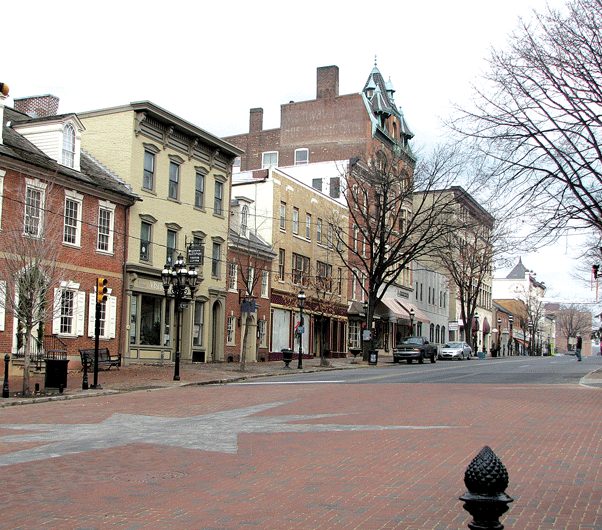
Opinion
A Simple Remedy for a Wall Street Danger

Over the past several weeks, the financial community has paid rapt attention to trading losses at JPMorgan Chase, estimated to be anywhere from $2 billion to as much as $9 billion. The sudden emergence of such a large loss sent a disturbing tremor through an already-vulnerable economic landscape. The lesson to be learned here is emphatically not about the bank or its leadership, but about the structure of our financial system.
The loss by the much-admired bank was more than a case of a private-sector company taking a private-sector hit because of a private-sector error. First, if a bank this important were to become endangered, the contagion to global financial confidence would surely necessitate a bailout. Losses in institutions to which we entrust the soundness of our money, or where deposits are guaranteed, put the rest of us at risk. Second, and less widely appreciated, JPMorgan’s trading loss is a minuscule fraction of the bank’s more than $75 trillion in notional value of its current positions in derivative securities. The trading of derivatives — securities whose prices are dependent on valuations of underlying assets but do not represent direct ownership claims on those assets — is exempt from the sensible regulation of disclosure and leverage normally applied to stocks, bonds, and other direct claims. This is still, despite all recent attempts at financial reform, the Wild West of trading markets.
Banks say their trading positions are properly hedged by countervailing positions, leaving them little risk. They ‘prove’ this using statistical models anchored in past price behavior and by noting that market pricing indicates a proper balance between their opposing positions, leaving little residual exposure. The problem is that the models are oversimplifications. They rarely predict unfamiliar possibilities, sometimes called ‘black swans,’ or the impacts of external events such as geopolitical disruptions.
All three of the largest U.S. banks have open derivatives positions in excess of 24,000% of their equity capital. Neither models nor markets can protect them from small percentage imbalances. In addition, bank-trading relationships around the world are so interconnected that, if one goes down, all are threatened. No CEO or board of directors, however talented and honorable, can oversee trading at the multi-trillion-dollar scale with perspective and precision enough to assure the avoidance of systemic impairment. Nor can any government oversight body.
Bank lobbyists insist that all this trading is needed to facilitate commercial transactions, but don’t be fooled. The open derivatives positions at the three largest U.S. banks exceed twice the GNP of the world. Add in large European and Asian banks, and the commercial-hedging argument becomes a parody. Hedging is useful in commerce, but its systemic risk should never outweigh its commercial value.
Under present rules, banks are free to put us all at risk in derivatives trading without creating any offsetting cushion. Every derivatives transaction involves some basis risk (that two paired commodities will not continue to move in unison), some counterparty risk (that the trade will not be honored by the other party), and some human-error risk. Accountants and regulators know well that netting massive positions to zero cannot reflect true exposure.
Whenever a new position is taken, there should be a mandatory accompanying reserve or capital charge. This would have a twofold benefit. It would increase protection for both the public and the banks, and it would dull the appeal of hazardously oversized trading accounts. Although regulators should set the actual amounts, imagine that the charge was uniformly 0.1% of the notional position value. Open positions of $75 trillion in derivatives would require $75 billion put aside, an amount large enough to make that trading scale unappealing. Charges to match the risk created would bring trading volumes back to sensible size with a minimum of new regulations and no need to outlaw useful commercial practices. They would simply acknowledge that all derivatives positions, however useful, impose some risk on the holders and the public. Current scale imposes an unmanageable risk.

James M. Stone, former chairman of the Commodity Futures Trading Commission and commissioner of Insurance for Massachusetts, is CEO of the Plymouth Rock group of property and casualty insurance companies.

Opinion
Fueling the Next Wave of Biotech Growth

The staggering impact of the nationwide economic malaise has caused every state to examine what it can do to attract the industries that will drive sustainable growth over the long term. We were reminded once again of why the life-sciences industry in Massachusetts is the envy of states across the country — and why we can’t become complacent about it — when 15,000 biotech professionals from 65 countries descended on Boston for the BIO Convention last week.
The local economy has undergone a remarkable transformation in the past two decades, as industries that once dominated the local landscape have been reduced to a shell of what they once were, and newer, technology-driven industries have grown to fill the void. The life-sciences industry has experienced unprecedented growth during that time, buoyed by a unique combination of local assets, including world-class universities and hospitals; substantial federal funding for research; a strong, local venture-capital community that understands the vagaries of our industry; and, more recently, the active involvement and support of the Commonwealth.
Employment at Massachusetts biotechnology companies has grown more than 50 percent over the past decade, to nearly 50,000, and even managed to grow during the depths of recession from 2007 to 2010. The average salary of a biotech worker is more than $95,000, substantially higher than the estimated state average salary of approximately $54,000. And with construction cranes looming not just over Cambridge and the Boston waterfront, but also reaching well out into the suburbs, Central Mass., and the South Coast, it is clear that investment and optimism in the future of the industry in Massachusetts remain strong.
But it was evident at the convention how dangerous it would be to become complacent. Other states and countries were there competing to lure away our state’s biotech companies and talent. They have many tactics at their disposal, including strong financial incentives, tax breaks, lower labor costs, and, in some cases, a fairly convincing argument about quality-of-life benefits outside of our state.
I experienced this first-hand as CEO of Organogenesis Inc., a biotechnology company based in Canton that has successfully developed two regenerative medicine products that use human cells to stimulate the body’s natural ability to repair and regenerate itself.
When we began planning five years ago to expand our operations, our top choice was Massachusetts. But when other states offered us incentive packages that topped what was initially offered here, we couldn’t help but listen. When we were offered a package of incentives that would potentially make us more competitive and more sustainable, we were set to leave the state and expand elsewhere.
A lot has changed since that time, for Organogenesis and for Massachusetts. We are now in the midst of a major, multi-year expansion that will more than triple the size of our presence in Canton, to more than 300,000 square feet. Our global headquarters, R&D, and manufacturing facilities will remain in Massachusetts. The decision to remain and grow here was driven primarily by incentives provided by the state under its 10-year, $1 billion Life Sciences Initiative, signed into law in 2008. Massachusetts has provided us with grants, low-interest loans, and a competitive tax rate, and we in turn have invested five times that amount to build our new facilities. We are delivering on the pledge to create hundreds of new jobs in the years ahead.
The state’s investment in the future of Organogenesis made a critical difference at a crucial time in our history. Dozens of Massachusetts companies are wrestling with the same questions about long-term growth and sustainability. The competitive race for growing industries like ours will only get tougher.
With all that has been done to make Massachusetts a more attractive magnet for biotechnology, we will constantly be challenged to stay one step ahead of the competition.

Geoff MacKay is president and CEO of Organogenesis Inc., and chairman of the MassBio board of directors.

Golf Preview Sections
15 Years in the Making, Cold Spring C.C. Opens for Business

Fan Du

Fan Du says its was views from the top of the hill, like this one, that helped inspire her father to make the long-stalled Cold Spring Country Club a reality.

After a number of false starts and mis-steps, the long-awaited Cold Spring Country Club in Belchertown opened its fairways this spring. There has been the expected curiosity factor among regional players, getting the operation off to a solid start, but management understands that the key to success isn’t getting the attention of the golfing community — it’s holding it.

Fan Du says there was a great deal of buzz, or anticipation, that accompanied the recent opening of Cold Spring Country Club in Belchertown — and with good reason.
After all, this track, located just over the Ludlow line in a former apple orchard, has been more than 15 years in the making. Over that time, there have been several ownership groups involved, a well-chronicled foreclosure, and enough fits and starts to prompt the residents of that area to wonder if the vision would ever become reality.
“People have been waiting a long time for this course to open — there has been a lot of curiosity,” said Du, whose father, Sheng Du, a successful businessman in China and avid golfer, is the man responsible for resurrecting the project. He was able to look past the problems, she said, and focus on both the incredible views from the hilltop where the clubhouse was eventually constructed — and also the vast potential of the property to become home to a golf course and much more.
The challenge moving forward, said Bill Tragakis, head golf professional and club manager, is to maintain and build upon that buzz, and channel it into what will become a multi-faceted business venture, launched during a difficult time for the golf business in general and the economy as a whole.
But the requisite pieces are in place or on the drawing board, said Tragakis, adding that the highly anticipated golf course is merely the first one to fall into place. Others include the club’s 19th hole, a restaurant now open to the public that was launched with expectations that it could become a popular destination for residents of Belchertown and surrounding communities, as well as a large banquet facility to be located further up the hill and a housing component that has no timetable as of yet but will likely be commenced when that sector improves.

Bill Tragakis

Bill Tragakis says Cold Spring is off to a solid start with both memberships and public play, and it will need continued support for those constituencies to be successful.

The success of each of these specific ventures, as well as the larger development, will depend on management’s ability to capture and keep the public’s attention, said Tragakis, adding that the golf course itself is off to a solid start with membership (more on that later), as well as public play, despite a rainy spring, and the restaurant is drawing positive reviews from those who have discovered it.
In both cases, the goal is to bring people back repeatedly, he explained, noting that every course in the region is confronting the same basic challenge, and must respond accordingly.
“The keys are impeccable conditions for the golf course and superb customer service, and that’s where our focus has been,” he said. “This club has a resort appearance, and that’s by design.”
For this issue and its focus on the region’s golf industry, BusinessWest takes an in-depth look at the Cold Spring development, and why its managers look to the future with optimism and confidence born from a combination of persistence and imagination.

Designs on Success
Du, who has assumed a leadership role at the club with her husband, Willie Guo, told BusinessWest that one of the many assignments that had to be carried out over the past several months was selecting a logo for the venture, a branding mechanism now affixed to everything from ball markers to shirts; from golf-bag towels to a wide variety of head gear.
“There’s a lot that goes into this, and it took a while to create this look,” she said with a laugh, while displaying the eventual winner — the words Cold Spring juxtaposed against a leaf. The image contains several colors, including red, orange, gold, and a few shades of green, and it was chosen, said Du, to spotlight what is perhaps the club’s best selling point — the scenery, especially at fall foliage season.
It was the views at that time of year that captivated her father, said Du, adding quickly that the scenes from the top of the hill, which he discovered while looking for business opportunities in Massachusetts, were certainly not enough to prompt the requisite sizable investment in the project. Indeed, the initiative had to make good fiscal sense, she went on, something that outwardly appeared unlikely given the challenged state of the local golf industry and the prevailing opinion that this region was already saturated, if not oversaturated, with places to play.
But market analysis, not to mention instinct, indicated that there was room in the market for a higher-end, semi-private course that offered something distinctive, said Tragakis, formerly the pro at Hampden Country Club, adding that he believes that Cold Spring delivers those qualities.
The elder Du acquired the property in 2009, said his daughter, adding that preliminary construction on the course resumed soon thereafter, with grass put down early in 2010. Construction of the ornate clubhouse and a maintenance building commenced in 2011, and the course was open for business on May 1 for members and June 1 for the general public.
What the golfers have found is a test that is both stern and somewhat unique, said Tragakis, who points to the scorecard for some evidence. It has yardages for five tees, including championship markers that stretch the track to 6,521 yards. “And that’s the longest 6,521 yards you’ll ever play, because the actual yardage is somewhat hidden,” he said, noting that there are some uphill stretches, particularly the rugged par 4 18th, to go with some downhill holes, and a rare route to a par of 71.
Indeed, there are six par 3s (three on each side), and five par 5s, he said, noting that a typical par 71 would have four of the former and three of the latter.
The course architects, Armstrong Associates, located in New Mexico, essentially took what the land offered, and designed an intriguing test for players of all abilities, said Tragakis, adding that this is one of the many ingredients necessary to attract a large and diverse audience.
Overall, he describes Cold Spring as a mix of Crumpin Fox (in Bernardston) and the Ranch (Southwick), meaning the former’s tight, tree-lined fairways — which dominate the front side — and the latter’s open, sweeping fairways, prevalent on the back nine.
Thus far, the course has been successful in attracting both members and public play, said Tragakis, and it must continue to do both if it is to be profitable. “My goal is to make this golf course a fun, enjoyable experience for everyone,” he explained, “but especially for the members. We need them to come back, and we need to keep growing those numbers; that’s our rainy day money.”
The membership count now exceeds 200, and continues to climb each week, something unusual at this time of year, months after most area players have settled on a club to join for the year, he said, adding that many former members of nearby Hampden Country Club (now under new ownership) have joined Cold Spring. An attractive senior membership rate ($750) has attracted more than 70 people from that demographic group.
Meanwhile, there has been a steady stream of public play, with visitors from across Western Mass. and even Northern Conn., which Tragakis attributes to that aforementioned buzz factor, as well as some aggressive, targeted marketing.
The club has focused mostly on radio, including the expensive option of taking slots during Red Sox games and related programming, he noted, adding that the pitch line used at the end of each spot — “it’s the reason you play golf” — sums up how the club intends to differentiate itself.
The specific marketing message has varied through the first several months, he went on, adding that in the late winter and early spring, before the season started, the club was focused on memberships. Later, the emphasis was on the fact that the club had opened for play, and most recently, the accent has been on stressing that, despite its appearance (including the elaborate stone entranceway now under construction), Cold Spring is in fact open to the public, as is its restaurant.

Aggressive Course
And that’s important, because attracting golfers is just part of the success quotient, said Du, adding that there will eventually be several components to this venture.
For starters, there’s the club’s restaurant, called simply the 19th Hole Bar and Grille, which, like a growing number of facilities at public and semi-private courses (including The Ranch and Crumpin Fox), is open to the public and will be in operation year-round.
Ron Riopel, food and beverage manager for Cold Spring, said the restaurant is relatively small (just over 70 seats inside), but can accommodate more than 120 on a large patio that boasts sweeping views of the course and the hills beyond, and will likely stay open until at least mid-fall.
Beyond the scenery, the outdoor area will feature live music on many evenings (a ‘Caribbean Night’ was staged recently), and a menu Riopel described as “simplified but elegant.”
Elaborating, he noted that the fare extends well beyond traditional post-round food (most of it fried), and includes such options as pan-seared Pacific Ponga, a Vietnamese white fish.
The 19th Hole opened to members and the public on June 1, and like all new eateries, went through a breaking-in period, during which kinks were worked out and staff members came fully up to speed, said Riopel, adding that, as with the golf course, there has been a curiosity factor surrounding the restaurant that has prompted many area residents to take the drive up the hill.
And, also like the course, repeat business will be a function of delivering a quality experience, he continued, noting that he believes the facility should fare well in a region that doesn’t have a deep roster of competing restaurants.
Tragakis said some of the recent marketing has made reference to the dining element, underscoring its importance to the overall operation. “We have focused on food and beverage in these spots,” he explained. “We’re not going to forget about golf — we’re still a golf course — but public dining is a big part of what we’re doing, and I think the restaurant will do very well.”
Other components of the Cold Spring business plan are on the drawing board, to one degree or another, said Du, who told BusinessWest that plans are being developed for a banquet hall that will sit above the clubhouse.
The facility will be large in scale, and meet what she considers a recognized need in the Quaboag Valley region, she went on, adding that there is no immediate timeline for construction.
The same can be said for a housing component that most experts say is a key to the success of any large golf operation. There is considerable land on which to build houses or condos, she noted, adding that market analysis is currently ongoing, and it is likely that work will begin over the next five years.

Successful Roll Out
If all the pieces fall into place as expected, Cold Spring will become a formidable player in the large and seemingly ever-changing local golf market, said Tragakis.
He acknowledged that the industry is faced with many challenges — from the still-sluggish economy and its broad impact on discretionary spending, to stagnancy and even retreat in the number of people taking up the game, to the vagaries of the weather.
But venues that succeed in creating enjoyable and memorable experiences can overcome those issues, he continued, adding that Cold Spring has enormous potential to do just that.
“The view from up here is good,” he said, using that term in both a literal and figurative sense, “and we think it’s only going to get better.”

George O’Brien can be reached at [email protected]
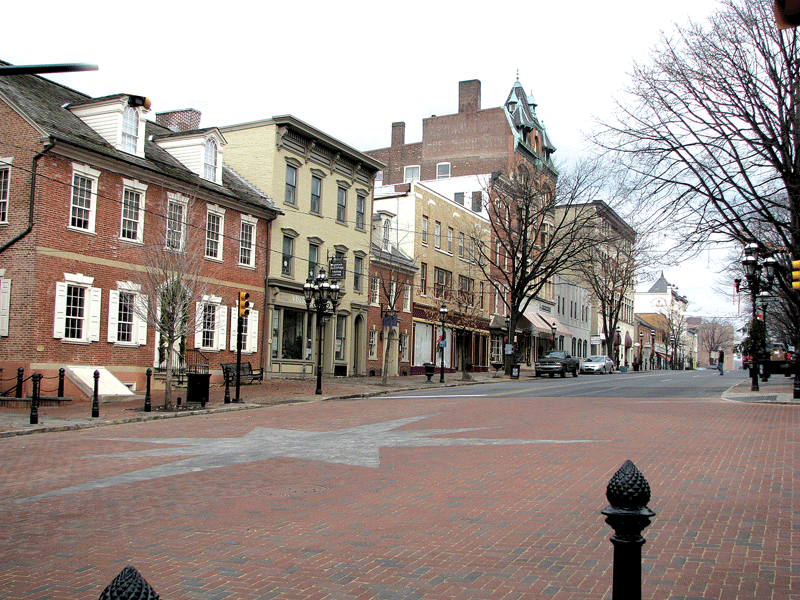
Opinion
The Education State, for Now

For many years, Massachusetts has enjoyed the unofficial title of the Education State. It is the mecca of American higher education with more than 50 universities and colleges in the Boston area alone. Bay State K-12 students rank first in national reading and mathematics test scores. High-school graduation rates may not be best in the country, but with four in five freshmen receiving diplomas within four years, it is toward the head of the class and well above the national average.
The rankings, however, do not tell the whole story. Although Massachusetts ranks first on the National Assessment of Educational Progress, half of the Commonwealth’s fourth graders scored below proficient in reading. Massachusetts also has a large achievement gap. One key to a happy ending is to support preschoolers and early education. Yet according to a landmark national study released recently by the National Institute for Early Education Research, Massachusetts continues to struggle in maintaining its commitment to state funding for high-quality pre-kindergarten. In the long run, this could threaten Massachusetts’s status as the Education State and its accompanying benefits as the achievement gap becomes insurmountable and costly.
The National Institute for Early Education Research’s 2011 report on the state of preschools ranked the state 23rd in funding for pre-kindergarten, compared to eighth a decade ago. It also trailed 27 other states in research-based quality standards, achieving only six of 10. The Universal Pre-Kindergarten grant program, which is designed to support and enhance quality, is currently funded at $7.5 million, down from $12.14 million in fiscal year 2009. The state currently contributes $7.5 million to Head Start, down from $10 million in fiscal 2009. The Department of Early Education and Care is currently funded at $495.16 million, down from $570.58 million in fiscal 2009. The institute’s calculations find a precipitous drop in dollars spent per pre-K child of nearly 45% over the past decade, and there has been little progress in enrolling more children in quality pre-K programs at a time when the need is escalating. These results are surprising for a state priding itself on its education system.
Massachusetts was one of nine states to win a federal Race to the Top Early Learning Challenge grant, a $50 million infusion to the state over the next four years. The award shows that the ideas and desire to keep young children in the forefront of education reform are present, even if the state’s allocation of resources is lacking.
Over the next four years, plans are to strengthen early education in Massachusetts by addressing quality, standards and assessment, family engagement, workforce development, data systems, and children’s mental health.
Unfortunately, Early Learning Challenge grant funds will not last. Neither are they to be used to supplant state investments. To build on the momentum created by the Early Learning Challenge, Massachusetts must increase investments in high-quality early education. Science and economics both confirm the benefits of investing in quality early education. An overwhelming body of research shows that high-quality pre-K prepares children to succeed in school, enroll in college or career training, and ultimately get better jobs in the increasingly competitive global economy.
For Massachusetts to retain its perceived advantage as the nation’s Education State, with the ensuing benefits of that title, policymakers need to change course and make prudent new investments in early education now.

Jim Squires is senior research fellow at the National Institute for Early Education Research.

Opinion
Rebuilding a Stronger Springfield

We all will remember where we were on June 1, 2011. Without a great deal of warning, an EF-3 tornado with winds of more than 160 miles per hour descended from the sky and tore a 6.2-mile path through Springfield, leaving behind a trail of damage unprecedented in the city’s history.
This devastation immediately impacted 40% of city residents and resulted in more than 350 city residents having to live in temporary shelter at the MassMutual Center, over 600 structures damaged, and 150,000 cubic yards of tree debris to be cleared from public ways.
While that was a truly historic event, what happened following the tornado was equally as significant. Neighbors helping neighbors, businesses helping businesses, our first responders and those assisting us from across the state, city employees and our federal and state partners responding in a swift and compassionate fashion demonstrated the true character of our city.
As we approach the one-year anniversary, we look back at what has been accomplished since that day. Beyond the crucial 24/7 emergency response that happened in the days and weeks after the tornado — homeless families being re-housed, streets being cleared and reopened, power being restored in 72 hours — it was clear that the community was going to need to work together on a plan to rebuild Springfield, and not just rebuild what was lost, but rebuild a stronger Springfield.
It was important to me that our entire community be represented in this process, and with that, the partnership of the Springfield Redevelopment Authority and DevelopSpringfield was established to help lead the process, truly making this a public-private partnership. To further ensure participation, the Rebuild Springfield Advisory Committee was formed, comprised of representatives from a wide spectrum of impacted residents, businesses, and organizations interested in the rebuild phase.
What followed was a phased planning process in each of the neighborhoods affected by the tornado, a process that, when completed, involved the participation of more than 3,000 city residents — the largest community planning process in the city’s history. It was inspiring to see the numbers of people taking time out of their days to come and bring their concerns, ideas, and input on how to make Springfield a better place.
And this didn’t mean the rebuilding was on hold. We saw people in their own lives rebuilding and doing it bigger and better. Since June 1, 2011, we’ve seen more than $22.5 million worth of rebuilding in the tornado-impacted areas. People are reinvesting in their community, and see the opportunity we have in Springfield. We saw more than 80 businesses that had either short-term closures due to power loss or long term disruption due to damage, rebuild, reopen, and our community has come back to support them. The city rebuilt and reopened while still planning for its future.
So we now have the completion of a grassroots plan — available at www.developspringfield.com — that does not sit on a shelf. Rather it becomes a living document, one that is led by our domain and district Leaders through DevelopSpringfield for implementation, including the hundreds of volunteers who indicated they wanted to be part of the implementation on a whole host of topics.
I couldn’t be more thankful for our business community through the recovery and planning process. Knowing the quality of our companies in Springfield, I know we can fully expect a similar wave of support as we enter into the important phase of implementation and rebuilding.
Institutions like MassMutual — which not only donated significant staff time to the process and emergency response resources, but also made a generous $1.6 million contribution toward rebuilding our city — have been nothing short of heroic.
Experiencing a tornado here at home is something we in Springfield never expected would have happened, but the silver lining in what has happened since that day, the work the community has done in helping each other and in planning for our future, has been truly inspiring.
The city will continue the rebuilding process in an effective, constructive, and compassionate manner and will fight tooth and nail to ensure we received every reimbursable dime that we are entitled to.

Domenic Sarno is mayor of Springfield.

40 Under 40 The Class of 2012
Tax Manager, Meyers Brothers Kalicka

Reynolds-JenniferJennifer Reynolds joked that the next time she takes part in the Mass Dash — during which relay teams raising money for the Jimmy Fund run more than 200 miles as they traverse the state in a 30-hour window — she will likely be a little more selective when it comes to the geography she is to cover.
“They gave me all the worst legs because I was new and I said I didn’t care,” she recalled with a laugh, noting that her 22-mile contribution included a climb up Ashfield Mountain at 2 in the afternoon in 90-degree heat. “I made a note to myself not to do that again, but it really doesn’t matter — I just like being part of it.”
Reynolds is part of many things when it comes to community service, a commitment that has included membership in Rotary International, work with an organization called Children in the Country, and a leadership role with the Women’s Fund of Western Mass. She balances all this with a growing list of professional responsibilities in her role as a tax manager for the Holyoke-based accounting firm Meyers Brothers Kalicka, a position she’s held since 2007, and one that enables her to deploy abilities attained over a lengthy career in public accounting, and also a law degree she earned at Western New England University.
She said that, contrary to popular opinion, accounting is about much more than crunching numbers, and there is actually a good deal of variety in her work. “I like the fact that you’re working with different clients all the time,” she explained. “Every day is different, and each client situation is unique.”
In recent years, Reynolds’ crowded schedule has become even more so as she added involvement in higher education to her résumé. She is now an adjunct professor at Elms College, and designed the Corporate Tax class, creating a hybrid classroom environment that blends in-class work and online components.
Add all this up — that’s an industry term — and it’s clear that Reynolds is always on the move, and in many different ways.
— George O’Brien

Opinion
Crowdfunding Could Spur Startups

The Great Depression led to the adoption of a series of laws designed to prevent individual investors from being fleeced by unscrupulous and fraudulent ‘businessmen.’ These laws provided the framework of securities laws that have been navigated by countless entrepreneurs since the 1930s seeking legitimate investment in their fledgling businesses. Conversely, the Great Recession has pushed Congress to adopt the Jumpstart Our Business Startups (JOBS) Act, signed into law by President Obama on April 5, which fundamentally changes the rules of the investment game for businesses of all sizes.
Perhaps the most significant change is allowing startups to use ‘crowdfunding” to raise capital. There is significant potential for a flourishing of startups as this new flavor of capital comes online. There is also the opportunity for regular Americans to get the same opportunity angel investors have had for decades — the small chance to make a lot of money and a much larger chance of losing every penny — investing in startups.
Crowdfunding is the modernization of an old process — raising small amounts of money from a large number of people — using the power and scope of the Internet. Crowdfunding via the Internet already exists in many different forms. Independent journalists fund investigative journalism not funded by the mainstream media via Spot.us; Kickstarter.com allows inventors and artists to raise funding directly from (and sell to) people passionate about the product; and Kiva.org assists developing-world entrepreneurs to connect directly to individual philanthropists to secure microloans.
Here’s how it usually works. Entrepreneurs create a ‘pitch’ profile on a crowdfunding Web site. The crowdfunding site reviews the profile to be sure it is appropriate and not fraudulent (with varying levels of success). The crowdfunding sites have an incentive to list only honest, worthy companies — otherwise, the ‘crowd’ will migrate to an alternate crowdfunding Web site. If the application is approved, the entrepreneurs use social media to promote their pitch to communities of people likely to be receptive to the idea. People who take interest review the profile, often engage in an online discussion with the entrepreneurs, and may make a financial contribution through the crowdfunding site.
The SEC will be finalizing the rules and restrictions on crowdfunding over the next 270 days; however, the JOBS Act already contains significant limitations on both the investor and the company seeking investments through crowdfunding. Companies can raise only $1 million every 12 months through crowdfunding (however, these companies still can — and many will — raise additional funds pursuant to the current, more traditional private-placement rules). Depending on the predefined target that the company establishes for its fund-raising round, the company will need to prepare detailed financial statements (audited if the target is more than $500,000) and deliver these to any prospective investor. The company must also provide both the SEC and prospective investors indepth information about the company and the offering, including the company’s business plan, the risks of the investment, and information about the officers, directors, or managers of the company.
Although any American can participate in crowdfunding as an investor, each crowdfunder will be able to invest only a limited percentage of their annual income (5% for individuals with income under $100,000, 10% for those over this threshold) in any 12-month period. Additionally, the equity that these crowdfunders receive will be restricted stock — it cannot be transferred for 12 months, with few exceptions.
The legalization of crowdfunding will also lead to the launch of a new kind of company — the fund-raising portal — as any company raising funds through crowdfunding must use these portals to act as the conduit between the company and the investors. These portals will exist only on the Internet — there will be no bricks-and-mortar storefront for these portals. The portal will need to register with the SEC and take reasonable steps to ensure that all participating in crowdfunding have followed all of the SEC’s rules — essentially the SEC will be ‘deputizing’ the portals to enforce the SEC’s rules. Companies using a portal should expect to pay 6% to 10% of the total funds raised as a service fee.
Congress and the president hope crowdfunding will lead to more startups obtaining critical funding early in their development, which should lead to more small businesses getting off the ground. However, the individuals investing in these early-stage companies need to be aware of the risks of these investments and remember the golden rule of investing: “if it sounds too good to be true, it probably is.”

Attorney Scott Foster, Esq. and Paul Silva are co-founders of Valley Venture Mentors.

Opinion
Sending a Mixed Message on Jobs

There are more mixed signals from the Obama administration on jobs: a craven capitulation on regulation in the name of job creation, and a surprisingly good speech by a top official on the importance of American manufacturing.
President Barack Obama will shortly sign the so-called bipartisan JOBS Act. The law is neither bipartisan nor about creating jobs. It exempts an estimated 80% of new publicly traded corporations from the Securities and Exchange Commission’s (SEC) usual disclosure requirements for up to five years after their initial public offering (IPO). 
The law was promoted by investment bankers, venture-capital firms, and the Republican leadership, who were all alarmed that IPOs (not surprisingly) have declined in today’s distressed economy. The remedy? Gut investor protections, the better to promote new stocks. 
The premise is that, by facilitating new stock offerings, the law will create jobs. Mainly, it will create jobs for one set of lawyers working to exploit the loopholes and another representing ripped-off investors. 
The law is ‘bipartisan’ only to the extent that the administration, despite the opposition of SEC Chair Mary Schapiro, didn’t have the nerve to oppose it. This is what today’s bipartisanship looks like — take-no-prisoners Republicans intimidating Wall Street-oriented Democrats.
That’s the bad news. The good news is a terrific, little-noticed speech by the administration’s chief economic official, Gene Sperling, who heads the president’s National Economic Council. In the speech, delivered recently at the National Press Club to a conference on the renaissance of American manufacturing, Sperling made arguments that are standard in circles to the administration’s left, but are rarely embraced by centrist Democrats. “We do believe that, even if today only 12% of the U.S. private-sector workforce is employed in manufacturing, it is a sector that punches above its weight,” he said, “when you take into account the outsized role that manufacturing plays in innovation through R&D investment and patents, the tight linkage between innovation and manufacturing production, the higher-wage jobs it produces, its importance for exports, the spillover benefits that manufacturing facilities have on firms and communities around them, and the deeper economic harm that comes from allowing our manufacturing production capacity to be hollowed out.”
Well-put. Citing a number of studies that justify these conclusions, Sperling added, “more than any other industry, manufacturing firms account for a disproportionate share of innovative activity in the U.S. — 70% of private-sector R&D and over 90% of patents issued. As a country, it matters where these benefits occur.”
So what, exactly, is the administration doing to promote U.S. manufacturing, big time?
Well, Sperling touted the few billion dollars the administration has spent on advanced-manufacturing initiatives, its support for clean energy and related technologies, its efforts to give manufacturing firms tax breaks, its proposal for an $8 billion Community to Career Fund to train workers for high-skill manufacturing jobs, and recent complaints against China’s protectionism when it comes to export of ‘rare earths.’ The Administration also plans a new Interagency Trade Enforcement Center (to do what the office of the U.S. trade representative should have been doing all along.)
It’s a start, and an excellent case for a bolder industrial policy and a much tougher trade strategy against foreign mercantilism — neither of which the White House is pursuing. For the most part, our trade policy is on auto-pilot, promoting ‘free-trade’ deals that turn a blind eye to foreign subsidies and promote outsourcing of U.S. manufacturing jobs. The administration’s late manufacturing czar, Ron Bloom, got no staff and was not permitted to utter the words ‘industrial’ and ‘policy’ in the same sentence.
The challenge for Sperling is to persuade his boss to turn the welcome words of this fine speech into national policy. And to stop backing totally phony Republican ‘jobs’ measures like the JOBS Act.

Robert Kuttner is co-founder and co-editor of the American Prospect.

Sections Technology
Could the Valley Become a Hub for Video-game Companies?

Allan Blair freely admitted his understanding of the video-game industry is limited. Or was, anyway.
“I had the simplistic view that gaming meant being frustrated by Angry Birds,” said Blair, president of the Western Mass. Economic Development Council (EDC). “The fact is, it’s truly a business, a real industry, and not just something to wile away time on. I had no idea.
“But once I got my mind around that,” he continued, “naturally, as an economic developer, I asked, ‘how do we nurture growth in this kind of industry in Massachusetts?’ As I learned about the industry, I came to believe we have in Western Mass. a lot of aspects necessary for this industry to grow and thrive.”
That was the general sentiment among more than two dozen panelists participating in “Digital Games: Playing in the Valley,” a recent symposium co-sponsored by host Hampshire College, the Mass. Digital Games Institute, and the EDC. The event drafted video-game entrepreneurs, professors from several colleges, political and economic-development leaders, and other speakers to discuss the potential of this fast-growing industry to take root and bring economic benefits to the Bay State.
“I am not part of what you would consider the ‘video-game generation,’ but video games encompass more than they used to,” said state Rep. Jim McGovern (D-3rd District). “Few industries these days can project the growth characteristics of the game industry … and those jobs should be in Massachusetts.”

Mike Levine

Mike Levine says Western Mass. won’t reach its full potential in video-game development and related fields until the region is adequately wired for high-speed Internet.

Many already are; the Bay State’s digital-games cluster employs nearly 4,000 people at more than 75 companies, with gross industry revenues estimated at around $2 billion. More than 20 colleges and universities in Massachusetts offer majors or courses in game design and development. And much of that activity is thriving in the Pioneer Valley.
“The Western Mass. region thrives on creativity and innovation, and I want to see these businesses blossom right here, and for these students to stay in the Valley and pursue their passion for video-game design,” McGovern said, noting that game technology has crossed over into other industries, from military training to medical applications, and is likely to expand further. “This is not a bunch of people talking about this in theory; this industry is growing now. And to get the economy back on its feet again, this is one of the answers.”

No Smokestacks
John Musante, Amherst’s town manager, called video games a potential “smokestack industry without the smokestacks. I enthusiastically believe that the gaming industry would be good for Amherst and good for our region.”
He mentioned that the three colleges in his town alone — UMass, Hampshire, and Amherst — include some 29,000 students at any given time, while others at the symposium noted that the 13 colleges in Western Mass. total some 65,000 students, many of whom are enthusiastic about gaming and might be likely to pursue jobs in the industry locally if they exist.
“Creativity and innovation are what our region is all about,” Musante added. “We believe the creative economy is part of our future, and the prominent potential of the gaming industry certainly seems like a perfect opportunity to build upon together, right here in the Valley.”
Take Raf Anzovin, for example. He launched Anzovin Inc., which creates character animation for games and other entertainment, in Florence in 1999 — a time when he was one of only a handful of people in the area doing that kind of work.
“There are both advantages and disadvantages to being in this area,” Anzovin said. “The cost of living is difficult to minimize. I’m not sure we could possibly start a small character-animation studio from nothing in a place where the cost of living wasn’t so low. We’ve also had a good relationship with the colleges; there’s a lot of good talent coming out of them, and that’s been very beneficial.”
Then there’s HitPoint Studios, a game-development outfit specializing in newer platforms such as social and mobile games. “We started HitPoint in 2008 with eight people in Greenfield,” said its founder, Paul Hake. “Now we’re in Hatfield with 37 people, and we’re anticipating growing quite a bit more.
“We’re excited about what’s going on in the Valley,” added Hake, who sees the region eventually becoming not just a mini-hub for the video-game industry, but a full-blown hub.
Musante said the region sells itself, especially at a time when industry professionals are virtually connected across the globe, and no longer have to be located in a major metropolitan center.
“We have a critical mass of higher education and talent. We have space,” Musante said, adding that the Pioneer Valley’s location less than two hours from Boston and less than four hours from Manhattan, combined with that aforementioned lower cost of living, is a major draw, as well as reputable public-school systems and the region’s natural beauty and outdoor activities. “We feel like we have a lot of things to nurture this industry so it can grow right here in the Valley.”
That growth is already happening, said Pat Larkin, director of the John Adams Innovation Institute, an arm of the Mass. Technology Collaborative. “In this region, the market has already spoken,” he argued. “Firms have flourished; they’re able to germinate, be disruptive, do startups, and grow on a sustained basis in this region.”

Ruth West (right, with Terrence Masson from Northeastern University)

Ruth West (right, with Terrence Masson from Northeastern University) says the fact that game development requires both creative and technical skills is a draw for many students.

However, precisely because it’s not New York or San Francisco or even Boston, this “middle-tier” region, as he called it, needs to more aggressively market itself. “We need to work harder, smarter, faster, better in order to build and sustain the critical mass we want to achieve.”

Getting Wired
The region poses some drawbacks, too — including one very basic problem in many rural communities.
“The Internet is really what made all this possible, in my opinion,” said Mike Levine, president of Pileated Pictures, an online- and mobile-entertainment studio in Shelburne Falls. “Amazingly, up in the hilltowns, many people do not have broadband. I really think this is a crime at this point; it’s like people not having electricity or television. That’s the number-one issue. Everyone should be connected in the state — not just for entertainment, but for public safety and other reasons.”
Hake agreed, noting that “broadband connectivity in Western Mass. is still not where it needs to be.” Another challenge, he said, is the lack of an experienced workforce to staff growing video-game companies. “We have huge amounts of talent coming out of the colleges, but we have a hard time finding industry veterans.”
There’s a sort of chicken-and-egg component to this issue, however, suggested Joe Minton, president of Digital Development Management in Northampton, which represents video-game-development studios; before that, he was president of game developer Cyberlore Studios.
Specifically, he said, the industry needs to expand in the region to attract that pool of available talent. “In San Francisco, you can walk down the street and meet five or 10 people willing to hire you.”
He talked about the importance of building critical mass in the region, forming a kind of ‘safety net’ so that talented designers, programmers, and others will know that, if one opportunity doesn’t work out, others will be available. Building many success stories, he said, “will make it much easier to bring talent here.”
Fred Fierst, a partner at law firm Fierst & Kane in Northampton, has represented video-game companies for 20 years, he said, amassing a strong reputation in the U.S. and overseas. But even he still sometimes encounters a “credibility issue” regarding Western Mass. that must be overcome. “They think if you’re not a New York or LA laywer, you can’t be a good lawyer; even a Boston lawyer is considered second-rate.”
Fierst noted another issue in video-game development, and that’s a pronounced dearth of women in the field. “I am constantly amazed how few women there are, and those who are [in the field] are in marketing and PR,” he said. “But that’s changing.”
Anzovin agreed. “I’d love to see more women in the industry,” he said, noting that he has worked with many female producers, but few artists and programmers — in other words, people on the creative side. “I don’t know that there’s a magical solution to that problem, but it’s getting better slowly.”

Back to School
Hake said colleges and universities are doing their part by recruiting more women into computer science and related programs.
Ruth West, associate professor and director of Computer Graphics at Springfield College, said the field has an appeal that should appeal to a wide variety of career seekers, no matter their gender. “It requires students to use their whole brain. It’s not just creative, but you have to think technically. There’s a whole mechanical side and a visual side, and it gets students to integrate their whole personality.”
It also requires professors to constantly keep up with trends, she said, which is why she and other faculty attend many conferences and continually track the industry in other ways.
“The only thing we can teach them is how to learn, because five years from now, it’s going to be something different,” West said. For example, social-media and mobile games have dominated the field recently. “I learned 56 programs, and they need to learn how to be that flexible.”
Paul Dickson, visiting assistant professor of Computer Science at Hampshire College, said video-game design is a motivator for students to learn many other skills. His program focuses on training students as generalists, so they can adapt to any platform, a trait valued by smaller video-game companies. Students who go on to specialized work — in a certain type of programming or animation, say — may find greater opportunities at larger companies.
“Games are a hook,” said Mark Claypool, professor and director of Interactive Media and Game Development at Worcester Polytechnic Institute. “We get students coming through the doors passionate about the things they’ve been playing. That’s gold, to get a student who comes to college excited about learning something … not just about the latest game, but the physical calculus, the music, the storytelling. There are lots of elements that have to go into the next great game.”
Or the next great … whatever. “There are many applications outside entertainment,” Claypool said, “and that’s where the real action is going to be; that’s where the real money is.”
McGovern said Massachusetts clearly has the intellectual capital to build on this work and be an innovator in those future applications, adding that state leaders are continually trying to determine how best to invest in those growing industries through infrastructure and research dollars.
“I feel like there’s a renaissance period going on now,” Pileated’s Levine said, noting that, when he was in school, video games weren’t even mentioned as a possible career path. “Now we actually have schools teaching programs, and kids coming out of school knowing game design.
“I think it’s a very exciting time,” he continued. “As a company, we’re really interested in growing our business in this region, and we need young talent who understand mobile and social gaming far more than we do. What we learned was a very different business model. Things are changing very rapidly.”
And because of online connectivity, breakthroughs can happen anywhere, Minton said. “The world is flat, and it’s really exciting what can be done nowadays.”
He cited Rovio, the Finnish maker of the Angry Birds franchise. “This was a small company making a number of games that weren’t very successful,” he noted. “Now they have many, many hundreds of people. It just takes one hit — and there’s no reason that can’t happen here.”

Joseph Bednar can be reached at [email protected]

Opinion
How to Reform Community Colleges

The current debate about the future of community colleges is nothing new. Their mission has always been contested.
Some see these open-admission, relatively inexpensive colleges as providing technical training focused on local workforce needs. Others say they provide the first two years of a baccalaureate degree and facilitate transfer to a four-year college or university. Still others see community colleges as providing a variety of non-credit courses and support for students needing to obtain a high-school equivalency degree, or simply advancing their personal or professional interests.
Some — including the Boston Foundation, whose report on community colleges seems to have been the model for the Patrick administration’s recent proposal — think the multiple missions of community colleges are a sign of confusion and inefficiency. Actually, they are the sign that they are doing their jobs.
Community colleges must continue to play their three roles. The question is simply one of balance. But the governor’s recent proposal would tilt the scale the other way, making community colleges little more than publicly funded workforce-training centers for private business. This is as bad for the Commonwealth as it is for community-college students.
A bachelor’s degree not only provides access to higher-paying jobs, but also emphasizes the broad liberal-arts education crucial to helping students deal with living in an increasingly complex global society. Community colleges must continue to play their transfer role while still providing access to immediate career programs. The governor’s emphasis on workplace education short-circuits the many students who aspire to a higher education. Furthermore, it effectively constitutes a tracking system for minority and working-class students, who are concentrated in community colleges.
Rather than throw out the invaluable, multiple missions of community colleges, how about some real reform?
First, we must create a foundation budget for each community college; all are woefully underfunded. Community colleges have traditionally had far less funding than the state universities, and have been hit especially hard by a decade of disinvestment. They do not generally have the capacity to do major fund-raising, recruit higher-paying out-of-state students, or charge the high fees that the UMass institutions do. A starting point would be to raise all community colleges’ budgets up to that of the college with the highest per-student budget.
Second, just as in K-12 education, the most important factor in the quality of education is the faculty hired to teach and do research. This is especially true for community colleges that consistently teach the most racially and ethnically diverse student body in the public higher-education system. This sector of our system deserves to have well-compensated faculty and staff. And yet, the situation is upside down.
Third, community colleges serve huge numbers of students, with a range of needs and interests. The need for support staff — in admissions, mentoring, advising, tutoring, financial aid, counseling, and libraries — is greater than ever. It is precisely these crucial positions that have been eliminated. Staff positions should be hired in proportion to admitting new students and hiring more faculty.
Finally, we must improve the affordability of community colleges so that students can afford to matriculate and are not strapped with debt upon graduation. The explosion of student debt threatens the role public higher education plays in providing a pathway into the middle class. We have to move beyond the ‘high tuition and high aid’ model that Massachusetts has unsuccessfully employed: as tuition and fees have skyrocketed, the state has failed to put money on the aid side of the equation, such that now the average state financial-aid grant covers less than 10% of the total cost of attending a state college.
One of the buzzwords of our politics today is ‘accountability.’ Before asking public colleges and universities, their students, faculty, and staff to do more counting, measuring, and testing, government leaders should be held accountable and provide adequate funding for our institutions to do their jobs. v

Max Page is a professor of Architecture at UMass Amherst and vice president of the Public Higher Education Network of Massachusetts.

Banking and Financial Services Sections
The 401(k) Coach Gets Write to It

Charlie Epstein says that, as he was pondering a title for his recently released book, he was, for a very short time by his estimation, thinking about something Steven Covey-like — “maybe ‘Nine Habits of Highly Successful Savers.’”
But while those habits, or principles, as he calls them, are, indeed, the foundation of the book, and he has a patent pending on them, he opted instead for a phrase he started putting to use several years ago  — ‘paychecks for life’ — because he believes it’s far more forceful, attention-grabbing, and to the point.
And it also helps him in his quest to entertain as well as educate, a quality he maintains is missing from most everything else that has been written on the subject.
“When I was starting in the retirement industry and reading through what was available for educational material … it was absolutely atrocious,” Epstein, president of Epstein Financial Services and the 401(k) Coach, told BusinessWest. “The average person comes into a 401(k) meeting with the expectation that they’ll be asleep in 10 minutes. You have to create a Disney-like experience for people today; you have to entertain them.
“That’s hard to do, but the principles are engaging — and they’re simple,” he went on, while explaining his approach taken with Paychecks for Life: How to Turn Your 401(k) into a Paycheck Manufacturing Company, a detailed look at effective retirement saving — although Epstein doesn’t use the word retirement any more.
Well, he does, but only in an exercise he’s probably repeated several hundred times, in which he asks the person he’s sitting across from (be it a reporter, client, or potential client) to give Webster’s definition of the term. Usually he doesn’t wait long before giving the answer himself — ‘to be put out of use’ — and then asking, “do you know anyone who’s working to be out of use?”
So he’s created the phrases ‘desirement,’ ‘desirement plan,’ ‘desirement mortgage,’ ‘desirement years,’ and others, which are at the heart of his motivation to pen and then self-publish Paychecks for Life.
“My book is not about how to invest your money better,” he explained. “It’s about the nine principles to get you to save smarter, and then how to maximize this mechanism that the government calls the 401(k).”
Elaborating, Epstein said he wrote the book ($22.99 hardcover, available through Amazon and paychecksforlife.com) to change people’s attitudes about saving for the years after they’re done working. When asked what needs to be changed, he said many things, but especially the still-wildly held opinion that Social Security or a company pension will be there and be an adequate source of income, and also the sentiment among many people that they simply cannot afford to save for retirement — or save enough to create what Epstein calls a paycheck-manufacturing company.
Which brings Epstein to one of those nine principles, the ‘desirement mortgage’ (which he calls the centerpiece of the book), and the many parallels he makes between this and a traditional mortgage.
Indeed, Epstein advises individuals to follow what he terms the “home-ownership formula for success” when they craft a retirement-savings strategy, with the following thought processes:
• You identified your dream house and what it would cost;
• You committed to paying for your dream house within a certain period of time;
• You calculated what it would cost, i.e. what you could afford to finance each month as a mortgage payment;
• You saved for your down payment;
• You adjusted your plan and budget to overcome unforeseen financial obstacles that might prevent you from achieving your dream of home ownership;
• You never stopped believing you could save for and finace your goal of home ownership; and
• You achieved your dream (desirement) and purchased your first home.
For this issue, BusinessWest turns some of the pages in Epstein’s book, in a figurative sense, while talking with the author to gain some perspective about how he came to write Paychecks for Life, and why he firmly believes it will successfully change some mindsets.

Past Is Prologue
“Your Annual Eviction Notices.”
That’s the title Epstein put on one of the earlier, introductory chapters of his book, and it’s a phrase designed to grab some attention, but also to drive home his points about Social Security and company pensions.
He notes that, when most people get their annual Social Security statements in the mail, they immediately turn to the page that breaks down what they’ll receiving in benefits if they retire at 62, 65, and 67, respectively. What just about everyone neglects to do, Epstein goes on, is look at the first page, where the following notice is printed:
“Social Security is a compact between generations. Since 1935, America has kept the promise of security for its workers and their families. Now, however, the Social Security system is facing serious financial problems, and action is needed soon to make sure the system will be sound when today’s younger workers are ready for retirement. In 2015, we will begin paying more in benefits than we collect in taxes. Without changes, by 2037 the Social Security Trust Fund will be able to pay only about 76 cents for each dollar of scheduled benefits.”
While discussing this fine print, as he called it, Epstein digressed to talk about why he and many others believe the Social Security system must be changed — with wealthy Americans removed from it, among other adjustments — but quickly returned to the matter at hand, which was getting readers to think well beyond checks issued by the U.S. Treasury when they consider their desirement years.
And the same goes for pension plans, he writes. “In 2007, of all the Fortune 500 pension plans that existed in 1996, 25% had been terminated, closed, or frozen. Between 1996 and 2007, Fortune 500 plans were closed or frozen at the average rate of 3% per year. In 2006, Verizon and IBM shocked the corporate world by freezing their pension plans (managers only in the case of Verizon), which created a standard that others soon followed.”
Which brings Epstein back to the 401(k) — the vehicle that enables employees to put a portion of their current income (a contribution) into several investments on a pre-tax basis — which has been the victim of some negative PR in recent years. Examples include the term ‘201(k),’ used often during the height of the Great Recession, when participants were seeing their balances take hits of 30% or more, and also a Time magazine cover which came out in October 2009 with the headline, “Why It’s Time to Retire the 401(k) (and What You Can Do Instead).”
“That was the worst journalism I think I’ve ever seen in my life,” he said of the Time article, adding that such bad press helped inspire Paychecks for Life. But the seed had actually been planted well before, when the idea of the 401(k) as a paycheck-manufacturing plant started gelling in his imagination.
But merely having such a plan isn’t enough to meet that mission of providing paychecks for life, Epstein told BusinessWest, noting that this simple fact is what compelled him to draft his nine principles for carrying out that task — and then writing about them. They are, in order:
• Act like an entrepreneur;
• Determine your desirement mortgage;
• Use other people’s money to capitalize your business;
• Harness the power of compound interest;
• Use technology to save automatically;
• Manage risk by outsourcing;
• Control fees and expenses;
• Guarantee your paychecks for life with annuities; and
• Take advantage of tax benefits with a Roth.
All the principles are important, said Epstein, noting that, together, they send a clear message — that, for a 401(k) to work as designed, the participant must take full ownership of it. His book, in essence, explains how to do that.

The Plot Thickens
It all starts, literally and figuratively, with that part about thinking like an entrepreneur, writes Epstein, who adds to the generally used definitions of that term his own spin: “one who figures out what products and services are needed and then finds the people (talent) who can make the idea become reality, all the while spending less money than will be received. In other words, one who recognizes opportunities and seizes them.”
Elaborating, Epstein notes that, when he asks many business owners to identify their retirement plan, they almost always answer, ‘you’re sitting in it.’ The bottom line is that entrepreneurs work hard to create value in their business so they can later transform it into paychecks for life. Employees need to do the same thing, he writes, through a 401(k).
“Your employer is saying, in essence, ‘I’m going to give you an opportunity to build a business inside my business that you can sell someday,’” he explained. “The government calls it the 401(k); I call it your own personal paycheck-manufacturing company, the single greatest mechanism you have to accumulate wealth in the most tax-advantaged way — but you have to act like an entrepreneur.”
There are similar calls to action, supporting charts and graphs, acronyms (such as YEM, your employer’s money; and USM, Uncle Sam’s money), and what Epstein calls ‘paychecks-for-life action steps’ for each of the principles. Consider these as typical:
• “The dollars you invest in your PCM Co. are like the employees your boss hires to work in his or her company, only better. Your employees work 24/7/365 and never complain. Hire as many as you can as fast as you can.”
• “To act like an entrepreneur, you must practice marginal thinking. Always think and act in small increments. The results will be exponential.”
• “Uncle Sam’s money (USM) is offered to you interest-free. You can either take it now and invest in your PCM Co. or let Uncle Sam keep it, never to be seen again.”
• “Think of your desirement mortgage the same way you do your home mortgage. Use the lowest interest rate possible and sleep at night. Treat it with respect. Never gamble with it.”
• “Slow and steady wins the race. Compounding takes a while to get started, but once it does, the process accelerates, and your savings grow more substantially every year.”
Epstein also uses a number of catchphrases and mantras he hopes will become part of the reader’s vocabulary, such as the ‘10-1-NOW’ rule.
The ‘10’ stands for 10% of the participant’s pay — the number Epstein and other experts say is needed to generate those paychecks for life. As for the ‘1,’ if you can’t save 10% now, increase the contribution by 1% of your earnings until you get to 10%.
“If you can get a participant to increase their contribution by just 1% to 2% a year, the impact is hundreds of thousands of dollars,” he said, making use of the chart that appears on page 36 to drive home his point.
Overall, Epstein said he tried to make the book entertaining — and he believes he’s done that — “but you can’t get away from the numbers — although I made the numbers simple.”
As for his own numbers, Epstein said the initial printing of the book was for 5,000 copies, which are selling well thus far. There are two main audiences, he continued, listing the “advisor world” and individuals, with the former being the primary target at present.
More than 1,000 copies have been sold to date, with Legg Mason putting in an order for 500, he told BusinessWest, adding that Epstein Financial and the 401(k) Coach is in the process of packaging the nine principles so that advisers can effectively purchase material to teach them to clients and potential clients.
“There will be a video for each principle, and instructions on how to teach them,” he explained, “because advisors need to know how to teach these principles and educate and entertain people.”
As he talked about Paychecks for Life, Epstein — recently named one of the Top 100 Most Influential People by 401(k) Wire — repeatedly referred to it as his first book, with the clear implication that there would be more.
He gave no specifics on potential subject matter for future works, but hinted strongly that they will be similar in their intent to inform, educate, and help people enjoy a long, comfortable desirement.
And they will undoubtedly entertain as well, as Epstein strives to not only keep people awake through an intense discussion of effective 401(k) management, but firmly focused on his now-copyrighted and registered phrase ‘desirement planning.’

George O’Brien can be reached at [email protected]
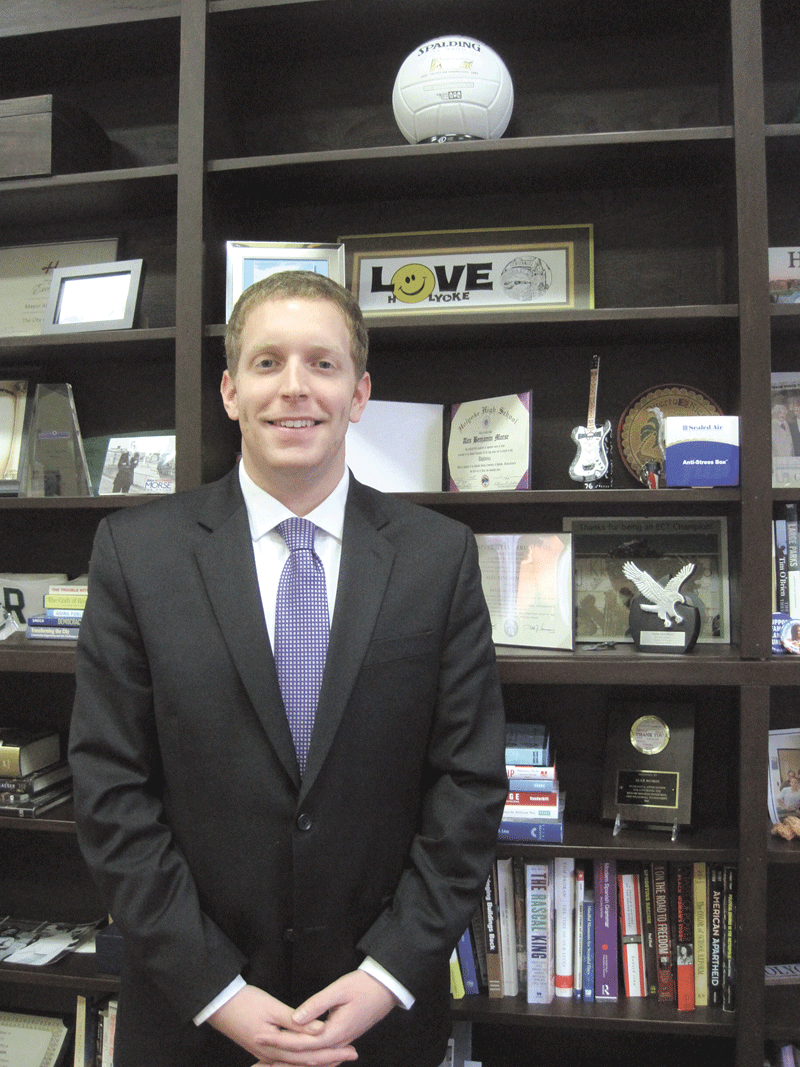
Opinion
The Mortgage Deal with the Devil

The long-awaited mortgage deal between the federal government, 49 state attorneys general, and five big banks that was announced last month is pretty thin gruel, but it could have been a lot worse.
Under the deal, the banks will provide relief to homeowners in a deal variously described as ranging from $25 billion to more than $40 billion. But a look at the fine print suggests that only about $5 billion in cash will actually change hands. Some $1.5 billion will go directly to homeowners who went through foreclosure, with each receiving about $2,000. Other cash will go to states to help distressed homeowners.
The rest of the money will be granted in the form of ‘credits’ to banks that refinance loans or reduce principal amounts of underwater mortgages. But this is, in fact, funny money. Much of this writedown has already been taken by the banks, which know that an underwater mortgage is worth far less than its nominal value.
In exchange for agreeing to refinance loans, the banks will get protection from penalties narrowly related to the ‘robo-signing’ scandal, in which an assembly line of clerks certified that mortgages had been properly recorded and transferred when, in fact, they were not.
The Obama administration dearly wanted this deal so that it could demonstrate greater help for homeowners and, in turn, relieve the damaging impact of the housing collapse on the economic recovery. The administration’s main programs to date, the Home Affordable Mortgage Program and later the Home Affordable Refinance Program, have been notable failures because they were voluntary for the banks. Bankers got to decide who qualified, and the most seriously underwater homeowners were not eligible. Housing prices have continued to decline.
The actual relief under this latest deal is a drop in the bucket measured against the $700 billion by which mortgages are underwater. The best thing that can be said for the deal is that it could be a down payment for much deeper homeowner relief, if state attorneys general and the newly activated federal prosecutorial task force get serious about bigger criminal and civil suits against banks.
That hope was almost precluded by the agreement. The banks bargained hard for broader protection against future liability. They didn’t get it mainly because progressive state attorneys general held out for the right to continue investigating, filing civil suits, and criminal prosecutions. Recently, as if to demonstrate his seriousness, New York’s Eric Schneiderman filed a suit against Mortgage Electronic Registration System (MERS), the largely illegal electronic mortgage transfer and recording system set up by the big banks to expedite mortgage securitization.
Thanks to pressure from Schneiderman and four other progressive attorneys general, it’s still open season for all other civil and criminal liability related to fraudulent activities by banks and their confederates in the creation, packaging, and marketing of mortgage-backed securities whose abuse was at the heart of the financial collapse.
The question now is whether federal and state law-enforcement agencies will use the authority they have. For the first three years of the Obama administration, the feds have gone far too easy on the banks. Though Schneiderman has been added to a newly activated federal task force, it remains to be seen whether the same Justice Department and Securities and Exchange Commission (SEC) that declined to take vigorous action have truly reversed course.
Ideally, we didn’t need this settlement now. It would have been better for prosecutors to mount more cases, not just related to robo-signing and MERS but aimed at the fraud at the heart of mortgage securitization. Then, prosecutors could extract penalties that more accurately fit the crime—specifically fines and mortgage relief as restitution, well into the hundreds of billions of dollars.
This is said to be Schneiderman’s goal, both in agreeing to join the settlement once it was revised so as not to tie his hands and taking part in the Justice Department task force.
The settlement is (barely) better than nothing only if pressure is kept on the Obama administration to view it not as an end but as a beginning. The signs are good that Schneiderman and the other progressive attorneys general see it that way. But it will take quite a deathbed conversion for the Justice Department and SEC to reverse their record of the past three years.

Robert Kuttner is co-founder and co-editor of the American Prospect.

Features
David Pakman Builds a Multimedia Enterprise on His Own Terms

The crazier David Pakman thinks someone is, the more he wants you to hear them.
The folks at Westboro Baptist Church in Kansas, the virulently anti-gay outfit that pickets military funerals, seem to have figured that out, since they refuse to speak on The David Pakman Show anymore. But there’s no shortage of other, similar voices to take Westboro’s place.
“The more extremist interviews are typically with people like Westboro, or Terry Jones, who was famously planning to burn Korans on 9/11 two years ago, or people like Bryan Fischer, who is an anti-gay radio guy who hosts a show for the American Family Assoc.,” Pakman told BusinessWest. “We had a former Navy chaplain on the show who claimed to perform gay and lesbian exorcisms with a 50% success rate.”
Pakman occasionally gets comments on his Web site asking why he gives such people a microphone and an audience at all, if he considers their viewpoint crazy or offensive. But he believes the exposure doesn’t benefit their cause, but actually damages it.
“Those are entertaining for me to do, and when I do those interviews, there might be 100 new articles or blog posts written about it” across the Web, he said, characterizing that exposure as a kind of public service. “The shows where people libel gay people create discussion, and that’s what I like to see — I like to see that entered into evidence, to expose these people’s lines of thought that are flat-out wrong and indefensible.”
Pakman, who has driven the growth of his multimedia talk show to a national presence and a spot in BusinessWest’s 40 Under Forty last year, has no shortage of pluck when it comes to taking on those he disagrees with — which is notable, since he had no aspirations to make a career in politics or radio when he enrolled at UMass about a decade ago.
“It’s a progressive talk show for sure, but when I say progressive, it’s not affiliated with the Democratic party; we’ve been very critical of President Obama and other Democrats,” said Pakman, who nonetheless identifies with much of today’s liberal thought. On social issues and other matters, he tends to be highly critical of conservatives and particularly those who identify with the Religious Right, which he calls “a destructive force.”
“We’re in the genre of progressive talk, but on some issues, we may not be in line with standard Democratic talking points,” he further explained, adding that keeping an independent streak is important to him. “We depend mostly on individual people to support the show, so there’s no industry behemoth that can say, ‘if you don’t change your view on this, we’ll do a, b, or c.’”
He emphasized that ‘independent’ doesn’t mean ‘centrist’ in this context; Pakman stakes out strong positions and doesn’t try to cater to the middle of the road. “But we’re independent from any broader directives, and I think that comes through in the show.”
For this issue, Pakman sat down with BusinessWest at his Greenfield studio to discuss how his radio and TV presence has developed over the past several years, and how both his revenue model and his exploration of new media are blazing new, innovative trails in the field of political opinion.

Accidental Career
Pakman was drawn to radio several years ago, during an internship with the nonprofit Media Education Foundation (MEF) while studying economics and communication at UMass Amherst.
“I had no radio experience; it seemed like something that would be fun to do,” he said, so he created a show for Northampton-based WXOJ, known as ‘Valley Free Radio,’ a Pacifica Radio affiliate whose license was held by MEF. The David Pakman Show focused on political topics from the beginning.
“When I started the show, I didn’t want to be a DJ guy,” he told BusinessWest. “I liked sports, but not enough to do a show around it. So I did a political show.”
At first, “it was terrible,” he added. “It was just me reading news. I didn’t know how to read news. There were no opinions. Even my mom, a Jewish mother who likes everything I do, said it was ‘pretty good.’ So I knew it wasn’t great.”
But as he morphed into an opinion show, “I just liked something about it, and I stuck with it.”
As he worked on his MBA at Bentley College, the show was syndicated in 2006 and 2007 to more than 25 Pacifica stations across the country, from Athens, Ga. to Moscow, Idaho, with much more growth to follow.
He made a good decision, he said, by focusing on national politics from the start, rather than local issues. “The show was always in Northampton, but it could have been anywhere; the topics were nationwide.”
In 2007, Pakman brought in childhood friend Louis Motamedy as radio producer, and the show broadened in scope, starting to attract more well-known guests and expanding to commercial radio outlets. Then, in 2009, Pakman decided put cameras in the studio and expand into television and the Internet, hiring his brother, Natan Pakman, to produce the video side. A year later, that show, Midweek Politics, obtained national distribution through Free Speech TV, airing on satellite television and a number of public-access stations.
“That was really big for us,” he told BusinessWest. “Our affiliates now total around 150, and it’s more TV than radio at this point. The YouTube channel does well, with around 10,000 subscribers and 11 million views.”
Best of all, Pakman has forged a mix of revenue streams that allows him to remain feistily independent. He sells advertising, of course, and is a partner in Google’s ad service on YouTube. But he also promotes a membership program by which subscribers pay monthly or yearly for the ability to access extra content.
“That started in April 2010,” he said, “and it’s really grown.” He was reluctant to reveal actual subscriber figures, since they tend to fluctuate, but he did note that membership has been rising by about 15% per month.
“If you like the show, then you can get more of it pretty cheaply — you probably blow more on coffee in a week. It’s a really easy sell for people, and it’s by far our main revenue source.”
It’s also a way, he said, for people to show support for an independent voice in an era of bundled fees for media. “You might pay 80 bucks for cable and watch just 10 or 15 channels. Otherwise, some would go out of business. So they say, ‘we’ll give you the Food Network, but you have to take Golf 6 and Home and Garden 4.’ With our model, people can say, ‘I like this show, and I want to support this.’ I think people appreciate that.”
Meanwhile, he was occasionally asked if he sold mugs, hats, or other tchotchkes emblazoned with the show’s logo, “but I was hesitant to do that, because the perception of having some lame items for sale might do more harm than help.”
Then Pakman came across a friend’s company, Repair the World, that makes clothing from recycled fabrics, including polyester materials from plastic bottles. He felt that emphasis on sustainability was something his listeners and viewers would appreciate, so he began ordering up logo shirts to sell and wrap into membership packages.

Do Your Homework
To prepare for each show, Pakman peruses news articles, blogs, YouTube clips, and other sources of discussion ideas, which he then enters into a database, along with notes and talking points for each; then, “we have to cut tons out of it to fit into our hour.”
Hosting the show during a national election cycle doesn’t necessarily change the volume of that prep work; he and the show’s core fans can mine material out of any day’s news. “Those people are always engaged,” he said. “As for casual political observers, we track Web searches and analytics very closely, and, yes, the closer we get to elections, the more people come into our universe.”
That universe typically includes an interview subject in addition to Pakman’s own opinions, and he has talked to some fairly prominent names over the years.
“If you’re realistic about who you can get, your success rate goes up,” he said. “If I say my goal for next week is George Soros, Bill Gates, Barack Obama, and the new leader of North Korea, well…”
That said, the show boasts some prominent regulars, including Ohio’s U.S. Rep. Dennis Kucinich, while Sen. John Kerry, Gov. Deval Patrick, and other luminaries in state and federal politics have made multiple appearances.
“Sometimes I’m surprised,” he said. “You send out an e-mail and assume it’s going through a series of handlers, but then they write back and say, ‘sounds great — let’s get you in touch with my scheduler.’ We also get pitches for interviews constantly. If we accepted everyone’s pitch, we wouldn’t be able to fit them into the week.”
Pakman said his goal is to inch the twice-weekly show toward daily broadcasts, but he first wants to secure additional sponsors and make sure there’s enough cash on hand to ensure against any sudden loss of memberships or revenues, for whatever reason. “I like to be conservative in that sense,” he said with a smile. “But there are so many guests and so much to cover.”
Sparring with anti-gay leaders has earned him particular notoriety around the Web. He once mediated an on-air confrontation between Westboro and the Internet hacking group Anonymous, and the latter essentially took over the church’s Web site during the discussion. The exchange wound up garnering more than 1 million YouTube hits.
“There’s kind of an interesting undercurrent throughout the discussions of whether I’m gay because we interview anti-gay people. I’m not gay, but there’s this assumption that the only reason I stand up for gay rights is that I’m gay myself,” Pakman said. “But I think it’s powerful when people see gay rights supported by someone who’s not gay, and not just supporting something out of personal interest.”
Not all guests are political in nature, he noted; one exception was Bob Werb from the Frontier Space Foundation, who discussed what’s on the horizon in space exploration over the next five to 10 years. “I’m learning as much as anyone when I’m talking to someone like that.”
At the same time, Pakman wants other people to learn more by engaging in their own discussions.
“Between e-mail, voice mail, Twitter, and YouTube, I get probably hundreds of messages to look at every single day, maybe more. Two things are great: positive comments, but also when arguments spin off. It’s great when we put up a topic on YouTube — like, should progressives support Ron Paul? There are some things about him that should be appealing to progressives. It’s a very controversial topic, and many varied opinions about it. We got 500 comments on that one, coupled with 100 e-mails. That’s great, and we’re not necessarily creating the discussion.”

Moving On Up
Obtaining his own studio space, first in Northampton in 2010 and later in Greenfield, was critical to growing the show. “At Valley Free Radio, we had to bring in our own equipment, bring it out, and then edit,” Pakman said. “It was an incredibly long process; it probably took four hours of work to do one hour of program.”
When asked about the possibility of becoming a major national player in talk radio under a syndication deal, Pakman said he’s not pursuing that model, but rather trying to forge a path in new media.
“I don’t really consider this a talk-radio program,” he said. “We’re much bigger on TV, and, combined with the Internet, I consider this a multi-platform show. And already, several automobiles have Internet radio in the car. As the Internet becomes more ubiquitous, being on [broadcast] radio becomes more of a moot point.
“I don’t even have regular radio at home,” he added, “and I don’t think I’m unique in that sense. We’re building an audience with a multiplatform approach.”
So The David Pakman Show — which is now the name of his TV show as well as his radio broadcast — forges ahead with something new, something exciting, something … well, progressive.
“We’re creating a product and building demand for it, and creating a successful revenue model,” he said, adding that he strives to keep the business and his values in balance. “I was once asked, if I could make four times as much money, would I be a conservative on radio and TV?”
If you don’t know the answer to that question, then you haven’t heard David Pakman. Yet.

Joseph Bednar can be reached at [email protected]

Opinion
The Jobs Market: Is the Worst Over?

The latest jobs report was a welcome surprise. Jobs increased in January by 243,000, cutting the unemployment rate to 8.3%. The question remains: is this a blip, or has the economy turned a corner?
Earlier in the week, the Congressional Budget Report put out a more pessimistic report, showing unemployment rising to 8.9% by the final quarter of this year (which happens to include Election Day) and peaking at 9.2% in early 2013.
According to the CBO, we won’t return to pre-recession employment levels until 2019. Why the grim picture? CBO assumes more budget cutting as the Bush tax cuts sunset, the deficit keeps declining, and there is no further offsetting stimulus.
Though the short-term jobs numbers have been above expectations for both December and January, there is no assurance that this good news will continue in the absence of additional stimulus.
And the risk remains of either a spike in the price of oil, as a byproduct of the escalating conflict with Iran, or further troubles in Europe. Either could weaken this hopeful trend.
The European Union, wedded to an even more perverse brand of austerity economics than the U.S., remains our biggest export market. And even a modest hike in the price of oil is like a tax on purchasing power.
For now, a prime engine of economic growth is the Federal Reserve, which has pledged to keep interest rates at near zero for the next three years. That itself is both recognition of how fragile this recovery is and also a necessary tonic.
Astoundingly, senior House Republicans spent one recent morning morning raking Fed Chairman Ben Bernanke over the coals for his refusal to let the economy fall off a cliff. The ever-clueless Paul Ryan, chair of the House Budget Committee, attacked Bernanke for failing to pay sufficient heed to inflation. The Fed’s policy, Ryan opined, “runs the risk of fueling asset bubbles, destabilizing prices, and eventually eroding the value of the dollar.”
On what planet does this man live? Bondholders are now willing to lend the government money for 30 years with returns of under 4%. If investors were worried about inflation, the interest rate on Treasury bonds would be rising, but it has been steadily falling for two years. The more serious risk is prolonged deflation.
As Bernanke, nobody’s idea of a Bolshevik, told the committee, “We still have a long way to go before the labor market can be said to be operating normally. Particularly troubling is the unusually high level of long-term unemployment.”
And if Ryan and his fellow Republicans want to be sure that low interest rates don’t cause asset bubbles, the remedy is financial regulation — of the sort that Republicans relentlessly oppose.
The Fed has done all it can to fight unemployment — you can’t push interest rates below zero. More public investment is needed. The latest jobs report showed that the public sector actually shed a net 14,000 jobs last month.
And a much more aggressive policy of mortgage relief would reverse the current problem of sinking housing values dragging down the rest of the economy.
Still, let’s celebrate good news when it comes — and hope it continues. There is much still to be done to help these encouraging trends turn into a durable recovery.

Robert Kuttner is co-founder and co-editor of the American Prospect.

Opinion
Workforce Training Is Good Business

There are 13 million unemployed Americans and approximately 3 million job openings in the U.S. today. According to the Mass. Department of Workforce Development, this 4:1 ratio of unemployed people to unfilled jobs is mirrored in our state as well. Despite high unemployment, a 2011 report found that more than half of business leaders, and 67% of small-business leaders, face a challenge recruiting employees with the right education and training. In Massachusetts, these unfilled jobs in the health care, education, and manufacturing sectors pay between $40,000 and $60,000 per year.
How can this be?
Primarily, it’s the result of a skills mismatch brought on by technological change, structural economic shifts, and decades of underinvestment in the types of basic skills and occupational training that are essential for a thriving economy. We need an education system that focuses not on a college degree, but on preparation for the jobs of today and tomorrow as identified by employers, not politicians and economic forecasters. And with the rapid evolution of technology, we need programs that continually train and retrain adults.
Middle-skill jobs across the country pay well and contribute similarly through income-tax revenues paid by employees and reduced unemployment payments. Many of these jobs involve specialized training on highly complex manufacturing machinery or in hospitals and labs. Regions can achieve economies of scale by partnering with vocational schools and community colleges to do this training on shared equipment with shared curricula.
Western Mass. faces a chronic shortage of skilled machinists in our high-technology, precision-manufacturing industry. This month alone, three companies in Hampden County are looking to hire more than 40 machinists at salaries that average $60,000. Without these workers, companies face unwelcome choices such as subcontracting the work to outside shops or expanding in other states with more skilled machinists.
We’ve had success in Western Mass. by developing public-private partnerships to support this type of skills training, but employers can’t do it alone. The partnership between employers in the Western Mass. Chapter of the National Tooling and Machining Assoc., the Regional Employment Board of Hampden County (REB), the state, and area school systems and community colleges has leveraged resources and created or retained good-paying jobs for over 1,000 Western Mass. residents.
Precision machinists, nurses, elevator mechanics, and EMTs require a foundation of advanced math, metrology, physiology, biology, etc. that employers cannot be expected to provide. Skills training by professional educators combined with on-the-job internships should be part of our public education system. And if properly aligned with available jobs by hiring employers, this will strengthen our economy by putting people back to work.
Congress should examine the business case for skills training:  the above-mentioned 3 million job openings, if filled, could generate over $9 billion in annual taxable income (assuming a low average salary of $30,000 per year). With a federal tax rate of 15%, this would provide more than $1.3 billion in annual payroll taxes as well as state tax revenues and reduced unemployment benefits. With estimated training costs of $2,500 per person, the government would recover its investment in less than a year.
Federal funding for workforce-training programs declined by almost 20% (adjusted for inflation) between 2002 and 2012, with a 29% decrease in funding for Workforce Investment Act programs for adults, dislocated (laid-off) workers, and youth.
Instead of improving the system to help workers enter or return to the labor market and match employers with skilled workers, Congress has proposed eliminating it or consolidating it to the point of elimination. Cuts to federally funded workforce training would hurt Massachusetts’ small-business owners, stifle job creation, and slow economic growth.
Our elected representatives, including Sen. Brown and Sen. Kerry, need to stop their colleagues from acting in direct opposition to the economic interests of Massachusetts and the needs of our state’s workers and employers.
These programs, when properly structured and administered, pay for themselves. The Western Mass. model developed by the local Machining and Tooling Assoc. and the REB can provide the case study for success. v

Larry Maier is president of Peerless Precision Inc. in Westfield and co-president of the National Tool and Machining Assoc. of Western Mass.; [email protected]

Banking and Financial Services Sections
Glenn Welch Takes the Reins at Hampden Bank

Glenn Welch, president, COO, Hampden Bank

Glenn Welch, president, COO, Hampden Bank

Glenn Welch, the new president and COO of Hampden Bank, takes over with an informal philosophy of not trying to fix anything that isn’t broken — and this encompasses most all strategic initiatives at the nearly 160-year-old institution. For now, his primary focus is on seizing opportunities to grow the commercial portfolio presented by improving confidence among business owners and what Welch called “concern with larger-bank relationships and where they’re headed.”

Glenn Welch is one of many area bankers who had his or her name on many different business cards in the late ’80s and ’90s — and usually not by choice.
“I had a lot of them, and I think I still have them … they’re in my desk somewhere,” said Welch, referring to a collection that resulted from a spate of mergers, failures, and downsizings involving names that have long since disappeared from the business landscape — like Third National, Bank of New England West, Shawmut, BayBank, Comfed Savings, and Fleet.
Soon, Welch can add another card to the pile, if he ever finds it. Indeed, the new card identifying him as president and COO of Hampden Bank will be arriving shortly, meaning he won’t need the one he’s still using announcing him as “executive vice president and division executive of the Business Banking Group.”
On Nov. 30, Welch was named successor to Tom Burton, long-time president and CEO at Hampden, who is retiring but taking the title chairman and CEO during a transition period.
Welch believes that, if all goes as planned, this could very well be his last business card. In fact, it’s an unofficial goal to make sure it is. He plans on being here a while, and he believes the Hampden name will endure as well, even as he acknowledged that the institution is certainly the subject of rumors regarding the next local target for merger or acquisition.
“The board of directors, by deciding to go with an in-house candidate, shows that it’s comfortable with the plan we have in place to bring it forward and grow the bank to the level that we need to to satisfy our investors,” he said. “But it’s a crowded market, and there is a lot of capital in this market.”
For now, Welch is focused on continuing a strong pattern of growth knitted by Burton during his 17-year tenure as president, during which the bank doubled in size, from $250 million to more than $500 million, and went public in 2007.
The pace of growth slowed over the past few years, as it did at most all area banks, as the Great Recession took its toll on everything from mortgage volume to commercial lending. Still, Hampden has been on a pace to add roughly a branch a year, with the latest additions coming in Longmeadow (the second office there) and Boston Road in Springfield, and it is has been holding its own in a highly competitive commercial-lending arena.
“The difficulty was, we just weren’t seeing any loan growth — businesses just weren’t able or willing to borrow,” he explained. “We were sitting on a ton of capital, like a lot of other banks in this area, and really found it difficult to put it to good use.”
But as the economy improves, slowly but surely, Welch says he’s seeing signs of progress, especially on the commercial side of the ledger. It comes in many forms, from what he can see — more applications for loans to expand or build new — and what he can sense, namely greater confidence on the part of business owners.
“We’re seeing a lot of loan demand on the commercial side — there’s a huge backlog,” he said, adding that he expects many deals to close over the next several months. “Some of this demand is new business, which is exciting, such as an assisted-living facility that will generate about 100 jobs. There’s an addition to another assisted-living facility, a few precision-machining companies that are looking at new buildings and equipment … things are happening.”
Summing up what he believes his ascension to the presidency at Hampden means, Welch said it represents both continuity and change.
The former comes mostly in a continuation of growth strategies, internal programs — such as ‘Hampden College,’ aimed at building team and leadership skills (more on that later), and philanthropic initiatives within the community that were laid out by Burton and the leadership team, said Welch. Meanwhile, with change comes opportunities, fueled by an improving economy and frustration with regional institutions, to move those strategic initiatives forward.
“There is a sense of urgency,” he told BusinessWest in a wide-ranging interview a month after he took his new office. “We do need to grow and become more profitable; the pressure is there to perform.”

Interest Bearing
Welch arrived at what was then Hampden Savings Bank in 1998, after accumulating more than a dozen of those aforementioned business cards.
When asked what brought him to the Harrison Avenue institution, he paused for a minute, noting that there was a funny story behind it and he wasn’t sure if he should tell it. (He eventually decided he could, because the party in question was no longer working in the area).
Attempting to make a long story short, he said he was working at what was then Fleet National Bank (now Bank of America) and, following the departure of a colleague, was in line for one of the small corner offices within the Monarch tower, a step up from the high cubicle he was occupying. The last office to be apportioned was awarded based on tenure, but Welch, who led the field in that category, was told that this time, things would be different.
“First, he said, ‘maybe we’ll go by goals,’ which was fine with me because because I hit my goals that year. But then, he said, ‘I was thinking we’d draw cards,’” said Welch, working hard to keep a straight face. “We sat in his office, and three of us drew for high card; I went first and got a 3, the next guy drew a 6, and the winner of the office drew a 9. That was one of the final straws; right around that time I saw an ad — Hampden Bank was looking for an ‘eclectic’ commercial lender.’”
Welch said he had no idea what ‘eclectic’ meant in this context, but he applied anyway, and soon thereafter joined a small but growing commercial-lending department that would play a key role in the bank’s steady growth and the expansion of its footprint in Western Mass.
Backing up a bit, actually nearly 20 years, Welch said he entered Western New England College with the goal of becoming an engineer. “ I think that lasted a semester,” he recalled. “I took a few labs and knew it wasn’t for me. I just happened to be pretty good with numbers and liked the accounting and finance courses I took, and that’s how I ended up with a finance degree.”
Upon graduation from Western New England, he took a job with Household Finance, which, among other things, provided high-interest, real-estate-backed loans to struggling families — “that was a depressing place to start a career” — before joining Bank of New England West as a field examiner in the Commercial Finance Department. In that role, he conducted on-site field examinations of books and records for customers and prospects.
From there, he moved on to to BayBank Valley Trust Co., where he served as a credit officer in the Commercial Loan Department, and then as a secured lending auditing officer. Next came an ill-fated decision to follow a supervisor to ComFed Savings Bank, which had acquired the old Northeast Savings, where he served, briefly, as a commercial loan officer.
“That was my opportunity to get into commercial lending, because he asked me to go with him,” Welch explained. “And six months later, he had to ask me to look for a job, because ComFed was failing and they were eliminating the commercial-lending group.”
He then moved back to Bank of New England, later to fail and be rescued by Fleet, and rose to the title of vice president and ‘relationship manager’ in the Middle Market Banking Group, where he managed an $80 million commercial-loan portfolio consisting of 37 account relationships. During his tenure there, he completed his quest for an MBA at UMass Amherst through its evening program, focusing his capstone course on the demise of Bank of New England and the lessons to be learned from it.
Living through that tumultuous period in local banking history was difficult, especially at BNE/Fleet. “It was tough over there — I survived a lot of different downsizing,” he said of his time in the Monarch tower, which eventually ended not long after he drew that 3.
As for what’s in the cards for Hampden Bank, Welch said he expects a continuation of the programs that have helped fuel recent growth for the institution, especially a hard focus on growth in commercial lending.

By All Accounts
Returning to the subject of continuity, Welch said he plans to carry on with a number of programs initiated during Burton’s tenure to not only grow the bank, but strengthen the team running it.
In that latter category, he mentioned everything from quarterly meetings with the staffs handling the branches to keep them informed and connected — “they tend to feel alienated from the main office” — to Hampden College.
Staged in the spring and summer, this initiative involves after-hours courses (always well-attended) on leadership, diversity, and other timely and relevant issues.
“We had four members of the board of directors speak to employees last year as part of the program,” said Welch, adding that the broad objective of Hampden College is to “build better bankers.”
At the same time, the bank has staged a number of external forums — open to area business owners and managers — on subjects ranging from health care reform to taking a small business to the next level. “There’s an educational component to these, obviously,” he explained, “but these are also great networking opportunities, and for the bank, we are developing relationships with people we may not have relationships with.”
Overall, Welch said his primary goal moving forward is to continue and in many ways accelerate the bank’s ongoing evolution from a true savings bank to a multi-faceted institution with a strong mix of consumer and commercial products.
“We used to be for your home mortgage and grandma’s CD,” he said of the bank’s basic mission until only a few decades ago. “We’re trying to change that.”
He said the timing is good for growth in commercial lending, and for several reasons. The improving economy and pent-up demand he mentioned are big parts of it, but so is the growing sense of frustration many business owners and managers have with regional and super-regional banks, a phenomenon that has led to opportunities for many area banks.
“I think 2012 looks promising for the community banks,” he said. “The reason is we’ve turned the corner, in my opinion — people are starting to get more comfortable and are borrowing for projects. But the other side of it is the fact that community banks have real opportunity, especially in this area, a smaller city like ours — we’re here, and the decisions are made here, and there are a lot of people who are concerned with their larger-bank relationship and where it’s headed.
“There were a lot of people who were waiting to make sure that the light at the end of the tunnel, as they say, wasn’t an oncoming train,” he continued, while noting the recent uptick in business on the commercial side of the ledger. “We’re seeing pretty healthy demand in a lot of different areas.”
In many ways, Welch said, Hampden’s goal is to borrow, in some ways, from the model forged by Bank of Western Mass. (now People’s United), meaning the establishment of broad customer relationships propelled by the business side of such associations.
“What we really want to do is grow the commercial portfolio, along with all the other things we’re doing strategically,” he explained, “and allow the commercial portfolio to drive the growth in residential and commercial deposits, because we’re trying to become the bank for those businesses.”
Meanwhile, the bank intends to continue its strong record of philanthropy, punctuated by a recent $150,000 donation to cover operating expenses incurred by those leading the Rebuild Springfield efforts in the wake of the June 1 tornadoes.
Welch, the current chairman of the board of the Affiliated Chambers of Commerce of Greater Springfield, chair of the Springfield Enterprise Center, and board member of DevelopSpringfield, said he plans to continue these and other endeavors in the realm of community service. But most of his energies will be on the bank and the strategic initiatives he described.
“We have plans in place,” he said, “and we’re comfortable we can carry them out and that they’ll lead to significant growth.”

Making a Statement
Welch noted that Hampden Bank will turn 160 years old in April, joining MassMutual in that milestone of longevity, and reaching rarified air among companies based in this region.
He expects the bank to celebrate many more anniversaries and continue to grow its footprint regionally.
As for his career, well, he doesn’t think he’ll be adding to his business-card portfolio any time soon. He believes he and his bank are in the right place at the right time — and will be for the foreseeable future.

George O’Brien can be reached at [email protected]

Opinion
Work in Progress: Glacial Improvement on Jobs

The December jobs numbers are good news — sort of — for the economy and the Obama re-election campaign. The economy added 200,000 new jobs, and the duration of unemployment is down slightly. Wages and hours worked are up, too. We can anticipate continuing progress between now and November.
But the bad news is that, though the trend is in the right direction, the progress is glacial. As Heidi Sherholz of the Economic Policy Institute (EPI) reports, the deficit of jobs needed to keep up with the normal growth of working-age population is still upwards of 10 million. Even at December’s modestly improved rate of net job creation, it will take until 2019 for the U.S. to recover its pre-recession rate of unemployment.
Moreover, as EPI points out, if we factor in workers who have dropped out of the labor force by looking at the ratio of employment to population (which is still down almost five percentage points since the beginning of 2007), the adjusted unemployment rate would be 9.5%.
The other problem is wages. As the New York Times keeps reporting in its fine “Working for Less” series, some jobs are coming back, but the wages are down by as much as half. And as long as that is the case, the measured unemployment rate can drop, but people still feel as if their own personal economy is in a deep recession. Between June 2009 — when the recession officially ended — and June 2011, inflation-adjusted median household income fell 6.7%, to $49,909, according to a study by two former Census Bureau officials.
This trend has only begun to reverse. Worker productivity is actually increasing at a rapid rate, but nearly all of these gains have been captured by corporate profits rather than worker wages.
As long as household income is down, there is not enough purchasing power to drive a recovery strong enough to generate enough good jobs at good wages. At the bottom of this problem are deep structural trends compounded by the financial collapse. They include a chronic trade deficit, the weakness of labor unions, and economic deregulation that gave corporations the power to batter down wages.
Since the financial crash, these longer-term trends have been compounded by the deflationary drag of the housing collapse and misplaced austerity fever. While the private sector is belatedly adding jobs, a public sector that should be leaning against the winds is still cutting net jobs.
So while the December jobs report is cautiously hopeful news both politically and economically, the administration, should President Obama win a second term, will have to do a great deal more to restore an economy of good jobs at good wages.

Robert Kuttner is co-founder and co-editor of the American Prospect.

Cover Story
New Development Officer Is Focused on the Big Picture

January 16, 2012Kevin Kennedy, long-time aide to Richard Neal while he was both mayor of Springfield and the congressman representing the state’s second district, was recently named the city’s chief development officer. In that capacity, Kennedy said he plans to take full advantage of his knowledge of the city, as well as lessons taken from involvement in projects ranging from the building of Monarch Place to the recent State Street Corridor initiative.

Kevin Kennedy is still settling into his new office on Tapley Street.
He told BusinessWest that he has several blank walls to cover, and is still making up his mind on just how to carry out that assignment. However, there are some items up, and together they tell a lot about the city’s new chief development officer, and also help explain why he’s supremely confident he’ll hit the ground running in his new position.
First, there’s the picture of the U.S. team at the first Nike Hoop Summit in 1995. Kennedy, then the head coach at Cathedral High School, is visible on the far left, just a few spots down from an 18-year-old Kevin Garnett. (The event was staged at the Basketball Hall of Fame, and it wanted a local coach to take part). There’s also a framed poster announcing then-President Bill Clinton’s visit to Springfield on Nov. 3, 1996, the so-called Celebrate Democracy event at which he campaigned for himself, but also for John Kerry in his pitched Senate battle against Bill Weld. Kennedy said he was asked to be “protocol chief” for the president and his entourage on that visit.
Also framed and hanging beside his desk is a rendering of the new federal courthouse on State Street, a project that Kennedy helped see from conception to reality as chief administrative aide to Congressman Richard Neal, who secured the funding to build the facility. And then there’s one that will soon be going up — a frame holding two architect’s renderings of what the Great Hall inside Union Station will look like when it’s renovated. (Kennedy always uses ‘when,’ not ‘if,’ as he discusses Union Station, even though the building has been mostly vacant for more than 30 years.)
Together, the wall art tells of Kennedy’s long involvement in Springfield politics, sports, economic development, and even architecture. Individually, they speak to passions — basketball (he won championships as both a player and coach at Cathedral), public service, and, yes, Union Station. The courthouse rendering? That symbolizes strategic planning, he explained, adding that the facility isn’t simply a building, but rather one part of a much larger initiative involving the State Street corridor (more on that later).
“It’s good to have an institutional memory,” said Kennedy, noting that he’s worked for or with every mayor of Springfield, in one capacity or another, since the mid-’70s. “You don’t want to live in the past, but it’s good to know what’s happened previously, what’s worked, and what hasn’t worked.”
Kennedy said his knowledge of Springfield and all the players there — something lacked by some recent occupants of his office — coupled with his experience taking plans from start to finish and his work on broad strategic endeavors, persuaded him that he was the right person for this job, and especially at this critical juncture in the city’s history.
Indeed, 2012 will be a year when tornado-recovery plans are put on the table, many downtown initiatives could take big steps forward, the Union Station project may actually go to bid, and the casino debate — with a Springfield site among many in contention — will intensify.
“While the hits we took in 2011 were substantial, I foresee a very good year in 2012 — we have enormous possibilities,” said Kennedy. “If we can all work together and coalesce around the plans and come up with the correct strategies to implement what’s there, we’ve got great opportunity. We still have good bones and great institutions, and I think downtown will take on a completely different vitality in 2012.”
For this issue, BusinessWest talked at length with Kennedy about his new position, his thoughts on what’s next for Springfield, and how to transform plans into reality.

Background — Check
When asked why he wanted to take on the high-profile chief development director’s job at this stage in his career, the 58-year-old Kennedy smiled and said, “I thought I was still young enough to take on some more challenges.”
Elaborating, he said he wanted to take some of the lessons — and measures of success — garnered from the courthouse and State Street corridor initiatives and apply them to the broad canvas of citywide development.

site of the former Tech High School

Kevin Kennedy says the state data center now under construction at the site of the former Tech High School is an integral part of a much broader State Street corridor improvement project.

“The thing that’s attractive about this,” he explained, “is that you get to combine thinking about things — which you must do because you really have to think ahead — with actually getting something done.
“When a project comes up, be it large or small, and obviously the larger ones are a little more complicated, you have to be able to develop the plan and execute the plan,” he continued. “And to go along with all that planning and execution is strategy, which is the piece that keeps the planning and execution together; it’s the glue.”
And as he goes about applying this glue, Kennedy said he’ll take every bit of experience from his nearly 40 years of service to the city and Neal with him to his new office in the Tapley Street municipal complex.
That location is only a stone’s throw from where Kennedy grew up, on Melbourne Street, which no longer exists because the property was taken to build I-291 in the late ’50s. From Hungry Hill, Kennedy’s family moved to the East Forest Park neighborhood, and he attended nearby Cathedral.
He graduated from St. Anselm’s during the recession of the mid-’70s and, after a lengthy search for work, found a position with the city through the Comprehensive Employment and Training Act (CETA) in 1974. He started as a personnel assistant and worked his way up to become personnel director in 1978. Soon thereafter, he became the city’s collective bargaining agent and negotiated labor contracts.
He left municipal service to work for a technology-related startup, Data Management Corp., before branching out into individual data-processing consulting. When Neal was elected mayor in 1985, Kennedy joined him as executive assistant (a job now titled chief of staff), and in that position essentially ran the day-to-day operations of the city.
When Neal was elected to Congress in 1988 following the retirement of Ed Boland, Kennedy eventually joined him after first staying behind to facilitate the transition to first interim mayor Vincent D’Monico, and then elected mayor Mary Hurley.
He coached at Cathedral from ’85 to ’97, during what he called “one of the golden eras” for local high-school sports.
“I had Derrick Kellogg, and Howie Burns had Travis Best and Edgar Padilla at Central,” he said, noting that Kellogg and Padilla played at UMass and Kellogg now coaches there, and Best enjoyed a solid career in the NBA. “We used to fill up the Civic Center; we didn’t play our homes in our own gyms because too many people wanted to watch them.”
In recent years, Kennedy’s responsibilities with Neal have involved more work that would be considered economic-development related, including the State Street corridor, the new courthouse, and Union Station, which he described, alternately, as a “personal challenge” and “the next thing we have to do to complete the plan, with that plan being preservation of the central business district.”

Tracking Results
Kennedy said he clearly remembers what he considers the last big event in the Great Hall. It was early in 1977, he explained, when Neal used the facility to announce his candidacy for Springfield City Council.
“It still looked good then,” he recalled. “It had declined somewhat, but it was still in good shape, and it was still a special place, one with a lot of history.
The hall has been seen by only a few people — maintenance crews, journalists (BusinessWest has been inside a few times), economic-development leaders, and representatives of prospective tenants — over the past 25 years, said Kennedy, noting that efforts to revitalize the station do not constitute a project, although many hold that opinion.
Rather, he explained, the initiative is an important part of a much broader plan for bringing more vibrancy to the central business district. That plan involves the full length of Main Street — from the South End, where the equation, not to mention the landscape, has certainly been changed by the June 1 tornado, to the Chicopee border. It also involves State Street and many other arteries, said Kennedy, noting that all but a handful of Springfield’s neighborhoods are included in this plan.
Elaborating, he said Union Station’s transformation into an intermodal transportation center is one of the links in the chain in downtown revitalization. Some have been completed — 1550 Main Street, the new federal courthouse, and the convention center, for example — but most are still in progress. That list includes Court Square redevelopment initiatives (specifically 31 Elm St.); the Paramount and other endeavors involving the New England Farm Workers’ Council and its energetic leader, Herbie Flores; the vacant and partially demolished Asylum building; and others.
Union Station’s redevelopment would be a catalyst for further progress in the so-called North Blocks area, and the North End as well, said Kennedy, who drew an analogy between the current efforts downtown and the ongoing work along the State Street corridor, while returning to the subject of strategy.
The new federal courthouse was a piece of the State Street initiative, albeit a big one, he continued, adding that there were and are many other components to that strategic plan.
Finding a new use for the abandoned Technical High School was another big piece of the puzzle, he went on, noting that this is why Neal fought tooth and nail to put the state data center (now under construction) there, as opposed to the Technology Park at STCC or anywhere else.
“We knew that we wanted to build a new courthouse,” he explained, “and we knew we had to deal with the disposal of the old courthouse. We also knew that, by itself, the courthouse is not a real economic generator, so the congressman came up with the State Street corridor improvement project, which is what really leveraged the investment in the courthouse.
“We also knew that Tech, which had been sitting there since 1986, was a serious issue in terms of both State Street and the new courthouse,” he continued. “So you had to get a plan that was executable to not only build a new courthouse, but dispose of the old courthouse, do something with Tech, and make all the other real-estate transactions that were necessary for this to happen. There were so many moving pieces that had to be put together, you needed a strategic plan to get them done.”
Returning to Main Street and the central business district, he said individual initiatives are part of a broader plan there as well. And he believes that enough pieces of the puzzle are falling into place to generate more private-sector investment downtown.
“Between reuse of the [old] federal building, Cambridge College coming to Tower Square, 31 Elm St., Union Station, and some other announcements to be made soon, we’re starting to aggregate enough people down there to generate economic-development activity,” he explained. “And, frankly, it’s up to the private sector to take advantage of it.”
Pieces of the Puzzle
When asked about his approach to economic development, Kennedy said he’s adopted the philosophy and operating style of his mentor in this realm.
That would be Gerald Hayes, who was the city’s chief development officer in the mid-’80s, and thus worked with Neal and Kennedy to make the Monarch Place project a reality.
“I learned a lot from him about how to manage a large-scale project and a small-scale project, and the biggest thing I took from him is the importance of accountability,” said Kennedy. “You convene regular meetings, with assignments of future tasks, and then report on what you accomplished on those future tasks, so you’re accountable.
“We did that when we did State Street — we sat regularly, twice a month for two years, planning the corridor project,” he continued. “The results were minimal change orders, and the project came in $600,000 under obligation; the same was true with the federal courthouse. If you spend enough time planning what you want to do, and you do it correctly, that’s critical to the project.”
Accountability will be a much-needed character trait moving forward, said Kennedy, noting that there are many large, complex projects — either in progress or in the offing — that will require high levels of coordination between local, state, and federal officials, and could be described as public-private initiatives.
Tornado recovery certainly falls into that category, he said, noting that, while the June 1 twister impacted several Springfield neighborhoods, most of the rebuilding efforts moving forward will involve the South End, Six Corners, and East Forest Park areas.
A recovery plan is expected from the consulting firm Concordia later this month, said Kennedy, adding that it is likely to spell out specific initiatives for each impacted area. For the South End, where much of the speculation is focused, he expects retail and residential components that will enhance but not change the character of that neighborhood.
“I think it needs much of what it had before,” he told BusinessWest, “which means lots of walk-in retail — it used to be the greatest place to go for restaurants — and you still need a housing component to go with it.
“I don’t think the ideas today will be much different than they were,” he continued, “but they’ll be modern, and there are already people out there speculating, which I take as a good sign.”
Union Station is perhaps the most complex of the endeavors, Kennedy explained, because it is involves a number of players, government agencies, and potential funding sources, including a new round of TIGER (Transportation Investment Generating Economic Recovery) grants from the U.S. Department of Transportation and another transportation reauthorization program (one is about three years overdue).
The plan is to seek bids late in 2012 for construction of a project that will blend transportation elements — rail, inner-city bus, and possibly intra-city bus — with transportation-related businesses and agencies that will fill roughly 75,000 square feet of space, said Kennedy. In that latter category would be the Pioneer Valley Transit Authority offices, the Pioneer Valley Planning Commission, transit-related retail, and what he called “opportunity space.”
If all goes as planned, the project would be completed by 2015 or early 2016, in conjunction with improved and expanded north-south rail service from Southern Vermont to New Haven, with a projected 25 runs a day between Springfield and Hartford going through Union Station.
When asked about the proverbial elephant in the room — casinos — Kennedy, sounding much like Mayor Domenic Sarno in recent interviews, said that, while he won’t necessarily advocate for a casino in Springfield, he considers it his job to make sure that Springfield gets the best “deal” possible, whether the casino is built in the old Westinghouse House site, Palmer, Holyoke, or anywhere else.
And by ‘deal,’ he meant a wide range of considerations, from preferences on employment to traffic-mitigation efforts; from tax benefits to measures that will help minimize the impact on a host of other hospitality-related businesses.
“If you’re in the hospitality business and you’re around a casino, you’ve got a problem,” he said. “Springfield could get hurt, Northampton would get seriously hurt, and Amherst could take a real hit, depending on where this casino is located.
“If we’re going to get one in Springfield, we need to think a little bigger than that citadel, or that fortress that a casino could be,” he continued. “If we put a casino in the North Blocks, for example, and coupled it with a baseball stadium and a revitalized Union Station, and insisted that the MassMutual Center and Springfield Symphony Hall were their performing-arts venue, we’d then have a casino effect that would really be widespread and benefit a lot of people.”

Court of Opinion
While packing up his photo from the Nike Hoop Classic, the Bill Clinton event poster, and the rest of his belongings from his congressional office, Kennedy said he came across his disposition testimony in the legal action involving David Buntzman, former owner of Union Station, and the city of Springfield.
“That goes back to 1989,” said Kennedy, noting that, when the city took the station by eminent domain a year earlier, Buntzman sued for greater remuneration.
Knowing all of what happened back then, and even decades earlier, may not necessarily help in the current efforts to redevelop the station, he acknowledged, but historical perspective, meaning institutional memory, is usually a benefit.
Kennedy has plenty of that, as well as what he called a desire to “get some things done.”
If he can, then he’ll have plenty of new items with which to cover all that wall space.

George O’Brien can be reached at [email protected]