
Home 2011 August
Features
For Holyoke, the High- performance Computing Center Is Only the Beginning

Holyoke Canals

Holyoke Canals

The high-performance computing center soon to take shape in downtown Holyoke is a large project creating a good deal of excitement. Two things it won’t create directly, however, are large numbers of jobs and tax revenue. So area planning officials are hard at work looking at ways to generate both indirectly. They call it leveraging an asset. The strategies being developed have many facets, and are summed up by one official as a “surround-sound approach to economic development.”

The high-performance computing center being developed in downtown Holyoke brings together a group of public and private partners in a groundbreaking initiative that will eventually provide unparalleled computing power for the state’s most prestigious universities.
Imagine its impact on … farming.
No, really.
“The high-performance computing center will generate a lot of heat,” said Kathleen Anderson, director of Holyoke’s Office of Planning and Development. “If we did urban agriculture, we could take the heat from the computing center and pump it into greenhouses or possibly older mill buildings and start growing things.”Such a project, she said, could generate more than 100 jobs.
“Then there’s distributors, processing plants up and down the Valley … how do you include them? An asset like that in Holyoke would need distribution, processing, transportation — how can we leverage that asset to help other businesses in the Valley?”

Tim Brennan

Tim Brennan says efforts to leverage the computing centers can be described as “the surround-sound approach to economic development.”

Tim Brennan, executive director of the Pioneer Valley Planning Commission, also cited agriculture as a way to create economic development from a facility that in itself won’t generate many jobs for the city.
“Can we capture the heat it gives off and create a very large-scale urban greenhouse where we could have vegetable production year-round?” he said. “That’s an asset to much of the region; many farmers are active in agricultural production but see the winter period as downtime, because the climate in New England is not conducive to growing in every season. And it could help create middle-income jobs with benefits for people in Holyoke.”
What has members of the Holyoke Innovation District Task Force — a broad partnership charged with leveraging the computing center and related downtown efforts into large-scale economic development — so excited isn’t the prospect of growing crops in a former mill. It’s that urban agriculture represents only one of many ways to make the city’s (and region’s) economy more robust.
Urban farming, said Brennan, “is an example people can get their heads around of how we can create leverage out of the computing center and get jobs and also off-site benefits that ripple positively to the regional economy. This region is disposed to being at the cutting edge, so can we use that quality to fuel more innovation, more technological entities here? And they don’t necessarily need to all be in Holyoke.”
“The strategy,” said Anderson, “is basically to determine what industries are most likely to take advantage of the assets in Holyoke and the Pioneer Valley and where they’re likely to locate. So we’re looking at economic opportunities within the Innovation District, the entire city of Holyoke, and the whole Pioneer Valley, and asking, what are the related investment pieces and strategies needed to achieve this economic potential?”

Thinking Big
The task force, Anderson explained, developed strategies with a threefold overall goal in mind: to increase and improve job opportunities for the residents of Holyoke and the Pioneer Valley, to attract an increased level of private investment into Holyoke, and to connect the green high-performance computing center and various regional assets into an integrated economic-development marketing and delivery system.
The eight broad strategies that sprung from this multi-pronged goal target different aspects of economic development, but tend to originate from strengths Holyoke already possesses. Clean-energy innovation and development is one example.
The idea is to maintain the city’s low-cost, renewable-energy-based competitive advantage by expanding the city’s portfolio of cost-effective renewable-energy generation capacity, and eventually transform Holyoke into a global leader in clean-energy research and applications. A longer-term objective is to convert that research into the widespread manufacturing of clean-energy products.
That goal makes sense in the context of Holyoke’s hydropower capacity, one of the significant factors in the computing center being located there.
“Holyoke Gas & Electric has the cheapest electrical rates in New England for industrial customers,” Anderson said. “They (center developers) saw the low-cost real estate and also wanted clean energy with hydro, and we were able to do that.”
Holyoke Mayor Elaine Pluta is certainly thinking big about Holyoke as a renewable-energy leader.
“Our overall goal is to become as close to 100% renewable energy as soon as possible,” she said. “That’s the message, and the word will get out, because we’re going to be promoting that to the economic developers and letting them know that, if they want to do green projects, this is the city to come to. The computing center is going to be a green project, and that’s going to be one of the first of many, we hope.”
Brennan has long been an advocate of moving toward renewable energy as the world’s primary source of power — and of thinking urgently about the issue.
“High energy costs, uncertainty of supplies, and threats from climate change are changing everything,” he said. “The transition from coal as the primary fuel source in this country took 30 to 50 years. I don’t think we have 30 to 50 years this time, so those parts of the country that don’t get out in front of this wave are going to fall behind it. We’ll also take that message about low energy costs and carry it as far as we can.”
Other strategies the task force has developed include:
• making the Innovation District a sort of laboratory for innovation and entrepreneurship, with assets in place to support startups;
• leveraging the region’s colleges and universities as a critical part of its talent base and reputation;
• creating more sites ready for development and redevelopment by identifying priority sites, selectively clearing and remediating abandoned properties, and providing incentives to encourage investment;
• coordinating among all regional economic-development players to streamline the processes for attracting and retaining businesses;
• creating and growing an information-technology industry cluster; and
• retaining and growing manufacturing opportunities in Holyoke by building from the city’s existing advantages, such as low-cost energy and real estate, available workforce, and transportation access.
In short, “the high-performance computing center is coming to Holyoke, so how do we leverage that opportunity?” Anderson said. “We know there’s going to be a minimal amount of jobs and no taxes — it’s a tax-exempt entity — so this task force was established to leverage this opportunity for economic-development opportunities.”
Pluta partly disputed those jobs-and-taxes claims, noting that “there will be a small amount of jobs, and we are going to be looking at a small amount of tax revenue from them. But, yes, we are mostly looking for the spinoff on that development, and it’s going to have an effect on all our economic development, especially in the immediate area.
“We already have the building across the way from [the computing center] being rehabbed for office space, and we’re looking for more of that,” she added. “We are making progress, and I’m assured that, within a short period of time, we’ll be targeting pieces of property where we anticipate seeing development and preparing those parcels for someone to come in and develop. We’re getting very close to being at that point in time.”

Scoring Opportunities
Brennan noted that the strategy part of the process is complete; “now we’re working with what’s been handed to us and trying not to fumble it, but taking it up the field to score.
“There are multiple tracks,” he noted. “What does Holyoke need to do, and what benefits can be derived locally, and what things does the region have to do, and what benefits can be derived from a regional perspective? Then there’s obviously heavy state interest in the whole property, as much as the state itself has an investment. This is sort of a surround-sound approach to economic development.”
Brennan stressed the need to prioritize. “We can’t do everything. We have to take these recommendations and assign some priorities to them, put them into time zones. What do we need to do in the short term that’s achievable? Mid-range and longer-range items need more time, but might have a more significant payoff.”
Pluta said she foresees a snowball effect once economic development related to the Innovation District begins in Holyoke, in no small part due to factors such as the city’s affordability and capacity for renewable energy.
“We want to create a climate for businesses to come, not only to Holyoke, but to the Pioneer Valley,” Anderson said. “A lot of people in Holyoke need jobs, so what kind of strategy could we use to create them? What things can we do to deal with that?”
Again, Brennan said, the idea is to determine what can be accomplished right away, and what needs to be cultivated over time.
“I think the Holyoke high-performance computing center is an attractive force, but the ability to be a magnet and pull firms from outside the region and outside Holyoke is one of the mid- or long-term targets,” he told BusinessWest. “I honestly see that, in the short term, small and mid-sized businesses are where the action is, and we have these within this region. We need to grow our own economic base in the Valley through entrepreneurship, and nurture the businesses we have and allow them to grow.”
In Brennan’s view – and he’s been observing the business culture in the Pioneer Valley for a long time – the raw materials are there.
“One of the things this work reinforces is that what matters most to all future economic development is not tax breaks, it’s not land – it’s about talent,” he said. “Talent matters most, and diversity is a close second. There are disguised opportunities here that the work of the task force has teased out.”
Anderson heartily agreed.
“I think right now, between the urban-renewal plan in our urban core and the whole Innovation District task-force strategies, there are a lot of eyes on Holyoke and how we can make a better business climate in the region,” she said. “To me, this work solidifies the things I know to be true, but we’re still trying to accomplish what’s been very difficult to accomplish.”
Still, she added, “I’m confident we have the strategy moving forward to benefit Holyoke and the region.”

Joseph Bednar can be reached at [email protected]

Briefcase Departments

Extreme Makeover: Home Edition Coming to Springfield
SPRINGFIELD — A deserving family in Springfield will have their dreams come true in just a few weeks thanks to ABC’s Emmy-winning reality show Extreme Makeover: Home Edition. That family will learn of their good fortune with a knock on the door on Sept. 11, when the show’s team of designers will surprise them with the news that their home will be completely renovated. The build is a race against time involving a team of designers, contractors, and several hundred workers who have just seven days (one week for the actual construction) to rebuild an entire house — every room, the exterior, and landscaping. Normally, a project of this scope would take months, not days. Chicopee-based N. Riley Construction was selected by Extreme Makeover: Home Edition’s producers to be the lead builder on the project. The Home Builders Assoc. of Western Mass. has also signed on to collect donations and help coordinate volunteer contractors. “We look for builders with big hearts, great skills, and a strong connection within their own community,” explained Milan Vasic, the show’s senior producer. “Nick and his crew at N. Riley Construction were the perfect fit.” The build officially kicked off with an announcement by Springfield Mayor Domenic Sarno on Aug. 19. A kickoff pep rally is scheduled for Aug. 30 at 6 p.m. (location TBA) with work beginning on Sept. 11, and continuing around the clock until Sept. 18. “We are thrilled to be part of this project and already have tons of support from the community,” noted Riley. “But we need your help and donations. So please go online and sign up to volunteer and donate.” Organizations and companies that have already signed on include: the city of Springfield, Abide, Ingram and Associates, Southampton Environmental, Durkee, White, Towne, and Chapdelaine, Ondrick, Kohler, Kitchen Encounters, Kraftmaid Cabinets, Silestone, Emtek, Dki, John Pelland Electric, Fontaine Bros., Galen and Sons, Superior Walls, Mvg Home Improvement, Crystal Brook Decorative Concrete, Sherwin Williams, Masterpiece Finishes, Shubee, Contemporary Structures, USG, ABC Supply, Daltile, Baystate Rug and Flooring, Bouchard, Pro-Tech, Select Blinds, Lumber Liquidators, Garvey Communication Associates Inc., James Langone Photography, and Viz-Bang. To donate, volunteer, or for more information, visit www.joinextreme.com/mass. Several families are being considered, and the recipients will be announced on the door-knock date. Local information, including the most up-to-date sponsors’ lists, behind-the-scenes photos, and news flashes, will be posted at facebook.com/emheSpringfield.

State’s Jobless Rate Holds Steady
BOSTON — Massachusetts continues to outperform the nation in job growth, according to the latest statistics from the state Executive Office of Labor and Workforce Development. Employers in the state added nearly 13,000 jobs in July, building on strong gains in the first half of the year, the agency reported. The state’s unemployment rate held steady in July at 7.6%, well below the national rate of 9.1% in July, the office reported. Massachusetts has added more than 50,000 jobs since the beginning of the year.

HCC Plans ‘Working Green’ Training, Certification Programs
HOLYOKE — This fall, the Kittredge Center at Holyoke Community College will introduce new training courses that provide technical skills and a framework for developing sustainable facilities. “Green Facilities Training for Managers” is an introductory course that focuses on practical ideas and a plan of action for businesses to immediately save money. In addition, HCC will offer “Introduction to Cleaning Green,” “Getting to Sustainability Through Changes in Waste Contracting,” and “Introduction to Green Purchasing.” Also, a “Facility Team Green” program is designed for restaurant and lodging establishments. For more information on programming, visit www.hcc.edu/bcs or contact Rachel Bishop-Cook at (413) 552-2730 or [email protected].

Kindergartners to Receive Literacy Packets
SPRINGFIELD — Children entering the Springfield Public School kindergarten programs this fall will receive a special gift thanks to Link to Libraries Inc. Welcome to Kindergarten, the newest initiative by Link to Libraries, will include a bookbag, new book, bookmark, and educational materials that are bilingual. It is hoped that the selected youths participating in the test pilot program will have the opportunity to read their book with their parents or guardians at home. Classroom teachers will be asked to generate discussion among their pupils to gauge if the sharing of the book occurred at home between the parents or guardians and the youths. It will be requested of each teacher to return a brief survey to Link to Libraries to help determine the success and effectiveness of the program. Link to Libraries has donated more than 26,000 books to schools and nonprofit organizations throughout Western Mass. and Northern and Central Conn., and more than 10,000 books to Springfield public elementary schools since its inception in 2008. For more information, visit www.linktolibraries.org.

NH, Maine Join FastLane/E-ZPass Pacts
BOSTON — The Mass. Department of Transportation recently announced agreements with New Hampshire and Maine enabling all three states to impose sanctions on FastLane/E-ZPass toll violators across each other’s state lines. Enforceable penalties now include registration suspension (Maine) and denial of vehicle registration renewal (New Hampshire and Massachusetts). The tri-state reciprocity agreements are the first such agreements in the nation and mark an important step in ensuring toll equity by addressing revenue losses caused by motorists without FastLane or E-ZPass transponders or whose electronic accounts perennially have insufficient funds. “Electronic tolling accounts accounts for about 70% of our toll revenue,” said Jeffrey Mullan, MassDOT secretary and CEO. “These first-in-the-nation agreements allow us to continue to collect tolls more efficiently, to address toll equity issues, and to collect tolls from out-of-state violators.” The agreements will be in force for one year. After that, the agencies have the option to extend the term of the pilot program for up to two additional one-year periods or create permanent agreements. For more details, visit www.mass.gov/massdot.

Company Notebook Departments

HNE Files for Decrease in Premium Rates
SPRINGFIELD — Health New England (HNE) recently filed for a decrease in rates effective Oct. 1, 2011. HNE is the only plan in the state to have filed for a decrease. Juan Campbell, vice president of sales, noted in a statement that, over the past 16 months, HNE has experienced a “slowing in the rate of increase in costs and lower utilization of services which has lowered the overall medical trend.” Campbell added that medical trends drive approximately 90% of costs, while 10% covers administrative costs. “We are pleased to be in a position to pass on a reduction to individuals and employers,” he said. HNE, a provider-sponsored plan, is majority-owned by Baystate Health (approximately 97%), and the remaining 3% is held by independent practicing physicians in Western Mass. “We believe that to be successful in controlling health care costs requires a partnership between the health plan, the health care delivery system, and engagement with the member/patient,” added Peter Straley, HNE president and CEO.

Mercy Medical Center Scores High in Two National Rankings of Hospitals
SPRINGFIELD — Mercy Medical Center has been ranked in U.S. News Media & World Report’s “Best Hospitals” rankings, available online at www.usnews.com/besthospitals. The rankings, annually published by U.S. News for the past 22 years, will also be featured in the U.S. News Best Hospitals guidebook, which will go on sale August 30. The latest rankings showcase 720 hospitals out of about 5,000 hospitals nationwide. Each is ranked among the country’s top hospitals in at least one medical specialty. Mercy ranked as high-performing in urology. “At Mercy Medical Center, we continuously strive for clinical excellence through the delivery of high-quality care. The U.S. News and World Report’s ranking of Mercy Medical Center among the nation’s best hospitals provides additional validation of our team’s success in providing the highest quality of patient care,” said Daniel Moen, president and CEO of the Sisters of Providence Health System. In other news, Mercy Medical Center has once again been recognized as a Top 100 Community Value hospital by Cleverley + Associates of Columbus, Ohio, a leading health care financial consulting firm specializing in operational benchmarking and performance-enhancement strategies. Mercy’s designation  is noted in the independent organization’s recent publication, State of the Hospital Industry — 2011 Edition. “The concept of health care value has become increasing important to payers, employers, and individuals, not just here in Massachusetts, but also across the country,” said Moen. “Mercy Medical Center’s reputation for providing high quality care at a reasonable cost has again been independently validated by the presentation of both the Community Value 100 and Community Value Five Star Awards. At  Mercy Medical Center, we believe that providing high-quality care is the right thing to do for our patients. As experts in medical economics have demonstrated, high-quality care actually costs less.”

Baystate Medical Center Recognized as a ‘High-performing Hospital’ in Report
SPRINGFIELD — Baystate Medical Center is recognized as Massachusetts’ top hospital outside of Boston based on the most high-performing specialties, according to the latest edition of the U.S. News Media & World Reports 2011-12 Best Hospitals rankings. The rankings, annually published by U.S. News for the past 22 years, listed Baystate Medical Center as “high-performing” in the following specialties: cardiology and heart surgery, diabetes and endocrinology, gastroenterology, geriatrics, gynecology, nephrology, orthopedics, pulmonology, urology, and ear, nose, and throat. The latest rankings showcase 720 hospitals out of about 5,000 hospitals nationwide. Each is ranked among the country’s top hospitals in at least one medical specialty and/or ranked among the best hospitals in its metro area. “We are proud to be recognized by U.S. News and World Report for the quality of care we provide to patients right here in Western Mass. Baystate Medical Center has invested significantly in our quality and safety programs, and we are gratified by this recognition,” said Dr. Evan Benjamin, the hospital’s senior vice president of Healthcare Quality.

Big Y Opens New Store in Meriden
SPRINGFIELD —  State and community officials attended a cake-cutting ceremony Aug. 25 as Big Y Foods opened its newest World Class Market at 533 South Broad St. in Meriden, Conn. The 55,500-square-foot market was completely refurbished after being vacated by its former operator. The new Big Y reflects today’s modern supermarket standards along with an in-store pharmacy, prepared meals section, and eat-in café. Bowdoin Construction of Needham served as general contractor for this expansion in conjunction with several local subcontractors for the completion of the $3 million project. As part of Big Y’s grand reopening celebration, 15 schools in Meriden will each receive a check for $500 as part of the company’s longstanding commitment to education.

WMECo, Employees Assist Tornado Victims
SPRINGFIELD — Western Massachusetts Electric Co. (WMECo) and its employees recently contributed $28,600 to the American Red Cross Pioneer Valley Chapter and the Salvation Army to assist victims of the severe storms and tornado that struck Western Mass. on June 1, and for future disaster relief initiatives. “Many of our customers experienced unprecedented losses and disruptions to their lives,” said Peter Clarke, WMECo president and CEO. “We’re privileged to be able to help those organizations that are providing such essential services to the residents of the affected communities.” A check for $13,600 will be presented to the Red Cross, and $15,000 will be donated to the Salvation Army. The contributions are from WMECo employees; members of the Greater Springfield Reliability Project team, including its contractor, Burns & McDonnell; and corporate donations.

Chicopee Savings Bank Awards Scholarships
CHICOPEE — The Chicopee Savings Bank Charitable Foundation recently awarded six scholarships, each for $3,000, to eligible high-school students attending one of eight participating high schools within the market area. Scholarships were awarded to Amanda Pierce, graduate of Ware Jr./Sr. High School; Allison O’Shea, Chicopee High School; Kyle Benoit, Ludlow High School; Kaitlyn Baranowski, South Hadley High School; Trent Domingos, Chicopee Comprehensive High School; and Alyssa Sawyer, West Springfield High School. For the fifth year, this program replaced the Chicopee Savings Bank Medallion Scholarship Program, which was established in 1976 in conjunction with the nation’s bicentennial celebration. After 30 years in existence, an estimated $80,000 was awarded to high-school students residing in Chicopee.

Credit Union, CES Create Partnership to Assist Students
AMHERST — The UMass Five College Credit Union and the Collaborative for Educational Services (CES) have formed a unique partnership to provide loans to eligible students enrolled in the CES educator licensure and graduate programs. The collaborative offers programs leading to initial licensure in a wide variety of subjects, including high-need areas such as special education, English as a second language, science, and math. The loan offers a variable interest rate and terms up to seven years. Payment deferments are also available. The maximum loan amount is $20,000. Students enrolled in any CES program are eligible to join the credit union and apply for the financing opportunity. “Over the next few years, many teachers who are Baby Boomers are going to retire, opening up a lot of jobs in the educational field,” said Phyllis White, director of programs for the Franklin Hampshire Career Center. “With the new loan program, students enrolled in the collaborative’s licensure programs can get the financial help they need to enter teaching or school administration careers.” For more information on the loan program, visit www.umassfive.org/ces_student_loan. For more about the CES licensure program, visit www.techinmass.org.

MassMutual Webcast Attendance Up
SPRINGFIELD — More than 800 retirement-plan advisors and sponsors attended the recent “Plan Health and Retirement Readiness” webcast hosted by PLANSPONSOR magazine and sponsored by MassMutual Retirement Services. The informational webcast addressed two key challenges facing the retirement industry today — the importance of measuring plan health and helping plan participants prepare for retirement. Presenters reviewed the critical characteristics of the new retirement plan and discussed ways that plan advisors and sponsors can help improve overall plan health, prepare participants for retirement, and fulfill their fiduciary responsibilities. An integral part of this framework, the MassMutual PlanSmart Analysis report, allows advisors and sponsors to gauge the health of a plan by assessing the percentage of employees likely to have enough income in retirement. And for participants, the RetireSmart Ready tool provides a simple way to assess their personal level of retirement readiness. “The outstanding attendance of this webcast signifies how important the topics of plan health and retirement readiness are to the retirement services industry today,” said Elaine Sarsynski, executive vice president of MassMutual’s Retirement Services Division and chairman and CEO of MassMutual International LLC.

Central Scores High in Ranking of High Schools
SPRINGFIELD — The Washington Post recently recognized Springfield Central High School among the top of all academic high schools in the United States, citing the school’s strong commitment to preparing students for college as a key factor in its rating. Principal Thaddeus Tokarz said the school is elated by the good news. “This is a huge accomplishment and a testament to all of the tireless hours our students and staff put in every day,” said Tokarz, adding that the ranking places Central in the nation’s top 5% of high schools. “It affirms we are on the right track toward our goal to be one of the top high schools in the country by 2015. This is a terrific step along the way.” The ranking by the Post places the school as one of the top 1,900 academic high schools in the country, and identifies the school as a national leader in college preparation. Over the past five years, the number of Central High School students enrolled in Advanced Placement courses more than doubled going from 222 to 517. And Central High School students’ performance on Advanced Placement examinations outpaces the national average. Advanced Placement classes are college-level courses that earn high school students college credit upon successful completion.

Departments People on the Move

Nicolle Cestero

Nicolle Cestero

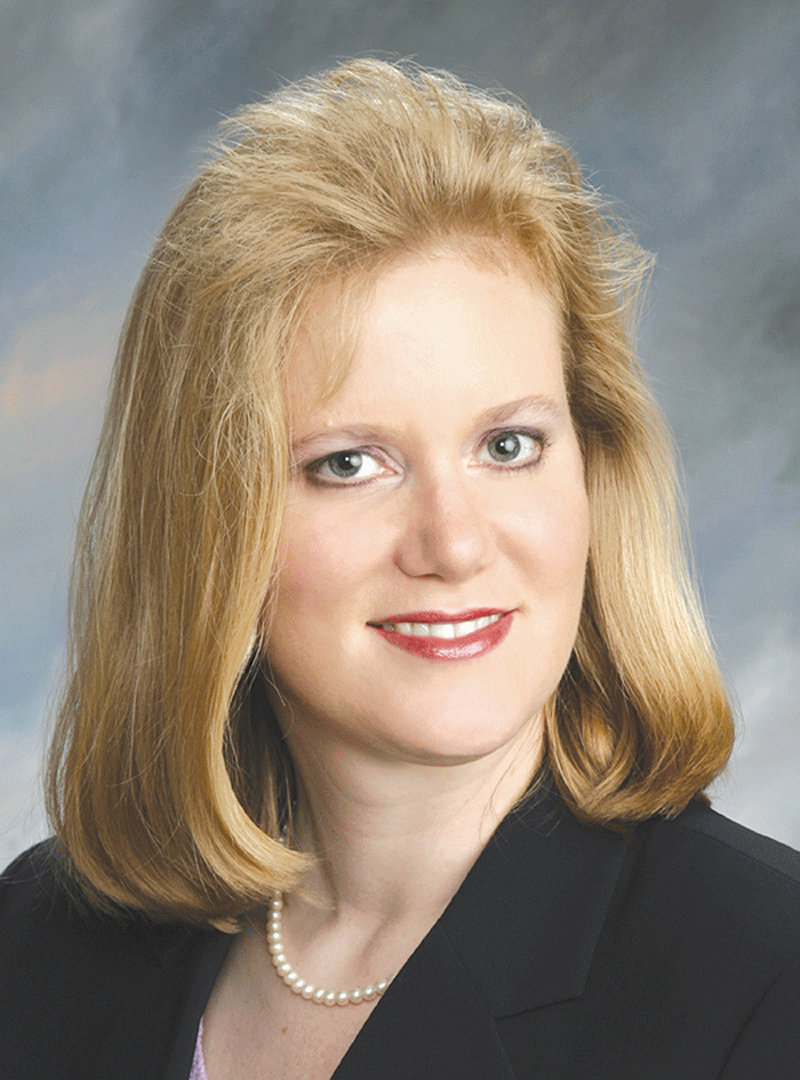
has been named Associate Vice President of Human Resources at American International College in Springfield. Her role includes overseeing recruitment, employment relations, compliance with governing regulations, HR process and procedures, classification and compensation services, and performance management. Cestero will also focus on benefits administration, training and development, and contract negotiations.
•••••
Big Y Foods Inc. in Springfield announced the following:
Guy McFarlane

Guy McFarlane

• Guy McFarlane has been appointed Senior Director of Fresh Foods.
Gary Bolduc
Gary Bolduc

Gary Bolduc

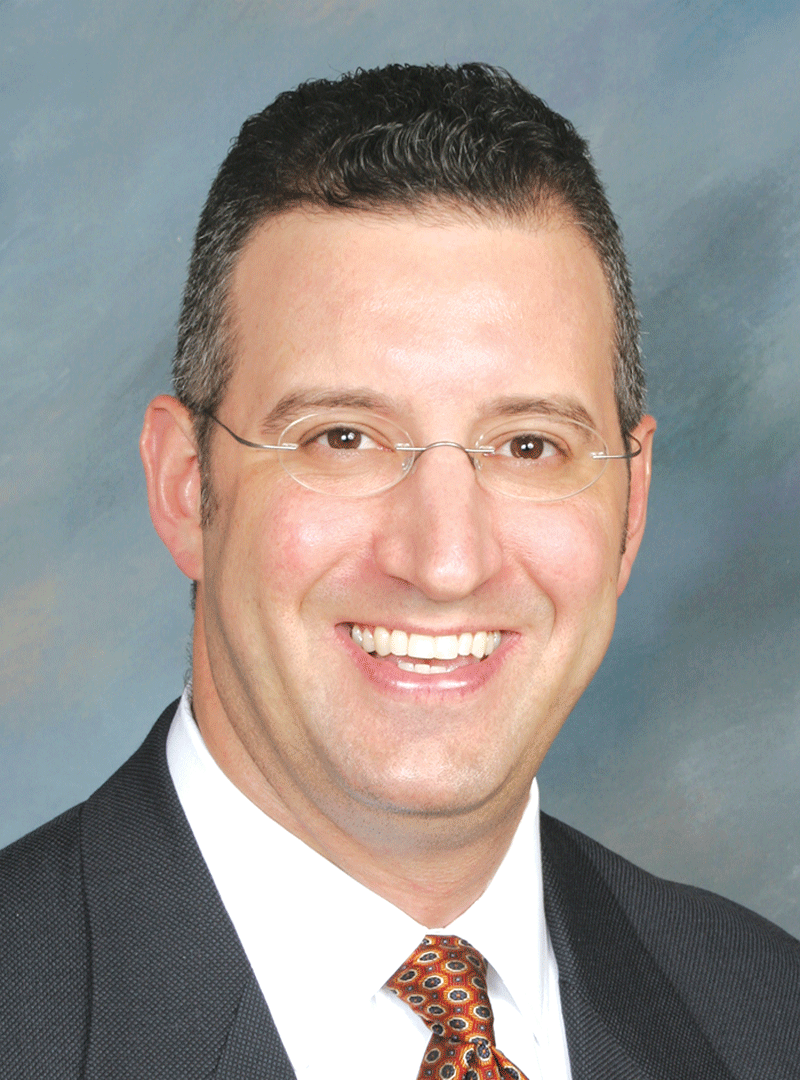
• Gary Bolduc has been appointed Director of Meat and Seafood.
•••••
Allan Costello has joined Berkshire Bank as Senior Vice President and Audit and Compliance Manager. He will lead the internal audit and compliance teams throughout the company.
•••••
Fallon Community Health Plan has named Attorney Gerard Campbell as Privacy Officer and Compliance Manager at its Worcester headquarters. He will serve as the company’s primary resource for questions related to privacy and confidentiality as they pertain to FCHP and its employees, customers, vendors, and business partners.
•••••
Chicopee Savings Bank announced the following:
Anthony Antonopoulos

Anthony Antonopoulos

• Anthony Antonopoulos has been promoted to Vice President of Compliance and serves as the bank’s Security Officer;
Henry Downey

Henry Downey

• Henry Downey has been promoted to Vice President of Commercial Lending; and
Elizabeth Maroney

Elizabeth Maroney

• Elizabeth Maroney has been promoted to Vice President of Loan Administration.
•••••
The Western Mass Wellness Center in West Springfield announced the following:
Kelley Hamaoui

Kelley Hamaoui

• Tai Chi instructor Kelley Hamaoui has begun offering tai chi classes;
Bonnie Coopersmith

Bonnie Coopersmith

• Bonnie Coopersmith, LMFT, a licensed Individual and Relationship Therapist, has begun offering consultation services;
• Carleen Eve Fischer Hoffman, owner of the Clutter Doctor, has formed the Western Mass. Clutter Support Group through the wellness center; and
Lynn LaDuke

Lynn LaDuke

• Lynn LaDuke has joined the wellness center as a presenter and speaker on holistic options for pain relief for fibromyalgia sufferers. Her program is titled Restoring Quality of Life.
•••••
Bevan Brunelle has been appointed Marketing Manager at CityStage & Symphony Hall in Springfield.
•••••
MassMutual Retirement Services in Springfield announced the following:
• Garrett Carlough has joined MassMutual as Sales Director. He is based in New York City and is providing additional coverage for New York City, Long Island, Westchester County, Rockland County, and Northern New Jersey; and
• Andrew Hanlon has been appointed Sales Director. He is based in Boston, increasing coverage for eastern Massachusetts, Rhode Island, New Hampshire, and Maine.
•••••
Danielle Goldaper has been named Director of Alumni Relations and Annual Giving at American International College in Springfield.
•••••
Best Tile of Springfield announced the following:
•  Walt Sawa, Manager, has announced his retirement after 44 years of service with the company.
• Karen Belezarian-Tesini has been promoted to Branch Manager. She has served as Showroom Manager since 1996.
•••••
Mark Haynes, President and Chief Operating Officer of Environmental Compliance Services in Agawam, has been elected to the Board of Directors of the Massachusetts  Chamber of Business and Industry.
•••••
Karen Stonehouse has been invited by the U.S. Department of Justice’s Office for Victims of Crime to take part in establishing a national curriculum to train new protective-service caseworkers. This initiative is part of a nationwide pilot program to develop standardized competency trainings that can be used as a framework by other states to adapt to fit their regulations. In most states, the protective-service caseworkers are the first responders to report elder abuse, neglect, and financial exploitation. Stonehouse will conduct a course titled “Working within the Criminal Justice System” in September. She is a Supervisor in the Protective Services Unit at Greater Springfield Senior Services Inc., based in Springfield.
•••••
Wayne Budd, a longtime member of AAA Southern New England’s Board of Directors and most recently the Vice Chairman of AAA’s National Board of Directors, will now serve as Chairman of the national board. A Springfield native, Budd is a Senior Counsel at the Boston law firm of Goodwin Procter, and is a former U.S. attorney and former U.S. associate attorney general.
•••••
Michael Tucker, President of Greenfield Co-operative Bank, has been elected Treasurer of the Mass. Bankers Assoc.
•••••
Keith G. Roy Construction of Westfield announced the following:
• Keith Roy, President, has completed the Vinyl Siding Institute’s certified installer program; and
• Joshua Roy, Crew Leader, has also completed the certified installer program.
The firm has been in operation since 1946 and is a second-generation, family-owned company that provides siding and roofing installation and repair as well as other home-construction services.
•••••
Linda Carfora has been named Assistant Director of Educational Services for the Willie Ross School for the Deaf in Longmeadow. She is responsible for coordination of the school’s two campuses, the management of the center-based home campus in Longmeadow as well as the partnership, mainstreaming campus in the East Longmeadow Public Schools.
•••••
Shanda Reynelli has been appointed Clinical Director of Children’s Services for the Center for Human Development, based in Springfield. Reynelli, a licensed mental health counselor, will oversee clinical services for all CHD programs serving children and adolescents.
•••••
Thomas Devivo has joined the Charter Department sales team at Peter Pan Bus Lines in Springfield. Devivo handles outside charter sales business for Peter Pan throughout the Greater New York and Northeast areas.
•••••
Western New England University in Springfield recently announced new members of its Board of Trustees. They are:
∙ Stephen J. Rourke, Vice President of System Planning for ISO New England.
∙ Neville S. Bogle, Senior Financial Consultant with Travelers Insurance Co. in Hartford, Conn.
∙ Robert W. Dobek, Pharmacist, in Massachusetts and Connecticut.

Chamber Corners Departments

ACCGS
www.myonlinechamber.com
(413) 787-1555

• Sept. 6: Springfield Chamber of Commerce board of directors meeting, noon-1 p.m. at the TD Bank Conference Center, Springfield.

• Sept. 7: Business @ Breakfast, 7:15-9 a.m.,Twin Hills Country Club. Members, $20; non-members, $30. To reserve tickets, contact Cecile Larose at (413) 755-1313 or [email protected].

• Sept. 9: ACCGS Legislative Steering Committee meeting, 8-9 a.m., TD Bank Conference Center, Springfield.

• Sept. 14: After 5, 5-7 p.m. at Mama Iguana’s, Main Street, Northampton. Members, $10; non-members, $20. To reserve tickets, contact Cecile Larose at (413) 755-1313 or [email protected].

• Sept. 15: ACCGS board of directors meeting, 8-9 a.m., TD Bank Conference Center, Springfield.

• Sept. 19: ACCGS Golf Tournament, Ludlow Country Club, Tony Lema Drive, Ludlow. Shotgun start at noon. Cost per golfer, $150. Contact Cecile Larose, [email protected].

• Sept. 21: ERC board of directors meeting, 8-9 a.m., the Gardens of Wilbraham, Community Room, 2 Lodge Lane, Wilbraham.

• Sept. 21: ACCGS ambassadors meeting, 4-5 p.m., EDC Conference Room, Springfield.

• Sept. 21: PWC Luncheon, “Up the Ladder: The Power of Education.” Special guest speaker: Carol Leary, president, Bay Path College. Reserve tickets through Lynn Johnson, [email protected].

• Sept. 30: Hampden/Wilbraham Golf Classic, Country Club of Wilbraham. Shotgun start at noon. Cost per golfer: $110. Contact Sarah Tsitso, [email protected].

Amherst Area Chamber of Commerce
www.amherstarea.com
(413) 253-0700

• August 31: The University of Massachusetts Amherst & Amherst Area Chamber of Commerce 45th Annual Community Breakfast, 7:30-9. Hosted by UMass Amherst Student Union Ballroom (free parking in the Campus Center Garage). Sponsored by UMass Amherst and the Amherst Area Chamber of Commerce. Tickets are $8 when you register and pay on-line at www.umassconferenceservices.com/registration. Tickets will be available at the door for $10. For more information, call (413) 577-1101, or [email protected].

• Sept. 7: Multi Chamber After 5 Networking Event, 5-7 p.m. at Cooley Dickinson Hospital. (Amherst Area Chamber, Greater Easthampton Chamber, and Greater Northampton Chamber). Sponsored by: Traditional Health First, UMass Fine Arts Center, and Murphy McCoubrey Attorneys at Law. Tickets: $5 for chamber members; $10 for non-members. RSVP at (413) 253-0700, or [email protected].

• Sept. 21: Chamber breakfast, 7:15-9 a.m. Hosted by: Applewood at Amherst. Topic updates on North and South Amherst and Kendrick Park. Sponsored by Elite Home Health Agency. Tickets: $15 for chamber members; $20 for non-members.
RSVP at (413) 253-0700 or [email protected].

Chicopee Chamber of Commerce
www.chicopeechamber.org
(413) 594-2101

• Sept. 7: Summer Sizzle, 4:30-7:30 p.m., Chicopee Moose Family Center #1849, 244 Fuller Road, Chicopee. Tickets: $20 for members, or if you have five or more employees, $18 each; $25 for non-members. Sponsors: Championship: Pilgrim Interiors Inc., Chicopee Electronics, LLC, and United Bank; Pennant: Dave’s Truck Repair Inc., Days Inn, and Wingate at South Hadley.

• Sept. 21: Salute breakfast, 7:15-9 a.m. at the MassMutual Learning & Conference Center, 350 Memorial Dr., Chicopee. Tickets: $19 for members; $26 for non-members.

• Sept. 27: Rake in the Business Table Top Expo & Business Networking Event, 4:30- 7 p.m. at the Castle of Knights, 1599 Memorial Dr., Chicopee. Presented by the Chicopee, Greater Holyoke, Greater Westfield, and the North Central Connecticut Chambers of Commerce. Exhibitor fee: $100 per table. Admission fee: $5 pre-registered, $10 at the door. Sign up online www.chicopeechamber.org, or call (413) 594-2101

Greater Easthampton Chamber of Commerce
www.easthamptonchamber.org
(413) 527-9414

• Sept. 7: Multi-Chamber Networking Event, 5-7 p.m., Cooley Dickinson Hospital, Northampton. Join with the Greater Easthampton, Amherst Area, and Greater Northampton Chambers for a special evening of business networking. Sponsored by: Fleury Lumber Company and Innovative Business Systems. Door prizes, hors d’ouevres, host beer and wine. Tickets: $10. RSVP to [email protected] or (413) 527-9414 by Sept. 6.

• Sept. 24: Recycling Day, 8:30 a.m-1 p.m. Responsibly dispose of your old computer, monitor, television, stereo and/or home and office appliances. Open to all members of area communities. Location: Valley Recycling, 245 Easthampton Road (Route 10), Northampton. Contact the chamber office at (413) 527-9414 or [email protected] for recycling fees. Recycling services courtesy of Duseau Trucking, Hatfield. Proceeds to benefit chamber community programs.

Northampton Area Young Professional Society
www.thenayp.com
(413) 584-1900

• Sept. 15: Vote the Valley, 5-7 p.m., Springfield Country Club, West Springfield. YPS (Young Professional Society of Greater Springfield) in Partnership with NAYP (Northampton Area Young Professionals) bring back Vote the Valley.

Quaboag Hills Chamber of Commerce
www.qvcc.biz
(413) 283-2418

South Hadley/Granby Chamber of Commerce
www.shchamber.com
(413) 532-6451

• Sept. 13: Skinner Museum Stroll, 5-7 p.m. Sponsored by Mount Holyoke College. Special guest: Lynn Pasquerella, president of Mount Holyoke College. Highlights: tours of Skinner Museum collection; refreshments under the tent. Tickets: $5 for chamber members.

Greater Westfield Chamber of Commerce
www.westfieldbiz.org
(413) 568-1618

• Sept. 12: Mayor’s Coffee Hour, 8-9 a.m. Hosted by the Holiday Inn Express, Barnes Meeting Room. Complimentary coffee and Danish. Call the Chamber office at (413) 568-1618 if you plan on attending.

• Sept. 16: Chamber September Breakfast. Registration begins at 7:15 a.m. Hosted by 104th Fighter Wing Air National Guard Base, 175 Falcon Dr., Westfield. Guest speaker will be Allan W. Blair, President and CEO of the Economic Development Council of Western Mass. Cost: members, $20; non-members, $25. Contact Carrie Dearing at (413) 568-1618 or at [email protected].

• Sept. 27: 14th Annual Rake in the Business Table Top Showcase. The Greater Westfield, Chicopee, Greater Holyoke, and North Central Connecticut Chambers of Commerce will hold a multi-chamber trade show. Members may purchase a table for $100; purchase includes four complimentary admission tickets. Admission for the public is $5 for anyone who pre-registers, $10 at the door. Sponsorship opportunities are also available at a platinum, gold, or silver level. Call the Carrie at (413) 568-1618 or e-mail, [email protected].

YPS-Young Professional Society of Greater Springfield
www.springfieldyps.com

• Sept. 15: Vote the Valley, 5-7 p.m. at Springfield Country Club, West Springfield. YPS (Young Professional Society of Greater Springfield) in Partnership with NAYP (Northampton Area Young Professionals) bring back Vote the Valley.

Court Dockets Departments

The following is a compilation of recent lawsuits involving area businesses and organizations. These are strictly allegations that have yet to be proven in a court of law. Readers are advised to contact the parties listed, or the court, for more information concerning the individual claims.

CHICOPEE DISTRICT COURT
Tayisha Guzman v. Chicopee Village Townhouses
Allegation: Negligent maintenance of property, causing slip and fall: $3,389.33
Filed: 6/30/11

HAMPDEN SUPERIOR COURT
Edwin Diaz v. CSX Intermobil Inc.
Allegation: Defendant misclassified as an independent contractor instead of employee, transferring numerous costs unlawfully from the defendant to the plaintiff: $495,463.91
Filed: 4/25/11

Geodesign Inc. v. Purcell Associates and the Town of West Springfield
Allegation: Collection of outstanding fees for design services rendered on a construction project: $1,090,295
Filed: 4/20/11

Peter Mayberry v. Allcare Dental Management Inc.
Allegation: Medical malpractice: $50,000+
Filed: 4/27/11

Ted Ondrick Company, LLC v. Green River Development, LLC
Allegation: Non-payment of paving services rendered: $25,350.30
Filed: 5/6/11

HAMPSHIRE SUPERIOR COURT
Rose P. Gamin v. Five Star Aviation Inc.
Allegation: Crash of aircraft due to negligence of maintenance facility: $65,000
Filed: 7/18/11

NORTHAMPTON DISTRICT COURT
JP Elastomerics Corp. v. Soltech Inc.
Allegation: Breach of contract and failure to pay commission: $16,646.80
Filed: 6/14/11

Shawn Mineau and Kevin Mullen v. Decosino Construction and Five Star Building Construction
Allegation: Failure to pay prevailing wages: $25,000
Filed: 6/9/11

Michael Elbery v. City Tire Inc.
Allegation: Unfair and deceptive trade practices and fraud: $10,000
Filed: 6/27/11

SPRINGFIELD DISTRICT COURT
Advanta Bank Corp. v. Alpha Builders Inc.
Allegation: Non-payment on credit account: $10,533.95
Filed: 6/19/11

Arthur C. Lamb Co. Inc. v. National Maintenance and Service Corp.
Allegation: Non-payment of goods sold and delivered: $8,417.37
Filed: 6/3/11

Beacon Sales Co. v. Keith G. Roy Home Improvement and Construction
Allegation: Non-payment of goods sold and delivered: $10,629.76
Filed: 6/19/11

BSI, LLC v. Tigar Refrigeration Co., LLC
Allegation: Non-payment of goods sold and delivered: $9,123.72
Filed: 6/19/11

Catherine Nguyen v. Faces of Phobia
Allegation: Plaintiff was injured after being struck in the face by another patron who was startled and trying to flee: $24,999.99
Filed: 6/6/11

Concord Electrical Supply Limited v. Precision Electric Enterprise, LLC
Allegation: Non-payment of goods sold and delivered: $22,243.99
Filed: 6/24/11

WESTFIELD DISTRICT COURT
Industrial Air Solutions v. Creative Hardware Floors Inc.
Allegation: Enforcement of a previous judgment: $5,488.54
Filed: 6/3/11

Law Sections
Autism Legislation: What It Means for Your Child

By MELISSA R. GILLIS, Esq. and DENNIS G. Egan Jr.

Melissa R. Gillis

Melissa R. Gillis

Imagine this: an issue so big that when the governor signs a much-anticipated bill into law so many parents and families want to view the historic event that the signing has to take place at Fenway Park in Boston, instead of the State House, to accommodate the crowd.
Well, that’s exactly what happened on August 3, 2010 when Gov. Deval Patrick signed House Bill 4935 (an Act Relative to Insurance Coverage for Autism Spectrum Disorder, or ARICA) into law. As the crowd cheered, Massachusetts, finally having recognized the unfair and unreasonable burden imposed on families with children diagnosed with autism, became the 23rd state to pass such legislation.
Effective Jan. 1, 2011, private health-insurance plans, employees and retirees under the state plan, hospital service plans, and HMOs are now required to provide coverage of evidence-based, medically necessary autism therapies for diagnosed persons of all ages. After being deemed medically necessary by a doctor, coverage will include habilitative and rehabilitative treatments, psychiatric and other therapeutic care, diagnostic tests, applied behavioral analysis and health treatments, pharmaceuticals, and other care provided, prescribed, or ordered by a licensed physician or psychologist for a person on the autism spectrum, including speech, occupational therapy, and physical therapy. There is no age restriction for any of these treatments to begin or end.
Additionally, insurers cannot establish dollar-amount, annual, or lifetime service limitations on the required coverage that are less than that for other physical conditions, and they are prohibited from limiting the number of visits an individual makes to an autism-service provider. Implementation of ARICA is, however, based on each policy’s specific annual renewal date, so coverage goes into effect only when your company’s insurance plan renews after Jan. 1, 2011.
Dennis G. Egan

Dennis G. Egan

There are several types of plans, however, that are not subject to ARICA. These include self-funded plans, which are regulated by ERISA and therefore subject to federal laws, unless they comply with state laws as a matter of practice. Importantly, services received under MassHealth and CommonHealth are also not subject to ARICA.
Contacting your employer is the easiest way to determine if they are subject to this new law, and for those covered by MassHealth and CommonHealth, families with autistic children under the age of 9 can apply for the Mass. Children’s Autism Medicaid Waiver through the Department of Developmental Services. Additionally, if your plan is regulated by ERISA, the recently enacted federal health care reform contains language that will eventually cover autism treatment. Other caveats to the new law include a clause wherein insurers can opt out of providing coverage for three years if their costs rise by more than1% per year. However, this determination is to be made based on an independent review and not by the insurers themselves.
Opponents of ARICA and small-business owners argue that the cost of providing health care benefits to employees will become even more difficult for businesses already struggling to absorb rising plan premiums. Concerned that increased costs will ultimately cause business owners to offer less-quality health care packages or be reluctant to hire new employees who would be eligible for health insurance, they may have no alternative but to pass the cost along to employees.
ARICA leaves those who are skeptical asking, ‘what’s the catch?’ Many suspicious parents believe the insurance companies will use it as a way to deny claims and force parents to jump through a number of hoops before agreeing to cover services, or that some will simply give up trying. Others don’t want their children to be forced into a label of being on the autism spectrum disorder, and urge everyone to make sure there are proper medical assessments and treatments prior thereto, which seemingly is a catch-22 scenario in and of itself.
Yet advocates, including Autism Speaks, say this law is one of the most comprehensive in the nation, and will finally provide families with the relief desperately needed so that children can receive the therapies they deserve in order to meet their full developmental potential. Your child will no longer be denied, and parents will no longer have to pay out of pocket for health treatment if it’s deemed medically necessary because of an autism diagnosis. Other ARICA proponents argue that, until now, many parents were prevented from actually getting a diagnosis of autism for their child because of a lack of proper insurance coverage.
Under ARICA, educational services provided under an individualized education plan are unaffected. But while insurers are not required to pay for in-school services, studies show that, in other states that have similar legislation, towns and the states themselves end up actually saving money because, when children with autism receive appropriate treatment, more of them are likely to be able to participate in regular classes, thereby reducing the cost of expensive special-education services.
That said, as with any new law or significant change, time is required to work out the kinks, but generally speaking, Massachusetts has certainly made a huge step in the right direction with the acknowledgement that autism is a growing national health crisis, if not an epidemic, and that the time is now for insurance companies to assist families in ensuring their children get the proper treatment and care, just as they would for the flu or common cold.

Melissa R. Gillis, Esq. is an associate with Bacon Wilson, P.C. in the special education, family, and real estate departments; (413) 781-0560; [email protected]. Dennis G. Egan Jr. is an associate with Bacon Wilson, P.C, concentrating in special education, business, and corporate law; (413) 781-0560; [email protected]

Departments Picture This

Send photos with a caption and contact information to:  ‘Picture This’ c/o BusinessWest Magazine, 1441 Main Street, Springfield, MA 01103 or to [email protected]

Kids Safety Event

LibbosTeamClownFireTruck1At left, the staff and family members of the Law Offices of Thomas M. Libbos, P.C. hand out hundreds of free bike safety helmets to children at the 3rd Annual Kids Safety Event staged recently at the Naismith Memorial Basketball Hall of Fame. From left, are: attorney Thomas Libbos, Samantha Wrinkle, Catherine Wrinkle, Melissa Cintron, and attorney Katherine Lamondia-Wrinkle. Below left, Shriners Clown Lenny Horowitz, a.k.a. “Paintbrush,” waves from a Springfield Fire Department Fire Truck during the event, which was produced by Market Mentors LLC of West Springfield.


Extreme Makeover

Extreme-Makeover-Home-EditionExtreme Makeover: Home Edition is coming to Springfield. That announcement was made recently in front of City Hall, with dozens of city officials, volunteers, and builders in attendance. Here, Brad Campbell, left, executive director of the Home Builders and Remodelers Association of Western Mass., standing with Springfield Mayor Domenic Sarno, thanks Western New England University students for volunteering their time to help with the project, which will kick-off with the ceremonial “door knock” at the home of the lucky family on Sept. 11. At right is Nick Riley, owner of N. Riley Construction and lead builder for this project. Visit http://www.joinextreme.com/mass to register as a volunteer or donate to the project. For behind the scenes photos and videos visit http://www.facebook.com/emheSpringfield.

Commercial Real Estate Sections
Arts Initiative Strives to Breathe New Life into Springfield’s Central Business District

Evan Plotkin and Annie Waters

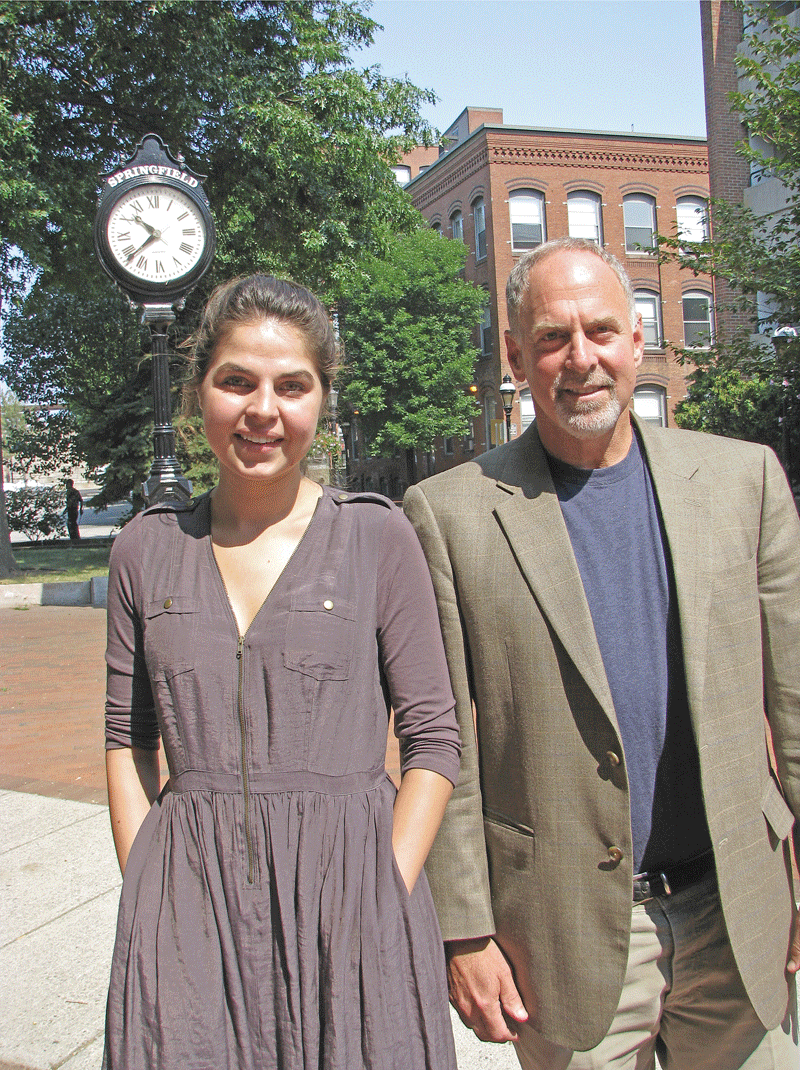
Evan Plotkin and Annie Waters in the soon to be “activated” courtyard at Morgan Square. At top, one of Waters’ sketches of what the rejuvenated block would look like.

Evan Plotkin is a firm believer in the power of the arts as an economic driver. He says he’s utilized the creative economy to improve the ‘quality of life and experience’ for the tenants in two downtown office buildings — One Financial Plaza and 1550 Main — and now he’s planning to take his so-called “downtown revitalization through the arts” initiative to another dimension with ambitious plans for the Morgan Square area. As with those other properties, his plan is to take dormant or underutilized facilities, and “activate” them.

Evan Plotkin needed both hands as he gestured to various components of the spacious courtyard within the Morgan Square apartment complex in downtown Springfield — the ornate clock, the large shade trees, the walkway to the back door of the deli that’s been closed for nearly a decade, and an alleyway that would connect the courtyard with Main Street, except the gate at the front is always locked.
“It’s a beautiful area, but very underutilized,” said Plotkin, president of Springfield-based NAI Plotkin, which recently won a contract to manage the property. “It’s asleep … and we need to wake it up.”
He would use similar language as he discussed other aspects of the massive Morgan Square/Armory Commons complex — including a host of vacant storefronts, another courtyard behind a building along Taylor Street, and a traditionally large inventory of vacant residential space — and other properties in that section of downtown.
The word he used most often, and pointedly so, as he talked about various properties and assets was “activate.”
That’s what he intends to do through the expansion of an ambitious project he calls the “downtown revitalization through the arts” initiative, which, as that name suggests, attempts to use the arts as an economic driver to change the look and feel of that part of Springfield. There are many moving parts, but the concept is fairly simple — to incentivize artists to live and work in that area, and to provide them with vehicles for showcasing — and selling — their work.
Plotkin is quite optimistic about the prospects for the Morgan Square property, which would be rebranded as the “Art Space at Morgan Square,” because he’s already conducted a good amount of ‘activation’ in other buildings managed by NAI Plotkin, and with considerable success in his estimation.
He pointed to 1350 Main St., the office tower also known as One Financial Plaza, as an example. There, a long-dormant fountain has been restored, a café has been opened on the ground floor, the lobby’s walls have become artists’ galleries, and a small patio area has become a venue for performing artists. These changes and added amenities have no doubt contributed to a higher occupancy rate and success in turning on the lights within several previously dark floors, said Plotkin.

The lobby at 1550 Main

The lobby at 1550 Main, rebranded as the 1550 Gallery, is one of many locations downtown, where artists can now display their work.

Similar activation has occurred at 1550 Main St., the former federal building now occupied by the Springfield School Department, Baystate Health, and other tenants. Outdoor performances, art in the lobby (now branded as the 1550 Gallery) and imaginative landscaping have helped improve quality of life for tenants while bringing vibrancy to a location that for years had been cordoned off by Jersey barriers following the Oklahoma City bombing.
The Morgan Square project represents the latest and most comprehensive activation effort to date, said Plotkin. Based on models created in Pittsfield, North Adams, Washington, D.C., and other communities, the arts initiative calls for attracting artists to the vacant retail spaces in Morgan Square through reduced or forgiven rent, and using downtown office buildings, such as 1550 Main, One Financial Plaza, and others, as well as perhaps the downtown hotels, as galleries to showcase the art.
The broad objective is to use the arts to create energy in the downtown and make it a true destination, said Plotkin, who has spent the past several years advancing his theory that the creative economy is one of the keys — and perhaps the key to revitalizing Springfield’s central business district.
“This is the culmination of a lot of thinking, a lot of thought about the creative economy,” he said. “It’s a chance to really make something happen in the city; I almost look at this as the great Springfield experiment.”

Works in Progress
Plotkin told BusinessWest that the arts initiative amounts to a manifestation of a philosophy that defines the Plotkin company’s approach to property management.
“While most management companies can perform the perfunctory physical aspects of managing the property, our approach also focuses on improving the quality of life and experience for the individuals who live and work downtown,” he explained. “This is achieved in part by programming events, and improving downtown parks, neighborhoods, and other public places.”
The Morgan Square initiative contains all these elements, said Annie Waters, a Smith College student, artist (some of her work is currently hanging in the lobbies at 1550 Main), and summer intern at Plotkin who nonetheless has her own business card, complete with the title “chief imagination officer.”
Waters has been involved in many arts-related projects over the past few months, including a proposal to use scrap metal from Springfield junkyards to create industrial- history-themed sculptures — depicting the Duryea brothers’ car, the monkey wrench, and other Springfield firsts — that would be displayed at 1350 and 1550 Main St.
But most of her time has been spent blueprinting a plan of action for Morgan Square, an initiative aimed at removing those ‘Now Leasing’ signs from storefronts (some of which have been in the windows for years) and otherwise activating dormant or underutilized properties.
The broad goals are to inspire more artists to live and work in the complex, she explained, adding that the endeavor is modeled after a number of successful programs, such as Mather Studios in the Penn neighborhood of Washington, D.C. The 10-floor building has 50 loft-style condos occupied exclusively by artists, and it has become a destination, not simply a mailing address.
Moving past images from D.C., North Adams, and Pittsfield on a Powerpoint presentation she’s shown to many in the area, Waters stopped at images of the vacant storefronts in Morgan Square. Outlining the plans for the complex, she and Plotkin said these commercial spaces will be offered at reduced rents to qualified artists.
There will be a lottery of sorts, said Plotkin, noting that applicants must complete a questionnaire and impress those reviewing them with answers to such questions as ‘how do you plan to utilize the studio and gallery space if accepted?’ and ‘how do you plan to actively participate and contribute to the creative economy at Morgan Square?’
Other components of the initiative call for development of a restaurant/coffee shop (probably on the site of the former deli) and reactivation of that aforementioned courtyard through outdoor seating for the restaurant, decorative lighting, sculpture, art, and music.
In addition, the apartments would be marketed to teachers who work in the city’s public schools and Baystate employees working at 1550 Main. “The goal is to develop market-rate apartments that will attract talented professionals to housing in downtown Springfield,” he said. “The new workforce and talent pool will eventually attract site selectors and new businesses downtown.”
Still another component is to create gallery space in the downtown’s office buildings and perhaps its hotels, said Plotkin, adding that the overarching goal is help artists and their ventures become more economically viable.
“What we’re trying to do is offer artists living space, studio space, and gallery space,” he said. “They need all three to be successful.”
Plotkin told BusinessWest that he’s optimistic about the plans for Morgan Square, and this positive outlook is fueled by what has transpired at 1350 and 1550 Main St., but also by other developments currently unfolding or on the drawing board.
These include the ambitious development projects launched by the New England Farmworkers Council and its president, Heriberto Flores — the expanded portfolio now includes the Hippodrome and the Bowles Building (home to the Fort restaurant), across Main Street from Morgan Square — and the planned redevelopment of Union Station, which can be seen out the windows of some of the apartments.
“If I was a single person and an artist, I couldn’t think of a cooler place to do my work,” he said, expressing the hope that others will be saying such things in the not-too-distant future.

Brush with Fame
Time will tell how Plotkin’s great Springfield experiment, or at least the Art Space at Morgan Square component, shapes out.
But he believes that in time, and probably not much of it, the project will become a poignant symbol of how the creative arts have helped revitalize the downtown area.
Always the optimist, Plotkin said there is already plenty of evidence that the arts can improve the experience of working and living downtown, and he’s energized by the prospects of creating more.
“This is a very exciting project for Springfield that could really change the feel of this area,” he said, while standing in the Morgan Square courtyard. “All we have to do is activate the many assets we have.”

George O’Brien can be reached at [email protected]

Entrepreneurship Sections
, entity

Jeffrey Fialky

Jeffrey Fialky

Individuals forming new business enterprises, or perhaps those whose business enterprises have matured to the standpoint of pursuing the next level, often approach their accountants and attorneys when considering whether or not to incorporate.
Really, the term ‘incorporate’ is euphemistic for whether an individual, and in some cases multiple business partners, should proceed (or continue to proceed) on their own behalf or, alternatively, form a limited-liability entity pursuant to the laws of the respective jurisdiction. The question of whether to engage in business operations in an individual capacity or to form a limited-liability entity within which to conduct business operations is generally a question answered by a thorough analysis of the respective liabilities and tax implications.

Sole Proprietorship
The simplest manner of doing business is in the form of a sole proprietorship. That said, a sole proprietorship is a bit misleading by name, in that it is not a business entity, but rather the absence of a business entity.
There are no registration or filing requirements, and simply engaging in the business operation commences the sole proprietorship, in the individual’s own name, or on their own behalf. As a result, an individual who engages in a business practice as a sole proprietor personally exposes himself to any liabilities that could arise as a result of such business operations without any legal protection from same.
While an individual doing business as a sole proprietor may register a fictitious name in which to conduct his or her business by filing a DBA certificate in the community in which the business operates, from a legal standpoint, the fact that the business operates pursuant to a fictitious name has no bearing or legal effect relative to liability. By way of example, assume Joe Smith, d/b/a XYS Construction, is named in a lawsuit as a result of an injury occurring to a third party on a job site. A judgment against Joe, personally, could certainly result in a lien against Joe’s personal residence, subject to subsequent sale in order to satisfy such judgment.

General Partnership
Another form of business operation is a general partnership. This consists of essentially two or more individual sole proprietors engaging in business operations in a joint capacity. Often, a general partnership will be governed pursuant to the terms of a partnership agreement; however, such as with a sole proprietorship, there is no formal legal registration requirement.
Additionally, as with a sole proprietorship, the general partnership does not protect the individual partners from personal liability arising out of the business operations. Worse, partners pursuant to a general partnership are not only liable personally for their own acts or omissions relative to the ongoing business venture, but, additionally, each individual is personally liable for the acts of other partners in the partnership.

Corporation
For many reasons, including avoiding the personal liability attributed to sole proprietorships and general partnerships, parties are often counseled to consider forming limited-liability legal entities, which provide a barrier of protection for the business owners.
Among the host of legal entities available for formation, the most commonly used in contemporary business are the corporation and limited-liability company (LLC). That said, the term ‘corporation,’ as generally used, often includes two specific types of corporations ­— subchapter ‘C’ corporations (C corps) and subchapter ‘S’ corporations (S corps), the distinction between which arises pursuant to the respective subchapter of the IRS tax code.
Generally speaking, a corporation is a legal entity that is formed by the filing of articles of organization, is governed by its bylaws, and which is owned by its stockholders. Corporations are managed by their board of directors, with day-to-day operations overseen by their officers. Unlike a sole proprietorship or general partnership, a corporation is an independent legal identity, which is independent from that of its stockholders. Accordingly, a substantial degree of protection is afforded to owners of the corporation relative to liabilities arising as a result of the ongoing business operations of the corporation. The tax treatment of a corporation, including the potential tax effect on individual stockholders, varies in accordance with the nature of the corporation formed, specifically whether it is a C corp or an S corp.

C Corporations
Subchapter C corporations, or C corps, enjoy the benefits of limited liability for stockholders, and are operated pursuant to the traditional corporate formality of being governed by their directors and officers. One significant potential tax disadvantage to C corps, however, is the potential for double taxation of corporate earnings. C corps pay tax on income at the corporate level, and in the event that earnings are distributed to stockholders as dividends, the dividends are often subject to tax at the individual shareholder level upon distribution. This so-called potential for ‘double taxation’ can often be avoided by forward thinking and anticipatory tax planning.

S Corporations
Unlike C corps, subchapter S corporations, or S corps, while providing many of the advantages of the limited liability corporate structure as provided by a C corporation, have the added advantage of not being subject to the potential for double taxation. In fact, income and losses from the business flow through to the individual stockholders and are reported on their personal tax returns. That said, S corps are subject to their own specific limitations and potential disadvantages, most notably the fact that they are limited to a maximum number of stockholders, that stockholders generally must be individuals as opposed to other legal entities, that the S corporation may not have more than one class of stock (e.g. common vs. preferred), and that distributions must be in direct percentage to ownership interest.

LLC
Another commonly utilized business entity is the limited liability company (LLC), which is an entity that shares many characteristics of sole proprietorships and general partnerships, but with the limited liability protection afforded to corporations. The LLC, much like a corporation, is formed by the filing with the secretary of the respective state jurisdiction, with a simple certificate of organization filing, and payment of the respective registration fee. Unlike a corporation, which is owned by its stockholders, LLCs are owned by its member or members, as opposed to directors and officers, and managed by their manager or managers.
LLCs afford a great degree of flexibility in that most states have enacted a limited-liability company act permitting LLCs to be owned by a single member, to have multiple classes of membership (e.g. common vs. preferred), and to determine the capital structure, ownership, and management, all as determined by the business owners. Additionally, unlike S corps, profits and losses may be allocated in a manner that is disproportionate to direct percentages of ownership interests.
Unlike a corporation, which is operated pursuant to its articles and bylaws, LLCs are operated pursuant to a document called an operating agreement, which is a recitation of the respective rights and obligations of each member and manager of the LLC.
Members of an LLC have additional flexibility relative to taxation in that members can be taxed much like a sole proprietor or like a partnership, although distributions to members may be subject to self-employment taxes.
As a result of the flexibility of LLCs and the avoidance of the potential for double taxation, they provide ideal entities for the purposes of taking title to real-estate holdings and investments. For similar reasons, LLCs are additionally valuable tools for estate-planning purposes.

In Summation
As you can see, the determination of whether to form a limited liability entity and, if so, the choice of entity itself, is a fact-dependent analysis. Naturally, consultation with legal and tax professionals is recommended to ensure that you may enjoy the maximum level of liability protection and the most favorable tax consequences for your situation.

Jeffrey Fialky is an associate with the regional law firm Bacon Wilson, P.C, specializing in business, corporate, municipal, and real-estate law. A former assistant district attorney in Hampden County, Fialky joined the firm after a decade of holding senior attorney positions with some of the country’s most prominent telecommunications and cable television companies, where he negotiated large-scale licensing, acquisition, and distribution agreements; (413) 781-0560; baconwilson.com/attorneys/fialky

Entrepreneurship Sections
Amherst Engineer Creates Pressure Vest for Children with Autism

Tina Champagne

Tina Champagne says not every patient responds to deep pressure, but for those who do, the Vayu Vest is groundbreaking.

The power of a hug can work wonders in relieving anxiety and stress. But many children with autism spectrum disorder are overly sensitive to touch and cannot tolerate the comforting gesture.
However, they do need something to quell their anxiety, which can result from their heightened response to sounds and sights most people don’t even notice.
And thanks to a groundbreaking new medical device, children with sensory processing disorder are being soothed and comforted by a lightweight, therapeutic vest that can be inflated to produce the exact amount of pressure the child needs at a given moment.
It’s called the Vayu Vest, and it has taken mechanical engineer Brian Mullen years of collaboration, research, and trial and error to create. “About 87% of people with autism have sensory processing issues,” said Mullen. “They experience the world and respond to it differently than typical people.”
Tina Champagne agrees. “Children with autism are often oversensitive to touch, sounds, visual stimulation, and even temperature,” said the program director for the Center for Human Development’s Institute for Dynamic Living in Springfield.
The launch of the vest, which is named after a Hindu wind god, took place in May and was initially inspired by Champagne’s work as an occupational therapist at Cooley Dickinson Hospital in Northampton.
Champagne and Mullen have collaborated on the project for seven years, doing research and clinical trials to develop a product that not only helps children with autism, but may have other applications in mental health treatment.
Two years ago, Mullen and his business partner, Chris Leidel, started a business named Therapeutic Solutions to market the vest. The duo and their Amherst-based operation were recently named as finalists in the prestigious Mass Challenge competition in Boston that runs through the end of September. They are hoping to win a portion of the $1 million in cash awards, as well as generate interest in their product.
They have received help and won awards along the way for their work, which they are grateful for, and Mullen says their business is growing, thanks to support from the Western Mass. community. Their hope is to get the cost of the $2,000 device reimbursed by insurance companies. If they succeed, it will be the first medical device for autistic children paid for by insurance.
“This was and is all-consuming,” said Mullen. “It’s an incredibly important thing to do, and we are getting calls and e-mails from people thanking us.”

Research Project
The story of how the vest came to be begins when Mullen was a student at UMass Amherst. At the time, Champagne was working as group program director in Cooley Dickinson Hospital’s acute inpatient behavioral unit and was focused on collaboratively incorporating healing and nurturing interventions into clients’ treatment plans.
“I was working in conjunction with the state Department of Mental Health to find tools to help decrease the need for seclusion and restraints,” she said, explaining that people were sometimes put into mechanical restraints or injected with medication when their behavior spiraled out of control. “It was and continues to be an international initiative, and part of my job was to help staff learn new approaches and interventions that were safe and nurturing.”
One of the tools she incorporated was a weighted blanket, traditionally used to help calm people with autism when they became anxious. “The clients would wrap themselves in them,” she said. “The belief is that the pressure helps to decrease the autonomic nervous-system response of overarousal connected to anxiety.”
Research had been done in the field by Temple Grandin, an author, engineer, seven-time Emmy award winner, and well known woman with autism, who has spoken and written about autism for more than 20 years. Grandin, a professor of animal science at Colorado State Unversity, created a so-called “squeeze machine” for herself as well as for livestock waiting to be slaughtered.
Mullen began his documented collaboration with Champagne when he was in graduate school at UMass Amherst, and was looking for a project for his thesis. They had been introduced by his professor, Sundar Krishnamurty.
Mullen was fascinated by the subject, and soon became immersed in research himself, learning how weighted blankets and vests were being used with people with autism to help them self-soothe and regulate anxiety. “I saw a real need for this,” he said.
Champagne said other students had tried developing inflatable sleeping bags and vests, but the sounds they made as they inflated, and the feel of the fabrics used, upset children with autism.
And although Mullen was completely committed to his research project, he said it was a risky and unconventional topic for someone in the mechanical engineering program.
“I was taking a non-traditional path, the path less traveled,” he explained. “This was something different and new, and it appealed to me. I knew that what I was doing could have a large impact on people’s lives and I figured, ‘why not help when I have the opportunity?’”
Mullen said great progress has been in the field of autism research over the past seven years, “but the population is still drastically underserved. And it became compelling for me to help reduce the use of restraints and seclusion and come up with better solutions for people. After I saw and heard about this and was exposed to it, I felt I had to take action.”

Trial and Error
After earning his graduate degree, Mullen decided to continue to work toward a doctorate. In 2006, a feature story was written in the Boston Globe about the research he and Champagne were conducting. “We received a lot of very positive feedback from people in this country as well as on the international level,” he said.
About that time, he met with a parent who asked him to make a vest for her daughter to help curb her anxiety. Although he had interacted with others via e-mail, “it was very different when I had to sit across from a parent. It was very moving, and I decided to make sure that our research got to the people who could benefit from it.”
At that point, Mullen decided to start his own company with the goal of creating an inflatable vest that was portable, comfortable, and would allow pressure to be adjusted to an individual’s needs. He entered a 2006-07 UMass business-plan competition and lost in the finals.
“But I learned a lot from mentors and the judges who gave me a crash course in how to develop a business,” he said. He re-entered the 2007-08 competition and won the grand prize.
At that time, Leidel and Mullen joined forces. They had been in the same class as undergraduate students, but after graduation, Leidel had worked in an industrial setting before deciding to return to get a master’s degree in business administration.
He helped Mullen write an essay for an entrepreneurial competition, which won them a monetary award. In addition, they also received a grant from the National Collegiate Inventors and Innovators Alliance in Hadley. “It was a very important grant, as it helped us do some consulting work to further the idea and develop it to see if could actually become a business,” Mullen said.
The money also allowed them to work with Dielectrics in Chicopee, which specializes in medical devices. “They helped us to make a prototype and really took an interest in the product,” Mullen said.
After graduating in 2009, he and Leidel were able to raise seed funding for their business from local investors who were following their work.
Feedback has been integral to product development, and the duo continues to collaborate with local organizations. Champagne has found the vest works well for some children who have attention deficit disorder with hyperactivity, children with autism, and those who have suffered trauma.
However, she and Mullen stress that it is not for everyone. “Studies show that 75% of individuals like deep pressure, but 25% don’t,” Champagne said, citing results obtained from the first study they conducted and published, using the modality with adults aged 19 to 64 who had no mental health issues.
But for those who respond to pressure, the vest is groundbreaking, Champagne said. “And Brian and his staff have taken it on themselves to meet the highest possible standards for medical equipment.”
Today, vests have been donated by sponsors for use at the OTA Watertown Clinic, which is one of the largest occupational therapy facilities in the country, and also at River Street School in Windsor, Conn. and at the Center for Human Development, where it is used under Champagne’s direction. Mullen and Leidel are also renting out the vests on a individual basis.
The Vayu Vest was registered as an FDA Class I exempt medical device with the U.S. Food and and Drug Administration last fall, and Mullen and Leidel hope to get it reimbursed by insurance.
“We think we have a significantly better solution than anything that has been tried in the past to apply pressure on a personal level whenever and wherever it is needed. It’s our passion to get it to children who can benefit from it,” Mullen said.
So that they can be held and comforted in a way that is personalized, safe, discreet, and makes a lasting difference in their reaction to the world. n

Education Sections
WNEU Program Introduces Young People to the Nonprofit Realm

Julie Siciliano

Julie Siciliano says the board intern program has injected youth into area institutions, while opening students’ eyes to the world of community service.

Julie Siciliano says that things tend to move slowly in the world of academia, especially when it comes to the process of taking concepts for new learning initiatives from the drawing board to the classroom — in whatever form it may take.
There is a great deal of due diligence involved in such matters, noted Siciliano, dean of the College of Business at Western New England University, adding that at her school — and across higher education in general — building consensus on if, when, and how to proceed with new ideas can often be a time-consuming proposition.
Such was not the case, however, with a relatively new course of study at WNEU — the so-called “nonprofit-board-internship” program. As the name suggests, the for-credit initiative places students on the boards of area nonprofits — the YMCA of Greater Springfield, the Pioneer Valley Chapter of American Red Cross, and the Springfield Boys & Girls Club were early participants — and gives them full voting privileges.
First suggested by College of Business adjunct faculty member Gerry Fitzgerald in early 2008, the program was ready to be implemented for the next semester, a much quicker pace than is generally the rule with such matters.
“That’s because everyone could see early on that this was going to be a real win-win,” said Siciliano. “It was going to be a win for the nonprofits, and a win for the students taking part; the organizations would get an injection of youth on their boards, and the students would gain an appreciation for the important work these nonprofits do — and become involved in that work.”
And just three years in, it’s apparent that this optimism, not to mention those fast-tracking efforts, were well warranted.
Tashia Kay

Tashia Kay says her time spent on the board of the Springfield Boys & Girls Club provided a number of learning experiences.

Consider these comments from Tashia Kay, who spent a year on the board of the Boys & Girls Club, as exhibit A: “It was great to be part of an organization that was passionate about the kids and the community, and not just focused on money and profits,” she said, drawing a distinction between what she saw in her Business classes and what she observed on the board. “I was very lucky to be part of the board for the seven months I was there.”
As for input on the nonprofit side, Rick Lee, director of the Pioneer Valley chapter of the Red Cross, was among the many who went into the program with optimism and high expectations. But even with all that, he remembers being pleasantly surprised, not by the many ways his organization has benefitted — he fully anticipated that an infusion of youth would become a real asset — but how the participating students gained confidence he could see and hear as the year went on.
Rick Lee, director of the Pioneer Valley chapter of American Red Cross

Rick Lee, director of the Pioneer Valley chapter of American Red Cross, says the board intern program has helped introduce young people to career possibilities in the nonprofit realm.

“While these young people have certainly made some contributions to our organization and helped to move things forward, I also saw in the time each one of them was with us, progress in their own personal development that was just as gratifying and just as important,” he explained. “They brought youth to the discussion and different viewpoints, and over the course of their year gained a great deal of confidence and ability to express opinions and back up what they were saying.”
Beyond this development professionally, there are many other benefits to be derived from this program, said Lee, especially the ability to introduce young people to the realm of nonprofit management and perhaps inspire them to make this a career.
“As someone who has been in nonprofit work for more than 30 years now, I’ve always been aware of how important it is to attract young people to the kind of work we’re in,” he said. “Whether it’s attracting them as a paid staffer in the future, or, as we’re trying to do here, getting them to think about their role as a leader so they may choose a different career path — as a leader in a nonprofit organization when they’re a young professional, not just when they’re in their  ’40s.”
This is exactly what has happened with Diane Garcia, a business major who graduated in 2009 and took part in the pilot program that launched the nonprofit-board initiative. She said her experiences with the YMCA of Greater Springfield definitely helped determine her career course, which has taken her into the nonprofit realm in a few different ways.
Indeed, upon graduating from WNEU, she accepted an Americorps Vista position in the National Development Office of Jumpstart in Boston. And today, she works for Boston-based Commongood Careers, an executive search firm that specializes in finding top-level managers for nonprofits.
“My position at the YMCA really jump-started me into thinking about going that route,” she said, adding that she didn’t arrive at WNECU’s business school thinking about working for nonprofits, but her role on the board definitely widened her scope of thinking.

Seats at the Table
Garcia admits that she’s not a big baseball fan. She can’t recall, for example, which member of the Red Sox organization took the podium as keynote speaker for the YMCA’s huge spring fundraising breakfast in 2009 (it was knuckleballer Tim Wakefield).
What she does remember, however, is all the hours she spent helping to plan the event and then work it. Specifically, she recalls the teamwork necessary to pull off such a happening, and the satisfaction that comes when it is staged successfully.
“It was a lot of work, and it was interesting to see how it all came together,” she said. “Working on the event gave you an appreciation for the organization and the role it plays in the community.”
This is what Fitzgerald, Siciliano and others at WNEU had in mind when they blueprinted the nonprofit-board program. They wanted to create learning environments that would accomplish a number of goals — everything from giving students confidence-building experiences, to opening their eyes to the intriguing world of nonprofit management, to injecting youth onto those boards.
The program is still a work in progress, but most believe that to say it is accomplishing those goals would be an understatement.
Here’s how it works: Students in Business, Management, and Accounting are encouraged to apply for the internships, said Siciliano, adding that many are actually recruited by faculty members. There are a few prerequisites — a 3.0 grade point average, for example — but mostly, faculty and administrators are looking for individuals with leadership skills and an interest in serving the community.
Meanwhile, they are also recruiting nonprofits on which students can serve, organizations that, first and foremost, are open to the idea of a 21-year-old sitting on their board with full voting privileges (some are not) and that can offer those valuable learning experiences mentioned earlier.
It’s all part of a comprehensive matching process, said Siciliano, adding that from the beginning, the school has worked to create solid fits that maximize the experience for both parties.
And for this coming year, the school has created five such matches, involving the YMCA, Boys Club, Red Cross, United Way, and Dress for Success. The individual experiences will be different, said Siciliano, but there are important common denominators — especially opportunities to learn and participate.
And both of these qualities come in a number of varieties, said Gary McCarthy, executive director of the Springfield Boys & Girls Club. He noted that his organization has nearly two dozen board members, but even within that large group, the WNEU students who have served on that body have managed to stand out and make notable contributions.
“We found that the young people from Western New England were very committed to the process,” he said. “They were very vocal, and when they were passionate about something they definitely spoke up and put in their 2 cents and their recommendations on things.”
He specifically recalls them being active in efforts to engage the large alumni base.
“They were involved with some others in getting a Facebook page up and staging reunions,” he recalled. “They also got engaged in our fundraising events, like the Festival of Trees, and so they learned about the many aspects of putting on large events, like recruiting volunteers and public relations work, but they were also there on the front lines and doing the work.”
Meanwhile, the students also helped build stronger bridges between the club and the college, creating more connections in matters such as mentoring, he said, adding the organization has had student board members from both WNEC and UMass Amherst, and has forged stronger relationships with both institutions through those programs.

Votes of Confidence
Kay remembers all the work that went into the Festival of Trees, the hugely popular program in which businesses, institutions, and area families donate decorated trees, which are then raffled off, with the proceeds supporting club programs.
“I got to take part in the planning and behind-the-scenes work,” she explained, “but I really had no idea just how big this was and how many companies got involved to help the club. The day of the event, I was running around, helping everyone put trees together, getting the electricity going, making sure there was enough room for everyone, working on the premiere party, selling raffle tickets … and it was great to see what everyone was working so hard for.”
What she remembers more from her year on the board, though, was taking part in key votes on a proposal to merge the agency with another Boys & Girls Club, a concept that was eventually rejected.
“I got to be part of that decision, which was a real learning experience,” she recalled. “There was a feasibility study to determine if it was beneficial for us to move forward with the merger, and in the end, we decided that it just didn’t make sense to do it.
“Each club gets grant money, and if there was a merger, there would be one entity, and less money to go around,” she continued. “Taking part in that important vote was a real experience for me.”
Other participants in the program have had the opportunity to become involved with similarly important decisions and the research that goes into them.
Indeed, Lee told BusinessWest that the injection of youth to his board has come at a time of what he called “watershed change” for the Red Cross, and the interns have added tremendously to the dialogue.
“It began three years ago, and it has escalated over the past 11 months,” he said of the fast-paced evolutionary process. “It has literally changed the way chapter borders are defined, and changed the roles of staff members and board members; it has upset a number of apple carts as we try, to extend the analogy, and restack the fruit for the 21st century.
“And having young people be part of those discussions has helped with the breadth of the discussions we’ve had,” he continued, “and brought some different perspective to the conversation.”
Lee and other nonprofit managers we spoke with expressed the hope that the students’ experiences would inspire them to continue their involvement with nonprofits after they left the respective boardroom — and the college. And the reality is that many of them are.
Kay, for example, said she does a lot of work with nonprofits as a part-time accountant with Nicholas Lapier, CPA, and is confident that wherever her career takes her she will make time to get involved in the community.
Meanwhile, Garcia said her work with Jumpstart, as well as her current position with Commongood are reflections of her desire to make work within the community part of her career portfolio.
“I really enjoy working at Commongood,” she explained, “ because it’s a combination of the two things I love the most — working with nonprofits and HR and recruiting, which I developed an interest in while I was in college. This is perfectly in the intersection of the two.”
Her sentiments about nonprofits are reflected in the comments she offered for a piece in the spring-summer edition of the newsletter for the School of Business: “My internship on the board of the YMCA opened my eyes to a whole different idea of what business can be,” she said, “and how my skills can really serve others.”

The Bottom Line
Tom Marsh will be among the students serving on boards starting this September. His assignment is with the YMCA, and he’s hoping to take his experiences in sports and fundraising — he founded the club soccer program at WNEU, which involves both — and his desire to get involved in the community, and make them the basis for what he believes will be a memorable learning experience.
“I’m really excited about the prospects of getting a real-world experience and seeing how decisions are made and ideas arise,” he said when asked about his upcoming stint on the Y board. “I’m just hoping that I can contribute to the process and learn things I can take with me on my career path.”
Those who have done this before him would say he’ll accomplish all that and much more.

George O’Brien can be reached at [email protected]

Opinion
Finding Ways to Engage Young People

Diane Garcia will tell you that she didn’t enter the General Business program at Western New England University with the intention of pursuing a career in the nonprofit realm. By her junior year, when people said the word ‘boardroom,’ she was thinking about Corporate America, multi-national corporations, and money.
By the time she graduated in the spring of 2009, however, those words meant something else altogether — the word ‘community.’ That’s because she’d not only been in a boardroom, but had a seat in one — serving the YMCA of Greater Springfield. Indeed, Garcia was a participant in the pilot program that became the school’s nonprofit board internship initiative (see story, page 24).
Inspired by her tenure at the Y, she accepted an Americorps Vista position in the National Development Office of Jumpstart in Boston upon graduation, and today works for a search firm that specializes in finding executives for nonprofits. Her story speaks to the success of WNEU’s program in accomplishing its broad mission of benefiting both students and area nonprofits by injecting youth onto those agencies’ boards. But it also speaks volumes about the ongoing need to engage more young people in this community, its businesses, and institutions.
More evidence is provided by the story on page 50, which relates the work done by Smith College student Annie Waters to help piece together a strategy to utilize the arts to bring more vibrancy to Springfield’s downtown.
As these programs clearly show, everyone wins in these situations, and especially the region, even if those young people don’t stay in the 413 area code.
Backing up a bit, the WNEU initiative was started with the idea that by placing top students on nonprofit boards and giving them full voting privileges, the students would gain experience, confidence, and a front-row seat with which to view the important work these agencies do in the community — something they couldn’t accomplish in the classroom.
Students have had the opportunity to help plan and execute such events as the YMCA’s annual fundraising breakfast, the Springfield Boys & Girls Club’s Festival of Trees, and the Hometown Heroes breakfast staged by the Pioneer Valley Chapter of the American Red Cross. And while doing so, they’ve gained an appreciation not simply for the work these agencies do, but how much support they need to keep on fulfilling their missions. And, by sitting on the boards and taking part in key votes, they can see first hand the importance of leadership and involvement in quality of life.
Meanwhile, the nonprofits have received an infusion of youth, a different perspective on the issues to come before the board, and probably an experienced voice when it comes to the matter of fully utilizing technology and social media to inform and educate.
In short, what was a theory three years ago is no longer a theory; it’s fact. And along the way, this program has provided more evidence that when we engage young people from our colleges and universities in the community, good things result, and for all the parties involved.
Moving forward, this region needs more programs like this, initiatives that not only offer real-world experiences, as people like to call them, but thrust students into the community, and into leadership roles as well. Placing a 21-year-old on a board with full voting privileges is an extreme, but there are myriad other ways in which area schools can put the talent in area classrooms to work in area businesses, nonprofits, city halls, and town halls.
On the flip side, too many businesses look upon internships and co-ops as time-consuming endeavors that are more trouble than they’re worth. This thinking is shortsighted and a hindrance to the long-term vibrancy of the region.
As Diane Garcia’s story and others like it show, the word ‘classroom’ has many definitions, and most of them don’t involve four walls and a blackboard. We need to create more ways to expand that definition further, and strengthen our region in the process.
All it takes is a little imagination.

Features
Jack Dill Successfully Manages Time and Space

Jack Dill,  President and Principal,  Colebrook Realty Services

Jack Dill, President and Principal, Colebrook Realty Services


Jack Dill was asked about the currently slumping commercial real estate market, and, more specifically, how this prolonged downturn compares to the one from two decades ago, and if this sector has finally hit bottom and started back up.
He paused and offered a few facial contortions that conveyed the message that this would be an exercise in basic futility, one not really worth his time or energy. And, speaking broadly, he said that while there have been times when the market is more subdued than others, there are few, if any, occasions when conditions in this realm could actually be called ‘good.’
“How do you know what the bottom is until you’re past it?” he asked. “I said this to someone the other day: ‘I never remember a period of time when I was picking up the financial news and reading that we were in a great economy.’
“If you go back and find the high points of the metrics and read the contemporary business literature at the time,” he continued. “I think you’ll see more things that are concerns, worries, and negative comments about the economy; I don’t think you’d see too many articles saying we’re in the tall grass. It is what it is, and you just have to come to terms with it.”
So rather than discuss about how bad things are, or how bad they are now compared to the recession of the early ’90s, Dill talked instead about a sign that he hung in the offices of Colebrook Realty Services — the former wholly owed subsidiary of what is now TD Bank that he acquired in 1998 — during that slump 20 years ago.
“It said, ‘No Whining Zone,’” he recalled, adding that this became a basic operating philosophy for the firm, which has both brokerage and property-management divisions that have grown steadily over the years.
“I had observed to someone at that time that we tried whining as a strategy and it just wasn’t very productive,” he noted, adding that while the sign is long gone, the attitude prevails. Indeed he told BusinessWest that while the current market is slow, the company continues to search out — and find — opportunities to expand its portfolios and gain market share.
The ‘no whining apparoach’ is an attitude that Dill takes with all aspects of his work at Colebrook — and within the community as well. It was much in evidence during his recent, and ongoing, efforts to assist the diocese of Springfield in its efforts to bounce back from the June 1 tornado, especially with regard to the comprehensive search for temporary quarters for Cathedral High School (see related story, page 19). That search ended with the selection of the former Memorial Elementary School in Wilbraham, after a spirited attempt to place the school on two floors of a building at Springfield Technical Community College failed to materialize due to logistics and time constraints.
“That was a fascinating project in and off itself,” Dill said of the relocation efforts, which were both typical in some respects and atypical in many others, of the site-selection work the company handles for clients. “We spent a lot of time on STCC because there was a lot of sentiment to try to keep things in Springfield.
“We had great cooperation from STCC, FEMA, the congressman’s office, the mayor’s office, and from our contractors and architects,” he continued. “It was a full-court press, and we spent four weeks in intensive analysis … at the end of the day, we just ran out of time. We had the elements in place to pull that off, but when we ran the critical paths schedule from that point forward, we would have been starting school Oct. 19, which really doesn’t work.”
Meanwhile, within the community, Dill has spent years on the board at Baystate Health, and was chairman as that institution blueprinted its $250 million Hospital of the Future, and more recently, he’s become involved with efforts to promote early childhood education as an economic development strategy as important to the region as building a new industrial park.
Looking at the sum of everything he’s doing these days, it’s clear to see that his focus is squarely on what’s down the road, and not what’s in the rear-view mirror.
For this, the latest in its profile series, BusinessWest talked with Dill about everything from the state of the real estate market to the importance of child literacy programs. The common denominator in each case is the passion with which he approaches all matters he’s involved with.

Signs of the Times
Dill leaned back in his chair and glanced toward the ceiling, as if the answer might be written there.
He was asked how many times the signs had changed on the building at 1441 Main St.  — where Colebrook, which manages the property, is headquartered — since the brand SIS (Springfield Institution for Savings) disappeared from the local landscape.
“Had we known how the banking business was going to change in the’90s, we would definitely have gone into the sign business,” he started, displaying his trademark dry wit before starting to list off the names that have appeared over the front entranceway, from Peoples Heritage to First Massachusetts, to TD Bank.
Much has changed for Colebrook over the past several years as well, but the same basic operating philosophy hasn’t, said Dill, referencing the ‘No Whining Zone’ without actually saying the words.
Tracing his career path, Dill said he essentially grew up in the real estate financing realm — his father was in the mortgage business on a national level.
“From a very early age, I traveled with him and met his business associates and contacts, said Dill, “and from the age of about 14 on, I could calculate mortgage and bond yields.”
He maintained his interest in finance and real estate, and upon graduating from Williams College in 1974, went to work for SIS, even with opportunities to go to larger institutions in much bigger cities.
“I was sitting in the Friendly’s (in what is now known as Tower Square) on interview day, looking across the street at the bank building, and wondering ‘what am I doing here?’” he recalled. “My offers at the time were in New York and Boston. But SIS had a reputation for a really good management-training program that got people very quickly into the stream of doing things, as opposed to a multi-year credit training program that other people were offering.”
And rise quickly he did. Dill neventually become executive vice president of the bank’s Colebrook Corp. and affiliates, and thus actively engaged in commercial real estate development, finance, brokerage, and consulting work.
“It was highly unusual for a bank to do direct development, rather than just passive financing, so every chance I had when I was in my early career here, I would arrange to be lent to Colebrook, to do consulting work, survey work, or project work,” he said. “I spent time migrating back and forth between the bank and Colebrook.”
Projects initiated by SIS fell into the broad category of community development, he said, adding that initiatives included the Stockbridge Court and Armory Commons apartment projects in downtown Springfield, but also direct investment in high-tech office-park development in the Boston market.
Fast-forwarding a little, he said that over the years, the Colebrook Group, as it came to be called, underwent a steady course of evolution, and is today a multi-faceted service business, with diversity being its strongest asset.
Its individual service areas include brokerage work, property management, asset management, development services, and construction management, he explained, adding that the operating philosophy in each case is to “look at client business like it’s our money.”
The company has enjoyed steady growth across the board, especially in the property-management realm, where a trend toward outsourcing that began in the late ’80s continues in earnest today. As the pictures in the lobby of the Colebrook office attest, the portfolio of managed properties is diversified, including everything from the PeoplesBank building in Holyoke to the the Basketball Hall of Fame complex in Springfield, a contract the company earned last year.
“Our label on a building means something, even if we don’t own it,” Dill continued, “because we’re the day-to-day contact for people.
“That’s part of our value-added, because one thing we’ve learned in 30 years of developing, owning, and managing buildings is that you really cannot afford to lose tenants,” he went on. “A rational owner will try to avoid losing a tenant at all costs, because it’s very hard to make up that cash flow; in an economy like this, good tenants are hard to find.”

Success Stories
Like most people who were in or near the path of the tornadoes on June 1, Dill has little trouble remembering where he was and what he was doing that fateful afternoon.
After the first tornado tore through downtown Springfield — missing 1441 Main St. by just a few hundred yards — he remembers trying to get updates on several clients that were more in harm’s way, such as the Hall of Fame and the Community Music School, for example, and heading out, first on foot and then by car, for some first-hand accounts.
He remembers being “embargoed” at the Hall of Fame as reports of a second tornado approaching from the Northeast starting coming in, and essentially waiting it out there until the skies cleared.
Starting on June 2, however, most of his energies have been directed toward assisting the diocese of Springfield, which had many facilities damaged by the twister, and specifically the efforts to find temporary quarters for Cathedral, as well as the   middle school and a pre-school facility all located at the Surrey Road complex.
“It took 48 hours for people to understand how serious that damage was,” he explained. “The tornado hit on a Wednesday, and by Friday afternoon we were working on solutions. We surveyed the market, and eventually identified about 30 buildings sorted by various criteria that we developed with the diocese.
“About six or eight buildings into the tour, it occurred to me that with the new building codes, adoptive reuse of non-school buildings was going to be a problem,” he continued. “So we shifted gears, with the aphorism I was credited with developing that ‘schools make good schools,’ and that limited the inventory of things that we were considering to schools or buildings that had been schools.”
That list included STCC and the MacDuffie, the latter of which was also extensively damaged by the tornado, he said, adding that for logistical reasons, the former Memorial School made the most sense. And while conducting the search for new quarters, Dill said he’s become inspired by the energy and momentum the Cathedral community has created as it has forged ahead from the disaster.
“This will focus people,” he said of the recovery efforts,” and what I hope it will do is bring the alumni out and get people thinking about how important Cathedral is to this community, and bring resources to bear on this. And I think it will.”
While he admitted that education is not one of his areas of expertise, Dill has nonetheless become involved in many education- and community-oriented endeavors during his career.
In addition to his work with real estate-related groups, such as the Mass. Housing Investment Corp. and the Councilors of Real Estate and its New England and Upstate New York chapter, Dill’s resume includes work (past and present) with the Springfield School Volunteers, Mass. Business Alliance for Higher Education, Greater Springfield YMCA, Community Music School, Springfield Library and Musems Assoc., American International College, for former StageWest, and even the Springfield Parks Commission.
Many of these assignments date back to when he was an SIS employee, he said, adding that in recent years he has scaled back his community work, but remains quite active, especially in the broad realm of education. One current passion is promoting early childhood education and, especially, the importance of literacy, through a project undertaken in conjunction with the Irene E. and George A. David Foundation called “Effective Reading by the Fourth Grade.”
“The research is really clear that if you’re not an effective reader by the fourth grade, the chances of a successful outcome, meaning graduation from high school, are much slimmer,” he said. “The Davis Foundation has reversed engineered education reform in some sense and come to the realization — and they’ve convinced me, at least — that early focus is absolutely critical; the earlier the better.”

The Lease He Can Do
Although somewhat reluctantly, Dill offered some commentary on the state of the local commercial real estate market.
“It’s been a tenant-driven market for 28 of the 30 years I’ve been doing this,” he said. ‘There have been a few very brief periods when landlords had leverage, but for most of that time, it’s been tenants that have had leverage. And in a way, that’s good, because it has a positive impact on the cost of doing business here, and that’s been helpful to growing service businesses and smaller providers of services, and that’s good for the economy.
“We’ve talen some hits with major tenant relocations and consolidations,” he continued. “It’s always great to be dealing with one big transaction with a few hundred employees, but if that goes away, the market has a bigger program. We’ve seen some pretty good growth among smaller, flexible firms, and I think that gives us a better-integrated economy.”
Which led him to again borrow from Bill Bellichick: “it is what it is.”
And with that, he returned to what is still the ‘No Whining Zone,’ even if the sign identifying it as such is gone.

George O’Brien can be reached at [email protected]

Departments Incorporations

The following business incorporations were recorded in Hampden, Hampshire, and Franklin counties and are the latest available. They are listed by community.

AGAWAM

JFBH Business Consulting Inc., 54 Colonial Ave., Agawam, MA 01001. James Hansmann, same. Business consultation services.

AMHERST

Local Links Inc., 36 Hallock St, #2, Amherst, MA 01002. Katie Byrne, 50 Castle Hill Road, Westfield, MA, 01085. Nonprofit organization designed to promote volunteerism and create opportunities for people to volunteer with various charitable organizations.

BELCHERTOWN

RBN Construction Inc., 38 Cedar Glen, Belchertown, MA 01007. Roman Nowakowski, same. Construction services.

CHICOPEE

New Amazon Foods Corp., 96 Chestnut St., #2, Chicopee, MA 01013. Luis Tavares Junior, 22-19 74th St. East Elmhurst, NY 11106. Frozen foods distribution.

GRANVILLE

Houston Enterprises-CT Inc., 43 Dickinson Dr., Granville, MA 01034. Thomas Houston, same. Pizza Hut franchise.

EAST LONGMEADOW

Lux Boutique Inc., 632 North Main St., East Longmeadow, MA 01028. Patrizia Anna Liquori, 35 Cross Meadow Road, East Longmeadow, MA 01028. Clothing and accessories retail store.

EASTHAMPTON

Music and Poetry Synchronized Inc., 116 Pleasant St., Suite 328, Easthampton, MA 01027. Thomas Willits, 39 Massasoit St., Northampton, MA 01060. Nonprofit organization developed to provide music and poetry educational programs to children.

FEEDING HILLS

Responsible Driver Inc., 547 Springfield St., Feeding Hills, MA 01030. Gerald Smith, Jr. 52 Clematis Road, Agawam, MA 01001. Driving school.

GREENFIELD

Just Roots Inc., 97 Shelburne Road, Greenfield, MA 01301. Ted Wat, 87 Oakland St., Greenfield, MA 01301. Nonprofit organization.

HAMPDEN

La Cucina Express Inc., 4 Allen St., Hampden MA 01036. Geri Ann Cimmino, same. Restaurant.

HOLYOKE

HIM Tech Inc., 62 B Lower Westfield Road, Holyoke, MA 01040. Sirjana Lamichhane, same. IT consultation services.

LEE

Sullivan Station Restaurant Inc., 109 Railroad St., Lee, MA 01238. Darleen Marie Zradi Miss, 3 Vin Bebert Blvd., Pittsfield, MA 01201. Restaurant.

MONSON

Suffield Lumber Company Inc., 202 Palmer Road, Monson, MA 01057. David Kenniston, same. Lumber sales.

NORTHAMPTON

Wilde Investment Corp., 126 Vernon St., Northampton, MA 01061. Will Carswell, same. Investment holding services.

SPRINGFIELD

G.R.A.M.M. Corporation, 62 Kirk Dr., Springfield, MA 01109. Terrelle castle, same. Distribution of finished goods.

Hampden Entertainment District Inc., 11-13 Hampden St., Springfield, MA 01103. Heriberto Flores, 833 Chestnut St., Springfield, MA 01107.

Iglesia Pentecostal La Senda De La Vida En Cristo Inc., 312 Locust St., Springfield, MA 01118. Jose De Jesus, 1144 Summer Ave., Springfield, MA 01118. Church.

Jablonski Devriese Architects Inc., 29 Elliot St., Springfield, MA 01105. Stephen Jablonski, 22 Green Lane, Springfield, MA 01107. Architectural design firm.

New England International Chaplaincy Inc., 39 Groton St., Springfield, MA 01129. Religious ministry.

Northstar Recycling Company Inc., 89 Guion St., Springfield, MA 01104. Seth Goodman, 47 Academy Dr., Longmeadow, MA 01106. Materials Brokerage.

Roebuck Investment Corporation Inc., 1331 Main St., 2nd Floor, Springfield, MA 01103. John Santanella, same. Investment company.

Tropical Food Marketing Deli Inc., 343 Wilbraham Road, Springfield, MA 01109. Antonio Jimenez, same. Deli.

WEST SPRINGFIELD

OGI Trans Incorporated, 39 Colony Road, West Springfield, MA 01089. Zdenko Dosen, same. Trucking and freight transportation services.

WESTFIELD

First Slavic Pentecostal Church of Springfield Inc., 64 Kennsington Ave., Westfield, MA 01085. Pawel Lubanski, same.

Genesis Spiritual Life and Conference Center Inc., 53 Mill St., Westfield, MA 01085. Frank Irr, 18 Huntington Lane, Norwich, CT 06360. Retreat and educational conference center for individuals and groups.

DBA Certificates Departments

The following Business Certificates and Trade Names were issued or renewed during the month of August 2011.

AGAWAM

Bonavita Law Office
1775 Main St.
Anthony Bonavita

Jack Patterson Medical Sales
77 Debra Lane
Jack Patterson

Pondside Garage
704 Springfield St.
John Warren

Pure Power RF
50 Witheridge St.
Fred Stefanik

Silver Leaf Enterprises, LLC
36 Danny Lane
Bradley Wright

AMHERST

Game Central Station
220 North Pleasant St.
Younis Ghulam

Minuteman Cleaners Inc.
5 Pray St.
Moon J. Chang

V.I.D. Nail
181B University Dr.
Huy N. Thai

Winsome Smiles
50 Autumn Lane
Danielle Intile

CHICOPEE

Accounting Solutions
64 Robin Ridge Road
Traci Hopkins

Cosmo Cut & Style Salon
1890 Memorial Dr.
Viet N. Nguyen

Royal Coach Limousines, LLC
658 Fuller Road
John Garcia

HADLEY

Easy Mattress Stores, LLC
206 Russell St.
Paul Neto

Gomes Homes Health Care
18 New Lane
Ester Gomes

HOLYOKE

All in One Plus
92 Suffolk St.
Javier Rosa

B & V Automotive
101 North Bridge St.
Robert S. Vogel

M & L Car Audio & Clothing Accessories
119 High St.
Miguel A. Vega

Points East Accupuncture and Herbal Medicine
4 Open Square Way
Mark Mamuszka

The Hair Place
103 Chapin St.
Ronald E. Holland

NORTHAMPTON

L & T Respess Books
136 West St.
Linwood Respess

Pilar’s Cleaning Service
51 Con St.
Pilar Serpa

Kelli @ Continuous Creations
30 North Maple St.
Kelli Richardson

SOUTHWICK

Dang Shades
45 Rosewood Lane

Jimmy’s Pizza
81 Point Grove Road
K & S Restaurant Group, LLC

NWST, LLC
267 Hillside Road
Ralph Depalma

Silvercrest Farm
233 Mortvining Road
Paul Gregoire

Splatter Room
108 Congamond Road
Jeffrey Caron

SPRINGFIELD

M & P Cleaning Services
49 Ranney St.
Michely Acevedo

Omar’s Fashion
469 Main St.
Djibrilla Bonkano

Orchard Medical Associate
835 Worcester St.
Kevin Epstein

P & J Rentals
31 Florida St.
Jack Rodrigues

Pea Soup Catering
183 Emerson St.
Dianna Lemieux

Quick Pic Convenience Store
1343 Carew St.
Amir M. Paracha

Radiance Wellness Center
108 Dartmouth St.
Will G. Llewellyn

Santos Home Repair
76 Edgement St.
Jesus M. Santos

Smartalk
351 Bridge St.
Leonard Weitz

The Onlinebiz
55 Revere St.
Ormond Husbands

Town Pizza
459 Main St.
Waqar S. Khokhar

Travel Adventures
26 Hanson Dr.
Yelena Vatnikova

Wicked Tan
1760 Boston Road
Anna M. Major

WESTFIELD

DAS Alarm Systems Inc.
845 Airport Industrial Park Road
David Schenna

Debbie Reynolds Dance Academy
132 Elm St.
Debbie Reynolds

Guidance for Inner Peace
509 Southwick Road
Janice Pagano

Mayflowers at Pilgrim Candle Market Place
16 Union Ave.
Melissa Fouche

Menard Construction & Design
46 Stuart Place
Dennis Menard

P & C Group
50 Castle Hill Road
Paul Byrne

Patriot Freightliner Western Star, LLC
910 Southampton Road
Deborah Barss

Real China
116 Elm St.
Bizhen Zhu

Roberts Construction
31 Valley View Dr.
Jeffrey Roberts

Salvador’s Engraving and Awards
22 North Cherry St.
Bernadette Salvador Toomey

Shaker Farms Country Club
866 Shaker Road
Daniel Kotowicz

Tina Escalante Cleaning Service
80 George St.
Tina F. Escalante

TSC International
20 Camelot Lane
Todd S. Cieplinski

Western Mass Alliance
21-25 Montgomery St.
Brandon Palmer

Yellow Stonehouse Farm
354 Root Road
Constance Adams

WEST SPRINGFIELD

Absolute Transportation
59 Day St.
Ismat Niyazov

Agawam Melody Band
181 Park Ave.
George W. David

Anthony Wheeler Real Estate
116 Cedar Woods Glenn
Anthony Wheeler

Avada Hearing Care Center
459 Riverdale St.
Edbar Corporation Inc.

Capital Enterprises
172 Harwich Road
Arthur A. Arena

Discount Medical Depot, LLC
70 Windsor ST.
John Crean

Entre Computer Center
138 Memorial Ave.
P.C. Enterprises Inc.

HGL Transport
59 Lowell St.
Latipsha Kaimov

Kozar Realty, LLC
70 Greystone Ave.
Steven Kozar

LTG, Inc.
41 Oleander St.
Rachel L. Aibee

Mass Trans Insurance Agency
54 Oleander St.
Roman Shtetan

Music Tuitions
66 Irving St.
Mera Goroshit

Quality Appraisal Company
73 Rogers Ave.
Donald C. Pinkerman

The Friendly Barber Shop
90 Elm St.
Daniel V. Dineen

The Klassic Beauty Spot
2003 Riverdale St.
Sukhpal Kaur

Bankruptcies Departments

The following bankruptcy petitions were recently filed in U.S. Bankruptcy Court. Readers should confirm all information with the court.

Allen, John E.
143 Ardsley Road
Longmeadow, MA 01106
Chapter: 11
Filing Date: 07/09/11

Alukonis, David P.
616 Cottage St.
Athol, MA 01331
Chapter: 7
Filing Date: 06/30/11

Alvarado, Carmen I.
311 Columba St.
Chicopee, MA 01020
Chapter: 13
Filing Date: 07/11/11

Alvarado, Pedro
405 Allen Road
Belchertown, MA 01007
Chapter: 7
Filing Date: 07/07/11

Baker, Jason Allen
Baker, Carrie Lyn
60 Plain St.
Easthampton, MA 01027
Chapter: 7
Filing Date: 07/15/11

Beach, Diane Rita
240 East St.
Springfield, MA 01104
Chapter: 7
Filing Date: 07/06/11

Belanger, Donald A.
Belanger, Evelyn C.
a/k/a Poteralski, Evelyn C.
27 West St.
Belchertown, MA 01007
Chapter: 13
Filing Date: 06/30/11

Bellofatto, Mark A.
Bellofatto, Kristen T.
105 Via Maria
Lee, MA 01238
Chapter: 13
Filing Date: 06/30/11

Belyshev, Stanislau
Belyshev, Lyudmila
56 Federal St.
Agawam, MA 01001
Chapter: 13
Filing Date: 07/13/11

Brewster, William R.
Brewster, Janet T.
19 Muzzy St.
Chicopee, MA 01020
Chapter: 7
Filing Date: 06/30/11

Cairns, Thomas C.
30 Willow Lane
Belchertown, MA 01007
Chapter: 13
Filing Date: 06/30/11

Cavanaugh, Susan F.
59 Los Angeles St.
Springfield, MA 01107
Chapter: 7
Filing Date: 06/30/11

Champagne, Donald
115 Wilton St.
Springfield, MA 01109
Chapter: 7
Filing Date: 07/12/11

Chase, Susan S.
a/k/a Cohen, Susan Chase
1070 West Road
Williamsburg, MA 01096
Chapter: 7
Filing Date: 07/13/11

Collins, Raymond J.
53 Liberty St.
North Adams, MA 01247
Chapter: 7
Filing Date: 06/30/11

Conception, Luz E.
15 North Summer St.
Holyoke, MA 01040
Chapter: 7
Filing Date: 07/14/11

Cook, Janice M.
52 Kendall St.
Granby, MA 01033
Chapter: 7
Filing Date: 07/15/11

Cordi-Allen, Barbara M.
143 Ardsley Road
Longmeadow, MA 01106
Chapter: 11
Filing Date: 07/09/11

Cortes, Zahiara C.
82 Roberto Clemente St.
Holyoke, MA 01040
Chapter: 7
Filing Date: 07/14/11

Coviello, Scott C.
a/k/a Knight, Scott
Coviello, Marcy V.
125 South Loomis
Southwick, MA 01077
Chapter: 7
Filing Date: 06/30/11

Crockwell, Jason M.
102 Brown St.
Pittsfield, MA 01201
Chapter: 7
Filing Date: 07/05/11

Dean, Gary E
Of Sports, Gary Dean D/ Sorts
37 Enterprise St.
Adams, MA 01220
Chapter: 7
Filing Date: 06/30/11

Delgado, Ramon A.
Delgado, Marina A.
660 Chestnut St.
Springfield, MA 01107
Chapter: 7
Filing Date: 06/30/11

Dodge, Christopher James
Dodge, Yvette Marie
17 Mountain Road
Gill, MA 01354
Chapter: 7
Filing Date: 07/12/11

Dumas, Nicole
a/k/a Lowell, Nicole J.D.
23 Yvonne St.
Chicopee, MA 01013
Chapter: 7
Filing Date: 06/30/11

Ellery, Sheryll Ann
48 Demont Ave.
Pittsfield, MA 01201
Chapter: 13
Filing Date: 07/14/11

Flagg, Joseph M.
PO Box 233
South Barre, MA 01074
Chapter: 7
Filing Date: 06/30/11

Fournier, Mary Ellen
72 Witheridge
Feeding Hills, MA 01030
Chapter: 7
Filing Date: 07/14/11

Garstka, Gregory Frank
Garstka, Nancy Kay
a/k/a Garstka, Sunshine
10 Tammy Lane
Southwick, MA 01077
Chapter: 7
Filing Date: 07/12/11

Gilsinger, Michael R.
Gilsinger, Krystal L.
a/k/a Ouellette, Krystal L.
14 Wayne St.
Springfield, MA 01118
Chapter: 7
Filing Date: 07/12/11

Haber Home Improvement
Haber, Fred C.
Haber, Alice
1 Lansing Ave.
South Hadley, MA 01075
Chapter: 7
Filing Date: 07/13/11

Hamel, Sandra
671 Springfield St.
Agawam, MA 01030
Chapter: 7
Filing Date: 06/30/11

Haskins, Thomas L.
Haskins, Terri J.
a/k/a Moore, Terri J
5 Sanders St., Apt. D
Athol, MA 01331
Chapter: 7
Filing Date: 06/30/11

Heap, Donna M.
34 Pearl St.
Chicopee, MA 01013
Chapter: 7
Filing Date: 07/01/11

Herman, Leta Gwen
122/130 Old Bay Road
Belchertown, MA 01007
Chapter: 7
Filing Date: 07/12/11

Hindle, John M.
Hindle, Beverly A.
17 Taylor St.
Holyoke, MA 01040
Chapter: 7
Filing Date: 07/15/11

Hopkins, Marie D.
383 East River St. Apt. #5
Orange, MA 01364
Chapter: 7
Filing Date: 07/08/11

Johnson, Barbara L.
110 Wheeler Ave.
Springfield, MA 01118
Chapter: 7
Filing Date: 07/15/11

Keepin It Local
Michelin, Omer R.
Michelin, Sandra-Ann M.
161 West Main St.
Orange, MA 01364
Chapter: 7
Filing Date: 07/07/11

Kleczek, Gregory T.
439 Prospect St.
Chicopee, MA 01020
Chapter: 7
Filing Date: 06/30/11

Kopacsy, Margaret S.
167 Hanson Dr.
Springfield, MA 01128
Chapter: 7
Filing Date: 07/11/11

Kuzminski, Casimir
Kuzminski, Doris
27 Bennett Road
Hampden, MA 01036
Chapter: 7
Filing Date: 07/07/11

Lanouette, Karen M.
a/k/a Rust, Karen
39 Robinson Dr.
Westfield, MA 01085
Chapter: 7
Filing Date: 07/01/11

Lanouette, Philippe J.
39 Robinson Dr.
Westfield, MA 01085
Chapter: 7
Filing Date: 07/01/11

Latham, Henry Francis
17 Moody Bridge Road
Hadley, MA 01035
Chapter: 7
Filing Date: 07/15/11

Ledgard, John P.
Ledgard, Maria J.
185 Simonds St.
Athol, MA 01331
Chapter: 7
Filing Date: 07/09/11

Lemieux, James A.
604 Poole St
Ludlow, MA 01056
Chapter: 7
Filing Date: 07/14/11

Leroux, Kevin
1241 New Braintree Road
Oakham, MA 01068
Chapter: 13
Filing Date: 07/06/11

Longto, Dennis Norman
27 Crooked Ledge Road
Southampton, MA 01073
Chapter: 7
Filing Date: 07/14/11

Longto, Raya Chandreyee
a/k/a Ontanada, Raya C.
P.O.Box 204
Southampton, MA 01073
Chapter: 7
Filing Date: 07/14/11

Mahon, Patrick R.
50 Tyringham Road
Lee, MA 01238
Chapter: 13
Filing Date: 07/08/11

Mann, Brian M.
669 Dewey St.
West Springfield, MA 01089
Chapter: 7
Filing Date: 07/01/11

Martin, Martha H.
32 Pascal Dr.
Springfield, MA 01119
Chapter: 13
Filing Date: 07/11/11

Mathieu, Amy Beth
20 Beaver Dr.
South Deerfield, MA 01373
Chapter: 7
Filing Date: 07/13/11

McAlister, Noeline R.
a/k/a Symons, Noeline
a/k/a Ahsha, Neline
97 Lincoln St.
Holyoke, MA 01040
Chapter: 7
Filing Date: 06/30/11

McGale, David J.
7 Constitution Ave.
Warren, MA 01083
Chapter: 7
Filing Date: 07/15/11

Milfort, Peter M.
Milfort, Marjorie L.
a/k/a Armitage, Marjorie L.
86 Fuller St. #15
Ludlow, MA 01056
Chapter: 7
Filing Date: 06/30/11

Miner, Raymond
Miner, Diane M.
92 Massachusetts Ave.
Ludlow, MA 01056
Chapter: 7
Filing Date: 07/15/11

Mongeau, Christopher L.
9 Ralph Ave.
South Hadley, MA 01075
Chapter: 7
Filing Date: 07/06/11

Mosijchuk, Nadezhda
38 Spencer St.
Agawam, MA 01001
Chapter: 7
Filing Date: 06/30/11

MT Trucking Co., Inc.
457 Old Dana Road
Barre, MA 01005
Chapter: 7
Filing Date: 06/30/11

Myers, Deborah
88 Rondeau St.
Palmer, MA 01069
Chapter: 7
Filing Date: 07/12/11

Myers, Philip J.
88 Rondeau St.
Palmer, MA 01069
Chapter: 7
Filing Date: 07/12/11

Naumowicz, Lori A.
13 Benefit St.
Chicopee, MA 01020
Chapter: 7
Filing Date: 07/08/11

Niedzielski, Joseph D.
Niedzielski, Cynthia B.
25 Northampton St.
Easthampton, MA 01027
Chapter: 7
Filing Date: 06/30/11

Ohlson, Beryl Elizabeth
34 Greenleaves Dr.
Hadley, MA 01035
Chapter: 7
Filing Date: 07/11/11

O’Neal, Michael S.
a/k/a Oneale, Michael S.
1130 Parker St.
Springfield, MA 01129
Chapter: 13
Filing Date: 07/08/11

Page-Lacoff, Teri O.
38 Pomeroy St.
Easthampton, MA 01027
Chapter: 7
Filing Date: 07/13/11

Palmer, Deborah Ann
28 Bridge St.
Monson, MA 01057
Chapter: 7
Filing Date: 07/15/11

Paquin, Lester W.
120 Pleasant St.
Barre, MA 01005
Chapter: 13
Filing Date: 07/04/11

Parks, Neal Stuart
122/130 Old Bay Road
Belchertown, MA 01007
Chapter: 7
Filing Date: 07/12/11

Patridge, Gordon W.
Landers-Patridge, Donna L.
15 Dugan Road
Ware, MA 01082
Chapter: 13
Filing Date: 07/01/11

Pitts, Victoria Ann
252 Chestnut St.
East Longmeadow, MA 01028
Chapter: 7
Filing Date: 07/06/11

Porter, Ronald N.
Porter, Elizabeth Tomaya
3 Birch Knoll Dr.
Wilbraham, MA 01095
Chapter: 13
Filing Date: 07/07/11

Potter, Nancy R.
82 Lathrop St.
South Hadley, MA 01075
Chapter: 7
Filing Date: 07/05/11

Pouliot, Jeffrey
Pouliot, Faith M.
a/k/a Robare, Faith
786 East Mountain Road
Westfield, MA 01085
Chapter: 7
Filing Date: 07/01/11

Rahal, Ali
5 High St.
Westfield, MA 01085
Chapter: 7
Filing Date: 07/08/11

Roache, Donald R.
82 Fargo St.
Springfield, MA 01119
Chapter: 13
Filing Date: 07/11/11

Roes, Robert N.
Roes, Sandra E.
10 Third Ave.
Ware, MA 01082
Chapter: 7
Filing Date: 07/07/11

Russell, Theodore C.
Russell, Lisa D.
32 Shirley St.
Wilbraham, MA 01095-2000
Chapter: 7
Filing Date: 07/05/11

Sandgren, William
Sandgren, Heather
202 Brookfield Road
Warren, MA 01083
Chapter: 13
Filing Date: 07/08/11

Santiago, Arcangel
245 Orange St.
Springfield, MA 01108
Chapter: 7
Filing Date: 07/01/11

Sias, Annemarie
a/k/a Spear-Sias, Annmarie
155 Woodland Dr.
Hampden, MA 01036
Chapter: 13
Filing Date: 07/05/11

Smith, Philip Todd
70 Shumway St., A-1
Springfield, MA 01119
Chapter: 7
Filing Date: 07/11/11

Soares, Isabel M.
21 Bristol St.
Ludlow, MA 01056
Chapter: 7
Filing Date: 07/11/11

Soto, Anthony
10 James St.
Holyoke, MA 01040
Chapter: 7
Filing Date: 07/14/11

Sponberg, Julieanne
Southwick, MA 01077
Chapter: 7
Filing Date: 07/05/11

Stefanelli, Paul T.
Stefanelli, Candice S.
14 Como Drive
Chicopee, MA 01020
Chapter: 7
Filing Date: 07/05/11

Stratton, Micah P.
Stratton, Diana L.
660 East River St.
Orange, MA 01364
Chapter: 7
Filing Date: 06/30/11

Tom’s Siding and Window
Breault, Thomas J.
Breault, Michele
4 Huntington Road
Blandford, MA 01008
Chapter: 7
Filing Date: 06/30/11

Total Property Maintenance
O’Brien, Daniel S.
O’Brien, Deborah A.
a/k/a Janik, Deborah A.
88 Butternut St.
Springfield, MA 01128-1049
Chapter: 7
Filing Date: 07/08/11

Turcotte, Raymond G.
52 Littleville Road
Huntington, MA 01050
Chapter: 7
Filing Date: 07/15/11

Turner, Kimberly M.
a/k/a Broussard, Kimberly Marie
8 Conifer Dr.
Agawam, MA 01001
Chapter: 7
Filing Date: 07/08/11

Vandini, Judy Ann
1286 Granby Road
Chicopee, MA 01020
Chapter: 7
Filing Date: 07/13/11

Weinberg, James
Weinberg, Helene
1072 Stony Hill Road
Wilbraham, MA 01095
Chapter: 7
Filing Date: 07/14/11

Zantouliadis, George
20 Hampton Terrace
Easthampton, MA 01027
Chapter: 7
Filing Date: 07/11/11

Building Permits Departments

The following building permits were issued during the month of August 2011.

AGAWAM

Kathy Ayre
644 Main St.
$40,000 — Interior renovations to office space

Mushy’s Golf Center, LLC
369 Main St.
$40,000 — Install 6 new antennas

AMHERST

Amethyst Farm, LLC
89 Northeast St.
$1,500 — Install new stairway to basement

Amherst Cinema, LLC
28 Amity St.
$9,000 — Converting existing space to GoBerry

Yosrex Limited Partnership
266 East Hadley Road
$3,000 — Repair roof

CHICOPEE

Callaway Golf Sales Co.
425 Meadow St.
$90,000 — Enclose room

Chicopee Housing Authority
28-100 Debra Dr.
$64,000 — Repair brick facade at Memorial Apartments

JND Property
107 South St.
$8,000 — Insulate existing walls and attic

Chicopee Village Limited Partnership
149-155 Eastern Dr.
$11,200 — Strip and re-shingle roof

HADLEY

Lancomb Holdings, LLC
191 Russell St.
$19,800 — new roof

W/S Hadley Properties, LLC
353 Russell St.
$30,000 — Replace existing HVAC rooftop units

HOLYOKE

Holyoke Mall
50 Holyoke St.
$100,000 — Remodel existing Spencer’s Store

LUDLOW

Oak Tree Inn
782 Center St.
$30,000 — Repair fire damage

NORTHAMPTON

Evert N. Fowle
20 Center St.
$17,000 — Install replacement windows

Florence Fire Station
69 Maple St.
$10,500 — Replace windows

Gandara Mental Health Center
25 Graves Ave.
$3,500 — Exterior renovations

Northampton Sewerage Treatment Plant
33 Hokanum Road
$10,000 — Install flat plate solar thermal collectors

Robert G. Curran Jr.
244 Main St.
$65,000 — Renovate interior

SOUTH HADLEY

Mount Holyoke College
50 College St
$7,000 — New roof

Robert F. Kennedy Children’s Action Corp.
87 Canal St.
$13,000 — Install new hood and exhaust fans

SOUTHWICK

Mount Tekoa Group
7 Veteran St.
$10,000 — Remodel store

Southwick Historical Society
86 College Highway
11,000 — Remodel bathroom

SPRINGFIELD

Cityview2 Limited Partnership
102 Armory St.
$150,000 — Exterior renovations

WESTFIELD

City of Westfield
28 West Silver St.
$1,976,000 — Erect two stair towers and elevators

Frank Demarinis
217 Root Road
$139,000 — Construction of 2,950-square-foot addition

North Elm Realty Inc.
55 North Elm St.
$17,000 — Interior renovations

Rocky’s
2 Free St.
$1,540,000 — New construction

Shell Oil Company
259 North Elm St.
$80,000 — Remodel interior

Westfield Alpine Company, LLC
1029 North Road
$10,000 — Repair fire damage to Nino’s Pizza

WEST SPRINGFIELD

Center for Human Development
332 Birnie Ave.
$137,000 — Renovate 3,088 square feet of office space

Fred L. Aaron
1472 Riverdale St.
$237,000 — Renovate 4,193 square feet in existing retail space

Fred L. Aaron
1472 Riverdale St.
$99,765 — Renovate 2,050 square feet in existing retail space

Hayden Corp.
333 River St.
$17,000 — Repair tornado damage

Hofbrahaus
1105 Main St.
$47,000 — New roof

Taco Bell
298 Memorial Ave.
$60,000 — Interior renovations

Law Sections
Massive Employee Class Actions Are More Difficult to Maintain

By AMY B. ROYAL, Esq. and BENJAMIN A. BRISTOL, Esq.

Amy Royal

Amy Royal

The U.S. Supreme Court’s recent decision that halted the Dukes v. Wal-Mart 11-year litigation saga appears to signal an end to certain types of employee class actions.
A class action is a lawsuit that is brought by an individual plaintiff, or small group of individual plaintiffs, who represent a larger group of plaintiffs. Many in the media have reported that this decision will frustrate a majority of class actions. However, in reality, this decision will likely have a much narrower scope, and may prove effective only against class actions involving a very large number of plaintiffs.
In the Dukes case, 1.5 million female employees and ex-employees of Wal-Mart — the “nation’s largest private employer,” according to Justice Antonin Scalia — from across the country claimed that their local managers, who had discretion in making pay and promotion decisions, favored men in making those decisions, and that such actions had an unlawful, disparate impact on women in violation of Title VII of the Civil Rights Act of 1964.
The female workers claimed that they were entitled to various forms of relief, including back pay and punitive damages. The workers claimed that the discrimination was common to all female employees at Wal-Mart due to a strong and uniform corporate culture that permits bias against women and infects the discretionary decision-making of every Wal-Mart manager. The class initially received certification at the federal trial-court level, which was then affirmed in the appellate court.
Benjamin Bristol

Benjamin Bristol

The general question before the Supreme Court was whether this ‘class’ of 1.5 million female workers had enough facts in common to join together as a legal class to sue Wal-Mart. The court concluded that it did not.
Rule 23 of the Federal Rules of Civil Procedure governs class certification and provides that a party seeking class certification must demonstrate the following:
• the class is so numerous that joinder is impracticable;
• there are questions of law and fact common to the class;
• the claims and defenses of the representative party are typical of the claims or defenses of the class; and
• the representative parties will fairly and adequately protect the interests of the class.
In reaching its decision, the Supreme Court found that this megaclass could not meet the commonality prong as required under the rules. Specifically, the court noted that the female workers failed to point to a common corporate policy that led to gender discrimination against all of them. “The only corporate policy that the plaintiffs’ evidence convincingly establishes is Wal-Mart’s ‘policy’ of allowing discretion by local supervisors over employment matters,” the court explained. “On its face, of course, that is just the opposite of a uniform employment practice that would provide the commonality needed for a class action; it is a policy against having uniform employment practices.”
This ruling was procedural in nature, i.e., this particular class did not meet the definition for certification as defined under the rules. There was no substantive ruling on the merits of any of these claims, i.e., whether or not discrimination actually occurred. This means these cases are not necessarily over. Although they cannot be brought in this massive form because of the lack of commonality among the individuals, they could be brought in smaller classes or as individuals.
Class actions can arise in numerous employment contexts due to the abundance of laws that apply to the relationship between an employer and its employees. For instance, wage-and-hour laws can provide fertile ground for class actions because violations of such laws can be committed uniformly against a group of employees, or even an entire workforce.
Some examples of wage-and-hour violations that could form a basis for class actions include failing to provide employees with the statutorily mandated meal period, minimum wage, overtime compensation, or compensation for certain types of time spent traveling. Misclassifying employees as exempt or paying nonexempt employees on a salary basis are some other missteps that may lead to class actions. Such actions may also arise where employees are misclassified as independent contractors.
Wage-and-hour class actions can be particularly expensive for Massachusetts employers because the Massachusetts Wage Act awards successful plaintiffs with treble damages, or three times the amount they are owed, for certain violations. Independent-contractor misclassification can result in additional costs due to the numerous laws that are implicated besides wage and hour laws, such as workers’ compensation laws.
In light of these considerations, employers are well-advised to remain vigilant and routinely review their policies and practices for compliance with applicable laws, even in light of the Dukes decision. For, even if a group of employees fails to become certified as a class, that result may prove to be an empty victory if each class member elects to proceed on their own, and a single lawsuit begins multiplying into many more.

Amy B. Royal, Esq. and Benjamin A. Bristol, Esq. specialize exclusively in management-side labor and employment law at Royal LLP, a woman-owned, boutique, management-side labor- and employment-law firm; (413) 586-2288; [email protected]; [email protected]

Law Sections
Businesses Must Take the Necessary Steps to Protect Themselves

Peter Shrair

Peter Shrair

The Great Recession taught many of us a number of lessons in dealing with our own business and that of our customers. As the businesses that survived the recession learned, in addition to monitoring expenses and trying to carefully guard scarce resources, there are protocols that can be implemented on a regular basis to protect ourselves.
One such instrument is a commercial credit application. This article is not intended to discuss consumer credit transactions; rather, it is simply trying to elaborate on some of the mechanisms that might be used in a commercial setting.
Most entrepreneurs know that two types of credit are available — secured credit and trade credit. Secured credit is typically borrowing from a bank or other institutional lender, which places a lien on business assets and provides a business with working capital or term debt for equipment and other asset acquisition. The majority of credit, however, is trade credit from one business to another. Trade credit is an unsecured promise to pay for the delivery of goods or services.
Most businesses decide on an informal basis what credit terms to provide to their various customers. In order to do this effectively, many use credit-reporting services, and others employ informal procedures they have developed and implemented over time. This writer advocates that a complete credit application should be had from all trade creditors, which can provide information that could prove critical in determining whether to extend credit, how much credit to extend, and what to do if there is a default in payment.
Generally, on a credit application you want to start with the exact name of the account debtor. Whether it is a corporation, limited liability company, partnership, or an individual, you should be careful to specify its correct name. Oftentimes, businesses use a ‘trade name,’ and you should look at the secretary of state’s Web site to verify the correct entity name. The credit application should not be done in the trade name. Further, a responsible person in your organization should review each credit application prior to any credit being extended.
Under the credit application, I would recommend obtaining information as to the owner of the real estate, as well as the owner of any equipment. It is helpful to obtain bank-account information because you have the ability at times to attach certain bank accounts prior to judgment if a default occurs.
In Massachusetts, as in most states, legal fees are the responsibility of each party unless the rule has been varied by contract or statute. As such, you generally want to include a sentence such as, “the undersigned agrees to pay all costs of collection, including reasonable counsel fees if any invoice or other obligation is past due.” By having a representative of the customer sign the credit application and agree to these terms prior to extending credit (not simply placing them on an invoice), you have a better chance that you will be awarded counsel fees if a collection action is started.
You may wish to include terms for service charges as well, and these would also need to be stated in your terms and conditions.
Often, you may be able to secure a guarantee whereby an owner of a business will become personally responsible for the debts of his or her company. This becomes a bargaining consideration and could prove useful. Again, you want to be cautious that the person who executes the personnel guarantee is not a salesman, but rather the owner of the business.
Some companies that extend large amounts of credit or sell large pieces of equipment actually take a security interest in the items being sold. This, too, can be accomplished through a credit application if a security agreement has been included.
If you are operating in the state of Connecticut, then it is imperative that you include the so-called Connecticut pre-judgment waiver paragraph in your document, which allows you to attach assets without notice in certain cases.
If you use general terms and conditions, you want to be sure that an account debtor has agreed to them, and I would advocate that these general terms and conditions also be placed directly on the credit application.
While this article is intended to simply be a brief overview of some of the protections afforded with a credit application, you should remember that the application can be as large or small as necessary to fulfill the needs of your business in determining the critical questions outlined above.

Peter Shrair is managing partner of the Springfield-based law firm Cooley Shrair; (413) 781-0750.

Departments Picture This
Pitching In for the Red Cross

In response to the storms and tornadoes that caused massive destruction in Western Mass. on June 1, Big Y World Class Markets responded by hosting a donation program in all 58 Massachusetts and Connecticut stores. Big Y World Class Markets collected donations from customers and employees resulting in a grand total of $141,882.64 for American Red Cross Disaster Relief. Funds were raised through a special in-store customer/employee donation program and from employees in all other Big Y locations, from the Store Support Center to distribution centers. This gift includes a matching gift of $50,000 provided by Big Y Foods, with $10,000 each from Donald and Michele D’Amour and Charles and Elizabeth D’Amour. The community and employee donations along with the personal contributions by the D’Amour family will be utilized in support of the ongoing local relief efforts in these devastated communities and the many people affected by the natural disaster. A formal check presentation to the American Red Cross of Pioneer Valley was held on July 28. From left are Donald and Michele D’Amour; Rick Lee, executive director for the Red Cross Pioneer Valley Chapter; and Elizabeth and Charles D’Amour.

A ‘Green’ Grand Opening

As part of the grand-opening celebration of PeoplesBank’s new LEED-registered branch in West Springfield, Douglas Bowen, president and CEO of PeoplesBank, cuts the ribbon to officially open the office. On hand are, from left, Sheila Goodwin, Barbara Bernard, West Springfield Mayor Ed Gibson, Bowen, Melissa Richter, and Stacy Sutton. Also, more than 100 children participated in the PeoplesBank free child ID event at the grand opening. Below, Yahaira Guzman (left), head teller from the bank’s St. James office, and Maggie Serrano, PeoplesBank teller supervisor, help collect information from the children to complete their Child ID Kit.


Getting a Good Read

In June, Susan Jaye-Kaplan, co-founder and president of Link to Libraries, was one of five individuals from across New England recognized as a New England Patriots 2011 Community MVP Award winner. She was honored for her work with Link to Libraries, which has, since its creation, collected and distributed more than 27,000 books to area nonprofits and public elementary schools in underserved communities in Western Mass. and Connecticut. To commemorate that achievement, former Patriots running back Patrick Pass visited the Springfield Boys & Girls Club on July 19 to read to a group of 35 third- and fourth-grade students (some of which are enrolled in the Hasbro Summer Learning Initiative), and present Kaplan with a check to Link to Libraries for $10,000 to further the work of that organization.

Lymtech Cuts the Ribbon

On July 15, The John R. Lyman Co. staged an official ribbon-cutting ceremony for its Lymtech Scientific division at its new location on Westover Road in Chicopee. Elected officials, local business leaders, and company employees were all on hand to participate in the ceremony. Third-generation owner Bill Wright said, “I am delighted to continue our commitment to Chicopee and to our local workforce. We have been manufacturing in this area for 105 years and hope to continue for many generations to come.” The family company boasts several second-generation employees on its payroll and even some third-generation workers as well. From left are: Gail Sherman, director of the Chicopee Chamber of Commerce; Michael Burzynski of Lymtech; Mike Ciolek, president of Associated Builders; Dawn Creighton, representing Associated Industries of Mass.; Anita Wright of Lymtech; state Rep. Joe Wagner; Wright; Chicopee Mayor Michael Bissonnette; state Sen. Mike Knapik; and state Rep. James Welch.

Court Dockets Departments

The following is a compilation of recent lawsuits involving area businesses and organizations. These are strictly allegations that have yet to be proven in a court of law. Readers are advised to contact the parties listed, or the court, for more information concerning the individual claims.

CHICOPEE DISTRICT COURT
The Levato Supply Co. v. Theroux’s Plumbing & Heating Inc.
Allegation: Non-payment of plumbing and heating goods: $6,755.67
Filed: 3/17/11

FRANKLIN SUPERIOR COURT
Paula Denton v. Northeast Foundation for Children Inc. and Roxanne Kriete
Allegation: Breach of contract for employment: $84,307.75
Filed: 5/25/11

Stephanie Nace and Jordan Carriere v. Salon 107 and Debra Mathey
Allegation: Breach of employment contract for services, labor, and materials: $30,000
Filed: 6/8/11

GREENFIELD DISTRICT COURT
Capital One Bank v. Piano Service
Allegation: Monies owed for credit advanced: $12,405.90
Filed: 4/7/11

HAMPDEN SUPERIOR COURT
Geodesign Inc. v. Purcell Associates, et al
Allegation: Collection for the value of design services rendered on a construction project: $1,090,295
Filed: 5/16/11

Imedicor Inc. v. MassMutual Life Insurance Co.
Allegation: Non-payment of goods sold and delivered: $520,000
Filed: 4/18/11

Peter Mayberry v. Allcare Dental Management, LLC
Allegation: Medical malpractice: $50,000
Filed: 4/27/11

Six Flags New England v. Air Shield Inc.
Allegation: Defendant designed, constructed, and erected a canopy structure, which later collapsed: $66,000
Filed: 5/5/11

HOLYOKE DISTRICT COURT
Barbara Stone v. Macy’s at the Holyoke Mall
Allegation: While shopping at Macy’s, plaintiff was thrown to the ground by two Macy’s employees, causing personal injury: $2,479.43
Filed: 5/3/11

PALMER DISTRICT COURT
Sentry Services Inc. v. RB Enterprises
Allegation: Non-payment of loam and fill supplied: $24,611.77
Filed: 5/24/11

SPRINGFIELD DISTRICT COURT
Bradco Supply v. CDC Custom Exteriors and Home Improvement Inc.
Allegation: Non-payment of goods sold and delivered: $7,049.51
Filed: 4/28/11

Capital One Bank v. Craftsmen’s Corner
Allegation: Monies owed on credit account: $5,196.90
Filed: 5/11/11

Capital One Bank v. Bannon & Ferrari Granite Inc.
Allegation: Monies owed for credit advanced: $18,278.56
Filed: 5/2/11

Liberty Mutual Insurance Co. v. RPM Restoration & Waterproofing Inc.
Allegation: Non-payment on two workers’ compensation policies: $44,615.88
Filed: 4/28/11

Chamber Corners Departments

Chicopee Chamber of Commerce
www.chicopeechamber.org
(413) 594-2101
• Aug. 24: Business After Hours, 4:30 to 7:30 p.m., hosted on a C-5 at Westover Air Reserve Base. Cost: $10 for members, $20 for non-members. Registration is required.

Greater Holyoke Chamber of Commerce
www.holycham.com
(413) 534-3376
• Aug. 24: Chamber Business Salute Breakfast, 7:30 to 9 a.m., hosted by the Yankee Pedlar, 1866 Northampton St., Holyoke. Sponsored by Lyon & Fitzpatrick LLP. Cost: $20 for a buffet breakfast. Call the chamber at (413) 534-3376 to reserve tickets or log onto www.holycham.com.

West of the River Chamber of Commerce
www.ourwrc.com
(413) 426-3880
• Aug. 22: 8th Annual Golf Tournament, hosted by Oakridge Country Club, Agawam. Registration at 11:30 a.m., lunch on terrace at 12 noon, shotgun start at 1 p.m. (scramble format), sit-down banquet dinner at 5:30 p.m. Cost: golf and dinner, $99 per player; dinner only: $35 per person; tee or green sponsor, $75. Other sponsorships available; contact chamber for more information. Fees include green fees, 18 holes of golf with cart, lunch on terrace, refreshments on course, and formal banquet dinner. Banquet dinner includes raffles; silent auction; prizes for first-, second-, and third-place teams, hole in one, closest to the pin, longest drive, and most accurate drive.

Briefcase Departments

Business Confidence Index Stabilizes
BOSTON — The Associated Industries of Massachusetts (AIM) Business Confidence Index stabilized in July after drops in May and June, adding a half-point to 50.5. “The index remains near the neutral midpoint of its 100-point scale, and results overall are very similar to what we saw in June,” said Raymond Torto, global chief economist at CB Richard Ellis Group Inc., chair of AIM’s Board of Economic Advisors. “July brought more evidence of a lackluster economy, with the deadlock in Washington adding to the uncertainty about prospects for future growth. The deal reached at the end of the month to end the debt crisis may or may not restore faith in national leadership; it will not end the uncertainty, however, because we don’t know what the impact will be on the economy.” AIM’s Business Confidence Index has been issued monthly since July 1991 under the oversight of the Board of Economic Advisors. Its historical high was 68.5, attained in 1997 and 1998; its all-time low was 33.3 in February 2009. Although the index is up 2 points from last July, and about 10 points over two years, Torto noted, “a more realistic interpretation is that we saw confidence grow steadily from March 2009 to June 2010, and have bumped along since then.”

Baystate to Eliminate
354 Positions
SPRINGFIELD  — Citing continued cuts in state reimbursement and “the government’s inability to properly fund the expansion of health care,” as well as the lingering impact of a weak economy, Baystate Health recently announced a reduction in workforce totaling 354 positions. The cuts, announced on July 20, involve positions held by 169 managers and staff, as well as another 185 vacant, funded positions. Affected employees will receive severance pay and other benefits “in accordance with Baystate Health’s workforce-transition policy,” said Gregory Harb, executive vice president and COO at Baystate Health. “Our leadership carefully reviewed all positions system-wide, and … announced a reduction in our workforce by 354 positions.” Baystate Health, the region’s largest employer, took the action to ensure its financial viability and ability to fulfill its charitable mission, focused on improving the health of the people of Western Mass., said Mark Tolosky, president and CEO of the system. The combination of continued reductions in state reimbursements, inadequate funding of the expansion of health care, and a soft economy is creating dire situations for health care organizations throughout the state, and Baystate Health is not immune from these challenges, he added. Baystate senior leaders project a $25 million budget shortfall in 2011 growing to $54 million in 2012 unless expenses are reduced. Plans are to continue to monitor the situation closely to ensure the long-term viability of the system. “At Baystate Health, we embrace changing models of patient care and health coverage expansion; however, these changes are not based on a properly funded plan,” said Tolosky. “Massachusetts has expanded and enhanced health care for our residents, which we applaud, but the Commonwealth is not paying for these commitments.” Elaborating, he said that health care providers are facing intense pressures to transition to a less costly, highly coordinated, patient-centered model of care amid an environment of continuing underpayments. Massachusetts health care providers are faced with freezes in reimbursements for patient care by Medicaid and other state programs, Tolosky explained, while medical inflation is rising by 3% to 4% annually. The disparity created by decreasing revenues and increasing costs threatens the financial viability of hospitals throughout the Commonwealth. Baystate, like so many others within health care, is being paid less than the cost of the care it provides, he went on. The three hospitals of Baystate Health — Baystate Medical Center in Springfield, Baystate Franklin Medical Center in Greenfield, and Baystate Mary Lane Hospital in Ware — were underpaid $26.5 million by the state government for the cost of care for Medicaid patients in 2010. Medicaid patients represent 26% of the patient population at Baystate’s hospitals, resulting in significant financial loss for care of these patients.

Springfield Sells School Offices to Developer
SPRINGFIELD — The Springfield City Council voted last month to sell the vacant for School Department office building at 195 State St. to CSM North of Acton for $1. In exchange, CSM North must deliver on its commitment to use private funds to develop the site into 30 to 35 market-rate apartments. The School Department moved out of the building a year ago, relocating to the old federal courthouse building. The 195 State St. property is considered one of many efforts by the city to encourage the development of market-rate housing in the city’s central business district, and therefore one of the keys to revitalization of that area.

East Baking Co. Approved for Tax-incentive Program
HOLYOKE — The Holyoke Office of Planning and Development announced last month that the Mass. Economic Assistance Coordinating Council had approved the East Baking Co. certified project. The certified project status allows the company to be eligible for state investment tax credits and local property-tax exemptions. East Baking Co. is relocating and expanding operations to its new facility at 104 Whiting Farms Road, located within the Holyoke Economic Opportunity Area. Prior to the state approval, the Holyoke City Council approved the project, which includes a tax-increment financing agreement. East Baking Co. is a five-year-old Massachusetts company that manufactures baked goods. It counts UMass Amherst and Baystate Health among its many clients. The company outgrew its original location and is consolidating all of its operations at the 28,000-square-foot facility in Holyoke.

Survey: Salaries to Increase — for Some
NEW YORK — Despite ongoing uncertainty, companies are betting on their best workers — and are willing to pay more to prove it, according to a recent survey. After years of stagnant wages, nearly all — 97% — of the 1,200 U.S. employers polled in a compensation survey by Mercer said they plan to increase salaries in 2012. The average increase in base pay is expected to be 3% in 2012, up slightly from 2.9% in 2011 and 2.7% in 2010, the consulting firm said. However, the top-performing employees — just 8% of the workforce — will see their salaries increase by an average of 4.8% next year, the survey said.

Springfield Wins Square Dance Convention
SPRINGFIELD — The City of Homes will become the city of square dancing for a week in 2015, following the Greater Springfield Convention & Visitors Bureau’s successful bid to win a major convention. After a lengthy sales process, organizers of the National Square Dance Convention agreed to bring their event to Springfield for the first time. Nearly 7,000 attendees are expected for the convention.

Big E to Feature Diverse Lineup of Talent, Events
WEST SPRINGFIELD — The 2011 Big E, slated for Sept. 16 to Oct. 2, will feature a diverse lineup of talent this year, including Reba, Blake Shelton, and Darius Rucker. New England’s largest fair will also present two weekday Mardi Gras parades, sponsored by Mohegan Sun; the Big E Super Circus, sponsored by Coca-Cola; along with a assortment of rides, crafts, food, animals, and the best of the old and new that fairgoers have come to expect. The fair opens Friday, Sept. 16 with Be a Kid for a Day — all ages pay the children’s price of $10 — and Military Appreciation Day, honoring the men and women of the armed services; admission is free for military personnel and dependents with ID, as well as veterans with ID (copy of DD-214 or proof of membership to any veterans’ organization). For tickets, showtimes, and detailed information, visit thebige.com; www.facebook.com/thebige; or
twitter.com/the_big_e. Appearing on the Comcast Arena Stage will be:
Reba — Country-music legend and winner of seven CMAs and two Grammys, Oct. 2 at 7:30 p.m. (tickets: $69/$59/$49).
• Blake Shelton — Country sensation with four out of five gold albums, Oct. 1 at 7:30 p.m. (tickets: $39/$29).
• Darius Rucker — Rising country star and former lead singer of Hootie and the Blowfish, Sept. 23 at 7:30 p.m. (tickets: $39/$29).
• Freestyle Motocross — Sept. 16 at 7:30 p.m. and Sept. 17 and 18 at 2 and 7:30 p.m. (free).
• Bowzer’s Rock & Roll Party — John Bauman stars as his alter ego Bowzer, featuring his band, the Stingrays, and a lineup of 50s and 60s bands, Sept. 24 at 7:30 p.m. (free).
• Jake Owen — CMA-nominated, rising country star, Sept. 25 at 7:30 p.m. (free).
• An Evening with Cheap Trick — 70s icons, writer and producer of The Colbert Report theme song, Sept. 30 at 7:30 p.m. (free).
Appearing on the Court of Honor Stage, sponsored by Comcast, will be:
• Extreme Vegas — Spectacular illusions, acrobatics, and more, daily at 11 a.m., 3 p.m., and 8 p.m.;
• Frankie Lymon’s Legendary Teenagers — Sept. 16-22 at 1 and 6:30 p.m.;
• The Buckinghams — “Kind of a Drag,” “Don’t You Care,” Sept. 23-27 at 1 and 6:30 p.m.;
• Yvonne Elliman — Disco diva, Sept. 28-Oct. 2 at 1 and 6:30 p.m.
• Galaxy Girl — Tina Winn, who swings on a 120-foot sway pole, daily at 2, 5, and 7 p.m.

OPAL Real Estate Named Preferred Developer for Court Square Project
SPRINGFIELD – A development group led by local businessman Peter Picknelly has been designated the preferred developer for a project to convert a long-vacant office building on Elm Street at Court Square into a multi-million-dollar project with a mix of retail, office, and residential uses. The Springfield Redevelopment Authority, which owns the six-story office building at 13-31 Elm St. and four connected properties, voted unanimously in July to designate OPAL Real Estate Group of Springfield as preferred developer. The preferred-developer designation is for 120 days and, if successful, would culminate with the sale of the property to the developer. Picknelly is president of OPAL and Peter Pan Bus Lines. The OPAL team also includes Demetrios Panteleakis, managing partner; Robert Schwarz, executive vice-president; and Mark Healy, vice president of brokerage.

DBA Certificates Departments

The following Business Certificates and Trade Names were issued or renewed during the months of June and July 2011.

AGAWAM

ABLM Properties
31 South Brooke Lane
Adam Rovithis

Knox Trail Outfitters
29 Southwick St.
Michael DeChristopher

Own the Way
301 Springfield St.
Rashad Rauf

Robert Hurlbut Consulting Services
417 Springfield St.
Robert Hurlbut

CHICOPEE

Cookie’s Bodega
830 Chicopee St.
Jasmilarin Urbina

Dana Park Pizza and Wings Inc.
486 Springfield St.
Alan E. Bishop

Evelyn’s Bakery
8 Center St.
Evelyn Vargas

Natural Healing Massage
123 Carew St.
Donna Bigos

Snowcap Design
110 Hampden St.
Wendy Markham

GREENFIELD

Masiello Commercial Associates
508 Bernardston Road
The Masiello Group

Sanana Massage
10 Fiske Ave.
Susan M. Cadwell

HADLEY

Hartford Ma Cleaners
440 Russell-Hadley
Kyou S. Kim

Mark McLeod Contracting
233 Bay Road
Mark McLeod

HOLYOKE

Dollar Tree Store
2269 Northampton St.
Julie White

High Street Jewelry Gift & Video
445 High St.
Juan Morales

KPB Pretzels Inc.
50 Holyoke St.
Kenneth P. Brunini

Nati’s Gifts
1518 Dwight St.
Frank Caraballo

SHLLC Network & Computing Services
12 Winterbury Circle
Michael Mastroianni

Sports Authority
50 Holyoke St.
Thomas Hildenberg

T.J. Enterprises
171 Pearl St.
Michael D. Miteza

LUDLOW

Andrea Hair Gallery
345 Holyoke St.
Andrea Smith

Spindle City Precious Metals
321 Center St.
Vincent Riggio

Morais Concrete Service Inc.
171 Rood St.
Maria Morais

Mudpuppy Web Design
57 Elm St.
Nicholas Line

Pioneer Realty
733 Chapin St.
Paul Miele

PALMER

Alphatel Designs
331 Burlingame Road
Joseph Lyons

Linc’s Plumbing & Heating
21 Wilbraham St.
Lincoln Tetreault

Rapid Home Improvement
36 Elizabeth St.
Leon Marsh

SPRINGFIELD

A Perfect Surface
87 Vincent St.
Kimberly A. Calento

Ace Taxi
295 Allen St.
Yasir E. Osman

Attain Therapy & Fitness
300 Birnie Ave.
Performance

Bay Street Bottle and Can
836 Bay St.
Bao H. Nguyen

Baystate Traffic Control
34 Front St.
Marc A. Brown

Blooming Beauties
144 Glenwood St.
Lourdes M. Cortez

Elite Realty
20 Gerald St.
Chad T. Lynch

Grace Star Music
85 Sherman St.
Carl Neal

J.N.Y. Fashion
718 Main St.
Yolanda Vergara

Banking and Financial Services Sections
The Tax Implications of Casualty-loss Deductions

Kevin Hines

Kevin Hines

The significant tornado-related damage caused to homeowners and business owners across Western Mass. has generated numerous tax-related questions. Property owners are asking if there is any economic relief by way of income-tax deductions for the casualty losses that they have incurred.
What follows is a general discussion of the income-tax rules regarding casualty-loss deductions and possible taxable gains. A review of these rules is a useful launching point for you to review your own situation with your tax professional, since each situation will be unique.
For starters, there are different rules for deducting damage losses depending on whether the loss is incurred on business property or non-business (personal-use) property.

Business Property
If the damage was caused to business property (i.e. income-producing property), the loss is the smaller of the decrease in fair market value (FMV) caused by the casualty and the adjusted tax basis (investment less depreciation deducted over time). The lower of the two numbers then must be reduced by insurance reimbursements.
This calculated value represents the casualty loss. Other expenses such as clean-up costs and temporary replacement costs are not part of the casualty loss. You may be able to consider these costs as other deductible business expenses, but they are not part of the deduction for the loss.
In order to establish the amount of the loss, you may need to contact an appraiser (real estate, machinery/equipment appraiser, or other qualified person) to determine the value both before and after the casualty loss in order to determine the decrease in FMV. Documentation (pictures, reports, replacement costs) should be kept at least three years beyond the sale of the property to establish the loss and prove the adjusted tax basis of the investment.
All casualty gains and losses are to be netted in any calendar year.

Non-business Property
Personal property losses follow similar loss rules as business property to determine the amount of the loss. However, there are two additional hurdles to jump through in order to take the loss deduction. The loss must exceed $100 and 10% of the taxpayer’s adjusted gross income. By completing federal form 4684, you can determine the amount of the deduction, which then becomes one of your itemized deductions in the year of the loss.
The bottom line is that many taxpayers who suffered a loss may not have a tax deduction since the loss must exceed the reimbursement of insurance proceeds, the $100 threshold, and 10% of the taxpayer’s adjusted gross income.

Tax Deferral of Gain
A casualty event may result in a gain rather than a loss. For business property, this often happens when insurance proceeds exceed the adjusted basis of the property lost. If a net gain does occur, the taxpayer generally has two years to replace the property with like-kind property of equal value in order to defer the gain.
For example, if the casualty loss was rental property, it must be replaced with similar property, but it does not have to be at the same location, just the same use of the property (income-producing property). The replacement property cannot be a vacation home, since it is not of similar character.
With non-business property, gain is less likely. However, if someone has owned their residence for a long period, it is possible there will be a gain. Again, you generally have two years to replace the property with like-kind property. However, there is another opportunity if the home is considered your principal residence. Each individual can exclude gain on the sale of a principal residence of $250,000 ($500,000 for a married couple) if they had used the home as the primary residence for 24 out of the last 60 months and the ownership of the property is relinquished.
Once this principal residence exclusion is used, it usually will reset so that, 24 months down the road, you will again have an additional exclusion available to you. This may provide a unique planning opportunity for some individuals to exclude a portion of the gain rather than defer the gain.

Reduction in Basis
When a casualty loss is deducted, the taxpayer is required to reduce the basis in the property by the amount of the loss deduction. This will prevent a double deduction when the property is sold later.

Federal Disaster Area Designation
For Hampden and Worcester counties, the June 1 tornadoes were declared a federal disaster event by the president. There are a few additional rules affecting taxpayers in these two counties.
First, there will be an extension of time to pay certain taxes and file certain returns to give taxpayers some time to recover and prepare returns. Any returns or tax payments due from June 1 through Aug. 8 were given an extension to file until Aug. 8. There was also a waiver of penalties and interest. Second, the replacement period is extended from two years to four years when replacing property or reinvesting within the disaster area. Third, taxpayers are allowed to choose between the prior year (2010 tax year) and the current year to take the casualty-loss deduction. This may be advantageous for two reasons: to speed up a tax refund and allow a taxpayer to maximize the tax benefit of the loss deductions.

Additional Information
Additional information can be obtained by consulting the Internal Revenue Service Publication 547 at www.irs.gov/publications/p547, instructions for Federal Form 4684, Casualty and Theft Losses, or by contacting your tax preparer. It is wise to consult with your preparer well in advance of the tax-filing deadline so that you may take full advantage of any elections and planning opportunities.

Kevin E. Hines, CPA, MST, CVA, CSEP, is a partner with Meyers Brothers Kalicka, P.C., with specialties in business valuations, estate planning, and taxes;  (413) 536-8510.

Banking and Financial Services Sections
An Annual Insurance Review Is a Must for Any Business

Corey Murphy

Corey Murphy

Many new business owners carefully consider what steps are needed to ensure the protection and success of their new enterprise. This exercise includes performing due diligence when it comes to obtaining a well-thought-out insurance plan.
As that enterprise evolves, changes, and adjusts to its competitive environment and growth opportunities, that same discipline of conducting timely insurance reviews is, regrettably, not always on the top of the to-do list. All too often, success and longevity can breed complacency when it comes to performing an annual insurance review.
Yet, an annual review is a crucial component to an evolving business. The need for policy updates and evaluations is essential. If you have the same insurance policies from five years ago, you likely are woefully underinsured or carrying insurance coverage that no longer suits your business. Circumstances change, and these changes may require different types of coverage.
With recent disaster experiences in mind, we don’t have to look far to find examples of business people who were crippled by a local disaster — fire, explosion … yes, even a tornado. The aftermath of such a catastrophe is not the time to find out how well your insurance planning has kept pace with your business. There are all too many vivid examples of cases in which some business people got their coverage plans right and others did not.
While the list of specialty insurance policies is lengthy, a thoughtful review will help you anticipate your insurance needs. Business policies can be customized in many different ways, and there are several additional coverages that can be incorporated. It is important that you and your insurance agent spend the time to calculate the right limits and select the correct coverages to build a policy that will financially support you and your business during a crippling disaster.
A critical element of your insurance program should be business-interruption insurance. An insurance program that includes a business-interruption policy could provide the resources for a business to survive the scenario we recently witnessed in our region.
In its simplest description, a business-interruption policy is designed to financially support your business should it be temporarily shut down due to a covered event.
Should a catastrophe shut your business down, it is a sad but true fact that your company’s bills will continue. A business-interruption policy can be structured to cover these bills along with the lost profit that your company is no longer generating. It also may allow your company to continue to meet payroll obligations while your employees are not working. It can be customized to provide reimbursement of above-normal expenses necessary to get the business to normal operations as soon as possible.
Make sure to coordinate a business-interruption policy with your existing property-protection policy.  As an example, check the ‘causes of loss’ covered on your property policy. The interruption segment will respond if the loss occurs as a result of a covered cause of loss listed on the property policy. So you need to make sure to review these policies together. The result of your effective review will ensure that your property coverage will cover the property of your business, while the business-interruption policy covers the operation of your company.
Unlike most insurance policies that have a monetary deductible, the business-income section of the policy has a time deductible; typically the wait period is 72 hours. It is important, when selecting the limit of insurance, to consider your past financial performance, the co-insurance clause on the policy, and your actual potential loss. If the limit of insurance that is purchased does not equal the co-insurance amount of the actual potential exposure, a reduction in the settlement could result. Fortunately, there are optional coverages that could be included to negate the co-insurance clause.
To get it right, take the time and work closely with your agent to find what best works for your circumstance. It is a process of thinking through risk and options, and then ultimately making an informed business decision.
With insurance, it is important to realize that you have to get it right before things happen.

Corey Murphy is a certified insurance counselor and president of First American Insurance Agency in Chicopee; (413) 594-8118; [email protected]

Banking and Financial Services Sections
Berkshire Bank Continues Its Ambitious Pattern of Expansion

Sean Gray says Berkshire Bank has become adept at mergers in recent years — not only executing them, but choosing the right ones.
“Acquisition is one of our core competencies. We’re very focused on growth,” said Gray, executive vice president of retail banking for the Pittsfield-based institution.
Indeed, late last month, Berkshire Hills Bancorp Inc., the bank’s parent company, completed the acquisition of Legacy Bancorp Inc., also based in Pittsfield, and merged the two banks under the Berkshire Bank banner. The deal leaves Berkshire Hills with more than $4 billion in assets and a branch network of 63 locations in Western Mass., New York, and Vermont. With the Legacy additions, the institution now employs about 845 people.
As part of its overall expansion strategy, Gray said, Berkshire Bank looks to organic growth first — as he put it, “getting the most out of our existing footprint.”
Still, with numerous acquisitions in the past several years — including Woronoco Bancorp of Westfield in 2005 and New York-based Rome Bancorp earlier this year  — “we’re very much seen as a consolidator in our market,” Gray said. “And Legacy was just what we look for in a partner. We always ask, do we share a similar culture? Legacy is a very community-based institution, very customer-centric. And because of their proximity to us, we’re very familiar with them and the talent there.”
Michael Daly, president and CEO of Berkshire Hills, said the merger will benefit not only the bank’s bottom line, but customers, through strengthened retail and business services.
“This acquisition results in improved market share and an expanded footprint in our attractive northeastern markets,” he said. “It contributes to our strong momentum in revenue and earnings growth. This partnership enhances our resources to support the needs of our regions and to provide exceptional, locally based service.”

Growing Footprint
Berkshire Bank had been in a strong position in its market well before acquiring Legacy, boasting $3.2 billion in assets and 48 branches in Massachusetts, New York, and Vermont before adding 15 of Legacy’s 19 branches in the Bay State and Eastern N.Y.
As part of federal approval of the merger, the two banks agreed to sell four Legacy branches — in Pittsfield, Great Barrington, Lee, and North Adams — to a third institution, NBT Bank, to resolve anticompetitive concerns in those markets. Those four branches, with deposits totaling $158 million, will operate as usual under the merger until being transferred to NBT by the end of October.

Sean Gray

Sean Gray

“When we announced our merger agreement with Legacy last December, we indicated that we expected to conduct a branch divestiture, and we are pleased with the financial terms we have achieved,” Daly said.
With 85% of Legacy’s branches located in Berkshire County, “there’s a lot of synergy” between the two institutions, Gray said. When you have someone so close, you have an intimate knowledge of the players and processes. We can take the best of both worlds from each company and deliver better, faster services to our customer base” — especially people who bank at Legacy.
For example, “Berkshire Bank is a larger institution than Legacy, and this [merger] affords us the ability to invest in things like larger insurance operations for our Legacy customers,” he explained. “We have more cash-management sophistication that Legacy customers can take advantage of. With this partnership, we can bring those things to their membership.”
As the eighth-largest bank in Western Mass. by assets, “Berkshire has all the services and sophistication of a large bank,” Gray said. “Some of the larger institutions are foreign-owned, and you see what’s going on in the global economy, the volatility on that front. But a bank of our size has all the products and services you’d need and a tremendous amount of talent — people with large-bank experience — at a community bank with local decisioning.
“So any customer can get what they need,” he added, “but we’re very active in the community and very committed to the communities we serve. Everything a big bank can do, we can do; we have big-bank services but the feel of a small institution.”
Even after the merger, the Berkshire Bank Foundation and the Legacy Banks Foundation will continue to provide charitable contributions to communities served by Berkshire Bank.
“We’ve got our foundation, and in this economically troubled time, we continue to invest in our communities,” Gray said. “We’re on pace to give out more than $1 million to charitable organizations this year, and we’ll continue that very active pace.”
Berkshire Bank officials saw some of those needs up close this year when tornadoes struck the region; the institution was one of the initial wave of companies — many of them banks — that quickly responded with financial relief efforts.
“And, unbeknownst to a lot of people, our Springfield branch was directly hit, and we suffered through some of that alongside the community and the customers we serve,” Gray noted.
The bank’s emphasis on community involvement extends to the employee level as well.
“One of the things we’re most proud of is the very distinct volunteer culture in the bank,” he said. “If an employee wants to take a day off and is really passionate about volunteering for a charitable organization, we’ll pay them for the day and let them out to work. We’ve contributed more than 17,000 hours in that way, and that’s a definitive value; we’re paying those folks, and they’re making an impact on the organizations they’re helping.”

Loan Stars
Like many locally based banks in Western Mass., Berkshire touts its strong bottom line and healthy lending capabilities, even as demand for new loans remains suppressed by a lingering economic downturn — one that might be further roiled by the recent debt crisis in Washington and the downgrade in the country’s credit rating.
“Demand has definitely slowed for much of commercial real estate, and we have seen a slowdown in the market,” Gray said. “But we’re proud that we’ve organically grown our commercial loans by double digits for the last three years,” through acquisitions and by attracting customers from other banks.
“That’s a tribute to the people we have and our value proposition, that we’re seeing good assets come from larger institutions to a bank where they’re going to have more of a relationship,” Gray said. “We’ve been able to to steal our share of business and grow and expand the portfolio by double digits although we’ve seen a slowdown.
National analysts sound a similar chord. “Revenue growth really is a challenge if you are not growing your loan portfolio organically,” Bob Ramsey, an analyst at FBR Capital Markets, told BankDirector.com. “If you don’t grow your assets, it’s difficult to grow your earnings unless you are able to do acquisitions.”
Berkshire Bank has managed to both successfully, and Gray said that all comes back to a strategy of finding partners that mesh with the institution’s culture.
“We bring an organizational foundation [to acquisitions] and base them on similar cultures and local decision-making,” he reiterated. “We’re very much community-oriented, and from a financial perspective, we look for partners believe in the Berkshire Bank story and understand the value of our currency and their future value as a part of it.”
And that’s a legacy that only continues to grow.

Joseph Bednar can be reached at [email protected]

Banking and Financial Services Sections
Chicopee Savings Seeks to Soar on the Wings of Creativity

CSB President Bill Wagner

CSB President Bill Wagner

Like all financial institutions in the region, Chicopee Savings Bank is struggling to grow in a challenging environment marked by historically low interest rates, razor-thin margins, and unparalleled competition. Despite the hurdles, the institution has managed to grow market share, increase deposits, and, in general, position itself for when there is less turbulence.

Bill Wagner says that the last time Chicopee Savings Bank drew out a five-year plan was as it was making its conversion to a publicly traded institution in late 2006.
It was solid in most respects, he said, but it couldn’t possibly have taken into account the events that would trigger the so-called Great Recession less than two years later, not to mention a string of governmental actions to stem its impact. These steps have brought interest rates to historic lows, cut bank margins to razor-thin levels, and, ultimately, made it extremely difficult, if not impossible, for financial institutions to post the kind of solid growth that was commonplace in the decade preceding the crash.
It didn’t anticipate the housing bubble, which was aggravated significantly more than past housing bubbles by the failure of certain types of financial institutions that engaged in the secondary mortgage market, he explained. “There were two years of extremely high unemployment that weren’t in the plan, either, and we didn’t anticipate the unprecedented interference in the free-market cost of money by the Fed and the Treasury Department.
“We don’t do five-year plans anymore,” Wagner added with a wry smile. “That’s too far ahead to plan; we do three years now; every year we do a three-year plan.”
And even three years is a virtual eternity in the current environment, marked by challenging conditions, a lack of confidence among business owners, virtually non-existent organic growth in the business community, and spiraling competition in all areas, especially commercial lending.
In this climate, said Wagner, the dean of the local bank presidents now in his 27th year at the helm at CSB, the goals are to take advantage of the opportunities that do arise, work diligently to create new opportunities, and properly position the institution for the time when conditions improve. Meanwhile, the bank needs to remain true to its mission, be a positive force within the community, and, in a word, be creative.
And CSB is doing all of that, he said, listing, as evidence, everything from positive gains in market share in commercial lending across the region to some new products and services, such as a rewards checking program, and even the fiberglass replica C-5 Galaxy transport plane now sitting in the bank’s headquarters on Center Street.
It is one of three planes sponsored by the Chicopee Savings Bank Foundation in a program to raise funds for a new senior center in the city. Like Springfield’s sneakers, West Springfield’s terriers, and Easthampton’s bears, the planes, with 7-foot wingspans, are themed artistically, and sponsored by area businesses and individuals. The plane in the lobby is called “In Your Honor,” and features the likenesses of Chicopee veterans who have fought in each of the nation’s wars.
“This is what it means to be part of the community,” Wagner said of the bank’s contributions to the program as he looked over the plane and pointed out veterans of various conflicts. “We’ve been here for nearly 170 years, and we’re going to keep on being here.”
And CSB will keep on slugging it out in a difficult environment where the choppy air is persistent and gaining altitude is a real challenge.

He’s Not Winging It
As he wrapped up his talk with BusinessWest, Wagner gave a quick tour of the Central Street facilities, focusing on the C-5 model and the many pieces of artwork hanging in his office, the hallways, and especially the ground-level conference room, which was the last stop.
There, among several framed pieces, are paintings by local artist Ted Fijal of Chicopee landmarks. There’s one of the main administration building at Elms College that dominates the back wall, and another looking down the hill on Springfield Street past the old Rivoli Theater and City Hall to the massive Cabotville Industrial Park, which has played such a big role in the city’s business history, dating back to the days when Civil War uniforms were manufactured there.
The artwork, along with the plane in the lobby, provide evidence of CSB’s devotion to the city that’s been its home since 1854, said Wagner, as does the fact that, while other institutions have removed geographic references from their names, this one hasn’t.
Nor has it struck the word ‘savings’ from the name either, years after most all other institutions thought it prudent to remove the adjective in a nod toward their institutions’ broader mission.
Rather than acknowledge change with new signage, CSB has done it with action, said Wagner, noting everything from the bank’s conversion to a public institution five years ago to its geographic expansion efforts (most recently in South Hadley and Ware; more on that later) to its ongoing evolution from a savings bank to an institution with a host of commercial and consumer products.
And that evolution continues, even in this current, ultra-challenging environment, said Wagner, adding that the bank continues to make solid gains in the realms of commercial lending and commercial real estate.
Indeed, as he looked over the latest statistics concerning commercial loan volume in individual communities, especially in the $100,000-to-$3 million range, or what he called the bank’s “sweet spot,” Wagner said CSB continues to grow market share.
“We’ve been pretty successful, in spite of the environment we’re in, in growing our commercial-loan department and maintaining asset quality,” he said, noting that, in many area cities and towns, the bank is at or near the top in volume of those sweet-spot-sized loans, and total volume of outstanding loans has gone from $51 million in 2008 to $75 million in 2010 and past $80 million this year. In the area of commercial real-estate loans, the numbers have risen from $150 million outstanding in 2008 to $178 million through the first half of this year.
It has been helped in these efforts, he continued, by continuing consolidation in the banking community (Berkshire Bank’s merger with Legacy is the latest example; see story on page 32) and movement away from such institutions and toward smaller community banks on the part of many business owners. But he also credits the bank’s team of experienced lenders that have enabled CSB to grow market share at a time when there has been marginal business growth across the region.
“It’s very difficult to grow as we have,” Wagner explained. “We have a solid, seasoned commercial lending team, we have a lot of technical skills, and we have the ability to service commercial accounts at a level business owners are comfortable with. We seldom lose a good commercial account, and we certainly gain a good deal more a year than we lose.”
And beyond sheer volume, the commercial portfolio boasts great diversity, he said, adding that this has been another asset during the recession and modest recovery. “It’s enabled us to go through this environment, knock on wood, without too many bruises and cuts; we’ve had higher-than-normal losses, but they’re still well within industry averages.”

Taking Flight
When asked what was in the bank’s latest three-year plan, Wagner said he wasn’t at liberty to reveal any specific details — in keeping with the rules governing the dissemination of information involving publicly traded institutions.
Speaking in general terms, though, he said there are no immediate plans for additional territorial expansion, and that one of the immediate goals is to grow the South Hadley and Ware branches, both opened in 2009, which are off to decent starts given the conditions.
Those branches represent the bank’s first foray in Hampshire County (although South Hadley borders Chicopee), and the Ware office represents its deepest move east. It was a common-sense move, said Wagner, adding that the location — near the Wal-Mart that serves the Greater Palmer area and not far from turnpike exit 8 — is ideal, and Ware, although headquarters to Country Bank, is not in the ‘overbanked’ category as so many area communities are.
“I went out to Ware one day to look at a piece of property and went by the Wal-Mart, and the place was packed,” he said while recounting how the journey to Ware started. “I drove through the shopping center and said to myself, ‘in this whole 10- or 12-town area, this has to be the busiest place.
“We thought that this would be the place to put a bank, and thus far, it’s worked out for us,” he continued. “It’s probably going to take a little longer than most branches, but it’s still progressing at an acceptable rate.”
While building up deposits in the new branches and gaining market share in commercial lending and deposits, the bank is taking other steps that would fall into the realm of building volume and effectively positioning itself for the day — whenever it comes (the Fed recently announced that it would keep its interest rate at nearly zero through the middle of 2013) — when interest rates start to rise and paper-thin margins start to increase.
“We’re going to continue to operate our franchise in the best interest of our stockholders and our customers,” he said. “And we’re going to continue to try the commercial sector as well as the retail sector, and try to be creative and differentiate ourselves from other banks.”
Rewards checking is one example of this creativity, Wagner said, adding that the product, rolled out several months ago, pays interest on accounts that maintain a certain level of activity in electronic banking services. It has helped the bank grow its retail portfolio in the same manner it has registered gains on the commercial side of the ledger.
“As a result of that and other efforts, we increased our demand deposits by $11 million over the past three months,” he explained. “This is part of our plan to continue to develop a high percentage of core deposits so that, when rates do go up, we have cheap money on our books.”
Meanwhile, the bank will continue its mission within the community, he said, adding that, beyond the planes purchased to help build the new senior center in Chicopee, the institution has been aggressive in its efforts to help victims of the recent tornadoes.
The bank has partnered with Salvation Army, the O’Connell Oil Co., and Channel 22 to assist in tornado-relief efforts. As of late July, more than $60,000 had been raised at CSB’s nine branches, and through parallel efforts involving the bank’s foundation and O’Connell’s convenience stores, the total has exceeded more than $120,000.

Soft Landing
Through nearly a half-century in banking (48 years to be exact, starting at the old Security National Bank in downtown Springfield), Wagner says he has been through six major bank crises by his count.
That includes the so-called ‘machine-shop recession’ of 1972, he said, recalling that, with severe cutbacks in defense spending as the Vietnam War was winding down, most of the machine shops in the area were hurt, and many didn’t survive. There was also the housing bubble of 1976, the deep recession of the early ’90s, which was particularly hard on banks, and others to follow. Comparing the current crisis to the one 20 years ago, he said the earlier one claimed more banks, obviously, “but this one has been very painful; it’s like comparing a broken arm to a broken leg — it all depends on whether you’re sitting or standing as to which one hurts more.”
Though they were all different in some respects, he went on, the common denominator with each crisis was the need for creativity and cautious aggressiveness to maneuver through the choppy air and be better positioned for when the skies cleared.
This time of challenge is no different, continued Wagner, who was exercising some plane speaking — literally and figuratively.

George O’Brien can be reached at [email protected]

Health Care Sections
Recent Study Touts the Value of CT Screening for Lung Cancer

Dr. James Stewart

Dr. James Stewart says the CT study is encouraging, but the high incidence of false positives will stir debate over costs versus benefits.

They don’t call them cancer sticks for nothing.
“If I could pick one thing to reduce the cancer burden in this country, it would be eliminating tobacco,” said Dr. James Stewart, chief of Hematology/Oncology at the Baystate Regional Cancer Program. Not only does smoking account for the vast majority of lung-cancer cases, he explained, it’s also a factor in many other cancers, such as stomach, esophageal, and bladder.
Meanwhile, lung cancer is the deadliest cancer in the U.S., with a five-year mortality rate of 10% after the disease has metastasized. The odds of survival are much higher when the cancer is caught early, but right now just 16% of lung-cancer cases are detected in their earliest stages; by the time symptoms typically become evident, the cancer tends to be too advanced to cure.
But a promising study, conducted at UCLA and reported in the June 29 issue of the New England Journal of Medicine, has the oncology world buzzing about bringing that death rate down through widespread CT (computed tomography) screening of smokers and former smokers.
The National Lung Screening Trial (NLST), conducted from 1993 through 2005, involved more than 53,000 people at 33 different sites — all of them at risk for lung cancer but not showing symptoms. The study found that low-dose CT screening reduces the lung-cancer mortality rate in smokers and ex-smokers by 20% due to early detection of cancerous tissue. Many doctors are calling the study a game changer.
“Lung cancer is a very big problem in terms of the number of deaths that it causes,” Stewart said. “It affects both men and women — in fact, a surprising number of women. When I was a medical student, it was rare to see women who had lung cancer; now, there are as many women as men. Men in this country actually slowed down their smoking, and women still have an increasing risk of lung cancer.
“There’s always been this discussion — if we screen people, can we find the lung cancer at a time when it’s curable?” he added. “Because, unfortunately, most lung cancers show up at a time when it’s not curable, when it has already spread, even microscopically.”
A technology proven to catch significant numbers of cancers during treatable stages has, obviously, stirred hope for people with a history of tobacco use.
“There is a population of people who did not smoke but have lung cancer,” said Dr. Neil Chuang, director of thoracic surgery at Mercy Medical Center. “Their cancer may behave a little differently than the one smokers get, but it’s not that common. Smokers would be the ones targeted” by any new national screening protocol.
But the medical community is far from establishing such guidelines, considering the potential financial expense of expanded screening, especially given the propensity for false positives, which — as it has recently with mammograms — will spark a debate over cost versus benefits. But the benefits look promising indeed.

Raising Hope
The response from cancer centers nationwide to the CT report has been overwhelmingly positive.
“I believe that this is not only the best study done on lung cancer mortality, but one of the best studies on cancer screening ever done,” Dr. Otis Brawley, chief medical officer for the American Cancer Society, told CNN.
“With a greater than 20% reduction in lung-cancer mortality, there are very few single things in our lifetime that will have such a positive impact with lung cancer as these new screening suggestions,” Dr. Frank Detterbeck, surgical director of the Yale Thoracic Oncology program, noted on the practice’s Web site.
However, he added, “the NLST addresses a very specific population of people. It will be important to continue to monitor the data and evolve our screening and treatment practices in the coming years so that we can maximize the positive impact it will have on lung-cancer survival rates.”
Chuang said screening guidelines, when they do emerge, might first focus on the heaviest smokers. Currently, between 80% and 90% of all lung cancer is found in people with a history of tobacco use.
“Smokers have an increased risk of having lung cancer,” he explained. “In order to get cancer, a cell has to undergo a series of mutations — usually three or four before a cell becomes a cancer cell. Smoking accelerates that process. The question is, how much smoking is required before the risk goes up?”
He said doctors have settled on 20 ‘pack years’ as the point where the cancer risk rises for smokers. To calculate pack years, multiply packs smoked per day by years smoked; two packs a day for 10 years, or one pack a day for 20 years, would be 20 pack years.
“Most people, when they represent with the symptoms of cancer, are already advanced and not curable,” Chuang noted. “Usually lung cancer is caught by accident, but screening programs are a way of catching it earlier, before it progresses. Right now there’s no standardized policy that I’m aware of put out by any national medical societies, but we’re going in that direction in the next few years, probably for people age 50, 55, or older who have a history of greater than 20 pack years.”
One drawback to widespread screening, Stewart said, is the high rate of false positives when it comes to lung cancer screening. “If you do a lot of CT scans on people who are chronic smokers or former smokers, you’ll find a lot of lung nodules,” he explained.
“The majority of them, by far, are not going to be cancer,” he continued. “So, do you biopsy them with needles? Operate to take the nodules out? Follow up with another CT scan? How do you sort out whether it’s cancer? That’s where the cost comes in, and I haven’t seen a good number crunching of that so far.”
And that introduces the sticky factor of cost also into the picture. While an X-ray is about $50, CT scans typically cost hundreds of dollars. But, according to Brawley, chief medical officer for the American Cancer Society, the average cost of an abnormal spiral CT is about $40,000 to $50,000 once additional testing and possibly surgery is factored in.
“Are you going to implement this as a public health policy, and if so, can you afford it as a society?” Stewart said. “I think those questions have not yet been answered. There are a lot of things we can do using technology that might alter the natural history of a disease in a good way, but it’s not really a question of whether you implement these things; it’s a societal question of where we want to put our resources.”
That debate, he noted, may be influenced by a perception among some people — a kind of discrimination, really — that lung-cancer victims caused their own disease, so therefore society shouldn’t be forced to pour too much of its financial resources into helping them.
“It’s particularly painful for people who have stopped smoking,” he said. “Of course there’s a much higher risk in people who continue to smoke versus former smokers, but there’s no question that former smokers have an increased risk of cancer as opposed to those who never smoked.”
Still, Stewart said, “that conversation is just starting. We’ll see in the next six months or so, some of the major cancer organizations come out with some statements about this. These conversations come at a time when everyone wants to reduce health care costs, or at least slow the increase in health care costs. But it’s still a big story, the idea that screening certain populations of people for lung cancer can be successful.”

Tobacco Road
The CT study isn’t the only exciting news in the realm of lung cancer, Stewart added.
“We’re smarter about lung cancer; it’s not just one disease, but it’s many different diseases, just like breast cancer and colon cancer,” he said. “And the testing of the molecular subtypes of cancer is leading to opportunities to use very specific treatments that will only work in that one subtype. Pathologists are moving fast on this, giving us more information about which lung cancer will respond to which treatment. That’s pretty exciting stuff.”
Still, doctors say, the best way to reduce the risk of lung cancer is simply not to smoke, or at least to quit as soon as possible.
“I always say right up front, if you really want to address lung cancer, you have to address smoking,” Stewart said. “Why we haven’t done a better job of that — well, there are many reasons, but that’s fundamental. Tobacco kills.”
But even quitters — while they’re admittedly at lesser risk than active tobacco users — are far from out of the woods, which is why the recent CT study focused on both smokers and former smokers.
“It’s a lifelong risk, even though you’ve quit,” Chuang said. “A lot of patients I see quit 10, 20 years ago, and they come in and say, ‘I quit; how come I have lung cancer?’ The reason is, by smoking, they may have already caused some of the mutations that cause cancer, and it was only a matter of time before the cell mutations required to transform into cancer cells happened.”
Detecting that progression in time to save lives has long been a struggle for doctors. Now, at least, CT screening can be a powerful tool to help them do just that. Deciding exactly how to wield that tool could prove to be just as challenging.

Joseph Bednar can be reached at [email protected]

Health Care Sections
Using Photos and Music to Trigger Memories

Steve Berube

Steve Berube turned a painful, challenging time in his life into a business that helps people recover their memories.

Steve Berube’s life changed forever in 1995 when a horrific car accident left him with multiple injuries, a double concussion, and serious memory loss. Years later, while trying mightily to recapture memories of time spent with family years earlier, Berube mixed pictures and music from his own youth. And some of the memories came back. Now, he’s trying to change other people’s lives through a product he’s developed called ‘photographic journeys.’

As a teenager growing up in the music-rich mid-’70s, Steve Berube remembers becoming almost obsessed with the work of Bruce Springsteen.
“I remember being in high school in 1975 when Born to Run came out…” he said, not finishing that thought, but instead shaking his head a number of times to effectively get his point across about how deeply the music impacted him.
He couldn’t possibly have imagined then that, more than 20 years later, subsequent songs from the Boss would help trigger memories of moments he, his wife, Lisa, and their two older children shared together — recollections he thought were lost forever after a horrific car accident in 1995 led to a double concussion, several other injuries, and tormenting memory loss.
Recalling the years after that mishap and his lengthy and difficult recovery, Berube said he would grow increasingly depressed as his daughter and son would play in the room in front of him and he would have to ask them their names. Equally maddening was staring at the seemingly endless array of Disney memorabilia in the Berube home, collected during multiple trips to Orlando, and not being able to remember anything from those excursions.
But then, through a combination of fate, hope, and something approaching science, Berube put together a chronological sequence of pictures of his children when they were young, including several from those Disney trips, and set them, digitally, to Springsteen music — specifically “Candy’s Room” and “The River.”
And some of those presumably lost memories came back.
“I was able to find the path to Disney for a number of things,” he said. “I had recollections of things I couldn’t remember before.”
It would be several years later before Berube would determine that this effective blend of sequential pictures of specific subjects and music to which an individual has an emotional attachment might constitute a successful therapy for some individuals suffering from memory loss.
On that occasion, he created a video featuring a similar mix of music and pictures for a woman suffering from Alzheimer’s, and, more specifically, the occasion of her entering an assisted-living facility.
“Three weeks later, I saw the woman’s daughter at the supermarket,” Berube recalled. “She dropped her bags, ran over to me, gave me a hug, and started bawling; she said her mother had called her by name for the first time in three months.”
Fast-forwarding a little (many more details later), Berube is working diligently toward building a business venture out of what can truly be called his discovery, this blend of two already-recognized memory-loss therapies — music and pictures. It’s called Moving Pictures Inc., featuring a product called ‘photographic journeys,’ or what he terms “cognitive memory therapy for the 21st century.”
The marketing materials recently developed for the product, a clinically based digital video production, says it “walks through a lifetime in pictures and music.” In doing so, that brochure continues, the journey “aims to improve face and name recognition, enhance self-identity, and reduce stress for the entire family.”
The literature makes heavy use of phrases like ‘aims to’ and ‘strives to,’ and the word ‘can’ (rather than ‘will’), because, in reality, the method has been used with only a handful of individuals, but with a high degree of success, said Berube. He noted that ongoing clinical trials involve several dozen people and, he predicts, add several layers of statistical evidence that this process can be a solution for some of those suffering memory loss due to Alzheimer’s, dementia, and head injuries.
Indeed, while developing his product, Berube has studied the suspected link between music and memories extensively, and said his development supports the findings of Petr Janata, an associate professor of Psychology at the University of California Davis and its Center for Mind and Body. Recently, Janata has done extensive work on the relationship between music, emotion, and memory, studying what he calls “music-evoked autobiographical memories.”
“What seems to happen is that a piece of familiar music serves as a soundtrack for a mental movie that starts playing in your head,” he said in a press release detailing his work. “It calls back memories of a particular person or place, and you might all of a sudden see that person’s face in your mind’s eye; we can see the association between those two things — the music and the memories.”
For this issue, BusinessWest takes an indepth look at the concept Berube has developed, as well as the business he’s looking to build from it.

A Discovery of Note
Berube says that, 16 years after the auto accident, he still has issues with short- and long-term memory. Unfortunately, though, one thing he remembers clearly is that early-morning mishap that changed his life in so many ways.
Brought to the surface by hypnosis for one of the legal proceedings that ensued, he said the memories have stayed with him. He remembers that he was heading home from MassMutual, where he worked as a systems analyst, at about 1 in the morning. His normal shift had him working until 3 a.m., but with advances in technology, he and others in that role were able to do more of their work from home, and on this morning he was intent on doing so.
Having made the trek down State Street at that time of day countless times before, Berube said he knew the sequence of traffic lights by heart. As he approached the light at State and Main, it was red, but he knew it would be green by the time he reached the intersection. As he coasted through, however, the car coming south on Main went through a red light, he said, and hit him broadside, propelling his vehicle into the large office building at the corner.
The recovery from numerous injuries was long and difficult, he said, adding that, among other things, he suffered from what he called “unbearable headaches,” which set off deep depression. Later, there were seizures, and tinnitus, or ringing in the ears, has lingered for some time.
There were also the issues with memory and how his brain processed information, which made it impossible to go back to work as a systems analyst, said Berube, adding that, while the inability to resume his promising and fulfilling career was frustrating, moreso was coping — or failing to cope, as the case may be — with the many lost pieces of his personal life.
He was especially frustrated by the fact that he had to keep asking his children their names, even though one of them, his daughter, was essentially named after him; he is Stephen Michael, and she is Stephanie Michelle. “I ended up trying to tie it back that way, and it still didn’t work,” he said.
The memory loss and resulting depression ultimately led him to try various things to bring out recollections.
“I needed to find a way to start being able to look at my kids and know who they were,” he said. “I needed to bring back the memories; I knew we went to Disney — we were Disney freaks and still are to some extent. We had all these pictures and all this stuff, but I had no memories. All these things were a blank.”
And because the house was decorated largely with Disney — his son’s room was “all Lion King” and his daughter’s room was “one of the Disney princesses, I don’t remember which one” — he couldn’t escape the maddening inability to remember.
Eventually, Berube scanned a number of photographs of his children and created what he called “digital videos” of their lives. And when he blended these images with “Candy’s Room” (for his daughter) and “The River” (for his son), some of the memories started coming back.
“I remembered this party we had for our daughter when she was a year and half old. I remember her getting picked up by a Hawaiian dancer. I was able to find that, and when you find things like that, other memories come back.”
Berube told BusinessWest that merely looking at old pictures didn’t trigger such memories. Rather, it was the blending of sequential pictures and music that has meaning in one’s life. Using “Candy’s Room” as an example, he said the song isn’t really about a child’s room, but to him it is, and more than that, it’s a key to unlocking memories of time spent with his daughter.
“That song, and watching that video over and over and over again for hours a day, day after day, week after week, eventually brought things back,” he said, “and it allowed me to start moving forward and not be so depressed about not remembering their names.
“The music, to me, is the key, but it has to be their music,” he said. “It has to be that individual’s favorite music from when they were growing up.”

For the Record
As he talked about how he would eventually take his concept and build a business around it, Berube said that this, too, was a long, trying process. Actually, since the accident, there have a few other forays into entrepreneurship, none of them successful.
One of these was a company that centered around the use of video to help children learn sports activities, such as hitting a baseball or shooting free throws in basketball. It was a good concept, Berube insists, noting that he sunk considerable resources into the venture, but it never took off.
The road to Moving Pictures was paved with the help of a hobby of sorts that he developed — creating videos detailing the lives of the recently deceased. He had created several of these videos, shown continuously at funerals, when he was approached by that aforementioned woman whose mother had Alzheimer’s.
“They got me the pictures, and I sat down at the computer and scanned them in,” he recalled, “and it struck me that her pictures were organized exactly like mine were for my kids. What this woman did was ask her siblings to give her pictures of them and their mom; almost every picture had the mom in it, and each would have a kid and the mom — they were in sequence, with the kid and the mom, until the kid was an adult.
“That brought me right back to my computer in Agawam trying to remember my kids,” he continued. “And I kept the photos in that order. I forget the music I used, but it was great music.”
After that encounter in the supermarket, Berube starting thinking that there was much more to the two incidents than coincidence, and so he continued to do research into the broad subject of memory and, more specifically, the ways in which pictures and music — two therapies that had been tried individually, but not in concert — could help people recover moments from their past.
His research took him to Janata’s work, which seemed to bolster Berube’s contention that music, coupled with carefully arranged pictures, could restore some memories.
“He [Janata] wired people so he could tell which parts of the brain would light up when subjects heard certain things,” Berube explained. “He found that, when people hear songs that they like, a certain part of the brain lights up.”
Other researchers have found that what triggers the memories isn’t the music as much as the emotional attachment to the music, he continued. “As certain songs are played, I can feel myself changing with the song, because each one brings you to parts of your life that your brain is attached to. When you’re young, and you listen to the same song over and over again, like I did with Springsteen, you have emotions tied to that song; that’s what you’re storing. The emotional part is stored forever, so when that song comes up, the part that stores the emotion … lights up.
“We hope that, by lighting up a part of the brain that we know works, we can reteach people,” he continued, adding that, by seeing pictures and hearing music, Berube believes individuals can relearn peoples’ names and remember things from their past.
As he explained how the photographic journeys process works, Berube popped in a display video, the same one that’s on the company’s Web site, www.journeys2remember.com. A composite of random photographs, the video doesn’t represent an actual family, but shows how the process works. Starting with the subject male’s wife, it proceeds to show photographs of an extended family, including children and grandchildren.
Each individual is moved digitally to the center of the photograph, and their name appears on or near the image. There is accompanying information as well, such as ‘first daughter’ and ‘oldest grandchild.’ This chronological collage is then set to music that, in most cases, the individual would have listened to in his or her teens and 20s.
Moving Pictures was incorporated roughly a year ago, and over the course of that time Berube has been hard at work trying to get a business started with what he considers a sound idea, but limited capital. Along the way, five photographic journeys were essentially given away to selected clients, with four of them experiencing positive results — meaning a real difference in their ability to recognize people and recall events — and the fifth at such an advanced stage of Alzheimer’s that improvement should not have been expected, in Berube’s estimation.
After some false starts with the concept, some venture capital has been raised, and an office has been created in Feeding Hills. The plan moving forward is to aggressively market the concept through the Internet and pitches to individual assisted-living communities.
Clinical trials involving perhaps 150 individuals are currently underway, Berube noted, adding that he is confident that the trials will yield considerably more statistical support for the product and act as a strong selling tool.

All the Way Home
Time will tell if photographic journeys can make the leap from clinical concept to successful business product.
Berube knows that, like his road back from his accident and the subsequent physical and neurological ailments, this trek is a long and winding road.
But he firmly believes that the memories summoned by photos of his children and some old Springsteen songs are not the product of chance, but rather a clinical success story he hopes to rewrite for people around the world.
In short, he believes this product, this breakthrough, was — as his favorite musician might say — born to run.

George O’Brien can be reached at [email protected]

Features
Progress Is Defined by Big Projects, Small Businesses

Bill Terry

Bill Terry says communication with residents is crucial to moving big projects, such as the proposed assisted-living facility, along.

Kenneth Elstein, newly appointed chair of the Belchertown Board of Selectmen, said that, with so much going on in town these days, it can be difficult to see the forest for the trees.
While two large, long-running projects — the ongoing saga involving redevelopment of the former Belchertown State School and long-overdue realization of the Cold Spring Golf Course on Route 21 — are the buzz from Town Hall to the coffee shops, this community remains a fertile field for small business.
“These smaller shops opening up aren’t making headlines the way those other two are,” Elstein told BusinessWest. “But they are certainly affecting the shape of the business sector here.”
In what he called “news falling under the radar,” Elstein said that new business has grown to the extent that it has markedly affected the town’s tax revenues. “Since the mid-’90s,” he explained, “not only has business real-estate tax revenue gone up, but it has gone up hugely as a proportion of the overall tax collections. It’s something on the order of 4% to 8% over the past 15 years. We have the fastest-growing town in Western Mass., so you’d expect it to go up as a straight dollar amount. But to go up as a percentage amount is enormously important. It helps relieve the rest of the tax burden for residents.”
Elaborating, he cited figures from the town’s Community Preservation Committee. “Between 2001 and 2008, businesses increased by 36%, and jobs by 29%.’”
So small-headline operations are clearly making a marked impact in this town of 15,000. But those aforementioned signature projects are still the talk of the town, and there is apparent progress with both.
Town Planner Doug Albertson told BusinessWest that, after numerous false starts, the golf course, now owned by Qianlong (US Boston) LLC, a Chinese business with an office in the Boston metropolitan area, is seemingly ready for prime time.
“Of course, this property has been through a few hands in the last 13 years,” he said. “This time, though, people are confident. Qianlong has put a lot of money into this project.”
Indeed, since acquiring the property from Southbridge Savings Bank, which owned it through foreclosure, Qianlong has invested large sums on top of the $2.3 million purchase price. And the course, which is described as a high-end, destination layout, is finally completed, and set to open in 2012.
Meanwhile, concerning the state school property, Bill Terry, chairman of the Belchertown Economic Development and Industrial Corp. (BEDIC), said that stages of the project are moving forward, and the partnership with Weston Solutions to develop the beleaguered site is solid, with an auspicious future.
But a lot now depends on the town’s voting population, he continued, noting that votes at a series of town meetings will ultimately determine the fate of the property.

Linked In
Just over a decade ago, the property on Chauncey Walker Street, a.k.a. Route 21, was an apple orchard, said Albertson, adding that its evolution into a golf course has been a slow and (for town residents) painful process of evolution and business calamity.
The original developers of the project petitioned for a golf course special permit in 1998, and as part of that development also planned a 150-unit residential development, typical of similar high-end golf initiatives.
“They made errors, shall we say,” he explained, “and lost the property. The next investor did finish the golf course, but they, too, lost the property to foreclosure.”
The golf course that Qianlong purchased in August 2009 was basically complete, but not fully finished. According to materials distributed to local press, Qianlong has finally made the finishing touches needed to make it a high-end destination course.
“Qianlong has already spent a few million in infrastructure,” Elstein said. “Roads, paved cart paths, drainage … to complete the project, the final numbers that have been bandied about are along the lines of $40 million in total investment. A couple weeks ago, the latest that came to us was a special permit for the main public building on the site, which will be a catering hall and restaurant.
“The developer is throwing out numbers like 190 employees,” he continued, “probably not all full-time due to the nature of catering types of jobs. But unmistakably it is a facility the likes of which we don’t have here. It would be a big place, in the context of our town. And this developer has a keen interest in attracting foreign tourists. Qianlong has a lot of plans for this site. There has been talk about doing retiree housing there, also.”
According to Lawrence Tuttle, one of the principals and owners of Architectural Insights in Palmer, architect for all structures at the course, the clubhouse will be the first of the formal, public buildings to be completed. Tee times should expect to follow sometime in May 2012.
“The clubhouse will be prominent up the hillside and highly visible upon approaches to the property,” he said. “It’s a cross between a traditional and craftsman-style of construction — fairly informal, but with some rich detailing.
“The owners have made a reinforced effort and determination to make this a thoroughly quality development,” he continued. “That is apparent with the money already spent at the golf course, and also, pulling back, in reviewing the overall master plan, and their acquisition of other property adjacent to the original golf course.”
A critical component to that master plan is the number of residential units ultimately to be built at the course. While earlier developments had projected more than 150 apartment-style units, the current design calls for 75 duplex residences, to be landscaped into the property while maximizing views out over the course and the surrounding valley.
Ultimately the market will dictate the completion date for the full complement of residences, but Tuttle said that, with the current pace, it’s possible to see the start of construction as soon as next year. But for now, it’s all about the links.
“We are delighted at the scope and quality of this project,” he said. “We’re putting quite a bit of energy into the project, but so are the owners. A lot of local craftspeople and trades are involved in this project, so it’s good for many around here.”

Some Assistance, Please
As for the state school property, which has been closed for more than a decade, Elstein said that quite a few people who have expressed interest to the BEDIC in doing business on that site. And Terry said the same thing.
However, before that can happen, a project needs to get underway, something that will generate momentum and turn interest into activity.
Weston Solutions, the enterprise committed to the revitalization of the state school property, has identified an assisted-living developer who is, in Terry’s words, “ready to go” on a 170,000-square-foot facility that could provide such a spark.
Weston has asked the BEDIC to sell it a 10-acre parcel for this purpose off Berkshire Avenue, a town road that needs to be improved. Such a first step would signal the beginnings of the larger redevelopment and, in Terry’s words, “would identify to the world that we are for real, and the number-two deal would be forthcoming.
“So our task here in town now is to figure out how to make it happen,” he added.
The BEDIC would need to upgrade the road, and Weston has agreed to the subsequent expenditures necessary for the assisted-living development, to the tune of some $2 million, said Terry. In order to pull its end of the agreement, the BEDIC is putting together a DIF (district improvement financing) package, which would allow the town to vote on a real-estate tax flow, which would allocate funds for a bond to complete the road repair.
And the paper chase doesn’t stop there. “We’re also in the process of pulling together a second grant application that looks at other infrastructure work,” Terry explained, “because it appears that this is something the BEDIC can do.
“But we’re also doing a third thing,” he went on, “which is working with our legislative team on discussions to see what the Commonwealth would like to do in cleaning up the rest of the state school property. The bottom line is, because of the contamination on the site — asbestos, lead paint, and more — it’s more expensive to clean the site up than the absolute value of the property once cleaned. So we have to take that case to the Commonwealth and see if, in fact, they will consider funding some of those bonds to clean up the rest of the site. And then we would turn around and sell those pieces of property at fair market value.”
The immediate deal that needs to begin, however, is the project for the assisted-living facility, and it is here that Terry said the full participation of Belchertown’s voters is essential for the future of their town. The first vote will be to set up a DIF for the 10 acres, and pending that approval, the second vote would be to sign the real-estate tax flow with the project’s developer, in order to pay off the bond for the infrastructure repair.
“Anything we do is going to be brought to the town meeting,” Terry emphasized. “Obviously there will be public meetings, and these things will also be discussed in front of the Channel 5 public access. People can track along the entire way.
“And once we get the hearings scheduled,” he added, “we’re hoping the townspeople take the time to understand how these things happen. Because if we’re not successful at town meeting, we’ll have no project, and no way to move forward because there aren’t funds available otherwise to do what has to be done.”
He gives top marks to all the local participants working diligently — on a volunteer basis — to see this successfully to fruition. And Weston, he added, is fully committed to the project.
A lot depends on the people in town, however, and Terry admitted that these tougher financial times mean that an initial opportunity such as the one presented by Weston needs to happen procedurally, all the while taking a bit more time than would be the case during a more robust economy.
But there are other businesses in the wings awaiting the fate of the assisted-living project. And while it’s too soon to tell who these parties might be, the fact stands that Belchertown itself is on the radar.

School of Thought
“We’ve done a lot of due diligence, and we’re seeking advice and counsel on all fronts,” Terry said, explaining the stages before these crucial decisions at the ballot box.
“I’d say it’s like moving a chain uphill with your nose,” he said with a smile. “That’s exactly what we’re doing.”

Opinion
Educate Our Cities Back to Life

Detroit has been losing people and jobs for decades, but it isn’t the only place where unemployment rates are well above 10%. Three of Massachusetts’ 12 largest cities have unemployment rates of 13% of more. At the top of the list is Lawrence, at 16.8%. Per-capita incomes in Lawrence, as in Detroit, are more than 40% below the U.S. average.
Yet Lawrence, unlike Detroit, is growing. In fact, it’s growing faster than any other city in Massachusetts. Its expansion as an entry point for immigrants in Massachusetts could be a source of economic strength if Lawrence could balance immigration with education. Regional disparities in Massachusetts are largely explained by education, which is why strengthening the schooling of our poorest communities must be a high priority for the entire state.
In practice, that will mean a keener educational focus on the recent immigrants who are fueling the growth of cities like Lawrence — perhaps with even more support for charter schools, some of which have achieved remarkable results with Hispanic children.
Population changes between 2000 and 2010 suggested a few key factors in the growth of U.S. cities with fewer than 200,000 people. One was a warm climate, a factor that doesn’t apply here in Massachusetts. Another was a high education level; cities where one-quarter or more of adults had college degrees grew much faster than less-educated cities. It’s easy to imagine educated hipsters flocking to dense but manageably sized cities in pursuit of a cool night out.
Still another factor was a sizeable Hispanic population. The U.S. is becoming increasingly Latin. A city like Lawrence — where more than one-third of the population is foreign-born and almost three-quarters are Hispanic — provides new immigrants with the comfort of ethnic enclaves and the ability to get around without a car.
When education and immigration are well-balanced, both forces help cities thrive. The foreign-born can be a bridge to the global economy. In mid-sized, northern-tier cities where more than one-quarter of adults have college degrees, incomes are 45% higher than in less well-educated cities.
Larger cities, like Boston and New York, can comfortably combine well-educated elites and poorer new arrivals. The peril of mid-sized cities is that they can become monocultures. If they become boutique towns that house only the well-educated, then they do little to spread prosperity. If they become isolated enclaves of poorer immigrants, they may lack the resources that enable opportunity.
Some former immigrant bastions, such as Cambridge and Somerville, have prospered because they are tightly tied to Boston’s success as a capital of the information age, and because they combine immigration and education. More than one-fourth of the residents of Cambridge and Somerville are foreign-born, and more than one-half of adults have college degrees. In both cities, unemployment rates are below 6%, and incomes are well above the national average.
Quincy and Worcester are two other mid-sized cities that are managing the balancing act moderately well. Worcester may have once seemed like an urban disaster, but the city’s abundant educational institutions have helped its population to grow steadily over the past 10 years. Quincy, the state’s most Asian city, has plenty of both foreign-born residents and college graduates.
But while Fall River, New Bedford, and Lawrence continue to play an important role welcoming large immigrant communities, they have too little education. Their large immigrant communities remind us of the opportunity that Massachusetts once provided for impoverished Irish and Italians, but their difficulties also remind us that opportunity rarely comes easily.
Expensive infrastructure schemes, like new commuter rail lines, are occasionally floated as tools to turn around these troubled towns. But the children growing up in these areas really need human, not physical, capital. Schooling is the most reliable source of individual and urban success. The work of MIT economist Joshua Angrist and his co-authors has identified particularly large benefits of charter schools for urban Hispanics, which should make us hopeful about the new charters that have recently been approved for Lawrence.
That is only a small step. But Lawrence’s fight is also the Bay State’s fight.

Edward L. Glaeser, an economist at Harvard University, is author of The Triumph of the City.

Bankruptcies Departments

The following bankruptcy petitions were recently filed in U.S. Bankruptcy Court. Readers should confirm all information with the court.

Allair, Kenneth R.
Allair, Brenda J.
24 Kendall St.
Ludlow, MA 01056
Chapter: 7
Filing Date: 06/27/11

Angelic Glass
Colwell-Lafleur, Gabriel Z.
Tran, Tuyet Linh
41 School St.
Shelburne Falls, MA 01370
Chapter: 7
Filing Date: 06/22/11

Baker, Frederick F.
P.O. Box 1004
Williamsburg, MA 01096
Chapter: 7
Filing Date: 06/20/11

Bassett, Todd M.
95 Baldwinville Road
Phillipston, MA 01331
Chapter: 13
Filing Date: 06/21/11

Benoit, Jodi M.
11 Patricia Ave.
Pittsfield, MA 01201
Chapter: 7
Filing Date: 06/29/11

Benson, Karen M
31 Carpenter St.
Warren, MA 01083
Chapter: 13
Filing Date: 06/16/11

Berrios, MaryAnn M.
a/k/a Martin, MaryAnn
1 Berkeley St.
Easthampton, MA 01027
Chapter: 7
Filing Date: 06/21/11

Blandford Country Store
Lomas, Russell C.
Lomas, Janet E.
84 Newhall St.
Springfield, MA 01109
Chapter: 7
Filing Date: 06/24/11

Brodeur, Jennifer K.
325 Main St.
Monson, MA 01057
Chapter: 7
Filing Date: 06/27/11

Brown, Perdelisa C.
29 Kenwood Park
Springfield, MA 01108
Chapter: 13
Filing Date: 06/17/11

Burns, Mary T.
65 North Main St.
Florence, MA 01062
Chapter: 7
Filing Date: 06/21/11

Cappas, Geraldo
Cappas, Sandra I.
1123 St. James Ave.
Springfield, MA 01104
Chapter: 7
Filing Date: 06/20/11

Casey, Christopher M.
Casey, Aimee L.
a/k/a Michaud, Aimee L.
103 Maple Road
Longmeadow, MA 01106
Chapter: 7
Filing Date: 06/23/11

Cheryls Grooming Room
Dyer, Cheryl A.
268 Harkness Ave.
Springfield, MA 01118
Chapter: 13
Filing Date: 06/30/11

Cianciola, Michael S.
Cianciola, Heather A.
116 Middle St.
Southampton, MA 01073
Chapter: 7
Filing Date: 06/23/11

Cincotta, Patricia L.
97 Balis St.
Springfield, MA 01109
Chapter: 7
Filing Date: 06/28/11

CNEJ Trucking LLC
Epps, Clyde N.
Epps, Jaye H.
38 Asinof Ave., Apt 417
Chicopee, MA 01013
Chapter: 7
Filing Date: 06/24/11

Coleman, Bobby
154 Kimberly Ave.
Springfield, MA 01108
Chapter: 7
Filing Date: 06/28/11

Coletsos, Marina L.
222 Dawes Ave.
Pittsfield, MA 01201
Chapter: 13
Filing Date: 06/20/11

Colon, Luis A.
Colon, Milagros
75 Walnut St., Apt. C
Holyoke, MA 01040
Chapter: 7
Filing Date: 06/22/11

Cooke, Sandra L.
22 Sydney Ave.
Holyoke, MA 01040
Chapter: 7
Filing Date: 06/23/11

Cote, Roland T.
35 Ruskin St.
Springfield, MA 01108
Chapter: 7
Filing Date: 06/24/11

Craig, James A.
295 Columba St.
Chicopee, MA 01020
Chapter: 7
Filing Date: 06/29/11

Cruz, Iris M.
a/k/a Moreno, Iris M.
233 Walnut St.
Springfield, MA 01105
Chapter: 7
Filing Date: 06/28/11

Cruz, Teresa
100 Division St., Apt. 504
Springfield, MA 01107
Chapter: 7
Filing Date: 06/22/11

Davidson, Caitlyn B.
46 Windsor St.
Chicopee, MA 01020
Chapter: 7
Filing Date: 06/22/11

Dean, Todd M.
71 San Miguel St.
Springfield, MA 01104
Chapter: 7
Filing Date: 06/20/11

Deauseault, Deborah
33 Truby St.
Granby, MA 01033
Chapter: 7
Filing Date: 06/28/11

Diederich, John A.
39 Rimmon Ave.
Springfield, MA 01107
Chapter: 13
Filing Date: 06/24/11

Dyachenko, Viktoriya I.
375 Ohio Ave.
West Springfield, MA 01089
Chapter: 7
Filing Date: 06/24/11

Ehrlich, Kimberly A.
16 Wistaria St.
West Springfield, MA 01089
Chapter: 7
Filing Date: 06/21/11

Ely, Todd W.
Ely, Jennifer L.
216 Peterson Road
Palmer, MA 01069
Chapter: 7
Filing Date: 06/22/11

Ferro, Leah M.
35 Brookfield St.
Ludlow, MA 01056
Chapter: 7
Filing Date: 06/20/11

First Fruits Children Center
JC Realty Consultants
Carr, Tiffany M.
145 Harvard St.
Springfield, MA 01109
Chapter: 13
Filing Date: 06/28/11

Frey, Mildred R.
30 Glenwood Ave.
Orange, MA 01364
Chapter: 7
Filing Date: 06/23/11

Gadson, Wesaline
PO Box 1815
Pittsfield, MA 01202
Chapter: 13
Filing Date: 06/21/11

Garcia, Aurelio
Garcia, Marilyn
249 Huron Ave.
Holyoke, MA 01040
Chapter: 13
Filing Date: 06/27/11

Garde, Thomas F.
60 Embury St.
Springfield, MA 01109
Chapter: 7
Filing Date: 06/22/11

Gonzalez-Garcia, Jose Angel
Rios, Ana Maria
70 Tokeneke Road
Holyoke, MA 01040
Chapter: 7
Filing Date: 06/24/11

Gosselin, Patricia A.
47 Starling Road
Springfield, MA 01119
Chapter: 7
Filing Date: 06/27/11

Griffin, Cheryl M.
42 Adams Road, Unit #61
Greenfield, MA 01301
Chapter: 7
Filing Date: 06/30/11

Gutkowski, Deborah L.
17 East Cleveland St.
Greenfield, MA 01301
Chapter: 7
Filing Date: 06/20/11

Harpin, Roger P.
Harpin, Susan A.
100 Brianna Lane
Springfield, MA 01129
Chapter: 7
Filing Date: 06/22/11

Hicks, George F.
43 Barton Ave.
Belchertown, MA 01007
Chapter: 7
Filing Date: 06/20/11

Hill, Cynthia L.
32A Highview Dr.
Pittsfield, MA 01201
Chapter: 7
Filing Date: 06/24/11

Hobbs, Keith R.
Hobbs, Marcia M.
616A East St.
Ludlow, MA 01056
Chapter: 7
Filing Date: 06/17/11

Howard, John P.
Howard, Diane Marie
88 Vadnais St.
Chicopee, MA 01020
Chapter: 7
Filing Date: 06/24/11

Howes, John Clifton
Howes, Megan Lynn
a/k/a Ladue, Megan Lynn
25 Blacksmith Road
Belchertown, MA 01007
Chapter: 7
Filing Date: 06/20/11

Hunt, Randy S.
65 Center St.
Adams, MA 01220
Chapter: 7
Filing Date: 06/22/11

Kibbie, Jacqueline M.
93 Grochmal Ave., Lot 3
Indian Orchard, MA 01151-1048
Chapter: 7
Filing Date: 06/16/11

Kimbell, Allen Jay
6A McBride Road
Wales, MA 01081
Chapter: 7
Filing Date: 06/22/11

Kullberg, Matthew Carter
22 Edwards Square
Northampton, MA 01060
Chapter: 7
Filing Date: 06/29/11

Lamirande, Robert A.
Lamirande, Susan L.
35 Lynwood Ave.
Holyoke, MA 01040
Chapter: 7
Filing Date: 06/22/11

Larivee, Susanne Francis
Larivee, David Francis
20 Alfred St
Agawam, MA 01001
Chapter: 7
Filing Date: 06/17/11

Laurin, Susan A.
80 Letendre Ave.
Ludlow, MA 01056
Chapter: 7
Filing Date: 06/27/11

Lennon, Lynne A.
495 Twichell St.
Athol, MA 01331
Chapter: 7
Filing Date: 06/17/11

Liberti, Anthony Joseph
41 Brewster St.
Springfield, MA 01119
Chapter: 7
Filing Date: 06/22/11

Martinez, Cassandra
496 Grayson Dr.
Springfield, MA 01119
Chapter: 7
Filing Date: 06/30/11

Mascaro, Michelle
166 Hampshire St.
Indian Orchard, MA 01151
Chapter: 7
Filing Date: 06/20/11

Meislish, Laurie Ellen
116 Montgomery St.
Westfield, MA 01085
Chapter: 7
Filing Date: 06/24/11

Mello, Joseph W.
5 Bates St., Apt. 1
Westfield, MA 01085
Chapter: 7
Filing Date: 06/21/11

Minnie, Daniel W.
Minnie, Maureen E.
25 Arnold St.
Palmer, MA 01069
Chapter: 7
Filing Date: 06/29/11

Moakler, Gary P.
42 Oakland St.
West Springfield, MA 01089
Chapter: 13
Filing Date: 06/27/11

Murray, Suzanne J.
49 Stockman St.
Springfield, MA 01104
Chapter: 7
Filing Date: 06/22/11

Mylonakis, Eftis
2057 Page Blvd.
Indian Orchard, MA 01151
Chapter: 7
Filing Date: 06/30/11

Neslusan, Serena M.
120 Five Bridge Road
Brimfield, MA 01010
Chapter: 7
Filing Date: 06/29/11

Nicholson, Carole N.
483 Stony Hill Road
Wilbraham, MA 01095
Chapter: 7
Filing Date: 06/29/11

O’Donnell, John P.
O’Donnell, Ruth M.
24 Highmoor Dr.
Wilbraham, MA 01095
Chapter: 7
Filing Date: 06/17/11

Orange Video
Nelson, Gary E.
Nelson, Joyce M.
180 Walnut St.
Athol, MA 01331
Chapter: 7
Filing Date: 06/25/11

Palmer, Maureen A.
10 Harwich Road
East Longmeadow, MA 01028
Chapter: 7
Filing Date: 06/20/11

Pazik, Joseph S.
2 Linden Ave.
Westfield, MA 01085
Chapter: 7
Filing Date: 06/21/11

Peczka, Robert J.
Peczka, Gladys A.
15 Old Coach Circle
Ludlow, MA 01056
Chapter: 7
Filing Date: 06/17/11

Peters, Lynn
120-D Rifle St.
Springfield, MA 01105
Chapter: 7
Filing Date: 06/16/11

Reybuck, Sabrina
P.O. Box 88
Warren, MA 01083
Chapter: 7
Filing Date: 06/20/11

Risch, Scott David
Risch, Jennifer Hope
86 Cliff St.
North Adams, MA 01247
Chapter: 7
Filing Date: 06/20/11

Ritter, Sean P.
Ritter, Iwona M.
3 Harlow Clark Road
Huntington, MA 01050
Chapter: 7
Filing Date: 06/29/11

Rivest, Gary Leo
Rivest, Sadie Marie
98 Davis St.
Springfield, MA 01104
Chapter: 7
Filing Date: 06/27/11

Roach, David N.
Roach, Kimberly A.
3518 Greenwich Road
Ware, MA 01082
Chapter: 13
Filing Date: 06/23/11

Romito, Jeffrey R.
Watts-Romito, Lisa M.
31 Stony Brook Road
Springfield, MA 01118
Chapter: 7
Filing Date: 06/28/11

Rousseau, Brian F.
260 Casey Dr.
Chicopee, MA 01020
Chapter: 13
Filing Date: 06/28/11

Scales, Arlene Marion
17 Hall St.
Pittsfield, MA 01201
Chapter: 7
Filing Date: 06/17/11

Shufelt, Kevin M.
160 Lyons Hills Road
Athol, MA 01331
Chapter: 7
Filing Date: 06/25/11

Simonds, Jane B.
115 State St.
Amherst, MA 01002
Chapter: 13
Filing Date: 06/17/11

Skaza, Jan M.
Skaza, Joan E.
38 Sanders St.
Chicopee, MA 01020
Chapter: 7
Filing Date: 06/29/11

Skorka, Judith
P.O. Box 54
Chicopee, MA 01014
Chapter: 7
Filing Date: 06/22/11

Slate, Debra Lynn
48 Poole Road
Belchertown, MA 01007
Chapter: 7
Filing Date: 06/29/11

Sommer, Marlene K.
a/k/a Ferrero, Marlene K.
113 Albemarle Road
Longmeadow, MA 01106
Chapter: 7
Filing Date: 06/16/11

Stultz, Nicole J.
137 Wanamaker Road
Northfield, MA 01360
Chapter: 7
Filing Date: 06/23/11

Tajon, Manuel M.
32 Lynwood Ave.
Holyoke, MA 01040
Chapter: 7
Filing Date: 06/22/11

Tardiff, Paul U.
P.O. Box 81255
Springfield, MA 01138
Chapter: 7
Filing Date: 06/16/11

Tetreault, Crystal M.
PO Box 405
Warren, MA 01083
Chapter: 7
Filing Date: 06/26/11

Tluszcz, Edward J.
35 North Wales Road
Holland, MA 01521
Chapter: 7
Filing Date: 06/17/11

Valenta, Barbara K.
20 Lyman Ave.
Easthampton, MA 01027
Chapter: 7
Filing Date: 06/21/11

Vergara, Luis
Santos-Vergara, Wanda I.
291 Rosewell St.
Springfield, MA 01109
Chapter: 7
Filing Date: 06/16/11

Virgilio, Janelle L.
a/k/a Coons, Janelle L.
23 Allessio St.
Pittsfield, MA 01201
Chapter: 7
Filing Date: 06/21/11

Visconti, Beth A.
42 South View Dr.
Southwick, MA 01077-9769
Chapter: 7
Filing Date: 06/29/11

Whalen, Francis Earl
Whalen, Shirley Mae
35 Cahillane Ter.
Florence, MA 01062
Chapter: 7
Filing Date: 06/23/11

Williams, Roy Blane
184 Birch Bluffs Dr.
Westfield, MA 01085
Chapter: 7
Filing Date: 06/28/11

Wiswall, Donald J.
270 Turners Falls Road
Greenfield, MA 01301
Chapter: 7
Filing Date: 06/20/11

Wright, Sandra J.
49 Hamilton St.
Belchertown, MA 01007
Chapter: 7
Filing Date: 06/20/11