Features

Here Comes the Sun

solar array

Solar power is enjoying a heyday in Massachusetts right now, as home and business owners, buoyed by state incentives, seek greener energy options, and — most visibly — as cities and towns scramble to strike deals with energy companies on large-scale photovoltaic arrays, usually on otherwise undevelopable parcels, such as landfills. The projects don’t create many jobs, but they do bring tax benefits for communities, profits for the developers, and satisfaction for anyone who values a move away from fossil fuels.

Before work began to convert 219 Russellville Road in Westfield into a solar farm, the property was home to more than 60,000 cubic yards of concrete and road material, piled high.

“This property was a construction yard for many years, taking on construction materials from roads that were ripped up,” said Joe Mitchell, the city’s advancement officer and director of economic development. “The yard would pulverize the materials and use them on different jobs. As time went on, this property blighted, with piles of construction debris.”

Additionally, topsoil was removed from the site over the years, creating wetlands. In other words, the property, owned by J.W. Cowls Construction, had become undevelopable.

Enter Con Edison, which built a 10-acre solar array on the site, which opened in the fall. Before doing so, it paid to remove those piles of debris, mitigated the affected wetlands by creating other wetlands nearby, and worked with the Conservation Commission and the state Department of Environmental Protection to clean up petroleum that was discovered on site.

“Once they cleaned up the environmental issues, they were able to put this undevelopable property back on the tax rolls, creating green energy for everyone to use,” Mitchell said.

From left, Joe Mitchell with Westfield Mayor Brian Sullivan and Community Outreach Coordinator Amber Dahaney

From left, Joe Mitchell with Westfield Mayor Brian Sullivan and Community Outreach Coordinator Amber Dahaney at the ribbon cutting for Westfield’s latest solar project.

At the end of 20 years, Con Edison will remove the panels, and the property owner will be able to do what he wishes with the site — whether that’s another solar project or a completely different use, but certainly something more amenable to the neighbors than a dumping ground for giant piles of asphalt.

The city of Holyoke also recently dedicated a solar project, this one a 22-acre array — set to go live later this month — at Mt. Tom along the Connecticut River beside a decommissioned coal-generation facility.

The owner,  ENGIE North America — formerly known as GDF SUEZ Energy North America — shut down the coal plant two years ago after years of sporadic operation; burning coal to produce energy had become too expensive. The 5.76 megawatts of energy generated at the solar farm — enough power to supply 1,000 homes — will be sold to Holyoke Gas & Electric (HGE) at or below market rates.

Meanwhile, under a PILOT (payment in lieu of taxes) agreement, the city will receive $28,000 for the solar panels, as well as normal tax revenue on the property. The reason is that solar panels have a high initial valuation but depreciate quickly, so locking in an annual payment of $5,000 per megawatt ensures a steady flow of revenue.

“We had to find a way to offset the cost of decommissioning the coal plant, and then find a way to make a solar project economically viable,” said HGE Manager Jim Lavelle, explaining that the utility forged a power purchase agreement (PPA) with ENGIE to ensure that residential customers benefit through lower energy rates.

Jim Lavelle

Jim Lavelle says the Mt. Tom solar project offsets the revenue losses from the decommissioned coal plant while creating more carbon-free energy in a city already known for its hydroelectric power.

But another benefit is, quite simply, lowering the city’s carbon footprint. With its dam on the Connecticut River and system of canals downtown already providing two-thirds of its energy, about 90% of the city’s power is now carbon-free. That was one of the reasons the Massachusetts Green High Performance Computing Center chose Holyoke, and green energy continues to be a draw for other forward-looking businesses, Lavelle said.

“It has a bit of an economic-development advantage to it,” he told BusinessWest, adding that solar projects are natural fits for properties that aren’t otherwise easily developable, due to wetlands, soil contamination, or some other reason. “It’s revenue the city would not otherwise get. The city’s not getting rich off this, but it’s found money, and certainly helps the revenue side of the ledger that’s always struggling.”

For this issue, BusinessWest explores the benefits that communities glean from solar projects — which helps explain why they continue popping up all over the region.

Positive Outcomes

Like Holyoke, Westfield struck a PILOT agreement with Con Edison on the panels themselves — $10,000 for the first 10 years and $26,000 for the next 10 — while taxing the real estate normally.

“The city still taxes the dirt the same, but with the solar panels on the project, instead of taxing it as personal property, there’s an agreement to fix the price,” Mitchell said. “That’s beneficial to the solar company; they know what they’re on the hook for, and the same goes for the city.”

All parties gave something to make the deal work, he added. “Westfield took a little reduction in the first 10 years of the PILOT, the property owner’s rent was a little less, and Con Edison invested, coordinating with DEP to do all the engineering and pulverizing the materials and spreading it throughout the site. It was an investment on all three players’ part to make this work. Everyone contributed something in order to have a very positive outcome.”

The new array comes on the heels of the Twiss Street solar project built two years ago by Citizen Energy Corp. on a capped landfill that previously generated zero revenue for the city. Now, Westfield taxes Citizen for the property, has a PILOT agreement for the panels, and no longer has to pay to maintain the landfill.

Other communities across Western Mass. have recognized the benefits of solar as well, including, but certainly not limited to the following:

• Greenfield forged an agreement with SunEdison in 2012 on a solar array atop a capped landfill near Route 2;

• The same year, Easthampton opened an array atop yet another landfill on Oliver Street, installed by Borrego Solar Systems Inc.;

• Northampton selected Ameresco Inc. last year to develop a solar array on its former Glendale Road landfill;

• Deerfield struck a deal this year with Lake Street Development Partners on a solar project on River Road;

• Chicopee negotiated with Southern Sky Renewable Energy to create an array this year atop its capped Burnett Road landfill; and

• Wilbraham opened an array near its former landfill earlier this year, developed by Altus Power America.

Springfield spearheaded the current rush of solar arrays with its project atop a former landfill on Cottage Street, developed several years ago by Eversource.

“Not only is it a great source of green power, which communities are attracted to, but for us, it was great from a real-estate-tax point of view,” said Kevin Kennedy, the city’s chief economic officer, noting the financial benefit of placing an unusable parcel on the tax rolls.

Array of Options

Large-scale municipal projects aren’t the only way the state is encouraging people to go green. The Solarize Mass program, maintained by the state Department of Energy Resources (DOER), encourages towns to install solar on a residence-by-residence basis, using one installer chosen by the community.

“The theory is that the cost of installation goes down the more people sign up — essentially the Agway model,” said Rick Sullivan, president of the Western Mass. Economic Development Council and former state secretary of Energy and Environmental Affairs. “The more people buy in, the cheaper it is. If you can get more people to join, your costs go down. So you try to get my neighbors to join as well. It’s been pretty successful around here.”

During Sullivan’s tenure as secretary, his department rewrote the state incentives regarding solar projects to discourage them on agricultural lands and open space, and increase the incentives for smaller businesses, residences, and anything on municipal buildings, landfills, and contaminated sites. “We tried to drive the installations to go into a certain place and not others. It doesn’t preclude agricultural installations, but the incentives aren’t as great.”

The department also began to encourage a program called community solar, by which someone without the ability to install solar power in their own home may purchase a share in another installation. Whatever the case, he said, homeowners who have tapped into solar power see financial benefits once they’re past the initial expense.

“If you own your own power, if you are able to net meter into the grid, you actually, at some points of the year, may be selling power into the grid,” he told BusinessWest. “Therefore, at minimum, you’re reducing your power costs, and you might even be ahead of the game a little bit.”

Meanwhile, larger-scale projects continue apace, from arrays built by large companies like MassMutual and Big Y to the developments on municipal landfills and other difficult sites.

The contracts between developers and municipalies are all different, Sullivan said, but communities must answer some basic questions: do they have the ability to buy power at a reduced rate? Does the community take on some kind of PILOT agreement? Does the community end up owning the facility after some period of time, typically 20 years?

“These are the three buckets: reduced costs, taxes, and what happens to the facility in terms if long-term ownership,” he said. “That’s all a negotiation.”

What these projects don’t do is create many long-term jobs outside of sales and, perhaps, maintenance. But the environmental benefits are very clear, Sullivan said, and so are the tax benefits.

Before this year, we had six megawatts of solar over three major projects,” HGE’s Lavelle said. “This year alone, we’ve added 10 additional megawatts, the Mt. Tom site being the largest of the projects. At the end of the year, we’ll have 16 megawatts installed.”

The Paper City is far from alone in that endeavor, as the race to build solar arrays across Western Mass., well, heats up.

Joseph Bednar can be reached at [email protected]

Departments Incorporations

The following business incorporations were recorded in Hampden, Hampshire, and Franklin counties and are the latest available. They are listed by community.

GREAT BARRINGTON

Holcomb Plumbing and Heating Inc., 5 Mountain St., Great Barrington, MA 01230. Victor Holcomb, same. Plumbing and heating services.

HOLYOKE

Iglesia Cristiana Ministros Del Nuevo Pacto Inc., 3 Laurel St., Apt 1R, Holyoke, MA 01040. Luis D. Soto, same. Purpose of organization is to form and establish a Christian church, to encourage and promote the study and teaching of the bible, to conduct prayer and worship services, and to hold and conduct bible classes and Sunday school program.

MMF Inc., 224 Westfield Road, Holyoke, MA 01040. Marilyn A. Fitzgerald, 163 Madison Ave, Holyoke, MA 01040. Convenience and package Store.

Movimiento de Reconciliacion Misioneros Unidos Inc., 9 North East St., Apt. 2B, Holyoke, MA 01040. Amalia Ruiz, same. The mobilization of the word, taking the word to different places.

INDIAN ORCHARD

La Pesca Milagrosa, 159 1/2 Main St., Unit 2, Indian Orchard, MA 01151. Geromino Torres, 11 Mazarin St., Indian Orchard, MA 01151. Church.

LONGMEADOW

New England Lacrosse Inc., 136 Grassy Gutter Road, Longmeadow, MA 01106. Steven R. Dudeck, same. Operates instructional lacrosse camps.

NORTH ADAMS

North Adams Lodge #487 of the Benevolent and Protective Order of Elks of the United State of America Inc., 100 Eagle St., North Adams, MA 01247. Matthew Labonte, 555 North Eagle St., North Adams, MA 01247. To further on a local level the charitable works of the benevolent and protective order of Elks of the United States of America. Charitable works include, but are not limited to, scholarships, veterans support activities, disaster relief and other civic activities.

PITTSFIELD

Disantis Law P.C., 75 North St., Suite 310, Pittsfield, MA 01201. Lindsay D. Disantis, same. To render professional services performed by a licensed attorney.

IPR Inc., 413-415 North St., Pittsfield, MA 01201. Isa Balik, 37 Howard St., Pittsfield, MA 01201. Operation of a pizzeria restaurant.

SOUTH DEERFIELD

MRB Controls Engineering Inc., 27 Sawmill Plain Road, South Deerfield, MA 01373. Kenneth M. Brutt, same. Engineering and technical services company.

SPRINGFIELD

Mertandkardesler Inc, 27-29 St. James Blvd., Springfield, MA 01104. Mert Gunaydin, 35 Joy St., Ludlow, MA 01056. Pizza restaurant.

WEST SPRINGFIELD

L.A.X. Transportation Inc., 70 Riverdale St., Unit 2, West Springfield, MA 01089. Aleksey Kushman, 89 Rivera Dr., Agawam, MA 01001. Trucking.

Briefcase Departments

Local Nonprofit Launches
White House Initiative

SPRINGFIELD — On Nov. 30, the White House announced the Diversify Access to Capital Pledge, in which a group of angel investors, venture capitalists, and startup accelerators, including more than 30 organizations, pledge to increase access to seed and early-stage capital to entrepreneurs from diverse groups. Participating organizations represent more than 11,000 investors deploying more than $800 million in investment dollars across the country. “Our goal is to catalyze early-seed investors to fund startups founded by entrepreneurs from underrepresented groups who historically have had less access to capital,” said Liz Roberts, CEO of Valley Venture Mentors (VVM), one of the pledge signers. “This is one of VVM’s core values and, frankly, common sense when it comes to finding the best investments, innovations, and startups.” VVM, funded in part by the MassMutual Foundation, is honoring this commitment through training and mentoring diverse entrepreneurs. To date, VVM has graduated 174 startups via its Mentorship and Accelerator programs. In last year’s Accelerator cohort, approximately 50% of the startups were women-led, and 36% led by people of color. Other local firms, such as the Springfield Venture Fund, also signed the pledge and are invested in making a difference. “We are thrilled to be a signer to the Diversify Access to Capital Pledge and garner national recognition for helping to grow the entrepreneurial ecosystem of Western Massachusetts,” said Jay Leonard, co-manager at the Springfield Venture Fund. In October, the White House Office of Science and Technology Policy and the Department of Commerce Office of Innovation and Entrepreneurship invited Roberts, as part of a select group of angel investors and those working to create more angel and seed capital, to a conversation at the White House. This group worked to identify best practices in stimulating broader access to risk capital for entrepreneurs, including for entrepreneurs from backgrounds historically and currently underrepresented in science and tech entrepreneurship. The pledge was an organic byproduct of that meeting.

Volunteers Needed for
Tax-preparation Program

SPRINGFIELD — Volunteers are needed to participate in this year’s Volunteer Income Tax Assistance (VITA) program. VITA offers free tax preparation for low- to moderate-income residents in Hampden County. The program relies on dedicated volunteers to provide free tax preparation from late January through mid-April. No experience is necessary, and all volunteers are trained by the Internal Revenue Service. Volunteers prepare taxes, greet clients, translate, and coordinate VITA sites. “Last year our volunteers completed more than 5,000 tax returns, free of charge,” said Jennifer Kinsman, United Way director of Community Impact. “These volunteers are an enormous asset to our community.” The VITA program runs from Jan. 29 through April 15. Volunteer training will take place in December. For more information or to volunteer, call (413) 263-6500 or (413) 612-0206.

State Releases Report
on Opioid Epidemic

BOSTON — The Baker-Polito administration has released “The Massachusetts Opioid Epidemic: a Data Visualization of Findings from the Chapter 55 Report.” The visualization can be viewed at www.mass.gov/chapter55. This website is designed to complement the recent release of the Chapter 55 Report, an unprecedented public/private partnership that reviewed opioid-related data sets from a variety of sources to better understand the opioid epidemic. The report was a product of the Chapter 55 of the Acts of 2015 signed into law by Gov. Charlie Baker in August 2015. “This project represents our latest effort to use and present data to better understand the opioid epidemic and inform our residents about one of the great public-health challenges of our time,” Baker said. “It is also an example of drawing talent from across state government and working with our external partners to create a tool that makes this important report accessible to more people.” The online site, produced by a MassIT and the Mass. Department Public Health (DPH) partnership, is an online, multi-media resource which illustrates and explains the complex nature of the disease of addiction, the role that legal prescription medications and illegal substances play in the epidemic, its impact across the demographic spectrum in Massachusetts, and what steps are being taken to address this fundamental public-health crisis in communities across the state. “The Chapter 55 report was truly groundbreaking in the depth of its analysis and its use of advanced data to understand the underlying causes of opioid-related deaths,” said Secretary of Health and Human Services Marylou Sudders. “We hope that this new way of communicating the data helps underscore the challenges ahead and our resolve for addressing this crisis.” Led by DPH, the Chapter 55 analysis involved 10 data sets from 5 different government agencies. In total, 29 groups from government, higher education, and the private sector provided information and expertise. This level of partnership is what makes the Chapter 55 report a milestone achievement in Massachusetts. Before this legislation was passed, such a comprehensive look at the opioid epidemic in the Commonwealth would not have been possible. “This innovative tool takes us beyond charts and statistics in a way that allows even greater insight into the devastating impact of the opioid epidemic in Massachusetts,” said Public Health Commissioner Dr. Monica Bharel. “We hope it will be a useful resource to help inform policymakers, stakeholders, and community members understand where we are, and how we move forward.”

Company Notebook Departments

Berkshire Bank Announces New Teen Checking Product

PITTSFIELD — Berkshire Bank announced a new product, Teen Checking, its newest deposit product designed to promote financial responsibility and teach teens important money basics. As teenagers grow, they need to learn money basics, and that includes managing a checking account. Those skills might be more valuable today than ever before: 36% of college students at four-year institutions noted that overdrafting and managing a bank account are the leading causes of financial stress, according to the 2015 Money Matters on Campus survey by education technology firm EverFi and Higher One, a college financial-services company. Furthermore, 12% indicated they never check their balances because they are too nervous. The Teen Checking product is available to individuals aged 15 to 17 with an adult co-owner and is intended to provide teens the freedom to use their own debit card to make purchases and manage a checking account using online and mobile banking. The account has been tailored to meet the needs of teens, with a specific focus on immediate access. The convenience of account information is made possible through free online banking, e-statements, and mobile banking. In addition, the free debit card has a reduced limit for minors. Berkshire Bank’s website also provides financial-education resource options for teens and parents to explore and discuss. Starting a checking account early for teens is a key way to avoid pitfalls later. “It helps them learn concepts related to money and gives them valuable experience,” said Tami Gunsch, executive vice president, Retail Banking. “Remember that, while your child has watched you swipe a debit card for years, he or she may not fully understand how the transaction works.”

Couple Opens Baseball, Softball Training Facility

WESTFIELD — Dave and Karen Sweeney of Agawam recently purchased the assets of the former Extra Innings Westfield franchise from Nabil and Julie Hannoush of Westfield. On Nov. 1, they opened their own family-run baseball and softball training facility, Players Edge New England, in the same space at 99 Springfield Road, which they will lease from the Hannoushes. Like its predecessor, Players Edge New England will offer batting practice and player development to teams and individual baseball and softball players in the region, and the organization will also offer one-on-one coaching, practice space for the Players Edge Expos—a travelling youth baseball team—and group clinics for teams throughout the year. “We’re as committed to softball as we are to baseball,” said Dave Sweeney, co-owner. The facility is also open to the public daily from noon to 9 p.m., and is available to businesses and corporations as staff meeting, event, and retreat space. Additional hours are available upon request. Sweeney, a longtime entrepreneur and the owner of viz-bang! in Agawam, is excited to partner with his wife, Karen, in a venture that will also include their children, Jake Sweeney, 16, a pitcher and infielder on the Agawam High School varsity baseball team, and Julia, 13, who is active in swimming and music. Players Edge New England will offer tunnel rentals, or batting-cage rentals, for individual practice and player development; one-on-one coaching through the Coaches in Residence Program; practice space for the Players Edge Expos, a youth travelling baseball team that will compete in the NEAAU league this summer; ongoing group clinics for baseball and softball teams in the region; event space for area businesses and corporations; softball and baseball pitching machines for use by the public daily from noon to 9 p.m.; and video- and virtual-based baseball play via a Hit Trax machine.

Webber & Grinnell Employees Assist Area Homeless

NORTHAMPTON — For three weeks in November, employees of Webber & Grinnell Insurance Agency served meals to Friends of the Homeless clients and others in the community who would otherwise go hungry. Friends of the Homeless served more than 156,000 meals last year, he noted, and people suffering from mental illness or substance-abuse problems are highly visible on area streets and in parks, and of this homeless population, about 20% of are referred to as being chronically homeless. A profound economic transformation that has eliminated manufacturing jobs, coupled with a decline in the availability of low-cost housing, has contributed to the problem.

CJC Development Advisors Opens Office in Westfield

WESTFIELD — CJC Development Advisors, LLC has opened an office at 38 Elm St. in Westfield to support its growing client base in Western Mass. Local businesses that are growing and real-estate developers that are investing in projects have called on CJC Development Advisors to assist with tax incentives, development and permitting issues, and development management. CJC Development’s expertise is in land/real-estate development, construction project management, government relations, community relations, permitting, data, and financial analysis. Founder and Principal Jeffrey Daley has more than 15 years of experience in economic development, real-estate development, construction project management, government relations, and public-private partnership development. He has managed more than $500 million in private and public developments and program administration, and has managed projects ranging from $50,000 to $180 million.

Chamber Corners Departments

AMHERST AREA
CHAMBER OF COMMERCE
www.amherstarea.com
(413) 253-0700

• Dec. 12: Holiday After 5 & AmherstWorks Ribbon Cutting, 5-7 p.m., at AmherstWorks, 11 Amity St., Amherst. Sponsored by PeoplesBank and Young Professionals of Amherst. Join the Amherst Area Chamber and the Young Professionals of Amherst at our annual holiday party sponsored by PeoplesBank. Mid-December is an ideal time of year to see familiar faces, build fresh relationships, and be part of the fun as we welcome new members to the chamber. As a special feature that evening, we’ll also be cutting the ribbon of Amherst’s new co-working space, AmherstWorks. Tours of the facility will be available, and everyone will have a chance to win one of our special holiday raffle prizes. Cost: $10 for members, $15 for non-members. Register online at www.amherstarea.com or call (413) 253-0700.

FRANKLIN COUNTY
CHAMBER OF COMMERCE
www.franklincc.org
(413) 773-5463

• Dec. 16: 34th Annual FCCC Holiday Breakfast and the Recorder Citizen of the Year Award, 7:20-9:05 a.m., hosted by Deerfield Academy Dining Commons, Albany Road, Deerfield. Come celebrate the holidays with Franklin County Chamber of Commerce members, employees, and guests, at a sumptuous breakfast buffet provided by Deerfield Academy. Gary Maynard & Friends will perform seasonal musical entertainment before and during breakfast through the generosity of the Skip Hammond Family. Cost: $25 for members and their employees, $28 for non-members. Call (413) 773-5463 to make a reservation.

GREATER CHICOPEE
CHAMBER OF COMMERCE
www.chicopeechamber.org
(413) 594-2101

• Dec. 21: December Salute Breakfast, 7:15-9 a.m., hosted by the Log Cabin, 500 Easthampton Road, Holyoke. Sponsored by Chuck’s Auto Body & Towing, Mountain View Landscapes & Lawn Care, Paratemps Inc., Reminder Publications, and Sunshine Village. Chairperson: Judith Tremble-Murphy. Guest Speaker: Sy Becker of WWLP 22 News. Salutes: Lorraine’s Soup Kitchen and Pantry, 25-year anniversary; American Red Cross Blood Service, 135-year anniversary; Chicopee Electric Light, 120-year-anniversary. Cost: $23 for members, $28 for non-members. Register online at www.chicopeechamber.org.

GREATER HOLYOKE
CHAMBER OF COMMERCE
www.holyokechamber.com
(413) 534-3376

• Dec. 14: Holiday Business Breakfast 2016, 7:15 a.m.-9 a.m., hosted by the Log Cabin, 500 Easthampton Road, Holyoke. Sponsored by Holyoke Gas & Electric, Health New England, United Bank, and the Republican-El Pueblo Latino-MassLive. Business networking and salutes while enjoying a hearty buffet breakfast. Cost: $22 for members in advance, $28 for non-members and at the door. Call the chamber at (413) 534-3376 or visit www.holyokechamber.com to sign up.

• Dec. 21: Chamber After Hours, 5-7 p.m., sponsored and hosted by the Delaney House, Three Country Club Road, Holyoke. This business-networking event in a festive atmosphere includes a 50/50 raffle, door prizes, and money (scratch-ticket) wreath. Cost: $10 for members, $15 for non-members. Public registration has closed. Call (413) 534-3376 for more information.

GREATER WESTFIELD
CHAMBER OF COMMERCE
www.westfieldbiz.org
(413) 568-1618

• Dec. 16: Holiday Chamber Breakfast, 7-9 a.m., at Tekoa Country Club, 459 Russell Road, Westfield. Sponsored by Westfield State University, Baystate Health, Savage Arms, Easthampton Savings Bank, and Walmart. A 50/50 raffle will support two Citizen’s Scholarships. To register, visit www.westfieldbiz.org. Cost: $25 for members, $30 for non-members. For more information or to donate a door prize for the event, call Pam at the chamber at (413) 568-1618.

PROFESSIONAL WOMEN’S CHAMBER
www.myonlinechamber.com
(413) 787-1555

• Dec. 13: Ladies Networking Night, 5-7 p.m., hosted by Cooper’s Curtains & Gifts, 161 Main St, Agawam. This event will feature special sale items from the store’s extensive collection of gifts, home goods, and women’s apparel. Make new friends, create business contacts, enjoy the refreshments, and celebrate the season. Admission is free.

SPRINGFIELD REGIONAL CHAMBER
www.myonlinechamber.com
(413) 787-1555

• Dec. 14: Springfield Regional Chamber “The Art of Networking” After 5, 5-7 p.m, hosted by Ninth Floor Art Gallery, 1350 Main St., Springfield. Cost: $5 for members, $10 for non-members. Reservations may be made online at www.myonlinechamber.com.

WEST OF THE RIVER
CHAMBER OF COMMERCE
www.ourwrc.com
413-426-3880

• Dec. 15: Google Lunch Seminar/SCORE, noon to 2 p.m., hosted by West Springfield Public Library, 200 Park St., West Springfield. Let SCORE give valuable tips on how to effectively use Google to market your business. Cost: free. Register online at www.westoftheriverchamber.com or call (413) 426-3880.

• Jan. 12: Google Workshop, noon to 2 p.m., hosted by West Springfield Public Library, 200 Park St., West Springfield. Workshop sponsored by WRC and SCORE.  Learn how to effectively utilize Google Analytics and AdWords to better your company’s  online exposure. Light lunch will be served. Cost: free. For more information, contact the chamber office at (413) 426-3880 or e-mail [email protected], or register online at www.westoftheriverchamber.com.

• Feb. 9: Multi-Chamber Lunch & Learn Seminar on Robert’s Rules of Order, noon to 1:30 p.m., hosted by Storrowton Tavern, 1305 Memorial Ave., West Springfield. Enjoy lunch while learning about Robert’s Rules of Order with guest speaker Robert MacDonald. Cost: $35. Sponsorship opportunities are available for this event. For more information, call the chamber office at (413) 426-3880 or e-mail [email protected].

• Feb. 22: Legislative Breakfast, 7-9 a.m., hosted by Storrowton Tavern, 1305 Memorial Ave., West Springfield. The breakfast will feature a panel of various legislators and mayors discussing community concerns, giving updates on their towns, and taking questions and answers from the audience. Cost: $30 for members, $35 for non-members. Register online at www.westoftheriverchamber.com, call the chamber office at (413) 426-3880, or e-mail [email protected].

Departments People on the Move
Maureen Sullivan

Maureen Sullivan

The Springfield Regional Chamber of Commerce announced that Maureen Sullivan has been named its Director of Marketing and communications, effective Dec. 1. Sullivan will be responsible for the strategic direction, development, management, and implementation of all aspects of marketing, public relations, social media, media relations, and communications efforts. She replaces Nancy Creed, who assumed the role of chamber president in August. Sullivan comes to the chamber with extensive marketing and communications experience, most recently as president of the Maureen Sullivan Media Group, an advertising and marketing firm focused on developing branding, marketing strategies, advertising, and event marketing. Prior to her founding her own business in 2013, she served as the marketing director for the Republican, where she directed corporate and internal communications, community engagement, loyalty programs, and sponsorships. Before being promoted in 1999 to marketing director, Sullivan served as the newspaper’s promotional manager, responsible for all internal communications, advertising sales, and event marketing. Sullivan is the founder of “Girls Just Wanna Have Fun,” a successful, award-winning event series for women. She produced and managed the series of events attended by more than 2,100 women, launched its profitable merchandise line, and launched its digital and print publication with a reach of 376,000. Sullivan also produced an award-winning television commercial and has been named one of the Top 10 Women in Business by the Women Business Owner’s Alliance. Before joining the Republican, Sullivan served in similar capacities with the Hartford Courant and the Transcript-Telegram in Holyoke. She is a board member of Unify Against Bullying, a nonprofit that raises money to fund anti-bullying projects in schools; a former member of the Holyoke Cultural Council appointed by Mayor Alex Morse; and a former board member with the Newspaper Assoc. of America and the Advertising Club of Western Massachusetts. She is a graduate of UMass with a degree in journalism and communications.

•••••


Andrew Steiner

Andrew Steiner

Andrew Steiner has been named Executive Director of JGS Lifecare’s Leavitt Family Jewish Home (JNH). He brings more than 20 years of diverse experience improving the quality of care and quality of life of seniors. He will be responsible for the day-to-day management of the Joint Commission-accredited, 200-bed, long-term-care nursing home located in Longmeadow. Before joining JGS Lifecare, Steiner served as president of Sycamore Health Care Consultants, LLC, a consulting firm specializing in senior housing and health care, policy and compliance, reimbursement programming, healthcare technology integration, operations and turnaround management, marketing, and real-estate investment. In addition, Steiner has served as the executive director of the 205-bed Abbott Terrace Health Center in Waterbury, Conn. In this role, he implemented and managed programs for residents with Alzheimer’s disease and related dementias, pulmonary rehabilitation, and cardiac care management. He also developed and implemented partnerships with regional hospital networks and delivered significant improvements in patient care and customer-service outcomes. Prior to this, Steiner served as director of Strategic Planning for National Health Care Associates in Wethersfield, Conn., coordinating business planning and strategies for more than 40 skilled-nursing facilities in six states with more than 4,000 beds under management. “Andrew clearly brings to JNH a wealth of administrative experience in clinical, long-term, and sub-acute settings, as well as a diverse programming background,” said Martin Baicker, president and CEO of JGS. “His wide-ranging skills and expertise will be a critical asset to JNH as we introduce the patient-centered ‘green house’ model of care in our nursing home over the next few years. We feel confident that, under his leadership, this new range of service will continue to grow our legacy of more than a century of proud caretaking, and fulfill our mission to provide quality eldercare services to the people of our community.” Steiner teaches health systems management at the University of Connecticut School of Business. He is also active on many local boards and organizations, including the Jewish Federation of Greater Hartford and Hartford Hospital, and has served the Florida Health Care Assoc., the Illinois Department of Professional Regulation, and Dominican University. Steiner holds a master of public health degree in community health sciences and gerontology from the University of Illinois at Chicago, and a bachelor’s degree in business administration, emphasis in marketing, from the Kogod School of Business Administration, American University, Washington, D.C. He is licensed as a nursing-home administrator in Connecticut and Massachusetts.

•••••

Western New England University President Anthony Caprio announced the appointment of two new faculty members in the University’s School of Law:

Mark Worthington

Mark Worthington

Mark Worthington is serving as the Director of Elder Law and Estate Planning Program in his new position in the Western New England University School of Law. Worthington has been in private practice exclusively in special-needs law, elder law, and estate planning for the past 24 years. He has been a member of the LLM faculty as an adjunct since the program’s inception. He is widely recognized as a national leader the field of elder law, having lectured and written for the National Academy of Elder Law Attorneys. Worthington is a graduate of the University of Rochester, Northeastern University School of Law, and Boston University School of Law. As adjunct faculty, he has been teaching courses in Medicaid Planning and Planning with Grantor Trusts.

Henry Boroff

Henry Boroff

Henry Boroff has been a visiting professor and jurist in residence at Western New England University School of Law since July 2016, and previously an adjunct professor at the law school since 1996. From 1993 until his retirement in 2016, he served as a U.S. bankruptcy judge for the District of Massachusetts, handling cases throughout Massachusetts, as well as in New Hampshire and Rhode Island. Boroff was chief judge of the Massachusetts Bankruptcy Court from 2006 until 2010, and served from 1996 through 2016 an appellate judge on the Bankruptcy Appellate Panel for the First Circuit. He is a graduate of Boston University and Boston University Law School, and teaches courses in Bankruptcy and Secured Transactions.

•••••

Anne Stout

Anne Stout

Anne Stout has recently been appointed Director, Business Development, for Webber & Grinnell Insurance. In this role, she will build market position by locating, developing, defining, and acquiring new clients. Having previously worked at Toole Insurance and Pitney Bowes Inc., Stout has more than 20 years of success in marketing and consistently strives to maximize the reach, efficiency, and business impact of strategic relationships. In keeping with the agency’s mission, she is committed to the community. She has held roles as vice president, Membership for Berkshire Business and Professional Women and served on the United Way resource development committee.

•••••

David Griffin Sr

David Griffin Sr

The Dowd Insurance Agencies announced that David Griffin Sr. was selected as Treasurer for the new Pope Francis High School board of directors. Pope Francis High School is a faith-based, college-preparatory school serving grades 9-12, formed through the merger of Cathedral and Holyoke Catholic high schools, and currently operating out of the former Holyoke Catholic building. A new, state-of-the-art facility is under construction on Wendover Road in Springfield and is slated to open for the 2018-19 academic year. “I have strong ties with both legacy schools — I’m an alumnus of Holyoke Catholic, and three of my children were educated at Cathedral,” Griffin said. “Participating on the new Pope Francis High School board is one way I can help ensure that Catholic secondary education remains a viable option here in the Pioneer Valley.” Griffin is a principal and the executive vice president and treasurer of the Dowd Insurance Agencies. He has more than 35 years of experience in the insurance industry. He is a licensed insurance advisor as well as a certified insurance counselor. Griffin is also very active in the community. He has served as president of the West Springfield Chamber of Commerce, West Springfield Rotary, Holyoke St. Patrick’s Parade Committee, Springfield Country Club, Hampden County Insurance Agents, and chair of Mont Marie Health Care Center.

•••••

Richard Sawicki Jr.

Richard Sawicki Jr.

Richard Sawicki Jr. has been elected President of the 1,700-member Realtor Assoc. of Pioneer Valley. The election took place at the association’s annual membership meeting held earlier this month at the Delaney House in Holyoke. Sawicki is office manager and real estate sales agent with Sawicki Real Estate in Amherst. As president, he will oversee the association’s activities and
operations, including meetings of the board of directors, and act as a
liaison to the association’s various committees. He is the official spokesperson of the association on issues related to the real-estate industry and the local housing market. The other 2017 officers and directors are Edward Alford, President-elect; Kelly Bowman, Treasurer; Susan Drumm, Secretary; and Lou Mayo, Immediate Past President. The directors include Elias Acuna, Suzi Buzzee, Shawn Bowman, Peter Davies, Janise Fitzpatrick, Ray Hoess-Brooks, Susan Rheaume, and Russell Sabadosa.

•••••

Stacey Price has been hired as director of development and marketing at Dakin Humane Society, according to Executive Director Carmine DiCenso. Price will oversee development and marketing efforts for the organization, which has two adoption centers in Leverett and Springfield, as well as a community spay/neuter clinic at the latter location. She will focus on donor and community relations and pursue strategic partnerships that will enable Dakin to continue to innovate while serving the needs of animals and the people who care for them in Western Mass. and beyond. Price was formerly the interim executive director and development director at Gifford Cat Shelter in Brighton, where she served as a funding strategist. Prior to that, she was the capital campaign manager for the EcoTarium in Worcester, and animal welfare director at Kitsap Humane Society in Silverdale, Wash. Price is a member of the Society of Animal Welfare Administrators and was part of the Spay Worcester Task Force. She received a Who’s Who 40 Under 40 award in 2010 from Kitsap County, Wash., and earned an MBA from Clarkson University in Potsdam, N.Y.

Agenda Departments

Nutcracker and Sweets

Dec. 16-18: One of Holyoke’s most beloved holiday traditions will return as the Massachusetts Academy of Ballet presents Nutcracker & Sweets at Wistariahurst. This unique, historical interpretation of Tchaikovsky’s classic ballet is presented through narration and dance in the historic setting of Wistariahurst, thanks to the support of Holyoke Gas & Electric. Student dancers will perform the magical story with a local historical twist and lively choreography, in eight performances on Friday, Dec. 16 at 4 p.m. and 6:30 p.m.; Saturday, Dec. 17 at 11:30 a.m., 2 p.m., and 4:30 p.m.; and Sunday, Dec. 18 at 11:30 a.m., 2 p.m., and 4:30 p.m. Seating is limited, and advance ticket purchases are required. Tickets are available online at www.wistariahurst.org, and can also be purchased in person at the Wistariahurst visitor’s center, Monday through Friday from 10 a.m. to 2 p.m. Seated tickets are available for $15. Children under 4 are permitted on laps at no additional charge (one child per adult). Standing-room-only tickets are available for $12. Massachusetts Academy of Ballet is a training school for students interested in pursuing a career in classical ballet. The academy also has a program for non-professional students and adults seeking ballet training and artistic education. Classes emphasize classical ballet technique, musicality, artistry, and creativity.

Tree of Love Ceremony

Dec. 17: As the holiday season approaches, the Baystate Wing Auxiliary has set the date for its annual Tree of Love ceremony. This special event, created to honor and remember loved ones, features ornaments that can be purchased, personalized, and placed on the tree with names in memory of family and friends. “There is a definite comfort in coming together with others to remember someone, especially during the holidays,” said Teresa Grove, president of the Auxiliary and Philanthropy officer for the Baystate Health Eastern Region, which includes Baystate Wing and Baystate Mary Lane Outpatient Center. The ornaments may be purchased for $5 for a single name and $10 for a family. In addition, the community is invited to be part of an event held on Sunday, Dec. 17 from 1 to 3 p.m., when the decorated Tree of Love will be displayed in the lobby located on the ground floor of the hospital. This special event will include fellowship, refreshments, and festive music by Voices of Love and Remembrance. “The Tree of Love is our annual tradition that warms our hearts as we remember loved ones and celebrate their lives,” said Carol Doyle, an auxiliary member who coordinates the event. All proceeds benefit the Baystate Wing Auxiliary, which in turn donates needed equipment and other items for the benefit of patients to the hospital. The funds from this year’s event will benefit the Baystate Wing Hospital Emergency Department expansion project. For more information about the Tree of Love or to purchase an ornament, stop in the Baystate Wing Hospital Gift Shop or call Doyle at (413) 267-9219.

Court Dockets Departments

The following is a compilation of recent lawsuits involving area businesses and organizations. These are strictly allegations that have yet to be proven in a court of law. Readers are advised to contact the parties listed, or the court, for more information concerning the individual claims.

Hampden District Court

Phillips Feed Service Inc. d/b/a Phillips Feed & Pet Supply v. SWOL Enterprises Inc. d/b/a Your Pets Choice
Allegation: Monies owed for goods sold and delivered: $20,769.12
Filed: 11/14/16

Gerry Proulx v. Studio 20 Salon, Jennifer Venne, Jesse Shaw, and Gail Grandon
Allegation: Breach of conduct, unjust enrichment: $26,565
Filed: 11/16/16

Ivia Martinez v. Friendly Ride Transportation Inc.
Allegation: Failure to pay minimum wage and overtime wages and retailiation resulting in wrongful termination: $20,000
Filed: 11/16/16

Suzanne Baldyga v. Wal-Mart Stores Inc.
Allegation: Slip and fall causing injury: $6,085
Filed: 11/16/16

Liberty Mutual Fire Co. v.  Pro Design & Construction, LLC
Allegation: Monies owed for premiums on workers’ compensation policies: $21,831.55
Filed: 11/17/16

Hampden Superior Court

Benjamin Mungin III and Theresa M. Mungin v.  Kittredge Equipment Co.
Allegation: Negligent handling of large, heavy object causing injury: $72,413.74
Filed: 11/7/16

Kevin Merchant v.  City of Springfield, Springfield Police Department, and Commissioner William Fitchet
Allegation: Wrongful employment termination: $250,000
Filed: 11/14/16

Anthony Stone v.  Pioneer Valley Transit Authority
Allegation: Motor-vehicle negligence causing injury: $12,602.89
Filed: 11/14/16

Donna Utter v.  Macy’s Inc., Macy’s East Inc., and Macy’s Retail Holdings Inc.
Allegation: Slip and fall causing injury: $49,022.34
Filed: 11/18/16

Meliza Vasquez v.  CNI Corp. and Garden Park Management Co. Inc.
Allegation: Slip and fall causing injury: $195,000
Filed: 11/23/16

Sage Engineering & Contracting Inc. v. Sunset Properties, LLC
Allegation: Monies owed for services, labor, and materials: $449,816
Filed: 11/23/16

Departments Picture This

Email ‘Picture This’ photos with a caption and contact information to [email protected]
A photo essay of recent business events in Western Massachusetts December 12, 2016

Service Above Self

am7j0663-spiritaboveselflunch
am7j0549-spiritaboveselflunch
am7j0793-spiritaboveselflunch

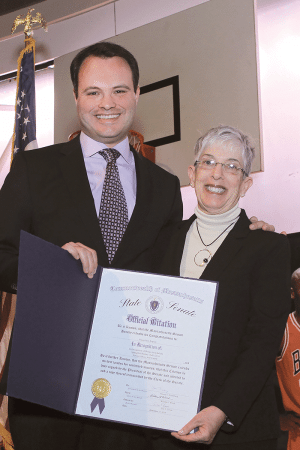
Last month, the Springfield Rotary Club staged its annual Service Above Self luncheon at the Basketball Hall of Fame, an event where two individuals, one regional and one national, are honored for their work for and within the community. Honored this year were NBA great (and Hall of Famer) Spencer Haywood and Susan Jaye-Kaplan, founder of Link to Libraries and GoFIT. Top to bottom: from left, Lamont Clemons, first vice president of the Springfield Rotary Club, Frank Colaccino, CEO of the Colvest Group, Springfield Mayor Domenic Sarno, and Haywood; Basketball Hall of Fame President and CEO John Doleva, right, with the two honorees; state Sen. Eric Lesser presents Jaye-Kaplan with a commendation from the state for her work within the community.

Daily News

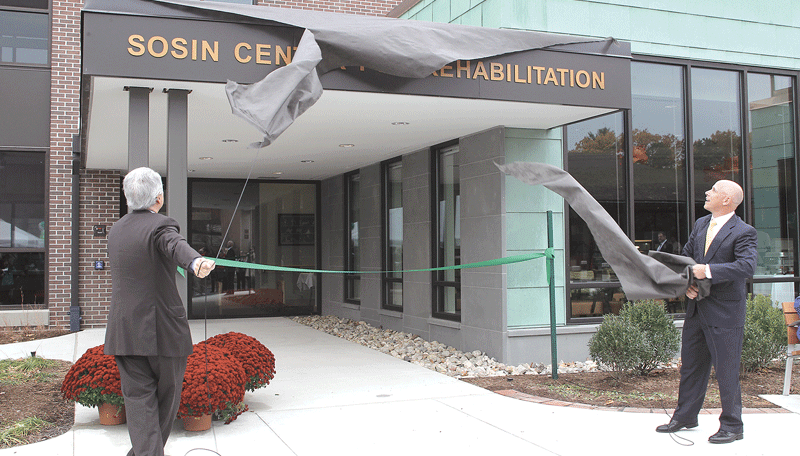
LONGMEADOW — Louis Lucchesi of Springfield became the first-ever resident in JGS Lifecare’s Sosin Center for Rehabilitation on Dec. 12, marking the arrival of the first Green House-certified residence in Western Mass. JGS Lifecare dedicated the Sosin Center in November, successfully passing all regulatory requirements for opening in December.

“I may never want to leave,” Lucchesi said jokingly as he settled into his new short-stay home. He’d begun his day in a room on the New York unit of JGS Lifecare’s Leavitt Family Jewish Home, which was built in 1972.
“In the ’70s, nursing homes were built like hospitals,” said Andrew Steiner, executive director of Leavitt Family Jewish Home. “They were designed with long halls, nursing stations, and a limited number of private rooms. The Sosin Center is crafted around a philosophy of de-institutionalized, home-style living with increased focus on individual autonomy.”

Lucchesi was the first of three patients who moved into the first-floor Sosin household on Dec. 12.

The 24,000-square-foot Sosin Center is only the third Green House Project facility in Massachusetts. The center carries the name of George Sosin, a JGS volunteer, family member, former resident, and supporter who left $3 million to JGS Lifecare in support of the center, the largest contribution received in its 104-year history.

Designed by Perkins Eastman, an industry leader in the planning and design of elder-care facilities and short-term rehabilitation programs, the Sosin Center contains two households that have been designed from the ground up to give residents the same feeling and experience as living in a real home, only under the guidance of a dedicated team of qualified caregivers called Shahbazim, who have received 120 hours of specialized Green House training in the core principles of ‘real home,’ ‘meaningful life,’ and ‘empowered staff.’

Each household accommodates 12 short-stay residents who receive physical, occupational, and speech-language therapies that are important to daily life, by practicing normal, everyday activities with their caregivers and therapists. Higher staffing levels ensure more than a fourfold increase in staff time spent engaging with residents, improving the quality of care. The center’s small-house model of care has been proven to reduce medication use by patients post-rehab with fewer return trips to the hospital.

“Currently, more than 68% of all short-stay residents at JGS Lifecare have made improvements in function, which is nearly 15% above the Massachusetts average. With the addition of the Sosin Center, we expect those numbers to be even stronger,” said Martin Baicker, president and CEO, of JGS Lifecare.

Added Dr. Robert Baevsky, and chair of the JGS Lifecare board of directors, “as a physician, I am convinced of the positive healthcare outcomes and improvements in the quality of life under this model.”

All 24 rooms in the two-story Sosin Center are private, with full baths, and each home has a shared living room, dining room, den, kitchen, salon, and screened porch, which provides seasonal access to the outdoors. For admissions information, call (413) 567-6211.

Daily News

PITTSFIELD — Berkshire Bank announced that its foundation, in partnership with New England Sports Network (NESN), has awarded a $9,600 grant to Soldier On through the Berkshire Bank Exciting Assists Grant program. Soldier On CFO Bruce Buckley accepted the contribution from Gary Levante, Berkshire Bank’s assistant vice president of Community Engagement, during NESN’s coverage of the Boston Bruins game on Dec. 8.

The Exciting Assists Grant program runs through April 1, 2017 and raises funds to support three charitable causes. Berkshire Bank’s foundation provides $100 per Bruins assist to the program. During the first portion of the season, Boston had 96 assists, resulting in the $9,600 grant from Berkshire Bank Foundation.

Soldier On, the first nonprofit beneficiary of the Exciting Assists Grant program, has a single mission: ending homelessness among the nation’s veterans. Since 1994, it has provided homeless veterans with transitional housing and supportive services including the first Gordon H. Mansfield Veterans Community in 2010, a permanent housing cooperative that provides formerly homeless veterans with safe, sustainable, affordable housing, transitioning them from homelessness to home ownership. Soldier On is replicating this model nationally.

In addition to Soldier On, two other nonprofit organizations will receive funding during the remainder of the season: Birthday Wishes, which provides children facing homelessness with a joyous birthday party that will brighten their special day, reduce the trauma of homelessness, and give them hope for a better future (promotion period: Dec. 8 to Feb. 3); and Cradles to Crayons, which provides children from birth through age 12, living in homeless or low-income situations, with the essential items they need to thrive at home, at school, and at play, free of charge, by engaging and connecting communities that have communities in need (promotion Period: Feb. 4 to March 31).

Daily News

LEEDS — Jason Greene, owner and founder of J. Greene Painting in Leeds, recently launched a new website with an artistic feature aimed at raising awareness and food donations for the Northampton Survival Center.

Greene said he upgraded www.jgreenepainting.com because his eight-year-old site needed a facelift, and he also wanted to update photos of completed projects and client testimonials.

To add interest and a bit of whimsy to the site, Greene created a feature through which visitors can submit haiku poetry. Each haiku submission must use the names of three paint colors from a list of 26 that Greene provides — 13 from Benjamin Moore and 13 from Sherwin-Williams.

For each haiku that’s submitted, Greene will donate a pound of food to the survival center, with a maximum donation of 100 pounds. The poems may be submitted at www.jgreenepainting.com/haiku.

“I think people like to be challenged. They’re educated. People like to be engaged, and they like to participate. This is a fun way to get involved and support the survival center,” Greene said. “People don’t need to bring cans anywhere. They don’t have to donate money. Just by submitting a clever haiku, they can generate a pound of food for someone in need.”

J. Greene Painting was established 12 years ago by Greene, who works with a team of five employees — 10 in the summer months — that also includes his father, Richard Greene. The company provides interior and exterior residential and commercial painting.

Greene used the haiku concept on his site about six years ago, as a contest. He has also run several similar contests in the past on his Facebook page, offering gift cards as prizes. In this promotion, there are no winners and no prizes, but he hopes to raise awareness of the Northampton Survival Center.

“The Valley is so great about giving,” he said. “I want people to be able to watch each other submit and watch the pounds of food accumulate.”

A haiku is a Japanese poem of 17 syllables, usually presented in three lines. Greene said clients who have visited his website in the past often remark about the haiku poetry that is contained on it.

One example of a haiku on Greene’s company site came from Lisa Labrecque of West Springfield, who wrote, “The Night Train crawls by/Hopeful is a Windy Sky/Along New Age comes.” Night Train, Windy Sky, and New Age are all paint-color names.

Daily News

BOSTON — The MBTA announced it will place a second order for new Red Line cars with CRRC, the company already contracted to build new train cars at a facility it is building in Springfield, the Republican reported. MBTA officials say it’s cheaper to pay $300,000 for each new car than to rehab aging trains.

CRRC, the Chinese-owned world leader in rail-car manufacturing, won a contract in 2014 to build 152 Orange Line cars and 132 Red Line cars to replace aging trains. Under the new proposal, CRRC will start building an additional 120 Red Line cars in 2022 after completing the initial order of Red Line and Orange Line cars. The proposal includes an option to purchase 14 more.

DBA Certificates Departments

The following business certificates and trade names were issued or renewed during the month of November 2016.

BELCHERTOWN

Arcadia Construction
27 Eskett Road
Robert Mileski

Grumpy Gramps
41 Stebbins St.
David Benedetti

Liberty Blues Designs
75 South Liberty St.
Cynthia Ablicki

New England’s Hidden Treasures
204 Munsell St.
Briana Gosselin

Quabbin Painting and Construction
340 State St.
William Landford

CHICOPEE

Freedom Body Products
1628 Westover Road
Michele Thais Oparowski

Jiffy Lube #119
2017 Memorial Dr.
Daniel Ramras

K Lawrence Construction
260 Grove St.
Karl Lawrence

New England Radon Testing and Mitigation
686 Britton St.
Ashley Bissell, Joshua McPherson

Riverbend Medical Group Inc.
1109 Granby Road
Richard Shuman, M.D.

Riverbend Medical Group Inc.
444 Montgomery St.
Richard Shuman, M.D.

WOW
19 Blanan Dr.
Juliette Noonan

GREENFIELD

BGH Dental
207 Silver St.
Bagley, Goodwin & Hrinda, P.C.

Bill’s Auto Sales
330 Federal St.
William Redmond

Hair It Is
258 Main St.
Wendi Rose

Hangar of Greenfield Inc.
30-44 Federal St.
Harold Tramazzo

Indian by Nature
286 Main St.
Madan Rathore

HOLYOKE

East and West
50 Holyoke St.
Zehao Gan

La Pescaderia Restaurant
389 Main St.
Victoria Williams

Onix Landscaping
589 Pleasant St., 2R
Onix Gonzalez

Rehab Resolutions Inc.
98 Lower Westfield Road
Sofio Zanzarella

NORTHAMPTON

Alport Hearing Rep Services
139 Greenleaf Dr.
Stephen Alport

Dust Dancer Domestic Engineer
42 Fruit St.
Patricia Trant

Emerald Ki
11 Arnold Ave., Apt. 1B
Megha Amira Arraj

Gayla Berry Enterprises
8 Hockanum Road, #8
Gayla Berry

His & Hers Energy Effiency
12 Perkins Ave.
Adin Maynard

Jiffy Lube #1164
188 North King St.
Daniel Ramras

Mullberry St. Exchange
7 Mullberry St.
Wayne Andrews Jr.

Reboot Enterprise
21 Brisson Dr.
Matthew Hamel, Brian Elim

Trailer Tech USA
50 Hatfield St., Unit 2
Billy Davis Jr.

PALMER

Affordable Fences and Decks
34 Beech St.
Leonard Boyer

Do It Rite
Route 51
Steven Kusek

Leisure Motors Inc.
1317 Main St.
Peter Scagliarini

Russo’s Lakeside Seafood & Steakhouse LLC
2092 Palmer Road
Steven Giard

Supply Stop & More
1009 Central St.
Ivan Vlasyuk

Yield Management Corp.
148 Hovey Road
Robert Brown

SOUTHWICK

Agnes and Dora by Nickie D
299 College Highway
Douglas Seymour

Delreo Home Improvement
131A North Lake Ave.
Gary Delcamp

Fresh Food
195 College Highway
Kulh Thacung

Happy Nails & Spa
610 College Highway, #19
Tam Tran

SPRINGFIELD

Alice’s Photobooth
78 Chauncey Dr.
Alice Baiyee

Baked Beauty Bar
94 Island Pond Road
Irene Mendez

Dainty Doll Dresses
1455 Bay St.
Paula Wilson

Danny’s Home Maintenance
420 Roosevelt Ave.
Daniel Blais

Empower Wearables
27 Wesson St.
Ryan Nault

Global Cell Corp.
1655 Boston Road
Kyarisha Magar

Hunter Financial
57 Florence St.
Darnel Hunter

Johanna’s Cleaning Service
303 Maple St., #353
Johanna Gaston

Luis A. Romero Painting
77 Chester St.
Luis Romero

Nena’s Products
90 Audubon St.
Marilyn White, Peter White

NEO Technology Solutions
225 Carando Dr.
Oncore Manufacturing

Rivas Auto Care
812 Cottage St.
Victor Rivas

Seania Care
180 Warrenton St.
Shenee Jheanell

Sport Clips
302 Cooley St.
Ian Coogan

Springfield Pedicab
1350 Main St., 5th Floor
Frankie Mozell

Star 86
101 Mulberry St.
Kimothy Jones

Torres Transport
181 Daviston St.
Miguel Torres

Transport USA
30 Clayton St.
Simeon Mayers

Unique Landscaping
31 San Miguel St.
Carlos Santiago

V & G Auto Repair
294 Darwell St.
Vicente Rosario

V Nails & Spa, LLC
368 Cooley St.
Vy Lefebvre

Who Dat Jerk Chicken
755 Liberty St.
Ricardo Wilson

Wilbraham Road F.L. Roverts
1200 Wilbraham Road
Tony El-Nemr

WARE

Ateks Tree
51 West St.
Andrew Hogan

Chantel Bleau Accounting Services
228 West St.
Chantel Bleau

Fancy Nails
54 Main St.
Ut Nguyen

Jett Property Services
40 Coffey Hill Road
Tracey Giard, John Giard

WESTFIELD

Monty’s Motorsports LLC
518 Southampton Road
Monty’s Motorsports

Rain
252 Elm St.
Bocage Inc.

Rob Alberti’s Event Services
1310 Russell Road
Robert Alberti

Skyline Trading Co.
Skyline Beer Co.
124 Elm St.

U30 Cat & Small Dog Wellness Center
69 Southwick Road
William Faircloth

Westfield Community Education
4 School St.
Domus Inc.

Westfield Financial Management Services
141 Elm St.
Westfield Bank

Westfield Music
347 Elm St.
Joshua Friend

Bankruptcies Departments

The following bankruptcy petitions were recently filed in U.S. Bankruptcy Court. Readers should confirm all information with the court.

Albano, Donald V.
2014 North Brookfield Road
Oakham, MA 01068
Chapter: 13
Filing Date: 11/10/16

Alpert, Vivian L.
101 Mulberry St., Unit 40
Springfield, MA 01105
Chapter: 7
Filing Date: 11/01/16

Atwell, Betty Mae
53 Lincoln Ave.
South Hadley, MA 01075
Chapter: 7
Filing Date: 11/11/16

Bartolomei, Robert Mark
14 Silva St.
Monson, MA 01057
Chapter: 13
Filing Date: 11/11/16

Benson, Juanita Thelma
12 Avenue C
Turners Falls, MA 01376
Chapter: 7
Filing Date: 11/10/16

Bernier, David E.
216 Locust St.
Florence, MA 01062
Chapter: 13
Filing Date: 11/14/16

Bushey, James Raymond
55 Searles St.
Chicopee, MA 01020
Chapter: 7
Filing Date: 11/03/16

Calabretta, Stacy L.
159 Village Park Road
Amherst, MA 01002
Chapter: 7
Filing Date: 11/08/16

Castrillo, Carrie A.
265 College St., Apt. A
Chicopee, MA 01020
Chapter: 7
Filing Date: 11/09/16

Cerveny, Cynthia A.
40 Holcomb Road
Chester, MA 01011
Chapter: 13
Filing Date: 11/11/16

Chicoine, Lynn Carol
37 Waid Road
Monson, MA 01057
Chapter: 7
Filing Date: 11/14/16

Cialek, Edward Michael
Cialek, Michelle Ann
313 Hadley Road
Sunderland, MA 01375
Chapter: 7
Filing Date: 11/11/16

Cooney, Justin
365 Dale St.
Chicopee, MA 01013
Chapter: 7
Filing Date: 11/09/16

Curtis, Carolyn Graci
284 Abbott St.
Springfield, MA 01118
Chapter: 7
Filing Date: 11/14/16

Delgado, Marina E.
151 Lancashire Road
Springfield, MA 01104
Chapter: 7
Filing Date: 11/12/16

Duquette, William G.
91 Mulberry St.
Springfield, MA 01105
Chapter: 13
Filing Date: 11/10/16

Enterprise Farm
Jackson, David Foster
75 River Road
South Deerfield, MA 01373
Chapter: 12
Filing Date: 11/15/16

Franco, Andrea E.
17 Sumner Ave., Apt. 7
Springfield, MA 01108
Chapter: 7
Filing Date: 11/09/16

Gibbs, Sherry Ann E.
a/k/a Atwell, Sherryann
86 Norman St.
Springfield, MA 01104
Chapter: 7
Filing Date: 11/09/16

Glass-King, Jaleena Y.
17 Sunbrier Road
Springfield, MA 01129
Chapter: 7
Filing Date: 11/02/16

Grace, David Joseph
PO Box 2772
Amherst, MA 01004-2772
Chapter: 7
Filing Date: 11/10/16

Green, April Marie
38 Madison Ave.
Springfield, MA 01105
Chapter: 7
Filing Date: 11/02/16

Gregoire, Catherine G.
158 Horseshoe Dr.
Chicopee, MA 01022
Chapter: 7
Filing Date: 11/09/16

Haagsma, Esther M.
385 Worthington St.
Springfield, MA 01103
Chapter: 7
Filing Date: 11/03/16

Hamilton, Shawn E.
73 Barrett St., Apt. 2059
Northampton, MA 01060
Chapter: 7
Filing Date: 11/15/16

Hawkes, Carol M.
220 Barry St.
Feeding Hills, MA 01030
Chapter: 7
Filing Date: 11/09/16

Hennault, Shawn
13 North Road
Peru, MA 01235
Chapter: 7
Filing Date: 11/15/16

Jacque, Ryan D.
31 Echo Road
Brimfield, MA 01010
Chapter: 13
Filing Date: 11/09/16

Jerome, Jeffery J.
30 Brandon Ave.
Springfield, MA 01119
Chapter: 7
Filing Date: 11/09/16

Jones, Robert E.
58 McKinley Ave.
South Hadley, MA 01075
Chapter: 7
Filing Date: 11/09/16

Kirby, John J.
Kirby, Holly A.
179 Country Road
Agawam, MA 01001
Chapter: 7
Filing Date: 11/10/16

Kirca, Ali H.
51 Grattan St., Apt. D
Chicopee, MA 01020
Chapter: 7
Filing Date: 11/10/16

Kirkpatrick, Spencer J.
Kirkpatrick, Melissa J.
20 Benger Ave.
South Hadley, MA 01075
Chapter: 7
Filing Date: 11/07/16

Kurdi, Ramsey
400 West St.
Amherst, MA 01002
Chapter: 7
Filing Date: 11/03/16

Lorenzi, Rosa J.
120 North Main St.
East Longmeadow, MA 01028
Chapter: 7
Filing Date: 11/09/16

Martinez, Teodocia
119 Brunswick St., Apt. 1
Springfield, MA 01108
Chapter: 7
Filing Date: 11/10/16

Michaud, Mark Matthew
267 South Main St.
Athol, MA 01331
Chapter: 7
Filing Date: 10/31/16

Negron, Loanis T.
51 Fairhaven Dr.
Indian Orchard, MA 01151
Chapter: 7
Filing Date: 11/02/16

Nimons, Scott William
4 Onota Lane, #1
Pittsfield, MA 01201
Chapter: 7
Filing Date: 10/31/16

Parenteau, Scott R.
Parenteau, Jasmine J.
929 Shaker Road, #15
Westfield, MA 01085
Chapter: 7
Filing Date: 11/01/16

Pittman, Timothy M.
Pittman, Kelly L.
90 Rochester St.
Chicopee, MA 01020
Chapter: 7
Filing Date: 11/11/16

Prawlucki, Francis J.
57 Brigham Road
South Hadley, MA 01075
Chapter: 13
Filing Date: 11/04/16

Professional Marketing
Talsky, Gene R.
PO Box 1040
Easthampton, MA 01027
Chapter: 7
Filing Date: 11/02/16

Quintero, Juan A.
62 Charpentier Blvd.
Chicopee, MA 01013
Chapter: 7
Filing Date: 11/07/16

Rheaume, Glen E.
Rheaume, Deanne L.
45 Surrey Road
Springfield, MA 01118
Chapter: 13
Filing Date: 11/11/16

Ribeiro, Thomas M.
Ribeiro, Laurie A.
98 Vadnais St.
Chicopee, MA 01020
Chapter: 7
Filing Date: 11/11/16

Rockwell, Dawn Marie
2 Cross St.
Shelburne Falls, MA 01370
Chapter: 7
Filing Date: 11/15/16

Rowley, Linda Alice
14 Bluemer Road
Southampton, MA 01073
Chapter: 7
Filing Date: 11/03/16

Sanchez, Juan M.
134 Darlene St.
Indian Orchard, MA 01151
Chapter: 7
Filing Date: 11/02/16

Segala, Krysten Kara
a/k/a Zocchi, Krysten K.
423 Walnut St.
North Adams, MA 01247
Chapter: 7
Filing Date: 11/14/16

Stevens, David M.
Stevens, Melissa M.
a/k/a O’Connell, Melissa M.
27 Shoreline Dr.
Ware, MA 01082
Chapter: 7
Filing Date: 10/31/16

Symiakakis, Nicholas
16 Partridge Dr.
Springfield, MA 01119-2128
Chapter: 13
Filing Date: 11/10/16

Turnpike Acres Stove Shop
Dupuis, George E.
P.O. Box 374
Ludlow, MA 01056
Chapter: 7
Filing Date: 11/07/16

Ugraz, Linda J.
9 Ruggles St.
Three Rivers, MA 01080
Chapter: 7
Filing Date: 11/07/16

Wang, Chang Chi
91 Village Park Road
Amherst, MA 01002
Chapter: 7
Filing Date: 11/07/16

Wellington, Linda
135 Sunrise Terrace
Springfield, MA 01119
Chapter: 13
Filing Date: 11/14/16

Departments Real Estate

The following real estate transactions (latest available) were compiled by Banker & Tradesman and are published as they were received. Only transactions exceeding $115,000 are listed. Buyer and seller fields contain only the first name listed on the deed.

FRANKLIN COUNTY

ASHFIELD

203-215 Main St.
Ashfield, MA 01330
Amount: $275,000
Buyer: Noah J. Decker
Seller: Scott A. Decker
Date: 11/01/16

BERNARDSTON

51 Fox Hill Road
Bernardston, MA 01337
Amount: $282,400
Buyer: Joshua M. Mitera
Seller: Peck FT 2012
Date: 11/03/16

BUCKLAND

9 Laurel St.
Buckland, MA 01338
Amount: $152,000
Buyer: Lotus Yu
Seller: Christine Cusson
Date: 11/04/16

CHARLEMONT

127 Main St.
Charlemont, MA 01339
Amount: $275,000
Buyer: 127 Main St Realty LLC
Seller: Dennis C. Avery
Date: 11/02/16

COLRAIN

256 Thompson Road
Colrain, MA 01340
Amount: $210,000
Buyer: Carl A. Purington
Seller: Purington, Myrtle L., (Estate)
Date: 11/01/16

DEERFIELD

196 Mill Village Road
Deerfield, MA 01342
Amount: $205,900
Buyer: Carl Davis
Seller: US Bank
Date: 11/01/16

GREENFIELD

36 Cleveland St.
Greenfield, MA 01301
Amount: $175,000
Buyer: Michael D. Frank
Seller: Meehan, Elizabeth A., (Estate)
Date: 11/02/16

449 Country Club Road
Greenfield, MA 01301
Amount: $119,000
Buyer: Bank Of America
Seller: Judith K. Boersma
Date: 11/08/16

645 Country Club Road
Greenfield, MA 01301
Amount: $180,000
Buyer: Walter L. Williams
Seller: Robert P. Lafleur
Date: 11/01/16

58 Haywood St.
Greenfield, MA 01301
Amount: $118,000
Buyer: Jordon Stempel
Seller: Wells Fargo Bank
Date: 11/09/16

172 Highland Ave.
Greenfield, MA 01301
Amount: $300,000
Buyer: Lupinewood LLC
Seller: John G. Bailey
Date: 11/02/16

201 Munson St.
Greenfield, MA 01301
Amount: $725,000
Buyer: Munson St. Properties LLC
Seller: Greenfield Savings Bank
Date: 11/04/16

40 Summer St.
Greenfield, MA 01301
Amount: $177,000
Buyer: Lewis Zoey-Culver
Seller: David F. Bassett
Date: 11/02/16

HAWLEY

59 East Hawley Road
Hawley, MA 01339
Amount: $293,000
Buyer: Jonathan C. Schaefer
Seller: Eugene J. Tanguay
Date: 11/01/16

LEVERETT

346 Long Plain Road
Leverett, MA 01054
Amount: $315,000
Buyer: Daniel M. Levine
Seller: Donald R. Putnam
Date: 11/10/16

14 Richardson Road
Leverett, MA 01054
Amount: $314,000
Buyer: Jed Proujansky
Seller: Terry E. Gaberson
Date: 11/10/16

MONTAGUE

41 Court Square
Montague, MA 01351
Amount: $499,500
Buyer: Brittany J. Czarick
Seller: Janet G. Haas
Date: 11/10/16

NORTHFIELD

6 Ferncliff Ave.
Northfield, MA 01360
Amount: $163,000
Buyer: Angelica L. Beausoleil
Seller: Jennifer J. Newton
Date: 11/04/16

11 Lyman Road
Northfield, MA 01360
Amount: $136,833
Buyer: Wilmington Savings
Seller: Tamara L. Adams
Date: 11/02/16

54 New Plain Road
Northfield, MA 01360
Amount: $160,500
Buyer: Dawn M. Kazokas
Seller: Samuel J. Browning
Date: 11/04/16

ORANGE

72 Adams St.
Orange, MA 01364
Amount: $124,500
Buyer: Matthew P. Hanks
Seller: John W. Griffiths
Date: 11/10/16

337 North Main St.
Orange, MA 01364
Amount: $148,000
Buyer: Michael Gobeille
Seller: Kayla S. Rice
Date: 11/09/16

SHELBURNE

103 Mechanic St.
Shelburne, MA 01370
Amount: $220,000
Buyer: Michael S. Bromberg
Seller: Susan M. Broadhurst
Date: 11/01/16

6 Warren Ave.
Shelburne, MA 01370
Amount: $260,000
Buyer: Thomas P. Crean
Seller: Jeremy J. Schriber IRT
Date: 11/09/16

SHUTESBURY

294 West Pelham Road
Shutesbury, MA 01072
Amount: $545,000
Buyer: Rick B. Woodruff
Seller: William D. Kirtz
Date: 11/09/16

SUNDERLAND

109 East Plumtree Road
Sunderland, MA 01375
Amount: $433,000
Buyer: Jorn Myre
Seller: Michael B. Stone
Date: 11/01/16

17 North Plain Road
Sunderland, MA 01375
Amount: $253,500
Buyer: Eric S. Banach
Seller: Kevin W. Bernotas
Date: 11/09/16

HAMPDEN COUNTY

AGAWAM

387 Adams St.
Agawam, MA 01001
Amount: $235,000
Buyer: Daniel L. Welling
Seller: Sean P. Leahy
Date: 11/01/16

791 Barry St.
Agawam, MA 01030
Amount: $294,000
Buyer: Edward Rivers
Seller: Benoit L. Dion
Date: 11/10/16

31 Country Road
Agawam, MA 01001
Amount: $210,500
Buyer: Joshua A. Fournier
Seller: Marie T. O’Donnell
Date: 11/02/16

41 Debra Lane
Agawam, MA 01001
Amount: $285,000
Buyer: Ronald P. Brown
Seller: Gary T. Stone
Date: 11/02/16

37 Gunn Geary Lane
Agawam, MA 01001
Amount: $299,000
Buyer: Amy L. Boyd
Seller: Donna M. Christensen
Date: 11/10/16

71 Hall St.
Agawam, MA 01030
Amount: $187,900
Buyer: Susan M. Owen
Seller: Noel J. Girard
Date: 11/01/16

24 Highland Ave.
Agawam, MA 01001
Amount: $193,000
Buyer: George Pascaru
Seller: Mikhail Taranenko
Date: 11/04/16

1129 Main St.
Agawam, MA 01001
Amount: $150,000
Buyer: Paulo A. Villegas
Seller: Claire O’Toole
Date: 11/09/16

437 South West St.
Agawam, MA 01030
Amount: $225,000
Buyer: Tatyana Kirilovich
Seller: Patricia L. Semanie
Date: 11/03/16

BLANDFORD

10 Maple Lane
Blandford, MA 01008
Amount: $195,000
Buyer: Ryan J. Simmitt
Seller: Donald E. Blanchette
Date: 11/08/16

BRIMFIELD

34 Farmington Circle
Brimfield, MA 01010
Amount: $458,000
Buyer: Michael A. Woytowicz
Seller: Hillside Development Corp.
Date: 11/09/16

CHESTER

114 Bromley Road
Chester, MA 01050
Amount: $292,500
Buyer: Michael T. Decker
Seller: Gary P. Marcoullier
Date: 11/03/16

7 Soisalo Road
Chester, MA 01011
Amount: $227,000
Buyer: Linda L. Malcovsky
Seller: Valerie A. Leone-Ragucci
Date: 11/04/16

CHICOPEE

165 Clarendon Ave.
Chicopee, MA 01013
Amount: $149,197
Buyer: Wilmington Savings
Seller: Alexander Jovan
Date: 11/07/16

254 East Main St.
Chicopee, MA 01020
Amount: $154,000
Buyer: Alejandro Marrero
Seller: Marie Tylek
Date: 11/04/16

1247 East Main St.
Chicopee, MA 01020
Amount: $1,072,050
Buyer: DKRV Commercial Props. LLC
Seller: CEA Realty LLC
Date: 11/09/16

56 Fairview Ave.
Chicopee, MA 01013
Amount: $151,453
Buyer: Citizens Bank
Seller: Darius J. Shepard
Date: 11/09/16

44 Gilmore St.
Chicopee, MA 01013
Amount: $128,000
Buyer: Kenneth A. Allard
Seller: Dyan Viens
Date: 11/04/16

30 Leona Ave.
Chicopee, MA 01013
Amount: $210,000
Buyer: Rebecca K. Stadnicki
Seller: Doris E. Mozdzanowski
Date: 11/10/16

854 Meadow St.
Chicopee, MA 01013
Amount: $190,000
Buyer: Olatomide Ogunfeibo
Seller: Joshua A. Mozeleski
Date: 11/01/16

275 Moore St.
Chicopee, MA 01013
Amount: $220,800
Buyer: Wells Fargo Bank
Seller: Maryann Rogers
Date: 11/08/16

73 Sunflower Ave.
Chicopee, MA 01013
Amount: $146,000
Buyer: Heather L. Huot
Seller: Michelle M. Cormier
Date: 11/08/16

EAST LONGMEADOW

154 Hampden Road
East Longmeadow, MA 01028
Amount: $135,000
Buyer: C&M Builders LLC
Seller: Household Finance Corp. 2
Date: 11/04/16

27 Maryland St.
East Longmeadow, MA 01028
Amount: $320,000
Buyer: C&M Builders LLC
Seller: Giuseppe V. Capua
Date: 11/04/16

59 Pioneer Circle
East Longmeadow, MA 01028
Amount: $135,000
Buyer: Michael F. Collins
Seller: Nancy P. Jarvis
Date: 11/07/16

16 Sturbridge Lane
East Longmeadow, MA 01028
Amount: $535,000
Buyer: Steven F. Tereso
Seller: Andrew D. Mees
Date: 11/01/16

17 Susan St.
East Longmeadow, MA 01028
Amount: $195,000
Buyer: Kyle W. Barlow
Seller: Lloyd R. Hildreth
Date: 11/04/16

226 Westwood Ave.
East Longmeadow, MA 01028
Amount: $252,000
Buyer: Daniel Leary
Seller: Sadia Kausar
Date: 11/04/16

HAMPDEN

70 Bennett Road
Hampden, MA 01036
Amount: $202,000
Buyer: Anna L. Marion
Seller: Michael J. Marion
Date: 11/04/16

576 Main St.
Hampden, MA 01036
Amount: $155,900
Buyer: Mahlon Peterson
Seller: Stedman, Linda J., (Estate)
Date: 11/01/16

203 North Monson Road
Hampden, MA 01036
Amount: $120,000
Buyer: Anna Mascaro
Seller: Ellsworth M. Frey
Date: 11/07/16

6 Pinewood Road
Hampden, MA 01036
Amount: $259,900
Buyer: Beverly H. Hoekstra
Seller: Fresh Pinewood LLC
Date: 11/03/16

311 Wilbraham Road
Hampden, MA 01036
Amount: $137,600
Buyer: Wilson Wong
Seller: Deutsche Bank
Date: 11/02/16

HOLLAND

117 Butterworth Ext.
Holland, MA 01521
Amount: $255,279
Buyer: George Markopoulos
Seller: US Bank
Date: 11/08/16

14 Union Road
Holland, MA 01521
Amount: $180,000
Buyer: Antonia S. Young
Seller: Laurie E. Schlatter
Date: 11/10/16

HOLYOKE

17 Argyle Ave.
Holyoke, MA 01040
Amount: $197,000
Buyer: Gina A. Mitchell
Seller: Curtis J. Hoye
Date: 11/04/16

881 Hampshire St.
Holyoke, MA 01040
Amount: $150,000
Buyer: Kimberly M. Levy
Seller: Ducharme, Valda E., (Estate)
Date: 11/07/16

33 Mayer Dr.
Holyoke, MA 01040
Amount: $272,500
Buyer: E. A. Delpilar-Morales
Seller: Bruno Taborelli
Date: 11/07/16

408 Southampton Road
Holyoke, MA 01040
Amount: $200,000
Buyer: Mary Y. Xie
Seller: Seth R. Taylor
Date: 11/10/16

9-11 Thorpe Ave.
Holyoke, MA 01040
Amount: $142,500
Buyer: Molly A. Smith
Seller: Thomas Ferrante
Date: 11/04/16

5 Upland Road
Holyoke, MA 01040
Amount: $199,900
Buyer: John R. Wagner
Seller: Jean Griot
Date: 11/09/16

LONGMEADOW

1535 Longmeadow St.
Longmeadow, MA 01106
Amount: $189,900
Buyer: Patriot Living LLC
Seller: FHLM
Date: 11/10/16

99 Oxford Road
Longmeadow, MA 01106
Amount: $515,000
Buyer: Frances R. Cress
Seller: Wilbur M. Swan
Date: 11/04/16

LUDLOW

157 Carmelinas Circle
Ludlow, MA 01056
Amount: $560,000
Buyer: Pio Real Estate LLC
Seller: Adelina Teixeira
Date: 11/02/16

22 Overlook Dr.
Ludlow, MA 01056
Amount: $248,000
Buyer: Elias Colon
Seller: Eduardo Rego
Date: 11/07/16

106 Pine Cone Lane
Ludlow, MA 01056
Amount: $259,850
Buyer: Richard J. Corsi
Seller: Elizabeth A. Gamache
Date: 11/08/16

26 Raymond St.
Ludlow, MA 01056
Amount: $188,000
Buyer: Richard A. Belden
Seller: Kevin Czaplicki
Date: 11/03/16

MONSON

12 Macomber Road
Monson, MA 01057
Amount: $303,000
Buyer: Gloria Rubin
Seller: Gregory S. Leighton
Date: 11/10/16

137 Munn Road
Monson, MA 01057
Amount: $370,000
Buyer: Gregory S. Leighton
Seller: Craig R. Levesque
Date: 11/07/16

18 Wales Road
Monson, MA 01057
Amount: $223,000
Buyer: Craig R. Peltier
Seller: David E. Mill
Date: 11/10/16

243 Wilbraham Road
Monson, MA 01057
Amount: $349,000
Buyer: Mark Wegryn
Seller: Kenneth P. Barrepski
Date: 11/07/16

PALMER

90 Buckland St.
Palmer, MA 01069
Amount: $185,000
Buyer: Laura B. Yarbrough
Seller: Anthony A. Heropoulos
Date: 11/01/16

2030 Calkins Road
Palmer, MA 01069
Amount: $185,000
Buyer: David E. Bachand
Seller: Christine F. Reim
Date: 11/04/16

1537 North Main St.
Palmer, MA 01069
Amount: $120,000
Buyer: GR Properties LLC
Seller: Duda Realty LLC
Date: 11/08/16

1294 Ware St.
Palmer, MA 01069
Amount: $344,500
Buyer: PVU Palmer Realty LLC
Seller: Angelica Properties LLC
Date: 11/09/16

SPRINGFIELD

74 Aldrew Terrace
Springfield, MA 01119
Amount: $162,000
Buyer: Mark A. Fiore
Seller: Della Ripa Real Estate
Date: 11/04/16

34 Ashwood St.
Springfield, MA 01151
Amount: $185,000
Buyer: Raul Fraga
Seller: Bonnie E. Kiley
Date: 11/01/16

55 Bennington St.
Springfield, MA 01108
Amount: $175,000
Buyer: Dawn M. Amell
Seller: Angela Cosenzi
Date: 11/04/16

235 Bolton St.
Springfield, MA 01119
Amount: $123,711
Buyer: Elisa M. Ramos
Seller: Richard E. Eggleston
Date: 11/04/16

28 Cara Lane
Springfield, MA 01028
Amount: $270,000
Buyer: Tajh Monroe-White
Seller: Dennis B. Chechile
Date: 11/01/16

233 Corcoran Blvd.
Springfield, MA 01118
Amount: $135,000
Buyer: Timothy Harwood
Seller: Joshua A. Cusson
Date: 11/01/16

24 Crest St.
Springfield, MA 01109
Amount: $129,000
Buyer: Michelle Y. Sanabria
Seller: Dawn M. Amell
Date: 11/04/16

100 Cuff Ave.
Springfield, MA 01104
Amount: $123,500
Buyer: Margarita Cruzado
Seller: Sileski, Selma, (Estate)
Date: 11/07/16

71 Dearborn St.
Springfield, MA 01109
Amount: $125,450
Buyer: Deutsche Bank
Seller: Jessie Beckett
Date: 11/09/16

57 East Allen Ridge Road
Springfield, MA 01118
Amount: $155,000
Buyer: Manuel H. Medina
Seller: Shaun K. Allen
Date: 11/10/16

138 Gillette Ave.
Springfield, MA 01118
Amount: $163,400
Buyer: Julie-Ayn Montalvo
Seller: David P. Robillard
Date: 11/04/16

13-15 Groveton St.
Springfield, MA 01118
Amount: $132,000
Buyer: Yaritza Reyes-Colon
Seller: Victor F. Degray
Date: 11/10/16

142 Jasper St.
Springfield, MA 01109
Amount: $130,000
Buyer: Richard E. Rosado
Seller: Marques T. Stallings
Date: 11/10/16

185 Kerry Dr.
Springfield, MA 01118
Amount: $124,000
Buyer: North Harlow 4 LLC
Seller: Richard H. Brody
Date: 11/04/16

140-142 Laconia St.
Springfield, MA 01129
Amount: $171,000
Buyer: Francisco J. Miranda
Seller: Robert E. Wojtczak
Date: 11/02/16

106 Malden St.
Springfield, MA 01108
Amount: $260,000
Buyer: London Realty LLC
Seller: Eric Marthinsen
Date: 11/07/16

47 Martin St.
Springfield, MA 01108
Amount: $167,900
Buyer: Tamika Rose
Seller: James Fiore
Date: 11/01/16

216 Mazarin St.
Springfield, MA 01151
Amount: $254,900
Buyer: Zadok Nwafor
Seller: Quetszy A. Melendez
Date: 11/10/16

59 Peekskill Ave.
Springfield, MA 01129
Amount: $247,000
Buyer: Rosalia Esquilin-Santos
Seller: PCI Construction Inc.
Date: 11/01/16

117 Pennsylvania Ave.
Springfield, MA 01118
Amount: $210,000
Buyer: Donna Karam
Seller: Russomando, Mafalda A., (Estate)
Date: 11/10/16

156 Powell Ave.
Springfield, MA 01118
Amount: $167,000
Buyer: Jessica S. Alicea
Seller: Anthony T. Gamelli
Date: 11/10/16

241 Prentice St.
Springfield, MA 01104
Amount: $146,500
Buyer: Adam D. Bergeron
Seller: Gerrit M. Devries
Date: 11/04/16

11 Providence St.
Springfield, MA 01109
Amount: $125,000
Buyer: Massachusetts Mutual Life
Seller: Beth A. Washington
Date: 11/04/16

47-49 Somerset St.
Springfield, MA 01108
Amount: $165,000
Buyer: Ciaramar Vazquez-Collazo
Seller: Brian G. Bartish
Date: 11/09/16

192 Spikenard Circle
Springfield, MA 01129
Amount: $157,000
Buyer: Aletta N. Martinez
Seller: Peck, Linda M., (Estate)
Date: 11/01/16

39 Washburn St.
Springfield, MA 01107
Amount: $154,000
Buyer: Dionne Real Estate LLC
Seller: Dionne Real Estate LLC
Date: 11/04/16

8 Washington St.
Springfield, MA 01108
Amount: $131,000
Buyer: Jonathan A. Quinones
Seller: Francesco Lacopo
Date: 11/09/16

30 Wells St.
Springfield, MA 01104
Amount: $172,900
Buyer: Brenda Gonzalez
Seller: Christopher L. Edge
Date: 11/10/16

529 White St.
Springfield, MA 01108
Amount: $192,000
Buyer: Christian Negron
Seller: Jasmine Matta-Naylor
Date: 11/08/16

SOUTHWICK

296 Granville Road
Southwick, MA 01077
Amount: $383,000
Buyer: Joseph M. Coppa
Seller: David K. Recoulle
Date: 11/04/16

21 Lauren Lane
Southwick, MA 01077
Amount: $385,000
Buyer: Harry C. Lane
Seller: Ronald K. Vezina
Date: 11/10/16

352 North Loomis St.
Southwick, MA 01077
Amount: $236,000
Buyer: Seth A. Lalli
Seller: Steven C. Girard
Date: 11/10/16

TOLLAND

28 Ona Road
Tolland, MA 01034
Amount: $653,125
Buyer: Linda M. Balicki TR
Seller: Robert Churchill
Date: 11/07/16

WALES

32 Main St.
Wales, MA 01081
Amount: $229,900
Buyer: William B. Warren
Seller: Charles H. McKinney
Date: 11/04/16

WESTFIELD

211 Barbara St.
Westfield, MA 01085
Amount: $236,000
Buyer: Anthony J. Brignoli
Seller: Matthew J. Rinaldi
Date: 11/10/16

75 Brookline Ave.
Westfield, MA 01085
Amount: $175,000
Buyer: Nelya Balan
Seller: FHLM
Date: 11/04/16

5 Daylily Lane
Westfield, MA 01085
Amount: $374,000
Buyer: Steven F. Exware
Seller: Bent Tree Development LLC
Date: 11/01/16

154 Glenwood Dr.
Westfield, MA 01085
Amount: $600,000
Buyer: Cui X. Lin
Seller: Brad A. Whitaker
Date: 11/09/16

162 Honey Pot Road
Westfield, MA 01085
Amount: $270,000
Buyer: Justin Dauplaise
Seller: Eric Dauplaise
Date: 11/03/16

174 Honey Pot Road
Westfield, MA 01085
Amount: $210,000
Buyer: Eric N. Dauplaise
Seller: Craig A. Kamps
Date: 11/03/16

8 Noble St.
Westfield, MA 01085
Amount: $185,000
Buyer: Luisa J. Sarabaez
Seller: Debra J. Barker
Date: 11/02/16

15 Oakcrest Dr.
Westfield, MA 01085
Amount: $275,000
Buyer: Erika Walas
Seller: Michael Foy
Date: 11/10/16

24 Pinewood Lane
Westfield, MA 01085
Amount: $155,000
Buyer: Randy McGregor
Seller: V. Michael Clapper
Date: 11/10/16

261 Ponders Hollow Road
Westfield, MA 01085
Amount: $217,000
Buyer: Gerald L. Verardo
Seller: Ukrainian Selfreliance Credit Union
Date: 11/01/16

44 Sabrina Brooke Lane
Westfield, MA 01085
Amount: $120,000
Buyer: Jason A. Lavallee
Seller: Jason A. Lavallee
Date: 11/04/16

169 Southwick Road
Westfield, MA 01085
Amount: $191,000
Buyer: Sarah G. Perreault
Seller: Amber M. Matos
Date: 11/04/16

50 Southview Terrace
Westfield, MA 01085
Amount: $227,500
Buyer: Christopher Morris
Seller: Michael L. Rickson
Date: 11/08/16

200 Southwick Road
Westfield, MA 01085
Amount: $2,700,000
Buyer: 2nd Oakwood Terrace LLC
Seller: Joseph F. Colette
Date: 11/04/16

25 William St.
Westfield, MA 01085
Amount: $119,000
Buyer: Deborah A. McLaughlin
Seller: FNMA
Date: 11/10/16

64 Woodside Terrace
Westfield, MA 01085
Amount: $143,000
Buyer: Anthony M. Fratamico
Seller: Marth-E LLC
Date: 11/09/16

WILBRAHAM

2525 Boston Road
Wilbraham, MA 01095
Amount: $3,708,000
Buyer: Prime Storage Boston Road
Seller: EBR LLC
Date: 11/09/16

26 Carla Lane
Wilbraham, MA 01095
Amount: $403,900
Buyer: Burt H. Fahy
Seller: Custom Homes Development Group
Date: 11/09/16

772 Main St.
Wilbraham, MA 01095
Amount: $415,000
Buyer: Omar Ezziddin
Seller: Nazih Zebian
Date: 11/09/16

4 Monson Road
Wilbraham, MA 01095
Amount: $164,000
Buyer: Rachel M. Kellner
Seller: Deutsche Bank
Date: 11/04/16

10 Poplar Dr.
Wilbraham, MA 01095
Amount: $241,000
Buyer: FNMA
Seller: Joyce Meiresonne
Date: 11/04/16

7 Ridgewood Road
Wilbraham, MA 01095
Amount: $124,900
Buyer: Moreland Realty LLC
Seller: Wilmington Savings
Date: 11/01/16

23 Ripley St.
Wilbraham, MA 01095
Amount: $215,000
Buyer: Karen D. Boisvert
Seller: Lynsey M. Cantalini
Date: 11/03/16

664 Stony Hill Road
Wilbraham, MA 01095
Amount: $150,000
Buyer: Ahmad A. Habboub
Seller: Carolyn J. Lacasse
Date: 11/10/16

WEST SPRINGFIELD

132 Bonair Ave.
West Springfield, MA 01089
Amount: $131,000
Buyer: Maher Elkobersi
Seller: Prescott, Catherine E., (Estate)
Date: 11/03/16

56 Bonnie Brae Dr.
West Springfield, MA 01089
Amount: $199,000
Buyer: Heidi A. Gomez
Seller: Diana L. Marshall
Date: 11/08/16

243 Elm St.
West Springfield, MA 01089
Amount: $280,000
Buyer: A&R Cerrato LLC
Seller: Richard Gallerani
Date: 11/09/16

398 Elm St.
West Springfield, MA 01089
Amount: $325,000
Buyer: Agnes Properties LLC
Seller: Maecar Realty Inc.
Date: 11/10/16

122 Highland Ave.
West Springfield, MA 01085
Amount: $214,000
Buyer: Home Equity Assets Realty
Seller: Home Equity Assets Realty
Date: 11/04/16

85 Jensen Circle
West Springfield, MA 01089
Amount: $162,093
Buyer: Bank New York Mellon
Seller: Scott D. Ramsdell
Date: 11/02/16

255 Laurel Road
West Springfield, MA 01089
Amount: $180,000
Buyer: Paul C. Shields
Seller: Lisa F. Reagan
Date: 11/04/16

27 Queen Ave.
West Springfield, MA 01089
Amount: $175,000
Buyer: Abdul Majid-Rahmat
Seller: Marie A. Bovat
Date: 11/04/16

HAMPSHIRE COUNTY

AMHERST

20 Bridge St.
Amherst, MA 01002
Amount: $130,000
Buyer: Plumtree Real Estate LLC
Seller: Donald R. Morrow
Date: 11/08/16

177 Henry St.
Amherst, MA 01002
Amount: $265,000
Buyer: Kendra D. Weisbin
Seller: Patrick A. Ray
Date: 11/10/16

BELCHERTOWN

40 Autumn Lane
Belchertown, MA 01007
Amount: $365,000
Buyer: Suzanne T. Jorey
Seller: Gary M. Martins
Date: 11/07/16

535 North Washington St.
Belchertown, MA 01007
Amount: $350,000
Buyer: Brian L. Gendron
Seller: Piemonte, Peter T., (Estate)
Date: 11/10/16

94 Old Amherst Road
Belchertown, MA 01007
Amount: $127,500
Buyer: Matthew J. Stone
Seller: Tolzdorf, Peter M., (Estate)
Date: 11/07/16

CHESTERFIELD

18 Soaker Road
Chesterfield, MA 01096
Amount: $250,000
Buyer: Richard J. Labbee
Seller: Ellen J. Laroche
Date: 11/10/16

CUMMINGTON

73 West Main St.
Cummington, MA 01026
Amount: $290,000
Buyer: Laura M. Goodspeed
Seller: Cynthia M. Volk
Date: 11/07/16

EASTHAMPTON

60 Division St.
Easthampton, MA 01027
Amount: $349,900
Buyer: Kathleen McDade-Joss
Seller: Thomas M. Bacis
Date: 11/10/16

205 East St.
Easthampton, MA 01027
Amount: $235,000
Buyer: Wendy S. Sawyer
Seller: Alexis J. Neubert
Date: 11/10/16

89 Holyoke St.
Easthampton, MA 01027
Amount: $185,000
Buyer: Mary T. Martone
Seller: Leah P. Cartmell
Date: 11/01/16

26 Line St.
Easthampton, MA 01027
Amount: $289,500
Buyer: Daniel D. Rist
Seller: Edward J. Gawle
Date: 11/04/16

298 Main St.
Easthampton, MA 01027
Amount: $219,500
Buyer: K. Lesli Ligorner-Ritchie
Seller: Mai Stoddard
Date: 11/04/16

GRANBY

255 Carver St.
Granby, MA 01033
Amount: $225,000
Buyer: Carl R. Parylak
Seller: Richard Ordynowicz
Date: 11/04/16

55 Ferry Hill Road
Granby, MA 01033
Amount: $130,000
Buyer: Scott Family Properties
Seller: Henry, Dorothy L., (Estate)
Date: 11/04/16

107 North St.
Granby, MA 01033
Amount: $345,000
Buyer: Samuel A. McClellan
Seller: John K. Rhicard
Date: 11/10/16

12 Woodside Terrace
Granby, MA 01033
Amount: $235,901
Buyer: Citibank
Seller: Mark A. Dufault
Date: 11/02/16

HADLEY

117 East St.
Hadley, MA 01035
Amount: $305,000
Buyer: George J. Kermensky
Seller: Nelson P. & B. C. Lemay RET
Date: 11/01/16

24 Maple Ave.
Hadley, MA 01035
Amount: $143,000
Buyer: Emerald City Rentals LLC
Seller: Timothy J. Porter
Date: 11/04/16

Spruce Hill Road
Hadley, MA 01035
Amount: $305,000
Buyer: Allards Farm Inc.
Seller: Westfield Bank
Date: 11/03/16

HATFIELD

161 North Hatfield Road
Hatfield, MA 01038
Amount: $235,000
Buyer: Jerome J. Maczka
Seller: Jillian N. Minor
Date: 11/03/16

HUNTINGTON

154 County Road
Huntington, MA 01050
Amount: $243,500
Buyer: Joshua P. Driscoll
Seller: Rozanne L. Chouinard
Date: 11/10/16

MIDDLEFIELD

268 Skyline Trail
Middlefield, MA 01243
Amount: $162,000
Buyer: Louise M. Harlow
Seller: Peter Oligny
Date: 11/07/16

NORTHAMPTON

48 Blackberry Lane
Northampton, MA 01060
Amount: $260,000
Buyer: J. R. Caldwell-O’Keefe
Seller: June W. Klaes
Date: 11/07/16

293 Elm St.
Northampton, MA 01060
Amount: $672,000
Buyer: Benjamin G. Steinberg
Seller: Harry G. Bertram
Date: 11/10/16

15 Garfield St.
Northampton, MA 01062
Amount: $230,000
Buyer: Philip R. Shumway
Seller: Pamela A. Parenteau
Date: 11/10/16

333 Prospect St.
Northampton, MA 01060
Amount: $444,500
Buyer: Sustaining Partners LLC
Seller: Thomas A. Porter
Date: 11/10/16

59 Sherman Ave.
Northampton, MA 01060
Amount: $311,500
Buyer: German Alvarado
Seller: Paula Chakravartty
Date: 11/07/16

41 Spruce Lane
Northampton, MA 01062
Amount: $395,000
Buyer: Marguerite A. Merrigan
Seller: Ivana Tonoff-Toone
Date: 11/04/16

PLAINFIELD

189 Prospect St.
Plainfield, MA 01070
Amount: $194,782
Buyer: Kim M. Vieira
Seller: Christine M. Brandon
Date: 11/01/16

SOUTH HADLEY

260 Amherst Road
South Hadley, MA 01075
Amount: $292,000
Buyer: Brian M. Church
Seller: Richard M. Howe
Date: 11/03/16

29 Easy St.
South Hadley, MA 01075
Amount: $160,000
Buyer: Jenny Malinowski
Seller: Zachary L. Stupak
Date: 11/09/16

325 Hadley St.
South Hadley, MA 01075
Amount: $259,000
Buyer: Robert Stockton
Seller: Lindsay A. Berry
Date: 11/10/16

13 Hollywood St.
South Hadley, MA 01075
Amount: $283,000
Buyer: Christina M. Ramos
Seller: James D. St.Hilaire
Date: 11/08/16

44 Judd Ave.
South Hadley, MA 01075
Amount: $190,000
Buyer: Amanda Mackey-Desautels
Seller: Wallace J. Desautels
Date: 11/07/16

122 Main St.
South Hadley, MA 01075
Amount: $245,000
Buyer: Anna M. Brick
Seller: Martin P. Zebrowski
Date: 11/04/16

14 Rivercrest Way
South Hadley, MA 01075
Amount: $354,602
Buyer: Cathy A. Labrie
Seller: Rivercrest Condominiums
Date: 11/04/16

SOUTHAMPTON

61 Coleman Road
Southampton, MA 01073
Amount: $405,000
Buyer: Jonathan Jay
Seller: David Garstka Builders
Date: 11/08/16

10 Old Harvest Road
Southampton, MA 01073
Amount: $448,500
Buyer: Joel J. Haznar
Seller: Hamelin Framing Inc.
Date: 11/10/16

WARE

4 Coldbrook Dr.
Ware, MA 01082
Amount: $275,000
Buyer: Emmett Rooney
Seller: MRT Development LLC
Date: 11/04/16

44 Greenwich Road
Ware, MA 01082
Amount: $165,000
Buyer: Shawn M. Kopec
Seller: David B. Poulin
Date: 11/10/16

197 River Road
Ware, MA 01082
Amount: $212,000
Buyer: Cole R. Murphy
Seller: Francis M. Quinlan
Date: 11/10/16

WESTHAMPTON

79 Northwest Road
Westhampton, MA 01027
Amount: $207,000
Buyer: Shayla R. Howe
Seller: Elizabeth G. Koziol
Date: 11/01/16

67 Pine Island Lake
Westhampton, MA 01027
Amount: $150,000
Buyer: Daniel J. Letendre
Seller: Demers, Richard F., (Estate)
Date: 11/10/16

WILLIAMSBURG

8 Deer Haven Dr.
Williamsburg, MA 01039
Amount: $135,000
Buyer: Polly F. McGrath
Seller: Jayne Benjulian
Date: 11/07/16

84 Goshen Road
Williamsburg, MA 01096
Amount: $225,000
Buyer: Pierre J. Belhumeur
Seller: Keith H. Snow
Date: 11/03/16

WORTHINGTON

57 Fairman Road
Worthington, MA 01098
Amount: $300,000
Buyer: Eugene R. Labrie
Seller: Tompkins FT
Date: 11/10/16

Community Spotlight Features

Community Spotlight: Southwick

Karl Stinehart and Russell Fox

Karl Stinehart and Russell Fox say the new Rite Aid pharmacy on College Highway is one of many businesses that have made major investments in Southwick.

Sixteen years ago, Freda Brown inherited 120 acres of forestland in Southwick that her parents had purchased generations before.

“It’s a beautiful area that borders my backyard, and I wanted to preserve the open space and find something to do with it that was sustainable and that my children could inherit,” she told BusinessWest. “The last thing I wanted was to see it turned into a development.”

She came up with a viable option several years ago when she met Christopher Barden and Drew Gardner at an event in Southwick and they suggested turning it into a disc golf course, which, as the name suggests, is a facility in some ways similar to a golf track, where players throw flying discs at a series of laid-out targets.

They had developed other courses in the past, and today the three have become partners, with New England Disc Golf Center under construction and set to open on Brown’s land next spring with 18 holes that include tees for beginners and experts.

“It’s something affordable that the whole family can enjoy together,” Brown said, adding that plans are in place to add a nine-hole children’s course. “Southwick is a small, friendly town and a great place to live, and a disc golf course will enhance the recreational opportunities here.”

Russell Fox, chair of the town’s Board of Selectmen, says the disc-golf facility is just one of many ways in which the community has put recreation to use as an economic-development engine. Other examples include everything from four actual golf courses to the hugely popular Congamond Lakes, a boating haven for decades.

Overall, Southwick is resilient, and its property values have remained stable or increased during time periods when other towns saw a decline or were stagnant due to the economy, said Fox, who attributes this to the town’s desirable location; single tax rate; balance between commercial, residential, and open space; an excellent school system; and that wide range of recreational offerings that continues to grow.

“Disc golf has taken off, is fairly inexpensive, and offers a new way for young people to participate in a sport,” he said, adding that, in addition to the golf courses, the town is proud of its 6.5-mile rail trail, which gets more traffic every year as Westfield extends its adjoining rail trail.

Fox told BusinessWest that people travel along the trail from the center of Westfield to sites in Connecticut, and Southwick has some great restaurants accessible from parts of the trail.

“We’re working to improve the sidewalks that connect to it because they provide an entryway into our downtown as well as into smaller commercial areas,” he noted.

Still another major recreational attraction is motocross racing at the Wick, a world-class track built behind the American Legion. Last summer, the national Lucas Oil Pro. Motocross Championship returned there after a two-year absence and signed a new, three year contract.

“Having the nationals here again is a huge economic benefit not only for Southwick, but for the region,” Fox said, explaining that, although it’s a one-day event, it takes months to set up, which benefits local gas stations, eateries, hotels, and motels.

“The race attracts a wide range of fans and different categories of racers from all over the U.S., Europe, Australia, and Japan,” added Karl Stinehart, Southwick’s chief administrative officer.

Major improvements were made to the track and facility before the national race, and the promoter not only worked with the American Motocross Assoc. to meet its requirements, but created a strong social-media following and gained new affiliates. The event was held in July and broadcast live on NBC, and other races have been and will continue to be held there throughout the year.

In addition, Whalley Park has opened on 66 acres of land donated to the town by John Whalley III and Kathy Whalley, in honor of their son John Whalley IV. The new park increased the number of playing fields in Southwick, which is important as they didn’t have enough to accommodate demand.

“We’ve been approached by different organizations that want to rent our athletic fields, and we plan to begin letting outside groups use the facilities, which will help pay for the operating costs, expose people to our community, and add to our entertainment value,” Fox said.

The project is entering phase 2, and a $225,000 contract has been awarded to JL Construction Corp. in Agawam that will be paid for with Community Preservation Act (CPA) money and add lighting to two more fields.

“The townspeople voted to continue the CPA program, which allows us to continue investing in recreational and open-space pursuits,” Stinehart said.

For this edition, BusinessWest looks at the growth taking place in Southwick and other factors that continue to attract and stimulate economic development.

Major Investments

Rite Aid recently staged a grand opening for its new, $2.2 million, 11,000-square-foot building with a drive-thru on College Highway.

“They moved from the center of town and worked with the Mobil station next door to connect their driveways,” Fox said. “Good planning helped the traffic flow and makes it more convenient for customers of both businesses.”

The space that was occupied by Rite Aid filled quickly: it was leased to Dollar Tree, which opened a few weeks ago after a major renovation.

“Businesses have a strong desire to move here; we’re a growing community and get a lot of traffic from Northern Connecticut and the hilltowns via Route 57, as well as from Westfield,” Fox said, adding that the town’s industrial park has done very well.

One building that sat vacant for about a year will soon be occupied by Hudson Holding LLC, which manufactures filters and enclosures for the commercial aerospace market. Stinehart said the company outgrew its space in Connecticut and chose to relocate in Southwick, joining a number of businesses that have moved to the town from out of state as well as the local area.

“Nitor Corporation also expanded and received a special permit to sell guns and ammunition at its location on 5 Whalley Way,” Stinehart noted.

Infrastructure improvements are also underway. The Congamond Road sewer project is being extended to the Gillette Business District, which contains Dunkin’ Donuts, Ocean State Job Lot, and a new Pride station, and the improvements will allow them to grow help attract new ventures.

Residential growth is also occurring in town. High-end homes continue to be built around the Ranch Golf Course, and infrastructure work is underway for a 26-home development called Noble Steed.

“Our excellent school system is one of the reasons people want to live in Southwick,” Fox said, noting that a $69 million project was completed last fall that includes additions and upgrades to Woodland Elementary School, Powder Mill Middle School, and Southwick Regional School, which are all on one campus on Feeding Hills Road.

“The town has positioned itself to keep pace with the modern-day educational needs of youth in Southwick, Granville, and Tolland, which are part of the school district,” Stinehart added.

Town officials are also looking into net-metering credit arrangements with solar facilities to save money. They have an agreement with Nexamp solar farm in Hadley, which went online in October and is expected to result in a 15% savings, but hope to increase that amount.

“We’ve hired a consultant to find additional opportunities for net-metering credits,” Fox said, explaining that the work is being paid for by a $20,000 grant awarded jointly to the town and regional school district by the Mass. Department of Energy Resources.

Ongoing efforts to preserve open space are also gaining ground, as the town hopes to acquire a 144-acre parcel for sale on North Pond at Congamond Lakes.

The Mass. Department of Fisheries and Wildlife awarded Southwick money to help purchase it, and the Franklin Land Trust has embarked on a fund-raising effort to make up the difference in price.

Fox said the parcel is abutted by two different areas owned by the Commonwealth of Massachusetts and the state of Connecticut.

“If we’re able to purchase this parcel, the amount of preserved land here will total 800 acres that will be available for hunting, fishing, and hiking, as well as natural habitats which both states are trying to establish,” he told BusinessWest.

Stinehart added that the area is stocked for bird hunting, and the Congamond Lakes are stocked with fish and rated among the top freshwater fishing sites in the state.

Desirable Location

Stinehart said the town’s location bodes well for further growth, and there is space for new businesses along the front of several parking lots in the Gillette area that would offer great visibility.

In addition, sand and gravel operations in the Hudson Road area, which is zoned industrial, will be forced to close within a few years as they will have removed the maximum amounts allowed, so that land will become available for reuse in the future.

“We feel encouraged by what is happening here. There are many things in our community that help us remain a desirable place to live, work, raise a family, own a business, and enjoy recreational activities,” he said.

With a location 20 minutes from Bradley International Airport, in close proximity to the Mass Pike, and a short drive to Springfield and Hartford, the town is likely to continue its forward progress as officials and department heads who have worked for the town for decades continue to help strike a balance between family farms, open space, small businesses, and its thriving industrial park.


Southwick at a glance

Year Incorporated: 1775
Population: 9,563
Area: 31.7 square miles
County: Hampden
Residential Tax Rate: $17.10
Commercial Tax Rate: $17.10
Median Household Income: $73,555
Family Household Income: $83,314
Type of Government: Open Meeting; Board of Selectmen
Largest Employers: Big Y World Class Markets; Whalley Computer Associates; Southwick Regional School District
*Latest information available

Opinion

Editorial

Over the years, BusinessWest has worn out the ‘question-mark’ key when writing stories and headlines for its Economic Outlook sections each December.

Any why not? No one really knows what lies ahead, especially when it comes to the economy. And over the past 15-20 years, there have been some times — such as the months after 9/11 and the very darkest days of the Great Recession in the fall of 2008 — when trying to speculate what might come next was all but impossible.

This isn’t exactly one of those times, but it’s close, and all because of history. Actually, two kinds of it.

First, that election about a month or so ago, because it ushered in a presidency seemingly defined by unpredictability and speculation — about what will happen domestically and abroad. And second, the nation’s economic track record.

Indeed, not once in the full history of this country has it gone more than 10 years without a recession. Don’t look now, but that means, sad to say, that we’re just about due for one. And if it comes soon — we’ve had almost nine years of mostly unspectacular growth — we’ll likely be entering it without the two most common methods of fighting one: lowering interest rates (because they’re already at historic lows and just can’t get any lower) and tax cuts (especially if President Trump makes good on his pledge to almost immediately lower them after getting sworn in).

But we’re getting ahead of ourselves. Sort of.

While it might be time to talk about that recession seemingly certain to come some time in Trump’s first term, the immediate future seems worthy of something else that gets typed often when writing about the year ahead — that phrase ‘cautious optimism.’

That’s especially true of the Western Mass. region, which, while it continues to lag maddeningly well behind most of the rest of the state in terms of growth and prosperity, is, for the most part, riding on an arrow pointed upward. Here are some reasons for the optimism:

• Springfield’s continuing climb. Last issue, we wrote about cranes and their uplifting abilities, no pun intended. It’s not hyperbole. Cranes do generate optimism and, well, more cranes. But it’s not just those machines at the casino site generating positive energy. It’s everything from new vibrancy downtown to the Thunderbirds; from Union Station to subway-car manufacturing. Springfield still has considerable work to do, but it is in what we believe are the early stages of a renaissance, which means there is more progress to come, and it will likely have a strong ripple effect throughout the region.

• Progress in other communities. As we’re written before, the process of reinventing a city — moving from a manufacturing hub to the proverbial ‘something else’ — is slow and often difficult. But many cities in this region, including Holyoke, Easthampton, Pittsfield, and Westfield, are making substantial progress in that regard, becoming centers for entrepreneurship, the arts, small business, tourism, and combinations of all of the above. This progress bodes well for the region, and it should continue in the year ahead.

• Promoting entrepreneurship. One of the most encouraging developments in this region in recent years, as we’ve noted, has been the efforts to not only promote and encourage entrepreneurship, but to create a population of smarter, more resilient entrepreneurs. Springfield has become the hub of this activity, but it’s happening region-wide. And while the landscape won’t change overnight, certainly, a stronger, more diverse economy will result.

• Eds and meds. Or is it meds and eds? While the region continues to diversify its economy, these two stalwarts continue to grow and become ever-more pivotal forces in overall economic development. Healthcare continues to be an ultra-steady source of jobs, and the region’s higher-ed institutions, led by UMass Amherst, are developing new degree programs and initiatives aimed at providing area businesses with their most important asset — qualified talent. These sectors are not only strong, but getting stronger, and the region will benefit accordingly.

While there are still many question marks regarding the economy and which way it will go in the year ahead, there are seemingly fewer of them. And this is a byproduct of the optimism (OK, guarded optimism) that is growing in intensity and bound to generate more progress in the year to come.

Opinion

Editorial

The American flag is once again flying over the campus at Hampshire College. The flap over the removal of the flag, which captured space on the front page of newspapers around the region and across the country, is seemingly yesterday’s news.

Perhaps, but we hope that the furor that erupted over this incident isn’t soon forgotten at this school, which was famous for its protests and alternative policies before the flag controversy, and has, in the minds of many, now become infamous for this philosophy, if it can be called that.

But what happened at Hampshire — where the flag was removed from the flagpole at the center of the campus for several days, during which the Hampshire community discussed and confronted deeply held beliefs about what the flag represents — was not as much another case of outspoken students seeking attention for a cause as it was an incident of historically poor leadership on the part of the school’s president, Jonathan Lash.

Hampshire prides itself on being different — it eschews letter grades in favor of written evaluations, for example, and does not accept SAT scores as part of its admissions process — and for its track record of activism.

Right on the college’s home page, in huge, block letters, just above a directional arrow pointing out how to apply to the school, are the words ‘Disrupt the Status Quo.’ The school has lived by those four words since it first admitted students in 1970, and usually, doing so is OK. But not, in our opinion, with the American flag.

Yes, the flag means different things to different people. It is not, nor will it ever be, a universal symbol of one thing. What the flag means and represents is an extremely individual thing, and it is worth discussing and studying.

But you don’t have to take down the flag — for several days or even a few hours — to do all that.

And that’s why this flag controversy can be categorized as poor leadership, not a case of rebellious students or employees burning the flag or questioning what it represents at a time of great turmoil and introspection concerning this country and its symbols.

Students at campuses across the country have questions about the flag and just what values and principles it represents, and there have probably even been a few other cases of a flag being burned. But none of those actions resulted in the flag being lowered.

At Hampshire, as noted, they do things differently. They disrupt the status quo. It’s quite all right to do that in most instances, but at certain times, common sense must prevail.

And this was one of them. v

Cover Story Economic Outlook Sections

Balance Statement

Forecast Is Strong for 2017, but Questions Loom on the Horizon

outlookdpartAfter six years of largely uninterrupted economic growth in both Massachusetts and the U.S. as a whole, questions have arisen as to how long the expansion can last, especially coming on the heels of an unusual election season and amid sluggish economic trends internationally. The consensus seems to be that the present course should hold in 2017, but also that recessions are a regular occurrence in the American economy, and it wouldn’t take much to spark a slowdown. For now, though, cautious optimism reigns.



Rarely, economists note, does the U.S. economy grow for a full decade without hitting a recession. So the continuing strength of the economy — reflected most notably in falling unemployment — is a mixed bag of news. In short, while the growth is welcome, some caution is warranted.

“At the state and national level, the recovery has been going on for six years, and while there are no hard-and-fast rules about this, we could expect some moderation after six years of growth,” said Karl Petrick, assistant professor of Economics at Western New England University. “Every year of growth makes it more likely that the downward part of the business cycle is closer.”

Karl Petrick

Karl Petrick

Because of both economic and political reasons, I think the state economy is entering into a period of more uncertainty. Luckily, we are doing so after a period of robust economic growth, so, as a state, we have a good foundation to weather this uncertainty.”


A year ago, Bob Nakosteen, professor of Economics at the Isenberg School of Management at UMass Amherst, called the economic outlook “fuzzy,” but said last week that 2016 solidified into a positive year on many fronts.

“Growth statewide has been somewhat modest, but continuous; we haven’t seen the unemployment rate this low since 16 years ago, the turn of the century,” said Nakosteen, who is also co-editor of MassBenchmarks, the quarterly publication devoted to analysis of the Bay State’s economy. “I don’t think the economy is going gangbusters, but it’s been steady, moderate growth over a long period of time, with higher employment numbers and the total number of workers higher.”

Slowly and steadily, if not spectacularly, he went on, the economic outlook since the low point of the Great Recession has morphed into a remarkable period of expansion. In Massachusetts, the main drivers include the usual suspects, such as information and communications technology, healthcare, and education. “These are industry sectors that are in high demand both nationally and globally, and we have the good luck, at least in the recent past, to have a heavy dose of those sectors. Any time there’s a big demand in the national economy for the services and industries we specialize in, it’s going to help us, and that’s what’s happening.”

PeoplesBank’s Tom Senecal (left) and Mike Oleksak

PeoplesBank’s Tom Senecal (left) and Mike Oleksak say indicators like rising employment and fewer foreclosures point to a strengthening economy.

Massachusetts, Petrick noted, has outpaced the national rate of growth since 2008.  For example, the state’s economy expanded at an annual rate of 3.7% in the third quarter of this year, while the national annualized rate of growth was 2.9% during that same period.

A similar trend holds in the category of unemployment rate. In October 2016, the last month for which state data is available, the Bay State’s unemployment rate was 2.7%, compared to the U.S. unemployment rate of 4.9%.

But is unemployment falling because more people are finding jobs, he asked, or because people are leaving the labor force and aren’t being counted? Comparing October 2016 to Oct 2015, the labor force grew while the unemployment rate fell (from 4.5% in Oct 2015 to 2.7% in Oct. 2016). While that’s a sign of success, one result is a tightening job market.

“The unemployment rate is falling for the right reasons, but it does also signal that it will be harder to keep up the pace of economic growth that we have been experiencing as the labor market gets tighter,” he told BusinessWest. “Effectively, it will be harder for those who are unemployed to find work.”

Meanwhile, the 2.7% number doesn’t tell the whole story. The official (U3) unemployment rate, the one that gets reported, counts anyone who is either working or willing to work, defined as someone who has looked for a job in the past four weeks, he explained. A broader measure of unemployment is the U6 rate, which includes workers who have given up looking for work but would return to the labor force if jobs were available, as well as people who are employed part-time because they can’t find a full-time job. The average U6 number in Massachusetts is 8.8%.

“The difference between that and the state U-3 rate does indicate that there is potentially more room to grow in Massachuetts,” Petrick said. “That’s a lot of potential workers that are on the sidelines who could return to the labor market if things continue to improve.”

Whether the economy will, indeed, continue to improve is the big question.

East and West

Petrick and Nakosteen both noted that breaking the state down by region results in a much more mixed picture for Western Mass.

Specifically, while Hampden County’s U3 rate fell from 6.0% to 3.6% from October 2015 to October 2016 — and similarly decreased from 8.3% to 5.1% in Springfield and 7.4% to 4.3% in Holyoke — those figures trail other metro areas in Massachusetts, including Boston (2.6% in October 2016) and Worcester (3.3%). In fact, Springfield’s 5.1% rate ranks among the highest city unemployment rates in the state.

“The recovery started sooner in Eastern Mass., and it took a while for the effects to be really felt in the western part of the state,” Petrick said. “Over the past year, we have seen a degree of catching up … after lagging in Western Mass. for a few years, the rate of job growth is now pretty consistent across the state.”

One interesting result over the past year, he noted, has been a rebound in the construction industry in Massachusetts, which saw employment grow by almost 38%. But much of that growth — particularly new construction — has been concentrated in the Greater Boston area.  Still, he went on, as construction was hard-hit by the recession, a rebound in this sector is a positive sign.

Bob Nakosteen

Bob Nakosteen

I don’t think the economy is going gangbusters, but it’s been steady, moderate growth over a long period of time, with higher employment numbers and the total number of workers higher.”


“It’s always been the case that the growth in Boston spreads very unevenly, and it dissipates as it gets farther from Boston,” Nakosteen added. “In Western Massachusetts, our employment numbers have increased, but not dramatically.”

One oft-discussed reason has been the decline of the manufacturing base over the past few decades, with no one industry stepping up to replace it. “We have a smattering of everything, and a number of manufacturing companies, but nothing very big.”

Area economic-development leaders hope the emergence of CRRC USA Rail Corp., a subsidiary of the China-based world leader in rail-car manufacturing — which promises to create more than 150 manufacturing jobs in Springfield when its plant on Page Boulevard opens in 2018 — is a harbinger of more good news for the region’s manufacturing sector. At the same time, downtown projects like Union Station and MGM Springfield, coupled with a surge in entrepreneurial activity in the region, bode well for the future.

So do the continued health of the ‘eds and meds’ sectors in the region. Nakosteen noted that people think of Massachusetts’ world-class hospitals when they think of the state’s healthcare prowess, but in addition to that anchor, companies that perform pharmaceutical research and build medical devices are thriving — although, again, mainly in the eastern part of the state.

Still, he went on, “there has been some convergence of the economic prospects of the eastern and western parts of the state, and that’s a good thing.”

Nancy Creed, president of the Springfield Regional Chamber, said her organization’s members are mainly bullish on the year ahead.

“There’s a lot of optimism. I hear it on the streets and in chamber meetings,” she said. “We’re seeing new business come into the city — small businesses, especially, that want to be part of what’s happening here. And the chamber is growing — chamber members are increasing job growth, increasing spending. I think, overall, people are feeling good about the city of Springfield.”

Nancy Creed says businesses expect to grow in 2017

Nancy Creed says businesses expect to grow in 2017, despite caution over what national events and trends represent.

However, “I would say it’s also tempered with what could potentially happen with the new federal administration,” she added. “Who knows what’s going to happen with healthcare and the ACA? So there’s also some caution overall.”

Indeed, Petrick noted, markets don’t like uncertainty, and they tend to be volatile during an election year in the U.S. — particularly one as unpredictable and unusual as the one that gave rise to President-elect Donald Trump and his aggressive rhetoric regarding trade.

“Certainly two of our biggest trade partners at the national level, China and Mexico, have both responded by letting us know that a trade war is a very bad idea for the U.S. as well as for them,” he said. “They have also both let the incoming administration know that there’s not a whole lot of good will there after a series of inflammatory statements regarding both countries during the campaign.

Those relationships need mending, he said, and it’s in the interest of both the U.S. and Massachusetts economies for that to happen. At the national level, he noted, much uncertainty lingers — more than what is typical after an election — and both companies and consumers want to see what the incoming administration will do, particularly after so many statements, many of them contradictory, regarding potential policy.

“So, because of both economic and political reasons, I think the state economy is entering into a period of more uncertainty,” Petrick said. “Luckily, we are doing so after a period of robust economic growth, so, as a state, we have a good foundation to weather this uncertainty.”

In the financial world, indicators reflect general economic health, said Thomas Senecal, president and CEO of PeoplesBank.


List of Business and Economic Development Resources


“Interest rates, obviously, drive most of what we do,” he said, adding that the Fed is expected to raise rates another 25 basis points this week, and he anticipates further jumps in the spring and perhaps the fourth quarter of 2017. “We see it as a moderate increase in rates that won’t have a huge, detrimental effect.”

In fact, he added, the Fed moves should instead translate into positive consumer confidence, which usually brings positive economic impact.

Meanwhile, Senecal added, “unemployment is significantly down in Western Mass., and we see in the banking industry that foreclosures are down, delinquencies are down — these are all positive signs for the economy.”

Broader Trends

Other fundamentals at the national level remain positive, Petrick said. The International Monetary Fund (IMF) estimates that the U.S. economy will grow by 2.2% over the next year. That’s a strong rate of growth, although one part of the IMF forecast — higher energy prices — is better for some states (like Texas and North Dakota) than for Massachusetts. The IMF also estimate that the U.S. dollar will weaken over the coming year, which is good news for exports from Massachusetts, as a strong dollar over the past two years has seen state exports to many top trade partners suffer.

While the national economy is still growing, Nakosteen noted, it’s growing at a slightly slower rate than in previous years, and that’s bound to affect Massachusetts. “We can only be healthy to the extent of a strong national economy.”

Meanwhile, globally, China continues its transformation from an export-led economy to one more consumer-driven, and that could be a painful process. “It’s not clear that transition will be successful or happen any time soon,” he said, “and it’s not clear the politics in that country will be able to sustain it.”

As for Europe, “what they consider good news, we’d call stagnant. We’d be lamenting it here, but they’re happy there. There’s not much in the tea leaves to say that will change any time soon,” Nakosteen said, adding that slowdowns in commodities exports — a problem from Asia to Africa to Canada — are proving to impact economies negatively as well.

“The world isn’t on the brink of anything, but it’s certainly challenged in a number of ways, and certainly just slogging along,” he said. “We’re not disconnected from any of that. Even though we have a really dynamic economy, these trends are bound to suppress growth at some point. We’ve managed to keep modest growth continually for a long time, but there are troubling outside signs.”

Petrick agreed. “A generally sluggish world economy doesn’t help the U.S. or the Massachusetts state economy. The weakened Chinese economy, a sluggish European Union, and the continued fallout from the Brexit vote in the UK all bear watching.”

Michael Oleksak, executive vice president, senior lender, and chief credit officer at PeoplesBank, noted, as many analysts have, that Western Mass. is to some degree more shielded from national trends than, say Boston — never reaching the same heights or plumbing the same depths.

“The last few years, we’ve seen positive trends for both our customers and prospective customers,” he said, adding that he sees some staying power in regional trends like rising household incomes, strong commercial occupancy levels, and an uptick in home purchases in the mortgage realm after several years of refinances dominating that sector. Meanwhile, he sees the casino and other large projects causing a trickle-down effect of renewed investment interest in the region.

“I think the casino and CRRC will have an impact on the Western Mass. market; there will be some economic spilloff from that,” Senecal added. “Any time you see cranes in the sky, it makes you feel good about what’s going on in the immediate area.”

Meanwhile, some sectors are dealing with trends that are more cultural than economic, notably retail, which continue to grapple with Internet sales cutting deeply into their bottom line. Nakosteen said he has talked to store owners who say they hear that things are getting better, but they’re not seeing it themselves. “Retailers across the state and nation are struggling to deal with the Internet world.”

Bottom Line

In summary, Petrick expects Massachusetts’ economic growth to remain positive in 2017 but at a slower rate, closer to the U.S. national rate of growth.

“It’s really hard to continually outpace the national rate of growth after so many years of doing so,” he said. “I suspect, for at least part of the year, we will grow faster than the national average, but the gap will get narrower.”

One advantage the Bay State has is a high percentage of educational attainment, as 41.5% of residents in age 25 or older have a bachelor’s degree or higher; the national rate is 30.6%. “That is one of the reasons that Massachusetts is an attractive place for companies to locate.”

On the other hand, they still grapple with skills gaps, trying to match their needs with the available talent. But one of the more positive stories over the past decade in Western Mass. has been the region’s efforts to attack that problem.

“The skills gap is always going to be a concern, as businesses evolve and have different needs,” Creed said, adding, however, that the city has been fortunate to see robust partnerships emerge between its colleges, technical schools, and workforce-development agencies to prime the pump of talent and keep it in the region. “That’s the nature of the beast — businesses evolve, the skills they need evolve, and we’ve got to keep pace with that.”

Those partnerships don’t happen everywhere and shouldn’t be taken for granted, she added — but they are being noticed by both local companies and those looking for a place to plant new roots.

“I hear it from people at my events — they want to be downtown, they want to be part of the excitement. They want to be part of what’s happening here.”

It’s an optimism being felt across Western Mass. — admittedly, more strongly in some communities than others — as the calendar turns to 2017, and all the economic questions a new year brings.

Joseph Bednar can be reached at [email protected]

Employment Sections

Reach Out, Speak Up

depressiondpart

According to a survey cited by the National Alliance on Mental Illness in Massachusetts, while the vast majority of people say they would confide in a family member about a mental-health issue like depression, fewer than three in 10 say they would tell a co-worker. That stigma means millions of Americans suffer in silence on the job, while their productivity plummets. The NAMI Mass program known as CEOs Against Stigma is trying to turn that trend around by fostering open communication around mental-health issues and helping employees get the help they need without fear or shame.

Not all behavioral-health issues are alike — in impact, prevalence, or public perception.

Take substance abuse, which is having its day in the sun in Massachusetts as public and private organizations across the state wage a high-profile fight against what has become, in recent years, an opioid crisis.

Robert Pura says that spotlight has helped people understand that addiction is a disease like any other, one that needs to be treated as candidly and openly as cancer or cardiovascular disease.

But across the spectrum of behavioral health, other issues, such as depression, aren’t always treated the same way.

“The numbers of students who carry with them mental-health issues has increased, so it’s our responsibility to appreciate and understand those struggles, just like when someone struggles with a disease like diabetes or a heart issue or a pulmonary issue,” said Pura, president of Greenfield Community College and one of the most recent signers of the CEOs Against Stigma pledge.

Robert Pura

Robert Pura

There are treatments and protocols for mental illness with very hopeful indicators of positive outcomes, but too many struggle in the dark and are less than comfortable talking about it.”


The pledge is a key component of an effort by the National Alliance on Mental Illness of Massachusetts (NAMI Mass) to push back the feelings of shame, stigma, and isolation that keep people from seeking help for mental-health issues. More than 250 leaders of for-profit companies, nonprofit agencies, and municipalities have signed on to date.

“There are treatments and protocols for mental illness with very hopeful indicators of positive outcomes,” Pura told BusinessWest, “but too many struggle in the dark and are less than comfortable talking about it. We send a get-well card to someone with heart issues, but we stay away when someone is struggling with mental-health issues.”

And that’s a serious concern, given the prevalence of such issues in the workplace. Mental-health conditions affect one in five adults and, unlike physical illnesses, carry a stigma that prevents people from discussing them at work, said NAMI Western Mass. President Bernice Drumheller. “That stigma can lead to high turnover, low productivity, and increased employer costs. In fact, mental-health conditions represent the leading cause of workplace disability.”

Joanne Marqusee, right

Joanne Marqusee, right, signs the CEOs Against Stigma pledge last year alongside Bernice Drumheller and Laurie Martinelli from NAMI.

CEOs Against Stigma seeks to change misconceptions, one company at a time, about mental illness by encouraging people to open up and speak freely about the conditions that affect them and their immediate families — and, importantly, seek treatment without fear of being ostracized or losing their jobs.

Joanne Marqusee, president and CEO of Cooley Dickinson Health Care, signed the pledge about a year ago and has since ramped up communication in the organization to encourage people who are struggling with depression and related issues to seek treatment.

“People might think it’s easier for us, that our staff is sensitized to it, because we’re always giving that message to patients,” she told BusinessWest. “But healthcare workers tend to focus on what the patient needs, not what they need themselves. As a caregiver, they may feel they somehow don’t deserve care.”

However, she continued, “we want to be clear with our employees that they’re human beings and have the same challenges and issues as patients — and they can’t give compassion and support to patients unless they feel compassion and support from us.”

Cooley Dickinson’s initiatives to date include trainings and discussions with managers, directors, vice presidents, and other department leaders, who then reach out to all employees about the resources — such as a robust employee-assistance program — available if they find themselves struggling with depression or any other issue.

“Most people are not going to come to the CEO and say, ‘I’m having challenges with mental-health issues,’” Marqusee said, adding that they need to feel comfortable taking these concerns to their supervisor. Reducing the fear through communication is one way to overcome the stigma of talking about such issues.

“They need to know their supervisor will support them and in no way make them feel uncomfortable,” she said, “but will help them get the resources they need, whether it’s flexibility in their schedule to see a therapist once a week or something else.”

Suffering in Silence

According to NAMI Mass, 20% of American adults currently suffer from a depressive illness, yet 71% of adults with depression never contact a mental-health professional about it. Meanwhile, employees experiencing depression lose 35% of productivity each week.

Most of that lost productivity has nothing to do with missing work, however. The more common culprit is ‘presenteeism,’ an illness-related reduction in work productivity — in other words, showing up for work but getting far less done than a healthy employee would. Among all productivity losses, 81% is due to presenteeism.

Yet, individuals with mental-health disorders also experience more absentee days per year than individuals with no conditions — at a ratio of 31 to 1, NAMI Mass reports. Meanwhile, such disorders contribute to workplace accidents. For example, drivers with severe depressive symptoms are 4.5 times more likely than others to experience an accident or a near-miss in the 28 days preceding. Driving with severe depression has been likened to driving with a blood-alcohol content of 0.8 — which, in Massachusetts, is legally impaired.

So employers have plenty of reasons to be interested in the mental health of their employees. But CEOs Against Stigma wants to address the personal toll of depression and other conditions, not just the financial costs.

“In general, there’s more conversation around mental-health issues than there used to be,” said Nina Slovik, a social worker and clinic director for the Center for Human Development. “In some senses, the stigma is diminishing, although we still encounter some amount of misinformation and shame and ignorance about how to recognize signs of significant health problems.”

Nina Slovik

Nina Slovik

It’s not the job of a workplace to address someone’s mental-health issues, but it certainly can’t hurt to say, ‘this workplace wants to support you.’ Just the little spark of someone else acknowledging you and wondering if you’re OK is a good thing.”


In the workplace, she noted, people aren’t typically looking for those signs, but the signs do exist. “Typically, when someone becomes clinically depressed, you see changes — reduction in their motivation, which may be manifested in attendance issues or concentration issues. And when people are depressed, they tend to withdraw socially; their interactions may be less friendly. Communication is a casualty of depression.”

Conversely, people might mention some of their stressors at work, such as financial or marriage problems at home, and that can be a sign of depression as well.

“As with any mental-health issue,” Slovik told BusinessWest, it never hurts to directly ask someone what’s going on — not ‘what’s wrong with you?’ but ‘what’s going on with you?’ — expressing concern from a non-judgmental, dispassionate place, and always avoiding blaming, shaming, or accusing. Ask, ‘what can I do? Let me direct you to some resources.’ The bottom line is beginning a dialogue and letting them know you’re concerned.”

The Center for Human Development’s own CEO, Jim Goodwin, is another signer of the anti-stigma pledge. “Recognizing that something isn’t quite right with our emotional wellness doesn’t indicate a weakness; it indicates a strength,” he said when he joined the movement. “It says you know who you are, you realize something isn’t as it should be, and you are strong enough to ask for help. Or it says you care enough about someone to get help for them.”

One key element of the program is NAMI’s In Our Own Voice presentations into the workplace, which feature two people sharing their personal stories of recovery.

“It’s very powerful,” Marqusee said. “These are very brave, very articulate young people, and you think, ‘that could be my daughter — how would I want her workplace to support her?”

GCC already has a similar program where students speak openly about mental-health issues, learning disabilities, and other topics, Pura said, so awareness of the need to tackle stigma is already part of the campus culture — but the college can always do more, he added. “It’s not as if we’ve licked it; we want to continue working at it.”

Timely Education

Recognizing that college campuses are just as prone to mental-health issues as workplaces and family settings, the American Medical Assoc. (AMA) recently adopted a new policy to improve mental-health services at colleges and universities. The policy supports strategies to improve accessibility to care and reduce the stigma surrounding mental-health issues. The AMA also urged colleges and universities to emphasize to students and parents the importance, availability, and efficacy of mental-health resources, and to develop mechanisms of care that support timely and affordable access.

“Depression, anxiety, suicidal thoughts, and — sadly — suicide are common among young people at colleges and universities. The lack of resources and stigma associated with seeking help can prevent students from getting the mental health care they need,” said AMA board member Dr. William Kobler. “By improving access to care, colleges and universities will make it easier for young people to focus on their own well-being and give them a greater chance for success on campus.”

It’s a goal Pura certainly shares.

“That’s one of the things that prompted us to sign on — to open a window, open some doors, and light the way for individuals and families who are struggling with mental health.”

While the CEOs who have signed NAMI’s pledge hail from a variety of industries, healthcare is the most widely represented field, encompassing hospitals, health systems, insurers, and public-health agencies, to name a few.

One issue specific to healthcare and a few other professions is known as ‘compassion fatigue,’ Slovik explained. “People in the mental-health or medical environment are seeing terrible things, one story worse than the next, and we’re not inoculated against that. People can experience compassion fatigue and get burned out, triggering a sense of despair. There’s a special onus on mental-health and healthcare professionals to recognize that’s an issue.”

Of course, she went on, “it certainly can be true in other high-stress businesses where people are under constant pressure — they have to perform, have to be ‘on’ all the time, have to be in a good mood, and internally they’re in conflict because they don’t feel good, and that can cause stress in their lives.”

Marqusee hopes Cooley Dickinson’s system-wide focus on reducing mental-health stigma draws the attention of employees who might be feeling that burnout.

“There’s lots more work to do,” she said, noting that, although there has been a marked increase in use of the employee-assistance program, it’s difficult to quantify the effects of the anti-stigma effort. “We have some talented staff in there, and people are feeling comfortable enough to call.

“I feel hopeful the message is getting out,” she continued. “In healthcare, people assume we know this world because we provide patient care, but I don’t think healthcare organizations are immune to how stigma affects a workforce — even if they’ve been successful in helping patients overcome stigma.”

That stigma can affect workplaces of all kinds, which is why NAMI Mass presses on with its outreach to CEOs, and why Slovik continues to encourage people not to ignore the signs that a co-worker might be struggling in isolation.

“It’s not the job of a workplace to address someone’s mental-health issues, but it certainly can’t hurt to say, ‘this workplace wants to support you,’” she told BusinessWest. “Just the little spark of someone else acknowledging you and wondering if you’re OK is a good thing.”

Joseph Bednar can be reached at [email protected]

Employment Sections

Make Sure You’re Covered

 By Timothy M. Netkovick, Esq.


Timothy Netkovick

Timothy Netkovick

Many employers with employment-practices liability insurance (EPLI) and directors and officers liability insurance (D&O) policies know too well that they often face a frustrating struggle when reporting the fact that a lawsuit has been filed to their insurance company.

As an employer, being faced with employment litigation is challenging enough, but then being told that you have to work with an attorney you have never met, who may not be locally located, is extremely frustrating. Employers are frequently told they have to use the attorney their insurance company tells them to use. This, however, is contrary to Massachusetts law when an insurance company reserves its rights. In fact, under Massachusetts law, the insured can choose its own counsel in that scenario.

The insurance company will frequently reserve its rights upon initial receipt of a claim. It will then send a reservation-of-rights letter, advising its insured (you) that it will provide a defense of the claim while simultaneously reserving its right to deny coverage of the claim. This means that, while the insurance company will provide a defense right now, it is reserving its right to deny coverage of the claim after it learns additional information, which could leave you exposed to liability with little or no insurance coverage at a later date.

Many employers know that one issue that periodically arises with insurance companies is their insistence on having the insurance company’s attorneys defend a claim, even when the insurance company is reserving its rights. The insurance company you are dealing with could be located in another state, where the laws governing insurance companies may be different, and the insurance company could try to bully you into selecting an attorney that the insurance company selects. That attorney could be at a big firm in a big city, and you may prefer to be represented by a local attorney who knows your business.

If your attorney has been representing you in the matter prior to litigation being filed, it may also not be in your best interest for the insurance company’s attorney to become involved from the standpoint of cost and familiarity with the claim. In a reservation-of-rights scenario, you have the right to choose your own counsel. Massachusetts courts have ruled that an insurance company cannot insist on using its own attorneys to defend a case when it is reserving its right to deny coverage, as it has the potential to adversely affect the insured’s rights.

When an insurance company says it is going to fund a defense, it means it will pay the legal fees and costs associated with defending the claim. Depending upon the language of your individual insurance policy, your company will likely be responsible for paying legal fees until your deductible is reached. The insurance company would pay all legal fees once the deductible is exceeded.

Let’s assume your insurance company is providing you a defense under a reservation of rights, and then decides to deny coverage based upon facts it learns as the case develops. What happens to your company? In this scenario, timing is key. Massachusetts courts have ruled that an insurance company can be barred from denying coverage in a scenario where the insurance company learns of facts upon which it could deny coverage, then takes no action to inform its insured it will deny coverage until months, or years, later.

Many employers are also familiar with their insurance company trying to force the settlement of a claim during litigation. The insurance company recommends settlement of the claim based upon its bottom line by performing a financial analysis of the potential settlement amount against the cost of paying the legal fees and costs associated with the continued defense of the claim and the risk to its insured.

However, if the insured believes the claim is meritless, a settlement may not be in the insured’s best interest. If a settlement is paid, then the insured’s premiums will increase, whereas, if the claim was taken to trial and the insured prevailed, its premiums would not increase.

Often, employers think they are at the mercy of the insurance company when it comes to decisions made in litigation. As an employer, it is important to know your rights under EPLI and D&O insurance policies. Decisions made in litigation have an impact on your business, your employee relations, your reputation, and your bottom line.

Timothy M. Netkovick, Esq. specializes exclusively in management-side labor and employment law at Royal, P.C., a woman-owned, boutique, management-side labor and employment law firm, which is certified as a women’s business enterprise with the Massachusetts Supplier Diversity Office and the National Assoc. of Minority and Women Owned Law Firms; (413) 586-2288; [email protected]

Manufacturing Sections

Manufacturing Progress

Andrew Walmsley

Andrew Walmsley says VVM’s Manufacturing Accelerator has given him insights about how he can grow Volo Aero MRO in East Longmeadow.

Valley Venture Mentors has made a name for itself providing invaluable mentoring and technical assistance to mostly young, startup ventures. But this fall, it has taken its ‘tough-love’ approach to helping business owners become more competitive and efficient to some businesses that are anything but young. Indeed, several of the participants in VVM’s Manufacturing Accelerator are decades old. But they are learning new ways to communicate with and better serve customers — and gain new ones.

Scott Decker recently had a five-hour meeting with a long-time customer, during which they discussed business in a way they never had done before.

“Communication is key, and it helped us bridge some gaps,” said the CEO of Decker Machine Works Inc. in Ashfield. “The customer had some expectations that hadn’t been verbalized, and the meeting helped us align our thinking and fill in blanks in our relationship.”

The dialogue was initiated as a result of Decker’s participation in Valley Venture Mentors’ Manufacturing Accelerator program, which is a pilot that launched in October. It’s a new type of venture for VVM, which historically has focused on matching entrepreneurs with mentors who help them avoid pitfalls and grow their fledging businesses.

The pilot is being run by Paul Silva, president of VVM, and Scott Longley, who owns Eidolon Consulting and has served as a VVM mentor for manufacturers.

“It’s an experiment because we’re not working with startups; some of these companies have been in business for three generations and have dozens of employees,” Silva said, noting that the average age of participants is 50.

One assignment each of the so-called ‘students’ received was to ask open-ended questions of existing and potential customers and continue these queries until they get to their bottom line in terms of need, expectations, and values, which is exactly what occurred in the recent meeting Decker had with a client.

The program has also helped students hone in on what they do best, because most ‘job shops,’ which is the term these small manufacturers go by, are generalists and don’t specialize in a specific type of product or offering.

Andrew Walmsley purchased Volo Aero MRO in East Longmeadow a year ago, and although his background includes business development, he says the course has been quite beneficial.

Paul Silva, left, and Scott Longley

Paul Silva, left, and Scott Longley say VVM’s Manufacturing Accelerator is a pilot project to help local job shops define what they do best so they can focus on a specialty.

“It forced me to do outreach to a broad range of companies to understand what’s important to them,” he said, noting that he made more than 40 calls to supply-chain professionals, and if he hadn’t been accountable to the program, he would never have spent so much time defining exactly what they want, need, and value.

“The program makes you revisit beliefs. What was true 20 years ago isn’t necessarily true today, and one of the most important lessons I’ve learned is how important it is to focus and understand your core market,” he said, adding that there is a high cost to doing business in this region and participants have discovered they face the same challenges.

He likens running a business to tactical firefighting, and says it’s easy to get caught up in day-to day-problems. “But the program directs you back to the market and shows you where you can add value so you can be profitable,” Walmsley explained.

Longley told BusinessWest that it’s critical to ensure that manufacturing re-establishes the strong foothold it had generations ago when the Springfield Armory, Indian Motocycle, and other major companies were flourishing.

“Local job shops grew up around the Armory to support their needs as well as the needs of other large companies,” he noted, adding that hundreds of these small, local shops still exist, manufacturing components used in medical, aerospace, and other industries, and have tremendous capabilities due to expertise honed by decades of experience.

“Our goal is to help them find new customers and ways of doing business,” Longley said.

Silva noted that many small job shops were forced to close during the recession, and the focus for shops that remain open has often been simply to survive. “The world is getting more competitive, and they need to figure out how they can be the best in the world at something so they can thrive and add zeros to their bottom line.”

For this issue and its focus on manufacturing, BusinessWest talked with Silva and Longley to find out what the accelerator program involves and how its students — job-shop owners and executives — are integrating lessons honed from the syllabus into their operations.

Matters of Perception

VVM has a storied history of success in helping entrepreneurs, and its accolades have included participation in a White House initiative last fall as well as other prestigious honors.

Silva said the agency’s success prompted Vita Clark, executive vice president at MassDevelopment, to approach him last summer with the idea of starting a pilot to help local manufacturers develop an innovative mindset and synergistic approach to doing business. Silva thought it was a viable idea, and MassDevelopment gave VVM a $200,000 grant to fund the program.

Eight companies were selected to become students, and they have devoted a tremendous amount of time to the program, which consists of 10 six-hour sessions along with a great deal of homework they are held accountable for.

Sam Decker

Sam Decker of Decker Machine Works Inc. in Ashfield says the VVM Manufacturing Accelerator has helped him gain new information about the needs of his customers.

Because it’s an experimental program, Silva noted, changes have been made along the way, and although initial sessions were scheduled on a weekly basis, they switched to every other week because the working professionals couldn’t afford to be away from their job shop for an entire day every week.

He told BusinessWest the program has been painful for students in some ways because it has exposed company weaknesses. But participants have discovered they share similar challenges that include problems such as not being able to afford a sales representative or being too small to get a good deal on health insurance.

Decker Machine has been in business for more than 30 years, and Decker admitted he was skeptical about the accelerator before he attended an audition night. But today, he feels honored that his company was selected to be part of the inaugural class.

“VVM is giving us the tools we need not only to survive, but to thrive,” he said. “It is really difficult today to be profitable and relevant in an ever-changing marketplace. We have lots of competition, especially overseas, and there are onerous regulations. But this program is offering us a different perspective by helping us to see different ways of looking at things. We have been doing business in the same way for so long that we are kind of myopic.”

Silva and Longley noted that many of the students were relying on 20th-century marketing tactics to generate business, included attendance at trade shows, cold calls, and word-of-mouth referrals. Most had not used social media before the accelerator began, and some didn’t have websites or only maintained very basic ones.


List of Largest Manufacturers in Western Mass.


But that is changing, and new skills are being learned. The program requires students to make presentations to the class, which has not been easy because many were not used to speaking in front of an audience. They have taken on the challenge, however, and been able to tell their peers what they learned from calls and meetings with clients as well as from other assignments.

The purpose has been to grow and develop their comfort level on stage, and the participants have learned to include slides and other visuals to enhance what they have to say.

A few weeks ago, Decker said, program administrators staged a Shark Tank-like experience during which people were brought in to critique participants’ sales pitches. He joked that he was happy to be one of the first presenters to go before the “sharks got organized,” because the feedback was not always easy to hear.

“But they have learned, if they want to get a customer 10 times larger than any they currently have, they need to develop a good sales pitch,” Silva said.

Longley noted that constructive criticism is completely honest and direct. “We tell them what’s wrong in a non-hurtful way.”

But the larger goal is to work toward identifying what sets them apart from other local job shops.

“VVM wants us to specialize; it’s a way to survive and thrive in a market full of mediocre offerings,” Decker said.

Still, it has been difficult for them to define what makes them different from their local competitors, which is critical knowledge as it can help them focus on developing a specialized niche.

“There are different ways of specializing. For example, being able to turn something around in 24 hours is a very different skill than offering the cheapest price,” Silva noted.

However, detailed phone calls and meetings have led students to the realization that buyers have different priorities; some want things produced quickly, while others don’t need a part right away but are very appreciative when a manufacturer can store it for them or delay a shipment, because it helps them manage their own inventory storage cost.

“About 80% of what we teach them is talk, listen, and ask open-ended questions about what is important to their customers,” Silva noted. “In addition to probing questions, they’ve had to ask for referrals, and they have been able to branch out and build foundations as they move out of their comfort zones.”

The students have also been inspired by speakers from companies with histories of enviable growth, including the chief strategist at Yankee Candle and the CEO of FloDesign Sonics.

As a result of their shared experiences, new alliances have been forged between these competitors who often didn’t know each other well before the class; for example, Deckers’ son recently helped Walmsley with search-engine optimization.

“The group members have come to know each other and want to help each other,” Decker said. “We all have similar issues, and if we can bond together, we’ll be stronger as a group as well as individually.”

Fruitful Lessons

The pilot program will end Jan. 30, and putting lessons to work will not be easy.

“It’s almost human nature to fall back into old habits, but we believe our students can be successful, and we truly want that to happen,” Silva said.

The course, he added, has been aimed at helping them discover how they can add jobs and increase revenue by working differently, and it will take time to digest and implement the lessons. “It’s been painful for every single one of the participants to be in the class.”

But the ultimate goal is for them to use the skills and expertise gained from decades of manufacturing in a new way that keeps pace with today’s ever-changing marketplace.

Manufacturing Sections

Turn of the Screw

Sam Everett and Almeiro Serena say managers walk through the OMG plant

Sam Everett and Almeiro Serena say managers walk through the OMG plant several times a day to talk to employees and ensure there are no problems.

Hubert McGovern says people might wonder why a company would choose to manufacture screws in Agawam when they could be made far more inexpensively overseas.

“Twenty years ago, someone asked our board of directors why we hadn’t moved to China,” McGovern, president of OMG Roofing Products, told BusinessWest. “Many manufacturers have moved jobs overseas, and it’s no different in the screw business. But that’s not our story.”

Indeed, this story is a unique and a distinctive saga of success. OMG Inc. has created a line of specialty systems and products that have set it apart from its competitors, established a global presence, and recorded sales that totaled $275 million in the past year. Its products include screws for commercial roofing, hidden-fastening systems for residential decking and trim, hot-melt adhesive systems, log home fasteners, and insulation adhesives and related products used in the commercial and residential construction business.

“We’ve had a more than 10% annual compound growth rate since 1995,” McGovern said, adding that the company is a subsidiary of Handy & Harman Ltd., which is publicly traded on the NASDAQ Capital Market under the symbol HNH. “We make more than one billion screws per year, process approximately 150 pounds of steel every day, and consume 36 million pounds of carbon steel wire every year.”

The company’s growth and culture has been painstakingly crafted. Although safety is its top priority, the company is well-aware that its employees have played an enormous role in its success, and a great deal of time and energy are focused on ensuring they have opportunities to grow personally, financially, and professionally.

“People are the most important part of our company; we want our employees to be successful,” said McGovern. “We believe if they succeed and get ahead financially, they will feel good about working here, which will help the company do well and move forward. We know that our employees are behind all of our efforts.”

He added that, since stress can hinder performance at work, OMG has put programs in place to alleviate it that address wellness, physical health, and financial matters.

These include free exercise classes conducted in a large conference room or at a local gym during lunchtime and at the end of the day, periodic fitness and wellness challenges with awards, and a plethora of program offerings that range from swimming to yoga to TRX classes to accommodate people of different fitness levels.

Each year, the company also stages an ongoing series of events ranging from holiday lunches to raffles for highly sought-after sports-related tickets. including Patriots games and even the World Series.

“We go above and beyond to give people experiences they wouldn’t normally get,” McGovern said, before borrowing the well-known phrase “people don’t care how much you know until they know how much you care.”

Employees at OMG Roofing Products

Employees at OMG Roofing Products show off medals they won at a recent company fitness challenge.

OMG also offers Dave Ramsey’s Smart Dollar financial-wellness program free to its employees. It consists of 17 videos focused on personal finance that can be viewed online. Each one is about a half-hour in length, and topics range from budgeting to investing.

“Several people have been able to reduce their debt because of this program,” McGovern noted.

Professional development is ongoing, takes place on site and off, and is another important element of the company’s success. “We encourage people to push themselves, learn new skills, and take their own personal development to the next level by building on their strengths,” said Director of Communications Sam Everett, adding that the company also offers tuition reimbursement.

An employee of the month is also recognized; people can nominate themselves or their peers, and the winner (sometimes there are several a month) receives a jacket and monetary award.

Open dialogue and communication at all levels of the organization are an important part of the company’s culture; there are daily gemba walks through the factory to keep managers abreast of what is taking place at the manufacturing level.

“We’re always looking for ways to help people achieve their personal goals,” said Sarah Corrigan, director of Human Resources.

For this edition and its focus on manufacturing, BusinessWest looks at other measures that have helped OMG become a leader in the roofing and fastener industry, as well as what it has done to sustain that success.

Through the Roof

OMG was started in 1981 by Art and Esther Jacobsen, who named their business Olympic Fasteners Inc. They bought and sold screws for the commercial roofing industry, and in 1984, after experiencing great success, they moved the firm to Agawam and began manufacturing their own line of fasteners.

In 2000, the company name was changed to OMG Inc., and since that time, it has continued to grow by expanding the product line as well as its geographic footprint.

Today, the company employs more than 500 people, operates four manufacturing plants — in Agawam; Addison, Ill.; Arden, N.C.; and Rockford, Minn. — and has warehousing and distribution centers in Massachusetts, North Carolina, Illinois, Nevada, Canada, China, and Europe. It also has a team of nearly 60 field-sales representative across the country and in China and Western Europe.

However, the majority of employees work at the company’s headquarters in five buildings that contain 445,000 square feet, including 20,000 square feet of office and warehouse space in different areas of Agawam Industrial Park.

Since its beginnings, the business has been split into two divisions. The first is roofing products; that division specializes in insulation and membrane-fastening systems, roof-insulation adhesives, retrofit roof drains, pipe supports, as well as engineered edge-metal systems, and innovative productivity tools for low-slope commercial roofing applications.

Its second division is called FastenMaster, which makes a wide range of fastening systems and tools for residential applications.

Much of the firm’s ability to continue to compete in a global market is due to its product-development teams, which have created unique offerings.

They include RhinoBond, an advanced insulation and membrane attachment system based on induction technology that uses the same fastener and plate to secure both the insulation and waterproofing cover to a roof without penetrating the roofing material.

“We took induction technology and turned it into a tool to install commercial roofs,” Everett said, explaining that screws and washer plates are used to hold down insulation on roofs. The roofing material is placed on top of the insulation, then an induction tool is used to heat up the plates, bonding them to the membrane cover layer and holding the roof in place.

“Historically, insulation had to be screwed in place through the roof membrane or the waterproofing layer. But this product eliminates the need to poke holes in the roof, and because the attachment points are spread evenly across it, each fastener has to do less work to keep it in place when the wind blows,” Everett said, noting that the system is gaining popularity, and demand for it is growing.

Another product created by the FastenMaster division is its Cortex Hidden Deck Fastening System, which is used for PVC trim and on decks made of composite materials, such as Trex, to hide fastener heads so they are virtually invisible.

“We developed a screw called Trap-Ease with an integrated bit system that sets the screw depth and allows each screw to be covered with a plug stamped out of the exact material as the decking or trim,” McGovern said. “The product is gaining a very high market share and can also be used to secure trim on a house and the corners of moulding.”

He told BusinessWest that OMG practices lean manufacturing, which is a method of continuous improvement to eliminate waste and improve processes.
“It relies on participation by the entire organization,” he explained. To that end, small groups of employees are pulled from different departments on an ongoing basis to address problems and figure out how a process can be improved, which sets OMG apart from its competitors.

“The philosophy behind lean manufacturing has to be driven over several years to see results; it’s a journey that never ends,” McGovern added, noting that company officials also meet with employees in groups of 40 or 50 several times a year to communicate goals and performance initiatives.

The company is actively recruiting for 30 positions and plans to add an additional 20 jobs over the next several months; new positions will open in part due to a $15 million expansion underway in Agawam that will allow OMG to heat-treat its products in house instead of outsourcing the work.

A building that was used for warehousing is being converted into an area where the heat-treating can take place. Everett said the warehouse has been moved into space the company rented in the industrial park.

On Top of Things

OMG owes its success to its culture and efforts to set the company apart from competitors. And it has done well; it is the largest roofing-fastener supplier for commercial roofs in the country, and more than 65% of all commercial, industrial, and institutional buildings in the U.S. have one or more of its products on their roof.

“We’re a U.S. manufacturer, which is a pretty rare entity, so we have had to do something substantially different than just making screws and selling them,” McGovern noted. “We’ve focused on innovation, operational excellence, marketing, and creating a strong sales culture.”

And, of course, developing the people behind the scenes who are, after all, the driving force that has helped OMG secure its business in a rapidly changing world, and stay on top of things, as they say in the roofing business.

Business of Aging Sections

A Transformation in Care

The living room at the Sosin Center for Rehabilitation

The living room at the Sosin Center for Rehabilitation, like other areas of the facility, are meant to
evoke a home-like feel for residents preparing to return to their own homes.

When JGS Lifecare launched the strategic plan five years ago that would become Project Transformation, the goal was to, well, transform the organization’s entire range of senior services to reflect 21st-century ideas about delivering care in a resident-centric way. The Sosin Center for Rehabilitation, the highlight of the project’s first phase, is a good example, employing the burgeoning Green House philosophy, a model aimed at making residents feel at home while achieving the independence they need to return to their own homes.

The hallways in the Sosin Center for Rehabilitation are wide, allowing for freedom of movement for multiple individuals going about the business of regaining their independence.

The bedrooms, as BusinessWest observed on a recent tour, are simple but elegant, with mounted flat-screen TVs and adorned with paintings created by local artists. The bathrooms are large, well-appointed, and completely accessible to people with ambulatory challenges, and the spacious common living room is bathed in natural light.

Martin Baicker

Martin Baicker says the Green House model has been proven to improve rehab outcomes and reduce rehospitalization rates.

“When we show people the Sosin Center, it speaks for itself,” said Susan Halpern, vice president of Philanthropy for JGS Lifecare, which opened the Sosin Center to short-term residents this month. “It’s the kind of environment where you’d want your loved ones to be cared for.”

The facility is named after George Sosin, a JGS volunteer, family member, former resident, and supporter who left $3 million dollars to JGS Lifecare in support of the center, the largest contribution received in JGS’s 104-year history. It contains two households, each designed to accommodate 12 short-stay residents. All 24 rooms are private, with full baths, and each home has a shared living room, dining room, den, kitchen, and porch, which provides seasonal access to the outdoors.

JGS unveiled the Sosin Center and the neighboring Michael’s Café — which connects the short-term rehab facility with the Leavitt Family Jewish Home, the organization’s nursing home — as part of phase 1 of Project Transformation, a multi-pronged endeavor to, well, transform JGS’ many senior-care elements into facilities that truly reflect 21-st century healthcare.

Notably, JGS Lifecare partnered with the Green House Project to implement a small-house model of care at the Sosin Center that is slowly becoming recognized throughout the industry for its success in reducing medication use and rehospitalizations, while affording greater socialization and interaction with caregivers.

Martin Baicker, president and CEO of JGS Lifecare, noted that more than 64% of all short-stay residents at JGS are successfully discharged to the community, which is more than 10% above the national average, but he expects the percentage to rise further at the Sosin Center.

The Green House model extends well beyond aesthetics, Baicker said, encompassing a three-pronged philosophy — real home, meaningful life, and empowered staff.

The first element is an effort to make short-term residents feel at home, not on some institutionalized schedule. “You wake when you want, go to sleep when you want — and it also looks like your home, architecturally,” he said.

Meaningful life means giving people choices in their day, and the small number of units allows residents to build strong relationships with the staff, he went on. “They feel a real sense of engagement.”

As for empowered staff, this might be the most important element of all, Baicker noted. Typically, he noted, an organizational chart extends from the top down, but here, it’s a series of concentric circles with the resident at the center, and the certified nursing assistants representing the second circle. “They provide personal care, cooking, laundry, light housekeeping, activities — and this is given by the same person spending an awful lot of time with the resident, getting to know them.”

Susan Kline and Stephen Krevalin

Susan Kline and Stephen Krevalin are co-chairing the $11 million capital campaign for Project Transformation.

The CNAs are supported by nurses; physical, speech, and occupational therapists; and perhaps a doctor, but still essentially make the day-to-day decisions about how the house is run, he explained. “That is totally, radically different than running a traditional nursing home.”

Person-centered Care

Of course, the Sosin Center isn’t a nursing home, which is why Halpern is happy that short-term rehab residents at JGS are no longer sharing space at Leavitt. “It’s not beneficial for someone to come in for rehabilitation and cohabitate with people in long-term care. They’re here short-term, getting ready to go home.”

Baicker agreed. “People in short-term rehab don’t want to feel like they’re in a nursing home.”

The Green House philosophy represents a stark change in the way the healthcare industry traditionally frames short-term rehab, Halpern added. “It’s person-centered care. You empower the residents to make decisions about how to model their daily lives and routines — when they get up, what food they eat. They have more say in their actual caregiving.”

Baicker said the outcomes of the Green House model have been impressive at other facilities that utilize it. Patients tend to need less medication, eat more food — because the scents of meals being prepared where they live activates their appetite — and engage in life in a more dynamic way, since they’re constantly engaged with the staff. “All those things combine to improve outcomes.”

Much of the rehabilitation incorporates activities residents will conduct once they’re back at home, from reaching shelves and preparing food to washing and bathing, said Susan Kline, who is co-chairing the $11 million capital campaign for Project Transformation with Stephen Krevalin. Both are longtime volunteers with the JGS Lifecare organization and former chairs of its board of directors.

Most Sosin residents will come from hospitals, but some from other settings, and while a small number may wind up in nursing homes, that’s rare; the idea is to prepare individuals to return to their homes and independence.

“The outcomes have proven to be much more successful in this setting than what occurs in other areas,” Kline added.

When Baicker came on board in 2012, JGS was already busy strategizing for the series of changes that would eventually become Project Transformation, including planned improvements to short-term rehabilitation and assisted living, as well as a revamp of the adult day health program to better serve a growing population of seniors in the early stages of dementia.

JGS Lifecare building committee members Frank Colaccino and Jeff Grodsky

JGS Lifecare building committee members Frank Colaccino and Jeff Grodsky unveil the Sosin Center for Rehabilitation at the facility’s recent ribbon-cutting ceremony.

But he was one of the first in the organization to promote the Green House model, and when the board responded positively, team members started paying visits to other facilities that had incorporated it, from Mary’s Meadow in Holyoke to the Leonard Florence Center for Living in Chelsea.

“The board did their due diligence and decided this is the way we’re going to move,” he said. “And, ultimately, we want to expand this model to the long-term portion of the nursing home.” Indeed phase 2 of Project Transformation will turn to modernizing two 40-bed wings of the Leavitt Family Jewish Home in the Green House model.

Construction of the 24,000-square-foot Sosin Center and the adjoining kosher café began in June 2015, and both were dedicated at a ceremony last month shortly before their official opening.

The café is dedicated to the memory of the late Michael Frankel, who was an outspoken advocate for Project Transformation, Halpern said. “Naming the café in his honor is a permanent tribute not only to Frankel’s extraordinary commitment to the care of our elders at the highest standards, but also his vision for JGS Lifecare for generations to come.”

Krevalin hopes the café serves as a “beacon for the community,” noting that it connects the nursing home and the Sosin Center and is not only an ideal meal spot for residents, families, and staff, but for the public as well. “We’re hoping the community supports it.”

Ahead of the Curve

Project Transformation is far from the first time JGS leadership has moved away from traditional, stale facility design, Halpern said. As far back as the 1990s, the organization was renovating the nursing home and designing the Ruth’s House assisted-living facility to be more homelike and less institutional. “It’s all about making people feel comfortable in the environment where they’re living. The nursing home was built at a time when nursing homes were like hospitals, with nurses’ stations.”

Twenty years ago, a shift to a more home-like setting was still an innovative idea in healthcare, Baicker said. “You can’t underestimate the forward thinking of the leaders of this organization, making the common areas and dining areas less institutional. This [Project Transformation] is the continued evolution of that.”

“And believe me,” Kline added, “we’re already thinking about what’s next.”

Ruth’s House underwent some improvements as part of phase 1 as well, and phase 2, in addition to modernizing the nursing home according to the Green House model, will relocate and expand Wernick Adult Day Health Care to include a specialized Alzheimer’s program.

All this takes money — both phases were initially budgeted at $20 million but could eventually approach $23 million, Krevalin said — and more than 150 supporters have already contributed some $8.5 million to the capital campaign, which had an initial goal of $9 million but will be extended to $11 million.

“The initial response is heartening. It shows that many donors already understand the impact that our new facilities will have on the quality of life of our elders and others we serve,” Krevalin said. “Once people see Project Transformation, they will understand its impact, and they will want to be part of it.”

Joseph Bednar can be reached at [email protected]

Business of Aging Sections

Finders, Keepers

pileofjunkhoardingartWhen Bec Belofsky married Lee Shuer, she had no idea he had hoarding disorder.


When they met, he was living in an apartment with roommates, and she didn’t know most of the items in it, which included a ‘museum room’ filled with a seemingly endless number of things, belonged to him.

But within a short period of time, every surface in the married couple’s apartment was covered. In fact, although they could barely get through the apartment — and she had bruises from bumping into things — he continued to bring home ‘treasures’ on a daily basis. “I had a feeling of dread every time I heard the sound of his key in the lock,” she recalled.

Shuer told BusinessWest he also had a storage unit that was full and a collectibles booth in South Deerfield, but never sold much.  “I couldn’t let go of anything, so I had everything priced for more than it was worth,” he said.

Anyone has who watched TV shows depicting people who hoard might think there was little hope for Shuer or the marriage, but today much of the couple’s Easthampton home is immaculate, he has been in recovery for 11 years, and they have made it their mission to help other people with what they refer to as “excessive finding and keeping,” because the word ‘hoarder’ leads to feelings of shame and guilt.

They have appeared on many national and international TV and radio shows, including CBS Sunday Morning and Voice of America, and travel the world educating therapists, government officials, relatives of people who hoard, as well as hoarders themselves about what it takes to successfully overcome the disorder.

They want the public to know that television shows that portray interventions with people who hoard are extreme and not representative of the majority of people with the problem. In addition, tactics that include forcing the person to make quick decisions about untold numbers of items, accompanied by threats from family members, can be devastating and lead to a return of the behavior after their space is free of clutter.

“There are kinder, gentler, more effective approaches to the problem,” Shuer said. “Telling someone to stop collecting things is like putting a warning on cigarettes. You have to have the motivation to stop, but once it becomes internalized, people find the strength of purpose they need.”

home-office-before-fix

Lee Shuer

Top: before Lee Shuer overcame hoarding disorder, his home office was unusable. At left: today, his home office is well-organized and contains only items that are truly important to him.

He has worked with individuals, groups, and institutions ranging from Stanford University and Smith College to the Institute for Challenging Disorganization through the couple’s business, Mutual Support Consulting, and has created a program called WRAP for Reducing Clutter, which is a wellness and recovery plan.

Shuer also works with researcher Randy Frost, who co-authored the book Buried in Treasures: Help for Compulsive Acquiring, Saving, and Hoarding, to create The Facilitator’s Manual for the Buried in Treasures Workshop, as well as another workbook designed to help people with the problem.

Frost says the reason it is so difficult for people with hoarding disorder to relinquish possessions is that everything they save has real significance to them. In some cases, such as a journalist who collects newspapers, the collection is a concrete embodiment of their professional identification.

“So getting rid of them makes the person feel as if they are losing that piece of themselves,” said Frost, professor of Psychology at Smith College. “We don’t really know what the underlying cause is, although it is clearly an attachment issue, and there is some indication it is related to early life experiences.”

Jane Laskey, a psychotherapist from Holyoke Medical Center’s Behavioral Health Outpatient Center, has had clients with hoarding disorder, and each one of their situations has been unique. “In many cases, hoarding is a symptom; it’s something people do to protect themselves from feelings that are very scary or painful, including sadness, anger, or hopelessness that often originated in childhood,” she explained.

For this issue’s focus on health, BusinessWest explores the type of thinking connected with hoarding and offers advice from these experts to help people with an overabundance of possessions regain control of their lives.

Making Progress

Shuer’s love for tangible items began when he was about 4 years old and began asking neighbors if they had anything old they didn’t need. His parents allowed him to keep many of the things he was given, including old tools he really liked.

“I was socially awkward as I was growing up, and these things gave me comfort and something to talk about with other people,” he said, adding that, although he had a wonderful family, he often felt lonely because he was a social outcast at school. “I was looking for myself in the stuff I collected.”

For example, he’d always wanted to learn to play a musical instrument, and by the time he was married, he had collected far too many of them.

Today, Shuer tells people who hoard that “letting go doesn’t mean giving up a dream. You can come back to it, but you need to keep your eyes on the real prize.”

His own recovery began 11 years ago when Belofsky-Shuer heard of a study on hoarding that was being conducted by Dr. David Tolin, co-author of Buried in Treasures.

“We have developed treatments for the disorder that work fairly well, but they don’t work for everyone,” Frost said, noting that research continues to help people with hoarding disorder.

At the time, Shuer was working as a mental-health counselor for ServiceNet in Northampton and had served on the Western Mass. Hoarding Task Force for about a year. No one at work knew he had the problem, but in time he admitted to it publicly.

“I had to help others overcome the stigma,” he said, adding that he also received a grant to lead a peer-support group based on Frost’s book. After using principles outlined in the tome himself, Shuer began leading the group and meeting with Frost weekly, and they developed the facilitator guide to help others.

“By that time, I had learned enough to help myself and share what works,” he said. “What takes place in the Buried in Treasures groups is not therapy; it’s an action-oriented plan that helps people take concrete steps to alleviate clutter.”

Still, his wife struggled for years with her own issues caused by his problem. Although Belofsky Shuer has a degree in psychology from Smith and had some academic knowledge gleaned from one of Frost’s classes, she felt isolated and alone.

“The stuff Lee collected was so important to him that it put a real strain on our marriage,” she said. “I felt helpless in our home and insignificant; the things that made up my identity were buried under all of his things.”

Lee Shuer and Bec Belofsky-Shuer

Lee Shuer and Bec Belofsky-Shuer want others to know that TV shows about people with hoarding disorder do not present realistic ways to overcome the problem.

She added that most people don’t know there is help available that works. “Research only began in the ’90s, and TV shows that show forced cleanouts don’t work. But finding the motivation to change and learning why people become so attached to things and challenging their beliefs can make a real difference.”

However, the couple stressed that it’s not an all-or-nothing proposition; getting support from others online, through counseling, or in a support group with peers, which offers the best chance at success, can slowly lead to change.

Shuer said the disorder reflects an abnormal attachment to items that can stem from positive qualities that spiral out of control. For example, a person may feel they are archiving family treasures, don’t want to get rid of printed information they believe may prove valuable in the future, or be overly concerned about recycling things in a proper manner.

“There are emotional and cognitive aspects to decision making when it comes to letting go of things,” Belofsky Shuer explained, adding that the workbook outlines steps for decision making and is available free through their website, www.mutual-support.com.

“We encourage people to start small and focus on clearing one square foot at a time,” Shuer said.

Anyone whose problem hasn’t reached an extreme level can also begin by focusing on sorting through one type of item at a time: they could gather all the books in their home, put them in one place, then begin going through them.

“They need to remember they can get many of them at the library if they want to read them again,” Shuer told BusinessWest.

It’s critically important, Belofsky Shuer added, for family members to take care of themselves during the process. “I completely lost my identity and had a lot of anger and resentment when our home was filled with his possessions,” she said, noting that counseling allowed her to be supportive and restored her sense of self while her husband slowly worked toward their shared goals.

Course of Treatment

Studies have shown that people who hoard have suffered more trauma than the normal population, but only half have undergone a very difficult trauma.

“Trauma is not the underlying issue, but there is a lot of co-morbidity, and the biggest one is depression. More than half of hoarders suffer from it,” Frost said. “It isn’t clear that depression causes the problem, but it can make it worse.”

Laskey added that accumulating things can give people a feeling of control or enhanced self-esteem. She treated one woman with a very poor self-image that stemmed from her childhood who kept buying new clothing, even though she had never worn most of what she already owned.

“Buying gave her hope and a momentary feeling that included excitement and anticipation,” Laskey said, adding that the woman envisioned feeling attractive and confident wearing the new clothing, and lacked the confidence to think of other behaviors that could improve her self-esteem.

She suggests using stalling techniques before bringing anything new home, which can be something as simple as taking a walk.

“The problem is that the brain gets stuck like a record in a groove, and the need to have something becomes an automatic way of thinking,” Laskey said, explaining that, in some cases, the person can learn to be an “impartial spectator” by detaching from their feelings and trying to judge an item the way a friend might view it.

Indeed, asking a close friend for support can be beneficial, but it’s critical for that person to respect boundaries.

“If the person with the problem says they only want to spend 10 minutes going through things, don’t push them to do another five minutes,” Laskey said. “Let them set the ground rules and praise any progress they make. Hoarding is like an addiction which becomes a habit, and habits are really hard to break.”

Frost says three elements are critical to attaining lasting success. The first is controlling acquisition, and addressing the reasons why the person feels compelled to collect things.

“People see something they want, seek things out at yard sales, or find something while they are driving on trash day. Acquiring it is an impulsive behavior. When they find something they like, they get a high that is almost like an addiction; many people have told us it gives them joy in life when they find a new object to bring home,” he explained. “Their attention becomes so narrowly focused that they don’t think about whether they have the money to buy it, room to keep it in, or whether they already have a dozen of the same items at home.”

Treatment involves bringing conscious control into the decision-making process, but won’t work unless something else is substituted that gives the person an equal sense of pleasure.

Frost’s book Buried in Treasures contains a tear-out page with questions people can ask themselves to help them decide whether they should acquire a new item, and includes room for questions appropriate for individual situations that can be generated during therapy sessions or with a peer-support group.

The second key element in successful treatment is treating the overpowering urge and belief the person has that they must have something they see and desire.

“The urge is overpowering, but they have to learn to tolerate it, which is done by creating a hierarchy of situations in which they practice walking away from an item without buying it,” Frost said.

After acquisition and impulsive behavior are under control, the person then needs to pare down their existing trove of belongings.

“We work on changing the nature of the person’s attachments to things so it’s easier to get rid of them,” Frost noted, explaining that people often fear they will become depressed and unable to stop thinking about an item they get rid of, will never be able to find the same type of thing again, will lose an important connection to someone in their life, or will be responsible for harm coming to the object.

“So, we turn them into scientists whose goal is to discover whether their beliefs are true,” Frost said, noting that some clients get rid of one item, then keep track of what their life is like afterward.

“Some feel they will be anxious forever and won’t be able to stand it,” he told BusinessWest, explaining that putting long-held beliefs to the test is difficult for anyone to do.

Shuer said it was an epiphany to realize he could get rid of something and not miss it. “I thought, ‘If I can let go of one thing, maybe I can let go of others.’ The idea brought me a sense of joy and relief that I thought I could only get from acquiring things,” he said, cautioning that, when people begin weeding through their belongings, they should start with items that don’t have strong emotional meaning.

The third key element in successful treatment is learning organizational skills. People who hoard are taught how to create filing systems as well as ways to organize items that are important, as many lack knowledge in this area.

New Outlook

Today, whenever Shuer is tempted to bring home anything new, he asks himself whether he has a place for it, whether he can afford it, and what his wife will think.

“These questions are reality checks that have become automatic for me. I am less impulsive and have moved towards a long-term vision for acquiring things that fits in with my physical space,” he said.

His success has resulted in a new life mission and a better marriage.

“We are happy now,” Shuer said. “When you are living with too much stuff, you can never relax; you feel you should always be working to reduce it. But now that we are liberated from clutter mentally and physically, we have the time and freedom to have fun and help others.”

Indeed, the hope of finding peace of mind, improving relationships, and having time to enjoy life are real treasures that can motivate ‘finders and keepers’ to seek — and work toward — lasting change.

Columns Sections

Seven Keys to a Successful Nonprofit

By Christopher D. Marini, MSA, MOS

Christopher Marini

Christopher Marini

With an increased regulatory environment and constant pressures to maximize revenues, operating a fiscally successful nonprofit organization can be more challenging now than ever before. There are many actions, both big and small, that can be taken to ensure an organization is operating as effectively as possible.

I’ve selected seven keys to discuss that can help your organization in the years to come.

An Investment in People

In an industry that’s so intently focused on varied sources and levels of funding, it’s good to remember that an important asset of any organization is its staff. Here are some points to consider:

• Having a solid management team is particularly important because their attitudes permeate through all levels of the organization. To aid them, look for trainings or webinars that can help management develop their leadership abilities. With motivated, inspiring, and knowledgeable leaders at the helm, staff are more likely to be inspired to work with passion.

• Any time is a good time to perform an analysis on your hiring process. Is your new-hire training standardized, and does it help introduce staff to the culture of the organization in addition to position-specific training?

• Keep an eye out for that shining star of an employee that shows aptitude for future growth and leadership. If you can provide him or her with an opportunity to develop their skills, you will develop a pipeline for strong leadership. This form of succession planning can help the future continuity of the organization.

• Keeping employees and staff engaged and motivated is always a challenge. Are your organization’s raises and promotions based on measurable merit, whereby those employees who best meet the desired criteria of success are rewarded for their efforts? Doing so will keep your best and brightest engaged and set an example for other employees.  A consistent method of evaluating the success and performance of your employees is a great foundation.

Having an Involved Board

Having a diverse and knowledgeable board of directors is a tremendous advantage. Be sure to tap into their unique skill sets and contact networks to maximize their value. Be open-minded about ideas they have, and assist them in organizing periodic meetings to discuss big-picture items such as programs, investments, budgets, legal issues, and other high-level or important items that may require attention.

Public Image

Public image and recognition are crucial to obtaining donations, funding, and support from your local community. Consider evaluating your current marketing efforts critically to determine whether your approach is earning you the recognition needed to support your program. You likely have a wide range of tactics available to you — press releases, networking, speaking opportunities, social media, and a website.

However, simply having these things in place does not breed efficacy in and of itself, and, unfortunately, marketing is often the last thing on the minds of busy and inundated nonprofit leaders.

First, it’s important to clearly define your intended audience. All too often, organizations take a very broad approach without first considering the profile of their audience. It’s imperative to know who your audience is before engaging in public relations.

Next, consider whether your outreach initiatives are using resources effectively. Here’s an example: your organization is engaging in speaking events to garner support and find new volunteers for summer-camp programs your organization runs for area youths. However, your current speaking engagements at local Rotary clubs and chambers of commerce aren’t yielding the number of volunteers you’d hoped for. In this case, you might consider alternative audiences like church community-service groups, student organizations on college campuses, or other community-based groups whose mission better matches the profile of your ideal volunteer. The idea here is to think critically on every mode by which you communicate to determine if alternate approaches might be more efficient or effective.

Utilizing Volunteers

An excellent method of keeping costs down, while still getting work done, is utilizing volunteers. In order to attract and retain volunteers, it is important that the community is aware of the existence of your organization and cares about its mission, as noted above. If either of these criteria is not met, obtaining volunteers will prove to be a challenge.

Once volunteers are on board, it is imperative to use their time well.  When they arrive, ensure clear expectations are set, while at the same time making the process fun and convenient. If a volunteer has a good first experience, they are more likely to come back and even bring a friend.

Always show appreciation for their time and energy. Some organizations will even buy small gifts or hold an annual reception for volunteers.

Diversify Funding Sources

Most people have heard the adage “don’t put all your eggs in one basket.” When nonprofits rely too heavily on one type of grant or donor, they create a concentration that could potentially be detrimental if they lost this key revenue source. Most nonprofits already have a good handle on garnering cash donations from individuals and businesses, but here are some other sources that may not have been considered yet:

• One way of giving that is becoming more popular is making a charitable donation from a retirement account. Amounts attributable as qualified charitable distributions will not be included as taxable income to the individual.

• Non-cash gifts or trade can also be helpful for certain organizations.

• Charitable gift annuities are a good way to gain immediate revenue while offering tax advantages to the donor.

• Encourage people to name your nonprofit as a beneficiary in their wills or through tax-beneficial methods such as charitable remainder trusts. A good public image and mission will make this easier.

• Special events are a great way to generate additional revenue in a fun setting.  It is also an excellent way to have direct face time with donors.  Examples of popular special events include golf tournaments and annual galas.

Know the Rules

Nonprofits are highly regulated, and the rules are constantly changing. There are many annual filing requirements, and audits are a requirement for organizations with certain amounts or types of government funding. Regular communication with your accountants and attorneys is always a good place to start.

Additionally, consider sending certain staff to external trainings or seminars to help them stay on top of what they need to know to successfully perform their job.  Further nonprofit information can be obtained at www.mbkcpa.com/category/non-profit.

Mergers

While it is a word that some organizations dread, mergers can sometimes be a useful tool. Oftentimes, a region may have too much direct competition for resources, or a key executive director will retire or accept a position elsewhere. In instances where continuity seems troublesome, mergers can be an effective way for organizations of similar missions to come together for a common good.

Mergers can help centralize and combine resources, leading to a better financial position and the ability to spread the organization’s mission to a larger population.

In Conclusion

Running a fiscally successful nonprofit organization ultimately comes down to the quality of the people involved and the programs it operates. With knowledgeable employees, involved board members, and motivated volunteers, your nonprofit will be able to keep a positive public image and be in a good position to maintain the proper funding and regulatory compliance necessary to ensure future continuity and fiscal success. u

Chris Marini is a senior associate with the Holyoke-based public accounting firm Meyers Brothers Kalicka, P.C.; (413) 322-3549; [email protected]

Building Permits Departments

The following business permits were issued during the month of November 2016.

CHICOPEE

Briarwood Fourteen LLC
470 Memorial Dr.
$30,000 — Install new architectural shingles and siding

CEA Realty LLC
1247 East Main St.
$2.7 million — Renovate existing building to accommodate new business

City of Chicopee
27 Arcade St.
$1,434,600 — Construct new public pool and alteration to existing bathhouse

Chicopee Housing Authority
1 Volpe Dr.
$347,000 — Upgrade fire-alarm system at Volpe Apartments

David Carlos
486 Springfield St.
$25,140 — Minor renovations/alterations to existing pizza shop

Todd Russo
454 Grattan St.
$4,000 — Roofing

EAST LONGMEADOW

Charles Richard
40 Baldwin St.
$86,000 — New commercial warehouse

L.E. Blecher
227 Shaker Road
$734,065 — New gas station

L.E. Blecher
227 Shaker Road
$38,000 — Canopy over gas pumps

Pure Barre
432 North Main St.
$53,000 — Commercial fit out

Town of East Longmeadow
150 Somers Road
$35,000 — Replace antennas

GREENFIELD

409 Federal Street LLC
407-409 Federal St.
$411,104 — Construct addition

Byrne Everything LLC
286 Federal St.
$5,000 — Construct wood-frame wall, pour small section of foundation wall, damaged due to vehicle

Hobo Enterprises LLC
8-16 Federal St.
$60,000 — Masonry repairs to façade

Sander Greenfield LLC
367 Federal St.
$15,000 — Replace windows and add door

HADLEY

173 Russell St. LLC
173 Russell St.
$120,000 — Storage barn for bike shop

Pyramid Mall of Hadley Newco LLC
367 Russell St.
$1,362,505 — Improvements at existing space for PetSmart

LUDLOW

Burger King
419 Center St.
$1,900 — Alterations

C.A. Smith Lumber and Feed
84 Hubbard St.
$12,000 — Foundation, repairs

NORTHAMPTON

Coca-Cola Co.
45 Industrial Dr.
$57,000 — Plumbing replacement

Smith College
College Lane
$133,450 — Renovate four classrooms

Smith College
College Lane
$248,900 — Roof replacement at Ainsworth Gym

Smith College
146 Elm St.
$325,000 — Renovations to existing structure

Smith College
10 Henshaw Ave., Unit B
$575,000 — Miscellaneous interior and exterior renovations

Smith College
10 Henshaw Ave., Unit C
$345,000 — Miscellaneous interior and exterior renovations

Smith College
21 Henshaw Ave.
$365,000 — Miscellaneous interior and exterior renovations

Smith College
19 Round Hill Road, Unit D
$725,000 — Miscellaneous interior and exterior renovations

Smith College
83 West St.
$3,550 — Strip and shingle roof

Smith College
126 West St.
$89,350 — Remodel two rooms

PALMER

Angelica Properties LLC
1294 Ware Road
$57,300 — Remodel inside of existing business

Baystate Wing Hospital
40-42 Wright St.
$65,000 — Renovate existing office space

Breton Realty LLC
4 Boston Road
$1,015,000 — Solar field

Camp Ramah in New England
39 Bennett St.
$2,523,204 — New cafeteria

Frank Spelko
400 Peterson Road
$16,120 — Antenna swap

Neal Corp.
4279 Church St.
$815,000 — New variety store

Nenameseck Sportsman Club
150 Bacon Road
$10,700 — New pavilion

SOUTH HADLEY

South Hadley High School
153 Newton St.
Renovate two classrooms to kitchen and teaching café

SPRINGFIELD

Baystate Medical Center
$66,000 — 759 Chestnut St.
Alter shell space for conference room, gift shop, and storage area

Falcone Retail Properties LLP
40 Island Pond Road
$145,485 — Install roof-mounted solar array

HS Holdings, LLC
980 Bay St.
$16,000 — Installation of solar array, sistering rafters for extra support

Mercy Medical Center
271 Carew St.
$12,985 — Interior renovations for medical area

Orionls, LLC
428 Belmont Ave.
$13,000 — Replace three rooftop antennas and replace with three upgraded antennas

South Campus Group LLC
140 High St.
$37,500 — Combine office space

WARE

HTC Wireless
85 South St.
$19,761.43 — Verizon replacement of six antennas and addition of three remote radio heads to existing structure

O’Reilly Auto Parts
124 West St.
$25,000 — HVAC

Daily News

SPRINGFIELD — The state named Springfield Technical Community College (STCC) a 2016 Leading by Example Award Winner in the higher-education category for its efforts to advance energy efficiency and sustainability on campus.

Gov. Charlie Baker and Lt. Gov. Karyn Polito recently recognized STCC and other state agencies, public colleges, municipalities, and public-sector individuals for their leadership in promoting clean energy and environmental initiatives with the 10th annual Leading by Example Awards.

The Leading by Example program — a division of the Department of Energy Resources — coordinates clean energy and environmental opportunities at facilities owned and operated by the Commonwealth.

“As a member of the Greater Springfield community, we believe it is our responsibility to be good stewards of the environment and promote the use of clean energy and sustainable practices,” said Joseph DaSilva, STCC’s vice president of Administration and chief financial officer. “We are proud of the accomplishments we have made so far. We continue to develop and implement new initiatives regularly. All of our initiatives are not only environmentally necessary, but also save us a great deal of money operationally.”

According the Department of Energy Resources, STCC was recognized for its progress and creative approach to reducing its carbon footprint. STCC has reduced greenhouse-gas emissions more than 40% percent since 2011. The college is implementing several sustainability efforts, including energy efficiency, waste reduction, recycling, and a green building renovation.

Highlights of STCC’s clean-energy efforts include upgrading the heating system in fiscal year 2014, saving an estimated $200,000 a year; adding insulation, upgraded windows, and installed LED lights across campus to address efficiency challenges in historic buildings; connecting the curriculum of the Architecture and Building Technology Program to the historic building-renovation project targeting LEED (Leadership in Energy & Environmental Design) Silver certification; switching to single-stream recycling in 2015, and upgrading containers and signage; reducing use of disposable water bottles with six bottle-filling stations on campus; implementing a double-sided printing requirement, reducing paper waste and saving an estimated $14,000 a year in printing costs; and streamlining the campus shuttle route to save fuel and reduce emissions.

“As Massachusetts works to reduce energy costs, usage, and emissions, our state, municipal, and public partners continue to set an impressive example for others to follow,” Baker said. “The foresight to embrace energy and environmental innovations throughout the Commonwealth’s cities, towns, universities, and other locations saves taxpayers and ratepayers millions.”

Added Polito, “Massachusetts’ colleges, universities, and municipalities are on the front lines of energy and environmental innovation. Our administration is committed to ensuring that the Commonwealth continues to be an example for the positive benefits of adopting clean energy and environmental practices.”