Home 2025 October (Page 4)
Daily News

SPRINGFIELD — WillPower Foundation, a longtime champion of families with different abilities in Western Mass., announced its next chapter: a formal partnership with Multicultural Community Services (MCS). Beginning in October, WillPower Foundation will transition to become the WillPower Fund at MCS, securing long-term sustainability while continuing its mission of saying yes when insurance says no.

Since 2008, WillPower Foundation has awarded nearly a half-million dollars in direct grants to families and individuals with different abilities across Hampden, Hampshire, Franklin, and Berkshire counties. Founded by Maria and Craig Burke in honor of their son, William Michael Burke, who lives with a rare brain malformation called schizencephaly, the foundation was created to fill critical gaps left by insurance and other systems, funding items such as mobility aids, therapeutic programs, and sensory equipment.

When the pandemic hit, WillPower was forced to eliminate most of its part-time staff to cut operational costs and stay afloat. Thanks to the continued generosity of donors and a dedicated board and volunteer base, the organization not only survived, but continued to grow its impact. Still, the long-term sustainability of operating without staff was uncertain.

After 17 years of empowering families, the WillPower board worked diligently to plan for the future and find a more efficient way to ensure that more donor dollars are directed to families, thereby maintaining a strong mission for years to come.

On Oct. 1, WillPower Foundation and MCS marked this milestone with a heartfelt celebration featuring Burke himself, the inspiring namesake of the foundation. The WillPower board presented a $40,000 founding gift to MCS to officially launch the WillPower Fund in its new home.

“I am incredibly proud to have helped bring this partnership together and honored that the WillPower Foundation has chosen MCS to carry on such a meaningful legacy,” said Karen Fletcher, executive director of MCS. “WillPower’s mission — empowering families and celebrating the power of different abilities — aligns beautifully with our own. This collaboration represents one of my proudest moments as executive director, and I’m deeply grateful to the WillPower board for trusting us with this special mission.”

MCS, a provider in the region since 1979, supports more than 3,500 individuals with developmental disabilities across Western and Central Mass. With a full-time staff of more than 700 employees, MCS brings the infrastructure and expertise needed to manage the WillPower Fund’s grantmaking process and offer operational support at scale, all while honoring the spirit, values, and accessibility that define WillPower.

WillPower Foundation no longer operates as an independent nonprofit, but has become a donor-advised fund hosted by MCS. The grant application process will now be managed by MCS staff and hosted on its website. A newly formed Friends of WillPower fundraising group, led by a team of volunteers, will continue to host community events and raise funds to fuel the mission.

Families can still apply for up to $750 per year for needs not covered by insurance, including through multiple grant cycles annually. The application remains low-barrier and includes a required letter of support from a professional familiar with the applicant’s needs.

In 2018, the WillPower Foundation was honored as a BusinessWest Difference Maker, a recognition program symbolized by a butterfly to represent the butterfly effect, the idea that even the smallest acts of kindness can lead to powerful, far-reaching change.

That symbolism remains at the heart of the WillPower Fund today. What began as one child’s journey has rippled out to touch the lives of hundreds of families across Western Mass. Whether it is a sensory toy, a trampoline, or a speech device mount, these small grants create lasting impact one family at a time.

“WillPower has always been about small acts with big meaning,” said Sarah Aasheim, board co-chair at WillPower Foundation. “We’ve seen how just a few hundred dollars, enough to repair the hardware on a window that poses a risk to an individual with autism who lacks safety awareness, or to purchase a sensory tool that helps a child self-regulate, can lift up an entire family. That is the butterfly effect we’re proud to carry forward through this partnership with MCS. We are so grateful to MCS for teaming up with us to ensure that our grantmaking will be secure and more impactful than ever in the years to come.”

Daily News

SPRINGFIELD — Eight attorneys with Shatz, Schwartz and Fentin, P.C., a multi-disciplinary law firm with offices in Springfield and Northampton, were selected for inclusion in the 2026 edition of Best Lawyers in America or Ones to Watch, with two receiving the prestigious Lawyer of the Year designation in their practice areas.

• Attorney Carol Cioe Klyman was named Lawyer of the Year in Springfield for both trusts and estates and elder law. She was also recognized in Best Lawyers in America for her work in these fields, marking the 19th consecutive year she has received Best Lawyers recognition.

• Attorney Steven Weiss was selected for Best Lawyers in America for bankruptcy and creditor debtor rights / insolvency and reorganization law for the 14th consecutive year. He was additionally honored as Lawyer of the Year in Springfield for this practice area.

• Attorney Timothy Mulhern, managing partner, was recognized for his excellence in corporate law and tax law.

• Attorney Michele Feinstein was honored in Best Lawyers in America for elder law, litigation – trusts and estates, and trusts and estates. She was previously named Lawyer of the Year in trusts and estates in 2025 and has been honored annually since 2013.

• Attorney Gary Fentin, founding shareholder, was recognized for banking and finance law and commercial transactions / Uniform Commercial Code law.

• Attorney Steven Schwartz, founding shareholder, was recognized for business organizations (including LLCs and partnerships), closely held companies, and corporate law.

• Attorney James Sheils was honored for commercial transactions / Uniform Commercial Code law. A partner with the firm since 1985, Sheils has been recognized by Best Lawyers annually since 2015.

• Attorney Stephen Sobey was recognized in Best Lawyers: Ones to Watch for trusts and estates.

Recognition in Best Lawyers in America is based entirely on an exhaustive, confidential survey of legal peers; no lawyer can pay for inclusion.

Daily News

SPRINGFIELD — Rock 102 will present its third annual Mayflower Marathon Comedy Night, an evening of laughter to support Open Pantry Community Services in Springfield, on Thursday, Oct. 16 at the Armory at MGM Springfield.

Nationally acclaimed comedian Tom Cotter will headline, joined by special guests Steve Nagle and Corey Gee, along with Bax, who will serve as host for the evening. Tickets are available now at rock102.com, with 100% of ticket profits donated directly to the Mayflower Marathon.

The night will also feature a silent auction with items from MGM Springfield, the Springfield Thunderbirds, Chris Marion Photography, and more; a $2,500 donation match courtesy of Dave Miner Exterior Home Improvements; and a limited number of Springfield Thunderbirds Mayflower Marathon jerseys available for purchase. All proceeds from the auction, donation match, and jersey purchases will benefit the Mayflower Marathon and support Open Pantry’s mission to help local families in need.

The Mayflower Marathon itself will begin at 6 a.m. on Monday, Nov. 24 and run through 10 a.m. on Wednesday, Nov. 26 outside the South End Market at MGM Springfield.

Daily News

HOLYOKE — D. Hotel Suites & Spa, a 60-room boutique hotel located on the grounds of the Delaney House, announced the completion of a series of renovations designed to enhance comfort, security, and style for its guests. The project, which began in January and concluded recently, aims to bring a fresh, modern feel to the property while preserving its boutique charm.

The extensive updates include a reimagined breakfast area, providing guests with a welcoming and contemporary space to start their day. The hotel’s lobby has also been redesigned, creating a brighter and more inviting first impression for both leisure and business travelers.

Guest rooms and hallways received significant improvements as well. Most rooms now feature new flooring, updated fixtures, modern furniture, and fresh paint, as well as enhanced lighting and thoughtful design details.

As part of the renovations, D. Hotel also invested in upgraded door lock technology, providing guests with an added layer of security and peace of mind. The integration of these modern systems reflects the hotel’s ongoing commitment to guest safety and convenience.

“The D. Hotel has always been known for providing a boutique experience with personalized service,” owner Mick Corduff said. “These renovations allow us to deliver that same charm with an updated, modern look and feel that today’s travelers are looking for.”

In addition to the hotel renovations, the property’s on-site D. Hotel Spa continues to offer guests a tranquil retreat with a full range of services, including massages, facials, and body treatments. Designed to complement the hotel’s boutique atmosphere, the spa aims to provide a serene environment for relaxation and self-care for both overnight guests and local visitors seeking rejuvenation.

Daily News

NORTHAMPTON — Beetle Press, a PR business specializing in marketing and media strategy and consulting, was recently awarded national certification as a Women’s Business Enterprise by the Center for Women and Enterprise, a regional certifying partner of the Women’s Business Enterprise National Council (WBENC).

“I’m excited about this endorsement as it demonstrates that Beetle Press and its services are pre-vetted and legitimate, and that helps foster trust,” owner Janice Beetle said. “Trust is important to me — and it’s sure important to my clients.”

Founded in Northampton in 1998, Beetle Press offers marketing and public relations strategy as well as writing and editing services. In the Pioneer Valley, it currently serves Laplante Construction, Florence Bank, Thornes Marketplace, Keiter, and the Western Massachusetts Economic Development Council.

The WBENC standard of certification implemented by the Center for Women and Enterprise is a meticulous process, including an in-depth review of the business and a site inspection. The certification process is designed to confirm the business is at least 51% owned, operated, and controlled by a woman or women, and that the business has appropriate structure and strategic business planning and implementation in place.

WBENC was founded in 1997 to develop a nationwide standard for women-owned business certification. Since then, the organization has grown to become the largest third-party certifier of majority women-owned businesses, and a leading authority on advancing economic opportunities and providing tools and resources that small businesses need to thrive in today’s economy.

Daily News

NORTH ADAMS —Assets for Artists (A4A), a 17-year-old initiative supporting artists across New England, is marking its formal transition to independent nonprofit status with more than $2 million in new funding.

This includes a $1.5 million general operating support grant from the Barr Foundation. The three-year grant will power A4A’s work providing capacity-building programs, professional development, and financial education to artists in all disciplines across New England.

A4A has also secured significant program support, including $460,000 from the Hartford Foundation for Public Giving to launch the Greater Hartford Creatives Alliance, more than $100,000 from the city of Boston through the Arts Action Consortium, and $82,000 from the Community Foundation of Western Massachusetts to continue the ValleyCreates artist support programming.

Since its founding, A4A has delivered professional development support to more than 3,700 artists in seven states, awarding more than $1.7 million in capacity-building grants to artists and providing more than 1,600 hours of career-building and financial education workshops and more than 4,000 hours of individual coaching sessions led by A4A’s roster of experienced artist trainers.

Launched as a collaborative program under MASS MoCA in 2008, A4A began by serving artists in Berkshire County, but has since expanded to serve all of New England. Two years ago, A4A began the process of transitioning to organizational independence: assembling a seasoned board of directors, all of whom are New England-based working artists; incorporating as a nonprofit; filing for and receiving federal 501(c)(3) tax-exempt status; moving into a rental office on the MASS MoCA campus; and transitioning A4A’s existing five (soon to be six) full-time staff. A4A’s website (assetsforartists.org), email newsletter, and Instagram profile (@assets4artists) remain unchanged.

“Being a standalone nonprofit allows A4A to scale our mission, deepen our impact, and expand our reach,” said Blair Benjamin, A4A’s founder and executive director. “We’re so grateful to the Barr Foundation and all of our generous funders and partners for fueling the future of our work, and, by extension, the work of artists across all of New England.”

SueEllen Kroll, senior program officer at the Barr Foundation, noted that “artists are the cornerstone of vibrant communities. They tell our stories, imagine futures that haven’t yet come to be, and inspire young and old alike with their creativity. Over the past eight years, the Barr Foundation has invested in Assets for Artists to help support these changemakers through visionary programming that takes artists, and the impact of the arts, seriously. We’re honored to support A4A’s work as they step confidently into this exciting new chapter.”

A4A will continue to serve as one of the country’s most experienced and robust providers of business and financial training and capacity building for artists, and all programs will continue uninterrupted. In addition, plans include growth in programs to support artists in their local and regional community-building work, and piloting strategies to strengthen artists’ safety nets, including tools to build emergency and retirement savings and access affordable housing and homeownership.

“Already, thousands of artists have benefitted from A4A’s programming,” said artist and culture worker Luis Cotto, chair of A4A’s board of directors. “A4A combines rigor, heart, and impact in a way that’s rare, placing artists at the center of all programming. So it’s a thrill to see this organization fully chart its own course. The need is there, and the possibilities ahead are vast.”

Daily News

SPRINGFIELD — The Healthcare Heroes class of 2025 will be celebrated by BusinessWest and the Healthcare News at a gala on Wednesday, Oct. 22 from 5:30 to 9 p.m. at the Log Cabin in Holyoke. Tickets cost $95 per person, and tables of 10 are available. Click here to make a reservation.

The this year’s Healthcare Heroes, which were profiled in the Sept. 15 issue of BusinessWest and at businesswest.com and healthcarenews.com, are the Andy Yee Palliative Care Unit at Mercy Medical Center; Areliz Barbosa, clinical assistant professor and senior project coordinator at Bay Path University; Andrea Bertheaud, clinical assistant professor at Elms College; Chrissy Humason, nursing supervisor and stroke coordinator at Baystate Noble Hospital; Linda Koh, assistant professor in the Elaine Marieb College of Nursing at UMass Amherst; Cindy Leonard, infusion manager at Sister Caritas Cancer Center at Mercy Medical Center; Dr. Thomas Lincoln, physician and associate professor of Medicine at Baystate Health; and Dr. Yannis Raftopoulos, director of the Holyoke Medical Center Weight Management Program.

The ninth annual Healthcare Heroes program is presented by Baystate Health & Health New England and Elms College and sponsored by Trinity Health Of New England/Mercy Medical Center and Holyoke Medical Center.

The Healthcare Heroes program was created in 2017 to honor the heroes working across the region’s wide, deep, and all-important healthcare and wellness sector. These leaders, innovators, and collaborators have devoted their careers to improving the quality of individual lives and the health of entire communities.

For more information, call Natasha Mercado-Santana, Marketing and Events Manager, at (413) 781-8600, ext. 100, or email [email protected].

Daily News

CHICOPEE — In recognition of Polish Heritage month, the Polish Center of Discovery and Learning in Chicopee is recognizing one of the city’s well-known, long-time residents, who had an exemplary military career: Maj. Gen. Chester Gorski. This display at Chicopee Public Library is on loan from its permanent display at the Polish Center of Discovery & Learning.

Gorski, known to many as Chet, was born in Chicopee and graduated from local schools. He also pursued higher education, obtaining a bachelor’s degree from Anna Maria College. A dedicated athlete, he excelled in both basketball and baseball in local semi-pro leagues.

He embarked on a distinguished career with the Massachusetts Army National Guard, ultimately rising to the rank of major general. He served as commander of the 26th Yankee Infantry Division and retired with full honors in 1991. Throughout his 42-year career, he earned numerous military decorations and commendations, including the Distinguished Service Medal and the Meritorious Service Medal. In 1993, he was inducted into the Massachusetts Military Academy Officer Candidate School Hall of Fame. His service and sacrifice are remembered as a testament to his character and patriotism.

A proud member of the Polish Center of Discovery & Learning in Chicopee, Gorski served on its board and was a long-time supporter. In his honor, a display commemorating his long and meritorious service as commander with the Massachusetts Army National Guard’s 26th Yankee Infantry Division stands in the Armed Forces gallery at the center, a testament to his dedication to both country and community.

The Polish Center of Discovery & Learning thanks the Chicopee Veteran’s Services Department for making this display possible.

Visitors are encouraged to tour the Polish Center of Discovery & Learning Monday through Friday, 9:30 a.m. to 4:30 p.m., or by appointment.

Daily News

NORTHAMPTON — The Applied Mortgage Team, a branch of HMA Mortgage, has long believed that giving back to the communities it serves is not just part of its mission, but at the heart of it. This belief was once again evident throughout the third quarter of 2025 as the team supported a wide range of community programs, fundraisers, and events through sponsorships, donations, volunteerism, and participation.

Applied Mortgage’s third-quarter sponsorships included the Amherst Area Chamber of Commerce’s 22nd annual charity golf tournament, the Welcome New Teachers Bags program of the Amherst Area Chamber of Commerce, Community in Action’s “Celebrating the Career of Clare Higgins” event, and the Northampton Jazz Festival.

In addition, the Applied Mortgage Team supported the William E. Norris School after the PTO shared news of school budget cuts. When Anytime Nutrition in Southampton pledged to donate a portion of profits for one week in August and called for other local businesses to match, Applied Mortgage joined with Hackworth School, Kent Brothers, Paisano’s, bankESB, Parker & O’Grady, and Anytime Nutrition to collectively raise $5,000.

The team also served as presenting sponsor of Northampton Neighbors’ third annual Doozy Do Parade. More than a festive march, this serves as an intergenerational gathering through which, along with accompanying Downtown Doozy festivities, raises awareness and financial support for Northampton Neighbors, which offers free services and programs enabling older adults in Northampton, Florence, and Leeds to remain independent, engaged, and connected in place.

The team also organized and participating in HMA Volunteer Day and gave back through Habitat for Humanity’s Build Day in Greenfield. The group rolled up their sleeves to help provide safe and affordable housing for families in need.

The Applied Mortgage Team also decided in July to launch its own community growth initiative, Local Love Days. Created to support small businesses and strengthen community ties, Local Love Days mobilizes Applied Mortgage’s extended network of clients, partners, and friends to shop locally and show their support. On select days, Applied Mortgage partners with area businesses and provides attendees with a complimentary thank-you item. This quarter’s highlights included a happy hour at Gigantic in Easthampton, a complimentary nutrition drink at Anytime Nutrition in Southampton, a community yoga class at Serenity Yoga in South Hadley, and a free ‘fright bite’ at Familiars Coffee & Tea to kick off the Great Northampton Haunt.

Beyond sponsorships and programs, the Applied Mortgage Team remained deeply involved in the fabric of the communities it serves. From charity golf tournaments and chamber networking events to family-friendly celebrations and educational seminars, the team made it a priority to show up, connect, and contribute. A sample of third-quarter participation includes the 2025 Kevin J. Major Memorial Golf Tournament, the Easthampton Firefighters Charitable Foundation Golf Scramble, Greenfield’s Independence Day Fireworks Celebration, and the Franklin County Chamber of Commerce Super Breakfast, among many others.

“Our commitment to community goes far beyond financial contributions. It is about being present, engaged, and intentional with how we support the places where we live and work,” said Lindsay Barron LaBonte, branch manager of the Applied Mortgage Team. “We are proud to partner with so many organizations that make a lasting impact, and we will continue to do our part to help our communities thrive.”

Daily News

EASTHAMPTON — Sentillian, an innovator in AI-driven call center solutions, announced a strategic partnership with Hogan Technology, a provider of communication technology and services, to expand beyond the legal sector.

Together, the companies will deliver enterprise-grade, AI-powered call center solutions designed by regional engineering teams in Easthampton to improve customer engagement, streamline operations, and reduce costs for clients across industries that require help desk and customer service support.

The partnership combines Sentillian’s next-generation AI agent technology — which functions as a call center answering agent with natural, human-like voices and the ability to handle most basic tasks typically performed by live staff — with Hogan Technology’s robust telecom infrastructure and decades of industry expertise.

While Sentillian is expanding nationwide, CEO Jacob DelHagen said the company is partnering with Hogan Technology for its expertise and deep roots in the Western Mass. community.

“This partnership accelerates our ability to scale AI call center deployments into industries that require precision, compliance, and reliability. We’re not just automating phone calls — we’re redefining the very role of the human workforce,” DelHagen said.

“By taking on the repetitive, high-volume tasks of traditional call centers, our AI allows businesses to redeploy people into work that drives growth, creativity, and real human connection,” he added. “Partnering with Hogan ensures this transformation is built on a rock-solid communication backbone, delivering the future of customer interaction: faster, smarter, and more human than ever before.”

Hogan Technology will serve as Sentillian’s strategic partner, enabling both companies to expand market reach and deliver turnkey solutions to enterprise clients. Together, the companies will focus on solving long-standing challenges in call center operations, including long wait times, high labor costs, and the need for 24/7 multi-lingual support.

“Partnering with Sentillian gives our clients access to one of the most advanced AI call center platforms on the market,” Hogan Technology President Sean Hogan said. “We’re proud to bring this technology to our customer base and help enterprises reimagine how they serve their communities.”

The partnership between Sentillian and Hogan Technology launches immediately with clients in legal, automotive, and other industries that rely heavily on help desk and call center operations.

Daily News

NORTH ADAMS — The 69th annual Northern Berkshire Fall Foliage Parade, presented by 1Berkshire and the city of North Adams, took place on Oct. 5. This year’s theme was “To Northern Berkshire & Beyond,” described as “a spellbinding journey into the extraordinary, where dreams take flight and imagination knows no bounds.”

Grand Marshal Nick Mantello led the nearly 100 units in this festive event; which was attended by thousands of spectators from all over Berkshire county and beyond. The five float award winners were:

• Harry S. Orr Award (best overall): Studio North Dance Arts Inc. for its Star Wars-inspired float complete with the Death Star;

• Hayden Award (second place): North Adams Pride, which performed Elton John’s “Rocket Man”;

• Mayor’s Award (third place): Very Good, which celebrated the Tim Burton classic Mars Attacks!;

• Grand Marshal’s Award (fourth place): Wheeler & Taylor Inc. and its rocket ship; and

• Parade Director’s Award (fifth place): MASS MoCA, which welcomed “All Creatures.”

As the space flight landed at the parade’s finish line, committee members unveiled next year’s theme and date. On Sunday, Oct. 4, 2026 at 1 p.m., the Fall Foliage Parade will celebrate its 70th anniversary with “70 Years in Motion: Time Traveling Through North Berkshire.”

Business Talk Podcast Special Coverage

With new episodes airing every other Monday, BusinessTalk features in-depth interviews and discussions with local industry leaders who offer thoughtful perspectives on the Western Massachusetts economy and the many business ventures that keep it running. BusinessTalk is sponsored and presented by Greenfield Cooperative Bank.

Go HERE to view all episodes

Episode 244: October 13, 2025

Joe Bednar talks with Tony Worden, President and CEO, Greenfield Cooperative Bank

Tony Worden says Greenfield has long been an affordable alternative in Western Mass., but times are changing, and it is becoming far less so.

Tony Worden’s long career in the finance world, most of it in commercial lending, eventually led to his assuming the presidency of Greenfield Cooperative Bank in 2021. There, he continues to grow not only the bank’s business, but its impact on the community. On the next episode of BusinessTalk, Tony talks with BusinessWest Editor Joe Bednar about his passion for community banking and the economic opportunities and challenges he sees on the horizon, but focuses much of the discussion on how his team helps customers understand the risks of cybercrime, check fraud, and other threats, which have become more sophisticated in recent years. It’s must listening, so tune into BusinessTalk, a podcast presented by BusinessWest on both audio and video platforms, and now sponsored by Greenfield Cooperative Bank.


Sponsored by:

Also Available On

Daily News

WESTFIELD — After four decades of dedicated service to the community, Jerome’s Party Plus, a fixture in the party rental industry, will close its doors on Oct. 31. The decision to close has been made with a heavy heart, reflecting on the cherished relationships and memories built over the years.

Founded in 1985, Jerome’s Party Plus has been honored to serve a long list of loyal customers throughout the local region, from intimate gatherings, weddings, and fundraising events to college graduations, fairs, and festivals. The company has prided itself on fostering personal handshake relationships, ensuring each client, regardless of size, received the highest level of service and care.

“We are deeply grateful to our loyal customers for their unwavering support over the years,” said Greg Jerome, founder of Jerome’s Party Plus. “It has been a privilege to be a part of so many significant events. Each experience has enriched and strengthened our commitment to serving the community. We hope that our customers enjoyed working with us as much as we did with them.”

Jerome’s Party Plus has always believed in the power of personal connections, emphasizing face-to-face interaction and a mutual respect approach to meet the needs of every customer. Unfortunately, after the loss of its largest customer, Jerome had to make the difficult decision to close the company’s doors forever.

Jerome’s Party Plus will continue to operate as usual until the closing date, providing services and support to its customers throughout the local region. The company will have an online auction to liquidate its extensive inventory in early December. Watch for the auction with Capital Recovery Group LLC at www.crgllc.com.

Daily News

LENOX — Renaissance Investment Group recently celebrated its 25th anniversary at a well-attended party at Gateways Inn, just next door to its 45 Walker St. office in Lenox. The Renaissance team, many of whom have been a part of the story from its beginning in September 2000, mingled with nearly 100 clients and local businesspeople who attended.

Tom Malinowski, one of the four founding partners, reflected on the first decade from the original concept of founding a wealth management business which saw the company’s fiduciary responsibility to its clients as sacrosanct. This included personalized investment management and financial counseling as the central part of Renaissance’s engagement with its clients, unlike the industry trend towards commoditizing investment management clients into often unsuitable investment choices and standardized financial planning products.

Trevor Forbes, president and chief investment officer of Renaissance, followed, reflecting on how this approach has been developed, bringing in more, specifically international expertise. He also covered the change in ownership nine years ago from Berkshire Bank to independence again, explaining that, despite all these changes, the central guiding principal toward engagement with clients had remained true to the founder’s principles.

The development of the team to provide for succession and continuity has been a key part of the firm’s development since 2016, and this included the recruitment of Chris Silipigno in 2018, who is now CEO.

Silipigno brought the gathering up to date with the significant growth in the size of the business over the last seven years; the recruitment of new, younger talent; and his plans for the future. His message was one of planned development through continuity, emphasizing the importance of retaining the service of talented individuals in terms of investment management and financial counseling with an unwavering commitment to deep client relationships.

“With nearly three-quarters of a billion dollars in assets under management, serving second-, third- and even fourth-generation clients across the entire U.S., Renaissance has grown tremendously in size and scope over its 25 years in business,” Silipigno said. “And we’re equally excited to expand our footprint together with our strategic partners, while staying true to our founding principles, in the coming years.”

Daily News

PITTSFIELD — On Thursday, Oct. 16 at 7 p.m., Jewish Literary Voices: A Federation Series, in collaboration with the Jewish Book Council, returns for a third season with a presentation by biographer Ann Berman, who will discuss her book, Louis Graveraet Kaufman: The Fabulous Michigan Gatsby Who Conquered Wall Street, Took Over General Motors, and Built the World’s Tallest Building.

This free Jewish Federation of the Berkshires program will be presented via Zoom. Click here to register.

Author and cultural journalist Berman’s fascinating biography recounts the life and legacy of a titan of American banking, Louis Graveraet Kaufman (1870-1942), also known in his time simply as ‘LG.’ This fast-moving narrative tells the story of a half-Jewish, part-Indigenous man from Michigan’s Upper Peninsula who lived a wild Jazz Age life, built one of the country’s largest banks, built a 26,000-square-foot log lodge in the woods and the luxe 625 Park Ave. building in NYC, led a takeover of General Motors, and helped conceive and finance the Empire State Building.

Daily News

WESTFIELD — On Friday, Oct. 17, A Salute to Soldiers will host its seventh annual fundraiser and its first annual golf tournament at Tekoa Country Club in Westfield to benefit America’s VetDogs (AVD), a nonprofit that breeds, trains, and places service dogs with disabled veterans and first responders.

The service dogs trained through AVD provide enhanced mobility and renewed independence, allowing graduates to once again live a life without boundaries. AVD trains and places service dogs for those with physical and/or mental disabilities, such as PTSD; guide dogs for individuals who are blind or have low vision; and facility dogs as part of the rehabilitation process in military and VA hospitals. It costsmore than 50,000 to breed, raise, train, and place one assistance dog; however, all of AVD’s services are provided at no charge.

Since 2018, A Salute to Soldiers has raised nearly $75,000 and sponsored 10 future service dogs. This year, the fundraiser is expected to raise more than $20,000 and sponsor three future service dogs, all of whom will be named by attendees during the event. The fundraising goal of $25,000 would bring the event’s all-time donation to $100,000.

Tickets for both the golf tournament and the reception are still available. Golf tickets are available for $150 per golfer, or $500 per foursome, and include lunch and dinner. Reception tickets are available for $30. The reception will feature a dinner, live music, a 50/50 raffle, raffle prizes donated by local businesses, and a long putt competition.

In attendance will be local veterans who have graduated from the VetDogs program with their service dog, as well as service dogs in training.

Golf registration begins at 10 a.m., with a shotgun start time of 11:30 a.m. Doors open for the reception at 4:30 p.m., with dinner served at 6 p.m. The speaking program will begin at approximately 6:45 p.m. Click here to register.

Daily News

SPRINGFIELD — The Student Prince and the Fort is celebrating its 90th anniversary with the Mighty Oktoberfest, a two-night festival filled with music, food, and fun that will turn Fort Street into Springfield’s own slice of Munich.

Today and Saturday, Oct. 10-11, Fort Street will be closed to traffic and open up for a weekend of celebration, with sizzling sausages, giant pretzels, frosty boots of beer, and non-stop entertainment.

Friday’s festivities kick off at 5:30 p.m. with a ceremonial keg tapping by Springfield Mayor Domenic Sarno, who will also present the Student Prince with a dedication from the city of Springfield in honor of its 90th anniversary. The party continues with live performances from Berkshire Mountain Wanderers, the 413s, and 7 Roads.

Saturday’s fun begins at 2 p.m. and features the Brat Pack, DJ Adapt, and the Eagles Experience lighting up the stage until late in the evening.

“Ninety years is an amazing milestone,” the team at the Student Prince stated. “We’ve shared so many great memories with our guests over the years, and we can’t wait to celebrate this one with the entire community. Oktoberfest is about the celebration of fun, laughter, and togetherness — and that’s exactly what we’re bringing to Fort Street.”

Oktoberfest is supported by Liberty Bank and Commercial Distributing, along with many local partners. Tickets are on sale now. Visit www.studentprince.com for full details and to join the fun.

Daily News

HOLYOKE — Graffiti artists from throughout Western Mass. will be part of the fifth annual public Graffiti Jam, “Burn or Get Burnt Cinco,” on Saturday, Oct. 11 from 8 a.m. until dark at 11 Jackson St., Holyoke. Members of the community are encouraged to attend this free live painting event showcasing local graffiti artists, with music by DJ Recone.

“Burn or Get Burnt Cinco” is presented by Common Wealth Murals, Baystate Art Supplies, the Springfield Cultural Council, and the city of Holyoke. The event will bring together some of the region’s most talented graffiti artists and offers an opportunity for the community to watch graffiti masterpieces come to life in real time, connect with artists, and enjoy an atmosphere full of creativity and energy.

This annual Graffiti Jam event is an opportunity to show graffiti as an art form, and as something that is appreciated by people of all walks of life in Western Mass. and all over the world. The Springfield area has had an active community of graffiti artists since the 1980s. In Western Mass., as is the case in regions across the U.S. and around the world, graffiti artists have developed geographically distinct and recognizable variations on the art form which continue to be practiced by dozens of artists today.

Graffiti is one of the few truly American-born artforms, which began as a form of communication and a game among urban teenagers. Through persistence and creativity, early graffiti writers developed an entirely new and separate art form based on their independent understanding and expression of style, which was actualized by inventing new artistic tools and techniques. Graffiti is also one of the five core elements of hip hop, which recently celebrated its 50th anniversary.

Daily News

CHICOPEE — Ohana Clubhouse, a vibrant and imaginative new indoor play facility, announced its official grand opening and ribbon-cutting ceremony will take place on Saturday, Oct. 18 at 6 p.m. at its newly renovated location at 43 Sheridan St., Chicopee. This event will mark the unveiling of a unique space designed to foster creativity, learning, and community for children and their families.

The grand opening festivities will commence with a formal ribbon-cutting ceremony, symbolizing the official launch of Ohana Clubhouse. Immediately following, families and community members are invited to explore the enchanting world within. Guests will have the opportunity to tour the various themed play areas, each meticulously crafted to provide a rich and immersive experience for children aged 10 and under.

Ohana Clubhouse is more than just a playground; it’s a miniature town built for big imaginations. Children can step into the spotlight at the Palace Theater, race to the rescue from Station 17 Fire House, refuel their adventures at Grayson’s Gas, or engage in pretend play at Memere’s Market. For the littlest visitors, a dedicated and safe infant playhouse offers a gentle space for discovery.

Recognizing the needs of parents, the clubhouse also features a comfortable Parent Patio, a designated area where caregivers can relax and socialize while maintaining a clear view of their children at play. A Quiet Corner provides a peaceful nook for reading and moments of calm.

“We are overjoyed to finally open our doors and share Ohana Clubhouse with the community,” said Ashley Kohl, owner of Ohana Clubhouse. “Our vision was to create a magical space where children can explore their passions and parents can feel at ease and connected. We believe in the power of play to shape young minds, and every corner of our facility is designed to inspire curiosity, social interaction, and joyful learning. We invite everyone to join us in celebrating this new chapter for our community’s families.”

Features

Exit Interview

By George O’Brien and Joseph Bednar

[email protected]; [email protected]


Throughout his lengthy career in public service and, most recently, within the business community, Rick Sullivan said his broad goal has always been to leave things better than he found them.

That was the case when he was mayor of Westfield for a dozen years, and also when he left that post to work for Gov. Deval Patrick in the Department of Conservation and Recreation, the Executive Office of Energy and Environmental Affairs, and then as chief of staff in the governor’s office.

And he had the same goal when he left Boston to return to the 413 and succeed Allan Blair as president and CEO of the Western Massachusetts Economic Development Council (EDC) in 2014. And he believes he’s succeeded in that mission.

Indeed, Sullivan, who will step down from that role at the end of this year, said he believes the EDC is in a better place today, with more members, more programs, and what most would say is a broader approach to its mission, one focused less on filling industrial park space (although that remains an important goal) and more on developing new business sectors, tackling workforce issues, making the region more competitive in the ongoing quest for employers and jobs, and, perhaps most importantly, growing the agency’s influence with statewide leaders and policy makers.

Elaborating, he said one of the goals he and the EDC’s membership set was for the agency to become a louder, stronger, more definitive voice for this region and its business community — and it has become that.

“The membership, at the time, was really looking for the EDC to become the lead organization in Western Massachusetts with regard to issues of business and business development and the economy — with the state, with the business leaders (mostly in Boston), with the policy centers, and the regulators,” he explained. “Because it was really felt — and I do think it’s true, and having spent some time in Boston, I really know it to be true — that when the regulators and the policy makers sit around the table down in Boston and make the rules and the policy and the laws, they don’t have a Western Mass. perspective … they don’t have a perspective of what happens on the ground in Western Massachusetts and how that’s going to impact things.

Rick Sullivan

Rick Sullivan

“If the economy is doing better and people have more disposable income, then they’re buying more groceries or they’re going to the Big E … whatever they will spend their money on. And that’s going to help all of the companies that sit around my table.”

“So the membership was really looking to be the place, the clearinghouse, if you will, the go-to place, where governors, lieutenant governors, cabinet secretaries, those regulators would come and have those conversations,” he went on. “And I think we’ve been highly successful in that.”

Beyond progress on this important front, Sullivan said the EDC has made strides in other areas as well, especially when it comes to what he calls “catalyzing” new business sectors putting down roots here and that he hopes will be headquartered here, another goal for his board when he arrived.

That list includes quantum manufacturing, quantum computing, cybersecurity, and the broad realm of food science, sectors that are already making their mark here and should only grow in size and impact in the years and decades to come.

“These are sectors that are going be more important tomorrow and 10 years down the road than they even are today,” he said of these evolving industries. “AI is booming, and quantum is booming, and the issues of food science and food scarcity, water delivery systems and water scarcity … those problems are only going to grow and be more important in 10 years.

“And again, that’s kind of who we are in Western Mass.,” he went on. “So I think I’m actually leaving a couple of really exciting opportunities behind for the next CEO and, quite honestly, for the EDC moving forward.”

For this issue, BusinessWest talked at length with Sullivan about his tenure with the EDC, the progress that’s been made on several fronts, and the work still to be done.


Progress Report

When asked why he was stepping down now, Sullivan summoned some thinking he attributed to former NFL head coach Bill Parcells.

“He said you shouldn’t coach a team more than 10 years — and I think there’s some truth to that,” Sullivan noted. “You get to a point where you’ve done some of the same things that you’ve done for a long period of time, and it’s just time for the organization to change it up. So I think, for the organization and myself, it was just a really good time to have this happen.”

Looking back on his 11-year tenure, he said it’s been an interesting and challenging time for the region and the EDC, one marked by a global pandemic that changed everything, but especially where and how people work; the emergence of a new generation of leadership at many businesses across the region; shifting, but nearly constant, workforce challenges; ongoing efforts to create more jobs; work to leverage the region’s assets, especially its precision manufacturing sector, but also its cadre of colleges and universities; and a broad effort to lift the region’s economy and the prospects of its residents.

That last one is the underlying mission of the EDC, he noted, one that is not totally understood by some in the region’s business community.

“I think we need to do a better job as an EDC and as a region, not only celebrating but really marketing the advantages that we have here and the high quality of higher education that we have.”

“The simplest way to look at it is that our membership is really committed to growing the economy of Western Massachusetts,” Sullivan explained. “Growing the vitality economically, growing jobs, growing the ability for all residents of Western Massachusetts to enter the workplace and have a better quality of life — it’s pretty simple, and it’s a little bit of the ‘rising tide raises all boats’ theory.

“If the economy is doing better and people have more disposable income, then they’re buying more groceries or they’re going to the Big E … whatever they will spend their money on,” he went on. “And that’s going to help all of the companies that sit around my table.”

As for that table, it’s much larger now than it was 11 years ago, at least in terms of the number of people sitting at it, he went on, adding that membership has nearly doubled since he started, growing from 50 to roughly 90, and it has become more diverse as well, meaning companies of all sizes and across nearly all sectors.

More voices, and more diverse voices, make the EDC even more representative of the region and its business community, said Sullivan, adding that the strength and overall impact of the organization lie not in its president and CEO, but in its membership.

And growth of this membership, comprised of the leaders of area businesses and nonprofits, is among the most significant accomplishments recorded during his tenure.

Others include the maturation, if you will, of those emerging sectors listed earlier, sectors that were already here and now offer strong potential for continued growth.

Quantum computing is certainly on that list, he said, adding that the Massachusetts Green High Performance Computing Center has been designated by the Healey administration as the state’s hub for artificial intelligence and quantum computing, and $16 million in state and private investments have been made toward building a new quantum computer there.

“And I think it’s a significant investment … I think you will see the state come in with additional resources to really move this forward,” Sullivan said. “Part of the argument has been that the state did a great job investing in biotech and clean energy and IT. And that was great, and they’ve been wonderful for the state economy, but those benefits really didn’t come back out here toward Western Massachusetts. So this investment in quantum really identifies strengths that we already have here.”

Another of these strengths is the broad food science sector.

“This relates back to everything from agriculture to water delivery and water filtration and water scarcity issues but also can go as far as alternative proteins and innovation and entrepreneurship within the space of food science,” Sullivan explained. “And little did we know that probably the leading institute in the country, and one of the international leaders, is UMass Amherst; they do great work out there already. And then, when you combine that with companies that are already here, like Big Y or Friendly’s or Hood, and then smaller companies and some new ones starting something, like Clean Crop out of Holyoke, those are all under that food science umbrella.”


Looking Ahead

As he talked about the work still to be done in the region and the challenges facing the 413, Sullivan said there are many items in both categories.

As for challenges, he put workforce and housing at the top of the list, while noting that they’re obviously related.

Indeed, one of the state’s weaknesses, from a competitiveness standpoint, is the sky-high cost of housing across most of the state. And while conditions are better in many Western Mass. cities and towns, there are several where potential workers are simply priced out, creating hardships for employers and shrinking the size of the populations, and workforces, in area communities.

“In terms of population growth, I think this is a good opportunity, in terms of a moment in time, to be able to have a growth strategy,” he said. “The state, under Governor Healey, is making significant investments in housing, and I really encourage every single city and town to take advantage of the incentives that are out there for development across the housing spectrum.

“From the higher end to market rate to workforce housing, it needs to be everything,” he went on. “Because right now, many parts of the region have no growth — in some cases, even declining growth. If it wasn’t for immigration, there would probably be no growth. Having no growth means that it makes it harder to fill those jobs. It’s harder to make that case as to why somebody should move here.

“I know there’s an old saying — and I don’t think it was Bill Parcells who said it this time — that if you’re not growing, you’re dying,” he went on. “And I think the growth strategy needs to be in every single community, and now is the time to be able to do that because, if you create a housing stock, people will move in.”

More housing, and more affordable options, are key now, he said, because people have more options when it comes to where and how they work, creating some real opportunities for this region.

“They can go, and they can live in a less costly community,” Sullivan said. “And when you stack things up in terms of energy costs and taxes and food costs and transportation costs, Western Massachusetts can make a very compelling case as to why we’re a very good place to live. Our quality of life is excellent. Going back to our commitment to recreation and outdoor activities and the environment, those are all things that are important when people are deciding where they can live, and today they have more choices than ever.”

Another challenge for the region moving forward is to more effectively leverage its considerable assets, especially higher ed.

“One of the other things that I think we can do a better job at is recognizing that we’re fortunate here in Western Massachusetts to have a really strong higher ed sector,” he noted, from UMass Amherst and the community colleges to a host of nationally regarded private colleges and universities.

“I don’t think we’ve done a good enough job leveraging that sector, because when companies look to come here, the first question they ask is ‘can I find the workforce?’” he went on. “When they’re looking for that talent, that talent is sitting in the classrooms of our higher ed institutions. So I think we need to do a better job as an EDC and as a region, not only celebrating but really marketing the advantages that we have here and the high quality of higher education that we have.”

When asked if he had any words of his advice for his successor, due to be named later this month, Sullivan said simply, “stay close to the membership.”

“The quality of individuals that sit around that table, the companies they represent, really are the companies that drive success here in Western Massachusetts,” he continued. “And while the CEO of the EDC is important because he or she will be the implementer, it’s really the agenda of the membership. They’re all really smart, and they’re all really committed to this region, and they want to see the best for the region. And not in a parochial sense — they’d really like to see everybody doing better; they would like to see the economy grow.”

If Sullivan’s successor does that, as he did, he or she will be in a position to ultimately follow his lead and leave the organization — and the region’s business landscape — in a better place.

 

Sports & Leisure

Round Numbers

Mike Fontaine says the Ledges had a record year revenue-wise for fiscal 2025, and is on pace for another solid year.

Mike Fontaine says the Ledges had a record year revenue-wise for fiscal 2025, and is on pace for another solid year.


Mike Fontaine acknowledged that most golf courses count rounds, and would prefer to use that number as a yardstick for success in a given month or season.

“But I’m the weird guy … we don’t count rounds — we count money, we count revenue,” said Fontaine, general manager of the Ledges Golf Club in South Hadley, a municipal course built at the height of the Tiger Woods-fueled golf craze in the late ’90s, and one that struggled to make ends meet for much of its existence.

But since International Golf Maintenance (IGM) was contracted to provide complete management services for the course in 2019, it has turned things around, and there is much more revenue to count, said Fontaine, adding that rounds are up as well.

“Financially, we’re doing very well — since IGM has taken over, we’ve been able to cover operational expenses,” he went on. “And we’ve actually been able to take some of the revenue we’ve made and put it back into the course: a new pump station, lots of tree work, cart path paving … we’ve come a long way.”

The turnaround story at the Ledges is one of many indicators that the golf business has improved considerably since before the pandemic, and, in many respects, because of the pandemic.

Indeed, while COVID shut down courses very early in that spring of 2020, they were soon reopened, and golf became one of the few things people could to socialize and get some exercise. Thus, many who had left the game for any of several reasons — especially the cost and time it takes to play 18 — came back, and many newcomers discovered it as well.

Nothing has been terribly easy, and the weather can still turn a potentially good year into a bad one, but golf is on much firmer ground than it was several years ago, as Atillio Cardaropoli can attest.

He’s the owner of Twin Hills Country Club in Longmeadow, which has made a turnaround of its own several years after being rumored to be headed toward redevelopment into a large housing subdivision. Still, the private course, like many in that category, was struggling a decade or so ago to maintain full membership, or something close to it.

“Financially, we’re doing very well — since IGM has taken over, we’ve been able to cover operational expenses. And we’ve actually been able to take some of the revenue we’ve made and put it back into the course: a new pump station, lots of tree work, cart path paving … we’ve come a long way.”

Now there’s a waiting list — which is good, because there is always attrition each year — and considerable interest in getting on it, said Cardaropoli, adding that there are several reasons for this, everything from improved condition of the course to new amenities, including, yes, pickleball, a common addition at many clubs.

“We’ve added six courts, and it’s really taken off,” he said, adding that while many golfing members partake in that sport as well, the club has a membership just for pickleball players — $500 a year.

“We’re doing very well … our course is in fabulous condition, probably the best condition it’s been in in years,” he went on, adding that the course has a new superintendent. “The greens are fabulous.”

Still, as noted earlier, there is nothing remotely easy about this business, and courses are having to work harder to enjoy the success being seen the industry.

Attillio Cardaropoli, owner of Twin Hills Country Club, says the golf industry has maintained the momentum it garnered during the pandemic.

Attillio Cardaropoli, owner of Twin Hills Country Club, says the golf industry has maintained the momentum it garnered during the pandemic.

Melissa Aitken, CEO of the Country Club of Pittsfield, said the club has been impacted by competition, the economy, and some changing demographics in Pittsfield and the Berkshires, meaning more residents with dual residency — in Western Mass. and someplace warm, usually Florida or Arizona.

Elaborating, she said the club has struggled to make up the losses from attrition the past few years, and so it has started “thinking outside the box,” as she put it.

Initiatives have included a traditional membership drive that brought in some new members, but also a fall incentive program (15% of the dues down, and the fall season is free) and the waving of initiation fees, as well as an open house for perspective new members — nine holes of golf, pickleball, tennis, and lunch at the lake.

“People see the value of services, and they keep coming back.”

“We had 25 prospective new members come out; it was an awesome day,” she said, adding that the club fared well through COVID and the years just following, but has hit what she called a “post-COVID slump.”

The club has amenities that enable it to stand out among the half dozen or so courses within a 30-mile stretch, and it will continue to promote those assets.

For this issue and its focus on food and lifestyle, BusinessWest takes a look at how the golf business continues to take full advantage of the boost it was given and parlay it into solid, sustainable growth.


Driving Business

As for the weather, it’s always a factor with this business.

In the spring, course owners and managers were talking about getting off to another early start, with many clubs open by St. Patrick’s Day. Then the talk focused on many Saturdays (if not entire weekends) were lost to rain in late April and May. It was eight or 10 in a row, as most recall.

Then the talk shifted to how great the weather was through most of the summer (July was hot and humid) and into the fall, putting most courses on track for another very solid year.

Melissa Aitkin says the Country Club of Pittsfield has been creative in efforts to grow membership, including the waiving of initiation fees for those signing up this fall.

Melissa Aitkin says the Country Club of Pittsfield has been creative in efforts to grow membership, including the waiving of initiation fees for those signing up this fall.

“August and September were outstanding — it’s been a fantastic summer,” said Fontaine, adding that weather helps with everything from walk-up play to keeping tournaments on schedule.

The dry conditions contributed to the club’s best year to date, he went on, adding that, for the fiscal year that ended on June 30, the club had garnered more than $1.7 million in income.

“That’s more than this golf course ever made, and we know we had a record-breaking August,” he said, adding that September, which wasn’t done when he spoke with BusinessWest, was on track for something similar until two days of heavy rain near the end of the month.

Fontaine attributes this success to several factors, including course condition, value to the customer (an all-important factor in a region still saturated with courses), a full slate of outings, a reliable source of play, and facilities that tend to keep golfers on site for a beer and lunch or dinner after the round.

“People see the value of services, and they keep coming back,” he said, noting that the biggest factor with the bottom line is the surge in the number of people playing.

Cardaropoli agreed, noting that one challenge — and opportunity — for courses is to bring more players into the pipeline and also keep those who have found the game in recent years engaged and in a position to stick with it for years and decades to come.

“People are staying with it, but it’s a very difficult game,” he told BusinessWest. “We have a great instructor, and she’s doing a tremendous job of getting more women involved in the game. A lot of them are picking it up because she’s doing a fabulous job of teaching and giving lessons, and people are enjoying the game more.”

Getting people into the game and keeping them engaged is, of course, just one of the challenges, noted Aitken, noting that, for many clubs, including the Country Club of Pittsfield, the economy, rising costs, and competition are also on that list.

And for the Pittsfield club, there is the additional challenge of balancing the wants and needs of year-round residents with those with dual residency, especially when it comes to the price tag of membership.

“We have an interesting demographic at our club … we have a 50-50 split between dual residents and locals,” she explained, adding that the club currently has about 430 golfing members and would like to get to 500, if not higher. “So there’s a fine line you have to walk with the dues — you put them up too much, even though the dual residents will afford it, the locals may not be able to.

“We struggle with not outpricing ourselves,” Aitken went on, adding that yearly increases are necessary to keep up the rising cost of everything from labor to fertilizer.

The waving of initiation fees has been a major factor in attracting new members, she noted, adding that this is often the deciding factor in whether an individual or family, especially those living here year-round, will make the investment.

Value is another factor, she said, adding that it comes in many forms, from the restaurant to the condition of the course, which has been transformed following the removal of hundreds of trees, a pattern being followed by many courses today.

“I can’t describe the vistas that have been opened up,” she said. “I’ve been here for 19 years, and to see this transformation in such a short period … I’m in awe of what’s been done.”


Bottom Line

While the views at the Pittsfield course are now different and in many ways spectacular, the broad view from within the golf sector is equally impressive.

It’s a view toward continued — and sustainable — growth for a business where there are always ups and downs — and now, fewer of the latter.


Health Care Healthcare News

A New Cancer Strategy

By Dr. Ana Stankovic


A new report from America’s Health Rankings found that 8.7% of adults in Massachusetts have previously been diagnosed with cancer, and the latest data from the Centers for Disease Control and Prevention show 34,503 cancer cases were reported in Massachusetts in 2022.

Costs related to this disease are expected to continue to rise. In fact, one in three people in the U.S. are affected by cancer, and about 2 million new cases of cancer are diagnosed each year.

The five-year survival rate for colorectal cancer when caught in its early stages is more than 90%, for example. At the most advanced stages, the five-year survival rate for this type of cancer is 13%, and treatment may result in long-term side effects.

“Designing a health benefits strategy for your workforce that includes enhanced coverage for cancer detection services and support for whole-person health can help employees and their families identify conditions early.”

A cancer diagnosis can impact people’s lives in many ways. Early cancer detection can play a key role in helping to improve health outcomes and lower healthcare costs.

Designing a health benefits strategy for your workforce that includes enhanced coverage for cancer detection services and support for whole-person health can help employees and their families identify conditions early.

The number of breast and colorectal cancer diagnoses in particular has been steadily rising since the mid-2000s. These cancers are also increasingly diagnosed at younger ages. Since the mid-2000s, the number of women with breast cancer diagnoses has also been steadily rising. In fact, breast cancer is now the most common type of cancer in the U.S.

By comparison, colon cancer diagnoses have increased in people aged 18-50 by 15% since 2004. In the same age group, colorectal cancer is now the leading cause of cancer deaths in men and the second leading cause of cancer deaths in women.

The annual cost of cancer care in the U.S. is expected to rise to $246 billion by 2030, a 34% increase since 2015. According to a recent report from the American Cancer Society, 80% of employers rate cancer as the top driver of their healthcare costs.


What Can Employers Do?

For employers, cancer can increase direct healthcare spending and also lead to indirect costs related to productivity and employee absenteeism. In fact, 39% of individuals with cancer and survivors say they missed more than three months of work due to their illness. Employees who become caregivers may also face challenges balancing work and caregiving.

Employers can support whole-person health for their workforces by offering cancer support services, encouraging clinically appropriate cancer screenings and detection services, and promoting healthier lifestyles.

As with many other health benefits, education may help improve understanding and usage of cancer detection services and help employees make the most of their health benefits.

In the U.S. at least 18% of cancers are related to excess body weight, physical inactivity, alcohol consumption, and poor nutrition, according to the American Cancer Society. Wellness programs may help encourage healthier lifestyle habits such as eating a balanced diet, maintaining a healthy weight, avoiding tobacco, limiting alcohol, and regular exercise, which may help lower the risk of certain cancers and other diseases.

Meanwhile, around 11% of screening mammograms result in additional diagnostic imaging, and 50% of colonoscopies detect polyps and result in more frequent follow-up screenings. Offering enhanced cancer detection benefits that go beyond standard preventive care may help lower healthcare costs for employees and may help improve health outcomes for employees by supporting early diagnosis.

While we may not be able to prevent all cancers, helping employees access preventive and diagnostic services and encouraging a healthier lifestyle may help drive better outcomes and lower costs.


Dr. Ana Stankovic is chief medical officer at UnitedHealthcare of New England.

Health Care Healthcare News

Mixed Signals


The South Berkshire Community Health Coalition (SBCHC), a program of Railroad Street Youth Project, has released findings from the 2025 Prevention Needs Assessment (PNA) Survey, providing a timely snapshot of youth substance use and behavioral health in South Berkshire County.

The biennial survey — administered to public school students in grades 8, 10, and 12 — serves as a tool in measuring the community’s effectiveness in supporting youth well-being and preventing substance use. This year’s results reveal a concerning upward trend in alcohol and cannabis use among youth, reversing nearly a decade of progress.

“These numbers are somewhat of a mixed bag,” said Laura Rodriguez, director of SBCHC. “We’re definitely seeing the longer-term effects of the pandemic — particularly how substance use became more normalized in homes. And that’s where the solution starts: with us. We need parents, families, and trusted adults to step into leadership roles in shifting norms and expectations. This isn’t something young people can navigate on their own.”

“We’re definitely seeing the longer-term effects of the pandemic — particularly how substance use became more normalized in homes. And that’s where the solution starts: with us. We need parents, families, and trusted adults to step into leadership roles in shifting norms and expectations. This isn’t something young people can navigate on their own.”

Among the key findings from the 2025 PNA, alcohol use is rebounding. After declining for several years, alcohol use among South County youth began to rise in 2021 and is now the most commonly used substance. Among students who were in grade 8 in 2021, 30-day alcohol use rose by 87% by the time they reached 10th grade in 2023. For 10th-graders in 2021, rates increased by 84% by the time they reached 12th grade in 2023.

The parental role in alcohol abuse may be shifting as well; 25% of all surveyed students that reported using alcohol in the previous year got it from home with parental permission.

Meanwhile, from 2021 to 2025, 30-day cannabis use almost doubled across all surveyed grades. This surge is strongly linked to increasingly permissive attitudes among parents and shifting social norms around cannabis, highlighting the crucial role adults play in shaping youth behavior.

Similar to the alcohol findings, 13% of all surveyed students that reported using cannabis in the previous year got it from home with parental permission.

There were some positive trends in tobacco use. Encouragingly, e-cigarette use among 12th-graders dropped from 29% to 13% from 2021 to 2025, and cigarette use fell from 7.3% to 3.7%. Meanwhile, after a peak in 2021, reported depressive symptoms among youth declined in both 2023 and 2025, which SBCHC attributes to more robust school-based mental health supports and youth-centered prevention efforts.


Community-driven Solutions

The SBCHC works with youth, schools, parents, and regional organizations to design and implement coordinated prevention strategies rooted in local data and lived experience. Efforts are focused on reducing risk factors — such as youth isolation and low perception of harm — and building up protective factors like strong peer networks, accurate information, and consistent adult engagement.

Current strategies include Youth Education for Action, a youth-led approach that includes the Peer Health Educator Program and Restorative Prevention Fellowship, providing students in both Southern Berkshire and Berkshire Hills regional school districts with tools to lead prevention efforts in their schools.

Parents and caregivers are also being equipped with tools to shift community norms. SBCHC’s Kitchen Table Talks peer model creates space for candid conversations and encourages adult community members to challenge permissive attitudes toward youth substance use.

The SBCHC recently offered a free Kitchen Table Talks facilitator training on Sept. 10 at Great Barrington Family Resource Center, and on Saturday, Oct. 18, it will offer an Invitation to Change training from 9 a.m. to 1 p.m. at Berkshire South Regional Community Center. These evidence-based workshops are designed to help parents and caregivers respond constructively to a young person’s substance use, reduce conflict, and foster positive change.

“Our strength is in collaboration,” Rodriguez said. “Parents, educators, neighbors — every caring adult in this community has a role to play in prevention. This is not just a school issue or a family issue — it’s a community-wide call to action.”

Railroad Street Youth Project is dedicated to empowering young people in Berkshire County by providing them with the tools, support, and opportunities they need to lead healthy, fulfilling lives. RSYP’s programs focus on youth development, education, workforce training, and substance use prevention.

Architecture

Community Appeal

Ryan Voiland says Red Fire Farm cannot remain financially sustainable without a new barn and farm store.

Ryan Voiland says Red Fire Farm cannot remain financially sustainable without a new barn and farm store.


Red Fire Farm, a cornerstone of local organic farming and sustainable food production in Western Mass. and across the state, announced last month that construction has begun on its new barn and that a GoFundMe has been launched to raise funds and galvanize community support.

After the loss of its historic 100-year-old barn to a fire in February 2024, Red Fired Farm was left without the space to sell or distribute food to thousands of customers. Over the past 19 months, generous donations and help from local supporters have allowed Red Fire Farm to stay open and maintain its farm store in a temporary location, ensuring continued access to fresh produce for customers.

Last month, the farm announced the construction of a new barn on the farm’s existing property at 34 Carver St. in Granby, MA, situated on 25 acres of farmland. The farm has hired a general contractor, secured plan approvals, and poured the foundation for the new building. However, the total cost of construction is estimated to be $1.2 million. With funding from a state grant, the small amount of insurance, and the farm’s own investment, there remains a shortfall of more than $400,00 due to increased building costs. The farm hopes to raise $200,000 of that total via donations as, without this new barn and farm store, Red Fire Farm cannot remain financially sustainable.

“We are launching a community barn raiser to help us make this barn a reality,” farm co-owner Ryan Voiland said. “It will be the heartbeat for the future of the farm, enabling the farm to continue serving the community and feeding thousands of people throughout the state.”

“We are launching a community barn raiser to help us make this barn a reality. It will be the heartbeat for the future of the farm, enabling the farm to continue serving the community and feeding thousands of people throughout the state.”

Just over $58,000 had been raised at press time. Gifts of all sizes are welcomed. Supporters of the campaign can donate at www.gofundme.com/f/help-build-the-barn-the-new-heart-of-red-fire-farm.

“Despite the immense financial challenges, we are committed to building the barn because we know that this farm is vital to our community,” co-owner Sarah Voiland said. “We are a living example of what it takes to feed people locally and regionally, and we continue to farm against the odds of climate change and a broken food system that benefits large, corporate farms thousands of miles away. Our mission is to provide the most nutritious food to everyone, regardless of income, while supporting over 80 local jobs.”

Red Fire Farm is the second-largest CSA (community-supported agriculture) farm in Western Mass. and among the 10 largest CSA farms in the state. Through CSA pickups, farmers markets and the Granby store, food relief, and local wholesale, the farm serves more than 7,000 people with fresh produce weekly in locations from Western Mass. to Worcester to the Boston area.

The Voilands say the farm avoids harmful chemicals and genetically engineered seeds, instead prioritizing soil health and long-term environmental sustainability. Each year, the farm donates tens of thousands of pounds of produce to food banks, pantries, and soup kitchens.

“Thanks to Red Fire Farm I have fed my family healthy, local food, as have my neighbors and friends throughout the state,” said Andrea Wong, a CSA farm share member. “I am excited that we have a chance to be part of this barn building to create the future for the farm and our own food supply.”

Daily News

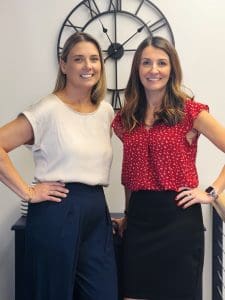
Cristina Tatlock and Tiffany Lyman

EAST LONGMEADOW — Command Wealth Management announced the addition of two new professionals to its growing team: Tiffany Lyman as Client Relations manager and Cristina Tatlock as Client Experience and Marketing specialist. These appointments highlight the firm’s continued commitment to providing exceptional service and building meaningful client relationships.

Lyman brings more than 20 years of client service experience to her new role, including the past four years dedicated to financial services. A UMass graduate with a bachelor’s degree in hospitality and tourism management, she is known for her ability to create strong connections and deliver personalized support. Her combined background in hospitality and finance equips her to anticipate client needs and provide a seamless, thoughtful experience.

“I am excited to bring my experience in client service to Command Wealth Management and to build lasting relationships with the firm’s clients,” Lyman said.

Tatlock joins Command Wealth Management following a 21-year career as a science educator. She holds both bachelor’s and a master’s degrees in education with a focus in general science. Her communication skills, attention to detail, and genuine care for others make her a natural fit for her role supporting client experience and marketing initiatives. Her transition into wealth management reflects her desire to continue making a difference through the lens of financial well-being.

“Supporting others has always been my passion, and I look forward to helping clients feel cared for at every step of their journey,” Tatlock said.

Keith Tatlock, founder of Command Wealth Management, added that “we are thrilled to welcome Tiffany and Cristina to the Command Wealth Management team. Their experience, values, and dedication to client care align perfectly with our mission. We are confident they will strengthen the services we provide and enhance every client’s experience.”

Daily News

GREENFIELD — Greenfield Community College (GCC) has been selected by the Massachusetts Department of Higher Education to join the new Education to Workforce Marketplace, a statewide partnership with ReUp Education aimed at helping adults who have some college credit but no credential return to finish their education.

“Many people start college, and then life takes a left turn,” GCC President Michelle Schutt said. “This partnership will help us reach those students, welcome them back, and provide the flexible support they need to succeed. It also reflects GCC’s deep commitment to lifelong learning and workforce development.”

Across Massachusetts, roughly 17% of adults aged 25 to 65 have some college experience but no degree. Nationally, more than 43 million Americans are in that category, and GCC is among those leading the charge to help those learners obtain their credentials.

ReUp Education, a national leader in adult learner support, uses data-driven outreach and personalized coaching to connect former students with programs that match their goals and life circumstances.

As part of the Education to Workforce Marketplace, GCC will have access to ReUp’s outreach tools and analytics that connect students with support, including GCC’s personalized coaching in financial aid, peer mentoring and other student assistance services.

With help from the state and ReUp, GCC will also collect evaluation data to measure outcomes, learn from results, and advocate for future investment in approaches that support adult learners.

“We are thrilled to be selected participants in this initiative,” said Shanni Smith-Arsenault, GCC’s vice president for Enrollment Management and Student Success. “For many in our region, this program translates to a clear path to college completion without having to start over from scratch.”

Daily News

CHICOPEE — Beaulieu Home Improvement, a family-owned business based in Chicopee, announced the winner of its second annual Veterans Project: Home Renovations for Heroes. This community initiative provides essential home renovations — at no cost — to local veterans in recognition of their service and sacrifice.

This year’s recipient, Timothy Tracy, a U.S. Marine Corps veteran from Springfield, will receive a brand-new roof replacement courtesy of the Beaulieu Home Improvement team. The installation is scheduled for Tuesday, Oct. 28 at 77 Partridge Dr. in Springfield, MA (weather permitting) and will be completed in one day by Beaulieu’s skilled craftsmen.

Tracy was nominated by his daughter, Lindsey, who shared in her letter: “I am honored to nominate my father, a proud United States Marine Corps veteran, for this opportunity. Straight out of high school, he answered the call to serve. Although he left military service just before I was born to be present for his growing family, he never stopped living by the values instilled in him during his time in uniform.”

She went on to describe her father as someone who has “worked hard and sacrificed much to support those he loves,” adding that, even when facing challenges, “he always looks for ways to give back — paying it forward whenever he’s able.”

The Veterans Project was created by the Beaulieu family to give back to those who have served this country. Fully self-funded by the company, the program provides up to $10,000 worth of exterior home improvements for deserving veterans across Western Mass. and Northern Conn., helping improve not only their homes, but their peace of mind.

“Our team created the Veterans Project to give back to the people who have given so much for our country,” said Al and Fran Beaulieu, brothers and co-owners of Beaulieu Home Improvement. “It’s our way of honoring their service and ensuring that they and their families have safe, comfortable homes.”

Daily News

CHICOPEE — The board of directors of Sunshine Village announced the upcoming retirement of Gina Kos, the organization’s longtime president and CEO, after more than three decades of leadership. Kos will step down at the end of April 2026, marking the conclusion of an era of growth, innovation, and service to individuals with developmental disabilities throughout Western Mass.

Kos joined Sunshine Village in 1991 as director of Marketing and Development and, after being appointed president and CEO in 1997, guided the organization through a period of transformation. Under her leadership, Sunshine Village grew from a $6 million agency to a $17 million, nationally accredited nonprofit.

Amid the unprecedented challenges of the COVID-19 pandemic, she successfully led the organization through a safe closure and phased reopening, rebuilding services and programs to meet the evolving needs of clients and families. Today, she leaves behind a financially strong, programmatically vibrant Sunshine Village, widely recognized as both a provider of choice for families and an employer of choice for staff.

“On behalf of the board of directors and the entire Sunshine Village family, I want to express our deepest thanks to Gina for her years of exceptional leadership and unwavering devotion to our mission,” said Peter Benton, chairman of the Sunshine Village board of directors. “Through her vision and heart, she built more than financial and operational strength — she nurtured a culture of excellence, compassion, and belonging. Sunshine Village shines brighter today because of her incredible legacy.”

In addition to her work at Sunshine Village, Kos has been deeply committed to strengthening the broader community. She has served in leadership roles on numerous boards and civic organizations, including MassHire Hampden County Workforce Board, Human Service Forum, Greater Chicopee Chamber of Commerce, the Westfield State University board of trustees, and the Elms College board of trustees. Her extensive volunteer work and community leadership have earned her multiple honors, including recognition as one of BusinessWest’s inaugural Women of Impact in 2018, a Paul Harris honor from the Chicopee Rotary Club, and the St. Joseph Medal – Distinguished Alumni Award from Cathedral High School.

“Serving Sunshine Village has been one of the greatest privileges of my life,” Kos said. “I have been endlessly inspired by the resilience and achievements of the individuals we support, the dedication of our incredible staff, and the unwavering generosity of our partners and community. While it is bittersweet to close this chapter, I leave with full confidence that Sunshine Village will continue to shine and create bright futures for many years to come.”

The board of directors has initiated a comprehensive search for the next president and CEO and is committed to ensuring a smooth leadership transition. It has engaged the Employers Assoc. of the NorthEast to assist with the executive search, which will begin in the next few weeks.

“While we will deeply miss Gina’s presence and leadership, her legacy of excellence, innovation, and compassion will live on in every program, partnership, and person touched by Sunshine Village,” Benton said.

Daily News

SPRINGFIELD — Amy Royal, founder and CEO of the Royal Law Firm, announced that she is selling the firm to Patrick Parker, owner and managing partner of Spruce Law. Going forward, the combined firm will be known as Royal Parker Spruce.

“In 2008, when Amy made the decision to leave the security of a well-established boutique management-side labor and employment law firm to form Royal, she did so with this specific objective: to promote diversity and inclusion in the legal profession,” the Royal Law Firm explained in a statement. “Amy firmly believed that with a team comprised of diverse backgrounds, to provide greater, more comprehensive, and well-rounded counsel for our corporate clients. Over the last 17 years, we have continually upheld that mission, which is proved by the composite of our workforce.”

Spruce Law is an Andover-based employment law firm. Parker is licensed in Massachusetts, New York, and Connecticut. He has extensive legal experience, having clerked for both state appellate and federal courts, practiced at the global law firm Clifford Chance, and served in-house at Merrill Lynch and UBS. He has a law degree from Northeastern University School of Law and an MBA from MIT’s Sloan School of Management.

“With Patrick’s combination of legal expertise and business perspective, he is uniquely positioned to carry the firm forward. He will be taking the helm and leading us into the future. The Royal Law Firm will now combine with Spruce Law, creating a stronger platform to serve our clients,” the Royal Law Firm stated. “Together, we will offer expanded resources, deeper bench strength, and a continued focus on delivering practical, business-oriented labor and employment law counsel our clients can rely on.”

Daily News

SPRINGFIELD — Entrepreneurs, small business owners, and marketing professionals across the Pioneer Valley are invited to ignite their digital presence at the upcoming Social Media Bootcamp, a dynamic, hands-on workshop designed to transform how businesses engage online.

Hosted by the Massachusetts Small Business Development Center (MSBDC) at UMass Springfield, this in-person event will take place on Thursday, Oct. 23 from 2 to 7 p.m. at 1500 Main St., Tower Square, Springfield.

With the theme “Content Is Fire. Social Media Is Gasoline,” the bootcamp promises an immersive experience where p, Srticipants will build a one-page marketing plan tailored to their business; master branding, SEO, and email marketing strategies; learn how to turn likes into leads; discover how to integrate AI tools into their marketing efforts; and network with entrepreneurs and leaders from across the Valley.

General admission is $90, with a partner rate of $70 available through promotional codes provided by MSBDC, local chambers of commerce and community development corporations, Common Capital, and the Women Business Owners Alliance. Attendees who register by Friday, Oct. 10 will receive a boxed dinner included in their ticket price.

This bootcamp is ideal for anyone looking to sharpen their digital marketing skills, explore the power of AI in business, and connect with a vibrant community of innovators. For more information and to register, visit wboa.org/bootcamp.

Daily News

AGAWAM — The West of the River Chamber of Commerce announced the return of Food Fest West, a community culinary celebration, on Thursday, Nov. 13 from 5:30 to 8 p.m. at Crestview Country Club in Agawam.

This event showcases the region’s eateries, offering guests the opportunity to sample a wide variety of delicious dishes and vote for their favorite restaurant of the night. From savory bites to sweet treats, attendees will experience the best of Western Mass. cuisine, all under one roof.

In addition to food, guests will enjoy a fun-filled evening featuring a silent auction, raffles, photo booth, and cash bar. It’s an ideal way to connect with friends, colleagues, and community members while supporting local businesses and restaurants.

“Food Fest West is one of our most exciting community events of the year,” said Robin Wozniak, executive director of the West of the River Chamber of Commerce. “It’s a great opportunity to bring people together, celebrate our local dining scene, and have a great time doing it.”

Tickets are available through the West of the River Chamber of Commerce. For tickets, restaurant participation, or sponsorship opportunities, visit www.westoftheriverchamber.com.

Cover Story Restaurants

On a Roll

Co-owner Jeff Igneri

Co-owner Jeff Igneri


Aromance can spark a lot of things. For restaurant patrons in Western Mass., it sparked a successful burger chain that continues to grow.

Jeff Igneri, who earned degrees in hotel restaurant management and hospitality administration at Johnson & Wales University, was looking to open a restaurant in the Providence, R.I. area, or maybe Worcester, but he happened to be dating a woman — now his wife, April — who was enrolled in a master’s degree program at Smith College.

“I came and visited her once, and as we were walking down the streets of Northampton, I saw an open location and said, ‘let’s check that out.’ I called the landlord, and things worked out.”

It took some work and a $65,000 investment to renovate the Main Street space, but Igneri and three family business partners — his father, Joe, and brothers, Chris and Steve — opened Local Burger in 2008, and found it to be an immediate success, despite some initial naysayers.

“We always wanted to do burgers, but as we were renovating the place, people came by and said, ‘burgers won’t work here; it’s a vegetarian town,’” Igneri recalled. “But when we opened up, it was just go, go, go — thankfully.”

Local Burger does offer more than one meatless burger, along with a wide variety of other burgers and sandwiches — not only beef, but chicken, pastrami, hot dogs, and more — as well as chicken tenders, donut-sized onion rings, and a wide array of starters. Some of its most famous fare was developed during those early days.

“Obviously the food has to be good, and the service, too, but it feels fun when you’re here. It feels like a carefree break from the chaos. You can come in here, be who you are, eat what you want to eat, and just chill out.”

“We created the Cap’n Crunch chicken tender right away. We played around with cornflakes and said, ‘huh, cereal sounds good on chicken. Let’s try something different. Cap’n Crunch, why not?’”

What has almost certainly raised the profile of a restaurant chain that launched in Northampton is Local Burger’s emphasis on buying ingredients from local farms, from beef to produce. Early on, Chicoine Farm in Easthampton supplied most of the beef, but these days, Igneri sources meat from several local farms, including Porter Family Farm in Ashfield, Holly Berry Farm in Chesterfield, and Mayval Farm in Easthampton.

Meanwhile, all the chain’s potatoes come from Szawlowski Potato Farms in Hatfield, the ice cream comes from Maple Valley Creamery in Hadley, and other farms supply a variety of produce.

“I had lived in New York, Providence, Eastern Massachusetts,” Igneri told BusinessWest. “So coming out here, seeing all the farms with all the local meats, local produce, it was not typical for me. I wasn’t used to it.

“So we just talked to a bunch of different farmers and asked what they had, what meats they had, what produce they had, and that’s how it all started — just going to different farmers and checking to see what they had for us,” he added, noting that he wasn’t initially thinking of partnering with farms when he first thought about opening a restaurant. “It wasn’t even on my radar until I came out here and saw everything that’s available. There was so much out here.”

Tabitha Saalfrank

Tabitha Saalfrank says it’s critical to keep loyal, reliable employees happy in an industry where workers can be hard to find.

Today, Local Burger has grown to four locations — the Keene, Vt. restaurant opened 13 years ago, a spot in Haydenville opened nine years ago, and Igneri and his father (his brothers are no longer partners) moved into the former Riff’s Joint space at Eastworks in Easthampton last year. In addition, they also maintain a food truck and a catering operation.

And throughout all of it, buying and serving local ingredients comes first.

“At first, there weren’t as many restaurants doing that,” he said. “So ‘Local Burger’ has two meanings. One is using as much local products as possible, and one is being the local burger joint. It wasn’t necessarily using local produce at first — it was just supposed to be the local burger place. But it worked out with the other meaning.”


Moving On Up

Tabitha Saalfrank has been with Local Burger for eight years and has moved from working in the food truck and catering aspects of the business to managing the Easthampton location. So she has interacted with customers in many different ways, and said that, besides the food, what keeps customers coming back are the people and the experience.

“People will recognize me. I’ll be wearing a plain black sweatshirt at the gas station, and someone’s like, ‘oh, it’s the Local Burger girl.’ So, not to be cliché or corny, but it feels like family,” she said. “We have a customer that’s been coming here since she was pregnant with her first kid, and she’s now pregnant with her second kid, and I’m watching that baby grow up because they come here so often.

“I think it’s the vibe that we’re able to give off as well, just the experience and the environment. Obviously the food has to be good, and the service, too, but it feels fun when you’re here. It feels like a carefree break from the chaos. You can come in here, be who you are, eat what you want to eat, and just chill out.”

“People perceive burgers to be a low-cost item because you can go to McDonald’s for X amount of dollars and buy something that’s not a great product. But beef is one of the highest-priced proteins out there.”

Igneri said he’s made a point of promoting from within — the manager of the Keene location, Mike Collins, joined Local Burger as a dishwasher in 2012, and many employees have been in the organization for most of its history — but giving managers an ownership stake as well.

“Mike is a great story,” he added. “He came in, started washing dishes, went on to be a cook, and now he’s running it, and he has part ownership there. I think that’s why we keep our employees so long. We try to get people involved and keep them happy and give them a piece of the action. I just wanted to do something to make them feel like they’ve earned it.”

Saalfrank, for one, is excited to work for a company that allows room for growth.

“I had been working for a while, and Jeff was like, ‘what can I do for you? If we were to buy Riff’s, would you want step up and take over?’ And I was like, ‘sure,’” she said. “He’s actively looking around and considering the staff when opening a location — like, ‘OK, who’s up next?’”

Igneri said he has always kept a community focus with Local Burger, supporting events like Bikes Fight Cancer and Magic for Maddie (a pediatric cancer fundraiser), as well as local schools and nonprofits, like Tapestry Health, Cutchins Programs for Children & Families, and Cancer Connection.

The former Riff’s Joint space in Eastworks has turned out to be an ideal site for the fourth Local Burger location.

The former Riff’s Joint space in Eastworks has turned out to be an ideal site for the fourth Local Burger location.

“We have this core of people who have been here for so many years that just represent us in such a great way. We’re lucky to have them,” Igneri said. “The community supports us, and we support them.”


Serving Up Challenges

While Local Burger is clearly a success story, the restaurant business is fraught with challenges, Igneri said, from rising ingredient prices — and the resulting balancing act in pricing between making a profit and keeping customers happy — to maintaining a loyal, reliable workforce.

“That’s a challenge in Haydenville because it’s seasonal — we’re six months out of the year. Trying to hire people for six months is difficult for us. Luckily, we can take the staff in Haydenville and put them in the other locations when workforce needs arise there,” he explained. “So we don’t let them go — we try to keep them as long as possible.”

Saalfrank said it’s critical to hang onto the best talent because it can be hard to find.

“Finding people who want to work is my biggest challenge lately. I get so many applications, but the people with the work ethic who are determined to actually get the job done, I feel like that’s rare. It’s a job, yes, and I don’t expect more from them than their job, but it sometimes seems like they don’t want to be here at all. So when I find the ones that do, I hang onto them.

“We take care of our staff, too,” she went on. “If you have an idea or you think something’s not working, we’re going to listen, and we’re going to try to make it so that everybody’s happy. To find people who still don’t want to be here after that, it’s just like, ‘OK, well, maybe this just isn’t it for you.’ But I’ve noticed there is a work ethic issue, especially in the younger generation.”

As for the challenge of rising prices, “there’s a perception with burgers,” Igneri said. “People perceive burgers to be a low-cost item because you can go to McDonald’s for X amount of dollars and buy something that’s not a great product. But beef is one of the highest-priced proteins out there; it fluctuates from $5 to $6 a pound. And you can’t adjust your prices on a daily basis, even though a lot of the prices fluctuate weekly. So you just have to shop around different providers and do the best you can. It’s a constant battle with prices.”

That said, Igneri is gratified by the business he has built.

“On a busy night, you look around, you see people eating, having a good time, and it makes it all worth it. You see families laughing, having a birthday party here. We rent out our bar area for rehearsal dinners. So to pull Local Burger into those big moments in your life — it’s not a small thing finding where you want to have your birthday party or your rehearsal dinner. So it means a lot.”

Speaking of the bar area in Easthampton, Saalfrank said the team recently launched Thursday night bingo games there, and they have been a big hit.

“Our Thursday night will sometimes be busier than our Friday because of the people that are here for bingo,” she said. “It’s a new, fun thing that I feel proud to have been able to get started. It’s a good vibe.”

Igneri reiterated toward the end of his conversation with BusinessWest that the three things that make Local Burger stand out are food quality, the staff, and community connections.

“We’re lucky to be in the west of Massachusetts, where people support local businesses — local farms, local restaurants … it’s important to people,” he said. “I sometimes ask, ‘how did this happen?’ I remember opening the restaurant in Northampton saying, ‘what am I doing? I’m in way over my head. Why am I doing this?’”

Seventeen years — and a lot of happy customers — later, he understands why.

Features Special Coverage

Hire Calling

Emily Benoit (left) and Erika Lamere say the Lincoln Street Stop & Shop in Holyoke has strived to cultivate an inclusive workplace.
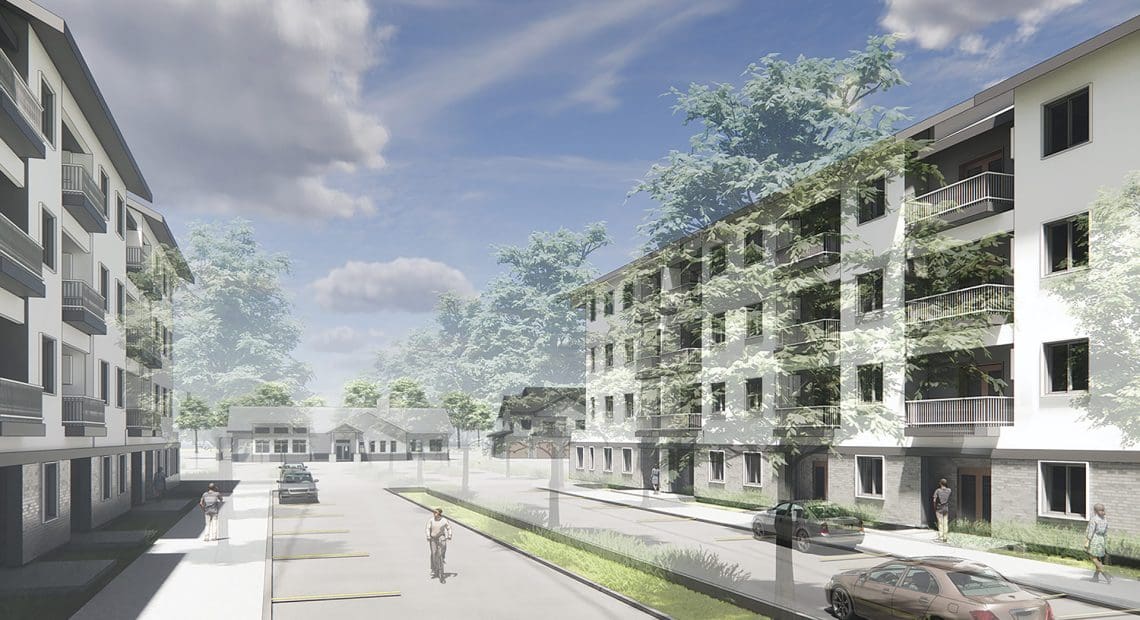
Emily Benoit (left) and Erika Lamere say the Lincoln Street Stop & Shop in Holyoke has strived to cultivate an inclusive workplace.
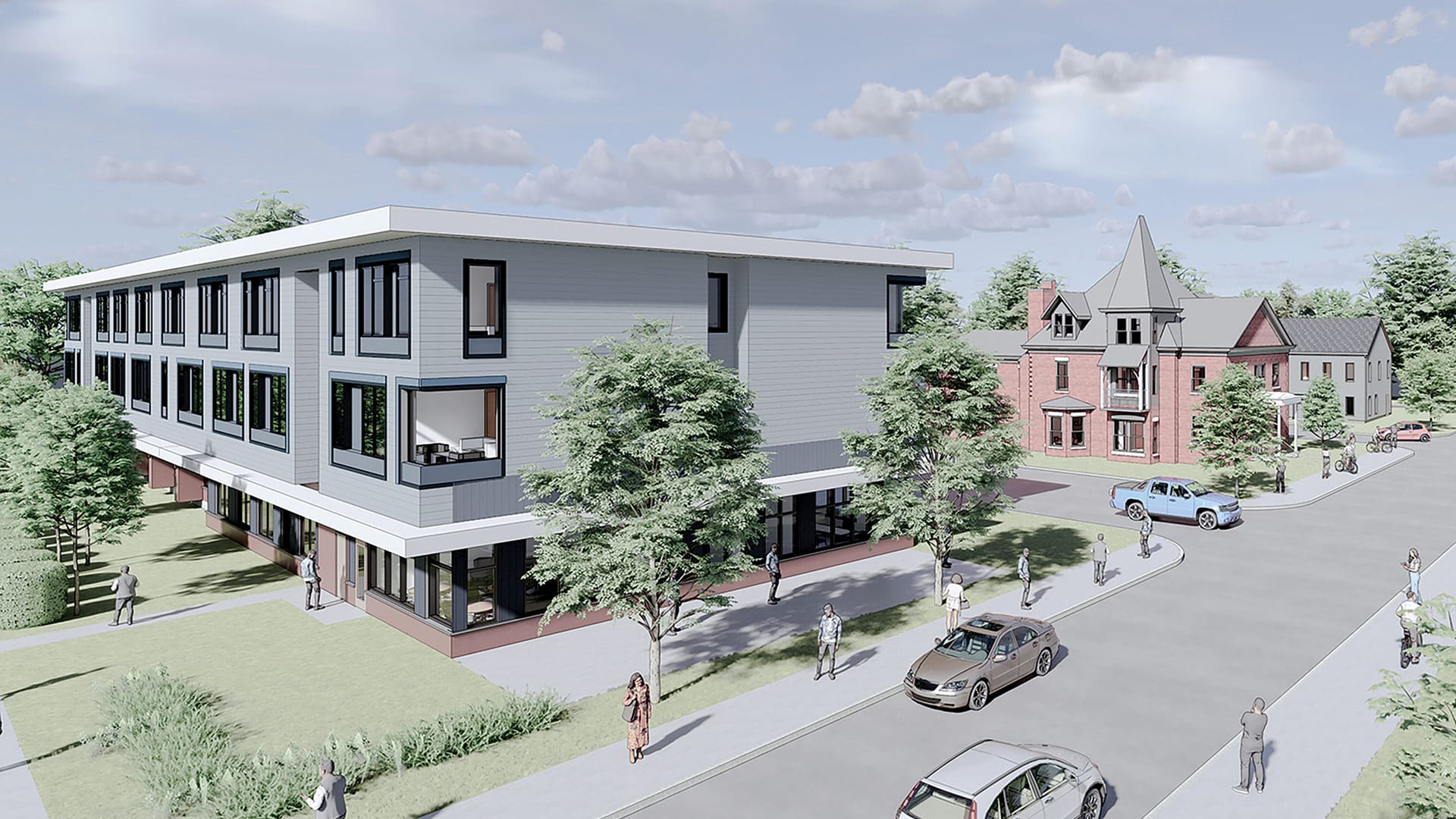
 

October is National Disability Employment Awareness Month. But for Lhea Destromp, it’s a year-round effort.

“This isn’t just seasonal. It’s about carving out intentional opportunities and making our workspaces more inclusive. And that’s a slow and thoughtful process,” said Destromp, an employment counselor in Regional Employment Services for the Massachusetts Department of Developmental Services (DDS).

That said, the increased awareness in October does present an opportunity to create more dialogue around the value that workers with disabilities add to the workforce, the importance of inclusive employment policies, and barriers to employment that people with disabilities may face.
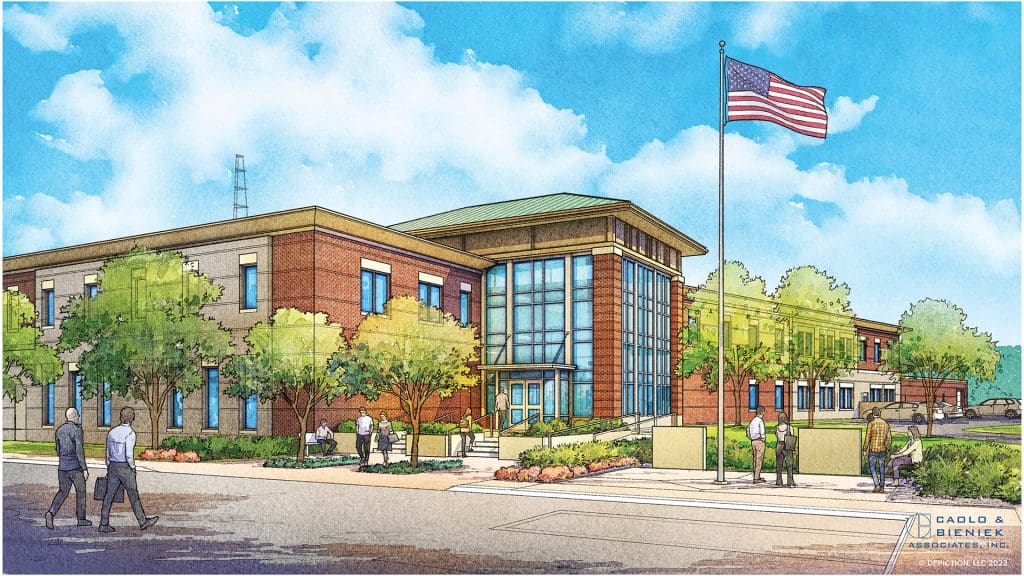
“When I’m talking to employers, I’m talking to them in terms of value and what they’re looking for, so I need to be able to convince them that an individual, or a whole group of people, are reliable and not a risk — because, at the end of the day, business people are thinking about risk. So it’s about putting the facts in front of people so that they can make informed decisions. And a lot of people don’t realize that individuals with disabilities tend to have the greatest longevity in their careers.”

As an example, she connected BusinessWest with the Stop & Shop store on Lincoln Street in Holyoke, where a man with a developmental disability named Michael has been bagging and retrieving carriages — and occasionally other tasks — for the past 35 years.

“Michael has been like a brother to me,” said Erika Lamere, an administrator at the store who has roughly the same tenure at the store. “We grew here together. And he feels like this place is his home because he’s been here so long.”

Emily Benoit, a department head who works closely with Michael, said there are rough days when he’ll get a little overwhelmed.

“Whenever something’s bugging him, like if he had a bad interaction with a customer, he’s able to talk to us and explain what happened and what he’s feeling, and we can kind of direct him — ‘OK, that’s all right, this happens, it’s normal.’ And talking about it helps him and brings him down a level so he’s not overwhelmed.”

That said, Michael’s time at Stop & Shop is marked by mostly good days, and the same goes for Chris, another employee with a developmental disability who mainly bags groceries. They’re popular with customers and — importantly — extremely reliable, Benoit said, something Destromp says is true for many of the clients she works with and helps connect with jobs.

Lhea Destromp

“It’s about putting the facts in front of people so that they can make informed decisions. And a lot of people don’t realize that individuals with disabilities tend to have the greatest longevity in their careers.”

“Why should these people not be included?” Lamere asked. “We’ve had supervisors come through the building that say, ‘what do they do?’ Well, they can do anything anyone else can do if they’re just taught how to do it.

“That’s one thing I love about this place — in all my years here, we have always made sure that everyone is included, no matter what it is: a disability, your race, your sexual preference, I don’t care,” she went on. “Everyone is a person and deserves to work if they want to. And yes, they may not be able to perform all tasks, but that doesn’t mean places shouldn’t hire them. And once they get comfortable, you’d be very surprised with the other things they are willing to do and end up doing.”

And doing well, Destromp added.

“Not only do many of these folks work in their positions for a long time, they’re very reliable, they very seldom call out, and individuals with disabilities have the lowest of workers’ compensation claims. So when we think about how an employer defines risk within the context of an employee, we’re checking all the boxes here.”


Meaningful Connections

Destromp, as noted, helps people with developmental disabilities secure meaningful work, and she does this from both sides.

“I work with job coaches on job development with individuals who are looking to get jobs. Typically they have a number of obstacles and barriers that have led to a pattern of instability that has made it so they can’t retain work. So I help create goals and strategies to work with these folks so that they can resolve these issues,” she explained.

“At the same time, on the other end, I’m working with employers and helping to prepare them so that they can embark on this journey. For some of them, it’s an easy job, and it’s just about placement. For others, we’re really carving in — helping them identify roles for people and supports.”

In many ways, she said, her department acts as a training program to determine where the barriers are and what someone needs to overcome them and secure employment.

“It really depends on the individual, almost how you think about physical therapy. If somebody has an issue with their leg versus an issue with their back or their core, they’re going to have a whole different regimen to support them and strengthen what they need. So, for us, it’s really about targeting those areas,” she explained. “We’re working to assess where the deficits are, and then we can identify strategies to support them.”

She’s also busy with engaging different constituencies around the issue of inclusive workplaces and what that means to both job seekers and employers.

“I’m doing more around community engagement and around finding places where folks can be establishing and deepening their skill sets and then connecting them more meaningfully to opportunities in the community, and then also working more closely with employers and helping them figure out ways to establish value and take that leap of faith.”

Jason Randall

Jason Randall

“When they find an employer like ours and get into an environment where they feel accepted and wanted, their loyalty is increased, and their length of service with us is higher than others.”

As one motivation, she directs them to tax incentives for hiring disabled workers. The federal Work Opportunity Tax Credit reimburses 40% of up to $6,000 in wages to any employer that hires disabled individuals certified by a state workforce agency. Meanwhile, the Massachusetts Disability Employment Tax Credit provides up to $5,000 or 30% of the wages paid to each qualified employee with a disability in the first taxable year of employment, whichever is less, decreasing to $2,000 or 30% of the wages paid, whichever is less, in subsequent years.

Those are attractive incentives, Destromp said, but they’re not the whole picture — more important is tapping into an employee pool that, as she noted, tends to be longer-tenured and more reliable than workers in general, at a time when businesses of all kinds are struggling with maintaining a workforce.

“It’s smart business, and the data doesn’t lie,” said Jason Randall, executive director of Human Resources at MGM Springfield, another employer that has embraced inclusivity in hiring.

“These employees do have a longer tenure with us. And in return, they find loyalty in a company that is taking a chance on them because other doors get closed on them through various interview processes or companies that don’t want to engage,” he noted. “When they find an employer like ours and get into an environment where they feel accepted and wanted, their loyalty is increased, and their length of service with us is higher than others.”

Randall explained that MGM has partnered with a number of organizations, not only DDS, but also the Western Mass Employment Collaborative, Viability, and ServiceNet — that support individuals with disabilities who are looking for work.

“We have great relationships with these organizations, meet with them frequently, and are very candid up front about the environment that we provide as a workplace as they’re trying to match their constituents to employment,” he noted. “We know that this environment may not be for everybody. Certainly, working front of house with guests isn’t for everybody, and working back of house, without guest contact, isn’t for everybody. So being candid and having dialogue up front helps create an expectation that these agencies can place or help their candidates apply for appropriate positions.”

The partnership doesn’t stop after hiring, onboarding, and training, Randall added, as the casino complex provides employee accommodations when needed, and works with the aforementioned agencies to determine those needs. “We’ve worked with employees who have a variety of disabilities, and some you can notice by sight, and some you don’t know what’s going on in their life, but they do have a disability.”

Destromp noted that employers she works with are never asked to hinder their productivity with a hire that’s not the right fit.

“If you’re accommodating an employee in a way that is impacting the flow of your environment, then that’s not a reasonable expectation, and you, as an employer, are not expected to meet that expectation,” she said. “But, while that will be a difficult conversation, some difficult conversations yield high rewards — you may say to that person, ‘this is not the right role for you. Let’s examine the other things that are going on in our place of business and needs that we have that you may be able to fill.’”


Continuing the Conversation

To mark not only the 80th year of National Disability Employment Awareness Month and 35 years since the passage of the Americans with Disabilities Act, the DDS will present a panel discussion on disability inclusion practices in collaboration with the Springfield Regional Chamber, New England Business Associates, Springfield College, and the ADA National Network.

The event, to be held on Monday, Oct. 27 from 9 to 11 a.m. in the Springfield College Learning Common, will bring together leading employers to share innovative strategies for building inclusive workplaces — including how companies have successfully carved out roles tailored to employees’ strengths and support needs, creating true win-win outcomes. Panelist topics will include ADA recommendations, universal supports, expanding one’s labor pool and cultivating an inclusive culture, and addressing difficult disability-related questions. Email Tina Macy [email protected] with questions and to register.

“I think that individuals with disabilities have long been an overlooked and undervalued and marginalized group of people,” Destromp said. “I think that’s such a shame because these are people who are so eager to prove their worth, to prove their value, and who deserve just the same as anybody — that opportunity to be able to feel the value and the worth that comes along with contributing to your community.”

She said she was excited to meet Michael at the supermarket in Holyoke. “Everybody’s eyes lit up when they saw Mike — he was like the mayor of Stop & Shop.”

That’s gratifying for Lamere, who appreciates what her employees with disabilities have contributed to the store.

“Michael comes in every day, he stays his whole shift, he is reliable. And Chris is the same way. He was hospitalized recently, but he came right back to work. They’re both very reliable. We’re lucky to have them.”

At the same time, an inclusive workplace helps all employees understand differences, and that’s valuable in itself, she added.

“It gets you to open up and see they are people too, and they’re very capable of doing the things we do if they’re just given a shot. [Employees] learn very good lessons — that if you have the right people showing them and the right people giving them the courage or whatever they need, they end up doing it.”

That said, “some customers can be pretty rough,” Lamere went on. “With Michael, he sometimes will struggle with that because his feelings get hurt easily or he feels like he did something wrong. We’ve had customers call him stupid before. And the second I hear that, I’m flying downstairs, because nobody’s doing that. We try to make sure they feel protected.”

Randall said an inclusive workplace, like MGM Springfield, benefits everyone, including the company as a whole.

“Whether it’s a member of the LGBT community, veterans groups, women in the workplace … having an environment that accepts, promotes, and encourages everyone helps from a retention perspective,” he explained. “When employees feel proud about the workforce they are a part of and the company they work for, they become your recruiters. They’re going to tell their friends or family members the experience that they’ve had, and that brings us more candidates coming in the door.”

Destromp agreed. “I think it’s about shining that light and helping local employers see that value and understanding the many unique characteristics and qualities that individuals with disabilities bring to the table as a whole — and that’s even before we take a step closer and get to know each individual better and unpack their unique qualities.”

Community Spotlight Special Coverage

Community Spotlight


James Birge says MCLA owes its high ranking among liberal arts colleges to many factors, but especially its strong track record with helping students succeed.

James Birge says MCLA owes its high ranking among liberal arts colleges to many factors, but especially its strong track record with helping students succeed.

Marya Kozik says North Adams is much like its larger neighbor to the south, Pittsfield, in that it is working very hard not to live in the past.

This is a past dominated by massive mills, led by Sprague Electric, that employed thousands; a thriving downtown fueled by payday at those mills; and a population that was significantly larger and much younger, said Kozik, director of Community Development and someone who grew up in the city.

“We’re trying to look forward to new opportunities, whether it be the creative economy or food science and entrepreneurship,” she said, adding that the focus is squarely on the present and the future, and continuing the process of redefining the community known as Steeple City because of the many church spires that dominate the skyline.

Elaborating, she the city is working to build its creative economy, headlined by MASS MoCA, located in the Sprague Electric complex, but including a growing number of art galleries and related businesses, while also trying to attract the many kinds of businesses that will bring young people here — and keep them here.

“The creative economy is taking off,” Kozik said. “We have a lot of artists coming into the community; we have small-scale manufacturing of artistic products and home goods that use the skills of artists who are here and, hopefully, the skills of other people who had left jobs that required that kind of manufacturing skill. There are opportunities coming back, and it’s nice to see new people coming in to the community.”

These efforts comprise many of the storylines now converging in North Adams, a community of roughly 13,000 people. Others include:

• Continued progress at the mill revival initiative known as Greylock Works. The former cotton-spinning mill has been converted into a thriving campus that includes a restaurant, a co-working community, a craft distillery, the Berkshire Cider Project, and event spaces that include the Weave Shed and Engine House, as well as 50 loft condos;

• The reopening last year of North Adams Regional Hospital. Now part of Berkshire Medical Center, the facility, closed after financial problems, was honored with a MassEcon Impact Award earlier this year;

• Progress, in the form of a $17.3 million grant from the U.S. Department of Transportation’s Rebuilding American Infrastructure with Sustainability and Equity program, toward creation of the Adventure to Ashuwillticook trail, a 9.3-mile stretch of shared-use pathway connecting the existing Ashuwillticook Rail Trail to the Williamstown Mohican Path by way of downtown North Adams and the rotary at the MASS MoCA campus;

• The North Adams Steeplecats, a team in the New England Collegiate Baseball League (which also includes the Holyoke Blue Sox), which continues to draw fans to Joe Wolfe Field, playing an important role in economic development within the community; and

• Massachusetts College of Liberal Arts (MCLA), one of the city’s largest employers. The school recently maintained its ranking of sixth among the nation’s public liberal arts colleges — marking 11 consecutive years in the top 10.

“This consistency in rankings reflects our core mission — providing an affordable, transformative liberal arts education that empowers students,” MCLA President James Birge said, adding that the school continues to evolve and add new programs and majors — from nursing to ‘music, industry, and production,’ to meet the needs of students and the business community.


Progress Report

As she talked about North Adams, what’s been achieved, and the work still be done, Kozik said the city’s evolution from a mill town to a city with an arts- and hospitality-based economy is still very much a work in progress.

MASS MoCA has been a part of this story, she said, noting that, while the facility — the most spacious modern art museum in the world, known for its large-scale installations — has not spurred the kind of economic development that had been hoped, it has become a valuable asset for the city and perhaps the most important piece of an economy now based mostly on tourism, hospitality, and arts-related businesses.

“Do we bring people here when we don’t have all the elements to support them? And how do we create the elements to support them, like restaurants and shopping venues, when we don’t actually have the people to support them?”

Pieces are coming into place, she said, but North Adams, like most all cities trying to attract young people, is facing what she called a ‘chicken-or-the-egg’ scenario.

“Do we bring people here when we don’t have all the elements to support them? And how do we create the elements to support them, like restaurants and shopping venues, when we don’t actually have the people to support them?” she asked rhetorically, adding that the city is essentially working on both sides of the equation simultaneously.

There have been several intriguing additions to the landscape in recent years, businesses created to meet needs and create vibrancy, Kozik noted, citing, as one example, Steeple City Social, a community-oriented bakery, café, and cocktail bar on Eagle Street, launched by a recent transplant to the city, Andrew Fitch.

“He saw a need for what they call a ‘third space,’” she said, meaning a place that’s not home and not the office. “He opened a space that’s a bakery in the morning and a café in the evening; it’s a place to gather, and people have been very supportive.

“Spaces like this build community,” she went on, adding that there have been other additions that fit this description, including several art galleries, many with ancillary products and services, such as tea, that make them more financially viable.

Still, there are considerable challenges to revitalizing the downtown, Kozik said, citing the loss of vitality that came with the loss of all those mill jobs as well as the aftereffects of ’60s-era urban renewal, which essentially left one side of Main Street intact and the other side demolished in favor of a parking lot and mini-mall, plagued by a high vacancy rate in recent years, that has gone by various names, including Steeple City Plaza, the Parkade, and the ‘L-shaped mall.’

“We have one side with beautiful old buildings, and the other side, across a four-lane road, which is unheard of in small cities, two vacant lots,” she explained. “We’re looking to restore the vibrancy of downtown in the storefronts, working with developers who are interested in restoring the top floors into apartments, but we also have these huge vacant lots.”

Meanwhile, outside the downtown, the city is seeing several signs of progress, including adaptive reuse of former mills.

North Adams at a Glance

Year Incorporated: 1878
Population: 12,961
Area: 20.6 square miles
County: Berkshire
Residential Tax Rate: $16.71
Commercial Tax Rate: $35.22
Median Household Income: $35,020
Family Household Income: $57,522
Type of government: Mayor; City Council
Largest Employers: BFAIR Inc.; Massachusetts College of Liberal Arts; North Adams Regional Hospital
* Latest information available

Indeed, Greylock Works has become one of the better success stories in North Adams. The initiative, led by architects and entrepreneurs Karla Rothstein and Sal Perry, who acquired the mill in 2015, has several intriguing elements, the latest being loft condos that will provide another housing option in the community.

Meanwhile, another former mill, the Norad Mill in the Braytonville section of the city, has been repurposed into office space and home for a diverse mix of tenants, including a yarn manufacturer, a dog biscuit baker, a coffee shop, and a candy company.

Overall, the city’s goal is to create more jobs — it will likely never replace all those lost when the mills closed — with a diverse mix of smaller businesses in those mills, and across the downtown.


School of Thought

Creating a workforce to support such businesses is one of the overriding goals at MCLA, formerly North Adams State College, which continues to thrive in its category because of its commitment to liberal arts, even as some colleges and universities have been cutting back on programs in that realm.

“There’s an initiative among institutions today to eliminate academic programs or majors that don’t really generate positive revenue streams, that don’t contribute to the overall revenue of the institution; that hasn’t been my approach here,” Birge said. “Because we’re a liberal arts institution, it’s important to have a broad base of academic programs and majors for students to develop critical-thinking skills.

“For example, we offer philosophy and modern language majors that don’t generate lots of tuition revenue for us, but they’re essential to a liberal arts education. We’ve leaned into those things, like history — we think that’s an important element in a liberal arts education,” he went on. “And because of the facility we have, students who major in those departments do very well.”

Elaborating, he said the school is far more likely to add new programs with potentially strong revenue streams so that it can maintain programs like those he just listed, rather than make cuts.

One example of this is the radiological technology program added just a few years ago, but one that has already become one of the most popular majors, along with health sciences and more traditional offerings such as business, education, and psychology.

“Because of the population of students we have — 50% are first-generation college students, and 50% come from families earning less than $38,000 a year — there are some challenges in terms of what they understand college to be and how they can be here, coming from an economically challenged background.”

As it offers such programs, MCLA has put a hard focus on helping its students, many of them the first generation in their families to attend college, succeed with their goals, whatever they may be.

And these efforts take many forms, from various mentoring programs to the school’s Essential Needs Center, which addresses hardships outside the classroom that can become obstacles to student achievement and overall well-being. The space, run by students, offers food, essential items, housing and transportation assistance, seasonal clothes, SNAP applications, and more.

“Because of the population of students we have — 50% are first-generation college students, and 50% come from families earning less than $38,000 a year — there are some challenges in terms of what they understand college to be and how they can be here, coming from an economically challenged background,” Birge explained. “So, as a result of that, we really try to help students through programs that don’t just advise students, but mentor them so that they can be successful with their academic goals.

“And we don’t necessarily define that in a limited fashion as graduation, but also, how do you achieve a certain grade point average? How do you make sure you succeed in a course that’s going to help predetermine what your major will be? How do you make sure that your academic success is meeting the standards in order to be a student leader in athletics, student government, or in the residence halls?” he went on. “A few years ago, we implemented this success coaching model, in addition to our academic advising, to guide students throughout their time here, not just as they’re coming in, but all along the way.”


Healthcare News Special Coverage

The Overlooked Addiction

By Christopher Soderberg and Justin Szwajkowski

Addiction has become a prevalent topic in today’s society, dominating headlines and impacting communities globally. The destructive effects of many of the most common and prevalent addictions are becoming better documented and have led to more open discussions with the younger generation in an effort to deter them from falling victim to their binds.

While the most destructive of these addictions often come to mind when the idea is brought up, many do not consider that the same chemical pathways and environmental factors can be responsible for other forms of addictions.

In recent years, a new form of addiction has risen in frequency: work addiction, sometimes called workaholism. This addiction is defined as a compulsive need to work incessantly, even when it causes harm to one’s physical or mental health. In the relentless pursuit of professional success, it often progresses to the point of burnout, a term that has become quite common in today’s society.

Acknowledging the detrimental effects of burnout on one’s professional performance is the first step towards embracing work-life balance, a strategy that ultimately revitalizes productivity and enhances long-term career success.


The Value of Work

In many ways, work is one of the biggest defining characteristics of a human being. What you do for work becomes a large part of who you are, how you see the world, how you live, and what you talk about. Work ethic and personal success have become common status symbols within the community and between peers.

For these reasons, it is easy to see how unhealthy working habits can soon become routine and normalized within one’s own life. While working hard is certainly important, finding a healthy balance between professional success and personal well-being is essential for long-term fulfillment and sustained progress.

In 1989, sociologist Ray Oldenburg shared his ideas on these topics in his book, The Great Good Place, and coined the idea of a ‘third place’ for individuals to help drive this balance. When taking a step back and reflecting on one’s life, an individual’s first two places are obvious — the first place being one’s home, while the second is their workplace.

Christopher Soderberg

Christopher Soderberg

Justin Szwajkowski

Justin Szwajkowski

“Setting boundaries, taking breaks throughout the day, prioritizing your well-being, and the scariest for many — taking vacation time — are all ways you can recharge your mental and physical health.”

These places are where a substantial chunk of one’s life are centered, and in the modern working environment, these places can even become blurred, with the adoption of hybrid work models becoming more common. To effectively manage the stress of these two places, it’s essential to have a third place — a dedicated space outside of these two environments where you can go and relax, recharge, and detach from the ordinary for a moment.

In many cases, the third place can be anywhere or anything you want it to be — the golf course, the gym, the library, even an open field. To truly serve its purpose, your third place should be a space where you can pursue your passions, establish new hobbies, and build meaningful connections. Finding this third place and incorporating it into your schedule will not only help you counteract the effects of workaholism and burnout, but it will help you become a more effective and well-rounded boss or colleague by increasing your overall mental well-being.

When one begins to take the essential steps in addressing their work-life balance, or tendency toward workaholism, they not only restore their own well-being, but also enhance their professional and personal relationships, ultimately leading to increased production and happiness.

On the other hand, when individuals experience burnout from this behavioral addiction, they often begin to experience irritableness, exhaustion, and decreased motivation, which directly impacts the quality and quantity of their work. Most people can probably think about their friends, colleagues, or family and pinpoint an individual who has dropped nearly everything else and worked themselves into the ground in the chase for success.

Luckily, as noted previously, there are steps one can take to both achieve this success and improve quality of life. Setting boundaries, taking breaks throughout the day, prioritizing your well-being, and the scariest for many — taking vacation time — are all ways you can recharge your mental and physical health. These simple remedies lead to renewed focus, increased creativity, and a stronger sense of purpose, ultimately resulting in a significant boost in performance.

It is important to emphasize that the idea of being able to remove yourself from your work is not to say you should not work hard. It is still possible to be the first person into the office, the last to leave, and even put in overtime while still leaving dedicated time for things you enjoy. Short-term compromises can and will sometimes be necessary — issues will pop up, and some weeks may leave less room to visit your third place than others.

Success is a direct result of this kind of hard work and dedication, but that does not mean it has to come at the sacrifice of yourself and those around you. The career ladder is a marathon and not a sprint, and long-term balance offers benefits that outweigh a metaphorical short-term sprint that results in burnout.


Bottom Line

In summary, you can still build a successful career while maintaining a balance in life that keeps you energized and well-rounded. Jack Dorsey, co-founder of Twitter and Square, blocks at least one day off a week to go hiking, per a CNBC interview in 2019. Warren Buffet famously took time out of his days to take ukulele lessons and play regularly, as he admitted to Yahoo during an interview in 2023.

These figures achieved incredible levels of career success, and likely worked harder than most for sustained periods of time. However, they still found hobbies and pursued passions to keep them recharged and balanced in life.

Similar to other addictions, drawing boundaries and making changes to eliminate compulsive or learned behaviors can be challenging. In the long run, however, creating a life of balance will be beneficial not only in life outside the office, but also in career success.


Christopher Soderberg is a supervisor, and Justin Szwajkowski is an associate, at the Holyoke-based accounting firm Meyers Brothers Kalicka, P.C.

Architecture Special Coverage

Weathering Some Uncertainty

A rendering of a project in downtown Pittsfield, one of many housing initiatives in the Dietz & Company portfolio.

A rendering of a project in downtown Pittsfield, one of many housing initiatives in the Dietz & Company portfolio.


A rendering of a public safety facility in Taunton designed by Caolo & Bieniek.

A rendering of a public safety facility in Taunton designed by Caolo & Bieniek.

Lee Morrissette was probably looking for some wood to knock on.

In the architecture industry, he explained, there is chatter about things slowing down and work becoming more difficult to attain, and for several reasons. But at the same time, Morrisette, a principal with Springfield-based Dietz & Company Architects, has a different take.

“The architecture industry has been saying that things have been softening for quite a while — billings are down, and new job starts are down, but we’re just not seeing that,” he said, noting that the firm — which recently opened an office in Cambridge, where Morrissette leads a team of four — has a considerable amount of work on the books.

Especially strong is work within the broad housing sector, he added, noting that the critical need for housing of all kinds, but especially the affordable variety, is a statewide problem that is keeping the firm busy.

“We’ve maintained a consistent stream of work,” he said, noting that housing and housing-related projects — from a new community center and administrative office for the Fitchburg Housing Authority to an intriguing 48-unit housing project in downtown Pittsfield, to redevelopment of a demolished shopping plaza in Manchester, Conn. into 232 units of market-rate housing — are dominating the portfolio.

Others we spoke with agreed, at least to some extent, but noted that there are some signs of slowdown and a variety of forces — from rising prices of materials and labor to tariffs to a slower-than-expected pace of decline in interest rates — contributing to a good amount of uncertainty, which is never a good thing within the broad building trades sector.

Still, area firms seem to be maneuvering through this uncertainty, mostly through the diversity of their portfolios, the housing crisis, and the fact that many projects are moving forward in some form, though maybe a little later than planned in some cases.

“While some people have hit pause on projects, there’s more of what I’ll call re-evaluation,” said Curtis Edgin, a principal with Chicopee-based Caolo & Bieniek Architects. “People are saying, ‘is this what we really want to do, or do we want to explore a plan B opportunity?’ We’ve seen a little bit of that, and we’ve been fortunate that there’s always been a plan B.

“The architecture industry has been saying that things have been softening for quite a while — billings are down, and new job starts are down, but we’re just not seeing that.”

“We’ve had another good year, and we have good work in the boards for next year,” he continued, adding, again, that diversity of projects — public, private, large, small, long term and shorter term — has been a real asset for the firm.

Kevin Rothschild, principal with East Longmeadow-based Architecture Environment Life (AEL), agreed, but noted there are some forces that will make 2026 somewhat more challenging. These include the end of several pandemic-related programs to fuel the economy, cutbacks to some public sector programs, and other factors.

“Things are a little harder, a little slower,” he told BusinessWest. “We’re seeing the tail end of funding programs like ARPA and ESSER [Elementary and Secondary School Emergency Relief] as well as municipal or federal grants that were out there for schools and cities and Green Communities,” he said. “We’re seeing a lot of those programs reach their conclusion. The work that we’re exposed to on those projects has had a good run, and we’re seeing a lot of that closing out.”

For this issue and its focus on architecture, we talked to several area firms about what this bellwether sector is seeing, hearing, and experiencing, and what they’re expecting in the months to come.


Drawing Conclusions

Morrissette said it was the housing crunch and ongoing efforts to address it that prompted the Dietz firm to expand with its Cambridge office, a small space in the Cambridge Innovation Center, a co-working facility — a step taken after lessons learned from the pandemic about remote work, virtual meetings, and the ability for teams to work effectively even if they’re not all in the same office at the same time.

“We were finding that the housing authorities, particularly the Cambridge Housing Authority and others that we working with … we had enough work with them, and they kept saying, ‘if you had an office here in the Boston area, it would be a lot easier to work on a continuing basis,’” he recalled. “You don’t have to hear that too many times before taking some action.”

And it is housing that continues to broaden the book of business, he said, adding that the firm is involved with several intriguing projects, including the redevelopment of the corner of Linden and Center streets in Pittsfield’s Downtown Arts District. The initiative calls for 48 units of affordable apartment housing through Low-Income Housing Tax Credits — a 30-unit apartment building and two six-unit townhouses designed for passive house certification, the firm’s first such project.

“While some people have hit pause on projects, there’s more of what I’ll call re-evaluation. People are saying, ‘is this what we really want to do, or do we want to explore a plan B opportunity?’ We’ve seen a little bit of that, and we’ve been fortunate that there’s always been a plan B.”

Dietz is also working on an ambitious project in Manchester, Conn. on the site of a razed shopping center. In addition to the 232 units of market-rate apartment housing, plans call for a clubhouse with a fitness center, outdoor pool, and space for community events, as well as a multi-use recreation trail extension, said Morrissette, adding that the project appeared stalled last fall amid uncertainty and higher interest rates, but quickly got back on track.

“We had done some schematics and design-development drawings, and they said, ‘you know what … hold on, we’ll finish out the space, and we’ll see what happens, and if interest rates start to come down, we’ll contact you,’” he recalled. “It didn’t take much of an interest rate drop before they said, ‘OK, it’s looking good enough; we’re moving in the right direction,’ and they re-engaged and got it going again.”

Meanwhile, the firm, with the help of that Cambridge office, has been able to secure work with several housing authorities, including the one in Fitchburg, in the center of the state, where it is designing a new community center and administrative offices.

A rendering of an ambitious housing project in a demolished strip mall in Manchester, Conn. being designed by Dietz & Company.

A rendering of an ambitious housing project in a demolished strip mall in Manchester, Conn. being designed by Dietz & Company.

“We’ve been successful with quite a fair amount of housing authority work, which has been rooting us nicely in this Cambridge office; it’s been good,” Morrissette said, adding that the firm has work in other realms as well, including municipal — the renovated former Chicopee Library, for example — as well as hospitality, education, and office projects.


Growth — by Design

Diverse portfolios are also the key to success for the other firms we spoke with.

Indeed, Caolo & Bieniek has been involved with everything from renovations to the clubhouses at Springfield’s two municipal golf courses, Franconia and Veterans, to the new Barry Elementary School in Chicopee; from work at public colleges, including UMass Amherst and Westfield State University, and the municipal library in Richmond to several public-safety projects. That list also includes early-stage work on what will be one of several proposals for a replacement for the troubled Roderick L. Ireland Courthouse in downtown Springfield.

“Our work varies from very long-term projects, like the Barry Elementary School, to the short-term, ‘the roof is leaking; we need to do something’ projects,” Edgin explained. “And that’s what has kept our lights on through the years; we don’t only depend on public sector money. We do some private work, and we have some good private clients as well. And through the years, they appreciate what we we’ve done for them, and they keep coming back, and that’s how we’ve been fortunate.”

The firm has developed a strong niche in the design of public safety facilities, he went on, adding that it has several in various stages of progress in Lenox, Taunton, and Princeton. And, like most firms, it is garnering work in the broad housing sector.

Edgin said his take on the short term, meaning the next several quarters, is one of cautious optimism as the public and private sectors cope with all those challenges listed above and face decisions about whether to proceed with projects, and how.

Curtis Edgin

Curtis Edgin

“We don’t only depend on public sector money. We do some private work, and we have some good private clients as well.”

As he noted, there is usually a plan B.

Rothschild agreed and said his firm still has considerable work on its plate and in the pipeline, but noted that the winding down of several COVID-related programs will certainly be felt within the industry.

He said his firm secured several ESSER-funded, HVAC-related projects to improve ventilation in schools, especially in Holyoke — work that is coming to an end.

Meanwhile, AEL has also garnered some work — lighting, ceiling, insulation, and other initiatives — via the state’s Green Communities program, which provides grants and technical assistance to municipalities to reduce their energy consumption and costs through energy efficiency and renewable energy projects.

“That seems to be ongoing,” he said. “But with national trends in support of different policies, obviously there are question marks moving forward.

“Meanwhile, the national trends and the pulse of federal cuts, the changes the federal policy, tariffs, labor, immigration … we’re seeing direct impacts from all that,” he went on. “We’re seeing the availability of labor slowing, we’re seeing the cost of work going up, we’re seeing the availability of materials challenged — even if it’s uncertainty concerning what might be coming, it has an impact.”

Rothschild mentioned a HUD-funded project involving a local housing authority the firm was involved with to get his points across.

“I think we were 90% through the drawings, and that was stopped because the funding was not secure. I think ultimately it was cut, and that project was put on the shelf,” he said. “We’re seeing the impact of what’s happening on the federal level on the private market and the public side as well.”

On the positive side, there is the strong potential for new work through state law now permitting property owners to build one accessory dwelling unit in an area zoned for single-family homes, he said, adding that area communities are adapting the bylaw, and some are seeing requests for permits to build.

Meanwhile, AEL is still seeing a good amount of work on both sides of the ledger, and some pockets of the economy, including the commercial market, show the confidence needed to move forward with projects.

“Everything from people trying to open a dance studio to a carpet business looking to expand to trucking and warehouse facilities — there’s a diversity of work out there,” he said. “It’s still there, it’s just hard. Financing is a challenge, contracting is a challenge — everything seems to take a little longer, and it’s a little harder to get through the pipeline.”


Daily News

Christopher Marsh

WESTFIELD — Advantage Truck Group (ATG), the largest Daimler Truck North America dealer network in New England, whose locations include a full-service dealership on Southampton Road in Westfield, announced three key promotions in its senior leadership team, promoting Christopher Marsh to executive vice president of Network Truck Sales, Christopher Pentedemos to executive vice president of Network Service Operations, and Michael Ramian to executive vice president of Parts Operations.

Christopher Pentedemos

“These promotions reflect our commitment to fostering leadership within our dedicated team, and I am proud to recognize Chris Marsh, Chris Pentedemos, and Mike Ramian for the contributions they have made to ATG’s growth and success,” ATG President and CEO Kevin Holmes said. “Their expertise has driven improvements that deliver an exceptional experience for both our customers and team members, and their leadership will continue to help shape ATG’s future.”

Michael Ramian

Marsh will lead strategy and management of sales operations across ATG’s eight locations. He has nearly 15 years of experience in truck sales, joining ATG (formerly Tri State Truck Center) in 2011 as sales account executive and progressing to Truck Sales manager and vice president of Network Truck Sales. During this time, he increased ATG’s business with municipalities, growing existing accounts, and expanding its customer base. In 2017, Marsh completed the American Truck Dealers Academy, an intensive leadership and business training program for current and future commercial truck dealership leaders. He currently serves on the Daimler Truck Financial Dealer Council.

Pentedemos is responsible for the overall management, operational efficiency, and customer experience at each service department across the ATG network. He joined ATG (formerly Tri State Truck Center) in 2005 as a bus parts expert and was an Employee of the Year Award recipient. He was promoted to Outside Parts Sales manager, where he was instrumental in building the Thomas Built Bus business, and later progressed to service manager, service director, and vice president of Network Operations. Pentedemos also championed the creation of an onsite training facility at ATG Shrewsbury to further the education and professional development of the organization’s diesel technicians.

Ramian will oversee all aspects of ATG’s parts operations. In his previous role as Parts director, he led parts sales and support for the ATG dealer network, where he grew ATG’s Parts department and its onsite delivery service, establishing the company as the top parts provider in New England. He started his career with ATG (formerly Tri State Truck Center) in 2006 as a Parts counter associate and progressed to assistant Parts manager, Parts manager, and Parts director. Ramian is a recipient of the 2011 ATG Employee of the Year Award and also the 2022 Patriot Award from the Employer Support for the Guard and Reserve, an organization affiliated with the U.S. Department of Defense.

Daily News

EASTHAMPTON — Hogan Technology, a managed technology service provider, announced the launch of its new managed data backup services with flexible solutions that prioritize cloud-based storage while also offering the option for on-site replication, catering to the varying needs of small to mid-sized businesses (SMBs). This managed data backup solution is optimized for peak performance, reliability, and efficiency, which are key to ensuring optimal backup and recovery.

As the value of sensitive client data continues to increase, organizations are finding new ways to secure their clients’ information in the most reliable way possible. While many businesses operate with on-site backup appliances, a hybrid approach combining cloud and on-site storage can help mitigate risks associated with obsolescence and inefficiency. Hogan Technology’s cloud-first approach eliminates the need for on-site backup devices altogether, allowing SMBs to back up their data and receive patches, maintenance, and upgrades.

“Organizations can optimize their backup investments by leveraging managed data backup services, which ensure data security and immediate recoverability while offering the flexibility of cloud-first and on-site replication options,” said Sean Hogan, president of Hogan Technology.

By leveraging Hogan Technology’s data backup services, customers can efficiently manage server, workstation, and Microsoft 365 backups and recoveries for multiple locations or customers from a single web-based dashboard. Performing cloud-first data backups translates to significant cost and time savings while ensuring customers’ data remains accessible and protected.

One of the biggest drawbacks of data backup is when the process is inefficiently managed. For example, if the customer’s managed services provider or their IT department decides to perform a data backup during work hours, it could strain network resources or interrupt bandwidth for other employees on the network.

Hogan explained that the best data backup systems utilize deduplication and incremental backup capabilities to move up to 60 times less data than conventional image backup products, enabling organizations to back up their data more frequently without causing network issues. This is important because most companies are so competitive that they cannot afford to reduce the productivity of all other employees due to inefficient IT practices. This solution minimizes bandwidth usage, making daily backups small, lightweight, and cost-effective.

“Every single IT system that an organization implements needs to take cybersecurity into consideration,” he said. “Cyber criminals have unprecedented access to artificial intelligence-based cybercrime software, and it’s vital that any data backup solution takes security very seriously.”

For businesses that want to create an additional layer of security, he added, it’s important that files are encrypted using a 256-bit encryption to secure files both in transit and at rest to ensure data privacy, which is exactly how Hogan Technology’s new managed data backup solution is configured. This gives management the ability to restrict certain data so that only authorized personnel can access encrypted data with their private key. Additionally, the cloud-first managed data backup solution uses ISO-certified data centers located worldwide, with region-specific certifications to maintain strict security and compliance standards.

Daily News

HADLEY — UMassFive College Federal Credit Union is running a winter coat and cold-weather clothing drive in its Hadley, Northampton, and Springfield branches throughout October. Donations from this annual drive will be distributed in partnership with the Amherst Survival Center and Gray House in Springfield.

“This winter, many of our neighbors are worried about keeping up with the rising costs of groceries, heating bills, and rent, all while trying to make the holidays special for their families,” said Miranda Groux, resource coordinator at Amherst Survival Center. “The winter coat drive makes sure that having a reliable winter coat is one less worry. Times are especially tight, and we appreciate the opportunity to partner with UMassFive to provide free winter coats for anybody who needs one.”

UMassFive is accepting clean, new, or gently used coats, gloves, scarves, hats, sweaters, snow gear, and boots. Donations should be bagged and dropped off during business hours at the branches located at 200 Westgate Center Dr., Hadley; 25 King St., Northampton; and 233 Carew St. (Mercy Medical Center Rehabilitation Building), Room 110, Springfield.

While the Amherst Survival Center does accept donations directly, limited storage space makes drop-offs at participating UMassFive branches preferred.

Daily News

SPRINGFIELD — Dakin Humane Society will partner with Balise Subaru of Hadley to offer discounted adoption fees for select dogs and cats at Dakin during the month of October as part of Subaru Loves Pets, a national Subaru initiative to support the lives of as many shelter animals as possible.

“We’re proud to partner with Dakin Humane Society to support their incredible work finding loving homes for animals in need,” said Joe Clark, general manager of Balise Subaru of Hadley. “Our showroom has always welcomed pet lovers, and this partnership is a meaningful way for us to give back and make a real difference. Subaru Loves Pets is one of our favorite initiatives because it connects our team, our customers, and the community through a shared love for animals.”

Dakin Humane Society organized the pet event in collaboration with Balise Subaru of Hadley to raise awareness of local pets in need. During October, Balise Subaru of Hadley and more than 630 Subaru retailers nationwide worked with the American Society for the Prevention of Cruelty to Animals to provide grants to local partner shelters, resulting in more than $3 million in donations.

Subaru has donated more than $70 million since 2008 to national and local organizations that help in the adoption, rescue, transport, and health of more than 700,000 animals and pets.

In addition to hosting the pet adoption event, Balise Subaru of Hadley helped celebrate the seventh annual National Make a Dog’s Day by encouraging the local community to do something special for the dogs in their lives, adopt a shelter dog, or volunteer at an animal shelter and share the experience on social media using the hashtag #MakeADogsDay.