Home Archive by category Cover Story (Page 2)

Cover Story

Cover Story Giving Guide Special Coverage Special Publications

Regional Philanthropic Opportunities

Click on the image to view the PDF flipbook

The importance of giving to those in need — and to the organizations who help others secure their basic needs — doesn’t take a holiday, and there’s no season of the year when their work is not critical, especially at a time when an uncertain economy continues to pose challenges to so many individuals and nonprofits.

Still, there’s no doubt that people think about giving more around the year-end holidays, and that’s why BusinessWest and the Healthcare News publishes its annual Giving Guide around this time: to shine a spotlight on specific community needs and show you not only how to support them, but exactly what your money and time can accomplish.

These 25 profiles of area nonprofit organizations are just a sampling of the region’s thousands of nonprofits. These profiles are intended to educate readers about what these groups are doing to improve quality of life for the people living and working in the 413, but also to inspire them to provide the critical support (which comes in many different forms) that these organizations and so many others desperately need.

These profiles within the Giving Guide list not only giving opportunities — everything from online donations to corporate sponsorships — but also volunteer opportunities. And it is through volunteering, as much as with a cash donation, that individuals can help a nonprofit carry out its important mission within our community.

BusinessWest and HCN launched the Giving Guide to 2011 to harness this region’s incredibly strong track record of philanthropy and support of the organizations dedicated to helping those in need. This special section is designed to inform, but also to encourage individuals and organizations to find new and imaginative ways to give back. We are confident it will succeed with both of those assignments

Joseph Bednar, Editor
John Gormally, Publisher
Kate Campiti, Associate Publisher

Presented by:

Cover Story Special Coverage

Attorneys at Work

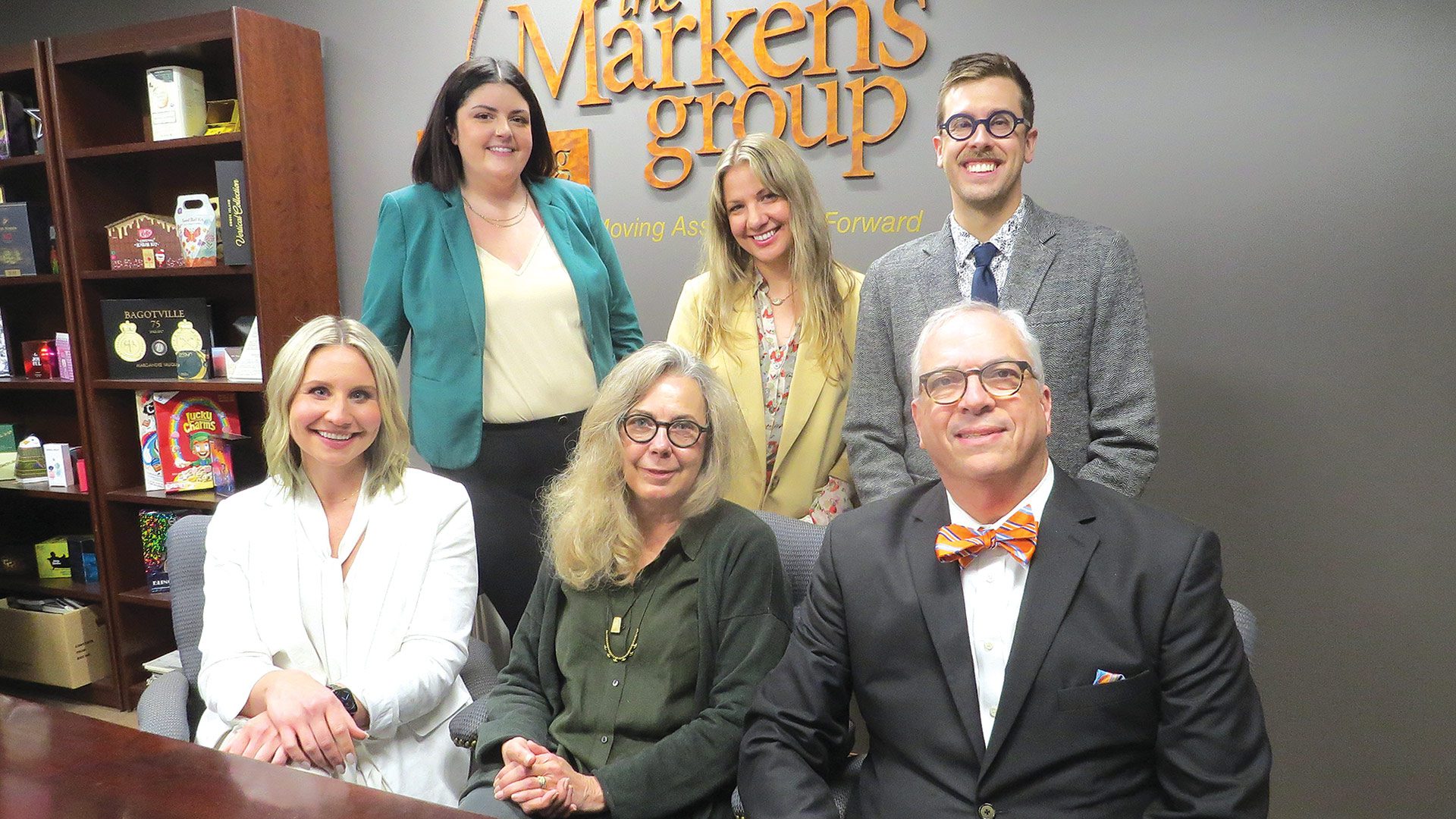
From left: John Gannon, Meaghan Murphy, Timothy Murphy, Tracy Belanger, Deanna Sears, Marylou Fabbo, Melissa Theriaque, and Amelia Holstrom.

From left: John Gannon, Meaghan Murphy, Timothy Murphy, Tracy Belanger, Deanna Sears, Marylou Fabbo, Melissa Theriaque, and Amelia Holstrom.


The website for Skoler, Abbott & Presser lists 23 distinct practice areas in the realm of employment and the workforce — everything from discrimination and harassment to handbooks and personnel policies; from employment litigation to labor relations; from immigration to workplace safety.

“It may look like it’s a very broad practice area, but it’s really not,” said John Gannon, one of the firm’s five partners. “I think it’s actually somewhat narrow, in that all we do is represent employers and businesses, and we represent them when they have issues related to their employees.”

Those issues fall into two buckets, he explained.

“There’s the labor side of things, if an employer has a union or is governed by a collective bargaining agreement; we have some folks in our office who specialize in that area. And for those employers that are non-union or not covered by a collective bargaining agreement, that’s general employment law, which is the other side of the house.”

John Gannon

John Gannon

“It may look like it’s a very broad practice area, but it’s really not. I think it’s actually somewhat narrow, in that all we do is represent employers and businesses, and we represent them when they have issues related to their employees.”

Elaborating, he noted that Skoler Abbott represents employers who are being sued by an employee or an administrative agency, like the Massachusetts Commission Against Discrimination.

“But we also provide a lot of day-to-day counseling on different issues. Like, ‘this employee requests an accommodation because they have a medical condition. What do we need to do? Do we need to give them time off? Do we need to give them a different type of computer software?’ Things like that. It’s broad in the sense that we represent everything in the employment context, but it’s really just employment law.”

That said, the legal landscape for workplaces has changed significantly over the past six decades, and as Skoler Abbott celebrates its 60th anniversary this year, four of its attorneys sat down with BusinessWest to talk about some of those changes.

“When I started out here, there was no such thing as a wage-hour claim. Now, that’s really a booming area for us, with the treble damages that Massachusetts affords to those claims,” said Marylou Fabbo, a partner who is coming up on 30 years with the firm. “There was also very little sexual harassment. There were no claims of disability discrimination. So it’s really evolved, and things have become more employee-friendly. There are more laws, and while many laws were on the books then, they weren’t really enforced.

“So, over the years that I’ve been here, employees have become much more knowledgeable about their rights, and employees’ attorneys are making sure that the employees’ rights are upheld,” she went on. “And we’re finding that a lot of our practice is now focused on preventive measures such as trainings to supervisors and management, more handbook reviews, things like that, whereas before, when I first started here, we were just defending cases, like breach of contract, very basic things. The issues we face have definitely gotten a lot more complex.”

Marylou Fabbo

Marylou Fabbo

“A lot of our practice is now focused on preventive measures such as trainings to supervisors and management, more handbook reviews, things like that, whereas before, when I first started here, we were just defending cases, like breach of contract, very basic things. The issues we face have definitely gotten a lot more complex.”

That has made the work more challenging, said Amelia Holstrom, another partner — and the ground is ever-shifting.

“I’ve been here since 2012, and when I first got here, there were very few leave laws. I mean, there was the federal Family and Medical Leave Act and a handful of others,” she noted. “But since 2015, we’ve added earned sick time and domestic-violence leave, and our parental leave act changed, and we have paid family and medical leave now.

“The majority of what I deal with, for phone calls from clients, is just walking them through: ‘I have an employee out, and I don’t know what to do next,’ or ‘is this job-protected time?’ and advising them on next steps and those statutes where it’s all job-protected leave. That’s been a challenge for employers, so I deal with that a lot.”


Brief Overview

Gannon and his fellow partners noted that aggrieved employees have more tools today, and more understanding of them. One, Gannon said, is a surge of fee-shifting provisions, through which a prevailing attorney can recover fees from the other side.

“That’s a big driver in some of these cases, particularly in wage-and-hour cases,” he noted. “The amount of unpaid wages may not be that much; it might be five or six thousand dollars. But the employee’s attorney knows, if they take the case all the way to trial, and they succeed, the attorney’s fees could be three, four, or five times that, maybe even more.”

Amelia Holstrom

Amelia Holstrom

“It has been personally gratifying building long-term relationships with clients over the years. I help them with their issues when they call, but I’ve also I’ve gotten to know them.”

The work environment has changed as well, Fabbo said.

“Back in the ’80s, when I was in high school, it was hard to even find a job. You’d go to the mall and walk around forever. So I think a lot of employees were afraid to assert their rights in fear of getting terminated or retaliated against because it wasn’t as easy as it is now to go find a new job.

“But I think, over the years, the work environment has changed,” she added. “There are a lot more opportunities for employees. And as John said, with the fee shifting, there are a lot of attorneys out there willing to represent them.”

Attorney Meaghan Murphy, who joined the firm in 2020, added that another evolution has occurred in the varying expectations different generations have in the workplace, particularly regarding what’s acceptable conduct and what employees are expected to deal with.

“Employees are more willing to assert their rights because there are no-retaliation provisions under most of the employment laws we deal with,” she explained. “So an employee who makes a complaint of sexual harassment, for example, cannot be retaliated against. There’s an added protection.

“But I also think, in the last 10 or 20 years, employees are coming of age expecting better behavior, more fairness, more equity in the workplace than generations before them, and that may be part of the reason why there’s an increase in claims against employers.”

Holstrom said the fact that everyone now has the internet in their pocket makes a difference as well, with employees able to quickly look up what the laws are.

Meaghan Murphy

Meaghan Murphy

“I don’t take personal offense that they have to call me and they’re not looking forward to that conversation. Sometimes they’re like, ‘no offense, but I hope I don’t have to call you again.’ I’m like, ‘none taken; that’s fine.’ I get it.”

“It isn’t always correct, depending on what they’re looking at, but it makes employees more likely to say, ‘oh, something happened.’ They’re a lot more knowledgeable than they were previously when they couldn’t look those things up outside of a book.”

Beyond that, Gannon added, “they’re not only going to look up on their phone what the law says, they’ll also probably be able to find something that says, ‘hey, this person got 10 million dollars as a result of this judgment.’ So the more information that’s out there, at a worker’s fingertips, the more they’re going to exercise their rights.”

Because of this new paradigm, Skoler Abbott’s work to be proactive with clients is more important than ever.

“We help employees craft their handbooks in a way that makes sure they’re fair to the employees, as well as including all the legal things they need to include in the handbook,” Fabbo noted. “We do a lot of training of supervisors and management, keeping them apprised of laws and best practices. We speak to a lot of employment groups, giving them updates on the law. We’ll speak to their members, and we’ll attend their breakfast briefings on a regular basis to hear what their issues are, too, which is good for us, so we know what issues employers are facing.”

Armed with that knowledge, she went on, “we’ll help employers draft policies, help them draft effective disciplinary action forms, let them know what they need to post, basically anything they need. And if they call us with a question — ‘someone’s intoxicated at work; what do we do?’ — we help them with that.”

While changing laws and a more empowered workforce certainly make things challenging, they have also created more awareness among employers of the need to do the right thing. And if litigation does develop, Gannon said, Skoler Abbott will work with clients to get cases resolved early, through mediation or just having conversations with the opposing side.

“They know that, when we go into court, we’ve done our homework. We’re not just showing up and making arguments just to make arguments.”

“The reality is, very few cases do end up going to trial, but some do. One of the things we tell our clients is, ‘you’re going to have disgruntled employees who are going to file claims. It just happens.’ A lot of businesses have to deal with these claims, and there are strategies that we work on with our clients, not only for avoiding litigation, but, if it does develop, how can we nip this in the bud early and reach a resolution that everybody’s happy with?”


Appealing Work

Over its 60 years of practice, Skoler Abbott has certainly had many notable wins in court, from a seminal case in the mid-’90s dealing with same-sex sexual harassment to the 2012 case that determined that indefinite leave of absence is not a reasonable accommodation for a disability.

The partners understand that many of their successful court cases aren’t exactly headline grabbers because they wind up with no big, million-dollar payout that catches the public’s attention. “A verdict for the defense means no money,” Murphy said. “So people don’t see them, but it’s a pretty big deal to us, and obviously to our clients.”

That’s gratifying, said Gannon, who has been with Skoler Abbott since 2011, but so is the day-to-day interactions with people. “Everybody has a job, and everybody has issues that come up at work. And I honestly do enjoy talking to clients about the everyday issues that come up.”

Meanwhile, he added, “we have a very collegial environment where I can go into Marylou’s office, or I can go into Amelia or Meaghan’s office, and say, ‘hey, have you ever had a case like this? Have you ever had an issue like this?’ And we talk about it and share our experiences and our opinions on things. I love working here, and I love what I do.”

Holstrom appreciates the personal interactions as well.

“It has been personally gratifying building long-term relationships with clients over the years. I help them with their issues when they call, but I’ve also I’ve gotten to know them. I know that they have kids, and I’ve heard about them growing up and going to college, and they also know about my kids. And I like working with them long-term and continuing to develop that relationship.”

Added Gannon, “there’s nothing more gratifying than when a client calls you up and says ‘thank you.’ Whether it’s because you defended them at trial successfully or because you helped them through a challenging situation with a particular problematic employee, we get it.”

Murphy said many dealings between employers and attorneys come at a stressful time, and they understand that.

“I don’t take personal offense that they have to call me and they’re not looking forward to that conversation,” she said. “Sometimes they’re like, ‘no offense, but I hope I don’t have to call you again.’ I’m like, ‘none taken; that’s fine.’ I get it.”

One thing the entire team prides itself on, Gannon said, is having a very good understanding of the law and then applying it to the benefit of clients.

“We’re not just telling them what the law is. We’re also giving them practical advice on what they need to do as a result of this law.”

The #MeToo movement of the late 2010s was one example of a shift in employer behavior. While the number of sexual-harassment claims didn’t spike in Massachusetts, the increased awareness of the issue in the public eye had employers acting proactively.

“Surprisingly, in Massachusetts, there’s no obligation to provide sexual-harassment training to your supervisors like there are in some other states,” Holstrom said. “But I did see a lot of clients, even through COVID, doing trainings for their supervisors on sexual harassment and what their obligations are to report it and take prompt steps to investigate and stop the conduct.”

Murphy agreed. “There’s more general awareness and less of an acceptance of certain workplace conduct than there used to be. And I think individual people are inclined to speak up in the moment more than they were before, maybe because there’s a sense that they’ll get more support than they used to.”

At the end of the day, Skoler Abbott represents employers, not workers, but understands that staying on the right side of the law is good for everyone — and certainly makes for less stressful, and more successful, workplaces.

“Agencies like the Massachusetts Commission Against Discrimination and judges in the area respect us,” Gannon said. “They know that, when we go into court, we’ve done our homework. We’re not just showing up and making arguments just to make arguments. They know that we counsel our clients well, and we do good work.”

Cover Story

Parts of the Whole

Plant Manager Sadiq Elias

Plant Manager Sadiq Elias


Sadiq Elias knows precision manufacturing is a challenging business.

“It’s long hours. It’s the type of industry where it’s not always a 9-to-5 job,” Elias, plant manager at Ace Precision Inc., told BusinessWest. “We’re making military components here, for the government. And we all know their demands; they don’t care if it’s Sunday, they don’t care if it’s Christmas, they don’t care if your kid was just born — their priority is getting their parts so they can move on with their projects. So that makes for long hours, long days, and that could be a turnoff for some people.”

But there’s a certain satisfaction that comes with this work, he added, that makes it a good fit for young people looking for a rewarding career that engages both their brain and their hands.

“The biggest thing that I’ve always enjoyed is knowing what you’re building,” Elias said. “We’ve made components in the past that are on the Hubble telescope. One of my customers told me at one point, ‘you know, every plane in the sky has a part that Ace Precision made.’ And it’s something you can tell other people — ‘we have parts on space shuttles and satellites, submarines and aircraft carriers, commercial airlines, F-35s.’ It’s cool to know that you can look at a submarine or go to an airshow and look at some planes and say, ‘oh yeah, we make parts that go on there.’ It’s a cool feeling.”

Ace Precision has been creating those feelings — and, more importantly, cutting-edge components — since Elias’s father launched the business in 1980.

“We’ve made components in the past that are on the Hubble telescope. One of my customers told me at one point, ‘you know, every plane in the sky has a part that Ace Precision made.’”

From that original location, in a 9,000-square-foot building on Suffield Street in Agawam, the business continued to grow and thrive, with some important milestones along the way, from achieving ISO900/AS9100 certification in 2013 to relocating to a new, much larger facility at nearby 17 Ace Precision Way in 2021.

“My father started the business with one machine and a lot of ambition. We’ve grown into a 20,000-square-foot facility here in Agawam with roughly 30 employees,” Elias said, noting that the company’s main manufacturing focus is in the aerospace and defense industries, both locally and with a footprint stretching from the South to the West Coast.

The company touts capabilities ranging from prototyping to production work. “We have a pretty good engineering team here. Sometimes we’ll have customers come to us with a design that hasn’t yet been built. And we’ll work hand-in-hand with them, taking those drawings and models and turning those into parts, and then further down the road into assemblies and testing those out for them. Eventually, that may turn into a production order for them.”

Ace Precision

Ace Precision moved into its current, 20,000-square-foot headquarters in 2021.

For example, “we do a lot with with Collins Aerospace, developing tools to help them in the field for maintenance purposes and aircraft repairs and overhauls and just routine maintenance,” Elias said. “Also, we do quite a bit with the Navy, where we’re doing launch and recovery systems on the aircraft carriers, as well as with a company that does a lot with commercial airlines, on the mechanical side of things, on the bodies of the planes. So many of those components are built right here at Ace Precision.”


Specialized Services

The Agawam facility houses computer numerical control (CNC) equipment, from lathe mills, grinding equipment, and saws to coordinate measuring machines (CMMs) to check parts. “It’s pretty high-end,” Elias said. “We try to keep up with the latest and greatest equipment that’s out there so we can stay competitive.”

And it is, indeed, a competitive field, he added. “There are a lot of firms in the area that do this type of work — not as many as there used to be, obviously, as manufacturing has gone downhill a little bit in the last 20 years.”

He explained that precision machining involves holding tight tolerances while working on specified materials, such as engine components for aircraft that have very little leeway for tolerance errors.

“So we need really well-trained talent in the shop that can operate the equipment that we do have on hand,” Elias said. “There are other shops out there that don’t necessarily work with precision manufacturing, which is not to say anything bad about them, but it’s just a higher class of workmanship here, I guess you could say.”

That’s why making the move to more than double the floor space was so huge, he noted.

“Moving into a larger facility allowed us to streamline production, creating a flow from in to out. And we’re all under one roof right now. Before, we were in a building that had several different roofs, and it wasn’t very streamlined. So now we’re in a very clean, new facility. It’s a great working environment. People enjoy coming to work to a clean atmosphere, and also it just helps communication within the company.”

Sadiq Elias, pictured with Andrea Sibilia

Sadiq Elias, pictured with Andrea Sibilia, vice president of Purchasing, says the current space lends itself to a more streamlined workflow and better communication.

At the same time, client needs are always changing as well. “We’ve been working with the same four major customers for many years. Their products have changed, and for the better. There have been design changes and models that have changed configurations completely. We try to use the latest software to help model these parts up and also equipment like 5-axis machining or 3D scanning on CMMs, trying to stay ahead of the curve with technology. That makes us attractive to customers as well as making our job here at Ace Precision easier, and at the end of the day, we become more profitable and prosperous.”

That customer loyalty from a few major, long-time clents has been a critical component the success of Ace Precision, Elias noted.

“There’s one motto that I stand by, and I’ve always stood by: don’t give your customers a reason to go elsewhere. That means give them a quality part, and give it to them when they expect it. Those are two big key factors in keeping your customers happy. If you give them an excuse to go elsewhere, then, obviously, they will find someone else to make their parts.

“There’s one motto that I stand by, and I’ve always stood by: don’t give your customers a reason to go elsewhere. That means give them a quality part, and give it to them when they expect it.”

“There are plenty of shops in the area or in the country, for that matter, that are capable of doing these types of things,” he went on. “So customer satisfaction is huge, and it’s a driving factor in keeping a long-term relationship with a company, so your customer can rely on you. They can pick up the phone or send an email and say, ‘we’re in a pinch; we need something right away.’ And when you get it to them, they’re happy, and you’re happy. They have that feeling of ease that they can rely on you to deliver their parts when they’re needed. That’s what it’s all about: customer satisfaction.”


From the Floor Up

Elias said he always had his eye on working at Ace Precision, even from childhood.

“I kind of grew up here as a kid, coming on weekends with my dad, and he taught me from the bottom up, from sweeping floors, taking out the trash, getting my driver’s license and making deliveries, running on the saw, just doing what I had to do. He groomed me into the man I am today, and basically I run the business now.”

And the plant continues to grow, he told BusinessWest.

“Obviously, everybody hit a big roadblock during COVID, which put a damper on production, but we were able to come out of that strong, if not stronger, due to the fact that our industry is versatile, and we don’t put all our eggs in one basket. So we were able to get through COVID with no problems, and we’ve definitely increased our capabilities and our profitability.”

That said, recruiting and retaining talent is a struggle these days across the manufacturing spectrum.

“You find that a certain age group of older talent may have retired, may have moved on to something different in their lives,” Elias noted, and they’re not necessarily being infilled at the same rate with younger talent. “There’s a little bit of a gap in age where there weren’t that many people out there that said, ‘oh, I want to get into manufacturing.’ Everyone wanted to be in IT or a desk job. And there’s nothing wrong with that. But it’s hard to find that talent and the good help that you need.”

But Ace’s clients continue to demand parts and expertise, Elias was quick to add, and they always have new products in the works.

“So we hope that we’ll get a part of that, if not all of it. We’ve been growing, and we’ve been at a steady pace of growing for the last four years since COVID. It seems to keep going in that positive direction every year. So I just stay positive.”

Cover Story Women of Impact 2024

BusinessWest has long recognized the contributions of women within the business community and created the Women of Impact awards in 2018 to further honor women who have the authority and power to move the needle in their business, are respected for accomplishments within their industries, give back to the community, and are sought out as respected advisors and mentors within their field of influence.

Go HERE to view the 2024 Women of Impact Digital Section

The eight stories below demonstrate that idea many times over. They detail not only what these women do for a living, but what they’ve done with their lives — specifically, how they’ve become innovators in their fields, leaders within the community, advocates for people in need, and, most importantly, inspirations to all those around them. The class of 2024 features:

Alison Berman

Council director of Girls on the Run Western Massachusetts

Dianne Fuller Doherty

Co-founder of the Women’s Fund of Western Massachusetts

JoAnne Finck

President of Friends of Cooley Dickinson

Kimberley Lee

Chief of Creative Strategy and Development at MiraVista Behavioral Health Center

Megan McDonough

Executive director of Pioneer Valley Habitat for Humanity

LaTonia Monroe Naylor

Chief business educator at Monroe Naylor Consulting, LLC and president and CEO of Parent Villages

Kristi Reale

Partner at Meyers Brothers Kalicka, P.C.

Dr. Shirley Jackson Whitaker

Nephrologist, artist, and filmmaker

WOMEN OF IMPACT GALA

Presenting Sponsors

Partner Sponsor

Cover Story

A Passion for Service

Yvette Frisby

Yvette Frisby


Yvette Frisby always wanted to live a life of both impact and service, and she traces some of that desire to her parents.

“I was raised in a house where my dad was a police officer for 30-something years, and my mom was a stay-at-home mom, so service was in us,” she recalled. “I grew up in a house that was about public service — giving back and making sure everybody was always OK within the community, on your street, and within your family.”

Sadly, no one is always OK. But in her 40 years with the Urban League of Springfield — and now as its president and CEO — she’s been, and continues to be, dedicated to helping as many individuals as possible access the resources and opportunities they need to achieve stability and success.

It’s a powerful — and gratifying — role, one Frisby doesn’t take for granted.

“When people say, ‘throughout those 40 years, did you know you wanted to be the president of the Urban League? What did you want to end up doing?’ … I didn’t know. I wanted to do whatever my soul led me to do, whatever felt right. And I believe that my steps are guided, so I am meant to be here in this time and place, right now. And it feels good.”

After longtime (as in 49 years) President and CEO Henry Thomas announced his retirement in the spring of 2023, Frisby was named to that role on an interim basis, and on Aug. 1 of this year, the board of directors concluded an extensive, national search by simply removing her interim tag.

“That’s a big component of what we’ve done over the years with our young people in the afterschool programs: leadership development, civic engagement, and also giving them the tools to make decisions to go on with their lives.”

The first woman to lead the organization in its 111-year history, Frisby was deemed the best choice to advance the organization’s mission of economic empowerment, equality, and social justice in the Greater Springfield area.

“Yvette is the ideal choice to lead the Urban League during this transformative and historical period,” said Maurice Powe, board president. “She is extremely knowledgeable about the organization on a local, regional, and national level. Yvette possesses a formidable executive viewpoint on the strategic direction the Urban League is moving in. During these challenging yet hopeful times, we are embracing a tremendous opportunity to impact the community and elevate the Urban League to the next level.”

The Urban League offers computer training

The Urban League offers computer training for seniors to help them build basic technology skills.

Starting in 1984, Frisby has held various positions, including office manager, executive assistant to the president’s office, Youth & Education director, and Camp Atwater administrator, and others. She stepped into a senior leadership role in 2003 and was eventually promoted to senior vice president of Operations & Administrative Services and then interim president and CEO, before being officially appointed to that role.

The Urban League’s programs, which have traditionally focused on education and youth development, health and wellness, economic and workforce development, and productive aging, have evolved over the years, Frisby said.

Currently, the organization’s main youth and education program is Project Ready Mentor, which focuses on college and career awareness and readiness for middle- and high-school students.

“Whether they’re going on to college or planning to go into a career, we give them the skills and the tools to make decisions around that — helping them with their academics and doing some civic-engagement activities with them so that they become familiar with Springfield and the surrounding area, know what the issues are, know what’s important for young people. That gives them a sense of belonging, which they hopefully keep to some degree and then give back to their communities.”

“Whether it’s seniors, whether it’s youth, whether it’s small businesses, by receiving the services of the Urban League, they become more engaged and involved in their communities and want to give back.”

Many people have generated such a legacy, she noted. In March, the organization will hold a celebration honoring four alumni of Urban League programs who have gone on to give back to their communities: Ashley Bogle, assistant general counsel and director of Legal Services at Health New England; LaMar Cook, deputy director of Gov. Maura Healey’s Western Mass. office; Anthony Moore, director of Membership Programs at the Black Economic Council of Massachusetts; and Kiyota Woods, dean of Student Initiatives, Academic Advising, and the Transfer Center at Springfield Technical Community College.

“They’re still continuing to give back in the work that they do,” Frisby said. “So that’s a big component of what we’ve done over the years with our young people in the afterschool programs: leadership development, civic engagement, and also giving them the tools to make good decisions.”

It’s that legacy of giving back — one she has helped shape in myriad ways for the past four decades — that she’s excited about as she charts a course for the coming years at the Urban League of Springfield.


Determinations of Need

As noted, the Urban League targets many programs at specific constituencies. Affiliates across the U.S. have created a ‘foster grandparents’ program that recruits older individuals to work with kids in schools and day-care systems. Locally, the Urban League has also offered computer training for seniors, to help them navigate the basic technological needs of life, from bill payment to using Zoom to virtually attend church or visit their grandkids.

Speaking of technology, the Digital Connectors program — a collaborative effort with the Urban League as one of its partners — is a movement that engages teens and young adults in leadership development, digital education, life-skills management, and community service to help them with educational advancement and workforce preparation.

Another program, launched about five years ago with the help of a significant MassMutual grant, is the Black Business Support Initiative, which has helped more than 30 entrepreneurs develop skills and access resources to turn an idea into a business or create a business plan to take an enterprise to the next level.

Camp Atwater continues to thrive 103 years after its establishment.

Camp Atwater continues to thrive 103 years after its establishment.

The impact of programs like that go well beyond the individuals and businesses served, Frisby noted. “These small businesses employ other people, plus they’re employing themselves. So it is growing the economy and contributing to the economy in a very impactful way.”

The Urban League also partners with other organizations on two job fairs at the Basketball Hall of Fame each year, partners with the Food Bank of Western Massachusetts on food distribution at the Dunbar Community Center, maintains an employment-opportunity program with some of the region’s largest employers, offers scholarships to local students, and … well, much more.

Including, notably, Camp Atwater, the oldest African-American camp in the U.S., which has been serving families for 103 years; part of Frisby’s expansive role is serving as the camp’s executive director.

“It’s a legacy for many of them; the parents send their children, and their children, when they get old enough, send their children,” she said. “We have a cycle of young people that are coming through Camp Atwater. It’s still thriving.”

The national Urban League has established a few areas of focus in 2024, encouraging its 92 chapters to create programming around the themes of “defend democracy, demand diversity, and defeat poverty.”

On the former, she noted that the Urban League is taking part in an initiative to encourage voter registration and make sure people know where to vote and what options they have, including early and mail-in voting.

“Where can we be more strategic about coming together so that we’re not working individually in silos?”

“I even instill that in my children, who are 38 and 42: ‘did you vote? We fought for this, so make sure you’re getting out there to vote,’” she said. “We need to make sure everybody exercises that right. It’s important.”

The thread running through all these efforts, Frisby noted, is impact that ripples out over entire communities, often across generations.

“Whether it’s seniors, whether it’s youth, whether it’s small businesses, by receiving the services of the Urban League, they become more engaged and involved in their communities and want to give back. They see the Urban League as a resource, not only to them, but to the community as a whole.”


Generational Impact

Born and raised in Springfield — and having lived there all her life — Frisby has a deep connection to her community that drives her passion to raise others up. That’s why, after five years at her first job, at MassMutual, she came on board at the Urban League and has never looked back.

“Having worked within every department within the organization, understanding the needs of each person in each department, gives me a leg up in being able to provide people what they need, whether it’s professional development or whether it’s computers or the tools they need to get their jobs done,” she told BusinessWest.

She also went back to school along the way, earning a bachelor’s degree in human services and a master’s degree in organizational management and leadership from Springfield College, which led to another role: teaching at Bay Path University.

“It was in grad school that I realized what I was really passionate about — not just working in the community, but also the development of girls and women,” she explained. “I haven’t been able to teach since I became interim because it was time-consuming, but I’m hoping, once things kind of level out, I can get back into the classroom because I really got a lot of joy out of teaching.”

Asked by the board to offer a vision of her first 180 days as president and CEO, Frisby had a few ideas, including an internal assessment to determine what each department needs and where the gaps exist in best serving the community, a focus on board development and making sure the governing body is diverse and represents all aspects of the community, and determining where the Urban League of Springfield should be building more civic partnerships.

“Where can we be more strategic about coming together so that we’re not working individually in silos?” she asked. “That’s a community assessment of who’s doing what and how can we be better partners and collaborators.”

On a more personal note, Frisby understands her role as an example and inspiration to other aspiring women leaders. To make that point, she mentioned a required first-term class at Bay Path called “We Empower Learners and Leaders.”

“It’s really about women doing self-reflection on themselves as leaders and looking at themselves as leaders, even if they didn’t feel like that. And at the end of the course, they put together their leadership-development plans,” she explained. “I never called myself a teacher; I called myself a facilitator because I was facilitating a process within them, and to see that come to fruition, to see that kind of impact on women, was really an awesome experience.

And now, to be the first female president of the Urban League of Springfield?

“There’s a lot of responsibility that comes along with that. But at the same time, I look at it like this: when I was growing up, I saw what was in front of me,” Frisby went on, pointing again to her parents and their examples of service and helping others.

“Now little girls can see me in front of them. When I go into Springfield Public Schools and do read-alouds and they say, ‘what do you do?’ I can tell them. It’s amazing to have that kind of impact and see young people light up when you tell them that.”

Cover Story

Down to a Science

Mike Garjian

Mike Garjian

Mike Garjian likes the symmetry.

Indeed, standing in front of a massive manufacturing space in downtown Holyoke, complete with overhead cranes, where waterwheels, used to generate hydropower, were assembled more than a century ago, he envisions that same space soon being used to produce equipment he has invented that will reduce the amount of carbon dioxide going into the atmosphere.

“A century later, a different kind of green energy,” he said as he talked about the CarbonStar Catalytic Pyrolysis System and what it might mean for a planet that is heating up, he and many climate experts say, due to rising amounts of CO2 in the atmosphere.

CarbonStar is a company that Garjian, a serial inventor and entrepreneur, and his wife, Irene, created. And catalytic pyrolysis is the process by which biomass (wood chips, seaweed, and canola meal) is converted — through thermal decomposition under oxygen-limited conditions — into what’s known as biochar and other byproducts, such as wood vinegar, a liquid fertilizer.

Gargian calls biochar “almost a miracle substance,” one that can be used for everything for reviving depleted soil to acting as an additive in concrete to reduce the massive CO2 emissions from the production of that product.

In simple terms, Garjian’s system takes a tree that is dead or dying — as well as the biomass lying on forest floors — and essentially interrupts that part of the carbon cycle whereby the tree or biomass decomposes into CO2 or methane. And it creates a use for the biomass that has sat on forest floors, fueling fires from California to Canada to Australia.

All this is, as Garjian said, a different kind of green energy being produced at this same location on Main Street.

“The process of biomass decomposing and returning to CO2 in the atmosphere … that contributes 17 times more CO2 than all human activity combined annually.”

But there is much more to like beyond this symmetry. There is the environmental impact, driven home by numbers that Gargian uses to get his points across.

“The process of biomass decomposing and returning to CO2 in the atmosphere … that contributes 17 times more CO2 than all human activity combined annually,” he explained. “There it is, sitting on the sides of roads, spewing CO2 and methane. That’s the material that we’d like to get, chip it into smaller pieces, and run it through the system.”

Mike Garjian calls biochar “almost a miracle substance.”

Mike Garjian calls biochar “almost a miracle substance.”

There are also the business implications. Indeed, that space Garjian was standing in is intended for the production of catalytic pyrolysis systems, and he can envision that space being transformed for that purpose within the next few years.

And then, there are the jobs, involving everything from the production of these systems to the prospect of people being hired to remove the biomass from forest floors — “just 100 feet off the highway,” as Garjian noted — to feed those systems.

Overall, there are many potential wins from this, the latest venture for Garjian, who has nearly a dozen patents to his name and has developed products ranging from flat light sources (tubeless neon) to alternative fuels — specifically running diesel vehicles on waste vegetable oil — to conversion of waste agricultural products into pellets for wood stoves and then cat litter.

For this issue, we take an in-depth look at his latest project and its far-ranging potential — for the region and the planet.


Burning Issue

As he walked around the prototype catalytic vacuum pyrolysis system in the middle of the 7,000-square-foot space he’s now leasing, Garjian explained how it works while also giving a brief history of how, and why, it was developed.

He noted that while the environmentally friendly cat litter he produced sold well, that wasn’t exactly what he wanted to do with his time and energy. So, as a side venture, he got interested in pyrolysis and set out to develop a workable system.

After getting involved with a few different partners, he took the technology he helped develop and, with Irene, created CarbonStar to design, patent, and license the current mobile system now siting in that Holyoke manufacturing building.

Garjian and some investors subsequently formed E3 LLC to build the current system and act as the exclusive licensee to operate and manufacture systems in the New England region.

As for how it works, he said it’s rather simple — the system utilizes a computer-controlled vacuum tube to heat biomass, extracting moisture and leaving behind biochar, without combustion.

“We’re taking woodchips, any plant matter — it could be paper or cardboard — but mostly wood chips from lumber mills that would normally go to waste, and we introduce it into a vacuum tube, with a catalyst,” he explained. “That vacuum tube is heated — it’s computer-controlled — and with that catalytic action, we break down the long-chain hydrocarbons in the wood.

“The way the natural carbon cycle works is … the plant or tree absorbs CO2 from the atmosphere, gives off oxygen, and keeps that carbon to build its own physical structure — a tree is 40% to 50% carbon, depending on the species,” he went on. “That’s how the tree sequesters carbon from the atmosphere. When the tree dies, it decomposes, and all of that carbon is released back into the atmosphere as CO2. Or, if the tree falls in the water or lies on its side where there’s no oxygen involved, it becomes methane.”

As noted, this natural carbon cycle puts a large amount of CO2 back into the atmosphere, he continued, adding that these amounts have been compounded by taking oil out of the ground and burning it, the growing use of other fossil fuels, and the large numbers of fires that have been destroying forests at alarming rates; last year’s forest fires in Canada emitted more than 1 billion tons of CO2 between May and June alone.

“When the tree dies, it decomposes, and all of that carbon is released back into the atmosphere as CO2. Or, if the tree falls in the water or lies on its side where there’s no oxygen involved, it becomes methane.”

“By the time they burned out in November, months later, they had put more CO2 into the atmosphere than 138 countries,” Garjian noted, adding that such fires will continue in the years to come.

All this explains why the levels of CO2 in the atmosphere have been growing at alarming levels, and what those rising levels mean.

“It’s pretty much agreed to now by most scientists now that the level of CO2 in the atmosphere increases the temperature of the planet because CO2 holds more heat,” he explained. “Right now, we’re higher than we’ve been in hundreds of thousands of years. Prior to the Industrial Revolution, it was 250 parts per million in the atmosphere; 350 is kind of an agreed-upon upper limit. We’re now at 420.

“And the level of increase per year is increasing,” he went on. “It’s going in the opposite direction we want it to.”

All this also explains why Elon Musk created the $100 million XPrize for Carbon Removal, which Garjian sought a share of with his catalytic vacuum pyrolysis system, which he describes as one of the most carbon-negative processes in the world, meaning it sequesters CO2 from the atmosphere permanently.

CarbonStar didn’t win a cash prize — only four teams will, and these will be announced next spring — but the company was recognized in the official top 100 list; it officially placed 80th out of 1,400 entries, and in the top 28 among land-based systems.


It Comes Naturally

But there may be some even more important prizes in store for this company.

Indeed, Garjian and his team have made some improvements to the prototype, which is the next generation of a system he helped develop several years ago, and have started running it with wood chips supplied by a lumber yard in Westfield, with the goal of eventually running it 24/7, maybe 300 days a year.

Mike Garjian, standing in the large manufacturing space where water wheels were once assembled

Mike Garjian, standing in the large manufacturing space where water wheels were once assembled, says it will eventually be used to manufacture catalytic pyrolysis systems.

“Over the past three years, since we turned it on the first time, we’ve made some improvements in it, improved its throughput, and achieved better control over some areas,” he explained, adding that, while working on the systems, those involved also secured the space in Holyoke and moved in last year.

The system, which sequesters 367 tons of CO2 for every 67 tons it emits, will, as noted, produce biochar and several other products, including heavy and light bio-oils, which can be used as heating oil or refined to produce aviation and automotive fuels, as well as wood vinegar, which can be used as fertilizer.

“When we go in with a ton of wood, we’re going to get 520 pounds of biochar, which is 85% to 90% pure carbon, as well as 100 gallons of liquids, a combination of liquid fertilizer and bio-oils, and we’re going to get 75,000 cubic feet of a gas that we can use to generate electricity to run the system,” he explained, noting the highly sustainable character of this system.

As for biochar, as he scooped out a large handful of the substance, which he called “solid carbon,” Garjian said it has a number of practical uses.

“When I first began to produce it and sell it in 2006 — Irene and I were the first ones ever to sell biochar online — we were selling it as an additive for agricultural land. It improves the quality of the soil; it will replenish and bring life back to depleted soils,” he told BusinessWest, adding that it can also be an additive in the production of cement, and he is in preliminary talks with Sublime Systems, which will build a plant in Holyoke to produce environmentally friendly cement, about partnering with that venture.

While operating the system in Holyoke, the company plans to move into production of such systems in the adjoining manufacturing space, said Garjian, adding that needed capital to do so could be secured from any of several sources, including major corporations such as Microsoft and the federal government, which is pouring billions of dollars into carbon-removal technologies.

The systems themselves are mobile and able to operate in remote areas, he noted.

“Theoretically, when you have one these machines and you get it started with a small generator, it will begin to produce its own power to run itself, and provide electricity as well. So you can put them is small villages in isolated places, third-world countries, or places like Puerto Rico after Hurricane Maria; they didn’t have electricity for six months in the middle of the island.”

Manufacturing these systems will obviously lead to the creation of jobs for Holyoke and the region, he said, adding that, overall, jobs can be created on many levels, including the removal of biomass from forest floors and even spaces just off country roads, as he noted earlier.

These jobs, not to mention the myriad benefits for the environment, are just some of the many things, beyond mere symmetry, to like about this intriguing new business venture.


Cover Story Event Galleries Healthcare Heroes

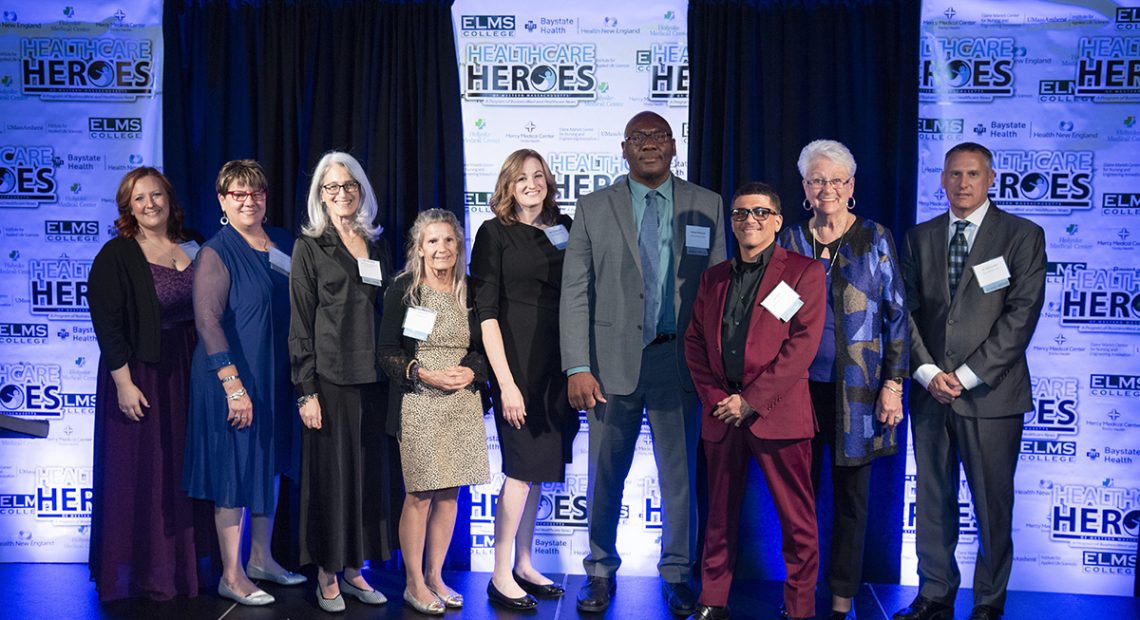
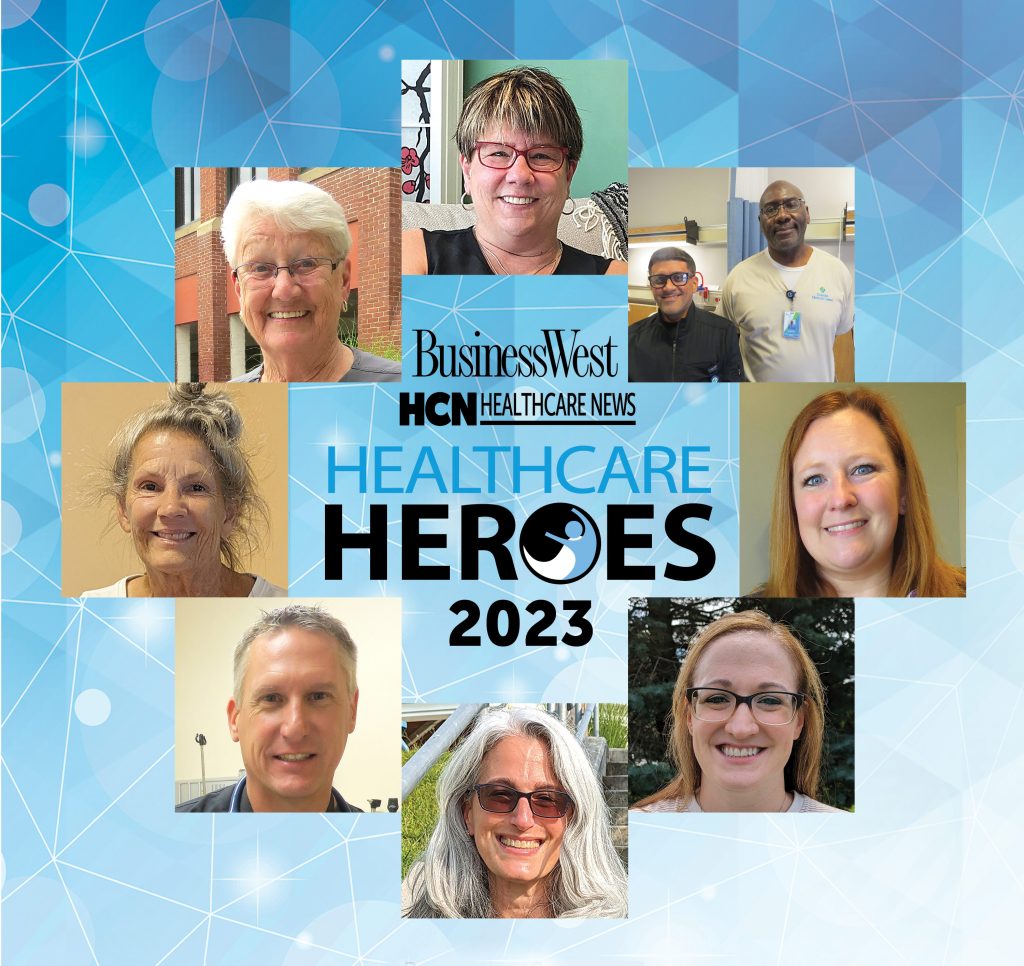
Back in 2017, BusinessWest created a new recognition program to recognize those working in the region’s large, and critically important, healthcare sector.

After much deliberation, we settled on the name Healthcare Heroes, and since then, many have asked the question, ‘how do you define hero?’

Our answer has always been simple, direct, and something along these lines: we don’t define ‘hero,’ you do.

Which explains why, over the years, we’ve honored a diverse cast of individuals and groups that are, in the eyes of those nominating them, true heroes for the ways in which they improve quality of life for those they touch. And the class of 2024 continues this tradition.

We tell the stories of eight Healthcare Heroes, each one different, but with common threads, especially a passion for their work and an ability to change lives. 

Go HERE to see the 2024 Healthcare Heroes Digital Flipbook

Click on the names below to read  each story of this years Healthcare Heroes:

Dr. Andrew Balder

Attending physician at Baystate Mason Square Neighborhood Health Center, honored in the Lifetime Achievement category for working tirelessly on behalf of those who are traditionally underserved, with a specific focus on the homeless population and infant mortality, child maternal health, and birth outcomes;

Bernice Drumheller

Past president of NAMI Western Massachusetts, another honoree in the Lifetime Achievement category, who, driven by the struggles of her son, Mark, has become a tireless advocate for those with mental illness and their families;

Lucinda Canty

Associate professor of Nursing and director of the Seedworks Health Equity Program at UMass Amherst, honored in the Community Health category for her efforts to improve health equity for traditionally underserved women of color;

Peta-Gaye Johnson

Director of Healthcare Workforce Initiatives for the MassHire Hampden County Workforce Board, honored in the Collaboration category for working tirelessly — and with a wide array of partners — to help ensure there is a reliable pipeline of healthcare workers

Maggie King

Occupational therapist at Baystate Health, honored in the Provider category for bringing passion and compassion to her efforts in the NICU to not only care for newborns, but help parents through perhaps the most stressful time in their lives;

Alexa Mignano

Director of School-Based Clinical Services at River Valley Counseling Center, honored in the Administration category for expanding an effective — and much-needed — mental-health counseling program to students in some 70 schools;

Dr. Laki Rousou

Chief of Thoracic Surgery, chief of Robotic Surgery, and medical director of the Lung Cancer Screening Program at Mercy Medical Center, honored in the Innovation category for using both advanced technology and screening to lower mortality rates in an all-too-deadly disease

Janet Williams

Professor of Biology at Elms College, honored in the Education category, whose work in the field of biology has influenced a generation of nursing and health-sciences graduates and significantly impacted the healthcare industry locally and beyond

BusinessWest and the Healthcare News will celebrate this year’s honorees on Thursday, Oct. 17 at 5:30 p.m. at the Log Cabin in Holyoke. Tickets cost $95, and tables of 10 are available. To purchase tickets, GO HERE

Presenting Sponsors

Partner Sponsor

Cover Story

By All Indications

Bob Nakosteen calls it a ‘calm slowdown.’

That phrase is synonymous with ‘soft landing,’ and that’s what he’s projecting for the last quarter and change in 2024 at a time when there are mounting questions about the economy, what’s happening — or not happening — and whether we might actually be hearing and using the dreaded ‘R’ word either later this year or early next.

Nakosteen, the semi-retired professor of Economics at the Isenberg School of Management at UMass Amherst (he’s still teaching several courses a semester), said the country isn’t really close to being in a recession when it comes to the technical definition of the term — two consecutive quarters of negative GDP — but people like to toss out that word whenever things start to slow down. And in many ways, they have.

Indeed, the most recent jobs reports have not been as robust as in previous months; the housing market remains … not at a standstill, but in a real slump induced by higher interest rates; the stock market took a sharp nosedive at the start of August (but has recovered nicely); and, while inflation has trended downward, the cost of food, energy, and other items remains high enough to make it a top issue in the presidential election.

All this has led many economists (Nakosteen is one of them), politicians, and, yes, area business owners to speculate that the Fed has, indeed, waited too long to lower interest rates, and thus, in its efforts to tame inflation by cooling the economy, it has cooled it too much.

That ‘too much’ part is certainly a matter of opinion, said Nakosteen, who told BusinessWest that, while things have slowed somewhat since earlier this year, the economy remains robust by many yardsticks.

“This is not breaking news, but the economy has held up really well in spite of a lot of pressure, especially from a rapidly rising interest-rate environment. The consumer has really rolled with the punches.”

“The economic numbers don’t look bad at all,” he said. “The labor market has weakened a little bit, but it’s not weak; it’s just not as strong as it had been. And most of the other indicators are strong, including GNP. It’s about where it had been, and in some ways, it’s above trendline. The last report was about 2.3% annualized growth; when you put all the pieces together, that’s above trendline. It doesn’t sound all that strong, but 2.3% is not bad in the current environment.”

Matt Sosik, president and CEO of bankESB, was in general agreement on those points, noting that, given the sharp rise in interest rates, consumers — and the economy in general — have performed better than might be expected.

Matt Sosik

Matt Sosik wonders about the impact of mounting pressure on consumers, as evidenced by rising credit-card balances and loan delinquencies.

“This is not breaking news, but the economy has held up really well in spite of a lot of pressure, especially from a rapidly rising interest-rate environment,” he said, adding quickly that huge federal deficits are essentially “subsidizing GDP,” as he put it, thanks to stimulus money that is still being spent. “The consumer has really rolled with the punches.”

That said, he wonders for how much longer this will be true, noting mounting pressure on consumers, as evidenced by rising credit-card balances and delinquencies in paying those balances, mortgages, and car loans (more on that later).

Overall, many business owners have been in somewhat of a holding pattern, said Ken Vincunas, president of Agawam-based Development Associates, noting this sentiment refers to decisions about investments in real estate — either building something new or simply buying something — but also business decisions in general.

Many are waiting to see what happens with interest rates, but some are also waiting for the November election, the outcome of which may impact what happens with those rates and the economy in general.

“Everyone is holding their breath and waiting to see what will happen in November,” Vincunas said. “That’s the big wild card right now.”

For this issue, BusinessWest takes an in-depth look at the economy as the three-quarter pole approaches, what might happen the rest of this year and beyond, and the factors that will likely determine which way the arrows will be pointing as we move into 2025.


On-the-money Analysis

Nakosteen said the market’s pronounced dip early last month — there was a drop of nearly 10% — was interpreted widely as commentary on a weakening economy.

He didn’t see it that way — “I just interpreted it as people sold stocks because people were selling stocks” — and the market’s rebound (it had recovered most all of what was lost by press time with this issue) would seem to validate that opinion.

Bob Nakosteen

Bob Nakosteen

“For at least seven or eight months, I’ve heard that the Fed should be lowering interest rates right now because higher interest rates are really going to drag down the economy. They haven’t. They may still, but they haven’t yet.”

He acknowledged that the economy has slowed somewhat, but, again, most indicators would show that it is still strong, especially when one considers the many factors impacting it, most notably interest rates.

Indeed, while he thinks the Fed should have lowered interest rates months ago — because it takes months for a rate drop to trickle down, if you will — he believes the Fed “got away with it,” as he put it.

“For at least seven or eight months, I’ve heard that the Fed should be lowering interest rates right now because higher interest rates are really going to drag down the economy,” Nakosteen said. “They haven’t. They may still, but they haven’t yet.”

Sosik didn’t use those words, but he was in general agreement that, despite some strong headwinds, the economy remains solid mostly because consumers, by and large, have continued to spend.

However, there are signs that spending is slowing and that consumers are now increasingly burdened by their previous spending.

“When you look at the number of people who are maxed out on their credit cards, for example, credit-card delinquency rates, student-loan delinquency rates … these are all examples of metrics that are not trending in the right direction,” he said. “And they imply that consumers are pretty stretched.

“Whether they’re at the end of their ropes as a group is not clear,” Sosik went on. “I’m not saying that a consumer-driven recession is around the corner, but there are a lot of factors indicating that the consumer is stretched out pretty far.”

Overall, though, that same consumer is still hanging in, he continued, adding that, historically, this is the case until there are cracks in the labor market, which have not appeared yet.

Ken Vincunas

Ken Vincunas says many business owners are hitting pause until they see what happens with interest rates — and the November election.

“If we see those, and you have unemployment rising with an already stretched-out consumer, then that would be a perfect storm,” he said, adding that he’s not predicting that such a storm will develop.

Vincunas is among those who believes the Fed hasn’t gotten away with it, and that higher interest rates are taking their toll on business overall, but especially in commercial real estate. He noted that higher rates are leaving those facing loan-rate renewals with potentially huge bumps in operating costs.

“The window for their renewals could be five years, and five years ago, people might have thought they were in good shape,” he explained. “But now, they have to face that eventuality, and everyone is holding their breath to see if Trump can get elected and if he can bring interest rates down.”

Meanwhile, these higher rates are prompting more to lease rather than buy and for those thinking about buying or perhaps building new to hit pause and see what happens — in November and with interest rates.


Points of Interest

One of the key indicators of a slowing economy is the housing market, which has slowed considerably in 2024 — from a sales-volume perspective because of interest rates, which are keeping many people in their current homes, and overall due to a persistent lack of inventory that has kept prices high and the homes that do come on the market moving quickly.

“People are not buying new homes, so that slows down the demand for new construction,” Nakosteen said. “And they’re not selling their homes, which diminishes supply, so it’s a really interesting phenomenon we’re seeing right now in housing.”

Peter Ruffin, current president of the Realtor Assoc. of Pioneer Valley, acknowledged that this has been a slower year, sales-wise, than previous years, although he views steady (if not rising) values, especially in communities like Springfield, as an overall sign of strength within the market.

And also a reason why homeowners should maybe rethink that strategy of staying put until interest rates come down.

“When you look at the number of people who are maxed out on their credit cards, for example, credit-card delinquency rates, student-loan delinquency rates … these are all examples of metrics that are not trending in the right direction. And they imply that consumers are pretty stretched.”

“You can refinance your interest rate down the road, but you’re never going to get a second chance at price,” he said. “And prices are going to continue to go up.”

And while higher interest rates are keeping some in their homes when they might be trading up or down, and thus putting more homes on the market, he blames the overall lack of inventory on a lack of building, a problem he hopes can be addressed by the Affordable Homes Act recently signed into law by Gov. Maura Healey.

“We haven’t built enough houses in Massachusetts, period,” Ruffin told BusinessWest. “And it’s housing of all sorts, and that’s what we need to fix for the long term.”

Meanwhile, some homeowners, like business owners, are somewhat reluctant to move forward in an election year like this one, he said, not knowing who will be in the White House and what will happen next.

Which brings us back to the phrases ‘soft landing’ and ‘calm slowdown,’ and whether this is where the economy is headed.

They both indicate a slowing of the economy but not a dip into negative GDP territory, said Nakosteen, who said he dislikes making projections, but, when pressed, made one when it comes to the balance of 2024 and likely beyond.

“Maybe we see a 1% or 1.5% rise in GDP, and maybe unemployment rises a few more tenths,” he said, adding that at least one economist was projecting that, to fully tame inflation down to 2% or 3%, the Fed would have to take steps that would take unemployment rates into the 6% to 7% range.

Instead, it’s just over 4%, a rise, and a number, that Nakosteen said is “the very definition of a soft landing.”

The questions to be answered concern just how soft and whether it stays soft, said those we spoke with, noting that consumer spending will be the key factor, as it usually is.

“When you read anecdotes from corporate offices, especially consumer product companies, they say there’s a real weakening in consumer demand,” Nakosteen noted. “You don’t see it in the numbers — you don’t see it in retail sales or other measures of consumption — but there are a lot of companies that feel a weaking of demand for their products at the retail level.”

These include McDonald’s (which reported its first worldwide sales drop in four years in late July) and other fast-food providers, which have hinted strongly that the increases in prices they’ve instituted, forced by the higher costs of labor, food, and energy, have taken their toll. They’re responding with value meals and specials, but overall, the restaurant sector, one of the bellwethers of consumer sentiment and the economy on the whole, is seeing a decline in business.

Sosik acknowledged that this sector and other pockets of the economy may be experiencing some slowing, but, overall, what he senses is that consumers are still spending — if not on Quarter Pounders or Frosties, then on something else.

And as long as that continues, he and others said, the economy should continue to hang in, and the ‘R’ word can be avoided.

Cover Story

More Than a Food Truck

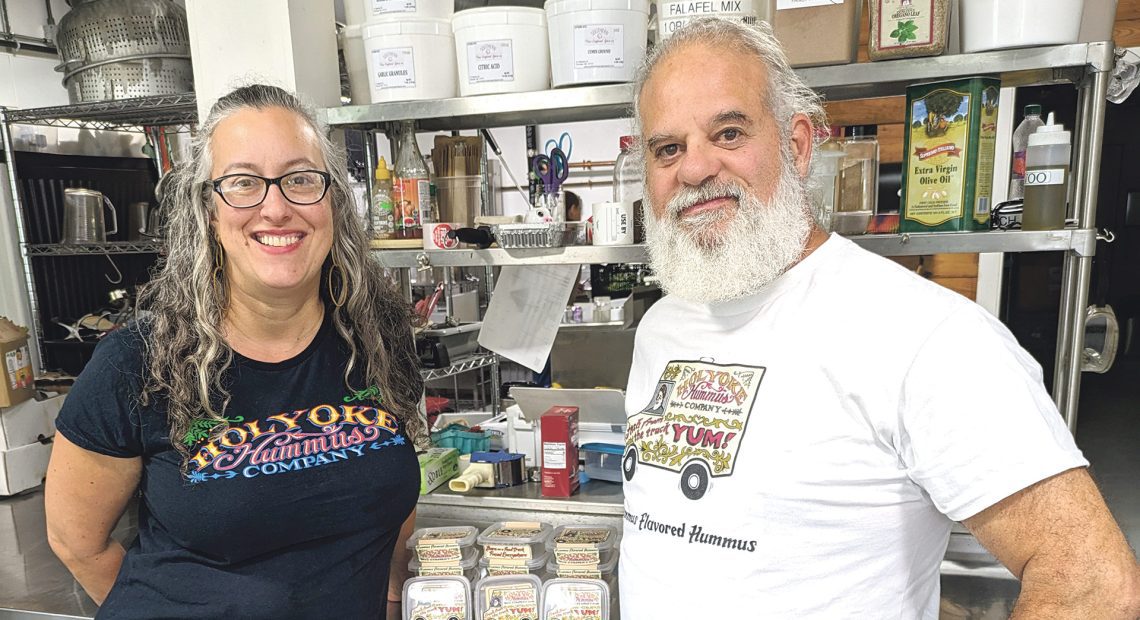
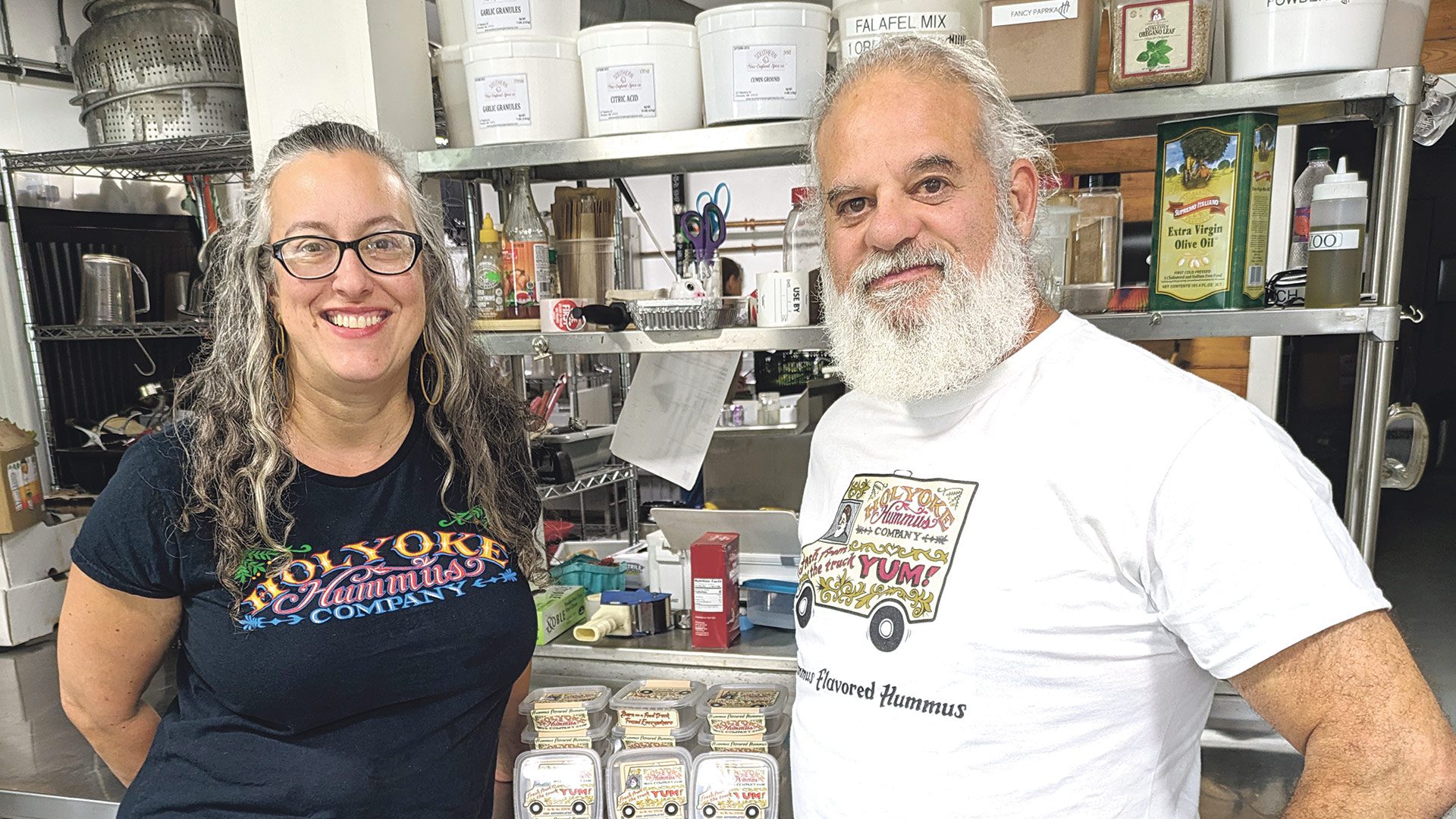
Owners Dawn Cordeiro and John Grossman

Owners Dawn Cordeiro and John Grossman


John Grossman and Dawn Cordeiro know how to pivot.

Not long after launching a successful food-truck enterprise called Holyoke Hummus in 2014, they saw an opportunity to open a storefront on High Street in Holyoke, called the Holyoke Hummus Café.

“We had that for four years, and it was just amazing to be there on High Street while also doing the truck, but it was a lot of work keeping both of those going,” Grossman recalled. “And when the pandemic happened, the foot traffic on High Street got so small that we couldn’t keep the restaurant open. We didn’t know what was going to happen. It took a few months before food trucks were even allowed to start serving again.”

But while COVID effectively killed the café, the food-truck business — specializing in falafel and hummus — continued to thrive, with regular appearances, about 10 months a year, on area streets and at events and festivals.

“We’ve been trying to find something more productive for us during the winter. We’ve always done catering, but the wholesale project, getting hummus into the grocery stores, we knew was a year-round proposition.”

“The food truck was great for us during lockdown because restaurant lobbies weren’t open. So we pivoted back to the truck and had a couple of temporary kitchen situations after we closed the restaurant,” Grossman recalled. Then, two years ago, he and Cordeiro, his wife and business partner, set up shop in the shared commercial kitchen of Mycoterra Farm in Deerfield.

“A friend of mine saw on their Facebook feed that they were starting to rent their kitchen out,” he noted. “It seemed remote to me, especially coming from from Holyoke, but then I started to think about the geography, and so much of our work was north of there. So we’re just as close to, say, our Northampton work as we were in Holyoke. And when I came to visit the kitchen, I saw what a great fit it was. I’ve always been looking for something that could accommodate the food-truck production as well as wholesale production.”

Which leads us to the latest pivot — the launch, three months ago, of Holyoke Hummus’s wholesale distribution business.

“Since we started 10 years ago, people were like, ‘oh, where else can I buy your hummus?’ We never planned to have a restaurant, but that happened, and we took that opportunity,” Cordeiro recalled, adding that wholesale was something they had long discussed as well. “We got to 2024, and I was like, ‘we have to make this work this year. This needs to happen.’”

While the truck is typically active from late winter through the end of December, outdoor events definitely slow down in January and February, and the couple saw wholesale as something they could do year-round.

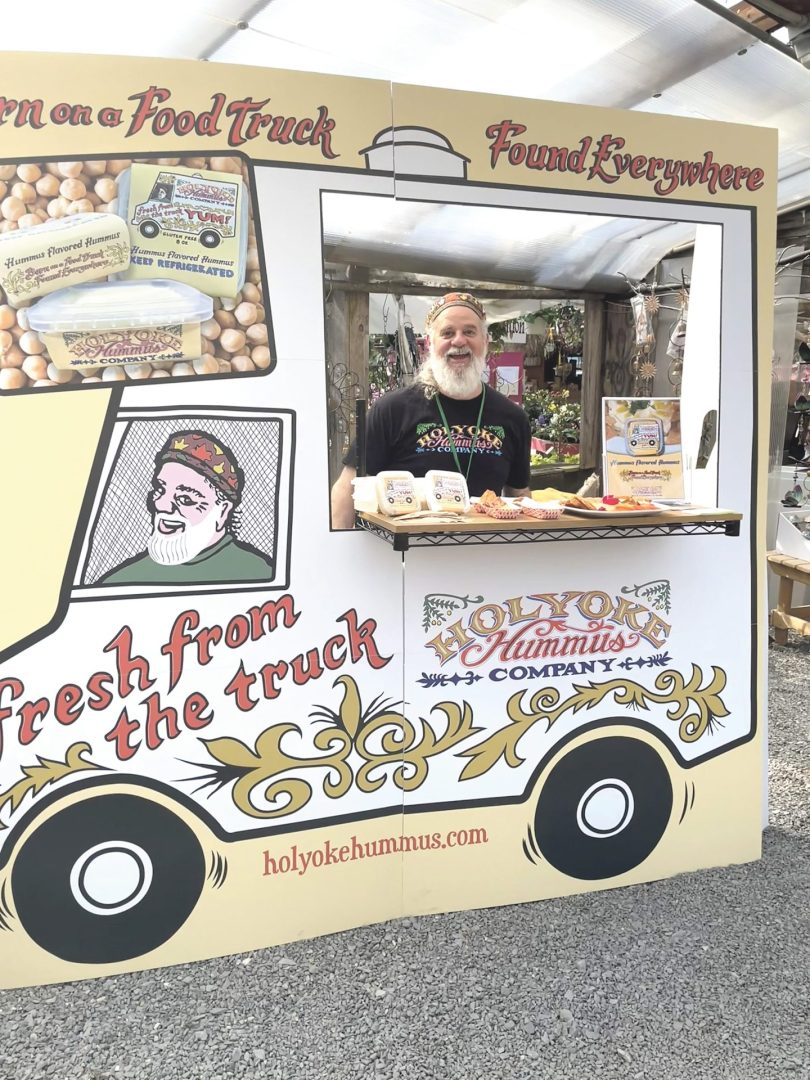
The Holyoke Hummus truck

The Holyoke Hummus truck is active about 10 months of the year, John Grossman said.

“During the pandemic, we stayed open through the winter, out of necessity. But we’ve been trying to find something more productive for us during the winter,” Grossman said. “We’ve always done catering, but the wholesale project, getting hummus into the grocery stores, we knew was a year-round proposition.”

After completing the process to get their wholesale license, they connected with a nonprofit food distributor based in Brattleboro, Vt. called Food Connects.

“We do not want to be in the business of driving around and trying to figure out how to distribute. They know how to do that. We know how to make hummus, and we know how to talk to people about it and get them interested and excited about it.”


They’ve Bean Entrepreneurial

Backing up a bit (well, 10 years), Grossman has often told the story of how Holyoke Hummus started, when he attended the Holyoke Brick Race, an annual stock-car event in the Paper City, in 2013. Organizers arranged for food vendors, but none showed up. That was his inspiration for opening Holyoke Hummus, buying the truck known as the Great Garbanzo, and setting up shop across the region.

“We do one flavor of hummus on the truck, and people love the hummus; people have been asking us where they can we get the hummus when the truck isn’t out.”

He and Cordeiro hope the wholesale business sees similar growth and success. They intend to expand gradually and purposefully, starting at locally owned stores like Provisions, Cornucopia, Oliver’s Farmstand, and Brattleboro Food Co-Op.

“Food Connects serves 250 stores — including places that are very far away that we would never even know about, in Vermont and New Hampshire. But hyper-local was where we really wanted to start,” Grossman said, adding that he isn’t looking to get into large chains like Big Y — for now, anyway.

“That’s certainly something that we would consider, and I know that they’re very good to local distributors and local producers,” he told BusinessWest. “But we really want to build this business on our own terms. I’ve seen so many food businesses our size that can’t wait to get into the bigger chains, and they figure out how to ramp up production, and they invest in infrastructure and production, and then that giant account goes away. So we feel really great about the organic growth and interest that we have.”

the wittily named “hummus-flavored hummus.”

The company began wholesaling to area stores with just one product: the wittily named “hummus-flavored hummus.”

Food Connects specializes in those independent retailers and food co-ops, he added. “They’re pointed right at the people who we feel like would be buying us anyway. So we’ll grow in the kind of places we want to grow, using the food-truck business to bootstrap our way into the wholesale hummus business. That’s been giving us the capital that we need, as well as the PR capital.”

Another way Holyoke Hummus is starting slowly is with the items it’s wholesaling — or, more accurately, item.

“We’re doing one flavor. We’re doing hummus-flavored hummus. That gets a good chuckle from people all the time, and it resonates,” Grossman said.

“There are a million flavors of hummus out there, and everybody’s got their favorite, and that’s wonderful,” he went on. “But what food trucks do is focus on one thing. And you want to go back to that truck because you want to have that falafel or that pulled pork. It struck us that we do one flavor of hummus on the truck, and people love the hummus; people have been asking us where they can we get the hummus when the truck isn’t out.”

“I want to make sure that the business model is sustainable and something we know we can grow confidently before we start with other products.”

He said the inspiration for calling the packaged product ‘hummus-flavored hummus’ came from an ad campaign for Tito’s Handmade Vodka, which, for a while, pitched ‘vodka-flavored vodka,’ striving for authenticity in a vodka market overrun by trendy flavors.

“It’s the same kind of concept, and I really like it,” he noted. “It’s also easy when I’m talking to new stores and they say, ‘OK, how many SKUs do you have?’ ‘I’ve got this one SKU.’ ‘Oh, I can fit that in.’”

But the wholesale products will broaden, Grossman was quick to add.

“The next thing up, that people are very excited about, are our pita chips: ‘when are you going to do the pita chips?’ That’s probably something that I would turn to a co-packer for and not try and develop my own capacity to produce on a wholesale scale,” he explained. “But I really want to do the hummus very carefully, and I want to make sure that the business model is sustainable and something we know we can grow confidently before we start with other products.”

In a typical week, Holyoke Hummus focuses on food production on Monday, packaging and distributor pickup happen on Tuesday, and the food-truck activity typically takes place Thursday through Sunday, at places ranging from food co-ops to concerts and parties.

On the week, they spoke with BusinessWest, Grossman and Cordeiro were getting ready for a brewfest at the Norman Rockwell Museum in Stockbridge, a 50th-anniversary party at Cummington Supply, concerts at Look Park in Northampton and Tree House Brewing Co. in Deerfield, and a food-truck roundup in Brattleboro. “That’s a pretty heavy week — usually it’s two or three truck events,” Grossman said.

Cordeiro said it’s gratifying to be ingrained in the Pioneer Valley community through the truck and, now, through stores. “It’s exciting that we’re part of people’s milestones. I’ll hear, ‘my mom has loved you for the past 10 years. We’d love to have you at her 70th birthday party.’”

a popular sight at local events that welcome food trucks.

Holyoke Hummus has become a popular sight at local events that welcome food trucks.

Meanwhile, at weekly events like farmers’ markets in Northampton, fans will take home hummus for their fridge, she added, so it’s gratifying to be able to tell them, “by the way, you can get it in the store.”


Falafel-y Promising

The truck fare from Holyoke Hummus has remained fairly consistent over the past decade and now includes a variety of falafel sandwiches and plates; hummus served with pita chips, a soft pita, or carrots; and sides ranging from fried brussels sprouts to french fries to stuffed grape leaves.

“It’s authentic,” Cordeiro said, of both the food and the relationships they’ve built over the years. “We’re a trusted part of the community, and that’s lovely. These people are part of our lives.”

Grossman agreed. “The nature of our business is breaking bread with people. That’s what being in community events is all about — it’s a very connecting thing of eating food with people and sharing food with people. We really love that.”

And while they grow the wholesale business, they also see expanding opportunity with the food truck, and a Western Mass. market that is far from saturated. “It’s kind of like asking, are there enough restaurants out there?” Grossman said.

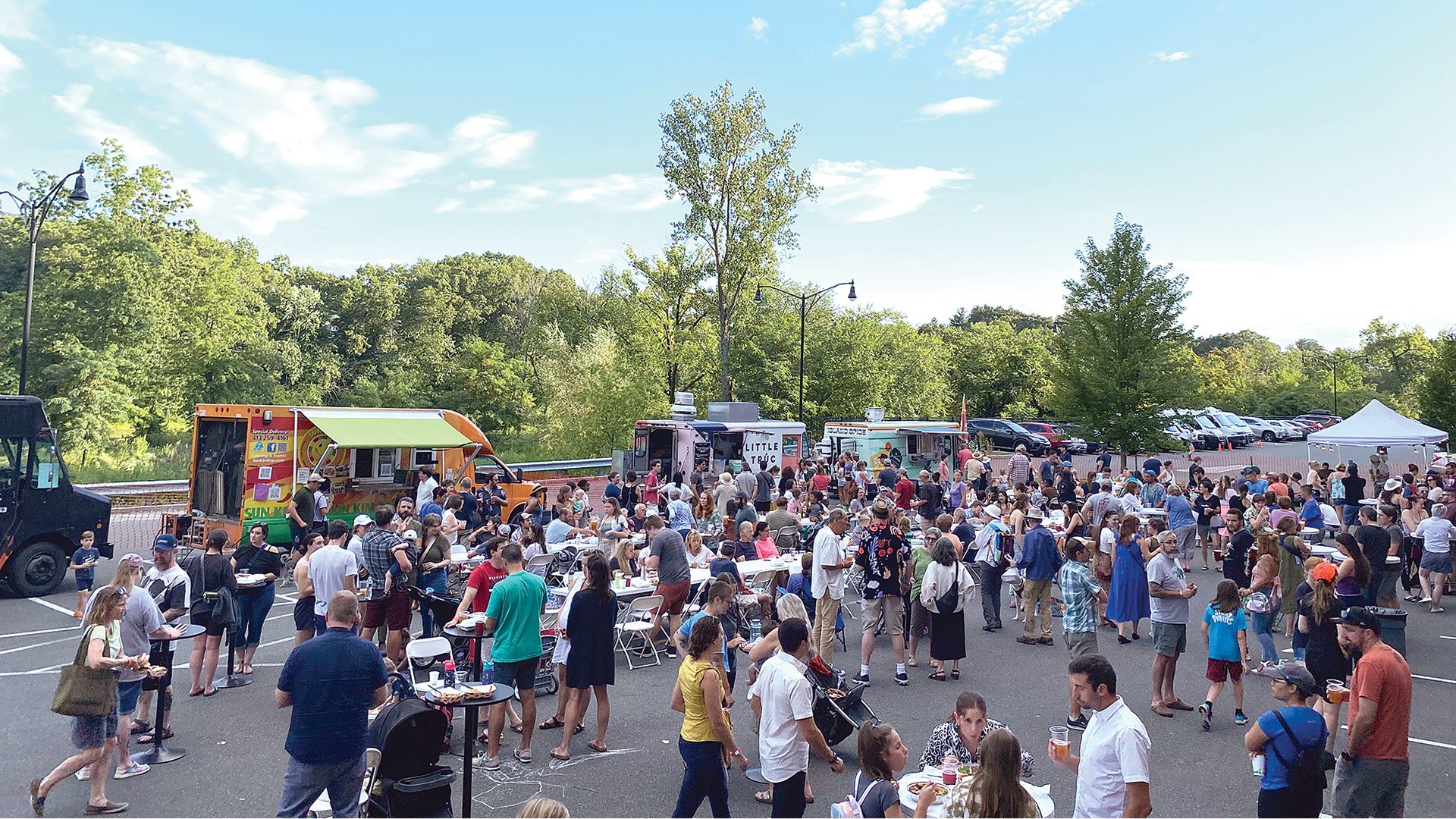
“Partnerships are really what make food trucks happen,” he went on. “If you’re not in a fixed location, a retail location where people are making it a destination, you need to have an Abandoned Building Brewery say, ‘we’re going to do Food Truck Friday and bring 1,000 people together,’ and make partnerships that way. And the concert venues — Tree House is doing so many more shows now than they did before. So the cultural growth of food trucks, in partnership with more venues, is still definitely on the rise.”

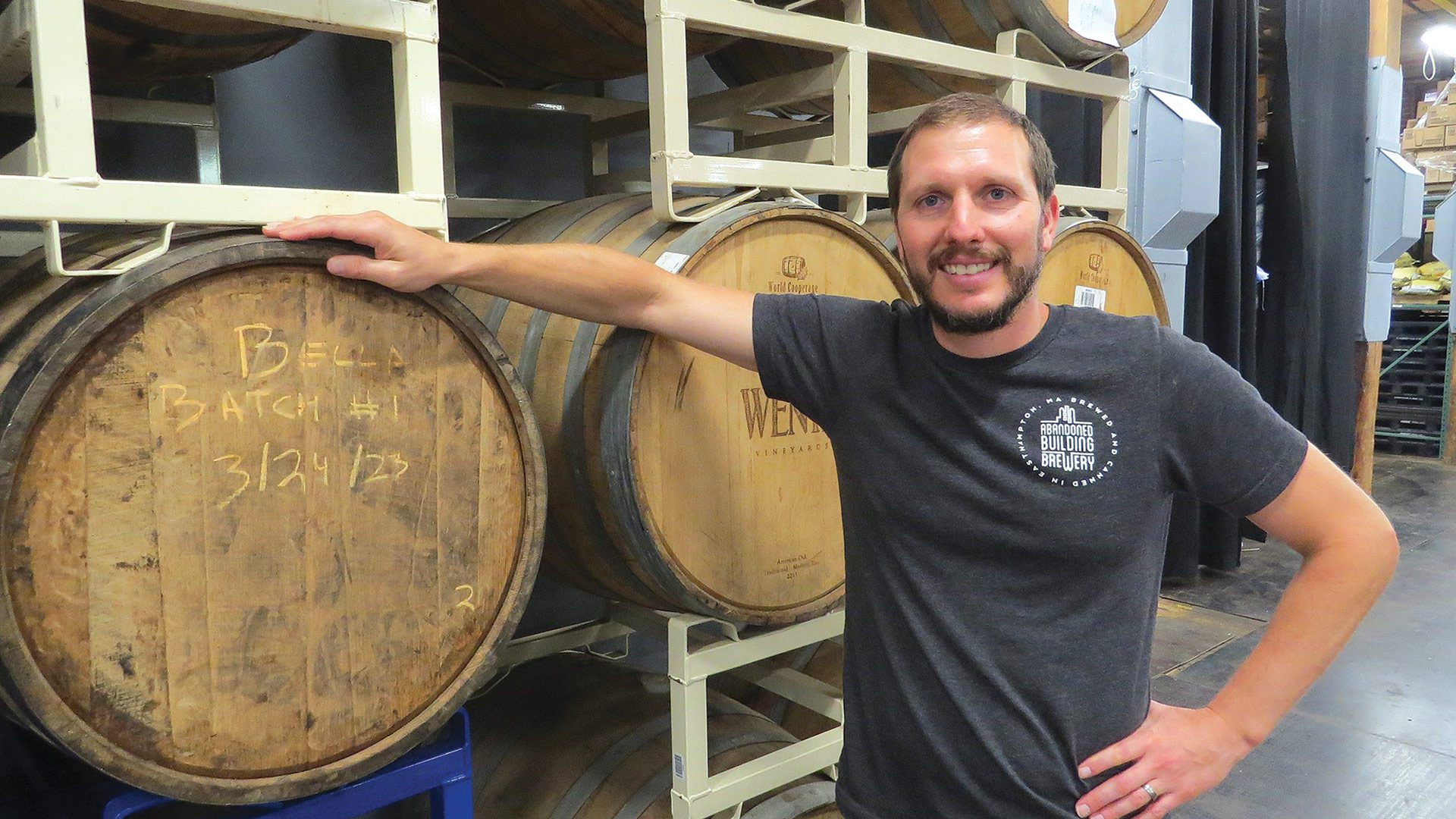
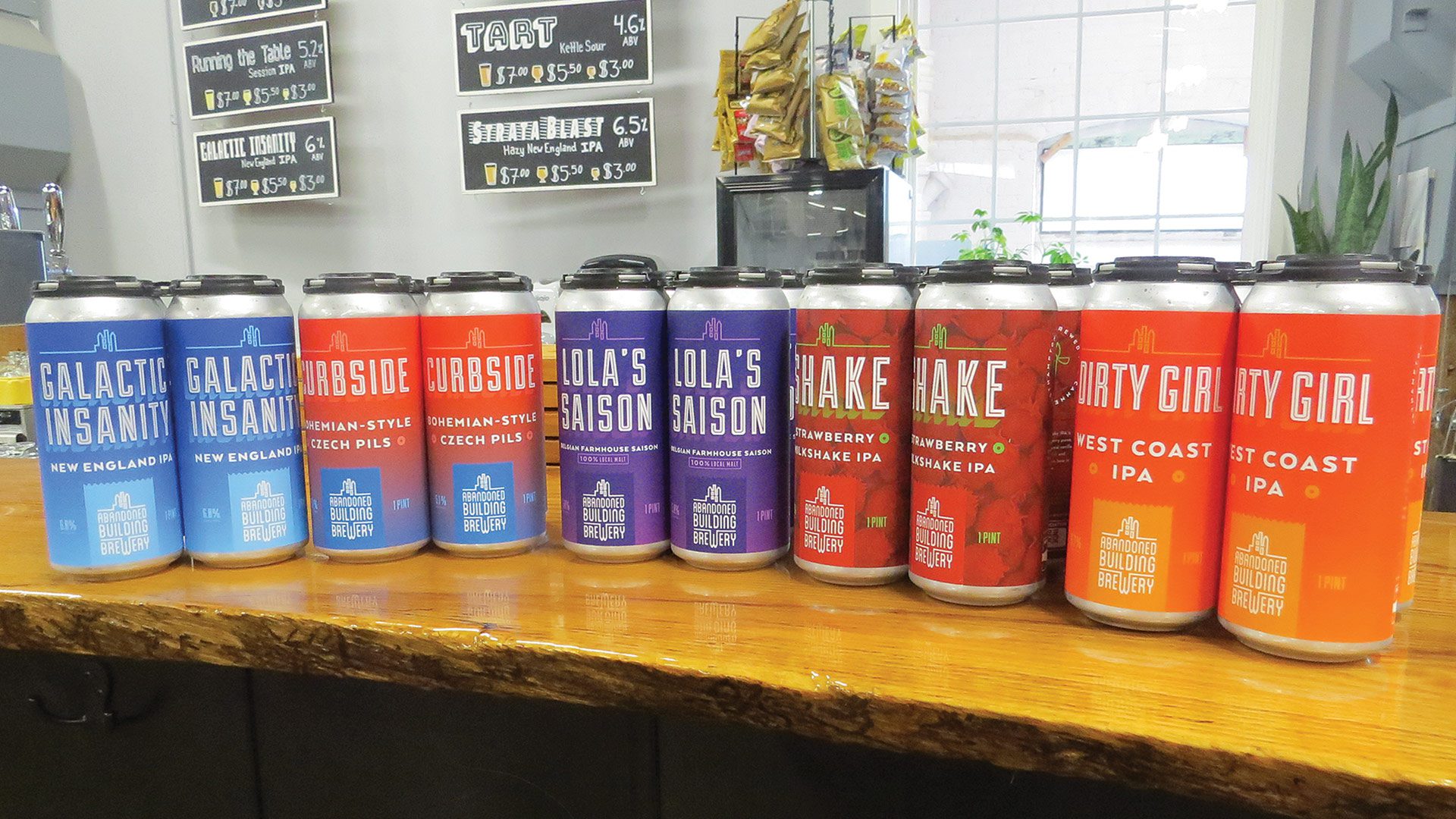
Some of those partnerships are long-lasting; one of Holyoke Hummus’s earliest events was at Abandoned Building’s first anniversary, and it just had a presence at the Easthampton brewery’s 10th anniversary.

Relationships with local cities and towns are important, too, Cordeiro added. “Even the restaurant community understands that, ‘oh, right, food trucks aren’t going to take away from our business. How can we work together?’”

As it enters its second decade, the couple have recognized their growing stature as mentors to newcomers on the food-truck landscape.

“That’s been a really nice thing for us as well, talking to trucks coming on the scene over the last couple of years,” Grossman told BusinessWest. “When I was starting out, I know I was running around, hanging out at other trucks, asking them questions. There were some really great trucks that answered my questions and were helpful; they were sort of like the elder statespeople of food trucks in the Valley. They were scrappy and doing it when there were far less opportunities. To become that food truck that’s able to help and talk with other trucks as they get going, that’s been exciting.”


Cover Story Features

A Bumper Crop of Perseverance

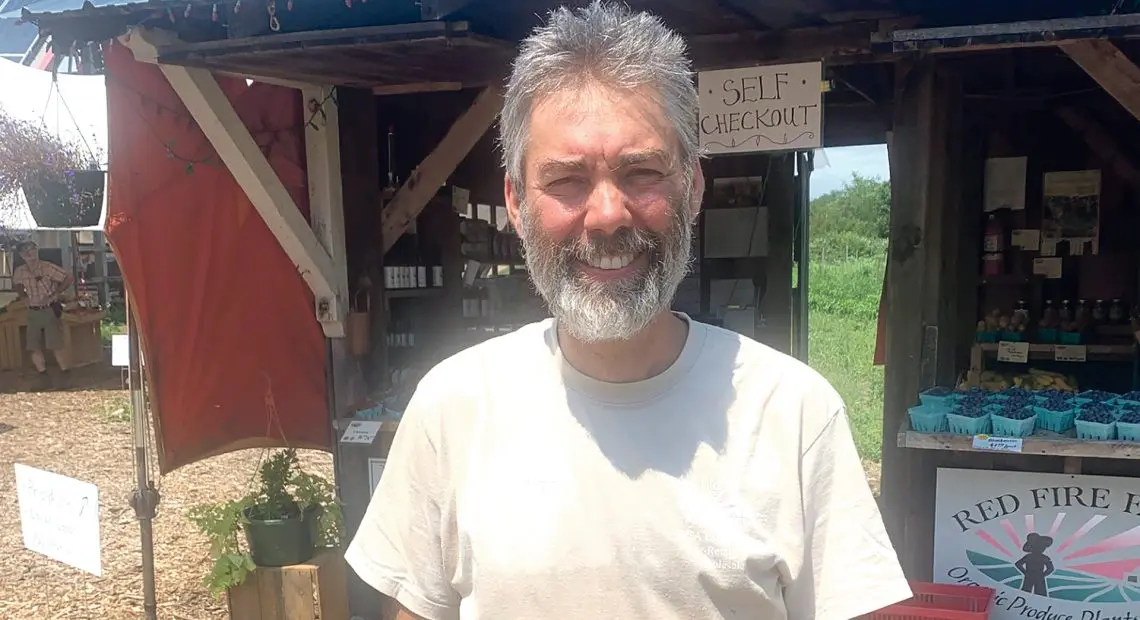
Farm co-owner Ryan Voiland

Farm co-owner Ryan Voiland


Ryan Voiland doesn’t mince words when he talks about farming and whether it makes good economic sense to be in this sector.

“If I was a smart businessperson, I’d be out of this business,” he said, referring to agriculture in general but especially community-supported agriculture, which isn’t seeing as much support as it once was. “Most other people you talk to would not put up with the type of financial risk and lack of financial rewards that seem to be opening.”

But he kept going, and in poignant fashion.

“It’s a labor of love. We do it because it’s something that’s really important for the world — having food that’s grown nearby, especially fruits and vegetables. We do it because we want to be part of that solution.”

“If I was a smart businessperson, I’d be out of this business.”

He was saying this a few weeks back, but he’s been talking this way for some time now — and certainly long before the historic barn that served as home to the farm store for the Red Fire Farm’s operation in Granby — there is also a farm in Montague — burned to the ground in February.

The fire, which destroyed much more than the barn and farm store itself (more on that later), was only the latest in a series of challenges that have hit this operation hard. Last summer’s torrential rains, other forms of extreme weather, and the decline in interest in CSA co-ops are also on the list.

The fire was an especially devastating setback, one that prompted some deep introspection and hard talk about actually getting out of this business. But Voiland and his wife, Sarah, decided to stay in because this is, as he said, a labor of love.

Nothing since the fire has been easy — nothing before the fire was easy, either, but there are now new layers of challenge — but the Voilands, with some support from the community, have persevered, and, well … made do, as they say.

The fire that broke out in the morning of Feb. 17

The fire that broke out in the morning of Feb. 17 destroyed much more than the Red Fire Farm store.

They have created what they call a temporary farm store comprised of an old farmstand from Montague (the one with which Voiland got his start more than 25 years ago), which was transported to Granby; a new, smaller shed donated by the Massachusetts Federation of Farmers Markets, with two more still to be constructed; and a large tent. And they are making progress with efforts to create something suitable for the fall and winter in a portion of the space under a large solar installation that sits in front of a structure, still under construction, that was designed for the washing and packing of produce and will eventually assume that use.

But the long-term plan calls for building a new, modern farm store just a few hundred yards down Carver Street at the site of a vacant, dilapidated home in a corner of one of the Red Farm fields.

“It’s a labor of love. We do it because it’s something that’s really important for the world — having food that’s grown nearby, especially fruits and vegetables. We do it because we want to be part of that solution.”

Efforts to make these plans reality are complicated by soaring construction costs and insurance settlements that don’t come close to the actual cost of replacing not only the structure that was lost but all that was in it, Voiland said.

So the hopes for reconstruction are contingent upon receiving grants from various sources, he went on, adding that applications have been filed, and the Voilands are now awaiting word.

In what appears to be the best-case scenario, work on a new facility could begin this fall, he said, noting that the farm is dependent on those grants to move ahead and will essentially have to wait for some form of assistance.

Plans to replace the barn

Plans to replace the barn (pictured) lost to fire in February has been complicated by rising construction costs and insurance issues.

For this issue, BusinessWest talked at length with Voiland about the fire, the ongoing efforts to recover, the plans for the future, and how this experience has only hardened the resolve of all those at the farm.


Sudden Destruction

Voiland was working at the Montague facility when he got that dreaded phone call mid-morning on Feb. 17.

A staffer in Granby, one of the few working during the slow time of the year, was telling him that the 100-year-old barn that had come to symbolize the property, and the Red Farm operation, was on fire.

It’s a 45-minute ride from Montague to Granby, and by the time Ryan and Sarah arrived, Carver Street, where the farm is located, was blocked off for a third of a mile in both directions.

“By the time we managed to walk to the property, the barn was 75% gone,” said Ryan, adding that there was little they could do but stand, watch fire crews from Granby and several nearby communities fight the blaze, and start to think about the complex process of carrying on and then rebuilding.

And both have been even more complex than they probably could have imagined.

Indeed, as mentioned earlier, the barn was home to much more than the farm store, and its loss impacted every aspect of the operation.

“Most of the building was devoted to retail sales and to our CSA distribution space, but there were also wings in that barn,” he explained. “We had a wing where we cured and stored garlic. We had several spots where we parked tractors, so now all our tractors are homeless. The basement of that barn was used for storing irrigation equipment; we had tools in there, supplies, and machinery, such as a drop spreader for spreading fertilizer and an orchard sprayer.”

Matters have been further complicated by insurance issues, he added.

Slicing through them, and simplifying them as well, Voiland said his carrier has essentially indicated that the property was insured for $300,000, a number he said doesn’t cover the replacement cost of the various forms of equipment and supplies — including hand-painted signs providing directions to those looking to pick their own produce — that were stored in the barn and its cellar, let alone the cost of rebuilding.

Indeed, he said estimates he’s received from several builders have put the cost of building a new, 6,000-square-foot barn and farm store at $1.5 million on the low end, and $3 million on the high end.

“The price of construction has gone up, even since we updated the insurance policy,” he said, noting that this was maybe five or six years ago. “And in that time, COVID happened, and we’ve had all those supply shortages, some of the many reasons why construction costs have gone through the roof.”

Which explains the reliance on grants to rebuild, he said, adding that a GoFundMe campaign started soon after the fire raised more than $200,000, some of which had to be used to immediately replace supplies and equipment so business could be conducted this season.

Red Fire staff members

Red Fire staff members pose in front of the historic barn around Halloween, during decidedly better days.

The rest went into savings, he said, adding that this money, and whatever can be garnered from insurance, will be used to match outside grants needed to fund new construction.

“We hope to be able to put all that together and get a budget for building something new that’s at least $1 million to a million and a half,” he said, adding that he hopes to avoid having to finance a portion of the project.

An application has been filed with the state’s Food Security Infrastructure Grant program, said Voiland, adding that Red Fire has previously received a grant from the program to help fund construction of its packing facility.

Red Fire is also applying to a federal Rural Energy for America program for a grant that would fund construction of a solar-array-topped carport on the site of the destroyed barn, a facility that would provide not only more solar power for various farm operations, but a space under which to park tractors and other equipment.


Lettuce Rebuild

The cellar hole is all that remains of the 6,000-square-foot barn, made of chestnut, and a replacement for a barn that stood on that same site and was destroyed by fire started by a lightning strike in 1922.

Voiland acknowledged that the operation’s name is a double entrende of sorts, a nod to both the 1922 fire and the red fire variety of lettuce he cultivates, one of myriad vegetables and fruits grown in Granby and Montague.

But history will not repeat itself here, he said, adding that, for several reasons, it makes more sense to rebuild down the road, in the corner of a 25-acre field, then it does on the original site.

Doing so would relieve congestion on that site, provide more parking, and separate the farm activity from the farm store, he explained, adding, again, that if all goes well, ground could be broken before the ground freezes.

Plans are being drawn up for a facility that won’t have any of the history or “majesty” of the destroyed structutre, he noted, but will be more practical in many ways, and more efficient.

“It was designed as a hay-storage barn and livestock barn,” he explained. “And we had made a lot of changes and improvements to that barn to make it more suitable as a farm store, but it still had limitations. And if we rebuild, obviously, we want to rebuild for what we do, not what they did 100 years ago.”

In the meantime, the Voilands, Ryan’s father, Paul, and the team of roughly 75 (during the peak summer months) at Red Fire have been carrying on. It’s not business as usual, by any means, but business — in this case, a wide-ranging farm operation — is getting done.

The weather has been, for the most part (and unlike some recent years), cooperative, with generous amounts of rain — “borderline excessive,” as Voiland put it. “It’s been hot, but not excessively so.”

But there have been challenges, such as piecing together the temporary farm store and maintaining it. For example, strong winds toppled the large tent recently, and it took some time to raise it again.

Then there’s the challenge of doing the day-to-day — and there’s obviously a lot of that — while also handling everything that goes into the process of rebuilding, from talks with the insurance company to conceptualizing a new facility to applying for grants.

Finding the requisite hours in the day hasn’t been easy, but Voiland and others have somehow managed.

Yet, there are other, ongoing challenges, including a general decline in support for CSAs over perhaps the past decade or said, he said.

“There’s still an interest in local and organic and CSAs, but, unfortunately, the supermarkets have figured out how to brand things locally in a way that is sort of detrimental to the CSA farms,” he explained. “People think they can just go to the big-box store and get something that’s local, which is not necessarily true. It’s been a harder marketplace, especially the past five to 10 years, putting natural disasters and unexpected barn burnings aside.”

As Voiland said at the top, if he was a smart businessperson, he would probably be out of this business. But overriding his business sense is his passion for agriculture and giving area residents the opportunity to buy local.

Construction Cover Story

Firm Foundation

Co-owners Robyn Provost and Bob Provost

Co-owners Robyn Provost and Bob Provost


Marking 75 years in business is a significant milestone for any company, and when Mowry & Schmidt Inc. hit that mark in 2022, it was extra gratifying, simply because of how it had survived the worst of the pandemic.

“We stayed working; we’re that essential workforce,” said Bob Provost, the third-generation co-owner of this family business with his sister, Robyn Provost. “People trusted us, we practiced the proper protocol, and we went in and out of people’s houses and people’s businesses. We never stopped. It was tough, what was going on, but at the same time, we were fortunate because we were able to work; our guys were able to work.”

Greenfield-based Mowry & Schmidt was also able to ride a wave of home improvement that arose when people began spending more time at home, as well as working from home, a trend that has solidified into something more or less permanent.

“You hate to shout out the positives from something that was so horrible, but we were able to stay in business through the worst of it, then things picked up dramatically,” Robyn said. “And that hasn’t changed. We’re still seeing a lot of work out there, and we actually have the ability to pick and choose a little bit more, to figure out what’s the right fit. There’s always a job that’s not the right fit, and you have to recognize that and be able to admit that. But it was an interesting phenomenon that happened, how construction exploded for a lot of people — if they could make it through that initial wave.”

“You hate to shout out the positives from something that was so horrible, but we were able to stay in business through the worst of it, then things picked up dramatically.”

The pandemic years were only the latest cycle in the long history of Mowry & Schmidt, which has been doing residential, commercial, and industrial work since its inception.

“It has kind of evolved over the years,” Bob said. “Years ago, a big part of it was industrial. But a lot of the paper mills and machine shops closed down, so it bounced more to residential and commercial. Even 20 years ago, we still had some pretty substantial industrial contracts. And now it’s maybe one or two, some smaller machine shops.

“So I’d say our work base now is commercial and residential, and that it kind of fluctuates depending on the market. We used to say we were 70% commercial and 30% residential. Now we might be 60-40, or maybe even 50-50 at times.”

The firm has tackled a wide range of jobs, from large construction jobs to smaller renovations and repairs, throughout its history, a diversity of expertise that has served as a buffer against shifting trends and economic tides.

The dining room inside the Farm Table

The dining room inside the Farm Table in Bernardston, where Mowry & Schmidt performed significant work across the campus.

“We do new construction, renovations, additions, alterations,” Bob told BusinessWest. “We still do small projects, decks on homes, window replacements, door replacements, repairs. And then we do larger projects, whether it’s building a new bank, building a new restaurant, new home construction, large additions, prefabricated metal buildings as well.”

For this issue’s focus on construction, we talked at length with the Provost siblings about how their business has stayed remarkably stable over the years, and how they’re tackling today’s challenges — from higher costs to fierce competition to workforce issues — with an eye toward growing the firm further as it approaches the century mark in the decades ahead.


History in the Making

Mowry & Schmidt was founded by David Mowry and Albert Schmidt in Greenfield in 1947, quickly gaining loyal customers and the reputation for diverse expertise it touts today. In 1977, when the founders retired, Robert Provost (David’s son-in-law) and Georges Wetterwald purchased the company and continued to grow it. In 1990, Wetterwald retired, and Robert became the sole owner.

During the 1990s, Bob and Robyn Provost, the current owners, started working in the office — Robyn from outside the company and Bob from its job sites, where he had labored since the 1980s — to work with their father on estimating, project management, and other roles. When the elder Provost died in 2007, ownership was transferred to his wife, Marcia Mowry Provost, and today, the third generation of Bob and Robyn manage all the day-to-day operations, with the help of Bob’s wife, Jessica Provost.

“If they had their kitchen renovated, but then, 20 years later, they come back and ask you to do their deck and porch or their bathroom, I think that’s a big deal.”

“A big part of our success is repeat business, whether it’s residential, commercial, or a commercial project leading to residential work,” Bob said, noting that longtime customers run the gamut from Greenfield Savings Bank — one recent project is the restoration of Greenfield’s former library, the Leavitt-Hovey House, into a new facility for the bank — to educational facilities like Northfield Mount Hermon, Stoneleigh Burnham, and Deerfield Academy.

“One of our last large jobs was the VESH veterinary clinic in West Springfield,” Robyn added. “That was a good-sized project, and we hope to become a repeat customer and able to do more work for them.”

That job is one example of how Mowry & Schmidt continues to expand its footprint outside of Franklin County.

Mowry & Schmidt’s work for VESH in West Springfield

Mowry & Schmidt’s work for VESH in West Springfield is an example of seeking jobs outside its traditional Franklin County footprint.

“We’re not afraid of travel. We’ll go where the customer base is, and if it’s a repeat customer, I’ll go anywhere for them,” Bob said, adding quickly that other firms are doing the same these days.

“We’re competing against contractors up here that we haven’t had to in the past,” Robyn agreed. “And then, vice versa, we’re walking into places that we haven’t been all the time. It’s happening everywhere.”

And it’s happening at a time of flux and challenge in other ways in the construction world, one example being the impact of high prices, she added.

“Our costs are high, and we have to pass that on to the consumer, so consumers are facing construction costs that are substantially higher than what they maybe think they should be. So we need to explain that and get people to understand that this is the time we live in; these are the costs.”

The other major issue across the construction spectrum these days is workforce — specifically, finding enough people to do the available work, a situation that has caused many firms to turn down work they might otherwise procure.

“There’s a lot of work out there still in construction; even though the prices are high, people are paying it. There’s a demand, and that creates a demand on the workforce,” Robyn noted. “People are needed to work in all of the industries, whether they’re making the material, trucking the material, or actually installing it.”

Fortunately, Bob added, Mowry & Schmidt hasn’t seen significant employee turnover, with team members who have been on board for anywhere from five to more than 20 years.

“If they had their kitchen renovated, but then, 20 years later, they come back and ask you to do their deck and porch or their bathroom, I think that’s a big deal.”

“As for the new guys, it’s hard to find younger folks, but some of our newer folks come from other companies closing up, or a lone sole proprietor who has come to a point in their life where they don’t want to deal with the bills, the headaches, all the office crap; they just want to come in and work. That’s been a good avenue for us to find people to come in and work for us. We also have people who’ve retired from other industries, other types of work; they’ve put their 20-plus years in, and they’ve still got a lot to offer.”

Often, they’re offering those services to clients that have been loyal to Mowry & Schmidt for generations, Bob said. “We keep them because they know they can trust us, and we go in there and do their work, and we’re fair.”

More challenging, he added, is developing trust with new clients, but the firm can lean on its reputation over 77 years in business, as well as its recent performance.

“When the same individuals come back time after time to do projects in their house, I think that speaks volumes,” Robyn said. “If they had their kitchen renovated, but then, 20 years later, they come back and ask you to do their deck and porch or their bathroom, I think that’s a big deal.”

The key is honesty and open communication, Bob added. “Don’t get me wrong; in 77 years, we’ve made mistakes. It’s how you finish it out and correct those mistakes … it’s how you take care of them and make sure everything’s squared away at the end.”

The company was founded in Greenfield in 1947

The company was founded in Greenfield in 1947 and is still headquartered in the city today.

Valuing transparency extends to the firm’s expectations for its subcontractors, Robyn said.

“Our crew doesn’t do everything on a project. We do X amount of the work, but we have to rely on subcontractors, or we would not exist. And being able to find trustworthy, transparent subcontractors is something we’ve worked really hard at achieving. And we maintain those relationships as long as we possibly can. We know that’s an important part of being a general contractor because you have to rely on these people.”


Looking to the Future

Bob told BusinessWest he has twins — a son and daughter — who both work at the firm, but he doesn’t know whether they’ll eventually want to become part of a fourth generation of family ownership — and, besides, he and Robyn have a long way to go in that role.

“I’m still pretty young, and I can’t imagine doing anything else. So we’ll be doing it for a while,” he said. “Hopefully another generation comes along, which wouldn’t break my heart if it did. I’m a firm believer that this is a good place, and there’s always going to be a need for general contracting and construction. You just have to run it the right way and keep moving forward; that’s the key.”

Whether it’s construction and renovation, design-build projects, construction management, or even small repairs, there’s still plenty of work in Franklin County and beyond, he added.

“It feels great when you finish a veterinary clinic, but you also feel great when you know that you’ve helped somebody stay in their home by renovating their bathroom or putting up a ramp.”

“Those are good customers. Your local banks, your YMCAs — they’re strong, they’re local, and they’re good repeat business. You could have some people on the board at the YMCA, where you’re working, and next thing you know, you’re working at their house. Getting an opportunity to work for all these people and customers, it’s very rewarding.”

Robyn noted that the city of Greenfield will often call Mowry & Schmidt to tackle an urgent job for the Fire Department or Board of Health. “Unfortunately, things happen, and they need somebody local they can call at a moment’s notice, that can put together a crew and send them out.”

It’s a nimble trait, and an earned one, Bob said.

“That’s having a quality crew. You’ve got to have guys that aren’t looking at you cross-eyed when you take them out of finishing somebody’s beautiful kitchen and say, ‘come with me; we have to go board up a house.’”

Another niche has been helping elders in their homes, figuring out ways to keep them aging in place, Robyn added.

“The other thing is just being there when someone who we’ve worked for for 30 years needs a cabinet door adjusted, and they call, and we do it,” she added. “We’ll send somebody over there as soon as we can to get it done.

“I think if we weren’t able to adjust so quickly and do those small things, that would be tough for us because it makes you feel good about what you do. It feels great when you finish a veterinary clinic, but you also feel great when you know that you’ve helped somebody stay in their home by renovating their bathroom or putting up a ramp.”

It’s just one more way Mowry & Schmidt isn’t just staying busy — it’s making an impact, one customer at a time.

Cover Story

Current Events

Executive Director Ben Quick

Executive Director Ben Quick


Ben Quick recognizes that the Connecticut River, particularly the stretch that runs through Springfield, has what he calls a “checkered past” as … well, not the cleanest riverway, and perhaps a negative reputation in some corners, based on that past, that lingers today.

But those who actually use the river for recreation on a regular basis — and Quick, executive director of the Pioneer Valley Riverfront Club, certainly counts himself among them — tell a much different story.

“People who come to our riverfront here in Springfield for rowing or dragon boating and see what we have, between the quality of the water and the views and the infrastructure, say, ‘why aren’t there 10 clubs here? Why isn’t everybody out on this water? Why aren’t more people enjoying it?’” Quick said.

It’s a message he likes to share. “The mission of our organization is to bring guests, visitors, and residents of Greater Springfield to the riverfront for some healthy, outdoor, fun recreation. The river itself has got a checkered past, and part of our job is to enlighten people with proper information, safe experiences, and a positive takeaway, so they go home and tell their friends, ‘hey, you know what? The Connecticut River in Springfield is absolutely gorgeous, and there’s all kinds of fun stuff you can do there. Why not check it out?’”

“People who come to our riverfront here in Springfield for rowing or dragon boating and see what we have, between the quality of the water and the views and the infrastructure, say, ‘why aren’t there 10 clubs here? Why isn’t everybody out on this water? Why aren’t more people enjoying it?’”

The Pioneer Valley Riverfront Club (PVRC) was established by a small group of rowing enthusiasts in 2009 to promote river-based recreational activities, sporting activities, and river access in general.

“They got together on a patch of grass a little further downstream from us and organized as a rowing club,” Quick noted, adding that they put a proposal together to occupy what is now the club’s home, at North Riverfront Park on the river’s shore, in a building that dates back to 1901.

“Since then, we have grown our organization from a small group on a patch of grass to about 50 kids, about 60 adults, and hundreds of visitors every year who participate in our programs,” he told BusinessWest. “We started off as a rowing organization … in fact, PVRC originally stood for Pioneer Valley Rowing Club. But soon after we were organized, we expanded and offered dragon boating, which is the fastest-growing water sport in the world. And we realized that we had much more to offer than rowing. So that’s where Pioneer Valley Riverfront Club came from.”

Speaking of dragon boating, the 10th annual Springfield Dragon Boat Festival is coming up on July 20, and has become the club’s premier event (more on that later).

A dragon boat team navigates the Connecticut River

A dragon boat team navigates the Connecticut River in the 2023 event.
(Photo by D. John McCarthy)

“The rowing and dragon-boating programs have just blossomed,” Quick said. “They are kind of niche sports … not a lot of people know about these sports.”

But he considers it his mission to make sure more people find out every year.


Stern Challenge

Quick’s involvement in the PVRC began with a connection through one of his sons, who is 24 now, but discovered rowing while attending a Springfield middle school that had a connection to the club.

“One day, he came home from school and said, ‘Mom, Dad, my school has rowing, and I’m doing it.’ My wife and I were like, ‘this sounds great. Who knew we even had that?’ And as he started to get involved, we as a family got more involved too, saying, ‘this is a wonderful thing. More people need to hear about this.’”

At the time, the PVRC was volunteer-driven, with very few full-time, paid employees, and Quick and his wife, Julie, became active in the organization. A few years later, in 2015, when the club was looking for an executive director, he was encouraged to throw his hat in, and was offered the job.

“I think having a positive first experience certainly sets people on a trajectory that we’d like to see them continue on. And kayaking is the easiest way for us to help people have a fun time.”

“It was a big family decision,” he recalled. “I had no nonprofit experience; I had corporate-world experience, but no one could question my passion for the organization, my passion for the sport, and my passion for seeing the thing grow. And my family was behind me because, when you move from the corporate world to the nonprofit world, you’ve got to make some sacrifices. But for us, it was a great opportunity.”

The club has also become an ideal opportunity for people of all ages to get in the water and learn a new pastime.

A dragon boater paints the head of her team’s boat

A dragon boater paints the head of her team’s boat.
(Photo by D. John McCarthy)

“Kayaking is a wonderful first experience for on-water recreation,” Quick said. “For so many of the kids and adults from Springfield who come down here for kayaking, this is their first experience with a boat on the water, ever. And we’re super proud of that. I think having a positive first experience certainly sets people on a trajectory that we’d like to see them continue on. And kayaking is the easiest way for us to help people have a fun time.”

Kayaking is offered on Friday nights, Saturdays, and Sundays, and throughout this summer, kayak rental — normally $20 per hour — is free, thanks to a grant from the Massachusetts Department of Conservation & Recreation, though donations are accepted.

The club offers rowing programs, including one called SAFARI, which stands for Summer of Activity, Fun, and Rowing Instruction, which is for kids age 12 and up.

“It’s kind of like a summer camp, but only a couple hours a day,” Quick explained. “We get them out in boats, we teach them safety, we teach them instruction, and on a rainy day we’ll stay on land and play some games. It’s just a two-week program to get kids interested in rowing.

“From there, the sky’s the limit,” he added. “We have a competitive racing team comprised of a few middle schoolers and a bunch of high schoolers. They race in the spring and the fall athletic seasons, as well as in the summer. We travel as far away as Philadelphia to race other programs. It’s a really cool sport, and these kids learn things that no other sport is going to teach them. They say rowing is the ultimate team sport.”

Then, of course, there’s dragon boating.

“Dragon boating is a lot like canoeing, except you’re in a dragon boat with 19 other paddlers, plus someone steering and someone drumming. So it’s a party barge, but for canoeing,” Quick said. “And we can teach someone how to dragon boat pretty quickly. It’s a short learning curve, but it’s a lifelong pursuit toward perfection. We have a wonderful dragon boating team that meets in the evenings because it’s an adult program.”

The Springfield Dragon Boat Festival, which is free for spectators, draws hundreds of people to the riverfront each summer to watch teams race, while enjoying entertainment, food trucks, face painting, crafts, and other activities. Team registration (at pvriverfront.org) ends July 10, and this year’s event will be held Saturday, July 20.

“Anyone can do it. We had a group one year that was a family reunion,” Quick said, adding that teams of inexperienced dragon boaters — companies, organizations, families — compete in an all-neophyte division. “They get one practice session, and then we throw them in a boat.”

The other division is comprised of teams of people who compete in dragon boating as a sport. “They train all winter, they lift weights, they get strong, and then they hit the water and race each other. So you don’t have those teams competing against the community teams, but they are amazing to watch. The intensity of a race is incredible. They only last one minute — the fastest times on the race at our festival will be sub-60 seconds.”

The Pioneer Valley Riverfront Club offers rowing activities for all experience levels

The Pioneer Valley Riverfront Club offers rowing activities for all experience levels.

In addition to the races and family fun, Quick noted, “we have a cultural presentation because there’s a side of the festival that doesn’t get spoken about much, but we hope will get spoken about more, which is that a dragon boat festival is an important cultural holiday in China. It’s a celebration of patriotism, and of longevity, and of life. So there is a cultural aspect of the Dragon Boat Festival that is shared by our dear friends at the Chinese Association of Western Massachusetts.”


Pulling Together

The Pioneer Valley Riverfront Club presents other events as well, including youth and adult regattas, and recently, for the second straight year, it hosted the 1.2-mile swimming portion of an Ironman triathlon, which also includes a 56-mile bike ride and a 13.1-mile run.

“I was told that, last year, 40% of the participants were local, and I think, for 60% of the participants, it was their first time,” Quick said. “So let’s hope that trajectory continues. It’s certainly positive for the business community, for the economy here.”

He’s also gratified that the river’s health — and reputation — have come such a long way since the 1970s and 1980s, when raw sewage was regularly dumped into the water. These days, it’s much cleaner, he noted, and when sewage spills into the river after a storm, it’s generally safe to swim or row within a day or two.

“Every time there is a spill of sewage into the river, it gets reported. And that’s a wonderful piece of legislation — I think transparency is really important to improving quality. But we do have safety protocols, and we are aware of river quality. I give a lot of credit to the Connecticut River Conservancy for spending the money and providing the resources to do weekly water quality testing.”

Beyond enjoying a healthier river, Quick simply enjoys the tranquility of the pastime.

“When you’re on the water, even right here in Springfield, and you look to the shores, and all you see are green trees, and a few buildings poking over it, you could be in Vermont. It is amazing how tranquil the river is.

“I’ve been a lifelong athlete, but I haven’t been rowing for that long; I’ve been rowing for maybe 10 years. When I came to the sport with other men and women my age, I realized this is something we can do. You know, we don’t have to have been playing this sport since we were 4 years old in order to have a fun, competitive experience. So I realized, ‘hey, this is great.’”

It’s also a lesson in teamwork and pulling together toward a common goal, which is certainly a positive experience in these often-discordant times.

“If you are not moving in complete harmony with the person in front of behind you, you’re going to bump into each other. And that can lead to some aches and pains and bruises,” he added. “But if you work together, it is such a thrill. It is such a rewarding experience.”

Cover Story Features

Staying True to Their Routes


Melissa and Peter A. Picknelly (far left and right) with fourth-generation company leaders

Melissa and Peter A. Picknelly (far left and right) with fourth-generation company leaders Lauryn Picknelly-DuBois, Alyssa Picknelly-Dube, and Peter B. Picknelly. (Staff Photo)

The past five years have brought a raft of challeges to the world of tourism and transportation.

The biggest one? Survival.

“The worldwide pandemic was tough on our industry, and many other industries,” Peter A. Picknelly, chairman and CEO of Peter Pan Bus Lines, told BusinessWest. “For three years, we had the government using our tax dollars to tell people not to use our service.”

There’s a bit of edge in his voice as he brings up topics like shutting down travel, and then restrictions like social distancing that accompanied its gradual return.

“But we survived, and we’re thriving now. We’ve invested $25 million in new equipment in the last couple of years. We’re modernizing our fleet, which is what our consumer wants; they want a nice, clean, modern bus. And we’re continuing to expand our route structure,” he said, noting that Peter Pan serves about 100 locations in the Northeast and Mid-Atlantic states.

“We listen to our customers — where they want to go — and we expand where it makes sense. We recently expanded to Newark, New Jersey, and a suburb right outside of Baltimore called White Marsh. And we’ve added service on Cape Cod. We’re always looking at new areas.”

But the company is also looking to the future in other ways, most notably some emerging leadership from the fourth generation of this family business launched by Picknelly’s grandfather in 1933.

“You just don’t see workers commuting to work, and if they do, they’re not working Mondays and Fridays. I mean, the full-time office worker is just not rebounding. It’s better than it was, and it will eventually come back, I think, but some businesses are just going to thrive on people that work remotely.”

“I kind of grew up just learning from him and wanting to work here,” said Peter B. Picknelly, one of three children of Peter A. and Melissa Picknelly (the company’s vice president) now working at Peter Pan. A fourth is still in college and mulling career goals.

“I had no doubt in my mind that this is what I wanted to do,” added the younger Peter, who is the company’s director of Safety & Security. “I grew up going to school and trying to better myself so I could then come into the business. That’s what I always wanted to do.”

That’s a story his father can relate to. “I’m the third generation; Peter and his sisters are the fourth,” he said. “But I never forced them into it. When I grew up, some kids wanted to be baseball players or football players. All I wanted to do was follow my father and grandfather. And I can’t tell you how proud I am that our kids chose to do that — but it was their decision.”

Peter A. Picknelly

Peter A. Picknelly, standing before some portraits of his predecessors, says there are very few family-owned bus companies in the U.S. today.
Staff Photo

Other fourth-generation leaders at Peter Pan include Lauryn Picknelly-DuBois, who was promoted two years ago to controller, and Alyssa Picknelly-Dube, who is involved with the Maintenance division. (A fourth child is still in college and mulling career goals.)

“There are very few family-operated bus companies in the United States anymore,” their father said. “Here, the fourth generation is already set, and they’re still in their 20s. I think it assures our employees and our customers that we will be around for a long time. They are doing an amazing job.”


All Aboard

They’re doing it at a time when public-transportation demographics might be changing, but bus travel clearly remains important.

Peter Pan specializes in travel that’s longer than a typical work commute, but within 200 miles — a distance that can be covered as quickly as flying, once the airport time is factored in, the senior Picknelly explained.

These days, most travelers are between 18 and 35 years old or over 50, he added. “They may have an automobile, but the bus is more affordable. We go city center to city center. And parking can be extremely expensive in some areas, and hard to find.”

He added that the pandemic hit the work-commuter customer base hard, and it’s still struggling, at around 60% of pre-pandemic volume.

“You just don’t see workers commuting to work, and if they do, they’re not working Mondays and Fridays. I mean, the full-time office worker is just not rebounding. It’s better than it was, and it will eventually come back, I think, but some businesses are just going to thrive on people that work remotely.”

That said, the longer-distance service — say, Boston to New York or New York to Philadelphia — is booming, especially as gas prices have remained high and cities have gone to congestion pricing.

And gas prices do make a difference, he added. “You can instantly see it when gas prices go up. Our cost of operation goes up when fuel goes up — it’s our third-largest cost. But it’s outweighed by the fact that more people seek an alternative. When fuel hits $3, $4 a gallon, you can see an instant surge.”

That said, today’s buses are much more fuel-efficient, Picknelly said, and feature an anti-idling function that shuts them off when they idle at a gate or while parked for more than five minutes (but not while in traffic).

“There are situations when the idling won’t turn off — say it’s middle of winter and it’s freezing, and you want to heat up a little bit. That will override the five-minute idle shutdown,” Peter B. Picknelly said. “Same thing if it’s too hot — to keep the bus cool, it’ll override it.”

Other features of a modern bus include better-designed seats, video and Wi-Fi, and cameras that capture a 360-degree view of the bus for safety purposes.

Peter B. Picknelly

Peter B. Picknelly, director of Safety & Security, is one of three fourth-generation family members so far to have chosen Peter Pan as a career.
Staff Photo

As for those who drive the buses — the current fleet is about 200 vehicles — the younger Picknelly said the workforce crunch was severe a couple of years ago, but hiring has picked up considerably since. “We get a lot of applications every single day, so we’re able to be a little bit more picky when it comes to the driver force.”

His father noted that hiring is easier in some areas than in others. “We’re constantly hiring. But while Cape Cod and Boston are difficult locations, with our driver forces in New York and D.C., we have plenty of applications.”

Peter Pan has been receiving more applications these days from younger people, and the company has brought on employees in the process of getting their commercial driver’s license, and even reimbursed them for it.

“It’s a very good job if you like to drive and you want to deal with people,” Picknelly said. “Our drivers choose what routes they want to operate and when they want to work. Our position is, if you like doing what you want to do, you’re going to do a better job.

“But you’ve got to like to drive, and you’ve got to like to deal with people,” he added. “We can train just about anybody to drive a bus. But you can’t train someone to have good customer-service skills. And wanting to drive is just something you’ve got to have a passion for. Because that’s what we do.”

The younger Picknelly agreed. “It’s good getting these young people on board because most of the time they’re pretty loyal, and they want to stick with the company for a long time. We have people who have been here for so long because they came on when they were younger and were extremely loyal to the company, and that’s what we’re hoping to get now.”


Shifting Gears

Looking to the future, Peter Pan continues to find more ways to be the transportation mode of choice for its customers, especially younger riders, and that means making their travel plans easier.

To that end, the company recently announced a new strategic partnership with Trailways, extending its network of destinations, as well as a strategic alliance with Amtrak.

“So you can take a train somewhere, and then they’ll connect to a bus, and we can take you right to the city center,” Peter A. Picknelly said, and from there, rideshares can take over. “We’re also forming alliances with Ubers and Lyfts where you can coordinate being picked up wherever we drop you off, and instantly getting in an Uber and taking it to your final destination. Because of this coordination, more and more people are saying they don’t need to drive, particularly young people that live in the big city.”

“We can train just about anybody to drive a bus. But you can’t train someone to have good customer-service skills. And wanting to drive is just something you’ve got to have a passion for.”

Statistics bear that trend out. Last year, driver’s license applications actually went down, reversing a 50-year upward trend, he noted.

“It’s so convenient. If you go to Europe, taking public transportation is always involved, and you’re seeing more of that here. It’s way more convenient, and with the amenities in the vehicle, you can work or entertain yourself while you’re traveling. You can’t do that when you’re driving.”

Peter Pan also maintains a model of managing terminals — another one of Peter B. Picknelly’s roles — in its destination cities, with amenities like food, restrooms, a service counter, and a pickup area, instead of the model of picking up and dropping off on unattended corners.

“We don’t like picking up on a street corner like some of these other bus companies,” Peter B. added. “We like going into a terminal or a specific designated area, so they can have that one-on-one personal experience with our employees if they have an issue or have any questions or concerns. We’re a customer-driven business, so we like pleasing the customers.”

About 15% of Peter Pan’s business, meanwhile, is charter service to destinations not on the regular route plan.

“Charters are very big, and in the summer, it picks up a lot. There are people who go out to Saratoga Race Course on the weekend; that’s a very popular place. We’ll take them wherever.”

One shift that occurred over the pandemic years has been a move toward online booking, his father added.

“Prior to COVID, about 50% of our riders would buy their ticket a half-hour before departure, in person. Now, 90% of our sales now are in advance. Most people are booking within three days of their trip, online.”

But, as mentioned up top, the biggest story of the pandemic for Peter Pan was … well, simply surviving it, and coming out stronger on the other side, with plans for the future and a band of 20-something Picknellys ready to evolve into stronger leadership roles.

“We’re really proud of all of our staff,” their father said. “Listen, 40% of all bus companies didn’t make it through the pandemic. We did, and we’re thriving. We’ve had to change our focus on longer-distance trips, less commuter-related, more group travel, but we’re doing well.”

Peter B. Picknelly agreed. “In hindsight, COVID was horrible, but it made us think about how we could run things differently here, and it’s been beneficial.”

Alumni Achievement Award Cover Story

2024 Finalists Continue to Lead by Example

Left to right: Andrew Melendez, Meghan Rothschild, Payton Shubrick, and Craig Swimm

In 2015, BusinessWest introduced a new award, an extension of its 40 Under Forty program. It’s called the Alumni Achievement Award (AAA), and as that name suggests, it recognizes previous 40 Under Forty honorees who continue to build on their résumés of outstanding achievement in their chosen field and in service to the community.
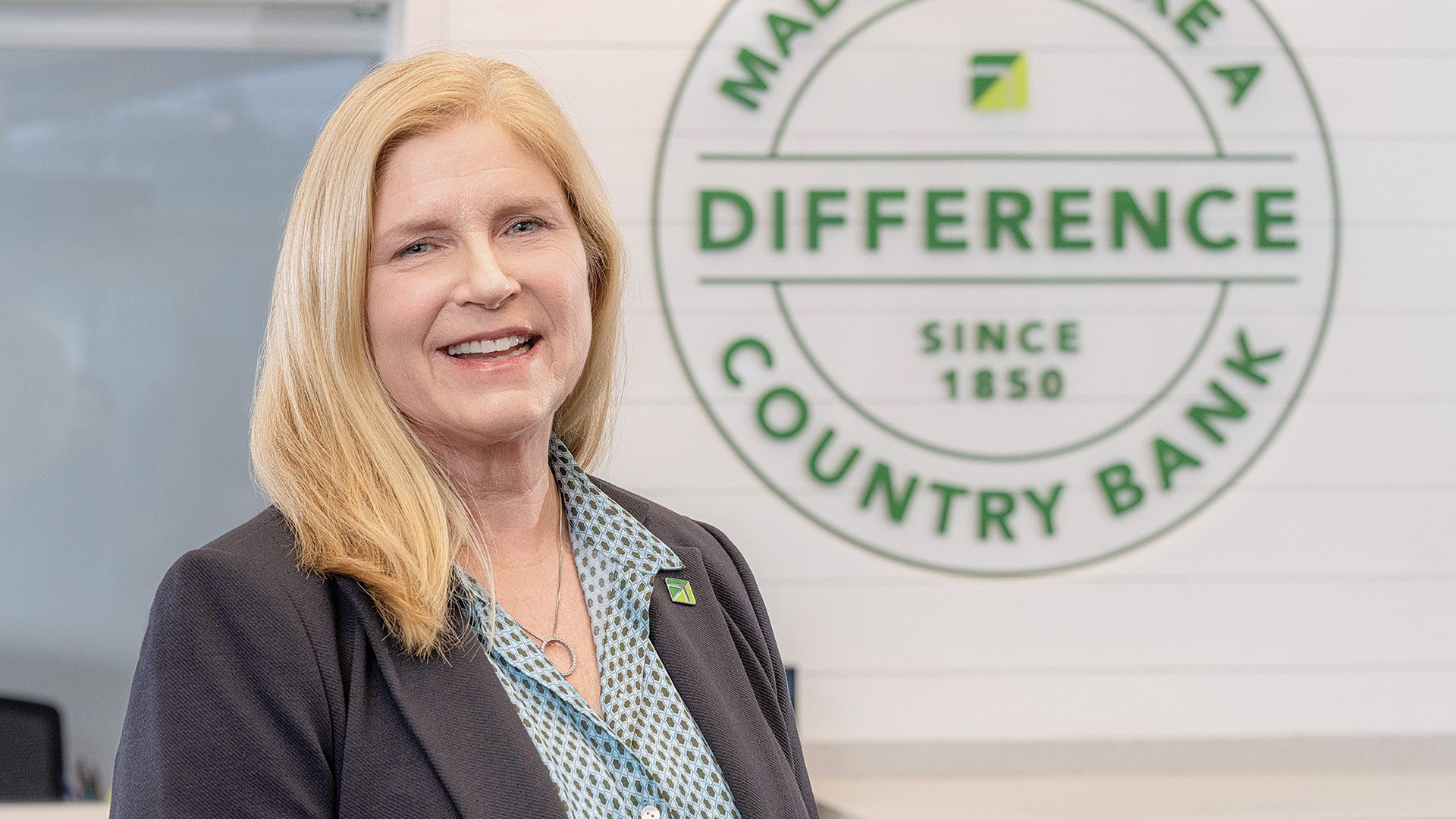
Along with honoring one winner (or, on a couple of occasions, two) each year, the program also gives us a chance to visit with, and write about, several finalists each year — which gives our readers an opportunity to read about the interesting and impactful things going on in their lives. After all, for most 40 Under Forty alums, that award recognizes only the beginning stages of where their paths will take them.

So read the links below for the subsequent, and often surprising, chapters in the lives of Andrew Melendez, Meghan Rothschild, Payton Shubrick, and Craig Swimm. These four were chosen by a panel of three independent judges among this year’s AAA nominees. The same judges were then tasked with agreeing on the ultimate winner, who will be revealed at the 18th annual 40 Under Forty Gala on Thursday, June 20 at the MassMutual Center in Springfield.

As the profiles that begin on page 5 reveal, these four finalists truly embody the spirit of this award. Their stories convey leadership, ongoing commitment to the region’s economic and civic life, and an ability to pivot and evolve as opportunities present themselves. They are, in a word, inspiring.

Special thanks to Health New England for its continued sponsorship of the Alumni Achievement Award.


Andrew Melendez

Founder, Latino Economic Development Corp


Meghan Rothschild

President and Owner, Chikmedia


Payton Shubrick

Founder and CEO, 6 Brick’s LLC


Craig Swimm

Senior Vice President, Audacy Springfield

Banking and Financial Services Cover Story

A Community Asset


Country Bank president Mary McGovern

Country Bank president Mary McGovern


Country Bank, according to its slogan, is “made to make a difference.”

Mary McGovern has taken that as a personal challenge.

“I’ve been at several institutions, public institutions, that run a little differently than mutuals, having to answer to shareholders every quarter,” said McGovern, who recently became Country’s first female president in its 174-year history. “With a mutual bank, we feel we take a different approach with our customers, and our involvement in the community means a lot to them. It’s a differentiator.”

McGovern brings three decades of context and experience — at different types of institutions — to that philosophy.

Prior to her 13-year rise at Country Bank, where she has served as chief financial officer, executive vice president, and chief operating officer, McGovern served in management roles at Danversbank, Capital Crossing Bank, and Boston Private Bank & Trust. Her areas of expertise include finance, operations, information technology, retail banking, commercial lending, financial and credit analysis, compliance, risk, sales, and strategic business and relationship development.

“With a mutual bank, we feel we take a different approach with our customers, and our involvement in the community means a lot to them. It’s a differentiator.”

“I started at Boston Private when it was a de novo with $80 million in assets. I was the 20th or 22nd person they hired. I came in on the ground floor in a finance role, in accounting, and grew with the department,” she recalled.

After that institution went public and was acquired, she left, earned her MBA, and moved to Capital Crossing in the late ’90s, doing a lot of work with distressed real estate. Danversbank, her next stop, was a reunion of sorts with some individuals she had worked with at Boston Private.

“They were like Country Bank is today, a nice, local, mutual community bank,” she said, adding that she served Danversbank as senior vice president and chief accounting officer. “But they went public in 2008 and were sold in 2011, and my position was eliminated.”

So, the same year, she joined the team at Country — and has never looked back.

“The mission is to be the bank of choice in Central and Western Massachusetts,” McGovern told BusinessWest. “I’m excited to lead as the first female president of Country Bank as we approach our 175th anniversary. It’s a good opportunity to get out and talk in the community, talk to our customers, put a new face in front of them. It’s been really exciting.”

Country Bank’s productive partnership with the WooSox

Country Bank’s productive partnership with the WooSox is reflected by its prominent right-field signage.

From a bottom-line perspective, she said, Country is doing well, even showing growth in the mortgage market, despite high rates and higher prices.

“Obviously people still have to buy and sell homes and move different places. The pipeline may not be as robust, but there’s still a lot of activity.”

On the commercial side, the bank is being selective, focusing on building lasting relationships and not targeting huge volume for its own sake, to maintain liquidity. “We’re looking for 5% to 6% growth in loans this year, so we’re keeping busy for sure.”

Geographically, the bank is in a growth mode as well. With a physical footprint that currently stretches from Springfield to Worcester, with the Ware headquarters between those two cities, County is adding two additional locations to the east this year — a second in Worcester and one in Uxbridge — while making plans to add two more branches to the west, in Springfield and another community.

Earlier this year, the board of trustees announced it had full confidence in McGovern to lead that strategy, as well as all of Country’s other operations and activities in the community. Paul Scully, who has been president and chief executive officer since 2004, remains in the CEO role.

“We are thrilled to announce Mary’s appointment as the next president of Country Bank,” James Phaneuf, board chair, said when the selection was announced. “Mary’s proven track record, dedication, and strategic vision make her the ideal candidate for this role.

“In a challenging time of food insecurity and other challenges out there, it’s important to give back to local nonprofits. They need our support to do their important work. That’s valuable to our staff, and I believe it’s valuable to our customers as well.”

“The board is confident that Mary’s leadership will drive the bank’s continued success and growth,” he added. “With her extensive experience, strategic mindset, and dedication to excellence, Mary is poised to lead the bank into a new era of innovation and customer satisfaction while maintaining its position as one of the most highly capitalized financial institutions in the region.”


Community Partner

Country is also well-known for its community involvement. Those efforts have focused in recent years on a number of priorities, including food insecurity, health, and education, as well as homeless shelters, senior-serving programs, youth organizations, and more.

To that end, Country reported more than $1.2 million in donations in 2023, with 463 organizations receiving grants. In addition, the bank’s team members volunteered 1,255 hours of community service in 2023, while 37 employees served on a total of 65 nonprofit boards and committees.

“We are a valued piece of the community. We try to give back to all the communities we serve,” McGovern said, adding that the bank’s financial-literacy programs continue to be a priority, as is a partnership with the WooSox — signified by a very prominent Country Bank sign in right field at Polar Park — and the team’s WooStars awards and its teacher-recognition program.

“We’re just continuing to build on a great foundation set by Paul in his 20 years here,” she added. “Being a community bank, we’re really invested in the health of our communities.”

McGovern speaks the language of community-bank presidents in Western Mass. that place a high value on local philanthropy.

“We’ll continue to do a hybrid approach. It seems to be working. The staff seems to be happy. We don’t see that changing — in the foreseeable future, anyway.”

“We’re different from a big commercial bank that’s not as worried about the individual communities that they serve,” she said. “As a mutual bank, obviously it’s important to make money, but making money also allows us to give back. So we’re trying to give back to our communities. In a challenging time of food insecurity and other challenges out there, it’s important to give back to local nonprofits. They need our support to do their important work. That’s valuable to our staff, and I believe it’s valuable to our customers as well.”

Also of value to customers is a physical presence in their communities, even at a time when online banking is dominant.

“There are differences of opinion among financial institutions, some of whom are pulling back from their banking centers,” McGovern said. “But we feel it’s important to support the different ways our customers want to bank.

“There are plenty of the younger generation who don’t want to talk to people, who would prefer to do everything online; self-service is important to them,” she added. “But we have a good component of customers who like to go in and talk to people face to face. Even younger people want to sit down and talk to somebody when they’re buying their first house; it’s an important, life-changing kind of event.”

In addition, she said, “I feel it’s important that we show our presence. It’s hard to say that you’re in Springfield without having signage there. We have a business center in Tower Square, but it’s not quite as visible as having a branch location with a sign.”

Country Bank has consolidated in some cases as well — for instance, it used to have three branches in Ware, but now only houses its headquarters and a digital banking center there. And many branches are staffed with fewer employees than in years past, to reflect how many customers bank online only.

“But while there’s less foot traffic, we’re still there to serve people, allowing customers to bank how they want.”

Other elements of the bank experience have changed over the years as well, including how — and where — employees work.

“Since the pandemic, it’s been a different way of working,” she told BusinessWest. “For some time, we were fully remote. Over time, we went with a more flexible work arrangement. So the average employee works three days in and two days out. There are some with a little more flexibility based on what kind of job it is.”

While some employees prefer to come in five days a week, and do so, McGovern added, for most of them — those who don’t deal face to face with the public, anyway — working remotely at least part of the time is a valued part of their job. “I don’t see how we can be competitive without that. I know different institutions that have lost staff when they requested people come in five days.

“So we’ll continue to do a hybrid approach,” she went on. “It seems to be working. The staff seems to be happy. We don’t see that changing — in the foreseeable future, anyway.”


Making a Difference

McGovern also doesn’t want to change a culture at Country Bank that she feels benefits both employees and customers.

“It’s hard to be a differentiator when all banks sell the same products, but I feel we are different,” she said. “Our people are spending a lot of their life doing something they like in an institution they like with peers they like. And we’re trying to keep that culture going.”

The challenge, she said, is understanding that employees want and appreciate hybrid work schedules, while maintaining a positive office culture whether they’re in the office or not.

“It’s a fine line managing both aspects,” she said. “But I think we’ve got a good thing going, and hopefully I can keep it going into the future.”

Cover Story

A Look Back — and Ahead

What’s Changed — and What Hasn’t — in 40 Years

1984. That’s the title of an epic George Orwell novel, written 36 years earlier, that takes a look into the future and describes a world ruled by a televised ‘Big Brother.’

The real 1984 was a thankfully cheerier year. Ronald Reagan won a second term in office, the Boston Celtics won an epic NBA Finals series over the Los Angeles Lakers, gymnasts including Mary Lou Retton and West Springfield’s own Tim Daggett dominated the Summer Olympics in LA, and the Basketball Hall of Fame was soon to open its doors on Springfield’s riverfront.

That May, a new publication first appeared in businesses across the region. It was called the Western Massachusetts Business Journal, and the monthly magazine was something new and completely different — a publication devoted entirely to the region’s business community.

A few years later, the name was shortened to BusinessWest, which was not the only change to have taken place over the past 40 years. The magazine has since added a second issue each month, a strong digital presence, a daily news blog, a podcast, and several annual recognition programs and accompanying events.

Yet, as BusinessWest turns 40, we’ve dedicated this commemorative issue not to the changes that have taken place here, as significant as they are, but on the sweeping changes that have taken place in the workplace and in our business community.

They have included advances in computer technology that have transformed virtually every sector; a few memorable recessions, including one so profound it was called Great; a pandemic that shut down much of the world for months and may have permanently altered the way people work; a slew of state-of-the-art healthcare projects; a dramatic wave of contraction and acquisition in fields ranging from banking to insurance; a continued focus on entrepreneurship; and even brand-new sectors, most notably cannabis, and still-murky developments like artificial intelligence.

These sweeping, profound changes have impacted just about every sector, from education to law to construction, and have altered how we work, where we work, when we work, and even what we wear to work. In short, it’s been an eventful four decades, which has more than justified Publisher John Gormally’s decision to chronicle all of it on the pages of this magazine.

There’s no way to sum all that up in one issue, but we hope the articles below, brought to life by interviews with some of this region’s most prominent business leaders, at least begins to paint the picture of an economy, and region, ever in flux.


In this special section, 40 years of:

Click on each story to read more

or go HERE to view the entire BusinessWest 40th Anniversary issue

Banking

Commercial Development

Construction

Financial Planning

Healthcare

Higher Education

Manufacturing

Nonprofits

Professional Services

Technology

The Workplace


40 Under 40 Class of 2024 Cover Story

When BusinessWest launched a program in 2007 to honor young professionals in Western Mass. — not only for their career achievements, but for their service to the community — there was little concern that the initial flow of nominations might slow to a trickle years later.

We were right. In fact, 40 Under Forty has become such a coveted honor in the region’s business community that it makes the job of five independent judges a challenging one — but also a gratifying one.

“That was fun!” one judge emailed along with her scores. “What an amazing way to get to know so many people, and so many better. This was an enjoyable process.” Another wrote, “what an amazing group of individuals! I was amazed to see such talent in Western Mass.”

We agree; in fact, we thought all 40 of this year’s cohort are deserving for many reasons — and so many different reasons — and also felt for the many worthy individuals who barely missed the cut. But there’s always next year, and nominations are welcome all year long.

As usual, this year’s winners hail from a host of different industries, from law to banking; from retail to healthcare; from restaurants to nonprofits, just to name a few. Many are advancing the work of long-established businesses, while others, with an entrepreneurial bent, created their own opportunities instead of waiting for them to emerge.

Almost all would be justified in saying their careers leave them no time for volunteer service. Yet, almost all are doing what they can for their communities and local nonprofits.

They’re all success stories — just 40 among so many more we haven’t gotten around to telling yet.

We’ll also unveil the 10th annual Alumni Achievement Award winner on June 20, given to the former 40 Under Forty winner who has impressively continued and built upon his or her track record of accomplishment. Nominations for that award will be accepted through May 10. Click HERE to nominate.

This year’s 40 Under Forty sponsors include presenting sponsor PeoplesBank and partner sponsors the Isenberg School of Management at UMass Amherst, Live Nation Premium, Mercedes-Benz of Springfield, and Mercy Medical Center/Trinity Health. The presenting sponsor of the Alumni Achievement Award is Health New England.

2024 Presenting Sponsor

2024 Partner Sponsors

Meet Our Judges

Ryan BarryRyan Barry is a partner at Bulkley Richardson in Springfield, where he focuses on representing colleges and universities, healthcare organizations, nonprofits, and small businesses. Barry’s volunteer work includes serving on the board of directors of the Center for Human Development. He was named to the 40 Under Forty class of 2020.

Chrissy KiddyChrissy Kiddy, vice president of Corporate Responsibility and Social Media Management at PeoplesBank, is dedicated to fostering positive change, championing inclusion, and celebrating community spirit. She serves on the board of the Care Center of Holyoke and Revitalize Community Development Corporation, while also acting as an ambassador for the Bushnell Theater.

Andrew MelendezAndrew Melendez, as founder and director of the Latino Economic Development Corp., has played an instrumental role over the past year in assisting more 300 businesses. A 40 Under Forty honoree in 2015, he also previously served as the Western Massachusetts director for Associated Industries of Massachusetts and executive director of YMCA of Agawam.

Hannah RechtschaffenHannah Rechtschaffen, director of the Greenfield Business Assoc., has an extensive background in business development and creative placemaking, including four years as director of Placemaking for W.D. Cowls, growing the Mill District project in North Amherst. A member of the 40 Under Forty class of 2022, she also chairs the Sustainable Greenfield Implementation Committee.

Erica SwallowErica Swallow is the co-founder and team co-lead of the Turnberg & Swallow Team at Coldwell Banker Realty, Western Massachusetts. Her real-estate team has helped more than 1,000 clients, with sales production totaling more than $300 million over 43 collective years. Also an award-winning children’s book author, Swallow was the highest-scoring honoree in the 40 Under Forty class of 2023.

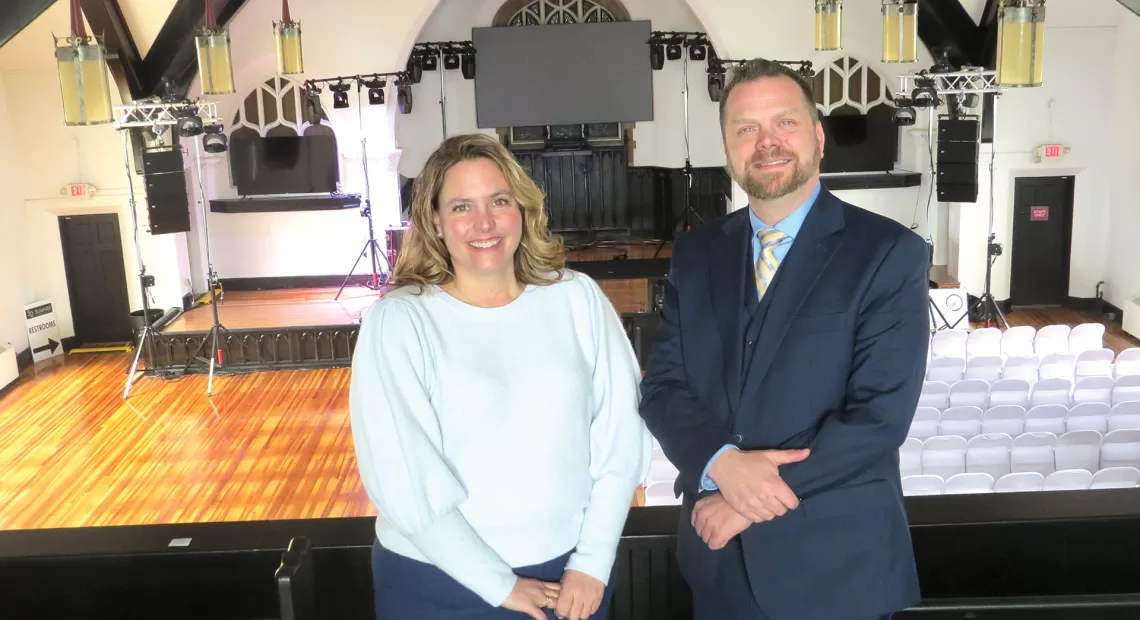
Alumni Achievement Award

2024 Presenting Sponsor Alumni Achievement Award

Cover Story Creative Economy

Taking Center Stage

Angela Park and Dan McKellick stand in the balcony at 52 Sumner.

Angela Park and Dan McKellick stand in the balcony at 52 Sumner.


Angela Park was originally looking for a home for her business, one that specializes in after-school programs for young people.

And she essentially found one in a portion of Faith United Church on Sumner Avenue in Springfield, a 125-year-old landmark that had recently come on the market amid declining church membership.

As she and other partners moved forward with the acquisition, an obvious question arose — what to do with the nave, altar, and even the balcony of the structure?

The eventual answer to the question — and it took some time for it to be answered — has become one of the more intriguing cultural developments in Springfield for quite some time.

Indeed, Park and others have created a nonprofit called Springfield Performing Arts Ventures Inc. (SPAV) and, in the church sanctuary, a new venue for the arts called 52 Sumner — the structure’s street address.

“We are committed to breaking down barriers, ensuring that everyone, regardless of background, can access, participate in, and be inspired by the arts.”

After more than a year’s work to renovate the hall, remove its pews, and install a new sound and lighting system, the venue officially opened earlier this year. There are several events on the schedule, and the obvious goal is to add more, said Park, executive director of SPAV, and attorney Dan McKellick, a member of the agency’s board of directors.

But its broad mission goes much further than merely staging concerts and other forms of entertainment in a unique environment that many potential patrons can walk to.

“Our mission is to spark the artistic spirit within our urban community, providing a haven for creative expression, cultural enrichment, and personal growth through the arts,” said McKellick, quoting the agency’s mission statement but adding emphasis to those stated goals. “We are committed to breaking down barriers, ensuring that everyone, regardless of background, can access, participate in, and be inspired by the arts. Through education, performance, and outreach, we strive to foster a more vibrant, connected, and culturally enriched city, promoting unity and understanding among all our residents.”

Elaborating, McKellick said the agency, with this venue, is focused on bringing many different types of performing arts to Springfield and the region — not just specific acts, but cultural experiences, as we’ll see.

52 Sumner

52 Sumner has already hosted several events and has many more on the calendar.

“This is a unique opportunity to bring all different sorts of arts,” he explained. “It’s not just limited to musical performances; we look forward to being able to host everything from acting clubs — there are many drama clubs around — to different types of music. I like to say that we’re providing an experience.”

As was the case late last month, when the Irish band the Screaming Orphans gave a performance at the venue, along with students from a local Irish step-dance school as an opening act.

And later this month, a Latin Fusion band called DAR & the Rebel Monks, based in Hartford, Conn., will be performing.

“They have a Grammy Award-winning artist in their band, and they have two members of their band who are backup band members for Jose Feliciano,” McKellick said, adding that this performance will follow a salsa instructor, and there will be Latino-themed finger foods.

“When you come out and buy a ticket, you’re not just seeing a band, having a couple of drinks, and going,” he said. “You’ll have the opportunity, in this case, to immerse yourself in the culture and connect a little more with that culture.”

“When you come out and buy a ticket, you’re not just seeing a band, having a couple of drinks, and going. You’ll have the opportunity, in this case, to immerse yourself in the culture and connect a little more with that culture.”

Meanwhile, these acts will provide working capital to the agency, said McKellick, adding that the proceeds will be used to bring community programming to the venue, such as performances for young people, art lessons, drama workshops, pottery lessons, and more.

This is part of the mission and a big part of what makes this venue and what’s happening there unique, said Park, adding that the agency is “trying to let out line slow,” as she put it, while putting together a slate of performances and drawing people from across the 413, and well beyond, to a very different kind of performance venue.

“There are a lot of people who want to get involved and have things here,” she said, adding that there is a high level of anticipation about what this venue can become in the years to come.

For this issue and its focus on the creative economy, we’ll look at how 52 Sumner came to be, how it plans to carry out its unique mission, and why it is a provocative addition to the cultural landscape in the region — for many different reasons.


Sound Decisions

It’s called the Edgar Allan Poe Speakeasy.

And it’s described thusly: “Over a century and a half after Edgar Allan Poe’s death, this cocktail experience brings the most beloved works of Poe to life off the page and onto the stage. Our immersive evening pairs four tales with a dash and history and heavy libations.”

Those presenting the program are among the many varied groups who have reached out to SPAV about performing at 52 Sumner, said Park, noting that the strong interest to date, which comes from several local bands, theater groups, and more, speaks to just how quickly this new venue has captured the imagination of the arts community. And held it.

An undated picture of Faith United Church.

An undated picture of Faith United Church.

Looking back, those with the original vision said this is what they had in mind — sort of. From the beginning, they thought they had something unique, something special. It took some time to see just how special.

Our story begins in 2019, when Faith United Church closed amid declining membership. The property became one of several houses of worship to come on the market in recent years for essentially that reason.

The church, designed by renowned architect William Van Alen, noted for his design of New York’s Chrysler Building, was on the market for a few years when it came to the attention of Park and her business partner, who were looking for another location for their after-school programs. They eventually acquired it for $525,000.

With those programs and a daycare facility as tenants, the overriding question, as noted earlier, involved what to do the sanctuary portion of the building. Soon, plans for a performance venue started to develop, and over the course of a year they came together, along with the nonprofit Springfield Performing Arts Ventures Inc. and its broad mission.

The needed renovations were fairly extensive, said McKellick, noting that the floors had to be refinished and the hall repainted, a large project requiring specific expertise because of the height of the hall. Acoustic panels were added as well as sound and lighting systems, he went on, noting that the work was completed late last year.

Meanwhile, the necessary permits were obtained. Working with the city, parking was secured at a long-closed Friendly’s (now owned by the city) across the street from the church, with additional parking on the street and in a small lot behind the church.

An open house to showcase the space, which doubled as a fundraiser for Toys for Tots, was staged on Dec. 7, with the first actual performance on Feb. 17, featuring two local groups, Moses Sole and the 413s. Those performances, which drew more than 400 people, served as an opportunity to test all the systems and make sure all was in in order, said McKellick, adding that those tests were passed.

Overall, the goal is to bring live performances to the area, but at an affordable price — $17 for the performance in March involving the Screaming Orphans and the Irish dancers, and $20 for DAR & the Rebel Monks — although there’s an early-bird price of $15.

“You can come in for $15, get a salsa lesson, dance a little bit, enjoy a band that has all these really talented artists, dance some more, enjoy some food … that’s a pretty good value,” he said, adding that, as a nonprofit with a mission of breaking down barriers to the arts, affordability is an important aspect of this venture.


Art and Soul

Equally important is the resolve to create community programming for various audiences, but especially young people, said Park and McKellick, noting that this is why the schedule includes an important fundraiser, set for May 28.

Organizers have received a commitment from Christone ‘Kingfish’ Ingram, a Grammy-winning blues artist, to play at that event, who was secured through “a cold call, lots of follow-up, and lots of horse trading.”

“I noticed that he was passing through,” said McKellick, noting that Kingfish — Ingram’s stage name — was playing an event in Boston and then heading to Vermont for a string of performances.

He will headline the fundraiser, which will hopefully raise $100,000 and thus help defray the cost of several summer programs that SPAV is planning, which speaks to the group’s larger mission: to go well beyond being a performance venue and instead become a vehicle for introducing constituencies, and especially young people, to the arts and immersing people in them.

Indeed, as noted earlier, the stated goal is to use the proceeds from various performances, and fundraising efforts, to fund community programs, from pottery classes to drama workshops, McKellick said.

“If we can find the instructor and we can figure out how to do it, we want to create affordable access to the arts for the kids in our community, because it’s super expensive, just like everything else — a gallon of milk, a dozen eggs … everything has gone up in price, and it’s really hard.

“To try to pull them away from wherever they are and keep them inspired by the arts, whether it’s the music side, the performing-arts side, or the artistic side, the hands-on side … that’s what we want to do,” he added.

To that end, those at SPAV are working to book some “symphony-like concerts” for young people as well other types of performances, including one involving someone called ‘Father Goose.’

This would be Wayne Rhoden, a Grammy-winning singer, songwriter, and music producer, said McKellick, adding that SPAV is trying to book him for several shows, what he called “field-trip” performances.

Meanwhile, the space is available to rent for corporate outings, nonprofit fundraisers, various types of performing arts (including dramatic productions), and other events, and it has already staged several, said Park, adding that there are several revenue streams that will help the agency carry out its mission.

Overall, SPAV and 52 Sumner are writing the early chapters of an intriguing story that has brought new life to a Springfield landmark and the promise of not just art, but the ability for diverse audiences to enjoy it, take part in it, and, hopefully, become immersed in it.

In short, it’s a work in progress, and a work of art — or the arts, to be more precise.

Cover Story

Planting the Seeds


Co-founder and CEO Dan White


Dan White calls it “turning back the clock on decomposition of food and seeds.”

That’s how he chose to describe the technology created by Clean Crop Technologies, a Holyoke-based company that has become one of the foundations of that city’s emerging cleantech and greentech sector and one of the more intriguing regional entrepreneurial success stories in recent years.

Elaborating, White said there have long been technologies that will prevent the decomposition that results from molds, fungi, toxins, and pathogens that attack seeds and crops. But until recently — in fact, until the technology developed by the team at Clean Crop — there was little if anything to reverse that decomposition, or turn back the clock, as he put it, once those foods were in the supply chain.

Getting more specific, he said that, when it comes to seeds, which have increasingly become the company’s focus, Clean Crop has been able to address a long-standing tradeoff when it comes to addressing decontamination.

“You can choose between killing the contaminant, and in so doing harm the germination of the seed, or you can make sure you have vigorous seeds, but not be able to kill everything,” he explained. “What we focus on at Clean Crop is developing our Clean Current technology to solve the tradeoff; we’re targeting applications where we can achieve the same or better decontamination as things like hot water and chemical treatments, but without harming germination in the process.”

In simple terms, the company is using a high-voltage cold-plasma technology to revolutionize food safety, and it’s doing it in downtown Holyoke in space that was once a paper mill, helping that city build what could be called a cluster of cleantech businesses, while further diversifying the region’s business community and perhaps laying the tracks for more businesses of this type.

“What we focus on at Clean Crop is developing our Clean Current technology to solve the tradeoff; we’re targeting applications where we can achieve the same or better decontamination as things like hot water and chemical treatments, but without harming germination in the process.”

This is an inspiring story, with chapters that have played out in Pennsylvania, where White developed an affection for agriculture and a desire to make it a career; in sub-Saharan Africa, where he would meet eventual partner Dan Cavanaugh and develop a passion for solving a problem that until then lacked a solution; in Iowa, where the partners would meet and then collaborate with Kevin Keener on new technology and a company to refine it and put it to practical use; in the Boston venture-capital market, where $3 million would be secured to bring the concept to the next stage; at UMass Amherst (and its Institute of Applied Life Sciences); and in a small office in Northampton, where the partners built a core technical team and proof of concept.

And now, in Holyoke, where the company, recently named among TIME magazine’s Top Greentech Companies of 2024, landed amid a search for clean energy (Holyoke boasts hydropower), needed space, and a landlord sympathetic to the needs and challenges of startup ventures (read: a shorter-term lease). There, Clean Crop is now deep into the process of scaling up, building its team, telling its story — there have many visitors to the site for tours as well appearances by the principals on several agriculture-related podcasts — and writing the next chapters.

Putting the problem of contamination into perspective, White said the U.S. Department of Agriculture estimates that roughly 30% of crops are lost in farmers’ fields every year to a wide range of toxins, pathogens, molds, and pests, with this loss quantified at $220 billion. And while the monetary loss, not to mention the huge loss of food to the supply chain, gets plenty of attention, what doesn’t is the fact that this crop loss is also a huge driver of greenhouse-gas emissions.

“These same contaminants, both on farm and in the supply chain, result in a lot of food being wasted,” he explained. “And as food waste decomposes, it generates methane, which is more than 50 times more potent as a greenhouse gas than carbon dioxide.”

Thus, Clean Crop Technologies is addressing several problems at once, from increasing the amount of food eventually reaching the table to reducing those harmful greenhouse gases.

For this issue, BusinessWest takes an in-depth look at Clean Crop, a budding enterprise that provides both food for thought when it comes to technology and its ability to solve some of the world’s bigger problems and more food for the table.


A Growing Venture

White grew up in Gettysburg, Pa., a farming region heavily populated by apple orchards. In high school, he started working at a friend’s family orchard and “fell in love with agriculture.”

“I wound up working for them for a few years in high school and college, and ended up spending most of my career working overseas,” he said, adding that he lived in Beirut, Lebanon for some time trying to get a hydroponic industry up and running there.

But he spent most of his career in sub-Saharan Africa, helping U.S.-based companies that were developing promising technologies to enable farmers and supply-chain operators to build market share.

For example, he worked with a South Dakota-based company that developed a biostimulant that allowed farmers to grow the same amount of crops while using less fertilizer.

“As food waste decomposes, it generates methane, which is more than 50 times more potent as a greenhouse gas than carbon dioxide.”

“They were interested in their applications for corn, bean, and other crop producers in Africa, and had no idea how to get it to market,” White explained. “So I helped them develop a go-to-market plan and figure out the regulatory pathways, and now they’re commercially active in six different countries on the continent and doing quite well.”

It was during that time that he met Cavanaugh, who was working as a commercial manager for Cargill in East Africa, handling all its trading in corn and oil seed commodities.

“He really learned the post-harvest side of the business,” said White, adding that it was a venture that Cavanaugh set up that eventually laid the groundwork, pun intended, for Clean Crop.

“He was tasked with establishing a peanut mill in Mozambique, which today basically just exports all its peanuts as farmer stock to South Africa, with very little value,” he explained. “The original thesis was that, if you have a mill that would be able to do that primary processing for the peanuts in Mozambique, you could then extract more value from the export market, exporting them as grade-A processed peanuts rather than the raw farm stock.

“That ended up failing because of a wide range of things, including pathogens and toxins that are common not just to peanuts but a lot of other food categories as well,” White went on. “Once they’re in the supply chain, there’s very few tools to solve them.”

Fast-forwarding a little, White and Cavanaugh essentially went about creating such technology.

“There’s a lot of ways to prevent contamination by these pathogens; there’s a lot of ways to mitigate or exclude food that’s been contaminated from the supply,” White explained. “But there were very few tools that we were aware of that could actually turn back the clock on contamination that was safe and that would keep that food in the supply chain.”

This reality led them down a rabbit hole as he and Cavanaugh looked at many different technologies in this space that held promise, including UV light, and eventually met Keener, then a professor at Iowa State University.

“Our long-term vision is that we want our machines to be operating in every seed-processing facility globally as the first line of defense in crop loss.”

“We read a lot of his papers and actually built a prototype of the technology we’re using today from schematics he had put in one of his publications,” White recalled. “And it worked, or seemed to work, and that was good enough for us to go out and meet him and visit his lab, and we started Clean Crop with him in early 2019.”

Early-stage work was focused primarily on the peanut industry, he said, adding that, when the technology was validated, a machine was taken to a peanut sheller in Georgia that was interested in piloting it. That pilot went well, he said, adding that the peanut company essentially said to come back when the machine was a thousand times bigger.

The partners agreed, but knew the pathway to commercialization involved several smaller levels of scaling before getting to that point. In the meantime, starting in the spring of 2021, they started exploring several other markets — everything from other high-value nuts to shelf-life extension for ground beef, seafood, and dairy products, and, eventually seeds.


Seed Money

Explaining the technology in somewhat simple terms, White said Clean Crop combines food-grade gases and electricity to create cold plasma, thus inactivating a broad spectrum of contaminants from seed surfaces in a dry, automated, and residue-free process.

Seeds travel through a hopper in a class-7 clean room and onto a proprietary conveyance mechanism where they then get exposed to the Clean Current ionized gases and are decontaminated before moving on for further processing. At present, the technology can process 25 pounds of seed per hour.

The seeds are shipped to Holyoke, where they are processed, bagged aseptically, and shipped back to customers, who are charged a flat fee per pound. These customers come in two categories — growers, especially those in the greenhouse, micro-green, and sprouts markets that are concerned about molds, but also food-safety risks; and also seed companies, specializing mostly in high-value vegetables such as leafy greens, broccoli, spinach, cauliflower, radishes, and others.

“One of the most compelling reasons that we moved here, long-term, is the municipal hydro dam.”

The goals moving forward are to expand that customer base, scale up operations, grow market share, and eventually sell the machines to customers.

“Right now, we only have one machine operating, but we’re looking to significantly expand our capacity this year,” said White, adding that the company has a large backlog of work. “Our goal this year is to scale our operations to absorb as much of that demand as possible and get our machines out into the world to customer facilities.

“Our long-term vision is that we want our machines to be operating in every seed-processing facility globally as the first line of defense in crop loss,” he went on. “To get there … it’s a non-trivial challenge to develop not just the manufacturing side of a company, but the company success. To be able to support a remote set of machines is a challenge, one that we want to grow into once we figure out the supply chain.”

Elaborating, White said the company, which is still in what he calls phase 1 of its development, will bring a second machine online in the near future, greatly increasing its capacity for serving customers, and scaling from there, bringing several machines with much larger capacities online. The goal is to have machines in at least 50 seed processors around the world by 2030, giving Clean Crop perhaps 10% of the global market and $100 million in annual revenues.

Doing all that will take capital, he said, adding that the company is well-capitalized and is committed to staying, and growing, in Holyoke, with opportunities to expand in its current space and into other space nearby if the need arises, while taking advantage of the city’s abundant and comparatively inexpensive green energy.

“One of the most compelling reasons that we moved here, long-term, is the municipal hydro dam,” he explained. “We have some of the cheapest commercial electricity rates in the state, and as an electro-chemical solution, that’s one of the main variable costs we’re going to have as we scale, and we see that as an enormous asset.”

It’s an asset that could attract other companies in this emerging realm as well, he went on, citing the pending arrival of Sublime Systems, a producer of low-carbon cement, as another sign that Holyoke’s inexpensive power and other selling points are turning heads.

“We see this as a real opportunity, not just with us, but with a range of other companies coming out of the Greater Boston ecosystem that are really going to drive this next wave of industrial decarbonization,” White said. “There’s an opportunity for Holyoke to be a leading space for the next milestone of scale-up for those companies coming out of Greentown Labs and MIT. The city happens to have this tremendous advantage of having a carbon-free, economically competitive energy source as well as a lot of underutilized industrial space.”

Meanwhile, the company is working to ensure that it has sufficient talent to meet its future goals, partnering with Springfield Technical Community College on an initiative to create a pipeline of technicians for the years to come.


Bottom Line

Whether Holyoke does, indeed, attract other greentech companies, and whether Clean Crop reaches the lofty goals it has set for the coming years, remain to be seen.

But for now, the company is already making its mark when it comes to the global issue of seed health, and helping to put Holyoke on the map as a potential home for companies in this sector.

This is a company, and a story, that bears watching as the seeds it has already planted continue to bear many different kinds of fruit.

Cover Story

Making His Case

Louie Theros

Louie Theros


Louie Theros is a trial lawyer by trade. In fact, his wife has told him on numerous occasions that she has never seen him happier than when he’s in the courtroom trying a case.

He would agree with that assessment wholeheartedly.

“I loved the strategy of it and sitting down with my colleagues and working themes of cases,” he told BusinessWest. “How we were going to deal with the opposite side’s parries, changes in strategy, and how we had to learn and deal with the jury and get them to like us and our case. I loved everything about it.”

But while he’s energized by the various elements of a courtroom fight, he acknowledged that his current challenge is probably the biggest and most intriguing of his career.

Indeed, Theros has seen his most recent career aspiration come to fruition with his appointment as president and chief operating officer of MGM Springfield, succeeding Chris Kelley, who held that role for four challenge-laden years (he arrived not long before the pandemic descended on the region) before departing at the end of 2023.

Prior to his arrival in Springfield, Theros served MGM as vice president, legal counsel, and assistant secretary at MGM Grand Detroit, and then in those same roles for MGM’s Midwest Group, which also included a casino in Ohio. In those various positions, he said he learned all aspects of the casino business, and especially what he called the “human-resources side,” a natural byproduct of working in employment law for 25 years before joining the casino giant and then continuing that type of work.

“I’ve told people here during my first few weeks that I’m sort of a ‘culture person,’” he said. “I’ve been on the human-resources side my entire career, working with a variety of companies, spanning Fortune 10 corporations to single-person entities, and I’ve learned a lot about the human element. So one of my goals here is to drive culture among employees and between our hourlies and our managers.”

“When we designed this … we didn’t design a glass, Vegas-like place; this fits into the community. Corporate-wise, we really felt the vibe of Springfield, and we really paid a lot of attention to this fitting into the community.”

That’s one of many goals he brings with him to MGM Springfield, where he becomes the third president and COO of that facility. He acknowledged that his predecessors, Mike Mathis and then Kelley, had specific assignments.

Mathis’s was to open the facility — a four-year process that ended in August 2018 — and then put it on solid ground. Kelley was then charged with ramping up, he said, adding that this process was complicated by COVID and then dominated by the introduction of sports gambling.

Generalizing, Theros said his assignment is to build on the foundation that’s been laid and simply try to improve on every aspect of the operation, a long list that includes the gross gambling revenue (GGR) generated at the facility, the entertainment shows at various venues, and the broad impact MGM Springfield has on the surrounding South End area and the region in general.

There are already some items on his to-do list — reactivating the former church that was home to a Kringle Candle outlet but has been vacant for several years, energizing the hotel’s spa, and adding to the entertainment calendar, for example — but mostly, at this early stage, he’s still watching, learning, getting to know the region, and, overall, setting the bar higher for the casino complex.

casino complex

As Louie Theros takes the helm at MGM, he senses growing momentum, both at the casino complex and in Springfield’s South End.
(Photo by Jose Figueroa)

“This should be the best that Springfield has to offer — we have the resources to have the best steakhouse, the best Italian restaurant, the best food court, the best experience for someone who’s looking for something exciting to do on any night of the week,” he said, adding that, in most respects, the casino is already there, and with the others, it’s his job to get it there.

For this issue, BusinessWest talked at length with Theros about everything from the path he took to Springfield to what he wants to do with this opportunity to oversee his own casino.


Odds Are…

Theros is certainly no stranger to Springfield and its casino. Indeed, he came here during the pandemic to help prepare the facility for its reopening and was also part of the large team that opened the facility five and half years ago.

“I spent two weeks here then,” he said, gaining during that brief stint an appreciation for the property, what it meant to Springfield and the region, and the role it would play in helping to transform that section of the city.

“I’ve always loved this building,” he said, adding that his affection reflects both what the property is and what it isn’t. “When we designed this … we didn’t design a glass, Vegas-like place; this fits into the community. Corporate-wise, we really felt the vibe of Springfield, and we really paid a lot of attention to this fitting into the community.”

Overall, his role is to continually improve that ‘fit,’ and to build on a general sense of momentum at both the casino and the area surrounding it, punctuated by everything from solid GGR numbers to the recent naming of a preferred developer — Chicago-based McCaffrey Interests Inc. — for three properties across Main Street from the casino that have long been vacant or mostly vacant and in most ways eyesores.

Theros, who officially took the helm on Jan. 2, navigated a winding and somewhat unusual path to casino management.

He graduated from Vanderbilt University Law School in 1989, returned to Michigan, where he grew up, and soon thereafter began practicing civil-rights law on the defense side, handling human-resources and labor issues for clients of all sizes, including, eventually, MGM Resorts, which had opened a casino in Detroit in July 1999.

He handled work for the company for several years before joining MGM as one of its in-house lawyers in 2015, eventually becoming vice president, legal counsel, and assistant secretary, first for the Detroit casino and then for the Midwest Group.

Prior to joining MGM, though, he served on the board of the Detroit-based law firm he was with, Butzel Long, getting a taste, as he put it, of operating a large business.

“This was an $80 million to $90 million law firm at that time, and now, it’s much bigger,” he noted. “I really like operations, and I always have.”

Indeed, he said that, from the days he would bus tables for some of the Greek restaurant owners in town who counted his parents as their accountants, he’s always had a fascination for the operational side of companies and knowing and understanding every facet of a business.

“People have put their trust in me to lead this organization and lead this property into the future, and I really feel privileged to do this.”

And this fascination continued with MGM’s Detroit casino, he said, adding that he chose to stick his nose, as he put it, in places generally not frequented by in-house lawyers.

“I was very deliberate in educating myself about all aspects of a casino during my eight-plus years in Detroit,” he told BusinessWest. “I spent a lot of time socializing, whether it was having a cup of coffee with someone from table games or the slots department. And the food and beverage leader and VP of Hospitality were right next door to my office, so I spent a lot of time talking about that aspect of the business.”

And many others as well, he went on, adding that, as he acquired this broad base of knowledge, he arrived at a place where he believed himself ready to lead his own casino. He applied for such a role at MGM’s Ohio facility, and while he didn’t get the job, he said he certainly sharpened his teeth through the lengthy interview process and then “did some more learning.”

And when Kelley, with whom he worked at MGM’s Detroit casino, announced he was leaving his role in Springfield late last year, Theros applied again, and this time won the position. It’s a role, and a challenge, that he embraces.

Springfield’s newest gaming option: sports betting.

One of Louis Theros’s challenges will be to build on MGM Springfield’s newest gaming option: sports betting.

“People have put their trust in me to lead this organization and lead this property into the future, and I really feel privileged to do this,” he said. “I would most likely have run my law firm if I had stayed there, if I had not come to MGM — I was one of the top two or three people running the firm when I was there — and I’ve always felt the desire to lead some organization, and when I got to MGM and learned the business and got more involved in it, a few years in, I said to myself, ‘I know I can do this.’ I’m honored that they picked me to do this.”


Betting on Himself

When asked to informally write his own job description for the president and COO of MGM Springfield, Theros said there are two sides to that equation — internal and external.

With the former, he said his job is to set a positive tone for the staff, something he believes comes naturally. “I’ve always been a ‘set a positive tone at the top’ person,” he said. “And I would never ask my employees to do something I would not do, and I expect my leaders to set that same tone.

“And I want people to feel, as I do, that this is an absolutely fantastic place to work — I love coming to work every day,” he went on. “So, my job is to come in, make sure our employees like coming here and treat everyone with respect, and make sure they have an opportunity, much like I’ve had, to move up in the company.”

On the external side of the equation, he said his job description involves creating an experience for the guest and prompting them to put MGM Springfield top of mind when it comes to gatherings and ways to celebrate occasions and milestones in their lives — or just or a random Saturday evening.

“When they’re thinking of a special event — an anniversary, a birthday party, whatever it is — we want them thinking, ‘we should go to MGM Springfield because it’s a wonderful place to go, we get great service, and we could get great food.’ My job is to deliver that.”

Theros said it’s also his job to get involved in the community, and to inspire others to get involved as well.

Overall, he’s encouraged by what he sees, both at his casino and in the community, citing everything from apparent progress on the properties across Main Street, including the Clocktower Building and the Colonial Block, and the rapid leasing of the apartments in the revitalized former Court Square Hotel (a project MGM has taken part in), which is a source of pride but also some frustration for Theros, who has been looking for a place a live.

“At 31 Elm, they have 74 units; they rented them all in 30 days,” he said. “I couldn’t find a place, even across the street. That’s fantastic; that shows me that the city and the surrounding area are really robust.”

Theros’s personal car didn’t arrive in Springfield until late last month, but he made use of the casino’s limo to visit various communities in the region — and even one of his competitors — while also walking to events ranging from a few Thunderbirds games to Red Sox Winter Weekend at the MassMutual Center.

“At 31 Elm, they have 74 units; they rented them all in 30 days. I couldn’t find a place, even across the street. That’s fantastic; that shows me that the city and the surrounding area is really robust.”

Returning to his casino property and the multi-faceted operation there, Theros said that, to date, he’s mostly been observing and making notes as he compiles a more comprehensive to-do list. He stressed that the operation is maturing and reaching, if not exceeding, many of the expectations the city and region had when the casino opened to considerable fanfare on that hot August day in 2018.

“Chris [Kelley] has gotten us to a nice place; the whole team has,” he told BusinessWest. “My goal, quite simply, is to build on that.”


Bottom Line

When asked what he’d rather be doing — trying a case or managing a casino — Theros paused briefly before answering.

“For pure adrenaline, trying a lawsuit, trying a case in front of a jury — that’s an adrenaline rush,” he said. “When someone high-fives you after you’ve cross-examined someone — I had one of my associates do that — that’s a big rush.

“For personal satisfaction, though, it’s running a casino,” he went on. “I have more direct impact on an outcome here than I do at a trial because the jury is the arbiter at the end of the day.”

Still, he’s hoping to create something approaching those cross-examination rushes at the casino on Main Street as he takes on what he called the “cherry on the top of his career,” and an opportunity to really make a case for MGM Springfield.

Cover Story

Goal Oriented


Sean Dolan, general manager of the MassMutual Center

Sean Dolan, general manager of the MassMutual Center


Jeff Smith acknowledged that, at this time of year, he’s certainly plugged into the NCAA Division 1 hockey rankings, standings, and something called … bracketology, a science of sorts whereby an analyst, starting several weeks in advance, projects which teams will wind up in the season-ending tournament and where they will play.

Most of his attention is focused on UMass Amherst — he’s the school’s deputy athletic director for External Operations — which has been a regular in the tournament the past several years and won the national championship in 2021. But he’s also looking at how the tournament brackets will shake out and what the competition might be.

This year, however, he’s watching things even more closely, because there is much more at stake than where the Minutemen might play and whom — although that’s still top of mind, obviously.

Indeed, it was Smith who went to his boss several years ago with the idea of the university, working in tandem with the MassMutual Center and American International College, co-hosting one of the tournament’s regional slate of games.

Long story short — we’ll go back and fill in some of the details later — the three parties submitted a bid in early 2020 to host a regional round in 2023, 2024, and 2025, and the NCAA awarded Springfield one for 2024 — specifically, three games to be played later this month that will determine which team will punch their ticket for the Frozen Four, to be played in St. Paul, Minn.

Which brings us back to bracketology.

Smith and other organizers of this regional are watching closely to see which teams might be coming to downtown Springfield. UMass Amherst is very likely to be one of them — the team was ranked in the top 10 as of this writing and stood a good chance of winning either one of the 10 at-large bids or the automatic bid that comes with the Hockey East crown (it was in fourth place as the regular season was winding down). And if UMass is in the tournament field, he said, it will play in Springfield because it’s a host and the MassMutual Center is not its home rink.

Jeff Smith

Jeff Smith

“I think Western Mass. has become this 413 hockey hotbed right now.”

As for the others, quality hockey is assured, but another team or even two from the Northeast would be ideal, said Sean Dolan, general manager of the MassMutual Center, who described this venture as a financial risk for its partners, but one that those involved consider well worth taking.

“There’s financial risk here — there’s a guarantee that goes to the NCAA, and your finances need to be covered,” he said, adding quickly that several thousand tickets have already been sold, well in advance of Selection Sunday, and almost 1,000 hotel rooms have been blocked off for the NCAA, the teams, their fans, their bands, television crews, referees, and more.

The decision to bid for the D1 hockey regional is part of a broader effort to bring more sporting events of this nature to the MassMutual Center, a facility owned by the state and managed by MGM Springfield.

Indeed, bids have been submitted for D2 basketball (men’s and women’s), D2 and D3 wrestling, D2 and D3 volleyball, and additional D1 hockey regionals, he said, adding that, while word is awaited on those bids, it’s very likely that this spring’s regional will the first of many collegiate sporting events coming to the facility.

Jessica Chapin, director of Athletics at AIC, another partner in this venture who’s also watching bracketology closely, agreed. She noted that AIC, which has played in the tournament in recent years, is experiencing an injury-plagued season and is unlikely to be in the field of 16. And if it did win the Atlantic Hockey conference title, it could not play in Springfield because the MassMutual Center is the Yellowjackets’ home rink.

But AIC is sharing in the risk of hosting this regional, she said, adding that, like all those involved, she’s crossing her fingers on the draw and expecting a strong showing and more collegiate sporting events in the future.

“We’re super excited to hopefully have a team from down the Mass Pike,” she said. “Hopefully, that will be the top seed in our building, and that will help drive attendance to this event and make it great for not only AIC, but Springfield and the greater community.”

Mary Kay Wydra, president of the Greater Springfield Convention and Visitors Bureau, concurred, noting that the event should provide a real boost for the region’s tourism and hospitality sector, especially coming at an otherwise slow time of year she described as “our traditional mud season.”

“We’ve run the preliminary, and I’m stressing preliminary, economic-impact calculation, and, based on the current information available, the result is a little over $1 million for our local economy,” she said. “Of course, that number could vary up or down slightly depending on which teams participate, how far their fans will travel, how big their fan base is, and even the weather that weekend.”

“You have a community that’s really invested in hockey, and we will bring some the nation’s best talent to Springfield.”


Those comments certainly explain the interest in bracketology and the risks involved with this venture, which, overall, is seen as an opportunity to spotlight the emergence of hockey in this region and provide a boost to both its prominent arena and the entire hospitality sector.


New Gains

For those not familiar with the Division 1 hockey tournament, it’s very much like the better-known basketball event known as March Madness, only on a much smaller scale.

Indeed, while there are more than 330 Division 1 basketball teams spread across 33 conferences, each with its own automatic bid to the tournament, D1 hockey features roughly 60 teams in just six conferences, with teams mostly in the Northeast and Midwest.

Sixteen teams make the tournament, and deciding where they play can be a complicated process. Indeed, the selection committee likes to keep teams relatively close to home, for many obvious reasons, but there are competing forces, including the dominance of Hockey East, which could have three number-one seeds, requiring at least one of them to travel. Also, the committee tries to avoid teams from the same conference playing in the first round. And, yes, UMass being a host, guaranteeing it a spot in Springfield, complicates things even further.

There’s still three weeks for the brackets to be worked out, and local organizers will certainly be watching. But they’re expecting the event to sell and anticipating that the risk they’re taking will pay off — for Springfield, the region, the MassMutual Center, area businesses, and more.

The Frozen Four games are now played annually in cities and rinks with NHL teams, said Smith, adding that the regionals are usually played in smaller arenas, typically those that are home to American Hockey League teams — like the MassMutual Center, home to the Thunderbirds, a franchise that has seen success on and off the ice under the direction of President Nate Costa.

That success, coupled with the emergence of UMass Amherst and AIC as true hockey powers, is one of several motivating factors for bidding on the D1 hockey regional, said Smith and Dolan, who knew each other from when Dolan worked at the Mullins Center on the UMass campus, adding that a hockey regional is one way to build off that momentum.

Mary Kay Wydra

Mary Kay Wydra

“The NCAA has blocked 940 rooms in our area, which is significant for a late March weekend that coincides with the Easter holiday.”

“I think Western Mass. has become this 413 hockey hotbed right now,” said Smith, citing the success of AIC, UMass Amherst, and the T-Birds. “That’s kind of cool, and hosting a regional is a way to promote that and celebrate it.”

Dolan agreed, noting that bidding for the D1 hockey regional is part of a larger effort to bring more sporting events to the region and, overall, fill more dates at the MassMutual Center.

For many years, Springfield hosted a D2 basketball regional, he recalled, and even a D1 basketball regional in the ’70s when that tournament was much smaller. But there has been little in recent years beyond the the Hall of Fame Classic games each fall.

Dolan said Las Vegas has landed a number of collegiate and professional sporting events in recent years (it just hosted the Super Bowl, for example), and those at MGM Springfield and the MassMutual Center conferred with their partners in Vegas about how to bring similar events to Springfield.

At the same time, talks between those at the facility and UMass, and then AIC, about hosting D1 hockey picked up in intensity. The bid was submitted just prior to COVID in 2020, and word was received that Springfield had been awarded one of the regionals for 2024 that October.

And, as noted earlier, it was just the first of many bids to be submitted, said Dolan, adding that sporting events of this nature are advantageous for many reasons. They bring people to Western Mass. from outside the region, thus giving it some exposure while also filling hotel rooms and restaurants. They also bring energy to the downtown for several days at a time.

“Our goal is to have Springfield host an NCAA championship every year,” he told BusinessWest, “so that this becomes something that we all, as community members, can anticipate. The sport will change by the year, but we want to have something each year.”


Icing on the Cake

When asked what to expect over those three days in late March, those we spoke with said there will certainly be some quality hockey on tap.

After that … well, much depends on how this bracket comes together.

One recent bit of bracketology, from Feb. 21, had UMass Amherst, Boston University, Denver, and Cornell coming to the MassMutual Center; that’s three teams from the Northeast and one from 2,000 miles away.

But other factors will play into this equation as well, everything from the weather to the fact that this will be Easter weekend (in making their bid, the local partners specifically bid for games to be played on Thursday and Saturday, rather than Friday and Sunday, to avoid playing on Easter).

Advance ticket sales, as noted, have been solid, Dolan said, adding that the brackets will not be announced until the Sunday before the games start. Most tickets will be sold after Selection Sunday, he explained, but organizers will push for advanced sales, emphasizing the quality of the hockey and the fact that Springfield hasn’t seen anything quite like this before.

“The NCAA has blocked 940 rooms in our area, which is significant for a late March weekend that coincides with the Easter holiday,” Wydra said. “So this figure is a very good indicator of the likely impact on our accommodations sector. It’s a little tougher to predict the overall room demand without knowing which teams will make it into the regional tournament. Some fanbases are very engaged and will follow their teams more enthusiastically than others, and of course distance is a factor, but we’re certainly expecting the room demand to be high.”

Having the Minutemen, which have been averaging more than 5,000 fans per game this year and have drawn as many as 8,000 to some tilts, including one against Michigan, will be huge, but other teams are expected to travel well.

When asked how they will measure success, those involved said there will be several yardsticks, including everything from ticket sales to how well those attending the games support downtown businesses.

And the results may ultimately play into how well the three partners fare as they vie for other regionals — bids have been submitted for 2026, 2027, and 2028.

“We’re planning on having a lot of success with this,” Smith said. “And it would be great to have it where every few years we have this in our backyard.”

Chapin, a member of the BusinessWest 40 Under Forty class of 2023, agreed.

“You have a community that’s really invested in hockey, and we will bring some the nation’s best talent to Springfield,” she said. “So I expect near-sellout crowds for the event.”

Added Wydra, “we’re sure the NCAA will be looking at how Springfield measures up to the other regional tournament locations,” which include Providence, R.I., Maryland Heights, Mo., and Sioux Falls, S.D.

“Here, our attention will be focused on the hotel-occupancy data, ticket sales for the games, attendance at area attractions, and dining volume at local restaurants. We expect to see a busy downtown in late March, with foot traffic on the street, and our enthusiasm for this event is high.”

Now, they’re just waiting for the puck to drop.

Class of 2024 Cover Story

Introducing This Year’s Class

For 16 years now, BusinessWest has been recognizing and celebrating the work of individuals, groups, businesses, and institutions through its Difference Makers program, with one goal in mind: to show the many ways one can, in fact, make a difference within their community.

The stories of the class of 2024, like the 15 cohorts before it, are all different, but the common thread is the passion and commitment exhibited by each honoree to improve quality of life for those in this region and make it a better place to live, work, and conduct business.

The stories are inspiring in many different ways, whether it’s Matt Bannister’s deep commitment to area nonprofits or Shannon Rudder’s lifelong pursuit of equity and access for all; whether it’s the work of Fred and Mary Kay Kadushin and the staff of Rock 102 to fight hunger or the ways Delcie Bean and Scott Keiter use their business success to impact others; whether it’s Linda Dunlavy’s hard work on tough regional issues or the significant impact of Springfield Symphony Orchestra and Springfield Chamber Players on the economic and cultural health of Western Mass.

We invite you to read these stories below. All of the 2024 Difference Makers have made an impact — real, tangible, often life-changing impact — in this region that we call home.

You can also help us celebrate the honorees in person on Thursday, April 10 at the Log Cabin in Holyoke. Tickets cost $95 each, with reserved tables of 10-12 available. For more event details and to reserve tickets, go HERE

Thank you to our sponsors — Burkhart, Pizzanelli, P.C., Keiter, Mercy Medical Center/Trinity Health, the Royal Law Firm, and TommyCar Auto Group — for making this program possible.

Please Join Us for the 2024 Difference Makers Celebration!

Wednesday, April 10 5:30 to 9:30 p.m.

Tickets are $95 and can be purchased HERE

Thank you to our partner sponsors: Burkhart Pizzanelli, P.C., Keiter, Mercy Medical Center/Trinity Health, the Royal Law Firm, TommyCar Auto Group, and our supporting sponsors: Springfield Thunderbirds and Westfield bank.

Partner Sponsors:

Supporting Sponsors:

Cover Story Creative Economy

Music Will Live Again

By Emily Thurlow

Chris Freeman

Chris Freeman, executive director of the Parlor Room Collective
Photo by Emily Thurlow

There’s a lot to love about the Iron Horse Music Hall.

Though it’s not as apparent from the outside, with its large storefront windows covered in layers of tape holding up posters advertising myriad performers and upcoming shows, the downtown space holds countless special memories for lovers of live music in Western Mass., as reflected in its venerable slogan, “music alone shall live.”

Over the course of its more than four decades in existence, thousands of musical acts have graced the stage at the historic Northampton venue — one of a handful of hotspots, in fact, that helped define the city as an entertainment destination.

Whether leaning on the balcony railing or sitting at a table, or swaying from side to side at the edge of the stage, audiences of multiple generations have been entertained time and time again by artists like jazz musicians Freddie Hubbard and Bobby McFerrin, singer-songwriters from Brandi Carlile to Robyn Hitchcock, rockers like Graham Parker and the Smashing Pumpkins, and contemporary folk icons like Dar Williams and Dan Bern.

And while concertgoers and performers alike cherished the intimate atmosphere within the historic walls, it’s no secret that the Iron Horse also carries a less-pleasant legacy with regard to uncomfortable room temperatures, underwhelming bathrooms, and a poorly maintained green room — not to mention labor complaints and an extended closure that marred the last few years of the venue’s previous ownership by Eric Suher.

The the new owner, however — a nonprofit called the Parlor Room Collective that operates other small, local performance spaces — has plans to make those less-appealing accounts a thing of the past and reopen the Iron Horse this May.

“This is a living place. You can have people seated around the outside on the balcony or standing, and you could have college kids moshing and dancing in the pit while you have all of their parents eating a nice meal around the outside. Everyone feels safe.”

Nearly halfway to the $750,000 goal of a capital campaign launched in November, the Valley-based nonprofit continues to call on the public to invest in the Iron Horse Music Hall. The Parlor Room Collective will use that investment to expand and renovate the facility’s footprint to enhance the overall experience for patrons and improve the space for artists, which will, in turn, bring people together through music as it did not so long ago, said Chris Freeman, executive director of the Parlor Room Collective.

“Our mission at the Parlor Room Collective is to enhance the health and vitality of our community through the power of music. We have witnessed the magic of our local music scene and its ability to fuel the engine of our economy, enhance the overall well-being of our community, and contribute to our cultural vitality,” Freeman said. “And now we stand at a pivotal moment in our journey as a nonprofit arts organization. We have a unique opportunity to revive a local treasure that has resonated with music lovers for generations: the Iron Horse.”


The Good, the Bad, and the Disgusting

Many who have entered the music industry at a grassroots level have performed at one point or another at the Iron Horse, Freeman said.

Take singer-songwriter Tracy Chapman, for example. Prior to taking home numerous Grammy awards for her eponymous 1988 debut, Chapman played at the Northampton venue, long before it was the multi-level experience it is today, Freeman noted.

“From John Mayer and Wynton Marsalis to Allen Ginsberg and Beck … the amount of performers that have played here goes on forever, and in every genre,” he said.

Before earning that reputation, the 20 Center St. mainstay was known as the Iron Horse Coffeehouse. At the time of its opening in 1979, the club’s capacity was limited to 60 people. Co-founded by Jordi Herold and John Riley, the venue was named for a work of sculpture that Herold’s mother had created.

About a decade — and a few expansions — later, the club could accommodate 170 seats and had became known as the Iron Horse Music Hall. Suher, a notable Northampton developer, purchased the venue in 1995 and owned it until its sale to the Parlor Room Collective in 2023.

Though he’s spent considerable time in the space, Freeman still marvels at how the unique venue lends itself to an eclectic, multi-generational experience. “This is a living place. You can have people seated around the outside on the balcony or standing, and you could have college kids moshing and dancing in the pit while you have all of their parents eating a nice meal around the outside. Everyone feels safe.”

At the same time, the venue has presented some unpleasantness for its guests. In recent years, some artists have publicly addressed such issues. Freeman recalled attending a show for Vanessa Carlton, who talked about how cold she was during her 2017 performance at the venue.

Carlton, best known for her 2002 hit single, “A Thousand Miles,” publicly thanked an audience member who loaned her fingerless gloves via a post on Twitter, stating, “it was freezing on stage” and Suher’s Iron Horse Entertainment Group “wouldn’t turn the heat up.”

In response, Suher denied Carlton’s assertions and told the Daily Hampshire Gazette at the time that “the performer was cold on the stage. The venue temp was 70 degrees.”

Carlton further spoke of the disarray in the green room, which was also located in the basement. On Twitter, she posted a photo of furniture with ripped and torn fabric and cushions collapsing and urged owners to toss it, so that she would return to the venue again in the future.

Though the space allowed fans to get close to artists, the space wasn’t especially welcoming, Freeman noted, adding the green room was known in the area for its poor condition, and the basement was the only place on site equipped with bathrooms. “These two disgusting bathrooms are supposed to serve 250 people — including the artists. They’re so, so gross.”

“Understanding its history, I kept thinking about how it’s just such an important place for our whole community, and I thought that somebody has to reopen this place.”

As for the HVAC unit, Freeman said the Iron Horse is in need of a serious upgrade. He explained the challenges of trying to keep a packed house well-regulated, whether the meant warm enough or cool enough. “There are tons of famous artist complaints of playing in here with it being 90 degrees — and 20 degrees outside.”


Music and Memories

Freeman’s knowledge of the Iron Horse goes well beyond his time as a board member for the Parlor Room. Growing up in Farmington, Conn., he would often attend shows at the Iron Horse with his father. The Valley’s music scene was especially attractive to him and made him want to move to the area, he said.

“Northampton was kind of like a grungy, artsy, cool place where people knew about artists. People had an understanding of bands that ran a little bit deeper than whoever’s on the big country radio station or the big pop stuff,” he said. “I remember the first time I came here. I knew I wanted to be a musician, and I thought that if I could just open a show at the Iron Horse, I’ll have made it.”

By his 10th or 11th visit to the Iron Horse, Freeman did just that and performed with the Americana/folk-rock group he helped found, Parsonsfield.

His band, which was signed to the Signature Sounds record label, was among the first artists to perform at the Parlor Room, located at 32 Masonic St. — just a block away from the Iron Horse. The Parlor Room was founded by Signature Sounds Recordings in the fall of 2012 as an “artist-and-audience-friendly” listening room, performance space, and school of music, he explained.

Chris Freeman

Chris Freeman sits on the Iron Horse’s prominent stairs to the second level, where the new restrooms will be located.

Freeman spent roughly a decade touring with Parsonsfield at venues throughout the U.S. In February 2022, he transitioned into the role of executive director of the Parlor Room and played a critical role in helping the organization transition into a nonprofit music venue and school last January.

On a near-daily basis, Freeman, who is now a resident of Northampton, would find himself walking by the Iron Horse, seeing the legendary venue remain dark.

“Understanding its history, I kept thinking about how it’s just such an important place for our whole community, and I thought that somebody has to reopen this place,” he told BusinessWest. “This was a place that is the heart of the whole Western Mass. music scene. The culture and the city around it made me want to move here.”

Freeman’s understanding of the value of the property led him to reach out to Suher. This past September, the Parlor Room announced it had reached an agreement with Suher to purchase the business, which includes the venue’s liquor license.

The Parlor Room signed a 15-year lease to not only operate the business at its current space at 18 and 20 Center St., but also to expand into 22 Center St. Connecting the adjacent storefronts will allow the Iron Horse to have a dedicated bar and community space and will increase the venue’s overall square footage by 40%, he explained.

Once renovations are completed and the Iron Horse has reopened, the Parlor Room will be, as its name suggests, a collective that encompasses three projects: the Iron Horse, the Parlor Room, and the Parlor Room School of Music. The original Parlor Room venue on Masonic Street will live on as the headquarters for the School of Music and an intimate performance venue.

“My main goal is, I wanted this place to come back, and I wanted to live in a city that has music — that’s why I moved here in the first place. My secondary goal is to make the Parlor Room become just as big of a part of this community,” Freeman said. “The ability to merge these together and to make sure that this place comes back — in the right way and with the right mission and in line with the community’s goals — felt like a really important thing to do.”


What’s the Plan?

With the aim of reopening this spring, the Parlor Room has set an ambitious renovation timeline that’s already underway, while the capital campaign continues. To date, the campaign has surpassed $317,500.

Among the biggest costs will be an upgraded sprinkler system and HVAC unit, Freeman said. The first phase of renovations also encompass updates to flooring, a new sound and lighting system, and stage and bar enhancement funded in part by a $73,000 American Rescue Plan Act grant from the city of Northampton.

The nonprofit has also partnered with Dave Schrier, co-owner of Easthampton’s Daily Operation, to redesign the dining and bar experience at the Iron Horse.

Phase two of the renovations will focus on accessibility and other upgrades. Instead of the two basement bathrooms, the new space will include 10 bathrooms that will be relocated for increased accessibility. This also includes two bathrooms accessible for those who use wheelchairs, in compliance with the federal Americans with Disabilities Act. A wheelchair lift will also be installed to make the stage accessible for all.

The Parlor Room Collective will also establish a brand-new green room that includes private bathrooms with a shower. A new floor layout will allow for 300 people for standing-room-only events and variations of more than 200 people seated in new furniture.

“There is no better investment in our community — and what, historically, has seen Northampton as a community thrive, business-wise — than bringing back the Iron Horse and having this place open 250 nights a year with a bar, with the way that it impacts other restaurants and tourism in the area,” Freeman said.

To donate to the “Revive the Iron Horse” capital campaign, visit ironhorse.org.

Cover Story Top Entrepreneur

A Hunger to Do More

The Food Bank of Western Massachusetts Dramatically Grows Its Operations


Executive Director Andrew Morehouse

Executive Director Andrew Morehouse


It’s long been a tenet among nonprofits — successful ones, anyway — that they need to think entrepreneurally in order to thrive and grow. To think, in other words, like successful for-profit businesses do, in terms of resource allocation, financial planning, workforce management, and day-to-day operations.

And no nonprofit has been more entrepreneurial — and more ambitious — over the past few years than the Food Bank of Western Massachusetts, whose $30 million project to build a new, larger headquarters in Chicopee culminated not only in last month’s grand-opening ceremony, but in the dramatic expansion of its capacity to perform work it was already doing on a massive scale.

The project — and the accompanying campaign that raised about $15 million of that cost from private donors and $15 million from state and federal governments — started just before the pandemic and continued through those challenging years, making the successful conclusion especially gratifying to Executive Director Andrew Morehouse and his team, and earning the Food Bank recognition from BusinessWest as its Top Entrepreneur for 2023.

“The Food Bank of Western Massachusetts’ new, state-of-the-art facility will allow their dedicated team to provide greater access to healthy, nutritious foods to thousands more of our neighbors in need and expand service routes to partners throughout the area.”

“We have to be innovative. We have to be able to adapt to circumstances,” he said. “We have a strategic plan, and every year, we have specific objectives — and all that can go out the window if something happens, like a pandemic, and then we have to pivot.”

That applies to any entity — for-profit or nonprofit — of this size, Morehouse added, noting that the Food Bank has a $9 million annual operating budget, and the value of the food that comes through is about $18 million, so this is essentially a $27 million operation, with a staff of 67, and plans to hire another 14 by the end of 2024.

Andrew Morehouse addresses guests

Andrew Morehouse addresses guests at the Food Bank’s grand-opening ceremony last month.

“We acknowledge that it’s the dedication and talent of our staff that’s the source of our success,” he told BusinessWest. “That’s our ethos as a business — that we can succeed in our mission when we acknowledge and invest in our staff and the hard work that they’re doing.”

The new food-distribution center, located at 25 Carew St. in Chicopee, is twice the size of its previous Hatfield location, with an additional 18,000 square feet in the warehouse alone. Floor-to-ceiling warehouse racks and expanded refrigeration and freezer sections enhance efficiencies and enable the Food Bank to store and quickly distribute more healthy food than ever before to 175 member food pantries, meal sites, and emergency shelters across all four counties of Western Mass.

The new site also features a dedicated community space with a working kitchen for cooking and nutrition classes and other educational events. Other efficiencies include electric charging stations, an expanded member pick-up area, and plenty of parking for staff and volunteers. In 2024, the Food Bank will add a solar array on the roof and a canopy over part of its parking, along with backup battery storage that will fully support all electricity needs of the building.

“That will make it a greener building, so there are efficiencies to be gained,” Morehouse said. “We expect that building to be near-carbon-neutral and generate most of the electricity that we need.”

The investment in the relocation project and its capital campaign is already bringing palpable returns. In just the first three months since moving in, the Food Bank has already provided 25% more healthy food than the same period last year — the equivalent of more than a half-million meals. In all, the Food Bank provides a little more than 1 million pounds of food every month, or the equivalent of 850,000 meals.

“The more we thought about moving to Hampden County, the more we realized that was what we needed to do.”

“The Food Bank of Western Massachusetts’ new, state-of-the-art facility will allow their dedicated team to provide greater access to healthy, nutritious foods to thousands more of our neighbors in need and expand service routes to partners throughout the area,” U.S. Rep. Jim McGovern said at the grand opening. “I’m proud of the Food Bank’s 40 years of history serving our community and their continued leadership on the national stage in our movement to end hunger now.”


An Overstuffed Facility

The Food Bank, which traces its history back to 1981, expanded its facility in Hatfield just before the Great Recession, and then maxed it out as food-insecurity needs exploded during the ensuing years of difficult economic conditions.

“We had no available space, and we continued to see heightened demand, and that left no space at all for continued growth,” Morehouse said, noting that the Food Bank has grown its operations by about 6% annually between 2006 and last year.

The new Chicopee headquarters

The new Chicopee headquarters doubles the size of the former Hatfield site.

“We knew around 2016 that it was unsustainable, that we would need a larger space in order to continue to accommodate more food and to address increasing food insecurity whenever there was another adverse impact on the economy, whether it be a recession or … who would have known?”

Who, indeed. When COVID struck, the Food Bank had already been scoping out properties — and considering numerous options, such as a two-location model that was rejected because of its expense. But soon after, in 2020, the nonprofit found its ideal spot in Chicopee, launched the capital campaign in 2021, and started building in 2022.

The site had a couple of advantages, one being its proximity to two interstate highways, another being the county’s population and demographic makeup, Morehouse explained.

“The more we thought about moving to Hampden County, the more we realized that was what we needed to do — not only because of the proximity to the largest concentration of people who are faced with insecurity, but also because, quite frankly, it would enable us to strengthen our relationships with communities of color, which, unfortunately, face food insecurity disproportionately relative to the rest of society.”

As for the campaign, it drew the support of 246 individuals, businesses, and foundations — but there was some anxiety early on, especially since it was launching during a challenging economic time, year two of the pandemic.

“If we don’t acknowledge that the problem exists and we don’t, as a society, want to do something about it, we’re not going to make any progress.”

Morehouse credited the early, significant support by Big Y and MassMutual in “grounding” the campaign and lending confidence that it could succeed. After that, the entire banking community stepped in, as did and a host of other businesses, foundations, and individuals, including major contributions from the Irene E. and George A. Davis Foundation and C&S Wholesale Grocers.

“Before we had launched the campaign, there was a lot of internal discussion and planning, and I just had the faith that we could accomplish it and that the community would rally behind us, and they did,” he said. “Our board felt the same way, so we went public after we secured some of those large commitments. So we had something to start with, and then we were able to inspire and persuade the rest of the community to jump on board, and they did.”

One factor, he noted, was that the pandemic focused more attention nationally on the issue of food insecurity across the country — attention that was needed even before COVID, but was definitely in the public eye now.

announced large pledges to the Food Bank’s capital campaign in 2021

Andrew Morehouse (center) with Big Y President and CEO Charlie D’Amour (left) and Dennis Duquette, MassMutual Foundation president, when they announced large pledges to the Food Bank’s capital campaign in 2021.

“If we don’t acknowledge that the problem exists and we don’t, as a society, want to do something about it, we’re not going to make any progress,” he said. “So it was gratifying that the community rallied behind our campaign to help us to be successful. And now we have this facility, this community resource, that can make even greater impact in addressing food insecurity, but also to serve as a place for convening, for learning, for collaborating, for taking action.”

The ‘action’ part of that goal is clearly the most important.

“If we’re ever going to end hunger, we need to raise awareness, and that happens through education and dialogue, but also through the power of public policy and the changes that we can make to public policy and investments in people, families, and communities to ensure that everyone can lead a healthy and productive life,” Morehouse said.

“That means addressing not only the food assistance that people need today, but the underlying causes of hunger,” he went on. “Do people have access to affordable housing, childcare, transportation, education, jobs that pay a meaningful wage to support families? All of those are things we need to be looking at as a society.”

After 19 years in charge of the Food Bank, it’s a lesson that has grown clearer every year. “I’ve been in the nonprofit world for over 30 years,” he said, “and I’ve always enjoyed building things, building capacity, because that’s how, ultimately, I think you create social change and economic change for the better, for families and communities.”


In and Out

The Food Bank’s reach is impressive, serving as a clearinghouse of emergency food for the region, most distributed to local food pantries, meal sites, and shelters.

Much of the food the organization collects is purchased, using state and federal funds, from wholesalers, local supermarkets, and dozens of local farms; farmers also donate more than a half-million pounds of food each year.

“We then turn that food around — we store it here and distribute it through a vast network of about 175 food pantries, meal sites, and shelters across all four counties of Western Massachusetts,” Morehouse explained. “That’s how about 85% of the food that we receive flows through, ultimately to individuals in need of food assistance.”

In addition, the Food Bank operates a mobile food bank for direct-to-household distribution at 26 sites once or twice a month, plus a brown-bag program for elders that boasts 52 partners, mainly senior centers. The nonprofit also receives reimbursements to provide some individuals with supermarket gift cards, in addition to referring them to food-pantry meal sites.

And because food insecurity is often entangled with other economic and social needs, “we do refer individuals to some other nonprofit partners who can provide them with affordable-housing assistance, transportation, childcare, job training, things of that sort,” Morehouse added, noting that the Food Bank uses the 413Cares system to coordinate referrals with partners. “We’re all trying to figure it out and find a way to help people lead healthy, productive lives.”

Some of the Food Bank’s top supporters recognize the importance of those efforts.

“Our goal, our mission, is to feed families,” outgoing Big Y President and CEO Charlie D’Amour (see story on page 4) said when announcing financial support for the Food Bank early in the campaign. “We have people in our communities that are really struggling to get food on their table. The role of food banks serving local neighborhoods has never been more important.”

Country Bank President Paul Scully felt the same when announcing a large donation in 2021. “With everything we’re hearing these days about the shortage of food and the high expense of food … the need is real out there,” he said. “As a community partner, we care deeply about the sustainability of our communities and the people who live in them.”

What they were acknowledging was a nonprofit that has been entrepreneurial in its efforts to tackle a widening problem.

“We’re very much like a for-profit business to the extent that we have overhead, we have trucks, we have inventory, and we have staff,” Morehouse said, noting that the Food Bank doesn’t have customers, exactly, but it does have key stakeholders, from the households facing insecurity to the meal sites and shelters that receive 85% of those distributions, to the federal and state agencies that pay for the food. “We have an obligation to those agencies to ensure that we’re delivering on our agreement with them.”

In addition, the Food Bank maintains contracts with the Department of Transitional Assistance to provide SNAP assistance and with MassHealth to provide food assistance to individuals who have chronic illnesses and are referred from hospitals and community health centers.

While the Great Recession and the COVID pandemic marked times of spiking need, that need never goes away, although it does fluctuate, Morehouse said.

“Inflation is coming down, and that might help … but folks are still struggling,” he added. “And, you know, we’re here to help them, give them a hand up.”

And at a higher level than ever before, thanks to an ambitious goal, some very entrepreneurial thinking, and a lot of community support.

Cover Story Economic Outlook

There’s Uncertainty, but Also General Optimism About the Year Ahead

Brooke Thomson says the Business Confidence Index issued each month by Associated Industries of Massachusetts (AIM), does a fairly effective job of conveying what business owners are thinking.

When the index is consistently below 50, it indicates general pessimism about the economy in general. Conversly, when it’s above 50 and trending north of that mark, it conveys overall optimism and, as the name on the index indicates, confidence about what is to come.

And … when the index is right around 50 and hovering there, as it has been for the past several months, well, that generallly communicates the sentiment that business owners aren’t exactly sure what to think, and are, by and large, neither overly optimistic nor pessimistic, said Thomson, who took the reins as CEO of AIM on Jan. 1.

“What this tells me is that there’s a moderating that’s happening,” she told BusinessWest. “The good thing that you can draw from the index is that when you see it around 50 for several months in a row, there’s some consistency, which is critical for business to be successful; uncertainty is the worst thing that you can see in business. But it also indicates to me that businesses aren’t quite sure if we’re headed to a good place or a bad place. Businesses need to have a sense of being able to forecast wh at’s coming in order to adjust.”

This general state of not knowing what to think extends to economists and economic-development leaders as well, meaning that uncertainty is perhaps the prevailing sentiment heading into a year that promises to be an intriguing one in many ways and on many levels, including a presidential race that will likely consume the nation and its business community.

Bob Nakosteen

“I think growth will slow down in 2024, and there’s less than a 50-50 chance of going into a mild recession, with the emphasis on mild.”

But despite this uncertainty, there is strong sentiment that many of the positive forces seen in a better-than-expected 2023 — from job growth to still-robust consumer spending to falling inflation — will continue into next year.

“I think growth will slow down in 2024, and there’s less than a 50-50 chance of going into a mild recession, with the emphasis on mild,” said Bob Nakosteen, a semi-retired professor of Economics at UMass Amherst. “I don’t expect anything seriously negative to happen; I personally think the economy will be relatively healthy all through 2024.”

Beyond the presidential race, there will be many other things to watch in the year ahead, eveything from interest rates and inflation (and the broad impact of both) to the ongoing workforce crisis and efforts to stem that tide; from global turmoil and the impact it may have on various sectors of the economy to initiatives to address an ongoing housing shortage in this region and beyond; from continual changes in where and how people (and the impact of all this on commercial real estate and individual cities and towns) to those two letters that convey both enormous promise and great concern: AI.

For its 2024 Economic Outlook, BusinessWest talked with several business and economic leaders about these and other topics. Their comments add exclamation points to what we generally knew already — that 2024 will be an important year, one of both challenge and opportunity.


The Indicators Are Indicating…

Historically, Nakosteen told BusinessWest, the Fed tries — that’s tries — to keep a low profile in presidential-election years, and especially after the primaries are over. Elaborating, he said the Fed generally tries to keep from influencing a race with monetary policy, including sharp increases or decreases in interest rates.

And he expects that pattern to continue in 2024 while acknowledging that “anything could happen.”

And while that broad sentiment applies to the general economy as well, the prevailing opinion, if there is such a thing, is that the mostly tepid growth in GDP — roughly 2% in quarters 1 and 2, but then nearly 6% in Q3 — will continue into 2024, with only a modest chance of the country slipping into a recession, especially if interest rates start coming down, as the Fed has hinted. Sort of.

Tom Senecal

Tom Senecal

“All indications are that inflation is coming under control, which has caused the Federal Reserve to pause on interest-rate increases.”

Overall, 2023 was, in many ways, better than some economists projected, with the country able to skirt a recession despite aggressive efforts to tame inflation through interest-rate hikes. Nakosteen said the overriding reason for this was that, with the notable exception of housing, consumers were still willing to spend, and with supply chains righting themselves, there was plenty for them to spend on.

“In effect, supply created demand and kept things moving,” he said, adding that there are plenty of other positive notes in 2023. Indeed, Wall Street recorded a solid year, with the S&P 500 up a robust 23% over the past year, heading into the final week. Meanwhile, the country continues to add jobs — roughly 240,000 per month, on average, over the past year — and unemployment remains low at 3.8%.

On the downside, the housing market cratered, and banks started to suffer from a combination of a depressed housing market, a slower commercial-lending environment, and having to pay more than 5% interest on deposits when they had been paying close to zero. However, housing starts surged nearly 15% in November, providing still more evidence that the Fed is engineering a soft landing, with another 2% growth projected for the fourth quarter.

The $64,000 question, obviously, is whether the momentum seen on these various fronts can continue into 2024.

Rick Sullivan

Rick Sullivan

“Overall, I’m optimistic that the pieces are coming together, and that we’ll see more progress in 2024.”

Nakosteen, as always, said he is not equipped with a crystal ball, and forecasting is difficult given the many unknowns. But he offered this:

“It takes interest rates many, many months, if not years, to work their way through the channels to affect the economy. And some of that is still happening, and that’s causing a slowdown,” he said, noting the decline from Q3 to what is projected for Q4. “But there is nothing approaching recession; the job market is still very healthy, and that’s the key signal that will tell us if we’re heading into a recession.”


Points of Interest

As he looks ahead to 2024, Tom Senecal, president and CEO of Holyoke-based PeoplesBank, said he believes the momentum generated on inflation and interest rates — meaning the pause orchestrated by the Federal Reserve as inflation started to ease throughout the year — will likely continue into 2024, although there are no certainties.

“All indications are that inflation is coming under control, which has caused the Federal Reserve to pause on interest-rate increases,” he said. “At worst, we are hoping for no further increases, which should help the housing and commercial real-estate markets. At best, some predict lower rates, and, quite frankly, many consider equity markets to be overreacting to this potentially good news. We’re not out of the woods yet, but hopefully we are in for a soft landing as recessionary fears seem to be easing.”

Elaborating, Senecal said that much hinges on inflation and the needle continuing to move in the right direction.

Brooke Thomson

Brooke Thomson

“It’s imperative that policymakers send the right signals through their actions that we’re going to continue on this course of enhancing our competitiveness and promoting economic stability.”

“Everything points to price stability, and as long as price stability continues, we should see a stabilization of interest rates,” he explained. “As long as interest rates stay high on mortgages, the housing market will continue to have a ripple effect throughout our economy. Not only are housing sales down, but all economic activity related to homebuying and construction has been severely impacted.

“Several national economists and the Federal Reserve are expressing caution and a non-commitment about the direction of interest rates,” he went on. “Equity markets seemed to react extremely quickly to the interest-rate pause as good news. I am not so sure that we will see any change in interest rates. I think rates will remain stable throughout the year because the Federal Reserve is extremely cautious in any move, up or down, until they have clear signs that the economy, inflation, and employment are back to pre-pandemic levels.”

Overall, Senecal sees improvement on the residential real-estate market, but some lingering challenges, many of them pandemic-related.

“With the recent Federal Reserve pause, and the market’s reaction to that, it has started to impact long-term interest rates on mortgages coming down almost three-quarters of a percentage point,” he noted. “I would expect and hope the impact on the residential real-estate market come spring will have a positive effect on inventory and therefore increase residential RE purchases and inventory.”

Meanwhile, he added, “commercial office-space markets will continue to see a continuing decline as the effects of the pandemic on lease maturities will continue to impact commercial real-estate values. Because Western Mass is heavily concentrated in the medical and educational markets, neither of which are severely impacted by these interest-rate economic changes, I fully expect Western Mass. to remain economically stable throughout 2024.”


Progress Report

It’s called the CHIPS and Science Act. This is a federal statute signed into law by President Biden in August 2022 that authorizes roughly $280 billion in new funding to boost domestic research and manufacturing of semiconductors in the U.S., and also includes $39 billion in subsidies for chip manufacturing on U.S. soil, along with 25% investment-tax credits for costs of manufacturing equipment and $13 billion for semiconductor research and workforce training.

Rick Sullivan, president and CEO of the Western Massachusetts Economic Development Council, said provisions of the CHIPS Act require that companies in the supply chain be U.S.-based. And this has translated into some intriguing early-stage talks between the EDC and some international companies.

Sam Hanmer

“Insurance isn’t sexy. It isn’t high-tech, it isn’t Wall Street, it’s just … not sexy, so young people aren’t interested in it, and the ones who are interested are aging out.”

“Not only is there onshoring being discussed, but there’s also some foreign investment from different companies, European mostly, that are looking to get a foothold; they’re at least looking,” he said, adding that, between developable land on which to build and precision manufacturers that could be acquired, there is plenty within the 413 to show them. “It’s an opportunity I haven’t seen in the past seven or eight years.”

And this fairly recent development is one reason why Sullivan is rather optimistic about 2024 and what it holds for the region.

Other reasons include everything from progress on the workforce front (see related item below), with area colleges and universities seeing a boost in enrollment as well as new programs and initiatives to put workers in the pipeline for various sectors, to headway in the preparation of a new growth strategy for the region, to some new businesses in different, and promising, sectors.

Businesses like CleanCrop Technologies in Holyoke, which boasts technology that “redefines food and agriculture efficiency.”

“This is a company that came out of UMass, it’s growing significantly, and it’s getting the attention of some multi-national companies in terms of potential investment,” said Sullivan, adding that there are other companies in what he called the “clean-tech realm” that are emerging and offering great promise for that sector. “Overall, I’m optimistic that the pieces are coming together, and that we’ll see more progress in 2024.”


The State We’re In

Thomson told BusinessWest that the tax cut orchestrated by the Healey administration in 2023 was a welcome signal that the state might actually get it when it comes to the high cost of living and doing business in the Commonwealth and the need to take steps to make it more competitive.

She hopes there will be more of these to come in 2024 because the state still has a long way to go when it comes to being competitive with North Carolina’s Research Triangle and other regions like it.

“It’s imperative that policymakers send the right signals through their actions that we’re going to continue on this course of enhancing our competitiveness and promoting economic stability,” she said. “We’re really at an inflection point.”

George Timmons

George Timmons

“It’s about how you respond to the populations that you have on your campus and ensuring that they have the resources and the support they need to be successful.”

There continues to be an outmigration from Massachusetts, said Thomson, noting that the so-called ‘millionaire’s tax’ certainly has something to do with this. But the larger issue is simple affordability, she went on, adding that many young professionals feel priced out by the Bay State, and especially the broad area east of Worcester.

Housing is a huge issue, she said, adding that the state needs to prioritize efforts to create housing on many different levels, from affordable to what would be considered starter homes for young professionals. But it’s not the only issue, she noted, adding that overall affordability also includes transportation and childcare, which are also very high in this state.

“The outmigration numbers worry me because they indicate that the biggest population group that we’re losing are these 25- to 36-year-olds,” she said. “These are the people who maybe came here for college and then concluded that it’s too expensive to stay here.”

Finding ways to keep them here, Thomson added, will go a long way toward easing the workforce issues that are impacting every business sector and in some ways stunting their growth.


‘Workforce, Workforce, Workforce’

As he talked with BusinessWest about his sector and efforts to attract and retain talent, Sam Hanmer hit upon an uncomfortable truth.

“Insurance isn’t sexy,” said Hanmer, president of the Chicopee-based Rush Insurance Group, with Rush being his mother’s maiden name. “It isn’t high-tech, it isn’t Wall Street, it’s just … not sexy, so young people aren’t interested in it, and the ones who are interested are aging out. Let’s be honest, insurance has been an ugly word forever — you have to have thick skin to be in this game because no one wants to talk to you.”

With that, he summed up the ongoing challenge of attracting and maintaining a workforce today, hitting on two of the key points: Baby Boomers are retiring, and it’s becoming increasingly difficult to hire their successors, especially in insurance.

“If you have that skillset, you’re in an environment where you can change jobs and get a pretty significant pay increase,” he said, referring to seasoned insurance professionals. “In order to get that skillset — and the number of people who possess it is diminishing — employers have to pay up for it, and that squeezes everyone.”

But even those business sectors that would be considered sexy continue to struggle on this front, with many of those we spoke with summing up 2023, and the overriding issue for 2024, with three simple words: “workforce, workforce, workforce.”

Susan Kasa

Susan Kasa

“Commercial aerospace had come to a virtual standstill for many suppliers, and they had to reinvent the wheel for themselves. But we’re starting to see a comeback to pre-pandemic levels.”

Hanmer was one of them, noting that, in his sector and many others, ‘virtual assistants,’ technology, and especially AI hold the promise of removing the human element, meaning hired help, from some backroom functions, the broad realm of customer service, and “helping customers understand what they’re buying.”

In the meantime, though, Hanmer and those in many other sectors are focusing their efforts on educating young people about what could be promising careers, including those in that non-sexy realm known as insurance, and grooming them for this work.

“We’re going to start looking at young, inexperienced people who have a desire to potentially have a good-paying job in insurance, because these are good-paying jobs, and you just can’t get people to fill them,” he explained. “So we’re going to have to start growing them from a younger age, and, hopefully, they’ll stick around.”

With that, again, he spoke for business owners across virtually every sector.


School of Thought

It will be called the Adult Learner Success Center.

This is a new initiative at Holyoke Community College (HCC), that, as the name suggests, has been created to help adult learners — non-traditional students generally in the their mid-20s and older — achieve success, however they choose to define it.

“It will help address the specific needs of the adult leader, and we’re really excited about it,” said George Timmons, who took the helm as HCC’s president this past summer. “It’s about how you respond to the populations that you have on your campus and ensuring that they have the resources and the support they need to be successful.”

And the program says a lot about the state of higher education as the caldendar turns to 2024.

Indeed, with the passage of the MassReconnect program, which provides free community college to eligible individuals 25 and older, these institutions have seen a much-needed boost in enrollment (4% at HCC, for example) that is also changing the demographic on their campuses.

While enrollment has edged higher at community-colleges and other institutions in 2023, overall enrollment and financial challenges persist, said Timmons, citing the announced closing of the College of St. Rose in Albany, N.Y., after more than a century of operation, providing more evidence — not that any was needed — that these are difficult and somewhat perilous times in higher education.

“It’s still real when you think about the challenges facing colleges and universities, especially in the Northeast, where the birth rates are signficantly less than they were years ago, putting fewer students in the pipeline,” he said, noting that, on a different spectrum, there are an estimated 700,000 people in the Bay State who have attended college but not finished what they started.

This represents a tremendous opportunity for community colleges, he said, adding that this focus on the adult learner and helping them achieve success will be among the many key issues to watch in 2024.


Making Things Happen

Susan Kasa, president of Boulevard Machine & Gear in Westfield, said that, a year ago, her shop was able to shut down the week between Christmas and New Year’s Day, a non-traditional break that was enjoyed by employees and managers alike.

So much so that the plan was to do it again, she said, adding that it just wasn’t possible to do so this year.

“Right now, we have so much demand that we will be open that week and plugging along,” she said in an interview prior to the holidays, adding that this demand comes in the form of a high volume of orders, a number of them in the expedited category, that cover most all of the customer groups served by this precision manufacturer.

That includes what Kasa calls ‘outer space,’ meaning everything from satellites to the rockets taking billionaires and their clients to the edge of space; from defense to aerospace.

This surge in orders reflects many of the issues that will define 2024, from turmoil in the Middle East, Ukraine, and other hotspots to a resurgence in airline travel — all of which is positively impacting precision manufacturers, and there are many of them in the 413, who serve original equipment manufacturers in those markets.

Indeed, on the space and defense sides of the ledger, Boulevard is currently handing orders for parts for everything from the satellites that track incoming missiles to the Apache helicopter, and all indications are that the pace of activity will only increase in 2024 and probably beyond.

“We’ve been delivering parts in this last quarter of the year, and the numbers are very strong right through 2032,” she said, ading that L3Harris, the Florida-based defense contractor that specializes in microwave weaponry, surveillance solutions, and electronic warfare, has become one of Boulevard’s larger customers for outer space, satellite, and aerospace work.

This upward trajectory in orders, which led to the hiring of three new machinists in 2023, also includes aerospace, she said, adding that a pronounced lull in that sector, resulting from the grounding of the Boeing 737 Max, a sharp decrease in air travel during the pandemic, and other factors, is now to be discussed with the past tense.

“Commercial aerospace had come to a virtual standstill for many suppliers, and they had to reinvent the wheel for themselves,” Kasa said. “But we’re starting to see a comeback to pre-pandemic levels. We’re finally getting back to normal; orders are resuming, and they’re taking all this inventory that may have been sitting for a while. With both Boeing and Airbus, they’re seeing orders come in, and they’re large orders.”


Commercial Real Estate Cover Story

Improving on the Model

Chris Orszulak, left, and Bill Laplante

Chris Orszulak, left, and Bill Laplante at the Modern Workspace facility they are building in East Longmeadow.


Before going into some detail about the new co-workspace initiative he’s part of in East Longmeadow, Chris Orszulak first wanted to talk about another project he partnered on in the town next door.

Specifically, he referenced restoration of the historic Brewer-Young mansion in the center of Longmeadow and, even more specifically, conversion of its third floor into what has become known as 734 Workspace, to match the mansion’s address on Longmeadow Street.

He started there because it was success in that endeavor that ultimately inspired the East Longmeadow project and, before it, something similar on the Cape.

Indeed, when they conceived the new co-work facility in Longmeadow in the year before the pandemic, Orszulak, a financial planner by trade, and partners Andrew Lam, Henry Clement, and Jason Pananos were not exactly sure what they would find.

What they found — and it took a while for things to fully shake out because the pandemic hit just after they opened, and it changed the dynamic in many respects — is that there are professionals, and a healthy number of them, who don’t want to work in a large office, but also don’t want to work at home — at least all the time.

Many need a place where they can bring clients; where they can access reliable, high-speed internet; where they can have some privacy; where they can get some work done; and where they can have their mail sent.

“What this has turned into is the evolution of working from home and remote work that is permanent now in the workforce, post-pandemic.”

And, yes, 734 Workspace became that place — a place where there is remote work, but with some twists and some style. There are 17 small offices there, all of them are leased out, and there is a good-sized waiting list, Orszulak noted.

“What I found attractive about the model, pre-pandemic, was simply its flexibility,” he explained. “When you have a membership with us, it’s month to month, and we include everything with your membership. But what this has turned into is the evolution of working from home and remote work that is permanent now in the workforce, post-pandemic.

“And the reasons why people would join a place like ours are what you might expectm” he said. “You can’t get everything you want to get done at home; you’re distracted by your pets, your kids, your husband, your wife; you need a change of scenery — you’re not productive at home.”

Brewer-Young mansion in Longmeadow.

Modern Workspace was in many ways inspired by the success of an earlier venture on the third floor of the Brewer-Young mansion in Longmeadow.

This model, this change of scenery, has worked so well that Orszulak, partnering with Pananos and East Longmeadow-based luxury homebuilder Bill Laplante, moved with confidence and optimism to create something similar in a commercial condominium in Chatham on the Cape.

Further inspired by success there, they are moving forward aggressively with construction of a unique co-working space on a small lot owned by Laplante in East Longmeadow that will be branded Modern Workspace — a name that will eventually go on all the facilities in the portfolio.

Unique — and modern — for several reasons, starting with energy efficiency. Indeed, this will be a net-zero building, said Laplante, adding that it features a solar array on the roof that will provide 100% of the electricity for heating, cooling, and hot water; a car-charging station; and more.

It also features 24 individual spaces across two floors; multiple conference rooms; printing, scanning, and copying equipment; 24/7 access; and more, said Orszulak, adding that the doors are expected to open late in the spring of 2024.

There has been considerable interest in the East Longmeadow facility already, said the partners, adding that results there will help determine if and where this concept might go next.

Indeed, Orszulak stressed that Modern Workspace is certainly scalable, but the model will likely work only in communities like Longmeadow and East Longmeadow, which don’t have existing co-workspace but do count large numbers of professionals among the population base.

The partners are considering Wilbraham and some communities in Northern Conn., such as Suffield and Simsbury. But for now, they are focused on the new East Longmeadow facility, getting it off the ground and on a path to success.

“We’re really excited to see how it does here in East Longmeadow,” Laplante said. “And if does well, and we expect that it will, we’ll see where we can go from there.”

For this issue and its focus on commercial real estate, BusinessWest talked with Orszulak and Laplante about this latest venture in the broad and ever-changing co-work realm, and what it might lead to down the road in terms of further expansion.


Right Time, Right Place

As he talked about this expansion of the model forged in Longmeadow, Orszulak first addressed the larger topic — the elephant in the room, if you will — of remote work and its long-term future.

And he was direct in his opinion that there is a large degree of permanence to what is being seen in most workplaces in terms of not simply flexibility, remote work, and hybrid schedules, but also the notion that, for many professionals, there will be a need for a place that isn’t home and isn’t the office, at least in the traditional sense.

“The hybrid model is the model of the future, where there’s partial work from home, and you also work from an office space,” he explained, adding that, in his estimation, this office space will not be in an office building or office park, but a smaller space in a co-working facility that will be used a few days a week, often with the employer reimbursing for space rental.

Chris Orszulak, left, and Bill Laplante

Chris Orszulak, left, and Bill Laplante say Modern Workspace was conceived and designed to reflect changes in the workplace they believe are permanent.

“This is a permanent thing,” he went on. “We’re in the very early innings of complete generational change to the way people work; it will never revert back completely.”

It is with this mindset, as well as the high degree of success recorded at the Brewer-Young mansion, that Orszulak and his partners are moving forward with the facility in East Longmeadow, which is quickly taking shape.

As they offered a tour of the work in progress, Orszulak and Laplante pointed to rows of studs outlining future individual offices and other facilities, such as a conference room and common space, and gestured to where flat-screen TVs, standing desks, and storage would be in those offices.

“You can basically come in with your laptop and immediately work,” said Orszulak, adding that he expects some tenants will come in several days a week, others a few, and still others maybe just one.

He expects this new facility will attract roughly the same demographic as the Brewer-Young mansion, which includes several lawyers, a few financial advisers, several entrepreneurs with various types of small businesses, and other professionals. There are men, women, both younger and older professionals — “it pretty much appeals to everyone.”

Also appealing are the various levels of membership — from simply having a mailing address to a 10-day membership, to a ‘common-space membership,’ which enables members to come in as many days a week or month as they want to use a common space that includes soft chairs, high-top tables, and stand-up desks and use of the conference room; from a ‘dedicated common-space membership’ (a member has his or her own desk) to rental of an office. The rates vary accordingly, from $150 for a mailing address to $850, on average, for office rental.

The lawyers within the membership base provide an effective snapshot of the type of client the partners are attracting there, and expect to attract at the East Longmeadow facility.

“In many cases, it’s attorneys who had office space, but they didn’t require as much office space as they had rented,” Orszulak said. “Some of them might be winding down the practice, but they don’t want to stop working, so they’ve reduced the size of the practice, and this facility gives them an area they can go to, one that gives them a great deal of flexibility.”

Like the 10-day membership, which, as that name suggests, enables members to use the various facilities 10 days a month.

“There are many people who permanently work from home, but they would prefer not to have their home be the place where they meet clients,” he explained. “So they’ll just use our conference room for meetings, and we have a really simple app on your phone where you can book time and meet clients. There’s a handful of attorneys that just do that; they’ll use the conference room half a dozen times a month.”

Meanwhile, some members just want a business address, he went on, adding that there are mailboxes for these individuals, as there will be in East Longmeadow.


Getting Down to Business

Overall, each of the successful elements of the model created in Longmeadow and followed in Chatham — where the partners have found a strong market for co-work space among permanent residents, professionals with summer homes in that area, and even those on vacation for two weeks who need a place to take a Zoom meeting — will be used in East Longmeadow, where the setting will be decidedly different.

Indeed, while the Brewer-Young mansion is more than a century old, historic, and in most all ways energy-inefficient, the facility under construction in East Longmeadow will be anything but.

“This will be a net-zero project; we will not be purchasing any electricity or gas — there will no gas to the property,” Laplante explained, adding that the building will be ultra-modern in many other ways as well, from reliable, high-speed internet to the car-charging stations.

And while they proceed with construction of the East Longmeadow facility, the partners are already thinking about where they might go next with the concept, although they obviously want to see how this space does before expanding further.

Overall, they believe it will work in mostly residential communities with many working professionals, scenarios where people can live and work in the same town, but not necessarily in the same place.

“We don’t see someone from South Hadley jumping in the car and going to the Brewer-Young mansion for their co-working office space,” said Orszulak, adding that several members at the facility actually bike or walk to the ‘office.’

Elaborating, he said there are co-work spaces that people can get on a highway and drive to, but there is an increasing need for something right around the corner.

Given those patterns, the concept could work in other area communities in Western Mass., such as Wilbraham, as well as Connecticut, he went on.

“We think Simsbury in Connecticut is a great market,” he noted, adding that other communities in that area, such as Suffield, may be attractive landing spots as well. “The towns are very similar to Longmeadow and East Longmeadow, and we see great potential there.

“We want to be smart about where we grow; I think we’re learning more as we talk to more people, and we’re learning a lot here,” he said, adding that there are certainly challenges to expansion, including finding appropriate locations and building facilities, often from scratch. “It’s a scalable model.”

For now, though, they are laser-focused on opening the doors in East Longmeadow. They said they have already received a good amount of interest and expect there will be much more as the facility starts to take shape.

Co-working is not a new concept, per se, but it continues to evolve, and this model represents what would be considered state-of-the-art.

It represents work in progress — in every sense of that phrase.


Cover Story

Shining Examples

CEO Maroun Hannoush

CEO Maroun Hannoush


“Ebb and flow.”

It was with those three words that Maroun Hannoush succinctly and quite effectively summed up the 34-year history of his family’s business, Hannoush Jewelers.

They don’t tell the whole story, obviously, but they get the main point across. This enterprise has seen near-constant change in many different forms: stores being opened, stores being closed or consolidated, stores changing locations, stores moving into malls, stores moving out of malls into standalone locations, new family members joining the business, new product lines being added, new features added to the digital experience … the list goes on.

Change. That is the one word that best defines a venture that was launched by eight brothers — in order, Elie, Joseph, Tony, Norman (Maroun’s father), Peter, George, Camile, and Nabile — who came to this country from Lebanon in the early ’70s, and now involves six of those brothers and many of the three dozen members of the next generation, said Maroun, CEO of Hannoush Jewelers, who represented the family for this article

“I have a cousin in almost every store in Western Mass. and another five in Connecticut,” he said, adding that several members of the second generation have chosen other fields, ranging from commercial and residential real estate to salons to ownership of a gun and ammunition shop, providing more evidence of how one of the region’s more intriguing — and most successful — family business ventures continues to write new chapters of entrepreneurship.

Indeed, a family that has always been entrepreneurial continues to exude that quality, moving into ventures ranging from other jewelry chains, such as the Michaels chain, to a bar and grill in Westfield; from a chain of gift stores (Giftology) to a private golf course (Springfield Country Club), now owned by several of the eight brothers.

“Each brother is focused on their grouping of stores, and some are finding opportunities outside of the malls, while some are finding opportunities inside new malls, strip centers, and free-standing locations like this one, but everyone is looking for new opportunities.”

But it is the family of jewelry stores that is still the main focus — and still the source of a good deal of ebb and flow and also relationship building, the foundation on which this venture was built, said Maroun, adding that these patterns will certainly continue into the future.

Indeed, the family continues to look for new opportunities to grow, both organically and through acquisition, he said, adding that there are solid prospects in both categories (more on that later).

In his current role, Maroun essentially oversees 11 Hannoush locations owned by his father. He sat down with BusinessWest in one of them, the company’s new location on Boston Road, directly across the street from the Eastfield Mall — or what’s left of it — where the company had a location for more than 30 years.

The Hannoush chain, or this segment of it, anyway, wanted to stay in the Boston Road area, said Maroun, and it was fortunate to secure, with the help of one of his brothers, Daniel, who works in commercial real estate, what was an M&T Bank branch for its latest location and open in that site just days after that mall officially closed its doors.

Maroun Hannoush, right, with his father, Norman, at the new location on Boston Road.

Maroun Hannoush, right, with his father, Norman, at the new location on Boston Road.

For this issue, BusinessWest talked at length with Maroun to bring some clarity — yes, that’s an industry term — on the state of the Hannoush family’s growing portfolio of businesses, especially the jewelry chain that is at the heart of it all, and what the future might bring to a venture with such a rich past and present.


Diamonds in the Rough

Hannoush told BusinessWest that, like many of the sons and daughters of the eight brothers who started this venture, he grew up in the jewelry business, starting with cleaning jewelry before moving on to buying diamonds and working the sales floor while attending Cathedral High School and then American International College.

“This is the only business I’ve worked in, and it has captivated me from a very early age, since I started working in my father’s and my uncles’ shop in West Springfield,” he said, referring to the operation’s hub on Capital Drive. “I did a little bit of everything; from age 13 to now — I’m 31 — I’ve been learning every aspect of the business, and that continues. The learning never stops; I call myself a student for life.

“My Uncle Peter taught me how to look at diamonds, what to look for,” he went on. “My Uncle Camile taught me about customer relations and making sure the customers were happy and how to keep them satisfied. Many of my uncles had different responsibilities, and I tried to learn from each of them.”

In many ways, he’s building on the work of his father and uncles, who, as noted, came to this country from Lebanon in 1971. They originally settled in Lawrence, where an aunt lived, and then moved to the Springfield area in the mid-’70s. Several of the brothers were apprentice jewelry makers in Lebanon, and they started doing jewelry repair in Lawrence and eventually for Kay Jewelers. They continued doing repairs for Kay at its Eastfield Mall location before deciding to go into the manufacturing and retail business for themselves.

They opened their first retail location in 1980 in the former Fairfield Mall in Chicopee, which met its demise in the late ’90s, and from there, they expanded across this region — opening new stores in Springfield, Holyoke, Hadley, and several communities in Connecticut — and then well beyond. Indeed, the Hannoush footprint, which at its height included 75 stores, now numbers roughly 50 locations in 12 states — most operated by the family, but there are few franchises, said Maroun, who counted the states in his head and with his fingers to make sure he got the number right.

That’s an indication of how change remains a constant, he said, adding that there are many manifestations of this quality, as we’ll see.

Another constant through all of this is the Hannoush family itself, he said, but even within it, there has been steady change as members of the second generation settle into different roles, much as the eight brothers did — and still do.

Indeed, early on, and even today, the eight brothers have, as Maroun mentioned earlier, assumed specific responsibilitiesv within the company, with Peter handling the diamond importing, George handling the watch department, his father serving as treasurer, and so on.

“We want to see them not for one occasion, but many joyous occasions. The gift for a boyfriend or girlfriend … that can lead to an engagement ring, and that engagement ring can lead to a wedding band, and that wedding band leads to anniversary gifts and birthday gifts. We want to create relationships that can last a lifetime.”

Today, the work of operating the broad chain of stores is now spread out over more than 20 family members serving in a variety of different roles.

In 2018, a comprehensive estate plan was drawn up that essentially divides the portfolio of Hannoush stores into six spheres, one for each of the six brothers still active with the jewelry business. Overall, this is a venture with what Maroun called “10 companies operating under the same banner,” one for each of the brothers and four franchises.

Maroun manages the 11 stores under his father Norman’s ownership — the two in Springfield (Boston Road and a location inside MGM Springfield), four in New Hampshire, one in Maine, two on the North Shore of Massachusetts, one in Newburgh, N.Y., and another in St. Peters, Mo.

One of the North Shore locations was opened last year, the Newburgh store was acquired from a franchisee, while the MGM stores and two others in Florida were acquired from his Uncle Camile, with those Florida locations to be sold later, Maroun said, adding that these transactions provide still more evidence of the movement, or change, within the company.

The eight Hannoush brothers who started it all.

The eight Hannoush brothers who started it all.

That wide footprint — indicative of how the stores were apportioned through the estate plan — adds up to quite a bit of travel, he noted, adding that he visits each store regularly, meaning more regularly for the ones in the 413 than the one in Missouri, which he visits three or four times a year.

Within each territory, and across the company as a whole, there are ongoing searches for new opportunities and strategies to achieve continued growth at existing locations, such as the decision to find a standalone location on Boston Road to replace the Eastfield Mall store.

“We’ve consolidated some locations that were in line with our growth plans, and we’ve opened new locations in new markets,” he said. “Each brother is focused on their grouping of stores, and some are finding opportunities outside of the malls, while some are finding opportunities inside new malls, strip centers, and free-standing locations like this one, but everyone is looking for new opportunities.”


The Cutting Edge

As part of that ebb and flow mentioned at the top, the Hannoush chain has evolved and adjusted through changing times, including the rise of online shopping and the decline of many large shopping malls, including Eastfield and Fairfield.

The chain has an online presence — hannoushjewelers.com — to serve those who want to research, buy, or do both online, Maroun said, noting that many will at least start the buying process in that fashion by researching what they’re interested in. That site is in a seemingly constant state of change as well, he said, in order to better meet customer needs.

But jewelry is a very personal purchase, he noted, adding that many customers prefer to at least complete the process in person in one of the stores.

“We want to see them not for one occasion, but many joyous occasions. The gift for a boyfriend or girlfriend … that can lead to an engagement ring, and that engagement ring can lead to a wedding band, and that wedding band leads to anniversary gifts and birthday gifts. We want to create relationships that can last a lifetime.”

“Talking to the person face to face and understanding what their interests are and what they like and what they don’t like helps us to better put together the ideal piece of jewelry for them,” he said, adding that, whether it’s online or in-store, the ultimate goal is to create a relationship, one that could, and very often does, last for decades.

“We want to see them not for one occasion, but many joyous occasions,” he told BusinessWest. “The gift for a boyfriend or girlfriend … that can lead to an engagement ring, and that engagement ring can lead to a wedding band, and that wedding band leads to anniversary gifts and birthday gifts. We want to create relationships that can last a lifetime.”

Company employees and area dignitaries cut the ribbon

Company employees and area dignitaries cut the ribbon at Hannoush’s new location on Boston Road.

While forging such relationships is a big part of his job description — as it is for all those in the Hannoush family — there are many other elements to that informal document, especially the continued search for new opportunities and efforts to maximize existing locations, Maroun said.

Overall, there are many opportunities for continued growth and expansion, he noted, as the industry continues to experience consolidation at every level, from the large regional and national chains to smaller, independent stores, many of them owned and operated by Baby Boomers looking for an exit strategy.

“Our plan is to continue to organize, strategize, and grow organically as well as through acquisition,” he told BusinessWest. “There are many people preparing for retirement who present opportunities for acquisition. There are people who are expanding their stores into new locations and some smaller retailers who haven’t transformed or changed their approach with digital strategies. So there are many opportunities to grow, and we will certainly consider them.”

As for movement to and from malls, Maroun said there is movement in both directions.

Indeed, he said he opened a location last year in a North Shore mall that is thriving, growing, and adding new stores and restaurants.

“We saw an opportunity to re-enter the market where we had a store 15 years ago that we closed after the mall and my dad and uncles didn’t come to terms,” he explained. “So we re-entered the mall with better terms and a brand-new-looking store.

“There’s an ebb and flow that’s continued over the years,” he went on, using that phrase again. “Some stores close, some stores open, and some reopen, depending on the economic climate, the location, and other factors.”

It is that ebb and flow, as well as traditions of excellence and relationship building, that Maroun and the rest of the Hannoush family expect to continue long into the future.

Cover Story

Creature Comforts

Executive Director Meg Talbert

Executive Director Meg Talbert
Photo by Danielle Cookish

The statistics, frankly, are striking.

In 2021, Dakin Humane Society cared for 2,740 animals; in 2022, that number was 3,071.

The 2023 figure is 4,124 — and that’s just through mid-November.

“Our intake has been up nearly 60% over the past year,” said Meg Talbert, Dakin’s executive director, noting that the upward trend is due to several factors, but especially economic trends that have made everything less affordable for families, pets being no exception.

“Right now, people are being impacted by housing availability, housing loss, the high cost of living,” she said. “So they’re making some choices about their pets and coming to Dakin for help when they can no longer care for their pets.”

But Dakin has been in the animal-saving business in Springfield for almost 55 years and isn’t stopping now.

“We have an incredible community here in our region, people that want to adopt, people that want to help those animals and provide them new homes,” Talbert told BusinessWest. “So, from the sadness and loss we have to support people through comes the joy of making new adoptions and finding those animals new homes.”

“Right now, people are being impacted by housing availability, housing loss, the high cost of living. So they’re making some choices about their pets and coming to Dakin for help when they can no longer care for their pets.”

Yet, Dakin isn’t only rehoming dogs and cats; it has developed an array of services — from low-cost spay and neuter services to a pet-supply thrift shop — designed to help people struggling economically to keep their beloved animals in their homes.

“Many people know Dakin for having adopted an animal from us, coming in and getting a cat or a dog or a small animal from us throughout the years,” she said. “But we’re doing incredible work with our communities. About a year and a half ago, we opened our pet health center, which is a new, accessible veterinary-care clinic. We have programs like our kitten street team that does trap-neuter-return in the community. We have a pet food bank for community residents who might be going through some economic struggles, and they need some help with food for their pets.

“So we’re just at a place of growth,” she continued, “and I think what we’re finding at Dakin — and what we try to message with people — is we really are in the human-service business as well as the animal-welfare business, supporting people and their pets through all sorts of highs and lows in their lives.”

Talbert is no stranger to the nonprofit-management world, serving most recently as chief Development officer for Way Finders, a housing and human-services agency, before landing at Dakin in October 2022. Before Way Finders, she was executive director of Helping Hands: Monkey Helpers, a national service-animal organization founded to provide in-home assistance to people living with spinal-cord injury or other mobility impairments that now focuses on providing lifelong care for the animals in retirement.

Dakin staff member Eliza Fischer

Dakin staff member Eliza Fischer greets a patient at a recent parvovirus vaccine clinic.
Photo by Danielle Cookish

In those roles and her current one, she has led with a specific philosophy.

“Understanding the community, understanding people, being compassionate, listening to people, and having an open heart are incredibly important,” she said. “And that’s what we have here: the staff, the volunteers, the people that show up to Dakin every day are just incredible individuals who support not only the animals in our community, but the people as well.”

Some people, she added, are surprised to learn that Dakin also offers a support group for people dealing with pet loss — a universal experience for anyone who has opened their home (and heart) to an animal.

“That’s been an incredible resource,” she said. “Everything is online. It’s a free service for people to come and attend if they’ve lost a pet. We have people from all over the country — actually, other countries, too — dialing in for that. It’s a relatively new service for us, but it’s something that people have really appreciated; they’ve found comfort through speaking with people about their loss.”


Tails of Triumph

With the need to find homes for animals — Dakin handles cats, dogs, and even small animals like rabbits and guinea pigs — so heightened these days amid limited space and resources, Talbert stressed the multiple benefits of adoption.

“People who are considering adoption know that they’re really saving two lives: they’re saving or improving the life of the animal, bringing them into a new home, and they’re also making room for the next animal that needs to come in with us for care and adoption. So it’s such an important choice that people make when they’re considering bringing a pet into their home.”

Potential adopters can always visit Dakin’s website, dakinhumane.org, to check out animals who need homes; the selection changes every day. And it helps that the shelter is now open for walk-in visits Tuesday through Saturday from 12:30 to 3 p.m.; during the pandemic, adoptions were by appointment only.

“So we want to welcome people to come by, take a look, and talk to our staff, who are just amazing resources,” Talbert said. “They know all of these animals individually. They know how to make a great match for every individual home.”

She understands that many people don’t consider shelter adoption as a first choice, preferring, for any number of reasons, to buy pets through breeders or stores. And she tries to dispel some of the hesitancy families feel about rescuing an animal.

“They need to know that these animals have gone through a routine health check. All of our animals will be spayed and neutered prior to their adoption. And we know all about them. If they have any particular health concerns that have been identified upon intake, we certainly talk about that with a potential adopter.

“We really are in the human-service business as well as the animal-welfare business, supporting people and their pets through all sorts of highs and lows in their lives.”

“We have animals of all ages as well,” she continued. “People that are interested in a kitten or a puppy can find one here, but we have a lot of middle-aged dogs, some older dogs that need care. We have a lot of people whose hearts really go out to the older animals that come in, and they need a special type of care for their lives. So we have adopters of all types that come to us.”

She appreciates everyone who feels moved to adopt a pet at Dakin.

From left, Medical Director Dr. Rebecca Carroll with Dakin staff members Lorie Benware and Betsy Bernard

From left, Medical Director Dr. Rebecca Carroll with Dakin staff members Lorie Benware and Betsy Bernard during a parvovirus vaccine clinic.
Photo by Danielle Cookish

“I always joke that, every time people come in, they’re like, ‘my wife is going to kill me if I bring home an animal,’” she said, but they’re moved to adopt one anyway. “We had a fire alarm go off a few months ago; we didn’t have any trouble, just a false alarm. One of the firemen said, ‘I’m thinking about adopting a cat or a kitten.’ I said, ‘come on back.’ And he did. He came back, and he adopted.”

Those stories are gratifying to the staff and volunteers who work at Dakin, Talbert said, but so is the day-to-day care they provide to animals and the support they offer to families who want desperately to hang onto their own pets.

“It’s just a great place to be. I think it’s an incredible organization,” she told BusinessWest. “Walking through these doors and meeting our staff and volunteers will warm your heart. We love showing off what we do and teaching people people about the needs in the community and how they can get involved in helping not only the pets, but the people as well.”

That staff currently totals about 60, supported by more than 300 volunteers. “There’s a variety of different ways to get involved as a volunteer. Some people come in to help with daily animal care and walking dogs and enrichment programs for the animals while they’re here in the adoption center. Some people help us with office work and help our development team and our marketing team do their work.”

And that’s not all. Other volunteers are part of the morning wake-up crew, and others come in for enrichment activities with the cats in the afternoon. Some work in the thrift shop or at events, and others volunteer only on weekends. “You have people that come in every Sunday to walk dogs, and that’s meaningful to them.”

Dakin also maintains a wide network of foster homes who take care of animals prior to adoption, Talbert said, noting that more than 60% of the animals the organization adopted out last year spent time in foster care.

“We have a lot of people whose hearts really go out to the older animals that come in, and they need a special type of care for their lives.”

“What an amazing difference that makes for those pets to have that home environment. We’re learning a lot about them. We’re learning if they can get along with other pets, how they’re doing on their housetraining, obedience skills, all those things. So our foster caregivers are an incredible asset,” she said. “Our foster families also help with our marketing of animals because they’re taking photos, they’re taking videos, they’re telling fun

stories about their interactions with their foster pets.”

Dakin is always looking for more foster families, she added. “It doesn’t need to be a terribly long-term commitment. Some people say, ‘you know, gosh, I only have a one-month window that I can foster.’ We will work with anybody in whatever situation and try to make a good match.”


Ruff Times

Dakin is far from alone in dealing with an uptick in need. Shelters across the country, especially down south, have been overrun, and many have had to euthanize more adoptable animals than ever. Compounding the issue is a shortage of veterinary professionals to run much-needed spay and neuter clinics.

“It’s definitely been difficult in the veterinary community as a whole throughout this country,” Talbert said. “Fewer people are entering the veterinary field, whether that’s veterinarians or technicians or other people coming to animal welfare. There really is a shortage of veterinary staff. So we are very lucky here to have our staff and our veterinarian to run this spay-neuter clinic. It is designed to help people who may be struggling to access other veterinary care because of location or cost.”

In short, it’s a time of great challenge for facilities like Dakin, but also one of opportunity.

“It’s an amazing place to be,” she added. “I told people about a year ago, when I took this job, I felt like I won the job lottery. It’s been wonderful to come into an organization where I’ve been welcomed, where people want to teach about their experiences, where there’s really good communication and incredible teamwork, not only internally here, but with our partners in the region as well. It’s just an amazing place to be.”

Talbert encouraged people to get involved in the organization, either through adopting an animal, volunteering, getting involved in the foster program, or donating money, pet food, or pet supplies; information about all that is available at dakinhumane.org.

“I just want to thank the community for their support of Dakin,” she added. “We could not do the work that we do without the generosity of others, whether it’s a philanthropic gift, a supply drive, or people giving of their time. It really is what makes Dakin work.”

Cover Story

The Power of Food

Leaders of the team at UMass Dining, from left, Garett DiStefano, Chris Howland, Ken Toong, and Alex Ong.

Leaders of the team at UMass Dining, from left, Garett DiStefano, Chris Howland, Ken Toong, and Alex Ong.


Chris Howland says the discussions with the vendor started several weeks ago. And they continued on an almost daily basis right up until the end of last month, covering a variety of issues, from price to delivery strategy.

That’s what it takes to ensure that 15,000 or so lobsters are delivered on time, and are fresh and still kicking, said Howland, director of Procurement, Logistics and Special Projects for Auxiliary Enterprises at UMass Amherst, the parent department for what is now, and has long been, the university’s industry-leading Dining Services.

“It’s quite the process, but we have it down to a science,” he told BusinessWest. “We partner with a vendor in Boston that we source a lot of our seafood from. We’re really comfortable with them and confident that they can supply us with these lobsters in time; they get their final order at 4 a.m., they drive it up here in two tractor trailers, and deliver to all four dining commons by 10. So these are going to be some of the freshest lobsters you’re ever going to see — it’s from the sea to the table, essentially.”

The lobsters are now the centerpiece, but certainly not the only piece, of ‘All Treats, No Tricks’ steak and lobster night, a coveted Halloween tradition at UMass Amherst for nearly 25 years now. It is easily the most anticipated day on campus, food-wise, one that draws not only the students but a few hundred parents, who smartly choose that day for a visit.

There are also, as the name suggests, steaks, Halloween costumes, pumpkin-carving contests, roving magicians, and other entertainment that make this a special night indeed. In fact, when COVID got in the way of things in the fall of 2021, when there only 1,500 students on campus, special arrangements were made for the senior class to enjoy steak and lobster in the spring, so they wouldn’t miss out.

“The days of saying ‘we’re going to serve a banh mi, a Vietnamese sandwich, and put a baguette out there, some mayo, put some ham in there, and call it a banh mi’ … those days are gone; you’ll never get away with it.”

Fittingly, steak and lobster night was the door by which Howland and other leaders at UMass Dining began to answer the question posed by BusinessWest — ‘just how important is food on a college campus, and especially this campus?’

Using two words, because that’s all he needed, Garett DiStefano, director of Dining Services, said simply, “it’s huge.”

Elaborating, he said that, beyond the obvious — sustenance and nutrition — food is a connector; it connects students to family, tradition, holidays, their home countries, and more. Meanwhile, food contributes to performance — not just athletic performance, but mental acuity, he noted, as well as mental health, comfort, and a sense of belonging on a campus with 25,000 students.

Overall, food can greatly impact the student experience — at a time when enrollment is an issue for many schools — thus making it easier to attract and retain students, he went on.

Ken Toong, executive director of Auxiliary Enterprises, agreed.

“Food on a college campus is more important than ever before,” he said, noting that a survey revealed that 70% of the students who chose UMass said food was a factor in their decision, and 83% said food contributed positively to their overall experience at the school.

But — and this is a big but — food can only do all that if it tastes good and it’s authentic (that’s a word you’ll read many times in this article), said Toong, adding that these are just two of the ingredients, and there are many, that go into whether a school’s dining services are considered successful, let alone the top-rated program in the country according to the Princeton Review, which UMass Amherst has been for seven years running now — eight if you count 2021, when the competition was altered somewhat because of COVID.

Other factors include everything from sourcing and buying local to technology, such as an app that not only tells students what’s on the menu, but the ingredients being used (vital information at a time when so many have food allergies); from sustainability and impressively low amounts of food waste\ to globally inspired cuisine — 36% of the students at UMass are international.

But maybe the biggest ingredient, said DiStefano, is the ability to listen to what the students, who deliver feedback in a candid fashion, are saying, and respond in ways that perpetuate and build upon what he called a “culture of excellence” driven by the large and diverse team at UMass Dining.

For this issue, BusinessWest talked at length with several members of that team, not so much about all the awards they’ve won, although that’s part of it, but what goes into those awards, and how all those ingredients are embedded into the culture of what can only be called an institution on the campus.


On a Roll

When asked for his definition of ‘authentic,’ Alex Ong, director of Culinary Excellence at UMass Dining, broke into a smile, indicating that he enjoys answering that question.

He started by saying the university boasts students from across the country and around the world. When an operation like UMass Dining puts dishes from different regions and different countries on the menu, students from those places know what’s real and what isn’t, Ong explained, adding, with some conviction in his voice, that the team he leads can’t, and won’t, even try to present anything approaching a reasonable facsimile.

“The days of saying ‘we’re going to serve a banh mi, a Vietnamese sandwich, and put a baguette out there, some mayo, put some ham in there, and call it a banh mi’ … those days are gone; you’ll never get away with it,” he said. “If you say it’s a banh mi, it better be a banh mi, starting with the bread — it has to be a Vietnamese-style roll, and it has to be toasted, so when you’re done, all you have on your shirt are tiny little crumbs.”

DiStefano agreed. “We have students from all around the world who know what a real banh mi is or what a particular dish from Northern China should look like and taste like,” he said. “And they’re going to hold us accountable. Chef Alex and his team are very critical and make sure that what you see is what you get and it’s 100% true to form.”

This dedication to authenticity is critically important at a time when more than a third of the students are international and that number continues to edge higher, said DiStefano, noting that the school is seeing more students from Southeast Asia and some of the Latin countries, among other spots on the globe. And they are among the 32 ‘student ambassadors’ that meet with the team at UMass Dining every three weeks to provide feedback and help shape the menus for the weeks and months to come.

These ambassadors, and students in general, can be (and usually are) brutally honest, said Ong, adding that this candid feedback helps drive continuous improvement.

“Sometimes, we walk out of the ambassadors meeting and say, ‘we just got rolled,’” he told BusinessWest. “But we know that we have to pick up the pieces and start rebuilding and stay true to our mission.”

Dedication to authenticity, as well as the ability to listen and respond to the ambassadors and the rest of the student body through a number of feedback channels has enabled UMass Dining to do something difficult — soar to the top of the Princeton Review’s ‘Best Campus Food’ List — and then do something even more difficult: establish seemingly permanent residency there.

In doing so, the school has bested an intriguing mix of public and mostly private schools. Indeed, the top 10 in the 2023 rankings includes an Ivy League school, Cornell; some prestigious private institutions such as Bowdoin and Vanderbilt; and a few other public schools, including Virginia Tech and Kansas State.

There are many other schools that have cracked the top 25 in recent years, said DiStefano, and many of them — as well as institutions that would like to earn such a ranking — have sent delegations, some of them quite large, to UMass Amherst to watch and learn from the team that has set the standard. For example, a large contingency from Williams College recently came for a comprehensive, day-long training exercise.

“The trips are informative, but it’s also about building connections and building relationships, and it’s very important for us to do that. And in many cases, it can humble you — they’re doing a phenomenal job, too, so you want to learn and see how you can do better.”

Meanwhile, the UMass Dining team visits other schools on a fairly regular basis, understanding that to achieve and sustain excellence requires continuous learning and adopting best practices.

“We’ve been to UCLA, Berkeley, Yale, the Ohio State, and many others,” he said. “The trips are informative, but it’s also about building connections and building relationships, and it’s very important for us to do that. And in many cases, it can humble you — they’re doing a phenomenal job, too, so you want to learn and see how you can do better.”


Food for Thought

As he and the others talked about what makes the UMass program successful, and able to stay at the top of the rankings, DiStefano said the biggest ingredients are teamwork and commitment to excellence and the many constituencies fed by UMass Dining, and especially the students.

“You have to serve quality food, authentic food, every day, consistently — it’s as simple as that,” he explained. “The power of the chef is more important than anything, and Chef Alex and the culinary team here are what makes the engine go every single day.

“You have a consistent group of staff here who truly care about the students and the student population,” he went on. “You have a reflexive staff who are some of the diverse group of people we have — we have 23 different languages that are spoken in our dining commons, and 60% of our staff are first-generation residents, so they bring a wonderful flair of authenticity and passion for the university as well as the food they serve, and that reflects our culture.”

Ong agreed. “We empower our staff to tell a story through food because they represent the United Nations of different ethnicities that we serve; they bring a lot of authentic flavors and share them with our students.”

But, as noted earlier, there are many factors that play into a successful program beyond delicious, authentic food, said Toong, listing everything from efforts to reduce waste to initiatives to buy local whenever possible, to efforts to utilize technology and research to further enhance the student experience — and even academic performance.

He said the program uses cell-phone communication and dining apps to not only tell the UMass Dining story, but also gather information from students. There are also ordering kiosks to help shorten the lines in the dining commons, as well as collaborative efforts with the School of Nutrition on studies to determine how diet and academic performance might be related.

Students find plenty of healthy, authentic choices at the Worcester Commons

Students find plenty of healthy, authentic choices at the Worcester Commons, one of four dining commons on the UMass Amherst campus.
(Photo by Chuck Choi Photography)

“We’re looking at things like what foods might help someone perform better before a test or feel less anxious,” said DiStefano, adding that the department doesn’t simply measure such things — it also incorporates what is found into the dietary plan.

“And that’s where the power of the chef comes into play,” he said. “I can say, ‘eating more beans is going to be great for you,’ but it must taste good for the student to actually want to do it. That’s where the magic happens, and that’s where we start to really see change in diet behavior.”

With that, he referenced the vegetarian/vegan area in the Worcester Dining Commons. “I eat there pretty much every day, not because I’m a vegetarian or a vegan, but because the flavors are really good; there’s something about spinach cooked perfectly.”

Meanwhile, UMass Dining supports a number of local farms and orchards, including the UMass Student Farm, a 20-acre, certified, organic vegetable farm in nearby Sunderland that grows a variety of crops, including tomatoes, cucumbers, kale, broccoli, lettuce, and more.

“It’s a great program, they’re doing very well, and we certainly like to support them because it’s a quality product,” DiStefano said. “And it will help sustain the program for the future years.”

As for food waste, UMass Dining has a 6% rate of waste, while the average restaurant might have a 16% rate and a grocery store 35%.

Beyond the food, the technology, and the research, though, UMass Dining has put the accent on tradition, said those we spoke with. And steak and lobster night is just one of many.

Indeed, UMass Dining has put together programs for Vietnamese students, a special meal during Ramadan at 3 a.m. that drew more than 300 students, a traditional seder during Passover, and a program for Lunar New Year.

“For Lunar New Year, you may not be able to be with your family, but you can still celebrate it,” DiStefano said. “The same with Diwali [the Hindu festival of lights]; students here can get dressed up in traditional garb and celebrate Diwali with their friends here at UMass. These are just more examples of the incredible importance of food; we’re creating these experiences and building a community.”


Tall Tails

Getting back to steak and lobster night, Howland said that seafood vendor in Boston was probably getting tired of hearing from him as Halloween neared.

But there was far too much at stake (and steak) to leave any detail to chance for this all-important tradition.

Indeed, as he monitored social media in the days leading up to the big night, he grasped the importance of the event to not only students, but many of their parents as well.

“Our parents of students have their own Facebook group, and every parent was talking about the steak and lobster dinner,” he recalled, noting that he didn’t really need any reminders.

Such is the power of food on this college campus — and the growing legend of UMass Dining.

Cover Story Healthcare Heroes

Images from the Thursday, October 26 Celebration

Thank you to our presenting sponsors:

 Elms College and Baystate Health/Health New England,

and partner sponsors:

Holyoke Medical Center, Mercy Medical Center/Trinity Health, and the Elaine Marieb Center for Nursing and Engineering Innovation and the Institute for Applied Life Sciences at UMass Amherst

Overall, everyone who was nominated this year is a hero, but in the minds of our judges — the editors and management at BusinessWest — eight of these stories stood out among the others. The Healthcare Heroes for 2023 are

(click on each name to read their story):

Lifetime Achievement:

Jody O’Brien,
Urology Group of
Western New England

Health Education:

Kristina Hallett,
Bay Path University

Emerging Leader:

Ashley LeBlanc,
Mercy Medical Center

Emerging Leader:

Ellen Ingraham-Shaw,
Baystate Medical Center

Patient Care Provider:

Julie Lefer Quick,
VA of Central Western Massachusetts Healthcare System

Innovation in
Health/Wellness:

Gabriel Mokwuah
and Joel Brito,
Holyoke Medical Center

Community Health:

Cindy Senk,

Movement for All

Presenting Sponsors

Partner Sponsors

Cover Story Women of Impact 2023

Women of Impact to Be Celebrated on Dec. 7

BusinessWest has long recognized the contributions of women within the business community, and created the Women of Impact program in 2018 to further honor women who have the drive and ability to move the needle in their own business, are respected for accomplishments within their industries, give back to the community, and are sought as respected advisors and mentors within their field of influence.

The nine stories below demonstrate that idea many times over. They detail not only what these women do for a living, but what they’ve done with their lives — specifically, how they’ve become innovators in their fields, leaders within the community, advocates for people in need, and, most importantly, inspirations to all those around them. The class of 2023 features:

BusinessWest will honor its sixth annual Women of Impact on Thursday, Dec. 7 at Sheraton Springfield. Tickets cost $95 per person, and tables of 10 are available.

Thank You to Our Sponsors!

Presenting Sponsors

Partner Sponsor

Cover Story Education

Change of Course

STCC students Sarai Andrades, left, and Destiny Santos

Sarai Andrades is a second-year student at Springfield Technical Community College (STCC). She’s enrolled in the health sciences program, with the goal of starting work toward a nursing degree in 2024. Her ultimate ambition is to become a travel nurse.

To pay for her first year at STCC, she had to take on $5,000 in loans because she and her husband were earning too much to qualify for financial aid. But this year, she’s going for free, essentially, because of the MassReconnect program, which enables individuals 25 and over (she’s 49) to attend one of the state’s 15 community colleges without the burden of having to pay tuition — or even for books.

For Andrades, relief from the burden of debt is, in a word, “huge.”

Indeed, she eventually decided to resign from her job so she could attend school full-time, and the debt she took on for that first year was certainly burdensome.

“Not to take out a loan, not to be in debt when there’s only one income in my family, is a big relief for us,” she said. “Before, there was worry — this is a two-year program, and to become a full-time college student with only my husband working was going to be tough. I’m ecstatic that they’re doing this for us.”

With that, she spoke for hundreds of others in similar situations — and for administrators at the area’s community colleges, who have seen dramatic, and much-needed, increases in enrollment and vibrancy on their campuses this fall, and can attribute those increases, at least in part, to the MassReconnect program.

Jim Cook

John Cook

“When you reduce this cost barrier all the way, people can now find the time and space in their lives to actually imagine themselves back here.”

“When you reduce this cost barrier all the way, people can now find the time and space in their lives to actually imagine themselves back here,” said John Cook, president of STCC, noting that the school has seen its first increase in year-over-year enrollment in more than a decade. “People really do want to make a difference for themselves and their families, and this is that thing that has really grabbed their attention and carved that space back out in their lives.”

Tim Sweeney is back on the campus at Greenfield Community College roughly 20 years after he left school to start working.

Tim Sweeney is back on the campus at Greenfield Community College roughly 20 years after he left school to start working.

MassReconnect is a program created through legislation passed earlier this year, modeled on similar, and thus far successful, initiatives in other states, including Michigan and Tennessee.

For many individuals, the burden of tuition expenses and debt has kept them from attending school or forced them to the sidelines before they could complete a degree or certificate program, said Mark Hudgik, interim dean of Recruitment, Admissions, and Financial Aid at Holyoke Community College.

“We’re definitely seeing an increase in adult students applying and enrolling who had no college before, and we think that’s a direct impact of MassReconnect,” he said. “We also see a fair number who are coming back after a break.”

Linda Desjardins, director of Student Financial Services at Greenfield Community College, agreed.

“For some, coming up with a few thousand dollars for tuition and fees, plus another couple hundred for books, was making it difficult just to get here and get through the door,” she said. “This has just really opened up a new world for these students and new opportunities, which is great for the college and great for our student body because now we all have these diverse and enriching experiences coming into the classroom and on campus.

“And to see the amount of stress that just melts away from a student who was really worried about the cost — they’re thinking, ‘I know I want to come, I’m driven to do this, I want to change my life, but I’m going to have to give up groceries to pay for my books’ — it’s really encouraging,” she went on. “Now they don’t have to do that; they can concentrate on the work at hand in the classroom.”

For this issue and its focus on education, BusinessWest takes an early look at MassReconnect and the many ways it is changing the paradigm at area community colleges. Spoiler alert: you’ll read ‘it’s huge’ more than a few times.


Class Act

Tim Sweeney is back at Greenfield Community College, roughly two decades after he spent parts of five years there going to school — sometimes full-time but mostly part-time — in pursuit of an associate degree in liberal arts.

“I almost finished up, but was at a point in my life where I needed to support myself financially and concentrate less on school,” the 44-year-old told BusinessWest. “I never had the inspiration or motivation to go back.”

Mark Hudgik

Mark Hudgik

“We’re definitely seeing an increase in adult students applying and enrolling who had no college before, and we think that’s a direct impact of MassReconnect. We also see a fair number who are coming back after a break.”

But through MassReconnect, he found that motivation, and he’s back on campus, taking the three courses he needs to complete that degree: “Gothic Literature,” “Interpersonal Communications,” and “American History, 1985 to the Present.”

His plan is … well, to graduate and then transfer to UMass Amherst to pursue a four-year degree. Beyond that, he doesn’t know … yet.

“I don’t have a particular direction yet,” he said, adding simply, “just forward — finally.”

Moving lives and careers forward is the basic motivation behind MassReconnect, which is designed to help people like Sweeney who had to put college aside, or who never got started in the first place, for any of several reasons, but often the cost of tuition — or even the cost of a semester or year’s worth of books.

For others, it is the apprehension of taking on debt, especially at a time in their lives when they have many other responsibilities — housing, children, and more — that keep them from taking an important step that might help them trade a job for a career.

But MassReconnect is about more than helping individuals and families cope with the cost of a community-college education, Cook said. It’s also about putting more individuals in a position where they can relieve some of the stern challenges facing employers in every sector of the economy when it comes to finding qualified talent.

And for community colleges, the program comes at a time when they are facing stern enrollment challenges that began before COVID and were exacerbated by the pandemic, to the point where, as Cook said, the schools had essentially reached bottom and “there was no place to go but up.”

It’s only been a few weeks since the start of the fall semester and the introduction of MassReconnect, but already there are signs that it is making an impact, though it will certainly take longer, at least a few years, before its influence on the workforce crisis is known.

For individuals of various ages and in various life situations, MassReconnect represents a chance to continue in school, or go back to the classroom, but without the financial burden. As DeJardins noted, the reduced stress is palpable, and is enabling individuals to focus all — or at least more — of their energy on what’s happening in the classroom.

That’s certainly the case for Destiny Santos, another student at STCC, now in her third semester, who has designs on being a nurse.

Solymar Fraticelli, left, and her mother, Nicole Rodriguez

Solymar Fraticelli, left, and her mother, Nicole Rodriguez, are both attending HCC, while Fraticelli’s daughter is attending daycare there.

“What MassReconnect has done for me is allow me to go into this semester without the financial burden,” she explained. “And now that I’m 26, I have more things to care of; this program has allowed me to go to school knowing that everything will be OK, and I’ll be able to succeed without the burden of paying a school bill.”

Similar tones were struck by Nicole Rodriguez, 43, a second-year student at HCC who wants to advance within the human-services field, and her daughter, Solymar Fraticelli, 27, who returned to the school this fall after a lengthy hiatus.

Without MassReconnect, Rodriguez said, she would be facing a bill of more than $7,000 for tuition, fees, books, and more. And the thought of taking on debt to cover that bill is intimidating.

“That’s a lot for me, and it would likely limit me as I look to further my education,” she told BusinessWest, adding that MassReconnect has enabled her to continue without the burden of debt and, in so doing, helped inspire her daughter and other adults — her sister-in-law and best friend among them — to return to school or get started.

It’s been nearly eight years since Fraticelli first took classes at HCC — she attended for roughly a semester and a half before having to put her education aside — and she now has a daughter as well. The time gap and her parental responsibilities were just two of the factors to weigh as she considered the risks and rewards of attending community college and pursue a career in the healthcare field.

MassReconnect made it that much easier to meet those challenges head-on.

“I thought it was a great opportunity to go back to school,” she said, adding that her daughter attends daycare around the corner from the campus. “It’s free, or almost free, and that makes it that much easier to go back.”

For Sweeney, who has been unemployed for more than a year now, going back to school seemed like a more fruitful course than trying to test the current job market.

“I wanted to advance myself educationally in order to advance myself in my career,” he said, adding that being able to do so without having to pay for those three courses listed above certainly factored into his decision.


Degrees of Change

Meanwhile, the college administrators we spoke with said MassReconnect is at least partially responsible for a surge in enrollment they’re seeing this fall.

Cook said current enrollment at STCC has risen to 4,500, up from 4,000 a year ago. That number is still a long way from the 5,000 recorded in the fall of 2019, the last September before COVID, and a long, long way from the high-water mark of 7,000 notched in 2012, just a few years after the Great Recession.

But it is an important step in the right direction.

“For the first time in a decade, we’ve had a meaningful increase in enrollment,” he told BusinessWest. “We’re up 13% to 14%, and there are a number of factors involved with that, including MassReconnect.”

Desjardins agreed. She said the overall student headcount is up by 8.6% over last fall, a significant boost for GCC, one of the smallest community colleges in the state.

At HCC, enrollment had declined close to 30% during COVID, Hudgik said, adding that this fall, the school has seen its first increase year-over-year since 2010, with a 5.5% increase in total students and a 14% climb in new students, numbers that can be attributed at least in part to MassReconnect.

Beyond these soaring enrollment numbers, though, college administrators are buoyed by the stories behind the numbers — individuals who are returning to community colleges, or finding them for the first time years, and in some cases decades, after they graduated from high school.

And they’re attending school without having to borrow money, which removes a financial burden that weighs on individuals while they’re working toward a degree or certificate program.

Desjardins noted that the amount of grant aid Massachusetts residents is receiving has increased by 32% at GCC over last year, which represents more than $243,000. Meanwhile, the amount borrowed has dropped by 35%, or $123,000.

“Applications for federal financial aid have gone up by 16%,” she noted. “It could be for various reasons, but with all the attention that MassReconnect is getting — and the word is spreading — it’s safe to assume that MassReconnect is a good generator of that increase in financial-aid application.”

Like others, she is encouraged by the manner in which the program has enabled many who were not eligible for financial aid because they exceeded wage limitations to now attend community college without the burden of paying for it directly or taking out loans to be paid back over several years.

“The thing that’s most remarkable to me, in my position, is how low- to middle-income wage earners who have been left out of receiving free dollars for college, like grants and scholarship dollars, are now eligible to get this money to attend college,” Desjardins said. “If you were someone who was 25, single, with no children, and you made a little over $30,000 … before MassReconnect, you may have been eligible for just a few hundred dollars for the entire school year; now, you’re eligible for enough free money to pay for your tuition and fees, plus give you something toward the cost of books and course materials. That’s huge. Someone who is a low- to middle-wage earner is struggling already to pay their rent, their mortgage, childcare, groceries, gas, and more.”

Hudgik agreed. “Loans are scary,” he said. “MassReconnect allows them to not have to worry about the income threshold; they know the Commonwealth will support them and minimize the amount of loan they have to take out, and bring it to zero if they want.”

And while community college is essentially free for these individuals, the administrators we spoke with said this hasn’t diminished the value of the education their schools provide or lessened the degree of grit and determination behind the decisions to go back to school or attend for the first time.

“What we know to be true about our adult students is that, when they make the decision to come, it is usually with a lot of thought behind it,” Hudgik said. “It’s a fairly big risk for someone who has been out of school for a while to try to restart their school-going mentality. If they’ve decided to come, they’ve usually been pretty serious about it.”


Bottom Line

When asked what it was like to be back on the GCC campus 20 years after he last attended a class there, Sweeney said it was strange on some levels, and there was a period of adjustment, but, overall, he’s comfortable — with both his decision and with being back at school.

“I feel like I’m a different person than I was,” he said, adding that he realizes the importance of a college degree to advancing himself professionally, and just needed some motivation to take this big step.

This is what MassReconnect is all about, and while it will take some time to effectively quantify its impact on many different levels, at the moment, to those surveying the scene, it is a qualified success.

Cover Story Healthcare Heroes

Since BusinessWest and its sister publication, the Healthcare News, launched the recognition program known as Healthcare Heroes in 2017, the initiative has more than succeeded in its quest to identify true leaders — not to mention inspiring stories — within this region’s large and vitally important healthcare sector.
The award was created to recognize those whose contributions to the health and well-being of this region, while known to some, needed to become known to all. And that is certainly true this year.
These nine individuals are leaders, and also innovators, collaborators, and, perhaps most important, inspirations. They have devoted their careers to improving the quality of individual lives and the health of entire communities. We find these stories to be compelling and inspirational, and we’re sure you will as well.

Overall, everyone who was nominated this year is a hero, but in the minds of our judges — the editors and management at BusinessWest — eight of these stories stood out among the others. The Healthcare Heroes for 2023 are

(click on each name to read their story):

Lifetime Achievement:

Jody O’Brien,
Urology Group of
Western New England

Health Education:

Kristina Hallett,
Bay Path University

Emerging Leader:

Ashley LeBlanc,
Mercy Medical Center

Emerging Leader:

Ellen Ingraham-Shaw,
Baystate Medical Center

Patient Care Provider:

Julie Lefer Quick,
VA of Central Western Massachusetts Healthcare System

Innovation in
Health/Wellness:

Gabriel Mokwuah
and Joel Brito,
Holyoke Medical Center

Community Health:

Cindy Senk,

Movement for All

Tickets on Sale Now!

Healthcare Heroes Awards:

Thursday, October 26, 2023, 5:30 P.M.

Marriott Springfield Downtown,

2 Boland Way, Springfield MA 01115

Tickets $90 per person, reserved tables of 10 are available.

Presenting Sponsors

Partner Sponsors

Cover Story

Coming to a Head


Brewer and owner Matt Tarlechi

Brewer and owner Matt Tarlechi

Matt Tarlechi says many people assume that he found a home for his fledgling brewery and then attached a name that spoke to that location.

Truth is, he and friends had long before settled on the name Abandoned Building for this venture — he’s from Philadelphia, and, apparently, there were a lot of abandoned buildings there at the time — and then went about securing a home that, well … fit that description.

He found one, sort of, in the complex of mills on Pleasant Street in Easthampton. The spot chosen, in the sprawling Brickyard Mill, wasn’t exactly abandoned, but it was vacant, having last been occupied by a manufacturer of plastic bags and similar products.

A decade or so after settling in, Tarlechi and a growing staff now numbering 14 have found more than a home. They’ve found a place — among the growing number of breweries in Western Mass., in the community of Easthampton and the surrounding area, and, increasingly, on the list of intriguing destinations on Friday night.

Indeed, in addition to producing a wide variety of brews with names like Dirty Girl IPA, Galactic Insanity (another IPA), and Cool Beans, a cold-brew coffee stout, ABB, as it’s called, has become well-known for its Food Truck Friday, which is just what it sounds like — the gathering of a few food trucks, some live music, and cold brews in the mill’s parking lot.

“We had a good amount of time to establish ourselves as a craft brewery that puts out consistent beers throughout the year. And we’ve had a lot of customers who have been here since early on that we still have today.”

“We set up tables and chairs, and we invite three to five different food trucks to come out,” he explained. “We also have live music and provide beer in the beer garden. We do it 16 times a year, and it’s become a staple in Easthampton for families, friends, and visitors.”

On a good night — and weather is usually the biggest factor — these events will draw more than 700 people to the mill, he said, adding that they have become part of the fabric of the community and succeeded in helping to make Easthampton, a former mill town that has evolved into a center for hospitality and the arts, into a true destination.

Ten years on, Tarlechi told BusinessWest, his brewery has really found its place, and the business plan essentially calls for more of everything that has gone into the success formula. And there are many ingredients — from the beers to the food trucks to the growing appeal of the created event space, which will soon host a wedding, but is better-known for wedding-rehearsal parties, showers, birthday gatherings, and the like.

Overall, the craft-beer landscape has changed considerably since ABB first opened its doors, with a huge increase in competition across the 413. But that competition has only helped in some ways, as we’ll see, and this venture has a name and track record for excellence that are well-grounded.

“One of the great things that has been an advantage to us is that we did get in here early on — we’re coming up on 10 years early next year,” he explained. “So we had a good amount of time to establish ourselves as a craft brewery that puts out consistent beers throughout the year. And we’ve had a lot of customers who have been here since early on that we still have today.”

Abandoned Building Brewery

Abandoned Building Brewery has steadily added to its portfolio of Belgian-style beers over the past decade.

For this issue and its focus on breweries and wineries — a growing and ever-more-intriguing component of the region’s business community — BusinessWest opens the tap on Abandoned Building Brewery, which arrived with a brand, but has increasingly made a name for itself within the 413.


Perfecting His Craft

Tarlechi is an engineer by trade. But like many who start breweries, he was bitten by the home-brewing bug, and what started as a hobby while he was in college — California Polytechnic State University in San Luis Obispo — eventually became his career.

“The science-y part of me was into the chemistry behind brewing, and the tinkerer in me was into all the fun setups of the home-brewing process,” he explained. “And throughout the end of college, and then grad school, and into my professional career, I was always doing home brewing on the side, entering competitions, earning a couple of medals.”

“The science-y part of me was into the chemistry behind brewing, and the tinkerer in me was into all the fun setups of the home-brewing process.”

After college, he returned to the Philadelphia area, where he grew up, and started work as a civil engineer in Valley Forge while home brewing on weekends.

His life, and career, took a dramatic turn after several visits to high-school friends who were attending Hampshire College. He would bring his home brews with him for these gatherings, and, after a while, his friends began to encourage him to take his brewing beyond his home — and into their backyard, figuratively speaking.

“They were saying, ‘there’s not a lot of breweries up here; you should start one in Western Mass.,’” he recalled, noting that the landscape was much different than it is now when it comes to players in the craft-brewing industry within the 413.

Food Truck Fridays

Food Truck Fridays at Abandoned Building Brewery have become part of the landscape in Easthampton, drawing people from across the region and beyond.

Indeed, there were a few established players in the region, but not many, and there was certainly room for more.

“I started doing some research, looking at the different towns,” he recalled. “At the time, I was only visiting a few days at a time, so I didn’t know the area really well. I started visiting more, looking at more of the area, and trying to figure out what breweries were up here. Back in 2013, there weren’t many — Berkshire Brewing, Lefty’s, Opa Opa was around, Northampton Brewery … those were the mainstays. The craft-beer explosion hadn’t really taken off here yet.”

Fast-forwarding a little, he said he drafted a business plan and started looking for a location — one that would go with the name Abandoned Building Brewery.

“Luckily, there were a lot of old mill buildings here in the Valley,” he said, adding that his search brought him to Holyoke, Chicopee, and other communities before settling on space in the Brickyard Mill on Pleasant Street in Easthampton, a former felt factory that had become home to a large recording studio, an electrician, a plumbing business, and a host of other tenants.

The space in question had been vacated by Yankee Plastics several years earlier, he went on, adding that it was well-suited to a brewery operation, needing only some cosmetic work, which he undertook almost entirely himself — paint, refinishing the floors, and adjustments for equipment.

“Having a really awesome space for people to visit has been at the core of moving us forward through the years.”

With the space secured, he commenced brewing in early 2014, focusing on Belgian-style brews, which makes this venture unique in many respects.

“These beers are not extremely popular in the broader craft-beer sense, like IPAs, brown ales, and stouts,” he explained. “But they’re popular enough, and they’re fun beers to make, like our Belgian Saison, which translates to ‘summer.’ It’s a lighter beer; it’s very unique in that the yeast, which is the showcase of the beer, gives it a lot of unique flavors — a lot of pepperiness, a lot of spice. We don’t add any of these things to the beer — it’s all about how you treat the yeast during fermentation.”

Meanwhile, Tarlechi and his growing team have expanded and further renovated the space, building out a larger tasting room several years ago and adding an outdoor beer garden, while also taking full advantage of a municipal project to pave the back parking lot. These steps have made the brewery more visible and more accessible.

Mike Cook (left) and Will Meyer

Mike Cook (left) and Will Meyer opened their Vegan Pizza Land trailer at Abandoned Building Brewery in May.

“Before, it really lived up to its name of being an abandoned building — people were wondering what was going on back here when we first moved in,” he recalled. “But the city and the building owners got this grant money, and they were able to improve utilities — electrical, water — and add the parking lot you see now.”


Draught Choice

Over the years, ABB has added a number of new labels to the portfolio while continuing to produce many of what could be called its legacy brews, including Dirty Girl, a Western-style IPA; Galactic Insanity, a New England-style IPA; and Curbside Pils, a Bohemian-style Czech pilsner that has become a staple of the brewery.

Additions over the years include Lola’s Saison, a pale-golden-colored, Belgian-style farmhouse Saison; Oktoberfest, ABB’s interpretation of a classic Marzen-style brew; Odin Quadrupel, the most complex Belgian-style ale in the portfolio — and the beer that started Tarlechi down the path to opening ABB — and Zappa Zappa Zappa, another New England IPA featuring a new and esoteric hop called Zappa.

These beers and others are available in the tap room, and also in cans in package stores across the region, said Tarlechi, adding that, like most breweries in this region, cans became the distribution model of choice, rather than ‘growlers,’ the large, half-gallon glass jugs that were popular several years ago, or the smaller bottles.

“It turns out that the aluminum can is actually a much better vessel for containing beer,” he explained, noting that a mobile canning operation comes to the brewery three or four times a month. “It doesn’t let any light in, the seal on it is much more durable than a bottlecap, and it’s easier to ship and easier to store.

“Once the cans came onto the market, it really changed everything — it allowed us to get into more locations,” he went on. “It’s a lot easier to sell to retail package stores with cans — they’re a little more attractive.”

But, as noted earlier, this venture has become about much than the beer, although that is still, and always will be, the main attraction.

Which brings us back to the space, to events like Food Truck Fridays, and also to a food truck that has become a permanent part of the landscape in Easthampton, one selling vegan pizza. They all factor large in the business plan moving forward.

“Having a really awesome space for people to visit has been at the core of moving us forward through the years,” Tarlechi said, adding that the space has certainly evolved over the years and has become a destination of sorts, especially with the two other breweries in town — New City Brewery and Fort Hill Brewery — creating a sort of Easthampton craft-beer trail. “Having dedicated spaces where people can go and hang out and bring their friends … you almost need to have that these days.”

Indeed, while ABB draws most of its visitors from the 413, others are coming from Connecticut, New York, and the Boston area as well.

They come for the beer, he said, but also the food trucks and the live music on Friday nights, which have become somewhat of a tradition in the region. They start in May and end in October (sometimes with space heaters), and, as noted earlier, they draw several hundred people to the mill on Pleasant Street.

“I’ve tried to keep the same equation since we started,” he told BusinessWest. “We provide the tables, the chairs, the food trucks, and the music, and that’s it. People come, bring their friends, and … community just kind of happens at these events.”


When It Rains, They Pour

The weather has not been kind to Food Truck Fridays — or many other business endeavors — this summer, said Tarlechi, noting that this is a rain-or-shine event, and on at least occasions, it’s been the former.

Still, the show has gone on, albeit with smaller crowds and a maybe one or two fewer food trucks.

But the tradition — where, again, community just kind of happens — will continue, he said. In fact, it has become part of the vision and the business plan at this brewery, a venture that, 10 years later, has found not only a home that conveys its name, but a distinctive place within the 413.

Cover Story

President Says It’s Been a ‘Journey,’ but Casino Is in a Good Place

President and COO Chris KelleyPhoto courtesy of MGM Springfield

President and COO Chris Kelley
Photo courtesy of MGM Springfield

In most respects, Chris Kelley says, five years isn’t a long time when it comes to the life of a casino.

But as he quickly draws an analogy to an automobile, or an individual, for that matter, he notes that it’s not the years that count, necessarily … it’s the miles.

“And we’ve run a lot of mileage through the odometer,” Kelley, president and COO of MGM Springfield, told BusinessWest.

By that, he meant that the nearly $1 billion facility in the city’s South End has seen and experienced a lot since it opened to considerable fanfare in late August 2018, enough to make it seem as though it has been in operation much longer than five years.

At the top of that list, of course, is the global pandemic that closed the facility’s doors for four agonizing months and also forced a number of operating changes, some of which have actually paid dividends in some respects.

“We had significant changes on our gaming floor in ways that I never would have predicted could have been possible before COVID,” he said. “We have close to 1,000 fewer slot machines than we did when this property opened, yet we’re making significantly more; we have fewer table games, but we’re making significantly more; we have fewer poker tables, but we’re making significantly more.

“So what we have found is that, through COVID, guests really developed a preference for spacing and the way we arrange and offer our amenities,” he went on. “And the end result is a floor that is much less populated than it was before, but it is much more attractive to our guests. We see that with visitation, and obviously we see it on the gaming end as well.”

But there has been evolution beyond the pandemic, he noted, listing everything from huge changes to the competitive landscape, starting with the opening of Encore Boston Harbor and continuing with other additions in neighboring states, to the introduction of sports gambling in the Bay State, to a lingering workforce crisis that currently leaves the casino with 200 open positions, some of which place limitations on which facilities, especially restaurants, can operate, and when.

“We have close to 1,000 fewer slot machines than we did when this property opened, yet we’re making significantly more; we have fewer table games, but we’re making significantly more; we have fewer poker tables, but we’re making significantly more.”

Through all of this — and, again, it adds up to a lot of miles — MGM has emerged after five years in what Kelley described as a fairly good place, while there is still certainly room for improvement.

He notes that the past three quarters have been the best, from a gross gaming revenue (GGR) respect, since the casino opened. Meanwhile, sports betting has brought additional revenue and an intriguing new element to the operation, as well as a good deal of anticipation as a new NFL season begins in less than a month.

On the entertainment side of the equation, the casino continues to build on a solid track record of success, he said, with recent shows featuring Bruno Mars, Carlos Santana, Tina Fey and Amy Poehler, and a recently announced show presenting Jon Stewart, John Mulaney, and Pete Davidson, set for Sept. 8.

“The MGM Springfield comeback story is alive and well,” Kelley said, noting that this comeback, from the pandemic and everything else, is ongoing. “We have had a pretty extraordinary journey, starting with the parade down Main Street in August 2018; the introduction of a new competitor in Encore Boston Harbor; the closure from the pandemic, something that no one could have anticipated; the impacts from COVID following the closure; the introduction of sports betting; and where we sit now, with record results. At the same time, we’re seeing unprecedented levels of entertainment that we’re bringing into the city, levels that we haven’t seen in decades.

COVID have made MGM more responsive to the wants and needs of members and guests.

Chris Kelley says some of the lessons learned, and changes made, because of COVID have made MGM more responsive to the wants and needs of members and guests.

“We look back with a lot of gratitude and look forward with a lot of optimism,” he went on, adding that, while the current picture is fairly bright, there is ample reason to believe there will be continuous improvement, in part because of the many lessons learned over the past few years. “It has been a journey, and I’m very optimistic as we look ahead.”


Doubling Down

Kelley has nearly three decades of experience in the casino industry. Reflecting on those years, he said he’d never been home on New Year’s Eve before — a huge day in this business — and certainly never expected to be in 2021.

But after casinos were allowed to reopen in July 2020 after a COVID-forced shutdown, there were several restrictions placed on those facilities, most of them without precedent. And one of them of them is that they had to close at 9:30 p.m., even as the world was ushering in a new year.

“In a 24-hour business, I had never experienced a New Year’s Eve at home when the clock struck midnight, but that’s exactly what happened,” he told BusinessWest. “We had to reinvent ourselves.”

Reflections on New Year’s Eve at home, and not on the casino floor, is one of countless elements that contribute to Kelley’s comments about miles on the odometer when it comes to this facility’s first five years of operation. Looking back over those five years, and especially his three and half years at the helm, he said they have been a challenging time, but also a learning experience, with some lessons coming unexpectedly during the pandemic, which was, overall, an experience without precedent in the industry.

“The time period that was most impactful was what we went through during COVID,” he said. “We had our challenges even prior to the closure in March of 2020, but we had no expectation of a long closure when it happened. I don’t think anyone did; we thought this would be a short-term impact, and we wound up being closed for four months.”

During that time, the company decided it would, despite not seeing any revenue whatsoever, continue to make the payments to the city outlined in the host-community agreement inked prior to opening.

“That was the first really challenging decision that we had, and it was very difficult to make,” he recalled. “I’m proud of the fact that we made the right decision, which was to continue those payments without question.”

“We have learned, and we have grown, and we have improved, and we’ve done that to the enhancement of the guest experience.”

When the casino reopened in July, he went on, those at the casino knew it would not be business as usual, and as it made mandated adjustments, especially with regard to social distancing, some key lessons were learned.

Kelley refrained from using the phrase ‘silver linings,’ but said there were certainly some good things that came out of the pandemic and that reinvention process he mentioned earlier.

“Ultimately, that has been a great teacher for us; it has been a great benefit for us as operators,” he explained. “We have learned, and we have grown, and we have improved, and we’ve done that to the enhancement of the guest experience.

“One of the reasons why I think we’re seeing record results now is because we’re focused, first and foremost, on the experience of our guests from the minute that they walk through the door,” he went on. “And we’re using that that as a differentiator against a much larger competitive set; we’re competing against two of the largest properties on the planet in Foxwoods and Mohegan Sun and also against Encore Boston Harbor, with a metro population of 5 million versus the 150,000 we have in Springfield.”
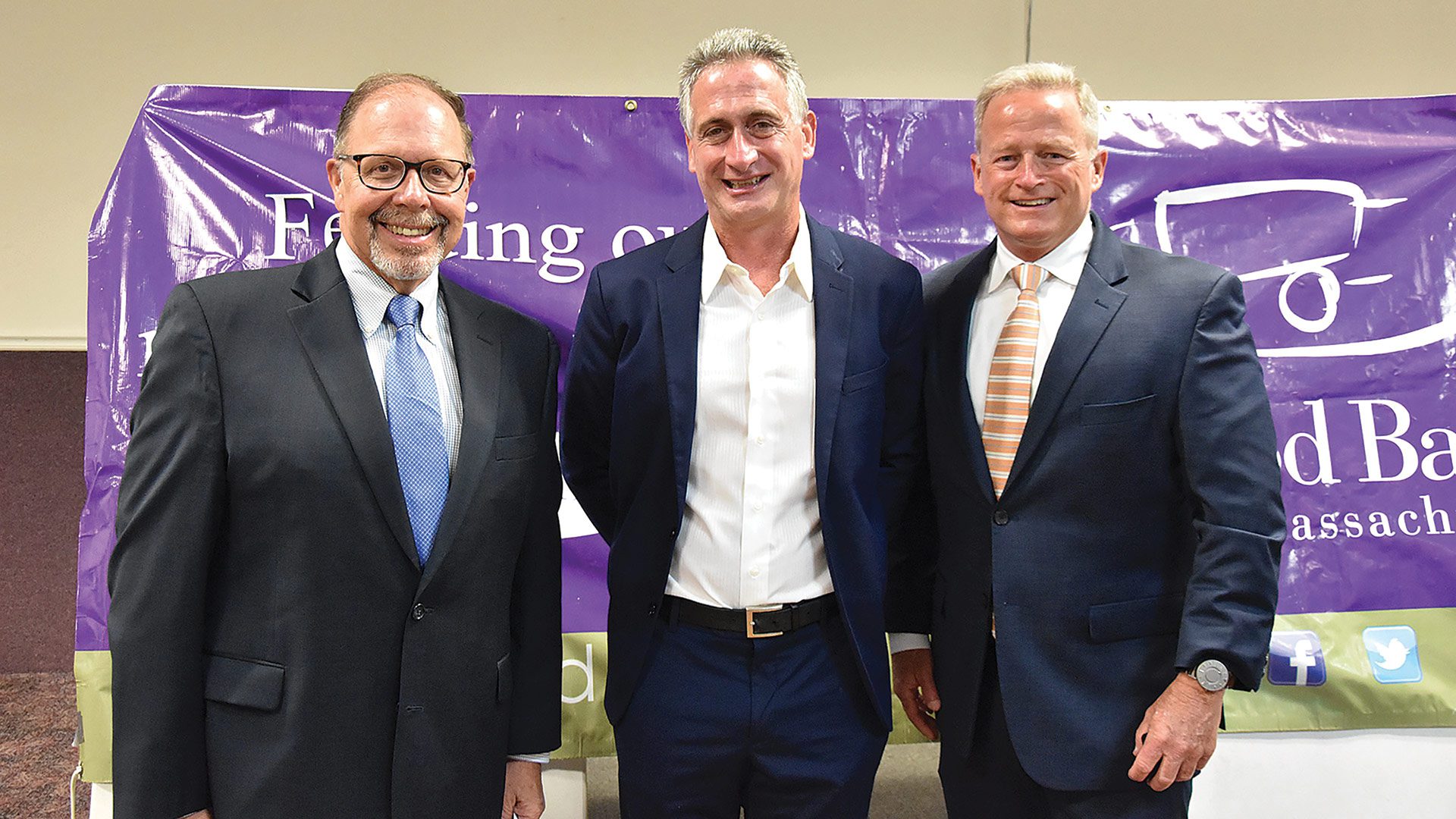
Elaborating, and returning to his thoughts on the benefits of a less-crowded gaming floor, Kelley said the team at MGM Springfield is focused less on the volume of offerings and more on having the “right” products, such as the hugely popular Dragon Link and Lightning Link slots.

“We have a very dynamic floor — we’re bringing in new product all the time,” he said. “And we’ve adjusted the spacing on the banks, so when you sit down at a game now, you have a lot more room, you have a lot more visibility — lines of sight to other games — and people really enjoy that.

“Prior to COVID, a lot of the thought process had been, ‘let’s get as many games, as many tables, as you possibly can in any area of the floor,’” he went on. “What we’ve found is that this is not the most effective use of the space.”

These sentiments, he said, are reflected in GGR figures from the Massachusetts Gaming Commission, which show total slot and table GGR of $22.2 million in June, $23.35 million for May, $23.7 million for April, $24.1 million for March, and $23.3 million for the short month of February, continuing a solid run for the casino.

Q1 of 2023 was the best quarter the facility has had since it opened, Kelley said, adding quickly that Q4 in 2022 was the second-best quarter, and Q2 of this year was the best second quarter the casino has recorded. “We’re on a run of the three best quarters in our history,” he said, adding that COVID restrictions were in place through Q1 of 2022, meaning that, once those restrictions were lifted, the numbers started to dramatically improve and outperform even those months before Encore Boston Harbor opened.


Odds Are

Moving forward, Kelley believes this run can continue as the casino continues to apply the lessons learned during the pandemic, keep its floor dynamic, market itself aggressively, and create draws to bring guests to the South End facility.

“We do things here that we don’t do anywhere else in the company,” he explained. “Probably the best example is that there is not a Saturday night when we’re not giving a car away; you often see that done on a monthly basis or a quarterly basis — we do it on a weekly basis. So our marketing efforts have become very aggressive and very focused.”
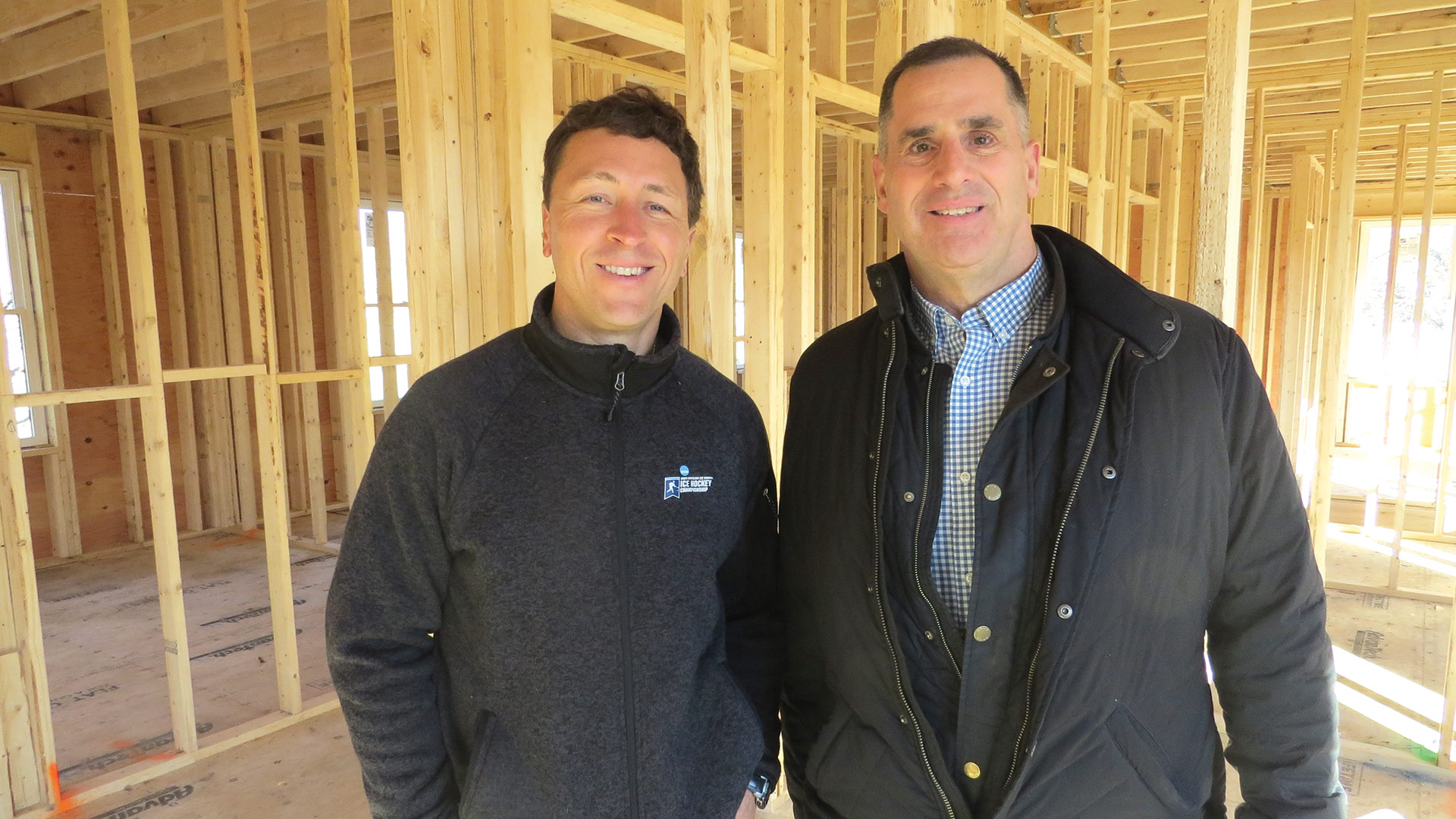
Another element in the recent success formula that will continue is a hard focus on the overall guest experience, personalizing it as much as possible.

MGM’s music and comedy shows

MGM’s music and comedy shows have been a key contributor to vibrancy in Springfield’s downtown, and the casino’s promotions have generated buzz as well.
Staff Photo

“We recognize that we compete against properties that have more hotel rooms, more slot machines, and more restaurants, so the only way we win is by providing a better experience for our guests, a personalized experience that begins when they walk through the door. We have focused our training and our attention on guest service, getting to know our guests, and personalizing their experience when they’re here, and the combination of those three things has been very effective.”
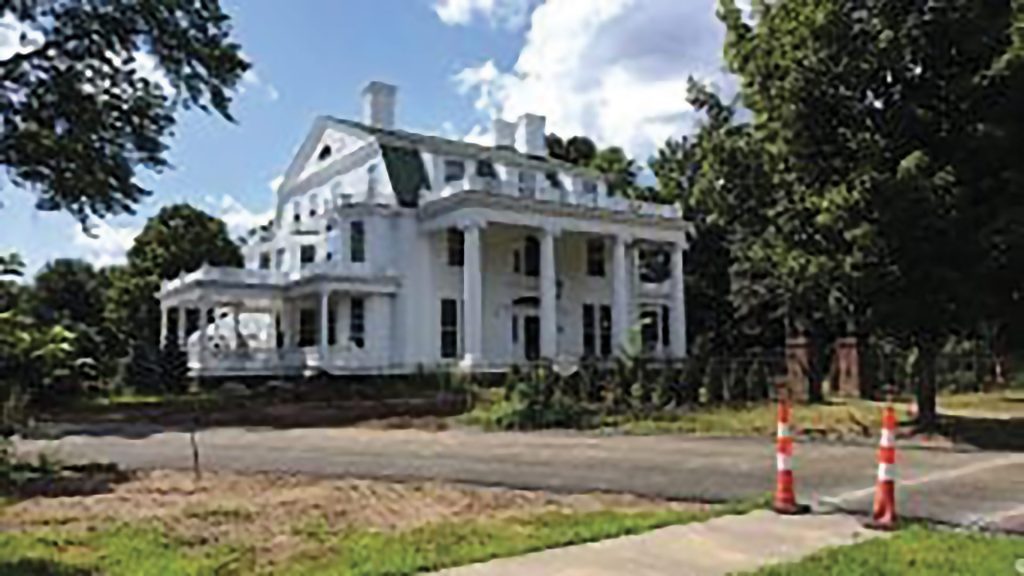
Overall, Kelley said, it takes three to five years for a casino property to “come to life,” as he put it, and reach a certain level of stability. He believes MGM Springfield is at that point, although he quickly noted that the ramping-up process is not done yet.
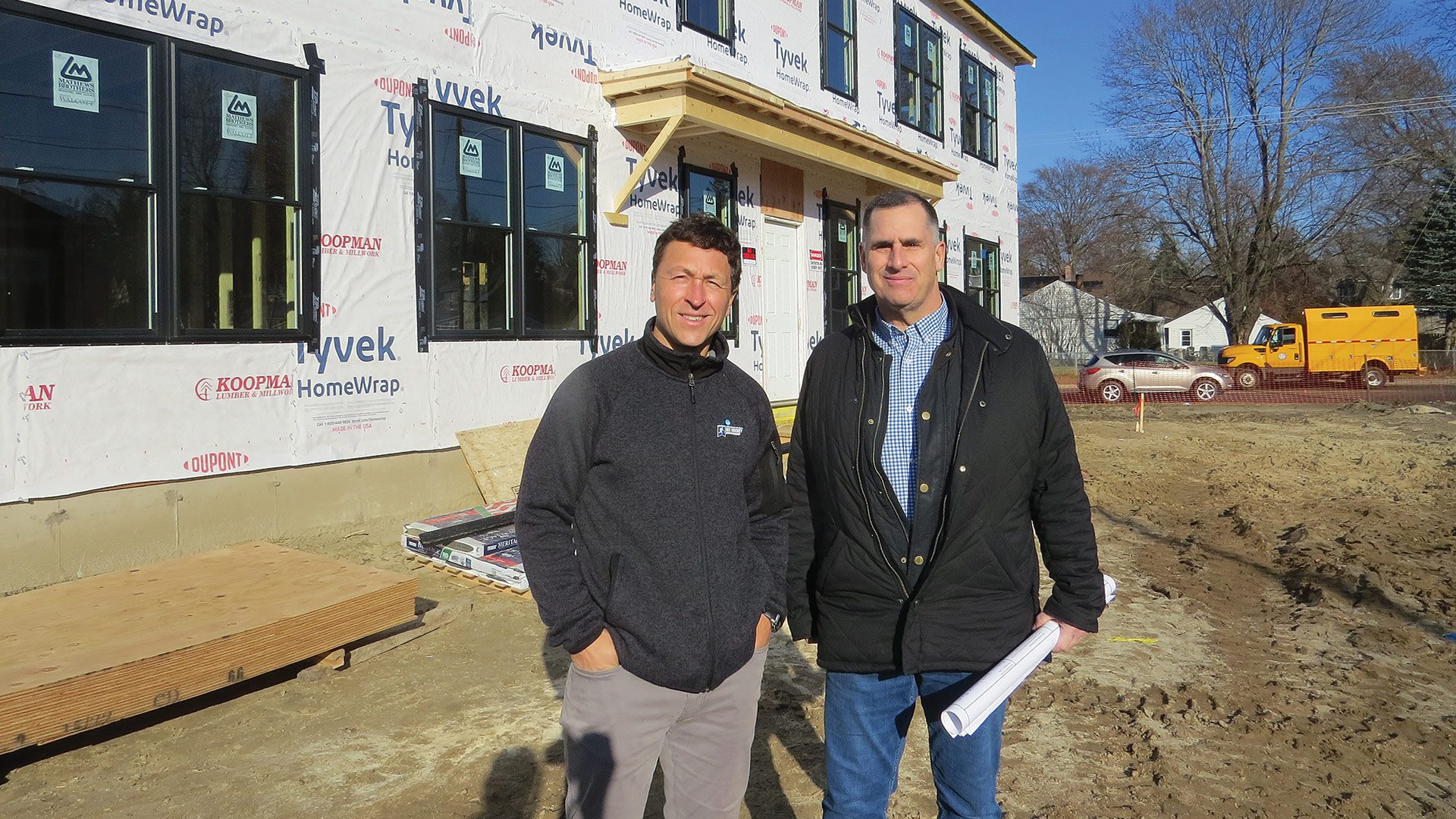
“I think we’re through a lot of the initial learnings — we packed a lot of life into a short amount of time; we learned a lot, and we’ve changed a lot,” he noted. “That said, particularly in the post-COVID environment, I don’t think you ever stop ramping, and by that I mean that we’ve learned the impact and the importance of a dynamic operating model and bringing continuous improvement into the daily operation in a meaningful way.

“When I think of ramping, I think of making positive change tomorrow that positively impacts the guest experience,” he went on. “From that sense, I don’t think we’re done with by a long shot. This is a property that has not seen its best day, and it’s up to us to continue to change in positive ways to realize that.”

Perhaps the biggest challenge moving forward when it comes to continuous improvement is on the labor front, Kelley said, noting that those 200 openings he mentioned earlier are about three or four times what the number would be in what would be considered a normal labor market.

“And this does impact what we can offer and when we can offer it,” he told BusinessWest, noting that this is especially true with food and beverage operations, which are particularly vulnerable when positions go unfilled or when existing employees call in sick, leaving teams short-handed.

“Our restaurants are all open, but not every restaurant is open every day of the week,” he said, adding that this is not uncommon within the industry and a situation certainly exacerbated by the ongoing workforce issues.

As for sports gambling, he said there is not enough hard data to gauge its overall impact on operations and revenues, but anecdotally, he said it is certainly having an impact, especially when it comes to bringing new life to what had been a quiet corner of the casino floor, where a multi-million-dollar sports lounge has been created.

Kelley noted that, while the majority of sports wagers are made on mobile apps, the lounge has become a destination for Super Bowl Sunday, March Madness, the Kentucky Derby, and other prominent sporting events.

“That place just blows up when you have a big game,” he said, adding that he is looking forward to the first full NFL season since sports gaming was introduced, noting that pro football is hugely popular, not only from a fan perspective, but a gaming perspective as well.

Time will tell how that NFL season impacts the sports lounge … and whether the casino can continue what those who gamble would call a hot streak.

But Kelley is certainly optimistic. As he said, it’s been a journey, one in which many miles were put on the odometer. But the road ahead would seem to be clear, and with fewer hills to climb.


Cover Story

Working in Tandem

Chris and Andrea Zawacki

Chris and Andrea Zawacki

As he talked about the business venture and the name that would go on it, Chris Zawacki said a good deal of thought went into the selection process.

The bagel shop would be located in the old railroad depot in the center of Easthampton. That’s right next to the bike path, he said, so there was considerable talk concerning bicycling terms. Meanwhile, Zawacki and his wife, Andrea, were entering into this venture with another couple, Brian and Shannon Greenwood.

Somewhere along the way, the word ‘tandem’ was tossed out, and because it has at least two meanings that were relevant to the conversation, it stayed in play, and was eventually chosen.

A little more than a decade later, Tandem Bagel Co., and even simply ‘Tandem,’ has become an ever-larger part of the lexicon — and the landscape, with additional locations in Northampton, Hadley, West Springfield, and Florence. The Hadley location also houses a central baking operation, with the bagels made there and then taken in vans to the various locations.

“It became a meeting place and a co-working space. We have several writers who come in and get some writing done during the day.”

Indeed, what started as a single bagel shop is now a thriving enterprise with multiple locations. Zawacki doesn’t like the word ‘chain’ and laments that many — as in far too many — people think Tandem is a national chain. It isn’t.

Not yet, anyway.

It’s a local business that offers bagels of all kinds, with names and flavors ranging from Snickerdoodle to Wild Cheddar to French Toast, but also breakfast and lunch sandwiches, salads, smoothies, coffee and iced coffee — a billboard promoting the company displays that product and invites people to “beat the heat” — and a lot more.

Indeed, its locations have become a place to gather and also a place to get some work done. Meanwhile, at least a few of the locations, especially those in Easthampton and West Springfield, have had a significant impact on economic development and overall vibrancy in the communities where they’re located.

It all started with the goal of replicating the model — and success — of a bagel operation that Zawacki, an Easthampton native and mechanical engineer by trade, had observed while living for a time in the state of Washington. That goal has already been achieved, he said, adding that the question he hears, and answers, most often is, “where do we go from here?”

The West Springfield Tandem Bagel location

The West Springfield Tandem Bagel location was a key contributor to the redevelopment of the Town Commons complex downtown.

Continued growth is certainly in the forecast, he said, adding that he and others are considering several potential landing spots, especially Westfield, where many visitors to the Easthampton and West Springfield locations are from, as well as Springfield. He has looked at several locations in downtown Springfield but isn’t ready to pull the trigger just yet.

Overall, the company is focused on smart growth and expansion that makes sense, he said, adding that Tandem won’t grow for the sake of growth. And, overall, he’s not really sure where he wants this brand to be in five, 10, or 20 years.

“It took a lot to get where we are, so it will take a lot to get the next level,” he explained. “Things are going well, and for our employees, getting to that next level puts a lot of pressure on people. If we can go at a steady pace, treat our employees well, and expand in slow fashion that works for all, that’s fine with me.”

For this issue, BusinessWest looks at how Tandem Bagel has become a brand in the region as well as a force when it comes to economic development and helping to transform communities into destinations.


Spreading the Wealth

As noted earlier, Zawacki was working in Washington State in the late ’90s when he became acquainted with an individual who had retired and started a venture called Sunrise Bagels.

“We frequented it with our kids,” he recalled. “We thought he had a good product, a product that was different than what we had here. It was a neat business model — he had a lot of different varieties, 25 or 30 of them any given day.

“I got in touch with him and stayed in touch with him,” he went on. “I was thinking that, at some point, maybe I would give up my engineering career and open up a bagel place.”

The team at the Easthampton location

The team at the Easthampton location, where it all started.

This blueprint, if that’s what it can be called, took a while to become reality, he told BusinessWest.

Indeed, the Zawackis looked at a few possible locations that didn’t work out, and then, in 2012, some friends suggested the old railroad depot in the center of Easthampton, owned by Williston Academy, a landmark with an intriguing history.

In 1854, Samuel Williston, a button manufacturer and founder of what is now Williston Northampton School, established the Hampden Railroad Co. with business partner Joel Hayden and purchased the now-extinct route of the Northampton-New Haven Canal, according to willistonblogs.com. After completing the 24 miles of railroad, they also constructed a small depot to go along with it.

Built in 1871, the station included a waiting room, a baggage room, and an office for the stationmaster. After rail service ended in the 1950s, Williston Academy purchased the property with the intention of using it as a maintenance building. Years later, it housed art studios and, eventually, became home to a painting teacher, Marcia Reed. Upon her retirement in 2012, the building was put up for lease again.

The Zawackis approached the school about leasing the property, and a concept that had been on paper and in the works for more than a decade was soon to be on … well, the fast track.

Actually, there were extensive renovations that had to be undertaken, said Zawacki, adding that Tandem Bagel officially opened in late March 2013.

Over the past decade, it has been a key player in the transformation of the city from a mill town to a destination characterized by a diverse economy, a thriving arts community, a burgeoning restaurant and hospitality scene, and a growing cannabis sector. Indeed, the bagel shop has drawn customers, and many regulars, not only people living and working in the mills, attending Williston Academy, and visiting the city to take in its many attractions, but also people from several neighboring communities willing to drive for a Snickerdoodle bagel. Or a Cheesy Garlic. Or a Hot & Spicy.

“I’ve looked everywhere, from Westfield recently to Longmeadow and Springfield; we’ve also looked at Greenfield. We’re just looking for the right space.”

“We helped get people downtown,” he said, adding that, while some pick up a bagel and breakfast sandwich to go, many tend to stay a while and even get some work done.

“It became a meeting place and a co-working space,” he said. “We have several writers who come in and get some writing done during the day.”


Toast of the Towns

The success of the Easthampton shop eventually led to talk of expansion, Zawacki said, adding that, almost from the beginning, the goal was to create multiple locations.

The company first expanded into neighboring Northampton, opening in the Northampton Athletic Club in 2014. This was a small location, and as Zawacki put it, “it took a number of years for people to find us.”

But eventually, the location, like the one in Easthampton, developed a strong following, and this past April, the company moved into a new and much larger space in the Stop & Shop plaza on King Street.

After Brian and Shannon Greenwood relocated to Maine several years ago, the Zawackis bought them out and later continued their course of expansion. As they did so, they recognized the need for a larger bakery space and found one in the former Sears franchise location on Route 9, space that also became home to a small bagel shop as well.

That location opened in 2020, just a few weeks before the pandemic hit, Zawacki went on, adding that the next several months were, obviously, a time of challenge for the company. But the business model and product lines enabled Tandem to effectively ride out the storm.

“After the initial six months of chaos and everybody not knowing what’s going on, we were able to get our menu going,” he explained. “We already had online ordering, so we were able to stay above water and keep our business going based on our menu. It was simple, it was online — sandwiches, coffee; everyone still wanted their coffee. It’s a good to-go business, so it worked out, and we were able to withstand the pandemic.”

And as COVID eased somewhat, the company was able to continue on its course of expansion, he said, adding that the next landing spot was Florence in early 2021, specifically the site of the former Freckled Fox Café on North Main Street, a relatively easy move because the site was nearly turnkey, having been a café.

Later that year, the company expanded into West Springfield, another location has sparked greater vibrancy in an area that’s considered West Side’s downtown.

Indeed, Tandem has become one of the linchpins in the success of redevelopment of the former United Bank building on Elm Street into a mixed-use complex called Town Commons. It features a number of offices, but also another restaurant and several other tenants.

Zawacki said that location has worked out well, with many workers in City Hall, just around the corner, becoming regulars. And if he could do again, he would — he’d just try to take a little more space.

“I wish we’d made the space a little bigger,” he said with a laugh. “We could use more seating — it fills up quickly.”

By expanding to five locations and a centralized baking facility, the company has created some economies of scale, obviously, but also a larger operation and some logistical challenges — buying vans and hiring drivers among them — as well.

And hiring became increasingly challenging as the workforce crisis continued and talent became more scarce, he said, adding that, by and large, the company has been able to weather that storm as well.

Moving forward, he said additional expansion is certainly in the business plan, with several communities and locations currently under consideration.

“We’re always looking,” he said, adding that, with others now handling most of the day-to-day operations of the various locations, he is free to focus on the proverbial big picture and especially what comes next for Tandem. “I’ve looked everywhere, from Westfield recently to Longmeadow and Springfield; we’ve also looked at Greenfield. We’re just looking for the right space.”

Elaborating, he said that, unlike large, national chains — and, as noted, many people believe Tandem is one of those — the company relies more on instinct and what it can see and feel at its current locations, rather than analytics and traffic flow, to determine where it could and should go next.

“We can map where our customers come from,” he explained. “So we know that a lot of customers come from Westfield and the Westfield area. We know the population of the city — we just have to find the right place with the right traffic flow and parking.”

As for downtown Springfield, Zawacki noted the presence of Starbucks and Dunkin’ Donuts, but said there is room for Tandem Bagel as well — if the right location can be found.

He has looked in Tower Square, the TD bank Building, and other properties, and said the search is ongoing. “We’re under no pressure to grow,” he said in conclusion. “But if the opportunity is there, we’ll definitely take advantage of it.”


Cover Story

Vintage Years

Mary and Ed Hamel

Mary and Ed Hamel

Ed Hamel acknowledged that, while all entrepreneurial ventures start with an idea, most then follow a business plan that details how to take that idea and transform it into a successful, profitable operation.

It is with a large dose of … well, let’s call it pride, because that’s what it sounds like, that Hamel says he and his wife, Mary, essentially skipped that business-plan part.

“We’re just following where this thing takes us, and we’re having a lot of fun doing it,” he said, adding that this ‘thing’ is the Glendale Ridge Vineyard in Southampton, a concept that has grown into an intriguing and, yes, successful business.

Actually, three businesses, as Mary likes to say.

There’s the vineyard, where, at present, six main varieties of grapes are grown, from Reisling to Chardonnay to Cabernet Franc. There’s also a winery, where a broad mix of labels are made and bottled. And there’s a tasting room and what could be called an events division.

Indeed, the vineyard has been the site of a few weddings and regularly hosts retirement and birthday parties and many other types of functions, as well as concerts large and small — there’s an ABBA tribute band scheduled to play on Aug. 4, and Mary is expecting north of 400 people (much more on all that later).

All three of these businesses involved steep learning curves, said both Ed and Mary, who, in previous lives, worked as a general contractor and dental hygienist, respectively, before they purchased the Sankey dairy farm in 1992 with only some vague ideas about what they might do with it. And the learning process continues — on everything from which grapes to grow (and how) to which wines makes the best blends, to what kinds of music to book for the weekly Sunset Series, which is just what it sounds like: concerts as the sun goes down, with some drop-dead gorgeous views of the Holyoke Range and Mount Tom thrown in free of charge.

“We’re just following where this thing takes us, and we’re having a lot of fun doing it.”

Like the wines they make, the business itself has developed and matured, said the Hamels, noting that each aspect of the operation is growing and, by all accounts, improving and becoming more smooth and even bold, to borrow some terms from the industry.

There is a wine club that now boasts more than 350 members, the vineyard’s wines are now available in several area retail outlets and restaurants, and the farm itself has become a destination — for wine enthusiasts, music lovers, visitors from across the country who focus their travels on winery tours, a growing number of volunteers who help pick grapes each October, and more.

Moving forward, Mary and Ed say their obvious goal is to grow each of the three businesses within the operation, which currently relies on a small core of employees, as well as that growing army of volunteers who pick grapes.

And to keep having fun.

“People tend to think it’s a great job to have a vineyard, and it is, but let me tell you, it’s a lot of hard work,” Ed said. “It’s farming — I don’t need to say anything else — but there’s a lot of joy in it, too.”

This aerial view reveals the deep beauty of Glendale Ridge Vineyard and the surrounding mountains. Photo by Glenn T. Labay, Aerial Camera Services LLC

This aerial view reveals the deep beauty of Glendale Ridge Vineyard and the surrounding mountains. Photo by Glenn T. Labay, Aerial Camera Services LLC

For this issue, we learned a little about how to grow grapes, make wine, and fill a summer concert series. We learned a lot more about how a couple with an idea but no business plan — he says they still don’t have one; she believes they do — have shaped a dream into a growing business, in every sense of that phrase.


Grape Expectations

Ed told BusinessWest that Glendale Ridge grows only about a third of the grapes needed for its growing portfolio of wines. The rest are bought from other vineyards, mostly in Long Island and the Finger Lakes region of New York.

Each fall, he’ll rent a large truck and go on grape-buying treks, which, in the case of those Long Island vineyards, from which he’ll come back with three to six tons of product, can be a bit of an adventure. At least they were early on.

“People tend to think it’s a great job to have a vineyard, and it is, but let me tell you, it’s a lot of hard work. It’s farming — I don’t need to say anything else — but there’s a lot of joy in it, too.”

“Have you ever driven a large Penske truck onto the ferry?” Ed asked rhetorically, referring to the way most people get to Long Island. “It’s fun. It’s a little nerve-wracking at first; you see other large trucks, so you know it can be done, but it will test your nerves. Now, it’s old hat; I don’t think too much of it.”

Mastering the art of driving such a large vehicle onto the ferry serves as an effective metaphor for this operation, which, for the most part, has involved a whole lot of learning by doing and simply becoming better at … well, whatever it is you’re doing over time.

Our story begins in 1992, when Ed and Mary purchased the Sankey Farm with the goal of preserving the land through an active farming project.

18 different wines

Glendale Ridge now offers 18 different wines, and the portfolio continues to grow.

“I’ve always had this thought that I wanted to grow something,” said Ed, adding that his maternal grandfather operated a small farm in Vermont, where he spent a good deal of time in his youth. “Once we were on this farm, I thought we would do the organic thing — carrots, lettuce, tomatoes — but I couldn’t wrap my head around that.

“I started looking at value-added products, and grapes came onto the scene,” he went on, adding that the couple started in 2010 with 110 vines that were planted in what has come to be called the west block. They started with a trial vineyard with rows of Reisling, Chardonnay, Cabernet Franc, and more. The initial thought was that they would make wine for themselves.

“People tend to think it’s a great job to have a vineyard, and it is, but let me tell you, it’s a lot of hard work. It’s farming — I don’t need to say anything else — but there’s a lot of joy in it, too.”

Initially, the Hamels partnered in this venture with Ian and Michelle Kersberger, who later started Black Birch Vineyard in Hatfield, a similar operation in many respects.

Today, there are three blocks and more than 3,000 vines at Glendale Ridge. The east block contains an acre of Cabernet Franc, while the Nonotuck block comprises three acres, with an acre each of Vidal, Traminette, and Corot Noir.

As he talked about growing grapes, Ed said there is lot of research and constant learning that goes into the equation, and plenty of information out there from others in the business who are willing to share what they know.

“People who are in this business are very cooperative; they’ll answer your questions honestly and give you advice,” he told BusinessWest, adding that there are a few vineyard operations in this region and many more in the winery regions of New York.

Tim Beaudry

Tim Beaudry, wine steward at Glendale Ridge, in his ‘office.’

Meanwhile, Cornell University has a strong viticulture and enology program that publishes a large amount of information, he noted, adding that it has become a great resource for him over the years.

The Cornell program has been involved in the creation of hybrid grapes, which is mostly what is grown at Glendale Ridge, he said, adding that current varieties — which involve mixes of “old-world European varieties” and grapes grown in the U.S. — include Vidal, Traminette, Carot Noir, Itasca, Cabernet Franc, and Aromella.

Harvest time is in October, he said, with the Cabernet Franc, a red grape, the last one to be picked.

“We like to let that hang as possible — typically, we’ll go to October 25 or October 28, depending on what the weather is like, before we pick those,” he explained, adding that harvesting time has become an intriguing tradition at the vineyard, one that attracts growing numbers of volunteers.

“It’s the most fun thing we do,” Mary said. “People do love it — we’ll get 35 people here.”


Heard It Through the Grapevine

These grapes and those sourced from other vineyards wind up on a crush pad, where they start to get processed into either crushed grapes, which go into red wine, or juice, which makes white wine.

There are a number of both among a growing number of labels, now featured in a retail area just off the tasting room. There is a solid mix of reds, whites, rosés, and dessert wines, everything from dry and medium-dry Rieslings to a Sauvignon Blanc; from a Merlot and a Malbec to a Cabernet Sauvignon.

The Glendale Ridge website includes colorful descriptions of each label, such as this one for a 2019 Malbec: “the nose is of dark fruit with a little smoke. Black cherry, strawberry, and cedar flavors shine with a beautiful acidity on the finish.” And this one for the 2021 Sauvignon Blanc: “You’ll find enticing scents of new-mown hay, elderflower, and honeysuckle. The palate offers assertive acidity and minerality with white grapefruit.”

Over the years, the number of individual labels has grown, and new offerings, such as a Traminette that has become a popular seller, are added regularly.

And while the vineyard and winery operations continue to grow and evolve, so too does the events and tasting-room side of the equation, said Mary, who leads that aspect of the operation.

In the tasting room, patrons can enjoy wine ‘flights,’ with three pours of wine, as well as wine for sale by the glass and the bottle, she said, adding that the vineyard has become a popular place to stop and unwind or pick up a bottle of wine or two.

picking of grapes

The picking of grapes has become an event at Glendale Ridge, one that draws a growing number of eager volunteers.

“People enjoy coming here and sitting and relaxing,” she said, noting that the vineyard, open Thursday through Sunday, sees a steady stream of visitors.

As for events, she noted that there are several weddings, small and large, at the vineyard each year, as well as many other types of events, from wedding and baby showers to rehearsal dinners and company outings; from family reunions to companies’ customer-appreciation gatherings.

“People enjoy each other’s company — and the wine,” she said.

On the Friday afternoon that BusinessWest visited earlier this month, preparations were being made for a surprise 60th birthday party and a retirement party, as well as the Sunset Series, all starting at 5 p.m.

“We have a lot going on Fridays,” Mary said, adding that, among her many responsibilities, she is charged with filling the calendar with events and gatherings, starting around Valentine’s Day and ending on New Year’s Day.

In addition to these private events, the vineyard now hosts a number of concerts, including the popular Sunset Series, which runs most Friday and Sunday evenings.

July’s series offerings are typical, Mary said, adding that a mix of music genres is preferred. On July 7, the Buddy McEarns Duo, described as ‘blue roots rock ‘n’ roll,’ and a regular at Glendale Ridge, performed. On July 9, guitarist and vocalist Dan Goldwaite visited the vineyard, and on July 14, the OverEast Jazz Band took the stage.

Beyond the Sunset Series, the vineyard hosts a number of larger concerts as well, Mary said, noting that, in addition to the ABBA tribute band, called Dancing Dream, the Wild Heart Tribute to Stevie Nicks & Fleetwood Mac is scheduled for September. She added that the vineyard, which many have praised not only only for its setting but its acoustics, has been described by some as a ‘mini-Tanglewood.’

In addition, the vineyard hosts food trucks a few days a week on average, as well as programs such as a bouquet class with Finch Flower Company and restorative yoga with the Traveling Yoga Company. Meanwhile, Tim Beaudry, the wine steward at Glenridge, will host programs on the various types of wines, what goes into making them, and how to pair them with food.

The vineyard is located near Northampton, Holyoke, Westfield, and Easthampton, Mary noted, making it central location in the region. Meanwhile, wine adds a different and appealing element to many different types of over-21 gatherings.


Vine and Dandy

“Every bottle tells a story.” That’s the marketing slogan for Glendale Ridge, or one of them, anyway.

Actually, each bottle tells several stories, but especially the one about the couple that skipped the business-plan part of the entrepreneurship process and, as Ed said, are “following where this thing takes us.”

It’s taken them in many different directions, but mostly, Glendale Ridge has become a true destination — a place where passions collide and you can view something special, no matter which way you happen to be looking.


Cover Story

Support Network

TMG

From left, founders Ben and Jennie Markens and Emily Leonczyk, TMG’s vice president and chief operating officer.


When Lauren Zuber started with the Markens Group just over two years ago, she understood that she would be working for “an association-management company.”

But she noted that it took her quite some time to fully understand just what that meant, what this now 35-year-old venture does, and, just as importantly, how it does it.

“I was inherently confused by the concept until probably three months into my job here,” she told BusinessWest, adding that, despite this confusion, she was drawn to the company and took the role of director of Marketing & Development because of its track record of success and strong set of values.

Emily Leonczyk, the company’s executive vice president, can relate, and said that, for many employees, it takes closer to a year before they have a firm handle on all that goes into the equation when it comes to association management — and how this company stands out in a crowded field of competitors.

Indeed, there is a lot that goes into that equation, she said, including everything from organizing and staging events to strategic leadership; from marketing and communications to membership services; from website design to social media. And the Markens Group, or TMG, provides all this and more to a wide variety of trade associations, membership societies, and not-for-profits, including the Springfield Regional Chamber, providing a team of specialists in place of one generalist.

For the chamber, TMG handles a number of assignments, from its newsletter to assistance with events such as its Outlook lunch in March, one of the region’s largest annual gatherings, to the recent annual meeting.

Diana Szynal, president of the chamber, summed up what the firm does with two highly effective words.

“They’re our support team,” she said, emphasizing both terms and noting that, while she still leads the various efforts at the chamber, TMG provides support from many different individuals with experience and expertise in several different areas. “You don’t get a person … you get a team.”

“There’s a whole story out there about how I invented the concept of association management, but … that’s another story.”

The company’s growing portfolio of clients manifests itself in an alphabet soup of acronyms for the organizations it serves — letters that appear in emails, on a large board tracking a lengthy list of events that TMG is working on, and on the binder covers on a shelf in one of the conference rooms.

There’s SRC — that’s the Springfield Regional Chamber; MLF, the Mary Lyons Foundation; NEFMA, the New England Financial Marketing Assoc.; IMFA, the International Molded Fiber Assoc.; AAHP, the American Assoc. of Homeopathic Pharmacists; FPPA, Flexographic Pre-Press Platemakers Assoc.; and many others.

portraits of staff members

Jennie Markens’ portraits of staff members hang in TMG’s conference rooms.

Behind those letters are associations comprised of businesses and organizations that are committed to their missions and moving them forward, said Ben Markens, but need help with the many day-to-day aspects of managing their organizations.

The desire to meet this need was the goal behind a broad transformation of TMG from a consulting business focused on the folding-carton industry into an accredited association-management company, or AMC (yes, another acronym), a metamorphosis that began in 2008, when the company took on management of the PPC, the Paperboard Packaging Council.

Over the past 15 years, the company has expanded its reach and its portfolio of clients and accompanying acronyms, giving the associations it manages a Springfield mailing address and phone number. In the meantime, it has become a great place to work — figuratively, but also quite literally.

Indeed, TMG has been named a ‘Great Place to Work’ by Forbes magazine, but beyond that designation, it has become a company with a culture grounded in the concept of teamwork and simply having fun, as we’ll see.

The firm has been in a serious growth mode in recent years, adding employees, taking on more space at 1350 Main St. — it now occupies a large chunk of the 11th floor — and bringing on a number of new clients.

There have been costs and risks associated with this rapid and profound expansion, said Ben Markens, but he prefers to look upon them as investments in the future of a venture that he and his wife, Jennie, built from the ground up with the intention of it remaining a force in Springfield, and in the AMC galaxy, for decades to come.

“We have a very strong bench of cross-trained individuals.”

With that in mind, the pair have spent considerable time and energy on the matter of succession, and have put in place a plan whereby Leonczyk will become the majority shareholder over the next several years.

For this issue, BusinessWest talked with the senior leadership team at TMG about the first 35 years of growth, change, and maturation, and how there is more on tap for a company that has become a leader in what Ben Markens likes to call “the huge business that no one knows about.”


Portraits of the Artists

Among her many talents, Jennie Markens is a talented artist. And some of her work is on the walls at TMG.

Indeed, visitors to the office are greeted by a painting of the reflection of Springfield’s famous campanile clock tower in the glass façade of the Springfield Sheraton — an image that many TMG workers can see out the windows of their offices.

The leadership team at TMG

The leadership team at TMG, from left: Emily Leonczyk, Irene Costello, Jennie Markens, Lauren Zuber, Brian Westerlind, and Ben Markens.

Meanwhile, in one of the small conference rooms just off the front entrance are two rows of pencil sketches of TMG’s employees, a collection that has grown larger as the company has over the past several years.

The sketches, which make great conversation pieces for guests, speak to the concept of ‘team’ and how it is valued at TMG, which, as noted earlier, started as a consulting firm in 1988 that was niched to the folding-carton industry, a business that is well-represented in one of the conference rooms with a number of packaging products, including a Lucky Charms box.

TMG provided assistance to that industry on everything from pricing to strategy, said Ben Markens, adding that the leaders of the industry eventually asked him to become president of their association.

“I told them ‘no,’ because I already had a job,” he recalled. “They said, ‘figure it out,’ and we became what’s known as an association-management company. There’s a whole story out there about how I invented the concept of association management, but … that’s another story.”

While he may or may not have invented the business, Markens and the team that has been assembled has certainly come to be a leader in an industry he described as simply the outsourced management of associations — in TMG’s case, manufacturing groups and medical entities, representing everyone from podiatrists to neonatal intensive-care nurses.

“We’re able to take our experiences from one association or industry group and apply them and add value to others.”

Early on, Ben and Jennie made the decision to do this from Springfield. The PPC wanted them to move to the Washington, D.C. area — the association is based in Alexandria, Va. — and they considered basing it in or near their home in Westfield, but they ultimately decided the venture needed to be in Springfield and its downtown.

That move represented a risk in and of itself, said Jennie Markens, noting that 2008 was the height of the Great Recession, and taking on substantial debt and essentially launching a new business was a scary proposition.

But they moved ahead with confidence, a vision, and an operating philosophy grounded in what they call ‘fundamentals’ — and they’ve never looked back.

As they talked about association management, members of TMG’s leadership group said there are many components to this work.

Events are an important and highly visible part of it, said Ben Markens, adding that the firm will assist with everything from finding speakers to choosing the hotel; from ordering awards to handling the banquet order. But there is much more to this than events, he said, adding that TMG essentially becomes the back office for the association it serves, managing assignments ranging from membership to marketing to social-media content.

Jennie and Ben Markens

Jennie and Ben Markens have the firm on a serious growth trajectory in recent years.

As it does so, it brings to those assignments several specialists, as opposed to one generalist that a nonprofit or trade association might hire to handle those tasks listed above, said Irene Costello, director of Operations for TMG.

“If they do hire that one full-time staff person, they have one person managing the books, doing the marketing, trying to plan an event … and that person can’t be a master of everything,” she told BusinessWest. By hiring us for a similar price as a full-time employee, you wind up with a full staff of experts in each individual area that can bring their expertise and pull the association forward and make it successful.”

Ben Markens agreed. “Instead of having one person with two arms and two legs, you have the arm of a social-media person, the leg of an event planner … it’s full-time staffing at part-time rates.”

But while they’re specialists, the team’s members are cross-trained and can step in and fill any of a number of roles, said Leonczyk, citing, as one example, the Springfield Regional Chamber’s recent Outlook lunch. The team member managing the chamber’s account came down with COVID the week of the event, she recalled, adding that others within the firm were able to effectively backfill.

“We have a very strong bench of cross-trained individuals,” she said, adding that this is one of the key ingredients in the firm’s formula for success.


Firm Resolve

This deep bench, and the ability to provide specialists in the place of one or a few generalists, help explain the emergence of AMCs, and especially TMG, said Brian Westerlind, vice president of Industry Affairs and Strategic Communication for TMG. He noted that there is an association for association-management companies (the Association Management Company Institute), which has conducted studies yielding statistical evidence showing that groups that use such a firm fare better than those who try to handle such matters themselves.

“AMC-run associations had three times more net growth in assets and 31% higher growth in net revenue,” he noted. “And I think most of that comes from the fact that we know associations, we run associations every day, and I think our special sauce comes from the fact that Ben started out in this business discipline helping individual companies, and now we’re doing that for nonprofit associations and professional societies.

Leonczyk agreed, noting that one of the firm’s strengths is its ability to take lessons from work it does for one client, or group of clients, and apply it to others.

“We’re able to take our experiences from one association or industry group and apply them and add value to others,” she explained, adding that this ability helps explain the company’s strong growth trajectory in recent years.

And while the Springfield Regional Chamber doesn’t represent TMG’s niche within the AMC realm — its bread and butter is trade associations in the manufacturing and medical fields — its work with the agency exemplifies its role as a support network and its ability to handle the work of one or several full time equivalents.

Its work with that group also exemplifies the mindset with which it enters each assignment.

“Our job is to make them look really good and be all things behind the scenes,” said Leonczyk, adding that, for many associations, TMG takes the place of an executive director or administrator.

Zuber agreed, noting that the relationships with clients are partnerships in every sense of that term.

“We’re on the journey together, as opposed to a situation where we’re just managing them,” she explained. “It’s a real partnership.”

And while what TMG does for its clients is a big part of this story, an even more important piece, Leonczyk said, is how it goes about this work. By this, she meant a supportive culture created by the Markenses, one grounded in a strong value system and a desire to make theirs an enjoyable workplace, but also built on a foundation of excellence.

“It came down to the fact that Jennie and I wanted to found a company that we would like to work at — one that didn’t have a lot of arbitrary rules or a lot of backbiting, a place founded on those things we started with back in 1988,” Ben Markens explained. “We’ll do whatever’s fair, we want to have fun, and personal relationships are important.

“That’s easy when there’s just three or four of us, but as we become eight, nine, 10, or more, it becomes more difficult,” he went on, adding that, to maintain that culture he and Jennie covet, TMG stresses what are known as ‘fundamental behaviors,’ ranging from ‘we are friendly’ and ‘we do our best’ to ‘we are fair’ and ‘we have fun.’

Ben Markens puts a special emphasis on that last one — what he calls the ‘fun factor,’ and to say there has been a trickle-down effect would be an understatement.

“You can be quirky, you can be yourself here, and I really enjoy that — that’s who we are here,” Zuber said, adding that another fundamental is what she calls ‘support and defend.’

“Within three months of working here, I knew people had my back,” she explained. “I’ve worked in many different industries, and never have I enjoyed the level of support I have here.”

Moving forward, Leonczyk, a member of BusinessWest’s 40 Under Forty class of 2023 who came to the company four years ago and eventually assumed the role of executive vice president, said she is committed to keeping the firm in Springfield, continuing to build on the culture that has made this a great place to work, and maintaining the strong pattern of growth it has seen the past several years.

“I’m really grateful for this opportunity, and want to build on everything that Ben and Jennie have done here,” she said.


Bottom Line

Ben Markens may or may not have invented the concept of association management. As he said, “that’s another story.”

This one is about the company he and Jennie started and how it has grown and evolved over the years to become a leader in this business that so few know about.

This work is a science, but it’s also an art, and mastering it has become a function of teamwork, as represented in those portraits on the conference-room wall.

Those portraits speak of a canvas that is still being filled in, with new elements — and, yes, new acronyms — being added regularly.

That’s what this story is all about, and there are many intriguing chapters still to come.

Cover Story Franklin County

Northern Exposure

Brolin Winning, general manager of the Shelburne Springs

Brolin Winning, general manager of the Shelburne Springs luxury hotel, sees many signs of new life along the Mohawk Trail.

Brolin Winning and his wife used to run a barbecue stand on the Mohawk Trail, and he’d occasionally look up at the abandoned building next door, a mansion built in 1914 that later operated for decades as the Anchorage Nursing Home before closing in 2011.

“We’d look up the hill at this place — which had been abandoned for a decade — and just think, ‘man, that’s a sweet spot.’ But it was just melting into the ground.”

But then a friend came into some money and was looking for an investment project. “I said, ‘you should buy the nursing home,’” Winning recalled. So they did — and begin fixing it up.

That was early 2020, when COVID hit, but the ensuing shutdown of the hospitality economy gave the team — owner Hilltown Lodge LLC, Thomas Douglas Architects of Northampton, and Tristan Evans Construction of Greenfield — time to redesign the space, gut the building down to its studs, and restore it with seven spacious suites; a kitchen, bar, and upscale but cozy lounge areas; and outdoor relaxation and recreation space across 38 acres. Among the next plans is a big stage up the hill for weddings and other events.

“I couldn’t wait to come back, just to be in the woods again and on the river again. It’s just, like, the best place to live.”

But while Winning is gratified that the hotel, called Shelburne Springs, has had a successful first few months, he doesn’t view the property in a vacuum, but as part of a renaissance along the Mohawk Trail that includes renovations and reopenings at the Sweetheart Restaurant in Shelburne Falls, the Duck Pond antique shop in Shelburne, the Blue Vista Motor Lodge just over the Berkshire County line in Florida, and more.

“There’s a lot of stuff going on, whereas I feel like it was … I wouldn’t say run-down, but quiet for a while,” Winning said. “COVID obviously affected everybody in this area, but a lot of people were coming out here even more because we’re like in the country and away from the crowd, and there’s a lot of outdoorsy stuff.

Jeff Sauser (left) and Jeremy Goldsher

Jeff Sauser (left) and Jeremy Goldsher have expanded Greenspace CoWork to a second location on Main Street in Greenfield.

“I’ve lived all over the country; I’ve lived a long time in California, Boston, Chicago, and different cities,” he went on. “But I’ve always loved it here. I grew up in Amherst and Northampton, but I used to come up here to fish when I was a kid. That’s how I got into the Mohawk Trail. To me, there’s nowhere like it. I was in San Francisco for a long time, and I would come back here twice a year. And I couldn’t wait to come back, just to be in the woods again and on the river again. It’s just, like, the best place to live.”

He’s not the only one who feels that way about this county of 71,000 residents — fewer than half the total of Springfield — spread across 26 communities.

“It’s stunningly beautiful. That can’t be overlooked,” said Hannah Rechtschaffen, recently appointed coordinator of the Greenfield Business Assoc. (GBA). “And I think there is a wonderful, long history up here of people being very engaged in their communities. When you travel from town to town, you find a lot of residents and business owners who feel very passionate about that, about the town that they’re in.”

“I feel like if you wanted to kill as many birds as possible with one stone, a robust housing strategy would be the way to do it.”

Rechtschaffen cited draws like the county’s outdoor recreation experiences and attractions like Bridge of Flowers in Shelburne Falls and Poet’s Seat Tower in Greenfield, but said tourists find much more.

“People come for these beautiful experiences, and they’re also finding other cool stuff, from whitewater rafting to restaurants. So the challenge is to reach out to people up and down the Valley and let them know there are really lovely experiences close to them,” she said. “All these towns have something special to offer, but together, we can offer something really beautiful.”

For residents and business owners, she added, “because it’s a small county, it has a bit of history of people needing to go to neighboring communities for different things. When you have that history of people stepping to the community next door to find something, you have this nice connectivity, which has gotten more robust over time. You have an opportunity for towns in Franklin County to work together in a unique way.”

Hannah Rechtschaffen, Franklin County CDC Executive Director John Waite, and Lisa Davol

Some of the players invested in a more robust Franklin County are (from left) Greenfield Business Assoc. Coordinator Hannah Rechtschaffen, Franklin County CDC Executive Director John Waite, and Lisa Davol, marketing manager of the Franklin County Chamber of Commerce.

Jessye Deane, executive director of the Franklin County Chamber of Commerce and Regional Tourism Council, agreed.

“I think one of the major strengths of Franklin County is that we have a comprehensive set of supportive services around business development,” she said, citing robust connections between the chamber, local businesses, workforce-development and entrepreneurship-focused agencies, and legislators.

“Collaboration is really the only way forward for us. I think Franklin County has always used partnership and collaboration as a special sauce, and I think that served us well during the pandemic. And part of the chamber’s job is to continue to fuel those collaborations and help make those connections.”

Clearly, it takes a village — well, 26 of them — to create a culture in the northernmost county of Western Mass., one that faces challenges, but also has more to offer than many outsiders realize.


Challenge and Opportunity

Deane said many of Franklin County’s challenges are no different than those seen across Western Mass.

“Of course, housing is a challenge. And transportation is particularly troublesome in more rural communities because that’s a barrier to a lot of our entry-level employment. And childcare is huge; there is a lack of high-quality childcare in this area.”

“One of the things I appreciate about Franklin County is that we can keep our identity — we have the nature, the beauty, the rural luster of it — but there’s increasing opportunity.”

Hiring also continues to be a challenge across industries, she added — another issue being felt across the state.

“I think we have a unique twist on that because we are a rural community, so it’s a little more exacerbated on this side of the state. One of the challenges I’m particularly concerned about is the population-decline projections. So we’re working overtime in collaboration with our legislators to make sure the Commonwealth is more equitably funding projects and initiatives across the state and, as a chamber, making sure that we’re doing our best to shine a light on why Franklin County is such a great area to live and work, and hopefully attracting new families to the area.”

She said the Regional Tourism Council’s task is to attract more tourism to a county that already brings more than $79 million in tourism dollars every year to destinations ranging from Berkshire East in Charlemont to Northfield Mountain and Sugarloaf Mountain; from Yankee Candle and Tree House Brewing Co. — and its slate of summer concerts — in Deerfield to Hawks & Reed Performing Arts Center in Greenfield and Double Edge Theatre in Ashfield.

Ashley Evans

Ashley Evans says reopening the Farm Table in Bernardston was an opportunity she couldn’t pass up.

“Tourism is really about OPM: other people’s money. And we want to make sure that we are helping them spend that here. And there is so much to do,” said Deane, who calls Franklin “the fun county,” and wants more people to know about that.

“There are endless opportunities for fun in Franklin County. And in terms of our work in the Regional Tourism Council, we’ve made some significant strides. In the past year, we branded our tourism side. We worked with a local company to give Franklin County a really great visual presence, with the tagline ‘more to Franklin County,’ because one of the things that we found when we did that investigative work is that folks said there’s always more to do: ‘I didn’t expect there to be so much. We’ve got to come back.’”

The council is also in the process of launching a standalone tourism website, Deane added.

“We want to make it easy as possible for people to plan their trip, and we’re working with our hospitality vendors to do itinerary planning based on any given interest. So if you’re really into craft beverages, this is what you can do for a weekend. If you’re really into outdoor recreation, this is what we recommend you can do for a weekend.”

A member of the Greenfield Business Assoc. who is about to join the Franklin County Chamber of Commerce, and whose family owns Hawks & Reed, Jeremy Goldsher also co-owns Greenspace CoWork with Jeff Sauser, so he has a broad perspective on business life in Greenfield and its environs.

“We’ve seen already that Hawks & Reed started a bit of a new music and cultural renaissance in downtown, to the point that now you can’t walk around in any given weekend without seeing kids running up and down the streets of different local venues,” Goldsher noted.

As the owners of Greenspace CoWork, which now has two facilities on opposite sides of Main Street in downtown Greenfield, Goldsher and Sauser have cultivated key business connections through programs like the monthly Business Breakdown networking events.

“It’s developed quite a bit, from ‘I need some emotional support from my business peers’ to a really fun, informal gathering of a lot of our favorite business leaders, business owners, and a group of young, entrepreneurship-minded folks that we’ve never met,” Goldsher said. “We always get new folks at each meeting. We’re now in our 14th or 15th run of it, and I think the Business Breakdown has been a gateway for us to really get onto the map of Franklin County in a bigger way than our co-work business was permitting us.”

With programs like Business Breakdown and a six-month accelerator program, Goldsher is starting to see a “domino effect” of key connections. “We’re starting to see the Franklin County CDC, which has been a great partner of ours, become a lot more visible in their entrepreneurial work and various programs starting to revolve around specific topics, which is great.”


Planting Roots

Emerging from the pandemic, those connections are more crucial than ever, Sauser said.

“We’ve had our ups and downs with the economy. We got through COVID. I think we’ve been an important part of the downtown revitalization, especially with the move to remote work and more flexibility. That’s important to the economic-development story of Franklin County in general, along with getting broadband access out there and just making this a place people can do a job that’s based anywhere, so they can live where they want to live.”

After all, while tourism is critical to the economy, Sauser said, tourism can’t be all Franklin County offers; it has to be a place people want to live and work, and where they find it affordable and rich enough in amenities to do both.

As an urban planner who has done a lot of policy and analysis work in housing, he said housing is the biggest issue.

“I feel like if you wanted to kill as many birds as possible with one stone, a robust housing strategy would be the way to do it. People are moving here in part because they can’t find the housing they’re looking for; nationwide, there’s a huge shortage.”

So there are real opportunities for growth, he said, adding that municipalities need to be smart with not only strategies for housing development — the residential units coming online in the former Wilson’s Department Store building in downtown Greenfield is a “game changer” for the city, he said — but with property taxes as well. The other big draw for families is school systems, and Sauser said many communities still have room for improvement there.

“That can hold places back. There are other options out there, private schools and charter schools, but the core of the public school system isn’t as successful as it could be.”

For every challenge, though, there are business success stories, Deane said.

“One that comes to mind is Sweet Lucy’s Bakeshop in Bernardston,” she said. “Lucy moved back into the area from Seattle. She crowdfunded to start her business. She’s now expanding. And that’s in partnership with support from the chamber, from the great folks at CISA, from the CDC. She’s really taken this bake shop and made it famous across the county. And she’s now expanding to include a community center so that she can help teach cooking courses or baking classes.”

A stone’s throw from Lucy’s is the Farm Table, the iconic Bernardston eatery on the Kringle Candle property that closed in 2020 but is reopening this month under the management of serial restaurateur Ashley Evans, who grew up in Turners Falls and was intrigued by the possibility of reopening the Farm Table while on a visit from her home in the state of Florida.

“When I came to this property, how could I pass it up? It’s just absolutely breathtaking, everything about it,” Evans said, adding that the goal is to offer an elevated culinary experience, with many ingredients locally sourced, but at a less elevated price than before.

“We plan on having a similar menu, but redone and more adapted to the market in this community. Instead of a fine-dining establishment, we want to make it an everyday establishment. You can stop by and get something, and the bill’s not $300.”

Evans also plans to host events, from outdoor movies to Hawaiian nights; from outdoor clambakes to a haunted house in the event center.

“We have a lot of ideas to bring the community together,” she said, adding that, despite the workforce pains plaguing the hospitality industry, she was able to staff up quickly, which says something about the establishment’s reputation.

“That speaks to what this property is. It almost speaks for itself,” she noted. “I didn’t have to do a ton of marketing; we said we’re hiring, and people were anxious to work here, which is a beautiful thing.

“I’m so pumped. I’m excited,” Evans added. “I just walk in and feel grateful every day.”


Grit and Gratitude

So does Rechtschaffen, who spent almost two decades away from Western Mass. before returning in 2018 and immediately immersing herself in Franklin County life, chairing the Sustainable Greenfield Implementation Committee, which supports the use and implementation of the city’s master plan, and serving on the Downtown Greenfield Alliance and the Local Cultural Council.

She was director of Placemaking for W.D. Cowls in North Amherst before taking on her current leadership position with the GBA, where she’s focused on how businesses in this largely rural county can thrive in the post-pandemic years.

“We’re looking at how people are locating themselves, especially with remote work, with proximity to Boston. We are seeing people come into this area with a different sense of how they’d like their lives to be,” Rechtschaffen said. “We welcome people in who are looking to move out of city-centered life without sacrificing the feeling of community and connectedness and available amenities.”

Deane said the past few years have taught resilience to residents and businesses here, but also new ways forward.

“Economic development is really a long game. So we’re having these conversations now that hopefully will impact the next 15 or 20 years,” she explained. “And we’re doing that with a fresh understanding that, at any point, those plans can go completely rogue and be blown up by whatever comes next. So we’re being cautiously optimistic as we plan and prioritize on a regional level.”

To Sauser, the county’s value is evident in its people, its businesses, its quality of life, and the places that bring those people — and visitors — together.

“I feel like it’s a place to watch,” he said. “I’ve been told, when I moved here, that Greenfield is the kind of place that always feels like it’s about to turn the corner, but it never actually does. I’m getting a lot of signals now that it’s looking pretty good.”

Rechtschaffen agreed.

“One of the things I appreciate about Franklin County is that we can keep our identity — we have the nature, the beauty, the rural luster of it — but there’s increasing opportunity,” she said. “It’s becoming easier to say, ‘this is what Greenfield is all about, this is what Franklin County is all about, and you’re welcome to be here.”

Alumni Achievement Award Cover Story

All AAAs

In 2015, BusinessWest introduced a new recognition program. Actually, it was a spin-off, or extension, of an existing recognition program — 40 Under Forty. The concept was rather simple: to recognize the individual (or individuals — there have multiple winners a few years) who has most improved upon their résumé of excellence, in both their chosen field and with their service to the community. Over the past several years, the competition for what has become known as the Alumni Achievement Award has been spirited, as it was this year. Indeed, a panel of three judges, including the 2022 honoree, Anthony Gleason III, scored nominations featuring individuals across several different sectors of the economy. The four highest scorers, the finalists for the 2023 AAA honor, are profiled here. They are: Ryan McCollum, owner of RMC Strategies; Orlando Ramos, state representative and Springfield mayoral candidate; Amy Royal, founder and CEO of the Royal Law Firm, and Michelle Theroux, executive director of the Berkshire Hills Music Academy. The AAA winner will be announced at this year’s 40 Under Forty gala on June 15 at the Log Cabin Banquet & Meeting House.

Select each finalist below to read their story:

Ryan McCollum

Owner of RMC Strategies

Orlando Ramos

State representative and Springfield mayoral candidate

Amy Royal

Founder and CEO of the Royal Law Firm

Michelle Theroux

Executive director of the Berkshire Hills Music Academy

This year’s 40 Under Forty Alumni Achievement Award is Presented by: