Home Archive by category Sections (Page 22)

Sections

Cannabis

Beyond ‘If You Build It, They Will Come’

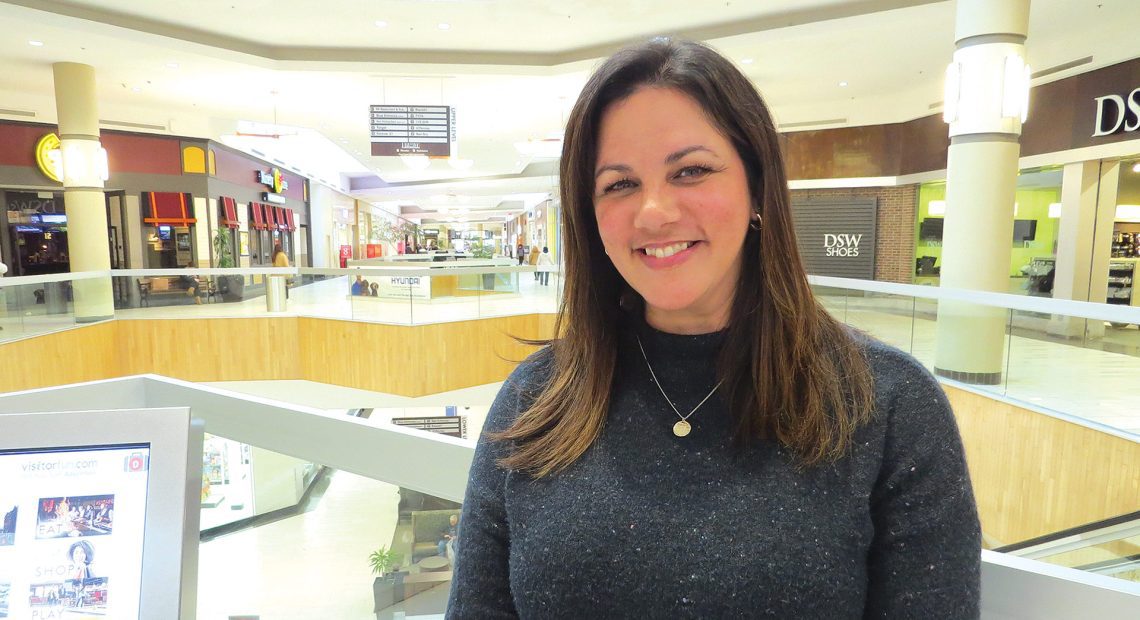
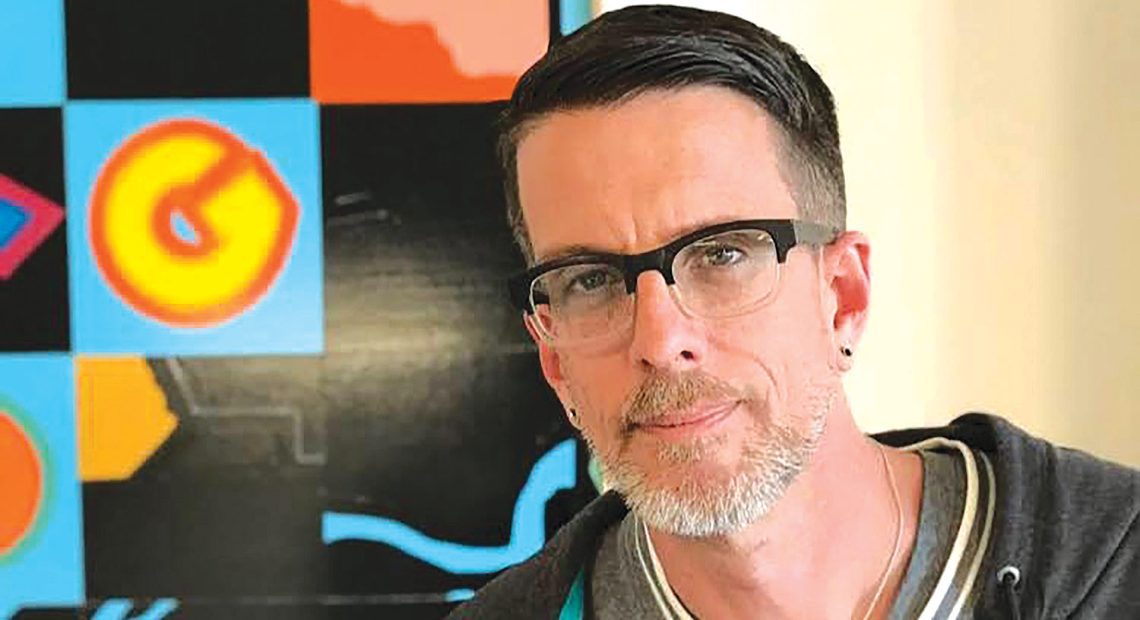
By Meg Sanders


The local cannabis industry is overflowing with weed.

The Massachusetts Cannabis Control Commission’s open data platform reports 95 cultivators were operational and licensed as of Dec. 8, 2022. Hot on those heels, another 180 provisional licensees are seeking approval that would bring the state up to somewhere around 3.6 million to 4.98 million square feet of canopy for flower cultivation within the Bay State cannabis market’s roughly 250 cannabis stores. 

If your operating and business plan is based on an outlook written for investors in the previous presidential administration, or during the halcyon days of the great green rush of the past, it’s time to face the truth: Massachusetts is well beyond the point of “if you build it, they will come.” 

So those Massachusetts cannabis businesses still in the queue or just getting open need to revisit their market overviews for investors and operators. They need to do so today. Not tomorrow, not if a market event happens — right now.

“Those Massachusetts cannabis businesses still in the queue or just getting open need to revisit their market overviews for investors and operators. They need to do so today. Not tomorrow, not if a market event happens — right now.”

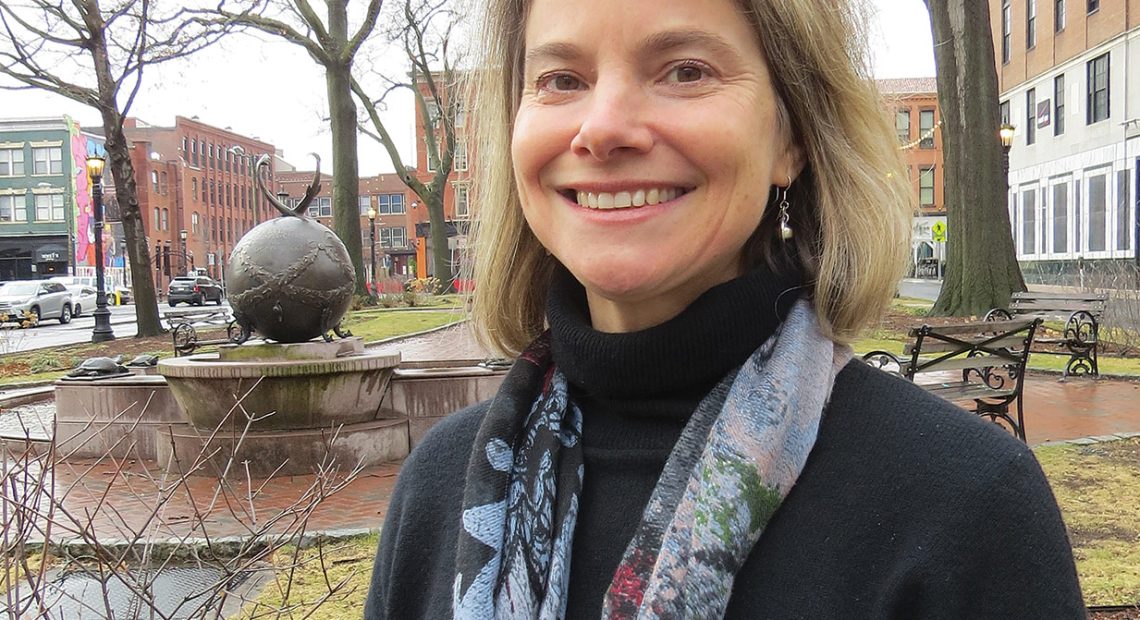
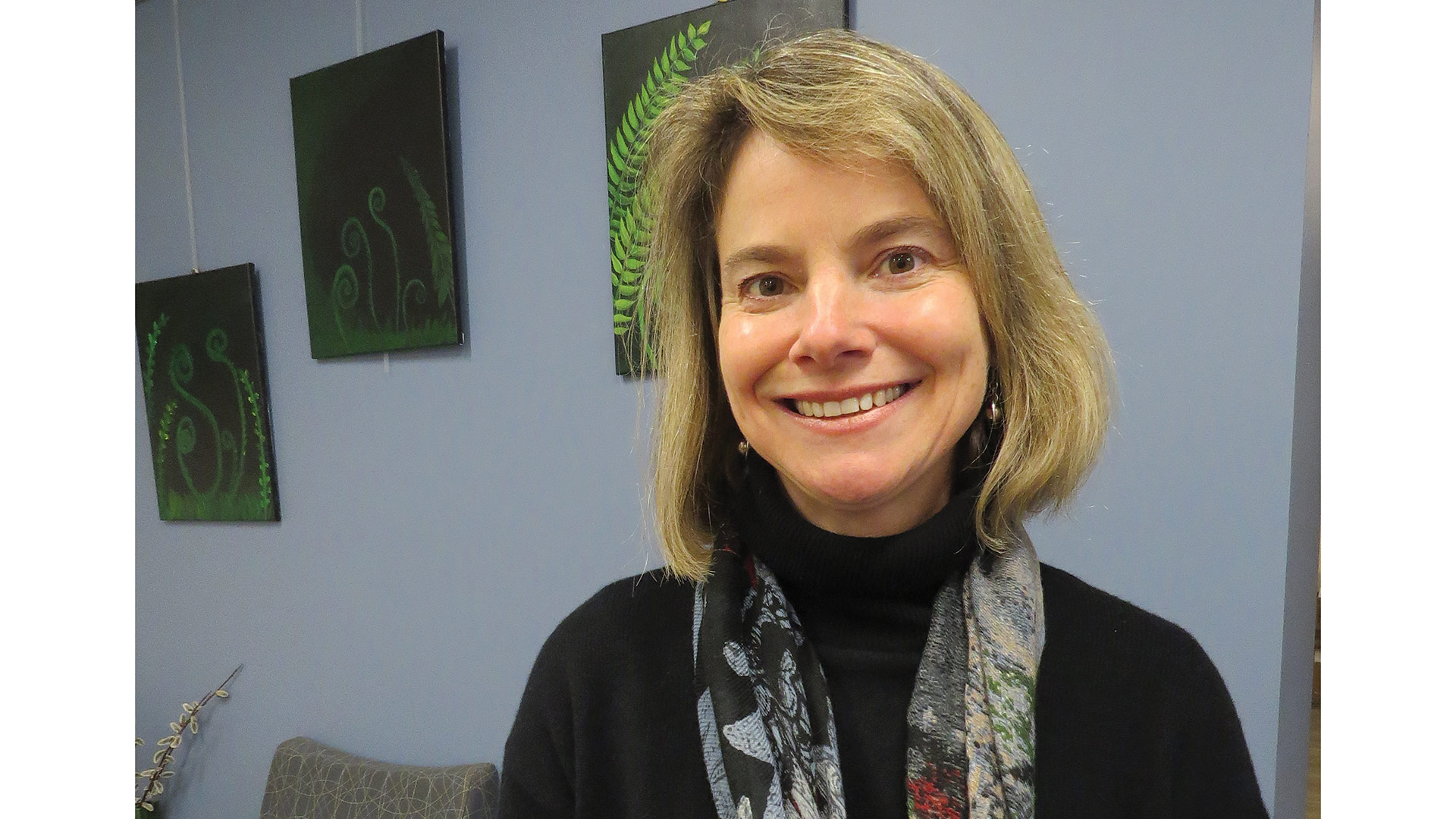
Meg Sanders

Meg Sanders

Take a very hard look at what needs to be rethought, or what needs to be immediately addressed, in regard to budgeting, SOPs, and overall market impact strategies for launch — and for long-term survival. Roughly 37% of all cannabis operators in the U.S. are not profitable, and too many businesses are unaware they are launching only to be licensed to lose money and fail.

For Massachusetts, the danger zone is already here. 


New Markets = New Consumers

As more retailers and brands emerge online, operators just now getting their operational licenses are typically doing so using plans they wrote when originally fundraising months or years back, often without taking into account how business plans and projections need to be tweaked, updated, or overhauled in the realities of the Massachusetts cannabis industry in 2023.

Canna Provisions is the ninth-largest independent cannabis company in the Commonwealth, has won multiple ‘Best Dispensary’ awards for selection and customer service, and has been named one of the best companies to work for in the nationwide industry. And even we are reworking our plans. 

Surviving the current market constriction and correction from the imbalance of supply and demand — something that has happened in other markets that came online, though it arrived faster here in Massachusetts — is a challenge of smart maneuvering and business forecasting. Ultimately, those businesses with clear eyes, that are as responsible with every dollar moving in and out of the business, will be the ones that make it out. That’s also why, to me, 2023 isn’t all doom and gloom, despite the headlines. 

Price compression has been on the industry’s collective mind for the past year, which makes it all the more important to create new strategies at the retail level. Differentiation for brands will come down to matters of quality of product, a consistent and predictable retail experience, and the education level of the consumer. 

What we know for sure, as seen from my experience in cannabis stretching back to the dawn of the legalized market in Colorado more than a decade ago, is that, when new markets flanking legalized states come online, it helps everyone in the existing legal retail market. But ultimately, the ones that really come out ahead are those with a key differentiating advantage and a realistic, thoughtful approach to the business. Many small first-time operators do not have the forward-looking business modeling abilities needed in the current market, especially when their average day-to-day will be spent just trying to stay afloat. 


Smart Business Savvy Is the Key to Success

As experience has shown, the sky doesn’t fall in an existing market when competition is tight and the supply is in surplus, but businesses do need to be responsible. For those that need a reminder, thanks to IRS Code 280E, the effective tax rate for cannabis companies is roughly 70%. Meanwhile, cannabis companies cannot deduct normal business expenditures. Our three biggest line items, in order, are inventory, payroll, and taxes (the statewide total collected for 2022 was roughly $284 million, to paint the picture).

“Surviving the current market constriction and correction from the imbalance of supply and demand — something that has happened in other markets that came online, though it arrived faster here in Massachusetts — is a challenge of smart maneuvering and business forecasting.”

In some instances, the towns themselves are waking up to the runaway nature of the market glut. Last month, Northampton city councilors set a new limit on local cannabis dispensaries allowed to open (capped at 12 retail locations now) for a municipality noted for having the most licensed dispensaries in the state. 

Even with our collective experience in retail cannabis operations and strategy, it’s still a massive challenge to make it work with so many ways our hands are tied or restricted compared to traditional industries. When the revenue numbers generated by legal cannabis in the state seem to defy the crunch-time feeling of the market, all businesses and consumers need to remember the lion’s share goes directly to the government instead of back to the business. That’s another reason why it’s important to be more careful than ever about how and where dollars are spent, and how we are utilizing the investor capital we raise for our ongoing expansion and scaling plans.


Best by Definition

Competition is already at a fever pitch in the state, and in cannabis, getting there first sometimes just makes you best by definition in the market’s eyes. At the retail level, look at any new cannabis state — say, New York — and what happens when the first stores open: lines around the block and product (or what variety there is at first) flying off shelves at steep prices that make investors smile and consumers wince. But when the market becomes more savvy and educated about the products and value system of a brand-new industry, first is no longer best. 

As challenging as this time and sector is, it’s as important for the turbulent tenor of the day to subside as much as it is important for it to simply succeed at a functional level. In fact, it must succeed for the greater industry to thrive.

There is no shortage of stories about widespread layoffs and restructuring for asset consolidation on a large scale with bigger companies, primarily multi-state operators (MSOs). But in comparison to the trials of new, very small operators that found it a matter of survival just to get to the doors-open phase, MSOs have it much easier. They can bleed money in a way small independent shops cannot. If they have operational experience already, they may still not have the ability to see the forest through the trees if they are not actively responding to the business climate of an ever-changing, statewide industry.

You will need more money — from either increased sales or investor dollars for market expansion. There will continually be massive restrictive aspects to operating as long as no new banking reform measures or full-scale legalization measures are enacted. So plan on enduring such aspects as much as you should plan to be noble and focus on what is a differentiating aspect of your business.

And don’t plan on having a future in the business until you get your business plan reflective of the industry we have versus the one we want. For those new or inexperienced operators that don’t get those lessons under their belt, theirs will be a back aching for the lash of “don’t say you weren’t warned.”


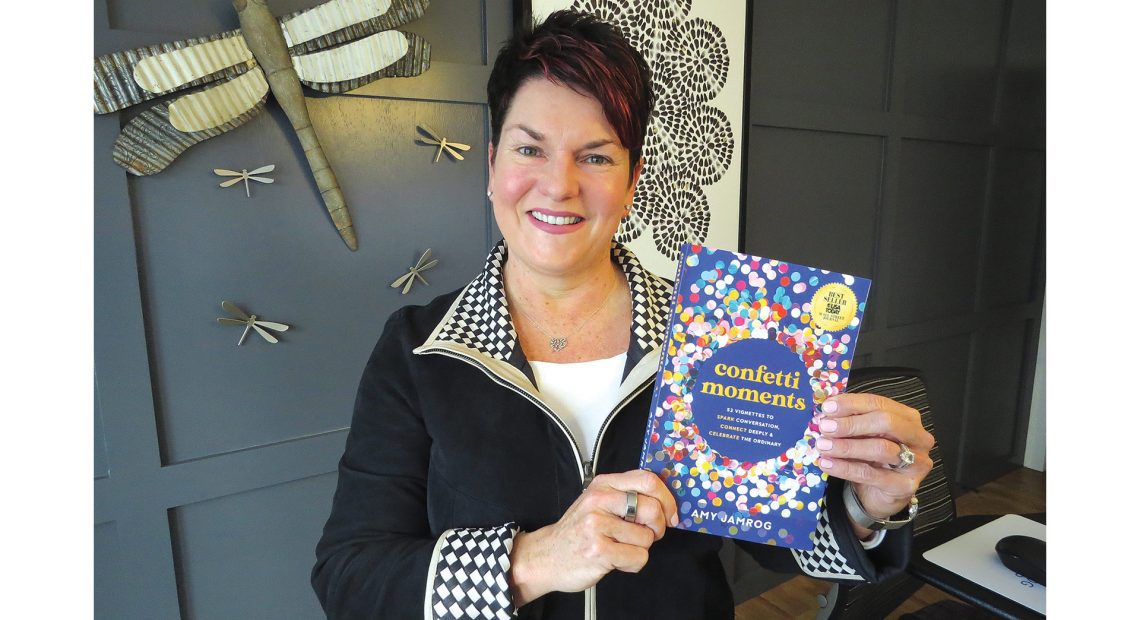
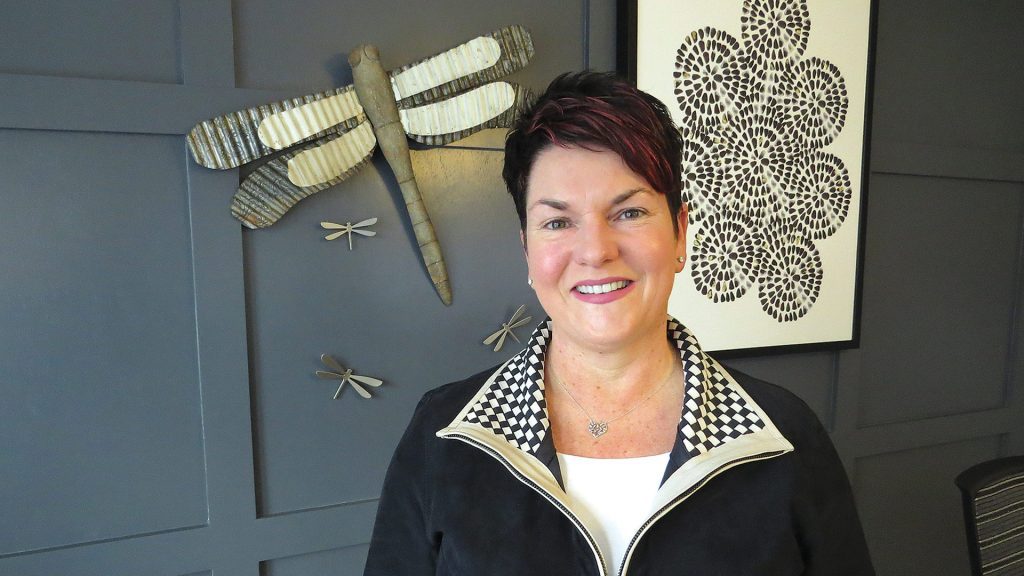
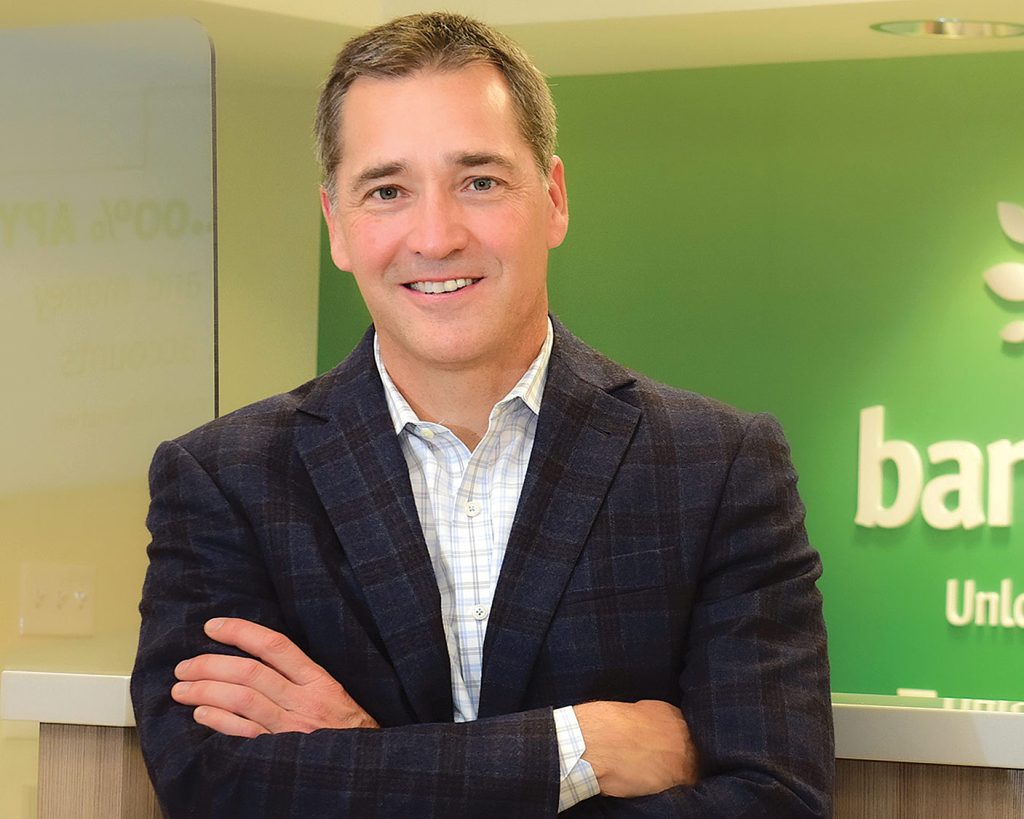
Meg Sanders is the CEO of Canna Provisions, which operates cannabis dispensaries in Holyoke and Lee.

Cover Story Top Entrepreneur

Benson Hyde and Bruce McAmis Make Provisions a Regional Success Story

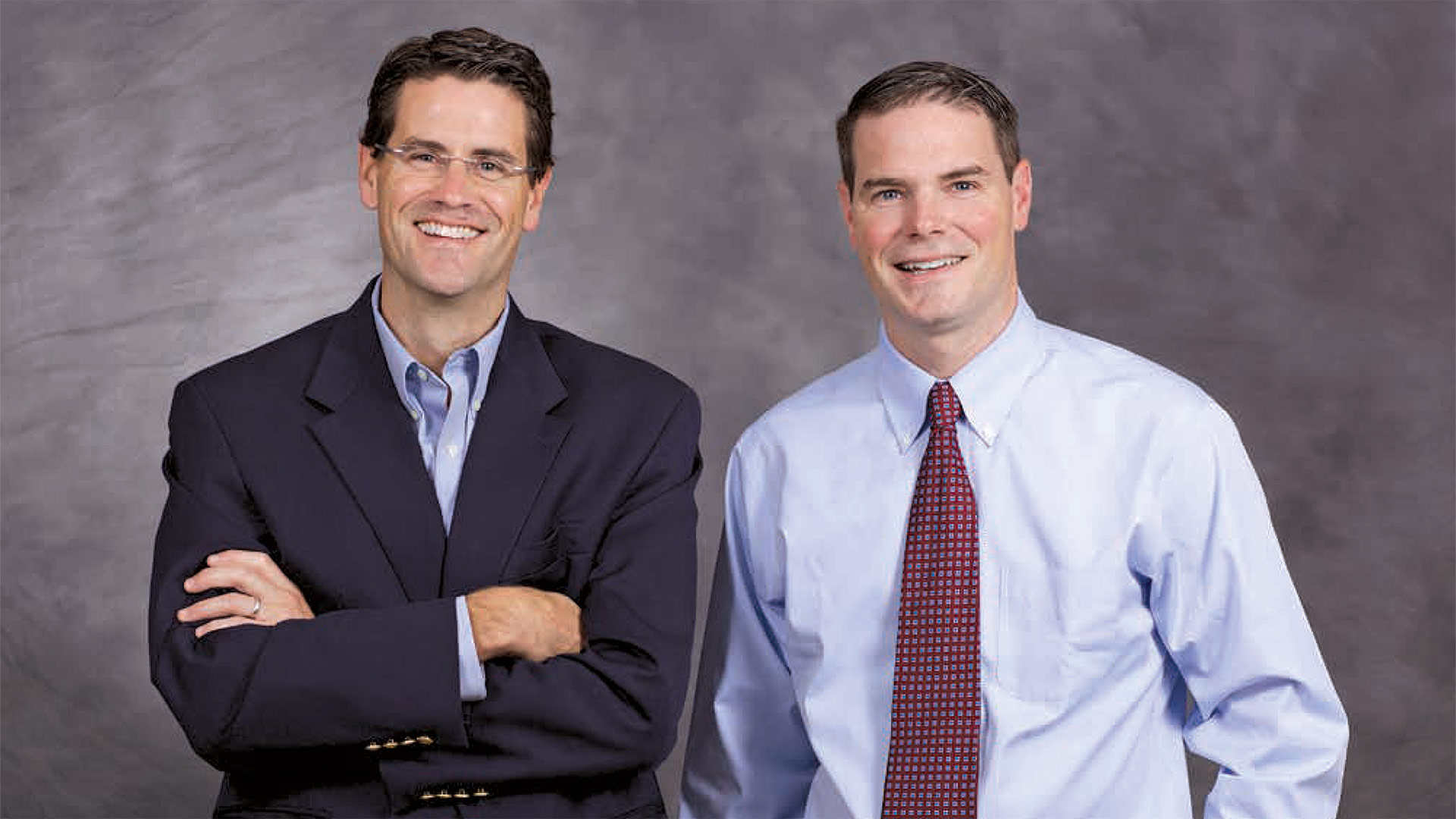
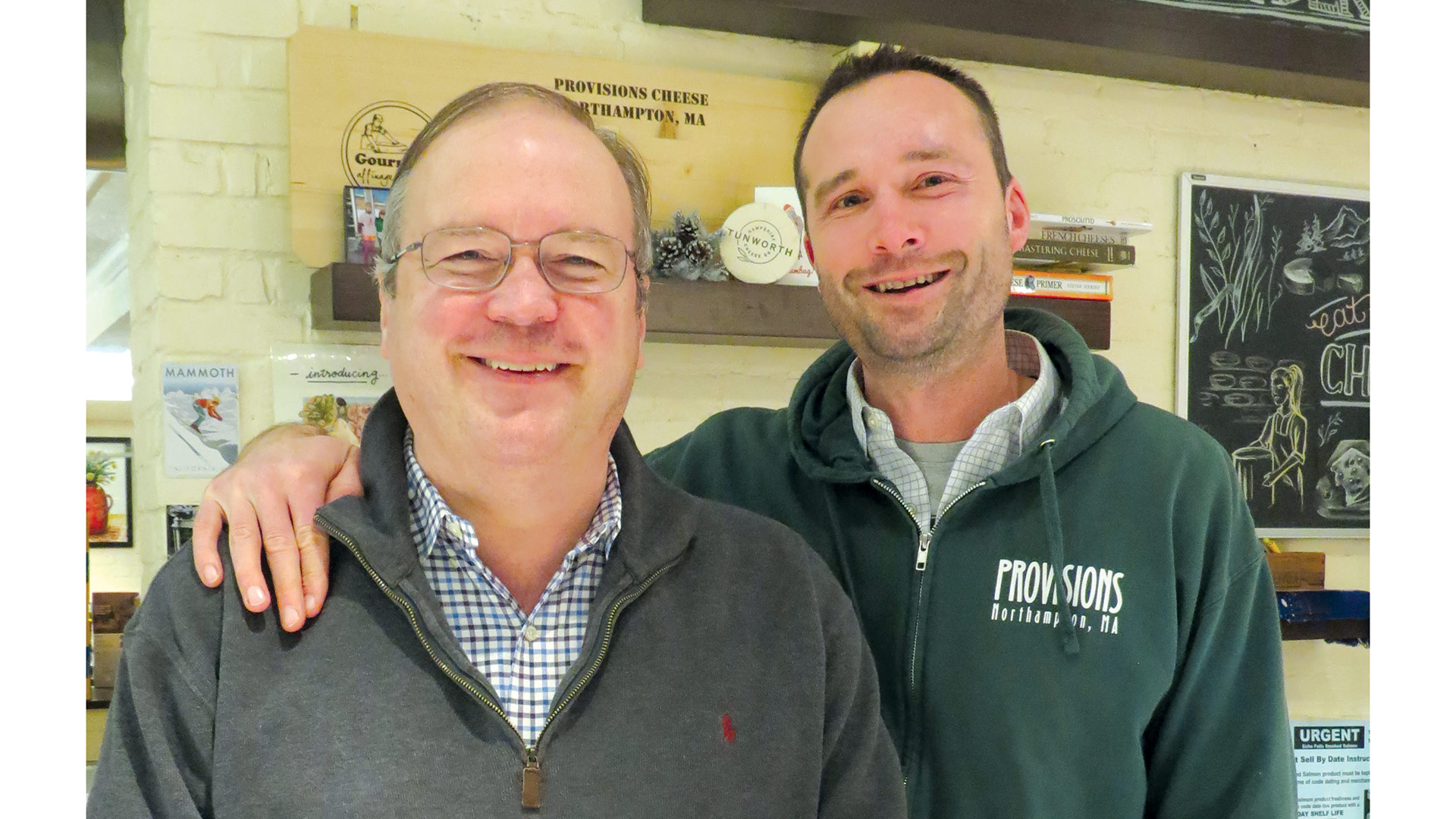
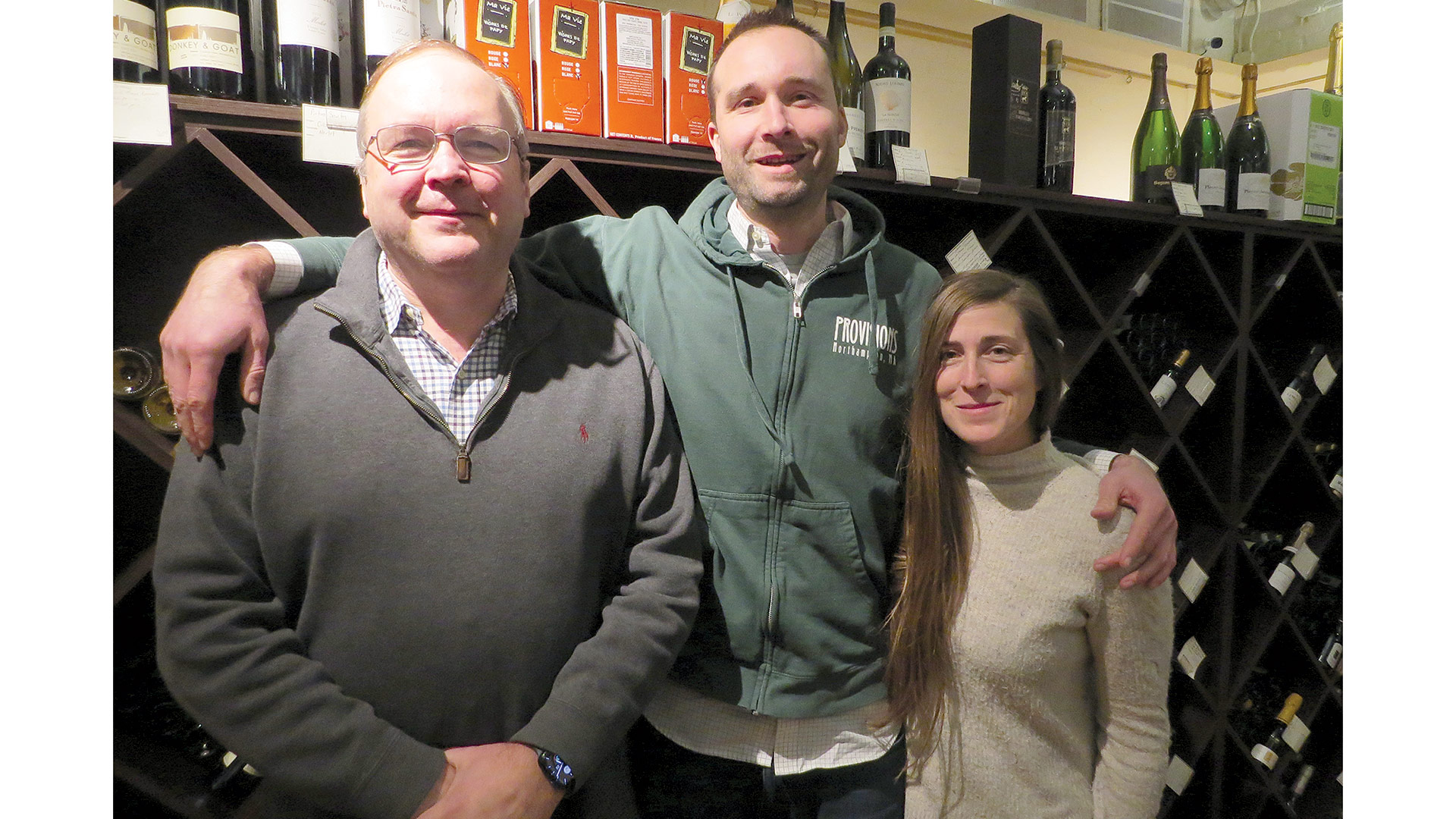
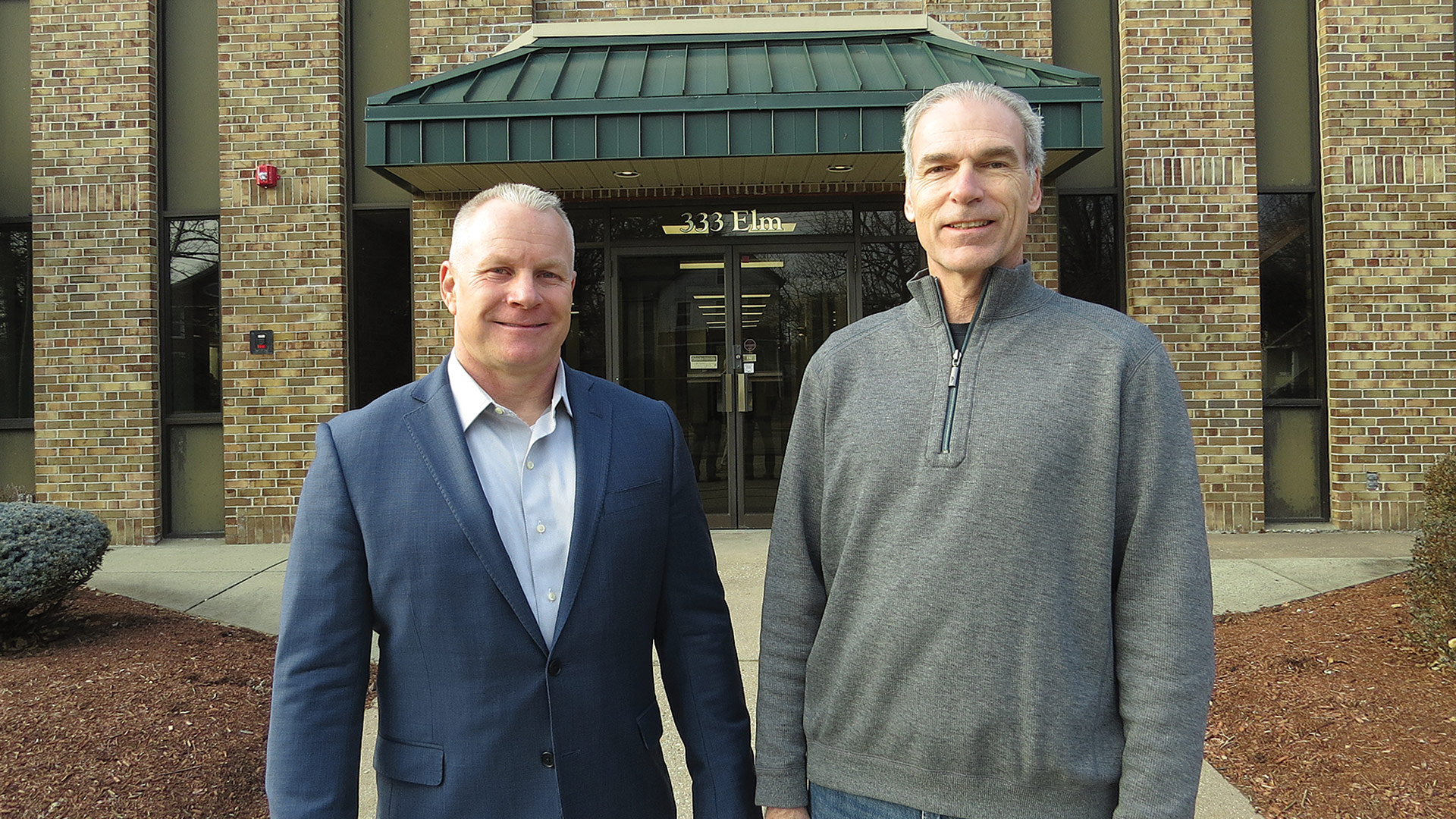
Bruce McAmis, left, and Benson Hyde, co-owners of Provisions

Bruce McAmis, left, and Benson Hyde, co-owners of Provisions


Grape Expectations

Benson Hyde was a financial advisor who wasn’t enthralled with the firm he was working for or the direction his career was headed in.

Bruce McAmis was a lawyer who would have preferred to be doing … well, just about anything else.

That was years ago. In the intervening time, let’s just say their paths crossed (we’ll fill in the details later), and they are now co-authoring one of the more intriguing entrepreneurship stories unfolding in the region.

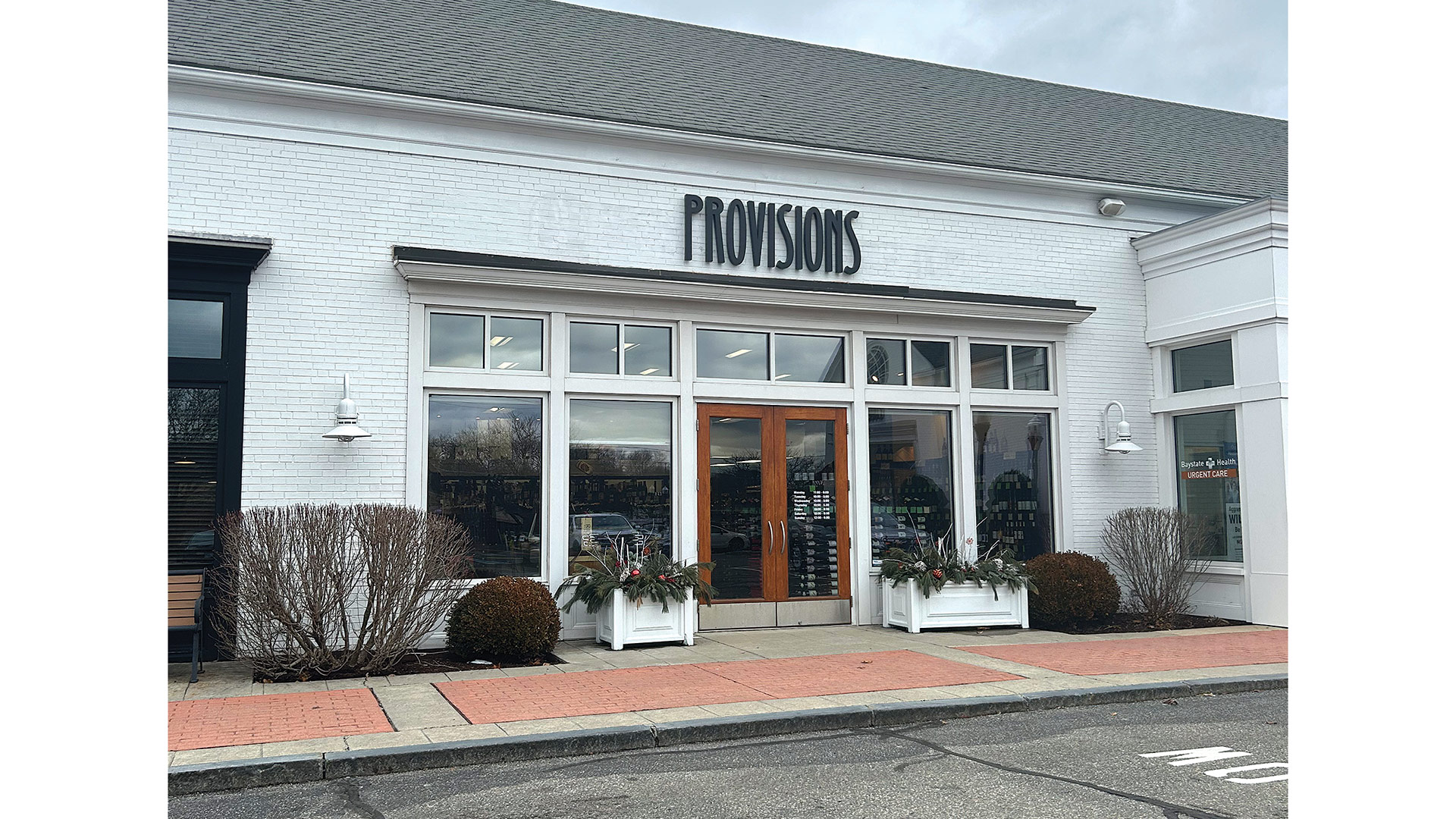
It’s called Provisions, a wine, cheese, and much-more store that now has three locations: in Northampton, where it all started, in Amherst, where the plot thickened, and, most recently, Longmeadow, where it thickened even more, with the opening of a location in the Longmeadow Shops just before the holidays. They would have preferred to open sooner, but … well, that’s part of the story.

Indeed, expansion has come quickly — more quickly than they anticipated when they first drafted a business plan that has been revised several times already — because opportunities have presented themselves. Seizing them hasn’t been easy, but they’re managing to take a promising concept and run with it, even in the middle of a pandemic, as we’ll see.

The concept? Hyde described it in a number of ways, but maybe this one works best: “people like to talk about fine wine; we like to say we’re all about fun wine.”

By that, he and McAmis meant wine that comes with stories, products produced in ways that resonate with a younger audience that is embracing wine perhaps more than generations before them.

“Our focus is on smaller producers with a story,” Hyde said, “and being able to provide service on a personal level — when someone walks in the store and wants a recommendation, or wants to hear about where a wine came from, or wants a pairing suggestion and an idea for what would make a great gift.”

“People like to talk about fine wine; we like to say we’re all about fun wine.”

Of course, this story is about more than wine. It’s also about cheese — or cheeses, to be more precise. It’s also about spirits of all kinds now. It’s also about making connections with customers and the community, and educating people about wine, not just selling it by the bottle or case.

And, of course, it’s about entrepreneurship and two people settling into that role after working for others and not really enjoying it, and desiring something else.

McAmis and Hyde look the part, and they also sound the part, using words and phrases that anyone who has gone into business for themselves — especially over the past several years — would use.

“It’s been quite a ride … high highs and low lows; it’s been an incredible learning experience,” said Hyde as he talked about everything from accelerated expansion to coping with a pandemic that forced them to find new ways of doing business and had both of them venturing out to make deliveries themselves.

McAmis echoed those thoughts as he talked about their venture. He actually uttered the words “it’s been fun,” and then retracted the statement. Well, sort of. He said it’s occasionally been fun, but mostly it’s been a stern challenge, one that has tested them in all kinds of ways.

The Provisions owners aim to satisfy an evolving market

The Provisions owners aim to satisfy an evolving market when it comes to how people buy wine, and who is buying it.

“I love it … I rarely, if ever, take a whole day off, but that’s part of being an entrepreneur, I guess,” he said. “It’s been intense, but rewarding on many levels.”

For their work to make Provisions a regional story, one with many chapters still to be written, Hyde and McAmis have been named BusinessWest’s Top Entrepreneurs for 2022. They continue a tradition of entrepreneurship in this region that goes back more than 300 years, and they join a distinguished list of previous winners of this award.

That list includes a college president, a hospital administrator, a public utility, the founders of several tech startups, many family-owned ventures, and several individuals and partnerships like the one forged by McAmis and Hyde.

For this issue, BusinessWest tells their story and, in the process of doing so, explains why they are more than worthy of this coveted honor.


Vintage Undertaking

They call it the ‘Provisions Dungeon.’

That’s the name affixed to the basement of the Northampton location, on Crafts Avenue.

And the name fits. It’s a large, cavernous space with several rooms of various sizes, all of them now crammed with wine and other products sold upstairs. The main area off the stairs was once a classroom where experts on wine passed on their knowledge to diverse audiences eager to learn more about this far-reaching, truly global subject. Now, that space has been given over to racks holding a wide array of spirits, with the classes held at the Amherst location.

“One of the important traits we’ve shown over the years is being responsive to what we’re facing. Whether it’s having to reshape everything because of the pandemic or with growth, it’s a matter of staying aware and staying flexible, and leaning into opportunities.”

Because the main floor is somewhat cramped, with little if any room for inventory, employees are constantly going back and forth to the basement, McAmis noted.

“We almost need to have extra staff on hand because everything that needs to be restocked is in the basement, and that means a lot of carrying cases of wine up the stairs,” he said, adding that the dungeon, where we talked with the two partners, is just one of the more colorful aspects of this evolving business.

Our story starts roughly 12 years ago, said Hyde, at one of the many dinners he enjoyed with his cousin, Alex Feinstein, founder of GoBerry, the recently closed frozen-yogurt store in downtown Northampton, and his wife.

Bruce McAmis, Benson Hyde, and Hyde’s wife, Toni DeLuca

From left, Bruce McAmis, Benson Hyde, and Hyde’s wife, Toni DeLuca, also the company’s wine and spirits buyer.

“He and I had become very close in the Boston area … he and his wife would cook me dinner, and I would bring the wine,” Hyde recalled. “When they got to Northampton, he called me up and said, ‘they could use a good wine shop downtown.’

“I was working in financial services for a company that I wasn’t thrilled to keep working for, so it was pretty easy to twist my arm and talk me into moving out here,” he went on. “I was inspired by his foray into small business.”

In collaboration with the Feinsteins and two other partners, Gordon Alexander and Nancy Baker, he opened Provisions on Crafts Avenue in November 2011. One of the first wine vendors he worked with was McAmis, who, as noted earlier, had a law degree but decided he didn’t want to make that his career. Instead, he ventured into the liquor-wholesaling business with a venture called Yankee Distribution.

After three years in business, Feinstein and Hyde were the remaining partners in the venture, and in late 2019, McAmis bought out Feinstein and became Hyde’s partner in Provisions.

“I thought that we could really grow the business and take some next steps,” said McAmis, adding that he became intrigued by the possibilities — and by Hyde’s determination to take the venture to the next level and scale up.

Those plans started to materialize quickly, but first — actually, at the same time — the business had to contend with the pandemic, which hit Northampton and its downtown, dominated by restaurants and clubs, extremely hard.

“We stayed open the whole time, but we weren’t open to the public, obviously,” McAmis recalled, adding that, like other ventures of this kind, Provisions relied on pickup and delivery, which constituted new, and expensive, ways of doing business that had to be learned and mastered.

“Main Street was a ghost town,” he said, noting that he was making many deliveries himself, and could see that Provisions, State Street Liquors, and a CVS were essentially the only businesses with lights on in that historically vibrant area.

The new Longmeadow location

The new Longmeadow location came about rather unexpectedly and before the partners were really ready, but they jumped on the opportunity.

Overall, the pandemic was a learning experience and test of the partners’ mettle, said Hyde, adding that, while business was brisk — sales ballooned during the pandemic for many different reasons — business was also much more difficult.

“We had to completely pivot our business model and completely rethink how we worked with customers and how we operated the entire store,” he recalled. “It was intense, and we made a lot of mistakes before we eventually got things ironed out.

“We were really lucky because we had attracted a staff that was really committed,” he went on. “I don’t think we could have done it if we didn’t have such a loyal and committed staff — it was extremely hard.”


Case in Point

But at the same time they were enduring the pandemic and its many challenges, the two partners were still thinking about expansion and that proverbial next level.

And, as noted earlier, that expansion has come about more quickly, and more profoundly, than they had anticipated in any version of that business plan, primarily because opportunities presented themselves, and they were determined to take advantage of them.

Previous Top Entrepreneurs

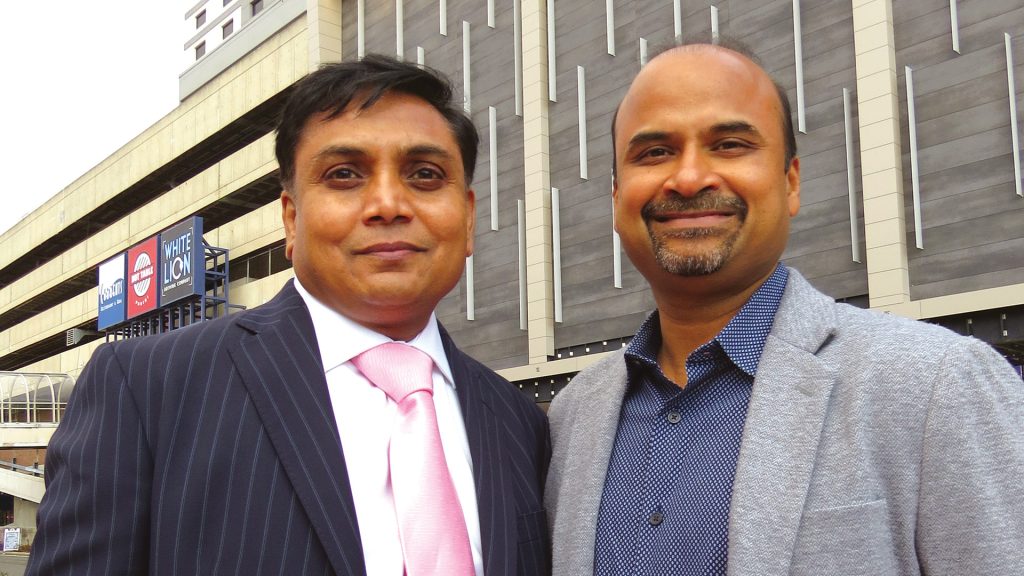
• 2021: Dinesh Patel and Vid Mitta, owners of Tower Square in Springfield
• 2020: Golden Years Homecare Services
• 2019: Cinda Jones, president of
W.D. Cowls Inc.
• 2018: Antonacci Family, owners of USA Hauling, GreatHorse, and Sonny’s Place
• 2017: Owners and managers of the Springfield Thunderbirds
• 2016: Paul Kozub, founder and president of V-One Vodka
• 2015: The D’Amour Family, founders of Big Y
• 2014: Delcie Bean, president of
Paragus Strategic IT
• 2013: Tim Van Epps, president and
CEO of Sandri LLC
• 2012: Rick Crews and Jim Brennan, franchisees of Doctors Express
• 2011: Heriberto Flores, director of the New England Farm Workers’ Council and Partners for Community
• 2010: Bob Bolduc, founder and CEO of Pride
• 2009: Holyoke Gas & Electric
• 2008: Arlene Kelly and Kim Sanborn, founders of Human Resource Solutions and Convergent Solutions Inc.
• 2007: John Maybury, president of
Maybury Material Handling
• 2006: Rocco, Jim, and Jayson Falcone, principals of Rocky’s Hardware Stores and Falcone Retail Properties
• 2005: James (Jeb) Balise, president of Balise Motor Sales
• 2004: Craig Melin, then-president and CEO of Cooley Dickinson Hospital
• 2003: Tony Dolphin, president of Springboard Technologies
• 2002: Timm Tobin, then-president of
Tobin Systems Inc.
• 2001: Dan Kelley, then-president of
Equal Access Partners
• 2000: Jim Ross, Doug Brown, and Richard DiGeronimo, then-principals of Concourse Communications
• 1999: Andrew Scibelli, then-president
of Springfield Technical Community College
• 1998: Eric Suher, president of E.S. Sports
• 1997: Peter Rosskothen and Larry Perreault, then-co-owners of the Log Cabin Banquet and Meeting House
• 1996: David Epstein, president and co-founder of JavaNet and the JavaNet Café

The first such opportunity came on King Street in North Amherst, with the opening of Bottle-O, what McAmis described as “an easy, in-and-out beer and wine store where you can grab some cheese.”

As for the expansion of Provisions, the two partners had long targeted Amherst and Longmeadow as the most logical communities to take their concept, and they started with the former, primarily because opportunities in Longmeadow are harder to come by.

Specifically, they started in North Amherst and the emerging Mill District, for which Cinda Jones, architect of that ambitious undertaking, became another of BusinessWest’s Top Entrepreneurs three years ago.

When Atkins Farms decided to leave its space in the sprawling mill complex, Jones approached Benson and McAmis about taking that square footage. They did, recognizing an opportunity to take the brand to a new area and a site that is rapidly becoming a destination because of its array of shops and eateries.

The Amherst location opened in November 2020, still the height of the pandemic, and there have been some growing pains due to COVID, the emerging nature of the Mill District, and the fact that the complex is somewhat off the beaten path.

“It’s taken a little bit of time for word to get out that we’re there,” McAmis said. “But we are growing; we’re seeing green shoots.”

Hyde agreed. “We believe in their vision; they have created a really cool space there,” he said, adding that a planned move to another location at the Mill District, amid an emerging ‘food cluster’ at the complex — with a brewpub envisioned for the space they’re currently occupying — will generate even better results.

As for the Longmeadow location, McAmis said it came about through some “dumb luck.”

Indeed, a space in the Longmeadow Shops next to Max’s restaurant became available, and McAmis noticed the listing while doing a random search for space in Longmeadow last spring.

“As soon as we walked in there, we realized that it was well-suited for what we were looking for,” he told BusinessWest, adding that, while the timing was not exactly ideal because of everything else they were dealing with, they decided to press ahead and get it done, knowing that such opportunities — in that town and in that location — do not come about often.

“Longmeadow happened maybe a year or two sooner than it would have in a perfect world,” he said, noting that the partners were still engrossed in making the North Amherst location work. “It just felt like a bit of a rush to us to contemplate that, but we also didn’t think we would get a better opportunity; not only is it in the Longmeadow Shops, it’s right in the heart of it — so we went ahead. And now that it’s open, I’m happy it’s open.”

Hyde agreed. “The consequences of not taking that spot were huge; I don’t think we would ever have found something that ideal,” he said, adding that the location is close to East Longmeadow and Northern Connecticut, providing an opportunity to introduce the Provisons brand to some new customers.


Taste of Success

When asked what might come next for Provisions, Hyde and McAmis looked at each other, laughed, and offered a collective sigh.

The body language and sound effects made it clear that they’re not contemplating additional expansion at this time, and are instead focused on settling in — in every aspect of that phrase.

Elaborating, they said they want to put their new locations on solid ground, build the brand, and, well … keep doing what they’ve been doing all along.

Specifically, this means listening to customers, responding to what they’re saying, and providing an overall product that is in many ways as distinctive as the various bottles and cheeses on the shelves.

“One of the important traits we’ve shown over the years is being responsive to what we’re facing. Whether it’s having to reshape everything because of the pandemic or with growth, it’s a matter of staying aware and staying flexible, and leaning into opportunities,” said Hyde, adding that this operating mindset has served the partners well to date, and it will continue.

“The focus is going to be less on expanding our footprint in the near term, and more on expanding services and making connections within the community,” he went on. “What’s important to both of us is that we not only have a good business, but our business is part of the community; we support our community, and our community supports us.”

Meanwhile, the partners plan to continue with that theme of providing not just fine wine — they do that as well — but also ‘fun’ wine and products with compelling stories.

And while doing so — and this is perhaps the most rewarding part — they’ve earned the trust of customers.

“That’s been a cool thing — developing those relationships, getting to know people’s palates, and building that trust,” Hyde said. “People will call up and say, ‘I trust you … pick out 12 bottles for me, and I’ll come pick it up.”

That’s an example of that flexibility he described, and being responsive to what a changing audience wants and needs in a bottle of wine and the store that will sell it.

“How people shop for wine has changed, and who is shopping for wine has changed,” he expained. “There are more young people interested in wine these days than when we first opened.”

McAmis agreed. “They’re younger, and they’re interested in learning about the products; it doesn’t have to be a lot of money, but there’s an emphasis on quality, not quantity,” he noted. “We have wines that come from family-owned estates and are natural or biodynamic, organic or sustainably grown — these are all important attributes for a lot of these younger consumers.”

Wine tastings, such as this one at the location in the Mill District in North Amherst

Wine tastings, such as this one at the location in the Mill District in North Amherst, are one way the company focuses on education and engaging its customers.

These attributes and others are explained at the wine classes staged at the Amherst store, said Hyde, adding that education remains a big part of the equation at Provisions.

“There’s usually a theme to these classes,” he explained. “We’ll take people to a region, for example; it’s everything from ‘Wine 101’ to how you taste wines, to deep dives on regions or grades or producers.”

Such classes — and tastings — continued through the pandemic via Zoom, he said, noting that producers brought attendees into their operations virtually. “Having that actual producer in their winery talking about the wine is a cool way to experience it,” Hyde said, adding that the partners are looking to add more of these types of presentations in the future.

“Generally, we want to keep our eyes and our ears open to what people are wanting, what spaces we can fill, and how we can keep ourselves different from the bigger package stores,” he went on. “We do have a big selection, but we’re geared more toward service than having a ton of product; we have well-chosen, curated, thoughtful, fun products.”

Such an attitude explains not only why these two are successful, but why they are BusinessWest’s Top Entrepreneurs for 2022.

Features Special Coverage

Opening the Doors Wider

Community Foundation President and CEO Megan Burke

Community Foundation President and CEO Megan Burke

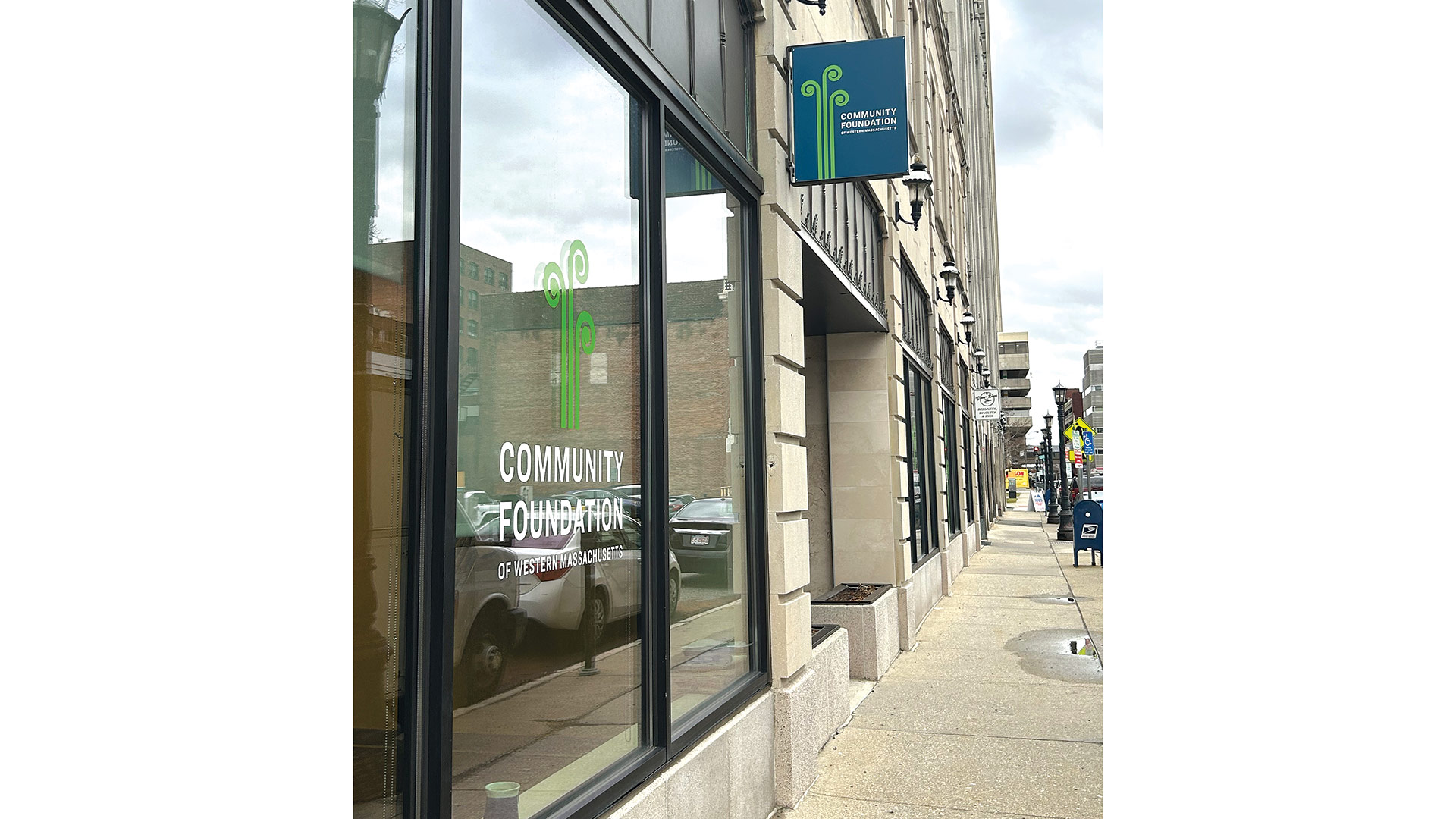
Megan Burke was taking a walk through downtown Springfield on a Sunday morning not quite a year ago, and found herself on Bridge Street, passing by the offices of the Community Foundation of Western Massachusetts (CFWM).

She stopped, looked in, and became immersed in what she was seeing, while also not quite believing her eyes.

“I looked in the conference-room windows, and I saw the papers lining the walls detailing their strategic-planning process and all their priorities for the next year,” she recalled. “And I actually took some photos, sent them to my boss in Hartford, and said, ‘look at how transparent the Community Foundation of Western Mass. is; we need to be more like this.’

“There were no secrets — they just put it right out there,” she went on. “I took pictures, I took notes … I said, ‘hey, they’re moving to the same database system we use, but more importantly, these are things they’re prioritizing for the community.’”

The ‘we,’ in this case, was the Hartford Foundation for Public Giving, which Burke was serving as director of Community Impact Grantmaking. The amazing transparency she observed that morning was and is just one of the things Burke admired about the Community Foundation of Western Mass., and which she had come to respect from afar — or not really that far at all, depending on your take; she’s a resident of West Springfield.

And that helps explain why, when the agency’s long-time president and CEO, Katie Allan Zobel, announced in the spring of 2022 (just a few weeks after Burke’s walk in downtown Springfield) that she would be stepping down at the end of the year, Burke became interested in the position, at the same time she was being recruited for it.

After several rounds of interviews, during which she would see and hear more things that impressed her, Burke was tapped to fill Zobel’s very large shoes, thus beginning an intriguing new chapter in a career marked by more than two decades of work in nonprofit management, philanthropy, fundraising, and advocacy, with a particular focus on equitable access to economic opportunities and human rights.

Her career has included work on issues ranging from advancing LGBTQ+ rights in a Latin American country, Nicaragua, to continuing efforts to ban landmines globally, to the challenge of leveling the playing field between those in urban and suburban communities in Northern Connecticut.

“I looked in the conference-room windows, and I saw the papers lining the walls detailing their strategic-planning process and all their priorities for the next year. And I actually took some photos, sent them to my boss in Hartford, and said, ‘look at how transparent the Community Foundation of Western Mass. is; we need to be more like this.’”

Summing it all up, Burke said it has been invigorating and rewarding work, which she is anxious to take to the 69 communities served by the Community Foundation of Western Massachusetts.

In a wide-ranging interview with BusinessWest just a few days after she began work in those offices on Bridge Street, Burke said her broad goal is to build on all that’s been accomplished over the past several years to take CFWM well past check writing and into a role as convener and catalyst for positive change.

“I really want to spend at least the next three months getting to know the folks who are involved in the Community Foundation and who’s not involved, and opening our doors even wider,” she explained. “And listening to people — I have a lot to learn. I think I bring a lot to the job, but I have a lot to learn from the community about what they think is important and what they believe we should be doing better.”

She said the Hartford Foundation has been able to mobilize resources and support efforts to more equitable economic and social mobility, and one of her goals is to amass similar forces and create momentum on that same front in Western Mass.

“In both Hartford and Springfield, and in pockets of the regions more generally, success for people is often more closely correlated to the zip code in which they were born than their own talents, creativity, and hard work,” she said. “And I think that’s where the experience I have is relevant to thinking about how we can change that together — not just the Community Foundation, not just our nonprofit partners or our donors, but all residents of the region.”


Questions and Answers

Burke recalls that it “almost felt like I was cheating.”

That’s almost.

In the run-up to the first of her interviews with CFWM for the president’s position last September, she noted that Zobel was the most recent guest on BusinessTalk, the weekly podcast hosted by this writer. She listened to the episode, not once but twice, and heard Zobel talk in vague terms about what might come next for her career-wise — and, in far more specific terms, about the many new programs and initiatives she and her staff introduced during her tenure, everything from Valley Gives to Valley Creates.

the windows of the Community Foundation offices on Bridge Street

Megan Burke was amazed by the transparency she witnessed when looking in the windows of the Community Foundation offices on Bridge Street. It’s a tradition she intends to continue.
Staff Photo

“It was such a helpful interview,” she recalled. “I was able to get a sense of what she felt was important and what she thought were some of the great successes here.”

Whether listening to the podcast had any impact on her performance during that interview is a subject for debate (Burke already knew a great deal about the Community Foundation, as we’ll see), but what isn’t — according to those doing the interviewing — is that Burke is a logical successor to Zobel, and this position is a logical next step for someone who has spent a career working to advance diversity, equity, and the inclusion of diverse perspectives.

It’s a career that has taken her from New York to Nicaragua to Hartford, and to remote-working opportunities long before they became the norm.

Our story starts with Burke — who earned her bachelor’s degree in political science at Wellesley and a master’s degree in international relations at Yale — working for the Ford Foundation in New York, where she served as program officer, U.S. Foreign and Security Policy, Governance & Civil Society.

In 2007, she and her family moved to Nicaragua for what she called “a different pace to her work” than what she found in New York. There, she worked first for the nonprofit Centro de Estudios Internacionales, where her efforts supported the emerging LGBTQ+ movement and the development of a nationwide campaign to advance human rights.

“My role was to support various representatives of the movement to create a platform for them to come together and establish some advocacy priorities and to really be a go-between with the funder to make sure of the direction it was moving in, and to really track the impact of the work,” she explained. “For me … I had not worked on that particular issue before; it was incredibly eye-opening. It was very humbling to be working in a second language and be the least articulate person in the room.”

“During my time there, we announced a new strategic focus on dismantling structural racism and promoting more equitable economic and social mobility. And while that work is by no means easy, it’s incredibly important, and I spent the past few years with a great team trying to figure out how to make that happen.”

Burke worked for the group for roughly three years, eventually transitioning to a new role with the Nobel Peace Prize-winning International Campaign to Ban Landmines. She started working as a researcher in Latin America — Nicaragua was a country impacted by landmines from the war in the 1980s — and eventually became executive director of the campaign.

She was still in that position when she returned to Western Mass. nearly a decade ago, eventually to ease herself out of that role — while also downsizing the organization, as more countries addressed the problem of landmines.

“It’s kind of nice to be involved in something where we could see steady progress and say we were working ourselves out of a job; it’s not often that you get to say that,” she noted. “Every year I worked there, the casualty rate declined.”

In some respects, leading a coalition to ban landmines is a world apart from work with a local foundation, she said, but in Burke’s estimation, the work is very similar.

“Sometimes people say, ‘how did you go from this international work focused on advocacy at the U.N. and traveling around the world to working for a local foundation?’” she noted. “My feeling on that is that every issue is a local issue somewhere, and what we were really trying to do at the international level is raise up local issues that were impacting people in mostly post-conflict countries, and get international attention to redistribute resources — not totally unlike what a foundation does to help those with the greatest need.”


Vision Statement

In 2017, Burke joined the Hartford Foundation for Public Giving as senior Community Impact officer, a position with a broad job description, one that included everything from work creating career pathways to efforts promote civic engagement through grants and training to increase voter engagement and participation in the 2020 Census.

In September 2020, she became director of Community Impact Grantmaking, leading the foundation’s strategic grantmaking — there was an annual budget of $25 million to $30 million — to advance equitable economic mobility and address systemic racism in Greater Hartford.

“During my time there, we announced a new strategic focus on dismantling structural racism and promoting more equitable economic and social mobility,” she explained. “And while that work is by no means easy, it’s incredibly important, and I spent the past few years with a great team trying to figure out how to make that happen.”

Not long after Zobel announced that she would be stepping down from her position, Burke received a call from a search firm to gauge her interest in the position.

It was quite high, she said, and for all the reasons she mentioned earlier — from the agency’s transparency with its goals and plans for the future, as evidenced by the uncovered windows facing Bridge Street, to its rapid and highly effective response to COVID, marked by a deep commitment to helping the region’s struggling nonprofits, along with many other successful programs in realms ranging from the arts to education.

Summing it all up, Burke said that, while she loved her work with the Hartford Foundation for Public Giving, the only thing she might like more is a chance to similar work closer to her home, something this opportunity at the Community Foundation provided her.

Still, while those on the other side of the interview table had questions for her, she had some for them, and the answers — especially with regard to a willingness to broaden efforts in the realm of equity — would ultimately determine whether this would be the right fit for her.

“I wasn’t sure where they were in terms of their own strategic vision to promote equity and opportunity,” she explained. “And I know that when you take on work like that, it’s important that everyone has bought in, feels that it’s important, and sees the value in that work.

“You never have a situation where every stakeholder is 100% all in from the very beginning,” she went on. “But from other areas of my work, I’ve seen what happens when there is great resistance, and it makes it really, really hard. I didn’t know if there was resistance, but I also didn’t know how much buy-in there was. So in many of my early conversations, I really tried to get a sense — ‘is there a serious commitment to moving this forward?’ And I got a resounding ‘yes’ from everyone I spoke to.

“It was clear that the commitment runs deep,” she continued. “And that excited me.”

Elaborating, she noted that, while Greater Hartford and Greater Springfield are different in some respects, they are similar in most, especially when it comes to disparities that exist between the urban centers and the more rural and suburban areas, and the manner in which those inequities impact opportunity.

“When everyone has an opportunity to fulfill their own potential, I think everyone wins,” she went on. “When people are held back due to the circumstances of their birth, I think everyone loses.”

Burke started at the Community Foundation on Jan. 18, the day of a scheduled board meeting. She joked that this would be the first and only time she would be at such a meeting with the primary mission of simply watching and listening.

Although she still has a lot of that to do in general, and with a number of different constituencies, she noted that she has already embarked on what she calls a “listening tour.”

Its underlying goal, as she stated earlier, is to enable her to learn about the region and the issues facing those living and working here and to generate some momentum on the broad issue of economic and social mobility and making it more equitable.

“We don’t plan to change our broader strategic vision — I think it’s a great vision,” she said. “And promoting equity and opportunity is not something that’s going to happen overnight; I think there’s a huge commitment to that, and I was brought on to help figure out how to make sure we can operationalize that as effectively as possible.

“I have to listen,” she said in conclusion, “and make sure I’m building on what’s already happening here that’s great.”


Bottom Line

When asked what she likes to do when she’s not working, Burke offered a hearty laugh as she said, “take walks in urban areas.”

She also likes to hike in more rural settings, partake in yoga, be a good ‘dog aunt,’ and keep up with friends scattered across the region and around the world.

What she really likes, though, is to work with others to address what she called “seemingly intractable problems” — meaning everything from inhumane weapons to access to healthcare and education for LGBTQ+ residents of Nicaragua to food insecurity for residents of Greater Hartford.

Throughout her long career, it has been her mission to take doors and open them wider to enable more to pass through. With her latest assignment with CFWM, the setting has changed, but that mission hasn’t.

Education Special Coverage

Looking Back — and Ahead

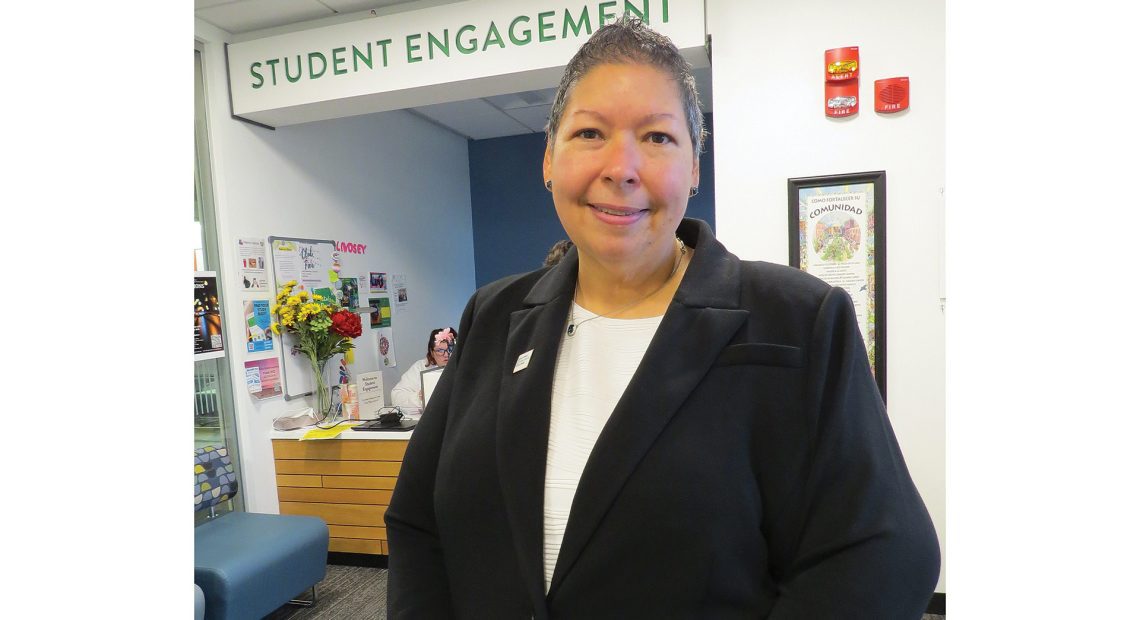
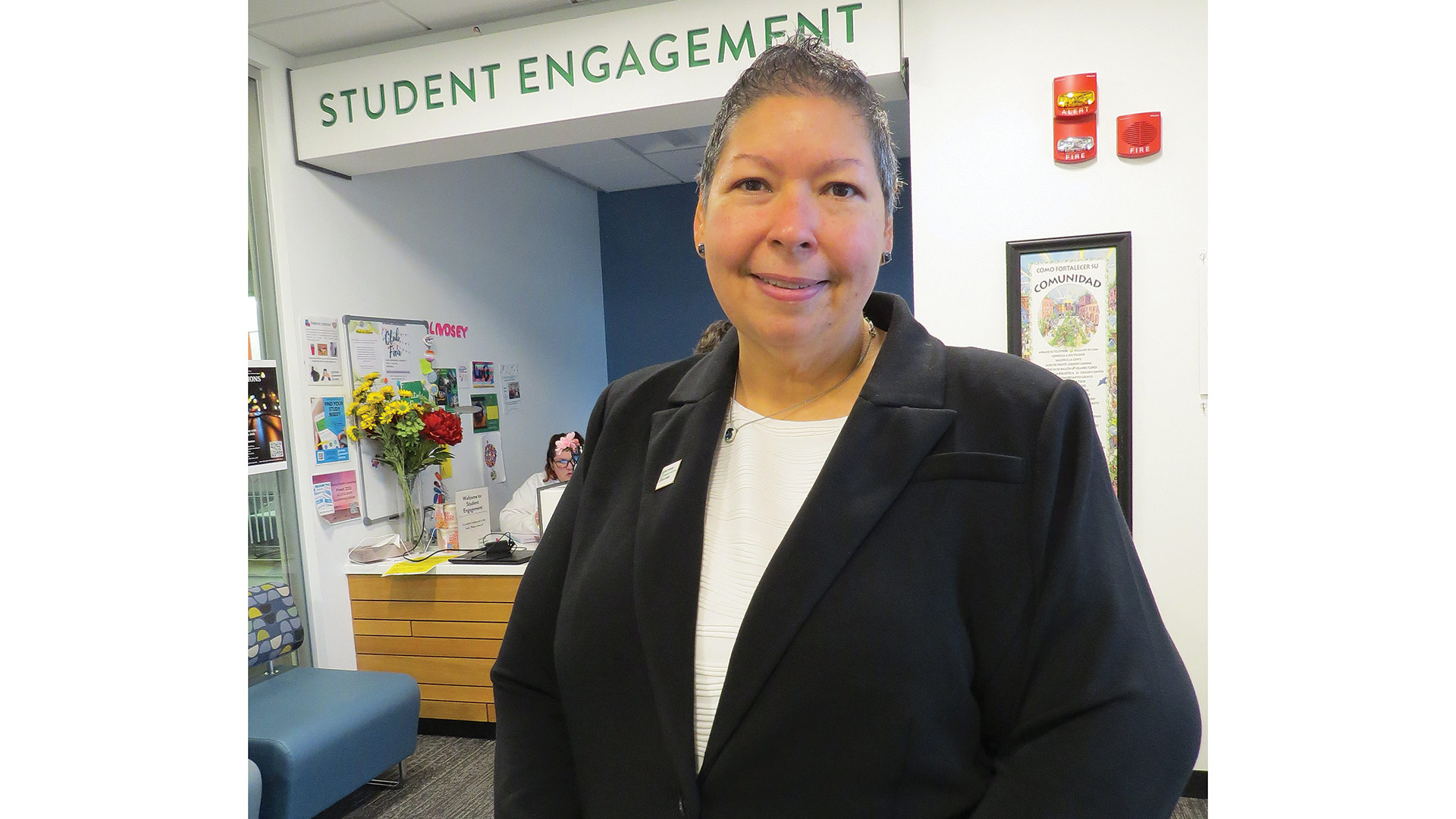
HCC President Christina Royal

HCC President Christina Royal


Christina Royal wanted to make one thing clear.

Her decision to step down as president of Holyoke Community College (HCC) later this year has nothing whatsoever to do the Great Resignation.

“The Great Resignation, to me, reflected people who were in various stages of unhappiness with their respective roles and looking for a change,” said Royal, the school’s fourth president, who arrived on campus in 2016. “I love this college, and I love my position.”

Elaborating, she said her decision is about finding the space to decide what she wants to do next, and at this point in time, she really doesn’t know what that might be, other than some travel (destinations still to be determined), planning her wedding, and what she calls “voluntary unemployment” until at least the start of 2024.

In a wide-ranging interview during which she looked back as well as ahead, Royal talked at length about the past three years, especially, and what it has been like, personally and professionally, to lead an institution like HCC through the pandemic. She said it was a tremendous, and exhausting, learning experience, one in which she and members of her team had to reach down and find the determination and imagination to see the college and its students, staff, and faculty through an unprecedented crisis, during which the school was mostly closed to the public for more than a year.

Indeed, while talking about the length of her tenure at HCC — which will be close to seven years by the time she steps down this summer — Royal jokingly asked if there is a “multiplier” for the COVID era, a roughly two-and-a-half-year stretch that probably seemed like it was exponentially longer.

She likened that period to another one in the school’s long history, a devastating fire that destroyed its one building in 1968. Royal told BusinessWest that she has read and heard a lot about those days, and she believes they were in many ways similar to what the college and its leadership endured starting that day in March 2020 when the governor shut down the state.

“The Great Resignation, to me, reflected people who were in various stages of unhappiness with their respective roles and looking for a change. I love this college, and I love my position.”

“I never thought that in my lifetime and during my tenure there would be another moment to rival that one, but the global pandemic did,” she said. “And being in a leadership capacity during such uncertain times, you tap all of the skills that you’ve developed over a lifetime to be able to learn and lead in such times.”

While efforts to lead the school through the pandemic have in many ways dominated her tenure, she said there have been many important accomplishments, especially in the broad realms of diversity, equity, and inclusion, as well as addressing student basic needs, ranging from food to housing to childcare.

With the former, she said the school has made significant strides, and on many different levels.

“We have really prioritized equity at all levels within our organization, including at the board level, with a statement on anti-racism, and also with the great work of our facility and staff. We’ve invested financial resources to grow our wrap-around support services for our under-represented students, and we continue to help all of our students be successful regardless of what their starting point is, who they are, and what their background is.”

With the latter, Royal, named a Woman of Impact by BusinessWest in 2020 for her work at the school and within the community (the two often overlap), said there have been some important and innovative steps forward, and several ‘firsts.’

Christina Royal meets with students

Christina Royal meets with students at the HCC MGM Culinary Arts Institute, which opened its doors in 2019.

These include the Homestead Market, at which HCC became the first institution of its kind in the Commonwealth to accept SNAP benefits.

“This was pretty significant — we had to get federal approval from the USDA to be able to accept SNAP benefits,” she told BusinessWest. “To be able to do that on a college campus is innovative and an example of how we listen to students and respond to what we’re hearing.

“Our students who found themselves food-insecure and receiving SNAP benefits said, in essence, ‘why can’t I use my benefits on campus?’” she went on. “And we said, ‘good question.’”

As for her own future and what the next chapter might be professionally, Royal said that is … still to be determined. And it may not be determined for a while yet. Indeed, while she has already received some invitations to look at opportunities, she is determined to take her time — and take at least the balance of 2023 off — and find the right fit.

In the meantime, she is focused on the remainder of her tenure at HCC, continuing the work that has been done there and preparing the school for a successful transition in leadership.


Court of Opinion

As she talked about what she and her administration have been able to accomplish over the past several years, Royal made sure she didn’t leave out pickleball.

Indeed, under her direction, and in response to the meteoric rise in popularity of the game — a combination of tennis, badminton, and ping pong — the college created several pickleball courts in the Bartley Athletic Center on campus.

“I was looking for something to burn off stress, and as a former tennis player, I really enjoyed the racket sports, and this is something that’s a little easier on my knees,” she said, adding that a former trustee of HCC turned her on to the sport. “We have seven courts here now, and the response from the community has been tremendous; people are calling and asking if we can expand the hours. I think we’ve really tapped into an outlet that people are looking for.”

Beyond pickleball, Royal can provide a long list of accomplishments and milestones that have happened during her tenure. It includes the college’s 75th-anniversary celebration in 2022— put off for one year because of the pandemic — as well as the 50th anniversary of the HCC Foundation; the opening of a new life-sciences building and the HCC MGM Culinary Arts Institute, located in a renovated mill in the city’s downtown; and extensive renovations to the Campus Center, which reopened just a few weeks before the pandemic forced it to go dark once again.

Beyond infrastructure and new academic programming, Royal said the biggest strides made at HCC have come in the areas of diversity, equity, and inclusion, and meeting those basic needs of students that she mentioned earlier.

As for meeting students’ basic needs, Royal said there have been many steps forward, perhaps none as significant, and symbolic, as the Homestead Market and the acceptance of SNAP benefits.

Today, other schools and other institutions are looking to follow suit, she said, and they are looking at HCC as a leader in what Royal called “hunger-free college campuses.”

“We’ve used this as an opportunity to be responsive to students, and also to be able to further our work with basic student needs,” she noted, adding that there was a prime motivating force behind the school’s perseverance in this matter: “it’s hard to educate a hungry student.”

“This has been an incredible journey … I think about how much I’ve grown in this role. I never imagined leading through such uncertain times, with a pandemic that few saw coming and for which there was no playbook.”

As noted earlier, meeting student needs goes well beyond food, said Royal, who has been at the forefront of many such efforts, from housing and internet service to an important recent addition to the portfolio: the President’s Emergency Fund, which is … well, just what it sounds like, a fund to help students in emergency situations.

They can apply quickly and easily, said Royal, and they get a response within 24 hours.

“We cut a check immediately,” she said, noting that funding for the program was set up through the school’s foundation and has grown through the support of alumni and other donors to the college, including faculty and staff. “If you’re experiencing an emergency, that means you don’t have weeks to wait for financial resources to come in. And this fund has made a huge difference.”

Overall, these various programs reflect an operating philosophy at the college that, especially in a community like Holyoke, students need more than the right mix of courses to succeed — however they might define success.

“When we started our strategic plan, we defined our basic needs as encompassing four key priorities — food insecurity, housing insecurity, housing, and childcare,” she explained. “And in the process of addressing those, we had a few others emerge over time, including mental-health support and digital literacy.

“We knew that, in order to really support students, not only through wrap-around services but particularly with other barriers to them successfully completing, we had to address these other basic needs,” she went on. “The public at large tends to think of colleges as needing to focus on academics and the curriculum in order to set up students for success, and that is certainly a key priority — we’re focused on having the academic rigor that can allow for students to transfer successfully to our four-year colleges and universities. And in doing so, we needed to set students up outside of the classroom for success, and that is helping to address the other barriers that sometimes hinder their ability to stay continuously enrolled.”


Forward Thinking

The decision to move on from this work and to the next stage of her career came at a time of great change and reflection in her life, said Royal, who turned 50 last summer, traveled to Bali with her partner for an extended vacation, got engaged, and, amid all that, started to think about what’s next.

“I didn’t necessarily want to leave HCC … it was more about creating space for me to expand and engage in some creative projects and simply have some space,” she noted. “This job is an intense job, and I wanted to give it its due respect. And as I turned 50, I thought, ‘here is an opportunity for the next chapter.’ But first, I wanted to have some space to figure out what that might look like. So I didn’t want to rush into something; if I wanted to move into another presidency or another CEO position, I could have easily done that, but I wanted to focus on HCC.

“I’ve had a lot of opportunities come my way, but it felt too soon to commit myself to something else because I wanted to take a break,” she went on. “And that’s very important to me; I’ve been running hard for a number of years.”

Indeed, she has, with the pandemic years, especially, testing her in ways she could not have imagined. And they have left her reflecting on how those years have changed education, the world, and, yes, what she wants to do next.

“I’m a very intentional and reflective leader, so I make this shift with a great deal of intention around creating space for reflecting on this extremely unique and significant period in our lifetime — at least in my lifetime,” she said. “This has been an incredible journey … I think about how much I’ve grown in this role. I never imagined leading through such uncertain times, with a pandemic that few saw coming and for which there was no playbook.”

With that, Royal returned to 1968 and that fire that forever changed the college, and drew some direct comparisons to how the two disasters, more than 50 years apart, forced leaders to challenge themselves — and others — to find answers to complex problems.

Indeed, there were large amounts of learning and leading over the past three years or so, she went on, regarding everything from teaching from a distance — and supporting students at a distance — to simply reopening the college when the conditions allowed.

“It made me a better leader, and it certainly took a lot out of me,” she said of that period, adding that such experiences help explain why a large number of college presidents have moved on from their jobs in recent months, and more have announced intentions to do so.

For Royal, the pandemic provided large doses of perspective on what she could do next — and should do next.

“I feel excited for the next chapter, I feel excited about the possibilities, and perhaps something the pandemic did for me was invite me to expand those possibilities in my imagination of what can come next,” she said. “It was one of the most palatable reminders of just how short life is, and that in the blink of an eye, we’re dealing with an international crisis and health threats that were unprecedented in my lifetime.

“All that had a significant impact in shifting my perspective on what I want to do with the second half of my life,” she went on, adding that she won’t get around to figuring that out for a while.

After all, she still has a college to lead.

Employment Special Coverage

Home Sweet Home

Make no mistake, Meredith Wise says — employers miss those bustling offices where all their employees used to come to work.

And after almost three years of remote work — during which the practice evolved from a temporary necessity to a ubiquitous reality — businesses are definitely grappling with what it all means, and whether they can slow the remote train down.

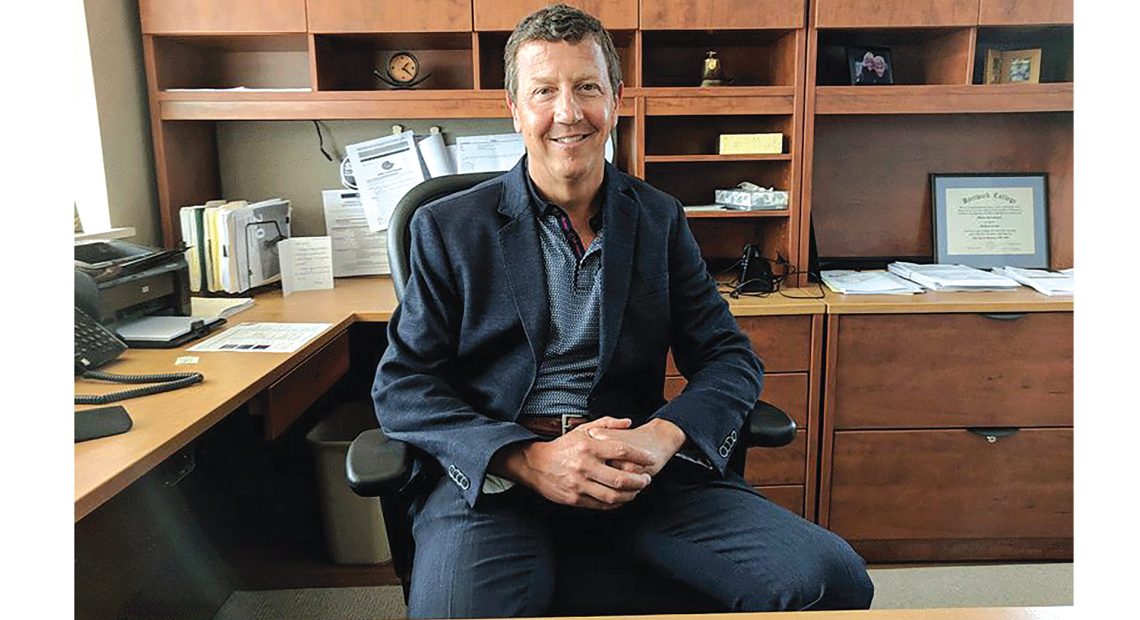
“A lot of businesses would like to have people back in the office,” said Wise, president of the Employers Assoc. of the NorthEast. “They’re struggling a bit with communication, with employee relations, and with staying in touch with people and knowing what’s going on with them.

“The idea used to be that people would come in, and you’d get a sense of how their night went, how their morning was going,” she added. “With Zoom communications, you just don’t get that same feeling. A lot of companies are feeling like they’re losing that personal connection with employees.”

Even some of the largest employers feel that way, as Walt Disney Co. workers found out in a recent internal memo from CEO Bob Iger, who is calling on all workers to spend at least four days a week in the office, starting March 1.

“In a creative business like ours,” Iger wrote, “nothing can replace the ability to connect, observe, and create with peers that comes from being physically together, nor the opportunity to grow professionally by learning from leaders and mentors.”

Still, Wise noted that many local companies seem to be moving in the opposite direction, by continuing to embrace hybrid schedules. “They’ve found productivity can be better when working from home remotely, where people don’t have any of the distractions of being in an office, and I think that hybrid model is going to stay.”

Amy Roberts, executive vice president and chief Human Resources officer at PeoplesBank, agreed.

“A lot of businesses would like to have people back in the office. They’re struggling a bit with communication, with employee relations, and with staying in touch with people and knowing what’s going on with them.”

“We implemented a flexible work-arrangement policy in the midst of COVID, and we still have a lot of people working hybrid, with some time in the office and some time working from home,” she told BusinessWest. “It really depends on the area a person works in and what the business needs are. We have a couple fully remote workers; we actually hired a person out of Illinois who works fully remotely.”

Like Wise, Roberts said it’s easy to see why remote work is appealing, from the elimination of commuting time to creating a focused work environment. “I think the flexibility of it is really helpful to people in terms of work-life balance. Or they might say, ‘I really need to get X done, and doing this particular work is best done when I’m home, so I can focus more.’”

Roberts said many companies are starting to pull everyone back into the office — especially businesses that stress a collaborative culture or require plenty of face-to-face work with customers — but not all. “I do think the hybrid model is here to stay, though I don’t think it works for everyone.”

Seth Stratton, managing shareholder with Fitzgerald Law in East Longmeadow, noted that, like many small businesses, his firm never fully left the office during the pandemic, and these days, everyone has been back for some time. But they have continued to use communication tools, like Zoom, that became popular when employees at most companies were at home.

“We were forced to embrace some technology and ways of working that carried over and make work more flexible, even though we’re back in the office.”

Stratton understands the value of remote work in some situations, drawing on examples from his own career.

“During the peak of the workday in the office, there are a lot of interruptions, and a lot of times, when I’m focused on revising a lengthy contract or drafting a legal brief to submit to court, I need time to focus mentally on what I’m doing, so historically, a lot of that will be done early in the morning or later in the evening, after the phone stops ringing,” he said, noting that working from home can create more time and space for such work.

Seth Stratton

Seth Stratton says remote work can reduce distractions, but also hinder communication and collaboration.

On the other hand, someone in a home office can’t just walk into the next room to tap someone else’s expertise.

“You can do that remotely, but it’s harder to get on the cell or set up a Zoom meeting; it’s not as seamless as walking 10 feet away. That affects you from a collaborative standpoint.”

And collaboration happens outside the office, too.

“In Western Mass., probably moreso than other markets, when it comes to business generation, marketing, and client development, this is a parochial business community; a lot of business is conducted through personal relationships, personal connections,” Stratton explained. “I might be having lunch at the Fort or at Nadim’s and see someone I know — ‘oh, I’ve been meaning to call you; let’s schedule a call. Or do you have a minute now?’

“It’s harder to make those connections when you’re fully remote,” he went on. “Being available, I think, is a hallmark of business development in Western Mass., at least in my experience.”


Successful Experiment

While it may have eventually surprised employers how effective their teams could be at home, Wise recalled the challenge of those first few weeks in March 2020.

“When it first started, nobody really had the computer setups or the communication tools to be able to work remotely from home,” she said. “Now, people are more able to work at home and be productive.”

These days, “while we have found some companies saying, ‘we want all employees in the office Monday through Friday,’ those are few and far between. Instead, what a lot of employers are saying is, ‘you know what your job requires; work with your manager on what days you need to be in the office and what days you can work at home.’”

As a Baby Boomer, Wise said, she understands the old-school mentality of employers who have always been able to see their employees at work, and may be hesitant to give that up.

“It can be a hurdle to get over that perspective that ‘I can’t see you, so are you working?’ Part of the communication piece is doing a better job as organizations to define productivity and what needs to happen on the job. And it’s been good for leaders and workers to tighten up some of the parameters — ‘you know what’s expected of you, and you and I need to set that ahead of time, because things can easily get out of hand if you’re not here every day.’”

It makes sense to put those parameters in writing, said John Gannon, a partner with the law firm Skoler Abbott in Springfield. “The accountability policy needs to be clear. I’ve seen policies that say, ‘we need to see proof that your children are in daycare.’ I’m not sure if I’d recommend going that far, but certainly the supervisors need to be paying attention to their employees when they’re home.”

Zoom meetings help, he said, but employees are still unmonitored for the vast majority of the workday. Some companies have even installed technology on home computers that logs keystrokes per hour.

“If they have employees working remotely, even in a hybrid fashion, in another state — which is not uncommon given Springfield’s proximity to Connecticut — they have to be cognizant of which state’s employment laws apply.”

John Gannon

John Gannon

“I don’t like that, personally,” Gannon went on. “But it’s an option for employers if they have concerns that the hybrid model results in less productivity. I wouldn’t recommend it unless an employer is having problems, because it is a privacy issue, and a lot of this comes down to trust; you want to trust your employees, and you don’t want to set up a model that says you don’t trust them.”

Wise has heard of keystroke monitoring as well, and said most employers in this region aren’t looking to go there. But they’re also still in an experimental stage when it comes to remote and hybrid schedules.

“A lot of organizations are still feeling this out — ‘let’s try this for six months; I know we did it during the pandemic, but let’s try it in the new year and see if it works out, or whether we need to make adjustments to it.’ Handbooks and policies are still catching up.”

And if employers have employees working remotely in a different state, Gannon added, they need to update that handbook to make sure employees in those states are getting a handbook with laws applicable to that state, and also make sure the company is registered to do business in that state.

“If they have employees working remotely, even in a hybrid fashion, in another state — which is not uncommon given Springfield’s proximity to Connecticut — they have to be cognizant of which state’s employment laws apply,” he explained. “If they’re working from home three or four days a week and coming in one or two days a week, their primary office is their home, and if that’s in Connecticut, they’re subject to Connecticut employment laws and Connecticut employment taxation.

Those laws touch on everything from paid family medical leave and sick time to injuries on the job.

“It may sound crazy, but you may have to address workers’ compensation,” Gannon said. “If you’re walking down your stairs in the morning to go to your home office, that’s not covered, but in your home office, if you fall out of your chair and hurt yourself, that may be covered.”


Losses and Gains

Roberts agreed that there’s an interesting dynamic at play now, with some employers worried they don’t have eyes on their employees, while others fret about losing office culture and the ability to keep workers engaged.

“How do they know if they’re happy, if they’re productive, if they’re getting what they need from their career development? If you don’t see them all the time, how do you mentor? There’s a lot of questions managers are grappling with when it comes to this new style of work.”

That said, employers who embrace remote and hybrid schedules are able to cast a wider net in recruitment, at a time when talent is difficult to come by.

“We’ve been able to advertise positions as hybrid, which certainly brings more candidates our way,” Roberts said. “People are looking for that flexibility, and if you’re able to offer a fully remote situation, you can hire someone from anywhere; you have the ability to get the best available talent. Unfortunately for us, a lot of our positions are hybrid or in the office or banking center; we don’t have the luxury of large companies that are fully remote — but we’ve increased the candidate pool for sure.”

Stratton said the tools of remote business has helped his firm expand its client base beyond Western Mass.

“It allows us to reach out geographically with clients because clients are used to working by Zoom meeting and don’t feel that same compulsion to meet in person that they used to,” he said. “That’s given us more flexibility to actually grow our footprint a little more.”

And grow it into regions where legal services cost more than they do in the 413, he added. “We always had a pricing advantage over areas like Eastern Mass. and Southern Connecticut, and we can more easily use that pricing advantage to our benefit by expanding our footprint and working farther outside Western Mass.”

Though hybrid work may be here to stay, Stratton said, most of his firm’s clients are small to medium-sized businesses, and the majority of them have emphasized getting workers fully back in the office, though some are embracing hybrid work schedules and remote-work tools.

“A lot of large, national corporations, you see fully remote, where a lot of their workers are in different offices anyway, so it’s less impactful to be spread out,” he added. “But small to medium-sized businesses in this area, in my experience, are generally pushing toward being back and find it more effective, which is consistent with our experience as a small business.”

There’s no one-size-fits-all model, however, and Roberts said everyone is still grappling with the new work styles and how to make them effective.

“We need to figure out how to mourn the loss of the old way and transcend to a new way of working. It’s not the same as it was 15 years ago, maybe even 10 years ago, where you were identified by the office you worked in, and you had celebrations and events, things happening there. It’s different now; people are looking for a different way of working, and employers have to think differently.”

Cannabis Special Coverage

After the Green Rush

The numbers are impressive, to be sure.

Adult-use cannabis shops in Massachusetts posted close to $1.5 billion in sales in 2022, up from $1.33 billion in 2021. Since recreational sales began in late 2018, the total figure is closing in on $4 billion.

That’s a big pie.

The problem, for the hundreds of dispensaries already open and many more at various stages of planning and development, is that each slice of that pie is getting smaller. As a result, prices are crashing, with some products selling for half of what they did a year or two ago.

That’s great for cannabis consumers. For businesses? Not so much.

But it’s not an unexpected development, not is it any sort of crisis, said Michael Kusek, publisher of Different Leaf magazine and one of the nation’s leading experts on the cannabis industry. But it’s certainly a challenge, one that promises to weed out some of the current players.

“You can’t solve the overabundance of product in the marketplace by transferring it to another market,” Kusek told BusinessWest. “You can’t make the product go away, so the price bottoms out. This has happened in every other market, so it’s not a shock.”

It will, however, require business owners to think smarter, focusing on quality, the customer experience, and other ways of differentiating themselves in an increasingly crowded marketplace. And the situation already has municipalities revisiting old concerns about a saturated market.

Northampton, where one of the city’s 12 dispensaries, the Source on Pleasant Street, recently closed, is the most notable case, as its City Council voted 6-3 last month to cap the number of retail cannabis shops at 12 going forward.

At press time, Northampton Mayor Gina-Louise Sciarra said she would not sign off on the cap, but with a two-thirds vote of the City Council needed to overcome any veto, the measure will likely still become law.

“We are not anti-business,” Councilor Marianne LaBarge said before the vote, as reported by the Shoestring. “We have a job, and we have heard from so many people to place a cap.”

Some residents at a hearing days before the vote expressed concerns about the impact of so many cannabis shops on the city’s youth, while councilors like LaBarge said they want to protect existing businesses from being crowded out.

Council President Jim Nash, one of the dissenters, said he favored a cap when recreational cannabis first became legal, but now believes the maturing marketplace is providing a natural cap, as evidenced by the Source’s closing and declining sales at other shops. He argues as much in a recent column in the Daily Hampshire Gazette, co-written with former City Councilor Dennis Bidwell.

“Since when does local government step in to protect the bottom line of existing businesses by excluding the entry of competition?” they wrote. “We don’t do that for beauty salons or pharmacies or anything else. It’s one thing to put a cap in place in the early stages of an industry’s development, before anyone has opened their doors. It’s another thing entirely to enact a cap that would freeze the market where it is, prohibiting further competition.”

What isn’t up for debate is that it’s getting tougher to turn a profit in an industry that’s already taxed about 70% and can’t claim many normal deductions. That reality, plus an ever-more-competitive marketplace, both inside Massachusetts and from surrounding states, is creating an environment that’s not unexpected for those who have followed the industry’s maturation in other states.

“So many people think, ‘if I get a license, I’m going to be a kajillionaire.’ Sorry, that’s not the case. If you’re in it because of the money, it’s going to be a tough road for you.”

People like Meg Sanders, CEO of Canna Provisions in Holyoke and Lee, who was in Colorado when that state, one of two, along with Washington, to pioneer legal adult-use cannabis in 2012, experienced its own ‘green rush,’ with a quickly saturated market causing prices to plummet. What Massachusetts cannabis businesses need to do, she said, is to focus on differentiating themselves in the right ways (see story on page 35).

“I think it’s going to be a painful year, but a necessary year. Honestly, it’s important,” she said. “So many people think, ‘if I get a license, I’m going to be a kajillionaire.’ Sorry, that’s not the case. If you’re in it because of the money, it’s going to be a tough road for you. We believe money is a byproduct, not a goal. We believe in running a good business, a responsible business, serving customers thoughtfully and respectfully and providing an amazing experience with lots of options on the menu. A cannabis purchase should be fun.”

Certainly more fun than selling the product at a time when economic realities in the industry are dramatically shifting.


Growth Potential

There’s no doubt that legal cannabis has been a boon to not only sellers, growers, and manufacturers, but to state and local coffers. Massachusetts imposes a 10.75% excise tax on purchases, while recreational cannabis purchases are also subject to the state’s 6.25% sales tax, and most municipalities levy 3% more.

David O’Brien, the president of the Massachusetts Cannabis Business Assoc., recently told the Boston Globe that the industry will remain strong despite its current challenges.

“Legalization has brought about change people can see. You can see it in the tax revenue, in the jobs that have been filled, in the dispensary storefronts that used to be empty, in the old warehouses that now host manufacturing companies — it’s all growth, it’s all progress, and the sky did not fall.”

Michael Kusek

Michael Kusek says the cannabis industry’s tightening profits are a natural evolution that has occurred in other states.

As for those jobs, about 22,000 workers were authorized by the state to work at licensed cannabis facilities as of December, making it an attractive field to enter, Kusek said. “Once they get a little experience under their belt, they’re infinitely more marketable. Head growers are making $100,000 to $120,000 a year.”

The problem, he noted, is that players coming into the market now are dealing with product prices that are much different than when they established their first business plans. And the regulatory hoops remain challenging in many cases, as is the decision of where to locate: in a community with limited licenses that are difficult to secure, or a community with a more laissez-faire approach, but also, as a result, much higher competition?

“I just talked to a couple of lawyers, and they’re not working as many licenses as they were two years ago,” Kusek said, and there could be several reasons for this, foremost being access to capital, which is still limited because most banks won’t lend for cannabis enterprises.

“If they can’t access capital, they’re forced to shoulder the ups and downs of the industry by daily revenues,” he added. “If you open a successful restaurant and want to open a second location, you can go back and get a loan to do that. If you want to open a second cannabis location to sell all this product you have, you can’t easily do it.”

“Regular businesses still get normal deductions, but we can’t deduct anything except the cost of goods. That creates a real challenge for overall profitability and cash flow.”

Meanwhile, cannabis investors in the Northeast are increasingly looking to what Kusek calls “the shiny new object” — New York, where shops started selling legal recreational cannabis just a few weeks ago. “That’s where the capital is going, which starves out the businesses we have here.”

And when capital dries up, it’s the mom-and-pop entrepreneurs that suffer, as well as social-equity candidates.

“The companies that operate in multiple states have more of a cushion; they can continue to roll forward,” Kusek said. “Who’s going to get hurt by this [competition]? People who have been trying to get a license for a long time. This just makes it harder for them if they didn’t get more of a leg up in the beginning.”

Sanders said the businesses that survive, both those currently operating and those just setting up shop, will be those that “hunker down a little bit and are super thoughtful with every dollar.”

“This is a business that has zero deductibility, except the cost of goods,” she added. “We have to be way more careful than any other business going through this recession. Those regular businesses still get normal deductions, but we can’t deduct anything except the cost of goods. That creates a real challenge for overall profitability and cash flow.”

Without examples from other states to consult, Sanders recalled, Colorado was immediately saturated, prices cratered, and the market became what she called “a race to the bottom,” with price trumping everything. “But as things got more sophisticated in Colorado, a lot of good operators started telling compelling stories about why you should spend money with this dispensary rather than that dispensary.”

That’s why she focuses on the stories behind Canna’s products and also on giving back to the communities in which she operates.

“Businesses need to be as lean as possible and as thoughtful as possible, and make sure you’re telling a compelling story about why people should buy your brand.”


Legitimate Concerns

In their recent column, Nash and Bidwell argued that public-safety and public-health concerns that motivated discussion about a cap on dispensaries in Northampton five years ago have not come to pass.

“There is, and always will be, an underground market for unregulated, uninspected marijuana. This black market is fraught with crime and suspect product,” they wrote. “The availability of legal marijuana puts a dent in this market, tilting the share of sales toward legal purchase rather than black-market ones. To the extent the market allows, additional regulated cannabis retail outlets will further reduce the use of unregulated, dangerous cannabis.”

And falling prices in legal shops may entice many long-time black-market customers to try different types of strains and products, Kusek said. “As prices come down, people will try and buy more. This is great for consumers; in some circumstances, it costs half of what it did. For consumers, that’s great.”

That’s even more true for medical users, he added, as they tend to be more price-sensitive than recreational users, since they often have to maintain regular usage with finite resources, since insurance won’t cover the product.

“This is still a young market, and consumers are still developing their preferences. It’s only been a couple of years, and people will develop brand loyalty and particular consumption methods, and they will spend their money to get those particular brands or products.”

Kusek agreed with Sanders that product quality is important, especially as consumers are still discovering what they like.

“This is still a young market, and consumers are still developing their preferences,” he told BusinessWest. “It’s only been a couple of years, and people will develop brand loyalty and particular consumption methods, and they will spend their money to get those particular brands or products. That will come over time.”

Kusek also believes the consumer base has room to broaden.

“People become cannabis consumers for a wide variety of reasons. We have a medical market and people for whom cannabis is a significant part of their medical treatment, and you have more people coming into the market and exploring cannabis for treating pain and sleeplessness. Those people are always going to be coming into the market, as well as people who are curious about it.

“I think one of the challenges in cannabis is connecting and finding consumers; with each new market that comes online, you get the people who are curious, or who are coming back to cannabis after not using it for a long time, people whose life circumstances have changed. There will always be new consumers.”

In other words, it may be a tougher business to navigate than when there were only a few dozen shops open in Massachusetts, but it’s still a dynamic field.

As Kusek put it, “it’s never dull, that’s for sure.”

Features

Determining Whether a Business Qualifies Can Be Complicated

By Scott Foster & Jacob Kosakowski


Scott Foster

Scott Foster

Jacob Kosakowski

Jacob Kosakowski

Business owners have been bombarded recently with solicitations from firms offering to help them realize millions of dollars through the IRS’s Employee Retention Credit (ERC) program, which was included in the CARES Act adopted in the early phases of COVID-19. The CARES Act also contained the popular, and well-documented, Paycheck Protection Program (PPP), with forgivable loans that kept many businesses afloat.

Originally, if a business received a PPP loan, it was not eligible to receive ERC. The initial IRS guidance on this could not have been more clear: “an employer may not receive the Employee Retention Credit if the employer receives a PPP loan that is authorized under the CARES Act. An Eligible Employer that receives a PPP loan, regardless of the date of the loan, cannot claim the Employee Retention Credit.”

However, subsequent legislation, namely the Taxpayer Certainty and Disaster Tax Relief Act of 2020, enacted Dec. 27, 2020; the American Rescue Plan Act (ARPA) of 2021, enacted March 11, 2021; and the Infrastructure Investment and Jobs Act, enacted Nov. 15, 2021, greatly expanded eligibility for ERC.

While some of these firms are offering legitimate services and will help businesses file accurate and legitimate claims for ERC, business owners should proceed with extreme caution due to several factors: the very complex rules regarding eligibility for an ERC, the IRS’s near-automatic acceptance of these filings (and payment of the credit, of which the firm usually collects 25% or more), the very strong likelihood that these filings will be audited in years to come (the IRS has up to five years to audit ERC returns), and the equally strong likelihood that the less-reputable ERC firms will have closed their doors and have liquidated all assets before those audits are completed, leaving the business holding the proverbial bag for tax penalties, fines, and interest.

“Perhaps the most complicated facet of determining eligibility under ERC relates to how its provisions interact with the Internal Revenue Code’s special aggregation rules for businesses.”

The IRS issued a warning on Oct. 19, 2022, stating that some firms “are taking improper positions related to taxpayer eligibility for and computation of the credit.” The IRS warning goes on to explain that firms “often charge large upfront fees or a fee that is contingent on the amount of the refund and may not inform taxpayers that wage deductions claimed on the business’ federal income-tax return must be reduced by the amount of the credit.”

Determining whether a business qualifies for ERC can be quite complicated. If the business was fully or partially suspended due to a governmental order limiting commerce, travel, or group meetings related to COVID, then it may qualify for the time during which it was so suspended. If the business was not suspended but suffered a “significant decline in gross receipts,” it may also qualify. A significant decline in gross receipts is measured on a quarterly basis, comparing 2020 quarterly receipts to 2019 quarterly receipts (50% or greater decline), 2021 quarterly receipts to 2019 (20% or greater decline), or Q4 2020 receipts to Q4 2019 receipts (20% or greater decline).

Perhaps the most complicated facet of determining eligibility under ERC relates to how its provisions interact with the Internal Revenue Code’s special aggregation rules for businesses. Under the aggregation rules, multiple businesses may be combined into an ‘aggregated group’ based on common ownership, where all employees of an aggregated group will be treated as employed by a single employer. The members of an aggregated group are determined based upon the stock or membership interest ownership of a business entity. If multiple businesses are comprised of similar ownership, those businesses might be combined into an aggregated group.

The ownership of a business might be comprised of individuals, trusts, partnerships, or corporations. The ownership composition of a potential aggregated group must be closely examined because the aggregation rules and thresholds will differ based on whether the group consists of corporations, LLCs, or partnerships. Further, the relationship of individuals to one another will also impact how the aggregations rules operate.

By way of example, imagine three individuals: Alice, Brady, and Carol. Each own a one-third interest in each of Alpha LLC, Bravo LLC, and Charlie LLC. Under the aggregation rules, the three LLCs would form an aggregated group, known as a ‘brother-sister controlled group,’ based on their common ownership structure. All employees of all three LLCs would be treated as employed by a single employer. As another example, now assume that Alice and Brady own a one-half interest in Alpha LLC, Brady and Carol own a one-half interest in Bravo LLC, and Carol and Alice own a one-half interest in Charlie LLC. Under the aggregation rules, none of the LLCs would form an aggregated group with each other because any potential aggregated group would not meet the requisite ownership threshold requirements.

An aggregated group will impact how the members of such group are treated under the ERC provisions. Most notably, the aggregation rules affect the determination of a business’ average number of full-time employees, as well as what constitutes a ‘significant decline’ in gross receipts among members in an aggregated group. The aggregation rules also impact how suspensions due to governmental orders are enforced among members of an aggregated group. Businesses should consider carefully examining their ownership compositions so beneficial business aggregations are not missed.

And remember, if it sounds too good to be true, it likely is.


Scott Foster chairs Bulkley Richardson’s Business/Finance Department, and Jacob Kosakowski is an associate in the firm’s Trusts & Estates Department.

Banking and Financial Services

Policy of Partnership


Bill Grinnell

Among other reasons, Bill Grinnell says Webber & Grinnell joined with the Alera Group because of its commitment to the agency’s local focus.

Bill Grinnell says last year’s move by Webber & Grinnell Insurance to become part of the national Alera Group hasn’t changed much about the agency’s business model or its relationships with clients. And that was the idea.

“We’re still managing the agency locally here in Northampton and Holyoke,” said Grinnell, the agency’s longtime partner. “It’s still basically the same crew we had before, outside of some normal turnover.”

So why the move to Alera?

“I turned 60 last year, and we’re looking toward the future of perpetuating the agency and continuing to grow it, so we began looking for partners to help us perpetuate that moving forward,” he said. “We talked to 10 to 12 overall, and Alera, hands down, was the one group that really fit all our needs, and thus we became part of the Alera Group.

Partner Mike Welnicki, who specializes in employee benefits, explained why Alera stood out.

“Our area is a tight-knit business community, and we knew, if we joined a firm that wanted us to rebrand right away, to maybe move our offices or join up with other companies and really change the way that our model worked, we were going to lose that small-business feel in Western Massachusetts,” he said. “What Alera told us was, ‘we’re going to give you all the resources both regionally and nationally, but you’ve been successful for over 100 years; keep running your business the way you run it, and we want to be part of that.’ That’s really what made Alera stick out immediately.”

“What Alera told us was, ‘we’re going to give you all the resources both regionally and nationally, but you’ve been successful for over 100 years; keep running your business the way you run it, and we want to be part of that.”

What has changed, Grinnell said, is the breadth of resources Webber & Grinnell can now access.

“Our business is split three ways: personal lines, commercial lines, and employee benefits. Alera has a group of other property-casualty agencies, other employee-benefit agencies, across the Northeast. And we’re on the phone or in meetings just collaborating with them all the time. For example, we might get an opportunity to work on a risk, but we might not have the expertise or experience to enable us to write that risk, but another Alera agency might specialize in that market niche. So we’re able to tap into their expertise, into their markets. It just brings extra insurance minds and experience to the table in addition to what we had already at Webber & Grinnell.”

Mat Geffin

Mat Geffin says Webber & Grinnell has been consistently growing both organically and geographically.

Jenna Duval, Commercial Lines manager at Webber & Grinnell, said Alera’s values also lined up with the local agency. “That’s where it was an easy sell with my team to get behind Alera; they really do work in a collaborative spirit, and they work with each person to make sure those individual needs are being met, and it’s not just the big corporate feel of one company. We run as an individual branch with that collaborative spirit, and it really does make a huge difference with morale; everybody is on board with it.”

Beyond the new affiliation, Webber & Grinnell has been growing both organically and geographically, said Mat Geffin, another partner. He was on Cape Cod when he spoke with BusinessWest, an example of how the agency’s reach has spread.

“Our roots are in Western Mass., and that’s where the bulk of our business is, but we get pulled into clients all over New England, just because of our approach, the way we work with clients, and the value they get from it. From an organic growth standpoint, year over year, I want to say we’re always consistently growing in that 8% to 10% range, some years bigger, some years smaller, but we’re consistently growing, and most of it is referral-based business. And I think it’s because of the consultative approach we take to this business, which clients really appreciate, and it differentiates us quite a bit.”


Threat Assessment

That approach ensures that clients understand all their risks and exposures so they purchase the right policy, but it goes much deeper than that, Geffin said.

“We get really involved in the client’s business. Of course, we have a huge personal-lines operation as well, home and auto, but speaking from the commercial side of the house, it’s about being a part of their business, being on their team — understanding what they do operationally and how that translates to risk management, rather than just looking at it purely from the standpoint of coverage and insurance and quotes.

“Any agency can just quote a bunch of policies; that’s the basic part of the job,” he went on. “But how do you understand their operations, their culture, their level of employee engagement, and how that translates to risk and risk management? That’s the difference. And I think that’s what clients value about what we do.”

Welnicki said Webber & Grinnell wants clients to see the agency as a key employee in their firm.

“You need to evaluate what revenues we’re receiving as your broker and decide, are we worth it, just like any other key employee? If we’re not, then we’re not the right fit,” he explained. “We really want them to view us as an important resource of their business, and that’s why our retention rates have been in that 97%, 98%, 99% range year after year, to help us achieve that 8% to 10% growth.”

“We’re consistently growing, and most of it is referral-based business. And I think it’s because of the consultative approach we take to this business, which clients really appreciate, and it differentiates us quite a bit.”

Risk is always evolving, Grinnell said, most notably in the cyber liability realm. Since major breaches like

Bill: It’s always evolving. The biggest new coverage that emerged in the last five to eight years is cyber liability, and even that started off really as a coverage to protect your data. The TJ Maxx breach in 2007, which compromised the data of 94 million customers, and other breaches that followed have spurred companies to get on board with protecting their data.

“And that’s evolved even more; the bigger exposure now is extortion, where cyber thieves are coming in and shutting down your entire computer system and saying they want to be paid $100,000, $200,000, $500,000, or you’ll never log into your computer system again,” Grinnell said. “Not only is the coverage new, but how you’re selling it and what the exposures are have changed.”

So has the reporting employers have to do now because of the Affordable Care Act and a host of other regulatory entities, Welnicki said.

“You’ve got human-resource folks wearing 19 different hats, and controllers, CFOs, and business managers trying to do the HR functions. Part of our job is help support human resources, make sure they’re in compliance with the DOL and IRS and ACA. So many of our clients really don’t have that classically trained human resources professional, and that’s where our team, not only locally but with Alera nationally, can help them make sure they’re in full compliance.”

On the residential side, customers need to understand what their policies cover as well, Grinnell said, while insurance carriers are insisting on certain levels of protection these days, especially in coastal regions or other areas vulnerable to catastrophic weather, “because the cost of claims has just skyrocketed.”


Creating a Culture

Webber & Grinnell’s relationship with clients even extends to conversations about workplace culture, which is key to employee retention, especially at a time when businesses are struggling with that.

“We practice what we preach here at the agency, and we’re really proactive about creating a positive culture, and we’ve learned a lot along the way,” Grinnell said. “As a result, we’re able to have those conversations with our clients. So we get into not only insurance, but also just plain running your business and how to make it better. We try to have those overall business conversations with our clients and not just focus on quoting policies.”

Duval seconded the idea of practicing what they preach. “We’ve continued to build our culture. We have a work-hard, play-hard atmosphere; we’re definitely busy, and we put education into everything we do to better our employees, but we like to have fun, too.”

For example, a social committee plans events for both in-office and remote workers that helps everyone feel part of the organization and its collaborative spirit, she explained. “We want to get to know the team and have team-building moments, so everyone feels supported and has an opportunity to meet and talk and have that collaborative spirit outside of work.”

Geffin noted that culture is so important at Webber & Grinnell that the agency has a ‘culture book’ that’s given to new employees as part of the onboarding.

“It’s a way to emphasize how important culture is to the company, because, again, we try to practice what we preach. We talk about employee engagement with our clients, with our prospective clients, but most importantly with ourselves.”

That culture extends to supporting some 50 to 60 organizations in the community, by sponsoring events, like Safe Passage’s Hot Chocolate Run, and sitting on boards; for example, Grinnell is treasurer of the Food Bank of Western Massachusetts, and Geffin is treasurer of Clinical & Support Options.

“Whenever an employee has an idea on something they want to do from a community standpoint, we’re always figuring out how we can work it in,” Geffin said. “I think that’s just being a part of a business community with our peers and colleagues throughout Western Mass. What makes Western Mass. so great is we all do this. It’s not unique to us. We’re just happy to be a part of that community.”

When the agency acquired Ross Insurance in Holyoke several years ago, that was an important consideration for Ross as well, Grinnell said, which is why Webber & Grinnell has continued to support many Holyoke organizations.

It’s all part of a local focus that Alera has promoted from day one and impacts all parts of the business, he added.

“Alera’s tagline is ‘national scope, local service,’ and I think it’s really important to emphasize that, because we wanted that national scope, that ability to further enhance our colleagues’ careers and help our clients get more resources, yet not lose the local touch and the local leadership,” Geffin said. “When we made that move, that was top of the list.”

Banking and Financial Services

Taking Flight

Amy Jamrog

Amy Jamrog says she started Four Wings and wrote her book Confetti Moments to broaden her impact as a coach and consultant.

Amy Jamrog says the past few years have certainly been a rough ride for investors — and anyone looking for financial advice.

Indeed, between the pandemic and its many side effects, wild swings — and serious dips — on the stock market, copious amounts of uncertainty, and non-stop talk about inflation and recession, people have been looking for a calm voice, someone who can help them make sense of all this, someone who can help them cope.

Meanwhile … those doing the financial advising have been looking for all of those same things. And this certainly helps explain the rapid growth and intriguing staying power of a relatively new resource for these financial advisors called Four Wings Consulting. That name, and the accompanying logo, have some real significance.

“The dragonfly is the only insect that can fly forward, backward, up, down, and side to side,” Jamrog, a 25-year veteran of the financial advising sector, told BusinessWest. “And so, my coaching is about helping people figure out which direction they’re currently flying in and getting them moving in a forward direction.”

Elaborating, she said the coaching service was designed to help financial planners come up with relevant content, innovative solutions, and new ideas month after month — and pass on what they learn (often about subjects other than money) to their clients. At the same time, they were getting needed support themselves.

“The dragonfly is the only insect that can fly forward, backward, up, down, and side to side. And so, my coaching is about helping people figure out which direction they’re currently flying in and getting them moving in a forward direction.”

“During the pandemic, I was finding that so many financial advisors were working really hard to help their clients, and not having any support for themselves and feeling really isolated,” she said. “I just put out this idea of creating a community of advisors and coaching them as a group.”

Initially she thought maybe 20 or 25 of her colleagues might be interested in being part of such a group. But to her surprise, 130 signed up for it, and most of them continue to join each week.


Light in the Darkness

For Jamrog, Four Wings has become one way to share and spread ideas and inspiration. Another is the book she recently wrote called Confetti Moments: 52 Vignettes to Spark Conversation, Connect Deeply & Celebrate the Ordinary, a title that really says it all.

The book, finished in August and launched in November, is now a Wall Street Journal and USA Today bestseller, popular with CEOs, team managers, and even families.

Confetti Moments is a collection of entries to a blog Jamrog started near the start of the pandemic called Wednesday Wisdom, which was started to bring some light to some very dark times. To explain, she turned back to when the world shut down.

“I wanted to bring something positive to our clients in the wake of such uncertainty and depressing information everywhere,” she explained. “So I started blogging weekly with uplifting stories that I thought would be a nice diversion for my clients.

Amy Jamrog book

“I did it every week for two years during COVID, and I came to find out that thousands and thousands of people were reading it and forwarding it to their entire companies or their departments,” she went on. “I heard from people who said, ‘my boss sends me this every Wednesday, and I love your stories.’ And the feedback from my readers was ‘I wish you could package all these stories into a book — I would read the whole book again.’”

She did, and they are.

The 52 chapters in Confetti Moments take titles that include “Sometimes We Need a Wider Lens,” “You Can’t Take It With You,” “Stay in Your Lane,” “Lower Your Expectations,” “What Our Scars Say,” and “When Eight Oars Are In Sync.” Collectively, they are designed to provoke thought and inspire positive change, said Jamrog, who is doing all this in addition to her day job as a financial consultant with MassMutual.

“There are opportunities to impact one client at a time — that’s a fine career, and many people do really well with that. I got to a point, maybe five or six years ago, where I really wanted to have a bigger impact on my industry.”

As she talked about both Four Wings and Confetti Moments, she said they were both born from a desire to broaden her impact as both a financial consultant and coach.

“There are opportunities to impact one client at a time — that’s a fine career, and many people do really well with that,” she told BusinessWest. “I got to a point, maybe five or six years ago, where I really wanted to have a bigger impact on my industry. I knew that the work my team and I do as financial advisers is very, very good and very different than the average advisor, and I wanted to teach that.”

This was the start of Four Wings, through which she now coaches roughly 100 financial advisors, who take part in monthly Zoom sessions. This consulting work started a few years before the pandemic, she noted, but it really picked up steam during the early months of the pandemic, when, as she noted earlier, advisors were isolated, their clients were looking for answers, and many were just searching for a guiding voice.

“It started with financial advisors feeling isolated, trying to help their clients financially, and being resourceful for them,” she said. “But they were realizing that many of their clients were just stuck; they couldn’t make financial decisions, or they [the advisors] didn’t know how to move them forward in the wake of such uncertainty and panic for most people.”

Three years later, the community of advisors she created, who pay a monthly subscription fee to take part, continue to meet, with participants from across the 413 and also across the country, all of whom are still helping clients cope with a volatile market, uncertainty, and growing fears about recession and what might come next.

“Advisors want to be resourceful and bring a positive message to the clients,” Jamrog said. “But at the same time, they also need an outlet, someone to vent to, someone to present their worries and concerns to and get some great feedback. The biggest challenge in being a financial advisor is that we give advice and guidance all day long, but sometimes it’s nice to actually get some advice and guidance; that’s what I provide, and that’s what these groups provide.”


Sparking Change

As for Confetti Moments, she said she’s already sold several thousand copies of the book, which is comprised of what she considers the 52 “best” of her Wednesday Wisdom blog entries.

Each chapter has the blog post, followed by some “Ideas to Spark, Connect & Create This Week,” and a page to write down some notes.

In the chapter titled “Stay in Your Lane,” Jamrog writes: Safety features on cars are designed specifically to keep the drivers safe. Too bad we as humans don’t come equipped with those warnings too. Wouldn’t be great if we came programmed with a little sensor that reminded us periodically to stay in our lane? How often do we take on things that are not our business? Do you find yourself straying into other people’s areas with good intentions — probably even genuinely meaning to help them — but then realize that staying in your own lane is the better, safer place? For everyone?

For those ideas to spark, connect, and create, or ‘prompts,’ as she calls them, she has these:

• Look around at different areas in your life. Where are you drifting out of your lane?

• In an effort to be ‘helpful,’ have you drifted into someone else’s lane? Do you owe them an apology and a promise to stay out of their way in the future?

• What is your lane? Take some time to define this for yourself since it can change over the years. Once you identify the area(s) you excel and thrive, you’ll be happy to spend more time in those lanes.

“The prompts ask you to change something in your life over the next seven days,” she explained. “And then you do it again next week.”

Elaborating, Jamrog said the book is inspiring people to “celebrate the ordinary,” and in the few months since the book came out, readers, many of them business owners and managers, are heeding that advice and encouraging others to do the same.

“I have five appointments this week for corporations who want to book me for corporate speaking engagements because companies want to bring more Confetti Moments to their employees,” she said, adding that this was a typical week.

Summing things up, she said that all aspects of her work, including her day job, are about creating such Confetti Moments. That’s what she meant by broadening her impact.

And if the volume of book sales, as well as the number of advisors attending her weekly Zoom meetings, are any indication, then she is certainly succeeding with that goal.

Banking and Financial Services

Saving Grace

By Barbara Trombley, CPA


With a labor shortage and looming recession, attracting the right employee is more important than ever. Many small businesses are struggling to find qualified candidates.

Other than wages and healthcare, how can you make your business more attractive to a potential worker? Often, a retirement plan is the answer.

With the absence of traditional pensions today, the onus for retirement is on the employee. Many small-business owners may feel a personal responsibility to enable their employees to fund a retirement. Not having one at all can certainly be a deal breaker for many applicants.

The ability to save, directly from a paycheck, is very attractive. But what plan should you offer, and what are the costs? What are the benefits of the different types of plans?

The most common type of plan is a 401(k). You need only one employee to set up a 401(k). The biggest advantage to this plan is the high level of salary deferrals that it allows. The limit for 2023 is $22,500 with a $7,500 catch-up contribution for those over age 50. Many plans can offer both pre-tax contributions and post-tax (Roth) contributions. There are many investment choices that are possible in a 401(k) plan. Also, many plans are associated with a financial advisor who will offer education to your employees, possibly helping them save more for retirement.

“Other than wages and healthcare, how can you make your business more attractive to a potential worker? Often, a retirement plan is the answer.”

Barbara Trombley

Barbara Trombley

One drawback is that a 401(k) plan can be one of the more expensive types of plans to set up and maintain. The plan needs to be either a safe-harbor plan, where the employer must make a specified matching contribution or automatically deposit 3% of the employee’s salary into the plan (any contributions made by the employer are tax-deductible), or the plan needs to be tested each year to ensure that the plan does not discriminate against highly compensated employees.

In the past, this type of plan had to be offered to all employees over 21 years of age who work at least 1,000 hours. The rules are changing to allow some part-time workers to participate. In my opinion, a 401(k) plan is the most advantageous plan to the employee but may cost the employer more in administration, setup fees, and safe-harbor contributions compared to other plans.

Another popular plan for employers is the SEP plan. Again, this plan can be offered by businesses with more than one employee. The main difference between the SEP plan and a 401(k) is that SEP contributions are made only by the employer; there are no employee contributions. This type of plan is very simple to set up and does not have testing requirements. The maximum annual contribution is 25% of salary, up to a limit of $66,000. The employer has to make the same percentage contribution for each of his or her employees.

The benefit of this plan is that it is very simple to set up; the drawback to the plan is that the business owner needs to make all of the contributions, which may not be economically feasible. As an advisor, I often see a solo business owner having this type of plan.

What if a business owner does not want the complexity and costs of a 401(k) and does not want to fully fund a retirement plan like the SEP? A Simple Plan may be the answer. A Simple Plan can be offered by a business with fewer than 100 employees. There is no annual filing, and you usually use a financial advisor to set it up and choose the investments.

The limit for an employee’s contribution is $15,500 in 2023, or $19,000 if the employee is over age 50. The reductions can come directly from payroll, and the employee can decide how much to contribute. The employer must either contribute 2% of each employee’s compensation or match 100% of employees’ contributions up to 3% of their salary (which can be lowered to 1% in any two of five years). This plan is attractive to many small-business owners as the administration overhead is drastically reduced compared to a 401(k), and there is a relatively small matching contribution that needs to be made.

Lastly, I have helped a few small businesses set up a Payroll Deduction IRA. This is the perfect solution for an owner that would like to enable their employees to save for retirement but may not have the funds for matches or administration. In this type of plan, the employee can contribute up to the Traditional IRA limit ($6,500 if under age 50 and $7,500 if over), with the funds drawn directly from their paycheck. There are no setup fees for the business owner and no employer matches or testing requirements. The employees own their account if they change jobs. Many people are eligible to contribute to a Traditional IRA, but having the deduction made through payroll makes the plan more accessible.

As an additional motivation for a small business to set up a retirement plan, the federal government has been increasing the incentives to the business owner with tax credits. The owner can deduct up to 50% or $500 of plan startup and administration costs for the first three years of the plan. Additional tax credits may become available as our government continues to encourage retirement saving. Consult your financial advisor or an employee-benefits specialist to set up a plan.


Barbara Trombley is a financial planner with Wilbraham-based Trombley Associates Investment and Retirement Planning; (413) 596-6992. Securities offered through LPL Financial. Member FINRA/SIPC. Advisory services offered through Trombley Associates, a registered investment advisor and separate entity from LPL Financial. This material was created for educational and informational purposes only and is not intended as ERISA, tax, legal, or investment advice. If you are seeking investment advice specific to your needs, such advice services must be obtained on your own separate from this education material.

Building Trades

Generation Next

Nicole Bercume

Nicole Bercume stands outside one of her current projects in Hadley.


When Ron Bercume passed away in 2021, his daughter, Nicole Bercume, said there was never a doubt that she would pick up the mantle of leadership in Bercume Builders, the company he started almost 40 years ago.

But it was a winding road that brought Nicole to that point, along which she settled in Florida, got married, built a law career with her husband, Andrew Bass, had kids, and returned home to Hadley.

Before her father succumbed to pancreatic cancer in October 2021, Bercume was already helping him build the final seven homes in a 28-home development in North Hadley called Shattuck Estates and Sapphire Estates; when he passed away, she stepped in and worked with the company’s longtime subcontractors to finish the job. By that time, she had already decided to stay on and continue Ron’s work.

“My dad had created such a fantastic company,” she told BusinessWest. “It would be a shame if it didn’t continue.”

Today, those 28 large homes on Crystal Lane, Indian Pipe Drive, and Nikki’s Way stand as the last success story in Ron’s career and the first in Nicole’s new one. Beyond that development, she is currently building her third house on a lot on Colony Drive, right across Shattuck Road, with a goal of creating a constant flow of residential projects, and even expanding the business beyond her father’s traditional focus on Hadley and Amherst.

“My dad had created such a fantastic company. It would be a shame if it didn’t continue.”

“Forty years is a long time,” Bercume said as she and Bass took BusinessWest on a walking tour of the development. “My parents started it together right when I was born, and they just went from there. Once I got older, I realized how talented of a businessman and builder my dad was. It’s not just that he would build homes; this was all wooded land, so he would design the actual subdivision. He would design the roads, and that takes a lot of skill.”

When he died at age 81, “he was still plugging away,” she added. “He always loved to work. All his subs worked for him for a long time. All the guys have known me since I was little, and I was very lucky to have learned from my father.”


Winding Path

Bercume had interest in the family business, but in her early 20s, the timing wasn’t right. “He was still working aggressively, and at that point, he was doing everything himself, so there wouldn’t have been a substantial role for me.”

So she went to college and law school in Florida, met Bass, and moved back to Hadley in 2015 and passed the Massachusetts bar. She started working at a firm in Northampton, while Bass started his own firm; in 2019, they bought a building on Route 9 in Hadley, which today houses Bass/Bercume Law Offices. Bercume handled the firm’s real-estate practice, while Bass handled the litigation practice.

Bass started out in consumer-protection work, particularly around Massachusetts’ lemon law. “That was really strong, so I started doing those cases all over the state; they mostly went to litigation because the dealerships wouldn’t resolve the cases, so that’s how I got into litgation,” he recalled. “After I got rolling, I got into construction litigation because Nicole’s dad had a lot of cases, so litigation became my core focus.”

Nicole Bercume and Andrew Bass

Nicole Bercume and Andrew Bass live in the 28-home development in Hadley that Nicole’s father started and she completed after his death.

Cases in that realm include land-use issues, contracts, and purchases of land; at one point, Ron settled a notable case with Tofino Associates of Hadley over a roadway issue in the Amherst Hills development near the Belchertown line.

Bass was recently recognized by Lawyers of Distinction as one of the top 10% civil-litigation attorneys in Massachusetts. Meanwhile, over the past couple years, Nicole was transitioning away from the practice into her new role leading Bercume Builders. “My father did teach me everything; once we had our kids and moved back here, that’s when he taught me everything.”

Ron typically built large homes with “classy, simple interiors, not a lot of clutter,” Nicole said, noting that homes in the new development start at 3,000 square feet, and typically feature open floor plans, high-end appliances, and maple flooring — and each was built in just four months. After her third house on Colony, she said she’s on the cusp of buying more land to develop a subdivision like the Shattuck/Sapphire project.

Woman’s Work

At a time when it’s still uncommon for a woman to lead a building firm (see related story on page 25), Bercume doesn’t particularly care if people question her abilities, noting that the subs who worked with her father for, in some cases, decades know what she can do — and they know she’s committed to her father’s values.

“My father really had such a great process. Even if you didn’t like my dad, you definitely respected him because he was an astute businessman, and he was just on top of it.”

“My dad’s greatest skill was that he had good taste; he picked out all the plans himself. People always say you know when a home is a Bercume home because they’re attractive and clean and classy-looking,” she said. “Construction defects were never an issue for him because, the second there was a problem, my dad, who could never sit still, would take care of it.

“He always did higher-end homes for whatever the era was,” she continued. “He liked big homes; the bigger he could build, the more fun it was for him.”

And when she got her Massachusetts construction license and reaffirmed her working relationships with those longtime subs, she knew it would be fun for her, too.

“My father really had such a great process. Even if you didn’t like my dad, you definitely respected him because he was an astute businessman, and he was just on top of it. All his subs respected him, and that transferred to me nicely. He taught me a lot, so I know what to expect from everyone, and it was very fluid.”

It’s just another way Bercume Builders has been a generational success story — one that occupies Nicole’s earliest memories, when she’d visit Ron at job sites. “And now, our three kids are always on the job sites with us.”

Because it’s never too early to introduce them to the family business.

Commercial Real Estate

Building Momentum

Michael Martin, left, and Nick LaPier

Michael Martin, left, and Nick LaPier have acquired 333 Elm St. in West Springfield and made it home to their businesses.

In many respects, Nick LaPier is back where he started. Or at least back to where he started his own accounting firm in 2003.

That would be the office building at 333 Elm St. in West Springfield.

Back then, he took a tiny office (600 square feet) on the first floor. There, with his mother, Elaine, serving as an office manager, he quickly grew his firm and eventually moved out and up.

Today, he is co-owner of the property where he first put his name on the door, along with Michael Martin, managing partner of Paladin Wealth Partners, which will soon be expanding with a second office at 333 Elm, sharing the property with LaPier Dillon & Associates (LaPier partnered with Brian Dillon several years ago); New Valley Bank, which moved in last August; and tenants that will occupy roughly 1,500 square feet of space currently being built out.

Together, they’re filling the parking lot and bringing new vibrancy to the property known to many in the community as the ‘Checkwriters Building’ (the payroll company occupied most of the property before outgrowing the space and moving to Northampton in 2021) and, before that, as the home to a dental practice — Dr. James Sady built the property in 1975 — and other tenants.

It was also home years ago to Multi Bank, where LaPier and his wife, Kathy, secured their first car loan.

So LaPier has a long history with the property, and he and Martin intend to write more chapters, starting with the relocation of their businesses to that site, thus becoming part of the revitalization of West Springfield’s downtown, a work in progress that includes the redevelopment of the former United Bank property, 95 Elm St., just a few blocks to the south; some new restaurants; and planned traffic improvements, including a rotary at the intersection of Elm Street and Route 20 (more on that later).

“The hope with this move is that, as we continue to grow, we will have the space available to accommodate that growth.”

LaPier, Dillon, and the accounting firm’s other employees finished moving in just after the new year. Meanwhile, Martin and others from Paladin Wealth Partners are set to move in later this month. While the property was acquired last summer, the two partners have invested heavily in renovating its spaces.

“We essentially gutted it and designed it from the ground to function as a full-service CPA firm,” LaPier said of his firm’s 6,500 square feet, adding that the company now has 16 employees. “We designed it to be the most efficient operation format for a CPA firm, but, at the same time, designed for 2023.”

With both LaPier, Dillon & Associates and Paladin Wealth Partners, the acquisition of 333 Elm started with the realization that they had outgrown their existing homes. For the accounting firm, that meant space roughly a mile away at 71 Park Ave., and for Paladin, space in Tower Square.

“The hope with this move is that, as we continue to grow, we will have the space available to accommodate that growth,” LaPier said.

Martin said his firm, which he launched with partner Pat Donnelly in 2018, has seen steady growth over the past several years. Having outgrown the space in Tower Square, the logical decision was made to expand with a second office.

“We have 2,500 square feet in Tower Square, and we were full,” he told BusinessWest, adding that, at the advice of his son, Ryan, who once worked in sales at Checkwriters (and now works at Paladin Wealth Partners), he took a close look at the 333 Elm St. property. Later, he would partner with LaPier, his long-time accountant, to acquire it for $1.9 million.

But there were other considerations for this acquisition beyond the need for more space.

Both LaPier and Martin were looking for real-estate investment opportunities, and when the property came on the market in 2021, they gave it a close look and decided that, in addition to a storied past, it had a solid future, given its location, parking, and other amenities.

Nick LaPier, left, and Brian Dillon

Nick LaPier, left, and Brian Dillon in their renovated space at 333 Elm St. in West Springfield.

Soon after taking ownership, they signed New Valley Bank, an emerging player in the region’s financial-services sector, to a long-term lease for what is now its third location. A solid tenant, the bank also brings potential new customers to both LaPier, Dillon & Associates and Paladin Wealth Partners, he said, as well as needed foot traffic in the city’s emerging downtown — a story both partners wanted to be part of.

“Elm Street’s a growing area; that’s another reason to invest here,” LaPier said. “There’s been positive growth on the street for the past 10 years, and it appears that the city wants to continue developing it as a business corridor; we want to be part of that story.”

West Springfield Mayor William Reichelt confirmed those aspirations. He said there has been significant progress made in making Elm Street more of a destination in recent years, especially through the redevelopment of the former United Bank Building, which is now home to several tenants, including Tandem Bagel Company, Future Health, Kindred at Home, and several others.

Having 333 Elm vibrant again, especially with service businesses that will have employees but also bring people to that location, will certainly bring more momentum to that central business district.

“Just to have more bodies in the downtown is good overall,” Reichelt said, referring to employees working at that location. “There are now more people who are going to go eat at Tandem, the Celery Stalk, or the other restaurants in the area. They’re going to bring customers and more foot traffic down here, and that’s what our downtown is going to thrive on.

“That building being vacant really hurt us — all those employees who weren’t there anymore,” he went on, adding that the property had been largely vacant for roughly two years.

The parking lot is filling back up again, a positive sign for the city and the start of another intriguing chapter in the story of a property with an already-rich business history.

Features Special Coverage

Going the Extra Mile

AST

AST President Billy Kingston, center, with his sons, Chris, left, vice president of International Services, and Tim, vice president of Domestic Services.

Billy Kingston says the global shipping business has historically been an ultra-challenging, often-misunderstood sector of the economy, one defined by heavy competition, demanding customers, unseen twists and turns, and a landscape that can, and does, change quickly and often.

And that was before COVID and the manner in which it eventually turned the supply chain on its ear, inflation, the war in Ukraine, higher tariffs on many goods, a workforce crisis, soaring fuel prices, remote work, and everything else that has happened over the past few years.

Summing it all up, Kingston, president of All States Transport, better known as AST, said this has certainly been a tumultuous and very difficult time for this industry, one that AST has withstood because of all it can bring to the table, especially (in his case) a half-century of experience, but also a deep, talented core of employees, connections around the globe, and, most importantly, a commitment to delivering for customers and going the extra mile.

Those are both industry terms, sort of, but they help explain why AST, a domestic freight broker and international freight forwarder, terms that are self-explanatory, is able to stand out in a sea of competitors, both domestically and globally, in a business where firms are tasked with getting things from here to there — or there to here — in a timely fashion.

Elaborating, he said the keys to success for any company in this business are flexibility, the ability to move quickly and effectively, establishing trust with customers, and amassing a track record for success in delivering for clients, in every sense of that phrase.

“We arrange for transportation of goods to and from our customers anywhere in the world,” said Kingston, offering a simple explanation for work that is anything but simple. “The domestic side of the business is how we started way back, and that side of it is very active. The international side has been growing over the years and doing well; we move freight internationally by land and water.”

“We have so many great customers … if you’re upfront with them, they’re going to be upfront with you. That way, you can work through things, because transportation is nothing if not problems that have to be worked through.”

“It’s a rugged business with real issues, and we live them,” continued Kingston, who leads a staff of 20 along with his sons, Chris, vice president of International Services, and Tim, vice president of Domestic Services. “Through all of the ups and downs of the economy, fuel issues, and supply-chain woes over the past few years, it has just been very challenging.

“For us as a company, it has been our best period of time, business-wise,” he went on. “But it’s also been the most difficult to operate in.”

In a wide-ranging interview, the Kingstons pulled back the curtain on an industry that few outside really know, one that is settling back into something approaching what was happening before the pandemic, although no one came close to using the word ‘normal.’

To put things in perspective, Billy Kingston said that, before the pandemic, the cost for a shipping container coming in from China was $4,000 to $5,000. At the height of the pandemic, that cost had soared to $25,000 to $30,000.

“The spike was just amazing, and at that price, you were bidding, and hoping, to be able to get a container, and then hoping to get a spot on a ship to come this way,” he said, adding that the impact of the many issues within the shipping industry on inflation and the general economy cannot be understated.


Train of Thought

As he talked about the global shipping business, Chris noted that, like other sectors of the economy, this one has a language all its own, with an alphabet soup of acronyms.

These include TL (truckload), LTL (less than truckload), DAP (delivered at place), DPU (delivered at place unloaded), and myriad others.

Learning this language and helping clients understand it is just one of the many nuances of the global shipping business, said Billy, who got his start in it back in the mid-’70s, working in sales for several different national trucking companies as well as an international freight forwarder.

After working in the business for many years, he decided he knew it well enough, and had enough solid connections, to strike out on his own. He started All States Transport in the basement of his home in the Forest Park section of Springfield in 1985.

The global shipping industry is highly competitive and ever-changing, and the pandemic only added several additional layers of challenge.

For the first year or so, it was a one-person operation that eventually moved into a small office in Market Square in downtown Springfield, adding employees as it continued to grow and expand its portfolio of clients, many of which have stayed with the company through its history.

The company had a few different homes — as well as its own small trucking company, which it operated out of property on Avocado Street in Springfield for several years — before settling into its current location on East Columbus Avenue, the former home to the Leonard Gallery and Sam’s Glass.

For the past 15 years, AST has also operated a small office in Miami. At one time, it also housed a trucking operation there, but that, like the one in Springfield, became difficult to manage. So, in both locations, the company has returned to its roots — and its routes — as a freight broker and forwarder.

“When the pandemic hit, because there was so much uncertainty in the general economy, you saw companies all over the world closing down and canceling orders that had been in place for a long time.”

As he explained the operation, Billy said that, in a nutshell, AST goes about finding global shipping solutions for its many kinds of clients, most of them manufacturers. About 80% of the company customers are based in Western and Central Mass., Northern Connecticut, and Rhode Island, he said, with the rest spread out over the country.

As a broker, AST will work with a client to secure the shipping of goods to or from their business. To do so, it works with trucking outfits across the region and around the country, as well as rail-service providers and sea and air carriers. What separates the many (as in thousands) of competitors in this field is their ability to make and maintain connections with carriers, know and understand the market, move quickly (many clients want same-day service), and deliver on both price and quality of service.

And all this requires an experienced, talented workforce. “You need a staff that is familiar with the marketplace and has all the tools and technology they need to succeed,” Billy explained. “It’s a fast-moving, time-sensitive, rate-conscious industry — that’s what it’s about.

“We have other customers that we’ve done business with for years and years … they don’t ask us for rate on every load,” he went on. “In many cases, we have the ability with those customers to move up or down as we need to, to service their needs and ours. And that only comes from years of good faith and years of trust, built up between us and our customers because they know that if we need to add extra dollars to a rate, there’s a good reason for that. They also know that if we can reduce that rate, we’re going to do that, and we do this as often as we can.”

Beyond rates, successful freight brokers and forwarders need to have a thorough understanding of the players in the shipping field, where they operate, and how, said Tim Kingston, adding that AST works with trucking companies across the country.

“And we need to, because trucking companies, by their nature, and by their history, generally service certain sections of the country,” he explained. “Some will go anywhere, but a lot of them carve out a part of the country that they want to service for their business needs. You learn those, and when you have freight moving to South Carolina, you know where to start.”

Chris agreed, and said one constant for the company through the years has been to apply an established set of values and principles and to effectively partner with clients and communicate with them — another must in this business.

“It’s a super-competitive, time-sensitive, money-sensitive industry that changes on a dime in many cases. You need to have a staff that’s dedicated; you need to have a staff that’s used to hearing the word ‘no,’ because they hear it a lot.”

“If you have good news for a customer, give them good news; if you have bad news, something’s gone wrong, let them know early, communicate that, and try to work through problems,” he said. “We have so many great customers … if you’re upfront with them, they’re going to be upfront with you. That way, you can work through things, because transportation is nothing if not problems that have to be worked through.

“Sure, 60% of your loads are going to go without a hitch,” he went on. “The other 40% … that’s where the real work is, so we try to apply the same values across all our different sectors.”


Plane Speaking

This combination of experience, built-up trust, and ability to adjust to rapidly — and often profoundly — changing conditions, has enabled AST to not only thrive for the past four decades, but also persevere through this recent, and ongoing, period of heavy turbulence.

Indeed, as noted earlier, this challenging business has become more so — make that even more so — over the past several years with the profound changes to the landscape brought on by the pandemic.

At the top of this list were supply-chain issues that could only be described as historic, said all three Kingstons, noting that the industry was seeing explosive surges in prices for shipping containers and backups at ports around the globe. It didn’t happen overnight, but almost.

Billy explained how it all happened. “When the pandemic hit, because there was so much uncertainty in the general economy, you saw companies all over the world closing down and canceling orders that had been in place for a long time,” he said. “Manufacturers then began cutting back, as well as transportation companies — steamship lines parked vessels all over the world because the demand wasn’t there. No one had an idea when it was going to come back, and that really kicked off the fluctuation in the supply chain.”

Chris agreed, and noted that, three or four months into the pandemic, an array of colliding forces made the situation much worse.

“A lot of people were at home, and they weren’t doing the things they always did in terms of discretionary income,” he explained. “People were at home, and they bought many more things than they normally buy. And then, you had the stimulus programs, which gave people more spending money. Then … you had a lot less international shipping capacity, but a giant surge in demand. Meanwhile, you had empty containers in the wrong places that took forever to get repositioned.

All this created a messed-up supply-and-demand curve, which would have resulted in a container coming in from China for $25,000, just for the cost of the container, never mind the tariff,” he went on. “It created a lopsided supply-and-demand curve, which pushed prices out of sight.”

This phenomenon, which has eased considerably in recent months but is still an issue, is just one of many that has contributed to this being what is considered the most volatile period ever for an industry known for volatility.

On top of everything else, the global shipping industry, like virtually every other sector, has been impacted by an ongoing workforce crisis, Billy said, adding, again, that success in this business is directly related to the quality and consistency of the people doing the work.

“It’s a super-competitive, time-sensitive, money-sensitive industry that changes on a dime in many cases,” he told BusinessWest. “You need to have a staff that’s dedicated; you need to have a staff that’s used to hearing the word ‘no,’ because they hear it a lot; you need to have a staff that understands customer needs and understands which customers can be a little more flexible and more reasonable at times, and which customers can’t be because of the nature of their business. They need to be thick-skinned because it’s not always pretty.”

Indeed, many in this business, including AST, are looking for help right now, he went on, adding that, over the past several years, and essentially from the beginning, AST has made itself into what he considers a good place to work — and grow.

“In this environment, especially, we take care of our staff in every possible way,” he said. “We have some benefits that are quite outstanding, especially for a company our size, and we’re proud of that. As a result, generally, our people are with us for a very long time; very few people leave, and we’re proud of that, too.”

Elaborating, he said that, because of tight deadlines and the need to deliver, there is pressure on employees, something the company’s managers work to alleviate as best they can.

“We have some fun every day — at different times, you never know when it’s going to happen,” he went on. “And there are days when the fun doesn’t come very quickly or very often because you’re right to the wall, morning ’til night. But we try to lighten things up when we can and in whatever way we can.”

Banking and Financial Services Special Coverage

Cloudy Forecast

Paul Scully

Paul Scully says loan demand was strong in 2022 despite the interest-rate hikes.

A constant flow of interest-rate increases didn’t exactly make borrowers happy in 2022, Paul Scully said, but it didn’t keep them from participating in the economy.

“I think, coming out of the pandemic, there was a pent-up desire to reconnect, within business circles and in communities. We had a terrific year for lending,” said Scully, president and CEO of Country Bank, which opened a new business production office in Tower Square in downtown Springfield last year. “That’s worked out beautifully for us. Our loan production in 2022 was the greatest level ever — we originated over $400 million in loans, almost $170 million in net growth.”

A broadening of the focus made a difference, Scully said. “Country Bank has been known as a commercial real-estate lender; that was our niche. We’ve gotten more deliberately into C&I lending from 2021 going into 2022, and have done some significant C&I deals: $10 million, $20 million, $30 million deals. We have the expertise in house to be able to do that. And based on our capitalization — we’re one of the highest-capitalized banks in the Commonwealth — it gives us the opportunity to be able to grow along with businesses and customers.”

bankESB’s holding company, Hometown Financial Group, continued to grow in 2022 as well, with the acquisition of Randolph Bancorp and its subsidiary, Envision Bank, which was merged into Abingdon Bank, another Hometown holding, more than doubling its presence on the South Shore.

“The most interest-sensitive customers are residential borrowers, and as residential mortgage rates rose throughout 2022, we saw the volume of residential lending, especially refinances, drop dramatically. Commercial lending is definitely impacted as well, though not to the same extent.”

“We’re in a very low-margin industry,” said bankESB and Hometown President and CEO Matt Sosik, explaining why growing geographically to create scale is an important part of the company’s strategy. “Any business person will tell you costs are rising, whether it’s insurance, utilities, fuel oil, you name it — and, of course, wages. It’s the same for us, and if we’re not growing, we’re going backward.”

That said, “we had our best earnings year ever in 2022, and it wasn’t even anywhere near second place,” Sosik noted.

Part of that was the fact that interest rates for borrowers rose so quickly that the lag between those rates and the rates paid to depositors generated income for banks. But heading into 2023, margins are again shrinking as deposit costs rise, and a slowing economy has some people worried about a possible recession, which would further soften the loan market.

“The most interest-sensitive customers are residential borrowers, and as residential mortgage rates rose throughout 2022, we saw the volume of residential lending, especially refinances, drop dramatically,” Sosik said. “Commercial lending is definitely impacted as well, though not to the same extent.”

Tony Worden, president and CEO of Greenfield Cooperative Bank, agreed.

“Obviously, the residential market became soft because of what’s going on with rates as the year progressed,” he told BusinessWest. “And frankly, the commercial lending market became softer because people don’t know what the economy is going to do going forward; they’re keeping their powder dry, as they say. They don’t want to make big decisions if they don’t know how the economy will turn out.

Matt Sosik

Matt Sosik says fundamentals like low inventory have kept housing prices high.

“This year, everyone is holding their breath to see what the outcome will be,” he went on. “Will the Federal Reserve be able to engineer a soft landing? Last year, we thought we were in for a couple of rate increases, but the rates went much higher than everyone thought they would. When you do strategic planning, you make assumptions about what the rate environment will be, and we were all wrong last year.”

This year, economic projections include not only the rate issue, but whether unemployment will rise, what the impact of energy costs will be, and much more. On the topic of energy, Worden said the region has seen a mild winter so far, so that could help people weather the still-high costs.

“I guess if people knew what was going to happen, they could make a lot of money. From a banking standpoint, a lot of loan customers don’t want to make decisions until they know where we’re all situated.”


Saving and Spending

Worden lend some recent historical perspective to what banks are seeing when it comes to consumer and business behavior, starting in 2020, at the height of the COVID-19 pandemic.

“For a few months, Americans were saving at a rate that hadn’t been seen in 80, 90 years. They were saving money, they weren’t going anywhere, there was a lot of stimulus, both federal and state, and banks saw their deposits increase tremendously because people were sitting on a lot of cash.”

While that’s generally not a bad thing for banks, he said, cooperative banks not only pay for FDIC insurance, but also pay premiums on the private Depositors Insurance Fund, which covers deposits beyond the $250,000 the FDIC covers. “All the deposits coming in but no loan demand cost us money in a way; we were paying insurance on all the deposits, but couldn’t put the deposits to work.”

In the second year of the pandemic, people were starting to spend again, take vacations, and work on their homes, while most stimulus had ended, so deposit levels crept toward a more typical environment, and loans picked up as well. And while the current interest-rate environment has made some potential borrowers skittish, Worden said it’s important to note that those rates are still historically low — yes, a fixed 30-year mortgage rate is north of 5% right now, but a generation ago, it was 17% or higher.

“I think it’s a mental thing with borrowers,” he went on. “Rates were so low for an extended time, you get used to that mentally, and it’s hard to readjust when they start going up again.”

“Last year, we thought we were in for a couple of rate increases, but the rates went much higher than everyone thought they would. When you do strategic planning, you make assumptions about what the rate environment will be, and we were all wrong last year.”

Still, Sosik said, the housing market remains strong due to the fundamentals of low inventory levels and those still relatively low interest rates. But especially with remote work taking hold, “people who may be inclined to think about moving may not want to give up their 3% mortgage.’

“And there’s not a flow of new inventory, so we have this interesting dynamic where rates are rising, but it’s not impacting home prices materially,” he added — especially for a class of higher-income cash buyers who aren’t interest-sensitive.

“There’s a lot of liquidity in the economy, a lot of it funneled toward the residential market,” he said. “Volume is still good, but inventory is still low. Everything is still working; it’s just more expensive to borrow.”

Scully said Country continues to see significant loan demand early in 2023 — “not at the level of 2022, but we are seeing good pockets of business on the commercial side.” Meanwhile, to help customers purchase homes, the bank kicked off a homebuyers’ program in the fall featuring no money down and no private mortgage insurance in select areas.

“We’re still seeing a decent residential market, not as robust as it had been, but still decent,” he said. “On the commercial side, we’re still looking at some interesting deals. But everyone is holding their breath when it comes to construction lending for large projects.”

That said, investors are seeing positive signs, he added, including a comeback for retail and hospitality. “The restaurant industry is starting to have workers come back.”

Meanwhile, Scully added, “unemployment is still pretty low, and we’re not hearing much of layoffs, so hopefully we’ll see the Fed reach its level, see that interest-rate changes have impacted inflation, and we may be starting to see the other side of this sometime in 2023.”

Tony Worden

Tony Worden says everyone is hoping the Fed helps the economy to a “soft landing” with its rate policy aimed at reversing inflation.

Worden said no one really knows where the economy will turn, though there are hopeful signs. “As we see inflation numbers coming down, we’ll start to get an idea whether what the Fed is doing is starting to work. And maybe they’ll start pulling back on rate increases. If they can pull off that soft landing, we might see people reinvesting in business, buying equipment, buying new properties. But I think everyone is waiting a little bit.

“When you have a good economy, banks do well; people are out investing, buying, selling, doing things,” he added. “When the economy is bad, banks struggle because no one’s out doing anything.”


Community Counts

The higher-than-usual heating costs that impact every homeowner affect bank employees as well, Scully said, which is why Country recently gave a $750 stipend to all its employees to mitigate those impacts, and other inflationary pressures.

But Country isn’t taking its focus off the community at large, recently adopting the tagline “made to make a difference,” which applies not only to customers and business clients, but to the community as well, where the bank has focused much philanthropic energy over the years to needs like healthcare and food security. In 2022, the bank donated close to $1.3 million, a year after donating a total of $1 million to two major food banks on top of its other giving.

Scully said the pandemic shed a spotlight on basic human needs, not only for banks, but their employees, who, at least in Country’s case, have been more engaged in recent years.

“We’re still seeing a decent residential market, not as robust as it had been, but still decent. On the commercial side, we’re still looking at some interesting deals. But everyone is holding their breath when it comes to construction lending for large projects.”

“We learned a lot about ourselves and humanity during the pandemic, and we have a lot of staff members who really flourished in the sense of being able to volunteer and give time to the community,” he explained. “This what our brand us all about.”

Worden said Western Mass. is fortunate to be home to numerous locally owned banks that are active in their communities by supporting nonprofits through direct donations and volunteer efforts.

“In other parts of the country, this isn’t a thing,” he said. “But up and down 91 are all these good, local, community banks, and we’re all doing what we can do for the community. Obviously, we want to make money; that’s how we stay in business and give raises to our employees and hire new employees. But when Western Mass. does well, we all do well.”

bankESB recently announced that a fundraising drive raised $35,000 for local food pantries, part of its robust charitable giving program known as the Giving Tree, which reflects the bank’s commitment to making a difference in the neighborhoods it serves.

“We try to give back to all the communities we’re in, and we pointedly give back to those in need, things like food insecurity, for both children and older folks,” Sosik said. “The objective of the Giving Tree campaign is around $1 million a year — giving that back to the communities we serve and trying to make a difference for those who truly need it.

“Food insecurity is a year-round problem,” he went on, “but we turn our focus on it a little more at the end of the year and make that the key part of our campaign.”

Looking out his window, Scully noted a $35 million project the bank financed. “That makes a difference for the property owner, but we want to make a difference for everyone in our community,” he told BusinessWest. “All community banks do a tremendous job with community giving, and we’re not cutting back on our giving. Our earnings may change, but we’re committed to our level of philanthropy.”

Commercial Real Estate Special Coverage

Building the Portfolio


Vid Mitta acknowledged that the emergence of remote work and its impact — still to be determined in many respects — on the region’s inventory of office space was certainly a consideration when he and business partner Dinesh Patel were deciding whether to submit a proposal for the purchase of the 1550 Main building in downtown Springfield.

But ultimately, this was just one of many considerations, he told BusinessWest, adding that the others — as well as his firm belief that business owners and managers will always see value in having people working together in one place — convinced the two serial entrepreneurs to move forward and answer the request for proposals sent by the property’s now-former owner, MassDevelopment, early last year.

Mitta and Patel eventually prevailed in the bidding to acquire the property — formerly occupied by the U.S. Federal Court and currently home to tenants ranging from Baystate Health to the Springfield School Department — for $6 million.

As he talked about its prospects for the future, Mitta focused on those other considerations that played into this decision, especially that age-old axiom when it comes to commercial real estate — location, location, location. Beyond that, though, the current tenant mix, the timeline on current leases, and the good overall condition of the building also played a factor in generating a green light.

“These properties are connected, and they are the two best buildings in Springfield’s downtown for class-A space.”

“Remote work is the main thing that comes to anyone’s mind when we talk about office spaces today,” he acknowledged. “But look at the location — this is what we were looking at, as well as the maintenance and good condition of the property. These factors led us to see this as a good investment. When vacancies arise, people have choices, and they’re going to move into the best building possible.”

Thus, another chapter has begun in what would have to be called a developing story, in every sense of that phrase. That would be the expanding portfolio of properties now owned by Mitta and Patel, either individually or collectively.

That list includes Tower Square and its recently renovated hotel, which has re-earned the Marriot flag, as well as several other hotels, 99 Restaurant & Pub locations, a Walgreens, three McDonald’s franchises, adult day-care facilities, early-education facilities, and more. These collective investments and entrepreneurial gambits earned Patel and Mitta BusinessWest’s Top Entrepreneur award just a year ago.

Mitta told BusinessWest that 1550 Main St. was a common-sense addition to the portfolio, one that gives the partners a property that is essentially full (97% occupancy), with a stable tenant base that also includes the Internal Revenue Service, U.S. Immigration and Customs Enforcement, regional offices for U.S. Sens. Elizabeth Warren and Ed Markey, the law firm Alekman DiTusa, and an attractive, well-maintained property in the heart of the central business district.

“These properties are connected, and they are the two best buildings in Springfield’s downtown for class-A space,” he said of 1550 Main and Tower Square. “With these properties, we’ll be well-positioned to attract new tenants looking for quality space.”

The property that has come to be known as 1550 Main was acquired by MassDevelopment from the federal government in 2009. At that time, it was roughly 70% occupied, said a spokesperson for MassDevelopment, adding that, after achieving all its stated goals for the property, the agency decided to put the property up for sale through a disposition process to allow it to refocus its efforts on other projects.

Dinesh Patel, left, and Vid Mitta

Dinesh Patel, left, and Vid Mitta, who together orchestrated a stunning turnaround at Tower Square, believe 1550 Main St. is a logical addition to their growing portfolio of commercial real-estate properties.

That includes an initiative in Greenfield, where MassDevelopment is partnering with the city and the Community Builders in the acquisition and redevelopment of the former Wilson’s Department Store property in the heart of the community’s downtown. The redevelopment will create roughly 65 mixed-income rental units and reactivate prominent first-floor and basement retail spaces through the relocation and expansion of Franklin Community Co-ops’s Greenfield store, Green Fields Market.

Referencing 1550 Main, MassDevelopment President and CEO Dan Rivera said, “working with tenants, partners, and the city of Springfield over the years allowed us to cultivate this property to its best and highest use. This type of focused teamwork is how long-lasting redevelopment takes root. It is what makes converting an old federal courthouse into a stunning multi-tenant office building possible.”

The property went on the market in the spring of 2022, and the request for proposals issued by MassDevelopment attracted a number of bids.

Moving forward, Mitta said several of the leases of current tenants will be expiring over the next several years. He expressed optimism for renewals, but also for new tenants looking to take advantage of the property’s location and other amenities.

“Tenancy is not a permanent thing — tenants come and go; we know that,” he said. “Some leases are going to expire over the next few years, but we know how to market, and we have a very strong team here.”

“Even those working at home still go to the office — businesses prefer the hybrid model. They need a place where people can collaborate, meet, greet, that kind of thing. That need is still there, and I don’t know if it will ever go.”

Elaborating, he said this team is hoping to attract some current occupants of class-B space to properties that are not much more expensive but bring a number of amenities that class-B properties do not, including parking garages, lighting safety, and that aforementioned location in the heart of downtown.

The property at 1550 Main differs from its neighbor, Tower Square, to which it is connected by a skybridge, in many respects, said Mitta. He noted that Tower Square required significant investment and “re-imagining,” a word he and Patel use often, such as with new tenants that include the YMCA of Greater Springfield. The newer 1550 Main will not require much of either, he said, which is another of those considerations that prompted interest in the building.

As for the trend toward remote work and hybrid work schedules, Mitta acknowledged that there is likely permanence attached to these trends, but, ultimately, he anticipates that there will still be strong demand for office space, especially in the class-A category.

“Even those working at home still go to the office — businesses prefer the hybrid model,” he explained. “They need a place where people can collaborate, meet, greet, that kind of thing. That need is still there, and I don’t know if it will ever go.”

For evidence of this, Mitta points to Tower Square, where he acknowledged that the number of people in the office tower on any given day may be lower than it was prior to the pandemic. But overall, space needs have not changed to a great degree, and new leases continue to be signed.

“Overall, rent is a comparatively small item on the P&L statement,” he said, adding that, for this reason, he has seen few if any tenants at Tower Square downsizing.

Law

Five Important Things to Know Going into 2023

By Amelia J. Holstrom, Esq. and John S. Gannon, Esq.


Massachusetts employers are used to the ever-changing employment-law landscape. As we close out another year and ring in a new one, it is clear that 2023 will bring new challenges and new requirements for employers throughout the Commonwealth.

AMelia Holstrom

Amelia Holstrom

John Gannon

John Gannon

We’ve rounded up the top five things employers need to know and keep an eye on as we turn the page to 2023.


Decision on Micro-units May Be Troubling for Employers

When a union attempts to organize a group of employees at a business, it files a representation petition with the National Labor Relations Board (NLRB), identifying the proposed bargaining unit, which is the group of employees the union seeks to represent and who will be eligible to vote on whether it gets to do so. Sometimes, employers will seek to add additional employees to the union’s proposed bargaining unit, as larger proposed bargaining units may be favorable for employers in representation elections.

In a recent decision, American Steel Construction, the NLRB, which interprets and enforces the National Labor Relations Act (NLRA), gave a powerful tool to unions by clearing the way for small bargaining units, often called ‘micro-units.’ Specifically, the board decided that it will approve a smaller subdivision of employees as a bargaining unit if they meet certain criteria.

Under this standard, unions are likely to be very successful in getting the NLRB to approve micro-units. As a result, employers are placed at risk of having to bargain with several small units of employees in one workplace.


NLRB to Surveil Employers’ Surveillance Measures

Businesses regularly monitor employees in the workplace. For example, employers may monitor telephone calls for quality-assurance purposes, install cameras in the workplace or dashcam systems in vehicles, or monitor communications sent and received on employer-owned devices. Such monitoring appears be under attack by the NLRB.

In early November 2022, the general counsel of the NLRB issued a memorandum regarding employee surveillance, in which she urges the NLRB to adopt a “new framework” for determining whether employer surveillance violates the law. Under this framework, violations may occur when the surveillance would tend to interfere with an employee’s rights under the NLRA or “prevent a reasonable employee from engaging” in activity protected by the NLRA.

“In a recent decision, American Steel Construction, the NLRB, which interprets and enforces the National Labor Relations Act (NLRA), gave a powerful tool to unions by clearing the way for small bargaining units, often called ‘micro-units.’.”

This could involve employee surveillance of suspected organizing activity. The employer will then get the opportunity to explain their legitimate, business-based reasons for the surveillance. At that point, the new proposed framework would require the NLRB to weigh the employer’s business needs for the surveillance against the rights afforded to employees under the NLRA. If the NLRB determines that the employer’s reasons outweigh the rights of employees, the NLRB will require the employer to disclose all electronic monitoring, the reasons for doing so, and how the employer uses the information it obtains. This crackdown on employee surveillance impacts unionized and non-unionized workplaces alike.


Update That Handbook for New Protected Characteristics

Massachusetts law prohibits employers from discriminating against employees based on a number of protected characteristics, including but not limited to race, color, sexual orientation, and gender identity. Effective Oct. 24, 2022, Massachusetts added natural and protective hairstyles to the list of protected characteristics under the law.

Accordingly, employers need to update their handbooks and other policies to reflect the additions. Your handbook should also include language on many other employment laws, including the state Paid Family and Medical Leave Act.


Changes to Paid Family and Medical Leave

Speaking of the Massachusetts Paid Family and Medical Leave Act, last month the Department of Family and Medical Leave released updated model notices reflecting new contribution rates effective January 1, 2023. If you have not already done so, those new notices need to be distributed to your entire workforce as soon as possible. Employers should also ensure that their payroll providers are planning to implement this change.

The department also updated the mandatory PFML workplace poster, which should be posted in a location where it can be easily read by your workforce. The poster must be available in English and each language which is the primary language of five or more individuals in your workforce, if these translations are available from the department.

The department is also considering changes to the PFML regulations intended to clarify employer obligations to maintain employment-related health-insurance benefits while employees are out on leave. Stay tuned in 2023 for developments on these proposed regulations.


Speak Out Act Requires Changes to Employment Agreements

On Dec. 7, 2022, President Biden signed the Speak Out Act into law (see story on page 27). The new law prohibits employers from including non-disclosure and non-disparagement provisions applicable to sexual-assault and sexual-harassment allegations and claims in agreements executed before the allegation or claim arises. It does not impact agreements with those provisions entered into after such a claim arises.

Although it may seem insignificant because it only applies to pre-dispute agreements, employers need to carefully review their confidentiality, employment, and other agreements executed by employees and ensure that the non-disclosure and non-disparagement paragraphs in those agreements do not prohibit the employee from disclosing or discussing sexual-assault or sexual-harassment allegations or claims. Employers would be prudent to include language carving out those claims.

Businesses are encouraged to continue to consult with counsel regarding these changes in labor and employment laws. The team at Skoler Abbott also wishes readers a happy and prosperous new year.


Amelia Holstrom and John Gannon are attorneys at Skoler, Abbott & Presser, P.C. in Springfield; (413) 737-4753; [email protected]; [email protected]

Law

Talking Points

By Briana Dawkins, Michael Roundy, and Mary Jo Kennedy


Effective Dec. 7, 2022, a new federal law, the Speak Out Act, limits the enforceability of pre-dispute non-disclosure and non-disparagement agreements relating to sexual-harassment or sexual-assault disputes in the workplace. Such agreements that were entered into before an actual dispute arises are now unenforceable.

Brianna Dawkins

Brianna Dawkins

Michael Roundy

Michael Roundy

Mary Jo Kennedy

Mary Jo Kennedy

The Speak Out Act defines a pre-dispute agreement as one that is entered into between an employer and an employee before a sexual-harassment or assault dispute ‘arises’ — that is, before an allegation of sexual assault and/or harassment is made. Often, employers require employees to sign non-disclosure and non-disparagement agreements upon commencement of employment in order to protect confidential or otherwise private employer information. Under the Speak Out Act, these clauses can no longer be enforced with respect to any sexual-harassment or sexual-assault claim that may arise in the future.

A non-disclosure clause is defined in the act as “a provision in a contract or agreement that requires the parties to a contract and/or agreement not to disclose or discuss conduct, the existence of a settlement involving conduct, or information covered by the terms and conditions of the contract or agreement.” A non-disparagement clause is “a provision in a contract or agreement that requires one or more parties to the contract or agreement not to make a negative statement about another party that relates to the contract, agreement, claim, or case.”

A sexual-harassment dispute involves “conduct that is alleged to constitute sexual harassment under the applicable federal, tribal, or state law.” A sexual-assault dispute involves a “non-consensual sexual act or sexual contact, as such terms are defined in [federal criminal law] or similar applicable tribal or state law, including when the victim lacks capacity to consent.”

The act’s protections apply not only to complaints of sexual harassment or sexual assault towards an employee, but also to complaints about sexual harassment and assault involving other individuals. The act’s provisions do not prohibit an employee and an employer from entering a non-disclosure or non-disparagement agreement after a complaint of sexual harassment or assault has arisen. Thus, the act does not prohibit such clauses, for example, in agreements settling sexual-harassment or sexual-assault claims after they are asserted. However, employers should exercise caution, as such clauses in settlement agreements may have significant tax implications for employers under the 2017 Tax Cuts and Jobs Act.

“The act’s protections apply not only to complaints of sexual harassment or sexual assault towards an employee, but also to complaints about sexual harassment and assault involving other individuals.”

The congressional rationale expressed through the language of the act is clear. Many women who experience sexual harassment in the workplace are forced to leave their jobs or their industries, or to pass up opportunities of advancement. According to the congressional findings identified in the act, one in three women face sexual harassment or assault in the workplace, approximately 90% of whom never file a formal complaint.

The congressional findings also state that non-disclosure and non-disparagement agreements between employers and current and former employees, prospective employees, and independent contractors can perpetuate illegal conduct by silencing survivors of illegal sexual harassment and assault. Therefore, Congress finds that prohibiting such non-disclosure and non-disparagement clauses will empower survivors to speak out, hold perpetuators accountable, improve transparency around illegal conduct, and make workplaces safer and more productive for everyone.

The Speak Out Act complements the enactment earlier this year of the Ending Forced Arbitration of Sexual Assault and Sexual Harassment Act (EFASASHA). That act, which applies to employers subject to the Federal Arbitration Act, prohibits mandatory arbitration agreements between employers and employees for sexual-harassment and sexual-assault disputes. It also applies retroactively to arbitration agreements between employers and employees that have already been entered into containing such mandatory arbitration provisions.

Following the enactment of the Speak Out Act and the earlier EFASASHA, employers are encouraged to be proactive about compliance and should review their template releases and agreements to ensure that pre-dispute non-disclosure and non-disparagement agreements do not violate these laws.

It bears noting that the Speak Out Act does not invalidate non-disclosure and non-disparagement agreements relating to claims which do not involved sexual harassment or sexual assault. Thus, employers may consider including ‘carve-out’ language for pre-dispute non-disclosure and non-disparagement agreements to make clear that the pre-dispute agreements do not apply to later-arising sexual-harassment or sexual-assault claims.

Employers should review their arbitration agreements and any language pertaining to future mandatory arbitration agreements to ensure sexual-harassment and assault claims are carved out from those provisions as well. Such agreements may be revised to include clear language indicating that, with regard to claims of sexual harassment or sexual assault, employee signatories will have a choice — they are not required to submit to arbitrations and may bring their claims in court. Employers may also wish to consider updating sexual-harassment policies in their employment handbooks to include similar clarifications.

In reviewing such employment agreements, confidentiality agreements, arbitration agreements, and employee handbook policies as they relate to sexual harassment and sexual assault for compliance with the Speak Out Act and the EFASASHA, it is recommended that employers seek legal advice and guidance from an experienced employment-law attorney.


Briana Dawkins, Michael Roundy, and Mary Jo Kennedy are attorneys in Bulkley Richardson’s Employment Law practice.

Health Care

One Step at a Time

[email protected]

Drew McConaha

Drew McConaha says breaking a fitness plan into manageable steps is key to sticking to health resolutions.


Drew McConaha knows all about New Year’s resolutions. And he knows why so many of them fail.

In many cases, it’s a desire to do too much, too quickly, the owner of Train for Life in Chicopee said.

“When they’re setting those resolutions at the beginning of the year, most people want to do everything as fast as possible: ‘I want to get into the gym six days a week,’ or ‘I want to go on the latest diet craze.’ They want to go 100 miles an hour into that. But that doesn’t really work. Fitness is one of those things that needs to be a lifestyle change.”

At a time of year when people traditionally set goals for fitness, nutrition, and other types of wellness — and often leave them behind by February — area health experts told BusinessWest the same thing: starting small is key.

“Most everyone wants to set goals; they say, ‘I want to lose 10 pounds,’ or whatever,” said McConaha, who explained that he works with members to write those goals down, examine them, and then — this is key — setting small action steps to make them more manageable.

“When they’re setting those resolutions at the beginning of the year, most people want to do everything as fast as possible. But that doesn’t really work. Fitness is one of those things that needs to be a lifestyle change.”

“If you come to the gym three days a week for a year, after a year, you’re going to make a huge amount of progress,” he said. “But if you start out going to the gym five days in a row and you haven’t been exercising for 10 years, you’re very unlikely to get back there for week two, because you’re going to be so sore, and that’s unmotivating, because now you can’t move; you can’t go about your daily activities. Lots of times, that’s what derails people when they jump into something at the beginning of the year.”

That’s where having a coach can make a difference, he added. “We talk about smart goals all the time, having manageable, attainable, realistic goals. Having a very specific, small goal each day instead of focusing on the large goal — say, losing weight — will make it much more attainable.”

Dr. Kathy Mueller, who practices integrative medicine with Trinity Health of New England Medical Group, went even further, explaining a philosophy she shares with patients called ‘tiny habits,’ popularized by behavior expert and author BJ Fogg.

To start the journey toward changing a habit, she explained, “pick something that takes fewer than 30 seconds that builds toward the ultimate goal. Want to exercise in the new year? Instead of saying, ‘I’m going to the gym three times a week,’ try a tiny habit: ‘I’m going to put on my walking shoes,’ or ‘I’m going to put my gym bag in the front of the car.’”

The idea is that, by wearing walking shoes, someone is more likely to go for a walk, and by loading the gym bag in the car, they’re more likely to stop at the gym when out and about. And when they achieve those steps, they can add larger goals, always building on small victories, not frustrating failures, Mueller said. “Practicing tiny habits is clever because it’s built on success.”

In fitness goals, the goal is to move more, she said, so people should just start there. If they want to incorporate pushups, start with two — which often becomes five, then 10, and eventually maybe 50. Setting out a lunchbox by the coffee maker each morning might not lead to bringing a healthy lunch to work every day, but it might have that effect some days, meaning fewer fast-food runs each week.

“There’s this idea that one day you’re a smoker, and the next day you quit. But if you quit over four months, you still quit. Incremental steps work for a lot of people.”

Dr. Kathy Mueller

Dr. Kathy Mueller

“With nutrition, have one fruit or vegetable every time you eat. Want a bagel for breakfast? Great, but have fruit with it,” Mueller explained. “The idea is to anchor your tiny habits to something you’re going to do anyway.”

And for those who want to cut down their alcohol intake — which has risen, on average, for Americans during the COVID-19 pandemic — they don’t have to quit all at once, she added. “Have a glass of water with each beer. You’re still drinking and being social, but you’re cutting your alcohol intake in half.”


The How and the Why

It’s a common refrain among health practitioners: you don’t have to do everything; just do something. Even a 10-minute walk twice a day or one 20-minute walk per day can help someone reach a goal of 150 minutes of physical activity per week, said Patrick Schilling, manager of Cardiovascular Rehabilitation and Wellness at Baystate Health.

“We know physical activity feels good, improves sleep, and lowers stress, and taking care of your body may help you feel rejuvenated and will give you the extra energy you need,” he noted. “Don’t forget that children should also be reminded to stay active for at least an hour per day for optimal health. If you just can’t make it to the gym as regularly as you have in the past, you can try to keep moving in other ways. Don’t try to find that parking spot close to the mall entrance; instead, opt for one far away so that you will have to walk more. And take the stairs instead of the elevator or escalator.”

As an integrative medicine specialist, much of Mueller’s work is helping patients change habits and achieve lifestyle changes through complementary therapies. Some are dealing with chronic pain or other ailments, but most are trying to reach certain goals.

“Sleep is essential for our health and well-being, and getting a good night’s rest is important to help strengthen your immune system to fight infections, reduce stress, improve our mood, and to stay energized. Most adults function best with seven to eight hours of regular sleep.”

Dr. Karin Johnson

Dr. Karin Johnson

“Sometimes, people off more than they can chew. They decide to go to the gym for an hour three days a week, then life gets in the way, then it’s twice a week, then once, then the habit’s done,” she said, adding that it’s better to focus on little steps that then become bigger ones.

Take the notion that exercise isn’t impactful if it doesn’t get the heart rate up for an extended time. “That’s garbage. And one fewer cigarette is one fewer cigarette. It helps break a bad habit, as long as you have something to replace it with,” she said, adding that a good strategy is to delay how long you can go without one, and then keep extending that. “There’s this idea that one day you’re a smoker, and the next day you quit. But if you quit over four months, you still quit. Incremental steps work for a lot of people.”

McConaha said it helps many people to not only break down their goals into small, actionable steps, but actually treat those steps like appointments, not just vague intentions.

“If you’ve got a hair appointment, you’re going to show up. If you’ve got a dentist appointment, you’re going to show up at that time,” he explained. “A lot of people say, ‘I’m going to try to go to the gym tomorrow afternoon.’ Well, if you don’t have someone waiting for you there for that accountability, if you don’t have a specific appointment, it’s very easy for other things to get in the way.”

Just as important is understanding the ‘why’ behind a goal, he added.

You say, ‘hey, I want to start working out.’ But what does that mean to you? Why are you doing that? Why is that going to benefit you? How is that going to make you feel? Do you want to be around longer for your kids? Do you want to be able to do certain things you haven’t been able to do in the past? Adding that specific why behind what they’re doing makes a big difference.”


The Rest of the Story

Another golden rule for general wellness is to get plenty of rest, said Dr. Karin Johnson, director of the Baystate Health Regional Sleep Program

“Sleep is essential for our health and well-being, and getting a good night’s rest is important to help strengthen your immune system to fight infections, reduce stress, improve our mood, and to stay energized,” she explained. “Most adults function best with seven to eight hours of regular sleep.”

And any set of wellness goals should include taking care of mental health as well, which can especially suffer around and just after the holidays, said Dr. Stuart Anfang, vice chair of Psychiatry at Baystate Health.

“Don’t forget to take care of yourself emotionally as well as physically,” he urged. “Take relaxation breaks when needed; eat and drink in moderation; get plenty of sunlight, which helps avoid seasonal depression; avoid social isolation; and understand that you are not alone in feeling stressed. Volunteering and giving to others less fortunate is a great way to get perspective and feel better about your own situation and stressors.”

At the heart of every effective fitness or wellness plan is knowledge, McConaha said, as going to the gym with no plan or no information about the equipment will only lead to frustration.

“It’s easy to take on too much at once and feel defeated,” he told BusinessWest. “If you come in and do one exercise wrong, and your back doesn’t feel great after that, that’s one more obstacle to something that’s already very challenging for people.”

With the right — meaning realistic — plan, and the knowledge and commitment to follow it, anyone can make positive resolutions that don’t fall away by Groundhog Day, he added.

“Our bodies are meant to move, and no matter what age you’re at, there’s always something you can do,” he said, adding that he’s worked with people from age 7 to 97. “You can walk. You can do very scaled versions of exercises. It’s just matching up the right plan with the right person. The older people get, the more they feel they’re too old to start, but they’re not too old to do the right thing for them, whatever that might be.”


Daily News Employment Home Builders Home Improvement News Real Estate Real Estate

WASHINGTON, D.C. —The construction industry registered 388,000 job openings in November, according to an Associated Builders and Contractors (ABC) analysis of data from the U.S. Bureau of Labor Statistics’ Job Openings and Labor Turnover Survey, which defines a job opening as any unfilled position for which an employer is actively recruiting. Industry job openings declined by 2,000 in November but were up 22,000 from the same time last year.

“Once again, good news is bad news,” ABC Chief Economist Anirban Basu said. “The economy-wide number of job openings remained elevated at approximately 10.5 million in November, virtually unchanged from October’s revised estimate. That’s the key takeaway in a still-red-hot labor market, as many employers continue to aim for expanded capacity to satisfy unmet demand. That is the good news.

“The bad news is obvious,” Basu continued. “Despite raising interest rates during the last 10 months, the Federal Reserve is still grappling with an excessively tight labor market associated with rapid compensation cost increases. To return inflation to its 2% target, the Federal Reserve needs a looser labor market with fewer job openings, higher unemployment, and slower compensation growth. The implication is that interest rates will continue to rise, adding to construction project financing costs and potentially setting the stage for sharp declines in activity in many privately financed construction segments.”

Biz Tips & Industry News Daily News Green Business News

AGAWAM — Farmers in Western Mass. are invited to apply for Local Farmer Awards of up to $2,500. These awards are for capital/infrastructure improvement projects related to growing, harvesting, and processing that will help farms compete in the marketplace. The Harold Grinspoon Charitable Foundation, in partnership with Big Y and with the support of other funders, is entering the ninth year of the awards program, which has helped more than 235 farmers carry out a total of 474 projects.

Some examples of how the awards have been used include electric fencing, no-till equipment, irrigation improvements, frost-free water systems, feed troughs, and shade cloth for greenhouses.

“Farmers don’t typically ask for help,” philanthropist and project founder Harold Grinspoon said. “They are genuinely appreciative of these awards and use the money in creative ways for projects to help their farms grow.”

To be eligible, farms must have gross sales of $10,000 or above and either be a member of buy-local organizations Berkshire Grown or Community Involved in Sustaining Agriculture (CISA) or farm in one the four counties of Western Mass. For a full list of eligibility requirements and application information, farmers are encouraged to visit www.farmerawards.org. The deadline for applying is Jan. 31.

Business Management Daily News Education News

WESTFIELD — Westfield State University will host a virtual information session for the master of science in accounting (MSA) program on Wednesday, Jan., 25 at 6 p.m. via Zoom.

The graduate program is designed to foster leadership skills and prepare students for successful careers in public and private accounting. It allows students to complete the additional 30 credit hours necessary to fulfill the educational requirements for the , (CPA) license in Massachusetts and several other states.

The program offers a foundation curriculum for students who have an undergraduate business degree but lack the necessary coursework in accounting to complete a series of prerequisite courses as part of the master’s program. The advanced curriculum is for students with an undergraduate major or concentration in accounting. It is comprised of 10 courses (the majority are offered in a hybrid format, and certain courses are 100% online) that can be completed in only two semesters. The MSA program offers students flexibility and affordability to achieve a greater degree of sophistication in accounting.

Information-session attendees will have an opportunity to speak with faculty and members of the outreach team about the program and its application process. The $50 application fee will be waived for all attendees. To RSVP, visit www.gobacknow.com. For more information, call (413) 572-8461 or email [email protected].

Business Management Commercial Real Estate Daily News News Real Estate

SPRINGFIELD — After 13 years of ownership, MassDevelopment announced it has sold 1550 Main in Springfield to Mittas Holdings, LLC and DGP Properties, LLC, owned by Vidhyadhar “Vid” Mitta and Dinesh Patel, respectively. 1550 Main is a 130,000-square-foot building with a highly visible public plaza and 103 parking spaces below grade, with physical connections via skywalks to adjacent garages.

“Revitalizing underused commercial properties helps bring additional jobs, foot traffic, energy, and economic growth to a neighborhood,” said Housing and Economic Development Secretary Mike Kennealy, who chairs MassDevelopment’s board of directors. “MassDevelopment’s stewardship of 1550 Main has sparked new life in a prominent building in downtown Springfield and demonstrated the value of investing in and modernizing properties to meet the needs of communities today.”

MassDevelopment President and CEO Dan Rivera added that “working with tenants, partners, and the city of Springfield over the years allowed us to cultivate this property to its best and highest use. This type of focused teamwork is how long-lasting redevelopment takes root. It is what makes converting an old federal courthouse into a stunning multi-tenant office building possible.”

In 2009, MassDevelopment purchased 1550 Main from the federal government. On arrival, the property was 70% occupied and in need of significant upgrades. After exceeding all goals, including reaching a current occupancy level of 98%, MassDevelopment put the property up for sale to the CRE market through a disposition process to allow the agency to refocus its investment efforts elsewhere. Current 1550 Main tenants include the Springfield School Department, Baystate Health, the Internal Revenue Service, U.S. Immigration and Customs Enforcement, and regional offices for U.S. Sens. Elizabeth Warren and Ed Markey. The new ownership group will assume all existing lease agreements.

“I want to thank MassDevelopment President and CEO Dan Rivera and his dedicated team for their continued belief and investment in our Springfield,” Mayor Domenic Sarno said. “The property at 1550 Main Street is a key piece to the economic stability of our downtown. Dinesh Patel, Vidhyadhar Mitta, and their team have a proven track record of property ownership, management, investment, and economic development, as they are also the owners of our Springfield Tower Square property at 1500 Main Street since 2018, and oversaw the grand reopening of our iconic Marriott Springfield Downtown Hotel. All of this makes them the ideal owners to continue the advancement and oversight of this important and vital economic-development property. I have the full confidence that they will continue to enhance our downtown Springfield footprint while providing the same quality of investment and management to the existing tenants of 1550 Main Street, including our Springfield School Department.”

Said Mitta, “I thank all public officials and local communities for supporting us to make such investments in Springfield. We will continue to do our best to match MassDevelopment’s role.”

Added Patel, “I am very excited to continue the fantastic job done by the MassDevelopment team. As a local real-estate developer, I also greatly appreciate Mayor Sarno’s support and trust in continuing the success at 1550 Main.”

Features Special Coverage

Udderly Innovative

[email protected]

David Barstow and Denise Barstow Manz

David Barstow and Denise Barstow Manz are part of the sixth and seventh generations now carrying on traditions — and creating new ones — at the family farm in Hadley.
Staff Photo

While she grew up on her family’s dairy farm in Hadley and enjoyed that lifestyle, Denise Barstow Manz had no intention of making the 200-year-old operation a career.

“The farm was a place that was fun, and I had a really good time playing with my cousins, being around large animals, and being around nature — it was an amazing way to grow up,” she recalled. “And then, as I got older and I started to see the numbers and realized that the farm was a lot of hard work and not an easy path to wealth, I thought that maybe I should go and do something else.”

She attended the University of New Hampshire — in part because of its renowned dairy program, although she chose a different major — and would later move west and work for the National Park Service, with stints at Yellowstone and Glacier National Park in Montana. And it was while on these assignments that she began to rethink what she would do with her life — and why.

“It finally hit me when I was in Glacier,” she said. “I was a trail guide, and I saw these people donating money to preserve these places. And I thought, ‘if everyone’s giving to places like this, who’s taking care of the places we come from?’ I thought about who was taking care of the place I came from that has been in my family for more than 200 years — and I wanted to be part of that story.”

And with that decision, Barstow Manz would also become part — and she stressed that word part early and quite often, because this is truly a family affair — of one the region’s more intriguing business stories: Barstow’s Longview Farm.

“This is a good place to raise a family in a multi-generational business — everyone can see how life works; the goal has always been to leave something for the next generation.”

It’s a story that includes most of the elements shaping the growth, evolution, and resilience of the local economy today. That list includes entrepreneurship, innovation, technology, clean energy, tourism and hospitality, and sustainable agriculture.

They all come together in an impossibly beautiful, picture-postcard setting, the historic Hockanum Village, framed by the Connecticut River and the Holyoke Range, scenery that belies the myriad and ever-more severe challenges facing dairy farmers — and all those in agriculture — today.

It was these challenges — and especially very trying times roughly two decades ago that prompted the sixth and seventh generations of the Barstow family to take the motto that has defined this business — ‘looking forward since 1806’ — to new dimensions.

Barstow’s Longview Farm since 1806.

Evolution and diversification have been hallmarks of Barstow’s Longview Farm since 1806.

Indeed, a family that has always embraced change and diversification (much more on that later) has taken some dramatic new turns in recent years, first with Barstow’s Dairy Store and Bakery, and later, through a partnership with Vanguard Renewables to build one of the first farm-powered anaerobic digesters in New England. Meanwhile, the 450-acre dairy farm produces 19,000 pounds of milk daily and is a member of the Cabot Creamery/Agri-Mark Cooperative; almost all of the farm’s milk is supplied to the Cabot/Agri-Mark facility in West Springfield and is made into Cabot butter and other products.

The anaerobic digester (AD), installed in 2013 and expanded in 2016, converts cow manure — the herd at the farm produces some 9,000 tons of it annually — and food waste into electricity, heat, and fertilizer.

It has become an important revenue source for the farm, but it also makes a statement about what the sixth and seventh generations of this family — and those that came before them — stand for.

“The AD speaks to what we believe in as a family — that we need to lower our carbon footprint and play a role in mitigating climate change,” Barstow Manz said, adding that, for this family, sustainability comes in many forms and means many things, including work to ensure that this business will be there for the next generations.

Her father, David Barstow, director of special projects at the farm, agreed. He said that, while many things have changed at this location — in general, but especially during his lifetime — what hasn’t changed is that concept of preserving, and persevering, for those who will continue the tradition.

“My father and grandfather used to talk about working with horses,” he said, adding that change and advancement are constants on the farm; the key is to embrace that change and be at the forefront of it. “This is a good place to raise a family in a multi-generational business — everyone can see how life works; the goal has always been to leave something for the next generation.”

“We got together as a family and decided that we needed to either diversify or get out of farming completely.”

All of the various components of Barstow’s Longview Farm make for an intriguing tour — one that usually includes lunch on site — and Denise and other family members offer many of them, all year long. More than that, these elements collaborate to create an inspiring new chapter to a story that began when Thomas Jefferson was patrolling the White House — and even a century before that, as we’ll see.


Herd It Through the Grapevine

They call it Pasture Day, and it is celebrated the first Saturday in May.

As that name suggests, this is the day when the cows, which have spent the winter in barns, get to head back into the pasture. It’s the unofficial start of spring, and a community event — many visitors, including several families living in the area, will come out, watch the heifers celebrate their first taste of fresh grass, enjoy live music, and have some ice cream.

An aerial view of Barstow’s Longview Farm

An aerial view of Barstow’s Longview Farm in the historic Hockanum Village.

“People kick up their heels and have a good time; they sit on the hill and watch,” said Barstow Manz, who doesn’t have a formal title, but serves as the farm’s marketing director. She also handles the farm tours, manages the dairy store and bakery, handles outreach, and acts as the main grant writer. She used to feed the calves, but the farm now has an automated calf feeder, one of many examples of innovation at this institution.

She said Pasture Day is just one of the many traditions that have lived on at this property since Septimus Barstow, originally from Wethersfield, Conn., acquired the property on the bank of the Connecticut River that was first farmed at least 100 years earlier by the Lyman family.

Originally a crop farm that focused on asparagus, as many farms in Hadley did, as well as squash, corn, tobacco, and other staples, the Barstow’s operation eventually evolved into a dairy farm after the advent of refrigeration, which provided an avenue for selling milk wholesale.

By the 1930s, dairy was the primary focus at the farm, she went on, adding that, with a herd of 300 cows, this is small to mid-sized operation, one that is dwarfed by huge operations in this country and overseas.

It’s one of a dwindling number of dairy farms both in Massachusetts and across the U.S., she said, citing statistics showing that this country loses five dairy farms every day.

“And when you lose those farms, you’re losing a lot,” she went on. “You’re obviously losing food and food security for that community. But you’re also losing open space, which is good for wildlife habitat, groundwater, climate resilience, and food security. And you’re losing that heritage and that connection to your past.”

The reason for such attrition is simple. This is a very difficult business to be in, she said, adding that the federal government controls milk prices, and margins have historically been paper-thin.

“Even though it’s very perishable, milk is marketed on a global scale, so we’re competing against New Zealand, we’re competing against California … and it’s kind of a broken system,” Barstow Manz explained. “The only real way for dairy farmers to make more money is to make more milk, which doesn’t always line up with demand. And we have no control over the price of the product we produce.”

There are only 115 dairy farms left in the Bay State, and there probably wouldn’t be any were it not for the Massachusetts Dairy Tax Credit, which enables them to remain competitive, she said, adding that there are six operations in Hadley alone, a concentration that testifies to the quality of the soil in that region.

In the early years of this century, the milk market essentially collapsed, primarily because of oversupply, she said, calling this a scary time for the Barstow farm and all the others in this market.

David Barstow

David Barstow says his family lives by the farm’s motto, ‘looking forward since 1806.’

“The milk market crashed like no one had ever seen or felt before in this country; we were getting $12 per hundred pounds of milk, when our break-even was $22,” she explained, adding that it was a critical time in the history of the farm, or another critical time, to be more precise.

“We got together as a family and decided that we needed to either diversify or get out of farming completely,” she recalled. “And that’s when we started talking about how we wanted to diversify and who we wanted to include. And we knew that we wanted to be thoughtful of what the next generation was interested in doing and what our strengths are.”


A Process of Evolution

Over the next several years, diversification would come in several forms, starting with the dairy store and bakery in 2008, an operation inspired in many ways by Denise’s cousin, Shannon Barstow, who does most of the baking. It’s an operation that would transform the farm into a true destination.

“We’re always trying to be mindful and committed to what’s going to be best for our herd, and also for our land, our workforce, our community, and our food system.”

“We understood that people were going to have to drive here if we were going to get the support and the revenue we needed,” she recalled. “So we did lunch, and we started probably too big for our britches. But we’ve definitely settled into who were are, and we have a really supportive community.”

The dairy-store operation and bakery offers both breakfast and lunch as well as a number of prepared foods — and ice cream. The bakery serves up pies, cupcakes, brownies, turnovers, croissants, scones, muffins, breads, and much more. The facility handles private functions, porch parties, and catering. Meanwhile, visitors can buy Barstow’s beef — everything from tenderloin steaks to ground beef — on site. There’s even a drive-thru for those who want or need to grab and go.

The facility draws visitors from around the corner, but also from across the state and beyond, said Barstow Manz, adding that it has become a real destination and a way to take the Barstow name and products well beyond Hadley.

“Most of our regulars are from Hadley and South Hadley,” she explained. “But we have people who come to us from Eastern Mass. because they love our beef, and from the Berkshires because they love our pies; we draw from all over.

Shannon Barstow

Shannon Barstow does most of the baking at the dairy store and bakery, which opened in 2008.

“We opened this place to save the family farm, and it’s had so many other amazing qualities to it that we didn’t really expect,” she told BusinessWest. “It’s become this time capsule for all these family recipes — most of the stuff that’s in the dairy case is Grandma [Marjorie] Barstow’s recipes. And it’s also a neighborhood gathering space — it’s a space where people can work close to home and also be part of a family farm and a local economy on a small scale.”

Indeed, the dairy story and bakery now employs 15 people and has provided many area young people with their first jobs.

The anaerobic-digestion system, launched at a cost of roughly $6 million, is not a supplier of jobs, but it is, as noted earlier, a supplier of electricity, heat, fertilizer — and also pride for a family that has, through its long history, been innovative.

The conversations about installing such a facility began around the same time the family was opening the dairy store and bakery, she said, adding that the system is another important step toward diversification.

Explaining how it works, she said the system takes the energy potential (methane) out of cow manure and food waste and converts it into enough electricity to power 1,600 homes. The food waste comes from local food producers, including Cabot/Agri-Mark, Whole Foods, the Coca-Cola plant in Northampton, and local restaurants.

The food waste and cow manure, both treated and in liquid form, are put into the digester, which Barstow Manz equated to a large stomach, with the gas from the ‘digestion’ process rising to the top of the nine-story facility. That collected gas combusts in an engine and turns a generator, thus creating electricity.

Heat, one of the byproducts of this process, is used to heat that system, provide hot water in the barns, and heat the eight homes on the property, she went on.

“It’s pretty cool that the system has lessened our reliance on fossil fuels as a business, but also on a personal level in our own homes — we don’t have to pay for oil anymore,” she noted. “We’re also getting a chemical-free fertilizer; that’s because most of what we put in we get back; we just need the gas.”

Like the dairy store and bakery, the AD, the second such system in the state and one of the first in the nation, is a reliable revenue stream at a time when such sources of income are needed in the wake of those razor-thin margins in dairy farming, she said, adding that it became reality through partnerships, such as the one with Vanguard Renewables, and grants from several entities, including the Natural Resource Conservation Service, the U.S. Department of Agriculture, the Massachusetts Department of Agricultural Resources, the Center for EcoTechnology, and other entities.


A Butter Alternative

Looking ahead, Barstow Manz said she and others working at the farm have a simple mission — to live up to their motto and continue looking forward.

“We’re always trying to be mindful and committed to what’s going to be best for our herd, and also for our land, our workforce, our community, and our food system,” she said. “Among the dairy farms I’m aware of, we’re been pretty open to accepting new technology and trying new things. We’re always reading and learning and talking to our vets and to our soil agronomists about what we can be doing better.

“I also think it’s cool that the sixth generation has always been focused on the seventh,” she went on, “and the four of us that work here are constantly thinking about what we’re going to leave our kids — what’s in it for the eighth generation.”

If history is any guide, it will be something that can grow and thrive and be sustainable — in every way imaginable.

Law Special Coverage

Processes, Procedures, Practices, and Protocols Are Kings

By Tanzania Cannon-Eckerle, Esq.

In this new, enlightened era of increased employee rights and employee shortages, many employers are scared to terminate employees in fear of litigation — or of not having enough staff to enable the company to produce at the desired level.

The second question we can save for later, but I will mention now that additional widgets will most likely never justify the havoc that a toxic employee will create.

In my opinion, the answer to the first question is simple: do not fear what you cannot control. You cannot control who goes down to the courthouse to file a complaint. Just be prepared for the battle. So, yes, you can fire that guy (or girl, or them). The question is, should you?


Don’t Shoot Before Aiming — Consider Your Goal First

Don’t respond emotionally or consider someone else’s emotional response. Stop and think. Ask, why is this employee on the chopping block (i.e., what did they allegedly do)? How did they get there (was the proper process followed)? Who placed them there (who is bringing this up? Does the person have the authority to raise this issue? Anything nefarious here)?

Notice that I did not ask ‘who’ this employee is. We don’t assess the ‘who’ on the chopping block. It doesn’t matter who did it. It matters what was done, why it was done, whether it was actually done, and whether it rises to the level of termination.

Essentially, assess the conduct. What do you hope to attain by terminating this employee? A safer workplace? Good. To stop disruptions in operations or the beginnings of a hostile work environment? Good. Now prove it.


Prove It (in Preparation for the Battle)

If you can’t prove it, abort the mission. Go back to the drawing board. Go to plan B. Joking aside, preparing for appropriate employee terminations is a long game. It starts with consistent application of procedures, processes, policies, and practices. Probably the most important thing is documentation.

Consistent application of the ‘four Ps’ over time may take an investment of time and money into creating them if you don’t already have them, and training managers and supervisors in the art of holding employees accountable.

“Preparing for appropriate employee terminations is a long game. It starts with consistent application of procedures, processes, policies, and practices. Probably the most important thing is documentation.”

Tanzania Cannon-Eckerle

Tanzania Cannon-Eckerle

Among other things, there should be consistent application of all conduct and performance-related policies. There should be consistent application of all of the policies, procedures, and practices associated with managing human-resources functions such as leaves of absence and request for accommodations, as well as employee complaints made and investigated.

All of these should contain a component that enables tracking the underlying data and providing the ability to obtain and distribute the underlying information that supports assertions made. So you want to terminate an employee because he has been to work only seven out of 19 days, and on the seventh day he violated a safety policy and then stole your candy bar? You should be able to show documentation of these occurrences that were created in real time — including, of course, when the company had the initial conversation with him for being absent the first few times, checking to make sure it wasn’t actually a protected leave of absence.

Once you have the documentation, sit him down and tell him that he is being terminated from the job because of his inability to perform and because of his violation of the attendance policy. Have a witness. If you don’t have the documentation, sit him down, put him on notice that he is in the line of fire, and start documenting. Provide him with expectations, and then document it thereafter. Most likely, this will just delay the inevitable, but you never know. Regardless, at least you will have something to take with you into battle.

Make the Business Decision Informed by the Data, and Document It

Please know, you can terminate an employee for any reason at any time so long as it is not an illegal reason. That means you cannot terminate because of an employee’s protected status or activity or in a manner inconsistent with a collective bargaining agreement or other employment agreement.

As such, if you want to terminate a person for business reasons that have nothing to do with the person and everything to do with your business needs, that is OK too. But you should prove it. Do you have the data to back up your decision? You don’t have to have it, but if that person files a complaint, you will want it, and you will want to be able to attest that the business analysis was done prior to the termination. Otherwise, they will scream ‘pretext,’ meaning you just made that up. Plus, doing the analysis first may help you assess the risks of terminating an employee for business reasons.

There are always risks. Is it cheaper to keep him after assessing those risks, or not? That is a legitimate fiscal business concern. There are risks associated with not terminating employees as well. Be sure to document those, too — not just in the business case (e.g., budget concerns), but also in the ‘do I have enough to terminate this employee for conduct?’ case. Some examples: if I don’t terminate, there will be allegations that I did not maintain a harassment-free workplace; or, I terminated another employee for this same behavior last year, and there is no legitimate reason distinguishing this employee from being terminated for the same; or, he keeps violating safety procedures, and someone may get hurt.


Terminate with Grace and Pay What You Owe

Be respectful to all employees, including those who are coming and going. He knows what he did to get terminated (if you have done it right). There is no legitimate reason to be rude about it.

Terminating with dignity or grace does not mean that you should not terminate an employee. Once an employee gets to termination, he should have already had an opportunity to cure the conduct or behavior for which he is getting terminated. As such, by the time the writing is on the wall, he should not be surprised. If he is, that might partly explain why he is getting terminated.

Next, make sure you reach out to your employment counsel for assistance with properly preparing a termination package (necessary correspondence, pay requirements, and timing considerations). A misstep here can get you in hot water — triple hot water. Failure to pay an employee what is due at termination has no defense, and the remedy to the employee includes three times the wages due. Call your counsel before terminating.

I know this article is not going to make me popular among some folks. I am not trying to be cold. I am just being practical. Your employees are your life force. I get it. I am one. But they are also human capital. If you manage your human capital like you manage your non-human capital, then you should be able to terminate employees without fear.

Processes, procedures, practices, and protocols are kings. Remember, keeping a toxic employee is more costly, in a variety of ways, than the cost of defending a claim — that is, if you have your ducks in a row. So get your ducks in a row. Plus, the remainder of your staff will appreciate the decision. Heck, the terminated employee may appreciate it in time; sometimes it just isn’t a good fit. Cut them free to find their better role. In the case of the business decision, your shareholders or business partners will appreciate your fiscal responsibility.


Tanzania Cannon-Eckerle, Esq. is chief legal and administrative officer for the Royal Law Firm; (413) 586-2281.

Health Care Special Coverage

Riding Out a ‘Tripledemic’

[email protected]


Two years ago, flu took a vacation.

Dr. Mark Kenton remembers those days — but they were no vacation for emergency doctors, who had dealt with almost a year of COVID-19 and the hospitalizations and deaths that it caused, with vaccines just beginning to emerge.

But influenza, and respiratory syncytial virus, also known as RSV? There was almost none to be found, mainly because masking and isolating had become the norm, cutting off the potential for spreading these common viruses.

“With COVID, we had people masking, home from school, and we had no flu; there was no RSV,” said Kenton, chief of Emergency Medicine at Mercy Medical Center in Springfield. “In fact, Mercy didn’t have one ICU case of flu. Then, when we started to normalize, these viruses made their way back.”

So much that the prevalence of flu and RSV this year, combined with a still-lingering COVID threat — albeit one that has been muted by vaccinations — has combined for what has been called a ‘tripledemic’ this winter.

“It seems like the RSV population this year is much larger than in the past, which complicates things,” Kenton said. “We’re definitely seeing a lot of influenza, even in patients who have been vaccinated, and we’ve actually been seeing a lot of pneumonia. There are a lot of respiratory complaints this time of year, because it spreads through schools with kids at the end of the term, and parents may not want to keep the kids home.”

Because COVID still has a presence, he explained, when somebody comes in with a respiratory complaint, they’re tested for that as well as for influenza and RSV, a common respiratory virus that usually causes mild, cold-like symptoms, but can be more severe in certain patients.

“With COVID, we had people masking, home from school, and we had no flu; there was no RSV. Then, when we started to normalize, these viruses made their way back.”

Dr. Mark Kenton

Dr. Mark Kenton

“We were seeing a lot of RSV a few weeks ago, but it seems that may be tapering off now,” Kenton added, noting that Mercy has seen both children and adults with RSV, a condition that can be especially precarious for infants. “We worry about them getting RSV; a lot of local hospitals have been inundated with pediatric RSV.”

Indeed, RSV is the most common cause of bronchiolitis and viral pneumonia in children under age 1. The Centers for Disease Control and Prevention (CDC) reports that approximately 58,000 children under age 5 are hospitalized each year with the infection. Most infants are infected before age 1, and virtually all children have had an RSV infection by age 2. RSV can also affect older children, teenagers and adults.

Spiros Hatiras says he’s not sure who came up with that phrase ‘tripledemic.’ He’s quite sure, though, it wasn’t someone in healthcare.

“It had to be someone in the media — they’re the ones who like to attach names to things like this,” said Hatiras, president and CEO of Holyoke Medical Center.

But it’s as good a term as any to describe a convergence of COVID, flu, and RSV. In some parts of the country, this convergence is filling hospitals and putting additional strain on staffs already taxed by shortages of nurses and other healthcare professionals. But Hatiras told BusinessWest he hasn’t really seen much of any of the above at his hospital — from the individual ailments to the additional strain on people and resources.

Indeed, he reported very few, if any, COVID cases, noting that there isn’t anyone in his hospital solely because of COVID, though some are there for another reason and test positive for COVID. Meanwhile, he reports few cases of RSV, and flu numbers that are similar to previous years and nothing out of the ordinary.

The Emergency Department is crowded, he acknowledged, but not because of this tripledemic; rather, it’s because fewer staff members — a result of the ongoing workforce crisis, especially in healthcare — are tending to what would be considered a normal amount of patients.

“Because there were so few cases of RSV in the first two years of the pandemic, most infants and toddlers did not get the natural immunity that their body would have produced if they had natural illness. That left a larger number of children more vulnerable to getting RSV illness, which is what we are seeing now in the community.”

Dr. John O’Reilly

Dr. John O’Reilly

Kenton has observed the same phenomenon in the workforce. “So many nurses in this profession are either retired or gone on to something else,” he said. “This is everywhere, across the board. Every hospital is dealing with staffing issues. Even with [patient] volumes overall being down, when you get the tripledemic, it’s become a significant strain on resources within the hospital.”


What Is RSV?

Flu is a common term, and most people are now well-versed in COVID, but not everyone knows what RSV is, and how it deviates from other respiratory ailments.

While RSV results in mild, cold-like symptoms for most — a runny nose, nasal congestion, cough, and fever — for some, especially infants and older adults, it can lead to serious illness, though only a small percentage of young patients develop severe disease and require hospitalization, said Dr. John O’Reilly, chief of General Pediatrics at Baystate Children’s Hospital.

“Those hospitalized often have severe breathing problems or are seriously dehydrated and need IV fluids. In most cases, hospitalization only lasts a few days, and complete recovery usually occurs in about one to two weeks,” he explained.

Those who have a higher risk for severe illness caused by RSV include premature babies, very young infants, children younger than age 2 with chronic lung disease or congenital heart disease, children with weakened immune systems, and children who have neuromuscular disorders. Other at-risk groups include adults age 65 and older, 177,000 of whom are hospitalized and 14,000 of whom die from RSV each year in the U.S.; people with chronic lung disease or certain heart problems; and people with weakened immune systems, such as from HIV infection, organ transplants, or certain medical treatments, like chemotherapy.

The COVID pandemic has had a big impact on the normal pediatric respiratory illness cycles, O’Reilly noted. “Early in the pandemic, masking and social distancing helped to limit the spread of respiratory viruses such as RSV. Because there were so few cases of RSV in the first two years of the pandemic, most infants and toddlers did not get the natural immunity that their body would have produced if they had natural illness. That left a larger number of children more vulnerable to getting RSV illness, which is what we are seeing now in the community.”

There is no vaccine yet to prevent RSV infection, but there is a medication, called palivzumab, that can help protect some babies at high risk for severe RSV disease, O’Reilly noted. Healthcare providers usually administer it to premature infants and young children with certain heart and lung conditions as a series of monthly shots during RSV season.

“Don’t go out or attend gatherings if you are sick. Take COVID-19 tests if you think you have COVID-19 symptoms. Frequent hand washing can also help prevent the spread of respiratory infections. Wash your hands often with soap and water for at least 15 seconds and consider carrying a hand sanitizer with you at all times. Open windows for ventilation. Practice proper cough etiquette. And, because there is more sickness at this time of year, refrain from sharing utensils or drinking cups.”

The severity of symptoms can vary depending on the age of the child and whether he or she has any chronic medical problems, such as asthma or premature birth. Bacterial infections such as ear infections and pneumonia may develop in children with RSV infection.

At first, it’s all about symptom management for young children with RSV, O’Reilly said, including keeping the child hydrated and the fever under control. “If a child is having high fevers without relief for multiple days, or increased difficulty with breathing, such as wheezing, grunting, or ongoing flaring of the nostrils is observed along with a child’s runny nose and cough, then a call to your pediatrician is warranted.”

Part of the reason why RSV is a common virus in children is the fact that it can be easily transmitted. It can spread directly from person to person — when an infected person coughs or sneezes, sending virus-containing droplets into the air, where they can infect a person who inhales them, as well as by hand-to-nose, hand-to-mouth, and hand-to-eye contact. The virus can be spread indirectly when someone touches any object infected with the virus, such as toys, countertops, doorknobs, or pens, and can live on environmental surfaces for several hours.

The CDC’s advice on limiting the spread is the same as any virus-prevention measure: covering coughs and sneezes with a tissue or sleeve, washing hands often with soap and water, avoiding touching one’s face, disinfecting surfaces, staying home when sick, and avoiding close contact with sick people, as well as kissing, shaking hands, and sharing cups and utensils with others.

“The good news,” O’Reilly said, “is that most infants and children overcome RSV infections without any long-term complications, as RSV infections can often be relatively asymptomatic and even go unnoticed.”


Safety First

After almost three years of COVID, it’s easy to push those common-sense cautions aside, but that would be a mistake, said Dr. Vincent Meoli, Massachusetts regional medical director at American Family Care, which operates urgent-care clinics in Springfield and West Springfield.

“We know there is a significant amount of COVID fatigue as we enter our third year of the pandemic, but vigilance is still important, both to protect those most at risk of developing complications and to minimize the impact on our healthcare system,” he said, noting that area hospitals saw high rates of RSV admissions early in the season.

“We saw a tremendous reduction in flu cases during the height of the pandemic because people were wearing masks and isolating,” Meoli said. “Now that society has opened up again and masks are no longer required in most places, we anticipate the number of flu cases to increase.”

Kenton emphasized that, while flu and RSV might be more prevalent now, COVID hasn’t gone away. According to the CDC, about 350 people in the U.S. still die every day from COVID, and about six out of every seven of those are unvaccinated.

“I always say, vaccinate, vaccinate, vaccinate. It’s been proven that, with vaccination from COVID, you’re still able to get COVID, but you’re less likely to die,” he told BusinessWest. “Are you going to feel sick? Yes, absolutely. But you’re less likely to be hospitalized and die from it. It’s still present, unfortunately. I think it’s always going to remain present for us in combination with the flu and RSV. So definitely get the flu vaccine every year, too.”

Dr. Armando Paez, chief of the Infectious Disease Division at Baystate Health, said vaccination is a must, but it’s important to maintain other precautions as well during the tripledemic.

“Don’t go out or attend gatherings if you are sick. Take COVID-19 tests if you think you have COVID-19 symptoms,” Paez said, adding that, during the holiday season and after, people are traveling and potentially spreading viruses. “Frequent hand washing can also help prevent the spread of respiratory infections. Wash your hands often with soap and water for at least 15 seconds and consider carrying a hand sanitizer with you at all times. Open windows for ventilation. Practice proper cough etiquette. And, because there is more sickness at this time of year, refrain from sharing utensils or drinking cups.”

Kenton said there’s nothing wrong with turning down an invitation to a gathering where people are sick — or if there’s a possibility of introducing sickness into that house. “If someone in your house is sick, don’t go to someone else’s house, especially if they have co-morbidity conditions; getting RSV on top of that can cause them to end up hospitalized or potentially die.”

He also reminds people that COVID has an asymptomatic period between infection and symptoms, so if someone in a household tests positive, not only should the infected individual isolate, but it’s a good idea for others in the house to avoid gatherings for a few days until they know they’re negative, to avoid spreading the virus to someone else.

Meoli noted that, for those who do plan to attend gatherings — especially with people at high risk for COVID, like the elderly, children, or people who are immunocompromised — testing for COVID the day before or the day of the gathering can provide some extra reassurance.

“Talk to a healthcare provider if you have any concerns about vaccines, symptoms, or testing,” he added. “COVID-19, flu, and RSV all have the potential for complications, hospitalization, or death.”

It’s certainly a triple threat, area doctors say, but taking simple precautions can help keep families safe and patients out of the hospital — or worse.

Economic Outlook

Reasons for Optimism — and Concern

[email protected]


Chris Geehern says there’s been a slight but significant uptick in the Business Confidence Index issued each month by Associated Industries of Massachusetts (AIM).

That increase is one of the many reasons why he and others are … wait for it … cautiously optimistic as the calendar turns to 2023. That phrase has been put to heavy use in recent years and recent months, especially with so much uncertainty regarding the economy due to forces ranging from COVID to inflation to an ongoing workforce crisis.

“If the workforce grows 1.5% and the number of jobs grows by 21% or 22%, as they’re projecting, we have a problem — a big problem.”

Chris Geehern

Chris Geehern

But as the state and region put 2022 in the rear view and focus on a year with even more uncertainty, there are some reasons for optimism, said Geehern, executive vice president of AIM, and that is reflected in the numbers he’s seeing.

“Our members seem pretty confident about the prospects for their own companies,” he said. “And they are reasonably confident about the state and national economies. There are certainly lingering concerns about interest rates and about whether there will be a soft landing or not. But, by and large, we’re finding that Massachusetts companies are resilient, and they seem to be navigating this kind of economic cycle pretty well right now.”

Elaborating, he said unemployment remains comparatively low, and the state’s economy grew in the third quarter, albeit slowly, after two quarters of negative growth — another positive sign. “So, by and large, employers don’t seem to be deeply concerned by the short-term economic cycle.”

Bob Nakosteen, a semi-retired Economics professor at UMass Amherst, agreed. He told BusinessWest that, in addition to growing optimism, inflation is starting to cool, a sign that the Fed’s decision to aggressively raise interest rates may — that’s may — be working. It could also be a harbinger of lower rate hikes in the future, which would certainly help business owners and consumers alike.

“And I think inflation is already a lot lower than is being reported,” said Nakosteen. “The month-to-month figures are pretty low … I think inflation is going to drop, maybe not dramatically, but considerably in the next few reporting periods.”

Elaborating, he said ‘dramatically’ would be a drop to the 2% target set by the Fed (at its height, inflation was closer to 8%), while ‘considerably’ would be to the 3% to 4% range, which is what he expects.

“And if that’s the case, then the Fed is going to ease off on interest rates,” he said, adding that such actions should bolster the stock market and the economy as a whole as the dramatic increases in the cost of borrowing start to ease.

Meanwhile, there are other signs that the picture is improving and the odds for recession in 2023 are moving lower, said Nakosteen, adding that the labor market remains quite strong, and the Atlanta Federal Reserve’s projections for GDP in the fourth quarter are for 3.2% growth — this on top of what has been a strong Christmas season for retailers.

“The signals just aren’t there for a serious recession — or even for a recession at all.”

Bob Nakosteen

Bob Nakosteen

“I think that economic growth is going to slow down, and if we do get into a recession, it will be a mild one,” he said, adding quickly that his track record with projections is decent but not spectacular. “What continues to amaze me is the strength of the labor market; unemployment is still at or just over 3% both nationally and in this state, and in Western Mass. as well. “The signals just aren’t there for a serious recession — or even for a recession at all.”

But while there is cause for some optimism, there are many concerns as well, especially when it comes to the workforce.

Indeed, in 2022, it became obvious to most in business that the problems seen in 2021 when it came to companies being able to fill positions with qualified help were certainly not temporary in nature. They persisted into 2022, and in some cases were exacerbated.

Now, there is what Geehern, summing up the thoughts of AIM’s members, called “deep concern” about what has become a workforce crisis in this state.

“‘I can’t find the people I need to make my business grow’ has become part of the vernacular in this state,” he said, noting that, as part of the Business Confidence Index survey, AIM asks an open-ended question, along the lines of ‘what are you worried about?’

And, increasingly, owners of businesses large and small are worried about workforce.

“I would say that 75% to 80% of the responses to that question every month have to do with talent acquisition, talent retention, and the availability of workers,” he said. “And the concern is that this isn’t the function of an economic cycle; it’s really a deep, structural inflection point for the Massachusetts economy.”

As he explained why, Geehern cited some rather alarming statistics from the Massachusetts Department of Economic Research, which projects that the number of jobs in Massachusetts will grow by 22% between now and 2030. Meanwhile, projections from various economists indicate that the state’s workforce will grow 1.5% by 2030.

“If the workforce grows 1.5% and the number of jobs grows by 21% or 22%, as they’re projecting, we have a problem — a big problem,” Geehern said. “This was going on anyway — it’s partially a function of demographics — but it’s been exacerbated by the newfound independence that remote work has given to employees.”

Given this unsettling math, Geerhern said there are things the state and individual employers must do to make themselves more attractive — not just to businesses, but to workers on all levels.

“Traditionally, we’ve focused on what creates the environment where businesses can start and grow in Massachusetts, and we’re still committed to that,” he said. “But at the same time, we also recognize that you have to create a quality of life that makes people — workers — want to live here in Massachusetts. And that means looking at the cost of living.

“Massachusetts ranks number one in terms of childcare costs, we have the second-highest housing costs, and the fourth-worst traffic congestion — I don’t know how they measure that, but they do,” he went on. “What we’re looking at is a significant outmigration of people from Massachusetts to other areas of the country; a Massachusetts Taxpayers Association report showed that, over the past three decades, there’s been an outmigration of 750,000 people from Massachusetts, and that trend has actually accelerated post-pandemic.”

In some cases, people are leaving the state for lower-cost areas, but keeping their jobs here, a byproduct of the remote-work phenomenon. Moving forward, Geehern said in conclusion, the state has to make itself an attractive place to do business and to live and work — because failure to do so will worsen an already-difficult situation and made it even harder for business owners to sleep at night.


Economic Outlook

Selling Points

[email protected]


As he surveys the scene in Western Mass., especially the ongoing focus on encouraging entrepreneurship and helping startups get to the next level, Charlie D’Amour says he can see some parallels to when his father, Gerry, and uncle, Paul, were getting started in Chicopee nearly 80 years ago with a venture that would eventually become known as Big Y.

But this current surge in entrepreneurship is different in some respects from than the one in the mid-’30s, he told BusinessWest, adding that it is deeper and more diverse. And it holds enormous promise for the future of the region in terms of job creation and the vibrancy of individual communities.

“I continue to be impressed by the fact that we have a diverse and growing class of new entrepreneurs,” D’Amour noted. “Through the commitment of the EDC, the commitment of other organizations, and the commitment of anchor institutions in the area, if we can continue to grow, develop, nurture, and encourage these entrepreneurs, it’s only going to put us in a great position.

“That’s part of what gives me some optimism for the economy of our region — to see this growth in entrepreneurship,” he went on. “This is an interesting group of young entrepreneurs, and it’s a diverse group, and that speaks to where our future is going to be.”

Entrepreneurship and the prospects for more of it comprise one of many subjects touched on by D’Amour and other representatives of the Western Massachusetts Economic Development Council (EDC) during a wide-ranging discussion of the issues facing the region as the calendar turns to 2023.

“I continue to be impressed by the fact that we have a diverse and growing class of new entrepreneurs. Through the commitment of the EDC, the commitment of other organizations, and the commitment of anchor institutions in the area, if we can continue to grow, develop, nurture, and encourage these entrepreneurs, it’s only going to put us in a great position.”

Charlie D’Amour

Charlie D’Amour

D’Amour is a long-time member of the EDC and member of its executive committee. Others joining the discussion were Rick Sullivan, president and CEO of the EDC; Tricia Canavan, CEO of Tech Foundry and current EDC board chair, and relatively new board member Cesar Ruiz, president and CEO of Golden Years Home Care Services.

Together, they addressed subjects ranging from workforce issues to marketing of the region to the prospects for bringing more jobs to the area.

Overall, as the new year begins, those we spoke with are optimistic about the region and its fortunes, but there are reasons for concern, especially when it comes to workforce (more on that later), an issue touched on by many in this special Economic Outlook section.

“I’ve seen some real opportunities with some investments that I do believe will be coming with the new governor’s administration in terms of broadband and internet access,” Sullivan said. “There is a digital divide, in our urban communities but also in our rural communities, and I think there’s a real opportunity there with a significant investment by the state and federal government to make those final connections and finally bring high-speed broadband to people’s homes and businesses; that’s a real opportunity for us.

“And I also some see some significant investment in the field of cybersecurity, which is an industry that, unfortunately, is probably here for the long run, and we need to be doing a lot of work every single day to stay ahead of the bad guys,” he went on. “With Springfield already being designated as one of the centers of the statewide system … that’s a real opportunity for us in terms of both workforce and working with our municipalities and particularly with our higher-ed institutions, so I’m very optimistic about the opportunities that are going to present themselves for this region in 2023.”

D’Amour agreed.

“The good news is that the economy of Western Massachusetts, with its diversity and whatnot, has proven to be somewhat resilient, from what I’ve seen,” he noted. “Though I anticipate a downturn in the economy, a slowing of the economy, I do expect that we’ll be able to weather it fairly well.”

“We’re all experiencing challenges in hiring — we can’t hire fast enough; we can’t hire quality enough within our workforce. Hiring is certainly going to be a barometer for how successful we’re going to be with expanding our business.”

Cesar Ruiz

Cesar Ruiz

Canavan concurred, noting that the many lessons learned during the pandemic will serve to make the region’s economy and individual businesses stronger and more resilient.

“The silver lining of the pandemic has been some lessons learned,” she said. “I’ve seen people start to integrate these lessons into their businesses and organizations and into their collaboration in the community. I’m really excited about progress on diversity, equity, and inclusion efforts; digital equity and access; and additional community alignment. I think we’ve learned the importance of working together. I’m optimistic about Western Mass. — we are going to be resilient, and we’re going to recover from the pandemic, even if there are some additional bumps coming our way.”


Working Things Out

One of those bumps is likely to be a continuation of very challenging times when it comes to workforce and companies attracting — and then retaining — the talent they need to grow and prosper. Those we spoke with said this is easily the biggest challenge moving forward and perhaps the most difficult problem to solve.

Ruiz, whose industry, home care, has been particularly hard hit by the workforce crisis, said workforce issues are more than an annoyance — they are hindering the growth and progress of companies, including his own.

“In Massachusetts, we have roughly two open jobs for every candidate that’s in the market. This is a great time for people who may not have been able to access those jobs previously to get training, to get education, and to seize those opportunities.”

Tricia Canavan

Tricia Canavan

“We’re all experiencing challenges in hiring — we can’t hire fast enough; we can’t hire quality enough within our workforce,” he noted. “Hiring is certainly going to be a barometer for how successful we’re going to be with expanding our business.”

He said individual sectors and specific businesses are, out of necessity, forced to be creative when it comes to putting more talent into the pipeline. Golden Years, for example, is collaborating with area colleges to help ready them for careers in healthcare.

Still, the problem is acute, and he’s talking with U.S. Rep. Richard Neal and others about ways to bring more people from other parts of the world into this country to work.

“Using foreign workers is nothing new — our resort areas bring them in by the hundreds,” Ruiz noted. “They come here for a six-month period, and there are certain obligations as an employer that we have to meet to tap that source. But we have to come with creative ways to tap these resources.”

Canavan concurred, and noted that the current workforce challenge presents a huge opportunity to engage those who are currently not engaged in education or work.

“That’s one of the big opportunities for us at this moment in time,” she said. “In Massachusetts, we have roughly two open jobs for every candidate that’s in the market. This is a great time for people who may not have been able to access those jobs previously to get training, to get education, and to seize those opportunities.”

“Our population has basically been flat, and in some areas, it’s declining. If we’re going to be vibrant, there has to be some growth; you need to grow to survive.”

Rick Sullivan

Rick Sullivan

D’Amour agreed, and said his company has been creative and also diligent in addressing the problem.

“Our staffing has improved — it’s much better than it was a year ago or a year and a half ago,” he noted. “But part of it is because we worked at it — we’ve addressed it proactively. We didn’t just put a sign in the window saying ‘now hiring.’ We’ve been a little bit more deliberate, a little bit more strategic, and a little bit more focused about it, and those are the kinds of things that we’re going to need moving forward.”

Elaborating, he said workforce issues require both creativity and a lengthy time horizon, meaning measures that will fill the pipeline with workers for the long term. And the focus needs to be on education.

“From early education to higher education, we need to make sure that we’re bringing our kids and our young people along so that they can be the workforce of the future,” he told BusinessWest. “If we don’t have that, we can’t do a lot of the things that we aspire to. We need to reach into these various communities and make sure that young people have the skills they’re going to need to be successful; that’s where our workforce is going to come from, and those are the kinds of things we have to do.

“I know that’s an area of focus for the EDC, and I know it’s an area of focus for the anchor institutions and many individual companies,” he went on. “We’re not going to get there in a year, but we need to start now; it’s probably a little bit overdue.”


Being Positive

As noted earlier, those we spoke with could find plenty of reasons for optimism concerning 2023 and beyond in this region. Collectively, they mentioned everything from the Victory Theatre project in Holyoke (Ruiz is among the many involved in that effort) to the growing number, and diversity, of new businesses being started in this region, especially within the Hispanic and African-American communities; from the strong education and healthcare sectors to the quality of life here and the opportunities presented by remote work for people to live in this region and work wherever they desire.

Meanwhile, those we spoke with said there are real opportunities to grow certain business sectors in this region — from cybersecurity to clean energy to water technology — with the area’s higher-education institutions taking lead roles in each one.

Sullivan said another often-overlooked or forgotten sector showing promise is manufacturing, what he called the “invisible backbone” of the region’s economy.

“Most of our manufacturers were classified as essential employers during the pandemic, so they were able to continue operating,” he noted. “They proved to be really flexible and able to pivot, in some cases even manufacturing PPE and other products that were not part of their portfolio before COVID. That flexibility, if you will, served them well, and now they’re well-poised for growth, and you’re starting to see them make significant investments.

“Whether it’s Advance Manufacturing, Boulevard Machine, or Advance Welding in Springfield, they’re making investment in their own facilities and their own people, and they’re creating jobs — and jobs that will exist well into the future because of the work they’re doing and the contractors that they have, whether it’s the Department of Defense or the Department of Transportation or healthcare,” he went on. “And these manufacturers have recognized that, while this region may not be the cheapest in terms of power or the cheapest in terms of taxation, we are the best when it comes to workforce.”

D’Amour agreed, and said another aspect of the local economy that is often overlooked is agriculture.

“We’re the garden of New England here in Connecticut River Valley, and there are a lot of young farmers in this region that are doing great stuff,” he said. “Agriculture and food products are an important part of our economy, and it adds to the diversity of the economy in our region. Having fields and orchards is also why many people like to live here; it leads to the whole genus of our community and what makes Western Mass. so special.”

Another priority for the region, Sullivan said, is to better leverage its many assets in higher education.

“Many of the other parts of the country, and even the eastern end of this state, really market the presence of higher ed,” he said. “And we have world-class institutions here; whether it’s the flagship campus for UMass or Smith or Mount Holyoke or Bay Path, the cohort of higher education we have here is really significant. And when we talk about workforce, the students that are sitting in the classrooms at the Elms and AIC and the other institutions are the workforce that everyone is looking for, and I really believe that economic vitality and higher ed are entwined tighter than they ever have been before.”


Work to Be Done

While there are reasons for optimism, there are also some concerns and priorities for the months and years to come, said those we spoke with.

Sullivan noted, for example, that the region — known in the banking sector and many others as a ‘no-growth’ area — certainly needs a growth strategy.

“Our population has basically been flat, and in some areas, it’s declining,” he told BusinessWest. “If we’re going to be vibrant, there has to be some growth; you need to grow to survive. We can absolutely sell our cost of living and quality of life here, but we need to have the housing for people to move into, and they need to be able to work from home or do their coursework from home, which means, again, that we have to make that investment in broadband and the internet across our region so we can take advantage of that opportunity.

“When people discuss work/life balance and what they want for their families, this lands in a sweet spot for us,” he went on. “That’s who we are; we can sell work/life balance and quality of life, as long as we have all the components. They’re not all going to happen in a month or a year, but there needs to a positive trajectory on all of those things.”

D’Amour agreed, noting that the region has a number of sellable assets, from location to transportation infrastructure to relatively inexpensive (and often green) power, as well as higher education. One priority moving forward is to more aggressively sell these assets and market the region.

“Our challenge has always been telling our story,” he said. “We have not participated as fully as we could have or should have in the economic boom that Eastern Mass. has had. How do we get some of the business community in Eastern Mass. to focus on us instead of going to Southern New Hampshire, or Rhode Island, or wherever?”

Canavan agreed. “We are, in some ways, our own worst enemy when it comes to not telling our story — or appreciating where we live,” she said. “And we do have a lot of assets here, starting with diversity; we’re very lucky to have people from all over the world here, people with different perspectives — that is a real asset. I also think we’re small enough to be agile and to pilot things … we’re like the scrappy player who can try new things, and that’s very exciting.”

Lastly, Sullivan said he is hopeful, and confident, that the state’s new governor, Maura Healey, will not just “talk about how we care about Western Mass.,” but make some significant investments in the region.

“And I think you’ll see them, whether it’s vocational education or community colleges, or broadband or cyber or clean energy,” he said. “I think that there’s an opportunity to make very strategic, intentional investments in Western Massachusetts that will allow it to grow.”

Economic Outlook

Talking the Talk

As part of its annual Economic Outlook, BusinessWest put together a roundtable of area business leaders to discuss the issues facing the region and its business community and the outlook for the year ahead. The panel represents several sectors of the economy, and both small and large businesses. It includes: Harry Dumay, president of Elms College in Chicopee; John Falcone, director of Merchandising for Rocky’s Ace Hardware; Spiros Hatiras, president and CEO of Holyoke Medical Center; Susan Kasa, president of Boulevard Machine in Westfield; Tanzania Cannon-Eckerle, an attorney with the Royal Law Firm and co-owner of Brew Practitioners; and Tom Senecal, president and CEO of PeoplesBank. They were candid and, overall, cautiously optimistic in their answers to a series of questions about the economy and what comes next.

Watch the video of the roundtable here:


BusinessWest: What is your outlook for 2023?


Kasa: “We’re excited for 2023; we’ve really seen an uptick in military and defense work, so we’re really excited about where our year is going to go.”


Senecal: “Increased business confidence is the biggest thing, I think, with all the negative press we hear on the economy. Increased confidence is big, and in my industry, and with the people we do business with, lower interest rates will have a significant, positive impact on our environment.”


Cannon-Eckerle: “We’re excited about some of the fallout that we got legally from COVID; it has started to settle down a little bit — we’re starting to see those issues become isolated, and opportunities for us to create some guidance and counsel about preventive measures. On the employment side, instead of seeing people float from job to job, I think we’re going to see a little more staying power.”

Susan Kasa

Susan Kasa says the war in Ukraine, while bringing hardship to many, has helped the fortunes of her company, Boulevard Machine, which specializes in work for the defense, military, and aviation industries.


Falcone: “We really track consumer sentiment, and what we’re expecting is a really soft Q1, but then when Q2, Q3, and Q4 hit, we’re expecting that consumer sentiment will increase slightly, and that we’re going to have some sort of recovery come the back half of the year.”


Hatiras: “With ARPA funds drying up, we’re going to have pull ourselves up by our bootstraps. So our emphasis is on closing the staffing gap. If we can do that, and not bleed money on the expense side, I think we’ll be OK; I think we’re poised to have a good year, as long as we’re able to attract nurses here.”


BusinessWest: What are the major challenges facing businesses in the year ahead?


Kasa: “For us, it’s the same old, same old — trying to get people into manufacturing. We’ve dealt with the generation gap for years, and are getting more involved with the vocational schools and getting parents to understand that manufacturing is a viable option for young people. It’s not just manufacturing; they can be their own entrepreneur in plumbing or electrical, whatever it might be. Also, holding onto folks; ever since COVID came through, it just seems harder and harder to find people who want to work, and want to work the extra hours that we’re giving them. Workforce is key for us — building on the workforce.”


Hatiras: “In healthcare, there is a great deal of concern, and the most concerning part is the continuing shortage of personnel, which has created this market for temporary staffing at rates that are truly outrageous. To put things in perspective, we have about 20 nurses on temporary staff that we get through agencies. Those 20 nurses, on an annual basis, cost us $5 million; each nurse costs us $250,000, because the rates are exorbitant — the nurses get a lot of money, but there’s also a middleman that makes untold amounts of money from this crisis.

“As a nation, the federal government is doing a lot of things — they did some things with railroad workers, they’re helping Ukraine, they’re talking about a lot of things. They should have stepped in and regulated this and said, ‘the pandemic created a tremendous amount of shortage; we cannot allow private companies to go out and profit from that shortage of staffing and bring hospitals to their knees.’ With all this, it’s going to be very difficult for hospitals to cope, and that’s why all our strategy centers around finding a way to attract nurses here.”


Falcone: “Number one would be interest rates; we keep seeing interest rates increase, and not increasing at a rate that we would expect compared to supply chain. The supply chain is still not fully intact, so we’re still struggling to find those products that we want to make strategic investments in. Also, the job market is going to be difficult for us, primarily on the service, retail, restaurant industry. We very much struggle with our workforce.”

Tom Senecal

Tom Senecal notes that the Fed’s actions to boost interest rates have not yielded much improvement on the inflation front, something to watch in 2023.

Senecal: “I would agree with Susan on the labor force. We’re all in different industries, but we’re seeing the same challenges, whether it’s manufacturing, skilled labor, retail labor, banking and financial services … COVID killed the participation rate of how people want to work or, quite frankly, don’t want to work. It seems like it’s across all industries — the participation is so low, and people just don’t want to work. That’s a huge challenge for next year.

“Another one is inflationary pressures; the Fed has raised rates at unheard-of levels, and it’s having very little impact, which is kind of scary. The last increase wasn’t as high as the others, but it’s still unprecedented. They used to be a quarter-point; three or four 75-basis-point raises is a shock to the system, and it’s not having the immediate impact you might think it would have. That’s going to be a challenge for a lot of business, as well as for us in the banking industry.”


Dumay: “In higher education, there are many challenges related to enrollment and finances; we’ve been talking for a while about what is known as the ‘demographic cliff,’ which is the fact that there are fewer high-school graduates, fewer 18-year-olds that are ready to enroll in college, and this has been exacerbated during the COVID years. This is creating enrollment challenges for all higher-ed institutions. On the finance side, everyone here has mentioned the challenge of inflation, as well as the tight workforce. Higher education is also challenged by the fact that some of the stimulus funding that has helped during COVID is no longer available. All of these are going to create challenges for the higher-ed sector in general, and Elms College in particular. But they also present opportunities.


BusinessWest: What are the forces that will determine what will happen with the local and national economies in 2023 and what we’re all talking about a year from now?


Kasa: “For us, what’s happening in the world politically and the war in Ukraine; we’re really seeing an increase in military spending and orders for the military and defense. That’s going to be very helpful for us, and I do see that continuing. There’s a tremendous amount of talk about upgrades to engines, the F-35 … and being in the aerospace alley and having so many of these large OEMs right in the corridor, in the Hartford area, is beneficial for us. I do foresee things continuing to move up and onward for us.”


Cannon-Eckerle: “One of the things bubbling up in the legal sphere is something they call ‘litigation investment,’ which is essentially large companies investing in litigation against larger corporations that normally they wouldn’t be able to afford. It’s like a venture-capital-like investment, and we’re starting to see large companies spread their wings. I think that might have an effect on litigation down the line.”

Harry Dumay

Harry Dumay says COVID provided many important lessons that are serving Elms College well as it moves on from the pandemic.

Dumay: “I think some of those challenges that I spoke about that are related to enrollment will lead to some of the forces and trends that will shape things in 2023. I expect institutions to tailor their pricing and courses accordingly; there is a trend in higher education to look for shorter types of certificates to help max the credentialing needs of the workforce. I expect we’ll see that. But also, the workforce issues are providing a lot of opportunities for institutions to partner with businesses to address some of these workforce issues, and I expect that we’ll see more collaborations and partnerships between higher-ed institutions and businesses to address some of these workforce challenges.”


Senecal: “I see two things. One is supply chain; I think the pressure seems to be coming off, and if that trend continues, that will have a really positive effect on the economy. Two, I think higher energy prices are not going to go away. With the war in Ukraine and Russian energy and what is being supplied to Europe and all … many people don’t think it impacts us. I think it will have a huge impact going into 2023. When you look at the supply of energy in Europe, they have enough to get through the winter to sustain themselves. What they don’t have is the ability to replenish those supplies by next winter, and I think Russia knows this, and I think their strategy is to put a huge amount of pressure on to get to next year, because when you get to next winter, there’s not going to be any energy-supply reserves, and that’s going to have a huge impact worldwide on energy supplies, and that trickles throughout the economy.”


Falcone: I very much agree with Tom. The overall political and economic environment created by that war has affected our business dramatically, whether it’s fuel costs, energy costs that directly impact the supply chain and lead to inflation, or interest rates, because the overall cost of carrying our inventory is higher, and the cost of the product we’re procuring is higher. So with that, our overall cost of business has increased.”

John Falcone

John Falcone says supply-chain issues have improved in recent months, one of many reasons for optimism heading into 2023.

Kasa: “I agree with John. In manufacturing, our supply chain has really been impacted by this war; we’re not able to get material as we did some time ago, and those costs continue to rise. Being in manufacturing, we’re held to long-term agreements, master agreements, and it just continually squeezes the small guy.”


BusinessWest: How has your business or institution coped with the recent workforce challenges? Do you have a success formula?


Senecal: “Before COVID hit, we would never let an employee work from home; from a security perspective, from a collaborative perspective, it just wouldn’t work. Two weeks into the pandemic, we had 80% of workforce working from home without a hitch. I still think the collaboration, or culture, side of it has to occur within the office, but we’ve pivoted from that perspective, and we’re pushing the ability to work from home a whole lot more.

“To tackle the workforce issue and spread our wings and look beyond Western Mass., we are advertising positions as ‘80% work from home,’ something you would have never thought of or heard of in years past. We have an employee now who works 100% out of Chicago. As a local community bank, we would have never considered that. It’s increased our ability to attract talent, and we’ve found some success, but I know it’s still going to be a challenge moving forward.”


Kasa: “We’re looking for exposure, and being in our bright new building certainly helps. So does using social media to attract young machinists; we’re using Instagram and Facebook … it really does work with the young people that follow you. And being a family-owned business also resonates with many people; there have been so many capital acquisitions in recent times in this area.

“We spend a lot of time talking to parents about manufacturing and the opportunities that are available to young people. Manufacturing is coming back, and now parents are realizing that not everyone is meant for a college degree, and they don’t have to spend $100,000 or $200,000 on education; they are coming into machining and electrical and plumbing. The parents are really starting to see us as a viable option.”


Dumay: “We’re paying a lot of attention to employee morale and employee satisfaction, and being flexible where we can. Part of the promise of Elms College as a small, liberal-arts institution is that students will be in contact with people and one another, so having a presence on campus is important. But we’re trying to work creatively to include flexibility for employees in terms of where they can work and the time they can work, to the extent that this can be done.”


Hatiras: “We’re doing OK because we had to respond to what was going on in the market by creating even more attractive reasons for coming here — we raised our rates, we’re enhancing benefits, and at the same time, we’re looking at economic assistance for the lower-earning employees. Where it’s more difficult is with the professionals, because the dollars are significantly more, so competing just on price is difficult. The key for success — what keeps people here and makes them come here — is the culture of the place, so we put a tremendous amount of effort in the 10 years I’ve been here on creating a good culture. Now, it’s become a differentiator, and we’re pushing it even more. We’re an employer that listens to employees, responds to their needs, and cares. That’s what people want.”

Spiros Hatiras

Spiros Hatiras says the “truly outrageous” cost of agency nurses is one of the many stern challenges facing all hospitals today.

Falcone: “We put a big focus on our company culture. Right in our strategic plan, it says ‘invest in people, personally grow, and have fun.’ There’s no doubt about it … the people we have are our biggest asset, so what we want to do is make sure that we’re taking care of them. In this ever-competitive job market, it’s really easy to jump jobs for an extra dollar or two an hour, but for us, we really want to focus on employee engagement and employee satisfaction.”


BusinessWest: Provide us with at least one, and maybe a few, reasons for optimism regarding the year ahead.


Falcone: “The supply chain is becoming more intact. Two years ago, our fill rates as a company were about 60%; December marked the first time our fill rates recently broke the 80% mark. They’re still not back to 2019 levels of roughly 90%, but it’s slowly getting better, and I think the numbers will continue to increase. For the consumer, it’s the availability of product at a reasonable price. Also, we’re starting to see a little bit of deflation … I think we’re still going to have inflation, but it is going to level off.”


Kasa: “The war, which is terrible for the world, and the politics going on are only going to make more work for us because we’re military and defense-heavy. Meanwhile, space is another huge one for us, because it’s been years since the U.S. has gone to space. And with all the competition going on for space travel now between Blue Origin, SpaceX, and others … it’s a a market the U.S. hasn’t been involved in for years, and it bodes well for us.”

Tanzania Cannon-Eckerle

Tanzania Cannon-Eckerle says many converging forces will bring change to the employment-law scene in 2023.

Cannon-Eckerle: “Now that COVID is a little bit behind us … we have some clarity. I think there was a period of time when employers, employees, people who don’t work, everyone in this world went through a period of time when they just didn’t know what the future would hold. Now, people can start making decisions and moving forward, in whatever direction that might be. Also, green technology. I think that technology is getting a huge boost, even moreso than it had before, and I think we’re going to start making some big strides in green technology, and I’m really excited about that.”


Hatiras: One of the good things for Holyoke, and this is one of the reasons I’m optimistic about our path here, is that we have this new waiver in Massachusetts, a five-year waiver with Medicare, which puts a lot of emphasis on safety-net hospitals. So, despite the many challenges I mentioned — and we’re going to have to meet those challenges — I think we’re going to be in a very good position to continue to provide the services we do now, and even better; it’s a good deal for Massachusetts and safety-net hospitals.”


Dumay: “We had a Christmas party at the college recently, and everyone was shaking hands — no one was fist-pumping, no one was six feet apart. It’s easy to forget where we were a year ago. I’m encouraged when I look at what happened during the past semester, when students were happy to be with one another; this is the generation where students finished their high school on Zoom and already had some difficulty with social skills. This ability to come back together … people are appreciating that.

“Another reason for optimism is that we learned a lot of lessons during COVID. We endured considerable hardships, but we also learned some valuable lessons as well. In higher education, for example, we learned about online learning and providing students with maximum flexibility. This is something we were forced into by COVID, but now, those lessons are settling down and providing both flexibility and efficiency in terms of teaching and learning. From a human-relations perspective, we’ve learned some lessons that are becoming part of our operations, and for the better.”


Construction Cover Story

Building Momentum


Wonderlyn Murphy

Wonderlyn Murphy


Wonderlyn Murphy has some ambitious plans for City Enterprise, the construction company she started nearly two decades ago.

She wants to take it to $150 million in annual revenue — roughly six times the current level. She wants to expand geographically and open new locations, perhaps one in Florida and another in Maine or New Hampshire. She wants to build a new headquarters facility in this region because the company has clearly outgrown its current home on Berkshire Avenue in Springfield. She wants to add more staff, and she wants to broaden the portfolio with larger projects, likely through partnerships with larger construction firms.

Yes, there is a lot on her ‘want’ list. But she believes it’s all realistic, and, more importantly, she has a blueprint for getting there.

“We’re in a transition period now where I’m growing the company,” she said. “And I have some very aggressive goals for the next five years. I want to be a $150 million company, and we get there by scaling, we get there by duplication, we get there through collaboration and partnerships, we get there by building the employees based on our core values, get there through outside-the-box thinking and vision, more than just focusing on getting the next job.”

Getting where she wants to go will certainly be a challenge, but Murphy has already clearly shown that she has the ability to set goals and then reach them through hard work, determination, and overcoming obstacles in her path.

“We’re in a transition period now where I’m growing the company. And I have some very aggressive goals for the next five years. We get there through collaboration and partnerships, we get there by building the employees based on our core values, get there through outside-the-box thinking and vision, more than just focusing on getting the next job.”

Indeed, she has taken City Enterprise from a small, one-person venture that started with Murphy designing, building, and flipping homes to a multi-dimensional company with 14 employees that has secured work with clients ranging from UMass Amherst to the U.S. Park Service; from the General Services Administration to the U.S. Coast Guard.

She’s done all this by making connections, forging relationships, and, yes, taking full advantage of City Enterprise’s status as a woman- and minority-owned business.

Such status has certainly opened some doors, but Murphy has had the entrepreneurial drive, and that determination, to march through those doors and, as noted, put down some ambitious plans for what comes next.

Today, Murphy told BusinessWest, thanks to some new staff additions, and especially the addition of Vice President of Operations Charles Young, she is able to spend more time on the business, rather than in it.

And with that fundamental change, she believes she is putting the pieces in place for a story of change, growth, and taking her company to places that she probably couldn’t have imagined 20 years ago.

But then again, she probably could.


Building a Foundation

As noted earlier, City Enterprise has been a work in progress, or a dream in progress, for Murphy for nearly two decades now, or not long after she graduated from Wentworth Institute of Technology in Boston with a degree in architectural design technology.

At first, it was a part-time pursuit, something she did after working the overnight shift (midnight to 8 a.m.) as a correctional officer with the Hampden County Sheriff’s Office at the Western Massachusetts Correctional Alcohol Center on Howard Street, since torn down to make way for MGM Springfield. That work was a learning experience on many levels, she said, and one that has helped in her current roles as employer and entrepreneur.

“It was a very interesting experience, to say the least,” she told BusinessWest. “I got to know the population and came to understand what it really meant to be a corrections officer; there’s much more to it than slamming cell doors, even though there were no cell doors there. The population came from varied backgrounds, and to navigate all of that took a certain amount of finesse.”

Abatement work at the former Court Square Hotel

Abatement work at the former Court Square Hotel in downtown Springfield is one of many municipal projects awarded to City Enterprise.

While working in corrections on Howard Street, she designed, built, and sold a few houses, including her first such endeavor, a home on Eastland Street, just a stone’s throw from City Enterprise’s current home on Berkshire Avenue. Later, she designed and built a two-home development on Parkerview Street in Springfield and handled a few renovations and additions as well.

It was difficult to manage both sides of her work life, but she managed.

“I would get out of work at 8, and I would go straight to my job sites and my projects, because I was the only one doing it at the time,” she recalled. “So I had to line up my subcontractors; I had to be on site and make sure everyone was there. I had to schedule everything … and time is always of the essence in real estate, because you want to hit the market at the right time.”

This was the start of City Enterprise, she said, adding that, as she continued to operate her venture out of her basement and create the first of what would be several business plans for its future, Murphy applied for status under what is known as 8A under the Small Business Administration, a program created to help firms owned and controlled by socially and economically disadvantaged individuals.

Applying for such status is a difficult and lengthy proposition, she said, adding that it eventually took her three years to gain that designation. At first, she was turned down, in large part, she believes, because she was still working in corrections at the time and thus — to those reviewing her application, at least — she was not fully committed to her business venture.

After waiting a year — and after leaving the Sheriff’s Department in 2012 and making City Enterprise a full-time pursuit — she applied again, and this time was granted 8A status. And during that year, she was making connections and building relationships with agencies ranging from the General Services Administration to the Army Corps of Engineers to the U.S. Navy.

“I was letting these people know that I was coming — I was developing relationships even before I was admitted into the program,” she said. “Because I knew the 8A was more government-contract-driven, I sought out those agencies.

“I was confident because I made the necessary sacrifices to make that happen,” she said. “I knew there were things I had to do to get past that first rejection, and I did them. I took full advantage of that year.”

The 8A designation certainly opened some doors, as noted earlier, especially at government-owned and operated facilities, such as Westover Air Reserve Base, where she earned first commercial contract — renovation work in the bowling alley on the base.

Wonderlyn Murphy, seen here with recently hired Vice President of Operations Charles Young

Wonderlyn Murphy, seen here with recently hired Vice President of Operations Charles Young, is setting some ambitious goals for City Enterprise.

This was another important learning experience, she said, adding that she initially hired the wrong type of flooring company to work on the bowling lanes, but later secured the right subcontractor, a company in Ohio, and finished the project in good order.

“It was a very difficult entry into the commercial space, but we got through it, and it was a great learning experience,” she said, adding that the company would go on to secure projects with a number of government entities in the ensuing years.


Drafting a Plan

That list includes the city of Springfield, which hired the firm to handle the abatement of the historic former Court Square Hotel, which is being converted into market-rate apartments; the National Park Service, which hired City Enterprise to undertake restoration of the porch of the commanding officer’s quarters at the Springfield Armory; UMass Amherst, which has contracted with the company on a number of projects, from renovations of the Rand Theater to envelope repairs at several of the dorms; UMass Medical School, which hired the company to do skylight replacement; the U.S. Coast Guard, which used the company for repairs and renovations to its small-arms range; and countless others.

Current projects include installation of a new marquee sign at the MassMutual Center, work at the Beals Library in Winchendon, and construction of a new amphitheater, also in Winchendon. The company has also submitted a proposal for the Old State House in Boston, what would be its most significant project to date, and is awaiting word on that bid application.

The growing list of clients, the wide range of work undertaken for them, and the growing staff at the company, now numbering 14, including an estimating staff, project managers, an accounting department, and that aforementioned vice president of Operations, shows how far this company has come since Murphy started building houses.

More intriguing, though, is where she wants to take it moving forward.

Indeed, as she mentioned at the top, City Enterprise is in a transition stage in its development, and the broad plan is to essentially scale the operation — in many different ways.

One of them is geographic reach. She said she would like to have a location in South Florida, and perhaps another in northern New England to better serve potential clients in that market. She is also looking at growing through acquisition as well.

“Time is always of the essence in real estate, because you want to hit the market at the right time.”

Meanwhile, as noted earlier, she is settling into … not a new role, necessarily, but a different set of responsibilities as the company makes this transition. Indeed, instead of handling many of the day-to-day matters, which will now be handled by Young, she will be even more focused on the proverbial big picture and goal setting.

“I’m not as involved with the day-to-day as I was a year ago because I have brought on a vice president of Operations,” she said. “But I am very involved with executing my vision and getting my team aligned with the vision, and getting the right people to go with me to that number I just mentioned — $150 million — which is probably the most important part.”

the porch at the commanding officer’s quarters at the Springfield Armory.

City Enterprise has tackled a number of assignments involving government agencies, including work to restore the porch at the commanding officer’s quarters at the Springfield Armory.

Elaborating, the company’s broad portfolio of projects — meaning the depth and diversity of the client base and the wide variety of work — is indicative of “where we’re going and who we are,” Murphy said, adding that the focus moving forward is simply on controlled growth and doing what’s necessary to meet those lofty goals.

A new headquarters building is a key part of that equation, she said, adding that she has plans on paper for a new building and a site in mind. Further diversification of the portfolio of clients is another key goal, she said, adding that the company is working to add more colleges and universities, government agencies, municipalities, and healthcare facilities, among others, to that already significant list.

Continued relationship building and potential collaborations with larger construction companies on larger projects is another part of that equation, she said, adding that the company’s status as a woman-owned and minority-owned company could be a huge asset in such collaborative efforts.


Bottom Line

Such conversations are ongoing, Murphy said, adding that, as she moves away from the day-to-day of running City Enterprise and more into the broad task of marketing the company and being its “face,” her job description falls into the category of making and building connections.

“It’s a very ambitious place I’m going to,” she said in conclusion, adding that she is putting the pieces in place for something special. The foundation has been built, and she is now ready to build upon it — and in dramatic fashion. u


George O’Brien can be reached at
[email protected]

Features Special Coverage

Here Are the Stories That Impacted Western Mass. in 2022

By George O’Brien and Joseph Bednar


Cannabis Sector Continues to Grow

How many dispensaries is too many? Cities like Northampton, Holyoke, and Easthampton that have embraced the cannabis industry are demonstrating that many such businesses can thrive together, while generating healthy tax revenues for the municipality itself. However, the recent closure of the Source — the state’s first adult-use dispensary to close since shops began opening in 2018 — poses new questions on the competition front.

There’s no doubt cannabis has been a success in Massachusetts, with recreational sales approaching $4 billion since legalization. But one big question is what form the industry will eventually take — with some predicting eventual consolidation by bigger entities alongside a robust population of boutique sellers — and how the state will continue to protect opportunities for smaller players, especially minorities.

The latter prospect was strengthened by a law passed in August aimed at giving minority cannabis entrepreneurs easier access into the industry, and also paving the way for municipalities to allow marijuana cafés. The bill also better regulates host community agreements, creates a state-run loan fund for minority entrepreneurs, lowers taxes for marijuana businesses, and makes it easier to expunge records for old marijuana offenses.

In short, this story is still evolving in intriguing ways.


Companies Grapple with Workforce Challenges

The pandemic temporarily dislodged millions of people from their jobs, and when companies started rehiring again, they found it was much more difficult to recruit and retain employees, particularly in lower-paying industries like hospitality, but it was a trend that stretched across all fields, from healthcare to construction to … well, you name it.

At issue has been three intersecting trends: the Great Resignation of older workers, many of whom moved up their retirement timeline in the wake of the pandemic’s economic upheaval; a movement among Gen-Zers and younger Millennials, particularly in service industries, to re-evaluate their worth and push for higher wages and more flexibility; and ‘quiet quitting,’ defined as doing the bare minimum to fulfill one’s job, which, of course, cuts into a company’s productivity.

There are no easy answers to combat these trends, and companies struggling with workforce shortages must grapple with what they mean in the longer term. Workers no doubt have leverage right now like they haven’t had in recent memory, and they’re wielding it, to significant — and, in many cases, still-undetermined — effect.


An architect’s rendering of a renovated Victory Theatre

An architect’s rendering of a renovated Victory Theatre

Victory Theatre Project Gains Momentum

Holyoke officials and groups involved with the arts have been engaged in efforts to try to revitalize the historic Victory Theatre for more than 40 years now. And while this initiative still has a ways to go before it can cross the goal line, some significant progress was seen this past year.

It came in several forms, but especially the earmarking of ARPA funding to renovate the theater, which opened in the 1920s and last showed a movie in 1979. The ARPA funding is expected to help close the gap between the funds that have been raised for the initiative and the total needed — roughly $60 million.

Momentum can also be seen in a firm commitment on the part of Joshua Garcia, the city’s first Hispanic mayor, who sees the project as an important catalyst for bringing new businesses to downtown Holyoke and another key ingredient in the larger formula for revitalizing the Paper City.


The Marriott Flag Returns to Downtown Springfield

It took more than three years, and there were a number of challenges to overcome along the way, but the Marriott flag is now flying again over the hotel in the Tower Square complex. The massive renovation — or “re-imagining” — of the space, as it’s been called, earned Tower Square owners Dinesh Patel and Vid Mitta BusinessWest’s Top Entrepreneur honor for 2022.

But the undertaking has done more than that. It has helped transform the property into one of the best hotels west of Boston, and it has become a stunning addition to a Tower Square complex that has been reinvented as well, with intriguing additions ranging from the Boys & Girls Club of Greater Springfield to White Lion Brewery to a scaled-down version of a Big Y supermarket soon to emerge in space formerly occupied by CVS.

The new Marriott staged a truly grand opening in November, an event that was a big day not just for Patel and Mitta, but for the entire city.


Remote Work Is Here to Stay

This past year was one in which the region’s business community was to return to normal in most all respects after two painful years of COVID. But there was one realm where it didn’t — and that was by choice.

Indeed, remote work continued to be part of the landscape in 2022, but this time there was an air of permanence to the concept, not merely a temporary response to COVID. In interviews for stories written over the course of the year, owners of businesses large and small said remote work and hybrid work schedules have become the new norm. They have become a benefit of sorts for valued workers and have become an effective means for attracting and recruiting talent, as well as for as widening the net for job applicants well beyond the 413 area.

The full impact of remote work on the commercial real-estate market and small businesses that rely on workers being in their offices — restaurants and bars, for example — has yet to be fully and accurately measured, but it appears that this fundamental change in how people work is here to stay.


East-west Rail Chugs Forward

East-west rail service between Pittsfield and Boston is still far from reality, and plenty can still happen to derail the decades-long dream of so many legislators, businesses, municipalities, and other rail advocates. But 2022 marked the strongest progress toward that goal yet, with $275 million allocated toward the project in August as part of the state’s $11 billion infrastructure bill — a good start, but only a start.

A high-speed rail connection between the Hub and Western Mass. is about more than convenience; it’s about expanded opportunity — both for workers who can earn Boston wages while enjoying a decidedly non-Boston cost of living, and also for employers who can cast a wider net for talent — not to mention easier access to recreational and regional resources, as well as reduced traffic and emissions.

“We have the money, the support, and I have secured the commitment from both the outgoing Baker-Polito administration and the incoming Healey-Driscoll administration to keep this train literally and metaphorically moving forward,” U.S. Rep. Richard Neal said earlier this month. “This is an opportunity that will not avail itself again, and now is the time to move on an east-west rail project that will be transformative for all of Massachusetts.”


The T-Birds came up a few wins shy of an AHL championship

The T-Birds came up a few wins shy of an AHL championship, but their playoff run was a huge win for the team and the region.

Springfield Thunderbirds Reach AHL Finals

The Springfield Thunderbirds eventually wound up a few wins shy of a Calder Cup this past spring. But their dramatic run to the finals was a huge win for the team, the city, and the region.

Indeed, the race for the cup captured the attention of the entire area, with fans old and new turning out at the MassMutual Center, tuning in on social media, and talking about the team at the water cooler — or the weekly Zoom meeting.

The team, which eventually lost in the finals to the Chicago Wolves, created a great deal of momentum with its playoff run, as well as a surge in season-ticket sales. While not all deep playoff runs are financial success stories, this was one, said the team’s president, Nate Costa. It was also validation for him and for the ownership group that stepped up and brought hockey back to Springfield when the Falcons departed for Arizona.

There’s now an Eastern Conference Championship banner hanging in the MassMutual Center, and even more of a connection between the region and its pro hockey team.


Holyoke St. Patrick’s Day Parade Returns

After a long, as in very long, two-year absence, the Holyoke St. Patrick’s Day Parade and road race returned in full force in March. The twin events have always been part of the fabric of the region and a huge contributor to the Greater Holyoke economy, and that became clear in interviews with parade organizers, city officials, and individual business owners in the weeks leading up to the parade for a story in BusinessWest that carried the headline: “The Return of a Tradition: For Holyoke, the Parade Brings Business — and a Sense of Normalcy.”

Business owners told BusinessWest that the parade and race account for large amounts of annual revenues, and that losing the events for two years due to COVID was devastating. But beyond business and vibrancy, something else went missing for those two years. Marc Joyce, president of the parade for the past three years, put it all in perspective.

“It’s in the mindset and emotions of people who have grown up here,” he said. “It’s a homecoming; people come back to the city, and you see people you haven’t seen since perhaps last year. It’s a wonderful, family-oriented event.”


The LEDC has a unique model

The LEDC has a unique model featuring coaches on matters ranging from accounting to mental health.

Latino EDC Opens Its Doors

The Latino Economic Development Corp. opened its doors to considerable fanfare in September, and with good reason. The agency, called the Latino EDC, or LEDC, has a broad mission and a unique business model, one aimed at helping businesses, especially Latino-owned businesses, open their doors and keep them open.

The LEDC, located on Fort Street in Springfield, is a place where more than two dozen coaches, experts in many aspects of business, will make themselves available to business owners and share what they know. Executive Director Andrew Meledez says the agency will focus on what he calls the three ‘Cs’ of helping business owners get where they want to go — coaching, capital, and connections. Overall, its goal is to turn employees into employers, and the agency is already capturing the attention of economic-development leaders in this region — and well beyond.


New College Presidents Take the Reins

College and university presidents are in many ways key regional voices, shaping public perspectives on issues through programs and initiatives they spearhead. And in 2022, that exclusive pool of influencers saw some significant ripples.

In April, Hubert Benitez, vice president for Strategic Initiatives and Academic Innovation and acting chief Inclusion officer at Rockhurst University, took the reins at American International College, replacing Vince Maniaci, who had been president there for 17 years.

Then Michelle Schutt, previously vice president of Community and Learner Services at the College of Southern Idaho, began her tenure as president of Greenfield Community College in July, replacing Richard Hopper, who had been interim president since the summer of 2021.

Also in July, Smith College announced that Sarah Willie-LeBreton, provost and dean of faculty at Swarthmore College, will replace Kathleen McCartney, who has served as president since 2013, starting in July 2023.

Finally, in June, UMass Amherst Chancellor Kumble Subbaswamy announced he will retire in June 2023 after serving in that role since 2012, and the following month, Christina Royal, president of Holyoke Community College since 2017, announced she will retire in July 2023; searches are on to replace both.


new parking-garage facility at the MassMutual Center.

An architect’s rendering of the new parking-garage facility at the MassMutual Center.

Civic Center Parking Garage Comes Down — Finally

After years of talking about and working with state leaders to assemble the financing to build a replacement, the city tore down the crumbling Civic Center Parking Garage this fall. As the demolition crews began their work, workers in downtown office buildings paused to watch.

It wasn’t a landmark that was coming down, but rather a decaying structure that had become a symbol of all that Springfield was trying to put behind it — the hard economic times, aging infrastructure, and a downtown of another era.

While the long-awaited demise of the parking garage was news, the more exciting news is what’s going up in its place — a new, state-of-the-art, environmentally friendly, 1,000-space facility, and activation of abutting property, acquired by the city, that will enable Springfield to create an atmosphere that officials say will be similar to the scene at Fenway Park on game nights.


transformation of the old Court Square Hotel

The transformation of the old Court Square Hotel is a long time coming.

Court Square Transformation Project Proceeds

When Dave Fontaine Jr. talks about work to renovate the former Court Square Hotel into market-rate apartments being a “generational project,’” he means it. Indeed, when he talked with BusinessWest about the initiative this past summer, he said he believes his father and grandfather were both involved in bids on projects to transform the property going back more than 30 years.

It’s taken decades of effort, but the transformation of the property is now well under way. The project is expected to not only bring new life to that historic property — in the form of 71 units of housing as well as retail on the ground floor — but also create more vibrancy in the city’s downtown and possibly be a catalyst for new hospitality and service-sector businesses.

The Court Square project is a true public-partnership, with funding support from several parties, including Winn Development, Opal Development, the state, the city, and MGM Springfield. And it will make sure that an important part of the city’s past is now a vital cog in its future.


Navigating Challenges in Auto Sales

This past year was another wild ride, if that’s the right term, for the region’s auto dealers. Indeed, the trends that emerged in 2020 and 2021 — from historically low levels of inventory to sky-high prices and low inventory of used cars — continued in 2022.

Matters improved to some degree for area dealers, but there were still many challenges to face — and still a number of used cars taking up space on the showroom floors.

But perhaps the biggest news in 2002 involved electric vehicles, with many dealers reporting huge increases in the sales of such models. There are several reasons why, but simple math is perhaps the biggest, with drivers of electric vehicles — after the initial investment, anyway — spending far less to get from here to there than those with gas-powered cars, trucks, and SUVs.

That trend is expected to continue into next year, say area dealers, as more makers introduce electric-vehicle lines.


Live Music Scene Expands

When the Drake opened in downtown Amherst in April, it became the town’s first-ever dedicated music venue, hosting everything from jazz and rock to funk and world music. And it opened at a time when demand for live music in the region is on the rise, and an increasing number of spaces are meeting the need.

With Eric Suher’s Iron Horse Music Hall, Pearl Street Nightclub, and Mountain Park shuttered to concerts these days and the Calvin Theatre hosting a bare trickle of tribute bands, others have picked up the slack.

They include not just the Drake, but Race Street Live, which hosts national touring acts in the Gateway City Arts complex in Holyoke; Hawks & Reed Performing Arts Center in downtown Greenfield, which schedules a robust slate of events across four spaces; MASS MoCA, which hosts concerts inside the museum and festivals outside it; Bombyx Center for Arts & Equity in Florence, which opened in October 2021 in a converted 1861 church; and many more.

It’s clear that people are enjoying live music again, and a new generation of venues — and some venerable ones as well — are stepping up to meet that need.


Moving On from COVID

President Biden declared COVID over in September. With a winter setting in in which doctors are warning of a ‘tripledemic’ of flu, RSV, and COVID, that’s … well, not quite the truth, not with about 350 people still dying from COVID each day in the U.S., about 85% of them unvaccinated.

What is true is that, even as some people are still overcoming COVID, just about everyone is over it — and especially over the disruptions the pandemic caused to the global economy.

Still, moving on is easier said than done, as is shifting back to something resembling business as usual pre-2020. Construction firms still face challenges with scheduling and cost, knowing that the supply chain can be wildly inconsistent. Families still struggle with inflation, and are getting hit hard by the tonic being poured on it: higher interest rates for loans. As noted earlier, real-estate owners wonder whether a slowed market will remain so as tenants decide they need less space for a workforce that has gone largely remote and may remain so.

In short, moving on from COVID is a slow process, and its effects will continue to reverberate, no matter how much anyone — even the president — wishes it would just go away.


George O’Brien can be reached at [email protected]

Joseph Bednar can be reached at [email protected]


Construction

Waiting for a Correction

supply challenges would help builders and buyers move forward on projects with confidence

Dave Fontaine Jr. says a ‘correction’ on cost and supply challenges would help builders and buyers move forward on projects with confidence.
Photo by Joe Santa Maria, Kill the Ball Media

Dave Fontaine Jr. hears talk of a recession that could affect the construction industry, but he prefers to use a different word: correction. After a couple years of soaring costs, he feels one is necessary, and coming.

“I think in the last two years, costs have risen over 20% each year. When you go back over the last 30 years, the average increase per year is 2% to 4%,” said Fontaine, CEO of Fontaine Brothers Inc. in Springfield. “It’s been very difficult for projects to absorb, and for clients to absorb. We’ve seen several projects — some we’ve been involved in, some we’ve watched from the outside — that have either stalled or been canceled because of cost challenges.

“We’re hopefully undergoing a correction. And I like to use that word, the idea being that we need to get back to a correct place. Sometimes [rising costs] are a necessary evil: things get overheated; COVID brought challenges with supply chains, labor, and transport that affected materials and pricing. But I think, frankly, construction costs are in need of a correction. When that happens organically, when we’re able to broaden the supply chain again, get things flowing … we’ll get back to a place where people know what the cost is to build, and move forward with confidence.”

That said, Fontaine noted, “it’s been a really good year; we’ve been busy across all the geographies we serve and all the different sectors as well.”

Bill Laplante, president of Laplante Construction Inc. in East Longmeadow, which specializes in home building and remodeling, had an equally strong report.

“The demand carried over from 2021; demand for remodeling was really high, and a lot of that was just people being home during the pandemic. They were able to work from home and wanted to make a nice office or put a bedroom suite in.”

“We had a fantastic 2022. It was probably one of our best years in the last 20 years,” he said, noting that some of that success was driven by expansion onto Cape Cod, but some was based on demand that carried over from 2021. “Some of it was pandemic-related, but we actually have a really strong outlook for 2023 with the jobs we have in the pipeline.”

He agreed, though, that supply and cost challenges have been discouraging.

“Some materials, things like plastic pipe and conduit, have increased five times the cost. It’s not as simple as a 8% or 9% increase here and there; for some materials, it’s completely off the charts. It makes it difficult to sign a contract and build a house, when you’re not going to be purchasing those materials for four months, not knowing where things are truly going to land. Obviously, once costs go up, you try to plan for the next house.

“The supply-chain issues have been brutal over the last couple years,” he went on. “It seems like it’s something different every week. You can’t get the plastic for the buckets for drywall cement. Then the next week, you can’t get runners for cabinet drawers. The next week, you can’t get a hinge. That’s been very, very difficult. Plus, a lot more planning goes into it, with the increased lead times for windows, doors, and appliances. We need to get selections a lot sooner than we would from our customers so we can get orders placed. With high-end appliances, we’re out 10 to 12 months.”

Fontaine echoed those sentiments. “Lead times are still challenging. There are some items getting better, which is good, and most items are not getting worse, which is also good. But we’re still seeing a lot of difficulty with items like electronic components, chips, boards, stuff like that. That’s affecting things like rooftop units, electrical equipment, and generators.

demand has been up for new homes

Bill Laplante says demand has been up for new homes and remodels alike, despite rising interest rates.

“For us, it’s not anything that’s stopped our projects from opening on time,” he added, “just something we’ve had to pay much more attention to, and we’ve become more creative with how we procure things and meet our schedules.”


Ups and Downs

Despite reports that some area contractors had a strong 2022, rising interest rates are expected to impact construction nationally in 2022. The 2023 Dodge Construction Outlook predicts U.S. construction starts will drop by 3% next year.

Meanwhile, the Architecture Billings Index, a forward-looking indicator for construction activity, dropped significantly in October after 20 months of positive growth. And the Associated Builders and Contractors backlog indicator, which tracks work construction firms have booked but haven’t yet begun, fell below its pre-pandemic reading from February 2020, largely due to a decline in the commercial and institutional category.

“The construction sector has already started to feel the impact of rising interest rates,” said Richard Branch, chief economist at Dodge. “The Federal Reserve’s ongoing battle with inflation has raised concerns that a recession is imminent in the new year. Regardless of the label, the economy is slated to significantly slow, unemployment will edge higher, and for parts of the construction sector, it will feel like a recession.”

Some sectors are expected to perform well, he added, including data-center construction, manufacturing starts — especially chip-fabrication plants and electric-vehicle battery plants — and publicly funded infrastructure projects. Meanwhile, the office, warehouse, hotel, and retail sectors are expected to lag. Branch also expects single-family starts to drop about 5% next year.

“There’s got to be more emphasis put on job training and vocational schools. The opportunities out there for tradespeople, and what a skilled tradesperson can make, are incredible.”

Laplante said remodeling, additions, renovations, and home improvements comprise 30% to 40% of his firm’s work, and the pandemic played a role there.

“Again, the demand carried over from 2021; demand for remodeling was really high, and a lot of that was just people being home during the pandemic. They were able to work from home and wanted to make a nice office or put a bedroom suite in. We saw that pretty much across the board. People weren’t traveling overseas; they were putting in poolhouses and sunrooms and outdoor kitchens, things like that.”

While he expects interest rates to slow activity in the home-building and remodeling industry, Laplante said the large size of some of his projects, which can take from six months to a year, tends to dampen any slowdown.

“Smaller remodelers are probably seeing more of an effect with interest rates slowing things down quicker than we will see it,” he said. “And then, of course, we’re working with a lot of customers who aren’t interest-rate-sensitive.”

He added that subcontractors may see a slowdown before builders because they don’t deal with the same project duration.

The Cape Cod expansion is a strategic move partly based on the fact that Laplante was already building there, and it’s also a fairly high-end market, where, as he noted, clients are more willing to weather higher interest rates. “So part of that was a hedge against the economy; you don’t see the deep swings in demand you would see in the Western Mass. market.”

the facade of the former Court Square Hotel

A worker from Fontaine Brothers works on the facade of the former Court Square Hotel.
Photo by Joe Santa Maria, Kill the Ball Media

Fontaine said his company, while also expanding its reach geographically, is taking on more housing work now that it’s starting to become a priority again. “We did a lot of it for a long time, and we’re seeing a lot more public housing, affordable housing, make its way back through the funding pipeline.”

His most notable current project in that realm is the ongoing transformation, with Winn Development, of the Court Square Hotel in Springfield into 71 units of market-rate housing, accompanied by retail on the ground floor.

Fontaine’s longtime presence in the education sector is also strong right now, with projects including the new DeBerry-Swan Elementary School in Springfield, an elementary school in Tyngsborough, a middle school in Walpole, a project at UMass Chan Medical School in Worcester, and the $240 million Doherty Memorial High School, the largest project in the city of Worcester’s history.


Help Wanted

After inflation and supply woes, the third challenge construction companies are dealing with remains a workforce crunch, which has affected many other sectors of the economy as well.

“The number of people going into the trades is way, way down,” Laplante said. “There’s got to be more emphasis put on job training and vocational schools. The opportunities out there for tradespeople, and what a skilled tradesperson can make, are incredible.”

To that end, he works directly with area vocational schools to cultivate talent, and often schools that aren’t vocational, per se, but have vocational programs. For example, an intern from Longmeadow High School will come on board soon, and Laplante hired another intern from that school last year.

“Through COVID, we’ve had people who have been borderline on retirement, and COVID pushed them to retire,” Fontaine said of one of the stress points in the construction workforce. “But we honestly haven’t had as significant labor challenges as some of our peers.”

That’s partly due to working with some of the large local unions, which can supply a more reliable workforce, he said. “But we’ve also put a lot of focus the last few years into workforce development, even before COVID. We actively go into the community and work with workforce programs, with community organizations, to bring people into the workforce.”

Those efforts are crucial, he added. “When I look at the next 20 to 30 years, that’s one of the biggest challenges, to be able to recruit people into the trades.”

Fontaine added that his company has been able to integrate a lot of technology into projects over the last few years, which has helped overcome challenges related to cost, lead times, and workforce. “We’re using technology to track lead times and inform other projects, so we avoid those ‘gotcha’ moments, and we’re using technology to coordinate mechanical systems and prefabricate them off-site, which helps with some of that labor and lead-time burden.”

In short, he said, “we’re trying to modernize an industry that’s by nature not modern, to the best extent possible. That’s been a big theme for us the last couple years.”

That said, the main theme across the industry in 2023 could be the impact of those rising interest rates finally coming to roost.

“Our planning process is so long, and the jobs we’re getting ready to start now are jobs that were planned four months ago, and when the financing is finally put together, we’re ready to get shovels in the ground. That’s a house that people ultimately will be moving into in the fall,” Laplante explained. “So, because of that, we see a little more of a lag in the drop in demand based on the interest rates, but it certainly is coming.”

Still, Dodge’s Branch believes any downturn in the construction industry will not be as dire as the Great Recession, which settled over the U.S. almost 15 years ago.

“The funds provided to the construction industry through the Infrastructure Investment and Jobs Act, the CHIPS and Science Act, and the Inflation Reduction Act will counter the downturn, allowing the construction industry to tread water,” he said. “During the Great Recession, there was no place to find solace in construction activity — 2023 will be quite different.”


Joseph Bednar can be reached at [email protected]

Special Coverage Travel and Tourism

Serving Up Success

The new indoor pickleball courts

The new indoor pickleball courts at HCC’s Bartley Center have seen plenty of use.

Christina Royal was once a competitive amateur tennis player. But not long after taking the job of Holyoke Community College (HCC) president back in 2017, she discovered a new outlet for those skills — and a new passion.

It was pickleball, which she tried at the suggestion of former HCC trustee Julie Pokela. At the time, Royal was looking for a way to get some exercise and relieve some stress from her busy new job. She found pickleball to be the perfect outlet — and a lot easier on her knees than tennis.

“I love competitive sports, and I’ve played them all my life, so to be able to get back into that was really thrilling,” she said. “When I’m interested in something, I go full immersion, so I got my own equipment and started playing regularly.”

Three years ago, Royal was playing in a pickleball league in Easthampton and invited Tom Stewart, director of HCC’s Bartley Center for Athletics & Recreation, to watch.

“She said, ‘I’d love to get pickleball courts at HCC,’” Stewart said. “The floor was scheduled to be redone anyway. I said, ‘when we redo the floor, we’ll put them in.’”

Indeed, when the floor in the Bartley Center gym was redone over this past summer, inserts for existing indoor tennis nets were removed, and inserts for pickleball nets were installed, along with permanent pickleball court lines.

“People are into it big time. Players range from novices to advanced, so it’s not like it’s just advanced folks taking over. All abilities come in and play, and they gravitate to each other based on ability level.”

Now, for a $5 per visit fee, any member of the general public can come to HCC to play what has been touted as the fastest-growing sport in America.

“We’re offering the courts and all the equipment — nets, balls, and paddles,” Royal said. “We have everything here you need to play, and it’s all new.”

The seven pickleball courts at the Bartley Center are available weekdays from 7 a.m. to 1 p.m. Courts cannot be reserved in advance, but instead are assigned on a first-come, first-served basis. There is no pickleball fee for HCC students and Bartley Center members, while others are charged $5.

“It’s going quite well; we’re getting anywhere from 35 to 40 players a day,” Stewart told BusinessWest. “We get a lot of positive responses; people are glad we did it and wish it was open even more to them.

“If you need a paddle and ball, we provide that, but most folks bring their own,” he added. “People are into it big time. Players range from novices to advanced, so it’s not like it’s just advanced folks taking over. All abilities come in and play, and they gravitate to each other based on ability level.”

Andrew Rogers sees that same phenomenon on the four new pickleball courts the town of South Hadley installed over the summer at Buttery Brook Park.

South Hadley’s new pickleball courts

While cold weather has put a damper on things, South Hadley’s new pickleball courts have been wildly popular since opening in August.

“We have open-play nights on Tuesdays and Thursdays and play mixed doubles; everyone swaps around the court,” said Rogers, the town’s Recreation director. “We have a 10-year-old boy who plays, and a friendly couple in their 70s. Everyone plays together, and people are supportive of each other. It continues to blossom and grow.”

Pickleball had been on the town’s radar for five years and went through several budget cycles before it was approved, along with some fundraising and assistance from the DPW and Parks Department, among others. Alongside the courts are a picnic area where players can stretch and wait for a game, and the South Hadley Electric Light Department donated labor for lighting and electrical work.

The courts opened for play on Aug. 1, and about 100 people showed up for games and a learn-to-play clinic. While winter weather has put a seasonal damper on things, during the warmer months, it wasn’t uncommon to see the courts packed well into the evening, as they are in other communities that have installed similar facilities, like Westfield, Agawam, Belchertown, Easthampton, Southampton, and more.

“One family has three kids under 13, and they’re there all the time, mixing in with people a couple generations older.”

“People mingle and jump between towns and meet new people,” Stewart said, adding that a group in South Hadley promotes games through an app called TeamReach. “They can say, ‘hey, I’m showing up to play, anyone want to come?’ I know over 330 people on that app, which speaks to its popularity. In fact, it’s the fastest-growing sport in the country, and it’s starting to get even more popularity. You can find it all over TV. It’s definitely something anyone can play, all ages mixing together, male, female … it’s really wonderful.”


How do You Play?

According to Wikipedia, the appearance of a pickleball court, and the manner of play, resemble tennis, but the court is the size of a doubles badminton court, less than a third the size of a tennis court. Court lines include two seven-foot areas on either side of the net known as the non-volley zones (or, colloquially, the ‘kitchen’), where the ball cannot be hit with the paddle unless the ball bounces first. Only the serving team can score a point, and continues serving until they fault. All serves are made with an underhand stroke.

The hard polymer ball used in pickleball produces significantly less bounce than softer flexible balls, such as a tennis ball. To minimize any advantage the serving or receiving side might have at the beginning of the game, the ball must bounce once on each side of the net before either team may ‘volley’ the ball, or hit it in the air before it bounces.

HCC’s Christina Royal and Tom Stewart

HCC’s Christina Royal and Tom Stewart check out the action in the Bartley Center.

It’s not actually a new sport, but has been around since 1965, for most of those years steadily gaining popularity in the Pacific Northwest, then elsewhere. In 2021 and 2022, pickleball was named the fastest-growing sport in the U.S. by the Sports and Fitness Industry Assoc., with more than 4.8 million players. A growing interest in the sport is attributed to several factors, including a short learning curve, appeal to a wide range of demographics, and low startup costs.

“It’s beyond what we expected. We knew it was going to be popular, but had no idea how popular,” said Rogers, adding that there has been discussion of further fundraising to expand the courts.

While pickleball has been compared to tennis without as much running — one of the reasons it’s so attractive to people of all ages and fitness levels — Stewart has often described it to people as a giant ping-pong table. But he’s also adept at explaining the connection to tennis, and how it’s subtly different.

“Tennis players are used to the racket doing the work, because the string so stuff, but with pickleball, you do more work with the paddle; it’s not wound as tight. But they pick it up fairly quickly.”

Players often attack lob shots on the fly — as noted earlier, the serve and the return both have to bounce, but after that, lobs are fine, just not in the kitchen — making it a game of hand-eye coordination, he added. “You’re not going to get the groundstroke game you get with tennis. Advanced players may groundstroke for a while, but mostly what I see is serve and volley.”

Royal said the courts have created more access to, and interest in, the Bartley Center. “We already have a lot of people that utilize the facilities for basketball or for working out in our fitness room. Here’s another way we can open up our campus to the community.”

Stewart, who serves on the board of regents for the National Junior College Athletic Assoc., noted that tennis is a dying sport at the junior-college level. “There are no junior colleges in New England that have tennis anymore. Tennis used to be so popular, you couldn’t get on a court. Now people are having a harder time getting courts for pickleball, particularly indoors.”


If You Build It, They Will Come

Stewart and Royal both envision HCC hosting pickleball leagues and tournaments.

“In addition to my own passion for the sport, there’s a real opportunity here from an economic-development perspective for our region to draw more visitors to the area for pickleball,” Royal said. “That creates all sorts of business opportunities.”

When the Bartley Center went up at HCC 22 years ago, Stewart recalled, then-President David Bartley told him, “make sure this place is open and being used.” That mission has been accomplished, he added. “We’ve been pretty successful for 22 years, and this just adds to it.”

Municipalities like South Hadley are having the same experience.

“We had the lights on until 10 during Daylight Savings,” Rogers told BusinessWest. “We still have people out there if it’s above 32 degrees and the balls aren’t cracking. One family has three kids under 13, and they’re there all the time, mixing in with people a couple generations older. You can play for a long time because it’s not that taxing. It’s great exercise, but it’s not running you ragged, so you can come back and do it again tomorrow.”


Joseph Bednar can be reached at [email protected]

Business of Aging Special Coverage

Wait of the World

Mark Auerbach says he’s ‘going public’ with his quest for a new kidney

Mark Auerbach says he’s ‘going public’ with his quest for a new kidney to help raise awareness about the importance of organ donations and perhaps shorten the time on the waiting list for some of those in need.

Mark Auerbach says he had started down the stairs in his home in Longmeadow that night in 2019 when he tripped over an untied shoelace and started falling. He recalls knocking a bannister out of the railing and slamming through his front door.

As a result of the fall, he broke his femur and his hand, eventually spending more than three months in inpatient rehabilitation. But the fall did something else. It “fatally injured” one of his kidneys, as he put it, accelerating a process of deterioration that had begun years earlier when he was diagnosed with diabetes.

“In 2019, my kidney doctor said, ‘you are heading for the need for a transplant, and you’re in stage 4; eventually, you’ll be in stage 5, and you’ll need one,” he recalled, adding that stage 5 essentially arrived in the spring of 2021.

Soon thereafter, Auerbach, a veteran arts reporter, owner of a public-relations firm that bears his name, and current ArtsBeat reporter for Pioneer Valley Radio, joined the lengthy list of people in this country on a waiting list for a donated kidney.

How lengthy? Well, he was accepted into a donor program at Massachusetts General Hospital and is now one of roughly 1,400 patients in a queue waiting for the proverbial ‘right donor.’ Nationwide, there are approximately 100,000 people on such lists.

“I didn’t really want to go public — you sacrifice your personal privacy when you put it out there. So I was really hesitant. But from a public-relations standpoint, I realized that if I didn’t tell my story, I couldn’t expect someone else to do it.”

While waiting for a kidney, many on those lists choose to be proactive and not simply wait. Some buy billboards stating their case, while others take out ads in newspapers and use social-media channels to encourage people to come forward and donate — not just for them, but for the myriad others waiting for a truly life-changing gift.

Auerbach is one of them. He said he has “gone public” — but in a quiet way, with personal appeals; regular postings on Facebook, LinkedIn, and Twitter; and interviews like this one and another on his ArtsBeat show with guest (and longtime friend) Patrick Berry, host of WWLP’s Mass Appeal — in his quest to find a donor for himself, but also to raise awareness about the urgent need for organs and to spur action.

“I didn’t really want to go public — you sacrifice your personal privacy when you put it out there,” he told BusinesWest. “So I was really hesitant. But from a public-relations standpoint, I realized that if I didn’t tell my story, I couldn’t expect someone else to do it.”

He started with letters to family members, close friends, and clients alerting them to his situation and framing it in the larger context mentioned earlier — that he is one of 100,000 people waiting for a kidney and ‘here are the things you can do to help me.’ That list included everything from becoming an organ donor on one’s driver’s license to learning how to donate, to perhaps giving specifically to him.

Dr. Ken McPartland

Dr. Ken McPartland says there is a huge need for living donations of kidneys.

Such proactive steps are becoming increasingly necessary, said Dr. Ken McPartland, medical director of the Transplant Division at Baystate Medical Center, who told BusinesWest that the number of people on waiting lists is growing, the waits are often becoming longer, and the situation has been made worse, at least temporarily, by the pandemic, which prompted many potential living donors to remain on the sidelines out of caution.

“If someone has a living donor, they can get a transplant pretty much right away, which is usually within a few months,” said McPartland, part of a team that handles 50 kidney transplants a year at Baystate on average. “But if they don’t, they sometimes have to wait five to seven years to get a transplant.”

Of the 41,000 kidney transplants performed last year in this country, he noted, only 6,500 involved living donors — the rest of the organs were from those who were deceased, and the waits for those can be very long.

“There’s a huge need for more living donations,” he explained. “We know that people can donate a kidney and do very well and live a normal life. There is a risk, but the risks are is really low, and this is the biggest opportunity for improving not just the number of transplants, but the quality of transplants; we’d be able to help more people earlier in the process.”

“If someone has a living donor, they can get a transplant pretty much right away, which is usually within a few months. But if they don’t, they sometimes have to wait five to seven years to get a transplant.”

Dr. Leo Riella, medical director of Kidney Transplantation at Mass General Brigham, agreed. He said the numbers — specifically those related to the number of transplants performed each year at his hospital and the number of people on the waiting list (170 and 1,400, respectively) — help tell the story of the importance of encouraging donations.

“That number of those waiting is growing by roughly 10% a year,” he noted, adding that there is a huge backlog of cases. And as people wait longer, their odds for achieving quality of life grow longer.


Organ Players

Auerbach quipped that it was easier for him to get into Mass General’s kidney-donation program than it was to get into the drama program at Yale.

He was exaggerating, obviously, but only to a degree. And the logistics of getting into a program constitute only one of the many challenges facing those who need a kidney — or any other organ.

For many, including Auerbach, there is the emotional trauma that comes with the news that they are essentially on a clock — they have so much time (in his case, 18 months to three years) to secure a donor before they will have to go on dialysis, or worse.

“That was a punch to the gut,” he told Berry on his radio program. “And I felt very alone at the time. My family, my partner, everybody was like, ‘that’s too bad — we’re here for you.’ But that’s not necessarily what I needed at the time. The only way for me to move forward was to take charge of my own life and to do my own planning.

“I thought, ‘worst-case scenario, if 18 months to three years is reality, you better have a will, you better have a way to transition out of your business, the people who work for you and depend on you — you better plan for that,’” he went on. “The other things is, do you want to be hooked up to a machine, or do you want quality of life? And I chose the good quality of life. But … my life will be expanded, knock on wood, if a donor comes through.”

And then, there is just the waiting, and not knowing if the phone is going to eventually ring with a caller delivering the news that a kidney has been found.

Unfortunately, as the population ages and with the numbers of donated kidneys — both from living donors and those who have died — being relatively stagnant, the number of people living in limbo (that’s the kindest word to use) is only increasing, said McPartland, noting that there are generally between 150 and 175 on the waiting list at Baystate Health at any given time.

Dr. Leo Riella

Dr. Leo Riella

“That number of those waiting is growing by roughly 10% a year.”

As noted earlier, those without living donors may stay on the list five years or longer waiting for a kidney to be donated, he went on, adding that, for some, especially older patients, their condition may deteriorate while they are waiting — to the point where they become too sick to qualify for a transplant.

For quality-of-life reasons, someone needing a kidney will certainly fare much better if they can receive that organ before they need dialysis, McPartland added. “The way to really help patients is to get a transplant before they ever start dialysis. The patients do better, they live longer, and the kidneys work better and for longer.”

Riella agreed, noting that, in many cases, kidney disease, which he called a “silent disease” because those suffering from it generally do not experience pain or discomfort, isn’t detected until late in life — in many cases, too late, as their disease has progressed to the point where they cannot move up a waiting list in sufficient time to ultimately improve their quality of life through a transplant.

This is why early detection is important, he said, adding that blood tests can reveal if and to what degree the kidneys are in decline.

Overall, the average wait time for a kidney is six years, said Riella, adding that this number has only increased in recent years, and for several reasons, especially the aging of the population. “The gap in the number of kidneys available and the number that is needed is huge.”

Like other hospitals that perform kidney-transplant surgery, Baystate and Mass General are very active in efforts to help encourage people to donate organs, and also in helping those on lists to get kidneys through various means, including matching programs.

For example, if someone on a list finds a willing donor, but that kidney is not compatible, that kidney can be exchanged for one that is compatible through a voucher program, enabling people to move up on a waiting list.

It is for these reasons that Auerbach chose to go public despite his many reservations about doing so.

“I thought, ‘I’ll become the poster child for organ donations. Hopefully, I’ll get one, or at least the list will get whittled down, and I’ll move up the list faster. I’ll be the spokesperson for those 100,000 people.’ That was my motivation.”

While many fully understand the urgent need for kidneys and other organs, he explained, his story and that of others in similar situations must be told to reinforce the message and add a very needed personal touch.

Both McPartland and Riella agreed. They noted that, while much of the discussion about organ donations is focused on numbers — everything from how many individuals are on lists to how long their waits are — behind the statistics are real people, like Auerbach, facing quality-of-life, if not life-and-death, issues.


Bottom Line

Auerbach told BusinessWest that he tries not to think about the informal ‘clock’ he’s on — one doctor told him 18 months to three years, while another told him five years before he would need dialysis — and often wishes he was not given such estimates.

And he’s not alone in that sentiment. Such clocks, while helpful in the planning process, only increase the anxiety and make the waiting all the more tortuous, he noted.

“I’m trying to take it day-by-day and be optimistic,” he said. “To have a clock ticking as I’m watching and waiting would drive me crazy.”

The only thing that can shorten such waits is for more donors to come forward, said all those we spoke with, adding that this why stories like Auerbach’s need to be told. And why people need to listen — and respond.


It takes only five minutes to sign up to be an organ donor at www.organdonor.gov/sign-up. To learn more about becoming a living kidney donor, call Baystate Medical Center’s Transplant Program at (413) 794-2321, option 2, and speak with the living donor coordinator, or visit the Baystate Transplant website at baystatehealth.org/transplant for a confidential screening process.

Commercial Real Estate Special Coverage

Furnishing the Future


Lambson Building

Lambson Building

Gene Borowski has a keen sense of history.

So he was especially intrigued by an old hydraulic elevator in the former Lambson Furniture building in downtown Westfield, which was manufactured at Worcester Polytechnic Institute in the late 1800s and installed in the furniture business around 1896.

It was still operable, he said, but its cable shutoff system no longer meets modern building codes. So now, on the first floor of the building sits an array of 21st-century elevator parts, ready to be assembled — though Borowski still plans to use the original carriage in the new, modern shaft.

“It was one of the first hydraulic-powered elevators of its time,” said Phil Peake, one of Borowski’s co-investors on a project to rehabilitate the building. “And it actually worked.”

The development project known as Lambson Square includes both the four-story Lambson building at 89 Elm St. and the connected two-story building at 81-83 Elm St., which most recently housed Bentley Billiards, as well as a 15-space parking area in the rear.

“It’s quite a project. The goal is to take this business and turn it into some kind of resource for the town.”

Borowski bought the building in 2019 for $275,000, and has accessed $350,000 in Community Preservation Act (CPA) funds to painstakingly restore — as in brick by brick — the building’s Italianite exterior. Another award of $585,000 targeting underutilized properties in the downtown district will finish bringing the building up to code, including restrooms, handicapped access, and more.

“It’s quite a project,” said Peake, who is also a psychology professor at Smith College. “The goal is to take this business and turn it into some kind of resource for the town.”

Borowski plans to use the first floor of both buildings for restaurants, bars, and music and entertainment space. Among the items he’s secured are a chandelier from the old Union Station in Northampton and all the kitchen and furniture from the Sierra Grill restaurant in Northampton, which closed a few years ago. He also plans to turn a small roof off the second floor of 81-83 Elm into a courtyard and perhaps café space.

The second floor of 89 Elm will house small businesses and vendors and perhaps co-working space, while the third and fourth floors will feature a mix of residential units: two-bedroom, one-bedroom, and studio. Tenants will enjoy touches like the original, restored window trim and the original glass panes, all given a modern insulation seal — just one example of how “we’re trying to take this old building and bring it into this century,” Peake said.

Gene Borowski (left) and Phil Peake

Gene Borowski (left) and Phil Peake stand in one of the future living units in the Lambson building.

Borowski wants to rent the residential units for less than a typical rent in the district, as low as $900 a month, compared to a nearby building that was renting for $1,600 recently. The idea is to make the property as attractive as possible to residents, businesses, and hospitality entities alike as part of a revitalization of that stretch of Elm Street, across from the Olver Transit Pavilion and a plot of land the city plans to turn into an outdoor performance space.

“It is the intention of Lambson Square Properties to develop the shell of a building that was formerly the Lambson Furniture building into a vibrant, multi-use hub in a manner that we believe will catalyze the entire Elm Street business district,” Borowski and his partners wrote in their initial funding request from the city’s Community Preservation Commission.

“At present, there is limited foot traffic at Elm and Thomas streets in part due to the lack of compelling retail (and housing) options in the area,” they went on. “We believe the development Lambson Square will inspire redevelopment and spur occupancy rates throughout the Elm Street business district by re-establishing the Lambson Furniture building as a focal point for both attractive retail options and community housing.”


Historical Undertaking

Peake prepared a lengthy history of the Lambson property, which we’ll condense as much as possible.

The Lambson Furniture building was built at the corner of Elm and Thomas streets on a parcel of land that Clinton Lambson acquired from Reuben Noble, one of Westfield’s prominent early landowners and benefactor of what is now the Baystate Noble Hospital. Lambson had established the furniture company in 1860, began construction of the building in 1868, and occupied it for business in 1869.

In its early years, the building was the site of furniture manufacturing, and many would-be furniture makers traveled to Westfield to apprentice with Lambson and his partner, William Whitney. Over the years, the furnishings side of the business focused on the manufacture and sale of home-related items like baby carriages, bedding, and desk and parlor sets, all displayed on the expansive first-floor showroom of the building.

Also manufactured in the building were caskets, as Lambson also ran an undertaking business in the building. Historical records suggest that both the furniture and undertaking businesses were flourishing and highly competitive enterprises as industry — especially the whip industry — infiltrated Westfield in the late 1800s. The Lambson Furniture building continued to house the undertaking business until 1944.

second floor of the property

The second floor of the property is being envisioned as spaces for small businesses and/or co-working space.

“Back in those days, the furniture makers were also the undertakers. He also owned a piece of the cemetery,” Peake told BusinessWest. “He was a real entrepreneur.”

Around 1896, Lambson installed the hydraulic elevator, likely one of the first in operation in Massachusetts, and the first and only hydraulic elevator designed and manufactured at the Washburn Shops at WPI. The elevator was in continuous use until 1998.

Around 1910, a two-and-a-half-story warehouse was added to the rear of the building, probably serving as a shipping and storage facility for furniture that was shipped to the company. Finally, in 1924, a fourth story was added to the building.

After the furniture company closed in 2002, the building was purchased in 2004 by Brian Whitely, who operated Bentley Billiards on the first floor of the Lambson Building and the first and second floors of the adjoining building until it closed in 2007. During the 12 years that the property was unoccupied, Whitely upgraded many of the mechanical components of the main building.

In 2011, the city of Westfield purchased the rear warehouse, which had by then gone into disrepair, in an effort to develop increased public parking to support business in the Elm Street business district. Unfortunately, the demolition of the warehouse left the back wall of the main building physically scarred, while former egress points for the two buildings were eliminated, rendering the upper floors of the main building in code violation for occupancy. The access doorways were covered with plywood, and much of the brickwork on the rear of the building was damaged. In addition, both corners of the building suffered considerable damage. Finally, demolition of the rear warehouse removed the only directly accessible restroom facilities for the Lambson building.

“We are excited and already exploring design options that would allow us to use the space to support live music and arts events that are currently being initiated by other businesses in the Elm Street district.”

That exterior damage was repaired — and the aesthetics improved — with the help of that initial $350,000 grant, as well as investments by the Lambson Square Properties team. Besides Borowski, principal owner of Beyond Building Inc., and Peake, that team includes Eugene Borowski Sr., principal owner of Borowski Accounting Inc., and Tristram Metcalfe III, principal owner of Metcalfe Associates Architecture. Joining the Lambson Square Properties team for this project is Sidney Hubbell, construction manager with Jacobs Engineering Group.

Beyond the interior work, Borowski and the team see potential in developing the open space behind the building into a small public-park-like area that might be covered and provide public access to bench seating and perhaps some fixed-in-place board games.

One of the current tasks is modernizing the original, 126-year-old hydraulic elevator.

One of the current tasks is modernizing the original, 126-year-old hydraulic elevator.

“We see the back wall of the building as the least historically significant portion of the building, yet the part of the building that cries out most for creative planning and use,” the CPA funding application notes. “We are excited and already exploring design options that would allow us to use the space to support live music and arts events that are currently being initiated by other businesses in the Elm Street district.”


Spring Ahead

Before the pandemic, Borowski said, he had two restaurants lined up as first-floor tenants, but those plans later fell apart. He’s confident others will emerge, but at first, he might hire a general manager and open up a restaurant himself. “I know we would do well, and the city’s dying for some entertainment and good food.”

Meanwhile, professors from Westfield State University have visited, and ideas kicked around include a science museum or another educational project.

At any rate, if completion of the interior goes as planned, Borowski is looking at tenants moving in by the spring. “The sprinkler, electrical, water, sewer, all the infrastructure is done, and I can tell you, that’s the hardest thing.”

Borowski paused for a moment late in his tour of the buildings with BusinessWest and tried to capture what initially drew him to this investment.

“My father and I looked at this as a righteous project,” he said. “This is a Westfield jewel here. This is part of the community. I feel like we’re not the owners of this property; we’re simply the caretakers. And I am privileged to take care of it, to be able to do a project that means something, you know? There’s just something here.”

And soon, there will be much more.


Joseph Bednar can be reached at [email protected]

Banking and Financial Services

Saving Grace

By Barbara Trombley, MBA, CPA


The Internal Revenue Service has announced one of the biggest jumps in decades to the cap on 401(k) contributions. Americans will be able to save 10% more in their plans by making pre-tax contributions if they take full advantage of the new cap. The new limit is $22,500, up from $20,500 in 2022, and is applicable to all 401(k), 403(b), and other tax-advantaged savings plans.

Remember, a pre-tax contribution to a plan lowers your taxable income by the same amount in the tax year the contribution is made. The new caps also apply to Roth 401(k) or post-tax contributions (if your plan allows). The tax benefits to Roth 401(k) plans do not occur in the year the contribution is made, but later, when distributions are taken tax-free after the age of 59½.

Barbara Trombley

Barbara Trombley

“Many contributors wonder about the future of Social Security; this future will have to be addressed someday by our government. Currently, according to the Social Security website, the trust fund will run out in 2037.”

If an employee is age 50, they can also make a catch-up contribution. This limit has increased to $7,500 from $6,500 in 2022. This means an employee over the age of 50 can put up to $30,000 in their retirement plan this year with federally approved tax benefits. The IRS seems to be responding to the wave of inflation that has impacted the world and is encouraging Americans to save more for retirement.

Contribution limits to traditional IRAs and Roth IRAs will increase $500 to $6,500. Catch-up contributions to those over age 50 are not subject to annual cost-of-living increases and will remain at $1,000. If the taxpayer is not covered by a retirement plan at their place of employment, traditional IRA contributions are fully deductible. If the employee is eligible for a retirement plan at their place of employment, then the deductibility of a traditional IRA contribution is subject to earnings limits that can be found on the IRS website. The contribution may be fully, partially, or not deductible. Income limits also apply to the eligibility of Roth IRA contributions if the employee is covered by a retirement plan at work.

Building a robust retirement plan takes time but is imperative to supplement Social Security or pensions in retirement. Taking risks at a younger age by investing mostly in equities has historically been the best way to beat inflation and take advantage of compounding.

Compounding occurs when investments in assets generate earnings, and those earnings are reinvested, and they generate earnings. For example, a $10,000 initial investment that generates 10% annually for 25 years would grow to almost $110,000.

Strive to save at least 10% of your paycheck in a workplace retirement plan to build a nest egg to supplement other streams of income in retirement. Diligently saving and investing over a long period of time by making regular, monthly contributions into a retirement plan that includes the appropriate allocation of equities for your age is a great way to save for the future.

Speaking of Social Security, most people have heard of the large cost-of-living increase coming in 2023. The Social Security Administration has announced an 8.7% cost-of-living increase for 2023. All recipients, including future recipients, will benefit from this raise.

It is imperative to understand that Social Security was never intended to be the main source of retirement income for retirees. It was signed into law by President Franklin D. Roosevelt and was designed as a social insurance program to provide a minimum amount of security to workers that have contributed. It has evolved over the years to provide disability, widow’s and children’s benefits for a deceased earner, and other benefits.

Many contributors wonder about the future of Social Security; this future will have to be addressed someday by our government. Currently, according to the Social Security website, the trust fund will run out in 2037. At that time, current payroll tax collections will cover 76% of the benefits that will be paid out. Either benefits will have to be cut, payroll taxes increased, or the age at which a worker becomes eligible increased — perhaps a combination of all three.

Take responsibility for saving for your own retirement and utilize the generous tax benefits that qualified retirement plans provide.


Barbara Trombley, MBA, CPA is an owner and financial consultant with Trombley Associates. Securities offered through LPL Financial. Member FINRA/SIPC. Advisory services offered through Trombley Associates, a registered investment advisor and separate entity from LPL Financial. This material was created for educational and informational purposes only and is not intended as ERISA tax, legal, or investment advice.

Women in Businesss

Dishing Out Something Different


Nosh’s colorful menu boards

Nosh’s colorful menu boards offer plenty of options for vegans, vegetarians, and carnivores alike.

Growing up in Monson, with a father who worked in auto-body services, a young Teri Skinner occasionally visited downtown Springfield with her mother to pick up parts or paint, and they’d make time to stop by Johnson’s Bookstore and other bustling shops.

“I remember loving downtown Springfield,” she said. “Coming from a small town like Monson, there were so many things to do here.”

In the early days of running her restaurant, Nosh, in the Shops at Marketplace — just a few steps from the former Johnson’s site — she recalls the streets downtown being much quieter than they were in her childhood.

Then, a few years ago, she noticed a change.

“It didn’t happen overnight, but leaving here, I started thinking, ‘wow, there are people downtown, just walking around.’ And it wasn’t just MGM, which is great asset, but a lot of community people who wanted to see Springfield become viable. And I just enjoy being down here — I love everything about it.”

Nosh, which just celebrated its sixth anniversary on Black Friday, wasn’t something Skinner planned to operate long-term when she started selling breads and pastries at Marketplace during the summer of 2016.

At the time, she was running a small catering operation out of her home, following a stint at a catering company in Worcester that had burned her out with 70- to 80-hour work weeks.

“What caught my eye was this big wall, and I could picture a menu on it. And I was like, ‘yeah, I can do something with this.’ I had no idea what the menu was going to be; I just knew I could pull it off.”

The owners of Simply Serendipity, a clothing boutique at the Shops, approached Skinner about selling her baked goods at a farmers market on Market Street, the alley that runs behind Main Street between Harrison Avenue and Bruce Landon Way.

“As the summer progressed, people were saying there’s not enough places to eat downtown, so I started bringing sandwiches and salads. Then, as the weather cooled off, I was bringing soups. It was basically a pop-up restaurant every week, with a little table and a tent outside. The BID provided us with small café tables, so people could actually sit out here and eat, which was nice because it’s such a cool space back here.”

She thought that would be the end of that enterprise, but as the cool weather approached, a small space opened up in the Shops, and one of the property owners approached Skinner about it. “She opened up this door, and it was a closet. But what caught my eye was this big wall, and I could picture a menu on it. And I was like, ‘yeah, I can do something with this.’ I had no idea what the menu was going to be; I just knew I could pull it off.”

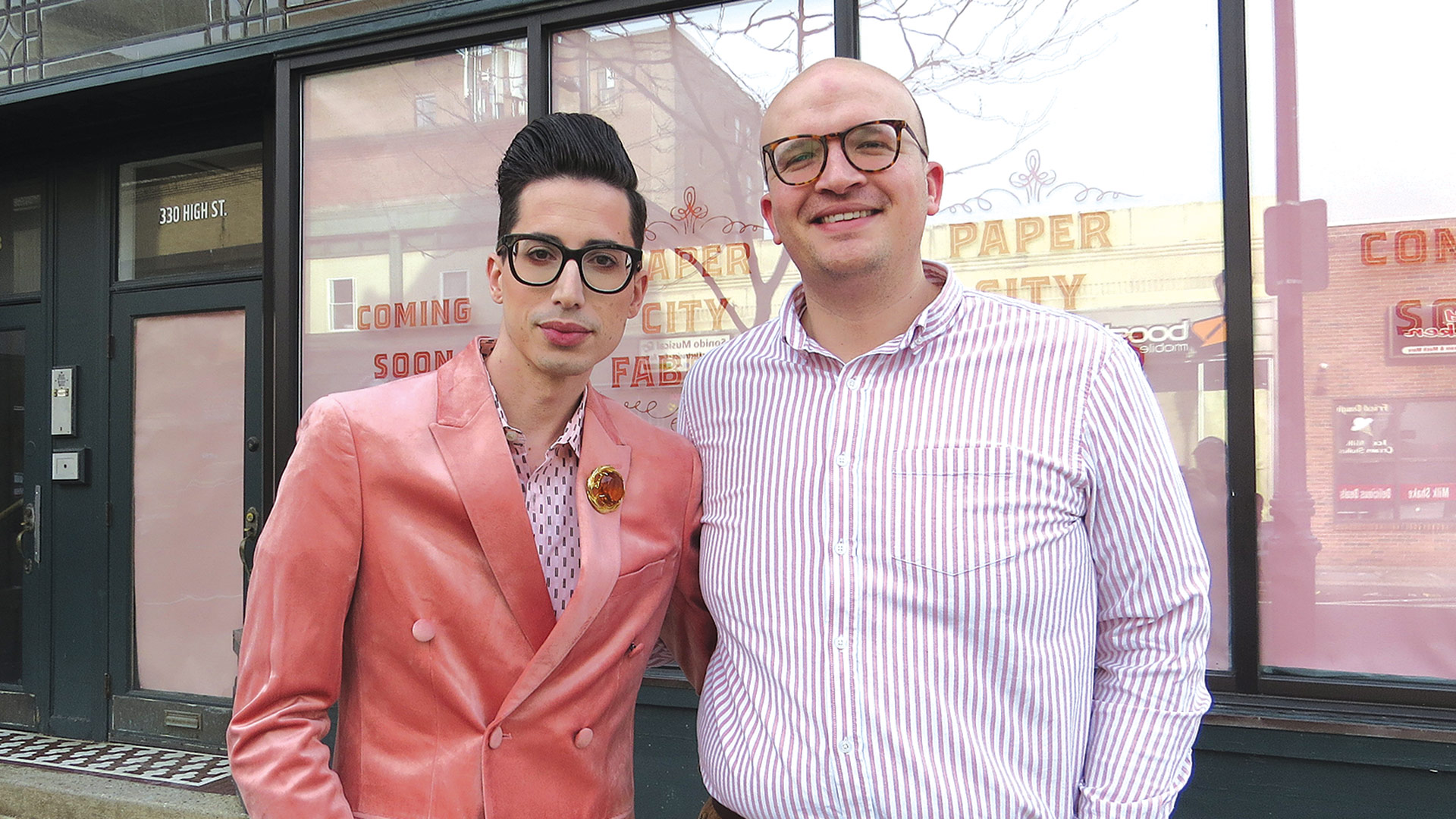
Two weeks later, Nosh was born, with little equipment other than a commercial refrigerator and a panini press. “That’s how I built my menu, with those two items. I was making soups and sandwiches for the holidays. And during the holiday market, it was successful enough that I said, ‘all right, maybe we can do something with this.’ So we stayed.”

Six years later, Skinner is glad she did, not only growing and expanding her establishment, but getting ready to open up a second location in Gasoline Alley on Albany Street (more on that later).


Broader Palate

The expansion happened in 2018, when a pair of divided spaces became available, and Skinner contacted the property owner about taking over both sides.

“My small staff and I worked during the day, then worked at night tearing down walls and stuff. We opened a week before MGM opened,” she said. “It’s been great. The business continues to grow, even though we are so hidden back here. I still get people who come in and say, ‘I’ve lived in Springfield all my life, and I didn’t know this space existed, this whole street.’”

The larger space gave Skinner a chance to expand her culinary offerings, which still center on sandwiches, salads, soups, and baked goods, but a much broader variety of each.

“There were some good original eateries down here, like Nadim’s and the Fort, but not a lot of variety, or something that was our niche at that point,” she said, before recalling her stint working for a restaurant at the veterinary school at Tufts University when her former catering-company employer got the contract there.

“I’ve gotten some pushback on things; I got a one-star review because somebody didn’t like what was written outside. But I don’t want to put on a pretension that these aren’t things I hold dear to my heart. Sometimes, something triggers me, and it’s like, enough is enough.”

“A lot of first-year students would come in who were vegetarians or vegans, and that’s where I honed in on that aspect of the cuisine I present. We also had large-animal doctors who were carnivores, so I had to cook everything. And I felt a restaurant shouldn’t be limited to one cuisine, but should be able to serve all different palates. That’s what my vision was for this space.”

The restaurant has expanded over the years to Saturdays and a couple of evenings each week, but weekday traffic, especially foot traffic from the downtown office towers and surrounding businesses, have long been her bread and butter, as well as people visiting the MassMutual Center for events.

The pandemic posed challenges to all restaurants, but Skinner’s sister-in-law designed an online ordering platform, and Nosh switched to a delivery model, with the small staff doing all the deliveries themselves rather than use an entity like DoorDash. It also partnered with an intern from Baystate Health on a hospital-worker program, whereby people could donate $10 toward a meal for a local healthcare provider, which Nosh matched.

As restaurants reopened, patrons were once again able to enjoy Nosh’s decidedly funky interior design, bedecked in local art, antiques purchased by Skinner’s son and girlfriend, tables built by her husband, and the handiwork of a local woodworker who created countertops and the Nosh sign from reclaimed wood.

“I don’t like buying new things; I think we have enough abundance of things we can reuse and recycle,” she said. “So we try to be as mindful as we can in this industry about what we’re using for products and how they’re packaged and how they leave our establishment and what you can do with them afterward.”

The other dominant visual feature are the colorful, descriptive menu boards and the chalkboard paint covered with the staff’s thoughts — some amusing, some serious, especially around feminist values.

“I wouldn’t want a restaurant that looked like every other restaurant,” Skinner said. “I want my personality in here, and I think my personality is in here, as well as many of the people who work for me. It’s all coming through. We’re a team, so I want them to share their ideas.”

Outside Nosh, facing the alley, is a board that has been used for deadly serious messaging, from the transcript of the 911 call from the Uvalde, Texas elementary school to an angry quote from U.S. Rep. Jim McGovern in the wake of Roe v. Wade being overturned.

“These are frustrating times we live in, and I just don’t think we can be quiet about it any longer,” she told BusinessWest. “I’ve gotten some pushback on things; I got a one-star review because somebody didn’t like what was written outside. But I don’t want to put on a pretension that these aren’t things I hold dear to my heart. Sometimes, something triggers me, and it’s like, enough is enough. Obviously, when Roe overturned, that was just devastating.”

Inside the eatery are other messages promoting acceptance of all individuals. “All people, no matter what your beliefs are, should be accepted, no matter who you are and who you love,” she said, adding that the bathroom is dotted with still more messages. “We’ve had people erase them. Then we just go back and write it again.”


Take Two

Speaking of redoing things, Nosh will soon open a second location on Albany Street, part of a collective called Urban Food Brood that includes Monsoon Roastery, Corsello Butcheria, Urban Artisan Farm, and Happy Man Freeze Dried. The overall concept is part café, part food manufacturing, and part retail, Monsoon Roastery owner Tim Monson recently told MassLive, adding that he expects the operation to open before the end of the year.

A new commercial kitchen is being built for Nosh, which will offer a similar slate of offerings as the downtown location, starting off with breakfast and lunch menus. In the evening, Skinner plans to bring in guest chefs to cook dinner and show off their talents.

“It will have a market feel, with a lot of businesses in there, and we’ll take new businesses just starting off and incubate them, get them going,” she said. “The property owner here did the same for me when I opened up my closet — gave me good rent and was super supportive. Someone might have a great idea or a product they want to sell, but can’t afford a brick-and-mortar place yet. So we’re trying to create that sort of space there.”

And perhaps help someone else who has always loved Springfield find long-term success in the City of Homes.


Joseph Bednar can be reached at [email protected]

Cover Story Women in Businesss

Grass-roots Effort


‘Buy Weed from Women.’

That’s what is printed on the back of the coat

Meg Sanders

Meg Sanders

was wearing as she led BusinessWest on a tour of Canna Provisions’ Holyoke dispensary recently.

Those words cover a lot of ground. They’re a request, as well as a statement. They’re also an operating philosophy. And in some respects, they constitute hope for what people will be able to do more easily in the future.

Indeed, buying weed from women — as in women who own or co-own the dispensary in question — is not something easily done. The startup and operating costs for such an operation are extremely high and, for many people — and most women — simply prohibitive. And once one is in, it’s a challenge to stay in.

Sanders, CEO of Canna Provisions, is one of the rare exceptions.

She shifted her career from compliance in financial services to compliance in cannabis while living in Colorado at the time the industry was simply exploding and turning into what she called ‘the wild west.’ She is now a prominent player in the not-so-wild but very intriguing Western Mass. market, overseeing, with her partner, Erik Williams, two dispensaries (the other is in Lee) and a cultivation facility in Sheffield.

Moving forward, she envisions one more dispensary in Western Mass. — she and Williams are looking at several options for acquisition — and the buildout of another manufacturing facility in Lee. And from a bigger-picture perspective, Sanders is looking to hone a business model that will create more profitability in an industry where only a third of all busnesses are profitable.

“ I still believe the best thing in cannabis still has not been invented. We find new cannabinoids every single day; there are new ways to consume this product, new delivery methods, new formulations. Those are all really important parts of where this industry is going. Science is in it, and I am psyched to see the products we come up with to help people.”

When asked about what separates those who are profitable from those who are not, Sanders said it comes down to being smart — with everything from which products (and how much inventory) are carried to the training and development of employees.

“We invest in humans, and we train them,” she said, adding that people are the biggest and most important investment for a company in this sector.

It’s an investment she takes very seriously, and it’s one of the many reasons why she believes Canna Provisions is successful and on the cutting edge when it comes to everything from how products are displayed and sold in the dispensary to how employees are trained, groomed for advancement, and ultimately retained (more on all that later).

“I’m really proud of it — I think it’s the coolest dispensary in America,” she said of the Holyoke facility as she led the tour. “And I’ve been into a lot of them.”

Canna Provision’s dispensary in Holyoke

Meg Sanders says Canna Provision’s dispensary in Holyoke has been designed to resemble an art gallery — and even features works from local artists.

And as she surveys the scene, at that Holyoke location and within the broad cannabis industry, Sanders, who has been quoted in publications ranging from the Wall Street Journal to Northeast Leaf, sees a number of converging forces and trends, but especially innovation, the sector’s deep impact on the local economy and the local landscape, cannabis playing a growing role in the health and wellness of people of all ages, and the promise of much more of all of that in the future.

“Cannabis is a giant vote for freedom — it’s a giant vote for ‘you know what’s best for your body; it’s not the government’s job to tell you what to put in it, on it, any of that,’” she said. “From everyone that I know that uses cannabis, customers I talk to every day, their life is better. A recent study showed that 60% of Millennials use cannabis for wellness, and when you ask them to define ‘wellness,’ it was stress, relaxation, sleep, and anxiety. The fact that people look at cannabis as wellness is huge.

“And I still believe the best thing in cannabis still has not been invented,” she went on. “We find new cannabinoids every single day; there are new ways to consume this product, new delivery methods, new formulations. Those are all really important parts of where this industry is going. Science is in it, and I am psyched to see the products we come up with to help people.”

The wording on the back of Meg Sanders’ jacket

The wording on the back of Meg Sanders’ jacket is both a request and a bit of hope for what people will be able to do more easily in the future.

For this issue, BusinessWest talked at length with Sanders about her business, her industry, the words printed on the back of her jacket, and what she expects to come next with all of the above.


Joint Ventures

That aforementioned tour of Canna Provisions came the Wednesday before Thanksgiving. It was late morning, just before noon, and the traffic in the store was still relatively light, with a handful of customers exploring the myriad product options or talking to customer-service providers, both behind the counter and on the floor.

But Sanders was expecting a huge day because cannabis, in her estimation, is becoming a growing part of Thanksgiving, especially to contend with the week’s large doses of stress.

“People will be in to get their coping mechanisms and their celebratory pieces so they can deal with Uncle Bob, who might be talking politics at the Thanksgiving table,” she explained. “We all have families, and they’re all very interesting and come with a lot of stuff; this is one way to cope, and it’s not new.”

Meanwhile, she was expecting even bigger crowds for the upcoming Black Friday and the holiday season in general. And such expectations, born from experience in both Colorado and this market, are evidence of the growing influence of cannabis — on the economy and in people’s lives.

Turning back the clock nearly 15 years, Sanders, as noted earlier, was working for a small financial-services company handling a few dozen traders when she approached a friend who was getting in on the ground floor of the exploding cannabis scene in the Centennial State and asked if he could find a place for her.

“I had definitely hit a glass ceiling — there was nowhere else to go and no more money to be made there,” she recalled. “That was happening at the exact same time as this brand-new industry was starting to explode; I reached out to my friend who was creating this cannabis business and said, ‘I’d love to help you guys; what can I do?’

“It took a while for us to find the right place, but I went basically from compliance in the financial industry to compliance in cannabis, and that’s how I got started,” she went on, adding that she became increasingly more involved and eventually become CEO.

Sanders would eventually exit that company — primarily because its board wanted to focus solely on Colorado, while she had larger aspirations for the venture — and work, along with Williams, as a consultant to states, municipalities, and individual businesses as they entered the cannabis business.

“We were helping companies and state regulatory bodies and local governments come up with ordinances that made sense, regulatory frameworks that made sense, and helping people get licensed all over, from Florida to Illinois to Nevada — everywhere,” she recalled. “And then, Massachusetts legalization happened, and we were intrigued by the model in that it wasn’t going to be this massive gaming of the system in a limited-license structure, where if you know the governor, or have the right lobbyist, or if you make donations to the right legislators, you get a license.”

Sanders and Williams eventually consulted for a venture called Canna Provisions and were invited to become part of its operations team. They became CEO and COO, respectively, and guided the company as it gained just the second license issued by the state for a standalone dispensary in Lee, right behind Caroline’s Cannabis in Uxbridge — where she bought her jacket from owner Caroline Frankel. The Holyoke facility, located on Dwight Street in a former paper mill, opened in July 2020, at the height of the pandemic.

In her role, Sanders is involved in all aspects of the business, obviously, but devotes much of her time to staff development and that broad term ‘culture.’

‘At Canna Provisions, we really believe that we’re not just growing plants and growing a business, we’re growing humans,” she explained, adding that the company invests considerable amounts of time, money, and energy to train and develop employees, and then give them opportunities to do different things and advance within the company.

Canna Provisions invests heavily in employee training and development

Meg Sanders says Canna Provisions invests heavily in employee training and development — and the customer experience.

She said she’s currently serving as a facilitator and working with a group of seven employees at the company on a course of leadership training.

“I’m reinforcing my skills by teaching them their skills in hopes of growing humans to become better leaders, which creates happier employees,” she told BusinessWest, adding that most all of these employees have experience in business and customer service but are new to this industry.

“We work really hard to train employees, we spend a lot of money training them, and it’s ongoing,” she went on. “We’ve been told multiple times by people from this industry, and also not from this industry, that they’ve never been to a company that invests so much in training, and they appreciate it.”


Down to an Art

While Sanders is certainly well-known within the industry and probably recognized by many she encounters (especially when she shows her ID), she still calls what she does ‘secret shopping.’

These are regular visits to dispensaries across this region and beyond, during which she is always looking at the product mix, the presentation, the staff, and how they interact with customers — all with an eye toward making her own operations better and her own employees ever more responsive to what clients want and need.

“I shop everybody — everybody,” she said, “so that we’re more accurate in our differentiation. I’m able to see what competitors around us are doing, and I can say, ‘that’s one business model — it’s not a bad business model, it’s just not my business model.’”

“We’ve been told multiple times by people from this industry, and also not from this industry, that they’ve never been to a company that invests so much in training, and they appreciate it.”

These secret shopping excursions are just a small part of a broad operating formula aimed at continuous improvement, setting the bar higher, and then clearing that bar.

Sanders believes Canna Provisions does all this in all aspects of its business — from product selection to presentation, but especially with how those on the floor and behind the counter interact with and effectively serve customers, some of whom may suffer from what she called “dispensary phobia,” and a fear of going inside.

And this is a product of all that intensive — and expansive — training that Sanders talked about earlier.

“People have to be on point because your customers expect a certain level of service — they have to know the products,” she said. “It’s training and role playing and practicing and coaching on the floor — teaching them to be more aware of the people who are in front of them.

“This is not a cheap spend, “she went on. “Our average ticket here in Holyoke is close to 100 bucks a pop. When I’m spending $100 or $200 at a location, I do have a bit of expectation to be treated well.”

Overall, she likened the cannabis-buying experience, at least at her dispensaries, to jewelry shopping in many respects, from the high cost of the products to the way that many customers need guidance, or education, on what they’re buying.

Overall, Sanders believes she and Williams have created a different kind of cannabis experience in their locations. The one in Holyoke resembles an art gallery in the way products are displayed, and there are even works of art on the wall. Meanwhile, it pays homage to the property’s roots as a paper mill by putting some of the equipment and office furniture to work in displays.


Impact Statement

As she talked about the broad influence that cannabis has had on the local landscape, and will continue to have moving forward, Sanders again flashed back to the early days in Colorado, which came in 2009, the middle of what became known as the Great Recession.

“They just ran with cannabis, and it was crazy,” she said of the rapid growth of the industry and its impact on real estate, cities, towns, and individual neighborhoods. “And this started right after that massive crash and its impact on real estate and mortgages … it was a nightmare. But in Colorado, the opposite happened because all these growers, all of these dispensaries, ended up leasing more than 1 million square feet of warehouse space that had been off the tax rolls for years, just in Denver.

“So, it immediately just infused the city with vibrancy, and it happened all over,” she went on. “It was just one of those interesting economic moments where Colorado did not feel that economic downturn, the bottom dropping out, nearly as much as other states; it was fascinating. And then we kept adding all these jobs, and we kept adding jobs, and building, and then science was involved; the industry just came a long way really fast.”

It continues to grow and evolve, and now, much of what was seen in Colorado is being experienced in other states and other region, including Western Mass., she said, adding that cannabis is having a profound impact on communities like Holyoke and Lee, where she has chosen to put down roots, especially the former.

Indeed, this was a city that rolled out the red carpet for this industry, with its former mayor, Alex Morse, jokingly — although it was no joke — wishing it to become known as Rolling Paper City, a twist on its original nickname, Paper City.

Few actually call it that, but Sanders said there is no disputing the profound impact that cannabis has had in this city, where hundreds of thousands of square feet of unused or underused former mill space has been converted into dispensaries and cultivating facilities.

“Bringing more people to Holyoke is the goal for all of us,” she said. “And I think Holyoke and its bones often get overlooked; I’m so excited that there’s a new art gallery opening on High Street, that there’s several restaurants that we frequent and another new restaurant going in across the way. We have Gateway City Arts, which does concerts all the time. So, there’s momentum, and we’re hoping to be a part of that and help a city that’s been struggling for a long time.

“Together, we’re all going to make Holyoke a better place, with more jobs, more places to live, more restaurants to go to, more shopping, art,” she went on. “I absolutely love this town, and that’s why we came here and spent $1 million to open this dispensary.”

Looking ahead, Sanders wants to see a day when more women can become business owners in this sector.

“It’s very much a closed door, and the numbers are actually going down, which is unfortunate,” she said, noting, again, the sky-high costs of opening and then operating a business in this sector, and the challenge to turn a profit when 70 cents of every dollar earned is returned to the government in taxes.

“Through initiatives at the state level and maybe even at the federal level with safe banking and other things they’re talking about, we need to give minorities and women an opportunity to win alongside all the rich, white money,” she told BusinessWest. “As a female leader in this space, I am super proud to be in this space as a leader and an owner, and I would say it’s one of my biggest motivators to talk about this and do something about it.”


George O’Brien can be reached at [email protected]

Features Special Coverage

Dressing Down

Ken Albano says businesses need to balance

Ken Albano says businesses need to balance what works for employees with a certain level of professionalism.

If it wasn’t clear before, you know office-attire norms are shifting when the rules for dress-down Friday have to change.

That’s exactly what happened at MP CPAs in Springfield, one of many companies with a rule that, with a donation to a charitable cause (in this case, a $5 donation that the company matches), employees may wear jeans and other attire typically deemed too casual for the office.

“But we changed it slightly because of what ended up happening,” said Melissa English, senior tax manager. Specifically, “COVID came, and our dress-code policy went out the window.”

With jeans and other casual attire now acceptable all week, she explained, “for an incentive for people who want to contribute to charity, Fridays are now our ‘wear what you want’ day. Anything goes. There’s no dress-code policy on Fridays if you pay in.”

Flip flops on Friday? Sure, go for it.
“I started 21 years ago with the firm, and no matter what, whether you were in the office, with a client, whatever, you made sure you were professionally dressed,” English told BusinessWest. “Then, over time, it gradually did loosen up a little bit. It became a little more … business casual. When you went to a client, you still had to dress up. But in the office, you were allowed to have professional pants on but maybe not necessarily a suit and tie, just a button-down shirt, stuff like that.”
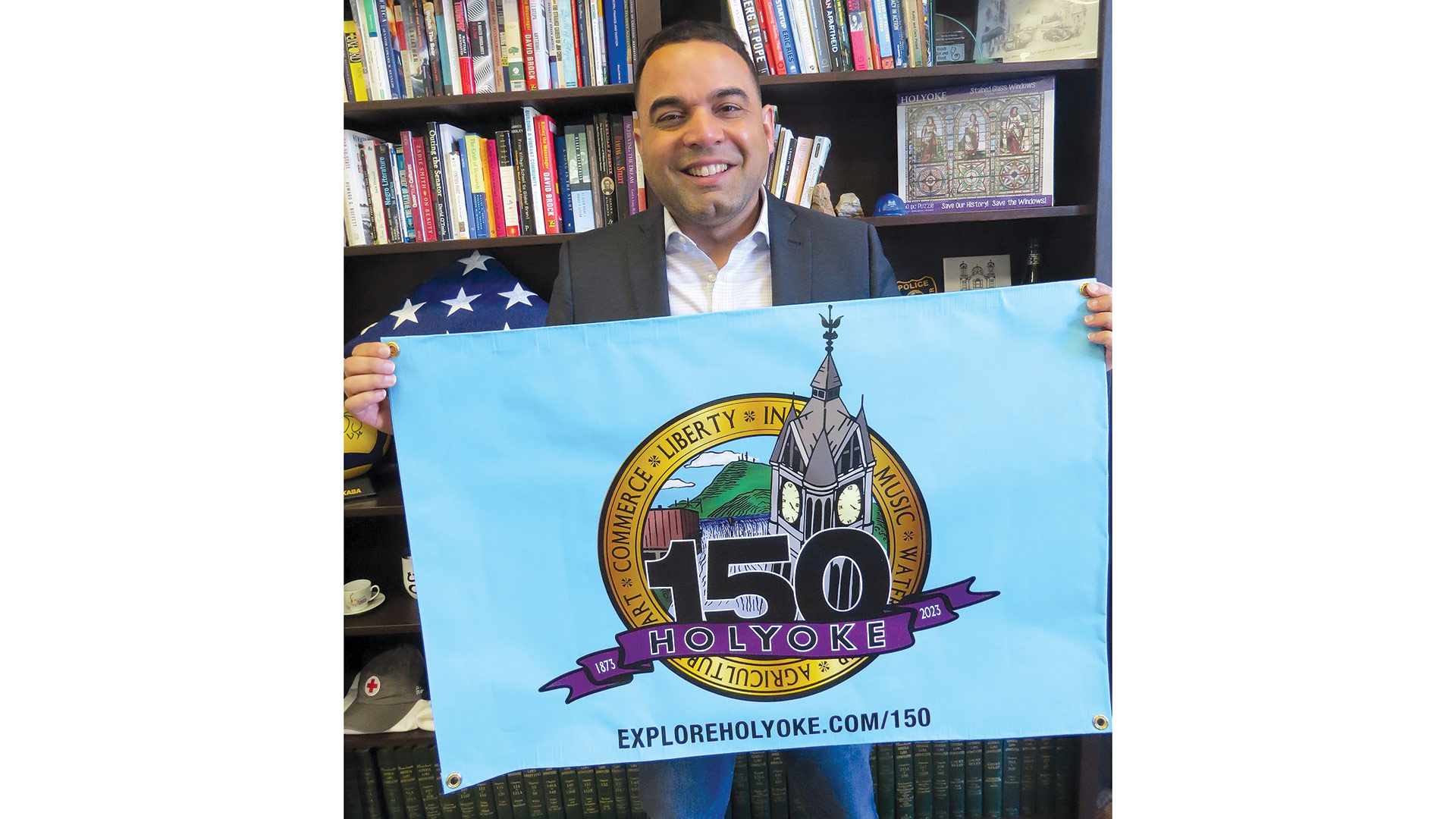

“I want to be comfortable when I’m working, and I think a lot of people feel that way. I think you’re more productive if you’re comfortable throughout the day. So I do think it was already moving toward business casual, but COVID definitely pushed it.”

If anything, the pandemic, and especially the summer of 2020, only accelerated that trend, she went on. As one of the first businesses back in Monarch Place, at a time when the downtown towers seemed nearly empty, it was easy to relax the dress code.

“At that point, it was wear whatever you wanted. You could show up in your pajamas; it didn’t matter,” she joked. “It was very casual. We had no dress-code policy whatsoever; we were wearing shorts all summer.”

What happened next — and this was something BusinessWest heard multiple times for this story — was that employees liked dressing down. And employers listened.

“Even after COVID, to try to get back to professional dress, I don’t think it’s going to happen,” English said. “For me personally, I want to be comfortable when I’m working, and I think a lot of people feel that way. I think you’re more productive if you’re comfortable throughout the day. So I do think it was already moving toward business casual, but COVID definitely pushed it.
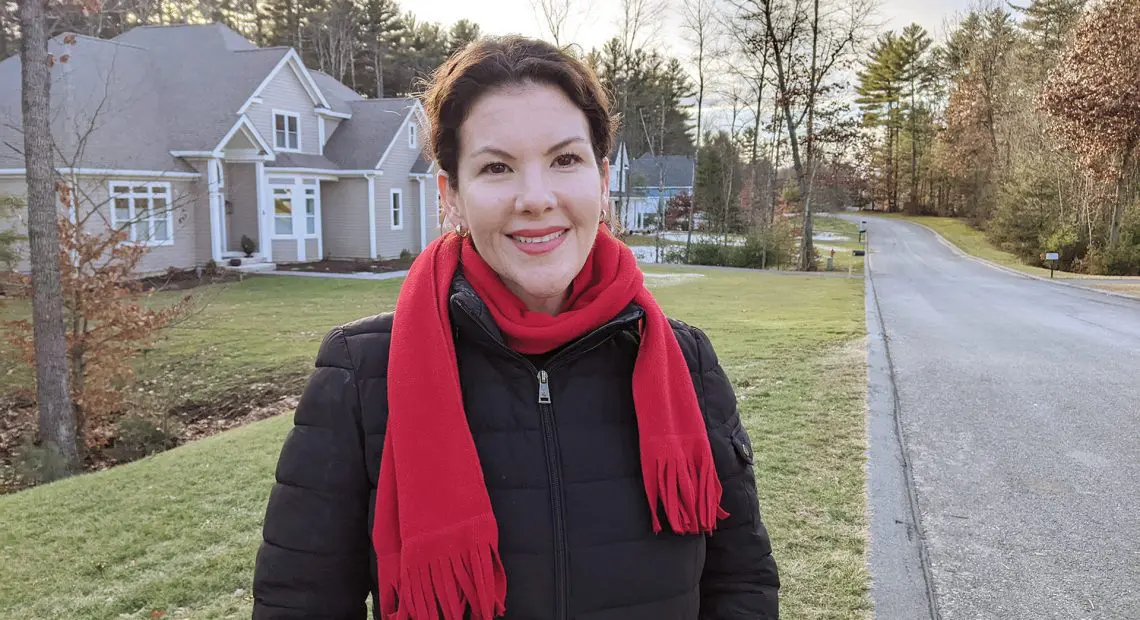
Melissa English

Melissa English says workers have shown they can be both comfortable and productive at work.

“I do know a lot of businesses feel the same way,” she added. “A lot of the businesses we go to now are casual to business casual. You don’t see many people wearing suits and ties anymore. I think it’s more acceptable now, especially after COVID.”

As a law firm with five offices, Bacon Wilson’s workplace policies are generally driven by the main office in Springfield, Managing Shareholder Ken Albano said.

“We have a policy that’s been tweaked over the years. Now, business casual is acceptable throughout the firm. You don’t have to wear a sport coat. Corduroys, a gray sweater, and a button-down shirt — that’s my dress today. That’s deemed acceptable; I’d call that country casual or business casual. Wearing a sport coat every day is no longer required.

“That said, we’ve got old-school people here who just can’t change,” he went on. “They come to work in a suit every day. Even given the opportunity to loosen up their attire, they stick to it, especially some of the older guys in the Estate Planning department who meet clients daily and like to wear a suit and tie when they sit down with clients.”

He agreed that employees returning from long stretches of remote work, where they could get their job done in pajamas some days, grew to enjoy the comfort of casual dress, and the firm’s policy preserves elements of that while stressing appropriate wear.

“For a law firm of this size,” Albano said, “we try to be as flexible as we can without taking it too far away from the professional setting we’re trying to establish for our clients.”


Loosening Up

Casual dress has long been the norm in technology workplaces, and that revolution eventually spread to other, more traditionally formal workplaces in fields like law, accounting, and insurance. The shift toward a more casual dress code reflects, in one sense, a desire by employees to embrace comfort and individuality — and, over the past couple of years, a recognition by employers that comfortable employees are happier and, in many cases, just as productive as before, if not moreso.

Sue Cicco

Sue Cicco

“As we have instituted our new hybrid workplace approach, which balances in-person collaboration with personal flexibility to best meet the needs of our employees and customers, we’ve seen this level of comfort continue, and I believe it’s here to stay.”

Sue Cicco, head of Human Resources & Employee Experience at MassMutual in Springfield, told BusinessWest that the firm has continually evolved its culture to reflect the changing world, prioritizing diversity, equity, and inclusion; offering a flexible workplace; and, yes, moving away from exhaustive dress codes.

“In 2015, we instituted a two-word dress code: ‘dress appropriately,’” she explained. “This simplified guidance was rolled out as the company sought to reflect the more innovative and open workplace that was building, and was aimed at trusting and empowering employees while enabling them to be comfortable and express themselves.”

Those we spoke with, however, kept coming back to the importance of dressing for one’s audience and setting. For example, Albano said, a litigator would never appear in court in anything but formal attire. “The dress code is normally what you expect to see in front of a judge. You don’t show up in jeans and sneakers in a court of law; that never changes.”

Tanzi Cannon-Eckerle, chief legal and administrative officer at the Royal Law Firm in Springfield, agreed.

“In the courtroom, the attire has not changed since we stopped wearing the wigs,” she said, adding that law schools across the country instill in students the importance of formal attire. “Courtroom decorum won’t change, nor, in my opinion, should it change.”

In the office, however, she has seen some movement toward more casual dress. “But what might be considered lax for one person might be different for someone else. When meeting clients, you’re still wearing blazer and slacks or a cardigan and slacks. Or you have on a suit. In that setting, I believe you’re supposed to dress toward a more professional level.”
Before returning to Royal, Cannon-Eckerle worked as director of Human Resources for Auxiliary Enterprises at UMass Amherst, a tenure that spanned much of the pandemic.

“They decided to bridge the gap between frontline workers and C-suite folks and make business casual mandatory,” she recalled. “I was still wearing suits every day; they actually pulled me aside and said, ‘you need to relax a little bit and try for a more approachable persona in the workplace.’”

Tanzi Cannon-Eckerle

Tanzi Cannon-Eckerle says being overdressed and underdressed in certain settings are equally problematic.

She recognizes that a college campus during a pandemic is a different situation than a law firm, but stressed that all professional settings should strive for certain minimum standards.

“At the end of the day, there’s a baseline: you’ve got to be clean, your clothes can’t be wrinkled, and it has to make sense for the room,” she told BusinessWest. “I love to dress up; if I could, I’d wear a wedding dress once a week. But I’m pretty sure I’d be reprimanded by the judge. So, you don’t dress to stand out, but to fit in and make people at ease with you. You don’t want people looking at your clothes instead of you, ogling what you’re wearing and not listening to what you’re saying.”
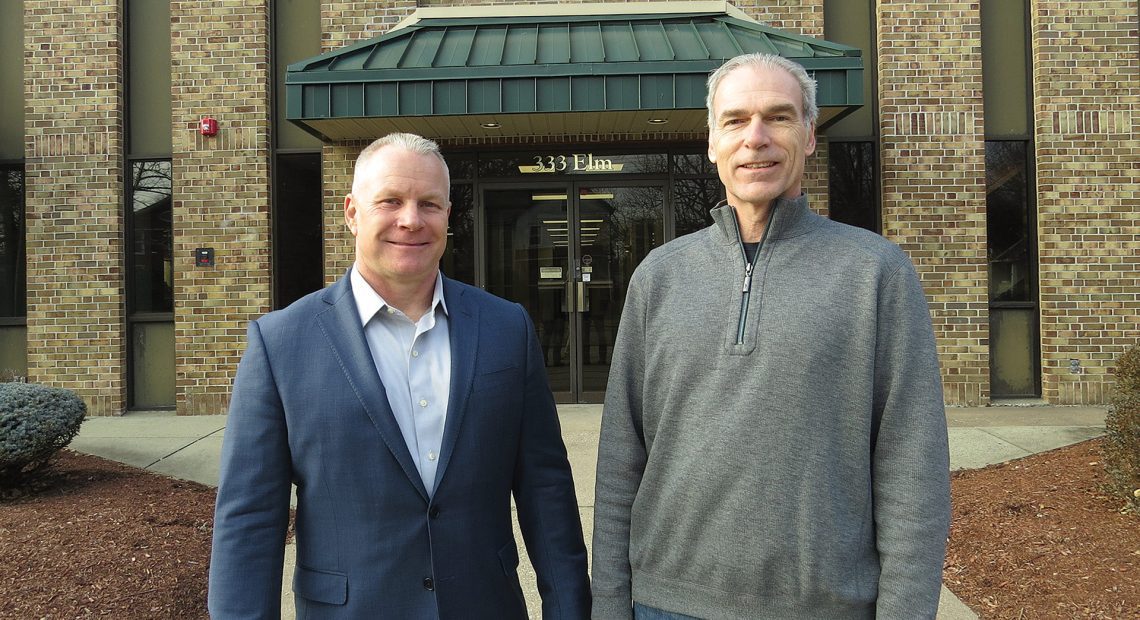
English said it’s important to know one’s audience in choosing what to wear.

“People can be comfortable and productive, so does it really matter how somebody looks if they’re getting the job done even better than they did before? So I think employers are now more accepting,” she noted. “In the employers we talk to, so many now are going to casual to business casual, and everybody seems to be accepting of it.

“But, again, no matter what, it’s still knowing your audience. You might have that one client that you know dresses up all the time. Well, maybe you need to dress up a little bit more for that client because you want them to take you seriously, and sometimes you have to look the part.”

Albano said job seekers need to be careful with accessories like tattoos and piercings; both are fine at Bacon Wilson, as long as visible tattoos aren’t offensive and piercings aren’t too numerous.

Sneakers and flip flops are a hard no, but jeans are fine on occasional charity days, when, like at MP CPAs, employees can pay $5 to dress down a bit. “That’s always a positive thing,” he said.


Lessons Learned

Looking forward, Cicco said employers and employees both learned something about each other during the pandemic, and those lessons will inform dress codes at countless companies in the future.

“As much as we were apart while working remotely during the pandemic, we also became more personally acquainted with one another,” she said. “We were welcomed into each other’s homes as we took Zoom calls from our living rooms with family members and even pets debuting in the background, and with that came a different level of familiarity that further empowered people to dress how they felt most comfortable.”

Therefore, “as we have instituted our new hybrid workplace approach, which balances in-person collaboration with personal flexibility to best meet the needs of our employees and customers, we’ve seen this level of comfort continue, and I believe it’s here to stay.”

English said the managers at her firm have had meetings and talked to consultants about what’s happening throughout the industry and how it informs the dress code moving forward.

“Because we are so casual now, should we go back to a more business casual? What we came up with is the term ‘smart casual.’ You can come in the office in jeans and a polo, whatever, but if you know you are going to go out to a client, then you need to dress in more of a smart casual. You need to be able to dress up and be presentable and make a good impression.”

Having been a business owner and manager as well as a lawyer, Cannon-Eckerle’s take is that, “if you walk in the door and the first thing people think about is what you’re wearing, you might have to rethink it. But if you’re clean and pressed and not wearing a T-shirt that’s flipping the bird, most likely you’re OK.”

In short, read the room.

“Because of COVID, things have changed, and I think people have been more open to someone’s style, open to the fact that dress is part of their personality,” she added. “But that doesn’t mean you can be disruptive in the workplace.

“And, as attorneys, they pay you a hefty hourly rate. If you roll in with sweatpants and flip flops, that isn’t professional. What we see as professional may be changing, but not in all industries, I think.”

As Albano put it, “you don’t want someone to turn their head and say, ‘oh my God, what are you wearing?’ We’re trying to be flexible and make it a healthy work environment, but also a professional setting.”


Joseph Bednar can be reached at [email protected]

Banking and Financial Services Special Coverage

Points of Interest

Rich Kump, president and CEO of UMassFive Federal Credit Union.

Rich Kump, president and CEO of UMassFive Federal Credit Union.

Richard Kump says he’s disappointed by — but quite philosophical about — recent statistics showing that credit unions are not faring as well as they have historically when it comes to customer satisfaction.

“For just about our entire existence, credit unions have always outperformed banks, particularly the big banks, but just a few years ago, credit unions dipped in our satisfaction rating compared to particularly the national and multi-regional banks,” he said, adding that there’s an obvious reason why.

“It used to be that satisfaction was coming into the branch, being met with a smiling face that was empathetic and there to help — that in-face, smiling employee,” he explained. “Now, satisfaction is defined a little differently; it’s defined by speed: ‘how quickly can I accomplish this?’ The Bank of Americas, the Wells Fargos … their ease of use has surpassed that of credit unions and small community banks.”

Getting up to speed — figuratively but also quite literally — is one of the broad strategic objectives identified by Kump, president and CEO of UMassFive College Federal Credit Union, and other members of the leadership team at this 55-year-old institution.

Others include everything from territorial expansion — Springfield and Westfield are among the areas at or near the top of a list of potential landing spots — to continued growth of an already dynamic niche in lending for solar-energy installations; from the building of a new and more highly visible branch in Hadley and consolidation of other facilities into the headquarters building in that town to the possible creation of an insurance agency to be operated by the credit union.

“Most of our members have Amazon — with one click, you can purchase something. And that’s what they expect from us, being able to accomplish whatever their need is quickly and without friction.”

In a wide-ranging interview, Kump, a 20-year veteran at UMassFive who took the helm in 2019, touched on these and many other points. Overall, he said the institution, which now boasts more than $625 million in assets, is in what he called a controlled growth mode, anxious to take advantage of opportunities that have arisen in recent years, including ongoing consolidation in the banking industry, advancing digital technology, and changing needs among customers — on both the consumer and commercial sides of the ledger.

Such opportunities enabled UMassFive to essentially triple the projected profits for what was expected to be a lackluster 2022, he explained, and these same forces, in addition to those aforementioned goals for expansion, are providing reasons for optimism as the calendar turns to 2023.


Developing a Game Plan

Kump, who grew up in New York, has been a lifelong, and extremely avid, Yankees fan.

The wall across from the desk in his office tells the story.

There, one will find a framed picture of Bucky Dent’s famous (infamous to Red Sox fans) home run in that one-game playoff back in 1978. It’s signed by both Dent and the Red Sox pitcher who threw the pitch, Mike Torrez, and Kump notes with regret that the signatures are fading.

As is the autograph of Don Larsen on a framed photo from his historic perfect game in the 1956 World Series against the Brooklyn Dodgers that sits just below the Dent picture. There’s other Yankee memorabilia on his wall, including a group of perhaps the four greatest players from that franchise — Babe Ruth, Lou Gehrig, Joe DiMaggio, and Mickey Mantle.

While the Yankees have always been a passion for Kump, or a “great failing,” as he called it, credit unions have essentially been his career. Prior to arriving at UMassFive, he worked at St. Mary’s Bank in Manchester, N.H. — founded in 1909, before such institutions were called credit unions — and, later, Cathedral Credit Union in Manchester.

UMassFive has developed a strong niche in the financing of solar-installation projects.

UMassFive has developed a strong niche in the financing of solar-installation projects.

With that background, he’s well-versed in what credit unions have been historically, and what has long differentiated them from banks, especially the larger ones — a high-touch operating philosophy and a strong focus on customer service.

These days, though, Kump is more focused on what credit unions can be — and must be — to continue to thrive and grow in a changing financial-services landscape.

And here, as noted, speed is an important part of the equation.

“While overall satisfaction with any local institution is high, this is a world of digital transformation and how quickly you can get your organization to deliver what the consumer is expecting,” he explained. “Most of our members have Amazon — with one click, you can purchase something. And that’s what they expect from us, being able to accomplish whatever their need is quickly and without friction.

“And that has been our focus on improving the member relationship,” he went on, adding that UMassFive is responding with online appointments, online loan applications that are simpler and what he described as ‘frictionless,’ the ability to join the credit union digitally — “that’s our primary branch; that’s how we serve” — fraud-prevention efforts, and other measures.

“We want to make the processes as simple and easy as they can be because that’s what the consumer is demanding today,” he explained, adding that this mindset will be applied to every aspect of the business, from credit cards to those loan applications.

And while improving its speed and ability to serve customers in the manner they are now demanding, UMassFive is moving forward aggressively on a number of other fronts, said Kump, including territorial expansion, new branches, and better, more effective use of its facilities.

Several of these goals are coming together in the planned move of the flagship branch inside the headquarters building off Route 9 in Hadley to a new building to be constructed just down the road at the border between Hadley and Amherst on the site of an auto-parts store.

The move will give UMassFive much greater visibility, said Kump — the current headquarters building is a few hundred yards from the street and behind other buildings — and it will also enable the credit union to consolidate spaces and ultimately save money.

“Branches are now less a transaction center and more of an advisory center. The things people want to come in for are lending — we do a ton digitally, but for loans, people still like to come in, especially on the commercial side — as well as investments and wealth management. Those are things people like to do in person.”

Elaborating, he noted that the credit union outgrew its headquarters building, which opened in 2001, several years ago, and has been leasing additional space in Hadley for its operations center, an expensive undertaking that ultimately led to the development of plans to build a new and much larger headquarters.

By moving the flagship branch to another location on Route 9, the credit union can now scrap those plans in favor of a far-less-expensive option: a new branch building. He added quickly that this new plan wouldn’t be possible if not the arrival of remote work forced by the pandemic.

“What we learned during COVID is that we don’t need to have everyone on-site,” he explained. “Other than our retail staff, we probably have 80% of employees on some type of telecommuting status, either hybrid or fully remote. With that, coupled with the move of our flagship branch and opening up that space, we’ll be able to bring the employees from our operations center over here and not have to lease space. And we’ll have the staff on site all under one roof and not have to worry about building a new headquarters building.”


Branching Out

Beyond Hadley, UMassFive is looking to add some new branches in the coming years and expand its footprint across this region, said Kump, adding that the leadership team has identified several different potential target areas.

At the top of the list is Springfield. UMassFive has one location in the city, in the rehabilitation facility at Mercy Medical Center, a branch that counts both medical-center employees and area residents as members. To attract more members, additional sites are being eyed, he said, adding that the Sixteen Acres neighborhood is a preferred landing spot.

Meanwhile, credit-union leaders are also taking a hard look at Westfield, a large community that boasts a state university and thus resembles, to some extent, the Five College area that UMassFive has long called home.

“Many of the demographics are similar to who we serve best,” he said of the Whip City and the surrounding area. “So that is a logical place for us to go.”

While expansion and additional branches are in the business plan, UMassFive will look for measured, controlled growth, Kump said. “At $625 million in assets, we’re not at a size where we can put up a branch every year. Break-evens on branches seem to be running seven or eight years now, so we need to careful with our expansion.”

Meanwhile, any new branches will be smaller in size than what has been built historically, simply because fewer customers come to such facilities and technology, such as ITMs, has changed how service is provided, and thus they require smaller staffs, said Kump, adding that the nature of the business conducted inside is changing as well.

“Branches are now less a transaction center and more of an advisory center,” he explained. “The things people want to come in for are lending — we do a ton digitally, but for loans, people still like to come in, especially on the commercial side — as well as investments and wealth management. Those are things people like to do in person.”

Another strategic objective at UMassFive is growing the commercial side of the ledger, said Kump, adding that, over the past decade or so, the credit union has built what he called a “commercial infrastructure” of products and services. With that infrastructure now in place, the credit union will work to build its portfolio of clients, he said, adding that there are new products planned as well, as well as a commercial credit card.

“For the first 50 years of our existence, it was consumers only — individuals and their families,” he told BusinessWest. “And what we found is that some of those consumers also own businesses, and in the past, we had to turn that business away. A number of years ago, we committed to the local business community, and we want to grow that side of the business.”

One segment of the commercial market that UMassFive is dominating — basically because few other institutions have considered it worthy — is solar energy.

Indeed, since 2017, the credit union has written more than $100 million in loans for residential solar projects, said Kump, adding that it has partnered with the Clean Energy Center to connect low-income households with solar air-source heat pumps.

“It’s a huge niche, and it’s mostly ignored by other financial institutions — when it comes to the true residential solar loan, I know of just one other institution in Western Mass. that offers it,” Kump explained, adding that the biggest reason why is that such offerings amount to unsecured loans, and few banks and credit unions have an appetite for such lending.

UMassFive has the expertise — its chief commercial officer is certified in commercial solar lending — and a track record of success in this realm that it’s looking to build upon.

“We find that they perform as well as equity loans,” he said, adding that, while the market for such loans has softened recently because the tax credits for such installations have diminished, their eligibility requirements have expanded to include nonprofit institutions such as churches, as well as municipalities.

“We were an early adopter, we understand the industry, we know how it works, we support that industry, and it’s a big piece of who we are,” he said, adding that the clean-energy portfolio extends beyond solar and into energy-efficiency projects, both residential and commercial, such as those administered by Mass Save.


Bottom Line

As he surveys the banking and financial-services landscape, Kump sees plenty of challenges ahead — from projections of a further slowing of the economy to rising interest rates in the housing market and growing competition for customers in this sector.

But he also sees opportunities for institutions that have the ability to adapt and respond to changing customer needs in a proactive, forward-thinking manner.

That has been the MO at UMassFive for more than a half-century now, and it is the pattern that will continue into the future.


George O’Brien can be reached at [email protected]