Home Posts tagged Education (Page 31)
Daily News

SPRINGFIELD — Western New England University (WNEU) is expanding opportunities for international students to enroll in undergraduate and graduate degree programs through a new language-instruction partnership with Denver-based Bridge Education Group. The arrangement will facilitate establishment of a BridgePathways Intensive English Center on the university campus this fall. The first cohort of students will be enrolled in January 2016.

WNEU is dedicated to providing international students with the tools they will need to succeed while studying in the U.S., said Vice President for Strategic Initiatives Richard Keating. “We are thrilled to be part of the BridgePathways partnership, not only for the high-quality language programming offered on our campus, but also for the opportunity to collaborate with other exceptional U.S. universities in international enrollment initiatives.”

Western New England University is one of three universities to open BridgePathways Centers this year, and the only program in New England, joining three previously established programs in other parts of the U.S.

Full-immersion experiences, academically, culturally, and socially, are an essential component of the program. BridgePathways students at Western New England will be housed on campus and provided with structured activities designed to get them actively participating in daily campus life and the surrounding community. An intensive academic English curriculum will focus on critical writing, with coursework designed to prepare students for university-level assignments. Students also practice essential speaking and listening skills needed for successful participation in discussions and lectures. The rigorous curriculum was designed using a three-pronged approach, addressing linguistic, academic, and intercultural skills.

BridgePathways at Western New England University will have six start dates throughout the year, offering eight-week terms, and will accept students at an intermediate English proficiency level. Students in the language program will receive conditional admission to the university, allowing them to enroll in one more than 60 academic programs upon successful completion of the BridgePathways curriculum.

Founded in 1986, Bridge Education Group is a world leader in language education for international students. Headquartered in Denver, it offers a wide spectrum of services, including language training and immersion programs, teacher training and development courses, language testing, translation and interpretation services, and cross-cultural exchange programs.

During the spring 2015 semester, WNEU hosted about 130 international undergraduate and graduate students in its academic programs from 27 different countries, including Bolivia, Brazil, Canada, China, Egypt, Ethiopia, France, Hong Kong, Iceland, India, Iran, Ivory Coast, Japan, Kazakhstan, Malaysia, Panama, Russia, Saudi Arabia, South Korea, Taiwan, Togo, Turkey, United Kingdom, Venezuela, Vietnam, Yemen, and Zambia. The students matriculated in the colleges of Engineering, Business, Arts and Sciences, and Pharmacy, as well as the School of Law.

Daily News

PITTSFIELD — Berkshire Bank announced that it has selected 30 high-school seniors to receive a total of $45,000 in scholarships through its Berkshire Bank Foundation Scholarship Awards Program. Each of the recipients will receive $1,500.

A team of 200 Berkshire Bank employee volunteers reviewed nearly 300 applications to select the winners. The winners all live in the regions served by Berkshire Bank, including communities in Massachusetts, New York, Connecticut, and Vermont. Berkshire Bank representatives surprised the students with their scholarship awards at their respective high schools.

The six recipients from the Pioneer Valley are Wilda Joseph and Samantha Cross, Cathedral High School; Alyssa Hogan, Chicopee High School; Jessie Walton, Gateway Regional High School; Nathan Drewniak, Holyoke Catholic High School, and Kadeja Miller, Roger L. Putnam Vocational Technical Academy.

The scholarship awards recognize students who have exemplified community service through their volunteer efforts, have been successful academically, and have a financial need. The program highlights the foundation’s support for education and the bank’s commitment to promote volunteerism in the community.

“We are excited to recognize these incredibly deserving high-school seniors with our 2015 Berkshire Bank Foundation Scholarship Awards,” said Lori Gazzillo, the foundation’s vice president and director. “These awards recognize students who share in our commitment to community service. With the rising cost and importance of a college education, we are pleased to do our part to help these students realize their dreams.”

Daily News

PITTSFIELD — The 2015 edition of the Berkshire Museum’s biennial wine gala and auction celebration will feature three events on Thursday, June 25; Friday, June 26; and Saturday, June 27.

Proceeds from these festive evenings of wine receptions, live and silent auctions, and culinary offerings will benefit the museum’s education programs, which provide more than 16,000 educational experiences for students and teachers from the wider Berkshires region every year. This year’s festivities feature guest of honor John Kolasa, managing director of Château Rauzan-Ségla and Château Canon in Bordeaux, France, and special guest Denis Toner, president of Bâtard et Fils Imports.

The first event will take place on June 25, at 5:30 p.m. at the brand-new Hotel on North in downtown Pittsfield. An evening of wine, food, and fun, it serves as a celebration of all things Burgundy, complemented by the cuisine of the hotel’s Chef Brian Alberg. Toner will make remarks.

On June 26, the second event will feature a dinner at Wheatleigh in Lenox with guest of honor Kolasa. The dinner is a private event for the gala sponsors.

The gala on June 27, starting at 5 p.m. in the second-floor galleries at the museum, will feature a wine and hors d’oeuvres reception serving as the backdrop for the silent auction. At 6:45 p.m., guests will be escorted to the theater for the live auction, followed by the celebratory wine dinner in the Ellen Crane Memorial Room, catered by Chef Peter Platt of Old Inn on the Green, featuring selections provided by the guest of honor.

“The Berkshire Museum Wine Gala and Auction is a marvelous opportunity for collectors and wine enthusiasts to acquire the best wines and enjoy an excellent dinner with good company,” said Van Shields, Berkshire Museum’s executive director. “This year’s three events will certainly be a grand celebration of wine, fine dining, and community, all in support of our valued education programs.”

Sponsorship packages, including tickets to all three events, begin at $2,000. Individual tickets to the June 27 gala for the entire evening, including the celebratory dinner, start at $350. Tickets to the wine and hors d’oeuvres reception plus silent and live auction are $100. Tickets for the wine, food, and fun event at Hotel on North are $75. For more information or to make reservations, call (413) 443-7171, ext. 313, or visit www.berkshiremuseum.org/2015winegala.

Daily News

GREENFIELD — On Wednesday, June 17, Greenfield Community College (GCC) President Robert Pura and Worcester State University (WSU) President Barry Maloney will sign a $30,000 baccalaureate-degree program agreement on the GCC campus.

GCC and WSU have collaboratively created a model to provide access to an affordable baccalaureate degree to residents of the Commonwealth. The agreement expands on a current MassTransfer program implemented by the Mass. Department of Higher Education that streamlines the process for community-college students who want to transfer to any Massachusetts state university or UMass campus.

The new curriculum pathway is designed in a stackable manner to enable students to complete a GCC associate degree en route to completion of a WSU baccalaureate degree. The pathway is designed to accommodate full-time, non-residential, in-state students at approximately a $30,000 degree price point in four years.

Daily News

SPRINGFIELD — Springfield College is currently collaborating with the Chinese Olympic Committee (COC) to have 16 players and two coaches of the Liaoning national Chinese softball team training at the college until June 28.

The Chinese softball team’s visit to Springfield College is part of a training partnership between the college and the COC to allow Chinese athletes an opportunity to learn the different methods of athletic training in the U.S. As a result of a strong relationship between the college and the COC, this trip marks the Chinese softball squad’s only visit to the U.S. to train.

“We are very excited that the Chinese softball team chose to spend time practicing at Springfield College,” said Tracey Matthews, dean of the Springfield College School of Health, Physical Education, and Recreation. “This is a wonderful collaboration, and we are happy to have them on our campus. This experience has provided our athletic training, strength and conditioning, and coaching staff with exposure to a highly skilled team. We look forward to future collaborations with the Chinese Olympic Committee.”

Members of the Chinese softball team will live on campus while training with Springfield College Head Softball Coach Julie Perrelli and her assistant coaches during on-field sessions. The team will also have the opportunity to utilize Springfield College’s award-winning strength and conditioning facility for off-field workouts.

“As part of our visit to China last summer with Springfield College President Mary-Beth Cooper, we were able to meet with the Chinese Olympic Committee and invite Chinese athletes to campus to train with our faculty and coaches,” said Springfield College Doggett International Center Director Deb Alm. “It’s an honor to have the COC choose Springfield College as the place to send its athletes to train while in the United States.”

For more than a century, Springfield College presidents, students, alumni, and athletic teams have traveled the globe building relationships, conducting educational and sports programs, and receiving governmental and humanitarian awards. Today, more than 600 Springfield College alumni reside in 65 countries outside the U.S.

Celebrating its 50th anniversary, the Springfield College Doggett International Center assists international students and hosts international scholars, coaches, and guests. The college also conducts student missions to economically disadvantaged countries to provide needed human services.

Daily News

SPRINGFIELD — The judges have cast their ballots, and their scores have determined the five finalists for BusinessWest’s first Continued Excellence Award, or CEA. And, as with the 40 Under Forty competition that inspired this new recognition program, the defining element for the list of finalists is diversity.

Indeed, those with the highest scores among the nearly 40 nominees for the CEA include a serial entrepreneur, an attorney, one of the forces behind the region’s hugely successful Valley Gives program, the current president of one of the state’s oldest family-run businesses, and an administrator in the region’s large and prestigious higher-education sector.

“We created the Continued Excellence Award to recognize 40 Under Forty honorees who have done anything but rest on their laurels,” said BusinessWest Associate Publisher Kate Campiti. “We wanted to single out for recognition those who have built upon their strong records of service in business, within the community, and as regional leaders. And these five finalists have certainly done that.”

The winner of the inaugural CEA will be announced at this year’s 40 Under Forty Gala, slated for June 18 at the Log Cabin Banquet & Meeting House.

The finalists, as determined by scores submitted by three judges — Carol Campbell, president of Chicopee Industrial Contractors; Eric Gouvin, dean of the Western New England School of Law; and Kirk Smith, former director of the YMCA of Greater Springfield — are:

DelcieSidewalk-copyDelcie Bean

A member of the 40 Under Forty Class of 2008 at age 21, Bean is the founder of Valley Computer Works, now known as Paragus Strategic IT. Since that time, he’s gone on to be named BusinessWest’s Top Entrepreneur for 2014, seen Paragus grow 450% and earn status as one of Inc. magazine’s fastest-growing companies on several occasions, and recently have his company earn the Top Employer of Choice Award from the Employers Assoc. of the NorthEast. He’s also started a second business venture, Waterdog Technologies, a technology-distribution company.

Meanwhile, within the community, Bean started the nonprofit Tech Foundry, an organization that provides training and workplace skills to high-school students. He’s also been active with Valley Venture Mentors, River Valley Investors, and DevelopSpringfield; is a board member for Up Academy Springfield; and serves as a board member for the Mass. Department of Elementary & Secondary Education’s Digital Literacy and Computer Science Standards Panel.

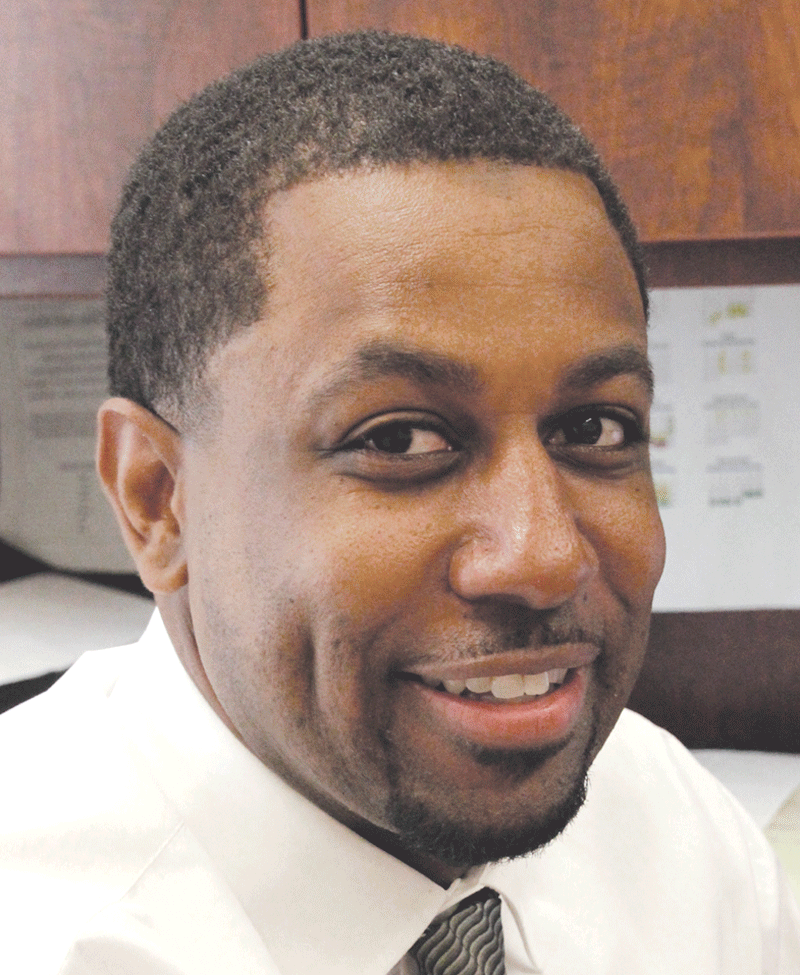
Kamari-Collins-copyKamari Collins

When nominated for the 40 Under Forty Class of 2009, Collins was an academic counselor at Springfield Technical Community College and an individual devoted to helping young people get on the right path — and stay on it. Over the ensuing years, he’s built upon his professional résumé and become involved in many different programs aimed at providing guidance and mentorship.

Collins was promoted to director of Academic Advising at STCC in 2012, and in 2014, he was named dean of Academic Advising and Student Success, and currently leads a staff of more than 25 professionals.

Within the community, he lends his time, energy, and imagination to several organizations, including the Children’s Study Home, the Urban League of Springfield Inc., the Community Foundation Education Committee, the Pioneer Valley AHEC/Reach Advisory Board, and the Lower Pioneer Valley Career and Technical Education Center’s Building and Property Maintenance Advisory Board.

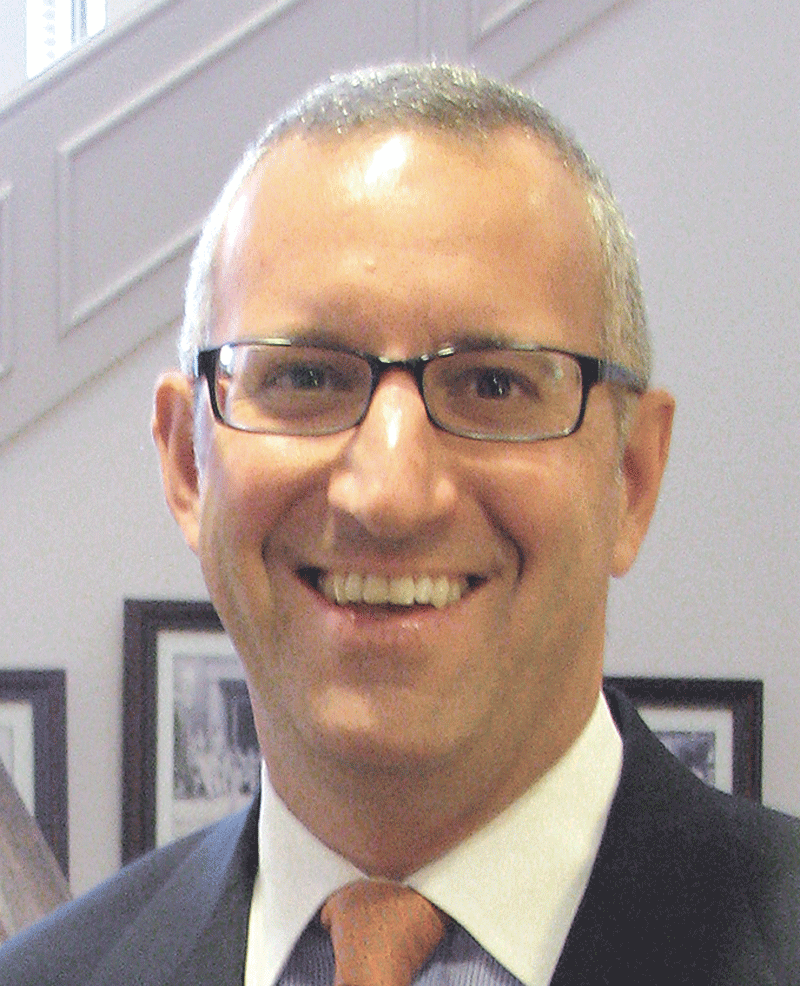
Fialky-copyJeff Fialky

Another member of the 40 Under Forty Class of 2008, Fialky has added a number of lines to the résumé that helped him earn that distinction.

For starters, in 2012, he was named a partner at the Springfield-based law firm Bacon Wilson, which he joined as an associate, and is active in leadership capacities with the firm. But he has also become a leader within the Greater Springfield business community.

Former president of the Young Professional Society of Greater Springfield, Fialky currently serves as chair of the Springfield Chamber of Commerce, and is also on the board of trustees of the Springfield Museums. In his capacity with the chamber, he has spent the past several years working with city officials and various agencies to foster economic development in the city and advance a 10-year economic strategic plan for Springfield.

CindaJones-copyCinda Jones

When she placed among the highest scorers in BusinessWest’s inaugural 40 Under Forty competition in 2007, Cinda Jones was noted mostly as the ninth-generation president of Cowls Lumber Co. (one of the oldest family-owned businesses in the nation) and as president of the Amherst Area Chamber of Commerce. Over the past eight years, she has built upon that résumé in many ways.

Indeed, she has expanded the Cowls business in several directions, but primarily through an initiative to convert the company’s sawmill into a multi-purpose arts and entertainment facility called the Mill District. One multi-use building, the Trolley Barn, hosts the Lift Salon and Bread & Butter Café, along with several residential units, and additional development is planned on the sprawling site.

While entrepreneurial, Jones is also a staunch protector of the environment. In 2011, for example, she brokered and closed the state’s largest-ever private conservation project, the Paul C. Jones Working Forest, a 3,486-acre conservation restriction in Leverett and Shutesbury named for her recently deceased father.

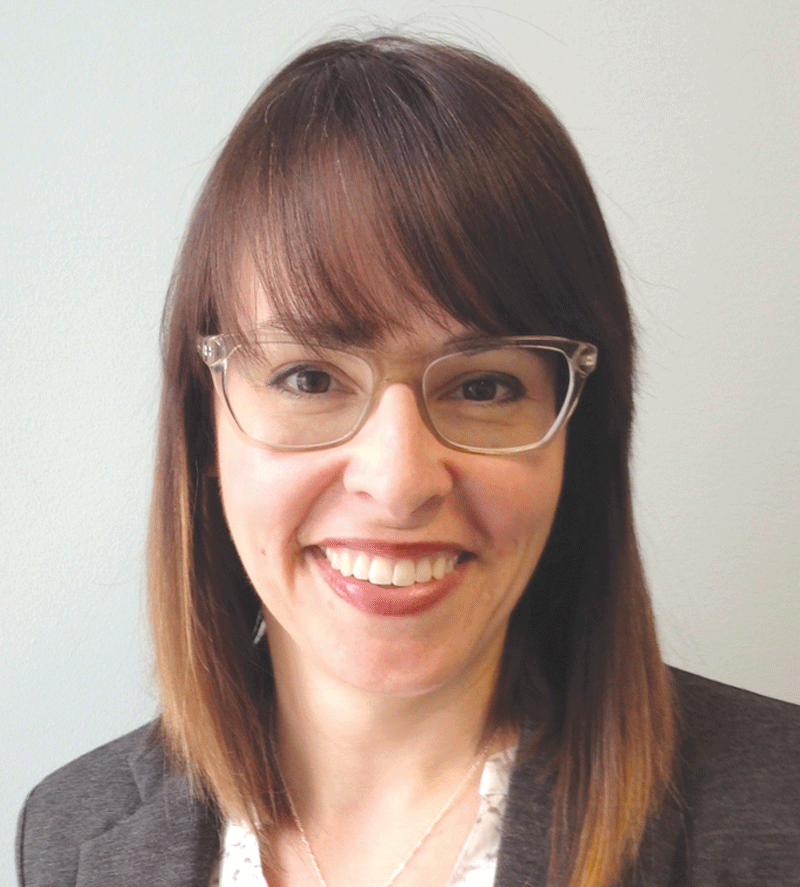
KristinLeutz2Kristin Leutz

A member of the 40 Under Forty Class of 2010, Leutz has added to an impressive list of business accomplishments and initiatives within the community over the past five years. As vice president of Philanthropic Services for the Community Foundation, she played a leading role in efforts to bring Valley Gives from a concept on a drawing board to a hugely successful three-year pilot program that raised more than $5 million for hundreds of nonprofits across Western Mass.

Within the community, meanwhile, Leutz, who has started several businesses, has become a mentor to other entrepreneurs, donating time and energy to Valley Venture Mentors and contributing to the launch of its Accelerator program.

She has also been involved with a number of nonprofit groups, including the Women’s Fund of Western Mass., and often meets with nonprofit leaders, volunteers, and staff to coach them, especially with regard to fund-raising and organizational development.

Daily News

SPRINGFIELD — Local law firm Shatz, Schwartz and Fentin, P.C. announced that shareholder Michele Feinstein will co-chair a full-day Massachusetts Continuing Legal Education (MCLE) symposium, “Estate Planning: Cutting-edge Issues in Western Massachusetts,” on Thursday, June 11 from 9 a.m. to 4 p.m. at Sheraton Springfield, One Monarch Place.

The full-day, regional conference will be delivered by a diverse panel of distinguished estate planners — including Feinstein — who will share their insights to train estate-planning professionals in the latest issues affecting their practice. Topics will include issues unique to Western Mass., from the diverse business populations (artists, farmers, and manufacturers) to case and legislative updates, income-tax planning, litigation considerations, and practice-management tips.

Feinstein concentrates her practice in the areas of estate planning and administration, elder law, probate litigation, health law, corporate and business planning, including all aspects of planning for the succession of business interests, representation of closely held businesses and their owners, and representation of physicians in their individual and group practices. She has received many professional recognitions, including repeated selection to the Super Lawyers of Massachusetts, Best Lawyers in America, and Top Women Attorneys in New England. Additionally, she was named among the Top Women of Law by Massachusetts Lawyers Weekly in 2014, the only attorney in the Western Mass. region to be so honored.

MCLE is the Massachusetts legal community’s premier provider of hands-on educational programs and reference materials. Its particular focus is applied law — practical, concrete training for attorneys in the essential elements of professional practice.

Daily News

DALTON — Associated Industries of Massachusetts (AIM) will celebrate its 100th anniversary on June 11 by honoring three people and organizations shaping the Berkshire County economy — manufacturing entrepreneur Patricia Begrowicz, Berkshire Health Systems, and SABIC Innovative Plastics.

The largest employer association in Massachusetts will present three Next Century awards during a centennial reception at the Crane Model Farm in Dalton from 4:30 to 6:30 p.m. AIM President and CEO Richard Lord will be joined by approximately 100 business and community leaders for the event. The Next Century awards recognize individuals, companies, and other organizations for seminal contributions to the Massachusetts economy and the well-being of its citizens.

“Pat Begrowicz, Berkshire Health Systems, and SABIC Innovative Plastics exemplify the transformative and lasting power of economic opportunity. Their vision and leadership have allowed Berkshire County residents to work, support families, and build lives for themselves while making this region a wonderful place to live,” Lord said.

Begrowicz gave new life to a 200-year-old business in 2009 when she and a business partner acquired the assets of MeadWestvaco’s specialty paper division and created Onyx Specialty Papers in South Lee. It was an extraordinary act of courage in the face of both the Great Recession and the ongoing cost and regulatory challenges of manufacturing products in Massachusetts. The action preserved the livelihoods of 152 manufacturing workers, scientists, and engineers who now supply materials for countertops, laminate floors, furniture, filters, graphic arts, and automotive transmissions.

Berkshire Health Systems is among a vanguard of community hospitals developing new models of patient care and financial sustainability in a turbulent healthcare market. The most dramatic example of the company’s innovative approach came when it stepped in and invested more than $6 million to provide medical services to people in Northern Berkshire County in the wake of the closing of North Adams Hospital. BHS has also invested in the recruitment of new physicians to meet the demand from patients who formerly sought treatment from doctors in private practice.

SABIC Innovative Plastics, a world leader in providing thermoplastic solutions, sets a unique standard for balancing success in the global marketplace with addressing the needs of its hometown. Founded with the acquisition of GE Plastics in 2007, SABIC employs 9,000 people in 35 countries making products for the automotive, electronics, transportation, building and construction, and healthcare industries. At the same time, SABIC employees volunteer their time in the Berkshires and elsewhere through programs that support community initiatives focused on education and environmental sustainability.

Daily News

BOSTON — The Mass. Bankers Assoc. (MBA) and five banks, including Holyoke-based PeoplesBank, have launched Common Cents, a financial-education competition with participating high-school students from around the state. The program is featured online at www.masscommoncents.com.

Recorded last autumn, Common Cents is a quiz-show competition hosted by the MBA and the five bank partners located around the Bay State: Bank of America, BayCoast Bank, Cape Cod Five Cents Savings Bank, PeoplesBank, and the Savings Bank. The 80 high-schoolers compete for prizes and learn about important financial-education concepts and practices along the 

way.

The schools include Barnstable High School, Barnstable; Madison

 Park High School, Boston; Chicopee Comprehensive High School, Chicopee; Chicopee High School, Chicopee; Lynnfield High School, Lynnfield; Natick High School, Natick; Gateway to College Program, Fall River; Dennis-Yarmouth Regional High School, South Yarmouth; and Wakefield High School, Wakefield.

Common Cents is being introduced to every Massachusetts high school with a guide and special classroom instructions that can also be found on the website. In addition, a video of the program has been sent to public-access television stations across the Commonwealth, encouraging both students and the general public to

 engage and embrace the important financial information highlighted in the competition.

The 2015 Common Cents program, the third of its kind, was produced in support of the Financial Literacy Pilot Program established by the Massachusetts Legislature in 2012. This three-year pilot in 10 high schools in gateway cities throughout the 

Commonwealth is designed to test the potential viability of installing required

 financial-education programs in all Massachusetts high schools to give students the personal-finance skills necessary to succeed in life.

“Unfortunately, financial education is not currently required in all of Massachusetts’ high schools,” said Daniel Forte, president and CEO of the MBA. “The Common Cents quiz show provides an effective and engaging opportunity for high-school students — or just about anyone — to gain valuable financial knowledge, and could serve as a model for some of the subject matter that should be taught in our high schools. This innovative program is a fun way to learn personal-finance skills we all need throughout our lives.”

Hosted by New England Cable News anchor Latoyia Edwards, radio 

celebrity Ashlee Feldman of JAM’N 94.5, and financial expert Jeffrey Fuhrer, executive vice president of the Federal Reserve Bank of Boston, the program also features a special guest appearance by former New England Patriot Jermaine Wiggins. For more information and to view the program, visit www.masscommoncents.com.

Daily News

SPRINGFIELD — Springfield Technical Community College (STCC), in partnership with FutureWorks, will once again offer free Massachusetts Comprehensive Assessment System (MCAS) preparatory classes to students from the classes of 2013-2016 who did not pass the MCAS test in English, math, or biology.

The Pathways to Success program is made possible by an $80,000 grant from the Mass. Department of Elementary and Secondary Education.

“The program is for those who need academic remediation to pass the MCAS, obtain a high-school diploma, and transition to post-secondary education,” said Sue Soffen, MCAS Coordinator at STCC.

The next Pathways to Success session will begin Tuesday, July 14 and run through Aug. 20. Classes will be held at STCC in the Adult Education Center (Building 27) from 4:30 to 7 p.m. All classes and curriculum materials are free.

Those interested in enrolling in the program should visit the STCC Adult Education Center in Building 27 Monday through Friday between 9 a.m. and 3 p.m. For additional information, call (413) 755-4300.

Daily News

FARMINGTON, Conn. — Farmington Bank announced the appointment of Brian Risler as assistant vice president, mortgage sales manager for the Western Mass. region.

Risler will lead Farmington Bank’s efforts in building a team of residential loan specialists serving the Western Mass. market. In addition, he’ll originate first mortgages in concert with Farmington Bank’s commercial-lending team in Western Mass. and the bank’s future branch offices opening later this year in West Springfield and East Longmeadow.

“We are thrilled to have Brian join our growing team of experienced, local banking professionals serving Western Massachusetts,” said John Patrick Jr., chairman, president, and CEO of Farmington Bank. “We look forward to Brian’s leadership, expertise, and local decision-making skills in creating and servicing mortgages for our customers.”

Risler has more than 15 years of experience in residential mortgage banking in Massachusetts. He comes to Farmington Bank from Residential Mortgage Services Inc., where he served as branch manager for its Easthampton office.

Since 2005, Risler has served as an affiliate member of the Realtor Assoc. of Pioneer Valley (RAPV) and serves as the co-chair of RAPV’s Education Fair & Trade Expo Task Force. In addition, Risler serves on the Government Affairs/Realtor Political Action Committee, which promotes the legislative agenda of the Massachusetts Assoc. of Realtors; as president of the Mill River BNI, a networking group of area businesses; and as a member of both the Greater Easthampton and Greater Northampton chambers of commerce. He received a bachelor’s degree in business administration/finance from Stonehill College.

Farmington Bank is a full-service community bank with 22 branch locations throughout Central Conn., offering commercial and residential lending as well as wealth-management services in Connecticut and Western Mass. For more information, visit farmingtonbankct.com.

Business Management Sections
How This Program Can Help You Effectively Manage Your Company

By CHRISTOPHER MARINI

Christopher Marini

Christopher Marini

Oftentimes, we rely on Excel to help us achieve a specific function or task, but do not look beyond our immediate needs, because the program can seem difficult or outright impossible to master.

While the depth of Excel’s capabilities is vast, there are a number of different tools that, with just a little education, can make an immediate and substantial impact on our day-to-day business activities. Here are five examples that may help you improve and optimize the operation of your company and better monitor your business to gain an inside edge. 


Track and Analyze Historical Data

One useful feature of Excel is its ability to track historical data and use this information to calculate changes and trends. Some functions in Excel that are helpful for this purpose are averages, dollar and percentage differences, and maximum and minimum values.

If a company is already using accounting software, many of these programs have the ability to export reports, such as income statements and balance sheets, directly to Excel. These reports can be generated for the current year and any prior periods for which data is available. Once the desired reports are in Excel, users can add columns and create formulas to calculate changes and trends. 


Budget-to-actual Comparisons

Another great business application of Excel is a budget-to-actual comparison.

This is a great way to track how well a business is able to control its costs relative to expectations that management has set. By exporting the actual results from an accounting program and creating a column of related budget figures, the user can calculate differences on an annual or monthly basis. Excel also has icon-conditional formatting that can automatically distinguish and visually present how close individual revenues or expenses are to their budgeted figures.


Make Future Predictions

Excel is also excellent at enabling the user to make predictions for future periods. By using the historical data and related trends as described above, business owners can apply an appropriate dollar or percentage increase to project future values.

For example, if expenses have risen by 3% in past years, management can assume that expenses will most likely increase by a similar amount this year.  Of course, some expenses are fixed, so Excel can be utilized to maintain the same fixed cost rates while applying the appropriate rate increase on any variable costs. By calculating projected expenses, business owners can make an educated estimate on how much revenue they will need to earn in order to be profitable. 


Perform a Scenario Analysis

One function in Excel that many users are not aware of is the ability to use the ‘goal seek’ option to explore hypothetical situations.

This is a great tool to use in conjunction with the setting of future expectations. For instance, if a sales-oriented organization needs to earn a certain dollar amount of revenue and is trying to determine what percentage revenues should increase by to reach that desired level, this function eliminates the guesswork and quickly computes the value needed. This function is especially useful in spreadsheets where there is substantial data and linking, and can help users save time by quickly arriving at a conclusion. 


Create Professional Graphs and Charts

Excel is an excellent program for creating insightful visual diagrams that business owners can use both for their own review as well as for presentations to staff or outside organizations.

While there are several other programs that enable users to create these graphs and charts, Excel is a clear frontrunner due to its ability to quickly interpret figures and adjust for any changes made. Some of the other programs rely on manual entries, which can be time-consuming and result in a higher margin of error.

The ‘pivot table’ feature in Excel can be refreshed to always effectively and efficiently present the most recent data. These tables can be customized in various visual ways to ensure that users can present their data exactly how they want. Additionally, Excel graphs and charts can be copied into other programs, and Microsoft Word even allows users to insert blank and editable Excel worksheets within the document.

Bottom Line

If you are already familiar with Excel, challenge yourself to adopt some of these methods to enhance the way you think about your business. If you are not yet comfortable with the operation of the Excel software, there are several learning opportunities available. Many free websites, such as excelexposure.com and gcflearnfree.org, offer step-by-step instructions on standard tasks. For a monthly fee, lynda.com has quality Excel video tutorials. In addition, many libraries or other local organizations will often offer live group learning experiences. If your task is more complex, some accounting firms offer advanced business Excel services as part of their management advisory and consulting services.

In the business world, knowledge is power, and the additional knowledge that can be obtained from custom-designed Excel spreadsheets can help business owners become more informed and aware of company performance. This increased awareness and financial insight can help give business owners the edge they need to stay ahead of their competitors and plan for the future.


Christopher Marini, MOS is an associate with the Holyoke-based public accounting firm Meyers Brothers Kalicka, P.C.; (413) 322-3549; [email protected]

Briefcase Departments

State Awards $100,000 in Workplace Safety Grants
BOSTON — Seven Massachusetts employers — including one in Western Mass. — were awarded grants, totaling more than $100,000, to train 552 workers to prevent workplace injuries, illnesses, and deaths, Labor and Workforce Development Secretary Ronald Walker II announced. The Department of Industrial Accidents Office of Safety administers and manages the Workplace Safety Training and Education Grant program to promote safe, healthy workplace conditions through training, education, and other preventative programs for employers and employees covered by the Massachusetts Workers’ Compensation Law. North Adams-based Berkshire Family & Individual Resources, a nonprofit, human-service organization providing support services for adults and children with disabilities, autism, and traumatic brain injuries, was awarded $10,165. Other grants were awarded to organizations in Lawrence, Dorchester, Roxbury, Boston, Wellesley, and Pepperell. “It’s not just employers and workers who pay the price for occupational fatalities, injuries, and illness. Society often bears the indirect costs of medical treatments and lost wages and productivity,” Gov. Charles Baker said. Added Lt. Gov. Karyn Polito, “making employers and workers aware of workplace hazards and developing safety precautions and protocols can go a long way in reducing the costs of workplace tragedies.” With $800,000 budgeted annually for the safety grant program, the Department of Industrial Accidents (DIA) has funded hundreds of programs that have educated thousands of employers and workers in the Commonwealth. The new round of grants will be the last given out this fiscal year. “These grants have made Massachusetts workplaces safer and healthier for thousands of employees and simultaneously created opportunities for trained workers to move into new or higher-paying jobs,” Walker said. Grant recipients can be awarded up to $25,000 per entity each fiscal year. Employers were awarded training grants through a competitive application process through DIA.

State Unemployment Rate Drops to 4.7% in April
BOSTON — Massachusetts’ total unemployment rate dropped to 4.7% in April, a 0.1% decrease from the previous month, the Executive Office of Labor and Workforce Development announced. The new preliminary job estimates from the Bureau of Labor Statistics (BLS) indicate that Massachusetts gained 10,100 jobs in April, marking the eighth consecutive month of job gains. BLS also revised upward its March job figure, reporting the state gained 12,100 jobs, instead of 10,500, which the agency originally reported last month. Over the year, the state’s unemployment rate fell 1.1% from 5.8% in April 2014. January 2008 was the last time the state’s unemployment rate was at 4.7%. The state unemployment rate remains lower than the national rate of 5.4% reported by the Bureau of Labor Statistics. The state’s labor participation rate — the total number of residents 16 or older who worked or were unemployed and actively sought work in the last four weeks — increased 0.1% to 66.3%. The April labor participation rate is the highest since May 2010, and this is the third consecutive month there was an increase in the participation rate. Compared to April 2014, the labor participation rate increased 1.1% over the year. “This is the seventh consecutive month we’ve seen a decrease in unemployment,” Labor and Workforce Development Secretary Ronald Walker said. “Many more residents are employed, and labor participation has increased again.” April 2015 estimates show that 3,464,500 residents were employed and 169,400 were unemployed. There were 37,700 fewer unemployed persons over the year compared to April 2014. Over the month, jobs were up 10,100, with a private-sector gain of 9,700. Since April 2014, jobs grew by 66,100, with 57,900 private-sector job gains. Education and health services and professional, scientific, and business services were the sectors with the largest job gains over the year.

DCR to Issue Volunteer Fire Assistance Grants
BOSTON — Department of Conservation and Recreation (DCR) Commissioner Carol Sanchez announced that $65,542 has been made available in the 2015 Volunteer Fire Assistance (VFA) grant funding program for eligible towns. Funding for this program, which is provided by the U.S. Department of Agriculture’s Forest Service, is administered by DCR’s Bureau of Forest Fire Control and Forestry. “The Volunteer Fire Assistance grants are an extremely important funding tool to assist qualifying local fire departments that might not have the means to pay for vital equipment and training needed to combat wildland fires within their borders,” Sanchez said. “The recent outbreak of brushfires across the Commonwealth only reinforces the value of the VFA grants.” VFA grants are available to nonprofit rural call or volunteer fire departments that provide service primarily to a community or city with a population of 10,000 or fewer. Fire departments must be comprised of at least 80% call or volunteer firefighters, must be recognized as a fire department under state law, and must be compliant with the National Incident Management System. Applications with eligibility guidelines were mailed recently to the Commonwealth’s forest wardens in all eligible communities. The completed application must be received by June 12 by Program Coordinator Roxanne Savoie, DCR Bureau of Forest Fire Control, Hampton Ponds State Park, 1048 North Road, Westfield, MA 01085. For questions regarding the application process, call (413) 538-9092, ext. 400. DCR, an agency of the Executive Office of Energy and Environmental Affairs, oversees 450,000 acres of parks and forests, beaches, bike trails, watersheds, dams, and parkways. The agency’s mission is to protect, promote, and enhance the state’s natural, cultural, and recreational resources. To learn more about DCR, visit www.mass.gov/dcr, or e-mail [email protected].

Springfield Wins $526,813 for Sewer Improvements

SPRINGFIELD — State Treasurer Deb Goldberg, chair of the Massachusetts Clean Water Trust, announced more than $6.7 million in loan-principal forgiveness for 13 communities statewide, including Springfield. The principal-forgiveness funds, administered by the state and funded by the federal government, were awarded on a competitive basis to cities and towns most in need of financial assistance associated with loan payments to the Massachusetts Clean Water Trust. The funds will be used for financing improvements to drinking water and wastewater infrastructure. The Springfield Water and Sewer Commission received a $526,813 award for the CWP-14-27 Dickinson Street siphon/main interceptor rehabilitation
project. The objective of the project is to rehabilitate and extend the lifespan of existing infrastructure and to improve hydraulic capacity which allows for mitigation of structural failure leading to sanitary sewer overflow (SSO) events. Approximately half of Springfield and the surrounding towns of Ludlow and Wilbraham are served by the main interceptor (MI), which runs for approximately 27,200 feet. The MI was built in 1972 and is constructed of 60-inch and 66-inch reinforced concrete pipe. Based on recent inspection, the MI is considered to be in structural distress. The Dickinson Street Siphon feeds a large catchment of flow into the MI. SSOs into the Mill River and neighborhoods have occurred at the siphon during heavy rainfall events. As part of the project, the siphon will be replaced with a large-diameter gravity sewer. “The Clean Water Trust delivers a critical service to our municipalities by financing water infrastructure projects,” Goldberg said. “Improving water quality presents a range of both public-health and economic benefits for the citizens and communities we represent.” The Massachusetts Clean Water Trust improves water quality in the Commonwealth through the provision of low-cost capital financing to cities, towns, and other eligible entities, and maintains stewardship of public funds. Because of the reduction of loan principal funded by this program, impacted communities will see their biannual loan payments reduced, freeing up capital for other local needs. The loans were originated to pay for municipal water projects such as upgrades to water-treatment facilities and stormwater and sewer-improvement projects.

Dress for Success Names New President, Members
SPRINGFIELD — Dress for Success Western Massachusetts announced that Dawn Creighton, Western Mass. regional director for the Associated Industries of Massachusetts, has been named board president. Dress for Success is a not-for-profit organization promoting the economic independence of disadvantaged women by providing professional attire, a network of support, and the career-development tools to help women thrive in work and in life. “As president of Dress for Success, strengthening our community with strong women will be my priority,” said Creighton. “Dress for Success isn’t just about the suit. It’s about the women that fill the suits. I am eager to work with partnering agencies and community leaders to ensure the women of Pioneer Valley have the tools they need to be successful in the workforce.” In addition to her role with AIM, Creighton serves on multiple committees and boards, including the Human Resource Management Assoc. of Western New England, Junior Achievement of Western Massachusetts, Internhere.com, the Hartford-Springfield Economic Partnership, United Way of Pioneer Valley, the Affiliated Chambers of Commerce of Greater Springfield, and the World Affairs Council. Also named to the board are Jennifer Brown, Jonencia Wood, and Natallia Furjan-Collins. Brown has more than 16 years of experience within the staffing industry and currently is assistant vice president of operations for United Personnel, supervising candidate recruitment, client relations, staffing support, and quality assurance. Prior to joining United Personnel, she was the managing director at Staffing Now. She is a member of the Human Resource Management Assoc. and the human resource roundtable with the Employers Assoc. of the NorthEast. Wood is senior director of programs for the alumnae association of Mount Holyoke College and has more than 10 years of experience focusing on the professional development and advancement of underrepresented individuals. Prior to joining Mount Holyoke, she served as a diversity specialist for Baystate Health and community action and communications coordinator for the Youth Empowerment Adolescent Health Network. Furjan-Collins is the human resources leader for MassLive. She brings with her an innovative and modern approach to employee relations in the digital environment. Prior to joining MassLive, her career spanned several years in human-resource management in her native Canada, including speaking publicly on topics such as workplace harassment and bullying. She is currently a community business partner in the sophomore business cohort program at Western New England University.

Company Notebook Departments

Berkshire Hills to Acquire Firestone Financial
PITTSFIELD — Berkshire Hills Bancorp Inc. announced the signing of a definitive agreement for the acquisition of privately held Firestone Financial Corp. as an operating subsidiary of Berkshire Bank. Based in Needham, Firestone is a longstanding commercial specialty finance company providing secured installment loan equipment financing for small and medium-sized businesses. “Firestone is a terrific fit for Berkshire Bank,” stated Berkshire CEO Michael Daly. “The strength of the management team and their conservative approach to credit has made them a solid performing finance company. Our strategic decision to complement our strong asset based lending platform with this commercial lending business enables us to further diversify our assets while expanding our client offerings. We look forward to adding Firestone’s expertise to our organization, and taking advantage of the synergies available through this acquisition.” George Bacigalupo, Berkshire’s executive vice president of Commercial Banking, added, “We are pleased to expand our commercial platform with this attractive acquisition. The addition of Firestone enhances both the geographic and categorical diversification of our loan portfolio while providing a valuable additional growth channel for us.  The business will continue to be run by Firestone’s talented management team and their experience and conservative relationship-based approach makes this a great fit for our organization.” On March 31, 2015, Firestone had approximately $190 million in loans outstanding spread across multiple industries and market areas. Borrowers are widely dispersed with no state comprising more than 11% of the outstanding balance and the largest borrower representing just 1.2% of outstandings.  The weighted average yield on the portfolio at quarter end was 9.8% and its weighted average remaining maturity was 36 months.  The portfolio’s net charge-off rate has not exceeded 0.23% in any of the last three years. Firestone has been in business for 50 years and is led by industry veterans David S. Cohen and Scott A. Cooper, both of whom joined the company in the mid-1980’s. Firestone’s senior management team has extensive experience in the markets they serve and will continue to run the business following the closing.  The acquisition is priced at 130% of Firestone’s adjusted tangible book value. The deal value is estimated to be approximately $53 million, with 75% of the consideration to be paid in BHLB common stock and 25% to be paid in cash.  The acquisition is expected to be accretive to Berkshire’s 2016 earnings per share and to generate a return on equity in excess of 15%. The transaction is expected to be $0.08 dilutive to Berkshire’s tangible book value per share, with a related payback period of approximately 2.5 years. The transaction is subject to the receipt of regulatory approvals and other customary closing conditions and is expected to be completed during the third quarter of 2015. 
 
Log Cabin’s Upper Vista Hosts First Wedding
HOLYOKE — The Log Cabin has long been one of the region’s most popular outdoor wedding venues, due in large part to the panoramic mountain views from its Mt. Tom location. Over the past year, the facility has expanded its outdoor facilities on the uppermost clearing above the outdoor patio to create Upper Vista. On May 23, West Springfield couple Adam Hawley and Courtney Juday became the first bride and groom to be married at the new site. “We are offering couples something very unique,” said Peter Rosskothen, co-owner of the Log Cabin Upper. “Vista is on the highest point of the property; the view is breathtaking.” Upper Vista features a deluxe tent and building fully equipped with restrooms, a bridal suite, and a kitchen. “For some couples, there is a trend toward less traditional venues for weddings,” Rosskothen said. “With Upper Vista, our customers get the experience of the funky outdoor wedding without the logistical headaches of planning it all themselves. They know they can count on our expert wedding staff and excellent chefs to get all the details right.”

American Benefits Group Cited for Customer Service
NORTHAMPTON — American Benefits Group (ABG) of Northampton has been recognized as the 2015 Customer Service Champion by Alegeus Technologies, the industry’s largest healthcare provider of account-based, pre-tax benefits. ABG uses the Alegeus Consumer Benefits Account Management Platform as part of its core service administration system. The award was presented to ABG management on May 8 at the National Alegeus Client Conference in San Diego. “Through its longstanding partnership with Alegeus, American Benefits Group has continuously demonstrated superb business growth and outstanding customer metrics,” said Bob Natt, executive chairman of Alegeus. “American Benefits Group continues to raise the bar in advancing healthcare consumerism and delivering a truly innovative and excellent healthcare experience for all stakeholders.” Added ABG founder and CEO Robert Cummings, “with our relentless focus on customer experience and aggressive adoption of innovative technologies, ABG has grown into one of the industry’s top employee-benefits-administration companies. As a result, we have experienced record growth for the past six years and today are serving more than 1,000 employer clients who collectively have more than 150,000 employees.” American Benefits Group was founded in 1989 by Robert Cummings and provides employers with turn-key, third-party administration of a wide range of pre-tax employee benefits, including health reimbursement accounts, health savings accounts, flexible spending accounts, COBRA administration and compliance, and pre-tax commuter accounts. Customers include more than 1,000 companies — including international, iconic brands such as Ferrari Maserati, Wall Street giant Cantor Fitzgerald, and Mitsubishi — as well as many area employers, such as Mount Holyoke College and Florence Savings Bank. The company has 27 Northampton-based employees. It recently opened a satellite office in Columbia, Md., and is rapidly expanding in the mid-Atlantic marketplace.

Adam Quenneville Earns Top Honor
SOUTH HADLEY — Adam Quenneville Roofing, Siding & Windows announced that GAF, North America’s largest roofing-materials manufacturer, recently recognized the company with a prestigious 2015 Presidents Club Award for high-quality workmanship, safety, training, and reliability. Quenneville was one of five North American contractors to receive this award. GAF, North America’s largest roofing manufacturer, developed the Presidents Club Award for Master Elite contractors who excel in workmanship, service, and responsiveness. Adam Quenneville Roofing has been recognized for its long-standing support of GAF products, success in offering homeowners peace of mind in GAF warranties, and attention to detail in all GAF roofing systems. “Some people might think, after owning a business for 20 years, that the passion would dwindle,” Quenneville said. “I feel just the opposite. I am more excited than ever to help area homeowners with their roofing concerns. Having this many years of experience, I can offer unique solutions and recommendations.” He added, “I would like to take a moment and thank my team. I couldn’t have achieved this award or any of the success over the last two decades without them.” For more information about Adam Quennville Roofing, Siding & Windows, visit 1800newroof.net.

<strong>East Longmeadow Skilled Nursing Center Earns Perfect Survey Score
EAST LONGMEADOW
— East Longmeadow Skilled Nursing Center passed a recent state Department of Public Health (DPH) survey with no deficiencies, indicating perfect compliance with stringent state standards for skilled nursing care. A deficiency-free result in the state’s rigorous annual examination is one of the top indications of excellence for nursing facilities. Each facility is thoroughly surveyed and rated on core criteria including quality care, safety, administration, food service, nursing care, and patient rights. The unannounced inspections by representatives from the DPH are conducted annually, nine to 15 months following the prior survey. This evaluation, conducted by a team including at least one registered nurse and social worker, includes a review of residents’ and patients’ clinical records, a thorough tour of the facility, and interviews with residents, patients, family members, and staff members. This honor is the most recent in a series of outstanding accomplishments by East Longmeadow Skilled Nursing Center, including a Bronze Commitment to Quality Award presented by the American Health Care Assoc. and National Center for Assisted Living, based on the criteria of the Baldrige Performance Excellence Program. Other recent accolades include East Longmeadow’s scores in the top 5% in the nation for customer and workforce satisfaction, as measured by My InnerView and National Research Corp.

Smith Steps Down as CEO of YMCA of Greater Springfield

SPRINGFIELD — Kirk Smith has resigned from his position as CEO of the YMCA of Greater Springfield, and will continue his 17-year career with the YMCA at the executive level in Florida. Jeffrey Poindexter, the recently appointed board chair of the YMCA of Greater Springfield, announced that the board will establish a search committee to identify a permanent replacement to lead the organization. The search committee will likely consult YMCA of the USA, the national parent organization, to provide any necessary executive resources in the short term. Smith will continue to be available to the board to assist with the transition through July 3. “Kirk Smith brought unique talents in his leadership of the Y, and under his direction, the YMCA launched or expanded programming, including the building of the new Agawam YMCA Wellness and Family Program Center on Springfield Street,” Poindexter said. “He also was instrumental in maintaining the services of Dunbar Community Center, a vital asset to the Mason Square community. He expanded programming at the Scantic Valley YMCA in Wilbraham and represented the YMCA in a number of community organizations and causes.” He added, “Kirk also established the YMCA’s Diversity & Inclusion Committee and helped to secure an additional $4 million from the Department of Education for pre-school expansion and added educational programming sites, one of the YMCA’s key service areas. These initiatives, and Kirk’s leadership, were vital to the YMCA and the varied constituencies we serve. I know I speak for the entire YMCA board in expressing my appreciation for Kirk Smith’s stewardship of the Springfield YMCA, one of the oldest in the United States, and wish Kirk and his family great future success.” Since 1852, the YMCA of Greater Springfield has been a way of life for thousands of youth, teens, families, and seniors throughout the 14 cities and towns it serves.

Departments People on the Move

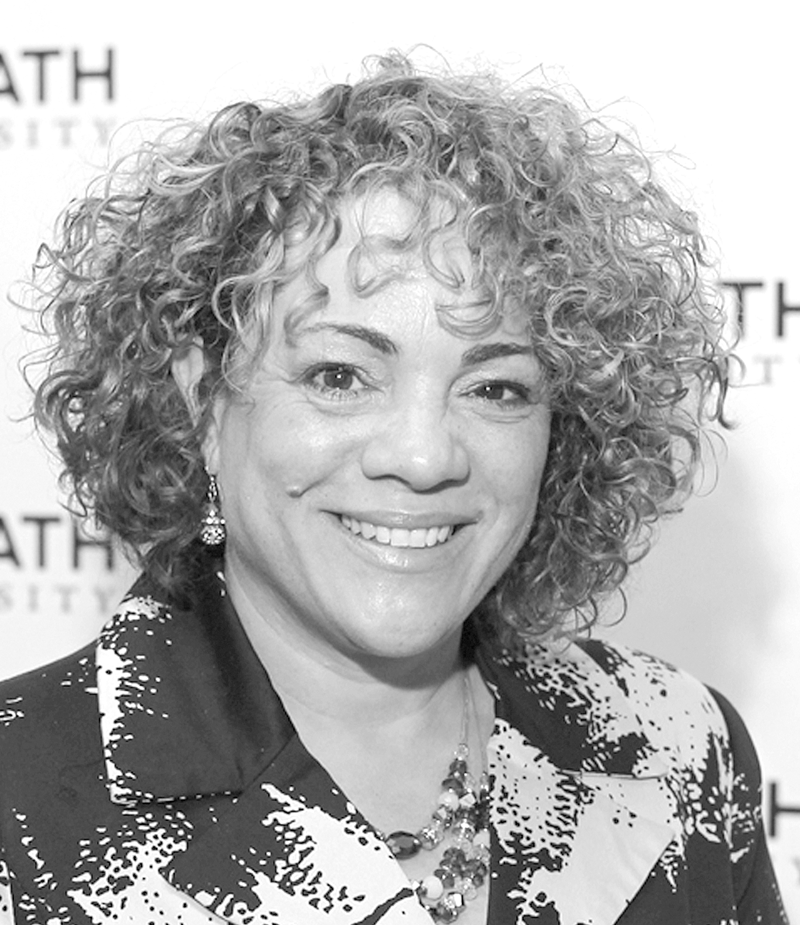
Elizabeth Cardona

Elizabeth Cardona

Bay Path University announced the appointment of Elizabeth Cardona as executive director for Multicultural Affairs, International Student Life, and assistant to the provost for Diversity and Inclusion. Cardona, the former senior director and civic engagement advisor to then-Gov. Deval Patrick, comes to Bay Path with extensive experience in state government, education, and nonprofit program management. In her position, Cardona will provide institutional leadership to support the needs of first-generation and underrepresented minority students by offering academic assistance, mentoring, coaching, and leadership programs to promote multi-cultural awareness, diversity, and inclusion in accordance to the mission of Bay Path University. In addition, she will work with international students to provide ongoing assistance with social and cross-cultural activities to support their immersion and academic experience. Bilingual in Spanish, Cardona also has a working knowledge of Arabic. “I am thrilled to join Bay Path University’s community to facilitate understanding of multi-culturalism, diversity, equity, and inclusion in an affirming space where students, faculty, staff, and leadership engage collaboratively to enhance academic and social development,” Cardona said. A graduate of the Women’s Pipeline for Change, an initiative that supports women of color as they enter leadership roles and public life, her expertise also includes serving on state Treasurer-elect Deb Goldberg’s transition team, as an advisory board member for the Women’s Fund of Western Massachusetts Leadership Institute for Political and Public Impact, and as a founding board member for the CHICA Project, a Massachusetts statewide Latina youth leadership, mentoring, and coaching program. Cardona holds an MPA and a certificate in conflict resolution from the Maxwell School of Citizenship and Public Affairs at Syracuse University, and a bachelor’s degree in American studies with a concentration in social issues from Springfield College.
•••••
Dress for Success Western Massachusetts announced that Dawn Creighton, Western Mass. regional director for the Associated Industries of Massachusetts, has been named board president. Dress for Success is a not-for-profit organization promoting the economic independence of disadvantaged women by providing professional attire, a network of support, and the career-development tools to help women thrive in work and in life. “As president of Dress for Success, strengthening our community with strong women will be my priority,” said Creighton. “Dress for Success isn’t just about the suit. It’s about the women that fill the suits. I am eager to work with partnering agencies and community leaders to ensure the women of Pioneer Valley have the tools they need to be successful in the workforce.” In addition to her role with AIM, Creighton serves on multiple committees and boards, including the Human Resource Management Assoc. of Western New England, Junior Achievement of Western Massachusetts, Internhere.com, the Hartford-Springfield Economic Partnership, United Way of Pioneer Valley, the Affiliated Chambers of Commerce of Greater Springfield, and the World Affairs Council. Also named to the board are Jennifer Brown, Jonencia Wood, and Natallia Furjan-Collins. Brown has more than 16 years of experience within the staffing industry and currently is assistant vice president of operations for United Personnel, supervising candidate recruitment, client relations, staffing support, and quality assurance. Prior to joining United Personnel, she was the managing director at Staffing Now. She is a member of the Human Resource Management Assoc. and the human resource roundtable with the Employers Assoc. of the NorthEast. Wood is senior director of programs for the alumnae association of Mount Holyoke College and has more than 10 years of experience focusing on the professional development and advancement of underrepresented individuals. Prior to joining Mount Holyoke, she served as a diversity specialist for Baystate Health and community action and communications coordinator for the Youth Empowerment Adolescent Health Network. Furjan-Collins is the human resources leader for MassLive. She brings with her an innovative and modern approach to employee relations in the digital environment. Prior to joining MassLive, her career spanned several years in human-resource management in her native Canada, including speaking publicly on topics such as workplace harassment and bullying. She is currently a community business partner in the sophomore business cohort program at Western New England University.
•••••
Dodie Carpentier

Dodie Carpentier

Monson Savings Bank (MSB) announced the promotion of Dodie Carpentier to assistant vice president of Human Resources. Carpentier joined MSB in 2006 as assistant branch manager and was promoted to branch manager in 2008. In 2012, she assumed a dual role as branch manager and education coordinator. With her growing interest in training and HR, she obtained certification in Supervision in Banking and Human Resources Management from the Center for Financial Training. In 2014, she was named human resources officer after an extensive search to replace her predecessor, who had retired. “There is nothing more important than our employee culture,” said Steve Lowell, president of Monson Savings Bank. “We work very hard to make sure our folks are knowledgeable and caring and that we work together as a team to make our customers’ lives easier and improve their financial future. Having a dedicated and strong leader in HR is an absolute must, and I’m very pleased to promote Dodie to assistant vice president.” Carpentier is a board member of River East School to Career and serves on the steering committee for Rays of Hope.
•••••
Calvin Hill

Calvin Hill

Calvin Hill has been named vice president for Inclusion and Community Engagement at Springfield College, following a national search. With more than 20 years of experience as a faculty member in higher education, Hill most recently served as the university diversity and inclusion officer for the University of St. Thomas in St. Paul, Minn. Previously, he developed strong ties to higher education in Massachusetts working as assistant to the president and director of the Office of Diversity, Inclusion, and Equal Opportunity at Worcester State University; serving as associate provost and chief diversity officer for MGH Institute of Health Professions in Boston; and prospering as assistant dean and director of diversity programs at Worcester Polytechnic Institute. Hill’s experience has included a commitment to providing equal access to educational opportunities for underrepresented populations, and to lead institutional compliance efforts around the ADA, Title VI, Title VII, VOWA, the Campus SaVE Act, and Title IX. “I am pleased to announce that Calvin will be joining the leadership team at Springfield College,” said Springfield College President Mary-Beth Cooper. “Springfield College recognizes that a diverse and inclusive campus community where different perspectives are recognized and celebrated is an integral part of educating students in the 21st century. In addition, we are proud of our collaborative partnerships with many community organizations, and we are committed to being a strong advocate for greater Springfield. Calvin’s experience in both academic and professional settings will enhance the college’s goals and vision in these areas moving forward.” Reporting directly to the president, Hill will work closely with a broad range of students, faculty, staff, and community constitutes to develop Springfield College as a model for diversity and inclusion in higher education. Striving to connect the college’s intellectual and cultural resources to area communities, his leadership will support the recruitment and retention of a diverse student population. In addition, he will monitor, document, and facilitate the college’s integrated governmental and community relations and serve as a liaison to local, state, and federal government agencies. “I am thrilled to join the Springfield College community in the position of vice president for inclusion and community engagement,” said Hill. “From what I have seen and heard, Springfield College is a special place, and I look forward to working with its dedicated faculty, staff, students, and community partners to not only shape, but to also gain a better understanding of the world around us.” Hill has a doctor of philosophy degree in political science from Howard University, a master’s degree in student personnel administration from Emporia State University, and a bachelor’s degree in history and political science from Bethany College.
•••••
Local law firm Shatz, Schwartz and Fentin, P.C. recently announced that attorneys Michele Feinstein, L. Alexandra Hogan, Carol Cioe Klyman, and Ann Weber have been selected to the Super Lawyers Top Women Attorneys in Massachusetts list. Klyman and Weber have also been selected to the 2014 Top 50 Women list. Super Lawyers is a rating service of outstanding lawyers from more than 70 practice areas who have attained a high degree of peer recognition and professional achievement. The selection process includes independent research, peer nominations, and peer evaluations. Super Lawyers magazine features the list and profiles of selected attorneys and is distributed to attorneys in the state or region and the ABA-accredited law school libraries. Super Lawyers is also published as a special section in leading city and regional magazines across the country, including the April 2015 edition of Boston magazine. “Beginning your search for legal counsel is no small feat; knowing where to start, researching attorneys, and finally selecting one you feel comfortable with can be overwhelming tasks,” said Super Lawyers Director of Research Julie Gleason. “All of the women lawyers in this special section have been named to a 2014 Massachusetts Super Lawyers or Rising Stars list. In creating our lists, Super Lawyers performs the type of due diligence that a highly motivated and informed consumer would undertake if he or she had the time, energy, and resources.”
•••••
Zachary Piper

Zachary Piper

Northeast IT Systems Inc. announced the hiring of Zachary Piper as a desktop specialist. Piper has a degree in computer engineering technology from Manchester Community College, where he served as head technician for the college’s volunteer Computer Repair and Share Club. In 2011, he constructed a computer lab for a Boy Scout camp in Connecticut, where he had served as a camp counselor. “The IT field brings unique challenges every day, and I find them to be intriguing. From a very young age, computers have fascinated me. I was able to build my first PC at age 11,” said Piper, adding that his favorite aspects of his job are helping customers, solving strange problems, and learning new things. “It has been great having Zac as a part of our team,” said owner Joel Mollison. “He works hard, and I can always count on him to help with any problem a customer faces.”

Agenda Departments

Civic ‘Hackathon’
June 6-7: As part of the National Day of Civic Hacking, more than 100 people with a variety of computer-technology skills are expected to participate in the Hack for Western Mass. (H4WMA) being held at the UMass Center at Springfield. This ‘hackathon’ will connect these ‘techies’ with more than a dozen nonprofit organizations from throughout the Pioneer Valley to create web­based solutions to help them have greater impact on their communities. Participants are being actively sought; the website www.hackforwesternmass.org is available for information, registration, and sponsorship opportunities. “Civic hackers are a generous breed,” said H4WMA co­organizer Steven Brewer, director of the Biology Computer Resource Center at UMass Amherst, noting that the hackthon is entering its third year. “The first was held at UMass Amherst in 2013. Last year’s was held in Holyoke. This year, we wanted it in Springfield.” A hackathon is a gathering of people — many with computer-technology skills but also project managers, scribes, presentation preparers, designers, and social-media mavens — who come together to code collaboratively in a short period of time, usually a weekend, to create IT­based solutions to local problems. More than three dozen local nonprofits have benefited or will benefit from this annual day of local civic hacking. “It’s a great opportunity to apply local talent to local challenges,” said Bram Moreinis, another H4WMA co­organizer, who ran Tech Scouts in Greenfield last summer. The organizers, who also include Elyssa Serrilli, a lead mentor for the Full Moon Girls program of the Vermont Wilderness School, and Cristos Lianides­Chin, a FileMaker developer at inRESONANCE in Northampton, have been meeting for months to get ready for this weekend. “It takes a lot of planning to pull this together — recruit project managers, nonprofits, sponsors, and participants; do all the outreach; and set up all the technology” noted Serrilli. Added Lianides-Chin, “there are many details to keep track of and people to engage to bring it to fruition. We’ve been meeting weekly in person and almost daily online for months. Online collaboration tools have come a long way.” Participating nonprofits include United Way of Pioneer Valley, Square One, Suit Up Springfield, Springfield Parking Authority, Gardening the Community, DIAL/SELF, Lyme Disease Resource Center, LightHouse Personalized Education for Teens, Permaculture Practitioners in the Northeast, Smith College, Full Moon Girls, and Pioneer Valley Local First. “This hackathon is such a novel way of helping our regional nonprofit organizations,” said LaTonia Naylor, manager of community impact at United Way of Pioneer Valley. “We’re thrilled on two levels. We’ve submitted a challenge that will help us with engaging the volunteers that give their time to many area nonprofits, and many area nonprofits will benefit from the solutions that emerge.” The organizers also want to engage youth in information technology and offer a youth hackathon running in parallel to the main event. Sponsors of the event to date include UMass Amherst’s Center for Public Policy and Administration, Atalasoft, Communicate Health, App­o­Mat, FIT Solutions, Last Call Media, Mad POW, inRESONANCE, AmherstMedia.org, the UMass Center at Springfield, and the Springfield Parking Authority. For more information and to register or sponsor, visit hackforwesternmass.org or contact Cristos Lianides­Chin at [email protected].

Breakfast Series on IT Security
June 11: You have heard the stories about Target, Home Depot and Sony, but could something like that really happen to a small business in Western Mass.? What are the biggest threats facing a small business when it comes to IT security? Spoiler alert: it isn’t what you think. Join Paragus Strategic IT as it kicks off its new breakfast series by taking a look at these questions and eating some great food. Presenters will review what’s happening locally, regionally, nationally, and globally when it comes to IT security, and share valuable tips that can help prevent your business from becoming the victim of a cyberattack. The event is scheduled for 8 to 9:30 a.m. at Paragus Strategic IT, 112 Russell St., Hadley. To register, visit www.eventbrite.com/e/paragus-breakfast-series-tickets-16867459024.

Workshop on Retirement Planning, Social Security
June 16:
Monson Savings Bank is holding a complimentary workshop titled “Social Security: The Choice of a Lifetime.” It will be presented by Kevin Flynn, regional vice president of Nationwide Financial, and an expert on retirement planning and helping people to understand Social Security and how to optimize their benefits. The event is designed to give people a comprehensive understanding of the rules and details regarding when and how to file for Social Security. It will be held from 5 to 6:30 p.m. at the Hampden Senior Center at 104 Allen St. in Hampden. The free event is open to the public. “This workshop is back by popular demand,” said Steven Lowell, president of Monson Savings Bank. “Knowing when and how to file for Social Security can have a big impact on retirement income. We have offered this workshop before, and those who attended were very appreciative of the information.” Those interested in attending should call Anna Driscoll at (413) 267-1221 or e-mail [email protected]. Seating is limited. Refreshments will be served.

40 Under Forty
June 18: The ninth annual 40 Under Forty award program, staged by BusinessWest, will be held at the Log Cabin Banquet & Meeting House the evening of June 18. The event honors the region’s most accomplished and civic-minded professionals under age 40, and this year’s class was profiled in the April 20 issue. This year’s winners represent virtually every sector of the economy — from financial services to manufacturing; retail to healthcare; technology to nonprofit management; education to law. They also show the seemingly innumerable ways people can give back to the community. This year’s event will feature a new award — the Continued Excellence Award, presented to the previous honoree who has most impressively built upon their track record of excellence. Always one of the most anticipated events and best networking opportunities on the calendar, the gala will feature lavish food stations, entertainment, and the introduction of this year’s class. Tickets cost $65 each, with standing-room-only tickets still available. Tickets can be ordered by calling (413) 781-8600, ext. 100, or by visiting HERE. The 40 Under Forty program and gala are sponsored this year by Northwestern Mutual (presenting sponsor), Paragus Strategic IT (presenting sponsor), Fathers & Sons, the Isenberg School of Management at UMass Amherst, Moriarty & Primack, and United Bank.

Berkshire Region MITS Summer Institute
July 6-10: Berkshire Museum will host the Berkshire Region Museum Institute for Teaching Science (MITS) summer session for middle- and high-school teachers. This year’s theme is “Going with the Flow: Using Inquiry Methods to Teach Watershed Science.” The Berkshire Museum is the lead educational partner for MITS in the Berkshires. The program is presented with instructing partners Housatonic Valley Assoc., Flying Cloud Institute, and American Rivers. This exciting professional-development program will focus on the ecology and history of local rivers and watersheds. Participants will learn from experts about what is affecting water quality in the rivers that flow through area communities and how scientists effectively measure watershed health using principles of ecology, engineering, and robotics. The week-long institute includes outside exploration of local rivers and time indoors at the museum for hands-on, inquiry-based projects. Institute participants will build and use a SeaPerch underwater remotely operated vehicle (ROV) and then take it back to their classrooms. The SeaPerch ROV is used to take videos of underwater ecosystems and collect water samples. SeaPerch curriculum serves as an introduction to basics in engineering, ship and submarine design, and an exploration of ways that engineers have been able to explore places that are too dangerous or unreachable for humans to visit. The educators will explore a variety of methods to test water quality. They also will build miniature urban landscapes to prototype methods for remediating runoff in an exploration of low-impact-development solutions to non-point source pollution. Participants will learn from experts about the science and politics of dam removal that have been affecting New England rivers, and they will hear the story of PCB pollution and removal in the Housatonic River watershed and examine issues surrounding urban and agricultural runoff into rivers and aquifers. Throughout the course, participating educators will try out, develop, and implement inquiry-based approaches and project ideas for use in the classroom that amplify the concepts covered in the course and that will encourage students to become critical, inquisitive thinkers. Throughout the institute, the educators will be working with proven methods of assessing student learning. Educators who complete the institute earn professional development points and/or graduate credits from either Massachusetts College of Liberal Arts or Cambridge College, based on a teacher’s chosen level of participation. All activities will be linked to Massachusetts Common Core state standards and STEM (science, technology, engineering, math) initiatives. All teachers from grades 5 to 12 are welcome to attend. Online registration for the institute is available at www.mits.org. There will be an orientation on June 20 before the July 6-10 session. The deadline to guarantee a spot is June 1; late sign-ups will be accepted based on space availability. The registration fee, which includes the cost of the SeaPerch kit, is $400 for individual participants and $375 for two or more participants from same school district. Meghan Bone, Berkshire Museum’s School and Teacher Program specialist, can answer questions about the program; she can be reached at (413) 443-7171, ext. 332, or [email protected].

Western Mass. Business Expo
Nov. 4: Comcast Business will present the fifth annual Western Mass. Business Expo at the MassMutual Center in downtown Springfield, produced by BusinessWest and the Healthcare News in partnership with Go Graphix and Rider Productions. The business-to-business show will feature more than 100 booths, seminars and Show Floor Theater presentations, breakfast and lunch programs, and a day-capping Expo Social. Details about specific events, programs, and featured speakers will be printed in future issues of BusinessWest. Current sponsors include MGM Springfield, Expo Social sponsor; the Isenberg School of Business at UMass Amherst, education sponsor; Johnson & Hill, silver sponsor; DIF Design, director level sponsor; and 94.7 WMAS, media sponsor. Additional sponsorship opportunities are available. Exhibitor spaces are also available; booth prices start at $750. For more information on sponsorships or booth purchase, call (413) 781-8600, ext. 100.

Daily News

HOLYOKE — Stephen Zrike was chosen by Commissioner of Elementary and Secondary Education Mitchell Chester as district receiver for Holyoke Public Schools, a position with the power of both a superintendent and a school committee.

“Stephen Zrike’s work in Boston and Chicago shows his dedication to urban students and his understanding of how to improve schools,” Chester said Monday, according to the Republican.

Zrike has worked in two Boston schools, William H. Ohrenberger School and William Blackstone Elementary School. In two years as the principal of Ohrenberger, he worked to increase student achievement scores in English and Math. The following year, as principal of William Blackstone Elementary School, he facilitated turnaround efforts under the Boston superintendent. He is currently superintendent of Wakefield Public Schools, and will begin as receiver for Holyoke Public Schools on July 6.

Cover Story
Area Farmers Benefit from a Changing Landscape
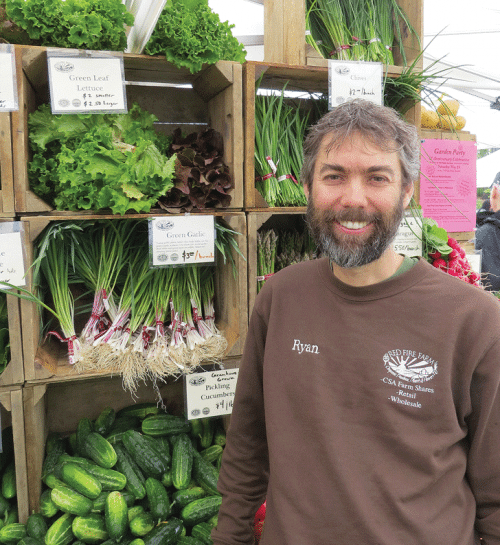
Ryan Voiland, owner and manager of Red Fire Farm

Ryan Voiland, owner and manager of Red Fire Farm, awaits customers at the weekly farmers market at Springfield’s Forest Park.

Joe Shoenfeld calls it “an attitudinal shift.”

That’s how he chose to describe a movement, for lack of a better term, that has made terms like ‘fresh,’ ‘healthy,’ ‘organic,’ ‘sustainable,’ and especially ‘local’ not just adjectives that dominate the lexicon — and also the marketing materials — of those who grow, sell, and prepare food, but also part of this region’s culture.

“I think we’ve definitely moved beyond something that could be called a fad or a trend regarding local purchasing and local food,” Shoenfeld, associate director for the Center for Agriculture, Food and the Environment in the College of Natural Sciences at UMass Amherst, told BusinessWest. “Cynics may think it will fall away, and maybe interest will decline from where it is now. But what we’re seeing is a real shift, especially in Western Mass. There’s been a shift in attitudes about the local economy and about food, especially among the younger generations.”

And this shift is having a rather profound impact on the region’s agricultural sector, one that has manifested itself in countless ways. These include the rapidly growing number of farmers markets in area parks, downtowns, bank parking lots, and on the grounds of major employers like MassMutual and Baystate Medical Center; the buying habits of UMass Dining, the largest operation of its kind in the country, serving more than 45,000 meals a day; the ranks of restaurants loudly boasting a farm-to-table operating philosophy; the number of students in the Sustainable Food and Farming program at UMass (there were five in 2003 and 150 this past spring); and the number of acres Ryan Voiland is devoting to kale, that leafy green vegetable that has seen its popularity skyrocket in recent years.

“Kale has really taken off — as have many other things,” said Voiland, 37, owner and manager of Red Fire Farms, operating in Granby and Montague, and one of a sharply rising number of people who are considered new to the profession — and finding opportunity in that aforementioned attitudinal shift.
Joe Shoenfeld, right, and John Gerber

Joe Shoenfeld, right, and John Gerber both say that students at UMass Amherst reflect what they call an attitudinal shift toward buying local and eating healthier food.

Voiland, who said it would take less time to list what he doesn’t grow, now sells at many of those farmers markets, offers CSA (community-supported agriculture) shares, supplies several area restaurants and co-ops with fresh produce, and recently inked a roughly half-million-dollar contract with the Wegmans supermarket chain, which is expanding its reach in the Bay State.

“They approached us because they heard we had pretty good stuff, it’s certified organic, and in Massachusetts,” Voiland explained, adding that the first deliveries will begin in a few weeks. “They really wanted to link up with a farm that could provide enough volume to supply their Massachusetts stores, and they also want to promote that they’re making organic local produce available in their stores.”

Such motivations help explain why sales at nearly all of the farm’s various outlets have grown, and also why the Red Fire story is typical of what’s happening locally, both with relative newcomers like Voiland and individuals whose families have been working the land for generations.

This shift didn’t come about quickly or easily, and in many ways it is still evolving, said Phil Korman, executive director of Communities Involved in Sustainable Agriculture (CISA), which advocates for area farmers, engages the community to build the local food economy, and has launched, among other initiatives, the ‘Be a Local Hero’ program that now boasts more than 400 members, meaning those who grow products locally and those who buy them.

The new attitude came about through hard work on the part of CISA, other industry groups, and individual farmers themselves to generate far greater appreciation for the foods being grown and those tilling the soil, he explained.

“Part of what the problem has always been is that there’s been a lack of respect for the people who are growing our food and other farm products,” he said, adding that this is another attitude that is changing. “We’ve created an environment in this region where people love their farmers and they want to buy from their neighbors who are farmers.”

For this issue, BusinessWest takes an in-depth look at how the landscape is changing, figuratively and quite literally, for area farmers, and why many believe, as Shoenfeld does, that this is not a trend or a fad, but a change with staying power and vast potential for growth of a proud industry.

Root Causes

Gideon Porth says farmers in Western Mass. probably have a different working definition of ‘drought’ than their counterparts in many other regions — especially those toiling in California, for example, which is experiencing a dry spell of epic proportions.

“In New England, we go two weeks without a drop of rain, and we start screaming ‘drought,’” Porth, owner of Atlas Farms in Deerfield and another newcomer to this profession, explained in a voice that blended sarcasm with a large dose of seriousness. “But we’re at about the one-month mark now, which is totally unheard of in April and May; we never seen that long a dry stretch, and the farm’s about as dry now as I’ve ever seen it.”
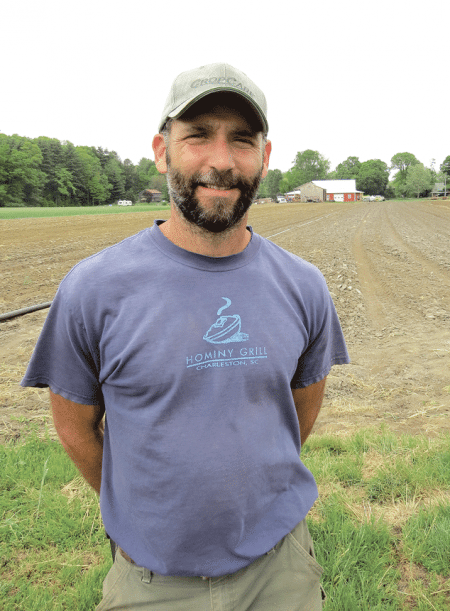
Gideon Porth, owner of Atlas Farm in Deerfield

Gideon Porth, owner of Atlas Farm in Deerfield, is one of many individuals who would be considered new to the profession.

And on the day he talked with BusinessWest, there was no end to this dry patch in sight. Indeed, the showers that visited early that morning did little more than make the dust more settled, he said with a laugh.

But while area farmers are looking at the blue skies with some apprehension (things were still quite dry at press time), there are fewer storm clouds in a figurative sense as well, and that development bodes well for a sector that was in sharp decline and defined by serious questions only 20 years ago.

Indeed, CISA was created out of concern for the future of this sector and a desire to advocate for it, said Korman.

“CISA started amid conversations among farmers and farm advocates who, in the mid-’90s, were concerned about the challenges to agriculture in Western Massachusetts,” he explained. “And some of those challenges still exist today — the challenge of accessible farmland, the loss of farmland to development, competing in a global economy, and public policy favoring very large industrial farms.”

Out of those conversations, a grant was obtained from the Kellogg Foundation to basically use marketing for social issues, he went on, adding that CISA began to promote local farms to their neighbors. And two decades later, it’s clear that these efforts have been quite successful.

Indeed, the 2015 edition of CISA’s Locally Grown, a farm-products guide covering the Pioneer Valley, now boasts more than 400 busineses, including more than 250 farms that grow products and a host of restaurants, co-ops, supermarkets, colleges, hospitals, retirement homes, and other businesses that sell or buy them.

“Every single year, that number goes up,” said Korman, adding that there are now more than 60,000 copies of the guide published, putting information in the hands of those who want to buy local and buy healthier foods — a rapidly growing constituency.

How this attitudinal shift described by Shoenfeld, Korman, and others came about is largely a function of changing priorities and growing concerns about health and the environment. And while this movement is cross-generational, in many respects, it is younger people who are leading this charge and who also have the power — and the inclination — to ensure that this isn’t a fad.

“This change has been evolving for a long time,” said Shoenfeld. “And I think it goes all the way back to basic understandings about ecology that started with Silent Spring [the Rachel Carson book credited by many with igniting the environmental movement in the ’60s], and moved on from there to climate change and personal human health and the unexplainable new health problems that our culture seems to be coping with.
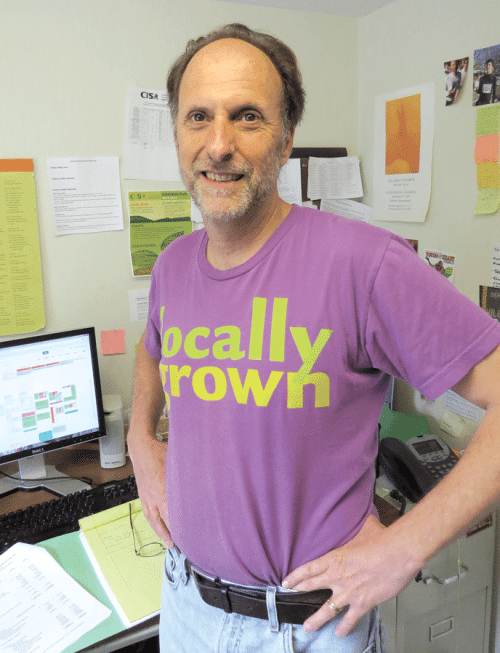
Phil Korman

Phil Korman says one of CISA’s goals is to expand economic opportunities for farmers, which it does through initiatives ranging from its ‘Local Heroes’ program to winter farmers markets.

“People are concerned and want to see what they can do themselves to control those aspects of their life that they can,” he went on. “And one of the aspects of your life that you can have a little more control over is what you eat and where it comes from. Perhaps not total control, at least at this point, but more. I think that’s where this is coming from.”

John Gerber, a professor of Sustainable Food & Farming at UMass Amherst, agreed, and referenced students at the university as examples of those espousing what might be considered new thinking.

“There’s both fear and opportunity,” he said with regard to current events and daily headlines. “Every time you open the newspaper, you see an egg recall or a cantaloupe recall, or a processed-food recall, and that leads to question marks. And then, these students see opportunity; they go to the dining commons and see that their potatoes are coming from a farm almost within eyesight of that dining commons.

“And there’s a connection there — a meaningful connection to something that’s real,” he went on. “The processed foods — things that come in a can or a box — don’t feel real, and a lot of people, especially young people, are searching for meaning in their lives. And food is something you can actually do something about.”

But there is much more to the buy-local and eat-healthier movements than college students looking for meaning, said those we spoke with, adding that society in general is trying to get healthier and paying more attention to the notion of supporting the local economy.

The trend, or shift, hasn’t caught on everywhere, said Gerber, but there are some hot spots, and the Bay State — especially Western Mass. — is certainly one of them. (Washington and Oregon would constitute another, while Southern California would be a third.)

“From a production perspective, we’re seeing a lot of young farmers getting involved in what they consider to be a meaningful life, producing something real — food for a population that seems to demand it,” he explained. “There are many places in this country where this is not on the radar, but we’re seeing it grow.”

Experts in Their Field

Since arriving at UMass Dining more than a decade ago, Ken Toong, who now leads Auxiliary Enterprises at the university, has implemented a number of initiatives that have made that operation one of the nation’s leaders, a program that schools across the country are trying to emulate.

Steps have ranged from spending tens of millions of dollars to modernize and upgrade the dining commons, to the introduction of sushi as a staple on the menu (the school now serves roughly 3,000 pieces a day); from the implementation of food trucks that roam the sprawling campus and bring a new layer of convenience to students, to use of so-called ‘trash fish’ to both broaden students’ palettes and provide new opportunities to the region’s beleaguered fishing industry.

But arguably his most impactful initiative has been a campaign to buy local, a program not only supported by students, but, in many ways, demanded by them.

“As we survey our students, more than 80% of them think buying local is important to them, and they want to see more of it,” said Garett DiStefano, director of Residential Dining at the Amherst campus. “And that number’s been going up steadily over the past five years as well.”

This is a far-reaching plan, one with several goals, including healthier eating, support of the local economy, and conversion of the Hampshire Dining Commons, the largest on the Amherst campus, into an eatery “dedicated to healthy, local, sustainable, and great-tasting foods and to providing a defensible and cost-effective example for all campuses to emulate.”

That’s wording from one of the slides in a PowerPoint presentation called “Diving into the Numbers: A Local Food Data Analysis,” which, as that title suggests, uses hard nunbers, and lots of them, to explain the UMass Amherst program.

Mike Cecchi

Mike Cecchi says the buy-local movement has created new opportunities for E. Cecchi Farms, started by his grandfather in 1946.

The buy-local initiative is measured in a number of ways, but especially the figure $3.25 million, which represents the number spent in FY 2015 (which ends in a few weeks) on what would be considered local or sustainable produce. That includes roughly 100 vendors, said Toong, and encompasses everything from pizza dough from Angie’s Tortellini in Westfield to honey supplied by the Hadley Sugar Shack, to milk purchased from Mapleline Farm in Hadley. And it includes several kinds of fruits and vegetables grown by Joe Czajkowski on land in Hadley that his family has tilled since 1916.

The university spent nearly $500,000 with Czajkowski, who farms a total of 400 acres, 162 of them certified organic, during FY ’15, on everything from tomatoes and carrots to french fries and blueberries. The contract is one of the the more visible examples of that attitude shift described by Shoenfeld, and one that has helped open many new doors for the operation.

“Ken Toong had a lot of interest in buying local, and we were already there,” said Czakjkowski, who said he was supplying a small amount of produce to the university’s Top of the Campus restaurant (part of University Enterprises) when the university decided to escalate its local buying in a significant way.

“It’s like having an anchor store in a mall — this helps us do a better job with other customers,” Czajkowski said of the UMass contract, adding that it has, in many ways, inspired and facilitated contracts with the Worcester and Chicopee school systems, other members of the Five College system, Baystate Health, Cooley Dickinson Hospital, and other institutions. “We’re out getting things for one school; now it’s possible to get things for the Chicopee schools and the Worcester schools and pull the orders together because we’re already doing it.”

In many ways, Czajkowki’s story is typical of many of the established farmers in the region, who have found new outlets for their crops in restaurants, schools, supermarket chains, and businesses that now buy local for many reasons, including the fact that their customers are expecting and even demanding it.

Mike Cecchi would fall in that latter category. His grandfather started working some land in Feeding Hills not long after emigrating from Italy in 1946, and the tradition has continued since.

The 90-acre operation is known for its corn, but grows everything from asparagus to zucchini, with most of the letters of the alphabet covered by Cecchi crops.

Like other farmers we spoke with, he has customers that come in many forms — from individuals visiting the huge farmstand on Springfield Street to the Geisler’s supermarket chain and Big Y Foods, to restaurants ranging from Lattitude to ABC Pizza — and he’s seeing more interest in all those products.

“The buy-local, buy-healthier trend is having an effect on both the retail and wholesale sides,” he explained. “There’s just a lot more demand for what we grow.”

Beet Reporters

But maybe the more compelling change to the region’s agricultural landscape is the number of newcomers to the industry — people choosing to enter the field not because their father, grandfather, and great-grandfather did, but because it’s a profession they believe has many different kinds of rewards.

Porth is one of these individuals. He started a dozen years ago, taking a passion for agriculture that he developed while working on a farm in college and turning it into a career.

Joe Czajkowski

Joe Czajkowski says his contract with UMass has facilitated other sourcing of his many crops.

“I wanted to start my own operation, but I didn’t have land or equipment or money,” he explained. “I had an opportunity to go back to school at UMass and got a master’s degree in plant and soil science. I had an opportunity to stay at UMass and teach, but had the bug to get going.”

And he did, starting with three acres — “it was like a big market garden” — and accumulating additional pieces of land over time. He now farms 85 acres in two locations in Deerfield, half of which he owns, and the rest he leases.

Lettuce and leafy greens are the specialty at Atlas — yes, kale is a big part of that mix — but there is a wide variety of crops. And they’re sold in many different ways, from company-operated farmstands to farmers markets; from a form of CSAs to wholesaling efforts involving outlets ranging from the Whole Foods chain to the River Valley Co-op in Northampton.

Porth entered the business as the buy-local movement was gaining steam, and he’s watched it create a number of new opportunities.

“The whole buy-local trend has really benefited the farm,” he explained. “The farm started in 2004, just as this was gaining traction, and it’s just grown from there. Each year that goes by, we’re seeing more and more from the restaurant world, but grocery stores are really getting on board as well; their customers want local, and at the farm store and farmers markets, business keeps increasing with people demanding foods that are healthy and local.”

Voiland, who would also be considered part of this new breed, agreed.

He started virtually from scratch, with a tiny roadside stand he opened when he was in middle school, selling items from the family garden and various wild berries he picked. By the time he was in college, he was renting 10 acres from an “old timer.” Soon after graduating, he acquired land in Granby and, well, put down roots.

The operation, which employs 80 to 100 people during peak seasons, now boasts roughly 30 acres in Granby and 70 in Montague, and recently expanded into Belchertown with a variety of fruit trees.

“If you can grow it in this climate, we probably grow it,” said Voiland, adding that Red Fire produces everything from arugula and baby kale to a host of root vegetables, including potatoes, carrots, and radishes. It is perhaps best known for its tomatoes, and stages a one-day festival at the Granby facility on the fourth Saturday in August focused on that versatile vegetable and featuring more than 150 varieties.

As he talked with BusinessWest at a weekly farmers market in Springfield’s Forest Park at which Red Fire is now a regular, Voiland, like Porth and others, made heavy use of the word ‘diversified,’ and used it to describe not only what he grows, but how he sells those crops.

Indeed, in addition to several farmers markets — in this region but also in Greater Boston — he also sells CSAs, through which households pay a set amount ($550 to $600 annually in this case, depending on which option the customer chooses) for weekly distributions of all those aforementioned vegetables and fruits, starting later this month. There are also pick-your-own fields, farm stands in both Granby and Montague that operate from May 1 to at least Halloween, and wholesale business to restaurants such as Alvah Stone in Montague and others in Boston; co-ops, including the Greenfields Market & Co-op in Greenfield; and supermarkets such as Fresh Acres, operated by the Big Y chain, and now Wegmans.

While the CSA movement has essentially peaked and business is flat in that realm due to oversaturation, Voiland said, the needle continues to move up with those other revenue streams.

“With restaurants, and consumers in general, there is more awareness of food and wanting to eat good food, both in terms of one’s health, but also the flavor,” he told BusinessWest. “The stuff we grow can help in both ways. We’re focused on freshness, and we grow varieties that taste good; we’re not so concerned about varieties that ship well and keep forever in the truck like some of the stuff that shows up in supermarkets.”

Yield Signs

While the outlook for the region’s agricultural sector certainly looks promising, this remains an ultra-challenging profession, said Shoenfeld, Gerber, Korman, and the farmers we spoke with.

The competition is truly global, margins are generally quite thin, and there are many factors simply beyond the farmer’s control — especially the weather.

“Farming is not for the faint of heart — whether you’re a new farmer or you’ve done it for multiple generations in your family,” said Shoenfeld. “It’s hard work, and there’s a lot of problem solving to be done. But it’s interesting to think about all the new energy being brought by those new farmers, most of them young, but not all them — we’ve seen a number of career changers moving into farming.

“And it’s interesting to wonder how this energy from the new farmers, and the smarts that they might be bringing from other sectors of the economy, might affect some of these seemingly very difficult issues facing farmers,” he went on.

Overall, to succeed in this environment, farmers have to be well-trained and highly skilled, said Korman, adding that many in this profession are now receiving the respect they deserve.

“This is a highly skilled position, and people are now realizing that,” he explained. “The person has to be able to understand quite well the strength of the soil and what needs to be added to it; they have to be a really good business person, understanding which parts of their business are profitable and not as profitable; they need to be able to communicate what they grow and what they’re selling to hundreds of thousands of people; they need to compete globally; and they need to deal with totally unpredictable work conditions, which most of us don’t have to do.”

CISA provides help to farmers coping with these challenges in the form of technical assistance that covers basically everything but growing practices, he said, such as education in how to write a press release or to how to construct a business plan.

And much of CISA’s work involves opening up new markets and avenues for sales, said Korman, citing, as just one example, winter farmers markets.

“Five years ago, there were none of them in Massachusetts,” he said. “The first one was a one-day market in Greenfield launched by the community, and we did one in Northampton in 2010 that had 2,000 people come in four hours.

“Now, there is an ongoing winter farmers market in seven different towns in Western Massachusetts,” he went on, adding that participating farmers sell everything from root vegetables to cheese; from maple syrup to preserved foods like jams and jellies.

Another example of new markets is a trend toward selling at various workplaces, he went on, adding that MassMutual now has what amounts to its own farmers market, and Baystate Health hosts CSA distributions at several of its facilities.

Manwhile, CISA stages what Korman called “meet-and-greets” between farmers and a range of potential customers that could use their goods, including restaurant owners, co-op managers, nursing-home operators, college food-service administrators, and hotel managers.

“We’re always trying to expand economic opportunities for farmers, and also make more connections in the community,” he explained. “And when one takes a look at national statistics, they’ll see that Massachusetts ranks third in the nation in terms of direct market sales for operations, and we’re first in the nation in the percentage of farms with CSAs.”

Those statistics and others result from farmers responding to their challenges and opportunities with diligence and creativity, said Shoenfeld, adding that they are finding new and intriguing ways to essentially bring the farm to consumers — including those who live 100 miles away in Boston — and make healthier foods available and affordable to those in all income classes.

“We’re seeing attention paid to how good, fresh, locally grown food can get into the hands of those who traditionally seemed like they couldn’t afford it,” he explained. “One refrain heard over the past 10 years is that this is just for people who have spare dollars to spend on food. Increasingly, we’re understanding that fresh, local food is one of the keys to improving some of our health issues, like obesity, and we’re finding that fresh, local food in elementary schools and junior high schools, with the farmer coming in to talk about it once or twice a year, is something that prompts kids to take home information about healthy eating and exercise. And that’s a pretty powerful idea.”

Looking ahead, Gerber said there is promise of continued growth for this sector. Indeed, while Western Mass. is among the nation’s leaders in the percentage of food bought locally — the number is at or just over 15% at present — that still leaves 85% that is not purchased from area producers.

That number can’t reach 100% in this climate for obvious reasons, he told BusinessWest, but it can go considerably higher, and he expects that it will.

“Food Solutions has a target of 50% local food by 2060 — ‘50 by 60’ is their campaign, and that’s driven by climate change, energy costs, and especially health concerns,” he said.

“If I was going to predict the future, I would project continued growth. Not without difficulty, not without pain, and not without disruption, but certainly continued growth.”

Till Tomorrow

Returning once again to the dining commons at UMass Amherst to get his points across, Shoenfeld said students there will not be abandoning their philosophies about eating healthier and buying local when they get their diplomas.

“As they emerge from a place like UMass, where they’re eating this fabulous local food in their dining commons and start cooking for themselves … they’re already interested in and wanting local, healthy food that supports local farmers,” he told BusinessWest. “And I think that’s going to stick with them.”

If he’s right, then the attitudinal shift that he and others described will become even more pronounced, and that will generate even more opportunities for area farmers, who are already sowing seeds for a brighter future, in every sense of that phrase.


George O’Brien can be reached at [email protected]

Opinion
Bold Steps Needed to Curb Opioid Abuse


By DENNIS M. DIMITRI, M.D.

An epidemic of opioid use and the associated overdose deaths has been slowly building across the nation and Massachusetts for the last decade, and has now reached a crisis point. It is affecting nearly every city and town in the Commonwealth. In some communities, the crisis is unprecedented.

State officials estimate that more than 1,000 Massachusetts residents died of opioid overdoses last year — 33% percent more than in 2012, and nearly three times more than in 2000. A Harvard School of Public Health survey found that nearly four in 10 state residents personally know someone who has abused prescription pain medications.

While the total numbers may be startling, we should also remember that each individual overdose death has a human face. Each tragedy has changed a family forever. It has to stop, and the time for action is now. Physicians must step forward immediately to do everything we can to help bring this devastating problem under control. How can we do this? It starts with education.

According to the Centers for Disease Control and Prevention, more than 80% of people who misuse prescription pain medications are using drugs prescribed to someone else. These drugs are most often obtained from a friend or relative — for free, purchased, or stolen. This tells me that there are too many doses of opioid medications in circulation. By limiting this supply and ensuring that opioids are available only to patients who truly need them, we can make a big impact on the Commonwealth’s opioid crisis.

That is why the Mass. Medical Society is launching a comprehensive campaign to educate prescribers and the public about the safe and responsible prescribing and handling of these medications. The campaign has three components: guidelines to help physicians make the right decisions for their patients, free education resources for prescribers to help inform their judgments, and storage and disposal information for patients and their families.

• Prescribing guidelines
. The guidelines not designed to micromanage care, but to provide guidance and information based on evidence that will improve the care of patients and lessen the risks associated with opioid prescribing. At the same time, we recognize that each patient is different, and, in all cases, a prescriber’s sound clinical judgment is important. However, we also believe that several principles should govern the exercise of this clinical judgment.

First, physicians and patients should discuss family and personal histories of substance-abuse disorders and behavioral-health concerns, before any prescription is written. Second, patients and physicians are encouraged to mutually develop agreements that outline the expectations and goals of the treatment, along with the conditions for continuing opioid therapy for chronic pain after initial treatment. Finally, there are exceptions for hospitalized patients, those in hospice and palliative care, and for those being treated for cancer. These patients have special circumstances that do not yield readily to hard and fast rules. Their care must be based upon long-held medical principles of relief of suffering.

We’re offering these guidelines with the hope that they will be adopted by physician practices throughout the state. We are also sharing them with the state Board of Registration in Medicine, in the event that the board will consider incorporating them into its prescribing guidelines for physicians.

• Prescriber education. The Mass. Medical Society has long been a leader in providing continuing medical education to physicians and other clinicians about pain management. We will now make these pain-management courses available to all prescribers, for free, until further notice. This includes not only our current suite of courses, but those currently in the pipeline that are due to be released in the coming weeks and months.

• Public education. An effective first step to reduce non-medical opioid use is through education. Therefore, in an effort to curb the supply of prescription opioids in the community, we are partnering with the Partnership for Drug Free Kids and its Medicine Abuse Project to broadly disseminate information about the safe storage and proper disposal of opioid medications.

Most people are probably unaware that their medicine cabinets are attractive targets for those who would misuse opioids, and that they could be an unwitting supplier. Our education program will provide guidance on how to safely store and secure medications, and how to get rid of them when they are no longer needed.

There is no more important public health issue today than the opioid epidemic. It is devastating communities, families, men, women, rich, poor, and, most tragically, children and adolescents. It has to stop — and we are ready to do our part.

Dr. Dennis M. Dimitri is president of the Mass. Medical Society.

Daily News

SPRINGFIELD — On May 19, the Western New England University College of Pharmacy held its fifth annual Continuing Pharmacy Education and Preceptor Development Conference. The conference is one way the College of Pharmacy supports the educational needs of pharmacists in the region. The conference is free, and practitioners receive continuing-education credits for attending.

This year, nearly 100 pharmacists from New England participated in the full-day training program. The workshops included “Immunization Update” by Dr. Courtney Doyle-Campbell, “Sepsis Guidelines Update” with Dr. Yoonsun Mo, and “Guide to a Good Night’s Sleep” presented by Dr. Melissa Mattison. The participants also received an update on “Regulatory Law and Pharmacist Liability” from Paul Garbarini, RPh, Esq.

During the event, the Preceptor of the Year Award for Institutional Acute Care was presented to Sara Shermer, RPh, of Enfield, Conn. This annual honor is given to a pharmacist who exemplifies the best in professional mentoring and experiential teaching skills, as determined by students and the College of Pharmacy Office of Experiential Affairs.

Comments from students supporting Shermer’s nomination included, “she went above and beyond to make sure we had the best experience,” “she was enthusiastic about maintaining the best patient care,” and “everyone looked up to her at the work site.”

For more information about educational opportunities at the College of Pharmacy, e-mail Kim Tanzer, assistant dean of Experiential Affairs and Continuing Education administrator, at [email protected].

Daily News

SPRINGFIELD — The Affiliated Chambers of Commerce of Greater Springfield (ACCGS) has named Kate Kane, managing director of Northwestern Mutual’s Springfield office, as its 2015 Richard J. Moriarty Citizen of the Year. The award is given annually to honor the memory of Moriarty, a long-time active participant in the ACCGS and individual who gave of his time, talent, and personal and professional resources to the local community.

“Kate reminds me of Rick in so many ways,” said Patrick Leary, chair of the ACCGS’ award nominating committee and partner at Moriarty & Primack, P.C. “Just like Rick, Kate is very involved in so many community organizations not because it is something that is expected of her, but because she believes it is the right thing to do, and, like Rick, much of her involvement is done quietly without seeking accolades or recognition. I think Rick would be very pleased with Kate as our Citizen of the Year.”

A graduate of Vassar College, Kane was planning to pursue a career in teaching when she took a position at Northwestern Mutual in its Worcester office. Inspired by the financial-services company, Kane rose through the ranks, building her expertise in leadership, recruiting, and guiding clients. Starting as director of Operations in Springfield, she has served in numerous capacities, including director of Development and field director, before rising to her current position as head of the Springfield group.

Kane shares that leadership experience through countless volunteer hours for a variety of civic and community organizations. She spearheaded the agency’s fund-raiser for Alex’s Lemonade Stand to fight against childhood cancer. She serves as the treasurer for the Springfield Museums Assoc. board of trustees, a long-time board member and past president of the Women’s Fund of Western Massachusetts, a member of Business Leaders for Education, and current chair of the Sisters of Providence Health System board of directors.

She is also a founding board member and past president of Dress for Success, co-writing the original business plan for the Western Mass. chapter, the first one in the Commonwealth, and served as the first female president of the Managing Director Assoc. She is a former board member for the Professional Women’s Chamber and the Friends of the Homeless, and served as the ACCGS’ representative on the Springfield gaming application review task force.

She has been honored as Western Mass Women magazine’s Professional Woman of the Year in 2012, the Professional Women’s Chamber Woman of the Year in 2011, and was named a Difference Maker by BusinessWest in 2009.

Kane will be honored at the ACCGS Business@Breakfast on Wednesday, June 3 from 7:15 to 9 a.m. in the Flynn Campus Union at Springfield College, 263 Alden St., Springfield. In addition to Kane’s honors, the breakfast will feature “A Chamber Year in Review” celebrating the ACCGS’ successes over the past year and will feature guest speaker Katie Stebbins, the state’s assistant secretary of Technology Innovation and Entrpreneurship.

Reservations for the breakfast are $20 for members in advance, $25 for members at the door, and $30 for general admission. Reservations may be made online at www.myonlinechamber.com or by e-mailing Sarah Mazzaferro at [email protected].

Daily News

SPRINGFIELD — Members of the American International College (AIC) basketball team, along with Men’s Basketball Coach Andy Burkholder and Assistant Coach Chris Oroszko, recently paid a visit to William R. Peck School in Holyoke to visit with eighth-grade students in the school’s Therapeutic Intervention program, which provides an education to students who need a smaller, more supportive educational environment.

The event kicked off with inspirational words from Burkholder, who highlighted the importance of staying in school, including the possibilities of playing sports in college.

In his first season at the helm of the AIC Yellow Jackets, Burkholder led the team to its first Northeast-10 title in 21 years. AIC’s bid to host the NCAA Division East Regional was its first ever, and a 58-53 win over Philadelphia University was its first NCAA tournament appearance since 1994. For his efforts, Burkholder was recently named NCAA Division II Coach of the Year by BennettRank.com.

Peck teacher Jennifer Johnson reached out to the team on behalf of the dozen students in the program. “The students love sports, especially basketball. We use sports as incentive and rewards for them. It is important for the students to know there’s a long way between eighth grade and the NBA. Grades and attitude matter, and the first next step is high school.”

Six of the team’s players — co-captain Bobby Harris, Trahmier Burrell, Henry Vilfort, Max Risch, Nolan Woodward, and Jayvon Pitts-Young — shared their own experiences and encouraged the students who anticipate moving on to high school in the fall to find their interests, follow their passion, and, above all, stay in school. After a little classroom encouragement, the team enjoyed pizza for lunch followed by a pickup game with Peck students.

Daily News

SPRINGFIELD — Kirk Smith has resigned from his position as CEO of the YMCA of Greater Springfield, and will continue his 17-year career with the YMCA at the executive level in Florida.

Jeffrey Poindexter, the recently appointed board chair of the YMCA of Greater Springfield, announced that the board will establish a search committee to identify a permanent replacement to lead the organization. The search committee will likely consult YMCA of the USA, the national parent organization, to provide any necessary executive resources in the short term. Smith will continue to be available to the board to assist with the transition through July 3.

“Kirk Smith brought unique talents in his leadership of the Y, and under his direction, the YMCA launched or expanded programming, including the building of the new Agawam YMCA Wellness and Family Program Center on Springfield Street,” Poindexter said. “He also was instrumental in maintaining the services of Dunbar Community Center, a vital asset to the Mason Square community. He expanded programming at the Scantic Valley YMCA in Wilbraham and represented the YMCA in a number of community organizations and causes.”

He added, “Kirk also established the YMCA’s Diversity & Inclusion Committee and helped to secure an additional $4 million from the Department of Education for pre-school expansion and added educational programming sites, one of the YMCA’s key service areas. These initiatives, and Kirk’s leadership, were vital to the YMCA and the varied constituencies we serve. I know I speak for the entire YMCA board in expressing my appreciation for Kirk Smith’s stewardship of the Springfield YMCA, one of the oldest in the United States, and wish Kirk and his family great future success.”

Since 1852, the YMCA of Greater Springfield has been a way of life for thousands of youth, teens, families, and seniors throughout the 14 cities and towns it serves.

Daily News

SPRINGFIELD — As part of the National Day of Civic Hacking, more than 100 people with a variety of computer-technology skills are expected to participate in the Hack for Western Mass. (H4WMA) being held at the UMass Center at Springfield on June 6 and 7.

This ‘hackathon’ will connect these ‘techies’ with more than a dozen nonprofit organizations from throughout the Pioneer Valley to create web­based solutions to help them have greater impact on their communities. Participants are being actively sought; the website www.hackforwesternmass.org is available for information, registration, and sponsorship opportunities.

“Civic hackers are a generous breed,” said H4WMA co­organizer Steven Brewer, director of the Biology Computer Resource Center at UMass Amherst, noting that the hackthon is entering its third year. “The first was held at UMass Amherst in 2013. Last year’s was held in Holyoke. This year, we wanted it in Springfield.”

A hackathon is a gathering of people — many with computer-technology skills but also project managers, scribes, presentation preparers, designers, and social-media mavens — who come together to code collaboratively in a short period of time, usually a weekend, to create IT­based solutions to local problems. More than three dozen local nonprofits have benefited or will benefit from this annual day of local civic hacking.

“It’s a great opportunity to apply local talent to local challenges,” said Bram Moreinis, another H4WMA co­organizer, who ran Tech Scouts in Greenfield last summer.

The organizers, who also include Elyssa Serrilli, a lead mentor for the Full Moon Girls program of the Vermont Wilderness School, and Cristos Lianides­Chin, a FileMaker developer at inRESONANCE in Northampton, have been meeting for months to get ready for this weekend. “It takes a lot of planning to pull this together — recruit project managers, nonprofits, sponsors, and participants; do all the outreach; and set up all the technology” noted Serrilli.

Added Lianides-Chin, “there are many details to keep track of and people to engage to bring it to fruition. We’ve been meeting weekly in person and almost daily online for months. Online collaboration tools have come a long way.”

Participating nonprofits include United Way of Pioneer Valley, Square One, Suit Up Springfield, Springfield Parking Authority, Gardening the Community, DIAL/SELF, Lyme Disease Resource Center, LightHouse Personalized Education for Teens, Permaculture Practitioners in the Northeast, Smith College, Full Moon Girls, and Pioneer Valley Local First.

“This hackathon is such a novel way of helping our regional nonprofit organizations,” said LaTonia Naylor, manager of community impact at United Way of Pioneer Valley. “We’re thrilled on two levels. We’ve submitted a challenge that will help us with engaging the volunteers that give their time to many area nonprofits, and many area nonprofits will benefit from the solutions that emerge.”

The organizers also want to engage youth in information technology and offer a youth hackathon running in parallel to the main event.

Sponsors of the event to date include UMass Amherst’s Center for Public Policy and Administration, Atalasoft, Communicate Health, App­o­Mat, FIT Solutions, Last Call Media, Mad POW, inRESONANCE, AmherstMedia.org, the UMass Center at Springfield, and the Springfield Parking Authority.

For more information and to register or sponsor, visit hackforwesternmass.org or contact Cristos Lianides­Chin at [email protected].

Daily News

LONGMEADOW — Bay Path University announced the appointment of Elizabeth Cardona as executive director for Multicultural Affairs, International Student Life, and assistant to the provost for Diversity and Inclusion.

Cardona, the former senior director and civic engagement advisor to then-Gov. Deval Patrick, comes to Bay Path with extensive experience in state government, education, and nonprofit program management.

In her position, Cardona will provide institutional leadership to support the needs of first-generation and underrepresented minority students by offering academic assistance, mentoring, coaching, and leadership programs to promote multi-cultural awareness, diversity, and inclusion in accordance to the mission of Bay Path University. In addition, she will work with international students to provide ongoing assistance with social and cross-cultural activities to support their immersion and academic experience. Bilingual in Spanish, Cardona also has a working knowledge of Arabic.

“I am thrilled to join Bay Path University’s community to facilitate understanding of multi-culturalism, diversity, equity, and inclusion in an affirming space where students, faculty, staff, and leadership engage collaboratively to enhance academic and social development,” Cardona said.

A graduate of the Women’s Pipeline for Change, an initiative that supports women of color as they enter leadership roles and public life, her expertise also includes serving on state Treasurer-elect Deb Goldberg’s transition team, as an advisory board member for the Women’s Fund of Western Massachusetts Leadership Institute for Political and Public Impact, and as a founding board member for the CHICA Project, a Massachusetts statewide Latina youth leadership, mentoring, and coaching program.

Cardona holds an MPA and a certificate in conflict resolution from the Maxwell School of Citizenship and Public Affairs at Syracuse University, and a bachelor’s degree in American studies with a concentration in social issues from Springfield College.

Daily News

SPRINGFIELD — American International College (AIC) celebrated the groundbreaking for its new dining commons in April, marking the first full-scale renovation of the facility in 50 years. This week, the College took time to recognize the people who will get the job done.

On May 20, the College took a special lunch break to show its appreciation for the contractors and workers. Seven Massachusetts companies are working on the $8 million project, which is expected to be completed in time for the beginning of the fall semester. Chartwells, a leading higher-education food-service company and provider for AIC, prepared the fare for the guests.

AIC’s new, state-of-the-art facility will expand upon the previous dining-commons space and is designed include a wider variety of seating along with a more abundant variety of food options and services, including customized food preparation, an open-concept kitchen complete with a Mongolian grill, a wood-fired pizza oven, and more, all presented in a contemporary, open setting.

Daily News

BOSTON — Massachusetts’ total unemployment rate dropped to 4.7% in April, a 0.1% decrease from the previous month, the Executive Office of Labor and Workforce Development announced.

The new preliminary job estimates from the Bureau of Labor Statistics (BLS) indicate that Massachusetts gained 10,100 jobs in April, marking the eighth consecutive month of job gains.

BLS also revised upward its March job figure, reporting the state gained 12,100 jobs, instead of 10,500, which the agency originally reported last month.

Over the year, the state’s unemployment rate fell 1.1% from 5.8% in April 2014. January 2008 was the last time the state’s unemployment rate was at 4.7%. The state unemployment rate remains lower than the national rate of 5.4% reported by the Bureau of Labor Statistics.

The state’s labor participation rate — the total number of residents 16 or older who worked or were unemployed and actively sought work in the last four weeks — increased 0.1% to 66.3%. The April labor participation rate is the highest since May 2010, and this is the third consecutive month there was an increase in the participation rate. Compared to April 2014, the labor participation rate increased 1.1% over the year.

“This is the seventh consecutive month we’ve seen a decrease in unemployment,” Labor and Workforce Development Secretary Ronald Walker said. “Many more residents are employed, and labor participation has increased again.”

April 2015 estimates show that 3,464,500 residents were employed and 169,400 were unemployed. There were 37,700 fewer unemployed persons over the year compared to April 2014.

Over the month, jobs were up 10,100, with a private-sector gain of 9,700. Since April 2014, jobs grew by 66,100, with 57,900 private-sector job gains. Education and health services and professional, scientific, and business services were the sectors with the largest job gains over the year.

Health Care Sections
BFMC’s Bradley Embraces a Demanding New Challenge

Steve Bradley

Steve Bradley says it’s his goal to place Baystate Franklin Medical Center in the top 10% of community hospitals nationwide.


Steve Bradley’s commute to what might still be considered his new job — he’s been at it about nine months now — is roughly the same, time and distance-wise, as the one to his old position.

But the destinations, not to mention the job descriptions, are worlds apart.

Indeed, from his home in Pelham he used to travel south and slightly west to Springfield, population 160,000, and the administrative offices of Baystate Health, one of the state’s largest health systems, which he served as vice president for Government, Community & Public Relations. Now, he travels north and west, to Greenfield (population roughly 18,000), and Baystate Franklin Medical Center (BFMC), part of the Baystate system and one of the state’s smallest hospitals with only 90 licensed beds. There, his name badge reads ‘president.’

“It’s a huge change,” said Bradley. “I went from one of the largest urban centers in the state to the most rural area in the Commonwealth; all of Franklin County only has about 80,000 people.”

But when one gets past the differences in population, demographics, and compass points, the challenges inherent with both jobs — and both healthcare providers — are quite similar, Bradley told BusinessWest.

“These areas are very different, except in a few very important regards,” he explained, starting with the overriding common denominator. “Poverty drives everything challenging in Springfield and in Hampden County, and poverty drives everything challenging in Franklin County.

“The poverty looks different, though,” he went on. “In Franklin County, it’s rural poverty, so a lot of it is hidden; this is the poorest county in Massachusetts.”

Meanwhile, the issues that create such poverty are similar as well, said Bradley, adding that educational attainment is an issue in both regions, limiting access to many technology-driven jobs, and, at the same time, many of the manufacturing jobs that would be described as low-skilled or moderate-skilled, have left both areas, leaving fewer alternatives.

But Franklin County has some additional and unique challenges, he went on, adding that the biggest are its remoteness and small population. Public transportation exists but it is quite limited, he said, and this impacts many aspects of everyday life, including healthcare.

Meanwhile, the rural nature of the county makes recruiting and retaining doctors — already a stern test statewide because of the high cost of doing business here — an especially daunting task for BFMC.

Improving access to healthcare, improving the overall quality of the services available at BFMC and its community health centers, and putting the hospital back in the black after years of operating in the red (something that was accomplished last year for the first time in many years), constitute Bradley’s unofficial mission since he succeeded Chuck Gijanto last July — and he credits his predecessor with creating considerable momentum in each area.

The official mission, or goal, is to move the medical center into the top 10% of community hospitals nationwide within five years.

This will occur through the addition of new facilities, such as the 50,000-square-foot surgical center now taking shape on the BFMC campus, said Bradley, who set that goal the day he arrived and knows he now has four years and three months to realize it, and also through new initiatives, such as ongoing efforts to integrate programs at BFMC with those at Baystate Medical Center and other facilities in the system (more on those later).

But mostly, it will come through what he considers a somewhat new attitude, or a renewed and heightened commitment to the people of Franklin County — and all areas served by community hospitals within the system — on the part of Baystate Health and its president and CEO, Dr. Mark Keroack.

“Baystate Health and our new CEO are making it clear that for the first time in a very long time, community hospitals are as important to Baystate Health as any other entity,” he explained. “And he’s backed up those words with resources, not only financial resources, but clinical resources as well. As a result, we’re living our mission in a more authentic way.

“Our mission for years has been to improve the health of the people of our communities every day with quality and compassion, but I don’t think you could really say that this is the way the people of Franklin County felt that Baystate Health was behaving,” he went on. “But under this leadership team, we’re talking the talk and walking the walk.”

For this issue, BusinessWest talked at length with Bradley about this intriguing change in his career path and also about his ambitious plans for this rural hospital.

Working in the Background

While Franklin County represents a new mailing address for Bradley, it’s a region he’s already quite familiar with, through his work at Baystate Health as well as career stops before that.

Indeed, Bradley spent more than four years as chief of staff for state Sen. Stanley Rosenberg, currently president of that body.

While his district includes Hampshire County’s major population centers, especially Northampton and Amherst, it also covers most of eastern Franklin County, including Greenfield and Deerfield.

“Franklin County was a big part of his district, and we were up here quite often,” he said. “I got to know a lot of people, and became familiar with the individual communities and their issues.”

Those years with Rosenberg were wedged between two decidedly different stints within the broad spectrum of healthcare.

Prior to that assignment, Bradley served as the first director of the Western Mass. region of the State Department of Mental Retardation. In that role, he established the department’s first Regional Competency and Diversity Initiative, helped lead the closing of the region’s only institution for people with developmental disabilities, and created a nationally recognized community-based system of services and programs for those individuals.

Baystate Franklin Medical Center

An architect’s rendering of the 50,000-square-foot surgery center now under construction at Baystate Franklin Medical Center.

At Baystate, Bradley saw his role expand and evolve over 15 years. He started as vice president for Government Relations, and eventually added community relations and public relations to his job description.

Over the years, he was involved in a number of high-profile initiatives both within the system and in the community.

Regarding the former, he led the team that gained state approval for Baystate Medical Center’s Hospital of the Future; he helped write the application for the what turned out to be the second-largest determination-of-need (DON) grant in the state’s history. He also helped lead efforts to get Baystate Medical Center added to the state Medicaid waiver.

As for the latter, he was involved with everything from Springfield Technical Community College (he was chairman of its Board of Trustees) to DevelopSpringfield, which he also served as a trustee.

But perhaps the work he’s most proud of has come with making Baystate a major player in an initiative called the Undoing Racism Organizing Collective, which he serves as a member of its steering committee.

Launched by Irene E. and George A. Davis Foundation President John Davis, UROC, as it’s called, stages two-day workshops and other initiatives to meet its mission to ‘organize, communicate, and provide resources to undo racism in our families, communities, and institutions.’

“It has a very narrow focus, which is to provide two days of high-quality education centered around understanding the effects of institutionalized white privilege on communities of color,” Bradley explained, adding that Baystate set aside $200,000 from its community benefits budget to help fund the work, which he considers critical to the region’s future.

“There’s a direct link between 400 years of institutionalized racism and economic status,” he went on, adding that since he arrived at Baystate he’s been working in various ways to stem this tide and its many effects on the health of individuals and a community, and the Davis initiative provided a way to take these efforts to a higher plane.

“Our goal is to help people who are not of color to understand what the differences are in day-to-day living,” he told BusinessWest. “White people don’t ever think about walking into a store and being followed, or being turned down for an apartment, or being stopped while they’re driving just because the police officer thinks he can stop you — and they need to think about these things.”

Bradley told BusinessWest that he greatly enjoyed the sum of all the parts that went into his job, and wasn’t exactly looking for another career challenge, especially the one he eventually accepted, when Gijanto approached him about succeeding him.

“I like to joke with my friends and associates that becoming president of a community hospital was not high on my professional bucket list,” he explained. “I loved the job I was doing, I’d been doing it for 14 years; but I will say that you can’t do the same job forever.

“I was asked by Chuck Gijanto to seriously consider the position; I was surprised and really honored, but I hadn’t given it any consideration,” he went on, adding that other administrators at Baystate encouraged him to apply. “Twenty-seven interviews later — well, I interviewed with 27 people, let’s put it that way — here I am.”

The Job at Hand

‘Here’ is a place far removed from Springfield and other Hampden County population centers in many ways.

Indeed, Franklin County is a mostly agricultural region, where the communities are very small, population-wise, with many of them home to fewer than 1,000 residents. BFMC is the only hospital in the county, and there is only one college — Greenfield Community College — as well. And there are only three major employers: GCC, BFMC, and Yankee Candle.

Since formally arriving in Franklin County, Bradley said he’s come to understand even more about the individuals who live and work there.

“This is a very individualistic county — people here don’t like to be told what to do,” he said, adding that he was speaking in generalities, obviously. “It’s also a very self-sustaining community; this county has taken the lead in addressing the opiod-addiction crisis, for example.

“That came out of grass-roots, community organizing, a very tight network of community leaders, political leaders, social service leaders, religious leaders, and healthcare leaders who identified the problem long before anyone else did,” he went on. “And rather than fighting over who was going to lead this effort, they came together in a coalition that has been extremely effective.”

Bradley is already getting involved with the Franklin County community. Indeed, he’s a member of the chamber’s board of directors, and he’s annual campaign co-chair for the United Way of Franklin County.

But most of his time and energy is focused on the medical center and meeting that lofty goal he set upon his arrival. And there are obvious challenges to meeting it, he said, listing everything from the remoteness of the county to the difficulty BFMC faces in recruiting and retaining doctors and other healthcare professionals.

“I think there’s two buses that run between Springfield and Greenfield each day,” he noted. “I’ve talked to many people who’ve said that if they have to go to Springfield for care, they have to take the whole day off from work — they take a bus in the morning, and they take a bus back late in the afternoon. They don’t want to take the whole day off, their boss doesn’t want them to take the whole day off, and they can’t afford to take off the whole day. But they must.”

So in many respects, the evolving strategy is to bring healthcare to the people of Franklin County, rather than bring them to the care, and to improve the facilities on the BFMC campus so area residents won’t be tempted to drive past it to pursue care elsewhere, Bradley explained.

“We’re brining a lot of care up from Springfield and having it delivered inside Baystate Franklin Medical Center,” he said, adding that there are many facets to the broad strategy being deployed.

A Cut Above

One of them has involved improvements to the emergency department, which actually led to a situation where there was a shortage of beds to accommodate those who required admission, a problem resolved by reopening a nursing unit that had been mothballed for eight years, when volume at BFMC had plummeted.

“It was mothballed because there just wasn’t the demand, and the hospital was losing between $2 million and $4 million annually, year after year,” Bradley explained, adding that the surge in emergency room volume was in some ways a good news, bad news situation.

Another step forward is the new surgery center, or the “surgery modernization project,” as it is also known, said Bradley, adding that the new facility rising on the campus is sorely needed to replace facilities that are half a century old and in most all ways antiquated.

“Our operating rooms are 48 years old,” he explained, “and when you’re out there nationally and internationally trying to recruit surgeons and skilled operating room nurses and technicians, and competing against brand new facilities such as the ones at Baystate Medical Center or Cooley Dickinson Hospital, that makes it much harder to compete.”

The new center will feature five operating rooms that are two or three times larger than the ones they’re replacing. Construction is due to be completed in the summer of 2016, and the facility should be operating by December of that year.

In addition to building new facilities, BFMC is also moving forward aggressively with plans to integrate its services with those at Baystate Medical Center and other providers within the system, a step that will improve quality, add needed depth and flexibility, and enable more people to receive care close to home.

“Down the road 40 miles, we have one of the top academic medical centers in the United States,” he said, referring to BMC. “And in the parent company, Baystate Health, we have one of the top 15 health systems in America. Plus, we have one of the top-rated heart and vascular programs in the state in Springfield.

“When you have that kind of expertise 40 miles away, and you’re part of that system, you need to take full advantage of that,” he went on. “What we’re doing is fully integrating all of our clinical service lines with Baystate Medical Center.”

At present, roughly 95% of surgical services are integrated, he continued, adding that rather than being an independent operation, as it has been historically, BFMC’s surgical services are now essentially part of a larger Baystate Health team, with day-to-day operations led by Baystate’s chairman of surgery, with shared governance.

“This will create what amounts to a seamless surgical program,” Bradley explained. “And what that does is get more surgeons who are specialists to actually come up and provide surgery here, rather than forcing the patients to go to Springfield. And the new surgery center will make it even more desireable for folks to come here, because we’ll have a state-of-the-art facility.”

Other clinical service lines will follow, said Bradley, adding that this work in progress will yield a facility far more capable of adequately serving the people of Franklin County than the one operating the past several years.

Bottom Line

And one that he expects will be in that top 10% of community hospitals nationwide.

“That’s our only goal here,” he said of that benchmark. “I think it’s going to take us the better part of the next four years to get there, because every other hospital is getting better too.

“But we’re going to a be a great community hospital,” he went on, “and there’ll be no reason for anyone to have to leave Franklin County to receive high-quality care.”

Becoming the administrator charged with backing up that statement isn’t a career move that Bradley could have envisioned 18 months ago. But it’s a challenge he’s willing accepted.

Indeed, he believes he’s certainly in the right place at the right time.

George O’Brien can be reached at [email protected]

Briefcase Departments

Martin Meehan Elected 27th President of UMass
BOSTON — Martin Meehan, a former U.S. congressman who became chancellor of his alma mater, UMass Lowell, and transformed it into a highly ranked national research university, was unanimously elected today as the next president of the five-campus UMass system. Meehan, the eldest of seven children, who used his UMass Lowell education as a springboard to a distinguished career in Congress and now to the presidency of the region’s largest and top-rated public university, said he was honored by the board’s action and eager to build on the work he has done at the Lowell campus. “Serving as chancellor of my alma mater, UMass Lowell, for the last eight years has been the most fulfilling period of my professional life, so I am excited about the opportunity to lead the University of Massachusetts system,” said Meehan. He will succeed President Robert Caret, who will step down June 30 to become chancellor of the 12-campus University System of Maryland. “I thank the UMass board of trustees and the presidential search committee for their confidence,” Meehan said. “Massachusetts is synonymous with the best in higher education. We will seek to strengthen our position as a world-class public university system that is accessible, affordable, and a catalyst for innovation and economic development in the Commonwealth.” Meehan was one of two finalists chosen by the 21-member search committee, working with the executive search firm Korn Ferry. The other finalist was John Quelch, professor of Business Administration at Harvard Business School and the former dean, vice president, and distinguished professor of International Management at China Europe International Business School. Quelch was formerly chairman and member of the Massachusetts Port Authority. The board of trustees met separately with each candidate in open session before voting to select Meehan as president. They cited Meehan’s strong record of achievement and success at UMass Lowell, his distinguished record of public service, his passion for UMass and its mission, and his ability to communicate and to inspire as being among the reasons for selecting him as the University’s 27th president. The former congressman will be the first UMass undergraduate alumnus to serve as president of the five-campus, 73,000-student system.

State Business Confidence Hits Pothole in April
BOSTON — The Associated Industries of Massachusetts Business Confidence Index dropped 1.1 points in April to 59.1, backing off from its post-recession high.
“In April, the snow finally melted, the sunlight got stronger, and Massachusetts employers were a bit more positive about current business conditions — but other concerns weighed more heavily,” said Raymond Torto, chair of AIM’s Board of Economic Advisors (BEA) and lecturer at the Harvard Graduate School of Design. “The index’s decline is attributable to lower confidence among the state’s manufacturers, who confront both weak growth domestically and challenges in global markets due to the stronger dollar.” As in 2014, Torto noted, the index performed well through a weak first quarter for the U.S. economy, which recorded a 0.2% growth rate. “We think AIM members have confidence in the fundamental stability of business conditions,” he said. “Slow growth has caused survey respondents to temper their expectations, but they continue to foresee improving conditions ahead. The AIM Index is up 6.1 points from last April and 9.6 points over two years, reflecting a significantly better business climate in Massachusetts and nationally.” The AIM Business Confidence Index, based on a survey of Massachusetts employers, has appeared monthly since July 1991. It is calculated on a 100-point scale, with 50 as neutral; a reading above 50 is positive, while below 50 is negative. The index reached its historic high of 68.5 on two occasions in 1997-98, and its all-time low of 33.3 in February 2009. Most of the sub-indices based on selected questions or categories of respondent declined from March to April, but all were up from a year before. The Massachusetts Index, assessing business conditions within the Commonwealth, shed 2.2 points on the month to 58.6, and the U.S. Index of national business conditions lost 1.7 points to 53.8. “Despite the weak first quarter, the U.S. Index been above 50 for five consecutive months, and seems at last to be established in positive territory,” said Alan Clayton-Matthews, professor at the School of Public Policy and Urban Affairs at Northeastern University, a BEA member. “The Massachusetts Index continues to lead its national counterpart, and the latest MassBenchmarks Economic Index shows that the state’s economy has outperformed the nation’s so far this year.”

Springfield Issues Permits for Casino Site Work
SPRINGFIELD — Following months of design reviews and coordination meetings, the city is preparing for a significant amount of utility construction work to begin in and around the casino resort area in downtown Springfield. Beginning in the next few weeks, utility upgrades, expansions, and relocation work will begin on roadways surrounding the footprint for the casino resort, specifically Main Street, Union Street, East Columbus Avenue, and State Street. The work is required to terminate existing utilities that currently serve buildings that are slated for demolition; reconstruct, upgrade, and relocate utilities surrounding the MGM Springfield development area to support the size and scale of the project; and perform necessary maintenance on the aged infrastructure to extend its life expectancy into the future to support the casino development and additional growth. The Springfield DPW has issued numerous permits for utility disconnections and installation of project fencing. However, the department is preparing for a significant ramping up of construction activities through the spring and summer. Christopher Cignoli, DPW director, noted that, “based upon our meeting with the MGM Springfield development team, its contractors, and all of the area utility companies, there will be a significant amount of work occurring in the next four to six months in and along Main Street, Union Street, East Columbus Avenue, and State Street. Our job is to coordinate all of the requests for work and attempt to minimize the impact to parking and traffic and to notify the public as much in advance as possible to seek alternate routes, if necessary. We also have to coordinate this utility work with any work proposed for the I-91 viaduct project, which is also scheduled to begin in the next few months.” In order to provide the public with as much information as possible on the construction of the entire casino complex and associated construction work, the city will be launching an MGM Springfield casino-construction website, which will list all the permits issued by the city as well as issue weekly construction updates to notify residents and businesses of potential impacts.

State Announces Solar Milestones
WORCESTER — Energy and Environmental Affairs (EEA) Secretary Matthew Beaton announced that Massachusetts has installed more than 841 megawatts of solar electricity, bringing the Commonwealth more than halfway to the Baker-Polito administration’s goal of 1,600 megawatts by 2020. “Today’s announcement further supports the Baker-Polito administration’s commitment to a vibrant clean-energy sector that creates jobs and economic prosperity for the Commonwealth,” Beaton said. “Continuing to diversify Massachusetts’ energy portfolio through the development of solar generation will work to strengthen the state’s growing clean-energy economy while supporting new, innovative technologies.” The 841 megawatts of installed solar electricity is enough to power more than 128,000 average Massachusetts homes, and is responsible for reducing greenhouse-gas emissions equal to taking over 73,000 cars off the road. “Under the Baker-Polito Administration, Massachusetts will continue to harness solar power to protect the environment, save on energy costs, and create jobs,” said Department of Energy Resources Commissioner Judith Judson. “This is an exciting milestone toward the year when we meet our solar goal of 1,600 megawatts and generate 3% to 4% of today’s electric demands with local, available solar power.” According to the Solar Foundation, Massachusetts ranks second in the U.S. for solar jobs, while every dollar invested in solar in the Commonwealth creates $1.20 in economic benefits to the local economy, according to the Dukakis Center for Urban and Regional Policy at Northeastern University. Last year, solar electricity capacity installed was the fourth-highest in the country. “Solar energy is an economic driver here in Massachusetts, employing more than 12,000 workers in high-quality clean-energy jobs,” said Massachusetts Clean Energy Center CEO Alicia Barton. “Working together across government and in partnership with industry and communities, we’re well on our way to meeting our goal.” There are solar installations in 350 of Massachusetts’ 351 cities and towns, with at least 175 local communities hosting projects that directly benefit the municipality. There are more than 25 megawatts of solar at over 180 schools across Massachusetts, 30 megawatts on farms, and eight megawatts on state buildings and land.

Company Notebook Departments

Westfield Financial Reports Q1 Results
WESTFIELD — Westfield Financial Inc., the holding company for Westfield Bank, reported net income of $1.3 million, or $0.08 per diluted share, for the quarter ended March 31, 2015, compared to $1.6 million, or $0.09 per diluted share, for the quarter ended March 31, 2014. Selected financial highlights for first quarter 2015 include:
• Total loans increased $82.2 million, or 12.7%, to $730.4 million at March 31, 2015 compared to $648.2 million at March 31, 2014. This was primarily due to increases in residential loans of $38.9 million, commercial and industrial loans of $29.8 million, and commercial real-estate loans of $13.0 million. On a sequential-quarter basis, total loans increased $5.7 million, or 0.8%, from $724.7 million at Dec. 31, 2014. This was due to an increase in commercial real-estate loans of $8.7 million, offset by a decrease in commercial and industrial loans of $2.8 million, primarily due to normal loan payoffs and paydowns. 

• Securities declined $26.3 million, or 4.9%, to $515.2 million at March 31, 2015, compared to $541.5 million at March 31, 2014. On a sequential-quarter basis, securities increased by $6.4 million, or 1.3%, at March 31, 2015, compared to $508.8 million at Dec. 31, 2014. 

• Net interest and dividend income decreased $65,000 to $7.6 million for the quarter ended March 31, 2015 compared to $7.7 million for the comparable 2014 period. On a sequential-quarter basis, net interest and dividend income decreased $288,000 for the quarter ended March 31, 2015, compared to the quarter ended Dec. 31, 2014. The fourth quarter 2014 included $88,000 in deferred fee income recognized upon the payoff of a relationship. 

• The bank prepaid a repurchase agreement in the amount of $10.0 million with a rate of 2.65% and incurred a pre-payment expense of $593,000 for the first quarter 2015 in order to eliminate a higher-cost liability. 

• Non-interest expense was $6.7 million for the quarter ended March 31, 2015 and $6.5 million for the quarter ended March 31, 2014. On a sequential-quarter basis, non-interest expense increased by $215,000 for the quarter ended March 31, 2015, compared to $6.5 million for the quarter ended Dec. 31, 2014. The increase on a sequential-quarter basis was due in part to an increase in salaries and benefits of $178,000. Of this amount, $51,000 is attributable to salary-related taxes, which are typically higher in the first quarter of each year.
“During the first quarter, harsh winter weather slowed economic activity, and therefore loan demand, particularly commercial construction projects,” said Westfield Bank President and CEO James Hagan. “We continue to cultivate new and existing customer relationships in Western Massachusetts and Northern Connecticut, and our outlook for growth remains positive for 2015. We have an experienced, disciplined, regional leadership team prepared to take advantage of continued opportunities for organic growth and expansion into demographically attractive markets.” Hagan continued, “the customer response to our strategic initiatives has been very positive. Our Enfield branch, which opened in November 2014, and our Granby branch, which opened in June 2013, have combined deposits of over $23.0 million. We currently have both a commercial lender and a residential lender based in the Connecticut market, and we anticipate adding another commercial lender in 2015. In addition, we relocated a commercial-loan team to downtown Springfield in 2014, which provides proximity to the I-91 corridor and better access to the borrowers and centers of influence in the Greater Springfield area and Northern Connecticut. We have taken action to strategically expand our market reach, and while this initially has increased non-interest expense, we feel this will create opportunities to grow our franchise and generate higher revenue.”

Marcotte Ford Breaks Ground on Truck Center
HOLYOKE — Marcotte Ford will celebrate the groundbreaking of its new commercial truck-repair facility on Monday, May 11 at 11 a.m. Marcotte Ford acquired the property at 933 Main St. in the fall of 2014 and will construct a 16-bay, state-of-the-art truck-repair facility to accommodate the service and repair of all light, medium, and heavy-duty trucks. This project will add six to 10 new jobs in Holyoke. “We believe in the Ford tradition of quality and service and want to deliver the best in product and service to our customers,” said Michael Marcotte, president of Marcotte Ford Sales. “We feel that this is an ideal time for a new commercial repair facility in light of the strong business momentum in the industry.” Marcotte Ford a third-generation Ford franchise that gives back to the local community through involvement with the Holyoke Boys & Girls Club, Kate’s Kitchen, and Margaret’s Pantry, as well as the Greater Holyoke Chamber of Commerce. The new commercial building is located adjacent to Marcotte Ford at 933 Main St. and is scheduled to open this fall.

Holyoke Merry-Go-Round Launches New Website
HOLYOKE — The Holyoke Merry-Go-Round, the region’s prized carousel with a storied history that dates back to the early 1900s, announced the launch of a new website, holyokemerrygoround.org. Site upgrades include a new layout with enhancements for secure payments, easy-to-use forms and downloadable contracts, plus updated historical and photo pages to relive the magic, and more. “Today, more and more people turn to their mobile devices to search the Internet. We wanted a website that would provide them the best, most secure web experience on any device,” said Angela Wright, executive director. “This new site includes easy access to our party and private rental, reservation, donation, and events pages; online store; and forms, all on an easy-to-navigate platform.” The Holyoke Merry-Go-Round is located in Holyoke’s Heritage State Park, which is managed by the state Department of Conservation and Recreation. The carousel includes 48 horses hand-carved by the Philadelphia Toboggan Co., 56 original scenic panels, 864 brightly colored lights, and 98 beveled mirrors. Through the merry-go-round’s new website, users are able to book birthday or private parties and can share their own memories of the carousel’s history from Mountain Park to today. Additionally, secure payment options are available for the merry-go-round’s online store and donation pages. “As a nonprofit organization, we rely heavily on the generosity of the public, many of whom prefer to donate quickly and easily through our website,” Wright said. “With secure payments using PayPal, our supporters can make their tax-deductible donation online with peace of mind.” 

Adam Quenneville Roofing, Siding & Windows Earns Top Honor
SOUTH HADLEY — Adam Quenneville Roofing, Siding & Windows announced that GAF, North America’s largest roofing-materials manufacturer, recently recognized the company with a prestigious 2015 Presidents Club Award for high-quality workmanship, safety, training, and reliability. Quenneville was one of five North American contractors to receive this award. GAF, North America’s largest roofing manufacturer, developed the Presidents Club Award for Master Elite contractors who excel in workmanship, service, and responsiveness. Adam Quenneville Roofing has been recognized for its long-standing support of GAF products, success in offering homeowners peace of mind in GAF warranties, and attention to detail in all GAF roofing systems. “Some people might think, after owning a business for 20 years, that the passion would dwindle,” Quenneville said. “I feel just the opposite. I am more excited than ever to help area homeowners with their roofing concerns. Having this many years of experience, I can offer unique solutions and recommendations.” He added, “I would like to take a moment and thank my team. I couldn’t have achieved this award or any of the success over the last two decades without them.” For more information about Adam Quennville Roofing, Siding & Windows, visit 1800newroof.net.

AIC Breaks Ground for New Dining Commons
SPRINGFIELD — After a winter for the record books, American International College (AIC) recently celebrated spring and the future of dining in style with a groundbreaking ceremony in anticipation of the college’s $8 million renovation to its dining commons. The new, state-of-the-art facility will expand upon the existing dining-commons space and include a wider variety of seating along with a more abundant variety of food options and services, including customized food preparation, an open-concept kitchen complete with a Mongolian grill, a wood-fired pizza oven, and more, all presented in a contemporary, open setting. Guests and speakers at the event included AIC graduate U.S. Rep. Richard Neal, Springfield Mayor Domenic Sarno (who also attended AIC), college board of trustee members, and AIC President Vincent Maniaci, who said, “the dining commons is the heart of social interaction between and among students, faculty, and staff. This new dining commons will greatly benefit our current students by providing a spectacular dining experience and meeting center for social engagement.” Compass Foodservice CEO Steve Sweeney donated $1,500 to the local food pantry on behalf of its subsidiary, Chartwells, the leading higher-education food-service company in the world and provider for AIC. Speaking on behalf of the 1,700 undergraduate students at AIC, Student Government Assoc. representative and sophomore Rebecca Gray said, “it’s long overdue, and we’re very much ready for the new programming space and the new dining facilities, and it’s going to be a lot more modern and a lot more comfortable. I am so excited. Being only in my second year, it is really nice to see the school making so much change.” While there was a cosmetic remodel of the dining room in 2007, the last complete renovation of the college’s dining commons was in 1966, nearly 50 years ago. Construction currently involves seven local Massachusetts companies working on the project. The project is expected to be completed in time for the beginning of the fall semester.

Departments People on the Move

Roger Dulude Jr.

Roger Dulude Jr.

Holyoke Medical Center and Valley Health Systems Inc., named Roger Dulude Jr. the system’s corporate Compliance officer and director of Risk Management. A registered nurse who is certified in healthcare compliance, Dulude brings extensive experience leading risk-management and corporate-compliance programs in healthcare. He will institute and maintain the system’s compliance programs, as well as assess, develop, implement, and monitor risk-management plans to enhance patient safety, care, and privacy. “I congratulate Roger and know that his skill and leadership in the area of corporate compliance and risk management are valuable assets to helping us effectively navigate today’s complex and highly regulated healthcare environment,” said Hatiras. Dulude noted the importance of educating and training employees about new and existing compliance issues and risk areas. A key goal is educating employees to increase their understanding of, and compliance with, patient privacy and safety provisions contained in the federal Health Insurance Portability and Accountability Act Of 1996 (HIPAA). “A rapidly changing healthcare climate poses inherent risks to patients, staff, and our organization, and we must ensure that our compliance and risk-management programs and services are effective and robust,” he said. Dulude most recently served as Holyoke Medical Center’s Corporate Compliance risk manager; Regulatory and Accreditation Compliance coordinator at Johnson Memorial Medical Center in Stafford Springs, Conn.; as well as various nursing, administrative, and clinical-management roles. A 2012 recipient of the Connecticut Nightingale Award given to an individual demonstrating excellence in nursing, Dulude earned a master’s degree in nursing with a secondary concentration in education from the University of Hartford and his bachelor’s degree in nursing at Stephen F. Austin State University in Texas.
•••••
Amie Miarecki

Amie Miarecki

Amie Miarecki has been hired as Marketing and Development manager for Porchlight VNA/Home Care. Miarecki will focus on customer service, business development, and brand awareness for the free-standing, not-for-profit organization. In 2014, Chicopee VNA, Great to Be Home Care, and Porchlight VNA/Home Care merged to cover all of Berkshire, Hampshire, and Hampden counties. The agency has received several awards, including Home Care Elite Awards of Excellence as one of the top 500 home-health agencies in the U.S. according to Decision Health and National Research Corp. Miarecki is a board member for MotherWoman and a member of the Professional Women’s Chamber, the GFWC Agawam Junior Women’s Club, the Young Professional Society of Greater Springfield, the AIDS Foundation of Western MA events committee, and the civic and community engagement committee of the Springfield City Library. She holds a bachelor’s degree in psychology from UMass Amherst and a master’s degree in corporate and organizational communications, specializing in leadership, from Northeastern University’s College of Professional Studies.
•••••
Michael Hutton-Woodland has been named director of ServiceNet’s REACH program. Last year, REACH provided services to 500 children, including babies born with physical or mental disabilities, toddlers whose speech or motor skills are delayed, and children diagnosed with autism. REACH staff — from physical therapists to speech pathologists — provide interventions during the critical development window of birth to age 3. A key part of the program is support to families to address the d eep, often painful concerns parents have for their young child. The program is available to all families who need the service, regardless of their ability to pay. After many years of teaching clinical psychology, running a health foundation, and private consulting, Hutton-Woodland is grateful to be serving young children and their parents in this role. “It’s wonderful work,” he said, “and the staff are all dedicated, loving, caring, skilled, thoughtful people. They go into people’s homes to work with their children. That’s a sacred occupation.” Since starting at REACH, he’s been sitting down individually with all 45 staff members to learn about their experiences. He brings some new ideas for streamlining program processes so staff can focus more of their time on direct services and less on paperwork, with a goal of ensuring that staff remains “passionate and excited.” He added that “these kids and families need to be helped now, when a child’s brain is growing and developing the fastest in his or her entire life.” Since the program works with any family whose child needs early intervention, REACH also navigates the effects of two troubling trends: homelessness and increased referrals by the Department of Children and Families. Whatever a family’s situation, Hutton-Woodland emphasizes that “this is prevention work, available to all children with developmental issues, all of whom are very, very special little babies.” Families can contact REACH to inquire about services at (413) 665-8717. Staff members include educators, nurses, nutritionists, occupational and physical therapists, speech and language pathologists, social workers, and autism specialists. The program serves Hampshire and Franklin counties and the North Quabbin area of Worcester County. REACH services are funded by private insurance, Medicaid, the state Department of Public Health, United Way of Hampshire County, and an annual participation fee from families.

Agenda Departments

Celebration of Heroes
May 25: Smith & Wesson Corp. announced it will present its second annual Celebration of Heroes. The company invites the community to join it in honoring those who have served their country by attending the event from 11 a.m. until 4 p.m. on the grounds of Smith & Wesson, 2100 Roosevelt Ave., Springfield. At 11:45 a.m., Springfield Mayor Domenic Sarno, along with James Debney, president and CEO of Smith & Wesson, will preside over a program to honor local heroes and our country. Eight-year-old Shea Braceland of Westfield will deliver the national anthem. Following the program, the Celebration of Heroes will commence. There is no admission fee, and proceeds from the sale of food and items at the event will benefit the Friends of Ward 8 and the Friends of the Springfield Vet Center, two local veterans’ organizations supported by Smith & Wesson. Activities will include live stage performances by local bands including Lower Level, Maxxtone, and more. A kids’ tent will feature interactive musical performances by Rachel Hiller of Music Together, a photo booth, activities run by the YMCA of Greater Springfield, and other free activities. Bottled water will be provided free of charge by Big Y. In 2014, Smith & Wesson was honored to restore Springfield’s Veterans War Monument, which had been destroyed by the impact of weather and time. On Memorial Day 2014, a rededication ceremony and the first annual Celebration of Heroes was held to reveal the restored monument and to honor local veterans, active duty members of the U.S. Armed Forces, and military families. Proceeds benefited the Friends of the Springfield Vet Center, which offers social, recreational, and educational programs to combat veterans and their families, as well as the Friends of Ward 8, a nonprofit organization that supports the Veterans of Ward 8 at the VA Medical Center in Leeds. Ward 8 veterans suffer from combat PTSD and benefit from a six week in-treatment program to learn how to better cope with the condition.  During the 2015 Celebration of Heroes, funds will be raised for these two deserving organizations through ticket sales for fare from area food trucks and a beer and sangria tent courtesy of Commercial Distributing and Log Rolling. Event T-shirts will be available for a minimal fee. Military personnel (with military ID) will receive a free event shirt. For more information, visit www.facebook.com/celebrationofheroes, call Elaine Stellato at (413) 747-3371, or e-mail [email protected].

Springfield Police Year in Review
May 26: Since taking his post last June, Springfield Police Commissioner John Barbieri has focused his efforts on a collaborative, community-oriented approach to public safety through five priority objectives. He will present an update on his first year as commissioner at the Affiliated Chambers of Commerce of Greater Springfield’s Pastries, Politics and Policy event from 8 to 9 a.m. at the TD Bank Conference Center, 1441 Main St., Springfield. When he first was sworn in, Barbieri said he would strive to “re-engineer police services to positively impact crime, quality of life, and fear-of-crime issues, and improve quality of service and stakeholder satisfaction” through becoming more proactive, improving response times, increasing levels of service, building relationships with stakeholders, and developing and measuring feedback processes. He has launched an expanded Counter Criminal Continuum (C-3) policing model to the North End, the Hollywood section of the South End, the area around Mason Square, and the Belmont Avenue/Oakland Street section of Forest Park; introduced an innovative, web-based neighborhood-watch program; and continues to conduct successful law-enforcement sweeps across the city, concentrating on quality-of-life issues. The cost of the May 26 event are $15 for members, $25 for general admission, and includes continental breakfast. Reservations may be made online at www.myonlinechamber.com or by e-mailing Sarah Mazzaferro at [email protected].

‘Women Lead Change’
May 28: The Women’s Fund of Western Massachusetts (WFWM) will host “Women Lead Change: A Celebration of the Leadership Institute for Political and Public Impact (LIPPI) Class of 2015” at the Log Cabin in Holyoke from 6 to 8 p.m. More than 200 participants are expected to attend, including local and state elected officials. The keynote speaker is Attorney General Maura Healey, who began her term in January. She has led groundbreaking cases for civil rights, fair lending and housing, and litigation supporting access to reproductive health care for women. The Women’s Fund will honor her achievements with a “She Changes the World” award at the event. Holyoke Mayor Alex Morse will welcome guests, and Emily McLaughlin, deputy director of the Massachusetts Treasury’s department on Economic Empowerment, will also give remarks. The event is open to the public. Tickets are $50 and can be purchased online until Sunday, May 24 at www.womensfund.net. “We are thrilled to host our distinguished speakers as we welcome 38 highly qualified women into our LIPPI ranks,” said WFWM CEO Elizabeth Barajas-Román. “Our LIPPI program has trained more than 200 women in Western Massachusetts to run for elected office, 20% of whom have run their first race, with a 60% success rate. We know LIPPI women run, and LIPPI women win.” LIPPI is a 10-month program, the only one of its kind in Massachusetts, designed to respond to the shortage of women stepping into leadership at all levels. Focusing on areas such as public speaking, community organizing, the legislative process and policy making, fund-raising and campaigning, collaborative and cooperative working models, and board service, LIPPI gives women the tools and confidence they need to become more involved as civic leaders in their communities and to impact policy on the local, state, and national levels. Representing 40% women of color, LIPPI graduates comprise a wide spectrum of backgrounds, ethnic groups, and ages. They also represent all four Western Mass. counties, and their achievements range from running for office to managing campaigns; from fund-raising for female candidates to entering the Yale Women’s Campaign School. Two graduates are currently running for mayor in Pittsfield and Greenfield. Together, graduates form a strong cohort of like-minded women who support each other when they run for office, meet with policy makers, form coalitions, and conduct get-out-the-vote efforts. The Women’s Fund of Western Massachusetts is a public foundation that invests in local women and girls through strategic grant making and leadership development. Since 1997, the Women’s Fund has awarded more than $2 million in grants to nearly 100 organizations in Western Mass.

40 Under Forty
June 18:The ninth annual 40 Under Forty award program, staged by BusinessWest, will be held at the Log Cabin Banquet & Meeting House the evening of June 18. The event honors the region’s most accomplished and civic-minded professionals under age 40, and this year’s class was profiled in the April 20 issue. This year’s winners represent virtually every sector of the economy — from financial services to manufacturing; retail to healthcare; technology to nonprofit management; education to law. They also show the seemingly innumerable ways people can give back to the community. This year’s event will feature a new award — the Continued Excellence Award, presented to the previous honoree who has most impressively built upon their track record of excellence. Nominations will be accepted through Friday, May 22 at 5 p.m. The nomination form can be found at HERE. Always one of the most anticipated events and best networking opportunities on the calendar, the gala will feature lavish food stations, entertainment, and the introduction of this year’s class. Tickets cost $65 each, with a limited number of standing-room-only tickets still available. Tickets can be ordered by calling (413) 781-8600, ext. 100, or by visiting HERE. The 40 Under Forty program and gala are sponsored this year by Northwestern Mutual (presenting sponsor), Paragus Strategic IT (presenting sponsor), Fathers & Sons, the Isenberg School of Management at UMass Amherst, Moriarty & Primack, and United Bank.

Valley Fest
Aug. 29: White Lion Brewing Co. announced that it will host its inaugural beer festival, called Valley Fest, at Court Square in downtown Springfield. MGM Springfield will be the presenting sponsor. The festival is poised to be White Lion’s signature annual event, introducing the young brand to craft-beer enthusiasts throughout New England and beyond. White Lion Brewing Co., the city of Springfield’s only brewery, launched in October 2014. Founder Ray Berry and brewmaster Mike Yates have released three selections under the White Lion brand and have been busy promoting their efforts in venues all over Massachusetts and other New England states. Berry anticipates that more than 50 breweries and many local food vendors will converge on Court Square for two sessions. Enthusiasts will have an opportunity to sample more than 100 varieties of beer and hard cider alongside pairing selections by local chefs. A number of sponsors have already committed to the event, including MassMutual Financial Group, the Young Professional Society of Greater Springfield, the Dennis Group, Springfield Sheraton Monarch Place, Paragus Strategic IT, Williams Distributing, and the Springfield Business Improvement District (BID). “We are honored to sponsor Valley Fest and look forward to it being an annual event that shares in the facilitation of growth within the downtown community,” said Chris Russell, executive director of the Springfield BID. Visit www.valleybrewfest.com for event details, ongoing updates, and sponsorship opportunities. A portion of Valley Fest proceeds will support several local charities.

Western Mass. Business Expo
Nov. 4: Comcast Business will present the fifth annual Western Mass. Business Expo at the MassMutual Center in downtown Springfield, produced by BusinessWest and the Healthcare News in partnership with Go Graphix and Rider Productions. The business-to-business show will feature more than 100 booths, seminars and Show Floor Theater presentations, breakfast and lunch programs, and a day-capping Expo Social. Details about specific events, programs, and featured speakers will be printed in future issues of BusinessWest. Current sponsors include MGM Springfield, Expo Social Sponsor; the Isenberg School of Business at UMass Amherst, Education Sponsor; Johnson & Hill Staffing, Silver Sponsor; DIF Design, Director Level Sponsor; and 94.7 WMAS, Media Sponsor. Additional sponsorship opportunities are available. Exhibitor spaces are also available; booths prices start at $750. For more information on sponsorships or booth purchase, call (413) 781-8600, ext. 100.

Daily News

SPRINGFIELD — Calvin Hill has been named vice president for inclusion and community engagement at Springfield College, following a national search.

With more than 20 years of experience as a faculty member in higher education, Hill most recently served as the university diversity and inclusion officer for the University of St. Thomas in St. Paul, Minn. Previously, he developed strong ties to higher education in Massachusetts working as assistant to the president and director of the Office of Diversity, Inclusion, and Equal Opportunity at Worcester State University; serving as associate provost and chief diversity officer for MGH Institute of Health Professions in Boston; and prospering as assistant dean and director of diversity programs at Worcester Polytechnic Institute.

Hill’s experience has included a commitment to providing equal access to educational opportunities for underrepresented populations, and to lead institutional compliance efforts around the ADA, Title VI, Title VII, VOWA, the Campus SaVE Act, and Title IX.

“I am pleased to announce that Calvin will be joining the leadership team at Springfield College,” said Springfield College President Mary-Beth Cooper. “Springfield College recognizes that a diverse and inclusive campus community where different perspectives are recognized and celebrated is an integral part of educating students in the 21st century. In addition, we are proud of our collaborative partnerships with many community organizations, and we are committed to being a strong advocate for greater Springfield. Calvin’s experience in both academic and professional settings will enhance the college’s goals and vision in these areas moving forward.”

Reporting directly to the president, Hill will work closely with a broad range of students, faculty, staff, and community constitutes to develop Springfield College as a model for diversity and inclusion in higher education. Striving to connect the college’s intellectual and cultural resources to area communities, his leadership will support the recruitment and retention of a diverse student population. In addition, he will monitor, document, and facilitate the college’s integrated governmental and community relations and serve as a liaison to local, state, and federal government agencies.

“I am thrilled to join the Springfield College community in the position of vice president for inclusion and community engagement,” said Hill. “From what I have seen and heard, Springfield College is a special place, and I look forward to working with its dedicated faculty, staff, students, and community partners to not only shape, but to also gain a better understanding of the world around us.”

Hill has a doctor of philosophy degree in political science from Howard University, a master’s degree in student personnel administration from Emporia State University, and a bachelor’s degree in history and political science from Bethany College.

Daily News

MONSON — Monson Savings Bank (MSB) announced the promotion of Dodie Carpentier to assistant vice president of Human Resources.

Carpentier joined MSB in 2006 as assistant branch manager and was promoted to branch manager in 2008. In 2012, she assumed a dual role as branch manager and education coordinator. With her growing interest in training and HR, she obtained certification in Supervision in Banking and Human Resources Management from the Center for Financial Training. In 2014, she was named human resources officer after an extensive search to replace her predecessor, who had retired.

“There is nothing more important than our employee culture,” said Steve Lowell, president of Monson Savings Bank. “We work very hard to make sure our folks are knowledgeable and caring and that we work together as a team to make our customers’ lives easier and improve their financial future. Having a dedicated and strong leader in HR is an absolute must, and I’m very pleased to promote Dodie to assistant vice president.”

Carpentier is a board member of River East School to Career and serves on the steering committee for Rays of Hope.

Education Sections
Banks, Schools, Colleges Team Up to Boost Financial Literacy

Roosevelt Charles

Roosevelt Charles says financial-literacy programs at STCC help level the playing field for students in need.

Janet Warren has seen the statistics, and met many of the people behind them.

“Thirty-five percent of households in Massachusetts have less than three months’ worth of savings, and 48% of Massachusetts consumers have subprime credit,” she said, citing a study conducted by the Corporation for Enterprise Development. “These statistics show that we have a real problem, and they illustrate the need for financial education.”

Furthermore, said Warren, vice president of marketing at Monson Savings Bank, “it’s worth noting how these statistics work together to create a cycle of debt and worsen financial insecurity. If someone with less than three months of savings faces an unforeseen expense, such as a broken-down car or a medical bill, they have to borrow to cover the tab. If that person also has subprime credit, the only option may be to take out a high-cost — often predatory — loan. It’s difficult for them to get a loan at an affordable rate.”

As a community bank, Monson has encountered many people in just that circumstance. While life’s circumstances are different for everyone, Warren said, many of them graduated from school and entered adult life without truly understanding the importance of credit, debt, savings, and many other facets of finance.

That’s why MSB is one of many area banks that have teamed with schools to reach young people with lessons in how to handle money.

“By teaching financial literacy in the schools, we can teach kids early how to become better savers, spenders, and money managers — so that, maybe, they won’t find themselves in that situation,” she said.

During the annual Statewide Summit on Financial Education — staged recently at the UMass Center at Springfield and sponsored by the financial-education coalition MassSaves — state Treasurer Deb Goldberg, the event’s keynote speaker, talked about how today’s students don’t grow up with the same exposure to financial education as she did, and how it needs to be reintroduced in public schools, as early as the primary grades.

“I believe we can embed into the curriculum financial skills that kids will need,” she said, recalling the bank passbook she received as a child. “Once in a while, my parents would drive me to an actual bank so I could see what’s going on. That’s how you learn. Kids today can program any iPhone, download any app, but ask them to look at these pieces of money and explain to me a penny, nickel, quarter, they can’t do that. It’s fascinating. My feeling is, let’s step back and start with the basics again.”

Polish National Credit Union has a well-established branch at Chicopee Comprehensive High School that doubles as a way to help students — both those who use it and those who work there as part of their education — learn about finance.

“We employ students — we go through the process just as if they’re going to apply here at the main office — and we train them,” said Jennifer Gallant, the credit union’s chief financial officer.

“Then, once the summer comes and the school branch is closed, we bring the employees over here as summer interns,” she continued. “A lot of the students who have worked at the school branch have enjoyed it and stayed on with us in a greater capacity when we’ve had openings at other branches. Some have even gone on to finance in college.”

Even for students who are casually exposed to the Chicopee Comp branch, she told BusinessWest, “it’s an eye-opener to how finance and banking works. I think it also helps encourage all of the kids in the school to at least look into a savings account, a checking account, what else the credit union has to offer, and how it benefits them — to get them on the right road economically.”

Between efforts like the summit — which drew representatives from many banks, schools, colleges, and financial-education organizations — and efforts by community banks and nonprofit entities to reach out to both students and adults, increasing focus is being placed on the broad issue of financial literacy.

After all, “when we talk about financial literacy and educating kids about what they need to understand these decisions they will be making, we are creating an economic foundation in the state that is stable, breaking down inequality,” Goldberg noted. “Through financial education, we see that, when we invest in people, we’re empowering people to invest in themselves.”

Education for Life

It’s not just happening at the K-12 level, said Kelly Goss, associate director of the Midas Collaborative, a statewide organization that focuses on financial literacy and connecting people with a range of financial resources.

“Our bread and butter is our matched savings account programs,” she noted, referring to a number of different programs that, in partnership with public and private organizations, provide low-income individuals with savings accounts and match their contributions. Clients generally use the funds for one of three purposes: home buying, small-business development, or post-secondary education.

Chicopee Comp students Chad LePage and Ludmila Kaletin

Chicopee Comp students Chad LePage and Ludmila Kaletin work as tellers in the school’s Polish National Credit Union branch.

One of those — a program being conducted at Springfield Technical Community College (STCC), Bunker Hill Community College, and Northern Essex Community College — establishes a savings account for participants, where up to $750 in savings is essentially tripled to $2,250 through matching grants by the college and the federal government. The resulting money must be put toward future post-secondary education expenses.

During the one- to two-year period of the matched savings program, the students also join peer groups, attend workshops, and participate in individual coaching sessions to build their financial skills, rectify financial issues, learn about the economy, and engage them in planning for the future.

“Students receiving the matched savings are required to take eight hours of finance education outside of their course work,” Goss said. “The school provides workshops — teaching them what is credit, what is debt, what is the significance of having a bank account? Some of these students have never had a bank account before.”

Roosevelt Charles, director of access and student services at STCC, said the college ramped up its financial-literacy initiatives — including its partnership with the Midas Collaborative — about a year and a half ago, when administrators noticed students dropping out for financial reasons, who didn’t have the knowledge to access different public benefits or navigate the financial arena, period.

“We’ve done a few other things to level the playing field as related to financial literacy,” he added. “We collaborate with Single Stop USA, a national community-college initiative that provides space on campus where students can go for a variety of public and community benefits. Students can apply for food assistance, housing, fuel assistance — all these benefits, all those resources, in one area. We do have a large percentage of students seeking those benefits.”

The school has also teamed up with MassMutual through that corporation’s LifeBridge program, which offers free term life insurance to families in need. These programs and others, Charles said, represent an effort to offer students both tangible financial resources and education and guidance in putting them to use.

“Once we get students talking about their knowledge — or lack thereof — as related to accessing resources, they realize there are other things out there — ‘did you know MassMutual is offering free life insurance?’ It’s amazing for us; we didn’t expect to get this granular in terms of community support. But, over past two semesters, these conversations have motivated us to go back out into the community and seek out additional resources to offer.”

On the state level, Goldberg said, the recently created Office of Economic Empowerment, led by Deputy Treasurer Alayna Van Tassel, is seeking to create more such partnerships between the state, schools, and businesses. Goals include expansion of Credit for Life fairs and more matched college savings accounts like those pioneered by Midas.

Goldberg said studies have found clear correlations between financial literacy at a young age and college enrollment, or vocational or technical training, after high school.

“Why is that important here in Massachusetts? Well, where is our economy? Biotech, high tech, higher education, healthcare — so we need to make opportunities available to kids,” she explained. “If we provide opportunities to educate, kids will seize upon it.”

Breaking Barriers

In short, Goldberg claimed, financial literacy may be the key ingredient to financial stability across Massachusetts, because it affects so many areas of life.

“All the work we do around teaching kids, teaching women, teaching veterans how to empower themselves is not a partisan issue; it’s an issue that creates opportunities for folks, and candidly, if we can empower people to take care of themselves, they don’t need [as many] safety nets,” she told the summit attendees. “Financial challenges impact every one of us — children to adults, students, teachers, advocates, and policy makers.”

MassSaves, which was created in 2011, complements its work in schools and colleges with financial trainings — “train the trainer” sessions, Goss called them — with the United Way and other community-based organizations that deliver financial-education services. But it all starts with those outreaches into schools.

“The reality is, we need financial education to be taught at every level,” she said. “We want to see it in the curriculum as early as possible, so people grow up with it as an early tool, like math. Why would you not? Particularly in this day and age, it’s really difficult to function without a knowledge of finance and access to a bank account. It’s certainly a barrier for those who don’t have that access.”

Warren, who serves on the steering committee of MassSaves, said Monson Savings Bank became a strategic partner with the organization a little over a year ago, in an effort to help members of the community become more financially confident and capable.

“Here at the bank, we do have people coming through the doors on occasion who can’t get a loan, who may not even be able to get a checking account because they have outstanding balances with other banks,” she told BusinessWest. “That’s why we’ve gotten involved in this. We’re a community bank, which means we’re here to help the community, and we want to help everyone who comes through our doors.”

Now, the bank can direct those customers to MassSaves, which can hook them up with a financial coach by phone, e-mail, or Skype, and connect them to other financial resources they might require.

“It’s definitely needed, and that’s why we’re working on this issue in this manner, in this broad collaboration with lots of different partners,” Warren said. “Really, the more, the merrier. Everything we do collectively is a positive thing.”

Starting with a child’s first introduction to pennies, nickels, and quarters.

Joseph Bednar can be reached at [email protected]

Architecture Sections
Dietz & Co. Marks a Milestone with Some Imaginative Initiatives

Dietz & Co. Architects owner Kerry Dietz

Dietz & Co. Architects owner Kerry Dietz in the lobby at the UMass Center at Springfield, which the firm designed.

Kerry Dietz says talk about what to do for the 30th anniversary of the architectural firm that bears her name started last fall, four or five months before the actual anniversary date.

There were discussions about some sort of party, she told BusinessWest, meaning one of those affairs with a deep invitation list including a wide range of clients, elected officials, and area business and economic-development leaders.

But those talks never got very far.

“You can have a party and get a caterer, and everyone can sit around and drink some chardonnay and eat some cheese; that would be cool,” she told BusinessWest. “And I love seeing all those people we’ve worked with over the past 30 years — it’s actually a lot of fun. But this just seems like a different place and time, and those kinds of parties…”

She never actually finished that sentence, but she didn’t have to. She’d already conveyed the message that the employees of Dietz & Co. Architects Inc. had decided to do something much more meaningful — and lasting — to mark a milestone that eludes many in this business, where one’s fortunes are tied inexorably to the peaks and valleys of the economy, and especially the latter.

Actually, they decided to do several things — starting with some much-needed work on the home of an 85-year-old resident on King Street in Springfield’s Old Hill neighborhood. As part of Revitalize Community Development Corp.’s annual Green-N-Fit Neighborhood Rebuild late last month, Dietz employees did some painting, cleaned out the yard, and repaired the decking on his porch, among other projects.

In June, employees will host a cookout for residents of the Soldiers Home in Holyoke and make a $5,000 donation for medical equipment. And later this year, they’ll fund $25,000 worth of needs identified by Springfield public-school teachers through the education-crowdfunding website donorschoose.org. That’s the same initiative to which comedian Stephen Colbert, in partnership with Share Fair Nation and Scansource, recently pledged $800,000 to fund every request made by South Carolina public-school teachers.

“We want to honor initiative … we’re about ideas; that’s what we do here,” said Dietz as she encouraged teachers to log on and submit a project. “We try and be a step ahead, and so we want teachers to be thinking about what kids need to know and what they need to do in order to learn.”

Finding the time to do all this will be a way of saying ‘thank you’ to the community, said Dietz, but it will also be an extreme challenge.

That’s because her team is quite busy right now as the company continues to recover and build its portfolio in the wake of the latest of many economic downturns Dietz has weathered over the past three decades.

“The recession hit us very hard, and it took a couple of years to pull out of that,” she told BusinessWest. “We had our best year ever last year, as in ever, ever, ever — off the charts ever — and I think this year looks to be similar based on our projections.”

Indeed, the list of ongoing and recently completed projects includes everything from the UMass Center in Springfield, which opened last fall, to the new, 21,500-square-foot senior center now under construction in Westfield and slated to open in September; from upgrades to several buildings on the campus of Worcester State University to the zero-net-energy affordable senior housing project in Williamstown known as Highland Woods; from a comprehensive building assessment of the historic Chicopee City Hall and its annex and planned restoration of its second floor to renovation of the Juniper Elementary School on the Westfield State University campus into the new home of the school’s Fine & Performing Arts Program.

As she discussed these and other projects, Dietz said the company has built a solid reputation over the past 30 years for work in a number of realms, in both the public and private sectors, and for meeting client needs — for ‘green’ design elements, more efficient workspaces, and everything in between.

Given its age and the depth of its portfolio, Dietz summoned the term ‘venerable’ to describe what the firm, now the largest in the region, has become, and it’s an adjective she and her staff wear proudly.

“We’re really busy, and I think part of the reason for that is we’ve been around for a long time, and all that experience comes into play,” she said. “People value that.”

For this issue and its focus on architecture, BusinessWest looks at how Dietz & Co. has drafted a blueprint for business success, as well as a working schematic for how to give back to the community.

Learning Curves

As she talked about her 30 years as a business owner and nearly four decades as an architect, Dietz said those in this field earn a good deal of their money — and hang most of those pictures of their work that dominate their lobbies and conference rooms — when times are good.

But it is the ability to slog through those times when things are far from good that often defines one’s career — and determines its ultimate path.

An architect’s rendering of Parson’s Village

An architect’s rendering of Parson’s Village, a zero-net-energy affordable-housing complex in Easthampton, and one of many projects in the Dietz portfolio.

To get her point across, she ventured back to the weeks and months just after 9/11. This was neither the longest nor deepest of the downturns she’s weathered — the one in the early and mid-’90s wins that first honor, and the Great Recession earns the latter — but it was perhaps the most frightening and career-threatening.

“I have never seen things dry up as quickly as they dried up,” she recalled. “Things just disappeared. People got scared; I’ve never seen fear like that.

“I remember meeting with my banker at one point,” she went on, “and basically saying, ‘here are the keys [to the business] — do you want them?’ Fortunately, he didn’t take me up on my bluff.”

Indeed, the company managed to weather that terrible storm and add several more pictures to the conference-room walls. The key to doing so was that aforementioned diversity as well as the diligence and sheer talent of the staff, she said, noting that the firm now boasts 20 employees and 10 architects.

That kind of success might have been difficult for Dietz to envision when she first decided to go into business for herself.

She started down that path after earning a master’s degree in architecture at the University of Michigan. Soon after graduating in 1977, she joined Architects Inc. in Northampton (see related story, page 31) and later became part of the team at Studio One in Springfield.

In addition to her architectural talents, though, she possessed an entrepreneurial spirit, and decided in late 1984 that it was time to put her own name on the letterhead and over the door.

“It seemed like the next logical thing to do,” she said with a touch of understatement in her voice. “It sounds like a rational decision, but it wasn’t, necessarily, nor was it a well-thought-out decision. I didn’t go read a book to see how you start a business, let alone an architecture business. I learned by doing.”

Fortunately, this was a time when things were good. The real-estate boom of the ’80s had just begun, and there was considerable work to be had.

“We rode the historic-tax-credit boom that ended when Reagan’s tax plans made it less lucrative,” she explained, adding that the firm enjoyed solid growth through the end of the decade, when the real-estate boom went bust and the well of projects dried up, offering a challenging, but nonetheless valuable, learning experience.

“I had no concept that things like that could happen,” she said of what turned out to be a lengthy downturn. “What did I know? We got through it somehow.”

There have been several ups and downs since as the company has amassed a huge portfolio of projects in sectors ranging from public housing to education to healthcare, said Dietz, adding that one thing she’s been able to learn by doing is how to read the economic tea leaves, try to anticipate the next downturn, and prepare for it to the extent possible.

“This is a very volatile business, and one of the things you have to have are some planning tools and some prediction tools in place, which I’ve developed over the years that allow me to look out a year and say, ‘oh, look, there’s no work in six months, what am I going to do?’” she explained. “So, every month, I’m doing an analysis of the future on both an accrual and a cash basis.”

Westfield’s new senior center

Westfield’s new senior center is one of two such facilities currently in the Dietz portfolio.

Looking ahead, she sees reason to be concerned about global instabilities and other factors such as national fiscal policies, but she believes the current period of modest growth and solid consumer and business confidence will continue for the foreseeable future.

Growth — by Design

This forecast is reflected, to a large degree, in the number of proposals for new projects being drafted by Ashley Soloman, the firm’s marketing coordinator, who puts the number at several a week on average.

It is also reflected in the current and recent projects list, which reveals not only the firm’s diversity and work across both the private and public sectors (especially the latter), but also current trends in building design and construction.

Indeed, several projects on that list involve new construction or renovation aimed at making the structures in question energy-efficient — or much more so.

One such project involves renovation of 209 units of elderly housing in the Boston suburb of Brighton that Dietz called “an energy monstrosity.”

“We’re looking at ways we can tighten this building up — strategies we can devise for decreasing energy use,” she explained. “Its claim to fame, if you can call it that, is that it’s one of the largest consumers of energy in MassHousing’s portfolio, on a cost-per-unit basis, and we’re hoping to reduce their status.”

Meanwhile, already under construction is a 40-unit, net-zero-energy affordable-housing project in Easthampton called Parsons Village, she went on, and the foundations were just poured for that aforementioned net-zero-energy elderly-housing project in Williamstown.

“Both of these are really exciting projects,” she told BusinessWest, because we sort of pushed the envelope, if you will, on envelope design, insulation levels, and looking at really sealing the buildings using good building-science technology.” Meanwhile, Chicopee City Hall is another intriguing project, said Dietz, adding that there will be a historic-renovation study to examine not only the exterior of the building, built in 1871, but also the feasibility of converting the long-unused meeting space on the top floor into a new chamber for the Board of Aldermen.

That study will also involve the historic stained-glass window in that room, which has been damaged amid deterioration of the ceiling.

Other work in the portfolio includes a series of projects at Worcester State University, said Dietz, adding that many of the buildings on the campus are now 30 or 40 years old and in need of maintenance and renovations aimed at greater energy-efficiency.

And while the company is being imaginative and cutting-edge in the field, it is doing the same, she believes, with its work within the community.

The company has had a long track record for giving back, said Dietz, and years ago, it decided to establish a donor-advised fund with the Community Foundation to help ensure that it could continue to be active, even during those downturns.

“We already had a fairly robust program for charitable giving,” she noted, “but this allows us to be even more … interesting and have a little more money to play with.”

An architect’s rendering of Highland Woods

An architect’s rendering of Highland Woods, a zero-net-energy senior-housing project in Williamstown, and one of many ‘green’ projects the Dietz firm has designed.

The company was to mark its 30th year — and celebrate its best year ever — by pumping $30,000 back into the community, she went on, adding that this number has since risen to $35,000. And the entire staff has provided input into how best to apportion those funds.

The projects eventually chosen reflect the company’s values, and in each case they also involve another of its strengths — teamwork, said Tina Gloster, the firm’s operations manager, noting that 25 employees and family members were involved on King Street, a large crew will be needed for the picnic at the Soldiers Home, and many individuals will be involved in deciding which school projects to support if requests exceed the available funds.

And they anticipate that there will be many to choose from.

The site donorschoose.org enables teachers in a given community to post a specific request, said Gloster, meaning materials or an activity that they cannot afford. Individuals and groups can go on the site and choose initiatives they want to support.

“Between August 1 and September 25, we’re making a big push to get Springfield public-school teachers to log onto this site and put their projects there,” she added. “And then we’re going to pick projects to fund in their entirety.”

There will likely be more projects than can be funded with $25,000, she went on, adding the company is encouraging other businesses and the community at large to get involved with the initiative, either in Springfield or other area communities.

“Rather than send us a plant and say, ‘happy 30th,’ we want people to fund a project,” said Dietz. “That’s a much more interesting way to help us celebrate.”

Drawing Inspiration

The actual 30th anniversary for Dietz & Co. came in February. As mentioned earlier, there was no party for clients, politicians, and friends.

More to the point, there wasn’t even anything small in-house for employees.

“We just couldn’t get our act together,” said Dietz with a laugh, adding that, roughly translated, this means everyone was simply too busy.

As in too busy with all those projects in the portfolio, and too busy with those initiatives within the community and the planning involved in making them happen. These are the things the company has managed to make time for, said Dietz, adding that the sum of these various parts constitutes a great way to mark a milestone and celebrate being “venerable.”


George O’Brien can be reached at [email protected]

Opinion
A Smart Choice for UMass

A university looks for many things from its president — everything from an ability to raise money (yes, we put that first for a reason) to a capacity for not only setting lofty goals, but reaching them, to a talent for inspiring others to reach higher.
Marty Meehan put all those talents on display at UMass Lowell, which he led for several years as chancellor after serving as a U.S. congressman. And we have the highest confidence that he will continue to exhibit those traits as the next president of the University of Massachusetts.
Long the favorite to succeed Robert Caret as leader of the five-campus UMass system, Meehan, a graduate of UMass Lowell, was officially given the job earlier this month. Suffice to say, selection committees at the university have had more difficult choices to make in recent decades — Meehan was the obvious choice here — but we’re not sure there’s been a more important one.
Indeed, Caret accomplished a good deal in his tenure at the university — initiating or completing projects ranging from the Massachusetts Green High Performance Computing Center in Holyoke to the UMass Springfield facility in Tower Square, to the building of several new buildings, not only on the Amherst campus, but other facilities as well. And beyond those physical, landscape-altering accomplishments, he helped the university set and exceed lofty goals for fund-raising, research dollars, and that intangible known as prestige.
The next president has the difficult but appealing task of building upon this solid foundation, setting the bar higher, and then clearing that height.
Meehan has shown that he is capable of doing just that. At UMass Lowell, he led efforts to build new dorms and laboratories, strike partnerships with private companies for research, create a far more diverse student population, improve graduation rates, and, perhaps most importantly, increase private fund-raising by 67%.
He didn’t do all that by himself, obviously, but he set the tone and created an environment in which nothing short of excellence was expected — and demanded.
Doing the same at UMass Amherstwill be much more difficult, because the stage is much bigger, the politics are much thicker, the expectations are greater, the stakes are much higher, and, let’s face it, the spotlight under which he’ll be operating will be much brighter. And let’s not forget that he’ll be leading the public university in a state that has not supported public higher education in the manner that it should.
But we believe Meehan is capable of shining in that spotlight, succeeding on that bigger stage, and overcoming the overriding challenges because of his ability to build consensus and generate support for a cause — in this case, what is arguably the state’s most powerful economic engine.
Meehan has already vowed to stay in his position for 10 years. We view that as a commitment to the school, the state, and the Commonwealth’s public higher-education system as a whole.
Given Meehan’s past track record for success, this should be a decade of progress and growth for the UMass system, and development of new and different ways for it to become a difference maker, not only locally, but nationally and globally as well.

Entrepreneurship Sections
Katie Stebbins Brings Unique Perspective to State Leadership Position

Katie Stebbins

Katie Stebbins says she brings the perspective of an entrepreneur to her state leadership position.

When Katie Stebbins talks with those involved in efforts across the state to create and expand what are coming to be known as ‘entrepreneurial ecosystems,’ she speaks with a good deal of perspective — and experience.
Indeed, the Commonwealth’s recently named assistant secretary for Technology, Innovation & Entrepreneurship, within the Executive Office of Housing & Economic Development, was intricately involved with one such effort as project manager for the Holyoke Innovation District. Meanwhile, she often worked to promote the interests of small-business owners, both individually and collectively, during her 10 years of service to the city of Springfield in planning and economic development.
But Stebbins says she can do more than speak the language of individuals working to inspire and cultivate innovation and entrepreneurship. She’s also lived the life of an entrepreneur trying to get a concept off the ground, and she counts that as perhaps the most valuable experience she takes to her new post every day.
“I have a deep, deep core appreciation for what it takes to be an entrepreneur and just how hard it is,” said Stebbins, who cashed in her municipal retirement account when she turned 40 four years ago to launch Your Friend in Springfield Consulting, a private economic-development and project-management consulting firm that later won the Holyoke contract. “And I think that’s something that’s really helping me in this job — a lot. If I hadn’t had the opportunity to be an entrepreneur, I don’t think I’d be as successful a bureaucrat as I can potentially be right now.”
In her new role with the state, Stebbins is tasked with assisting those providing services and various forms of support to those taking the same kind of leap she did. She works directly with those involved in such endeavors as co-working spaces, incubators, and accelerators, and also with those in higher education, to facilitate technology transfers and encourage and nurture entrepreneurship.
Summing it all up, she said the broad goal involves taking the explosion in innovation and entrepreneurship (much of it technology-related) that has altered the landscape in Boston and Cambridge in dramatic fashion, and essentially making it a statewide phenomenon.
Fulfilling that extensive job description has taken her to communities she’s had to look up on the map, and to initiatives that provide ample evidence that there is entrepreneurial energy on a potentially unprecedented level — and it is evident in virtually every corner of the state.
Over just the past few weeks or so, for example, Stebbins has been in Amesbury on the North Shore to visit that community’s innovation center and meet with the leader of an Israeli company interested in locating in Massachusetts; in Beverly to meet with administrators of something called the North Shore Innoventures Center, a clean-tech and life-sciences incubator space; in Waltham for a visit to the Verizon Innovation Center, which encourages new technologies to help people connect wirelessly; in Boston to meet with 10 leaders of that city’s startup ecosystem; and in Springfield to deliver one of the keynote addresses at Valley Venture Mentors’ first annual Accelerator Awards program (see story, page 20).
She said she came away from each stop smarter than when she arrived, inspired by what she’d seen and heard, and more determined to create more success stories.
For this issue and its focus on entrepreneurship, BusinessWest talked at length with Stebbins about her leadership position, the wave of innovation and entrepreneurship now washing over the Commonwealth, and her efforts to enable more communities and individuals to ride that wave.

State of Things
‘Tech, Trep, Inno.’
It doesn’t say that on Stebbins’ new business card, the one with the state seal in the upper left corner. But that’s the phrase some of her colleagues have started using to sum up what is printed there.
That’s bureaucratic shorthand for ‘technology, entrepreneurship, and innovation,’ and it doesn’t even cover everything in the job description, she said, adding the broad realm known as the ‘creative economy’ also falls under her jurisdiction — and all that definitely wouldn’t fit on the card.
Stebbins said she’s the first administrator to take on that long title — her predecessor, Eric Nakajima, was assistant secretary for Innovation Policy and was not heavily involved with startup ventures — and there is reason for all those additional words.
Indeed, she broadened the job description herself, with the blessing of her new boss, Jay Ashe, secretary of Housing & Economic Development, to reflect her talents and experience.
As she talked about her job description, she returned to that unofficial mission of replicating what’s happened in Boston, Cambridge, and Waltham throughout the state.
In many respects, that work is already well underway, with Springfield evolving into a perfect example of this movement through the work of Valley Venture Mentors and related organizations and facilities, such as TechSpring, devoted to promoting entrepreneurship and mentoring small-business owners. Holyoke is another success story, she went on, adding that there are many others that have mostly been flying under the radar.
“What I found in Holyoke is that innovation is happening everywhere, and entrepreneurship is happening everywhere,” she said. “And innovators and the entrepreneurs are using technology to advance themselves everywhere; part of my job involves developing ways we [the state] can be supportive to these lesser-known ecosystems and help them grow.
“We can tell a better story as a whole state if we know about more of these stories, and not just about what’s happening in the Boston ecosystem,” she went on. “The Boston story is amazing, and it’s one being watched around the world. But to make it a statewide story is even more powerful.”
As mentioned earlier, Stebbins brings a diverse résumé to the job now listed on the top line of that document; over the years, she’s been featured in BusinessWest for involvement in endeavors ranging from revitalization of Main Street in Springfield’s Indian Orchard neighborhood to amateur roller derby (she’s since retired from that sport).
She hasn’t retired from economic-development consulting work, necessarily, but has put it aside to seize an opportunity she said she simply couldn’t pass up — one she considers entrepreneurial in a somewhat non-traditional way, but in keeping with her character.
“I’m disposed to being an entrepreneur — even when I worked for city government, I was always the one inventing the new program or applying for the next grant or thinking up the next idea,” she explained. “So, for me, this is another experience; it’s jumping off another ledge into the unknown. And that’s OK — I don’t have a risk aversion to those kinds of chances.”
She met Ashe, the man who invited her to take this latest leap, while they were both involved with the Working Cities Challenge initiative launched by the Federal Reserve Bank of Boston — Stebbins with Holyoke, and Ashe with Chelsea, which he was serving as city manager.
They both led successful efforts to win grants through the program — Stebbins secured $250,000 for the SPARK (Stimulating Potential, Assessing Resource Knowledge) initiative — and, through those experiences, came away impressed with each other’s leadership abilities.
“Jay Ashe, to me, had always been this incredible politician and great city manager whom I just wanted to know more about,” she explained. “The opportunity to learn from him and be mentored by him was a big part of the reason why I couldn’t turn down this opportunity.”

Making It Happen
Stebbins told BusinessWest that there are many aspects to her new leadership position, one she describes as fast-paced.
In many respects, she noted, she acts as a liaison between the state and the business community, keeping the lines of communication between the often-disparate entities open and functioning properly.
“I work to make sure that the private sector feels supported and listened to, and that the government is well-informed of the challenges,” she explained. “Those are two really big worlds, and we don’t necessarily have efficient communication structures between the two.
“Before I got there, Boston had been working really hard on making that happen,” she went on, “and I’m fortunate to continue these efforts.”
As she mentioned, this work is providing her with lessons on state geography and quickly familiarizing her with the Commonwealth’s main transportation arteries, including Routes 495, 95, 2, and 128. More importantly, though, it is introducing her to more of those stories involving entrepreneurial ecosystems and the challenges they face moving forward.
Stebbins said considerable progress has been made in efforts to replicate the success of Boston and Cambridge in other cities and regions within the state, but there is a steep learning curve with such ecosystems, and many of those involved are still getting an education.
“Many mayors and local leaders are still catching up to what a startup economy looks like, what it needs, and how it can be supported,” she noted. “It’s a new model of economic development, and it has a high failure rate. But in that high failure rate, it has enormous amounts of creativity and entrepreneurship that you support, because what we find is that the businesses that might not succeed go right back at it and start something else. So you’re cultivating the person, and not necessarily the business.”
Springfield is moving toward the head of the class with respect to this learning curve, Stebbins told BusinessWest, and its recent successes with building an entrepreneurial infrastructure are being noticed — and recounted — in the State House and elsewhere in Boston.
“Springfield’s moving at a good pace — it’s growing this startup economy at a pace that’s sustainable,” she noted. “It’s building slowly, and it’s scaling at a sustainable rate, which any entrepreneur would do with their own business. When you look around the state, it’s definitely a bright spot.”
But there are many such bright spots, she added quickly, noting that Holyoke is making great strides, as are Worcester, Lowell, Lawrence, New Bedford, Fall River, and others.
Each community is different, but there are many common denominators, said Stebbins, who referred to what she called the ‘continuum,’ the journey a venture — or a group of them — takes from startup stage to being a mature company, and the need to support businesses at each step.
“You have lots of points in between these spaces that need to be supported,” she explained, “so I’m constantly looking for ways we, the state, can support these various stages of the continuum, and make sure that continuum is supported across the state.”

Work in Progress
Stebbins, whose husband is a member of the Mass. Gaming Commission, said she now commutes with him to the Hub a few days each week. Other times, she’ll go in herself, often on a 5:30 a.m. Peter Pan bus.
Through all that traveling, she has a new appreciation for just how long the Mass Pike is.
And while it is not her official job description, she said her role is to shorten the distance to Boston — not literally, and not in terms of highway miles, but in terms of the path to emulating that city’s historic success with stimulating innovation and entrepreneurship.
This job, as she said, is a bit of an entrepreneurial leap, but one that, given her background, she’s certainly not afraid to take.

George O’Brien can be reached at [email protected]
Education Sections
Springfield College Enhances Its Image with New Logo, Branding

SpringfieldCollegeMasterLogo0515Springfield College’s basic role hasn’t changed since the institution was established in 1885.
“Our mission has always been to educate young people in mind, body, and spirit for leadership in service to others,” said Stephen Roulier, the school’s executive director of Marketing and Communications, adding that this includes engaging in community service while enrolled at the school.
Indeed, the percentage of students who volunteer time and energy to a wide variety of local and national nonprofit organizations is a hallmark of the college that sets it apart from its competitors.
“Market research that was done by the branding and marketing agency Ologie a year ago showed that this is the tie that binds us,” Roulier told BusinessWest. The research, conducted in conjunction with the college, included roundtables, online surveys, and phone interviews with faculty, staff members, students, graduates, prospective students and their parents, and local business partners.
That research helped officials at the school conclude that this ‘tie’ is not effectively communicated in the college’s marketing and branding efforts, a shortcoming that might have historically hindered efforts to attract students with similar mindsets.
The school’s official seal has doubled as a logo and been used on everything from stationary to paychecks to promotional materials. But components on it, such as the lamp of knowledge, are used by other schools.
In addition, many people view Springfield College primarily as a place to get a sports-related education, due to its renowned reputation in that area, which means that many students interested in fields such as business or psychology may not consider it.
The combination of these factors led Roulier, who previously helped Western New England College rebrand itself as it became a university, to approach President Mary-Beth Cooper with the idea of creating an official logo and consistent branding message.
“I told her we needed to put out the right message so we could become more recognizable and broaden our recruitment reach,” he recalled. She was in agreement, and the work that has been done to develop new branding included the recent study by Ologie.
Since that time, a new logo has been created — a simple inverted triangle, without the words and outer circle that are part of the seal. “We retained the image as it speaks to balance in mind, spirit, and body,” Roulier said.
For this issue and its focus on education, BusinessWest takes an in-depth look at this rebranding effort and what it might mean for this venerable institution.

Altruism in Action
The college’s new branding will focus in part on the volunteer work done by students, who learn to live balanced lives long before they graduate.
“We want each department to showcase their strengths, but also align them with our greater mission,” Roulier said. “We’re all about teamwork, which is very important to the Springfield College student or graduate.”
He told BusinessWest that a large number of students participate in the college’s Humanics in Action Day, held each year during the fall semester. Classes are cancelled, and students sign up to volunteer at a wide variety of nonprofits. “It’s not mandatory, but close to 100% participate,” Roulier said, “and it’s a great experience for everyone because they work alongside staff members and coaches.”
Last year, noted Shannon Langone, program director for Americorps, students and staff worked on more than 100 projects during the day, which included reading to schoolchildren, removing graffiti from buildings, and cleaning the yards of more than 60 elderly residents as well as a number of vacant lots.
“What’s great about this is that the students are working with the community and its diverse population, and by utilizing their skills, they are much more prepared to go out in the world, get a job, and contribute to their neighborhood,” Langone said.

Steve Roulier

Steve Roulier says the new logo and unified branding message reflect Springfield College’s mission.

Last year, 49% of freshmen in undeclared majors chose to register for “First Year Seminar,” a one-credit, half-semester course in which they learn about the importance of community service while they decide what their focus of study will be. During the class, they visit a nonprofit with their professor, gain knowledge about it, and then engage in a service project.
Spring break is another time when students are given the opportunity to work with charitable groups such as Habitat for Humanity or the college’s Americorps program. “Some return year after year,” Roulier said. In addition, many academic departments incorporate experiential learning into the curriculum beginning in freshman year.
Langone said Springfield College boasts more than 3,000 students who perform some type of community service every year, which accounts for more than 97,000 hours of unpaid time. Another 400,000 hours are donated through unpaid internships and field hours.
As strong as this track record is, and as much as it is synonymous with the school, it is not accurately reflected in the college’s look and marketing efforts.
“There is a misconception about Springfield College. Some people believe if you are not interested in sports, you would not fit in here socially or academically. We are well-known for our physical education programs, but our struggle has been to let prospective students and parents know that we offer a wide variety of majors,” Roulier said, adding that, in addition to its main campus, the school has nine satellite campuses across the country. In the past, they offered only majors in human services, but beginning July 1, the program offerings will be expanded.
Meanwhile, he noted that past marketing efforts have used mixed messaging to promote the college.
“Some recruiters have touted Springfield as the birthplace of basketball or used that as a tagline,” Roulier said, citing an example. “But the study showed that students and staff members who come here really care about humanity, which identifies more about who we are than the majors we offer. I was really amazed when I took this job to find that students really live the mission; they not only know it, but live and breathe it.”
Roulier believes the school’s new look will convey that message and is hopeful that it will resonate in the same way that other corporate images do.
“Some people claim they smell french fries when they see the Golden Arches,” he explained, “and the Apple symbol is associated with high-quality technology.”

Brand New
Roulier expects it will take a year to create a consistent, unified branding message, which includes redesigning the college website to reflect it.
“But it will help admissions counselors recruit new students. In the past, they used different methods to promote the college, but now, everyone will be on the same page, although different departments will take different approaches,” he told BusinessWest.
Overall, the process of rebranding the school appropriately has been an eye-opening process. “We needed to discover what really makes our institution unique,” he noted.
The school’s leaders have done exactly that, and their hope is to become known, as Roulier said, as “a college community that cares deeply about its humanics philosophy: the importance of mind, body, and spirit and service to others.”

Architecture Sections
HAI Architecture Expands Well Beyond Healthcare Niche

Rick Katsanos and Don Hafner

Rick Katsanos and Don Hafner have parlayed strong relationships with regional institutions and municipalities into a diverse roster of projects.


When Rick Katsanos and Don Hafner met as freshmen at Penn State in the early ’80s, they couldn’t have foreseen someday co-owning an architecture firm two states away.
As it turned out, however, they were among a knot of architecture students who gravitated north after graduation to find work. Katsanos, a Wilbraham native, was hired in 1986 by Ed Jendry, who had launched Architects Inc. in Northampton in 1976. Two years later, Hafner, who had been working in Vermont, joined him at the firm.
Five years later, they launched a successful partnership at the helm of that company, now known as HAI Architecture.
“In 1993, Ed wanted to slow down, so Don and I bought the business from him. He still works for us, half days — which means he works 12 hours a day instead of 24,” Katsanos said with a laugh. “But the transition was fantastic.”
A few years before that, Jendry had spun off a sister company, Healthcare Architects Inc., to pursue work in the regional healthcare market — a decision that proved lucrative; the company has designed dozens of modern, high-tech spaces for hospitals, health systems, and physician practices across Southern New England.
“Ed basically found that was a good market,” Katsanos said. “Doing work for healthcare institutions provided a very solid workload. People knew we were capable in that area — they didn’t have to look far for somebody with that expertise.”
Hafner said he and Katsanos have enjoyed the challenges of that niche. “We’ve always been involved in those projects, which tend to be equipment-intensive. Rick and I are fairly engineering-minded, and we value the idea of being able to coordinate those disciplines.
“Some of the projects have been really fascinating,” he continued. “When we worked on our first linear accelerator, the gravel had to come from a single quarry in Canada. We found out a lot of unique stuff about medical technology. That was a really cool aspect of our jobs.”
Several years ago, however, the partners felt that the effort of maintaining two corporations outweighted the benefits, so they merged them into one company, called HAI Architecture. Architects Inc. disbanded, Katsanos explained, and Healthcare Architects — which survives for now, due to some outstanding federal contracts — will eventually go away as well.
The problem, he explained, was that the firm had become too well-known in the healthcare world. “People were asking, do you do other stuff? What had been an opportunity was now a problem.”
For this issue’s focus on architecture, Katsanos and Hafner sat down with BusinessWest to talk about their firm’s wide array of work, and how the architecture field continues to evolve in ways that present both new challenges and greater opportunities.

Regional Focus
The name change reflected the company’s broad palette of work, from civic and commercial projects to residential design and historic preservation. Because the company is so well-entrenched in the healthcare realm, Katsanos said, it continues to thrive there based on its reputation.
“We are always doing medical offices, up and down the Valley,” he told BusinessWest, adding that it’s heartening when large health systems tap local talent for their projects instead of larger, Boston-based firms. “We appreciate when Western Mass. businesses use Western Mass. companies. Our people live here and spend money here, and that helps keep the economy local and vibrant.”
But HAI has delved more heavily into the commercial market, he added, citing the new Florence Saving Bank branch in Hadley and the Palmer headquarters of Northern Construction as significant recent projects.
“We did restoration for First Churches of Northampton here,” Hafner added, with other area jobs ranging from the Dakin Humane Society animal shelter in Leverett to renovations to Forbes Library in Northampton; from the new Deerfield fire station to an adaptive reuse project in Florence that turned an 1860s sewing-machine factory into a medical office complex.
HAI has also been increasing its workload at area colleges, particularly Springfield Technical Community College. “Higher education has become a new sector for us,” Katsanos said, “which is natural, since we live in the Five College area.”
‘Green’ building has long been a buzzword in architecture and construction, but Katsanos said sustainable design — with an emphasis on ecological impact and energy efficiency — has become so ingrained in the region that it will eventually be taken for granted.
“The Massachusetts energy code became more stringent, and baseline building standards have become better,” he said. “But Don and I always talked to clients when about sustainable building. Our position is that good design should automatically be sustainable and green. We looked at the building codes and said, maybe we could go a little further, with the materials we put in building. That’s our approach — there should be no such thing as an unsustainable building.”

The new Florence Bank branch in Hadley

The new Florence Bank branch in Hadley is among HAI Architecture’s recent success stories.

Hafner agreed. “Codes have driven the industry this way. We’re seeing this whole cachet of ‘green’ being incorporated into all of architecture. And that’s what our philosophy has been about all the time.”
Katsanos said clients are willing to pay for such amenities. For example, “Florence Bank was very pleased, and we’re happy when the clients are happy. It looks wonderful; they made some smart decisions and didn’t just try to go for the cheapest solution. Being a financial institution, they know what money is worth, and they spent it wisely. That was a good group of people to work with.”
Hafner agreed, and said he and Katsanos have tried to build relationships — and repeat business — with clients they like working with. “We want to establish these relationships, so that people trust us and know we can meet their expectations.”
Those expectations, Katsanos said, are becoming more challenging to meet.
“We’re doing projects on tighter time frame,” he said, partly due to technological advances such as building information modeling, or BIM, by which architects and clients manage and share designs and project information in three dimensions and real time. Having come up in the industry in the era of two-dimensional drawings, they’re nostalgic about the craft of architecture, but have embraced the future — and the shorter schedules clients demand as a result.
“People are so accustomed to seeing the end product right away, they don’t always understand the process,” Hafner said, adding that, in the past, “we were taking a three-dimensional object and reducing it to two dimensions, then handing it to someone else to create in three dimensions. That’s an odd process. With building information modeling, we’re doing away with that, and allowing everyone to think three-dimensionally. That should be the wave of the future.”

Back to Basics
At the same time, Hafner said, HAI is strongly rooted in the traditions of garnering business through relationships and reputation, which is why the firm has not done a great deal of advertising in the past. “Our clients have always been happy with the work we’ve done, so they’ve called us back. For a long period of time, we didn’t have to worry about marketing.”
“We’ve run under the radar a lot,” Katsanos added.
However, Hafner went on, “we have started to elevate our marketing efforts. With the recent downturn we’ve seen in the economy, a lot of larger firms from Boston have started doing what we call downfeeding. Where we controlled a segment in the range of $200,000 to a couple million dollars, a lot of the larger firms in the state are coming over this way and moving down into that segment.”
What’s not changing is the collaborative way the HAI team works on projects, he added.
“We let everyone take part in everything, from design through construction administration,” Hafner said. “When we’re working on something, we start in the beginning at the table, and everyone gets a say in what things might look like. It doesn’t always translate to the project, but it lets everyone work together, and they develop a healthy respect for each other.”
Katsanos agreed. “We work with a good team,” he told BusinessWest, “and we work very collaboratively in this office. It’s not a trickle-down design process.
“A lot of us have been here a long time, but we always try to bring in someone new — either a summer intern or a staff person — because, what they lack in experience, they more than make up for in a fresh perspective,” he went on. “They don’t know not to ask dumb questions, and questions sometimes show that you’re on the wrong path. If you do the same thing over and over again, you can become complacent. It’s good to have someone asking, ‘why do that?’ It makes you constantly analyze what you’re doing.”
Which is — appropriately, for this firm — a healthy way of doing business.

Joseph Bednar can be reached at [email protected]