
Home Posts tagged Employment (Page 10)
Daily News

NORTHAMPTON — Attorney Timothy Netkovick has joined Royal, P.C. He has more than 14 years of litigation experience and has tried nearly two dozen cases to verdict.

Netkovick’s practice is focused in labor law and complex employment litigation. He also counsels companies on the multitude of state and federal employment laws impacting them, including wage-and-hour issues, disability and leave laws, workplace safety and OSHA compliance, affirmative action, and contract negotiations. His other preventive work includes drafting employee manuals; preparing non-disclosure, non-solicitation, and non-compete agreements; and conducting management training.

He is a graduate of American International College and Western New England University School of Law.

Daily News

SPRINGFIELD — Skoler, Abbott & Presser, P.C. announced that Attorney Marylou Fabbo has been named one of the 2016 Top Women of Law by Massachusetts Lawyers Weekly. This distinction is presented to only 50 female legal professionals in the Commonwealth each year.

The Top Women of Law program highlights women who are trailblazers in their respective fields and role models for future generations of attorneys. This prestigious list of elite female legal professionals will be honored at a dinner program sponsored by Massachusetts Lawyers Weekly, planned for Oct. 27 at the Marriott Copley Hotel in Boston.

“I am truly humbled to be recognized among so many talented women,” Fabbo said. “It speaks volumes about our firm to have two attorneys recognized this year. I look forward to celebrating the achievements of all the honorees in October.”

Fabbo represents employers in employment litigation before state and federal courts as well as state and federal agencies in Massachusetts and Connecticut. She is a partner at Skoler Abbott and heads the firm’s litigation team. She has extensive experience working with employers to reduce the risk of legal liability they may face as the result of illegal employment practices. She is a frequent speaker on employment-related topics and also conducts extensive management-training and employment-practices audits. She is a published author and volunteers in the local community.

Massachusetts Lawyers Weekly was founded in 1972 and reports decisions issued by all state and federal courts in Massachusetts as well as changes to court rules, verdict and settlement reports, bar-discipline notices, and other news vital to attorneys in the Commonwealth. A complete list of the publication’s 2016 Top Women of Law can be found at masslawyersweekly.com.

Daily News

SPRINGFIELD — Skoler, Abbott & Presser, P.C. will host a series of webinar sessions to help employers navigate new U.S. Equal Employment Opportunity Commission (EEOC) filing deadline.

The EEOC is responsible for enforcing federal laws that make it illegal to discriminate against a job applicant or an employee because of the person’s race, color, religion, sex, national origin, age disability, or genetic information. Most employers with at least 15 employees are covered by EEOC laws, along with many labor unions and employment agencies.

Earlier this year, the EEOC published a Notice of Proposed Rulemaking that would require employers to report pay data and hours worked under strict guidelines. Every employer with 100 or more employees and employers who are federal contractors will be required to submit these reports. It is important that employers file reports correctly to avoid legal liability and discrimination claims from regulators and private parties.

Attorneys John Gannon and Stefanie Renaud will present an in-depth webinar on the ins and outs of EEOC filing to properly meet the Sept. 30 filing deadline. They will walk employers through evaluating filing requirements, the time periods for reporting employment data, and how to best categorize job titles and pay data to avoid EEOC scrutiny.

The webinars are slated for Thursday, Aug. 11, Tuesday, Aug. 30, Wednesday, Sept. 7, and Tuesday, Sept. 20, all from 1:30 to 3 p.m. To register an upcoming webinar, visit store.hrhero.com/events.

Gannon has defended employers against claims of discrimination, retaliation, harassment, wrongful termination, as well as actions arising under the Family Medical Leave Act and wage-and-hour law. He also has experience with lawsuits seeking to enforce restrictive covenants and protect trade secrets. He frequently assists employers in litigation-avoidance strategies. He regularly counsels employers on compliance with state and federal laws, including the Americans with Disabilities Act, Fair Labor Standards Act, and Occupational Health and Safety Act.

Renaud focuses on labor law and employment litigation. Prior to joining Skoler, Abbott & Presser, she interned with the Enforcement Division of the Massachusetts Commission Against Discrimination, where she investigated employment-discrimination claims and drafted decisions on behalf of the commission.

Daily News

BOSTON — A resurgent U.S. stock market, better-than-expected job growth, and growing labor-force participation failed to make believers of Massachusetts employers during July as business confidence fell for a second consecutive month.

The Associated Industries of Massachusetts (AIM) Business Confidence Index declined one point to 55.1 last month, leaving it more than four full points lower than in July 2015. The confidence reading remained above the 50 mark that denotes an overall positive economic outlook, but optimism dimmed across the board on employment, the Massachusetts economy, and employers’ outlook on their own companies. The index has now declined in three of the past four months.

Economists suggest that employers may be caught between the expectation of an expanding U.S. economy and concern about anemic growth and instability overseas. It’s a paradox that has resulted in the stock and bond markets, which usually move in opposite directions, rising in tandem this year.

“We see a familiar pattern in what is now the fourth-longest economic expansion since World War II — employers remain optimistic about the state of the economy, but it is an optimism marked by fits and starts and reactions to all sorts of political and economic events,” said Raymond Torto, chair of AIM’s Board of Economic Advisors (BEA) and lecturer at Harvard Graduate School of Design.

The AIM Business Confidence Index, based on a survey of Massachusetts employers, has appeared monthly since July 1991. It is calculated on a 100-point scale, with 50 as neutral; a reading above 50 is positive, while below 50 is negative. The index reached its historic high of 68.5 on two occasions in 1997-98, and its all-time low of 33.3 in February 2009. It has remained above 50 since October 2013.

Most of the sub-indices based on selected questions or categories of employer declined during July. The Massachusetts Index, assessing business conditions within the Commonwealth, dropped 1.3 points during July and 0.3 points over the year to 57.2. The U.S. Index of national business conditions, in contrast, bucked the downward trend of the past year (in which it dropped 3.0 points) by gaining 1.5 points. Even so, employers have been more optimistic about the Massachusetts economy than about the national economy for 75 consecutive months.
The Current Index, which assesses overall business conditions at the time of the survey, fell 0.2 points to 55.3, while the Future Index, measuring expectations for six months out, slid 1.8 points to 54.8.

“July marked the first time since September 2015 that employers were more positive about current conditions than those six months from now. It’s something to watch, since confidence drives employer decisions on hiring and investment moving forward,” said Elliot Winer, chief economist for Northeast Economic Analysis Group LLC. “It’s also worth noting that employer confidence in their own companies has declined by 5.8 points, albeit from a high level, during the past 12 months.”

Indeed, the three sub-indices bearing on survey respondents’ own operations all weakened. The Company Index, reflecting overall business conditions, fell 1.8 points to 55.9, while the Sales Index lost 1.4 points to 55.6, and the Employment Index dropped 2.0 points to 52.5.
The AIM survey found that nearly 39% of respondents reported adding staff during the past six months, while 19% reduced employment. Expectations for the next six months were stable, with 37% expecting to hire and only 10% downsizing.

“A tightening labor market is finally beginning to put upward pressure on wage growth as employers compete for skilled workers,” said Michael Goodman, executive director of the Public Policy Center (PPC) at UMass Dartmouth. “Wages rose 2.6% for the 12 months ended in June, the fastest annual growth rate since 2009. While this is welcome news for the state’s working families, whose wages have been stagnant for an extended period, it represents a challenge for those employers with limited pricing power who can expect it to be increasingly difficult and expensive to obtain the labor they need to support expected growth in coming months.”

Confidence levels in July were higher in Greater Boston (56.8) than in the rest of the Commonwealth (52.2). Non-manufacturing companies enjoyed a significantly brighter outlook at 58.0 than manufacturing employers, who posted an overall confidence level of 52.6.

AIM President and CEO Richard Lord, a BEA member, said employers should take encouragement from the moderate approach to business issues taken by state lawmakers during the two-year legislative session that ended Sunday night. Beacon Hill balanced a difficult budget with no tax increases, passed economic-development and energy legislation, and developed a consensus pay-equity measure that balances the needs of employers and workers.

“The Legislature and the Baker administration again showed an understanding of the factors that contribute to business growth and job creation,” Lord said. “We give particular credit to House Speaker Robert DeLeo, who forged meaningful compromises on pay equity, non-compete agreements, and other key issues.”

Daily News

SPRINGFIELD — Robinson Donovan, P.C. announced that attorney Jeffrey Trapani has been appointed chair of the legislative steering committee for the Springfield Regional Chamber of Commerce.

The legislative steering committee identifies issues of major concern to the business community, researches the issues, and recommends positions on them. The committee is also charged with educating members on these issues, soliciting member support, and encouraging elected officials to adopt the chamber’s position. This committee also serves as the legislative arm of the East of the River Five Town Chamber of Commerce.

“Jeff is not only an outstanding litigator, but a genuine leader in the community,” said Nancy Frankel Pelletier, head of Robinson Donovan’s litigation department. “We are very proud that he has taken on a leadership role at the Springfield Regional Chamber. He has an unwavering commitment to our business community, and he will be carrying on a decades-old tradition at Robinson Donovan of community service.”

Trapani, a partner at Robinson Donovan, concentrates his practice in civil litigation, including insurance defense, employment law, municipal liability, business litigation, and professional malpractice. Additionally, he represents landlords in summary-process actions and housing-discrimination claims and insurance companies in unfair-settlement claims and coverage issues. He graduated, cum laude, from New England Law in Boston, where he was editor in chief of the New England Law Review. He has been recognized by Super Lawyers since 2008.

Daily News

SPRINGFIELD — DevelopSpringfield acquired a vacant building at the corner of Dwight and Carew streets together with several adjacent parcels to create a large redevelopment site with the aim of bringing new vitality to the area by redeveloping a critically underutilized and vacant site.

The proposed redevelopment concept would rehabilitate the historic Carew Street Baptist Church building’s 11,680 square feet, in a historically sensitive manner, into modern, energy-efficient office space. The surrounding parcels, formerly a brownfields site, would be redeveloped into parking and landscaping. The project represents a more than $3 million investment in this section of Springfield’s North End.

As a part of this redevelopment initiative, DevelopSpringfield forged innovative partnerships with EcoBuilding Bargains (EBB), Roca, and Habitat for Humanity in an effort to reduce waste and recycle as much of the reusable interior furnishings and building materials as possible. In addition, the site is now secured with fencing salvaged from another recent DevelopSpringfield project.

“We appreciate the opportunity to engage with these organizations to help advance our common goals,” said Jay Minkarah, president and CEO of DevelopSpringfield. “Working together, we can really pay it forward.”

A team from Roca, a local organization dedicated to supporting high-risk young men from the community by providing them with mentoring and transitional employment-training assistance, removed salvageable items like church pews, radiators, an organ, and more, to be shared with EBB and Habitat. Roca also assisted in clearing brush and debris from the adjacent lots. No historically significant building features or fixtures were removed.

“It was Roca’s pleasure to participate in this exciting collaboration. Eighty-six percent of the young men we are privileged to serve here at Roca are from the city of Springfield, and it is wonderful to give them the opportunity to give back to their community,” said Chris Judd, director of Roca Springfield. “Young men work hard at Roca to learn new work skills that help them stay out of harm’s way and succeed, and this is exactly the kind of opportunity that help them and our community move forward.”

Both EBB and Habitat’s ReStore have programs to create treasure from salvage in the form of unique resale opportunities of donated household goods which provide each of their organizations with needed resources to support their important programming.

“We’re very excited to be working with DevelopSpringfield to help find new homes for these valuable materials,” said Amy Weber, eco sales specialist at EcoBuilding Bargains. “Our mission is to keep perfectly good materials out of landfills and make these available at bargain prices.”

EcoBuilding Bargains, located at 83 Warwick St. in Springfield, is an enterprise of the nonprofit Center for EcoTechnology. For information about how to donate materials to EcoBuilding Bargains, call Weber at (413) 341-0098.

This redevelopment will be exemplary of sustainable development and smart growth principles. Rehabilitating an existing building, rather than demolishing it and building new, uses less energy and fewer materials, and enhances sustainability by capturing the building’s ‘embodied energy’ — the energy consumed through the processes associated with constructing the building when it was originally built. The project will also result in the redevelopment of a former brownfields site and is located in a densely populated, walkable urban area at a location with excellent transit access.

The rehabilitated building will be energy-efficient, with a new, natural-gas-fired, forced-hot-air system and energy-efficient air conditioning, as well as energy-efficient windows and insulation. The redevelopment will also minimize water use and feature low-impact development with enhanced stormwater management.

Daily News

SPRINGFIELD — The Western New England University Small Business Legal Clinic is now accepting applications from entrepreneurs and small-business owners seeking legal assistance for the fall 2016 semester. Under faculty supervision, law students assist clients with legal issues, including choice of entity, employment policies, contract drafting, regulatory compliance, and intellectual-property issues relating to trademark applications and copyright. This is a free service available to local businesses that would not otherwise have the resources to obtain these types of services.

The Small Business Clinic at Western New England School of Law has assisted more than 300 small businesses. By using the clinic’s services, businesses can avoid problems by getting legal issues addressed early and correctly. It also provides students with an opportunity to get real-world experience.

The Small Business Legal Clinic asks small-business owners to submit their applications by Monday, Aug. 15. Applications received after that date will be considered if additional resources are available. Students will begin providing services in September. For more information, call the clinic at (413) 782-1469 or e-mail [email protected].

Daily News

BOSTON — Local unemployment rates increased in 21 labor-market areas in the state during the month of June and dropped in two areas, while one remained the same, the Executive Office of Labor and Workforce Development reported Tuesday. Compared to June 2015, the local unemployment rates were lower in all areas.

Thirteen of the 15 areas added jobs over the month, with the largest gains in the Boston-Cambridge-Quincy, Barnstable, Framingham, Pittsfield, and Haverhill-Newburyport-Amesbury areas. Some of the job gains in the information sector reflect the end of a temporary labor dispute in May.

From June 2015 to June 2016, 14 labor markets in the state added jobs, with the largest percentage gains in the Haverhill-Newburyport-Amesbury area, along with Taunton-Middleborough-Norton, Pittsfield, and Boston-Cambridge-Quincy.

In order to compare the statewide rate to local unemployment rates, the Bureau of Labor Statistics estimates the statewide unadjusted unemployment rate for June was 4.3%. The state’s seasonally adjusted unemployment rate remained at 4.2% in June, the Executive Office of Labor and Workforce Development reported last week. The unemployment rate is down 0.7% over the year.

The state showed an estimated 16,400 seasonally adjusted job gains in June, boosted partially by the resolution of a temporary labor dispute. The over-the-year job gains are estimated at 67,300.

The unadjusted unemployment rates and job estimates for the labor market areas reflect seasonal fluctuations and therefore may show different levels and trends than the statewide seasonally adjusted estimates. The estimates for labor force, unemployment rates, and jobs for Massachusetts are based on different statistical methodology specified by the U.S. Department of Labor’s Bureau of Labor Statistics.

Daily News

SPRINGFIELD — The Association for Community Living, which provides residential and community services for people with intellectual disabilities, has named Ruth Banta the new executive director, effective Aug. 22.

Banta, who has served as the vice president for administration at the association since 2003, will oversee the $30 million organization, headquartered in Springfield. The association provides a variety of services to people with disabilities through its programs throughout Western Mass., including Community Resources for People with Autism, Specialized Home Care, Whole Children, an extensive residential division, and Valley Tees.

“We are thrilled to have Ruth Banta taking on the responsibilities of the executive director position,” said Mark Germain, president of the association’s board of directors. “Her first-hand knowledge of the challenges and opportunities we face and her relationships within and outside of the organization will allow her to hit the ground running on her first day on the job. We all look forward to working with Ruth in the years to come.”

Banta has more than 30 years of management, including positions at J.P. Morgan and Aetna.

“I am honored and humbled to be selected as the association’s next executive director,” Banta said. “I am looking forward to working with all our constituents to meet the challenges we face to ensure that people with intellectual disabilities are able to build the lives they seek and deserve.”

Banta has a bachelor’s degree from Smith College and an MBA from Yale University. She became interested in the human-services field when one of her sons was diagnosed with autism. She previously served on the board of Community Resources for People with Autism, a program of the Assoc. for Community Living.

The Assoc. for Community Living, which is set to change its name to Pathlight in September, has been providing programs and services to people with developmental disabilities since 1952. Its programs include residential homes, supports for independent living, family-based living, recreation, enrichment, employment supports, family resources, autism supports, and more.

Banta is an amateur photographer whose photographs have been exhibited in Western Mass. She has volunteered with the Special Olympics and coached the unified basketball team for five medal-winning seasons.

Daily News

SPRINGFIELD — Skoler, Abbott & Presser, P.C., a labor and employment law firm serving employers in the Greater Springfield area, announced that attorney Amelia Holstrom earned the Community Service Award presented by the Massachusetts Bar Assoc. and subsequently through its affiliate association, the Hampden County Bar Assoc. It is awarded to worthy attorneys who are members of both their local and state bar associations, and who have demonstrated excellence in community service.

“The Western Massachusetts community has given so much to me throughout the years,” Holstrom said. “That is why I think it is so important to give back to my community. I am honored to have been presented with this Community Service Award. The award truly speaks volumes about the atmosphere that I work in. Everyone at Skoler Abbott is extremely supportive of community-service initiatives and understands the value of extending a helping hand to others.”

Holstrom joined Skoler, Abbott, & Presser after serving as a judicial law clerk to the judges of the Connecticut Superior Court, where she assisted with complex matters at all stages of litigation. Her practice is focused in labor law and employment litigation. Since joining the firm in 2012, Holstrom has provided legal advice to employers who want to remain union-free and defended employers against claims of discrimination, retaliation, harassment, wrongful termination, and actions arising under the Family Medical Leave Act and wage-and-hour law. Additionally, she frequently provides counsel to management regarding litigation-avoidance strategies.

Holstrom is a 2011 graduate of Western New England University School of Law, where she was the managing editor of the Western New England Law Review. She is a 2015 recipient of the 40 Under Forty award from BusinessWest, which honors individuals under age 40 who have achieved professional success and are active in civic organizations.

In addition to her legal résumé, Holstrom is very active in the community. She is an ad hoc member of the personnel committee for the Food Bank of Western Massachusetts, a member of the board and executive committee for Girl Scouts of Central and Western Massachusetts, and board clerk at Friends of the Homeless.

Daily News

PITTSFIELD — Community Health Programs (CHP) will assume sponsorship and operation of Berkshire Medical Center’s (BMC) Dental Clinic, following the awarding of a $350,000 federal grant to CHP. This collaboration between CHP and Berkshire Health Systems (BHS) will help provide improved access to essential healthcare services in the Berkshire community. CHP will assume the operation of the clinic, located at 510 North St. in Pittsfield, by Oct. 14.

The CHP Dental Clinic will provide expanded dental-care services to more patients in the community; currently, the clinic provides care for nearly 5,000 patients per year. CHP will work to recruit new dentists, and the clinic will continue to utilize the expertise of the BMC Dental Residency program, which helps to staff the clinic. The residency is accredited by the American Dental Assoc. and provides advanced education in oral healthcare.

Community Health Programs will upgrade and expand the dental clinic to meet requirements of the grant, and will integrate dental operations with the existing CHP primary-care practice there, CHP – Neighborhood Health Center.

This is the latest collaboration between CHP and BHS, all with the goal of providing expanded access to healthcare services. In December, CHP assumed operation of the former Adams Internists and Northern Berkshire Family Medicine, giving the federally qualified health center’s network a presence in northern Berkshire County. Previously, the former BMC Neighborhood Health Center in Pittsfield was transitioned to a CHP federally qualified health center. The latest federal grant was awarded by the Health Resources Services Administration, which provides about 20% of CHP’s funding.

“Berkshire Health Systems is pleased to continue our collaborative relationship with Community Health Programs as we work together to provide enhanced care services to all who live and work in the Berkshires,” said David Phelps, president and CEO of Berkshire Health Systems. “CHP and BHS continue to invest in these essential health services to provide greater access to care right here in the Berkshires.”

Lia Spiliotes, interim CEO of Community Health Programs, said CHP will carry on the BMC practice with few changes, aside from a facility expansion and certain federally mandated improvements. The affiliation makes good sense for the organization, which already operates a Great Barrington-based dental practice, she said.

“CHP has made some excellent strategic collaborations to strengthen its health network throughout Berkshire County and to improve residents’ access to healthcare, with support from BHS,” said Spiliotes. “With this new dental clinic under our umbrella, CHP is now in a position to focus strongly on existing practices and services, and to make improvements wherever possible to enhance patient care and improve access.

In addition, the affiliation will expand CHP’s participation in medical-education and residency programs.

The clinic is staffed by resident dentists from the BMC program, three dental assistants, and a receptionist who is also certified as a dental assistant. There will be no changes in employment when CHP assumes the operation of the clinic.

Patients with urgent dental needs may be seen on a walk-in basis. Patients seeking comprehensive, preventive care should call the dental clinic for an initial-visit appointment. At this first visit, patients will have a full-mouth series of radiographs taken, and a comprehensive exam will be completed. An individual care plan will be developed by the resident dentist with patient involvement. Patients will be seen by appointment for all routine dental needs. For more information and appointments, call (413) 447-2781.

Daily News

BOSTON — A month of economic uncertainty punctuated by weak U.S. job growth and the United Kingdom’s impending exit from the European Union drove Massachusetts employer confidence lower during June.

The Associated Industries of Massachusetts (AIM) Business Confidence Index fell 1.6 points to 56.1 as employers took an increasingly bearish view of the U.S. economy. At the same time, the confidence reading remained comfortably above the 50 mark that denotes an overall positive economic outlook. Taken quarterly, confidence rose from 55.8 during the first three months of the year to 56.7 during April, May, and June.

The June survey of employers overlapped by a few days the landmark vote in Great Britain to leave the European Union, an outcome that caused financial gyrations and concern about U.S. exports in the face of a rising dollar. The confidence readings also came in the wake of the slowest pace of job creation in the U.S. since 2010.

“Massachusetts employers are trying to balance a range of economic and political distractions that pull them in different directions month to month,” said Raymond Torto, Chair of AIM’s Board of Economic Advisors (BEA) and lecturer at Harvard Graduate School of Design. “The good news is that employers remain highly confident in the Massachusetts economy and in the prospects for their own companies.”

The AIM Index, based on a survey of Massachusetts employers, has appeared monthly since July 1991. It is calculated on a 100-point scale, with 50 as neutral; a reading above 50 is positive, while below 50 is negative. The index reached its historic high of 68.5 on two occasions in 1997-98, and its all-time low of 33.3 in February 2009. The index has remained above 50 since October 2013.

All the sub-indices based on selected questions or categories of employer declined slightly during June after rising to a 10-month high in May. The Massachusetts Index, assessing business conditions within the Commonwealth, dropped a modest 0.8 points to 58.5, up 1.6 points from the year earlier. The U.S. Index of national business conditions plunged three points to 48.8. Employers have been more optimistic about the Massachusetts economy than about the national economy for 74 consecutive months. Meanwhile, the Current Index, which assesses overall business conditions at the time of the survey, lost 1.9 points to 55.5, while the Future Index, measuring expectations for six months out, declined 1.5 points to 56.6.

The three sub-indices bearing on survey respondents’ own operations all weakened. The Company Index, reflecting overall business conditions, fell 1.5 points to 57.7, while the Sales Index dropped 2.8 points to 57.0 and the Employment Index lost 0.6 points to 54.5.

“Uncertainty of the sort created by the Brexit vote certainly impedes investment decisions, and with few signs of any pickup in the global economy, we’re probably going to see a slower rebound in capital spending,” said Sara Johnson, senior research director of global economics with IHS Global Insight.

The AIM survey found that nearly 39% of respondents reported adding staff during the past six months, while 19% reduced employment. Expectations for the next six months were stable, with 37% hiring and only 10% downsizing.

AIM President and CEO Richard Lord, a BEA member, said the Brexit vote underscores the profound effect that political discourse has on the global economic outlook. It’s a pertinent lesson for Massachusetts as the Baker administration and Beacon Hill lawmakers wrestle with both a billion-dollar budget deficit and critical debates on energy, wage equity, and the use of non-compete agreements.

“The sustained optimism that Massachusetts employers have shown toward the state economy reflects the ability of the Legislature and several administrations to maintain disciplined fiscal policy while creating an environment that allows employers to grow,” Lord said. “We look forward to working with policymakers to continue that record as the two-year legislative session ends next month.”

Cover Story

A New Era

Nate Costa

Nate Costa

After a two-month hiatus, professional hockey is back in Springfield, with a franchise recently named the Thunderbirds. Its executive vice president and large ownership group are confident this team can get over the attendance hump that has plagued previous franchises in the City of Homes, and say this confidence stems from an intense focus on sales coupled with the commitment — and connections — of the 26 owners.

Nate Costa had what most people would consider an attractive position with the American Hockey League — with the operative word being had.

As a member of the AHL’s Team Business Services Department, Costa had a broad job description, but essentially he worked with all 30 of the league’s teams to improve revenues and attendance and deploy best practices to help their organizations run more efficiently and profitably. It was a job that took him across the country, to cities ranging from San Diego to Grand Rapids, Mich., to Utica, N.Y., and provided a host of learning opportunities.

But while Costa, a Springfield native and Cathedral High School graduate, enjoyed that work, he coveted another title and a much different set of job responsibilities.

“I really wanted to run a franchise, and I entered the job with the AHL with that goal in mind,” he told BusinessWest, adding that achieving this career ambition would provide him with an intriguing opportunity to put to work many of the lessons learned while working with and for teams like the Hershey Bears, Syracuse Crunch, Utica Comets, and Wilkes-Barre Scranton Penguins.

And now, thanks to the dramatic turn of events that brought the Portland (Maine) Pirates franchise to Springfield this spring, he’ll get that chance. Indeed, Costa was recently named executive vice president of the team, recently renamed the Thunderbirds.

It’s been a whirlwind month or so for Costa; he got married just a few weeks ago, and officially started his new job at the same time. He doesn’t have an office yet — a new lease with the MassMutual Center doesn’t begin until July — or even business cards. Meanwhile, most of his time, and that of the new ownership group, has been spent on matters of business, such as franchise agreements, negotiating with the MassMutual Center, and choosing a team name, logo, and colors.

But Costa told BusinessWest that the real work of running this franchise and doing what the previous ownership group could not — move the team out of last place, at least when it comes to attendance — is underway.

When queried about how he intends to improve the numbers at the gate as well as the overall profitability of Springfield’s AHL franchise — a question posed repeatedly and in several different ways — he said, in essence, that it comes down to one word: selling.

He would elaborate, of course, touching on both what is to be sold and, especially, how and to whom.

As for the former, he said the product is much more than hockey, although that’s obviously a big part of it. He preferred to say that the team would be selling “an experience” that could be enjoyed by all members of the family.

TbirdsPrimary(Color)As for the latter, he said the selling would take on a far more aggressive tone than it has historically, with a specific focus on season tickets and group sales, strategic targets that have yielded success for other franchises, as we’ll see later.

Dennis Murphy, owner of the Ventry Group and a member of the ownership group, summed things up this way:

“To compare what’s happened in the past to what this situation looks like would be to compare a shovel to a bulldozer,” he explained. “This is the most powerful sales force ever assembled in any part of Western Mass., bar none.”

Overall, Costa said the Thunderbirds won’t really do anything the previous franchise didn’t do — it will just do it better and more aggressively, with the goal of creating more and stronger connections between the team and the community.

And it will also do it with the backing of 26 local owners, all of whom are committed to hockey, this team, and selling it (there’s that word again), said Paul Picknelly, president of Picknelly Enterprises, who is among that group.

“We now have 26 owners,” he noted, saying that number slowly and with added emphasis to convey strength in numbers. “That, in itself, is a huge positive change in the way we sell hockey across the region.”

Picknelly said the ownership group is diverse — from Tony Caputo, owner of the Red Rose Group, to Peter Martins and Derek Slema, who both own of a number of Dunkin’ Donuts franchises across the region — and they will use these businesses, and their skill sets, to help bring visibility to the team and fans to the MassMutual Center.

For this issue, BusinessWest talked at length with Costa and others about the Thunderbirds franchise and how the new ownership group and leadership team plan to take hockey to new heights in Springfield.

Dropping the Puck

Looking ahead, Costa noted, while the AHL’s 2016-17 schedule is not yet official, he knows the Thunderbirds, the affiliate of the National Hockey League’s Florida Panthers, will start the campaign on the road.

That’s good in many respects, he said, because it will give the team another week to get ready for opening night (Oct. 22) — seven days that will certainly be needed.

Indeed, the new ownership group and leadership team will be compressing a process that usually begins the day after the season ends, and actually long before that — Costa said roughly 80% of ticket packages for the ‘next’ season are sold while a team is still playing games — into a much shorter time frame.

But that’s just one more element to an already imposing and multi-faceted challenge, one the energetic 33-year-old certainly embraces.

Costa has taken an interesting path to this point in his career. A journalism major at Northeastern, he found employment opportunities in that field few and far between. While searching for one in the fall of 2006, he instead decided to join a classmate at Cathedral who had recently become one of the first salespeople hired by the new AHL franchise in San Antonio, owned by that city’s hugely successful NBA franchise, the Spurs.

“My original thought was to go down there, cut my teeth, learn some things, and eventually get back to the public-relations or writing side of things,” he explained. “But I ended up loving what we were doing; we were starting a team from scratch in San Antonio, and I got to see that on a day-to-day basis.”

Tasked with selling season tickets, corporate partnerships, and group packages, Costa said he could see momentum build for the sport and the team in a city that could never be described as a hockey hotbed.

“I saw over the course of my three and half years with the club that we were making a real impact,” he said, using that phrase to describe both the efforts of the sales team on the club as they related to the team’s success, and the franchise’s work to become a force within the community. “The hockey piece kind of sells itself, but we had to find a niche to get people out to the building and experience this sport for the first time; we centered on connecting with the community, connecting with kids, showing them experiences at the building and through our games that they couldn’t get from going to a San Antonio Spurs game, and providing them access they couldn’t get with the NBA.

“This opened my eyes to the difference between the, quote, unquote, minor leagues and the professionals,” he went on, “and the cool things you could do from a community-connectivity standpoint with our league.”

Costa’s success in San Antonio — he was one of the top performers on a sales team that won awards from the league for highest group-sales growth — led him to be recruited by the head of the Team Business Services Department formed a few years earlier to help franchises develop and share best practices.

Paul Picknelly

Paul Picknelly says the ability to leverage the talent and resources of 26 local owners is a huge benefit for Thunderbirds management.

“We were sharing revenue streams as a league, so the AHL was able to identify teams that were having success and teams that were doing really good things, and we were able to share that across the league,” he said, adding that he joined that department in 2009 and thoroughly enjoyed his seven years in a role he described as part support system, part consultant.

But, as mentioned earlier, a career goal he set some time ago was to one day manage a team of his own.

“I viewed that opportunity with the American Hockey League as a chance to get my Ph.D. in sports business,” he explained. “I spent the past six and half years working closely with our other owners and presidents, helping them to improve their businesses, while also being completely entrenched in what works from an AHL perspective; it was a great learning ground for me.

“It got to the point where I wanted to see if I could actually enact all the things we talked about on a regular basis and helped our teams with,” he went on. “The ability to do so here in Springfield was very intriguing to me. I had worked with them over the course of time, I’ve seen opportunities, and there were things I wanted to see if I could make a difference with.”

Seeking Net Results

Looking forward, Costa said the challenge facing him, his management team, and the ownership group is not exactly the same as the one he encountered in San Antonio, but there are many similarities.

Professional hockey is certainly not new to Springfield — there has been an AHL team in the city since Calvin Coolidge was in the White House — and the sport of hockey is much more entrenched in the Northeast than it is in the Southwest. But in most respects, this is a new team and a new business, said Costa, adding that, as in San Antonio, he intends to improve attendance and profitability by building season-ticket and group sales and strong connectivity to the community.

He said this is not exactly a new strategy — those managing the former Springfield Falcons used the same words as they discussed their work — but efforts will take on a new sense of urgency and higher level of intensity.

Both will be needed, he acknowledged, to get the team over an attendance hump that has been a formidable obstacle for many years now. Indeed, while he didn’t have the figures at his disposal, Costa knew the Falcons were either last or just ahead of the Portland franchise when it came to average game attendance last season, a statistic that ultimately drove the previous ownership group to sell the team to the parent Arizona Coyotes, which moved it to Tucson.

To bring those numbers up significantly, the management team intends to first create that ‘experience’ mentioned earlier and then sell it to families, groups, the business community, and the region as a whole — the basic road map used in San Antonio and other cities, he noted.

“The game plan is to take pieces of everything I’ve learned over the last six and half years and put those together to form a business plan that’s going to have success here in Springfield,” he explained. “Though there is a rich hockey history in Springfield, with this being a charter member of our league, we’re essentially starting a business from scratch.”

When asked about specific elements of that business plan, Costa said most involve developing what he called a “sales-focused mindset” and a service-oriented approach to everything the team does.

And while all types of sales are important, including season tickets and walk-ups, group sales are usually the prime mover for franchises in this league, and for many reasons.

“What really drives our business and what fuels revenues is the group-ticket side of the business,” he explained. “This involves getting out into the local community and selling tickets to groups that are going to come out on a regular basis and participate in our games, have a good time, and, hopefully, expose new people and new kids to the experience we provide and create fans for a long time moving forward.”

If a sellable experience can be created, he went on, as well as solid connections with the community, then the franchise can succeed whether it is at the top of the standings, the middle, or even the bottom.

“We have markets that are successful even though the team isn’t winning,” he noted, adding that winning is obviously preferable. “That happens because you create an environment that shows that value to people, and there’s an experience that goes well beyond wins and losses on the ice. And that’s going to be the plan — creating a season ticket that people can see value in.”

Model Franchises

Costa said he’s optimistic the new franchise can soar higher than previous teams in Springfield because he’s seen a number of success stories in similar markets — models that can be effectively emulated.

He pointed, for example, to what’s happened in Hartford, with its Wolf Pack, an affiliate of the NHL’s New York Rangers, and a team he worked with extensively in his role with the AHL.

“Since coming back into the market as the Hartford Wolf Pack, they’ve had a great group there that has focused on tickets,” he explained, adding that, while this sounds obvious, it’s actually not. “We laid out a plan for them on where they needed to focus, and on finding more ways for them to connect with their local community at their arena. If you were to visit there, you’d see that they’ve done a great job with their building and with creating an experience and that interconnectivity — and that’s what we’re looking to do.”

The team in Providence, long called the Reds, but more recently the Bruins (because it’s an affiliate of the NHL team in Boston), is another example.

“They’re very driven from a sales perspective, and they’re one of the best at doing that,” Costa explained. “They have a full-on sales force making out-bound connections with their community. If you go to a Providence Bruins game, you see groups connected to their games constantly, from the national anthem through to everything else; they do a great job of utilizing the space that they have to sell tickets.”

Another thing those franchises do well that the Thunderbirds must emulate is getting fans to do much more than turn out for games, said Costa.

Elaborating, he said very successful teams work hard to get their fan base, and especially those who purchase season tickets, engaged, a verb he would explain in some detail.

“Selling season tickets just for the sake of selling season tickets is fantastic, but if people aren’t using those tickets and they’re not going to the games and getting that experience, then you’re not getting full benefit from those sales,” he explained. “You want people who are engaged, who are ambassadors that feel a connection to the organization that they won’t get anywhere else. That’s something I want to create.”

Moving forward, while the team is several months and perhaps a full year behind the schedule it would like to be on with regard to all the initiatives described above, it does have a few things working for it for next season and beyond.

First, it is now the only AHL franchise left in Massachusetts after Worcester lost its team, said Picknelly, noting that the Thunderbirds will attempt to effectively widen their circle of influence and bring in fans from across the state and especially from Worcester west.

Meanwhile, MGM’s $950 million casino is expected to bring several thousand people to Springfield each day, while also providing an attractive incentive to those planning meetings and conventions to take their events to Greater Springfield. Thus, the casino has serious potential to bring more families and groups to the MassMutual Center for individual games, said Picknelly.

But easily the biggest asset the team has moving forward is that large — and local — ownership group, he went on.

It translates into 26 people (all of them successful business owners in their own right) passionate about hockey in this region, committed to making it work, and willing to use their businesses and any other means available to them to promote the team and get fans to the games.

“These owners will be looking upon their local professional hockey team in a different way than they have in the past,” he explained — a natural sentiment when one is making an investment in that franchise. “For example, myself and two other owners own four of the five hotels in downtown Springfield; we’re going to sell hockey differently than how we did it in the past in our hotels.”

The same is true of all the owners, including the Dunkin’ Donuts franchise owners, he went on, adding that their stores are visited by more than 250,000 people a week, customers who will likely be exposed to the new hockey franchise in some way during those visits.

Murphy agreed, noting that the team will benefit from that new and expanded sales force he described, coupled with that large and local ownership group — a powerful combination, in his estimation.

“This sales force will work hand in glove with 26 of the most successful business owners in the Pioneer Valley,” he went on. “You can’t possibly overstate our ability to leverage these relationships.”

Bottom Line

As he sought to sum up what he described as a “new era” for hockey in this region, Picknelly chose to relate an e-mail he received from an individual who wants to join the new ownership team and likely will.

“He said he spent the last few nights sleepless, thinking about ways to sell hockey,” Picknelly recalled, adding that just about everyone already in this ownership group has probably done the same thing.

Sleepless nights do not directly correspond to success at the box office, he implied, but they do convey energy, commitment, and, most importantly, passion.

Both he and Costa believe those traits, and especially the last one, will enable the Thunderbird franchise to fly as high and fast as its namesake, and reach new heights.

George O’Brien can be reached at [email protected]

Employment Sections

Careful Culling

John McGlew

John McGlew says the best predictor of future success on the job is past behavior, which can be gleaned during the interview process and by checking references.

Interviewing job candidates is an art and a science that many small and mid-size employers don’t have the time to perfect. But knowing what to ask job candidates and how to interpret their answers is important, because hiring the wrong person is a waste of time and money and can lead to difficulties later on.

John McGlew says it’s critical for employers to do their homework before they sit down and begin interviewing job candidates.

The director of Employment and Employee Relations for the Sisters of Providence Health System noted that he was interviewed by 21 people before he was hired, and he has developed a program for his managers that teaches them how to use behavioral questions to find the person most suited for a particular job.

“Good interviewing practices and thorough vetting of candidates is critical to any business trying to hire the right person,” he explained. “It includes getting proper references and employment information, but you need to do a lot to get prepared for the actual interview.”

Michele Cabral, who hired many employees in her former position as CFO and COO of Farm Credit Financial Partners in Agawam and now helps employers with the process through her company, CFO On the Go, agrees that the work should begin long before applicants are actually interviewed.

“Most companies have a culture, but they fail to take it into account when they write a job description,” said the Holyoke Community College professor of Business, explaining that it is important for new hires to be invested in a company’s success as well as its mission.

McGlew agrees, and considers this so important that he tells managers to convey the Sisters of Providence mission to candidates and explain how the job advertised will relate to it, and says every business should have a clearly articulated mission statement that it shares.

Shannon Levesque concurs, but adds that interviewers also need to have a list of clear and measurable goals that get conveyed to everyone they interview.

“The person not only needs to be a good cultural fit, but you need to be realistic, honest, and up front about what will be expected to eliminate any surprises for the candidate,” the director of talent acquisition for Baystate Health told BusinessWest. “A small or mid-sized business also needs to know what makes the company attractive; an interview is a two-way street, and if you want to hire talent, it’s important to sell your company.

“Good people always have options, and even more so if they are already working, so there has to be an incentive,” she continued, noting that this may mean taking on a new challenge or having the ability to use newly acquired education. In any case, the interviewer needs to understand what is driving the candidate to apply for the position.

Experts say it’s not difficult to assess someone’s technical skills, but knowing how well they work in a team environment and how they will handle difficult customers, people, or situations can be equally or even more important.

“The best predictor of future success is past behavior. But in order to get this information, you need to be able to elicit responses about how the person has behaved in workplace situations in the past,” McGlew said.

For this edition and its focus on employment, BusinessWest looks at methods that seasoned interviewers use in their own hiring, so business owners can employ them and assess a candidate’s ability to do a job.

Essential Measures

Although there are many ways to conduct an interview, Cabral says most people fail to ask the right questions.

“The wrong candidates are often hired because the interviewer didn’t dig deep enough during the interview,” she noted.

Michelle Cabral

Michelle Cabral says people applying for managerial positions should to be able to inspire others and have standards in place, while employees at lower levels need to be able to manage their workload.

She measures five core competencies: leadership, management, communication, technical skills, and analytical skills, or the ability to solve problems, and says interviewers need to assess each of these areas while the candidate is in front of them.

“At the highest level, you need someone who can create a vision, understand the environment they are working in, and navigate their way through it. The person needs to be articulate verbally and in writing,” she said. “At the lowest level, the new employee needs to understand the vision, but interpret it for themselves as it relates to their job. They also need to know when to use different communication skills, such as e-mailing versus speaking to someone.”

She added that people applying for managerial positions should be able to inspire others and have standards in place, while people at lower levels need to be able to manage their workload. They should also be able to identify problems, come up with ways to solve them, and be able to discuss these options with their manager.

She suggests conducting a 15-minute phone interview with candidates whose résumés align with job requirements, and recommends getting people out of their comfort zone right away.

For example, if someone says they answer the phone frequently at their current job, the interviewer should ask them to cite an example of how they handled a customer who was rude to them.

“The phone interview helps you determine how articulate the person is and also assess their listening skills and whether they answer questions appropriately,” she said.

McGlew agrees that asking a person how he or she dealt with a challenging customer or phone call, as well as what steps they took toward service recovery, can reveal how they will handle stressful situations in the future.

“You want someone who takes steps to effectively resolve a difficult situation and restore the relationship for the company,” he noted.

Indeed, experts say the ability to communicate can be more important than technical skills, because most people can be taught to do new things. “But they need to be able to communicate when they are struggling and not be too embarrassed to ask for help,” he said.

Levesque told BusinessWest that problems sometimes arise because interviewers fail to differentiate between what is needed and what is preferable, which should be clearly defined in the job description. And if no one in the company has time to spend to help a new hire become proficient in a new skill, it may be a moot point.

“If you are taking a chance on someone’s potential to learn something, you need to structure training in a way that gets them up to speed quickly,” she said.

McGlew says interviewers should write down the qualifications the applicant must have before conducting the interview. In addition to technical skills, requirements can range from the ability to complete work within a given time frame to the ability to collaborate well, be knowledgeable about cultural diversity, or anything else that is pertinent to the job.

These things are important because, if soft skills are missing, a new hire’s interactions can become problematic. “It may be important for a security officer to know the law, but if the person has a brusque way of dealing with others, their interactions may become a problem,” Levesque said.

McGlew tells managers to come up with 20 to 25 behavior-based questions and then prioritize them. Although they are unlikely to get through all of them during an interview, asking candidates the same questions evens the playing field and allows interviewers to compare their answers.

But the candidate should do most of the talking. “You need to spend twice as much time listening as you do asking questions,” Levesque said.

Her interviews begin with a welcome, followed by behavioral questions. And there is always a defined closing, with time allotted for the candidate to ask questions and for her to assess their interest.

She said some interviewers aren’t used to using open-ended questions and may need to practice interviewing team members. But it makes a difference because open-ended or behavioral questions require candidates to give examples that include details related to their past performance, which allow the interviewer to understand the situations they have encountered, what their response was, and what they learned.

“You have to probe; it’s absolutely essential, but you also have parrot back what you heard and ask for elaboration,” Levesque said.

However, interviewers should avoid asking candidates to talk about their strengths or weaknesses. “They have already done their bragging on their cover letter and résumé,” Cabral said.

More useful questions can include, “if I called your manager today, what would he or she say about you?”; “tell me about a time when you were communicating a message and you were misunderstood?”; “tell me what gets you out of bed in the morning?”; and “tell me about a time when your employer needed you to stay late at work and you couldn’t?”

“You need to remain quiet after the person’s initial response,” Cabral advised. “And once they start sharing, you need to keep digging. If they couldn’t stay late when their boss needed them to, you want to know what happened and how they handled the situation or got the work done.”

Details That Matter

Although some employers seek well-rounded employees who can bring unique perspectives to problems, lifestyle can play a role in determining whether a candidate is suitable for a job. For instance, if the person says they love to ski and do so every weekend, it is appropriate to ask if it will present a problem if they are occasionally asked to work weekends.

Shannon Levesque

Shannon Levesque says interviewers need to know which technical skills are critical and which ones are preferable and can be learned after the person is hired.

And although young candidates may not have a job history or be able to provide examples of handling difficult workplace situations, they can be asked what led them to believe the job they are applying for is the right career, Cabral said, adding that gauging a candidate’s honesty is important. They can also be asked to supply references that include professors, members of the clergy, or people at places where they have volunteered.

Obtaining proper references and an employment history does play a role in choosing a new hire, but experts say busy interviewers can hire an outside service to do this.

However, McGlew suggests asking the person for past-performance appraisals. They may need to give their supervisor permission to share the information, but it can prove invaluable.

People conducting interviews who are not familiar with employment law also need to brush up on what they can and can’t ask.

“Don’t get into the person’s personal life. If someone starts talking about their family, change the subject,” Cabral advises.

Salary or hourly pay should also be discussed. Although it doesn’t need to be definitive, it’s important to divulge how much the organization or business is willing to pay a new hire.

McGlew told BusinessWest that, if the person won’t or can’t accept the dollar figure, it is a waste of time to continue the interviewing process.

“You also have a duty to give people a clear idea of the benefits you plan to offer,” he went on. “Salary and fringe benefits are definitive economic decisions, and if you don’t meet a person’s requirements, they may choose to keep looking or stay at their present position.”

Levesque agrees, and says there is nothing more disappointing to both parties than to offer someone a job, then find out they can’t afford or are unwilling to accept the pay. And when an interview nears the time allotted for it to end, it’s important to identify and set expectations about what will happen next.

“You should ask about their job search and whether they have any offers pending; an employer needs to know where a candidate is in the process,” Levesque said. “We have an obligation to treat job seekers with respect and understand their goal is to find gainful employment that is rewarding, challenging, and fits their career goals. Nothing is more painful to a candidate than to be in a black hole and not know where they stand or what to expect.”

Cabral understands that employers can get exhausted looking through hundreds of résumés, but warns against taking short cuts simply to fill a vacancy with someone.

“Some rush to get a job filled when they know in their gut they are hiring the wrong person,” she explained. “But if a new hire is not working out, you need to have an honest conversation. It’s OK to provide a soft landing and give them several months notice, but if the job is not getting done, you need to find the right person for it.”

However, experts say that situation can be tempered by hiring a person on a probationary basis. “But the person really needs to understand that there will be a formal assessment period,” McGlew said, adding that, when a person is being interviewed or hired, the words “permanent position” should never be used.

Instead, the interviewer should refer to a job as a “full-time opportunity,” which can prevent legal problems later on, he said, even though the Massachusetts Employment at Will statute allows employers to terminate an employee at any time, barring a contract.

Final Decisions

Cabral says hiring is an art and a science, and employers need to know the art is important in helping them make a decision. “At the end of the day, 80% of a decision is based on gut feel and attitude.”

McGlew agrees. “A lot is subjective and has to do with judging whether the person’s values and priorities are in line with the organization’s values,” he said. “But there is no foolproof methodology to interviewing, and sometimes the person who shows up for work is not the person you interviewed.”

Still, knowing what to ask and being well-prepared goes a long way toward keeping that from happening.

“It can be difficult to separate personality from competency, but if you ask questions in the right way, you will be surprised what people tell you,” Levesque said. “Good interviewers accept what they see, then probe for validation. And it’s a win-win if you get it right.”

Employment Sections

For Good Measure

By Jeffrey J. Trapani, Esq.

Jeffery Trapani

Jeffery Trapani

Earlier this month, the Commonwealth’s House of Representatives began considering H.4323, titled “An Act Relative to the Judicial Enforcement of Non-competition Agreements,” the content of which reflects a compromise between parties advocating for and against the existence of such agreements.

The bill does not bar non-competition agreements, but places certain limitations on them. H.4323 provides that these agreements should be in writing and, regardless of whether the agreement commences before employment or during, that it inform the employee that he or she has 10 days to seek counsel. It limits such agreements to protecting trade secrets, confidential information, and goodwill.

The bill also limits the restrictive period to one year, unless the employee engages in certain forms of misconduct, in which case the restrictive period can increase to two years. The bill also requires that the restrictive area be reasonable in geographic reach and scope, and ties the reasonableness of these restrictions to a two-year look-back period.

During the one-year restrictive period, the former employee is not to be considered a former employee. The bill, however, provides a former employee with ‘garden leave,’ which requires the employer to pay 50% of the employee’s annualized base salary over the one-year restrictive period in the usual course and subject to the protections afforded under wage and hour laws (including treble damages if not paid properly).

The bill also makes non-competition agreements unenforceable against non-exempt employees as defined under the Fair Labor Standards Act (FLSA), certain students, employees who have been laid off or terminated without cause, or employees age 18 and younger. Also, unlike the present practice in the courts, which allows a judge to reform or modify a non-competition agreement so as to make it enforceable, H.4323 invalidates any non-competition agreement that does not strictly conform with the provisions of the bill. Finally, the bill, as presently drafted, would go into effect July 1, 2016.

H.4323 also addresses employers’ concerns about protecting their business information by adopting the Uniform Trade Secret Act (UTSA). The adoption of the UTSA brings Massachusetts in line with 47 other states, and by agreeing to adopt the act, legislators appear to be acknowledging that much of the concern about employee movement is inextricably linked to an employer’s interest in protecting its business information from competitors.

Thorny Issues

As of this writing, the House has not yet debated H.4323, and some of its provisions will be the focus of intense debate. First on this list is the garden-leave provision, which was first introduced to the conversation when House Speaker Robert DeLeo signaled his support in March 2016 for passing legislation restricting non-competition agreements. While DeLeo included it when describing the potential legislation, the exact terms of the provision were not known until recently.

Continuing with the plant theme, the House will also need to address the ‘tree line’ for employees who may be subject to non-competition agreements. The momentum for passing a bill was due, in part, to testimony from employees working in low-paying and seasonal jobs, such as camp counselors and fast-food workers, who were forced to sign non-competition agreements. In addition to precluding younger employees and students from signing one of these agreements, H.4323 eliminates non-competition agreements for employees classified as non-exempt under the FLSA.

Until recently, employees earning less than $23,660 could not be considered exempt from the minimum wage and overtime provisions of the FLSA. Recently, however, the federal government revised the regulations under the FLSA and doubled the salary amount to $47,476.  This means employees earning less than that amount cannot be considered exempt from the minimum-wage and overtime provisions of the FLSA. These regulations were also revised to automatically increase this threshold every three years. These changes under the FLSA will likely require that the House debate whether to continue to tie the prohibition on noncompetition agreements to the FLSA, to identify an independent threshold, or to exclude certain jobs.

Critics of H.4323 will also likely ask the House to revise the provision that requires courts to invalidate a non-competition agreement where the agreement includes, but does not strictly conform with, the law. This is a clear change from current precedent that could result in employers having no protections because of a non-material, technical error in the written agreement.

Broad Approach

When DeLeo signaled his support for passing legislation that would restrict non-competition agreements in Massachusetts earlier this year, employers and employees alike were put on notice that the end of a years-long debate was imminent. H.4323 takes a broad approach to addressing employers’ concerns about protecting their business information by adopting the UTSA and by retaining what many employers consider to be an effective way to prevent an employee from taking a business’ trade secrets or goodwill. The bill also appears to address what employee advocates and entrepreneurs see as abuses of the system.

While there is still much debate to be had on the more controversial aspects of the bill, the support of Speaker DeLeo shows a desire by at least the House to get these protections on the books sooner rather than later.

Jeffrey J. Trapani, Esq. is a partner at Robinson Donovan. He concentrates in civil litigation, including insurance defense, employment law, municipal liability, business litigation, and professional malpractice. He also represents landlords in summary process actions and housing-discrimination claims, and insurance companies in unfair settlement claims and coverage issues; (413) 732-2301; [email protected]

Accounting and Tax Planning Sections

Driving Home Some Points About This Intriguing New Business

AccountingDPlayersARTThe rise of Uber and similar transportation services like Lyft have been a boon for people looking to make some extra money on their own schedule. But they have also given rise to a number of taxation issues. For anyone looking to turn their personal vehicle into a part-time taxi service, here’s a handy guide to IRS rules for tax filing, expense deductions, and more.

By Sean Wandrei

You know your city has arrived when a transportation network company is operating in town.

Uber has been in the Springfield area for some time now. Uber has been in major U.S. cities since 2011 and is now in 66 countries and 449 cities worldwide. New companies, such as Lyft, are also popping up in these markets (Lyft is now in Boston). With the casino arriving in 2018, it is safe to assume that this industry could be expanding locally.

For those of you who do not know what Uber is, here is a quick crash course. Uber is a transportation service that allows passengers to connect with drivers in the area via a smartphone app. Prices are predetermined before the transaction occurs, and all fares are paid via the app with a credit card. Generally, no cash is exchanged. Uber is basically a taxi service where the driver uses his or her own automobile.

Of course, since transactions are occurring, there are tax ramifications for the driver. An Uber or Lyft driver is not an employee of Uber or Lyft. The drivers are independent contractors who are considered self-employed individuals. Drivers have to calculate their taxable income and pay federal and state income and self-employment tax on the profits.

Generally, drivers report income and expenses on Schedule C of IRS Form 1040. While most taxpayers will file as a self-employed individual on Schedule C, some may want to think about limiting the liability that they could be exposed to.

The taxpayer could file paperwork to make the entity a single-member limited-liability corporation (SMLLC). While there are additional costs (that are deductible) to create and maintain the SMLLC, it could be worth it for the liability protection in case of an accident or lawsuit. The IRS does not recognize a SMLLC for tax purposes, so a self-employed taxpayer would file Schedule C if it was an SMLLC or not.

Uber drivers earn revenues from the fares they collect from driving passengers. All the fares that a driver receives have to be reported as revenue even if no tax documents (1099-Misc or 1099-K) are received. As of this writing, Uber issues tax documents to all drivers no matter the fares earned. Lyft only issues 1099-K if the total fares are $20,000 or greater and there are 200 or more transactions (the minimum threshold set by the IRS).

Since most of these transactions occur with a credit card, form 1099-Misc would not be issued since that form is for cash payments in excess of $600. Any cash tips that are received should also be reported as a part of gross income. Ordinary and necessary business expenses, which are defined as common and accepted in the general industry or type of activity in which the taxpayer is engaged, can be deducted from the revenues to arrive at the taxable net income which is subject to both income and self-employment tax.

Driver Deductions

Let’s take a look at some of those expenses that an Uber driver could deduct. The first, and most obvious, expense is for the automobile driven. There are two deduction methods available for automobile expenses — the standard mileage method (the easiest to calculate) and the actual vehicle expenses. The taxpayer has a choice of what method to use.

Generally with expenses, you are going to select the method that will generate the largest deduction. One thing to note about the method choice: if the taxpayer elects to use the standard mileage method, he or she must do so during the first year the automobile is placed in service.  Under the standard mileage method, the taxpayer determines the expense by multiplying the business miles driven during the year by the standard mileage rate (54 cents per mile for 2016). The tax form that Uber issues lists the miles driven while on fare, but those probably would not be the total business miles driven during the year. There are miles driven while not on fare that would be considered business miles, such as miles driven searching for the next fare, which could be deducted.


Click HERE for a list of Accounting Firms in Western Mass.


Proof of these miles must be maintained in a daily log listing the business miles driven during the year. The other method for deducting automobile expenses, the actual vehicle expense, is more record-intensive. All actual business-use expenses incurred to operate the automobile during the year can be deducted. These expenses usually include gas, tires, repairs, maintenance, insurance, registration, and depreciation. Only the expenses directly related to the business can be deducted. The deductible costs are calculated by multiplying the actual costs incurred by the percentage of business use of the automobile.

Some other expenses that may be overlooked that could be deducted are car washes, USB and mobile-phone chargers, wireless plans, commissions paid, tolls, parking fees, floor mats, spare tire, flat-tire kit, jumper cables, AAA membership, supplies, music apps like Spotify, ice and snow scrapers, mobile routers such as a MiFi, and food and drink for passengers (limited to 50% deduction by law).

Only the portion of these expenses related to the driving business can be deducted. Any portion of an expense related to personal use is not deductible. Any expenses that are not listed above that are ordinary and necessary for the business could be deducted as well.

Some other expenses that could be deducted, which are not that common, include the home-office deduction and any health insurance paid for the driver and his or her family. The rule with deductions is that the taxpayer must prove the expenses were incurred, so all receipts from the expenses should be saved in case the IRS audits the tax return.

As sole proprietors, drivers are responsible for both income and self-employment tax on the profits. So it’s important to make sure all of the business deductions incurred are properly deducted.

While driving for Uber or Lyft can be a fun and easy way to make some extra cash, it is important to understand the tax issues that could arise from being a driver. As always, you should see your tax professional if you have any tax questions.

Sean Wandrei is a lecturer in Taxation at the Isenberg School of Management at UMass Amherst. He also practices at a local CPA firm; [email protected]

Daily News

SPRINGFIELD — Leadership Pioneer Valley, which recently honored the 34 graduates of its class of 2016, is currently accepting applications for its 5th anniversary class.

The deadline for submitting applications is July 1. Information on applying or nominating an individual is available on the agency’s website: www.leadershippv.org.

Each class of Leadership Pioneer Valley is selected through a competitive process conducted by members of the Enrollment Committee. In any given year, there are more applicants than positions available. Interviews may be offered on a case-by-case basis. Approximately 30-40 individuals will be selected based on criteria including: commitment to civic involvement in the Pioneer Valley region, potential for community leadership, and professional as well as personal achievement. Diversity is a key goal of Leadership Pioneer Valley. Factors used in determining the final make-up of the class include age, geographic location, employment sector, race, sexual orientation, and gender.

LPV offers a flat rate for tuition, and the agency wants to ensure that all who need tuition assistance receive it. Tuition for each participant in Leadership Pioneer Valley is $3,500, which includes a suggested personal tuition of $300. Tuition covers all class year expenses, including: an overnight retreat, meals, transportation, training and materials, trainers, commencement ceremony, and graduation dinner. Tuition assistance is available for organizations that are non-profits, public sector, and small businesses and individuals who are self-employed, unemployed, and who would otherwise be unable to participate. Additionally, flexible payment plans are available upon request for both employers and applicants.

Scholarships are also available for the personal tuition, including YPS and NAYP Scholarships. Graduates of the Women’s Fund’s LIPPI Program receive 20% off tuition.

Briefcase Departments

New AHL Franchise Named Springfield Thunderbirds

SPRINGFIELD — Springfield’s new American Hockey League (AHL) franchise will take the ice for the upcoming 2016-17 season as the Springfield Thunderbirds. With hockey fans and local dignitaries looking on from center-ice seats at the MassMutual Center Arena, team officials announced the new name through a pulsating two-minute video on the arena’s state-of-the-art LED scoreboard. “The Springfield Thunderbirds’ name represents the strength and pride of Western Massachusetts. It is a nod to our hockey past, a tribute to the men and woman of the Air Force who are so vital to this region, and a symbol of the new energy and spirit that is palpable in Springfield,” said Nathan Costa, Thunderbirds executive vice president. Thunderbirds is an allusion to two previous Springfield AHL hockey team names, the Indians and the Falcons. The name refers to the animal of Native American legend that creates thunder and lightning by flapping its massive wings. Like the Falcon, it is also a fierce bird of prey. The name also refers to the famous demonstration planes of the U.S. Air Force and serves as an homage to Barnes Air National Guard Base and Westover Air Reserve Base, in Westfield and Chicopee, respectively. The announcement follows a name-the-team campaign that solicited suggestions from the public in a survey coordinated in partnership with MassLive and the Republican. The survey received more than 2,600 responses. “We would like to thank the thousands of fans who participated in this survey,” Costa said. “We were overwhelmed by the creativity and enthusiasm of those who submitted suggestions. Our fans wanted a name that honored the proud history of AHL hockey in Springfield while at the same time reflecting the new energy and excitement of this franchise. We believe the Thunderbirds captures this spirit.” The logo features a bird’s head in bright blue with a curved beak against a background of red and yellow. The team’s name is picked out in yellow and white. “The City of Springfield has a long and storied relationship with the American Hockey League going back to the days of Eddie Shore,” said U.S. Rep. Richard Neal. “For 80 years, professional hockey has been played in our community, and many fans could not imagine a season without a local franchise playing home games at the MassMutual Center. Next season, the Springfield Thunderbirds will take the ice in pursuit of their first Calder Cup. And we have the ownership group to thank for the efforts to keep a charter member of the AHL in downtown Springfield. I am certain that local fans will welcome this exciting new team to ‘the Nest,’ and that the 2016-17 season will be a successful partnership between the Thunderbirds and the Florida Panthers of the NHL.” In coordination with the announcement, the franchise also launched its new website, www.springfieldthunderbirds.com, where fans can now place deposits for season-ticket memberships. The team’s social-media handles are Springfield Thunderbirds on Facebook, @thunderbirdsahl on Twitter, and thunderbirdsahl on Instagram. “Again, so thankful, but not surprised that these outstanding corporate citizens continue to step up for our city of Springfield,” Mayor Domenic Sarno said. “Their continued belief and investment in our Springfield is deeply appreciated. Now we need to pack the house to help assure that professional hockey is here to stay for many years to come. Drop the puck!” Added Florida Panthers Executive Chairman Peter Luukko, “we are excited to have our AHL players take the ice next season with the Springfield Thunderbirds name and logo on their jerseys. This is the start of a new era for AHL hockey in Western Massachusetts, and we look forward to being a part of it.” Founded in 1936 and now with franchises in 30 cities across North America, the American Hockey League serves as the top development league for the players, coaches, managers, executives, and broadcasters of all 30 National Hockey League teams. More than 88% of today’s NHL players are AHL graduates, and for the 15th year in a row, more than 6 million fans attended AHL games in 2015-16. For more information on the Thunderbirds, go HERE.

Employer Confidence Surges in May

BOSTON — Confidence among Massachusetts employers rose to a 10-month high during May as the state approached full employment and the national economy continued to throw off mixed signals. The Associated Industries of Massachusetts (AIM) Business Confidence Index rose 1.5 points during May to 57.7, the highest level since July 2015. The reading was slightly higher than the 57.3 level posted a year ago and comfortably above the 50 mark that denotes an overall positive economic outlook. The brightening outlook came amid growing evidence that the U.S. economy is regaining its footing after posting a 0.8% growth rate during the first quarter. Recent reports on retail sales, housing starts, and industrial production paint an upbeat picture of the economy in the second quarter. At the same time, the government reported that the U.S. economy created just 38,000 jobs during May, the slowest pace since 2010. “Massachusetts employers appear to have shaken off the uncertainty of the fall and winter and are now feeling optimistic about the remainder of 2016,” said Raymond Torto, chair of AIM’s board of economic advisors and lecturer at Harvard Graduate School of Design. “The most encouraging news is that every constituent measure contained in the Business Confidence Index rose during May, and most were higher than they were a year ago.” The AIM Index, based on a survey of Massachusetts employers, has appeared monthly since July 1991. It is calculated on a 100-point scale, with 50 as neutral; a reading above 50 is positive, while below 50 is negative. The index reached its historic high of 68.5 on two occasions in 1997-98, and its all-time low of 33.3 in February 2009. It has remained above 50 since October 2013.

UMass Generates $6.2B in Economic Impact

BOSTON — The University of Massachusetts was responsible for $6.2 billion in economic activity in Massachusetts last year — a record high — and helped to support more than 43,000 jobs statewide, President Marty Meehan announced Tuesday. “UMass educates more students than any college or university in the Commonwealth and is one of the state’s three largest research universities, but it also has a profound impact on the Massachusetts economy based on the scope and reach of its operations,” Meehan said. “UMass is a vital economic engine for the Commonwealth, and its impact is felt in every community and by virtually every family across Massachusetts.” Victor Woolridge, chairman of the UMass board of trustees, said the report illustrates that “UMass truly is here for a reason, and that reason is to serve the entire Commonwealth. The importance of generating an economic impact on the scale that we do — and having it distributed in every corner of the state — cannot be overstated.” The economic impact generated by the five-campus UMass system translates to a 10-to-1 return on investment for state government when total state funding for the university is considered, according to a FY 2015 analysis performed by the UMass Donahue Institute, which conducts economic and public-policy research. The major drivers of economic impact are student, faculty, and staff spending; construction projects; and the university’s purchasing the goods and services required for its activities. The study measured that spending and its ripple effect in determining the $6.2 billion impact estimate. According to the Donahue Institute report, each of the five university campuses generated a substantial economic impact for its region and the state. By campus or unit, the figures were: Amherst, $2.069 billion; Boston, $1.085 billion; Dartmouth, $466.1 million; Lowell, $921.9 million; Medical School, $1.584 billion; and Central Administration, $198.4 million.

Board of Higher Education Amends Leave Policies

BOSTON — A committee of the state Board of Higher Education voted Tuesday to amend the leave policies for non-unit professionals (NUPs) at the state’s 15 community colleges and nine state universities in an effort to better align such policies with those governing UMass employees, public higher-education systems in other New England states, and Massachusetts state employees. The vote is subject to a final vote by the full Board of Higher Education on June 14. If approved, the changes would impact approximately 1650 employees. The board’s Fiscal Affairs and Administrative Policy (FAAP) Committee voted to eliminate the current policy allowing employees to convert unused vacation days into sick time. Going forward under the new policy, any vacation days that remain over a 64-day balance would be forfeited by the employee if not used. The 64-day vacation balance would be reduced over the next two and a half years to a maximum of 50 days that can be ‘carried’ by an employee. Additionally, the committee voted to reduce the number of vacation days allotted to higher-education employees to a maximum of 25, a reduction from a previous allocation of 30 days per year for the longest-serving employees; and to standardize the number of personal days allotted to employees across all three segments of the higher-education system. All non-unit professionals employed at the state’s community colleges and state universities will receive a total of five annual personal days, effective Jan. 1, 2017. “These changes will bring our employment policies for non-unit professionals at community colleges and state universities into alignment with those in place at the University of Massachusetts, at public colleges and universities across New England, and for state employees,” said Higher Education Commissioner Carlos Santiago, who ordered an expedited review of the policies in March. “They will allow us to remain competitive with other institutions in our bid to attract top talent, while also making good on our commitment to be effective stewards of state resources.”

State Unemployment Rate Remains at 4.2% in May

BOSTON — The state’s total unemployment rate remained at 4.2% in May, the Executive Office of Labor and Workforce Development announced Thursday. The preliminary May job estimates from the Bureau of Labor Statistics (BLS) indicate that Massachusetts lost 6,400 jobs. Job losses were impacted by a temporary labor dispute in the information sector. In May, leisure and hospitality was the only sector to experience over-the-month job gains. BLS also revised upward the state’s over-the-month job gains in April, reporting that 15,200 jobs were added compared to the 13,900-job gain originally reported. From December 2015 to May 2016, Massachusetts has added 30,500 jobs. At 4.2%, the unemployment rate is down 0.7% over the year, with the state’s seasonally adjusted unemployment rate dropping from 4.9% in May 2015. There were 26,600 fewer unemployed persons and 49,000 more employed persons over the year compared to May 2015. The Commonwealth’s May unemployment rate remains lower than the national rate of 4.7% reported by the Bureau of Labor Statistics. “The labor force continues to grow, with 7,000 more employed residents and 2,000 fewer unemployed residents in May,” Labor and Workforce Development Secretary Ronald Walker II said, adding that the education and healthcare sector and the professional, scientific, and business-services sector continue to generate the most jobs in Massachusetts. The state’s labor-force participation rate — the total number of residents 16 or older who worked or were unemployed and actively sought work in the last four weeks — remained at 65.0%. The labor-force participation rate over the year has decreased 0.2% compared to May 2015. Over the year, the largest private-sector percentage job gains by sector were in construction; professional, scientific, and business services; other services; and leisure and hospitality.

Online Resource Aims to Keep River Users Healthy

GREENFIELD — In time for the summer recreation season, the Connecticut River Watershed Council (CRWC) and 16 partners have launched the 2016 Connecticut River water-sampling program. Water samples are tested for E. coli bacteria as an indicator for all types of other pathogens that could potentially make one sick. River users can visit the “Is It Clean” web page at www.connecticutriver.us to find bacteria test results at more than 147 river-access and recreation sites in Massachusetts, Northern Conn., Vermont, and New Hampshire. Samples are typically collected at each site weekly or bi-weekly, and test results are posted online 24 hours later, through early October. “When weather gets warm, people head to our rivers to cool off and have fun, and they want to know if our rivers are clean. The data tells us that it is a good idea to stay out of the water for 24 to 48 hours after a heavy rain because bacteria levels could be high,” said CRWC Lower River Steward Alicea Charamut. “Heavy rain is often the cause of high bacteria levels. Bacteria can spike after a storm due to combined sewer overflows and polluted stormwater runoff from urban, suburban, and agricultural areas.” Added CRWC Massachusetts River Steward Andrea Donlon, “cities and towns along the river are making significant investments to reduce pollution to our rivers, and this has made a tremendous difference. We want people to be able to explore and enjoy this wonderful resource. Our rivers are certainly much cleaner than they used to be, but it makes sense for river users to pay attention to this information so they know when it’s clean for swimming or boating.” Water sample results are color-coded and map-based to offer guidance about whether the water is clean enough for swimming and boating. Results are a snapshot of river conditions at the moment the sample was taken, but give river users information they can use to make informed decisions and prevent potential illness. The website provides bacteria data for the Connecticut River and more than 20 tributaries, including the Chicopee River, Mill River in Northampton, Mill River/Lake Warner in Hadley, Farmington River in Connecticut, Ottauquechee and Black Rivers in Vermont, and many more.

Company Notebook Departments

Delcie Bean Turns Over 40% of Paragus Stock to Employees

HADLEY — After more than two years of strategic planning, in a deal valued at approximately $1.6 million, Paragus IT announced that its employee stock-ownership plan (ESOP), which distributes ownership of 40% of the company to its 40-plus employees, is officially a go. “There has been a lot of celebration around here,” said Paragus CEO Delcie Bean. “While this is an announcement we have all been anticipating for over two years, the time seems to have only contributed to the excitement.” While there have been a few recent high-profile ESOPs, including Harpoon Brewery and Chobani Yogurt, they are still fairly uncommon. What makes the Paragus ESOP especially unique are the reasons behind it. ESOPs are traditionally formed after the company has fully matured and when a major shareholder is looking to exit. For Paragus, it’s about fueling future growth by giving everyone a direct stake and a personal investment in the future of the company. “I knew this was the right decision for myself and for Paragus because Paragus is a company that owes 100% of its success to the hard work of its incredible employees, or partners, as I like to call them,” Bean said. “As the only shareholder, I knew that anything I could do to further that spirit and attract new talent would be a sound investment. That’s why it made sense to give everybody some skin in the game. Now they aren’t just growing a company, they’re growing their company. Which means Paragus is here to stay, and we’re only getting bigger.” Added Dennis Schilling, quality assurance officer, “it’s always been about us at Paragus. It’s never been one person pointing and the rest following. With the ESOP, Delcie has made official what has always been true. It’s a beautiful thing that he has taken his company, his dream, and carved off such a sizable piece of it for all of us.” While Bean has no plans to step down, he has shaken up the management structure a bit. Just before the ESOP became a reality, he appointed former Paragus Operations Manager Jim Young to be president of the company. In his new role, Young is responsible for overseeing all day-to-day operations and making sure everyone on the leadership team and across the company is working together to realize Paragus’ vision. This allows Bean to focus exclusively on growth, acquisitions, and moving into new markets. “It’s a brand-new set of responsibilities and challenges for me,” Young said. “But these changes will enable each of us to contribute to the greatest extent possible while ensuring decisions are being made quickly by the people best positioned to do so.” Added Bean, “we don’t believe in growth for growth’s sake. Our growth is fueled by one singular objective that is bordering on an obsession — we are all completely committed to being the absolute best at what we do while simultaneously being the best place to work. Ask anyone here, and they will all tell you that nothing is going to stand in our way when it comes to our relentless pursuit of being the best.”

Elms, WNEU Establish Law School Agreement

CHICOPEE — Elms College and Western New England University School of Law executed a ‘3+3’ agreement this month that allows students to apply for admission to the law school and begin their legal education during their senior year at Elms College. This could shorten the time for students to earn both their bachelor’s and juris doctor degrees from seven years to six years. This agreement is not limited to criminal justice or legal studies majors — any undergraduate student, regardless of major, can earn credits toward law school under this program. “This is a significant opportunity for students in all majors who are interested in attending law school,” said Assistant Professor Kurt Ward, director of Criminal Justice and Legal Studies and director of ABA Paralegal Education at Elms College.

HCC Gateway to College Program Earns Award

HOLYOKE — Holyoke Community College’s (HCC) Gateway to College program, which in 2014 was ranked number one among all the Gateway programs in the U.S., is the recipient of the first-ever Gateway Program Excellence Award. The inaugural award from the Gateway to College National Network recognizes HCC’s program for exceeding all four of the network’s benchmarks for success in 2014-15: GPA, one-year persistence, two-year persistence, and graduation rate. “Recognitions like this make us feel more important and shiny,” said coordinator Vivian Ostrowski said at Gateway’s June 1 graduation ceremony in the Leslie Phillips Theater, “but we know, we so know, that these numbers really mean that some kids with complicated and messy lives decided time and time again to show up and do their work.” Gateway to College is a dual-enrollment program for students who have either left high school or are at risk for dropping out. Gateway students take classes at HCC, collecting transferable college credits while also earning their high-school diplomas. Since 2008, 204 Gateway students at HCC have graduated from high school, and more than half have continued on to college. Twenty-nine were enrolled at HCC this spring and HCC’s Gateway graduates have so far earned 19 associate degrees and three bachelor’s degrees. Twenty students from six school districts earned their high-school diplomas through HCC’s Gateway program his spring: from Springfield, Korcan Atmaca, Amena Cooke, Melinda Diaz, Deikwon Duke, Ciara Garcia, Jamilee Gomez, Denisse Rivera, Mercedes Robare, Elmer Rodriguez and Jonte Toro; from Belchertown, Casey Beaudry, Christopher Chaffee, Shauna Driscoll, and Summer McLauglin; from Westfield, Emma Cowhey and Jacob Hartley; from Holyoke, Alexander Escalante; from Palmer, Bailey McDowell and Dylan Tallman; and from Agawam, Sarah Wyckoff. Gateway to College was founded in Portland, Ore. in 2000. There are now 41 Gateway programs in 21 states. The spring 2014 report from the national Gateway network listed HCC’s Gateway program number one in both persistence, or fall-to-fall retention (87% compared to a network average of 53%); and graduation rate (80% compared to a 27% network average). “Holyoke’s program is poised to build on its successes and can serve as an example for the rest of our network,” Emily Froimson, president of the Gateway national network, wrote in a congratulatory letter to Ostrowski. “You have not simply made a difference for students in Holyoke, Massachusetts; the work that your school district and college partnership has accomplished is a model for how we solve these persistent problems as a nation.” Ostrowski will collect the award on behalf of HCC at the Gateway to College National Network Peer Learning Conference in Minneapolis on June 28.

Berkshire Bank Employees Volunteer More Than 4,500 Hours on June 7

PITTSFIELD — Berkshire Bank completed its Xtraordinary Day on June 7. This event marked the first year the entire bank participated in community-service events concurrently from 1 to 4 p.m., closing the entire financial institution as a united effort for community involvement. During Xtraordinary Day, 95% of the Berkshire Bank team, 1,161 employees, completed 56 projects. From painting of elementary schools and cleanups of local parks to financial-literacy lessons, they contributed more than 4,500 hours of service, a value of $128,000. The projects helped 54 different nonprofit organizations and directly impacted more than 100,000 individuals across the bank’s footprint. Berkshire Bank’s goal with Xtraordinary Day was to affect the communities that support it every day in a significant way, by being active and immersed in projects that would have a meaningful and lasting impact on these communities. “Berkshire Bank’s Xtraordinary Day was intended to create a sense of unity through all of our employees and within our communities,” said Tami Gunsch, the bank’s executive vice president, noting that the day’s projects benefited nonprofit organizations and communities in Massachusetts, New York, Connecticut, and Vermont. In Berkshire County, projects included painting at Stearns Elementary School, Egremont Elementary School, and Boys & Girls Club Camp Russell; downtown guide assembly at Downtown Pittsfield; cleanup of Pittsfield parks, Greenagers Housatonic River Walk, and Berkshire Athenaeum; a home build with Northern Berkshire Habitat For Humanity; tree measuring with Trustees of Reservations at Bartholomew’s Cobble; and fourth- to sixth-grade literacy at Farmington River Regional School. In the Pioneer Valley, projects included cleanup of Stanley Park, YMCA of Westfield, Southwick Rail Trail, West Springfield YMCA, Amelia Park Children’s Museum, Birthday Wishes, and Girls Inc. of Greenfield; a house build and restore for Greater Springfield Habitat for Humanity; a bike build at YMCA of Greater Springfield; administrative duties at Children’s Study Home; tree planting at ReGreen Springfield; and truck unloading at Community Survival Center.

GoodWorks Insurance Profiled in National Magazine

GREAT BARRINGTON — GoodWorks Insurance is booming while giving half of its growing profits to charities in Connecticut and Massachusetts, according to a profile in the May issue of Independent Agent, the national magazine for independent insurance agents. When Chad Yonker, a former minority investor, took over GoodWorks as CEO in 2011, it was struggling financially despite growing sales. He recapitalized the firm. “Since then, the agency has more than tripled in size,” the magazine notes. Based in Glastonbury, Conn., GoodWorks Insurance is an independent agency with additional Connecticut offices in Avon, Columbia, and New Milford, and Massachusetts offices in Great Barrington and Worcester. It’s marking its 10th anniversary this year. GoodWorks’ corporate charter requires that a minimum of 50% of operating earnings be distributed to nonprofits. Its community grants support local nonprofits that work in education, healthcare, public safety, and community development. They include medical clinics, fuel-assistance programs, visiting-nurse associations, special education, the YMCA, and more. GoodWorks’ 2015 sales were about $6 million, and the agency expects up to 50% growth for 2016. Yonker and the other agency owners decline compensation in order to boost the profit pool available for giving, according to the magazine. Its commitment to nonprofits has resulted in many growth opportunities. Besides insuring families and small businesses in general, GoodWorks has special expertise in nonprofits, fuel dealers, aerospace, manufacturers, and surety bonds. The full article can be read online at tinyurl.com/j9hua44.

HCC Expands Presence in Hampshire County

WARE — Calling it a great day for Ware and a great day for the region, business leaders, elected officials, and representatives from Holyoke Community College recently celebrated the opening of a new education and workforce-training center in downtown Ware. The center, called E2E, short for Education to Employment: Quaboag Region Workforce Training and Community College Center, is a collaboration between HCC and the Quaboag Valley Community Development Corp. “We are so thrilled to welcome Holyoke Community College to our community,” said Sheila Cuddy, executive director of the Quaboag CDC. “As a CDC, we are here with a focus on business development and to better our economic community. What better way to make that happen than to focus on giving the folks who live here the skills they need to become good employees for our local businesses?” More than 60 people attended the grand opening, ribbon-cutting and reception. HCC president Bill Messner told the crowd he was impressed by the persistence with which representatives from Ware courted the college to establish a presence there. “We’re delighted,” Messner said. “We’re Holyoke Community College, and we take the community very seriously, and you are part of our community, so we’re here. We’re here because of the efforts of a lot of people in this room.” Also speaking at the opening were John Carroll, chairman of the Ware Board of Selectmen; state Sen. Anne Gobi; state Rep. Todd Smola of Warren, a 2005 graduate of HCC; Vincent McCaughey, board chairman of the Quaboag Valley CDC; Paul Scully, president of Country Bank, who donated the space for the E2E center; Tracy Opalinksi of the Ware Business and Civic Assoc.; and Steve Lowell, president of Monson Savings Bank. The roughly 3,000-square-foot center located at 79 Main St. includes two classrooms, as well as private study areas and office space. Ten computer workstations will be available for community members interested in enrolling in credit classes at HCC as online students. The center is already offering non-credit classes in hospitality and culinary arts. The expectation is that course offerings will expand to include manufacturing and health careers. For some courses, classroom education will be supplemented by hands-on training at Pathfinder Vocational High School in Palmer. HCC will also offer academic-advising and career-counseling services. “This is a great day for Ware and a great day for our region, which has been lacking in sources of education beyond high school for so long,” Cuddy said, “so we could not be more pleased that HCC has shown the willingness to be our partner in this endeavor and to move the project forward.”

Departments People on the Move
Colin Leduc

Colin Leduc

Webber & Grinnell announced that Colin Leduc has joined the agency as an account executive. He brings insurance-agency experience to the firm, as well as knowledge gained during his many years as a recruiter for ADP. Leduc was raised in Longmeadow and grew up working in his father’s sheet-metal shop in Holyoke. This experience greatly contributed to his passion for protecting the assets of local, family-owned businesses — and his decision to move to Webber & Grinnell. “I spent my life watching my father work hard to provide for our family,” he said. “I was drawn to Webber & Grinnell because of their commitment to local businesses, as well as the work environment they provide for their staff.” Bill Grinnell, president of Webber & Grinnell, noted that “Colin has a very dynamic personality and is a very strong addition to the Webber & Grinnell family. He’s very dedicated to helping the firm grow, especially in the field of family business.”

•••••

Gary Schiff

Gary Schiff

October Mountain Financial Advisors announced it has appointed Gary Schiff as managing director of the firm, which provides client-centered investment-management, financial-planning, and trust-administration services to clients in Berkshire County and throughout New England. Formed earlier this year, October Mountain Financial Advisors is an alliance of Lee Bank and St. Germain Investment Management, based in Springfield. “We’re excited to welcome Gary to October Mountain Financial Advisors. As managing director, he will be leading our efforts in the Berkshires and our alliance with Lee Bank,” said Tim Suffish, senior vice president and head of equities at St. Germain Investment Management. “Gary joins us with over 30 years in the business of investments and banking, and a passion for delivering professional and accountable service to clients at the local level. It’s this consistency with our core beliefs, along with Gary’s experience in the industry, that will benefit all of our clients in the Berkshires and the region.” Schiff most recently served as vice president, senior investment advisor with the Private Client Group at TD Wealth in Pittsfield from 2001 to 2016. Prior to his position with TD Wealth, he joined Bank of Boston’s Berkshire Region senior management team in 1995, and through successive mergers leading to TD’s current ownership, held senior positions at the bank in marketing, communications, government, and public relations. Schiff is a graduate of Middlebury College, received his master’s degree from Harvard University, and has attended the Cannon Financial Institute Trust School. He holds FINRA Series 7 and 66 registrations. Schiff is presently a member of the Berkshire Funders’ Roundtable and serves as a corporator of the Massachusetts College of Liberal Arts Foundation, a member of the Congregation Knesset Israel Investment Committee, a member of the Berkshire County Estate Planning Council, and chair of the Jewish Federation of the Berkshires Investment Committee. He is a past director and president of the Berkshire Chamber of Commerce, past director of the Berkshire Economic Development Corp. and the Colonial Theatre, and a former member of the Lenox Planning Board, Berkshire County Regional Employment Board, and Berkshire Community College Business Advisory Committee. Along with Schiff and Suffish, October Mountain Financial Advisors’ principal team includes St. Germain Investment Management’s Michael Matty, president and director; Richard Bleser, vice president, portfolio manager; Matthew Farkas, vice president, portfolio manager; and Thaddeus Welch, portfolio manager. “I worked closely with Gary and Tim as portfolio managers with Banknorth Wealth Management. Together we served a significant number of individual, family, and institutional clients throughout Berkshire County and nationally,” said Chuck Leach, president and CEO of Lee Bank. “We’re all Berkshire residents, and October Mountain’s base in Lee enables us to again collaborate closely as a team that places the highest value on client relationships and locally made investment decisions.”

•••••

Marianne Fresia

Marianne Fresia

Chuck Leach, president and CEO of Lee Bank, announced that Marianne Fresia was named assistant vice president, private banking and trust services. She will focus on attracting, growing, and retaining Lee Bank’s trust clients, and will serve as liaison to October Mountain Financial Advisors’ team for clients interested in wealth management. October Mountain Financial Advisors, an alliance of Lee Bank and St. Germain Investment Management, was formed earlier this year. In her new role, Fresia will act as a conduit between retail banking, commercial banking, and October Mountain Financial Advisors to ensure that customers are aware of and have access to products and services from all areas. Fresia joins Lee Bank after serving for six years as a financial trust administrator at Berkshire Bank Wealth Management in Lenox. Prior to her position in wealth management, she held various roles at Berkshire Bank in Pittsfield. Fresia has completed coursework toward achieving the Certified Trust and Financial Advisor (CTFA) designation and will sit for the exam in August.

•••••

M. Susan Guyer

M. Susan Guyer

Springfield College Exercise Science and Sport Studies Chair M. Susan Guyer will be awarded both the Most Distinguished Athletic Trainer Award and the Gail Weldon Award of Excellence during the National Athletic Trainers’ Assoc. (NATA) annual conference in Baltimore on June 22-25. The Most Distinguished Athletic Trainer award recognizes NATA members who have demonstrated exceptional commitment to leadership, volunteer service, advocacy, and distinguished professional activities as an athletic trainer. Currently, Guyer serves as the NATA District 1 secretary and the vice president for governance for the NATA Research and Education Foundation. She also has held positions of public relations chair and president of the Athletic Training Assoc. of Massachusetts. “Dr. Sue Guyer is truly a gifted and talented teacher, mentor, leader, and serves as an amazing role model to women who would like to enter the profession of athletic training,” said Tracey Matthews, dean of the Springfield College School of Health, Physical Education, and Recreation. “Her passion and deep commitment for her discipline is unprecedented.” The Gail Weldon Award of Excellence recognizes one athletic trainer each year who has displayed an exceptional commitment to mentoring, professional development, and a balanced life for female athletic trainers or offered significant contributions to improve the healthcare of women. “We are very lucky to have such an amazing role model, faculty, and leader in athletic training at Springfield College,” Matthews added. “She continues to elevate the profession everyday. I can’t think of another person who is so deserving of these awards from the NATA.” Since arriving at Springfield College in 2001, Guyer has taught courses in prevention of athletic injuries, research methods and education, athletic-injury rehabilitation and therapeutic exercise, and human anatomy. She has been invited to speak internationally on the prevention of athletic injuries and concussions in China and at the European Society of Athletic Training and Therapy Conference in Jerzmanowice, Poland. In addition, Guyer has also presented at the Eastern Athletic Trainers’ Assoc. and the National Athletic Trainers’ Assoc. annual meetings and the NATA Educators’ Conference on issues relating to teaching and learning. She is also a manuscript reviewer for the Athletic Therapy Today Journal and the Journal of Athletic Training.

•••••

Bryn Nowell has been named a finalist in the BlogPaws 2016 Nose-to-Nose Pet Blogging and Social Media Awards. Her blog, A Dog Walks into a Bar (www.adogwalksintoabar.com), was selected by judges to compete in the Best New Pet Blog category at the BlogPaws Annual Conference in Phoenix on June 23-25. The first social-media network for pet bloggers, BlogPaws (www.blogpaws.com) hosted its first pet-friendly social-media and marketing conference in 2010, and has grown annually into the biggest social-media event and conference of its kind, drawing attendees from all over the world. Nowell was one of 48 finalists in 12 categories chosen by a panel of industry professionals. From these 48, 12 winners will be selected by judges based on creativity, expertise, and performance in their respective categories. “Our bloggers strive to be something at BlogPaws, not just to write something or create something,” said BlogPaws co-founder Yvonne DiVita. “It’s about learning, growing, and striving for excellence. BlogPaws rewards them with our Annual Nose-to-Nose Awards, sharing the 48 finalists leading up to our conference, then awarding the winners at a red-carpet ceremony at the close of our conference.” A Dog Walks into a Bar is a site that focuses on “paws, pints, and prose — all things dogs and drinking.” Nowell, the author and site designer, decided to focus on the two things she loves, dogs and adult beverages. As such, the page includes product reviews, DIY ideas, giveaways, and insights on both industries.

Law Sections

By Jennifer Butler

Jennifer Butler

Jennifer Butler

Nonprofit organizations face a multitude of compliance issues every day, and keeping up with them can be a challenge. Because compliance failures may result in the loss of funding, organizations need to know what the current applicable regulations are and make sure their programs conform to them.

For providers of home and community-based services, that means understanding the Centers for Medicare and Medicaid Services’ (CMS) updated regulations and ensuring their programs comply with them. Referred to collectively as the ‘community rule,’ the CMS regulations are intended to provide individuals receiving long-term services and supports with full access to the benefits of community living and the opportunity to receive services in the most integrated settings possible.

All providers who operate home and community-based services (HCBS) programs under sections 1915(c), 1915(i), and 1915(k) of the Medicaid statute, in both residential and non-residential settings, are subject to the rule.

While much of the community rule focuses on states’ responsibilities, providers are responsible for bringing their programs into compliance with the regulations in two key areas: settings requirements and person-centered planning. Providers who operate residential programs must also ensure that their programs satisfy the additional requirements specific to provider-owned or -controlled residential settings.

Home and Community-based Settings Requirements

All HCBS providers must ensure their programs meet certain settings requirements outlined in the community rule. The goal of the rule’s settings requirements is to maximize participants’ access to the benefits of community living and enable them to receive services in the most integrated setting. Per the rule, HCBS settings must:

• Be integrated in and support full access to the greater community;
• Allow the individual to select the setting from among setting options, including non-disability specific settings and an option for a private unit in a residential setting;
• Provide individuals with opportunities to seek employment and work in competitive integrated settings, engage in community life, and control personal resources;
• Ensure the individual receives services in the community to the same degree of access as individuals not receiving Medicaid home and community-based services;
• Ensure the individual’s rights of privacy, dignity, respect, and freedom from coercion and restraint;
• Optimize individual initiative, autonomy, and independence in making life choices; and
• Facilitate individual choices regarding services and supports, and who provides them.

Additional Requirements for Provider-owned Residential Settings

In addition to the general settings requirements, the community rule imposes further requirements on providers operating programs in provider-owned or -controlled residential settings. Per the rule, residential settings must:

• Provide the individual with a lease or other legally enforceable agreement providing similar protections;
• Ensure the individual has privacy in their unit, including lockable doors, choice of roommates, and freedom to furnish or decorate the unit;
• Allow the individual to control his or her own schedule, including access to food at any time;
• Provide that the individual can have visitors at any time; and
• Be physically accessible.

Any modification of the additional requirements for residential settings must be supported by a specific assessed need and justified in a person-centered service plan. For example, if the provider determines that it would be unsafe for a particular individual in its care to have lockable doors, the provider must document that need in the service plan.

Person-centered Planning

Finally, the community rule requires that service plans be developed for all program participants through a person-centered planning process which results in a plan that reflects his or her unique goals and preferences.  The person-centered planning process must:

• Be driven by the individual;
• Include people chosen by the individual;
• Reflect cultural considerations and use plain language;
• Offer choices to the individual regarding services and supports the individual receives and from whom;
• Include strategies for solving disagreement;
• Provide a method to request updates;
• Identify the strengths, preferences, needs (clinical and support), and desired outcomes of the individual; and
• Include individually identified goals and preferences related to relationships, community participation, employment, income and savings, healthcare and wellness, and education.

Additional planning-process requirements, as well as specific requirements for person-centered service plans, are also outlined in the rule.

All providers of community-based programs should carefully review them to make certain they fully comply with the community rule. Some requirements of the rule, such as the provision regarding leases, may raise complex legal issues that are best addressed by an attorney. Providers are encouraged to consult with counsel if they have any questions about bringing their HCBS programs into compliance with the community rule.

Jennifer Butler, Esq. specializes exclusively in management-side labor and employment law at Royal, P.C., a woman-owned, boutique, management-side labor and employment law firm, which is certified as a women’s business enterprise with the Massachusetts Supplier Diversity Office, the National Assoc. of Minority and Women Owned Law Firms, and the Women’s Business Enterprise National Council; (413) 586-2288; [email protected]

Daily News

BOSTON — Local unemployment rates dropped in 17 labor market areas in Massachusetts, remained the same in five areas, and increased in two during the month of May, the Executive Office of Labor and Workforce Development reported. Compared to May 2015, the rates were down in all areas.

The largest gains last month were in the Boston-Cambridge-Newton, Barnstable, Worcester, Haverhill-Newburyport-Amesbury, Lowell-Billerica-Chelmsford, and Framingham areas. From May 2015 to May 2016, the largest percentage gains were in the Barnstable, Pittsfield, Haverhill-Newburyport-Amesbury, Worcester, and Lowell-Billerica-Chelmsford areas.

In order to compare the statewide rate to local unemployment rates, the Bureau of Labor Statistics estimates the statewide unadjusted unemployment rate for May is 3.8%.

Last week, the Executive Office of Labor and Workforce Development reported the statewide seasonally adjusted unemployment rate remained at 4.2% for the month of May. The unemployment rate is down 0.7% over the year. The statewide seasonally adjusted jobs estimate showed a 6,400-job loss in May, which was impacted by a temporary labor dispute, and an over-the-year gain of 53,400 jobs.

The unadjusted unemployment rates and job estimates for the labor market areas reflect seasonal fluctuations and therefore may show different levels and trends than the statewide seasonally adjusted estimates. The estimates for labor force, unemployment rates, and jobs for Massachusetts are based on different statistical methodology specified by the U.S. Department of Labor’s Bureau of Labor Statistics.

Daily News

SPRINGFIELD — On May 18, the U.S. Department of Labor released its new rule regarding overtime exempt status, which raises the salary threshold and could extend overtime pay to more than 4 million workers who are currently ineligible.

The rule doubles the salary level at which full-time salaried workers are eligible for overtime and increases the salary level for ‘highly compensated employees,’ which could impact more than 83,000 workers in Massachusetts alone.

Timothy Murphy, partner with Skoler, Abbott & Presser, P.C. and member and former chair of the Springfield Regional Chamber’s legislative steering committee, will explore the impact of the rule at the Springfield Regional Chamber Lunch ‘n’ Learn on Tuesday, June 28 from 11:30 a.m. to 1 p.m. at Lattitude, 1388 Memorial Ave., West Springfield.

Murphy will break down the new rule, explain the impact on the region’s employers, provide guidance for nonprofits and higher-education institutions, outline what area businesses need to know to be compliant, and discuss strategies to lessen the impact to the bottom line.

Murphy joined Skoler, Abbott & Presser in 2001 after serving as general counsel to an area labor union. He represents and advises both union and non-union employers in a wide range of labor and employment matters. He regularly represents employers in matters before state and administrative agencies and courts. His work includes assisting employers to remain union-free, defending unfair labor practices, negotiating collective-bargaining agreements, and handling grievance arbitrations.

He is a graduate of Western New England Law School, where he has subsequently taught courses in employment law. He is a frequent contributor to business and human-resource publications and a contributing author to the Massachusetts Employment Law Letter. He is a past Super Lawyers Rising Star and was named among the Best Lawyers in America.

Reservations for the June Lunch ‘n’ Learn cost $25 for Springfield Regional Chamber members and $35 for general admission. Registration includes lunch and one-on-one discussions with Murphy. Reservations may be made online at www.springfieldregionalchamber.com.

Daily News

LEE — October Mountain Financial Advisors announced it has appointed Gary Schiff as managing director of the firm, which provides client-centered investment-management, financial-planning, and trust-administration services to clients in Berkshire County and throughout New England. Formed earlier this year, October Mountain Financial Advisors is an alliance of Lee Bank and St. Germain Investment Management, based in Springfield.

“We’re excited to welcome Gary to October Mountain Financial Advisors. As managing director, he will be leading our efforts in the Berkshires and our alliance with Lee Bank,” said Tim Suffish, senior vice president and head of equities at St. Germain Investment Management. “Gary joins us with over 30 years in the business of investments and banking, and a passion for delivering professional and accountable service to clients at the local level. It’s this consistency with our core beliefs, along with Gary’s experience in the industry, that will benefit all of our clients in the Berkshires and the region.”

Schiff most recently served as vice president, senior investment advisor with the Private Client Group at TD Wealth in Pittsfield from 2001 to 2016. Prior to his position with TD Wealth, he joined Bank of Boston’s Berkshire Region senior management team in 1995, and through successive mergers leading to TD’s current ownership, held senior positions at the bank in marketing, communications, government, and public relations. Schiff is a graduate of Middlebury College, received his master’s degree from Harvard University, and has attended the Cannon Financial Institute Trust School. He holds FINRA Series 7 and 66 registrations.

Schiff is presently a member of the Berkshire Funders’ Roundtable and serves as a corporator of the Massachusetts College of Liberal Arts Foundation, a member of the Congregation Knesset Israel Investment Committee, a member of the Berkshire County Estate Planning Council, and chair of the Jewish Federation of the Berkshires Investment Committee. He is a past director and president of the Berkshire Chamber of Commerce, past director of the Berkshire Economic Development Corp. and the Colonial Theatre, and a former member of the Lenox Planning Board, Berkshire County Regional Employment Board, and Berkshire Community College Business Advisory Committee.

Along with Schiff and Suffish, October Mountain Financial Advisors’ principal team includes St. Germain Investment Management’s Michael Matty, president and director; Richard Bleser, vice president, portfolio manager; Matthew Farkas, vice president, portfolio manager; and Thaddeus Welch, portfolio manager.

“I worked closely with Gary and Tim as portfolio managers with Banknorth Wealth Management. Together we served a significant number of individual, family, and institutional clients throughout Berkshire County and nationally,” said Chuck Leach, president and CEO of Lee Bank. “We’re all Berkshire residents, and October Mountain’s base in Lee enables us to again collaborate closely as a team that places the highest value on client relationships and locally made investment decisions.”

Law Sections

Left to Their Own Devices

Whether or not a company explicitly allows it, employees in all fields are increasingly using their own laptops, tablets, and smartphones as part of their jobs. This practice, known as ‘bring your own device,’ or BYOD, certainly has its benefits, from flexibility to employee satisfaction to decreased IT costs. But it also brings risks — data security is a major one — and potentially thorny legal questions concerning company information being stored on private equipment. There may be no one right answer for all businesses, but well-written, clearly communicated policies are a good start.Whether or not a company explicitly allows it, employees in all fields are increasingly using their own laptops, tablets, and smartphones as part of their jobs. This practice, known as ‘bring your own device,’ or BYOD, certainly has its benefits, from flexibility to employee satisfaction to decreased IT costs. But it also brings risks — data security is a major one — and potentially thorny legal questions concerning company information being stored on private equipment. There may be no one right answer for all businesses, but well-written, clearly communicated policies are a good start.

Jeffrey Trapani understands the appeal of personal devices like laptops, tablets, and smartphones.

“Everyone’s grown accustomed to having these devices; it’s sort of an expectation,” said the partner with the the Springfield-based law firm Robinson Donovan, while pointing to his own phone. “I find myself sometimes looking at that instead of the giant screen next to me.”

In fact, in an ever-more mobile society, the lines defining the workspace are blurring, and more Americans find themselves using their personal devices, rather than — or in addition to — company-owned equipment, so they can access their work no matter where they are.

All good, right? Well, yes and no.

Certainly, the bring-your-own-device (BYOD) movement offers real benefits, from increased employee satisfaction — they can work more flexibly and tend to be more comfortable and productive on their own devices — to cost savings for employers, who don’t have to spend as much money on hardware, software, and maintenance.

“There are two competing schools of thought whether this would be a good practice,” said Amy Royal, founding partner of employment-law firm Royal, P.C. “Proponents point to the ease and comfort of using your own personal device. And I understand the convenience. If I have employees who are comfortable with their own device, smartphone, laptop, or tablet, they’re more productive, it’s easier for them to navigate their device, and it creates more employee satisfaction.

Amy Royal

Amy Royal says it may be wise for a company to require personal devices used for work to be checked by IT staff periodically.

“Plus, it’s kind of annoying if I have duplicative devices — a work phone and a personal phone — and there’s cost savings to the company if they’re not responsible for furnishing those devices. Those are good things,” she went on.

However, the concerns the BYOD trend raises for employers are serious ones, she told BusinessWest. “You want to delve into the different considerations. Opponents would say it creates potential legal and security risks, and confidentiality and security issues.”

The key issue is not necessarily employees using their personal devices at work, said John Gannon, an associate attorney with employment-law firm Skoler, Abbott and Presser — it’s allowing employees to access the company’s secure network and sensitive data with those devices.

“It’s a broad area of concern,” he noted. “If employees want to do it, an employer will want to have specific policies geared toward people’s personal devices and accessing the employer’s network from those personal device, whether it’s a mobile phone, tablet, or laptop.”

The reason the BYOD question is so pervasive, said those who spoke with BusinessWest, is that even companies that forbid the use of personal devices for work purposes often find employees are doing it anyway. By establishing and clearly communicating policies surrounding personal devices, employers have a better chance of avoiding disputes, legal trouble, and security issues down the line.

Safe and Secure

It wasn’t difficult for Royal to quickly tick off a number of pitfalls made possible by transferring workplace data to a laptop or tablet.

“It poses significant risks to confidentiality when we have somebody using a personal device to access work on the company network and store information — proprietary information — on that personal device,” she said. “What if there’s a data breach? Or the employee could lose it, and the device could end up in someone else’s hands. Or, they could share their device with family members, and that could be a problem.”

Furthermore, she suggested, what happens when an employee leaves the company, which doesn’t always happen on the happiest of terms? They’re obligated to leave company-owned equipment at work, but what is the terminated employee’s responsibility when it comes to client or customer data left on their own device?


Go HERE for a list of Law Firms in Western Mass.


One solution is crafting policies — agreed to as a term of employment — that either forbid the storage of proprietary information on a personal device, or allow the company access to the device to wipe it clean, Trapani said, courses of action that touch on sensitive issues of balancing data security and employee privacy.

“The concern with these personal devices is what kind of data winds up on these things, and are you enabling the employee, if they’re leaving, to take it with them,” Gannon added. “Another big concern is if they lose the device. So, if you’re going to allow employees access to the network through their personal devices, you should have some way to log into those devices and wipe them clean if they’re lost or not returned after employment.”

With all the concern around what employees can take off the company network, perhaps equally important is what they can put on it.

“If you have a personal device you’re connecting to the company network, there’s a risk with that. It might not be supported with updated malware protection,” Royal said, noting that businesses backed by a strong IT department typically don’t have to worry about that on company-owned equipment.

“It’s important to iron out these considerations before allowing people to use their devices in the course of the job,” she added. “You want to develop a clear policy. Maybe personal devices need to go to IT periodically. You can set some kind of timetable in that regard, as well as who can access the device.”

John Gannon

John Gannon says storing sensitive company data on personal devices can be cause for concern — especially if they lose the device or leave the firm.

Gannon agreed. “The primary concern is data security, and personal computers that are in the office, that don’t go anywhere, typically have antivirus software that’s regularly updated by either internal IT people or IT management companies that come in and remotely monitor what’s going on the computers.

“If someone has their own device, they could be using it at home, where they may not have the same level of antivirus protection that networked computers have, and they may install something unknowingly, some virus or malware,” he went on. “Malware is a big one — something inadvertently downloaded to your computer that stays dormant, then, say, when you access a banking website, tries to steal your login credentials. It’s pretty dangerous stuff, and if you install that on your laptop, bring that to work, and connect to the network, there’s a chance of infecting the systems on the network.”

Where Does the Time Go?

Security issues are only one piece of the BYOD puzzle, however. Another piece involves wage-and-hour issues, particularly for non-exempt employees getting paid by the hour. Say an employer e-mails workers after hours, Trapani suggested, and an hourly employee responds to that e-mail at home, rather than opening it the following morning.

“Is there an expectation that’s something you have to compensate them for? You can lock yourself into a claim if you don’t.”

Gannon agreed, recalling a study claiming the average American checks their phone 150 times a day, and many of those checks come after work hours, but could involve work issues.

“If you do have non-exempt employees, you have to pay them for all their working time. And if they’re going home and accessing the network to check e-mails or take phone calls, technically that is working time,” he explained. “If that’s a couple e-mails a day over the course of a week, we’re talking about potentially a half-hour, 45 minutes of work. Over a year, that could cause problems. Employers find it difficult to track that time, so it’s a significant challenge for employers who want to give employees freedom to do things from home.”

Gannon said companies can address this challenge in one of several ways: Not allowing non-exempt employees to connect to the network remotely, or allowing only exempt employees to use their personal devices for work purposes, or allowing employees to work from home, but clearly delineating in the company handbook how to accurately report that time, or allowing overtime only with prior approval from a supervisor.

“It gives the employer some protection if the employee leaves, then claims to have worked all these hours, and you didn’t know about it. If you have a policy that requires them to seek approval beforehand, you may not have to pay for that time.”

Then there’s the question of reimbursing employees who use their own device — and, if companies choose to go this route, what legal ramifications it raises, Trapani said. For instance, is the business liable if an employee gets into a motor-vehicle accident while texting? Or, if a company is involved in a lawsuit, what is the employee’s obligation to surrender data on their phone or laptop in the discovery phase?

“Sometimes employers can get dragged into a lawsuit and want to see information on various devices,” Gannon noted. “You’ll want to have some kind of language in your bring-your-own-device policy that the information on that device could belong to the employer.”

In that circumstance, it would actually benefit an employer to reimburse the employee, or pay for a device that can be used for work and personal time, he went on. “If the employer pays for and provides these devices to the employee, it’s less of a privacy issue. If employees are using their own device, mostly for personal use, but for some work use, getting that information can be more challenging.”

Finally, Trapani said, there’s the age-old concern — updated for this high-tech era — of employees killing time while on the clock, and whether using their personal devices at work makes it easier. “There are performance issues. If you have a handheld device in front of you instead of a giant screen, are you looking at Facebook, or doing what you should be doing?”

Clear Communication

In the end, Royal told BusinessWest, the BYOD trend has been a net positive at many companies, but there’s risk in allowing it — risk that nonetheless can be managed with well-constructed, clearly communicated guidelines.

“It’s a collaborative effort involving a number of people, like IT, HR, your legal team, and also accountants — are you reimbursing your employees a certain amount for using personal devices, and what are the tax implications of that? You want to have a team looking at this practice before you roll it out.”

Trapani agreed. “Communication is important, not only so employees know what’s expected of them, but also so the people in charge understand the implications of new technology.

That said, Gannon noted, it’s difficult to craft a general BYOD policy, as a lot of it depends on the industry. For example, medical businesses bound by HIPAA from disseminating health information need to be more vigilant than some other industries about which employees can access sensitive data, and on what devices. But there are some universal recommendations.

“Certainly, you want to have a policy that sets out authorized and unauthorized use. And sometimes, the policy lets employees use their own device only if the IT people install software updates and an antivirus program, and gives them remote access if they need to clean out the device.”

A strong BYOD policy, at the very least, puts all employees on the same page, knowing exactly how their devices can be used and what happens when they leave the firm.

“Even if you don’t want to replace company devices by allowing the use of personal devices, you still want to tackle these kinds of issues,” she said. “Employees are probably using their personal laptop or smartphone for some business. That’s the reality.”

Joseph Bednar can be reached at [email protected]

Law Sections

Work to Do

By Susan G. Fentin, Esq.

SUSAN G. FENTIN

Susan G. Fentin

On May 18, the Department of Labor (DOL) finally released its highly anticipated revisions to regulations governing the Fair Labor Standards Act (FLSA). Under the FLSA, employees who are considered exempt under one of the so-called ‘white-collar’ exemptions are not entitled to be paid overtime if they work more than 40 hours in a workweek.

The threshold salary level for exempt status is currently $455 per week, which is equivalent to an annual salary of $23,660. However, under the revised regulations, on Dec. 1, the new minimum salary threshold will go up to $913 per week, annualized at $47,476. Any employee who is not making the minimum salary threshold will automatically lose their exempt status and be entitled to overtime pay. It’s estimated that 86,000 Massachusetts workers would then become entitled to overtime pay.

Fortunately, employers have time to decide how to handle this huge change. The first step is to conduct a wage/hour audit by identifying those employees whose minimum salary level falls below the new threshold. Employers should ask those employees to begin tracking their hours of work. Decisions about how to handle these workers will depend, in part, on whether the employee currently works more than 40 hours in a workweek and, if so, how many hours the employee generally works.

At the same time, companies should be reviewing their exempt employees’ job responsibilities to determine whether the job descriptions for these workers truly qualify them for exempt status.

In a recent case, Marzuq v. Cadete Enterprises, the U.S. Court of Appeals for the First Circuit ruled that store managers’ claims for unpaid overtime could proceed to trial. In that case, one of the store managers, Gassan Marzuq, earned $825 per week, or $42,900 per year, in 2012, only slightly less than the new minimum salary level. So in Marzuq’s case, Dunkin’ Donuts might have sought to preserve his exempt status by raising his salary to the new minimum threshold.

But even if the manager’s salary meets the new minimum, that does not mean that he will pass the test for exempt status. Dunkin’ Donuts store managers spend a substantial amount of time substituting for crew members who miss their scheduled shifts, serving customers, and cleaning, in addition their other responsibilities, which include calibrating equipment, handling cash, training and supervising employees, and substantial paperwork. In his lawsuit, Marzuq claimed he had been misclassified as exempt and was therefore entitled to overtime pay whenever he worked more than 40 hours in a workweek.

Under the DOL regulations, a manager can be considered exempt even if he is serving customers at the same time that he is supervising employees. The issue is whether the manager’s exempt duties are his primary duty. Marzuq claimed that he spent most of the time, perhaps as much as 90%, performing non-exempt work. Courts reviewing exempt status will look at a number of factors, including the amount of time spent performing exempt work. Time alone, however, is not the determinative test; it is the ‘overall character’ of the employee’s position that determines whether exempt or non-exempt work is the employee’s primary duty.

The court found that, since the managers spent a large portion of their days performing manual labor normally assigned to a non-exempt worker, it was questionable how much time was actually spent in management roles.  The court concluded that a jury should decide whether the managers’ work was truly exempt. It noted that, in addition to their work in non-exempt roles, administrative tasks were a relatively small portion of the workweek, store managers’ authority to problem solve or terminate an employee was apparently limited, and taking into consideration the number of hours worked by each manager each week and the fact that the non-exempt employees could receive tips, the non-exempt staff might actually make more per hour than their managers.

Looking at the overall character of the managers’ primary duty, the First Circuit determined that a jury should decide how many hours the managers regularly worked, how much time they spent in non-exempt work, and the portion of that non-exempt time in which they were performing both exempt and non-exempt duties. In addition, the court found there might be a jury question as to whether the managers had a substantial role in decisions affecting their crew members.

The bottom line here is that, even for those employees whose salaries are close to the new minimum, raising their wages to meet the new threshold won’t solve the problem if their job duties do not qualify for the exemption. So the court’s analysis here is significant for all exempt workers, even for those whose salary level may not need to change after the DOL’s final regulations are issued.

As a result, the time is ripe for employers to re-evaluate their exempt/non-exempt classifications. If you are concerned that some of your exempt workers may be misclassified, the new regulations will give you a reason to revise the classification without necessarily creating liability for past wages. Consult experienced labor and employment counsel if you need guidance on how to properly classify your exempt workers.

Attorney Susan G. Fentin has been a partner at Skoler, Abbott & Presser since 2004. Her practice concentrates on labor and employment counseling, advising large and small employers on their responsibilities and obligations under state and federal employment laws, and representing employers before state and federal agencies and in court. She speaks frequently to employer groups, conducts training on avoiding problems in employment law, and teaches master classes on both the FMLA and ADA; (413) 737-4753; [email protected]

Sections Technology

Hard Data

BankingITdpLayersARTYoung people studying information technology in college, or IT professionals seeking a career change, don’t always think about the opportunities afforded by the banking industry. But perhaps they should — banks are increasingly clamoring for top IT talent to support their digital platforms, maintain network servers, and tackle thorny cybersecurity threats. The challenge is wooing these individuals to a career path they may never have considered.

Steven Lowell occasionally visits high-school career days and speaks with students, so he knows how young people perceive banking jobs.

Steven Lowell

Steven Lowell

“Everyone thinks of the bank as either the teller or the loan officer,” said Lowell, president of Monson Savings Bank. Which is why students with an aptitude for information technology (IT) typically don’t think of the financial world as a viable career choice.

But they should, he said.

“Technology has come to the forefront and is a huge part of banking,” he told BusinessWest. “There’s definitely a lot of potential there for people who might be interested in a career.”

Indeed, opportunities have risen for IT talent in the era of online and mobile platforms — both to build and grow those platforms and in the broad realm of cybersecurity and data protection, for starters.

“From a cybersecurity perspective, there’s really a big push right now to make sure we have that talent on staff. It’s critical,” said Joseph Zazzaro, senior vice president and chief information officer at PeoplesBank. “People want their banking data as safe as possible. That’s what we strive to do. We all want that convenience, but it comes with a challenge from a security perspective. We’re always concerned with how to make things safer, always monitoring things, and you need the right people on staff to do it.”

The question, then, is how to attract those ‘right people’ to a field that doesn’t necessarily have cachet with young IT talent.

Joseph Zazzaro

Joseph Zazzaro says bank mergers often pose opportunities to hire another bank’s IT talent if their role is being phased out.

“If you have a technical hotshot and there is an option of going to a more traditional financial services bank or to Google, that’s a pretty hard sell for a financial-services company,” Judy Pennington, director of human capital in the financial-services industry for Deloitte Consulting LLP, told Payment Source.

Meanwhile, Bruce Livesay, chief information officer at First Horizon National Corp., told American Banker that “the banking industry has gotten so much negative publicity through the past several years, it has made it more difficult to recruit people. We’re seeing fewer people feeling motivated to get into banking.”

Financial IT leaders offer plenty of reasons why they should change that way of thinking, however, starting with the fact that banks don’t start and end with the teller and loan officer.

Multiple Paths

Gary Urkevich, executive vice president, Information Technology & Project Management and Berkshire Bank, ticked off a number of areas where banks need strong IT talent, with those roles including project managers, business analysts, program managers, systems analysts, developers, report writers, infrastructure engineers, help-desk support technicians, desktop support technicians, and information-security analysts.

Gary Urkevich

Gary Urkevich

Business analysts are a good case study, he said, in the way some finance professionals span the IT and business worlds.

“Typically, BAs are fairly technical, but, more importantly, they have a keen understanding of the line of business that they support,” he explained. “So a BA that supports mortgage lending would be expected to be well-versed in mortgage lending originations, operations, and compliance. This would be similar for BAs supporting insurance, finance, or deposit operations. Many successful BAs have transitioned to IT from long careers on the banking-operations side.”

Meanwhile, Urkevich went on, program managers own the IT oversight of a particular line of business, such as retail lending. Infrastructure engineers ensure that the e-mail, network servers, circuits, and phone systems are properly sized and working properly. Help-desk support technicians handle calls from users who have questions or issues accessing the banking systems. And information-security analysts work to ensure that the bank’s network, customer data, and company data are protected from malicious intrusion.

In short, that’s a long list of roles with widely varied responsibilities, but they all require some level of IT expertise at a time when computer technology is more critical to the industry than ever before.

To hear Lowell tell it, the recent technological evolution in banking is a direct response to what customers crave: convenience.

“Everyone wants to their bank to be more convenient, and the way to do that is through technology,” he said. “We’ve got people accessing us through all kinds of devices and through all kinds of different networks. We need to be able to serve all those needs.”


 Click HERE for a chart of Computer Network IT Services in Western Mass.


Banks access IT talent to develop applications that are easy to use, and also to offer live support to customers who have issues accessing them, he noted. On the commercial side, they help businesses interact with the bank’s systems efficiently.

Of course, the more robust the digital platform, the greater the need for security, Lowell noted. “That has become such a huge issue. You cannot afford to have a breach in your financial system, so that’s getting a lot of emphasis right now. We’re constantly testing out the network to make sure we don’t have any openings, so people can’t get in and steal information. Cybersecurity issues are huge now.”

Urkevich agreed. “Cybersecurity has become a critical area of focus across many industries, including banking,” he told BusinessWest. “We are routinely investing in staff and systems to ensure that our network is protected.

Zazzaro said one key to attracting and retaining customers is offering competitive, easy-to-use products, and to maintain those products, IT staff are critical.

“We need to have the right personnel in place, supporting the infrastructure for customers on many channels, from digital channels to voice service, the call center. People want convenience, but they want to be able to talk to someone.”

At a time when digital channels are only expanding, though, banks often struggle to make their case to career seekers with a techie bent. One factor is that people see banks constantly merging and fear their career won’t be a secure one. Millennials are also known for seeking employers they believe in on a philosophical level, and banks don’t tend to occupy that ground in their psyche.

Which is why banks often wind up drawing talent from other banks.

“Most of us network to an unbelievable degree, so there’s a great opportunity for us when a merger occurs,” Zazzaro said. “I network with people all over New England, and I’ve seen employment positions filled by a person who lost their job, or their position changed, or they were able to find another great opportunity in the banking arena.”

Lowell agreed. “It’s difficult to find good people. We have a very experienced IT person who worked at another bank, and we were able to hire him because he lives in Monson, and it was a great move for him.”

In most cases, he added, strong tech skills are more important in a potential hire than financial experience, because banks are willing to provide plenty of internal training in their specific processes. “It’s very specific, so we know they’re not always going to come in with that knowledge, but it is something they can learn, and we provide opportunities to do that.”

By All Accounts

Considering the opportunities for skilled IT talent in banks, and the fact that continuous training is a given, Zazzaro asked simply, why not seek a job in banking?

“It’s cutting-edge,” he said. “A lot of things go on with banking, whether in house to support greater efficiencies or what’s happening in the back office; whether it’s customer-facing, bricks and mortar, or on the mobile side. All these things are extremely critical. If a young person is coming out of school, a bank can be a great opportunity to further their career and gain additional training — not just for greater efficiency for the bank, but to help build their careers, too.

In the end, Lowell said, IT talent ranks right up there with regulatory-compliance experts as critical 21st-century needs for financial institutions of all sizes.

“If someone was looking at a career,” he concluded, “I think they’d be well-advised to consider a bank.” u

Joseph Bednar can be reached at [email protected]

Briefcase Departments

FutureCity 2026 Presents Development Strategy

SPRINGFIELD — An executive summary of the FutureCity 2026 economic-development strategy was presented to about 120 business and community leaders and stakeholders at CityStage last week. FutureCity is a joint initiative by DevelopSpringfield, the Springfield Regional Chamber of Commerce, and the city of Springfield’s Office of Planning and Economic Development. Its purpose is to build on the strategies identified in earlier studies such at the Urban Land Institute study of 2006 and the Rebuild Springfield Plan of 2012 — both of which identified tangible goals that continue to be the focus of public and private economic-development strategy in Springfield. Both plans recommended the importance of developing a long-term strategy for economic growth in the city that would ultimately benefit the entire region. “The goal of this project was to pinpoint and leverage the city’s attributes, including geographic location, infrastructure, workforce, and industries, and align these existing characteristics, assets, and conditions with pillars of realistic current and prospective market opportunities,” said Jeff Fialky, an attorney with Bacon Wilson and co-chair of the FutureCity initiative. “The objective was to develop an approach based upon realistic market opportunities that is obtainable rather than merely aspirational.” The FutureCity strategy was prepared by the nationally recognized real-estate and economic-development consulting firm Newmark Grubb Knight Frank, guided by a steering committee representing a broad spectrum of businesses and organizations over the course of a nine-month period. The consultants were charged with an ambitious scope of work which took place over nine months to include the following: assess existing conditions, analyze target industries, assess logistics and supply-chain capabilities, assess talent-development strategies, develop a list of recruitment opportunities for target industries, and identify strategic initiatives and an implementation plan with measurable deliverables. Newmark conducted over 100 interviews, which included city and state leaders, economic-development agencies, large employers, young professionals, elected officials, nonprofits, workforce-development organizations, real-estate and creative-economy experts, and more, in addition to deep dives into relevant data, peer-city comparisons, and several site visits to Springfield. Major themes emerging from the study include site and space readiness, centralization of small-business resources, development of a multi-generational workforce plan, development of a unified marketing and messaging plan, fostering collaboration and connectivity, strategically unifying economic-development efforts, collaboration, and a focus on Springfield’s unique strengths. “This was a very pragmatic exercise that shows there are many more pros than cons as we continue to market Springfield,” said Mayor Domenic Sarno. “As we have done with the Urban Land Institute and our Rebuild Springfield plans, we will follow through with this one, too. Now is our time. We will continue to capitalize on the synergy of our public and private collaborations and keep the momentum going as the ‘can-do city.’” Added Jay Minkarah, DevelopSpringfield president and CEO and co-chair of the FutureCity initiative, “the FutureCity economic-development strategy is designed to be a guide to action, not simply a plan to sit on a shelf. The plan includes over 170 specific recommendations along with metrics for measuring success, estimated costs, potential impact, and priorities, and identifies the parties responsible for implementation.” Funding was provided by the Irene E. and George A. Davis Foundation, the Community Foundation of Western Massachusetts, the U.S. Economic Development Agency, the Springfield Regional Chamber, Smith and Wesson, and DevelopSpringfield. A link to the presentation can be found at www.developspringfield.com. Over the next few weeks, an executive summary and detailed report will be made available through DevelopSpringfield, the Springfield Regional Chamber, and the city of Springfield’s Office of Planning and Economic Development.

Springfield, Pittsfield Each Given $475,000 in Working Cities Challenge

BOSTON — The Federal Reserve Bank of Boston announced that Springfield, Pittsfield, Haverhill, Lowell, and Worcester will each receive $475,000 in the second round of the Working Cities Challenge, a competition for smaller cities in New England focused on building collaborative leadership, which is shown to be a critical element in economic growth for struggling post-industrial cities. The five communities put forward initiatives focused on neighborhood revitalization, workforce development, and improving access to economic opportunity. The cities will work on these initiatives over a three-year period, accompanied by technical assistance and a learning community for best-practice sharing. “I want to congratulate the winners of the Working Cities Challenge. Collaborative leadership is at the heart of this competition, and these five cities demonstrated significant capacity to reach across sectors and advance efforts on behalf of low-income residents in their communities,” said Boston Fed President Eric Rosengren. “I look forward to following the progress in the communities in the coming months and years.” Added Gov. Charlie Baker, “together with our partners in the private, philanthropic, and nonprofit sectors, we are proud to leverage greater resources to support and prepare communities for success. The Working Cities Challenge elevates local leadership, amplifying solutions from the community level to increase cross-sector collaboration and improve economic outcomes for low-income residents.” Last fall, 10 Massachusetts communities were each awarded $15,000 design grants through the Working Cities Challenge to strengthen their bids to the competition. The five winning cities were selected after a six-month design-grant period, which saw the cities refining proposals and adding partners from across their community. The Springfield Works Initiative will advance the city’s economy by enhancing and strengthening the connectivity between employers who need qualified workers and low- income Springfield residents who need meaningful employment. It aims to achieve this goal through an innovative collaboration between employers, educational institutions, service providers, community leaders, community-based organizations, government, and residents. The Springfield Works Initiative core team includes the Western Mass. Economic Development Council, the Springfield Office of Planning and Economic Development, the Regional Employment Board of Hampden County, MGM Springfield, Partners for Community Action, HAPHousing, Springfield Technical Community College, Western MA National Machine and Tooling Assoc., the Community Foundation of Western Mass., Tech Foundry, United Personnel Services, United Way of Pioneer Valley, and DevelopSpringfield. The Pittsfield Bridges: Transformative Movement (PBTM) initiative will support the journey from poverty to sustainability by collaboratively building community resources and removing barriers. The effort’s vision is for all people in Pittsfield to experience a just, thriving, and safe community. The PBTM’s goal is to improve individual, institutional, and social fairness and respect in the community and thus support individuals moving out of poverty. The PBTM’s core team includes Central Berkshire Habitat for Humanity, the city of Pittsfield, the Berkshire Regional Planning Commission, Berkshire Community College, BerkshireWorks Career Center, Berkshire United Way, Goodwill Industries, Berkshire Children and Families, Berkshire Health Systems, Berkshire Community Action Council, Downtown Pittsfield Inc., Pittsfield public schools, the local NAACP chapter, Pittsfield Community Connection, West Side Neighborhood Initiative, First United Methodist Church, Heart 2 Heart Ministry, Manos Unidas, Brien Center for Mental Health, Multi-Cultural Bridge, and Girls Inc. For more information on the Working Cities Challenge, visit www.bostonfed.org/workingcities.

Celia Grace Wins $50,000 at VVM Accelerator Awards

SPRINGFIELD — Twelve area startups won a total of $252,000 at the Valley Venture Mentors (VVM) Accelerator Awards on May 26, led by Celia Grace, whose founder, Marcelia Muehlke, calls her company a fair-trade, ethical wedding-dress seller that gives back and empowers women around the world. Muehlke, who won $50,000 at the ceremony at the MassMutual Center, launched the company several years ago after searching, fruitlessly, for a maker of fair-trade wedding dresses. Sensing both a need and an opportunity, she set about creating such a company. She traveled to Asia and set up a supply chain that could create high-quality garments that she and her clients could feel good about. She then began working with a group of women in a sewing group in Cambodia, contracted with a designer in New York, and got her business — and her dream — up and running. Today, Celia Grace sells dresses across the country and in Europe. The VVM award is just one in a long line of accolades, including a Grinspoon Entrepreneurial Success Spirit Award in 2011, a finish in the money at the UMass Pitch Competition in 2012, and a second-place finish at Valley Venture Mentors’ pitch contest during the Western Mass. Business Expo in 2012. About 500 people attended the May 26 ceremony. The other 11 winners of VVM Accelerator Awards, and their prize money, include:
• Homebody Holistics ($45,000), a maker of all-natural, hand-crafted, herbal cleaning solutions using no harsh chemicals or additives;
• Scout Curated Wears ($32,000), a designer, curator, and producer of thoughtful women’s accessories;
• DaVinci Arms ($21,000), a designer and manufacturer of firearms suppressors and accessories for mission-critical applications;
• Treaty ($21,000), a nanotechnology company whose flagship product is FogKicker, a biodegradable anti-fog solution made from nanocellulose;
• Prophit Insight ($19,000), a software company that helps healthcare providers identify and acquire unique sources of physician referrals;
• Livingua ($18,000), an app that connects travelers to locals who know the language and culture wherever and whenever they want;
• Name Net Worth ($15,000), a connective platform that leverages trusted relationships to measure and strengthen a user’s personal and professional networks;
• iRollie ($9,000), a niche-market phone-case manufacturer and online retailer featuring the rolling tray phone case;
• Need/Done Inc. ($9,000), instant help for kids at home from people their parents trust;
• Sumu ($7,000), which works with property managers and landlords to post fee-free apartments to help users find their next home; and
• AnyCafé ($6,000), a developer of hot beverage solutions for the future, including the Travel Brewer.

Legislation Filed to Cap Sick-time Accrual

BOSTON — Gov. Charlie Baker and Lt. Gov. Karyn Polito recently introduced “An Act to Reform Sick Time,” aimed at limiting sick-time accruals that have led to exorbitant payouts upon retirement from state government. The legislation would cap accrual of sick time for state employees in the Executive Department at no more than 1,000 hours, equivalent to six months of work. The bill grandfathers in approximately 5,800 current state employees who already have more than 1,000 hours accrued. Those employees would be capped at their current earned amount as of the date of enactment. Once the legislation is passed, the policy will take effect immediately. “Sick leave is a benefit designed to offer employees a way to deal with health and family issues, not a retirement bonus,” Baker said. “Bringing the Commonwealth’s sick-leave-accrual policy in line with other private- and public-sector employers just makes sense and is the fiscally responsible thing to do.” Added Polito, “this legislation ensures the use of sick time remains consistent with its intended purpose. Benefits for Executive Department employees will remain competitive while we implement an accrual policy that is fair to Massachusetts taxpayers.” Under current law, employees can accrue a maximum of 15 sick days per year, and those employees who retire are permitted to cash out 20% of unused sick time. In FY 2015, 378 employees had an accrual of more than 1,000 hours upon retirement. While this represents only about one-third the number of retiring employees, the cashouts for these employees accounted for nearly 80% of the total cashout cost. Based on the last three fiscal years, if fully implemented, a 1,000-hour cap on accruals would have saved an average of $3.5 million in cashouts per year. “Sick days serve an important purpose, but they must be used in an appropriate and accountable way for our compensation system to have the integrity and transparency taxpayers deserve,” said Senate Minority Leader Bruce Tarr. Added House Minority Leader Bradley Jones Jr., “recent media reports highlighting excessive sick-leave payouts in the public higher-education system clearly demonstrate the need to crack down on these types of abuses. The reforms proposed by the Baker-Polito administration will help to provide greater transparency and accountability to the state’s taxpayers.”

Habitat for Humanity Partners with Faith Organizations

SPRINGFIELD — Greater Springfield Habitat for Humanity (GSHFH) announced an upcoming Circle of Faith build on 479 Allen St. in Springfield. This project is a partnership between GSHFH and 11 local faith communities who have come together to raise the funds for a Habitat home, and who will also contribute volunteers, in-kind materials, and amenities for the project. As an intentionally interfaith project, this build incorporates Christian, Islamic, and Jewish communities. These 11 faith communities include First Church of Christ in Longmeadow, Sinai Temple in Springfield, St. Mark’s Episcopal Church in East Longmeadow, St. Andrews Episcopal Church in Longmeadow, the Islamic Society of Western Mass. in West Springfield, Christ the King Lutheran Church in Wilbraham, East Longmeadow United Methodist Church, Mercy Medical Center and the Sisters of Providence Health System in Springfield, St. Cecilia’s Parish in Wilbraham, and Foster Memorial Church in Springfield. Ellen Tougias, the point person for First Church of Christ in Longmeadow, says her church is “proud to be a part of the Circle of Faith Build for Habitat. We have committed to this project as part of our 30th-year celebration. It is one way that we have chosen to give back to our community in honor of this special year.” Mohammad Bajwa of the Islamic Society of Western Mass. referenced a piece of Scripture in relation to the project: “cooperate with one another, for doing good deeds and righteousness … surely God’s mercy is upon the good doers.” To kick off this partnership, the Circle of Faith communities and GSHFH hosted a “House Wrapped in Love” event at the Islamic Society of Western Mass. on June 1. The family-friendly event invited kids to paint what home, family, and love means to them on sheets of plywood that will then be used to build the walls of the new habitat house at 479 Allen St. Following this event will be several days of building on the job site, where the exterior walls of the home will start to take shape.

Unemployment Drops Across State in April

BOSTON — Local unemployment rates dropped in all labor market areas in the state during the month of April, the Executive Office of Labor and Workforce Development reported. All 15 areas added jobs over the month, with the largest gains in the Springfield, Boston-Cambridge-Newton, Barnstable, Worcester, and Lowell-Billerica-Chelmsford areas. From April 2015 to April 2016, 14 areas added jobs, with the largest percentage gains in the Haverhill-Newburyport-Amesbury, Brockton-Bridgewater-Easton, Taunton-Middleborough-Norton, and Barnstable areas. In order to compare the statewide rate to local unemployment rates, the Bureau of Labor Statistics estimates the statewide unadjusted unemployment rate for April is 3.9%, down 0.7% from the March rate. Last week, the Executive Office of Labor and Workforce Development reported the statewide seasonally adjusted unemployment rate dropped to 4.2% for the month of April. The unemployment rate is down 0.8% over the year. The statewide seasonally adjusted jobs estimate showed a 13,900-job gain in April and an over-the-year gain of 73,500 jobs. The unadjusted unemployment rates and job estimates for the labor market areas reflect seasonal fluctuations and therefore may show different levels and trends than the statewide seasonally adjusted estimates. The estimates for labor force, unemployment rates, and jobs for Massachusetts are based on different statistical methodology specified by the U.S. Department of Labor’s Bureau of Labor Statistics.

Leadership Pioneer Valley, Women’s Fund Partner on Alumni Discount

SPRINGFIELD — Effective immediately, Leadership Pioneer Valley (LPV) and the Women’s Fund of Western Massachusetts will begin offering alumni of their programs a mutual 20% discount — just one part of a new effort between these organizations to strengthen and coordinate learning opportunities for emerging leaders in the region. Both LPV’s core program and the Women’s Fund’s Leadership Institute for Political and Public Impact (LIPPI) program seek to empower up-and-coming leaders and, ultimately, strengthen the region as a whole. However, each program has unique content and perspectives that, if taken subsequently, provide a comprehensive leadership experience. Graduates of the LPV program can apply for LIPPI at womensfund.net; graduates of LIPPI can apply for LPV at leadershippv.org. “The Women’s Fund is thrilled to participate in this collaborative effort with Leadership Pioneer Valley,” said Elizabeth Barajas-Román, CEO of the Women’s Fund. “We think this is a natural partnership for our organizations, as we both invest in creating strong communities through leadership development. Together, our participants will become the civic and business leaders of tomorrow who will help the region thrive.” Added Lora Wondolowski, executive director of Leadership Pioneer Valley, “this partnership makes so much sense as we feel our curriculums are complementary. Together, we are building a cadre of leaders who are making a difference in their careers and communities.” LPV is a nonprofit that works to identify, develop, and connect diverse leaders to strengthen the region. LPV’s core program challenges and engages emerging leaders from all sectors of the community from throughout the region. The curriculum consists of both classroom and hands-on, experiential learning that builds leadership skills, enhances regional understanding, and creates broader networks. The Women’s Fund is a public foundation that connects donors with the lives of local women and girls through strategic grant making and leadership development. Its signature, non-partisan program, LIPPI, is designed to address the need to provide women with the tools, mentors, and confidence they need to become powerful and effective civic leaders and elected officials. Further information on each program can be found at leadershippv.org and womensfund.net.

Local Farmers Receive Awards Totaling $117,500

AGAWAM — Recognizing that farming is essential to the region, the Harold Grinspoon Charitable Foundation and Big Y awarded 47 local farmers from the Berkshires to the Pioneer Valley $2,500 each to make physical infrastructure improvements to their farms. Along with the support of sponsors Harvard Pilgrim Health Care Foundation and MGM Springfield, farmers have already put to use the awards for farm-improvement projects. This represents a 42% increase in awards from the 2015 inaugural year. With the collaboration of local agriculture advocacy organizations Berkshire Grown and CISA (Community Involved in Sustaining Agriculture), the applications selected for the Local Farmer Awards were announced in December. More than 120 farmers submitted applications describing their improvement projects. The award recipients are diverse: 32% have been farming for more than 20 years, and 23% for five years or fewer; and more than 40% of the farms have sales of more than $100,000, while another 30% recorded sales of less than $49,000. A winner from 2015 and 2016, Julia Coffey of Mycoterra Farm in Westhampton said, “we are thrilled to be a Local Farmer Award recipient. The projects that these awards have helped fund are making our farm more viable.” This year, Coffey is purchasing equipment required for outfitting a commercial kitchen that will allow the farm to begin manufacturing value-added food products with unsold fresh mushrooms. Jennifer Salinetti, owner of Woven Roots Farm in Tyringham, will install a permanent vegetable wash station which will directly impact the farm’s productivity. Gideon Porth of Atlas Farm in Deerfield will install a pump system for a new well to increase the supply of potable water for the farm’s packing house and greenhouses, which will double its current watering abilities. Harold Grinspoon, founder of the Harold Grinspoon Charitable Foundation, who launched the Local Farmer Awards in 2015, noted that “farmers don’t typically ask for help. They are genuinely appreciative of these awards and use the money in creative ways for projects to help their businesses.” Charlie D’Amour, president & COO of Big Y, added, “through our partnership with the Grinspoon Foundation, we are providing one more way to help local growers thrive in our community.” The goal of the Local Farmer Awards is to strengthen farmers’ ability to compete in the marketplace so the region benefits from the environmental, health, and economic advantages of local farming. A farmer appreciation event is held yearly for all applicants and awardees to honor and recognize farmers and promote the importance of local farming.

Daily News

SPRINGFIELD — Last month, the U.S. Department of Labor released its much-anticipated rule regarding overtime exempt status which raises the salary threshold and could extend overtime pay to more than 4 million workers who are currently ineligible.

The rule doubles the salary level at which full-time salaried workers are eligible for overtime and increases the salary level for ‘highly compensated employees,’ which could impact more than 83,000 workers in Massachusetts alone.

Attorney Timothy Murphy, partner with Skoler, Abbott & Presser, P.C. and member and former chair of the Springfield Regional Chamber’s legislative steering committee, will explore the impact of the rule at the Springfield Regional Chamber Lunch ‘n’ Learn on Tuesday, June 28 from 11:30 a.m. to 1 p.m. at Lattitude, 1388 Memorial Ave., West Springfield.

Murphy will break down the new rule, explain the impact on the region’s employers, provide guidance for nonprofits and higher-education institutions, outline what area businesses need to know to be compliant, and discuss strategies to lessen the impact to the bottom line.

Murphy joined Skoler, Abbott & Presser in 2001 after serving as general counsel to an area labor union. He represents and advises both union and non-union employers in a wide range of labor and employment matters. He regularly represents employers in matters before state and administrative agencies and courts. His work includes assisting employers to remain union-free, defending unfair labor practices, negotiating collective bargaining agreements, and handling grievance arbitrations.

Murphy is a graduate of Western New England Law School, where he has subsequently taught courses in employment law. He is a frequent contributor to business and human-resource publications and a contributing author to the Massachusetts Employment Law Letter. He is a past Super Lawyers Rising Star and was named to Best Lawyers in America.

Reservations for the June Lunch ‘n’ Learn cost $25 for Springfield Regional Chamber members and $35 for general admission. Registration includes lunch and one-on-one discussions with Murphy. Reservations may be made online at www.springfieldregionalchamber.com.

Daily News

WARE — Calling it a great day for Ware and a great day for the region, business leaders, elected officials, and representatives from Holyoke Community College recently celebrated the opening of a new education and workforce-training center in downtown Ware.

The center, called E2E, short for Education to Employment: Quaboag Region Workforce Training and Community College Center, is a collaboration between HCC and the Quaboag Valley Community Development Corp.

“We are so thrilled to welcome Holyoke Community College to our community,” said Sheila Cuddy, executive director of the Quaboag CDC. “As a CDC, we are here with a focus on business development and to better our economic community. What better way to make that happen than to focus on giving the folks who live here the skills they need to become good employees for our local businesses?”

More than 60 people attended the grand opening, ribbon-cutting and reception.

HCC president Bill Messner told the crowd he was impressed by the persistence with which representatives from Ware courted the college to establish a presence there.

“We’re delighted,” Messner said. “We’re Holyoke Community College, and we take the community very seriously, and you are part of our community, so we’re here. We’re here because of the efforts of a lot of people in this room.”

Also speaking at the opening were John Carroll, chairman of the Ware Board of Selectmen; state Sen. Anne Gobi; state Rep. Todd Smola of Warren, a 2005 graduate of HCC; Vincent McCaughey, board chairman of the Quaboag Valley CDC; Paul Scully, president of Country Bank, who donated the space for the E2E center; Tracy Opalinksi of the Ware Business and Civic Assoc.; and Steve Lowell, president of Monson Savings Bank.

The roughly 3,000-square-foot center located at 79 Main St. includes two classrooms, as well as private study areas and office space. Ten computer workstations will be available for community members interested in enrolling in credit classes at HCC as online students.

The center is already offering non-credit classes in hospitality and culinary arts. The expectation is that course offerings will expand to include manufacturing and health careers. For some courses, classroom education will be supplemented by hands-on training at Pathfinder Vocational High School in Palmer. HCC will also offer academic-advising and career-counseling services.

“This is a great day for Ware and a great day for our region, which has been lacking in sources of education beyond high school for so long,” Cuddy said, “so we could not be more pleased that HCC has shown the willingness to be our partner in this endeavor and to move the project forward.”

Daily News

BOSTON — A committee of the state Board of Higher Education voted Tuesday to amend the leave policies for non-unit professionals (NUPs) at the state’s 15 community colleges and nine state universities in an effort to better align such policies with those governing UMass employees, public higher-education systems in other New England states, and Massachusetts state employees.

The vote is subject to a final vote by the full Board of Higher Education on June 14. If approved, the changes would impact approximately 1650 employees.

The board’s Fiscal Affairs and Administrative Policy (FAAP) Committee voted to eliminate the current policy allowing employees to convert unused vacation days into sick time. Going forward under the new policy, any vacation days that remain over a 64-day balance would be forfeited by the employee if not used. The 64-day vacation balance would be reduced over the next two and a half years to a maximum of 50 days that can be ‘carried’ by an employee.

Additionally, the committee voted to reduce the number of vacation days allotted to higher-education employees to a maximum of 25, a reduction from a previous allocation of 30 days per year for the longest-serving employees; and to standardize the number of personal days allotted to employees across all three segments of the higher-education system. All non-unit professionals employed at the state’s community colleges and state universities will receive a total of five annual personal days, effective Jan. 1, 2017.

“These changes will bring our employment policies for non-unit professionals at community colleges and state universities into alignment with those in place at the University of Massachusetts, at public colleges and universities across New England, and for state employees,” said Higher Education Commissioner Carlos Santiago, who ordered an expedited review of the policies in March. “They will allow us to remain competitive with other institutions in our bid to attract top talent, while also making good on our commitment to be effective stewards of state resources.”

Daily News

BOSTON — Confidence among Massachusetts employers rose to a 10-month high during May as the state approached full employment and the national economy continued to throw off mixed signals.

The Associated Industries of Massachusetts (AIM) Business Confidence Index rose 1.5 points during May to 57.7, the highest level since July 2015. The reading was slightly higher than the 57.3 level posted a year ago and comfortably above the 50 mark that denotes an overall positive economic outlook.

The brightening outlook came amid growing evidence that the U.S. economy is regaining its footing after posting a 0.8% growth rate during the first quarter. Recent reports on retail sales, housing starts, and industrial production paint an upbeat picture of the economy in the second quarter.

At the same time, the government reported that the U.S. economy created just 38,000 jobs during May, the slowest pace since 2010.

“Massachusetts employers appear to have shaken off the uncertainty of the fall and winter and are now feeling optimistic about the remainder of 2016,” said Raymond Torto, chair of AIM’s board of economic advisors and lecturer at Harvard Graduate School of Design. “The most encouraging news is that every constituent measure contained in the Business Confidence Index rose during May, and most were higher than they were a year ago.”

The AIM Index, based on a survey of Massachusetts employers, has appeared monthly since July 1991. It is calculated on a 100-point scale, with 50 as neutral; a reading above 50 is positive, while below 50 is negative. The index reached its historic high of 68.5 on two occasions in 1997-98, and its all-time low of 33.3 in February 2009. It has remained above 50 since October 2013.

Daily News

SPRINGFIELD — Robinson Donovan, P.C., a full-service law firm representing individual and business clients throughout Massachusetts and New England, is celebrating 150 years in business. To commemorate this milestone, and to demonstrate the firm’s commitment to the future of the Greater Springfield region, it plans to make a series of donations to local nonprofits.

“Robinson Donovan has a rich history,” said attorney James Martin. “The firm’s roots are traced back to former Gov. George D. Robinson, who began practicing law in the Springfield area prior to serving as a member of the Massachusetts House of Representatives and the Massachusetts Senate.”

Robinson’s contributions to the Springfield region extend beyond his appointments to public office. He was also the principal of Chicopee High School and a founding member of Chicopee Savings Bank, both of which are still in operation today in addition to his law practice, which is now known as Robinson Donovan.

“George Robinson was a true public servant,” said attorney Carla Newton. “That is why we are choosing to celebrate our 150th anniversary, and honor our founder, by supporting local nonprofits. The worthy organizations we will announce throughout the year will each receive one donation. Nonprofits are vital to the fabric of our communities, and we hope to raise awareness for their causes and support important initiatives that benefit us all, which continues the legacy of our founder and our firm.”

For the months of January through April, Robinson Donovan elected to donate to Providence Ministries Service Network in Holyoke, Friends of the Homeless Inc. in Springfield, the Food Bank of Western Massachusetts in Hatfield, and Bay Path University in Longmeadow.

Providence Ministries Service Network, founded in 1980, serves the Holyoke community by providing food, clothing, and housing to those in need. The organization empowers clients and fosters self-sufficiency. Among its many programs is Kate’s Kitchen, which, in addition to serving food to 85 to 200 people daily, also offers an opportunity for job training. Students participate in a 10-week culinary training program that provides the skills needed for employment in a variety of food-service positions as well as the opportunity to earn needed certification.

Friends of the Homeless serves the Greater Springfield region with the goal of ending homelessness. It meets the immediate needs of the homeless by operating the largest emergency shelter for adult individuals in Western Mass. The organization also focuses on long-term solutions through case management aimed at obtaining and maintaining permanent housing, running a resource center, and operating low-income housing.

The Food Bank of Western Massachusetts provides individuals facing hunger with the food they need to survive and leads communities toward long-term solutions to the problem of hunger in the region. Serving the four counties of Western Mass., the Food Bank is the leading provider of emergency food that reaches individuals and families with lower incomes.

Bay Path University was founded in 1897. With locations in Longmeadow, East Longmeadow, Sturbridge, and Burlington, Bay Path’s goal is to give students confidence in the fundamentals of their chosen field, the curiosity to question the ordinary, the leadership to show initiative, and the desire to make a difference.

Daily News

BOSTON — The Federal Reserve Bank of Boston announced that Springfield, Pittsfield, Haverhill, Lowell, and Worcester will each receive $475,000 in the second round of the Working Cities Challenge, a competition for smaller cities in New England focused on building collaborative leadership, which is shown to be a critical element in economic growth for struggling post-industrial cities.

The five communities put forward initiatives focused on neighborhood revitalization, workforce development, and improving access to economic opportunity. The cities will work on these initiatives over a three-year period, accompanied by technical assistance and a learning community for best-practice sharing.

“I want to congratulate the winners of the Working Cities Challenge. Collaborative leadership is at the heart of this competition, and these five cities demonstrated significant capacity to reach across sectors and advance efforts on behalf of low-income residents in their communities,” said Boston Fed President Eric Rosengren. “I look forward to following the progress in the communities in the coming months and years.”

Added Gov. Charlie Baker, “together with our partners in the private, philanthropic, and nonprofit sectors, we are proud to leverage greater resources to support and prepare communities for success. The Working Cities Challenge elevates local leadership, amplifying solutions from the community level to increase cross-sector collaboration and improve economic outcomes for low-income residents.”

Last fall, 10 Massachusetts communities were each awarded $15,000 design grants through the Working Cities Challenge to strengthen their bids to the competition. The five winning cities were selected after a six-month design-grant period, which saw the cities refining proposals and adding partners from across their community.

The Springfield Works Initiative will advance the city’s economy by enhancing and strengthening the connectivity between employers who need qualified workers and low- income Springfield residents who need meaningful employment. It aims to achieve this goal through an innovative collaboration between employers, educational institutions, service providers, community leaders, community-based organizations, government, and residents.

The Springfield Works Initiative core team includes the Western Mass. Economic Development Council, the Springfield Office of Planning and Economic Development, the Regional Employment Board of Hampden County, MGM Springfield, Partners for Community Action, HAPHousing, Springfield Technical Community College, Western MA National Machine and Tooling Assoc., the Community Foundation of Western Mass., Tech Foundry, United Personnel Services, United Way of Pioneer Valley, and DevelopSpringfield.

The Pittsfield Bridges: Transformative Movement (PBTM) initiative will support the journey from poverty to sustainability by collaboratively building community resources and removing barriers. The effort’s vision is for all people in Pittsfield to experience a just, thriving, and safe community. The PBTM’s goal is to improve individual, institutional, and social fairness and respect in the community and thus support individuals moving out of poverty.

The PBTM’s core team includes Central Berkshire Habitat for Humanity, the city of Pittsfield, the Berkshire Regional Planning Commission, Berkshire Community College, BerkshireWorks Career Center, Berkshire United Way, Goodwill Industries, Berkshire Children and Families, Berkshire Health Systems, Berkshire Community Action Council, Downtown Pittsfield Inc., Pittsfield public schools, the local NAACP chapter, Pittsfield Community Connection, West Side Neighborhood Initiative, First United Methodist Church, Heart 2 Heart Ministry, Manos Unidas, Brien Center for Mental Health, Multi-Cultural Bridge, and Girls Inc.

For more information on the Working Cities Challenge, visit www.bostonfed.org/workingcities.

Departments People on the Move
Michael Moran

Michael Moran

Michael Moran has been appointed president and chief administrative officer of Baystate Health’s Eastern Region. He had been serving in this role in an interim capacity since Jan. 29. “Since January, Mike has been deeply engaged with community members, seeking input as the Eastern Region evolves to meet the contemporary needs of patients in Ware, Palmer, and surrounding communities,” said Nancy Shendell-Falik, senior vice president, Hospital Operations, Baystate Health. “He is working with Baystate Health colleagues to bring more primary care and specialty care to the Eastern Region, has ensured the current level of emergency care in Ware will continue, and is building relationships with Eastern Region team members, local leaders, community groups, the region’s EMS services, and many others.”
Moran came to the Eastern Region from a health-system role as vice president for Clinical, Facilities & Guest Services. In his 14 years at Baystate Health, he has had a vast scope of responsibility, at one point overseeing 13 departments and more than 1,300 team members throughout the system. He has been responsible for a broad spectrum of services including cancer, behavioral health, neurosciences and rehabilitation, food and nutrition, facilities, and more. He is known for building high-performing teams, fostering engagement, and serving as executive leader for Baystate Medical Center’s complex cardiovascular and emergency-room facilities-improvement projects. He led the building of the orthopedic surgery and cancer centers in Springfield and the surgical center under construction at Baystate Franklin Medical Center. He has co-led the health system’s largest and most complex Lean project, which improved patient flow at Baystate Medical Center and resulted in efficiencies of more than $5 million.  The Baystate Health board of trustees and board members for the Eastern Region voted unanimously to make Moran’s appointment permanent. “Michael brings 27 years of experience in multiple industries, including the military, recreation, hospitality, education, and healthcare,” said Shendell-Falik. “His community involvement includes service to several boards and committees throughout Western Massachusetts. His skills and experiences are well-suited to fulfill the leadership needs of the Eastern Region.”

•••••

Robert Kleine III

Robert Kleine III

Robert Kleine III has been named Dean of the Western New England University (WNEU) College of Business, effective July 1. He succeeds Dean Julie Siciliano, who is retiring after 30 years at WNEU. Linda Jones, WNEU provost and vice president for Academic Affairs, announced the appointment, citing Kleine’s academic accomplishments and strong record of institutional leadership. “I am pleased to welcome Dr. Kleine as our new dean, and I look forward to working closely with him as we continue to develop new academic programs and to advance the College of Business and the university,” she said. Kleine was previously associate dean and James F. Dicke professor of Marketing at Ohio Northern University, where he served for 14 years. While there, he collaboratively led the creation of several programs, including a whole-campus entrepreneurial mindset initiative; the pharmaceutical business major, for which he served as coordinator for several years; and, more recently, a risk management & insurance major. Prior to that, he served as marketing faculty, with graduate faculty status, at Arizona State University, and served as a marketing consultant to the U.S. Army Recruiting Command. He earned a PhD in marketing from the University of Cincinnati and a bachelor’s degree in business administration from the University of New Hampshire. Kleine’s research, published in top marketing journals including the Journal of Consumer Research, Psychology & Marketing, and the Journal of Personal Selling & Sales Management, is widely cited and influential. He received the Ferber Award for best interdisciplinary article based on a dissertation published in the Journal of Consumer Research. The Marketing Science Institute recognizes his work as “essential reading in marketing.” Kleine is an accomplished educator and certified master teacher. In 2012, he received the Instructional Innovation Award, recognizing his innovative experiential curricular-development efforts. He is a member of Alpha Mu Alpha, Beta Alpha Psi, Beta Gamma Sigma, Gamma Theta Upsilon, and Phi Kappa Phi. “Western New England University generally, and the College of Business specifically, presents a great opportunity,” Kleine said. “The university is blessed with strong leadership, and the College of Business has an abundance of talented faculty and staff. As dean, I look forward to building on the college’s strengths, working collaboratively across the university campus to strengthen existing programs, and to identifying unique, high-value, differentiated new-program opportunities in ways that positively impact the college’s enrollment and reputation.”

•••••

Thomas McDowell

Thomas McDowell

Springfield Bishop Mitchell Rozanski has appointed Thomas McDowell Interim Head of School for Pope Francis High School. He will begin his position in late July or early August. Meanwhile, a national search for a permanent head of school has been undertaken. McDowell is a retired school superintendent, having served most recently as interim superintendent in Wethersfield, Watertown, and Tolland, Conn. He also has served as superintendent of schools in Plymouth, Conn., and in Westfield. He said he looks forward to the new interim position at Pope Francis High School. “It’s exciting, building something new,” he said. “I like the idea of having one school as a superintendent, with a smaller group of kids.” He said the advantage of serving a smaller group of students will be the opportunity for more communication and more presence in the school community. “What I miss most about being a superintendent is being close to students.” McDowell will oversee day-to-day school operations while Paul Gagliarducci remains on as executive director of the Pope Francis High School project, focusing on construction of a new facility as well as other elements regarding the creation of this new Catholic secondary school. In September, the students and staff of Holyoke Catholic High School in Chicopee and Cathedral High School in Springfield will officially merge, becoming Pope Francis High School in its temporary location on the present Holyoke Catholic campus. Construction of the new Pope Francis High School building on Wendover Road in Springfield is expected to begin later this year, with an anticipated completion date in 2018.

•••••

Jynai McDonald was recently hired as Regional Manager of the Training Resources of America Inc. (TRA)  Western Mass. offices located in Holyoke and Springfield. McDonald holds a bachelor’s degree in digital marketing and social-media management, an associate’s degree in business administration, and a paralegal program certificate in legal studies, all from Bay Path University. She brings significant leadership, supervisory, and job-development experience to her new position. Training Resources of America, headquartered in Worcester, is a private, nonprofit organization that has been providing quality education, employment, and training services in Massachusetts since 1975. Over the years, its efforts have enabled thousands of educationally and economically disadvantaged youth and adults to improve their quality of life by learning new skills, developing self-confidence, and finding pathways to self-sufficiency through education, employment, and training. It has training sites in Brockton, Fitchburg, Holyoke, New Bedford, Quincy, Salem, Springfield, and Worcester.

•••••

John Mieczkowski

John Mieczkowski

The Hampshire Mall management team recently welcomed Operations Manager John Mieczkowski. John has more than 20 years of both commercial and industrial construction experience. He is the longtime owner and operator of Arc Welding and has served as a firefighter for over 20 years, currently as a lieutenant with the Hadley Fire Department. He continues to reside in Hadley where he was born and raised, and is a member of the PTO, Young Men’s Club, and Firemen’s Assoc. “We are excited to have John join our team at Hampshire Mall. With his vast experience in construction and project management, he will be a valuable asset to us,” said General Manager Lynn Gray.

Daily News

SPRINGFIELD — Jynai McDonald was recently hired as regional manager of the Training Resources of America Inc. (TRA) Western Mass. offices located in Holyoke and Springfield.

McDonald holds a bachelor’s degree in digital marketing and social-media management, an associate’s degree in business administration, and a paralegal program certificate in legal studies, all from Bay Path University. She brings significant leadership, supervisory, and job-development experience to her new position.

Training Resources of America, headquartered in Worcester, is a private, nonprofit organization that has been providing quality education, employment, and training services in Massachusetts since 1975. Over the years, its efforts have enabled thousands of educationally and economically disadvantaged youth and adults to improve their quality of life by learning new skills, developing self-confidence, and finding pathways to self-sufficiency through education, employment, and training. It has training sites in Brockton, Fitchburg, Holyoke, New Bedford, Quincy, Salem, Springfield, and Worcester.

Manufacturing Sections

On Schedule

David Cruise

David Cruise says partnerships to raise up a workforce for CRRC MA USA. will benefit the region’s entire manufacturing sector.

When a company from across the globe sets up shop in Springfield, it can’t exactly bring its workforce with it.

“We need 100% new employees,” said Bobby Doyle, senior consultant for CRRC MA USA, the Chinese rail-car manufacturer currently building a $95 million production plant at the former Westinghouse site on Page Boulevard. “We can’t transfer people from China here; it wouldn’t work.”

Among the reasons CRRC — formerly CNR Changchun Railway Vehicles — chose Springfield, however, was optimism that the city and region could supply a workforce to support what will become the company’s North American headquarters. “The capital investment we’re putting in, that’s a big commitment,” he said, “and there’s got to be a long-term labor force.”

That’s why CRRC has forged a number of interlocking partnerships — with the Regional Employment Board (REB) of Hampden County, the local sheet-metal and electrical unions, Roger L. Putnam Vocational Technical Academy, and the engineering departments of area colleges and universities, for starters — to build that workforce.

But local economic-development leaders see potential benefits to these partnerships beyond the CRRC jobs, said David Cruise, the REB’s president and CEO.

“We’ve been working with [Doyle] to identify very specific production positions they will need on the factory floor,” he said. “They’ll need some administrative positions and engineering positions, but at the Regional Employment Board, we’re focusing on how to help them on the factory floor, where the heart of the work is going to get done.”

At the same time, Cruise continued, “we’re also concerned with not just identifying the workforce for CRRC, but with the broader regional metal-fabrication industry as well, hoping other companies benefit from the presence of CRRC in the region. We want to be sure that any sort of workforce training we develop benefits that broader metal-fabrication industry. That’s been our strategy.”

He explained that CRRC could present some spinoff work for other manufacturers and perhaps attract new manufacturing business to the region.

“We certainly want to be a conduit and help with CRRC Massachusetts, but we also shared with them, and they understand the value of, our intent to build training programs and build a delivery system that can respond to all the needs that may develop here in the region.”

Local Flavor

In 2014, CNR Changchun received a $566 million contract to manufacture 284 new subway cars for the Massachusetts Bay Transportation Authority (MBTA — 152  for the Orange Line and 132 for the Red Line.)

Construction at the 40-acre site — including a new, 220,000-square-foot factory building and conversion of the former Westinghouse administration building into CRRC’s administrative, engineering, and research offices — is underway. When it’s fully operational in 2018, the factory will employ 150 production workers with starting salaries of at least $66,000 a year, on top of about 150 construction workers needed to build the new plant. The MBTA cars will be built over a five-year period.

To develop a worker pool with the necessary skills, the REB is working closely with Sheet Metal Workers Local 63 and Electrical Workers Local 7 to develop training programs to be hosted mainly at Putnam after school hours.

“Putnam has some of the latest technology and equipment in the area, and I felt it was really critical to build that relationship between Local 63, Local 7, and Putnam,” Cruise said.

Along with training workers currently in the field for CRRC’s immediate demand, another goal is to attract unemployed and underemployed individuals into the training programs to prepare for a surge in demand as the rail-car plant grows beyond its initial buildout.

“As this facility comes online, the majority of initial-wave workers will be individuals who have experience in sheet-metal and electrical work,” Cruise said. “But as the facility expands and grows, clearly there will be some opportunities for entry-level positions.”

Cruise believes that, indeed, CRRC will be that kind of catalyst.

“We think this assembly facility will lead to the development of contracts with other municipalities and states around the country, with hope that some, if not all, of that work finds its way back to Springfield,” he told BusinessWest. “We’re not building programs just to get to opening day, but that can grow with them — and they can have some assurances that broader training is in place to meet future demand. There will be times when their workforce will be expanding pretty dramatically.”

Doyle agreed. “We’re pursuing two other contracts right now, one in Pennsylvania and one in Los Angeles, and both would be manufactured in Springfield, so Springfield is going to be a very busy location in the next five years,” he said. “We’d like to see the workforce keep doubling if we’re successful.”

Cruise said the after-school programs at Putnam — say, 3 to 9 p.m. — will complement offerings at Local 63’s own training center during the day. “That gives us 12 hours a day, which is exciting for us. It gives us some real bandwidth in terms of not only building great programs, but having some flexibility in scheduling.”

Meanwhile, the REB is working on a similar arrangement with Local 7, developing a curriculum for training programs to meet CRRC’s specific needs. “They’re excited to partner with us. They have a training facility in Chicopee, so we can run the same kind of afternoon program at Putnam, and at the same time utilize Local 7’s training facility during the day should demand dictate.”

The REB will look to competitive state grants to fund these programs. “It’s a challenge to identify funding to do this; unions are not allowed to use their funding for apprenticeship programs.”

That issue aside, Doyle called Putnam a “tremendous resource” and noted that CRRC officials have visited several times already. “We see them as a huge long-term partner.”

Once the initial hiring process is complete, a group of 20 to 30 employees, maybe more, will relocate to China for 10 months to a year to train on light rail cars in that country, learning how to test all the systems in the trains and bringing that technology back to Springfield. A second group of employees will go to China for four months to learn the assembly process. Production of the MBTA cars will begin in Springfield early in 2018.

College Try

CRRC is starting to build other connections as well, working with Western New England University’s College of Engineering to develop talent for the design and research operations at the new plant, and examining similar opportunities with UMass Amherst and Springfield Technical Community College. Meanwhile, FutureWorks, the one-stop career center located in Springfield, will serve as a resource for the hiring process.

“For them to be able to see that these kind of partnerships can be developed quickly — that they’re coordinated, agile, flexible, and can respond to their business demands — to me is adding great value and ensuring this corporation, and the industries that will benefit from it, will have a very bright future, not only here in Massachusetts, but across the country,” Cruise said.

Doyle admitted that, during CRRC’s search for a North American home, Springfield posed some negatives, including one of the highest commercial tax rates in the Commonwealth. But other positive factors outweighed that, including the city’s proximity to two major interstates and a CSX Transportation rail line, and, yes, those aforementioned partnerships, and the enthusiasm of the municipal and economic-development leaders who forged them.

“I’m excited about where we are,” Cruise said. “We’ve worked over time with a lot of different companies and a lot of different partnership arrangements. This is especially exciting because the parties we pulled together do not have an established history of working as partners in this workforce-development space.”

Therefore, he went on, “we are excited about the opportunity this company presents to the city of Springfield and the region and job-creation efforts here in the Valley. Quite honestly, I can’t wait to get started.”

Joseph Bednar can be reached at [email protected]
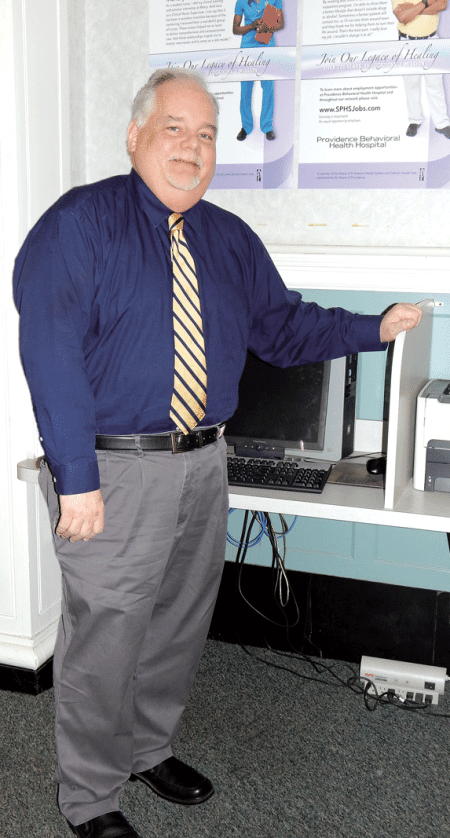
Opinion

Jas Maggu got it right.

Entrepreneurship is certainly a lonely proposition, said Maggu, who has launched a business called AuthenFOOD, which brings healthy foods to one’s doorstep — one of 36 ventures in Valley Venture Mentors’ (VVM) second accelerator program cohort.

It’s lonely, noted Maggu as she spoke to BusinessWest with some of her fellow accelerator participants (see story, page 6) because, while the entrepreneur may have co-workers to share the duties and friends and family to offer support, the heavy burden of success usually lies with the entrepreneur alone.

It can be daunting and, as Maggu and many others implied, isolating at the same time. And this harsh reality is another reason why VVM, and especially its accelerator program, is such an important factor in the potential growth of this region.

The program doesn’t take away all the loneliness, and it doesn’t turn what is always a roller-coaster ride into something where there are only ‘ups’ and straight track. But it often makes for a better ride, and, for the most part, it more than lives up to its name by accelerating the pace of progress for a company.

Slicing through the comments made by those who spoke with BusinessWest, it is abundantly clear that the accelerator program helps participants better articulate their product or service, identify its potential markets, garner critical support, and gain essential contacts and potential customers. Without these ingredients, a business can’t possibly succeed.

But beyond these gains, participants reaped many other benefits as well, especially the most important thing they’ll need moving forward (and that includes the prize money they might win) — confidence.

Indeed, while it’s difficult to quantify matters, it’s fairly safe to say that those who took part in the first accelerator program ended that experience better able to take on the challenges ahead of them — and the same can be said of the second group.

What does that mean for the region? That there is more hope for growing small businesses that can someday become solid employers in the four western counties. This is important, as we’ve said many times, because organic employment growth will no doubt be a huge part of the success formula moving forward.

We’re not sure how far Maggu can go with AuthenFOOD. Likewise, we’re unsure if the ultra-confident team at AnyCafé will make a huge splash in the coffee industry with a product that will enable people to brew a cup anytime, anywhere. We don’t know if Joe Salvador can, as he claims, disrupt the quickly growing market for gun silencers with products made by his new company, DaVinci Arms. And we don’t know just how successful Lora Fischer-DeWitt will be with her jewelry line, although she’s already off to a really solid start.

What we do know is that they’re better off now than they were four months ago, and they have a better chance of succeeding down the road.

You can never take the loneliness out of entrepreneurship — just ask anyone who has been in business for 20, 30, or 40 years. They’ll tell you that it never really gets easy, and the challenges keep coming at you.

But you can take some of the loneliness out. VVM, with its accelerator program, is doing just that, and these efforts will undoubtedly yield dividends for both the participants and the region as a whole.

Briefcase Departments

AHL Hockey Could Return to Springfield

SPRINGFIELD — Less than a month after losing the Falcons to Tucson, Ariz., hockey could be returning to Springfield for the 2016-17 season. According to Portland, Maine-based WCSH, the Portland Pirates, the American Hockey League affiliate of the Florida Panthers, has been sold to a new ownership group that intends to relocate the team in Springfield. According to a statement released yesterday by the team, “the Portland Pirates have announced that a letter of intent has been signed with an outsider buyer to purchase and relocate the AHL franchise to a new city. The details of the agreement were not disclosed, and final sale is pending approval of the AHL board of governors and the Florida Panthers. All previously purchased season tickets for the 2016-17 season will be refunded.” Portland Mayor Ethan Strimling told WCSH that losing the team “will have a terrible impact on the local economy.” The Springfield Falcons were purchased by their National Hockey League affiliate, the Arizona Coyotes, in April. The club intends to move the Falcons to Tucson in time for the 2016-17 season, and will refund all advance tickets sold to Springfield fans for that season. Portland has been the host city to a minor-league hockey team for almost 40 years, dating back to the Maine Mariners, WCSH said. The Mariners left in 1992, and after a one-year gap, the Pirates arrived in 1993.

State’s Economic Growth Improves in First Quarter

HADLEY — Massachusetts real gross domestic product grew at an annual rate of 2.3% in the first quarter of 2016, according to the Current Economic Index released this week by MassBenchmarks, the journal of the Massachusetts economy published by the UMass Donahue Institute in collaboration with the Federal Reserve Bank of Boston. In contrast, according to the U.S. Department of Commerce, national real gross domestic product grew at an annual rate of 0.5% during the same period. Recently revised data now reveal that, in 2015, the state’s economy expanded at an annual rate of 1.4% in the fourth quarter (1.4% for the U.S.), 2.0% in the third quarter (2.0%), 4.9% in the second quarter (3.9%), and 2.0% in the first quarter (0.6%). The pace of economic growth in Massachusetts picked up in the first three months of 2016 after slowing in the second half of 2015. Although underlying indicators were mixed, both employment and earnings recorded strong growth, and the unemployment rate fell. Payroll employment grew at a 2.0% annual rate in the first quarter, up from 0.7% in the prior quarter. Wage and salary income, as estimated from state withholding tax revenue, expanded 5.6% in the first quarter, after falling 7.0% in the final three months of last year. The state’s headline unemployment rate — the so-called U-3 measure — stood at 4.4% in March, down from 4.9% in December, and down from 5.1% in March 2015. The U.S. unemployment rate in March was 5.0%, the same as in December, and down from 5.5% in March of last year. The unemployment rate in Massachusetts is now lower than its pre-recession low of 4.6% in 2007. But this overall strong performance continues to mask troubling imbalances in the labor market. The broader U-6 measure of unemployment, which includes those who are working part-time but want full-time work, as well as those who are marginally attached to the labor force, is still significantly above pre-recession levels. It inched down to 9.3% in March from 9.5% in December and 9.8% in March 2015. The U.S. rate in March was 9.8%, down from 9.9% in December and 10.9% in March 2015. Prior to the recession in 2007, the U-6 reached lows of 7.1% in Massachusetts and 8.0% in the U.S. “Spending on items subject to the state regular sales tax declined by 6.3% in the first quarter, in stark contrast to the very strong growth of 9.5% experienced in the fourth quarter of 2015. Year over year, spending is up 3.5%,” noted Alan Clayton-Matthews, MassBenchmarks senior contributing editor and associate professor of Economics and Public Policy at Northeastern University. “Most of the drop this quarter was due to spending on automobiles, which slowed after expanding strongly at the end of 2015, and also to weak spending on other taxable sales items in February.” The Mass. Department of Revenue recorded weaker bonus payouts in February, tied to stock-market performance and corporate profits. Market fear tends to dampen business confidence and investment, and a prolonged market downturn may restrain consumer spending as well. The MassBenchmarks Leading Economic Index suggests the state economy will continue to grow at a moderate pace over the next six months, at a 3.1% rate in the second quarter, and a 2.5% rate in the third quarter of this year. The factors weighing on the state and national economic outlook have changed little from last quarter. One factor is the tightening labor market. As there are fewer unemployed workers and as more Baby Boomers retire, it is becoming more difficult for employers to find the workers they need. This is reflected in historically low levels of initial unemployment claims, a sign that employers are reacting to the tightening labor market by holding on to the workers they have. Another factor is slower worldwide economic growth as China’s rapid pace of economic growth has decelerated, Japan’s economy is stalled, and Europe remains sluggish. A third is turmoil in financial markets. Although volatility in stock markets in reaction to falling commodity prices has calmed, there are remaining downside risk factors related to the fallout of weak global demand on corporate profits.

Sergeant Shower Wins Pitch Competition

HOLYOKE — Jonathan LaFrance, an MBA student from Bay Path University, took first place at last night’s awards ceremony and banquet for the Harold Grinspoon Charitable Foundation’s Entrepreneurship Initiative, pitching Sergeant Shower, a biodegradable, two-sided, single-use, all-in-one shampoo and body-wash cloth mitt. LaFrance convinced a panel of judges from six area banks that his pitch was the best at the event held at the Log Cabin. Jonathan Mendez, a Holyoke Community College student, took second place based on his business concept pitch for Mean Green Detergent Machine, a kiosk in stores allowing people to refill their laundry-detergent bottle. Steven Goldberg, a student at Amherst College, took third place with DineToday, a platform allowing restaurants to post discounts for off-peak reservation times. The live event featured a student representative from each of the 14 participating local colleges: American International College, Amherst College, Bay Path University, Elms College, Greenfield Community College, Hampshire College, Holyoke Community College, Mount Holyoke College, Smith College, Springfield College, Springfield Technical Community College, UMass Amherst, Western New England University, and Westfield State University. First-, second-, and third-place winners received $1000, $750, and $500 respectively. Each student participating received $100. The judges represented Berkshire Bank, Country Bank, First Niagara Bank, PeoplesBank, United Bank, and Westfield Bank. The judges also identified nine winning teams as Best Exhibitors. These were selected from a pool of 56 unique companies during a ‘trade show’ portion of the evening which featured the 2016 Grinspoon Entrepreneurial Spirit Award winners. The three first-place winners (each receiving an additional award of $600) were: Connor Brown and Xavier Reed from Amherst College with Meetum, a platform for students to openly share events and activities with the college community; Misael Ramos from Springfield College with Royaume Expressions, garment decoration; and Joey Baurys and Nicolette LaPierre from Western New England University with Hemoflux, a prenatal genetic testing company. The Entrepreneurship Initiative is one of several local initiatives supported by the philanthropy of Harold Grinspoon. For more information, visit www.hgf.org.

Company Notebook Departments

Tighe & Bond Honored for Advancing Women in Engineering Field

WESTFIELD — The Connecticut chapter of the Women’s Transportation Seminar (WTS CT) honored Tighe & Bond as Employer of the Year during its recent annual awards dinner on April 14 at St. Clement’s Castle in Portland, Conn. The recognition applauded the firm’s support of WTS, and for providing ongoing opportunities to advance women in their engineering and transportation careers. “It’s an honor for our firm to receive this award, and we are thrilled that WTS CT selected us,” said David Pinsky, president and CEO of Tighe & Bond, who accepted the award on the firm’s behalf. “Our firm takes recruiting, retaining, and advancing women in engineering seriously. More than 30% of Tighe & Bond’s 270-plus employees are female, and approximately 14% of these women hold key management and/or leadership positions at our firm. Last year, more than 30% of Tighe & Bond’s new hires were female, and this year the number is even higher.” For more than 18 years, WTS CT has been dedicated to advancing women in transportation. It provides a forum for transportation professionals to meet and interact, sharing experiences and expertise. Member benefits include professional development, career support, mentorship, and student outreach.

Country Bank Sponsors Financial Literary Fair at WPI

WARE — Recently, Country Bank sponsored its first Financial Literacy Fair for college students at Worcester Polytechnic Institute (WPI) in Worcester. This program was a partnership with WPI’s Student Aid and Financial Literacy Department. The event featured the Next Step, a financial-literacy exercise where college students are asked to step into their very near future by visiting 10 financially informative booths to make real-world decisions. “Students learn about many of the next steps that they will encounter after they graduate from college,” said Jodie Gerulaitis, the bank’s financial education officer. “They learn that the decisions they make today will affect their finances in the future, such as the unexpected expenses of owning a vehicle, saving for retirement, renting an apartment, or owning a home, and how location can be a deciding factor in their finances.” The booths the students visit include credit, housing, student loans, insurance, budgeting, fraud prevention, transportation, savings and investing, career development, and employment benefits. The goal is for students to have a better understanding of their future fiscal responsibilities. They learn about balancing a budget and making educated choices about their finances. They also learn how one financial choice can greatly impact another.

Chamberlain Group Named 2016 Exporter of the Year

BOSTON — The Small Business Administration (SBA) has named the Great Barrington-based Chamberlain Group the 2016 Exporter of the Year for Massachusetts and New England. “Lisa and Eric Chamberlain are saving lives with the products they create in the medical-simulation industry,” said Robert Nelson, SBA Massachusetts district director. “They are connecting with new customers all over the globe and establishing an international distribution network throughout Europe, Asia, the Middle East, and Mexico.” Founded in 1999, the Chamberlain Group designs and builds mimetic organs for surgical and interventional training. Working in close collaboration with medical-device companies and teaching hospitals, the company creates models that address training needs for clinicians, sales, marketing, device research, and development. In 2000, Lisa Chamberlain became a client of the Massachusetts Small Business Development Center (MSBDC), and her business plan for the Chamberlain Group won first prize in the UMass Five College Business Plan Competition. In 2003, the company was recognized with the Governor’s Entrepreneurial Spirit Award for spurring job creation and economic development.
Today, after 17 years in business, the company has grown to 21 employees, and it exports more than 500 products directly from its Great Barrington office to more than 50 countries worldwide. “We’re honored and delighted to be recipients of this year’s Exporter of the Year awards in the Commonwealth and the New England region,” Chamberlain said. “Eric and I have been well guided by the advice and encouragement we have received from the MSBDC and the Mass Export Center. It’s made the process of growing our business and our international reach viable, knowing we have subject experts to consult with who have our best interests at heart.” The company was nominated by Ann Pieroway, regional director of the Massachusetts Export Center.

44 Business Capital Becomes Division of Berkshire Bank

PITTSFIELD — Berkshire Bank completed its asset purchase transaction with 44 Business Capital, LLC of Blue Bell, Pa., and Parke Bank of Sewell, N.J., under which Berkshire Bank has acquired the business model of 44 Business Capital and certain other assets of Parke Bank’s Small Business Administration (SBA) 7(a) loan program operations. 44 Business Capital is now operating as a direct small-business lending division of Berkshire Bank, reporting up through the bank’s already-established small-business line, and originating SBA loans for Berkshire Bank. 44 Business Capital has consistently been one of the top SBA originators and a market-leading provider and facilitator of SBA-guaranteed loans to small businesses in Pennsylvania, New Jersey, Delaware, Maryland, Northern Virginia, and Washington, D.C. 44 Business Capital’s entire team, along with its leadership — Greg Poehlmann, Phil Rapone, Jeff Sherry, and Joe Dreyer — have joined Berkshire Bank. “We’re pleased to welcome the employees and customers of 44 Business Capital,” said Berkshire Bank CEO Michael Daly. “This combination increases the client offerings for both companies, diversifies our loan portfolio, and provides a valuable future growth channel.” Added Poehlmann, senior vice president of Business Banking for Berkshire Bank and former president of 44 Business Capital, LLC, “as a division of Berkshire Bank, 44 Business Capital will continue to leverage our staff’s experience to build out an exceptional SBA lending platform that will serve the SBA’s mission on a larger scale. We are extremely excited to become part of Berkshire Bank, and look forward to establishing ourselves collectively as a major player in the SBA-lending market.”

Circle K Convenience Store Opens in Holyoke

HOLYOKE — Holyoke Mayor Alex Morse, Greater Holyoke Chamber of Commerce President Kathleen Anderson, and Circle K franchisee Yasser (Sunny) Hussain gathered on May 5 for the grand opening of the new Circle K convenience store at 337 Appleton St. in Holyoke. Hussain, the site’s owner, took a vacant and abandoned building in the downtown area and completely renovated the space into a new, state-of-the-art Circle K convenience store. The store is open 24 hours a day and carries everything from morning coffee to late-night snacks, as well as a wide selection of cold drinks, fresh roller grill items, and staples like milk and eggs.

Comcast Spotlight Leases Space at Agawam Crossing

AGAWAM — Comcast Spotlight has signed a lease for a new, 3,157-square-foot space in Agawam Crossing, located at 200 Silver St. in Agawam. This is the final space at Agawam Crossing, a class A professional office building. Comcast Spotlight recently moved into its new home alongside Baystate Rehabilitation, Life Laboratories, and Associates in Women’s Health, among others. Comcast Spotlight is an advertising sales company that provides video solutions to local, regional, and national businesses through television and digital advertising. It provides local market coverage across multiple platforms (cable TV, satellite, telco, online, VOD) and can target customers geographically, demographically, and by message to reach specific audience segments. Development Associates of Agawam was the leasing agent and project manager for the construction of Comcast Spotlight’s new offices. The tenant was represented by Bob Peterson, managing broker at REAL Partners, LLC, and Daniel Moore of NAI Plotkin of Springfield.

Friendly’s Sells Retail Ice-cream, Manufacturing Division

WILBRAHAM — Friendly’s Ice Cream announced it has sold its retail ice-cream and manufacturing business to Texas-based Dean Foods Co. for $155 million in cash. “We are thrilled at the prospects the Friendly’s Ice Cream acquisition brings to Dean Foods,” said Dean CEO Gregg Tanner. “Coupled with the momentum of Dean Foods’ current regional brands, the Friendly’s brand will be a catalyst in our strategy to grow our existing ice-cream business and branded portfolio. Friendly’s is an ideal complement to our other heritage brands across the country and fills a manufacturing and retail ice-cream void in our nationwide footprint.” Dean Foods is the largest processor and direct-to-store distributor of fresh fluid milk and other dairy and dairy-case products in the U.S., the company said. Friendly’s Ice Cream had $166 million in net sales of ice cream to supermarkets in 2015. After the transaction closes late in the second quarter of 2016, Dean Foods plans to continue producing ice cream at the current Friendly’s plant in Wilbraham, which employs about 200 people. “Friendly’s ice cream strongly resonates with consumers throughout the Northeast,” Tanner added. “Very similar to the traditions shared by consumers who grew up enjoying our existing regional milk and ice-cream brands, such as Mayfield or Dean’s, we believe the Friendly’s Ice Cream brand represents and promotes what Dean Foods has built itself around and is a great fit in our branded portfolio. Dean Foods is rooted in the traditional goodness of dairy, making Friendly’s more than just a good business and financial opportunity.” Added Friendly’s President and CEO John Maguire, “today marks a new chapter for Friendly’s retail and manufacturing ice-cream business. Dean Foods Company has recognized the growth momentum that Friendly’s retail ice cream has experienced over the last five years, and I am thrilled that Dean Foods will be the ongoing steward of the retail ice-cream business, led by the current experienced retail and creamery teams.” Friendly’s Restaurants, which boasts 260 locations in the U.S., will continue to be owned and operated by an affiliate of Sun Capital Partners Inc. and will license use of the Friendly’s trademark to Dean’s under a license agreement entered into as part of the transaction.

Keller Williams Pitches in at Springfield Boys & Girls Club

SPRINGFIELD — On Thursday, May 12, Keller Williams Realty associates around the globe donated hundreds of thousands of hours to their local communities during RED Day. Introduced in 2009, RED Day, which stands for renew, energize, and donate, is Keller Williams Realty’s annual day of service. Each year on the second Thursday of May, associates spend the day away from their businesses serving worthy organizations and causes in their communities. As part of the RED Day effort, Keller Williams Realty – Pioneer Valley chose to spend the day with the Springfield Boys & Girls Club at 481 Carew St. to paint the inside and outside of the facility, paint parking-lot lines, and landscape. The Springfield Boys & Girls Club provides, in a safe environment, programs that inspire, educate, guide, enable, and support all young people to realize their full potential as productive, responsible, respectful citizens and leaders. “RED Day is built on the belief that people can and should come together to achieve extraordinary things to help others,” said Mike Dombrowski, associate partner of Keller Williams Realty – Pioneer Valley. “It just happens to be a one-day expression of the constant state of the Keller Williams culture. We see a need, and we take action to help the Springfield community.” Since the first RED Day in 2009, Keller Williams associates have given almost a half-million hours of community service through activities ranging from food and blood drives to cleaning up trash in public parks; from revamping gardens at nursing homes to rebuilding homes and schools for community members in need. For more information about RED Day, visit www.kw.com/kw/redday.

Country Bank Supports Palmer Celebrations

PALMER — Representatives from Country Bank presented the Palmer 300th Anniversary Committee and the Celebrate Palmer Committee with donations totaling $5,000. “We are so pleased to be a major sponsor of both of these meaningful events,” said Shelley Regin, senior vice president, Marketing at Country Bank. “We look forward to celebrating with the town of Palmer, and we commend both committees for their tireless effort to make them a success.” For more information on these events, visit palmer300th.org or townofpalmer.com. For more information about Country Bank, call (800) 322-8233 or visit countrybank.com.