Home Posts tagged Employment (Page 20)
Daily News

SPRINGFIELD — The Western New England University Small Business Legal Clinic is now accepting applications from entrepreneurs and small-business owners seeking legal assistance for the fall 2014 semester.

Under faculty supervision, law students assist clients with legal issues including choice of entity, employment policies, contract drafting, regulatory compliance, and intellectual-property issues relating to trademark and copyright. This is a free service available to local businesses that would not otherwise have the resources to obtain these types of services. The Small Business Clinic at Western New England University School of Law has assisted more than 250 small businesses.

“The clinic is a great resource for entrepreneurs who lack the finances to retain an attorney,” said Assistant Clinical Professor of Law Robert Statchen. “By using the clinic’s services, businesses can avoid problems by getting legal issues addressed early and correctly. It also provides students with a great opportunity to get real-world experience.”

The Small Business Legal Clinic asks small business owners to submit their applications by Aug. 1. Applications received after that date will be considered if additional resources are available. Students will begin providing services in September. For more information, call the Legal Clinic at (413) 782-1469 or e-mail [email protected].

The Western New England University Small Business Legal Clinic was established to provide law students with an opportunity to provide practical consultation to entrepreneurs starting new and building existing small businesses in the community. The initiative strengthens alliances within the community by using the resources of the university to foster new-business development. For more information, visit www1.wne.edu/cie.

Daily News

WASHINGTON, D.C. — The U.S. construction industry added 6,000 jobs in June, according to the July 3 report of the Bureau of Labor Statistics (BLS). However, non-residential construction added only 700 of those jobs, and the heavy and civil engineering sector lost 700 jobs.

“Although non-residential construction’s performance is somewhat disappointing, the general tenor of today’s employment report is upbeat. It is worth noting that non-residential construction tends to lag that of the overall economy,” said Associated Builders and Contractors Chief Economist Anirban Basu. “Today’s jobs numbers are largely a reflection of the softer growth recorded by the U.S. economy for much of last year and during the initial months of 2014. Given that the economy added over 200,000 jobs for the fifth consecutive month in June, there is some optimism about improvement in the second quarter; however, the lack of monthly construction employment growth, particularly in the non-residential sector, is troubling.”

Although the national construction unemployment rate stands at 8.2% on a non-seasonally adjusted basis, there are parts of the nation in which unemployment is far lower, Basu added. “In fact, there are emerging shortages of industrial construction workers in growing segments of the south, which will trigger large increases in wages and per diems during the year ahead. By contrast, there are communities in which construction unemployment remains well above the 8.2% average, suggesting that wage inflation will be meaningfully experienced only in certain communities.”

According to the BLS household survey, the national unemployment rate fell to 6.1% in June, reaching its lowest level since September 2008. The civilian labor force expanded by 81,000 in June. Individual sectors saw the following changes:

• Non-residential building construction employment increased by 2,100 jobs for the month, but is up by 22,200 jobs, or 3.3%, since June 2013.

• Residential building construction employment rose by 4,500 jobs in June and is up by 50,600 jobs, or 8.3%, on an annual basis.

• Non-residential specialty trade contractors lost 1,400 jobs for the month, but employment in that category is up by 29,500 jobs, or 1.4%, from the same time last year.

• Residential specialty trade contractors gained 2,100 jobs in June and have added 55,700 jobs, or 3.6%, since June 2013.

• The heavy and civil engineering construction segment lost 700 jobs in June, but job totals are up by 28,300, or 3.2%, on a year-over-year basis.

Daily News

WASHINGTON, D.C. — U.S. Sens. Edward Markey and Elizabeth Warren, U.S. Rep. Richard Neal, and Massachusetts Gov. Deval Patrick congratulated Hampden County Sheriff Michael Ashe Jr. for being honored this week at the White House as a “Champion of Change” for his exemplary work establishing a model continuum of supported community re-entry for offenders.

Ashe is chief administrator of the Hampden County Correctional Center, which supervises approximately 1,450 offenders in five levels of security — medium, minimum, pre-release, day reporting, and after-incarceration support. As part of his re-entry effort, Ashe has utilized some 300 community partnerships to help offenders find 523 jobs in 2013, and more than 10,000 jobs in the past 20 years, having an impact on recidivism and public safety.

The Champions of Change program was created as an opportunity for the White House to feature individuals doing extraordinary things to empower and inspire members of their communities. This spring, Markey and Neal nominated Ashe for the White House Champion of Change Award in the category of Expanding Reentry Employment Opportunities.

“Sheriff Ashe is one of the most passionate and innovative public officials in the country, and this recognition honors his nearly four decades of exemplary service to the people of Massachusetts,” said Markey. “He has led the charge in implementing rehabilitation and re-entry polities for incarcerated individuals that have become the model for facilities across the country. His motto as sheriff is ‘strength reinforced with decency; firmness dignified with fairness,’ and this recognition from the White House honors these ideals and his extraordinary record of achievement.”

Added Neal, “I was honored to nominate my great friend Mike Ashe for the Champions of Change Award. In my opinion, there is no one in law enforcement more deserving of this special recognition from the White House than Sheriff Ashe. It is a fitting tribute to a remarkable career in public service.”

Daily News

BOSTON — The Associated Industries of Massachusetts (AIM) Business Confidence Index recorded a reading of 53.7 in June, making for a second-quarter average of 53.8.

“The positive quarterly average reflects the diminution in recent months of major economic-policy conflict in Washington, which has contributed to stronger business confidence,” said Raymond Torto, global chairman of research at CBRE and chair of the AIM Board of Economic Advisors (BEA). “With less ambient uncertainty, employers are becoming more positive about adding personnel, a sign of confidence that is reflected in our survey. The other notable improvement is in responses from small employers, those with 25 or fewer employees, who are now about as optimistic as mid-size firms.”

The AIM Index has appeared monthly since July 1991. It is calculated on a 100-point scale, with 50 as neutral; a reading above 50 is positive, while below 50 is negative. The index reached its historic high of 68.5 on two occasions in 1997-98, and its all-time low of 33.3 in February 2009. In June 2013 it stood at 48.9.

Nearly all of the sub-indices based on selected questions or categories of respondent were down from May, but all were up from last June. The Massachusetts Index, assessing business conditions within the Commonwealth, was up 3.3 points on the year to 50.9, and the U.S. Index of national business conditions was 7.6 points ahead of last June at 48.2. “Massachusetts has generally outperformed the nation economically since the onset of the recession,” said Alan Clayton-Matthews, professor at the School of Public Policy and Urban Affairs at Northeastern University, and a BEA member. “Our state is well-positioned to continue to thrive, but is inevitably standing out less as the rest of the country returns to normal performance.”

The Current Index, which assesses overall business conditions at the time of the survey, was 4.1 points above last June’s level at 52.8, and the Future Index, measuring expectations for six months out, was up 6.7 points from a year before at 54.6. “The consensus of economic forecasts calls for faster growth through the rest of this year and into 2015, and most respondents to our survey agree,” Clayton-Matthews noted. “Small and large employers are more optimistic about the near future than mid-size companies; manufacturers rate current conditions lower than other employers, but have similar expectations for the second half of the year.”

The Company Index, reflecting survey respondents’ assessments of conditions for their own operations, was up 5.3 points on the year to 56.5. The Employment Index was up the same amount at 54.6, and the Sales Index gained even more, 7.6 points to 57.6. All three were off fractionally from May. “The employment results, even with a marginal loss for the month, continue to reflect a moderate upward trend,” said BEA member Elliot Winer, chief economist for Northeast Economic Analysis Group LLC. “Among employers responding to the survey, 41% expected to add personnel in the next six months, while only 10% foresaw staff reductions, a marked improvement from the already positive 38%-23% split for the prior six months.”

Confidence fell in the manufacturing sector (down 2.9 to 51.5) but rose among other employers (up 2.8 to 56.8), and lower outside Greater Boston (52.8, down 1.5) than within the metropolitan area (54.1, down 0.2). Small employers (25 or fewer employees) were about as confident as mid-size firms (26 to 100 employees), while employers of more than 100 were more positive. “Responses on employment were, however, remarkably uniform,” Winer noted, “by region, for manufacturers and other employers, and for companies of all sizes.”

Cover Story
Region Sees Economic Potential in Rail Service

BW-0614c-1Timothy Brennan calls the return of passenger rail service to the Pioneer Valley a “new frontier.”

That’s a phrase that has been used in other cities across the nation where revitalization has occurred as a result of the introduction or expansion of commuter rail service, which caters to the growing demand among young people and Baby Boomers for housing in downtowns complete with shops, restaurants, entertainment, and a good transportation system. And Brennan, executive director of the Pioneer Valley Planning Commission, believes it applies here.

Next year, after more than a decade of planning and infrastructure work, Amtrak’s Vermonter passenger train will run again along a direct route from Springfield to St. Albans, Vt., with stops in Holyoke, Northampton, and Greenfield. In addition, beginning in 2016, there will be more than 25 trips a day between Springfield and Hartford.

“We think this will be a game changer,” said Brennan. “There is a palpable sense of excitement about it, and the Valley has the disposition to be very supportive of this endeavor.”

Kevin Kennedy, Springfield’s chief development officer, agreed.

“As vehicular and truck traffic grows, it may become more relaxing to take a train with wi-fi service where people can use their cell phones and tablets or sit with a coffee, muffin, and their laptop and get some work done,” he said, pointing to the congestion that will be caused by the Mass. Department of Transportation’s three-year rebuild of the I-91 viaduct between State Street and the I-291 ramps as just one of many reasons why rail service may see a surge in popularity.

Tim Brennan

Tim Brennan says expanded rail service could be a game changer for the region.

In addition, the world of work is changing, and more people are telecommuting and reporting into an office only on occasion, Brennan noted, making it more possible for someone to live in Greater Springfield and work in New York, Boston, or another metropolitan area.

“Working from home is a growing phenomenon, and people could have a job in New York City, live here, and take the train to meetings,” he told BusinessWest, adding that, in some parts of California, employers allow employees to log into work via their laptops during their commute.

Marcos Marrero, Holyoke’s director of Planning and Economic Development, says it’s critical to keep up with societal change, and commuter rail service is part of this equation.

“Rail is the future for the Hartford-Springfield metropolitan area, and rail service is key to economic development in the Pioneer Valley,” he said. “Interconnected cities offer fertile ground for economic activity, as it allows them to prosper through the movement of people, products, and services. It’s important to go beyond our parochialism and understand globalization, and if we want to be part of what we know is successful in so many other metropolitan areas, we have to be interconnected and part of that fabric.”

This belief reverberates in Greenfield, and Linda Dunlavy says Franklin County has recognized the importance of restoring rail service to the area for more than a decade.

“We haven’t had a rail stop here since about 1985, but have always known that travel by passenger rail is really important to our economic development and quality of life,” said the executive director of the Franklin County Council of Governments (FCCG). “It has been one of the goals in all of our long-term planning, even though a decade ago it seemed like wishful thinking.”

Experts also hope commuter rail will boost local tourism, as it has in Vermont and other states. “Tourism is an export business, and Vermont does a very good job of marketing packages to people in New York that include Amtrak and hotel stays,” said Marrero. “Having a rail system allows that to happen.”

For this issue, BusinessWest looks at the reasons behind the reopening of the rail line, and also at the hopes and expectations of communities that find themselves on what is being called a path to progress.

On the Right Track

Passenger rail service existed to and from Springfield for decades before it was halted in 1989. At that time, Amtrak deemed the 49 miles of track running to the Vermont border through Greenfield in too great a state of disrepair to continue using.

AMtrakVermonterMapAlthough some freight traffic continued, train speed was limited to 10 mph. “The principal reason the track was used was to deliver coal to the Mount Tom power plant in Holyoke, which will soon be closing,” Brennan said.

But Vermont found the rail service, which extends today from St. Albans to Washington, D.C., so lucrative that it chose to make a sizable investment to continue it. “The Vermonter is enormously popular, especially during ski season and during the summer,” Brennan said, adding that Vermont views it as an economic-development vehicle.

However, in order to keep the train running, it had to be diverted from Springfield to the east in Palmer, where a switchback sends it north. That switchback has always been problematic, as it takes 30 minutes, and passengers cannot leave the train.

As a result, more than a decade ago, Vermont approached the Pioneer Valley Planning Commission asking for help in restoring the deteriorated track. “Congressman John Olver was enthusiastic about it and was able to get an earmark for a study,” Brennan said.

At that point, the PVPC became the custodial agency responsible for moving the project forward, and a consultant was hired in December 2009 to determine what it would take to revitalize the track and analyze its return on investment.

The timing proved serendipitous, as the PVPC had the plan ready when President Obama allocated $8 billion in grant money for high-speed, inner-city rail projects.

The state’s application for a $73 million grant to rebuild the aging rail corridor, which would allow trains to travel in excess of 75 mph, was accepted, and a construction plan began to take shape.

“The work is being implemented as we speak and is scheduled to be completed by the end of the year,” Brennan said.

Although he is optimistic about the return of passenger rail service in the area, he said it will need to be expanded down the road to satisfy expectations.

“It will be great to get the Vermonter back, but there will only be one train a day in each direction, so we are working in earnest with partners to get more service up and down the valley to attract commuters,” Brennan said.

Still, experts predict that, if the MGM casino is built in Springfield’s South End as planned, it could generate an enormous amount of traffic. This development, coupled with construction work on the I-91 viaduct, which will begin in 2015 and take at least three years, could prompt people to use the train.

“If there is more north and south rail service, it could serve as a relief valve; our challenge now is how to add more trains between Springfield and Greenfield,” Brennan continued, explaining that an expansion will cost $30 million, but the PVPC is working with the Mass. Dept of Transportation and the Massachusetts Bay Transit Authority (MBTA) on that goal, and funding could come from the state transportation bond bill passed in April.

“The biggest issue is that the rail corridor is owned by Pan Am Rail, which is a division of Norfolk Southern Rail,” he explained. “The state reached a verbal agreement to buy it for $17 million, but it hasn’t happened yet.”

Still, action is underway, and a letter has been sent to the secretary of Transportation, asking if the MBTA could donate locomotives and passenger cars that are being retired to the Pioneer Valley Transit Authority. They could be refurbished, Brennan said, and the final step would be to find an operator to run them. He added that a connection from Vermont to Montreal is also on the drawing board, and there is keen interest in making that happen, but it is not a priority.

Accelerating Growth

Meanwhile, progress has been made in the form of new, multi-million-dollar intermodal transportation stations, and Union Station in Springfield is undergoing the first phase of its long-awaited restoration.

Kevin Kennedy

Kevin Kennedy says MGM Springfield, if it comes to fruition, would be one of many factors that could drive use of rail service in Western Mass.

Kennedy said the Union Station project has generated excitement, and the restoration of rail service is one of three ingredients — a major development investment, a significant transportation project, and a large-scale, market-rate housing development downtown — necessary in the revitalization of a city such as Springfield.

MGM represents the first element in that equation, and if the casino is built, it is expected to create 2,200 construction jobs and 3,000 permanent jobs, in addition to vendor activity. “People could work in Springfield and live in Windsor Locks, Conn. or Northampton, but we will need to be able to get all of the workers in and out of the city,” said Kennedy, adding that rail service could help address that need.

The third element (housing) is also expected to come to fruition. “We anticipate a major housing announcement for downtown soon,” Kennedy told BusinessWest, adding that MGM’s plans include a trolley system with stops throughout downtown Springfield, which ties into the entertainment factor that makes a downtown attractive.

“Rather than focusing on MGM as a gaming place, think of it as an outdoor skating rink and place of entertainment which ties in with venues already in Springfield — the MassMutual Center, City Hall, and CityStage,” Kennedy said.

But he added that the rail system will eventually need to connect to New York City as well as the north for revitalization in Springfield to be successful.

Marrero also views the restoration of commuter-rail service as a key factor in Holyoke’s economic development.

“The Vermonter route runs along a major spinal cord, and the realignment will cut down on the time it takes to get to Vermont while providing service to Holyoke, Northampton, and Greenfield; Chicopee could also have a stop in the future,” he said, adding that he believes rail service will make the area more attractive as a place to live, work, or establish a business.

Holyoke is already moving in that direction, said Marrero, citing the success of Open Square in the city’s Innovation District, which is home to 50 businesses located a block from where the new rail station will be built.

“Vertitech Corp. moved into Open Square last fall, and they have plans to open in the New York metropolitan area,” he noted, adding that employees could take the train to meetings to and from either site. “We also have a lot of investment opportunity nearby in architecturally attractive buildings, which could lead to a walkable, dense neighborhood rich in interaction, which all fits together with rail service.”

Research on transit-oriented development shows that property within a one-mile radius of a rail station tends to be popular for mixed-use development. “So, rail has been my highest priority in terms of projects in the past two years,” Marrero said.

In May 2012, the city procured an architect to design a new, 12,000-square-foot rail station at the corner of Main and Dwight streets, which is the site of the first rail stop in Holyoke. It is expected to be complete by the end of July, and the next step will be to hire a contractor with MassWorks funding to build the $2.4 million structure, which will include new sidewalks leading into the station.

Economic Engines

Today, the $12 million John W. Olver Transit Center in Greenfield, located a few blocks from the heart of downtown, sits ready for rail service. It is the first zero-net-energy transit center in the nation and home to the Franklin County Regional Transit Authority and the FCCG.

Dunlavy and other Franklin County officials are also looking to the future and hope to expand the number of rail trains that stop there.

“When we first envisioned rail service, we only thought about Amtrak,” she explained. “But we hope to add a shuttle service to help employers expand workforce opportunities and help residents expand their opportunities for employment. Not everyone who lives here has a car.”

Passenger rail service is also expected to help with Greenfield’s revitalization, which got a boost a few years ago when new market tax credits and historic tax credits were approved for redevelopment of the upper stories of buildings.

Today, about 10 buildings have added office or residential space to their second floors and have also made aesthetic improvements to their first floors. In addition, the Franklin County Courthouse is undergoing a major renovation, and with the intermodal transit center as an anchor, “our long-term plan is finally coming to fruition,” Dunlavy told BusinessWest.

Pittsfield is also hoping to improve its rail service, and Mayor Daniel Bianchi believes rail “will be great for the area.”

The city’s primary goal is an east-west connection with New York City, and he believes reinstating rail is a viable form of transportation. “But it’s a huge project that involves a multitude of states. It’s a large, complicated issue, and we have to be realistic,” he said, suggesting that, since Connecticut already has good commuter rail service, the state might not be as willing as Massachusetts to make further investments in rail expansion a priority.

However, Community Development Director Douglas Clark envisions people from New York City who don’t own cars taking the train to Pittsfield to enjoy its cultural attractions.

That belief was enhanced when the results of a study conducted by Williams College Economics Professor Stephen Sheppard were made public, showing that the Berkshires could reap $344 million in the first 10 years of passenger train service to and from Gotham.

Unknown Potential

Brennan said Worcester is connected to Boston via rail service run by the MBTA, and it has made a significant difference in the city’s growth and revitalization.

“Worcester is now thought of as an attractive, affordable alternative to living in Boston,” he explained. “It has been an effort that has taken about 15 years, but it has really come together over the past few years. So our feeling is that we should anticipate a similar outcome once there is a high level of rail service available here.

“There will be talent shortages in the next decade, and we need to be connected so we can leverage these connections,” Brennan concluded. “We have to make sure we are well-positioned for the 21st century.”

With expanded rail service, he believes the region will have the right economic-development vehicle to meet that goal.

Briefcase Departments

MGM Springfield Wins Casino License
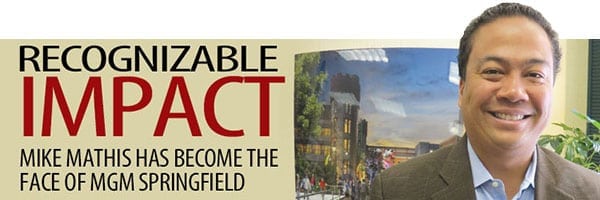
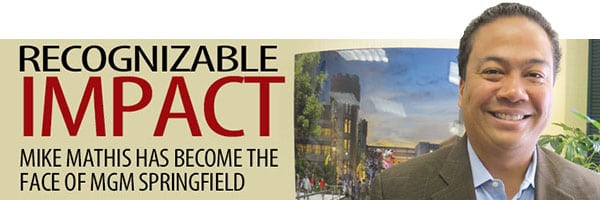
SPRINGFIELD — MGM Resorts International received a unanimous vote from the Massachusetts Gaming Commission (MGC) approving an agreement to award MGM Springfield a license to operate a resort casino in downtown Springfield. This is the first approval of a casino license in the Commonwealth. The commission’s decision comes after an extensive, two-year process of hearings and background investigations culminating in a final week of hearings and deliberations. MGM formally announced its interest in a resort casino in Springfield in August 2012. At one time there was a field of five companies vying for the sole Western Mass. casino license. The MGM Springfield site is located on approximately 14.5 acres of land between Union and State streets, and between Columbus Avenue and Main Street. Jim Murren, chairman and CEO of MGM Resorts, called it “a great day for Springfield, the Commonwealth of Massachusetts, and MGM. We’re proud of what our talented team and our many dedicated city and community partners have accomplished together. We thank the Massachusetts Gaming Commission for its thorough vetting process and look forward to continuing our work with Springfield Mayor Domenic Sarno and other Springfield and Western Mass. elected officials and governmental leaders, along with residents and businesses of Springfield and the region, as we move this project forward.” Murren was joined by MGM Resorts President Bill Hornbuckle and MGM Springfield President Michael Mathis for the decision at the MassMutual Center. The crowd gathered included elected officials; civic, business, and community leaders; and MGM Springfield supporters. MGM Springfield, an $800 million investment, is designed to ignite an urban revival. MGM and its professional partners worked painstakingly to put together a design that celebrates the history of Springfield while moving the Gateway City into a new era of commerce and economic opportunity. The integrated resort casino is designed to enhance the entire urban center of Springfield. The mixed-used development project calls for a 25-story, 250-room hotel with world-class amenities, including a spa, pool, and roof deck; 125,000 square feet of gaming space with 3,000 slot machines, 75 gaming tables, a poker room, and a high-limit VIP gambling area; about 55,000 square feet of retail and restaurant space that will accommodate 15 shops and restaurants; and a multi-level parking garage. Plans also envision a high-energy dining, retail, and entertainment district with an eight-screen cinema, bowling alley, and outdoor stage. This will be developed by Davenport Properties of Boston, in partnership with MGM on land now occupied by the tornado-ravaged South End Community Center and Howard Street School. Michael Mathis, MGM Springfield president, said, “MGM is very grateful to the MGC and, most importantly, to our supporters. Today’s decision says yes to jobs, yes to downtown revitalization, and yes to opportunity and hope. We have been, and will continue to be, a committed partner to the city and the Commonwealth. We have worked hard to develop the strong relationships necessary to create a world-class urban casino resort proposal that will anchor a renaissance for an important gateway city and the region around it. We now look forward to that becoming a reality.” MGM Springfield will bring 3,000 permanent jobs and 2,000 construction jobs to downtown Springfield. MGM has established a hiring goal of 35% of the workforce from the city of Springfield and 90% from a combination of Springfield and the region. Additionally, MGM Springfield has entered into surrounding-community agreements with neighboring communities providing for tens of millions of dollars. However, all casino projects in the Commonwealth still face the threat of a ballot repeal of the casino law, now that the Supreme Judicial Court has allowed the question to appear on the November ballot. Because the repeal effort hangs in the balance, the MGC and MGM entered into an agreement to award the single Category 1 (resort-casino) license available for Region B (Western Mass.) contingent on the outcome of the repeal matter. The future date allows the postponement of the licensing and related fees until the repeal question is resolved. “The City of Springfield deserves a brighter economic future,” Mathis said. “Its residents spoke loudly when they voted yes for MGM Springfield in a July 2013 referendum. A successful repeal would mean the loss of good jobs, new economic development, and a needed revenue stream. It would also eliminate the opportunity to recapture billions of dollars currently lost to neighboring states. MGM is ready to help the Commonwealth achieve these worthy goals.”

SJC Approves November Referendum on Casinos
BOSTON — On June 24, the state Supreme Judicial Court cleared the way for a repeal of the state casino law in November’s election. In a unanimous vote, the SJC ruled that Attorney General Martha Coakley was wrong to reject the anti-casino ballot question last year. “We conclude that the attorney general erred in declining to certify and grant the requested relief so that the initiative may be decided by the voters at the November election,” the court said in a lengthy decision written by Justice Ralph Gants. The ruling paves the way the way for what experts predict will be a protracted — and expensive — campaign that will certainly draw significant national interest. Commenting on the court’s decision, Springfield Mayor Domenic Sarno stated, “I appreciate the due diligence and consideration the SJC has given to this case. Going forward, we will proceed like we did last year before our local referendum and present the facts on what this means to not only Springfield but to Western Mass. and the entire Commonwealth.” He argued that the two main keys to knocking down poverty and public-safety issues inurban America are education and jobs. “People are hungry to work. MGMSpringfield is a massive jobs-generation project. It also means $50 milliondollars in local vendor procurement opportunities and the redevelopment of the downtown area heavily affected by the June 1, 2011 tornado.” He added, “The entertainment attractions that MGM Springfield will offer to all of New England will not only bring new life and vibrancy to Western Mass., but help to repatriate over a billion dollars currently leaving Massachusetts to other resort destinations. We are prepared and optimistic that, once the voters of the Commonwealth see and hear all the facts, we will prevail.” Michael Mathis, president of MGM Springfield, also weighed in on the decision in a preparedstatement. “MGM Resorts has spent three years collaborating and talking with the people of Western Mass. on the value of a casino resort as a unique economic-development catalyst,” he said. “We are confident that our urban revitalization project in Springfield, one of the Commonwealth’s most prominent gateway cities, is something to which all Massachusetts voters can relate. It is a comeback story in progress with hardworking people eager to grow jobs and get back to work. We are fully prepared to extend this message to a larger audience through a statewide campaign to educate the voters on the enormouseconomic benefits that would be lost to the taxpayers of the Commonwealth in a repeal.”

DevelopSpringfield Announces Grant for State Street Improvements
SPRINGFIELD — DevelopSpringfield announced that it has awarded a $25,321 grant for facade improvements to the 886-892 State St. property owned by Lorilee I, LLC. Building tenants include the new restaurant Q Smokin’ Good Food. The grant is made possible under DevelopSpringfield’s Corridor Storefront Improvement Program, which provides grants of up to $10,000 per storefront for exterior improvements to first-floor businesses located on State and Main streets in Springfield. Improvements to this space included renovations to three separate storefronts, two which were combined to create the new restaurant space. The recently awarded funds were used to revitalize and repair the existing façade and included new windows, doors, and signage. The grant is supporting a substantial investment for improvements to the building by the property owners. Q, featuring homemade southern barbeque, opened in mid-May. “We are grateful for DevelopSpringfield’s support of our façade renovations. We are a family-run business and are thrilled to bring our love of great southern barbecue to the neighborhood,” said Craig Spagnoli, Q co-owner. “We’ve already received great feedback from folks who have appreciated the visible improvements to the building and have also enjoyed our food. We serve both lunch and dinner, along with takeout, and look forward to serving this community.” The project shows a strong commitment to reinvestment and revitalization along the State Street corridor. It is also an example of initiatives recommended in the State Street Redevelopment Program and the Rebuild Springfield Plan to focus on strategic redevelopment in this area. For more information on the Corridor Storefront Improvement Program, visit www.developspringfield.com and click on ‘programs,’ or contact Jay Minkarah, DevelopSpringfield President and CEO, at (413) 209-8808 or [email protected].

Northampton Jazz Festival Seeks Additional Funding
NORTHAMPTON — Facing the loss of a major sponsorship, the founders and organizers of the fourth annual Northampton Jazz Festival are looking to the community for financial support so that September’s full slate of offerings can continue to be held free of charge. This year’s festival is slated to begin Tuesday, Sept. 2 with various events held each day of the week, leading up to the Saturday, Sept. 6 main festival event from 11 a.m. to 9 p.m. in downtown Northampton. Musicians on tap will include some of the “most cutting-edge players, mostly from the New York scene,” said Tom Reney, host of WFCR’s Jazz a la Mode radio show. Rick Gifford, a founding member of the board of directors, said the cost of the festival is about $35,000 per year: $15,000 for the musicians and another $20,000 in maintenance and set-up costs. This year, the festival lost an annual $10,000 sponsorship from a large corporation due to a change in its funding priorities. Gifford and fellow festival board members are hoping to close the gap with new business sponsorships as well as private donations, which they are seeking from the community at large for the first time. “We’re determined to continue to make it a free concert for participants,” Gifford said. “All of the music that is supported by our sponsors and patrons of the arts is designed to allow people of any walk of life with an interest in jazz to come to the jazz festival and not worry about buying a ticket. Northampton is all about inclusion. That is the mission of the Jazz Festival, too.” To help close the gap, organizers held a private fund-raising party on June 4 in Northampton, raising more than $3,500 and bringing the total needed down to $11,500. “Supporting the festival is supporting the vitality of the region. I am committed to do what I can to continue to keep free and open jazz alive in this Valley,” said Allen Davis, founder of the Davis Financial Group, LLC, in Hadley and a patron of the festival. Willie Hill, director of the Fine Arts Center at UMass Amherst, added that “we must dig as deep as we possibly can to support jazz and pass it on to our children and the next generation, or it will die as an American art form.” Events begin Tuesday, Sept. 2 with a performance by vocalist Giacomo Gates at the Northampton Jazz Workshop at the Loft at the Clarion Hotel at 7:30 p.m. Next, Wednesday, Sept. 3 and Thursday, Sept. 4 are Jazz and Food Nights at Popcorn Noir in Easthampton and Sierra Grill in Northampton, starting at 6 p.m., and on Friday, Sept. 5, the ‘Northampton Jazz Strut’ will give music lovers a chance to explore different venues across downtown Northampton and hear a number of local and regional jazz performers. At Saturday’s signature Northampton Jazz Festival event, featured performers will include Etienne Charles & Creole Soul, the Steve Davis Quintet and the Champian Fulton Quartet, the Seamus Blake Band, FlavaEvolution, the Miro Sprague/Marty Jaffe Group, and Hendrik Meurkens/Scott Mullet with the Green Street Trio. The festival will also feature the 12-Mile Meal event (12milemeal.com), a battle between three local chefs who are given locally raised ingredients and must cook a dish on the spot with those ingredients. Participating in this year’s challenge will be Xavier Jones of Viva Fresh Pasta of Northampton, Brian Graham of Johnny’s Tavern in Amherst, and Chef Casey Douglass of Galaxy Restaurant/Lounge in Easthampton. For more information, visit northamptonjazzfestival.org or contact Gifford at (413) 582-7925. Contributions can be sent to Northampton Jazz Festival, P.O. Box 641, Northampton, MA 01060.

Massachusetts Adds 9,100 Jobs in May
BOSTON — The Bureau of Labor Statistics’ (BLS) preliminary estimates show that Massachusetts added 9,100 jobs in May and the total unemployment rate dropped 0.4% from the April rate to 5.6%. Over the month, jobs were up 9,100, with private-sector jobs up 8,800. Since May 2013, Massachusetts has added a net of 49,700 jobs, with 51,300 jobs added in the private sector and 300 added in the public sector. The total unemployment rate was down 1.4% from the May 2013 rate of 7%. Not only are Massachusetts jobs above the April 2008 high point before the latest recession, they also exceed the February 2001 pre-recession job level. BLS also revised its April estimates downward to a 2,000-job loss from the 1,600-job loss previously reported for the month. Meanwhile, nationally, employers added 217,000 jobs in May, pushing total employment to 138.4 million, or slightly above the previous peak reached in January 2008 as the recession got underway, the Labor Department reported. The six-plus years it took to fully recover the jobs represent the longest unemployment slump since World War II. The unemployment rate, which held steady at 6.3% in May, remains well above the 4% to 5% levels that preceded the recession, a sign that the economy has not generated jobs quickly enough to keep up with population growth.

Advertising Club Seeks Pynchon Nominations
SPRINGFIELD — The Advertising Club of Western Massachusetts is seeking nominations for the 99th annual William Pynchon Award, the area’s oldest community-service recognition program. Established in 1915, the award honors individuals from all walks of life who go beyond the call of duty to enhance quality of life in Western Mass. communities. Social activists, philanthropists, educators, clergy, physicians, journalists, and business leaders have received the award in years past. To nominate an individual, submit a one-page letter explaining why the nominee should be considered. Please include brief biographical information, outstanding accomplishments, examples of service to the community, organizations he or she is or has been active in, and the names, phone numbers, and e-mail addresses of at least three people who can further attest to the nominee’s eligibility for induction into the Order of William Pynchon. All nominees will be considered and researched by the Pynchon trustees, comprised of past and present presidents of the Advertising Club. Nominations must be submitted by end of business on Friday, July 11 to: William Pynchon Trustees, Advertising Club of Western Massachusetts, P.O. Box 1022, West Springfield, MA 01090, or by e-mail to [email protected]. The 2014 Pynchon medalists will be announced on Friday, Sept. 12. The Pynchon awards dinner and ceremony will be held on Thursday, Nov. 20 at Chez Josef in Agawam.

Leadership Pioneer Valley Graduates Class of 2014
NORTHAMPTON — The 2014 class of Leadership Pioneer Valley (LPV) graduated on June 5 in ceremonies at the Smith College Conference Center. Prior to getting their certificates, the 35 participants in the 10-month program presented their accomplishments from working in six teams on issues facing the region. Each project was submitted by a local nonprofit or past LPV team. Three of the projects were continuations from prior years, and the nonprofit partners included Peace Jam of New England, STCC’s Latino Success Project, and the Food Bank of Western Massachusetts. Project topics included increasing access to higher education, attracting and retaining young professionals, publicizing regional history, engaging young people in leadership, and connecting local colleges and universities to the regional food bank. Each team offered expertise and energy to make a difference on community challenges from throughout the region. Each team project afforded experiential-learning opportunities and the chance to furthercommunity trusteeship while making a real impact in the region. Teams also had to collaborate with their partners to reach their own goals and meet the expectations of the nonprofit partners. Each participant participated in day-long monthly sessions from October until May, featuring seminar-style leadership-development sessions and hands-on field experiences in communities throughout the Pioneer Valley. Through the program, they refined their leadership skills, gained connections, and developed a greater commitment to community trusteeship and cultural competency. The culturally diverse class of 35 men and women represent nonprofit, private, educational, and public organizations throughout Hampden, Hampshire, and Franklin counties. The 2014 graduates are: Sherill Acevedo, Baystate Medical Practices; Jasmine Amegan, Westfield State University; Kerri Bohonowicz, Community Health Center of Franklin County; Amy Britt, Tapestry Health; Ronda Carter, Health New England; Christina Casiello, MassMutual; Jenny Catuogno, Gaudreau Insurance; Tammy-Lynn Chace, Amherst Area Chamber of Commerce; Eliza Crescintini, Children’s Study Home; Geoffrey Croteau, MassMutual Charter Oak Insurance & Financial Services; Nasheika Durham, YMCA of Greater Springfield; Andrew Fletcher, Holyoke Community College; Kelsey Flynn, MassMutual; Valerie Francis, Health New England; Meghan Godorov, Mount Holyoke College; Cynthia Gonzalez, Greenfield Cooperative Bank; Richard Griffin, City of Springfield’s Economic Development Department; Rachel Jones, Springfield Technical Community College; Kevin Jourdain, Sisters of Providence Health System; Diane LeBeau, Westfield State University; Yamilette Madho, Big Y Foods Inc.; Matthew Kullberg, WGBY; Rosemarie Marks-Paige, Health New England; Josiah Neiderbach, Pioneer Valley Planning Commission; Lizzy Ortiz, City of Springfield’s Office of Housing; Beena Pandit, MassMutual; Lee Pouliot, City of Chicopee; Jennifer Sanchez, Springfield Technical Community College; Isabel Serrazina, Springfield Housing Authority; Nicole Skelly, United Bank; Kyle Sullivan, John M. Glover Insurance; Colin Tansey, Specialty Bolt & Screw; Todd Weir, First Churches of Northampton; Christopher Whelan, Florence Savings Bank; and Jonencia Wood, Baystate Health.

State Requires Utilities to Modernize Electric Grid
BOSTON — Gov. Deval Patrick’s administration announced that the Department of Public Utilities (DPU) has issued two groundbreaking orders requiring Massachusetts electric-distribution companies to modernize the electric grid, building on the Commonwealth’s national leadership on energy efficiency and renewable energy. With these orders, Massachusetts is the first state in the nation to require electric-distribution companies to take affirmative and far-reaching steps to modernize the electric grid. “The grid-modernization order builds on Gov. Patrick’s commitment to strategic investments in innovation and infrastructure, and creates jobs,” said Energy and Environmental Affairs Secretary Maeve Vallely Bartlett. “By implementing grid modernization, Massachusetts will once again be leading the nation in the clean-energy revolution and enabling customers to participate in how and when they consume energy.” The DPU’s order requires each utility to develop and implement a 10-year grid-modernization plan, to be updated regularly. The DPU determined grid modernization will provide several benefits, including empowering customers to better manage and reduce electricity costs; enhancing the reliability and resiliency of electricity service in the face of increasingly extreme weather; encouraging innovation and investment in new technology and infrastructure, strengthening the competitive electricity market; and addressing climate change and meeting clean-energy requirements by integrating more clean and renewable power, demand response, electricity storage, microgrids, and electric vehicles, and providing for increased amounts of energy efficiency. The companion order on time-varying rates recognizes that the cost of electricity changes dramatically over the course of a day and year. Currently, most customers pay a flat rate.

Accounting and Tax Planning Sections
Take Steps Now to Reduce Your Tax Burden Later

By JAMES BARRETT
TaxPlanningARTThe first half of 2014 has produced little in the way of major tax legislation, but tax-planning opportunities still exist.

This mid-year tax-planning article focuses on plans that may take a little more time to implement rather than on strategies that must be executed in the limited time remaining at year-end.


Tax Planning for Individuals


Managing Your Income

Income-tax planning typically involves some combination of three strategies:

• Earn income taxed at favorable tax rates, such as long-term capital gains or qualified dividends;
• Avoid income bubbles, which can cause you to be subjected to a higher marginal tax rate in the ‘bubble year’ than your normal, or average, marginal tax rate; and
• Delay the payment of tax by deferring the receipt of income to a later year or accelerating the payment of deductible expenditures into the current year.

James Barrett

James Barrett

Managing your income to minimize your tax has become more challenging with the advent of complex tax provisions such as the alternative minimum tax (AMT) and the 3.8% surtax on net investment income. The former causes you to lose any tax benefit from otherwise tax-deductible expenditures, such as state income taxes and real-estate taxes on your home. The latter subjects your investment income to a premium tax rate if your adjusted gross income (AGI) exceeds a stated threshold.

When you are estimating your income for 2014, you may want to consider several target figures:

Paying Your Income Taxes

If you do not pay enough tax throughout the year, penalties may apply. But with proper planning, the penalties are avoidable.

If it appears that you will be subject to an underpayment penalty, you may be able to reduce or eliminate the penalty by initiating or increasing your quarterly estimated tax payments. If you’re employed, instructing your employer to withhold more from your pay can even eliminate penalties that accrued earlier in the year. A quirk in the penalty rules treats withheld taxes — even withholding that occurs late in the year — as if they had been taken evenly throughout the year.

While most people want to avoid unnecessary penalties, it is seldom a good idea to pay more than the law requires or to pay your taxes earlier than necessary. Why let the government hold your money only to return it to you next year as a tax refund — with no interest?

Your goal should be to pay just enough to avoid an underpayment penalty but not so much as to create a large refund. If it looks as if you have been paying too much tax, cut back on your withholding or lower your remaining quarterly estimated tax payments.

Funding Your Retirement Plans

Contributing to a tax-qualified retirement plan can reduce your current tax obligations and help you save for your retirement in a tax-efficient manner. Contributions and the earnings on them provide tax deferral on earnings until you receive distributions.

In the case of Roth IRAs, the tax deferral may be permanent. So the sooner you make the contribution, the sooner your tax-deferred earnings begin. If you already have a plan in place, consider making a contribution now rather than waiting until the last minute.

The following limits apply for the 2014 tax year:

• Participants in a 401(k) plan can defer up to $17,500 ($23,000 for ages 50 or older);
• The IRA contribution limit is $5,500 ($6,500 for ages 50 and older);
• Simple IRA participants can defer up to $12,000 ($14,500 for age 50 and older);
• Self-employed individuals can contribute 20% of their self-employment income up to $52,000.

IRAs and Roth Accounts

Anyone with earned income, including alimony, is generally eligible to contribute to an IRA. That means that a child who has a job can set up an IRA and begin saving for retirement.

Claiming a deduction for your contribution to a traditional IRA is another matter. It depends on your income and whether you (or your spouse if you are married) are covered by an employer-sponsored retirement plan. Contributions to a Roth IRA are never deductible.

• If neither you nor your spouse is covered by an employer’s plan, you may choose to deduct your contribution to your traditional IRA.
• At higher income levels — modified adjusted gross income above $70,000 for singles and $116,000 for joint filers — no deduction is allowed if you (and your spouse if you are married) are covered by an employer’s plan.
• If you are married and only one of you is covered by an employer’s plan, the spouse who is not covered may claim the deduction, unless your joint modified adjusted gross income exceeds $191,000.

Many people find the long-term benefits of contributing to a Roth IRA or a Roth 401(k) outweigh the short-term financial benefits of tax-deductible contributions. While Roth contributions are not tax-deductible, none of the income earned in the Roth account will ever be subject to income tax unless there are early distributions.

In addition, the Roth account is not subject to the lifetime required minimum distribution rules that apply when you reach age 70½.

Eligibility to contribute to a Roth IRA depends on the amount of your income. No contribution is allowed if your modified adjusted gross income for 2014 exceeds $129,000 for singles or $191,000 for joint filers.

You can make a direct rollover from your traditional IRA or other qualified retirement plan into a Roth IRA. However, you must pay tax on the rollover amount. There is no income limit associated with Roth rollovers.

‘Magic-age’ Years

Is 2014 a magic-age year for you? There are two ages that affect retirement plans, and both involve a ‘half birthday.’ Once you reach age 59½, the extra 10% penalty no longer applies to distributions from your qualified retirement plans, including IRAs.

But if you reach age 70½ during 2014, you must begin to receive minimum distributions from your traditional IRAs. Although the first annual distribution need not be taken until April 15, 2015, you may want to take the first distribution during 2014, to avoid the need for two distributions in 2015.

Changes to the 60-day Rollover Rule

This year (2014) will be the last year that you can obtain multiple short-term tax-free loans from your IRAs. A withdrawal from your IRA is treated as a tax-free transaction if you redeposit the amount into the same or another IRA no later than 60 days after the date you made the withdrawal. Note that the IRS may waive the 60-day requirement under some circumstances, for example, such as an error by your financial institution.

You are allowed only one tax-free rollover per year. The one-year waiting period begins on the date you receive the IRA distribution, not on the date you roll it back into another IRA.

For years, the IRS had said that the one-year waiting period applied separately to each of your IRAs. After the Tax Court interpreted the rule differently in its Bobrow decision (TC Memo 2014-21), the IRS decided to treat all of your IRAs as one IRA for the purposes of the one-year waiting period. However, the IRS says it will not apply this more restrictive interpretation to any rollover that involves a distribution from an IRA before Jan. 1, 2015.

Rollovers between Roth IRAs are subject to the same 60-day rule and one-year waiting period that apply to rollovers between traditional IRAs. After 2014, all of your Roth IRAs will be treated as one Roth IRA for purposes of the one-year waiting period between rollovers.

Rollovers from employer retirement plans to IRAs do not count for purposes of the one-year waiting period. Similarly, conversions of regular IRAs to Roth IRAs are not considered. The one-year waiting period also does not apply to trustee-to-trustee transfers between traditional IRAs or between Roth IRAs.

Making Your Home Energy-efficient

While most of the residential energy tax credits expired at the end of 2013, one remains in effect — the credit for qualified expenditures made for residential energy-efficient property placed in service before Jan. 1, 2017. The IRS defines qualified expenditures for residential energy-efficient property to include:

• Qualified solar electric property expenditures for use in a qualifying dwelling unit;
• Qualified solar water-heating property expenditures for property that heats water for use in a qualifying dwelling unit, if at least half of the energy used by the property for such purpose is derived from the sun;
• Certain qualified fuel-cell property expenditures;
• Qualified small wind-energy property expenditures for property that uses a wind turbine to generate electricity for use in connection with a qualifying dwelling unit; and
• Certain qualified geothermal heat-pump property used to heat a dwelling unit or as a thermal energy sink to cool the dwelling unit, which meets the requirements of the Energy Star program.

The residential alternative energy credit is equal to 30% of the cost of eligible solar water heaters, solar-electricity equipment, fuel-cell plants, small wind-energy property, and geothermal heat-pump property.

You may rely on a manufacturer’s certification that property is eligible for the credit, so long as the IRS has not withdrawn the manufacturer’s right to make the certification.

Complying with the ACA

Starting in 2014, lower-income individuals may be eligible for a tax credit to help pay for health-insurance coverage purchased through an affordable insurance exchange established by the Affordable Care Act. The credit is refundable, so those with little or no income-tax liability can still benefit. The credit also can be paid in advance to the insurance company to help cover the cost of premiums.

Starting in 2014, the individual shared-responsibility provision calls for each person to have minimum essential coverage for each month, qualify for an exemption, or make a payment when filing his or her federal income-tax return. The open-enrollment period to purchase health insurance coverage for 2014 through the Affordable Insurance Exchange ran from Oct. 1, 2013 through March 31, 2014.

Keeping Good Records

Every April, most people resolve that they are going to keep better tax records … next year. While it is obvious that, if you do not keep good records, you are likely to overlook legitimate tax deductions, the result could be even harsher.

In the Durden decision (TC Memo 2012-140), the Tax Court disallowed a couple’s charitable-contribution deduction to their church even though they could prove the payments with canceled checks. The tax law requires a contemporaneous written acknowledgment from the charity for gifts of $250 or more.

In this case, the couple obtained the required letter after their tax return was being examined by the IRS. The court denied the deduction because the letter was not issued prior to the due date of the tax return as required by the tax law.

Business Activities

Whether you own your business or work for someone else, a number of tax-saving opportunities could be available to you if you stay alert and keep good records.

Changing Jobs

Costs you incur in seeking new employment may be deductible if you itemize. And if you have to relocate, the cost of moving yourself and your family may be deductible — even if you don’t itemize.

As with most provisions of the tax law, a review of the technical rules is necessary to determine whether you qualify. Be sure to contact your tax adviser.

Hiring Your Children

If you own a business and have children, consider putting them to work during summer vacation or after school. You will be able to deduct their wages, as long as you make their pay commensurate with what you would pay non-family employees for the same services.

For 2014, each child can earn as much as $6,200 and pay zero income tax. A child who earns $11,700 and contributes $5,500 to a traditional IRA will also pay zero income tax.

Honing Your Job Skills

Parents of college-age students are generally aware of education tax credits like the American Opportunity Credit. If you undertake training to maintain or enhance your job skills or if you pursue an additional degree, you may qualify for the Lifetime Learning Credit or be able to deduct the cost of your education or training as an itemized deduction.

Talk with your tax adviser. Not only are you never too old to learn, but you’re also never too old to claim a tax benefit.

Working from Home

If you operate a business from your home and use a distinct room or area solely for business activities, you may qualify for a home-office deduction. The IRS has simplified the record-keeping requirements but not the qualification requirements. In rare cases, employees who are required by their employer to work from home may also qualify for this deduction.

Caring for Dependents

Working couples with young children and those caring for aged relatives often incur costs associated with hiring outside caregivers so that they can work or go to school. Some of these costs may qualify for the dependent-care tax credit. Qualifying costs may include day camp and similar activities during the summer months.

Establishing a Retirement Plan

If you own a business, you may be able to avail yourself of a defined-benefit type of retirement plan. These plans often allow higher retirement contributions than other types of plans. The higher retirement benefit must be weighed against the additional cost of providing comparable retirement benefits for your employees.

To qualify for a tax deduction in 2014, your retirement plan generally must be in place before the end of the year. Exceptions are IRA and SEP (simplified employee pension) plans, which can be set up through April 15, 2015.

Small employers — generally those with 100 or fewer employees — that set up a qualified retirement plan may be eligible for a tax credit of up to $500 per year for three years. The credit is limited to 50% of the qualified startup costs.

Writing Off Capital Expenditures

Generous business-tax write-off rules, like bonus depreciation, expired at the end of 2013. And the expensing election limit under Section 179 has been reduced to $25,000 for 2014, but only if the total amount of qualified asset purchases does not exceed $200,000.

Depreciating Vehicles

For passenger automobiles first placed in service during 2014, the deduction limitations for the first three tax years are $3,160, $5,100, and $3,050, respectively, and $1,875 for each succeeding year. For trucks and vans first placed in service in 2014, the depreciation limitations for the first three years are $3,460, $5,500, and $3,350, respectively, and $1,975 for each succeeding year.

In past years, bonus depreciation made the first-year limitation much higher. However, since bonus depreciation expired on Dec. 31, 2013, the new limits will apply for 2014 unless Congress acts to reinstate bonus depreciation retroactively to Jan. 1, 2014.

Repairing Older Assets

For tax years beginning in 2014, new rules are in effect for determining when expenditures can be deducted as a repair expense and when they must be treated as the cost of a new asset subject to depreciation. All businesses should review their repair/capitalization policies to assure that they are in compliance with the new rules.

Monitoring Passive Activities

Complex rules govern the tax treatment of business activities in which the owner does not materially participate. If these so-called passive activities produce a loss, that loss may not be currently deductible. If the passive activity is profitable, the income could be subject to the 3.8% surtax on net investment income.

If you are the owner of a business, it’s a good idea to keep detailed records of the hours you spend working in the business. This record keeping is especially important if you have another full-time job or if the potentially passive activity is not your primary business endeavor.

Estate Planning

For 2014, the unified credit for estate and gift taxes has been raised so that the tax applies only to estates greater than $5.34 million. And the estate-tax exclusion is portable, so if you and your spouse have combined estates that do not exceed $10.68 million, you can avoid the estate tax without the necessity of including language in your will creating a bypass trust.

The annual gift-tax exclusion for 2014 remains at $14,000 per person. Therefore, if you are married, you can gift up to $28,000 per donee, or recipient, this year without any federal gift-tax ramifications by using the gift-splitting rules. Gifting is a good way to reduce your taxable estate and may be an important element of your estate plan.

You may have executed your current will and estate plan without consideration of the increased unified credit amount and the portability feature of the new estate-tax law. If so, a review is in order to make sure your assets will be handled in the most tax-efficient manner.

Offshore Account Disclosures

If, during 2013, you had a financial interest in, or signature authority over, at least one financial account located outside the U.S., and the aggregate value of all your foreign financial accounts exceeded $10,000 at any time during the calendar year, you must file electronically with the Treasury Department a Financial Crimes Enforcement Network (FinCEN) Form 114, Report of Foreign Bank and Financial Accounts (FBAR).

The new Form 114 replaces TD F 90-22.1 and is due to the Treasury Department by June 30, 2014. The form must be filed electronically and is available only online through the BSA E-Filing System website (bsaefiling.fincen.treas.gov/main.html).

In Conclusion

Tax planning is an ongoing process. Your tax picture can change — sometimes dramatically — during the course of a year, and you need to react accordingly. Implementing thoughtful mid-year strategies now may help you lessen the taxes you face in April 2015.

One final thought: saving taxes is generally a good strategy. But making a bad business, investment, or personal decision just to save some tax dollars is never a good strategy.

James Barrett is managing partner of Meyers Brothers Kalicka in Holyoke; (413) 536-8510; [email protected]

Law Sections
Managers Must Understand the Term ‘Adverse Employment Action’

By HUNTER S. KEIL

Hunter Keil

Hunter Keil

When an employee sues their employer, it is often obvious why they are upset. They may have been fired, their hours may have been cut, or they may have been passed over for a promotion. Sometimes, however, the employer action is not obviously adverse or apparently detrimental to the employee. This leads to the important threshold question of what constitutes an ‘adverse employment action.’

While the term ‘adverse employment action’ does not appear anywhere in the Massachusetts anti-discrimination statutes, courts have long used it to differentiate between terms, conditions, or privileges of employment that are material — and therefore governed by the anti-discrimination statute — and those effects that are trivial and not properly the subject of a claim. In order for a plaintiff to successfully bring a claim against their employer for discrimination or retaliation, they must prove they were subject to an adverse employment action.

The courts and the Mass. Commission Against Discrimination (MCAD) have interpreted what constitutes an adverse employment action broadly, and what may appear to an employer to be a neutral and rational action could be found by the courts or the MCAD to be an adverse employment action resulting in large damages.

This is exactly what happened this past March in Superior Court. In Kelley v. Commonwealth of Massachusetts Department of Conservation and Recreation, a Superior Court judge upheld a jury’s finding that a lateral transfer of an employee, which could have been seen as a promotion, was an adverse employment action for the purposes of a retaliation claim. The trial judge upheld the jury’s award of $500,000 in emotional distress and $250,000 in punitive damages. While the employer may have felt that its actions were a rational response to a difficult situation, and that the plaintiff was not negatively impacted, the jury and judge saw it differently.

The plaintiff in this case was employed by the Department of Conservation and Recreation as a clerk in the sign shop. The plaintiff was educated only to a seventh-grade level. She had previously applied to have her position upgraded to an administrative assistant I, but that request was denied because she was not deemed to have the requisite skills for that position. In 2005, a co-worker and a supervisor began having an affair, resulting in what the judge called “blatant favoritism.” In January 2006, the plaintiff complained about the situation, and this complaint eventually resulted in a sexual-harassment investigation by human resources into the relationship between the plaintiff’s supervisor and the co-worker.

During the course of the investigation, the plaintiff was interviewed at her place of employment in alleged disregard for her privacy. The supervisor under investigation was told to stay away from the sign shop, but the plaintiff saw him there. Further, an e-mail the plaintiff sent summarizing the allegations was shared with the co-worker, and was found in other places in the workplace. This upset the plaintiff to the extent that she took approximately five weeks of sick leave.

The investigation concluded that the relationship between the co-worker and supervisor had been inappropriate and detrimental to the workplace. After the findings were released, the plaintiff sent a letter to the defendants voicing her displeasure with some of the findings and informing her employer that she may file a complaint with the MCAD. When she returned to work, there were changes to her starting time and lunch break, and she was asked to take a refresher course for a skill she claimed she no longer performed. The plaintiff was upset enough by these changes to leave work and go back on sick leave.

Approximately a week later, the plaintiff was transferred laterally to a position as an administrative assistant in a different location. The reason given for this transfer was to make the plaintiff more comfortable, but the plaintiff was never consulted as to whether the transfer would in fact make her more comfortable.

The trial judge explained that job transfers are reviewed under the “totality of the circumstances,” and that multiple factors in this case supported the jury’s finding of an adverse employment action. These reasons included a longer commute, new duties that the employer had previously determined the plaintiff did not possess the skills for, different hours, and a loss of the comfort the plaintiff had felt in her previous position.

This case highlights just how cautious employers must be when transferring employees or making any significant changes to the terms and conditions of employment. The employer may have thought it was doing the right thing in this case by removing the employee from a work environment that she was clearly struggling with and giving her a job title she had previously applied for. The employer likely did not even consider many of the factors the court relied on in finding that the transfer was an adverse employment action.

The courts and MCAD will consider how the transfer will affect the employee in ways besides salary and benefits, and employers must consider these factors as well. The easiest way the employer in this case could have protected itself was by discussing the move with the employee. Some of the factors taken into account — such as commute times — may not have been known to the employer at the time of the transfer. The only way the employer could have understood the multiple factors the court considered would have been to engage with the employee to understand what factors the employee saw as significant. While the standard for an adverse employment action is an objective one — an employee’s subjective feelings are not enough — this case highlights how it is difficult to determine whether the employee has been materially disadvantaged without understanding his or her subjective feelings.

Finally, extra care must be taken when an employee has engaged in protected activity. The employer knew in this case that the employee had engaged in protected activity by filing the sexual-harassment complaint, and the employer knew that she was considering action in the MCAD. In such a scenario, employers must take extra caution before any change is made to the terms and conditions of employment.


Hunter Keil is an associate with Robinson Donovan, P.C., where he concentrates on employment law and litigation; (413) 732-2301; hkeil@robinson-donovan.

Law Sections
This Controversial Practice Is Coming Under Intense Scrutiny

By AMELIA J. HOLMSTROM, Esq.

Amelia J. Holstrom

Amelia J. Holstrom

Summer is here, and as the temperature rises, so do the number of job applications and résumés found in an employer’s mailbox. It isn’t any secret that college students nationwide are aggressively applying for summer jobs or internships that will provide them with the experience they need after graduation. In addition, because of the downturn in the economy, employers are doing more with less and do not have extra money available to hire and pay these individuals.

In response, more employers have been striking the balance between work and resources by classifying workers as unpaid interns instead of hiring them as employees. The increase in unpaid internships has not gone unnoticed by the Department of Labor (DOL) and the courts.

Unpaid internships have come under increasing scrutiny in the past few years. Wage-and-hour lawsuits filed by unpaid interns are receiving national news coverage more and more frequently.

Just last year, a federal court judge found that unpaid interns at Fox Searchlight Pictures who worked on the movie Black Swan were entitled to wages as employees. The unpaid interns in that case performed tasks such as photocopying, taking lunch orders, and answering the phones, all tasks that had previously been performed by paid employees.

Fox Searchlight Pictures was not the only company in the news. There have been others: Warner Music Group, Charlie Nash, and publishers Conde Nast and the Hearst Corporation have also been sued by former interns.

With employers under the microscope, now is the time for companies to carefully review when a for-profit company can legitimately classify a worker as an unpaid intern without setting themselves up for a costly lawsuit. Private-sector internship programs may offer unpaid internships only under very specific criteria. The six criteria that must be met in order to properly classify a worker as an unpaid intern are as follows:

• The internship must provide training similar to training the individual would receive in an educational environment;
• The intern must benefit from the experience;
• The intern does not displace other employees and works under the close supervision of already-existing staff;
• The employer derives no immediate advantage from the work of the intern;
• The intern is not necessarily entitled to a job after the internship; and
• The intern and employer both understand that the intern is not entitled to wages for the hours worked.

An employer must carefully consider all of the facts and circumstances when determining whether interns must be paid. If all six criteria are not met, then an employment relationship exists between the business and the intern, and, consequently, the intern must be paid at least the minimum wage, plus overtime if the intern works more than 40 hours in a workweek. For employers in Massachusetts, misclassification of interns can lead to mandatory treble damages plus payment of their attorneys’ fees under the state’s wage-and-hour laws.

Internships can be extremely valuable to both the intern and the employer, but can lead to legal risks if an unpaid intern position does not meet all of the six criteria. There are some things employers can do to limit their risk:

• Draft a written agreement confirming that no wages will be paid for the time spent performing work and that the intern is not entitled to employment at the completion of the internship, and have the intern sign it;
• Do not use interns to cover vacations or as temporary employees while a position is vacant;
• Establish a specific duration for the internship and stick to it;
• Provide close supervision to the intern by existing staff;
• Ensure that the internship is for the benefit and experience of the intern, rather than the employer; and
• Make the internship as academic an experience as possible.

Given the recent attention directed toward internships, employers need to be vigilant about their unpaid internships. To do so, employers must carefully examine every internship they want to offer and ensure that it is in compliance with state and federal wage-and-hour laws. To be sure that you are making the right choices, you should consult with your labor and employment counsel before hiring an unpaid intern.


Amelia J. Holstrom joined Skoler, Abbott & Presser in 2012 after serving as a judicial law clerk to the judges of Connecticut Superior Court, where she assisted with complex matters at all stages of litigation. She is a 2011 graduate of Western New England University School of Law, where she was the managing editor of the Western New England Law Review. Her practice is focused in labor law and employment litigation; (413) 737-4753; skoler-abbott.com

Law Sections
Avoiding Discrimination Claims Based on Caregiver Responsibilities

By KARINA L. SCHRENGOHST and CRYSTAL BOATENG

Karina L. Schrengohst

Karina L. Schrengohst

Crystal Boateng

Crystal Boateng

Over the past 30 years, the demographics of the workforce have changed. Women comprise approximately half of the working population, many of whom are working mothers. In addition, although women primarily continue to carry caregiver responsibilities, gender lines related to family and caregiver responsibilities have shifted, and the number of men who take on or share in primary caregiver responsibilities continues to increase.

Further, many employees, both female and male, have caregiver responsibilities for elderly parents and other family members, which is a trend that will likely continue to increase as the Baby Boomer population ages. Additionally, a growing number of employees face both child-care and elder-care responsibilities simultaneously. Finally, some employees have caregiver responsibilities for children, spouses, parents, and other family members who are disabled.

Whether they have children, elderly parents, disabled spouses or family members, or a combination of caregiver roles, many employees have family and caregiver responsibilities that they must balance with work responsibilities. What does that mean for employers? In a nutshell, it means that many employees are asking their employers for flexible work schedules and leave (sometimes beyond that required by state and federal law).

‘Caregiver responsibilities’ is not a protected category under state or federal law. However, despite the absence of state or federal laws that prohibit discrimination based on family or caregiver responsibilities, claims based on caregiver discrimination may be pursued under the umbrella of other protected categories, such as sex or race. This is because employment decisions that give rise to discrimination claims based on caregiver responsibilities are often based on assumptions and stereotypes about gender roles and race or ethnicity. Consequently, caregiver discrimination is frequently unintentional, which makes it even more challenging for employers.

Supervisors sometimes make assumptions about how committed, ambitious, and dependable an employee with caregiver responsibilities is. These assumptions impact the employment decisions they make. For instance, female caregivers may be perceived as more committed to caregiving than to their jobs and as less competent than other employees, regardless of how their caregiver responsibilities actually impact their work. As a result, women may be denied employment opportunities or other benefits available to men.

On the flip side, male caregivers may be perceived to be poorly suited to caregiving. As a result, men may be denied parental leave or other benefits that are available to women. Stereotypes may further limit employment opportunities for people of a particular race or ethnicity.

How can employers reduce the risks associated with discrimination claims based on caregiver responsibilities? To begin with, employers should consider adopting best practices such as:

• Developing, disseminating, and en-forcing a strong policy of equal employment opportunity;
• Focusing on specific, job-related qualification standards;
• Ensuring that employment decisions are based on such standards and are well-documented; and
• Investigating complaints of caregiver discrimination promptly and thoroughly.

In addition, employers need to understand what their obligations are (and aren’t) under state and federal law to provide leave for caregiver responsibilities. Some employers may have an obligation to provide leave under the federal Family Medical Leave Act (FMLA).

In addition, in some states, including Massachusetts, some employers may have an obligation to provide leave in addition to that required under the FMLA. Under the Massachusetts Small Necessities Leave Act, an employee who is eligible for FMLA leave is also eligible for a total of 24 hours in a 12-month period to accompany his or her child or elderly relative to medical appointments or appointments for other professional services related to the elder’s care.

Further, employers would be wise to consult with employment counsel when developing or revising policies and procedures that may impact employees with caregiver responsibilities to ensure compliance with state and federal law.

Finally, it is important for employers to train managers and supervisors about company policies and procedures, the company’s legal obligations, and how to handle requests for a flexible schedule and time off, to ensure that employment decisions concerning employees with caregiver responsibilities are consistent with state and federal law.


Karina L. Schrengohst, Esq. is an attorney at Royal LLP, a woman-owned, SOMWBA-certified, boutique, management-side labor and employment law firm;  (413) 586-2288; [email protected]. Crystal Boateng is a law clerk at Royal LLP.

Daily News

SPRINGFIELD — NUVO Bank & Trust Co., a locally owned, independent, small-business bank located in downtown Springfield, announced that NUVO President Jeffrey Sattler has signed a statement of support for the Guard and Reserve. In keeping with its commitment to local businesses and the community, NUVO is joining other employers in pledging to recognize those citizens who serve in the uniformed Guard and Reserve — a vitally important segment of the population who can be called into action at a moment’s notice. By signing a statement of support for the Guard and Reserve, NUVO is honoring and enforcing the Uniformed Services Employment and Re-employment Rights Act (USERRA) of 1994. That federal law provides managers and supervisors with the tools necessary to effectively manage employees in the uniformed service, regardless of whether they voluntarily or involuntarily leave for deployment positions. It prohibits employers from discriminating against past and present members, as well as applicants to the uniformed services. “We appreciate the men and women who serve in the Guard and Reserve, as they bring values, leadership, and a unique skill set to the workforce,” said Sattler. “We encourage opportunities to employ guardsmen, reservists, and veterans, and continually recognize and support our country’s service members and their families.” To demonstrate that commitment, he added, the bank partnered with a Department of Defense volunteer organization called Employer Support Guard and Reserve (ESGR) to publicly recognize such men and women. ESGR was established in 1972 to promote cooperation and understanding between Reserve Component Service members and their civilian employers, and to assist in the resolution of conflicts arising from employees’ military commitment. “Our mission is to seek and maintain support for the men and women who serve our country in the armed forces,” said Earl Bonett, current state vice chair for ESGR. “One of the ways of gaining support is by asking employers — like NUVO Bank & Trust Co. — to sign a statement of support that says they recognize and support our men and women and agree to obey federal law.”

Daily News

WASHINGTON, D.C. — Employers added 217,000 jobs in May, pushing total employment to 138.4 million, or slightly above the previous peak reached in January 2008 as the recession got underway, the Labor Department reported last week. The six-plus years it took to fully recover the jobs represent the longest unemployment slump since World War II. The unemployment rate, which held steady at 6.3% in May, remains well above the 4% to 5% levels that preceded the recession, a sign that the economy has not generated jobs quickly enough to keep up with population growth.

Cover Story
Program Strives to Put More Qualified Workers in the Pipeline

Sarah Burek

Sarah Burek, one of the first graduates of the Advanced Call Center and Customer Service Training Program, is now an employee at MassMutual.

Sarah Burek was getting a little frustrated. Actually, more than a little.

She had been out of work for seven months and was having no luck at all finding something in what would be considered her field — clerical work such as her most recent assignment handling payroll at Brodeur-Campbell Fence Co. until she was laid off.

“It was just not a good job market, and there were a lot of people vying for the same positions,” she told BusinessWest, adding that she eventually came to the conclusion that she had to move in a new direction.

And it was right about that time that her counselor at the Springfield-based one-stop career center FutureWorks told her about something called the Advanced Call Center & Customer Service Training Program, an initiative led by the Regional Employment Board of Hampden County (REB) in conjunction with the Training & Workforce Options (TWO) program created by Springfield Technical Community College and Holyoke Community College, and a host of other partners.

Burek was intrigued by what she heard, applied to be part of the first class of a pilot program, which was to start last August, and survived a rigorous vetting process that yielded 18 participants.

Fast-forward nine months or so, and Burek is gainfully employed at the Retirement Services call center at MassMutual’s Enfield facility, just a few weeks after passing the difficult Series 6 security exam required for such a position.

She said she enjoys the work handling calls involving everything from explaining investment options to altering contribution amounts for 401(k)s, and is already excited about where this door that opened for her may eventually lead.

“It’s been an exciting journey,” she noted, “and I can’t wait to see where this path takes me.”

This is exactly the script, not to mention commentary, that organizers of this program had in mind when they conceived it in late 2012 and then won a $350,000 grant from the state Executive Office of Labor and Workforce Development to get it off the ground, said Larry Martin, director of Business Services and special project manager for the REB, who spearheaded the initiative.

He said need was identified in two areas. First, people like Burek, unemployed and underemployed, needed new job opportunities and environments in which they could advance over time. Also, companies like MassMutual, Liberty Mutual, Thing5, and the area’s banks, among many other employers, needed a larger, better-equipped pool of candidates for jobs in customer service and call centers.

The new program essentially addresses both, said Bob LePage, executive director of the TWO program. He told BusinessWest that surveys of area companies with call centers and customer-service personnel revealed that they were getting a large quantity of applicants, but not sufficient quality.

“Our surveys revealed a number of common challenges,” he explained. “There was high turnover and problems recruiting bilingual candidates, but there were also difficulties in recruitment of individuals that could come in the door and quickly move up in the organization on that career path.”

Looking ahead, the third class in the pilot program will begin its summer session in July and graduate in October, said LePage, noting that what will follow is an evaluation of the initiative — organizers are already identifying needed tweaks, such as altering session graduation dates to meet industry needs — and a likely scaling up of the endeavor.

Ultimately, organizers believe, the call-center training program will help companies fill positions more efficiently and thus less expensively, reduce the high turnover rates in this profession, and perhaps make the region a more attractive landing place for those looking to open or expand call-center operations.

Indeed, while the program’s initial thrust was to assist companies struggling to staff call centers and customer-service departments, organizers eventually broadened the mission to include an economic-development component.

“If we really did have a program that showed the ability to scale to meet employer needs, then attracting other call centers to the region might be much more viable,” said LePage. “If we could position ourselves as having an asset of multi-language speakers in our workforce, and people with proper customer-service skills and language skills, we could have a regional competitive advantage, if not a New England or Northeast competitive advantage.”

All that comprises a fairly tall order, but stories like the one scripted by Burek and others like her show that this initiative has great potential to improve the hiring landscape — for job seekers and area employers alike.

Ringing True

LePage told BusinessWest that the phrase ‘call center’ usually conjures up images of vast, open rooms with rows of cubicles operated by financial-services giants and cable operators. And while the region does have several of these larger operations, there are call centers of all sizes across virtually every business sector in Western Mass.

All banks have them, he noted, as do healthcare providers and insurance companies such as Health New England. Meanwhile, manufacturers such as Smith & Wesson and Dinn Brothers, a trophy maker based in Holyoke, maintain large call centers as well.

Bob LePage

Bob LePage says surveys of area employers revealed that they were getting applicants for call-center jobs, but not enough qualified applicants.

And while these facilities vary in their size, scope, and the nature of the questions being handled by the customer-service representatives, they share the common challenge of finding enough good help to fill the headsets.

“What employers told us is, ‘we get applicants; we don’t get qualified applicants,’” said LePage. “They also say the number of applicants that they have to review to find a qualified applicant is a large funnel. While a company may be looking to bring in a class of 10 people, it may have to look through 200 to 300 applications to find 10 qualified at the level and abilities they want.”

Surveys of these companies revealed both general and specific needs, said Martin, adding that many employers struggle to find bilingual candidates — a considerable problem given the changing demographics in the region — while others have difficulty securing those with adequate people skills.

Training such individuals is a comprehensive — and expensive — undertaking, he went on, adding that this situation is exacerbated by annual turnover rates that reach or exceed 30% in some sectors.

Meanwhile, at MassMutual, there is another challenge, said Eric Blackman, a senior recruiter for the company, noting that individuals must be licensed to work at one of the company’s four call centers by the Financial Industry Regulatory Authority. And to get a license, candidates must pass that aforementioned Series 6 or Series 7 exam, which poses a number of difficult questions about finance and investments. If they don’t pass, they’re terminated.

“We end up losing a lot of individuals based on that,” he said, adding that the call-center training program has the potential to provide the company with candidates better-prepared to pass that test.

All of these factors prompted area workforce-development officials to come together and consider possible solutions, said Martin, adding that it was the financial-services sector, and especially MassMutual, that generated a dialogue on creating an action plan.

It came in the form of something called the Financial and Business Services Workforce Development Collaborative, which was created in the summer of 2012. It first involved a number of area banks and other financial-services businesses, but other companies, ranging from Thing5 to the staffing firm United Personnel, came on board as well.

“Upfront and center was the immediate need for customer-service and call-center personnel,” Martin explained. “But we wanted to look at the overall occupational needs of the industry long-term.”

The desire to meet those needs, while also creating new and better opportunities for the unemployed and underemployed, dovetailed nicely with the parameters of a request for proposals issued in 2012 by the Workforce Competitive Trust Fund, an agency dedicated to making Bay State businesses more competitive.

That RFP focused on sector initiatives to create candidates for hard-to-fill positions where additional training is needed, but also put an emphasis on what Martin called the “middle skills,” meaning opportunities for those with at least a GED but not a college degree.

The proposed Advanced Call Center & Customer Service Training program became the thrust of a response to that RFP, which involved the REB and TWO, as well as additional partners, including the Economic Development Council of Western Mass., DevelopSpringfield, Putnam Vocational High School, and others.

Eric Blackman

Eric Blackman says the call-center program may help MassMutual address the problem of recruiting a sufficient number of qualified bilingual candidates.

The $350,000 grant received from the state funded the training of 60 individuals, as well as job-development and job-placement services once the third session is completed, said Martin, adding that 16 of the 17 participants in the first class graduated, and several have been placed with area companies, while 17 of the 18 members of the second class successfully completed the regimen.

He described the 16-week program as “intense,” and by design, to meet the specific needs of employers, especially those in the financial-services sector.

“We didn’t want to set up anyone to fail,” he explained, adding that the vetting process is quite extensive and designed to weed out those who would not eventually meet the criteria for employment. “We do two levels of interviews to make sure that we’re matching the right individuals with this program.”

Busy Signals

Karen Zanetti was among those who went through, and passed, that rigorous interview process. She was one of the 18 members of the program’s second class who graduated on May 20.

Like Burek, she was unemployed — she was laid off from a job in human services roughly a year ago — and looking for a fresh start when she heard about the call-center initiative from her counselor at Holyoke-based CareerPoint and considered it an intriguing proposition.

“I had always had an interest in finance, banking, and customer service from years ago when I worked in retail,” she explained. “And when I saw the different kinds of classes that went into this program, it really appealed to me.”

She started an internship at MassMutual recently and hopes that experience will lead to a job with the company. Meanwhile, several members of her class have been hired by Liberty Mutual, and a few others have joined customer-service staffs at area banks and healthcare providers.

“It was a really good class,” said Martin, adding that the early results show that the program has real potential to reduce the size of the funnel LePage described and make it easier, and less expensive, for companies to secure qualified workers.

LePage agreed, adding that the success of the first two classes reveals that the program will likely benefit sectors other than financial services.

“One of the areas where we’ve had some dialogue and seen some success is the healthcare industry,” he noted. “We didn’t go into this thinking about this sector relative to call centers, but Baystate Health and Health New England both have significant call-center programs and need people with solid customer-service skills.”

The first two sessions of the pilot program have yielded some important lessons that will enable program organizers to make adjustments to better serve both participants and area employers, he added.

One such lesson concerns the scheduling of the sessions. Employers like MassMutual tend to hire at certain times of the year, and graduates need to be hitting the job market at those times, LePage said. “Our dialogue with industry partners revealed their desire to have the output of the students more aligned with their hiring patterns. Instead of a class that completes its work in December, they really see a value in completing in October, when they do their last hiring of the year. An officer with one of the banks said, ‘if you make toys, you don’t deliver on Christmas morning,’ and he’s right.”

Meanwhile, the first session revealed the importance of teaching the students the hiring process, he went on.

“We now run essentially a week of career experience,” he said. “The students do tours of area employers, such as Liberty Mutual. They spend a half-day there with the Liberty Mutual team, they sit in on calls, they visit the call center, they learn the operation.”

Program organizers also bring in eight to 10 employers for what LePage called “speed mentoring,” which amounts to one-on-one interviews that provide invaluable practice for the real thing.

It was during one of these speed-mentoring sessions that Blackman met Burek and immediately recognized that she was the type of candidate the company looks for.

“She was very articulate and very ambitious; she had the demeanor about her, the professionalism that we look for,” he recalled, crediting the call-center program with bringing such a candidate to the interview room.

Looking ahead, Martin said, after the third session is completed in the fall, the program will continue to operate as part of TWO, and will be a self-sustaining initiative, with participants eligible for financial aid and possibly assistance from potential employers in the form of scholarships.

Indeed, with the cost of the program likely to be $1,500 to $2,000 per student, LePage noted that this amount is far less than what a company would spend to hire and train an individual.

If and to what degree the program is scaled up is a matter that will essentially be determined by the needs of area businesses, said Martin, adding that organizers certainly don’t want to flood the market with candidates and leave candidates without job opportunities.

However, by scaling up, the region could gain that competitive advantage that comes with having a large, qualified pool of call-center and customer-service candidates.

“There’s been dialogue about being more aggressive just within the Commonwealth,” said LePage, “and be able to say to financial-services companies in the Boston area that we have the workers they need.”


A Positive Tone

It’s too early to know just how effective the call-center training program will be in helping employers overcome the many challenges to hiring qualified workers, create opportunities for the unemployed and underemployed, and perhaps make this region more competitive when it comes to attracting more customer-service facilities.

But it’s not too early to say that it is certainly moving the needle in the right direction.

Just ask Sarah Burek.

She’s on a path she couldn’t have imagined a year ago, and as she said, she can’t wait to see where it might take her. n

George O’Brien can be reached at [email protected]

Employment Sections

Larry Martin says the numbers in the most recent report from the state Executive Office of Labor and Workforce Development concerning employment by sector in Hampden County paint a fairly accurate picture of the local economy, and what’s likely to happen over the next several years.

The statistics, updated every two years — a new report is due out at the end of this year — show that, overall, employment is expected to increase roughly 8% between 2010 and 2020, with growth projected for several key sectors, said Martin, director of Business Services and special project manager for the Regional Employment Board of Hampden County. But they also show some declines that reflect changes within specific industries, and shifts in where and how products are manufactured (see accompanying chart).

In the former category are some of the county’s long-time stalwarts when it comes to employment, including healthcare, projected to increase nearly 17% by 2020, education (up 8%), finance and insurance (up 20%), and administrative and support services (up 24.6%).

Meanwhile, some sectors that had been in decline show signs of progress. These include the broad category of manufacturing, which is projected to increase roughly 12% (although some sub-categories within that sector are expected to see declines, such as paper manufacturing, which is projected to drop 40%), as well as construction, which is expected to increase more than 15%.

Martin attributes this to a surge in infrastructure work in the region, as well as continued new building within sectors such as higher education and individual institutions such as UMass Amherst, which is in the midst of a building boom.

On the other side of the ledger, several sectors are projected to see declines, in a reflection of regional, national, and even international trends. These include crop production (projected to fall 12.1%), government (down 12.2%), retail trade (down 4.5%), real estate (down 3.9%), and publishing industries (down 6.7%).

While Martin told BusinessWest that he considers the numbers fairly accurate, they do not reflect the planned construction of an $800 million in Springfield’s South End by MGM. If it is built as planned, the facility will certainly alter the projections for the category called amusement, gambling, and recreation industries (projected to see an 18% increase), and it could influence the future of a number of other industry groups as well, from transportation to retail to industry groups in the broad category of hospitality.

— George O’BrienIndustryProjectionsHampdenCounty

Briefcase Departments

UMass to Enhance Fan Experience with Mullins Center Upgrades
AMHERST — UMass Amherst, along with Global Spectrum, one of the nation’s leading public-assembly-facility management companies, recently unveiled plans for a series of renovations at the school’s Mullins Center, a 10,000-seat, multi-purpose entertainment and sports venue, designed to enhance the fan experience. Renovations include the installation of new, dynamic LED sports lighting for the arena and new upholstery for 3,594 seats. Additional, 7,705 seats will have cup holders installed. Universal Electric Co. and Ephesus Lighting have been awarded the bid to replace the existing high-intensity-discharge lighting with LED sports lighting. Ephesus focuses on commercial, industrial, and entertainment lighting that is vibrant and sustainable. With the new lighting in place, fans in the Mullins Center or watching events on HDTV will have a brighter, sharper view of the performance. In addition, the LED sports lighting will cut the venue’s energy costs by 50% to 75% for each event. The new upholstery in all padded seats will provide an upgraded appearance and more comfort. Finally, patrons at every permanent seat will have a secure place to put their drinks. The entire project is expected to be completed by the beginning of August. “These building enhancements are going to take our fans’ experience to a new level,” said Brian Caputo, assistant general manager and director of Operations at the Mullins Center. “Our new partnership with Ephesus Lighting and the upgraded seats will jump-start the 2014 sports season.”

Gaming Commission Revises Licensing Schedule for Casinos
BOSTON — The Massachusetts Gaming Commission recently released a revised schedule for licensing up to three casinos in the Commonwealth. In Western Mass., the commission still anticipates announcing whether MGM Resorts International gets approval for a Springfield casino on June 13. In Greater Boston, the commission anticipates deciding whether Wynn Resorts’ Everett project or Mohegan Sun’s Revere proposal will get the sole license by Aug. 29 at the earliest or Sept. 12 at the latest. In the southeastern part of the state, the commission expects to complete the application process by late September and issue a license in early 2015. MGM Resorts International is the sole company contending for the sole gaming license to be awarded in Western Mass. after city officials favored the project over a proposal by Penn National Gaming, and after residents of West Springfield and Palmer voted to reject gaming developments by Hard Rock International and Mohegan Sun, respectively. MGM has proposed an $800 million project in Springfield’s South End.

Employment Picture Improves in Massachusetts
BOSTON — The state Executive Office of Labor and Workforce Development reported that the seasonally unadjusted unemployment rates for April dropped in 20 labor-market areas and rose in two areas, according to the Bureau of Labor Statistics. Over the year, unemployment rates fell in 21 areas, and one area remained unchanged. The preliminary statewide unadjusted unemployment rate estimate for April was 5.6%, down 1.0% from March. Over the year, the statewide unadjusted rate was also down 1.0% from the April 2013 rate of 6.6%. During April, all 12 areas for which job estimates are published recorded seasonal job gains. The largest job gains were in the Boston-Cambridge-Quincy, Springfield, Barnstable, Worcester, and Framingham areas. The seasonally adjusted statewide April unemployment rate, released on May 15, was 6.0%, down 0.3% over the month and down 1.0% over the year. Springfield’s unemployment rate fell to 8.9% in April from 10.2% in March on both an increase in the number of people working and a shrinking labor force. The city’s unemployment rate was 10.4% a year ago. As a region, Greater Springfield saw a one-month employment gain of 1.9%, a gain of 5,600 jobs for a new total of 292,000.

State Marks Completion of Pittsfield Armory Energy Project
PITTSFIELD — State officials recently joined military and public-utility representatives to celebrate the completion of an energy-efficiency project at the Pittsfield Armory as part of the Commonwealth’s Accelerated Energy Program (AEP), and to recognize the effects of energy projects at several Pittsfield court facilities and the Berkshire County House of Correction. The AEP was launched by the state Department of Energy Resources (DOER) and the Division of Capital Asset Management and Maintenance (DCAMM) in 2012, with the goal of initiating energy-efficiency projects at 700 state sites in 700 days. To date, energy projects have already been completed or initiated at 535 of these sites. “The partnership between DOER and DCAMM is yielding significant results for state agencies and helping us meet the Commonwealth’s energy, environmental, and economic goals,” said DOER Commissioner Mark Sylvia. “The AEP investment of more than $12 million in the Berkshires is taking a serious bite out of electricity and natural-gas use, as well as greenhouse gas emissions.” Added DCAMM Commissioner Carole Cornelison, “the Accelerated Energy Program has helped to define Massachusetts as a national leader in energy efficiency and conservation, having put in place projects that are already yielding $4.3 million in annual savings. In addition to extraordinary savings, the economic and environmental benefits of projects like this will have a lasting and significant impact across the Commonwealth.” The armory is one of 29 state facilities in the Berkshires and one of 39 military sites across the Commonwealth undergoing energy-efficiency retrofits under the AEP. The $90,000 Pittsfield Armory project is expected to reduce energy consumption by nearly 59% and lower energy bills by 57% each year, while eliminating more than 40 metric tons of greenhouse gas (GHG) emissions annually, a 58% reduction. It includes the installation of high-efficiency lighting, lighting controls, occupancy sensors, vending-machine controls, high-efficiency electric motors, and energy-management-system upgrades. The project will receive more than $17,000 in Mass Save incentives from Northeast Utilities and Berkshire Gas and will reduce energy costs by more than $10,000 per year. Energy-efficiency projects at the 39 military sites across Massachusetts will result in annual energy-cost savings of more than $265,000 and reduce GHG emissions by about 890 metric tons, equivalent to the emissions from 185 cars. Across the Berkshires, the AEP will invest more than $12 million in energy-efficiency projects at more than two dozen state sites, resulting in annual energy-cost reductions at these facilities of more than $900,000. Efficiency projects are taking place at a diverse range of facilities, including courthouses, community colleges, offices, transportation depots, and police stations. “I’m passionate about energy-efficiency initiatives and cannot be more pleased to learn of this partnership, which will yield tremendous savings throughout our city,” said state Sen. Benjamin Downing, Senate chair of the Joint Committee on Telecommunications, Utilities & Energy.

Patrick Administration Launches Solar Initiatives
BOSTON — The Patrick administration recently announced it is accepting applications for the second phase of the Commonwealth’s RPS Solar Carve-Out Program, referred to as SREC-II. The program is designed to meet the governor’s goal of reaching 1,600 megawatts of installed solar capacity by 2020. “I am proud of the work we have done together to make Massachusetts a leader in energy efficiency, renewable energy, and emissions,” Patrick said. “This program will allow the solar industry in Massachusetts to continue to flourish and make solar energy more accessible for businesses, municipalities, and homeowners across the Commonwealth.” The new program aims to ensure steady annual growth, control ratepayer costs, and encourage ground-mounted solar projects on landfill and brownfield sites and residential rooftop solar. “The solar industry in Massachusetts has seen tremendous success since Gov. Patrick took office in 2007,” said state Energy and Environmental Affairs Secretary Rick Sullivan. “There is now more than 140 times the amount of installed solar than there was in 2007, and SREC-II will continue our efforts to reduce greenhouse-gas emissions, create clean-energy jobs, and make Massachusetts more energy-independent.” Incentives from the first phase of the SREC program led to the broad adoption of solar across businesses, homes, and institutions and helped to grow the amount of solar from 3 megawatts installed when Patrick first took office to 496 megawatts today. In 2013, Massachusetts met the governor’s initial goal of 250 megawatts four years early. Currently, 349 of the Commonwealth’s 351 cities and towns have at least one solar installation. In January, the Patrick administration announced the creation of a residential solar loan program, expected to launch in late summer or fall 2014 to complement SREC-II. “This program extends Massachusetts’ leadership in solar energy as well as our efforts to address climate change. It further illustrates that doing the right thing for the environment is also the right thing to do economically,” said state Sen. Benjamin Downing, Senate chair of the Joint Committee on Telecommunications, Utilities & Energy.

Company Notebook Departments

NUVO Bank Announces First-quarter Results
SPRINGFIELD — NUVO Bank & Trust Co. announced net income of $67,000, or $0.02 per basic and fully diluted shares for the quarter ended March 31, 2014, compared to $2,122,000, or $1.13 per basic and fully diluted shares, for the quarter ended March 31, 2013. The bank’s book value per share increased from $5.23 per share at Dec. 31, 2013 to $5.27 per share at March 31, 2014. The $2,055,000 decrease in net income primarily reflects the fact that, in the first quarter of 2013, the bank was able to fully utilize a deferred tax benefit of $2,057,000, which more than offset income before taxes of $65,000. In the first quarter of 2014, the bank had income before taxes of $111,000 and no deferred tax benefit and a tax provision of $44,000. The per-share results during the first quarter of 2014 reflect the impact of the issuance of 974,454 shares in a private offering that closed on April 30, 2013. Diluted per-share results were also impacted by the fact that, in the private offering, the bank also issued 487,227 rights along with the shares of common stock. The $46,000 increase in pre-tax income reflects increases in net interest income and non-interest income of $241,000 and $31,000, respectively, which were partially offset by a $106,000 increase in the provision for loan losses and an increase of $120,000 in non-interest expense. Total assets at March 31, 2014 were $145.0 million compared to $135.2 million at Dec. 31, 2013, which is an increase of $9.8 million (7.3%). Cash and cash equivalents increased $1.8 million (27.2%) to $8.7 million at March 31, 2014, from $6.8 million at December 31, 2013. Total loans increased $8.2 million (7.0%) to $126.5 million at March 31, 2014, from $118.3 million at December 31, 2013. Deposits increased $9.8 million (8.4%) to $125.9 million at March 31, 2014, from $116.1 million at December 31, 2013. Stockholders’ equity increased $98,000 (0.7%) to $14.7 million at March 31, 2014 from $14.6 million at Dec. 31, 2013.

Hot Table to Open Two New Stores This Fall
SPRINGFIELD — Springfield-based Hot Table, a chain of fast-casual dining locations, will expand this fall with two new stores in Hadley and Glastonbury, Conn. The Hot Table team, brothers John and Chris DeVoie, opened their original restaurant, featuring signature paninis, in Springfield’s 16 Acres neighborhood in 2007. They followed up with a store in downtown Springfield in 2009, and another in Enfield, Conn. in 2012. They are now hoping to grow upon that success by opening their fourth and fifth locations in the heart of two of the busiest shopping districts in the Hartford/Springfield region. The Glastonbury store will be located in the Griswold Shoppes on Main Street, next to Bertucci’s, and is slated to open in early September. The Hadley store will be located in a new plaza on Route 9, in front of Home Depot, and will open in November. A cross between Panera Bread and Subway, Hot Table specializes in grilled panini sandwiches that are made-to-order for each customer.  The stores also offer fresh, made-to-order salads, soups, desserts, and a variety of specialty coffees. The fast-casual style of service at Hot Table is designed to ensure that the diner has quick service and the freshest of ingredients. Each location will employ about 20 people. Hours of operation will be Monday through Saturday, from 7:30 a.m. to 9 p.m.

Fair-housing Grant Expands WNEU Law Partnership with MCAD
SPRINGFIELD — Western New England University School of Law announced recently that it is expanding its partnership with the Mass. Commission Against Discrimination (MCAD) through a program to train law students in the substantive and procedural issues related to fair-housing practices under federal and state law. This collaborative program will allow the university’s School of Law to expand its offerings of specialized classes, externships, and practice-based legal opportunities to train the next generation of fair-housing lawyers in Western Mass. A grant of $30,500 was made by MCAD to assist in creating the new curriculum and managing externship opportunities. The law school’s partnership with MCAD was made possible by a Fair Housing Assistance Program (FHAP) Partnership Project grant awarded to MCAD by the U.S. Department of Housing and Urban Development’s Office of Fair Housing and Equal Opportunity. The law students participating in the program will assist in the representation of fair-housing complainants, many of whom are tenants with limited English proficiency. The program will be implemented in partnership with attorneys and staff from MCAD and the Massachusetts Fair Housing Center (MFHC), the oldest fair-housing advocacy organization in Massachusetts. “This grant from HUD will enhance our law school’s ability to positively impact fair-housing issues in cities and towns throughout Western Mass. by expanding the experiential and classroom training for law students interested in civil rights and fair-housing issues,” remarked Harris Freeman, professor of Legal Research & Writing at Western New England University School of Law. Added Commissioner Jamie Williamson, chair of the Mass. Commission Against Discrimination, “we are very excited to have the opportunity to work more closely with our partners at Western New England University School of Law. Residential segregation remains a pressing problem in Western Mass. Law students will investigate and litigate cases of housing discrimination, and will have the opportunity to work closely with indigent pro se complainants.” In light of the deeply rooted, segregated housing patterns in Springfield, Holyoke, and Pittsfield, and given the frequency of housing discrimination throughout Western Mass., this educational partnership is an important opportunity for Western New England University to serve the legal needs of Western Mass. residents. “The grant will expand our students’ ability to learn by participating in all facets of advocacy and adjudication of fair-housing claims in the housing courts, the MCAD, and with the Mass. Fair Housing Center,” said Freeman. “We are looking forward to deepening our partnerships with all three institutions and organizations.” The award and collaboration come following the 2014 Northeast Regional Fair Housing and Civil Rights Conference, which was held in Springfield in April. The conference, attended by 512 people, was co-sponsored by the U.S. Department of Housing and Urban Development, MCAD, HAPHousing, Western New England University, and the U.S. Equal Employment Opportunity Commission.

Easthampton Savings Bank Recognizes Employee Volunteers
EASTHAMPTON — Easthampton Savings Bank recently recognized employee volunteers at the recent Service Awards and Recognition event held at the Log Cabin Banquet and Meeting House in Holyoke. Three CRA Community Service Awards were given out. Paula Auclair, a mortgage loan originator in the South Hadley office, received an award for performing 149 hours of CRA activity and 658 total volunteer hours. Jeni Cutter, a training specialist in the Main Street, Easthampton office was given an award for completing 192 hours of CRA activity and 220 total volunteer hours. Lori Ingraham, AVP/controller for the bank, was recognized for performing 136 hours of CRA activity and 557 total volunteer hours. Three Community Service Awards were given out. Katrina Dziedzic, AVP branch officer in the Westfield Office, was given an award for completing 275 volunteer hours. Jessica West, branch officer for the Northampton Street, Easthampton office was recognized for performing 420 volunteer hours. Lidia Zoltowski, a teller in the Main Street, Easthampton office, received an award for completing 261 volunteer hours. Two awards were presented to board members. Dr. James Hayden, DVM, was presented with the ESB Director Community Service Award. Daniel Polachek received the ESB Corporator Community Service Award. “In 2013, employees of Easthampton Savings Bank put in over 12,000 volunteer hours. When coupled with our direct financial investment, the bank donated nearly $750,000 in money and resources throughout the communities we serve,” said ESB President and CEO Matthew Sosik. “We are proud of our employees’ commitment to their communities and wanted to recognize them for their hard work.”

Jewish Geriatric Services Elects Officers and New Directors, Presents Awards
LONGMEADOW — Jewish Geriatric Services Inc. (JGS) presented the 2014 JGS Chairman’s Service Award to Carol Kantany Casartello and Charles (Charlie) Casartello Jr., and elected officers and new directors at its annual meeting on May 20 at the Julian J. Leavitt Family Jewish Nursing Home. The Chairman’s Service Award is given annually by JGS board members to individuals who have demonstrated an extraordinary dedication to JGS and the elders and families served by the organization. Kantany Casartello has served as the clerk-magistrate of the Westfield District Court for more than 20 years. Charlie Casartello is a partner with Pellegrini, Seeley, Ryan and Blakesley, P.C. in Springfield, focusing on personal-injury litigation, workers’ compensation, and Social Security law. Their commitment to JGS and the people it serves began in 2001 when Kantany Casartello’s parents, Christopher and Jane Kantany, moved into Ruth’s House, an assisted-living residence. Kantany Casartello has served on the JGS board of directors and executive committee, as well as many other committees, including strategic planning, governance, and nominating. She coordinated and participates in an interdenominational Protestant worship service at the nursing home, and has trained and served as a Spectrum Home Health and Hospice volunteer. Charlie Casartello is a eucharistic minister for Roman Catholics at the nursing home and Ruth’s House. He has also served on the JGS rebranding committee since 2012. “It is an honor to pay tribute to Carol and Charlie for their long and varied support and service to JGS. It has been my pleasure to work with them on several projects, like the formation of the Ruth’s House Family Council, that have had a positive impact on the quality of service delivered across our service continuum,” said Susan Kline, outgoing chair of the JGS board of directors. Dr. Robert Baevsky, physician and director of Informatics at the Emergency Department of Baystate Medical Center, was installed as the new chairman of the board. Baevsky first started volunteering with JGS in 1972, and has served as treasurer and participated on numerous committees, including the medical services committee. He has also had loved ones cared for at JGS. “It is a privilege to be your next chairman and a true honor to join the ranks of those before me, who helped govern and shape JGS, and plan for a new JGS that will transform not only our brick and mortar, but also usher in a new world of care across all services,” Baevsky said in accepting the appointment. Martin Baicker, president and CEO of JGS, called it “an exciting time for JGS, a continuation of a long tradition of caring and embracing culture change that will culminate with a new name for our organization and a new world of person-centered care in more home-like, intimate surroundings, improving not only the care we provide, but also enhancing the dignity of those living here.” Other officers elected to a two-year term include Susan Goldsmith, first vice chair; Rudy D’Agostino, treasurer; and Carol Kantany Casartello, clerk. Elected to new second-year terms on the board of directors were Mark Dindas, Brad Foster, and Amy Wistreich.

F&F Store Opens in Holyoke Mall
HOLYOKE — F&F, an international, ‘of-the-moment’ fashion brand, has opened its doors in the Holyoke Mall. The brand is a British-inspired international fashion label that carries a broad range of affordable fashion for men, women, and children. F&F is the only clothing brand that is owned by Tesco, the third-largest retailer in the world. F&F is now among the top fashion brands in Europe with more than 1,600 locations worldwide. One of the latest retail brands to be represented by Retail Group of America, F&F plans to open further stores in the U.S. in 2014.

Women’s Bar Foundation Honors MassMutual, Law Firm with Pro Bono Award
BOSTON – The Women’s Bar Foundation of Massachusetts (WBF) recently honored volunteers for their service to the organization’s low-income clients. Among the recipients were MassMutual and the Springfield-based law firm Heisler, Feldman, McCormick & Garrow, P.C. for their unique partnership, which has been instrumental in the success of the WBF’s housing-court program in Hampden and Hampshire counties. This program provides legal assistance to low-income tenants and landlords who appear in these courts, unrepresented, on ‘eviction day.’ Dorothy Varon, assistant vice president and counsel at MassMutual, accepting the award on behalf of the company, said “MassMutual has long been committed to making the communities where we live and work a better place, and an important part of our participation involves donating our own talent and expertise in areas where we can make a positive difference in people’s lives. We’re grateful for the opportunity to partner with Heisler, Feldman, McCormick & Garrow, P.C., to deliver pro bono services to people who need them, and are honored to share this recognition with such an outstanding law firm.” Suzanne Garrow, a partner at the firm, said, “the members of my firm and I are so proud to be a part of the Women’s Bar Foundation’s pro bono housing court project and see this as important work toward preventing homelessness.”

TSM Design Chosen to Promote SC2 Hartford
SPRINGFIELDb — TSM Design was selected by the city of Hartford’s Development Services team to promote a 15-month contest that will result in detailed, actionable economic-development plans for the city. SC2 Hartford is an EDA grant-funded competition that invites interdisciplinary teams to produce innovative proposals and plans that maximize Hartford’s assets and address an entrenched set of issues. SC2 Hartford relies on community engagement and encourages people with distinctive skills to come together, form teams, and compete for prize money totaling $900,000. Hartford’s goal is to establish the city as the place where first-time, serial, and second-stage entrepreneurs start and grow their companies with ease. TSM Design is charged with developing effective strategies to reach a variety of stakeholders and to convert awareness into action. Individuals must register on the SC2 Hartford website, form teams, and then submit their proposals by Sept. 24. According to Stephen Cole, senior project manager of economic development in Hartford’s Development Services department, “we chose TSM Design because they are uniquely suited to communicate complex economic principles and public policy in meaningful ways to small-business owners and members of the community. The level of understanding and excitement that TSM Design brings to our project demonstrates the firm’s experience working with diverse community partners in multi-cultural communities.” Hartford is one of only three cities in the country to have won the opportunity to participate in this innovative program of the Obama Administration. Greensboro, N.C. and Las Vegas share the distinction with Hartford. “SC2 Hartford is a high-profile, game-changing initiative,” said TSM Design Principal Nancy Urbschat. “We’re honored to participate in what is now our new adopted city.”

Court Dockets Departments

The following is a compilation of recent lawsuits involving area businesses and organizations. These are strictly allegations that have yet to be proven in a court of law. Readers are advised to contact the parties listed, or the court, for more information concerning the individual claims.

CHICOPEE DISTRICT COURT
Patricia McGhee v. Circle K
Allegation: Negligent maintenance of property causing slip and fall: $5,089
Filed: 4/4/14

FRANKLIN SUPERIOR COURT
Edward M. Orcutt Jr., ppa John E. Orcutt and Leann Orcutt v. Pioneer Valley Regional School District
Allegation: Negligence in precautionary measures and supervision, failure to provide an agent who was MIAA concussion-certified or had first-responder training: $180,834.94+
Filed: 3/20/14

Martifer Solar USA Inc. v. Bith Energy Inc. and Washington Gas Energy Systems Inc.
Allegation: Breach of contract and failure to pay under the terms of the contract: $1,212,952.44
Filed: 4/1/14

HAMPDEN SUPERIOR COURT
Cadwell Logging & Firewood Inc. v. RCS Diesel Service Inc.
Allegation: Action to recognize and enforce a foreign judgment: $36,012.24
Filed: 4/11/14

Chicopee Savings Bank v. Seven Sisters Bistro Inc.
Allegation: Breach of revolving demand Note: $1,564,208.50
Filed: 4/11/14

Fleet Operations Inc. v. Ryder Truck Rental Inc.
Allegation: Breach of contract related to the sale of a vehicle: $50,000+
Filed: 4/7/14

GDF Suez Energy Resources, N.A. Inc. v. Apmar USA Inc.
Allegation: Breach of service agreement: $89,064.88
Filed: 4/17/14

TD Bank, N.A. v. BJK Fusco Inc. and Thomas E. Fusco
Allegation: Default on promissory note: $627,645.52
Filed: 4/15/14

SPRINGFIELD DISTRICT COURT
Adam S. Crosby v. Ryder Truck Inc.
Allegation: Breach of employment contract and failure to pay bonus: $7,000
Filed: 4/3/14

Santos Family Chiropractic Inc. d/b/a Chiropractic AVTS v. Tower Group
Allegation: Breach of contract and failure to pay reasonable and necessary medical bills: $4,447
Filed: 3/28/14

US Foods Inc. v. PEAJ Inc., d/b/a Fox Den Restaurant and Paul M. B’Shara
Allegation: Non-payment of goods sold and delivered: $5,792.61
Filed: 3/10/14

Westover Building Supply Co. Inc. v. Optimum Building and Inspection Corp.
Allegation: Failure to pay under the terms of a construction contract: $65,000
Filed: 3/24/14

Banking and Financial Services Sections
Take Steps Now to Reduce Your Tax Burden in 2015

Kristina Drzal-Houghton

Kristina Drzal-Houghton

With the 2013 tax-filing season behind the majority of businesses and individuals, now is the best time to start planning for 2014.

Many business owners noted a sharp increase in their 2013 taxes compared to 2012. I noted a few instances where the taxable income had decreased but the tax liability increased. This article will explain why many business owners saw such a sharp increase in taxes and why using S corporations now provides business owners with a unique opportunity to minimize earnings subject to both the recently imposed additional tax on net investment income and increased employment taxes.

As the dust settles on the two major pieces of tax-reform legislation that went into effect in 2013, S corporations emerge as the entity of choice for many closely held businesses. Taking into account the impact of the two income-based Medicare taxes, the self-employment tax, and the rate differential between individual and corporate tax rates, businesses eligible to be treated as S corporations have opportunities to take advantage of unique provisions not applicable to other types of entities.

Increased Medicare Taxes

For 2013 and thereafter, the Medicare tax on compensation and self-employment income increased from 2.9% to 3.8%. The 0.9% increase applies to the extent an individual’s compensation or self-employment income exceeds the specified threshold amounts ($250,000 for married individuals filing jointly and $200,000 for single individuals).

The full brunt of the increase falls on the employee, or self-employed individual, with no change to the employer portion of the tax. There is no cap on the amount of compensation or self-employment income subject to the tax. Further, the threshold amounts for the Medicare tax are not indexed for inflation, so an increasing number of taxpayers will be subject to the tax as time passes. The combined effect of increased income and Medicare tax rates on earned income puts employees at a top rate of up to 39.25%, and self-employed individuals at a top rate of up to 40.7%.

New 3.8% Tax

The new 3.8% Medicare tax on net investment income (NII) functions as a corollary to the Medicare tax on earned income. Subject to limited exceptions, most income of an individual taxpayer is covered by one (but only one) of these taxes. Individuals are subject to the NII tax on the lesser of their NII or modified adjusted gross income over the specified threshold amounts.

There is no cap on the amount subject to the tax, and the thresholds are not indexed for inflation. An individual’s NII is the sum of the individual’s passive income (generally, all interest, dividends, annuities, rents, royalties, capital gains, and certain income from a trade or business) less applicable deductions. Trade or business income is included in NII if the business activity is a passive activity with respect to the taxpayer. NII does not include any item taken into account in determining self-employment income for the relevant tax year.

Individual Rate Now Tops Corporate Rate

For the first time since 2003, corporate and individual rates have flip-flopped, and the maximum income-tax rate applicable to individuals is now significantly higher than the rate applicable to corporations. The top individual income-tax rate for 2013 is 39.6% for ordinary income and 20% for long-term capital gains and qualified dividends. The top corporate income-tax rate for 2013 remains 35%, however, for both ordinary income and capital gains.

C corporations benefit from the relatively lower corporate income-tax rate, when compared to the top individual income-tax rate. However, this corporate-level advantage is generally outweighed by the increased tax burden at the shareholder level. The cost of withdrawing corporate earnings has substantially increased, with rising individual rates and the addition of the NII tax. Every dollar earned by a C corporation is subject to tax at 35% at the corporate level, and then again on distribution as a dividend to shareholders at the applicable individual income-tax rate, with the addition of the 3.8% NII tax for high-income shareholders.

Less-obvious Tax Increases

In addition to higher individual income-tax rates, the phase-out of personal exemptions and disallowance of itemized deductions results in an even higher effective marginal tax rate for high-income taxpayers.

Beginning in 2013, an individual’s personal exemptions are partially phased out for adjusted gross income over the specified amount ($254,200 for 2014), and itemized deductions are disallowed in an amount equal to 3% of adjusted gross income over the specified amount, with the maximum amount disallowed equal to 80% of itemized deductions.

Disparity in Treatment of Different Entity Types

Entity owners must navigate the rules relating to the various taxes that are potentially applicable to their business income, whether in the form of dividends, salary, or sale proceeds. The application of these rules varies significantly with the choice of entity as discussed below.


C Corporations

For C-corporation shareholders, the NII tax applies to any dividends paid by the corporation and to any gain on the sale of the C-corporation stock. The level of a C-corporation shareholder’s participation in the corporation’s business is irrelevant for purposes of the NII tax. In contrast to partnerships, limited liability companies (LLCs), and S corporations, the NII tax applies to income from a C corporation regardless of whether the corporation’s business is active or passive with respect to any shareholder.


Partnerships and LLCs

The treatment of an owner of a partnership interest, including interests in an LLC taxed as a partnership, depends on whether the business is passive with respect to the owner for purposes of the NII tax rules, and whether the owner is treated as a ‘limited partner’ for purposes of the self-employment tax rules.

An individual partner’s NII includes the partner’s share of flow-through income from a partnership only to the extent that the income is derived from a partnership activity that is a passive activity with respect to the partner (or from trading in financial instruments or commodities), or represents a share of the partnership’s investment income. The material participation requires the partner’s involvement in the operation of the activity to be regular, continuous, and substantial, as well as more than 500 hours per year.

Thus, in the case of a passive partner, the new NII tax applies to the partner’s entire distributive share of partnership income. On the other hand, if a partner materially participates in the partnership’s business, the NII tax does not apply to the partner’s income from the partnership.

Unfortunately, even a partner whose level of participation avoids the NII tax will likely be subject to self-employment tax on the partner’s entire distributive share of the partnership’s income, as well as any gain on sale of a partnership interest.

S Corporations

Passive shareholders in an S corporation are treated much like passive investors in partnerships. The NII tax applies to the entire distributive share of S-corporation income allocable to a shareholder. As with partners, the material-participation test applies to determine whether an activity is passive with respect to an S-corporation shareholder.

A shareholder who materially participates in the business avoids the NII tax on the shareholder’s entire distributive share of the S-corporation’s income. Additionally, in most cases, the gain or loss on the sale of S-corporation shares is not included in NII.

A shareholder-employee of an S corporation is subject to employment taxes (including the Medicare tax on earned income at the new higher rate for 2013) on compensation for services that the shareholder provides to the S corporation. However, the self-employment tax does not apply to an S-corporation shareholder’s distributive share of the corporation’s income.

Conclusion

Bifurcating an S-corporation shareholder’s compensation for services from the shareholder’s distributive share of the corporation’s income provides an opportunity to minimize earnings subject to the additional layer of NII and employment taxes. The caveat is that reasonable salary must be paid.

With the increase in taxes on earned income, the IRS has added an incentive to challenge the allocation of S-corporation payments between salary and distributions. If the IRS determines that salary paid to an S-corporation shareholder is too low, a portion of distributions to the shareholder might be recharacterized as wages.

Kristina Drzal Houghton, CPA, MST is a partner with the Holyoke-based accounting firm Meyers Brothers Kalicka and director of the firm’s Taxation Division; [email protected]

Sections Women in Businesss
Arguments Rage Over Its Size, Causes, and Potential Solutions

EqualPayWhile pushing for the proposed Paycheck Fairness Act, President Obama trotted out an oft-repeated statistic — that working women in the U.S. make, on average, 77 cents for every dollar that men earn.

It’s a startling figure, but one in serious dispute, because it uses raw median wages from census data, and doesn’t take into account a number of differences between men and women, including the fact that women work fewer hours on average — with parental obligations being a large factor — and the fact that the careers they choose are, on average, lower-paying than male-dominated fields.

Obama’s own Department of Labor reported as much in 2010, noting that “there are observable differences in the attributes of men and women that account for most of the wage gap. Statistical analysis that includes those variables has produced results that collectively account for between 65.1% and 76.4% of the raw gender wage gap … and thereby leave an adjusted gender wage gap that is between 4.8% and 7.1%.

Even that single-digit gap, however — which economists have not been able to explain — is too much, say proponents of the federal Paycheck Fairness Act, several iterations of which have been proposed over the past decade, the most recent having passed the House but stalled in the Senate in April.

According to U.S. News & World Report, the act seeks to make wages more transparent, requiring employers to prove that wage discrepancies are tied to legitimate business qualifications and not gender, and prohibiting companies from taking retaliatory action against employees who raise concerns about gender-based wage discrimination.

“The Paycheck Fairness Act … still requires employees to meet an exceptionally high burden before an employer need even offer an affirmative defense,” argues the National Women’s Law Center, which supports the bill.

The center notes that, under the Equal Pay Act of 1963, a plaintiff must identify a comparable male employee who makes more money for performing equal work, requiring equal skill, effort, and responsibility under similar working conditions. “Employers may still pay different wages to male and female employees performing equal work if the pay decision is based on merit, seniority, or quantity or quality of production.”

Still, some supporters say the bill, even if eventually passed, is just a start, and that what the employment landscape needs is nothing short of culture change when it comes to accommodating the needs of women and paying them accordingly.

Mother of All Problems

For example, UMass professors Joya Misra, Michelle Budig, and Irene Boeckmann studied gender disparities across the globe and determined that, in most countries, the variation in employment and pay between mothers and childless women is greater than that between childless men and childless women, suggesting that these differences are driven not so much by gender as by parenthood.

Claudia Goldin, a Harvard economist who has written considerably about wages and gender, points out how a refusal by employers to accommodate mothers’ work-life obligations accounts for a significant portion of wage disparity over time.

“The gender gap in pay would be considerably reduced and might even vanish if firms did not have an incentive to disproportionately reward individuals who worked long hours and who worked particular hours,” she writes, adding that, ideally, companies should offer workers more options for how much to work and when to work, and not penalize them because of an unconventional schedule.

“Goldin’s emphasis on the relationship between more flexible working hours and lower wage gaps can fix the gap at the hourly level. It would allow women who put in the same hours as men — no matter when they put them in — to earn the same rate,” writes Bryce Covert in New Republic.

“Of course,” he adds, “flexibility probably wouldn’t have a big impact on the annual wage gap, which reflects the fact that women are much more likely than men to have to interrupt or completely pause their careers to care for children. But that doesn’t mean the government is powerless to reduce the annual wage gap. Initiatives like affordable child care and paid family leave can make it easier for caregivers — who, even now, are predominantly women — to pick up the kids from school or take time off for a new baby. It might also encourage more men to do the same things.”

Meanwhile, opponents of the Paycheck Fairness Act point out a striking pay disparity in the careers men and women choose, arguing that individual choices account for a large portion of that purported 77% gap.

Christina Hoff Sommers, the iconoclastic writer on women’s issues, notes in the Daily Beast that, despite efforts to promote STEM careers to young women, most engineering, math, and computer-science fields — among the highest-paying careers — are dominated by men, while nine of the 10 least remunerative college majors — including careers in education, social services, and the arts — are dominated by women.

“All evidence suggests that, though young women have the talent for engineering and computer science, their interest tends to lie elsewhere,” she writes. “To say that these women remain helplessly in thrall to sexist stereotypes, and manipulated into life choices by forces beyond their control, is divorced from reality — and demeaning to boot. If a woman wants to be a teacher rather than a miner, or a veterinarian rather than a petroleum engineer, more power to her.”

Stemming the Tide

Frank Bruni, an op-ed columnist for the New York Times, says those trends in career choice are not irreversible, but may, in fact, result from deep-rooted, long-standing pressures young women feel to follow certain career paths.

“If we’re concerned about them, if we’re concerned about all working women, we have to talk about child care, flexible hours, paid leave,” he writes. “We have to talk about gender stereotypes and whether they steer women into professions with lower compensation. We have to talk about the choices that women make and which of those they feel muscled into.”

He’s not the first to argue that women are raised to prefer ‘nurturing’ fields and that men are encouraged to prioritize pay over job satisfaction. Kay Hymowitz, a writer with the conservative Manhattan Institute, says that discussion often breaks down along political lines.

“According to liberals, if women are becoming pediatricians instead of neurosurgeons, public-interest rather than corporate lawyers, child-care workers rather than coal miners, and are working 35 rather than 40 hours a week, as they are, it’s because of what Frank Bruni described as a culture that ‘places a different set of expectations and burdens on women and that still nudges or even shames them into certain roles,’” she writes.

“In the conservative view,” she goes on, “it’s the natural differences between men and women which lead them to make many of the life choices they do, differences that could probably not be resolved by anything less than mandatory universal hormone injections. The two sides are not likely to reach agreement on this nature/nurture debate anytime soon.”

Joseph Bednar can be reached at [email protected]

Columns Sections
An Employer’s Obligations to Sick and Disabled Employees

By KATHRYN S. CROUSS, Esq.

Kathryn S. Crouss, Esq.

Kathryn S. Crouss, Esq.

Even the most well-intentioned employers can potentially expose themselves to liability if they are not well-versed in the benefits afforded to their sick or disabled employees under state and federal law.

The following summary of the relevant law will assist you in understanding what employment practices are lawful or unlawful, and what steps you must take with regard to your sick or disabled employees.

The language in the federal statute, the ADAA, and the Mass. statute, General Laws c. 151B, are substantially similar. According to state and federal law, employees with a qualified handicap are protected from discrimination on the basis of that handicap, as long as the employee is capable of performing the essential functions of the position with reasonable accommodation.

Unwary employers could fall into certain traps regarding their treatment of sick or disabled employees. Following are some questions to ask to navigate those potential pitfalls.

Is the Employee Handicapped?

Employees are generally considered ‘handicapped’ if their condition limits or restricts a major life activity, even temporarily. The legal definition of major life activities is very broad, including walking, seeing, hearing, speaking, caring for oneself, performing manual tasks, working, thinking, and sleeping, among others. A qualified handicapped person is one who is capable of performing the essential functions of a particular job with reasonable accommodation to his or her handicap. If an employee can be considered a qualified handicapped person, an employer has certain obligations to that employee.

Can the Employee Perform the Essential Functions of the Job?

Employers are often faced with balancing the needs of running a business against their obligations to their sick or disabled employees. If employees are not capable of performing the primary tasks associated with their position, then employers are not obligated to the employee under disability law.

However, if an employee’s handicap or illness limits only incidental functions of the position, or tasks that are not performed regularly as part of the position, the employer may owe the employee a duty to offer a reasonable accommodation.

What Is a Reasonable Accommodation?

A reasonable accommodation is any adjustment or modification to the way a job is done, an employment practice, or a work environment that makes it possible for an employee to perform the essential functions or his or her position. Even if a handicapped employee is actually performing the job, the employer is obligated to reasonably accommodate the employee if he is performing the job with difficulty.

It is important to note that the employer does not have to provide the best accommodation available, or even the accommodation specifically requested by the employee, but instead is obligated to provide only an accommodation that is effective for its purpose. Further, an accommodation that is not likely to enable the employee to perform the essential functions of the position is not considered a reasonable one, and therefore not required.

What Are Some Types of Reasonable Accommodations?

Most employers recognize that wider doorways or lowered desk spaces are reasonable accommodations to assist disabled employees in performing the essential functions of their positions. However, accommodations that have been found to be reasonable by the courts may surprise some employers.

In certain circumstances, employers may be required to reassign non-essential job functions to other employees, permit performance of job functions at alternate locations (such as working from home), or even modify methods of supervision or evaluation. Employers are often surprised to learn that time off from work, even extended periods of time, can be considered a reasonable accommodation.

While employers are not required to grant sick or disabled employees open-ended or indefinite leaves of absence, courts have required employers to provide leaves of absence as long as 52 weeks to a disabled employee.

What Are the Employer’s Obligations?

Logically, an employer is not required to provide an accommodation when it is not aware of, or has no reason to know of, the employee’s illness or disability. Employees are responsible for informing their employer that an accommodation is needed, unless the handicap and the need for an accommodation are known or should be known to the employer.

However, if an employee is unable to suggest a reasonable accommodation, the employer is obligated to engage in a dialog with the employee to identify one.

The duty to engage in an interactive dialogue is ongoing. Both employers and employees must engage in a good-faith, interactive discussion to determine whether a reasonable accommodation exists that would permit the employee to perform the essential functions of his job. In some cases, employers may even be required to initiate the discussion if the employee has not done so.

It is important to note that employers are obligated to engage in the interactive process even when it believes the requested accommodation is futile. Employers must take note that refusal to engage in the interactive process is in and of itself a violation of discrimination laws.

What About Undue Hardship?

Of course, the duty to provide sick and disabled employees with reasonable accommodations is not without limit. Employers that can successfully show that providing the employee with a reasonable accommodation would pose an undue hardship to the business are not obligated to do so.

For example, if an employer can successfully demonstrate that holding an employee’s position open during an extended leave of absence would pose an undue burden to the company, it is not obligated to hold the position open. Considerations specific to each employer, such as the size of the business in proportion to the number of employees, the composition and structure of the employer’s workforce, and the nature and costs of the necessary accommodation, will be important in determining an employer’s obligation.

In summary, employers must be aware of their obligations when making employment decisions regarding employees or potential employees with known illnesses or disabilities. Employers are advised to consult an employment-law attorney to avoid potential exposure to liability.


Kathryn S. Crouss, Esq. is a member of Bacon Wilson’s litigation department and handles all aspects of civil litigation, including employee and management-side employment-law litigation, personal injury, and domestic-relations litigation; (413) 781-0560; baconwilson.com/attorneys/crouss

Company Notebook Departments

Friendly’s Restaurants Honored for Commitment to Easter Seals Programs
WINDSOR, Conn. — Easter Seals Capital Region & Eastern Connecticut recently honored Friendly’s Restaurants with the Corporate Leadership Award. The presentation was made at a Friendly’s restaurant in Springfield on April 15. Enfield and Manchester, Conn. stores were also recognized for their fund-raising success to benefit Easter Seals programs and services. Friendly’s has been raising money for Easter Seals since 1981 through coupon promotions featuring Valentine- and Halloween-themed offers and special events. Cumulatively, the Cones for Kids campaign has raised more than $28 million for Easter Seals, supporting recreational and social programs that give children with disabilities a sense of independence and accomplishment. The staying power of the program is testament to the commitment of both Friendly’s employees and customers, the company said. This year’s campaign featured two new elements. For a $2 donation to Easter Seals, children could receive a kid’s meal served on a Friendly’s Frisbee, and for a $1 donation, guests could get a discount card good for 10% off all purchases through May 18. Friendly’s restaurants also funded the update and redesign of Easter Seals’ award-winning disability-awareness curriculum, Friends Who Care. The program gives students the opportunity to learn what is involved when someone has a disability and how they adapt to live life, go to school, or work as independently as possible. “We’re proud to partner with Easter Seals and engage our employees, restaurant guests, and local communities in our cause,” said John Maguire, CEO and president of Friendly’s Ice Cream, LLC. “We know that contributions to Easter Seals create life-changing solutions so that children with disabilities can live, learn, work and play.” Added Allen Gouse, president and CEO of Easter Seals Capital Region and Eastern Connecticut, “Easter Seals recognizes Friendly’s Restaurants’ generosity, caring, and commitment, and that is why they are so deserving of this year’s Corporate Leadership Award.”

Big Y Donates $30,000 to Wounded Warrior Project
SPRINGFIELD — Big Y Foods Inc. announced that it has donated $30,000 to the national Wounded Warrior Project 2013 Believe in Heroes campaign. Wounded Warriors of Jacksonville, Fla. is a national, non-partisan, non-profit organization founded in 2003 to honor and empower wounded soldiers. Its Believe in Heroes campaign provides financial and emotional support and tools to the more than 44,000 servicemen and women who have been wounded in recent military conflicts. Its ultimate goal is to provide assistance so that these soldiers can thrive and achieve personal and professional success. This is the third year that Big Y has been part of Wounded Warriors. To date, it has donated a total of $100,000. Through a partnership with the Acosta Food brokerage company, Big Y promoted the Believe in Heroes campaign through weekly specials in its ads and stores last fall. This initiative helped to raise the public’s awareness of Wounded Warriors’ unique and direct programs and services that meet the needs of those injured in service to their country. “Being an American-owned company, it is important for us to support our military in their fight to preserve our freedoms,” said Michael D’Amour, the supermarket chain’s executive vice president. We’re grateful to Big Y’s employee and customer families for their support of this important campaign.”

1550 Main Named Building of the Year
SPRINGFIELD — The Building Owners and Managers Assoc. (BOMA) has presented 1550 Main in Springfield with its Outstanding Building of the Year award in the Government category of the Middle Atlantic Conference. This is the second consecutive year the redevelopment of the former federal building has won the award. MassDevelopment purchased and undertook the renovation of the former federal office building in 2009 as part of a strategy to revitalize downtown Springfield. The redevelopment of 1550 Main, completed in 2010, included the creation of 130,000 square feet of office space; renovation of the central plaza with new plantings and seating; new entrances, lighting, and signs; lobby and atrium renovations; elevator modernization and replacement; restroom upgrades; and exterior envelope repairs. The building is more than 90% leased. “We are grateful and honored that BOMA has recognized our efforts to transform 1550 Main into a vibrant part of downtown Springfield,” said MassDevelopment President and CEO Marty Jones. “The building has played a key role in the city’s business and arts communities and will continue to increase economic activities in Springfield.”

STCC Introduces Interpreter Program
SPRINGFIELD — The need for medical and community interpreters is rapidly increasing, and so is the demand for trained professionals in the field. The Center for Business and Technology at Springfield Technical Community College will offer a nine-week certificate program designed to prepare individuals for an entry-level career as a medical and community interpreter. The program, developed and offered in collaboration with TransFluenci, a regional leader in translation and interpretation services, will prepare new and experienced interpreters to work in hospitals, health clinics, law offices, governmental agencies, and more, following the standards and ethics of the profession. The program meets the requirements of the International Medical Interpreters Assoc. for national certification. The program is open to all languages, but students must be able to fully comprehend and communicate in both English and at least one other language. Because a selective interview is required before acceptance, students must register well in advance. The college will issue the Medical and Community Interpreting Certificate upon satisfactory completion of this program, and participants receiving the certificate will be given the opportunity to interview with Global Link Translations & Interpreting Services for potential employment as interpreters. Classes will be held on Mondays and Wednesdays from 6 to 9 p.m., starting May 28. Space is limited, and applications are now being accepted. Interested individuals should visit www.stcc.edu/wd or call (413) 755-4502 for details and registration information.

40 Under 40 The Class of 2014
Attorney, Bacon Wilson, P.C., age 39

Kevin-Maltby-01Kevin Maltby remembers being in a courtroom watching a judge trying to give some advice to a pro-se litigant in a debt-collection matter — someone representing herself because she couldn’t afford to hire an attorney — and deciding that there was something definitely wrong with that picture.

“The judge isn’t supposed to give advice,” said Maltby, a litigator and employment-law specialist with Springfield-based Bacon Wilson, P.C. “And I knew she would wind up in the clerk’s office. The clerks aren’t supposed to give advice either, but they do, and that’s nice, but I sat there and said, ‘there should be somewhere for this person to go to get the answers they need in a relatively short period of time, for free, to get them on course.’”

That’s essentially how the District Court Lawyer for a Day Program was launched. It took some doing, and there are many parties and volunteers involved, but it was Maltby who got the ball rolling and kept it rolling. At last count, more than 250 individuals had received assistance from the initiative, which, as the name suggests, places volunteer lawyers in the District Court to assist pro-se litigants in non-criminal matters.

The program has been so successful that, in 2012, the Hampden County Bar Assoc. presented Maltby with its Access to Justice Pro Bono Publico Award for its efforts. That’s just one of many accomplishments inside and outside the courtroom for Maltby, an accomplished litigator who is a five-time recipient of the Super Lawyers Rising Star award from Boston magazine, and has also been honored by the Mass. Bar Assoc. as the 2013 recipient of its Community Service Award.

He earned that designation through a long list of contributions within the community. At the top of that list is work he and his wife, Eliza, undertook to create the Children’s Hemiplegia and Stroke Support Group of Western Mass. and take part in other initiatives to raise awareness of pediatric strokes.

“They happen right when children are born or right after, and they often go undiagnosed,” Maltby said. “Work in these areas has opened my eyes to a lot of things, and made me realize that we can make a difference if we just try.”

Suffice it to say that he does more than try.

— George O’Brien

40 Under 40 The Class of 2014
President and CEO, Griffin Staffing Network, age 38

Nicole-Griffin-01Nicole Griffin’s beliefs have played an important role in her career. They begin with her faith in God, love for people, and conviction “that we are commissioned to serve others” — beliefs that were strengthened when someone helped her land a job interview at MassMutual.

“I got the job and am so thankful for what I have. The door was opened for me, so opening doors for others has been the model for my life,” said the founder of Griffin Staffing Network and Springfield Mustard Seed, a club that helps startup companies and entrepreneurs obtain the resources they need to become successful.

Griffin, who is married with two children, spent 12 years in the insurance industry before launching her own business. She began in MassMutual’s contracting department, was promoted several times, earned numerous awards, and created a task force to help departments work together in a productive manner.

From there, she moved to an underwriting position at Phoenix Insurance in Hartford, then returned to MassMutual.

During a volunteer stint with Junior Achievement, a student who didn’t know how to dress for a job interview inspired her to become a certified job interviewer, then open ABC Interviewing Co., which she ran part-time. The work was fulfilling, but not profitable. “I loved watching people grow, but wanted to do more,” she said.

Volunteer work at St. John’s Congregational Church in Springfield had sparked Griffin’s interest in human resources, and in 2010, she left the insurance industry and opened her own staffing agency, where she helps teens and adults acquire job-related skills and find temporary and permanent employment.

In 2012, she founded Springfield Mustard Seed in response to clients who wanted to become entrepreneurs. She is also a board member of Intercity Youth Inc. and Springfield Preservation Trust, and a member of the 2014 United Way Women’s Leadership Council Steering Committee and the Order of the Eastern Star. She was event coordinator for the Save Our Springfield Block Party in 2012 and served on the W.E.B. Dubois Committee in 2011 and 2012.

“I’m amazed at where I am,” she said. “But you only become successful when you help others.”

— Kathleen Mitchell

Law Sections
New Regulations Aim to Level Playing Field for Veterans, IWDs

John S. Gannon

John S. Gannon

Last year, the U.S. Department of Labor’s Office of Federal Contract Compliance Programs (OFCCP) announced new rules intended to promote the hiring and employment of veterans and individuals with disabilities by federal government contractors. OFCCP is responsible for ensuring that employers doing business with the federal government comply with laws and regulations requiring affirmative action and nondiscrimination.

Two laws the agency oversees are Section 503 of the Rehabilitation Act of 1973, which prohibits employment discrimination against individuals with disabilities, and the Vietnam Era Veterans Readjustment Assistance Act (VEVRAA), which requires federal contractors to take affirmative action to employ specified categories of veterans.

Background

The Department of Labor (DOL) has stated that the new rules “help level the playing field” for veterans and individuals with disabilities (IWDs).  According to fact sheets released by the DOL, the unemployment rate in 2012 for Gulf War II-era veterans — those who served in the Armed Forces sometime since September 2001 and have since returned to civilian life — was 9.9%, compared to 7.9% for non-veterans.

The disparity increased for males ages 18 to 24.  Similarly, IWDs had high rates of unemployment; the unemployment rate for working-age IWDs in 2012 was 15%, compared to 8.8% for individuals without disabilities. The poverty rate for IWDs, ages 18 to 64, was 28.8%, compared to 12.5% for non-disabled people. The new rules are aimed at addressing both of these target populations.

Major Provisions

The new rules impose significant new obligations for covered federal government contractors and subcontractors. First, the final VEVRAA rule requires contractors to establish annual hiring benchmarks for protected veterans, a group that includes Vietnam-era veterans, special disabled veterans, veterans separated from service for three years or less, and veterans who served on active duty during a war or in a campaign or expedition for which a campaign badge has been authorized.

Contractors can either use the national percentage of veterans in the civilian workforce as a benchmark (currently 8%), or develop their own custom benchmarks using criteria outlined by OFCCP. Although progress toward the benchmark needs to be tracked, failure to meet the benchmark alone will not carry a penalty. A violation could result, however, from failure to establish a benchmark and collect corresponding data.

The final Section 503 rule contains a similar provision that establishes a 7% workforce utilization goal for employment of IWDs. The 7% goal applies to employees in each job group, unless the total workforce is under 100 employees.  Employers of fewer than 100 may apply the 7% IWD goal to the entire workforce.

Again, OFCCP states that failing to meet the IWD utilization goal alone will not constitute a violation of the regulation and won’t lead to a fine or penalty.  However, it may lead to an audit by OFCCP. Following an audit, OFCCP may request that the contractors enter into conciliation agreements with remedial benchmarks for hiring IWDs.

Self-identification

Both final rules require contractors to invite applicants to self-identify as a veteran or IWD during the application process. In addition, covered contractors must ask employees to voluntarily self-identify IWD status during the first year following the implementation of the new regulations and every five years thereafter. OFCCP has released a Section 503 self-identification form that contractors are required to use, which can be found at www.dol.gov/ofccp/regs/compliance/sec503/voluntary_self-identification_of_disability_cc-305_sd_edit1.24.14.pdf.

The agency has not released a similar VEVRAA form, but sample invitations to self-identify can be found in the new regulations. Contact employment counsel for guidance on creating this form.

Employers who are up to speed on their Americans with Disabilities Act (ADA) obligations might be concerned with the new Section 503 self-identification process. The ADA generally prohibits employers from asking applicants and employees to provide information concerning their physical and/or mental condition. However, the Equal Employment Opportunity Commission issued an opinion letter last year supporting OFCCP’s new self-identification requirements.  Therefore, covered contractors do not need to worry about ADA obligations when issuing Section 503 self-identification forms to applicants and employees.

Data Collection

The new regulations require contractors to document and annually update several quantitative comparisons for the number of veterans and IWDs who apply for jobs and are hired. This includes information about the number of veterans and IWDs who applied, the total number of applicants and the total number hired, and the total number of openings filled.


Who Must Comply?

The new VEVRAA rule impacts all employers who have federal contracts or subcontracts of $100,000 or more. Section 503 rules apply to employers with federal contracts or subcontracts of $10,000 or more.

Timing

The effective date for the new regulations was March 24, 2014. However, contractors with affirmative-action plans (AAPs) already in place on March 24 can keep them in place until the end of their current AAP year and defer compliance until their new AAP plan year.

Bottom Line

Federal contractors need to make sure their hiring and employment practices comply with the new rules. Additionally, AAPs need to be modified for compliance. Contact experienced counsel for assistance updating your AAPs or general information about the new OFCCP rules. n

John Gannon is an attorney at the management-side labor and employment firm Skoler, Abbott & Presser, P.C.; (413) 737-4753; [email protected]

Law Sections
There Are Discrimination Issues That Can, and Do, Sneak Up on You

By ANNIE L. LAJOIE, Esq.

Annie E. Lajoie, Esq

Annie E. Lajoie, Esq

Not all discrimination is open or obvious.

Sometimes it can sneak up on you in ways you have not imagined. In fact, you may face a viable discrimination claim even when you did not intend to discriminate against someone. 

Under a disparate-impact theory of discrimination, intent is irrelevant. Instead, liability is based upon the effects or impact of a policy or practice, rather than the employer’s motivation behind it. In other words, a disparate-impact claim arises when an employer’s policies and practices, seemingly neutral and non-discriminatory on their face, result in a negative impact on a protected class of employees, based on factors such as race or age.

Disparate-impact claims often arise in the context of employee-selection criteria, pre-hire assessments, employee testing, organizational restructuring, and reductions in force. 

In 1971, the U.S. Supreme Court noted for the first time that Congress directed the thrust of Title VII to the consequences of employment practices, not simply the motivation. At the end of the day, Title VII was enacted to protect a vulnerable group from overt or unintentional discrimination when practices that are fair in form have a discriminatory impact.

In this seminal case of disparate-impact discrimination, an employer required employees doing manual labor to have high-school diplomas. The court found that this requirement was discriminatory because this requirement was substantially limiting the amount of black applicants who could be hired. Why was this an issue? Because a high-school diploma did not correlate to how well someone would perform this manual-labor job. Therefore, a good practice for employers is to make sure that any requirements or policies are related to and necessary for the job.

Necessary Measures

When an employer’s policy is challenged as having a disparate impact on a specific group of people, the employer may defend itself by claiming that the policy is job-related and necessary. The types of policies that are necessary, even if they impact certain groups differently, are those that are related to safety or ensure that an applicant is qualified to perform the job. However, employers should be careful not to make such tests or policies more difficult than the actual job.

In one case, a company was experiencing a high rate of employee injury, so it implemented a strength test for applicants. After implementing these strength tests, the employment rate for women at that company decreased from 46% to 15%. While this appeared to be the result of a job-related and necessary strength test, the tests were substantially more difficult than the actual work.

Because a less difficult strength test would have determined if someone was able to do the job without disqualifying as many women, the court deemed the company liable for disparate-impact discrimination. To reduce the risk of a similar fate, employers should make sure their tests are commensurate with the difficulty of the job.

Even if a test is appropriately related to the job, it is still important to reassess whether it will cause the least amount of disparate impact of all the options. In another case, an employer implemented a test that measured verbal, numerical, and spatial reasoning skills to evaluate applicants’ mechanical aptitude. Before implementing this test, the employer undertook significant research and analysis to ensure that it was appropriately related to the job.

However, this test was found to exclude black applicants at a disproportionately high rate. Additionally, the court determined there was a less discriminatory method the employer could have used, but the employer never considered newer methods after implementing the original test. Since the employer was using a test that affected a protected group more than other groups, and there were other methods the employer could have used that would affect protected groups less, the employer was liable for disparate-impact discrimination.

With this example in mind, it would be wise for employers to re-evaluate their policies and procedures annually so that superior methods may be discovered and incorporated.

Finally, employers should also be careful when attempting to rectify situations where a protected class has been disparately impacted by a test or policy that is job-related and consistent with business necessity. In a U.S. Supreme Court case, a group of white and Hispanic firefighters sued their employer for disregarding test results where black firefighters failed the test at a significantly higher rate.

The employer feared that using the test results as the basis for promotions, as was originally planned, would bring a claim of discrimination. However, the court stated that, because the employer was careful to ensure that the test was job-related and consistent with business necessity, it was unlawful discrimination to disregard the results only because a protected class performed badly on it at a higher rate.

Steps to Take

As you can see, disparate-impact discrimination claims truly can sneak up on you. These claims are some of the most difficult to prepare for and deal with because they are often based on policies and tests that appear neutral. Further, as you can see from the case discussed above, trying to avoid a claim of discrimination can open you up to a different one.

To reduce their risk of disparate-impact discrimination claims, employers should:

• Make sure job requirements are job-related and necessary;

• Make sure physical tests are commensurate with job requirements;

• Review policies and procedures annually to make sure there is not an available practice with a less disparate impact;

• Train supervisors often; and

• Review any new policies or practices with employment counsel prior to implementation, then annually.

The bottom line is that you should keep track of your numbers. Statistics play a key role in disparate-impact analyses and disparate-impact claims. Employers would also be wise to review with their employment counsel any new policies or practices before implementation and conduct annual reviews of the same.

Annie E. Lajoie, Esq. specializes exclusively in management-side labor and employment law at Royal LLP, a woman-owned, SOMWBA-certified, boutique, management-side labor and employment law firm; (413) 586-2288; [email protected]

Cover Story
Holyoke Blue Sox Reach for the (Future) Stars

COVER0414aHunter Golden is living the baseball dream. A dream that seemed unattainable when he actually, you know, played the game.

“I was a terrible baseball player. I was a pretty good athlete, but a terrible baseball player,” he said of his days in youth sports. “I wasn’t bad — I was brutal. I felt bad for my parents having to watch.”

Which is why his new role — as general manager of the Holyoke Blue Sox, hired last year by the team’s new owner, Clark Eckhoff — is more than a little surprising.

“Baseball has always been this mistress of mine since I was young,” Golden said. “It’s weird — baseball was always a source of conflict in my life. My dad was a diehard Yankee fan and owned season tickets; I was a Red Sox fan. My dad was great at baseball, and I stunk. I mean, I was indescribably bad, but I was always chasing it, trying to beat it.”

is ascension from sports blogger to upper management of a team in the New England Collegiate Baseball League (more on that later) is just one of many brainstorms wrought by Eckhoff, who previously owned the Wausau (Wisconsin) Woodchucks of the Northwoods League for 13 years, and was looking for a change when he bought the Blue Sox last summer.

“I saw this as a huge opportunity, based on the market and the great baseball culture here,” Eckhoff told BusinessWest. “My wife likes the New York area and the East Coast, and all our kids are in college but one, so we saw it as a different challenge, a new adventure. We’re going to grow this thing, and it’s something that’ll be really special for fans throughout the Pioneer Valley.”

To do that will require a significant boost in the team’s profile. “The biggest thing is, you have to promote the product. A lot of people in the Valley don’t even know we’re here,” he said.

MacKenzie Stadium

MacKenzie Stadium, adjacent to Holyoke High School, has been the Blue Sox’ home since 2007, and will host the NECBL All-Star Game in July.

“We’ve got to get people exposed to the product and see how affordable it is,” he continued. “Not only that, but our players are accessible; you can get autographs. Hey, your son might be getting the autograph of a future major-league baseball player. The product is very good, but we’ve got to bring it all together.”

The summer league — which attracts elite collegiate players from across the U.S. to play a 44-game schedule from June into August — has plenty to recommend it, Eckhoff said. “We’re getting the best kids in the country, but we also make it about entertainment, with giveaways and on-field promotions. In minor-league baseball, 80% of the fan base is coming out for an affordable family night.”

He and Golden believe that fan base is largely untapped — after all, Springfield remains the largest metro area in the country without a professional baseball team — and have some ambitious plans to make the Blue Sox more of a household name.

Cream of the Crop

Peruse the 30-man Blue Sox roster, Golden said, and you’ll see schools like Cal State-Fullerton, Miami, Vanderbilt, and other top baseball universities represented.

BlueSoxAllStarLogo“They’re the cream of the crop, the best guys out there,” he said, noting that two of the last five number-one major-league draft picks — Stephen Strasburg in 2009 and Mark Appel in 2013 — played in the New England Collegiate Baseball League (NECBL), as did notable lights like Andre Ethier, Andrew Bailey, Joe Nathan, Craig Breslow, Chris Ianetta, and scores of others.

“It’s a tremendous opportunity for these guys to really showcase their talent in a professional setting. Major League Baseball is a big believer in our product and the caliber of players we bring,” he said. “Watch the College World Series, and chances are you’ll see half our roster.”

This year, the team is heavily promoting catcher Max Pentecost, a Kennesaw State University junior who’s projected as an eventual first-round, top-20 major-league draft pick. “That’s how good these guys are. They’re no joke. We see 19-year-olds throwing in the mid-90s, hitting the ball 400-plus feet. They’re prodigies, and this is where they come to showcase themselves.”

Pentecost played for the Blue Sox in 2012 before spending last summer in the Cape Cod Baseball League, one of Holyoke’s main competitors for talent. But Golden noted that, while the CCBL may be a higher-profile league, the NECBL, with its longer road trips, offers an experience more reflective of the minor-league life. “We sell that to the players — it’s more of an opportunity to come and develop themselves professionally.”

And the professional baseball life is, despite its perceived glamor factor, a real job, he explained. “These guys get to the clubhouse at 9 in the morning, and they’re reading scouting reports, data reports, understanding the math, learning the pitching staff, how fast they throw, each pitcher’s arm slot — they’ve got to memorize all that stuff. They deal with injuries, they deal with the media … there’s a lot in a baseball player’s day.”

Other collegiate summer leagues across the country offer bigger stadiums and more fans, which can be seductive, but the NECBL has a reputation for taking seriously the job of preparing young men for professional ball — and the risk that career path entails.

“A lot of these kids turned down a lot of money to stay in college and get their degree. They’re coming to a collegiate league to advance their career and work toward a college degree,” Eckhoff said — a smart move for most, he added, since only 3% of all players who enter professional ball ever reach the majors. “It’s smart to at least graduate before entering the minor leagues; it’s a tough road.”

If the Blue Sox do their job with scouting, he added, fans will see more than one future major leaguer in action. As for recruiting, he said he enjoys the networking side of that important task.

“With me being older, it’s easier for me to pick up the phone,” he said. “I know the coaches at Fullerton, Stanford, Oregon, and the coaches trust me; we have a good relationship. They know the kids will have good host families and will be taken care of well.”

Those families, who volunteer to share their homes with the collegiates, are a key component in the success of a team, Eckhoff added. “I knew a lady in Wisconsin who hosted three or four players a year, over 18 or 19 years. She had a wall with [photos of] 70-something players who stayed with her. She stayed in touch with them, even flew to a wedding in Texas. That was incredible. It almost becomes like an extended family.”

Blogger Rhythm

Meanwhile, Golden’s path to professional baseball came through a relationship not with coaches and players, but with numbers.

After his washout as a player, he found some measure of satisfaction in sabermetrics, an innovative way to analyze a baseball player’s potential by crunching his in-game performance into, essentially, hard math. While Michael Lewis’s bestseller Moneyball brought the concept into the mainstream, a core of number crunchers led by the original sabermetrician, Bill James — whose newsletters Golden read meticulously — had long been touting new ways to measure performance.

Clark Eckhoff

Clark Eckhoff says his goal is to spread the word about the high quality of play and affordability of a Blue Sox game — and he’s confident that people will come.

That was a little odd, Golden conceded, since, as a child, he was a straight-A student — except in math, where he earned Ds. “Essentially, I got involved in two things I wasn’t good at — baseball and math — but they coalesced because of Bill James.”

In terms of impact, Moneyball was a “nuclear bomb” on the baseball-management scene, he said, although Athletics GM Billy Beane, the focus of that book, was hardly the first to put sabermetrics into practice. “But he was one of the first to be vocal about it and be successful with it.”

After graduating from Springfield College, Golden launched his own copywriting business, which morphed into a marketing consultancy, working with several national clients. But because he was passionate about baseball and sabermetrics, he started a blog on those topics in 2007.

“My friends really liked it,” he said. “Then Twitter came around, and Twitter turned into a gigantic barroom for baseball dorks. One thing led to another, and my work got noticed by ESPN, which had me come on board with their SweetSpot blog.” Appearances on outlets like the Sports Hub radio station in Boston raised his profile further, which attracted the attention of Eckhoff, who asked Golden to serve on a community-advisory board after he purchased the Blue Sox.

“He heard about me through the grapevine of local baseball dorks and brought me to the table,” Golden said. “We hit it off, and after three or four conversations, we got together for lunch, and he offered me the job.”

It was a big deal, he added, because the world of baseball management, a classic old-boys network, is a notoriously tough nut to crack for job seekers. “I always thought of the MLB employment site as a place they just stash résumés.

“It’s weird, though; once you’re in, you’re in,” he added, recalling sitting down in Dallas and chatting with former Yankees bullpen coach Dom Scala — who told stories about Billy Martin, Reggie Jackson, fights in the locker room, and humorous run-ins with George Steinbrenner — like the two were old pals.

And he loved this world, dealing for the first time with flesh-and-blood players and not just numbers — and in a much different way than, say, the management of the Springfield Falcons, the American Hockey League affiliate of the Columbus Blue Jackets.

“I think where we’re different — and, from a greedy standpoint, where it’s fun for me — is that we have a significant baseball-operations component to what we do,” Golden said. “With the Falcons, the Blue Jackets say, ‘here are your players; don’t break ’em.’ Ultimately, at the end of the day, the parent club dictates who the players are going to be. Here, we identify and recruit players we like for next year’s team, and our roster turns over year after year. We’re constantly in player-acquisition and analysis mode based on objective data, sabermetrics, and scouting.

“The challenge in this league is to win now; we have to get players who are good now,” he added. “It’s very easy to get seduced by prospects with a little more talent, who may be better off down the line.”

Even some very good players, unfortunately, reach their end in college, never even making it to single-A ball. “A lot of kids come here batting .340 in college and can’t hit with wood bats, and their career goes up in smoke,” Eckhoff said. “It happens. One kid came in and lost 140 points in one year.”

Race to the Top

The key to the team’s success, Golden said, is to take player development seriously, but also understand that families that show up at MacKenzie Stadium, near Holyoke High School, want to have a good — even silly — time.

“Our core product is baseball, but really, at the end of the day, we’re family entertainment,” he told BusinessWest. “We have the goofy promotions — the dizzy bat races, the sausage races — but also serious stuff, like recognizing community heroes and a Rays of Hope night. Just like a minor-league franchise, that’s ultimately what fans come back to see.”

Families with children are a key demographic, he said. “It’s expensive to see the Boston Red Sox. Between tickets and parking, before you even get in the park, you’re out $150 for a family of four. Then it’s $50, $75, maybe $100 more to feed everybody, then you drive all the way home.”

With Blue Sox tickets priced at $4 and $6, it’s a more manageable financial proposition. “You can bring $35 bucks to the park and have a really great time with your family,” Golden said. “We’re even cheaper than the movies, and you can be outside talking to each other. It’s an outstanding value for families.”

Meanwhile, the team is making an effort to be more visible in, and involved with, the community. “We’re working closely with area nonprofit organizations. We want to bring as many to the park as possible this year, and have ballplayers and the mascot at events. We’re going to have a nonprofit or two at the stadium every game this season. The community impact that has is substantial.”

The team is planning to get kids involved more as well, bringing them on the field for the national anthem, making players accessible for autographs, and conducting a summer baseball clinic.

In another move that makes sense in Holyoke, Golden said, “we’re aggressively courting the Hispanic and Latino market, which, from a sports standpoint, has gone mostly untapped here. That’s a baseball-crazy culture, and we’ve got a great opportunity to market to them.”

Whoever comes to the games, the idea is to show them a good time, Eckhoff said. “Every home game, we’ll have a different promotion, whether it’s a T-shirt giveaway or a bobblehead or something else. And our concession prices are more affordable. We’ll have dollar-hot-dog nights.”

He recalled one promotion in Wausau called the ‘chicken chuck,’ where fans tried to toss a rubber chicken back and forth and catch it in a frying pan. “You have 90 seconds between half-innings to show them something enjoyable; it could be a T-shirt toss or a chicken chuck. And they remember that.”

Added Golden, “if you wait two weeks after a game and ask a fan who attended the game what he remembers, it won’t be the players or the score, but they will remember the chicken chuck.”

Eckhoff was doing something right in Wisconsin. When he bought the Woodchucks in 1999, the team was drawing some 600 fans per night. By his 10th year, attendance averaged 2,000. He attributes that to the team getting the word out about the quality of play — about 15 of his players eventually made the majors, including Ben Zobrist — but the fun factor as well.

Stars Aligned

The New England Collegiate Baseball League has experienced similar growth since its founding in 1993 by former MLB Commissioner Fay Vincent. It began with four teams and eventually expanded to 12.

“That’s slow, sustainable growth,” Golden said. “That’s playing for the long game, and the caliber of baseball has continually gotten better over the years. More than 150 major-league players have come through the league, the lion’s share in the last 10 years.”

The Blue Sox, who began in 2001 as the Concord (N.H.) Quarry Dogs before relocating to Holyoke in 2007, have seen ups and downs of their own, but the new ownership believes a largely untapped base of potential fans is waiting to support quality summer baseball in the Valley — and that attendance, currently averaging about 1,000 per game, will follow. Hosting the league’s All-Star Game on July 20 is just one more draw.

“Our goal this year is to establish a real, genuine presence in the region and let people know we’re here,” Golden said. “We’re committed to the region, and we’re going to make this thing work.”

In the end, the numbers won’t lie. They never do. Just ask any sabermetrics dork.

Joseph Bednar can be reached at [email protected]

Opinion
Time to Think About Summer — and Jobs

The calendar declares that it is only April. Spring is just beginning, and a brutal winter is thankfully in the past tense, but barely.

Still, it’s time to talk about summer and, more specifically, summer jobs for young people.

Some of the early projections for the numbers of jobs that will open up for those in high school and college are not particularly promising, and this is not surprising. While the recession was declared officially over roughly five years ago, it never really ended in this region, and many companies remain wary about making large investments — and new hiring certainly falls into that category.

Meanwhile, in this environment, where jobs are scarce and unemployment rates, while somewhat lower, remain high, many low-end, entry-level jobs are being taken by older individuals who are simply desperate to re-enter the workforce.

But the need to create jobs for young people and enable them to experience everything that summer employment brings — from the paycheck to the ability to work as part of a team, to the benefits of being around and learning from older people — will hopefully override concerns about adding some payroll for the summer months and create some opportunities.

In Boston, Mayor Martin Walsh — in an effort to continue, if not improve upon, the strong track record of his predecessor, Tom Menino, for spurring businesses to bring on summer help — has issued what amounts to a stern challenge to companies there to create some jobs. Indeed, his goal is to surpass Menino’s record of putting 10,000 teenagers to work, and the new target is 12,000.

The same type of call to arms is needed here.

The Regional Employment Board of Hampden County has officially launched its summer jobs program — an initiative that asks companies to add to their staffs or donate money so that positions can be created at area nonprofits — and other workforce-related organizations are doing the same.

We strongly advise area business owners to heed these requests and put some young people to work. There are benefits for these youngsters, the businesses themselves, and the region as a whole.

As we said, individuals get to put some money in their pockets, but they also have the opportunity to gain some maturity by absorbing the responsibilities that come with a job — be it at Friendly’s, Six Flags, MassMutual, or a local park or swimming pool. Meanwhile, these young people could be exposed to fields, or career paths, that they might not have considered before, such as the broad realm of healthcare.

As for the businesses, they’re introducing themselves to potential future employees and, at the same time, getting an infusion of youth — and young ideas — into their organizations.

And the region benefits because, ultimately, its workforce becomes larger and more versatile, something it will need to be if it is to attract new jobs across a number of sectors.

Yes, it’s only April. The Red Sox have just started playing, and many area golf courses aren’t even open. Flowers won’t be blooming for several more weeks. But it’s time to start thinking about summer and adding a summer job — or two, or three.

Times remain tough, the economy is still an issue, and many companies still lack the confidence for big expenditures. But summer jobs are investments — in young people and this region as a whole — and we hope area business owners can be inspired to make them.

Modern Office Sections
The 5 C’s to Recruit, Engage, and Retain Quality Staff

By KIM SEELING SMITH
ModernOfficeDPart
The war for talent is over, and talent has won. Over the past 20 to 30 years, technology and globalization have dramatically changed the way we work. However, very little has changed in how we hire and manage staff — which has led to low employee engagement and productivity and high employee turnover.

Instead of doing the routine, tactical, and predicable work of yesteryear, the Social Age requires us to be more strategic, creative, and innovative — more solutions-oriented. Yet, for the most part, we are still hiring for skills and experience and using the same levers we have used for decades (if not centuries) to motivate and manage staff.

We must evolve our business practices to remain competitive in our digitally connected, globally oriented economy.  

With any evolutionary process, a guide or roadmap proves invaluable. When your company decides to take the leap and join the Social Age, there are 5 C’s to adhere to so you can maximize employment efficiency and effectiveness, retain your staff, and ensure that your employees are fully engaged on a daily basis.

Correct Hiring

We must start this evolution by hiring the right people — without them, efforts to engage and retain staff become moot. The Industrial Age paradigm emphasized hiring for skills and experience. But skills can be taught, and in today’s rapidly changing world, experience is far less important than agility and the ability to learn and adapt.

To not only survive, but thrive in the Social Age, companies need to hire for both culture fit and competencies — those innate abilities that can’t be taught but will make someone successful in the workplace.

Proper interviewing technique is essential to guaranteeing you get the right hire. Unlike the stock market, when it comes to potential job candidates, past performance is indicative of future results. The majority of interview questions have to be answered with past examples of how the candidate actually dealt with real-world scenarios.

Classify and Manage Appropriately

Even when you do everything right during the hiring process, you may still be surprised once the employee comes on board. Team dynamics or changing personal circumstances can affect individual behavior and performance.

You must continually keep your finger on the pulse of your staff — a daunting task to many managers who either try to devote equal time and energy across the board, or spend time with the wrong people.

Employees typically come in three ‘flavors’: critical people, squeaky wheels, and the fat middle. Most managers end up spending most of their time trying to grease their squeaky wheels, which perpetuates poor performance or behavior. Counterintuitively, by devoting the majority of your attention to your critical people, you will bolster the productivity of the whole team. Squeaky wheels? Train, motivate, or move them on. Quickly.

Compensate Fairly

Many companies diligently strive to create attractive incentive programs in an effort to engage and retain staff. Unfortunately, these efforts actually may be counterproductive to accomplishing these goals.

Studies have suggested that rewards can narrow our focus, innovation, creativity, strategic thinking, and problem solving — the very things needed from a Social Age workforce. Higher pay does not necessarily equal higher productivity. Managers should set their salary benchmark at or a little above market rate for individual functions.

Even more importantly, managers should ensure that employees feel they are being adequately compensated for the work they do, and this can only be accomplished by speaking to them about the issue directly.

Currencies of Choice

Once your staff feels well-paid, real productivity and engagement can be unlocked by tapping into your their internal motivators, or currencies of choice. What your staff really needs to be fulfilled, and to go the extra mile, is to:

• Work for someone they trust and respect in a company they support;

• Be appreciated and have their voice and opinions respected;

• Have a firm career path that allows them to grow and develop;

• Realize their underlying motivators; and

• Be able to do what they do best every day.

By understanding and acknowledging your team’s individual currencies of choice, you can help keep them engaged and decrease turnover.

How do you recognize which currencies of choice will motivate your staff? By talking to them. Unfortunately, many managers don’t talk to their staff enough, or don’t know what to talk about or how to structure their conversations.

Communicate with FOCUS

FOCUS is an acronym that describes the best practices in leadership communication. Communication between staff and managers should revolve around:

• Feedback. Ensure your team is updated on company information, initiatives, and new hires. Give praise when it is due, and maintain an open door for their questions, concerns, or comments.

• Objectives. The heart of sterling performance management is structuring specific and measurable job objectives and holding staff accountable for achieving them.

• Career Development. Many studies list career development as a main factor that employees gauge to determine whether to stay with their current employer or seek a new position elsewhere.

• Underlying Motivators. What does your staff need to go the extra mile, and how do they respond to motivational techniques and rewards?

• Strengths. According to the Gallup Organization, those innate abilities that make them unique and good at what they do is the number-one predictor of success.

Bottom Line

The process of changing the way you hire and manage your staff may appear daunting at first, but experience shows that, by taking it step-by-step, you can make significant changes quickly. The result will be a lifetime of more engaged, happier, and more productive staff, as well as more free time, less stress, and higher job satisfaction for yourself and your team.

Are you up for the challenge?


Kim Seeling Smith is an international human-resources expert and author of the forthcoming book Mind Reading for Managers: 5 FOCUSed Conversations for Greater Employee Engagement and Productivity. With her expansive knowledge of human-capital practices in today’s market, Seeling Smith helps companies build healthy work environments and increase employee engagement and productivity in our digitally connected, globally oriented world; igniteglobal.com

Briefcase Departments

North Adams Regional Hospital Closes
NORTH ADAMS — The board of trustees of Northern Berkshire Healthcare (NBH) approved a resolution late last month to close North Adams Regional Hospital (NARH), the Visiting Nurse Assoc. & Hospice of Northern Berkshire, and three medical practices owned by NBH. The decision was made in response to NBH’s worsening financial status. The organizations closed on March 28, but a court order kept the hospital Emergency Department open for the time being. “In the six years that I have been on the board, we have investigated every possible avenue and exhausted all options as we searched for a way to continue operating the hospital and its affiliates,” said Julia Bolton, board chair. “Board members, management, physicians, and employees have worked together with dedication and commitment to prevent this outcome. But now, given our finances and the daunting challenges that small rural community hospitals are facing in this healthcare environment, we can no longer continue.” More than 500 affected employees received layoff notices and assistance in filing for unemployment benefits. Northern Berkshire Healthcare Physicians Group includes Northern Berkshire Family Medicine, Northern Berkshire Ob/Gyn, and Northern Berkshire General Surgery, all in North Adams. “The implications of this decision are far-reaching, but our primary concern is for our patients,” said Timothy Jones, president and CEO of NBH. “We are working tirelessly to ensure a smooth transition to other care providers including other hospitals in the region.” Patients of Northern Berkshire Family Medicine and the VNA & Hospice of Northern Berkshire are being transitioned to other practices and agencies. “North Adams Regional Hospital opened 129 years ago in 1885, and as an institution we have served the people of this area with dedication and pride,” Jones said. “Many of those who work here have served our patients for decades, and today’s news is a shock. We wish it could be different.” Meanwhile, lawyers working for the state are seeking to keep emergency services operating for at least 90 days during any ownership transition or closure. Lawmakers are also discussing the possibility of merging NBS with a larger, more stable partner, most likely Berkshire Health Systems in Pittsfield.

Springfield Armor to Bolt for Michigan
SPRINGFIELD — The Springfield Armor, the NBA Developmental League affiliate of the Brooklyn Nets, have signed a deal with the Detroit Pistons to become that team’s minor-league affiliate and moves to Grand Rapids for the 2014-15 season. Owner Michael Savit’s decision to sell, first reported by Michigan-based mlive.com, came as a surprise to Springfield officials. The team has played at the MassMutual Center for the past five years. The new Grand Rapids franchise has an undisclosed multi-year affiliation agreement with the Pistons in place, and the sale has met league approval, according to mlive.com. It will play home games at The DeltaPlex Arena in Walker, a Grand Rapids suburb. The franchise will be locally owned, and the Pistons will establish a single-franchise affiliation with it. Currently, 14 of the 17 D-League teams have single-franchise affiliations with NBA parents. Detroit currently is one of six NBA teams sharing the Fort Wayne (Ind.) Mad Ants. D-League teams follow one of two ownership models — exclusive ownership by the parent NBA club, or a hybrid affiliation in which local ownership controls day-to-day and business operations while the parent club controls basketball operations. The Grand Rapids franchise will follow the hybrid model, whereby the Pistons will pay players’ and coaches’ salaries and run basketball operations, but local owners operate autonomously in other business areas, including marketing and merchandising.

UMass Football to Leave Mid-American Conference
AMHERST — The University of Massachusetts has announced that it will end its football affiliation with the Mid-American Conference (MAC) following the 2015 season. Athletic Director John McCutcheon said the decision was made after the MAC President’s Council elected to exercise a contract clause that offered UMass a choice of becoming a full member for all sports in the MAC or opting to remain a football-only member for just two more years. The university has been conducting a study of its current and potential conference alignments with the assistance of Carr Sports Consulting. “While the report is not complete,” McCutcheon said, “we believe full membership for all sports in the MAC is not a good fit for us. Because most of the MAC schools are in the Midwest, the additional travel would strain our athletic budget and pose considerable time-management challenges for our student athletes. We are confident that, within the next two years, we will find a more suitable conference for our FBS football program.” Currently, UMass Amherst has 21 varsity athletic teams (10 for men, 11 for women). Football plays in the MAC, and the other 20 teams compete in the Atlantic 10 Conference, Hockey East (men’s ice hockey), and the Colonial Athletic Assoc. (men’s lacrosse). UMass began playing as a football-only member of the MAC in 2012. McCutcheon added that “we remain committed to FBS football. Many institutions have successfully navigated this challenging period of conference realignment, and we will do the same.” Football coach Mark Whipple expressed confidence in the future of the university’s football program. “I was aware of this possibility when I accepted the position of head coach, and I believe this move is in the university’s best interest,” he said. “My focus is on building a program that we all can be proud of and that provides a great experience for our student athletes.” Whipple, the coach with the most wins in UMass football history, returned to the helm of the program this year. The Minutemen’s 2014 home schedule includes three games at refurbished McGuirk Alumni Stadium in Amherst and three games at Gillette Stadium in Foxboro.

Leadership Pioneer Valley Seeks Applications for Fall
SPRINGFIELD — Leadership Pioneer Valley (LVP) is now accepting applications for its 2015 class, which begins in late September. LVP is a regional leadership-development program for 40 existing and emerging leaders from the private, public, and nonprofit sectors. It helps businesses retain employees; enhances leadership skills, including collaboration, team building, confidence, and cultural competency; builds wider and more diverse networks; and increases community and regional understanding. The 10-month program immerses participants in an inspiring and results-driven curriculum that teaches hands-on leadership skills while examining critical issues that impact the region. LVP combines seminars and experiential learning at different locations throughout the Valley to foster the skills, collaboration, networks, and commitment needed to build the next generation of area leaders. The competitive application process prioritizes diversity by employment sector, geography, race, gender, and sexual orientation. “I have had the opportunity to work with some of the Baystate graduates of LPV,” said Steven Bradley, vice president of Government and Community Relations and Public Affairs at Baystate Health. “They are taking their learning seriously and upped their leadership within their departments and in the organization as a whole. It was a great experience for them and Baystate.” To find information about tuition, upcoming open houses, the 2014-15 program schedule, and how to apply, visit www.leadershippv.org. The application deadline is July 1.

Ted Hebert to Sue Big E Over Casino Fallout
WEST SPRINGFIELD — West Springfield resident Ted Hebert, owner of Teddy Bear Pools, who was opposed to the Hard Rock Casino proposed for the Big E fairgrounds and defeated in September by West Springfield voters, recently filed a lawsuit on behalf of himself and Teddy Bear Pools against the Eastern States Exposition, claiming his West Springfield casino opposition has led to Big E management to exclude Teddy Bear Pools from the 2014 Fair after 28 consecutive years as an exhibitor. “We filed suit today [March 31] in Hampden County Superior Court seeking injunctive relief that would allow Teddy Bear Pools, an exhibitor at the Eastern States Exposition for the past 28 years, to have a continued presence,” said Hebert’s attorney, Paul Rothschild of the Springfield law firm Bacon Wilson, P.C. “Prior to the referendum and after Ted Hebert expressed his personal opposition to a proposed West Springfield casino, documents we are prepared to submit in a hearing before the court will show that Big E management suggested Hebert ‘be a team player’ and withdraw his opposition to the casino. Since the referendum this past September, Ted Hebert has repeatedly reached out to fair management and members of the exposition’s board of trustees to maintain the long-standing relationship between Teddy Bear Pools and the Big E, and to continue a presence on the fairgrounds for this year’s fair. Hebert learned his company would not be welcomed at the 2014 Big E, and Teddy Bear Pools was omitted from the standard exposition communication about leasing space for the fall fair.” Big E President Gene Cassidy told the Republican that he was not aware of the lawsuit until he was asked about it by the newspaper. Rothschild said he planned to seeking a hearing in Superior Court based on the Massachusetts Civil Rights Statute, claiming that Hebert’s civil rights were interfered with by “threats, intimidation, or coercion” and exclusion from the upcoming Big E by fair management. The lawsuit will seek reinstatement as an exhibitor and an award of damages.

Business Confidence Up Slightly in March
BOSTON — The Associated Industries of Massachusetts (AIM) Business Confidence Index, continuing to hold close to a neutral 50 on its 100-point scale, rose slightly to 51.1 in March. “Business confidence in Massachusetts has been in neutral range for a year, dipping below neutral when there was a threat of federal default and when the  government shut down in October, but otherwise with not much upside,” said Raymond Torto, global chairman of research at CBRE and chair of AIM’s Board of Economic Advisors. Torto pointed to several factors that are holding the confidence index down. “One is a generally negative view of national conditions, attributable in part to deadlocked politics. The confidence numbers are persistently low in relation to the actual performance of the economy. Another, as we noted last month, is particularly weak confidence among small employers, who face severe competitive pressures and feel the weight of regulatory burdens. Finally, hiring trends are built into our index, and among employers participating in our survey, the ability to contribute to job creation has been less hearty than might be expected during a recovery period.” AIM’s Business Confidence Index has been issued monthly since July 1991 under the oversight of the Board of Economic Advisors. Presented on a scale on which 50 is neutral, its historical high was 68.5, attained in 1997 and 1998; its all-time low was 33.3 in February 2009.

Features
Wellspring Initiative Strives to Create a Steady Stream of New Jobs

Fred Rose, left, and Evan Cohen

Fred Rose, left, and Evan Cohen say the upholstery cooperative has strong growth potential.

Bob Demerjian says he saw the ad last fall on a state website featuring job postings. It caught his eye for several reasons.

For starters, he had been unemployed for some time, and realistic opportunities to rejoin the workforce had become quite scarce. But there was something else. While waiting for such an opportunity to develop, Demerjian had begun to learn the somewhat obscure trade of upholstery, and had landed a few odd jobs. Escalating this activity into a vocation seemed unlikely, though.

Fast-forward a few months, and Demerjian is stripping the fabric off a chair that until recently occupied the lobby at the campus hotel at UMass Amherst. He is working in the spacious confines of Alliance Upholstery in a century-old building in Springfield’s South End where monkey wrenches were once made, and, decades later, Bottaro-Skolnick Furniture had its showrooms.

He is the first official employee owner of something called the Wellspring Upholstery Cooperative (WUC), and the hope, and expectation, is that there will soon be many more.

Wellspring is the name of a unique collaborative designed to create economic opportunities and revitalize Springfield’s neighborhoods. Launched in 2011 with a grant from the Robert Wood Johnson Foundation, the program intends to use the purchasing power of the region’s largest employers to provide a market for new worker-owned companies that will create entry-level jobs and ownership opportunities for unemployed and underemployed residents.

These employers, also called ‘anchors,’ include Baystate Health, the Sisters of Providence Health System, Springfield Technical Community College, UMass Amherst, and Western New England University, and the hope is to add more, said Fred Rose, co-director of the Wellspring Collaborative at the Center for Public Policy and Administration at UMass Amherst.

“It’s estimated that these major institutions purchase more than $1.5 billion worth of goods and services a year, and maybe less than 10% of it comes from the Springfield area,” he noted. “So there’s a big potential market for goods that we could produce locally, and we’ve been meeting with their purchasers and identifying possible opportunities.

“If we could shift just 10% of that $1.5 billion, we could create 2,000 or 3,000 jobs in this city,” he went on. “We want to build a capacity for these institutions to use their purchasing powers to drive some development.”

Rose said Wellspring was inspired by the many examples worldwide of worker-owned businesses successfully serving such anchors. Perhaps the most notable is the program known as the Evergreen Cooperatives in Cleveland. The initiative, which involves Case Western University, the Cleveland Clinic, University Hospitals, and other major employers, has grown to include a laundry, a solar-power operation, and a growers cooperative, said Rose, adding that the program has created hundreds of jobs.

But there are many other examples of how this concept works effectively, said Rose, citing the Mondragon Cooperatives in Spain’s Basque region as another.

In Springfield, the Wellspring initiative has begun with an upholstery shop, said Rose, because there is recognized need for such services, an existing infrastructure in the form of the Alliance Upholstery facilities, and an important partner at the Hampden County Sheriff’s Department, which has operated an upholstery program for years and provides a pool of employee candidates with some initial upholstery training.

But there could be other businesses underway in the near future, including a greenhouse operation that would supply fresh fruits and vegetables to those anchor businesses, as well as a laundry and other ventures.

The Wellspring initiative involves a number of partners in addition to those anchors, including Jobs with Justice, the New North Citizens Council, the Center for Popular Economics, Partners for a Healthier Community, GreenWorks, the Pioneer Valley Project, the Hampden County Regional Employment Board, Springfield Neighborhood Housing Services, MassMutual, and the United Way of Pioneer Valley.

That list reveals that the program is not only about jobs and economic development, said Steve Bradley, vice president of Government and Community Relations and Public Affairs at Baystate Health. It’s also about neighborhoods, and the overall health of the region.

“There’s a very direct correlation between income levels and both an individual’s and family’s health status,” he said when explaining why a health system would become involved in an economic-development endeavor of this nature. “Simply put, the poorer you are, the worse your health is going to be.”

For this issue, BusinessWest goes behind the scenes at the upholstery cooperative for a look at this intriguing operation, and also talks with a number of those involved with Wellspring to gauge its potential as a vehicle for generating economic development — and much-needed jobs in the city’s poorest neighborhoods.

Seats of Government
Evan Cohen, long-time owner of Alliance Upholstery, a venture that at one time took his name, said his trade is somewhat of a lost art.

Decades ago, he noted, there were a number of upholstery shops in Greater Springfield employing hundreds of highly trained craftspeople. Alliance is one of the few operations left, and it handles everything from new, high-end furniture to old sofas and chairs that need a new look and a new seat. But there is still a good deal of demand for services, as indicated by the number of projects in progress and in waiting on his shop floor.

Scattered in among those mostly high-end new pieces and some antiques have been some institutional projects, including 65 booth-like pieces from the Berkshire Dining Commons at UMass Amherst, several chairs from the mayor’s office in Westfield, assorted pieces from the campus hotel at UMass, and others.

These represent what Rose and others describe as the start of what could be a thriving enterprise, and the first of a series of businesses designed to keep a portion of that aforementioned $1.5 billion in the City of Homes.

“Our goal is to create a network of these businesses,” said Rose, adding that the ultimate success of the Wellspring initiative will be determined by how effective its organizers are at identifying need among those anchor institutions and creating efficient, profitable ventures to meet them.

Bob Demerjian

Bob Demerjian at work at the Wellspring Upholstery Cooperative

There is certainly ample evidence in both this country and abroad to suggest that worker-owned businesses supplying such anchors is a viable economic-development strategy, he said, adding that the Mondragon Cooperatives in Spain have grown to 110 cooperatives employing more than 80,000 people in 2012. Meanwhile, Cleveland’s Evergreen program has grown to four businesses and has received national attention for its potential to revitalize blighted neighborhoods.

It will take years, if not decades, to approach those levels of success, Rose went on, adding that the long-range business plan is to generate smart, need-driven expansion that will meet Wellspring’s stated goals of creating jobs while also revitalizing neighborhoods.

Getting the WUC off the ground has been roughly a two-year initiative, and a learning experience on a number of levels, said Rose, one that involved everything from identifying partners to securing capital to attracting those first customers. And the operation takes Wellspring from words on an informational brochure to reality, which is an important first step.

“We learned a lot getting this business started,” said Rose. “We had to raise $145,000 in capital, and that was challenging, because not a lot of places want to put money into startup companies.”

Funding was eventually obtained from what Rose called a “socially responsible investor” in Boston, while a line of credit was secured from Freedom Credit Union, and a $15,000 grant was attained from the city’s small-business loan program.

And while funding was being located, organizers were creating partnerships with Alliance Upholstery and the Sheriff’s Department, which has contracts for upholstery work with many of those aforementioned anchors, but has limited capacity, so potential exists for handling overflow. Only a few people currently work at the WUC, said Rose, but there is potential to add another six or more before the end of the year.

Couching Their Remarks
Ira Rubenzahl, president of STCC, has been to Cleveland, and he’s toured some of the Evergreen facilities. He came away inspired, believing that Springfield could replicate some of that success.

“Cleveland is very impressive,” he said. “They have major institutions there like the Cleveland Clinic, which is an enormous operation. They’re on a much different scale there, but the concept works, and it’s something we can do here.”

Like others we spoke with, Rubenzahl said the worker-owned-business model has a number of attractive qualities that go beyond simple job creation. Indeed, there is a wealth-creation component to the initiative that could drive home ownership and prompt investments in the neighborhoods where these businesses are located.

“We believe that additional business development is important for the city, especially business development that could employ people of modest skills,” said Rubenzahl. “We have a lot of people in this city without college degrees who need jobs, and this idea of enabling people to pull themselves up by their bootstraps and do it themselves has a certain attraction for us at the college. We think this is an important initiative, and we’re very supportive of it.”

Bradley agreed. He said Baystate became involved in Wellspring as part of its Community Benefits Program, and has been inspired by the program’s goal of stimulating development in areas of the city where there has been little private-sector investment in recent years.

The Baystate system provided the project with some seed money ($50,000) as well as some technical support, most of it from Frank Robinson, president of Partners for a Healthy Community. And the system is committed to helping initiatives like the WUC become reality because of their impact on overall health within a community, especially one like Springfield, which has nearly half its population living at or below the poverty line.

“When you look at the direction in which healthcare is moving, there is a greater focus on education, prevention of disease, and the promotion of wellness,” he explained. “And one of the factors in that equation is economic status; if we can help local people create and grow jobs in their neighborhoods through co-ops, then we can help raise the economic status of those individuals and their families, which will in turn create a much healthier community.

“We like to say healthcare is more than just acute care, and it’s more than just treating people who have serious disease,” he added. “It’s all of that, but it’s also about investing in the health of the community as a whole, and focusing on population health.”

Dan Keenan, vice president of Government Relations for the Sisters of Providence Health System, concurred.
“It’s simple — jobs are a key component to a healthy community,” by way of explaining the system’s involvement in Wellspring. “There’s been a lot of studies showing that a key health indicator is employment.”

Sofa, So Good
As he ripped the old fabric off that chair from UMass, Bob Demerjian used simple, direct, upbeat language to talk about Wellspring and the break it has provided for him.

“It’s good — I like the work,” he said. “I’m learning a skill that few people have. It’s an opportunity for me.”

And for the region as well, to tap into the buying power of those anchors and create businesses that may help change the fortunes of some Springfield neighborhoods.

Demerjian is the first Wellspring employee, and all those involved believe he will be the first of many.

George O’Brien can be reached at [email protected]

Briefcase Departments

Bradley Passenger Traffic Up Five Straight Months
WINDSOR LOCKS, Conn. — With January passenger statistics tallied, the Connecticut Airport Authority (CAA) has announced that Bradley International Airport (BDL) has continued an upward trend which began in September 2013. January’s 9% rise marks five straight months of positive year-over-year increases. This follows September (1%), October (4%), November (3%), and December (20%), as Bradley showed an overall 1% total growth in 2013 (5,421,975 passengers) compared to 2012 figures (5,381,860 passengers). Improvements to Bradley’s route offerings, which were implemented throughout 2013, have helped drive this upswing. These advances include American Airlines’ daily non-stop flight to Los Angeles, JetBlue Airways’ Fort Myers and Tampa daily non-stop service, and Southwest Airlines’ three daily non-stop flights to Atlanta through its wholly-owned subsidiary, AirTran Airways. Numerous customer-service enhancements have been instituted as well, such as the establishment of a frequent-parker program, expanded concession offerings, and improvements to passenger-processing wait times. “The Connecticut Airport Authority takes great pride in achieving this milestone of revitalization. One of our greatest selling points to our customers, in addition to our convenient terminal and on-airport parking facilities, is Bradley’s tremendous accessibility from anywhere in the Northeast,” said Kevin Dillon, executive director of the CAA. “We believe that the best is yet to come. We are excited about working with all of our stakeholders as we continue to aggressively seek additional daily non-stop destinations for our customers from one of the region’s most convenient gateways.” Bradley is the second-largest airport in New England, serving an extensive geographic area with a customer base that covers the entire Northeast. According to the most recent economic-impact analysis, Bradley contributes $4 billion in economic activity to the state of Connecticut and the surrounding region, representing $1.2 billion in wages and 18,000 full-time jobs.

State to Issue $30 Million in Residential Solar Loans
BOSTON — Massachusetts Energy and Environmental Affairs Secretary Rick Sullivan recently announced $30 million for a loan program aimed at encouraging residential solar projects, complementing the Commonwealth’s new solar program to be launched this spring. “When we support our solar industry, we are choosing to shape our future rather than leave it to chance,” Gov. Deval Patrick said. “These programs will allow the solar industry in Massachusetts to continue to flourish and will make solar energy more accessible for residents across the Commonwealth.” Added Sullivan, “the solar industry in Massachusetts has seen tremendous success since Gov. Patrick took office in 2007. The solar financing piece will make it easier for residents to participate in, and benefit from, the Commonwealth’s clean-energy revolution.” The Massachusetts Department of Energy Resources (DOER) is currently working with partners and stakeholders to develop the program, expected to launch this spring when the final solar regulations are promulgated. “We continue to work with all stakeholders at the table to develop successful programs to maintain the steady growth of the solar industry,” said DOER Commissioner Mark Sylvia. “I’m proud of the open and inclusive process that led to these regulations and will inform the loan program.” The flow of loans to the residential market is expected to commence in the summer or fall of 2014. The new solar regulations, part two of the Solar Renewable Energy Certificate program (SREC-II), are designed to meet Patrick’s goal to install 1,600 megawatts of solar energy by 2020. SREC-II aims to ensure steady annual growth, control ratepayer costs, and encourage ground-mounted solar projects on landfill and brownfield sites, as well as solar units on residential rooftops. “Investing in solar is a win for both our economy and our environment. This investment, in particular, will help spur the residential solar market,” said state Sen. Benjamin Downing, co-chair of the Joint Committee on Telecommunications, Utilities, and Energy. “Instead of drilling or mining for our power, we’ll be using our rooftops to fuel future growth. Gov. Patrick and his entire team deserve great credit for their leadership in making this investment.”

Teenagers Find Difficulty Accessing Job Market
WASHINGTON, D.C. — Teenagers are getting squeezed out of the labor force in record numbers as unemployment among the youngest workers continues to soar, according to a study from the Brookings Institution, a Washington think tank. The study found that the percentage of teenagers with jobs has plunged by nearly half over a decade, from 44% in 2000 to 24% in 2011. “If this were any other group, you would call it a Great Depression,” said Andrew Sum, the Northeastern University economist who co-authored the study. Competition from older, more experienced workers pushed into lower-skilled jobs because of the weak economy has crowded out teenagers from traditional jobs in retail, restaurants, and other lower-paying service industries, Sum said. This lack of opportunity could have long-term effects on teens, the labor force, and the broader economy as young people fail to gain the experience that might help them advance careers and become more productive workers, resulting in lower earnings over a working life. The Brookings study examined teen employment in 100 metropolitan areas. In New England, Portland, Maine fared best, with about 37% of teens employed. Providence, Hartford, and Boston all posted percentages around 34%. Teens who had paid employment in one year were more likely to work the following year, the study found. Conversely, said Sum, “if you don’t work at all, you are the least likely to work the following year.”

Partnership to Benefit Creative Businesses
WESTERN MASS. — The state recently designated the Pioneer Valley as part of Massachusetts’ Creative Economy Network and formally partnered with the Western Mass. Economic Development Council (EDC) on an initiative to help creative businesses increase their visibility, recruit talent, find appropriate space, borrow capital, and continue to grow. The designation doesn’t come with state money, but several organizations are planning to apply for state grants. Ann Burke, vice president of the EDC, told the Republican that more than 15,000 people in Hampden, Hampshire, and Franklin counties work in the creative economy, an umbrella term that encompasses writers, fashion designers, graphic artists, and advertising professionals, among others. DevelopSpringfield, the Fostering Arts and Culture Project in Franklin County, and the Hampshire County Regional Tourism Council are among the other groups participating. Burke said the EDC has already hosted networking get-togethers for these creative workers.

Union Station Project Gets Another $16.5M
SPRINGFIELD — The state Department of Transportation (DOT) has designated another $16.5 million toward the renovation of Springfield’s Union Station. The decision completes the $65.7 million funding package necessary to fully finance the first phase of the redevelopment effort. The total project cost is expected to be $83 million. Phase one of the project involves the construction of a 26-bay bus terminal for regional and intercity bus service; construction of a four-level parking garage; a 37,000-square-foot renovation of the train terminal’s first floor and grand concourse waiting area, including new ticketing and waiting space; and concessions and retail space, according to the DOT’s news release. Work at Union Station began in August 2010 and is expected to be completed in 2016. “Springfield is located at a strategic crossroads for both north-south and east-west interstate highway and railroad corridors in a key region of the Commonwealth,” said Richard Davey, MassDOT secretary and CEO, in a prepared statement. “With these additional resources, the city of Springfield is guaranteed that its potential as a major regional mobility hub will be realized.” As part of the second phase, the Redevelopment Authority would renovate the upper two floors of the terminal building and create an additional 64,000 square feet of commercial or retail space, as well as expanding the parking garage by 120 spaces.

Health Policy Commission Issues $10M to Hospitals
BOSTON — At its first board meeting of 2014, the Health Policy Commission (HPC) awarded approximately $10 million to 28 community hospitals, including seven in Western Mass., to enhance the delivery of efficient, effective healthcare across the Commonwealth. The funds, which range from $65,000 to $500,000 per organization, come from Phase 1 of the HPC’s Community Hospital Acceleration, Revitalization, and Transformation (CHART) Investment Program, which was established by the state’s landmark healthcare cost-containment law. The Western Mass. awards include: $476,400 to Baystate Franklin Medical Center to support expansion of telemedicine capacities to select inpatient and outpatient specialties, with the goal of reducing unnecessary transfers and costs, and connecting local providers to health information exchanges; $499,600 to Baystate Mary Lane Hospital to support expansion of telemedicine capacities to identified inpatient and outpatient specialties, in order to reduce unnecessary transfers and costs, connect local providers to health information exchanges, and support an evaluation of post-acute services and capabilities in the region; $500,000 to Holyoke Medical Center to support implementation of an electronic health record system in the Emergency Department; $233,134 to Mercy Medical Center to support the development of organizational capabilities, capacities, and culture change, in order to accelerate and sustain continuous quality and safety improvements; $344,665 to Noble Hospital to support the development of a centralized scheduling hub to coordinate appointments across multiple hospital units, and to support planning related to health information exchange connectivity; $395,311 to North Adams Regional Hospital to support co-location of behavioral-health services at primary-care practices in Northern Berkshire County; and $357,000 to Wing Memorial Hospital to support achievement of meaningful use stage 1 compliance. “These awards show that the HPC is committed to partnering with community hospitals to achieve the Commonwealth’s cost-containment and quality-improvement goals,” said David Seltz, executive director of the HPC. “We look forward to continuing this work until we build a more coordinated and affordable healthcare system in all corners of Massachusetts.”

Opinion
A Potential Wellspring of Job Growth

To look around the facilities at Alliance Upholstery, located in the former Bottaro Skolnick building in Springfield’s South End, one might gain a new perspective on the phrase ‘humble beginnings.’

Alliance is a decades-old and very successful upholstery business that operates in what could only be called a no-frills environment — that’s an industry term of sorts — in the century-old building where monkey wrenches, one of Springfield’s many ‘firsts,’ were manufactured.

Sharing space with Alliance is something called the Wellspring Upholstery Cooperative, or WUC, the first in what will hopefully be a network of businesses created to tap into the huge buying power possessed by the region’s colleges, healthcare facilities, and other large institutions, and create worker-owned businesses — and much-needed jobs (see story on page 6).

Wellspring, which, as the name suggests, is designed to created a continuous supply of jobs and opportunities, was inspired by similar initiatives elsewhere, including the hugely successful Evergreen Collaboratives in Cleveland and the Mondragon Cooperatives in Spain, which to date have created more than 100 businesses now employing more than 80,000 people.

Ventures like Wellspring have to start somewhere, and this one started with a few dozen booths from a dining commons at UMass Amherst, several chairs from the Westfield mayor’s office, and a few items from the campus hotel at UMass, projects that have kept the first WUC employees busy.

The hope, and expectation, is that there will soon be many more upholstery projects and employees to handle those assignments, and then the creation of more businesses, such as a greenhouse operation that could supply those aforementioned anchor businesses with fresh fruits and vegetables, as well as a commercial laundry, such as the one created by Evergreen, one of its most successful ventures.

We believe that it can happen, and will happen, largely because there are a number of anchor businesses and partners committed to making this a success. That first list includes Baystate Health, the Sisters of Providence Health System, UMass Amherst, Springfield Technical Community College, and Western New England University. The latter includes the Regional Employment Board of Hampden County, Partners for a Healthier Community, and the United Way of Pioneer Valley.

Beyond this large and solid base of support, though, is the understanding that a venture like Wellspring needs to work.

Indeed, economic development takes many forms, from attracting new businesses to helping existing ventures expand, to creating new business sectors, such as the biosciences. One that’s often overlooked is generating development in neighborhoods where private investment is rare, if it occurs at all, and Springfield has many of those.

Meanwhile, generating jobs in such neighborhoods is not only an economic-development issue, but a health issue as well — jobs are certainly a key component to a healthy community, and a lack of jobs is one of the factors that has made Hampden County the least healthy county in the state in recent years.

At the moment, the program created by all those aforementioned partners has created a wellspring of potential. In time, and perhaps not much of it, it may indeed become a key source of opportunities and jobs.

From the current humble beginnings, great things are possible, and likely. v

Briefcase Departments

ESE Bid to Black Out Casino Events Rejected
BOSTON — The state Gaming Commission has rejected the Eastern States Exposition’s (ESE) bid for recognition as a venue that would suffer financial damage from the $800 million casino that MGM Resorts International plans to build in Springfield. The commission voted 3-2 to deny the request on the condition that MGM impose a blackout on potentially competing events during the 17 days of the Big E, the fair that generates about 85% of the Eastern States Exposition’s revenue. If the 17-day blackout fails to protect the Big E, the exposition can reapply for status as an ‘impacted live entertainment venue, the commissioners said. Eugene Cassidy, president and CEO of the West Springfield-based ESE, said the nonprofit will consider filing a lawsuit against the commission to overturn the ruling. The had called for a longer blackout period, including 45 days before the fair and 30 days after, to offset MGM’s competitive advantage. West Springfield is still negotiating a surrounding-community agreement with MGM to mitigate the casino’s impact, as is Longmeadow. MGM has successfully negotiated surrounding-community mitigation agreements with Ludlow, Agawam, Wilbraham, East Longmeadow, Chicopee, and Holyoke. The agreements with Agawam and Chicopee call for each community to receive $125,000 up front with annual payments of $150,000. Ludlow, East Longmeadow, and Wilbraham are set to receive $50,000 up front with annual payments of $100,000. The Holyoke agreement calls for $50,000 up front and $1.28 million over 15 years.

State Issues Innovation Challenge Grants
BOSTON — Glen Shor, state Secretary of Administration and Finance, recently announced 37 projects slated to receive funding from the $4 million Community Innovation Challenge (CIC) grant program. Now in its third year, the program incentivizes and supports regionalization and other cost-saving initiatives that will change the way local governments do business to maintain service delivery and stretch every taxpayer dollar as far as possible. “The CIC program is a major component of the Patrick administration’s commitment to provide cities and towns with the tools to effectively manage resources and provide services to their residents,” said Secretary Shor. “This program provides an opportunity for neighboring communities to build partnerships, share services, and use their resources wisely.” Added state Sen. Steven Brewer, “investing in the relationships between local governments, school districts, and regional organizations is fundamental for growth and innovation in our state. The Community Innovation Challenge grant program has provided millions of dollars to unique projects around the Commonwealth, and I look forward to seeing the positive effects that it will have on the towns and organizations in my district.” As the most rural county in Massachusetts, the member towns of the Franklin Regional Council of Governments have long recognized the value of sharing services and expenses. “CIC grants have been a great and invaluable resource for the expansion of regionalization efforts in Franklin County,” said Linda Dunlavy, executive director of the Franklin Regional Council of Governments. “CIC funds have enabled us to open a regional dog shelter that serves 14 towns and has housed more than 200 dogs and adopted out 40% since its opening in late 2012. CIC funds have also created a regional health district that brings efficiency, accessibility, and professionalism to 10 small, rural towns. Including the 37 projects receiving funding this year, the Patrick administration has invested $10.25 million in 95 projects over a three-year period.

Diocese Announces Plan to Rebuild Cathedral High
SPRINGFIELD — The Diocese of Springfield confirmed last week that it will rebuild the tornado-damaged Cathedral High School, aided by approximately $29 million in federal disaster aid. Bishop Timothy McDonnell said in a press conference that the diocese will obtain demolition permits and move forward with design of the new school at that site in East Forest Park. A $38.5 million agreement was announced between the Federal Emergency Management Agency and the diocese for damage to the school caused by a tornado on June 1, 2011. FEMA will cover about $29 million for tornado damages and related costs, and the diocese will cover the balance. The FEMA funds are earmarked for Cathedral and St. Michael’s Academy middle school and preschool, also damaged and relocated after the tornado. The diocese also recently reached a settlement of nearly $50 million with its insurance company, Catholic Mutual, for the Cathedral damage. Nearly $10 million more in insurance funds were issued for other diocesan buildings and costs. Cathedral has been located at a leased school in Wilbraham since the tornado, and St. Michael’s is currently housed in what used to be Holy Cross Elementary School in West Springfield.

State Awards $11 Million to Housing Authorities
BOSTON — Continuing the effort to preserve the state’s public housing authority portfolio and increase the number of affordable public housing units available, the Patrick administration announced nearly $11 million in funding to improve, preserve, and reoccupy the Commonwealth’s state-funded public housing units. The capital funding will be used for a number of initiatives, including supporting repairs required to get current vacant units back online, creating more accessible units for people with disabilities, and preserving the current housing stock by making the units more sustainable. “Affordable public housing is in high demand across the state,” said Undersecretary of Housing and Community Development Aaron Gornstein. “These additional dedicated funds will provide local housing authorities with new tools and funding to extend the life of our current housing stock and also more quickly house seniors and families looking for affordable housing.” The four types of funding being awarded to 170 housing authorities are: $3,598,970 in sustainability funds to upgrade building components in order to save energy and water; $4,125,365 in health and safety funds to reduce site and common-area hazards that could pose a danger to residents; $721,053 in vacant unit funds to renovate and reoccupy units needing costly rehabilitation that have been vacant for more than 60 days; and $2,517,778 in accessible unit funds to help housing authorities make progress toward having 5% of their units fully accessible. 

Penn National Snags Slot Parlor License
PLAINVILLE — The state Gaming Commission awarded the state’s lone slots parlor license to Penn National Gaming for its proposed development at the Plainridge Racecourse in Plainville. The decision came down to Penn National or the proposed Massachusetts Live! slots parlor in Leominster. A third proposal in Raynham, known as Parx Casino at Raynham Park, was out of the running early. The planned slots parlor in Plainville will include 1,250 slot machines as well as a sports bar, a high-end restaurant, and a food court. Harness racing will continue at the track. Penn National had originally pursued a resort casino in Springfield’s North End, but Mayor Domenic Sarno close to back a larger, competing proposal by MGM Resorts International. The new Plainville parlor could open as soon as spring 2015, according to Penn National, but a temporary slots parlor may be constructed within the next six months at the track if the commission approves. The price of the license is $25 million and must be paid within 30 days.


Palmer Site Owner Seeks to Block Mohegan Sun Bid
PALMER — The owner of the Palmer property where Mohegan Sun had proposed a casino are seeking a court judgment to prevent the company from pursuing another gambling project at Suffolk Downs in Revere. Northeast Realty Associates, which controls 152 acres in Palmer, argues that the casino company violated contracts with the landholder by allegedly engaging in secret talks with racetrack representatives, then intentionally ran a lukewarm referendum campaign for the Palmer project, contributing to its defeat at the polls in November. The lawsuit came less than a week before Revere residents went to the polls to approve a citywide referendum on Mohegan Sun’s plans to build a $1.3 billion gambling resort on land belonging to Suffolk Downs. In a statement, Mohegan Sun said the Connecticut-based company “devoted over five years and more than $25 million to create a world-class resort casino proposal in Palmer. But on Nov. 5, 2013, the community made a decision, which we have respected.”

Employment on Rise for Manufacturing in U.S.
WASHINGTON, D.C. — Manufacturing jobs accounted for 18.6% of all employment growth in January, a sign of strength for the U.S. manufacturing sector, said Scott Paul, president of the Alliance for American Manufacturing (AAM). “It’s still far from a resurgence, but the jobs picture in manufacturing is certainly better than it was last decade. And the latest jobs report offers fresh evidence that it is possible to create manufacturing jobs in America again.” However, he added, “we believe better public policies would bring about a real resurgence. That would mean balancing our trade in goods, investing in infrastructure and training, combating currency manipulation overseas, and boosting innovation. And even though manufacturing may be one of the brighter spots in this jobs report, we’re still well below the pace needed to achieve the president’s goal of adding 1 million such jobs in his second term.”

Hiring Outlook Brightens in Landscape Architecture
WASHINGTON, D.C. — Business conditions remained stalled for the landscape-architecture profession in the fourth quarter of 2013, but may be entering a turnaround, according a survey by the American Society of Landscape Architects (ASLA). Although billable hours and inquiries for new work dipped during the fourth quarter, about half of all firms indicated plans to hire in early 2014 — a sign they are expecting more work. Some 75.7% of respondents reported stable to improved billable hours, a decline from the third quarter of 2013 (80.6%). Another 74.9% reported stable to higher inquiries from potential clients for new work, similar to what had been reported in the previous quarter (78%). Year to year, 81.5% of respondents indicated that fourth-quarter billable hours remained about the same or were higher. Additionally, 81.5% claimed steady or increased inquiries for new work compared to the fourth quarter of 2012. Of all firms with two or more employees, nearly half (48.5%) indicated they plan to hire in the first quarter of 2014. Half of all firms with 50 to 99 employees plan to hire an experienced landscape architect in the first quarter of 2014.

Cover Story
Mike Mathis Has Become the Face of MGM Springfield
MikeMathis600x200A year or so ago, Mike Mathis could walk the streets of downtown Springfield in relative anonymity.

These days … well, not so much.
He said he was buttonholed recently by a business owner on Worthington Street who gave him a tutorial on the wide range of musical talent that resides in this region and advised him to exploit it. And a few days ago, he was recognized by the person working behind the counter at a car-rental agency, who asked about job opportunities — not for himself, but for family members who had left the area and were interested in coming back.

There have been many similar episodes over the past several months, and there will certainly be exponentially more for what everyone expects will be years to come.

That’s because Mathis is the face of the $800 million casino project proposed for Springfield’s South End, and, increasingly, that face is being recognized, a development he doesn’t mind at all.

Indeed, Mathis, whose business card now reads ‘president, MGM Springfield,’ likes talking with people about what could be called his project, although there is already a sizable team working on it. And more than that, he loves hearing from individuals about how this initiative could dramatically change things for the city and the region — and in positive ways.

‘Transformative’ was the word he said one state official used to describe the MGM Springfield project, and he’s not at all shy about borrowing that term.

Actually, he’s not shy about much of anything, a character trait he says is one of many necessitated by, and also honed by, life as the son of an Army officer who moved his family a number of times during his career.

“It was a wonderful childhood,” Mathis told BusinessWest, listing stops in Atlanta, Monterey, Calif., Frankfurt, Germany, and Huntsville, Ala., among many others. “The nature of moving around that often, and the whole culture of military kids and schools, is that you make friends really quickly. It forces you to be outgoing, and you need to be open to a lot of different cultures, because you’re going to experience them. So I give a lot of credit to my dad and my mom for helping me to get there in terms of my personality.”

Those qualities he listed have served him well in a career that started with a New Jersey law firm just after he earned his juris doctor at Georgetown University, but soon saw the dateline shift to Las Vegas, where he would become involved in one of the biggest projects in the industry’s history — that is, until the recession stopped it in its tracks (more on that later).

He would eventually be recruited by MGM Resorts International, where he would rise to the title of vice president of the Global Gaming Department, a position that would take him from Vegas to Macau, Japan, countless other stops, and eventually to Springfield, which, by the fall of 2012 had become ground zero in the fight for the coveted Western Mass. casino license.

MGM’s proposed casino

Mike Mathis made frequent use of the word ‘transformative’ to describe the impact MGM’s proposed casino will have on Springfield and the surrounding region.

By last fall — Nov. 4, to be exact, the day Palmer voters said ‘no’ to Mohegan Sun’s plans to build a resort casino just off turnpike exit 8 — the MGM proposal was the proverbial last plan standing.

That phrase has been used quite extensively in the press, and Mathis doesn’t like it at all. He told BusinessWest that it conveys the sense that MGM will win this license — if that’s what happens — seemingly by default.

Instead, he said, MGM will have triumphed because it had the best plan, one that prevailed over Penn National’s bid to build a gaming complex in Springfield’s North End in what became the first stage of the license competition, and one he believes is a potentially groundbreaking concept for an urban gaming facility — what the company calls the ‘inside-out casino.’

“I think this project is going to set the bar for any other opportunities that a gaming company has to develop in a downtown urban environment,” he said, making reference to this plan’s focus on melding with its surroundings and putting the emphasis on family entertainment, not gaming. “If all goes well, people will look back at what we did in Springfield as the standard.”

For this issue and its focus on the casino era, BusinessWest talked at length with Mathis about everything from his career in this industry to the state of MGM’s proposal to the nagging presence of a referendum initiative that could undo everything that’s transpired since the gaming legislation was passed in the fall of 2011.

And in keeping with his character, he wasn’t shy about speaking his mind.

In the Background

Mathis remembers that it was a dark February day, one when the mercury barely touched 20 degrees. Those were the conditions when he and his wife, Lisa, whom he met while both were pursuing law degrees at Georgetown, boarded a plane at New York’s JFK airport to take up a fellow classmate’s advice to explore job opportunities in Las Vegas.

“It was 75 and perfect when we landed,” he said with a broad smile, adding that the weather was just one of many factors that would entice the couple to pack up and move roughly 2,500 miles west.

The bigger factor was that Las Vegas was at what would later be identified as the early stages of a massive building boom, one that this entrepreneurial couple wanted to be a part of.

MGM’s planned ‘inside-out’ casino

Mike Mathis says MGM’s planned ‘inside-out’ casino could set the standard when it comes to urban gaming facilities.

Backing up a bit, Mathis said his childhood spent moving from base to base, and the character traits it generated, definitely had an impact on his eventual career track and made it much easier to pick up and move across the country.

“My upbringing in a military family helps define my in a lot of ways,” he explained. “It’s not surprising to me that I’ve been attracted to hospitality and international development, because I’m very comfortable traveling, and I like experiencing new environments.”

He saw many environments in his youth, starting with the desert in Arizona, where he was born. Over the next decade and a half, his father’s work would take the family to the Southeast — Atlanta and Huntsville — and then to the West Coast and Monterey, a somewhat lengthier stint that was perhaps his favorite.

“We were there for four years,” he recalled. “I didn’t know how great that assignment was until we moved to New Jersey for middle school and high school.”

There was also a lengthy stay at a base near Frankfurt, one that afforded the family opportunities to travel throughout Europe, experiences that made a lasting impression on the young Mathis.

“My parents have always been great about exploring our environments and surroundings,” he said. “This was a working-class family, but my parents always put a priority on traveling. And my wife and I really go out of our way to make sure our kids see the world.”

Mathis probably couldn’t have imagined just how much of the world he would eventually see when he was wrapping up his law degree at Georgetown. He did a clerkship with a firm in New Jersey and a summer internship with a large Wall Street firm, experiences that exposed him to trial work and sophisticated corporate practice, respectively.

He eventually opted to return to New Jersey and spend more time in the courts.

Meanwhile, Lisa, who was in the same class with him at Georgetown, took a job with a Wall Street firm. Their schedules didn’t allow them to spend much time together, he said, and soon there was discussion about whether she would seek opportunities in New Jersey or he would do likewise in Manhattan.

Instead, they would both go to Las Vegas.

“We both got jobs with two of the top law firms in Las Vegas, who were happy to recruit some professionals from the East Coast because they were looking to broaden their practices,” Mathis recalled, adding that, within that first year, they both represented clients in the gaming industry; he worked with Las Vegas Sands, and Lisa with Caesars. Those stints eventually led to offers for in-house positions, which they both accepted.

Mathis spent the six years working with Las Vegas Sands, which he called a great learning experience, one in which he worked on not only the Venetian and Palazzo resort casinos, but also an expansion into Macau and the process of taking the company public.

“It was a really intense period with a lot going on, and I was right in the middle of all of it as a junior lawyer,” he explained. “It was just an incredible experience.”

He later accepted an offer to join Boyd Gaming and be general counsel for its flagship development on the Las Vegas strip — Echelon Place, at the site of the historic Stardust casino. The $4 billion venture would have included four hotels, a 140,000-square-foot casino, and the 650,000-square-foot Las Vegas ExpoCenter, but construction was halted in August 2008, roughly a year after it started, just as the effects of the Great Recession, which would devastate the Las Vegas economy, were starting to be felt.

While work at the site never resumed, Mathis considered his time at Boyd another key learning experience.

“Bill Boyd, who’s a legend in this industry, was an attorney who transitioned into an operator, so he was a great role model for me,” he said. “He was a very hands-on individual, very successful, very wealthy, but famous for working every day and knowing everyone’s names at each of the properties. I really respected that, and wanted to model my career after that type of engagement with the business, and with the people. He had a big impact on my outlook.”

Mathis described the demise of Echelon Place as the low point in his career — “I had only experienced the boom” — but he stayed with the Boyd group until 2011, when he accepted a position with MGM as vice president of Global Gaming Development for MGM Hospitality.

In that capacity, he has been one of the key players in advancing MGM’s latest developments — resort casinos in Macau, Delaware, and Springfield. And late last year, that focus was narrowed when he was made president of MGM Springfield.

Solid Bet

As he talked with BusinessWest in MGM’s offices in the TD Bank building — facilities crammed with architectural renderings and an elaborate model of the Springfield proposal — Mathis made it clear that he wasn’t taking anything for granted as the race for the Western Mass. license heads for the finish line. Nor was the company doing any coasting — another word he hears often — because there is no competition left.

“We’ve continued to work as if this were a five-operator race,” he said, referring to the number of companies that were bidding for the Western Mass. license in the final days of 2012 before the attrition started. “That’s what has helped make it such a detailed project; we felt a need to nail down a lot of specifics so that we could distinguish ourselves from our competitors. And that’s pretty unique to have as complete a design and as complete a program as we had early on.

“And we’ve continued to follow the Gaming Commission process, which is a very specific process,” he continued. “It requires engagement with surrounding communities, which has been ongoing, and it requires engagement with different entertainment venues. We’ve had a series of hearings in front of the Gaming Commission, and we passed suitability earlier in the year. We continue to keep our heads down and work and not take anything for granted.

“We’re at the point now where, from a development-operations standpoint, we can’t be arrogant about it, but we have to assume that we’re going to win the license,” he went on. “And we need to be ready to implement the project on day one.”

Overall, there are many aspects to the work being undertaken by the company at this juncture, roughly three months before the five-member Mass. Gaming Commission (MGC) is expected to decide the fate of the Western Mass. license.

There are some design elements to be finalized, he explained, as well as work to line up vendors (see story, page 19), secure tenants for the large retail component of the gaming complex, and ensure that a trained workforce will be in place when the doors open — sometime in 2017, if all goes according to plan.

But there are other, perhaps less obvious matters to contend with, he went on, using the broad term ‘education’ to categorize them.

Elaborating, he said that the gaming industry has been entrenched in Las Vegas and Macau for decades. Elected officials and the public at large are familiar with the concept and understand the business and what it brings to a community.

But in Massachusetts, it’s all foreign territory.

“And because of that, we need a lot of engagement at the local level,” he explained. “I feel the need to continually educate people not only in Springfield but across Western Mass., and make sure that everyone understands that this is a project that we think benefits not only the host community, but the region as well.

“This is unique for me personally,” he went on. “Prior to MGM, I just developed projects in Las Vegas, and it’s an entirely different process there.”

Locally, the process has a new and quite intriguing wildccard — an effort to repeal the state’s gaming legislation via a statewide referendum that would appear on this November’s election ballot. State Attorney General Martha Coakley ruled that the petition to put the matter on the ballot was unconstitutional because it would “impair the implied contracts between the [gaming] commission and gaming license applicants” and illegally “take” those rights without compensation.

Backers of the referendum then took their case to the state Supreme Judicial Court, which is expected to rule on the matter this summer, a few months after the Gaming Commission is likely to have awarded licenses for Western Mass. and the Boston area.

MGM has joined a coalition, which also includes other gaming companies, host communities, and backers of casino gambling, that was created to fight the repeal effort, which Mathis said could have a “chilling effect” on his company’s plans for a few months until the matter is decided.

“If we’re fortunate enough to win the license in May, to have the potential repeal hanging over our heads as an industry makes it difficult to do certain things,” he said, listing as examples some of the early financial commitments related to construction and other capital-intensive expenditures. “And that’s unfortunate; there will be a two-month window where we’re going to have to watch and see what the court does. It’s certainly not the way you want to kick off the project.”

For the immediate future, the company will be an interested spectator as Penn National Gaming, the recently announced winner of the contest for the state’s lone slots parlor license, decides how it will proceed with the repeal matter looming.

“The Commonwealth has invited our industry into this jurisdiction, and we’ve made a substantial investment in terms of time and money,” Mathis said. “We have other lines of business, and MGM will survive if this is repealed, but I think about the host community and all the potential that we promised them with this project, all the employment. These host communities will be impacted as much as anyone if this whole process is overturned.”

Odds Are

While monitoring the repeal effort and awaiting what everyone expects will be the green light from the Gaming Commission, the MGM team, and Mathis in particular, continue a dialogue with Springfield officials about the project, while also talking with and listening to area residents about this huge endeavor.

“What’s really great about this opportunity, and fairly unique because of the statute, is how much of a partner the city is through the host-community agreement,” he explained. “We always want to stay on the same page about all the things that we’re working on, and with other things that are happening in the city as well.”

And there are many initiatives on the drawing board or already underway, he went on, which makes the casino project even more intriguing.

“Even before we arrived in Springfield, [Chief Development Officer] Kevin Kennedy and the Economic Development office had been doing some really great things to make sure that Springfield continues to grow and improve its economic foundation,” he told BusinessWest. “There were a lot of great things happening in Springfield before we came on board, and we’re catalysts for future growth.

“Whether it’s Union Station or the UMass satellite campus moving in, I think Springfield is on the verge of a renaissance,” he went on. “And we’re excited to anchor that.”

And while there are a number of people involved with the MGM Springfield project, including several working in the downtown Springfield office, Mathis is the point person.

That’s why he’s far less anonymous than he was a year ago, and also why he’s hearing, and answering, a wide variety of questions — in the press, on the street, in the line at the breakfast buffet at the Sheraton, and, yes, at the counter at the car-rental agency.

And as might be expected (or not, as the case may be), a good deal of these queries have to do with employment opportunities — this project is expected to create 2,000 construction jobs and nearly 3,000 permanent jobs — and that makes Mathis feel even better about it.

“It’s really about jobs, and I wasn’t prepared for that,” he explained. “I’m sort of humbled by the idea that I walk around and people see the opportunity for a career in me; that’s a tremendous responsibility.

“People are really focused on when we’re going to open, when we’re going to start hiring, and what’s required for hiring,” he went on. “There’s not a day that goes by where I’m not approached in a very respectful way by citizens wanting to know about those opportunities. I’ll have an encounter with someone where it’s not about them getting a job, but about their brother, who’s an ironworker, or it’s about their daughter, who’s graduating next year, and they want to keep her home and interested in a career here.”

This return-to-Springfield aspect to this project is one of the more surprising, and also inspirational, story notes to date, said Mathis, and one of the many reasons why he makes use of that term ‘transformative,’ which he attributes to Jim Rooney, head of the Mass. Convention Center Authority, while noting that others have used it as well.

“I find it ironic that Springfield and Western Mass. are in the middle of the Knowledge Corridor, and it’s very difficult to keep that talent in state,” he went on.

“I think we have the ability to give some of the local talented young people a career opportunity and give them a reason to stay, and that will have a spin-off impact on other industries that will be able to tap into that growing labor pool.”

A Winning Hand?

When he and Lisa moved to Vegas, Mathis said, it was with the expectation that it would be a relatively short stay, like many of those stops from his youth.

But it lasted more than a dozen years, and thus provided ample evidence of how it’s difficult to forecast how one’s career path, or life in general, will unfold. So he’s not making any predictions about how long this assignment in Springfield might last.

What he does know, though, is that, if this project proceeds as planned, anonymity will become increasingly elusive.

That’s what happens when you’re the face of something transformative.


George O’Brien can be reached at [email protected]

Briefcase Departments

Route 5 Tunnel to Be Closed for Several Weeks
WEST SPRINGFIELD — The Mass. Department of Transportation announced recently that the tunnel that carries Route 5 under the Route 20 rotary adjacent to the North End Bridge in West Springfield will be closed in both directions for several weeks for repairs. Vehicles will be detoured off Route 5 and up the ramp to the rotary for Route 20 and the North End Bridge. Vehicles heading in either direction will travel through the rotary and rejoin Route 5 at the second rotary exit. The closure is required because of advanced deterioration in the tunnel’s concrete driving surface. Numerous attempts to make interim repairs have demonstrated that more extensive repair efforts are necessary. During the closure, the deteriorated portions of the roadway through the tunnel will be chipped to a solid base prior to filling with a rapid-setting concrete, which must be specially ordered. MassDOT encourages drivers to allow for extra time when traveling through the detour and to be mindful of the additional vehicles traveling through the rotary.

Made in the Berkshires Seeks Artistic Submissions
PITTSFIELD — Berkshire Theatre Group will begin accepting submissions on March 10 for the fourth annual Made in the Berkshires festival, which will take place Oct. 10 and 11 at both the Colonial Theatre in Pittsfield and the Unicorn Theatre in Stockbridge. The festival has featured cutting-edge theatrical works performed as staged readings, live music, film, short stories, and dance in a festival atmosphere. New and innovative pieces, as well as established work, will be presented by local Berkshire County playwrights, actors, directors, musicians, and performers. The festival will be curated once again by local artists Hilary Somers Deely and Barbara Sims. Submitting artists must live and work at least part-time in the Berkshires. Submissions may include short and full-length plays, music, poetry, short stories, performance art/spoken word, film, and dance. All written material must include the artist’s name, address, and contact information, including phone number. Written material must be bound, with two copies submitted. Music, dance, film, and visual art must include two CDs or two DVDs with the artist’s name, address, and contact information, including phone number and e-mail address. Filmmakers must include the aspect ratio.

No online submissions will be accepted, and materials will not be returned. The deadline for submissions is May 15. Mail submissions to: Made in the Berkshires Submissions, 111 South St., Pittsfield, MA 01201.

Holyoke Medical Center Helps Launch New Phase of Health Info Exchange
HOLYOKE — Gov. Deval Patrick and Health and Human Services Secretary John Polanowicz recently witnessed the launch of phase two of the Mass HIway Health Information Exchange. Holyoke Medical Center (HMC) joined forces with Beth Israel Deaconess Hospital (BIDMC), Tufts Medical Center, and Atrius Health to demonstrate, for the first time, how healthcare providers will have the ability to instantly locate, request, and retrieve medical records from other participating providers from across the Commonwealth on a secure, interconnected system. The event was broadcast live and joined all four healthcare providers via video link. “This technology is a win for all of us. It will help us reduce health costs, improve patient care, and save lives,” Patrick said. “Accurate health information is the fuel of our healthcare system, and these innovations will allow providers to treat patients with greater accuracy and speed.” At the simulation, Emergency Department (ED) clinicians at BIDMC simulated an encounter where a patient presented to the ED as combative, non-compliant, and unable to give a reliable past medical history. Using the Mass HIway, doctors were able to discover the patient had previously been treated at HMC, Atrius Health, and Tufts, and, using the Mass HIway, they were able to request and retrieve these records at the touch of a button. This provided the BIDMC clinicians to instantly have a comprehensive medical history on the patient and allowed the care team to avoid drug-to-drug and allergic reactions, unnecessary or duplicative testing, and delayed diagnosis. “Holyoke Medical Center continues to be a leader in the area of health-information exchange,” said HMC Vice President of Operations and chief information officer Carl Cameron. “The Holyoke Medical Center HealthConnect currently has 60 healthcare providers in its exchange, and when the Mass HIway is fully opened up, these 60 providers will also have the ability to exchange information through the highway.” The mission of the Mass HIway is to deploy a secure electronic health-information exchange that is accessible to all healthcare systems statewide regardless of affiliation, location, or differences in technology, and to and serve as a tool for the Commonwealth’s healthcare community to improve coordination, quality, patient satisfaction, and public-health reporting while containing costs. The Mass HIway is operated by the state’s Executive Office of Health and Human Services.

Construction Industry Rebounds in January, Gains 48,000 Jobs
WASHINGTON, D.C. — The construction industry gained 48,000 jobs in January, according to the Feb. 7 employment report by the U.S. Department of Labor. Non-residential construction gained 21,000 jobs, representing a significant rebound from the 14,100 jobs lost by the segment in December. Non-residential construction accounted for 47.7% of January’s total construction-industry job gain and 28.1% of the construction-industry job gain in the past year. The national construction unemployment rate expanded to 12.3% on a non-seasonally adjusted basis in January, compared with 11.4% in December. This was due to a combination of seasonal factors and may be impacted by the end of the government’s long-term unemployment benefits program, which may have induced people look for work in construction, an industry generally known to be in recovery.

Insurance Sections
At Webber & Grinnell, the Devil Is in the Details

Bill Grinnell

Bill Grinnell says his job is to protect businesses, and education is a big part of that.

The sales pitch at Webber & Grinnell Insurance often comes down to one simple question: what are you not covered for?

“That’s part of our renewal process, focusing on what coverage is lacking,” said William Grinnell, who, along with Richard Webber, has led this Northampton-based insurance agency to steady growth for almost two decades. “Business owners get a sense of where they’re exposed, and what they really want to know is what they’re not covered for.”

Take, for example, the broad realm of business-practices liability.

“That’s a huge one,” said Mat Geffin, vice president of business development. “They think, if they’re sued by an employee, their general liability coverage protects them. It won’t. There are exclusions for employment-practices types of claims, like sexual harassment and wrongful termination — those are a totally separate type of policy, completely excluded under your general liability.”

And, in an ever-more-litigious society, that’s no small matter for an employer.

Those suits are frequent; my clients have seen a lot of those this year,” Geffin said. “The more employees you have, the more turnover, the more likely it is that these suits will occur.

“It’s a huge risk,” he added. “I’ve had clients who have done all the right things in terminating a problem employee, but nothing’s stopping them from going to Mark E. Salomone and filing a lawsuit. That’s where that employment-practices policy steps up to protect the company.”

Sometimes, Grinnell noted, employers think they’re doing everything right and don’t believe they’re exposed. “But anyone can sue for any reason, and defense is very expensive and time-consuming” — often to the tune of thousands of dollars small businesses just can’t spare.

Fortunately, he added, the agents at Webber & Grinnell are trained to think like underwriters; in fact, even the most dynamic salespeople won’t get hired if they aren’t able to dig into the fine print of an 80-page policy, understand its strengths and weaknesses, and make sure clients understand them, too (more on that later).

“We help them understand that everyone out there has different risk tolerances,” Grinnell told BusinessWest. “Our job is to help them make an informed decision about what insurance they’re going to purchase.

“Our obligation is, obviously, to protect those businesses,” he added. “They had better be protected right, or we’re exposed, too.”

Digging Deep

Grinnell said his agency focuses on the property/casualty market. “Our main lines of coverage are workers’ compensation coverage, commercial property, and general liability,” as well as home and auto insurance.

On the business side, he said, some nuances have changed the game over the past decade or so. For example, workers’ compensation has become much more complex, and many employers’ policies are fraught with mistakes in classification or experience modification calculations — although companies are becoming more savvy on these matters.

Mat Geffin

Mat Geffin says cyber liability is one of the hot insurance trends that companies of all kinds need to be aware of.

From a liability standpoint, said Geffin, there’s more of a trend toward cyber liability, with more companies, especially retailers, doing business online. “It’s an area of growth in the insurance industry — you see all these lawsuits; you see Target losing millions of customer records,” he noted. “What happens when small businesses in this area are being hit with some of those exposures? They’re not all covered for it, and that’s the new thing we’re talking to people about.”

On the personal-lines side, Grinnell said business is always changing. “It’s been ever-more competitive with the introduction of competitive auto rates several years ago, so we battle with that.”

In the midst of such competition, Geffin said, “I do believe a differentiator for us is our knowledge, being a pure coverage insurance agency. We’re not out there just hawking prices. We really do take a hard look at the coverage, talk intelligently, take an underwriter’s approach to it. Bill and Rich were both underwriters, and were trained to look at risks like underwriters.”

Indeed, Grinnell’s first job after graduating from college in 1984 was with United States Fidelity and Guarantee Insurance in Boston. He received in-depth training there, which provided him with advanced knowledge of how policies are constructed. Webber had similar training experience at Aetna as an underwriter, and Grinnell attributes most of the company’s success to an ability to carefully examine policies, because, while clients are expected to read their policies, he realizes that they don’t always understand them.

Grinnell purchased his father’s agency, then known as Woodward and Grinnell, in 1997, and soon after teamed up with Webber. Their relationship has been synergistic, with Grinnell focusing on sales, and Webber spearheading office adminstration, technology, and relationships with larger carriers. Last fall, Grinnell became the company’s sole owner, and Webber is now vice president of operations.

Unlike insurance agencies that use a cookie-cutter approach to policy writing, Grinnell said, his salespeople are required to take a highly individualized approach.

“Everyone has different problems, and you’ve got to identify what the issue is and then capitalize on it,” he explained. “It might be a service issue, it could be a problem they had with a claim, a coverage issue … any of these things.”

One of the firm’s advantages is the number of commercial markets it represents, he added, and the leverage that brings. “As opposed to a smaller agency, we have dozens of different commercial insurance companies to approach, and we can get a good, competitive package from one of them.”

Knowledge Is Power

But Webber & Grinnell brings knowledge and information to its clients beyond crafting their policies.

Significantly, the company sends clients something called Business Digest, a national insurance newsletter agencies personalize according to their own needs. “Sometimes it contains timely topics concerning insurance coverage,” Grinnell said, “and sometimes it focuses on insurers and best practices and what we’re doing well to manage a particular risk they might have in their business.”

Over the years, the firm has also established informational hotlines for OSHA and human-resources matters, a workers’ compensation hotline staffed by an attorney in that field, and seminars on topics ranging from sales fundamentals to hiring rights to corporate leadership — all these efforts geared toward moving beyond the insurance relationship and becoming more of a partner with clients, to help their businesses run smoothly.

All those efforts are part of growing Webber & Grinnell, both in size and in scope of services, Geffin said. “We have a lot more competition that has come in with the direct writers, like Geico and Progressive. But we’re trying to grow.”

One reason that’s a challenge, Grinnell said, is that the agency is extremely cautious in its hiring process. “We’re very selective about who we take on. We’re trying to find a salesperson who fits our culture, and it’s very difficult. We get a lot of people in the door, but we don’t take many.”

The reason has to do with the dual nature — personal and technical — of what the company demands.

“You’ve got to be bright, and you’ve got to work hard,” he told BusinessWest. “And you’ve got to be a person who’s able to handle the technicalities of the insurance world and all the little details in the policy, and, at the same time, get along with people, communicate well with people, and build firm relationships.”

Geffin agreed. “It’s very much a hybrid type of role,” he said. “A lot of salespeople are not good at the technical standpoint, that other side of reading the contract language and interpreting the contract language. There might be hundreds of pages, and 100 ways you can write it depending on the risk. You need a very special person, and it’s very hard to find that mix.”

Even for employees who don’t deal directly with clients, the standards are high, Grinnell said. “Internally, we’re looking for a slightly different skill set, but, again, we test everyone who comes in here, interview them several times, check their references. We’re very selective about hiring. And I think that gives us an advantage.”

Giving Back

With so many human needs in Western Mass., the company also has to be selective about its charitable efforts, which Grinnell said have long been a part of the agency’s culture. These days, for example, Webber & Grinnell heads up campaigns for United Way of Hampshire County and United Way of Pioneer Valley, among other efforts.

“I don’t know if this is true for a lot of agencies, but we do a lot philanthropically in the Valley,” Geffin said. “It’s a huge commitment. Bill and Rich have always led by example, by giving back to the community that supports us. I think that’s a good message.”

It’s just one more detail that this insurance company strives to get right.

Joseph Bednar can be reached at [email protected]

Class of 2014 Cover Story Difference Makers
The Difference Makers Will Be Celebrated on March 20 at the Log Cabin

DiffMakers750x250


Sponsored By:
Baystate Medical PracticesFirst American Insurance • Health New England • Meyers Brothers Kalicka, P.C.Northwestern Mutual • Royal LLP • Sarat Ford Lincoln • 6 Pt. Creative WorksDiffernceMakers0213sponsors


When BusinessWest launched its Difference Makers program in 2009, it did so with the knowledge that there are, indeed, many different ways in which a group or individual can make a difference and impact quality of life in this region.

Each class has emphatically driven that point home, with honorees ranging from a Holyoke police chief to the founder of the Rays of Hope fund-raiser to battle breast cancer; from the president of Holyoke Community College to the director of the Regional Employment Board; from the man who kept hockey alive in Springfield for the past 30 years to some law-enforcement officials implementing counterintelligence tactics to confront gangs in Springfield’s North End.

This year’s class of Difference Makers is no exception, and it adds several new wrinkles to the contention that there is no shortage of ways that people can change others’ lives — and for the better.

Let’s start with Paula Moore. A schoolteacher — in fact, a substitute teacher at the time — she started a program to help keep young people off the streets and out of trouble. She would eventually call it the Youth Social Educational Training (YSET) program, and when the church that originally hosted these after-school sessions told Moore she would have to move it elsewhere, she used her own money and credit to acquire a dilapidated former school and renovate it into what is now known as YSET Academy.

She wasn’t going to take that drastic step, but felt compelled to by overwhelming need in the community and an unrelenting desire to do something about it.

And these were the same sentiments that drove five members of the Sisters of St. Joseph and a partnering layperson to scrape together $500 and prevail at the public auction of a long-vacant, seriously rundown gray Victorian on Sheldon Street in Springfield’s North End in 1982.

Two years later, the Gray House opened its doors, and ever since it has been providing food, clothing, adult-education programs, and its Kids Club to a ever-widening group of constituents.

Improving quality of life for low-income individuals has also been the mission of a nonprofit called Rebuilding Together, which provides assistance to help people stay in their homes when, because of illness, old age, or simply a lack of resources, they cannot undertake needed repairs and upkeep.

In its early years, the Springfield chapter of this agency provided support one day in April, and only to a few homeowners. Under the guidance of its first executive director, Colleen Loveless, the Springfield office has expanded its reach in every way imaginable, and has put in place an ambitious 10-year strategic plan that will change the face, and the fortunes, of a large section of the city’s Old Hill Neighborhood.

Meanwhile, Michael Moriarty has committed much of his time and energy to taking on another societal challenge — early literacy.
An attorney and now director of Olde Holyoke Development Corp., he has taken the lead in Holyoke’s Third Grade Literacy Initiative, helping to put in place an infrastructure and a battle plan to dramatically increase the number of young people able to read by the fourth grade — the time when people stop learning to read and begin reading to learn.
And then, there’s the Melha Shriners. The first fraternal organization named as a Difference Maker, it’s changing lives in many ways, but especially through its efforts to help fund the many Shriners Children’s Hospitals across the country — and now Mexico and Canada — and, perhaps more importantly, raise awareness of the incredible work being done at those facilities.

The Class of 2014 will be honored at the annual Difference Makers Gala on March 20 at the Log Cabin Banquet & Meeting House in Holyoke. The event will feature butlered hors d’oeuvres, lavish food stations, introductions of the Difference Makers, and remarks from the honorees. Tickets are $60 per person, with tables of 10 available.
For more information, or to order tickets, call (413) 781-8600, ext. 100.

Law Sections
ADA-related Claims May Rise Due to New Psychiatric Disorders

Kimberly Klimczuk, ESQ.

Kimberly Klimczuk, ESQ.

In the U.S., the American Psychiatric Association’s Diagnostic and Statistical Manual of Mental Disorders (DSM) is the primary authority for the diagnosis and treatment of psychiatric disorders. It is updated periodically to conform to new developments in the field of psychiatry. The most recent edition of the manual, DSM-5, includes several changes that may impact employers’ obligations under the Americans with Disabilities Act (ADA) and similar state laws prohibiting discrimination against — and requiring accommodations for — individuals with disabilities.
These changes include the addition of entirely new diagnostic categories as well as changes in the application of existing diagnostic categories.
What this means is that a broader range of behaviors are now officially considered disorders by the American Psychiatric Assoc., and therefore such behaviors have the potential to be considered ‘disabilities’ as that term is defined under the ADA (a physical or mental impairment that substantially limits one or more major life activities).
Some of the new diagnoses recognized in the DSM-5 include hoarding disorder, excoriation (skin-picking) disorder, gender dysphoria, gambling disorder, tobacco use disorder, mild neurocognitive disorder, premenstrual dysphoric disorder, and social communication disorder.  In addition, there are changes, such as the removal of the ‘bereavement exception’ from depressive disorders, that could have implications for employers. Previously, individuals who experienced short-term depressive symptoms due to the death of a loved one would be excluded from a diagnosis of clinical depression. The DSM-5, however, characterizes bereavement as a severe psychological stressor that can incite a major depressive episode.
With this expansion of psychiatric diagnoses, employers can expect to see an uptick in requests for accommodation due to these sorts of conditions. The Americans with Disabilities Act requires employers to provide reasonable accommodations to individuals who are able to perform the essential functions of their job with or without an accommodation. So, for example, employees experiencing the loss of a loved one may request time off in excess of what’s allowed under the employer’s bereavement policy. Depending on the individual employee’s circumstances, an employer may now be required to provide such leave.
Employees with mild neurocognitive disorder, which is characterized as “a level of cognitive decline that requires compensatory strategies and accommodations to help maintain independence and perform activities of daily living,” may exhibit forgetfulness, difficulty performing job duties, or difficulty learning new skills. What many employers previously would consider grounds for disciplinary action or termination, now may form the basis of a request for accommodation.
Of course, there is a limit on employers’ obligations to provide accommodations — employers are not required to alter or remove essential job functions, nor do they have to provide an accommodation if the employer can show that the accommodation would cause “significant difficulty or expense.” However, employers should be aware of the expanded categories of psychiatric disorders, which may require them to consider accommodations that it previously would not have.
In addition to the increase in accommodation requests, the recent changes to the DSM may also lead to an increase in claims for disability discrimination. In order to successfully claim disability discrimination, an employer must show that he or she is disabled. As more and more behaviors are classified as psychiatric disorders, more employees will fall into the protected class of disabled individuals.
An individual who is disciplined for rude or inappropriate behavior may claim discrimination on the basis of his social-communication disorder, a symptom of which is “problems with inappropriate responses in conversation.” Although employers are not required to overlook inappropriate behavior that is caused by a disability, employers may be faced with increasing requests for accommodation that will assist employees in controlling inappropriate behavior caused by a disability.
Only time will tell what the precise impact of the DSM-5 will be on workplace-accommodation requests and claims for disability discrimination. In the meantime, employers should be aware of the potential issues. When in doubt, employers should consult with labor and employment counsel when faced with requests for reasonable accommodation.

Kimberly Klimczuk is a partner at the management-side labor and employment firm Skoler, Abbott & Presser, P.C.; (413) 737-4753; [email protected]

Law Sections
Employers Should Update Policies on Office Dating, Sexual Harrassment

By ANNIE E. LAJOIE, Esq. and TANZANIA C. CANNON-ECKERLE, Esq.

Annie Lajoie

Annie Lajoie

Tanzania C. Cannon-Eckerle, Esq.

Tanzania C. Cannon-Eckerle, Esq.

Jill arrives at work on Valentine’s Day to find a box of chocolates, a teddy bear, and a card on her desk. Smiling, she reaches for the card. Her smile fades as she identifies her admirer.
Valentine’s Day is a reminder of a common challenge many employers face: the office romance. According to a 2013 survey, more than 50% of the workforce has participated in an office romance on at least one occasion. Even though these relationships appear to be somewhat common in the workplace, they can still be problematic.
Often these workplace relationships can make some employees uncomfortable, can create the perception of favoritism for certain employees over other employees, and in extreme cases can create a hostile work environment. Then there are the ramifications of a workplace relationship and breakup — like a possible multiple-plaintiff sexual-harassment claim.
For example, let’s say Jack and Jill are constantly visiting each other. Sandra, whose desk is next to Jill’s, thinks the two are spending too much time flirting and consequently not getting enough work done. Sandra also feels constantly distracted and very uncomfortable due to their inappropriate conversations, including the sexually explicit comments from Jack regarding Jill’s body, all of which Jill is obviously enjoying. That was until Jack and Jill broke up.
Jill moves on, but Jack is intent on getting her back. He has continued to engage in the once-welcomed conduct, but now, according to Jill, it is unwelcome. Jack constantly stops by Jill’s desk and makes frequent sexual comments about her body. He sends her flirty messages and pictures of himself on the company’s e-mail. Jill asked him to stop, but he refuses because he knows their love is still strong, which frightens both Jill and Sandra. Making things worse, Jill has started to date another co-worker, Bob.
Jack and Bob used to work well together, but ever since Jack found out that Jill is dating Bob, Jack has been openly hostile to Bob. Sandra, all the while, has had to endure the whole of the conflict.
In this example, there are multiple labor and employment issues. Though the Jack and Jill relationship and breakup might be considered a foreseeable debacle, Sandra’s impending hostile-work-environment claim based on sexual harassment and workplace violence may not be so predictable. The major question is, how does an employer continue to be open to the activities of such a festive occasion as Valentine’s Day, but also protect its employees from being uncomfortable and its own interest in remaining free of litigation?
The answer: it depends. But prevention is key. An employer has an obligation to ensure that its workplace is free of sexual harassment. An employer’s best defense against sexual-harassment claims is implementing a comprehensive sexual-harassment policy, which has a procedure for reporting harassment, sexual-harassment training for all employees, and regular supervisor trainings.
Next, because Valentine’s Day is the perfect storm for misunderstandings, it would be best if an employer has relevant rules and policies in place that govern holiday activities in the workplace and other acceptable and unacceptable behavior. Employers should already have the necessary policies and procedures in the employee handbook.
A prudent employer may just want to send a gentle reminder to the workforce stating that, when employees choose to recognize Valentine’s day, they should keep in mind that all of the employer’s policies and procedures, as found in the employee handbook, still apply. Then the employer must enforce it.
An employer may also want to implement an office romance policy, in addition to its sexual harassment policy. This may seem like overkill, but employers can never be too safe. What some employees find to be fun and flirty comments, cards, e-mails, text messages, or jokes, other employees may consider offensive and inappropriate. As co-workers increasingly communicate via social-media sites, there are even more opportunities for problems. The employer’s social-media policies should also refer to the sexual-harassment policies and the office-romance policy, if one exists.
Valentine’s Day is associated with love and romance; therefore, an innocent gift or card can easily be misinterpreted. This issue is compounded by the fact that employees may choose adult themes for their Valentine’s Day cards. The outside of Jill’s card might say, “On Valentine’s Day, remember…” As Jill opens her card, she sees it is from a co-worker, Cal, who regularly asks her to go out on a date with him, and the inside of the card says, “… candy is dandy, but sex won’t rot your teeth! So what do you say?”
Matters are further complicated when such a card is given to a subordinate by a supervisor. While gifts between co-workers are troublesome, gifts between supervisors and employees are even more problematic. For instance, if Cal is Jill’s supervisor, Jill may feel pressure to date Cal so her work will not be negatively affected. Other employees may also feel that Jill is getting preferential treatment.
Even if the Valentine’s card contains a more innocent message, and Cal thinks it simply shows how much he appreciates and values Jill’s work, Jill might interpret it as his way of saying he wants to be involved with her romantically.
With Valentine’s Day fast approaching employers would be wise to shield themselves against Cupid’s arrow by reviewing their office-romance policy and their sexual-harassment policy with their employees.

Annie E. Lajoie, Esq. specializes exclusively in management-side labor and employment law at Royal LLP, a woman-owned, SOMWBA-certified, boutique, management-side labor and employment law firm; (413) 586-2288; [email protected].
Tanzania C. Cannon-Eckerle, Esq. specializes exclusively in management-side labor and employment law at Royal LLP; (413) 586-2288; [email protected]

Court Dockets Departments

The following is a compilation of recent lawsuits involving area businesses and organizations. These are strictly allegations that have yet to be proven in a court of law. Readers are advised to contact the parties listed, or the court, for more information concerning the individual claims.

CHICOPEE DISTRICT COURT
Harold J. King Jr. v. Community Healthcare Inc. and Cynthia Wiere
Allegation: Violation of confidentiality and discrimination: $5,000
Filed: 12/30/13

GREENFIELD DISTRICT COURT
Stephanie Dudos v. Riteway, LLC
Allegation: Negligence in operation of a transit bus, causing damage to the plaintiff’s parked vehicle and personal injury: $24,999
Filed: 11/25/13

Thomas Drilling & Blasting v. Colrain Sand & Gravel Inc. and Orrin W. Isles
Allegation: Breach of contract for blasting and drilling services rendered: $22,605
Filed: 12/30/13

HAMPDEN SUPERIOR COURT
Deborah Conners v. Pride Convenience Inc. and Robert Bolduc
Allegation: Employment discrimination: $30,000
Filed: 12/2/13

F & C, LLC v. Praise & Glory Church of God in Christ Inc.
Allegation: Defendant converted plaintiff’s personal property to its own use and breached covenant of good faith and fair dealing: $150,000
Filed: 10/1/13

John E. Smith v. Edwin Skowyra, Cumberland Farms Inc., and V.S.H. Realty Inc.
Allegation: Breach of duty of care to eliminate dangerous conditions when plaintiff was struck by a vehicle that hit the Cumberland Farms store: $170,000
Filed: 11/29/13

TD Bank v. Mobile Uniforms, LLC, Douglas H. Genaske, and Kathleen M. Genaske
Allegation: Breach of promissory notes: $35,104.54
Filed: 12/2/13

HAMPSHIRE SUPERIOR COURT
Sheila Lagrenade v. Lincoln Financial Group
Allegation: Denial of benefits and unfair and deceptive trade practices: $30,000
Filed: 11/13/13

PALMER DISTRICT COURT
The Endorphin Group Inc. v. Edward L. Walulak d/b/a Ski Haus
Allegation: Non-payment of goods sold and delivered: $3,411.11
Filed: 1/2/14

SPRINGFIELD DISTRICT COURT
Affordable Shoes, LTD v. Express Kitchens Holdings, LLC
Allegation: Violation of lease agreement: $56,925.45
Filed: 12/20/13

Beacon Sales Co. v. Steven Dimeo d/b/a Classical Details
Allegation: Non-payment of goods sold and delivered: $11,926.53
Filed: 12/17/13

Reindeer Logistics Inc. v. Vitaliy’s Auto Sales Inc. d/b/a Vitaliy’s Auto Transportation
Allegation: Defendant breached contract to transport vehicle: $2,719.36
Filed: 12/18/13