Home Posts tagged Employment (Page 24)
Departments Incorporations

The following business incorporations were recorded in Hampden, Hampshire, and Franklin counties and are the latest available. They are listed by community.


HOLYOKE


Premiere Staffing Services Inc., 476 Appleton St., Suite 7, Holyoke, MA 01040. Elisabel Rivas, same. Provide temporary employment services and employment placement to entities and individuals.


The Hillside At Providence Inc., 5 Gamelin St., Holyoke, MA 01040. Kathleen Popko, 53 Mill St., Westfield, MA 01085. Solicit and receive donation and grants from individuals and organizations.


INDIAN ORCHARD


Valish-Pro Inc., 237 Water St., Indian Orchard, MA 01151. Frank Santos-Diaz, same. Professional cleaning service.


PITTSFIELD


Joez Inc., 700 North St., Suite 3, Pittsfield, MA 01201. Joseph Zradi, same. Services printing.


Making The Grade Inc., 190 Cloverdale St., Pittsfield, MA 01201. Lisa Lausier, same. To address the dropout crisis in Berkshire County.


SPRINGFIELD


Philanthropy of Love and Service Inc., 124 Putnam Circle, Springfield, MA 01104. Manuel Medina, 1551 Allen St., Springfield, MA 01118. Organized to alleviate the needs of the neediest families in the community.


Quality Respite Services Inc., 37 Blodgett St., Springfield, MA 01108. Sarah Smith, same. Respite care services.


Solutions Financial Services Corp., 4 Langdon St., Springfield, MA 01104. Nathilda Ramirez. Tax services.


THREE RIVERS


Unitarian Christian Emerging Church & Ministries, 92 Maebeth St., Springfield, MA 01119. Religious organization.


Valley Casket Company, 145 Harvard St., Springfield, MA 01109. Jerry Car, same. Retail sales burial products.


Departments People on the Move

Audrey Rome

Audrey Rome

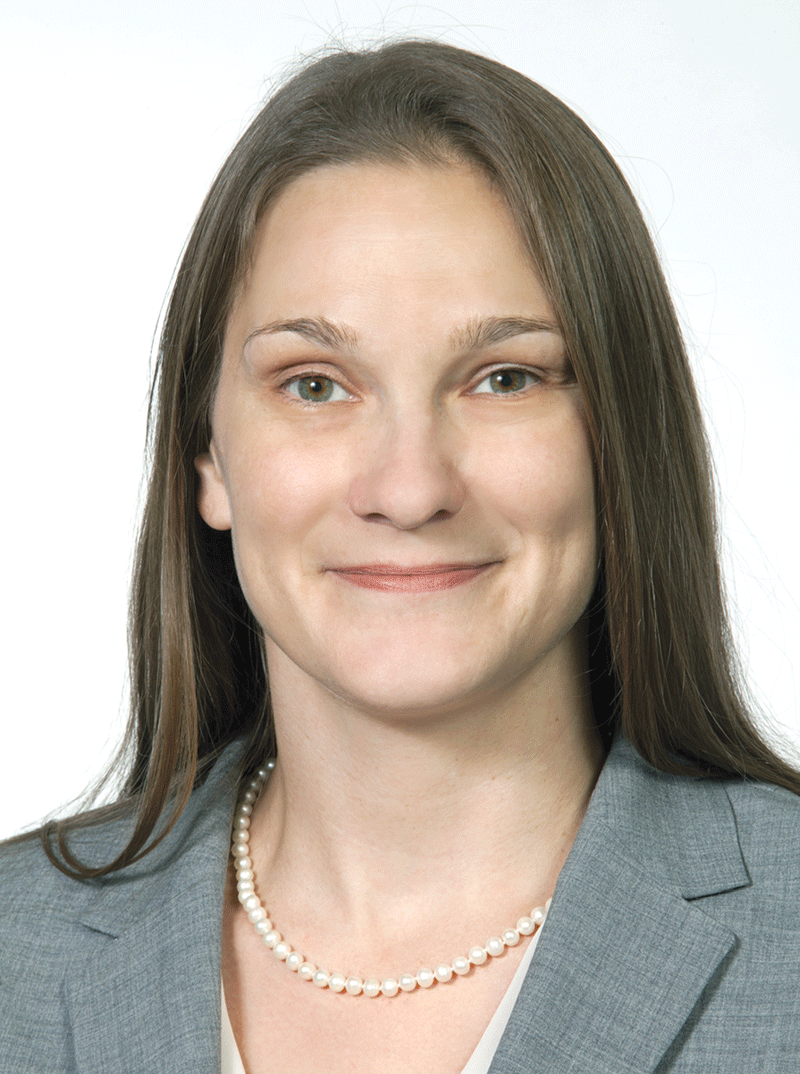
Audrey Rome has joined the Springfield-based law firm Cooley Shrair as a real-estate paralegal. Providing support in the Western Mass. real-estate field for more than 30 years, Rome will help to expand the firm’s real-estate department.

•••••

The Greater Springfield Convention & Visitors Bureau (GSCVB) announced the following:

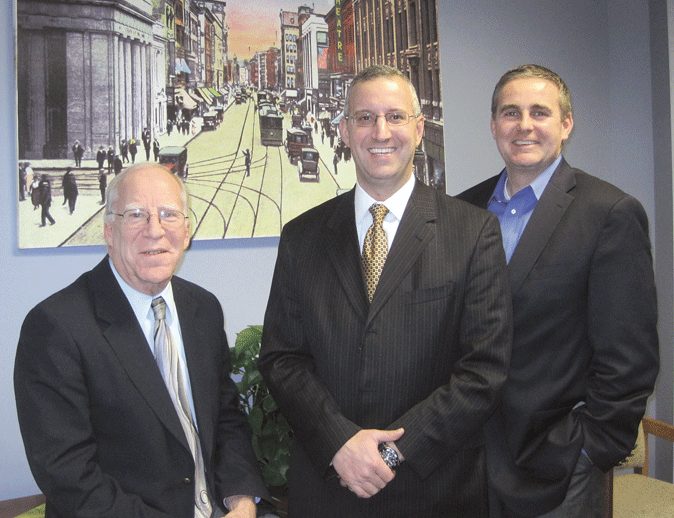
• Michael Hurwitz has been appointed as Chairman of the board of directors, and will serve a two-year term. Hurwitz, a hospitality-industry veteran, has managed several restaurants in Western Mass., including Uno Chicago Grill, with locations in Springfield, Holyoke and Worcester; and Sonic in Springfield. He served on the GSCVB’s board of directors and executive committee in addition to his previous duties as Chairman of the Howdy Awards for Hospitality Excellence Committee.

• John Parsons has been named Sales and Marketing Coordinator. Parsons, a 2011 graduate of Western New England University, will promote membership within the GSCVB and assist with a number of marketing initiatives, with a special emphasis on sports.

Other officers were named by the GSCVB to serve a three-year term on its board of directors. They include:

• John Doleva, President of the Naismith Memorial Basketball Hall of Fame, to serve as vice chairman;

• Barry Crosby of Freedom Credit Union to serve as treasurer;

• Robert Schwarz of Peter Pan Bus Lines, Inc. to serve as secretary; and

• Robert Gilbert of Dowd Insurance to serve as compliance officer.

New members of the board to serve a three-year term are:

• William Messner, President of Holyoke Community College; and

• James Woolsey, Superintendent of the Springfield Armory National Historic Site.

•••••

Melanie Skroski

Melanie Skroski

Northampton-based Royal LLP recently welcomed Attorney Melanie Skroski to the management-side-only labor and employment law firm. With practical experience in management, Skroski counsels companies on the myriad state and federal employment laws impacting them, including employment discrimination and harassment, wage and hour, disability and leave, workplace safety, and affirmative action. Her other preventive work includes drafting employee manuals; preparing non-disclosure, non-solicitation, and non-compete agreements; and conducting management training. Skroski is a graduate of Trinity College and Western New England University School of Law.

•••••

TD Bank recently promoted Peter Simko to Store Manager of the branch located at 40 Springfield St. in Agawam. An Assistant Vice President, he is responsible for new-business development, consumer and business lending, and managing personnel and day-to-day operations at the store, serving customers throughout the Greater Springfield area. With 13 years experience in banking, investments, real estate, and mortgages, Simko joined TD Bank in 2011. He most recently served at TD Bank as an Assistant Store Manager in Agawam. Prior to joining the bank, Simko served as an Investment Consultant at TD Waterhouse in Boston, Registered Principal at Scottrade Financial Services in Springfield, and General Partner at Center Exchange Associates, a realty-consulting firm in Chicopee.

Features
Holyoke’s Planning Leader Welcomes Sky-high Expectations for the City

PlannerMarreroHolyoke


Marcos Marrero remembers that there was about a month between when he received the phone call from Mayor Alex Morse telling him he was being offered the job of planning and economic development director for Holyoke (which he quickly accepted) and when he actually moved into his office at One Court Plaza.

And he recalls spending it doing some very hard cramming on the nation’s first planned industrial city.

“That was Holyoke-intensive studying — I was consuming, eating, and breathing Holyoke every day for a month,” he told BusinessWest, adding that he learned as much as he could about its history, demographics, politics, neighborhoods, ongoing projects, and future prospects. “I said, ‘give me all the plans … I want the master plan, any redevelopment plans — just lay it on me.’”

Along the way, he remembers having an odd sensation of feeling sorry in some way for the people who held that post before him. They had essentially laid the track, he said, referring to predecessors Kathleen Anderson, now president of the city’s Chamber of Commerce, and Jeff Hayden, now an administrator at Holyoke Community College, and he was going to be in a position to see that hard work yield some tremendous benefits for the city.

Such initiatives include the Massachusetts Green High Performance Computing Center, which opened its doors last year; the pending reintroduction of rail service to the city, a development that should open some new doors of opportunity to the community; completion of the challenging renovation of the downtown fire station into a intramodal transportation center and education facility; movement toward creation of a thriving creative economy in the city; and continued evolution of this former manufacturing hub into a more diverse economy that also features the arts, technology, and retail.

“My impression was that this was really unfair to all my predecessors,” Marrero recalled. “Because I could see the arc of the past 20 years, and how everyone in Holyoke had worked together to put Holyoke in the position it’s in today.

“Not that this a slam dunk, by any means, what’s happening now,” he continued. “But I felt the conditions were such that, with good leadership, good vision, and help from community stakeholders, this city could just take off. I’m standing on the shoulders of the work that other people have done.”

And while appreciative of that hard work that’s been undertaken by those who occupied the office before him, Marrero, who just turned 30 and is part of a youth movement in Holyoke city government (Morse is only 24), said there is obviously considerable work still to be done, specifically in the realm of meeting and perhaps even exceeding the sky-high expectations many have for Holyoke to become a place where people want to live, work, and start a business.

“Right after the press announcement of my appointment, I remember being taken aback by the expectations that were thrown out there, and I said to the mayor, ‘this is not my modus operandi — I’d rather promise little and overdeliver,’” Marrero recalled. “And he said something to the effect of, ‘nope, you can’t do that here — the expectations are really high.’ And I said, ‘OK, challenge accepted.’”

For this issue, BusinessWest talked at length with Marrero about this very intriguing time in Holyoke’s history, those high expectations he mentioned, and how he, Morse, and other city officials plan to work together to turn potential into reality.


Background — Check

When asked how he came to occupy the front office in the municipal facility just a block or so from City Hall, Marrero paused for a second, glanced toward the ceiling, and offered a heavy sigh.

He did all that to indicate that there were a number of circumstances that brought him to this place and time — from developments in his wife’s medical career that eventually took her to Baystate Medical Center and the couple to Western Mass., to the departure of Anderson, to the ascension of Morse, who, as he interviewed a number of candidates for the planning and economic development post, became impressed with Marrero’s opinions on everything from modern urban renewal to reinventing Gateway cities.

Our story starts in New York City, where Marrero was born, but the scene quickly shifts to Puerto Rico, where he spent much of his youth, was educated, and started his career in planning and economic development. While attending the University of Puerto Rico, he initially majored in computer science (the technology field was still booming at the time), but soon shifted gears and ventured into political science and economics.

Upon graduating in 2004, he took a job as an economic analyst for the Puerto Rico Industrial Development Co., and soon thereafter started applying to graduate schools. He was accepted into the Woodrow Wilson School of Public and International Affairs and earned dual master’s degrees in Public Affairs and Urban and Regional Planning. While there, he studied under Lisa Jackson, who would go on to lead the Department of Environmental Protection and do considerable work in the broad field of climate change.

He took those diplomas and went to work in the governor’s office in San Juan, Puerto Rico, acting as a deputy advisor on federal affairs, energy, and climate change. When the governor lost in the next election, though, he was out of a job.

It was about this time that Marrero’s wife, Wanda, was applying for residency positions and found one within the Tufts University system “at somewhere called Springfield,” he remembers her saying. From there, she took a job at St. Vincent’s Hospital in New York, and Marrero found employment at the New York City Economic Development Corp.’s Energy Policy Office.

But they both had to start sending out résumés when St. Vincent’s abruptly closed after a prolonged period of economic woes. Wanda found a position at Baystate, while Marcos eventually found work as an adjunct professor at UMass Amherst, teaching Environmental Policy. He would later apply for, and win, a job as a land-use environmental planner for the Pioneer Valley Planning Commission in 2011.

This takes us up to the spring of 2012, when Anderson became the successor to Doris Ransford, the longtime director of the Greater Holyoke Chamber of Commerce, and Morse commenced a search for someone to fill her shoes. He eventually contacted Marrero at the recommendation of a mutual friend, and an interview was scheduled, although Marrero had his apprehensions about the position.

“Having worked with economic-development corporations before, I had the sense that a lot of politicians had a very narrow view of economic development,” he explained. “Like corporate welfare, or just getting projects done at any cost or without any regard for a more comprehensive view of what makes an economy work and what makes a city work.

“Sometimes you can’t really explain it all in dollars and cents,” he went on, adding that, the more the two talked, the more he came to believe that Morse had a better, much broader view on the subject. “The meeting was a feeler as much for me as it was for him.”

Those vibes, coupled with his strong first impressions of the city, erased any doubts he had about the position.

“I said, ‘these people get what economic development is all about,’” he recalled. “And I saw the layout of Holyoke, the canals, the grid, and the old buildings … there’s something about this place. It’s abuzz with energy, and when I got that same feeling from the mayor, I said, ‘I really want this job.’”

State of the City

Marrero remembers one of his first encounters with the City Council; actually, it was one of its subcommittees.

There was some tension and disagreement over items up for discussion, to the point where one of the councilors offered a form of mild apology. Marrero recalls being taken aback by such talk — as well as his desire to put things in their proper perspective.

“I said, ‘have you seen Puerto Rican politics?’” he recalled with a hearty laugh. “I said, ‘I thought it was a great meeting.’ The governor in Puerto Rico that I was working for had a legislature dominated by members of the other party; it was sort of like what President Obama is going through with the Republican House — but on speed. There was no legislation he could get passed, and in fact the government shut down in 2006 because they couldn’t agree on anything.”

That experience in council chambers has been part of an intriguing learning curve for Marrero, one he said is certainly ongoing, and also one of many examples of how he intends to put some of those stops on his résumé — and even his time studying computer science — to work in his current position.

To date, he said there has been progress on many key issues, and what he considers a solid working relationship between the administration and the City Council. As just one example, he cited the hiring of the city’s first ‘creative economy coordinator.’

“The mayor had presented the idea for an arts and culture director,” he explained. “There were some reservations, and I think the mayor was very receptive to some of the comments and concerns the councilors had, and, to his credit, he modified the proposal to include some of those comments, on such matters as the administrative costs related to that position and how it will support economic development.”

Looking ahead, he said he’s anticipating a similar cooperative spirit on such matters as leveraging the High Performance Computing Center, redeveloping the former Holyoke Catholic High School campus in the heart of downtown (work is slated to begin later this year), progress on the next stages of the Canal Walk, bringing passenger rail service back to the city (construction on the new platform is slated for the fall), building on what is already a solid foundation in the creative economy, and attracting more businesses and residents to the city.

“There are a lot of things going on in the city, and when individuals’ hopes and work are rewarded by seeing these physical manifestations of their efforts, it feeds in a positive way into their expectations, but also the belief that their hard work will pay off. So 2013 is going to be a very exciting year.”

Looking further down the road, Marrero said that, while his predecessors have done considerable work to fill in some of the canvas that is Holyoke’s present and future, there is still the need for more broad strokes and imagination.

As an example, he cited the large number of vacant, unused properties that still remain in Holyoke and have been identified for acquisition by the city in its urban-renewal plan — a total of about 32 acres of land, by his estimation.

“Holyoke has plenty of space to grow, and we need to do it in a way that’s different than urban renewal in other cities, which unfortunately has meant urban removal of certain communities, usually the poor, ethnic minorities, people who speak differently,” he explained. “That’s the tarnished past of urban renewal; it’s just a reality. We have the opportunity here to do it differently and do it in a way that builds on the strengths of our community and creates opportunities for everyone in the community.”

And this brings him back to that subject of expectations, something he’s not intimidated by because there are others working with and beside him to meet them.

“The reality is that with expectations comes a lot of support, and people here are willing to go the extra mile,” he said, referring to a number of constituencies — “be it a board member or volunteer, people who just want to share their ideas, state partners that are willing to look at your proposals more than once, partners who provide vital funding to make projects happen, people who connect with other partners to make projects happen, like the Innovation District Task Force, and city employees who are willing to stay until 10 at night with you to get something done.

“You don’t see that everywhere and at anytime,” he went on. “And that’s why I feel comfortable with the expectations; it’s not just on me. I think this city expects a lot of itself, and people come through.”


Bottom Line

Returning to his thoughts on what he learned and what he experienced during his month of Holyoke-intensive studying, Marrero said there was a good deal of humility when it came to all the track-laying work undertaken by his predecessors in planning and economic development.

That emotion has essentially given way to resolve, he went on, and a commitment to take full advantage of the hand that he’s been dealt and fulfill those sky-high expectations for the city.

As Morse told him when Marrero was first introduced to the media, there is no promising little and then overdelivering in Holyoke — there’s too much progress in many key areas and too many critical building blocks already in place for that.

But, as he said in response to the mayor, ‘challenge accepted.’


George O’Brien can be reached at [email protected]

Opinion
Developing a Skilled Workforce

Gov. Deval Patrick recently disclosed plans to include $112 million in the state budget for the MASSGrant college-scholarship program. It was no surprise he chose to make the announcement during a visit with students at Springfield Technical Community College’s Smith & Wesson Technology Applications Center. The center teaches precision machining and other skills needed in modern manufacturing.

The governor has strongly stated his intention to support the state’s fifth-largest employment sector, manufacturing. As states struggle with limited budgets, he recognizes manufacturing education as an investment in long-term growth. And that is why the Society of Manufacturing Engineers (SME) is especially pleased to return to West Springfield this May for EASTEC, the largest manufacturing event in the Northeast.

Manufacturing education is in crisis. While the national unemployment rate remains near 8% (Massachusetts was at 6.7% in December), as many as 600,000 manufacturing jobs have gone unfilled because of a shortage of skilled workers. The question for state government executives is how to replace retiring skilled workers with the next generation of workers who can operate and maintain sophisticated machinery designed to speed production times and cut costs.

Massachusetts is already taking many of the actions SME outlines in its Workforce Imperative: A Manufacturing Education Strategy, including:

• Partnering with business. The state’s Advanced Manufacturing Collaborative is an excellent example of how business, government, and educators can identify the skills that are needed, understand and update the curriculum, and engage students in real-world projects through design-build competitions and internships.

• Access to education. The governor signed into law last year reforms of the state’s community-college system. The goal is to make community colleges “more responsive to the needs of businesses and help fill the skills gap that can often leave employers with a shortage of well-trained job prospects.” We hope the reform will also include national accreditation for schools and skills certification for students.

• Supporting STEM. The SME education strategy calls for building a strong foundation for science, technology, engineering, and mathematics. Earlier this year, Lt. Gov. Timothy Murray announced the expansion of five programs across the state to prepare workers for careers in STEM fields. In addition to approximately $428,000 from the state’s STEM Pipeline Fund, the programs will leverage more than $1.3 million in matching funds from participating corporations, private foundations, and federal government sources.

A major challenge is to dispel the antiquated stereotypes students may have about manufacturing and STEM programs. A major focus of EASTEC will be a new “Dream It Do It” manufacturing student challenge. It gives students and educators the opportunity to see and experience the ‘wow’ factor in modern manufacturing — new, cutting-edge technologies that are transforming how we make things.

Massachusetts is leading the way on building a workforce prepared to tackle the challenges ahead of us. We hope other states will follow.


Mark C. Tomlinson, CMfgE, EMCP, is executive director and CEO of the Society of Manufacturing Engineers (SME). SME, the organizer of EASTEC, is a leader in workforce-development issues in manufacturing, working with industry, academic, and government partners to support the current and future skilled workforce.

Features
Employers Brace for a Possible Casino-fueled Talent Flight
Keith Makarowsky

Keith Makarowsky says that staffing is already tight, and he is concerned that it will only get tougher with a casino in the area.

When New York Times bestselling author Erma Bombeck wrote her book The Grass Is Always Greener over the Septic Tank in 1976, Vogue called it “the exposé to end all exposés — the truth about the suburbs.”

It offered humorous stories, based on real research, enlightening readers as to why so many long for what the Joneses have.

Today, the ‘grass is always greener’ attitude is one that’s being used by many employers with regard to the eventual arrival of a casino in Western Mass. and the likely response from many currently in the workforce. It’s a mindset they’ll be looking to prevent, or least keep under reasonable control.

That’s because the inevitability of a casino somewhere in the 413 area code — be it in Springfield, West Springfield, or Palmer — and the 2,000 to 3,000 jobs that will come with it, have many, both employed and unemployed, thinking and dreaming about a situation better than the one they’re in.

Keith Makarowsky, partner and owner of JT’s Sports Bar, Theodore’s, and Smith’s Billiards in downtown Springfield, which together employ close to 90 people, is one of the many concerned employers.

“I’m already having a hard time staffing,” he said. “And it’s only going to get worse — much worse.”

If U.S. Department of Labor statistics are any indicator, Makarowsky, whose businesses are located just a few blocks from the dueling Springfield casino proposals, may see talent flight from all three venues. In 2010, the commercial casino and gaming-equipment-manufacturing industry employed nearly 370,000 — more direct employees than the U.S. automobile industry. The thriving gaming-entertainment industry expects that number to rise to more than 470,000 over the next 10 years.

And those jobs come across a number of fields and professions. Most think about blackjack dealers, pit bosses, waitstaff in restaurants, and other hospitality-related positions, but there are also myriad money-handling and backroom operations that should have employers in the broad financial-services realm concerned.

“There will be many levels of educated professionals that will be needed, as well as a big customer-service element behind the scenes, and these people will come from the banks, the professional-service firms, and local hotels,” said Kristina Drzal Houghton, partner and director of Taxation Services at Meyers Brothers Kalicka, P.C.

Peter Rosskothen, owner and president of Log Cabin Banquet and Meeting House, the Delaney House, and catering through Log Rolling and at Wyckoff Country Club, takes a generally positive approach to the situation while focusing on what he believes is the primary challenge for the region — supplying a trained, talented workforce for the casino without necessarily impacting existing employers.

“Of course I have fears, but I’m focusing on the positive side,” said Rosskothen, who manages a staff of 200. He believes there’s enough unemployment in this market to supply current and future workforce needs. “But we need to get them to a level that they’re hireable, and my biggest concern now is, how do we plan … how do I keep my good employees while the casino gets its good employees?”

This is, in many ways, the unofficial assignment for a recently established consortium called the Community College Casino Careers Training Institute. The unique initiative, developed by leaders at Holyoke Community College (HCC) and Springfield Technical Community College (STCC), is a collaboration among the Commonwealth’s community colleges, one that gives casino developers a single point of contact in the three different regions across the state where casinos will be constructed to help develop their workforce.

Peter Rosskothen

Peter Rosskothen knows that educational programs that target skills for casino jobs will benefit many who are unemployed in the region.

While HCC and STCC currently offer programs in many of the professional skill sets casinos will require, neither offer dealer- and entertainment-related courses, which prompted the consortium to consult and contract with Atlantic Cape Community College in Atlantic City (more on this later).

For this issue and its focus on the casino era, BusinessWest takes an in-depth look at how an $800 million gaming facility, such as those being proposed for Western Mass., could and likely will impact the region’s employment situation, and also what employers can do to improve their odds of minimizing the impact on their businesses.


Sure Bet

The question of ‘if’ a casino is coming to Western Mass. has long since given way to other queries about ‘when’ and ‘where.’ And this inevitability has business owners thinking about many things, from opportunities to partner with the casino operator of choice (see related story, page 17) to what will happen with their current staff when the 800-pound gorilla sets up shop.

John Thomas, general manager of Max’s Tavern at the Basketball Hall of Fame, believes a casino — wherever it lands — will be a positive development for Springfield simply in terms of bringing more people into the area. “It’s more competition for us because we’re going to have a casino with restaurants, and it’s going to make me step up my game a little bit more.”

From a staffing standpoint, though, Thomas, who not only oversees Max’s Tavern, but catering for events in the MassMutual Room, at center court, and in the Hall concourse, believes retention will be an even greater challenge in his sector.

“A casino is definitely one of those things that could steal away a couple of my servers and chefs,” he said, “and I don’t want to have to hire new employees because it takes six months to train them, and turnover is not the best thing for guest services.”

If surveys by the American Gaming Assoc. (AGA) are to be believed, turnover may prove inevitable for local employers.

A 2007 AGA Survey of Attitudes of Casino Industry Employees by Peter D. Hart Research Associates Inc. found that more than 85% of the nation’s gaming employees find their job satisfying. Another 2007 AGA study with PricewaterhouseCoopers LLP, the Gaming Industry Diversity Snapshot, found that participating casinos hired a greater percentage of black, Hispanic, and Asian workers than the U.S. workforce — overall, employing more minorities than the national workforce by 20.6%.

“I think small businesses might be the loser on that,” said Thomas, referring to local businesses that rely on a non-professional, minority workforce. “The grass looks greener at the casino.”

To retain his employees, Thomas told BusinessWest that his strategy is to treat them like guests. The Max Restaurant Group, he said, pays its employees well, covers half their health insurance, and holds frequent reviews. These steps have facilitated retention to the point where some of Thomas’s employees have been with Max’s for 10 years, and the majority for at least five years.

Rosskothen said he feels that he offers a fair wage and a pleasant, comfortable work environment to keep his staff satisfied with their jobs. “It’s the best shot I have at keeping them here,” he said, adding that all employers will have to sharpen their focus on retention strategies if they are to minimize the impact from a casino.

Houghton agreed.

“A casino is more than two years away,” she continued. “There is plenty of time for companies to access what their policies are and where their biggest areas of exposure are with their employees … because two years from now it’ll be too late, and the employees then are going to say, ‘too little, too late.’”

She said Meyers Brothers strives to be the proverbial ‘employer of choice’ with competitive pay, attractive perks, and flex hours, even during tax season. Despite all that, the company remains at risk of losing auditors and accountants to a casino, and its challenge moving forward is to minimize that risk while also perhaps trying to educate employees that the grass isn’t necessarily greener at a very large employer like a casino operator.

“I often hear that the honeymoon period does not last long,” she said. “And it’s probably a lot better to work for the local management companies than the bigger companies.”


Schools of Thought

While employers brace for the potential fallout from the onset of the casino era, area community colleges and workforce-related agencies are taking up the challenge of making sure this region has a large, talented workforce in place for not only the casino, but existing employers as well.

Holyoke Community College Presi-dent William Messner told BusinessWest that the consortium is an opportunity for the community colleges to demonstrate the ability to respond effectively, efficiently, and collaboratively to a significant statewide workforce need. To do so, they’ll need to cooperate with one another and with other workforce-related entities, such as the regional employment boards, FutureWorks, CareerPoint, and other agencies, all of which can play a role in meeting the opportunity and challenge of casino job placement.

Messner, who also leads the statewide Presidents Council of Massachusetts Community Colleges, and Ira Rubenzahl, president of STCC, convened the state’s community colleges, created three regions that will each host casinos (each with a lead college), and joined forces with the aforementioned workforce entities. The concept was met with enthusiasm from all those involved, said Messner, including the casino developers, who face the daunting task of filling 2,000 to 3,000 positions.

Rosskothen’s take on the consortium idea: “a brilliant concept.”

“We want people to look at this opportunity and say, ‘OK, I can work as a dealer, a receptionist, a housekeeping person, make good money, and make it a career,’” he said. “We need more of this in Western Mass.”

And it would appear the consortium is something gaming developers would like to see more of, too.

“My sense was that there is a varied pattern of experience from state to state, but as best as I could assess, no one had put together quite the same sort of organized effort that we are intending,” said Messner. “More often, it was a fairly disorganized effort with a variety of institutions and organizations sort of knocking on the door of the casino developer, leaving the developer trying to sort out who they were going to work with.”

Messner added that the final step included discussions with the Gaming Commission, which cautioned that the colleges could not be the exclusive parties working with developers, while expressing overall support for the concept.

Messner further explained that HCC programs in information technology, business, security, and hospitality could all be useful at a local casino, but gaming-related jobs that involve the gaming function and handling of money will require a great deal of scrutiny and a license from the state, so specific help was needed.

The consortium contracted with an institution that certainly knows the business of gambling: Atlantic Cape Community College in Atlantic City. In cooperation for more than 30 years with the gaming industry, its consulting services and tested curriculum have been used throughout the world, said Messner.

He added that some classes that provide employees with needed skills might be only a few weeks or a few months in length and at staggered hours, a schedule that should prove attractive to existing employers, many of whom will want to take advantage of additional training for employees as a retention tool when the casinos come knocking.

“I cannot send them to a one- or two-year kind of curriculum,” said Rosskothen, “but if they need to improve a specific skill, they’ll make money for my business and for themselves … it’s a win-win, and I keep them.”


Double or Nothing

Many area employers would be reluctant to use that phrase ‘win-win’ when it comes to a Western Mass. casino, especially when it comes to workforce issues and the prospects for a talent flight.

But with at least a few years to go before a casino opens its doors, there is the potential for a scenario in which, as Rosskothen suggests, casinos can have good help and area employers can retain theirs.

That is the job at hand — both literally and figuratively.


Elizabeth Taras can be reached at [email protected]

Class of 2013 Difference Makers

President of Soldier On

John Dowling

John Dowling
Photo by Denise Smith Photography

John Downing has file folders full of statistics at his disposal as he talks about the many programs being carried out by Soldier On and the philosophy that powers the organization — from the percentage of veterans it serves who have mental-health issues (78%) to the average hourly wage being earned by the many formerly homeless veterans now working for the agency ($10.89).

But perhaps the most powerful — and poignant — numbers are these:

There are more than 265 ‘residents’ of the homeless veterans shelter and transitional facility in Leeds, where the organization is based, and only about 25 of them went ‘home’ — whatever and wherever that is — for the holidays last December.

“The rest of them were already home,” said Downing, the long-time president of the organization, founded in 1994, who understands fully what those numbers mean and what they tell him his responsibility, and that of his staff, must be to those the agency serves. Basically, to redefine ‘home.’

“These people have lost everything, and so they identify now with the community they’re growing and serving in,” said Downing, who told BusinessWest that, when he took over at the struggling organization, housed at the Veterans Administration Hospital in Leeds, in 2001 at the behest of its board, he did so with the single goal of creating the “Holiday Inn of shelters.”

He did that in what seemed like a few months — although it actually took the better part of a year to complete a full turnaround, thanks to some dramatic changes in the basic approach taken. And looking back over what’s happened since, success with that goal might be considered perhaps his most modest accomplishment.

Indeed, Downing has been able to blueprint and implement a number of innovative programs and services, all designed with the Soldier On slogan — ‘changing the end of the story’ — firmly in mind.

The most intriguing, and celebrated, of these to date is an initiative that provides veterans with the opportunity to transition from homelessness to home ownership through a unique program that enables them to purchase an equity stake in their homes. The Gordon H. Mansfield Community in Pittsfield, where more than 40 veterans now own their own condos, has become a model being emulated around the country, and Soldier On is planning several similar projects in this area, in communities ranging from Northampton to Agawam.

But there is much more to the Soldier On story, including a unique and comprehensive veterans-outreach program that includes case-management and referral services and temporary financial assistance involving everything from daily living activities to transportation to child care.

There’s also a full roster of employment services — a key component in any individual’s struggle for financial independence — that include interview skills, money management, résumé building, training and education, and transportation. And there’s also something called the Veterans Justice Partnership, created with the purpose of developing service and treatment options and, where appropriate, alternatives to incarceration.

Meanwhile, Soldier On recently received a $100,000 grant from the Newman’s Own Foundation to develop a wellness center to support its growing women’s program, said Downing, adding that the money will be used to help fund a multi-faceted treatment plan aimed at “getting them back in the center of their lives.”

And while compassion is the primary driver of these programs, there is a practical side as well: some of those aforementioned statistics show that, while the VA is projected to spend $400,000 to $500,000 on a 54-year-old veteran over the rest of his or her life, in the Soldier On model, that cost drops to $150,000.

Overall, it’s not just what Solider On does that’s so impressive and makes this organization and its leader a Difference Maker, but also how. Its model is founded on the quality of social interaction amongst veterans, and it brings services to them instead of the other way around, while giving them the means to succeed rather than criticizing them when they don’t.

“Our job is to serve veterans where they are, and our job is to take responsibility for their failure,” Downing explained. “You don’t serve people by blaming them, shaming them, and making them afraid.”

For this special section profiling our Difference Makers, we talked at length with Downing about how this approach came about and why it has become so successful in positively impacting quality of life for veterans.

Vetting Process

During the course of his lengthy interview with BusinessWest for this story, Downing interrupted the proceedings on several occasions to bring various members of his staff into the discussion.

There was Maggie Porter, director of Communications; Michael Hagmaier, senior vice president; Dominick Sondrini, director of Outreach and Employment Training and coordinator of the Veterans Justice Partnership; John Crane, director of Case Management; and Katie Doherty, Women’s Partnership consultant, among others.

He wanted to introduce them and have them explain what they do and how, but he also wanted to display the great deal of pride he has in the team he’s assembled, the work it’s doing, and the intriguing approach it’s taking, which he explained in direct, colorful language.

“Everyone who comes to us is broken,” he explained. “And because of their brokenness, we all get to make a wonderful living serving them and figuring out strategies to bring their lives back to meaningful ways for them — not defining what we think is meaningful, but letting them define it for themselves.”

And as he elaborated, he ventured back to the weeks and months after he came to the then-7-year-old Soldier On, the latest in a series of assignments within the broad realm of social service and, especially, reintegration and after-care services.

He found an organization, started by some homeless veterans and employees of the VA hospital, that was functioning at about 40% capacity, had been poorly managed, and was essentially ready to be shut down by the VA.

His work to create that Holiday Inn he spoke of started with cleaning the buildings, replacing dilapidated furniture, and making sure the residents had decent meals and clothing.

And then, the real work started. By that, he meant changing and improving the way veterans were administered services and altering the basic approach taken by the staff. It was no small change.

“Most of us, as Communist-trained social workers, spend most of our adult lives learning how to tell people what to do,” he noted. “We tell people how to get into recovery, what steps they have to take, and what kind of financial planning they need to do. And we know how to tell them how to change their decision making.

“And I just thought that was a very offensive process to me as an adult,” he continued. “If you want to see my oppositional behavior rise up, just tell me what to do — and I’ll show you just what I’m not going to do. And I realized we spent a lot of time doing things that way, so I tried to figure out how to bring about change, because everyone in the recovery business, everyone working with homeless people, have all these rules and regulations that they like to enforce.

“So I decided to run the place with no rules — if you drank, you could stay, and if you missed your appointments, you could stay here, and that was quite different from what everyone else does in this world,” he went on, adding that another radical idea came to him — having the staff essentially take responsibility for the failures of those they’re serving.

This approach essentially changed the conversation, he said, from asking why they did certain things to asking what the staff could do to help them make better choices. That’s a fundamental change in philosophy that has had tremendous results.

“What we saw when we did that was that our number of intakes went from 1,025 for the 265 beds down to to 401,” he noted, adding that another major change was to either bring services to where those needing them lived — or bring them to the services.

Downing said that there are some things that he and his staff have come to understand over the years, and these have become the cornerstones to their model for delivering services:

• Veterans who have been homeless succeed in overcoming addiction, as well as physical and psychological challenges, when they are part of a community of veterans who serve and support each other;

• They typically fare better when they live in a community in which they are surrounded by the various services they need; and

• They require not only counseling and treatment, but education, employment training, and individual case-management services, all on an ongoing basis.

And when an agency can succeed in doing all that, many things are possible in that broad realm of helping veterans define — and achieve — things that are meaningful to them.

Room for Improvement

Nowhere is this more evident than with the program to transition homeless veterans into what amounts to home ownership.

And for the inspiration to take Solider On into this realm — what certainly amounted to uncharted territory and a tangled web of bureaucracy and funding programs — he returned to 2005 and a speech delivered by Army Maj. Ed Kennedy from the Joints Chiefs staff as the project in Pittsfield was being announced.

“As Kennedy finished his talk, he looked out on everyone and said, ‘I’m Major Ed Kennedy, I’m 31 years old, I’m in the Army, and I’m a dad to two children,’” Downing recalled. “And then he said to everyone, ‘I’m going back to Iraq, and I will die for you.’

“When he said that, in my head I was thinking, ‘every veteran in my care said, ‘I will die for you,’ and all 25 million Americans who were veterans said, ‘I will die for you,’ and I never heard it. And I thought to myself, ‘the people who said they would die for me … it’s OK for them to live in transitional housing with used clothing, be treated like second-class citizens, and be grateful for this, because I’ve never been grateful for their commitment.’

“And in that moment,” he went on, “I said, ‘the game is over for building shelters; I’m going to build beautiful housing for these people to own.’ That became the mission.”

The rest, as they might say, is history in the making.

And it’s been an intriguing, often difficult ride — Downing knew next to nothing about housing at that time, and had to endure a challenging learning curve involving something called limited-equity co-op apartments.

He saw a few models, mostly faith-based, in Minnesota and New York City, and took these concepts to a property he acquired in Pittsfield. The working model calls for individuals to buy an equity share in a complex (there are 39 units in Pittsfield, and thus 39 shares), and that share entitles the individual to rent an apartment. Soldier On provides Internet, cable, and 20 meals a month in a dining facility on the campus to help enable veterans to live in the complex on their limited incomes.

“It’s a model that really works — it ends homelessness for veterans, and it ends long-term care for veterans in the Veterans Administration system,” he said, adding that the win-win-win nature of the concept (there are also real-estate taxes to be gained by the community in question) is generating considerable interest in new projects.

There are 44 units planned for the VA complex in Leeds ($6.2 million has been secured from the VA to build it), another project is planned for the former police-training facility in Agawam, and more plans are coming to the drawing board across the country.

And while housing is certainly a huge part of the equation, there are many other ways in which Soldier On is helping to change the end of the story.

Another is through direct employment — there are now just over 100 people on the Soldier On payroll, and 74 of them are formerly homeless veterans — and helping enable clients to enter and succeed in the job market. Through the Homeless Veterans Reintegration (HVRP) program, funded by the U.S. Department of Labor, the agency provides veterans with the tools and support necessary for employment, said Downing, adding that this includes maintaining relationships between veterans and area employers.

There is also a greater emphasis on outreach, he continued, as well as on the recently instituted Veterans Justice Partnership, an alternative-sentencing program, involving the four western counties, for veterans who wind up in the court system.

In a nutshell, the program was created to provide veterans with access to information, resources, and programs to help them make positive transitions and lead productive lives.

“We’re in all four western-county jails every week with our staff, meeting with the veterans in jail, running groups, and helping them do their exit planning,” said Downing. “It’s another example of how go where the veterans are, we serve them, and, in this case, we try to prevent them from winding up there.

“The earlier you can intervene, the more effective you can be, and the costs go down,” he continued, adding that this sentiment applies not only to the justice partnership, but also to every Soldier On endeavor, and it goes a long way toward explaining the organization’s track record for success.

Fighting the Good Fight

When it was explained to those veterans who would soon be living in the Gordon H. Mansfield Community in Pittsfield that they would become taxpayers, Downing recalled, some responded with tears.

“They would say to me, ‘Jack, I never thought I could do this again — and I’m so grateful that I can do it,’” he told BusinessWest.

For making it possible for such individuals to give back to the community in such a different and rewarding way, and for truly changing the end of the story in so many positive ways, Downing and the entire staff at Solider On are more than worthy of the title Difference Maker.

George O’Brien can be reached at [email protected]

Law Sections
Department of Labor Issues New Guidance on Area of Confusion

Karina L. Schrengohst

Karina L. Schrengohst

The Family Medical Leave Act (FMLA) presents many challenges for employers because of its complexities. And one area of confusion employers have faced arises in the context of requests for leave to care for adult children.

Generally, the FMLA entitles an eligible employee to take up to 12 weeks of unpaid, job-protected leave during a 12-month period to care for a son or daughter with a serious health condition who is under the age of 18. Once an employee’s son or daughter turns 18, a parent is entitled to take FMLA leave only if the adult son or daughter (1) has a mental or physical disability as defined by the Americans with Disabilities Act (ADA); (2) is incapable of self-care due to that disability; (3) has a serious health condition; and (4) is in need of care due to the serious health condition.

One issue employers have struggled with is whether the disability had to occur before the child turned 18 years of age. Recent guidance issued by the Department of Labor’s (DOL) Wage and Hour Division answers this question.

On Jan. 14, the Wage and Hour Division issued a new Administrator’s Interpretation (No. 2013-1) that clarifies the definition of “son or daughter” under the FMLA, and addresses whether an employee is entitled to FMLA leave to care for an adult child who does not become incapable of self-care because of a disability until after the child turns 18. DOL guidance clarifies that whether an adult child’s disability arises before or after the child turns 18 is not relevant in determining a parent’s entitlement to FMLA leave. Therefore, an otherwise eligible employee is entitled to take leave under the FMLA to care for an adult child with a serious health condition who is incapable of self-care because of a disability regardless of when the disability commenced.

This means that employers should focus on the adult child’s condition at the time of the requested leave when determining eligibility for FMLA leave.

The administrator’s interpretation also demonstrates how the significantly expanded definition of ‘disability’ under the Americans with Disability Act Amendments Act of 2008 (ADAAA) has impacted the FMLA.

The DOL has historically adopted the ADA’s definition of disability for purposes of defining a son or daughter 18 years of age or older. And the DOL notes, pursuant to the clear language of the ADAAA and the EEOC’s position, that the definition of disability “should be construed in favor of broad coverage” and “should not demand extensive analysis.”

Therefore, when the ADAAA broadened the definition of disability, it similarly broadened the scope of this definition under the FMLA. Thus, the number of adult children falling under the FMLA’s definition of son or daughter has increased, which enables more parents to take FMLA-protected leave to care for an adult child who is incapable of self-care because of a disability.

As an illustration, the administrator’s interpretation provides the following scenario: An employee requests leave under the FMLA after his or her 37-year old daughter is injured in a car accident. The daughter suffers a shattered pelvis in the accident, which substantially limits her in a number of major life activities (i.e., walking, standing, sitting, etc.). As a result of this injury, the daughter is hospitalized for two weeks and under the ongoing care of a healthcare provider. Although she is expected to recover, she will be substantially limited in walking for six months. If the daughter needs assistance with three or more daily living activities, such as bathing, dressing, and maintaining a residence, she will qualify as an adult child under the FMLA because she is incapable of self-care due to a disability.

The daughter’s shattered pelvis would also be a serious health condition under the FMLA, and her parent would be entitled to take FMLA-protected leave to provide care for her immediately and throughout the time that she continues to be incapable of self-care because of the disability.

In addition, the DOL guidance addresses an employee’s request for FMLA leave to care for an adult child who has been injured during military service.  Under the military-caregiver provision of the FMLA, an otherwise eligible employee may take up to 26 weeks of leave in a single 12-month period to care for an adult son or daughter injured in the line of duty. The administrator’s interpretation notes that the service member’s injury may last longer than a single 12-month period. Thus, the DOL clarifies that the service member’s parent, if otherwise eligible, would be entitled to take 12 weeks of FMLA leave in subsequent years for the purpose of providing care to an adult child.

As an illustration, the administrator’s interpretation provides the following scenario. A father has exhausted his 26 weeks of military-caregiver leave to care for his 20-year old son, a returning service member who sustained extensive burn injuries to his arms and torso. In the next FMLA leave year, the father seeks leave from his employer to care for his son as he undergoes and recovers from additional surgeries and skin-graft procedures.

The father will be entitled to take up to 12 weeks of FMLA-protected leave to care for his son because his son’s burn injuries, which substantially limit his ability to perform manual tasks, constitute a disability under the ADA — the son is incapable of self-care due to a disability (i.e., he needs active assistance or supervision in bathing, dressing, and eating), the son’s burn injuries are a serious health condition because they require continuing treatment by a healthcare provider, and the father is needed to care for the son.

Employers should review the way they determine FMLA eligibility to account for this recent guidance. In addition, supervisors and managers should be trained to ensure they are prepared to handle requests for leave in light of this new interpretation. Further, when faced with requests for leave to care for an adult child, employers will have to make a case-by-case determination of whether the adult child qualifies as a son or daughter under the FMLA and the employee qualifies for leave under the FMLA.


Karina L. Schrengohst, Esq., an attorney at Royal LLP, a boutique, management-side-only labor and employment law firm, specializes exclusively in management-side labor and employment-law litigation and preventative practices to avoid litigation. Royal LLP is SOMWBA-certified as a woman-owned business with the Mass. Supplier Diversity Office (formerly known as the State Office of Minority and Women’s Business Assistance); (413) 586-2288; [email protected]


Law Sections
Is Bankruptcy an Alternative for Relief from Student Loans?

L. Alexandra Hogan

L. Alexandra Hogan

A college education should increase a person’s earning capacity over a lifetime.  Unfortunately, many graduates are finding that the value of their education is outweighed by heavy student-loan debt. This may be the reason that the delinquency rate on student loans has surpassed that of other types of consumer loans, such as credit cards and car loans.

The New York Fed reports that student-loan debt has exceeded $956 billion and estimates that 21% of these loans are in default.

Financial blows caused by events like loss of employment, medical issues, or divorce are catalysts for personal bankruptcy filings. Bankruptcy is meant to give a fresh start to honest debtors by providing a mechanism of relief from most types of debt, such as credit cards, personal loans, medical bills, and foreclosure deficiencies. Although it is not impossible to discharge student loans in bankruptcy, it is difficult to do, and just recently got even harder. Although seemingly harsh, this law is meant to protect the solvency of the educational-loan system and to prevent people from abusing the system by receiving a free education.

Relief from student-loan debt is not generally available in bankruptcy, unless failure to discharge the debt would lead to an “undue hardship” on the debtor, under §523(a)(8) of the Bankruptcy Code. Courts use different tests to determine what constitutes an undue hardship. In Massachusetts, bankruptcy courts generally evaluate undue hardship on a case-by-case basis by considering (1) a debtor’s past, present, and reasonably reliable future financial resources; (2) a calculation of the debtor’s and their dependents’ reasonable necessary living expenses; and (3) any other relevant facts and circumstances.

Some examples of debtors’ circumstances that led to findings of undue hardship include the following: student loans exacerbated by the debtor’s mental illness; the debtors reaching their maximum earning capacity in worthwhile, but low-paying, teaching jobs; the debtor being homeless and unemployed; the debtor being unable to complete her doctorate degree program and suffering from depression; and the debtor suffering from a variety of medical illnesses, making employment almost impossible. The takeaway is that circumstances must be dire to obtain relief.

A recent court case closed a loophole in the law, making discharge even more unlikely. Typically, a general unsecured loan like a line of credit is dischargeable in bankruptcy. The case of In re Belforte, decided on Oct. 1, 2012 in the U.S. Bankruptcy Court for the District of Massachusetts, Eastern Division, held that the debtor’s line of credit could not be discharged. The debtor made a handwritten note seeking an increase in her line of credit to pay for her children’s tuition and expenses. Liberty Bay Credit Union increased and rewrote the debtor’s line of credit under a new unsecured loan agreement — not through Liberty Bay’s educational-lending program.

Liberty Bay neither inquired from the debtor what the loan would be used for, nor did it exercise oversight as to how the debtor utilized the loan proceeds, as a traditional student lender would. Notwithstanding this, the court construed the bankruptcy statute broadly and ruled that, since the loan was used for an ‘educational benefit,’ it was not dischargeable. Under this ruling, it is now clear that an individual with a regular personal loan used for an educational benefit must establish undue hardship as well.

Those with unusually difficult situations should consult with a bankruptcy attorney to determine whether their circumstances would qualify as an undue hardship. But otherwise, where does this leave the average person struggling with high student-loan debt and low or non-existent income?

Avoid the potentially harsh consequences of defaulting on student loans, including wage garnishment, tarnished credit, and offset tax refunds. There are options to avoid defaulting on federal student loans. Deferment, forbearance, and repayment plans may be available. The U.S. Department of Education has announced a new option that may greatly benefit newer graduates, called “Pay as You Earn.”

This plan may apply to those with partial financial hardship who have certain types of federal direct student loans. Under this plan, 10% of a person’s annual discretionary income is paid, and after 20 years of participation, the loan is forgiven. To learn more about Pay as You Earn, visit www.studentaid.ed.gov.

L. Alexandra (Alex) Hogan is an associate with the Springfield-based form Shatz, Schwartz and Fentin, P.C., and concentrates her practice primarily in business, litigation, and bankruptcy law; (413) 737-1131.


Law Sections
Ruling on Appointments Creates More Controversy at NLRB

Tim Murphy

Tim Murphy

Staying In for RecessPresident Obama violated the constitution when he made three recess appointments to the National Labor Relations Board (NLRB) on Jan. 4, 2012, according to the U.S. Court of Appeals for the District of Columbia in a decision issued on Jan. 25.

Because the three recess appointments were invalid, the NLRB lacked the requisite three-member quorum when it rendered the Noel Canning decision. Although the D.C. Circuit ruling governs only this one case, its decision throws hundreds of NLRB decisions made since Jan. 4 into uncertainty.


Background

The NLRB is the five-member panel that enforces federal labor law and the National Labor Relations Act. The president appoints NLRB members to staggered terms generally subject to Senate confirmation in accordance with the Constitution. Traditionally, the NLRB consists of three members from the president’s political party and two from the other. Since President Obama took office, the NLRB has been on the front lines of the partisan war to control federal labor policy. With several of the president’s nominees too controversial to earn sufficient Senate support to overcome a filibuster, the nominations suffered long delays and were effectively blocked by objecting senators.

To counter that, Obama sought to make appointments to the NLRB while the Senate was in recess, a power contained in the Constitution. In the early history of our country, Congress was often in recess for six to nine months a year. Though recess appointments were little used until after World War II, they did enable presidents to staff executive-branch vacancies during periods when the Senate was not in session and, thus, could not exercise its ‘advise and consent’ power over presidential appointments.

On Jan. 4, 2012, the Senate was away for the holidays and conducting no business. The Senate remained in ‘pro forma’ session (gaveled in and out every few days) because it had not been formally adjourned into an official recess. This was a strategy designed to block the president from making recess appointments. He was undeterred. But the Senate strategy proved effective, according to the D.C. Circuit.

The constitution’s recess appointments clause provides that “the president shall have power to fill up all vacancies that may happen during the recess of the Senate by granting commissions which shall expire at the end of their next session.” Pursuant to that clause, Obama made three appointments on Jan. 4, one day after the Second Session of the 112th Congress began. However, the D.C. Circuit interpreted the recess appointments clause to permit only ‘intersession’ appointments (those made between distinct sessions of the Senate) and not ‘intrasession’ appointments made during recesses in the midst of a session.

Next, analyzing the language “vacancies that may happen during the recess,” the D.C. Circuit found that the clause limits the president’s intersession-recess appointment power to filling vacancies that first arise during the recess in which they are filled, which was not the case here. Thus, recess appointments are unconstitutional unless made to fill vacancies that arose while the Senate was in recess. If it stands, this particular ruling could virtually eliminate a president’s ability to make recess appointments.

The court’s ruling rejects presidential practice of both parties dating back many years, and raises questions about how a president’s inability to fill vacancies could impact government functioning in an age of partisan gridlock in Washington, D.C.

The NLRB disagrees with the decision and intends to continue issuing decisions (while its presumptive appeal is pending). Right now, the NLRB has only three members, as one resigned, and the other’s term expired. Of the three remaining members, two are recess appointees involved in the Noel Canning case. Only Chairman Pierce was confirmed by the Senate.


The Bottom Line

It seems inevitable that the U.S. Supreme Court will ultimately decide these issues, especially because there are numerous similar appeals pending in circuit courts of appeals around the country.

In the meantime, the NLRB will likely remain a lightning rod of controversy. Republicans and business groups will continue to oppose the perceived pro-labor decisions and initiatives of the current NLRB at every turn. It would appear that they believe a non-functioning NLRB is preferable to a functioning one.

This is surely not the last word on recess appointments.


Timothy F. Murphy is a partner in the Springfield labor and employment law firm Skoler, Abbott & Presser, P.C., which represents employers exclusively and specializes in helping employers understand their obligations under state and federal employment law; (413) 737-4753; [email protected]

Class of 2013 Difference Makers
SistersOfProvidence

Sr. Mary Caritas, SP, left, and Sr. Kathleen Popko, SP.

Sr. Kathleen Popko, SP likes to say that the 700-odd Sisters of Providence, present and past, “share some DNA” with Sr. Mary Providence Horan, the first mother general of the congregation.
And by that, she meant that those who worked beside her or followed in her footsteps have possessed both her many character traits and her broad operating philosophy.
As for the former, these include vision, compassion, determination, a large dose of innovation, and a very strong sense of mission.
“Mother Mary of Providence has always been an inspiration to me,” said Popko, president of the Sisters of Providence. “She had a lot of foresight and was very innovative; she established 20 works of charity within the first 15 years of her becoming head of the congregation. She crossed boundaries — she worked with the Jewish community and the Protestant community to help establish the board at Mercy Hospital, And she was willing to collaborate and ask for help from others to support the work she was doing, whether it was in Worcester or Pittsfield. And she had a great love of learning; those are qualities we like to think we possess today.”
As for the latter, well, that’s perhaps best summed up in a quote often attributed to her: “never rest on what has been accomplished, but continue reaching on to what needs to be done.”
Suffice it to say, the sisters have never done any such resting. Instead, they have, over the decades, responded to changing societal needs with the same zeal and desire that were firmly in evidence when two members of the Sisters of Charity of the House of Providence from Kingston, Ontario, Canada, came to Holyoke on a so-called begging tour in 1873 and were invited to establish a mission there to help the waves of immigrants struggling to carve out a living.
They eventually did, creating a legacy of providence that is captured in the statue of Mother Mary near the entrance to Providence Place in Holyoke, with a commanding view of the valley below. She is depicted holding hands with two young children — a boy carrying a schoolbook and a girl with a broken arm — artistic touches designed to spotlight the two basic tenets of the sisters’ work over the past 14 decades: education and healthcare.
Those two foundations remain, especially healthcare, through work carried out within the broad Sisters of Providence Health System. But the modern work of the Sisters of Providence is quite diverse, said Sr. Mary Caritas, vice president of the congregation, who listed everything from programs to provide healthcare to the region’s homeless population to groundbreaking initiatives in the broad realm of senior living, such as the ‘small house’ concept created at Mary’s Meadow.
“The one constant is need,” she said. “When the sisters came in 1873, it was in response to a need — they saw a need, and they responded. We’re doing things differently in this day and age, but we continue to have that same spirit.
“But they also recognize the need to change as society does — we’ve never been afraid to let go and move on from something because society has changed,” she went on, citing, as just a few examples, the transition of Providence Hospital from acute care to behavioral health; the repositioning of the former Farren Hospital in Montague into the Farren Care Center, a provider of services to people with severe behavioral disorders; and new uses for the facilities at Brightside for Families and Children.
The past several months have been a time of celebration for the Sisters of Providence — specifically, the marking of two important anniversaries.
Last year marked the 120th anniversary of the Sisters of Providence’s 1892 foundation as an independent congregation in the Springfield diocese. And this year marks the 140th anniversary of the arrival of the Sisters of Providence’s foremothers — today’s Sisters of Providence of St. Vincent De Paul in Kingston, Ontario — in Holyoke.
There have been a host of events to mark both occasions, from the planting and blessing of ‘anniversary trees’ to an anniversary procession and prayer; from an “open weekend of gratitude” to a dinner at Mercy Medical Center.
And because of that long history of caring being celebrated, there will be at least one more event to attend — BusinessWest’s Difference Makers Gala on March 21, when the sisters will be introduced as members of the Class of 2013.
For this special section profiling this year’s winners, we spoke at length with Popko and Caritas about how society may have changed over the past 140 years, but the devotion of the Sisters of Providence to their mission of meeting the needs of the most challenged segments of the population certainly hasn’t.

Past Is Prologue
Before talking about Western Mass. in 2013, Popko and Caritas wanted to talk first about Holyoke in 1873. Doing so, they said, would at least start to put the work of the Sisters of Providence in perspective, and also help explain that shared DNA.
Holyoke was the first planned industrial city in the country, they explained, and in the early 1870s, it was the place where some mill owners found fortune and many immigrants found opportunity for employment. But most found only hardship in the form of difficult, often dangerous work; crowded, inadequate housing (tenements built near the mills); and systems of education and healthcare that were nonexistent or extremely lacking.
It was into this environment that Srs. Mary de Chantal McCauley and Mary Elizabeth Stafford ventured on their begging tour in early 1873. They found the climate difficult for philanthropy — the country was in recession, and many of Holyoke’s mills had closed, while others were struggling — but ripe for charity, and for mostly the same reasons.
Fr. Patrick Harkins, pastor of St. Jerome’s Church in Holyoke, proposed that the congregation establish a mission in his parish for sick people and orphaned children, and one was created later that year, with four pioneer sisters from Kingston moving into a house belonging to St. Jerome’s but located across the Connecticut River in South Hadley Falls. The first orphan was admitted one week after their arrival, and the first patient was admitted for hospital care on Dec. 2, the recorded date of the beginning of the House of Providence, the first Catholic hospital in Western Mass.
Two years later, land was acquired for a new House of Providence on Dwight Street, while that same year, six sisters from Kingston, including Mother Mary of Providence, were assigned to teach at St. Jerome’s Institute, a school for boys in Holyoke.
In 1880, 53 acres of property in Holyoke, known as Ingleside, were purchased, and ground was broken for Mount St. Vincent, a home for orphaned girls. Sixteen years later, property on Carew Street in Springfield was acquired and deeded to the congregation for the House of Mercy, which later became Mercy Hospital and is now known as Mercy Medical Center.
In 1890, Bethlehem House, a home for infants and toddlers, opened at Brightside in Holyoke, Farren Memorial Hospital was dedicated, and schools of nursing were opened at Providence Hospital, Mercy Hospital, and St. Vincent Hospital in Worcester, establishing a pattern of caring and growth that continued unfettered for decades.
“When the sisters came here, they were not here a week, and they had an ophan at the door, and then the alms person in the city decided to send some more,” Popko explained. “It wasn’t long before the need was manifested, and they responded, whether it was with orphaned children or with healing the sick, oftentimes in their homes, or it was with making burial plots because there was no one to do that.
“And I think that’s why the Sisters of Providence ministries have been so diverse, from the beginning,” she continued. “It wasn’t simply that we started a healing ministry and were in hospitals, although that evolved most significantly. We were also involved in caring for the elderly or the orphaned or abandoned children, or in burying the dead, or doing home care. We were trying to be the providence of God in the lives of others, and in doing that, we reached out into healing ministries.”
Today, the area facilities operated by the Sisters of Providence include Providence Hospital, Mount Saint Vincent Care Center, Beaven Kelly Home, Providence Place retirement community, and Mary’s Meadow long-term nursing care and rehabilitation center, all in Holyoke; Mercy Medical Center and St. Luke’s Home in Springfield; Saint Luke’s Hospital in Pittsfield; Saint Vincent Hospital in Worcester; Farren Care Center; Genesis Spiritual Life Center in Westfield; and the many agencies of Brightside for Families & Children. There are also operations far outside this region, ranging from a home-health agency, hospital, and retirement village in North Carolina to a health clinic and multiple social-service agencies in an impoverished section of Santiago, Chile.
The specific missions and constituencies served vary with each ministry, said Popko, but there is a common denominator — bringing care to those who need it, and to those who may have no other alternative.

Innovative Spirit
The stories of many of these various ministries, as well as the people who inspired and created them, are told in a recently released book titled 140 Years of Providential Caring — The Sisters of Providence of Holyoke, Massachusetts.
Authored by Suzanne Strempek Shea, Tom Shea, and Michele Barker, it chronicles how many programs and facilities were developed, and is told largely through the eyes and thoughts of the individuals who paved those roads. There’s a chapter, for example, on Sr. Julie Crane and her work to create Health for the Care of the Homeless, another on Sr. Caroline Smith and her efforts to create the Sisters of Providence Methadone Maintenance Program, and still another on Sr. Elizabeth Oleksak and her work at Genesis Spiritual Life Center.
These chapters serve as both historical record and source of inspiration, said Popko.
“The individual stories demonstrate how that original spirit has been the driving force for us for 140 years, and how it’s certainly taken different shapes and forms and responded to the different calls of providence in each of our lifetimes,” she explained. “It’s certainly been an amazing journey, and for us to look back on it all in 2012 and 2013 and to read some of our archival material and relive some of the extreme dedication and willingness to reach out in multiple ways, is certainly inspiring.”
And moving forward, the unofficial assignment for the Sisters of Providence is to write more chapters for the next book, said Popko and Caritas. This means finding new ways to carry out the original mission, while also strengthening the infrastructure and operating philosophy that will ensure that this work is carried out in the decades to come, long after the last of the current sisters, already dwindling in number, are gone.
This is part of the legacy of never resting on one’s laurels that continues today, said Caritas, adding that there are several examples of how it manifests itself.
One involves a portion of the former Brightside property, used for residential treatment programs that were discontinued in 2010.
“I’m sure Mother Mary would have been thinking, as we have been for the past three years, about what to do with that property,” Caritas told BusinessWest, adding that plans are emerging to relocate the Sisters of Providence home-care and hospice programs in the main administration building at Brightside, while the ground floor will be used for something called PACE, or the Program for All-inclusive Care for the Elderly.
Elaborating, Popko said the initiative is a capitated-insurance program that provides essentially whatever care is needed to enable an older individual to remain in his or her own home. “They come to the site three or four times a week,” she explained, “and they might get all kinds of care, be it socialization, they might get a bath, there will be a clinic there so we can look at their healthcare needs and medication. They will be assessed, and care will be coordinated. It’s all designed to prevent those higher-cost institutionalizations by treating them effectively in the short run.”
In other words, it’s another imaginative approach to meeting recognized needs in the community, said Caritas, adding that there are other possible reuses of the Brightside facilities coming into focus, including low-income elderly housing, a geriatric-assessment center, and other coordinated facilities.
“It will be a full-service site,” she noted, “one that will provide all-inclusive care for those who participate.”
Securing funding for the project is ongoing, and it will be a challenge, said Popko, adding that there is no firm timetable in place for this strategic initiative. But the manner in which it is coming together speaks to the legacy of the Sisters of Providence and that notion of never resting on laurels.
“It references a vision of the future, a responsiveness to the needs of the times, and a creative reuse of existing resources — a replanting of the seeds, if you will, that were put down 140 years ago,” she said. “That’s what we’ve been doing throughout our history.”

Mission: In Progress
Returning to her thoughts on Mother Mary of Providence one more time, Popko said that she’d been doing some reading about her lately, and learned that her skills extended into architecture and building practices.
“I just read a quote recently … she said, ‘the next hospital we build is not going to be the conversion of some big house so we can fit in beds,’” Popko recalled. “She said, ‘we’re going to build a modern facility designed for the care of people.’
“Meanwhile, she designed Mount St. Vincent herself,” she went on. “She saw the first plans and went to the bishop and said, ‘these plans are totally inadequate.’ So they made her a committee of one; they tore up the plans, let her design her own building, and pretty much built off what she drew up.”
The current sisters are not architects in the same literal sense, but they are designers and builders in a figurative manner — blueprinting new ways to expand the mission launched 140 years ago.
And in that respect, the DNA is the certainly the same. The 700 Sisters of Providence through history have always been Difference Makers.

Briefcase Departments

Construction Industry Adds Jobs in December

WASHINGTON, D.C. — The nation’s construction industry gained 30,000 jobs in December despite an overall increase in the industry unemployment rate, according to the Jan. 4 employment report by the U.S. Labor Department. That is the fastest pace of construction employment growth since February 2011. Year over year, construction employment has risen by 18,000 jobs, or 0.3%.  The construction unemployment rate for December was 13.5% (not seasonally adjusted) — up from 12.2% from November, but down from 16% the same time last year. The non-residential building construction sector added 7,000 jobs in December for a total of 12,200 jobs (1.9%) added during 2012. Non-residential specialty trade contractors gained 5,600 jobs for the month, but have lost 25,000 jobs (1.2%) compared to one year ago. The residential building sector added 5,800 jobs in December, but lost 6,600 jobs (1.2%) during the past 12 months. Residential specialty trade contractors added 12,300 jobs in December and have added 36,400 jobs (2.5%) since December 2011. The heavy and civil engineering construction sector lost 700 jobs for the month, but has added 400 jobs during the course of the past year. Across all industries, the nation added 155,000 jobs as the private sector expanded by 168,000 jobs and the public sector shrunk by 13,000 jobs. According to the Bureau of Labor Statistics’ household survey, the national unemployment rate stood at 7.8% in December, the same rate as November’s revised data. “It is tempting to believe the December 2012 employment report bodes well for nation’s construction industry,” said Associated Builders and Contractors Chief Economist Anirban Basu. “Employment growth was widespread, impacting general and specialty trade contractors alike — the largest monthly increase in construction employment in nearly two years. However, industry stakeholders will need to wait at least another month for some clarity regarding construction employment patterns.”


Casino Developers Spar over Picknelly

PALMER and SPRINGFIELD — Casino developers in Palmer and Springfield are sparring over which project may claim businessman Peter Picknelly, head of Peter Pan Bus Lines, who initially invested in the Mohegan Sun-backed venture in Palmer before joining Penn National Gaming in a casino proposal in the North End of Springfield. While Picknelly says he is no longer involved with the Palmer deal, his former partners say he remains legally bound to that project, and they have threatened legal action to stop Picknelly from moving forward with Penn-National in Springfield. However, the Penn National project will occupy land currently used for the Peter Pan bus terminal, and Picknelly has said he will be a 50% partner in the development. Picknelly and Penn National say he has no obligation to any other casino effort, and they have threatened a lawsuit of their own if the Palmer group interferes with Picknelly’s pursuit of a casino license in Springfield. The Penn National and Mohegan Sun projects are competing for the sole Western Mass. resort-casino license, as well as MGM Resorts, which has proposed a project in the South End of Springfield.


Foreclosures Down in Massachusetts

BOSTON — Fewer Massachusetts homeowners went into foreclosure and lost their properties to lenders in November. There were 295 completed foreclosures in November, a decline of almost 60% from November 2011, according to the Warren Group, a Boston company that tracks real estate. Between January and November, the number of completed foreclosures fell to 7,158, a drop of nearly 8% compared to the first 11 months of 2011. Last year is also likely to have the smallest number of completed foreclosures in the state since 2006, when the housing crisis began. “It’s been quite a positive year for the local housing market,” said Timothy Warren Jr., chief executive of the Warren Group. “An improving employment picture combined with government-backed programs are leading to fewer mortgage delinquencies.” The news added to growing sentiment that the state’s housing market is rebounding. Sales of single-family homes increased to 43,652 during the first 11 months of the year, surpassing the number of sales for all of 2011, according to the Warren Group. Lenders also initiated fewer foreclosures in November. Foreclosure starts dropped to 983, for a 3% decline from the same month in 2011.

Court Dockets Departments

The following is a compilation of recent lawsuits involving area businesses and organizations. These are strictly allegations that have yet to be proven in a court of law. Readers are advised to contact the parties listed, or the court, for more information concerning the individual claims.


HAMPDEN SUPERIOR COURT

D1 Mold & Tool, LLC v. Diecast Connections Co. Inc.

Allegation: Complaint on unpaid judgment: $79,964.82

Filed: 12/3/12


David A. Ratner and Ellendave, LLC v. Lampert, Hausler, & Rodman, P.C.

Allegation: Failure to discover restrictions while performing title search of land purchased by plaintiff: $500,000

Filed: 11/28/12


Kim Kauri v. Eastern Connection Operating Inc.

Allegation: Wrongful classification as independent contractor: $55,000

Filed: 11/26/12


Marr Scaffolding Co. v. Capco Steel Corp., NEI & FRC Construction, City View II, LLC, Northeast Interiors Inc., and City View Commons II, L.P.

Allegation: Breach of contract: $49,428.36

Filed: 11/9/12


Ralph Ridgeway v. Sang Ho Lee, DDS and Aspen Dental Management

Allegation: Negligent performance of a root canal causing injury and disfigurement: $161,500

Filed: 11/29/12


HAMPSHIRE SUPERIOR COURT

TTLR Inc. d/b/a Treasures and Thomas C. Kirkpatrick v. Charter Communications, Inc. and White Mountain Cable, LLC

Allegation: Damage to a sprinkler in a warehouse where plaintiff had stored property causing extensive damage: $100,000+

Filed: 12/10/12


NORTHAMPTON DISTRICT COURT

Catherine Durie, M.D. v. Clinical and Support Options Inc.

Allegation: Misrepresentation made by the plaintiff’s employer that it would provide Dr. Durie with professional liability insurance: $23,190.00

Filed: 11/19/12


Joseph Barron v. Walmart Inc.

Allegation: Negligence in property maintenance causing injury: $20,500

Filed: 12/13/12


SPRINGFIELD DISTRICT COURT

Biomaxx Inc. d/b/a/ PA Pellets v. George E. Dupuis d/b/a Turnpike Acres

Allegation: Breach of contract: $15,910

Filed: 11/23/12


EJ Associates Inc. d/b/a/ Auth Fuels v. Giggle Gardens Inc.

Allegation: Non-payment of heating oil and other services rendered: $8,890.44

Filed: 11/30/12


Jenny Rios v. United Plastics Group Inc.

Allegation: Negligent maintenance of property causing slip and fall: $4,366

Filed: 11/5/12


John Kostek and Jennifer B. Margolis v. D. Johndrow Landscaping Inc.

Allegation: Failure to complete work, performance in an unworkmanlike manner, and deceptive trade practices: $15,000

Filed: 11/15/12


Kenneth Polastry v. HP Hood, LLC

Allegation: Failure to repair steel doors on a truck causing injury to the plaintiff while he was performing security services: $7,700

Filed: 11/5/12


Nelson Noyes v. Solutia Inc.

Allegation: Breach of employment agreement: $25,000+

Filed: 11/21/12


U.S. Foods Inc. v. Chef Lou’s Gourmet Foods, LLC d/b/a Abudanza, and Luis Maravilha

Allegation: Non-payment of goods sold and delivered: $23,641.96

Filed: 11/12/12


WESTFIELD DISTRICT COURT

Christopher Pighetti v. Tommy D’s Court Yard Pub

Allegation: Negligence in property maintenance causing slip and fall: $24,500

Filed: 11/9/12

Briefcase Departments

PVPC Issues Top 10 ‘Resolves’ for 2013

SPRINGFIELD — The Pioneer Valley Planning Commission has released its top 10 ‘resolves’ for 2014. In condensed form, these include commitments to: (1) work in concert with a broad array of partnering organizations to support, guide, and complete a regionwide economic-growth study targeted at 500 small and mid-sized Pioneer Valley firms demonstrating significant growth and job-expansion potential; (2) participate in and contribute to a statewide transportation-funding advocacy campaign and strive to ensure that the priority transportation needs and projects of the Pioneer Valley are addressed in an effective, timely, and equitable manner; (3) organize and undertake a regional effort designed to coordinate as well as provide technical assistance to potential
casino host and surrounding communities that are located within the Pioneer Valley region, working with the Mass. Gaming Commission, affected municipalities, casino developers, and other interested parties; (4) organize and launch the PVPC’s scheduled 10-year review and overhaul of the Pioneer Valley Plan for Progress; (5) continue with support provided by the Commonwealth’s District Local Technical Assistance Program to pursue
a variety of municipal shared-service initiatives and planning projects based on a regionwide solicitation process; (6) assist and support the Mass. Department of Transportation and the federal Railroad Administration as these agencies jointly launch the long-awaited ‘Inland Route’ rail-passenger-service feasibility analysis, and help to focus this study on the Boston-Worcester-Springfield east-west rail corridor and its potential to connect these cities and their surrounding areas with New York City and Montreal; (7) prepare, refine, and issue the draft and final versions of seven distinct element plans (e.g., food security, housing, climate change, etc.) which have been developed by the PVPC staff in tandem with work groups that were convened to provide advice, expertise, and feedback; (8) initiate, with 10 project partners, a two-year, $1.9 million Centers for Disease Control-funded Community Transformation Project aimed at improving the health of Springfield residents adversely affected by chronic diseases through healthy food and nutrition programs, physical activities, public-health interventions and infrastructure improvement projects, among others; (9) continue efforts undertaken over the past two years to assist PVPC communities to recover from the June 2011 tornado and pursue measures that could strengthen the level of community resilience to better address and respond to future natural and man-made disasters; and (10) work with state lawmakers and Massachusetts legislators in Washington to shape and advance policy and legislative initiatives at both the federal and state level that support and benefit
the Pioneer Valley and its member communities and residents. The complete list of resolves is available at www.pvpc.org/resources/2013%20resolves.pdf.


Construction Industry Loses Jobs in November

WASHINGTON, D.C. — National construction-industry employment fell by 20,000 jobs in November, pushing the sector’s unemployment rate to 12.2%, up from 11.4% the previous month, according to the Dec. 7 employment report by the U.S. Department of Labor. Year over year, construction employment is down by 6,000 jobs, or 0.1%. The non-residential building construction sector lost 4,300 jobs in November. The residential building construction sector lost 6,800 jobs for the month and has lost 15,700 jobs, or 2.8%, since November 2011. Non-residential specialty trade contractors lost 7,400 jobs for the month and have lost 16,000 jobs, or 0.8%, year over year. In contrast, residential specialty trade contractors added 3,200 jobs in November and have added 20,700 jobs, or 1.4%, compared to the same time last year. Heavy and civil-engineering construction sector employment decreased by 3,800 jobs in November, but has increased by 5,900 jobs, or 0.7%, during the past 12 months. Across all industries, the nation added 146,000 jobs as the private sector expanded by 147,000 jobs and the public sector shrunk by 1,000 jobs. The national unemployment rate decreased to 7.7% in November from 7.9% in October. “If there was any question that the construction industry continues to struggle in this economy, [this] Labor Department employment report provided the answer,” said Associated Builders and Contractors Chief Economist Anirban Basu. “In November, the economy essentially wiped out the previous gains that had been registered in the construction industry.” The other major sector to lose jobs in November was manufacturing. The fact that construction and manufacturing both lost jobs is not coincidental, Basu said, as many economic decision makers have adopted a wait-and-see attitude due to the nation’s fiscal cliff and other sources of uncertainty, including geopolitical uncertainty. “While many businesses maintain their standard daily operations, and some even add jobs in the process, larger decisions and investments are put on hold. These decisions often revolve around major investments in plants and equipment. When these types of expenditures are postponed, related industries like manufacturing and construction suffer.”

Features Getting Down to Business
Casinos Add to Full Slate for Springfield Chamber

Springfield Chamber leaders (from left) Jeff Ciuffreda, Jeff Fialky, and Patrick Leary

Springfield Chamber leaders (from left) Jeff Ciuffreda, Jeff Fialky, and Patrick Leary all say that casinos are just one of many issues on the agency’s crowded plate.

Patrick Leary acknowledged that much of the current discussion involving casinos in Springfield is centered on where and who — meaning the location and the chosen operator.

But the Springfield Chamber of Commerce isn’t focusing on those specific matters, and it probably won’t, said Leary, a partner with the Springfield-based accounting firm Moriarty & Primack and current president of the chamber’s board. But that doesn’t mean the organization isn’t getting involved in what would be the largest development project in the city’s history if it comes to fruition.

Instead, the chamber is taking a more global view, one that can best be described as providing a voice for its membership on this all-important issue, said Leary.

“North End, South End … regardless of who it is and where it is, we’re more concerned that the chamber’s members aren’t forgotten in this whole process,” he told BusinessWest. “It would be very easy to have a casino move into the North End or South End and start siphoning business away from the central business district and pulling employees away from our membership; we need to look at all those issues that are going to affect our membership.”

Jeffrey Ciuffreda, executive director of the 550-member Springfield Chamber, as well as the larger Affiliated Chambers of Commerce of Greater Springfield, agreed.

He said the chamber has thus far decided, as an organization, to endorse the concept of a Springfield-based casino — with some stated suggestions, or requests, designed to protect the interests of existing businesses in the city.

These include:

• “A preferential procurement program for gods and services from Springfield businesses with measurable goals”;

• “Employing those unemployed and underemployed,” with an emphasis on those residing in Springfield now or in the future in market rate housing; and

• “Enhancement of downtown Springfield and the city as a whole,” among others.

The wording on the chamber’s measure sums up the charge for the group during the casino fight. The organization voted to “support a Springfield-based casino development that adequately addresses the issues and concerns of the membership of the Springfield Chamber of Commerce.”

So, in many respects, the chamber is taking the same approach with casinos that it does with other issues impacting the local business community, said Ciuffreda, listing everything from tax classification and efforts to lower the commercial rate to zoning policy and matters involving the compensation and term length of Springfield’s mayor.

The common denominator, he said, is creating an environment in which the city and its business community can succeed.

“We have a very large and diverse membership base in Springfield,” said Ciuffreda. “Our mission is to effectively represent these businesses, advocate for them, and, in general, create a business-friendly environment in the city.”

For this issue, BusinessWest concludes its Getting Down to Business series with an in-depth look at the Springfield Chamber, which finds itself in the middle of a hotly contested battle for the Western Mass. casino license, but also has a number of other matters on its plate.


Playing Their Cards

When asked about the chamber’s role with casinos moving forward, Ciuffreda said the time for debate about whether expanded gaming is something the state wants or needs is over — legislation passed just over a year ago allows up to three casinos and a slots parlor — and the chamber’s current assignment reflects this.

“Now, the issue of ‘do you want a casino?’ is off the table,” he said, while acknowledging that city residents must still approve a referendum on a casino plan or plans. “The issue now is ‘how does this benefit Springfield?’”

Elaborating, he said the chamber’s official role is to communicate the desires and concerns of its membership and the business community as a whole, and to secure itself a seat at the table in discussions with casino operators — both literally and figuratively.

Concerning the former, Kate Kane, managing director of the Springfield office of Northwestern Mutual Financial/the Zuzdo Group, and a former Springfield Chamber board member, has been appointed to an ad-hoc committee appointed by mayor Domenic Sarno to review competing casino proposals; she will, in essence, represent the chamber and its membership on the panel. As for the latter, the chamber intends to be quite visible and vocal as negotiations continue with casino operators, said both Leary and Ciuffreda.

And to carry out that assignment, the chamber has appointed its own casino subcommittee, one that has met several times and thoroughly researched other urban centers with casinos, including Detroit, Kansas City, Mo., and Biloxi, Miss.

“We discussed the good and the bad of having a casino, how they [operators] negotiated, and whether they even negotiated,” said Leary, “and the board voted to endorse the Springfield-based casino with the provision that we’re going to have certain items that we need to have addressed before we’ll fully endorse and advocate for casinos.”

Both Ciuffreda and Leary said they’re impressed with the plans of both casino operators (MGM and Penn National) proposing facilities in Springfield, just as they were with Ameristar’s concept for the former Westinghouse site before that company withdrew from the competition. But both also added that some of the promises to hire minorities and women are already part of the state’s gaming legislation.

While other chambers had to reach out and call for the casino developers to do something specific on that front, “it’s already built into ours,” Ciuffreda said.

“Not taking anything away from MGM or Penn National; there’s a minimum standard [through the legislation], and they’ve exceeded those standards,” he continued. “But it’s a compliment to Gov. Patrick and the Legislature for writing a very solid measure that protects what we have right now and adds to it.”


East Meets West

Yet, as the pitched casino battle plays itself out, the Springfield chamber will have other matters to address, which collectively fall under the category of giving its membership a strong, clear, united voice in both Springfield City Hall and Beacon Hill.

Indeed, advocacy is one of the most visible and impactful ways that the chamber brings value to its members through the long reach of the ACCGS, said Ciuffreda, adding that there are many ways in which this aspect of the group’s mission is carried out.

For starters, there’s the ACCGS’s annual bus trip to the State House every April, a program that brings 65 area business and nonprofit leaders to Boston to meet with delegation members, gain insight into pressing issues impacting the business community, and express their view on such issues.

“Boston just doesn’t see that many people in that building at one time from Western Mass.,” said Leary. “And that translates to 65 business leaders who represent literally thousands of people.”

And while the chamber brings its members to Boston, it has also succeeded in bringing Boston-based elected officials to Springfield. Indeed, Ciuffreda secured Jay Gonzalez, secretary of the Executive Office of Administration and Finance, as a speaker for a recent luncheon program, and has consistently brought top officials within the Patrick administration — and the governor himself — for area events.

“I see it as a win-win situation,” he said of such high-profile speaking engagements. “Area business owners and managers get to hear directly from these officials, and we can provide a large audience for them.”

Chamber visibility in Springfield City Hall is far more constant, obviously, said Ciuffreda, adding that the chamber has been, and continues to be, vocal on issues ranging from tax classification to city-wide zoning policy; from tornado recovery to the mayor’s salary.

That last item is still a matter to be settled, he continued, adding that it is one of many action items to result from the 2007 Urban Land Institute study on Springfield, which took place as the city was struggling to fight its way out of receivership and blueprint an economic-development strategy for the years ahead.

The report’s recommendations for City Hall included lengthening the mayor’s term in office from two to four years, adding a chief financial officer (those steps have already been taken), and raising the mayor’s salary above its current $95,000, in an effort to consistently attract top talent to that position.

“It’s a sensitive issue when you talk about a pay increase for a mayor,” said Jeffrey Fialky, a partner with the law firm Bacon Wilson and chamber board member, as he talked about why the chamber is involved in such matters. “But it’s such an important part of the ability to retain strong serving mayors as well as the ability to attract new mayoral candidates.”

Tim Murphy, a partner with the law firm Skoler, Abbott, & Presser, P.C., represented the chamber on the compensation committee, and explained its recommendations. “The pay has been $95,000 since 1997,” he explained. “What the committee was able to agree on was immediately increasing the mayor’s pay to $110,000 and having an annual cost-of-living increase of 2.5% going forward.”

Ciuffreda said the pay issue is slated to be resurrected in 2013, and is an important consideration for the city as it looks to ensure strong leadership in the corner office in the years and decades to come.

Education is another matter the chamber, and the ACCGS as a whole, is addressing in many ways and on many levels, said Ciuffreda, adding that it is involved in everything from early education to efforts to reduce the city’s disturbingly high dropout rates, to initiatives involving training and retaining key members of the workforce.

One stated goal is supporting efforts to close the so-called skills gap in the region, a factor contributing to difficulties for many companies with filling open positions, even at a time of high unemployment, and stifling growth efforts for some ventures.

One such initiative is the Precision Manufacturing Training Program (PMTP), a pilot program aimed at providing individuals with the skills needed to succeed in today’s technology-oriented precision-manufacturing sector.

“There’s a big emphasis on the veterans returning from Iraq and Afghanistan,” said Ciuffreda, adding that the state is looking to expand the program based on the success of an initial thrust involving more than 130 participants.

The PMTP is funded by a $750,000 grant from the Executive Office of Housing and Economic Development through the work of the chamber, the Regional Employment Board of Hampden County, and the Economic Development Council of Western Mass., and will take place at Springfield Technical Community College and Westfield Vocational Technical High School.


Odds Are

Ciuffreda said a series of circumstances — from geography to what is perceived to be a more open competitive landscape in the Western Mass. region — has made Springfield ground zero in the casino fight.

This development has added new challenges and more layers of involvement to the Springfield chamber’s itinerary. But casinos are just one of many issues that will compete for the group’s energy and attention.

The bigger assignment is to keep providing that aforementioned voice for its members, something it has done for more than a century now, and will keep doing long after the casino is built — wherever it winds up.


Elizabeth Taras can be reached at [email protected]

Law Sections
National Labor Relations Board Takes Aim at Employer Policies

John S. Gannon

John S. Gannon

Recently, the National Labor Relations Board (NLRB) has been attacking workplace policies that are common in both union and non-union workplace settings.

Previous BusinessWest articles have discussed the NLRB’s intrusion into social-media polices and at-will disclaimers. Unfortunately, more common employer practices are under siege, including internal workplace investigations and policies and rules that limit off-duty employee access to the workplace.


Non-union Employers Are Fair Game

Employers are often surprised to learn that the National Labor Relations Act (NLRA) applies in a non-union environment. The NLRA is considered by many to be a federal law that regulates only employer-union relations. However, you may be surprised to learn that the law covers a wide range of employer activities, both in companies that are unionized and in companies where there are no unions at all.

In particular, Section 7 of the NLRA protects the right of all non-supervisory employees to engage in “concerted activities” for the purpose of collective bargaining or other “mutual aid or protection.” This gives employees the right to come together to discuss any terms and condition of employment, including wages, benefits, or working conditions. Employer actions that impede or “chill” an employee’s exercise of these rights violate Section 7.


Discussion of Internal Investigations

Employers often initiate a workplace investigation when an employee brings a report or complaint of misconduct to management. The first step is to interview the complainant and employees who may have witnessed the allegedly inappropriate or unlawful conduct. Employers often discourage employees from discussing the substance of these interviews with others, particularly to protect the integrity of the investigation.

Employers that routinely require employees to keep investigative discussions confidential might need to alter their practices. The NLRB recently concluded that a blanket rule requiring employee confidentially during internal investigations violates Section 7. According to the board, requiring employees to keep quiet during investigations conflicts with their right to openly discuss their working conditions with co-workers. Although the board recognized that employers may have a legitimate interest in keeping investigative discussions under wraps, this does not outweigh their employees’ Section 7 rights to engage in concerted activities.

The NLRB did, however, outline circumstances that could justify a request for confidentiality by an employer. To lawfully implement — and justify — a confidentiality request, employers should determine at the outset of an investigation whether confidentiality is truly needed. To make this determination, employers must examine whether: (a) witnesses are in need of protection; (b) evidence is in danger of being destroyed; (c) testimony is in danger of being fabricated; or (d) there is a need to prevent a coverup. Satisfying this standard is no small task, and failure to properly consider these or other factors could result in an unfair-labor-practice charge.

Employers should consult with labor and employment counsel before asking employees to keep the substance of internal workplace investigations confidential.


Employee Off-duty Access

Employers frequently institute policies prohibiting off-duty employees from entering the workplace. These rules help ensure employee or customer safety and ease administrative burdens on supervisors. They also have particular importance during union-organizing drives. Off-duty rules help to keep off-duty employees who might support a union from disrupting the workplace during non-working hours.

For more than 35 years, the NLRB has considered off-duty employee access rules to be permissible, as long as the restriction (a) limits access solely to the interior of the facility; (b) is clearly disseminated to all employees; and (c) applies to off-duty access for all purposes, not just union activity. However, in another controversial decision from the NLRB, the board determined that an employer policy prohibiting off-duty employee access to the workplace was unlawful.

In that case, a hospital restricted hospital employees from entering the interior of the hospital except to visit a patient, receive medical care, or conduct “hospital-related business.” Employees were occasionally permitted to return to work to pick up a paycheck under the hospital-related-business exception, but other than that, they were typically disciplined for entering the facility for non-work purposes.

The board took issue with the hospital-related-business exception to the hospital’s off-duty rule. It ruled that this exception gave management too much discretion to permit or deny off-duty employees to enter the facility. Conceivably, it could be used to limit union-organizing activities, but permit other activity at the employer’s discretion. This violated the NLRA’s stance on off-duty access.

Notably, this ruling was consistent with a recent decision where the board concluded that a rule permitting off-duty access to attend employer-sponsored events, such as retirement parties and baby showers, but barring other access, violated the NLRA because it was an impermissible chilling of the employees’ Section 7 rights.


Bottom Line

By taking aim at workplace investigations, off-duty access rules, at-will statements, and social-media polices, the board is clearly seeking to regulate employer practices that go beyond the traditional unionized environment. Employers need to carefully evaluate existing practices to ensure compliance with NLRA.

If you have concerns about how these decisions could impact your workplace, you should contact experienced labor and employment counsel for assistance.


John Gannon is an associate at the management-side labor and employment firm Skoler, Abbott & Presser, P.C.; (413) 737-4753; [email protected]

Departments People on the Move

American International College announced the following:

Mark Mastroianni

Mark Mastroianni

• Mark Mastroianni, Hampden County District Attorney, has been named to the Board of Trustees. Mastroianni received his bachelor’s degree from AIC and his juris doctorate from Western New England University. He was admitted to the Massachusetts State Bar in 1990 and the U.S. District Court of Massachusetts in 1991, and served as an assistant district attorney from 1990 to 1995, where he prosecuted cases and supervised District Court staff attorneys on matters of law, trial technique, and sentencing, authorized increases and reductions in charges, and implemented and maintained office policies and procedures; and
Daniel Warwick

Daniel Warwick

• Daniel Warwick, Springfield Superintendent of Schools, has been named to the Board of Trustees. A lifelong Springfield resident, he holds a certificate of advanced graduate studies and a master’s degree in Education, both from AIC, a bachelor’s degree in Education from Westfield State University, and fellowships for advanced educational learning from Harvard University, the University of Pittsburgh, and American International College. Appointed superintendent in 2012, Warwick began his career with Springfield Public Schools nearly 40 years ago and has a wealth of experience as a teacher, principal, and administrator.
•••••
The Springfield-based law firm Bulkley Richardson announced that nine of the firm’s lawyers have been named to the 2012 Massachusetts Super Lawyers list. They are:
• Mark Cress, whose practice areas include bonds/government finance, banking, and bankruptcy, and creditor/debtor rights;
• Francis Dibble Jr., business litigation, health law, and antitrust litigation;
• Patrick Kennedy, business litigation, banking, and intellectual-property litigation;
• Mary Kennedy, employment and labor, and schools and education;
• Kelly McCarthy, health law;
• David Parke, business/corporate and mergers and acquisitions;
• John Pucci, also included in the Top 100 list of Massachusetts Super Lawyers, whose practice areas include business litigation and criminal defense (white collar);
• Donn Randall, banking and business litigation; and
• Ellen Randle, family law.
Also, two lawyers were named to the 2012 Massachusetts Rising Stars list:
• Matthew Kane, whose practice areas include banking, business litigation, and general litigation; and
• Kelly Koch, family law and estate planning and probate.
•••••
Jules Gaudreau, President of The Gaudreau Group Inc. Insurance and Financial Services Agency, was voted Best Insurance Agent, and Werner Maiwald was voted Best Financial Advisor, in the Best of Boston Road ceremony at Ludlow Country Club. The Wilbraham-based agency also won Best Overall Professional Services and Most Philanthropic. More than 1,600 votes were submitted to the Boston Road Business Assoc. during this year’s competition.
•••••
Skoler, Abbott & Presser, P.C. announced that Best Lawyers, the oldest and most respected peer-review publication in the legal profession, has named Jay Presser as the 2013 Springfield Labor Law – Management Lawyer of the Year. Presser has been a member of the firm since 1977 and is head of the firm’s litigation practice. He has more than 35 years of experience litigating employment cases before administrative agencies, including the National Labor Relations Board, the Mass. Commission Against Discrimination, and the State Labor Relations Commission. Only a single lawyer in each practice area in each community is being honored as the Lawyer of the Year for 2013. Presser has been selected in the 10th anniversary edition of The Best Lawyers in America because he has been included in that esteemed list for the past 10 years. In addition, Presser has been chosen by Massachusetts Lawyers Weekly as one of its Lawyers of the Year, and was recently selected as a Massachusetts Super Lawyer.
•••••
Donald Frydryk

Donald Frydryk

Monson Savings Bank has announced the appointment of Donald Frydryk to the bank’s Board of Trustees. He is also a Corporator and a customer of the bank. Frydryk, Managing Partner of Sherman & Frydryk, a land-surveying and engineering firm based in Palmer, is a professional engineer and a pofessional land surveyor.
•••••
Michael Fenton recently joined the Springfield-based law firm Shatz, Schwartz and Fentin, P.C. Fenton is admitted to practice law in Connecticut and Massachusetts, and his practice will focus on business law, commercial real estate, and estate planning. At 25, Fenton is the youngest city councilor in the Springfield’s history, having been elected twice since his first term at 22. A graduate of Cathedral High School and a cum-laude honors graduate of Providence College, where he received his bachelor’s degree in Political Science, Fenton received his MBA and JD from Western New England University, where he served as publishing editor of the Law Review and was an Oliver Wendell Holmes Scholar. Fenton clerked at Shatz, Schwartz and Fentin, P.C., and Bacon Wilson, P.C., and is a BusinessWest 40 Under Forty honoree in the class of 2012.
•••••
Springfield Mayor Domenic Sarno announced recently that James Leydon, formerly Director of Constituent Services, has replaced Attorney Thomas Walsh, former Director of Communications. In addition, William Baker joined the Mayor’s staff as the new Director of Constituent Services.
•••••
STCU Credit Union recently hired Maria Lopez as Assistant Vice President, Westfield branch. Lopez, who speaks Spanish and English, brings over 23 years experience, including 13 years in mortgage lending.

•••••

Michael Jonnes

Michael Jonnes

The Springfield Symphony Orchestra (SSO) announced the departure of Executive Director Michael Jonnes, effective Dec. 31. Jonnes, whose career with SSO began in 1998, was instrumental in helping to acquire a distinguished roster of soloists and developing a wide range of collaborative efforts with community groups and nonprofits throughout the region. He also led the search that brought Kevin Rhodes on as music director. Jonnes has more than 30 years of experience in nonprofit management in the orchestral realm. Prior to the SSO, he was the executive director of the Jackson Symphony Orchestra in Jackson, Tenn. Jonnes and his wife will relocate to be closer to family. A national search is currently underway to find his successor, and Peter Salerno will serve as Interim Executive Director during the search. The SSO will honor Jonnes with an audience reception following the Jan. 12, 2013 concert, “Scheherazade.”
•••••
Jeffrey Pierce

Jeffrey Pierce

TD Bank recently named Jeffrey Pierce as Vice President, Business Development Officer in Small Business Administration (SBA) Lending in Hartford, Conn. With 27 years of experience in banking, finance, and lending, Pierce will be responsible for providing SBA financing to qualified small businesses throughout a two-state region that includes Hartford as well as the Springfield and Worcester areas in Massachusetts.
•••••
Shirley Stephens recently joined the Pioneer Valley Planning Commission (PVPC) as Housing Coordinator, where she will work in the Community Development section of the agency and will be involved in the application intake and outreach process for various PVPC-administered housing-rehabilitation programs throughout Western and Central Massachusetts. Stephens is a licensed realtor with RR & Co. Realty Inc., helping distressed homeowners in Springfield.
•••••
Members of the WGBY Board of Tribunes have voted to accept three new members to join the 2013 roster. Merricka Breuer, Patricia Crutchfield, and Norma Friedman were named as the newest members of WGBY’s board at the station’s recent annual meeting. Breuer is director of Marketing and Business Development at Ink & Toner Solutions in Northampton, Friedman is an adjunct professor at UMass Amherst’s University Without Walls, and Crutchfield is director of Human Resources at the Gandara Mental Health Center in Springfield.

Court Dockets Departments

The following is a compilation of recent lawsuits involving area businesses and organizations. These are strictly allegations that have yet to be proven in a court of law. Readers are advised to contact the parties listed, or the court, for more information concerning the individual claims.


FRANKLIN SUPERIOR COURT

Curtis Pecor v. Hart & Cooley Inc., d/b/a Heat-Fab Inc.

Allegation: Negligent training and supervision of employees and failure to adhere to proper safety and energy-control procedures causing loss of plaintiff’s fingers on both hands: $245,714.95

Filed: 9/20/12


Joachin Neteler v. Nex Performance Films Inc.

Allegation: Breach of employment contract: $83,333.36

Filed: 10/18/12


Kamela Christara v. Amerigas Propane, L.P. and Sirius Inc.

Allegation: Negligence causing acute CO exposure: $102,546.78

9/14/12


Kevin C. Dodge v. James M. Douglas, Jocelyn M. Keech,  Jimmy E. Hillock, Hillock’s Logging Co., and Hanover Insurance Co.

Allegation: Wrongful removal of trees: $27,050

Filed: 10/31/12


GREENFIELD DISTRICT COURT

American Express Bank, FSB v. Robert S. Reid III a/k/a Robert S. Reidaka and Stewart’s Nursery Inc. a/k/a/ Stewart Nursery

Allegation: Monies due for breach of contract, monies loaned, and services rendered: $21,845.94

Filed: 9/17/12


HAMPDEN SUPERIOR COURT

Akin Odutola v. Northern Educational Services Inc.

Allegation: Breach of purchase-and-sale agreement for property: $52,050

Filed: 10/26/12


HAMPSHIRE SUPERIOR COURT

Maura Whalen v. Town of Granby Public Schools

Allegation: Employment discrimination: $25,000+

Filed: 10/25/12


NORTHAMPTON DISTRICT COURT

Cheryl Maffie v. Northampton Motor Classics, LLC

Allegation: Breach of warranty and misrepresentation regarding sale of a motor vehicle: $14,924.88

Filed: 11/2/12


WESTFIELD DISTRICT COURT

American Zurich Insurance Co. v. Carlos Professional Deliveries

Allegation: Monies due for breach of contract: $7,543.00

Filed: 8/29/12


The Glidden Co. v. King Brothers Painting and Staining Inc. d/b/a King Brothers Decorating

Allegation: Money due for breach of contract, monies loaned, and services rendered: $8,303.08

Filed: 10/24/12

Departments Picture This

Send photos with a caption and contact information to:  ‘Picture This’ c/o BusinessWest Magazine, 1441 Main Street, Springfield, MA 01103 or to [email protected]


Open for Business

Ahost of government, education, and business leaders gathered in Holyoke last month for ribbon-cutting ceremonies at the Massachusetts Green High Performance Computing Center, a project that involves the state, several research institutions (including UMass), and private corporations. Right, Gov. Deval Patrick addresses the more than 200 people in attendance. At left, before the formal ribbon cutting, city high-school students bury a time capsule near the center’s entrance.


Professional Cut

A ceremonial ribbon cutting recently commemorated the opening of the Northampton/I-91 Professional Center in Northampton. The multi-building office park now offers two fully permitted, three-story office buildings adjacent to the existing Clarion Hotel and Conference Center at Exit 18 off Interstate 91. Each building offers approximately 40,000 square feet of tenant space in modern, energy-efficient brick and glass structures. Owned by an experienced group of local investors, the center offers first-class medical and professional office space with first- and second-floor main tenants Clinical and Support Options Inc. (a regional provider of behavioral-health services) and Cooley Dickinson Health Care Group, leaving only 2,500 square feet available on the third floor. Pictured cutting the long ribbon are Lynn Travers, owner and developer; Stephen Murphy, program director of Cooley Dickinson’s Center for Human Motion and the director of Rehab Services; Ken Vincunas (front), general manager; John Lombardi (back), administrative director of facilities at Cooley Dickinson Hospital; Northampton Mayor David Narkewicz; Curt Shumway, development owner; Craig Melin, CEO of Cooley Dickinson Hospital; Susan O’Leary Mulhern and Eileen O’Leary Sullivan, owners; Karin Jeffers, president of Clinical and Support Options; Laurie Lamoureux, controller at Cooley Dickinson; and Kathi Donahue, William Wagner, and Russ Omer of Chicopee Savings Bank.


Pynchon Winners

The Advertising Club of Western Mass. honored the 2012 recipients of the William Pynchon Award at ceremonies on Nov. 15 at Chez Josef in Agawam. Pictured, from left, are Jillian Gould, president of the Ad Club; 2012 winners Robert Perry, Ellen Freyman, and Stephen Hayes; and Alta Stark, immediate past president of the Ad Club, Pynchon trustee, and governor, AAF District 1.


Ready to Read

READ! Reading Success by 4th Grade, an initiative of the Irene E. & George A. Davis Foundation, recently welcomed Robert Dugger, managing partner of Hanover Investment Group and an advisory-board co-chair for ReadyNation, a business partnership promoting investments in early education as a foundation for the nation’s economic success, to present a national overview on the importance of investments in young children and their impact on building a sustainable national economy. Also presenting was J.D. Chesloff, deputy director of the Massachusetts Business Roundtable and board chair of the state’s first-in-the-nation Department of Early Education and Care. The Economic Development Council of Western Mass. (EDC); local chambers of commerce, including Chicopee, Holyoke, and Springfield; and the Regional Employment Board of Hampden County presented the event at the Naismith Memorial Basketball Hall of Fame. Pictured at above are Chesloff (left) and Dugger. Bottom, from left, are Peter Straley, president and CEO of Health New England; Sally Fuller, Reading Success by 4th Grade program coordinator; and Allan Blair, president and CEO of the EDC.


Further with Ford

Marcotte Ford of Holyoke recently hosted hundreds at a large event to showcase its showroom and the all-new 2013 Ford Fusion. The event, which was part of a national ‘Go Further with Ford’ night, offered chances for friends and clients to win a new 2013 Fusion, two different trips to American Idol Hollywood, and other prizes. Marcotte Ford donated $10 per person to Kate’s Kitchen for the first 200 registered guests. Standing over the celebratory autographed 2013 Ford Fusion hood, which will be displayed in the showroom are, left to right, Michael Filomeno, general manager; Mike Marcotte, sales manager; Lou Beauregard, parts and service director; and Bryan Marcotte, owner.


Trees, Trees, Trees

The 12th annual Festival of Trees launched the day after Thanksgiving and is proving to be a popular family tradition in downtown Springfield. The event, located on the second floor of Tower Square, offers a twinkling roomful of uniquely decorated artificial Christmas trees, adorned with gift cards and other valuable items donated by area businesses and Springfield Boys and Girls Club supporters. The proceeds, through sponsorships, sales of entrance tickets, and raffle tickets to win trees and all their unique décor, will benefit the 119-year old charitable organization that has been providing more than 1,500 children in the community with afterschool, Saturday, and summer youth-development programs. Above, Barbara Kolosowski, director of development, stands next to more than 100 glittering trees. The festival will run until December 9. More information can be found at www.visittreefest.com.

Opinion
A Powerful Show of Unity on Literacy


“Reading is the cornerstone of academic success. In fact, educators attest that, until third grade, a child learns to read. After third grade, a child reads to learn. Further, a child who enters fourth grade unable to read proficiently is far less likely to graduate from high school, become an effective citizen, and develop the skills essential for contributing to the 21st-century economy.”

This was the first paragraph of a case statement, or proposal, for the establishment of something called the Funder Collaborative for Reading Success, a document, inked more than a year ago, that apparently got its points across in a meaningful way.

That’s because more than a dozen organizations are now standing together in this ambitious endeavor, having donated close to $1.5 million between them in the all-important fight to make young people in this region more proficient at reading by the time they reach the fourth grade.

And a few months ago, some of this money was put to work, with three grants, totaling nearly $325,000, awarded to five early-literacy and learning programs. These include the Eric Carle Museum of Picture Book Art and its Links to Literacy and Learning program; the Hasbro Summer Learning Initiative through the Regional Employment Board of Hampden County; the Springfield Collaboration for Change and its Home-School Family Literacy Project; Square One and its summer and after-school enrichment programs; and the Springfield College AmeriCorps Student Success Corps program.

It’s far too early to attempt to quantify and qualify the payback from these grants, but it’s certainly not too early to say that this is money extremely well-spent, because, as we’ve said many times, perhaps the biggest issue involved with mitigating the cripplingly high levels of poverty in this region is education, and, more specifically, childhood literacy.

Meanwhile, the Funder Collaborative has, by all indications, become an innovative and highly inspirational method to address some of the larger societal issues facing this region, one that can and should be borrowed for matters ranging from workforce development to combating racism.

But let’s back up a minute.

The Funder Collaborative was launched in early 2011 when the Irene E. & George A. Davis Foundation, which has long been a strong advocate for early-childhood education and a driving force behind the Read! Reading Success by the Fourth Grade initiative, decided that this fight was too big for it to tackle alone.

So it asked a number of area foundations and major employers to join the fight. One of the first to join was the SIS Fund, a charitable foundation left over from the bank formerly known as Springfield Institution for Savings. The list of funders now also includes the Berkshire Bank Foundation, Babson Capital Management LLC, Baystate Health, the Beveridge Family Foundation, the Community Foundation of Western Mass., Hampden Bank, MassMutual, the Nellie Mae Education Foundation, the Peoples United Bank Foundation, the TD Charitable Foundation, and the United Way of Pioneer Valley.

The prevailing theory behind creation of the collaborative is that, by working together on this one issue, these groups could accomplish much more than a single entity or a few organizations moving in different directions — and we believe that thinking is sound.

And there is no more important issue facing this region at this time than reading proficiency among young people. Currently, fewer than 40% of Springfield’s children read at grade level by the end of the third grade. Unless those numbers improve substantially in the years to come, the cycle of poverty that has strangled the city will continue, and the strong workforce needed to take on the jobs in today’s knowledge-based economy will fail to materialize.

The programs funded with the first round of grants are designed to introduce children to books, continue the learning process throughout the year, and, in essence, make students fully able to read to learn.

The Funders Collaborative is really just getting started, but it’s certainly not too early to call this an unqualified success story — on many levels.

Education Sections
WNEU’s Mini Law School Program Helps Small Businesses Avoid Pitfalls

Eric Gouvin

Eric Gouvin said the Mini Law School program is meant to provide area business owners with a working understanding of many aspects of the law.

It’s called ‘Mini Law School.’

And while that name doesn’t exactly say it all, it says more than enough.

It aptly describes a program created by Western New England University Law School to provide area business owners with a working understanding of many aspects of the law.

And by ‘working,’ Eric Gouvin, professor of Law and director of the Center for Innovation and Entrepreneurship at WNEU, meant basic knowledge of the legal system and many aspects of the law — enough to help business owners hopefully stay out of trouble, especially with the many complex aspects of employment law, and also to help them decide when it is appropriate to invest in legal assistance.

“Sometimes, people in business are very cost-conscious; they’re a little reluctant to call an attorney,” said Gouvin. “So one of the things we hope this series does is give people a sense of when making that call is probably money well-spent, because it can add up.”

Patterned after a decade-old initiative created by Baystate Health called Mini Medical School, which provides the general public with a very basic understanding of the human body, the WNEU program consists of seven two-hour sessions (presented free of charge) spread over two semesters. Those sessions feature panels of area legal experts who not only present information, but also engage participants in discussion on the points addressed.

Gouvin told BusinessWest that the program brings a legal focus to a series of informational sessions being offered by the school called “The 1, 2, 3s of Financial Literacy,” with classes focused on subjects ranging from accounting to marketing to banking relationships.

Trinda Nehmer, a freelance designer of children’s apparel, textiles, and fabric designs for more than 30 years, was one of the recent attendees of Mini Law School. She took in the October session, primarily because of its title — “Current Tax Issues Facing Small Businesses and How to Handle an Audit” — and some issues she was facing.

She’d heard about the series from a friend, and having received a letter from the Internal Revenue Service a few years ago that had her questioning her next moves tax-wise, she knew she needed to be more “up” on areas that could become problems for her business.

“It turned out not to be an issue, but at the time I wasn’t sure if I should get legal advice or at least listen to how other small businesses would handle such a matter,” said Nehmer of her motivation for attending the session.  “Because I get a 1099 at the end of the year, not a W-2, I feel I have to keep myself educated in all areas.

“I really enjoyed listening to Paul Mancinone [of Paul L. Mancinone Co., P.C.] because he was to the point and extremely helpful,” she continued. “He explained very simply all the new tax laws, and he was very thorough. Over the years, I found I had to go back and get up to speed on some of these tax issues because I’d been getting a little lax in the tax area; this was a great way to educate myself.”

From hiring to firing and everything in between, there’s an important legal dimension to all aspects of running any size business. For this issue’s focus on education, BusinessWest takes a closer look at WNEU’s free Mini Law School program and how it can make a vast difference in the busy day-to-day life of a small business owner.


Cutting Through the Clutter

The stated mission of Mini Law School is to give small-business participants enough understanding of the law that they don’t make some common mistakes that can land business owners in court and cost them hundreds or thousands of dollars in fines.

Having offered the ‘small-business clinic,’ as it’s known in-house, for 10 years, and serving more than 250 business owners, Gouvin and his team understood the needs and concerns of the business community, and clearly saw both a need for a program specifically focused on legal issues and an opportunity to meet it.

The next matter at hand was determining a curriculum, he continued, adding that current events and prevailing issues within the broad spectrum of business law would essentially set the tone.

“There are a million things that we could be talking about in law,” said Gouvin. “But we’ve been working with small businesses long enough to see recurring patterns and things that crop up over and over again, and we identified our focus areas for these sessions based on that need.

“They almost always have problems with choices of entity, intellectual property, problems with employees,” he continued, “and the sad fact of life is that some of these businesses will fail.”

Thus, the April session of Mini Law School was devoted to bankruptcy issues, a depressing but necessary topic for discussion.

“Good planning would require that you at least think about it,” Gouvin said of bankruptcy relief, “because things that you do early on might affect how painful the process is or how productive it is.”

He added that, while he and his team know what areas are most relevant to small businesses, matters such as securities law, anti-trust law, mergers and acquisitions, and issues that pertain more to much larger companies might be touched upon during some of the sessions, but will not be a hard focus of the Mini Law School.

One thing that all businesses must be concerned with, regardless of size, is employment law, and as a result, the November session was devoted to many aspects of that broad speciality, and was, as expected, very well-attended.

The program focused on many timely issues, especially the often-complicated matter of classifying workers as employees or independent contractors, a question that has caused headaches for many employers.

“A lot of people think they know, but in Massachusetts it’s very hard to be an independent contractor,” said Gouvin. “That’s a sad fact, or an awakening moment for many owners when they think they can just give someone a 1099 and hope that nobody challenges them, because if they are challenged, under Massachusetts state law, they’ll owe back all that withholding they haven’t done, and all the interest and penalties — and it typically unfolds in a very unpleasant scenario.”

Gouvin added another, intriguing layer to the discussion by offering the example of a perceived independent contractor being in an accident and seriously injuring another person. That injured party will probably find out the connection to the business owner and then seek damages from the employer, he explained, adding that, at that point, it doesn’t matter what the business owner wants to call the worker; in the eyes of the law, if the worker really is an employee, not an independent contractor, serious problems will ensue.


Not Lost in Translation

Gouvin said the overriding goal of the program is not to throw information at participants, but to have them understand it and use to run their businesses more efficiently and in a manner that will keep them out of the courts.

“To go it alone, without having someone looking over a business owner’s shoulder, can be a very scary situation,” he said, adding that legal matters are often complex. And Mini Law School Law school was created to give business owners power through knowledge.

And that’s why the experts providing information and initiating discussions are instructed to do so using simple, straightforward language that participants can comprehend, which is one of the keys to avoiding legal problems.

Gouvin added that some of the participants are law-school students, who can benefit from hearing experienced legal professionals giving this type of talk.

“It’s different from the way they are used to hearing a law professor talk,” he noted. “But it’s a skill that any good lawyer should develop: the ability to translate legalese into English in a way that they can really communicate and connect with their future clients.”

Response to the simplicity and direct nature of the Mini Law School has been one of gratitude and a literal wipe across the forehead for some.

“People are always expressing thanks that they got so much information delivered in a way that is no fooling around,” said Gouvin. “The information is not legalese, but in a list form — ‘you need to know this, this, and this’ — and if you’re someone just trying to focus on running a business, the legal things are just a pain in the neck.”

With 32 participants for the November session on employment law, up from the 20 attendees at the October tax-issues session and the handful in attendance for the September class on risk management and legal entities, Gouvin told BusinessWest that the series does appear to be growing.

“The trend is that we are building an audience, and while we’d be very happy with 25 to 30, we can handle up to 60.”

Organizers also found that the timing in the spring, on Tuesdays from 4 to 6 p.m., was not conducive to busy business owners, so the time has been adjusted this year to the same day but later by an hour, from 5 to 7 p.m.


Justice Served

Gouvin said the plan moving forward is likely to involve rotating Mini Law School with the financial-literacy program on an annual basis. Such a schedule would give participants needed updates on legal matters, which they could then follow-up with a curriculum he described as “self-education.”

But he’s already seen enough to convince him that this program is needed, worthwhile, and certainly capable of meeting its primary mission — to help business owners avoid trouble, rather than rely on legal help after they get into trouble.


Elizabeth Taras may be reached at [email protected]

Employment Sections
Labor-market Report Highlights the Region’s Skills Gap

Bill Ward calls it a “mismatch.”
There are other words being used to describe the region’s job market, none of them particularly enthusiastic. But to Ward, president and CEO of the Regional Employment Board of Hampden County (REB), it boils down to an ever-present skills gap.
“It all comes back to this huge, complex issue we have: there are skills shortages, and there are people who are looking for jobs and can’t find them,” he said. “There’s a mismatch out there. There always has been, but now it’s more pronounced because today’s jobs require a higher skill set.”
Ward was responding to a report — “Labor Market Trends in the Pioneer Valley Region” — recently issued by the Commonwealth Corp. and the New England Public Policy Center of the Federal Reserve Bank of Boston. That report paints a picture of a naggingly high — albeit slowly falling — unemployment rate in the region, but also a labor pool that’s not adequately equipped to fill the job openings that do exist, which creates a problem for companies looking to grow or locate here.
This trend is exacerbated, the report notes, by an aging population and, in some fields, potential future shortfalls of workers with the skills and education required by employers. In 2008-10, the period the report focuses on, 47.1% of the labor force was age 45 or older, while only 31.6% was 34 or younger.
And while the region’s residents have, on average, increased their level of education over the past decade, progress in that area has been slower than in other regions, leading some economic-development leaders to wonder whether the younger generation will be adequately equipped to replace the masses of retiring Baby Boomers over the next decade.
All this isn’t news to Ward, who deals every day with the challenges of the Pioneer Valley economy and strategies to boost it.
“It updates the reality and confirms it,” he said, noting that the report offers plenty of data but few solutions. “These are complex issues; you can’t just flip a switch. What keeps me up at night is the quality of this workforce and what it needs to do to be competitive. If anything, this report emphasizes that.”

Youth Is Not Served
Robert Clifford, an economist and public policy analyst for the New England Public Policy Center, took part in a roundtable recently at Holyoke Community College to discuss ther report’s findings. He noted that the region’s working population between ages 16 and 24 actually fell from 51,988 in 2000 to 49,788 in 2010 — the only region in the state where that occurred.
Clifford broke down the report’s findings into four main points:
• After nearly a decade of declining employment, the Pioneer Valley is recovering at a modest pace, but continues to have one of the highest unemployment rates statewide;
• An aging workforce, declines in younger workers, and a stagnant population will force the region to confront demographic challenges sooner than other regions;
• Despite gains in the educational attainment of its labor force in the past decade, the Pioneer Valley still has the highest share of individuals with only a high-school degree or less; and
• Addressing the barriers to employment facing the region’s
jobless population, particularly among the young and less educated, is key to the Pioneer Valley’s economic vitality moving forward.

Bill Ward

Bill Ward says businesses shouldn’t wait for the perfect candidate for a job, but be willing to train a talented learner.

“It’s very clear,” Ward told BusinessWest, “with the dynamics of our region, with an older population and a shortage of younger people coming into the workforce, it leaves us in a situation where education and training are even more critically important to our region than to most other regions in the Commonwealth — whether it’s the K-12 system, the community-college system, or investments in training by employers themselves. That’s the big message.”
It’s a message framed by an air of overall sluggishness on the job front locally.
“While the employment rate in the region was nearly the same as the rate statewide through the first half of the past decade, the impact of the Great Recession was particularly severe in the Pioneer Valley,” the report states, noting that the region’s unemployment rate reached 9.2% in 2010, slightly below the national rate of 9.6%, but far exceeding the statewide rate of 8.5%, making it the third-highest jobless rate among all regional labor markets. It also represents a much higher rate than the 3.0% recorded in 2000 and the 5.8% posted in 2003, following the 2001-02 recession.
Perhaps more troubling, however, is the report’s repeated emphasis on how young workers are being impacted. In 2008-10, more than 50% of the region’s unemployed were 34 years old or younger, though such individuals accounted for just 32% of the region’s workforce. Meanwhile, 60% of those unemployed in the Pioneer Valley had a high-school degree or less, while only 38% of the region’s workforce had such an education.
That points to multiple demographic trends that intersect in a troubling way. While the Pioneer Valley’s workforce skews higher in age than other regions, the younger generation isn’t always ready to compete for the jobs that do, and will, arise — the very definition of a skills gap.
“Massachusetts is one of the most highly educated states in the nation, but the Pioneer Valley’s residents and workforce … have education levels similar to their counterparts in the United States,” the report asserts. “Over the past decade, the region has seen progressively higher levels of educational attainment among its residents and workforce, but a high-school degree continues to be the most common level of educational attainment in the region.”
Specifically, in 2008-10, the share of the region’s labor force with a bachelor’s degree or higher (30.5%) trailed that of Massachusetts as a whole (41.2%). However, when the figures are calculated to include all workers with some kind of post-secondary education, the Pioneer Valley (67.8%) closes the gap somewhat on the state (67.8%), due to a larger concentration of individuals with certificates or associate’s degrees, perhaps reflecting the strong presence of the region’s community colleges.

Training from Within
The persistent skills gap, the report notes, “may be particularly troublesome given that 91.5% of the region’s employees are also residents. The Pioneer Valley may not be able to attract workers from other regions to work in jobs with relatively low education requirements and pay, given that those populations are typically filled by less mobile populations.
“However,” it continues, “younger workers and those with lower levels of education, who are disproportionately unemployed, may provide a future supply of labor that can be educated and trained to address labor shortages.”
To foster economic growth in the future, the report argues, the Pioneer Valley should “strive to align the education of its labor force to meet the demands of the region’s employers” — a call to colleges to step up efforts to draw students into degree programs for in-demand careers, like those in the STEM (science, technology, engineering, and math) fields.
Although Ward has been involved in many such initiatives to boost worker training in the region, he notes that colleges, career centers, and other economic-development entities can’t do it themselves.
“There’s an insidious dynamic in the job market where employers say, ‘I have jobs, but I can’t fill them; I can’t find skilled workers,’” he noted. “But these employers need to do some rethinking about training. They need to do it on their own. This idea of looking for a perfect candidate … the workplace is changing, and there’s no such thing as an off-the-shelf worker. You can’t expect that.
“Because of the complexity of the marketplace today, employers need to be more engaged in preparing their future workforce,” Ward continued. “They need to do more on-the-job training and engage with educators to create career pathways for young people, so when they’re in school and see the applications of math, science, and technology in the workplace, there will be less dropping out, and more kids turned on by seeing the connections between school and work. It’s a complex issue, and there is no single solution.”
Despite the presence of a “feeder system” in the form of multiple well-regarded colleges, plus the state’s flagship university campus, Western Mass. has long had difficulty holding on to graduates, he noted. “We’re seeing large numbers of young people not being retained in this region, and the reason for their outmigration is that we have not been able to generate employment opportunities for these young people.”
Part of that, he said, is due to generally lackluster job creation over the past three years, which has hit young people hardest, particularly in the realm of summer jobs, which provide much-needed experience and develop workplace skills. “Young people, up to age 25 or so, have been bearing the brunt of the recession, so to speak, and to get that first job, they’re tending to be more mobile and look elsewhere; we see them crossing into the Boston area and other markets.”
Meanwhile, older workers are holding on to their jobs longer, in many cases due to the financial meltdown of 2008 and the downturn that followed, which exacerbates the problem young people have finding work.
But the aging of Massachusetts will eventually provide opportunities for the young, Ward said, and it’s incumbent upon the region’s employers, educators, and economic-development leaders to turn those opportunities into a more vibrant hiring culture.
“We’re going to need to fill these positions of the job leavers who are maturing, and the people who fill them are going to need the right skills.”
Ward noted that fewer than half of all recent college graduates in the region are currently working in their degree fields. While troubling in some ways, that statistic also means there are plenty of smart, talented young people who have the aptitude to change careers if given the opportunity by proactive employers. But instead of cultivating their own pipeline of talent, “many employers say, ‘let someone else do it,’ and they wait at the end of the pipeline for someone with their specs.”
The question, he said, is “do you keep turning away from your door the person who could potentially do the job, but doesn’t have all the skills yet? We need some rethinking by employers.”

Opportunity Knocks
There’s a tidbit buried in the labor-market report that offers a bit of optimism. “After two recessions and a decade of declining employment, the region is now gaining jobs and recovering at a modest pace. Moreover, the recent recovery from the Great Recession has been somewhat stronger in the region than in the state as a whole. The Pioneer Valley has experienced relatively broad-based improvement, with stronger growth than the state in a majority of industries.”
Combined with that outlook, the region’s demographic trends — notably, the massive Baby Boom generation approaching retirement — may seem to bode well for younger workers, Ward said, but the skills gap remains, and it threatens the growth of current businesses and hinders others from moving to Western Mass.
“Companies looking to relocate look at the labor supply,” he told BusinessWest. “We need to be willing to say, ‘we can’t afford to waste a single young person.’ We have to get as many people as possible to their full potential.” n

Joseph Bednar may be reached at [email protected]

Accounting and Tax Planning Sections
Despite Ambiguity, This Is Still a Time for Tax Planning

We have a challenging year before us on the tax-planning front, with expiring provisions leading to uncertain future rates and pending elections leaving us with little in the way of legislative expectations.

Historically, the last few months of the year are used to implement tax-planning techniques to manage individuals’ tax liability for the current year with the relative certainty that comes from having the majority of the year behind us. This year, the only certainty appears to be everyone’s uncertainty.

Ambiguity in the tax realm can have a paralyzing effect on planning, but a wait-and-see approach can lead to lost opportunities or last-minute scrambles to seize the remains of an opportunity. Although the tax future remains unclear, planning opportunities remain. There are gifting provisions that are largely considered once-in-a-lifetime opportunities and rates that may be the lowest to be seen in a while. They provide an opening to make meaningful tax-planning decisions before 2012 comes to a close.

The focus in this piece is on tax-planning techniques that can be initiated during the remainder of 2012. But, depending on one’s facts and circumstances, these are just the beginning of the opportunities that might be available. If you think any of these strategies apply to you, be sure to contact your tax professional or advisor.


Changes on the Horizon

Despite the quiet year for tax legislation, significant changes are before us for 2013. Two years ago, when faced with a comparable series of expiring provisions, the can was legislatively kicked down the road. Conclusive action was deferred in favor of short-term extension solutions.

Here we stand, nearly two years later, with a similar collection of rate reductions, deductions, credits, and incentives set to expire as the calendar flips from one year to the next. In addition, two new taxes stemming from healthcare-reform legislation become effective in January.

Absent any late-year legislation, the significant changes on the horizon in 2013 are as follows:

• Two new taxes established under the Patient Protection and Affordable Care Act will go into effect on Jan. 1 — a 0.9% tax on wages and self-employment income, and a 3.8% contribution tax on investment income;

• Individual tax rates will universally climb, with the highest rate rising from 35% to 39.6% before accounting for the new taxes stemming from the act. Including the 3.8% UIMC tax, the top rate on investment income will rise to 43.4%. The current 10% rate bracket expires, reverting back to 15% as the lowest tax rate. The UIMC tax is explained below;

• Federal estate and gift-tax rates will increase from 35% to 55%, and the exclusion amount will drop from $5.12 million to $1 million;

• A series of tax rules designed to reduce what is commonly referred to as the ‘marriage penalty’ will sunset at the end of this year, raising taxes for many dual-income couples;

• Preferential tax rates on capital gains and dividends, currently 15% for most individuals, will expire at the end of the year, with the tax rate on long-term capital gains returning to 20% and qualified dividends losing preferential treatment altogether, returning to the ordinary income rates of up to 43.4%;

• Limitations on itemized deductions and personal exemptions will return in 2013 for higher-income taxpayers;

• It is anticipated that millions of additional taxpayers will become subject to the alternative minimum tax (AMT) with the expiration of the ‘AMT patch’; and

• The child tax credit will be reduced by half for 2013.


Business Tax Strategies

Kristina Drzal-Houghton

Kristina Drzal-Houghton

• Section 179 Expensing: IRS Code Section 179 provides businesses the option of claiming a full deduction for the cost of qualified property in its first year of use rather than claiming depreciation over a set period of years. For 2012, the Section 179 dollar limitation is $139,000, with a $560,000 investment limitation.

The dollar limitation for 2013 is scheduled to drop to $25,000, with a $200,000 investment limitation. Businesses might want to consider accelerating scheduled purchases into 2012 to take advantage of the higher limits.

Businesses with a fiscal year-end should note that the $139,000 deduction limit applies to property purchased and placed in service during tax years beginning in 2012.

• Bonus Depreciation: Property not qualifying for an immediate tax write-off under the expensing election may qualify for an increased first-year depreciation deduction under bonus depreciation rules. This deduction is equal to 50% of the cost of qualifying property purchased and placed in service by Dec. 31, 2012.

Unlike the Section 179 deduction, bonus depreciation is not limited in amount or by an investment limitation, and it can create a current-year net operating loss.

• Changes to Repair Regulations: Comprehensive repair and capitalization regulations issued by the IRS late in 2011 may open up planning opportunities.

A new de minimis expensing rule allows a business to deduct certain amounts paid or incurred to acquire or produce a unit of tangible property if the company has an allowable policy. There is an overall ceiling limiting the total expenses a company may deduct under the de minimis rule. Accounting policies and existing depreciation schedules should be reviewed to determine whether changes in accounting methods should be filed and adjustments taken. In many cases, the change will result in accelerated expensing.

• Corporate Dividends: Traditional C corporations face double taxation on distributed earnings. Profits are taxed at the corporate level, and dividends paid out to shareholders are again subject to tax at the individual level. With the maximum 15% tax rate for qualified dividends during 2012 rising to 43.4% for 2013, this may be the year to consider paying out accumulated earnings that the corporation is not otherwise using.

• Health Insurance Tax Credit: A tax credit is available for an eligible small employer to purchase health insurance for employees. To qualify as an eligible small employer, the company must:

— Pay for at least 50% of the premium cost for employees;

— Generally have no more than 25 full-time equivalent employees employed during the year; and

— Pay its full-time equivalent employees annual wages averaging no more than $50,000.


Individual Tax-planning Strategies

• Planning for the New Healthcare Taxes: Effective Jan.1, a 0.9% hospital insurance (HI) tax applies to wages and self-employment income, while a 3.8% Medicare contribution (UIMC) tax applies to investment income. Neither tax becomes applicable until income exceeds the established threshold noted in the table below.

The HI tax may be managed through withholding for employees, but in certain circumstances, such as for dual-income households or in years of employer transitions, withholding may not fully cover the wages subject to the HI tax.

For the purposes of the UIMC tax, net investment income has been defined to include dividends, rents, interest, passive-activity income, capital gains, annuities, and royalties. Specifically excluded from the definition are self-employment income, income from an active trade or business, gain on the sale of an active interest in a partnership or S corporation, IRA or qualified plan distributions, and income from charitable remainder trusts.

For individuals, the amount subject to the UIMC tax is the lesser of your net investment income, or the excess of your modified adjusted gross income, which is generally your adjusted gross income with certain foreign earned-income adjustments, over the applicable threshold amount.

For both taxes, the applicable thresholds are as follows:

Keep in mind that the UIMC tax applies if you have net investment income and your modified adjusted gross income is above the threshold. The impact of the tax may be minimized through shrewd management of your net investment income, proximity to the thresholds, or both.


Year-End Tax Planning Strategies

Bearing in mind the new Medicare taxes and the scheduled changes in tax rates, traditional year-end tax planning techniques may need to be reversed to take advantage of the known lower rates of 2012.

• Shifting Taxable Income Between Years: When you’re expecting stable rates in the future, the traditional year-end strategies are largely focused on deferring income and accelerating deductions. But with the rates set to rise for most taxpayers, the better tax answer may come from an opposite approach.

Income accelerated into 2012 could potentially result in a significantly lower rate than the same income recognized during 2013. Because rates remain relatively uncertain, now may not be the time to accelerate income. But having a plan in place should the rates hold will allow taxpayers to act deliberately as the rates become more certain.

• Managing the AMT: When undertaking tax planning, both regular and AMT tax liabilities need to be evaluated. At times, certain deductions may need to be shifted between years to manage the alternative minimum tax.

• Paying Estimated State Income Taxes: The payment timing of the fourth-quarter estimated state-tax payment, generally due Jan. 15, 2013, has some flexibility. It may be paid before year end for a current-year federal itemized deduction. The alternative minimum tax should be considered before employing this tax-planning tool because state income taxes are not deductible for AMT purposes.

• Fulfilling Charitable Goals: An alternative to cash donations is the contribution of appreciated assets. When contributing assets, you can deduct the fair market value of certain property and avoid paying taxes on the appreciation. However, if you would like to donate securities that have declined in value, you will likely want to sell them first to realize the loss and then gift the proceeds to your organization of choice. In some circumstances, particularly when there is expiring capital loss, a direct donation may not be the most effective tax-planning tool.

• Funding Retirement Plans: For retirement contributions to qualify for a deduction in 2012, contributions must be in place usually before the end of the year. The exceptions to the rule are IRAs and SEP (simplified employee pension) plans. An IRA can be created and funded by April 15, 2013, and a SEP by the extended due date of your tax return.

• Converting to a Roth IRA: Roth IRAs have long-term advantages over traditional IRAs because money grows and can be distributed tax-free. Some taxpayers find that the benefits of tax-free withdrawals in the future are in line to be greater than the tax cost on conversion.

Converting before-tax earning plans — 401(k)s, traditional IRAs, etc. — to the after-tax Roth IRA creates taxable income in the year of conversion. The upfront tax cost does not make conversion the right answer for every taxpayer, but for taxpayers with certain circumstances, conversion can be an extremely powerful tool.

• Paying with Credit Cards: As a reminder, paying tax-deductible expenditures, including charitable contributions, with a credit card secures the deduction in the current year, even if you do not actually pay the credit-card company until the following year.

• Deducting Losses from Pass-through Entities: If you are expecting a 2012 loss from a partnership, LLC, or S corporation, ensuring that you have sufficient tax basis will help to secure your ability to deduct the loss. You may be able to increase your tax basis prior to year end, but given the rates for 2013 as enacted, you might want to purposely avoid doing so until 2013 to push the loss into the higher rates of 2013.


Capital Gains and Losses

You should consider a few basic rules when planning for capital gain or loss transactions:

• Gains and losses from securities sales generally are recognized on the trade date as opposed to the settlement date. So a December trade will be a 2012 transaction, even if the settlement date is in the following year;

• Sales at a loss reduce other capital gains, and a net capital loss in excess of capital gains of up to $3,000 is available to be used to offset other income, with excess losses being carried forward to future years; and

• Before you sell an asset to recognize a gain, check your holding period. Capital assets held for over a year are eligible for a significantly lower tax rate than those held less than a year.


Estate- and Gift-tax Planning

Absent congressional action, the $5.12 million estate and gift-tax exemptions and current top tax rate of 35% will revert to a $1 million exemption with a top tax rate of 55% beginning Jan. 1, 2013. Moreover, the estate-tax exemption will no longer be portable between spouses.

Because of the reversion to a lower exemption and a higher tax rate, what could be a once-in-a-lifetime opportunity exists to transfer significant assets to the younger generation without incurring any estate and gift tax. Also note that:

• The annual gift tax exclusion for 2012 remains at $13,000. It is expected to rise to $14,000 for 2013;

• If you are married, you can avoid federal gift-tax ramifications by gifting up to $26,000 per donee, or recipient, in 2012 under the gift-splitting rules. Annual gifting is a relatively simple method to reduce your taxable estate; and

• Along with the high gift-tax exemption, the generation-skipping transfer-tax exemption is also $5.12 million during 2012. So, the door is open to bypass children and transfer significant wealth to future generations.

Developing an overall tax strategy under ambiguous circumstances can feel daunting. But the deliberate, informed implementation of a plan for what is known now can also protect against what remains to be seen — as what is unknown becomes known.


Kristina Drzal Houghton, CPA, MST, is partner-in-charge of Taxation at Meyers Brothers Kalicka, P.C. in Holyoke; (413) 536-8510.

Insurance Sections
Voluntary Benefits Are Becoming More Popular with Employees

Patti D’Amaddio

Patti D’Amaddio says employees, especially those in Gen X and Gen Y, embrace voluntary benefits, even though they pay much of the costs.

By definition, an employee benefit is a perk largely paid for by the employer.

Right?

Actually, that’s not always the case these days, as a concept called ‘voluntary benefits’ is becoming increasingly prominent in workplaces across America. These are benefits made accessible to employees but are paid for mostly or fully out of their own pockets.

And workers, for the most part, are responding positively.

“The voluntary benefit is really an increasing trend, no question,” said Patti D’Amaddio, human resource generalist at the Employers Assoc. of the NorthEast, “because it allows the employer to add value to their benefit plan without adding a lot of cost. Instead of not offering things they feel they can’t afford, they’re offering voluntary benefits and letting people tailor them to match their personal needs, whether it’s long-term care or a number of other things.”

A survey conducted by EANE registered growing use of voluntary benefits, or VBs. Of the member companies that responded, 62% of them offer VBs of some kind. Of this group, 93% offer supplemental life insurance, 70% offer dependent life insurance, 20% offer auto insurance, 18% include long-term-care insurance, and 10% provide legal services. Four percent even offer pet insurance.

“That’s valued especially by Baby Boomers, whose kids have grown up; they’re spending a lot of money on their pets,” D’Amaddio said. “Again, anything can be tailored to the employees’ needs. Even if it costs the employee, it’s seen as a benefit being offered by the employer to the employee.”

Jim Mooradian and Bryan Lambert, founder and broker, respectively, with Jim Mooradian and Associates, a Boston-based insurance-brokerage firm, recently wrote on the topic of voluntary benefits for the Northeast Human Resources Assoc.

They note that, in today’s changing financial landscape, companies are looking for creative ways to expand their benefits packages while tightening their belts in other ways. In many cases, businesses are looking to control costs in their medical plans and other employer-funded benefits, from gym memberships to eye care.

Scott Llewellyn, western regional sales vice president at the Ameritas Group, recently told California Broker magazine that the idea of spending a few dollars per paycheck for that peace of mind is appealing to many employees — especially at a time when employers are paring back the health and dental benefits they traditionally pay for.

“Offsetting some of the lack in demand created by the down economy is a host of very new and creative voluntary benefits,” he notes. “Brokers are using these benefits to help increase their income, given the new realities of lower commissions from medical carriers.”

As Mooradian and Lambert point out, “companies increasingly see voluntary benefits as an effective tool for boosting employee commitment at little to no cost. Since voluntary benefits are employee-paid, corporate expenses are minimal, yet VBs deliver an immediate, tangible benefit to employees. Once the benefit is set up, there are virtually no ongoing demands on HR staff resources, since claims are administered directly by the carrier.”

It’s a win-win, but only if employees feel voluntary benefits are worth the expense. Increasingly, they do.


Youth Appeal

D’Amaddio cited a MetLife study that suggested that younger workers — both Gen X and Gen Y — are driving the new interest in voluntary benefits.

According to the survey, one half of such workers in smaller businesses (those with fewer than 500 employees) said current economic conditions make them look more toward employee benefits to achieve financial security — even if they have to fund 100% of the cost themselves.

Timm Marini

Timm Marini says chronic disease coverage, such as cancer insurance, is one of the hottest trends in voluntary benefits.

Businesses, in turn, are seeing voluntary benefits as a recruiting and retention tool. Four out of five employers of smaller businesses surveyed in MetLife’s 10th annual Study of Employment Benefit Trends ‘strongly agree’ that retaining quality workers is an extremely important objective of employee benefits. Meanwhile, the survey found that 72% younger workers who are very satisfied with their benefits feel a strong sense of loyalty to their employers, compared with 46% of younger workers overall.

“It’s hard to overestimate the importance of responding to the needs of younger workers on whose shoulders the future of a small business can depend,” said Anthony Nugent, executive vice president of Group, Voluntary, and Worksite Sales at MetLife. “Our study underscores that the generational differences about benefit needs and preferences are not just reflections of age. Younger workers, particularly those in many smaller organizations that were hit very hard by the recession, and who are unsure about the future of Social Security, have a different benefits perspective than older generations.”

The survey was reported by World at Work, a national employer-resources firm, which also noted that Gen X and Gen Y members, who collectively comprise 56% of the workforce, recognize that a broad range of benefits carries a cost, and they are more willing than their predecessors to bear some of those costs, despite the financial stresses many of them are feeling in the current economy.

“Two-thirds of Gen X and Gen Y would rather pay more than lose those benefits,” D’Amaddio said, again citing the MetLife survey. In fact, 54% of younger workers would be interested in having a wider array of benefits options even if means paying the full cost of certain voluntary benefits, such as life, dental, vision, disability, critical illness, or homeowner/auto insurance.

Such workers are essentially making a cost-benefit calculation between the cost of premiums for some coverages — which can be as little as $3 or $4 per week — and the the benefit, which is often a predetermined lump sum, with few strings attached, paid when a covered event occurs, such as an accident or a debilitating illness such as cancer, stroke, or heart attack, Mooradian and Lambert note.

Voluntary benefits, they write, “offer simple, affordable solutions to very real problems. An average accident policy, for example, costs an employee about $3.75 a week — about the same as a cup of coffee and a doughnut.”

And the terms, they note, are straightforward. “If an employee’s child falls off the swingset and breaks her wrist, the policy could pay $400 to be used for any purpose. If an employee slips and dislocates a shoulder, the policy could pay $500. Unlike core health and disability benefits, the money from this accident policy can be used to pay anything from uncovered medical costs to household expenses such as a utility bill. For rank-and-file employees, getting cash in hand during a difficult time is crucial to their financial well-being.”

Voluntary benefits can bring peace of mind during more serious medical situations as well, said Timm Marini, president of FieldEddy Insurance.

“We do a lot of voluntary benefits,” he said. “Historically, it’s been dental and disability, but all of a sudden, more and more, it’s critical illness and cancer coverage, things of that nature. That’s the hottest trend right now.”

That development may be in response to a couple of colliding trends — the fact that Americans are living longer than ever, often with chronic conditions, and the ever-soaring costs of health care, particularly for older and sicker patients.

“I think a lot of this is congruent with the life tables going up — more and more people are living longer, the medicines are better, and they’re living longer even with cancer and things of that nature,” Marini said. “Diseases are certainly as preventable as they’ve ever been, and the success rate is higher in treating cancer and putting it into remission.”


When Trouble Strikes

Studies increasingly show that families appreciate the way VBs allow them some spending flexibility during a rough patch. According to MetLife’s annual survey, having enough money to cover bills during sudden illness is the number-one concern of 63% of full-time employees and 75% of young families with children.

“One of the biggest issues facing America’s working families during a health crisis isn’t the cost of care itself,” Mooradian and Lambert point out. “It’s the loss of cash flow that results from being out of work, coupled with uncovered expenses associated with aftercare and treatment. If a family is living paycheck to paycheck, having the primary breadwinner miss a week of work has a significant impact on their financial stability.”

D’Amaddio also noted that voluntary benefits are convenient, in that they’re paid with a payroll deduction, and they are typically transferrable, so workers can take these benefits with them when they change jobs. “They’re not tied directly to the employer — and with the transient nature of employment right now, people aren’t staying 40 years with the same company, and they can take these benefits with them wherever they go.”

In addition, according to MetLife’s annual survey, 55% of employees feel that payroll deductions for voluntary benefits help them to be more disciplined about saving. This discipline — coupled with the financial safety net the benefits provide — can also translate into increased enrollment in company-sponsored 401(k) plans. At the very least, the report suggests, accident and critical-illness insurance might help curb a trend toward increasing credit-card debt incurred by participants in high-deductible health plans.

And companies are beginning to see quality VBs as retention tools. The MetLife survey suggests that employees who feel good about their company’s benefit package are much more likely to enjoy their jobs and to feel loyal to their employers.

“In small to mid-sized companies, when Joe or Jill has a heart attack, everyone knows about it,” Mooradian and Lambert write. “A $10,000 critical-illness payout within weeks of a diagnosis becomes good news that travels fast. Maybe that’s why critical-illness coverage is experiencing double-digit growth.”

But D’Amaddio cautioned employers about who they partner with to administer such benefits.

“We’ve heard some horror stories,” she told BusinessWest. “You want to make sure your partner is all about service for your employees, because an employee might say, ‘this is a great benefit, even if I have to pay for it’ — until they can’t get a claim processed, or they can’t get hold of a representative, or the service is inadequate. Then it becomes a detriment.”

In most cases, however, voluntary benefits are proving to be a key safety net for employees, one they’re more than happy to pay for.


Joseph Bednar can be reached at [email protected]

Chamber Corners Departments

ACCGS

www.myonlinechamber.com

(413) 787-1555


• Nov. 7: Chamber’s Business@Breakfast, at Ludlow Country Club, Tony Lema Drive in Ludlow. Registration begins at 7 a.m., the buffet opens at 7:30, and the program begins at 7:55. Guest Speaker is Tony Cignoli, who will be giving a recap of the elections. Coffee Bar Sponsor is Reminder Publications. Salutes will be given to Reminder Publications on its 50th anniversary and Columbia Gas on its 165th anniversary. Cost to attend is $20 for chamber members and $30 for non-chamber members. Reservations should be made in advance at www.myonlinechamber.com, by faxing information to (413) 755-1322, or by e-mailing Cecile Larose at [email protected]. Sponsorships are still available. Contact Larose at (413) 755-1313 if you are interested.

• Nov. 29: Government Reception, at Storrowton Tavern on the Eastern States Exposition grounds. Sponsors for this event are Columbia Gas of Massachusetts, Verizon, Baystate Health, and Western Mass. Electric Co. Tickets are $50 for members and $70 for non-members. To make reservations, go online to www.myonlinechamber.com, e-mail Cecile Larose at [email protected], or fax your reservation to (413) 755-1322. Sponsorships are available. Contact Cecile Larose if you are interested.


CHICOPEE CHAMBER OF COMMERCE

www.chicopeechamber.org

(413) 594-2101


• Nov. 14: Greater Chicopee Chamber of Commerce November Salute Breakfast, from 7:15 to 9 a.m., Summit View Banquet & Meeting House, 555 Northampton St., Holyoke. Speakers are state Sen. Senator Gail Candaras and state Rep. Joseph Wagner. Among the topics they will address are transportation and gaming. Cost is $20 for members and $26 for non-members. Sign up online at www.chicopeechamber.org.


GREATER HOLYOKE CHAMBER OF COMMERCE

www.holycham.com

(413) 534-3376


• Nov. 14: Chamber After Hours, 5-7 p.m., at Eighty Jarvis Restaurant, Holyoke. This Business networking event includes a 50/50 raffle, door prizes, and a bake sale. Local accountants and lawyers may attend this event as the chamber’s guests at no charge. Cost is $10 for members, $15 for non-members. Call the chamber at (413) 534-3376 to register, or sign up online at holyokechamber.com.

• Nov. 15: SBA Business Plan Basics Seminar, 9-11 a.m., at the chamber offices. This workshop will focus on management fundamentals from start-up considerations through business-plan development. Topics will include financing, marketing, and business planning. Presented by Allen Kronick of the Mass. Small Business Development Center Network. Cost is $40, which includes a continental breakfast. Call the chamber at (413) 534-3376 to register, or sign up online at holyokechamber.com.

• Nov. 29: SBA Marketing Basics Seminar, 11 a.m. to 1 p.m., at the chamber offices. This workshop will focus on the basic disciplines of marketing, beginning with research — primary, secondary, qualitative, and quantitative. The core focus will be on developing and keeping a customer. Topics will include advertising, public relations, and the importance of developing a marketing plan. Presented by Dianne Doherty, director of the Mass. Small Business Development Center Network. Cost is $40, which includes a light lunch. Call the chamber at (413) 534-3376 to register, or sign up online at holyokechamber.com.


GREATER NORTHAMPTON CHAMBER OF COMMERCE

www.explorenorthampton.com

(413) 584-1900


• Nov. 7: Networking Training Session, 4:15-5 p.m. at the Northampton Survival Center, 265 Prospect St., Northampton, prior to the Arrive@5.

• Nov. 7: Arrive@5, 5-7 p.m. at the Northampton Survival Center, 265 Prospect St., Northampton. Arrive when you can, stay as long as you can. A casual mix and mingle with colleagues and friends. Sponsored by Masiello Employment Services, Webber & Grinnell Insurance, and Dr. Hauschka Skin Care. Cost: $10 for members, $15 for non-members.


PROFESSIONAL WOMENS CHAMBER

www.professionalwomenschamber.com

(413) 755-1310

• Nov. 14: November Luncheon, 11:30 a.m.-1 p.m., at Max’s Tavern, Springfield, at the Basketball Hall of Fame, MassMutual Room. Guest speaker is Lynn Ostrowski of Health New England. Cost: $25 for members, $35 for non-members.


SOUTH HADLEY/GRANBY CHAMBER OF COMMERCE

www.shchamber.com

(413) 532-6451


• Nov. 14: Economic Summit, 8-9:30 a.m. at Mount Holyoke College. Guest speaker is James Hartley, professor of Economics, who will talk on current state of the economy. Cost is $15 per person for breakfast. RSVP to [email protected] or call (413) 532-6451.

• Nov. 30: Holiday Party, 5-7 p.m. Sponsor: Village Eye Care. Cost: $5 per person.


GREATER WESTFIELD CHAMBER OF COMMERCE

www.westfieldbiz.org

(413) 568-1618


• Nov. 14: Annual Meeting and Awards Dinner, 6-9 p.m. at Shaker Farms Country Club, 866 Shaker Road, Westfield. Salute the Business Leader of the Year, Jeffrey Daley, city advancement officer. Guest speaker will be state Sen. Michael Knapik. Platinum sponsor: Westfield State University; Gold sponsors: First Niagara and Noble Hospital; Silver sponsors: Berkshire Bank and Savage Arms. Cost: $45 for members; $50 for non-members. To register, call Pam at (413) 568-1618, or e-mail [email protected].

Agenda Departments

Employment Law and Human Resources Update

Nov. 8: The Employers Assoc. of the NorthEast will stage its annual Employment Law and Human Services Practices Update at the Holyoke Hotel and Conference Center (formerly the Holiday Inn). The conference, sponsored by Johnson & Hill Staffing Services, will address the challenging state and federal legal and regulatory environment for employers, and present practical solutions and information to guide employers in their day-to-day employment decisions. The conference is designed for all levels of management — executives, corporate counsel, human-resource professionals, managers, and supervisors — who need practical and timely information to help negotiate ever-evolving employment issues. Conference presenters will include Joel Berner, chief of Enforcement for the Mass. Commission Against Discrimination; Charles Krich, principal attorney for the Connecticut Human Rights Organization; attorney Elaine Reall; and attorneys from Skoler Abbott & Presser, P.C., and EANE. For more information, contact Karen Cronenberger at (877) 662-6444.


40 Under Forty Reunion

Nov. 8: BusinessWest will stage a reunion featuring the first six classes of its 40 Under Forty program at the Log Cabin Banquet & meeting House inn Holyoke. The event, open only to 40 Under Forty winners, event judges, and sponsors, will begin at 5:30 and feature a talk from Peter Straley, president of Health New England, about leadership and community involvement. For more information on the event, call (413) 781-8600 or e-mail [email protected].


Innovators and Inventors

Nov. 12: In a historical lecture titled “Innovators and Inventors: Mary Woolley and the City Beautiful,” Sara Jonsberg will visit the Wistariahurst Museum in Holyoke at 6 p.m. to discuss the mutually supportive relationship in the early 20th century between the city of Holyoke and Woolley, who was president of Mount Holyoke College from 1901 to 1937. The event is sponsored by the Kittredge Center at Holyoke Community College. The suggested donation is $5.


Starting a Business

Nov. 12: The Scibelli Enterprise Center is hosting an event for individuals who are interested in starting a business. “SEC Emerging/Growth Seminar Series: Making the Most of Licenses and Commercial Contracts” will run from 5:30 to 7:30 p.m. at the Scibelli Enterprise Center, One Federal Street, Bldg. 101, Springfield. This seminar will help business owners learn how to enter into license agreements and contracts to make them work for the business. Admission and parking are free. For more information, contact Bev Kelleher at (413) 755-6112 or [email protected].

Departments People on the Move

Dietz & Co. Architects Inc. announced the following:

• Michael Burgess has joined the firm as Job Captain. He holds a bachelor’s degree from Virginia Polytechnic Institute’s College of Architecture and Urban Studies;

• Richard Dobrowski has joined the firm as an Architectural Associate. He earned a bachelor’s degree in Art and Architectural History and a master’s degree in Architecture from UMass Amherst. He studied abroad at the University of Copenhagen, Denmark through an exchange program with UMass; and

• Jason Newman, an Architectural Associate, recently earned a master of Architecture degree at UMass Amherst. He has been with the firm since May 2011.

•••••

Keith Minoff

Keith Minoff

Keith Minoff, principal with of the Law Offices of Keith A. Minoff, P.C., was recently listed in Massachusetts Super Lawyers 2012 as being among the top 5% of practicing attorneys in the state. Minoff specializes in business and employment litigation, and has an office in downtown Springfield. Super Lawyers is a rating service of outstanding lawyers who have attained a high degree of peer recognition and professional achievement. The selection process is multi-phased, and includes independent research, peer nominations, and peer evaluations.


•••••


Kathy Petris

Kathy Petris

Kathy Petris has been named Executive Assistant to Glenn Welch, president and COO of Hampden Bank. Petris will be responsible for senior-level administrative support, report and document preparation, and workflow management. Petris, formerly with Sovereign Bank, brings more than 20 years of banking experience, having served as the commercial loan administration supervisor and senior relationship administrator, in addition to previous positions at BankBoston and BayBank.


•••••


Jeffrey Roberts

Jeffrey Roberts

Patricia Rapinchuk

Patricia Rapinchuk

Nancy Frankel Pelletier

Nancy Frankel Pelletier

James Martin

James Martin

Richard Gaberman

Richard Gaberman

Jeffrey McCormick

Jeffrey McCormick

David Lawless

David Lawless

Michael Simolo

Michael Simolo

Jeffrey Trapani

Jeffrey Trapani

The Springfield-based law firm Robinson Donovan announced that several of the firm’s attorneys were recently named Super Lawyers, and three attorneys were named Rising Stars, by Super Lawyers magazine, a rating service of outstanding lawyers from more than 70 practice areas who have attained a high degree of peer recognition and professional achievement. Rising Stars recognizes top up-and-coming attorneys, those who are under 40, or those who have been practicing for 10 years or fewer. Those recognized as Super Lawyers are Jeffrey Roberts, Patricia Rapinchuk, Nancy Frankel Pelletier, James Martin, Richard Gaberman, and Jeffrey McCormick.  The up-and-coming Rising Stars include David Lawless, Michael Simolo, and Jeffrey Trapani.

•••••

Bill Lucardi

Bill Lucardi

The West Springfield-based, full-service advertising agency Marketing Doctor recently announced the addition of Bill Lucardi as Agency Director. Lucardi has more than 30 years of sales experience and more than 10 years in advertising in the Hartford and Springfield markets. He will cultivate new advertising and marketing ideas for clients, as well as introduce new businesses to the vast array of services the firm has to offer.

•••••

TD Bank recently announced the following:

• Molly McLaren, Assistant Vice President, has been named Store Manager of the 693 Memorial Dr. location in Chicopee. McLaren, who has five years of retail banking experience, is responsible for new-business development, consumer and business lending, managing personnel, and overseeing the day-to-day operations; and

Steven Gardner

Steven Gardner

• Steven Gardner has been named Store Manager of the 465 North Main St. location in East Longmeadow. He is responsible for new-business development, consumer and business lending, managing personnel, and overseeing the day-to-day operations at that location. Garner has more than 10 years experience in banking and residential home lending and joined TD Bank in 2011. He previously served as an assistant store manager in Great Barrington and East Longmeadow.

Features
Latino Chamber Continues to Expand Its Programs

Deborah Roque

The Massachusetts Latino Chamber of Commerce helped Deborah Roque channel her entrepreneurial spirit; she now owns two small ventures.

In the years after she emigrated from Puerto Rico to Western Mass., Deborah Roque took work where she could find it, and eventually found a groove in the warehouse sector, rising to manager of a facility in South Windsor, Conn.

But she always had a desire to be in business for herself, and today, she has not one, but two entrepreneurial ventures that vie for her time. Most of the hours are devoted to Roque Neighborhood Tax Services, which provides bookkeeping, payroll, notary, and other services to individuals, small businesses, and a few larger corporations. On weekends, though, she commits significant amounts of time and energy to Aponte-Roque’s Shoes & Accessories, an online store that promotes itself with the slogan “Where the fashion is always notable.”

Roque’s tax service is located at 1655 Main St., Suite 505 in Springfield. That’s one of the offices within an incubator facility operated by the Massachusetts Latino Chamber of Commerce (MLCC), which opened its doors in 2004. Since it was launched three years ago, the incubator has helped dozens of small, minority-owned businesses get off the ground, said Carlos Gonzalez, president of the MLCC.

And that’s just one of a host of services the organization now offers, he said, listing everything from advocacy to technical assistance for small businesses; from networking events to programs designed to help area companies connect with — and do business with — the large and growing minority population in Western Mass.

Such efforts are part of what Gonzalez called “bridge-building work” between the Anglo (majority) population and the region’s minority groups.

“As the Latino community continues to grow, it needs to recognize that the Anglo community is an economic opportunity,” he explained. “And the Anglo community obviously needs to recognize that the growth of the Latino community is definitely an economic opportunity. So we need to bridge those gaps.”

Carlos Gonzalez

Carlos Gonzalez says that fostering entrepreneurship has become one of the highest priorities for the Latino Chamber.

The MLCC now boasts more than 700 members statewide (more than half are in Western Mass.), with offices in Springfield, Holyoke, Boston, and Lawrence, and another planned for Worcester, said Gonzalez, who splits his time among all of those locations but keeps his main office in downtown Springfield, just around the corner from Roque.

He told BusinessWest that, while the name is the Latino chamber of commerce, the organization serves a number of “minority” groups, including women, African-Americans, and a growing number of Asians and Russians in the Greater Springfield area. And he expects the MLCC’s role within the state’s business community to continually expand, as those minority populations increasingly become the majority, which they already have, by most all accounts, in Springfield, and were long ago in Holyoke, Lawrence, and other communities.

“Our membership has started to change … we’re becoming more of what I would call an ethnic chamber, or minority chamber,” he explained. “We have many women-owned businesses, many non-Latino, and even non-minority owned business owners coming to our seminars and networking events.”

He attributes this growth and diversification to the strong lineup of educational programs offered by the MLCC, as well as the myriad success stories it has helped script.

For this, the latest segment of the Getting Down to Business series, BusinessWest turns the spotlight on the MLCC and the many programs it offers to a diverse population that is becoming an ever-more-powerful force in the regional and state economy.


Work in Progress

Gonzalez told BusinessWest that there are many within the Latino community — and other minority groups — that share Roque’s entrepreneurial drive.

For some, business ownership is a dream, a passion they’ve pursued for years, he explained, noting that, for many others, it is simply their best option for making a living.

“Considering the unemployment crisis and the lack of job opportunities in this region, the only way to find economic solutions for many people in the inner city, particularly within the minority population, is for people to start their own businesses,” he explained. “And every small business is potentially creating revenue for 1.5 people.”

Helping individuals take business ventures from their kitchen table to the incubator in downtown Springfield, and often well beyond, has become one of the signature services provided by the MLCC, which has certainly grown and evolved since it was launched nearly a decade ago.

It was a vision cultivated by Gonzalez, who had spent years in government (specifically, the Springfield mayor’s office as an aide) and also in business — he operated a Spanish-speaking radio station. The simple goal at first was to create an organization that would help combat poverty by assisting members of the Latino community and other minority populations succeed in the modern workplace, as employers and especially as business owners.

“I saw a lot of people, particularly in the Latino community, with a strong interest in entrepreneurship, but there were few resources to meet their cultural and language necessities,” he said by way of explaining the genesis of the MLCC. “The minority population was growing in Springfield, and entrepreneurship was a key area that no one was targeting.”

The plan — one that has largely been adhered to — was to start in Springfield and expand into areas, especially urban centers, where the Latino community was growing or already sizeable. Holyoke and Lawrence were natural landing spots, said Gonzalez, adding that Worcester is the next logical point of expansion, with a facility due to be operating by the end of this year.

In each community where the MLCC has established a presence — and in all the communities it serves through those offices — the emphasis has been providing members and those served with the tools to succeed, whether that be in the workplace or a business owner, and education has been at the heart of those efforts.

“Education and training was, is, and will always be the heart and soul of our chamber,” he told BusinessWest, “We’re not only a chamber that does networking — we actually do education and training on site.”

Over the years, the MLCC has greatly expanded its roster of services, always with the goal of providing the necessary tools for success, whether it be in the workplace or, increasingly, with small entrepreneurial ventures. Offerings now include:

• Small-business technical assistance, which comes in many forms, with programs tailored to the needs of specific constituencies and provided in conjunction with a host of partners, including other chambers and economic-development-related agencies;

• Lending to Success, a business-lending technical-assistance program that offers loan assistance, business plans, financial plans, and marketing strategies to successfully access capital for startups and growing businesses. The MLCC provides mentoring in legal, accounting, and marketing activities to support businesses through the growing process;

• The Alliance/Alianza Contractor Development Program, which helps foster procurement, contracting, and employment opportunities in the construction trade industry between women and minority small businesses and government and corporate entities;

• The Estes Conectado Technology Program, a full-service computer laboratory that provides technology education to help participants become more proficient in the use of technology, especially as it relates to business operations, reducing costs, and improving time management;

• The La Academia Program, a workforce and skill-development program that provides an introduction to making musical instruments, cabinetmaking and refinishing, sewing, basic computer skills, conversational Spanish classes, management training, and more;

• Advocacy on policy issues that effect the business community, such as local, state, and federal procurement regulations, taxes, small-business programs, and other areas; and

• Youth and leadership programs, including a Leaders of Tomorrow program that provides leadership training for youths through mentoring, public speaking, and community involvement, as well as a business seminar for young people ages 7-16, at which they can learn about everything from basic banking skills to starting a small business to keeping financial records.


Taking Flight

But arguably the most successful initiative has been the small-business incubator center, which offers office space, conference rooms, an Internet computer lab and training room, and, most importantly, mentoring and other forms of assistance to help businesses get off the ground and to the proverbial next stage.

Gonzalez told BusinessWest that the current list of 20 registered businesses that share space in the incubator includes everything from Roque’s tax-service operation to a few accountants and lawyers; from photographers to a pizza restaurant located on the ground floor of the building. And while most are Latino-owned, there are some started by African-Americans, Russians, and other ethnic groups.

The common denominators are an entrepreneurial spirit and a need for physical space and technical assistance that will enable that spirit to flourish.

Roque took a path that would be considered typical among those who have participated in the program, said Gonzalez, adding that she started her venture in her home, moved into shared space in the incubator, and now occupies her own office at 1655 Main St.

“I always wanted to own my own business,” she told BusinessWest, adding that the MLCC helped her make the transition from her home, where she worked for several years to establish a client base, to her downtown Springfield facility.

Today, many of her clients are small-business owners themselves, people who know the specific field they’ve chosen, but usually not the payroll, bookkeeping, and other duties that are part and parcel to owning a business, so they’ve turned to her for assistance. “It’s very rewarding work, and each day is different,” she said, dispelling some perceptions about the work she does. “I enjoy working with small businesses.”

While the incubator in Springfield has been the scene of many success stories, the MLCC has helped inspire and then write entrepreneurial success stories in many other communities with large minority populations, including Holyoke and Lawrence, where MLCC efforts have helped that city, in which 80% of the population is Latino, gain statewide recognition as a minority business hub.

In the Paper City, the chamber has been working closely with Mayor Alex Morse and his administration to help get many new businesses off the ground and, in so doing, create momentum and fill vacant storefronts and office space at the same time.

Among the initiatives is what Gonzalez called a “healthy-food restaurant” to be opened downtown that will also serve as a training ground for entrepreneurs across the area looking to get into the food industry.

“Mayor Morse has been very supportive of new approaches to entrepreneurship and training,” said Gonzalez. “We’re looking to fill empty storefronts with a new entrepreneurship spirit that’s being cultivated by the mayor, the data center, and a new arts center going in the downtown, and an urban-renewal plan that’s been designed to connect the Latino-populated neighborhoods with the core of the city.

“We’re excited about what’s going on in Holyoke right now,” he continued. “They’re really thinking outside the box, and they’re allowing entrepreneurship to be part of the overall solution to bringing back Holyoke.”

Minority Report

As he talked about the MLCC’s work in the many urban areas it serves, Gonzalez mentioned some new initiatives. They include work in Holyoke to help entrepreneurs leverage the Massachusetts Green High Performance Computing Center, which will open its doors soon; efforts in Springfield to prepare minority populations for the coming of the casino era; and programs in several communities involving business opportunities in the emerging ‘green’ energy and biosciences sector.

They provide clear evidence that, while the Latino Chamber’s basic role hasn’t changed, the specific ways in which that mission is carried out will continue to expand and evolve.

And they will always be centered on people like Deborah Roque, who have dreams and aspirations — and the need for some assistance when it comes to making them reality.


George O’Brien can be reached at [email protected]

Opinion
Not All Jobs Are Created Equal

We heard the presidential candidates discuss their views again at the most recent debate, and it is clear that they agree on at least one thing: jobs and job-creation policies are critical to the future of the economy. Yet, like many politicians, policy makers, and pundits, the candidates continue to gloss over what both men certainly know to be true: not all jobs are created equal.

Based on our work at the Martin Trust Center for MIT Entrepreneurship, we see two clear and distinct routes to new job creation.

There are small and medium-sized companies created to offer traditional goods and services to a local or regional market. Think ‘mom-and-pop’ operations. They include your yoga studio and the pizza place down the street. While valuable to the economy in general, these companies are not large enough to serve as a growth engine for the entire economy. They do, however, offer important opportunities for employment and provide valuable services.

The other route to job creation comes from exploiting new technological advances to create businesses that aim to compete in a global market. Think of a large pharmaceutical company or biotech firm.

Both small companies and innovation-driven enterprises create jobs, but the types and numbers of jobs they create are remarkably different.

Small businesses are a vital part of our economy, particularly for individuals with relatively lower levels of education and skills. They give people the opportunity to work independently and to use their skills, particularly in times when large, established companies are laying off workers. Unfortunately, many small businesses employ only the founder and spouse or just a handful of workers. These companies create jobs, but they typically provide lower-than-average wages and poor benefits.

Contrast these companies with the innovation-driven enterprises. These companies seek to address global markets — offering goods and services based on some kind of substantial innovation linked to a clear understanding of a specific market.

These companies generally employ individuals with high levels of education and training. New biotechnology companies, for example, are usually founded, led, and staffed by physicians or individuals with MBAs or PhDs in molecular biology. As these companies grow, they also create a wealth of high-quality, auxiliary employment for those with lower skills — laboratory technicians, manufacturing staff, hospital workers, etc. The Massachusetts governor’s office has calculated that for every high-level biotechnology job created, five lower-level jobs are also created.

Yet politicians and policy makers often fail to make a distinction between jobs created by small ‘mom-and-pop’ enterprises and innovation-driven enterprises. It is a critical mistake. They are different, and the policies to support them differ.

Small-business creation is an important part of job creation, but it is only a part of what is needed to create large transformations in the economy. Innovation-driven companies generate many more new jobs and exports than small business.

If job creation and economic prosperity are the goals, innovation-driven entrepreneurship must be a major element of government strategy and policymaking. Not all jobs are created equal, and we need both kinds of companies in order to create the vibrant economy both candidates are seeking and voters are demanding. As a result, separate and equitable organizations need to be set up, with different programs and mindsets. From training programs and tax incentives to business accelerators and mentoring activities, entrepreneurial support programs must be designed differently for innovation-driven enterprises and small-business entrepreneurs.

Policies and politicians who lump both sorts of entrepreneurs together are likely to fail. Going forward, both candidates need to address job creation in a way that recognizes the distinction between the two types of organizations.


Bill Aulet is managing director at the Martin Trust Center for MIT Entrepreneurship and senior lecturer at the MIT Sloan School of Management. Fiona Murray is faculty director of the Martin Trust Center for MIT Entrepreneurship and professor of Management of Technology at the MIT Sloan School of Management.

Columns Sections
How to Survive Scrutiny of Social-media Policies

Karina L. Schrengohst

Karina L. Schrengohst

Does your company have a provision in its employee handbook that prohibits employees from publicly posting content on social-media sites that damages or defames your company or your employees? If you do, it is important to know how to tailor such a policy to survive the National Labor Relations Board’s scrutiny.

This is particularly important because, over the past year or so, the NLRB has taken an interest in social-media policy discipline and discharge cases.

As an increasing number of employees are using social media, many employers have found it necessary to include a section in their employee handbooks that prohibit certain electronic postings. Accompanying this growth is a rise in litigation involving such policies. Therefore, the importance of a carefully drafted social-media policy cannot be overstated.

The NLRB issued its first formal ruling on the legality of social-media policies on Sept. 7, 2012, finding language in an employee handbook that employers commonly use unlawful. Although this is the first NLRB decision addressing this issue, the topic of social media has received much attention from the NLRB and by administrative-law judges around the country. This recent decision reaffirms the board’s position that the National Labor Relations Act (NLRA) is broad enough to provide protection to employees who make comments about their employers via social media such as Facebook posts.

This decision is also consistent with the guidance the NLRB’s acting general counsel has issued in the past year or so that overly broad restrictions on negative statements about the workplace may make employees feel that they are prohibited from using social media to discuss job-related concerns such as wages, hours, and working conditions, and, therefore, such restrictions violate the NLRA.

In the recent case in question, the NLRB found Costco Wholesale Corp.’s social-media policy unlawful, in part, because it broadly prohibits electronic statements “that damage the company, defame any individual, or damage any person’s reputation or violate the policies” in its employee handbook. This language should look familiar to many employers, as it is commonly used in employee handbooks.

Specifically, the rule in Costco’s employee handbook stated that “any communication transmitted, stored, or displayed electronically must comply with the policies outlined in the Costco Employee Agreement. Employees should be aware that statements posted electronically (such as [to] online message boards or discussion groups) that damage the company, defame any individual, or damage any person’s reputation, or violate the policies outlined in the Costco Employee Agreement, may be subject to discipline, up to and including termination of employment.”

The board found that Costco’s policy could be construed as prohibiting concerted communications, such as speech critical of the company’s treatment of employees or working conditions, and such restriction on Section 7 rights violates the NLRA. Section 7 of the NLRA guarantees employees, whether in a union or non-unionized work environment, the right to engage in concerted activities for the purpose of mutual aid and protection. In other words, all employees have the right to discuss the terms and conditions of their employment.

Although the board failed to articulate any criteria to assist employers in crafting social-media policies, this decision is important because it suggests that employers might avoid liability by including appropriate disclaimers in their social-media policies and restrictions on its application. As part of its reasoning, the NLRB criticized Costco’s policy for not having disclaimer language that the policy did not apply to communications protected under the NLRA. This suggests that express language excluding Section 7 communication from the scope of the policy might have survived the board’s review. And it is likely that the board will find policies without language that explicitly excludes protected activity under the NLRA unlawful.

In addition, as part of its reasoning, the board criticized Costco’s policy for not having language which restricts its application. This suggests that a policy that provides context to restrictions by giving specific examples of prohibited conduct that is not protected by the NLRA, such as the use of profane language; malicious, abusive, or unlawful statements; or unlawful harassment, would be more likely to survive NLRB scrutiny.

The takeaway from this decision is that, even in a non-unionized work environment, vague and overbroad social-media policies restricting disparaging comments about the company or its employees will be found unlawful by the NLRB. Furthermore, disciplining an employee under such a policy could potentially lead to unfair-labor-practice charges and wrongful-termination claims.

In light of this decision, and given the fact that the language at issue is commonly found in employee handbooks, employers should carefully review their social-media policies and consult with their employment counsel to ensure that their policies do not contain broad prohibitions on employee conduct and are tailored to survive NLRB scrutiny.


Karina L. Schrengohst, Esq. specializes exclusively in management-side labor and employment law at Royal LLP, a woman-owned, SOMWBA-certified, boutique, management-side labor- and employment-law firm; (413) 586-2288; [email protected]

Agenda Departments

Understanding Your Company’s Cash Flow

Oct. 24: Your business runs on cash — cash in and cash out. At a workshop titled “Understanding Your Company’s Cash Flow,” presented by the Mass. Small Business Development Center Network, attendees can learn the basics of cash flow, how to manage cash-flow projections, the timing of cash inflows and outflows, how to improve a company’s cash flow, and how cash flow is different from profit. The workshop will take place at 10 a.m. at PeoplesBank, 330 Whitney Ave., Holyoke, and will be presented by Robb Morton of Boisselle, Morton & Associates in South Hadley. For more information, call (413) 737-6712.


Top Trends in Politics

Oct. 24: “Top Trends in Politics @Westfield State: a Round-table Discussion of What is Happening Now” will be staged at the Woodward Center on the Westfield State University campus starting at 7 p.m. A public reception begins at 6:30. The event is described as “an exploration of election year 2012 — the issues, candidates, strategies, and political climate” — and will feature six panelists. They include Douglas Brinkley, bestselling author of Cronkite, historian, and professor at Rice University; Hendrick Hertzberg, senior editor and political commentator for the New Yorker; Shannon O’Brien, former Massachusetts state treasurer and receiver general; Dan Thomasson, nationally syndicated columnist and former editor and vice president of Scripps Howard; Lowell Weicker, former U.S. senator and U.S. representative; and Westfield State University President Evan Dobelle. For more information, visit www.westfield.ma.edu


Rays of Hope Walk in Springfield, Greenfield

Oct. 28: As the nation observes Breast Cancer Awareness Month, thousands of walkers and runners will be hitting the pavement to support breast health in Western Mass. as part of the 19th annual Rays of Hope – A Walk Toward the Cure of Breast Cancer, and its accompanying 3rd annual Run Toward the Cure 8K. This year’s annual walk events, presented by Health New England, are set for Springfield and Greenfield, while the run is held only in Springfield. Last year some 21,000 combined walkers and runners from Springfield and Greenfield, including over 600 teams, participated in Rays of Hope. Since 1994, the program has raised $10.25 million, all of which has remained in local communities on behalf of patients and their families affected by breast cancer. The Springfield walk and run begin at Temple Beth El on Dickinson Street, with registration set for 9 a.m. The walk in Greenfield begins at Energy Park on Miles Street, with registration at 10 a.m. The Springfield walk steps off at 10:30 a.m., preceded at 10:15 a.m. by the run, and the Greenfield walk begins later at noon. Walkers in Springfield can choose from a two- or five-mile route. The shorter route is accessible to handicapped participants, while the five-mile stroll is a little more challenging with some hills. In Greenfield, participants can select a two- or three-mile route, both of which travel up Main Street before taking different directions. Participants can register for both the walk and run online at baystatehealth.org/raysofhope, where they can also create their own personal webpage to assist them in their fund-raising efforts. For the Springfield Walk, free parking with shuttle service is available at locations near Temple Beth El, including in East Longmeadow at American Saw and East Longmeadow High School, as well as in Longmeadow at Blueberry Hill School and Longmeadow High School, and at other locations found on the Rays of Hope website. Participants are asked to refrain from parking on the side streets near the temple. In Greenfield, free parking is available in the public lots behind Green Fields Market, on Chapman Street behind Wilson’s Department Store, behind the Franklin County Court House, and in the Freedom Credit Union parking lot. Walkers are asked not to park in the Wilson’s Department Store lot for the benefit of its customers. There is no shuttle service, as all lots are within walking distance of Energy Park. Handicapped parking is available at Temple Beth El and at Energy Park for those with an official handicapped parking permit and/or license plate only. No pets, other than service dogs, are allowed at either the Springfield or Greenfield locations.


Equity-financing Workshop

Oct. 31: For some new or small businesses, equity financing is the most appropriate way to bring required capital into the firm. This could be the case because the businesses are high-risk, high-growth, or in need of more startup and growth capital than can be supplied by other sources. At a workshop titled “Equity Financing for High Potential/High Growth Ventures,” presented by the Mass. Small Development Center Network, attendees can learn about this attractive financing option. The program will provide an overview of equity financing and answer questions such as, what qualifies a venture for equity financing? What are the biggest mistakes you can make and the smartest things you can do while seeking equity investment? What should the venture leadership team look like? What are equity investors looking for? What matters the most in seeking equity investment? What are the major reasons why a business is funded or not funded? How are equity deals structured? And how do you set a valuation for a new venture?

The workshop, to be presented by Peter Morton of the MSBDC Network, Central Regional Office, will take place from 11 a.m. to 1 p.m. at the Scibelli Enterprise Center, 1 Federal St. in Springfield. A light lunch will be provided. For more information, call (413) 737-6712.


HCC Fall Open House

Nov. 1: Holyoke Community College will stage its annual Fall Open House from 5 to 7 p.m. in the Kittredge Center for Business and Workforce Development’s PeoplesBank Room. Guests can learn about HCC’s nearly 100 degree and certificate programs, as well as the school’s comprehensive support, services, student clubs and activities, financial aid, and more. Applications for admission will be accepted at the event, and there will also be individual breakout sessions for financial aid and adult learners. The open house will feature a new segment called “Conversations by Division” beginning at 6 p.m. Guests will be assigned to a separate meet-and-greet based on their intended major, led by division teams. Each divisional conversation will be followed by a short question-and-answer session and then a student panel discussion. For more information, contact the Office of Admissions at (413) 552-2321 or [email protected].


Writer, Essayist to Speak

Nov. 5: Anne Fadiman, a writer, essayist, and author whose first book, The Spirit Catches You and You Fall Down, won her a National Critics Book Circle Award, will visit the region as part of the Ovations series, sponsored by the Chicopee Savings Bank Endowment for Academic Excellence, the STCC Office of Academic Affairs, and the STCC Honors Program. There will two performances, at 10:10 and 11:15 a.m., in Scibelli Hall. Both are free and open to the public. The Washington Post called Fadiman’s book “an intriguing, spirit-lifting, extraordinary exploration.” The Spirit Catches You and You Fall Down tells the story of Lia Lee, the daughter of Hmong immigrants from Laos, who was diagnosed with epilepsy in 1981. What follows is the story of a clash of cultures as well as an examination of the U.S. healthcare system. The book is often taught in university literary journalism courses across the country and serves as a casebook for cross-cultural sensitivity. Fadiman also is the author of Ex Libris: Confessions of a Common Reader and At Large and at Small: Familiar Essays. She currently resides in Whately and is a professor of English and writing mentor at Yale University. For additional information about the Ovations series, contact Philip O’Donoghue at (413) 755-4233 or [email protected].


Employment Law and Human Resources Practices Update

Nov. 8: The Employers Assoc. of the NorthEast will stage its annual Employment Law and Human Services Practices Update at the Holyoke Hotel and Conference Center (formerly the Holiday Inn). The conference, sponsored by Johnson & Hill Staffing Services, will address the challenging state and federal legal and regulatory environment for employers, and present practical solutions and information to guide employers in their day-to-day employment decisions. The conference is designed for all levels of management — executives, corporate counsel, human-resource professionals, managers, and supervisors — who need practical and timely information to help negotiate ever-evolving employment issues. Conference presenters will include Joel Berner, chief of Enforcement for the Mass. Commission Against Discrimination; Charles Krich, principal attorney for the Connecticut Human Rights Organization; attorney Elaine Reall; and attorneys from Skoler Abbott & Presser, P.C., and EANE. For more information, contact Karen Cronenberger at (877) 662-6444.


40 Under Forty Reunion

Nov. 8: BusinessWest will stage a reunion featuring the first six classes of its 40 Under Forty program at the Log Cabin Banquet & meeting House inn Holyoke. The event, open only to 40 Under Forty winners, event judges, and sponsors, will begin at 5:30 and feature a talk from Peter Straley, president of Health New England, about leadership and community involvement. For more information on the event, call (413) 781-8600, or e-mail [email protected].

Chamber Corners Departments

ACCGS

www.myonlinechamber.com

(413) 787-1555


• Oct. 26: Super 60 Luncheon, 11:30 a.m. to 1:30 p.m., Chez Josef in Agawam. The chamber’s annual event recognizes the top 60 companies in both revenue and growth. This has always been a well-anticipated event that draws roughly 500-600 people. Presenting sponsor is Health New England. Guest speakers are Stanley Kowalski III, owner and founder of FloDesign Inc., and state Secretary of Housing & Economic Development Greg Bialecki, who will show how government and private industry can work together successfully in this environment. Cost is $50 for members, $70 for non-members. Reservations can be made online at www.myonlinechamber.com, or by emailing Cecile Larose at [email protected].

• Nov. 7: Chamber’s Business@Breakfast, at Ludlow Country Club, Tony Lema Drive in Ludlow. Registration begins at 7 a.m., the buffet opens at 7:30, and the program begins at 7:55. Guest Speaker is Tony Cignoli, who will be giving a recap of the elections. Coffee Bar Sponsor is Reminder Publications. Salutes will be given to Reminder Publications on its 50th anniversary and Columbia Gas on its 165th anniversary. Cost to attend is $20 for chamber members and $30 for non-chamber members. Reservations should be made in advance at www.myonlinechamber.com, by faxing information to (413) 755-1322, or by e-mailing Cecile Larose at [email protected]. Sponsorships are still available. Contact Larose at (413) 755-1313 if you are interested.

Nov. 29: Government Reception, at Storrowton Tavern on the Eastern States Exposition grounds. Sponsors for this event are Columbia Gas of Massachusetts, Verizon, Baystate Health, and Western Mass. Electric Co. Tickets are $50 for members and $70 for non-members. To make reservations, go online to www.myonlinechamber.com, e-mail Cecile Larose at [email protected], or fax your reservation to (413) 755-1322. Sponsorships are available. Contact Cecile Larose if you are interested.


CHICOPEE CHAMBER OF COMMERCE

www.chicopeechamber.org

(413) 594-2101


• Nov. 14: Greater Chicopee Chamber of Commerce November Salute Breakfast, from 7:15 to 9 a.m., Summit View Banquet & Meeting House, 555 Northampton St., Holyoke. Speakers are state Sen. Senator Gail Candaras and state Rep. Joseph Wagner. Among the topics they will address are transportation and gaming. Cost is $20 for members and $26 for non-members. Sign up online at www.chicopeechamber.org.


GREATER EASTHAMPTON CHAMBER OF COMMERCE

www.easthamptonchamber.org

(413) 527-9414


• Oct. 22: Celebrity Bartenders Night 2012, from 6-9 p.m. at the Opa-Opa Steakhouse & Brewery, 169 College Highway, Southampton. Join us for a night of fun with local celebrities mixing your drinks. Your tips benefit the chamber’s holiday lighting fund. Raffles and more fun. Admission is free.


GREATER HOLYOKE CHAMBER OF COMMERCE

www.holycham.com

(413) 534-3376


• Nov. 14: Chamber After Hours, 5-7 p.m., at Eighty Jarvis Restaurant, Holyoke. This Business networking event includes a 50/50 raffle, door prizes, and a bake sale. Local accountants and lawyers may attend this event as the chamber’s guests at no charge. Cost is $10 for members, $15 for non-members. Call the chamber at (413) 534-3376 to register, or sign up online at holyokechamber.com.

• Nov. 15: SBA Business Plan Basics Seminar, 9-11 a.m., at the chamber offices. This workshop will focus on management fundamentals from start-up considerations through business-plan development. Topics will include financing, marketing, and business planning. Presented by Allen Kronick of the Mass. Small Business Development Center Network. Cost is $40, which includes a continental breakfast. Call the chamber at (413) 534-3376 to register, or sign up online at holyokechamber.com.

• Nov. 29: SBA Marketing Basics Seminar, 11 a.m. to 1 p.m., at the chamber offices. This workshop will focus on the basic disciplines of marketing, beginning with research — primary, secondary, qualitative, and quantitative. The core focus will be on developing and keeping a customer. Topics will include advertising, public relations, and the importance of developing a marketing plan. Presented by Dianne Doherty, director of the Mass. Small Business Development Center Network. Cost is $40, which includes a light lunch. Call the chamber at (413) 534-3376 to register, or sign up online at holyokechamber.com.


GREATER NORTHAMPTON CHAMBER OF COMMERCE

www.explorenorthampton.com

(413) 584-1900


• Nov. 2: Health Insurance Info Session, 8-10 a.m.

• Nov. 7: Networking Training Session, 4:15-5 p.m. at the Northampton Survival Center, 265 Prospect St., Northampton, prior to the Arrive@5.

• Nov. 7: Arrive@5, 5-7 p.m. at the Northampton Survival Center, 265 Prospect St., Northampton. Arrive when you can, stay as long as you can. A casual mix and mingle with colleagues and friends. Sponsored by Masiello Employment Services, Webber & Grinnell Insurance, and Dr. Hauschka Skin Care. Cost: $10 for members, $15 for non-members.


PROFESSIONAL WOMENS CHAMBER

www.professionalwomenschamber.com

(413) 755-1310

• Nov. 14: November Luncheon, 11:30 a.m.-1 p.m., at Max’s Tavern, Springfield, at the

Basketball Hall of Fame, MassMutual Room. Guest speaker is Lynn Ostrowski of Health New England. Cost: $25 for members, $35 for non-members.


SOUTH HADLEY/GRANBY CHAMBER OF COMMERCE

www.shchamber.com

(413) 532-6451


• Nov. 14: Economic Summit, 8-9:30 a.m. at Mount Holyoke College. Guest speaker is James Hartley, professor of Economics, who will talk on current state of the economy. Cost is $15 per person for breakfast. RSVP to [email protected] or call (413) 532-6451.

• Nov. 30: Holiday Party, 5-7 p.m. Sponsor: Village Eye Care. Cost: $5 per person.


WEST OF THE RIVER CHAMBER OF COMMERCE

www.ourwrc.com

(413) 426-3880


• Nov. 1: Food Fest West, from 5:30 to 7:30 p.m. at Crestview Country Club, Agawam. This is a chance for local Pioneer Valley Restaurants to highlight their culinary expertise. Restaurants participating include Lattitude, Nadim’s Downtown, and Chez Josef, among others. There will be approximately 15 restaurants participating in this year’s event. This year’s presenting sponsor is Western Massachusetts Electric Co. Tickets are $25 for chamber members and for anyone who pays in advance, and $30 at the door. Proceeds raised by the event go to support the chamber’s Educational Fund and the Business Education Grant Program.


GREATER WESTFIELD CHAMBER OF COMMERCE

www.westfieldbiz.org

(413) 568-1618


• Nov. 5: Mayor’s Coffee Hour, 8 a.m. to 9 a.m., at Shaker Farms Country Club, 866 Shaker Road. An open forum with Mayor Daniel Knapik, free and open to the public. To register, call Pam at (413) 568-1618, or e-mail [email protected].

• Nov. 14: Annual Meeting and Awards Dinner, 6-9 p.m. at Shaker Farms Country Club, 866 Shaker Road, Westfield. Salute the Business Leader of the Year, Jeffrey Daley, city advancement officer. Guest speaker will be state Sen. Michael Knapik. Platinum sponsor: Westfield State University; Gold sponsors: First Niagara and Noble Hospital; Silver sponsors: Berkshire Bank and Savage Arms. Cost: $45 for members; $50 for non-members. To register, call Pam at (413) 568-1618, or e-mail [email protected].

Holiday Party Planner Sections
New Ownership Has Ambitious Plans in Place for Chez Josef

Marc Sparks

Marc Sparks has worked his way up the ladder from waiter to operations manager, and now to owner of Chez Josef.

Marc Sparks, the new owner and general manager of Chez Josef in Agawam, has a saying for his staff during the vital and busy prom season. “A prom is not just a prom; it’s a room of future brides and grooms.”

But that saying could also be refashioned to fit his new position. It would go something like this: ‘a waiter is not just a waiter; he or she could be the owner of the company someday.’ And that would fit the story of Sparks’ life perfectly.

On July 2 Sparks, through his new hospitality-management company, finalized acquisition of Chez Josef from the Skole family, thus beginning a new chapter in his intriguing career in the hospitality business, one that started in 1990, when he was a waiter in the main ballroom, aptly named the ‘Allan Room’ after Allan Skole, one of three founders of the complex.

“It’s been an exiting ride,” said Sparks of the acquisition process and subsequent developments and strategic initiatives. “Our vision is to grow this business, to honor where we came from, and look forward to the future.”

His obvious pride for his place of employment for nearly two decades is matched only by his respect for the Skole family, who, starting in 1969, built and managed one of the first-of-its-kind banquet halls in the region.

“Allan and Ron [Allan’s son, who passed away in 1999] were visionaries in this business, and they showed me the ropes,” said Sparks. “It’s why I say we honor the past and look to the future.”

The banquet hall, which has been long known as a grand location for weddings, proms, gala fashion shows, and corporate events such as the Super 60 and Pynchon Awards, will soon be given an extensive facelift, said Sparks, adding quickly that, while the look may change somewhat, what won’t is the facility’s dedication to customer service — and being on the cutting edge of change in this highly competitive business.

For this issue’s holiday party planner and focus on area banquet facilities, BusinessWest talked with Sparks about his entrepreneurial gambit and how he intends to make the past prologue for this Agawam landmark.


Trendsetters

In 1991, Sparks was attending UMass and working his way toward a degree in Psychology. He applied for work at Chez Josef as a bartender, but the Skoles talked him into waiting tables, and he caught the hospitality bug.

He would stay with the company, taking several titles, and eventually operations manager. Throughout his tenure, he said he carried out his various duties as if he had a “vested interest” in the company, and admitted that, if the opportunity to acquire the facility ever came about, he would work to find some way to make it happen.

And in 2010, those pieces starting falling into place.

“I said to the Skoles, ‘if there is ever an opportunity to step in and purchase’ … and that started the ball rolling,” he explained, adding that the progression was a natural one, due to his many years there. The parties explored options together, and the result, said Sparks, was a transition as seamless as possible.

And a big reason for this is the staff, he said, noting that many, like him, have modest beginnings and long tenures with Chez Josef.

For instance, Executive Chef Marcel Ouimet has been with the company for 42 years, and started as a dishwasher. Anne Wright, second in charge in the kitchen, has 30 years with Chez Josef, as does Edmond Flebotte, executive assistant and purchaser. In comparison, Robin Wozniak, director of sales and marketing, is a relative newcomer, having started just five years ago.

Sparks noticed something in Wozniak, who soon rose up through the ranks, just as Sparks had done, and became a trainer and supervisor. But it was a bit iffy at first, he admitted.

“The first day, I wasn’t sure she was going to make it, but she proved me wrong,” laughed Sparks. “There’s a lot of longevity here; people don’t leave.”

As this experienced team takes the landmark into a new era, one of the keys to future success, said Sparks, is to change with the trends in the industry. But this is something it has always been able to do.

“Chez Josef has historically been a trendsetter, in my opinion,” he told BusinessWest. “We will continue that mission though research and attending trade shows around the country.”

This trendsetting began with Allan Skole in the late ’60s, when standalone banquet houses were a rarity. In fact, most get-togethers, such as proms, happened in the gym at the local high school, and wedding receptions were smaller or held at the local country club. Skole, a classically trained culinary artist, and two partners were pioneers with their concept for Chez Josef, named for one of the partners.

“Even with pioneering this facility, the way that Allan designed the building is brilliant,” said Sparks, adding that the center hallway in the middle of the building that guests never see is a sound-dampening feature to keep the clatter of the kitchen from the guests. Oversized bars were also unique for that time, as were the two grand curving staircases, reminiscent of southern mansions.


Fare Game

Sparks said he plans to continue this pattern of trendsetting. His plans are to remain on top of every new wrinkle and curve in the banquet business, and he’ll get to customers’ hearts through their stomachs.

“Everybody is a foodie,” he explained. “With developed palates, you really have to be on top of your game to wow your customers.”

He noted that banquet cuisine is now a global experience, and the fare is a result of East meets West. But the way in which the food is served is also changing.

“There are more chef-attended ‘action’ stations, small-plate and sampling stations, and not sitting down to a four- or five-course meal,” said Wozniak. “Even brides are looking for the action stations; they want the interaction, the camaraderie, and the socialization.”

Sparks and Wozniak both see multiple reasons for this shift from sit-down to stand-up, and number one is the ability to more readily network. Station fare also allows clients to be more creative with the menu while maximizing often-limited budgets.

But keeping up with all that’s new will require due diligence.

“We made a decision, as a company, to constantly reinvest in our staff, in tradeshows, food shows, classes, seminars, and the annual Catersource Conference & Tradeshow in Las Vegas,” said Sparks. “Our job is to be cutting-edge, with the Chez Josef spin; we call it the ‘Chez Josef experience.’”

And that ‘experience’ is in a seemingly constant state of change, he went on, because that is the way things are in this industry now, as the Internet has made clients more savvy about trends and products, while technology makes this almost a 24/7 business. As a result, the pace of the hospitality industry has accelerated, and in many ways.

“I share with my staff that we are in a time like no other; it’s real-time information,” said Sparks. “Brides, clients, they all want accessibility, they want to know what’s going on, and we are linked remotely, in the field, in real time.”

Wozniak said Internet-educated clients are ever-more demanding, which poses both challenges and opportunities.

“They have a definite vision, so we need to meet and exceed that vision,” she said, adding that there are obvious rewards when they do. “All this encourages us to think outside the box.”

Sparks calls this personalized process “active listening as a team,” and said that, of 20 proposals received per week, half are customized, a number that continues to rise.

As the close-knit team works to build the Chez Josef of the future, a new catering arm called Chez Gourmet is being added. It will offer full-service catering, from dinner or holiday pickups and deliveries to 10-person luncheons, said Wozniak.

“We’re rebranding ourselves and growing this business,” added Sparks.

Also on the horizon is an extensive, multi-faceted renovation effort, with the first aspects of that initiative due to be completed next spring, said Sparks, adding that the facility plans to have one capital project going on every year.

“And we’re committed to working with local contractors who are willing to work in off times, overnight, so as not to interrupt business.”


Giving Back, Moving Forward

One of the other commitments Sparks has involves giving back to the community.

For two full days just after the June 1, 2011 tornado struck the Greater Springfield area, Chez Josef chose to take on the task of helping to feed a few hundred people breakfast, lunch, and dinner at a local church, allowing the women who had started the process a few days to rest.

And during Hurricane Irene, the staff worked with the American Red Cross to deliver food to a few of the elderly-housing units in Springfield, said Sparks, adding that assistance to area nonprofits, in the form of special pricing for fund-raising events, is ongoing.

“One of my thoughts when taking on this role is that we have to give back till it hurts,” said Sparks. “It’s our task to give back and build relationships, and that’s one of the reasons this [ownership] transition has gone so smoothly.”

It’s all about teamwork, and there are no short cuts, added Sparks. “I tell my staff, ‘we wouldn’t cut corners on your day; don’t do it on someone else’s.’”

This is one of many sayings, or operational philosophies, that have guided the company for more than 40 years, he noted, while getting ready to get back to work. And they will continue to guide it through this next chapter in a storied history.


Elizabeth Taras can be reached at [email protected]

Holiday Party Planner Sections
After Extensive Renovations, ‘the Jeff’ Is Again Open for Business

Robin Brown

Robin Brown, standing in the wine-tasting room, brings years of culinary and hotel-management experience to the newly renovated Lord Jeffery Inn.

Robin Brown, director of sales and catering for the Lord Jeffery Inn, located just off the Amherst Common and part of Amherst College, is still trying to master the proper way to say the name of this community.

That would be the way residents pronounce it: phonetically, it’s Am-erst — the ‘h’ being silent. She’s working on it and making considerable progress, though she admits that she can’t quite bring herself to call the inn by the name most in Amherst do: ‘the Jeff.” (The inn, like the town and college, owes its name to Lord Jeffery Amherst, best known as one of the victors of the French and Indian War.)

“I still just say it all out: Lord Jeffery Inn,” she said with a laugh. “I’ll get the ‘Am-erst’ soon; I’m practicing.”

Coming from the eastern part of the state, she brings 30 years of sales and catering experience to the Jeff as the second employee hired, just after General Manager Robert Reeves, during an extensive renovation that closed the landmark for an extended period.

The historic inn is owned by the Amherst Inn Co., an affiliate of Amherst College, and managed by the Waterford Hotel Group, and is a member of the Historic Hotels of America. The three-year, $14 million overhaul, the most extensive rehab since the facility opened in 1926, was completed late last year, and the inn reopened on Jan. 5.

Brown arrived in April 2011, enabling her to start her wedding and event sales from a clean slate. “I was temporarily put up in the dorm building, and this area [a new patio with perfectly set pavers that lead into the new, 160-seat ballroom] was a mud pit, and I had to walk across the boards to the door with my hard hat on,” she said. “I was literally booking weddings off of swatch boards, carpet samples, and artists’ renderings. I’d put hard hats on brides and bring them to the parking lot.”

She said she couldn’t bring the brides in, largely for insurance reasons, but, more importantly, because they tend to be very emotional.

“I would never have sold a thing,” Brown said, adding that, despite the handicaps, she did manage to sell the inn to those brides-to-be; this first full year, the Jeff will host more than 26 weddings, and her goal for 2013 is 40. Meanwhile, she has booked many other events as well.

It’s been a solid comeback for the landmark, which was closed but certainly not forgotten in the Amherst community. “I’m sure that there were some who wondered … but we’re open now, and look how elegant it is.”

For those who are fans and followers of the inn, gone is the darkness of millwork, the dated hotel rooms, and the musty smell. This elegant new Lord Jeffery Inn is everything an historic inn should be: a showcase of 1920s architecture, but with a present-day flair. For this focus on the holiday banquet season and local meeting facilities, BusinessWest takes an up-close look at the stately inn to see how the new fits very comfortably within the old.


Up the Ladder

Brown brings an intriguing résumé to the Jeff.

“Right out of college, I was working in the kitchen of the Ritz [now the Taj] in Boston — it was awesome,” she said, adding that there were many interesting career stops even before that. “At 15, I was a private, personal chef for a Virginia brewery company, at their summer home in Maine. The woman [owner] said, ‘no 15-year-old can meet my standards,’ and I said, ‘then let me work for you for a week, and if what you said is true, then don’t pay me,’ and a week went by, and she gave me a 50-cent raise.”

With degrees in Culinary Arts and Food & Beverage Management, she loves, and knows, a catering kitchen inside and out. And she and Dino Giordano, the executive chef, also know they are lucky to be a part of an inn and banquet facility that is literally brand-new, or at least as much as possible to stay within the Historic Hotels of America designation.

“I drive to work each day, and I still can’t believe how lucky I am,” said Giordano, as he looked at the kitchen, one of three at his disposal. “I’m used to hot and small, and this … this is just phenomenal.”

In addition to two full-size kitchens and one smaller one, 49 hotel rooms and suites were completely gutted, said Brown, adding that there is now a wide selection of room choices, with deluxe rooms coming with a sun porch.

And the meticulous attention to detail is apparent. Brown showed BusinessWest a variety of suites that have completely new bathrooms, but look as they would have in 1926. The bridal suite is one of Brown’s favorites. “Our brides can look out over the lawn and tent to see their guests arrive,” she said.

And many brides will continue to watch guests arrive for the entire event. It’s a definite trend Brown has seen, called the ‘on site’ wedding, where the ceremony and reception occur on the same grounds. “Years ago, you were expected to get married in a church,” said Brown. “Now, there is more creativity and freedom.”

And the layout for this new trend, as well as traditional weddings and corporate events, is one reason for the specific additions and their locations in the the Jeff.

Brown explained the extensive restoration to the property, noting that it includes additions to a 2,360-square-foot ballroom on the site of the former tent area. The ballroom roof is now a posh rooftop deck complete with a 30-foot-high outdoor fireplace. The newly positioned tented garden area offers a 40-by-80-foot tent that will seat 180, and is open from the end of April through October.

But one of the key elements to the entire renovation, said Brown, is the focus on environmental sustainability that features amenities such as organic bath products, an extensive recycling program throughout the inn, and the distinction of being one of the Pioneer Valley’s greenest hotels.

“We’re a green inn,” she explained. “The college has a definite commitment to sustainable design, so the owners are seeking LEED certification per their incorporation of several sustainable features such as 50 geothermal wells, which are each 500 feet deep and will provide environmentally friendly heating and cooling to the facility.”

The renovations, she continued, include more than $1 million in energy-efficiency improvements, most of which guests will never see, but all of which retain the historic look of the building. In addition, none of the elegant millwork was altered.

Once guests appreciate their first introduction to the newly painted inn — which is now white, as it was when first opened, according to Brown — the delightful aroma of farm-to-table cuisine is where she and Giordano feel they’ll capture even more fans.


Soups On

Stepping into the new 30 Boltwood restaurant, the former Boltwood Tavern, is like stepping into a contemporary wine-country kitchen. The dark paneling has been replaced by soft natural colors, the wooden tables and chairs replaced by comfortable and stylish booths, and a chic, new curved bar, a large fireplace, and contemporary chandeliers combine today’s designs with traditional New England architecture.

The restaurant offers a private, eight-person dining area, a 16-person greenhouse room with views to the stars at night, and a small wine room. The description of this new restaurant is the latest buzzword in the culinary world: ‘farm table’ or ‘farm-to-table cuisine.’

“Everything we do, we try to get locally first, and we are a part of CISA [Community Involved in Sustaining Agriculture],” Brown told BusinessWest. “And certain times of the year, our chef will go to the farmers market on Saturday, with the clients that have the inn’s Farmers Market Package, and he shops with them and cooks for them.”

While the new restaurant is open for all meal periods, Brown said, one feature is the traditional Sunday brunch.

Giordano, hand-picked by the Waterford Hotel Group and classically trained in New York City, has a flair with gluten-free and vegetarian dishes, Brown explained.

“We’re working on our signature dishes,” added Brown. “We don’t want to just jump out of the gate and say we have a signature dish.” To that end, she and Giordano are looking for staff and guests to help identify their favorites.

And as the holidays approach, the institution of the farm-table menu will be coupled with new traditions, Brown said, that the inn hopes the community will accept. She points to Breakfast with Santa on Sundays leading up to Christmas, Holiday Tea in the library on December Saturdays, a giant gingerbread house in the new foyer, and holiday carolers outside the inn on specific nights around the holidays.

Overall, the Lord Jeffery Inn is creating new traditions on many levels.


Welcome Mat

Stepping her toes deeper into the Amherst area, Brown is serving with the Amherst Chamber of Commerce board on the programming and ambassador committees, and also serves on the newly formed Regional Tourism Council for Hampshire County, which helps to brand the county.

And while becoming more involved in the community, she is, as she said, making definite progress with pronouncing the town’s name like a local.

She still won’t call her place of employment the Jeff, but by whatever name it’s known, the inn is back, once again assuming a position of prominence in this proud community.


Elizabeth Taras can be reached at [email protected]

Court Dockets Departments

The following is a compilation of recent lawsuits involving area businesses and organizations. These are strictly allegations that have yet to be proven in a court of law. Readers are advised to contact the parties listed, or the court, for more information concerning the individual claims.


CHICOPEE DISTRICT COURT

Lois and Daniel Stratton v. Skinner Real Estate Services Inc., Ronald Czelusniak, and Martin Caproni

Allegation: Intentional and negligent misrepresentation in the sale of a home: $4,500

Filed: 9/4/12


GREENFIELD DISTRICT COURT

Ace Fire and Water Restoration Inc. v. 31 Ames Street, LLC and Thomas S. Sroczyk

Allegation: Non-payment of fire-restoration services: $13,517.65

Filed: 7/25/12


Denis Menard v. Quality Builders and Rick Ward

Allegation: Breach of contract for failure to construct roof and shingles in a good and workmanlike manner: $20,630

Filed: 8/31/12


HAMPDEN SUPERIOR COURT

Patricia Castagne v. MassMutual

Allegation: Employment discrimination: $25,000+

Filed: 9/14/12


Tawyna-Pitts Jones v. National Union Fire Insurance

Allegation: Non-payment of settlement: $5,000

Filed: 9/10/12


PALMER DISTRICT COURT

Janine McGahan v. BSF Construction and Harry Fett Jr.

Allegation: Monies owed for work paid for but not completed on a kitchen-remodel project: $16,580.96

Filed: 9/7/12


SPRINGFIELD DISTRICT COURT

Western Mass Electric v. New England Black Chamber of Commerce Inc.

Allegation: Non-payment of utility services: $4,027.26

Filed: 8/30/12

Construction Sections
When to Classify People as Independent Contractors

Employers beware. Hiring people as ‘independent contractors’ may provide a competitive advantage that seems tempting. However, the risks of misclassifying employees as independent contractors may far outweigh the benefits.

By classifying a worker as an independent contractor rather than an employee, a business may reap certain advantages. For example, the business may not be held vicariously liable to third parties in court for the negligent acts of an independent contractor as it would for an employee. The business may also avoid paying payroll tax, including the Federal Insurance Contribution Act (FICA) and Federal Unemployment Tax Act (FUTA), and also avoid payments toward state unemployment and workers’ compensation insurance. The business may also save substantial costs by not having to enroll the individual in any employee-benefit plans.

Unfortunately, the use of independent contractors carries with it the inherent risk that the federal or state government will determine that a business should have treated a particular person, or class of persons, as employees for tax, wage-hour, unemployment, workers’ compensation, or employee-benefit-plan purposes. To avoid running afoul of state and federal law regarding misclassification of workers, businesses need to examine their independent-contractor relationships, understand the risks, and consider taking appropriate steps to reclassify or restructure their relationships with these individuals.

In determining whether an individual is an employee or an independent contractor, the most important factor is the employer’s right to direction and control over the individual. The more direction and control that the employer has, the more likely it is that the individual will be deemed to be an employee. Some of the factors to consider are whether the employer sets hours, provides an office and equipment, and gives instructions on how to perform tasks as opposed to the individual making his or her own schedule, being self-directed, and furnishing his or her own equipment and supplies. This is the test that has traditionally been applied by the IRS to determine whether a worker is an employee or independent contractor for federal employment-tax purposes.

Many states, including Massachusetts, apply different tests for determining a worker’s status. The Massachusetts Independent Contractor Law (MICL) is among the strictest in the country and creates a presumption that an individual performing any service is an employee. To overcome this presumption, the party receiving services must establish that:

• The worker is free from its control and direction in performing this service, both under a contract and in fact;

• The service provided by the worker is outside the employer’s usual course of business; and

• The worker is customarily engaged in an independent trade, occupation, profession, or business of the same type.

The first part of the test looks at the degree of control and direction retained by the employer over the services performed by the individual. It is the employer’s burden to demonstrate that the services at issue are performed free from its direction or control and carried out with minimal instruction. An independent contractor completes the job using his or her own approach with little direction and dictates the hours that he or she will work on the job.

The second part of the test requires that the service the individual performs be “outside the usual course of business of the employer.” This requirement impacts any business that hires independent contractors to supplement its regular workforce. In 2003, for example, the Supreme Judicial Court of Massachusetts found that a newspaper had misclassified its newspaper carriers as independent contractors when the carriers were performing the usual course of business of the newspaper.

The third part of the test requires that the individual be customarily engaged in an independently established trade, occupation, profession, or a business of the same nature as that involved in the service performed. In other words, is the worker wearing the hat of an employee of the employing company, or is he or she wearing the hat of his or her own independent enterprise? This requirement may be difficult to satisfy if the independent contractor works only for one company.

The MICL is enforced by the Fair Labor Division of the Office of the Attorney General of the Commonwealth. The Attorney General’s 2008 advisory concerning the MICL states that an employer’s failure to withhold taxes, contribute to unemployment compensation, or provide workers’ compensation for an individual is not considered when analyzing whether an employee has been misclassified. Nor is the existence of an independent-contractor agreement (although, according to the attorney general, the MICL requires that all independent-contractor relationships be reflected in written agreements or job descriptions). In other words, just because an employer believes that a worker should be an independent contractor and treats that worker as such does not make it so in the eyes of the law.

The attorney general can issue civil citations and institute criminal prosecutions against businesses and individuals for both intentional and unintentional violations of the MICL. More significantly, private citizens may file civil actions in court for themselves and others similarly situated, claiming that they have been misclassified as independent contractors but are, in fact, employees entitled to all the rights and protections under the Massachusetts Wage Act. The Wage Act is a particularly potent weapon since it imposes personal liability on officers and managers of companies who violate its provisions, including the MICL. In addition, the 2008 amendments to the Wage Act require a court to award treble (three times) damages plus attorney’s fees and costs to an employee who prevails on his or her claim.

Misclassifying employees as independent contractors may also subject a business to:

• Income-tax liability for monies that should have been withheld from the ‘wages’ of the ‘employees’;

• Employer FICA and FUTA contributions;

• Potential overtime pay and other wage claim liability;

• State unemployment-insurance payments;

• Workers’ compensation insurance premiums and potential liability for workplace injuries; and

• Other civil and criminal liability. Additionally, workers may be entitled to coverage and benefits under existing employee benefit plans.

There are several approaches a business can take to address these risks. It might:

• Evaluate relationships with independent contractors to determine whether the classification is proper under the MICL three-part test;

• Review all written independent-contractor agreements and modify them where appropriate;

• Ensure that all independent-contractor relationships are reflected in written agreements or job descriptions correctly describing the relationship and the party’s respective obligations;

• Begin treating misclassified independent contractors as employees; and

• Maintain independent-contractor relationships but take steps to limit potential exposure (for example, ensure that no independent contractor works more than 40 hours per week so that the business does not face potential overtime liability).


Keith A. Minoff is a Springfield-based attorney specializing in employment law and business litigation; (413) 301-0866.

Briefcase Departments

Nonprofits Work Together to Beautify Zoo Grounds

SPRINGFIELD — Greater Springfield Habitat for Humanity (GSHFH) and the Zoo in Forest Park & Education Center joined together recently to improve the public grounds at the zoo during a volunteer event titled “Habitat Goes to the Zoo!” “Our primary mission is to provide decent, affordable housing to families, usually human families,” said Jennifer Schimmel, executive director of GSHFH. “Although this project falls outside of our typical mission, we are Springfield neighbors with the zoo, and the animals that live there need a little help with their housing as well. GSHFH is very adept at mobilizing and managing volunteers, and we are glad to be leveraging that talent on behalf of the zoo.” John Lewis, executive director of the Zoo in Forest Park, added, “we have spent much of this season recovering from big property damage from the storms of last year. We are so grateful that we were able to connect with Greater Springfield Habitat to put the finishing touches on many of our exhibits.” Habitat volunteers focused on painting 14 wooden buildings and animal sheds, he noted.


Blue Cross Blue Shield Awards $75,000 in Grants

BOSTON — To recognize Blue Cross Blue Shield of Massachusetts’ (BCBSMA) 75th anniversary, four not-for-profits each received a $75,000 grant to promote nutrition education and access to healthy foods. The BCBSMA 75th Anniversary Grants were awarded to the Holyoke Food and Fitness Policy Council, the Urban Food Initiative, Project Bread in partnership with Lynn Economic Opportunity Inc., and Boston Natural Areas Network. “For 75 years, Blue Cross has maintained a deep commitment to improving health outcomes and the quality of life for residents of the Commonwealth,” said Andrew Dreyfus, president and CEO of BCBSMA. “Many families continue to face financial hardship as a result of the economic downturn. With growing demand and shrinking resources, the safety-net services they turn to are severely strained. The BCBSMA 75th Anniversary Grants will help advance critical programs in the communities at greatest risk.” The four not-for-profit organizations were selected after a competitive process challenging them to develop programs to improve the lives of struggling families with children school-aged or younger in Massachusetts. Each organization takes a unique approach to advancing the health and nutrition of families facing economic hardship throughout the state. Locally, the Holyoke Food and Fitness Policy Council will implement a comprehensive nutrition education program geared towards influencing the eating habits of nearly 200 kindergarten students and their families located in three critical need elementary schools in Holyoke. The program provides education about eating and growing fresh produce, and includes field trips to local area farms. “Blue Cross’ support makes the Holyoke Kindergarten Initiative possible,” said Anne Cody, Kindergarten Initiative coordinator for the Holyoke Food and Fitness Policy Council. “Here in Holyoke, there is a large Latino population with strong preferences for culturally familiar produce. Thanks to Blue Cross, we can tie the students’ cultural backgrounds to local farming and healthy eating, which is an excellent approach to real and meaningful dietary preferences. We can’t thank Blue Cross enough for making the Holyoke Kindergarten Initiative a full, delicious adventure in local food and farming. Kids learn better when they eat better.”


Berkshire Money Management Named

Lead Sponsor of Artswalk

PITTSFIELD — First Fridays Artswalk, which began as the idea of local businesswoman Mary McGinnis and local artist Leo Mazzeo earlier this year, will become the first year-round monthly collaborative arts event in the Berkshires, thanks to a new lead sponsor. The local investment firm Berkshire Money Management has stepped up to the plate to support First Fridays Artswalk, enabling the initiative to continue into the winter and 2013. Berkshire Money Management President and Chief Investment Officer Allen Harris was impressed with the success of First Fridays Artswalk and saw an opportunity to help. “As a business owner, I see the incredible value of the arts and culture for the local economy and for our quality of life,” he said. “When I looked at the early success of the Artswalk and its positive impact for downtown businesses, it was clear to me that this needs to continue throughout the year.” He encouraged other local companies to also step up to the plate and support the event. Ferrin Gallery, who hosted the press conference announcing the new sponsor, was inspired by Harris to donate 15% of any sales made that day to First Fridays Artswalk. The events are held the first Friday of every month from 5 to 8 p.m. in downtown Pittsfield, featuring art shows in more than two dozen galleries, shops, and restaurants, often featuring artist receptions, artist talks, and other special events. McGinnis, owner of Gallery 25 and Mary’s Carrot Cake, has been measuring the direct economic impact in just the first four months of Artswalks. So far, she has documented more than $40,000 in sales of artwork and other items, and she’s not finished contacting businesses. Berkshire Money Management joins other major sponsors of First Fridays Artswalk, including Gallery 25, the Massachusetts Cultural Council/Cultural Pittsfield, and the Berkshire Art Assoc., along with the Berkshire Bank Foundation, Berkshire Heath Systems, Berkshire Theatre Group, and Downtown Pittsfield Inc. Downtown Artswalk partners include Empty Set Projects, Miller Supply, Berkshire Museum, Crowne Plaza, Brix Wine Bar, Marketplace Café, Downtown Pittsfield Inc., the Lichtenstein Center for the Arts, Pateez Boutique, Brenda & Co., Bagels Too, Berkshire Carousel Gallery, Steven Valenti Clothing for Men, Berkshire Community College Intermodal Gallery, Paul Rich  Sons, Spice Dragon, Alchemy Initiative, Art.On.No, Treehouse, Gallery 25, Mad Macs, BINGO!, Wild Sage, Aerus Electrolux, Y Bar, Ferrin Gallery, Circa, the Lantern, West Side Clock Shop, and Berkshire Medical Center. For more information, visit www.firstfridaysartwalk.com.


Construction Unemployment Falls

WASHINGTON, D.C. — The nation’s construction industry added 1,000 jobs in August, lowering the unemployment rate in the sector from 12.3% in July to 11.3% last month, according to the Sept. 7 employment report by the U.S. Labor Department. Year over year, the construction industry added 17,000 jobs, or 0.3%, rendering it among America’s slowest-expanding industries. The non-residential building-construction sector lost 2,400 jobs for the month and 4,900 jobs, or 0.7%, compared to one year ago. August employment in the sector stood at 653,200 jobs. Employment in the residential building-construction sector slipped by 1,100 jobs in August, but increased by 5,200 jobs, or 0.9%, during the past 12 months. Residential building-construction employment in August stood at 564,000 jobs. Non-residential specialty-trade contractor employment declined by 6,400 jobs in August and is down by 18,900 jobs, or 0.9%, from same time last year. In contrast, residential specialty-trade contractors added 8,200 jobs for the month and gained 18,700 jobs, or 1.3%, from one year ago. The heavy and civil-engineering construction sector gained 2,800 jobs in August and added 17,400 jobs, or 2.1%, since August 2011. Across all industries, the nation added 96,000 jobs as the private sector expanded by 103,000 jobs and the public sector shrank by 7,000 jobs. Year over year, the nation added 1,808,000 jobs, or 1.4%. The nation’s unemployment rate in August fell to 8.1%, down from 8.3% in July. “The fact that the construction-industry unemployment rate in August declined to 11.3% — the lowest level since October 2008 — seemed to be a pleasant surprise,” said Associated Builders and Contractors Chief Economist Anirban Basu. “But under further examination, this is largely due to former construction workers moving to other industries or leaving the workforce altogether. On a national level, the Labor Department reports a record-high 88,921,000 Americans are not in the civilian workforce. What is more discouraging, 368,000 people simply dropped out of the labor force last month and did not even look for a job. In the non-residential construction category, the news is similar. The sector lost additional employment in August, is down on a year-over-year basis, and posted negative job growth in six of the past seven months.” Basu noted that investors remain concerned by rising energy prices, America’s ‘fiscal cliff’ regarding year-end tax-cut expirations, the November elections, and impending policy decisions regarding interest rates and money supply. “Until at least some of this uncertainty is resolved, the non-residential construction labor market will continue to underperform.”


Business Confidence Index Continues to Rebound

BOSTON — The Associated Industries of Massachusetts (AIM) Business Confidence Index added three points in August to 55.2, continuing its recuperation from an 8.5-point plunge in June to 48.3. “What we have seen in the past few months encapsulates the overall course of this economic recovery,” said Raymond Torto, global chief economist at CB Richard Ellis Group Inc. and chair of AIM’s Board of Economic Advisors. “We are beset by persistent uncertainties — the June survey took place at a time of disturbing news from Europe, and of course there are domestic concerns as well — while, at the same time, the recovery is consolidating and prevailing business conditions are generally positive.” Torto noted that midyear drops in both 2010 and 2011 lasted longer than this year’s single month of decline. “We’re already most of the way back to May’s level. The Index is up six points from last August and 7.5 over two years. For the AIM Index as for the economy, progress since mid-2010 has been slow and bumpy, but the overall trend is upward.” The AIM Index, which has appeared since July 1991, is calculated on a 100-point scale, with 50 as neutral; a reading above 50 is positive, while below 50 is negative. The Index reached its historic high of 68.5 on two occasions in 1997-98, and its all-time low of 33.3 in February 2009.

Court Dockets Departments

The following is a compilation of recent lawsuits involving area businesses and organizations. These are strictly allegations that have yet to be proven in a court of law. Readers are advised to contact the parties listed, or the court, for more information concerning the individual claims.


HAMPDEN SUPERIOR COURT

Alexander C. Richardson v. HSBC Bank, USA National Assoc., as trustee for Wells Fargo Home Equity Assets Backed Securities

Allegation: Chapter 93A damages for wrongful foreclosure without following statute: $100,000

Filed: 8/13/12


David Walczak v. Mass Central Railroad Corp.

Allegation: Negligent maintenance of railroad track causing plaintiff to be thrown from his bike: $35,509.91

Filed: 8/13/12


Norman Lloyd Jr. v. Adam Quenneville Roofing & Siding Inc.

Allegation: Failure to pay earned commission: $40,000

Filed: 8/20/12


Rachel L. Beiermeister v. Crackel Barrel Old Country Store Inc.

Allegation: Employment discrimination: $2,003,000

Filed: 7/31/12


HAMPSHIRE SUPERIOR COURT

Amhad Development Corp. v. Amherst Assoc. Development Inc.

Allegation: Breach of construction contract: $50,000

Filed: 7/12/12


Felix Perez v. Anthony’s Dance Club Inc., et al

Allegation: Negligence causing personal injury: $40,000+

Filed: 7/27/12


R.E. Laplante Construction Inc. v. Harold L. Eaton Associates Inc.

Allegation: Breach of contract to supply accurate land survey: $25,000+

Filed: 7/2/12


Ruth M. Braman v. Ian Modesto, D.M.D

Allegation: Negligence in extraction of 22 teeth: $100,000+

Filed: 7/13/12


Western Mass Recycled Metals v. ABC&D Recycling Inc.

Allegation: Breach of management and operation agreement: $125,000+

Filed: 8/3/12


SPRINGFIELD DISTRICT COURT

Liberty Mutual Insurance Co. v. Avery Investment Properties, LLC

Allegation: Balance due on workers’ compensation insurance policy: $43,272

Filed: 8/10/12


Polygon US Corp. v. Simard’s Family Restaurant

Allegation: Non-payment of labor and materials provided for water-damage restoration: $4,006.38

Filed: 8/10/12


West Springfield Auto Parts v. Brake King

Allegation: Non-payment of goods sold and delivered: $97,929.35

Filed: 8/14/12


West Springfield Auto Parts v. Rycorp Inc.

Allegation: Non-payment of goods sold and delivered: $51,565.21

Filed: 8/14/12


WESTFIELD DISTRICT COURT

Tighe & Bond Inc. v. Struever Bros. Eccles & Rouse Inc.

Allegation: Breach of contract and balance due for engineering services rendered: $36,513.89

Filed: 8/9/12

Cover Story
A Textbook Example of Effective Job Sharing

While job sharing is hardly a new concept — it’s at least a few decades old by most accounts — it has rarely succeeded, or even been tried, at a high-level administrative post, such as vice president of Philanthropic Services at the Community Foundation of Western Massachusetts, which is now being shared by Kristin Leutz and Katie Allan Zobel. For one of them (Leutz), this is a chance to live out research she did while attaining a master’s degree in Industrial/Organizational Psychology at Springfield College. For both, it’s a way to achieve coveted work/life balance while also carrying out highly rewarding work. What they’ve been doing for the past seven years can be described with one word: pioneering.

There’s a small pile of rocks — one of the owners actually called it a “sculpture” — sitting in the middle of the table, or leaf, that lies between the desks occupied by Katie Allan Zobel and Kristin Leutz.

These items come in all sizes and shapes (including a few that look like hearts — Leutz collects and treasures those), and they were brought back to Springfield from many different travel destinations. Most are gifts from one to the other, but some were found and simply added to the mix.

 

Kristin Leutz

Kristin Leutz says the unique job-sharing situation she entered allows her to live out the research she did at Springfield College and MassMutual.

“It’s … a shared pile of rocks,” said Leutz with a laugh, noting that this makes the unique office accessory symbolic in many ways. That’s because these two women share, well, just about everything.

That starts with a job — vice president of Philanthropic Services for the Community Foundation of Western Massachusetts — and its salary and needed benefits. They also share an office, a copier, that leaf with the rocks, a bookcase that is far too cluttered for either one’s good, the nameplate outside the door, and even the door itself (items chosen by both, ranging from newspaper cartoons to art created by Leutz’s youngest child, now compete for space).

It’s been this way since the late fall of 2005, when Zobel and Leutz applied as a team for a position then called director of Development, and prevailed over several traditional hopefuls — meaning singular men and women — in a decidedly different candidate-selection process (more on that later).

Currently, Leutz works Mondays and Tuesdays, Zobel takes over on Thursdays and Fridays, and they’re both in on Wednesday, or what has come to be known, alternately, as ‘overlap day,’ ‘hand-off day,’ and ‘pass-the-baton day.’

Between them, they have raised between $5 million and $8 million per year, said Kent Faerber, former president of the foundation and now interim president, and been highly successful in a multi-faceted position that has involved everything from fund-development management to PR and marketing, to promoting philanthropy across the region.

“This has been a very challenging job to share because of the sophistication of the work and the need for our external constituency to feel that their relationships with the foundation are seamless,” he told BusinessWest. “While a prospective donor might make initial contact with one of them, the other needed to be able to pick that up whenever he or she might call back or make contact later. They have developed quite extensive routines of information sharing and collaboration despite the fact that they are normally not in the office or on duty at the same time.”

When asked how they are able to succeed in this unique and challenging sharing arrangement, Leutz and Zobel used different words and phrases to say what amounts to the same thing: they work hard at it. And they need to, because, while having two minds working on all that goes into this job description is certainly beneficial for the foundation, such a scenario can get complicated.

“To try to figure this out is not simple; it’s not a straightforward thing,” Zobel said of job sharing in general. “We’re true pioneers.”

That’s a word that both used early and often, because there is very little job sharing going on in this region in general, and only a few examples from across the country of it working at such a high administrative level. The two are well-aware of this, and understand that their partnership could be considered ground-breaking and a potential model.

For this issue and its focus on women in business, we take a look at this unique employment arrangement, how it came about, and why, seven years later, it’s stronger than ever.

Sharing the Wealth

Carol Leary, president of Bay Path College and a long-time (now former) board member and president of the Community Foundation, remembers the search that eventually brought Leutz and Zobel to the organization — as well as her reaction to a situation (a teamed pair of candidates) that she hadn’t seen before and hasn’t seen since, at least at that level.

“I really didn’t have to be convinced very much — I loved the concept of trying it,” she recalled. “My sense was that the worst thing that could happen was that it wasn’t going to work … and I figured it was well-worth the risk because we didn’t want to lose either one of them.”

But Faerber, president of the foundation at the time, remembers that there was considerable skepticism among other members of the search panel, especially about the logistical aspects of such an arrangement. What eventually swayed them, he believes, was the prospect of putting two strong, creative minds to work on the many challenges and opportunities that would confront whomever held that title.

Katie Allan Zobel

Katie Allan Zobel says she wanted to work for the Community Foundation, but couldn’t handle a 55-hour week, and the job-sharing arrangement allowed her to advance her career goals.

“I was aware of the talent that these two brought to the position, so I was prepared to rethink whatever preconceptions I had about how this might get done,” he told BusinessWest, adding that other search committee members obviously felt the same way, as they chose the two over perhaps 25 other candidates. “There was awareness of the fact that, if you had two minds working on this, that was a fairly significant plus.”

How these two minds came to sit across the table from those interviewers is an intriguing story, which starts at Amherst College in the mid-’90s, where Leutz and Zobel worked together in the broad realm of fund-raising and alumni relations.

They thrived in those roles, but Leutz eventually left the school to pursue a master’s degree in something called Industrial/Organizational (I/O) Psychology at Springfield College. This is an emerging field, she explained, that involves the scientific study of employees, workplaces, and organizations, and covers many aspects of human resources and organizational development, including a wide range of work/life balance issues and trends.

These specific areas of study defined her master’s thesis work at MassMutual. “I was looking at what they called alternative work arrangements there,” she explained, adding that job sharing was part of the mix, but there was a very limited study pool. “I did a large-sample survey and qualitative study of their employees and what kinds of work/life arrangements they were using — alternative schedules, part-time work, and other initiatives.”

She would eventually go on to work for the company as an organizational-development consultant in the Human Resources department, working on what amounted to the human side of a large-scale implementation of the SAP technology system. Little did she know that soon she would be taking much of what she learned in the classroom and at the financial-services giant and applying it to what amounts to a pioneering experiment.

Fast-forwarding somewhat, Faerber reached out to Zobel in the early fall of 2005 when she was an independent consultant (Amherst College was one of her clients) and asked if she could provide temporary support for the Community Foundation when its director of development was stricken with the cancer that would eventually take her life, and was then on leave of absence.

Zobel recalls being somewhat reluctant at first, but agreed, and soon found the work rewarding and the foundation an organization she enjoyed working for. “I was here for three months, and came to realize what an amazing resource the Community Foundation is. I had no idea the extent of their work and the way in which they did that work; it was both surprising and so engaging that I wanted to stay and apply for that position.”

But she determined fairly quickly that the 55-hour work week that the job entailed was something she didn’t want at that time in her life, with two young children.

Zobel recalls initial discussions with Leutz (who by this time had left MassMutual after the birth of her first child, ironically because she couldn’t work out the flex-time arrangement she desired) about the possibility of sharing this job. She did so without knowing the full extent and specific direction of Leutz’s graduate work — “I knew it was organizational development, but not much more than that” — and found her very open to what at that time amounted to exploring uncharted territory.

“This was a chance to live out my research and test it out,” Leutz recalled. “I was working way too many hours at MassMutual after the birth of my son, and didn’t have the work/life balance that I wanted. Here was the work/life expert having no balance; it was like the shoemaker’s children having no shoes. I was home with my son and ready to work, but not full-time.”

“When Katie came to me with this opportunity, which represented a chance to work in philanthropy in a way that I hadn’t before, I was excited,” she continued, “and I knew how to structure the job. So we applied for the position as a team.”


Work in Progress

Since getting the job and putting both their names on the plate outside their office, Leutz and Zobel have had an additional — and unique — segment attached to an already-lengthy job description: making their employment arrangement work for all parties involved.

This assignment involves everything from financial considerations, or costs to the organization, to ensuring seamless (that’s another word both women used repeatedly) delivery of services to the many kinds of clients who work with the Community Foundation.

As for the financial side of things, if two people are going to take a job that would normally be carried out by one individual, they theoretically can’t cost more than that one person would if things are going to work out for the company. And for the most part, that’s been the case with Leutz and Zobel.

Neither one has needed health insurance through the organization, which helps — if both did, that would be an additional expense — and their salary and other benefits amount to no more than what one individual would earn. There are some additional expenses — two computers and two phones are required, and if they travel together on conferences, there are two plane tickets and two registration fees (they split a hotel room) — but not many.

As for achieving a seamless operating environment, this involves constant and highly effective communication and making the very most of those aforementioned hand-off days.

Backing up a bit, the co-vice presidents went into some detail about what the foundation does and what their responsibilities are.

The foundation itself administers a charitable endowment consisting of approximately 528 separately identified funds (totaling $110 million) serving Hampden, Hampshire, and Franklin counties. The foundation also plays a central role in the charitable distributions from four large private foundations in the region, administered by Bank of America and representing approximately $24.6 million in additional charitable assets.

As for Leutz and Zobel, their official job description reads this way: “manage fund development and donor services; provide charitable gift-planning services to individuals, families, and groups, including planned gifts and gifts on non-cash assets; serve as a partner to local professional advisors assisting their clients in charitable giving; promote philanthropy in the region among stakeholders including institutions, individuals, and corporations.”

There are myriad responsibilities that go with that description, said Zobel, adding that, for two people splitting a week to carry them out, there must be communication, organization, and efficient sharing of those most important ingredients: information and opinions.

Elaborating, Zobel said she and Leutz will use Tuesday evening and then their traditional Wednesday carpooling (they both live in Amherst) to stay abreast of what’s happening with their many constituencies and plan a smooth flow of service and teamwork.

“On Tuesday evening, Kristin puts down in an e-mail to me what we call our ‘transition memo,’” she explained. “It explains everything that has happened, with highlights and bullets and an ongoing project list that we continually update; some things come off the project list, while others are added on that we need to do.

“We use that Wednesday commute to talk things over,” she continued. “I’ll have read the memo, looked it over Tuesday, and we’ll talk about those things that really need discussion.”

Said Leutz, “we basically talk on the phone a lot on our off days as well. We try to respect time off, but we wind up talking a lot because it makes things easier. And we use that commute to make the most out of discussing things that need decisions together or relationships that we share equally.”


Checking Your Balance

And while this job-sharing relationship has worked out well for the Community Foundation, it has also been everything Leutz and Zobel could possibly have expected from it — and more.

Indeed, they both talked about how this arrangement has done more than help them achieve work/life balance. It has also enabled them to be in a creative, rewarding job they could not have taken on otherwise, while also putting them in a collaborative environment that has allowed them to stretch their collective imaginations and become even better at what they do.

It’s such an attractive work environment that Leutz has stayed in it far longer than she has any other employment situation.

“I’m a restless person — this is the longest I’ve stuck with anything,” she said. “And I think that’s because I’m a collaborative thinker; even if I was working full-time, I would want to work this way, with people, because it enhances my production.”

Zobel agreed. “To do this kind of work on your own would be much harder. I can get a lot of feedback from Kristin throughout the week and from week to week about what I’m doing right, what I should change … I get infused with new energy.”

The downside to the arrangement, or at least one of them, they said, is that they are now latched to each other career-wise, a fairly tenuous situation, but one that neither one is worried about at the moment. After all, the relationship has survived a parental leave (Leutz had her second child a year after they took the job) and the need for both to earn higher wages, which they’ve accomplished through outside consulting work.

“You have to be much more creative with your own career to stay committed to someone at this level,” said Zobel. “That’s not necessarily a disadvantage, but it’s certainly a challenge.”

When asked if job sharing is a viable option for area companies and individuals working for them, both Leutz and Zobel said they provide ample proof that such arrangements can work.

But both employer and employees have to fully understand the concept, its many potential benefits, and the myriad challenges before they attempt to implement such a practice, they said.

And that starts with individuals fully understanding that, when they split a job, they take half the salary. That sounds simple, but many don’t get that part, said Zobel.

“People get all excited about this idea when we talk about it,” she told BusinessWest. “What Kristin and I wanted was a really meaningful, significant, meaty job, and you don’t usually get that in a part-time job; you either have to work much more than part time, or you work part-time and don’t get everything you want.

“Many of our peers feel the same way,” she went on. “And that’s why they get so excited about this. But then when they realize they only get half the salary, they get these startled looks on their faces.”

Moving beyond that all-important consideration, such arrangements can only work when the two individuals can work together effectively and establish a very high level of trust, something that has been accomplished in this case.

“I know when I’m not here, the work is getting done at as well as I would have done it, if not better,” said Leutz, “because Katie is here and I have complete trust in her.”

In general, job sharing has worked best with positions like administrative assistant, Leutz explained, but it has been effective in a variety of settings and with many different job titles.

“Any job share should be able to be matched to the work and to the role, but there are certain jobs that would be very difficult for people to share, and there are many ways that people structure job shares,” she said. “Some people have very discreet responsibilities and don’t overlap very much, and other people share everything because of the nature of the work.

“There are examples from around the country where executive-level employees, women and men, have been able to do this,” she continued. “But they have tended to structure these arrangements very creatively depending on the organization and the needs of the job. And we figured we had to do that here; we had to really understand the nature of the work and make ourselves flexible.”

Looking back, Leutz and Zobel both noted that they didn’t have all the answers for that search panel back in 2005, and that it’s taken the ensuing seven years to completely fill in their canvas. They’re not sure how long this relationship will go on, but for now they’re more than content to continue their pioneering efforts.


Two the Future

The level of sharing between Leutz and Zobel apparently goes further than the two understood — at least until recently.

Indeed, Leutz has one of those office chairs with a large rubber ball as the seat — chosen for ergonomic reasons (something else she learned while studying I/O Psychology). And when BusinessWest noted that Zobel uses a more traditional model, she admitted to her office mate, “I often use yours when you’re not here,” which was news to Leutz.

But beyond the chair, the door, the copier, and the four weeks of vacation, the two share something else — a firm desire to make this situation work both for them and the organization. It’s been something they’ve certainly had to work at, and it is that commitment to not merely a job, but also a truly unique work arrangement, that has made it successful.

You might say it’s a working situation that’s rock solid — and in more ways than one.

George O’Brien can be reached at [email protected]

Court Dockets Departments

The following is a compilation of recent lawsuits involving area businesses and organizations. These are strictly allegations that have yet to be proven in a court of law. Readers are advised to contact the parties listed, or the court, for more information concerning the individual claims.


HAMPDEN SUPERIOR COURT

Easthampton Savings Bank v. JRE Masonry & Restoration Inc. and Amanda and Jerome Ezold

Allegation: Failure to make payment on a revolving line of credit: $74,711.84

Filed: 7/17/12


Forish Construction Co. v. Dallaswhite Corp. and DeNardo Realty, LLC

Allegation: Defendant has failed to pay for services rendered and materials supplied: $132,329

Filed: 8/9/12


J.D. Contracting Inc. v. Seaver Construction Inc. and Berkley Surety Group, LLC

Allegation: Breach of contract for services, labor, and materials: $439,163.54

Filed: 7/31/12

HAMPSHIRE SUPERIOR COURT

Akiva Cahn-Lipman v. Smith College

Allegation: Breach of employment contract: $86,293.92

Filed: 8/2/12


DGA Realty, LLC v. University Motors, LLC

Allegation: Breach of lease agreement: $100,000

Filed: 7/12/12


M.J. Moran Inc. v. Standard Builders Inc., Amherst Inn Owner, LLC, and Amherst Inn Co.

Allegation: Breach of contract on construction project: $703,754.55

Filed: 7/16/16


Safe Environment of America Inc. v. G.V.W. Inc. and Berkley Regional Insurance Agency

Allegation: Failure to pay for asbestos and other environmental services provided: $600,000

Filed: 7/10/12


Collins Electric Co. Inc. v. Standard Builders Inc., Amherst Inn Owner, LLC, and Amherst Inn Co.

Allegation: Breach of construction-project contract: $811,503.44

Filed: 7/16/12


NORTHAMPTON DISTRICT COURT

Easthampton Savings Bank v. Core Chiropratic Clinic

Allegation: Default on revolving business credit note: $12,014.66

Filed: 7/6/12


SPRINGFIELD DISTRICT COURT

Dolliff & Co. Inc. v. Hampden Structural Systems Inc.

Allegation: Balance due for brokerage Services provided: $8,424.32

Filed: 8/9/12


Liberty Mutual Insurance Co. v. Performing Arts Building and Renovation

Allegation: Non-payment on workers’ compensation policy: $6,442.04

Filed: 8/10/12


Patmar Supply Inc. v. Duziem Laboratories

Allegation: Non-payment of goods sold and delivered: $6,375.16

Filed: 8/7/12


TD Banknorth, N.A. v. Vins Inc. and James Rothera Jr.

Allegation: Default on promissory note: $20,098.34

Filed: 8/6/12


United Rentals v. Hergon Design Inc.

Allegation: Non-payment for materials, equipment, and services on a construction project: $10,240.40

Filed: 8/14/12


WESTFIELD DISTRICT COURT

Tighe & Bond Inc. v. Fortis Property Group, LLC

Allegation: Breach of contract and balance due for engineering services rendered: $12,435.91

Filed: 8/9/12