
Home Posts tagged Opinion (Page 6)
Health Care Sections

Joint Concerns

PotEdible

By all accounts, the medical-marijuana industry in Massachusetts is booming, and now voters must decide whether to take the next step, and legalize the drug for recreational use. While the measure — appearing as a ballot question on Election Day — applies to users age 21 and up, doctors worry that easy access for adults will trickle down to teenagers, while candy-like marijuana ‘edibles’ could find their way into the hands of kids. Meanwhile, they wonder whether the state, already in the grips of an opioid-addiction crisis, is walking into an entirely new set of public-health problems.

Vermont Gov. Peter Shumlin makes no secret of his stance on marijuana. He’s long promoted legalization of the drug for recreational purposes, as Colorado, Washington, Oregon, and Alaska have done and other states, including Massachusetts, are considering, and he’s spoken and written at length about why pot possession shouldn’t be a crime, but an open, regulated activity.

In short, he’s as pro-marijuana as a governor can be.

Yet, he thinks Massachusetts has a terrible ballot question on its hands.

The marijuana-legalization bill up for referendum on Question 4 of Massachusetts’ Election Day ballot, Shumlin argues on his blog, “would allow edibles that have caused huge problems in other states, smoking lounges, home-delivery service, and possession of up to 10 ounces of marijuana. Vermont’s bill allows none of that. If Massachusetts moves forward with their legalization bill while Vermont delays, the entire southern part of our state could end up with all the negatives of a bad pot bill and none of the positives of doing the right thing.”

If a pro-pot governor has such harsh words for the Massachusetts bill, it’s not hard to imagine what medical professionals think.

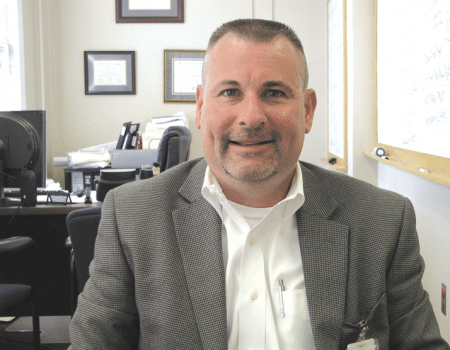
“We’re concerned for a number of reasons — about recreational marijuana in general and this particular ballot question,” Dr. James Gessner, president of the Mass. Medical Society (MMS), told BusinessWest. He noted that the human brain is still developing throughout one’s 20s, and among the late-developing areas of the brain are those governing judgment issues.

Dr. JameS Gessner

Dr. JameS Gessner

“Marijuana is the single most commonly used drug among adolescents and has significant effects on the developing brain, impairs memory and judgment, and, with early, prolonged use, can have a distinct, negative effect on intellectual development,” he went on. “My concern is really with the unexpected consequences on youth and adolescents. At a time of risk taking in their lives, this drug really blunts judgment.”

If that’s true, then what the Massachusetts bill does, opponents argue, is make it far easier for adults — and children — to get their hands on a harmful substance they might have avoided before simply due to fear of legal consequences. The bill would also lend a veneer of respectability to marijuana, said Dr. Robert Roose, chief medical officer, Addiction Services, for the Sisters of Providence Health System.

“The main concern is providing access to psychoactive substances that have negative consequences for some individuals, and sending a message that marijuana products are safe and beneficial, when there’s really not strong evidence to suggest either of those things may be true,” Roose told BusinessWest.

Some of the state’s top leaders echo this view. In an opinion piece in the Boston Globe earlier this year, Gov. Charlie Baker, Attorney General Maura Healey, and Boston Mayor Martin Walsh argued that marijuana is not safe — citing risks like impaired brain development, disinterest in school, and motor-vehicle accidents — and increasing access to it makes little sense at a time when the state is already grappling with a well-documented opioid-addiction epidemic.

“There are serious and immediate implications for public safety,” they wrote. “In the year after the drug was legalized in Colorado, marijuana-related emergency-room visits increased nearly 30%, as did traffic deaths involving marijuana. Edible marijuana products — often in the form of brownies, candy, or soda — pose a particular threat for children, who may mistake them for regular treats.”

They cited a report from the Rocky Mountain High Intensity Drug Trafficking Area, which found that marijuana use has decreased among minors nationwide in recent years, but Colorado youths are 20% more likely to have used the drug regularly since it became legal for adults two years ago. “Many believe that, since the drug is legal for adults, it must be safe to use.”

That trickle-down impact on young people is one key driver — though far from the only one — in a growing movement in the medical community to convince voters to defeat the marijuana-legalization measure in November. Time will tell whether those efforts will bear fruit.

Opposition Mounts

Earlier this year, the MMS joined the Campaign for a Safe & Healthy Massachusetts, a coalition of health and community leaders established to oppose the ballot question allowing commercial sale of marijuana for recreational use. Other members include the Mass. Hospital Assoc., the Assoc. for Behavioral Healthcare, the Massachusetts Assoc. of Superintendents, the Massachusetts Chiefs of Police, all Massachusetts district attorneys, and an array of state leaders including Baker, Walsh, and House Speaker Robert DeLeo.

While a vote four years ago to legalize medical marijuana hasn’t been without controversy — doctors still worry about prescribing a product that’s still illegal under federal law — recreational pot presents a completely different set of issues.

“There’s a lot of data about kids that use marijuana heavily and face school failure, failure to graduate, difficulty keeping a job,” Gessner said. “Plus, it’s smoked. We’ve spent 50 years talking about the dangers of smoking. This is simply another form of lung attack.”

Gessner also raises the potency issue, arguing that the active ingredient in marijuana — known as tetrahydrocannabinol, or THC — typically comprised about 5% of marijuana in the 1970s, while the current potency can approach 30%, though it varies from batch to batch. In Colorado, the average THC percentage has been around 17%.
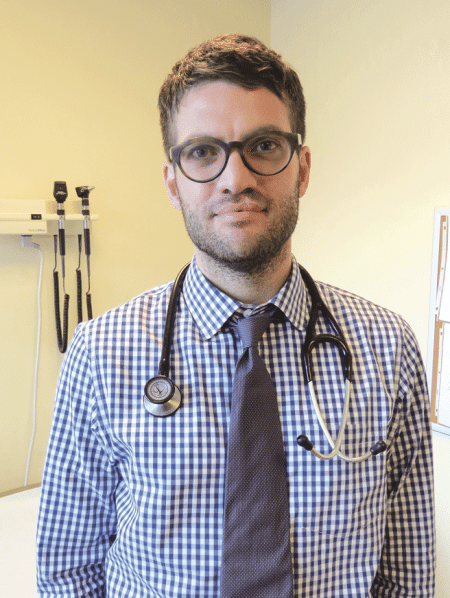
Dr. Robert Roose

Dr. Robert Roose says it makes little sense to legalize marijuana while the state combats an ongoing opioid crisis.

But even recreational-marijuana supporters, like Vermont’s governor, find the bill currently up for referendum in the Bay State to be a deeply flawed one, favoring potential pot producers and sellers but including no provision for education, counseling, or treatment for users. It also allows a wide range of marijuana products — not just the smoked variety, but waxes, resins, and ‘edibles,’ often indistinguishable from common candy. The latter concerns 120 state legislators who recently voiced their opposition to the ballot question.

They note that edibles account for 50% of marijuana sales in Colorado, and the number of children under age 10 who suffered from marijuana exposure has increased by 150% in Colorado since the state legalized commercial marijuana, including edibles.

“This a bill for producers that allows for one of the most dangerous exposures in edibles,” Gessner said. “These are manufactured products branded to look exactly like legitimate food products. If edibles are available, they will wind up in the hands of the least suspecting groups: babies, infants, children. I can see a fourth-grader eating a brownie laced with marijuana, then riding a bicycle, or an eighth-grade girl eating a candy bar, and who knows what happens?”

The Campaign for a Safe & Healthy Massachusetts recently won a victory in the state Supreme Judicial Court, which ordered the ballot question amended to make clear that edibles, not just smoked marijuana, would be legalized.

“We are pleased the SJC has recognized that this ballot question would usher in an entirely new marijuana-edibles market and that voters must be informed of that fact,” coalition spokesman Corey Welford said in a press statement. “Under this proposal, the marijuana industry would be allowed to promote and sell these highly potent products, in the form of gummy bears and other candies, that are a particular risk for accidental use by kids.”

Since becoming the first state to legalize marijuana for adults, the coalition notes, Colorado has also become the number-one state in the nation for teen marijuana use. Use by teens aged 12-17 jumped by more than 12% in the two years since legalization, even as that rate declined nationally. In Washington, the group notes, the number of fatal car crashes involving marijuana doubled in the one year since legalization.

“When we think about addiction — whether to alcohol, cannabis, or opiates like heroin — it’s appropriately described as a chronic disease of the brain,” Roose noted, “and we know very well, with many years of evidence, that the more accessible a substance with a psychoactive component is, the more likely it is to be used.”

Shumlin — again, an enthusiastic supporter of recreational marijuana — laments the fact that the Massachusetts bill will allow edibles that have caused problems in other states, smoking lounges, home delivery service, and possession of up to 10 ounces of pot, while a bill he is promoting in Vermont allows none of that.

“If Massachusetts moves forward with their legalization bill while Vermont delays,” he wrote, “the entire southern part of our state could end up with all the negatives of a bad pot bill and none of the positives of doing the right thing.”

Reversal of Fortune

For doctors like Roose who have been on the front lines of the state’s battle against rampant opioid addiction, opening the doors wide to recreational marijuana would be a blow against the progress being made against drug abuse and its often-tragic effects.

“The earlier you have someone hooked or identified as a user of your product, the greater market share you can expect down the line,” he told BusinessWest. “That’s the converse of what we’re trying to do in public health; we want to delay the start of something that can affect their brain.”

In their opinion piece, Baker, Healey, and Walsh noted that emergency departments and drug-treatment centers are beyond capacity, and first responders are stretched to their limits.

“We should not be expanding access to a drug that will further drain our health and safety resources,” they wrote, arguing that any tax revenues from marijuana sales would be vastly insufficient to cover the added public-health costs legalized pot would bring, and that almost all the financial benefits would go directly to pot producers and their investors.

Roose isn’t as concerned with the financial costs as the human ones, so he comes back repeatedly to the question, what does substance abuse of any kind do to a society in terms of illness and premature death?

“When we look at alcohol, nicotine, all drugs, we should take an approach that effectively mitigates those risks. That’s what treatment providers in the medical community should be looking at,” he said. “The brain can develop into the 30s, and when we delay the onset of someone experimenting with these substances, we’re looking at benefits to society from less recurrence of mental illness, improved educational attainment, and lowered rates of addiction — very approachable goals for the medical community.”

Conversely, he went on, the more accessible a state makes those substances, and the less the risks to young people are recognized, the more problems arise. It’s similar, he said, to the past cultural belief, long disproved, that prescription medications are somehow safer than street drugs, leading to lax oversight and the addiction problems ravaging the Commonwealth today.

Of course, the effects of legalized marijuana won’t be an issue if voters defeat Question 4. A Boston Globe survey in July found 51% of respondents opposed to the measure, 41% in favor, and the remainder unsure.

Gessner worries that a burgeoning market for marijuana in all its forms would find the most purchase in socioeconomically disadvantaged neighborhoods, and wonders why provisions for addiction counseling and treatment weren’t included in the bill’s language, as they were when casino gambling was legalized in Massachusetts. “Those things are completely missing. The bill doesn’t recognize the unintended consequences, especially for youth.”

Roose stressed that he doesn’t support further criminalizing pot possession and creating new punishments for users. “That’s not shown to have a positive outcome. We would rather intervene with education and provide comprehensive treatment for those substance-use disorders.”

That job will certainly become more difficult if marijuana sales are allowed to emerge from the shadows, easily accessible to adults — and, most likely, young people, too.

Joseph Bednar can be reached at [email protected]

Employment Sections

Defining Issues

By Peter Vickery

Peter Vickery

Peter Vickery

At the end of June, the Mass. Commission Against Discrimination (MCAD) was the subject of a report by the state auditor that criticized the agency’s delays, accounting practices, and security controls. Nevertheless, in July the Legislature decided to entrust the MCAD with the task of drafting rules and regulations around the Act Relative to Transgender Discrimination (commonly, and somewhat disparagingly, known as the Bathroom Bill).

But it chose not to make the MCAD the starting point for complaints under the new Pay Equity Act. Both pieces of legislation will affect employers in Western Mass., as would any changes the MCAD makes to its operating procedures in response to the audit report. But first, an overview of a recent decision from the agency’s Boston office that may influence the way employers across the commonwealth handle temporary disabilities.

MCAD & Carta v. Wingate Healthcare Inc.

The MCAD recently awarded a formerly full-time employee $25,000 for emotional distress in part because her employer had done such a good job of accommodating her need to work part-time. When the employer argued that keeping a part-time employee in a job that needed a full timer was an undue hardship, the hearing officer pointed to the fact that the company had coped well enough for five months and could show no loss of revenue or operational burden. The employer may regret having accommodated the disability so effectively.

One might think that the MCAD would want employers to create financially viable workarounds and reward them — or at least not punish them — for providing reasonable accommodations that do not hurt the bottom line. Instead, if this case is anything to go by, an employer’s success in accommodating a temporary disability can count as a strike against it.

The case, MCAD and Carta v. Wingate Health Care Inc., is the decision of a single hearing officer, not the full commission, but it provides insight into the agency’s thinking.

Cecelia Carta was the admissions coordinator for Wingate Healthcare. During 2010, she was off work for health reasons for one week in August and then from September to December. She returned to work part-time Dec. 6, working four hours a day, initially three days a week and later four days a week. On May 12, 2011, Wingate terminated Carta’s employment, telling her that the company needed a full-time admissions coordinator.

They asked her stay in touch and suggested she apply for her old job if and when she could return to full-time work. But they had not warned her (or, rather, presented no evidence that they had warned her) that unless she returned to full time she would be let go. This was an important omission.

Perhaps the HR people were worried that if they told Carta that the company really needed a full-time admissions coordinator as opposed to a part-time one, their words could be construed as in some way discriminatory. Whatever their reason, the lack of notice carried a price tag of $25,000.

The hearing officer did not order Wingate to pay lost wages because Carta had received $116,000 in workers compensation and $181,000 from two injury-related lawsuits. But Carta was entitled to $25,000 for the emotional distress of being terminated without having been warned that her employer would like her to resume work on a full-time basis some time in the not too distant future.

Why did Wingate terminate Carta? The company’s decision-makers seem to have thought that the medical documentation put them on solid ground. After all, at the end of April, Carta’s primary care physician had cleared her to return to full-time work “from a medical perspective.” The doctor deferred to her orthopedic surgeon for orthopedic clearance, and the May 10 orthopedic opinion stated no date for a return to full-time work.

After accommodating the disability for five months, and with no medical opinion showing that Carta could ever return to full-time work, plus the knowledge that Massachusetts anti-discrimination law does not require an employer to keep a disabled employee’s job open indefinitely, Wingate’s decision seems reasonable. But the hearing officer deemed the termination precipitate.

How long should Wingate have continued to employ Carta part-time? According to the MCAD:

“At the very least, [Carta] should have been permitted to complete her physical therapy over the course of the next month, and if then there was no definitive prognosis for improvement, and no anticipated return to full duty, [Wingate’s] obligation to continue providing an accommodation in the form of a part-time schedule would likely have ceased.”

Terminating Carta in the month of May rather than waiting until June cost Wingate $25,000.

State Auditor’s Report

Just before the Fourth of July holiday, the state auditor published an official report on the MCAD. In addition to noting the commission’s four-year backlog and revealing the usual, garden-variety problems that bedevil state agencies (e.g. mismanagement, inefficiency, and poor book-keeping) it confirms a long-harbored suspicion: The MCAD asserts jurisdiction where it has none.

The statute that governs the MCAD clearly states: “Any complaint filed pursuant to this section must be so filed within 300 days after the alleged act of discrimination.” Nevertheless, the state auditor’s report reveals that in the three-year period of the audit (2012-2015) the MCAD processed more than 100 cases where it lacked subject matter jurisdiction because the applicable statute of limitations had run its course:

“[D]uring our audit period, MCAD accepted 123 complaints beyond the 300-day timeframe for complainants to file their complaints. MCAD regulations allow for this 300-day timeframe to be extended under certain conditions, but there was no documentation in the case files to substantiate that any of these complaints met those conditions.”

Out of curiosity I asked the state auditor’s office how they determined this fact. It turns out they simply had to review the data in the MCAD’s case-management system. Perhaps if the MCAD confined itself to cases over which it does have jurisdiction, it would not have a four-year backlog. In any event, employers charged with discrimination should check the calendar and take steps to preserve their objections on the grounds of late filing. Having the case dismissed on jurisdictional grounds may offer little consolation if the dismissal only occurs after four years of investigation.

Act Relative to Transgender Discrimination

This is the statute that opponents dubbed the Bathroom Bill. After much brouhaha, the Legislature passed it and Gov. Baker signed it into law. It provides:

“An owner, lessee, proprietor, manager, superintendent, agent, or employee of any place of public accommodation, resort, or amusement that lawfully segregates or separates access to such place of public accommodation, or a portion of such place of public accommodation, based on a person’s sex shall grant all persons admission to, and the full enjoyment of, such place of public accommodation or portion thereof consistent with the person’s gender identity” (emphasis added).

So what exactly is gender identity? The statute defines it as follows: “‘Gender identity’ shall mean a person’s gender-related identity, appearance or behavior, whether or not that gender-related identity, appearance or behavior is different from that traditionally associated with the person’s physiology or assigned sex at birth.”

Perhaps aware that the foregoing does little more than restate the term “gender identity” rather than actually defining it, and mindful of the potentially ticklish nature of proving any given individual’s gender identity, the Legislature chose to delegate the task of crafting evidentiary standards to a state agency. It selected one with an imaginative and expansive approach to statutory definitions, namely the MCAD. The report is due Sept. 1.

Pay Equity Act

Together with the Act Relative to Transgender Discrimination, the Legislature enacted the Pay Equity Act, which prohibits employers from discriminating upon the basis of gender. The previous statute declared that “no employer shall discriminate in any way in the payment of wages as between the sexes.” The new version provides: “No employer shall discriminate in any way on the basis of gender in the payment of wages.” So out with ‘sex’ and in with ‘gender.’

But isn’t gender the same as sex? No, not any more (see below).

As well as differing from the old equal-pay statute, the new law also differs from the Fair Employment Practices Act (Chapter 151B). Unlike employees bringing complaints under Chapter 151B, employees who wish to charge their employers with violations of the pay-equity statute will not have to start at the MCAD. They can go straight to court. Another novelty is that the new law encourages employers to conduct regular reviews of their pay practices.

If an employee sues, and the employer can show that it undertook a good faith self-evaluation of pay practices within the preceding three years (and made progress in remedying any discrepancies) it will have an affirmative defense. With an affirmative defense, the burden is on the party raising it, i.e. the employer. So with an eye to future lawsuits, employers may wish to keep in mind the need for persuasive evidence sufficient to prove that the good-faith evaluation took place.

But what exactly does the law prohibit? It forbids pay discrimination on the basis of gender, a word the Legislature chose not to define and whose legal meaning has changed over the past 20 years.

In 1996 the United States Court of Appeals for the Fourth Circuit was saying nothing controversial, let alone heretical, when it held that in Title VII cases the words ‘sex’ and ‘gender’ were interchangeable. Although the court observed that “some academic writers” were asserting “that ‘gender’ connotes cultural or attitudinal characteristics distinctive to the sexes, as opposed to their physical characteristics” and that the distinction might be useful “for some purposes,” it decided to stick with the practice of treating ‘gender’ as a synonym for ‘biological sex.’

A dozen years later, the Court of Appeals for the Third Circuit took a more flexible approach, noting that “gender, to some people, is a fluid concept.” After acknowledging that gender is “rooted in science and means sex — male or female — based on biology (chromosomes, genitalia)” the court noted that “the usage of the word is changing in some circles as a result of social and ideological movements that find the scientific meaning to be unsatisfactory or not sufficiently inclusive.” That usage is catching on.

Last year, Judge Mastroianni of the United States District Court for the District of Massachusetts stated that the statutory prohibition against discrimination “on the basis of sex” prohibits discrimination not only on the basis of “biological sex” but also on the basis of a “gender identity.”

As authority for this proposition he cited a First Circuit Court of Appeals decision from 2002 and a Supreme Court decision from 1989 that used the words ‘sex’ and ‘gender’ as synonyms, concluding that by using the words interchangeably those courts had interpreted ‘sex’ to encompass ‘gender identity.’ Of course, using the words interchangeably had led the Fourth Circuit to precisely the opposite conclusion, i.e. that the word ‘gender’ had its scientific meaning, namely biological sex. But that was way, way back in 1996.

Nowadays law must pay less heed to science, with its pettifogging attention to such trifles as chromosomes and genitalia, and more to the “social and ideological movements” that deem the scientific terminology “not sufficiently inclusive.” Therefore, so far as the judges are concerned, if a statute says that it prohibits discrimination on the basis of sex (a matter of biology) what the statute really prohibits is discrimination on the basis of gender (a matter of identity).

And what of a pay-equity statute prohibiting discrimination on the basis of gender (not sex); what does it forbid? We shall have to wait and see.

Peter Vickery practices employment law in Amherst; (413) 549-9933.

Daily News

SPRINGFIELD — Congressman Richard E. Neal and Mayor Domenic J. Sarno announced Thursday that the city of Springfield has received a grant from the United States Department of Justice (DOJ) in the amount of $147, 456 to expand communications and technology at the Springfield Police Department, and to increase officer safety and efficiency. The funds were awarded through the Edward Byrne Memorial Justice Assistance Grant (JAG) Program, the primary provider of federal criminal justice assistance to state and local governments. The JAG funds support for a range of program areas, including law enforcement, drug treatment, victim and witness initiatives, and technology improvement programs.

“This important crime-prevention assistance for the city is timely and needed. I have always said the men and women of the Springfield Police Department deserve the appropriate amount of local, state, and federal resources they need to do their jobs effectively. Each day they put their lives at risk to protect families and keep our community safe. With these additional funds, they will be able to continue to do their vital and courageous work on the streets of Springfield.  In my opinion, Mayor Sarno and Commissioner Barbieri deserve great credit for their efforts to secure this highly competitive grant,” said Neal.

Said Sarno, “Police Commissioner John Barbieri is always looking to do cutting edge innovative technology initiatives which in turn will continue to enhance the public safety of each and every one of our residents in the City of Springfield. These funds will assist with improving the technology needed to make the Springfield Police Department more efficient and effective in serving the residents of our fine city.”

According to the DOJ, the Edward Byrne Memorial Justice Assistance Grant Program (JAG) allows states and units of local government to prevent and control crime based on their own state and local needs and conditions. Grant funds can used for state and local initiatives , technical assistance, training, personnel, equipment, supplies, contractual support, and information systems for criminal justice, including for any one or more of the following areas:

  • Law enforcement programs;
  • Prosecution and court programs;
  • Prevention and education programs;
  • Corrections and community corrections programs;
  • Drug treatment and enforcement programs;
  • Planning, evaluation, and technology improvement programs; and
  • Crime victim and witness programs (other than compensation).

The Springfield Police Department will use the award funds to support information technology upgrades and purchase protective equipment. The goals of this project are to increase organizational capacity and communications, and enhance officer safety. The use of this federal assistance meets unfunded needs and expands communications and technology capacity and increases officer safety and efficiency.

Opinion

Opinion

By Brad MacDougall

The compromise pay-equity bill passed by the Massachusetts Legislature and signed into law by Gov. Charlie Baker will require changes in the way employers do business. The law takes effect July 1, 2018.

The bill bars employers from discriminating based on gender when it comes to wages and other compensation, unless the variation is based upon a mitigating factor like seniority, performance, or skills. Passage of the bill followed weeks of intensive negotiations among House leaders, Attorney General Maura Healey, and the Associated Industries of Massachusetts (AIM), which opposed previous versions of the measure that would have limited the ability of employers to attract and retain skilled employees.

Here is a summary of what employers need to know about the measure:

• The law states that “no employer shall discriminate in any way on the basis of gender in the payment of wages, or pay any person in its employ a salary or wage rate less than the rates paid to its employees of a different gender for comparable work.” Wage differentials are permitted, however, based upon a system that rewards seniority with the employer; a merit system; a system that measures earnings by quantity or quality of production, sales, or revenue; the geographic location in which a job is performed; education, training, or experience to the extent such factors are reasonably related to the particular job in question; or travel, if the travel is a regular and necessary condition of the particular job.
• The law provides a three-year affirmative defense from liability to employers who conduct a self-evaluation of their pay practices in good faith and can demonstrate that reasonable progress has been made toward eliminating wage differentials based on gender for comparable work. The self-evaluation may be of the employer’s own design, so long as it is reasonable in detail and scope in light of the size of the employer, or may be consistent with standard templates or forms issued by the attorney general.
• The law affirms the ability of employers to protect the confidential information about employee wages should another employee seek that information.
• Employers are prohibited from asking job candidates about their salary history, although, if a prospective employee has voluntarily disclosed such information, a prospective employer may confirm prior wages or salary or permit a prospective employee to confirm prior wages or salary. Also, a prospective employer may seek or confirm a prospective employee’s wage or salary history after an offer of employment with compensation has been negotiated and made to the prospective employee.

Employers who currently ask about wage history on their job applications will likely have to update those documents. Lawyers who have reviewed the law suggest that companies might create a checkoff that would allow job seekers to acknowledge their willingness to voluntarily provide wage history.

The attorney general will develop regulations for the law that will answer many of the specific questions that employers are bound to have.

AIM continues to believe that the best long-term strategy to achieve pay equity in the workplace is to ensure that both women and men possess the education and skills that allow our enterprises to succeed an in increasingly complex global economy.

Brad MacDougal is vice president of Government Affairs at AIM. This article first appeared on the AIM blog; blog.aimnet.org

Law Sections

Priming the Pump

Summer Legal Institute

From left, Summer Legal Institute student Zachary Fernandes consults with MassMutual attorneys David Allen and Bernadette Harrigan.

Bullying and cyberbullying are pertinent issues for teens today, and this summer 40 students in the Summer Legal Institute at MassMutual played the role of an attorney and presented arguments for clients during a mock court trial. Some won awards, but they all gained valuable insights into the law as they worked with local attorneys and were given opportunities to hone their networking, critical-thinking, and public-speaking skills.

Nia Major used to get really nervous when she met someone new and had to talk with them.

But after completing a week-long Summer Legal Institute session (SLI) at MassMutual last month, the 15-year-old from Sabis International Charter School in Springfield gained so much confidence that she was named a grand-prize winner in an oral-argument competition, where she played the role of a lawyer in a mock case that involved name-calling and cyberbullying.

“Now I can look new people in the eye and discuss things,” she told BusinessWest, adding that she was surprised at how well she did in the competition.

Major’s opinion of careers in the law field also expanded as a result of her participation in SLI, and although she wants to become a pediatrician, she now finds the legal profession an appealing option.

The teen was one of 40 students recruited from local schools to take part in the program last month, which is in its fourth year.

Since its inception, MassMutual has provided more than $100,000 to fund the SLI, which is free to all students. In addition, its attorneys have given more than 250 hours of their time to educate participants about the legal profession and help them hone their arguments for the annual competition.

Major and three winning peers will travel to Washington, D.C. this fall to take part in a national program held by Just the Beginning Foundation (JTB), a nonprofit that offers students free educational programming in hopes of increasing diversity in the legal profession and inspiring underrepresented, underserved, and at-risk students to attend college.

Mark Roelling told BusinessWest he decided to establish the Springfield branch five years ago after he met with Judge Ann Williams from the Fifth Circuit Court of Appeals in Chicago during a meeting of the National Bar Assoc.

Roelling is executive vice president and chief legal counsel at MassMutual, and Williams told him about the JTB, which she helped create in response to a speech by former President Jimmy Carter that celebrated the integration of the federal judiciary. Its programming includes summer sessions where students work with volunteers from the legal community in partnership with a university to introduce them to the practice of law.

The discussion led to the birth of the five-day MassMutual Summer Legal Institute. JTB provides the curriculum, which changes annually, and Western New England University and local law firms and judges help the students learn valuable information about the profession.

“I believe this program adds value to the community because it provides opportunities for young adults to see the benefits of going to college as well as the benefits of pursuing a career in the legal profession,” Roelling said. “It also adds value to the legal profession because people of color are underrepresented in the field of law, and it’s good for the volunteers as it gives them the opportunity to give back.”

SLI is open to students who will be high-school freshmen, sophomores, juniors, or seniors, and so far, 125 students from schools with diverse backgrounds have participated in the local program: 51% have been African-American, 20% have been Hispanic, 16% have been white, 8% have been Asian/Pacific Islanders, and 5% have multiple ethnicities.

Multi-faceted Curriculum

MassMutual Assistant Vice President and Counselor Patrice Sayach said the five-day SLI curriculum is intense and requires students to work at home in the evenings.

This year it began on Monday, July 11, and during the morning, students were introduced to the legal system and learned about a Supreme Court decision before they were presented with a fictional case and the facts that went along with it.

oral-argument competition

Patrice Sabach (far left) and Mark Roellig (far right) congratulate Nia Major, Jada Ficarra, Karissa Coleman, and Jerry Moore III on winning the oral-argument competition.

The case was important because each student was assigned to serve as a defense or prosecuting attorney and had to craft convincing arguments that they presented at the end of the week before mock judges in an oral-argument competition.

MassMutual attorneys served as coaches and met with them in small groups to help them understand what facts were relevant and how and why they could be used in the courtroom.

“We showed them this is the kind of thing lawyers do on a day-to-day basis, that they need to understand the law and how it applies to world situations,” Sayach said.

After lunch, they met with a panel of MassMutual attorneys who talked about their backgrounds and allowed the students to ask questions.

Tuesday was spent at Western New England University, where members of the Law department taught the group networking skills that included how to give an elevator pitch, how to introduce oneself, how to enter and leave a group in an appropriate manner, and how to follow up with people they met. There was also a session on financial literacy that focused on the college-admissions process and financial-aid resources.

In addition, the students traveled to the Bulkley, Richardson and Gelinas, LLC law firm, had lunch with the attorneys, and took part in oral-argument reviews.

The day included a seminar on professional etiquette, and each student was given their own business cards, which they used later during a networking session with seven judges, attorneys from local law firms, and top MassMutual executives and lawyers.

“The idea is for the legal community to work together to form a pipeline of diverse candidates who are underrepresented in the legal profession,” Roellig explained.

Wednesday began at the state courthouse in Springfield, where students observed a legal proceeding that dealt with juvenile abuse, which was followed by a panel discussion with three judges, facilitated by MassMutual attorney Dorothy Varon.

In the afternoon, they visited the federal courthouse, where Judge Mark Mastroianni presided over a mock trial. The students had prepared for it in advance, and some students served as members of the jury, one acted as the bailiff, while others played the role of witnesses or were assigned to teams of mock attorneys.

Sayach noted that all members of the jury agreed that the defendant was guilty, except for one student who was able to convince his peers that reasonable doubt existed.

“The students took the case very seriously,” she told BusinessWest.

jury as a hypothetical case

Students act as members of the jury as a hypothetical case is tried before them.

The day ended with a presentation by a U.S. marshal and additional small-group oral-presentation preparations and reviews.

On Thursday, the students went to Hartford, Conn., where they continued to work on their final oral arguments. After lunch, they visited Day Pitney LLC, where they met with attorneys who helped them polish and perfect their presentations and told them about the schooling required to pursue a career in law.

The oral-argument competition was held Friday at WNEU School of Law in a mock courtroom, and MassMutual attorneys served as judges. After the competition, the students toured the law school and attended a negotiating session before being divided into pairs and given a problem to negotiate.

At the end of the day, a graduation ceremony was held, and awards were presented, including a trip that four students won to fly to Washington, D.C. and participate in a day-long JTB event that will include a tour of the Supreme Court, lunch with a Supreme Court justice, a visit to a local law firm where they will network with lawyers in the D.C. area, additional programming, and some sightseeing.

Life Lessons

BusinessWest recently met with the winners of the oral-argument competition, who had high praise for the program.

“It was fun,” said Karissa Coleman, an incoming 10th-grader at Springfield Central High School, who noted that, although she has always been interested in a law career, the program made it even more appealing.

“This helped me come out of my shell, and I found that oral arguments came naturally to me. I didn’t know how much work lawyers put in before they went to court, and I learned they really try to look for little details that can make a big difference to help their client,” said the 14-year-old. And although she called the experience in the courtroom “nerve-wracking,” her rebuttal was so refined, it helped her win the award.

Jada Ficarra, who will enter 10th grade next month at Sabis International Charter School in Springfield, enrolled in the program because she took part in a model Congress at her school and likes to debate issues.

“It taught me a lot about law. It’s really a broad field, and I found out there are many different careers in the field to choose from,” she said, noting that she talked to real-estate, divorce, and corporate attorneys, as well as some who specialize in litigation.

The teen hopes to get a summer job next year from contacts she made, and although she wants to become an obstetrician, a legal career has become her second choice.

Fourteen-year-old Jerry Moore III took part in the program with his sister Simone last year, and returned this year to get more experience.

“I hope to go to law school after college,” said the Hampden Charter School of Science student. “Litigation appeals to me; it’s really interesting, and it gives you a thrill to get all of the evidence, present it to the jury, and try to convince them that your side is right.”

He was nervous about the networking session, but the experience made him comfortable with it as well as with public speaking.

“I did a lot of work at home, refining my arguments, reading about the law, and researching what it says. It was hard, but it was also a lot of fun,” he reported, adding that, although the side of the case he had to argue was not the side he would have chosen on his own, it taught him that, “by preparing a good argument, it’s possible to win a case.”

Tinsae Erkailo took part in the program two years ago. He won the annual trip to Washington D.C. and is working as an intern at MassMutual this summer.

The 17-year-old moved to the U.S. from South Africa several years ago and said he never would have had the opportunity to meet lawyers in top law firms and make contacts that may help him get into Stanford University if he hadn’t participated in the Summer Legal Institute.

“The program made me realize that I needed to become a good speaker so I can get across what I want to say,” said the incoming senior at Springfield Renaissance School, adding that honing that skill helped him secure his current internship.

“The program also helps people identify careers they want to pursue,” he added. “Right now I am exploring what I want to do in the future, but confidence is really important no matter what you choose.”

Sayach agreed. “Students in the program improve their critical thinking, public-speaking, and networking skills, which will help them to become successful in any profession they choose to enter.”

Opinion

Opinion

By Brad MacDougall

The Massachusetts Senate took a dramatic step backward recently on non-compete agreements, passing Draconian restrictions that would effectively end of the use of the documents in the Bay State.

The Senate passed by voice vote a measure that would limit non-compete agreements to three months and require employers to pay the full salary of the former employee during the restricted period.

The bill would exempt anyone earning $130,000 or less from non-competes.

The Senate measure stands in marked contrast to a compromise version passed by the House in late June that allows one-year non-competes and not require companies that compensate employees at the time they sign non-competes to pay them again during the restricted period.

Lawmakers will have to reconcile all those differences before the session ends on July 31 if a non-compete bill is to become law.

“Employers support the House bill, period,” said John Regan, executive vice president of Government Affairs at AIM.

“House leaders worked with people on all sides of the issue and came up with a reasonable compromise that protects the rights of both employers and workers,” he said. “The idea that you would now compromise a compromise makes no sense.”

Employers believe selective use of non-competes protects the significant investments that allow their companies to be global leaders in their industries and to create jobs in the commonwealth.  The compromise legislation begins to recognize that Massachusetts employers need flexibility and legal options to protect intellectual property.

AIM continues to maintain that there is no evidence that the use of non-compete agreements harms Massachusetts’ position as a globally recognized leader in innovation. In fact, Securities and Exchange Commission (SEC) filings indicate that the well-heeled venture capitalists pushing to limit non-competes use such agreements themselves.

Employers have articulated several provisions that would be required for them to support a bill limiting non-competes:

• Minimum one-year duration;
• A “garden leave” provision that requires the employer to pay 50% of the employees’ prorated salary during the restricted period, or other mutually-agreed upon compensation;
• Maintaining and clarifying the ability of a court to reform or alter non-compete contracts to ensure that both parties are treated fairly;
• Those subject to non-compete agreements would have to be given prior notice of the need to sign the agreement, as well as the opportunity to consult with legal counsel; and
• The non-compete would extend to a second year should an employee unlawfully take property belonging to the employer, as included in the House version.

Hopefully, these provisions will become part of the final measure.

Brad MacDougall is vice president of Government Affairs with Associated Industries of Mass. (A.I.M.)

Daily News

There are a number of intriguing economic-development projects underway across the Pioneer Valley, but perhaps none more compelling — and for a number of reasons — than the initiative taking shape in a building in downtown Holyoke known as the Cubit.

There, a public-private partnership on several levels has materialized, bringing to reality an endeavor that will create momentum in realms ranging from job creation to the revitalization of Holyoke’s central business district.

The facility being created on the structure’s first and second floors is called the MGM Resorts HCC Center for Hospitality and Culinary Arts at Holyoke. That’s a long name (hopefully a suitable acronym or nickname will emerge), but it is necessary, because it really tells the story — or most of it, anyway.

Indeed, this is a partnership between Holyoke Community College (and therefore the state), the city of Holyoke, MGM Resorts, which is building a $950 million casino in downtown Springfield, and the new owners of the Cubit building, who will create market-rate housing on the upper floors. And it takes a partnership to develop a property like this, which is one of the many former mill buildings in the Paper City now looking for new life.

The college needed a new home for its culinary arts program, the owners of the Cubit building were looking for a tenant that would anchor the property for years to come, the city of Holyoke was looking for individuals to invest in their community (and help them in their endeavors), and MGM was looking for help in training individuals for the many kinds of jobs at its casino.

To make a long story short, all the parties seem to have found what they were looking for. Holyoke is contributing $400,000 for this project from the funds it will receive from MGM through neighboring community-impact payments, MGM is donating an additional $100,000 toward the center, the state is contributing $1.75 million, the U.S. Department of Commerce Economic Development Administration is kicking in $1.55 million, and the HCC Foundation is contributing $500,000.

Together, that adds up to $4.25 million, but more importantly, it adds up to opportunity — for the college, for the city, for MGM, and for the thousands of people who will be trained at the facility over the years.

This is a true public-private partnership, the kind this region will need to revitalize its communities, train a workforce, and bring economic-development opportunities to the area. It should serve as a model of what can be done when diverse groups with different, but intertwined, goals come together for the common good.

Banking and Financial Services Sections

Proposed Rule Changes the Playing Field in Many Ways

By Charlie Epstein

CHARLIE EPSTEIN

Charlie Epstein

After a five-month comment period, four days of public hearings, more than 3,000 comment letters, some 300,000 petitions, more than 100 meetings with industry stakeholders, and nearly a year to the day that the Department of Labor (DOL) unveiled its ‘conflict of interest’ proposed rule, we ‘the people’ have a new fiduciary regulation.

The new rule is meant to move the needle when it comes to advice offered to the largest pool of retirement savings in America today — nearly $12 trillion in retirement assets and $7 trillion in IRA assets.

Depending on who you talk to and which side of the investment-advice-fiduciary industry you are in, this more than 1,060 pages of regulation by the DOL represents the best of times, the worst of times, or, more likely, something in between.

So, what’s in this final regulation — and what do you, as a consumer with an IRA or business owner offering a 401(k) plan to employees, need to know?

The ‘New’ Fiduciary

First of all, any individual (think of your current advisor, broker, or consultant) receiving compensation for making investment recommendations that are individualized or specifically directed to a particular plan sponsor running a retirement plan, plan participant, or IRA owner for consideration in making a retirement decision is now a fiduciary.

Prior to this rule, the majority of broker-dealers and wire houses refused to allow their brokers to be fiduciaries when providing advice to a retirement plan. The fact of the matter, is, in reality, in spite of what these organizations may have said about their brokers, it was the actions of their brokers that actually ‘deemed’ them to be fiduciaries, regardless of what their parent companies, legal departments, and executives may have said.

Someone is a fiduciary by their actions, not by who they say they are. This new rule was the path forward for the DOL to insure that any advisor, regardless of what they may say they are, will now be a fiduciary and will need to behave with the highest standard of care, prudence, diligence, and loyalty to 401(k) plan participants and IRA holders (more on this to follow).

Beginning in April 2017, if an advisor provides recommendations regarding any and all retirement accounts, such as 401(k), 403(b), IRA, etc., they will be a fiduciary under ERISA.

Being a fiduciary under the final regulation means an advisor must provide impartial advice in the clients’ best interest and cannot accept any payments creating conflicts of interest — this would be compensation that varies based on the recommendations — unless the advisor qualifies for an exemption to what would otherwise be considered a prohibited transaction (the BIC exemption).

Being a Fiduciary

Anyone who is a fiduciary must adhere to the following requirements:

• They must have a duty of loyalty to the person or persons they serve — think 401(k) plan participants or IRA holders;

• They must have a duty of prudence, acting with a standard of care, skill, prudence, and diligence and to act in the same way that someone ‘familiar with such matters would act’;

• They must disclose all the services being provided;

• They must disclose the fees and expenses for offering such services;

• They must make sure those fees are ‘reasonable’; and

• They must disclose and avoid any conflicts of interest.

Fiduciary Compensation

As already mentioned, anyone acting as a fiduciary can only receive ‘levelized compensation.’

For many advisors providing advice to the 401(k) and IRA industry, this will represent a significant change in not only how they offer their services, but how they will be compensated going forward. Many 401(k) plan providers pay both direct and indirect compensation to both brokers and the broker/dealers they work for. This indirect compensation may be paid as 12b-1 compensation from the mutual funds inside a 401(k) or IRA. It may be in the form of indirect compensation brokers receive from the companies they work for in the form of incentive compensation arrangements, trips, even seminar training and dinners. All of this ‘indirect compensation’ will be prohibited under the new standard of care.

Benefits to the IRA Consumer and Plan Sponsors of 401(k) Plans

Going forward, it will be much easier for consumers in IRAs and businesses that sponsor 401(k) plans to understand the services their advisor provides and the compensation they receive for those services. While the new rule does not require that a fiduciary to a 401(k) plan have a contract, this author believes it would be in the best interest of all parties that the advisor/consultant to a 401(k) plan have a service agreement (contract) that details the specific fiduciary and non-fiduciary services they will provide to the plan, the ‘level fee’ they will charge, and an industry fee-benchmarking report that demonstrates the ‘reasonableness’ of the fees being charged. In this fashion, the plan sponsor fiduciary will have a prudent and documented due-diligence process from their advisor to justify their services and fees.

The BIC

For advisors interested in preserving (or establishing) a variable compensation model, the DOL has paved a path, though one fraught with a number of complicated and potentially expensive disclosures. Known as the ‘best interest contract exemption’ (BIC), this exemption requires a commitment by the firm and the advisor to:

• Provide advice in the best interest of the client;

• Charge only reasonable compensation;

• Avoid misleading statements about fees and conflicts of interest;

• Adopt policies and procedures designed to ensure that advisors provide best interest advice; and

• Prohibit financial incentives for advisors to act contrary to the client’s best interest.

The Treasury Department and the DOL made it clear that advisors can continue to sell commission-based products (think variable annuities and indexed annuities) and that these products have a place in an individual’s financial plan, provided the advisor demonstrates they are in the client’s best interest and not the advisor’s. The DOL’s concern for many years has been that these are complicated products that most individuals do not understand and therefore may have been sold not in their best interest.

In addition, many in both the DOL and Treasury have long been concerned that, since these products are more expensive than non-guaranteed products (think low-cost index funds), and typically pay variable compensation to agents and brokers, it is harder to discern whose best interest they are being sold for.

The BIC exemption will allow advisors to offer these valuable products where they are and can be demonstrated to be in the best interest of the client. As Tom Perez, Labor secretary, stated during the announcement of the new fiduciary standard, not everyone should drive a Yugo.

Price alone, in the absence of value, is not and should never be the deciding factor for every consumer. The new regulation contains language that emphasizes that fees alone are not the only factor when making investment decisions.

Takeaways

1. A two-year phase-in of the new regulations. First, beginning on April 1, 2017, all advisors to any new 401(k) plan or IRA arrangements will be fiduciaries, and may only receive level compensation, unless they plan to qualify under the BIC exemption.

Second, beginning on April 2, 2018, all existing client-advisor IRA relationships will need to provide new disclosure to the investor.

All of this will require a massive undertaking by a significant segment of the investment industry in increased disclosure, compliance, and government oversight. Look for fees and expenses to the consumer to rise for the small consumer and shrink for the larger 401(k) and IRA accounts.

2. Exodus from the 401(k) business. It is the opinion of this author that 50,000 to 100,000 advisors and firms will exit the 401(k) business in the next two to five years due to increased compliance and litigation.

State Farm already has announced it will exit the 401(k) business and its advisors will not be allowed to sell 401(k) plans.

3. Increased fee litigation. There have already been numerous cases against 401(k) service providers for ‘excessive fees’ that have settled in the $30 million to $100 million range. One case has gone to the Supreme Court (see Tibble vs. Edision). Look for the number of cases to increase, and the size of the 401(k) plans that will be sued to decrease from $100 million plans down to mom-and-pop $1 million plans, as the legal community lines up to be the ‘enforcer’ of this new fiduciary enforceable standard of care. The reality is, the DOL does not have the legal power in the Constitution to enforce the regulation it writes; only the U.S. Treasury can.

The U.S. Treasury has already acknowledged it does not have enough auditors to investigate and enforce this new regulation. The DOL, knowingly and willingly, wrote this rule, all 1,060 pages, with the intent that the legal community would be the enforcer of the regulation.

In addition, five industry groups have already filed lawsuits to block the DOL’s fiduciary rule for the negative impact against consumer choice and government overreach. Look for these cases to accelerate over time.

For a lively and entertaining view of the ongoing fiduciary debate that will certainly continue for years to come, I encourage you to visit YouTube’s “Last week Tonight, John Oliver Retirement Plans” (HBO) and my “America’s 401(k) Coach Rips John Oliver over Retirement Plan Slam!”

Charlie Epstein is the author of two industry leading books — Paychecks for Life, How to Turn Your 401(k) Into a Paycheck Manufacturing Company, and Save America Save, the Secrets of a Successful Retirement Plan. He is the president of Epstein Financial Services, a fiduciary and registered investment advisory firm; [email protected]

Opinion

Opinion

By James S. Gessner, M.D.

Yet another mass shooting has stunned the nation, this time in Orlando, Fla., leaving 49 people dead and another 50 injured. The home of Walt Disney World and the destination of thousands of tourists each year is now the site of the largest mass shooting in the history of America, joining such names as Columbine, Virginia Tech, and Sandy Hook, along with more than a hundred other places.

Such events are becoming all too common. According to Everytown for Gun Safety, 133 mass shootings in 39 states occurred in the U.S. between January 2009 and July 2015 — almost two per month. Yet, as horrible and shocking as they are, mass shootings — defined by the FBI as any incident in which at least four people are murdered with a gun — account for a small share of firearm homicides.

The Centers for Disease Control and Prevention (CDC) estimates that more than 33,000 deaths from firearms — about 91 a day on average — occur each year.

The statistics make it abundantly clear: gun violence is a public-health issue. And the physician’s voice — ever so critical on matters of public health — must become stronger.

The Mass. Medical Society (MMS) stance on this issue has been firm and long-standing. Our medical society’s policy on firearms and gun violence is expansive and dates back to 1995. It is guided by “the principles of reducing the number of deaths, disabilities, and injuries attributable to guns; making gun ownership safer; promoting education relative to guns, ammunition, and violence prevention for physicians and other health professionals, as well as for the public; and encouraging research to understand the risk factors related to gun violence and deaths.”

Our actions have matched our policy. Our Committee on Violence Intervention and Prevention, also established in 1995, has provided a number of resources to help reduce violence in many forms, and gun violence has been prominent among the topics.

From testimony on proposed legislation on Beacon Hill to education for patients; from resources for physicians on talking with patients to our Public Health Leadership Forum on Firearm Violence in April, to then-MMS President Dr. Richard Aghababian’s call to action following the school shootings in Newtown in 2012, gun safety and gun violence have been key issues for our society.

It is heartening to see more physician groups lend their strong support to the effort. The American Medical Assoc. (AMA), with long-standing policies on reducing violence from firearms, stated its position at this year’s annual meeting, adopting a policy calling gun violence in the U.S. “a public health crisis” that requires a comprehensive public-health response and solution. The AMA also resolved to lobby Congress to overturn legislation that for 20 years has banned the CDC from conducting research on gun violence.

A second resolution by the AMA on firearm availability encourages legislation that would enforce a waiting period and background check for all firearm purchases and urges additional legislation to ban the manufacture, sale, or import of lethal and non-lethal guns of non-metallic materials that can not be identified by weapons-detection devices.

More efforts at our medical society are underway. Our Leadership Forum will provide materials for six continuing-medical-education courses on gun violence to launch at the end of June. Among the topics will be the role of the clinician, community-based prevention, and evaluating the risk for gun violence in patients. Additionally, we are participating with Massachusetts Attorney General Maura Healey in developing materials to enhance the provider-patient relationship regarding firearms.

The shock of Orlando may fade over time, but physician efforts to reduce gun violence should not. Attorney General Healey, speaking at our Leadership Forum, highlighted the importance of physician participation in curbing gun violence, saying it will require a “partnership” with physicians. Indeed it will.

Dr. James S. Gessner is president of the Mass. Medical Society.

Daily News

You won’t find it at or anywhere near the top of those often-cited lists of all the economic development activity happening in Springfield, a compilation dominated by MGM’s casino, CRRC MA’s subway-car- manufacturing facility, the I-91 reconstruction project, Union Station, and Silverbrook Lofts.

Opinion

But the recently unveiled $1.8 million purchase and renovation of the historic Merrick Phelps House on Maple Street, is significant in its own way — and many ways.

The property, once the home to Solymon Merrick, inventor of the Monkey Wrench, was an eyesore, a blight on the once-proud Maple Street area neighborhood. No one wanted anything to do with it, and for years it sat there deteriorating, a highly visible symbol of all of the many things wrong with Springfield.

Enter DevelopSpringfield, the nonprofit, 501(c)(3) corporation created in 2008 to advance development and redevelopment projects, and its energetic president and CEO, Jay Minkarah. Unofficially, the agency’s mission is to generate momentum and progress in the City of Homes through a number of initiatives, one of them being the acquisition and repurposing of properties like the Merrick Phelps House. And this project has created both.

Beyond restoring one of the proud properties that gives the city its name and converting it into business space, this effort is now a highly visible symbol of the many things going right in Springfield — specifically a strong blend on public and private investments that can only succeed in generating more of the same.

Indeed, when residents, business owners, developers, and even state officials see a project this, they become far more likely to look upon Springfield as a place they want to invest in. They look upon an initiative like this and say ‘well, if someone can do that, then we can …’ Anyone with an imagination can fill in the blank.

When officials and organizations like DevelopSpringfield talk about progress coming one building at a time, it sounds cliché. But it’s not. This is how cities rebuild themselves and restore lost pride — one property, one important project at a time.

Opinion

Editorial 2

When the president of the Oklahoma-based ad agency hired to help the region better promote itself introduced himself and his latest assignment last month, he said this exercise was not just about coming up with a new logo and slogan.

We hope he meant that, because these days, it seems to be all about the slogan and the logo, and far less about the message, which is what this region should be focused on.

That’s because it has a good one — this is an attractive, very affordable area in which to live, work, play, start a business, stage a convention or business meeting. The problem is, not enough people know that.

It is recognition of this fact that might have prompted the Western Mass. Economic Development Council to go about hiring a firm to help market (or rebrand) the area. However, we believe that, unfortunately, this initiative has more to do with the fact that no one really likes the current slogan — ‘Arrive Curious, Leave Inspired’ — (and for good reason) and/or they think it’s time to retire the phrase ‘Pioneer Valley’ (words to that effect were actually in the request for proposals).

This is somewhat flawed thinking because, while the region certainly needs to do a better job of promoting itself, a logo is really only a small part of this equation. And while we’re on the subject, this region can’t retire ‘Pioneer Valley,’ simply because it’s part of the landscape now, and there are probably dozens, if not hundreds, of businesses and agencies that have that phrase in their name.

But let’s get back to the slogan part of this discussion. The prevailing opinion these days is that a state or a region has to have a catchy tagline. This attitude persists, even though just about everyone who couldn’t recite this region’s catchphrase (and that’s probably the vast majority) also couldn’t tell you what the magic marketing words (not the nicknames) are for Boston, Providence, Worcester, Hartford, Chicago, Los Angeles, Miami, San Antonio, or San Francisco.

If slogans are so important, why don’t we know what they are?

They’re perceived to be important because everyone does know New York’s — ‘I Love New York’ — and the one commonly used by Las Vegas — ‘What Happens Here, Stays Here.’ So everyone thinks they need one.

The problem here is that hardly anyone visits Gotham or Sin City because of its branding slogan; they go because there’s plenty to do there. Those cities, and many of the others listed above, like San Antonio and San Francisco, don’t need marketing taglines, although you could make the case that they certainly don’t hurt.

Only, they can.

Indeed, cities, regions, and states are still determined to come up with slogans, searching for the next ‘I Love New York,’ but usually they wind up spending a lot of money and coming out with something that leaves people scratching their heads, for one reason — or many.

Such was the case with Rhode Island’s latest attempt, conceived, ironically, in partnership with Milton Glaser, the celebrated designer of the ‘I Love New York’ logo and tagline. A video used in conjunction with the new slogan — ‘Rhode Island: Cooler & Warmer’ — featured images from Reykjavik, Iceland and the Boston area (later called “editing mistakes” by the marketing firm), causing widespread controversy and negative, often cynical national news coverage that eventually forced the chief marketing officer of Rhode Island Commerce to resign, and the ad agency hired to do the work to return money to the state.

Meanwhile, no one really gets, or likes, ‘Cooler & Warmer,’ which is maybe the bigger reason why the Ocean State’s $4.5 million campaign has been called an unqualified disaster by many state officials.

This region can avoid a similar calamity if it focuses first on getting the message right, and then on spending the capital necessary to make sure that message is heard by all those who should be hearing it, rather than coming up with a cool new logo and slogan.

Doing that alone isn’t going to get the job done.

Opinion

Opinion

By Nancy Urbschat

Several weeks ago, I received notification that my agency had not been selected for final consideration for a rebranding project for this region. I knew that all of the area’s agencies had been invited to participate, and therefore I assumed one of my fine competitors would eventually win the business.

Not so. And that is not only disappointing, but also quite puzzling.

The organization heading the project, the Economic Development Council of Western Mass. (EDC), chose Cubit, an agency from Tulsa, Okla. Naturally, the EDC had no obligation to choose a local agency. Or did it?

I don’t think I am alone in believing that an agency that puts the phrases ‘economic development’ and ‘Western Massachusetts’ on its letterhead has, or should have, as the case may be, an obligation to try and keep the branding of the region in the region.

My intention in writing this piece is to drive home the strength of the region’s creative community and implore the EDC and other companies to think about the message the EDC’s action reinforces. And that is, if you want something great, you have to look somewhere else; you won’t find it here. Coincidentally, some of the EDC’s members — including those in healthcare, higher education, and manufacturing, among other sectors — fight this same battle.

Since it was created roughly 20 years ago, the EDC’s mission has been to essentially sell to others this region’s strengths, abilities, and potential. Shouldn’t the EDC make a point of trying to buy locally?

Let’s start with the strength of the region’s creative community. On May 19, the Ad Club of Western Mass. held its Creative Awards show. The region’s creative community submitted its work for judging by two award-winning creatives from New York City. They were impressed with the region’s talent.

The judging was tough but fair. Receiving an award — any award — felt like a significant accomplishment. But we went home feeling satisfied knowing the region’s creative community is alive and well.

On May 20, the EDC’s director, Rick Sullivan, and 50 business leaders met with Massachusetts House Speaker Robert DeLeo regarding how to grow the region’s economy and finally put an end to the economic disparity between Boston and the western part of the state. Speaker DeLeo wants the Bay State’s businesses that are searching for products and services to look in Massachusetts first. This is not a new concept. Just take a look at what’s happening in Northeastern Ohio. Major employers in Cleveland are building a robust regional economy, in large part, by doing business regionally.

The EDC has indicated that a local agency will be selected to partner with Cubit. But given the scope of the work outlined in the request for proposal and the announced budget of $80,000, I question just how much of a role the local agency will have.

In the RFP, The EDC mentions Michigan’s “Pure Michigan” campaign as a model. This is a robust, overarching brand for the entire state. The EDC’s objective is limited to branding the region.

To the EDC’s credit, it is thinking big. That said, I don’t believe they had to go outside Western Mass. to hire talented branding resources. Local talent would have brought a little extra: a willingness to go to the mat to make sure this brand gets done right.

After all, this is where we all live and work. As the region goes, so go our businesses. It’s critically important this brand truly captures the region’s essence and its impressive features that go beyond the usual talking points.

There are a number of local firms that could have gotten the job done.

Nancy Urbschat is president of Springfield-based TSM Design.

Opinion

Editorial

It’s called FutureCity 2026.

It used to be called FutureCity 2025, and, according to some of those who helped put it together, the first number on the title was 2022. That’s how long people have been working to pull together a comprehensive economic strategy for the city of Springfield. And we’re glad they persevered.

Because the city needs one.

This might not have been immediately apparent to those stakeholders assembled at CityStage last week to hear representatives of Newark Grubb Knight Frank, the global corporate-services company hired to create the report, deliver a synopsis. But by the end of the night, it should have been.

Indeed, while those presenting the Readers Digest version of the 300-page report certainly told those in attendance a lot of things they already knew — including the observations that Bradley Airport and I-91 are strategic assets for the city, and public-safety issues and the high cost of energy in Massachusetts are challenges and even liabilities — they also told them many things they probably didn’t know.

These include everything from the opinion of those at the Newark Group that this region should be aggressive in its pursuit of certain industry groups — from food and beverage manufacturers to backroom operations for financial-services companies — to the fact that maybe the biggest thing holding Springfield back right now is a shyness when it comes to loudly announcing its presence and its virtues.

“You can’t be humble,” Robert Hess, executive managing director of consulting for the Newark Group, told those assembled, a group comprised of city and regional economic-development leaders, businesses owners, and individuals interviewed by the plan’s creators during their many visits here.

And the city has been humble for way too long, but mostly for a very good reason, or several of them; it’s pretty easy for a city that a decade ago fell into receivership, has a downtown that, until very recently, hadn’t seen significant new construction in more than 30 years, and has been mostly stagnant since the early ’80s to be humble.

But not anymore. The city has, or soon will have, a $950 million casino, a revitalized century-old train station, an international company building subway cars, growing vibrancy downtown, and a healthy supply of new entrepreneurial energy, and it should no longer be shy about presenting its case to companies and site selectors across the company and around the world.

That’s one of the major recommendations in the report, but there are others, involving everything from sharpening the focus on workforce (or talent) development to downtown revitalization; from supporting and strengthening the small-business infrastructure to breaking down the silos erected by those working in economic development.

Moving forward on these recommendations will take many things, especially time, money, and, perhaps most importantly, commitment, but none of these should be allowed to become an obstacle.

That’s because, while the city has certainly come a long way in the past decade, it still has a long way to go, and instead of simply adding up the dollar figures from the projects in various stages of development and putting them up on a screen, it should be looking forward — and with a solid plan as it does so.

A plan is important because just about every city in the country is looking for the same things these days — vibrancy, young people, industry sectors to attract, and, above all else, jobs.

Most of these cities — although not as many from the Northeast, according to those at the Newark Group — are being very aggressive, proactive, and organized as they pursue all these things.

Springfield must develop these traits as well. And that’s why an economic-development strategy is so important.

Features

Meetings of  the Minds

The team at AnyCafé

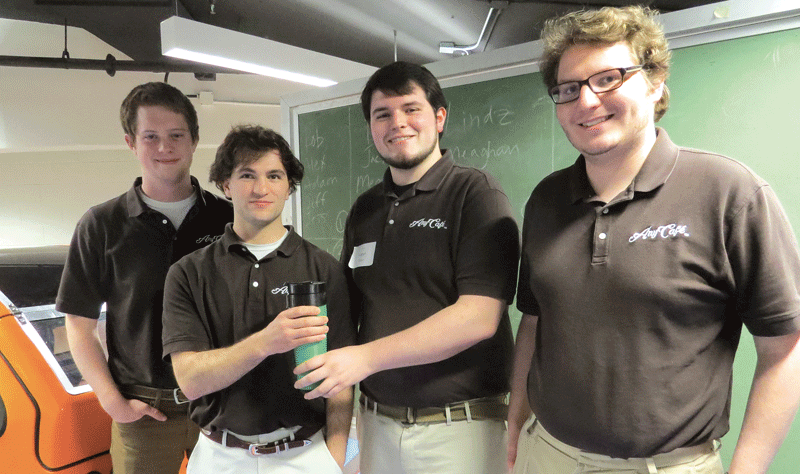
The team at AnyCafé: from left, Evan Choquette, chief information officer; Logan Carlson, CEO; Chris Urciuoli, president; and Ryan Noon, chief technical officer.

‘Community’ and ‘network.’ Those were the two terms used time and again by members of the second cohort of Valley Venture Mentors’ accelerator program to describe the program — and they speak volumes. While those involved with the 36 ventures are competing against each other for prize money, they are also staring down the same challenges of entrepreneurship, thus making that journey a little less daunting for their colleagues.

Jas Maggu was relating some personal sentiments. But she was also speaking for every member of Valley Venture Mentors’ second accelerator cohort — and also anyone who’s tried to turn an idea into a business.

Jas Maggu

Jas Maggu, founder of AuthenFOOD

“As an entrepreneur, it can get really lonely, and you have huge ups and downs,” said Maggu, who has launched a venture called AuthenFOOD, which will bring gourmet, healthy foods right to one’s doorstep. Through her participation in the four-month accelerator program, which wrapped up a week or so ago, she finds she is far less lonely.

And also more enlightened, more confident, better connected, and, in her mind, better able to stare down the many challenges standing between her and success.

She is not alone in these sentiments. Indeed, as BusinessWest talked with several members of the 36-member cohort — some of whom had already given final presentations before their peers, while others were going to have to sleep on it another night and stand at the podium the next day — many common sentiments were expressed.

Individually and collectively, they spoke of camaraderie and shared learning experiences; gaining a firmer grasp of their specific concept, the market for it, and what it will take to advance it; making important connections; and simply being able to share common challenges and emotions that explain what Maggu meant when she spoke of loneliness.

These sentiments came from a diverse audience trying to advance a seriously eclectic mix of business concepts. For example:

• Joe Salvador is on the verge of bringing to the market a new silencer, or noise suppressor, for firearms, a product he believes will resonate with shooters trying to not only improve their accuracy but save their hearing;

• Chris Urciuoli heads a team of fellow Western New England University engineering students trying to seize what they consider a huge opportunity with a product that will enable the user to brew a cup of coffee anytime and anywhere — hence the corporate name AnyCafé. They’ve already heard from the CEO of Keurig, who told them he believes they have the next logical entrepreneurial step in the ongoing saga of the K-Cup;

• Dr. Alex Louizos is a vascular surgeon and co-founder and CEO of Nanotech Galaxy, which is working to produce software that will enable surgeons to operate more efficiently and healthcare providers to reduce their expenses;

• Lora Fischer-DeWitt has developed a line of jewelry called Scout Curated Wears that is already in a number of gift stores in the region, including Cedar Chest in Northampton;

• Angela Lussier has launched a venture called Speaking School for Women, which, as that name suggests, was conceptualized to help women become better public speakers and, overall, more effective communicators;

Lora Fischer-DeWitt

Lora Fischer-DeWitt, founder of Scout Curated Wears

• Tom Skypek is co-founder of an online networking tool he bills as a “Match.com for government contracting professionals”; and

• Terra Missildine, already a serial entrepreneur — she has a ‘green’ cleaning company — has launched a family-friendly co-working space called Cultivate. She jokingly notes that she wishes she was in the accelerator before she opened the doors (more on that in a bit), but she nonetheless credits the experience with helping her attain early success.

Vastly different people with a wide range of ideas and a common dream (actually, several of them) — that’s what the cohort is. As for what it’s about … we’ll let the entrepreneurs do the talking.

In the course of doing so, they go a long way toward validating the optimism expressed by those who believe the intense accelerator regimen will help steel its participants for the rigors they will face and create a host of new employers for the region.


2016 VVM Accelerator Finalists (in alphabetical order)

AnyCafé: Developer of hot beverage solutions for the future, including the Travel Brewer
Celia Grace: Fair-trade, ethical wedding dresses that give back and empower women around the world
DaVinci Arms: Designer and manufacturer of firearms suppressors and accessories for mission-critical applications
Homebody Holistics: Maker of all-natural, hand-crafted, herbal cleaning solutions using no harsh chemicals or additives
iRollie: Niche-market phone-case manufacturer and online retailer featuring the rolling tray phone case
Livingua: An app that connects travelers to locals who know the language and culture wherever and whenever they want
Name Net Worth: Connective platform that leverages trusted relationships to measure and strengthen a user’s personal and professional networks
Need/Done Inc.: Instant help for kids at home from people your parent network trusts
Prophit Insight: Software company that helps healthcare providers identify and acquire unique sources of physician referrals
Scout Curated Wears: Designer, curator, and producer of thoughtful women’s accessories
Sumu: Works with property managers and landlords to post fee-free apartments to help users find their next home
Treaty: Nanotechnology company whose flagship product is FogKicker, a biodegradable anti-fog solution made from nanocellulose


Getting Down to Business

“Joe’s the man.”

That opinion was expressed loudly by someone in the conference room at VVM headquarters in Tower Square — exactly whom wasn’t entirely clear to BusinessWest — but there were several heads nodding at the suggestion.

‘Joe’ is the aforementioned Joe Salvador, and the commentary about him was not simply in reference to his suppressor concept — although that’s part of it. It’s clear that, over the past four months, he’s been able to help several of his cohorts, through everything from valuable connections to words of wisdom.

“Joe has put me in touch with someone I’m courting to be an advisor,” said Skypek. “And I know a lot of that has happened across the board; there’s a nice community of people here who are all in this together.”

Joe Salvador

Joe Salvador says the accelerator process has helped him better articulate his suppressor concept and identify target audiences.

Such reflections cut right to the chase when it comes to explaining the accelerator and its inherent value — to those taking part and the region as a whole. Indeed, while the 36 participants are competing against each other for bigger shares of the $250,000 in prize money that will be awarded at the Accelerator Awards on May 26 — everyone will get at least $1,000, and the top prize last year was $35,000 — they are, as Skypek said, in this together.

‘This,’ specifically, being the struggle — because that’s exactly what it is — to turn an idea into a viable business. So, in many ways, the accelerator is a type of support network.

The cohort members are in various stages of development — Missildine and Fisher-DeWitt, as mentioned, were already in business, while those at AnyCafé entered the program with simply a concept — but they all have the common goal of accelerating their progression.

The program they were chosen to be part of helps in that regard in several ways, from rugged weekend boot camps focusing on specific aspects of business management to back-and-forth between participants, to interaction with mentors who can help the entrepreneurs with the issues right in front of them while also assisting them with seeing around the corner and anticipating what will come next.

Much of this support could be described as a form of tough love, or challenging the participants, said Missildine, among others, noting that friends and family members, while they mean well, will often tell entrepreneurs what they think they want to hear.

“Here, you’re confronted on your assumptions, and you have to essentially prove things,” she explained. “And that’s important, because as an entrepreneur, you don’t always have someone pushing back on you regarding the assumptions you make about your business.”

Salvador said the various efforts to challenge his team to identify a market for its product and outline a course for moving forward have certainly helped in the progression of DaVinci Arms, which he described as a spinoff from Wilbraham-based FloDesign, which has developed noise-suppression equipment for several applications, including the military.

“When we started this, we had a really strong product that we had developed, but we really didn’t have the business side locked down — you had two engineers running the company,” he explained. “Through VVM, we’ve been able to gain a laser focus on every aspect of what was needed to grow our startup.

“We needed to have our financials really well-addressed, what our customers and market segment were, how we were going to engage that customer segment, what we were looking at for funding, how we were going to raise that funding, and much more,” he went on. “Basically, all the minutiae that builds up the business, that’s what we needed help with: the details of financing, marketing, and sales, all coming together.”

Dr. Alex Louizos

Dr. Alex Louizos credits the accelerator with helping him create more effective presentations for his software concept.

Through all of that, VVM and its accelerator program helped DaVinci hone its presentation and target it to a specific audience, he explained, adding that, before, the team was giving highly technical presentations that effectively went over the collective heads in the audience.

“At the start, I knew that suppressors were selling like crazy, but I didn’t know who they were selling to,” he explained, adding that, through the accelerator experience, the venture has gained key contacts, identified its primary audiences, and drawn a road map for moving forward, starting with product demonstrations and putting the suppressors in the hands of distributors in gun-friendly states like Florida, Texas, and Utah.

Missildine said the accelerator process has also helped her with the audience-identification process and other aspects of her business. She’s grateful for the help, but wishes it had come earlier; if it did, she might have done some things differently.

“I’m a lifelong entrepreneur, and I’m extremely impulsive,” she explained. “I opened the doors to my business in the second month of the accelerator, and already see what I would have done differently if I had gone through the whole experience prior to launch.”

Elaborating, she said she would have shopped, and negotiated, more effectively for a space for the co-working venture — she joked that she has the highest overhead of any venture in the Valley — and she would have expanded her team and not tried to do everything herself.

Through the experience, though, she’s proven what she’s believed all along — that her concept is scalable. And along the way, she’s found “camaraderie and community” on a scale she couldn’t have imagined.

“The accelerator plugs you into so many more resources than the homework that you do,” she explained. “By going through this, I feel that my company’s in a much better place.”

In Good Company

Louizos feels much the same way about his venture, which centers around using artificial intelligence — what he calls “smart software” — that empowers doctors to diagnose patients more quickly and also enables hospitals to analyze data in a way that saves both time and money. He credits the accelerator experience with helping him sharpen his business focus and better articulate complex subject matter.

“When I started the accelerator, I couldn’t describe what I was doing in a way that a 5-year-old would understand,” he noted. “I received lots of critical feedback in a way that helped me explain my idea in a way that makes sense to everyone and also creates some enthusiasm about it.”

Summing up the experience, he said it helped him identify and understand the weakest aspect of his business — because, as the saying goes, it’s only as strong as that point — and improve upon it.

Meanwhile, the team at AnyCafé didn’t exactly have a business when this accelerator session started. Instead, they had a concept, and a bold one at that — to bring to the market a device that would brew a single cup of coffee anywhere the consumer chooses.

The key to this concept — and what has apparently kept others from bringing something like it to store shelves — is battery technology that fuels the heater in the thermos-like device, team members noted, adding that they have perfected this technology and are ready to scale up this operation.

But the science was and is only a part of the equation, as the accelerator experience has shown them.

“We didn’t have much entrepreneurial experience, but we knew we wanted to do this,” said Urciuoli. “Over the past four months, VVM has taught us the way you have to think to succeed as a startup company; they’ve given us the spirit and the knowledge to go out and create our product and a plan to get it to the market and millions of individuals.”

Logan Carlson, another of the AnyCafé partners, agreed, and, echoing Salvador, said the accelerator experience has provided insight not available in the college classroom — especially the engineering classroom.

Tom Skypeck

Tom Skypeck was one of many who used the term ‘community’ to describe the 36 accelerator participants.

“It’s been a tremendous teaching experience,” he said. “Our knowledge has increased exponentially, just because of all the amazing people who are here.”

Maggu has been part of this teaching experience from many sides — she was a venture capitalist “in another life,” as she put it, and has been involved with VVM as a mentor. Now in the role of entrepreneur, she understands, even more than she did before, the importance of connections and learning from others going through similar experiences.

The accelerator process has given her both. Indeed, through her involvement with the program and connections made, she’s been able to forge a partnership with Fitness Together, one of several health clubs she works with to help individuals lose weight by eating better.

And she’s also learned by listening to and interacting with the other 35 participants.

“It’s been great to be part of this tremendous community,” she said, “where everyone you know is going through the same phases that you are.”

Like Maggu, Fischer-DeWitt said the prospect of starting a business can be very isolating. She then added another adjective: scary.

Things are somewhat less so than four months ago, she said, making frequent use of the words ‘network’ and ‘community,’ as so many others did, to describe what VVM, and especially the accelerator, creates.

“The connections have been amazing,” she said, adding that her business is growing rapidly — she’s now in 130 stores and has sales representatives in more than 20 states — and her experience in the accelerator will help her manage that growth and continue the expansion process in a smart fashion, literally and also figuratively.

Only the Lonely

The four AnyCafé partners now have matching dark brown golf shirts with their company’s logo. They had them on as they made their final presentation that Friday evening.

But they have much more than this wardrobe option, thanks to the accelerator. They have, as Urciuoli, said, much more of an ability to think as businesspeople, and not simply engineers with an idea.

Their learning curve, similar to that of other participants, but also unique in some ways, is what the creators of the accelerator program had in mind when they conceptualized it.

That, and making entrepreneurship just a little less lonely.

And in that mission, they have succeeded beyond all expectations.

George O’Brien can be reached at [email protected]

Opinion

Opinion

By Stephanie Anthony, Keith Nevitt, and Carol Raphael


Long-term services and supports (LTSS) enable hundreds of thousands of people of all ages in Massachusetts to live with independence and dignity in their daily lives, participate in their communities, and increase their overall quality of life. MassHealth, the Commonwealth’s Medicaid program, is the largest payer of LTSS, spending $4.5 billion (including federal Medicaid matching funds) on LTSS in 2015, representing nearly one-third of all MassHealth spending and 12% of the state budget. Although the demand for LTSS is projected to skyrocket, few people are aware of the likelihood they will need LTSS in their lifetime, and few viable LTSS financing options exist beyond MassHealth.

The increasing demand for LTSS, rising costs, and building pressure on the workforce, coupled with a care-delivery system that is fragmented and lacks meaningful quality measures, creates an LTSS system in Massachusetts that may be providing suboptimal care while simultaneously creating serious budget pressures on the MassHealth program. Additionally, the fragmented LTSS system is difficult to navigate, and may be increasing avoidable hospitalizations and ER visits and replacing much-needed functional supports with more expensive medical interventions. While Massachusetts is widely recognized as a leader among states in healthcare reform, it is near the middle of the pack on LTSS system transformation.

Massachusetts has a unique opportunity to address these issues and become a bellwether state on LTSS transformation, as state policymakers and stakeholders are coalescing around LTSS reform more than ever before. Not only have stakeholders unanimously identified LTSS reform as one of the top five priorities facing the MassHealth program, but demographic trends predicting increased LTSS demand and spending are also propelling LTSS closer to the center of MassHealth policy debates. State policymakers are incorporating LTSS and LTSS providers into broader discussions about MassHealth payment and care-delivery reform, recognizing the interdependencies among medical care, LTSS, behavioral-health services, and social-support services in promoting health and well-being for some of MassHealth’s most vulnerable members.

To become a leader on LTSS reform, Massachusetts must establish a quality-driven, affordable LTSS purchasing and delivery system strategy. Implementation of the strategy will require a multiyear commitment and should result in a system that is person-centered, integrated, sustainable, accountable, and actionable.

The LTSS system of the future likely can be achieved through various models, but the best vehicle is one in which a single entity or network of entities assumes financial responsibility and performance accountability for coordinating and delivering comprehensive care to LTSS populations and is vigorously monitored by the state.

Regardless of the vehicle, community-based LTSS providers must be at its core, as they have the expertise needed to serve diverse LTSS populations. Such an entity, particularly one paid through a risk-adjusted global or shared savings payment arrangement and accessing Medicare financing for dually eligible populations, will have more flexibility than providers in the current system to creatively address people’s needs in a person-centered and cost-effective manner and to integrate and coordinate physical healthcare, behavioral healthcare, and LTSS.

To successfully design, implement, and oversee this transformation, the Commonwealth must designate a senior health and human services official to be responsible and accountable for the LTSS system. It must also invest in hiring highly skilled contract management and analytic staff in order to vigorously monitor integrated care programs and hold them accountable for providing high-quality, effective, and accessible care.

In addition, the state must monitor the financial performance of contractors, particularly those taking on financial risk and/or reward, to ensure effective stewardship of state and federal resources and instill a level of confidence that public dollars are being spent wisely.v

Stephanie Anthony, Keith Nevitt, and Carol Raphael serve as director, senior analyst, and senior advisor, respectively, for Manatt Health, which was commissioned by the Blue Cross Blue Shield of Massachusetts Foundation to study and report on LTSS issues in Massachusetts. For the full report, visit bluecrossfoundation.org.

Employment Sections

Don’t Try to Disprove Evolution

By Peter Vickery

Peter Vickery

Peter Vickery

Is a hospital allowed to terminate a Muslim employee who refuses to be vaccinated on religious grounds, or would termination constitute unlawful discrimination?

That was the question confronting the U.S. District Court for the District of Massachusetts when Leontine Robinson sued Boston Children’s Hospital under Title VII of the federal Civil Rights Act and Chapter 151B of Massachusetts General Laws. The short answer? The hospital was entitled to summary judgment, meaning Robinson lost. But as for the reasons why she lost, employers should take note of the many steps the hospital took in an effort to accommodate Robinson, steps that in combination amounted to a ‘reasonable accommodation’ sufficient to fend off her claim of discrimination.

Need the hospital have gone to the trouble of taking those steps for fear of a lawsuit? The well-reported cases of the past few years send mixed messages. Some suggest that many judges are deaf to pleas for religious liberty, while others have ears to hear. On one hand, the U.S. Supreme Court has held that hijab-wearing job applicants have a right to be hired by Abercrombie & Fitch despite the company’s no-headwear policy and that Hobby Lobby has the right to refrain from paying for its employees’ abortifacients despite the dictates of the Patient Protection & Affordable Care Act.

On the other hand, unless the Supreme Court rules otherwise, the federal Department of Health and Human Services — with the approval of six different federal courts of appeal — will continue insisting that the nuns of the Little Sisters of the Poor must pay for contraceptives. Similarly, after a Catholic prep school (Fontbonne Academy in Milton, Mass.) rescinded its job offer to a man when it learned that he was married to another man, the Superior Court for Norfolk County held that the school had discriminated against him unlawfully.

Notwithstanding the fact that Fontbonne based its decision on a religious objection to same-sex marriage, it was not entitled to any sort of dispensation from the state. Incidentally, the school would have been on firmer ground had it limited its enrollment and employment to Catholics, but by welcoming people of all faiths and none, it ran afoul of the Commonwealth’s anti-discrimination law (yes, you read that correctly).

So, given the experience of Little Sisters of the Poor and Fontbonne Academy, one could be forgiven for thinking that, when a children’s hospital — by definition, a place for the treatment of children who are ill, some of them very seriously — instructs its employees to get vaccinated against influenza, it would be perfectly all right for the hospital to respond to a simple ‘no’ with an equally simple ‘goodbye,’ even if the employee cites religious grounds. That is not the current state of our Commonwealth’s anti-discrimination law, however. Boston Children’s Hospital demonstrated admirable wisdom and foresight in not immediately directing Robinson to the door marked ‘exit.’

The case began in 2011 when, in accordance with recommendations from the American Academy of Pediatrics and the Mass. Department of Public Health, the hospital adopted a policy requiring those employees working in patient-care positions to be vaccinated against the influenza virus. Robinson refused. She was often the first employee to come into contact with patients, and her job involved touching them and sitting close to them. She also happens to be a Muslim, more specifically an adherent of the Nation of Islam, and initially she said the basis for her refusal was the presence of pork byproducts in the influenza vaccine.

At this juncture, although it is not relevant to the legal analysis of Robinson’s claim of religious discrimination, readers may wish to note that, within Islam as a whole, on this issue at least, the Nation of Islam is a bit of an outlier. In 1995 (coincidentally, the year Robinson started working at Boston Children’s Hospital) the Islamic Organization for Medical Sciences ruled that the series of chemical reactions by which porcine products turn into gelatin is transformative, so much so that the resultant gelatin is not ‘judicially impure’ but ‘lawful and permissible.’ Therefore, according to the Islamic scholars who authored the 1995 statement, observant Muslims are allowed to receive vaccinations via gelatin that, prior to its transmogrification, contained pig tissue.

But the Nation of Islam takes a different view of vaccines, as do some Scientologists, a few minor Christian denominations such as End Time Ministries, and Robert F. Kennedy Jr.  The year after the Islamic scholars issued their statement, the Nation of Islam’s minister of health declared all vaccines suspect and recommended a “moratorium for all African-American members of the Muslim faith.” Although it was issued in 1996, Robinson only learned of this recommendation in November 2011.

From that point forward, she foreswore all vaccines, possibly regretting the tetanus shot she had received in September. Nevertheless, so far as the hospital was concerned, the loneliness of the Nation of Islam’s anti-vaccine position among Muslims in general and the fact of Robinson’s prior vaccines were not trees worth barking up: judges are loath to assess the sincerity and bona fides of a litigant’s religious professions.

To recap, Robinson, an employee at a children’s hospital, refused a mandatory influenza shot on religious grounds that it was pig-based, and even though mainstream Muslim opinion holds that the vaccine is permissible, the hospital did not simply fire her. Rather, in order to accommodate her religious objection (the initial one), the hospital offered Robinson a pig-free version of the influenza vaccine. But by that stage, Robinson had learned of the Nation of Islam’s moratorium on all vaccinations, so she refused that too.

Again, instead of firing Robinson, the hospital attempted to accommodate her. Human resources arranged an interview for a clerical position, a job that did not involve direct patient care, but for which Robinson was not chosen. After that, she did not apply for any other positions in the hospital. After that, the hospital not only granted Robinson a two-month leave of absence to look for work, but also assigned an HR employee to help her.

When the two months were up and Robinson had not found new employment, the hospital gave her two more weeks. Finally, when the additional two weeks expired, it categorized Robinson’s separation from the hospital as voluntary so that she could apply for other positions. In February 2014, Robinson sued the hospital for religious discrimination.

At summary judgment, the court assumed that Robinson could show that her vaccine refusal was based on a sincerely held, bona fide religious belief, so the burden shifted to the hospital to show either that it had offered her a reasonable accommodation or that a reasonable accommodation would be an undue burden. The court found in the hospital’s favor on both counts: the hospital had offered a reasonable accommodation (see the preceding paragraph), and the accommodation Robinson requested would have been an undue hardship (her working in a patient-care position without vaccination would increase the risk to the hospital’s already-vulnerable patients).

What should Massachusetts employers take away from this case? First, that Title VII and Chapter 151B prohibit discrimination on the basis of religion. Second, challenging the bona fides of an employee’s professed belief is a fool’s errand. As the court stated. “although inconsistencies between a person’s conduct and her professed religious beliefs may suggest insincerity, they may also reflect an evolution in the person’s religious views.” Do not try to disprove evolution.

Third, on the bright side, an accommodation is not reasonable if it would generate undue hardship, which in turn means that the employer does not have to create a new job for the religious objector.

Fourth, and perhaps most importantly, as a practical matter, an employer should bear in mind the burden-shifting formula and prepare to demonstrate two things in detail: (1) that it attempted to accommodate the employee’s religious objection, and (2) precisely how the particular accommodation that the employee requested would cause undue hardship.

Peter Vickery practices employment law in Amherst; (413) 549-9933.

Daily News

Opinion

EditorialBWlogoIf the media reports are accurate, Springfield will soon be without professional hockey — and professional sports of any kind — for the first time in more than 50 years.

The Springfield Falcons have been sold, according to multiple reports, and it is very likely that the franchise will be relocated to Arizona. If that’s true, the question becomes, ‘what does Springfield do now?’

The natural reaction would be to say that the pursuit of a professional sports team — or another team — moves from something somewhere in the middle of the to-do list (a phrase that sums up the quiet efforts recently to attract the Red Sox’ Triple A farm team, which is still looking for a new home) to a real priority.

The theory goes that a city like Springfield needs a professional sports team to have an identity, to bring additional vitality to its central business district, and to make its arena or convention center profitable. And there are many that subscribe to that theory, including some here in Springfield.

But that’s just one theory. There are many cities that thrive without professional sports and don’t need it to have what would be called an identity.

Springfield is experiencing progress on a number of fronts — from MGM’s casino, to new manufacturing jobs, to a growing culture of entrepreneurship. If it continues to move forward in these areas, it’s easy to envision vitality without a sports franchise playing at the MassMutual Center, or anywhere else.

And in the meantime, the city may not really have a choice in this matter. While the Springfield Falcons have long been part of the city’s fabric — and BusinessWest presented its Difference Maker award to Bruce Landon for keeping hockey in the city for decades — one would have a very hard time making the case that Springfield, and this region, truly supported the Falcons. Having a legacy of hockey isn’t enough to make it work in this city.

We advise Springfield Mayor Domenic Sarno and his economic development team to address this matter with proper due diligence, and not pursue a professional sports team merely to secure dates for the MassMutual Center’s arena and to attempt to bring people downtown.

Moving forward, we believe that sports should just be one priority, and like other pursuits that fall in the category of economic development, it would have to make sense for all parties involved.

And that’s something that couldn’t be said of the Falcons and their recent history in the city.

Features

Bad Writing Inc.

By JOEL SAMBERG

Good writing in corporate America is dead.

Well, not really, at least not entirely. But with a considerable number of e-mails, press releases, newsletters, advertorials, and other forms of internal and external communications showing signs of carelessness, it’s not exactly the picture of health, either.

While there is plenty of accomplished writing coming out of Springfield-area businesses and organizations (some generated in-house and some provided by skilled marketing communications agencies), too often it is the sloppy, nominal work that stands out. Through indifference, good writing has been devaluated in corporate America. That needs to be reversed.

It’s bad enough when you receive a poorly written e-mail from the human resources department (after all, they’re the ones who should know all about the skill sets needed to grow business); it’s even worse when a white paper prepared by the corporate communications department has misspellings and misplaced modifiers.

The promotional merits of good, effective writing must never be underestimated. Too many executives and managers fail to recognize that whatever is written on behalf of their products, services, and projects — including hiring efforts and networking ventures — can end up as archival material that represents their companies for years to come, even if that’s not the intention.

This includes websites, brochures, e-newsletters, advertorials, company-wide e-blasts, and much more. In today’s cyber world, anything can show up anywhere and last forever. That’s just the way it is. Rambling, boring, ostentatious, cliché-ridden, or grammatically challenged writing can easily come back to haunt. Good writing from the start pays off.

Unfortunately, fewer people seem willing to take the time. Most employees claim they are overworked to begin with; who has time to reread something twice before sending it out?

E-mail is one of the biggest victims, from subject lines to body copy. How often have you received an e-mail that has absolutely nothing to do with what the subject line indicates? The subject line might say “Kittens & Puppies,” for example, and because of that you may decide to wait until the next afternoon to open it. But it could, in fact, be from your biggest client asking you to meet him early in the morning for an important discussion that concerns an income-earning opportunity.

Your client simply hit ‘respond’ on your last e-mail — the one in which you presented a promotional idea tying in to a local pet shelter — and wrote a new e-mail without bothering to change the subject line. That income-earning opportunity would have been missed simply because the subject line on an e-mail wasn’t changed.

I received a corporate e-mail the other day for which the subject line read “Re,” followed by body copy that said, “Tomorrow is fine my bad for not getting back to you sooner.” The fact is that e-mail is fast and easy — too fast and easy. It empowers us, making us feel as if we are dynamic skippers on the information superhighway with no need for self-evaluation, and certainly none for criticism or even assistance.

Many companies rely on their own employees to provide content for business communications, including websites. Often it’s a budgetary decision: why hire a communications firm or reputable freelancer when writing is a fundamental skill we have all learned in school? I believe that’s one of the reasons why professional writing is not always seen as a valuable corporate commodity.

But here’s the problem: yes, we can all write, but we can all add, subtract, multiply, and divide, too, yet would you want to use just any employee to run your accounting department? Good writing is actually a specialized skill. Fewer people are willing to acknowledge that fact.

Here’s an actual line from a website I recently reviewed: “The owners of the company have made a commitment to continue to provide the excellent service and expertise which has lead to the success of these firms through the years.”

The owners may have a commitment to service, but evidently not to syntax or spelling.

Thousands of press releases are generated every day. When deciding which ones to save and which to discard, editors won’t be charitable to the ones that are weak and unconvincing. Here’s an actual selection from a release issued by a nonprofit organization: “On March 4, three planes loaded with thousands of pounds of emergency resources and supplies delivered much-needed goods to the local orphanage. ‘When we approached the orphanage to see what we could do to help them, we were simply doing what all of us do every day,’ the organization’s president said.”

Does the president’s comment do anything to truly set him and his organization apart?

I took the liberty of pulling together a few simple suggestions to help put an emphasis back on good, effective writing, particularly for the in-house crowd for whom corporate communications may not be a primary job description.

• Reread everything several times before deeming it final — at least once for the sole purpose of eliminating as many words and phrases as possible;

• Avoid clichés like a pandemic;

• Simple words and phrases are always better than those that try to impress;

• Know your audience;

• Recognize that your audience is as stressed and as cautious as you are, and will find it easy to dismiss what they read if it doesn’t grab them right away; and

• Get a second pair of eyes to read all material — preferably someone who isn’t already familiar with the topic. Beg for their honest opinion. Listen to them.

Help might actually be just a water cooler away, because most companies have people on staff with a proven facility for writing and editing who can provide a little bit of editorial support. They may appreciate being asked to help because they, too, may very well wish to keep good writing alive.

So go ahead and send out an internal e-mail to find the right person to provide a fresh pair of eyes. But be careful: in the subject line, please do not write “Fresh Pair.” You’d probably get a nasty e-mail back from HR. You don’t want that — even if it’s well-written. n

Joel Samberg is a freelancer who offers time-efficient, cost-effective corporate writing and editing for businesses, organizations, and individuals. In addition to press releases and newsletters, he also helps out with white papers, advertorials, speeches, brochures, websites, presentations, slogans, special projects, and more; joelthewriter.com; [email protected]

Opinion

Opinion

By DAN DOLAN

When the Vermont Yankee Nuclear Power Plant closed in 2014, 620 megawatts of power generation went offline. Over the next few years, that closure will be followed by Somerset’s Brayton Point Power Station and Plymouth’s Pilgrim Nuclear Power Station, taking more than 2,100 megawatts with them.

At first, it might seem concerning for the region’s power grid to lose three major power plants. But the responses to the retirements are signs of a strong energy future for Massachusetts — a path that should be allowed to continue without the intrusion of subsidized Canadian hydro power.

Just a few weeks ago, an auction to commit to be online three years from now saw a record amount of competition. Billions of dollars in new, local investments are being made today to develop the next wave of plants and hire workers to provide reliable and competitively priced electricity supplies. By mid-2019, three new plants are slated to open in Massachusetts alone. New plants being developed in Massachusetts, Connecticut, and Rhode Island will be some of the most efficient in the country, helping us continue to serve as leaders on environmental responsibility.

And this isn’t the beginning, either. The electricity sector has outpaced every other sector of our state’s economy in reducing carbon emissions over the past 25 years. Between 1990 and 2013, carbon-dioxide emissions from power plants dropped 51%, according to the U.S. Department of Energy. Because of that, Massachusetts today has one of the cleanest and lowest-carbon-producing power-generation systems in the nation. In fact, electricity is the primary reason Massachusetts is on pace to meet its economy-wide mandate for a 25% reduction in emissions by 2020.

Unfortunately, relatively little has been done to curtail carbon emissions from the largest source — transportation. The transportation industry in New England has actually increased its carbon emissions and now emits more than double that of power plants. The next step toward a cleaner environment must be a comprehensive plan to address transportation as the main hurdle to meeting long-term Global Warming Solutions Act mandates.

The great progress made on electricity in Massachusetts should be allowed to continue, ensuring a strong energy future. Power plants are being retired and replaced without the need for state government to step in to subsidize new, cleaner investments. Canadian hydro is already part of our system, competing with all other power-generation sources to deliver the lowest price possible to consumers. But the radical plan to enter into expensive, decades-long contracts with Eversource and Hydro-Quebec will jeopardize that future.

If the Massachusetts hydro power plan is approved, energy bills are estimated to increase by up to $777 million each year for Massachusetts residents and businesses, according to a recent study by the Analysis Group, one of the most respected economics consulting firms in North America. That’s more than $20 billion over the life of the contract.

These costs are primarily driven by two factors. First, Commonwealth ratepayers would be on the hook for the construction of expensive, controversial high-voltage transmission lines, currently proposed through places like the White Mountain National Forest. Second, government-owned Hydro-Quebec, which has its own interests to consider, will not sell power to Massachusetts at a below-market price.

So why make this risky bet? A major concern for this plan is that it will enrich two utilities without a clear analysis of how Massachusetts ratepayers stand to benefit. Eversource is partnering with Hydro-Quebec in pushing to build the hundreds of miles of transmission lines, and the two are the strongest proponents of the subsidies proposal. They stand to earn hundreds of millions of dollars in profits for building these lines if they receive the subsidy from Massachusetts consumers. However, they have yet to produce an economic analysis of the cost of the proposed decades-long contracts. The Analysis Group report, which shows shocking rate increases for consumers, is publicly available and was presented at the legislative hearing on the bill.

Massachusetts is on the right path for a strong energy future. But, while new power plants are being built here through market demand, supporting jobs and contributing much-needed tax revenue to cities and towns, Eversource and Hydro-Quebec want to avoid having to compete. They shouldn’t be allowed to receive a carve-out worth billions of dollars.

This hydro bill is a bad bet for Massachusetts consumers. The Legislature should reject the bill and focus on better ways to reduce carbon emissions. The utilities don’t deserve the subsidy.

Dan Dolan is president of the New England Power Generators Assoc.

Opinion

Opinion

By Paul Peter Nicolai

The public needs a more complete and honest discussion of the likely costs and benefits of commuter rail service between Springfield and Greenfield.

Most of the advertised benefits for commuter rail service come from a 2009 feasibility study done to justify rebuilding the rails from Springfield to Brattleboro. Like most of these studies, the projections come from computer models. I was on the committee that issued the study.

Because we got money to rebuild the rails, we have actual numbers. The first phase of the feasibility study happened.  The Vermonter now runs on the line.  We can compare what is actually happening to what the computer model said might happen. It turns out the computer model projections are not even close:

• The ridership projection is 73% off;

• The projection of how many new people would be riding as opposed to how many people would be using trains instead of other transportation is 99.4% wrong; and

• The study’s capital cost projection was only 20% to 50% of the actual bill.

The study said moving the Vermonter to the new track would increase ridership by 98 passengers a day. The actual number is 26 passengers a day.

The study made assumptions about how many of the additional riders would be new riders — people new to the market.  These new-rider numbers are the basis for projections on how many additional people would live in the towns on the line, how many additional new jobs would be created in those towns, and how many millions of dollars of new economic activity those towns would see.

What actually happened is there are practically no new riders. While the Vermonter picked up 788 new passengers a month, private-sector bus services lost 761 passengers a month. This means the actual number of new people is 27 a month.

When you use actual numbers to inform the computer-generated projection, what we could reasonably expect is commuter rail service would have 540 riders a day, not the projected 2,000. When you apply the experience of what is happening with people getting off other travel means and onto trains, we should reasonably expect about three new riders a day.

Three new riders a day have no economic impact. The 537 riders who stop using other transportation to use the trains do not create new economic impact. They are already here.

On the cost side, even at 2,000 riders a day, it’s projected that between $3 million and $4 million in tax dollars will have to be paid annually to run the trains. That is after $100 million in tax dollars to buy them.

Because we now know ridership is much more likely to be about 25% of the computer-generated projection, the tax dollars needed to support these trains is much more likely to be around $4.5 million a year.

The MBTA is going to run these trains. MBTA is funded by a combination of state money and contributions from communities where MBTA stations are located.  When you apply what MBTA does in the rest of the state to this new service, Springfield, Holyoke, Northampton, and Greenfield will have to contribute a total of around $1.7 million in property-tax dollars a year — somewhere around 7% of their total DPW budgets.

So, the bottom line is that Springfield/Greenfield commuter rail will:

• Have actual ridership of about 25% of what was projected;

• Create no new economic activity. It may actually be negative when you count the bus drivers and maintenance people who will lose their jobs; and

• Require an operating subsidy about 150% of what was originally projected, including $1.7 million a year from local property taxes.

Is it worth spending $100 million to buy trains and then $4.5 million a year to run them so an additional 90 people a month are attracted? Aren’t there more important things to do with scarce tax dollars?

Paul Peter Nicolai is president of the Springfield-based Nicolai Law Group; [email protected]

Daily News

GREENFIELD — The Connecticut River Watershed Council and Art for Water are creating a ‘river of words’ to draw attention to the federal re-licensing of five major hydroelectric facilities from Turners Falls to north of Hanover, N.H. This public-participation, community art project will tell stories to improve the ecological health and recreational opportunities of the Connecticut River. The public is invited to add their voice at Great Falls Discovery Center, 2 Avenue A, Turners Falls on Saturday, March 5 at 1 p.m.

“We are working together to bring a public-opinion art installation to the state and federal government,” said Andrew Fisk, executive director of the Connecticut River Watershed Council, noting that the government is in the process of making decisions about how these dams will operate over the next 30 to 40 years. “You have a unique opportunity to influence how 200 miles of the Connecticut River and its tributaries … will be managed, restored, and improved.”

At the art installation, he added, “we are building an inspiring and influential art exhibit that is made up of your stories and aspirations for our rivers. It’s called ‘The Power of Water, The Power of Words’ because our voices do have the power to influence positive change.”

To learn more about presentation, call (413) 772-2020, ext. 206.

Opinion

Opinion

By Maura Healey

It’s been nearly two years since the state declared prescription-drug and heroin addiction a public-health emergency. Since then, we’ve had an all-hands-on-deck approach from lawmakers, police and fire chiefs, health professionals, and community groups.

But our collective efforts haven’t been enough. Until we change the culture around how opioids are prescribed and dramatically reduce the number of pills available, people will continue to die.

Since 1999, the number of prescription painkillers sold in the U.S. has nearly quad-rupled. In 2014, there were 4.6 million opioid prescriptions written in Massachusetts alone — enough for nearly every adult in this state to have a bottle of pills. Meanwhile, overdose deaths have risen by more than 300%.

We won’t solve this crisis until we cut it off at its root, by reducing the use of prescription opioid painkillers like OxyContin, Vicodin, and Percocet. Cheap heroin is not a new problem; it’s been around for decades. What is new is that four out of five heroin users report having previously used a prescription opioid. These powerful drugs are a synthetic version of opium. They’re heroin in a pill.

The opioid epidemic is the direct result of years of overprescribing painkillers to everyday people, who get hooked on an extremely addictive substance, then turn to heroin when they can no longer afford to sustain an expensive pill habit.

While heroin is certainly a problem, three times as many Americans are hooked on opioids. Pharmaceutical companies told us for years that they weren’t addictive, but we know better now. Medical studies have shown that up to a third of long-term opioid users meet criteria for addiction, and that physical dependence can happen in as few as five days.

While the vast majority of prescribers are trying to do the right thing, we must end the illegal prescribing we know is taking place. My office has formed an investigative group to identify practitioners who are illegally prescribing opioids to people who shouldn’t have them. This partnership will allow state and federal law-enforcement agencies to share information about individuals who run ‘pill mills’ or prescribe to people with a history of substance abuse.

But to combat the opioid crisis more fully, we need societal change. The Centers for Disease Control and Prevention has proposed nationwide guidelines to help medical professionals across the country understand when and how opioids should be used, particularly for chronic pain. The pharmaceutical lobby and some sectors of the medical community have pushed back against these guidelines, calling them too restrictive. But here’s my view: thousands are dying, and something desperately has to change. Thirty-six other state attorneys general share that view and recently wrote a similar letter in support of the guidelines.

There’s another simple solution that can be put in place immediately. We need prescribers to check the state’s prescription-monitoring program every time they write a prescription for highly addictive drugs. The program can flag when a patient is receiving multiple prescriptions, doctor shopping, or showing signs of addiction. Right now, only one in four doctors checks. Gov. Baker has proposed that all prescribers check the prescription-monitoring program every time they write one of these prescriptions. When New York State passed a similar mandate in 2012, it saw a 75% drop in doctor shopping. This modest step can save lives and is time well-spent.

Those who continue to push back against safeguards like these should spend time with any of the thousands of parents across this state who have lost a child to opiate addiction. All too often, theirs are stories of high-school athletes and honor-roll students who became hooked on opioids after an injury. Others began by experimenting at a party — but if our medicine cabinets weren’t full of prescription painkillers, our kids wouldn’t have such easy access to them.

We can’t hear those stories any longer and fail to act. Other countries have figured out how to manage pain without releasing a flood of dangerous drugs into their communities. We need to do the same. If we don’t, the deaths will continue.

Maura Healey is the attorney general of Massachusetts.

Opinion

Opinion

By Domenic Sarno

The New Year is an appropriate time to reflect on all of the important milestones that have been achieved in Springfield over the past year, and to prepare for a 2016 that promises to be even more prosperous.

It is clear that 2015 has been extremely significant in terms of our city’s economic development history. The city’s largest project ever, MGM Springfield, has progressed from an interesting concept several years ago to a fully realized $950 million project in 2015 with site preparation and demolition now underway. This project will result in 3,000 new, permanent jobs and will bring new amenities to our downtown that will help support and attract further development.

CRRC Corp. also made great progress in 2015, completing its site purchase and breaking ground on a $95 million railcar production facility that will bring state-of-the-art manufacturing and assembly back to the historic former Westinghouse site. As many Northeastern cities deal with a continuing loss of industry, Springfield is welcoming 150 new, permanent jobs to the CRRC facility, with the possibility of many more to come as the company seeks additional contracts across the country.

While projects of this scale are incredibly important to our city and regional economy for many reasons, what is even more exciting is the spinoff that will be created. MGM Springfield will spend $50 million on local contracting each year, which means more small-business jobs, more tax revenue, and more activity than what happens just within the project footprint.

We’ve already seen a hospitality-driven company like Falvey Linen, an 85-year old Rhode Island business, making the largest investment in its history in establishing a new facility here in Springfield. CRRC Corp. will have a similar effect on our local small-shop manufacturing economy because its production will require a constant influx of specialized parts and products.

The positive impact of the rebirth of Union Station is obvious. Vacant since the 1970s, the station is now undergoing an extensive renovation, and many signs of progress are evident. With the former baggage building now fully demolished, the historic terminal building being fully restored, and a 377-space parking garage starting to rise, the future of transit in our city is starting to come into focus.

By the end of 2016, we will have reopened a gleaming new Union Station. Soon thereafter, we will welcome regular commuter service to Hartford, New Haven, and beyond, in addition to our regular Amtrak service. This project, too, will generate tremendous spinoffs of economic and real-estate development.

These two mega-projects, Union Station and MGM Springfield, will become thriving bookends for our very walkable downtown, which is itself experiencing a rebirth. Springfield Museums is working diligently on a new Dr. Seuss Museum that will become a major attraction. And Silverbrick Lofts, with assistance from the city’s market-rate-housing program, has become a huge success in redeveloping the former Morgan Square apartment complex into a place where young professionals have started to flock for urban living.

The city has also partnered with MassDevelopment to create a Transformative Development Initiative district, which has brought with it a host of tools for revitalizing the former Entertainment District as a fully functioning innovation and dining district.

Of course, innovation is nothing new to the ‘City of Firsts,’ and we have been steadily putting the pieces together to a downtown that is truly unique. From Valley Venture Mentors to Tech Foundry; from TechSpring to DevelopSpringfield’s Innovation Center, substantial momentum is building in Springfield. And this trend is attracting a wide range of entrepreneurs and innovators.

Ultimately, what this wide swath of economic activity means is we are entering a year when workforce readiness will be a priority. All of the exciting projects currently underway will not be successful if we cannot link our Springfield residents with appropriate skills-training programs to prepare them for the opportunities on the horizon. The city has already begun investing in workforce training related to these opportunities, and that focus will only become more intense as we move closer to fruition on so many of these projects.

The public sector, of course, cannot move forward on these projects and efforts alone. It will take the cooperation and participation of businesses, nonprofit organizations, higher education, neighborhood councils, and many others. It will be absolutely critical that we are all rowing in the same direction.

Domenic Sarno is mayor of Springfield.

Banking and Financial Services Sections

Continuing the Momentum

Glenn Welch

Glenn Welch says the community-focused culture at Freedom Credit Union is similar to what he experienced in his previous president’s role at Hampden Bank.

Under 12 years of Barry Crosby’s leadership, Freedom Credit Union dramatically expanded its assets, employee base, membership, lending reach — pretty much all the metrics by which a financial institution is measured. So former Hampden Bank President Glenn Welch, recently chosen to succeed the retiring Crosby, is taking the reins at a time of significant momentum for Freedom. He says the institution will continue to seek out growth opportunities, while maintaining its emphasis on commercial lending and community involvement.

Glenn Welch’s move from Berkshire Bank to Freedom Credit Union wasn’t very far geographically — just a half-mile north on Main Street in Springfield — and, to hear him tell it, perhaps even less of a move culture-wise.

“One of the things I heard before coming here — from at least four people who used to work at Hampden Bank was that Freedom reminded them very much of Hampden with its community orientation,” said Welch, a 17-year veteran of Springfield-based Hampden Bank and its president from 2013 until its acquisition by Berkshire Bank last year.

“You can’t just take people’s money and make loans these days,” he added. “If you’re a community institution, you have to be involved and doing things in the community. That’s how you generate goodwill and increase your customer base.”

After the Berkshire merger, Welch stayed on for several months as executive vice president. But after Freedom Credit Union President Barry Crosby announced his retirement last June and Freedom hired a Boston-based recruiting firm to find the institution’s next president, Welch was among the names chosen as possibilities.

“It was a long process, and we were very thorough,” said Lawrence Bouley, who chairs Freedom’s board of directors. “We brought other candidates forward as well, but found Glenn best fits with our organization, with the commercial background he has, as well as being a local banking leader; he knows the area and knows its people.”

Welch, who spoke with BusinessWest on Jan. 4, his first day on the job at Freedom, agreed that the match is a good one. “Fortunately, I was the one they chose,” he said. “Freedom Credit Union is a very community-minded organization, the same as Hampden Bank was. Plus, they’ve had a real push forward into business lending.”

Specifically, its designation as a low-income credit union allows it to avoid the cap on commercial lending — 12.5% of assets — that most credit unions must adhere to. This, and an aggressive commercial-loan push in recent years, has seen the institution recognized as a top SBA lender in the region, a shift that mirrors Hampden Bank’s commercial-loan growth during Welch’s days at the reins there. “With a real focus on commercial loans here,” he said, “it seemed like a good fit on both sides.”

Specifically, Crosby added, in the past five and a half years, Freedom has gone from no commercial loans to more than $36 million. “It has been slow, steady growth. We’ve grown the department from one individual to five positions.”

That reflects the overall growth of the credit union during Crosby’s tenure. When he came on board in 2003, the bank had one office and 38 employees; today, it boasts 11 locations and 135 employees. Meanwhile, membership has grown in the past 10 years from roughly 16,000 to more than 27,000.

Steady Growth

That growth came both organically and through a series of strategic acquisitions. The credit union’s second branch, in Northampton, came about through a merger with Franklin Hampshire Building Trades Credit Union in May 2004, followed by the opening of a Chicopee branch that November. The following year, a merger with Four Rivers Federal Credit Union brought Freedom offices to South Deerfield and Turners Falls.

Two more branches — in Greenfield and Feeding Hills — opened in 2009, and expansion to Easthampton followed in 2010. A year later, a second Springfield branch opened in Sixteen Acres, and 2012 saw the tenth site open in Ludlow. The most recent office is located in Putnam Academy in Springfield, and is staffed in part by high-school students, many of whom, once they graduate and move on to college, return to work there over winter break. Currently, 12 Freedom employees are Putnam students or graduates.

“With the continued consolidation in the industry,” Welch said, “Freedom having branches up and down I-91 provides a lot of opportunity across the Valley for local decision making.”


Go HERE to download a PDF chart of area credit unions


The broader resources that come with being a larger institution also make it easier to introduce retail and commercial products, Crosby added, from the Freedom@Home online banking platform to a program known as CUPs, or Credit Union Partners, which offers local businesses and organizations a no-cost benefit package for their employees and retirees, including special promotions for checking and savings accounts and several types of loans.

Freedom has placed much importance on financial education as well, educating area youth at schools and colleges from Springfield to Greenfield through its youth-banking and financial-literacy programs.

For each elementary school in the youth-banking program, employees visit schools to accept deposits, review monthly statements, and explain the fundamentals of saving. Meanwhile, high-school students learn about topics like the importance of maintaining good credit and the process of getting a car loan. Freedom also participates in area Credit for Life financial-literacy fairs — a collaborative effort with other institutions — that teach teens about budgeting and making life decisions with their finances.

The credit union has also conducted new-homebuyer seminars through the Puerto Rican Cultural Center and the New North Citizens Council. Welch again pointed out similarities with Hampden Bank’s activities during his tenure, which included Credit for Life and new-homeowner seminars, among other financial-education efforts.

Deep Roots

Freedom Credit Union was chartered in 1922 as the Western Mass. Telephone Workers Credit Union.  From a small office in the telephone company building on Worthington Street in Springfield, the institution grew until it had to find a new, larger home on Main Street.

As a result of telephone-company downsizing and reorganization, the credit union eventually expanded to include select employee groups. But growth was incremental until January 2001, when the institution applied for a community charter, and membership eligibility was expanded to include anyone who lives or works in Hampden, Hampshire, Franklin, or Berkshire county. In January 2004, just after Crosby took over as president, the membership voted to change the name to Freedom Credit Union.

Barry Crosby, left, and Lawrence Bouley

Barry Crosby, left, and Lawrence Bouley agree that Glenn Welch’s experience, community ties, and commercial-lending acumen make him a good fit to lead Freedom.

“When I took over as president 12 years ago, we were still the Western Mass. Telephone Workers Credit Union, but we changed the name to reflect the broader community, and we are now known up and down the Pioneer Valley,” Crosby said.

Indeed, deposits in Franklin County grew from $10 million to $66 million in that time, and from $17 million to $75 million in Hampshire County. Today, Freedom is a $522 million institution.

“We’ve more than doubled our assets and membership in that time,” he went on, emphasizing the importance of a physical presence in communities, even in an age when online banking is extremely popular. “In my opinion, you need brick and mortar in key locations in the market you want to be in. You cannot just do everything online. Even Millennials need to see bricks and mortar to recognize your name.”

He cited the example of Realtors Federal Credit Union, which launched in Maryland as an online-only enterprise. “It didn’t succeed. They thought they’d run that place with 20 people nationwide, but you can’t replace bricks and mortar in key locations.”

Welch agreed. “When the Internet became popular, some people at Hampden thought we didn’t have to build any more branches. But we doubled our branches to 10. People want to come into a bank and recognize the person behind the counter and know the branch manager. Finance is very personal for people. When you don’t have a high level of touch, it just doesn’t work.”

Efforts to broaden that ‘touch’ at Freedom include financial education targeted at the region’s expansive Hispanic population — Springfield is 38% Hispanic, and Holyoke 48%, and the numbers are larger in the school systems — with efforts like Spanish-language financial-literacy articles in regional Latino publications as well as targeted messaging on TV and radio.

Future Look

Welch, who earned his bachelor’s degree in finance at Western New England University and his MBA from UMass Amherst, held a number of positions at Hampden Bank before becoming president there, including chief operating officer, executive vice president, and senior vice president of business banking. Before that, he served as vice president of the Middle Market Banking Group at Fleet Bank.

His deep roots in the region are also reflected by his civic volunteerism in the Pioneer Valley, including serving on the boards of HAPHousing, the Assoc. for Community Living, the Business School Advisory Board at Western New England University, DevelopSpringfield, and Springfield Business Leaders for Education.

He arrives at a growing credit union that continues to expand its services and recently put its staff through additional training to help them better identify member needs and match them with available products and services — an effort to create more members for life.

“We’ve built a great base for the future,” Crosby said. “We have strong capital, we’re regulatory-compliant, and we see great opportunities over the next few years.”

For his part, Welch said Freedom will continue to examine potential expansion of its geographic footprint while broading its commercial-lending reach and cross-selling services to its existing membership base.

“We see a lot of opportunity here,” he told BusinessWest — and a likelihood of continuing more than a decade of strong momentum.

Joseph Bednar can be reached at  [email protected]

Opinion

Opinion

By Jeffrey Ciuffreda


Jobs are coming our way, but are we ready? And what about the jobs already here?

As we start the new year, it is time to ask these questions and, more importantly, answer them. Actually, the process of doing so got off to a good beginning in 2015. However, there is much more to be done in 2016.

CNR Changchun Rail Vehicle Co. is coming to Springfield with between 150 and 300 jobs, many requiring skilled engineers and machinists. MGM Springfield is finally underway with construction, requiring 3,000 jobs upon its planned 2018 opening, and efforts are already underway to be sure that the vast majority of those workers will come from this region, an effort that requires training programs to be up and running soon.

These are the jobs we know are coming our way, and with these two internationally known companies coming here, you can be sure other companies will become more focused on our region and, therefore, its workforce.

The Springfield Regional Chamber of Commerce is pleased to be working with the EDC of Western Massachusetts and the Regional Employment Board of Hampden County, along with our community colleges and others, to help ensure that we not only have a trained workforce ready to fill these positions, but that we have enough of those trained in the workforce to fill them and other positions that might be vacated by those moving from existing employers.

At the same time, we must acknowledge that far too many of our area resident, for one reason or another, do not have the skills necessary to take advantage of certain opportunities, but might have abilities suited for other types of jobs. What are those jobs?

The Springfield Regional Chamber is proud to have joined with a few other organizations in and around Springfield to hire an internationally known consulting firm to look at this specific area — not only what types of jobs we should try to attract, but what skill sets might already exist so that we could readily entertain specific businesses to locate here. While we will always strive to do better and attract higher-wage jobs, we should not overlook any opportunity to bring any employment to the area. The results of this study will be an invaluable tool for our future growth.

Speaking of the jobs that are already here, let us never overlook the fact that so many of our long-time businesses in this area have been here not only for years, but for decades. Let us also not overlook that many of those companies are small businesses, and by small I mean under 25 employees and in many instances under 10. These are the businesses that we count on year after year after year to employ our residents and that continually add jobs.

These are the same businesses that often get caught up in new legislation and new regulations ranging from mandating certain benefits to setting wages to regulating how they operate. While I am not saying every piece of legislation and regulation is bad, I am saying that these small businesses often struggle to comply with one, and then, just as they adapt, they find they are faced with another new one, two, or three new measures with which to cope.
Special efforts should be undertaken to ensure that no harm is done to these small businesses, which have been, and quite frankly always will be, the backbone of our economy.

The year ahead will be a time of growth as new businesses prepare to enter our market, but it should also be a year when great care is taken to not only not harm the businesses we already have here, but also take steps to assist them in their efforts to stay and expand here.

We all can do our part by supporting local businesses and products as well as our local teams and venues.

Jeff Ciuffreda is president of the Springfield Regional Chamber of Commerce; (413) 787-1555.

Features

Questions and Answers

RENDERING_-View-of-Main-and-Howard-Street-Rendering

design for MGM Springfield

These two renderings, one from 2013 (top) and the other from this fall (bottom), show the dramatic change in design for MGM Springfield, which has been a source of recent controversy.

It’s been an interesting, and in many ways frustrating, year for MGM and its project in Springfield’s South End. Ground was broken in March, but soon after, a decision was made to move the scheduled opening back, from 2017 to 2018, to coincide with conclusion of the I-91 viaduct project. Later, amid announced changes to the design, including the scrapping of the planned hotel tower and a reduction in the overall size of the footprint, there were questions about the company’s commitment to the Springfield project — and hastily called press conferences to confirm that commitment. Mike Mathis, president of MGM Springfield, admits that the company made some mistakes over the past several months, but he also admits that he was surprised by, and in some ways unnerved by, a perceived lack of trust in the company to keep its word and build a first-class facility in Springfield. He believes those doubts are now in the past, and in this wide-ranging Q&A, he explains why, and also why he believes 2016 will be a year of movement and much-needed momentum.

BusinessWest: Back in March, MGM staged an elaborate groundbreaking ceremony in the South End. There were several hundred people there, lots of excitement, and great anticipation that this project was going to start changing the landscape. That hasn’t happened, obviously. Can you talk about what appears to be a false start, why the South End looks the same as it did nine months ago, and why the timetable has been pushed back to late 2018?

Mathis: “We certainly expected that the groundbreaking in the spring would roll into demolition of the Zenetti School, which was the backdrop for the groundbreaking, and then new construction. But shortly thereafter, we started to hear rumblings about the viaduct project and the new timelines related to that. We heard the rumblings that it would be delayed past our late September [2017] opening, to the tune of 12 months or so.

“As a result of that, we started thinking about our own schedule over the spring and summer of 2015. There’s an inner relationship between the viaduct project and our project; I have to be careful with percentages, but about 90% of our arrivals will come off 91, so the viaduct is a crucial part of our business plan. When we realized that project would be delayed past our opening, we spent a good deal of the spring and summer trying to understand the new schedule, the performance history of the contractor, and the nature of MassDOT’s history on delivering on projects.

“And, no matter how good you felt about their ability to do it, we wanted to build in a little bit of conservatism. For a very long time, the project showed a late-2017 completion, and in many ways that made us nervous because there wasn’t much opportunity for slippage … we heard that there might be a new timeline associated with letting that contract out by the state, and we just reacted to it.”

BusinessWest: As it turned out, that change in your schedule was just the beginning when it came to emerging doubt about MGM’s commitment to Springfield and this project, which culminated in several press conferences and project updates this fall, where you and others with the company reaffirmed that commitment. Can you talk about what transpired and why?

Mike Mathis

Mike Mathis says he believes MGM has put concerns about the company’s commitment to Springfield and the South End project in the past.

Mathis: “I’m not sure how it happened, frankly. It was a combination of factors, and I think it was a perfect storm of events in terms of what was perceived as bad news upon bad news. And there may have been a little too much radio silence from us.

“I personally made the decision, and it was supported by the local team, that it’s a mistake to continually deny something that has no rationale in it. So we went quiet when people were saying ‘this is a signal’ and started talking about MGM’s lack of commitment. That void allowed some of the naysayers to get out there and talk about how this was the first shoe to drop, whether it be the schedule extension or the proposed design changes.

“When you really talk to a lot of people who were concerned, it was less about those specific items or the substance of those specific items; it was concern that it was the beginning of something else.”

BusinessWest: What has been the basic strategy when it comes to quelling these concerns, with both the public and elected officials?

Mathis: “Just getting information out to people, information that we believe shows that we are committed to Springfield.

“It didn’t help that some of this news dropped during the last six weeks of a municipal election cycle, because I think everyone’s looking for their issue to rally around, and for whatever reason, painting MGM as the bad guys that were going to be held to their promises was something that certain elected officials thought was a rallying call for their constituents. I didn’t understand it, I still don’t understand it, but I like to think we’re past it.”

BusinessWest: Certainly part of that perfect storm you described was the decision to scrap the hotel tower in favor of a six-story facility. Can you talk about that decision and why you think it became such a lightning rod for criticism and doubt?

Mathis: “Personally, I knew the tower was significant visually, because we touted it in a lot of our materials. So I expected to have a dialogue about it, I expected people to ask questions, and we were prepared to answer those questions. Early on, we had the support of the mayor, and his architectural consultant called the change brilliant, said it energized Main Street, and was more consistent with what we were doing with the rest of the project.

“We knew people would feel strongly about the tower, and some people would feel strongly in favor of what we were doing. But I think we were expecting a little more deference as the world-class developer to the changes we proposed. What surprised me and what surprised the team was the lack of trust that some of the public had in our expertise in this area.”

BusinessWest: Does the lack of a tower put MGM Springfield at any kind of competitive disadvantage, in your opinion?

Mathis: “We really don’t believe the tower is a competitive factor. Part of this road show I’ve been on explaining all these changes is explaining to people that the tower is the least compelling part of our project. And some of the comments we got during the evaluation process, by both the city and the state, back that up; the tower was actually called out, and analysts said it was the least attractive part of the project in terms of what we’re trying to do downtown.

“One of the things I’ve been saying to people is that ‘you can’t see the tower from Hartford.’ The power of our project is the MGM brand, the marketing, the outreach, the programming you put at the MassMutual Center in terms of entertainment. In multiple-jurisdiction markets, you have the competition of the neon across the street; it’s the ‘hey, look at me’ factor. So you need something very visual.

“Foxwoods has a tower, Mohegan has a tower, but a tower doesn’t distinguish the project. If anything, the low-rise we’re proposing is a cooler feature; being on Main Street is a more unique experience.”

six-story facility

Mike Mathis says MGM does not believe that scrapping the hotel tower for a six-story facility will present a competitive disadvantage.

BusinessWest: Let’s talk for a moment about this project and doing business in Massachusetts and Springfield, a state and a city that are new to the casino industry and therefore new to the process of building a casino. What has that been like, and how it is different from — and more challenging than — building in Las Vegas, for example, and how has this played a role in the public-relations troubles and trust issues that emerged over the summer and fall?

Mathis: “What’s unique about Massachusetts and the Springfield project is that we’re doing it under so much public scrutiny. So much of it is in different venues, be it the city or the Gaming Commission. And we knew coming into this opportunity that this was a privileged license, and as a result, the public feels, and rightfully so, that they have an ownership stake in the project.

“I can’t think of anything in the MGM portfolio where we’ve come into a process like this; in Las Vegas or Macau, and in multiple-license jurisdictions in general, they tend to be more pro-development, and it’s development as a right, as I describe it. And because of that, we joke around in the office these days to never take for granted the days when we could go down to Clark County, which is the jurisdictional body in Las Vegas, and pull a permit; you pull a permit, and three years later we see you at the grand opening. That’s oversimplifying it, because they do have some control over some of the program and design, but generally it’s development as a right.”

BusinessWest: So has this been a learning process in some respects?

Mathis: “It has been. For MGM, this has been a pretty unique, sort of sole-license jurisdiction bid, and I don’t think we were quite ready for the kind of scrutiny that came with this.

“But in fairness to the public and some of the folks we’ve been dealing with through this process, much of this has been self-inflicted by MGM because we made some significant changes in the design, and but for those changes, I think we’d be well on our way — not from a scheduling standpoint, because that was outside of our control, from our view, but from a design and momentum standpoint, we feel we’d be in a different position if we didn’t need to make some of the changes we proposed.

“But this isn’t unique. We make some of those kinds of changes with our other projects all the time, and you wouldn’t notice, much less feel it from the public like we have. Things are exponentially simpler in Las Vegas and some of the other jurisdictions we’ve worked in because there’s already an established procedure for these kinds of projects. They care about parking, and they care about certain architectural elements — how far is the building set back, what are the heights, some really objective criteria. And once you check those boxes, you’re generally good to go.”

BusinessWest: How close is MGM to being good to go with its Springfield project? Do you believe you’ve put doubts about the company’s commitment to Springfield and this project behind you?

Mathis: “The quick answer is ‘yes.’ If we hadn’t earned trust back in 2012, 2013, or 2014, I think we earned it with this last round of discussions. What I’m hoping is that, if or when there’s an issue, next time we get a little more of a benefit of the doubt from the public.

“I hope there’s a sentiment that we’re not leaving town, we’ve made a substantial commitment, and every day that goes by, our commitment grows. And I hope that elected officials give us the time to work through an issue, knowing that we have the best interests of the city in mind.”

BusinessWest: Certainly the doubts about MGM’s commitment to Springfield have been fueled by the rumors that Foxwoods and Mohegan Sun, with the support of the state, will be building another Connecticut casino close to the border with Massachusetts. If that third casino becomes reality, how does that impact your plans for MGM Springfield?

Mathis: “If that competition comes, and it comes across the state line — which is not the best thing for Connecticut or Massachusetts, because there are other opportunities in Connecticut that aren’t in our backyard that would be better for MGM but also better for Connecticut — it won’t impact our project other than to potentially increase the investment we’re going to make.

“That’s because we’re going to have to be that much more attractive a destination. From what I’ve understand, what they’re talking about in Connecticut is a slots facility, $300 million or so, which represents about a third of what we’re investing here. It’s tailored to the convenience gambler, and on the edges that will hurt our business, but what I think will be really important in my mind, as leader of this venture, is that it will simply raise the bar for what we have to do in Springfield and make it that much more worth it to go the extra 20 minutes to get to our facility.”

BusinessWest: Looking back over the past nine months or so, what could, and what should, MGM have done differently?

Mathis: “That whole process of going from where we had a large amount of support from the public to having things devolve into putting out fire after fire is one of those situations where the more you refute something, the more you legitimize it, and that’s something we tried to avoid early on when some of the naysayers came out and questioned our commitment. I don’t know if there’s ever a right way to handle something like that because it’s not completely rational.

“We’ve done what feels like a postmortem on the past six months, trying to think about how, if we had to deal with some of these same issues again, we might do things differently, we might handle them differently. I think part of the challenge we’re always going to have is being transparent with the public in sort of real time. And that doesn’t lend itself to perfect or full information.

“We’re always going to err on communicating a problem and then finding the solution. Maybe we could have done a better job of letting people know that ‘this is the problem, and we’re working on a solution.’”

George O’Brien can be reached at [email protected]

Health Care Sections

Steering Committee

Al Parrow

Al Parrow enjoys driving for the Road to Recovery program so much that he bakes cookies for patients and the people who work in the chemotherapy and radiation units.

When Al Parrow retired from his job at ADT Security Systems, he never imagined that, a year later, he would spend his days driving people he didn’t know to and from doctor’s appointments.

But the 70-year-old has become part of a team of dedicated volunteers who make a profound difference in people’s lives through the American Cancer Society’s Road to Recovery program. The initiative provides free transportation to people who have no other way to get to cancer treatments, and volunteers say the gratitude those patients express is more than enough payment for using their own vehicles and gas.

Parrow signed up as a Road to Recovery volunteer four and a half years ago after he began to get bored with retirement, and says he has been behind the wheel constantly ever since.

“I seldom say ‘no’ if they call me; I’ll drive five days a week if someone is without a ride,” he told BusinessWest as he spoke about the intangible rewards of the position. “Everyone is so appreciative, and they always thank you.”

Gary Watson

Gary Watson drives two to three days a week for the Road to Recovery program and has taken people as far as Boston for cancer treatments.

“I drove one man to his daily radiation treatments, and he didn’t speak English, so we couldn’t converse, but each time I picked him up, his wife stood in their front window and bowed to me,” he went on. “On the day of his final treatment, she came running out and gave me a big hug, then they stood together and bowed in the rain while I drove away. It is the highest sign of respect. Little things like this mean so much, and volunteering is uplifting because everyone you meet is so grateful. The rewards are phenomenal, and it’s worth every trip every day.”

Gary Watson could not agree more.

He’s been a Road to Recovery driver for more than six years, and enjoys it so much that, when he was unable to drive after surgery, he worked from home as a program coordinator. But once he regained his strength, he got behind the wheel again, because he finds the personal interaction very satisfying.

“I started doing this because I wanted to do something after I retired that would be rewarding and allow me to meet wonderful people,” said the 73-year-old, explaining that, when he saw an item in the newspaper seeking drivers for the program, he knew it would be a good fit, because he has known many people with cancer and is a good driver.

Although the majority of volunteers take people only to appointments at local hospitals, sometimes a patient needs to go to Boston for a second opinion or specialized treatment or procedure, and Watson is always willing to go the distance.

“I knew there was a need for long-distance drivers, and it was something I was willing to do,” he said.

Several years ago, the Springfield resident was recognized with a Driver of the Year Award, but he told BusinessWest to downplay the honor. “I’m just so glad there is a program that offers a service like this for folks who truly need transportation. They’re very grateful,” he said.

Indeed, that’s exactly how Betty Swanson feels. “I don’t have any family whatsoever, and I wouldn’t be able to get to my treatments without this program,” said the 78-year-old. “I’m a widow, we never had children, and I don’t have any siblings. I do have a car, but haven’t been able to drive since I had surgery last December.”

Parrow has given her many rides, and she enjoys his sense of humor. “He is such a nice man and keeps me in stitches all the way to my appointments. When we arrive, he gets out of the car, opens the door, and comes into the building with me. I tell him he doesn’t have to do it, but he takes my mind off of things,” she said.

Driving Force

Karen Mernoff , Road to Recovery coordinator for Hampden and Franklin counties and the South Shore of Massachusetts, says comments like Swanson’s are typical.

Drivers in this program often ease people’s troubles simply by their willingness to help, she noted.

“We can’t cure people’s cancer, but we can make their life easier during treatment,” said Mernoff. “Most of them don’t have family in the area, and many elderly people have stopped driving.”

It is for these reasons and many others that the Road to Recovery program, which has been operational for many years, is currently in dire need of volunteers who are able and willing to transport people to chemotherapy and radiation treatments or procedures.

“We recently had to turn people away who were desperate for a ride, and some had to miss their cancer treatments as a result,” Mernoff explained.

Michele Dilley urges people who are interested in volunteering to call the American Cancer Society at (800) 227-2345. “I truly believe this is a life-saving program for people who don’t have family nearby,” said the ACS program manager for mission delivery in the Bay State.

Background checks are conducted on all potential drivers. But anyone who is 18 to 85 with a clean driving record, a reliable and insured vehicle, and a desire to help is welcome.

Referrals come from social workers or patients who call the ACS, and Mernoff said she does her best to match drivers with people who live near them to reduce the time they are on the road.

She told BusinessWest about an elderly patient who was taking two buses to get to chemotherapy, and added that it hurts to have to tell people there is no one who can give them a ride. And since many volunteers are seniors and go south during the winter, the need for help increases at this time of year.

Volunteers are free to drive as little or as often as they want, and if someone is having a hectic week, it’s perfectly acceptable to say they aren’t available.

“There are no penalties, and people can take breaks or vacations whenever they want,” said Mernoff. “We are very flexible, and if something comes up and someone can’t drive or has to take time off for a personal matter, it’s fine.”

Joe Audette

Joe Audette says volunteers for the Road to Recovery program perform a valuable service in the community.

In most cases, volunteers take someone to an appointment, bring them home, and are able to return to their own home within an hour.

“Sometimes the person just needs to go for blood work. But if they didn’t have the ride, they couldn’t get it done, which is why our program is so critical,” she continued. “But we don’t expect people to go out in a snowstorm or really bad weather.”

Still, some drivers are so dedicated, they will do their best to get patients the care they need, even in inclement weather.

Joe Audette is one of them. After retiring from a 42-year career with the U.S. Postal Service and thinking about volunteering at a hospital, he discovered the Road to Recovery program.

“I like to drive, like meeting new people, and wanted to give back to the community,” said the 69-year-old.

He has driven patients to and from appointments for the past three years.

“I’ll drive anytime unless the weather is so bad that they cancel everything; some people are in treatment every day or every other day, and the ACS tells you how long the appointment is likely to be,” he went on. “It’s interesting, and you meet some really nice people. I’m not much of a talker, but I try to cheer them up by keeping the conversation light and commenting on the weather or the way people in cars around us are driving. I stay in the office once we arrive because they might get done early or need an extended amount of time. And it feels so good when they thank me.”

The Ride Stuff

Audette has also gone above and beyond for some people. For example, a man he drove was upset because his prescription wasn’t ready at the pharmacy when they arrived after his appointment. So, although Audette knew it wasn’t part of his job, he offered to pick it up later. “I wanted to ease his worries,” he said.

In another instance, a woman accompanied her husband to the treatment, but told Audette there was no need for him to stay while her spouse had a procedure.

“But she changed her mind, and when it was over, she told me she was glad I was there. She would have sat in the waiting room for several hours by herself, and you never know what’s going to happen or what’s going on in someone’s mind,” Audette said. “I’ve had surgeries and always had family members or someone there to pick me up. I knew I wasn’t alone, and don’t want anyone else to feel that way.”

He has been invited into people’s homes, and at least one family has offered him something to eat. But that rarely happens and is not something he’s comfortable with. But he loves the interaction that occurs while he drives.

“One lady was Russian and didn’t speak any English. So we used hand signals to communicate, and when we got to the hospital, we were laughing,” he recalled.

He added that, although some of the people he has transported have their own cars, they can’t drive because of medication they are taking, and often don’t want to take a bus because their immune systems are compromised.

Occasionally volunteers and patients get to know one another well enough that the patient requests that particular driver when they need a ride again. “But it’s not necessary to form relationships with the people you transport, and we don’t expect it to happen,” Mernoff said.

Parrow is extremely outgoing, and has laughed and joked with patients.

“I’m a cribbage fanatic, and since I usually wait for the patients, when I found a lady who also liked the game, we played during her chemotherapy treatments,” he told BusinessWest.

Parrow has also encouraged people to continue with their treatments when they tell him they are discouraged and feel like stopping.

“And because I like to cook, I bake cookies and give them to the patients and people who work in the radiation and oncology units,” he continued. “Not everyone has to do as much as I do, but I lost my mother to cancer more than 30 years ago, and if she was still alive and sick, I hope someone like me who enjoys driving would give her rides.”

Worthy Cause

In addition to losing his mother to cancer, Parrow has also lost a brother, sister-in-law, and niece. He finds the volunteer work meaningful and brings different types of music on CDs to suit the tastes of those he’s driving. “Everyone doesn’t have to do these things,” he said. “But I really enjoy this.”

Audette expressed similar feelings. “I feel good about doing something useful for someone else, and hope I give each person a few minutes of happiness,” he said, explaining that they often laugh together.

But, enjoyment aside, this volunteer work makes a profound difference.

“I can’t tell you enough how important this is,” Swanson said. “I have no other way to get to my appointments and no one else I can count on. This program is a lifesaver, and I appreciate it so much.”

Education Sections

A Second Chance

Angela Gonzalez and Eboni Lopez

Angela Gonzalez and Eboni Lopez say Phoenix Academy Charter School in Springfield has helped them become successful.

Kayliana De La Cruz was quite candid as she talked about what her freshman year of school was like at Commerce High School.

“I had put a hard shell around myself and stopped caring,” said the 18-year-old from Springfield. “I kept everything inside; my face was like stone.”

Her attitude was reflected in her academic track record: she missed 100 out of 180 days and received horrible grades. “They kept me putting me in credit recovery, which meant sitting in front of a computer, and I just didn’t care,” she recalled.

Everything changed when a representative from Phoenix Academy Public Charter High School in Springfield gave a presentation at Commerce and her guidance counselor suggested she fill out an application.

She took the advice, albeit reluctantly. And although she initially found the stringent rules at Phoenix “really annoying,” today De La Cruz is — in her opinion and that of those around her — a much different person.

The transformation — very much still in progress — results from a combination of small classes, endless support, and the feeling of family generated within the school, which has has broken through her barriers and motivated her to succeed.

“Phoenix is a place where people rise from the ashes and get the chance to start again,” she told BusinessWest, as she wiped tears from her eyes and spoke about the help and personal attention that have led to her laudatory achievements.

“I’m a little softie now. I am doing really well. I’m running for student president, and I help a lot of other students,” she explained. “Everything is just coming naturally now.

“I passed the MCAS exam, and I really want to go to college,” she went on. “And if I see other students leaving the building, I tell them they better have a good excuse. Phoenix has made a real difference in my life. If I hadn’t come here, I don’t know where I would be right now.”

The teen’s high praise is mirrored in stories from other students who told BusinessWest they felt like failures and were ready to drop out before they found a safety net in the new downtown charter school, located within the Technology Park at Springfield Technical Community College.

“Our mission is to challenge students with rigorous academics and relentless support so they can recast themselves as resilient, self-sufficient adults in order to succeed in high school and beyond,” said Head of School Mickey Buhl.

He said the key to the school’s success is not just small classes, but the multi-faceted support and encouragement students receive from teachers so dedicated that many are there until 7 p.m. each night helping young people master their assignments.

“Their economic futures would be bleak without a high-school diploma, and our school creates an opportunity for them to move into a middle-class life; it’s our reason for being,” he said, adding that students cannot graduate from Phoenix until they have a letter of acceptance to a college, and groups have been taken to visit Boston University, Salem State University, UConn, Yale, and other institutions of secondary learning.

For this issue and its focus on education, BusinessWest goes inside the recently constructed walls of this unique facility to discover the reasons for its success and why it is worthy of the name on the door.

Network of Hope

The charter school, which opened its doors in September 2014 in temporary quarters, is part of the Phoenix network. Its first school was founded a decade ago in Chelsea; the second was an alternative public high school in Lawrence, which Phoenix was asked to run when the town went into receivership; and the third is its Springfield location, which serves students in Springfield, Chicopee, and Holyoke.

Students wear uniforms and are given a free Pioneer Valley Transit Authority bus pass to get to school, where the day runs from 9 a.m. to 5 p.m., with the exception of Fridays, when the hours are 9 a.m. to 1 p.m.

“We serve students ages 14 to 22 who need a second chance because they have not been successful in a traditional school,” said Buhl. “I was working today with a student who dropped out six years ago.”

He noted that many of these ‘scholars,’ which is the name given to all students, either left school or planned to due to continued failure and frustration.

Operations Director Angela Gonzalez is a graduate of Phoenix’s flagship school in Chelsea. She did well as a public high-school freshman, but lost interest in her sophomore year. Her mother was extremely strict, and once she discovered she could leave school or skip it entirely and they wouldn’t call her home, she began taking advantage of the newfound freedom.

That changed when a truant officer saw the teen on the streets. When she was taken back to school, she was told she would have to repeat the year because she had been absent 75 times, which meant she wouldn’t graduate with her class.

Gonzalez was referred to, and signed up for, Phoenix Academy, and although she had no plans to attend classes, a school official came to her house if she didn’t show up to change that equation.

“My mother would send him into my bedroom, and he told me I had 20 minutes to get up and get ready. And it worked,” she said, adding that the support she received and the knowledge that people cared so much about her was inspiring.

Mickey Buhl and Corey Yang

Mickey Buhl and Corey Yang say the support and personal attention scholars receive at Phoenix inspire them to achieve more than they thought possible.

“I could sit with the principal at lunch and share how I felt,” Gonzalez said, adding that the school’s leader was instrumental in keeping her on track when she got pregnant during January of her senior year.

“I thought I had ruined my life, but there was never any judgment — it was all about moving forward,” she recalled, adding that she is happy to be working at Phoenix, where she can give other students the same encouragement she enjoyed.

The school has a no-excuses policy, and Buhl said the staff has very high academic expectations. “We need the students to establish a new image and think of themselves as scholars,” he told BusinessWest, adding that society has labeled his students failures, and they feel that way when they arrive.

“But they do become scholars here; they are smart and have abilities and talents,” he noted. “Just because they have hard things knock them off track doesn’t mean they can’t achieve the same academic outcome as other students.”

By the Book

To meet that goal, classes are kept small by design, and many students stay after school for extra help. In addition, there is a voluntary Saturday session established by a teacher who conducts the sessions without pay.

“Our teachers really buy into the mission that we’re here to help students, and they are committed to helping them recast themselves as successful academically and personally,” Buhl said. “Our goal is to break through obstacles and change the scholar’s direction, and our teachers’ patience and extra effort are really remarkable. They invest heavily in their relationships with the kids.”

For example, many conduct home visits, even though it’s not required, and some go to appointments with students that range from court to counseling, while others take students shopping.

“We don’t succeed with every kid, but we do hold them to strict academic, behavioral, and attendance standards because we know they will have to overcome obstacles if they want to go to college and get a job to support themselves and their families,” Buhl explained. “They have to be resilient enough to overcome their pasts.”

He added that some students dropped out last year, but returned in the fall. “We tell them we will never lower our standards, but if they fail they can come back and try again.”

Community support also plays heavily into the equation.

“I have been a principal for 15 years in elementary, middle, and high school, and have never had support like this,” Buhl said. “There are at least 50 community agencies that we have partnered with to serve our scholars.”

They include organizations like the Young Parenting Program, the Department of Youth Services — some students are on probation or involved with the court system — and Springfield Public Schools. The latter works with Phoenix very effectively, and guidance counselors and principals frequently refer parents and their teens to the charter school.

Healthy Families is another nonprofit that connects with teachers and staff to coordinate services such as counseling, home support, and transportation. And the school has received a tremendous amount of help from STCC and the Technology Park.

“They’re a big reason why we are here; they wanted a school in this building, and the Technology Park has been integrally involved in our development,” Buhl said, explaining that, when Phoenix opened last year, classes were housed in a variety of rooms in the park while a building was renovated for it.

The school was completed in time for a September opening and includes its own day-care center, which is important because many students drop out because they get pregnant and have no one to watch their baby or children.

“We call it the Little Scholar Center,” Buhl said, adding that everyone in the school — staff, students, and the little scholars (if their parents choose) eat lunch together at the same time, which allows them to form close relationships.

Americorps volunteers also spend time at the school, tutoring students for the MCAS exams. And although staff members understand that the young people they are working with have a wide range of experiences, which can include being expelled or suspended from other schools, standards are rigid, and no exceptions are made.

Change of Heart

On a recent day, Anaeishly De Jesus sat in the principal’s office and proudly pulled an exam out of her book bag.

“I just got this back; it’s my history midterm, and I got an 89,” she said, wiping joyous tears from her eyes, as she spoke about her newfound academic success. “I’m getting A’s now. I was never like this before, but this school has changed me. I feel at home; the people are my family.”

It’s a far cry from where De Jesus was when she started at Phoenix; she cried bitter tears when she was told she was being sent to the charter school.

“I had been making bad choices, skipping classes, and disrupting teachers,” the 17-year-old said. “But I didn’t care because I was going to drop out.”

Anaeishly De Jesus and Kayliana De La Cruz

Anaeishly De Jesus and Kayliana De La Cruz say they are doing well in school thanks to the second chance Phoenix offered.

That changed as soon as she sat down in her first class at Phoenix. She felt comfortable and said the support since that time has been amazing. “If I do something bad, they don’t throw it in my face,” De Jesus noted, explaining, however, that students get demerits for things like chewing gum, having their phone out, or cursing.

“I didn’t ask for help at first, but my algebra teacher kept telling me she knew I could do the work,” she said. “I told her over and over that I couldn’t, but she insisted I could, and she sat down and showed me how.”

To her astonishment, she was able to follow the teacher’s instructions and completed the assignment.

“After that, I started finishing all my work, and also did my homework. It gives me energy to know that people actually care and want me to be successful in life,” she went on. “They give you a lot of chances here, and if you make a mistake, they still stand by your side. Kids can come here until they are 22, and you don’t get a GED; you get a real diploma.”

The belief that students can and will change if they are repeatedly encouraged and given another chance to do well is exemplified by Eboni Lopez, who transferred to Phoenix from Commerce High School.

“I used to skip classes, skip school, and was hanging out with the wrong crowd,” she said, adding she was going through some difficult life situations, which included being bullied.

She attended classes at Phoenix last year but remained unmotivated. However, this year, the 17-year-old has set ambitious goals for herself.

“I didn’t want to be here when I was 20, and knew I needed to change, so I put my foot down. I’m getting good grades, and my attendance is good now, too,” she said, adding that she is looking forward to graduating next year, enjoys playing soccer at school, and is interested in a career as an athletic trainer.

“I feel like I fit in this building,” Lopez said. “The people here push us to do everything we need to do. You have to meet the standards, and I don’t want to waste time. I am trying to get back on top.”

Corey Yang also attended Commerce before starting at Phoenix in September. At Commerce, he said, he was frustrated because he wasn’t making any progress and his teachers weren’t offering him extra help, even though he needed and wanted it.

The teen felt alone and unsupported, so he left school early each day or skipped it entirely, and was failing as a result. “I like learning new things, but I wasn’t getting anything out of school,” he told BusinessWest.

But that has changed since he entered Phoenix.

“I’ve met new people and am working hard,” he said, noting that he has attended the Saturday sessions because the teacher is a former wrestling coach and sets aside time for teens to wrestle under his supervision if they choose to do so, which Yang enjoys.

“I wanted to change and start trying; I wanted to see what would happen if I pushed myself,” he said.

And he has done exactly that, thanks to unprecedented support. “People want to help me with my work here and will also help get me into college,” the 16-year-old said, adding that his goal is to study computer engineering after graduation.

Expanding Opportunities

Last year, Phoenix accepted 125 students. This year, it has 175, and next year, it plans to accept 250 young people who need and want a second chance.

It’s a place where encouragement never ends. Twice a week there is a community meeting with the entire school body, and students and staff give each other shout-outs, recognize each other’s work with beads, and even publicly choose to apologize for inappropriate behaviors.

“Phoenix symbolizes rising after you have been burned, so students who have been kicked out of other schools always get a second chance here,” De La Cruz said. “To me, it’s a really amazing symbol.”

Environment and Engineering Sections

What Goes Around …

Noah (left) and Seth Goodman

Noah (left) and Seth Goodman left their family’s paper recycling business to establish Northstar Recycling and fill a void in the marketplace.

Noah Goodman scrolls through photos on his smartphone, searching for a picture of a whiteboard.

It was taken before he and his brother, Seth, opened Northstar Recycling, and showcases the first step they took in establishing their company: Creating a set of core values.

The list includes, “We Do First Things First”; “We Count on Each Other for Help”; “We Do Our Personal Best Today”; “We Do the Next Right Thing”; and “We are Impeccable With Our Word.” But the final item, which is underlined and was written in capital letters, reads “WE HAVE FUN!”

It’s a principle they both subscribe to, and although making sure employees have a good time at work is hardly a priority for many business owners, these partners attribute their accelerated growth and success to the combination of these core values and the atmosphere they have carefully crafted in their East Longmeadow facility.

They say it has helped them attract graduates from prestigious schools such as Princeton — they actually have five Ivy Leaguers on the payroll — as well as employees from large urban centers such as New York City, who joined their firm because they want to work in a place where their well-being is a primary consideration.

In fact, that premise recently earned the company accolades when Fortune magazine ranked Northstar Recycling as one of the top places for women to work in the U.S.

Teresa Chamberlain graduated from Lehigh University last year with a degree in environmental engineering and environmental studies and moved from Ohio to work at Northstar. Her story, and remarks, are typical.

“It’s a relaxing, professional environment,” said the client development executor, who takes a proactive stance in her job. “I’m not micromanaged and because the responsibility to get my work done is my own, I am empowered to do things well.”

The Goodmans told BusinessWest that Northstar is filling a need in the marketplace, and has experienced phenomenal growth. “Four years ago, we had 11 employees. Today, we have 34,” Noah said. “We’ve grown so quickly that we are doubling our space in January and taking over the entire 8,000 square foot building we are in.”

The interior of their space also reflects attention to detail. The entranceway is dominated by a soothing, 9-foot waterfall with Northstar’s logo imprinted on the rock surface beneath the flowing water. The ceilings are lofty and a hallway with an arched faux metallic-patterned silver ceiling leads to spacious offices and a break room, which is kept well stocked with free food and snacks.

There is a picnic area outside with a barbeque grill and patio tables with umbrellas; they are installing a horseshoe pit; employees are treated to a meal each week at the local Coughlin’s Place restaurant, can bring their dogs to work, and get free haircuts, courtesy of their employer, at Ace Barber Shop in the building.

And of course, they have their own composter. “We are a zero- waste-to-landfill office,” said Noah, explaining that Northstar’s purpose is to create recycling programs for national manufacturing firms and other businesses, and materials they deal with include cardboard, plastic, metal, wood, and organics.

“We partner with companies and manage their recycling, because they typically have environmental goals they have to achieve by a certain date and time,” Seth noted.

Noah explained that the company’s clients can’t find outlets for their raw materials, so Northstar does that for them in a way that creates a revenue stream, an important goal in addition to achieving sustainability and their environmental goals.

It’s an arena Northstar not only excels in, but one in which it is pushing the boundaries of what can be accomplished (more about that later). It also makes sure the recycling takes place as close to the manufacturing firm as possible.


Click HERE for a listing of area environmental services companies


“We’re always looking to reduce the distance where materials are recycled; a lot of things today are being sent to China and India in overseas containers,” Noah explained. “Recycled paper is the largest item exported out of the U.S. by volume.”

As a result, they work hard to find local recyclers wherever their client has a facility. “We make it as easy for the manufacturer as possible,” Seth said. “We coordinate everything, including the containers they use and the trucks and trailers that transport materials.”

Solid Foundation

The Goodman brothers are fifth-generation entrepreneurs. “Our great, great grandfather was a peddler in Western Mass., and he and our great grandfather had a scrap metal recycling company on Ferry Street in Springfield,” Seth explained.

Their father and uncle joined the business in the ’60s, but changed its focus and turned it into a private paper-recycling firm. “It grew to be one of the largest paper recyclers in New England, and we both worked in the business for 20 years,” Noah said, adding that these experiences helped them develop strong work ethics and they “did every job there that anyone could do.”

Seth Goodman

Seth Goodman says Northstar has employees whose only job is to continuously improve recycling programs at clients’ manufacturing plants.

However, five years ago the brothers developed a different vision, and made the decision to branch off on their own. “We felt there was a real need to help companies reduce what they were putting into landfills and increase what they were recycling,” Seth recalled.

Noah told BusinessWest they realized that U.S. companies had begun to take sustainability seriously and knew that large Fortune 500 firms didn’t have the expertise to meet stringent standards, which require them to reduce their carbon footprint as well as the amount of material they put into the trash.

They said the U.S. produces more than 50 millions tons of waste every year (more than any other country in the world), and more than half of it is dumped into landfills, contaminating water supplies and polluting the air with dangerous amounts of methane gas, which is 23 times more potent than carbon dioxide.

This factual information, coupled with their shared values and relationship — “we’re best friends and very much in tune with each other; we communicate openly and honestly and defer to whoever is the most passionate about something, which means there is harmony at the top,” Noah said, — led them to launch Northstar Recycling in 2011 with 11 employees.

Their core belief was simple: Waste has value, and it is damaging to the planet and financially irresponsible to send reusable resources to a landfill. And from that their mission statement was born — to help businesses recycle more and send less to landfills.

“We felt we had the experience and know-how to help companies and saw a huge future in it,” Noah said.

But before they started, they spent time designing the culture of their future workplace.

“We wanted to create a workplace where people felt emotionally safe; where they could speak up openly and have their opinion heard and considered,” Seth said. “We also wanted our employees to have fun and care enough to really want to help us succeed.”

The brothers each have three young children, and because spending time with them is a priority, they felt it was only fair to provide employees with the same luxury.

“So, if someone has to leave work for a family issue, the first thing we ask is: ‘Is everything OK?’ and the next is ‘What can we do to support you?’” Seth said.

“Every decision we make day-to-day is in line with our core values — they are what and who we are as human beings,” he went on. “It’s also what drives our business and our culture, which are the foundations for our success. We have a great strategy and execute really well, but we couldn’t do it without our values; the people who work for us really want to see us succeed because of the environment we’ve created.”

In addition to those in East Longmeadow, the company has three employees in New York, two in Philadelphia, and one in Cincinnati.

However, everyone is brought to East Longmeadow on a quarterly basis, and after working together, they enjoy a fun-filled evening activity.

“We’ve staged a scavenger hunt in Springfield; a square dance with a professional caller and country western band; a team-building event; and a painting party,” Seth recalled. “And every year, everyone goes on a two-to four-day trip. Last year we saw Broadway shows. We have also gone to Mohawk Mountain (in Connecticut) to go horseback riding, and our sales marketing team (which goes on different trips) has gone to a dude ranch in Montana, skied in Jacksonville, Wyoming, gone white water rafting in West Virginia, and visited South Beach in Miami.”

Noah said the perks are important. “We want our employees to be happy, because if they are happy and healthy, they are more productive. So although we do have hourly weeks, we aren’t clock watchers,” he noted. “And everything that has happened in the last four years has exceeded our expectations.”

New Solutions

Seth said that when Northstar goes into a company for the first time, it conducts an initial assessment, which includes looking at areas where trash is generated.

“We typically find they are throwing away material that is recyclable,” he said.

At that point they assign two teams to work with the client. One of their primary roles is to find outlets for material that is being discarded, but could be diverted. Items often include stretch film, plastic strapping, and cardboard, which is frequently not all recaptured, even if attempts have been made to recycle it.

A Northstar team also creates a set of internal standard operating procedures for the client, because in many instances even if the company has established these measures, they are not efficient or inclusive enough.

“We have people whose sole job is to work at manufacturing sites to continuously improve their recycling programs,” Seth said.

The Goodmans are proud that their business has a positive impact on the environment and say the potential for growth is unlimited.

“There is a lot of opportunity because many companies have set goals to be more environmentally proactive. In fact, one of the nation’s largest fast food chains told all their suppliers if they want to continue to do business with them, their manufacturing facilities have to be ‘zero waste to landfill’ by a certain date,” Seth told BusinessWest. “Our business is being driven by large consumer-product companies throughout the country.”

Clients are visited on a frequent basis, and in addition, the home team constantly looks for new, innovative ways to recycle items traditionally considered non-recyclable. Success stories include selling textile scraps to a company that is using them to make bow-and-arrow targets.

“We also work with a large pet food manufacturer who used to send all its wet scraps to a landfill; now they go to a composter,” Seth said, noting that Northstar’s employees think creatively or out of the box.

“We research everything scrap items could possibly be used for, and are creating markets where there weren’t markets before,” he went on. “For example, we have a client that produces the film used to package coffee; it’s made of three layers of plastic and one layer of metal, and the scraps were going into the trash. But we found a company that turns them into a reusable packaging product.”

Noah said it’s a plus when consumer product firms can state in advertisements and literature that they are a sustainable company and all their manufacturers are zero waste to landfill.

“Northstar becomes a resource for these major corporations, and in many cases they refer their vendors to us; if they are having trouble meeting their goals, we can help,” he noted. “They realize they can devote a lot of time, energy and resources to the issue or bring their problem to us as we have a proven track record of getting the job done.”

Moving Forward

The Goodmans are proud of their company and what they have accomplished.

“When we began, we realized there were not enough nimble companies to help national corporations reach their goals,” Noah said. “There was a void in the market and we bet our financial livelihood on the belief that we could fill it, which we have done.”

They are also happy to continue their family tradition of entrepreneurship.

“Our company is located in East Longmeadow and our family has been in the area for five generations, so we’re proud to be able to help revitalize the business community in Western Mass. and are really excited to be bringing new jobs to the area,” Seth said. “But it all goes back to our core values.”

Health Care Sections

The Big Disconnect

The big disconnect

Implementation of electric health records (EHR) has been a process defined by clearly stated goals and — thus far — frustrating results. The objective was and still is to improve communication and share important medical information. In practice, the technology simply hasn’t worked as designed, an opinion summed up in these comments from the head of the American Medical Assoc.: “Physicians are trying to use EHRs to improve patient care, investing a lot of time and money into making them work, but they are being thwarted.”

The goals of electronic health records are easily understood. The path to get there … well, that’s a bit thornier.

“The big push for us is still meaningful use and the sharing of data. That’s what everyone wants … to share information across the continuum,” said Carl Cameron, chief operating officer at Holyoke Medical Center, before offering an example of what an effective EHR system would accomplish.

“If your primary-care doctor sends you a referral to a specialist, they can share information back and forth. If you end up in the emergency room, the doctor can see the information about your last visit or past visits to the primary-care office. Historically, care has been episodic. Basically, if you have a sore throat or something else is wrong with you, you call the doctor’s office, they see you and document it, and nobody else may ever see that note.”

However, when the Centers for Medicare & Medicaid Services (CMS) created mandates in 2009 for hospitals and other providers to move toward EHR use (the term is used interchangeably with EMR, or electronic medical record), they didn’t anticipate the sheer number of different systems that would arise and the confusion they would engender. Today, well over 80% of all physician practices in Massachusetts have established EHRs — for practices with more than 10 doctors, the figure is close to 100% — but not without frustration, cost, and a large dose of uncertainty.

It’s not just a Massachusetts problem. Dr. Steven Stack, president of the American Medical Assoc., recently wrote an article in which he detailed cases like that of a Georgia physician in pulmonary critical care and sleep medicine who was an early adopter of EHR technology in 2006, more than three years before the legislation that mandated it and established the first deadlines.

She said her three-physician practice has spent $84,000 on EHR and related IT costs, yet she doesn’t plan to continue its use, preferring instead to take a financial penalty, because she’s so dissatisfied with the limitations of the system.

Carl Cameron

Carl Cameron says a key goal of electronic health records is sharing patient information across the continuum of providers — no easy feat.

“Physicians are trying to use EHRs to improve patient care, investing a lot of time and money into making them work, but they are being thwarted,” Stack wrote. “The goal of the meaningful-use program was to encourage physician adoption of EHRs. This has been accomplished. Today, more than 80% of physicians have implemented some form of EHR system. But we’re not getting what we expected from this technology.

“As physicians,” he went on, “we had hoped that these tools would help facilitate patient engagement, reduce administrative burdens, and promote the exchange of data. Those three things have definitely not happened. Instead, we’re dealing with systems that won’t talk to one another, cost too much to maintain, and require us to spend an inordinate amount of time entering data instead of helping patients.”

Delcie Bean, CEO of Paragus Strategic IT in Hadley, has heard similar frustrations. His firm got into the EHR consulting business several years ago — a ripe field, since doctors by 2011 and 2012 were hiring EHR vendors at a rapid pace. The pace has slowed down considerably, Bean said, largely because the practices that planned to adopt EHRs have done so, but also because of uncertainty about the technology’s end game.

“There seem to be some practices that, for one of a couple reasons, are hesitant to do it. First and foremost, there continues to be a huge consolidation of private practices by hospitals, and doctors are saying, ‘why spend all that time and money when, in a couple of years, we’ll be acquired by a hospital?’ It’s hard to answer that question,” he said, adding that many doctors don’t feel incentivized to adopt the technology until it becomes marketable or it becomes more clear whether they’ll be acquired or stay private.

“The second thing is, there has been a ton of consolidation at the EMR level, and a lot of providers are waiting to see which EMRs end up being the one their specialty or their region rallies around,” Bean continued, adding that the number of competing EMR systems has begun to shrink, from around 500 at its peak to about 400 today. “With so many players, doctors are waiting to see who’s going to end up on top before they invest. With such a huge investment of time and money, they’re afraid of getting it wrong. I don’t blame them.”

In the Beginning

EMRs represent a new and often-intimidating landscape for doctors. As recently as 2003, fewer than 5% of the Commonwealth’s hospitals, and even fewer practices, used any sort of electronic record system, according to the Mass. Medical Society (MMS).

Lee Martinez

Lee Martinez says hospital IT challenges range from consolidating community-based physicians under EHR systems to teaching patients how to use online data portals.

But in 2009, as part of the American Reinvestment and Recovery Act (ARRA), the federal government included a section called Health Information Technology for Economic and Clinical Health, or HITECH, with the goal of improving patient care through federal investment in IT infrastructure and — crucially — adoption of electronic health records capable of interoperability, privacy, and security.

Included in ARRA — otherwise known as the federal stimulus bill — were provisions for incentives of at least $44,000 per physician for meaningful use of an EHR. Reimbursement would be issued through Medicare and Medicaid after proof of regular EHR use in more than 20 areas, including computerized order entry, e-prescribing, recording demographics, medication lists, allergies, vital signs, smoking status, and several clinical measures.

At the heart of this process is the term ‘meaningful use,’ which is essentially using EHR technology to improve healthcare quality, safety, and efficiency; engage patients and families more directly in their care; improve care coordination between providers; improve population and public health; and maintain privacy and security of patient information.

Stage 1 of meaningful use, the explosion of activity in 2011 and 2012 that Bean referred to, concentrated on data capture and sharing. The goal of stage 2, which CMS expected to be complete by this year, focused on advancing clinical processes, such as more rigorous health-information exchanges, stricter requirements for e-prescribing and lab results, electronic transmission of patient-care data across multiple settings, and more patient-controlled data.

The problem is that many providers need more time to achieve the goals of stage 2 meaningful use, and won’t realistically approach the requirements for stage 3 by the 2017 deadline; these include improving quality, safety, efficiency, and health outcomes; patient access to self-management tools; and documented improvements in population health through EHRs, just to name a few.

“I think it’s a huge challenge, and it’s draining the resources that many providers need to put into this, whether it’s dollars or staff or upgrading applications or hardware — all those things enter into the picture,” MMS President Dr. Dennis Dimitri told BusinessWest. “And even though the EHRs have to be certified to allow physicians to use them and qualify for the incentive payment, it doesn’t mean the EHR allows you to easily do all the tasks of stage 2 and eventually stage 3.

“Anecdotally, I know more than one physician who’s said, ‘it’s too hard to work, too time-consuming, and it’s interfering with my ability to take care of my patients; I’m not going to qualify for stage-2 meaningful use,’” he went on. “And with the potential for financial penalties from CMS, physicians are just putting their hands up and saying, ‘I can’t do it.’”

That’s why medical societies across the country are pushing for changes in the timelines for meaningful use stage 2 and 3, he added. “Physicians bought in; they thought it was the right thing to do. And now they’re finding out these systems are not living up to the promise.”

Theoretically, EHRs should improve practice efficiency. By replacing paper records with electronic data, the thought went, practices could reduce record handling and access data more quickly for clinical, workflow, and billing purposes. EHRs are also intended to improve quality of care, reduce prescribing and treatment errors, and prepare practices for the collaborative world of accountable care.

But, in reality, the MMS reports, doctors are complaining that inputting data electronically actually takes up more time than written records, system outages are persistent, technical support from vendors can be unreliable, and — perhaps most significantly — interoperability and transportability of data from one EHR brand to another is not yet common, and changing brands can be costly, time-consuming, and stressful.

“Electronic medical records have added to the amount of time physicians spend entering data, which increases their workload. Most physicians will tell you their day is longer by using EMRs, not shorter,” Dimitri told HCN. “They also worry that an electronic medical record gets between them and the patient, when the physician is spending a lot of time looking at the medical record, filling in information, checking boxes. There has been some concern that may have a negative impact on the patient-physician relationship.”

Cameron agreed. “Providers have to change the way they interact with patients, and that’s not always easy because now they’re talking with the patient with a laptop between them, looking at the record. Certainly, that’s a challenge.”

Come Together

As for interoperability of EHR systems, the industry is seeing improvement, if only due to consolidation. In fact, according to the MMS, 80% of Massachusetts practices are using one of seven large EHR vendors.

“People wanted to get away from this ad hoc system of 20 EMRs in the community,” said Lee Martinez, chief information officer at Cooley Dickinson Hospital. So CDH, for its part, is moving to Epic, one of those seven vendors, and is slowly bringing its affiliated physician practices on board.

However, Bean said, interoperability remains a big question mark for many practice administrators grappling with EHR adoption. “Doctors know this will help their practice ultimately, but there are so many questions about interoperability, referrals, how patients access their records — a lot of uncertainty and unknowns. And whenever there’s uncertainty, people stay on the fence about it.”

Meanwhile, Holyoke Medical System has about 80 doctors in its health-information exchange, which uses the eClinicalWorks system.

“We’re working very hard to put all these initiatives in place and make sure we provide good-quality patient care,” Cameron said. “We’re in the process now of implementing a product called Qpid, which is essentially like a Google for healthcare. Basically, it sits on top of your medical record and becomes a search engine to help us do surveillance on a behavioral-health patient or cardiac patient, for example; when the patient presents in the emergency room, it will give the clinician a dashboard of past information so they don’t have to search the entire medical record.

“We believe that snapshot provides a higher level of care for the patient,” he went on, “helping clinicians make real-time decisions in the emergency room. Eventually, we’re going to tie that into the health-information exchange … we see this as a very powerful tool.”

The next piece, Cameron said, is applying EHR systems to population health, in terms of managing, say, the region’s diebetic population or COPD population, with the goal of reducing rehospitalization.

“That’s the big focus — keeping them out of the emergency room and, if they do show up, making sure they don’t come back within 30 days, because Medicare and others are starting to penalize hospitals for patients [returning to] the emergency room,” he explained. “We’ll have patient-care navigators with access to patients’ information, so if they have chronic diseases such as diabetes, follow up with them, make sure they’re keeping their appointment to see their specialist, make sure they’re taking their medications. This will help reduce the overall healthcare costs of those patients.”

Another component to population health is teaching patients how to use electronic portals, secure websites where they can access their personal health information.

“We have a patient portal and a physician portal here at Cooley Dickinson,” Martinez said. “I think that’s one big promise for the near term — getting patients more involved in this. In our community, a lot of patients are using the portal to manage their own care. We think that’s extremely important.”

Understanding the broad promise of EHRs but also recognizing the current challenges, both the AMA and the MMS are advocating for a pause in stage 3 mandates until all practices can reach stage 2. For its part, the Centers for Medicare and Medicaid Services (CMS) recently issued some final and proposed regulations for stages 2 and 3 of meaningful use (see story, page 33).

Dimitri recently testified before the state Legislature’s Joint Committee on Health Care Financing in support of a bill that would provide additional time for healthcare providers to comply with the interoperable EHR mandate contained in the 2012 healthcare cost-containment bill, Chapter 224.

“While the medical society continues to study and encourage adoption of interoperable medical records where appropriate,” he told lawmakers, “legislative mandates carrying financial penalties are not the appropriate policy level to promote this practice.”

Brave New World

Speaking with BusinessWest, Dimitri said the state’s physicians are not shrinking away from the future, but rather embracing it.

“I think physicians have been excited about the potential of electronic medical records for some time. A few early adopters have been doing some kind of electronic medical record for well over a decade. A larger number of physicians didn’t have full electronic medical records, but had been electronically prescribing for some period of time — again, going back well over a decade.

“Since then,” he went on, “the speed with which electronic medical records have been adopted in physician practices has picked up so much that in excess of 80% of physician practices now have an electronic medical record. So, from my perspective, physicians have been very interested in this technology and have high hopes about what it can do for them. The bad news is, electronic medical records have not been the panacea that many of us hoped they would, improving the ability to collect and share data and extract information about patients and population health.”

Time will tell whether EHRs flourish and reach their intended goals, but HMC’s Cameron feels the promise is worth the effort.

“There are a lot of challenges right now,” he said, “but I still believe technology should be a part of revolutionizing healthcare.”

Opinion

Opinion

By Domenic J. Sarno

In July 2013, when Springfield voters approved MGM’s development of an $800 million hotel-casino complex in our downtown, it was an historic event and the culmination of a two- year process. The vote backed a vision of transformation for an area destroyed by a tornado and a city devastated by the loss of manufacturing jobs. As I stated then, the proposal would not be a panacea, but, as the largest development in the history of Western Massachusetts, the benefits outweighed the costs, and it was worth pursuing.

In addition to local approval, last November in a state-wide referendum, support from voters in virtually every city and town across the Commonwealth validated our selection process. In fact, the Mass. Gaming Commission recommended to the Japanese government, which is considering legalizing casinos, that they study Springfield’s selection process. Based on their recommendation, last month the Japanese government sent its representatives to interview me and our internal team about how we established the process.

However, I have always known that, no matter how successful we were in attracting and reaching a contract with one of the largest corporations in the entertainment and gaming industry, the most difficult part would be making sure that the development was completed as promised.

To assist us in the enforcement of the promises made by MGM, we have a binding host community agreement with enforceable legal remedies and damages for non-compliance. In addition, I have the assurances of the chairman of the Mass. Gaming Commission that he will defer to the City’s design concerns in the commission’s enforcement of MGM’s gaming license conditions.  These tools will allow us to keep MGM’s feet to the fire, and should assure the naysayers that, working together, we can be successful in seeing the fruits of our labor and our hopes and expectations realized.

Indeed, these tools already helped us negotiate through the I-91 delay, and I will continue to aggressively enforce the binding agreement in the negotiation of any changes that are in the best interests of the city. As further proof that this process works, although I initially was skeptical about losing the original glass tower, I now believe that the benefits to our community of relocating the market-rate housing offsite outweigh the intangible, yet perceived, loss of a new addition to Springfield’s skyline.

Now, a new challenge is presented by MGM’s proposal to reduce the size of the original project. I pledge that I will not agree to any changes that negatively affect MGM’s promises of employment opportunities and revenue. We again will utilize our consultants to assure that the city is protected as we review and negotiate over the latest proposed changes. MGM will pay for our review costs including our team of gaming law, design, and engineering experts that have been with us since the beginning of our casino selection process.

I have asked my internal team, together with our outside experts, to provide me and the City Council with the analyses that we need to make decisions in the best interest of the city. I am confident that our rigorous review process will result in the city realizing the vision it had when it selected MGM: developing a first-class resort casino project benefitting the city, region and Commonwealth. I will settle for nothing less.

 Domenic Sarno is mayor of Springfield

Environment and Engineering Sections

Opinion: An Opportunity to Fuel Growth

By RICHARD K. SULLIVAN

Sometimes it’s hard to accept ‘yes’ for an answer. Does Massachusetts need significantly more natural gas to reduce sky-high energy and heating costs, continue to meet its climate goals, enable the robust development of renewable energy sources, and sustain and grow its economy?

There is no question it does. Numerous independent studies have found that the state and region face a critical natural gas shortage, including one commissioned by the Patrick administration and released at the end of his term. These findings shouldn’t be surprising. New England has a limited natural gas infrastructure, and its pipelines are reaching — and in some cases have met — maximum capacity, yet it relies more than ever on natural gas not only to heat homes during long winters but to generate electricity year round.

The region’s dependence on natural gas will only increase as it continues to replace old oil, coal, and nuclear plants with state-of -the-art electricity generators fired by natural gas, a more environmentally friendly alternative. Since 2000, 22 gas plants have been built in New England, and nearly 50% of its electric generation is now fueled by natural gas, a percentage that will climb as new plants come on line.

The problem is that the region’s demand for natural gas exceeds the supply.

These constraints have created a number of serious problems, often downplayed or ignored by those who oppose adding capacity, fearing that natural gas will hurt development of renewable energy and impede other environmental objectives.

But increased natural gas capacity will help enable the adoption of wind and solar power. Renewable energy is intermittent, available only when the sun shines and wind blows. As such, there must be a reliable energy source to support renewables, which is why President Obama has called natural gas a “bridge fuel” that will power the economy with less carbon pollution as the use of renewable energy expands.

More natural gas will also alleviate other environmental concerns. New England remains the country’s most oil-reliant region. Throughout the winter, when home heating takes priority, new and highly efficient electric plants do not have reliable access to natural gas. As a result, the region must revert to oil and coal to meet its electricity needs, which causes large increases in carbon emissions.

According to ISO New England, which is responsible for operating the region’s power grid, on Feb. 15 this year, for example, coal and oil contributed to 42% of the region’s electricity. Gas produced only 17%. Massachusetts has made larger-than-projected cuts in emissions in recent years mainly by shifting to natural gas to produce electricity, but it will be difficult to lock in these benefits without a substantial increase in the gas supply.

There are also the stark economic realities that have resulted from inadequate natural gas capacity in the region, which at the peak of winter needs falls short by more than 1 billion cubic feet a day. The lack of supply has dramatically driven up the cost of natural gas for heating and electricity generation. New England pays the highest prices for electricity in the continental United States, and over the last two years spent a staggering $7 billion more for electricity than neighboring regions.

These costs are borne by businesses and consumers alike, and are a particular burden for low-income households. They threaten economic stability and growth. A recent Forbes story featured the owner of a specialty paper mill in Western Mass. whose biggest worry — more than labor, raw material costs and markets — is energy. She pays 14 cents per kilowatt-hour to run her machines, compared to a national average of 6.5 cents, and estimated she spends $1.2 million a year more for electricity than she needs to.

Study after study has found that meeting the region’s natural gas demands will lower electricity and gas costs, spur renewables and help meet climate goals.

Any proposed pipeline has to be sized to serve existing demand and provide lower-cost and reliable natural gas to western Massachusetts, allowing local distribution companies to expand supplies to local homes and businesses — spurring economic activity and growth in a region that is often overlooked.

The time for further study has past. It’s time to accept “yes” for the answer to the question of whether Western Mass. and New England needs more natural gas and act.

Richard K. Sullivan is president of the Economic Development Council of Western Mass. Formerly, he served as chief of staff to Gov. Deval Patrick and secretary of Energy and Environmental Affairs; (413) 787-1555.

Opinion

Opinion

By LAWRENCE H. SUMMERS

One of the things I am proudest of having done in Washington was having the idea as chief economist of the World Bank that the bank should devote its annual World Development Report to making the case for improving both the quantity and quality of global health investment. The 1993 report, produced by a team led by global health economist Dean Jamison, proved more influential than I could have hoped, not least because it drew Bill Gates into the global-health arena.

The report made a strong case that the benefits of the right health investments far exceed the costs. Indeed, I believe the moral and economic case for investments in healthcare — both prevention and treatment — is as or more compelling than in any other area in the developing world. The dramatic declines in child mortality and increases in life expectancy demonstrate that policy can make an immense difference.

Dean and I chaired a commission, timed to coincide with the 20th anniversary of the initial report, under the aegis of the distinguished medical journal the Lancet. The commission took stock of the remarkable progress made over the last 20 years and emphasized what is possible over the next generation.

The primary conclusion of our commission was that our generation has the opportunity to achieve a “grand convergence” in global health, reducing preventable maternal, child, and infectious diseases to universally low levels by 2035. We further concluded that the necessary investments would have benefits that exceed their costs by a factor of 10. But we cautioned that grand convergence would not just happen. It would require commitments to health-system reform and to new domestic and international resources that go well beyond what is in place today.

Although there is ample evidence for the value of investing in health, you wouldn’t know it by looking at how most countries allocate resources. Too many countries, particularly low- and middle-income nations, treat health services as a cost to be minimized rather than an investment to be maximized.

Yet, access to health services is a core driver of prosperity. Over the last decade, improvements in health accounted for about 11% of economic growth in low- and middle-income countries as measured in their national income accounts. This figure is only part of the picture, as good health (i.e., living longer) has an intrinsic value on top of greater income. When the value of additional life years is factored in, improvements in health accounted for one-quarter of income growth in low- and middle-income countries.

Investments in health today will return huge future dividends. Our report found that providing every person with a package of essential prevention and treatment services — such as basic vaccines, family-planning methods, and treatments for conditions like malaria, TB, and HIV infection — could bring infectious-disease deaths to universally low levels within one generation. The impact of these services would be dramatic: the investment would return more than 10 times its cost within a generation.

However, there is a huge barrier to realizing this possibility. Around the world, the vast majority of health spending is transacted out of pocket, meaning people are charged a user fee each time they fall sick or need care. Each year, an estimated 150 million people are bankrupted trying to access healthcare they cannot afford. Our report argues that adopting “pro-poor” pathways to universal health coverage would be an efficient way for governments to support grand convergence and also greatly reduce the burden of poverty from medical expenses. Low- and lower-middle income countries striving to expand health coverage, we argued, should initially focus on the diseases that disproportionately affect the poor.

I was excited when the Rockefeller Foundation asked me to work with them to develop a declaration that a broad spectrum of economists could issue underscoring the importance of global health efforts. The 266 economists who have joined our declaration come from 44 countries and at least as many political and ideological perspectives. But they are united in their belief in the importance of expanding and improving healthcare globally.

Our declaration was published in the Lancet last week. I hope the world listens. Millions of lives are at stake.

Lawrence H. Summers is the Charles W. Eliot University Professor and president emeritus of Harvard University. He was also secretary of the U.S. Treasury.

Opinion

Opinion

 By Michael Guidi, D.O.

Substance abuse in the U.S. and in our local communities is growing at an alarming rate. We in the Mass. Medical Society (MMS) have done our best this past year in trying to limit prescription writing of narcotics, and we need to continue to do so.

But what are the solutions to limiting use of heroin, cocaine, methamphetamines, and synthetic marijuana? Do we continue to read the headlines — and the obituaries of young people — and hope and pray that our children and grandchildren do not fall victim to this epidemic?

I hope not.

Last year, the MMS House of Delegates adopted policy encouraging all primary-care physicians to take a history of each patient’s illicit drug use, and support greater inclusion of behavioral health, including wraparound services, within primary-care settings, and advocate for payment for these services.

Here is what I am doing along those lines to create a wraparound approach to primary-care behavioral medicine:

• I take a proper history regarding the use of illicit and/or prescription drugs. I cannot emphasize enough the importance of physicians asking these questions directly to the patient and making eye contact while doing so.
• I incorporate behavioral-health services in my office on a daily basis. This allows direct communication between the mental health specialist and me — something that has been missing for much too long.
• I helped establish a grass-roots network in my community of those interested in reducing illicit drug use and substance abuse among those of all ages. Connecting with a network in your community is a way to share information and expertise and identify the resources and interventions that need to be developed. In my community, we are creating a network of substance-abuse counselors, public-health nurses, board members, public-safety officials, probation officers, and school-committee members.

Working with this network, I helped secure a grant from the MMS Foundation for Family Services of the Merrimack Valley to support a program for students ages 12-18 at risk for substance abuse in Lawrence. The $25,000 grant will support a mindfulness-based curriculum aiming to build emotional resilience and reduce substance abuse.

While this grant will help, we all need to do our part to fight against the ravages of substance abuse. So I urge all of you to please reach out to your family, friends, and neighbors and help create programs that will be successful in your communities.

Dr. Michael Guidi is a family physician and member of the MMS Committee on Student Health and Sports Medicine.

Architecture Sections

Common Ground

Future residents of Village Hill Cohousing

Future residents of Village Hill Cohousing with the agreed-upon preliminary site design.

Cohousing isn’t for everyone — for example, people who just want to be left alone should probably take a pass. But for individuals and families who crave a balance between privacy and community, it can be a highly attractive proposition. Kraus & Fitch Architects and Transformations Inc. have been hard at work designing Village Hill Cohousing in Northampton, but they haven’t worked alone; future residents have plenty of input in what promises to be an intriguing, collaborative, ultra-energy-efficient development.

Peggy Gillespie loves her home in Belchertown. But the 67-year-old widow plans to move to Village Hill Cohousing once the development is built on the grounds of the former Northampton State Hospital, and has been attending meetings for the past year with other prospective residents.

“I love living and working together with people, and the idea of being surrounded by a community while having autonomy in my own private space is very appealing to me,” she said. “Cohousing is like living in a village, and I hope to be able to help young families who move there. And since residents are committed to helping each other, it’s a guarantee that you will have a lot of people to support you if you are dealing with an illness or physical disability.”

Deborah Schifter shares similar feelings, but finds the community particularly attractive for environmental reasons. When she was in her 20s, she lived on a kibbutz in Israel and enjoyed the camaraderie in the close-knit community, as well as the fact that people with diverse talents shared responsibility for its upkeep.

But one of the most prominent selling points of Village Hill for Schifter is that every structure in the neighborhood will be a zero-net-energy building.

“We’re heading into a time that will be very different due to climate change, and sustainability and living in a community with people who are knowledgeable about energy resources are among the things that appeal to me,” she said.

The women belong to a group of 15 future residents who have put down a $5,000 deposit to pay for architectural fees for the new development. They come from diverse locations — local towns and cities, the Boston area, Cape Cod, New York, New Jersey, Florida, even Saudi Arabia — and attend frequent meetings held to ensure their wishes are taken into consideration during the design phase of the project.

The initial plan for the anticipated community came about as a result of a collaboration between Amherst-based Kraus Fitch Architects Inc. and Transformations Inc., which was awarded a contract by MassDevelopment to create Village Hill Cohousing on the last remaining large parcel of land slated for residential use on Village Hill.

Transformations President Carter Scott said his firm submitted a plan in response to a request for proposals for the 41-acre site, which contained a letter of intent from Kraus Fitch Architects and a drawing of the proposed cohousing neighborhood created by architect Laura Fitch.

Mary Kraus cooks dinner for residents

Mary Kraus cooks dinner for residents in her cohousing community, where members share a meal several times a week.

However, in addition to the cohousing neighborhood, the plan includes construction of 53 units of conventional housing in a different section of the tract that will be designed by a different architect.

Both neighborhoods will be within walking distance to downtown, but the cohousing development will be unique. It will contain a spacious parking lot, 10 duplexes, and 12 single-family homes ranging in size from about 700 to 1,600 square feet, with space for a community garden.

However, the most important structure will be a 4,600-square-foot common house, where members will likely share meals several nights a week. Its interior will boast a gathering room with a kitchen and dining area large enough to accommodate all of the residents, as well as a children’s playroom, an exercise room outfitted with equipment, a game room, a guest suite with two bedrooms, and storage space.

“Two things define cohousing and make it different than a condominium association,” Scott said. “One is having a large common house that is used frequently by all of the residents, and the other is the fact that members are involved in the development process.”

Principal architect Mary Kraus says her firm is one of a handful in the country that specializes in cohousing and sustainable design, and has been involved in at least 30 of these developments. In the past, groups with established goals came to them when they were ready to establish a new community, but Village Hill is unique because, when the idea was conceived, they had no idea how much interest it would generate.

So she set about marketing the proposed neighborhood long before MassDevelopment awarded the contract to Transformations. “We held three informational meetings, which were highly successful. They attracted about 130 people,” she said.

Scott added that enthusiasm soared when he mentioned he planned to build zero-net-energy homes in the community. “People at the meetings broke out in spontaneous applause, which was really exciting. And one of the Planning Board members got tears in his eyes when he looked at the plan,” he recalled, adding that an e-mail list of interested people was created during the meetings.

Involved Process

After a group of individuals and couples expressed a decided interest in the community, Kraus began the process of getting them together to solicit information about their values and goals.

“These things are important, but the meetings involved more than what was addressed; our goal is to help the group build a social community while they are designing their physical community,” she told BusinessWest, adding that gatherings can be stressful due to differing viewpoints.

Peggy Gillespie, left, and Deborah Schifter

Peggy Gillespie, left, and Deborah Schifter are among a group of individuals actively involved in the planning of Village Hill Cohousing.

But Kraus and Fitch Architects has developed a methodology to help large groups make decisions efficiently, in a way that supports connection and collaboration. “When we work on cohousing projects, we facilitate a series of participatory workshops in which future neighbors work together to come to consensus on key decisions for their community,” Kraus explained. “In the case of Village Hill Cohousing, the workshop topics included values, a vision statement, sustainable design, site design, common facilities, and the size and location of individual homes.”

Kraus sent out an online survey prior to each session, which included questions and recommendations pertinent to the topic. The responses were analyzed, and once areas of agreement and divergent opinion were identified, the agenda was tailored to focus on areas that needed to be resolved through discussion.

“The surveys helped us make the most efficient use of the group’s time,” she told BusinessWest. “During the workshops, we model respectful communication and active listening to create a safe environment so members can speak frankly, yet remain open to other ideas, even though it might be challenging. We staged three two-day workshops and three day-long sessions which helped us understand where the group was in consensus and where we had to have difficult conversations.”

And there were definitely differences of opinion.

“Some people wanted an exercise room in the common house, while others wanted a meditation room,” Schifter said, explaining that they compromised when they realized an exercise room was needed to house equipment, but a multi-purpose space could be designed to feel contemplative. Other issues included the number of pets a person could have and what the owner’s responsibility would be in monitoring their behavior.

During one workshop, group members were given small building blocks so they could simulate the layout of their community, which changed as they moved tiny structures around the table.

“But by working together, they built relationships and dealt with their fears as well as interpersonal challenges,” Kraus said.

The workshops began last August, and a basic design was completed by the end of last winter. Members continued meeting on their own after that, and today, a membership committee, design group, communication committee, and facilitation committee have been formed.

Several meetings were held in Schifter’s Northampton home, and she said some future residents plan to move to the area before the development is finished to avoid frequent, long commutes. “We started meeting every two to three weeks during the spring and continued through July. We had a potluck lunch at noon, followed by a business meeting from 1 to 5 p.m., but it often went over the timeframe,” Schifter said, noting that they have begun meeting again at Gillespie’s home. “People have already made friends, and some are starting to get together socially.”

Kraus said the facilitation process that fostered goodwill and built consensus for their cohousing clients can be used in a wide range of business situations, such as creating a design for a large stakeholder group or helping a company improve their decision-making process while fostering positive working relationships among their staff members.

Moving Forward

Ground is expected to be broken next spring for the zero-net-energy community, and Scott is excited about it.

He is on the governor’s Zero Net Energy Building Advisory Council, and cited a long list of prestigious awards that Transformations Inc. has received for its work in this arena, including the Northeast Sustainable Energy Assoc. Public Impact Award for building more zero-net-energy homes than any other member.

“In 2012, we built two homes that produced enough energy to drive an electric car 30,000 miles per year,” he noted. “But we will be able to go much further on the sustainability curve with this cohousing project because we are not building on spec, but for a group of ecologically minded people.

“Village Hill Cohousing will be one of the most sustainable communities in the country, based on the climate-change perspective,” he went on. “Every home will have solar electric panels and dual-stage air-source heat pumps, which are incredibly efficient, and houses with basements will have air-source heat-pump water heaters.”

This new neighborhood on Village Hill promises to be an attractive addition to the former state-school property, which has been transformed into an oasis with a wide variety of housing options.

The combination of many positive factors, including a close-knit community, have caused Scott and his family to consider moving there. “We haven’t made a decision yet, but it’s a nice way to live,” he said.

Gillespie agreed. “I think people are longing for this type of environment. They miss knowing their neighbors and being able to interact with them on a frequent basis. Village Hill Cohousing will have a nice environment and be a great place for people,” she said.

Kraus and her husband have lived in Pioneer Valley Cohousing in Amherst for 21 years and love being part of a close community.

“It has exceeded our expectations,” she said. “Before we moved here, we didn’t realize just how vital small interactions are to us as a species. Cohousing recreates the type of neighborhood people lived in years ago.”

Opinion

By ANN BERWICK

Attorney General Maura Healey deserves praise for her plan to study the region’s electricity supply — including the need for expanding natural-gas pipeline capacity. In the context of electricity costs, reliability, and climate change, such an inquiry is hugely important for several reasons.

The biggest issue is this: adding natural-gas pipeline capacity may not control energy costs in Massachusetts. The Baker administration and many people in the energy sector are taking it as an article of faith that the region needs to be able to bring in more gas by pipeline. In the face of high prices and limited pipeline capacity, it would be logical to conclude that increasing supply would cause prices to fall. It might also be wrong.

Yes, electricity prices — tied largely to the cost of natural gas — did rise sharply last winter. But that wasn’t because of the especially harsh weather. Instead, it was chiefly due to the anticipation of high natural-gas prices and shortages that never materialized. The anticipation drove up the cost of natural gas, which had to be secured before the winter started. Concerns prior to the winter also prompted the region’s electric-grid operator to require electricity generators to take steps to mitigate the squeeze on natural-gas supplies — a wise maneuver, but one that also added cost.

Another indication that the ‘more gas means lower prices’ logic may not hold comes from the experience of Pennsylvania during the winter of 2014. Natural-gas prices spiked, even though Pennsylvania is in the heart of the Marcellus region — home to the largest supplies of natural gas in the Eastern U.S. If Pennsylvania isn’t immune to gas-price volatility, it’s worth asking whether New England can get better results by increasing supply.

Also, we are still pretty much flying blind about how much natural gas we might need. Gas proponents will say the need for more natural gas has already been studied to death. But the studies to date do not provide adequate guidance. For instance, the Black & Veatch study — done under the auspices of the New England States Committee on Electricity (NESCOE) — largely favors more natural gas, but also concludes that, if increased energy efficiency limits growth in the demand, no additional gas will be needed. Moreover, the energy landscape is remarkably fluid, and the study is now almost two years old. (Disclosure: I was president of NESCOE when the study was done.) And there is obviously no study that takes into account the final version of the clean-energy plan President Obama unveiled earlier this month.

In its waning days, the Patrick administration also undertook a study of the need for more natural gas. A report by the consulting firm Synapse Energy Economics concluded that more gas is needed, but the study has been criticized for a variety of seriously limiting assumptions.

Even if we build new natural-gas pipeline capacity, it won’t be a benign solution to the region’s energy challenges. It would exacerbate our dependence on a single fuel with a history of price volatility, bias our future energy use towards a fossil fuel that is far from clean, and increase our reliance on a fuel that depends on fracking.

The belief that added gas pipelines are the best solution to steep energy costs comes at least in part from an attitude engendered by an outmoded regulatory regime. For example, under current regulations, utilities make more money by building infrastructure than by encouraging conservation and energy efficiency. So, of course, they argue for infrastructure.

Notwithstanding all of these uncertainties about the costs and consequences of increasing natural-gas pipeline capacity, the region certainly faces significant energy challenges, including the closing of several large power plants. We may, indeed, need additional capacity. But we don’t know for sure, and we don’t know how much.

The attorney general’s study should address some key questions. How much can we limit energy demand over coming decades? How much energy can we expect from renewables like wind and solar power, buttressed by evolving energy-storage technology? How will Obama’s clean-energy plan affect the region’s fuel mix? What do these conclusions tell us about the need for additional natural gas?

Let’s not saddle electric customers with billions of dollars in infrastructure bills — or burden all of us with the consequences of more fossil fuels — until we know what the energy road map looks like.

Ann Berwick was Massachusetts’ undersecretary for energy and later headed the Department of Public Utilities during the Patrick administration.

Company Notebook Departments

Paragus IT Acquires Applied Software Technologies

HADLEY — Paragus IT has continued its pattern of active growth with its first acquisition: West Springfield-based Applied Software Technologies. Prior to the acquisition, AST provided IT services to businesses in the region and beyond for more than 20 years. “We are very happy to welcome the staff and clients of Applied Software Technologies into the Paragus family,” said Paragus CEO Delcie Bean. “They are a great company, and we’re excited that we will be able to give their clients the opportunity to maintain their relationships with the people they know while also having access to the resources we are able to offer as the largest IT provider in Western Massachusetts.” The acquisition of AST is the latest in a strong trend of growth for Paragus. Since Bean founded the company at age 13, Paragus has grown from a one-man operation to a regional leader in business computer service, consulting, and information-technology support. Inc. Magazine has ranked Paragus as one of the fastest-growing privately held companies in the U.S. for four years running. With a 650% growth rate over seven years, Paragus is the second-fastest-growing outsourced IT firm in New England. “We have every intention of acquiring more businesses as we continue to expand our market and services, but it has to be the right deal,” Bean noted. “What matters to us is that the customers, both our current ones and the ones being acquired, are always benefited by the transaction. We refuse to compromise on quality and service. Second-best just isn’t good enough.”

Dave’s Soda and Pet City Highlighted by National Retail Federation

AGAWAM — The National Retail Federation’s ‘Retail Across America’ team recently stopped by Dave’s Soda and Pet City in Agawam to film for NRF’s Retail Across America campaign. They talked with Dave Ratner, who has been involved with the organization for many years, about his work advocating for Massachusetts retail stores on Capitol Hill. According to the NRF, Bay State retailers support 920,000 jobs, and retail contributes nearly $58 billion to the state’s economy. A film crew spoke with Dave’s employees about their jobs — their favorite part of their job, what their typical day involves, etc. The footage will be used to put together a glimpse into surprising jobs in retail. Retail Across America is part of the NRF’s award-winning “This is Retail” campaign, which brings together retailers, universities, and students with state retail associates, legislators, and opinion leaders. The NRF launched the program to highlight life-long careers, how retailers strengthen communities, and the critical role that retail plays in driving innovation. Dave’s Soda and Pet City is one of two businesses chosen to represent Western Mass. retailers on NRF’s road trip through four New England states. Dave’s Soda and Pet City is a mini-chain of seven superstores with more than 100 employees.

TommyCar Auto Group Donates Used Vehicle for Fire-rescue Training

NORTHAMPTON — Country Hyundai and Northampton Volkswagen recently provided a used vehicle to the Northampton Fire Department for rescue training. Firefighters spend countless hours training and honing their skills to ensure they are prepared for any emergency. The vehicle will be put to work in upcoming training exercises in which firefighters will utilize their extrication equipment on the vehicles, also known as the Hurst Tool or the Jaws of Life. “Ensuring firefighters have the latest training is critical to the safety of this community,” said Carla Cosenzi, president of Country Hyundai and Northampton Volkswagen, two dealerships in the TommyCar Auto Group chain. “We’re proud to be able to help in such a meaningful way, knowing so many people will ultimately benefit.” Added Bill Schuetze, captain and training officer for the Northampton Fire Department, “we really want to thank Country Hyundai and Northampton Volkswagen for the generous contribution. We will get a lot of use out of this car to train our firefighters on rescue efforts.” Country Hyundai and Northampton Volkswagen hope to have an ongoing relationship with the Northampton Fire Department and be able to offer more vehicles in the future.

Monson Savings Bank Announces New ‘Back to Banking’ Program

MONSON — As part of its ongoing efforts to improve financial literacy and capability, Monson Savings Bank (MSB) has introduced Fresh Start Checking accounts. These accounts are designed for people who might not otherwise be able to open a bank account based on their prior banking history. At the same time, MSB understands that life happens, and there are times when maintaining financial soundness may be difficult. Through the use of the Fresh Start Checking account, the “Back to Banking” program is designed to educate customers on money management, how to maintain accounts in good standing, and work toward paying off any unpaid account balances at other banks. As part of the program, free education materials are provided to customers through the National Endowment for Financial Education. The education modules include “Money Management — Control your Cash Flow,” “Borrowing — Use, Don’t Abuse,” “Earning Power — More Than a Paycheck,” Investing — Money Working for You,” “Financial Services — Care for Your Cash,” and “Insurance — Protect What You Have.” Another benefit of this program is a pay-as-you-bank option, which is designed to help customers pay down prior financial debts. With a companion savings account, funds can be set up to automatically transfer from checking to savings on a weekly, biweekly, or monthly basis. According to President and CEO Steve Lowell, “at Monson Savings Bank, we have become increasingly concerned about financial literacy and the fact that many people lack the money-management knowledge and skills they need to ensure long-term stability for themselves. Our new “Back to Banking” program is another way in which we help individuals within our communities become more financially secure.”

GZA GeoEnvironmental Awards Grant to Gardening the Community

SPRINGFIELD — GZA GeoEnvironmental Inc., a leading environmental and geotechnical engineering consulting firm, has awarded a $2,500 Shareholder’s Grant to Gardening the Community (GTC) in Springfield, based on an application from Anja Ryan Duffy, a professional landscape architect in the Springfield office of GZA. GZA bestows four roughly $2,500 grants each year to organizations whose specific programs would best benefit from the award. The Shareholder’s Grant program was established to support employee volunteerism and charity work in the firm’s communities and throughout the world. Duffy proposed Gardening the Community as a recipient of the GZA Shareholder’s Grant to assist in the development of the organization’s new Walnut Street site, a project for which she has volunteered her landscape-architecture services. Gardening the Community is a food-justice organization engaged in youth development, urban agriculture, and sustainable living to build healthy and equitable communities. In her grant application, Duffy said the Walnut Street project location is a 0.6-acre abandoned lot which “for decades has been an eyesore and served as an illegal dumping ground.” GTC purchased the site in July 2014 with the vision of transforming it into a “vibrant, green space which would also help feed the neighborhood and provide service and leadership opportunities for local youth.” The GZA Shareholder’s Grant will help fund the placement of fencing and perimeter plantings along the Walnut Street site. Duffy has been with GZA for nearly eight years. Her areas of specialization include site design, planting design, low-impact development, and graphics. A graduate of UMass Amherst with a bachelor’s degree in landscape architecture, she is an avid gardener and started a community garden in her former apartment complex.

Kingdom Master Jewelers Opens in Holyoke

HOLYOKE — Kingdom Master Jewelers, is a family-run business operated by Gabriel Serrano and Idoel Ortiz Jr., opened its doors today at 2020 Northampton St. in Holyoke. Previously a Hadley-based business since 2012, Serrano and Ortiz have become specialists in buying precious metals such as gold, diamonds, and silver, and have more tham 25 years of experience in custom-making one-of-a-kind pieces of jewelry. Kingdom Master Jewelers formally ran jewelry gallery repair shops for Kay, Hannoush, Jared, and many other jewelers in the area.

Daily News

AGAWAM — The National Retail Federation’s Retail Across America team stopped by Dave’s Soda and Pet City in Agawam Friday to film for NRF’s Retail Across America campaign. They talked to Ratner — who has been involved with the organization for many years — about his work advocating for Massachusetts retail stores on Capitol Hill.

According to the NRF, Massachusetts retailers support 920,000 jobs, and retail contributes nearly $58 billion to the state’s economy. A film crew spoke with Dave’s employees about their jobs — their favorite part of their job, what their typical day involves, etc. The footage will be used to put together a glimpse into surprising jobs in retail.

Retail Across America is part of the NRF’s award-winning “This is Retail” campaign, which brings together retailers, universities, and students with state retail associates, legislators, and opinion leaders. The NRF launched the program to highlight life-long careers, how retailers strengthen communities, and the critical role that retail plays in driving innovation. Dave’s Soda and Pet City is one of two businesses chosen to represent Western Mass. retailers on NRF’s road trip through four New England states.

Dave’s Soda and Pet City is a mini-chain of seven superstores with more than 100 employees. For more information on the NRF, visit www.nrf.com.

Opinion

Consumers are Entitled to the Facts

By JIM McGOVERN and CHELLIE PINGREE

America has a proud tradition of empowering consumers. You can walk into any grocery store in the country, pick up a product from the shelf, and immediately learn the calorie count, the amount of protein per serving, and the full list of ingredients.

So it’s alarming that Congress could soon pass a bill that aims to keep consumers in the dark when it comes to foods with genetically modified organisms, or GMOs.

Last week, the House of Representatives considered the Safe and Accurate Food Labeling Act. Unfortunately, the bill does nothing to support safe and accurate food labeling. Instead, it protects the status quo by preventing states from requiring labels on foods containing GMO ingredients and locks in the current and inadequate voluntary GMO labeling system.

As more of the foods we eat contain GMOs, consumers naturally want to know which foods contain them. All they are asking for are the facts. This bill ignores that.

Congress needs to pass a law that puts consumers first by requiring mandatory GMO labeling across the country, eliminating confusion and establishing one national standard.

Polls consistently show that there is overwhelming support for clearly labeling foods that have been genetically modified or contain GMO ingredients. In a 2012 survey by the Mellman Group, 89% were in favor of labeling with 77% saying they “strongly” prefer GMO labeling. That same survey also showed strong bipartisan support for GMO labeling with huge majorities of Democrats (85%), independents (93%), and Republicans (88%) all in favor.

While Congress has been stuck in neutral, states have stepped up and passed laws that give the power back to consumers. In 2014, Vermont became the first state to require mandatory GMO labeling. Connecticut and Maine have both passed laws to require labeling and more than a dozen other states are considering similar oversight, including Massachusetts. What’s more, 64 other countries have GMO labeling, including Brazil whose consumption patterns are similar to those in the United States.

Supporters of the bill claim that GMO labeling will increase food prices. While plenty of things impact the prices we pay at the grocery store — including transportation costs and ingredient costs — GMO labeling is not one of them. In study after study, we have seen that a simple GMO disclaimer on food packaging will not increase prices.

Food companies change their labels all the time to make new claims, and all food companies will soon have to change their labels to make important changes to the Nutrition Fact Panel. Adding a few words to the back of the food package about genetic engineering will not have any impact of the cost of making food.

Opponents of updating food labeling made the same bogus arguments when they fought nutrition labeling in the 1980s. Back then, they claimed that disclosing the presence of calories, salt, fat, and sugar would require costly reformulations. But those much more significant changes to foods labels — adding the Nutrition Facts Panel and including more information about ingredients — didn’t change the price of food at all.

Americans want more information, not less. What we need is one law that makes GMO labeling mandatory across the country and establishes a single national standard that eliminates confusion and puts consumers in charge.

This debate isn’t about the safety of GMOs. It’s about consumers’ right to know what’s in the food they put on their tables. We ought to give them that right.

Jim McGovern is a U.S. representative from Massachusetts. Chellie Pingree is a U.S. representative from Maine.

Columns Sections

To Avoid That Fate, Do Battle with Your Assumptions

By JOHN GRAHAM

Selling is never easy. Never. But salespeople often make it even tougher for themselves by letting customers get away empty-handed. It isn’t that customers don’t find what they want or what they’re looking for. It’s just that they don’t want to deal with the salesperson.

With the 800-pound Internet gorilla lurking over every sale, today’s customers are much more demanding when dealing with salespeople. If the experience doesn’t meet their expectations, they’re gone.

More often than not, misreading customers causes them to look elsewhere—missed sales. It doesn’t need to happen and here’s how to avoid it:

1. Be sure you’re speaking with the right “customer.” Wrapped up in every customer is a handful of different customers, who behave differently depending on the situation. The first job is figuring out which of these customers you’re dealing with at the moment so you can respond correctly. Here they are:

• The “I want to know more” customer. This individual requires patience, so ask clarifying questions and get them talking. Don’t push, but gently pull them along until they’re comfortable.
• The “I have all the answers” customer. Let this customer talk and tell you all about it; don’t cut them off. This person wants to be the salesperson so let them feel they made the buying decision on their own.
• The “I know what I want” customer. By listening carefully to these customers, you may find inconsistencies in their thinking. Then by asking them follow up questions, these customers may recognize that what they thought they wanted was not a good idea after all.
• The “I can’t make up my mind” customer. Here, the salesperson becomes a resource, offering options and comparisons and making note of the customer’s responses so the person can recognize the best solution.

By making sure you’re talking with the right customer, salespeople take a big step toward making the sale rather than losing it.

2. Think individuals, not groups. Even though everyone is unique, we lump people into groups — doctors, servers, business owners, blue collar, boomers, Gen Z, old people, Hispanics, and on-and-on. In reality, we know that all Hispanics, accountants, or electricians are not the same.

For example, out of the nearly 80 million 18 to 35 year-old Millennials, there’s a segment of 6.2 million with an annual family income of $100,000 or more. They’re the affluent Millennials and they’re quite different from the other 62 million non-affluent Millennials of the total group.

According to a study, Money Matters: How Affluent Millennials are Living the Millennial Dream, this group is in a second phase. “Compared to non-affluent Millennials, affluent Millennials over index when it comes to changing jobs, buying a home, and making home improvements in the last 12 months,” and they also “over index when it comes to expecting a child in the next 12 months,” states FutureCast, the study sponsor.

It’s clearly good to be cautious when making marketing and sales assumptions about any group. Basing decisions on opinion, inaccurate information, or hearsay leads to misreading customers — and missed sales.

3. Don’t stop with first impressions. A marketing manager called about meeting to talk about working with his company. After a 400-mile drive, he arrived in a near-ancient pick up truck, wearing ragged jeans, a wrinkled shirt, and dirty boots. There was little doubt about that first impression: the meeting was going to be a waste of time.

Not recognizing it, we instantly pigeonhole customers — and that can be a mistake. First impressions may not tell the whole story. The man in the dirty boots is a good example. He was for real; his company became our largest account.

Never get carried away with first impressions, and be prepared to discard those that don’t fit.

4. Always offer options. There’s a lot to learn from companies that do a great job capturing customers by offering options. The Honda Accord, for example, comes in several models, each with a basic price: LX, Sport, EX, and EX-L. Choices engage customers so they don’t go away.

To be effective, options must be realistic and not so many that they become confusing or frustrating to customers. A financial advisor may present three scenarios for a client’s consideration, while a real estate agent may show a client several styles of homes. Options should create discussion and further interaction.

5. Don’t tell customers what to think. “Do you love it?” asked the interior decorator after delivering the reupholstered sofa cushions. The couple murmured a few words, “It’s bright and different.” But at that moment, one thing was certain; they didn’t love it.

Far too often, salespeople make the mistake of trying “to guide” customers, tell them what to think: “This a great buy.” “Isn’t this a perfect floor plan for your family?” “Don’t you just love the color?” “This is going to look great in your home.”

Customers want help and suggestions, but they don’t want salespeople telling them what to think. When that happens, it’s a turn off.

6. Forget about customer loyalty. It’s only human to believe that we have loyal customers. When some leave, we make excuses as to why they left. It’s tough seeing customers leave. It’s as if they are rejecting us. It negates everything we’ve done for them. Breaking up is painful, particularly after making customer care a top priority and bending over backwards to satisfy them.

We think that customers show their appreciation by being loyal to a company, brand, or salesperson. However, what we label as loyalty may be something quite different. It may be nothing more than convenience, price, laziness, inertia, or habit. Nothing more.

In other words, customer loyalty is an illusion. It lets us think the interchange with customers should result in their loyalty — and that’s a big mistake. Today, nothing — absolutely nothing —stands in the customer’s way from getting what the customer wants, the way the customer wants to get it, and where they want to get it.

We misread customers and lose them when we expect their loyalty. Our task is to focus on doing everything possible to give them a great experience. That’s the only reward that counts.

Misreading customers costs sales. To prevent this from happening, it takes doing battle with our assumptions, particularly those that influence how we think about customers and what we expect from them.

John Graham, of GrahamComm, is a marketing and sales strategist-consultant and business writer. He publishes a free monthly eBulletin, “No Nonsense Marketing & Sales Ideas.” Contact him at [email protected], (617) 774-9759; johnrgraham.com