Home Posts tagged Technology (Page 15)
Daily News

WEST SPRINGFIELD — Northeast IT Systems Inc. announced the hiring of Zachary Piper as a desktop specialist.

Piper has a degree in computer engineering technology from Manchester Community College. While there, he served as head technician for the college’s volunteer Computer Repair and Share Club. In 2011, he constructed a computer lab for a Boy Scout camp in Connecticut, where he had served as a camp counselor.

“The IT field brings unique challenges every day, and I find them to be intriguing. From a very young age, computers have fascinated me. I was able to build my first PC at age 11,” said Piper, adding that his favorite aspects of his job are helping customers, solving strange problems, and learning new things.

“It has been great having Zac as a part of our team,” said owner Joel Mollison. “He works hard, and I can always count on him to help with any problem a customer faces.”

To learn more about Northeast IT Systems, visit www.northeastit.net.

Daily News

PITTSFIELD — The Berkshire Museum will host the Berkshire Region Museum Institute for Teaching Science (MITS) summer session, July 6 to 10, for middle- and high-school teachers.

This year’s theme is “Going with the Flow: Using Inquiry Methods to Teach Watershed Science.” The Berkshire Museum is the lead educational partner for MITS in the Berkshires. The program is presented with instructing partners Housatonic Valley Assoc., Flying Cloud Institute, and American Rivers.

This exciting professional-development program will focus on the ecology and history of local rivers and watersheds. Participants will learn from experts about what is affecting water quality in the rivers that flow through area communities and how scientists effectively measure watershed health using principles of ecology, engineering, and robotics. The week-long institute includes outside exploration of local rivers and time indoors at the museum for hands-on, inquiry-based projects.

Institute participants will build and use a SeaPerch underwater remotely operated vehicle (ROV) and then take it back to their classrooms. The SeaPerch ROV is used to take videos of underwater ecosystems and collect water samples. SeaPerch curriculum serves as an introduction to basics in engineering, ship and submarine design, and an exploration of ways that engineers have been able to explore places that are too dangerous or unreachable for humans to visit.

The educators will explore a variety of methods to test water quality. They also will build miniature urban landscapes to prototype methods for remediating runoff in an exploration of low-impact-development solutions to non-point source pollution. Participants will learn from experts about the science and politics of dam removal that have been affecting New England rivers, and they will hear the story of PCB pollution and removal in the Housatonic River watershed and examine issues surrounding urban and agricultural runoff into rivers and aquifers.

Throughout the course, participating educators will try out, develop, and implement inquiry-based approaches and project ideas for use in the classroom that amplify the concepts covered in the course and that will encourage students to become critical, inquisitive thinkers. Throughout the institute, the educators will be working with proven methods of assessing student learning.

Educators who complete the institute earn professional development points and/or graduate credits from either Massachusetts College of Liberal Arts or Cambridge College, based on a teacher’s chosen level of participation. All activities will be linked to Massachusetts Common Core state standards and STEM (science, technology, engineering, math) initiatives. All teachers from grades 5 to 12 are welcome to attend.

Online registration for the institute is available at www.mits.org. There will be an orientation on June 20 before the July 6-10 session. The deadline to guarantee a spot is June 1; late sign-ups will be accepted based on space availability. The registration fee, which includes the cost of the SeaPerch kit, is $400 for individual participants and $375 for two or more participants from same school district.

Meghan Bone, Berkshire Museum’s School and Teacher Program specialist, can answer questions about the program; she can be reached at (413) 443-7171, ext. 332, or [email protected].

Sections
Embracing the New Science of Medicine

By JACK COCHRAN and CHARLES KENNEY

Is healthcare in the United States entering a big-chill era?

Is it losing its warmth and humanity? Patients and physicians worry that computer screens wall them off from one another, thus transforming the flesh-and-blood patient into a digital construct as data override empathy.

While this point of view is not entirely unfounded, we believe it is a potential obstacle to medical progress in the digital age. Our country is in the midst of an awkward transition from the industrial age of healthcare to the math-based information age. While the transition will continue to be disruptive, the end result is greater access, quality, equity, and, perhaps most urgently, affordability.

The current transition period will also lead to another breakthrough era when data, technology, and artificial intelligence — thanks to the growing importance of mathematics as a foundational element in the healing arts — will advance patient care to a new level.

It is clear — though perhaps counterintuitive — that data and technology are leading to more personalized care than ever, liberating physicians from non-doctor work while enabling them to focus on more complex patients. Surgeon and author Atul Gawande observed some years ago that technology, “oddly enough, may be holistic medicine’s best friend’’ as it frees physicians “to embrace the humanistic dimension of care.’’

The data/technology combination covers both ends of the spectrum: enabling more comprehensive care for large populations of patients with chronic conditions while simultaneously facilitating more personalized care to individual patients’ unique needs.

Managing populations of patients with a particular condition such as diabetes can improve quality and length of life. Population management is limited by its broad brushstroke application of similar approaches to all patients. Data now enable physicians to target the individual needs of each patient within a population.

A burgeoning number of technology companies — ranging from tiny startups in Silicon Valley to IBM and GE — promise to turbocharge this work. Omada Health in San Francisco exemplifies many technology companies that are helping clinicians manage chronic conditions among large populations of patients. Ingestible sensors from Proteus Digital Health in the U.S. and Britain allow uninterrupted monitoring of patients’ medication levels 24/7.

Watson, the IBM supercomputer, has been developed as a cognitive system with advanced textual, image-processing, and visual-reasoning abilities that is able to gather information from across an enterprise and identify important elements in the data to help clinicians make decisions more quickly and effectively. In less than three seconds, Watson sifts through 200 million pages of research and provides a response at the point of care. Watson processed nearly 700 pages of medical records and images for a cancer patient at Memorial Sloane Kettering and, within seconds, recommended a drug treatment drawn from a two-week old article in an Israeli medical journal — an article the physicians might never have heard about.

When we look broadly at the imprint of this mathematical age of medicine, we are exhilarated by the power of data leveraged by aggregation and analysis. We see routine use of big data for risk stratification, decision support, and shared decision making. We see mathematical modeling augmented by genomic information.

The current transition period is difficult, but the medical community will maneuver through its challenges — sometimes awkwardly — to a new era when data and technology will support better population and individual care than ever before.

Dr. Jack Cochran is executive director of the Permanente Federation. Charles Kenney is author of several books on healthcare innovation. Dr. Paul Grundy, global director of healthcare transformation at IBM, and Dr. John Merenich, medical director of clinical informatics at Kaiser Permanente Colorado, also contributed to this article.

Employment Sections
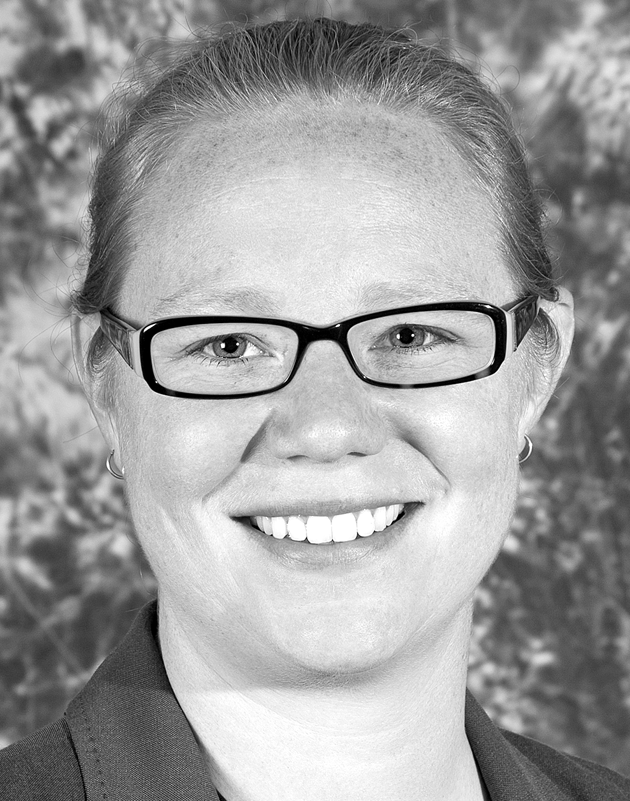
Do Employers Have to Tolerate Attendance Problems Under the ADA?

By ERICA E. FLORES, Esq.

Erica Flores

Erica Flores

Today, just about any physical, mental, or emotional ailment will likely qualify as a ‘disability’ under the Americans with Disabilities Act (ADA), giving rise to a growing number of requests by employees for workplace accommodations. And, increasingly, such accommodations implicate what is perhaps the single most fundamental requirement of any job — attendance.

So how can Western Mass. employers best position themselves for potential ADA litigation when considering an employee’s request for an attendance-related accommodation? A recent decision out of the U.S. Court of Appeals for the Sixth Circuit offers some helpful guidance.

Jane Harris worked for Ford Motor Co. as a resale buyer of raw steel for auto parts. At first, her performance was strong, but it quickly began to decline, and by her final year at Ford, she ranked in the bottom 10% of her peers. Harris’s poor performance was due largely to her poor attendance, which was related to her disability — irritable bowel syndrome.

Harris disclosed her condition to her supervisor, and Ford approved a series of accommodations. First, Ford granted Harris a flexible schedule, allowing her to work four 10-hour days per week and telecommute as needed. Despite this flexibility, Harris’s attendance was irregular and unreliable, and she failed to perform the core objectives of the job.

Ford next provided Harris with workplace reporting guidelines and then allowed her to telecommute both during and after core business hours. Harris’s attendance problems continued, however, and she finally requested permission to work from home permanently up to four days per week.

In response to the request, Harris’s supervisor and two HR representatives met with her to discuss the essential functions of her position. They identified 10 different essential responsibilities and discussed her ability to accomplish each of those duties from home. Harris admitted that she could not complete four of her duties from home at all — including attending meetings with suppliers, attending internal meetings, and creating price quotes — and Ford concluded that Harris also could not effectively perform four of her other duties from home.

Accordingly, Ford denied her telecommuting request as unreasonable, but proposed two alternative accommodations — moving Harris’s workspace closer to the restroom or transferring her to a position better suited for a flexible telecommuting arrangement. Harris declined these offers and instead filed a charge of discrimination with the Equal Employment Opportunity Commission, which took up her case and filed a lawsuit against Ford on her behalf.

Ford won the case both in the district court and on appeal before the U.S. Court of Appeals for the Sixth Circuit. The court agreed with Ford that a trial was not necessary, finding that regular and predictable on-site attendance was an essential function of Harris’s job, and the accommodation she requested was unreasonable because it would have eliminated that essential function.

Although Harris disagreed that her physical presence at work was necessary, the court noted that an employee’s definition of the essential functions of her position is not valid when it is based solely on her personal viewpoint and experience. Although Ford allowed other resale buyers to telecommute, those employees telecommuted no more than one set day per week.

And, finally, there was no evidence that improved technology eliminated the need for Harris to participate in face-to-face interactions. In short, regular, on-site attendance was an essential function of Harris’s job because it was “job-related, uniformly enforced, and consistent with business necessity”; there was no accommodation available that would have allowed her to perform that essential function; and Ford had acted in good faith by maintaining an interactive dialogue with Harris and trying to accommodate her illness.

The Sixth Circuit’s opinion provides useful guidance for employers who may face requests for attendance-related accommodations.

Most importantly, employers must be able to clearly articulate the essential functions of each and every job in their workforce, including the attendance requirements. Those essential functions should be documented in written job descriptions that are provided to new employees at the time of hire and updated as job duties change.

Additionally, employers who make flexible schedules, telecommuting, or other alternative attendance arrangements available (upon request or through a policy, for example) should consider developing specific eligibility or other criteria designed to ensure that such arrangements do not impede the effective performance of the other essential functions of each position.

If employers do this homework ahead of time, they will be in a good position to handle a request for an attendance-related accommodation and will be able to better assess whether that requested accommodation is reasonable, whether it would instead eliminate an essential attendance requirement, and whether any other reasonable accommodations might be available.

Erica E. Flores is an attorney at Skoler, Abbott & Presser, P.C ., which exclusively represents management in labor and employment matters. She has successfully defended employers before state and federal courts and administrative agencies. In addition to her litigation practice, she regularly advises clients with respect to day-to-day employment issues, including decisions regarding adverse employment actions and litigation avoidance. This article is not intended as legal advice related to individual situations. If your business is facing a specific legal problem, consult your labor and employment counsel for legal advice and planning; (413) 737-4753; [email protected]

Daily News

SPRINGFIELD — Tech Foundry was recently visited by two luminaries in the tech world. Steve Vinter, director of Google Cambridge, toured the facility on Thursday, and Apple co-founder Steve Wozniak stopped by before his sold-out event at the MassMutual Center.

Founded by Paragus Strategic IT CEO Delcie Bean, Tech Foundry is a nonprofit education and job-placement program for high-school students looking to work in the world of information technology.

“It’s very inspiring for our students to have up-close access to individuals who’ve been so wildly successful in this field,” Bean said. “It drives home the message we’re trying to send that anything is possible. It also speaks to the commitment of Mr. Vinter and Mr. Wozniak and their passion for the next generation of IT innovators.”

Tech Foundry aims to create a homegrown workforce for the many area businesses looking for tech professionals. Upon completing the program and graduating high school, the goal is to place students in an entry-level IT job in the $30,000-$40,000 range.

In the long term, Tech Foundry aims to turn Western Mass. into a technology hub, attracting companies such as Amazon and Google to open satellite offices the area.

Daily News

SPRINGFIELD — Springfield Technical Community College (STCC) School of Business & Information Technologies will host a free Leadership Conference on Friday, June 19 from 8 a.m. to 2 p.m. at the Scibelli Hall (Building 2) Theater at STCC.

This one-day event will feature a variety of guest speakers, including Rebecca Corbin, president and CEO of the National Assoc. of Community Colleges for Entrepreneurship; Alden Davis; Robert Hensley, president of Robert Hensley & Associates, LLC; Nicole Murdoch, small-business owner; Gail Ward Olmsted, STCC professor and department chair in the School of Business and Information Technology; Rob Parslow, Accounting director at American Express; Ira Rubenzahl, STCC President; Diane Sabato, STCC professor of Business Administration; Kirk Smith, president and CEO of the YMCA of Greater Springfield; and Paul Thornton, STCC professor of Business Administration.

The event will include interactive group discussions and opportunities for networking. Lunch will be provided. For more information or to register, call (413) 755-4008 or e-mail [email protected].

Daily News

SPRINGFIELD — Olive Natural Beauty Inc. was the big winner at the first annual Accelerator Awards presented by Valley Venture Mentors last night, winning the top prize of $35,000 to advance the startup skin-care business.

More than 120 teams from across the Valley and beyond applied to the grant program. The top 30 were accepted and engaged in a series of 72-hour monthly training boot camps in downtown Springfield. A total of 29 teams made presentations recently in preparation for the awards.

Of those, 12 were chosen as finalists, and were awarded a total of $282,500 in funding last night: Olive Natural Beauty Inc., $35,000; PetSimpl, $32,500; Lobster IT Limited, $32,500; MachineMetrics, $32,500; Wonder Crew, $27,500; EDENIS, $27,500; Food on a Truck, $22,500; Artifact Cider Project, $20,000; Worksafe Technology Inc., $15,000; BeTH, $12,500; LocalTable, $12,500; and White Lion Brewing Co., $12,500.

The other 17 semifinalists, each receiving $2,000, include American Eagle Cycles Inc., Bakepedia, Broga LLC, Cell Zone Inc., CloudContacts, Digital Media Revolutions, East Coast Taps, Eureeka, Feat Socks, Heartfelt Fine Gifts, Lathrios, Norma Computers LLC, Nudger, NuPlanit, PeopleHedge, Piddx, and Voyaj.

VVM program participants judged each other on their customer segment, sales and marketing, scale, profitability, and size, as well as their revenue model and cost structure, to determine the finalists.

“VVM takes a lovingly critical approach to training its startups,” said Paul Silva, co-founder and president of the organization. “We put the entrepreneur first in every endeavor. I’m extremely proud of what these entrepreneurs and their mentors have been able to achieve.”

During the four-month Accelerator Program, startup teams collectively raised more than $1 million, hired employees, negotiated partnerships, secured and grew accounts, and increased product orders.

“We provide comprehensive, effective resources for our teams,” Silva added. “Our real aim is to provide our groups with preparation beyond the presentation. We want them to build their businesses for the long term.”

This year’s Accelerator Program was funded by MassMutual, the Community Foundation of Western Massachusetts, Irene E. & George A. Davis Foundation, the Commonwealth of Massachusetts, and the Mass. Technology Collaborative, with the mission to support an entrepreneurial renaissance in Springfield and the Pioneer Valley.

Daily News

HOLYOKE — PeoplesBank will present “Staying Ahead of the Hackers” on Wednesday, May 13 from 7:45 to 9:30 a.m. in the PeoplesBank Conference Center, 330 Whitney Ave., Holyoke.

The presentation is part of the bank’s 2015 Business Banking Seminar Series. This free seminar will focus on best practices in security to ensure that your small business does not become a victim to the latest security threats. Presenter Matthew Putvinski serves as director of the Information Technology Assurance Services group at Wolf & Co.

To join this workshop, register online at bit.ly/PBsignup by May 8. For questions on the 2015 Business Banking Seminar Series, e-mail [email protected] or call (413) 538-9500.

Daily News

AMHERST — Hollister Insurance of Clinton, Mass. has acquired J.F. Conlon and Associates of Amherst.

J.F. Conlon has been a leading employee-benefits broker in Western Mass. for 20 years. Jim Conlon, president of J.F. Conlon and a former regional director with Blue Cross and Blue Shield of Massachusetts, has plans to retire within a year of the transition, and Hollister President Matt Hollister has assumed the role of CEO for the overall business. April Williams, who has worked at J.F. Conlon for 15 years as a producer and account manager, has been promoted to regional manager and will head up the Amherst office.

The consolidated business gives Hollister Insurance a broader presence in the Massachusetts employee-benefits market, increases the number of plans offered, and adds significantly to the depth of experience in the brokerage staff. J.F. Conlon will continue to maintain the same close relationships with its customers while being able to offer additional support available through Hollister Insurance, such as human-resources support and benefit technology solutions.

Amherst Area Chamber of Commerce Executive Director Donald Courtemanche noted that “J.F. Conlon and Associates has long been a strong partner of the Amherst Area Chamber. We wish Jim Conlon the very best in retirement, and are confident that the company is in great hands with April Williams at the helm. I also look forward to getting to know Matt Hollister and think that he will be a good resource for the community here in Amherst.”

Daily News

SPRINGFIELD — Think you know everything about social media? Think again. Like all technology, social-media platforms are constantly updating and changing, and unless you change with it, your content could be going unnoticed. To ensure you are optimizing your social-media posts, join the Creative Strategy Agency workshop “Digital Marketing Update” on 
Friday, May 1 from 7:30 to 11:30 a.m. at 1350 Main St., Suite 1506, Springfield.

This workshop occurs twice a year and gives businesses an opportunity to stay up to date on the latest changes happening to digital marketing and social media in a boot-camp-style session. The workshop will cover the latest in updates across all platforms: things you need to know for your business, where to focus your energy and resources, as well as how to effectively use the platforms as they continuously update. You will also learn about platform algorithms, content consumption and engagement, analytics, social-media advertising, and new, upcoming social-media platforms.

This workshop is open to anyone but is geared towards professionals in marketing, entrepreneurs, nonprofit organizations, startups, and small businesses. It includes refreshments, breakfast, lunch, and a printed eBook packet as a resource filled with information, research, and statistics. The cost to attend the workshop is $90, or $75 for members of the Young Professional Society of Greater Springfield. For more information, visit tcsa.co/tcsaupdate.

Daily News

SPRINGFIELD — Valley Venture Mentors (VVM) recently named the 12 finalists who will compete for their share of $250,000 in prize money at the organization’s first annual Accelerator Awards on April 30. During the awards ceremony, the finalists, which include startup companies from wide-ranging industries, will be in the running for grants of up to $50,000. The event runs from 5 to 8:30 p.m. and will include a networking reception and showcase of startup teams, as well as a dinner and awards program. Finalist startups include Artifact Cider Project, BeTH, EDENIS, LLC, Food on a Truck, Lobster IT Limited, LocalTable, MachineMetrics, Olive Natural Beauty Inc., PetSimpl, White Lion Brewing Company, Wonder Crew, and Worksafe Technology Inc. More than 120 teams from all around the valley, the state, and even around the world applied to the program. The top 30 were accepted and engaged in a series of 72-hour monthly training boot camps in downtown Springfield. A total of 29 teams made presentations recently in preparation for the awards. VVM program participants then judged each other on their customer segment, sales and marketing, scale, profitability and size as well as their revenue model and cost structure to determine the finalists. “VVM takes a lovingly critical approach to training its startups,” said Paul Silva, co-founder and president of the organization. “We put the entrepreneur first in every endeavor. I’m extremely proud of what these entrepreneurs and their mentors have been able to achieve.” During the four-month Accelerator Program, startup teams collectively raised more than $1 million dollars, hired employees, negotiated partnerships, secured and grew accounts, and increased product orders. “We provide comprehensive, effective resources for our teams,” Silva added. “Our real aim is to provide our groups with preparation beyond the presentation. We want them to build their businesses for the long term.” This year’s Accelerator Program is funded by Mass Mutual, the Community Foundation of Western Massachusetts, Irene E. & George A. Davis Foundation, the Commonwealth of Massachusetts, and the Mass. Technology Collaborative with the mission to support an entrepreneurial renaissance in Springfield and the Pioneer Valley.

Opinion
A Bitter, Necessary Pill for Holyoke

There is considerable angst, not to mention anger, in Holyoke these days, among residents and elected officials alike, as the state mulls whether to take over the city’s long-underperforming public school system.

And we certainly understand such emotions. No one wants to see a community cede control of its finances or its schools to the Commonwealth; receivership is truly an ugly term.

But sometimes, it is necessary. Sometimes, there is no real option. Sometimes, it is the proverbial desperate measure required in desperate circumstances.

This is one of those times.

Indeed, while some might argue that Holyoke Superintendent Sergio Perez, who came into this role less than two years ago, hasn’t had enough time to put his stamp on the system and engineer a turnaround, one can’t argue that the city has had plenty of time to generate improvement.

And it hasn’t happened.

In some ways, this is understandable. Reversing more than a decade of underperformance and unacceptably high dropout rates doesn’t happen easily. It usually happens only when those in authority have a license to institute bold initiatives and extricate themselves from restrictions forced upon them by powerful unions.

This can happen when a receiver takes charge.

It has happened in Lawrence — a city very similar to Holyoke demographically, with a high percentage of Hispanic residents — where receivership went into effect in 2012.

There, according to statistics quoted by the Boston Globe, the dropout rate has decreased by 46% since 2011, the graduation rate has gone from 52% in 2011 to 67% last year, and the number of level 1 schools (those deemed least in need of improvement) has tripled over the past three years.

State Education Commissioner Mitchell Chester cited Lawrence’s improved performance as he talked about the urgency of the situation in Holyoke and his recommendation that the state take over Holyoke’s schools.

As we said at the top, this is a drastic, yet needed step for this city and its schools. Holyoke is registering considerable progress when it comes to entrepreneurial energy and economic development. But for this city to truly revitalize itself, its schools must improve, thus giving students a chance to succeed in a changing, more technology-driven economy.

The state wouldn’t be punishing Holyoke by taking over its schools; it would be aiding in its comeback. v

Departments Incorporations

The following business incorporations were recorded in Hampden, Hampshire, and Franklin counties and are the latest available. They are listed by community.

AGAWAM

Spark Transportation Corp., 1047 Suffield St., Agawam, MA 01001. Kateryna Rushchak, same. Transportation.

Western Mass Home Health Services Inc., 270 Main St., Agawam, MA 01101. Dominic W. Ndungu, same. Home health services.

AMHERST

HPBC Inc., 55 University Dr., Amherst, MA 01002. Harold Tramazzo, same. Restaurant franchising.

Lighthouse Personolized Education for Teens Inc., 506 Pine St., Amherst, MA 01002. Catherine L. Gobron, 108 Sears Road, Goshen, MA 01032. Learning centers for teens.

BRIMFIELD

Dipali Inc., 13 Main St., Brimfield, MA 01010. Dipali S. Patel, 773 Worcester St., Apt. B, Southbridge, MA 01550. Convenience store with full liquor selection.

CHICOPEE

Jay’s Food & Fuel Inc., 646 Grattan St., Chicopee, MA 01020. Rajesh Sanghvi, 38 Wheatland Ave., Chicopee, MA 01020. Convenience store.

N.S. Guarizi Constructions Inc., 26 Casino Ave., Chicopee, MA 01013. Erisnaldo Novais Dos Santos, same. General construction services.

Pizza Chop Corp., 486 Springfield St., Chicopee, MA 01013. David A. Carlos, 14 Beesley Ave., Chicopee, MA 01013. Restaurant.

Soja Trucking Inc., 301 Chicopee St., Chicopee, MA 01013. Michael A. Soja, same. Trucking.

LUDLOW

Barroso Landscaping Inc., 687 East St., Ludlow, MA 01056. George Barroso, same. Landscaping.

Greylock Information Technologies Inc., 40 Oak St., Ludlow, MA 01056. Michael Menard, same. Supply businesses with technology solutions.

Michael’s Party Rentals Inc., 409A West St., Ludlow, MA 01056. Michael B. Linton, same. Party supplies for rent.

Western Mass Family Services Inc., 185 West Ave., Suite 104, Ludlow, MA 01056. Dawn Michelle Mackinnon Delaney, 39 Rankin Ave., East Longmeadow, MA 01028. Supervised visitation.

NORTHAMPTON

Electronic Commerce Solutions Inc., 29 Pleasant St., Northampton, MA 01060. Henry L. Pope, same. Data processing for third-party government vendors.

Hodge City Plumbing Inc., 123 Hawley St., Northampton, MA 01060. Ronald F. Hodges, 60 North Maple St., Florence, MA 01062. Plumbing services.

40 Under 40 The Class of 2015
Information Technology Services Officer, Country Bank for Savings; Age 35

Eric Devine

Eric Devine

Eric Devine says the desire to excel at everything he does is programmed in his DNA.

He is responsible for Ware-based Country Bank’s information-technology system, and has played a significant role in the institution’s recent technology-upgrade efforts aimed at streamlining services. In fact, Devine and his staff were recognized countless times for their ability to meet and surpass expectations, and although he admits his job can be challenging, he loves it and looks forward to going to work every morning.

“I am very competitive with myself and strive to exceed demands,” he told BusinessWest. “I like to be the best at everything I do and believe I am fortunate to work for a great company with a great team of people.”

Devine served as president of the John Boyle O’Reilly Club for eight consecutive terms and stepped down in January to spend more time with his wife Jennifer and their 5-year-old twins, Alana and Erin. But he began going to the club with his father when he was a child, and says it has always played an important role in his life. “I grew up in the Irish community, and the club is my second home.”

He was the 2015 Springfield Grand Parade Marshal for the annual St. Patrick’s Day Parade, and a member of the Parade Committee. During his tenure at John Boyle O’Reilly, Devine helped to host a wide variety of events, expand the number of children’s sports teams, and raise funds for many worthy causes.

He was feted with the Christopher Burnham Award in 2014, which was presented to him by U.S. Rep. Richard Neal. He received the Paul G. Caron Award in 2008 and is actively involved with Griffin’s Friends Children’s Cancer Fund at Baystate Health Foundation. Inc. and participates in the group’s Marathon Challenge as a marathon runner and fund-raiser (he also ran the Boston Marathon in 2013).

Devine also serves on an advisory committee at Porter and Chester Institute and helps determine what students need to learn to be prepared for the workforce. In addition, he served as the 2014 chairman for the Committee to Elect Aaron Saunders for State Senate. He and his wife are also on the Boston 2024 Olympic Citizens Advisory Group.

That’s quite a schedule to keep, but Devine is undaunted. “I am passionate about always doing my best.”

— Kathleen Mitchell

Photo by Denise Smith Photography

40 Under 40 The Class of 2015
President, Hadley Printing Co.; Age 38

Chris Desrosiers

Chris Desrosiers

Chris Desrosiers remembers Hadley Printing — the small, one-man shop started by his grandfather, Alexander, and then acquired by his his father, Mark, and uncle, Dean — being a huge part of his life growing up. He recalls being at the shop handling odd chores while in grade school, before graduating to more serious roles on the production floor during summers in high school.

But he never intended to be part of any third-generation ownership team. In fact, after graduating from the Rochester Institute of Technology and its printing management program, he went to work for a printer in Boston. Everything changed, however, in 2003, when Dean decided he wanted to sell his ownership stake in the company. Chris saw this as a unique, and unanticipated, opportunity to return to Western Mass. and scratch an entrepreneurial itch, and he partnered with his brother, Greg, to acquire those shares.

A decade later, they completed the acquisition, buying out their father, and today they’re full partners in a business that is setting the tone in a changing, increasingly competitive printing industry.

While Greg is focused primarily on sales and marketing, Chris is involved with operations, and he played a huge role in expanding the company’s services to the larger-scale printing projects demanded by many commercial customers, thus helping it double sales since 2003.

The third-generation owners have invested heavily in equipment and people, a trend that continues with the acquisition of a new Kumari five-color, 40-inch press recently installed at the Holyoke plant. “This will help us take that large-format commercial segment to a new level,” he explained. “This investment will pay dividends.”

He’s expecting a similar return on investment from the time and energy he’s contributing to efforts to groom the next generation of printing professionals, through his involvement with Dean Technical High School and its graphic communications program.

“A business like ours is so technology-driven, it’s really a trade handled by craftsmen,” he explained. “The staff we have here is in their 40s, 50s, and 60s; we have a lot of talent here, but over the next 10 years there’s going to a be a lot of attrition, and finding people who not only have interest, but also the talent and experience, is tough these days. I got involved at Dean because I wanted to help develop new talent for this trade — and this business.”

— George O’Brien

Photo by Denise Smith Photography

40 Under 40 The Class of 2015
Architect, Studio One Inc.; Age 36

Christopher Novelli

Christopher Novelli

Chris Novelli says he’s been drawing, designing, and stretching his imagination for about as long as he can remember.

“I would draw little floor plans of my room and rearrange the furniture on a monthly basis almost,” he recalled of his grade-school years. “I had no idea what an architect was … I was just trying to find different ways to make my room better.”

He soon came to fully understand what an architect was, and after drafting classes in high school further fueled that desired to create, he attended the Wentworth Institute of Technology in Boston. Fast-forward several years and one intense internship at Studio One Inc. in Northampton, and Novelli is now a fixture at that company.

He’s been an integral part of a number of intriguing projects, including historical preservation and adaptive reuse of the Colle Opera House in Turners Falls, a long-abandoned landmark transformed into offices for technology companies; design and renovations of the both the interior and exterior of Our Lady of Mt. Carmel Church in Springfield for its 100th anniversary; design and construction of the new Hubert Place for WestMass ElderCare, an affordable senior-living facility in South Hadley; and, most recently, design and construction of the new Magazine Commons for Mental Health Associates, affordable housing for people with disabilities who were displaced from their homes by the 2011 tornado.

Each of these projects and countless others came with specific challenges and, usually, a very high degree of difficulty, said Novelli, adding that clearing such obstacles and devising solutions to complex problems is just one of many things he loves about his profession.

“You get to be creative on a daily basis, and there’s incredible variety — each day is different,” he explained. “One day I’m working on something that’s totally creative and artistic, the next day I’m working through technical details. The next time I’m on the job site working with the general contractor, and the day after that I’m giving a lecture at UMass. There’s always something new and different going on, and I really like that aspect of my work.”

Meanwhile, Novelli makes ample time for his family — wife Lisa and children Ethan, Samantha, and Jocelyn — and his community, Wilbraham, donating time and imagination to both the town’s Vision Task Force and Vision Action Committee. Indeed, drafting a blueprint for effective work-life balance is just another challenge he’s embraced.

— George O’Brien
Photo by Denise Smith Photography

40 Under 40 The Class of 2015
President, Northeast IT Systems; Age 36

Joel Mollison

Joel Mollison

As a student at Greenfield Community College in the mid-’90s, Joel Mollison couldn’t have imagined himself forging a career in information technology, much less starting his own business in that field. But circumstances changed things, and in a big way.

“I got into this industry by default,” he explained. “I actually started out as a mechanical engineering major and found out I hated it. But along the way, I bought a very expensive computer to do some of my engineering at home. I had a problem with it … I had a warranty from Staples. They wanted me to send it out for six to eight weeks during the middle of the semester, which simply wasn’t feasible.

“So I wound up fixing it myself — taking the cover off, replacing the parts, voiding the warranty, and all that fun stuff,” he went on. “That’s when I got under the hood and decided that this was something I was interested in.”

In other words, he learned by doing, a pattern that would continue after he changed his major to information systems and followed up his associate’s degree from GCC with a bachelor’s from American International College.

Indeed, after surveying a job market that was still quite weak after the dot-com bust that followed Y2K, he decided his best option would be to go into business for himself. He called the venture Joel Mollison Computer Services before taking on a business partner and changing the name to Northeast IT. Today, there are 10 people on the payroll, and the company has a diverse portfolio of clients ranging from municipalities and chambers of commerce to small businesses such as law firm Royal LLP.

A dozen years after getting started, Mollison said business ownership continues to be a learning experience, with no shortage of challenges and new ones seemingly every year.

“There were some lean years in the beginning because I really didn’t know what I was doing,” he recalled. “No bank would touch me, so I started things with credit cards and boot-strapping. I made a lot of mistakes along the way, but you learn from those mistakes, and you get better as the years go on. It’s all worked out, but it’s been a long ride — with a long way to go.”

While that ride continues, he’s set to embark on another learning experience — he and his fiancée, Christine Grynkiewicz, are planning a wedding for this fall.

— George O’Brien

Photo by Denise Smith Photography

40 Under 40 The Class of 2015
Operations Director, HitPoint Studios; Age 33

Christina Gay

Christina Gay

Growing up on Cape Cod, Christina Gay worked for a ferry company during her teenage years, and by age 19, she was handling a good deal of the company’s operations, from reservations to making handbooks to hiring and firing employees.

“I realized that’s what I needed to be doing — being that operational person who runs everything in the background,” she said. Later, a stint working for a website-design firm cultivated a love for the tech environment. “I liked working with engineers, people of a technical nature. We get along well. I’m a pretty straightforward person, and they tend to be straightforward people.”

Gay later took a job with Atalasoft and worked for Bill Bither, a 2007 Forty Under 40 honoree, for more than four years. But when that company was sold to a larger corporation, “it wasn’t fun for me anymore. I needed to be on the ground again, making stuff happen.”

She found such a role with Hitpoint Studios, a growing video-game design and development firm that recently moved from Amherst to downtown Springfield.

“I love it,” she said. “I like working in technology, and I’ve been playing games since I used to break into my brother’s bedroom and put up with his teenage boy smell to play his Nintendo and chase the princess. I love being able to work with people who make games.”

While she doesn’t handle the IT side of the business, Gay does oversee everything on the administrative side, from bookkeeping to financial reporting to human resources — skills she also brings to her community work, including her role with the board of directors of Big Brothers Big Sisters of Franklin County, where she serves as the resident HR expert and helps guide the organization’s fund-raising efforts.

In an industry notorious for being a boy’s club, Gay said she has found a welcoming home at HitPoint, one where she can advance — and balance — her career, her volunteerism, and family time with husband Neale and 3-year-old daughter, Clara.

“They’re grown-ups at HitPoint,” she said. “They get it. They know I’m going to get things done; there’s a mutual trust that’s built up there.”

That said, “we have a laid-back atmosphere. There are so many opportunities to make your own rules and have fun and play around with things — ‘what if we did it this way?’ There are very few boundaries, not this attitude of, ‘do it this way; we’ve always done it this way.’ Some of the best things come out of that environment. It’s just so much fun to be a part of.”

— Joseph Bednar

Photo by Denise Smith Photography

Daily News

EAST LONGMEADOW — HUB International New England, formerly FieldEddy Insurance, a leading insurance brokerage firm, in conjunction with AIG, a leading international insurance organization, will host an upcoming seminar focused on cyber liability — everything businesses need to know about how to protect themselves, identify exposures, and handle liability and losses.

During this educational session on Wednesday, April 15, presenters from HUB and AIG will provide an overview of how the coverage works, how to identify exposures, trends in the marketplace, policy provisions that should be sought after, and what preventative measures can be taken. Presenters include Shiraz Saeed, AIG cyber product specialist, and Michelle Lopilato, director of Cyber and Technology Solutions at HUB International New England.

The two sessions — 8 to 10 a.m. (complimentary breakfast included) and 11 a.m. to 1 p.m. (complimentary lunch included) — will take place at the Basketball Hall of Fame in the MassMutual Room, 1000 West Columbus Ave., Springfield. Limited space remains. To reserve a seat, call Taryn Siciliano at (413) 224-7111.

Daily News

WESTFIELD — The American Council of Engineering Companies of Massachusetts (ACEC/MA) named Christina Jones, a project engineer in Tighe & Bond’s Westfield office, the recipient of the 2014 ACEC/MA Young Professional of the Year Award. The recognition took place during ACEC/MA’s Engineering Excellence and Awards Gala on March 18 at the Royal Sonesta Hotel in Cambridge.

Each year, this competitive award recognizes the accomplishments of one engineer, 30 years old or younger, based on their work and its societal impact. Jones, who is a licensed engineer in Massachusetts, was recognized for achieving significant successes within just five years of launching her civil- and environmental-engineering career.

For the city of Chicopee, she provided construction administration and observation, research, and analysis for the first paving project in Massachusetts to implement cutting-edge intelligent-compaction technology. The result was a more streamlined, cost-efficient paving process, and better-quality pavement that is slated to have a longer life.

Jones is also developing an integrated management plan for Chicopee, which will include working with regulators to advance green infrastructure as an alternative approach to separating combined sewer overflows. In addition, she is developing a unidirectional flushing plan for cleaning water-distribution pipes that will improve water quality and pressure throughout Chicopee.

For two of Connecticut’s major water suppliers, Jones has developed hydraulic models of critical water reservoirs to assess the impact of new fish-habitat-friendly stream-flow regulations on reservoir management. This research enabled her to assist with reservoir-management decisions.

Jones earned her bachelor’s degree in civil engineering and environmental engineering, as well as her master’s degree in environmental engineering, from UMass Amherst. Her professional affiliations include the American Water Works Assoc., the New England Water Works Assoc. (where she is a programs committee member), and Engineers without Borders. She also previously served as a student activities committee member for the New England Water Environment Assoc.

Daily News

SPRINGFIELD — The Professional Women’s Chamber (PWC) has announced that Anne Paradis, chief executive officer for MicroTek Inc. in Chicopee, has been named the PWC 2015 Woman of the Year.

The award, given annually since 1954, is presented to a woman in the Western Mass. area who exemplifies outstanding leadership, professional accomplishment, and service to the community. A celebration in Paradis’s honor will be held on Tuesday, May 19 at 5:30 p.m. at the Carriage House, Storrowton Tavern, 1305 Memorial Ave., West Springfield.

“We are thrilled with this year’s honoree — a truly inspiring and accomplished woman like Anne Paradis,” said Janet Casey, PWC board president. “She is a domestic trailblazer among women in the high-tech industry, and the opportunity that she has provided to people with disabilities speaks so deeply to her sense of compassion. Her achievements are spectacular and her generosity admirable.”

Microtek was founded in 1983 with the mission of integrating individuals with disabilities into the workforce. The company provides custom cable and wire configurations, control panels, and enclosures for customers in the medical equipment, scientific test and instrumentation, life sciences, industrial, and retail industries.

Paradis was tapped to lead the organization in 1987. Under her guidance, the company has grown an average of 15% each year, expanded its product lines and client base, and created more than 80 jobs. As well, Paradis has led the organization through construction of a new 22,000-square-foot manufacturing facility, obtained industry certifications as well as ISO 9001:2008 and ISO 13485:2003 registrations, and has been awarded the Massachusetts quality-of-service certification with distinction for employment services every year since 1996.

Prior to joining MicroTek, Paradis served as a management and training consultant, served as the marketing director and employment design specialist for New England Business Associates, and spent nearly 10 years in the mental-health field. She is a member of the Baystate Health board of trustees and vice chair of its audit committee, past president of the Women’s Fund of Western Massachusetts board of directors, corporator of the Wentworth Institute of Technology, and former president of the National Assoc. of Supported Work Organizations board of directors.

She also served on the reference services advisory board for UMass and the electronic advisory committee for Chicopee Comprehensive High School. She is also active in the Social Enterprise Alliance, the Wire Harness Manufacturer’s Assoc., the Women Presidents’ Organization, and the Human Right Campaign, and in 2009 was named to the 21st Century Women Business Leaders Hall of Fame at Bay Path University.

Tickets for the May 19 celebration, sponsored by BusinessWest, are $55. To register, visit www.myonlinechamber.com or e-mail Kara Cavanaugh at [email protected].

Law Sections
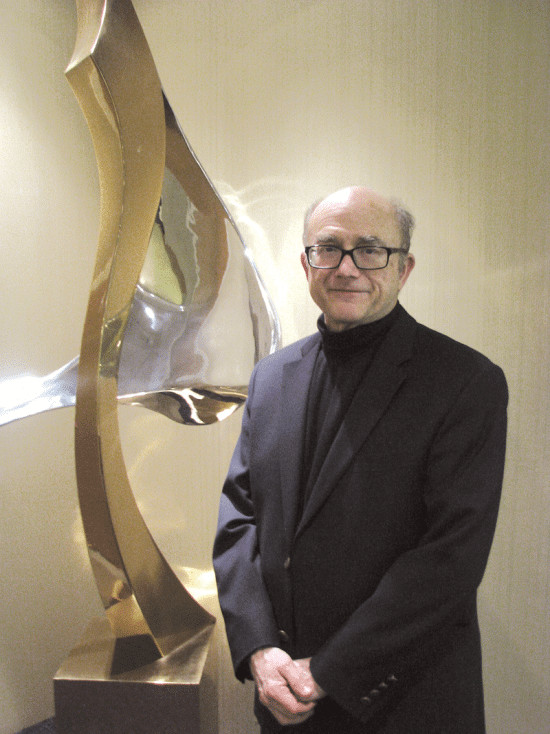
Steven Schwartz Looks Back at a Lifetime in Law

Steven Schwartz

Steven Schwartz

Steven Schwartz considers himself a lucky person, because he’s spent a career doing exactly what he always wanted.

“Some people, when they’re young, they have a dream of what kind of profession or job they would like to have when they grow up,” he told BusinessWest. If he had forgotten his childhood dreams, he was reminded when his parents were moving and uncovered a paper he had written in the sixth grade at Washington School in Springfield.

“It was a combination of autobiography and future dreams,” Schwartz recalled. “I wrote that I would like to go to Boston University Law School, which I did, and I would like to be a lawyer. When I saw this, I was very surprised because, even while going through law school, I had never expected to become a practicing lawyer, but to be a businessman.

“But,” he quickly added, “I’m so lucky that I decided to practice law, as I’ve had the most wonderful career, and had the pleasure to work with so many fabulous people in this firm, and other law firms, in pursuing my craft.”

Prior to launching the firm that bears his name — Shatz, Schwartz and Fentin, P.C. — he and Stephen Shatz were legal-services attorneys working with a neighborhood program. “We were staff members, but in 1969, we decided to set up our own firm. For about two years, we had another experienced lawyer who joined with us. In January 1971, we established our own firm without him.”

Later that decade, Gary Fentin came on board and would eventually find his name on the door as well.

“At the beginning, we were in general practice,” Schwartz said. “When you start a firm, you want to eat, and you are not too selective in the areas you are going to represent — provided that your lack of experience is not a detriment to the people who come to you with problems. Fortunately, we had many friends who were experienced lawyers who we could call on to hold our hand and give us the guidance we needed to ably represent our clients.”

Eventually, however, the firm garnered more business, to the point where the partners began developing the niche work they most enjoyed.

“Steve Shatz was interested in real-estate development and finance and banking law, and I pursued a career as a business lawyer and an estate planner,” he explained. “Fortunately, after about five years, we could focus on these areas and become specialists in our field. Over the years, we’ve added other practice areas in our firm based on later hires and the interest those lawyers had in particular fields.

“Some of the areas we were engaged in over the years have been eliminated because of changes in tax laws,” he added. “But we have been able to attract people to our firm who are interested in the areas we were interested in, and we’ve expanded those practices substantially. We now have a bankruptcy practice, a tax practice, and a regulatory practice in the area of zoning and land use.”

Today, 13 attorneys specialize in a broad range of business-law work for both for-profit and nonprofit entities, including estate planning and elder law; probate and guardianships; real-estate development, permitting, land use, and zoning; telecommunications siting and permitting; affordable-housing development and finance; corporate and business planning; contract preparation and negotiation; business exit planning; bond financing; bankruptcy; litigation; and licensing.

It’s a different legal world than it was 45 years ago, Schwartz said, and not always for the better. But he can look back at that long-ago school assignment with gratification, recognizing that not everyone actually gets to live out their sixth-grade dreams.

Start to Finish

Schwartz, who graduated from Babson College in 1963 and earned his law degree at BU in 1966, concentrates his practice in the areas of family business planning, mergers and acquisitions, corporate law, and estate planning — a range of specialties that involves representing principals in family business planning, including exit planning; representing individuals and corporations in the purchase and sale of business enterprises; strategic planning for the future of clients’ businesses; and providing advice on financing alternatives through loans and venture capital.

It’s a mouthful, but it basically boils down to helping other people reach their goals like he reached his, and there’s satisfaction in that.

“I’ve always been very interested in business, and many of my clients have included me in discussions related to the future of their business — whether to do an acquisition or not, or how to finance the business’s future,” he explained. “This has been extremely rewarding, as I’ve always taken pleasure in the success of my clients. I also learned that I’m better-positioned to be a lawyer than a manager, which takes many skills which I lack.”

Schwartz’s skill at helping business owners steer their ships has been recognized regularly on annual lists of Super Lawyers and Best Lawyers in America lists.

“It turns out, when you represent a family-owned or closely held business, a basic knowledge — and, really, more than a basic knowledge — of estate planning is necessary to represent their interests,” he explained. “Over the past few years, as many of my clients have dealt with the issue of what to do with their business when they get to retirement age, we’ve been very busy — transitioning into issues of transferring the interests of the family business to the next generation, or establishing employee stock-option plans for the business to be transferred to its employees.”

What economists call ‘Great Transfer’ — a handover of about $12 trillion from those born in the 1920s and 1930s to the Baby Boomers — has been going on for some time. But that figure is expected to be dwarfed by an anticipated $30 trillion in assets that the Boomers will transfer to their heirs over the next 30 to 40 years in the U.S. alone.

For that reason, attorneys who work in business planning are doing so at an intriguing, and busy, time in the country’s history. “Transitioning is a hot topic,” he noted, “mostly for people who own businesses.”

And with some of his clients dating back decades, Schwartz, in some ways, has had a hand in the region’s economic development over the years by helping businesses form, grow, and transition.

Love of the Game

As for Schwartz, he has no plans to transition into retirement, although communication — he’s watched landline phones and faxes give way to smartphones, texts, and e-mail — makes it easier these days to conduct business remotely. “That’s given me the opportunity to work from a different place and not retire, and still be effective at my craft.”

What makes him effective, he told BusinessWest, isn’t just knowledge and almost five decades of experience, but also a sincere love for his calling.

When he started practicing, he said, “I always felt that lawyers were interested in making a living, but their love of what they did was more important to them than the financial rewards. Today — as in many fields — the fact that there are so many lawyers means more financial pressures, and that makes the business end of the practice more important.”

Which leads to developments that confound the old-school side of Schwartz, even as his own firm has acquiesced to the times.

“I cannot remember any law firms back then having a marketing staff on board, or hiring outside agencies to service the law firm in that capacity,” he said. “I think a lot of it has to do with technology. In the early days, our new clients would come from referrals from bankers and insurance agents. Today, we get referrals for new clients from media advertising, public relations, public seminars, social media — and still some traditional referral sources.”

He even took a self-deprecating swipe at his own attire, which today involved a turtleneck and sport jacket. “That’s one substantial change,” he said. “I would never come to the office without a jacket or tie. That wouldn’t have been the case in the ’60s.”

Plenty has changed since then, of course, and many companies Schwartz helped off the ground in those early days have closed or transitioned to new owners — or, in many cases, are still growing, still contributing to business life in the Pioneer Valley.

“A lot of my clients are older,” he said, “and at some point, I’ll be dealing with their estates, which is necessary but very sad for me. I have clients in their 90s still working.”

Joseph Bednar can be reached at [email protected]

Sections Sports & Leisure
For the Agawam Cinemas, There Will Indeed Be a Sequel

By KEVIN FLANDERS

Kimberly Wheeler

Kimberly Wheeler says she was pleasantly surprised by the level of enthusiasm she encountered from local movie fans who supported her Kickstarter campaign to raise funds to renovate and reopen the Agawam Cinemas.

Facing an ultimatum effected by the ever-present hand of technology, Agawam Family Cinemas was forced to shut down last year.

The deadline had been looming for some time following the announcement that 35-mm film would no longer be used. The result was a difficult decision for many theater owners — initiate the costly conversion to digital projectors or close their doors.

Then-owner Sal Anzalotti, who had run the cinemas for nearly 20 years, elected to close the business, much to the devastation of many local families who frequented the cinemas. For a time it looked like the reign of movies at the 866 Suffield St. location was over; the price of bringing movies back to Agawam was seemingly too steep.

Fast-forward almost one year, and those very families once fraught with despair are now teeming with joy and excitement. The movies are indeed coming back to Agawam, with Kimberly Wheeler leading the way.

“This was an opportunity I simply couldn’t pass up,” said Wheeler, a lifelong Agawam resident and movie buff who spent countless hours catching films at the theater with friends and family. “When it closed its doors, it was absolutely heartbreaking.”

Wheeler had no experience prior to this year in acquiring and operating local cinemas. An EMT for 13 years and also an instructor of emergency medicine, she might have been the last person one might have expected to embrace such a massive undertaking. There are many innate challenges to restoring a cinema and getting a business back on its feet — challenges that would have daunted most people.

But with a lifetime of movie memories and the desire for new ones serving as her inspirations, Wheeler excitedly took over the shuttered cinemas and hasn’t looked back since.

Total Team Effort

Having only rented the business — now called Agawam Cinemas — for 10 months, Wheeler has gone a surprisingly long way in a short period of time. Needing to raise about $150,000 in order to purchase digital projectors, it was a tall task to get the business off the ground again.

But Wheeler wasn’t alone with her aspirations. Hundreds of area residents and business owners, many with similar recollections of catching movies in Agawam, showed their support through $45,000 in donations during a month-long fund-raising effort on Kickstarter. Additionally, several individuals reached out to Wheeler to express their support of the project and congratulate her for bringing the movie tradition back to Agawam.

“I had so much support from Agawam residents and businesses. It was stunning — the most heartwarming thing I have ever seen,” Wheeler told BusinessWest. “I don’t know if I could have done this without all of the help I’ve gotten from the community. It really does take a village.”

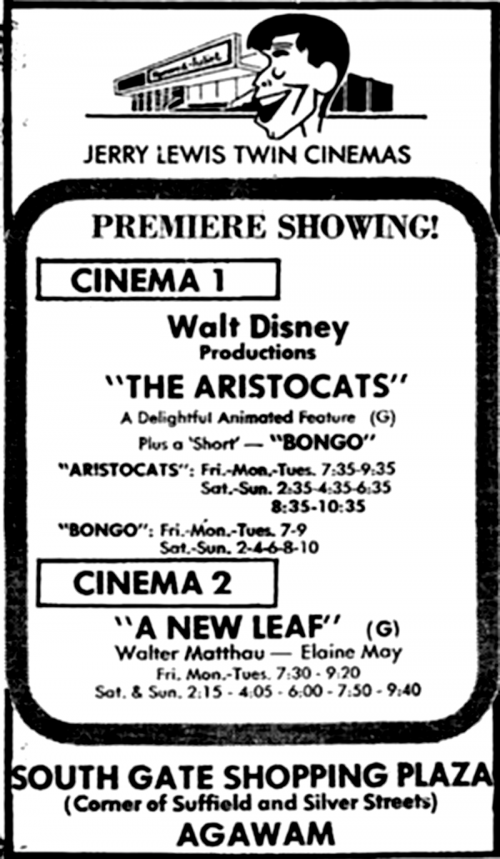
Agawam Family Cinemas

Agawam Family Cinemas started life as the local Jerry Lewis Twin Cinemas, and is set to reopen soon as a modern, fully digital theater.

It means a lot to Wheeler to have the community’s support as she continues through the renovation phase of the project. Working closely with Easthampton Savings Bank, she will provide most of the remaining funds for digital projectors from her own pocket. A murder-mystery-dinner fund-raiser is scheduled for April 11, but those proceeds will merely help defray the cost of acoustic improvements to the theaters.

Those costs are well worth it, Wheeler said, especially since the project has come as a pleasant surprise not only to Agawam residents, but to film fans throughout the area. Many people used to travel several miles to see movies in Agawam, passing up larger cinemas to experience the quaint environment.

“I got many letters and e-mails of encouragement,” added Wheeler, who hopes construction will be complete in time for a grand reopening in May or June. “It’s so important to know that the town and region are behind you 100% when you do something like this. People really missed this place.”

Residents and town officials alike are eagerly anticipating the reopening of the cinemas. From family events to nights out with friends, Agawam Cinemas will be ideal for people of all ages.

Wheeler, who has always enjoyed watching movies with her father, wants to give others a chance to experience the thrill of taking in movies with their families as well. She has seen countless movies in all genres over the years in Agawam, from Monsters University to Philomena. One of Wheeler’s fondest memories of the Agawam cinemas was seeing the film Django Unchained with her father. Theater policies at the time required at least four guests to be in attendance for the movie to run, but for a while Wheeler and her father were the only guests.

“We were sitting in the lobby, holding our breath to see if two other people would arrive to see this film alongside us, when finally one couple arrived,” Wheeler recalled. “We all let out a sigh of relief and laughed together. It was a team effort to get this film presented that evening, and we all enjoyed the film immensely.”

Town officials, meanwhile, have plenty of great memories of the place as well, many of their recollections dating back to the early days of the cinemas. Listening to their stories, one can easily understand how the cinemas have been stitched into the fabric of Agawam.

“I am both pleased and excited about the renovation and reopening of the Agawam Cinemas at the Southgate Plaza,” said Agawam Mayor Richard Cohen. “I remember when they originally opened as the Jerry Lewis Twin Cinemas. We are fortunate that the town’s only movie theater will once again be offering first-grade services with a hometown atmosphere. I can’t wait for the ribbon cutting and the ability of watching movies once again here in Agawam.”

Showtime

Built in the late ’60s, Agawam Cinemas was originally part of a chain of Jerry Lewis Twin Cinemas franchises that sprouted up across the country, with individual operators paying around $10,000 to operate a given cinema. The two auditoriums hold 175 and 250 guests, respectively, with the unique distinction of having tables in front of every seat. The theaters used to hold more than 400 each, and the decision to add tables reduced seating capacity but increased guest comfort.

Since taking over the business, Wheeler has placed an emphasis on creating the most comfortable and convenient atmosphere possible for her guests. Upgrades are currently in progress to make the building fully ADA-compliant, and the lobby has experienced a makeover as well. In addition to standard concession choices that will be made available for snacks, Wheeler is also thinking outside the box by offering guests gourmet chocolate creations from Maureen’s Sweet Shoppe in East Longmeadow. Now that movies are coming back to town, she wants other businesses to benefit as well.

On the topic of business, Wheeler praised New England Theater Co. of Connecticut for its construction work on the building, and she’s eagerly awaiting opening night.

“We want to make it a destination for people, from the atmosphere to the exceptional customer service,” Wheeler said. “This is something that will get people out of their houses and help them forget their troubles. It will provide a great family and group experience.”

Unlike large movie theater chains, Wheeler is striving to foster the same neighborhood feel the place has always been known for, a venue where people can build friendships on the foundation of a common bond. By intertwining modern technologies with nostalgic elements, the cinema will transcend the zeitgeist of its initial creation and usher in a new era of movie magic in Agawam.

To celebrate the building’s history, the lobby will feature several items of Jerry Lewis memorabilia and other hallmarks of the cinema’s past. Prior to entering the theaters, guests will get to experience the history that connects generations of Agawam residents.

“We want the lobby to be comfortable, with a focus on nostalgia. We are digging up everything we can find, from the groundbreaking of the cinema to current day,” Wheeler said.

She plans to show first-run movies at the theaters, perhaps in an alternating sequence that allows about four movies to play on a given day, two per theater. Though the details haven’t been fully ironed out, Wheeler said she will seek input from guests on what movies they would like to see and try to create a balance.

“We want to make it flexible and give them the opportunity to let us know what they want to see,” she told BusinessWest.

For many residents and town officials, it won’t even matter which movies are playing, as long as the big screens are bright again in Agawam.

Briefcase Departments

MGM Springfield Breaks Ground on $800 Million Resort
SPRINGFIELD — MGM Resorts International hosted the groundbreaking of MGM Springfield — an $800 million casino resort slated to open in fall 2017 in downtown Springfield — on Tuesday. The event marked the start of the construction phase of this unique urban mixed-use development, the Commonwealth’s first destination casino resort. Hundreds of people were in attendance at the groundbreaking celebration, emceed by Kathy Tobin, former local news anchor and current director of Program Development at Friends of the Homeless. With the Zanetti School — severely damaged by the June 2011 tornado that tore through Springfield’s South End — as a backdrop, speakers highlighted the history of Springfield, the rebirth of the South End neighborhood, and the energy and optimism that is filling the region. “With every licensing milestone and every campaign victory, we have honored the potential of MGM Springfield,” said Jim Murren, MGM Resorts International chairman and CEO. “Today is even more special, though, as we put shovels in the ground to officially celebrate what we came here to do: put people back to work and begin a rebirth of the once-thriving urban center of Western Massachusetts.” The crowd, which included many state and local elected and appointed officials, gathered to hear from Murren, MGM Springfield President Michael Mathis, Mass. Gaming Commission Chairman Steve Crosby, Springfield Mayor Domenic Sarno, and Revitalize CDC Associate Director Ethel Griffin. More than 30 construction workers representing various trades were at the site to honor the moment. Guests were treated to an interactive event, as they were asked to write their wishes for the future of the city of Springfield and Western Mass. Their wishes were then dropped into an MGM Springfield wishing well. MGM will put all the wishes into a capsule that will be placed in the resort foundation as construction begins. The outdoor event also featured a traditional first shovel of dirt as well as celebratory confetti blasts. In keeping with MGM’s commitment to engage local businesses, Springfield vendors Langone’s, AC Produce, and Palazzo provided décor and beverages. Zasco Productions of Chicopee provided the staging, risers, and sound and technical equipment. Taylor Rental of South Hadley provided additional tables and chairs. “The city of Springfield’s people welcomed us into their hearts and homes and trusted us with their hopes for the future,” Mathis said. “This property was designed with the input of residents who wanted more for their families and their community. Today is the day we start to realize that future as we activate the most robust construction site Springfield has ever seen.” MGM Springfield will bring 3,000 permanent jobs and 2,000 construction jobs to downtown Springfield. MGM has established a hiring goal of 35% of the workforce from the city of Springfield and 90% from a combination of Springfield and the region. Additionally, MGM Springfield has entered into surrounding-community agreements with neighboring communities providing for tens of millions of dollars.

WomenUpFront Launches Roundtable
SPRINGFIELD — In support of the growth and success of Pioneer Valley women presidents and the businesses they own, WomenUpFront is launching a new monthly roundtable for women business owners whose annual revenues have passed the $200,000 mark but have not quite reached $1 million. Sponsored by PeoplesBank and hosted at the Business Growth Center at Springfield Technology Park, WomenUpFront is looking for business owners from Hampden, Hampshire, and Franklin counties for this newest program, set to begin on Wednesday, April 15. WomenUpFront is bringing its successful model piloted in Berkshire County to the Pioneer Valley because there is a need to support women business owners of growing businesses. “There have been conversations over the years about starting this, but none has materialized until now,” said Cathy Crosky, founder and facilitator of WomenUpFront. “Scaling a business has its challenges, and this is a proven model that helps women business owners succeed. They really appreciate this kind of facilitated peer mentoring, too.” Joan Leahy, vice president of Marketing for PeoplesBank, said the bank “is proud to sponsor WomenUpFront and bring this important opportunity to area women business owners. As an organization that runs on innovation and collaboration, we know the benefits of mentoring, teamwork, and the free exchange of ideas. We support WomenUpFront because it will provide these entrepreneurs with many of the same opportunities and successes that we have enjoyed.” The roundtable provides a learning forum for owners to get out of the weeds of the day-to-day and look at their businesses more strategically. The objective is to help women accelerate their businesses to the next level and place their companies in a better position to access new opportunities and continue to prosper. Lasting and meaningful relationships are formed among the participants. “I’m thrilled that the Business Growth Center is hosting WomenUpFront,” said Marla Michel, director of the center. “Women business owners are focused, dedicated, and strong, and often have overcome many obstacles to get to where they are. WomenUpFront can help them learn skills and get advice in a very collegial environment to accelerate further success.” Monthly roundtable meetings will be held at the Business Growth Center the third Wednesday of each month from 9 a.m. to noon.

Tech Foundry Starts Recruiting New Class
SPRINGFIELD — Following a successful inaugural year, Tech Foundry has turned its focus to filling this year’s class of students, beginning with an open house on Wednesday, April 8 at its headquarters on the ninth floor of 1391 Main St., Springfield. The open house begins at 5:30 p.m., and prospective students and parents are encouraged to attend. In addition, the staff at Tech Foundry will be going into area schools and meeting with guidance counselors and other community influencers to drive as many applications as possible before the April 17 deadline to apply. Applications can be found at www.thetechfoundry.org. Founded by Paragus IT CEO Delcie Bean, Tech Foundry is a nonprofit education and job-placement program looking to transform underemployed and overlooked populations into a powerful and robust workforce in the information-technology field. With partners such as Mass Mutual, the Davis Foundation, UMass, and Baystate Health, it raised nearly $450,000 to get started. Tech Foundry aims to create a homegrown workforce for the many area businesses looking for tech professionals, and began the program this year with an inaugural class of high-school students. Upon completing the program and graduating high school, the goal is to place students in an entry-level IT job in the Valley in the $30,000-$40,000 salary range. In the long term, Tech Foundry aims to turn Western Mass. into a technology hub, attracting companies from all over the country to locate some of their high-tech jobs in the Pioneer Valley.

PVPC Receives Award from PolicyLink
SPRINGFIELD — The Pioneer Valley Planning Commission (PVPC), on behalf of LiveWell Springfield, is one of just six organizations across the country to receive an award from the Leadership Conference Education Fund and PolicyLink to advance affordable, accessible transportation policy. PVPC will use the funds to embed transit-equity principles into LiveWell Springfield, and will host local activities to engage, educate, and empower local leaders within communities of color to lift up the Equity Caucus agenda locally and federally. Specifically, PVPC is collaborating with Joseph Krupczynski and the Center for Design Engagement, Natalia Muñoz of Verdant Multicultural Media, and Evelín Aquino to expand the successful capacity-building sessions implemented in 2014 for emerging leaders in Springfield. (For a summary of this work, visit www.pvpc.org/content/new-video-building-skills-equity-and-engagement-planning). “When we completed our three-and-a-half-year, HUD-funded equity and engagement work last year, we knew we needed more funding to expand our capacity-building workshops,” explained Catherine Ratté, principal planner and section manager at PVPC. “Our civic-engagement goal is not just to engage individuals from under-represented groups, but also to create pathways for them into positions of power. Participation in democracy, especially from communities that are too often left out, brings important voices to the table and makes sustainable growth and development possible.” Equitable transportation investments are crucial to connecting people to jobs, educational opportunities, affordable housing, healthcare, and other basic needs. Through a coalition of more than 100 organizations, the Transportation Equity Caucus is charting a new course for transportation investments, focused on policies that advance economic and social equity in America. For more information, see www.equitycaucus.org. Live Well Springfield, a movement to promote healthy eating and active living, has been working for the last few years putting systems into action that support safe and friendly walking and biking. As part of LiveWell Springfield’s work in 2012-14, PVPC facilitated creation of the city’s Pedestrian and Bicycle Complete Streets Plan, implementation guide, Complete Streets policy draft, and Complete Streets buildout plan and map (www.livewellspringfield.org).

State Unemployment Rate Drops to 4.9% in February
BOSTON — The Executive Office of Labor and Workforce Development (EOLWD) released preliminary February 2015 estimates that show the Massachusetts total unemployment rate dropped to 4.9% from the January rate of 5.1%, a 0.2% decrease. Over the year, the unemployment rate fell by 1.1% from 6.0% in February 2014. The share of working-age residents employed or unemployed, also known as the labor participation rate, was 65.9%, an increase of 0.3% since January. Compared with February 2014, the labor participation rate increased a full percentage point over the year. February 2015 estimates show that 3,430,500 residents were employed and 177,300 were unemployed. Compared with February 2014, February 2015 had 34,400 fewer unemployed, the largest annual decrease in the number of unemployed since October 2011. Over the month, jobs were up 800, with a private-sector loss of 800. Since February 2014, jobs grew by 58,100, with 46,300 private-sector job gains. The sectors with the largest job gains over the year included education and health services and professional, scientific, and business services.

School Building Authority Announces Contest
BOSTON — State Treasurer Deborah Goldberg, chair of the Mass. School Building Authority (MSBA), and MSBA Executive Director Jack McCarthy announced the 2015 “My Ideal School” contest. The goal of the contest is to promote discussion among students and teachers about how thoughtful design and construction of schools in Massachusetts support student learning. The contest is open to all first-grade students currently attending a Massachusetts public school. Regional winners will receive a prize donated by Santander Bank. One grand-prize winner will have his or her “My Ideal School” contest picture featured on the cover of the MSBA annual report. All winners will be honored at an awards ceremony at the Massachusetts State House on May 27. Contest submissions must be postmarked by April 24 for consideration. More information can be found on the MSBA website at www.massschoolbuildings.org. The Mass. School Building Authority partners with Massachusetts communities to support the design and construction of educationally appropriate, flexible, sustainable, and cost-effective public-school facilities. Since its 2004 inception, the authority has made more than 1,500 site visits to more than 250 school districts as part of its due-diligence process, and has made more than $11.2 billion in reimbursements for school-construction projects across Massachusetts.

Most Patients Don’t Visit Nearest Emergency Room
WASHINGTON, D.C. — Fewer than half of emergency-department (ED) visits are to the patient’s local emergency room, according to a new data brief from the Centers for Disease Control and Prevention’s National Center for Health Statistics (NCHS), FierceHealthcare reported. After analyzing data on ED visits between 2009 and 2010, Amy Brown and colleagues at the NCHS found the average visit involved an ED that was located 6.8 miles from the patient’s home, even though the nearest ED was on average only 3.9 miles from home. Overall, only 43.8% of visits were to the ED closest to the patient’s home. Researchers also looked at emergency visits within metropolitan statistical areas, which are regions that contain a core urban area with a population of 50,000 or more. Visits inside these areas were less likely than those outside to be to a different ED than the one closest to the patient’s home, according to Brown and her team. They also found that visits that took place at EDs further from patients’ homes occurred more often for older patients, at larger hospitals, and in EDs with longer waiting times within metropolitan statistical areas. Further study is needed to understand the determinants behind these statistics, Brown and her team wrote, particularly if demand for emergency care continues to increase, as it has since the implementation of the Affordable Care Act.

Daily News

SPRINGFIELD — Valley Venture Mentors (VVM) will host its inaugural Accelerator Awards event on Thursday, April 30 at the MassMutual Center in Springfield. The event will honor recent graduates of its new Accelerator Program, which is currently grooming 29 startup teams from across the Pioneer Valley for success by imparting meaningful business knowledge, structure, and tools.

During the awards ceremony, the organization will award grants of up to $50,000 each to startup teams selected as finalists. The event runs from 5 to 8:30 p.m. and will include a lively networking reception as well as a dinner and awards program, featuring startup teams and an address by John Harthorne, founder and CEO of MassChallenge.

This year’s Accelerator Program is funded by MassMutual, the Community Foundation of Western Massachusetts, Irene E. & George A. Davis Foundation, the Commonwealth of Massachusetts, and the Massachusetts Technology Collaborative, with the mission to support an entrepreneurial renaissance in Springfield and the Pioneer Valley.

According to VVM founder Paul Silva, “this event is the ideal opportunity to see firsthand the excitement that VVM and the Accelerator Program are generating, so we hope everyone who is interested in learning about VVM’s work will join us for an inspiring evening.”

During the four-month Accelerator Program, each team is assigned to a peer-supported group, introduced to VVM advisors, and provided free co-working space in downtown Springfield. The teams engage in investment-readiness boot camps with hands-on training, expert-led lectures, peer collaboration, advisor meetings, and practice judging rounds. Teams also participate in VVM’s ongoing weekly workshops that cover strategy, innovation, marketing, sales, team building/dynamics, best practices, fund-raising, and introductions to term-sheet and valuation processes.

“VVM takes a lovingly critical approach to training its startups,” Silva said. “We put the entrepreneur first in every endeavor.”

The positive, rigorous training program is structured around the Lean LaunchPad curriculum, which emphasizes achieving the highest possible investment-readiness level and overcoming the three main causes of startup death: failing to achieve product-market fit, premature scaling, and team-member dynamics.

“We provide comprehensive, effective resources for our teams,” Silva added. “Our real aim is to provide our groups with preparation beyond the presentation. We want them to build their businesses for the long term.”

Daily News

SPRINGFIELD — The East of the River Five Town Chamber of Commerce (ERC5), an affiliate of the Affiliated Chambers of Commerce of Greater Springfield, will celebrate its members with a Member Appreciation Night on April 16 from 5 to 7 p.m. at Europa Black Rock Bar & Grill, 782 Center St., Ludlow.

Attendees will enjoy beer and wine tastings and complimentary hors d’oeuvres, and have opportunities to participate in games of chance and raffles. Sponsored by HealthSouth Rehabilitation, Life Care Center of Wilbraham, Reminder Publications, CMD Technology Group, the Republican, the Gaudreau Group, and Go Graphix, the event is open to ERC5 members and their non-member guests.

The cost is $5 for ERC5 members and complimentary for their guests. Reservations may be made online at www.myonlinechamber.com or by contacting Amanda Brodkin at [email protected].

40 Under 40 Alumni Achievement Award

Delcie Bean IV

Delcie Bean IV

HOLYOKE — Serial entrepreneur Delcie Bean IV took home BusinessWest’s inaugural Continued Excellence Award at last night’s ninth annual 40 Under Forty gala.

It was yet another honor for the owner of Paragus Strategic IT, who was named BusinessWest’s Top Entrepreneur for 2014. For the Continued Excellence Award, which will be awarded annually to a former 40 Under Forty honoree who has continued to expand his or her business accomplishments and community impact, Bean was among about 40 individuals nominated by their peers and judged by an independent panel (nomination form is HERE).

“Nothing I have done has not been without the help of at least 100 other people,” Bean said to more than 650 attendees of the 40 Under Forty event at the Log Cabin in Holyoke. He cited, as one example, the 24 high-school students who graduated this week from Tech Foundry, a nonprofit he started to provide IT workforce training and job skills to young people.

A member of the 40 Under Forty Class of 2008 when he was just 21, Bean has since seen Paragus grow 450% and earn status as one of Inc. magazine’s fastest-growing companies on several occasions, and recently earn the Top Employer of Choice Award from the Employers Assoc. of the NorthEast. He’s also started a second business venture, Waterdog Technologies, a technology-distribution company.

Meanwhile, within the community, he has been active with Valley Venture Mentors, River Valley Investors, and DevelopSpringfield; is a board member for Up Academy Springfield; and serves as a board member for the Mass. Department of Elementary & Secondary Education’s Digital Literacy and Computer Science Standards Panel.

In his short acceptance speech last night, Bean put the focus not on himself, but on the promise of the Pioneer Valley.

“I’m just one of many people who helped me get to where I am,” he said. “I’m so incredibly grateful to be here, to be part of the Valley. And you know what? I think there’s so much more we can do. I really, really think this Valley has a huge story ahead of it. I’m excited to be a part of that, and I hope you guys will join me. And, with that challenge, let’s see what’s next.”

The other four finalists for the Continued Excellence Award were Kamari Collins (40 Under Forty class of 2009), dean of Academic Advising and Student Success at Springfield Technical Community College; Jeff Fialky (class of 2008), partner at Bacon Wilson, P.C.; Cinda Jones (class of 2007), president of Cowls Lumber Co.; and Kristin Leutz (class of 2010), vice president of Philanthropic Services for the Community Foundation of Western Mass.

The judges for the inaugural award were Carol Campbell, president of Chicopee Industrial Contractors; Eric Gouvin, dean of the Western New England School of Law; and Kirk Smith, former director of the YMCA of Greater Springfield.

Education Sections
Springfield Takes a Bold Step to Bring Diversity to the Classroom

Daniel Warwick

Daniel Warwick says Reach to Teach is an imaginative effort to address the national problem of diversity in the classroom.

Like most urban centers in this country, Springfield struggles to have its teaching force match — or even approach — the diversity and demographic nature of the students sitting in the classrooms.

But unlike most of those cities, it is taking a unique, aggressive, and highly imaginative approach to addressing that critical issue.

It’s called Reach to Teach, an ambitious partnership with Westfield State University, renowned for its education programs throughout its 175-year history (in fact, it was once known as Westfield Teachers College). The program, launched in February, seeks to recruit, mentor, and train Springfield middle- and high-school students of color and eventually return them to the classrooms of their youth through guaranteed employment in the city’s public schools.

One of its primary goals is to attract people to high-need areas, such as math, science, and special education, said Springfield School Superintendent Dan Warwick, who called this a “grow-our-own” initiative. It’s a model he believes is unique, and one that comes complete with myriad benefits for Springfield schools and their future students, the young people recruited into the program, and Westfield State.

“Rather than trying to recruit minority teachers from elsewhere, when there’s a shortage everywhere, this was a way to grow our own kids and get them to come back to Springfield,” said Warwick, himself a product of Westfield State’s education program, adding that research has shown that, when students have teachers who come from the same racial and cultural background they do, they perform better academically, have higher self-esteem, stay in school longer, and graduate at higher rates. “If they do come back, they’re more likely to live in the city, and they’re more likely to stay in the profession.”

Cheryl Stanley, dean of Education at Westfield State and a classmate of Warwick’s at Springfield’s Cathedral High School, agreed, and noted that creating more diversity in the teaching ranks is now a national priority.

“We are now seeing this as a call to duty — for all institutions to start thinking about recruitment strategies to increase the diversity in our teacher-preparation programs,” she said, adding that WSU has been addressing this issue in various ways for years. “And it results from the increased number of students of color in the public schools.

“We’re being asked to be creative in our responses to this problem,” she went on, “and part of doing that is establishing partnerships with school districts, and the best school districts to partner with are in the urban settings because this is where these students are.”

Here’s how Reach to Teach works. The initiative will provide up to 20 eligible students from Springfield with automatic admission to Westfield State, technical support on the application process, available scholarship funding during junior and senior years, and, most importantly, a guaranteed job with mentorship for one year post-graduation in the Springfield Public School (SPS) system.

There are no firm quantitative goals for this initiative, said Warwick and Springfield’s assistant superintendent, Lydia Martinez, only a determined quest for “progress” in the current number of minorities among the ranks of faculty and staff members, and they believe this can certainly be accomplished.

But there is more to it than just diversity, said Martinez, a Springfield native who graduated from Westfield State’s Urban Education program and embodies the main thrust of Reach to Teach. She said SPS teachers who grew up in Springfield share more than a birthplace with their students.

“This program also helps us with the cultural piece, not just in terms of diversity of race,” she explained. “Through Reach to Teach, we can have more teachers who grew up in Springfield and are a part of the fabric of the city here, having come up through the system. It’s coming back home to what you know and helping the next cadre get to where they need to be.”

For this issue and its focus on education, BusinessWest takes an in-depth look at the Reach to Teach initiative and its potential to change the landscape in Springfield’s schools.

New School of Thought

Springfield Public School enrollment numbers underscore the need for more teachers of color.

Indeed, 88% of the system’s students are non-white, while only 11% of SPS faculty and staff are non-white, according to 2013-14 enrollment data published by the Mass. Department of Elementary and Secondary Education. Similarly, at Westfield State for the 2014-15 year, only 11% of undergraduate, post-baccalaureate-certificate, and graduate-education-licensure candidates combined are non-white.

Reach to Teach was conceived to address this disparity, thus benefiting both entities, said Warwick, adding that discussions between the parties began last year and ended with a memorandum of understanding inked early this year.

In many ways, Reach to Teach is an effort to take an already-strong relationship between the Springfield Public Schools and Westfield State to an even higher level. Indeed, for decades now, WSU has been the lead source of teachers for not only the Springfield system but many others in the region, said Warwick, adding that the entities have partnered in many ways over the years, including a program that brings WSU students into the city’s schools for experience in an urban setting.

“This was a natural affiliation — Westfield State has a history of a great educational program, and that’s still true today,” he said, adding that Reach to Teach will tap into that relationship to address what has been a persistent and nagging challenge.

Indeed, as he talked about the need to recruit more people of color to the teaching ranks in the Springfield Public Schools, Warwick stressed repeatedly that the problem is hardly unique to Springfield.

“Like all other urban districts, we face a huge challenge recruiting and retaining a diverse, highly qualified staff,” he explained. “If you look at most school systems in the country, especially urban districts, there’s an under-representation with regard to minority teachers — and they’re all trying to do something about it.”

Thus, every major urban center is working hard to recruit minorities to its classrooms, he went on, adding that they are generally fishing in the same pond — schools with both education programs and high percentages of minority students.

“Every other major urban center is trying to do the same thing,” he said. “And they’re probably going to the African-American colleges, to Puerto Rico, and other areas; they’re all recruiting from the same places, and the competition for qualified candidates is intense.”

Cheryl Stanley, seen here with Springfield Mayor Domenic Sarno

Cheryl Stanley, seen here with Springfield Mayor Domenic Sarno, says the key to achieving diversity in the classroom is partnerships with urban school districts like Springfield’s.

In a way, Reach to Teach is creating a new pond, said those involved with the initiative, although there are still plenty of challenges to overcome when it comes to achieving the desired diversity at the front of the classroom.

Indeed, there are many reasons why there is a distinct shortage of minorities in teaching roles, ranging from the difficulty with attaining a degree and becoming certified to teach both a specific subject and at a specific level, to the comparatively low rate of pay in this field, at least when compared to other professions requiring college degrees.

“The low rate of pay to start is certainly an issue, and there’s also the testing protocol that kids have to go through now to qualify as education majors — there are a lot of barriers to people pursuing education today, said Warwick, adding that Reach to Teach will encourage young students to pursue that profession and then mentor them and assist with clearing the many hurdles involved.

“The problem with the minority teacher shortage is that not enough minority students are going on to college to pursue education,” he explained. “We want to really encourage young people to enter this field, so Westfield State has put together a framework to offer them assistance to get through college, and our head of guidance is providing some assistance in high school, encouraging them to pursue this.

“And we said that, if we can bring our kids back, and they complete Westfield State’s program, we’d be glad to hire them,” he went on.

This guarantee of employment is one of the program’s best selling points, said Martinez, adding that the process by which Springfield will seek to grow its own will begin with recruitment of students while they’re still in middle school, although for the first few years the targets will obviously be high-school students and those already in the workforce seeking a possible career change.

“We want to identify potential candidates as early as possible, ideally in middle school,” she explained, adding that, by doing so, the SPS can mentor the students and help prepare them for the road ahead through participation in the Future Teachers of America program and other initiatives. “We want to teach them as they enter high school so we can mentor them, track them, help them get to Westfield State University, and then help them come back.”

While those involved hoped to have some students enrolled in the education program at WSU this fall, they expect the initiative to really get rolling in the fall of 2016.

There is a need for minority teachers across the board, said Stanley, but the need is especially acute in the STEM fields (science, technology, engineering, and mathematics), mostly because of the rugged path to attaining licensure to teach those subjects, the perception that such positions are beyond one’s grasp, and the immense competition across several fields for students who develop such aptitudes.

“When you think about the best and the brightest, we’re competing against many other occupations for those individuals,” she told BusinessWest. “This includes corporations that can offer much more in terms of dollar signs. So the world has really opened up, and all fields are looking for people of color, and they have choices. And teaching doesn’t appear to be as rewarding as other fields where you might get a bonus up front, a full scholarship right up front, and a guaranteed job right up front. That’s what teaching is competing against.”

Despite all that competition, Stanley said the Reach to Teach initiative is already garnering some interest within the community — primarily because of the guaranteed jobs for students who successfully complete the program — and noted that some potential career changers are making inquiries.

Learning Curves

As he talked about the demographic disparity in the SPS between the students and those teaching them, Warwick said he didn’t have any hard numbers when it came to percentage of teachers who would be considered minorities.

“Let’s just say it’s not what we want it to be and we need it to be,” he told BusinessWest. “I think inroads have been made, but there’s certainly more opportunity there.”

To realize those opportunities, something bold and imaginative is needed, he went on, adding that Reach to Teach certainly fits that description.

If it succeeds as planned, other urban centers may have an effective blueprint to follow. Meanwhile, and more importantly, Springfield will have a base of faculty and staff far more reflective of the community being served.


George O’Brien can be reached at [email protected]

Health Care Sections
Community Hospital Explores Affiliation with Baystate Health

Noble HospitalNine years ago, Baystate Health was in serious talks to bring Noble Hospital into its system, but the potential deal fell through late in 2006.

But that was a much different time, said Ronald Bryant, who became Noble’s president and CEO four years ago and is engaged in revived talks to become a Baystate affiliate — the fifth acute-care hospital, in fact, under the Baystate banner.

“It’s a different healthcare environment today,” he told BusinessWest, while being unable to specifically address what happened in 2006. “Noble is a different organization, and Baystate Health is a different organization. I can only deal with what’s in front of me.”

Specifically, that’s a financial and care-delivery landscape that has changed significantly for hospitals over the past decade, as economic pressures, technology costs, and regulations governing safety and quality have all increased, creating a perfect storm for small, independent, community hospitals like Westfield-based Noble.

For that reasons, the boards of trustees of Noble Hospital and Baystate Health have authorized the organizations to sign a letter of intent exploring, once again, the potential of Noble becoming a member of Baystate Health. That changing landscape, Bryant said, could make a merger a more attractive scenario for both entities.

“A few things are driving this change,” he said. “Obviously, the healthcare environment and new regulations are forcing hospitals to act differently from a reimbursement and quality angle. The market is being driven toward alternative payment methodologies and population health, and if we’re going to compete in those areas, we should be part of a system with greater resources.

“With that said, we’re all being measured more on quality today than at any other time. That’s only going to increase. If we want to maintain the quality we provide — and Noble has some of the best quality scores in the Valley — we want the resources and access that allows you to do that,” Bryant continued. “Because of the changing healthcare environment and demands on us to maintain quality and programs and equipment and our employee base, there’s pressure on community hospitals. As part of a system, we can ensure that we have healthcare in Westfield for many years to come. So, really, this is a product of the marketplace.”

Ron Bryant

Ron Bryant says community hospitals are being squeezed by a tighter fiscal environment and increasing regulatory demands.

It helps, he added, that Baystate and Noble are partners (along with other hospitals) in a regional heart-attack program that expedites emergency cases to Baystate Medical Center, the region’s designated angioplasty center. In addition, Baystate and Noble collaborate on telemedicine for stroke patients and women’s services, partnerships that have grown stronger since the failed merger in 2006.

“We have worked closely with Noble and its team of caregivers for a long time, and we recognize the excellent quality of care and compassion they provide to their patients,” said Dr. Mark Keroack, president and CEO of Baystate Health. “Given our common commitments to high-quality and high-value care, I share with our board members a strong belief that this potential partnership would serve the missions of both organizations and the needs of our communities.”

Taking Wing

The announcement comes just six months after Wing Memorial Hospital in Palmer officially became part of Baystate Health. Wing was the region’s third community hospital to join the system, following Franklin Medical Center in Greenfield in 1986 and Mary Lane Hospital in Ware in 1991.

Baystate officials said the Wing affiliation strengthens what the health system calls its Eastern Region, which also includes Baystate Mary Lane. Noble would represent a significant western expansion, as Noble serves patients from Westfield, Southwick, Agawam, and the hilltowns.

“We talk informally with many other organizations from time to time,” said Ben Craft, director of Public Affairs for Baystate Health, noting that the time seemed right to reconvene affiliation talks with Noble.

“It’s hard to pinpoint a formal start date, but our discussions with the Noble organization picked up in the past several months,” he told BusinessWest. “In the current environment, with all its change and strains, I’d say the majority of healthcare providers are looking at their current relationships and affiliations and any potential new ones, and assessing what’s going to be best for the patients and communities they serve.”

Craft said moves like the Wing merger and a similar potential move with Noble don’t spread Baystate Health too thin, but rather strengthen both the system and its individual hospitals.

“We believe a well-coordinated, cost-effective, and high-quality regional network of care is a critical element of the long-term health and success of our Western Massachusetts community,” he explained. “We believe this potential new relationship would help us better coordinate healthcare and wellness efforts, provide high-level care as close to home as possible, and reduce instances where patients need to travel outside their community for care when they prefer not to.”

Baystate and Noble have a history of working together, and this new partnership would be building on existing relationships, including referral relationships in which Noble’s providers already refer a significant number of patients to Baystate. Baystate Reference Laboratories provides clinical diagnostic services in partnership with Noble, which also maintains its own on-site lab services and Blood Donor Center.

“Our organizations already collaborate in many areas, including lab services, heart and vascular care, women’s services, and neurology,” Craft noted. “There is a strong referral relationship between Noble and Baystate. We’ve learned from these partnerships how well we can work together, and that leads us to believe that both organizations, and most importantly our patients, would benefit from a closer relationship.”

Bryant agreed. “Having a strong working relationship just makes the transition easier,” he said. “Any time you have an organization of their caliber so close, and they can help you bring more resources to your organization and to your patients — which they have been doing — it just makes any type of relationship going forward that much easier and stronger. The physicians are already familiar with each other at some levels, management is familiar with each other, and so are many employees. It makes for a more natural, fluid process.”

Bryant noted that many patients who come to Noble’s emergency room are transferred to Baystate, the region’s only level-1 trauma center and tertiary-care center, receiving referrals from across Western Mass. “In many ways, we’ve already been complementing them, and they’ve been complementing us for years.”

He emphasized the latter point, noting that Baystate isn’t the only organization bringing value to a potential merger. “We’ve done tremendous things in the community. Four years ago, we employed one primary-care physician; now we have 16 at Noble Medical Group. Our physician-practice group has gone from 35 employees to 70.”

In addition, recent improvements include a renovated patient wing; a new Comprehensive Primary Care Office building; a new, $450,000 Noble Walk-In Express Care service next door that sees some 1,100 patients monthly; a urology practice; new orthopedic offices; and comprehensive breast cancer services with a full-time breast surgeon.

“We’ve done more and more each year, and we want to continue to do that, to provide more services to the community,” Bryant said. “If we partner with Baystate, we want to be sure we complement them and they complement us. It would really be a win for Westfield and the surrounding area. You could walk into Noble Hospital with the confidence that we’re backed up by an academic, tertiary-care center with the status of Baystate Health.”

What’s Next?

Noble’s potential affiliation with Baystate Health now enters a period of review and due diligence within the organizations and in partnership with relevant regulatory and oversight bodies — work expected to occur over the next several months. In the meantime, Bryant and Keroack said, it will be operations as usual for both organizations.

“At this stage, we’re at the beginning of a discussion about this potential partnership, and patients should not expect to see any changes for the near future,” Craft noted. “I think we share with the leadership of Noble a lot of optimism about the potential in this proposed relationship, and we’d certainly apply that optimism to the future of Noble Hospital if we move forward.”

Added Bryant, “we’re in the due-diligence phase, where we share documents and regulatory agencies look at bylaws and financial-quality indicators. We want to make sure each organization is comfortable with the other. It’s a feeling-out process. Once we go through that and both sides are comfortable, then we’ll continue.”

Of course, there’s the matter of what a merger would do to Noble’s employment needs and which positions, if any, might be consolidated. Noble now boasts about 750 employees, while Baystate Health employs some 11,500 across its network of hospitals and other provider practices.

It’s much too early to say what might happen with staffing after a merger, Bryant told BusinessWest. “We do know, certainly, that there’s apprehension among the employees. That part is natural. But this is about increasing utilization and access to care in our community.”

“There’s a lot of complexity in healthcare today,” he added. “But this is a process — a natural process.”

And one that might become more common for community hospitals weighing the benefits of joining a larger system or standing alone.

Joseph Bednar can be reached at [email protected]

Health Care Sections
Healthcare, IT Experts Discuss How Their Worlds Are Colliding

From left, Michael Feld, Dr. Neil Kudler, and Delcie Bean

From left, Michael Feld, Dr. Neil Kudler, and Delcie Bean discuss how information technology in healthcare is increasingly driven by medical needs.

When the federal government gave physicians a deadline to implement electronic medical records (EMR) in their practices, they were met with a flood of options, said Delcie Bean, president of Paragus Strategic IT, who saw a business opportunity to guide doctors through the process.

Unfortunately, “when medical records first came out, they were designed by technologists, not doctors. We saw that disconnect; they weren’t designed around how interactions are normally done,” Bean said at a recent seminar, “Technology Has the Power to Change Healthcare,” produced by BusinessWest and the Healthcare News, and sponsored by Comcast Business.

As a result, he continued, many practices tried out two or even three EMR systems before finding one they could work with, and that came with a cost. “We’ve seen improvements in that area, but there’s still a long way to go.”

Delcie Bean

Delcie Bean

The EMR landscape is just one facet of a larger problem, one discussed at length by Bean and two other panelists: Neil Kudler, vice president and chief medical information officer (CMIO) for Baystate Health; and Michael Feld, CEO of VertitechIT and acting chief technology officer of Baystate Health and Lancaster General Hospital.

That problem, in a nutshell, is that information technology in healthcare has not, to this point, been driven by the needs of care providers, and that has caused frustration and confusion and led to a situation where, Kudler argued, healthcare is at least two decades behind other industries in implementing new IT advances.

For instance, he said, compare IT in healthcare with the way the Internet has altered retail consumer habits. “None of you use a travel agency anymore, or go to one store, then another store, then another store,” he told about 100 people who attended the event. “When I grew up in the ’70s, it was a rite of passage to go to the mall. But my kids shop on Amazon quickly and easily, with the same momentary thrill as I had when I bought records in a record store.”

The difference, of course, is that IT advances in retail met well-established needs: greater convenience and the ability to quickly compare prices, which drives down costs. Bean said healthcare has been slow to identify exactly what it wants from technology.

“We’re all about grabbing market share, not creating better products,” he said, noting that poor EMR products left a bad taste in doctors’ mouths. “It’s leveling out now, though, and we’re starting to see need drive the innovation. We’re adopting technology because we want to do something better. As long as need drives the technology, we’ll wind up with products that are sustainable.”

Feld understands this, noting that his firm, VertitechIT, recently hired a doctor. “We’re pure IT,” he said. “We need to know more about medicine. IT often has blinders on; it doesn’t know what the customers require.”

Dr. Neil Kudler

Dr. Neil Kudler

As a result, he said, healthcare organizations — which have made striking advances in the use of technology to improve imaging, surgery, and overall quality of care — continue to struggle when it comes to implementing information technology.

But that story might be changing.

Pushed Along

Specifically, Kudler said, if healthcare is moving forward, in some cases, it’s being moved by outside forces.

“The Affordable Care Act has really pushed us along, and has rocketed healthcare IT over the past five or six years because of federal mandates requiring us to make use of these technologies,” he noted. “Now, I hear from my friends and colleagues, ‘I didn’t go to medical school to be a data analyst, or to sit in front of a computer screen.’”

As the CMIO at Baystate, he continued, “my approach to healthcare IT is really, how do we make these technologies more seamless and integrated into workflow, so people are not held up by the computer itself, and so computers don’t take the place of a person? That really is the crux of technology: how can we engage the patients in their own care — and engage doctors, nurses, all the allied professionals — and make sure these technologies improve care without disrupting it in negative ways?”

Michael Feld

Michael Feld

Kudler said healthcare is at a sort of “nexus point” where providers must better understand technology if they don’t want to be frustrated by it, because changes are definitely coming — one of the reasons his role at Baystate is so critical.

“The CMIO is a position cropping up across the country and various health systems,” he explained. It is, in fact, an evolution from doctors who have long taken an interest in IT and promoted its adoption among their peers. It’s an important role, he added, because, in most cases, “there’s a very clear distinction between information technologists and those who deliver healthcare.

“Having not only the right resources and technology, but the right clinicians in place,” he added, “will drive demand for those technologies while building a powerful infrastructure.”

IT doesn’t come without concerns, however, among them the thorny issue of information sharing in an age of heightened privacy regulations.

“Privacy is a mandated issue; there are rules we all have to follow,” Feld said. “The real issue in sharing, from a technological point of view, is compatibility. That, frankly, is proving to be much more difficult.”

In short, he said, computer systems in various health systems were not built to be interconnected. “It’s parochial in nature. There’s no centralized location I can go to get data about a patient. These are problems that need to be overcome for proper sharing.”

And if patient data will eventually be connected, what about the challenge of ensuring that all providers have the necessary bandwidth access to reach it?

“There has been a lot of progress in that field in the last 10 years,” Feld noted. “The amount of infrastructure, fiber, and wireless towers installed in this country is amazing. Europe is still ahead of us in cellular technology and wired technology to houses, but that gap is narrowing quickly.

“We may have all this technology to collect data,” he added, “but unless this data is moved around to where it can be used, it doesn’t do much good.”

Even cities known for plentiful bandwidth, like Springfield, have gaps, Bean was quick to note.

“You can’t say, ‘Springfield is all set, Agawam is all set.’ Oftentimes, they’re not. If you open an office on the wrong street, you don’t have bandwidth. We have clients in Springfield who don’t have bandwidth, and they have to bear the construction costs of the carrier — $50,000, $80,000, $90,000. So many small practices can’t afford to bring bandwidth to their office.”

The panelists also touched on the issue of data breaches, like the recent one involving Anthem, which may have exposed 11 million customers’ medical and financial data to hackers. Feld said one challenge is convincing organizations that everyone must understand security matters, not just the C-suite and IT professionals.

“The real issue is that people aren’t aware of the security requirements in their daily operations,” he said. “It’s a dangerous thing to make two, three, or four people responsible for it. The community has to be responsible for it. At Baystate, we’re going to different groups; we are educating every one of the employees on proper security procedures — things as simple as password controls and not storing things on certain devices.

“It’s a major effort,” he added, but one that will bear fruit as more companies get serious about it. “You’ll see these kinds of breaks in the future, but you should see them start to decline. But it’ll take time.”

Bean agreed on the importance of educating entire organizations. “It could be reception, could be the HVAC installer, could be a more innocuous part of the organization that causes a breach in security,” he said. “You have to educate the end users, the vendors. You have to think about where the doors are being kept open right now.”

Tools of the Trade

None of the panelists doubted that healthcare has the ability to close the 20-year gap Kudler spoke of. But change might not be driven by large health systems alone, Bean noted.

“Because of the availability of technology and the fact that its cost is scaled to the size of the organization, we’re seeing some of the most advanced technology being used by the smallest groups,” he said. “Technology is an equalizer. Sometimes smaller companies are the most innovative, plowing a path for other organizations to see what works and what doesn’t work. Smaller clients are able to be more nimble than large organizations.”

In the end, though, “technology is not a silver bullet; technology is a tool,” Bean said. “You can’t advance technology without defining what outcomes you want to achieve — whether its more convenience or better care — and work backward from those. You can’t just say, ‘technology is a solution; let’s implement it, and good things will happen.’”


Joseph Bednar can be reached at [email protected]

Daily News

SPRINGFIELD — In support of the growth and success of Pioneer Valley women presidents and the businesses they own, WomenUpFront is launching a new monthly roundtable for women business owners whose annual revenues have passed the $200,000 mark but have not quite reached $1 million.

Sponsored by PeoplesBank and hosted at the Business Growth Center at Springfield Technology Park, WomenUpFront is looking for business owners from Hampden, Hampshire, and Franklin counties for this newest program, set to begin on Wednesday, April 15. WomenUpFront is bringing its successful model piloted in Berkshire County to the Pioneer Valley because there is a need to support women business owners of growing businesses.

“There have been conversations over the years about starting this, but none has materialized until now,” said Cathy Crosky, founder and facilitator of WomenUpFront. “Scaling a business has its challenges, and this is a proven model that helps women business owners succeed. They really appreciate this kind of facilitated peer mentoring, too.”

Joan Leahy, vice president of Marketing for PeoplesBank, said the bank “is proud to sponsor WomenUpFront and bring this important opportunity to area women business owners. As an organization that runs on innovation and collaboration, we know the benefits of mentoring, teamwork, and the free exchange of ideas. We support WomenUpFront because it will provide these entrepreneurs with many of the same opportunities and successes that we have enjoyed.”

The roundtable provides a learning forum for owners to get out of the weeds of the day-to-day and look at their businesses more strategically. The objective is to help women accelerate their businesses to the next level and place their companies in a better position to access new opportunities and continue to prosper. Lasting and meaningful relationships are formed among the participants.

“I’m thrilled that the Business Growth Center is hosting WomenUpFront,” said Marla Michel, director of the center. “Women business owners are focused, dedicated, and strong, and often have overcome many obstacles to get to where they are. WomenUpFront can help them learn skills and get advice in a very collegial environment to accelerate further success.”

Monthly roundtable meetings will be held at the Business Growth Center the third Wednesday of each month from 9 a.m. to noon.

Daily News

SPRINGFIELD — Following a successful inaugural year, Tech Foundry has turned its focus to filling this year’s class of students, beginning with an open house on Wednesday, April 8 at its headquarters on the ninth floor of 1391 Main St., Springfield. The open house begins at 5:30 p.m., and prospective students and parents are encouraged to attend.

In addition, the staff at Tech Foundry will be going into area schools and meeting with guidance counselors and other community influencers to drive as many applications as possible before the April 17 deadline to apply. Applications can be found at www.thetechfoundry.org.

Founded by Paragus IT CEO Delcie Bean, Tech Foundry is a nonprofit education and job-placement program looking to transform underemployed and overlooked populations into a powerful and robust workforce in the information-technology field. With partners such as Mass Mutual, the Davis Foundation, UMass, and Baystate Health, it raised nearly $450,000 to get started.

Tech Foundry aims to create a homegrown workforce for the many area businesses looking for tech professionals, and began the program this year with an inaugural class of high-school students. Upon completing the program and graduating high school, the goal is to place students in an entry-level IT job in the Valley in the $30,000-$40,000 salary range. In the long term, Tech Foundry aims to turn Western Mass. into a technology hub, attracting companies from all over the country to locate some of their high-tech jobs in the Pioneer Valley.

Daily News

HOLYOKE — Spiros Hatiras, president and CEO of Holyoke Medical Center, announced the promotion of Carl Cameron to chief operating officer of Holyoke Medical Center (HMC).

In his new role, Cameron will lead implementation of important changes to the institution, which includes transforming patient rooms and the expansion of the Rehabilitation unit, including Physical Therapy, Occupational Therapy, Cardiac Rehab, and Pulmonary Rehab. Cameron most recently served as vice president of Operations and was also chief information officer at HMC.

“Over the past 14 years, Carl has continued to guide Holyoke Medical Center in an innovative direction, especially in the area of information systems,” said Hatiras. “He has helped bring HMC to the forefront of electronic medical records, enabling HMC to be of the first in the state to have a health-information exchange and connect to the Mass HIway, securing the sharing of patient medical records with healthcare providers throughout the Commonwealth. His guidance and expertise are key to moving our organization forward in transforming healthcare delivery in the Pioneer Valley and surrounding areas.”

Cameron earned his bachelor’s degree in business administration from Western New England University and an master’s degree in information systems from WNEU. He also earned a certificate in Lean Healthcare from the University of Michigan. Prior experience includes serving as director of information technology for the city of Holyoke and at Lennox Healthcare, a long-term healthcare company with 150 nursing homes throughout the U.S.

Environment and Engineering Sections
FloDesign Continues to Ride a Wave of Innovation

Stanley Kowalski says FloDesign

Stanley Kowalski says FloDesign and its spinoffs are continuing a pattern of turning ideas into breakthroughs — and new companies.

Stanley Kowalski III says filters will soon become obsolete.

“They will never be needed in anything again — during manufacturing, in automobiles, airplanes, furnaces, faucets — anything you can possibly think of,” Kowalski, chairman of the board at Wilbraham-based FloDesign Inc., told BusinessWest, adding that he and his team at FloDesign Sonics, a spinoff venture, are developing technology that will use sound waves for that work.

That technology is based on a scientific discovery made two years ago by a team of engineers at FloDesign Sonics, co-founded by Kowalski, Bart Lipkens, Louis Masi, and Walter Presz, after Lipkens received a grant from the U.S. Department of Homeland Security to figure out how to rid reservoirs of anthrax.

“During a process of trial and error, we discovered that acoustics could play a vital role in detection,” said Kowalski. “It led to the discovery of a three- dimensional wave that we did not predict, and since literature didn’t capture what we saw and the theory for it was not fully developed, we went on a quest to find out why and how it worked.”

The principle they discovered is complex, but Kowalski provided a simplified way to explain it. “First, think of sound waves as an invisible force field that can be used to manipulate and hold things in space,” he said. “Next, imagine a chamber filled with fluid; if you generate a consistent flow of sound waves through it, then introduce living cells or debris into the wave, it will be held there by the invisible force field, and the cells will be gently pushed together and form clumps. When they get big enough, they either fall out of the solution due to gravity or rise to the top due to buoyancy.

“The 3-D wave is like an invisible catcher’s mitt,” he continued. “It retains the contaminant, and, because the diameter of the debris is increased due to acoustic forces, the gravity or buoyancy becomes dominant, and the clumps rise or fall out.”

This invisible catcher’s mitt has a seemingly unlimited number of practical applications, including drug manufacturing and filtering blood during surgery, said Kowalski, adding that the sound-wave technology is one of many interesting developments at FloDesign and its many spinoffs.

These include work on a firearms noise suppressor for the military, a development that will reduce high incidences of hearing damage, as well as new prototype development for a diverse set of clients.

Wayne Thresher, who took the helm at FloDesign three years ago, said engineers who work for the company and its spinoffs pride themselves in thinking outside of the box, executing a design efficiently, and manufacturing a prototype.

“We recently finished a product for a company related to fluid flow; they had needed it for three years, but couldn’t figure out how to make it. But Dr. Presz and I went to their location, and within 20 minutes, we came up with two concepts,” he said. “We like a good challenge, and a lot of things relate to fluid flow and air flow. This is our 25th year in business, and we have some really good success stories.”

For this issue and its focus on environment and engineering, BusinessWest looks at some of those success stories and others that are still being written.

Down to a Science

Kowalski said FloDesign Sonics’ sound-wave technology was patented and has earned the company several prestigious grants in a highly competitive market.

The first was from the National Science Foundation, which issued a challenge to find a way to separate oil and gas contaminants from water. This is critical work because a number of states have had their water supplies polluted due to a process called hydraulic fracturing, or fracking. It involves pumping hundreds of thousands of gallons of water, sand, and chemicals into the ground to break apart rock and free the gas inside, which is problematic because some of the water that returns to ground level is contaminated.

From left, Bart Lipkens, Stanley Kowalski, Brian McCarthy, and Matthew Wilander

From left, Bart Lipkens, Stanley Kowalski, Brian McCarthy, and Matthew Wilander show off new technology used to manufacture pharmaceuticals.

FloDesign Sonics received a grant in 2012 for the initial phase of the project, and another in 2013 to build a prototype, said Kowalski, adding that, later that year, it also tested a prototype for a life-sciences application that involves harvesting and filtering cells derived from the ovaries of Chinese hamsters that are used to make injectable monoclonal antibody drugs, which are being used to fight cancer, diabetes, and other illnesses.

“Most drug manufacturers use a process called ‘harvesting’ in which the Chinese hamster cell is separated via filtration or centrifuge and then killed. Genetic engineering has enabled cells to reproduce readily and create higher concentrations per batch, but the higher concentrations put a burden on the current filtration and centrifugation methods that results in fouling of filters and loss of product,” Kowalski explained. “But FloDesign Sonics’ new method does not touch the cell. We can handle higher cell concentrations for batch processes and enable continuous manufacturing where the cell is kept alive; it is continuously fed with nutrients and continues to express the protein.

“This is the holy grail of drug manufacturing. All future drugs will be made this way, and FloDesign Sonics believes they have unlocked this potential,” he told BusinessWest, adding that the company used venture-capital money to perform more than 100 trials with leading biopharmaceutical companies, which resulted in six prototypes and a machine it is now selling.

In March 2014, the company hired 14 new employees, and in September of that year, it received another prestigious grant from the National Institute for Health, which came with a new challenge: devising a better way of filtering blood during bypass surgery.

“Although it’s the most popular surgery in the world, it is so invasive that incisions to the body cause fat and debris to be released into the bloodstream; the particles can get caught in the brain and cause strokes, which is referred to as ‘pump head,’” said Kowalski, explaining that this phenomenon occurs because the particles are not captured when they go through the centrifuges and filters used in the bypass process.

FloDesign Sonics used the $100,000 grant to put its acoustic-separation technology to work in a new machine that captures the particles, which it is testing on pigs. “We hope to have human trials with it shortly,” Kowalski said.

So, although the company has yet to create its own website or launch a marketing campaign, it has undergone remarkable growth over the past 18 months, including the securing of $10 million in investments, $3 million in grants, and frequent offers to buy the firm out.

“The discovery we made has limitless possibilities, which range from cleaning the planet’s water supply to use in the life-science field and manufacturing adaptations,” Kowalski said. “When we first started, we were really just replicating what others had done, but when we began getting into theories of acoustics, we found missing holes that we probed. We had already developed a system that worked through trial and error, but it was kind of a 3M moment when we understood the depths of what we had discovered.

“Recall that 3M discovered a glue ideal for the Post-it Note and didn’t realize how important the invention was,” he went on. “We had also discovered an amazing tool, but had to identify needs for it in industry. It blows us away that we’re now helping get life-saving drugs to people faster and cheaper.”

Lipkens, who secured the prestigious grants, said it’s exciting to take new technology and put it to use in successful commercial applications.

“It was always my dream to take a discovery in the lab and transform it into a startup company and see everyone involved, including students, become part of a successful endeavor,” he said, adding that he taught a course with his wife, Kirsten, in how acoustics work in musical instruments before the discovery was made at FloDesign Sonics.

Designs on Growth

Taking discoveries and turning them into products and companies, while also involving students in those developments, has been the pattern at FloDesign from the start.

The aerospace firm has designed, prototyped, and developed products ranging from noise suppressors for jet engines to something called a RAP nozzle, which transmits a fluid force, gas, or fine particles over a distance with minimal loss. The company recently purchased a new CNC mill and lathe, which will allow it to manufacture more prototypes in its Wilbraham location.

This ability to take a concept from the design stage to production is important to Thresher, whose former employers included United Technologies. “They outsourced all of their machine work, eliminating local mom-and-pop operations, and I thought it was the wrong way to do business,” he said.

Although FloDesign is not set up to do mass production, it has the capability of manufacturing up to 2,000 parts for a company, which sets it apart from other contract-engineering firms in the area.

“Engineering companies don’t usually have their own machine shops or the ability to manufacture what they design,” Thresher said, adding that, as a result, many engineers don’t consider factors such as cost when they create a design. “But we do, as we specialize in prototype development.”

Presz created the company in 1990 while he was an engineering professor at Western New England College so he could give his students an opportunity to put theory into practice, and, as a result, FloDesign has a history of using student interns. The experience has proved invaluable for many, including Amanda Kalish, who was unable to find a job after graduating from Worcester Polytechnic Institute.

“Employers want you to have work experience, so this allowed me to bridge the gap while giving me the flexibility to finish my master’s degree in mechanical engineering,” she said.

It has also given her the opportunity to take an idea from concept to prototype and, in some cases, a finished product. “What they do here is unique,” she told BusinessWest. “In a larger company, you are only assigned one aspect of a project and don’t get to see the whole cycle.”

Kowalski said FloDesign Sonics is just one of several spinoff companies that have come out of FloDesign. They include FloDesign Wind Turbine, which was founded in 2008, and FloDesign Water Turbine, which was established in 2009. “They all have something to do with fluid dynamics and acoustic solutions. We have the best people in the world working on this.”

A new product may soon spawn another company. It’s a firearm suppressor that FloDesign developed for the U.S. Marine Corps, and Kowalski said there is enormous potential for it.

He explained that almost every soldier in combat returns with hearing loss, which costs the government more than $2 billion each year. “If they can put a suppressor on every firearm, it could result in a paradigm shift,” he noted.

Although suppressors have existed for some time, they are prohibitively expensive and last only one-tenth as long as the barrel of a gun. “But the prototypes we have developed last longer than the barrel,” Kowalski said.

Expanding Horizons

Mike Harsh, who has recently been appointed to FloDesign Sonic’s board of directors, spent almost 36 years in medical instrumentation and imaging at GE Healthcare, he told BusinessWest, and he has never seen anything like the technology FloDesign Sonics has developed.

“It has the potential to fundamentally change entire industries and the way they think about filtration,” he said. “The entrepreneurial spirit in this company is contagious, and the convergence of this unique and innovative application of acoustics to filtration will unleash a new tool in healthcare that can also be leveraged into other industries.”

Kowalski is also enthusiastic and describes FloDesign’s Wilbraham location as a “think tank.”

“We have created more than 300 jobs, and, although this is our hub, we also have offices in Charlton and Waltham. But it all started here,” he said, as he watched fluid circulate in and out of the machine created by FloDesign Sonics to solve filtration problems related to the manufacture of new pharmaceutical drugs.

“We plan to save people’s lives and eventually clean the planet with our invention,” he said, describing what has become a very fluid path to success.

Manufacturing Sections
Chemex, Maker of Iconic Coffeemaker, Is Expanding Its Horizons

Eliza Jane Grassy

Eliza Jane Grassy shows off the famous Chemex coffeemaker.

The conference room in the Chemex manufacturing and distribution facility in Chicopee isn’t really serving the company in that capacity at this time — well, not only in that capacity, to be more precise.

Instead, while renovations continue at the plant on Veterans Drive, which the company moved into last summer, it is also acting as both storage area and museum of sorts, with all manner of material related to the famous Chemex coffeemaker — assembled on that site — and its inventor, Peter Schlumbohm.

“He was kind of a mad scientist — he had lots of inventions and lots of ideas,” Eliza Jane Grassy, vice president of the company, said of Schlumbohm as she pointed out photos of him, news clippings, and even a sketch of one of his concepts that never became reality — the so-called Chemmobile, an early form of SUV.

But most of the room’s artifacts are devoted to the coffeemaker itself, a work of art and a piece of Americana, both figuratively and quite literally — it is included in the collection at the Museum of Modern Art in New York. There is also one on display at the Smithsonian and other museums. Meanwhile, in 1958, designers at the Illinois Institute of Technology deemed it “one of the best-designed products of modern times.”

Its 74-year history, not to mention those various accolades and others, are chronicled in various displays scattered about the conference room, including advertisements, signs, early sketches of the product, and several of the actual items, in an array of sizes.

In most respects, the conference room is now a nod to the past. Indeed, most of the items are now decades old. But in one corner sit a few boxes containing the company’s newest product (actually, reintroduction of an old one), an automatic version of the iconic coffeemaker — called the Ottomatic — that is already becoming a hit. Meanwhile, out in the shipping area, the labels on the boxes provide more evidence that this company, while clinging to its proud traditions, is certainly not stuck in the 19th century.

The addresses are for commercial clients and retailers in England, Malaysia, Germany, Japan, Sweden, and other countries, and they are indicative of a strong push over the past few years to make this product an international phenomenon rather than just a domestic one.

Still more evidence can be found with the stamps on Grassy’s passport, and also those carried by her mother, Liz, the company’s president, and brother, Adams, who also serves as vice president. Indeed, Grassy has been to Australia and England in recent months, attending coffee conventions, while Adams has other territory, including Asia, and her mother travels almost everywhere.

“We’re now distributing all over the world, and it’s something we’ve been tackling over the past four or five years,” said Grassy, who traces the origins of this global expansion to aggressive outreach fueled by heightened interest from coffee roasters in virtually every time zone — simply one manifestation of the explosion in business opportunities generated by coffee.

She told BusinessWest that the sharp upward trajectory of sales and profits in recent years is not so much a case of being in the right place (planet Earth) at the right time — although that’s part of it — but rather having an iconic product, creating international demand for it, and then meeting it.

To do that, the company, which had been located in Pittsfield for more than 30 years, was forced to seek out considerably larger quarters, and eventually settled on the site in Chicopee, just down the street from the main gate to Westover Air Reserve Base.

The new facility provides more space for both the limited manufacturing that takes place there — what amounts to final assembly of the coffee makers as well as cutting and packaging of the filters — and the more extensive distribution efforts.

the Chemex coffeemaker

Renowned for its simplistic design, the Chemex coffeemaker is on display at the Museum of Modern Art in New York and other museums.

Several employees have been added over the past few months, and more additions are likely, said Grassy, noting that new machinery to package the filters has been acquired, and other investments in technology have been made.

Overall, demand keeps growing, and keeping up with it is a considerable challenge, meaning this is an exciting — and critical — time for the company.

For this issue and its focus on manufacturing, BusinessWest takes a look at this iconic product and the current efforts to continue its legacy, but in a contemporary fashion.

Bean Entrepreneurial

Grassy remembers virtually growing up in the Pittsfield plant where her parents took the company after acquiring it and refocusing its efforts solely on making coffeemakers after unsuccessful bids to expand the brand to other household items.

She recalls working a variety of jobs, from tying the strands of rawhide that go around the neck of each carafe to packing boxes in the warehouse. She also remembers the letters that would come with orders for new coffeemakers and especially the filters used in them, an equally potent source of revenue.

“People would write about how they had their coffeemaker for however many years, they love it, and it has become a part of the family,” she told BusinessWest, adding that such longevity isn’t the hindrance it might be if one were selling tires (primarily because the company also sells the filters). Instead, it’s a wonderfully effective selling point and a steady source of sales for the holidays, weddings, and virtually any time of the year.

Soon, the company will likely be getting more of these letters, and perhaps in a few different languages, as it continues its global push.

But before talking about that, Grassy set the stage by going back several decades and using the material in the cluttered conference room to help tell the story.

It begins with Schlumbohm. The German-born chemist-turned-inventor relocated to the U.S. in the 1930s and, within a few years, had filed more than 40 patents, most of them dealing in advances in refrigeration through chemical, mechanical, and engineering processes. But there were others, including one for a filtering device filed in 1939.

It would eventually become, along with the tremendously simple design, the heart and soul of the Chemex coffeemaker, which went into production only a few months after the U.S. entered World War II.

The product’s success is owed to a blend of chemistry and design: the narrow-waist flask, or carafe, uses filters made of chemically bonded paper, perhaps 30% thicker than those used for most drip-method coffeemakers, which removes most of the oils and chemicals, giving the coffee a distinctive taste that has helped Chemex more than withstand the recent onslaught from Keurig and other manufacturers.

“We have an entirely different philosophy, for lack of a better word, when it comes to making coffee,” she explained, adding that nothing has changed in 74 years. “The Chemex was designed as a pour-over method, so that the coffee grounds would be properly extracted. Schlumbohm, as a chemist, knew that pouring water over grounds created a chemical reaction, and his dissatisfaction with coffee at the time led him to develop bonded Chemex filters. When it extracts out all the undesirable oils, sediment, and fats, that just leaves the flavor of the bean and the caffeine.”

Peter Schlumbohm

Peter Schlumbohm, inventor of the Chemex coffeemaker, is seen is this photo, one of the company’s many artifacts, sketching the Chemmobile.

Upon its introduction, the Chemex immediately drew favorable reviews — it appeared on the cover of the Museum of Modern Art’s “Useful Objects in Wartime” bulletin — and solid sales that remained constant through the next several decades and long after Schlumbohm willed the company to an heir who later sold it to the first of a succession of private owners.

Over the years, the product has enjoyed a prominent place in popular culture. James Bond is seen using one in From Russia with Love, the second movie in the 53-year-old series; Mary Tyler Moore had one prominently displayed in her kitchen in her sitcom from the early ’70s; and the product appeared repeatedly in the Dick Tracy comic strip, for example. As part of its efforts to recreate the late ’50s and early ’60s, the makers of Mad Men placed a Chemex in Don Draper’s kitchen.

But the product has certainly stood the test of time, and has been anything but a museum piece, said Grassy, adding that it’s as popular now as it was in the ’50s, when Schlumbohm gave one as a gift to President Harry Truman.

The company was eventually sold to a concern that tried to broaden the Chemex brand to a host of kitchen appliances, said Grassy, adding that a succession of owners essentially failed to replicate the coffeemaker’s success with other products, and the company went into bankruptcy.

Sip Codes

When her parents bought it, they returned it to its roots, and it continued to “plunk along,” as Grassy put it, into the ’90s and the start of this century, when coffee ceased being a drink and instead became a thriving industry, with huge new chains like Starbucks and smaller coffee roasters setting up shop in cities across the country.

The Chemex coffeemaker has been part of the phenomenon, she said, adding that it is used by many specialty coffee chains, including Blue Bottle, Stumptown, George Howell, and others, who want to showcase their coffees in the best way possible.

“The Chemex truly makes a really, really good cup of coffee,” she noted. “And that’s very important for coffee roasters — they want to showcase their coffee beans and the flavors, and with the Chemex process, they’re really able to do that; there’s no bitterness, and you can make it as strong as you want.”

When the company became more aggressive with regard to generating new business, both domestically and overseas, and orders started, well, pouring in, those involved started expanding their horizons, and in many different ways.

It was as that profound change was happening that Grassy and her brother decided to become part of the leadership team at the company. Indeed, while they both grew up at the Pittsfield plant, neither had intentions of making this a career, she said.

“I had just moved to Cambridge from San Francisco — I had attended an art school out there and had gone for fine art — and had planned to go to Leslie for an art-therapy degree, when I got diverted,” she said. “My mother said, ‘things are busy; I’d love it if you could come help, even on weekends or part-time.’

“So I started commuting back to the Berkshires, and that’s when I noticed something interesting was happening,” she went on. “I noticed it in cafés and online, and I said, ‘something’s going on here, and we just need to get involved,’ and the rest is history.’”

What was going on lay at the heart of the basic laws concerning supply and demand. Changing times and iconic products were creating demand, and now the company had to go about creating a supply.

While the company has always sold its product overseas, Grassy said, volume there was a fraction of what it was domestically. That started to change when she and her mother traveled to London five years ago for a coffee event.

“We started making connections there,” she said, adding that these involved both retailers and the growing legions of coffee roasters, and these connections helped introduce the product to new markets and new constituencies, thus generating sales volume.

The pattern has been repeated in other European countries, including Germany and Austria, and also in Asia, South America, Australia, and other spots around the globe, said Grassy, to the point where international sales are now approaching domestic volume.

And while expanding its market reach, the company is also introducing new products, such as the Ottomatic, a machine (manufactured in Ireland) that brings the same brewing chemistry and philosophy, but with the push of button.

“It’s a revolutionary automatic coffee machine,” she explained. “It actually has as shower head, so, as opposed to a regular coffee machine which has one stream straight down, ours showers down and has a pulsing to mimic the Chemex brewing. It’s been a huge success for us.”

Meanwhile, it has rebranded, changing a logo that had been constant since the ’80s, and also created new packaging, updated the website, and made full use of the wide array of social-media outlets to get its message across.

“It’s been quite an evolution,” said Grassy, adding that a thread through its many elements has been sensitivity to the company’s long, proud history, while also modernizing the brand as necessary. This approach can be seen in some of the new advertisements, which have a ’50s look to them.

“We want to take a company with a rich history and continue that legacy in a contemporary way,” she explained. “Our history is very special, and we don’t want to deviate from it. We want to marry the past with the present and future.”

Off-the-cup Remarks

As she wrapped up a tour of the Chicopee facility, Grassy paused in the spacious, still-vacant front area of the building.

Eventually, it will be reshaped into a display area for many of those artifacts now in the conference room — which represent only a fraction of what the company has stored in its archives — and there will also be a small coffee bar for employees and customers.

It’s an exciting development, one of many taking place at this company that is writing new chapters in a story that is rich in character — and flavor.

In other words, this is a venture on very solid ground — or grounds, as the case may be.

George O’Brien can be reached at [email protected]

Agenda Departments

Speed-networking Event
March 11: Back by popular demand, the Affiliated Chambers of Commerce of Greater Springfield (ACCGS) will hold an afternoon of speed networking on March 11 at Frank Webb’s Bath Center, 145 Performance Blvd., Springfield, followed by an evening of informal networking at its After 5. The combination of events will provide attendees the opportunity to meet new contacts in a formal manner, then continue conversations in an informal and casual setting. The core concept to speed networking is the ‘elevator speech,’ a short summary of an individual, business, organization, product, or service that a person could deliver in the time span of a short elevator ride. Attendees will be divided into groups A and B. Members of each group will be seated across from each other. Each member of Group A will have 60 seconds to give his or her elevator speech to a member of Group B. A bell will ring, signaling the 60-second time is up, and each member of Group B will then get a chance to speak. The facilitator will signal when the 60 seconds are up again, and members of Group A will then move one seat to the right and begin the process again with a new partner. The round-robin format of networking will continue until the event is over. The event begins at 3:30 p.m. with registration and instructions. To accommodate the event, no admittance will be allowed after 3:55 p.m. The event ends at 5 p.m., and the After 5 runs from 5 to 7 p.m. Reservations are $20 in advance, $25 at the door, and only members of the ACCGS, Springfield Chamber of Commerce, or East of the River Five Town Chamber of Commerce are eligible to participate. Reservations include a complimentary ticket to the After 5. Reservations for the After 5 only are $5 for members, $10 for general admission. The After 5 is open to the general public. Reservations may be made online and in advance at www.myonlinechamber.com or by contacting Sarah Mazzaferro at [email protected].

New Lecture Series
March 12: BusinessWest and the Healthcare News are pleased to announce a new lecture series presented by Comcast Business. This series of lectures, panel discussions, and presentations will address timely and important business information, and is an ideal opportunity to meet industry leaders and network with area business professionals. The first event in the series, called “Technology Has the Power to Change Healthcare,” will be hosted by La Quinta Inn & Suites, 100 Congress St., Springfield. Panelists include Neil Kudler, vice president and chief medical information officer for Baystate Health; Michael Feld, CEO of VertitechIT and acting chief technology officer of Baystate Health and Lancaster General Hospital; and Delcie Bean IV, CEO, of Paragus Strategic IT. Registration begins at 7:15 a.m., followed by breakfast and networking at 7:30 a.m. and the panel discussion from 8 to 9 a.m. Admission is free, provided by Comcast Business, but RSVP is required by Thursday, March 5. Sign up online at businesswest.com/lecture-series, or call (413) 781-8600, ext. 10, for more information.

Celebrate Springfield Dinner
March 12: DevelopSpringfield will host its fourth annual dinner event in celebration of Springfield and the many accomplishments the community has achieved over the past year, along with exciting new initiatives underway. The event will take place from 6 to 9 p.m. at the MassMutual Center in Springfield. Festivities will include a reception with live music by the Eric Bascom Trio, auction activities, a cash bar, and hors d’oeuvres, followed by dinner, a brief program, and presentations. Platinum sponsors this year are MassMutual Financial Group, Baystate Health, and Health New England. Many other local businesses and organizations are also supporting the organization’s work as sponsors and participants at the event. DevelopSpringfield will once again present its Partner in Progress Award to recognize the outstanding contributions of three individuals toward revitalization in Springfield. Honorees are selected for their leadership and ability to motivate and inspire others. This year’s honorees are Jerald Griffin, co-founder of Harambee and the Stone Soul Festival; Kevin Kennedy, chief development officer for the city of Springfield; and Evan Plotkin, president and owner of NAI Plotkin. In addition to the program and award presentations, greetings will be provided by Springfield Mayor Domenic Sarno and Jay Ash, newly appointed secretary of the Commonwealth’s Executive Office of Housing and Economic Development. All event proceeds will support DevelopSpringfield’s redevelopment initiatives, projects, and programs. More than 450 attendees — including federal, state, and city officials; leaders from the business and nonprofit communities; and local residents — are expected to come together in support of ongoing efforts to advance development and redevelopment projects, stimulate and support economic growth, and expedite the revitalization process within the city. Registration and sponsorship information is available at www.developspringfield.com or by contacting Paige Thayer at (413) 209-8808 or [email protected]. Tickets cost $75 per person, and RSVP is required by Monday, Feb. 23.

PWC Luncheon
March 18: Tracy Noonan, co-owner of Wicked Good Cupcakes, will keynote the Headline Luncheon of the Affiliated Chambers of Commerce of Greater Springfield’s affiliate, the Professional Women’s Chamber (PWC), from 11:30 a.m. to 1 p.m. at the Carriage House at Storrowton Tavern, 1305 Memorial Ave., West Springfield. Noonan and her daughter, Danielle Vilagie, took their Cohasset-based cupcake baking company national after appearing on the ABC hit show Shark Tank. Wicked Good Cupcakes began when the mother-daughter team took cake-decorating classes as a way to spend quality time together. After posting their work online for friends and family, they found themselves being asked to create cupcakes for various events. The demand for their product became so high that they opened their first retail location in Cohasset in October 2011. As the reputation of their product grew, they found themselves getting hundreds of requests to ship their product across the country. However, they could not find a way to effectively ship cupcakes and have them arrive intact and fresh. That’s when they came up for the idea of a cupcake in a jar. Filling jars with freshly baked layers of cake, frosting, and filling, they were able to create a product that would stay fresh up to 10 days without refrigeration and could be easily shipped. The company’s popularity quickly grew, and, in 2013, Noonan and Vilagie appeared on Shark Tank, striking a deal with Boston-based shark Kevin O’Leary of O’Leary Ventures, and expanding their business by more than 600%, including a new retail location in Faneuil Hall in Boston and expanded facilities to handle online orders. In addition to cupcakes, the company’s product line now also includes gluten-free options, as well as pies, cheesecakes, and brownies in a jar, as well as French macaroons. Advance reservations for the luncheon are suggested and cost $25 for PWC members and $35 for general admission. Register online at www.myonlinechamber.com or by e-mailing [email protected]. PWC members who are season-pass holders must pre-register for the event by emailing [email protected].

‘Acting Skills for Real Life’
March 19 to April 16: The Division of Graduate and Continuing Education at Westfield State University will offer a class called “Acting Skills for Real Life: How to Connect and Communicate” on Thursday nights, March 19 through April 16, from 6 to 8 p.m. Students will learn about basic acting skills and theories, and how they can be applied to everyday situations such as job interviews and social settings, in addition to performances and public speaking. Course content includes vocal, movement, and imagination warmups and theatre games; improvisations around a specific set of circumstances, including real-life situations and role reversal; developing stage presence; and, if the class chooses, rehearsal and class performance of a brief scene or monologue as a rehearsed reading or ‘off book.’ The course will be taught by Nadia Creamer, who has a long career as a performer and a teacher of performing arts. Creamer was co-artistic director of Impulse Theatre and Dance for 28 years in New York, where she received more than 60 grants for her work. She was also a faculty member at New York University, Russell Sage, College of St. Rose, and Columbia-Greene Community College. The cost of this course is $80. Registration will be accepted until the first night of class. For more information and to register, contact Brandon Fredette at (413) 572-8033 or [email protected].

Mini-Medical School
March 19 to May 7: Baystate Medical Center’s Mini-Medical School, which begins its spring session on March 19, will give area residents a reason to come out of hibernation from the long, cold, snowy winter and join others interested in the expanding field of medicine. Mini-Medical School program is an eight-week health education series featuring a different aspect of medicine each week. Classes this spring will include sessions on various medical topics, such as surgery, emergency medicine, anesthesiology, pathology, and several others. Many of the ‘students,’ who often range in age from 20 to 70, participate due to a general interest in medicine and later find that many of the things they learned over the semester are relevant to their own lives. The goal of the program, offered in the hospital’s Chestnut Conference Center, is to help members of the public make more informed decisions about their healthcare while receiving insight on what it is like to be a medical student — minus the tests, interviews, and admission formalities. Each course is taught by medical-center faculty who explain the science of medicine without resorting to complex terms. Baystate Medical Center is the Western Campus of Tufts University School of Medicine and is the region’s only teaching hospital. All classes are held Thursday nights starting at 6 p.m. and run until 8 or 9 p.m., depending on the night’s topic. No basic science knowledge is needed to participate. Each participant is required to attend a minimum of six out of eight classes in order to receive a certificate of completion. Tuition is $95 per person and $80 for Senior Class and Spirit of Women members. Register for the spring semester of Mini-Medical School by calling (800) 377-4325. For more information, visit www.baystatehealth.org/minimed.

Difference Makers
March 19: The sixth annual Difference Makers award program, staged by BusinessWest, will be held at the Log Cabin Banquet & Meeting House. Difference Makers is a program, launched in 2009, that recognizes groups and individuals that are, as the name suggests, making a difference in this region. The class of 2015 — Katelynn’s Ride, MassMutual Financial Services, Judy Matt, Valley Venture Mentors, and the new ownership group of the Student Prince and the Fort — was profiled in the Feb. 9 issue. Tickets cost $60 per person, and reserved tables of 10 are available. To order tickets, call (413) 781-8600, ext. 100, or e-mail [email protected].

Stronger Businesses Program
March 20: The Stronger Businesses Program will take place at the Business Growth Center at Springfield Technology Park. Designed for business owners who are focused on growth and want to take a fresh look at their markets, revenues, and operations, this workshop meets for five mornings over a seven-week period and includes two private technical-assistance sessions, one price for up to three people per company, and peer-mentoring sessions over breakfast. “It is specifically designed not to be Business 101,” said Karen Utgoff, co-founder and facilitator of the program. “The series emphasizes active learning and immediate application of specific tools and techniques to gain fresh perspective and identify opportunities and challenges, with the goal of turning those insights into actionable steps.” Added Laurie Breitner, the program’s other co-founder and facilitator, “we were gratified to learn from participants in earlier sessions that they found the program very useful, and all reported that they had improved their businesses and made well-defined plans for future growth.” The Business Growth Center has again received a grant from the Massachusetts Growth Capital Corp. to support the Stronger Businesses Program. Business owners from underserved communities are particularly encouraged to attend. Additional information about this and other programs is available at www.businessgrowthcenter.org/seminars-workshops or by contacting Mary Marquez, assistant program manager, at [email protected] or (413) 355-5680.

High-speed Rail Discussion

March 24: The Affiliated Chambers of Commerce of Greater Springfield (ACCGS) will present a Pastries, Politics, and Policy program called “Riding the Rails: High-speed Rail Service from Springfield to Boston,” from 8 to 9 a.m. at the TD Bank Conference Center, 1441 Main St., Springfield. State Sen. Eric Lesser and Tim Brennan, executive director of the Pioneer Valley Planning Commission (PVPC), will discuss Lesser’s recently filed feasibility bill requiring the Mass. Department of Transportation to conduct a study on the viability of high-speed rail access between Springfield and Boston. They will also address the need for this service and how it can positively impact Western Mass. economies. While running for Senate, high-speed rail was the top priority in Lesser’s campaign platform, and, since being elected, has worked extensively on this issue. Brennan is an advocate for the high-speed east-west rail and, with the PVPC, is involved heavily in preparation for its possible implementation. The program cost is $15 for chamber members, $25 for general admission. For more information, contact Sarah Mazzaferro at [email protected] or (413) 755-1313.

Not Just Business as Usual
April 30: The Springfield Technical Community College (STCC) Foundation’s Not Just Business as Usual (NJBAU) event is one of the premiere networking events for business leaders in Western Mass. This annual celebration, in its sixth year, is a celebration of innovative thinking which gives participants the opportunity to learn from business experts while raising significant funding for the STCC WORKS scholarship program. The event will be held at the Naismith Memorial Basketball Hall of Fame. A cocktail and networking reception will be held from 5:30 to 7 p.m., with dinner and the keynote speaker, Google Engineering Director Steve Vinter, to follow from 7 to 8:30 p.m. Vinter has overseen the growth of Google’s Cambridge site from 15 software engineers in 2007 to more than 900 today. He is responsible for developing digital-publishing products such as Google eBooks, Google Play Newsstand, and Play for Education, and has over 20 years of industry experience working in the Boston area, focusing on building products and services for hundreds of millions of users of mobile and cloud computing. He also is the co-founder of MassCAN, a partnership of organizations which collaborate to inspire and educate students in Massachusetts to learn computing and prepare them to lead and innovate the future economy, which will be driven by computer technology. This year, NJBAU will feature interactive workstations featuring the STCC Mobile SIM and Engineering program. Tickets and sponsorship opportunities are now available. Tickets are $100 each, and sponsorships begin at $1,500. For additional information or to become a sponsor, contact Christina Tuohey, STCC director of Annual Giving and Alumni Relations, at (413) 755-4475 or [email protected]. To purchase tickets online, visit www.stcc.edu/njbau.

40 Under Forty
June 18: The ninth annual 40 Under Forty award program, staged by BusinessWest, will be held at the Log Cabin Banquet & Meeting House. Details on the event, which honors the region’s most accomplished and civic-minded professionals under age 40, will be published in upcoming issues. The class of 2015 will be revealed and profiled in the April 20 issue.

Daily News

WILBRAHAM — FloDesign Sonics Inc. announced it has added Mike Harsh to its board of directors. Harsh served as vice president and chief technology officer for GE Healthcare until December 2014 and led its Global Science and Technology Organization.

“The addition of Mike to our board will have a profound impact on our company,” said founder and CEO Stanley Kowalski III. “Mike has personally been involved with the research and development of acoustic-based products in life sciences. He has the ability to get into the details while envisioning our global strategy. We are delighted to have him join our team.”

Added Harsh, “I am really excited to be part of FloDesign Sonics. Their entrepreneurial sprit is contagious, and the convergence of this unique and innovative application of acoustics to filtration will unleash a new tool in healthcare that can also be leveraged into other industries.”

FloDesign Sonics is currently commercializing its first products — a system to separate and clarify cell culture used in the manufacturing of protein-therapeutic drugs. FloDesign Sonics closed a $10 million Series A round in March 2014. It has also been awarded multiple grants from both the National Science Foundation and National Institute of Health totaling more than $2 million. It has used the proceeds to perform more than 100 trials with leading biopharmaceutical companies while building six prototypes.

Harsh led the global Science and Technology Organization for GE Healthcare, a $18 billion business unit of General Electric focusing its research on the development of innovative diagnostics, healthcare IT, medical imaging and information technologies, medical diagnostics, patient-monitoring systems, biopharmaceutical-manufacturing technologies, and technologies that facilitate new drug discovery.

Harsh began his career at GE in 1979 as an electrical design engineer in nuclear imaging, and subsequently held numerous design and engineering management positions with X-ray, ultrasound, MRI, patient monitoring, and information technologies. He was also the global technology leader of the Imaging Technologies Lab at the GE Global Research Center, where he led the research for imaging technologies across the company, as well as the research associated with computer visualization/image analysis and superconducting systems. He was named an officer of General Electric Co. in November 2006.

Harsh earned a bachelor’s degree in electrical engineering from Marquette University, and he holds numerous U.S. patents in the field of medical imaging and instrumentation.

Features
WNEU Students Tackle Crowd-funding Project for Russian Robotics Firm

discuss online marketing

From left, John Garvey, Harlan Spotts, Mark Manolakis, Matt O’Connor, and Dan Koval discuss online marketing.

John Garvey is in the business of making connections, which is how a small team of marketing students at Western New England University wound up launching an online fund-raising campaign for a small, Russian robotics firm.

“I work pro bono as a mentor with an organization called MassChallenge,” said Garvey, president of marketing agency Garvey Communication Associates, referring to the Boston-based startup accelerator program. “They contacted me and asked if I’d be interested in working with a variety of Russian startups.”

The one that interested him was a company called xTurion, led by CEO Sergey Kolyubin, which had developed an intriguing, multi-faceted home-security system that roves around the house like a Roomba.

“They were looking for digital marketing help,” Garvey said, and that brought to mind two people: Dan Koval, a Great Barrington-based marketer and inventor, who has some experience with online fund-raising campaigns through the crowd-funding site Kickstarter, and Harlan Spotts, a professor of Marketing in the College of Business at Western New England University, who is always looking for educational, real-world projects for his students.

“Harlan is a long-time friend of mine,” Garvey said, “so I thought it would be a neat project to get him together with the Russian startup to work on a Kickstarter campaign.”

Dan Koval

Dan Koval offered his expertise with marketing and crowd funding to the xTurion/WNEU project.

Spotts and two students in a class called Marketing Seminar — Mark Manolakis and Matt O’Connor — recently met with Koval to pick his brain on developing such a campaign, and the pitch is expected to go live in April.

But back up a moment — what, exactly, is Kickstarter? And why is crowd funding the latest buzzword in digital marketing and fund-raising?

“In the past, entrepreneurs with ideas for businesses relied on venture capital or raised seed funding from friends and family,” writes Amanda Barbara in Forbes. “Crowd funding offers an advantage traditional methods don’t by providing validation as well as money. A successful campaign shows that there’s a market for what you offer. Getting additional funding is easier once an idea is proven viable.”

Crowd-funding sites like Kickstarter, Indiegogo, and other, smaller entities essentially generate funds from the public to complete projects, from books, music, and movies to high-tech gadgets. Kickstarter is especially strong with cutting-edge inventions, Barbara notes. In return for their support, donors are offered rewards depending on their level of giving. The catch? The beneficiary sets a monetary goal and a time deadline; if the goal isn’t reached, no money is collected.

Kickstarter alone boasts that 8 million people have visited the site to back a project, while 284,000 people have backed 10 or more enterprises. In other words, crowd funding has reached the big time in the world of startups.

“In years past, crowd funding as a means of financing a business was a novelty, a rare exception to the traditional methods of bank loans, venture capital, and borrowing money,” writes Nicole Fallon, assistant editor of Business News Daily. “Today, announcing your crowd-funding campaign is just as common as any of these other options, if not more so.”

Spotts and his students, as well as the innovators at xTurion, hope to ride that wave to a successful campaign — and perhaps the next big thing in home security.

Keeping Watch

The xTurion robot features multiple sensors to detect flames and smoke, burglars, water leakages, and environmental factors, like the home’s temperature, humidity, and air quality. Homeowners can access the data ­— and camera images — remotely through their smartphones, which also helps separate genuine threats from false alarms.

“It’s a global home security system, and they chose us to market it,” Manolakism said. “It’s shaped like a dome, moves around the house, and is linked to your cell phone.”

He added that it’s a more effective system than the iCam Pro, another Kickstarter-aided home-security product, because it can move from room to room along a pre-programmed route.

“It’s a little robot that lives around the house; it’s basically a home-security system all in one,” O’Connor added. “It has tons of features — fire monitors, temperature sensors, all the environmental controls. And it runs all on wi-fi; you can have up to five users logged into it at once, with an app that goes with it. If it detects something, it calls you, then keeps calling down the line to whoever is logged in.

“And we’re marketing it,” he added. “Specifically, we have to figure out the best way to do a Kickstarter campaign. We just have to make sure the campaign is up and running by mid-April.”

The team is considering a goal of $150,000, which would allow xTurion to manufacture and start selling the product — hopefully by the end of 2015 — and generating enough profit to become self-sustaining, which is, of course, the goal of any crowd-funding campaign.

Koval was impressed. “The home-security industry is looking for new technology,” he said. Not that he’s a stranger to marketing intriguing products online.

“I always wanted to start a business,” said Koval, who studied marketing at UMass. But an opportunity with General Electric — which eventually saw him stationed in London and other European locales — proved irresistible, and he put his business dreams on hold for awhile. “Finally I quit and went to business school. That’s when you realize how little you really know about business.”

After his first Internet business “bombed,” Koval had an odd product idea around 2002 — a cuckoo clock with a cow replacing the bird. Convinced the MooCoo clock could be a hit, he set about finding someone to manufacture the product and then sold it through online retail channels. “It took off like crazy,” he said, and eventually expanded to other animals. “I didn’t get rich, but I bought a house and made a nice living. I sold maybe a little less than a million of those.”

From the giftware business, he moved on to something more serious. A chance conversation with a hotel-room attendant educated him about the risk of back, neck, and carpal-tunnel injuries associated with that job. “Considering how many occupational injuries there are, and how much it costs hotels to lose these people, and the cost to the workers themselves in quality of life, there was a huge incentive here for companies to reduce these injuries.”

Eventually, he developed the Duop mop, which uses a telescopic handle and a ball-and-socket mechanism to allow users to clean from ceiling to floor without too much bending and straining.

“We found that a lot of room attendants don’t use any mops; they just get down on the floor, on their hands and knees, and clean the floor,” he said, noting that the Duop eliminates the need to put that kind of strain on the body.

“So I’m in the mop business now,” he laughed, although he’s also staying active on Kickstarter by helping a friend launch a campaign for crafty housewares, in particular a candle in the shape of a cat; as the wax melts, it gradually reveals a metallic cat skeleton. “At first, I thought, ‘that’s ridiculous. Who would want something like that?’”

But the designer won him over. “We chose Kickstarter because they do a lot of design projects. I felt like the Kickstarter audience was most aligned to burning cats.”

Catch All

That’s the world of crowd funding — it’s a welcoming environment for a wide variety of products and artistic creations, and it’s hard to tell which ideas will, well, catch fire.

Among his initial advice to Spotts, Koval suggested hiring a professional videographer to shoot video of the device in action, and also to create a fund-raising goal that will get the product off the ground, but not much else. “You don’t want too much slack in there at all; you don’t try to get rich off Kickstarter.”

Rather, he noted, it’s a place to get started — a goal that applies equally to home-security robots, cat candles, or next-generation mops. n

Joseph Bednar can be reached at [email protected]

Opinion
TWO Is One Solid Strategy for Region

When the Boston Foundation issued a report in 2011 that came down hard on the state’s community colleges, including those in the four western counties, for not doing enough to properly train individuals for jobs in the state’s knowledge-based economy, the initial reaction locally was to be defensive and try to shoot holes in the report.

Eventually, though, administrators at area schools came to acknowledge that maybe the Boston Foundation was right, at least on some points, and that community colleges were slow — and quite reactionary — when it came to workforce issues, and were too insular in their approach to problem solving.

As a result, Holyoke Community College and Springfield Technical Community College created TWO (Training & Workforce Options) to not only answer the Boston Foundation’s criticism but address one of this region’s most critical — and nagging — problems, the so-called skills gap.

This gap — actually, it’s a series of gaps — is the primary reason why, despite high unemployment rates, companies across many sectors of the economy continue to struggle mightily to fill positions. And it also explains why many individuals have been unable to break through and attain some of the attractive jobs being created in this technology-driven economy.

TWO addresses these gaps through collaborative initiatives involving a host of partners — from area businesses of all sizes to workforce-development-related agencies such as the regional employment boards and other colleges and universities — and in three short years, it has enjoyed considerable success in closing some of them.

So much so that the Boston Foundation awarded the two colleges, which applied jointly, the first Deval Patrick Award for efforts to address workforce issues (see story on facing page). Both schools are rightfully proud of that honor, but they should be more proud of why they won — because of the success stories written in conjunction with those aforementioned partners.

Some are large in scale, such as the advanced call center and customer service certificate program, which has trained individuals for jobs in the growing number of call centers across the region and placed them with many of those operations, and a medical coding incumbent worker training academy, which has involved more than 50 companies and helped ready them for the impact of a new and much more detailed coding system.

However, many others are small in scope, involving a particular company, but certainly not insignificant in terms of impact on the big picture — the overall health and well-being of the business community.

As we’ve said before on many occasions, the broad realm of economic development is not confined to filling industrial parks with tenants, luring large employers to the area, or spurring the development and growth of new sectors such as the biosciences and clean energy. Indeed, it also involves initiatives to help existing companies thrive and improve any region’s best asset when it comes to economic growth — its workforce.

Thus, TWO has become a vitally important economic-development program, one that will hopefully grow and involve more companies in this region and also inspire other regions of the state to do similar things and thus help close the considerable gap between this state’s haves and its have-nots.

The Deval Patrick Award might help with all that, and we hope it does. That will be a far bigger reward than the cash prize that goes to the two colleges, and one that truly reflects the importance of this unique initiative.

Cover Story Sections Technology
Video Specialist Chris Thibault is Focused on Growth
Teebo-DPartChris Thibault was asked to pinpoint why he believes his work — everything from television commercials to instructional videos on deck screws — stands out in a field crowded with competitors.

He kept coming back to the word ‘edgier,’ as in “some people think my style’s a little edgier than what you would get from a corporate video-production company. When they’re looking for something to connect and be sharable and be cool, for lack of a better word, people come to me.”

When pressed for more specific definitions of what amount to technical terms — ‘edgier’ and ‘cool’ — Thibault, founder and president of Chris Teebo Films (he says that spelling makes his name easier to pronounce and his company easier to find), struggled somewhat, as might be expected, because of the subjective nature of those words.

“Anyone can make a pretty picture,” he told BusinessWest before a lengthy pause as he searched for more words. “I just try to bring my own style into it and not base anything off a template.”

With that, he decided that the best way to get his points across was to play a shorter version of what eventually became a promotional video and television commercial he produced a few years ago for something called the Great Bull Run — a series of events that, as the name suggests, brings the Spanish tradition of running with the bulls to this country.

“I like to take risks — that’s what they teach you in art school starting on day one, to take risks when you can,” he said as he rolled the footage, which showed close, detailed shots of individuals running alongside 1,500-pound bulls, an effect created with several cameras, including one strapped to one of the runners (christeebo.com/portfolio/the-great-bull-run). “You can cover this like a news story, and there’s nothing wrong with news, but we wanted to get right into the mix and capture what this is about. People who run with bulls, or might run with bulls … they want something edgier.”

Teebo’s ability to create that intangible has helped him grow his now-Springfield-based company dramatically in recent years, with a 60% increase in revenues in 2014 alone, and add to his portfolio of work.

For example, it now includes several Big Y commercials featuring New England Patriots nose tackle Vince Wilfork, a promotional video for the Spirit of Springfield’s Bright Nights lighting display (produced for its 20th anniversary), television commercials for political candidates such as recently elected state Sen. Eric Lesser, and much more.

Some of these works are edgier than others — political office seekers, not to mention Big Y, tend to be fairly conservative, while the Bright Nights video was shot from the perspective of a young child and is thus quite compelling — but together, they have helped Thibault meet the ongoing challenges of gaining word-of-mouth referrals and generating business from that marketing tool known as the Internet.

And he hopes an upcoming project — a promotional video of Springfield being financed by its Economic Development Department with the goal of showcasing current initiatives and inspiring more of them — will create more momentum in efforts to build his brand and get involved in Springfield’s comeback.

“I’m really excited about this project,” he said. “I’m going to knock it out of the park with that one.”

Looking ahead, Thibault, as he said, wants to not only help promote Springfield through that video now in the planning stages, but be part of the city’s turnaround. He recently relocated to a office in 1350 Main St., and is conceptualizing plans to develop what he called “shared creative space” in the city.

Such a facility, a large studio, would become workspace for a host of creative professionals, including photographers, videographers, audio engineers, and even musicians, he explained, adding that there are models for such a development in New York and Boston that he hopes to emulate.

In the meantime, his more immediate goals are to expand the portfolio with more ‘edgy’ work, add additional employees, and grow Chris Teebo Films into a regional force within this industry.

For this issue and its emphasis on technology, BusinessWest talked at length with a young business owner focused (there’s another industry term) on creating images that get results, no matter how the client chooses to measure them.

Setting the Stage

Like most individuals in this business, Thibault can trace his interest back to his high-school years. In this case, it was a 10th-grade class in video production at Springfield’s Sci Tech that got him hooked.

“I thought this was the coolest thing ever,” he noted. “It combined all the aspects that I loved. I was always an artistic kid — I would always draw, mess around with music and sound — and I thought video combined all that, so I fell in love with it.”

image from a video

This image from a video produced for the Great Bull Run displays what Chris Thibault calls an “edgier” style that defines much of his work.

Finding ways to express this affection became more difficult when his family moved to West Springfield. The city’s high school didn’t have video production classes, so he created some.

He bought a Sony handycam, began filming the school’s sports teams, and created seasonal highlight videos that garnered both revenue and acclaim.

“They would play them at the year-end banquet, and the video would get a standing ovation,” he recalled. “These weren’t huge events, but everyone would stand up and clap, and that was a great feeling.”

Thibault was accepted at the prestigious School of Visual Arts (SVA) in New York City, starting classes there just a few days before 9/11 — an event, like many others, that produced learning experiences far outside the classroom that have stayed with him to this day.

“New York City is a school unto itself,” he told BusinessWest, adding that, while attending SVA, he lived in Brooklyn Heights, in the shadow of the Brooklyn Bridge, and watched tens of thousands of people stream over than span from lower Manhattan on the morning of the terrorist attacks, most all of them covered in a gray dust.

He didn’t know exactly what was going on, but his artistic tendencies compelled him to buy a small disposable camera and grab a seat on the only operating subway line still bringing people into Manhattan.

“I was probably 15 blocks from the towers,” he recalled, adding that when the American Express building, also known as Three World Trade Center, fell, the ground shook, and he knew something serious was going on. Perhaps the most unforgettable moment, though, involved a news reporter he remembered seeing on television.

“There was a woman coming back with a baby covered in soot, she was walking up the street,” he recalled. “This newswoman started yelling to the cameraman, ‘get her!’ She kicked over a trashcan, the cameraman got on top, filmed her, then jumped off, and the newswoman got the lady on camera to do a story.

“It was just a New York mentality — ‘let’s do it.’ There was no fear,” he went on, adding that this philosophy manifests itself in some of his current work.

But it would be awhile before Thibault could really start expressing himself artistically.

Indeed, he would soon leave SVA, in part for financial reasons — “New York is great, the school was great, but it’s very expensive out there” — but also because he felt a need, and desire, to get working.

That work, however, involved mostly wedding and event videography while he also drove a truck for his father.

“I did cheerleading events, dance competitions, anything like that; anything that had to do with video, I would take the job,” he said, adding that he did so to pay off the camera he purchased and build a name for himself.

“At the end of the day, my heart wasn’t really in it — filming weddings is not my passion,” he went on, adding that, as his skills improved and his reputation grew, he eventually started doing work for commercial clients and never looked back. “It’s tough to break into commercial video when you’re doing events, and at one point, I just said, ‘I’m finished with this,’ and stopped taking down payments for weddings, even though it was tough to do so, because I was trying to build a business.”

Thibault said his big break, if one could call it that, came when he pitched an idea to the owners of the Springfield Armor, the NBA Developmental League team that came to the city in 2009, to do a promotional video and build excitement for the team before it actually arrived in the City of Homes.

“I felt a buzz around Springfield when they were coming in, and I just wanted to do something great for the city as well as the team,” he recalled as he played that video, which showed people of all ages and persuasions playing hoops, a young man dribbling a basketball over the Memorial Bridge, the unveiling of the Armor name and logo, and other scenes designed to build interest in the Armor and the sport. “It was a commercial about the team, but without the team — they weren’t here yet — and it was cool.”

The spot was originally designed for the web, but it was so well-received, it started airing on area TV stations, said Thibault, adding that he was later approached by a marketing firm representing a Developmental League team in Texas to do something similar.

On-the-spot Analysis

With the Armor video and other works now in his portfolio, Thibault had more to show marketing firms and prospective clients, and work started to come his way, as both director and producer of content through Chris Teebo Films and as a freelance director of photography.

Indeed, as the latter, he’s been involved with projects ranging from promotional shoots for office supplies giant Staples and motor oil maker Castrol to part of an episode for TLC network’s Sex Sent Me to the ER, a show that has actors re-enacting real-life accidents that occurred during sex.

“It’s a terrible show … but there was a couple in Connecticut, and they were looking for a studio closer than New York, and the producers out in L.A. hired me for that segment,” said Thibault, adding that it was shot in his studio in the cavernous Cabotville Industrial park in Chicopee.

He rarely does freelance work these days, primarily because Chris Teebo Films has secured enough work to keep him quite busy. And it comes from several sources.

For starters, there’s the commercials he’s shot for Big Y featuring Wilfork, the Springfield-based grocery chain’s main spokesperson. He’s now done five spots spotlighting the 350-pound lineman as pitchman for pizza and sandwiches, including one that aired during the recent Super Bowl.

Chris Thibault

Chris Thibault, seen here on location for a Big Y commercial featuring Vince Wilfork, has gained a number of new clients in recent years.

Thibault has also added a number of other commercial clients in recent years, including political candidates such as Lesser, who captured his seat last fall, and Mike Bissonnette, who served several terms as Chicopee’s mayor, as well as regional companies and nonprofits ranging from Doctor’s Express (a new client) to Spirit of Springfield; from United Way of Pioneer Valley to FastenMaster, a subsidiary of Agawam-based OMG Inc. that specializes in deck and trim screws and other products.

One wouldn’t expect deck screws to be the subject of video productions defined with the word ‘edgier,’ but Thibault said he’s managed to do just that.

To demonstrate, he went back to his computer and called up a video featuring Gary Daley, owner of America’s DeckBuilder, LLC, using FastenMaster products, one of several spots Teebo has produced in a series that has taken him all over the country.

“They’re showcasing pros that use their products, and it’s become a very effective way of promoting the brand,” he said, adding that he also creates “tips and tricks” videos for the company. “I think FastenMaster is brilliant in doing this; they’re creating content for this industry that doesn’t exist, and they’re giving people something to watch and something to aspire to.”

Overall, Thibault said his goal is to produce videos that, like the one for the Great Bull Run, get not only shares and likes on Facebook and YouTube (although those are important), but also results for the client.

In the case of the Great Bull Run, for example, his video was used by organizers of the event when they appeared on Shark Tank, and, Thibault believes, it helped them secure $1.75 million in funding from shark investor Mark Cuban.

“Barbara Corcoran [one of the show’s ‘sharks’] actually said, ‘what a great video’ right on the air, which is cool,” said Thibault, adding that he plans to put that footage and commentary on his revamped website.

To get results, Thibault says he has to trust his instincts, take risks when they’re appropriate (there are many times when they are not), and work with the client without being limited by its imagination.

“I try to create whatever I see in my mind without letting even a client hold me back,” he told BusinessWest. “Because, while I value clients’ opinions — they help me do my job better — sometimes they don’t know exactly what they want, and they’re using some kind of template as a model.”

That’s a Wrap

Looking ahead, Thibault said this industry moves too quickly and unpredictably for five-year plans, so he’s moving in much shorter increments.

His immediate goals are to continue building the portfolio, hiring additional staff (there is currently one full-time employee with others hired on a freelance basis), and advance those aforementioned plans for shared creative space.

“There’s some great creative talent in Western Mass., but people initially think they have to leave and go to New York or Boston to pursue a career,” he said. “My goal is to help keep some of that talent here.”

While doing that, he plans to go on taking risks, producing video with an edge to it, and focusing on the big picture, figuratively and quite literally.

George O’Brien can be reached at [email protected]