Home Posts tagged Technology (Page 16)
Sections Technology
The Best Way to Contain Costs Is to Spend More Money

By GREG PELLERIN

A little boy sits down at the table next to his father and says, “hey, Dad, would you like to save some money?” Dad replies, “sure, what do you have in mind?” The little boy replies, “why not buy me a bike? Then I won’t have to wear my shoes out so fast!”

I told that joke to a CFO recently, and he offered me a rather reluctant smile. With all seriousness, I told him there may be more truth to that story than he might want to admit. I asked him to join me as we walked around the office, going from department to department, watching people toiling away at their computers. All he saw was too many people. All I saw was too much old technology.

Greg Pellerin

Greg Pellerin

There was a time, not too long ago, when you could get away with keeping the same hardware and software for five years or longer. It might take a licking, but as long as it was still ticking, there was no use in replacing it. As it aged, new technology and people were brought in to address cutting-edge applications, but because the old systems were deemed too important to the company’s core operation, they (and the people being paid to operate and maintain them) were left alone.  Things don’t work that way anymore, or at least they shouldn’t.

Today, older technologies are nothing but a drain on the operating budget because, from an OpEx perspective, they are fully depreciated. Headcount can’t be reduced because trained people are needed for operation of those old but critical systems.

The best way to break this endless IT cycle is to establish a regularly scheduled information-technology assessment and refresh process. As tough as it may be for your CFO to accept, spending money on new IT resources at regular intervals (as well as assessing the people needed to run them) eliminates the even more expensive and disruptive result of trying to fix everything at once.

It comes down to three basic areas: IT operations, network design, and equipment. Here’s a look at what a comprehensive IT-assessment process should entail to create an effective technology refresh plan.

• IT operations. Start by looking at the people and procedures you have in place to meet current and future business goals. Identify whether your network is fast enough and efficient enough to accomplish those objectives.  Interviews with key business and IT stakeholders are key elements of the process.
• Network design. Are your current network switching, routing, and security designs stable, safe, and secure? Are connectivity and controls in place to meet current needs, let alone future growth?
• Equipment. Conduct a complete cataloguing of organizational hardware (PC, server, and user-device inventory). Assess condition, expandability, life expectancy, and replacement cost. Identify technology gaps and ask if day-to-day operations are limited by your current infrastructure (for example, a printer that can only print 10 pages a minute and what implications 20-page-per-minute capability would have on productivity).

In the end, the goal is to provide a road map for leveraging IT as a competitive advantage. Establish a technology-refresh schedule, then stick to it.

Donald Trump once said that “sometimes the best investments are the ones you don’t make.” But when it comes to the regular assessment of your IT infrastructure, you might want to tell Donald, “you’re fired!”


Greg Pellerin is a 15-year veteran of the telecommunications and IT industries and a co-founder of VertitechIT, one of the fastest-growing business and healthcare IT networking and consulting firms in the country; (413) 268-1605; [email protected]

Briefcase Departments

Employer Confidence Hits 14-year High
BOSTON — Employers are more confident about the Massachusetts economy than they have been in 14 years. In the latest Business Confidence Index released by Associated Industries of Massachusetts (AIM), employer confidence in the Bay State economy surged 3.2 points to 59.3, on a 100-point scale, in January. Overall business confidence rose for the fifth consecutive month, to 58.1, while the U.S. Index of business conditions nationally rose 4.0 points to 54.1. “These are landmark figures,” said Katherine Kiel, professor of Economics at the College of the Holy Cross and a member of the AIM board of economic advisors. “The national indicator is at a level not seen since before the Great Recession, in August 2007, and its state counterpart had not been this high since before the previous recession, in December 2000. Business confidence in Massachusetts conditions, like total statewide employment, did not fully recover from that earlier downturn before the next one hit.” Added Richard Lord, AIM’s president and CEO, “our members rate conditions within the Commonwealth better than they have been in 14 years.” Lord noted that the January Business Confidence Index survey included a question asking employers how they saw Massachusetts as a place to do business in 2015. “Forty-two percent of respondents chose ‘the best’ or ‘very good,’ while only 8% went with ‘below par,’” he noted. “It’s a credit to our business community, our workforce, and our political leadership that employer perceptions are so positive. AIM’s Business Confidence Index has been issued monthly since July 1991 under the oversight of its board of economic advisors. Presented on a 100-point scale on which 50 is neutral, the index attained a historical high of 68.5 in 1997 and 1998; its all-time low was 33.3 in February 2009. Economists say rising confidence leads to economic growth. “When the Federal Reserve notes strong job growth and solid expansion, as it did in its assessment last week, it’s important to recognize that businesses are creating those jobs because they are feeling confident about the future,” said Raymond Torto, chair of AIM’s board of economic advisors (BEA) and lecturer at Harvard Graduate School of Design. The cheers for the economy were not, however, without reservation. The Current Index, tracking employers’ assessment of existing business conditions, edged off one-tenth to 56.1, while the Future Index, measuring expectations for the next six months, added 1.7 to 60.1. Meanwhile, the three sub-indices related to survey respondents’ own operations all weakened in January. The Company Index, in which employers assess the situations of their own operations, was down a point to 59.1; the Sales Index shed six-tenths to 60.7; and the Employment Index fell 2.8 to 53.9. “The sales and employment numbers are off for the second consecutive month,” noted Michael Goodman, associate professor of Public Policy and executive director of the Public Policy Center at UMass Dartmouth, and a BEA member. “However, respondents expect both sales and hiring to increase in the next six months. Over the past six months, respondents reporting adding new staff have outnumbered those reporting layoffs, 29% to 22%, while expectations for the next six months are much stronger, with 33% reporting plans to hire and 11% expecting staffing reductions.”

Massachusetts Ranks Fifth in Nation for LEED-certified Buildings
BOSTON — Energy and Environmental Affairs (EEA) Secretary Matthew Beaton recently announced that Massachusetts has been ranked fifth in the nation for 2014 sustainable-building design, construction, and transformation by the U.S. Green Building Council (USGBC). “This recognition is another example of Massachusetts’ commitment to strengthening our economy, shaping our energy future, and protecting our environment through clean-energy jobs and technology,” said Energy and Environmental Affairs (EEA) Secretary Matthew Beaton. “Designing and constructing our buildings with an awareness towards energy and the environment protects our natural resources while saving money for businesses, institutions, and residents.” Massachusetts added 99 new Leadership in Energy and Environment Design (LEED) certified projects in 2014, ranking behind only Illinois, Colorado, Maryland, and Virginia. The rankings are calculated by dividing square footage certified in 2014 by state population. Massachusetts has ranked in the top five for the past three years. “LEED has become an important benchmark in the transformation of the nation’s built environment,” said Rick Fedrizzi, CEO and founding chair of USGBC. “LEED-certified buildings and the innovations they have driven contribute substantially to our national economic growth, create jobs, and improve the quality of life in the communities where they are found. Massachusetts business and community leaders, policy makers, and green-building professionals understand how to create a healthier, more sustainable future.” Massachusetts remains a leader in energy efficiency, renewable energy, and economic benefits from the clean-energy industry. The American Council for an Energy Efficient Economy (ACEEE) has named Massachusetts number one in energy efficiency for four years in a row. Solar installations have grown from 3 megawatts in 2007 to 752 today.

Voters Approve Zoning Change at Longmeadow Shops
LONGMEADOW — Voters at a recent town meeting approved a zoning change to allow for the expansion of the Longmeadow Shops, a 78,000-square-foot retail plaza on Bliss Road and Williams Street. The proposal to change the zoning of an adjacent 1.8-acre parcel from residential to business zoning passed by a 729-168 margin, according to the Republican. Grove Properties, which owns the Longmeadow Shops, plans to add 21,000 square feet of retail space to the plaza, which will include a new, enlarged CVS, two additional retail shops, 139 new parking spaces, an additional entrance, and a reconfiguration of the parking lot.

Company Notebook Departments

WSU Advances Presidential Search
WESTFIELD — Upon recommendation of its presidential search committee, the Westfield State University board of trustees has officially ratified Diversified Search of Philadelphia to help manage the search process for the selection of the university’s 20th president. Diversified Search is woman-owned, top-10 executive-search firm with specialties in the areas of education and not-for-profits. Throughout the firm’s 40-year history, Diversified has always sought leaders that have not only strong character and credentials, but also different perspectives and views. The presidential search committee met on Jan. 5 to review proposals and conduct search-firm interviews, and selected Diversified from among four firms who submitted a request for proposal. “Diversified Search was the strongest choice due to its extensive experience in higher education,” said Steven Marcus, co-chair of the search committee. “Diversified will help the search committee, the board of trustees, and the entire Westfield State community develop the values, characteristics, and alignment of purpose needed to conduct a successful search.” With the search firm approved, a timeline will be developed, and meetings with the members of the campus community will be convened to share their opinions on what traits and characteristics the next Westfield State president should possess. Two days of open forums, moderated by Diversified Search, are scheduled for Feb. 11 and Feb. 12. “Developing a timeline and criteria will be critical for this search. We do not want the search to drag on, but we do want to take the time we need to select the very best candidate possible,” said Terrell Hill, co-chair of the presidential search committee.

MassMutual Partners with Colleges on Women in Data Science Program
SPRINGFIELD — In an effort to create a strong pipeline of qualified women professionals in the rapidly growing field of data science and related subjects, MassMutual announced it is partnering with Mount Holyoke College and Smith College to pilot a groundbreaking, higher-education initiative: the MassMutual Women in Data Science program. Aimed at providing a deep undergraduate education in an increasingly in-demand specialty, the partnership furthers MassMutual’s efforts to create and implement a comprehensive data-science curriculum, and underscores the company’s commitment to developing a strong core of data-science capabilities in the Pioneer Valley. The field of data science draws on statistical methods to answer questions in an array of disciplines in the sciences, social sciences, and humanities. Graduates work in fields ranging from medicine and environmental science to actuarial professions and statistics. “This initiative speaks volumes to the importance we place on developing smart, new talent in the emerging field of data science,” said Roger Crandall, chairman, president, and CEO of MassMutual. “MassMutual is proud to partner with these two outstanding colleges to further the advancement of women in this exciting and important discipline.” The $2 million, four-year program, which will begin in the fall of 2015, will be funded exclusively through MassMutual, and will provide Mount Holyoke and Smith with resources to hire five visiting faculty positions, as well as support the development of a data-science-focused curriculum. The faculty would teach in such areas as natural language processing, machine learning, behavioral economics, applied statistics, and various computer science specialties. Additionally, students in either of the two colleges will be able to take courses with any of the associated professors. Instructors at both Mount Holyoke and Smith noted that students at liberal-arts colleges who are pursuing studies and research in fields such as computer science, mathematics, and statistics are increasingly seeking to connect their technical skills directly to real-world challenges and events. “Mount Holyoke College is committed to educating a talented and diverse group of future women leaders, and to innovation in this emerging field, a field that is all about asking the right questions, identifying patterns, generating narratives from those patterns, and responding ethically to the challenges posed by data,” said Sonya Stephens, Mount Holyoke’s vice president for Academic Affairs and dean of Faculty. “This partnership with MassMutual offers a tremendous opportunity to connect liberal learning and the Data Science initiative at the college to opportunities that exist in both the academy and the workforce.” Added Smith College Provost Katherine Rowe, “Smith has long been known for educating women who lead in the science, technology, engineering, and mathematics fields. This collaboration will enable Smith to explore new directions in an emerging discipline where we are seeing increasing excitement among students. It creates opportunities for Smith students and will significantly expand the pool of talented women leaders in this field.”
 
ESB Reports Solid 2014; Assets Now Exceed $1B
EASTHAMPTON — At Easthampton Savings Bank’s recent quarterly meeting, President and CEO Matthew Sosik reported that the bank’s total assets surpassed $1 billion at the end of 2014. Also, Bozena Dabek, senior vice president and CFO, reported that the bank’s assets were up $37 million from a year ago, an increase of 3.7%. “Easthampton Savings Bank continues to be one of the most highly capitalized banks in the area, with a capital ratio of 12.9%,” she added. Dabek noted that total loans increased $47 million over the last quarter and now stand at just over $773 million, and that the bank’s deposit growth was more than $40 million, or 5% from a year ago. Deposits were up $18 million for the quarter, and total deposits are now $869 million, she added. Said Sosik, “2014 was another in a long line of profitable and successful years for the bank. We met and exceeded all of our goals for asset growth and earnings, as well as our goals for charitable giving within the communities we serve. Overall, 2014 was just a great year and was the result of a lot of hard work and dedication from our board and staff.”

Braman Termite and Pest Elimination Turns 125
AGAWAM — Braman Termite and Pest Elimination, a leading provider of pest-management services in Southern New England, is celebrating 125 years in business. The business, originally founded in Boston in 1890, moved its headquarters to Agawam in 1980. “In 1890, pest control was usually done at night or when no one was around,” said Jerry Lazarus, third-generation owner of Braman Termite and Pest Elimination. At the time, pest control was primarily done with kitchen-sink concoctions made with ingredients like arsenic, which has a very distinct and unpleasant smell. “The common view was that, if it didn’t stink, it didn’t work. Nowadays, if it stinks, you have a problem,” said Lazarus. “Pest-control product development has come so far that they can be done in very controlled environments without displacement — we can even treat hospital rooms without moving patients, if needed.” Meanwhile, technology like e-mail, cell phones, bar-code scanning, and global positioning systems have helped Braman continually provide fast, efficient, and customer-centered service. “Technological advancements have been adopted by the pest-management industry to better communicate with customers and create efficiencies to help us be competitive and profitable,” said Lazarus.

Jones Whitsett Architects Awarded GCC Child Care Center Project
GREENFIELD — Greenfield-based Jones Whitsett Architects has been chosen to design Greenfield Community College’s new Child Care Center. The Mass. Division of Capital Asset Management and Maintenance (DCAMM) selected Jones Whitsett to design a state-of-the-art facility that will combine a healthy, creative educational setting with maximum environmental efficiency. Jones Whitsett, led by Principal Architect Margo Jones, is an award-winning architectural practice with three decades of experience providing architectural services on municipal, cultural, and historic-preservation projects. Over the past two decades, school design has become the largest part of Jones Whitsett’s portfolio. The new Child Care Center will be the first on-campus child-care center at GCC since GCC’s Head Start program ended 15 years ago when renovation began on the College’s main building. The new center will be built on the college’s main campus and will serve the families of GCC staff, faculty, and students, as well as families from throughout the community. It will also serve as the ‘lab school’ for students in GCC’s Education programs to do their field work. “The competition for this project was stiff, with many good architects from throughout the state eager to take on the work,” said GCC President Bob Pura. “We are especially pleased that the DCAMM Review Board chose Greenfield-based Jones Whitsett Architects to design GCC’s new Child Care Center. Margo Jones’ understanding of GCC is long-standing. This brings an added dimension and understanding of this community to the design of the center. Knowing that Jones Whitsett is designing the center elevates our excitement about the project. We are hopeful that children, teachers, parents, and GCC’s students will be entering the new Child Care Center by January of 2017.” Responding to DCAMM’s decision, Jones said, “Jones Whitsett Architects is truly thrilled to have been selected as the design firm for this important project. It is a very exciting project, which will utilize many of our strengths and passions — healthy, creative educational environments, cutting-edge sustainable design, participatory and reclamation landscape architecture, and early-childhood design that will be state of the art. Certainly, affordable, high-quality child care for GCC is needed, and will be a huge resource for the college and its community. We are especially honored to be chosen to follow in the footsteps of the previous design team, who, in partnership with GCC and DCAMM, made beautiful improvements to the main building at the campus. We have every confidence we can meet and possibly exceed this very high bar for interactive, accessible architecture.” Reflecting on the need for the Child Care Center, Professor of Education Kate Finnegan noted that, “in order to flourish as younger human beings, children need loving care, food, shelter, heat, clothing, and education. In addition, educational programs like those that will be housed in the new Center offer protection, foster resiliency, and create opportunity.” Working on the Child Care Center design along with Jones Whitsett will be Keith Miller of Miller Design LLC, which has designed more than 100 child-care centers in the U.S. and abroad. “We are excited to be part of the design team with Jones Whitsett Architects,” Miller said. “We look forward to sharing our expertise with the team and community in creating a building that will in turn shape the future of the community through the children, faculty, and students.”

Berkshire Bank Announces $2 Million in Philanthropic Grants
PITTSFIELD — Berkshire Bank Foundation awarded a total of $1,518,133 in grants to nonprofit organizations in Massachusetts, New York, Connecticut, and Vermont during 2014. The grants supported important education and community development initiatives as well as health, human-service, and cultural programs. In addition, Berkshire Bank provided $500,622 in community sponsorships, raising its total contributions in the community to over $2 million. “We are so pleased to continue providing critical funding to hundreds of nonprofit organizations across our footprint,” said Lori Gazzillo, vice president and director of the Berkshire Bank Foundation. “Our 2014 grants have supported programs and projects that are enhancing economic opportunities and improving the quality of life for members of our communities. On behalf of our entire Berkshire Bank team, we are honored to be able to give back in such a significant way.” The bank’s charitable foundation and bank sponsorships fund nonprofit organizations and programs in communities that Berkshire Bank serves. While the foundation’s funding priorities are education and community and economic-development projects, it also supports youth, cultural, and human-service organizations. The bank also maintains an annual scholarship program for high-school seniors, which recently launched for 2015. Meanwhile, recognizing that being a good corporate citizen and community partner is about more than writing a check, Berkshire administers an employee volunteer program called the X-Team, which provides employees with paid time off to volunteer during regular business hours. Through the program, more than 70% of Berkshire Bank’s employees donated in excess of 40,000 hours of service to benefit community organizations across the bank’s footprint. Berkshire Bank’s philanthropic and community volunteerism efforts were honored in 2014 with the Capital Region Community Impact Award, the United Way Agar Volunteerism Award, two New England Financial Marketing Awards, and being named by the Boston Business Journal as one of Massachusetts’ Most Charitable Companies for the second consecutive year. Berkshire Bank accepts requests for financial support at www.berkshirebank.com/giving. All requests must be submitted through the online system in order to be considered. Organizations interested in seeking funding are encouraged to read the foundation’s funding guidelines prior to applying for support. Complete guidelines for those seeking grants or bank community sponsorships are available on the website.
Daily News

SPRINGFIELD — The Springfield Technical Community College (STCC) Foundation’s Not Just Business as Usual (NJBAU) event is one of the premiere networking events for business leaders in Western Mass. This annual celebration, in its sixth year, is a celebration of innovative thinking which gives participants the opportunity to learn from business experts while raising significant funding for the STCC WORKS scholarship program.

The event will be held at the Naismith Memorial Basketball Hall of Fame on April 30. A cocktail and networking reception will be held from 5:30 to 7 p.m., with dinner and the keynote speaker, Google Engineering Director Steve Vinter, to follow from 7 to 8:30 p.m.

Vinter has overseen the growth of Google’s Cambridge site from 15 software engineers in 2007 to more than 900 today. He is responsible for developing digital-publishing products such as Google eBooks, Google Play Newsstand, and Play for Education, and has over 20 years of industry experience working in the Boston area, focusing on building products and services for hundreds of millions of users of mobile and cloud computing. He also is the co-founder of MassCAN, a partnership of organizations which collaborate to inspire and educate students in Massachusetts to learn computing and prepare them to lead and innovate the future economy, which will be driven by computer technology.

This year, NJBAU will feature interactive workstations featuring the STCC Mobile SIM and Engineering program. Tickets and sponsorship opportunities are now available. Tickets are $100 each, and sponsorships begin at $1,500. For additional information or to become a sponsor, contact Christina Tuohey, STCC director of Annual Giving and Alumni Relations, at (413) 755-4475 or [email protected]. To purchase tickets online, visit www.stcc.edu/njbau.

Daily News

SPRINGFIELD — In an effort to create a strong pipeline of qualified women professionals in the rapidly growing field of data science and related subjects, MassMutual announced it is partnering with Mount Holyoke College and Smith College to pilot a groundbreaking, higher-education initiative: the MassMutual Women in Data Science program.

Aimed at providing a deep undergraduate education in an increasingly in-demand specialty, the partnership furthers MassMutual’s efforts to create and implement a comprehensive data-science curriculum, and underscores the company’s commitment to developing a strong core of data-science capabilities in the Pioneer Valley. The field of data science draws on statistical methods to answer questions in an array of disciplines in the sciences, social sciences, and humanities. Graduates work in fields ranging from medicine and environmental science to actuarial professions and statistics.

“This initiative speaks volumes to the importance we place on developing smart, new talent in the emerging field of data science,” said Roger Crandall, chairman, president, and CEO of MassMutual. “MassMutual is proud to partner with these two outstanding colleges to further the advancement of women in this exciting and important discipline.”

The $2 million, four-year program, which will begin in the fall of 2015, will be funded exclusively through MassMutual, and will provide Mount Holyoke and Smith with resources to hire five visiting faculty positions, as well as support the development of a data-science-focused curriculum. The faculty would teach in such areas as natural language processing, machine learning, behavioral economics, applied statistics, and various computer science specialties. Additionally, students in either of the two colleges will be able to take courses with any of the associated professors.

Instructors at both Mount Holyoke and Smith noted that students at liberal-arts colleges who are pursuing studies and research in fields such as computer science, mathematics, and statistics are increasingly seeking to connect their technical skills directly to real-world challenges and events.

“Mount Holyoke College is committed to educating a talented and diverse group of future women leaders, and to innovation in this emerging field, a field that is all about asking the right questions, identifying patterns, generating narratives from those patterns, and responding ethically to the challenges posed by data,” said Sonya Stephens, Mount Holyoke’s vice president for Academic Affairs and dean of Faculty. “This partnership with MassMutual offers a tremendous opportunity to connect liberal learning and the Data Science initiative at the college to opportunities that exist in both the academy and the workforce.”

Added Smith College Provost Katherine Rowe, “Smith has long been known for educating women who lead in the science, technology, engineering, and mathematics fields. This collaboration will enable Smith to explore new directions in an emerging discipline where we are seeing increasing excitement among students. It creates opportunities for Smith students and will significantly expand the pool of talented women leaders in this field.”

The MassMutual Women in Data Science program follows closely the August 2014 creation of the Amherst-based MassMutual Data Science Development program. The cutting-edge effort furthers the company’s commitment to the advancement of data science, with a particular emphasis on building a critical mass of this talent in the five-college area, which, in addition to Smith and Mount Holyoke, includes Amherst College, Hampshire College, and UMass Amherst.

The current MassMutual data science program looks to hire between five and 10 recent graduates annually from top colleges in the fields of math, computer science, and statistics. Over a three-year period, the new employees are provided a combination of coursework, applied projects within MassMutual, and training, all of which are the equivalent of a post-graduate degree. Professors sponsored as part of the Women in Data Science program will support this program by teaching various related courses to the development group.

“Our long-term goal is to develop a team of data scientists in the region, leveraging the already-strong programs these schools have in place in math, statistics, and computer science,” said Sears Merritt, chief data scientist for MassMutual. “Through our partnership with Mount Holyoke, Smith, and other schools in the region, we are confident that the Pioneer Valley will be a tremendous source of young, talented data scientists.”

Daily News

BOSTON — Energy and Environmental Affairs (EEA) Secretary Matthew Beaton recently announced that Massachusetts has been ranked fifth in the nation for 2014 sustainable-building design, construction, and transformation by the U.S. Green Building Council (USGBC).

“This recognition is another example of Massachusetts’ commitment to strengthening our economy, shaping our energy future, and protecting our environment through clean-energy jobs and technology,” said Energy and Environmental Affairs (EEA) Secretary Matthew Beaton. “Designing and constructing our buildings with an awareness towards energy and the environment protects our natural resources while saving money for businesses, institutions, and residents.”

Massachusetts added 99 new Leadership in Energy and Environment Design (LEED) certified projects in 2014, ranking behind only Illinois, Colorado, Maryland, and Virginia. The rankings are calculated by dividing square footage certified in 2014 by state population. Massachusetts has ranked in the top five for the past three years.

“LEED has become an important benchmark in the transformation of the nation’s built environment,” said Rick Fedrizzi, CEO and founding chair of USGBC. “LEED-certified buildings and the innovations they have driven contribute substantially to our national economic growth, create jobs, and improve the quality of life in the communities where they are found. Massachusetts business and community leaders, policy makers, and green-building professionals understand how to create a healthier, more sustainable future.”

Massachusetts remains a leader in energy efficiency, renewable energy, and economic benefits from the clean-energy industry. The American Council for an Energy Efficient Economy (ACEEE) has named Massachusetts number one in energy efficiency for four years in a row. Solar installations have grown from 3 megawatts in 2007 to 752 today. Clean energy is yielding significant economic benefits, with 10.5% job growth in the last year and 47% growth since 2010. Massachusetts boasts more than 88,000 clean-energy workers and nearly 6,000 clean-energy businesses.

Daily News

SPRINGFIELD — Due to sustained growth, United Personnel announced the promotion of two staff members, as well as the addition of a new senior staffing consultant.

Jennifer Atwater, assistant vice president of Operations for Hampshire and Franklin counties, has been promoted to vice president of Operations for these regions plus Berkshire County. A graduate of Massachusetts College of Liberal Arts, her duties will include staff management, client and candidate relations, recruitment, and business development. As a member of the United Personnel team for 15 years, Atwater brings a wealth of human-resources knowledge and recruiting expertise to her new role. In addition to her work at United Personnel, she serves as an ambassador to the Holyoke Chamber of Commerce and is a member of the Human Resources Roundtable for Associated Industries of Massachusetts.

In addition, Assistant Vice President of Information Technology Becky Ramah has been promoted to vice president of Information Technology and Communications. Ramah has been with United Personnel for 21 years in a wide variety of progressively responsible roles, including recruitment, placement, and on-site project management. Ramah’s new role encompasses all information-technology operations as well as social media and marketing. She is a graduate of UMass and serves on the board of directors of Womanshelter/Companeras.

United Personnel’s newest member, Halina Dumas, joins the team as a senior staffing consultant. Dumas, a graduate of UMass Amherst, has 15 years of staffing-industry experience in professional, accounting, and administrative placement for a national firm. She will be overseeing placements for both large and small clients in Hampden, Hampshire, and Franklin counties.

“We are pleased to announce that our continued growth has resulted in the promotion and hiring of staff who will bring great results to our clients and candidates throughout Western Massachusetts and Northern Connecticut,” said company President Tricia Canavan.

Class of 2015 Difference Makers
This Agency’s Mission Is to Launch an ‘Entrepreneurial Renaissance’

VVM

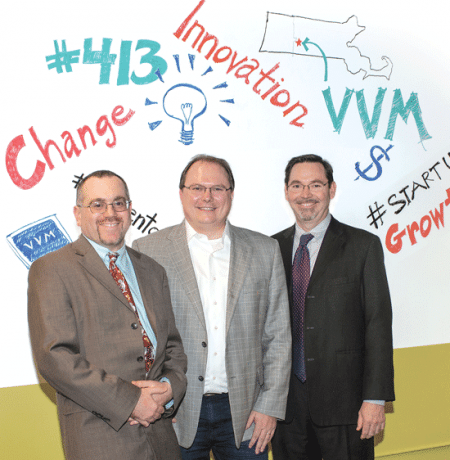
From left, VVM Executive Director Paul Silva with board members Scott Foster and Jay Leonard.
Photo by Denise Smith Photography

Scott Foster says the genesis of Valley Venture Mentors sounds like one of those old jokes.

“A lawyer and a physicist go into a bar,” he deadpanned, adding that, in this particular case, he was, and still is, the lawyer. The physicist was Paul Silva, although he isn’t in that line of work and never really was.

The bar in question was in Amherst, and what the two protagonists, meeting for the first time after taking in an entrepreneurship event at UMass, started talking about over a cold beer was the need to create a mentoring program for entrepreneurs that went beyond the existing initiatives, such as those created by the Grinspoon Foundation, focused on college students.

Foster called it a “finishing school” for those with entrepreneurial spirit and an idea in some stage of development.

It would take four years to open this finishing school, but the partners prevailed. They called it Valley Venture Mentors and gave it a bold mission statement — “to launch an entrepreneurial renaissance in the region.” It staged its first monthly meeting in early 2011, bringing together mostly young entrepreneurs, many of them still in or just out of college, and mentors ready to help with advice on how to take an idea to the next level, whatever that might be.

To say those were humble beginnings, and that VVM has come a long way in four short years, would be an understatement. The first sessions were staged in the spacious, donated conference room of the Springfield-based law firm Bulkley Richardson, for which Foster is a partner. Most meetings drew 25 to 30 people. The organization had roughly $25,000 to work with, said Silva, now its executive director, and had no paid staff.

mentoring is a big part of the equation at VVM

As the agency’s name would suggest, mentoring is a big part of the equation at VVM as it goes about helping entrepreneurs get started and get to the next level.

Today, the meetings are held in the Food Court at Tower Square because attendance has grown to 150 or more, and that’s the only spot big enough to seat that many. Thanks to donations from MassMutual (see related story, page A10), the state, and other sources, VVM now has $5 million with which to administer a number of programs, including those monthly meetings, pitch camps, a pitch contest that has become a pivotal component of BusinessWest’s annual Western Mass. Business Expo, co-working space initiatives, and a new accelerator program, based on the MassChallenge model, that will bring 30 emerging companies together for four months of intensive learning, sharing, and competing for no less than $225,000 in prizes. There are now several paid staff members and a host of interns from area colleges working for VVM.

That profound growth shows how far VVM has come, but it doesn’t explain why this organization, still very much in the start-up phase like the companies it works with, has been designated a Difference Maker.

What does explain it is commentary from those who are in various ways part of the VVM phenomenon, or impacted by it. Using different words and phrases, these individuals make it clear that VVM is making a difference by creating what many call “collisions” involving people with ideas, valuable insight in business, and capital to make these ideas reality, and, in the process, create that aforementioned entrepreneurial renaissance and spark a revival in Springfield’s long-struggling central business district.

“The economic development of Springfield is a six-legged stool, and VVM is definitely one of those legs,” said Delcie Bean, founder and president of Paragus Strategic IT, BusinessWest’s Top Entrepreneur for 2014, a frequent mentor at VVM meetings, and a key player in efforts to revitalize downtown. “We need a place for very early-stage companies to go, be supported and mentored, and pushed and accelerated to get off the ground. If we’re going to have a successful city that’s going to rebound, that’s one of the critical elements.”

Evan Plotkin, a commercial real-estate broker, co-owner of 1350 Main St. in downtown Springfield, and a force behind many efforts to revitalize the central business district and grow the cultural economy in the city, agreed, and said VVM is generating momentum by bringing like-minded entrepreneurs and innovators together, creating what he called “entrepreneurial energy.”

“Creating these collision spaces and creating opportunities for interaction allows for ideas to take root, develop, and expand,” he noted. “VVM not only provides a forum for that kind of brainstorming and thinking, but it also contributes by finding ways to help those ideas become successful businesses.”

Getting the Idea

Both Silva and Foster used the phrase ‘turning point’ to describe what 2014 became for VVM and those who administer it.

This was a year when the agency grew exponentially — in terms of funding, programming, facilities, publicity, and, perhaps most importantly, respect from the many constituencies monitoring its progress or impacted by its widening reach, including then-Gov. Deval Patrick’s administration and the region’s only Fortune 100 company.

That upshift in momentum started roughly a year ago, when the Mass. Technology Collaborative announced that it was awarding VVM a $150,000 grant to fund its various endeavors, a development that gave the organization some exposure — and some validation that it was becoming an important economic-development initiative.

VVM helps entrepreneurs

Among other things, VVM helps entrepreneurs master the art and science of the pitch.

“That was essentially the collaborative’s stamp of approval for what we were doing,” said Foster, adding that VVM was the only entity west of Route 495 that prevailed in competition for funding. “We were invited to multiple meetings across the state, we were introduced to others as an innovative program that was really doing cutting-edge mentoring — and that’s when we realized that we were doing something special.”

More validation would soon come from the governor himself, who met with VVM administrators in the spring, during one of his many visits to Springfield.

“He essentially said, ‘I think we need to do more for you guys — you’re doing some pretty interesting things, and we can help with some capital,’” said Foster, adding that he backed up those words with a $2 million commitment to the agency.

More money would come VVM’s way in the form of a $1.6 million donation from MassMutual (the company also created the $5 million Springfield Venture Fund, designed to encourage companies to locate or relocate within Springfield), and awards from the Irene E. and George A. Davis Foundation and the Community Foundation.

With some of that money, VVM created physical space within Tower Square, first with a co-working space and then with a facility for its accelerator program, and made plans to become a major tenant in the Springfield Innovation Center on Bridge Street, an undertaking led by DevelopSpringfield, with construction set to begin soon.

What all that additional funding, operating space, and programming does is give VVM exponentially more resources to do what it was created to do. As they elaborated on that, Silva and Foster went back to the beginning, that first monthly session, because, while the setting has changed, the rooms are bigger, and the budget involves two more zeroes, the mission, as well as the basic strategy for meeting it, remains the same.

“We had 24 people at that first meeting, and Paul and I were two of them,” Foster recalled. “We had four entrepreneurs, so that means there were 18 others — 18 mentors. We didn’t really know quite what we were doing, but we knew we wanted the entrepreneurs to pitch, and we wanted the mentors to give them feedback, and we didn’t want it to be chaos.

“Early on, we decided we wanted this kind of a breakout idea,” he went on. “We wanted people to go and talk to whomever they wanted to talk to, and we wanted to have enough structure so it was meaningful, but not so much structure that it stifled creativity and the natural chaos of meeting other people and having those chance interactions.”

That word ‘interactions’ probably best describes what VVM is all about, said Foster, adding that they come in many shapes and sizes, and all of them could be very impactful.

Entrepreneurs can interact with seasoned business owners, he explained, or with individuals who have expertise in their chosen industry, or with other entrepreneurs dealing with many of the same issues and challenges they are, and, in what would likely be the best of scenarios, they could interact with an individual or venture fund willing to invest in their concept.

Parker Holcomb, who created what was known then as Five College Storage (it is now All College Storage, an indication of how it has grown geographically) while attending Amherst College, credits VVM with helping him “move the needle” with his venture, which places students’ belongings in storage between semesters and delivers them when school is back in session.

“VVM was my first professional network — it was my first opportunity to interact with people, ask questions, and figure out ways to leverage those peoples’ experiences,” he explained, adding that he credits VVM with helping him expand his company to 23 schools in five states.

He said it has also enabled him to sharpen his presentation skills, an important consideration for any small business that has to continually pitch its product or services, and develop accountability, something that’s often difficult in a one-man show.

“The practice I gained in presenting over the past several years could not have been more valuable,” he explained, adding that he has put those skills to work in everything from business-plan competitions to product demo days. “When you’re making a pitch to them, they say, ‘present the problem, present the potential market, present your solution, explain why your solution is defensible, talk about your team and what your advantages are.’ Practicing all that in front of a critical yet supporting group is extremely valuable.”

Moving Experiences

But while VVM’s basic mission hasn’t changed since that first meeting back in 2011, it has been broadened somewhat and certainly facilitated by many of those aforementioned developments in 2014.

Indeed, as part of that goal of creating an entrepreneurial ecosystem, VVM is focused on not only fostering entrepreneurship and mentoring business owners, but making it easier — and more desirable — for ventures to take root in Western Mass. and remain here.

And both the accelerator program and the Springfield Venture Fund should assist in these efforts, said Foster.

The new accelerator facility at Tower Square

The new accelerator facility at Tower Square opened its doors in January.

The accelerator, for example, will give 30 companies the opportunity to vie for at least $225,000 in prizes that will come without strings, he explained, adding that the money is essentially a carrot. The real prize in this exercise, the reason why VVM and its funders want companies to engage in it, is to take part in those interactions, take advantage of the support being offered, and realize the many potential advantages to basing a business in the 413 area code.

And Silva, a serial entrepreneur of sorts who has launched several small businesses, used his own experiences to get his point across.

“I’m not from Western Mass. — I came here for school, and I was very likely to leave, like all of my friends who took off and constantly tell me how much warmer it is where they are,” he told BusinessWest. “The reason I stayed was because the embryonic version of this entrepreneurial ecosystem was here in the Valley, and it loved me and gave me help to start my first company, so that’s why I stayed.

“So, if we can provide that kind of incredible, intense support and relationships, then we can impact these baby companies that don’t have roots yet,” he went on. “They can set down roots wherever someone will give them fertile ground. So we’re going to bring them in, we dangle the carrot to get them here, but the real value is that they see all this amazing stuff, they’re given opportunities to engage, and the ones that are a great fit are going to put down roots here.”

Those supporting the accelerator program through funding were asked to make a three-year commitment, and they did, said Foster, adding that it will likely take some time for VVM’s leaders, like startup business owners themselves, to “figure out what’s wrong, fix it, and do it better the next time.”

The first 30 companies in the program, based on the hugely successful MassChallenge model, which awards roughly $2 million in prize money, got down to business in mid-January. Among them is a venture called MachineMetrics, the latest endeavor launched by serial entrepreneur Bill Bither.

Using patented software, the company automatically collects and analyzes data from CNC machines, sending out notifications when production falls behind. It also provides a real-time dashboard that allows operators and managers to keep tabs on production at all times.

The product differentiates itself from others on the market by enabling managers to identify problems quickly and fix them, said Bither, who met a manufacturer who agreed to let his shop become a beta-testing site for the software at a VVM meeting. He told BusinessWest that he was drawn to become one of the 120 applicants for the first accelerator session because of the prize money — and the training and mentoring that can help him, well, accelerate his pace of growth.

“I think our company can benefit from the structure, and from the experience of the mentors,” he said. “But the cash grants are nice, and we hope to be one of the teams that wins one.”

As for the Springfield Venture Fund, it made its impact felt for the first time late last year, when it provided a large portion of the $1.25 million commitment from area investors that prompted video-game maker HitPoint Studios to relocate from Amherst to downtown Springfield. More such developments are expected in the months and years to come.

Looking at the larger picture, at the ecosystem created by the various entrepreneurship programs, Jay Leonard — an economic researcher for MassMutual subsidiary Babson Capital, a board member for VVM, and one of its mentors — said it has the potential to change the landscape in Springfield’s downtown. In some ways, he notes, it already is.

“We’ve had more than 150 people at our last five monthly meetings, which is pretty amazing for a Wednesday night in Springfield,” he said. “At any given time, we have 10 teams involved in our mentorship program, 30 teams associated with the accelerator … add this all up, and it brings an amount of positive energy to downtown Springfield.

“The accelerator becomes part of building out this entrepreneurial ecosystem, and it’s one of the notions that MassMutual and our other sponsors have bought into — the notion that entrepreneurship really can change Springfield,” Leonard went on. “Supporting this ecosystem means there will be more young people here; it means there will be more young people doing value-added activities and positive economic input. It provides us the ability, as a community, to grow without seeking outside support.”

Bottom Line

No one involved with VVM or any other element of the region’s entrepreneurial ecosystem expects Springfield or the Pioneer Valley to become another Cambridge or Silicon Valley, probably the nation’s two most popular addresses for startup companies.

But they do expect this area to increase the number of young entrepreneurs ready and willing to call it home, and perhaps dramatically.

For that to happen, entrepreneurship must be fostered, entrepreneurs need to be mentored, and incentives must be created for companies to take root here, as Silva did years ago. VVM is already doing all that, and it has laid track that will enable it to do so on a much larger scale in the years to come.

That’s why a fledgling agency, started only a few years ago when a lawyer and a physicist walked into a bar, is already a Difference Maker.


George O’Brien can be reached at [email protected]

Class of 2015 Difference Makers
Event Provides Memories, Camaraderie, and a Chance to Help ‘Kick Cancer’s Ass’

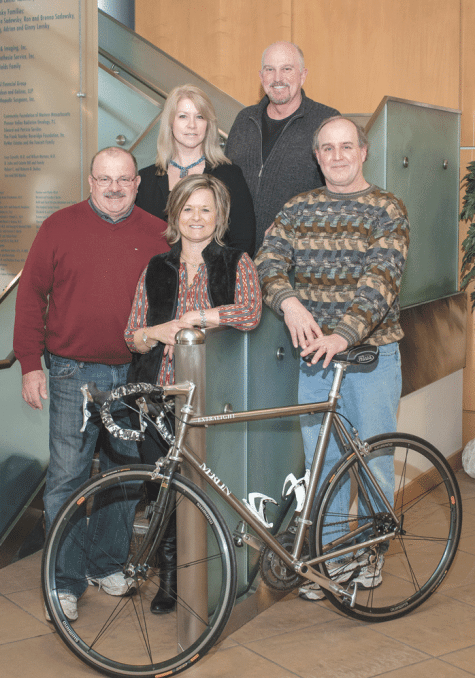
Domenic and Michelle Battista (front row, left), with K-Ride founders (from left) Kim Zachery, Dan Williams, and Steve Stark. Photo by Denise Smith Photography

Domenic and Michelle Battista (front row, left), with K-Ride founders (from left) Kim Zachery, Dan Williams, and Steve Stark.
Photo by Denise Smith Photography

Dr. Satkiran Grewal says that, when parents first hear the word ‘cancer’ used in the same sentence as their child’s name, they often don’t really hear much, if anything, said immediately after that.

They’re listening, said Grewal, chief of Pediatric Oncology at Baystate Children’s Hospital, but often what is said doesn’t fully register because there is a surreal quality to the news they’ve been given, and they’re still attempting to digest it while trying to anticipate what happens next. Later, parents and other family members will inevitably need help understanding, coordinating, and simply coping with the many aspects of a prolonged cancer battle.

And these are some of the many reasons why, in 2012, Baystate created a new position, an individual (a nurse practitioner, or NP) who acts essentially as a liaison between the families of children and adolescents diagnosed with cancer and the specialists providing them care. It’s a position funded in part by money raised by participants in Katelynn’s Ride, or K-Ride, as it’s called, an annual event created to honor the spirit and courage of Katelynn Battista, who lost a decade-long battle with leukemia in 1997 at age 11.

“Katelynn’s riders have supported one of Baystate’s most patient-focused initiatives — the work of a designated care coordinator who helps patients and families navigate the complexities of the healthcare system amid serious illness,” said Grewal. “It’s a very important role, and we’re grateful for their assistance.”

But support for this position is just one of many reasons why K-Ride is being honored as a Difference Maker for 2015.

Indeed, while the money it raises for both Baystate Children’s Hospital and the Dana Farber Cancer Institute through the Jimmy Fund, and also for individual families in the form of $1,000 grants to help them cope with the many expenses associated with a cancer diagnosis, is substantial ($1.7 million to date), it is only part of the story.

The event itself, through the camaraderie it creates and the critical help it provides to those coping with this deadly disease, makes a difference in the lives of those who participate and, while doing so, brings different, often-inspiring storylines to the ride’s starting line on the grounds of Hampshire College.

People like Deb Rossmeil, who started riding to honor the successful fight against leukemia waged by her son, Adam, and to help others facing similar battles. In the beginning, she would ride with a few family members, but today, the team now known as Adam’s Animals brings as many as 30 people to the ride and is annually one of the top fund-raisers.

There’s also 10-year-old Luke Bradley, a fifth-grader from South Hadley who, last May, had the honor of serving as one of the event’s ambassadors, those who cut the ribbon to start the various rides — 5, 10, 25, 50, and 100 miles. That role had traditionally gone to individuals (usually parents) whose loved one had lost their fight with the disease. But for 2014, organizers wanted to extend the honor to a young person at a key turning point in their battle.

So it was for Luke, who only a few weeks before the ride had undergone what would be his last treatment for acute lymphoblastic leukemia, essentially ending a three-year fight. He was still rather weak as he undertook the 5-mile ride himself, but he finished it.

“It was fun, and I had a great time,” he said, adding that this was an experience he’ll never forget, and he intends to be back next year with his parents and younger siblings.

And then there are Michelle and Domenic Battista, Katelynn’s parents. They both recall having mixed feelings when they were approached about creating a ride in honor of their daughter only a year after she died, but they eventually said ‘yes,’ and they’ve served as gracious hosts ever since, and say the event provides a powerful, meaningful, and at times emotionally exhausting way to honor Katelynn’s indomitable spirit.

“It’s difficult in some ways because Katelynn’s not with us,” said Michelle. “It’s overwhelming to see all the people who come out, not only for our family, but their own families, where they have a situation where someone’s battling cancer. It’s great to see a lot of the survivors, especially the children, but it’s bittersweet because our daughter’s not there.

“But I know Katelynn’s looking down on all this and smiling,” she went on. “It’s nice for her to be remembered in such a way and to have her go on inspiring people.”

Profile in Courage

Domenic Battista said Katelynn was a child who could light up any room just by walking into it.

Katelynn

Michelle Battista says cancer couldn’t stop her daughter, Katelynn, from doing anything she wanted to do.

“She had that kind of personality,” he recalled. “She was never down on herself; she just had that glow to her. She was caring for others — she knew she had a serious illness, and she fought it with … I don’t want to say ‘style,’ but I guess maybe that works.”

Michelle remembers that Katelynn was committed to not letting her cancer get in the way of whatever she wanted to do, and, for the most part, she succeeded with that mission.

“She tried to maintain her normal self and activities, just like any other child,” she told BusinessWest, “because she just wanted to be a kid and do the things that her friends did. Cancer did not hold her back; she was still involved in all her sports — she danced, she played soccer, she played basketball, she played piano, all while she was sick. She didn’t miss out on anything that she wanted to do.”

And while doing all that, Katelynn decided she would also make time to appear on a radiothon staged by radio station WHYN to raise money for Dana Farber, where she received some of her care.

It is here where the story of K-Ride begins, because it was roughly at that point where Katelynn began inspiring people to do things in her name in the ongoing fight against cancer.

Two of the hosts for that radiothon were Dan Williams and his wife and long-time radio and TV partner Kim Zachery. Williams’ best friend, Steve Stark, worked for the Postal Service, as did Domenic Battista. “It turns out we all knew other, and so we all got very involved in Katelynn’s story,” said Zachery, adding that Katelynn became a regular on radiothons.

For Williams and Stark, that involvement eventually included a cross-country bike ride they undertook in 1996 — soon after Katelynn, who had been in remission, was again diagnosed with cancer — to raise money for Dana Farber and get the infusion room there named in her honor.

“Katelynn became our inspiration,” said Williams, adding that, two years after that cross-country trek, he and Stark took part in something called the Race Across America, a 2,740-mile, non-stop relay that they and other team members completed in just under seven days. “In 1996, when we did the cross-country bike ride, we did it in honor of Katelynn, raising something like $50,000, and then in 1998, we did it in her memory — she died the year before.”

And it wasn’t long after she passed away before Williams, Stark, and Zachery started conceiving an event that would enable Katelynn to go on being an inspiration — for hundreds of people, many of whom had never met her.

“When she passed away, we knew we had to keep her name and her legacy going,” said Zachery, “because she was such a wonderful little girl and had such a fierce spirit of determination.”

The first K-Ride was staged in 2001 with roughly 60 riders. That number rose steadily to about 300, said Stark, and it has stayed around that level, dipping during the Great Recession, when most all fund-raising initiatives suffered, but rising again when it ended.

Over the years, the event has expanded to include several different rides, and also a walk, with participants coming mostly from this region but some from well outside it.

These are not races, but chances for individuals and teams to raise money through donations from friends and relatives in recognition of their participation. Riders 18 and over must raise $300 each, while riders under 18 and walkers 12 and over must raise $100. The format is similar in many ways to the popular PanMass Challenge, a bike ride that raises millions each year for the Jimmy Fund, but it is less demanding from a fund-raising perspective (PanMass Challenge participants must raise $4,000), and more of the dollars raised stay in this region.

And while the K-Ride has grown in terms of participation, it has also gained a number of corporate and media sponsors who underwrite nearly all of the operating expenses, meaning that all the money raised by the riders goes to Baystate and Dana Farber.

Fun with a Purpose

All those we spoke with said the K-Ride is much more than a sporting activity created to raise money for cancer programs. It’s an event, they note, and a family event at that, complete with a barbecue, a live band, and a host of activities.

Williams joked that riders are “pampered,” with numerous water stops, fruit, sports bars, peanut-butter-and-jelly sandwiches, shower facilities, and even a massage station.

But it is an event with a purpose, one that is reflected in everything from the names of the teams that participate (many, like Adam’s Animals, were inspired by people who have battled cancer) to the ambassadors who cut the ribbon, to the position at Baystate supported by the ride.

And that purpose isn’t lost on anyone.

Luke Bradley

Luke Bradley served as ambassador at the 2014 edition of Katelynn’s Ride only a few weeks after his last treatment for acute lymphoblastic leukemia.
Photo courtesy of Driscoll Photography

For Jeff Neumann, an artist from New York State, K-Ride offers him an enjoyable opportunity to fund more of the research and new treatment options that helped him beat back the non-Hodgkin’s lymphoma he was diagnosed with nearly 20 years ago.

“If it wasn’t for medical science and technology, I wouldn’t be here, and I wouldn’t be able to participate in such an event,” said Neumann, who has long been a friend of Williams, started riding at his urging, and joined him in recent years on a team, a fund-raising juggernaut, called K.C.A., short for ‘Kicking Cancer’s Ass.’ “I’m extremely grateful that I’m able to contribute and help some kid who may be in jeopardy of being able to ride his bike in the future.”

For Rossmeil, there are many connections between her son, Adam, and Katelynn and her family. Both families are from West Springfield, and Adam was diagnosed with the same form of leukemia (acute myeloid, or AML) as Katelynn.

Adam is now in the sixth grade and recently marked the 10th anniversary of his bone-marrow transplant. He’s been a participant in the K-Ride since he was 3, riding first with his father, before graduating to his own bike and successfully completing first the 10-mile and then the 25-mile ride.

The Rossmeil family rides and volunteers for the event to both celebrate what Adam has accomplished and create more stories like his.

“The thing we like the most is that they’re raising money for the Jimmy Fund and for the Baystate Cancer Center — Adam was treated in both facilities,” she said. “But it’s also a big family event. We get to see the Battistas every ear, and also one of Adam’s nurses from the hospital — she rides on our team — and we get to see the doctor who took care of him when he was first diagnosed; he also rides. It’s just a great event.”

Williams told BusinessWest that the ride has generated many traditions over the years, none more poignant for him than the ambassadors.

“There have been some inspirational stories over the years, and there have also been some very sad stories,” he said in reference to those who cut the ribbons. “Even though this is a day of celebration, we’re still dealing with cancer, so we’ve had families representing a child that may have passed away from cancer cutting the ribbon. That has a sobering effect, but it reminds everyone of why we’re doing this, why we’re all together on this particular day, and why we’re riding when it’s 95 degrees out or the rain is coming down sideways.”

For the Battistas, meanwhile, the ride is a day that generates a wide range of emotions, from sadness to elation to pride in what has been accomplished.

“We have some riders who have been with us since day one, and it’s great to see them come back each year,” said Domenic. “We’re here 15 years later, and I never thought it would get this big or go this long, but it has, and that’s a tribute to a dedicated crew we call the Friends of Katelynn. It’s a long day, but a nice day, a family day of remembrance for Katelynn while we’re helping to fund this position at Baystate.”

Katelynn’s ride participants describe it as a family event packed with fun, purpose, and poignancy. Photo courtesy of  Driscoll Photography

Katelynn’s ride participants describe it as a family event packed with fun, purpose, and poignancy.
Photo courtesy of Driscoll Photography

Such an individual was not available to families when Kateylnn was battling cancer, he said, adding that, when Grewal and others at Baystate indicated a desire to direct some of the K-Ride’s donations in that direction, organizers were in full support.

Hired in 2012, the nurse practitioner has been an effective addition to the staff at Baystate, working with patients and their families in both inpatient (at Baystate Children’s Hospital) and outpatient (at the Sadowsky Center for Children) clinical settings.

The NP assists families with everything from managing medications properly to scheduling tests to answering the myriad questions that are inevitably raised during a cancer battle, said Grewal, adding that, while the survival rates for childhood cancer are quite good, that doesn’t mean the process of treatment is in any way easy or without stress.

And starting just after the news is broken to parents, the nurse practitioner serves as an intermediary of sorts and a needed source of information and support during an often-years-long ordeal that can and usually will test a family’s patience — and mettle.

“There is a shock that comes to the family, and after the initial news on the first meeting, most of the things just fly over their heads,” Grewal explained. “We as physicians meet with the family on multiple occasions, but a nurse practitioner fills that role in between. And I wouldn’t say it’s hand-holding, although there is some of that. There are also many questions to be answered.

“I’ve been guilty, like everyone else, of using technical terminology,” he went on. “Parents won’t interrupt me while I’m doing that, but they’ll sit down with the nurse practitioner later, go over everything again, and they’ll say, ‘I didn’t understand what he said when he was saying this.’”

The Ride Stuff

While the K-ride is fun and rewarding, Zachery told BusinessWest, it is also a great deal of work. And that’s why organizers have at times — usually just after the event is staged — stopped to consider if this is something they want to continue doing.

“But then, the e-mails start coming in from people telling us this was the best ride ever, or that they plan to keep coming back, or that they’re really inspired by what we do,” she told BusinessWest. “And that keeps us going.”

If they wanted another reason to push on, they need only recall something Katelynn said not long before she died: “nothing is ever too hard to do if your faith is strong and your purpose is true.”

Those words apply to a cancer fight, obviously, but also to life in general — and perhaps a 100-mile bike ride as well.

And they represent only one way in which Katelynn — and all of her many friends — continue to inspire and make a difference.

George O’Brien can be reached at [email protected]

Autos Sections
Area Auto Dealers Expect Sales to Accelerate in 2015

Carla Cosenzi

Carla Cosenzi says people who visit an auto dealership are often surprised at the advanced technology available in today’s models.

Carla Cosenzi doesn’t mince words when she talks about 2015 and her expectation that it will be a great year for auto sales.

“The economy continues to gain strength, interest rates remain low, and there are a lot of exciting new models coming out, so the outlook is really positive; the auto industry is predicting a record year,” said the president of TommyCar Auto Group, adding that sales have been on the rise in the past few years and the company was confident enough to build brand-new Hyundai and Volkswagen dealerships in Northampton over the past few years.

Jeb Balise agrees that sales are moving in a forward direction. “The industry is predicting a phenomenal year, but we had our best year ever last year,” said the chairman and CEO of Balise Auto Sales. “We sold just under 25,000 units, so any growth will be a bonus. But we are pretty excited about the future and continue to add new stores.”

Mike Marcotte said Marcotte Ford saw a 9% increase in new-car sales last year. “Sales were really strong, and we are hoping to be at 10% this year. We’ve hired new employees and ramped up our commercial sales department,” the company president told BusinessWest.

Such optimistic projections are in line with national forecasts. In fact, on Jan. 21, analysts at the American Financial Service Assoc. Vehicle Finance Conference in San Francisco said they expect the numbers to continue to grow in 2015 for the sixth consecutive year.

TrueCar and J.D. Powers are also optimistic and predict that sales of new vehicles should hit 17 million this year for the first time since 2005, a 3% increase over last year.

A number of factors are playing into the equation. Consumer confidence has risen, many vehicles can be purchased at low or 0% interest, gas prices have dropped dramatically, and consumers are impressed by the new features, gas mileage, and technology offered by manufacturers today, who find themselves in a highly competitive market with lean margins.

The reduction in gas prices has fueled the growth of SUVs and trucks, which slowed considerably nationwide when prices at the pump increased a few years ago.

Local dealers also noticed the trend. “People are very reactive to current circumstances, and we are already seeing sales of trucks and SUVs increasing because of low fuel prices; when gas prices went up, customers gravitated to hybrids,” Balise said. “But now, sales of mid- and full-sized SUVs and trucks are growing at a particularly fast rate.”

He believes the trend is exacerbated by the fact that construction jobs are increasing in the area, and with projects accelerating in Springfield, contractors and people in related businesses are buying the trucks they need to run their businesses. “There is a real demand for pickups again,” Balise said.

Marcotte concurred, and said the timing is serendipitous for Ford, due to its new, full-sized F-150 pickup, which has an all-aluminum body; redesigned Explorer and Edge SUVs; and a wide range of other new vehicles.

“We saw people trading in their big trucks for smaller cars three years ago,” he told BusinessWest, “But due to better gas mileage and the price of gas, there has been an upswing in sales of trucks and SUV’s.”

Marcotte Ford bulked up its inventory of 2014 F-150s last year to take advantage of the increase in demand, with the game plan of being able to offer attractive prices when the 2015 model came out. “There are great incentives for the 2014 models,” Marcotte said.

But the biggest factor in any sale is affordability, which has been a common denominator that is motivating people to purchase new vehicles.

“Transportation is less expensive today than it has been just about anytime in the past,” said Balise. “Low interest payments have exacerbated the advantages of new vehicles, and we are often able to offer people a lower payment than they had for their last vehicle.”

Jeb Balise, left, and Ken Maffia

Jeb Balise, left, and Ken Maffia say that providing exceptional service is a key component in repeat business.

Industry analysts say that, although people are borrowing more than they did in the past for a new vehicle, the fact that they are spreading payments over longer terms at low or 0% interest rates makes payments especially alluring. Experian Automotive reports the average new-car buyer financed approximately $27,799 in the third quarter of 2014, and although that was an increase of about 4% over the year before, their average monthly payment was only about 2.6% more.

“When people get a loan at 0% interest, it allows them to get more features and keep their payments the same,” Marcotte said.

Drumming Up Business

Auto dealers say that, although some people still trade in their vehicles every two to three years, most are keeping them for longer periods of time. “The average is 11 years, and the trade-ins we see have about 100,000 miles or more,” Marcotte said.

Balise agreed. “We’re seeing trade-ins with up to 270,000 miles. There are plenty with well over 100,000 miles that range between 175,000 and 205,000 miles, which is something we rarely saw prior to 2008.”

However, dealers say the fear of taking on new debt that existed during the recession has led to pent-up demand. “It’s greater today than it has ever been,” Balise said, adding that many people who put off purchasing new cars for several years are eager to buy again.

And since many haven’t entered a dealership for some time, they are wowed by what is being offered.

“Ford makes major changes every three years,” said Marcotte. “And people who visit a dealership for the first time in years are surprised by the technology and safety features in the vehicles.”

He told BusinessWest that Ford introduced two models that can be run on gas or electricity — the Fusion and the C-Max hybrid — to the market about three years ago. “People can plug into charging stations at dealerships and travel about 1,000 miles before they have to recharge. There are more options than ever before, so vehicles can really be tailored to suit people’s needs.”

Cosenzi agreed and noted that Volkswagen’s E-Gulf was named Motor Trend Car of the Year, and that vehicle, along with Nissan’s Leaf, another electric model, not only qualify for large state and federal rebates, but also ensure that buyers will never have to purchase gas again.

“We have a quick-charging station that fully charges a vehicle in under an hour, and more places are adding fast-charging stations so people can stop along the way when they want to take a long trip,” she continued, adding that customers who visit TommyCar’s dealerships often look for the latest safety features, including the BlueLink by Hyundai and Car Care by Volkswagen, which are similar to the OnStar system, which provides an emergency-response system, navigation, and diagnostics.

“BlueLink allows people to set a mileage parameter that alerts them if the driver goes outside of it or the speed limit, as well as step-by-step navigation. It also alerts them whenever the vehicle needs maintenance,” Cosenzi told BusinessWest. “But these features aren’t driving traffic, and people are not buying because they want the latest technology. They are just impressed by it when they come in.”

Balise agreed. “People are smart shoppers and more frugal than they used to be when it comes to options,” he explained. “They only want them if they see their value and know they will use them. They are more pragmatic and less emotional about purchases than they were in the past.”

Dealers are in agreement that most buyers know what they want when they enter the dealership because they have done research online. But they want to touch and feel the vehicle as well as test drive it, Cosenzi said.

However, due to fierce competition, they also know there is flexibility in pricing, and Balise said what used to be a painful transaction is now something that can be pleasant for the buyer.

“We’ve streamlined the process and discount vehicles in a forthright way with full disclosure so the customer is in control,” he said. “When they arrive, they are well-educated due to the Internet, so it behooves dealers to live up to the knowledge and understanding they have. Our success is based on high volume, so we are able to make transactions at low prices.”

Repeat business is important and is measured by manufacturers, and because the service people receive while they own a vehicle weighs heavily in their choice of where to go when they are ready to purchase a new model, dealerships are doing everything possible to make visits easy and pleasant.

“Manufacturers and dealers go to extremes to provide a great experience,” Balise said, adding that his dealerships’ customer-retention and loyalty rates are very high.

Marcotte explained that the trend of keeping vehicles longer than in the past led his dealership to outgrow its existing number of service bays. “So we are building new bays for commercial vehicles,” he said, adding that he will break ground next month on a new building with 16 bays. It will be positioned next to Quicklane on 933 Main St. in Holyoke, which services any make or model and was built by Marcotte six years ago.

He added that the dealership’s service department is open until midnight, and people who buy from Marcotte Ford can take advantage of its 150 free loaner vehicles. “We want to make things as convenient for customers as possible,” he noted. “We also offer breakfast catered by the Log Cabin Restaurant on Tuesdays and Saturdays so people can have a nice meal; some customers schedule visits at these times just because of the free meal.”

Balise said offering exceptional service is no longer an option, but a necessity. “Being good is not good enough today. Our growth is based on being customer-focused and is driven by that more than anything else. Standards have continued to rise over the last 10 years, and we are maniacal about being the absolute best in class.”

Optimism Prevails

Overall, Cosenzi said, consumers are more confident than they were a few years ago.

“Sales in the second half of 2014 really accelerated for us, and we are coming into our good months. Sales typically start to increase in February, and the outlook is really positive,” she noted, mentioning President’s Day specials and tax season because buyers who get large refunds often use them as a down payment for a new vehicle. “Plus, there are a lot of new models coming out.”

Balise concurs and said the company completed construction on four new dealerships last year and now has 19 in Massachusetts, Connecticut, and Rhode Island. “We are predicting a 2% to 4% increase in sales this year and feel pretty confident we will sell more than 30,000 units,” he told BusinessWest.

If interest rates and gas prices stay low, and the economy continues to improve, the numbers should add up to a good outcome for consumers and dealers alike.

Daily News

SPRINGFIELDBusinessWest and the Healthcare News are pleased to announce a new lecture series presented by Comcast Business. This series of lectures, panel discussions, and presentations will address timely and important business information, and is an ideal opportunity to meet industry leaders and network with area business professionals.

The first event in the series, called “Technology Has the Power to Change Healthcare,” is slated for Thursday, March 12 at La Quinta Inn & Suites, 100 Congress St., Springfield. Panelists include Neil Kudler, vice president and chief medical information officer for Baystate Health; Michael Feld, CEO of VertitechIT and acting chief technology officer of Baystate Health and Lancaster General Hospital; and Delcie Bean IV, CEO, of Paragus Strategic IT.

Registration begins at 7:15 a.m., followed by breakfast and networking at 7:30 a.m. and the panel discussion from 8 to 9 a.m. Admission is free, provided by Comcast Business, but RSVP is required by Thursday, March 5. Sign up online at businesswest.com/lecture-series, or call (413) 781-8600, ext. 10, for more information.

Daily News

NORTHAMPTON — After a stint working as a senior member of IBM’s Business Analytics Division in the Boston area, Holyoke native Kevin Joyce has returned to the Pioneer Valley and taken a position at Webber & Grinnell Insurance.

Joyce began his insurance career in 2005 with Phillips Insurance of Chicopee. In his five years at Phillips, he built a significant book of business comprised of property owners, manufacturers, restaurants/hospitality, contractors/sub-contractors, and technology operations.

“I’m very excited to be back in the community I love, working with a great firm and clients that I’m passionate about,” Joyce said.

Added Mathew Geffin, vice president of Business Development, “we are very excited that Kevin is joining the team at Webber & Grinnell. Kevin is a son of the Pioneer Valley and understands the values and needs of our business community.”

As one of the largest insurance agencies in Western Mass., Webber & Grinnell currently serves more than 5,000 automobile and homeowner policyholders, and insures nearly 900 businesses throughout the region.

Daily News

AGAWAM — Braman Termite and Pest Elimination, a leading provider of pest-management services in Southern New England, is celebrating 125 years in business. The business, originally founded in Boston in 1890, moved its headquarters to Agawam in 1980.

“In 1890, pest control was usually done at night or when no one was around,” said Jerry Lazarus, third-generation owner of Braman Termite and Pest Elimination. At the time, pest control was primarily done with kitchen-sink concoctions made with ingredients like arsenic, which has a very distinct and unpleasant smell.

“The common view was that, if it didn’t stink, it didn’t work. Nowadays, if it stinks, you have a problem,” said Lazarus. “Pest-control product development has come so far that they can be done in very controlled environments without displacement — we can even treat hospital rooms without moving patients, if needed.”

Now, there are no secret ingredients, and all products are scientifically tested to establish appropriate dosage, ensuring both efficacy and public safety. Meanwhile, technology like e-mail, cell phones, bar-code scanning, and global positioning systems have helped Braman continually provide fast, efficient, and customer-centered service.

“Technological advancements have been adopted by the pest-management industry to better communicate with customers and create efficiencies to help us be competitive and profitable,” said Lazarus.

Braman Termite and Pest Elimination has even adopted technology like social media to stay in touch with customers and educate the public. In honor of the 125 year anniversary, Braman has prepared 125 themed posts for its Facebook account that will appear throughout the year. Find Braman at www.facebook.com/bramanpest and ‘like’ the page to see a full year of fun and educational posts.

“We have everything from pest-control service options to awareness months to alert you when your home or business might be more vulnerable to certain pests, and employee milestones,” said Lazarus.

Daily News

SPRINGFIELD — The Stronger Businesses Program will begin on March 20 at the Business Growth Center at Springfield Technology Park. Designed for business owners who are focused on growth and want to take a fresh look at their markets, revenues, and operations, this workshop meets for five mornings over a seven-week period and includes two private technical-assistance sessions, one price for up to three people per company, and peer-mentoring sessions over breakfast.

“It is specifically designed not to be Business 101,” said Karen Utgoff, co-founder and facilitator of the program. “The series emphasizes active learning and immediate application of specific tools and techniques to gain fresh perspective and identify opportunities and challenges, with the goal of turning those insights into actionable steps.”

Added Laurie Breitner, the program’s other co-founder and facilitator, “we were gratified to learn from participants in earlier sessions that they found the program very useful, and all reported that they had improved their businesses and made well-defined plans for future growth — more capabilities, more customers, more sales, increased profitability, more employees.”

The Business Growth Center has again received a grant from the Massachusetts Growth Capital Corp. to support the Stronger Businesses Program. Business owners from underserved communities are particularly encouraged to attend.

“While this program is designed for existing businesses, we also welcome startups and nonprofits that need assistance defining and planning growth,” said Marla Michel, the Business Growth Center’s director. “We ran the program last year, and every participating business reported positive results. We are proud to offer a program with such compelling impact.”

Additional information about this and other programs is available at www.businessgrowthcenter.org/seminars-workshops or by contacting Mary Marquez, assistant program manager, at [email protected] or (413) 355-5680.

Community Spotlight Features
Spirit of Innovation Is Taking Hold in Pittsfield

Mayor Dan Bianchi

Mayor Dan Bianchi says the new Berkshire Innovation Center will be a boon to local businesses and will draw attention to the western part of the state.

The city of Pittsfield has a new project in the planning stages that Mayor Daniel Bianchi calls “amazing.”

It is the Berkshire Innovation Center, which is so innovative that it qualified for funding from a $1 billion investment the Commonwealth is making in projects that further the life sciences.

“We’ve been working with the Massachusetts Life Sciences Center in Boston on this for the last few years,” Bianchi said, adding that when he heard about the state’s plan to invest in the field, he thought about how Pittsfield could become part of it.

His initial idea was to build an incubator that would draw entrepreneurs from the Boston area to Pittsfield, which is home to many small, applied materials and plastics companies that make products such as sutures and suturing equipment.

But when it became clear that this concept was not feasible, a new plan was formulated that led to a $9.7 million capital grant from the Life Sciences Center to build the Innovation Center in the William Stanley Business Park on the grounds of the former General Electric complex that dominated this city’s business community for decades.

The new, non-profit facility will enable shared research between local companies and educational institutions; early-stage production and commercialization of products; and workforce training at the site.

Bianchi said officials toured Rensselaer Poly-technic Institute and Hudson Valley Community College’s new science centers, which have been very successful, to help them formulate the plan.

Local manufacturing companies, including General Dynamics, SABIC and Crane & Co., as well as regional educational institutions such as the State University of New York’s College of Nanoscience, MassMEDIC, the UMass campuses in Amherst and Lowell, Berkshire Community College, McCann Technical School, and Massachusetts College of Liberal Arts have already expressed interest in becoming affiliated with the center. 

“We’ve received more than 20 letters of interest,” said Bianchi, adding that the center will give local companies access to training and advanced technology, including a clean room, 3-D prototype printers, and laboratories with reverse engineering capabilities that will allow them to make new products or improve existing ones. “There are some pretty creative companies in this area, but in order to grow they need this type of facility. A company making complex compounds will be able to work with researchers at UMass Lowell as well as at the Nanotechnology Center in Albany.”

The center will also contain incubator space for entrepreneurs. “It will be unique, and people at the Life Sciences Center are really excited about it,” the mayor said, noting that the facility will be sustainable and generate income through tiered memberships, usage and rental fees on equipment, training, and sponsorships from regional companies.

Ground will be broken this winter, and Bianchi said that if meaningful relationships can be created, it will mean “great things for local companies.”

Meanwhile, other forms of economic development are taking place in this former mill city, everything from new investments in the community’s burgeoning downtown, to more steps to bolster an already thriving creative economy,

For this, the latest chapter in its Community Spotlight series, BusinessWest talked at length with Mayor Bianchi about what’s next for the largest city in Berkshire County.

Downtown Transformation

Among the many new developments in Pittsfield is a boutique hotel taking shape within a building on 273 North St. that dates back to the 19th century. The 68,000-square foot, $14 million project will include 42 unique rooms, three conference areas, an atrium with a skylight, a bar, a revolving door, and a marquee sign with “Hotel” spelled out in lights over the entrance.

“They’re keeping the old windows as well as the 8-by-8 posts in the building, and no two rooms will be the same,” said Bianchi in a voice brimming with anticipation. “It’s very exciting because Berkshire County needs more hotel space, and it will really jazz up this part of North Street. The Crown Plaza and area bed and breakfasts are booked solid all summer, so the owners of the property believe it will be a great destination.”

The popular Spice Dragon Restaurant, which was located in the building, has closed, but a new eatery, which is yet to be determined, will take its place.

“The hotel is only a couple of blocks from the Barrington Stage Company and is right behind City Hall,” Bianchi said, adding that it will be a boon to business travelers as well as tourists.

Other improvements are also being made to North Street via a streetscape plan, and the city was able to procure money from the state much earlier than it planned to complete it.

“The work began about six years ago and we expected it would take two more funding cycles to finish it,” Bianchi said, noting that the first phase of the project ran from the corner of East Housatonic Street to Columbus Avenue and included new lighting, sidewalks, and plantings.

“But we were able to leverage the massive investment made by Berkshire Medical Center and private investors,” he continued, adding that the hospital’s new day-surgery center, parking garage, and wound clinic, combined with the boutique hotel and renovation of the Frank Howard Building (more about that later) played into the equation and convinced state officials to grant the city $4.5 million to complete the streetscape work along an additional three blocks. “We received the money six months ago and we hope the infrastructure improvements will lead to an increase in private investments.”

To that end, work on The First Street Common downtown will also be completed in the spring. “It’s one of our largest urban parks and dates back to the early 19th century,” Bianchi said. “It’s a two-minute walk from City Hall and is very important. It has a new spray park and a performance center, and Shakespeare and Co. will stage events there this year.”

Market-rate housing is being built in the Frank Howard Building as part of an historic redevelopment plan that will convert the underutilized structure into 14 apartments, with 10,000 square feet of storefront retail space on the ground floor.

In addition, the Anota Building will also be converted into 25 units of housing with commercial space on the first floor.

“The work will begin in the spring, which is wonderful, because we can’t seem to keep enough market-rate housing downtown,” Bianchi said. “Eleven new units were completed in the old Notre Dame Elementary School at the end of 2013 and they were immediately rented. Encouraging people to live downtown is part of our master plan, because there are 6,000 jobs in the downtown area. So, our downtown is being completely transformed.”

A complete analysis of every street in Pittsfield was also recently undertaken by the engineering firm Kimley-Horn Associates Inc. “It will help us take a scientific approach on how to expend our limited resources,” Bianchi told BusinessWest as he spoke about how the condition of each roadway, coupled with information on when utility work will be done, will make it possible for officials to prioritize work and avoid resurfacing roads that will be torn up a year later. “The overall condition of our streets is good, but the study is important because streets are something everyone notices, whether they live here or are just driving through the city.”

Planning for the Future

The city is also building a new, comprehensive high school. “It’s in the design stage and will have a huge vocational element,” Bianchi said, adding that when he first became mayor and began talking to small business owners, he was reminded that years ago high school students in the vocational track spent every other week working at local companies, which helped them advance their skills and benefitted local companies.

“The school has had an internship program, but the limited number of hours students spend at local businesses does not give them much exposure to their trade, and provides very little value to companies,” he noted. “So we’re framing a new educational model that will benefit students and our small businesses. There has to be a rigorous academic component to it, but there are waiting lists in the state for vocational schools.”

The goal, he continued, is to create a system that will prepare students who don’t want to pursue higher education to go directly into the workforce after graduation.

Courses of study will range from plastics and applied materials to early childhood education, and since Berkshire Medical Center is a large area employer, Bianchi surmises that students who enroll in the latter field of study may decide to become a nurse or pediatrician.

“Vocational education shouldn’t be a limitation, and the high school has to encompass a lot more than a new building. It has to offer a new model of education,” he said, adding that a program in horticulture could plant seeds of interest in farming, which is a growing venture that is being embraced by young adults in the Pioneer Valley again. “I think we can offer our young people some wonderful opportunities, which will also help small and medium-size companies to grow.”

In addition, Pittsfield is creating a partnership with Berkshire Community College that will allow students to complete courses and earn college credits while they are still in high school.

The mayor told BusinessWest that Pittsfield offers a wonderful quality of life, and the hope is that the Berkshire Innovation Center, new high school, and growth downtown will help attract people to the city and advance economic growth.

“We are too small not to have every move integrated, so every project has to have an economic development connection, whether it is housing, entertainment, educational or a new hotel. But we can offer young people a wonderful middle class life and a nice home can be purchased here for $175,000,” he said.

And with the spirit of innovation and change taking place in the city, Pittsfield’s hopes are likely to become reality.

Pittsfield at a glance

Year Incorporated: 1891
Population: 44,057 (2013)

Area: 42.47 square miles

County: Berkshire

Residential Tax Rate: $17.15
Commercial Tax Rate: $35.17
Median Household Income: $42,114
Family Household Income: $56,896
Type of government: Mayor; City Council
Largest Employers: BHS Management Services Inc.; Berkshire Medical Center; BMC Hillcrest Campus; Sabic Innovative Plastics

* Latest information available

Opinion
Education Reform: More Work to Do

By PAUL REVILLE

When the education reform bill was enacted in the early 1990s, its main goal was to educate all students to high levels. And all meant all. Many reforms and investments were implemented, and the state is now the national leader in student achievement. Still, there are deep, persistent achievement gaps and inequality of opportunity that don’t meet our goal of “all means all.’’ Too many students leave school unprepared for college or a career. Until this is addressed, we cannot consider our prodigious reform efforts and investments successful.

Since the early 1990s, education reform has been a collaborative effort between leaders in the public and private sectors and educators. This has allowed the state to avoid many of the “education wars” that have embittered the climate in other states. To be sure, there have been fierce and healthy policy disagreements here, but opposing parties have usually kept their eyes on the consensus goal of education reform: all students learning at high levels.

Education reform is always a work in progress, requiring regular changes in policy, strategy, and practices. And now, after more than two decades of good work, we must admit that our strategies — regardless of their comparative success — have failed to achieve our overall goal of all students learning at high levels. We need to ask once again: What more needs to be done? How do we customize education to meet each child’s needs so that every child achieves success?

Looking ahead, one of the major challenges is obviously the budget. Current and anticipated budget shortfalls will pose serious threats to progress. Of course change in education doesn’t always have to cost more money, but it’s clear that we will eventually have to spend more on specialized services, including early childhood education, extended school days, summer learning, tutoring, and health and human service supports. We also need to reduce the cost of higher education.

Another challenge will be to avoid distractions and debilitating conflicts. Extremists would happily drive us into full-blown warfare over their favorite causes — whether safeguarding a sacrosanct version of standards and tests or tearing down the reform architecture of the past 20 years. For example, extremists in the charter school war want us to do continuous battle over whether charters are the “silver bullet” salvation of the public schools or the scourge of public education. We have fought these battles many times before and they are costly distractions from the business of formulating effective, long-term strategies for improving the education of our students.

There are a number of strategies that the state needs to develop over the next few years, including early childhood education, expanded learning time, career pathways, increased turnaround work, the better utilization of education technology, expanded access to top quality charter and innovation schools, higher education reform, and improved quality of teaching.

This is an enormous agenda. No single player could begin to accomplish it. Collaboration will be essential. Innovation will be vital. Making progress will depend on the cooperative efforts of the state and local elected officials, educators, unions, business leaders and the media, as well as students and their families. Education is vital to our success as a people, as a state, and as a nation. Getting to “all means all” would be an unprecedented achievement, but Massachusetts is still very well positioned to make a run at such an ambitious and historic goal.


Paul Reville is professor of practice of policy and administration at the Harvard Graduate School of Education, where he also leads the Education Redesign Lab. He is a former Massachusetts secretary of Education.

Daily News

HOLYOKE — The American Assoc. of Community Colleges has selected HCC professor emerita, alumna, and major donor Elaine Marieb for its 2015 Outstanding Alumni awards.

Marieb taught anatomy and physiology at Holyoke Community College for 25 years after receiving her Ph.D. in zoology from UMass. While teaching, she enrolled in HCC’s Registered Nursing program, earning her associate degree. Her teaching and education led her to write a series of anatomy and physiology textbooks that have gone on to become international bestsellers.

Last year, Marieb donated $1 million toward HCC’s Building Healthy Communities fund-raising campaign, which is supporting two building projects at the college, a new Center for Health Education on Jarvis Avenue, and the Center for Life Sciences on campus. The AACC award recognizes community-college alumni for their career achievements, philanthropic contributions, and inspirational impact.

“We are incredibly grateful and fortunate not only to have Elaine Marieb as an alum but as a professor emeritus,” said Erica Broman, vice president of Institutional Development. “Her work in the classroom was exemplary, and she has continued to foster a relationship with students at the college, where she has been enormously generous with both her time and resources. She certainly deserves this recognition.”

Marieb grew up in Northampton and now lives in Sarasota, Fla. She will receive her award at the AACC’s annual convention in San Antonio, Texas, on April 21.

When it opens for the fall 2015 semester, the Center for Health Education will be the new home of HCC’s Nursing and Radiologic Technology programs. After that project is complete, HCC will begin construction on the Center for Life Sciences, which will be located on the first floor of the school’s main science building, the Marieb Building, which was named for Elaine Marieb, who over the years has been one of the school’s most significant benefactors.

Marieb’s financial support led to the creation of HCC’s Marieb Chair for Teaching Excellence, which is awarded annually to one member of the HCC faculty. Through the HCC Foundation, she has endowed numerous scholarships for students in HCC’s Nursing and New Directions programs. The study lounge used by the HCC Pathways program was named the Marieb Center in recognition of her support.

Last March, Marieb issued a challenge gift as a way to spur participation in the HCC Foundation’s Building Healthy Communities campaign: if 1,000 donors contributed gifts of any amount by Dec. 31, Marieb said she would donate $1 million. Thanks to that incentive, dubbed “Mission: Marieb,” the campaign had exceeded its $5.3 million goal by June, raising a total of $5.5 million — the most successful fund-raising effort in HCC history.

Daily News

SPRINGFIELD — A new exhibit at the Lyman and Merrie Wood Museum of Springfield History traces the journey of Big Y Supermarkets from a small neighborhood grocery store to one of the largest independently owned supermarket chains in New England. The exhibit, titled “The Big Y: From Neighborhood Grocer to the Modern Supermarket,” is now on permanent view at the Wood Museum. In close proximity are displays honoring other local success stories like Friendly’s Ice Cream and Smith & Wesson.

The Big Y exhibit details the founding of the company in 1936, when Paul D’Amour, a Wonder Bread salesman, decided to be his own boss. He purchased one of the stores on his route at the intersection of Chicopee and Meadow Streets in Chicopee’s Willimansett Village, known as the ‘Y’ section of town. It was there, at the “Y Cash Market,” that Paul, along with his brother, Gerry, began their legacy.

At that time, orders were taken door-to-door and delivered later that afternoon, usually by bicycle. Using advances in food technology and a drive to exceed expectations, the brothers soon expanded their reach beyond that first location through the development of innovations like prepared and frozen foods, in-store pharmacies, electronic ordering systems, and shopper-friendly store design and services.

Through a combination of photographs and memorabilia, the exhibit helps illustrate the growth of the company from these modest beginnings to a company that now employs more than 10,000 associates at more than 60 stores across Massachusetts and Connecticut. Highlights of the exhibit include a replica of the original storefront at 726½ Chicopee St. along with a vintage shopping cart, delivery bicycle, and grocery items from Big Y’s earliest days.

“We feel confident that our loyal customers and wonderful fellow employees will be rightfully proud of their contribution to the success and growth of this locally owned and family-oriented company, committed to serving the nutritional needs of our communities,” said Donald D’Amour, Big Y chairman.

Added Guy McLain, director of the Wood Museum of Springfield History, “this exhibit helps to underscore the often-overlooked story of how supermarkets like Big Y helped to develop quick and efficient food-delivery systems and refrigeration technology, advances that are such key components of modern life.”

Opinion
A Role Model on Many Levels

Two decades ago, BusinessWest launched a new recognition initiative. We called it our ‘Top Entrepreneur’ award. (We would have called it ‘Entrepreneur of the Year,’ but that phrase was, and still is, copyrighted.)

And besides, most of the people we’ve honored over the years weren’t recognized for accomplishments in a given year, but instead for what they’ve done over a lifetime — or at least to that point in their career.

We started this award to honor those who are continuing what would have to be a called a tradition of entrepreneurship, not only in Springfield, but across the region. It’s a tradition started by people like Milton Bradley, gunmakers Horace Smith and Daniel B. Wesson, Everett Barney, inventor of the clip-on ice skate, and many others, and continued by people like Peter Rosskothen, co-creator of the Log Cabin Banquet & Meeting House (honored by BusinessWest in 1997) and the extended Sandri family in Greenfield (honored just last year for the expansion and diversification of their energy business).

In the process of telling these stories, what has become clear is that the winners, while entrepreneurial at heart, are committed to much more than making money. Each one has been passionate about giving back, and in a number of ways.

This year’s honoree, Delcie Bean, is no exception. He’s being honored, in large part, for his exploits with Paragus Strategic IT, a company that can essentially trace it roots to when Bean was 14 years old (that was just 14 years ago, by the way), and is now a fixture on Inc. magazine’s list of the fastest-growing technology companies in the country.

But his story goes much deeper, and it should serve as an inspiration to all business leaders in this region — and well beyond.

Indeed, Bean made it clear in his wide-ranging interview with BusinessWest (see page 14) that, while he’s passionate about growing his companies and taking them to the next level, that energy also applies to his desire to play a large role in the revitalization of Springfield and the region as a whole.

He’s off to a very solid start, not only through the creation of Tech Foundry, a unique educational facility designed to address the Valley’s nagging skills-gap problem, but also through his involvement with Valley Venture Mentors and other groups and initiatives focused on creating what’s been called an entrepreneurial ecosystem in the region.

As part of these efforts, Bean mentors young entrepreneurs, both formally and informally, and helps individuals (especially young people) determine if they have the many skills and attributes needed to be a successful entrepreneur.

As he mentioned to BusinessWest, Bean has a number of mentors himself, or business leaders who inspire him. Chief among them is Zappos founder Tony Hsieh, who is committed not only to continually growing his company, but also to playing a direct part in efforts to revitalize sections of Las Vegas, which was devastated by the Great Recession and its aftermath.

“It’s rare that somebody with that much money, where there’s so little that he’s going to gain from this personally, is so passionate about a city and its revitalization,” Bean said of Hsieh.

Rare indeed, but this is the philosophy that also drives this year’s Top Entrepreneur.

Who knows where and to what levels his business exploits will take him in the years and decades to come? As he mentioned, to continue growing at its current and profound rate, Paragus will certainly need to expand its footprint well beyond Western Mass.

What seems apparent, though, is that, when it comes to returning this region to its status as a center of entrepreneurship, innovation, good jobs, and vibrancy, Bean is in it for the long haul.

And the Valley will certainly benefit as a result.

Banking and Financial Services Sections
Farmington Bank Makes Its Move into Massachusetts

John Patrick Jr., president and CEO of Farmington Bank

John Patrick Jr., president and CEO of Farmington Bank

John Patrick Jr. says Connecticut-based Farmington Bank’s foray into the Western Mass. market, starting with a commercial-lending office and two anticipated branches, wasn’t exactly planned.

By that, he meant this decision to cross the border — which is becoming far less of a boundary seemingly with each passing year or quarter (more on that later) — was definitely not a line item on a detailed strategic plan penned years or even months ago.

Rather, it was “an opportunity seized,” said Patrick, the institution’s president and CEO, who has presided over a number of well-planned and executed initiatives, including everything from taking the now-$2.5 billion bank public in 2011 to an elaborate territorial expansion effort marked by 10 new branches over the past three and a half years.

Elaborating, he said the merger of equals between United Bank and Connecticut-based Rockville Bank eventually left Farmington with an opportunity to hire a number of seasoned commercial lenders who know the Western Mass. market and have served customers here for years, if not decades, and establish what amounts to a foothold — specifically a small commercial-lending office on Memorial Drive in West Springfield.

“I’d be a fool if I said I knew everything that was going on in Springfield, and that we could manage that market from this area,” he told BusinessWest, referring to Greater Hartford. “That’s why it was important for us, when the opportunity came, to hire the team that we did. We hired a team that lives in Western Massachusetts, grew up there, and has worked for a long time there.”

The bank intends to move forward from its beachhead with branches in West Springfield and East Longmeadow, said Patrick, adding that these locations were carefully chosen — the former for its central location and proximity to major highways, and the latter because of the community’s rapid growth rate, proximity to other high-income towns, and location next to the Connecticut border.

While acknowledging that these specific communities, and the region as a whole, is likely overbanked, Patrick believes there is certainly room for another player, especially one with Farmington’s size — at $2.5 billion, it’s large enough to handle most deals but small enough to be more personal than the regionals and super-regionals — and track record for customer service.

Summing it up, he employed three words that he would return to often — people, technology, and franchise — and said the bank’s recent organic growth has come about directly from investments in each of them.

And he firmly believes that the name of the small Connecticut town (population roughly 25,000) will not be a hindrance to gaining market share in Western Mass., where some brands have been in existence for more than a century.

“Look at TD Bank — most people don’t even know that stands for Toronto Dominion and that this is a Canadian bank,” he said, using that $220 billion institution to get his point across. “It’s not the name on the bank that matters; it’s the people behind it, and we’ve got great people.”

For this issue and its focus on banking and financial services, BusinessWest examines Farmington’s foray across the border while explaining Patrick’s confidence that the move will be another positive step forward for the institution.

FarmingtonBankLogoBlueGreenHoriz

Branching Out

Patrick said Farmington Bank can trace its roots back to 1851. For most of its existence, its footprint was Farmington — an affluent suburb of Hartford that is home to Otis Elevator and Carrier Corp., among other major businesses — and surrounding communities.

Patrick joined the institution as president and CEO in the summer of 2008, just as the nation’s economy was heading into freefall and the financial-services industry was entering a period of profound change and challenge.

“I joined the company the day after Bear-Stearns collapsed,” he said, referring to the Wall Street investment bank whose demise and government-backed sale to JPMorgan Chase triggered several months of turmoil and bailouts for the banking sector and the start of a new era for institutions of all sizes.

“During that time, we were in the beginning throes of a very significant financial crisis,” he told BusinessWest. “We recognized, as an organization, that the world had changed, not because of anything we had done, or that community banks had done with regard to subprime lending and those types of things. But things had changed dramatically; liquidity in the markets dried up, and it was a very challenging time.

“I thought that, in order for banks to be relevant in the marketplace, or at least in the marketplace that we were playing in, size mattered,” he went on, “and that it was important for us to have a growth strategy, and the board thought the same thing.”

Elaborating, he said it became clear that the bank, then with roughly $950 million in assets, needed to diversify its customer base and expand geographically beyond those roots in Farmington.

As part of that strategy, the bank went public in 2011, raising roughly $180 million in capital, which it has used for what Patrick called smart, controlled growth aimed at making the bank “an economic driver” in the communities it served.

“We recognized that, if we were going to make these investments we needed to make, especially in technology, you need capital — it’s the key to success, especially on the regulatory side of things” he said, while explaining the move to go public. “But we also wanted to make sure we were raising capital for the right reasons — to take that capital and invest it back into loans and the marketplace, which we did.

“We’re not growing just for the sake of growing,” he went on. “The core of our business of lending has to be good assets because, at the end of the day, that’s one thing that can really crater a bank.”

Overall, Patrick said Farmington’s growth strategy will be the same in Western Mass. that it has been in Connecticut, meaning that the goal is to not merely to have a presence in a community or market, but to be that economic engine he described.

“We want to be a good community player — we’re not up there to take; we’re up there to be a partner in the marketplace,” he explained. “I’ve reached out to several leaders and asked how we can do that. I’ve said, ‘tell us how we can help and be a significant partner with you in the market. How can we make a difference in that market?’”

Points of Interest

As he talked about Farmington’s foray into the Western Mass. market, Patrick said it is similar in almost all ways to the bank’s expansion efforts in the Nutmeg State.

Over the past several years, the bank has essentially extended its reach on both sides of the Connecticut River, with 22 branches that reach about 20 miles south from its original base in and around Farmington, he explained. The bank’s latest gambit will effectively do the same, except the direction is north and across a state line that has been all but erased over the past decade or so as institutions on both sides of the border have ceased viewing the state line as a stopsign.

“There’s a border 20 miles to the north of where our headquarters are here,” he explained. “If I go 20 miles to the south, I’m still in Connecticut, and it’s just another geographic and economic region of our state that is contiguous to where we are in Hartford County. There’s no reason in my mind why I can’t think of Western Massachusetts as the same kind of thing.

“To go to West Springfield and Western Massachusetts, I don’t look at that as necessarily another state type of thing,” he went on. “I look at it as being contiguous to our market; that market is very similar to ours.”

That said, Patrick acknowledged that Western Mass. has its own personality, for lack of a better term, and its own business community, and serving it effectively requires knowledge of the market and its players.

And this brings him back to that notion of seizing a unique opportunity— specifically, the hiring of local commercial lenders and other banking professionals well-versed in this market and also with deep portfolios of clients they’ve served, and could potentially serve in the future as representatives of Farmington Bank.

The new additions include Mike Moriarty, senior vice president of Commercial Lending, Joe Kulig, vice president of Commercial Lending, Joe Young, vice president of Commercial lending, Catherine Turowski, vice president of Cash-management Services, Candace Pereira, assistant vice president and commercial loan officer, and all previously with United.

“The professionals we have on board with us have been imbedded in the community and the marketplace and have a tremendous reputation in that marketplace,” he explained. “And their ability to help their customers day to day, provide value-added service for those customers and businesses, and understand where they are today and what their objectives are for the future … those are things that will enable us to be successful.

“They don’t need me telling them who to call, how to do business up there, or those types of things,” he continued. “What I do is reach out to the community to get an understanding of where and how we can be a good community partner and be an economic driver in those marketplaces, in the same way that we’ve been doing it down here.”

And as he surveys the scene in Western Mass., Patrick believes the timing is good for a move into this region.

He noted that, while the planned $800 million casino to be built by MGM in Springfield’s South End and has garnered most of the attention and the press in recent months, there are other encouraging developments across the region.

“There are a lot of positive things happening in Western Massachusetts,” he said. “Set aside the casino piece; there are still a lot of things that are happening there relative to business expansion. It might not be double-digit growth, but there are still positive things taking place.”

The phrase ‘good timing’ also relates to the state of the Western Mass. banking community, said Patrick, noting that recent spate of mergers and acquisitions, including the announced acquisition of Hampden Bank by Berkshire Bank, should create opportunities, especially for smaller community banks.

“Obviously there is some disruption in the market up there, and that’s OK if we are the beneficiary of that disruption — that works,” he said. “Also, we have four new team members who have been entrenched in lending with some of the same borrowers for 10 or 15 years in that marketplace. And, in many cases, borrowers and businesses follow their lenders, as long as the organization they’re working for gives them the tools to succeed.”

Patrick said locations for the first two branches are still being scouted and should be finalized later this month. He said these initial branches will provide solid opportunities to introduce the bank, exemplify its commitment to the market, and begin the process of gaining market share.

“You don’t just throw some people in an office and say, ‘we’re open for business.’ If we’re really committed to the community and committed to the marketplace, we’re going to make other strategic investments,” he said. “We’re going to invest in a physical plant and start out with two hub branch offices, in West Springfield and East Longmeadow, and then grow around those as the marketplace dictates where the growth opportunities can be.”

Patrick said it’s difficult to project if, how, and where Farmington Bank will expand within the Western Mass. market in the years to come. For now, his focus is on the present and building a firm foundation for growth.

“We need to earn our stripes, and we need to prove ourselves; that’s the first order of business,” he told BusinessWest, adding that the institution has been quite successful at doing that within its broader footprint in Connecticut, and he believes that same pattern can be duplicated north of the border.

Although, as he said, it’s not really a border, or boundary, any longer.


George O’Brien can be reached at [email protected]

Sections Security
Companies Need to Stay Vigilant Against Hackers

Charlie Christianson

Charlie Christianson says small companies should not assume their size protects them from hacker attacks.

It turns out Target wasn’t the only … well, target.

A year ago, Target announced that hackers had stolen personal information from some 110 million customer accounts. A handful of similarly high-profile breaches followed, including the breach of some 83 million JPMorgan Chase accounts in August and financial data from 56 million Home Depot customers in September.

Other high-profile victims of cybercrime in 2014 included Staples, Healthcare.gov, Neiman Marcus, and, of course, Sony, which endured the release of e-mails that strained relationships across the entertainment industry.

But those are major corporations, household names. The smaller companies that dot Western Mass. don’t have to worry about such attacks, right?

Think again.

“Small to medium-sized businesses tune out because they think, ‘I’m just too small; no one’s going to want to attack me.’ The reality is, attacks on soft targets are going up astronomically every day,” said Charlie Christianson, president and CEO of Peritus Security Partners and CMD Technology Group.

“We want businesses to understand that there’s no magic bullet, no one product or solution that’s going to eliminate all the security risks,” he added. “Defenses need to be layered, and you have to include your people in the process. You’ve got to educate the people using your systems and make sure the culture in your organization is security-centric, and that everyone understands the risks that are out there.”

James Baker, lead security consultant for Peritus, agreed.

“Those are extreme cases,” he said of cases like Target and Sony, “but people shouldn’t have the attitude that ‘it won’t happen to me.’ A lot of hackers go after low-hanging fruit; they’re not focusing on a specific company or organization. Maybe your firewalls are misconfigured, and someone’s doing a scan, looking for certain ports open, and all of a sudden you pop up. It can be done fairly easily. It’s not a direct attack on your organization — it’s about low-hanging fruit, and your fruit is exposed.”

Although awareness is growing of the threats, he added, smaller companies often figure it’s not worth investing scarce resources into hiring a full-time cybersecurity professional or using a consultant.

“They think, ‘we don’t find a significant need for this. Why would we want to budget money on something we don’t feel we need?’” Baker told BusinessWest. “But once people do get compromised, they become very reactionary. Target did not have a CISO [chief information-security officer]; they did not have a security representative in the executive organization. Since this happened, they hired a brand-new CISO and compliance officer, who have that voice in management.

“But at smaller companies, where budgets are tight and personnel are overworked, they just go to the IT person whose responsibility is to keep the organization running, thinking, ‘he understands security.’

“We see that a lot,” Christianson added, “especially in small companies, where one person in the house has a little tech savvy and they’re the guy or woman who handles everything, who wears a whole bunch of hats. They put out the fires as they exist, and although they give it their best shot, security is not what they do. They don’t understand what the best practices are; they don’t understand all the things you need to do to secure an organization.”

For this issue’s focus on security, BusinessWest explores the reasons why that mindset is changing at many companies — sometimes, unfortunately, after the damage is done.

Head in the Cloud

One major change that has complicated cybsersecurity is the fact that so much data is stored in the cloud and shared among remote devices, said Dave DelVecchio, owner of Innovative Business Systems in Easthampton. He believes companies need to take a hard look at how data is shared and where, with the goal of “letting the good guys in and keeping the bad guys out.”

For example, “if you’re a 40-, 50-, or 100-person company, whether you have an internal IT department or outsource to a company like us, what are the appropriate safeguards to put in place if you want to allow remote access on company-owned devices?” he asked. “Now that employees have more technology in their hands, and they want to store their calendars and contacts on their smartphone, what if a device is stolen or falls into the wrong hands?”

Mark Jardim (right, with James Baker)

Mark Jardim (right, with James Baker) says that, when it comes to remote access, companies must strike a balance between employee convenience and protecting data.

The question companies need to ask is what benefit they’re getting from allowing remote sharing of data. “I think it’s important to go back and see what people are trying to accomplish. The goal of working with technology in any business is to improve efficiencies and be able to get more done with less. That goal hasn’t changed in 40, 50 years, since ENIAC, in fact,” he said, referring to the first computer, built in the 1940s.

“Ultimately, what really matters is providing a secure and stable user environment to allow users access to technology to allow them to do their jobs,” he went on. “Employers need to decide whether allowing sensitive data on [remote] devices helps them achieve those efficiencies, and if so, they need to make sure employees understand how to protect that data.”

Baker agreed. “Years ago, there was a perimeter around your infrastructure to protect you. But that perimeter is gone. With the cloud and mobile devices and the need for businesses to virtualize and have information in the cloud, the idea of having a perimeter around your infrastructure to protect your assets is going away,” he told BusinessWest.

More important, he said, is the human element — educating employees in best practices to protect data, whether that’s creating strong passwords and storing them properly or restricting company-wide access to certain records. “Whether they work for a hospital dealing with patient records or they’re handling credit-card information, your employees have got to understand the data they’re working with, how to protect it, and what are the tools in their repertoire to assist in that.”

Mark Jardim, lead engineer for CMD, said companies can’t secure data without knowing where it is. “We see laptops out in the field, and they have Dropbox, and the person is saving all his stuff there, maybe synching the laptop to work, and it’s not encrypted. Now he has all this data, not encrypted, not backed up. What happens if someone steals or hacks the computer?”

One common hacker ploy is to break into a device, encrypt important data, and extort the victim for money — often hundreds or thousands of dollars — to unencrypt it. “A police department in Massachusetts got infected with malware and actually paid the hacker money to get the data back,” Jardim said.

Christianson said his company recently tested a client’s employees by creating an e-mail that looked like it came from an internal source but was actually a faux phishing scam. “When they clicked the link, it took them to a bogus webpage that looked like the organization’s webpage, where they were asked to enter their name and password.” Thirty percent of the recipients gave up their data.

“People opened the e-mail thinking it was from a trusted resource,” Baker said. “That is where education and awareness come into play. You can explain to them what happened and how they were tricked and how they can protect themselves in the future.”

Because of the sophistication of hackers and phishing scams, Jardim concedes that today’s environment is much more of a minefield for companies. “Before, you had a firewall, and everything was behind the firewall. Now you have data everywhere, and you have to find a good balance between user convenience and protecting that data.”

Compliance and Common Sense

DelVecchio noted that companies in regulated industries, like finance and healthcare, face a strict regulatory environment that guides their cybersecurity decisions and, in many cases, forces them to employ compliance and security personnel. But for other types of business, it’s a gray area.

“The industry is a big determining factor in how they define their security and remote-access plan,” he said. “But for any business, regardless of industry, there should be a plan. If you fail to plan, you plan to fail — it’s an old, silly line, but it’s true in this case.”

Even with the Sony hack, which didn’t necessarily threaten regulated data, “they got into sensitive e-mails,” Christianson said, “and now all these stars are getting this information about what people are saying behind their backs. It affects contract negotiations and all kinds of things.”

Jardim said the fundamentals are still strong passwords, strong firewalls, and lots of education. “The easiest way to get a lot of the risk out is to have good practices in place. When JPMorgan recently got hacked, basically, one of their servers didn’t have two-factor authentication. What’s scary is, JPMorgan spent $250 million on secure systems. But, because of one small mistake, they got violated. Best practices were overlooked.”

Christianson agreed, noting that the security of an entire system is only as good as the weakest point.

“Security companies have to be right 100% of the time,” Baker added. “A hacker only has to be right 1% of the time.”

And the threats come from everywhere, he noted. “Somebody from Canada can hack you as easily as a 15-year-old in the Philippines practicing his hacking skills, or the guy next door. There are no boundaries. And to think you can call some sort of law enforcement to assist in this is a bit naïve. If you’re a Home Depot where billions of dollars are involved, the federal government will get involved, but otherwise, it’s not significant enough in cost. They have much bigger fish to fry.”

For the hacked organization, however, it’s a very big deal. The Target attack cost the company $148 million and affiliated financial institutions $200 million. In Home Depot’s case, those figures were $62 million and $90 million, respectively. For small companies, the cost of cleaning up a breach can be even greater, even though the numbers are much smaller, because budgets are already stretched thin.

“The culture starts at the top, with management or the board of directors,” Baker said. “They play a key role in this. They need to realize this is an important aspect of their organization, that there are consequences if you don’t protect sensitive data.”

In other words, don’t make yourself a target.

Joseph Bednar can be reached at [email protected]

Health Care Sections
Child-development Experts Worry About the Effects of Screen Time

Dr. Jack Fanton

Dr. Jack Fanton says the increasing time kids are spending in front of screens may be coming at the expense of real-world social skills.

Television, computer, and smartphone screens shouldn’t replace human contact, doctors say, but increasingly, they are doing just that. And the results may be surprising to some.

“In our clinical practice, we definitely see an overrepresentation of children who have difficulty with handling limits on screen time, especially when parents aren’t enforcing them,” said Dr. Jack Fanton, medical director of the Child Partial Hospital Program at Baystate Medical Center.

“We see children who have too much screen time, or devices are being brought into their rooms and are at the bedside and interfere with sleep continuity,” he added. “And lots of anecdotal evidence and research suggests this increased screen time is coming at the expense of real-world social skills.”

He cited a study at UCLA, published recently in the journal Computers in Human Behavior, suggesting that sixth-graders who went five days without exposure to technology were significantly better at reading human emotions than kids who had regular access to phones, televisions, and computers.

The researchers studied two groups of California sixth-graders, sending one group to an outdoor education camp, where they had no access to electronic devices, and making no changes to the media diet of the other group.

At the beginning and end of the study period, both groups were shown images of 50 faces and asked to identify the feelings being modeled. The researchers found that the students who went to camp were significantly better at reading facial emotions and non-verbal cues than the students who had access to their devices.

“Even after just five days, there was a measurable decline in their ability to recognize the emotions expressed on the faces, compared to a group of kids without any screen time,” Fanton said.

The study’s senior author conceded that the camp experience itself, fostering personal connections with other people, probably boosted that group’s scores as much as ditching technology, and she would like to expand the study to retest the camp group again, after they went home and spent five days with their smartphones and tablets. But the implication is clear that there is a measurable difference between human interaction and screen time.

And that worries pediatric experts who worry that a generation of kids may be growing up lacking sufficient empathy or emotional maturity.

“We’re acutely aware of how important it is to promote healthy social skills, and that emotional intelligence predicts more favorable outcomes than academic or intellectual intelligence,” Fanton told BusinessWest. “With cultural trends toward decreasing recess, music, and art, and then increasing screen time, neuroscientists worry that children are not exercising the circuits in the brain that are involved in emotional regulation. When kids are not involved in independent play and creative activities, when they’re not responding to social nuances, cues, and direct feedback, they’re not exercising the circuits involved in helping them nurture emotion and self-esteem.”

Healthy Choices

The American Academy of Pediatrics (AAP) has long advocated that young people up to age 18 restrict their screen time — including TV viewing, Internet use, video games, tablets, and smartphones — to no more than two hours per day, and that children 2 and under have no screen time at all.

“It’s not that media itself is bad, evil, or a pox on society,” Fanton said. “It’s that it’s coming at the expense of social needs and developmental processes critical to later success.”

The AAP cites studies that connect excessive media use with obesity, lack of sleep, school problems, aggression, and other behavioral issues, although Fanton stressed that any one of these correlations does not prove causation. Still, pediatricians fret over statistics showing that the average 8- to 10-year-old spends nearly eight hours a day with different media, and older children and teens spend more than 11 hours per day — much more than the recommended two hours.

Meanwhile, children and teens who have a TV in their bedroom spend even more time with media, and about 75% of 12- to 17-year-olds own cell phones, with nearly all teenagers adept in text messaging. The key, according to the AAP, is not banning all this activity, but directing it into a considered strategy.

“A healthy approach to children’s media use should both minimize potential health risks and foster appropriate and positive media use. In other words, it should promote a healthy ‘media diet,’” said Dr. Marjorie Hogan, co-author of the AAP policy (see sidebar, page 39). “Parents, educators, and pediatricians should participate in media education, which means teaching children and adolescents how to make good choices in their media consumption.”

Dr. Robert Leavitt, a Longmeadow pediatrician, tells parents that it is not a good idea to put a TV in a child’s bedroom, and advises them to set limits on cell-phone use before they give the child their own device. If they don’t do this initially, he explained, it may become difficult to enforce rules later on, and their teen may become sleep-deprived as they respond to non-stop text messages from peers.

Some parents will no doubt argue that familiarizing their kids with the latest technology is only preparing them for the world they will inhabit as adults, but Fanton said this philosophy ignores more critical needs.

“I would remind parents that kids are not little adults. Kids are still developing, and it’s not automatic they will develop these social skills as adults; they acquire these skills through innumerable hours and exchanges with other people.”

And there are societal consequences to raising a generation of young people who lack the ability to empathize and relate emotionally to their peers — skills that come in handy when dealing with bullying, for example.

“No one’s saying that not spending time with devices will help kids treat each other better,” he told BusinessWest, “but we want to promote a culture of tolerance and respect, where kids spend time with each other, and screen time interferes with that.”

Media and Message

The amount of time spent with screens is one issue, but content is another. Positive media can educate children — not just with hard facts, but in empathy, racial tolerance, and a wide range of interpersonal skills. However, it can also desensitize them to sexuality, violence, and negative attitudes.

Fanton cited a study conducted by the Joan Ganz Cooney Center, claiming that less than half the time kids between 2 and 10 spend in front of media is spent on educational programming. “It’s still being used for entertainment.”

Dr. Victor Strasburger, co-author of the AAP policy on screen time, noted that, “for nearly three decades, the AAP has expressed concerns about the amount of time that children and teenagers spend with media, and about some of the content they are viewing. The digital age has only made these issues more pressing.”

Dr. Laura Koenigs, a Springfield pediatrician who specializes in adolescent medicine, notes that violent programs, including cartoons, create their own host of issues. “Children who are exposed to violence experience long-term effects from watching it, even if it is not real,” she said, adding it can lead to aggressive play.

Still, Fanton said, some parents willingly accept a heavy dose of media exposure to the negative influences just outside their door.
 

For children in urban neighborhoods, for example, “the parents figure, ‘they’re not out on the street, getting themselves into trouble, so what’s the harm?’ Parents see these devices as safe. We have lots of families here in Springfield in these urban settings, and they don’t want their children in the neighborhood after school. Yes, it’s tricky.”

On the other hand, social media has been a boon to families who have moved away from their extended social supports, and their devices become proxies for face-to-face interaction. That’s why parents need to set their own limits, Fanton said.

“The truth is, we’re all addicted. It’s not going away. Kids are modeling at a fundamental level what they see us doing,” he said, noting that singling out an obese child and cutting off unhealthy snacks is likely to be counterproductive if the whole family isn’t modeling good nutrition.

“The same is true for screen time,” he said. “On one hand, there has never been more content, more ease of access through all these different platforms. But it’s up to adults to say, ‘we’re modeling this for the kids, too.’ They’re not little adults; they have different developmental needs that parents need to monitor and police and promote.”

In other words, put down that smartphone and engage with your child. It’s never too late to make emotional development a priority.

Take These Steps to Create a Family Plan for Healthy Media Use

While media consumption can contribute to health risks, kids can still take positive lessons from media. The key is to teach children to make healthy choices.
To that end, the American Academy of Pediatrics recommends the following tips for creating a family plan for healthy media use.

• Take into account not only the quantity, but the quality and location of media use. Consider TVs, phones, tablets, and computers. The rules should be written down and agreed upon by all family members.

• Screens should be kept out of kids’ bedrooms.  Insitute a ‘media curfew’ at mealtime and bedtime, putting all devices away or plugging them into a charging station for the night.

• Excessive media use has been associated with obesity, lack of sleep, school problems, aggression, and other behavior issues. Limit entertainment screen time to no more than two hours per day.

• For children under 2, substitute unstructured play and human interaction for screen time. The opportunity to think creatively, problem solve, and develop reasoning and motor skills is more valuable for the developing brain than passive media intake.

• Take an active role in your children’s media education by co-viewing programs with them and discussing values.

• Look for media choices that are educational or teach good values, such as empathy and racial tolerance. Choose programming that models good interpersonal skills for children to emulate.

• Be firm about not viewing content that is not age-appropriate in terms of sex, drugs, violence, and language. Movie and TV ratings exist for a reason, and online movie reviews can also help parents to stick to their rules.

• The Internet can be a wonderful place for learning, but it also is a place where kids can run into trouble. Keep the computer in a public part of your home, so you can check on what your kids are doing online and how much time they are spending there.

• Discuss with your children that every place they go on the Internet may be ‘remembered,’ and comments they make will stay there indefinitely. Impress upon them that they are leaving behind a ‘digital footprint.’ They should not take actions online that they would not want to be on the record for a very long time.

• Become familiar with popular social-media sites like Facebook, Twitter, and Instagram. You may consider having your own profile on the social-media sites your children use. By ‘friending’ your kids, you can monitor their online presence. Preteens should not have accounts on social-media sites.

• Talk to them about being good ‘digital citizens,’ and discuss the serious consequences of online bullying. If your child is the victim of cyberbullying, it is important to take action with the other parents and the school if appropriate. Attend to children’s and teens’ mental-health needs promptly if they are being bullied online, and consider separating them from social-media platforms where bullying occurs.

• Make sure kids of all ages know that it is not appropriate or smart to send or receive pictures of people without clothing or sexy text messages, no matter whether they are texting friends or strangers.

• If you’re unsure of the quality of the media diet in your household, consult with your children’s pediatrician on what your kids are viewing, how much time they are spending with media, and privacy and safety issues associated with social media and Internet use.

Joseph Bednar can be reached at [email protected]

Company Notebook Departments

United Financial Unveils Restructuring Initiatives
GLASTONBURY, Conn. — William H.W. Crawford IV, CEO of United Financial Bancorp Inc. and United Bank of Glastonbury, Conn., announced that the company expects to record certain charges in its fiscal 2014 fourth-quarter earnings, aggregating to a total of approximately $5.5 million pre-tax. The company has initiated certain restructuring initiatives in order to achieve greater operational efficiencies. The charges relate to a reduction in an unspecified number of management and staff positions and the implementation of a branch-optimization strategy, which includes the closure of five non-strategic branches in United’s branch network, pending regulatory approval. The five branch locations are 180 Main St. in Northampton, 491 Pleasant St. in Northampton, 6 Church St. in Northborough, 701 Church St. in Whitinsville, and 124 Main St. in Broad Brook, Conn. These branch closures are in addition to the four branches United said it would consolidate after it announced its merger in November 2013. Those four branches officially closed in October 2014. The company expects to realize approximately $3 million pre-tax in ongoing cost savings as a result of this restructuring. Nearly all of these benefits will be fully realized in fiscal 2015. “A continuing focus on cost efficiency has always been a key driver in making our company a success. We said we would continue to look for ways to strengthen United when we announced our merger last year, and we are delivering on that promise,” said Crawford. “Therefore, it requires some difficult but prudent financial decision making to make the company stronger and more efficient without compromising our commitment to exceptional customer service or our unwavering commitment to our communities. With expectations of continued pressure on spread income in 2015 due to the likely interest-rate environment, we thoughtfully and strategically identified key operational efficiencies that will result in significant ongoing costs savings in 2015.” The bank considered many factors before making a final decision, including the location of the branches and whether they supported its branch network, performance of the branches and deposit levels, demographics, and the level of customer foot traffic at these locations as well as business activity in the area. “Deciding to close these branches is not a reflection of the hard work and dedication of the employees who work at these locations. Instead, based on many factors, we just couldn’t make these five branches successful,” said Crawford. “We know change is not easy for employees and our customers. However, we will always be focused on delivering great customer service, providing convenient access to full-service banking through different channels, and giving back to the communities we serve. Implementing this branch optimization plan does not deter us from those priorities.” The company also announced that Scott Bechtle, chief risk officer, will be leaving United Bank effective Dec. 30. The bank’s risk-oversight responsibilities will be divided into a credit-risk function overseen by current Executive Vice President and Chief Credit Officer Mark Kucia. The enterprise risk-management and compliance will now be overseen by United’s newly-appointed chief risk officer, Elizabeth Kenney Wynnick, its current executive vice president and director of Internal Audit, who is replacing Bechtle.

American Benefits Group Receives Innovator Superstar Award
NORTHAMPTON — Helping companies navigate healthcare-benefit options while controlling costs and improving service has earned the American Benefits Group an Innovator Superstar Award from the Institute for HealthCare Consumerism (IHHC). The Annual HealthCare Consumerism Awards, published in the journal HealthCare Consumerism Solutions last month, recognize companies who excel in executing innovative health and benefit management programs or providing those solutions to organizations. As healthcare costs have steadily increased, employers nationwide have been responding with large-scale adoption of high-deductible health plans paired with pre-tax, employee-controlled benefit spending accounts. American Benefits Group provides employers with turnkey, third-party administration of a wide range of pre-tax employee benefits, including health reimbursement accounts (HRA), health savings accounts (HSA), and flexible spending accounts (FSA). These accounts help companies and their employees offset the cost of deductibles, co-pays, and other medical expenses that are not covered by their healthcare plan, allowing employees and employers to contribute pre-tax funds into accounts designated for healthcare expenditures. Since pre-tax account contributions are not subject to employment and personal income taxes, they create substantial tax savings for the employees. The company also provides COBRA administration and compliance, as well as pre-tax commuter accounts. “We’re honored to be recognized by the Institute for HealthCare Consumerism,” said Robert Cummings, CEO and managing principal of American Benefits Group. “Our company delivers concierge-level services with cutting-edge technology for our customers who range from Fortune 1000 organizations to Main Street businesses. Using leading-edge technology, such as consumer web and mobile applications and a smart-benefits, debit-card payment system, we’re delivering efficiencies and a superior consumer experience for our customers and their employees.” American Benefits Group was founded by Cummings in 1989 and has 27 Northampton-based employees. Current customers include more than 650 companies nationwide with 50 to 15,000 employees, including international, iconic brands like Ferrari Maserati, Wall Street giant Cantor Fitzgerald, and Mitsubishi, as well as many area employers, such as Mount Holyoke College and Florence Savings Bank.

Conca Brings Elite Baseball Development Program to Palmer- Wilbraham Area
WEST SPRINGFIELD — The Elite Baseball Development Program that helped develop Arizona Diamondback Nick Ahmed into the powerful shortstop he is today has come to Palmer.  Conca Sport & Fitness, LLC (CSF) will be bringing its Conca Sports Performance division to AP Player Development in Palmer, located at 1 Chamber Road. Conca Sports Performance is the highly specialized athlete-development division of Conca Sport & Fitness, LLC, which offers sport-specific strength and conditioning. One such program, the Elite Baseball Development Program, has been offered at its West Springfield facility since 2009, training high-school, collegiate, and professional athletes. Athletes in Palmer and surrounding areas will have the same opportunity. With the dynamic collaboration between CSF and AP Player Development, athletes will now have the opportunity to train on and off the field, using AP’s outdoor and indoor resources. “We’re pleased to have him bring Conca Sports Performance to our facility and provide the expert strength and conditioning for the talent we are developing,” said Peter Fatse, owner and director of AP Player Development. The Elite Baseball Development Program includes individual assessments and program design, supervised strength and conditioning, and nutrition education. Pitchers and hitters are assessed using cutting-edge ZenoLink 3-D technology to create an accurate performance profile that serves as the basis for their training programs. These programs are tailored to the players’ specific needs, including strengths, deficiencies, and injury history. “What happens in the offseason is just as important, if not more so, than what happens during the season with regard to strength and conditioning,” said Steve Conca, owner of Conca Sport and Fitness. “The proper program design can make all the difference on the field, and our Elite Baseball Development Program identifies the individual needs of the players to ensure they perform their best while reducing the chances of an overuse injury.”

Elms Upgrades Library to Meet Evolving Needs
CHICOPEE — To help today’s digitally advanced students get the best possible use out of their library system, Elms College is giving the Alumnae Library a facelift this month in the form of a new ‘learning commons’ that will encourage learning through collaboration, discussion, research, and inquiry. Learning-commons spaces are an exciting trend at higher-education institutions, driven by the increasing availability and use of digital modes of information retrieval and sharing. Students now get their information not only from texts, but also online and from each other, and academic libraries are evolving into dynamic, integrated spaces that do far more than house books. Such spaces combine the library, computer lab, research center, support services, and meeting places to give students every possible resource for learning. Education has grown more collaborative over the years, and these common landing spots allow groups to innovate and collaborate much more freely than they could in the past, establishing connections and improving participation to promote learning and academic development. “Students need space to work together on learning projects, access technology, utilize academic support, and explore library resources,” said Joyce Hampton, dean of Student Success and Strategic Initiatives at Elms. The college has invested approximately $50,000 for the technology and the collaboration-friendly furniture, and also invested in a new transformer. The investment gives all Elms students — undergraduates, graduate students, and non-traditional students — a common space that is devoted to them and their scholarship, with resources designed to enhance academic success, facilitate degree completion, develop interpersonal skills, and ultimately make students more marketable. “I am hopeful that students will view the investment in their library as an investment in themselves, and will begin to treat the library as if it were their second home,” said Anthony Fonseca, Alumnae Library director. It’s also an investment in Western Massachusetts, as the library and its resources are open to the public. The new area will include computer workstations; lounge chairs with tablet tabletops that can be powered up; Backbone media platforms with 50-inch, wall-mounted flatscreens that allow for media sharing and collaboration; mobile whiteboards; café-height worktable areas with power and data access; mobile worktables with power access; laptops available for library use; new printer technology; and upgraded wireless capacity.

Holyoke Medical Center Named a Top Hospital
HOLYOKE — For the first time, the Leapfrog Group has named Holyoke Medical Center (HMC) to its annual list of Top Hospitals. An elite distinction awarded to hospitals nationwide for demonstrating excellence in hospital safety and quality through the Leapfrog Hospital Survey, the Leapfrog Top Hospital award is given to fewer than 7% of all eligible hospitals. “Earning the Leapfrog Top Hospital award tells us that we are succeeding in our mission to set a new standard in patient care,” said Spiros Hatiras, HMC President and CEO. “We believe that being a premier medical institution requires a commitment to safety and quality, as well as a fundamental respect for the patient. At Holyoke Medical Center, we treat patients with authentic compassion and empathy, as we would our own families.” Leah Binder, president and CEO of the Leapfrog Group, noted that the Top Hospital award “is widely acknowledged as one of the most prestigious distinctions any hospital can achieve in the United States. It recognizes institutions for their excellence in quality of care and patient safety, as well as their commitment to transparency. By achieving Top Hospital status, Holyoke Medical Center has proven it’s a premier institution and deserves to be recognized for its dedication to the families and patients in Western Massachusetts.” Holyoke Medical Center was one of 94 Top Hospitals recognized nationally, including academic medical centers, teaching hospitals, and community hospitals, and children’s hospitals in rural, suburban, and urban settings. The selection is based on the results of the Leapfrog Group’s annual hospital survey, which measures hospitals’ performance on patient safety and quality, focusing on three critical areas of hospital care: how patients fare, resource use, and management structures established to prevent errors. Performance across many areas of hospital care is considered in establishing the qualifications for the award, including rates for high-risk procedures and a hospital’s ability to prevent medication errors. To see the full list of institutions honored as a 2014 Top Hospital, visit www.leapfroggroup.org/tophospitals.

ENERGIA Fitness Studio Opens Second Location
HADLEY — ENERGIA Fitness has announced its second location and the launch of 50/50 Fitness/Nutrition, a Balanced Approach to Health & Wellness, at 226 Russell St. in Hadley. ENERGIA changed ownership late last year and has rapidly expanded, outgrowing its space. “50/50 Fitness/Nutrition wasn’t established simply because we ran out of space or were just looking to expand on our class and personal-training offerings,” said Justin Killeen, program director and owner of ENERGIA. “We’re completely revitalizing our systems and rebranding to ensure that people really get the full ENERGIA experience. A lot of what we provide our clients with is extremely unique, almost unexplainable in a way. Every client is different. We all learn differently, respond differently to various methods of teaching, and obtain very different results. Our method of coaching and relationship building takes the average training experience and drives it where other trainers, other gyms, won’t go.” He went on to note that one of the biggest initiatives in the new space will be to bridge the gap between healthcare professionals — doctors, nutritionists, physical therapists, massage therapists, etc. — and fitness professionals. “We don’t prescribe diets, we don’t promise instant results, and we don’t injure anyone. What we do offer is a renewed sense of balance, a promise for lifestyle change, and a community of support unlike any other.”

Departments Picture This

Send photos with a caption and contact information to: ‘Picture This’ c/o BusinessWest Magazine, 1441 Main Street, Springfield, MA 01103 or to [email protected]

Head-Start-Team-PhotoSpecial Delivery
PV Financial Group teamed up with Hasbro to provide the children of Parkside Early Learning Center, a division of Holyoke Chicopee Springfield Head Start, a holiday to remember. The Advising team delivered toys to Parkside’s three classrooms of children ages 3 to 5, including 27 girls and 21 boys. PV Financial Group has been working with the organization for more than a decade. Pictured, from left, are Chuck Myers, Peter Leonczyk, Lou Curto, Carole Bolduc, Ed Sokolowski, and Joe Leonczyk of PV Financial Group with the children from Parkside Early Learning Center.

GCAiPionierGarageNot a Foreign Concept
Recently, a group of 11 students from the Student Assoc. for Entrepreneurship at Karlsruhe Institute of Technology in Germany visited Springfield-based Garvey Communication Associates Inc. (GCAi) for some tips on digital marketing for startups.  The students were on an innovation tour of the Northeast which GCAi helped facilitate, which included several stops in New York City and Boston as well as the VentureWell in Amherst and GCAi in Springfield. Attorney Scott Foster, founder of Valley Venture Mentors, also presented to the group, describing his organization’s support of both startups and innovation. John Garvey, president of GCAi, later hosted the group for dinner at the Munich Haus in Chicopee. Pictured with the students are, from left, Mary Fallon, media director at GCAi; Jamie Duncan, accounts analyst at GCAi; and Garvey.

Daily News

WESTFIELD — Westfield State University led Massachusetts’ state universities and placed in the top 30% out of 214 schools in U.S. News & World Report’s 2015 “Best Online Education Programs” rankings. Westfield State’s official ranking was 58 out of 214 in the category of online-education bachelor’s programs.

“We are committed to finding new ways to expand access to a high-quality college education,” said Elizabeth Preston, president of Westfield State University. “Offering online access to our academic programming allows us to support the needs of students who might not otherwise be able to take advantage of the educational opportunities we offer.”

Westfield State has offered online classes since 2002 and currently offers six online bachelor’s-degree-completion programs, in business management, criminal justice, liberal studies, history, sociology, and psychology. Evolving the program has been key to its success and expansion.

Last year, Westfield State signed the MassTransfer Plus agreement that allows students who have completed an online associate’s degree at Holyoke Community College (HCC) to transfer to the university’s online bachelor’s-degree program, making it possible for them to complete a four-year degree fully online. The MassTransfer Plus agreement builds on the growing number of fully online degree programs available at HCC and Westfield State, as well as the institutions’ determination to make it easier for Massachusetts residents to obtain an education and move into higher-paying, in-demand career fields.

When determining scores, U.S. News chose factors that weigh how online programs are being delivered and their effectiveness at awarding affordable degrees in a reasonable amount of time. Rankings were determined by four different criteria: student engagement (40%), faculty credentials and training (20%), peer reputation (20%), and student services and technology (20%).

Daily News

WEST SPRINGFIELD — The Elite Baseball Development Program that helped develop Arizona Diamondback’s Nick Ahmed into the powerful shortstop he is today is coming to Palmer on Jan. 5. Conca Sport & Fitness, LLC (CSF) will be bringing its Conca Sports Performance division to AP Player Development in Palmer, located at 1 Chamber Road. Conca Sports Performance is the highly specialized athlete development division of Conca Sport & Fitness, LLC which offers sport-specific strength and conditioning. One such program, the Elite Baseball Development Program, has been offered at its West Springfield facility since 2009, training high school, collegiate and professional athletes. Athletes in Palmer and surrounding areas will have the same opportunity. With the dynamic collaboration between CSF and AP Player Development, athletes will now have the opportunity to train on and off the field, using AP’s outdoor and indoor resources. “Steve Conca has designed an Elite Baseball Development program that addresses the needs of players at all levels,” said Peter Fatse, owner and director of AP Player Development, LLC. “We’re pleased to have him bring Conca Sports Performance to our facility and provide the expert strength and conditioning for the talent we are developing.” The Elite Baseball Development Program includes individual assessments and program design, supervised strength and conditioning, and nutrition education. Pitchers and hitters are assessed using cutting-edge ZenoLinkTM 3D technology to create an accurate performance profile that serves as the basis for their training programs. These programs are tailored to the players’ specific needs, including strengths, deficiencies, and injury history. “What happens in the off-season is just as important, if not more so, than what happens during the season with regards to strength and conditioning,” said Steve Conca, MS, CSCS owner of Conca Sport and Fitness, LLC. “The proper program design can make all the difference on the field, and our Elite Baseball Development Program identifies the individual needs of the players to ensure they perform their best while reducing the chances of an overuse injury to the shoulder and or elbow.”

40 Under 40
Introducing the 2015 40 Under Forty Judges

Again this year, five individuals have been chosen to score the nominations submitted for the 40 Under Forty Class of 2015. In keeping with past practice, BusinessWest has chosen two former winners to be part of this panel — in this case, members of the class of 2014. This year’s judges are:

ElmsCollegeKimKenneyRockwalKim Kenney-Rockwal, director of MBA programs at Elms College, provides strategic direction into programming, learning outcomes, and student success within the MBA tracks of Accounting, Management, and Healthcare Leadership. She recently developed a graduate certificate program in Forensic Accounting. Prior to joining the college, she held executive human resource and coaching roles within the healthcare, electronic manufacturing, and pharmacy retail industries. Kenney-Rockwal is certified as a senior professional in human resources, a Myers-Briggs type indicator master practitioner, and an executive coach. Additionally, she is a business advisory member of the Mass. Rehabilitation Commission and a member and past president of the Human Resource Management Assoc. of Western New England.

LAM-AndrewDrAndrew Lam, M.D. is a retinal surgeon and bestselling author. A graduate of Yale University and member of the 40 Under Forty class of 2014, he is a partner with New England Retina Consultants, P.C., an attending surgeon at Baystate Medical Center, and an assistant professor of Ophthalmology at Tufts University School of Medicine. He is the author of two books: Two Sons of China and Saving Sight, the latter of which won awards from the New England and London Book Festivals and was a finalist in the 2014 Next Generation Indie Book Awards. In Longmeadow, Lam serves on the Finance Committee and has also served on the Historical Commission, Historical District Commission, and Center School Council.

B24B9321Kate Putnam is president and CEO of Package Machinery Co. Inc., a technology leader in wrapping machinery for consumer products. Under Putnam’s leadership, the company has developed a new generation of all-servo wrapping machinery for consumer products. She brought her career in multi-national banking, corporate treasury, and consulting to her role as change leader at Package Machinery. She serves on the board of Associated Industries of Mass., the Regional Employment Board of Hampden County, and the state board of The Nature Conservancy. Putnam has served on the board of the Packaging Machinery Manufacturers Institute (2005-08), Parkinson Technologies (2007-09), the Food Bank of Western Mass. (2000-10), and Baystate Health. She holds a BA in history from Mount Holyoke College and an MBA in Finance from New York University.

JeffSattlerJeff Sattler is president and senior loan officer at NUVO Bank & Trust Co. For 33 years, he has been working in the Western Mass. banking industry. He began his career in 1981 with the Bank of New England West, formerly known as Third National Bank, where he became vice president of the Corporate Banking Division. Sattler filled a number of roles as he forged a career in commercial lending, including managing large corporate relationships for Shawmut Bank, N.A., Baybank, N.A., and TD Banknorth. In 2006, he became one of the original organizers that formed NUVO Bank & Trust Co., now in its sixth year of operation as the only independently owned, local commercial bank in Western Mass.

SchneiderMichael Schneider, a member of BusinessWest’s Forty Under 40 class of 2014, is a business attorney with Doherty, Wallace, Pillsbury & Murphy, P.C. He works in all areas of commercial and industrial real estate, including the disposition, acquisition, financing, and leasing of commercial properties. As a land-use attorney, he has worked extensively in the zoning and permitting of industrial and commercial real-estate projects. His business practice focuses on representing lenders and borrowers in complex secured financing transactions and on the acquisition and sale of area precision-manufacturing companies. Aside from his real-estate and corporate practice, Schneider works extensively with the law governing physician-compensation arrangements and railroad operations. His pro bono activities include membership on the Longmeadow Conservation Commission and board membership in Springfield educational charities.

Architecture Sections
Caolo & Bieniek Associates Has Designs on Innovation

Curtis Edgin

Curtis Edgin, principal with Caolo & Bieniek Associates.

It’s not easy being green, but for today’s architects, it’s necessary.

“We’ve definitely had a mix of sustainable-design projects,” said Curtis Edgin, one of the principals of Caolo & Bieniek Associates in Chicopee, noting that some of them have been certified by the LEED (Leadership in Energy and Environmental Design) program, but not all.

“Some of our clients seek to pursue that,” he added, “but whether or not they go for that official recognition, they tend to pursue the same design practices.”

LEED, a federal program that lays out stringent, and often costly, guidelines by which new buildings can earn ‘points’ toward different levels of sustainability, has been a driving factor in making construction and renovation projects more environmentally friendly. It involves everything from air quality to the paints and furniture used; from ventilation to energy efficiency, and much more.

The emphasis on green design has seeped so thoroughly into the design and construction industries that even developers who aren’t seeking LEED status are demanding many similar elements, and this is certainly true for Caolo & Bieniek, which is no stranger to sustainable design, including the new Easthampton High School, which features bigger windows to maximize daylight, a photovoltaic array on the roof to harvest solar power, and LED lighting.

“Codes are getting more and more stringent, and continue to evolve,” Edgin said. “Plus, people are more concerned about energy use and will take a long view of things — sometimes pay a little more to have a more cost-effective building throughout its life. That’s what sustainable design is all about. It’s not just about recycling materials and conserving energy; there’s a whole list of things we can do that utilize those defining practices in all our projects.”

Caolo & Bieniek will celebrate 60 years in business next year, providing architecture, planning, and interior-design services across the Pioneer Valley. And Edgin understands the need to stay ahead of the curve when it comes to trends like sustainable design.

“It’s a more long-term view, rather than what’s cheapest on bid day,” he said. “Energy use is the first thing people think of, but it’s much more than that. You can insulate, insulate, insulate, but you still need to get ventilation into it, get fresh air into a very tight envelope.”

Then there’s long-lasting LED lightbulbs, which have become standard practice, replacing fluorescent bulbs. But green design and building extends to the work site itself, from efforts to reduce water runoff from the site to how materials are disposed of.

“When you’re doing demolition, does the debris end up in a landfill, or does it get separated?” Edgin said. “It used to be that everything got pushed off and sent to a landfill. Nowadays, we’re much more careful about what’s going on with these projects. Steel is sent off to be recycled, and maybe masonry is crushed and used for fill.”

The UMass police facility

The UMass police facility, designed by Caolo & Bieniek, was the first LEED-certified building on campus.

In theory, he added, a project like Easthampton can even turn its green features into an outdoor learning experiences, teaching students about bioswales and solar energy. “You can put a lot of technology into the building.”

For this issue’s focus on architecture, Edgin sat down with BusinessWest to talk about the going-green movement and also other challenges and opportunities posed by what has become a fiercely competitive, fast-moving industry.

Broad Palette

Although it has remained active in private development, Caolo & Bieniek wins about 75% of its work in the public sector, which includes plenty of public school construction and renovation. Besides the completed Easthampton project, Edgin said, “the old Chicopee High School is converting to a middle school, and we’re working with the Mass. School Building Authority on that. We also have a project with Phoenix Academy, a charter school in Springfield, up at the Tech Park, and a handful of smaller school projects for various communities.”

In addition, the firm has long been active with area municipalities, from the ongoing construction of the West Springfield public library to a number of public-safety jobs. “Police, fire, public safety … we have several projects ongoing, some in the study phase, some in the early construction phase,” he noted. Area colleges, including UMass, Westfield State University, and STCC, have also been a reliable source of work, from the UMass police station — the campus’s first LEED-certified project — to renovation and repair work on residence halls.

“We’ve also done projects for local public-housing authorities, and also some private, multi-family development in the Northampton area,” Edgin said. “And we’ve been keeping busy with work for financial institutions — banks and some investment companies.”

The sheer diversity of Caolo & Bieniek’s workload is a hedge against recessions, but Edgin admitted that the scale of the average project has decreased slightly over the past several years. That means more, smaller jobs, “which keeps you very busy meeting schedules, juggling multiple projects, and serving clients. We were very blessed to stay busy over the past 10 years. We attribute that to a good staff and good service. We continually strive to satisfy our clients.”

Caolo & Bieniek has taken jobs as far away as Ohio for a Veterans Affairs hospital, and conducted some far-flung work for the U.S. Postal Service, but most of its signature projects have been in or not far from the Pioneer Valley — from the aforementioned schools and colleges to work for MassMutual, Spalding, Raymour & Flanigan, Polish National Credit Union, Rocky’s, Boys and Girls Club of Chicopee, Subway, IHOP, and many others.

“We don’t go long distances away — generally within an hour or hour and a half radius,” Edgin said. “You can’t give good service in the car, so we stay close to home, and wind up seeing clients in the supermarket, in the hardware store, or out to buy a cup of coffee.”

The auditorium inside Easthampton High School

The auditorium inside Easthampton High School, a recent Caolo & Bieniek project with many ‘green’ features.

The firm has also performed historic-preservation work, which comes with two distinct, and often competing, challenges: restoring buildings according to a client’s demands, or working with a client who doesn’t care about a structure’s historical elements, but local and state historical commissions do.

“Phoenix Academy has been reviewed by the National Park Service, the Springfield Historical Commission, and the Mass. Historical Commission,” Edgin said. “Some of the challenges with these projects is getting everyone on the same page. It’s often about balance, what’s practical.”

Older buildings pose myriad questions, he added. “What are the requirements of the building code in order to reuse or renovate historic properties? What is the use? It may have been built at a time when the code requirements — what the building has to withstand from a seismic perspective, especially — were much different than what they are now. And, of course, what does it cost? There are a lot of noble gestures you can make, but somebody has to fund them.”

Issues with historic buildings have come to the forefront at a time when renovation is more popular than new construction, and investors are taking a hard look at older properties they can rehab, as opposed to building from the ground up. “Not everyone wants new construction or can afford it,” Edgin said. “Sometimes there’s value in older buildings, but you have to weigh the cost of meeting present needs, and that goes back to building codes and what the long-term cost is going to be.”

Old and New

Architects and contractors have long told BusinessWest that clients are more demanding than ever before, and time windows are often compressed. On the other hand, technology has improved project planning and communication.

“With the computers these days, the visualization tools we can use now, we’re no longer showing just flat plans. People often can’t read two-dimensional plans, but now we’re showing them three-dimensional images, what it will really look like,” Edgin said. “But you have to keep up with the technology and the new software, and so does your staff.”

It helps that most of Caolo & Bieniek’s 10 employees have been with the firm for many years, bringing consistency to operations. The same goes for customers. “A lot of our clients are long-standing. Even cities and municipalities, we’ll do multiple projects — it might be a school, a public-safety project, and a library project in the same city or town.”

Customer loyalty is critical at a time when firms from Boston and Connecticut are raiding the Pioneer Valley for work, a trend that has developed and intensified over the past 10 to 15 years.

To keep those clients happy, “you have to plan ahead. Everything moves so much faster these days, but you still have to allow time for the process. It doesn’t just happen. If you want a successful project, sometimes it takes years of foresight, and hopefully clients are thinking in the long term, too, rather than just today, what the present need is. Ultimately, that should shape your decision making.”

That forward thinking is one driving force behind sustainable building, but Edgin said it’s important in any project.

“You have to manage expectations, understand what’s possible and what’s not; you have to be honest,” he added. “People have very lofty goals, but cost is often the driving factor. You try to bring your experience — communicate your knowledge and understanding of the process — as early as possible to the client to determine what the end result will be.”

The goal, of course, is something everyone can live with — both literally and figuratively.

Joseph Bednar can be reached at [email protected]

Daily News

SPRINGFIELD — The Springfield Boys & Girls Club’s 14th annual Festival of Trees had a record-breaking year, drawing more than 13,000 visitors and raising more than $116,000 to support the Club’s mission. Featuring 141 trees in 2014, the hallmark holiday event for families and children raises much-needed funds for after-school and summer programs that serve 1,500 inner city youth each year. The 2014 Festival of Trees officially kicked off on Nov. 28, and closed its doors for the season on Dec. 14. After the final viewing, volunteers made 141 phone calls to the lucky winners of the fully decorated trees that were raffled off as part of the event. All of the trees were donated by businesses, organizations, families, and individuals. The majority of the festival’s visitors participated in the raffle hoping to win one of the trees, valued between $200 and $2,000. The Springfield Boys & Girls Club provides youth development programs for more than 1,500 children each year in the areas of recreation, educational enrichment, technology training, career development, substance abuse prevention, health and fitness, and leadership. All of the proceeds from the Festival of Trees directly fund the club’s operations. For more information, visit www.sbgc.org or call (413) 785-5266. The names of all sponsors, and tree winners, can also be found on the website.
Daily News

NORTHAMPTON — Helping companies navigate healthcare benefit options while controlling costs and improving service has earned the American Benefits Group an Innovator Superstar Award from The Institute for HealthCare Consumerism (IHHC). The Annual HealthCare Consumerism Awards, published in the Journal HealthCare Consumerism Solutions last month, recognize companies who excel in executing innovative health and benefit management programs or providing those solutions to organizations. As healthcare costs have steadily increased, employers nationwide have been responding with large-scale adoption of high-deductible health plans paired with pre-tax, employee-controlled benefits spending accounts. American Benefits Group provides employers with turnkey third-party administration of a wide range of pre-tax employee benefits including health reimbursement accounts (HRA), health savings accounts (HSA), and flexible spending accounts (FSA). These accounts help companies and their employees offset the cost of deductibles, co-pays, and other medical expenses that are not covered by their healthcare plan, allowing employees and employers to contribute pre-tax funds into accounts designated for healthcare expenditures. Since pre-tax account contributions are not subject to employment and personal income taxes, they create substantial tax savings for the employees. The company also provides COBRA administration and compliance, and pre-tax commuter accounts. “We’re honored to be recognized by the Institute for HealthCare Consumerism,” said Robert Cummings, CEO and managing principal of American Benefits Group. “Our company delivers concierge-level services with cutting-edge technology for our customers who range from Fortune 1000 organizations to Main Street business. Using leading edge technology, such as consumer web and mobile applications and a smart benefits debit card payment system we’re deliver efficiencies and a superior consumer experience for our customers and their employees.”
American Benefits Group was founded by Cummings in 1989 and has 27 Northampton-based employees. Current customers include more than 650 companies nationwide with 50 to 15,000 employees including international iconic brands like Ferrari, Maserati, Wall Street giant Cantor Fitzgerald, and Mitsubishi, as well as many area employers such as Mount Holyoke College and Florence Savings Bank.

Daily News

CHICOPEE — To help today’s digitally advanced students get the best possible use out of their library system, Elms College is giving the Alumnae Library a facelift this month in the form of a new ‘learning commons’ that will encourage learning through collaboration, discussion, research, and inquiry.

Learning-commons spaces are an exciting trend at higher-education institutions, driven by the increasing availability and use of digital modes of information retrieval and sharing. Students now get their information not only from texts, but also online and from each other, and academic libraries are evolving into dynamic, integrated spaces that do far more than house books. Such spaces combine the library, computer lab, research center, support services, and meeting places to give students every possible resource for learning.

Education has grown more collaborative over the years, and these common landing spots allow groups to innovate and collaborate much more freely than they could in the past, establishing connections and improving participation to promote learning and academic development.

“Students need space to work together on learning projects, access technology, utilize academic support, and explore library resources,” said Joyce Hampton, dean of Student Success and Strategic Initiatives at Elms.

The college has invested approximately $50,000 for the technology and the collaboration-friendly furniture, and also invested in a new transformer. The investment gives all Elms students — undergraduates, graduate students, and non-traditional students — a common space that is devoted to them and their scholarship, with resources designed to enhance academic success, facilitate degree completion, develop interpersonal skills, and ultimately make students more marketable.

“I am hopeful that students will view the investment in their library as an investment in themselves, and will begin to treat the library as if it were their second home,” said Anthony Fonseca, Alumnae Library director.

It’s also an investment in Western Massachusetts, as the library and its resources are open to the public. The new area will include computer workstations; lounge chairs with tablet tabletops that can be powered up; Backbone media platforms with 50-inch, wall-mounted flatscreens that allow for media sharing and collaboration; mobile whiteboards; café-height worktable areas with power and data access; mobile worktables with power access; laptops available for library use; new printer technology; and upgraded wireless capacity.

“Students will now have a comfortable and attractive space to collaborate in an area that provides the tools needed for them to do their best,” Hampton said. The learning commons (LC) will officially launch in January, she added, and after that, the space will continue to grow as needed. “We hope to learn what our students use most, as well as to understand from our faculty what components would best support students. LCs must adapt and evolve to fit ever-changing needs, so the mobile, adaptable furniture and infrastructure improvements were chosen with this concept in mind.”

Daily News

WILBRAHAM — Wild Apple Design Group has been named a Bronze winner in the 2014 Summit Creative Award competition for its creative work on the website design for Attain Therapy + Fitness. The company was selected from more than 5,000 submissions from 24 countries.

According to Amy Scott, owner of Wild Apple Design Group, “we had such a great time working with the folks at Attain Therapy + Fitness. This award really validates that, when our team of creative marketers collaborates with an excellent and open-minded client like Attain, great things will result. And we had a lot of fun in the process.”

MaryLynn Jacobs, cofounder of Attain Therapy + Fitness, added, “at Attain, we recognize the growing importance of how people use the Internet to research information on medical services such as ours. Wild Apple provided us with a website that is representative of our services while at the same time capturing our passion and overall brand. We are thrilled with the result and the ongoing support.”

This year’s panel of international judges included a host of creative directors from design agencies around the world, including Brazil, Sweden, Australia, Russia, Canada, and the U.S. Entries in 20 major categories were judged against a stringent set of standards. During the blind judging events (company names withheld), the judges searched for innovative and creative concepts, strong execution, and the ability to communicate and persuade. Winners were selected in a wide range of categories, from print and broadcast to emerging and social media.

Wild Apple Design Group, founded by Scott in 2000, offers a next-generation version of the old marketing-agency model by offering creative design and expertly leveraging technology.

Daily News

HADLEY — The state’s workforce and job seekers have reason for optimism, according to the economists behind MassBenchmarks, a study of the state’s economy prepared by the UMass Donahue Institute.
“State gross product growth has kept pace with strong national growth for the past two quarters,” according to the report. “State job growth has been steady, with software, information technology, and staffing-services sectors doing well. The Commonwealth’s labor force has grown consistently since June, as workers who were previously discouraged re-enter the labor market. And strikingly, Massachusetts has the fastest-growing population not only in New England, but in all of the Northeastern U.S. This is in large part due to international immigration and a lower level of domestic net outmigration than has been experienced in recent recoveries.”

The state also appears to be benefiting from a national economic expansion that is gaining traction. The national jobs report for October was strong, with more than 300,000 jobs added, an increase in the average workweek, modestly rising wages, and upward revisions in job growth for August and September. Falling oil and gas prices are putting more money in the pockets of consumers and lowering business costs.

Still, challenges remain, the report notes. “Electricity prices in Massachusetts are expected to rise steeply this winter largely as a result of the New England region’s ongoing difficulties in accessing a sufficient supply of natural gas to power its electricity generators. Rising electricity prices can be expected to partially offset the beneficial effects of the drop in oil prices and will create significant financial challenges for energy-intensive industrial users. Federal-government expenditures, long an important funding source for a variety of private-sector contractors and nonprofit research institutions (universities and hospitals), will continue to be squeezed. And, absent action on the part of the incoming governor and Legislature, state infrastructure spending will be significantly constrained in coming years now that state voters have determined that the gas tax will not be indexed to inflation.” In addition, housing production, especially single-family units, remains well below pre-Great Recession levels.

“Despite these challenges,” the report goes on, “the Massachusetts economy continues to experience solid economic growth, particularly in the Greater Boston region, and the prospects for continued growth remain strong. After a weak first quarter of the year, the Massachusetts economy has rebounded strongly. While there continue to be serious concerns about the geographically and financially imbalanced nature of this recovery, the MassBenchmarks editorial board is as optimistic as it has been in some time and expects the state’s economic expansion to continue for the foreseeable future.”

Daily News

NORTHAMPTON — Which nonprofit organizations in the Pioneer Valley will be the lucky recipients of funds from the $100,000 set aside by Florence Bank in its annual Customers’ Choice Community Grants Program? Bank customers have until Dec. 31 to cast their votes.

For more than a dozen years, the program has been helping organizations throughout the Pioneer Valley. From aid to families in need of food, to training for cancer-patient counselors, to technology improvements in schools, the Florence Bank Customers’ Choice Community Grants Program typically helps about 30 nonprofits each year. In recent years, the total grant amount was $75,000. However, the bank has now increased the amount to $100,000.

The process is a simple one. Florence Bank customers can vote online (www.florencebank.com/vote) or in person at any of the bank’s branches. The program puts the sum of $100,000 up for a popular vote by allowing any account holder to nominate a local nonprofit to receive a share of the funds.
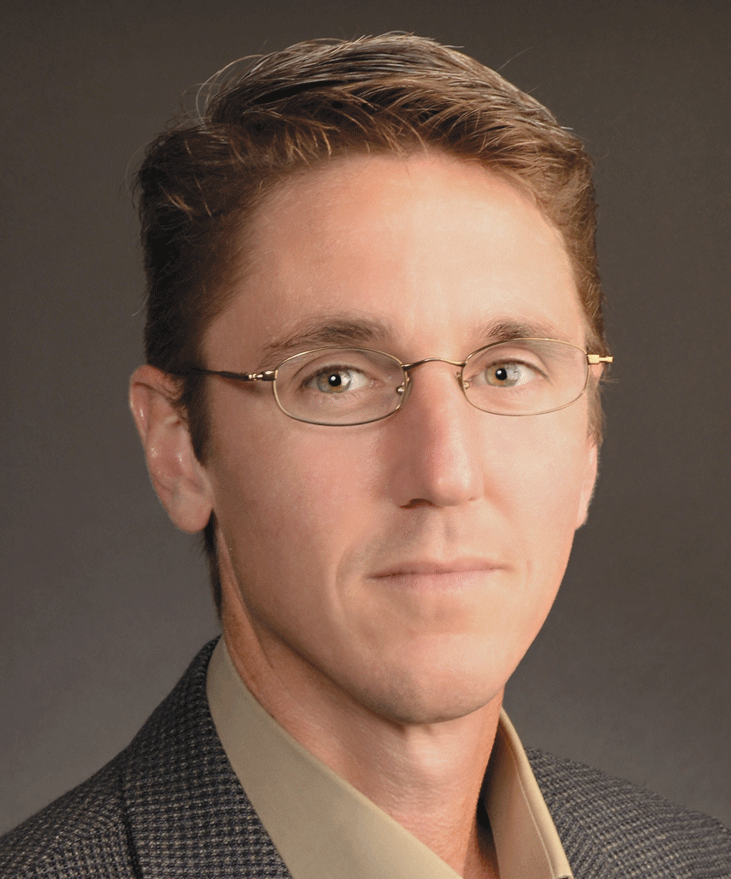
Although many banks support the communities in which they operate, the Florence Bank program is unique in that it leaves a portion of the charitable gift-giving decisions to its customers. “As a community bank, we believe strongly in supporting the communities we call home,” said Florence Bank President and CEO John Heaps Jr. “We are very pleased to be able to increase the amount of the grant to $100,000, and we strongly encourage all of our customers to make their wishes known through this voting process.”

During its dozen years, the Customers’ Choice Community Grants Program has become increasingly popular. Last year, more than 12,000 bank customers voted for the nonprofits they wanted to see benefit from this program, representing a 21% increase over the previous year. And last year, three nonprofits received enough votes for a maximum $5,000 grant: Dakin Pioneer Valley Humane Society, the Food Bank of Western Massachusetts, and Northampton High School’s PTO. Florence Bank also distributed grants to homeless shelters, survival centers, senior centers, libraries, and several schools.

Through the Customers’ Choice program, the bank has disbursed more than $650,000 in charitable grants to 98 organizations since 2002. Any qualifying nonprofit organization that receives 50 votes or more will receive a share of the funds. In order to qualify, the organization must be a 501(c)(3) or equivalent and agree to spend the donated funds on local needs.

Sections Technology
Whalley Computer Associates Enjoys Rapid Growth

Paul Whalley (right, with Warehouse Manager Charlie Shaw)

Paul Whalley (right, with Warehouse Manager Charlie Shaw) says WCA can configure and deliver devices for any size client, from small companies to Fortune 500 firms.

When gauging his company’s place in the tech world, Paul Whalley says a little perspective is in order.

“I haven’t been to a Red Sox game where they chanted, ‘we’re number 200,’ but they don’t have 200,000 competitors,” said Whalley, vice president of Whalley Computer Associates (WCA) in Southwick, which has indeed grown from its humble origins to become the 200th-largest computer reseller in the country, placing it in the top one-tenth of 1% among approximately 200,000 players.

“I don’t think anyone pictured what this could come to,” he told BusinessWest, “but we’re very excited about where we’re going.”

Like virtually all other high-tech success stories, WCA’s beginnings were much more humble. As a part-time programming consultant in the Agawam school system in the 1970’s, math teacher John Whalley — Paul’s brother — purchased a small software-consulting firm. Working after school and during the summer from his Southwick basement, he built a small customer base.

Then, in 1979, incorporating his experience teaching his students programming on the school’s new computer, he started Whalley Computer Associates. He moved to new quarters in Southwick twice, all the while trying to convince his brother to come on board.

“My brother was a high-school math teacher, and he started this part-time,” Paul Whalley said. “I started helping him part-time, and he kept encouraging me to quit my job and go in full-time. I kept telling him, ‘I’ll quit my job when you quit yours.’”

In 1985, they did just that, with John (still the company’s president) leaving his teaching job and Paul resigning from his position as a programmer at MassMutual, in the process becoming WCA’s fourth employee. But the acquisition of customers such as Northeast Utilities, United Technologies, General Electric, and Cigna helped fund the company’s rapid growth, and WCA was on its way.

Today, Whalley boasts more than 3,000 clients, including 250 K-12 school systems, 50 colleges and universities, two dozen state agencies, more than 100 municipalities, and about 2,600 private companies — most of them small and medium-sized businesses, but also a number of major national firms.

Working out of its fourth Southwick location, a 62,500-square-foot facility on Whalley Way — as well as a 50,000-square-foot warehouse and configuration center in Westfield and an office in Milford serving Eastern Mass. and Rhode Island — WCA has recently broadened its reach across all of New England and Upstate New York, and shows no signs of slowing down.

“We want to grow in these new states exponentially, but also hold on to the valued clients we have,” Paul Whalley said. “We have so many clients who have stayed with us for 35 years.”

Rapid Growth

At a time when the economy was struggling to shake off the Great Recession, WCA thrived, posting sales growth of 50% in 2010, 38% in 2011, 50% in 2012, and 10% in 2013, and, boosted by recent expansion into New York, is on track to grow by at least 25% this year.

“Obviously, we think the model is working,” Whalley said. “We know the economy has not done well the last few years, but we’re growing.”

That growth has come on the heels of a significant evolution in what WCA does. What started as a software-consulting firm now manufactures computers and other devices for major brands. In so doing, WCA is the largest reseller of Lenovo products in the U.S. and has been the top reseller for Dell in the Northeast in five of the past 10 years.

WhalleySouthwick

Top: WCA’s 62,500-square-foot headquarters in Southwick. Bottom: the company’s Milford office, serving Eastern Mass. and Rhode Island.

Top: WCA’s 62,500-square-foot headquarters in Southwick. Bottom: the company’s Milford office, serving Eastern Mass. and Rhode Island.

“Fifteen years ago, we were primarily known as a a desktop deployment company. If a school needed 200 desktops or a business needed 10 or 25 or 500 desktops, we’d get them all prepared, imaged, configured, and delivered. But for the past 10 years, we’ve built up a very good engineering team and a strong professional-services group,” Whalley explained. “We were like everyone else 15 years ago; now we’re one of the leaders when it comes to designing, implementing, and then maintaining data centers.”

The expansion of WCA was boosted significantly when one of its Milford-based sales representatives, Peter Aldrich, began selling products to EMC Corp., which became, and remains, Whalley’s largest client.

In addition, “we have 12 Fortune 500 companies and a lot of very large businesses. Friendly’s has been a client for 25 years; we’re proud to have them as a client, and, I think, they’re proud they do business locally. We do business with one of the largest apparel retailers in North America; we’re a supplier to one of the largest pharmacy organizations in the U.S., one of the largest financial institutions in the U.S., several retail organizations; we’re vendors to one of the largest technology companies in the world. There are probably 35 to 40 clients that we could name that everyone would recognize.”

The rest are the smaller type of business characteristic of the Pioneer Valley, which see value in WCA’s size and market position.

“We think our success really comes from focusing on providing tremendous value,” Whalley said, comparing WCA to the handful of what are known as direct marketing resellers, or DMRs, like CDW and TigerDirect.

“Although we’re smaller than them, we can match their pricing, and unlike them, we’re not mainly a telemarketing organization. It’s a different model, and I’m not knocking their model; they’re doing billions. But what our customers like about us versus them is that we can provide equal or even better pricing, but we’re a much more fast-moving, flexible, entrepreneurial company instead of a mega-corporation with lots of layers of management.”

The average computer reseller in the U.S. boasts 12 people and posts about $1 million in sales, Whalley noted, and WCA is in an enviable middle ground between them and the DMRs.

“We find ourselves in the sweet spot — there are maybe 50 like us in the country, in the middle, not small but not huge. I think that’s a perfect spot to be, where we have a combination of more resources than the small guys, but all the flexibility to move fast and customize with customers who are looking for that. Those mega-companies have their place, but we’ve found a very nice niche, and obviously, we’re in a good spot.”

Service First

WCA currently boasts 140 employees — 30 in sales and 100 focused on engineering, installation, maintenance, and support.

“I don’t know of anyone who has a service group of 110 people in New England or New York,” Whalley said. “We’re incredibly blessed with a very talented group of professionals, most of whom have been here more than 10 years. So, now that we’re moving into new states, we have a nice blend of seniority and people just getting into the industry.

“We’re a family company,” he added, “but we consider as family the long-time employees who’ve stuck with us.”

Those include a business-development team that makes outbound calls all day, “which the DMRs do, but not many people in our category do that. It’s a three-person team calling out all day, looking for business and appointments for our salespeople.”

Another way Whalley stays focused on growth is through some 30 training events a year intended to help its employees stay apprised of the latest technology.

“We consider ourselves customer-centric but vendor-agnostic,” he told BusinessWest. “We sell nearly all the major brands of the major products. We go in, listen to what the client needs and what their preferences are, and produce what we feel is the best solution. They may take the suggestion or buy something else; it’s their choice.”

WCA’s broad reach allows it to price competitively without being beholden to one brand, he explained. “I think people appreciate the fact that we’re not coming in telling them to buy this one thing. Frankly, if they want something and our product selection doesn’t match up, then we’ll tell them that. Ultimately, if we keep doing the right things for the client, we’ll succeed.”

He also recited a four-part creed posted over a set of warehouse doors on Whalley Way: “One: if in doubt, do what’s best for the customer. Two: if in doubt, do what’s right for the whole company. Three: if in doubt, do what’s best for your department. Four: if in doubt, do what’s best for you. Basically, the customer comes first. If you think of the customer first always, we’re going to do just fine.”

From the earliest days of working for his brother’s tiny company, Whalley has understood how important customer service is in the technology field.

“If your laptop breaks, you can probably use someone else’s for a day or so, or call and get it fixed. What really matters is that the network doesn’t go down. Take the cost of someone not working and multiply that by the size of your workforce, and it can cost a tremendous amount of money,” he said. “We have a top engineering team designing rock-solid data centers, and when there’s trouble, they can respond very quickly. It makes us a strategic partner with our clients; they buy things from us, but when problems occur, it’s on us to take care of them.”

Looking forward, Whalley said the company doesn’t want to rest on its laurels, but aims to move forward from a recent reorganization and several years of impressive growth to become an even more widely recognized name.

“On the engineering side, we’ve made huge strides, and we have one of the best engineering programs in the region,” he told BusinessWest. “We want to be one of the top two or three in New England and the Northeast. I think we’re headed that way, but there’s more work to be done.”

At the end of the day, however, it’s not about size, but service.

“We have to provide our clients with the best possible products at the best possible price with the best possible follow-up,” he said, “because, if we don’t, there are 200,000 others who would love to do it. We remind ourselves of that every day.”

Joseph Bednar can be reached at [email protected]

Environment and Engineering Sections
UMass Takes Leadership Role in Clean-water Innovation

David Reckhow

David Reckhow says state and federal investments in his department’s work may lead to breakthroughs in the way water is treated worldwide.

David Reckhow says water treatment is ripe for innovation.

“We’re working with technologies that are about a century old. We haven’t really advanced all that much over the past 100 years,” said the professor in UMass Amherst’s College of Engineering. “Think about biotechnology or information technology, and all the advances that have been made over the past century. Now imagine what our lives would be like if we had 100-year-old information technology.”

But that’s what water-treatment workers must deal with. Admittedly, one reason is that the processes in use have worked remarkably well at keeping people safe.

“Most of the water treatment being done in this country uses what we call conventional technology, which is fairly simple,” he told BusinessWest. “It involves simply adding a coagulant to untreated water, which allows particles to settle. We send the particulates through a filter, add chlorine as a disinfectant, and we’re done. That technology was developed around the turn of last century, and it’s been in use for 100 years. And it’s been great, because it’s controlled cholera and protected us from other waterborne diseases.”

However, other problems have emerged over time, such as a possible link between long-term chlorine exposure and increased risk of bladder cancer. “It tends to result in elevated levels of some carcinogenic compounds and can cause chronic diseases,” Reckhow said. “So, we’ve solved some acute-disease problems, but now we have some chronic-disease problems.”

That’s one example of why Reckhow’s leadership of the Environmental Engineering and Wastewater Resources Group, a division of the university’s Department of Civil and Environmental Engineering, is so important.

“We’ve been doing research on water for the 29 years I’ve been here,” he said. “We have a very active group — one of the leading groups in the country in this field — but we’ve been a well-kept secret. Not many people outside the field know about what we’re doing. But when something like this happens, people take notice.”

‘This’ refers to a $4.1 million grant Reckhow recently garnered from the U.S. Environmental Protection Agency, which will fund a national center for drinking-water innovation on the Amherst campus. That comes on the heels of Gov. Deval Patrick’s recent signing of a water-infrastructure bill earmarking $1.5 million from the state Department of Environmental Protection for water innovation.

The federally funded center will be one of two national research centers — the other is in Boulder, Colo. — focused on testing and demonstrating cutting-edge technologies for drinking-water systems. The Patrick administration, through the Mass. Clean Energy Center (MassCEC), supplemented the federal investment with a $100,000 grant for other water-innovation projects on campus.

In short, UMass is tapping into significant state and federal resources to move water research and treatment well forward into the 21st century — a time when rising global population and other factors threaten to make drinkable water the pressing issue across the planet.

Particle Man

In a tour of his department’s laboratories, Reckhow showed BusinessWest several high-tech pieces of equipment, including a $650,000 Xevo liquid chromatograph mass spectrometer manufactured by Waters Corp. in Milford, and used to identify the type and amount of chemicals present in a water sample.

“We got a grant for $700,000 to buy this thing, and we’re getting it up and running; we’re just about there,” he said. “We’ve been slowly outfitting the lab, so we probably have the best water-engineering testing laboratory in the country.”

The $4.1 million EPA grant will expand this work, funding the creation of the WINSSS, or Water Innovation Network for Small Sustainable Systems. The EPA intends to use this center and the one in Colorado to test and refine emerging water technologies for the betterment of the water utilities across the country.

“The EPA center is charged with developing technologies that are most appropriate for all drinking-water systems,” Reckhow said, adding that the work will be aimed at improving small treatment systems, which typically don’t have the resources of larger systems to solve their own problems. In addition, 97% of drinking-water systems in the U.S. are considered small.

engineering labs at UMass

The $4.1 million EPA center will be built near the engineering labs at UMass (pictured), where the Environmental Engineering and Wastewater Resources Group conducts its research.

“It’s really challenging — they’re just overwhelmed,” he added. “Often, very small operations in small communities don’t have the budget to hire people focused only on water. What they really need is help in having access to technologies that are inexpensive, that are green, that don’t require a lot of energy, don’t require a lot of attention and maintenance. These are some of the characteristics we look for; even big utilities would like that. Our task is to develop these technologies to the point where we can hand them of to another entity to carry them to the market.”

That could be one role for the New England Water Innovation Network (NEWIN), which has been working with UMass on ways to move early innovations into pilot tests and into use by the public and private sectors. Having traveled with Patrick to Israel and Singapore to see model water-innovation networks first-hand, Reckhow wants to help the campus create similar infrastructure for Massachusetts.

He noted that the industry faces a barrage of challenges, from the regulatory environment and increasing competition for water supplies to contamination and climate change. So they want to develop partnerships designed to foster a constant back-and-forth between innovators, researchers and end users.

One ongoing area of research involves ferrate, a compound produced by mixing iron salt with chlorine before it is used to treat water. The process eliminates much of the chlorine and has proven comparable to chlorine as a disinfectant, without the side effects.

“Ferrate may help us back off the chlorine a little bit and reduce the concentration of some of the carcinogenic byproducts we get,” Reckhow said. “It’s a green chemical because it doesn’t use chlorine, and we make it on site; there are various ways of making it.”

That’s only one of many promising efforts, however. “Before we received the grant, we identified 16 projects representing different technologies we’re going to work with,” he told BusinessWest. “The technologies we’re developing will ultimately help to alleviate some of those problems, especially if we can come up with better ways of taking used water to make it reusable.”

Singapore, for instance, is one country which has instituted water reuse. “Singapore has to do it because it’s a small land mass, and they’re at the mercy of their neighbors to get supplemental water beyond what falls as rain on that small country,” he said. “They have been forced to deal with this issue, but we think there are better ways to do this.”

As the governor noted at the press conference announcing the grant, “all over the world and right here at home in the Commonwealth, water challenges are threatening the environment and the economy. Investing in the development of water-innovation technologies not only protects precious natural resources and public health, but creates high-quality local jobs.”

Trial and Error

Among the projects UMass and NEWIN are collaborating on is the development of physical facilities for entrepreneurs in water-testing technology. One of those is a university-owned parcel of land adjacent to the Amherst Wastewater Treatment Plant, where UMass had built a wastewater pilot testing plant during the 1970s.

“It’s old and outmoded and not used, but we’re trying to get money from the state to rebuild it, so it’s a facility that can be used by companies making water-technology devices — startups or established companies or, for that matter, someone who just has a really good idea,” he explained.

“This is perceived as a real need in the industry, holding Massachusetts — and the whole country, in some respects — back a little bit: the lack of existing facilities. It’s expensive to do this. We have an earmark in the environmental bond bill to rebuild this pilot plant so it could be made available to anyone in the community — in reality, anyone in the country.”

WINSSS will focus on bringing early innovations to where they can be pilot-tested, an initiative that could spur the economy, Reckhow said, considering that the global water industry is estimated to generate as much as $600 billion annually. With about 300 institutions in Massachusetts involved in water technology, NEWIN was formed to connect these players and help convert their ideas into workable products.

“The EPA center will be focused on early-stage development of technology, and the mandate is to work on technologies that are most appropriate for small drinking-water systems,” he said, adding that those technologies often carry over into larger systems, particularly wastewater. Meanwhile, the restored testing plant will focus primarily on small to medium-sized wastewater systems, generally later-state development. “Together, they mesh nicely.”

He noted that the MassCEC grant will pay for a mobile pilot unit — a 35-foot trailer fitted with high-tech equipment — that will bridge that gap between early-stage and late-stage innovation and allow UMass to test treatment devices on site in the Commonwealth and beyond. Meanwhile, a recent grant from the National Science Foundation has helped fund the latest, most sensitive equipment for measuring contaminants in drinking water and wastewater.

It’s an issue of particular concern in areas like Cape Cod, which has been dealing with a growing problem of contaminants leaching from wastewater to groundwater to residential wells — just one of the public-health concerns being monitored in Reckhow’s laboratories.

“Providing safe, clean drinking water is critical for maintaining the health and security of the Commonwealth,” said UMass Amherst Chancellor Kumble Subbaswamy. “Researchers here at UMass Amherst are on the front lines of efforts to make sure that clean water is a reality for all our communities and citizens.”

Global Resolve

Reckhow and Patrick have been involved with the Massachusetts-Israel Innovation Partnership (MIIP), launched in 2011 after the governor participated in a trade mission to Israel. During that 10-day mission, a coalition of the state’s leading business executives and senior government officials explored growth opportunities of common interest for Massachusetts’ and Israel’s innovation industries.

One of those interests was safe water — and concern over this issue is only expected to increase in the coming decades.

“They talk about water being the next oil,” Reckhow said. “We’re running out of quality water. There’s plenty of water on the planet, but most of it is not usable; the water in the ocean is not usable, or, at least, it’s very expensive to use. So, as we move forward, there’s going to be more conflict over existing high-quality water sources. We have seen it in the Middle East for a long time, but it’s going to be more widespread.

“It’s an issue of national security around the world,” he added. “Israel has made some good strides. And we’re addressing some of these issues here in Massachusetts.”

Joseph Bednar can be reached at [email protected]

Sections Technology
This Is the Kind of Gift That Keeps on Giving

By GREG PELLERIN

Santa’s IT department is working overtime this Christmas, and the deals may look too good to pass up.  Walmart is selling a tablet for just $99, while the average selling price for a Windows PC is down more than 10% in the last year.

But before you go on that IT holiday spending spree, you may want to take a step back and take a look at your entire network. Cheap PCs may make for immediate gratification, but virtual desktop infrastructure, or VDI, could be the gift that keeps on giving.

Greg Pellerin

Greg Pellerin

Virtualizing company servers has become commonplace in today’s business IT world. In server virtualization, software is used to divide the physical server into multiple virtual environments so one machine can run multiple operating systems, cutting down on hardware, maintenance, and energy costs, and, in the end, allowing for more efficient data-center operations.

But the cost savings associated with virtualizing desktops may be even more dramatic. With VDI, PCs could be replaced by a simple keyboard, mouse, and screen because the virtualized desktop is stored on a ‘virtual machine,’ located on a centralized or remote server in the back room. That means the desktop image, the operating system, and all of an individual’s data are stored remotely, allowing an employee to use virtually any device, anywhere and at any time, to access their ‘computer.’

Employees are happier and more productive, and that smile on your CFO’s face is a result of not having to buy a new PC every time a new person joins the company. Talk about sugar plums dancing in your head.

Nowhere is the impact of VDI more evident than in the healthcare world.  Desktop virtualization has become essential for today’s demanding electronic health records (EHR) systems where the geographic distribution of clinical operations and new client devices like iPads and other mobile devices are bringing an end to the need for traditional PCs. Doctors and nurses are constantly on the move, and VDI allows them to access the same information, the same way, whether they’re in their office, in the ER, or even catching up on paperwork at home over the weekend.

New integrated capabilities like dictation and unified communications have eroded many of the initial gains offered by simple application streaming. Whether it’s doctors in a hospital or executives in a more traditional work setting, they all demand a highly personalized experience that supports all of their unique requirements. VDI makes it personal.

Then, there’s compliance. Business software systems are increasingly interlinked and must be kept current. Software updates must be applied promptly to stay compliant, and files must remain protected. Virtual desktops hosted on data-center servers provide greater control, availability, and manageability than distributed PCs while also ensuring there is no data saved on individual tablets or other devices that can be compromised or stolen.

PC sales are up nearly 20% over this time last year, and that’s good news for the industry. But as you hang out your stocking and evaluate that new round of technology purchases this holiday season, you may want to first take a look at VDI, and the ghost of Christmas yet to come.


Greg Pellerin is a 15-year veteran of the telecommunications and IT industries and a co-founder of VertitechIT, one of the fastest-growing business and healthcare IT networking and consulting firms in the country; [email protected]

Daily News

LONGMEADOW — On Thursday, Bay Path University President Carol Leary joined President Obama, the first lady, and Vice President Biden, along with hundreds of college presidents and other higher-education leaders, to announce new actions to help more students prepare for and graduate from college. The White House College Opportunity Day of Action helped support Obama’s commitment to partner with colleges and universities, business leaders, and nonprofits to support students across the country.

“I am honored to participate in this important initiative and to represent the 76.6 million adult women in this country who do not have a baccalaureate degree,” said Leary. “Through the launch of the American Women’s College at Bay Path University, we are making a bold commitment to provide a truly revolutionary model of higher education for underserved adult women. It is time that we as a country focus on this population. Higher education has the potential to transform a woman’s life and, in so doing, positively impact her community, her workplace, and her family.

“The generational impact of educating adult women is profound,” Leary continued. “Research demonstrates that only 13% of children of women without a degree go on to college. When a woman earns a degree, that figure escalates to 49%. A focus on the education of adult women is critical to President Obama’s goal of restoring our nation as a global leader in college-educated citizenry.”

Leary is among the participants being asked to commit to new action in one of four areas: building networks of colleges around promoting completion, creating K-12 partnerships around college readiness, investing in high-school counselors as part of the first lady’s Reach Higher initiative, and increasing the number of college graduates in the fields of science, technology, engineering, and mathematics.

Expanding opportunity for more students to enroll and succeed in college, especially low-income and underrepresented students, is vital to building a strong economy and a strong middle class. Today, only 9% of those born in the lowest family income quartile attain a bachelor’s degree by age 25, compared to 54% in the top quartile.

In an effort to expand college access, the Obama administration has increased Pell scholarships by $1,000 a year, created the new American Opportunity Tax Credit worth up to $10,000 over four years of college, limited student-loan payments to 10% of income, and laid out an ambitious agenda to reduce college costs and promote innovation and competition.

Daily News

HADLEY — Paragus Strategic IT was recently honored with an Employer of Choice award by the Employers Assoc. of the NorthEast at the organization’s Employment Law and HR Practices Conference in Sturbridge. Paragus CEO Delcie Bean was also a featured speaker at the 21st Century Talent event focused on how top employers are changing today’s workforce.

Winners of the Employer of Choice award are recognized for developing a culture of transforming and rewarding employee performance. Entrants are judged in categories including company culture, training and development, communication, recognition and reward, and work-life balance. Past winners include Maybury Material Handling, PeoplesBank, and Health New England.

The 21st Century Talent conference was organized by Bank of America, Commonwealth Corp., and Grads of Life. Along with representatives from Harvard and Udacity, Bean was invited to speak about Paragus Strategic IT’s commitment to the next generation of workforce.

Since Bean founded the company at age 13, Paragus has grown from a one-man operation to a regional leader in business computer service, consulting, and information-technology support. And despite a sluggish economy, Paragus IT has continued to thrive and expand. In 2012 and 2013, Paragus was named in Inc.’s annual ranking of the 5,000 fastest-growing businesses. With a 546% growth rate over six years, Paragus is the second-fastest-growing outsourced IT firm in New England.

Most recently, Bean started Tech Foundry, a nonprofit education program designed to provide area high-school students with strong education and career training in technology.

Accounting and Tax Planning Sections
Careful Planning Can Lessen Your Tax Burden

By KRISTINA DRZAL HOUGHTON, CPA, MST

Kristina Drzal-Houghton

Kristina Drzal-Houghton

U.S. taxpayers are facing more uncertainty than usual as they approach the 2014 tax-planning season. Many may feel trapped in limbo while Congress has been preoccupied with the November midterm election and its results — leaving legislation that could alter the current tax picture up in the air.

Since D.C. lawmakers are unlikely to pass, extend, or modify tax provisions anytime soon, tax planning may seem pointless. But, actually, careful planning is wise regardless of the situation and even more important during uncertain times.

Even though the federal tax laws haven’t changed much from last year, your circumstances may have changed. And some rules that expired on Dec. 31, 2013 may yet be restored, even retroactively, to Jan. 1, 2014. It could be the perfect time for you to get a fresh perspective.

To make sure you’re taking all the appropriate steps to minimize your individual and business taxes, you should anticipate possible changes with the informed guidance of your tax professional.

Tax Strategies for Individuals

Before you can make wise planning decisions about your individual taxes, you need to be aware of your current tax situation.

Can you control when you receive income, or at least determine when deductible expenses are paid? If you can control timing, you have a valuable planning tool that can enable you to reduce your taxable income and tax liability.

Maximize your tax strategies by forecasting income-tax positions for 2014 and, to the extent possible, subsequent years. Evaluate not only the amount of your income but also the types of income you anticipate generating, your marginal tax bracket, net investment income, wages and self-employment earnings, and capital gains and losses.

Before deciding to accelerate or defer income and prepay or delay deductible expenses, you need to gauge the possible effect of the alternative minimum tax (AMT) on these tax-planning strategies. Having a number of miscellaneous itemized deductions, personal exemptions, medical expenses, and state and local taxes can trigger AMT.

The opportunity to take advantage of income timing exists particularly for taxpayers who are:

• In a different tax bracket in 2014 than in 2015;
• Subject to the AMT in one year but not the other;
• Subject to the 3.8% net investment income (NII) tax in one year but not the other; or
• Subject to the additional 0.9% Medicare tax on earned income in one year but not the other.

The 3.8% NII tax and the 0.9% Medicare tax apply when your modified adjusted gross income exceeds threshold amounts. Net investment income includes dividends, rents, interest, passive activity income, capital gains, annuities, and royalties. Passive pass-through income is subject to the NII tax.

The NII tax does not apply to non-passive income, such as:

• Self-employment income;
• Income from an active trade or business;
• Portions of the gain on the sale of an active interest in a partnership or S corporation with investment assets; and
• IRA or qualified plan distributions.

Remember that the additional 0.9% Medicare payroll tax applies to earnings of self-employed individuals and wages in excess of the thresholds in the table above.

After analyzing your specific tax situation, if you anticipate that your income will be higher in 2015, you might benefit from accelerating income into 2014 and possibly postponing deductions, keeping the AMT threat in mind.

On the other hand, if you think you may be in a lower tax bracket in 2015, look for ways to defer some of your 2014 income. For example, you could delay into 2015:

• Collecting rents;
• Receiving payments for services;
• Accepting a year-end bonus; and
• Collecting business debts.

Also, if you itemize deductions, consider prepaying some of your 2015 tax-deductible expenses in 2014. The following expenses are commonly prepaid as part of year-end tax planning:

• Charitable contributions. You may take a tax deduction for cash contributions to qualified charities of up to 50% of adjusted gross income (AGI). When contemplating charitable contributions, consider contributing appreciated securities that you have held for more than one year. Usually, you will receive a charitable deduction for the full value of the securities, while avoiding the capital-gains tax that would be incurred upon sale of the securities.
• State and local income taxes. You may prepay any state and local income taxes normally due on Jan. 15, 2015 if you do not expect to be subject to the AMT in 2014.
• Real-estate taxes. You can prepay in 2014 any real-estate tax due early in 2015. But you should keep in mind how the AMT could affect both years when preparing to pay real-estate taxes on your residence or other personal real estate. However, real-estate tax on rental property is deductible and can be safely prepaid even if you are subject to the AMT.
• Mortgage interest. Your ability to deduct prepaid interest has limits. But, to the extent your January mortgage payment reflects interest accrued as of Dec. 31, 2014, a payment before year end will secure the interest deduction in 2014.
• Miscellaneous itemized deductions. These include unreimbursed employee business expenses, tax-return preparation fees, investment expenses, and certain other miscellaneous itemized deductions that together are in excess of 2% of AGI.

The amount of itemized deductions you can claim on your 2014 tax return is reduced by 3% of the amount by which your AGI exceeds the thresholds, which began as low as $152,000. However, deductions for medical expenses, investment interest, casualty and theft losses, and gambling losses are not subject to the limitation. Taxpayers cannot lose more than 80% of the itemized deductions subject to the phaseout.


Know Your Tax Rates, Exemptions, and Phaseouts

A personal exemption is usually available for you, your spouse if you are married and file a joint return, and each dependent (a qualifying child or qualifying relative who meets certain tests). The personal exemption for 2014 is $3,950.

But the total personal exemptions to which you are entitled will be phased out, or reduced, by 2% of the amount that your AGI exceeds the threshold for your filing status. The threshold amounts for the personal-exemption phaseout are the same as for itemized deductions.

Even when federal income-tax rates are the same for you in both years, accelerating deductible expenses into 2014 and/or deferring income into 2015 or later years can provide a longer period to benefit from money that you will eventually pay in taxes.


Beware the Alternative Minimum Tax Trap

As mentioned previously, determining whether you are subject to the alternative minimum tax in any given year figures prominently in tax planning.

Every year the IRS ties, or indexes, to inflation the AMT exemption and related thresholds based on filing status. If it’s apparent that you will be subject to the AMT in 2014, you should consider deferring certain tax payments that are not deductible for AMT purposes until 2015. For example, you may defer your 2014 state and local income taxes and real-estate taxes, except taxes on rental property, which are not subject to the AMT. Also consider deferring into 2015 your miscellaneous itemized deductions, such as investment expenses and employee business expenses.

However, if the AMT will not apply to your taxes in 2014, but could apply in 2015, you may want to prepay some of these expenses to lock in a 2015 tax benefit. Just be careful that your prepayment does not make you subject to AMT in 2014.

If you do not expect to be subject to the AMT in either year, the age-old strategy of deduction ‘bunching’ could apply. If this is expected to be a high year for miscellaneous itemized deductions, consider accelerating next year’s expenses into this year.

Or, if this is a low year for these deductions, try to defer these expenses for the rest of the year into next year. This method helps you maximize the likelihood that these deductions will result in a tax benefit.


Exploit Long-term Capital Gains

While avoiding or deferring tax may be your primary goal, to the extent there is income to report, the income of choice is long-term capital gain thanks to the favorable tax rate available. Short-term capital gain is taxed at your ordinary income tax rate.

If you hold a capital asset for more than one year before selling it, your capital gain is long-term. For most taxpayers, long-term capital gain is taxed at rates no higher than 15%. But taxpayers in the 10% to 15% ordinary income-tax bracket have a long-term capital-gain tax rate of 0%.

Taxpayers whose income exceeds the thresholds set for the relatively new 39.6% ordinary tax rate are subject to a 20% rate on capital gain.

If the long-term capital-gain rates of 0%, 15%, or 20% are not complicated enough, keep in mind that special rates of 25% can apply to certain real estate, and 28% to certain collectibles. Also, gains on the sale of certain C corporations held for more than five years can qualify for a 0% rate. Talk to your tax adviser before you assume the long-term capital gains rate that would apply.

Remember that you can use capital losses, including worthless securities and bad debts, to offset capital gains. If you lose more than you gain during the year, you can offset ordinary income by up to $3,000 of your losses. Then you can carry forward any excess losses into the next tax year.

However, you should be careful not to violate the ‘wash sale’ rule by buying an asset nearly identical to the one you sold at a loss within 30 days before or after the sale. Otherwise, the wash-sale rule will prevent you from claiming the loss immediately. While wash-sale losses are deferred, wash-sale gains are fully taxable. It’s important to discuss the meaning of nearly, or ‘substantially,’ identical assets with your tax adviser.


Contribute to a Retirement Plan

You may be able to reduce your taxes by contributing to a retirement plan. If your employer sponsors a retirement plan, such as a 401(k), 403(b), or SIMPLE plan, your contributions avoid current taxation, as will any investment earnings until you begin receiving distributions from the plan. Some plans allow you to make after-tax Roth contributions, which will not reduce your current income, but you will generally have no tax to pay when those amounts, plus any associated earnings, are withdrawn in future years.

You and your spouse must have earned income to contribute to either a traditional or Roth IRA. Only taxpayers with modified AGI below certain thresholds are permitted to contribute to a Roth IRA. If a workplace retirement plan covers you or your spouse, modified AGI also controls your ability to deduct your contribution to a traditional IRA.

If you would like to contribute to a Roth IRA, but your income exceeds the threshold, consider contributing to a traditional IRA for 2014, and convert the IRA to a Roth IRA in 2015. Be sure to inquire about the tax consequences of the conversion, especially if you have funds in other traditional IRAs.

In addition to the SIMPLE IRA, self-employed individuals can have a simplified employee pension (SEP) plan. They may contribute as much as 25% of their net earnings from self-employment, not including contributions to themselves. The contribution limit is $52,000 in 2014. The self-employed may set up a SEP plan as late as the due date, including extensions, of their 2014 income tax return.

An individual, or solo, 401(k) is another option for the self-employed. For 2014, a self-employed individual, as an employee, may defer up to $17,500 ($23,000 for age 50 or older) of annual compensation. Acting as the employer, the individual may contribute 25% of net profits, excluding the deferred $17,500, up to a maximum contribution of $52,000.


Withholding and Estimated Tax Payments

If you expect to be subject to an underpayment penalty for failure to pay your 2014 tax liability on a timely basis, consider increasing your withholding between now and the end of the year to reduce or eliminate the penalty. Increasing your final estimated tax deposit due Jan. 15, 2015 may reduce the amount of the penalty but is unlikely to eliminate it entirely.

Withholding, even if done on the last day of the tax year, is deemed withheld ratably throughout the tax year. Underpayment penalties can be avoided when total withholdings and estimated tax payments exceed the 2013 tax liability or, in the case of higher-income taxpayers, 110% of 2013 tax.

Tax Strategies for Business Owners

The main tax issue to keep in mind if you’re a business owner is that a number of tax provisions, such as 50% bonus depreciation, expired at the end of 2013. In addition, the Section 179 deduction has been limited significantly.

Congress may pass legislation to renew or modify these tax breaks — perhaps retroactively. Of course, you can’t count on that possibility, so if you have used these provisions to reduce your taxes in the past, it might be advisable to adjust your withholding and estimated tax payments for 2014.


Special 50% Bonus Depreciation

Through 2013, businesses could use the special bonus depreciation to deduct up to 50% of the cost of such assets as new equipment, computer software, and other qualifying property placed into service by year end. The 50% bonus depreciation did not apply to used equipment. Unless Congress acts, it will not be available at all in 2014.


Section 179 Deduction

Under Section 179 of the IRS Tax Code, businesses could expense the full cost of new and used equipment, including technology, in the year of purchase instead of over a number of years. They still can. However, the amount they can expense has dropped from an upper limit of $500,000 in 2013 to $25,000 in 2014 — a sizable difference. If your company has nearly reached the $25,000 expensing limit, you may want to postpone further purchases until 2015.

The 2014 limit on equipment purchases qualifying for Section 179 treatment is $200,000. After a business reaches the maximum amount, the available tax deduction phases out on a dollar-for-dollar basis. In other words, once a business buys $225,000 of equipment, the deduction is reduced to zero. You should monitor your company’s total purchases to prevent the phaseout.


Repair Regulations

The IRS and the U.S. Treasury have issued final tangible property regulations (TPRs) that become mandatory for tax year 2014. These TPRs will likely require most businesses to file additional tax returns and supporting statements and/or include in their returns certain annual elections. Those new, additional returns are referred to as IRS Form 3115, Change in Accounting Method.

If you have multiple trades or businesses, more than one building, or leasehold improvements, whether or not these are contained in separate legal entities, such as LLCs, or disregarded entities, we may have to prepare numerous, separate Form 3115s, as well as make numerous TPR annual elections. Since the changes required by the TPR are so widespread, starting on the various analysis prior to year end is highly suggested.

While the preparation of the IRS form 3115 will be done, in the majority of cases, by this 2014 tax-return filing, certain new annual elections related to the TPRs are anticipated to be required and/or chosen for every income-tax filing subsequent to your adoption of the new TPRs.

You should discuss with your tax adviser the TPR elections choices. While they will certainly advise you on the alternatives or choices that are available for you regarding these TPR annual method elections, please remember the final choices are yours to make. The three common annual method TPR elections are the following:

• The de minimis safe harbor for writeoff of property acquisitions and non-incidental material and supplies costing less than your book writeoff policy, such as items costing less than a certain dollar amount (for example, less than $500 per item);
• If applicable, the safe harbor for small taxpayers, where you can elect not to capitalize improvements or repairs on eligible building property (i.e., your buildings with depreciable basis less than $1 million per building; and
• The partial asset disposition elections under §1.168(i)-8(d)(2). This election is made annually to enable you to apply this section to a disposition of a portion of a prior asset that you have replaced with a subsequent improvement. An example of the application of this method is where you replace a roof on one of your buildings, and you are then able to write off the remaining depreciable basis of the prior roof. You’d make this election to avoid a situation where you will depreciate two roofs at the same time, instead of recording a loss on the disposition of the original roof.

In addition to filing these changes in accounting methods, and the making of the annual TPR elections outlined above, your internal processes that may have to be modified include:

• Accounting for ‘non-incidental’ material and supplies; and
• Establishment of a capitalization writeoff policy dictating a certain writeoff amount (e.g., “our policy is that we are going to expense all purchases under $500”). If you do not, you may be limited to a $200 per item write-off policy, including the creation of an internal writing of what actions, expenditures, or items would require capitalization (such as improvements, acquisitions, restorations, betterments, adaptions, etc.), as opposed to expenditures that would be categorized as repair and maintenance expenses.

If you do not currently have a written and communicated capitalization policy, we advise you that, in order to take advantage of the annual de minimis writeoff safe harbor described above, you must create and execute that writing and communication before Jan. 1, 2015, if you desire to employ the writeoff policy in next year’s tax returns, since the policy needs to be adopted prior to the beginning of the effected tax year. Also, review your depreciation schedules to see what assets on that list may qualify for writeoff in the 2014 tax year.

In preforming the analysis for these changes, you may find that, in applying the TPRs, your business can benefit from an additional deduction in 2014.


Conclusion

As the 2014 tax season approaches, taxpayers have a lot of questions. Will expired tax provisions be reinstated? If so, will they apply retroactively to the beginning of the year? Will they be altered? Will new tax laws make it through the legislative process?

Most importantly, how will these decisions affect your taxes?

These are legitimate concerns. Unfortunately, no one can predict the future. But we can suggest that you and your tax professionals should diligently watch the tax landscape for pending legislation that could have an impact on your taxes. Your safest course of action in the midst of uncertainty is to remain in close communication with your tax adviser for the latest guidance.


Kristina Drzal Houghton, CPA, MST is a partner with the Holyoke-based accounting firm Meyers Brothers Kalicka, and director of the firm’s Taxation Division; [email protected]