Home Sections Features Archive by category Community Spotlight

Community Spotlight

Community Spotlight Community Spotlight Features Special Coverage

Northampton at a glance

Year Incorporated: 1883
Population: 29,571
Area: 35.8 square miles
County: Hampshire
Residential Tax Rate: $13.67
Commercial Tax Rate: $13.67
Median Household Income: $56,999
Median Family Income: $80,179
Type of Government: Mayor, City Council
Largest Employers: Cooley Dickinson Hospital;
ServiceNet Inc.; Smith College; L-3 KEO

* Latest information available

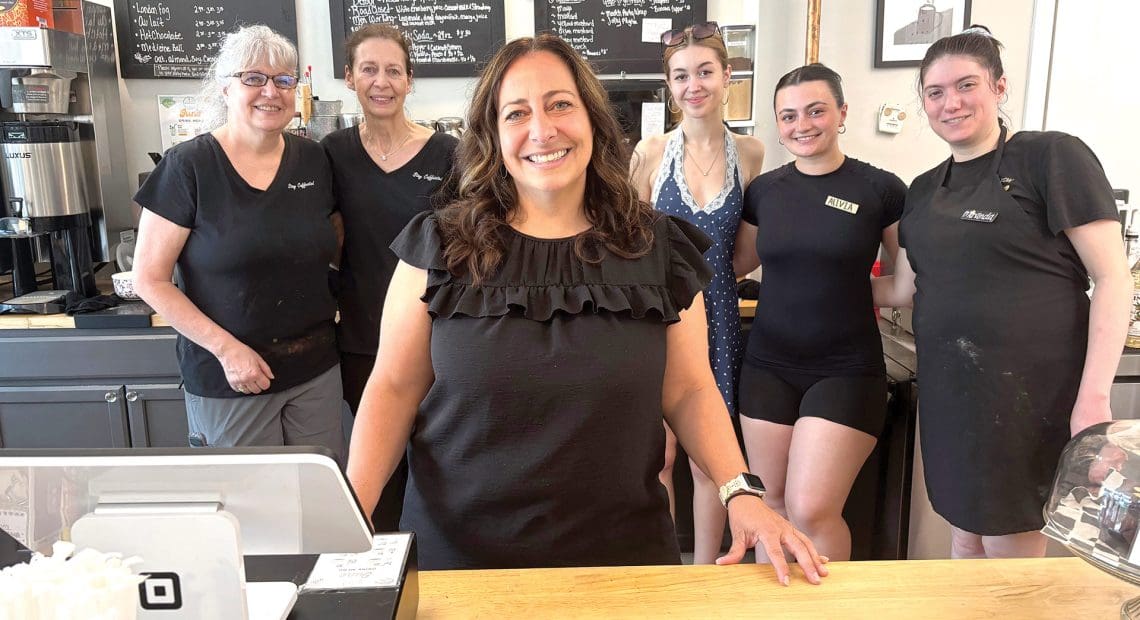
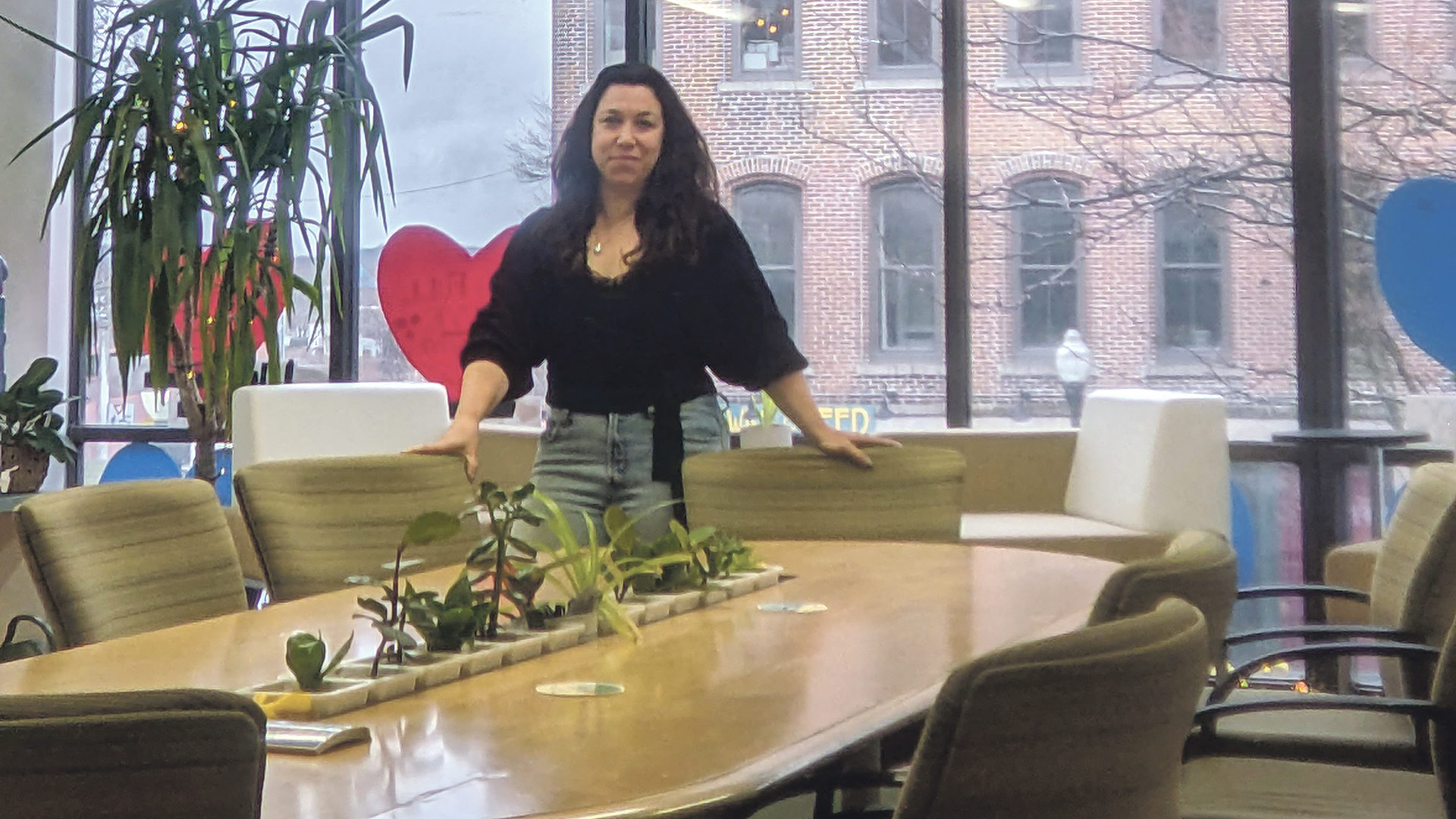
Having been with CLICK Workspace for more than a decade, Mary Yun has seen ebbs and flows in its business, the most notable decline being during the pandemic.
“Like all businesses, we took a huge dip. But by the summer of ’24, we were almost back to our pre-pandemic numbers,” she recalled.
But in the fall of 2024, another drop in numbers began — actually, “a really steep nosedive,” as Yun characterized it. “There were a few reasons. That fall, there were some tech layoffs that affected us. The interest rate dropped a tiny bit in the fall of ’24, and three members were able to get into homes, and had rooms in their homes for home offices. And with the election, there was so much uncertainty about business.”
Now, as CLICK is celebrating 10 years in its current space on Market Street in downtown Northampton — it will host a reception,featuring an art exhibit and live jazz music, to mark the occasion on Friday, June 12 from 6 to 8 p.m. — not all of that business has come back, said Yun, executive director of the facility.
“Co-working spaces are ever-changing, and our membership had a big shift. Before the pandemic, it was predictable: about a third of the membership were consultants, about a third had their own small businesses, and another third were true remote workers, with parent companies that supported their membership. Since the pandemic, it’s less predictable. And with AI coming on, businesses aren’t able to plan as easily, and a lot of businesses that went remote have started to go hybrid. There’s so much uncertainty with the way people are working.”

“We opened not just a co-working space, but a place where people could celebrate their arts and have community activities — and we’ve continued to do that.”

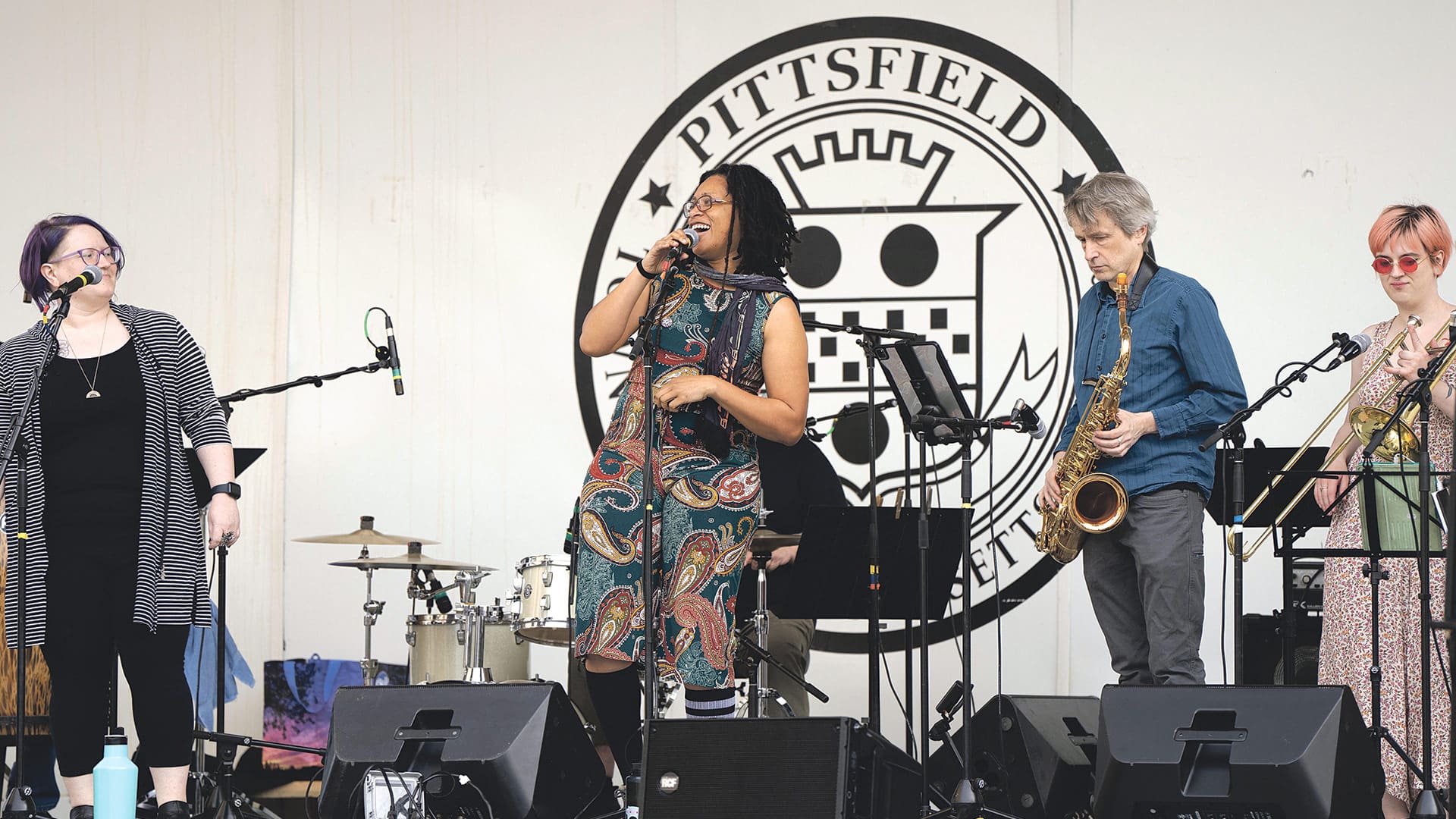
That said, one thing that has not wavered at CLICK is its commitment to connecting the space to the local arts scene. The facility frequently hosts art openings by local and regional artists on Arts Night Out, on the second Friday of each month, complete with live jazz musicians, food, and beverages. Also featured are performance groups from Northampton High School and the Community Music Center. Arts organizations, such as the Northampton Jazz Festival, and music teachers from the area regularly rent the first-floor gallery space for live music concerts and student recitals.

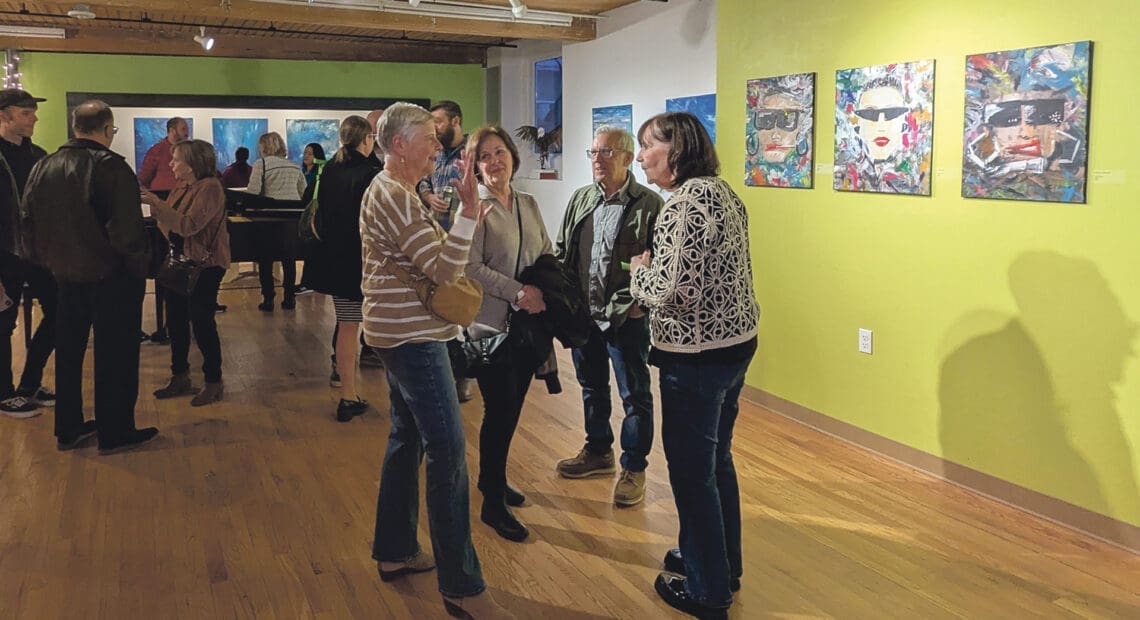
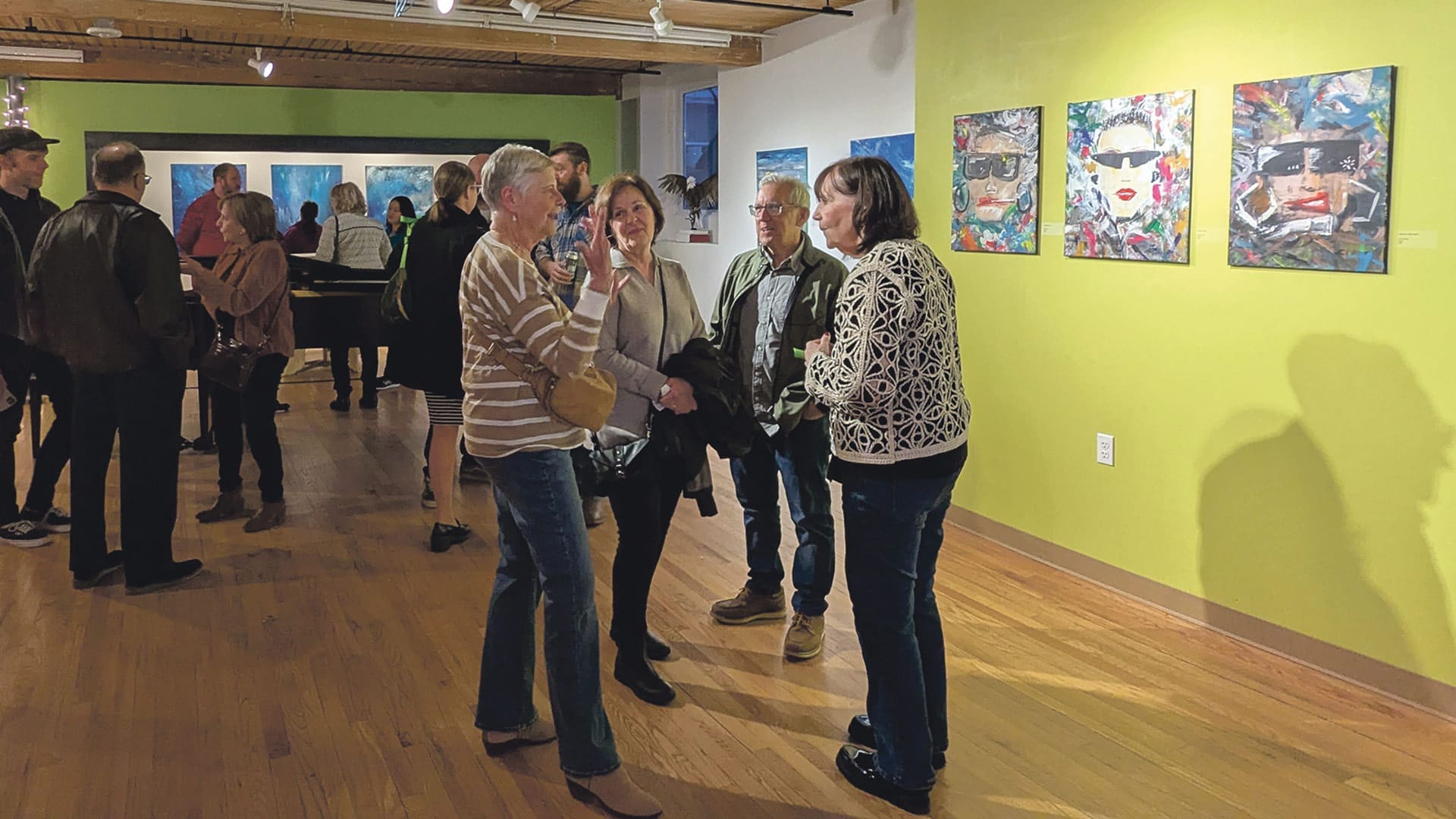
CLICK Workspace has regularly hosted music recitals, art exhibitions (like the one pictured here), and other events.

“We opened not just a co-working space, but a place where people could celebrate their arts and have community activities — and we’ve continued to do that,” Yun said. “Co-workspaces are doing as robust business as they used to be. We’re trying to get support from the community so we can continue to do these events.
“I never thought this space would be just about co-working. I believe it has to have another mission,” she added. “We are mission-driven; we’re a nonprofit, and the arts have always been a part of the mission. We have a wall of art, gallery space, that’s integral to the design of the physical space itself. I always saw the space as bringing art to people, so our membership gets exposed to art. It really is a little microcosm of what Northampton is all about.”

Art and Commerce

Amanda Shafii, owner of the CopyCat commercial print shop in Northampton and president of the Downtown Northampton Assoc. (DNA), agrees that the arts are integral to the city’s identity.
“Northampton is a very special place. We have super unique businesses and a huge concentration of arts and culture,” she told BusinessWest. “Also, Northampton is a lot about relationships — about collaboration and networking and community coming together.”
Meanwhile, she said, the DNA aims to support businesses downtown, and create conditions for businesses to succeed throughout Northampton, through events, marketing partnerships, and other means to draw people downtown.
For example, the Ice Art Festival in January saw a lot of foot traffic, with visitors coming in from as far away as Vermont, New Hampshire, Connecticut, Eastern Mass., and even New York, Shafii said. “It brought in a lot of people, and that really sums up one goal of the DNA: to create fun events for people to attend.”
She’s especially looking forward to Taste of Northampton on the weekend of Sept. 12-13, and said the monthly Arts Night Out has become a highlight in the city.
“Where there’s success downtown, everyone benefits,” Shafii said of the DNA’s impact on the entire city. “If you have a thriving, vibrant downtown, whether it’s retail, restaurant, or service businesses, it has an impact on everyone.
“One of the really special things the DNA does is, we host a downtown business owners forum, a space for downtown business owners to get together and discuss things in a safe setting, talk about how last month went, or about upcoming events we should be aware of. Like, if Smith College is having a big event, maybe the downtown restaurants could have more staff to accommodate more foot traffic. We’re keeping everyone in the loop.”
As for music, the Northampton Jazz Festival is slated for Sept. 26-27, with Friday featuring the Downtown Jazz Strut, with jazz emsembles playing at breweries, bars, and restaurants across town, and Saturday featuring a free lineup of performances throughout the day followed by a ticketed evening concert with Lakevia Benjamin at the Academy of Music.
Meanwhile, the Iron Horse Music Hall continues to thrive two years after its reopening, having presented hundreds of shows and generated, according to economic models, more than $2.4 million in annual impact on Northampton’s broader economy.

“Northampton is a very special place. We have super unique businesses and a huge concentration of arts and culture. Also, Northampton is a lot about relationships — about collaboration and networking and community coming together.”

The Parlor Room Collective, the nonprofit that purchased and renovated the historic venue on Center Street, is currently operating an $800,000 “Playing It Forward” campaign to pay off construction debt, build reserve funds, and support free programming, among other goals.

Music to Her Ears

Meanwhile, over on Market Street, Yun is grateful for the opportunity to host the arts, especially the young people who use the space.
“In the school districts, art has been on the chopping block for years now. And no matter what kind of business you’re in — whether it’s tech, industry, financial, not just artistic professionals — it’s so integral to our culture, how we understand the world,” she said.
“Our mission here is to bring art to a nice environment. And when the community comes in and joins together, art and music can be a part of everyday life. The spirit of CLICK is all about making a community.” 

Community Spotlight Features Special Coverage

They called it the Woods O’Cross.

That’s the name that was affixed to a recent event at Motocross 338 in Southwick, a.k.a. ‘the Wick.’ And as that name suggests, it’s a race that takes participants onto the vaunted track behind American Legion Post 338 on Powdermill Road, and also into the woods nearby.

“It was really well received; we were amazed at how many people came out for it; the feedback was phenomenal, so we’re going to another one this month and another at the end of the year,” said Rick Johnson, who, with his son, Keith, is now coordinating events at the Wick, which has, for most of the past 50 years, been a destination as well as a driving force, literally and figuratively, in the local economy.

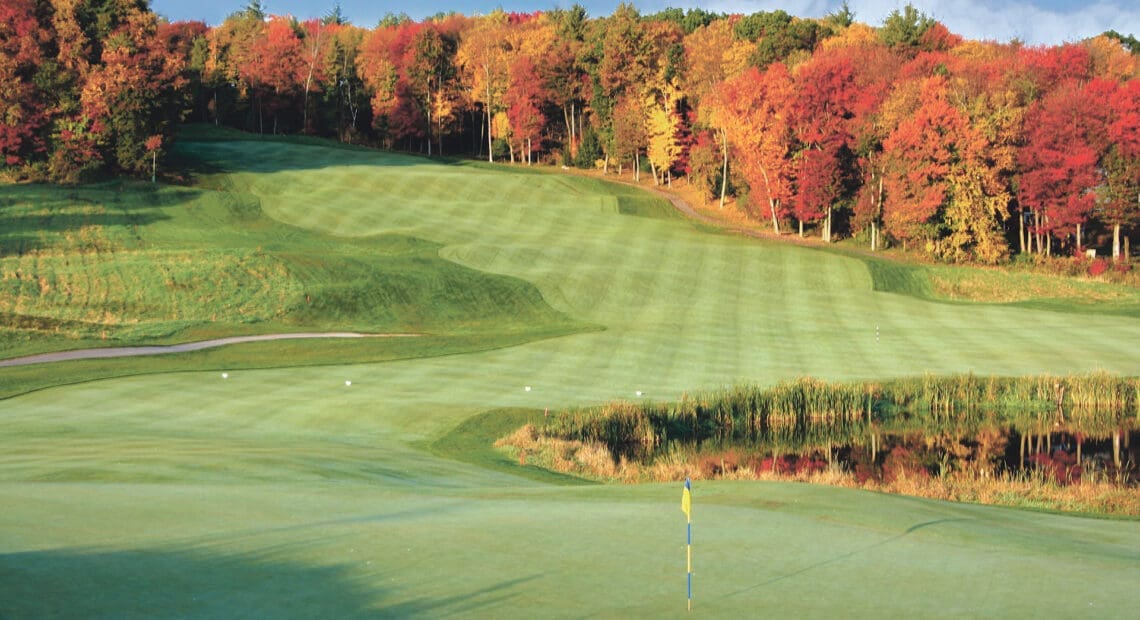
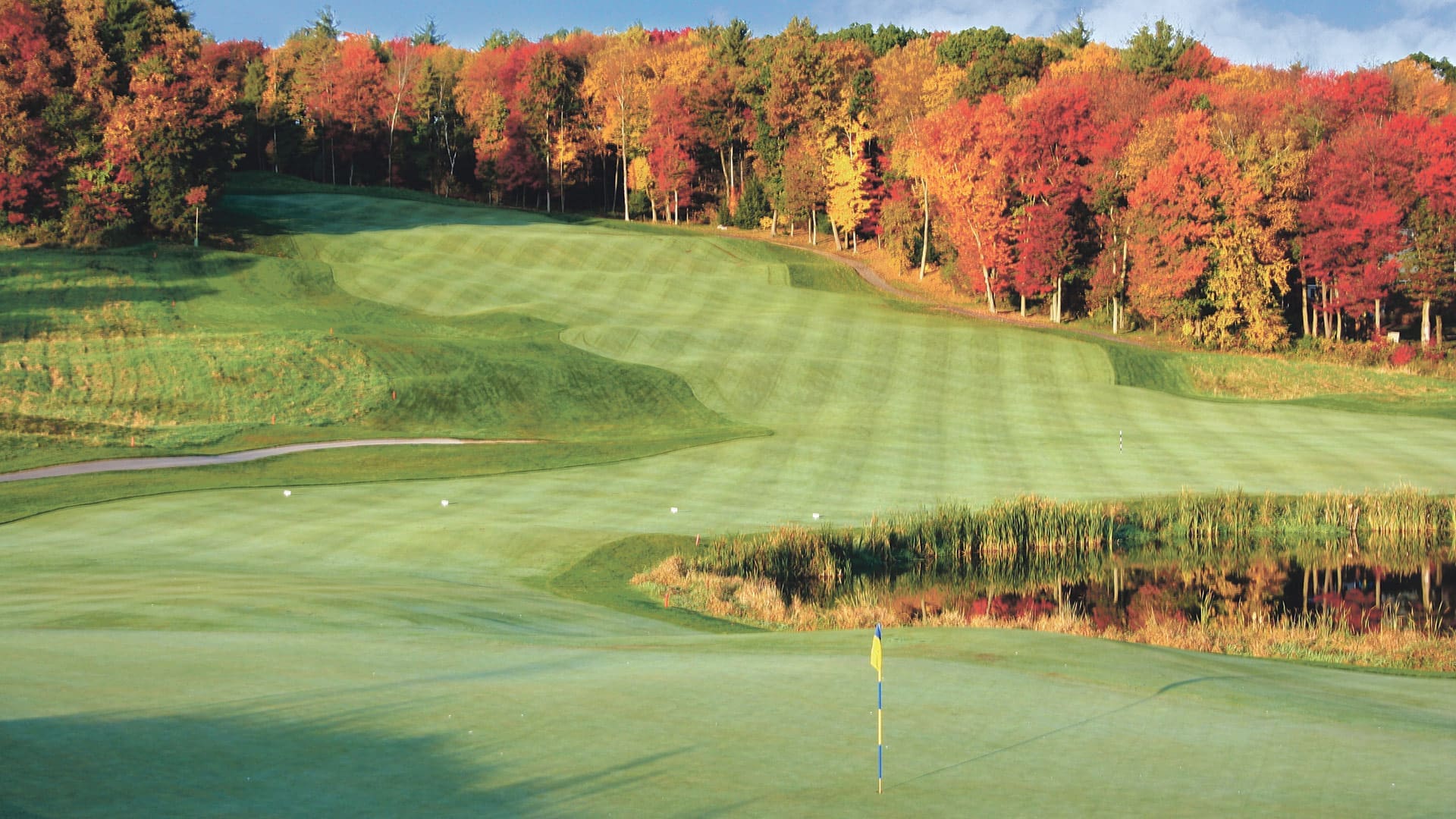
The Ranch Golf Club has become a draw for players across the state and beyond.

The venue now hosts more than 40 events each year, capped by the Nationals, the three-day event that has become a tradition in Southwick, with dates that are circled by many business owners in town because the population of people in town swells from roughly 9,000 people to more than 30,000.

The nationals will be in July this year, said Johnson adding that, because Southwick doesn’t have any hotels, attendees must stay in surrounding communities. But many other types of businesses in town see and feel the surge, he said.

“You need to have a passion for it. If you handle it properly, you’ll pay the bills and make a few bucks. But you’re never going to retire in the Bahamas and drive a Lamborghini.”

The Wick is one of many recreation and hospitality-related businesses that give Southwick its unique flavor. People come here to eat — there are many restaurants and institutions such as Mrs. Murphy’s Donuts in town — and to play.

They do so at the Congamond Lakes (North, Middle, and South) which offer boating, fishing, swimming, and lakeside dining, and also at several parks, the Wick, and two golf courses (there used to be three), including The Ranch Golf Club.

Now celebrating its 25th year, the Ranch, on Sunnyside Road, is a higher-end course that was designed to be a destination layout that would draw players from across the state and beyond, and a sought-after venue for weddings and other events.

And it has become just that, said Nick Tamburini, the Ranch’s general manager and former golf professional. He told BusinessWest that the club has enjoyed a solid run on both sides of the ledger, with golf continuing to ride a COVID-induced wave of new interest and renewed interest, and events bouncing back from the turmoil prompted by COVID.

On the golf side, the course, among the best and most challenging in this part of New England, continues to draw players from well beyond Western Mass., while maintaining a steady local membership.

“We have a ton of non-local play,” said Tamburini. “Every Friday, Saturday, and Sunday, we’ll get players who say, ‘I drove an hour and a half,’ or ‘I drove two hours;’ ‘I’m coming from the Cape,’ ‘I’m coming from New London.’ Obviously, we get a lot of play from Hartford and from Worcester. Once the member play ends, there’s not a lot of play on Friday, Saturday, and Sunday from people in Southwick or Westfield; it’s people coming from all over.”

“You have to try things like this; you have to freshen things up and give people new things to do.”

Some of these players will make the Ranch part of a Western Mass. golf trip, with Crumpin Fox in Bernardson and Taconic in Williamstown among the other stops, he went on. But many are coming just to play the Ranch, which has received good reviews over the years, and continues to draw both first timers to the venue and repeat customers.

On the events side, the venue continues to draw a solid mix of gatherings, and its barn has become increasingly popular with couples planning weddings, as we’ll see.

For this, the latest installment of its Community Spotlight series, we take an in-depth look at Southwick and the some of the institutions that help create its recreational quality.


On the Right Track

When asked about the business of motocross, Johnson paused for a minute, searching for the right words.
“I’ve been in business all my life — I’ve been in the footwear business and was president of New Balance for Kids,” he explained as he set the tone. “Motocross is not kind of business that you get into thinking it’s going to lucrative to the point where you’re dancing naked in the streets.

“You need to have a passion for it,” he went on. “If you handle it properly, you’ll pay the bills and make a few bucks. But you’re never going to retire in the Bahamas and drive a Lamborghini.” 

Passion is something the Johnsons brought with them as they helped resurrect motocross in Southwick after a few years of decline more than a decade ago.

But they brought some other traits as well, including imagination and a willingness to try new things to keep the product fresh and bring more people to the track — meaning competitors and spectators alike.

Which brings us back to the Woods O’Cross.

“It brings in not just the motocrosser, but the trail rider as well — you get a good mix of people, and they had a great time,” Johnson explained, adding that this was the first new event that organizers have run, and it drew close to 600 participants. And it was followed up a few weeks later by another new offering — a Massachusetts state championship.

“We’ve been racing since the ’70s, and we never realized that Massachusetts never had a motocross state champion,” he said, adding that the Wick rectified this with an event that drew good crowds and hundreds of competitors to the track.

“You have to try things like this; you have to freshen things up and give people new things to do,” he explained, adding that the Wick has a full slate of events on tap for the year.

The Johnsons brought another trait to this venture — a willingness to re-invest in the facilities and continually upgrade the facility, known hills and overall stern challenge.

Indeed, over the years, they’re added a new scoring tower, a new starting line, new irrigation lines to water the track and make it safer for riders, and more.

“We’re the only national track in the Northeast, and we have a reputation, and we have a commitment to maintain the highest level that we can,” he explained. “When you are national caliber and you’re on NBC television (for the nationals), you can’t slack off, you have to make sure you do it the best you can.”


Round Numbers

“Barns are in … people want old, rustic, charm.”

With that, Tamburini started to explain why the Ranch has been doing well on the events side of the operation’s ledger, specifically weddings.

Indeed, couples are looking for different kinds of venues these days, and barns have become a popular choice. The Ranch has two of them — extensively renovated — that date back to the late 1800s; one houses the pro shop and restaurant/pub, and the other is used for functions.

“We’ve had the same number of rounds every year since COVID, which is good. COVID created a boom, and we were worried that we couldn’t maintain those numbers, but we have; it’s been really good.”

This trend, coupled with a resurgence in gatherings following COVID has helped the Ranch put more events on the calendar, he noted.

“We’re not the busiest venue in Western Mass., but we do between 40 and 50 weddings a year, on average, and probably the same number of other events, like retirement parties, baby showers, and bridal showers.” 

Tamburini said the Ranch benefits from strong, hands-on ownership — Pete and Korby Clark and a partner living in the Boston area — and a team that has remained intact for the past several years, a rarity in this business.

“We’ve had the same superintendent, the same event coordinator, the same front-of-house manager, the same chef,” he said, adding that this continuity helps the operation provide consistent, high-quality services, from the course to the event facilities. “At a golf course, that’s extremely rare; I’ve been around a little bit, and I know that’s hard to keep the same people for an extended period of time in our industry.”

As for the course itself, while it’s pricey — $125 for 18 holes and a cart, peak season, among the highest fares in this part of the state — it continues to be a strong draw, and because it’s semi-private (although Tamburini doesn’t like that phrase) it’s more playable that private venues such as GreatHorse and Longmeadow.

“We’re a public golf course,” he said, adding that players can book tee times all seven days of the week, although there are often tournaments on Mondays and early Saturday morning is reserved for members.

Overall, golf enjoyed a surge from COVID because so many other activities were put on ice, and the Ranch, like many venues, has been able to maintain the momentum generated by that unique moment in time.

“We’ve had the same number of rounds every year since COVID, which is good,” he noted. “COVID created a boom, and we were worried that we couldn’t maintain those numbers, but we have; it’s been really good.”

And many businesses in this recreational community can say the same thing. 

Community Spotlight Special Coverage

Community Spotlight

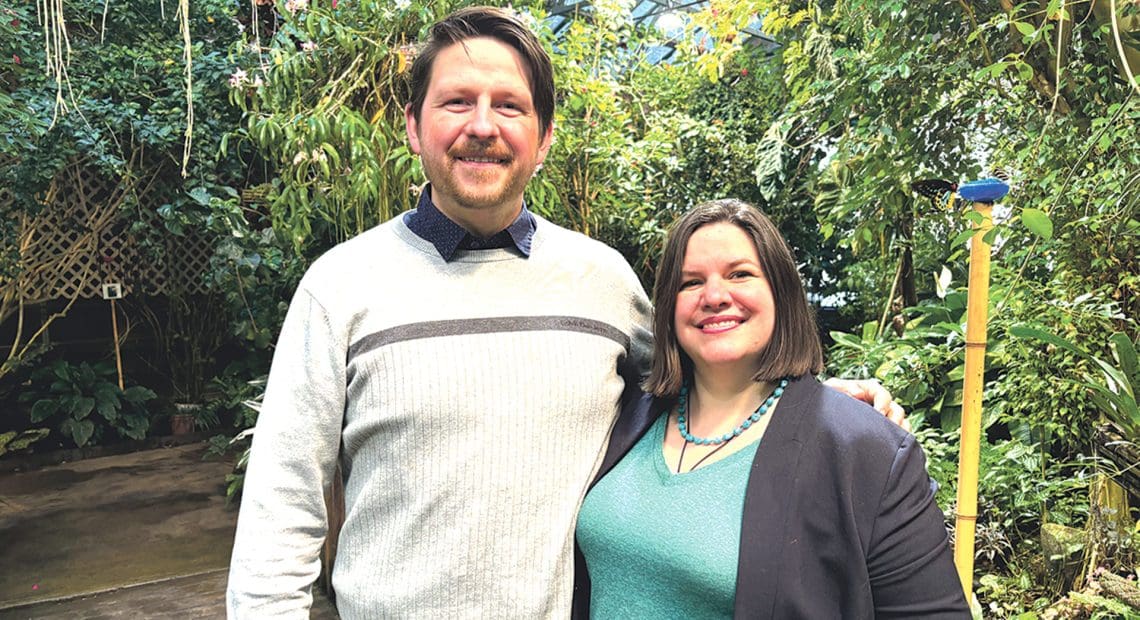
Sarah Little (left) and Nismah Osman want people to walk into Greenspace CoWork and think, “I belong here.”

Sarah Little (left) and Nismah Osman want people to walk into Greenspace CoWork and think, “I belong here.”


For Nismah Osman, acquiring Greenspace CoWork late last year with business partner Sarah Little feels like a full-circle moment.

After relocating from Boston to Gill, her first job in the area was at Hawks & Reed. She used Greenspace, which Jeremy Goldsher and Jeff Sauser launched in 2018, almost daily for printing and overflow work and felt drawn to the space from the start.

“When we learned the space might be available, it just felt right,” Osman said. “Greenspace had already played a role in my journey here. We wanted to honor what Jeremy and Jeff created while expanding what’s possible.”

Little, who grew up in Gill in a small business family, sees the space as a natural extension of Franklin County’s entrepreneurial culture.

“We want this to be a place where people can build something meaningful — not just a place to sit and work, but a place to connect, collaborate, and feel supported,” she said.

“We want this to be a place where people can build something meaningful — not just a place to sit and work, but a place to connect, collaborate, and feel supported.”

Jessye Deane, executive director of the Franklin County Chamber of Commerce & Regional Tourism Council, noted that entrepreneurs and remote professionals are an increasingly important part of Franklin County’s economic future, and Greenfield is no exception.

“We’re thrilled to see Sarah and Nismah leverage their own venture to support other small business owners,” Deane said. “Greenspace attracts career-oriented professionals to downtown Greenfield who might otherwise be working from home. That translates into increased foot traffic, stronger connections, and more commerce for our local restaurants, retailers, and service providers. It’s a win for Greenspace CoWork members and for the entire downtown ecosystem.”

That downtown foot traffic is something Hannah Rechtschaffen thinks about a lot. As executive director of the Greenfield Business Assoc. (GBA), she said her organization’s efforts to drive and promote downtown activity fall into a few buckets.

“First, we’re tending to what is visible on the surface — downtown, but all over Greenfield, too — where we can. That’s a multi-pronged approach around cleanliness, beautification, and activation of vacant storefronts, and really bringing business owners together to have more communication and connection among themselves,” she explained, adding that some of those are new businesses in town, like Victoria Bar, Freedom Café, the Sparkle Cave, and Ja’Duke.

“We’re working with business owners in different ways to pull people together and have some collaboration going on,” Rechtschaffen told BusinessWest. One is an effort to encourage downtown businesses to stay open until 8 p.m. during Arts Walk events, which happen the last Friday of every month, and on certain Saturdays throughout the year that coincide with big Greenfield events.

“We’re targeting activation. Business owners are not being asked for the moon; they’re just being asked to lean into things that have a lot of structure,” she said, adding that the GBA is also working to activate vacant storefronts and encourage businesses to liven up active windows.

Rechtschaffen noted that attendance at Greenfield events has been a concern, even though social media engagement with local organizations is up.

“We continue to hear things like, ‘there’s nothing going on downtown.’ And that disconnect, for us, feels like a responsibility,” she told BusinessWest. “We’re continuing to amplify things on social media, share things broadly, work with our partners. What’s keeping people from going out? Maybe it’s been overstated, but post-COVID has seen such a behavioral change in how people engage, and maybe there has to be something to our approach that’s different.”

To that end, a downtown business meet-up group will gather for the first time on April 30 to crowdsource what’s keeping people from going out, she added. “It’s not just marketing. Clearly we see more traffic to the websites, but attendance is still shaky.”

“They’re looking for the kind of life that we offer in Western Mass. — and they’re leaving the state for it. So it would be wonderful to see the state looking at how they can leverage Western Mass. to solve one of our major issues, which is people leaving the state.”

In this latest installment of our Community Spotlight series, we take a look at progress being made in Franklin County’s largest municipality — and how local leaders plan to generate more.


On the Move

Another of the GBA’s buckets of focus is economic development; Rechtschaffen and her team are working closely with the Office of Community and Economic Development and its executive director, Amy Cahillane, as well as with the Franklin Regional Council of Governments. The GBA also recently hosted Aaron Vega, president and CEO of the Western Massachusetts Economic Development Council, for a day visiting local businesses.

“That was amazing,” Rechtschaffen said. “We’re working to make sure Greenfield gets attention and gets focused on. We’re proud to be the heart of Franklin County, but we oftentimes fall outside certain advocacy efforts and funding efforts. We’re not a rural place, in a county that’s largely rural, so Greenfield doesn’t fall under certain funding structures, and we need to step up our advocacy for Greenfield and our connection to Franklin County in a healthy way.”

Hannah Rechtschaffen

Hannah Rechtschaffen

“We have 100 units of affordable housing coming online in downtown Greenfield in the next two years. That’s going to be huge for us.”

She told BusinessWest there’s been a national trend of people moving to rural and bucolic places, but in many cases, they’re moving out of urban areas in Massachusetts to Connecticut, Rhode Island, New Jersey, and elsewhere.

“They’re looking for the kind of life that we offer in Western Mass. — and they’re leaving the state for it. So it would be wonderful to see the state looking at how they can leverage Western Mass. to solve one of our major issues, which is people leaving the state.”

Mayor Virginia Desorgher recently wrote on Greenfield’s website that expanding the city’s tax base through development is its best long-term solution for stabilizing taxes and stimulating the economy, and housing is one place where the city is making significant strides.

That includes the continuing development of the former Wilson’s department store into a mix of retail and housing, as well as a project undertaken by Rural Development Inc. (RDI) — an arm of the Greenfield Housing Authority — to develop 32 units of mixed-income housing at 176 Main St.

MassDevelopment acquired the Wilson’s property at 242-262 Main St. in 2022 with plans to expand and relocate Green Fields Market to the building’s first floor, while turning the upper floors into 65 mixed-income rental apartments. The RDI project site includes an existing single-story commercial building and a 22,000-square-foot surface parking lot to the rear of the buildings, all in the heart of downtown Greenfield. Also in the works is the city’s plan to develop a property at 53 Hope St. into a residential or mixed-use development.

“We have 100 units of affordable housing coming online in downtown Greenfield in the next two years. That’s going to be huge for us,” Rechtschaffen said, noting, again, that development can be challenging in the city because of certain state funding restrictions.

“Our population is too high to be considered rural in the eyes of the state, which excludes us from certain funding pools, but we’re also too small to be considered a gateway city, which is also an amazing program.”

Still, she added, we continue to see small developers in Greenfield really step up, going above and beyond turning old office space into apartments. We have folks up here working hard and investing in ways that, for them, don’t always make financial sense; it’s because they care deeply about people being able to live up here and be part of what’s happening here.”


Street-level View

Desorgher noted that the city is building a downtown that meets everyday needs in part by upgrading infrastructure and incentivizing the occupation of vacant storefronts.

“In 2026, we should see the results of a new tax credit grant designed to revitalize long-vacant spaces,” she said. In terms of infrastructure, “we are focused on the basics that impact daily life: better sidewalks, smarter recycling, and parking improvements. We have replaced roughly 10% of our total sidewalk mileage since 2018, including nearly 4,000 feet replaced in 2025 alone.”

Greenfield at a Glance

Year Incorporated: 1753
Population: 17,768
Area: 21.9 square miles
County: Franklin
Residential Tax Rate: $19.31
Commercial Tax Rate: $19.31
Median Household Income: $33,110
Median Family Income: $46,412
Type of Government: Mayor, City Council
Largest Employers: Baystate Franklin Medical Center, Greenfield Community College, Sandri
* Latest information available

Through June 1, the city is accepting applicants for its Storefront Improvement Program, which provides resources for storefront upgrades to elevate downtown aesthetic appeal and economic vitality, with the ultimate aim of enhancing the area as a welcoming place to visit, shop, and work.

The program is funded through the federal Community Development Block Grant Program and administered by the city’s Community and Economic Development Department, and businesses located in the central commercial zone can apply for up to $10,000. While funding is prioritized for signage and awnings, other visual storefront improvements may be eligible.

“We are putting federal funds to work in our effort to improve downtown vitality and support small, local businesses,” the mayor noted. “The Storefront Improvement Program is a great opportunity for local businesses and organizations to improve their curb appeal while contributing to the overall health of our downtown.”

Meanwhile, Osman and Little are excited to be overseeing Greenspace CoWork’s two locations on either side of 289 Main St., hoping to deepen partnerships with local organizations; continue collaborations such as the Take the Floor competition with the Franklin County Community Development Corp.; and host incubators, retreats, workshops, mixers, and conferences that further strengthen the downtown sector’s business network.

Goldsher and Sauser originally designed Greenspace to elicit calm and focus, incorporating wood, abundant natural light, and a variety of real plants throughout the space. Under Osman and Little’s leadership, that aesthetic foundation remains intact while the mission evolves.

Under their ownership, Greenspace has introduced several updates, including a streamlined, automated booking system; a more affordable and flexible membership option for those who do not need full-time access; complimentary monthly yoga sessions for members; and expanded amenities.

“These details might seem small, but they make a difference. We want people to feel seen and considered when they’re here,” Osman said, adding that, as BIPOC and LGBTQ+ women business owners, they’re committed to creating spaces that feel welcoming and inclusive to all.

Added Little, “we want people to walk in and think, ‘I belong here’” — a sentiment certainly shared by many city business and municipal leaders striving to make Greenfield more of a place people want to live, work, and visit.

Community Spotlight Special Coverage

Community Spotlight

Jeff Bagg says Amherst is well-stocked with assets as it goes about competing with other area communities for the dollars spent by visitors.

Jeff Bagg says Amherst is well-stocked with assets as it goes about competing with other area communities for the dollars spent by visitors.

Jeff Bagg says he’s come full circle. Sort of.

He graduated from UMass Amherst back in 2002 and then worked for the town of Amherst as senior planner from 2008 to 2016. But now, after gaining different types of experience in various settings, he’s back in Town Hall, serving as director of Planning & Economic Development, a melding of two roles.

He started in December and has spent the past four months getting reacquainted with a community that is in a seemingly constant state of motion, but with challenges and opportunities that have been present for decades.

“I knew a lot about the town of Amherst, but it had been 10 years since I last worked there, so there was a learning curve,” said Bagg, who is involved in several initiatives at present, from a project to set new design standards for the downtown to a study of the East Amherst area with an eye toward creating core commercial development opportunities, to the collection of data to be used in creation of the town’s first economic development plan in several years.

“What we have available is pre-pandemic, and there have been really big shifts in the way people spend their money,” he said of that last initiative. “Knowing that businesses need a strong customer base and foot traffic, we really need to figure out ways to bring more residents out and visitors in, and the data drives a lot of that.”

“Knowing that businesses need a strong customer base and foot traffic, we really need to figure out ways to bring more residents out and visitors in, and the data drives a lot of that.”

These are just some of the many converging storylines in Amherst, a community that those we spoke with said is a college town, but so much more. Others include:

• Amherst Area Chamber of Commerce, which continues to grow membership and become ever more diverse — Executive Director Jacob Robinson said the chamber added 57 new members in 2025, roughly double the number welcomed in 2023 and the years prior — and build new events into the schedule, including a revitalized business expo;

• A Business Improvement District (BID) that is working with the chamber and individual businesses to make the community a true destination year round;

• The ongoing success story that is the Drake, a downtown live-performance venue that is planning 200 nights of performances for 2026 involving 500 artists from both the 413 and around the globe and more than 33,000 audience members, many of whom will support other hospitality-related businesses before and after those shows;

• The ongoing saga of Hampshire College, which has been fighting for survival in recent years amid declining enrollment and continuing fiscal hardship. That fight took a new twist recently when the New England Commission of Higher Education announced late last month that it will require the school to show cause in June as to why it shouldn’t be placed on probation or have its accreditation withdrawn over concerns the college may no longer be meeting the organization’s institutional resources standard; and

• Continued evolution of the community’s downtown, including several new businesses, the owners of which told BusinessWest there is a rhythm to the downtown, one dictated by the calendar, which takes some getting used to (much more on this later).

For this latest installment of its Community Spotlight series, we take an in-depth look at one of the more intriguing communities in the region — one marked by learning of all types.


Developing Story

Bagg brings a diverse résumé to his new position in Amherst. Indeed, after his stint as senior planner there, he served as project manager for the Central Massachusetts Regional Planning Commission before beginning what would become a six-year stint as director of Planning and Economic Development in Easthampton and then serving as senior planner for the BSC Group in Worcester.

He described his new role as a “good fit” and an opportunity to return to the public sector — in a community where change is a constant.

“I’ve been working in many different communities in Massachusetts, and more and more towns have increased their efforts to attract visitors; it’s an intense competition for people’s time and limited disposable income.”

Like others we spoke with, he said Amherst has both a number of assets and … let’s call them liabilities.

In that first category, he started with the obvious, the three colleges that provide the community with its distinct flavor — Amherst College, UMass Amherst, and Hampshire College — but also its many cultural attractions, ranging from the Emily Dickinson Museum and the Eric Carle Museum to the Drake and Amherst Cinema, which make it more than your typical college down.

John Page says downtown Amherst is in a seemingly constant state of change and is always welcoming new businesses.

John Page says downtown Amherst is in a seemingly constant state of change and is always welcoming new businesses.

On the downside, this can be a difficult town to do business in, and Bagg acknowledged this with a comment intended to be diplomatic.

“We have a very engaged community, but there is some lack of agreement on where new growth should happen. Amherst struggles with its vision for the future and an identity that we can get most people to agree to,” he said, adding that town officials are making it a priority to make it easier to do business in town, such as with the hiring of a permit administrator to facilitate the process of setting up shop there.

Which brings him back to the economic development plan, and the collection of data that will help drive it.

“What we don’t have a good handle on is where people are spending their money — we don’t know where residents are spending their money, we don’t know where visitors spend their money when they come here, and how all that relates to demographics — population changes, the age of people coming and going, those are factors for what’s going to drive new businesses in Amherst, and we don’t really have a handle on that.

“I’ve been working in many different communities in Massachusetts, and more and more towns have increased their efforts to attract visitors; it’s an intense competition for people’s time and limited disposable income,” he went on, adding that this competition is one of myriad factors that will go into the development of an economic development plan over the next year or so.

Overall, the community is well-suited to succeed in this competition to attract visitors, said John Page, executive director of the Amherst BID, adding that there is already plenty to do in town — such as the recent Fire and Ice Winter Festival, which drew more than 2,000 people — and plans to provide more good reasons to make the trip.

That list includes the Amherst Literary Walk on April 11, a day of literary events throughout the downtown, including readings, workshops, literary trivia, and more, said Page, adding that one of the BID’s broad goals is to get people out and have them experience Amherst.

Another is to help bring new businesses to town and create an environment that will enable them to succeed year-round. Like others we spoke with, Page said Amherst has some unique assets, but especially the colleges and the people who go there to learn and to work.

“We have to keep showing up for these businesses that give this place its identity. These are not just storefronts — they create jobs, they build relationships, and they shape the character of the community.”

“There is this youthfulness,” he said, speaking to the environment created by the melding of the higher learning institutions and the omnipresent arts and culture. “You’ve got bands, you have artists of all ages, and a college town both because of the students and the faculty. There’s this appreciation for arts and culture — we have a lot of museums and a lot of live music going on, and that goes hand-in-hand with a college community, and that helps us out even when the students aren’t here because that reputation is great in the summer, when we want to invite other people to join us from across Massachusetts, across New England, and across the world.”

Robinson agreed, noting that the chamber is committed to promoting and supporting the downtown, but other ‘villages’ in the community as well, such as the Mill District in North Amherst and the South Amherst section of town.

“We have to keep showing up for these businesses that give this place its identity,” he said, summing up the chamber’s mission. “These are not just storefronts — they create jobs, they build relationships, and they shape the character of the community.”


What’s in Store

As she spoke with BusinessWest, Becky Guyer was gearing up for Easter, but also a very busy three-month stretch that includes Mother’s Day, college and high school graduations, some weddings, and other events that require flowers.

She can speak from experience about what this time means for her Floral Affairs shop in downtown Greenfield. But the one she opened last July on North Pleasant Street in Amherst … not so much.

Indeed, Guyer said she is still experiencing a learning curve when it comes to doing business in downtown Amherst. She was invited to look at the North Pleasant location, long a flower shop, at the behest of the building’s owner, who thought she might be interested in opening a second location there.

Amherst at a Glance

Year Incorporated: 1759
Population: 39,263
Area: 27.7 square miles
County: Hampshire
Residential Tax Rate: $16.91
Commercial Tax Rate: $16.91
Median Household Income: $48,059
Median Family Income: $96,005
Type of Government: Town Council, Town Manager
Largest Employers: UMass Amherst; Amherst College; Hampshire College
* Latest information available

After some due diligence, she determined that she was.

“I thought that this could be a good opportunity — this is a college town, there are some venues in town, some that we already do weddings with, as well as UMass events and Amherst College events,” she said, adding that the location was also across the street from a funeral home, which, in the floral world, is a real benefit.

“There were a lot of positives,” she went on, adding that the storefront, which had to be completely gutted, wasn’t one of them. But she moved forward with confidence, has found the move worthwhile, and has high praise for the chamber and the BID. But there has been a learning curve as she adapts to life in a college town.

“When the college kids leave … it was the worst Christmas I’ve ever seen in my life — so much so that it’s made us completely restructure our game plan,” she told BusinessWest. “I don’t necessarily have a designer in Amherst — it’s meant for convenience; all orders get run out of Greenfield, and we’ve made this location more of a convenience store.”

Overall, the downtown Amherst location is a work in progress, she said, adding that she is learning the cadence, if you will, of this college town, and the nuances of the calendar. Christmas was a letdown, and she’s not sure what to expect this summer, but she is optimistic about the upcoming few months and what they could bring, and the location itself.

“The walk-up traffic is fantastic — there’s a young, growing community there that comes in quite a bit,” she said. “There are a lot of $10, $15, and $20 sales, which is great.”

Andrea Marion is also getting used to the rhythm of Amherst’s downtown. She moved the Closet from a location in the Mill District to a storefront (a former restaurant) on Main Street last fall. She enjoyed the Mill District atmosphere but said there is more foot traffic in the downtown, and that suits her operation.

She described her business as a “curated resale boutique,” and herself as a “fashion concierge.”

“I hand-pick every piece that comes into the store — I don’t do consignment, generally, and I try to make sure I have something for everyone … I sell for all genders and all sizes,” said Marion, a nonprofit manager before she went into business for herself, adding that, while many items would be described as high-end (Fendi, Givenchy, and Prada handbags, for example), she has items at all price points.

Like Guyer, Marion said it takes some time to get used to the patterns of the downtown, especially when it comes to the students’ schedules, but overall, she says the area is becoming ever more vibrant and remains a good place to do business.

“There’s a lot of energy and activity,” she said, adding that she is accessible to more people now, which has broadened the customer base and made it more diverse, especially age-wise. “Amherst’s downtown has so much potential, and I’m really happy to be here.”

Community Spotlight

Community Spotlight

James Przypek says the chamber is excited that the east-west rail project in Palmer is gaining momentum.

James Przypek says the chamber is excited that the east-west rail project in Palmer is gaining momentum.

It’s called the TWIST program, an acronym that stands for Technical Work Instruction and Skills Training, and leaders at Sanderson MacLeod Inc. are excited to see it continue to grow.

The program blends hands-on engineering, mentorship, and real-world experience, giving local high school students the opportunity to learn directly from experienced industry professionals in an authentic manufacturing environment while developing practical skills needed for careers in advanced manufacturing.

Essentially, TWIST helps both Sanderson MacLeod — a 68-year-old manufacturer of twisted wire brushes — and young people, by helping preserve valuable manufacturing expertise while developing the next generation of local talent.

During the 2025-26 academic year, TWIST supported a co-op partnership at Sanderson MacLeod’s 137,000-square-foot manufacturing facility. Three students from Pathfinder Regional Vocational Technical High School worked through the summer, fall, winter, and spring sessions alongside Sanderson MacLeod’s team, gaining hands-on experience across multiple areas of the operation. They worked with engineering, maintenance, operations, quality assurance, logistics, and operations system integration teams, contributing to manufacturing engineering projects, equipment refurbishment, and process improvement initiatives throughout the plant.

The idea, company CEO Mark Borsari said, is to “harness their natural interest and take that next step and give them insight they wouldn’t normally get just from high school. So it includes financial training and leadership training; they meet with local CEOs and learn from self-made people what it takes to be a CEO. We take them through job interview skills and technical work with our engineers so they can see that this work can be fun.”

“I used to joke, ‘Palmer: you drive through us.’ But now, we want it to be ‘Palmer: you come here for a reason.’ Because there are things to do in town.”

The TWIST program is about developing the next generation of manufacturing talent in Palmer, he noted; as long-time process experts retire, programs like this create a path for that knowledge to be passed on to the next generation, while giving students the opportunity to bring their own fresh ideas to American manufacturing.

“It doesn’t have to be monotonous if you’re doing work that you love doing,” Borsari said.
“When you’re 17 or 18, you may have tremendous talent, but you don’t think of the value in it. A kid may be having fun putting together a 3D printer in his garage — well, you know, there are companies that would like to bring on that kind of ability. So we’re connecting the pieces a little bit.

“We have a unique opportunity to be producing here in Palmer,” he added. “This gives us a way to empower other people, and if they later come work for us, great. If not, you’re giving three or four kids a really unique perspective they can use to be successful somewhere else. If we’re making three to four impacts a year, over a period of years, that’s a pretty good reinvestment back into the community.”

Speaking of Pathfinder, surging enrollment has the school planning to open a second campus in Belchertown, while it has also launched a number of adult education and enrichment programs. Meanwhile, other Palmer-based organizations are doing their part for workforce developnent; River East School to Career helps high-school students connect with local businesses through internships and other programs, and Top Floor Learning helps adults earn their GED.

Mark Borsari

Mark Borsari

“So many jobs have gone overseas, but here we are in Massachusetts, selling brushes, a proud American manufacturer. So we’ve done something right.”

They’re all examples of how connections are being made locally to bolster a Palmer economy that already boasts a variety of strong sectors, from manufacturing to hospitality to healthcare — Baystate Wing Hospital alone employs more than 700 people. Meanwhile, a planned rail station project, as a future stop along the state’s planned east-west route, promises even more benefits.


Plenty to Build On

There are other signs of progress and vibrancy in town, from projects to convert two former schoolhouses (in Thorndike and Three Rivers) into residential apartments to the new Liberty Plaza strip mall on Route 32 near the turnpike exit, which now boasts Starbucks, Chipotle, Jersey Mike’s, and further investment opportunities.

Those are all promising developments that add to an already-robust business landscape in town, said James Przypek, CEO of the Quaboag Hills Chamber of Commerce, which comprises 15 communities and 200 member businesses, 40% of them located in Palmer.

“When you think of Palmer, you think of Wing, our largest employer, which is not just a hospital — they have a rehab, a big ob/gyn department, about 40 physicians, 165 registered nurses … they’re certainly one of the backbones of the community.”

But he also thinks of manufacturing, from Sanderson MacLeod to Palmer Foundry, Palmer Paving (now owned by Peckham Industries of New York) to Adaptive Solutions, which makes medical devices.

On the retail and hospitality side, Figlio, an Italian restaurant on Main Street, is opening another location; 527 Candle Co. has opened downtown; and Seven Railroads Brewing Co. is thriving on Route 20.

“Palmer’s a neat little town. There’s a steampunk museum in town, there’s a pinball league in town … we’re all trying to do things to make it more of a place that people want to come to, rather than just like, ‘Palmer, what’s that?’” said Rachel Rosenbloom, co-owner of Seven Railroads. “I used to joke, ‘Palmer: you drive through us.’ But now, we want it to be ‘Palmer: you come here for a reason.’ Because there are things to do in town.”

As for the future train station, the state is moving forward with its chosen site, an open field at 1099 South Main St., south of Palmer Yard, land owned by Sanderson MacLeod adjacent to its plant. It will be several years before the facility is up and trains are stopping there, but residents and businesses alike are intrigued with the possibilities, even though not everyone is happy with the location; many wanted it closer to downtown.

A rail stop can benefit existing businesses in the broad hospitality sector and foster new ventures as well, and advocates say rail service will make Palmer’s location, already attractive because of its turnpike exit and close proximity to the state’s second- and third-largest cities, even more appealing to the development community.

“We’re very excited about the rail project,” Przypek said. “The chamber is in favor of having a railroad site, and we almost don’t care where it is, but where they proposed it makes sense, from our standpoint.”

As for that pike exit, where a casino was proposed some years ago, that site is still open and available, Przypek said.

“Last year, we worked with town officials in Palmer to identify a number of commercial buildings where land is available for sale or lease,” he noted. “Every quarter, we update that and post it to our website to give folks who want to invest in Palmer a glimpse at the properties that might be available. We’ve done that with other towns as well, but Palmer certainly is the most active. I guess the message is that Palmer is open for business.”


Manufacturing Progress

Sanderson MacLeod, which currenly employs about 115 people, recently entered into a partnership with GutterBrush of Rhode Island, and is bringing all its work into Palmer, Borsari said. “We’ve found ways to become business partners with certain people and make both companies more successful for the community.

“It’s an opportunity to keep growing and bringing people in instead of cutting back,” he went on, adding that automation at the plant is also helping the company become more modern and offer more advanced, higher-wage positions as well. And those connections it’s making with local students is just another way to grow the future in Palmer.

“If we or other manufacturing companies want to survive with a new generation coming up, we have to find ways to make it a cool place to work. It can’t be that drippy, oily concept that people have in their heads when they think of manufacturing. What can we do to give people purpose in what we’re making together?

“It’s really critical,” he added. “So many jobs have gone overseas, but here we are in Massachusetts, selling brushes, a proud American manufacturer. So we’ve done something right.”

Community Spotlight

Community Spotlight

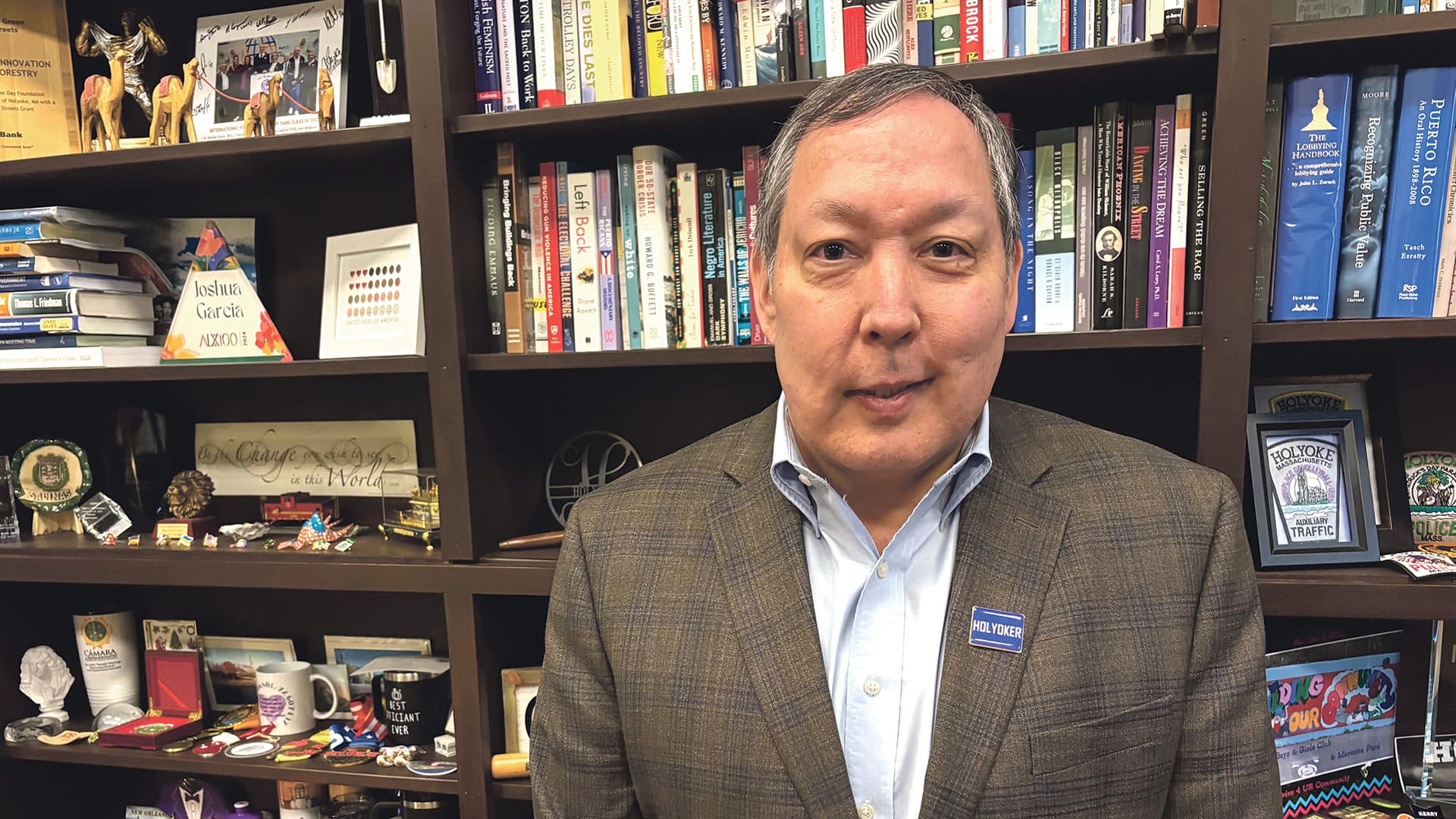
Eric Nakajima says he wants to take full advantage of Holyoke’s many assets, including mill space, a business-friendly government, and green energy.

Eric Nakajima says he wants to take full advantage of Holyoke’s many assets, including mill space, a business-friendly government, and green energy.


Eric Nakajima recalls that, while earning his master’s degree in city planning from the University of California, Berkeley 25 years ago, one of first assignments in one class was to essentially explain why he was there.

“I said that I wanted to learn how to help communities like Holyoke,” he said, adding that he got to know the city soon after his family moved to Amherst from New Jersey when he was 7 and was later struck by how much the community was impacted by the loss of its manufacturing base. “I named Holyoke all the way out in California; I wanted to understand better how you work with the city, work with the community, work with the markets, work with the business environment you’re in to create jobs and good placemaking.”

And 25 years later, that’s essentially his job description as the new director of Holyoke’s Office of Planning & Economic Development, succeeding Aaron Vega, who is now serving as president and CEO of the Western Massachusetts Economic Development Council.

He arrives in City Hall with a diverse résumé, including roles with the Deval Patrick administration on Beacon Hill, and at an intriguing time for the community, one of progress on several fronts, including housing, downtown revitalization, entrepreneurship, and job creation, but also some setbacks, especially when it comes to what was shaping up to be one of the city’s better economic development stories. That would be Sublime Systems, which had plans to build a plant on Water Street and produce low-carbon cement — plans now on hold after the loss of a large federal grant.

“I named Holyoke all the way out in California; I wanted to understand better how you work with the city, work with the community, work with the markets, work with the business environment you’re in to create jobs and good placemaking.”

When asked about whether those plans might eventually materialize, Holyoke Mayor Joshua Garcia shook his head slowly for emphasis and said, “it certainly doesn’t look like this is going to happen.”

But while Sublime likely won’t be part of the picture in Holyoke, there are plenty of bright spots in the Paper City, including:

• New housing projects in various stages of development, from 700 recently completed units at the former Farr Alpaca mill (and more in phase 2 of that development) to 84 units planned for Open Square, to several smaller projects in and around the downtown area. Add them all up and they make a real dent in the city’s huge need for housing and bring promise to spur new businesses to support those residents;

• A chamber of commerce that is moving on from controversy involving its former president, Jordan Hart, who was terminated just over a year ago and is the subject of a criminal complaint alleging financial misappropriation. Interim Director Lisa Totz said the agency is adding members as well as events to the schedule and, in general, looking for new ways to bring value to its members;

• A utility, Holyoke Gas & Electric, that continues to be a force in economic development by offering clean, comparatively lower cost energy that is bringing attention to the city from different types of businesses, including data centers, which are looking at several possible sites, including the property on Water Street that was due to become Sublime’s new home (more on that later);

• A cannabis sector, spawned by that lower-cost energy and hundreds of thousands of square feet of vacant mill space, that is “holding its own,” said the mayor, despite turbulence in that sector;

• Plans to redo and simplify the city’s zoning and permitting processes to facilitate new business development;

• A massive retail center, the Holyoke Mall at Ingleside, that continues to adjust to changes in the marketplace with a mix of tenants that is shifting increasingly toward the entertainment side of the spectrum, with a massive pickleball facility being the latest addition and a huge Dick’s House of Sport, an immersive facility complete with batting cages, golf simulators, and rock climbing walls, set to open in the spring of 2028;

• A new initiative called Greater Ingleside 2050 that will bring together stakeholders in that area of the city and create a roadmap for what it could look like in the milestone year; and

• Long-term projects such as revitalization of the Victory Theater and a planned sports complex, which, if they become reality, could greatly contribute to the vitality and quality of life in this community of nearly 40,000.

For this latest installment of its Community Spotlight series, BusinessWest takes an in-depth look at the many converging storylines in Holyoke, starting with its new economic development director.


Background — Check

Nakajima said that, while he knew a lot about Holyoke before taking the economic development job, there has still been a learning curve, and on many levels.

“I’ve worked with a lot of city halls, but I’ve never worked in a city hall,” he told BusinessWest. “So understanding and navigating city hall has been a challenge itself. I haven’t found it hard, but if you haven’t done it before, there are a set of processes to learn; it’s similar, but distinct from what you have at the state level.”

As noted earlier, he has plenty of experience at the state level, especially during the tenure of former Gov. Deval Patrick.

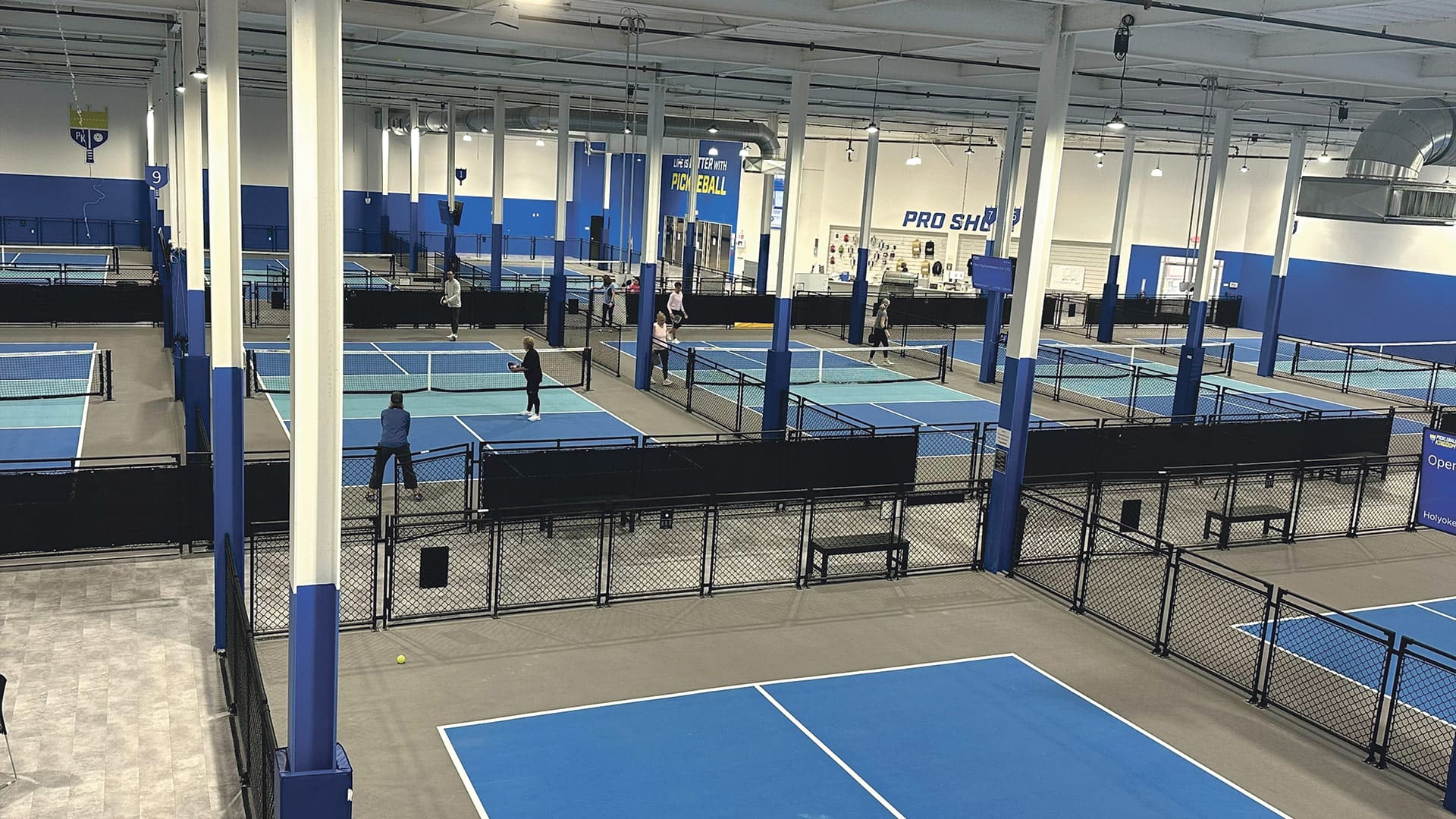
Pickleball Kingdom opened its doors and its courts just a few months ago at Holyoke Mall.

Pickleball Kingdom opened its doors and its courts just a few months ago at Holyoke Mall.

Indeed, he served the Patrick administration first as senior innovation advisor within the Executive Office of Housing and Economic Development, starting in 2010, and then as assistant secretary for Innovation Policy in that office from 2012 to 2015. During that time, he became involved in several initiatives involving Holyoke, including as project lead for all aspects of developing the Massachusetts Green High Performance Computing Center (MGHPCC).

Before and after his work in the State House, Nakajima has been involved with economic development, especially with Gateway cities, such as Holyoke, on many levels and with many different agencies.

His résumé includes a stint as senior research manager for the Economic Policy Research Unit at the UMass Donahue Institute; a short stint as director of the Massachusetts Broadband Institute, a division of the Massachusetts Technology Collaborative; work as a consultant in economic development policy and planning; and, most recently, as a director of Government Relations for the Massachusetts Teachers Assoc.

“My work with the city then, on behalf of the state, made me fall in love with Holyoke and really believe in the potential of this city.”

This body of work has made him more familiar with Holyoke and the challenges and opportunities it faces, he said, adding that, in addition to his work on the high-performance computing center, he’s been involved with several area Paper City initiatives, from the Lyman Terrace housing project to the introduction of rail service to the redevelopment of the Cubit Building, now home to several market-rate housing units as well as the HCC MGM Culinary Arts Institute.

He said he was drawn to the job in Holyoke’s Office of Planning & Economic Development for the same reasons he listed back at Berkeley, as well as his previous experiences with the city and a desire to build on the momentum that’s been created there in recent years.

“My work with the city then, on behalf of the state, made me fall in love with Holyoke and really believe in the potential of this city,” he said. “I really admire the people that I’ve worked with, many of whom are still around today. It’s what attracted me to come here.”

He said there are several priorities moving forward, including efforts to encourage more housing development, work to redevelop the many vacant or underutilized properties on and around High Street in the downtown area (housing is certainly one of the possible uses), and continued encouragement of entrepreneurship.

As for ongoing work to revamp and simplify zoning and special permit processes, Nakajima said this work isn’t sexy, but it can and will certainly help with economic development efforts.

“This is going to make City Hall easier to deal with, and it will advertise the fact that we are open for business in ways that we’ve always said we were, but now it’s going to feel like it when people come here and knock on the door and work through the process,” he said. “It’s a very big deal.”

As for housing, Garcia said the city will work to encourage not only more development, but housing across a broad spectrum, including market-rate units, such as those planned for Open Square, which could serve to keep people in Holyoke.

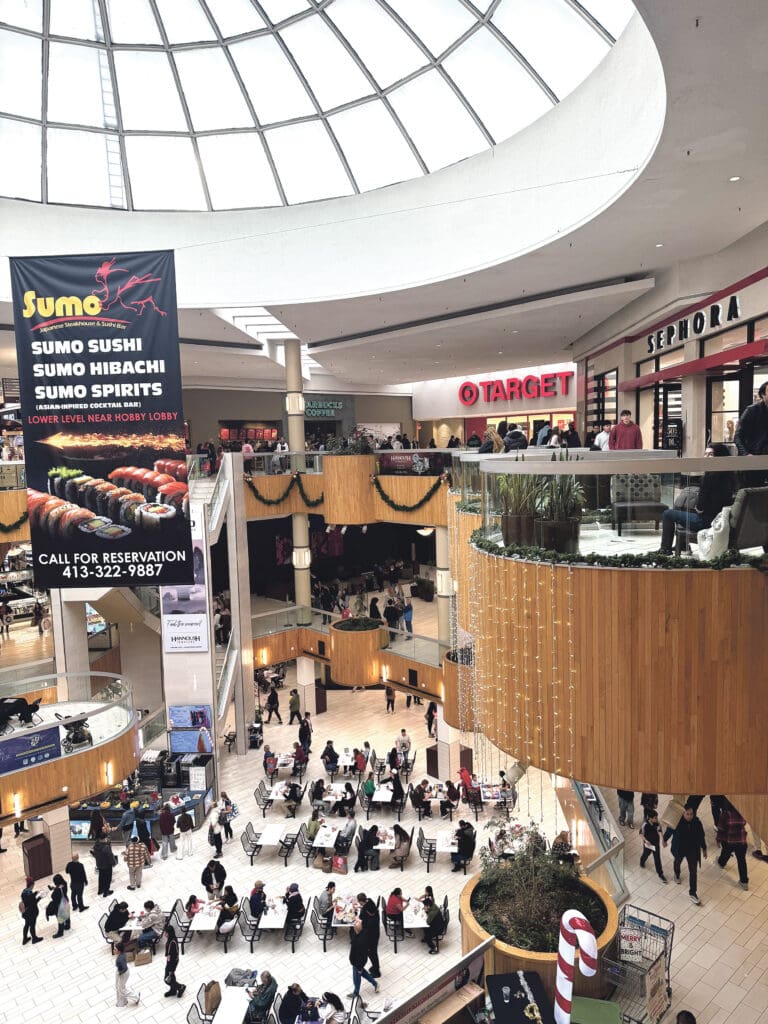
Holyoke Mall is evolving, with entertainment-related facilities now accounting for roughly 30% of its space, compared with 10% just a decade ago.

Holyoke Mall is evolving, with entertainment-related facilities now accounting for roughly 30% of its space, compared with 10% just a decade ago.

“Holyoke has traditionally done very well with making sure we looked out for our most vulnerable populations, but we never really thought about what happens when people’s circumstances improve,” he explained. “Currently, we have a system where you start here, you get on your feet, and once you do well, you leave. We’re still going to support affordable, workhouse housing, because that’s important, but we want to introduce market-rate housing much more aggressively into that portfolio.”


Getting Down to Business

Nakajima said he also plans to take full advantage of the city’s many assets moving forward. These include that aforementioned mill space, which can be converted for many different uses; a city government bent on being business-friendly; and green — and comparatively cheap — energy.

That last item on the list has certainly helped with economic development efforts, especially in recent years, as companies continue to seek green energy alternatives, said Jim Lavelle, general manager of HG&E, adding that this asset certainly caught the attention of cannabis growers.

And, more recently, it has drawn attention from developers looking to build data centers, he said, adding that the city has the land — including the site Sublime had targeted — and the capacity to attract such facilities.

Still, there is concern about the high energy and water usage of AI data centers and also about large amounts of real estate being absorbed for comparatively few jobs, said Lavelle, noting that a proposal was introduced recently to amend the city’s zoning ordinance to effectively ban data centers in the city.

The proposal was under discussion of the ordinance committee and continued until later this spring, he noted, adding that, while there are concerns about such facilities, privately operated data centers do bring some jobs and needed tax revenue.

“Some of the inquiries we’re fielding are for facilities in the 50- to 60-megawatt realm,” he said, adding that, for perspective, the MGHPCC is a 5-megawatt facility.

The HG&E could handle one or even a few of these larger facilities through expansion of its substations, said Lavelle, adding quickly that one 60-megawatt data center would nearly double its current peak summertime load of 75 megawatts.

Holyoke at a Glance

Year Incorporated: 1786
Population: 38,238
Area: 22.8 square miles
County: Hampden
Residential Tax Rate: $17.43
Commercial Tax Rate: $38.15
Median Household Income: $37,954
Median Family Income: $46,940
Type of Government: Mayor, City Council
Largest Employers: Holyoke Medical Center, Holyoke Community College, ISO New England Inc., PeoplesBank, Universal Plastics, Marox Corp.
* Latest information available

And while the city looks to build on its business base, its chamber of commerce continues work to rebuild its image and its core of services and move on from the recent controversy, while remaining in its long-time home on High Street.

“We’re being resilient and adaptive,” said Totz, a business consultant by trade who was working in the Holyoke chamber office providing support to small businesses and, because of her familiarity with the office and its members, stepped into the interim director role.

She used the massive conference room table that used to dominate the chamber’s offices — recently gifted to City Hall — as a symbolic example of all this.

“Now, I have eight tables that I can configure into a classroom, a giant table, a seminar space; I can tuck them away in the corner and actually have an open room … we can now do things that were impossible to do with that giant table in there.”

Resilient and adaptive will be the watchwords moving forward, Totz went on, as the chamber continues to rebuild, add members, and bring value to those members through traditional programming, such as its recent St. Patrick’s Day breakfast at the Log Cabin, and new initiatives, such as those now possible in its remodeled office.

“I want people to see that we’re forward-thinking, we’re supportive, we’re looking back at the history with respect and lessons learned, but we’re trying to bridge from where we’ve been to where we can be,” she told BusinessWest, adding that this work is ongoing.


What’s in Store?

When asked to speculate on the course of retail in the years to come, Lynn Gray, general manager of the Holyoke Mall, said she couldn’t project too far into the future, and for good reason. Indeed, the scene is changing rapidly — and constantly — as recent additions to the mix attest.

“I certainly didn’t have pickleball on my bingo card two years ago,” she said with a laugh, adding that Pickleball Kingdom, which opened its doors and its courts just a few months ago, now occupies roughly 50,000 square feet at the mall that was most recently home to Bob’s Discount Furniture and is already drawing members at a steady clip.

Its emergence is a sign of the times and the movement toward entertainment-related facilities — which now account for roughly 30% of the space in the mall, compared with 10% just a decade ago — as well as the pace of the change and difficulty with pinpointing just what will come next, said Gray, adding that the present tense is keeping her busy enough.

That includes buildout for the new Dick’s House of Sport, a facility that blends retail and entertainment, putting it in a category all its own, one Gray called “experiential retail.” This is a massive undertaking — as that two-and-a-half-year timeline indicates — that will include essentially lopping roughly 50,000 feet off the old Sears building at the mall to fit the retailer’s needs and creating an elaborate new entrance.

“We’re really excited about this development,” she said, adding that, when it opens its doors, the new Dick’s should become a huge draw, one that, like Pickleball Kingdom, will bring in people to help support retail businesses and a changing mix of restaurants, and attract more of both — especially the latter.

“We’re working with a few local and regional restaurateurs to bring their flavors to our shopping center, and with the news of Pickleball Kingdom being open and how it’s bringing in additional foot traffic, and with the news of Dick’s House of Sport, I believe we’ll be able to attract some new dining options for our shoppers,” Gray said.

Meanwhile, she is encouraged by statistics showing that the younger generations prefer in-store retail as opposed to online shopping, which bodes well for the retail side of the spectrum, which “remains our life’s blood,” she said.

While the mall continues to evolve, so does the larger Ingleside area, which extends in both directions from the mall, south to the West Springfield line and north along Whiting Farms Road. The area has seen change and new additions in recent years especially, and Greater Ingleside 2050 will focus on creating a long-term vision for the area and a blueprint for making that vision reality.

Garcia noted that, while the mall dominates the area, there are many smaller players that add to the overall vibrancy, and there is opportunity for additional, complementary development.

“We’ve been so focused on downtown, and for good reasons,” he added, “but we want to put our heads together and make sure we don’t neglect another important part of town that has had, and continues to have, potential for growth in the commercial, economic development space.”

Community Spotlight Special Coverage

Community Spotlight

Marion Hayden says she’s always had a “love for color, design, and merchandising,” and all three come together in her new venture, Home on Main.

Marion Hayden says she’s always had a “love for color, design, and merchandising,” and all three come together in her new venture, Home on Main.


When it comes to the arts, hospitality, history, and architecture, Sara Goodberlet says, Lenox has an extremely strong brand.

It’s been built over time and is fortified by institutional landmarks such as Tanglewood, Shakespeare & Company, the Mount (Edith Wharton’s home), Ventfort Hall (home to the Gilded Age Museum), spas, inns, restaurants, retail shops, nature trails, and much more.

And as the relatively new director of the Lenox Chamber of Commerce, she said one of her primary directives is to protect, nurture, and enhance that brand.

“I want to keep building Lenox as a brand, as a destination,” she said. “It’s a strong brand, but I want to freshen it up a little bit. We’re in a unique position … we have some older, mature, historical roots, but then we also have this fresher, modern vitality that’s also in the mix.”

Elaborating, Goodberlet said one of her goals is to educate and inform the public about not only the pillars of Lenox’s strong arts and hospitality sector — like Tanglewood, which has two Paul Simon concerts featured in a packed 2026 schedule, or Shakespeare & Company, which also a full slate of shows starting in June — but the many small businesses and nonprofits that help make this brand as strong as it is, and the people behind them.

People like Molly Lyon-Joseph, who owns two restaurants in town — Frankie’s, an Italian-American eatery, and Pizzeria Boema — and is set to open a third, Bea’s House, in a historic property, the former Café Lucia on Church Street.

“I want to keep building Lenox as a brand, as a destination. It’s a strong brand, but I want to freshen it up a little bit. We’re in a unique position … we have some older, mature, historical roots, but then we also have this fresher, modern vitality that’s also in the mix.”

Or Scott Shortt, a former financial services veteran turned serial entrepreneur whose latest venture is a unique event space, called the Belvedere, carved out of a former retail space in downtown Lenox.

Or Marion Hayden, a long-time employee at the former Annie Selke store in downtown Lenox, who, after the store closed, decided to keep that destination alive with a venture she calls Home on Main.

Individually and collectively, these businesses (much more on them later) contribute to the vibrancy that defines Lenox for at least three seasons each year — winter is considerably slower and a challenge for many businesses — and also to a highly supportive environment.

“I wouldn’t choose to do business anywhere else — I love the Lenox community. I feel like everyone supports each other; there’s collaboration on many levels,” said Lyon-Johnson, adding that the many hospitality businesses benefit from Tanglewood, especially, but all the major draws, and they support those institutions in kind.

Added Goodberlet, “I’ve never been in a business climate where there’s so much being created. It’s such a treat to help support them, bring people together, and market our area and continue to give it the personality it has.”

For this latest installment of its Community Spotlight series, BusinessWest takes an in-depth look at Lenox and how its brand is stronger than ever.


The Play’s the Thing

Jaclyn Stevenson, director of Marketing & Communications for Shakespeare & Company, described 2026 as an important year for the live theater venue, for many reasons.

For starters, it will be a time to remember Tina Packer, the company’s co-founder and founding artistic director, who passed away on Jan. 9. There will be a celebration of life on May 31 at the Shakespeare & Company campus, said Stevenson, adding that Packer remains an inspiration to all those at the company, and in her honor, the Tina Packer Legacy Fund has been established to support the future of the institution and the work she founded.

Meanwhile, 2026 will mark a financial milestone — this will be the first time since its founding in 1978 that the nonprofit theater is completely debt-free, having paid off the remaining $1.7 million of the $4 million mortgage on its campus, thanks to contributions from its board of trustees and a combination of successful property transactions, community support, and a strong box office season, Beverly Hyman, chair of the board of trustees, described this financial development as a turning point for the institution.

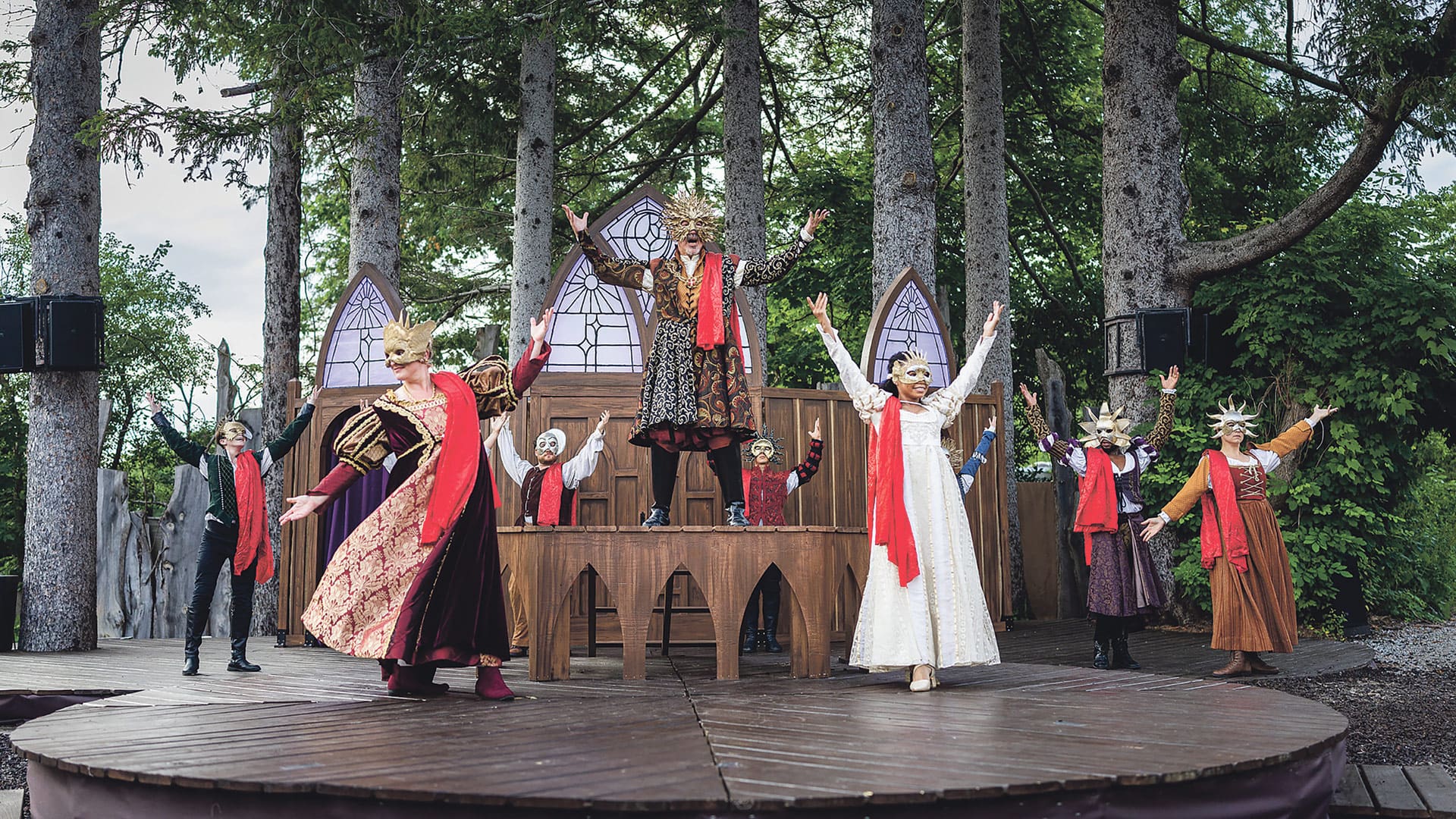
The Arthur S. Waldstein Amphitheatre, seen here during last season’s production of Romeo and Juliet, is one of three outdoor theaters at Shakespeare & Company.

The Arthur S. Waldstein Amphitheatre, seen here during last season’s production of Romeo and Juliet, is one of three outdoor theaters at Shakespeare & Company.

“We have some long-term board members who have been around the block a few times in terms of financial ups and downs, and even they see this as a turn into all new territory,” she said. “We now have the opportunity to expand education programs — including our nationally recognized Shakespeare in the Courts program — and to focus on our Center for Actor Training, which requires highly skilled faculty.”

There are other developments as well, said Stevenson, noting that Shakespeare & Company, named by Newsweek as one of the top outdoor theater companies in the country, is now the new home to six sculptures created by noted philanthropist Harold Grinspoon. Each more than 30 feet high, the sculptures create a new attraction on the property that visitors can enjoy year-round.

Then there’s the 2026 schedule, which includes a limited run of Midsummer Dreamers, a two-person interpretation of Shakespeare’s A Midsummer Night’s Dream; Matthew Barber’s Fireflies; and a production of Twelfth Night.

Goodberlet said that, while large institutions such as Tanglewood, Shakespeare & Company, and the Mount are in many ways the foundation of Lenox’s arts and hospitality base, this sector has many moving parts, with the emphasis on moving.

“You always put together a plan, you make assumptions, and you work through the details and consider a lot of scenarios and how things will work. But it’s all theory until you actually start putting it into practice.”

Indeed, while there are some constants, there is always change and new additions to the landscape, all of which contribute to the overall Lenox vibe.

These pieces include Lyon-Joseph’s restaurants, which, in addition to fine dining, provide jobs to people of all ages, but especially young people. She said she’s diligent about providing not just a paycheck, but learning experiences on many levels.

Indeed, she recently took her leadership team to the Gramercy Tavern in New York City’s Flatiron District to get a first-hand look at how that landmark establishment provides customer service, and to learn from what patrons experience.

“The Gramercy Tavern is known for their hospitality,” she said, “and I wanted my team to see what it’s like on the other side of that, so they can take it home and have that amazing experience.”

As for Lyon-Joseph’s latest endeavor, it involves renovating an 1853 landmark, as well as opening another restaurant, in this case one focused on contemporary new American cuisine.

“I love old antiques, and I’ve spent the past year and a half collecting things that are going to be placed in the restaurant,” she explained, listing, among other things, a telephone from the early 20th century that will carry a sign that says ‘Call Mom.’

“We’re a very serious restaurant in terms of our menu and our wine list, but our approach is very whimsical; we don’t take ourselves too seriously,” she told BusinessWest, adding that she’s expecting to open later this month.


Designs on Growth

Hayden brings a diverse background to her new role as shop owner and entrepreneur.

Indeed, she worked in publishing for many years, and later as an assistant to Doug Trumbull, Academy Award-winning film director and visual effects producer, before studying interior design at the New York School of Interior Design and then working for local designers.

She became the on-site manager of the Anne Selke store on Main Street in Lenox, named after the interior designer who created, and later sold, the Pine Cone Hill and Dash & Albert brands of home décor.

When the store that was created to showcase those brands closed in October 2024, Hayden sensed the disappointment among customers and those in the community and decided to take an entrepreneurial plunge and open a similar outlet at that location, taking her career in a different and rewarding direction.

Lenox at a Glance

Year Incorporated: 1767
Population: 5,095
Area: 21.7 square miles
County: Berkshire
Residential Tax Rate: $9.85
Commercial Tax Rate: $14.37
Median Household Income: $85,581
Median Family Income: $111,413
Type of Government: Select Board, Open Town Meeting
Largest Employers: Canyon Ranch, Boston Symphony Orchestra, Kimball Farms
* Latest information available

“I have always had a love for color, design, and merchandising,” she told BusinessWest. “Opening Home on Main gave me the opportunity to stretch those creative inspirations and knowledge. I can merge this creative side with my administrative skills — because a retail business heavily relies on both when you are the sole owner.”

Home on Main opened in January 2025 and recorded a solid first year thanks to a a wide range of brands, including Pine Cone Hill and Dash & Albert, and products ranging from rugs — there’s a ‘rug library’ that affords individuals the opportunity to take out samples and see how they look in their homes — to candles, diffusers, and pillows.

Hayden said she attracts a broad base of customers that include local residents, those with second homes in and around Lenox, and those vising the community and taking in all it has to offer.

“Once Tanglewood opens, the population swells — it’s a big draw,” she explained, adding that, like other businesses in town, she struggles during ‘shoulder season,’ but understands the year-long pattern of business and plans accordingly.

Shortt, as noted earlier, worked in finance for many years before moving to Lenox in 2010, when he purchased an inn and spent seven years renovating it and then operating it before selling it in 2022.

He then put his focus on renovating the former retail space at 21 Housatonic St. into something he said was lacking in Lenox, a versatile event space that could host everything from weddings to company retreats to nonprofit events.

Opened just over a year ago after an extensive, two-year renovation that included construction of a commercial kitchen, the Belvedere has become a popular alternative for all types of gatherings.

“We’ve done birthday parties, weddings, rehearsal parties, corporate meetings, product launches, baby showers, bridal showers, a little bit of everything,” Shortt said, adding that the facility’s first year was solid, and the business now has a firm foundation on which to build.

“We got our legs under us, and we had a large number of various events,” he noted. “The thing that was great was … you always put together a plan, you make assumptions, and you work through the details and consider a lot of scenarios and how things will work. But it’s all theory until you actually start putting it into practice and have all those different types of events to make sure it comes together.

“And it did — we’ve proven it out in various scenarios and ways, and we’re very pleased,” he went on, adding that, for year two, the goal is to continue adding events, especially meetings and other corporate uses.

“Those typically happen outside the summer season and usually happen in the middle of the week,” Shortt explained. “So those events are additive — they don’t take away from weekend social events.”

The Belvedere is just one of dozens of businesses contributing to the Lenox ‘brand,’ one that has stood the test of time and continues to grow, evolve, and make this community a truly unique destination.

Community Spotlight Special Coverage

Community Spotlight

Victoria Tubbs and Vytautas Sukys have big plans for Magic Wings Butterfly Conservatory.

Victoria Tubbs and Vytautas Sukys have big plans for Magic Wings Butterfly Conservatory.

Victoria Tubbs says her first visit to Magic Wings Butterfly Conservatory in Deerfield was certainly a memorable one.

Indeed, as she and her brother, Vytautas Sukys, offered a tour of the business they now own and manage, she pointed to the bridge over the small koi pond in the conservatory and said, “I was proposed to right there 16 years ago.”

As she and Sukys stopped for a photo on that very spot, with one of the 4,000 or so butterflies inhabiting the place at any given time fluttering in the background, they said their broad goal is to create special memories for others while taking this business — now celebrating 25 years as one of the pillars of Franklin County’s tourism scene — in new and different directions.

These include a greater focus on events and creating more experiences for the thousands who come here every year, everything from glassblowing to classes on various subjects, blending nature with art and education.

Magic Wings, as noted, is one of the major draws in Deerfield. Others include Yankee Candle, Tree House Brewing Co., Historic Deerfield, and the Rock Fossil and Dinosaur Shop, all of these on or accessible from Routes 5 & 10.

Magic Wings Butterfly Conservatory

Magic Wings Butterfly Conservatory

Together, they contribute to an outsized role in the local tourism sector, its workforce opportunities, and overall regional identity for a town of just over 5,000 people.

“I like to say Deerfield consistently punches above its weight,” said Jessye Deane, executive director of the Franklin County Chamber of Commerce & Regional Tourism Council. “Deerfield works as a front door and a backbone in a lot of ways. It’s where a lot of visitors first experience Franklin County, and it’s also home to businesses that quietly operate on a regional and national scale, and it’s great that they found their home here.”

Elaborating, she said easy access off I-91 and multiple attractions combine to make Deerfield a destination for people looking for fun and education across a broad spectrum, whether it’s candles, beer, butterflies, or 18th century history — lots of it.

The last item on that list can be found at Historic Deerfield, an outdoor museum that interprets the history and culture of early New England. And, like other venues celebrating that time in the nation’s history, it is gearing up for the country’s 250th birthday with several new exhibits.

These include “Picturing the Revolution,” an exhibit that explores the diverse ways in which 18th-century individuals ‘pictured’ or understood the revolution as it unfolded, with maps, drawings, ceramics, and even satirical cartoons; “Dressing the Revolution: Fashion and Politics 1760-1789,” a display that includes more than 20 garments, accessories, textiles, and prints that illuminate the role of clothing at the time of the Revolution; and “A Town Divided: Deerfield in the Age of the Revolution,” an exhibit that explores how this rural Massachusetts community responded to the upheaval of the late 1760s through the 1780s.

They will all open April 18, said Amanda Lange, director of the Curatorial Department and curator of Historic Interiors for Historic Deerfield, adding that these and other programs will shed light on a time being brought into focus by the 250th celebrations — as well as some current events — and also bring more people to the museum and Deerfield.

“It’s an increasingly interesting time to be re-examining the birth, or origins, of the United States of America and the foundational documents,” Lange said, “as well as what was going on here, especially in Western Massachusetts, at that time.”

Amanda Lange

Amanda Lange

“It’s an increasingly interesting time to be re-examining the birth, or origins, of the United States of America and the foundational documents, as well as what was going on here, especially in Western Massachusetts, at that time.”

Overall, it promises to be an intriguing year for Deerfield, with new owners at Magic Wings, new programs at Historic Deerfield, more concerts at Tree House, and the many other draws. For this latest installment of its Community Spotlight series, BusinessWest looks at how Deerfield lives up its billing as a both a front door to Franklin County and the backbone of the region’s tourist economy.


Taking Flight

Tubbs told BusinessWest that she’s held leadership positions at several businesses, including a stint as wedding and event coordinator for the former Yankee Pedlar in Holyoke, but never owned one until now.

“I’ve always made money for other people,” she said, adding that all this changed, and she started working for herself, when she saw a notice on the internet that Magic Wings was for sale. “I thought, ‘that’s nice,’ and I closed my computer, but my brain would not let it go.”

Thus began a lengthy process of due diligence, learning a business that would be foreign to just about everyone, and talking her brother, an aerospace engineer by trade, into coming out for a look, and then eventually to come along for the ride.

“I knew there was a lot of stuff I didn’t know about — heating and cooling, for example — that I needed his help with,” she explained. “I do know weddings, I do know events, and I knew that this place was awesome.”

Sukys, who was working for GM in Michigan when his sister first started the exploratory process, said it was a slow, gradual course by which the two decided not only that they wanted to buy the business, but that they could make it a success.

“From the get-go, we were excited about it, but it was over time that we came to realize that we could make Magic Wings happen and also thrive,” he explained. “Then, it was like a full-out commitment, and I moved out here entirely; I got a lot of hands-on experience just being here.”

“From the get-go, we were excited about it, but it was over time that we came to realize that we could make Magic Wings happen and also thrive.”

All of the above took about two years, and in mid-January, they began a new era in this venerable business, officially taking over for another sister-and-brother team, Kathy Siore and George Miller.

The business plan calls for everything from updating the heating system and making it more efficient — a temperature of 70 to 75 degrees must be maintained for the butterflies — and also making the conservatory even more of a destination, especially for events. Several weddings are staged there each year — ceremonies and receptions alike — and Tubbs wants to do more of them, as well as birthday parties and other gatherings.

Meanwhile, there are plans to add a glass-blowing studio, reopen the café at the facility and broaden its menu, incorporate more local art in the gift shop, and offer classes in everything from painting butterflies to preserving butterfly wings they find in nature.

This is a year-round business, Tubbs noted, and January is actually a popular time to visit, both to beat back cabin fever and enjoy a few minutes without needing a winter coat.

“It’s the best way to get to the tropics without going very far,” Sukys said, adding that people come just to get a break from winter and smell the flowers in the conservatory.

Magic Wings and its new owners comprise one of many intriguing business stories in Deerfield, said Deane, noting that, while tourism is the dominant force, the town’s economy is quite diverse, featuring a solid mix of hospitality ventures, retail, manufacturing, education, agriculture, and service businesses.

This image is one of many that will be on display as part of the “Picturing the Revolution” exhibit to open on April 18 at Historic Deerfield.

This image is one of many that will be on display as part of the “Picturing the Revolution” exhibit to open on April 18 at Historic Deerfield.

It also boasts both legacy businesses and institutions, such as Deerfield Academy, Historic Deerfield, and Yankee Candle, and relative newcomers, such as Marty’s Local, a regional food distribution company founded in 2015 that connects more than 100 local farms and food producers with restaurants, schools, grocers, and institutions across New England and New York.

“That’s the best part about Deerfield — it’s not one product or one sector; it’s really an ecosystem,” she noted. “There’s agriculture, tourism, manufacturing, and culture, and they’re all intersecting in Deerfield in a visible way.


Stitch in Time

As she talked about the new exhibits soon to open at Historic Deerfield, Lange noted that she’s sensing growing interest, not just in that round-number anniversary celebration to climax on July 4, but in the period being celebrated.

The Ken Burns documentary The American Revolution has certainly helped fuel such interest, she said, as have the many commemorations in area communities of the Henry Knox Trail, the route of Col. Knox’s famous ‘noble train of artillery’ from Fort Ticonderoga in New York to the army camp outside Boston, a trek that ended in January 1776.

Knox and his men didn’t pass through Deerfield, Lange said, but there was plenty of other history written in this community, as a trip to the museum will reveal.

And the new exhibits to start in April will shed more light on the period and the people who lived through it, she said, adding that the museum has been planning for the 250th for some time now, especially with regard to assembling items for display, both from its own collection and other sources.

The “Picturing the Revolution” exhibit, for example, will include some battle plans for an engagement in 1780, showing the arrangement of the regiments and troops of the Continental Army.

“It didn’t happen because they were betrayed by Benedict Arnold,” she explained, adding that the plans were scrapped, and the forces were instead deployed to reinforce the fort at West Point.

The battle plan is among the dozens of items that will be on display at the museum across three exhibits. The “Dressing the Revolution” exhibit will focus on fashion, but also the manufacturing of items here and the profound shift — after the imposition of onerous taxes on British-made goods — toward non-importation. The “Town Divided” exhibit, meanwhile, will present multiple perspectives on how Deerfield residents embraced, rejected, or questioned Revolutionary ideals, said Lange, adding that the community was evenly split, more so than other area towns, between Loyalists and Whigs.

Other programming includes three one-act plays set in Deerfield during July 1774, on the eve of the Revolution, as well as a recreation of a tea party staged by Loyalists in defiance of non-consumption agreements. Historic Deerfield expects these various exhibits and programs to draw more people to the museum than would be considered typical.

Meanwhile, at Tree House, the brewery will continue to be a major draw, when it comes to both beer and music.

“Tree House has always been a destination, and not much has changed in that regard in the past decade,” co-founder Nate Lanier said. “We draw from all over — we’ve had visitors from more than 50 countries in the past year alone.”

Music has become a big part of the scene, he added. “Music has always been part of the Tree House experience. It goes all the way back to a record player in our original red barn in Brimfield. We started our concert series in Charlton with a small show, developed relationships with artists and promoters, and grew from there. Today, we’re hosting nationally touring acts; it’s been a natural evolution.

“Last year, concerts accounted for roughly 10% of our foot traffic in Deerfield,” he went on. “The concert-going crowd is significantly more diverse than our regular customers, which is great for us and for the region. Concerts are a challenging business, as we’ve learned the hard way, but they’re a significant economic driver: they generate regional lodging, food, and transportation spending, along with foot traffic to other businesses in the area. We’re proud of the role we play in making Deerfield a unique destination.”

And the backbone of the region’s tourism economy.

Community Spotlight Special Coverage

Community Spotlight

The vacant Cabotville Industrial Park poses a huge challenge for Chicopee officials.

The vacant Cabotville Industrial Park poses a huge challenge for Chicopee officials.
Staff Photo

John Vieau says he remembers the event vividly.

It was the fall of 2019. Vieau, a Chicopee city councilor at the time, was running for mayor, and he and many others were on hand for an event, a showcase of sorts, at the Silverbrook Mills Building, formerly Cabotville Industrial Park. Its owners had created two demonstration apartment units, and the event was essentially a party in anticipation of the 600 more to follow.

“We were all excited. I remember those beautiful demos — one-bedroom and an efficiency unit — high ceilings, beautiful views, granite counters, washer-dryer stacks. They were talking about renting the efficiencies for under $1,000 a month,” said Vieau, who would go on to win the election. “I realized the impact that would have on our renaissance that we were trying to create downtown; it would create foot traffic and bring residents who would be interested in goods and services downtown.”

To say things haven’t gone according to that script would be a huge understatement.

Indeed, the pandemic hit soon thereafter, and the plans for the huge, 700,000-square-foot mill, where those two demo units remain, have gone unfulfilled. The ensuing years have been marked by frustration, inaction, repeated scalingcback of plans, a court-ordered eviction of remaining commercial tenants in 2022 due to the property being deemed unsafe, the city being forced to step in pay for needed security measures, and more frustration and inaction, with the current owner “going dark,” the mayor said.

The matter reached a tipping point of sorts recently, when the city began the long, arduous process of taking the property for non-payment of taxes — something it really doesn’t want to do.

Instead, it would prefer to see the property redeemed — either by the current owner, 4 Perkins LLC, a subsidiary of Silverbrook Properties, or another entity — out of tax foreclosure, and then sold to a developer with experience with large mill conversions, said City Planner Lee Pouliot, adding that this remains a possibility, and it represents the best-case scenario at this point.

“We were all excited. I remember those beautiful demos — one-bedroom and an efficiency unit — high ceilings, beautiful views, granite counters, washer-dryer stacks. They were talking about renting the efficiencies for under $1,000 a month.”

“It has to be an entity that has knowledge of doing a conversion from the ground up and has a reputation particularly with public funders — because there will need to be public investment in this to make it happen,” said Pouliot, noting that the price tag for redeveloping the property could exceed $200 million. “Every public program that we could make it eligible for is in place; we just need the right partner now and a developer who can pursue them.”

Historic Chicopee City Hall is undergoing an ongoing, $30 million renovation.Staff Photo

Historic Chicopee City Hall is undergoing an ongoing, $30 million renovation.
Staff Photo

While the Cabotville mill remains a source of frustration, especially as the region and state are in the midst of a housing crisis, there are plenty of positive developments in the second-largest city in Western Mass. These include:

• The start of work to convert one of the remaining parcels within the former Facemate complex into 105 units of workforce housing, with two more phases of that project to come — redevelopment of a brick warehouse and an indoor sports complex;

• The selection of a preferred developer for the redevelopment of the four remaining buildings in the Uniroyal complex, bringing light to the end of a tunnel the city has been in for nearly 45 years as it sought reuse of the property;

• Ongoing work to renovate City Hall, a complex undertaking that involves revamping spaces while city government operates, a game of musical chairs that has reached its second phase;

• The recent opening of the Hub, community space created from redevelopment of the city’s former public library, next door to City Hall;

• Advancement of plans to build replace Berry Elementary School with a new, $124 million facility to be built on the grounds of Szetela Early Childhood Center;

• Plans to move the School Department out of temporary facilities (its former home was closed due to poor air quality) and into the Westfield Bank Loan Center, formerly Williamson’s clothing store, in the heart of downtown, bringing about 80 employees, and more vibrancy, to that area;

• Renovations to Szot Park and Sara Jane Sherman Park;

• A chamber of commerce that is enjoying growth in membership, new initiatives, and the return of its popular tabletop expo (more on that later); and

• Plans to hire the city’s first Economic Development director in several years. The mayor said he has been handling most of those responsibilities in the interim, but the City Council voted to fund that office again.

For this latest installment of its Community Spotlight series, BusinessWest looks at the many converging storylines in Chicopee and the many forms of progress in the community.


Milling About

As they talked about the Cabotville complex, both Vieau and Pouliot stressed that they don’t want this to become “another Uniroyal.”

By that, they meant property the city was forced to take for tax title and then essentially find someone to develop it — a long, difficult, and expensive process that has been playing out for many years now.

Instead, as noted earlier, the city would much prefer that 4 Perkins secure another buyer, one that can take the stalled project forward. And this is where much of the frustration comes in, said the mayor, adding that such a prospective buyer came forward a few months ago.

“He went through the permitting process, but it all came apart at the end; he said his agreement with the owner didn’t work out. He was frustrated and upset,” Vieau said. “In the meantime, entities have been calling and saying they’re interested; it’s a wonderful shell and has so much potential, and it’s really a key to the success of our downtown.

Indeed, several hundred units in that complex would bring people and vibrancy to the downtown area, bolstering existing businesses and probably inspiring new ones, he went on, adding that this is what the city was anticipating at that party back in the fall of 2019.

Chicopee at a Glance

Year Incorporated: 1848
Population: 55,560
Area: 23.9 square miles
County: Hampden
Residential Tax Rate: $15.24
Commercial Tax Rate: $32.60
Median Household Income: $35,672
Median Family Income: $44,136
Type of Government: Mayor; City Council
Largest Employers: Westover Air Reserve Base; J. Polep Distribution Services; Callaway Golf Ball Operations; Dielectrics; MicroTek
* Latest information available

That anticipation has been replaced by large question marks, and time is becoming increasingly a factor as the property sits idle.

“Structurally, the building is in fine shape for being vacant,” Pouliot said. “The concern that we have, and it was similar with Uniroyal, is that the longer buildings sit vacant, the more and faster they deteriorate. So, while it is in good shape, it’s the right time to get a developer experienced with mill conversions to pursue it.”

And the mayor is hopeful that the recent publicity about the city beginning the lengthy process of taking the property will bring more potential buyers to the table or spur the current owner to take some action. Recouping lost years of taxes, liens, and the money the city has spent on security, sprinkler system repairs, and other work is a priority, he noted, but the bigger priority is transforming that dormant property into a catalyst for vibrancy and more redevelopment downtown.

While that process enters its next phase, one clouded by uncertainty, the four-decade-long saga at Uniroyal is entering another phase as well.

Indeed, a preferred developer, Wisconsin-based J. Jeffers & Co., has been chosen and it is in very early-stage work to reimagine the four remaining buildings in the complex — the office building, a small retail building, and two large production facilities.

The company has a deep portfolio of mill conversions and related projects, including conversion of the Milwaukee Grain Exchange into event space and conversion of the former Milwaukee Journal Sentinel building into 141 market-rate apartments, and Pouliot said it is looking at a $300 million investment in the Uniroyal buildings, redeveloping them into roughly 600 residential units (a mix of market-rate and workforce) and some commercial space.

The city was recently awarded a $450,000 MassWorks grant to look into infrastructure improvements in the Chicopee Falls area to support such a project, Pouliot said, adding that, when needed work is identified, the city will apply for additional grants from MassWorks to pay for them. Meanwhile, J. Jeffers will put its financial stack together from an array of sources, and conversion work will take place over the next several years.


Opportunities Knock

While the city continues work on those fronts, it can celebrate the completion of another project that took years to conceive and bring to fruition — conversion of the former library into the Hub.

The ceremonial ribbon was cut last fall, and the space started hosting programs in November. These include a series of business development courses, led by Samalid Hogan, CEO of Greylock Management Consulting, as well as several one-offs, said Pouliot, adding that the city will soon launch a webpage on the facility highlighting its use policies, with the goal of filling out the spring schedule.

The library project is part of a larger effort to renovate, modernize, and reactivate historic city properties, including City Hall, built in 1871, which sits next door.

The work there is ongoing, with the recent completion of what Pouliot calls “phase 2, sequence 1,” which involved renovation of the City Clerk, Facilities, and Registrar of Voters spaces. Next will come sequence 2, the Human Resources and Retirement Office spaces, due to be completed later this month.

“I like to say that we’re retrofitting and maxing out every square foot of this building, and being a mayor in a building that’s been under construction since I took office — it’s been a challenge,” said Vieau, who talked with BusinessWest in a temporary office carved out of a portion of what had been City Council chambers. He will move to a new office on the third floor (near the Law Department and the renovated auditorium, which now hosts council meetings) later this year, although he joked that he likes his current space and would prefer to just stay there.

The mayor’s historic office is now a conference room, with its waiting space now part of a larger office for the city clerk.

There will be more shuffling to come in a project that will be completed in 2028 — because the work is being undertaken as city government continues its work — and a total cost of nearly $30 million.

While change comes to City Hall, the old library, and hopefully (eventually) Cabotville, it is also coming to the Chicopee Chamber of Commerce, said Melissa Breor, its executive director, noting that the agency is adapting to the changing wants and needs of its members.

For example, the traditional chamber breakfast has been replaced on the schedule with monthly coffee hours at member businesses. These gatherings take less time to plan and execute, she explained, and they provide additional opportunities for members to network and showcase their businesses.

“We’ve adjusted the style of event to suit the schedules of our members,” she said, adding that the chamber runs at least two events a month — a coffee hour, an after-hours function, or one of its signature events — to give members opportunities to network.

Meanwhile, the chamber is turning back the clock in some respects and bringing back a tabletop business expo, slated for April at the Castle of Knights.

A slimmed-down version of the program staged years ago, which included several different chambers, hasn’t been undertaken since before the pandemic, but this edition will feature Chicopee chamber members (and non-members), said Breor, adding that it’s being brought back at their request.

“Our current members have been asking for something like this,” she said, adding that it’s been so long since a tabletop event has been staged that newer businesses may not be familiar with the format. Thus, the chamber will be doing some Zoom orientation meetings to help participants make the most of their opportunities there.

Community Spotlight

Community Spotlight

Steven (left) and Adam Rovithis in the Pit at Next Level Cowork Space.

Steven (left) and Adam Rovithis in the Pit at Next Level Cowork Space.

They call it ‘the Pit.’

This an open area with several work stations, and it’s built “for momentum, not necessarily quiet,” said Adam Rovithis, adding that it is one of many realms within Next Level Cowork Space, a new venture he and his brother, Steven, launched last spring in Agawam’s industrial park.

There’s also the (Quiet) Cove, another open space, and mostly a no-phone-call zone; the Launch Pad, a conference room ideal for everything from small business meetings to real estate closings; the Lounge, event space featuring everything from a full kitchen to a foosball table (one local family recently rented it out for Thanksgiving); several small (95 to 350 square feet) offices; and some larger tenants, including a marketing firm and a kitchen design outfit.

It all comes together nicely at the region’s latest co-working concept, one the brothers Rovithis said is off to a solid start thanks to what they tout as attractive pricing — $250 a month for one of those private offices and $99 a month for an open desk, for example — a convenient location just a few minutes off Route 57, and an atmosphere they describe as “a community.”

“There’s no corporate feel here … we want it to be more of a community, more like family, than anything else,” Steven said, adding that, while the partners may eventually consider expanding and taking the concept to other markets, for now they’re fully focused on making the Agawam facility a success.

Next Level Cowork is one of many converging stories in Agawam. Others include:

• A small-scale lithium-ion battery storage facility, proposed by Long Road Energy in response to an RFP from the state, and planned for 404 Silver St., formerly home to Lucia Lumber. The proposal has drawn widespread opposition from residents, who cite everything from safety concerns to environmental impact and property values, but Mayor Christopher Johnson said the city is working with the developers to implement strict safety ordinances;

• Ongoing construction of a new Agawam High School. The $226 million project is being undertaken in phases, with current work focusing on the community wing of the school;

• A new police station, which opened recently in the former HUB Insurance building on Suffield Street. The $14 million facility, a price tag that includes acquisition of the building, was put beyond schedule by delays in procuring electric switch gear and a backup generator, said the mayor, but the ceremonial ribbon was cut early last month; and

• Several other new businesses, including a new Ollie’s Bargain Outlet, which is taking over the former American Freight space in the Southgate Shopping Plaza, Convenient MD Urgent Care & Walk-in Clinic on Suffield Street, a new Baystate Ob/Gyn facility on Silver Street, and Fancy Bagels, also in the Southgate Shopping Plaza.

“There’s a lot happening — it’s an exciting time in Agawam,” said Robin Wozniak, president of the West of the River Chamber of Commerce, which includes Agawam. “We’re seeing a lot of momentum in the community.”

As for the battery storage facility, the Silver Street proposal was not among the four chosen recently in the first round of projects — sites in Everett, Somerset, Chelsea, and Tyngsborough, which together will create 1,300 megawatts of battery storage, were selected — but there will be subsequent rounds, Johnson said.

“It’s a benign facility — it’s not what you see when you Google ‘battery storage facility,’ like in New York and California, where they had the fires. That’s not what they build today.”

He noted that such facilities are needed and are going to be placed … somewhere. With the proper safeguards in place, Agawam could and should be one of those places, he said, adding that a facility will bring some jobs, but it would also become the second-highest taxpayer in the city behind Six Flags.

“It’s a benign facility — it’s not what you see when you Google ‘battery storage facility,’ like in New York and California, where they had the fires,” he told BusinessWest. “That’s not what they build today.”

For this latest installment of its Community Spotlight series, BusinessWest takes a look at the many converging storylines in Agawam, and the many forms of progress in this city of almost 29,000.


Watt’s Happening?

The proposed battery-storage facility is a comparatively small project — 250 megawatts, according to Johnson. By way of comparison, the proposal for Everett, on the site of 22 old oil storage tankers, would procure more than 700 megawatts of battery storage.

Overall, the state plans to lock in 5,000 megawatts by 2030, said Johnson, adding that Agawam’s proposal will likely be resubmitted for subsequent rounds of projects.

Unlike the Everett proposal, Agawam’s site borders a residential neighborhood — the Agawam Industrial Park is on the other side of Silver Street, Johnson acknowledged, adding that there are safeguards in place for such facilities.

The Lounge at Next Level Cowork Space.

The Lounge at Next Level Cowork Space.

“For lack of a better way to describe it, these facilities are broken down into containerized units on the property,” he explained. “There will be a number of units on the property, each one containing batteries; they’re monitored 24 hours a day, seven days a week, 365 days a year — every cell of every battery is monitored for performance.”

Overall, he said such a facility would be a safe, quiet, mostly unnoticed addition to the tax base, and a welcome addition given the cost of infrastructure and capital projects in the city — especially the new high school.

A pet project of Johnson’s and the primary reason he returned to the corner office in January 2024, 24 years after he first served in that capacity (he later served on the City Council), the new high school is an ambitious undertaking, which, as noted earlier, is being undertaken in stages.

“There will be a number of units on the property, each one containing batteries; they’re monitored 24 hours a day, seven days a week, 365 days a year — every cell of every battery is monitored for performance.”

The first stage is what Johnson calls the ‘community wing’ portion of the building, now under construction. It includes the gymnasiums, auditorium, cafeteria, locker rooms, media center, office space, and other facilities, he explained, adding that this phase is scheduled to be completed by the end of this year or the beginning of 2027.

Phase 2 is the academic wing, construction of which will entail demolition of a portion of the existing high school, said Johnson, adding that the community wing will be temporarily connected to the academic wings of the current high school to ensure there is no disruption to any programming during ongoing construction.

Phase 3, scheduled to be completed in June 2028, involves demolition of the existing building and completion of athletic fields. This phase will be completed by the end of 2028, said the mayor, adding that the undertaking is on time and, more importantly, on budget.

Agawam officials cut the ribbon on the city’s new police station early last month.

Agawam officials cut the ribbon on the city’s new police station early last month.

As for the new police station, it replaces a nearly 40-year-old facility (a renovated elementary school) on Springfield Street that was cramped not long after it opened, the mayor noted.

“This station has more room — there’s built-in additional capacity, and it’s laid out to better accommodate workflow,” he explained, adding that renovation of the old insurance property came with a price tag that is roughly half of what new construction would have been.


Work in Progress

When asked about the name affixed to their new venture, Steven and Adam Rovithis both pointed to the sign on the wall in the conference room reading “Welcome to the Next Level.”

It was placed there to help motivate those working at the real estate company they formed (Rovithis Realty, later rebranded ROVI Homes) and moved into the former laboratory facility on Herbert P. Almgren Drive in the Agawam Regional Industrial Park, on the site of the former Bowles Airport.

Agawam at a Glance

Year Incorporated: 1855
Population: 28,692
Area: 24.2 square miles
County: Hampden
Residential Tax Rate: $14.10
Commercial Tax Rate: $26.67
Median Household Income: $49,390
Family Household Income: $59,088
Type of government: Mayor, City Council
Largest Employers: OMG Inc., Agawam Public Schools, Six Flags New England
* Latest information available

“One of the marketing people said, ‘why don’t we just call it Next Level?’” Steven recalled, noting that the name helps indicate that this is co-work space with some different, innovative twists.

The property was acquired by the two brothers — who come from a family of entrepreneurs; their uncle, Manny, owned the appliance chain that bore his name, and their father, Steve, helped him get that venture off the ground — to house the real estate business, but other tenants as well. These included an attorney’s office and the kitchen design company, said Adam, adding that, with the real estate employees working remotely during and after COVID, there was more space available to lease out, and co-working space became an increasingly attractive option.

Indeed, while the co-working movement has had its ups and downs — some ventures have thrived, while others, most notably the large-scale Venture X facility in Holyoke, have not — the brothers thought their community concept would work and forged ahead.

In putting together their venture, they borrowed from other co-work facilities and office spaces and tweaked concepts, said Steven, noting that they had seen variations of the Pit and the Lounge in other settings.

They currently boast several tenants making use of the different kinds of spaces available, especially the private offices and the Pit. Clients have ranged from permanent tenants to professionals who have made use of the space and its amenities after dropping off teenagers at nearby Six Flags and before picking them up again.

Current tenants include an IT professional, a software development company, two financial services professionals, a healthcare consultant, a hazardous waste consultant, and others, said Steven, adding that the community aspect of the venture is punctuated by regular networking events among tenants on the third Thursday of every month.

“We get all of our business owners together, have some food and drink, talk a little bit of business, and do some networking,” he said. “We have a few deals come together in the lounge — two different businesses saying ‘hey, I can help you.’”

As noted earlier, the partners believe this is a concept that can work in other markets, and expansion is certainly an option down the road.

“I think we can do more, but right now, we’re still so new at this that we want to make sure that we nail this location,” Steven said. “If this works, we can definitely do more. I think co-work is picking up again, and this concept, 99 bucks a month to get out of your house … that’s appealing to many people.”

Community Spotlight Special Coverage

Community Spotlight

Sean Fitzgerald says SHELD’s fiber business, Fiberspring, continues to expand beyond its South Hadley roots.

Sean Fitzgerald says SHELD’s fiber business, Fiberspring, continues to expand beyond its South Hadley roots.


Lisa Wong says she was following a trend of sorts. But this was also a no-brainer.

She was referring to her move to follow up four terms as mayor of Fitchburg, in Central Mass., with a new assignment as town manager of South Hadley.

Her immediate predecessor in that role, Mike Sullivan, did essentially the same thing, moving from the corner office in Holyoke, so there’s precedent for taking that career path. As for Wong, who has also been town manager in Winchester, she has many deep connections to South Hadley, including family — and her marriage certificate.

So when Sullivan, whom she knew from when they were both mayors, talked up the job, she threw her hat in the ring and was eventually chosen, coming aboard nearly four years ago.

When asked to compare and contrast the mayor and town manager roles, Wong said that, other than dealing with the press less frequently, the jobs are very similar, and involve managing for today and planning for tomorrow, in equal parts.

In South Hadley, that means everything from ongoing work to reimagine a section of Main Street to early-stage work to build a new elementary school; from a new housing project, called the Clover, to a town meeting vote to approve six additional liquor licenses (there are 19 at present), a nod to a growing restaurant and hospitality sector.

Now under construction near the Rocky’s plaza on Route 116, the Clover project, being undertaken by Way Finders, will include 60 units of mixed-income housing, said Wong, adding that this will help close the gap in the town’s housing needs, but more work is needed.

“We’re looking at places like the Falls and the Route 202 and 33 corridor as additional places for our businesses to grow, but also to bring in new businesses, especially small businesses, to create more vibrancy.”

“We have a bigger dent to make,” she said, adding that the town recently created an affordable housing trust, tasked with creating more housing options.

These are some of the many intriguing storylines in South Hadley. Others include continued growth of the South Hadley Electric Light Department’s (SHELD) fiber internet business, called Fiberspring, which has now expanded beyond the town, as well as plans for a new, $25 million headquarters building for the utility.

SHELD is now an internet provider in the towns of Leverett and Shutesbury, both in nearby Franklin County, and recently won a contract to provide fiber for customers in Longmeadow.

“We won a unanimous vote from the Select Board in Longmeadow, and we’ve done their engineering and design, so that’s pretty exciting,” SHELD General Manager Sean Fitzgerald told BusinessWest. “We’ve delivered to them a full, town-wide design engineering package, and in the spring, we’ll believe they’ll take a vote to finance either a partial launch or an entire town launch of fiber; they have a huge appetite for this.”

As for the new headquarters facility, SHELD has chosen a site across from the Big Y on Willimansett Street for a construction of a facility will replace a more than 100-year-old structure and provide the utility with room to grow, especially on the fiber side, and an opportunity to move out of a flood zone.

There’s also the community’s large and diverse business community, which includes those that have been around for decades — like Carey’s Flowers and Chap de Laine’s Interiors, and relative newcomers such as a Delaney’s Market.

Located in a small church salvaged by one of the towns flooded to create the Quabbin Reservoir, the South Hadley Delaney’s Market also includes the kitchen that makes the grab-and-go offerings now available at five locations across the region — South Hadley, Longmeadow, Westfield, Wilbraham, and the latest addition in West Springfield, with plans to expand in Holyoke.

Founder Peter Rosskothen, a serial entrepreneur who revitalized the Log Cabin banquet facility in Holyoke, said the Delaney’s Market concept, launched a decade ago with the Longmeadow store, is catching on, with the chain amassing a growing roster of steady, repeat customers.

“We’re feeling the economy a little bit this year, but it’s a very steady concept, with loyal, regular customers,” he said. “So I feel good about the concept.”

As for Chap de Laine’s, the landmark business, opened in 1957, is preparing to mark 50 years in business, said second-generation owner Lisanne Chapdelaine, who took the helm in 1997. It has celebrated more milestones since, she noted, by being faithful to the mission set in place by her father, while also becoming a one-stop shop, handling everything from residential and commercial furnishings to flooring coverings to window treatments.

Peter Rosskothen says his chain of Delaney’s Markets continues to grow, evolve, and draw repeat customers.

Peter Rosskothen says his chain of Delaney’s Markets continues to grow, evolve, and draw repeat customers.

“We’re still in all the categories we have been historically,” she said. “And our design services go beyond our product offerings, providing the end users with paint and wallpaper. It’s all part of being a one-stop shop.”


Current Events

Wong said she considers South Hadley to be a destination community, complete with restaurants and shops (at Village Commons, for example), parks, the arts, recreation facilities, and Mount Holyoke College.

Among her many goals is to promote these various assets and draw more visitors, while also providing quality services to those who call the community home.

“I’m led by my love of the town,” she said, adding that there are several developing stories, including some infrastructure projects, topped by a major reconstruction of what’s known as the Falls Quarter, the historic South Hadley Falls neighborhood, which sits along the Connecticut River.

“There will be a major reconstruction of Main Street from the Chicopee line to the library,” said Wong, adding that plans call for creation of multi-purpose trails, beautification efforts, and other initiatives. “It will really revitalize that area.”

As she explained, “we’re looking at places like the Falls and the Route 202 and 33 corridor as additional places for our businesses to grow, but also to bring in new businesses, especially small businesses, to create more vibrancy. We have a lot of rezoning of quarters to create a more walkable neighborhood feel that can also accommodate quality commercial spaces.

South Hadley at a Glance

Year Incorporated: 1775
Population: 18,150
Area: 18.4 square miles
County: Hampshire
Residential and commercial tax rate: $15.41 (Fire District 1); $15.74 (Fire District 2)
Median Household Income: $46,678
Median Family Income: $58,693
Type of government: Town Meeting
Largest Employers: Mount Holyoke College; Loomis Communities; Big Y
* Latest information available

“We’re opening ourselves up for business,” she went on. “We want people to thrive here, but we also want to create new opportunities to be part of our vibrancy.”

Meanwhile, the town is looking to replace Mosier School, currently grades 2-4, and expand it to grades 1-5.

“This would be a major undertaking and a major asset for the community,” Wong said, adding that the town is looking at design options and anticipates building by 2030 or 2031.

While South Hadley is progressing on many fronts, so too is SHELD. Indeed, Fitzgerald told BusinessWest that the fiber project in town has mostly exceeded expectations, with the utility now boasting a 53% market share.

“And it’s still growing — we’re approaching 3,000 customers in South Hadley alone,” he noted. “People are jumping on the fiber every day. We’re adding nine to 12 customers every week — it’s the best case that we could have hoped for.”

Looking ahead to the Longmeadow project, Fitzgerald said it will be handled in much the same way that South Hadley (which is similar in size) was, meaning it will be phased in through creation of fiber service areas (FSAs), or fiberhoods, as SHELD likes to call them.

“Each fiberhood has 250 to 300 customers, so if we start out with three or four of those, you’re looking at close to 1,000 customers,” he said, adding that Longmeadow will eventually have about 6,000 customers. “You build the town out in sections.”

And the expectations are similar in South Hadley, he went on, adding that projections call for at least a 50% market share and likely much higher, as the need for reliable internet service continues to grow.

“Co-ax cable doesn’t have the capability of the fiber, and also, the industry has changed; people watch their television differently now,” he explained. “Those factors will drive us probably over 60% to 70% over the next three years.”

Meanwhile, SHELD continues to explore further expansion opportunities, such as in Southampton, where the town has made a proposal, and Hadley, one of several communities “kicking the tires,” said Fitzgerald, adding that further expansion, which could include going into neighboring states, will be challenged by the number of private equity companies getting into the fiber business, such as Gateway Fiber and GoNetSpeed.

“They’re coming in and slapping fiber up,” he added. “And if you have too many competitors on the pole, it waters down your ability to be successful.”

As for the new headquarters building, SHELD hopes to be in construction of that facility by the second quarter of 2026, Fitzgerald noted, adding that, to pay for it, the utility will likely impose a 2.5-cent rate increase on the electric side (roughly $200 per year for the average customer), a cost that will likely be reduced as revenues grow on the fiber side.


Food for Thought

Rosskothen told BusinessWest that, beyond convenience, the main thrust at Delaney’s Market is on ‘fresh.’

Made in South Hadley with local ingredients, the meals are brought to the four other locations daily to ensure freshness, he explained, adding that the concept has caught on with many different constituencies.

“Most of those who use it are young people, busy people, seniors … it’s a wide variety of customers that come regularly,” he said, adding that these groups are attracted by a combination of convenience, quality, and variety. “Hopefully, they come once a week, and many of our customers come at least two and half times a month.”

They have a wide variety of options to consider, from chicken francaise to shepherd’s pie; blackened salmon to stuffed peppers; chicken pot pie to lobster pie (Tuesday only).

“At this time of year, the comfort foods seem to do really well — the pot pies, the chicken parm, the shepherd’s pie,” he noted, adding that the stores to very well around the holidays, both for those entertaining and those too busy to cook.

In the new year, the company will add calorie-smart offerings that will coincide with those New Year’s resolutions to eat smarter and healthier, said Rosskothen, adding that, while the concept was launched a decade ago, it has been continually tweaked to generate new customers — and more repeat customers.

In many ways, that has been the same blueprint at Chap de Laine’s.

Indeed, the landmark store, first located in South Hadley Falls and then moved to its current location on College Street in 1970, has been welcoming different generations of the same family, said Chapdelaine, adding that the store has adapted to changing times while remaining true to its roots.

For example, people can do research on the internet, she explained — which, if used properly, can be a useful tool and a vehicle for bringing people to the store.

Most of the products sold in the store are made in the U.S., which reduces the broad impact from tariffs imposed by the Trump administration, she noted, adding quickly that even products made in the country will likely have components made overseas that are subject to tariffs.

“We have one or two small brands that are subject to tariffs,” she explained. “We have two big lines for which we’re paying 20% more, overnight, and that’s a biggie.”

But Chap de Laine’s has successfully navigated plenty of change as it approaches 50 years, in a town where change — and, hopefully, business momentum — promise to be constant as well.


Community Spotlight

Community Spotlight

An architect’s rendering of the planned Longmeadow Middle School. Construction is slated to start in the fall of 2026.

An architect’s rendering of the planned Longmeadow Middle School. Construction is slated to start in the fall of 2026.

Marty O’Shea says officials in Longmeadow have been discussing what to do with the town’s two middle schools — Williams and Glenbrook — for nearly 20 years now.

The former was opened in 1959 and the latter in 1968, he noted, adding that, beyond their advancing years, the schools were designed to serve a different model of education than the district currently requires.

Charting a course for the school properties and securing funding from the Massachusetts School Building Authority (MSBA) has been a long journey with many twists and turns, said O’Shea, Longmeadow’s school superintendent, adding that, 18 years after the town first submitted both schools to the MSBA for consideration for renovation or replacement, construction is slated to begin in the fall of 2026 on a new, $151 million facility that will replace both schools.

It will be called Longmeadow Middle School, and it will provide the community not only with a state-of-the-art facility — to be built on the Williams Middle School campus — but a unique development opportunity on the Glenbrook site.

“Our education plan calls for more space that will give kids the opportunities to be involved with project-based learning and give us more opportunities to expand science, technology, and engineering opportunities for kids,” O’Shea explained, adding that the design also prioritizes supporting special education students and the arts, both the performing and fine arts.

“Our education plan calls for more space that will give kids the opportunities to be involved with project-based learning and give us more opportunities to expand science, technology, and engineering opportunities for kids.”

As for the Glenbook site, “we’ll start looking at what to do there soon, so that we don’t wait until the property is vacant to begin that process. We won’t start any construction or final plans, but we will start the community discussion,” said Town Manager Lyn Simmons, adding that the 20-acre campus could have several potential uses, including housing in a community where there are few, if any, available building lots.

Resolution of the middle school question and conjecture about the future of the Glenbrook site are just two of the many converging stories in this residential community of almost 16,000 people. Others include:

• A pending Planning Board vote in early December on a proposal to redevelop the site of a closed Church of Christ, Scientist on Williams Street, abutting the Longmeadow Shops. Plans call for demolishing the church and constructing three buildings to house retail tenants, a bank with a drive-thru, and a coffee shop with a drive-thru — a complex that would, in many ways, serve as an extension of the shops;

An architect’s rendering of a proposed new retail facility, to be built on the site of a closed church on Williams Street.

An architect’s rendering of a proposed new retail facility, to be built on the site of a closed church on Williams Street.

• Work to design improvements to the busy intersection at Williams Street, Redfern Drive, and Frank Smith Road, a project inspired by the project on the church property and made possible by a $287,000 MassWorks grant;

• Ongoing work to decide the best uses for three other town landmarks — the Community House, formerly home to some town offices and now used primarily as a polling place; Town Hall, mostly vacant since town offices were moved to the former Greenwood Park Elementary School off Maple Street; and ‘Old Town Hall’ on Longmeadow Street, vacant for many years. Simmons said a task force will be appointed to consider options for each site and determine the best course of action;

• Early-stage work to replace aging water and sewer lines (60% of which are more than 100 years old), beginning with a water line replacement project, approved at town meeting last month, that will begin with Western Drive. These initiatives have been accompanied by 40% increases in water and sewer rates, which were comparatively low and are still lower than many in the region, Simmons noted;

• A growing stable of eateries — a sushi restaurant and one specializing in Indian cuisine are two of the latest additions — that has made the town a dining destination; and

• Continued growth of a small but eclectic business community, one that is based mostly in retail and hospitality.

That list includes Twin Hills Country Club, which has enjoyed a very strong year, both on the course and with its event business, said Laura Chipouras, club manager.

She told BusinessWest that, in addition to tournaments, weddings, and showers, the club has seen a surge in business-related gatherings, everything from annual retreats to sales strategy sessions.

“We’re seeing lots of retreats, and I think that’s probably due to people returning to the office after COVID and feeling that they need to get together,” she explained, adding that, overall, business has brisk — well ahead of last year’s pace — and the bookings for 2026 have been solid.

For this latest installment in its Community Spotlight series, we take an in-depth look at Longmeadow, and some landmark decisions being made there — literally and figuratively.


School of Thought

Reflecting on the middle school project, O’Shea — who has been superintendent for nine years now — noted that, while discussions on the two facilities began nearly two decades ago, the town had other priorities to address, such as a new high school, senior center, and DPW facility.

With those resolved, the middle school discussions resumed, with consolidation emerging as the best option over time, as capital needs grew and enrollment in each of the schools fell to roughly 300 in recent years.

That puts them on the smaller end for middle schools, he said, adding that other communities and districts of similar size, such as neighboring East Longmeadow and the Hampden-Wilbraham School District, which he served as an administrator, have one middle school.

“We did a citizens’ survey just to find out what people wanted to see happen there, and those results were interesting. There was a lot of attachment to Community House, a moderate attachment to Town Hall, and very little attachment to Old Town Hall.”

And there are several advantages to be gained through consolidation, he noted, both on the educational side and the operations side.

“On the educational side, in a single setting, I think we’ll be able to assign staff in ways that are more efficient and also better for us educationally,” he explained. “Right now, we have staff that are, in many cases, stretched across two buildings, such as in the areas of music and oral language, library, and special education.

“We think that having all our educators under one roof will put us in a better position to serve students,” he went on, “and we’ll be able to expand programming.”

Meanwhile, the town should see substantial savings from staffing and operating one larger school rather than two older structures that are now well beyond their expected useful life and in many ways inefficient, he went on, noting that the new, 134,735-square-foot facility will be fossil fuel-free, rely on a ground-source heat exchange system for heating and cooling, and be net-zero ready, meaning it will produce as much energy as it consumes.

“You’re maintaining one campus instead of two, you’re maintaining and repairing one campus instead of two, food service — you’re running a single operation instead of two,” he explained. “On the operations side, there are some opportunities where we could see come savings.”

O’Shea and other administrators and staff have visited several communities that have constructed middle schools recently, including several built by Springfield-based Fontaine Bros., recently chosen as the general contractor for the Longmeadow project, and they’ll visit more as the design process continues and the focus shifts to furniture, fixtures, flooring, lighting, and materials used.

Longmeadow at a glance

Year Incorporated: 1783
Population: 15,853
Area: 9.7 square miles
County: Hampden
Residential Tax Rate: $21.12
Commercial Tax Rate: $21.12
Median Household Income: $109,586
Median Family Income: $115,578
Type of Government: Open Town Meeting; Town Manager; Select Board
Largest Employers: Bay Path University; JGS Lifecare; Glenmeadow
* Latest information available

While that project moves forward, the attention of many town residents is also fixed on the church redevelopment initiative.

Simmons noted that the review process has been slowed by the need to conduct a traffic study and undertake it while school is in session. There have been several Planning Board hearings on the matter, with questions on everything from traffic to storm drainage, she said, adding that a decision is expected soon — perhaps early this month.

The project and the increase in traffic it is likely to produce will necessitate work on the traffic corridor in the area near the site, where several roads converge, said Simmons, adding that, when designs for improvements are finalized, the town will apply for a MassWorks grant round to fund construction.


Past Is Prologue

While the middle school and church redevelopment projects move forward, another initiative enters its next phase.

This would be the ongoing work to determine the best possible uses for three unused or underutilized municipal facilities — the Community House, built in 1920; Town Hall, dating from 1939; and Old Town Hall, originally a one-room schoolhouse, built in 1855.

As noted earlier, a task force will be created to consider various options and perhaps suggest an action plan, said Simmons, noting that property condition reports on the three historic structures, submitted by the Springfield-based engineering firm Fuss & O’Neill in September, have unveiled lengthy lists of work needed at all three.

At the Community House, for example, the report concluded that several million dollars in repairs and upgrades are needed — everything from repointing brick to prevent further deterioration and water intrusion to an elevator for access to the second floor, to regrading and repaving the parking area to improve drainage.

There are similar lists for the other properties, she said, adding that, when summing up public sentiment on the landmarks, there are varying degrees of appetite for investment and eventual redevelopment.

“We did a citizens’ survey just to find out what people wanted to see happen there, and those results were interesting,” she told BusinessWest. “There was a lot of attachment to Community House, a moderate attachment to Town Hall, and very little attachment to Old Town Hall.”

Some possible uses were floated in that survey, she went on, adding that there was little sentiment for housing in any of the structures, with most residents preferring an arts and cultural center, a restaurant or café, or recreational programs at all three, with moderate enthusiasm for other uses, ranging from retail to co-working space to a museum.

Ultimately, much will depend on the development community, she said, adding that applications for the task force are being sought, and it is hoped that the panel can wrap up its work in a year.

As for the business community, it continues to grow, especially within the retail and hospitality sectors, said Simmons, adding that the town’s location — it’s convenient to East Longmeadow, Springfield, and Northern Conn. — has made it a retail and dining destination.

That same location has benefited the event business at Twin Hills, said Chipouras, adding that the club has several different event rooms, including a ballroom that can host up to 400, and they’re being booked for a wide range of functions — including BusinessWest’s eighth annual Women of Impact gala on Dec. 9. As noted earlier, business is up across the board, but she is especially encouraged by a rise in corporate outings.

On the day Chipouras talked with BusinessWest, for example, two of the smaller banquet rooms were being used for corporate retreats, which certainly took a back seat during COVID, and there have been several days like that over the course of the past year.

“Later this week, we have an accounting firm coming in to do a class on new tax laws, and we have a bank that’s doing a very large retreat, a learning session,” she noted. “They start early in the morning, and at the end of the day, they do cocktails and hors d’oeuvres.”

Meanwhile, there has also been a surge in proms, weddings, and holiday parties, another tradition that took a hit during the pandemic and the years that followed.

“I’m seeing them come back,” said Chipouras, adding that, while the club sees a large amount of repeat business with clients, it has added new clients to the portfolio as well.

In short, she sees positive momentum — and in this mostly residential town with a small but growing business community, she’s not the only one.

Community Spotlight Special Coverage

Community Spotlight

An architect’s rendering shows the various buildings and parcels to be developed at the Eagle Mill complex in Lee.


Jeff Cohen says he was “looking for something to do.”

That was how the long-time developer, lawyer, and one-time police officer casually described how he began what has become a 14-year journey (and counting) to redevelop the Eagle Mill in Lee, one of the oldest paper mills in the country.

It certainly hasn’t been an easy journey — “I have lot more gray hair now than when I started,” Cohen said — but the Eagle Mill canvas, if you will, is filling in, and there is more on the drawing board for this parcel bordering downtown.

Indeed, nearly 60 units of affordable housing are in the process of being leased, and should be occupied next spring. Meanwhile, roughly 150 more units are planned, as well as commercial space, in subsequent phases of the project, including a recently announced plan for 69 units of affordable housing on property across the street from the Eagle Mill.

As these different phases of the project unfold, the impact on Lee, its downtown, its business community, and different constituencies searching for affordable housing will only grow.

Alex Heddinger

Alex Heddinger

“Our walkable downtown is lined with one-of-a-kind shops and restaurants, many family-owned for generations, and there’s a real sense of connection among the people who live and work here.”

“This is going to create a village at the north end of town,” Cohen explained. “As you drive from the Berkshires through Lee along Route 20, there will be a great-looking community, and there will be lots of people on the street. This is going to enable Lee to attract people who want to work in and around the town, it’s going to put more kids in the schools, and it’s going to enhance the businesses in town and probably create opportunities for new ones.”

Redevelopment of the Eagle Mill complex is one of many converging stories in this community of almost 6,000 people. Others include:

• A slight cooling of its housing market, which was one of the hottest in the state just a year or two ago. Town Manager Chris Brittain said the market has returned to something approximating pre-COVID days, before prices exploded amid the surge of remote work and strong interest in rural settings from which to do it;

• Ongoing efforts to encourage development of other mills in Lee, and there are many of them — the community was once home to two dozen mills making more paper than anywhere else in the country;

• Progress toward construction of a new and much-needed public safety complex — groundbreaking is slated for next month — as well as discussion of converting the historic fire station into a community space;

• Continued efforts to make this community, known as the ‘Gateway to the Berkshires,’ more of a place to stop, dine, shop, recreate, and more, rather than being a gateway to other, better-known destinations, including Lenox, Stockbridge, and Pittsfield; and

• Some new restaurants and other small businesses that are certainly helping in these efforts to make Lee more of a destination.

“Our walkable downtown is lined with one-of-a-kind shops and restaurants, many family-owned for generations, and there’s a real sense of connection among the people who live and work here,” said Alex Heddinger, a Lee native who became executive director of its Chamber of Commerce this past spring. “We also have one of the most diverse dining scenes in the area — Mexican, Indian, Peruvian, French, pizza, new American, pub fare, diner classics, and even a Burmese restaurant.

Brooke Healy

Brooke Healy

“When it comes to affordable housing, many people have preconceived notions about it, but it can really impact everyone — from families to young professionals just starting out in their career like I was.”

“Lee has a way of making visitors feel right at home,” she went on, adding that one of the goals moving forward is to make business owners feel at home as well.

For this latest installment of its Community Spotlight series, BusinessWest takes an in-depth look at Lee and the many intriguing storylines converging there.


Milling About

Cohen told BusinessWest that he and his wife moved to the Berkshires in 2012, and soon thereafter, he became fascinated with the Eagle Mill and the prospects for developing it.

The property had been abandoned since 2008, he said, adding that the various buildings were in poor condition when he acquired them, but still historic. He contracted with an architect and started meeting with various groups in town to get a sense “for what could be attractive to the town and be profitable for me, and that’s how it started.

“I’m not the type of person who buys something and says, ‘here’s what I’m going to do,’ and then present that to whomever is going to approve it,” he explained. “My style is a little different; I try to work with people in the neighborhood, various town officials, and various interested community groups to get a sense for what’s going to pass muster.”

It took several years to identify the preferred use, he said, adding that various uses, including a 100-room hotel and a Faneuil Hall-type retail market, were considered. Overall, it’s been a long, difficult journey, made much more complicated by the pandemic, but pieces to a complicated puzzle are coming together, starting with phase 1 — 56 units of affordable housing in the two original mill buildings, the Union Mill and the Eagle Mill.

Phase 2 includes 44 new apartments at the eastern end of the site; phase 3 is another new building with 35 units of housing and 4,000 square feet of retail, with construction slated for 2028 if all goes as planned; phase 4 involves redevelopment of the historic machine shop building for commercial and retail use, including a restaurant; phase 5 will consist of five condominium townhouses on the Housatonic River; and phase 6 will be 69 more units of affordable housing on the corner of West Center and Canal streets.

Cohen described the sum of these parts as game-changing, and Lee Town Planner Brooke Healy agreed.

“These new units will provide a boost to our downtown business owners and stores,” she said. “You’ll have people walking up and down Main Street — the restaurants are going to get a boost, the stores are going to get a boost … and while some people will work in Lee, others will work in surrounding towns, meaning this will benefit not just Lee, but the Central and Southern Berkshires.

Healy speaks from experience when she said many workers in the Berkshires face lengthy commutes between their jobs and housing they can afford, and the Eagle Mill project will be a difference maker in this regard and make a huge dent in the demand for housing, especially the affordable variety.

“I took this job about a year ago, and it took me a few months to find housing that was less than an hour away; I’m very lucky to live close to downtown Lee,” she told BusinessWest. “When it comes to affordable housing, many people have preconceived notions about it, but it can really impact everyone — from families to young professionals just starting out in their career like I was.”

Meanwhile, there are several other mills that remain vacant or mostly vacant, Healy said, adding that the town is working on revamping zoning bylaws and other strategies for making these mills more “developer-friendly.”

Lee at a Glance

Year Incorporated: 1777
Population: 5,788
Area: 27 square miles
County: Berkshire
Residential Tax Rate: $11.25
Commercial Tax Rate: $11.25
Median Household Income: $41,556
Median Family Income: $49,630
Type of Government: Open Town Meeting
Largest Employers: Lee Premium Outlets; Onyx Specialty Papers; the Landing at Laurel Lake; Oak n’ Spruce Resort in the Berkshires; Big Y
* Latest information available

The town recently collaborated with UConn students to create a site reuse assessment and master plan for three mills — Columbia Mill and Greylock Mill, both on Columbia Street; and Greenwood/Mountain Mill on Forest Street, which was recently sold by the town at auction.

“When a lot of the current bylaws were written, most of these mills were still functioning, and people didn’t really think about the next steps if these mills were to ever go out,” she explained. “Looking forward, we have some mills that are not being used, and there’s been some discussions with the owners of those properties to make sure they know the town has their interests in mind and will help in any way it can.”


Progress Report

Brittain told BusinessWest that Lee’s current fire station, a granite and marble structure built in 1912, was designed for horses, not 21st-century firetrucks.

Which means the town has had to special-order trucks to fit into the doors of this facility. And they just barely fit.

“The last one had five-eighths of an inch clearance on either side,” he said, adding that a few mirrors have been lost over the years.

Wider doors are just one of the myriad design elements to a new, 37,000-square-foot public safety complex, said Brittain, adding that the facility, with a projected price tag of roughly $32 million, will bring the Police, Fire, and Building departments under one roof on the site of the former Bull’s Eye Pub in downtown Lee. And, as noted, the town is in early-stage talks concerning what to do with the current fire station, also downtown.

These developments are just some of the emerging stories in the community’s eclectic downtown, which is just a few miles off Exit 10 of the turnpike, a unique asset that has certainly helped the town’s efforts to promote tourism, while also attracting other types of businesses, such as biotech and enterprises such as Sharp Sterile Manufacturing and Boyd Biomedical, both on Pleasant Street, just off the turnpike exit.

Getting back to the downtown, visitors pass through on their way to Tanglewood and other Lenox attractions, as well as Pittsfield, said all those we spoke with, adding that the goal is to get them to stop along the way — or, better still, make Lee the destination.

There’s a growing list of reasons for doing so, said Heddinger, adding that there is a good mix of restaurants, including some recent additions, such as the Station Gastropub, so named because it’s housed in a former train station.

“Downtown has restaurants, shops, several different kinds of businesses, a park where we stage events, and much more,” she said, adding that this central business district is more than a place to drive through on the way to somewhere else.

Brittain agreed. “We’re seeing a lot more people dining and staying here than we used to, and our hotel and restaurant taxes reflect that,” he said, adding that the growing number of restaurants, and the diversity of those offerings, is a big reason why. “More people are stopping and enjoying the downtown area on their way to Tanglewood or the Norman Rockwell Museum, or whatever.”

Meanwhile, the town is developing strategies for bringing more businesses to the community, such as the “Friend-Lee Approach to Business” marketing campaign, which Healy described as a work in progress, likely to be ready for the new year.

“We’re trying to break down the barriers for developers and residents interested in owning businesses,” she explained. “We want them to able to come in and have conversations face-to-face with various departments and understand what is needed to open a business.

“It can very overwhelming to try to open a new business,” she went on, adding that the campaign will likely ask the question ‘why Lee?’ and then focus on the town’s many attributes — from recreational facilities to that turnpike exit to proximity to other destination communities.

It’s all part of an effort to promote this Gateway to the Berkshires, but also make it much more than that.

Community Spotlight Special Coverage

Community Spotlight

The infamous rotary in East Longmeadow, as seen in this Google Earth image, with its seven converging streets.

The infamous rotary in East Longmeadow, as seen in this Google Earth image, with its seven converging streets.

Tom Christensen says most East Longmeadow residents have learned to live with — and drive through — the infamous rotary in the center of town.

And some even take a small bit of pride in that it once owned a line in the Guinness Book of World Records for having seven converging streets, several of which carry heavy volumes of traffic, with no traffic lights, making it — unofficially, of course — the most dangerous intersection in the world. The rotary has been featured in Ripley’s Believe It or Not! for the same reason.

“We seem to wear this Ripley’s Believe It or Not! as a badge of honor, but I believe that list is for things that shouldn’t exist in nature,” said Christensen, town manager since 2023 and, before that, deputy director of Public Works. “It’s one of the most inefficient intersections ever devised, and while, at some point, it wasn’t so cumbersome due to the number of cars — and it wasn’t even cars at the beginning — now, with the traffic we have … we need to do something.”

He’s not alone in this thinking, which helps explain why, as the town makes progress on several different fronts — from ongoing construction of a new high school to a new fiber optic network to an emerging blueprint for development in the town’s center — there is renewed interest in trying to fix this seemingly most difficult and stubborn of problems.

Indeed, the rotary has been studied, and studied, and studied some more, said Christensen, adding that there is building momentum for finally finding a practical, affordable solution.

“There’s a lot of logistics and a lot of money, but for the health of the community and the future of the community, we have to do something to make this intersection more efficient.”

It won’t come tomorrow, and will likely take 10 to 15 years, he said, but a fix involving a reduction in the number of streets converging on the rotary — maybe to four — is in the earliest of stages.

“We want to take a look at reimagining this intersection. Obviously, it handles all area traffic, not just East Longmeadow traffic, and we need to figure out how to make it more efficient,” he said. “We have this traffic problem that expands out from the hub, but it all starts in the center, where everything grinds to a halt at least a few times a day.”

As for those other projects mentioned above, most are much further along, especially the high school, which is on track to open for the start of school next September.

The new school and adjoining natatorium (which will be open to the public), with a combined price tag of nearly $200 million, will make one of the region’s more attractive communities to live and own a business even more so, said Tanzi Cannon-Eckerle, who owns two businesses in town, a law firm and a craft brewery.

She noted that a modern high school (the current structure opened in 1960) is one of the few missing pieces in a town that boasts a large industrial park, a strong and diverse business community, attractive neighborhoods, and land for new development.

“If you don’t have a fairly new high school, are you going to lose residents to the next town?” she asked rhetorically. “Maybe, maybe not, but it’s good to keep up with the latest technology; this new high school is a great asset for the community.”

Tom Christensen says that, while a fix for the rotary is 10 to 15 years away, more immediate progress is evident on many fronts in town.

Tom Christensen says that, while a fix for the rotary is 10 to 15 years away, more immediate progress is evident on many fronts in town.

Another missing piece, if you will, is a solution for the eyesore that is the long-dormant site of the former Package Machinery manufacturing plant and warehouse on Chestnut Street.

Developers who had proposed a 560,000-square-foot warehouse, a plan that met with considerable opposition from abutters and was ultimately rejected by the Planning Board, recently submitted new plans calling for four warehouses totaling roughly 450,000 square feet.

That plan is still before the Planning Board, said Christensen, adding that the area in question is considered part of the town’s industrial garden park zone — with that section of Chestnut Street being its northern border — and warehouses are therefore a permitted use.

For this latest installment of its Community Spotlight series, BusinessWest takes an in-depth look at the many storylines that are, like the roads in the center of town, converging.


Round About

As he talked about the town’s rotary, Christensen acknowledged it’s a complicated engineering challenge and a problem that has defied a solution for several generations of residents.

Locals have gotten used to it, but are still put off by it, he said, adding that, for non-locals, it can be harrowing.

“I have people come to visit, and they come to my house, and their face is all white,” he said. “And they’re like … ‘you have to yield in that intersection?’ I tell them that conventional wisdom says they have the right of way, but not in our town.”

“It would be great to have that area cleared up in the form of a new development in any form, and get the property back on the tax rolls for the community. It’s hard to drive by that every day and see a derelict property of that size.”

The problem won’t fix itself, and it will only get worse as the town continues to grow and, hopefully, add more jobs, Christensen noted, adding that advances in intersection and rotary design could yield a solution.

“Many studies have been done over the years, and the design parameters were too excessive — we’d have to do some takings and knock down buildings,” he said, referring to the area around the current rotary and the size of a circle needed to accommodate seven streets. “Now, all over the region, they’re popping in rotaries and intersections that you didn’t think were feasible.

“There would be some combination of reconfiguring to a traditional circle, with only four roads coming into it,” he said of the likely fix. “The latest idea is to sort of dog-ear some of these streets into other streets before they got to the rotary by way of a stop sign; we have to figure out some way to get some of those entrances out of the circle to make it work.”

East Longmeadow at a Glance

Year Incorporated: 1894
Population: 16,430
Area: 13.0 square miles
County: Hampden
Residential Tax Rate: $19.28
Commercial Tax Rate: $19.28
Median Household Income: $62,680
Median Family Income: $70,571
Type of Government: Town Council, Town Manager
Largest Employers: Lenox; Cartamundi; CareOne at Redstone; East Longmeadow Skilled Nursing Center
* Latest information available

As he noted, this will be a lengthy process, and a solution with a steep price tag — at least $10 million, by his estimate.

“It takes a long time to even come up with a schematic; it’s going to take a long time to design, and then to come with the funding for this or for us to get on a list with MassDOT is going to take some time,” he said. “There’s a lot of logistics and a lot of money, but for the health of the community and the future of the community, we have to do something to make this intersection more efficient.”

While that project plays itself out into the next decade, there is progress on other fronts, and potential progress (depending on one’s point of view) with others.

The latter is certainly true with 330 Chestnut St., an address where industrially zoned land and residential neighborhoods abut.

The public hearing process on the newest proposal, which has included questions on everything from traffic volume to noise and pollution to whether trucks can and should navigate nearby intersections, is continuing, said Christensen, adding that the area has been an eyesore for decades now.

“It was a great idea when the town decided to move all of its industry into that corner of town in the form of the industrial garden park, but naturally, there are places it abuts that are residential,” he said. “You have to work hard to make sure that the impact is not great on any of the surrounding areas.

“It would be great to have that area cleared up in the form of a new development in any form, and get the property back on the tax rolls for the community,” he went on. “It’s hard to drive by that every day and see a derelict property of that size.”


New School Thinking

Meanwhile, crews are keeping to an aggressive timetable for the new high school, he noted, adding that the project also includes not only the natatorium, but new athletic fields, tennis courts, and improvements to the football stadium area.

“There’s obvious excitement in the community for the new school — it’s a glorious campus,” said Christensen, who graduated from ELHS in 1997 and brings that perspective to the project. “It’s really exciting on so many levels, obviously for the school system, but also for the community to have this wonderful new space.”

And as that project moves forward, the town is also working toward creating a center town district and bylaws for development in that area.

A $22,000 grant from the Massachusetts Office of Energy and Environmental Affairs will be used to hire a consultant to help with the planning of the district, said Christensen, adding that the Town Council has voted not to create the district under the state’s Chapter 40R regulations, which would make the town eligible for state funding, but also bind it to meet specific requirements for housing, including affordable housing.

“The community decided it didn’t want to be beholden to the state, so we have decided to create our own district with our own guidelines, free of any 40R requirements,” he noted. “Depending on how the final parameters of how our bylaw shake out, it could have the parameters of 40R; it just won’t be eligible for that reimbursement to the developer and/or town, because it won’t carry that designation.”

Elaborating, Christensen said that, with all industry moved to the southwest corner of town, several properties in the town center, including the former Carlin Combustion site on Maple Street, could be redeveloped for other uses, including housing. And the development community has interest in that area for that purpose.

The next step in the process is likely to be Planning Board public hearings on the district, he said, adding that he is expecting “robust conversations in a public setting” about what residents want to see regarding density, building heights, and other matters.

“We’re looking at a comprehensive study on not only what the town can handle, but what developers are willing to build,” he went on. “We want to find that happy medium so the bylaws are feasible for all.”

As that project plays out, the community is proceeding with plans to address the lack of broadband competition by building a town-owned fiber optic project with Whip City Fiber, the rapidly growing broadband arm of Westfield Gas & Electric.

“We have a design done, and we’re working with the utilities to get their make-ready costs so that we can formulate a plan on how to roll out this initiative, which we’re really excited about,” Christensen said. “Currently, the town is only served by Spectrum, and residents have long been calling for some competition in town.

“It’s a long process, and a lot of infrastructure has to be put in place,” he went on, adding that the project gives the town the ability to improve services to residents while also generating revenue, which can be put back into the community.

It’s a community that is business-friendly and does a good job of balancing business growth with quality of life for residents, said Cannon-Eckerle, whose craft brewery, Brew Practitioners, is celebrating 10 years.

“They do a really good job of asking questions and doing all the legwork up front,” she said of the Planning Board, Town Council, and other panels that consider plans from businesses. “But then, they take the time to take in the concerns of the residents; they do a very good job of listening to both sides. East Longmeadow does a good job of doing it by the book.”

Community Spotlight Special Coverage

Community Spotlight

Marc Strange calls new and growing businesses “the economic engine that supports our budget.”

Marc Strange calls new and growing businesses “the economic engine that supports our budget.”


It’s called Get Lost in Ludlow.

That’s the theme of a campaign — being promoted in many ways, including a website and streetlight banners — in this town of just over 21,000 residents, encouraging locals and visitors alike to explore the amenities of Ludlow, from local produce, baked goods, and craft beer to scenic outdoor spaces; from historical landmarks to Lusitano Stadium, home of the Western Mass Pioneers soccer team.

“We’re trying to let people know what Ludlow has to offer,” Town Administrator Marc Strange said of the grant-funded campaign, noting that each banner is also visibly sponsored by a local business, “which adds a little bit of placemaking to the area.”

With his deep background in economic development — he came to Ludlow Town Hall in the spring of 2022 following stints as director of Planning and Development in Agawam and selectman in Longmeadow — Strange has been focused on ways to boost business in town and especially draw new business.

One focus over the past few years has been development and infrastructure improvements around the ongoing Ludlow Mills project and along the nearby East Street corridor, as well as expanding the town’s District Improvement Financing area, which had previously covered just the footprint of the mills, to East Street.

“The plaza that I eventually purchased, as you’re crossing over the bridge, it’s just to your right. And it began to look a little outdated and not really well kept up. Businesses started leaving, and I started noticing that.”

“We have some really iconic businesses, but on East Street, we just need to make it welcoming for new businesses,” Strange said, noting, as one example, the arrival in 2024 of BarBurrito, a new eatery from Bill Collins of Center Square Grill fame in East Longmeadow. “We feel like, if we can redo the infrastructure and make it more aesthetically attractive for new businesses, people will come in from out of town.”

As for the ongoing work by Westmass Area Development Corp. and WinnDevelopment on Ludlow Mills — which has added 170 housing units to its mixed-use complex over the past couple of years — “one of the aspects that really attracted me to Ludlow, coming from an economic development background, was seeing the potential of the mills and everything that we can create in the downtown area,” Strange said. “That continues to be our future, and where my mind goes when we talk about economic development.”

Marco Vieira, in front of the new Grit 24 Fitness, says his plaza on East Street can be a key cog in building economic momentum in that area of town.

Marco Vieira, in front of the new Grit 24 Fitness, says his plaza on East Street can be a key cog in building economic momentum in that area of town.

Some of the destination spots in town, such as Randall’s Farm, Vanished Valley Brewing, and Sole Syndicate Brewing (formerly Iron Duke) — have been complimented by new businesses, like Tandem Bagel, which opened near Ludlow Mills last year.

“They’re doing well, and that adds a little bit more to the mills and to Riverside Drive,” Strange said, also noting success stories like the business park on Moody Street that’s typically fully occupied.

“So we have a lot going on. But certainly, any time we think about economic development, it always starts with the mills. It’s our future. It’s our economic engine that supports our budget.”

That’s a budget that’s constrained by Proposition 2½, which restricts how much a town can tax property. “Between the limitations of Prop 2.5 and limited state aid, you really need new growth. It’s really the buttress of our budget.”

“Our parks in town don’t have the best reputation, and I think that’s deserved. We really haven’t invested too much in our parks in terms of new equipment, the turf, the grass.”

Marco Vieira is one developer who sees potential in the area around the mills. That’s why he purchased the plaza on East Street near the Route 21 bridge connecting Ludlow to Springfield, which includes 39,000 square feet of commercial space and nine separate businesses.

“This side of town has struggled over the last decade. It used to be thriving back when the mills were open. Once they shut down, it started to look a little abandoned,” Vieira told BusinessWest. “The plaza that I eventually purchased, as you’re crossing over the bridge, it’s just to your right. And it began to look a little outdated and not really well kept up. Businesses started leaving, and I started noticing that.

“But then when Mill 8 and Mill 10 were built [at Ludlow Mills], they came out beautiful. And this side of town began to look like it was starting to wake up again — they rebuilt this whole riverwalk over here, too. So when that all came to life, it just so happened that the plaza came up for sale, and I jumped on the opportunity to purchase it with a couple of my partners.”

Tandem Bagel on Riverside Drive has been one of Ludlow’s recent success stories.

Anchored by a Walgreens and featuring an array of smaller businesses, the plaza used to be home to a gym, so Vieira’s largest improvement at the site was the design and construction of Grit 24 Fitness, a 24-hour gym that also offers personal training, which opened last year. Vieira said he wanted the atmosphere to evoke a gym that might be found in Miami or New York City in its elements of design, lighting, sound, and equipment.

“We’re trying to create something where we can bring the community together and gather — and it’s also going to help out the businesses in that plaza,” he explained. “East Street has about 20,000 vehicles passing through daily. So it’s not a dead zone. There’s a lot of potential there.”


Walk in the Park

The city is also planning infrastructure improvements downtown, including repaving, traffic calming elements, and new sidewalks.

“There’s also a new Select Board member who got elected in March, Anthony Alves, and he’s really prioritized the parks,” Strange said. “Our parks in town don’t have the best reputation, and I think that’s deserved. We really haven’t invested too much in our parks in terms of new equipment, the turf, the grass.

“So with Anthony’s leadership and the board’s support, we’re looking at improving Whitney Park and Veteran’s Park, and then Memorial Park. We really just need new equipment, to give them some attention. Those projects are going to be coming down the pike.”

Whitney Park, which is where the town’s summer camp has been held, includes a baseball field and a football field, he noted. “Years ago, it was very heavily used, but it’s not as attractive as it really needs to be, and the equipment is old; it’s not ADA-accessible. We’ve already gotten quotes for replacing all the equipment, so it can be a more exciting place for kids to go. Hopefully, when we replace the equipment, that’ll drive more traffic. We’re also looking at potentially redoing the tennis courts into something; we’re not quite sure what that’s going to look like yet.”

Meanwhile, “Vet’s Park is where the elementary school used to be, and right now it’s basically just open space, green space. There’s a soccer field there now, and a baseball field, but we’re working with Tighe & Bond on a redesign to put in a full, 11-on-11 soccer field and a 50-yard practice football field because the high school teams don’t really have any place to practice. And we’ll be redoing the softball field that’s over there, but also putting in pickleball and then some awesome playground equipment for the kids.”

In other municipal business, Strange noted that a recent town meeting approved the creation of a Finance Department and the hiring of Ludlow’s first Finance director, likely early next year. The same town meeting also allowed the town to create a capital stabilization fund and a Parks and Recreation stabilization fund.

Ludlow at a Glance

Year Incorporated: 1774
Population: 21,002
Area: 28.2 square miles
County: Hampden
Residential Tax Rate: $17.35
Commercial Tax Rate: $17.35
Median Household Income: $53,244
Median Family Income: $67,797
Type of Government: Board of Selectmen, Representative Town Meeting
Largest Employers: Hampden County House of Correction; Encompass Rehabilitation Hospital; Massachusetts Air National Guard; Kleeberg Sheet Metal Inc.
*Latest information available

“That will allow us more transparency and more more predictability in terms of how we’re spending our money on capital projects in general, but also how we’re spending capital money in the parks. That’s important to us,” Strange said.

The town meeting also approved a noise bylaw, he added. “Throughout the year, we’ve gotten noise complaints about early trash pickups, noise from construction, noise from the pike, noise from some music venues. They were building up, so we felt like we had to do something. There was a lot of discussion on that, and it was a very close vote, but I think it’s necessary to give our Police Department more authority to enforce things.”


It Takes a Village

Vieira has always loved building.

“Creation was my big thing, even growing up. My parents didn’t have much money, so if I wanted a toy or something, I’d figure out a way to make it, build it — out of cardboard or paper mache, whatever. I just always loved to build.”

That passion carried over into adulthood, and in 2008, he opened his own building and remodeling company, Vieira Building & Home Improvement, in Ludlow.

“It eventually turned into a lot of additions and new construction, and I slowly got into commercial,” he told BusinessWest, noting that his purchase of the plaza and opening of Grit 24 is just the latest blending of his passions for building, creating, and his town.

“One year, my wife and I went to Florida, and what stood out the most was the gyms in Miami. You could walk in there, and you didn’t want to leave. So we ended up hiring a gym designer out of Miami.”

He said he takes pride in being just one piece of the puzzle downtown.

“In order to bring life back into a section of town, you can’t just depend on one person. You need to depend on the town leadership, the business owners, real estate owners, whether it’s just giving something a makeover or a facelift or opening up a small business — everyone needs to chip in. You can’t depend on WinnDevelopment or Westmass to improve the whole area.”

Strange agrees. “With respect to our downtown area, I feel like that’s the location with the most promise. And economic development is everything. You want an exciting space that people are going to go.”

That’s the idea behind the Get Lost in Ludlow campaign — to let people know there’s plenty to do, and stick around for.

“If you live in another town and you always come to Randall’s to do some pumpkin picking and stuff like that, but you don’t really know what else is in Ludlow, you can go to getlostinludlow.com, and there’s a calendar of events and a listing of businesses with pictures and links to the websites, so you can see what’s going on,” Strange added.

Vieira, for one, is grateful for that sense of connectivity. “It all goes back to everyone helping, helping pitching in and shining a light on the community, on this whole area.”

Community Spotlight Special Coverage

Community Spotlight


James Birge says MCLA owes its high ranking among liberal arts colleges to many factors, but especially its strong track record with helping students succeed.

James Birge says MCLA owes its high ranking among liberal arts colleges to many factors, but especially its strong track record with helping students succeed.

Marya Kozik says North Adams is much like its larger neighbor to the south, Pittsfield, in that it is working very hard not to live in the past.

This is a past dominated by massive mills, led by Sprague Electric, that employed thousands; a thriving downtown fueled by payday at those mills; and a population that was significantly larger and much younger, said Kozik, director of Community Development and someone who grew up in the city.

“We’re trying to look forward to new opportunities, whether it be the creative economy or food science and entrepreneurship,” she said, adding that the focus is squarely on the present and the future, and continuing the process of redefining the community known as Steeple City because of the many church spires that dominate the skyline.

Elaborating, she the city is working to build its creative economy, headlined by MASS MoCA, located in the Sprague Electric complex, but including a growing number of art galleries and related businesses, while also trying to attract the many kinds of businesses that will bring young people here — and keep them here.

“The creative economy is taking off,” Kozik said. “We have a lot of artists coming into the community; we have small-scale manufacturing of artistic products and home goods that use the skills of artists who are here and, hopefully, the skills of other people who had left jobs that required that kind of manufacturing skill. There are opportunities coming back, and it’s nice to see new people coming in to the community.”

These efforts comprise many of the storylines now converging in North Adams, a community of roughly 13,000 people. Others include:

• Continued progress at the mill revival initiative known as Greylock Works. The former cotton-spinning mill has been converted into a thriving campus that includes a restaurant, a co-working community, a craft distillery, the Berkshire Cider Project, and event spaces that include the Weave Shed and Engine House, as well as 50 loft condos;

• The reopening last year of North Adams Regional Hospital. Now part of Berkshire Medical Center, the facility, closed after financial problems, was honored with a MassEcon Impact Award earlier this year;

• Progress, in the form of a $17.3 million grant from the U.S. Department of Transportation’s Rebuilding American Infrastructure with Sustainability and Equity program, toward creation of the Adventure to Ashuwillticook trail, a 9.3-mile stretch of shared-use pathway connecting the existing Ashuwillticook Rail Trail to the Williamstown Mohican Path by way of downtown North Adams and the rotary at the MASS MoCA campus;

• The North Adams Steeplecats, a team in the New England Collegiate Baseball League (which also includes the Holyoke Blue Sox), which continues to draw fans to Joe Wolfe Field, playing an important role in economic development within the community; and

• Massachusetts College of Liberal Arts (MCLA), one of the city’s largest employers. The school recently maintained its ranking of sixth among the nation’s public liberal arts colleges — marking 11 consecutive years in the top 10.

“This consistency in rankings reflects our core mission — providing an affordable, transformative liberal arts education that empowers students,” MCLA President James Birge said, adding that the school continues to evolve and add new programs and majors — from nursing to ‘music, industry, and production,’ to meet the needs of students and the business community.


Progress Report

As she talked about North Adams, what’s been achieved, and the work still be done, Kozik said the city’s evolution from a mill town to a city with an arts- and hospitality-based economy is still very much a work in progress.

MASS MoCA has been a part of this story, she said, noting that, while the facility — the most spacious modern art museum in the world, known for its large-scale installations — has not spurred the kind of economic development that had been hoped, it has become a valuable asset for the city and perhaps the most important piece of an economy now based mostly on tourism, hospitality, and arts-related businesses.

“Do we bring people here when we don’t have all the elements to support them? And how do we create the elements to support them, like restaurants and shopping venues, when we don’t actually have the people to support them?”

Pieces are coming into place, she said, but North Adams, like most all cities trying to attract young people, is facing what she called a ‘chicken-or-the-egg’ scenario.

“Do we bring people here when we don’t have all the elements to support them? And how do we create the elements to support them, like restaurants and shopping venues, when we don’t actually have the people to support them?” she asked rhetorically, adding that the city is essentially working on both sides of the equation simultaneously.

There have been several intriguing additions to the landscape in recent years, businesses created to meet needs and create vibrancy, Kozik noted, citing, as one example, Steeple City Social, a community-oriented bakery, café, and cocktail bar on Eagle Street, launched by a recent transplant to the city, Andrew Fitch.

“He saw a need for what they call a ‘third space,’” she said, meaning a place that’s not home and not the office. “He opened a space that’s a bakery in the morning and a café in the evening; it’s a place to gather, and people have been very supportive.

“Spaces like this build community,” she went on, adding that there have been other additions that fit this description, including several art galleries, many with ancillary products and services, such as tea, that make them more financially viable.

Still, there are considerable challenges to revitalizing the downtown, Kozik said, citing the loss of vitality that came with the loss of all those mill jobs as well as the aftereffects of ’60s-era urban renewal, which essentially left one side of Main Street intact and the other side demolished in favor of a parking lot and mini-mall, plagued by a high vacancy rate in recent years, that has gone by various names, including Steeple City Plaza, the Parkade, and the ‘L-shaped mall.’

“We have one side with beautiful old buildings, and the other side, across a four-lane road, which is unheard of in small cities, two vacant lots,” she explained. “We’re looking to restore the vibrancy of downtown in the storefronts, working with developers who are interested in restoring the top floors into apartments, but we also have these huge vacant lots.”

Meanwhile, outside the downtown, the city is seeing several signs of progress, including adaptive reuse of former mills.

North Adams at a Glance

Year Incorporated: 1878
Population: 12,961
Area: 20.6 square miles
County: Berkshire
Residential Tax Rate: $16.71
Commercial Tax Rate: $35.22
Median Household Income: $35,020
Family Household Income: $57,522
Type of government: Mayor; City Council
Largest Employers: BFAIR Inc.; Massachusetts College of Liberal Arts; North Adams Regional Hospital
* Latest information available

Indeed, Greylock Works has become one of the better success stories in North Adams. The initiative, led by architects and entrepreneurs Karla Rothstein and Sal Perry, who acquired the mill in 2015, has several intriguing elements, the latest being loft condos that will provide another housing option in the community.

Meanwhile, another former mill, the Norad Mill in the Braytonville section of the city, has been repurposed into office space and home for a diverse mix of tenants, including a yarn manufacturer, a dog biscuit baker, a coffee shop, and a candy company.

Overall, the city’s goal is to create more jobs — it will likely never replace all those lost when the mills closed — with a diverse mix of smaller businesses in those mills, and across the downtown.


School of Thought

Creating a workforce to support such businesses is one of the overriding goals at MCLA, formerly North Adams State College, which continues to thrive in its category because of its commitment to liberal arts, even as some colleges and universities have been cutting back on programs in that realm.

“There’s an initiative among institutions today to eliminate academic programs or majors that don’t really generate positive revenue streams, that don’t contribute to the overall revenue of the institution; that hasn’t been my approach here,” Birge said. “Because we’re a liberal arts institution, it’s important to have a broad base of academic programs and majors for students to develop critical-thinking skills.

“For example, we offer philosophy and modern language majors that don’t generate lots of tuition revenue for us, but they’re essential to a liberal arts education. We’ve leaned into those things, like history — we think that’s an important element in a liberal arts education,” he went on. “And because of the facility we have, students who major in those departments do very well.”

Elaborating, he said the school is far more likely to add new programs with potentially strong revenue streams so that it can maintain programs like those he just listed, rather than make cuts.

One example of this is the radiological technology program added just a few years ago, but one that has already become one of the most popular majors, along with health sciences and more traditional offerings such as business, education, and psychology.

“Because of the population of students we have — 50% are first-generation college students, and 50% come from families earning less than $38,000 a year — there are some challenges in terms of what they understand college to be and how they can be here, coming from an economically challenged background.”

As it offers such programs, MCLA has put a hard focus on helping its students, many of them the first generation in their families to attend college, succeed with their goals, whatever they may be.

And these efforts take many forms, from various mentoring programs to the school’s Essential Needs Center, which addresses hardships outside the classroom that can become obstacles to student achievement and overall well-being. The space, run by students, offers food, essential items, housing and transportation assistance, seasonal clothes, SNAP applications, and more.

“Because of the population of students we have — 50% are first-generation college students, and 50% come from families earning less than $38,000 a year — there are some challenges in terms of what they understand college to be and how they can be here, coming from an economically challenged background,” Birge explained. “So, as a result of that, we really try to help students through programs that don’t just advise students, but mentor them so that they can be successful with their academic goals.

“And we don’t necessarily define that in a limited fashion as graduation, but also, how do you achieve a certain grade point average? How do you make sure you succeed in a course that’s going to help predetermine what your major will be? How do you make sure that your academic success is meeting the standards in order to be a student leader in athletics, student government, or in the residence halls?” he went on. “A few years ago, we implemented this success coaching model, in addition to our academic advising, to guide students throughout their time here, not just as they’re coming in, but all along the way.”


Community Spotlight Special Coverage

Community Spotlight

Developers are planning to transform the former Lakeside Inn into a boutique hotel and restaurant.

Developers are planning to transform the former Lakeside Inn into a boutique hotel and restaurant.


Christal Russo acknowledged that Wilbraham hasn’t historically enjoyed a reputation for being ‘open for business,’ as communities like to say.

And that’s understandable given its rural nature and status as one of the more desirable of Springfield’s bedroom communities.

But it has always welcomed businesses that enhance the quality of life there and meet the needs of its residents, said Russo, the recently named chair of the town’s resuscitated Economic Development Committee. And now, it is even more so, she noted, adding that the community has many strong selling points, ranging from a single tax rate to some developable parcels along busy Boston Road, to a recent vote to squelch a proposed meals tax.

And there’s two developments to either side of the town — new development on the site of the former Eastfield Mall and a planned rail station in nearby Palmer as part of planned east-west rail — that can be added to that list.

Meanwhile, the town has seen some real momentum when it comes to new business in recent years, from a Delaney’s restaurant and Domino’s Pizza to a new development in the center of town featuring a pizza restaurant, brewery, and several apartments, to the recent announcement by developers of plans to transform the former Lakeside Inn (which was home to several other restaurants in recent years and is now used as office space for a transportation company) into a boutique hotel that will include a high-end restaurant (more on this later).

“And we want to keep that momentum going,” said Russo, a project manager at MassMutual, adding that the Economic Development Committee, resurrected a few years ago, is committed to promoting the town’s assets and growing its business community.

“What we want to do as a committee is let the public know is that Wilbraham is open for business and we support our businesses,” she said, adding that the community is poised for additional growth. “We’re looking to better understand what we can do and what our businesses need so we can support them.”

Jim Rooney, chair of the town’s Planning Board, agreed, noting that the single tax rate and other measures taken recently — or not taken, in the case of the meals tax — should help efforts to sell the town to business owners.

“We have a few open storefronts and some land available for additional development. We’d love to be able to fill those spaces and bring some businesses here to develop some of our open parcels.”

As for redevelopment of the Eastfield Mall, a project called Springfield Crossing, a planned mix of retail, service businesses, and, eventually, housing, should create more traffic on Boston Road, which will not only benefit existing businesses there and elsewhere in town, but inspire more business owners and entrepreneurs to give Wilbraham a hard look, Rooney said.

“We would definitely think that, with the increased traffic, someone will be driving down and thinking, ‘this would be a great place for my business.’”

For this latest installment in its Community Spotlight series, BusinessWest takes an in-depth look at Wilbraham and the many forms of momentum being seen in the community.


Delivering Results

Paul Robbins remembers driving past the site of Post Office Park on Boston Road while it was under construction a quarter-century or so ago. “I was thinking to myself, ‘who’s going to want to move in there?’”

Well … he did.

Indeed, not long after the facility opened, Robbins, a principal with the marketing firm Paul Robbins Associates, left his offices in downtown Springfield after 20 years there and relocated to the park. It was a move of convenience, he told BusinessWest, adding that he had moved his family to Wilbraham a few years earlier, and it just made sense to put his business there as well, especially since there was a new business park in town. (He recently relocated his business to the Brewer-Young mansion in Longmeadow.)

Getting back to his original commentary and skepticism about the park, it was grounded in the notion that Wilbraham was somewhat of a remote outpost, business-wise, hard to get to from Springfield — and many other parts of the 413.

And it still is.

But Wilbraham and, more specifically, the Boston Road corridor have become home to a growing number of businesses across several sectors, including hospitality, retail, and the broad realm of health and wellness, bringing people from several nearby communities into town.

A redeveloped Eastfield Mall is expected to boost existing businesses in Wilbraham and perhaps inspire more entrepreneurs to want to call it home.

Indeed, the park has made the community more of a destination, as it now hosts a post office (hence the name), the Scantic Valley YMCA, Monson Savings Bank corporate offices, a few medical offices, a hair salon, a shredding company, and other ventures. Looking at what’s happened, Robbins said the park has helped the community shed that ‘outpost’ label, and there have been many new developments along that stretch since.

And there’s land at the site for additional development, said Russo, adding that new businesses along that corridor, and the prospects for more, are one of the main forms of momentum in the community.

Perhaps the biggest are the announced plans for redeveloping the former Lakeside Inn. Built on Nine Mile Pond in the 1940s as an inn and restaurant, it was always a popular destination, drawing diners and guests from neighboring communities and well beyond.

Wilbraham at a Glance

Year Incorporated: 1763
Population: 14,613
Area: 22.4 square miles
County: Hampden
Residential Tax Rate: $17.88
Commercial Tax Rate: $17.88
Median Household Income: $65,014
Median Family Income: $73,825
Type of government: Board of Selectmen, Open Town Meeting
Largest Employers: Baystate Wing Wilbraham Medical Center; Friendly Ice Cream Corp.; Big Y; Home Depot; Wilbraham & Monson Academy
*Latest information available

The hope is that the planned boutique hotel and restaurant — conceived by unrelated business owners Joe Sullivan and John Sullivan, owners of several ventures in the area, including Nathan Bill’s Bar & Restaurant and Boulevard Tavern and Grill in Springfield and East Village Tavern in East Longmeadow — will do the same.

“This is a really exciting development for the community,” Russo said. “It’s going to bring new life to a true landmark.”

Rooney agreed. “We’re extremely excited to see this come back as a restaurant — they’re looking to have lakeside dining — and a boutique hotel, small rooms to support activities like when parents come in for events at Wilbraham Monson Academy,” he said. “We’re really looking forward to this happening; it will be a great addition to the landscape.”

Plans call for a restaurant on the main floor, with eight guest rooms on the second floor and another six on the basement level. If all goes as planned, both components of the business should be completed by the fall of 2026.


You Can Get Here from There

Overall, Wilbraham, its officials, and its town meeting voters have taken several steps that are making the community more business-friendly, said Rooney, listing everything from that vote to reject a meals tax, which will provide a boost for the town’s growing roster of restaurants, to a measure allowing used car sales (something not allowed in town previously) as an accessory to an existing business.

The latter is a nod to changes in that business, Rooney noted, adding that most of the business involving the sale of used cars is done online, reducing the need for large lots full of cars.

“This measure will allow that kind of business to flourish in Wilbraham,” he noted, adding that it is indicative of efforts to facilitate business growth in the community.

And while such growth will largely be limited to the Boston Road corridor and the center of town, as it has been historically, there is room for more, said those we spoke with.

“We have a few open storefronts and some land available for additional development,” Russo explained. “We’d love to be able to fill those spaces and bring some businesses here to develop some of our open parcels.

There is already ample motivation for doing so, said Russo and Rooney, but those twin developments mentioned earlier — the reimagined Eastfield Mall, known as Springfield Crossing (just a few hundred yards from the Wilbraham line), and the planned rail stop in Palmer — might provide additional incentives.

Construction is well underway at Springfield Crossing, a 360,000-square-foot strip mall that will include Target, BJ’s, Hobby Lobby, PetSmart, Chipotle, Chick-fil-A, and other regional and national retailers. It expected to make that corner of Springfield a more popular destination, as it was decades ago when the mall was thriving, said Rooney, bringing traffic from all directions, including east, through Wilbraham.

As for the rail stop, it is expected to make the eastern portion of the 413 more accessible, and more attractive, to potential residents — and also to business owners looking to create ventures to support those residents.

These are just some of the reasons why Wilbraham is enjoying some momentum, and why leaders there believe it can generate more in the years to come.

Community Spotlight Special Coverage

Community Spotlight

Paragus Strategic IT has become a regional success story from its Route 9 headquarters in Hadley.

Leaders and business owners in Hadley know the value of Route 9, which accounts for the vast majority of non-farm commerce in this community otherwise dominated by agriculture. Roughly 100,000 cars traverse Russell Street every day, but they’ve been slowed — and business owners have been frustrated — by a massive project to widen and reconstruct about 2.5 miles of the thoroughfare.

But relief in in sight, as the project is expected to wind down by next spring, and most agree the end result will be worth the trouble.

At the same time, Hadley residents are also being asked to make tough decisions about the town’s budget and its impact on their property tax bills.

Specifically, they’re being asked to consider a Proposition 2½ override. Proposition 2½ is a 1980 Massachusetts law that limits the amount of property tax revenue a municipality can raise. Each year, a community’s levy limit can increase by 2.5% of the previous year’s limit in addition to added value from new construction, renovations, and other property improvements.

To raise taxes above this limit, a community must seek voter approval through an override. By passing an override, the town can raise taxes beyond the automatic 2.5% annual increase and new growth allowed under Proposition 2½. This results in a permanent increase to the levy limit, meaning the approved amount becomes part of the tax base in all future years.

Ed Augustus

Ed Augustus

“This funding round is about more than bricks and mortar, it’s about people.”

As BusinessWest went to press on this issue, a Sept. 9 town meeting loomed in Hadley to determine whether two measures make it to a Sept. 29 special election: a $2.25 million general override to cover various operating expenses for town and school departments, and a $300,000 capital stabilization override to pay for various assets and infrastructure.

The larger measure stems from several budget needs in town, including $579,435 for an around-the-clock fire department; $824,404 for increased operational expenses, including town and school budgets and a mid-year health insurance increase; and $846,785 to cover free cash that was used to balance the budget approved by a town meeting in May.

Should both measures pass, the town’s property tax rate would increase from $11.63 to $13.57 per $1,000 valuation. That would mean a $679 difference in the annual tax bill for a house assessed at $350,000, $873 for a $450,000 home, and $1,067 for a $550,000 home.

Then there’s the search — currently paused — for a new town administrator. Carolyn Brennan stepped down from the role in December after more than four years in the chair, and Police Chief Michael Mason has been serving in that role on an interim basis. In June, the Hadley Select Board postponed the search for a permanent replacement after members decided not to offer the job to either of the two finalists — Nate Malloy, an Amherst senior planner, and Nick Caccamo, Williamsburg’s town administrator — who conducted in-depth interviews.

“There’s work that needs to be done on the Russell School. However, it is a strong building, one that is ripe for redevelopment, and one that we think should have a future in this town, from our perspective.”

Select Board members cited the Proposition 2½ matters and the looming town meeting as circumstances making it difficult to focus on hiring a permanent town administrator, and determined to resume the effort soon. In all, the search committee reviewed 16 applications and interviewed five semifinalists before narrowing the list to two and, ultimately, turning both down.


No Place Like Home

Affordable housing remains an issue in Hadley, as it does in most communities in Western Mass., and while it’s far from a broad solution, one state-funded project aims to make a dent.

On July 31, the Healey-Driscoll administration announced $182 million in low-income housing tax credits and subsidies to 21 rental housing developments that will create or preserve 1,245 homes across Massachusetts.

Paul Kozub

Paul Kozub

“This anniversary is not just a celebration of V-One’s growth, but also of the passion and vision that have driven us since day one.”

One of those projects will be the EconoLodge redevelopment in Hadley, the adaptive reuse of a closed hotel as permanent supportive housing. The nonprofit sponsor is Valley Community Development Corp. The completed project will include 50 units for individuals or small households earning less than 60% of area median income (AMI), with 31 units further reserved for individuals or small households earning less than 30% of AMI. The completed project will primarily serve homeless individuals.

These awards were made possible in part through the Affordable Homes Act and by Gov. Maura Healey’s tax cuts package, which raised the low-income housing tax credit to $60 million annually, a $20 million increase that allows the state to support more affordable housing production.

“Our administration is working on all fronts to build more reasonably priced housing and lower costs for everyone,” Healey said. “These awards are creating thousands of apartments that people can actually afford. This is helping seniors age independently and close to their families and helping workers afford to live in the communities where their jobs are.”

Other Western Mass. projects receiving funding from the program include Ferry Street, a new construction project in Easthampton, which will offer 96 units on a site including former mill buildings; South Holyoke Homes Phase 3, a new construction family housing project in the Paper City that will offer 40 total units; and Eagle Mill Phase II, a new construction project adjacent to Eagle Mill Phase I, a mill conversion project now underway in Lee; Phase II will offer 44 units.

“This funding round is about more than bricks and mortar, it’s about people,” Housing and Livable Communities Secretary Ed Augustus said. “Whether it’s a formerly homeless individual in Boston, a senior in Topsfield, or a working family in Easthampton, the homes we’re supporting will change lives.”

In Hadley, housing is one option being considered for the iconic, 131-year-old Russell School, which has been vacant since 2015. A reuse study has identified several alternatives, including keeping the property as a municipal building and renovating it and creating a public-private partnership.

Pulse Café, a popular vegan restaurant, is among the many eateries located along Route 9 in Hadley.

This past spring, Architectural Heritage Foundation (AHF) Boston, working with Allegrone Companies of Lenox, completed a report on the 1894 building at 131 Russell St. That feasibility study determined that the structure can be rehabilitated into micro apartments, office space, or classrooms and art studios for less than $10 million. The study and resulting 24-page report were funded by the town and the Community Preservation Act.

“There’s work that needs to be done on the Russell School. However, it is a strong building, one that is ripe for redevelopment, and one that we think should have a future in this town, from our perspective,” said Jake Sanders, project executive for the nonprofit AHF Boston.

Hadley at a Glance

Year Incorporated: 1661
Population: 5,325
Area: 24.6 square miles
County: Hampshire
Residential Tax Rate: $11.63
Commercial Tax Rate: $11.63
Median Household Income: $51,851
Median Family Income: $61,897
Type of Government: Open Town Meeting, Board of Selectmen
Largest Employers: Super Stop & Shop; Evaluation Systems Group Pearson; Elaine Center at Hadley; Home Depot; Lowe’s Home Improvement
* Latest information available

“In our research, we have found the Russell School is an ideal candidate for housing or a community use,” he added, noting that options range from active use to repairs to demolition. “We have a path forward for the town.”


Something to Celebrate

Meanwhile, business owners along Russell Street continue to anticipate the finish line of the road project — and they are myriad, from law firms, restaurants, and car dealerships to big box stores at Hampshire Mall and Mountain Farms, to well-established local success stories like Paragus Strategic IT and V-One Vodka, which, in fact, just marked 20 years since opening its doors in Hadley.

“This anniversary is not just a celebration of V-One’s growth, but also of the passion and vision that have driven us since day one,” owner Paul Kozub said.

And while Hadley has plenty on its plate, grappling with budgetary realities, leadership discussions, housing, and more, it’s also a town on the move — and hoping to move a little more quickly down Route 9 next spring.

Community Spotlight Special Coverage

Community Spotlight

Eileen LaMountain has been managing the giant slide at the Big E for nearly 40 years.

Eileen LaMountain has been managing the giant slide at the Big E for nearly 40 years.


Eileen LaMountain says she’s getting too old to handle the waxing duties at the Big E’s Giant Slide, so she leaves that to her younger co-workers.

That waxing detail generally involves the upper portions of the 46-foot-high attraction, she noted, followed by repeated runs down the slide to spread the wax across its full length.

“That’s why I tell them to hire young people,” she said with a laugh. “A lot of the people I have are not that young, and they can’t go back and forth 10 times.”

But she still handles every other duty involved with managing that popular attraction, which she’s been doing since 1987. She essentially took over for her husband, who had done it the previous five years before moving over to handle admissions, which he did until he officially retired last year after working 58 years at the Big E.

The LaMountains are prime examples of area residents who return each year to work the 17-day fair and become part of a workforce of more than 1,000 people, said Gene Cassidy, president and CEO of Eastern States Exposition.

“Pre-COVID, we retained about 90% of our staff, and post-COVID, we retain about 80% of our staff,” he explained, adding that the fair needs to hire about 200 people for this year’s edition — to handle assignments ranging from parking lot attendant to landscaper to cashier — and is well on its way to doing so.

“I was all in favor of knocking it down originally and building something nice and new and modern. But on the other hand, that’s more expensive. Maybe we can do it with a remodel, but this is probably the last time in my lifetime that we’ll build a police station, so we want to do it right and give them what they need.”

Assembling the workforce is one of the many storylines for the 110th edition of the fair, which will start Sept. 12 and have a very difficult act to follow.

Indeed, 2024 was a banner year for the Big E. Attendance records were set (1,633,937 people came through the gates, breaking the previous mark by seven-tenths of a percentage point) and it was the fair’s most profitable year ever, with more than $6 million in net income.

“And all $6 million will be put into the facility,” Cassidy said, adding quickly that it will make just a very small dent in what he estimates to be $250 million in deferred maintenance on grounds dominated by buildings more 100 years old.

The Big E’s new season is one of many storylines unfolding in West Springfield. Others include:

• Movement toward creation of a new police station at the site of the former Walgreens location on Route 20, which was acquired by the city. A preliminary study by a design team will determine whether the best course is to renovate the facility, just a few feet from City Hall, where the police are currently headquartered, or demolish it and build new, Mayor Will Reichelt said;

• Ongoing infrastructure work on both of the city’s main retail arteries — Memorial Avenue and Riverdale Street — with the former entering the “final stretch,” as Reichelt called it, and the latter in its earlier stages;

• Little movement to create new housing despite critical need, said the mayor, citing a lack of developable land, the high cost of building, and the relative scarcity of funding assistance from the state as the primary reasons why. There is an 11-unit subdivision in the works off Piper Road, as well as 40 to 50 over-55 condos now under construction off Birnie Avenue and continued talk of new housing at the site of a former nursing home off Route 20, but little else on the drawing board;

• More new development on Riverdale Street, which is in a seemingly constant state of change, including the demolition of a few older hotels, including a large portion of the Clarion, and plans to build new ones, as well as a new Balise Honda store taking shape in the parking lot of the existing facility (more on this later);

• A new breakfast and lunch restaurant, the Roundabout, at the Route 20 and Elm Street rotary, another sign, said Reichelt, of how investments in that area, which also include new sidewalks, lighting, and other improvements, are paying dividends in the form of new businesses; and

• Preliminary discussions about creation of a new master plan for the city, one that will provide a blueprint to take the community to 2050 and beyond.

“Our master plan is 16 years old now, give or take, and we’re finishing up a lot of what’s in it,” the mayor explained. “We want to look out 25 years — not to predict the future, but to examine what the retail world will look like, for example, and whether we’re ready for potential changes that could impact Riverdale Street.”

For this latest installment of its Community Spotlight series, BusinessWest takes an in-depth look at the many converging West Side stories.

Alex Balise says the new Balise Honda store will better serve customers.

Alex Balise says the new Balise Honda store will better serve customers.


Progress Report

Reichelt noted that West Springfield is perhaps the last city in Western Mass. that still has its police station within City Hall — a throwback to when this was a much smaller community, but a situation that has lingered for decades as the city has searched for a suitable site.

It found one when Walgreens closed its Route 20 location in 2024 as part of a larger scaling-back initiative, leaving another question — renovate or build new? And Reichelt can look at two neighboring communities for some possible insight.

Indeed, Westfield is building new on Union Street, and Agawam is nearly done renovating the former Hub Insurance building on Suffield Street into its new headquarters.

“Agawam spent like $30 million less than Westfield’s going to spend” said Reichelt, adding that renovation of the Walgreens, which has a full basement in addition to its spacious retail floor, could be a less expensive option.

“I was all in favor of knocking it down originally and building something nice and new and modern,” he explained. “But on the other hand, that’s more expensive. Maybe we can do it with a remodel, but this is probably the last time in my lifetime that we’ll build a police station, so we want to do it right and give them what they need.”

In either case, the new headquarters will be downtown — which won’t be the case in either Westfield or Agawam — which has its advantages, the mayor noted.

Beyond the plans for the new police station, infrastructure work remains one of the main storylines in the city, especially on those two retail arteries, said Reichelt, adding that there is some light at the end of the tunnel when it comes to the work at Memorial Avenue, which recently entered a new, more visible phase with completion of the Complete Streets initiative set for early 2027.

“Until recently, most of the work has been replacing the water main, sewer main, stormwater … the underground stuff,” he explained. “But now, as you come onto Memorial from the rotary at the Memorial Bridge, they’re redoing the road layout, adding new granite curbing, and changing the actual look of the road to get ready for the new pavement.”

On Riverdale Street, infrastructure work, due to be completed in 2027, is in earlier stages, and will include new sidewalks, off-street bike paths, and some repaving, the mayor continued, adding that, longer-term, the state has plans to improve Route 20.

Meanwhile, the new Honda store at the east end of Riverdale Street is starting to take shape.

And for those thinking the existing store isn’t very old … you’re right. It was just 2010 when Balise Motor Sales completed an extensive renovation of the former Yale Genton clothing store and a 20,000-square-foot addition. But Honda is changing the look of its dealerships, with a nod toward less square footage and a design that features a new-look façade and is modular and flexible, and the Balise store will be at the forefront of these changes, said Alex Balise, director of Corporate Strategy for Balise Motor Sales.

“The existing dealership is fully functional, but we have plans to grow,” she explained, noting that talk of building a new store began in 2023. “And to do that, and better serve our needs, we needed a new dealership.”

She said the new facility will be easier to navigate and be very similar to what was done at the chain’s Lexus dealership further down Riverdale Street in terms of easier access to the service area.

A portion of the existing dealership will be salvaged and used for a state inspection center, calibration services, parts distribution, and used-car reconditioning, she went on, adding that the remainder will be demolished and used for parking. The project is on track to be completed in mid-December.


Fair Assessment

Cassidy’s attention to detail, especially when it comes to the weather, has been well-chronicled. Indeed, each day of the Big E, he takes detailed notes about what the conditions were, almost hour by hour, entries that help explain attendance figures.

So when he said it didn’t rain much last year, he didn’t generalize. He went right to the book.

“Let’s see … the second Thursday, the 26th, we had light rain late morning and mid-afternoon, but it didn’t really have any impact on our attendance … that was it,” he said, adding that this rainfall total was a big change from 2024, when it rained on several days during the fair, and it goes a long way toward explaining the record attendance and record profits.

West Springfield at a Glance

Year Incorporated: 1774
Population: 28,835
Area: 17.5 square miles
County: Hampden
Residential Tax Rate: $14.87
Commercial Tax Rate: $30.28
Median Household Income: $40,266
Median Family Income: $50,282
Type of Government: Mayor, City Council
Largest Employers: Eversource Energy, Harris Corp., Home Depot, Interim Health Care, Mercy Home Care
* Latest information available

Those numbers will be tough to repeat, let alone surpass, in 2025, he acknowledged, noting that the weather will likely not be as good this year. But with a shrug of the shoulders, he indicated that anything is possible.

For the most part, he stuck to what is likely, which — again, weather permitting — will be another solid year. He noted that fairs like this one are not entirely recession-proof, but they’re close.

“Fairs represent tradition, and people, at this time in our history, are hungry for that; they desire that,” he said. “And for that reason, fairs tend to be insulated from inflation. People might defer on taking a trip to Disney, but they’re going to come to the fair because that’s their family tradition.”

This explains why many recent fairs have done well, said Cassidy, citing the Wisconsin State Fair, which was on pace to shatter attendance records until heavy rains and some flooding, as one example.

As for the 2025 Big E, like most of the 109 that have come before it, this one will feature ‘new and old,’ a phrase that covers everything from attractions to food to the brews in the many beer gardens.

The ‘new’ this year includes the return of Navy Week programming as a lead up to the nation’s 250th birthday, including performances by the Navy Band Northeast and the Navy Windward Quartet, as well as Collector Car Live: Race Day, a car show featuring race vehicles and NASCAR driver Ryan Preece, and increased ‘strolling entertainment,’ including Fritzy One Man Circus and strolling musician Freddie Marion.

‘New and old’ also refers to the music lineup, which includes everything from ZZ Top and Foreigner to Five for Fighting, Train, Busta Rhymes & Rick Ross, and TLC with Big Boi.

As for the ‘old,’ that would include the giant slide, which has been part of the Big E since 1969. It stretches 135 feet, and LaMountain knows every inch of it, although, as noted earlier, she’s not out there waxing it anymore.

When asked how those applying the wax to those higher areas do so without gravity taking hold, she said “very carefully.”

In addition to supervising the waxing, LaMountain, 73, makes sure the slide is properly staffed (it takes a half-dozen people to operate it) and that the various procedures are followed, including protocols when it rains — it shuts down immediately when drops start falling.

Overall, more than 100,000 people will go down the slide over the course of the 17 days, she said, adding that maybe 9,000 will visit the attraction on a busy Saturday. That adds up to long days, but she endures — and she comes back every year.

“It’s fun. It’s a long day, but … it’s the people you see every year,” she explained, adding that that the money earned over the course of the fair pays for a vacation or some extras, with some going in the bank. “We have a good time, and I would really miss it if I didn’t do it.”

With that, she spoke not only for people who work at Big E, but for everyone who visits each year.

Community Spotlight Special Coverage

Community Spotlight

Mayor Michael McCabe

Mayor Michael McCabe says it’s important to expand the tax rolls with both new businesses and housing growth.

Westfield Mayor Michael McCabe is a believer in business growth — specifically, bringing new businesses to the city to boost the tax base and general vibrancy. But for every opportunity, there’s a challenge.

For example, “how do we balance the environment with new growth? Our north side pretty much all sits above an aquifer system, which has caused us some angst because most of the land that we have for economic development and growth is on the north side.

“So if you’re trying to be respectful of your aquifer and at the same time trying to figure out how you get new growth, it’s an interesting scenario,” he went on. “As you know, new growth is one of the things that actually funds the city. It’s where you get new tax revenue from, so you don’t have to tax your residents more.”

“Elm Street Plaza has really worked out beyond our expectations.”

That said, while this city — the region’s fourth-most populous and one of the largest geographically in the state — has seen new businesses lay down roots, from several new restaurants downtown to industrial businesses on the north side, what’s been happening at the municipal level has made the biggest news lately, including:

• The completion of the five-year Cowles Bridge replacement project on Routes 10 and 202, which should be finished by Sept. 25;

• A planned reimagining and redesign of Mass Pike exit 41 — funded by the Massachusetts Department of Transportation — that aims create a more motorist- and resident-friendly traffic pattern involving three roundabouts;

• A coming new Police Department headquarters on Union Street, expected to be open by the end of 2027; and

• Elm Street Plaza, a gathering and performance space that has not only drawn both city residents and visitors to Westfield’s downtown for events, but opened up much-needed parking for retail shop and restaurant owners;

“Elm Street Plaza has really worked out beyond our expectations,” McCabe said, “with the amount of events and the amount of use it gets, and the amount of free parking it has, so merchants can have customers in and out who don’t have to worry about trying to find parking.”

That development has coincided with a number of new restaurants downtown, offering culinary diversity to the central district, he added.

“If you’re looking for something to eat and you don’t want traditional America cuisine, you have Spanish, you have Italian, you have Turkish, you have Ukrainian, you have Slavic, you have Polish, you have Vietnamese … I mean, you have a pretty eclectic mix, all within a tenth of a mile.”

Amanda Waterfield

Amanda Waterfield says events in Westfield, from Friday night concerts to Starfires games, have a multiplier effect when visitors stay in the city to eat and drink.

The downtown will also play host to a welcome-back party for Westfield State University students, one way the city is trying to connect the school to its downtown, McCabe added. “I think there’s a realization that vibrancy begins with people walking around downtown.”

Amanda Waterfield, who has been executive director of the Greater Westfield Chamber of Commerce for just over two years, echoed the mayor’s focus on hospitality businesses, noting that the chamber is planning a Restaurant Week this Nov. 4-9, featuring menu specials, unique promos, and other activities aimed at raising the profile of participating eateries just before the start of the holiday retail season.

Noting about 70 restaurants, coffee shops, breweries, and other culinary businesses in Westfield and Southwick, Waterfield said she’d like to see at least a third of them participate, and then grow the event from there in subsequent years.

“And I really would like to reach out beyond Westfield,” she added. “I’d like everybody in the Valley to think of Westfield as a destination.”


On the Right Track

Westfield Gas & Electric (WG&E) adopts the same philosophy on the importance of growth, which partly explains its launch, a decade ago, of Whip City Fiber, which has now completed wiring the entire city for high-speed internet, and also serves 23 other communities, including the region’s hilltowns as well as East Longmeadow and, most recently, West Springfield, where it has begun to build out infrastructure.

That has brought in significant revenue, and the WG&E is using some of it — $15 million over 15 years, in fact — to pay the city’s bond (with interest) for an $11 million athletic complex at Westfield High School, which broke ground last month.

“My overall goal is to see downtown thrive. Restaurants are a wonderful draw, but we need more than just restaurants. We need more things for people to do when they come into town. I’d love there to be a little more retail to draw folks in and keep their dollars local.”

“It’s a stadium with a full collegiate track, lights, and turf fields,” said Tom Flaherty, general manager of WG&E, noting that the field will be used for football, men’s and women’s soccer and lacrosse, field hockey, and more, while a second multi-purpose field, without lights, is being developed behind the school for overflow events; the softball field is being turfed as well.

“We’re really planning for the future with something all of Westfield can use — people of all ages, including senior citizens, who can walk on the track at night safely,” he noted. “I see that all the time in Southwick; a great deal of people use the track they put in about 10 years ago.”

In addition, Flaherty noted, “the fields are for everyone, from youth soccer and youth football all the way to potentially having a revenue stream for the school athletic department by leasing it out to private club teams.”

Westfield Gas & Electric

Westfield Gas & Electric hosted a groundbreaking last month for an $11 million athletic complex at Westfield High School.

McCabe agreed that the benefits of the project are many, and would include the potential of hosting regional tournaments on both the high school and collegiate levels, possibly working with Westfield State University — all of which would bring more visitors to the city, in the same way the Westfield Starfires, now winding down their seventh season of play in the Futures Collegiate Baseball League, or the city’s 14 municipal pickleball courts, have done.

“The greater the exposure to Westfield, the greater commerce there is in the city,” the mayor added. “And it’s not all Westfield residents. People will stop by one of the cafés downtown, or have a drink with their friends afterward, and all of those things are very good, obviously, for the city. So that’s what we’re trying to embrace.”

Waterfield added that Elm Street Plaza has enhanced Westfield’s visibility as a cultural focal point; in fact, the city received a Massachusetts Cultural Council designation last fall.

That’s important, she said, because it brings in marketing dollars to organizations working collectively to raise the city’s profile. For example, an organization called Artworks Westfield puts on eight Friday nights concerts at the plaza during the summer, all free to the public.

Westfield at a Glance

Year Incorporated: 1669
Population: 40,834
Area: 47.4 square miles
County: Hampden
Residential Tax Rate: $15.18
Commercial Tax Rate: $29.17
Median Household Income: $45,240
Median Family Income: $55,327
Type of Government: Mayor, City Council
Largest Employers: Westfield State University, Baystate Noble Hospital, Mestek Inc., Savage Arms Inc., Advance Manufacturing Co.
* Latest information available

“Those seem to be drawing folks in,” she said. “It’s just a good time on a Friday night — bring your lawn chair, there’s food trucks, there’s beer trucks. It’s very family-friendly. I see people with their dogs.”

The prevailing theme with many of these efforts is to get people to notice Westfield — and come back.

“I think if you’re from Westfield, you know what we have to offer here. There’s a lot here,” Waterfield said. “But people might think, ‘I’m from Longmeadow; am I going to make the trek to Westfield?’ Well, yes, actually, you should. You know, come on Thursday to the farmers market and then stay for dinner. Come on Friday and have dinner beforehand and then go to a concert. Go see a baseball game.”

What visitors find, she added, is that Westfield has numerous important elements that contribute to a robust community, from Westfield State University to Baystate Noble Hospital to Barnes Municipal Airport (and the Air National Guard’s 104th Tactical Fighter Group, which recently procured new F-35 fighter jets) to a river and a rail trail.

In addition, “I’m encouraged by the lack of crime downtown, which is wonderful,” she said. “And I give the big businesses downtown credit for being here. The banks, the Gas & Electric, they don’t have to be downtown, but they choose to support the community by having a really visible, meaningful presence here.”

McCabe also praised the Police Department’s work, not only in crime prevention, but being visible to residents, just one more factor in why Westfield has a strong housing market.

“People want to live here,” the mayor said, but, like virtually every town in Western Mass., Westfield needs more housing stock. “We’ve looked at two spaces on the north side for multi-use housing, and we’re hopeful that we were going to see some help from the state in terms of grant funding from the Massachusetts Housing and Livable Communities office.”


Local Focus

Waterfield said she’s made progress in her goal to engage more businesses with the chamber; membership was under 200 when she came on board, but is at 258 now, and her goal is 275 by year’s end.

“That’s partly what I hope Restaurant Week will do, give community members an idea that the chamber is here to support the businesses and ultimately improve the state of living in the city.”

She and her team also updated the chamber’s strategic plan last year, and moving the chamber offices to a downtown storefront has been a plus as well.

“My overall goal is to see downtown thrive. Restaurants are a wonderful draw, but we need more than just restaurants. We need more things for people to do when they come into town. I’d love there to be a little more retail to draw folks in and keep their dollars local,” she told BusinessWest.

The mayor was quick to run down why people might want to move to Westfield, from the ones already mentioned — the university, the community hospital — to recreation opportunities.

“We have Stanley Park, which is 225 acres of preserve. And there are plenty of venues to go to now where the kids can play. The parks have been brought back up to speed to where they’re supposed to be. Our municipal parks have pickleball and tennis courts and baseball fields and softball fields.

“And we have good service organizations — the YMCA and the Boys and Girls Club of Greater Westfield do phenomenal work,” he added. “So I think we’re doing pretty well.”

Community Spotlight Special Coverage

Community Spotlight

Burns Maxey in the balcony of the second-floor performance space.

Burns Maxey in the balcony of the second-floor performance space.

An architect’s rendering of the new entrance and elevator at Old Town Hall, home to CitySpace.

An architect’s rendering of the new entrance and elevator at Old Town Hall, home to CitySpace.

Salem Derby says he certainly didn’t see this coming.

Easthampton’s City Council President was at a meeting with Mayor Nicole LaChapelle, executive assistant Lindsi Sekula, and City Solicitor Mark Tanner, expecting conversation about municipal matters, when LaChapelle informed him that she would leaving to become the state’s Conservation and Recreation commissioner. And he would be serving as interim mayor.

“It was a complete surprise, and it was really quick — she said she’d be leaving in six days,” said Derby, an elementary school teacher, adding that he plans to be in City Hall something approaching full time this summer, but will maneuver around his classroom schedule once school starts, working afternoons, weekends, and in the morning if needed.

He’ll only be in the corner office until the November election (he won’t be a candidate for the job), and over the next four and a half months, he plans to provide stability, keep things running “as drama-free and interference-free as possible,” and, well, keep the ball rolling, if you will.

Indeed, Easthampton is a community in demand, and it has been this way for a while now, a pattern that brings with it some opportunities, but also stern challenges, as Derby, who has been on the council for more than 20 years, well knows.

“Housing is huge — the ability for people to find affordable housing is something I’ve been focused on the entire time I’ve been on the council,” he said, adding that the challenge extends across the housing spectrum, from potential homebuyers facing spiraling prices and limited inventory to renters in some of the bigger complexes — many of which have been sold to larger corporations — encountering increases that are pretty significant.

“There was a large group of renters and tenants outside of City Hall yesterday; they had a meeting and a little bit of a rally,” he explained. “There’s a push for the council to help the Legislature push for rent control.”

This housing crunch, and LaChapelle’s exit for the State House, are just two of the many converging story lines in Easthampton. Others include:

• Several projects in various stages of development to bring more housing on the market. These include, as we’ll see, everything from conversion of three closed elementary schools to the reimagining of more former mills;

• The start of redevelopment of the Tasty Top site on Route 10, a highly anticipated and somewhat controversial project that begins with a new Greenfield Savings Bank branch and also includes a gymnastics center, a daycare facility, retail, and a large residential component;

• The start of the second phase of redevelopment of the old Town Hall into CitySpace, what its leaders call a “thriving arts ecosystem.” This phase includes a new entranceway and elevator that will open the door, quite literally, to phase 3, renovations to the second-floor auditorium for concerts and other performances and events;

• New leadership at the Greater Easthampton Chamber of Commerce. Jon Kostek took the helm almost two months ago, and has established goals to continue growing membership; bring more users to WorkHub on Union, a co-working space at the chamber offices that opened roughly a year ago; and make more and better use of digital platforms to promote the chamber and its services, and, hopefully, engage more young business owners;

• Zoning changes to accommodate short-term rentals, a move that brings the community in line with what most other cities and towns have done and helps meet recognized need; and

• Plans for a new music performance venue at the site of a former massage school, an undertaking being spearheaded by the Heavy Culture Cooperative, a project that will, with the nearby CitySpace, create more vibrancy in the downtown area and serve to connect the downtown with the neighboring mills and the cultural activities taking place there.

For this latest installment of its Community Spotlight series, BusinessWest takes an in-depth look at Easthampton and how it continues to be in demand and cope with its growing pains.


Supply and Demand

Allyson Manuel was drawn to Easthampton by its many selling points — a vibrant arts community, an increasingly eclectic downtown area, a small-city feel, recreation, and more.

Formerly town planner in West Springfield, she and her husband settled here five years ago after considering several potential landing spots, and she became the city’s director of Planning and Community Development last December.

She can attest to spiraling home prices and a shortage of inventory, and how this surge is creating challenges.

“There’s a lot of demand. A lot of people want to be here, which is wonderful; it’s clearly indicative of a good quality of life and quality of place,” she told BusinessWest. “But it does come with challenges. Affordability is an issue for anyone looking to buy a house anywhere right now, but especially in Easthampton and Hampshire County.

“So, we’re reckoning with that and also with making sure we’re not pricing out residents that have been here for many, many years,” she went on. “And for the rental market, there’s been quite a pinch.”

“There’s a lot of demand. A lot of people want to be here, which is wonderful; it’s clearly indicative of a good quality of life and quality of place. But it does come with challenges. Affordability is an issue for anyone looking to buy a house anywhere right now, but especially in Easthampton and Hampshire County.”

Indeed, the housing market in the community is exceedingly tight across the board, and both Manuel and Derby hope and expect that the many projects promising to bring a mix of housing will serve to loosen things up a little.

Projects in various stages of development include Growing Green, a rural project just off Main Street, an initiative slowed by an appeal filed by neighbors but still progressing, with the number of planned units reduced from 87 to the mid-60s, said Manuel, adding that another project involves development of more property within the massive Ferry Street complex, specifically Building 11, where 96 units of housing are planned.

An architect’s rendering of the residential component slated to be built on the site of the former Tasty Top on Route 10.

An architect’s rendering of the residential component slated to be built on the site of the former Tasty Top on Route 10.

Another initiative involves redevelopment of the former Notre Dame Church and surrounding properties on Pleasant Street into approximately 42 ‘townhouse’ units, said Manuel, adding that several of these units will be in the church itself.

“I think those will be really cool units when they’re done,” she said, adding that other structures on the property will be razed to make way for new construction.

At the 34-acre Tasty Top site, housing (more than 200 planned apartments, a mix of market rate and affordable) is one of many components to a project being undertaken by developer Frank DeMarinis, said Derby, adding that more than 100 units are expected to be created through redevelopment of the three shuttered elementary schools.

These projects and other smaller initiatives are expected to make a real dent in overall need, he went on, and relieve pressure on existing inventory.

“Once all these are completed, I think the amount of housing in Easthampton will increase so significantly that I’m hoping it will make a real impact on affordability and access to quality housing,” the interim mayor said. “I’m hoping this can potentially be a catalyst for people who need affordable housing and maybe take a little pressure of some of the other units in Easthampton.”

Manuel agreed. “We have some challenges ahead of us, absolutely, but we also have a strong foundation that not all communities have to work from,” she said. “We have a lot of social capital — people that live in the city are very involved, they care about their neighbors, they care about the well-being of the city at large. And that goes a long way toward solving these types of problems. I don’t think it will happen overnight, but the fact that people care enough is a really valuable tool to have in the toolbox.”


Art and Soul

As she walked with BusinessWest up to the balcony of the auditorium in the old Town Hall, Burns Maxey gestured with her hand to the space below.

“You can imagine the possibilities,” she said of this space, which has sat idle for the better part of a decade and a half now.

The key to unlocking its full potential as a resource for the community is accessibility, said Maxey, who was honored by BusinessWest with its Difference Makers award in 2023 for her efforts to transform the landmark, opened in 1869, into CitySpace, adding that such access is at the heart of phase 2 of the ongoing project.

Designed by Amherst-based Kuhn Riddle Architects and construction work being handled by West Springfield-based Keiter, the $3.9 million project to build a new entrance and elevator is expected to take about 18 months, said Maxey, adding that, as this initiative is undertaken, a capital campaign continues to raise funds for the third phase.

Jon Kostek

Jon Kostek says one of his goals for the Greater Easthampton Chamber is growth of its WorkHub on Union.

Backing up a little, she said phase 1 included infrastructure work and conversion of the ground floor into an arts hub, with performance space (an area called the Blue Room) and several tenants, including Big Red Frame, a gallery, and Easthampton City Arts, the arts organization within the city’s Planning Department.

Phase 2 has been in the planning stages for several years and was delayed somewhat by bids for construction that came in higher than originally anticipated. With additional support in the form of an underutilized properties grant from MassDevelopment, the agency went out to bid again, with Keiter prevailing.

Easthampton at a Glance

Year Incorporated: 1785
Population: 16,211
Area: 13.6 square miles
County: Hampshire
Residential Tax Rate: $13.67
Commercial Tax Rate: $13.67
Median Household Income: $45,185
Median Family Income: $54,312
Type of Government: Mayor, City Council
Largest Employers: Berry Plastics Corp., INSA, Williston Northampton School, National Nonwovens Co.

The new entranceway and elevator have been designed to provide access, but also preserve the architectural and historic integrity of the building, said Maxey, including the staircases at the front of the structure, which is similar in many ways to Chicopee’s City Hall and designed by the same architect, Charles Parker.

As for phase 3, the projected cost is expected to approach $7 million, said Maxey, adding that work covers a wide spectrum, including the ceiling, lighting, sound baffling, asbestos remediation, sprinkler and fire suppression systems, bathroom renovations, creation of a green room and offices, and more.

Fundraising continues, and the stated goal is certainly a challenge, but Maxey is confident that the community will continue to support the initiative.

“We have a ways to go — we’re about halfway there,” she conceded, adding that the overall price tag for the project has soared from roughly $6 million to more than $11 million, mostly due to inflation and rising construction costs.

Once funding is secured, she believes phase 3 can be completed in perhaps 18 months, ushering in the next chapter in the story of CitySpace.


Making Connections

As for next chapters, the Easthampton chamber is writing itself, with Kostek taking the helm after long-time executive director Moe Belliveau stepped down earlier this year.

Kostek said he was looking for a new challenge after his position with the United States Tennis Assoc. New England was eliminated.

He said his work at the USTA, much of it focused program development for young people, is similar to his new role at the chamber in that they both involve relationship building.

“One of the things I liked most about my work with USTA was meeting people and developing relationships, and I think a lot of these same things apply here, at the chamber … meeting with members and discussing with them what the chamber offers and what we can do moving forward.”

Kostek said he’s spent much of the time since his arrival getting to know the community, meeting with his members, and gauging what they like, dislike, and want more of.

In that last category are face-to-face networking opportunities, he said, adding that he plans to add such events, including After-5s and more Coffee and Connections events at the WorkHub, to the calendar.

Also on his to-do list is growing overall membership and especially membership for WorkHub on Union. The facility has attracted only a few regular users to date, he said, adding that he plans to more aggressively market it across multiple platforms to get the word out.

“It’s a great space, and I think there is a real need for facilities like this,” he said, noting that there are several workstations, as well as a shared conference room, kitchen, and other facilities. “And it’s open 24/7.”

Community Spotlight Special Coverage

Community Spotlight

Ray Berry at Pridelands on Mane Street, what he calls a spinoff of a winning concept from the days before COVID.

Ray Berry at Pridelands on Mane Street, what he calls a spinoff of a winning concept from the days before COVID.

Diana Szynal took the job as president of the Springfield Regional Chamber — and an office overlooking Tower Square Park — three years ago.

Back then, the city was still trying to shake off the effects of COVID, she said, with many workers at downtown businesses still spending considerable time working remotely.

They’re not all back five days a week, she stressed, but there is far more vibrancy in the downtown than when she started — and on many levels.

“More people are in their offices more days of the week, and this has helped create a lot of vitality downtown … I’m seeing a lot of energy there,” she said. “There are some new restaurants opening and new businesses coming in. There are a lot of people walking around and enjoying being downtown.”

And that sentiment certainly includes what Szynal can see out her window in Tower Square Park, which is home to a popular farmers market and, more recently, an attention-grabbing art installation called Odyssey — one of the Springfield Business Improvement District’s more creative (literally and figuratively) efforts to promote the downtown and bring people to it  — and a new outdoor event destination created by White Lion Brewing called Pridelands on Mane Street, which kicked off July 9.

Diana Szynal

Diana Szynal

“More people are in their offices more days of the week, and this has helped create a lot of vitality downtown … I’m seeing a lot of energy there. There are some new restaurants opening and new businesses coming in. There are a lot of people walking around and enjoying being downtown.”

Ray Berry, owner of White Lion, said the destination, created from three custom-designed shipping containers, offers a unique backdrop for planned weekly entertainment on Wednesday and Thursday evenings, but also for company outings, team socials, or casual get-togethers with friends and family.

“There are so many positive moving parts to engage and enjoy downtown,” he said. “We see Pridelands as another piece of the mosaic.”

This broad activation of Tower Square Park is just one of many storylines converging in the City of Homes. Others include:

• Progress to create more housing of all kinds, from market-rate apartments in the downtown to higher-end homes in different areas of the city (more on this later);

• The high-profile project to redevelop the Clocktower Building, Colonial Block, and two other adjoining properties into roughly 100 units of market-rate housing, as well as infrastructure improvements in that area, including a new parking garage;

• The transformation of the former CityStage into the Hope Center for the Arts, a state-of-the-art facility to designed to educate young people and perhaps inspire careers in the arts ;

• Ambitious work to revitalize the entertainment district through redevelopment of a block of buildings on Worthington Street, a project led by Raipher and Joseph Pellegrino in partnership with the city, detailed in the July 7 issue of BusinessWest;

• Continued discussion, and some anxiety, about the future of some downtown office buildings, which continue to struggle in this post-COVID era;

• Plans to replace the troubled Roderick L. Ireland Courthouse — the Massachusetts Division of Capital Asset Management and Maintenance has issued a request for proposals for a new site, preferably in the downtown; they’re due back in October — and speculation about what will done with the existing structure as well as adjacent properties in that area off State Street, including the former First Church;
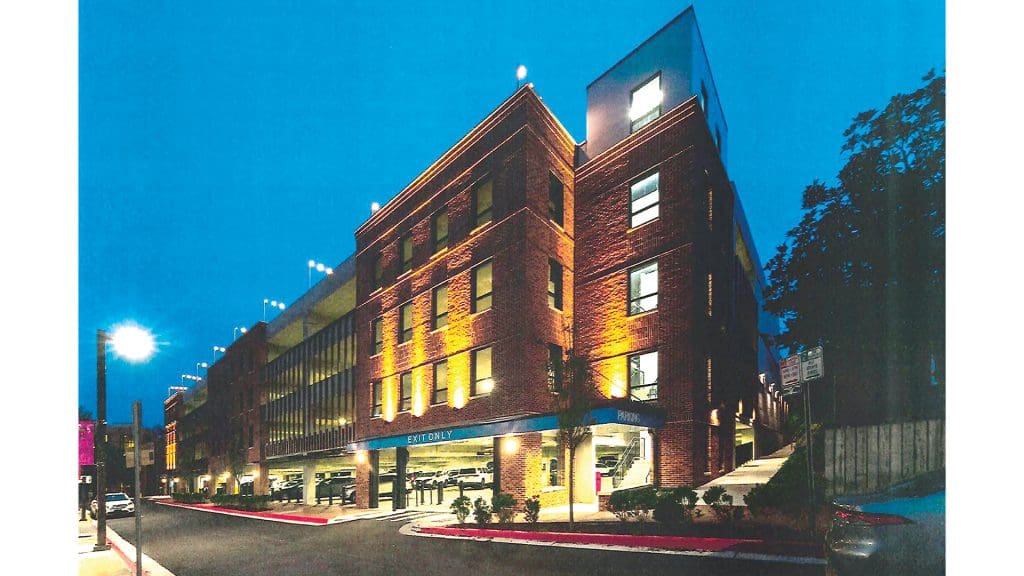
An architect’s rendering of the planned improvements, including a new parking garage, in the South End, between State Street and Union Street.

An architect’s rendering of the planned improvements, including a new parking garage, in the South End, between State Street and Union Street.

• The continued success of the Springfield Thunderbirds, which will soon enter their 10th season and continue to set the bar higher with everything from ticket sales to marketing and social media content (see below

• Movement toward creation of a master plan for redevelopment of the Mason Square neighborhood and adjoining areas;

• Visible signs of progress in a massive project to reimagine the former Eastfield Mall as a retail center with a large residential component; and

• Future redevelopment of the former Massachusetts Career Development Institute property on Wilbraham Avenue. The site was demolished four years ago, and speculation continues about what will come next in an area that has seen strong residential growth.

Overall, housing remains one of the main focal points, said Tim Sheehan, the city’s chief Development officer, noting that that there is both urgent need for more housing and several ongoing initiatives to address that need. These include everything from the aforementioned South End project to redevelopment of the former Springfield School Department headquarters on State Street to plans to build high-end homes on the pre-tornado campus of Cathedral High School.

This residential growth reflects both strong need for more housing as well as greater interest in the city overall as a place to live and work, he went on, adding that work is taking place on many fronts to meet the needs of new (and old) residents, and make Springfield a true destination.


All That Jazz

Evan Plotkin, president and CEO of NAI Plotkin, has long been a cheerleader for Springfield and a prime mover when it comes to projects to promote the city and especially its downtown and cast them in a positive light. These include everything from mural projects to the Springfield Jazz & Roots Festival, which took place last week and was in its final planning stages as he talked with BusinessWest.

Plotkin said he sees a number of positive developments taking place in the city, including several in the office tower he co-owns, 1350 Main St., where a high school now resides on the top two floors. But it’s what he’s not seeing that has him concerned.

Springfield at a Glance

Year Incorporated: 1852
Population: 155,929
Area: 33.1 square miles
County: Hampden
Residential tax rate: $15.68
Commercial tax rate: $35.22
Median Household Income: $35,236
Median Family Income: $51,110
Type of government: Mayor, City Council
Largest Employers: Baystate Health, MassMutual Financial Group, Big Y Foods, MGM Springfield, Mercy Medical Center, Center for Human Development
* Latest information available

That list includes new businesses coming to the city and its downtown; instead, he said, there’s much more movement of existing businesses and restaurants, a game of musical chairs that doesn’t result in real growth, just a shift of vacancies from one building to another.

Something else he’s not seeing is consistent effort from the city to maintain landmarks like Stearns Square, which was revitalized several years ago, but sees its ornate fountain not in use the majority of the time.

“They invested in the hardscape and the landscape, and then they walked away,” he said of the city and its efforts at the park. “And this is a pattern; we put up plaques saying ‘we did this’ and ‘we did that’ and ‘here’s this brand new park,’ but the next year, they don’t mow the lawn and let the weeds grow back.”

Overall, more work is needed to maintain and preserve such treasures and to make the city a more desirable place to visit — and work in and live in, he went on, adding that he would like to see the city create a permanent stage downtown near Stearns Square (a temporary one was set up for the Jazz Fest) and make live music a prominent piece of the puzzle, as it was years ago.

Live music is just one of the components of Pridelands on Mane Street, a play on words that also represents what Berry called a “spinoff of a proven concept, pre-COVID.”

Elaborating, he said that, before the pandemic, White Lion created pop-up beer gardens at several sites around downtown. The last few years, though, it has concentrated these efforts in Tower Square Park, making use of retrofitted shipping containers.

Fast-forwarding, he explained that, with an ARPA grant from the city, White Lion was essentially tasked with reactivating the park, and it’s doing so in colorful styles, as in a shipping container wrapped (by East Longmeadow-based Go Graphix) with the White Lion logo.

“We knew, by way of our partnership with the Business Improvement District and other stakeholders, that the beer garden concept worked in years past, and pre-COVID showed that a container park concept resonates with our customer base,” Berry explained. “So we thought, why not bring the concept back, look to make it more permanent, and have it be a true destination right in the middle of the business district and the emerging arts district?”

Approaching 10th Season, T-Birds Have Matured as a Business

Nate Costa says that, when it comes to the Springfield Thunderbirds and prospects for continued growth, there isn’t room for much more.

Well … at least when it comes to ticket sales.

Indeed, capacity at the team’s home, the MassMutual Center, a.k.a. the Thunderdome, is 6,700. For the 2024-25 season, the T-Birds, an affiliate of the NHL’s St. Louis Blues, averaged 6,369 per game, up from 6,321 the prior season. So, there’s still room for improvement, and the team will doggedly pursue it. But, again, not much.

Nate Costa

Nate Costa

“We’re going to eventually, hopefully, run out of tickets to sell,” Costa, the team’s president, said with a laugh, noting that this is both a good problem to have — one many other teams in the American Hockey League would love to have — and one of many solid indicators of how far this team has come.

As it readies for its 10th season of operation, with various plans to mark that milestone, the Thunderbirds have established themselves as a solid franchise with an increasingly loyal fan base, as evidenced by those numbers above … and the fact that they were achieved with the parking garage next door to the arena unavailable for the past three seasons.

Which means that, while there’s not much room for growth in ticket sales, there’s still plenty of room when it comes to growing revenue through increases in ticket prices — the team still charges well below the league average — as well as merchandise sales and other avenues.

“Over the past five years, we’ve continued to see the maturation of our business,” Costa explained. “We’re continuing to fill the building, and now it’s looking at our margins; we’re 30th in the league out of 32 teams in ticket price. It’s been really good to get the bodies in the building and show the value, but now it’s up to us to start walking that ticket price up effectively and generating revenue on the margins.”

Looking back, Costa said 2024-25 was another solid season for the T-Birds. There was a playoff run, albeit not a deep one (the team lost in the first round), with 20 sellouts, and, as noted, continued improvement in ticket sales and other measures of success.

“Every Saturday in the second half of the season, we sold out,” he noted, adding that many other games approached capacity over the final three months.

Meanwhile, off the ice, the team earned several awards from the league, which is becoming an annual tradition.

Indeed, in addition to benchmark awards for ticket sales and corporate sales, the team was recognized as having the AHL Marketing Department of the Year and the Most Unique Social Media Content. (More awards were expected at the annual league meetings in South Carolina, which were taking place as this story went to press.)

The marketing and social media content awards help explain the continued improvement in group sales and overall ticket sales, said Costa, adding that, with the shorter playoff run, the team is already “well ahead and well out in front of next season” in terms of season ticket renewals, group sales, and other initiatives.

Indeed, the team continues to set the bar higher, he went on, adding that, with the parking garage now open, the space adjacent to it being activated — the team, working with the state, which controls the property, will look to create a Yawkey Way-like atmosphere on game nights — and an already stable fan base, there are expectations for continued growth.

As for ticket sales, the team’s success on the ice and with creating a fun, always changing fan experience, coupled with the relatively small capacity of 6,700, has created both demand and urgency, said Costa, adding that the team has grown season ticket sales past 1,600 and looks to surpass 1,700 for next season.

“When you have a base like that coming in for every game, and we had a really great year for groups — we did more than $1 million in group revenue for the first time ever in Springfield hockey history — that gives you a really good base to work from to fill the rest of the building,” he explained, adding that the full (and nearly full) houses create a raucous atmosphere not seen in some other buildings.

“In Hartford, the XL Center [now PeoplesBank Arena] seats 16,000 people; when you bring 6,000 out, it just doesn’t have that same feeling,” he said. “If you get 5,000 in our building, the place is rocking; it feels like it’s full. That’s an advantage for us.”

As for ticket revenues, the T-Birds’ average price is just over $20, with the league average north of $28, said Costa, adding that there is some leeway for increases, given those statistics, the value the team delivers, and the growing demand for the product.

“Since we started here, the big thing was just trying to show as much value as possible, with the promotions and themes we do on game nights … that’s really added to why people want to buy tickets,” he explained. “Now, with the scarcity of tickets, the ticket packages are much more valuable because people are trying to lock in their seats, knowing that they’re not going to get them waiting until a week before a game.

“It’s been really good to change that mentality, and we’ve re-educated the community as to how to get tickets and the best way to get them,” he went on. “Coming out of the gates, we focused on building the base and going after large numbers; then, once you get the large numbers in the building and you start to create some emergency with sellouts, you can start to walk up your ticket price. I think we’re there.”

Heading into their 10th year, the T-Birds are ‘there’ in many respects and looking to soar still higher in 2025-26.

—George O’Brien

Pridelands is one of many sources of greater vibrancy Szynal is seeing downtown, and at the chamber as well, which is based in Springfield but boasts members from across the region. She said membership is up — 419 was the latest count — amid efforts to both grow and diversify the membership through initiatives such as a revamped, more member-focused website and television commercials.

“We’re really trying to diversify our membership in every possible way, from diversification of the people that are part of the chamber to the businesses and types of businesses that join the chamber,” she explained. “We’re really trying to cast a wide net; the chamber is most effective if there’s a lot of different types of people and businesses that are part of it.”

Elaborating, she said the chamber has been working in many ways to “be more out there,” through those TV commercials, social media content, the new website, a deeper event schedule, and more.


Progress Report

While there are several visible signs of momentum in the city, perhaps the most notable is what would be considered the ‘housing market,’ Sheehan said.

That’s a broad term that covers everything from still-rising home prices — the city has seen one of the more dramatic such increases in the state — to development of new housing of all kinds, including new market-rate apartments downtown, but also upscale homes in several sections of the city, including East Forest Park, the Bicentennial Highway area, and perhaps the site of the former Sears at the Eastfield Mall, acquired by one residential developer.

“The demand is for new product,” he said, referring to both homes and rental units. “And that’s why we’re seeing so much new housing development coming in that includes homes at the higher end of the market.”

Meanwhile, interior demolition has commenced at the South End properties — the Colonial Block, the Clocktower Building, and others, said Sheehan, noting that McCaffery, the Chicago-based development company leading the project, is finalizing financing, which is expected to cost roughly $50 million. Transfer of the Springfield Redevelopment Authority properties to McCaffery is expected to take place early next year, with construction expected to begin soon thereafter.

As that project progresses, so too has a $30 million infrastructure improvement initiative, including a new parking garage at the corner of Stockbridge and Willow streets, for the area from State Street to Union Street, one designed to make it more responsive to the residential growth taking place there.

“There’s significant housing development that’s back there now, with Stockbridge Court being the largest one, but there’s also the Lofts on Park Street,” he explained, adding that the work includes new sidewalks, lighting, road repair, and improvements to the surface parking in that area, and will create stronger connections to Main Street. “This will lift up that entire area, not just for the new housing, but the housing that’s historically been there for quite some time.”

While Sheehan sees progress on many fronts, from housing to the Eastfield Mall to the county courthouse, there are areas of concern.

These include the property at 101 State St., owned by MGM Springfield. There is still scaffolding on the structure nearly seven years after the casino opened, he said, adding that redevelopment of the property is a key bullet point in the host community agreement, and lack of progress there has become a point of contention between the city and the casino operator.

“We have concerns about that not moving forward in a timely way,” he said, adding that another pain point is the lack of any apparent progress at the former Vibra Hospital site on State Street, now vacant for several years, a campus that includes the so-called ‘Isolation Hospital,’ which preservationists want to save from the wrecking ball.

Another concern is the property known as the Mardi Gras building because it was home to a now-closed gentleman’s club. The restaurant known as 350 Grill will be moving from that building to the site of the former Jackalope on Worthington Street, becoming a key part of the revitalization efforts there. And while that location will likely work out well for the restaurant, it leaves the Mardi Gras building vacant and with little talk of redevelopment.

“There hasn’t been much dialogue, but there has been discussion of doing housing there,” said Sheehan, adding that the upper floors hold the potential to house dozens of units. “And it would be an ideal site for housing because there’s plenty of parking at the site, and you’re close to Union Station.”

Meanwhile, several other properties downtown are largely vacant — he listed Harrison Place and adjoining structures along Main Street, but there are others scattered across the central business district — and with little movement toward redevelopment and the properties in serious need of investment in new infrastructure.

“These owners have held and held and held and not kept up with the requisite investments they should be making in these properties,” said Sheehan, adding that speculation that some properties might become part of the MGM complex, such as those now being converted to housing in the South End, kept those owners from investing in their holdings.

Sheehan said one possible reuse for some of these properties is housing, although conversion would likely be an expensive undertaking. The state has launched a new initiative called the Momentum Fund, a first-in-the-nation state revolving fund to support mixed-income housing production, and it recently announced its first financing commitment from the fund, $5 million for the Residences of East Milton, which will create 92 new mixed-income rental units in an underutilized commercial property in the town of Milton.

He noted that Springfield has several buildings that meet that description, and hopes projects will materialize that can take advantage of the Momentum Fund, adding that housing might be the best option for many commercial properties in and around the downtown.

“We’d like to have a little more momentum in Western Mass.,” he said, “a part of the state that needs more help with housing.”

Community Spotlight Special Coverage

Community Spotlight

Laurie Tierney, seen in front of Hotel on North

Laurie Tierney, seen in front of Hotel on North, describes Pittsfield as the “Brooklyn of the Berkshires,” which is meant as a compliment.


Laurie Tierney likes to refer to Pittsfield as the “Brooklyn of the Berkshires.”

By that, Tierney — co-owner, with her husband, David, of Hotel on North (as in North Street, downtown’s main drag) — implies there’s some grit when it comes to that region’s largest community. “We’re gritty, not necessarily pretty,” she said with a laugh.

But if one were to look closer and beyond the grit, they would see much more — in this case, culture, restaurants, some retail, and outdoor recreation, for starters, she told BusinessWest.

“I think Pittsfield is doing a great job of reinventing itself,” she said of the ongoing transformation from the days when its economy and overall vibrancy were dominated by one large employer, GE. “Barrington Stage and the Colonial Theatre have been a big part of that; we have a great arts community … we just need more people to get to know us.”

Rebecca Brien, managing director of Downtown Pittsfield Inc. (DPI), agreed, adding that a multi-faceted marketing campaign is being launched in an effort to prompt more people — especially locals, but also those from other area codes — to give Pittsfield a closer look.

It includes Hey Neighbor, a program awarding marketing grants to 10 businesses in downtown Pittsfield, with grantees receiving custom video ads before films at the Beacon Cinema and radio advertisements on WUPE/WEBC during that same time period.

In addition, the city’s two major theaters, Barrington Stage Company and the Colonial Theatre, have received what she calls “dinner-and-a-show” radio spots on NPR.

“This initiative aims to drive foot traffic, build community awareness, and showcase the diverse stories of Pittsfield’s small business community,” Brien said of Hey Neighbor, adding that the theater spots are designed to remind neighbors that the city offers world-class theater and attractive dinner options just a short drive away (more on this later).

“If it isn’t daily workforce that’s occupying the restaurants and coffee shops and visiting the businesses, then it needs to be residents that are doing it in the morning and the evening after work, or while working remotely.”

These promotional initiatives and broader efforts to bring people to the city comprise just one of many developing stories in this community of roughly 44,000 people. Others include:

• Ongoing efforts to create more housing of all kinds, but especially market-rate and affordable units. Several projects in various stages of progress will add more than 100 units, but 200 to 300 will be needed, Mayor Pete Marchetti said;

• The demolition and rebuild of historic Wahconah Park, with the goal of bringing collegiate league baseball back to Pittsfield;

• Early-stage work to gauge interest in forming a business improvement district in the downtown;

• Late feasibility-stage work to build a new elementary school, one that would merge two existing schools into one; and

• Several infrastructure projects, including work on North Street.

Housing remains a critical issue in the community, said those we spoke with — both to meet an urgent need for more options among workers, the elderly, and other constituencies, and to bring more vibrancy to a downtown still suffering from the side effects of COVID, especially the transition to remote work and hybrid schedules, which has reduced the level of business activity in the neighborhood.

Jonathan Butler, president and CEO of the regional economic development agency 1Berkshire, said there is no turning back the clock in this regard, leaving housing as the best option for commercial space in the downtown — and for providing the critical mass of people needed to support the wide range of hospitality-related businesses.

The Hey Neighbor campaign

The Hey Neighbor campaign is part of a broad effort to bring more attention to Pittsfield, its cultural attractions, and its eclectic mix of small businesses.

“If it isn’t daily workforce that’s occupying the restaurants and coffee shops and visiting the businesses, then it needs to be residents that are doing it in the morning and the evening after work, or while working remotely,” he explained. “They’re replacing those people who were formerly working in commercial spaces and buying their morning coffee and lunch.”

“In the spirit of post-pandemic urban planning, downtown Pittsfield, like a lot of other urban centers, has seen a shift away of commercial activity — we’re seeing employers shifting to more work-life balance models with remote working and hybrid office models,” he explained. “So we’re seeing some investments in housing, to meet the city’s needs and a much larger regional need.”

For this latest installment of its Community Spotlight series, BusinessWest turns its lens on the Brooklyn of the Berkshires and the many ongoing efforts to inspire people to look beyond the grit.


Staying Power

Hotel on North is marking its 10th anniversary this year, Tierney said, and there is much to commemorate.

Indeed, the boutique 45-room hotel — created out of buildings more than a century old that were once home to the menswear and sporting goods emporium Besse-Clarke — has become a cornerstone of an ongoing transformation of downtown Pittsfield, from the retail-heavy and business-focused days when GE’s transformer division was employing more than 10,000 people, into a more hospitality- and arts-dominated district where more people live than in decades past.

The hotel and the guests it draws from across the Northeast and beyond have inspired several new businesses, she said, listing Methuselah Bar & Lounge and an expansion of Steven Valenti’s men’s clothing store among them.

As for the hotel itself … well, Tierney said it shares its personality with the Berkshires (and Pittsfield itself), meaning an intriguing blend of the past and present, heritage and innovation.

She and David have traveled all around the world, and they’ve incorporated their experiences into Hotel on North, such as its revolving door, a concept borrowed from a hotel in Nashville.

Over the past decade, the hotel has become a big part of the changing scene in Pittsfield, a tight-knit community of hospitality, arts-related, and service businesses that support one another and, together, have become more of a destination in recent years rather than a place to drive through on the way to somewhere else.

Mayor Pete Marchetti

Mayor Pete Marchetti says that, while new housing units are coming online, there is more work to do to meet enormous need in the city.

But in many ways, it is still an unknown, or at least underappreciated, commodity, said Tierney, adding that there is a need for the city to understand and appreciate all that it has become — “it’s been the ugly stepsister for the surrounding towns for so long that I think that sometimes it doesn’t see itself as the engine that can and will” — and do more to put its best foot forward.

Brien said this need to promote all Pittsfield has to offer is at the heart of DPI’s Hey Neighbor campaign, funded through MassDevelopment’s Transformative Development Initiative, as well as the spots promoting not only the shows at Barrington Stage and the Colonial Theatre, but nearby restaurants in Pittsfield.

With the latter, the goal, through the spots on NPR, is to introduce (or reintroduce) Pittsfield to a broad audience across Western Mass.

“We have great tourism that obviously goes on in the Berkshires, but Pittsfield is kind of that forgotten space,” she explained, adding that, while most area residents will go Northampton for dinner and a show, most don’t fully appreciate that they can do the same in Pittsfield.

“Why aren’t those same individuals coming here?” she asked rhetorically, adding that the answer may well be a simple lack of awareness.

Meanwhile, Hey Neighbor will spotlight 10 downtown businesses through those aforementioned cinema and radio spots, said Brien, adding that the eclectic mix includes Hot Plate Brewing Co., Thistle ’n Thorn Floral, WANDER Berkshires, Otto’s Kitchen & Comfort, Methuselah, and Berkshire Nautilus.

“Together, they say, ‘come back downtown and see what’s new,’” she told BusinessWest, adding that a third piece to the broad marketing campaign involves $1,000 grants to three summer event series to promote their offerings:

• The Pitt, a Friday summer music series being spearheaded by Hot Plate Brewing Co.;

• Rhythmscape, which offers weekly dance lessons on Sundays. (like the Pitt, these take place in Dunham Mall, a public pedestrian walkway that has seen several aesthetic improvements over this past year); and

• Depot After Dark, which pairs Tito’s Mexican Bar & Grill and WANDER Berkshires, a new gathering space, adding late-night dance parties to the alleyway just outside their businesses. 


Developing Stories

Such efforts are expected to bring more momentum to a downtown that has seen healthy doses of that commodity in recent years, even as it continues to build back from the many types of disruption resulting from the pandemic.

Perhaps the biggest of these is the change in how and where work is done, said Butler, adding that, like all downtowns in the region, Pittsfield’s suffers from having fewer people going to work there everyday.

This trend, coupled with critical need, is fueling investments in housing downtown, he went on, adding that several projects are in various stages of development.

Pittsfield at a Glance

Year Incorporated: 1761
Population: 43,927
Area: 42.5 square miles
County: Berkshire
Residential Tax Rate: $17.94
Commercial Tax Rate: $37.96
Median Household Income: $35,655
Median family Income: $46,228
Type of Government: Mayor, City Council
Largest Employers: Berkshire Health Systems; General Dynamics; Petricca Industries Inc.; SABIC Innovative Plastics; Berkshire Bank
* Latest information available

These include renovation of the Wright Building, just a few doors down from Hotel on North, which represents an example of the shift from commercial to residential uses for downtown real estate. Butler said there are maybe a few hundred more people living downtown than a decade or more ago, and this growing population has helped support existing businesses and inspire new ones.

Meanwhile, this new housing is helping to meet soaring need across the city and the region, said Marchetti, a former Pittsfield Cooperative Bank executive and city councilor, who was elected mayor in November 2023.

He said the city is ready to cut the ribbon on some projects, including Terrace 592, redevelopment of the Wright Terrace apartments, which will bring online 41 units, most of them affordable, while others are in earlier stages.

Overall, there are perhaps another 150 to 200 units in early stage or predevelopment, Marchetti said, including redevelopment of the former Hibbard Elementary School, while Mill Town Capital has several projects in different locations across the city. These initiatives will make a dent in overall need, but more will be needed, he added.

“There’s a lot more work that we need to do, mostly because ours is an aging population,” he noted, adding that affordable options are needed if empty nesters want to continue living in the city.

Beyond housing, there are other issues facing the city, he went on, including the demolition and rebuilding of Wahconah Park, the city-owned landmark built in 1919, with work slated to begin next year.

The wooden grandstand, one of the few remaining in the U.S., was deemed unsafe, Marchetti said, and the park, listed on the National Register of Historic Places, has been closed for two years. Plans call for replacement of that grandstand but retention of other elements of the park, as well as creation of a historic walkway that will highlight the history of the park, which had a diamond oriented due west (it was constructed well before the advent of field lighting permitted night games), which resulted in brief suspensions of play at sunset so that the setting sun would not interfere with the batters’ view of the pitch.

The Pittsfield Suns, part of the Futures Collegiate Baseball League, played at the park before it was deemed unsafe, Marchetti noted, adding that the team could possibly return to Pittsfield — which would be yet another development blending past and future in this city in flux.

Community Spotlight Special Coverage

Community Spotlight

Amanda Roy, center, with several staff members at the Better Bean coffee shop on Main Street in Monson.

Amanda Roy, center, with several staff members at the Better Bean coffee shop on Main Street in Monson.


Amanda Roy likes to say the devastating ankle injury she suffered in 2021 when she missed the last step at her house didn’t happen to her; it happened for her.

That mishap left her in a wheelchair and facing a lengthy recovery period, which she chose to spend with her parents, in the Monson home where she grew up. And while recovering, she spent a lot of time thinking about what the next chapter in her life would look like and where it would play out.

She ultimately decided it would look somewhat like a previous chapter, when she spent 10 years operating a coffee shop in Plymouth, but with some real changes (more on those later). As for the place … she chose downtown Monson with the thought that this would be a short-term gig.

But things changed, and quickly.

“I thought, ‘I’m going to open a coffee shop, and when I get better, I’m going to sell it, move back to Plymouth, and get on with my life,’” said Roy, who opened the Better Bean in the summer of 2023, when she thought she was recovering from that ankle injury. Instead, she was told she would need a replacement. And while getting it and some subsequent surgeries, she made the decision to get on with her life in her hometown. She’s making the Better Bean one of the more intriguing business stories in this community, while she and her boyfriend build a house there.

These developing stories are just a few of many in this town of just over 8,000 people. Others include:

• Progress with the redevelopment of the sprawling Monson Developmental Center (MDC) site. The board of Westmass Area Development Corp. is expected to vote soon on a proposal to acquire a 100-acre portion of the site with the intention of redeveloping it for housing and related purposes;

• Renovation and expansion of the town’s fire station;

• A town meeting vote to move from three selectmen to five;

• Continued growth of what would be called agritourism, with businesses such as Silver Bell Farms, Echo Hill Orchard, Westview Farms Creamery, and others, which grow and sell everything from apples to Christmas trees to wine to ice cream, and draw people from across the region and beyond; and

• Anticipation and excitement concerning the planned east-west rail station in Palmer, which has the potential to make Monson a more popular place to live for those who work in Greater Boston but can’t afford home prices in the capital area.

“It’s still costs a lot to build a house, but from a value standpoint, this is an opportunity to bring people here, and when individuals move in, now you have an opportunity for another restaurant or two, and then businesses will look at Monson as a vibrant place to move to.”

Westmass President and CEO Jeff Daley said the board is expected to vote by the end of this month on a proposal to acquire a section of the MDC property, on which he envisions a ‘village concept’ for the parcel, which represents a new and intriguing opportunity for the agency.

“What we’ve done in the past has been mostly commercial and industrial-type projects,” he said, noting industrial park projects in cities like Westfield, Agawam, and Chicopee, as well as redevelopment of the massive Ludlow Mills complex in Ludlow, which includes large housing components. “We’ve worked with partners on housing in the past, and housing is definitely a need, and the demographics of Monson have been changing; housing would be a good fit at that location.”

The MDC was among many state-owned properties featured in a recent showcase of parcels available for housing development that hosted the Healey administration, said Jenn Wolowicz, Monson’s town administrator, noting that, while there are several potential future uses, housing, especially affordable and 55-and-over housing, are critical needs.

One of the long-shuttered buildings at the Monson Developmental Center, which is moving closer to redevelopment, with housing as one of the likely new uses.

One of the long-shuttered buildings at the Monson Developmental Center, which is moving closer to redevelopment, with housing as one of the likely new uses.

“As of April 30, our population of seniors is 33% of our overall population,” she explained. “We have a lot of people living in single-family homes, their children are grown, and they’d love to be able to downsize to a townhouse-type unit, and we’ve made sure that this is something that’s being heard by Westmass.”

As for east-west rail, Jim Przypek, CEO of the Quaboag Hills Chamber of Commerce, which serves 15 communities, including Monson, said that service will benefit many of the communities in the Quaboag region simply by making them more accessible.

“The trend of people moving out of Eastern Mass. and migrating farther and farther west will continue and be accelerated by east-west rail,” he said, adding that rail service will make it easier to live in those towns but still work in Boston or Hartford.

For this latest installment of its Community Spotlight series, BusinessWest turns its lens on Monson, the picturesque town roughly halfway between Springfield and Worcester that has established its own identity.


Developing Stories

Mike Rouette grew up in Monson, and it has remained his home. He described it as the “perfect place to raise a family,” and a community where people team up to get things done, right down to planning and executing the Fourth of July parade and fireworks.

“Everyone pitches in and does what needs to be done to keep the town vibrant,” said Rouette, executive vice president and chief operating officer at Monson Savings Bank, who, as he surveys the landscape, sees both challenges and opportunities for the town.

The challenges are similar to those facing other rural communities in that area, including the loss of manufacturing jobs — plants once made everything from hats to toilet seats here — as well as retaining existing businesses and grappling with declining enrollment in local schools stemming from school choice and other contributing factors.

“It’s not easy to access Monson,” he explained. “Sometimes, people tend to look at Monson, from a Springfield standpoint, as if Wilbraham Mountain is almost like a Great Wall of China — it’s ‘over there.’”

As for opportunities, they mostly involve abundant land (although much of it is on hillsides) and still-affordable buildings lots, at least when compared to towns to the west (like Wilbraham, Hampden, and East Longmeadow) and to the east (Sturbridge and Auburn).

“There’s an opportunity there that the town should take advantage of,” Rouette said of lot prices. “It’s still costs a lot to build a house, but from a value standpoint, this is an opportunity to bring people here, and when individuals move in, now you have an opportunity for another restaurant or two, and then businesses will look at Monson as a vibrant place to move to.”

Meanwhile, the MDC site provides a wealth of opportunities — much like the site of the former Belchertown State School has — for creative reuse, everything from housing to commercial sites to Rouette’s vision of a regional high school that would serve Monson and Palmer and help keep students in those communities.

The MDC, which closed in 2012, was spread over more than 650 acres. A large portion of the property will be transferred to the Massachusetts Department of Fish and Game to become a wildlife management area, said Wolowicz, adding that Westmass could become the developer of the remaining 100-acre parcel, where the hospital buildings and other facilities still stand.

“We would be demoing the hospital buildings and doing a mixed-use development with quite a bit of housing,” said Daley of plans that are still being formalized and, of course, contingent on the upcoming vote of the board. “We’re proposing that it would be affordable, market-rate, and workforce, to make sure that people can come into town if they want, or upsize or downsize in the town of Monson, as well as potentially some retail and commercial use to create a village atmosphere, as opposed to just coming in and putting some buildings up.

“We really want to respect the town of Monson and the surrounding communities, and that’s why we’re proposing something with more of a village feel rather than just putting up ranch homes or duplexes,” he went on. “This would be more strategically thought out … a village concept where people could still enjoy that rural farm life, if you will, in Monson, while also creating a new development for housing upgrades for people who want to get out of their homes, as well as workforce housing. This could be a game changer for Monson, Palmer, and the surrounding communities.”


Bean Optimistic

The staff at the Better Bean likes to get creative and theme its specialty drinks and other fare.

Such was the case last fall, with a two-month salute to Gilmore Girls and the small, fictional Connecticut town called Stars Hollow, where the show takes place.

“Stars Hollow looks a lot like Monson,” said Roy, referencing both her coffee shop and Dan Grieve Park, across the street from the shop, and its gazebo, which is very similar to the one in the show.

Monson at a Glance

Year Incorporated: 1775
Population: 8,150
Area: 44.8 square miles
County: Hampden
Residential Tax Rate: $14.87
Commercial Tax Rate: $14.87
Median Household Income: $52,030
Median Family Income: $58,607
Type of Government: Select Board, Open Town Meeting
Latest information available

The park, complete with several Adirondack chairs and benches, is quite popular with Better Bean clients, most of them regulars, said Roy, who chose a grab-and-go format rather than seating, one of many lessons she took from her time in Plymouth, which was split between two locations.

The first was a kiosk inside a Registry of Motor Vehicles office, and the second was a much larger space in the same industrial park, “with seats and a public bathroom and a big menu … and I burned myself right out,” she said, adding that she sold that enterprise six months before COVID arrived.

“Someone was looking out for me big time, because I can’t imagine being that burned out and having to deal with COVID,” she said, adding that her ankle injury brought her back to Monson and, eventually, to a storefront — the same one her father operated a realty office out of when she was young — on Main Street.

Learning her lesson from Plymouth, she created a place that’s not too big or too small, although it’s been cramped since she opened, so she will soon take over the space next door (the former Petal and Wren flower shop, which relocated) and will use the back for storage and the front for a small gift shop, something she said the town needs.

Overall, Roy told BusinessWest, the downtown has lost some storefronts — a cannabis shop closed recently, for example — but it remains an emerging destination.

Wolowicz agreed, but noted that the town’s business community is diverse, with many ventures existing in the agritourism and hospitality spaces.

“We have quite a few people who are being very creative when it comes to what their land is used for, be it what they’re growing or their animals,” she said, adding that one of the priorities for town officials has been to promote the preservation of farmland and, overall, a healthy rural community.

The Monson Agricultural Commission goes about this work in many ways, she said, listing everything from Right to Farm bylaws, which protect farms from noise, odor, and other complaints, to a farmers market event with live music and more than a dozen local vendors, including farms, bakeries, and artisans; the next such event is slated for Sept. 13.

“The town of Monson supports its commercial farms,” Wolowicz said, “and wishes to ensure their continued existence and positive impact on the town economically, ecologically, and socially.”

Przypek, who came to the chamber after a lengthy stint with the Basketball Hall of Fame in marketing and sponsorships, and then several years as general manager of the Three County Fairgrounds, agreed, noting that agritourism has become a large part of Monson’s identity as it transitions away from its manufacturing heritage.

“Businesses like Silver Bell Farms and Echo Hill and Westview Farms Creamery are thriving, and they bring people from all over to Monson,” he said, adding that new businesses downtown, like the Better Bean, do the same.


Community Spotlight

Community Spotlight

Forbes Library in downtown Northampton will soon feature a small outdoor stage, as seen in this rendering from HAI Architecture.

Forbes Library in downtown Northampton will soon feature a small outdoor stage, as seen in this rendering from HAI Architecture.

Andrea Monson came to her new role as executive director of the Northampton Downtown Assoc. (DNA) in a roundabout way, but found it to be an intriguing fit during an uncertain time for the city and its downtown, which will soon undergo a major — and not universally loved — redevelopment project.

After spending five and a half years at MassDevelopment as its Tranformative Development Initiative fellow for Chicopee, she then moved into the position of creative content officer for a few years; prior to that, she had been in marketing research at companies like Aetna and CVS. She’s also co-owner of Monson Roastery and founded the Urban Food Brood collaborative in Springfield.

“I found out about the Main Street redevelopment project from a friend of mine who lives in Northampton and was connected to a lot of folks there, and said they could really use a fellow to get through the project,” she said, adding that she wound up volunteering with Pardon Our Progress (POP), an entity created to streamline communication and mitigate obstacles around the Main Street redevelopment project, dubbed Picture Main Street by municipal leaders.

Then, when Jillian Duclos, the previous executive director of DNA, stepped down, Monson applied and won the job earlier this year. She explained that a major DNA focus is downtown advocacy, and it has been active in communicating project updates to businesses there.

“The bulk of construction is happening in 2027,” she said. “There will be some preliminary construction in the fall of 2026, but the city is very mindful of the retail experience of Northampton for the holiday season, so no construction then.”

Monson recognizes business owners are a divided camp on the project, and said the city has been trying to level up the way it communicates regarding the issue, while the DNA works directly with business owners, keeping them informed.

“We’re always thinking about how construction will affect traffic, incentives for foot traffic, creative ways to get around the work on Main Street. We don’t want anything to catch us by surprise.”

“We launched a survey to get all the businesses to share their experiences and feelings. A lot of them they’re frustrated because there hasn’t always been clear communication in the past, though we’re actively trying to remedy that,” she explained, adding that businesses emerging from the difficult pandemic years feel stressed on multiple fronts today, worried about tariffs, recession talk, and what they see as a major Main Street upheaval that could keep foot traffic away.

“They’re looking at the project as the end of the world, but that’s not the case,” Monson went on. “A lot of redevelopment projects end up increasing foot traffic; they end up being really profitable when they’re finished. And with POP, and my job at DNA, we’re listening to business owners and acting on their concerns, looking for grant funding and other funding to support them through the project. We’re also launching an RFP for marketing, to market Northampton in general and market the downtown, and keep them in the loop with everything that’s happening, scheduling changes, all of that.”

Judy Herrell, owner of Herrell’s Ice Cream, is one of several business owners who have taken the city to task over its downtown plans for a number of reasons, including an increase in traffic, concerns over bike safety, and a lack of public meetings on the project.

“I’ve talked to a few people that wanted to open businesses Northampton but didn’t for lack of being assured they would be fine during Picture Main Street. They’re worried that, for three years, Main Street will will be torn up, even though the city says it’ll be done in sequences and not tear up the whole street at once,” Herrell told BusinessWest. “That’s still a lot of stress on businesses in the city.”


Meeting of the Minds

Monson said the city is working with Emily Innes from Innes Associates, which specializes in municipal planning, on a grant-funded consultancy.

“She’s seen cities through a lot of these projects, and they’ve told us that we’re ahead of the game just by POP existing. We’re always thinking about how construction will affect traffic, incentives for foot traffic, creative ways to get around the work on Main Street. We don’t want anything to catch us by surprise.”

Monson is also in the process of bringing Jeff Speck to the city for a public talk. A noted city planner who wrote Walkable City: How Downtown Saves America, One Step at a Time, he will tailor his presentation to Picture Main Street and why it’s important, she said, adding that she’s also trying to put together a panel of mayors who have seen these types of projects through in their own cities.

But for locals looking for activities beyond road construction talk, there’s plenty to look forward to in town, including the return of the Taste of Northampton, now as a two-day event on Sept. 13-14.

“I love seeing all the businesses rally around these ideas. They’re all putting in their time and energy to create these collaborations. What I love about Northampton is how businesses help each other thrive.”

“It was a lot of work and a lot of money for just one day,” Monson noted, explaining the expansion to a two-day affair. “Again, this is being led by the restaurants; a lot of food and beverage establishments downtown are co-creating this with us. They know what’s best for them. They’ve been part of the Taste of Northampton for many years, and they’re excited to bring it back.”

The following month, Mischa Roy, owner of Spill the Tea Sis, is spearheading, alongside Isaac Weiner, co-owner of Familiars Coffee & Tea, a month-long October event called the Great Northampton Haunt, which celebrates the city’s haunted history.

“You know, we have as many hauntings here as anywhere else. We had witch trials before Salem. We just don’t brag about it,” Monson said. “So we’re trying to lean into it. They have plans to have something going on every single day in October, which coincides with a dip in retail business. So it’s strategic and intentional.

“I love seeing all the businesses rally around these ideas. They’re all putting in their time and energy to create these collaborations,” she added. “What I love about Northampton is how businesses help each other thrive.”

Meanwhile, a project to construct an outdoor performance stage beside Forbes Library promises to be another activation point for the downtown. HAI Architecture, based in Northampton, designed the accessible, open-air, covered stage to support a wide variety of programs, including concerts, children’s programming, and outdoor movies.

Northampton at a Glance

Year Incorporated: 1883
Population: 29,571
Area: 35.8 square miles
County: Hampshire
Residential tax rate: $13.93
Commercial tax rate: $13.93
Median Household Income: $56,999
Median Family Income: $80,179
Type of government: Mayor, City Council
Largest Employers: Cooley Dickinson Hospital; ServiceNet Inc.; Smith College; L-3 KEO
* Latest information available

The Northampton Jazz Fest also returns to downtown — at numerous venues, as usual — on Sept. 26-27, headlined by New York Voices, a world-renowned vocal jazz quartet.

And speaking of music, the Iron Horse Music Hall recently celebrated one year since its much-anticipated reopening following a major renovation on Center Street, while other venues in town, from the Academy of Music to the Parlor Room to Bombyx, continue to thrive. But Monson said the still-shuttered Calvin Theater in the heart of downtown remains troublesome.

“When music venues are shut down, that’s big. That’s a big piece of what makes Northampton vibrant. If the Calvin doesn’t come back, that’s going keep Northampton from growing.”


Strength in Numbers

Northampton’s success is personal to Monson, who visited the city plenty during her youth and lived there during her college years. “I always felt it’s home. I want to come back and retire in Northampton. So I need it to stay vibrant, selfishly.”

To accomplish that vibrancy, she said, collaboration is key — between businesses, organizations like the chamber and the DNA, and even agencies across the region and state. So is a continued focus on the needs of businesses in a downtown that, aside from CVS, is comprised exclusively of small, local enterprises.

“How can we elevate Northampton? How can we address issues and creatively bring more traffic, more events, more people, so that people want to come back, stay over, go shopping?” Monson asked. “I get to work with some incredibly talented people, which benefits me in my understanding and learning about local economic development. And I think the DNA has been working really hard to build better relationships in Northampton.”

Cities that are struggling, she said, tend to have people working in silos that don’t collaborate with each other, and that’s the opposite of her vision for Paradise City, including that still-controversial reconstruction of Main Street.

“As Northampton forges on with this project, what I see is the potential of so many people working together and collaborating, and that’s ultimately going to be the great success of Northampton.”

Community Spotlight Special Coverage

Community Spotlight


The Daniel Arts Center is one of many individual pieces on the Bard College of Simon’s Rock campus that have caught the attention of developers.

The Daniel Arts Center is one of many individual pieces on the Bard College of Simon’s Rock campus that have caught the attention of developers.

John Weinstein said the phones started ringing seemingly within hours after the news broke last November.

This was the official announcement that Bard College at Simon’s Rock, an institution in Great Barrington for 60 years, would be closing its campus there and relocating programs to Bard College’s main campus in New York for the start of fall classes.

The phone calls were — and are (they’re still coming at a good clip) — from those interested in acquiring and developing all or a piece of the 280-acre campus, with a wide range of specific intentions, including housing.

“The inquiries have ranged from totality to the very granular,” said Weinstein, the school’s vice president and provost, meaning everything from the entire campus to individual buildings to specific pieces of equipment.

Interest in those pieces picked up in intensity with passage of an overlay zone at the recent town meeting, one that will permit many different uses beyond education, said Weinstein, adding that some uses — cannabis facilities and an amusement park, for example — are still not allowed.

The fate of the Bard campus and the prospect of losing such a large contributor to the Great Barrington economy are at the top of a long list of storylines involving this picturesque Southern Berkshires community and its mostly tourism-driven business community.

“The inquiries have ranged from totality to the very granular.”

“This will have an impact on the town in multiple ways,” said Betsy Andrus, executive director of the Southern Berkshire Chamber of Commerce, based in Great Barrington. “We won’t have the influx of students coming into the town for shopping and eating, and you also have teachers and staff, an athletic center, and the Daniel Arts Center; it’s certainly a loss for this area.”

A loss that is in many ways balanced by anticipation about what might come next.

As for other storylines, they include everything from new ownership for several downtown properties — and reshaping of those properties for retail and office use (including a new home for the chamber) as well as residential units — to lingering housing concerns, especially a shortage of affordable, or ‘workforce,’ units, putting a burden on both business owners and their employees.

“This whole area needs more workforce housing; our employees can find places to live, but often at a fairly substantial commute,” said Janis Martinson, executive director of the Mahaiwe Performing Arts Center. “It’s a real challenge; people are coming a long way to get to work because they don’t have a choice.”

Janis Martinson says the Mahaiwe Performing Arts Center will open a second facility later this year, one of many efforts to connect the community to the arts.

Janis Martinson says the Mahaiwe Performing Arts Center will open a second facility later this year, one of many efforts to connect the community to the arts.

On another note (pun intended), this is shaping up to be a big year for the Mahaiwe, built in 1905, which has a full slate of performances on tap — from classic movies like Casablanca, shown on Valentine’s Day, and Sabrina, which aired May 23, to a Brian Cox tribute to opera, comedy, and a wide variety of musical performances — and is set to open an accessory venue in the town’s former fire station.

“A group of businesspeople have restored the firehouse, and they’re leasing us a portion of the first floor,” said Martinson, adding that the building is roughly the same age as the Mahaiwe. “We’re using that as an intimate, flexible performance venue and a concession space.”

The Mahaiwe is one of many key contribitors to a vibrant downtown that has made a near-complete recovery from COVID and extensive infrastructure work in the central business district, said Martinson, adding that, while Great Barrington once had slow times of the year — most of September, for example — it is now vibrant year-round.

“I think the town has grown a little younger,” she said. “And while there used to be some times when it would be pretty sleepy, it’s not like that anymore; this is a 12-month-a-year busy town.”

Andrus agreed, noting that the investments made in several downtown properties will bring more people, and more vibrancy, to the area, with some new businesses and several existing ones with new mailing addresses.

“I think the town has grown a little younger. And while there used to be some times when it would be pretty sleepy, it’s not like that anymore; this is a 12-month-a-year busy town.”

“Change is always a positive thing,” she said, noting that several existing businesses have or will find new and better spots. Meanwhile, new housing units equate to more people living in the central business district — and more opportunities for some workers to shorten their commute.

For this latest installment of its Community Spotlight series, BusinessWest takes an in-depth look at Great Barrington and the many developing stories in this destination community.


A Loss — and an Opportunity

Weinstein said the decision to close Bard College’s Great Barrington campus and relocate its various programs — early college and some high-school offerings — came down to numbers.

Getting more specific, he said it was the number of students that would make sustaining that campus feasible. That number is at least 450 and preferably much higher, he noted, adding that the school hasn’t been able to reach that threshold, and with current demographic shifts — specifically fewer high-school-age people — it wasn’t going to get there anytime soon.

So the decision was made to move the school and its programs to the main Bard campus, where economies of scale will make this operation much more sustainable, said Weinstein, adding quickly that, while this move represents a loss for the community, the campus as a whole and its individual parts present a unique development opportunity.

And the zoning overlay district certainly helps in this redevelopment, said Weinstein and others we spoke with, noting that it will permit operation of an athletic center and performing-arts center — those are just two examples — without a school being attached.

“Those most interested in the future of the property did that shift,” said Weinstein, noting that the redevelopment of the campus will afford the town an opportunity to address some of its pressing needs and challenges, a list that certainly includes housing.

Great Barrington at a Glance

Year Incorporated: 1761
Population: 7,172
Area: 45.8 square miles
County: Berkshire
Residential Tax Rate: $13.79
Commercial Tax Rate: $13.79
Median Household Income: $95,490
Median Family Income: $103,135
Type of Government: Open Town Meeting
Largest Employers: Fairview Hospital; Iredale Mineral Cosmetics; Prairie Whale
* Latest information available

Andrus agreed, noting, as Martinson did, that businesses and their employees are impacted by the current lack of affordable housing.

Many of these businesses are in the broad tourism, hospitality, and retail sectors, said Andrus, noting that Great Barrington draws visitors from nearby New York, other communities within the Berkshires, and well beyond. Meanwhile, its population increases threefold in the summer, from 7,000 to 21,000, as snowbirds and those with second homes in the area return.

“With that influx of people, even going to the grocery store can be chaotic,” she noted, adding that the town’s character changes as its population swells, especially the central business district.

Residents and visitors alike enjoy a very walkable downtown that features attractions like the Mahaiwe, a diverse lineup of restaurants, and unique arts-related programs such as Berkshire Busk — organized street entertainment (everything from singers and flamenco dancers to poets and aerialists) that runs on Railroad Street and other parts of the downtown on Friday and Saturday nights from early July to Labor Day.

There have been some changes within this downtown, and more are on the way, as some aging properties have changed hands, said Andrus, adding that this list includes the so-called Mahaiwe Block, the Marble Block, and other properties.

“All these buildings have changed hands to younger, probably more energetic people,” she said, adding that these landmarks are being renovated and, in some cases, reimagined, with mixes of retail, office, and much-needed housing.

The chamber’s new home at 343 Main St., across from Town Hall, is a good example. The property there, acquired and redeveloped by the Alander Group, will house the chamber’s offices as well as an enlarged visitors’ center, as well as other retail, 15 apartments, and a wine bar, said Andrus, noting that, prior to its move, the chamber was in two locations, a small visitors’ booth in front of CVS and a business office on Railroad Street, a situation that was less than ideal.

“It was like working in a cave — it was hard to find; it wasn’t easily accessible,” she said of the Railroad Street location. “Now, we’ve combined the business office and visitors center, and it’s a real improvement.”

The Alander Group also owns the Mahaiwe Block, which houses the performing arts center, she said, adding that it also features retail and housing units.

Meanwhile, at the Marble Block on Main Street, the former Gorham & Norton grocery store, a fixture for generations, is being remade into Robbie’s Community Market, said Andrus, adding that the property will soon feature several apartments as well. As for the market, it will be a collective, including a coffee bar, pizza oven, sandwich shop, and more, combining the past — this was a soda counter decades ago — with the present.


Taking Center Stage

These investments, as well as the new or relocated businesses and residents they bring to the area, will create more vibrancy in the downtown, said Andrus, adding that, overall, the downtown continues to thrive and build on its status as a destination.

Martinson agreed. She took the reins as executive director of the Mahaiwe in January 2020, just two months before COVID arrived and essentially shut down its scheduled season.

But the facility survived that challenge by getting creative, she recalled, adding that one of first initiatives that year was to partner with Bard College at Simon’s Rock to create a drive-in movie theater in one of its parking lots.

“They had a parking lot outside their performing arts center that happened to be tiered down a hillside, so we could have all the cars facing in one direction and put the screen at the bottom of the hill,” she recalled, adding that the schedule included a few of the Star Wars movies, American Graffiti, The Princess Bride, and other family stalwarts.

“That’s how we got through summer,” she went on, adding that the Mahaiwe partnered with other performing arts nonprofits in the area to record concerts from its stage in efforts that were more about the arts than revenues. “We managed to stay in touch with our community throughout the pandemic, and that’s really the point — to bring people together, and bring them together around the performing arts.”

This creative spirit continues today, she said, adding that the facility hosted more than 125 individual events last year and will grow that number this year, especially with the opening of the new space in the renovated former fire station.

“We’ll be able to do much more intimate performances there — things that are a little more niche and involving emerging artists and more local artists,” Martinson told BusinessWest. “And we’ll be able to rent that space out to local performing arts organizations.

“We’re really excited about that coming online,” she went on, adding that there have been some ‘sneak previews,’ with a planned opening for later in the year, probably the fall.

The auxiliary theater is part of a broader five-year strategic plan now in year two, said Martinson, adding that, in simple terms, the plan calls for bringing more performing arts than it already brings to its main stage and “reaching further into our community.”

That community includes Great Barrington residents, but also visitors from a wide radius, she said, adding that this town is a true destination, one that has made its way all the way back from the dark days of COVID.

And one that is looking to turn the loss of Bard College at Simon’s Rock into new opportunities.

Community Spotlight Special Coverage

Community Spotlight

Kettlebread Deli is just one of the intriguing business storylines in Southwick.

Kettlebread Deli is just one of the intriguing business storylines in Southwick.


Ed Grimaldi pointed to the small table for two by the door, under the large-screen television. 

“I was sitting right there,” he recalled. “I had my head in my hands, thinking, ‘what have I done? What have I gotten myself into?’” 

It was April of 2020, a month after COVID-19 officially arrived in the region. Grimaldi had, in keeping with a mandate from the state, shut down Samuel’s, the pub-style restaurant at the Basketball Hall of Fame that he co-owned. And he had already invested, along with partners Melissa Veino and Joe Rondoletto, in a new endeavor on College Highway in Southwick called Kettlebread Deli, that was slated to open in a few weeks. 

Which explains why Grimaldi had his head in his hands. 

“We muddled through, somehow,” he said, noting that Kettlebread — more on that name and that concept later — pushed on through curbside service and was able to establish a beachhead, if you will. Fast-forwarding a little, the new business survived, has expanded to a second location and central bakery in Westfield, and Grimaldi and his partners are exploring franchising opportunities. 

“There’s nothing new about doing things home-made — lots of places do that now; we’re trying to do it in a way that’s duplicatable and scalable,” he said, hitting at the heart of this operation, adding that he believes he has an easily identifiable brand, a name that resonates within the industry, and “food that’s really, really good.” 

Kettlebread is one of many intriguing businesses and storylines in Southwick, a recreational community known for its Congamond Lakes, motocross, including the highly anticipated Southwick National in late June, the Ranch golf course, rail trails, a wide range of outdoor experiences, and more. 

“Our bread is very good because a portion of each batch is folded into the next day’s batch, allowing for an exponentially small portion of every batch that has ever been to be in every other batch.”

It’s also known for its hospitality and food-related businesses, including one that has risen to the ranks of institution. That would be Mrs. Murphy’s Donuts, another College Highway establishment that will soon — as in next year — be celebrating a half century of serving up a wide variety of offerings, including its signature raised, glazed honey dip. 

A family business to the core, Mrs. Murphy’s now has members of three generations working behind the big glass display case, or behind the scenes, said Shane Smith, noting that things really started with her grandparents — and especially her grandmother, Shirley, “the original Mrs. Murphy” — who opened a donut shop in Florida. 

“They taught my dad, Earl Murphy, how to make the donuts,” said Smith, adding that her father and mother, Rose, opened the shop in Southwick in 1976. 

Today, Rose is mostly retired, with Smith assuming more management responsibilities over the years and sharing duties with her husband, Zack, as well as her daughter, Bryce, and her husband, Jeff, and other team members. 

Building on this strong existing base of businesses, while maintaining the community’s rural, recreational character is among the main responsibilities of the community’s government, said Town Manager Nicole Parker, who came to Southwick not quite a year ago after serving in a similar post in the Central Mass. community of Hardwick. 

Shane Smith shows off the display case at Mrs. Murphy’s Donuts, a Southwick institution approaching its 50th birthday.

Shane Smith shows off the display case at Mrs. Murphy’s Donuts, a Southwick institution approaching its 50th birthday.

She was attracted by the town’s many attributes, including that rural quality, and has made it one of her priorities to build on that foundation. 

“As a recreational community, it’s important to have these kinds of opportunities,” she said, adding there have been some additions in that broad category with others in the planning stages, including a spray park at Whalley Park now under construction, a pickleball court at town hall, and perhaps more pickleball at Whalley Park — there’s an item on the town meeting warrant to that effect. 

Meanwhile, the community is in the process of hiring a new town planner, undertaking what Parker called a “major zoning revision” to update bylaws that have not been overhauled for decades, and voting on a proposal for new high-speed internet service through WhipCity Fiber. On the business side, the community’s first cannabis dispensaries will be opening shortly, and a Dollar General will soon join the ranks of the establishments on busy College Highway. 

Overall, said Parker, there is a need to achieve balance — between the businesses needed to serve residents and reduce the tax burden on those who call the town home, and maintaining those qualities that make this community so attractive to residents and visitors alike. 

“On College Highway … there’s a house, a business, a house, a house, a business, a business, a house — there’s no cohesion. Having strategic zones will really help the town grow the way it needs to grow, the way the residents want to see it grow.”

For this the latest installment of its Community Spotlight series, BusinessWest turns its lens on Southwick, where there is plenty to do, plenty to see, and plenty to eat. 


Doughs and Don’ts 

There’s a treatment on one wall inside Kettlebread that tells the story of this venture, or at least a big part of it. 

It features a dictionary-like definition of the noun Kettlebread — actually, two of them: 

1. ‘Our family’s secret all-natural artisan bread recipe involving a 3-day process, baked daily in round kettle pans, butter-salted crust’; 

2. ‘Suspiciously awesome sandwiches.’ 

The latter is a tagline of sorts for the business. Grimaldi was thinking about using ‘curiously awesome,’ but was reminded that the slogan for Altoids is ‘curiously strong mints,’ and he didn’t want to go there.  

As for the former … well, the bread is what defines this venture — along with what’s put inside it, especially the makings of a Philly cheesesteak sandwich, the most popular item on the menu. Grimaldi talked in generally vague terms about the bread and how it’s made, stressing repeatedly that it is, indeed, a process. 

“All bread has very simple ingredients, it’s just a matter of ratios,” he explained. “Everyone has their own formula; ask 100 people how to make bread, you get 100 recipes. I think our bread is very good because a portion of each batch is folded into the next day’s batch, allowing for an exponentially small portion of every batch that has ever been to be in every other batch.”

Grimaldi was visiting the Midwest several years ago, and became so impressed by a sandwich he had on that trip — a variation of the muffaletta, a New Orleans-style sandwich featuring a round loaf of Sicilian bread — that he became inspired to try to replicate it in the 413. 

“They had a very unique bread, and I tried for years to duplicate their bread, and I came nowhere near it,” he told BusinessWest, adding that he came up with something else, something he believes is even better — Kettlebread. 

As noted earlier, he and small group of partners introduced the concept near the height of the pandemic in a long vacant former karate studio on College Highway. Using mostly curbside service, the new deli and its offerings built a following, and today, the location is thriving, especially at lunch time. 

Southwick at a Glance

Year Incorporated: 1770
Population: 9,232
Area: 31.7 square miles
County: Hampden
Residential Tax Rate: $15.57
Commercial Tax Rate: $15.57
Median Household Income: $52,296
Family Household Income: $64,456
Type of Government: Open Town Meeting; Select Board
Largest Employers: Big Y; Whalley Computer Associates; Southwick Regional School District
*Latest information available

Grimaldi and his partners expanded with a second location in Westfield, which also serves as the bakery. And the long-term plan is to create franchises, said Grimaldi, adding that the first step in that process was to create that central bakery. 

“Franchising is still the ultimate goal, but right now, I want to stabilize my own operation,” he said. “So much has changed over the past couple of years — labor costs, food costs … it’s a more challenging environment in many ways.” 

As for the Southwick deli, Grimaldi said he fell in love with that location early on, noting that it is close to where Routes 10-202 and Route 57 form a ‘T.’ There are several other eateries and gathering spots in that general location including Tucker’s restaurant, the Summer House, the Southwick Inn, another institution, and Mrs. Murphy’s, which also found a way to persevere through the pandemic. 

That was with a drive-through, which remained how business was done until January of 2024, when the front doors were once again opened to a large and thoroughly loyal customer base that includes Southwick residents, of course, but also many from neighboring communities on both sides of the border with Connecticut. 

This customer base is treated to hand-cut donuts (a rarity in this business; most are now cut by machine) as well as pastries, breakfast sandwiches, and coffee. But it’s the donuts that make this an institution. 

They come in dozens of varieties, including many classics, but also several ‘specialty’ offerings including ‘maple bacon,’ ‘thin mint,’ ‘chocolate crème crumble,’ and ‘strawberry shortcake.’ 

When asked what the business has planned for its 50th anniversary, Smith said she hadn’t given that much thought — she and her family are busy enough with the day-to-day — but would in the months to come. 

“We’re just going to keep on doing what we’re doing,” she said, adding that this is one Southwick tradition that will endure. 


Work and Play 

Parker told BusinessWest that she wasn’t exactly searching for a new career opportunity when a friend recommended that she take a hard look at Southwick, which was advertising for a successor to long-time chief administrative officer Karl Steinhart. 

“I was like, ‘no, I’m happy here,’” she recalled, adding that her friend was persistent and again encouraged her to apply, noting that the town was bigger than Hardwick and presented more opportunities to grow professionally. She listened, did apply, and eventually triumphed in a lengthy search. 

“It’s been an amazing 10 months,” she said, hinting that it’s not exactly easy to succeed someone who had been in the job for 35 years. 

But the transition has gone smoothly, she said, adding that she was working on the warrant for her first town meeting, set for May 20, when she spoke with BusinessWest.  

Among the priorities she’s established is a revision of zoning bylaws, said Parker, noting that the current bylaws haven’t been overhauled “ever.” 

And this reality has contributed in many ways to the hodge podge that exists on College Highway today, said Parker, noting that the street is a mix of commercial, residential, municipal, and more. 

“On College Highway … there’s a house, a business, a house, a house, a business, a business, a house — there’s no cohesion,” she said. “Having strategic zones will really help the town grow the way it needs to grow, the way the residents want to see it grow.” 

Elaborating, she said planning officials can look at current zoning codes and see essentially whatever they want to see whether it comes to including a proposed use or excluding one, and something far more definitive is needed moving forward. 

And town residents will have a large say in how the bylaws are overhauled. 

“We’ll have a lot of public meetings to let residents let us know what they want to see for their town,” said Parker. “You live in a town because this is where you want to be, and you should make the decisions on how your town should modernize or move forward or really grow; it needs to be the residents who make those decisions, so I’m looking forward to having those meetings so we can gauge what the community wants for a business zone, where they want to see industrial zones, and where they want to see strictly residential zones.” 

Meanwhile, another issue confronting this community, like all others in the region, is housing, said Parker, adding that while few developments in the ‘affordable’ category are in the pipeline, there is a 200-unit condo project slated for Depot Street that has received Planning Board approval. 

As for the cannabis dispensaries, Pioneer Valley Trading and Haven will be opening in storefronts just a few blocks from each other on College Highway. 

“They can’t be within 500 feet each other, but I think they’re maybe 501 feet from each other,” joked Parker, adding that these additions will bring even more variety, and vibrancy to the town’s main business throughfare. 

And they provide even more to do and see in a community where there is already plenty in both categories.

Community Spotlight Special Coverage

Community Spotlight

Angela and Isaac Mass, owners of the Greenfield Garden Cinemas, one of many intriguing storylines in the city’s downtown.

Angela and Isaac Mass, owners of the Greenfield Garden Cinemas, one of many intriguing storylines in the city’s downtown.


Isaac Mass was in law school, looking for a job that would allow him to not only earn a little money but get in some studying for the bar exam as well.

He had experience working at movie theaters and remembered that life in the projection room (these were the days before everything went digital) would provide him what he was looking for.

“Once you started the movie, you had nothing to do for a couple of hours,” he said, adding that he called George Gohl, co-owner of the Greenfield Garden Cinemas, and before long, he had a job. And he wasn’t in it long before he started setting his sights higher when it came to that downtown landmark, opened in 1929.

Indeed, when Gohl and his partner, Bill Goebielle, were facing the high cost of converting to that digital technology, Mass, who by then had set up a law office in downtown Greenfield, came through with financing for that project — a deal that came with an option to acquire the theater should it come up for sale.

Which it did, in 2019.

Fast-forwarding our story a little, Mass and his wife, Angela (both are BusinessWest 40 Under Forty alumni) are now the owners of the theater, the only cinema in Franklin County. The pandemic hit just a few months after they took ownership, and that was a long and difficult storm to ride out. But they’ve done it, their operation is in the black, and they’re looking forward to a big summer, with a new Superman movie and other projected blockbusters.

“What we’re seeing right now is a kind of renaissance — a dynamic fusion of entrepreneurship, creative energy, and community investment that is strengthened by deep collaborations between business and municipal support organizations.”

Greenfield Garden Cinemas is just one of many intriguing storylines in Greenfield — others involve everything from a new Starbucks to some new housing initiatives to the anticipated start of work to reimagine the former Wilson’s department store — and just one reason why many see a surge in energy and optimism in the community.

“What we’re seeing right now is a kind of renaissance — a dynamic fusion of entrepreneurship, creative energy, and community investment that is strengthened by deep collaborations between business and municipal support organizations,” said Jessye Deane, executive director of the Franklin County Chamber of Commerce. “The city’s evolution is not just happening — it’s being shaped intentionally. Greenfield isn’t growing by accident; it’s growing because people believe in it. They’re investing here. They’re creating jobs, art, and experiences that can only happen in a place like this — where rural ingenuity meets downtown opportunity.”

Hannah Rechtschaffen, director of the Greenfield Business Assoc. (GBA), which recently moved into its own space on Main Street, agreed.

“Greenfield is in a lovely moment of revitalization,” she told BusinessWest. “A lot of pieces of the puzzle were here when I got here two years ago; they just needed a push behind the visibility, the story we’re telling, the partnerships we’re building, and getting Greenfield more visibility Valley-wide.”

While there is progress, many challenges remain, especially when it comes to the loss of manufacturing jobs, ongoing struggles to replace them, county-wide population loss, and the housing front, where some new units are in the pipeline (more on that later), but the issue of affordability is causing some concern.

Hannah Rechtschaffen shows off the new Greenfield Business Assoc. space on Main Street.

Hannah Rechtschaffen shows off the new Greenfield Business Assoc. space on Main Street.

“Housing is becoming a particular issue, both in the lack of inventory and the cost,” said Tony Worden, president and CEO of Greenfield Cooperative Bank. “Rents have increased, but even more troubling to me is the cost of single-family homes. Greenfield has always been the affordable alternative here in Western Mass. People who were priced out of other areas — particularly Hampshire County — could find reasonably priced homes here in Greenfield, but that is increasingly becoming a thing of the past.”

For this latest installment of its Community Spotlight series, BusinessWest turns its lens on Greenfield, a community where many pieces of the puzzle are coming together to make an intriguing picture — not unlike the ones shown in the cinemas.


Strong Arguments

It’s called the Strongest Towns Contest. This is a nomination-driven competition staged by strongtowns.org, with 16 communities competing in a bracket-style format similar to the recent March Madness.

Greenfield was one of those 16 towns, which are being measured essentially on how they’re faring against the complex problems facing cities and towns today. And it advanced to the Final Four, beating out Manchester, N.H. and then Silverton, Ore. to get there, with voters determining who will advance.

The city eventually lost to Harrisburg, Va., which went on to finals against Marion, Ohio, with the latter prevailing. Greenfield Mayor Ginny Desorgher was disappointed not to advance further, but buoyed by what the strong showing indicated — especially, in her view, unity and a sense of everyone pulling in the same direction when it comes to the city’s opportunities and challenges.

“People are working together,” she said, referring to everything from downtown cleanups and crosswalk-painting efforts to long-term economic-development initiatives. “So many things are citizen-led.”

Deane agreed. “Sometimes, rural communities fall into a scarcity mindset when it comes to economic development, but I’m seeing a fundamental shift in that mindset at the leadership level,” she noted. “We’re building bridges, not silos, which is critical in a county of 70,000 residents with a tax base that’s 75% residential.

“A business like ours relies upon a smart, educated workforce, and this cost of housing is worrying me for the future. Where are our employees going to live? Will there be a pool of qualified workers able to live in this area?”

“There is a palpable sense of alignment now,” she went on, adding that, last year, Greenfield secured a Massachusetts Downtown Initiative grant, which enabled the city, the GBA, the chamber, and the Crossroads Cultural District to explore opportunities for collaborative marketing and capacity building to enhance Greenfield’s regional profile.

Meanwhile, the GBA has initiated a roundtable series, which has effectively opened lines of communication between Greenfield stakeholders and re-engaged business owners and nonprofit leaders as local advocates, said Rechtschaffen, adding that these events have covered a wide range of topics, such as the return of a police substation to downtown.

“We recently started a property owners’ group to bring property owners together and get on the same page with them about new development that they’re looking to do, development that’s coming to Greenfield, best practices, lines of communication … we have a very active property-owners contingent.”

Along with this palpable sense of alignment comes several visible signs of progress, said Deane, noting, as one example, the expansion of Ja’Duke onto Main Street.

The Turners Falls-based provider of childcare services, performing-arts education (singing, dancing, and acting), and even driver education needed to expand, said owner Kim Williams, and chose a 25,000-square-foot space on Main Street in Greenfield, formerly occupied by Greenfield Community College.

Tony Worden says Greenfield has long been an affordable alternative in Western Mass., but times are changing, and it is becoming far less so.

Tony Worden says Greenfield has long been an affordable alternative in Western Mass., but times are changing, and it is becoming far less so.

“We’re excited … we believe this will be a catalyst downtown,” she said, adding that the facility, which will bring people of all ages to downtown Greenfield, is expected to increase vibrancy and stimulate economic growth. “Childcare is such a driver of economic development; if people have childcare, they can enter the workforce. Meanwhile, the arts center and drivers ed will bring more foot traffic, more vibrancy, more arts.”


Progress Report

There are other things happening in and around downtown, said Desorgher, including the reimagining of the former Wilson’s department store into a mix of street-level retail and housing on the upper floors, as well as new life for the historic Leavitt-Hovey House, the former home of the Greenfield Public Library.

The landmark, built in 1797 and vacant since the new library next door opened in the summer of 2023, was acquired by Greenfield Savings Bank, whose main office abuts the library, with the intention of housing its residential-lending program and wealth-management offices.

Meanwhile, there are some additional housing initiatives, said Desorgher, including units at the Wilson’s site and another 30 to 40 units at another site on Main Street. Meanwhile, the city is issuing an RFP for redevelopment of the Hope Street parking lot into additional housing.

That RFP has yet to be issued, but several developers have already expressed interest in the project, said Desorgher, adding that this is another indicator of positive energy in town and growing sentiment that Greenfield is a good place to land — for families, small businesses, and, increasingly, regional and national chains.

The arrival of Starbucks at the rotary off the I-91 exit — as well as the Aldi’s discount supermarket chain in that same area — provide more evidence, the mayor said.

“All this is indicative of what the future holds, and I can feel it in the fact that we haven’t even put out an RFP for the Hope Street parking lot for housing, but people have already reached out, indicating they’re interested. That’s a really good sign.”

As for the larger housing picture, she said studies indicate a need for several hundred additional units, and the projects in the pipeline will make only a small dent in overall need. But there is progress, especially downtown, which should provide a boost to existing businesses and also spark additional investment.

Greenfield at a Glance

Year Incorporated: 1753
Population: 17,768
Area: 21.9 square miles
County: Franklin
Residential Tax Rate: $19.56
Commercial Tax Rate: $19.56
Median Household Income: $33,110
Median Family Income: $46,412
Type of Government: Mayor, City Council
Largest Employers: Baystate Franklin Medical Center, Greenfield Community College, Sandri
* Latest information available

Still, there is general concern over the way home prices are rising and changing the equation in what has historically been an affordable community.

“My wife and I live in a neighborhood just off the Federal Street corridor — in close proximity to the Greenfield High School and Four Corners Elementary School — that has historically been known for its mid-sized homes and its affordability,” Worden told BusinessWest. “Over the past few years, we’ve seen a handful of homes on our street and adjacent streets sell for amounts that we used to expect from the Northampton and Amherst market.

“A business like ours relies upon a smart, educated workforce, and this cost of housing is worrying me for the future,” he went on. “Where are our employees going to live? Will there be a pool of qualified workers able to live in this area?”

Deane concurred.

“Like many communities across the Commonwealth, our growth is hindered by a shortage of available housing — and this is further exacerbated by aging infrastructure that requires significant investment,” she said. “At the same time, we’re seeing a real uptick in businesses and families looking to relocate here because the quality of life is exceptional, and at a glance, the cost of living is more manageable than in more urban markets. That growing interest is energizing, but we know we can’t grow sustainably unless we also address those foundational needs.”


Coming Attractions

As he talked about Greenfield, Bob Provost spoke with more than 75 years of experience. Sort of.

He’s the third-generation co-owner (with his sister, Robyn) of the general-contracting firm Mowry & Schmidt, which is handling the renovations of the Leavitt-Hovey House. He knows firsthand how the city has changed, and he has stories from those who managed the company before him.

“Greenfield was once a manufacturing hub back in the ’40s and ’50s, even up to the ’70s, but most all of those places have closed,” he said, adding that this has changed not only the employment equation, but the jobs mix for his company.

Indeed, Mowry & Schmidt did a good deal of work in many of the former mills — from exterior work to office renovations to millwright work, said Provost, adding that the portfolio has since shifted and now includes residential projects and more work for institutions such as the many banks in town, Greenfield Community College, Baystate Franklin Medical Center, and area private schools.

Overall, the city’s economy has largely shifted from manufacturing to service and the tourism and hospitality sector, with the latter becoming an ever-stronger force, said Deane, noting that Greenfield and Franklin County are growing as a destination, with Greenfield alone generating 6.7 million visits in 2024.

There are specific destinations and attractions, but also popular events such as the upcoming Bee Festival, during which the town celebrates its designation as the place where the beehive was invented, as well as the Green River Festival, a three-day celebration of music.

“Our marketing focus has shifted from generic outreach to specific, interest-driven storytelling — targeting Boomers who want to stay active, Millennials chasing Insta-worthy landscapes, and Gen Z looking for positivity and purpose,” Deane said. “We’ve also partnered with local event coordinators to promote bigger-ticket cultural and sporting events like Franklin County Pride, the Greenfield Winter Carnival, the Greenfield Triathlon, the Franklin County Fairgrounds, and the Green River Festival, with its great lineup of bands, coming in late June.

“Last April, the Franklin County Chamber launched an aggressive digital ad campaign promoting the Green River Festival and virtually introduced the fairgrounds and Greenfield to more than 2 million people,” she went on. “In large part to the success of this campaign, this year’s Green River Festival ticket sales saw a 13% increase over last year, with 25% of ticket buyers attending the festival for the first time.”

At Greenfield Garden Cinemas, Mass said people are going to the movies again — not quite as much as they did pre-pandemic, but the numbers are steady and even improving slightly.

And there is optimism for this summer — one of two busy times for movie theaters, with Christmas being the other — and later this spring as well. Indeed, in addition to a new Superman movie, there’s a live action Lilo & Stitch production, another Jurassic World offering, and a new Avengers movie, said Mass, adding that the cinemas cater mostly to seniors and families, so action movies don’t play particularly well.

But, overall, business is good at the cinemas, and across downtown Greenfield, where the coming attractions are, indeed, quite compelling.

Community Spotlight Special Coverage

Community Spotlight

John Page describes Amherst as a “cultural college town.”

John Page describes Amherst as a “cultural college town.”

John Page calls it a ‘retail incubator.’

That’s the unofficial name given to a facility — still very much in the planning stages — designed to bolster retail in downtown Amherst and bring more balance (and more reasons to visit) to an area more known for its arts, culture, and restaurants.

“It’s a small location for retailers — people who are online, they’re artists, they do things at farmers markets — who are not quite ready to make the jump to a brick-and-mortar store, which is high-risk and quite complicated, said Page, executive director of the Amherst Business Improvement District (BID). “We’re hoping to make a half-step, where folks can start to test their concept out and learn more about being a brick-and-mortar retailer.”

The retail incubator (more details to come later this year, he said) is one of myriad initiatives in various stages of development in Amherst — a town where there is almost always a lot happening — that cross a wide spectrum, from housing to education; from new restaurants to new retail. That long list includes:

• A new elementary school that will be 100% carbon-neutral and ready for occupancy in the fall of 2026;

• Several new housing projects that include everything from market-rate apartments to home-ownership opportunities (much more on these later);

• An extensive, $46 million renovation and expansion of the Jones Library;

• A new restaurant, the Amherst Oyster Bar, which will bring much-needed new life to an historically vibrant spot, site of the former Judie’s restaurant on North Pleasant Street;

• An enhanced presence for both UMass Amherst and Amherst College downtown, with UMass Amherst recently opening UMass Downtown, a multi-purpose retail, event, and meeting space on North Pleasant Street, and Amherst College having opened a campus store on South Pleasant Street;

• Conversion of a former VFW post into a homeless shelter and supportive housing for veterans;

• The continued success story that is the Drake, a live-performance venue in the heart of downtown;

• The planned arrival of another cultural attraction downtown — Ancestral Bridges, an organization that celebrates the history of contributions of Black and Afro-Indigenous families in Amherst; and

• A reimagining of the space called North Common, a former a parking area that has become a popular gathering place downtown.

City officials and business leaders alike are enthusiastic not only about these individual developments, but how they will — and, in many respects, already are — working together to create more foot traffic and vibrancy in the downtown area.

“We’re between Boston and New York, and in such an academically driven area, you get a lot of people from those areas, and they’re looking for something they expect from a city vibe. That’s certainly new to Amherst, but that’s the direction we want to push things in.”

Indeed, the new housing units are bringing more residents to support the full spectrum of businesses downtown, said Page, adding that cultural attractions like the Drake and Amherst Cinema are bringing people to restaurants and bars before and after shows. Meanwhile, new retail, like Aster & Pine Market and the two college stores, are broadening the mix of things to do and reasons to come to the downtown.

“We have a lot of housing in our downtown, and that’s been very helpful to us because we have more people; those people go out to lunch and for coffee, and they spend money,” said Page, who referred to Amherst as a “cultural college town.”

Alden Peotter shows off the recently opened Amherst Oyster Bar.

Alden Peotter shows off the recently opened Amherst Oyster Bar.

“Meanwhile, with Amherst Cinema and the Drake, we encourage people to enjoy a meal before or after, or maybe a cocktail, so that there is that stickiness — people linger and enjoy the downtown.”

Paul Bockelman, Amherst’s long-time town manager, agreed.

“The Drake, along with the Amherst Cinema, has made a huge impact in bringing people downtown to live events,” he said. “And once they’re there, they stay and they support other businesses.”

As for the Oyster Bar, it has been a long time coming. Its grand opening had been pushed back so many times that the eventual date, April 1, was taken by some as an April Fools joke, said Alden Peotter, operations manager for Amherst Innovative Hospitality, which also operates the nearby Protocol bar and restaurant.

He spoke with BusinessWest the day after a soft opening late last month, and said that both the Oyster Bar and Protocol, which opened as a bar but has evolved into a popular restaurant drawing people of all ages, provide what he called a “metropolitan vibe,” something he believes young people, and some not so young, are looking for.

“We’re between Boston and New York, and in such an academically driven area, you get a lot of people from those areas, and they’re looking for something they expect from a city vibe,” he said. “That’s certainly new to Amherst, but that’s the direction we want to push things in.”

For this, the latest installment of its Community Spotlight series, BusinessWest looks at the many forms of development and progress in Amherst, a college town that is so much more.


Building Momentum

For Page, who took the helm at the BID last October, his new job is a return to downtown Amherst.

Indeed, he worked at the Amherst Regional Chamber of Commerce, which shares space with the BID in an office on South Pleasant Street, handing marketing and membership, before taking a job at UMass Amherst working on large events like commencement.

“I wanted to get back involved with the town of Amherst and all that was happening downtown,” he said, adding that he was inspired to seek the BID job after doing consulting work for the agency on its summer concert series.

“It reignited my passion for that economic-development work,” he said, adding that, since arriving, he’s continued the BID’s work in tandem with the chamber to promote the downtown and generate more vibrancy in the central business district, which has made a nice recovery after being devastated by COVID — but with changes.

Indeed, while food and beverage taxes are exceeding 2019 levels, there are still fewer people going out, overall, with restaurants still doing strong takeout business. One goal — at the BID, the chamber, and with new destinations like the Oyster Bar and Protocol — is to get them back out.

Amherst at a Glance

Year Incorporated: 1759
Population: 39,263
Area: 27.7 square miles
County: Hampshire
Residential Tax Rate: $17.82
Commercial Tax Rate: $17.82
Median Household Income: $48,059
Median Family Income: $96,005
Type of Government: Town Council, Town Manager
Largest Employers: UMass Amherst; Amherst College; Hampshire College
* Latest information available

“Our real view on downtown Amherst is promoting not just nightlife, but getting people out of their house, getting people to form these communities that have really been missing due to COVID and what came after; we want to give them that location,” said Peotter, who described both establishments as “that third place.” By that, he meant it’s not home, and it’s not work — “it’s another place to be.”

Page said one of his focal points is what would be considered traditional, brick-and-mortar retail. The downtown has some, he said, and the goal is attract more, while also retaining what exists, through initiatives like the planned retail incubator, a site for which has yet to be determined.

“It’s a difficult industry,” he said, adding that Amherst is not known as a retail destination, but could become one. “You need critical mass — you need other retailers so that people view you as a shopping destination.”

Jacob Robinson, executive director of the Amherst Area Chamber of Commerce, agreed.

“Fortunately, downtown Amherst isn’t experiencing a significant vacancy issue, but there’s strong interest in attracting more retail to diversify the mix of businesses and further enhance the pedestrian experience,” he said.

“Of course, retail-space turnover is a normal and expected part of any dynamic downtown. As business owners retire, pivot, or evolve their offerings, it naturally creates opportunities for new entrepreneurs to bring fresh ideas and energy into the community. We’re seeing that play out in Amherst, with some beloved businesses closing for personal or planned reasons — often after years or decades of serving the community — and new ventures preparing to take their place. It’s a sign of a living, breathing local economy that continues to adapt and grow.”

Among the relatively new retail offerings are the Amherst College Store, which opened a year ago in the former A.J. Hastings space at 45 South Pleasant St., and UMass Downtown, which opened its doors in February at 108 North Pleasant St., in space most recently occupied by Greenfield Savings Bank.

The latter is a multi-purpose retail, event, and meeting space, said Nancy Buffone, associate vice chancellor of University Relations, who spoke with BusinessWest at the facility.

She said a downtown presence for the university has been talked about for many years, and it became a priority for Chancellor Javier Reyes when he arrived in 2023.

“This is truly about bringing UMass and the community together,” she said, adding that the facility will host both UMass events, such as lectures slated for this spring, and community events, such as registration for the Big Brothers Big Sisters Daffodil Run.

UMass Downtown has seen steady volumes of foot traffic, said Buffone, adding the numbers are expected to move higher as the weather improves and especially for commencement week and ‘destination days,’ when those students who have been accepted to the university, and their parents, are invited to take in the school and the town.


Developing Stories

Bockelman calls it the “mixing middle.”

He was referring to the broad segment of housing involving homeownership opportunities for segments of the population that might otherwise not break that barrier. This middle area is being addressed in a project on Ball Lane, undertaken by Valley Community Development Corp.

“We’re seeing a lot of apartments being built, but what has been largely missing has been homeownership opportunities, which is why the Ball Lane project is so exciting,” he told BusinessWest, adding that plans call for 30 units on an eight-acre tract.

The project is one of many housing initiatives, public and private, in various stages of development in town, and they address a critical need for new housing.

Other projects include two public projects totaling 78 apartments, 31 at the former East Street School and 47 at 70 Belchertown Road, said Bockelman, noting that these will be a mix, with varying levels of affordability. The developer, Way Finders, expects to have both sites developed and occupied by 2028.

On the private side, developer Barry Roberts is forwarding two projects, a large (but scaled-down) initiative at the corner of Amity Street and University Drive that will involve retail on the ground floor and apartments above, and the other at the former Hastings site. Meanwhile, Archipelago Investments LLC is set to break ground on a five-story, 68-unit project at Olympia Drive, a dorm-like building that will rise on the site of the former Iota Beta chapter of the Chi Omega sorority, which Archipelago acquired several years ago.

Archipelago has also been named designated developer for a project to create 140 residential units on a large tract of land owned by Hampshire College, adjacent to Atkins Farms.

These projects and others in different stages of development will make a large dent in the overall need for housing across the spectrum, said Bockelman, adding that such projects are needed to help seniors stay in town, young professionals to move there, and employees at many types of businesses, especially the hospitality sector, to afford to live in town.

Robinson agreed. “Housing remains a key issue,” he told BusinessWest. “While Amherst is actively exploring strategies to create more diverse and affordable housing options, it’s clear that housing supply directly affects workforce retention, talent attraction, and the overall economic vibrancy of the region. Our businesses need access to a stable workforce, and that depends in part on people being able to afford to live and thrive here.”


Community Spotlight Special Coverage

Community Spotlight

The former Thorndike School will be converted into 12 to 18 units of market-rate housing.

The former Thorndike School will be converted into 12 to 18 units of market-rate housing.


When it comes to Palmer’s much-anticipated new train station and the return of passenger rail service after a half-century absence, there is no timetable in place yet.

There are several hurdles still be cleared, from design to the huge matter of funding — for this train station and the state’s much larger east-west rail project. Town officials can only speculate that it will be a few years, and likely more than a few — one said it will be at least 2029 — before the facility is up and trains are stopping there.

But this lack of a go date isn’t tamping speculation, both positive and negative — especially since the state has now chosen a site for the station, an open field at 1099 South Main St., south of Palmer Yard, land owned by wire brush manufacturer Sanderson MacLeod (more on that company later) and adjacent to its plant.

To the disappointment of many in the community, this site is not downtown — and, more specifically, not the site of the former, historic train station, now home to the popular Steaming Tender restaurant.

In fact, a group calling itself the Central Rail Passenger Coalition is not entirely ready to give up on the downtown site, even though the state Department of Transportation has deemed it inadequate for several reasons, and town officials are accepting the state’s decision.

“It’s a chance for the town to assess current land use in the area and begin laying some groundwork to really encourage and enable transit-oriented development in that area.”

Scarlet Lamothe, general manager of the Steaming Tender and member of the Central Rail Passenger Coalition, has been outspoken — at public meetings and other forums — about how the South Yard location, known as ‘Site B,’ will not bring real economic benefits to the downtown or the community as a whole, pointing to the example of Windsor Locks, Conn., which built a new train station outside of the central business district, didn’t see much economic development, and is now moving its station downtown.

“Site B is not located in the downtown district, and it will show no benefit to the town,” she said, adding that she, other members of the coalition, and other Palmer residents are trying to gather support for an ordinance that would require that a passenger rail depot and related facilities need to be zoned in the downtown district.

“Also, you won’t see as much ridership at Site B because you won’t have that north-south connection,” she went on, adding that behind the historic station is a diamond junction, permitting rail service in all four directions; Site B would only accommodate east-west service.

Town Planner Heidi Mannarino acknowledged some disappointment concerning the state’s choice of location, but said the site is only a half-mile from downtown, and, overall, it could benefit existing businesses and prompt additional development.

“There is potential to unlock more development in that area,” she said, adding that, while the next steps in this process play out, the town should be looking to maximize the development opportunities from this potentially groundbreaking development, one that could return the community known as the Town of Seven Railroads to its roots.

“It’s a chance for the town to assess current land use in the area and begin laying some groundwork to really encourage and enable transit-oriented development in that area,” Mannarino said, adding that this includes everything from new housing opportunities to businesses catering to those getting on and off trains to creating safer alternatives for multi-modal transportation.

The state’s selection of a site for the new rail station tops the list of developing stories in this community, but there are several others, including plans to convert the former Thorndike School, built in 1910, into 12 to 18 units of market-rate housing, $1.6 million in infrastructure work (from sidewalks to fire hydrants), a new strip mall on Route 32 near the turnpike exit that is nearing the finish line, and a spike in interest in Palmer in the wake of remote work and hybrid schedules.

The Liberty Plaza project on Thorndike Street is nearing completion.

The Liberty Plaza project on Thorndike Street is nearing completion.

Indeed, this dramatic change in how people work has made the commute from Palmer to Springfield, Worcester, and points east of Worcester far more attractive than when people were going to the office five days a week, said John Latour, Palmer’s director of Community Development, adding that there are other incentives.

“There’s quality of life, there’s a grocery store and other amenities, but the housing here is more affordable than going further east,” he explained. “You can get a really nice house here for considerably less than you would, say, in the Shrewsbury area, so you’re seeing more people driving into Worcester and the Boston area from Palmer.”

For this latest installment of its Community Spotlight series, BusinessWest turns its lens on Palmer, where many forms of progress are, well … on track.


Train of Thought

Latour noted that, while there is, indeed, some disappointment concerning the state’s choice of a location for the new train station, there is still a buzz surrounding the east-west rail project and how it could change the fortunes of a community that is roughly halfway between Springfield and Worcester, but often (and until recently) considered too far from either for a commute or any economic benefit.

Remote work and hybrid schedules have changed some attitudes about Palmer, he said, noting that this is reflected in growing interest in housing within the community and rising prices, with the median price now exceeding $300,000.

And east-west rail could change the equation further by making the commute easier and thus more palatable, he said, adding that there are many examples of communities that have benefited, in many ways, from being a rail stop.

Mannarino agreed, noting that, in addition to spurring residential growth, a rail stop can benefit existing businesses in the broad hospitality sector and foster new ventures as well. And the chosen site for the station can do both, she added.

“Currently, on the other side of the track from the site, there’s already Seven Roads Brewery and other existing businesses that will shine. It’s going to be a matter of making sure that the rail stop is connected to those businesses in a safe way while also laying the groundwork so that it can be attractive for other business opportunities on the south side of the tracks as well.”

Overall, she said rail service will make Palmer’s location, already attractive because of its turnpike exit and close proximity to the state’s second- and third-largest cities, even more appealing to the development community.

While anticipating — and preparing for — a future with passenger rail service, Palmer is also coping with the present and developments on several fronts.

At the top of that list is housing, which is key to any residential growth and the benefits to be derived from it, said Latour, adding that, at present, there is little in the way of new construction of homes or subdivisions.

But the Thorndike School project is a small step forward, he added, noting that the new units will make a small dent in overall need. Conversion of the former Converse Middle School into 55-and-over housing, a project the town has been pursuing, will make another dent.

Other developments include Liberty Plaza, a strip mall taking shape just a few hundred yards from the Big Y on Thorndike Street (Route 32). The plaza will be home to a Starbucks and a Jersey Mike’s, as well as additional tenants, said Latour, adding that this project will hopefully inspire additional commercial development in that area just off the pike exit.

Palmer at a Glance

Year Incorporated: 1775
Population: 12,448
Area: 32 square miles
County: Hampden
Tax Rate, residential and commercial: Palmer, $18.15; Three Rivers, $18.23; Bondsville, $18.98; Thorndike, $18.28
Median Household Income: $41,443
Median Family Income: $49,358
Type of government: Town Manager; Town Council
Largest Employers: Baystate Wing Hospital; Sanderson MacLeod Inc., Camp Ramah of New England; Big Y World Class Market
*Latest information available

Meanwhile, the town has been awarded a $430,000 grant to design a new sewer infrastructure for a stretch of Thorndike Street, a project intended to alleviate a “ticking time bomb,” Mannarino said, and one that could unlock new development, both commercial and residential, in that area.

The overall price tag for that project will be $4 million to $6 million, she noted, adding that the town will be pursuing other grants to cover that cost, and there is no timeline for the initiative.


Making It Happen

Mark Borsari, president and CEO of Sanderson MacLeod, or SanMac, as it’s known colloquially, sidestepped questions about the rail station and east-west rail, noting that both are matters well beyond his control.

He preferred to talk about what is in his control, meaning his company, and its focus, which, technically speaking, is on making twisted wire brushes, but is really on creating an environment where people want to work and can thrive, and also on creating a model for other manufacturers, most of them facing the stern challenges of coping with retiring Baby Boomers and attracting and retaining young talent.

“We can’t control the weather, but we might as well see if we can be as creative as possible internally — we’re having a good time, we really are,” he said, adding that the company is firmly focused on making investments in the next generation of workers and, at the same time, “making it cool,” with ‘it’ being the overall experience.

It does this through everything from food trucks making regular stops at the plant to a cornhole tournament; from one of the company’s operating slogans — “you’ve got to be a little twisted to work here” — to an elaborate employee-appreciation day called Brushes, Blues, and Barbecue, which tells the whole story.

Such initiatives are part of a two-pronged approach at SanMac, said Borsari, adding that the first is to work with area schools to educate young people about the many attractive benefits to careers in manufacturing, while the second is to implement programs that demonstrate how valued employees are and encourage them to grow with the company, be part of the growth process, and encourage leadership.

“You do have to make it cool — I’ve always said that you have to look at through the eyes of someone who’s 18 or 19 years old and create an organizational place that they find cool to be in,” he explained.

“And that means you have to be creative. You make it cool by making the cafeteria a ’50s diner, you make it cool by putting bus wrap around the inside of the factory so you can put colorful graphics up, you make it cool by bringing in food trucks, you make it cool by having fun with the different ways that we work together, by focusing on people and rewarding them.”

Overall, it comes down to treating people as individuals where one size does not fit all, and “pointing out what the big picture is,” he added.

“When young people go out into the real world, they enter the workplace with an enthusiasm that’s a little naive, but it’s potent because they want to prove themselves,” Borsari said. “If they’re not handled properly by an organization, or they just get cast away after putting out 100%, it cuts the knees out from under them. You can only do that so many times to someone, especially if they’re young, before they say, ‘this is ridiculous — I’m just going to find a place where I can make as much as I can by doing as little as I possibly can,’ and that’s leadership’s fault.”

Through leadership that doesn’t take this approach, that truly values employees, SanMac has become not only a standout in the twisted wire brush industry, but a true leader in a changing manufacturing sector — and an economic driver in a changing Palmer, where even more promise may be chugging down the tracks.

Community Spotlight Special Coverage

Community Spotlight

Hagop Toghramadjian stands outside phase one of the Residences on Appleton, which features 88 units of mixed-income housing.

Hagop Toghramadjian stands outside phase one of the Residences on Appleton, which features 88 units of mixed-income housing.

Aaron Vega calls them ‘meet and greets.’

And they are, well … just what that name suggests. They’re meetings between city officials and small-business owners, many of them representing ventures in the emerging ‘climate tech’ sector who have heard about Holyoke and the companies that now call it home, and want to hear more with an eye toward following them.

“They’re hearing about Clean Crop, they’re hearing about Sublime Systems, they’re hearing about Simple Pack, and they want to know what’s going on,” said Vega, director of the city’s Office of Planning and Economic Development, referring to three cutting-edge businesses we’ll get to back to later that are either already in Holyoke or advancing plans to locate there.

As city leaders listen to these business owners, a common thread — and a real challenge for the community — emerges.

“The biggest challenge for these companies that want to come to Holyoke as they move from their startup space is that there’s no built, ready space for them,” Vega noted. “There’s no white-box office space to move into. These guys don’t want to get involved in a rehab project; they want to be able to move in and get to work.”

“The biggest challenge for these companies that want to come to Holyoke as they move from their startup space is that there’s no built, ready space for them. There’s no white-box office space to move into. These guys don’t want to get involved in a rehab project; they want to be able to move in and get to work.”

Holyoke’s meet and greets and other aspects of its efforts to bring more small businesses to this former manufacturing hub — and early-stage efforts to create more spaces for them to move into — are just a few of the many converging storylines in Holyoke.

Others include:

• New housing projects, including a WinnDevelopment initiative at the former Farr Alpaca Co. complex — a $60 million endeavor that will create 88 units of mixed-income housing for adults 55 and over in phase 1 and another 70 in phase 2, while preserving a huge piece of the city’s past — and another project at Open Square that will create 80 units of market-rate housing;

• A cannabis cluster in flux: Holyoke welcomed the cannabis industry with open arms, and for a time, it looked like a large cluster of different businesses, from growers to dispensaries, would settle there. Some have, but as the sector faces growing pains and overall contraction, the city faces challenges, including businesses that are fighting to survive and one large grow facility, Trulieve, that has closed, with its huge plant sitting idle;

• New businesses and greater energy downtown. The city continues to ride a wave of entrepreneurship that has generated several new restaurants and storefronts in and around High Street, Vega said, adding that the new housing units coming online should generate more new-business activity;

• Those aforementioned companies in the green-energy and climate-tech sectors, headlined by Sublime Systems, which will manufacture environmentally friendly concrete at a plant on Water Street;

• A sports complex that is still in its early stages, with a site identified on Whiting Farms Road and other properties being assembled, as well as new ownership of Wyckoff Country Club (see related story on page 31).

• A reinvigorated Holyoke Community College, which has received a huge boost from MassEducate, the state’s free community-college program, and is making adjustments in the wake of a 24% rise in enrollment over the past two years;

• A new strategic plan for the city now being prepared, which is expected to help create a road map for continued progress in a city that has seen momentum on several fronts in recent years; and

• Existing businesses and traditions, especially the upcoming Holyoke St. Patrick’s Day Parade and Road Race.

Slicing through all that, Mayor Joshua Garcia, the Holyoke native now in his fourth year in the corner office, said the city is achieving progress with many goals and on several fronts, but there is still considerable work to do and projects to bring to the goal line.

These include everything from the sports complex to renovation of the historic Victory Theatre, a project now 40 years in the making. Those behind the effort are still struggling to close a significant gap between the funding that’s been raised and what will be needed to revitalize the landmark.

Mayor Joshua Garcia, left, and Aaron Vega

Mayor Joshua Garcia, left, and Aaron Vega say Holyoke continues to pursue — and add — new businesses in the broad realm of climate tech.

Garcia described economic development in the city as an ecosystem, one including manufacturing, small — and often very small — businesses, hospitality, the arts, food, and sports.

“The question is, how can we get all the boats to rise together so we’re establishing sustainability in our city?” he asked, adding that the answer to that question is the ongoing priority of his administration.


Not Your Run-of-the-mill Project

“Daunting.”

That’s the word Hagop Toghramadjian, a project director and development counsel with Boston-based WinnDevelopment, settled on as he was asked to describe the ongoing work at Appleton Street at the former Farr Alpaca complex.

Elaborating, he said he considers the project, called the Residences on Appleton, now far more than a decade in the making, to be the most challenging building-conversion initiative that WinnDevelopment has undertaken. And that’s saying something.

Indeed, the company has taken on many complex projects locally, including 31 Elm St. (Court Square) in Springfield and several buildings in the Ludlow Mills complex, and in numerous other communities as well.

But this conversion of the 125-year-old former mill complex into housing is on another level, said Toghramadjian as he talked with BusinessWest in the kitchen of one of the nearly finished units. He noted that there are several reasons why — from the extremely poor condition of the mill to the need to assemble property for parking and a three-story amenities building, to simply securing access to a building bordered on one side by a canal and the other by the Pioneer Valley Railroad.

As with all projects of this nature, there was also the challenge of pulling together the requisite pots of money, which, in this case, included everything from state and federal historic tax credits to state and federal low-income housing funds.

“We want to keep these small businesses local; we want to keep them here and give them an opportunity to grow their business.”

“Where we’re standing now … there was thin air, the floor had rotted through, the roof had rotted through — only the brick walls were still standing,” he said. “It was very dark, the air quality was bad … you would never dream that this could become comfortable, beautiful housing.”
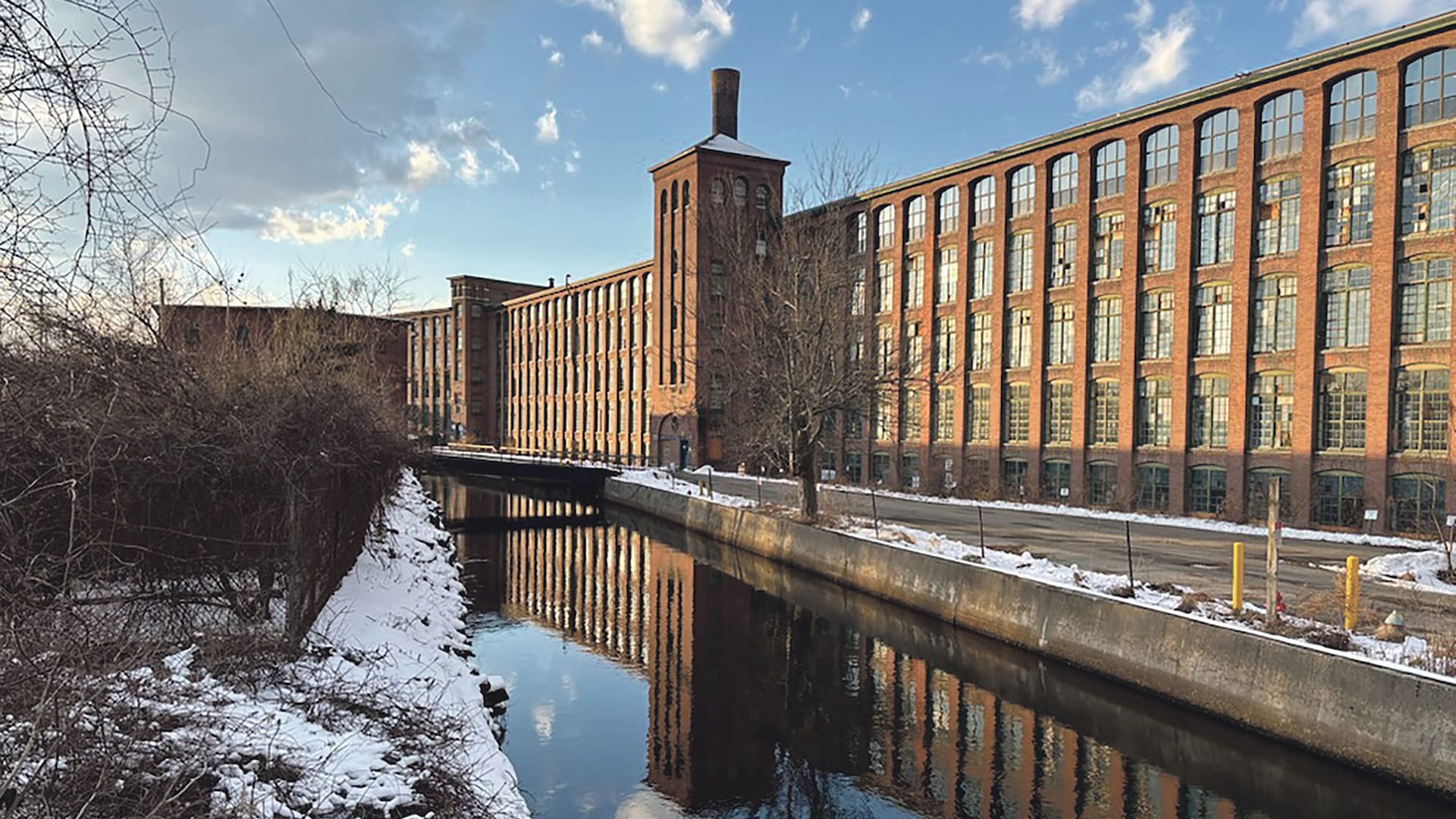
But the various groups involved have persevered because this project is as important as it is difficult, he noted.

“Given its location and given how blighted it was, it cast a shadow on the whole downtown — it was a top priority for the city,” said Toghramadjian, noting that the site sits between Main and High streets, the city’s two main commercial districts, and directly across from Holyoke Heritage State Park and the Massachusetts Green High Performance Computing Center. “Because of that, they’ve been really good partners, and that’s why Winn came to Holyoke and made this investment here — it’s because the city knew what it took to make this kind of project happen.”

Jim Lavelle

Jim Lavelle

“We’ve been trying to promote not only the lower utility rates here, but the clean energy that customers can promote with their products and hopefully help with sales.”

As phase 1 continues, with leasing to commence and tenants due to start moving in this fall, Toghramadjian and others we talked with said that, while these 88 units will make a welcome addition to the landscape and help spur economic development in the area, they represent a drop in the bucket when it comes to the city’s overall housing needs.

Indeed, Garcia said a recent report put that need at roughly 1,600 units of new housing over the next 20 years across the broad spectrum of income levels, which is another key element in the equation because different types of housing, including market-rate and homeownership, enables residents to stay in the city as their financial situation improves.

“The Appleton Street project doesn’t address the magnitude of the problem, but we’re chipping away at it,” said the mayor, noting that there may be as many as 600 units already in the pipeline.

That includes phase 2 of the Appleton Street initiative, he said, noting that WinnDevelopment is currently assembling the required pots of money for that initiative, as well as the market-rate units planned for Open Square and other ongoing housing initiatives.

There are several smaller housing initiatives taking place, said Vega, including many involving the upper floors of properties along High Street, projects that provide a few or a few dozen units, all of which help meet growing need.

The problem, he went on, is the immense competition for limited state and federal support for such initiatives, with seemingly every community in the Commonwealth in need of housing.

“All the developers are going for the same pots of money, whether they’re in Holyoke, Springfield, Chicopee, or West Springfield,” he said, adding that, in this environment, having a solid mix of projects, large and small, in the pipeline is a must.


Current Events

As noted earlier, there are several projects in various stages of development in Hoyoke, and many converging storylines.

One of the most intriguing involves new-business development, especially in green energy and related sectors, where a cluster is emerging as companies eye Holyoke for location, available and relatively inexpensive real estate, and, especially, its lower-cost, clean electricity, said Jim Lavelle, general manager of Holyoke Gas & Electric (HG&E), which provides that energy.

“We’ve been trying to promote not only the lower utility rates here, but the clean energy that customers can promote with their products and hopefully help with sales,” said Lavelle, adding that Sublime Systems is just one of many businesses, large and small, that have chosen Holyoke for that reason, among others.

As an example, he cited Simple Pack, a company now located in Open Square that manufactures green food packaging to restaurants, schools, hospital cafeterias, and food distributors. Being able to say such products are produced with clean energy, in this case hydropower, is important to the company’s mission and a strong selling point with its clients, he said.

There are several similar examples, said Lavelle, who will gain a different title in a few days — grand marshal of Holyoke’s annual St. Patrick’s Day Parade.

While his father served in that role decades ago, Lavelle never expected to wear that hat himself because, while he’s long been somewhat involved in the parade, he has never served on its committee.

He considers the honor a nod to HG&E’s important role in the city, and is enthusiastic about fulfilling the many duties of grand marshal, including attendance at myriad events and, in accordance with tradition, responsibility for parade-day weather.

“I have a much greater appreciation for the effort that goes into all these different events that the parade committee puts on,” he said. “And I have a much greater appreciation for how strong a regional collaboration exists between the different communities’ parade committees and other civic organizations and the sponsors; they really work hand-in-hand on all these different events that happen across Western Mass.”

Putting his HG&E hat back on, figuratively if not literally, Lavelle said Sublime Systems, which he believes should be ready to starting building its facility later this year or early next, will soon become the utility’s largest customer, with 10 to 12 megawatts of demand. That’s a huge draw, but one it can easily absorb thanks to transmission-system upgrades, he went on, adding that the HG&E has the capacity to attract several more large users and dozens of smaller ones.

Attracting these businesses is one of many priorities for the city, said Vega, noting that there have been a steady volume of meet-and-greets in recent years, and more are on the schedule.

Many of these sessions involve early-stage companies, many of them in green-energy or green-manufacturing ventures, he said, adding that, in addition to city officials, the leaders of companies like Clean Crop, which uses electricity to revolutionize food safety, are often in the room to discuss Holyoke and its many selling points.

“If they’re a little further along and they have specific questions, we’ll bring in Holyoke Gas & Electric to talk about the energy portfolio they can provide,” the mayor went on. “We’re on people’s radar — we just need to put the package together to bring them in.”

Holyoke at a Glance

Year Incorporated: 1786
Population: 38,247
Area: 22.8 square miles
County: Hampden
Residential Tax Rate: $17.46
Commercial Tax Rate: $38.54
Median Household Income: $37,954
Median Family Income: $46,940
Type of Government: Mayor, City Council
Largest Employers: Holyoke Medical Center, Holyoke Community College, ISO New England Inc., PeoplesBank, Universal Plastics, Marox Corp.
* Latest information available

Which brings him back to that ongoing challenge of offering them spaces that are ready to move into. There aren’t many of them in the city, but he’s in discussions with some building owners about possibly partnering with the city to develop co-work, start-up, or innovation space.

“That’s a direction we want to go in,” he told BusinessWest. “We want to keep these small businesses local; we want to keep them here and give them an opportunity to grow their business.”


Bottom Line

As for businesses already growing in Holyoke, there are many in the cannabis sector, which, while it is experiencing strong growing pains, remains a force in Holyoke, Garcia said.

He noted that social consumption, or so-called cannabis cafés, constitutes the next frontier for this industry — the Cannabis Control Commission is taking up regulatory reforms on such facilities — and for some establishments in Holyoke, it could be a real lifeline in this time of growing challenge.

“In Holyoke, we want to be among the first communities to adapt and implement that opportunity for on-site consumption,” he said, likening these establishments to bars and restaurants in the sense of attracting people to the community. “If we can bring people into our city to spend money, that’s a plus.”

With cannabis, as with many of the other storylines unfolding in Holyoke, Garcia said he remains a “glass-full leader.”

That means he’s optimistic, but also realistic. It means he understands that, while much has been accomplished, there’s still much to do, and on many fronts.

It means he’s more bullish on his hometown than ever.

Community Spotlight Special Coverage

Community Spotlight

Wendy Healey

Wendy Healey

When it comes to the subject of ghosts at Ventfort Hall, Wendy Healey is … well, decidedly “neutral.”

Roughly translated, that means that she’s never seen or otherwise encountered one. But she acknowledges that other people have experienced “something,” and she further acknowledges that ghosts are just one of the many intriguing storylines involving the cottage built by Sarah Spencer Morgan, J.P. Morgan’s sister, and her husband (and seventh cousin), George Hale Morgan, in 1893, and now home to the Gilded Age museum.

“We have what I would call friendly spirits in this house,” said Healey, the facility’s executive director, as she talked with BusinessWest in the billiard room, to which male guests would retire for cigars and brandy after one of the lavish dinners hosted by the Morgans.

The far bigger story, and the one she’d certainly prefer to talk about, is the comprehensive restoration of the landmark, now the site of a wide array of events, from weddings and teas to concerts and ghost tours. It has been ongoing for decades now, and at least another 20 years of work lies ahead, according to the most recent master plan.

“We are a restoration in progress — we are far from done,” said Healey, who assumed her role at the landmark two years ago. “We have millions and millions of dollars of work ahead of us.”

Ventfort Hall is a “restoration in progress.”

Ventfort Hall is a “restoration in progress.”

Ventfort Hall, its restorations and its ghosts, comprise one of the many storylines in Lenox, which has become a tourist destination and center of arts, culture, and healthcare, with many of the destinations located on the grounds of other Gilded Age cottages.

That list includes Tanglewood, summer home to the Boston Pops; Shakespeare & Company; the Mount, Edith Wharton’s home; and the resort spas Canyon Ranch and Miraval.

It is winter, which means most of these facilities are planning for the busier seasons to come, but some are busy year-round.

At Shakespeare & Company, an intriguing slate of shows is taking shape, said Jaclyn Stevenson, director of Marketing and Communications, noting that performances of Macbeth (with an all-female cast and a comedic touch) start in March, with most other shows taking place in the summer.

They will include a “Shakespeare Cabaret,” performances of Romeo and Juliet and The Taming of the Shrew, as well as August Wilson’s The Piano Lesson, with a few other performances still to be finalized.

“We have what I would call friendly spirits in this house.”

Equally busy these days is Gilbert Santana, general manager at the Miraval resort spa, which features the mansion known as Wyndhurst as its centerpiece. He the facility, which has been under the Miraval name since the fall of 2020, the height of COVID, has been improving overall visitation each year since, with that trend expected to continue in 2025.

Continually growing confidence among the guest population, which now includes virtually all age groups, is a big reason, he said, noting that there are now frequent bookings six months or more out, unusual in the spa universe. Meanwhile, new initiatives, such as so-called Family Connect weeks, where children can join their parents at the spa, have also helped.

The most recent Family Connect week came during the recent February school vacation week, said Santana, adding that it piggybacked a strong Valentine’s weekend to get this year off to a strong start.

“We wanted young people to start their well-being journey early, and it’s made an incredible impact; we’ve doubled the amount of guests this go-around than we had last year,” he said of the program, adding that Miraval is a true four-season resort spa that boasts more than 180 different kinds of programs — from meditation to a ropes course to yoga — and at all levels, beginner to expert.

A scene from The Comedy of Errors, performed in 2024 at Shakespeare & Company. (Photo courtesy of Katie McKellick)

A scene from The Comedy of Errors, performed in 2024 at Shakespeare & Company.
(Photo courtesy of Katie McKellick)

For this latest installment of its Community Spotlight series, we focus on Lenox and all that it has to offer.


In the Right Spirit

“This house was built for big parties.”

With that, Healey summed up the design philosophy behind the Elizabethan-style Ventfort Hall, as well as one of the enduring characteristics of the Gilded Age — large, lengthy gatherings.

Indeed, when guests came to a party at this home on Walker Street, they didn’t stay for a few hours and reach for their coats. Instead, they stayed for several days in one of the 14 guest rooms, said Healey, noting that, sadly, Sarah Morgan didn’t get to host many of these soirees: she died in 1896, only three years after Ventfort Hall was completed.

Slicing through the next 129 years in a concise yet effective manor, Healey said there was a succession of owners — and uses.

After being a private residence for a few decades, it later served as everything from a dormitory for Tanglewood students to a summer hotel known as Festival House; from a ballet camp to the home of Bible Speaks, a religious community that used the mansion for housing.

During this last chapter, the home fell into a serious state of disrepair, and was eventually slated for demolition for the construction of a nursing home.

“It was in such bad condition … no one wanted it, no one wanted to do anything with it, and it was, in the opinion of this developer, worth more flattened and to build a nursing home than to try to save it,” said Healey. “In the dining room, you could see daylight — you could see down to the basement, and you could see up through the roof.”

But in 1997, it was purchased by the Ventfort Hall Assoc., formed by Lenox residents dedicated to its restoration, which began soon thereafter.

Indeed, the building took a star turn in the movie The Cider House Rules, filmed in 1998, serving as the orphanage known as St. Cloud’s — its exterior, anyway (the interior shots were filmed at Northampton State Hospital), with its weathered condition being just what the film’s producers were looking for.

Gilbert Santana says Miraval celebrates its ability to promote wellness during all four seasons, and in many different ways.

Gilbert Santana says Miraval celebrates its ability to promote wellness during all four seasons, and in many different ways.

The movie — and there would be others to follow — provided both capital and momentum, said Healey, adding that restoration has a been a slow, very expensive undertaking over the past 28 years, with perhaps that many more still to come as the association works to ensure that the home will remain part of the fabric of Lenox for decades to come.

Phase 1A of a master plan launched in 2016 has been completed, said Healey, noting that it addressed critical building envelope and life-safety issues. Phase 1B is now underway, focusing on restoring the exterior masonry and roofing to ensure the long-term stability of the mansion.

One focal point of recent efforts has been shoring up of the east-end wall as well as the rebuilding and restoration of the mansion’s four chimneys, said Healey, noting that three have been painstakingly restored, and the fourth will be addressed this spring.

And in the years to come, many of the rooms on the upper floors, the massive basement, the carriage house, and other areas will be restored. That work, projected to cost more than $20 million, is to be funded through a combination of revenue from events, admission to the museum, and other programs, as well as donations and grants from organizations including the Massachusetts Cultural Council Facilities Fund, the Town of Lenox Community Preservation Committee, and others.

Lenox at a Glance

Year Incorporated: 1767
Population: 5,095
Area: 21.7 square miles
County: Berkshire
Residential Tax Rate: $9.05
Commercial Tax Rate: $13.18
Median Household Income: $85,581
Median Family Income: $111,413
Type of Government: Select Board, Open Town Meeting
Largest Employers: Canyon Ranch, Miraval, Boston Symphony Orchestra, Kimball Farms
* Latest information available

While the restoration work continues, the mansion hosts a growing number of events each year, welcoming guests who wouldn’t have been on the invite lists for the Gilded Age parties, said Healey, adding that there are several weddings each year, as well as concerts, tea-and-talks, a spring fashion fundraiser called Berkshique, and more.

There are also very popular ghost tours, at least once a month, led by Robert Oakes, author of Ghosts of the Berkshires. He provides a full tour of the house, by flashlight, while also relating both its history and the tales of those who say they’ve encountered a spirit on the property. And he’s heard many, from staff members and guests alike, Healey said.


Frame of Mind

It’s called ‘mindful golf.’

It’s … well, let’s call it golf with the edge taken off.

“We have a golf pro who walks you through the process of how you think when you swing and your intentions behind playing golf, which many times are jaded around winning and doing better,” Santana explained. “This helps you understand the purpose of playing your sport; it’s very well-defined and built around the person playing.”

Actually, the team at Miraval could put that word ‘mindful’ in front of almost everything they do, and that’s a long list, from activities such as kayaking and cross-country skiing to the weddings it hosts to the overall spa experience, which guests enjoy on visits lasting a day or several weeks.

Summing it all up, Santana said it’s about meeting people where they are.

Miraval, which also has resorts in Arizona and Texas, is coming up on five years in the Berkshires, although Santana said it’s more like three, with the first two greatly disrupted by COVID.

He said Miraval is continually looking at ways to bring wellness to more people across a wider age group. A good example is the two annual Family Connect weeks, which the facility test-drove last year to solid reviews that translated into bigger numbers this winter.

“We’re the only Miraval that does a Family Connection week where we allow kids to join their parents and other family members and experience it at a very young age,” he told BusinessWest. “One thing we do is make sure that everything we do has an educational purpose. Everything is defined here on growing your mindset — not necessarily redefining you, but giving an understanding of something that’s more than recreational.”

Education is a huge part of the mission at Shakespeare and Company as well, said Stevenson, adding that, in addition to the performances slated each year, the institution also schedules several actor-training programs as well as initiatives for young people and professional-development workshops.

These include Shakespeare in the Courts, a program staged in conjunction with the Berkshire Juvenile Court system, whereby adolescent offenders work with Shakespeare and Company artists and participate in classes, rehearsals, and performances of scenes from the Bard’s plays. During the six-week project, participants explore Shakespeare’s text and prepare their own performance pieces as part of their term of probation.

There’s also “Riotous Youth,” one-, two-, and three-week summer theater programs that introduce students (ages 7 to 17) to Shakespeare’s language, stories, characters, and themes using imaginative and playful methods.

As for actor-training programs, they take place in the spring and summer and are geared for those with different experience levels, from the novice to mid-career professionals, said Stevenson, adding that there are also several in-person workshops and online classes and workshops focused on everything from wit to movement and dance to public speaking.

Stevenson said Shakespeare and Company enjoyed a solid 2024, actually exceeding overall projections, continuing, as other venues in this community have, to build back from the COVID years, which took a serious toll on Lenox.

“We’re still working our way back a little bit, but we’ve come a long way,” she said of the COVID recovery. “It feels more in the rear-view mirror than ever before.”

Community Spotlight Special Coverage

Community Spotlight

In the last 12 months, Deerfield has attracted more than 1.1 million visits

In the last 12 months, Deerfield has attracted more than 1.1 million visits, with 48.5% of all visitors classified as tourists, with their home residence more than 50 miles away.
Staff Photo

While Deerfield is home to Yankee Candle Village, Historic Deerfield, the Magic Wings Butterfly Conservatory, and other tourist attractions, its economy is broad, covering sectors ranging from agriculture and manufacturing to retail, restaurants, and the arts.

That diversity is an asset, said Jessye Deane, executive director of the Franklin County Chamber of Commerce, which is based in Deerfield. And the community continues to add assets, thanks to a series of developments over the past few months.

Like the Golf Club, a new, 24/7, membership-based indoor golf simulator.

“I’m an avid golfer,” owner Frank Messana explains on his website. “When COVID forced-retired me from Comcast due to downsizing, I realized I wasn’t ready to sit around all day. So I decided to chase a dream I’ve had for many years of opening a state-of-the-art driving range when I retired.

“Then, I thought, what golf in this area really needs is a great place to go when the courses (and us golf nuts) are freezing cold for too many months. You know how it goes … spend all the warm months playing, practicing, and improving only to have to start at square one after the long, cold layoff from the game we love. I want to help golfers of all skill levels stay sharp over the winter season, when those bitter nor’easters keep us off the course.”

On the municipal front, development plans continue around the town campus, a collection of buildings including the current Town Hall, two churches, and a former elementary school.

Last month, the Zoning Board of Appeals granted the what’s known as the 1888 Building — that’s the former school, at 67 North Main St. — a variance to allow the structure to exceed the town’s 35-foot height limit. That clears the way for the 136-year-old building to be converted into a modern town hall, with a full renovation and a 2,600-square-foot addition. The $8 million project, funded by $3.8 million in Community Preservation Act money and a $4 million federal earmark, is expected to begin construction this summer.

Meanwhile, Deane said, “Tilton Library is being renovated and is a very involved, very impressive project.”

The project at 71 North Main St. will nearly triple the building’s space to 12,784 square feet and include expanded teen and children’s rooms, meeting and co-working spaces on the second floor, and what’s being called a ‘nighttime suite,’ which will be accessible after library hours and feature meeting spaces, a small kitchen, and bathrooms.

“Tree House Brewing is expanding their outdoor music concert series, and it has generated foot traffic.”

Nearby, Rivermoor Energy recently completed a new electric-vehicle (EV) fast-charging hub in downtown South Deerfield, in partnership with the town and the Federal Highway Administration. The project was funded by a $2.46 million federal Charging and Infrastructure grant, made possible by the Bipartisan Infrastructure Law. The EV-charging hub, located at 59 North Main St., is open to the public.

“This project is not only an impactful one for the environment and the advancement of clean energy, but it’s also a boost for the economic backbone of our town,” Town Administrator Christopher Dunne said at the opening. “With the added accessibility, climate-change mitigation, and new pedestrian walkways leading to downtown businesses, Deerfield can continue to thrive and serve its local business owners and attract new customers to our business community.”

Speaking of downtown development, a just-announced, $500,000 Complete Streets grant will fund the construction of a 10-foot-wide, shared-use path with plantings on the north side of Elm Street and a crosswalk on the south side. Other improvements will include curb ramps, flashing beacons, and bicycle racks.


Music in the Air

Just up Route 5, Tree House Brewing Co. has become a destination unlike any other in town — not only as a thriving brewery, but as host to a summer outdoor concert series that’s drawing big crowds to see some big names.

While the venue did generate some neighborhood noise complaints toward the end of its 2024 season, Tree House Compliance and Business Development Manager Allison Masley assured residents at a hearing last month that the venue has been trying to readjust the way its stage faces in an effort to mitigate the issue.

Attendees gather early for one of Tree House Brewing’s summer concerts last year.

Attendees gather early for one of Tree House Brewing’s summer concerts last year.

But, at the same time, Tree House Director of Finance Mark VanAtta noted that, with 62% of concertgoers living at least 50 miles away, the business generated about $8 million in revenue to the community, while Tree House itself contributed $137,000 in taxes and another $35,000 in meal taxes, as reported in the Greenfield Recorder.

“Not only are people coming and spending money at Tree House, but these are people that are coming from different communities to this community to spend money to have a good time,” VanAtta said.

Deerfield at a Glance

Year Incorporated: 1677
Population: 5,090
Area: 33.4 square miles
County: Franklin
Residential Tax Rate: $13.25
Commercial Tax Rate: $13.25
Median Household Income: $74,853
Median Family Income: $83,859
Type of Government: Open Town Meeting
Largest Employers: Yankee Candle Co., Pelican Products Inc.
* Latest information available

The chamber sees the concert series as a definite plus, Deane noted. “Tree House Brewing is expanding their outdoor music concert series, and it has generated foot traffic.”

Indeed, over the last 12 months, Deerfield has attracted more than 1.1 million visits. By the state’s definition, 48.5% of all visitors can be classified as tourists, meaning their home residence is more than 50 miles away.

During that time, Tree House’s South Deerfield location attracted 240,500 visits from 145,500 visitors. Of those visitors, 23.3% had a household income of $200,000 or more, 37.9% of all Tree House tourists stopped at least one local business before going to Tree House, and 42.9% visited a local business after their visit.

Meanwhile, back at the chamber, Deane said many Deerfield businesses are participating in a redesigned, relaunched Franklin County gift card, another reason for visitors to head to this town of just over 5,000 residents.

“Through our work as both Franklin County’s Chamber of Commerce and Regional Tourism Council, we are especially attuned to the critical role Deerfield plays in Franklin County’s economy, thriving on a diverse economic base and hosting businesses ranging from retail to advanced manufacturing,” Deane said. “With attractions like Historic Deerfield, Sugarloaf Mountain, Yankee Candle, Clarkdale Fruit Farms, Berkshire Brewing Company, Tree House Brewing Company, and more, Franklin County is fortunate to benefit from Deerfield’s vibrant mix of industries and a steady stream of visitors who contribute to our regional economy.”


Community Spotlight

Community Spotlight

From left, Lee Pouliot, Krista Benoit, Brett Brown, and Bob Alger stand in the main entrance to the former main library in Chicopee, now undergoing historic rehabilitation for use as a community hub.

From left, Lee Pouliot, Krista Benoit, Brett Brown, and Bob Alger stand in the main entrance to the former main library in Chicopee, now undergoing historic rehabilitation for use as a community hub.


‘Historic rehabilitation.’

That’s the phrase Lee Pouliot and others used to describe work at Chicopee’s historic City Hall and the neighboring, long-closed main library.

In doing so, they made the distinction between this type of work and historic restoration.

Indeed, the latter returns something to what it once was at a specific point, said Pouliot, director of the city’s Planning Department, adding that this will not be the case with either building.

Indeed, the library, closed since 2004, when a new facility was built, will be renovated for use as a community hub, home for a farmer’s market, and meeting space, said Pouliot, while phase 2 of a project at City Hall and its annex will involve an office-by-office renovation of spaces to suit current needs and technology and make the best use of those spaces.

“One purpose of the project is to right-size some of the office spaces; we have some offices that have too many people crammed into too small a space,” he explained. “Another priority is building security. In working with all the department heads, we identified the offices that get the most visitation on a daily basis and tried to relocate them to the lower floors of the building, so we didn’t have the public accessing areas that they don’t need to.”

The City Hall project, which has been ongoing for a decade, has been slowed by the pandemic, but also a lengthy — as in more than three years — design phase that required large amounts of data collection from city department heads and employees about space requirements and specific needs.

Historic rehabilitation of the two downtown landmarks, work that has been ongoing through four mayoral administrations, is just one of the storylines involving Chicopee, the region’s second-largest city.

“One purpose of the project is to right-size some of the office spaces; we have some offices that have too many people crammed into too small a space.”

Others include everything from ongoing efforts to repurpose several old mills and create sorely needed new housing — projects that dovetail nicely, as we’ll see — to efforts at Elms College to cope with the many issues and challenges in higher education today, especially the so-called demographic cliff, a sharp decline in the number of the number of 18-year-olds entering college. But there are others as well, including the soaring cost of higher education and the need to help students and their parents meet it, as well as free community college, which is both a challenge and an opportunity.

The college is taking steps to help bring that cost down and afford more opportunities for a college education through initiatives such as the recently announced Elms Promise, a financial-aid program designed to provide full tuition coverage for students from families earning less than $85,000 annually.

“The cost of a college education has been on the increase, and families’ income has not increased as fast as the rise in tuition,” Elms College President Harry Dumay said in explaining the genesis of the program, adding that, since its inception, the school has placed an emphasis on being affordable for all types of students.

For this, the latest installment of its Community Spotlight series, we take an in-depth look at Chicopee and how it is building momentum — in all kinds of ways.


History in the Remaking

As they talked with BusinessWest in the former City Council meeting chambers on the fourth floor of City Hall, Pouliot; Krista Benoit, a project manager for Northampton-based D.A. Sullivan & Sons; and Bob Alger, senior project manager for NV5, a Hadley-based engineering firm, noted that the renovation of City Hall, opened in 1871, has been a decade-long project that essentially began when two panes of stained glass fell out of the rose window at the front of the building.

Phase 2 of the ambitious City Hall project will follow recent work like this renovated auditorium.

Phase 2 of the ambitious City Hall project will follow recent work like this renovated auditorium.

Then-Mayor Richard Kos asked Pouliot to undertake an emergency stabilization and historic-structure analysis to determine if there were physical deficiencies in the building’s structure. Dietz & Company Architects of Springfield was hired to work on both, and the firm determined that there were a number of significant deficiencies that needed to be addressed in both City Hall and the annex.

Emergency stabilization work included everything from the removal of stones from the clocktower amid fear of them falling to removal of the stained glass throughout the building for protection, Alger said.

Following these initiatives, funding was secured for phase 1 of historic rehabilitation work, which entailed work on the building envelope and the HVAC systems, he went on, adding that this included roof replacement, stone and masonry repair, brick repair, replacement of all the windows in both buildings, and a stunning renovation of the auditorium, a $17 million endeavor overall.

Phase 2, a $16 million project, will involve a three-year schedule of moving through the building, renovating and rightsizing offices, said Benoit, who first became involved in the project while working as a designer for Dietz and Company, and is now on the construction side with D.A. Sullivan, which also handled phase 1.

She noted that D.A. Sullivan has a strong track of work for area municipalities and in the areas of historic restoration and rehabilitation.

“We’ve been around for so long now, 1897, we’re now renovating many of the projects we actually built,” she said, adding that the Chicopee projects involve buildings on the National Register of Historic Places.

Pouliot noted that the contractors will hopscotch through the buildings, renovating a few offices at a time.

“We’re taking two to three office spaces offline at any given time, relocating staff to vacant office space, remodeling those offices, and moving staff back in,” he explained, adding that several departments will be moved to different floors or different areas that better suit their needs and those of the public.

These will be gut remodels, he went on, adding that it will take three to eight months to ready each space for its new occupant.

As for the library, Pouliot said there have been several requests for proposals issued for the city’s old library, and, over the years, a few intriguing uses have been proposed.

There was talk of a brewery that never really got off the ground, he said, adding that the concept that gained the most traction — but not enough to become reality — was to make the landmark home to the largest private collection of Franklin D. Roosevelt memorabilia, some 10,000 pieces, once housed in Worcester. There was even talk of the possible creation of a Roosevelt Study Institute and a collaboration between the museum and Elms College.

The ‘community hub’ concept was ultimately deemed the alternative that made the most sense, said Pouliot, adding that it transforms the library into a different kind of community resource, one that will hopefully bring more people and vibrancy to the Market Square area.


Grade Expectations

While the city works to rehabilitate its landmarks, one of its leading institutions, Elms College, is trying to build a more secure future by taking a proactive approach to the many challenges facing higher ed today, especially smaller, private institutions.

“There’s never a moment to rest,” said Dumay of this challenging time, describing Elms as being “healthy, not wealthy.”

By that, he meant that the school has a small endowment — $12 million, although it’s much larger than it was even a few years ago — but it remains in solid fiscal heath, thanks to steady enrollment in many of its divisions. These including transfers, continuing education, and graduate programs, making up for a decline in enrollment among high-school graduates, something being seen across this region and across the country, a situation exacerbated by what Dumay (and many others) have called the “less than adequate rollout” of Free Application for Federal Student Aid, or FAFSA.

“We had a really good year of students transferring to Elms College, a good year for students completing their degrees through our continuing-education program, and a good year of graduate students,” he explained. ‘Overall, we took in around the usual number of 500 students that we traditionally take in for all categories, despite the fact that, with our first-time freshmen, we didn’t reach the target that we were looking for.”

In this environment, schools need to be aggressive in telling their stories, stress their strengths and values — and the value they provide — and be responsive to those challenged by the high cost of a college education, he said, adding that the Elms Promise was created to help empower those students least likely to afford higher education, and it underscores the school’s affordability.

Chicopee at a Glance

Year Incorporated: 1848
Population: 55,560
Area: 23.9 square miles
County: Hampden
Residential Tax Rate: $15.16
Commercial Tax Rate: $32.62
Median Household Income: $35,672
Median Family Income: $44,136
Type of Government: Mayor; City Council
Largest Employers: Westover Air Reserve Base; J. Polep Distribution Services; Callaway Golf Ball Operations; Dielectrics; MicroTek
* Latest information available

“Having this Elms Promise out there clearly and crisply conveys to students and their families that an Elms College education can be as within their reach as some of the other alternatives available to them,” he explained, adding that this includes MassEducate, the state’s free community-college initiative, which, as noted earlier, is both another challenge and a great opportunity down the road.

“I’ll always be in favor of any initiative that makes college accessible for students,” said Dumay, a first-generation college graduate himself. “And we already know that this has increased enrollment at community colleges significantly, in this area and beyond. And because of the articulation agreements we have with all the area community colleges, and because many of the community-college students transfer to us, we’re expecting the number of students that will transfer to us to increase, and we see that as an opportunity down the road.”


Developing Stories

While Elms copes with its challenges, the city continues its work to put some of its former mills back to productive use while also addressing an urgent need for more housing.

Pouliot said the owners of the last remaining building in the Facemate manufacturing complex, the so-called Baskin parcel, are finalizing the securing of resources from the Commonwealth, and a groundbreaking is expected in the near future on 105 units of housing.

Meanwhile, a developer has been recommended for the four remaining buildings within the massive Uniroyal tire-manufacturing complex, the redevelopment of which has been a more-than-40-year saga, said Pouliot, adding that a mixed-use development that includes housing is being eyed.

These projects are moving slowly, he noted, because of the high cost of rehabilitating former mills of this kind into housing and other uses, as well as the time-consuming process of securing the various forms of financing, often including historic tax credits, needed to make such endeavors viable.

“Slow but steady wins the game when it comes to mill conversion,” he told BusinessWest, adding that the Uniroyal project will most likely develop in phases over several years.

In the case of another huge old mill, Cabotville Industrial Park, formerly home to dozens of various-sized businesses but now mostly vacant, progress has come very slowly, and its fate remains a large question mark.

“There have been a number of owners that have suggested a significant redevelopment project there,” Pouliot said, adding that such talks have been going on for more than 20 years now. “We’ve been stuck in this current round with the current owner, Silverbrick, for two or three years. But it’s a viable project for the right developer with the right experience.”

Housing remains a critical need in the city, he noted, adding that, in addition to the Facemate property and its 105 units, other, smaller projects are advancing, including plans to develop the site of a former Masonic lodge on East Street and the conversion of the former Belcher Elementary School into 24 apartments.

Melissa Breor, executive director of the Chicopee Chamber of Commerce, said redevelopment of Cabotville and other large mills, as well as the smaller projects in and around the downtown area, form one of the keys to continued growth and greater vibrancy in the central business district, which has seen many new businesses open in recent years amid of a spurt of entrepreneurship, which continues today.

She cited the planned redevelopment of a large Victorian home on Grove Street in Chicopee Falls into a mix of housing on the upper floors and a possible wine bar on the first, being undertaken by the owner of nearby Falls Pizza, as an example of this entrepreneurship and the importance of new housing.

“In terms of economic development and workforce development, housing is at the center of all that,” she said. “We have some great developments that are in process and at various stages, and with those housing developments, people are going to need services and places to go. To have a business owner have that vision is really exciting.

“Investments like the one at Falls Pizza show great vision,” she went on, adding that new housing, in general, spurs new business development, which is good news for a city with a rich past and a promising future.


Community Spotlight

Community Spotlight

Aaron Marcavitch

Aaron Marcavitch says Enfield would benefit from a balance of different types of new housing.


In a region with plenty of dying, dead, or deteriorating shopping centers, Enfield Square stands out — just Target and a few smaller retailers occupying a largely empty structure where anchors such as Macy’s, JCPenney, and Sears once thrived.

But it’s also a property with an intriguing location, sitting between two very busy thoroughfares in Elm Street and Hazard Avenue, each dotted with retail, restaurants, and plenty of traffic.

And 2024 brought a ray of hope when the mall property — all but the Target — was purchased by Woodsonia Acquisitions, which has proposed a $250 million project that will feature retail and restaurant businesses, hundreds of residential units, and a small hotel.

Woodsonia also worked with the town on an application for a $20 million Connecticut Community Investment Funds program grant. After much back and forth with the state, an amended, $10 million version was recently resubmitted.

“It was narrowed down a little bit,” said Aaron Marcavitch, who has had a busy several months since coming on board as Enfield’s Economic & Community Development director last April. “It’s a $10 million request, basically for the demolition of the building and for the critical infrastructure elements of it — pipes in the ground and some of those types of things. We should hear by March whether or not that will happen. If it goes forward, that process will take six to nine months before you might see demolition.”

He said the town and developer share a vision for the property involving the mixed-use blend of housing, a hotel, and “some upscale strip elements” on the retail side, including an organic grocery store.

“It’s been said for 50 years now that Thompsonville is going to be revitalized, but I feel like some positive movement is happening. We’re actually putting those plans into action.”

“It’s likely that the developers are a little bit more housing-focused, so they’ll get that part done, and the rest will happen as they acquire potential retailers or restaurants or whatever,” Marcavitch went on. “If the project were to go sideways, there may be other ways for us to go with this. It is a really great location for retail.”

The housing element is especially intriguing at a time when most cities and towns in the region need more of it. At the same time, a 140-unit residential development is taking shape on North River Street, near the critically important train stop project taking shape in the Thompsonville neighborhood (more on all of that later).

“I think the balance that Enfield is looking for is in truly affordable housing — really low-income versus workforce housing,” Marcavitch said, citing a term often used in the social-services world: ALICE, which stands for asset-limited, income-constrained, employed. “It basically means that you’re well above the poverty line, but it’s still hard to make ends meet. And I think that’s the area of housing we’ve been hearing about, as well as some of the 55-plus and elderly types of housing.

Enfield Square has been in decline for many years

Enfield Square has been in decline for many years, but a planned mixed-use development there has city officials excited.

“We’re a predominantly single-family type of community, but we’ve got some really interesting projects,” he went on. “I mean, the 140 apartments on the river are being built essentially as one-bedroom majority because they’re looking for the commuting professional with no kids. That’s their target audience. With demographics changing, we kind of have to stay on our toes for what the community is looking for.”


Train Not in Vain

The entire rail-centric project in Thompsonville has certainly made waves — with real ripple effects when it comes to development.

Late in 2023, the Connecticut Department of Transportation attached hard dates to the $45 million project to build the train station. Those dates included the summer of 2024 for the final design to be completed, the winter of 2025 for the construction bid to be awarded, the spring of 2027 for accompanying rail and bridge work to be completed, and the fall of 2027 for completion of the station and platform.

That plan is largely on track (no pun intended), though there’s plenty of bid and permit work to be completed this year, Marcavitch said, and shovels may be in the ground by September.

“If you can encourage somebody to come here, that’s great, but I don’t want you just getting on a train and disappearing every day. At the end of the day, I want you to go to a dog park, I want you to go hike a trail, whatever it is, and stay in Enfield as much as possible.”

Enfield’s station is expected to be more than a metro stop, bringing people to Hartford to work; it will also be a larger hub for Amtrak for more distant destinations, while a planned spur off the Windsor Locks stop will bring people to and from Bradley International Airport. The project has also, as noted earlier, gained the attention of the development community.

The 140-unit project on North River Street is being developed by HGRE Ventures, a partnership between Avon-based Honeycomb Real Estate Partners and GRAVA Properties of West Hartford. HGRE plans a $100 million, two-phase project that would eventually bring more than 300 units to the riverfront section of Thompsonville, near the much larger Bigelow Commons apartment complex.

Enfield at a Glance

Year Incorporated: 1683
Population: 42,141
Area: 34.2 square miles
County: Hartford
Residential Tax Rate: $32.23
Commercial Tax Rate: $32.23
Median Household Income: $67,402
Median Family Income: $77,554
Type of Government: Town Council, Town Manager
Largest Employers: Empower Retirement LLC, Town of Enfield, Advance Auto Parts Distribution Center, Eppendorf Manufacturing
* Latest information available

The HGRE property sits on the former Bigelow Carpet manufacturing plant, and the developers recently secured $4 million from the state brownfields program to remediate the property, Marcavitch said. “That actually used to be the power plant for Bigelow. At one point, they were burning garbage in there. There was oil being used, coal being used, so there’s a lot of stuff on the grounds that needs to be cleaned up.”

He noted that the project will include some publicly accessible waterfront walking space, and HGRE will also seek to acquire an additional parcel at Main and North River streets, currently owned by Eversource, for the project’s second phase.

“The intention from the developer is to be able to use that area where the Eversource property is to build a waterfront restaurant location,” he said. “You get off the train, you can get something to eat, you can go to your apartment, whatever it might be, and that trail then would continue to Main Street, at least. There’s also been a long-term vision to have some sort of a pier that goes out into the river. That’s part of my job — to see if we can find funding for that and find a way to do it.”

Meanwhile, the town has received $1 million in federal funding to be used for streetscaping, from the train station up Main Street. “That’s going to trees, sidewalks, lighting, parking, striping, and making the road a bit more narrow,” Marcavitch explained.

“We’ve also been having some conversations about parking issues,” he went on. “We’ve had conversations with a group that’s being formed, a nonprofit group that would function as a Main Street program. They’re still in development.”

Taken together, Thompsonville definitely has some buzz. “It’s been said for 50 years now that Thompsonville is going to be revitalized, but I feel like some positive movement is happening. We’re actually putting those plans into action.”


Further Down the Track

That action has brought a sense of momentum to town, Marcavitch said, even if not everyone is feeling it yet.

“I feel there is a sense in Enfield that people don’t believe it until they start to see it. And nobody is seeing that shovel in the ground. But there are some people who know it’s happening, and they want to get ahead of it — whether it’s small developers on Main Street wanting to do small projects or big developers doing 140 apartment units.”

That said, other areas of town have seen some progress, too — even in the industrial sector, still reeling from Lego’s departure.

“We’ve had some really good conversations with the logistics industry, and we’re hopeful to see some projects that might be coming out of that relatively soon,” Marcavitch said, adding that one property owner is working with Martin Brower, the primary trucking company for McDonald’s, on an expansion and redesign of the site’s truck-management space, while USA Hauling, which owns the former Lego building, is talking to some high-tech companies.

“I have heard sometimes that Enfield is difficult to work with from a development standpoint. I don’t think that’s true, but we hear that, so I’ve been trying to be much more accessible to be that point of contact for businesses,” he added. “I was on a phone call with a gentleman who’s looking to put a restaurant in: ‘OK, great, tell me what you need. Let me know whenever you run into a snag.’ We’re just trying to be more helpful and more open.”

It’s the same with the few existing mall tenants, he added. “They don’t know what’s going to happen. So we’ve had some good conversations with those tenants. There’s only so much the town can do, but if we can at least be a receptive ear, sometimes that’s helpful.”

Since taking his role last April, Marcavitch has tried to put the same energy into other types of properties, from open spaces to historical sites.

“If you can encourage somebody to come here, that’s great, but I don’t want you just getting on a train and disappearing every day. At the end of the day, I want you to go to a dog park, I want you to go hike a trail, whatever it is, and stay in Enfield as much as possible. So it’s a multi-pronged process to bring up our sites and attractions, bring up our parks, bring up our community amenities, and bring up our businesses, too.”


Community Spotlight Special Coverage

Community Spotlight

A architect’s rendering of the planned new Agawam High School.

A architect’s rendering of the planned new Agawam
High School.

Chris Johnson called it “an easy fix.”

He was referring to his decision early in 2024 to put things back the way they were in City Hall — quite literally — the last time he occupied the corner office, some 24 years earlier.

Indeed, the three-office mayor’s suite in City Hall had been reconfigured in the intervening years, with the smallest space, which had been Johnson’s office, made into a closet; the middle space, which had been a conference room, devoted to staff; and the largest space, which had been home to the two-person staff, converted to accommodate the mayor’s office and a conference-room table.

Not long after returning to office, Johnson reshuffled the deck, claiming that the old arrangement made far more sense.

Other business hasn’t been resolved quite so easily, but Johnson has achieved progress on several fronts — especially with the building of a new high school, a project that has been discussed for decades and was resolved in resounding fashion at a special election last June, with roughly 70% of residents approving a three-stage project with a price tag of $226 million.

Johnson, who served three two-year terms in the mid- to late ’90s, and, more recently, served several terms on the City Council, sought a return to the corner office in the fall of 2023, in large part to resolve the issue of a new high school. He considers the new building (and a small saved portion of the old building) to be the best option for this community of almost 29,000.

“For the voters, it came down to this: do you want to make a significant investment and renovate what we have, or spend a few extra dollars and build a new high school?” said Johnson, in reference to what will be, by far, the largest capital-improvement project in the history of Agawam. “The right decision, from an education standpoint, but also a business and financial standpoint, was to invest in a new building that has a useful life of 50-plus years instead of major renovations in what we have that would have a useful life of probably 20 to 30 years.”

“The right decision, from an education standpoint, but also a business and financial standpoint, was to invest in a new building that has a useful life of 50-plus years instead of major renovations in what we have that would have a useful life of probably 20 to 30 years.”

The high-school vote is easily the biggest storyline in this community, but there are others, including ongoing work to transform the old HUB Insurance building on Suffield Street into the city’s new police headquarters, an intriguing conversion project that should be wrapped up next spring. There’s also the ongoing saga of the former Games and Lanes property on Walnut Street Extension — a new use for that parcel remains elusive years after the eyesore was torn down — as well as the need for new housing of all kinds, but especially the affordable variety.

There are some new businesses, including a Starbucks just over the Morgan-Sullivan Bridge from West Springfield that opened roughly a year ago, and some emerging ventures, including an urgent-care facility in a building now under construction just behind Starbucks.

As for existing businesses, the landscape is dominated — figuratively but also literally — by Six Flags New England, the giant amusement park near the Connecticut border that is not only the city’s largest employer, but a good corporate citizen, the mayor said.

The park, now 25 years under the Six Flags brand, is adding a new roller coaster and undertaking other significant expansion and improvement efforts, said Park President Peter Carmichael (see related story on page XX).

For this latest installment of its Community Spotlight series, BusinessWest turns its focus on Agawam, where momentum is building — in every sense of that phrase.


Early Returns

The framed newspaper front pages on one wall of Johnson’s office speak to how much has changed over the past 24 years — journalistically, and in some other ways as well.

The large headlines trumpet three of his five election victories, starting in 1989. The masthead at the top of each declares that this is the Agawam/West Springfield edition of the Union News. The Springfield newspaper is now called the Republican, and there is no longer an Agawam/West Springfield edition. Meanwhile, the large headlines from the ’90s were all about Johnson because West Springfield didn’t have a mayor in those days.

But while many things have changed in a quarter-century, in Agawam, many of the issues are the same, and Johnson has been dealing with them consistently because he served on the City Council for 12 years in the interim.

Mayor Chris Johnson

Mayor Chris Johnson says resolution of the high-school issue was one of the prime motivators for his return to the corner office.

At the top of that list is the high school, he said, noting that the original building, opened in 1995, has been renovated and expanded several times over the years, with the result being a sprawling, one-story complex that was in need of another facelift — or replacement.

Johnson has long been a strong advocate of the latter, and efforts to inform the public of the available options dominated his first several months back in the mayor’s office.

“I can’t even count how many presentations I made,” he said. “I pretty much said, ‘anytime, anywhere that anyone wants one, I’ll go’ — and I did a lot of them, while also putting together educational videos to put on the town’s website and social media. My goal was to make sure people had the information they needed to make an educated decision.”

“Whether it be aging roadways or storm-drainage issues, most of our infrastructure dates back 50, 60, 70-plus years.”

Dave Fontaine Jr., CEO of Springfield-based Fontaine Bros., the general contractor awarded the project, said it is unique in that it has three phases — new construction of a ‘community wing’ on fields adjacent to the current high school; an academic wing, which will involve demolition of much of the existing high school (some will be saved) and new construction; and additional demolition as well as conversion of some of the existing high school into an early-childhood center.

The building will also use geothermal wells for heating and cooling, said Fontaine, adding that the technology is becoming more common, but still fairly rare in school buildings. It will also have sloping metal roofs, which are more durable than flat roofs and will have a longer lifespan, he said, adding that they provide an intriguing architectural element.

Johnson said ground should be broken this spring, with work on phase 1 to be completed by the end of 2026, phase 2 by the fall of 2028, and phase 3 in 2029.

Fontaine will be building the new Agawam High School at the same time it constructs a new high school in East Longmeadow, a project roughly six months further along. That will be challenging in some ways, but the company traditionally has at least two large-scale school projects occurring simultaneously.

Meanwhile, another intriguing project, this one now well underway, is the conversion of the former HUB Insurance building (before that, it was the Oaks banquet facility) into the new police headquarters.

It’s unique, said Carl Mercieri, executive vice president with Marois Construction, the contractor handling the project, because most new public-safety facilities are built from the ground up.

Agawam at a glance

Year Incorporated: 1855
Population: 28,692
Area: 24.2 square miles
County: Hampden
Residential Tax Rate: $14.54
Commercial Tax Rate: $27.54
Median Household Income: $49,390
Family Household Income: $59,088
Type of government: Mayor; City Council
Largest Employers: OMG Inc., Agawam Public Schools, Six Flags New England
* Latest information available

Because the town was able to acquire the property at an attractive price, converting it for this use emerged as the most common-sense option, he went on, adding that transforming a large (36,000 square feet) office building into a public-safety facility has required complete interior gutting and creation of a wide range of new spaces, from offices to a dispatch room to six holding cells. Meanwhile, a large sallyport had to be added to the rear of the building.

“There are several different areas to create — a detective area, a sergeant’s area, a patrolman’s area, an armory, and the holding cells,” said Mercieri, adding that the completion date for the project, like the final price tag (around $9 million), is a moving target, but work is expected to be wrapped up by late spring.


Forward Progress

Between the new high-school project (the town’s share of that initiative is roughly $120 million) and the new public-safety complex, the town will have little to spend on other large-scale capital projects for some time, said Johnson, adding quickly that this can’t stop the community from planning.

And he summed up what’s next on the proverbial to-do list with a single word: ‘infrastructure.’

“Whether it be aging roadways or storm-drainage issues, most of our infrastructure dates back 50, 60, 70-plus years,” he explained. “But we need to come up with a plan, and then match a funding mechanism to a plan to be able to move forward so that we’re not faced with dealing with crisis situations.”

Coming up with these plans — while also building the new school — will be the next challenges for Johnson in what can be called a second tour of duty in the corner office.

Or corner offices, to be more precise.

He’s put things back the way they were before in that suite, but for other, much larger issues, there is no going back — just moving forward. In the larger scheme of things, that is the plan.

Community Spotlight

Community Spotlight

Karia Youngblood says Mount Holyoke College’s $175 million geothermal project is a bold move for the institution.

Karia Youngblood says Mount Holyoke College’s $175 million geothermal project is a bold move for the institution.

At its core, Mount Holyoke College’s $175 million geothermal energy initiative is an infrastructure project.

But, by design (in most cases, anyway), it has become much more than that.

Indeed, the massive undertaking, soon to enter its third phase, has become a living laboratory for many students, engaging them in learning opportunities involving everything from geology (during test-well drilling) to sustainable landscaping to humanities.

Meanwhile, the project has provided a captivating glimpse into the college’s past, with excavation work uncovering part of the foundation of the college’s original structure, the Seminary Building, which dates back to 1837, a find that provides some poignant symmetry, said Karia Youngblood, associate vice president of Facilities Management at Mount Holyoke.

“I worked with our archivist, and we overlaid the footprint of the Seminary Building and determined that foundation was actually the corner of the original boiler room of that building, which also explains why we found some fire bricks in that area,” she explained. “It felt like a really sweet, full-circle moment.”

Such symmetry is one intriguing aspect of this closely watched project, which is just one of many storylines unfolding in South Hadley.

“With our 19 units historically at 100% occupancy, with minimal opportunity to reside here due to lack of turnover, we believe the best way to sustain long-term success is to open the door to more housing.”
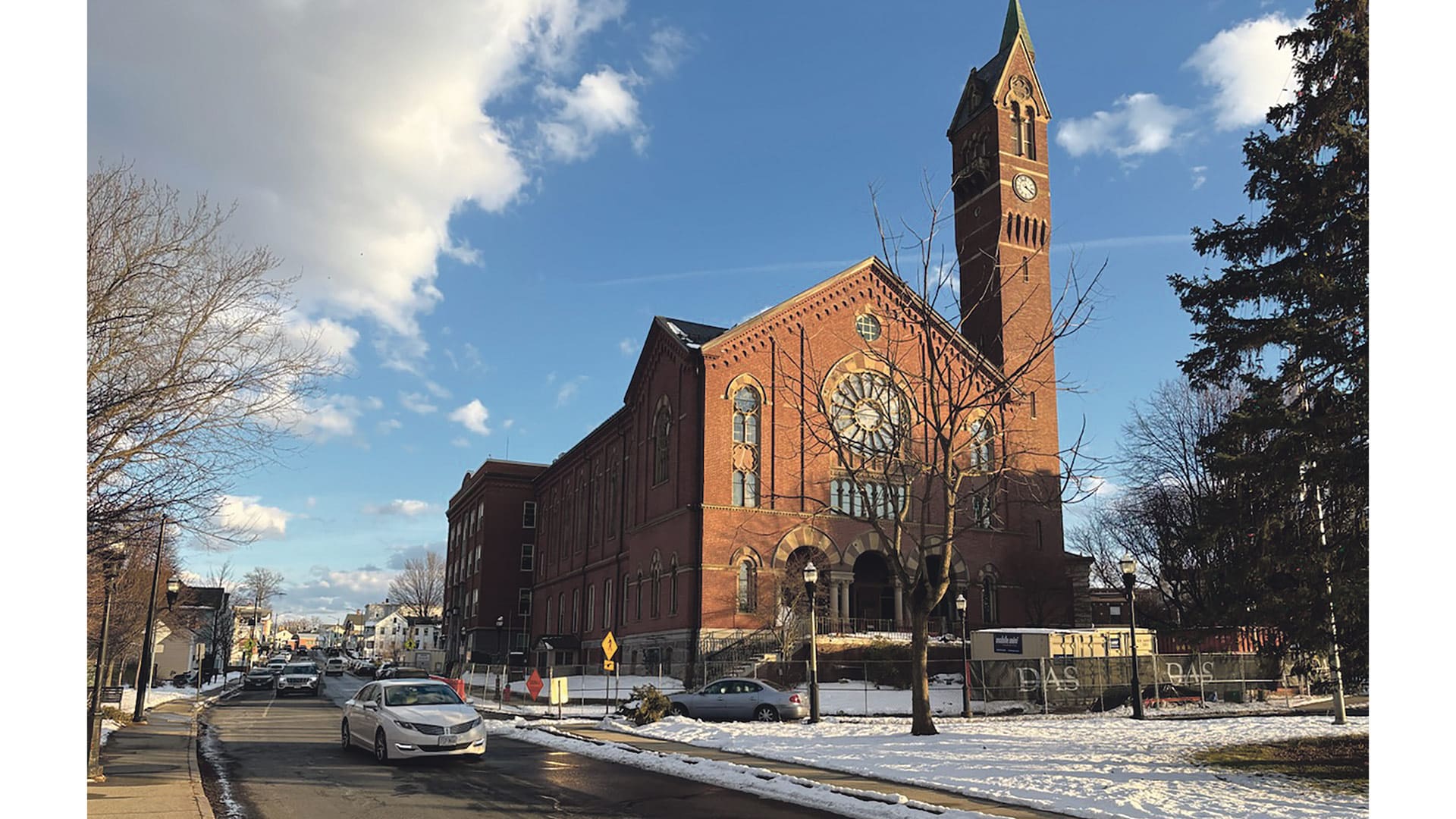
Others, said Town Administrator Lisa Wong, include everything from progress toward building a new elementary school to work toward development of a strategic plan for the town’s municipal golf course, to planned infrastructure work — and economic-development initiatives — in the community’s historic Falls section, which includes Town Hall.

“We’re hoping to raise some money and do some projects in that area, which is along the river,” she explained. “There are some businesses there, but we’re looking to attract more.”

As for established businesses that call South Hadley home, many can be found in the Village Commons, a setting unlike anything else in Western Mass. — a collection of buildings that has won awards for its design and is known for constant change, but also, in some ways, remarkable stability.

The Village Commons

The Village Commons has historically had a high occupancy rate for its retail and office space, and there’s a lengthy waiting list for its residential units.

Indeed, many of the commercial tenants have had this mailing address for decades, said Jeff Labrecque, chief operating officer of Center Redevelopment Corp., which manages the Commons for its owner, Mount Holyoke College, noting that the same is true for those occupying the 19 coveted residential units as well.

“We have one woman who has lived here for 36 years,” said Labrecque, noting that there is a waiting list for the units, one that people stay on for several years, on average, before there is a vacancy.

This lengthy waiting list helps explain why the Village Commons is actively looking to expand and add additional residential units, Labrecque told BusinessWest, adding that South Hadley, like most area cities and towns, has a critical need for housing, especially of the affordable variety.

“I’m an alum of the college, and the day the board approved this project, I felt so much pride in my institution that they had the courage to take such a bold step to preserve the environment, to preserve the legacy of Mount Holyoke.”

“We’re continuing to focus on residential expansion opportunities,” he said. “With our 19 units historically at 100% occupancy, with minimal opportunity to reside here due to lack of turnover, we believe the best way to sustain long-term success is to open the door to more housing.”

Meanwhile, one of the long-time commercial tenants in the Village Commons, the Bean Restaurant Group, founded by the Yee family, has continually expanded its presence within the complex. Three of the group’s 13 restaurants — Johnny’s Bar & Grill, IYA Sushi and Noodle Kitchen, and Johnny’s Tap Room, a banquet and events facility — are located within the Commons.

Overall, the group continues to grow in size, with the most recent addition being the Crush Wine Bar in West Hartford, Conn. but also in prestige, recently garnering the 2024 Restaurant of the Year Award from the Retailers Assoc. of Mass. (RAM), recognizing the company’s longstanding dedication to hospitality excellence, culinary creativity, and community engagement.

“It’s a feather in the cap, not for the Yee family, but really for our teams in every restaurant, because they’re the ones that build the relationships,” said Edison Yee, son of Johnny Yee, who laid the cornerstone for what would become a chain with the opening of the famed Hu Ke Lau in Chicopee. “They’re the ones table-touching every day, and they continue to bring that culture that my father instilled in all of us to our restaurants every day.”
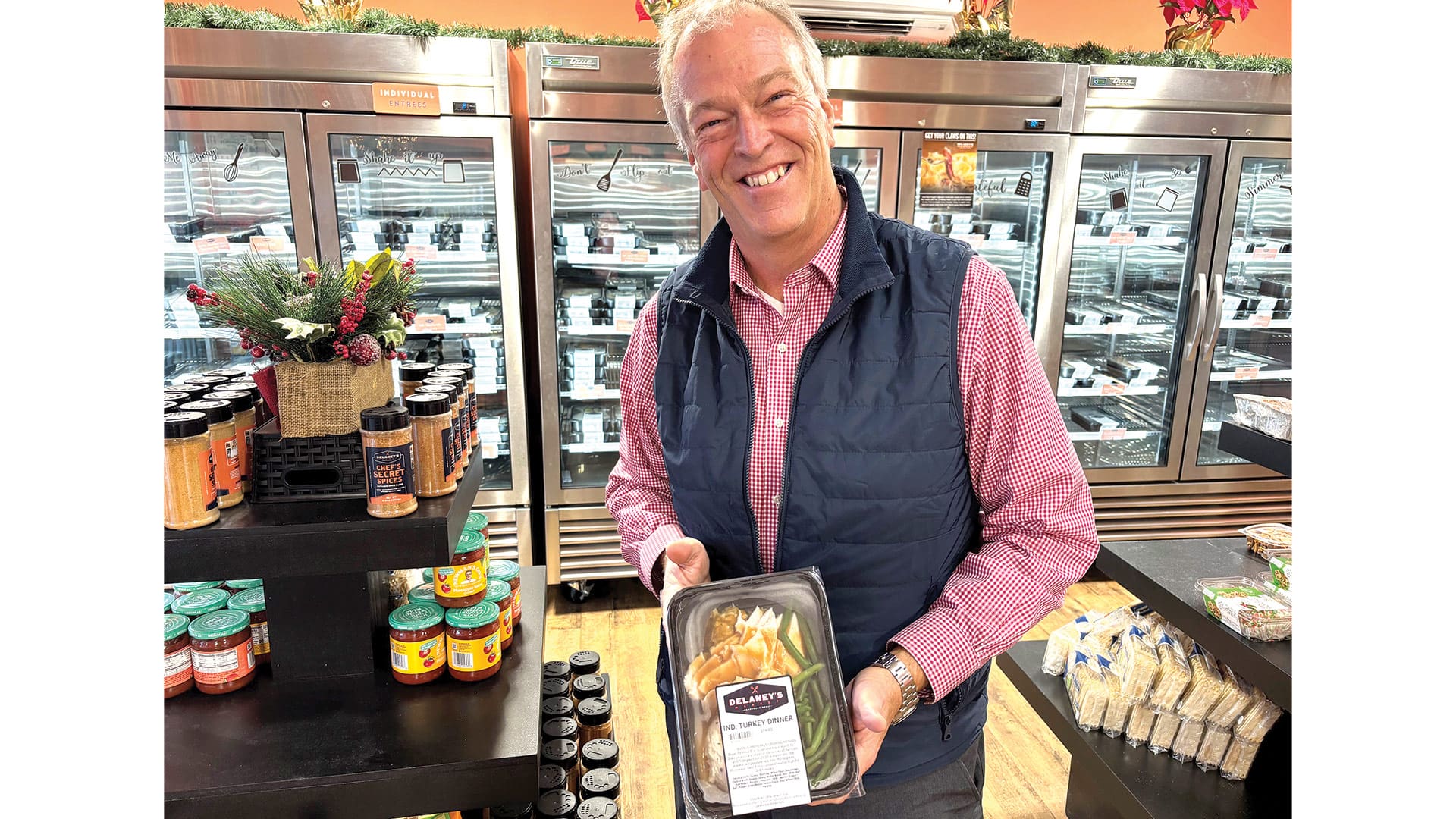
 

Things Are Heating Up

Numbers certainly help tell the story of Mount Holyoke’s geothermal system. And there are quite a few of them.

When completed, there will be 26 miles of geothermal piping to be installed under the campus. The project also entails the drilling of 230 bores, each of them 600 feet deep, that will heat and cool 43 buildings covering 1.6 million square feet of real estate.

The most important numbers, though, are 2037 and 100% carbon neutrality. The former is a date, the college’s 200th birthday, and the latter is a goal to be reached by that date, a goal that in many ways inspired the geothermal project, said Youngblood, adding that this goal coincided with another one — to replace a 100-year-old, highly inefficient steam-distribution system.

Members of the second and third generations of the extended Yee family

Members of the second and third generations of the extended Yee family now managing the Bean Restaurant Group: from left, Matt Yee, Nathan Yee, Sonny Wae, Bonnie Wae, Emma Yee, Nick Yee, and Edison Yee.

Tracing the genesis and progression of the project, Youngblood, an alum who has been working in her current position for three years, said the college made a climate commitment in 2016, and in 2018 a sustainability task force was formed to look at how the college could reduce its carbon emissions.

That group’s work soon focused on the school’s fossil-fuel-powered heating plant and five large steam boilers, which produced 80% of those emissions. And it led to an energy master plan that looked at a handful of different technologies and was guided by several criteria, including cost, greenhouse-gas reduction, and technology that was both adaptable and able to offer engagement opportunities for on-campus researchers and students.

These and other guidelines were met by geothermal heat-exchange technology, she went on, adding that Mount Holyoke took inspiration — and some lessons — from a similar project at Carleton College in Minnesota, and commenced work in 2022.

“This is a bold step for the college,” Youngblood said as she put the many aspects of this initiative into perspective. “I’m an alum of the college, and the day the board approved this project, I felt so much pride in my institution that they had the courage to take such a bold step to preserve the environment, to preserve the legacy of Mount Holyoke. We’re a small liberal-arts college in Western Massachusetts, and many of our peers with larger endowments have yet to take such a step.”
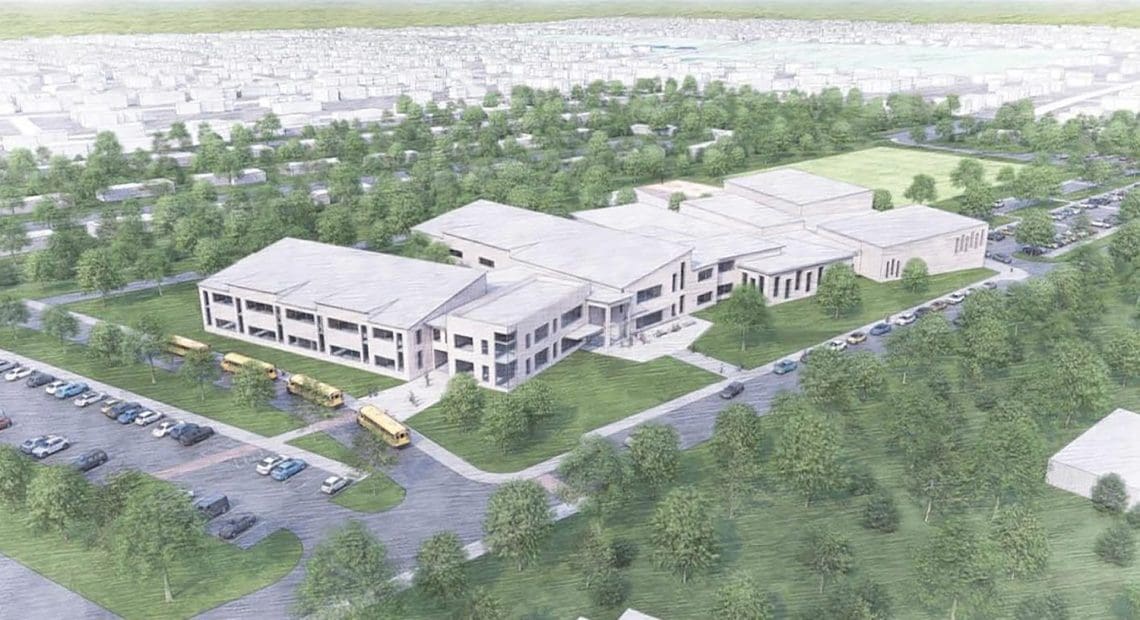
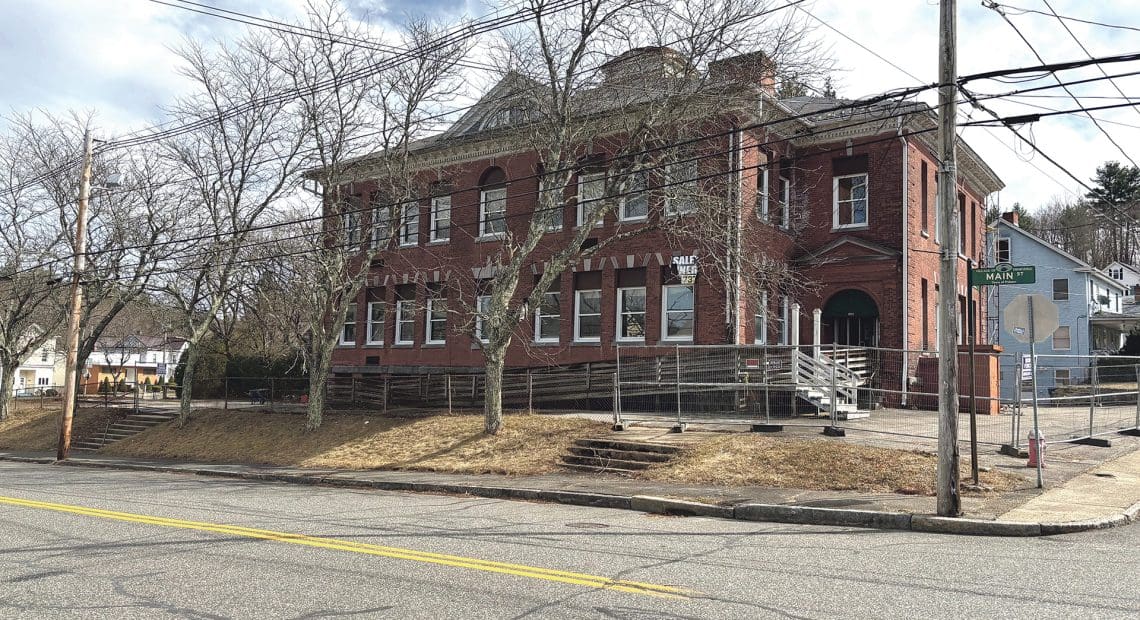
As Wong noted, the geothermal project is one of many developing stories in South Hadley. Others include early-stage work to replace Mosher Elementary School; recent improvements to Buttery Brook Park, including wildly popular pickleball courts; the launching of an affordable housing trust to address that pressing issue; creation of a Human Services department; gaining designation from the state as a green community; and planned infrastructure work on Main Street.

Meanwhile, the town is also launching a strategic plan for its municipal golf course. Conceived in the late ’90s, when golf was enjoying a Tiger Woods-inspired boom, the course, called the Ledges, struggled for many years, but has fared better recently as golf has enjoyed another surge, this one fueled in part by the pandemic.

“The course is operating in the black, but it’s not covering all the debt right now,” said Wong, noting that the debt incurred to build the course and clubhouse will be paid off in four years, and the town wants a plan in place for maximizing that asset. A major focus will be on open space for the public, such as accessible walking trails.


It Takes a Village

While Labrecque takes the title COO of Center Redevelopment Corp., he likes to refer himself as an ‘innkeeper.’

In fact, at least one tenant calls him that, he said, adding that the hospitality-toned title is a better reflection of what he does day in and day out — and also what the Village Commons was designed to be and has certainly become.

“When you’re managing more than 70 tenants, and most of them are mom-and-pops, you really have to take on the innkeeper mentality, almost as if you’re running a bed and breakfast,” he explained. “And it’s always hands-on, very different from a commercial mall environment.”

As noted earlier, the Commons is noted for both its stability — some tenants go back to the very beginning in 1987, and many have called the complex home for 30 years or more — but also for the change that comes to any facility that is home to retail and office tenants.

That stability is marked by 100% occupancy on the retail and hospitality side of the equation, and 92% on the office side, which is strong compared to many office facilities in the post-pandemic, remote-work era, but still down from the Commons’ history of full occupancy, Labrecque noted.

“Hybrid work schedules continue to impact the office market, therefore creating an abundance of nationwide vacancies, leading to a heated and competitive leasing environment,” he said, adding that, while, these and other headwinds continue to present challenges to the Commons, the facility continues to more than hold its own.

Recent additions include Kiao Wan Thai restaurant, which opened its doors in October, and Eliza Moser Fine Art. Moser is an internationally trained oil painter, art instructor, and gallerist, and her facility hosts a broad range of weekly classes, paint nights, and one-day workshops that are routinely sold out.

Meanwhile, established tenants cover many sectors and include Odyssey Bookshop, Darby O’Brien Advertising, HUB International, Ochoa Day Spa, and Tower Theaters, which, like most cinema operations, is still in recovery mode from the pandemic, but making strides and continuing to be a destination that brings people to the Commons and its many restaurants.

“When you’re managing more than 70 tenants, and most of them are mom-and-pops, you really have to take on the innkeeper mentality, almost as if you’re running a bed and breakfast.”

Looking forward, the Commons is looking to advance what would be its first real expansion in more than 30 years, said Labrecque, adding that this expansion will come on the residential side, and with the twin motivations of meeting the town’s glaring need for more housing, while also providing more revenue with which to meet the growing costs of maintaining a complex now approaching its 40th birthday.

Additional residential units would constitute phase 3 of the Commons project, and it has been talked about for at least 20 years, he noted, adding that efforts have been slowed by the Great Recession, the pandemic, and other forces, but he expects some movement on this front within the next year.


Next on the Menu

Meanwhile, the Bean Group works to balance its ongoing efforts to expand with the day-to-day work of managing and operating 13 restaurants — and, during September, three more operations at the Big E.

It’s a complicated balancing act, said Nate Yee, a member of the third generation of the family now managing the group.

“We put a lot on our managers; we have a great amount of trust in them,” he told BusinessWest. “It comes with a lot of communication and checkpoints — that’s really how we do it. What sets us apart is that family touch where we’re in the units; we try our best to get to every restaurant at least once every week. It doesn’t always happen, and we rely on our managers.”

While the group is spread out across Western Mass. and now into the Hartford area, roughly half its restaurants are in South Hadley. In addition to those at the Commons, there are also the Halfway House Lounge, Johnny’s Roadside (a diner focusing on breakfast and lunch), and the Boathouse, located on the Connecticut River.

The 13 restaurants in the group run the gamut, from sushi to cheeseburgers and milkshakes at the two White Hut locations, and this diversity certainly makes it interesting, said Nick Yee, another of Johnny’s sons, noting that, beyond the wide variety of restaurants, the group is also coping with changes in eating habits, including a tendency among the younger generations to eat earlier and get home earlier.

“In South Hadley, our busiest time starts at 5, and it goes until 8,” he noted, adding that only a few years ago, peak time was closer to 7. “In South Hadley, we used to be open until midnight; now, we’ve cut that down to 9:30, 10.”

As for opportunities for expansion, there are many of them, said Nick, noting that “every restaurant is for sale, really.”

Nate agreed, adding that the group looks at many factors when it explores opportunities — from the lease conditions to parking; from the talent pool to the condition of the building in question — but, ultimately, it comes down to leadership and whether it would make a good fit with the group’s culture.

Maintaining that culture is job one, they agreed, adding that doing so contributes to awards like the one from RAM, but mostly leads to continued growth and success for a group that started nearly 60 years ago and is still thriving, especially in this town that’s progressing right along with it.


Community Spotlight

Community Spotlight


Ralph Santaniello, right, with executive chef and co-owner (and brother-in-law) Michael Presnal

Ralph Santaniello, right, with executive chef and co-owner (and brother-in-law) Michael Presnal at the recently opened Lola’s at the Longmeadow Shops.

Ralph Santaniello was gushing about the Longmeadow Shops as the location for a restaurant — specifically the one operated by his family, Posto, which features Italian cuisine.

“It’s just ideal,” he said, listing everything from location — it’s in Longmeadow, but just a stone’s throw from East Longmeadow, Enfield, Springfield, and other communities — to its many shops, which draw people for an extended stay that could include a meal; from the strong support for local businesses from the Longmeadow community to the growing number of restaurants in or near the shops, creating a dining destination of sorts.

“It’s becoming a little like West Hartford or Northampton years ago,” said Santaniello, noting that this combination of factors led his family to double down, if you will, and convert the former Umi’s Asian restaurant (and, before that, a Friendly’s) at the shops into Lola’s, described as a ‘coastal Mexican’ restaurant.

“Mexican is now the most popular food behind Italian food in this country,” Santaniello said. “And we’re taking a different look at Mexican food; for years, it was what Mexican-American food was; now, you’re getting more authentic Mexican food from different parts of Mexico.”

Lola’s adds this authentic Mexican eatery to a growing, diverse roster of restaurants in town that also includes Posto, Max Burger, and Delaney’s Market, all in the shops, as well as the Meeting House, featuring ‘creative New American’; Royal Spice, an Indian restaurant; and a Jersey Mike’s, all in the plaza across Williams Street from the Longmeadow Shops, and Fletcher’s barbeque restaurant on Longmeadow Street.

This steady progress toward becoming a dining destination is one of many storylines in this residential community of roughly 16,000 people.

Another is the relatively new ownership at the Longmeadow Shops. It was acquired roughly a year ago by Regency Properties, which saw a unique asset — what Jack deVilliers, managing director of the company’s Northeast region, called “the heart and soul of the community.”

“This has the DNA that we really like — it’s a community shopping center,” he said, noting that the shops, fully leased for as long as anyone can remember, is a gathering spot, not just for Longmeadow residents, but those in neighboring communities as well. “This property checks all the boxes — location, tenant mix, access, visibility, parking; it’s all there.”

On the municipal side, the town is making progress with plans to consolidate its two middle schools and construct a new facility at the site of one of them, Williams Middle School, Town Manager Lyn Simmons said. This is a $150 million project, according to the latest estimates, expected to open its doors in the fall of 2028 if all goes according to schedule.

Meanwhile, plans are moving forward for work at a major intersection, and for improvements at one of the municipal parks, projects that will now be coordinated by employees working at a new complex of town offices in the former Greenwood Park Elementary School.

“This has the DNA that we really like — it’s a community shopping center.”

That move leaves the former offices, in the Community House on Longmeadow Street, available for reuse, said Simmons, adding that the town will be commissioning a study to determine the best uses of not only the Community House, but Town Hall, located next door, and Old Town Hall, located about a half-mile down Longmeadow Street.

On the business side, all eyes are on the former First Church of Christ Scientist property on Williams Street, just east of the Longmeadow Shops. The property, unused for several years now, has been acquired by the Springfield-based Colvest Group. While no specific plans have been announced, Colvest has said the planned development, to be called Towne Shoppes of Longmeadow, will include retail (high-end shops) and one or more restaurants to complement the town’s growing mix.

Jack deVilliers

Jack deVilliers says the Longmeadow Shops checks all the boxes for him, from location and tenant mix to access, visibility, and parking.

deVilliers said the development, which has been several years in the making, will in many ways be an extension of the shops, one that will complement that complex and make it even more of a magnet for diners and shoppers.

“This will only strengthen the gravitational pull of that area,” he said, adding that Regency is already working with Colvest on upgrades to access where the properties join.

Meanwhile, three years after fire destroyed the Maple Shopping Center at the corner of Maple and Shaker roads near the Enfield line, the shell of a new plaza has been constructed, said Simmons, adding that its owners have not announced any tenants to date.

She noted that both commercial projects are important developments for the town, which has very few developable parcels — meaning few opportunities for business growth.

For this latest installment of its Community Profile series, BusinessWest takes an in-depth look at Longmeadow and the many developing stories there.


Food for Thought

As he talked with BusinessWest at a table in Lola’s, Santaniello said there is a considerable amount of dining history at that site.

Indeed, for several decades, this was a flagship location for Friendly’s, the chain started by Longmeadow Shops developer S. Prestley Blake and his brother Curtis.

Later, it was Umi’s, which essentially “papered over and bricked over” the Friendly’s as it installed its own look.

“This certainly provides an opportunity for development, job creation, and new growth, which is not something we see very often, especially to the extent we can see from this parcel.”

“As we dug through, we saw different iterations of Friendly’s, including a fireplace,” said Santaniello, adding that his family essentially took the storefront down to the studs in creating Lola’s, which opened in March and is off to a solid start.

“We had a great launch, and we’ve settled in,” he noted. “Everyone rushes in to try a place at first — every night is like Saturday night when you first open up. That tapers off eventually, and then you build it back up, and that’s where we are now.”

This success has not come at the expense of Posto, or probably any of the other restaurants in town, he said, adding that the emergence of a “restaurant community,” as he put it, helps bring more people from across the region to the town.

Longmeadow at a glance

Year Incorporated: 1783
Population: 15,853
Area: 9.7 square miles
County: Hampden
Residential Tax Rate: $20.68
Commercial Tax Rate: $20.68
Median Household Income: $109,586
Median Family Income: $115,578
Type of Government: Open Town Meeting; Town Manager; Board of Selectmen
Largest Employers: Bay Path University; JGS Lifecare; Glenmeadow
* Latest information available

Meanwhile, for the family, which is selling the third restaurant it owns, the Federal in Agawam, Lola gives them two operations about 250 yards apart, which brings several advantages, as well as lots of steps for Santaniello, who will go back and forth between the two spots at least a few times each day.

He passes an eclectic mix of shops and eateries, one that is historically stable, a retail property where vacancies — and pending vacancies — are filled quickly.

Such is the case with one storefront, soon to be available as its owners retire, that will be filled by Warby Parker, the manufacturer and retailer of eyeglasses, contact lenses, and other products.

“When you look at the lifestyle centers that Warby Parker has been going into … they saw this, loved the community-center aspect of this, and jumped on it,” said deVilliers, adding that the location is slated to open in the summer of 2025.

Meanwhile, Longmeadow’s stable of restaurants should have at least one addition with the development of the neighboring church property, said Simmons, adding that the project is an important development for the town, which has little in the way of developable land or property.

“We have very few parcels that can be redeveloped,” she noted, adding that a measure was passed at the Nov. 12 town meeting to update the town’s zoning map to reflect an article passed at an earlier town meeting to change the zoning of the property from residential to business. “This certainly provides an opportunity for development, job creation, and new growth, which is not something we see very often, especially to the extent we can see from this parcel.”


Developing Stories

As for the Maple Road plaza, known to most locals as the Armata’s Plaza, for the supermarket that was located there, the shell of a new facility has been constructed, as well as a new parking lot, said Simmons, adding that the owners have not provided information on potential new tenants, which will not include Armata’s.

As these commercial developments unfold, there are several municipal projects advancing as well, starting with the new middle school.

The town’s two middle schools, Williams and Glenbrook, are aging structures, opened in the ’60s, noted Simmons, adding that the trend in communities of this size is toward one middle school, which in this case would be built on the athletic fields adjacent to Williams, with the existing structure then demolished.

“Our population at each school is about 330 students, so when we consolidate, we’ll have 660 at one site, which is the standard model used in many districts across the state,” she explained, adding that the town will gain efficiencies, and certainly reduce costs, by operating and maintaining one school instead of two.

The project has received approval from the state and is the queue for funding, said Simmons, noting that a town-meeting vote will take place in the fall of 2025.

Meanwhile, the consolidation of the middle schools would give the town an opportunity for redevelopment of the Glenbrook site, said Corrin Meise-Munns, assistant town manager and director of Planning & Community Development, adding that talks about what to do with that property are still in the very early stages.

Other municipal projects include a state Land and Water Conservation Fund grant, the first one the town has received in 30 years, to be used for renovations of the playground at Bliss Park.

The project comes with a $1.6 million price tag, with the grant covering just over half that total. The work involves replacing the playground, benches, and picnic tables and making them all ADA-accessible. The work complements significant investments in the park’s pool, including upgrades to the pump room, said Simmons, adding that the next phase of that initiative is a liner.

The town has also received its first-ever MassWorks grant, $285,000 to design improvements to the intersection of Williams Street, Redfern Drive, and Frank Smith Road, site of the church adjacent to the Longmeadow Shops that is slated for redevelopment.

“It’s a heavily trafficked area, and there have been discussions for some time about the need for pedestrian, bicycle, and vehicular improvements, and this will fund that design work,” Simmons said, adding that the town will look for additional grant monies to help pay for the recommended improvements.

Community Spotlight

Community Spotlight

James Donahue says visitation at Old Sturbridge Village has nearly returned to pre-pandemic levels.

James Donahue says visitation at Old Sturbridge Village has nearly returned to pre-pandemic levels.

‘Converge.’

That’s the word you hear probably most often when people talk about Sturbridge. And with good reason.

That’s what families, wedding guests, members of trade associations, tourists, and other constituencies do. They converge here because … well, it’s easy to, given that this community of almost 10,000 residents is located at the intersection of I-84, the Mass Pike, and Route 20; sits just a short distance from Worcester Municipal Airport; and is not far from both Worcester and Springfield.

“Sturbridge has an amazing location — it’s right in the heart of Massachuetts,” said Monique Joseph, president and CEO of Discover Central Massachusetts, the regional tourism bureau for a 35-community area that includes Sturbridge. “It’s a very popular location for the meeting planner or the event planner, and for bus tours, and for weddings.”

But this convergence quality, if you will, is just part of the story in Sturbridge. Another part — and it’s related, and a reason why people meet here — is everything they can do after they converge.

They can take in some history — at Old Sturbridge Village (OSV), which recreates life in rural New England in the early 19th century, but also the historic town common and other spots. They can hike — there are dozens of miles of trails in this rural community, as we’ll see. They can shop and enjoy fine dining, craft beer, and some locally distilled spirits. They can camp, bicycle, and kayak. They can buy antiques — Brimfield is one town over. They can even do some axe throwing (although that’s mostly a ‘locals’ thing), and soon, they’ll be able to take in a movie with new ownership of an eight-screen complex at the Center at Hobbs Brook set to open later this year.

“It’s called Sturbridge Luxury Cinemas, a dine-in theater with luxury seating,” said Alexandra McNitt, executive director of the Chamber of Central Mass South, which includes 12 communities, including Sturbridge. She said the theater complex comprises one of several new businesses, including some retail, that will provide still more for visitors to do.

There wasn’t much converging — or much of anything listed above — during the pandemic, so Sturbridge suffered as much as any community in this region during the pandemic, losing several hospitality-related businesses, including the movie complex and the Stageloft Repertory Theater, while countless others experienced severe setbacks. But the town has made what most would say is an almost full recovery from COVID and the workforce challenges that followed, said Mike Harrington, a principal at the Publick House, an historic inn and restaurant known for its history, holiday-season activities, and even the occasional rumored ghost sighting.

“Our rooms business has been very good, up 6% from last year,” he said. “We see a lot more activity on weekends with people stopping through Sturbridge on their way to Maine, New Hampshire, or Vermont — they stay overnight — and we’re seeing corporate business come back, which is very helpful. We’re on a good path.”

James Donahue, president and CEO of OSV, agreed, noting that, while school field trips, a significant portion of total visitation, have not fully come back to pre-pandemic levels (transportation costs are certainly a factor), overall numbers are approaching those posted in 2019 and before, despite ever-growing competition for the time — and spending dollars — of families.

“Our rooms business has been very good, up 6% from last year. We see a lot more activity on weekends with people stopping through Sturbridge on their way to Maine, New Hampshire, or Vermont — they stay overnight — and we’re seeing corporate business come back, which is very helpful. We’re on a good path.”

“Technology plays a much bigger role in what people are doing now, and there continue to be more demands on families; the station-wagon trip isn’t as common as it was when I was growing up,” he said, adding that, despite these headwinds, ‘the Village,’ as it’s called, continues to draw visitors from across the region — and across the country.”

For this latest installment of our Community Spotlight series, we turn the lens on Sturbridge, where there’s a whole lot of converging going on.


Walking the Walk

McNitt told BusinessWest she recently welcomed an addition to the family, a new puppy.

Among other things, this canine companion has provided her with a greater (let’s say even greater) appreciation of the trail network in this community.

“The Sturbridge Trails Committee has created some really vast, fun, passive-recreation networks,” she said. “And they’ve made them accessible.”

Monique Joseph says Sturbridge’s location at the crossroads of New England makes it the ideal spot

Monique Joseph says Sturbridge’s location at the crossroads of New England makes it the ideal spot for weddings, association meetings, family reunions, and other types of gatherings.

There are more than 50 miles of trails in Sturbridge. They include the Grand Trunk Trail, also known as Titanic Railroad, because it follows the path of an old railroad bed, a project that was abandoned after its founder perished on the ill-fated ocean liner.

There’s also the Burgess Discovery Trail, located on the grounds of Burgess Elementary School, a short, family-friendly walk that offers many opportunities to interact with nature, including a wetland bog bridge, glacial boulders, and local wildlife; as well as the Tantiusques Reservation, where hikers can see remnants of New England’s first mining operation, a graphite mine operated by the native Nipmuc tribe and local English colonists until it was abandoned in the late 1800s.

The walking and biking trails, which often combine nature and history, are just one of the many converging (there’s that word again) stories in Sturbridge, where the phrase ‘something for everyone’ is certainly not hyberpole, Joseph said.

“It’s a charming town that strikes the perfect balance; it’s rich in history, and it’s modern-day fun, so it is a wonderful location to attract families,” she noted. “Whether you’re looking for history or outdoor activities, or you just want great food, Sturbridge has it all.”

One of the main attractions, of course, is OSV, the largest outdoor history museum in the Northeast, which includes more than 40 structures, everything from several houses and a law office to a bank and a blacksmith shop.

Donahue told BusinessWest that the Village had to close for several months at the height of the pandemic, a scary time during which gifts from donors helped the facility keep its employees, many of them with unusual skills, on the payroll.

“It’s a charming town that strikes the perfect balance; it’s rich in history, and it’s modern-day fun, so it is a wonderful location to attract families.”

“My fear was that, if I have to lay people off and I lose a blacksmith or a tinsmith or someone who’s an expert in textiles … those are difficult skills to find in the marketplace,” he said. “So the key, to me, was keeping everyone whole until we opened again.”

OSV has certainly been helped by the fact that it is mostly an outdoor museum, and over the past few years, it has seen overall attendance rise steadily — it was up 8% for the fiscal year that just ended in September — and approach the 250,000 mark that was the annual average pre-pandemic.

More recently, it’s been aided by several months of cooperative weather — a streak that has continued into November.

Sturbridge at a glance

Year Incorporated: 1738
Population: 9,867
Area: 39.0 square miles
County: Worcester
Residential Tax Rate: $16.49
Commercial Tax Rate: $16.49
Median Household Income: $56,519
Family Household Income: $64,455
Type of government: Town Administrator, Open Town Meeting
Largest Employers: OFS Optics, Old Sturbridge Village, Arland Tool & Manufacturing Inc., Sturbridge Host Hotel & Conference Center
* Latest information available

“I wrote a quick update to our board recently talking about the success of October, and one of the members said, ‘you’re doing a great job.’ I said, ‘it wasn’t me — it was Mother Nature all the way,” said Donahue, who is now gearing up for the holidays, perhaps the busiest time of year at OSV. Indeed, Christmas by Candlelight at the Village begins the day after Thanksgiving and includes decorations in all the houses, special food, bonfires, carolers, and, a new addition this year — a show in the museum’s theater on the history of Christmas carols called “Upon a Midnight Clear.”


If the Spirit Moves You

In addition to history, Sturbridge has a large and diverse hospitality sector that boasts several restaurants, lodging facilities, wedding venues, breweries, and a recent addition, Deep Roots Distillery, which is now also home to Into the Grain Axe Throwing.

Keith Devarenne, co-owner of both ventures, said the distillery, like many other recent entrepreneurial ventures, came about as a result of some soul searching during the pandemic.

“I retired from the Department of Corrections in Connecticut in 2020, and my wife started working at home,” he recalled. “She said, ‘we should open a distillery.’ I said, ‘you’re crazy.’ She told our other partner that, and he said ‘you’re crazy,’ too.”

They would put down the idea, but also research it — and that research told them there weren’t many distilleries in the area, which posed a business opportunity.

Michael Harrington, left, seen here with Michael Glick

Michael Harrington, left, seen here with Michael Glick, general manager of the Publick House, says 2024 has been a solid year for the Sturbridge landmark, marked by an increase in business gatherings.

They seized it, moving from home experimentation to buying an old cotton mill, where they now produce a wide variety of rums, vodkas, whiskeys, and liqueurs.

“The hardest thing was making the jump to doing this professionally and opening the doors,” he said, adding that the venue draws visitors from across this region and well beyond, including many stopping at Tree House Brewing Co. in neighboring Charlton.

The axe-throwing facility, which opened in May 2023, came about through a desire to provide something else for locals — and maybe some visitors — to do, said Devarenne, adding that a portion of the old mill behind the distillery’s tasting room was renovated for that purpose, and they made a fairly modest investment in axes, targets, and the lanes that keep participants safe.

As in the few other locations where such facilities have been created, axe throwing is catching on in Sturbridge, said Devarenne, noting that groups will often come in after dinner at one of the local restaurants (including the one at the distillery), on weekend afternoons, or for the league on Thursday nights.

“We’re very weather-dependent — if it’s rainy on Friday and Saturday, we’re usually very busy,” he said. “So far, so good; people are coming in and giving it a try.”

While axe throwing is new to Sturbridge, the Publick House is quite old, dating back to 1771, when it was a stagecoach stop. Harrington’s family acquired the property in 2003 and has made significant investments in new rooms and renovations to existing facilities.

The complex is one of several lodging destinations that play host to a wide range of different events, from business and trade-association meetings to family gatherings to weddings, which are a huge business in this community — again, partly because of its location in the middle of the state and the middle of New England, right off major highways.

Each of those segments is solid, if not booming, said Harrington, noting that the facility is on pace to handle 153 weddings this year, which is about average, although it has done as many as 180.

Meanwhile, corporate business is coming back, to about 70% of what it was before the pandemic, he added, noting that, after years of meeting by Zoom, business groups and associations are meeting in person again, and taking advantage of Sturbridge’s central location — which remains, as always, an ideal place to converge.

Community Spotlight

Community Spotlight

Mayor Peter Marchetti says several projects in various stages of development should help ease a critical housing shortage in Pittsfield.

Mayor Peter Marchetti says several projects in various stages of development should help ease a critical housing shortage in Pittsfield.

Starting early in his career in financial services at Pittsfield Cooperative Bank, Peter Marchetti, like many of his colleagues, made it a point to get involved in the community.

He donated time and energy to everything from the United Way to youth bowling; from Pittsfield Community Television to the Pittsfield Parade Committee.

But starting in the late ’90s, he took that involvement to a higher plane, running, successfully, for a seat on the City Council. In 2011, he sought to take things to a still higher level, running for mayor, only to lose a very tight race. After a hiatus from elected office, he returned to the City Council, and in 2023 launched another bid for the corner office, this one successful.

When asked why, he indicated that there was still much work to be done as this city of roughly 44,000, the largest in the Berkshires, continues its transition from being, in essence, a company town — in this case General Electric — to a city with a far more diverse economy, and one that has moved on from GE in every way, including a reimagining of the huge, mostly undeveloped tract that was its massive transformer-manufacturing complex.

“I saw our city at a crossroads, where we have the opportunity to reinvent ourselves; there are many people who still look at us as the old GE manufacturing community. I think we have some opportunities to turn the corner, and I wanted to lead that turnaround,” said Marchetti, who retired from Pittsfield Co-op as senior vice president of Retail Banking Operations. Ten months into his first four-year term, he can cite progress on several fronts.

These include the William Stanley Business Park, created at the GE site, where work is set to commence on a 20,000-square-foot facility that will provide room to grow for many of the startups that now call the Berkshire Innovation Center home.

And also the city’s downtown, still evolving from the GE days, where new businesses have landed and much-needed housing initiatives are taking shape (more on these later).

Beyond Marchetti’s first year in office and his emerging agenda, there are plenty of other developing stories in Pittsfield, many of them taking place downtown, where several issues and trends are colliding, and where that ongoing process of evolution continues.

The expansive downtown area, while now home to several new business and with a falling vacancy rate, continues to experience fallout from the emergence of remote work and a broad decline in daily foot traffic, which is impacting many hospitality and service-oriented businesses.

“Downtown has shifted away from some of our larger companies that would have people here during the day and out for lunch, grabbing coffee, or going out to a bar after work. Now that they’re remote, we’re definitely in need of people downtown regularly. The addition of housing in our downtown will make that difference.”

This decline has been one of the driving forces in the return of First Fridays at Five and other events geared toward generating additional foot traffic, while also helping to inspire efforts to redevelop some downtown properties into housing, which is in short supply and thus a negative force in economic development and business growth.

Indeed, like other communities facing this challenge, Pittsfield is looking at ways to convert office and retail spaces into housing — opportunities that will help meet the need for housing while also bringing back some of the vibrancy lost to remote work.

The return of First Fridays at Five

The return of First Fridays at Five has helped bring more foot traffic to downtown Pittsfield.
Photo by Autumn Phoenix Photography

“Downtown has shifted away from some of our larger companies that would have people here during the day and out for lunch, grabbing coffee, or going out to a bar after work. Now that they’re remote, we’re definitely in need of people downtown regularly,” said Rebecca Brien, managing director of Downtown Pittsfield Inc. (DPI). “The addition of housing in our downtown will make that difference.”

Jonathan Butler, president and CEO of 1Berkshire, the county-wide economic-development agency, agreed.

“I think it’s naive to think that everyone is going to go back to 9-to-5 at the office,” he said. “So what we’re doing throughout the Berkshires, with downtown Pittsfield being a centerpiece of this, is looking at the housing crisis, how we can get more housing built, and looking at some of this commercial space in our downtown.”

For the latest installment in its Community Spotlight series, BusinessWest turns its lens on Pittsfield, a city that continues to move on from its GE-dominated past and put the focus squarely on the present and future.


Progress Report

Marchetti grew up in Pittsfield, and, like everyone his age who did, he has fond memories of life in the city when GE was bustling and employing north of 10,000 people, most of whom would be spending their paychecks in a thriving downtown dominated by all kinds of retail, including several large department stores.

Like his immediate predecessors in the mayor’s office, Marchetti stresses a need not to look back, but to instead continue turning the pages on an ongoing evolution.

“People can’t find quality housing in the rental market that is desirable enough for them to stay here. Or, when you’re recruiting and looking to bring transplants to the region, they’re not able to buy a home at a price point that’s realistic, or find quality rental housing that meets their expectations. That’s a huge issue for us.”

He noted progress in many corners of the city, including the former GE site. Once a huge and imposing mass of concrete, the site is being made less intimidating and more ready for redevelopment, one parcel at a time.

Indeed, the parcel known as site 9, has been “completely rehabilitated,” said Marchetti, meaning there has been landscaping and other improvements designed to make it shovel-ready. Meanwhile, $500,000 in grant funding has been received to do the same for sites 7 and 8.

Plans are also moving forward for the construction of a new facility near the innovation center, one that will accelerate new-business development in the park, he noted.

“We have several businesses that have started in the innovation center, and they’re running out of space at that location. This is their opportunity to expand and allow space to be cleared up for additional incubator companies.”

Meanwhile, there has been progress on the housing front, the mayor said, noting that, like most Berkshires communities, Pittsfield is suffering from a shortage of housing, especially of the affordable variety, which is making it increasingly difficult for many to live — or stay — in the city, while also impacting businesses already facing challenges with building and maintaining a workforce.

First Fridays at Five is just one of many initiatives undertaken by Downtown Pittsfield Inc.

Rebecca Brien says the return of First Fridays at Five is just one of many initiatives undertaken by Downtown Pittsfield Inc. to bring foot traffic, and vibrancy, to the downtown area.
Photo by Autumn Phoenix Photography

Within the downtown, there are two projects in early-stage development. One involves conversion of the Wright Building on North Street and an adjacent shoe store, formerly home to a candlepin bowling alley and several offices and shops, into roughly 30 units of affordable housing. The other involves redevelopment of the White Terrace apartments, which will bring another 25 to 30 units online.

Meanwhile, two transitional housing projects are slated to be underway in the coming months, and plans are being forwarded for conversion of a former elementary school into housing, said Marchetti, who said projects currently in the pipeline will add another 100 units, but the city needs another 250 to 300 units, minimum, to meet the growing need.

“The hardest part of bringing new housing online is the millions of dollars it costs to redevelop these properties,” he said, adding that the price tag for the Wright Building project exceeds $17 million.

Butler concurred, but noted that housing is critical to Pittsfield’s ongoing efforts to reinvent itself and sustain the businesses that now call it home.

“Housing is the issue contributing to the workforce problems facing employers today,” he explained. “People can’t find quality housing in the rental market that is desirable enough for them to stay here. Or, when you’re recruiting and looking to bring transplants to the region, they’re not able to buy a home at a price point that’s realistic, or find quality rental housing that meets their expectations. That’s a huge issue for us.”


Downtown Developments

Additional housing is expected to bring more vibrancy and new opportunities to the downtown area, said Brien, noting that there are already several initiatives in various stages of development to bring more foot traffic to the area.

One has been the return of First Fridays at Five, which is an amalgam of the former Third Thursday and First Friday Artswalk events, aimed at bringing back what Brien called a “street-festival vibe.”

Pittsfield at a glance

Year Incorporated: 1761
Population: 43,927
Area: 42.5 square miles
County: Berkshire
Residential Tax Rate: $18.45
Commercial Tax Rate: $39.61
Median Household Income: $35,655
Median family Income: $46,228
Type of Government: Mayor, City Council
Largest Employers: Berkshire Health Systems; General Dynamics; Petricca Industries Inc.; SABIC Innovative Plastics; Berkshire Bank
* Latest information available

“We started small,” she said, referring to what was essentially a one-block initiative that started in May and featured everything from musical performers to a small-vendors market; from a beer garden hosted to Hot Plate Brewing to restaurants with on-street dining.

In September, the concept grew with something called Taste of Pittsfield, which featured additional music, dancing, art, food trucks, and activities stretched over another block, from Park Square to Columbus Avenue.

That larger footprint will be used next year, said Brien, adding that the goal moving forward is to continue to add new draws, such as a car show, to bring individuals and families into the downtown and let them experience all that is happening there.

And there is quite a bit in that category, she told BusinessWest, adding that downtown continues to change, evolve, and present a solid mix of anchors (the Colonial Theater and Barrington Stage Co.), long-time businesses such as Carr Hardware and Museum Outlets, and new or relatively new additions, such as Hot Plate; Thistle and Thorn, a gift shop; Witch Slapped, a “haven for all things metaphysical and mystical”; and the Plant Connector, which has a mission “to connect people to the joy of plants and foster a thriving green community.”

Meanwhile, the roster of restaurants continues to grow and evolve, she went on, listing a new steakhouse in Hotel on North; BB’s Hot Spot at the Lantern Bar, a Jamaican restaurant on North Street; and Marie’s North Street Eatery and Gallery, a contemporary deli located in the historic Shipton Building.

This mix is succeeding in making downtown more of a destination for locals and tourists alike, Brien said, adding that one challenge moving forward is to grow a steady pace of foot traffic that extends well beyond First Fridays and other event days.

Another challenge is sustainability, she went on, adding that DPI has created educational opportunities for business owners with the goal of helping them work on, though not necessarily in, their businesses to help ensure continued success.

“Stability is something we need to be focused on, with both existing businesses and the businesses that are coming in,” she explained. “We had a grant opportunity for some of our existing businesses this past summer that enabled them to work with a consultant on such things as marketing and workflow and accounting systems. And next year, we’ll be offering some co-op marketing dollars. We’re great at telling people downtown that we’re here, but we need to make that sure that word is getting out beyond us.

“And in January, we’ll be offering seminars on things like how to read a P&L sheet and how to use Facebook,” she went on, adding that DPI is committed to providing members with educational opportunities to help ensure that they thrive.

That’s just one of many examples of how leadership in this community, on many different levels, is indeed focused on the future and not on the past.