Home 2012 (Page 14)
Departments Picture This

Send photos with a caption and contact information to: ‘Picture This’
c/o BusinessWest Magazine, 1441 Main Street, Springfield, MA 01103 or to [email protected]

Future Returns

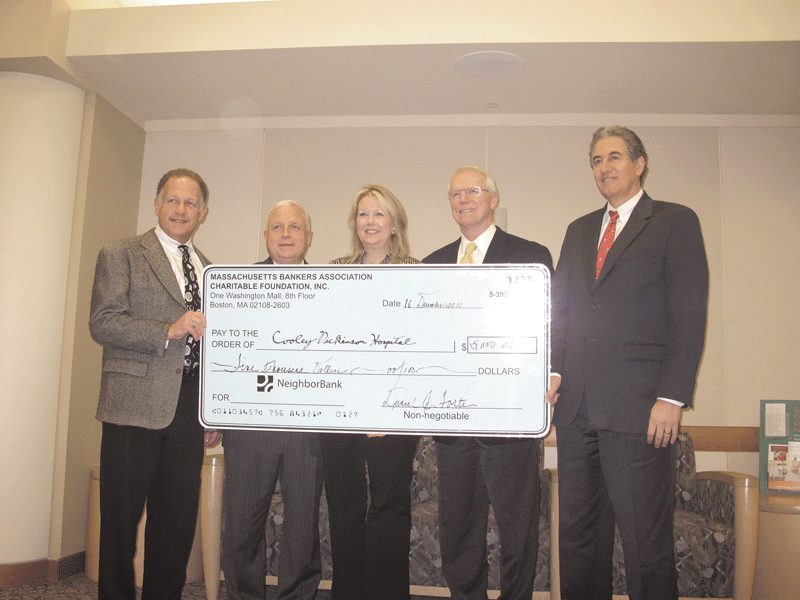
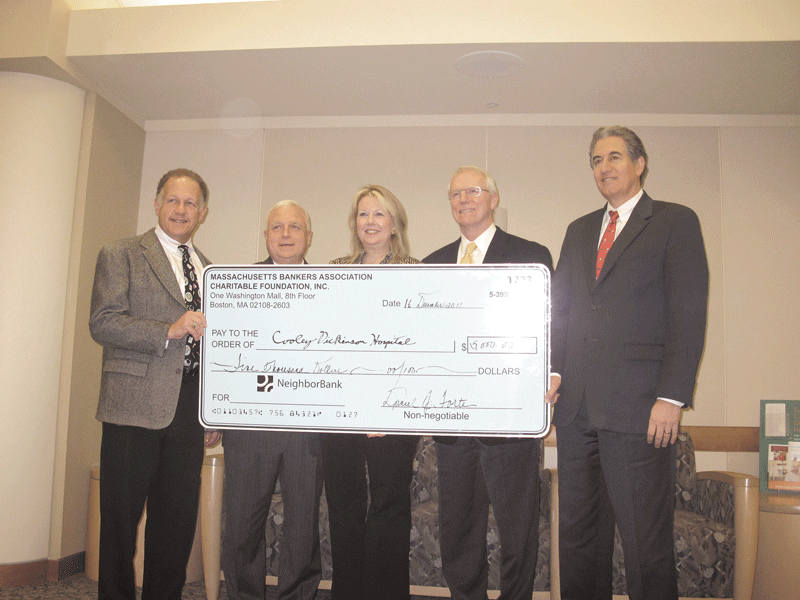
The Mass. Bankers Assoc. Charitable Foundation recently presented Cooley Dickinson Hospital with a check for $5,000 to support the hospital’s Building Our Future campaign. Pictured, from left, are Craig Melin, president and CEO of CDH; Ken Bordewieck, senior vice president of Easthampton Savings Bank; Joanne Finck, CDH Building Our Future campaign chairperson; William Stapleton, president of Northampton Cooperative Bank; and Dan Forte, president and CEO of the Mass. Bankers Assoc. Charitable Foundation.

Company Notebook Departments

TommyCar Corp. Adds Northampton Volkswagen
NORTHAMPTON — Carla Cosenzi and Thomas Cosenzi are continuing the legacy of their father, Thomas Cosenzi, by adding Northampton Volkswagen to the family-owned company, TommyCar Corp. The dealership, which will add approximately 25 to 30 new jobs in the Northampton area, is located at 48 Damon Road. “We want to strengthen the Volkswagen brand in the Pioneer Valley,” said Carla Cosenzi, president. “It is the leading company in diesel-engine technology, and the cars are an excellent value for the money. We believe we are exactly the right company to build excitement for this line of great cars.” Northampton Volkswagen will offer all models in Volkswagen’s line, including the Jetta, Passat, CC, Tiguan, Touareg, Golf, GTI, Golf R, Jetta SportWagen, Routan, Eos, and Beetle. The dealership will include a service department that offers full service, parts, and repairs for all Volkswagen models.

United Bank Foundation Awards $62,400
WEST SPRINGFIELD — Ten not-for-profit organizations recently received grants from the United Bank Foundation totaling $62,400 that serve individuals and families in the Springfield area and Worcester. The grants included $34,000 to United Way of Pioneer Valley, $2,000 to the Hampshire Community United Way, and $2,500 to United Way of Central Massachusetts. In addition, $6,900 was awarded to the Boys and Girls Club of West Springfield to replace game-room equipment destroyed by water damage as a result of the June 1 tornado. Also, Junior Achievement of Western Mass. received $5,000 from the foundation to support financial-literacy, work-readiness, and entrepreneurial programs for youths in kindergarten through grade 12, while Western New England University was granted $4,000 to purchase equipment for its School of Pharmacy. A $1,000 grant to ServiceNet in Northampton will provide program support for the Fit Together wellness center, which meets the needs of individuals with developmental and emotional challenges. The Worcester Education Collaborative received a $3,000 grant to help ensure that all Worcester public-school students have equal access to excellence in education, and a $3,000 award to the Worcester Youth Center will support the Leap to College program for urban youth. Dress for Success Worcester, which provides business attire for disadvantaged women seeking employment, was awarded $1,000 for operating funds. The foundation’s four primary funding areas of interest are education, health and human services, youth development, and cultural programs. Foundation guidelines can be found by logging onto www.bankatunited.com.

Firm Achieves LEED Gold Certification
SPRINGFIELD — Dietz & Co. Architects Inc. has received Leadership in Energy and Environmental Design (LEED) for Homes Gold certification from the U.S. Green Building Council for the recently completed units at the YWCA’s Campus of Hope. The new units provide housing that serves to transition women from domestic-violence shelters to longer-term living facilities. The 32,000-square-foot project is made up of 20 apartments and eight congregate housing units within its walls. The project was part of the larger Campus of Hope initiative that was started more than 10 years ago for which Dietz & Co. was the master planner. The firm also designed the first phase of the campus, a 60,000-square-foot building that includes administrative offices, meeting and classroom space, as well as an on-site shelter. The YWCA project was originally designed to achieve the LEED for Homes Silver certification level, but exceeded that level by achieving Gold certification. Several factors that supported the Gold certification include super-insulated walls and airtight construction, efficient mechanical systems that include roof-mounted photovoltaic panels for electricity, sustainable site design, and the use of green construction materials. A healthy indoor environment, pollution reduction, and lower utility and maintenance costs are also key elements of the certification. The efficient building is expected to reduce water and energy consumption by 20% to 30% over typical code-compliant construction. NL Construction was the general contractor for the project, and the units were supported by the LEED for Homes Provider, CET. The LEED Green Building Rating System is a voluntary, consensus-based national standard for developing high-performance, sustainable buildings.

Amherst Media Offers Animation Workshops
AMHERST — Amherst Media, an Apple-authorized training center, recently added a Winter Break Animation Workshop to its course offerings. Professional illustrator Gregory Miller, who has worked at Cartoon Network, is the instructor for the four-day course. Also, a Final Cut Pro X class will be offered Jan. 16-18 from 10 a.m. to 6 p.m. In addition, a host of training sessions are available for cameras and field equipment, editing, studio use, and numerous software applications, including Final Cut Pro and Photoshop. For more information on all of the available programs, visit www.amherstmedia.org.

Nicolai Law Group Named to U.S. News Ranking
SPRINGFIELD — For the fifth year in a row, Paul Nicolai has been named one of the “Best Lawyers in America” in commercial litigation. His firm, Nicolai Law Group, P.C., also ranked among the “Best Law Firms” by U.S. News & World Report in Springfield’s Tier 1 for Commercial Litigation and Tier 2 for Arbitration, and for Litigation-Eminent Domain and Condemnation. More than 3 million confidential evaluations by 39,000 of the country’s leading attorneys help formulate the lists for the “Best Lawyers in America.” Now in its 18th edition, the reference work is considered a definitive guide to legal excellence in North America, according to Nicolai. The U.S. News ranking took the evaluation process a step further, asking thousands of clients as well as legal peers for feedback on those law firms with “Best Lawyers” on their staff. The publication’s rigorous evaluation process also included information submitted by more than 10,000 U.S. law firms. The guide, in its second year, is intended to help refer lawyers and clients to appropriate sources of legal advice for their needs. The Nicolai Law Group represents businesses and their owners in Massachusetts, Connecticut, New York, New Hampshire, and Washington, D.C.

Briefcase Departments

Friendly Is Closing 37 More Restaurants
WILBRAHAM — Friendly Ice Cream Corp. closed another 37 stores recently, including 10 in the Bay State, before emerging from Chapter 11 bankruptcy protection. The chain, based in Wilbraham, has closed about 40% of its locations in Massachusetts and 20% overall (about 100 restaurants in total) since filing for bankruptcy protection last October. Locally, stores in Springfield, Holyoke, and Great Barrington shut their doors. The most recent closings will result in nearly 800 people losing their jobs, the company said. A spokesperson for Friendly said the company restructured leases for some sites, but could not reach agreements with landlords for 37 restaurants and decided to shut them down at the close of business on Jan. 8.

HCC To Acquire
Grynn & Barrett Studio
HOLYOKE — State Sen. Michael Knapik (R-Westfield) and state Rep. Michael Kane (D-Holyoke) recently announced that legislation authorizing Holyoke Community College (HCC) to borrow $7 million from the Mass. Development Finance Agency for the acquisition and renovation of Grynn & Barrett Studios has passed both branches of the legislature and is headed to Gov. Deval Patrick for his approbation. The bill, which was filed last January, will allow HCC to create a state-of-the-art educational facility for the associate’s degree in Nursing and the Practical Nursing and Radiologic Technology programs at the site currently occupied by the Grynn and Barrett Photography Studios. The building is located across from the college’s secondary access road on Homestead Avenue. These funds will provide an additional 22,000 square feet for specialized and general instruction, and will allow the college to repurpose space on campus freed up by the relocation of these programs. In 2008, the Mass. Division of Capital Asset Management (DCAM) commissioned a space-reallocation study, which concluded that HCC was tightly packed, and the current campus would not allow for projected increases in enrollment. The college has pledged to continue to work with DCAM to develop strategies to address space issues in the future. “This legislation will allow Holyoke Community College to prepare more students for careers in nursing and health care to meet the growing demand for qualified workers,” said Knapik. “This will not only be a boost for the college but for the Pioneer Valley as whole, as many of the students and former students live and work within our communities.” A major component of the new facility will be the HCC SIMuCENTER. This program will introduce simulation into the nursing curriculum, providing students the opportunity to learn clinical decision-making skills, refine technical skills, gain competency in recognizing and preventing common medical errors, and practice a wide variety of commonly occurring clinical events and situations. The SIMuCENTER program will also provide a unique opportunity for the creation of partnerships with other community-college nursing programs and local health care providers to further educate current employees. The college will enter into a 30-year financing plan with the Mass. Development Finance Agency, with the loan to be paid off through student fees. The college will implement a three-tier surcharge, including a $150-per-semester surcharge for Registered Nursing, Practical Nursing, and Radiological Technician students; a $100-per-semester surcharge for Pre-Nursing, Pre-Health, and Foundations of Health students; and a $1-per-credit charge for all students. Currently, HCC is the second-least-expensive community college in Massachusetts at $4,050 per year. The average for all Massachusetts community colleges is $4,545 per year. Patrick is expected to sign the bill into law.

Nominations Sought for Woman of the Year
SPRINGFIELD — The Professional Women’s Chamber, a division of the Affiliated Chambers of Commerce of Greater Springfield, is seeking nominations for its 2012 Woman of the Year Award. The award has been presented annually since 1954 to a woman in Western Mass. who exemplifies outstanding leadership, professional accomplishment, and service to the community. The nominee’s achievements can be representative of a lifetime’s work or for more recent successes. Any woman is eligible for nomination, and a chamber affiliation is not required. For more information and a nomination form, visit www.professionalwomenschamber.com or e-mail committee chair Nancy Mirkin at [email protected]. Nomination documents are due by Feb. 10.

Construction-industry
Unemployment Jumps
to 16% in December
WASHINGTON, D.C. — Despite the addition of 17,000 jobs in December, the nation’s construction-industry unemployment rate jumped to 16% last month, a sharp increase from 13.1% in November, but down from 20.7% at the same time last year, according to the Jan. 6 jobs report by the U.S. Labor Department. For all of 2011, the construction industry added 46,000 jobs (0.8%), representing the best industry performance since January 2007. The average annual construction unemployment rate in 2011 was 16.4%, down from 20.6% in 2010 and 19% in 2009. Non-residential building construction employment stood at 662,200 jobs in December, down by 3,000 jobs compared to November, but up 3,000 jobs (0.5%) compared to the same time one year ago. Residential-building construction employment stood at 567,000 jobs in December, up by 3,000 jobs from the previous month and up 4,000 jobs (0.6%) from the same time last year. Non-residential specialty trade contractors added 20,000 jobs in December and have added 12,000 jobs, or 0.6%, during the past 12 months. In contrast, residential specialty trade contractor employment decreased by 3,000 jobs for the month, but is up by 16,000 jobs (1.1%) from December 2010. Heavy and civil engineering construction employment remained unchanged for the month and has added 11,000 jobs (1.4%) during the course of 2011. Across all industries, the nation added 200,000 jobs as the private sector expanded by 212,000 jobs and the public sector shrank by 12,000 jobs. Year over year, the nation has added 1,640,000 jobs (1.3%). The nation’s unemployment rate fell to 8.5% in December, down from a revised 8.7% level in November and down from 9.4% in December 2010.

DBA Certificates Departments

The following Business Certificates and Trade Names were issued or renewed during the month of January 2012.

AMHERST

35 South Cycle Studio
35 South Pleasant St.
Lindsay Abbate

Crepe Diem
26 Emily Lane
Maya Stein

USA Constructing
133 South East St.
Mariana Falcon

CHICOPEE

Abram’s Masonry
22 Marcelle St.
Dayna L. Whitten

Dragonfly Properties
41 Reedstone Ave.
Donna M. Fanos

The Fisar Monica Shop
45 Fairview Ave.
James Dascanio

Vital’s Auto Service Inc.
451 Granby Road
Vital M. Fonseca

GREENFIELD

Dillon Chevrolet Inc.
54 Main St.
Thomas Dillon

In Stitches
259 Federal St.
Kathleen McIntyre-Bernier

Life’s a Pooch
25 Laurel St.
Jeremiah N. McLenithan

Neal Music Studio
16 West St.
Raymond Neal

The Masiello Group Commercial Associates
529 Bernardston Road
James J. Fleming

Timeless Beauty Salon
42 Chapman St.
Tina Hickey

W.H. Hutchinson Services
28 White Birch Ave.
Heath Hutchinson

HADLEY

Carr’s Ciderhouse
295 River Dr.
Jonathan Carr

Donut Man
142 Russell St.
Tony Santos

International Food Market
206 Russell St.
Hai Cheng

HOLYOKE

Cyberhook Design
55 Laura Lane
Franklin W. Dorman

Fast Eddies Citgo
679 Main St.
Iyad Jamal

K.W. Property Management
97 Locust St.
Kenrick Williams

Stop & Go
399 Hillside Ave.
Irfan Kashif

LUDLOW

Element Salon & Day Spa
21 Harding Ave.
Dan Montgomery

Flavr Flames Kitchen LLC
247 Cady St.
Paul Mock

Lavoie Family Chiropractic
733 Chapin St.
Christopher Lavoie

Western Mass Educational Advocacy Services
116 Sewall St.
Karen Mowry

PALMER

Eric’s Repair & Radiator
1281 South Main St.
Eric Gilbert

Mark Gilberts Auto Repair
24 Orchard St.
Mark Gilbert

Office Care of New England
55 Beacon Dr.
Kathleen Dyer

Pepe’s Tree Service
4231 High St.
Lucas Hebert

Top Notch Contractors
21 Wilbraham St.
Russell Orcutt Jr.

SPRINGFIELD

A & R Trucking Services
33 Cadwell Dr.
A & R Logistics Inc.

A.M.P. Solutions
125 Main St.
Courtney C. Brown

Baystate Employee Assistance
50 Maple St.
Mark R. Tolosky

Bermudez Remodeling
26 Allen St.
Juan L. Bermudez

Big City Builders
42 Arbutus St.
Steven J. Brantley

Chacon’s Trucking
35 Moore St.
Roberto Chacon Jr.

Chris Franklyn Agyei
188 Russell St.
Chris Agyei

Creative Cakes by Colleen
95 Patricia Cir.
Colleen F. Nadeau

Destinee’s Mini Market
2881 Main St.
Florita Ayala

E-V Automotive Repair
11 Front St.
Vance O. Dion

Eric-N-Son’s Trucking LLC
52 Pearl St.
Eric B. Denson

Executive Real Estate
535 Main St.
Amy Rio

Gina P. Allen Typing Services
120 Westminster St.
Gina P. Allen

Gordo World Barber Shop
856 Main St.
Juan A. Rondon

Hanna’s Diner & Deli Shop
184-186 Main St.
Hanna Kucharczyk

Hbookz Distribution Company
12 Mattoon St.
Ibn-Husein Muhammad

Keith’s Carpentry
726 Bradley Road
Keith Fournier

WESTFIELD

Adam & Company Landscape and Design
43 Deer Path Lane
Adam Midura

Adams Power Services Inc.
55A Westfield Industrial Park Road
David Tremblay

Chinto’s Pizza & Restaurant
868 Southampton Road
Jacinto Blanco-Munoz

Clean Sweep
69 Michael Dr.
Debra A. Post

Saari Philanthropy
20 Frederick St.
Faizer Iddrissu

Town Coupons
11 Shadow Lane
Roy Federer

World Peace Beads and Glass Emporium
4 School St.
Suzanne Tracy

WEST SPRINGFIELD

Cruise Center
1285 Riverdale St.
Gorecki Enterprises Corporation

Diamond Gold Connection
389 Park St.
GX Corporation

Friendly Hair Salon
553 Union St.
Tatyana Gitsman

Liquori’s Pizza Inc.
659 Westfield St.
Antonio Liquori

The Crop Shop
338 Westfield St.
Nancy R. Jamrog

Valley Instrument Service
84 Sagamore Road
Ronald Lee Jr.

Banking and Financial Services Sections
Understanding the FASB/IASB Lease-accounting Project

Tony Gabinetti

Tony Gabinetti

Lease accounting has been in a state of flux for almost two years. And while it seems that the standards of lease accounting may be changing again, it’s important to understand them as they stand today.
In 2010, the Financial Accounting Standards Board (FASB) and International Accounting Standards Board (IASB) issued a joint proposal for revising lease-accounting standards. The proposed changes are expected to have a significant impact on companies engaged in substantial leasing activities. The proposal effectively eliminates off-balance-sheet or operating lease accounting for most leases.
The joint proposal would establish an accounting model that would require that assets and liabilities under leases be recognized in the statement of financial position. This differs from the current GAAP accounting model that classifies leases into capital leases (records and asset and liability) and operating leases (does not recognize an asset and liability).
While many of the problems associated with existing lease accounting relate to the treatment of operating leases by the lessee, keeping the current lease accounting by the lessor would be inconsistent with the proposed lessee accounting.

Measuring Assets and Liabilities
The proposal utilizes a ‘right-of-use’ model that would apply to all leases, including those currently classified as operating leases. This model is similar to the current model for capital leases. Both lessees and lessors would be required to record an asset and corresponding liability on their balance sheets.
The lessee would record an asset representing the present value of its right to use the leased asset during the lease term, and record a liability representing the present value of its lease payments. Subsequently, the lessee would measure the asset at amortized cost, and record amortization expense using the ‘effective interest rate method,’ under which lease payments are allocated between principal and interest over the lease term.
A lessor would initially record an asset representing the present value of its right to receive lease payments and recognize revenue over the lease term. Under the initial-exposure draft, the lessor also would select one of two accounting models:
1. Performance obligation. A lessor that continues to be exposed to ‘significant risks or benefits’ associated with the leased asset would use this model. It would recognize a liability (its obligation to allow the lessee to continue using the lease asset) as well as the underlying asset; or
2. Derecognition. A lessor that doesn’t retain such exposure would use this model. It would derecognize its rights to the leased asset as the asset is transferred to the lessee. And the lessor would continue to recognize a residual asset (its rights to the leased asset at the end of the term).
According to recent news, the board appears to have settled on one accounting approach for lessors: the lessors would derecognize the leased asset and record both a lease receivable and a residual asset for the portion retained by the lessor.
The proposal prescribes simplified accounting methods for certain short-term leases and also provides an exception for ‘simple capital leases’ — those entered into before the ‘transition date’ that are classified as capital leases under existing standards but include no options, contingent rents, termination penalties, or residual-value guarantees. Leases that fall within this exception can be accounted for under existing standards for capital leases.

Determining the Lease Term
One challenge for both lessors and lessees under the proposed standards will be determining the lease term. The original proposal called for measurement of assets and liabilities based on the longest lease term that’s ‘more likely than not’ to occur, taking into account all options to renew or terminate.
However, the FASB and IASB tentatively decided to adjust this threshold. Under the boards’ revised definition, the lease term would include the non-cancellable term, plus any extension options if there’s a significant economic incentive for the lessee to extend the lease. The boards also determined that the parties should reassess the lease term only if a significant change alters the lessee’s incentives to extend or terminate the lease.

Assessing the Impact
If your company has a significant number of operating leases, assess the proposed standards’ potential impact as soon as possible. The need to value, track, and report lease-related assets and liabilities may require you to modify or upgrade certain systems, procedures, and controls.
Also, because the new standards would rely heavily on estimates and judgments, they significantly expand financial statement disclosure requirements for leasing activities. The proposal also may have an impact on key measures of financial performance, such as EBITDA, and on financial ratios and other benchmarks used in loan covenants, compensation agreements, and certain contracts. The reason for this is that, under current standards, rent payments under an operating lease are treated as ordinary operating expenses. Under the proposed standards, rent would be replaced with a combination of interest and amortization expense.

Accounting for Services
One difficulty under the new standards being proposed is the need to account separately for distinct service components of a lease.
This isn’t an issue under current standards for operating leases because the lease and service components (such as agreements to provide maintenance or repairs) are treated in basically the same way. But under the proposal, the lease component would be recorded on the balance sheet while the service component would not. Allocating between payments for use of the leased asset and payments for services can be challenging. In future leases, your company may want to ensure that any services to be provided are charged separately.
The FASB and IASB are revising their original proposal and are expected to re-expose the standards for additional comment in the first quarter of 2012. Many believe that the new standards will take effect in 2015.

Tony Gabinetti, CPA, is a senior audit manager at Meyers Brothers Kalicka, P.C. in Holyoke; (413) 536-8510; [email protected]

Restaurants Sections
Violations of Wage and Overtime Laws Can Come with a Hefty Price

Karina L. Schrengohst

Karina L. Schrengohst

State and federal laws pertaining to minimum wage, tips, overtime, and employing minors are complicated. As a result, these are areas where mistakes are often made. Employers, however, cannot afford these errors because the consequence of not complying with these laws can be very costly.
In fact, in Massachusetts, there are mandatory treble (triple) damages for violations of wage-and-hour laws relating to minimum wage, tips, and overtime. This means that, if an employer is found in violation of state law, at minimum, for every dollar an employer does not pay in accordance with wage and hour laws, that employer will have to pay three times that amount. And violations of child-labor laws bring civil and criminal penalties.
Thus, in order to reduce their risk of liability, restaurant and coffee-shop owners should consult with their employment counsel and familiarize themselves with state and federal laws.
Employers, such as restaurants and coffee shops, who employ individuals who receive gratuities must be familiar with minimum-wage and tip law. In Massachusetts, employees who receive at least $20 a month in gratuities ($30 a month under federal law) may be paid $2.63 per hour, provided that their hourly pay rate and tips together are at least equal to the state minimum wage of $8 per hour.
There are two areas in particular which relate to tips that employers should be aware of: tip pooling and service charges.
Amy Royal

Amy Royal

Tip pooling is permitted under Massachusetts law, but proceeds may be distributed only to waitstaff employees and bartenders. Individuals with any management responsibility may never receive any portion of pooled tips. In February 2011, in Matamoros v. Starbucks Corp., a Massachusetts federal court found that Starbucks’ tip-sharing policy, which divided tips weekly among baristas and shift supervisors, violated state law because shift supervisors have some management responsibility.
Under the Bay State’s tip law, if a restaurant chooses to impose a service charge on an invoice, which serves as the functional equivalent of a tip or gratuity, all the proceeds from that service charge must be paid to waitstaff employees or bartenders as a tip.
Employers may, however, charge a ‘house fee’ or ‘administrative fee,’ which they may use or distribute at their discretion, but only if the employer provides a designation or written description of that house or administrative fee, informing the patron that the fee does not represent a tip or service charge for waitstaff employees, bartenders, or other service employees. This language informs the patron that the fee is not a gratuity that goes to employees. Thus, any fees not intended as gratuities and not paid to employees should not be labeled a service charge.
Under Massachusetts law, restaurants are exempt from paying employees overtime; however, they may not be exempt under federal law. Restaurants with annual gross sales of at least $500,000 are subject to both state and federal law, the latter in the form of the Fair Labor Standards Act (FLSA). If subject to the FLSA, employees working in restaurants must be paid 1.5 times the minimum wage (not 1.5 times $2.63 per hour) for all hours worked in excess of 40 hours per week.

Minor Concerns
Child-labor laws are designed to protect minors from hazardous jobs and allow minors to balance education with employment. They prohibit employment based on age (minors under 14 years old may not work) and the hazardousness of a job. Minors must obtain work permits. And after 8 p.m., all minors must be under the direct and immediate supervision of an adult supervisor who is located and reasonably accessible in the workplace.
Child-labor laws restrict the time a minor may work, setting rules for the earliest permissible hour, the latest permissible hour, the number of hours per day and week, and the number of days per week. Restrictions vary based on age and whether it is a school day, school night, weekend, holiday, school year, or summertime.
Two recent examples of violations of child-labor laws reveal the hefty financial consequence of non-compliance. In June 2011, the owners of five Dunkin’ Donuts franchises were fined $6,000 for violating state child-labor laws. The franchises employed minors without work permits, before the earliest permissible hour, after the latest permissible hour, and beyond the maximum number of daily hours allowed under child labor laws.
And in October 2011, the owners of two Boston-area Chinese restaurants were ordered to pay more than $129,000 in penalties and $52,000 in restitution for violations of state laws, including minimum-wage and child-labor laws. One of the restaurants was cited for employing a 16-year-old for nine months without pay and allowing her to work beyond permissible work hours and in excess of maximum work hours.
Employers who violate Massachusetts wage and hour laws are subject to mandatory treble damages for any unpaid wages. In addition, a prevailing employee will be awarded attorneys’ fees and costs of the litigation. Because the damages are mandatory, even an employer who makes an honest mistake or takes reasonable steps to comply with wage and hour laws will be subject to these hefty damages.
In contrast, under the FLSA, employers may offer a good-faith defense for violations. Under state and federal law, employers who violate child labor laws are subject to civil and/or criminal penalties, including civil citations, civil fines, criminal fines, and imprisonment.
Considering the consequences of violations, restaurant owners should regularly consult with their employment counsel to review their practices and policies to ensure compliance with state and federal law.

Karina L. Schrengohst, Esq. and Amy B. Royal, Esq. specialize exclusively in management-side labor and employment law at Royal LLP, a woman-owned, boutique, management-side labor and employment law firm; (413) 586-2288; [email protected]; [email protected]

Restaurants Sections
Success at Fitzwilly’s Comes from a Carefully Crafted Atmosphere

Fred Gohr

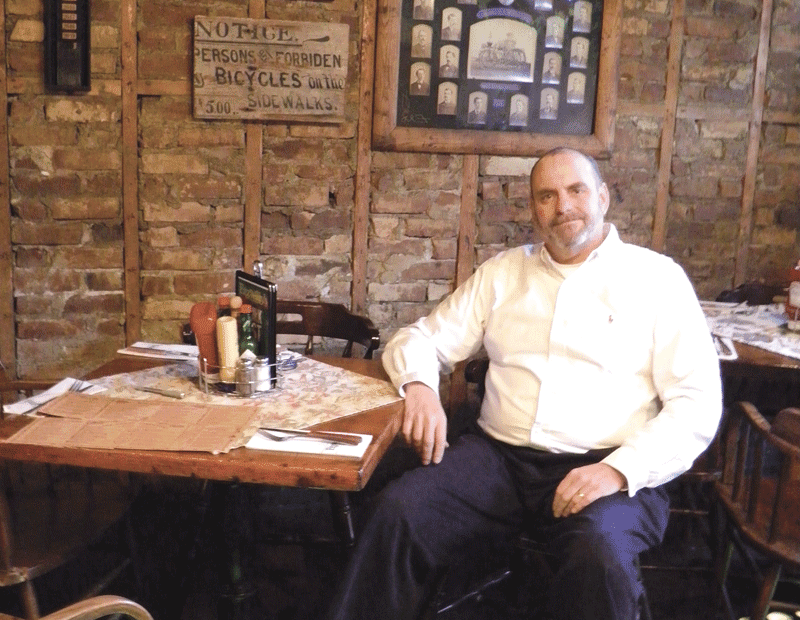
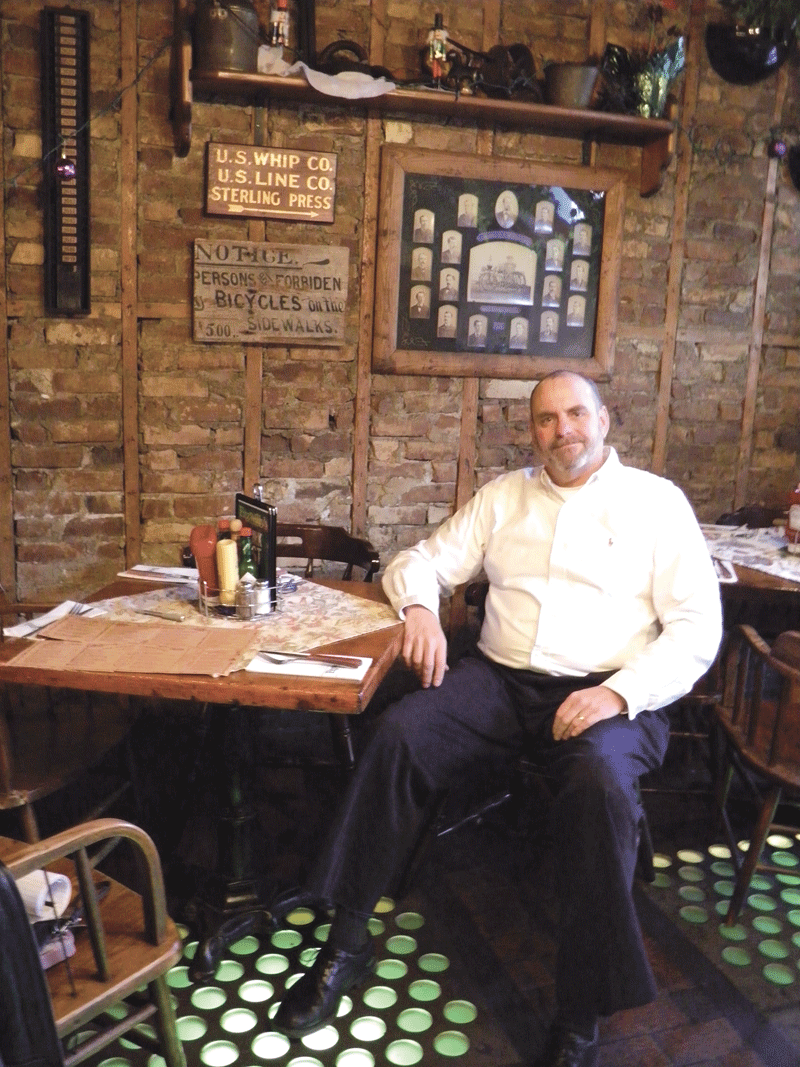
Fred Gohr says Fitzwilly’s was an immediate success in the 1970s, and it has remained popular despite much stiffer competition in Northampton today.

When Roger Kirwood purchased Mike’s Tavern in 1974, the seedy bar near the railroad tracks was going out of business.
“It was an awful place,” he said. “And there was nothing happening in Northampton at the time. But I always had a burning desire to own a casual restaurant, and the city had caught my eye.”
Today, the eatery he named Fitzwilly’s (after the 1967 movie starring Dick Van Dyke) has not only stood the test of time, but has become a destination in its own right that continues to draw patrons of all ages who appreciate the comfortable, eclectic atmosphere, the good but inexpensive food, and the jovial staff. Many have worked there for more than 30 years and carried on the tone set by Kirwood, who was nicknamed ‘Captain Fun’ by his employees.
The pub-style décor that has charmed patrons for decades was carefully staged. Kirwood visited antique shops and purchased items he believed would become conversation pieces, along with a number of enormous, shining brass planters. He kept the tavern’s original bar, exposed the brick walls, and established a uniform for waitresses that consisted of form-fitting Danskin tops and full-length wraparound skirts.
He also had art pieces made for his restaurant, including a funky submarine emblazoned as the ‘U.S.S. Fitzwilly’ that hangs from the ceiling and was once a gas tank in an old airplane.
“He had a great eye for those sorts of things and a real talent for decorating,” said Fred Gohr, who was hired by Kirwood in 1978 to run the kitchen and today owns Fitzwilly’s with three partners.
But Kirwood takes no credit, and said the funky atmosphere wasn’t an original idea. “T.G.I. Friday’s was just starting up in New York City, and it was an overwhelming success. So I copied everything they did,” he explained. “I put junk and interesting stuff on the walls, created an inexpensive menu, and hired a neat staff. And the place was a raging success from the time it opened. There was nothing like it in town. It was jammed, and everyone in it was laughing all the time.”
Staff members were happy because they were making money, the patrons loved the silly names and odd combinations of foods on the menu, and the fun-filled, friendly ambiance proved to be contagious.
Kirwood said word of mouth spread quickly, and he soon had patrons driving from as far away as New Haven. Many skiers stopped on their way to the northern states, and the college crowd and their parents also loved the establishment. In fact, Fitzwilly’s brought a new crowd of people to Northampton, which encouraged other young entrepreneurs to open clothing stores and boutiques.
“Many people credit Fitzwilly’s and Roger Kirwood with the beginning of the turnaround in downtown Northampton,” Gohr said. “Fitzwilly’s was opened as an exercise in comfort and informality that, coupled with good food and drink, would make a lot of people happy. It worked, and continues to make people happy today.”

Learning Curve
Kirwood may have gotten the idea for the décor from the T.G.I. Friday chain, but his belief system played a major role in the mood of his new restaurant.
“When I bought the place, I had the idea that no one liked to go out and eat formally. It’s expensive, and you’d better know which fork to use, which impinges on the comfort zone,” he said. “I wanted to create a place that had no rules — just quality, good food, and personality. And everyone I hired was very friendly.”
Fitzwilly’s was not his first venture in the restaurant business. In 1967, at age 25, the former insurance salesman bought a building on Memorial Drive in West Springfield and created a restaurant that he named the Red Gertrude. “At the time, the Red Garter was a popular chain across the country, and I had a banjo fascination,” he said.
His budget was very limited, so he created tables from sawhorses and sheets of plywood and promoted the banjo music. The concept worked well for a while, but when Gertrude’s popularity began to wane, he changed the name to Sweet Charity’s and hired a different rock ‘n’ roll band each week. “But eventually that bombed,” he said.
His next venture was Fitzwilly’s, and he did his best to ensure that customers received outstanding service. There were also special trademarks, such as napkins sewn from kettlecloth that became so popular that patrons took them when they left to use as headbands or scarves.
Kirwood also relied on colorful and unusual marketing, such a full page newspaper ad he ran with just one word — “Delicious” — on the entire page, and included nothing else but his logo in small print at the bottom.
The rules for staff were simple — all of the brass railings had to be shined every morning, and anyone who answered the phone had to identify themselves by name. “The real charm came from the people I hired,” he said, adding that bartender Jeff Spooner was among them and still has a very strong following.
As time went on, Kirwood opened other Fitzwilly’s sites in a New Haven firehouse and in Bridgeport and Danbury, Conn. He also purchased the entire building the Northampton eatery was housed in and expanded the establishment, adding two more dining areas, a second bar, and a loft.

Attention to Detail
When Gohr took over, he changed little about Fitzwilly’s, although he continued to scour antique shops for unusual pieces. “Art is important in this town. We are proud to say that Northampton was voted the best small arts town in America a few years back,” he said.
“It’s also like a family here. We have customers we see many, many times each week. We don’t try to pretend to be a fancy, upscale restaurant. But people can be assured that, when they come here, they will get excellent food, quality and service. “
The back bar has been nicknamed ‘Spooner’s Bar,’ due to the beloved barkeep, who has developed a large following on Friday and Saturday nights. “This has really become a local gathering place,” Gohr said, adding that patrons start out as college students, get married, bring their families there, and also use the restaurant for business lunches.
“We are one of the few places in town that serves lunch with table service where people can get waited on,” Gohr said. “But lunch has always been one of our fortes. The majority of our lunch patrons are here on business.”
Gohr has watched Northampton change since he began his career there decades ago. “I remember when Fitzwilly’s was very busy in the late ’70s. At that time, Northampton didn’t have the shops and art scene it has today,” he said. “We relied on the locals and college students and staff, and although they are still a large part of our clientele, folks from out of town have become a big part of our customer base today.”
Although the number of excellent restaurants in Northampton has grown and the scene has changed dramatically, it hasn’t affected Fitzwilly’s.
“We do a lot to make sure we maintain consistent service,” said Gohr. “And I can’t say enough about how the longevity and success of this restaurant has been fueled by the staff.”
People have their favorite nooks, but a focus that has been maintained is the ample space between tables, designed to afford diners a good deal of privacy.
“It’s another reason we are successful,” Gohr said. “We could probably squeeze in at least another 40 seats, but it would take away from the comfort of the dining experience. And we understand and respect the fact that business folks need privacy.”
The most popular spot is the loft, which holds two tables. It’s known as ‘the roost,’ and it’s regarded as the best seat in the house, giving patrons a birds-eye view of the entire restaurant. But no matter where people sit, the experience is the same. “It’s fun here,” Gohr said.

Bottom Line
The atmosphere in the building originally built as a Masonic temple remains informal, and the chairs at Fitzwilly’s still don’t match. But generations of people have found a home there and have formed relationships with its longstanding employees.
“There really is something on the menu for every occasion,” said Gohr. “You can have a beer and share an appetizer or sit at a table and have a great filet mignon or the finest seafood available; we also have burgers and reubens and serve food until midnight. Folks know that, when other restaurants are closed, you can still get a bite at Fitzwilly’s.”
In short, it has never lost its style. “It’s the kind of place that is just a lot of fun,” Kirwood said. “It has stayed consistent since I opened it years ago. And that’s the whole story.”

Restaurants Sections
Restaurant Owners Hope to Emerge from Recession Stronger

Gina Campiti

Gina Campiti says the economics of the restaurant industry may have changed, but its focus on customers should not.

Area restaurants report increased numbers of people dining out. But is this a sign that the industry is out of the weeds? Numerous restaurant closures have been on the front pages for the past year, but most owners and managers say that, if a business has come this far, the year ahead promises to put a little more on their plates.

Reflecting on the three high-profile restaurants that have closed within a scone’s throw of her restaurant in the last year — Sitar, Onyx, and Pazzo — Gina Campiti said, “it was scary. It is scary.”
Campiti is the general manager of Samuel’s Sports Bar at the Basketball Hall of Fame, and for her, such closures aren’t good for her business and the spirit of healthy competition — but, most importantly, they’re not good for the city of Springfield.
“I feel terrible for those people that went out of business,” she said. “That’s an incredible loss of money for the owners, a loss for the staff, and a loss for those people who enjoyed the restaurants. It’s depressing in such high-profile parts of the city.”
But the space formerly housing Onyx isn’t dark anymore. The Spoleto Group, owner of seven area restaurants, including their namesake Italian dining room in Northampton, unveiled their latest “concept,” as Bill Collins calls them, this past summer. And with three bars and 450 seats, this second Mama Iguana’s location is anything but quiet.
Collins is the chief operating officer of the Spoleto Group, and he and owner Claudio Guerra both say this location has been one of the most exciting for the pair. “It’s our busiest location out of all our restaurants,” Collins said.
“The reason why is that, if you take a look at what has closed there,” he said, “places were selling food at $25 to $28 a plate, with $12, $15 martinis. And here we are, selling a quality house margarita for $7.50. We’re selling entrees for $9 to $12. Our focus is keep it cheap, keep it fun, and they will come. We’ve had great success with people reacting to our prices in this downturn.”

Bill Collins (right, with Claudio Guerra)

Bill Collins (right, with Claudio Guerra) says patrons respond to reasonable prices and a fun atmosphere.

Springfield isn’t alone in high-profile closures along all price points in the restaurant industry. As it navigates Chapter 11 bankruptcy, Friendly’s closed four regional branch locations in January, with another 37 shutting their doors across the country — all this in addition to 63 locations that closed nationwide in October. And Northampton has one fewer fine-dining choice, as the longtime haunt Green Street Café is set to close at the end of January.
At the same time, the nation’s restaurateurs are claiming a rebound in 2011 after two lean years. The National Restaurant Assoc. reports that restaurants added a net 230,000 jobs during 2011, their strongest performance since 2006. In addition, the restaurant industry finished the year only 20,000 jobs shy of fully adding back the 366,000 jobs lost during the recession. Complete recovery is expected in early 2012.
In talking to area restaurateurs, their news was more like fine wine than sour grapes, and in addition to some strong sales numbers, most offered that the gradual crawl out of the economic downturn has given them hope for the year ahead. If they made it this far, they said, 2012 holds the promise of a rebounding marketplace along with the business acumen honed from staying afloat through the Great Recession.
So, what’s on the menu for 2012? BusinessWest sat down with chefs and operators of area restaurants and gathered some food for thought.

Dish Network
Campiti unfolded the leatherbound menu on the table in front of her, which now offers 51 tapas dishes to choose from.
“This menu is a big change for us,” she explained, “and I think it’s headed in the right direction. We were successful with half the number of tapas that we had on there before. I’m hoping for even half of the excitement that we had after we changed our menu the last time.”
She explained that the little dishes are a different concept in dining, and the past year’s successful operations at Samuel’s are a direct result of that.
“Some would say, if you give people too much choice, they’ll never make up their mind,” she explained. “But you don’t need to make up your mind! A tapa is a small plate. Instead of concentrating on one entrée in front of you, you’ve got a bunch of different plates on your table that you pick from. You talk, you share. You put a big entrée in front of someone, and that’s the center of their attention. Put a variety of plates around the table, and it promotes conversation.”
Her restaurant’s location in the Hall of Fame building is a slam dunk, she said, even with the number of other eateries in close proximity.
“People go where people are,” she continued. “If it’s a busy area, people will come out. It’s an attraction. It’s not competitive to us. It can actually complement the businesses around it. Everyone has their own brand, and customers want variety.”
Ralph Santaniello, co-owner of the Federal in Agawam, agreed with that sentiment. “I’m of the belief that there aren’t just a set number of restaurants that can survive. If you do a good job, there’s room for everyone.
“At the end of the day,” he went on, “the more diners that we can keep in the Springfield area, that’s a good thing for all of the restaurants around us — not to lose them to Northampton or West Hartford.”
He and Mike Presnal, his business partner and head chef, said that 2011 was a strong year. “Not only were we up around 20% over the year before, saleswise,” Santaniello said, “but our gift-certificate sales were up even higher. In December, that was around 35%.”
Asked for the secret ingredient to their success, Santaniello said it was simple: consistency and quality.
“Number one, we have never had a different chef,” he said. “And the fact is, we’re a chef-owned restaurant, a chef-driven restaurant. It’s hard to make it when you’re an owner but not an operator. We know what goes in and out of the kitchen and bar and dining room every night of operation.”

Antonio DiBenedetto

Antonio DiBenedetto says consistency is one key to keeping diners returning to a restaurant often.

Antonio DiBenedetto said that consistency is not only a key aspect of success in running a restaurant, but one of the main reasons for a house’s success. He’s been the owner of Amedeo’s Restaurant in Holyoke for 11 years, but the business has been in the family for almost 30 years.
“It can be tough out there,” he noted, “but I think that places are closing down because there’s a lack of complete attention. You have to keep an eye on everything going on around you, every aspect of the business, not just food. It’s not one thing, it’s a million things, and consistency is a big one. The same person has made the sauces here for years. There’s no book for recipes; our food has been the same for decades.”
He joked that no one makes meatballs like his mother — “but every Italian cook will tell you that!” — and that his restaurant has weekly specials to offer some variety beyond what people might find locally. “Whatever looks good, or whatever’s in season,” he said — “osso buco, veal chops. One of my favorites is chicken carbonara, since I was a kid and my mom would make it. I try to duplicate it, but of course it’s not as good as hers.”

New World Order
The Farm Table restaurant is the newest business venture from the Kittredge family, owners of Kringle Candle. It’s housed in one of the oldest structures in Bernardston, across from the candle company’s retail flagship, and after a meticulous renovation both historic and green, it opened for lunch and dinner this past October.
Rubén Eduardo is the general manager of the restaurant, and he said that opening a restaurant in what many acknowledge to be a still-sluggish economy offered nothing but uncertainty. “We all know that the national economy was in a pretty low gear,” he added, “so we had no clear idea what would be the response when we opened.”
But what followed exceeded even their highest expectations. “I thought that we would hit about 30 reservations during the nighttime and about the same at lunch, and to my surprise, especially in this economy, it has been quite the opposite direction. Day one, for example, when we were open for lunch, we were expecting 30 or 40 people to join us. We had more than 200. So then we said, ‘OK, maybe that’s more like friends and family.’ But that trend didn’t go down.”
Early on, he realized that his reservation operation needed to be re-evaluated. With one person acting as host and fielding calls for reservations, it wasn’t enough for peak performance, especially for a day with reservations into the triple digits: one Tuesday alone fielded 400 calls for dinner.
Currently more than 60% of his clientele are repeat diners, and some of them are traveling from as far as Connecticut. He said people respond to the restaurant’s mission. “Western Mass. is blessed with amazing products and craftsmanship. In terms of our philosophy, the idea is that the food is, whenever possible, organic and sustainable. And priority is given to local farms. That is reflected in the building as well.”
The ceilings and floors are made from salvaged barn boards, all the stone work comes from within a 50-mile radius, and most of the furniture is made in Vermont. “Even our napkins are made in Hadley,” Eduardo added.
These are the details that make a difference, he said, for the customers and the staff — whom he credits for contributing to a memorable experience. “When our team is serving, they’re proud that these foods are local,” he continued. “These are the things that make a difference in the culture of a restaurant. I think that the enthusiasm from the public comes from the enthusiasm of a restaurant’s team.”
At the new Mama Iguana’s, Collins said a similar level of attention to each restaurant’s physical space has always been a key ingredient to the Spoleto Group’s success. “But the tough part about the economy now is that Claudio and I have had to change how we run the businesses,” he said. “It used to be easy to put up a great atmosphere with great food and service, and you’ve got yourself a busy restaurant that’s making money. It’s now more of a scientific business for us.”
The seven restaurants they oversee are Spoleto’s in Northampton and East Longmeadow; Spoleto Express, Pizzeria Paradiso, Paradise City Tavern, and Mama Iguana’s, all in Northampton; and the newest Mama Iguana’s in Springfield. Collins said this new economy has turned the pair into better businesspeople than they were before.
“We’ve been forced by the times and the economy to do that, and what Claudio and I are finding is that it’s the most exciting thing we’ve ever done,” he said. “We have taken an approach during this downturn to make all our concepts as affordable as possible. We’d rather set a stage where guests could come out two, three times a week and have an affordable, great meal, rather than having them come in once for $150 and not see them again for a couple weeks. Because what do people need at this time more than ever? A release — a place to come for a cocktail and some good food.”
After an entire life spent in the restaurant industry, Guerro agreed, adding that “this is a new world we’re living in. A couple years ago, we were asking, ‘how do we survive this storm?’ Now, it’s more like this is the new reality, and how do we make money in that reality?”
“We’ve been working a tremendous amount on the nuts and bolts of our operation, and streamlining the systems,” Collins said. “With these transitions, when the economy comes back, we’re ready for takeoff.”

Your Serve
Over at Samuel’s, Campiti agreed that the industry she has worked in all her life has been altered. “To me, I don’t look at this as a recession any longer,” she explained. “Now, it’s a change in the way of life.”
But, there’s one thing that doesn’t change, she said — a focus on customers, an idea which everyone who spoke with BusinessWest agreed.
“A customer walks through your door prepared to have a good experience, and they are pleasantly surprised to have a great experience,” Campiti said. “That’s what keeps us all here.”

Features
Report Touts Economic Impact of Region’s Nonprofit Organizations

Linda Williams (left, with Kathleen Dowd and Elizabeth Sullivan)

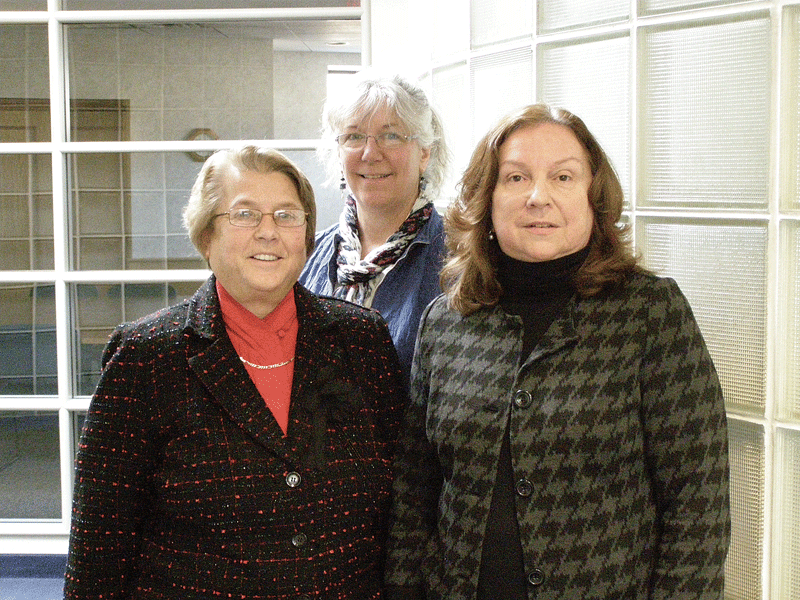
Linda Williams (left, with Kathleen Dowd and Elizabeth Sullivan) says HSHS agencies touch every life in some way.

Many different voices speaking as one.
That’s the goal of the Human Service Forum (HSF), a Western Mass. organization that provides a public platform for a wide variety of human-service nonprofits.
That catch-all term covers literally dozens of different types of agencies, providing services ranging from health care to early education; substance-abuse treatment to homeless shelters; youth recreation to career services.
But when people think of the good work done by these agencies, they often don’t consider the economic impact they have on the region, through job opportunities, local spending, and taxes. Kathleen Dowd, director of the HSF, thinks that should change.
“We felt the need to get our voice out there and talk about how we contribute as businesses, and about the impact we have as employers,” Dowd said. That’s why the Forum commissioned the Pioneer Valley Planning Commission (PVPC) to research those influences.
The report that emerged from that study, “The Economic Impact of Human, Social, and Health Service Organizations in the Pioneer Valley,” may have a cumbersome name, but its findings cut right to the point, and make the case that human-, social-, and health-services (HSHS) agencies do more than help people — they dramatically lift the region’s entire economy.
The numbers are striking. In 2009, HSHS organizations in the Pioneer Valley employed one out of every five workers in the region, paid $1.6 billion in wages, posted revenues of close to $4 billion, and recorded expenditures also around $4 billion.
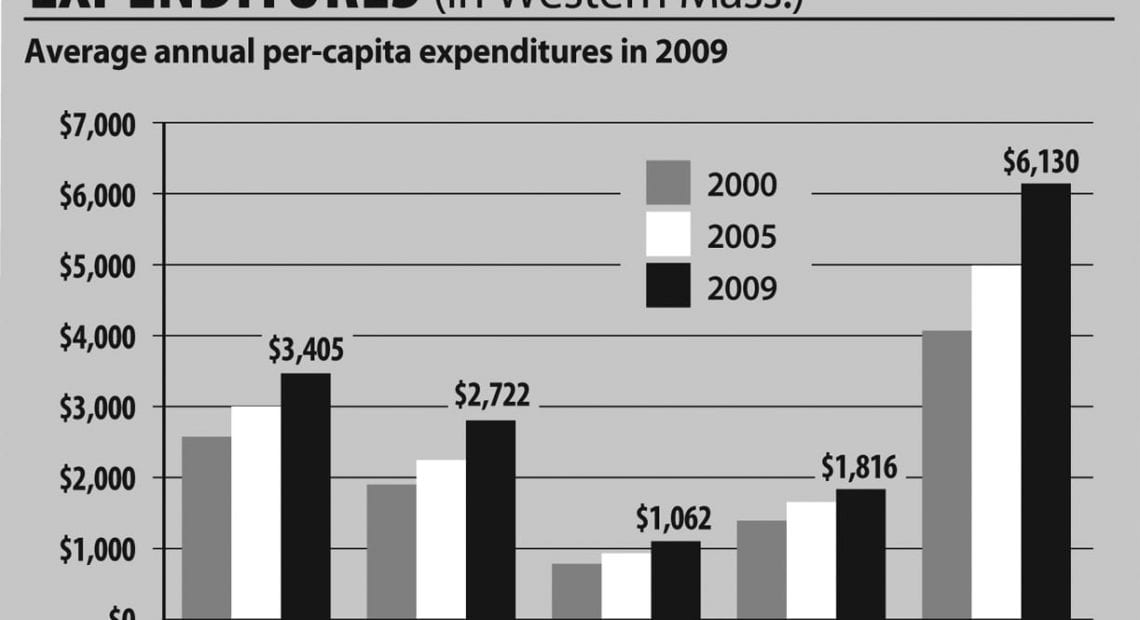
Those numbers have risen sharply over the past decade. The total number of HSHS nonprofits in the region increased by 18% between 2000 and 2009, and annual per-capita expenditures of those organizations rose from just under $2,000 to more than $2,700 over the same period — and more than twice that total in Hampden County (see chart on page 11).
The sector is also growing more quickly in the Pioneer Valley than statewide. HSHS organizations in the region increased spending by 46% from 2000 to 2009, compared to 40% for all of Massachusetts. Those spending levels have a significant impact on area communities, as nonprofits typically spend more than 75% of their dollars locally.
“We’re part of the fabric of the whole community, and you really can’t separate us,” said Linda Williams, executive director of the Springfield-based Mental Health Assoc. (MHA), a Forum member. “People say our workers touch just about every life in Western Mass. — but I would maintain that we touch every life.”

Spreading the Word
Williams stressed that the PVPC report is not an end in itself.
“This isn’t a one-time deal where we just throw out a study,” she said. “This is a campaign of eduation from those of us providing these services. It’s a multi-year effort, and we need to continue the momentum.”
Part of that effort is a campaign to educate the public and get them talking about the importance of HSHS nonprofits — and, in time, increase support, financial and otherwise, for their services. To that end, the HSF tasked Paul Robbins, president of Wilbraham-based Paul Robbins Associates, to cultivate marketing opportunities.
“We brought Paul in to help us really distill all this data that the Planning Commission was so good at finding,” Williams said. “Some of it tends to be a bit dry, but we wanted to make sure we had the talking points, the bullet points we could articulate, not just to the general community, but legislators and people we do business with.”
One of those opportunities is the Forum’s annual legislative reception, scheduled for Jan. 20 at the Knights of Columbus in Chicopee.
“We’ll actually see legislators sitting at the table with constituents from various organizations,” she said. “It puts our work in perspective for them. We’re voters, and we use this time to get in front of our legislators.”
The reception, like the PVPC report, is a way to distill many different voices in the HSHS world into one clear message, Williams added.
“Even though we call ourselves human-service agencies and organizations, we’re very different, and for us to speak with a common voice is very important. This [reception] is a vehicle I’m passionate about. Whether it’s mental health or disabilities, elderly services, or education, it’s important for us to have a common voice.”
NonprofitHealthServExpendBW0112bAnd the economic value of those nonprofits is the message that needs to emerge, Dowd said.
“Many of our member organizations and businesses focus on their mission and get a little tunnel vision,” she told BusinessWest. “Over the next couple of years, we’ll produce a speakers’ bureau to educate the business community and local chambers, with this big-picture idea that we’re contributors and businesses as well as having a social profit.”
She added that the report is intended to stress the contributions of non-health-related agencies that sometimes get lost when people think of Western Mass. as a strong region for ‘eds and meds.’ “It’s known widely that health care businesses have a very strong workforce, but I think that’s lesser-known about human- and social-services organizations.
“We’re contributors; we have a vital workforce,” Dowd added. “We do professional development and provide career pathways for our peers.”
Nonprofits boast “some of the most creative business people I’ve ever met,” Robbins added. “They have to be creative and inventive in how they raise money and manage their resources.”
Although the human aspect of their work is critical, Dowd said, “at the same time, not-for-profit does not mean we do not run a financially sound business. We do — and we’re a large, vital force in terms of workforce and economic impact, in terms of multipliers like real estate, insurance products we purchase, taxes we pay. We do that every single day.”
She said she prefers the term not-for-profit, rather than nonprofit, when describing HSHS work, because the latter can give the impression that agencies aren’t trying to bring in dollars. The most effective organizations, she said, keep the funds rolling in, even during a recession, but they pump that money back into the organization, rather than lining the pockets of a CEO or stockholders.
“It’s not either-or,” Dowd said of the difference between for-profit businesses and not-for-profit agencies. “It’s not about pointing fingers, them against us. It’s not about making a profit, but what we do with that profit. We provide services as a business, and we have to operate with sound business principles while providing a mission. We’re not nonprofit; we’re not for profit. That’s a capital ‘for’ in the middle.”

Growth Pattern

Molly Goren-Watts

Molly Goren-Watts says the PVPC report gives the region’s nonprofits the type of marketing tool they have too-often lacked.

Even before the current awareness campaign, HSHS agencies had been proliferating throughout Hampden, Hampshire, and Franklin counties, with most of that expansion occurring in Springfield, Northampton, Holyoke, Amherst, and Greenfield. The 18% growth over the past decade can be explained in a number of ways, Forum members said.
“I would say Western Mass. is a region that focuses on community,” said Elizabeth Sullivan, special projects coordinator for the Mental Health Assoc. “With the closures of Belchertown State School, Northampton State Hospital, and, in the very near future, Monson Developmental Center, we’ve needed to establish human-services organizations to address those needs.”
The aging of the population is also a factor, she added; people are living longer today than in past decades, but often with a more acute need for health and social services.
In addition, Williams said, there’s less of a stigma these days attached to seeking the kind of support HSHS agencies offer. “People are more open to it, whether they’re looking to get help for a husband or wife, an elder, a child, or someone with a disability. That’s come through years of education, communication, and community service.”
Even with the success not-for-profits have had with growing their services and hiring more workers, communication still suffers at times, which is why the PVPC report is so important, said Molly Goren-Watts, principal planner/manager of the commission’s Regional Information and Policy Center.
“It seems that one of the major limits of nonprofits is that you have funding coming from a specific source or for a specific service,” she said. “It’s allocated for you to provide a specific service, and there’s usually not extra money built into the budget for marketing.”
Williams said it will take a cooperative effort to change that.
“It’s so good for the Human Service Forum to bring us all together under this umbrella and bring a common voice and make the message of our contributions heard,” she said. “It’s hard to do that with one voice when we’re all going in different directions. The Human Service Forum has been around for 25 years now, and it’s able to provide that support for all our organizations that we couldn’t achieve separately.”
Sullivan agreed. “This provides us with a forum to discuss what we have in common with the businesses in the community,” she said. “We have not really engaged in that discussion, so that dialogue begins now.”

Joseph Bednar can be reached at [email protected]

Opinion
Thing5 Move Downtown Spurs Momentum in Springfield

The recent announcement that Thing5 LLC will be creating a new call center in One Financial Plaza, thus bringing 500 new jobs to Springfield, is a positive story for the city and the region — on a number of levels.
Let’s start with the jobs. That’s priority No. 1 in the Greater Springfield area, and it has been for many years now. Some might look at this and say, ‘it’s only call-center jobs,’ or words to that effect, but these opportunities come on many levels, from entry positions to management slots, and, in many cases, they can be handled by those who do not possess a college education. The region needs those high-quality jobs (call them white-collar, if you like), but it also needs employment opportunities like these, especially in such large volume.
Beyond the employment factor, there are many other aspects to this story, all of them positive. First, this company started here, in the Technology Park at Springfield Technical Community College — which was created to spur this kind of tech-related enterprise — and thus provides solid evidence that we can incubate ventures and grow them into major employers.
Also, this company stayed here. Indeed, when it reached that proverbial next level, there were, quite obviously, opportunities to take Thing5 almost anywhere — because there isn’t a city or town in the Commonwealth or well beyond it that wouldn’t fight, and fight hard, for 500 jobs. But management chose to stay in the City of Homes, largely because of the lower cost of living, available workforce, access, quality of life, and affordable commercial real estate.
This shows that our various assets are tangible — and sellable.
But perhaps the biggest benefit will come in the form of greater momentum downtown. First, this move gives a substantial boost to the office tower known as One Financial Plaza, which has had several dark floors for many years, but has been staging something of a comeback recently.
Beyond that, though, the 500 new employees working downtown will provide a larger critical mass of people needed to spur additional investments, be they in support businesses, hospitality-related ventures such as restaurants and clubs, or badly needed retail.
And there is another component — the possibility that some of these employees may soon be working and living downtown, thanks to a program that will offer reduced lease rates to Thing5 employees at the nearby Morgan Square apartments, managed by the same company (Samuel D. Plotkin) that also manages One Financial Plaza. This additional residential piece could further stimulate investment in the central business district and be a key contributor to the kind of vibrancy that other Northeast cities have enjoyed.
As we said, there are many angles to this positive story for Springfield and its downtown. The headlines were all about the jobs coming to the city — and that’s an important aspect of this — but there are many other elements that bode well for the City of Homes.

Opinion
Work in Progress: Glacial Improvement on Jobs

The December jobs numbers are good news — sort of — for the economy and the Obama re-election campaign. The economy added 200,000 new jobs, and the duration of unemployment is down slightly. Wages and hours worked are up, too. We can anticipate continuing progress between now and November.
But the bad news is that, though the trend is in the right direction, the progress is glacial. As Heidi Sherholz of the Economic Policy Institute (EPI) reports, the deficit of jobs needed to keep up with the normal growth of working-age population is still upwards of 10 million. Even at December’s modestly improved rate of net job creation, it will take until 2019 for the U.S. to recover its pre-recession rate of unemployment.
Moreover, as EPI points out, if we factor in workers who have dropped out of the labor force by looking at the ratio of employment to population (which is still down almost five percentage points since the beginning of 2007), the adjusted unemployment rate would be 9.5%.
The other problem is wages. As the New York Times keeps reporting in its fine “Working for Less” series, some jobs are coming back, but the wages are down by as much as half. And as long as that is the case, the measured unemployment rate can drop, but people still feel as if their own personal economy is in a deep recession. Between June 2009 — when the recession officially ended — and June 2011, inflation-adjusted median household income fell 6.7%, to $49,909, according to a study by two former Census Bureau officials.
This trend has only begun to reverse. Worker productivity is actually increasing at a rapid rate, but nearly all of these gains have been captured by corporate profits rather than worker wages.
As long as household income is down, there is not enough purchasing power to drive a recovery strong enough to generate enough good jobs at good wages. At the bottom of this problem are deep structural trends compounded by the financial collapse. They include a chronic trade deficit, the weakness of labor unions, and economic deregulation that gave corporations the power to batter down wages.
Since the financial crash, these longer-term trends have been compounded by the deflationary drag of the housing collapse and misplaced austerity fever. While the private sector is belatedly adding jobs, a public sector that should be leaning against the winds is still cutting net jobs.
So while the December jobs report is cautiously hopeful news both politically and economically, the administration, should President Obama win a second term, will have to do a great deal more to restore an economy of good jobs at good wages.

Robert Kuttner is co-founder and co-editor of the American Prospect.

Features
The EDC Focuses on Promoting the Region and Its Assets
Allan Blair

Allan Blair says quality jobs, public and private investment, and an increase in visitors to Western Mass. are keys to stimulating the regional economy.

Editor’s Note: This is the second in a series of stories spotlighting the work being done by area chambers of commerce and other economic-development-related agencies. For this issue, we profile the Economic Development Council of Western Mass.

The full measure of his organization, Allan Blair will tell you, is pretty straightforward. “Three goals,” he began.
Blair is president and CEO of the Economic Development Council (EDC) of Western Mass., and he explained that those goals to stimulate the regional economy are quality jobs, public and private investment, and bringing in additional visitors. “Those three goals,” he continued, “as broad as they are, contribute to increasing economic development, and there are a number of different strategies for how we go about that, a variety of methods to stimulate economic vitality, and a host of affiliated partners to help make that happen.”
The EDC was created in 1996, when a group of business leaders at some of the larger companies in the region came together in support of a unified organization to make Western Mass. more competitive on a variety of fronts.
“We had a lot of well-intentioned organizations doing a lot of hard work,” Blair said, “but there was little coordination or collaboration between the groups. Therefore, the feeling was that the region wasn’t acting efficiently — we weren’t speaking with one voice on the most important issues of the region.”
The business leadership charter group of the EDC created this organization that initially included the mayors of six cities (now nine) and the presidents of the colleges and universities. The idea was to have in one place a public-private partnership with the common goal of economic development. “We hear about the conceptual importance of such entities all the time,” he added. “They made it real.”
In addition to that group of individuals, a host of business-sponsored organizations were included that are now known as affiliated partners. The names may have changed a bit over time, but those partners now are the Affiliated Chambers of Commerce of Greater Springfield, Westmass Area Development Corp., the Greater Springfield Convention and Visitors Bureau, the Westover Metropolitan Development Corp., and the business-improvement districts (BIDs) in Springfield, Westfield, Northampton, and quite possibly soon to be a fourth in Amherst.
There’s also a board of directors, comprised of elected representatives from the EDC’s membership. Peter Straley, president and CEO of Health New England, is the current chairman of the board. In his assessment of the EDC, there’s never been a more important role for such an organization in this region. “At a time when the economy has not been worse in our lifetimes,” he said, “that’s a real challenge — to stimulate job growth, with good jobs, in our local economy.”
And that means it’s time to get down to business, something the EDC has been doing for more than 15 years in Western Mass. Speaking to BusinessWest recently, both Blair and Straley spoke of the importance of their organization and how its goals are accomplished. “It’s important that there’s a regionally focused board looking down over all of this,” said Blair. “The most essential thing is that we’ve got the right people looking at the potential here.”

Center of Attention
Each year, the EDC assesses the different projects it believes will affect economic development in the region in the year or years ahead, Blair noted, “and then we organize our efforts around those targets.”
And, as they say, there’s strength in numbers.
It’s here that the EDC excels in its mission, and both men described the expertise that so many different affiliate partners can bring to the proverbial table. For example, the convention bureau is the primary player in attracting visitors, Blair said, and the Westmass and Westover entities are the ones responsible for maintaining an inventory of industrial- and business-park land to be available and appealing to both outside investors and companies within the region who are expanding. The chambers of commerce are best in the support and promotion of smaller businesses, and the BIDs are essential in making those local businesses aesthetically attractive and well-kept.
Straley said that such a comprehensive look, from the largest issues down to the smallest details of downtowns, is a key aspect to giving the region a competitive advantage in attracting outside investment. The EDC not only strives to make those details manifest, but to showcase them as well.
Site selectors are employed by companies seeking to relocate or branch out into new markets, and the EDC knows how they operate. “When someone from outside the area is looking to relocate a business, they’ll typically use consultants that will do the legwork for them,” he explained. “Those consultants will start by gathering information about a region, starting with the broadest end of a funnel, and narrowing it down, based on their clients’ requirements.”
The EDC’s Web site is the only dedicated source of information in the region specifically targeting those consultants. “It turns out that it is the primary point of contact for site selectors,” Straley continued. “If a manufacturing or distribution company says it needs a Northeast location, let’s say, obviously they’ve got a lot of places to choose from. What we’re doing is presenting a good face to the outside world for those consultants. They’ll be looking at the demographics of the area, what kind of businesses are in the area, is there a trained workforce in the area that we can tap into, what are the education levels of people in the region … all before they are even going to consider coming to look.
“In a sense, we’re acting as the matchmaker,” he went on. “Quite frankly, in this business, it’s difficult to land a final account. It’s like any sales business; with the economy the way it is, the length of time companies are taking to make final decisions about relocating and expanding is lengthening. More than ever, you need to be on top of that follow-through.”

Focal Point
While each city has its own economic-development team, the EDC works with all of them to get those businesses into “the funnel,” as Straley called it. “They’re all going to be competitive with one another to secure those companies, but it’s our job to get them into this region.”
Civic leaders, college presidents, and CEOs move in and out of the EDC’s purview owing to their own professional trajectories, but Blair said that, almost without exception, each new, incoming leader realizes the organization’s importance. Meeting quarterly with mayors is typically one of the few times they all convene, and it allows them the chance to think about their cities from a macroeconomic perspective.
“The region is entirely interdependent,” Blair explained. “The reality is that every community is dependent on a business’s employees and how they spend money. Yes, the notion of municipal growth is hugely important to every mayor, and how they can make some tactical moves to attract that investment. But it’s just as important for a company to know that they are locating in a region with good regional school systems that are supporting a strong workforce pipeline as it is for the company to know about the taxes and the regulatory environment in its own community.”
There are a few initiatives on the EDC’s radar for the year ahead. The Holyoke Green High Performance Computing Center is an important initiative for not only the Paper City, but the region as a whole. The Ludlow Mills initiative and the Three County Fairgrounds in Northampton are both targeted areas of interest, and Blair said the term ‘Knowledge Corridor,’ now nearly a dozen years old, will be further developed as a brand.
“We need to turn that term into more of a positive action,” he said, “by providing a single point of contact where an outside interest can access everything within those 14 institutions that they would need to know, and to help them focus their attention on bigger issues within the region so that they could collectively make a contribution.”
While the EDC’s agenda has no small number of directives, stimulating the regional economy clearly has some specific targets, including the promotion of entrepreneurship.
“One of the things we all need to be reminded of is that most of the growth the region has had is by companies that were started here,” Blair said. “We’re not a region that has a lot of big companies move here. When you look at our biggest corporate presences — Peter Pan, MassMutual, Smith & Wesson, Milton Bradley — they all started here, and they grew into something important.
“At some point in their history it started as an entrepreneur who took a risk, and who built a culture,” he continued.  “Have we lost that? Do we still have it? And if we still have it, is there something we can do to stimulate it so that we have more innovators, so that there are more people willing to take these risks for the rewards that will come?”
If there’s anything that his organization has managed to do, he went on, it has been the ability to open everybody’s horizons to all the issues that are affecting economic development.
“Before, we could be in our little silos and could miss an awful lot of opportunities coming our way,” Blair said. “Now, everybody’s aware of the landscape and understands their place within it. They have a more wide-angle view, and that’s really an important thing for us to have, for the business leadership to have, to have a wide-angle view of what’s going on and then to focus on the things that need to be done.”

Law Sections
Minimize and Manage Your Risk with Written Contracts

Michael Gove

Michael Gove

Written contracts. Too often, they are an overly formal, wordy, inconvenient intrusion into the tenuous relationship between a business and its customer, and they can be seen as making it more difficult for a business to function. But, much like how paying years of homeowners’ insurance makes sense if you have a house fire, using written contracts makes sense if you have a dispute.
A written contract is simply a documented agreement between two or more parties for the performance or lack of performance of some action. Written contracts will also usually include promises (covenants), representations, and warranties. Contracts can capture the details of all types of business transactions, from simple consumer purchases to billion-dollar corporate transactions. In transactions like real-estate or automotive purchases, parties can use written agreements to make, accept, or decline offers.
Written contracts can appear in many forms, from 100-page formal documents to the front and back of an invoice, or an acknowledgment of a proposal. When a contract is well-drafted, it will spell out the entire arrangement between the parties, keeping each party informed and tied to the terms of the agreement. For convenience, many businesses have standard contracts used with all their customers and clients. These are then tailored to specific jobs by filling in blank spaces or providing attachments. Some common elements of written contracts include the following:
• Scope of Work to be Performed. The most common aspect of a written contract is a description of the services or work that will be provided or performed. This will often include language regarding the duration of the contract, the materials or methods to be used, and the autonomy granted to those completing the work.
• Payment for the Work Performed. The other most common element of a written contract is a clause calling for some form of payment or benefit to the person or business providing the service. While often described in terms of money, payment can be made in many ways, including by providing services in return, undertaking other obligations, or making promises to take some future act. In fact, if an agreement does not have some benefit to both parties, it lacks ‘consideration’ and will be unenforceable.
• Warranties. These constitute a way for a party  to  guarantee its product or services and limit its liability. By drafting warranties so that they are specifically and narrowly tailored, or so that express exceptions to warranties are clearly and conspicuously stated, a business can effectively put its customers on notice as to their rights if the product or service is unsatisfactory.
• Remedies. Written contracts can be very helpful when the other party breaches its obligations.  Oftentimes there is language regarding remedies which the non-breaching party will be entitled to if there is a breach. While common and statutory law may contain remedies for specific situations, a written contract can spell out or include other remedies, including the forfeiture of deposits made, the applicability of legal proceedings, or alternative ways in which the breaching party can meet its obligations.
• Costs and Termination. By shifting the burden to customers, language regarding the ability of the business to charge interest on unpaid bills, or to include costs and fees related to the collection of past-due accounts, can help keep billing delinquencies in check. Written contracts will also contain provisions by which the parties can terminate the contract, though not always without penalty.
When developing a written contract, you should use clear language and define any terms which may be vague or subject to dispute. While it may lead to longer documents, you should also try to cover as many situations as are likely to arise.
Statutes and regulations specific to an industry may require additional terms or provisions in your written contract. For instance, contracts for home-improvement services must contain language regarding a homeowner’s right to cancel the contract within a certain period of time.  Because of this, you should always have an attorney draft or review any written contract you intend to use in your business. Additionally, when presented with a contract to sign, you should consider having an attorney review it to ensure it is legally binding, that the terms do not violate any statutes, and that the individuals signing for the other party are authorized to do so.
The thought of using or executing a written contract can be intimidating, but their ability to define the terms of an agreement allows a party to undertake their obligations with confidence that the other party will fulfill theirs.

Michael Gove is an associate with Cooley, Shrair P.C. focusing his practice on assisting clients in the areas of corporate/business, banking, and bankruptcy law; (413) 735-8037; [email protected]
Click here to find Cooley, Shrair P.C. on Facebook and LinkedIn

Banking and Financial Services Sections
Glenn Welch Takes the Reins at Hampden Bank

Glenn Welch, president, COO, Hampden Bank

Glenn Welch, president, COO, Hampden Bank

Glenn Welch, the new president and COO of Hampden Bank, takes over with an informal philosophy of not trying to fix anything that isn’t broken — and this encompasses most all strategic initiatives at the nearly 160-year-old institution. For now, his primary focus is on seizing opportunities to grow the commercial portfolio presented by improving confidence among business owners and what Welch called “concern with larger-bank relationships and where they’re headed.”

Glenn Welch is one of many area bankers who had his or her name on many different business cards in the late ’80s and ’90s — and usually not by choice.
“I had a lot of them, and I think I still have them … they’re in my desk somewhere,” said Welch, referring to a collection that resulted from a spate of mergers, failures, and downsizings involving names that have long since disappeared from the business landscape — like Third National, Bank of New England West, Shawmut, BayBank, Comfed Savings, and Fleet.
Soon, Welch can add another card to the pile, if he ever finds it. Indeed, the new card identifying him as president and COO of Hampden Bank will be arriving shortly, meaning he won’t need the one he’s still using announcing him as “executive vice president and division executive of the Business Banking Group.”
On Nov. 30, Welch was named successor to Tom Burton, long-time president and CEO at Hampden, who is retiring but taking the title chairman and CEO during a transition period.
Welch believes that, if all goes as planned, this could very well be his last business card. In fact, it’s an unofficial goal to make sure it is. He plans on being here a while, and he believes the Hampden name will endure as well, even as he acknowledged that the institution is certainly the subject of rumors regarding the next local target for merger or acquisition.
“The board of directors, by deciding to go with an in-house candidate, shows that it’s comfortable with the plan we have in place to bring it forward and grow the bank to the level that we need to to satisfy our investors,” he said. “But it’s a crowded market, and there is a lot of capital in this market.”
For now, Welch is focused on continuing a strong pattern of growth knitted by Burton during his 17-year tenure as president, during which the bank doubled in size, from $250 million to more than $500 million, and went public in 2007.
The pace of growth slowed over the past few years, as it did at most all area banks, as the Great Recession took its toll on everything from mortgage volume to commercial lending. Still, Hampden has been on a pace to add roughly a branch a year, with the latest additions coming in Longmeadow (the second office there) and Boston Road in Springfield, and it is has been holding its own in a highly competitive commercial-lending arena.
“The difficulty was, we just weren’t seeing any loan growth — businesses just weren’t able or willing to borrow,” he explained. “We were sitting on a ton of capital, like a lot of other banks in this area, and really found it difficult to put it to good use.”
But as the economy improves, slowly but surely, Welch says he’s seeing signs of progress, especially on the commercial side of the ledger. It comes in many forms, from what he can see — more applications for loans to expand or build new — and what he can sense, namely greater confidence on the part of business owners.
“We’re seeing a lot of loan demand on the commercial side — there’s a huge backlog,” he said, adding that he expects many deals to close over the next several months. “Some of this demand is new business, which is exciting, such as an assisted-living facility that will generate about 100 jobs. There’s an addition to another assisted-living facility, a few precision-machining companies that are looking at new buildings and equipment … things are happening.”
Summing up what he believes his ascension to the presidency at Hampden means, Welch said it represents both continuity and change.
The former comes mostly in a continuation of growth strategies, internal programs — such as ‘Hampden College,’ aimed at building team and leadership skills (more on that later), and philanthropic initiatives within the community that were laid out by Burton and the leadership team, said Welch. Meanwhile, with change comes opportunities, fueled by an improving economy and frustration with regional institutions, to move those strategic initiatives forward.
“There is a sense of urgency,” he told BusinessWest in a wide-ranging interview a month after he took his new office. “We do need to grow and become more profitable; the pressure is there to perform.”

Interest Bearing
Welch arrived at what was then Hampden Savings Bank in 1998, after accumulating more than a dozen of those aforementioned business cards.
When asked what brought him to the Harrison Avenue institution, he paused for a minute, noting that there was a funny story behind it and he wasn’t sure if he should tell it. (He eventually decided he could, because the party in question was no longer working in the area).
Attempting to make a long story short, he said he was working at what was then Fleet National Bank (now Bank of America) and, following the departure of a colleague, was in line for one of the small corner offices within the Monarch tower, a step up from the high cubicle he was occupying. The last office to be apportioned was awarded based on tenure, but Welch, who led the field in that category, was told that this time, things would be different.
“First, he said, ‘maybe we’ll go by goals,’ which was fine with me because because I hit my goals that year. But then, he said, ‘I was thinking we’d draw cards,’” said Welch, working hard to keep a straight face. “We sat in his office, and three of us drew for high card; I went first and got a 3, the next guy drew a 6, and the winner of the office drew a 9. That was one of the final straws; right around that time I saw an ad — Hampden Bank was looking for an ‘eclectic’ commercial lender.’”
Welch said he had no idea what ‘eclectic’ meant in this context, but he applied anyway, and soon thereafter joined a small but growing commercial-lending department that would play a key role in the bank’s steady growth and the expansion of its footprint in Western Mass.
Backing up a bit, actually nearly 20 years, Welch said he entered Western New England College with the goal of becoming an engineer. “ I think that lasted a semester,” he recalled. “I took a few labs and knew it wasn’t for me. I just happened to be pretty good with numbers and liked the accounting and finance courses I took, and that’s how I ended up with a finance degree.”
Upon graduation from Western New England, he took a job with Household Finance, which, among other things, provided high-interest, real-estate-backed loans to struggling families — “that was a depressing place to start a career” — before joining Bank of New England West as a field examiner in the Commercial Finance Department. In that role, he conducted on-site field examinations of books and records for customers and prospects.
From there, he moved on to to BayBank Valley Trust Co., where he served as a credit officer in the Commercial Loan Department, and then as a secured lending auditing officer. Next came an ill-fated decision to follow a supervisor to ComFed Savings Bank, which had acquired the old Northeast Savings, where he served, briefly, as a commercial loan officer.
“That was my opportunity to get into commercial lending, because he asked me to go with him,” Welch explained. “And six months later, he had to ask me to look for a job, because ComFed was failing and they were eliminating the commercial-lending group.”
He then moved back to Bank of New England, later to fail and be rescued by Fleet, and rose to the title of vice president and ‘relationship manager’ in the Middle Market Banking Group, where he managed an $80 million commercial-loan portfolio consisting of 37 account relationships. During his tenure there, he completed his quest for an MBA at UMass Amherst through its evening program, focusing his capstone course on the demise of Bank of New England and the lessons to be learned from it.
Living through that tumultuous period in local banking history was difficult, especially at BNE/Fleet. “It was tough over there — I survived a lot of different downsizing,” he said of his time in the Monarch tower, which eventually ended not long after he drew that 3.
As for what’s in the cards for Hampden Bank, Welch said he expects a continuation of the programs that have helped fuel recent growth for the institution, especially a hard focus on growth in commercial lending.

By All Accounts
Returning to the subject of continuity, Welch said he plans to carry on with a number of programs initiated during Burton’s tenure to not only grow the bank, but strengthen the team running it.
In that latter category, he mentioned everything from quarterly meetings with the staffs handling the branches to keep them informed and connected — “they tend to feel alienated from the main office” — to Hampden College.
Staged in the spring and summer, this initiative involves after-hours courses (always well-attended) on leadership, diversity, and other timely and relevant issues.
“We had four members of the board of directors speak to employees last year as part of the program,” said Welch, adding that the broad objective of Hampden College is to “build better bankers.”
At the same time, the bank has staged a number of external forums — open to area business owners and managers — on subjects ranging from health care reform to taking a small business to the next level. “There’s an educational component to these, obviously,” he explained, “but these are also great networking opportunities, and for the bank, we are developing relationships with people we may not have relationships with.”
Overall, Welch said his primary goal moving forward is to continue and in many ways accelerate the bank’s ongoing evolution from a true savings bank to a multi-faceted institution with a strong mix of consumer and commercial products.
“We used to be for your home mortgage and grandma’s CD,” he said of the bank’s basic mission until only a few decades ago. “We’re trying to change that.”
He said the timing is good for growth in commercial lending, and for several reasons. The improving economy and pent-up demand he mentioned are big parts of it, but so is the growing sense of frustration many business owners and managers have with regional and super-regional banks, a phenomenon that has led to opportunities for many area banks.
“I think 2012 looks promising for the community banks,” he said. “The reason is we’ve turned the corner, in my opinion — people are starting to get more comfortable and are borrowing for projects. But the other side of it is the fact that community banks have real opportunity, especially in this area, a smaller city like ours — we’re here, and the decisions are made here, and there are a lot of people who are concerned with their larger-bank relationship and where it’s headed.
“There were a lot of people who were waiting to make sure that the light at the end of the tunnel, as they say, wasn’t an oncoming train,” he continued, while noting the recent uptick in business on the commercial side of the ledger. “We’re seeing pretty healthy demand in a lot of different areas.”
In many ways, Welch said, Hampden’s goal is to borrow, in some ways, from the model forged by Bank of Western Mass. (now People’s United), meaning the establishment of broad customer relationships propelled by the business side of such associations.
“What we really want to do is grow the commercial portfolio, along with all the other things we’re doing strategically,” he explained, “and allow the commercial portfolio to drive the growth in residential and commercial deposits, because we’re trying to become the bank for those businesses.”
Meanwhile, the bank intends to continue its strong record of philanthropy, punctuated by a recent $150,000 donation to cover operating expenses incurred by those leading the Rebuild Springfield efforts in the wake of the June 1 tornadoes.
Welch, the current chairman of the board of the Affiliated Chambers of Commerce of Greater Springfield, chair of the Springfield Enterprise Center, and board member of DevelopSpringfield, said he plans to continue these and other endeavors in the realm of community service. But most of his energies will be on the bank and the strategic initiatives he described.
“We have plans in place,” he said, “and we’re comfortable we can carry them out and that they’ll lead to significant growth.”

Making a Statement
Welch noted that Hampden Bank will turn 160 years old in April, joining MassMutual in that milestone of longevity, and reaching rarified air among companies based in this region.
He expects the bank to celebrate many more anniversaries and continue to grow its footprint regionally.
As for his career, well, he doesn’t think he’ll be adding to his business-card portfolio any time soon. He believes he and his bank are in the right place at the right time — and will be for the foreseeable future.

George O’Brien can be reached at [email protected]

Banking and Financial Services Sections
It Acts as a Fiduciary ‘Get Out of Liability Free’ Card

Charlie Epstein

Charlie Epstein

In the game of Monopoly, no one ever wanted to get sent to jail and miss out on the $200. Everyone loved to get the ‘get out of jail free’ card. When it comes to managing their company’s 401(k) retirement plan, every plan sponsor fiduciary would love to stay out of the Department of Labor’s (DOL) crosshairs and have a fiduciary ‘get out of liability free’ card.
However, that’s becoming increasingly harder. The DOL has added 300 new employees focused on auditing qualified retirement plans to make sure you, the plan sponsor fiduciary, are meeting your responsibilities under ERISA. With increased government scrutiny, the value of this card has just gone up.
One such card does exist. It’s called a qualified deferred investment account (QDIA). It’s not only good for protecting you, the plan sponsor, but it’s even better for the average 401(k) participant who has little investment knowledge and should not be picking their investments and managing their money.
QDIAs have become all the rage in 401(k) plans, and may account for 60% to 70% of total assets in all retirement plans. So what is a QDIA, and why is it such a good alternative? The following Q & A is meant to assist you, as the fiduciary plan sponsor, to protect you, and to help your employees better manage their retirement outcomes.

Why is it important for plan sponsors to know about QDIAs?
ERISA section 404(c) and the corresponding DOL regulations define how a plan sponsor can establish protective relief as a fiduciary for investment decisions made by employees in participant-directed 401(k) plans. As introduced in the Pension Protection Act of 2006 and effective Dec. 24, 2007, plan sponsors have the option to designate a default fund, qualifying as a QDIA. If the plan complies with the requirements of the regulation, the fiduciary will not be liable for losses that result from investments in the QDIA (your fiduciary ‘get out of liability free’ card).

What is a default investment?
When participants fail to make investment elections and a decision must be made to invest their participant-directed contributions (either employer profit sharing or employee deferrals), plan fiduciaries must step into the decision-making role and invest their contributions in a default investment.

What is an approved QDIA?
The DOL has approved these types of QDIAs:
• Lifestyle or target-date fund: Creates an investment model based on a participant’s age, retirement date, and life expectancy. Is not professionally managed for individual investors.
• Professionally managed account: Is actively managed by investment managers. Provides an appropriate asset mix of equities and fixed income for each individual participant. Takes into account the primary decision factors of age, retirement date, and life expectancy.
• Balanced fund: Offers a mix of equity and fixed-income investments. Is based on group demographics of the plan as a whole. May not consider risk tolerances of individual participants.
A stable value fund, or money market, by definition is not a QDIA because it does not provide investments in equities and fixed income. The DOL was specific in its definition of a QDIA, noting that it is a long-term investment and therefore must have a percentage of its assets invested in equities and fixed-income securities to qualify for protection. A stable value fund product may be used for the first 120 days of a participant’s participation in the plan, but no longer to qualify for relief.

What happens if a plan sponsor doesn’t designate an approved QDIA?
Without an approved QDIA, plan fiduciaries remain potentially liable for losses when a participant fails to actively direct investments.

When is a QDIA appropriate for a plan?
A QDIA is appropriate for any plan with participant assets that lacks participant-investment direction. Plans with automatic enrollment features, obviously, have default investments, but situations frequently occur in the life of a 401(k) that may result in the need for a QDIA, including:
• Incomplete enrollment forms;
• Beneficiary/alternative payee balance;
• Qualified domestic relations order (QDRO);
• Removal of investment options;
• Rollovers;
• Missing persons; or
• Disputes.

What role do plan sponsors play in selecting QDIAS?
Plan sponsors are responsible for prudent selection of appropriate QDIAs for their plan, as well as for monitoring QDIAs. The plan sponsor should also be able to demonstrate the due-diligence process followed when selecting QDIAs. While QDIAs offer a ‘set it and forget it’ investment option for participants, this is not the case for plan sponsors.

How do plan sponsors determine what type of QDIA is appropriate?
Plan sponsors should consider either the age of individual participants or the average age of the group of participants. Participant investment knowledge and education, or lack thereof, is appropriate to consider as well. Today, target-date funds make up the largest percentage of QDIAs in 401(k) plans.

Are cost and fees, as well as performance, important QDIA selection criteria?
DOL regulations specify that cost and fees should be an important consideration in the selection of QDIAs. It is also important that the plan sponsor fiduciaries have an ongoing due-diligence process for selecting and monitoring their QDIA and documenting that process.

How can plan sponsors receive safe harbor relief from QDIAS?
Merely selecting a QDIA alternative alone does not give fiduciary relief to a plan sponsor. Plan sponsors can receive safe-harbor relief from fiduciary liability for default outcomes when default investments are of the three QDIA types discussed above and meet the following criteria:
• Participants and beneficiaries must have been given an opportunity to provide investment direction, but failed to do so;
• A notice must be furnished to participants and beneficiaries 30 days in advance of the first investment in the QDIA and 30 days prior to every plan year thereafter;
• All material — such as investment prospectus and other notices — provided to the plan for the QDIA must be provided to participants and beneficiaries;
• Participants and beneficiaries must have the opportunity to direct investments out of the QDIA as frequently as from other plan investments, but at least quarterly;
• The plan may not impose financial penalties or otherwise restrict the ability of a participant or beneficiary to transfer the investments from the QDIA to any other investment alternative available under the plan; and
• The plan must offer a broad range of investment alternatives as defined in the DOL’s regulation under section 404(c) of ERISA.

When it comes to managing your qualified retirement plan, no plan sponsor fiduciary should leave their fiduciary processes to chance. The QDIA option provides one of the few protective reliefs from liability-free cards under ERISA. Every plan sponsor should take advantage of a QDIA.

Charles D. Epstein, CLU, ChFC, AIF is the founder of the 401k Coach Program, which offers expert training to financial professionals to develop the skills, systems, and processes necessary to excel in the 401(k) industry and facilitate successful retirement outcomes for plan sponsors and participants. He is the author of the book Paychecks for Life, which offers nine principles for participants to turn their 401(k) plans into their paycheck-manufacturing company; [email protected]

Cover Story
New Development Officer Is Focused on the Big Picture

January 16, 2012Kevin Kennedy, long-time aide to Richard Neal while he was both mayor of Springfield and the congressman representing the state’s second district, was recently named the city’s chief development officer. In that capacity, Kennedy said he plans to take full advantage of his knowledge of the city, as well as lessons taken from involvement in projects ranging from the building of Monarch Place to the recent State Street Corridor initiative.

Kevin Kennedy is still settling into his new office on Tapley Street.
He told BusinessWest that he has several blank walls to cover, and is still making up his mind on just how to carry out that assignment. However, there are some items up, and together they tell a lot about the city’s new chief development officer, and also help explain why he’s supremely confident he’ll hit the ground running in his new position.
First, there’s the picture of the U.S. team at the first Nike Hoop Summit in 1995. Kennedy, then the head coach at Cathedral High School, is visible on the far left, just a few spots down from an 18-year-old Kevin Garnett. (The event was staged at the Basketball Hall of Fame, and it wanted a local coach to take part). There’s also a framed poster announcing then-President Bill Clinton’s visit to Springfield on Nov. 3, 1996, the so-called Celebrate Democracy event at which he campaigned for himself, but also for John Kerry in his pitched Senate battle against Bill Weld. Kennedy said he was asked to be “protocol chief” for the president and his entourage on that visit.
Also framed and hanging beside his desk is a rendering of the new federal courthouse on State Street, a project that Kennedy helped see from conception to reality as chief administrative aide to Congressman Richard Neal, who secured the funding to build the facility. And then there’s one that will soon be going up — a frame holding two architect’s renderings of what the Great Hall inside Union Station will look like when it’s renovated. (Kennedy always uses ‘when,’ not ‘if,’ as he discusses Union Station, even though the building has been mostly vacant for more than 30 years.)
Together, the wall art tells of Kennedy’s long involvement in Springfield politics, sports, economic development, and even architecture. Individually, they speak to passions — basketball (he won championships as both a player and coach at Cathedral), public service, and, yes, Union Station. The courthouse rendering? That symbolizes strategic planning, he explained, adding that the facility isn’t simply a building, but rather one part of a much larger initiative involving the State Street corridor (more on that later).
“It’s good to have an institutional memory,” said Kennedy, noting that he’s worked for or with every mayor of Springfield, in one capacity or another, since the mid-’70s. “You don’t want to live in the past, but it’s good to know what’s happened previously, what’s worked, and what hasn’t worked.”
Kennedy said his knowledge of Springfield and all the players there — something lacked by some recent occupants of his office — coupled with his experience taking plans from start to finish and his work on broad strategic endeavors, persuaded him that he was the right person for this job, and especially at this critical juncture in the city’s history.
Indeed, 2012 will be a year when tornado-recovery plans are put on the table, many downtown initiatives could take big steps forward, the Union Station project may actually go to bid, and the casino debate — with a Springfield site among many in contention — will intensify.
“While the hits we took in 2011 were substantial, I foresee a very good year in 2012 — we have enormous possibilities,” said Kennedy. “If we can all work together and coalesce around the plans and come up with the correct strategies to implement what’s there, we’ve got great opportunity. We still have good bones and great institutions, and I think downtown will take on a completely different vitality in 2012.”
For this issue, BusinessWest talked at length with Kennedy about his new position, his thoughts on what’s next for Springfield, and how to transform plans into reality.

Background — Check
When asked why he wanted to take on the high-profile chief development director’s job at this stage in his career, the 58-year-old Kennedy smiled and said, “I thought I was still young enough to take on some more challenges.”
Elaborating, he said he wanted to take some of the lessons — and measures of success — garnered from the courthouse and State Street corridor initiatives and apply them to the broad canvas of citywide development.

site of the former Tech High School

Kevin Kennedy says the state data center now under construction at the site of the former Tech High School is an integral part of a much broader State Street corridor improvement project.

“The thing that’s attractive about this,” he explained, “is that you get to combine thinking about things — which you must do because you really have to think ahead — with actually getting something done.
“When a project comes up, be it large or small, and obviously the larger ones are a little more complicated, you have to be able to develop the plan and execute the plan,” he continued. “And to go along with all that planning and execution is strategy, which is the piece that keeps the planning and execution together; it’s the glue.”
And as he goes about applying this glue, Kennedy said he’ll take every bit of experience from his nearly 40 years of service to the city and Neal with him to his new office in the Tapley Street municipal complex.
That location is only a stone’s throw from where Kennedy grew up, on Melbourne Street, which no longer exists because the property was taken to build I-291 in the late ’50s. From Hungry Hill, Kennedy’s family moved to the East Forest Park neighborhood, and he attended nearby Cathedral.
He graduated from St. Anselm’s during the recession of the mid-’70s and, after a lengthy search for work, found a position with the city through the Comprehensive Employment and Training Act (CETA) in 1974. He started as a personnel assistant and worked his way up to become personnel director in 1978. Soon thereafter, he became the city’s collective bargaining agent and negotiated labor contracts.
He left municipal service to work for a technology-related startup, Data Management Corp., before branching out into individual data-processing consulting. When Neal was elected mayor in 1985, Kennedy joined him as executive assistant (a job now titled chief of staff), and in that position essentially ran the day-to-day operations of the city.
When Neal was elected to Congress in 1988 following the retirement of Ed Boland, Kennedy eventually joined him after first staying behind to facilitate the transition to first interim mayor Vincent D’Monico, and then elected mayor Mary Hurley.
He coached at Cathedral from ’85 to ’97, during what he called “one of the golden eras” for local high-school sports.
“I had Derrick Kellogg, and Howie Burns had Travis Best and Edgar Padilla at Central,” he said, noting that Kellogg and Padilla played at UMass and Kellogg now coaches there, and Best enjoyed a solid career in the NBA. “We used to fill up the Civic Center; we didn’t play our homes in our own gyms because too many people wanted to watch them.”
In recent years, Kennedy’s responsibilities with Neal have involved more work that would be considered economic-development related, including the State Street corridor, the new courthouse, and Union Station, which he described, alternately, as a “personal challenge” and “the next thing we have to do to complete the plan, with that plan being preservation of the central business district.”

Tracking Results
Kennedy said he clearly remembers what he considers the last big event in the Great Hall. It was early in 1977, he explained, when Neal used the facility to announce his candidacy for Springfield City Council.
“It still looked good then,” he recalled. “It had declined somewhat, but it was still in good shape, and it was still a special place, one with a lot of history.
The hall has been seen by only a few people — maintenance crews, journalists (BusinessWest has been inside a few times), economic-development leaders, and representatives of prospective tenants — over the past 25 years, said Kennedy, noting that efforts to revitalize the station do not constitute a project, although many hold that opinion.
Rather, he explained, the initiative is an important part of a much broader plan for bringing more vibrancy to the central business district. That plan involves the full length of Main Street — from the South End, where the equation, not to mention the landscape, has certainly been changed by the June 1 tornado, to the Chicopee border. It also involves State Street and many other arteries, said Kennedy, noting that all but a handful of Springfield’s neighborhoods are included in this plan.
Elaborating, he said Union Station’s transformation into an intermodal transportation center is one of the links in the chain in downtown revitalization. Some have been completed — 1550 Main Street, the new federal courthouse, and the convention center, for example — but most are still in progress. That list includes Court Square redevelopment initiatives (specifically 31 Elm St.); the Paramount and other endeavors involving the New England Farm Workers’ Council and its energetic leader, Herbie Flores; the vacant and partially demolished Asylum building; and others.
Union Station’s redevelopment would be a catalyst for further progress in the so-called North Blocks area, and the North End as well, said Kennedy, who drew an analogy between the current efforts downtown and the ongoing work along the State Street corridor, while returning to the subject of strategy.
The new federal courthouse was a piece of the State Street initiative, albeit a big one, he continued, adding that there were and are many other components to that strategic plan.
Finding a new use for the abandoned Technical High School was another big piece of the puzzle, he went on, noting that this is why Neal fought tooth and nail to put the state data center (now under construction) there, as opposed to the Technology Park at STCC or anywhere else.
“We knew that we wanted to build a new courthouse,” he explained, “and we knew we had to deal with the disposal of the old courthouse. We also knew that, by itself, the courthouse is not a real economic generator, so the congressman came up with the State Street corridor improvement project, which is what really leveraged the investment in the courthouse.
“We also knew that Tech, which had been sitting there since 1986, was a serious issue in terms of both State Street and the new courthouse,” he continued. “So you had to get a plan that was executable to not only build a new courthouse, but dispose of the old courthouse, do something with Tech, and make all the other real-estate transactions that were necessary for this to happen. There were so many moving pieces that had to be put together, you needed a strategic plan to get them done.”
Returning to Main Street and the central business district, he said individual initiatives are part of a broader plan there as well. And he believes that enough pieces of the puzzle are falling into place to generate more private-sector investment downtown.
“Between reuse of the [old] federal building, Cambridge College coming to Tower Square, 31 Elm St., Union Station, and some other announcements to be made soon, we’re starting to aggregate enough people down there to generate economic-development activity,” he explained. “And, frankly, it’s up to the private sector to take advantage of it.”

Pieces of the Puzzle
When asked about his approach to economic development, Kennedy said he’s adopted the philosophy and operating style of his mentor in this realm.
That would be Gerald Hayes, who was the city’s chief development officer in the mid-’80s, and thus worked with Neal and Kennedy to make the Monarch Place project a reality.
“I learned a lot from him about how to manage a large-scale project and a small-scale project, and the biggest thing I took from him is the importance of accountability,” said Kennedy. “You convene regular meetings, with assignments of future tasks, and then report on what you accomplished on those future tasks, so you’re accountable.
“We did that when we did State Street — we sat regularly, twice a month for two years, planning the corridor project,” he continued. “The results were minimal change orders, and the project came in $600,000 under obligation; the same was true with the federal courthouse. If you spend enough time planning what you want to do, and you do it correctly, that’s critical to the project.”
Accountability will be a much-needed character trait moving forward, said Kennedy, noting that there are many large, complex projects — either in progress or in the offing — that will require high levels of coordination between local, state, and federal officials, and could be described as public-private initiatives.
Tornado recovery certainly falls into that category, he said, noting that, while the June 1 twister impacted several Springfield neighborhoods, most of the rebuilding efforts moving forward will involve the South End, Six Corners, and East Forest Park areas.
A recovery plan is expected from the consulting firm Concordia later this month, said Kennedy, adding that it is likely to spell out specific initiatives for each impacted area. For the South End, where much of the speculation is focused, he expects retail and residential components that will enhance but not change the character of that neighborhood.
“I think it needs much of what it had before,” he told BusinessWest, “which means lots of walk-in retail — it used to be the greatest place to go for restaurants — and you still need a housing component to go with it.
“I don’t think the ideas today will be much different than they were,” he continued, “but they’ll be modern, and there are already people out there speculating, which I take as a good sign.”
Union Station is perhaps the most complex of the endeavors, Kennedy explained, because it is involves a number of players, government agencies, and potential funding sources, including a new round of TIGER (Transportation Investment Generating Economic Recovery) grants from the U.S. Department of Transportation and another transportation reauthorization program (one is about three years overdue).
The plan is to seek bids late in 2012 for construction of a project that will blend transportation elements — rail, inner-city bus, and possibly intra-city bus — with transportation-related businesses and agencies that will fill roughly 75,000 square feet of space, said Kennedy. In that latter category would be the Pioneer Valley Transit Authority offices, the Pioneer Valley Planning Commission, transit-related retail, and what he called “opportunity space.”
If all goes as planned, the project would be completed by 2015 or early 2016, in conjunction with improved and expanded north-south rail service from Southern Vermont to New Haven, with a projected 25 runs a day between Springfield and Hartford going through Union Station.
When asked about the proverbial elephant in the room — casinos — Kennedy, sounding much like Mayor Domenic Sarno in recent interviews, said that, while he won’t necessarily advocate for a casino in Springfield, he considers it his job to make sure that Springfield gets the best “deal” possible, whether the casino is built in the old Westinghouse House site, Palmer, Holyoke, or anywhere else.
And by ‘deal,’ he meant a wide range of considerations, from preferences on employment to traffic-mitigation efforts; from tax benefits to measures that will help minimize the impact on a host of other hospitality-related businesses.
“If you’re in the hospitality business and you’re around a casino, you’ve got a problem,” he said. “Springfield could get hurt, Northampton would get seriously hurt, and Amherst could take a real hit, depending on where this casino is located.
“If we’re going to get one in Springfield, we need to think a little bigger than that citadel, or that fortress that a casino could be,” he continued. “If we put a casino in the North Blocks, for example, and coupled it with a baseball stadium and a revitalized Union Station, and insisted that the MassMutual Center and Springfield Symphony Hall were their performing-arts venue, we’d then have a casino effect that would really be widespread and benefit a lot of people.”

Court of Opinion
While packing up his photo from the Nike Hoop Classic, the Bill Clinton event poster, and the rest of his belongings from his congressional office, Kennedy said he came across his disposition testimony in the legal action involving David Buntzman, former owner of Union Station, and the city of Springfield.
“That goes back to 1989,” said Kennedy, noting that, when the city took the station by eminent domain a year earlier, Buntzman sued for greater remuneration.
Knowing all of what happened back then, and even decades earlier, may not necessarily help in the current efforts to redevelop the station, he acknowledged, but historical perspective, meaning institutional memory, is usually a benefit.
Kennedy has plenty of that, as well as what he called a desire to “get some things done.”
If he can, then he’ll have plenty of new items with which to cover all that wall space.

George O’Brien can be reached at [email protected]

Departments People on the Move

Florence Savings Bank announced the following:

Erin L. Couture

Erin L. Couture

• Erin L. Couture has been elected Vice President, Commercial Lending Officer of the Commercial Lending Department; and
Nancy D. Mirkin

Nancy D. Mirkin

• Nancy D. Mirkin has been elected Vice President, Commercial Lending Officer of the Commercial Lending Department.
•••••
Attorney John G. Bagley, Partner at Morrison Mahoney in Springfield, has been admitted to the American College of Trial Lawyers. He is the first person in the 63-year history of the firm to be inducted into the American College of Trial Lawyers. Bagley’s practice focuses on medical, dental, and legal malpractice; professional liability; product liability; commercial litigation; construction liability; employment litigation; and general negligence.
•••••
Karina L. Schrengohst, Esq. has been elected to serve as a member of the Board of Directors of Community Enterprises Inc. She is an Associate at Royal LLP, a management-side labor- and employment-law firm.
•••••
TD Bank announced the following:
• Gregg P. Desmarais has been appointed Store Manager at the TD Bank branch at 60 Main St., Westfield. He is responsible for new-business development, consumer and business lending, managing personnel, and overseeing the day-to-day operations; and
Derrick P. Feuerstein

Derrick P. Feuerstein

• Derrick P. Feuerstein has been named Store Manager of the TD Bank Hadley store, 140 Russell St. An Assistant Vice President, he is responsible for new-business development, managing personnel, consumer and business lending, and overseeing daily operations.
•••••
Six-Point Creative Works in Springfield announced the following:
• Meghan Lynch has been appointed President and Chief Executive Officer. In her new role, she is responsible for business and client development, and continues to manage day-to-day agency operations; and
• Marsha Montori will serve as Chief Strategist for client accounts.
•••••
Bacon Wilson, P.C. of Springfield announced that eight attorneys have been distinguished as New England “SuperLawyers,” and six of its attorneys have been distinguished as “Rising Stars” in the November issue of Boston magazine:
Paul R. Salvage

Paul R. Salvage

• Attorney Paul R. Salvage is the Co-chairman of the Insolvency Department. His practice deals with creditors, individuals, and companies facing financial difficulties. He was named a SuperLawyer;
Gary L. Fialky

Gary L. Fialky

• Attorney Gary L. Fialky is Chairman of the Corporate Department. His practice is concentrated in business and banking law, with an emphasis on business formations, mergers, and acquisitions. He was named a SuperLawyer;
Michael B. Katz

Michael B. Katz

• Attorney Michael B. Katz is Co-chairman of the Bankruptcy Department. His practice is concentrated in business and insolvency law. He was named a SuperLawyer;
Paul H. Rothschild

Paul H. Rothschild

• Attorney Paul H. Rothschild is Chairman of the Litigation Department. His practice is concentrated in general litigation, as well as personal injury, product liability, medical malpractice, and employer/employee disputes. He was named a SuperLawyer;
Hyman G. Darling

Hyman G. Darling

• Attorney Hyman G. Darling is Chairman of the Estate Planning and Elder Law departments. His areas of expertise include all areas of estate planning, probate, and elder law. He was named a SuperLawyer;
Michael J. Coyne

Michael J. Coyne

• Attorney Michael J. Coyne is a member of the Litigation Department with experience in commercial litigation, motor-vehicle franchising, banking litigation, lender-liability defense, franchise-litigation defense, municipal-law litigation, and government-contracts litigation. He was named a SuperLawyer;
Francis R. Mirkin

Francis R. Mirkin

• Attorney Francis R. Mirkin specializes in commercial and residential real estate and general business matters, as well as commercial-loan documentation. He was named a SuperLawyer;
Stephen B. Monsein

Stephen B. Monsein

• Attorney Stephen B. Monsein is a member of the Domestic Relations and Litigation departments. His work is concentrated on divorce cases, but he also handles personal-injury cases and does OUI defense work. He was named a SuperLawyer;
Gina M. Barry

Gina M. Barry

• Attorney Gina M. Barry is a member of the Estate Planning/Elder Law Department whose practice includes estate-planning issues as well as pet estate planning. Additional areas of focus include guardianship, conservatorship, planning for long-term care, and residential real estate. She was named a Rising Star;
Justin H. Dion

Justin H. Dion

• Attorney Justin H. Dion focuses on insolvency, business, and financial matters. In addition to handling Chapter 7, 11, and 13 bankruptcies, he also does financial planning, conducts foreclosures, and handles collection matters for lenders, as well as practicing nonprofit and real estate law. He was named a Rising Star;
Adam J. Basch

Adam J. Basch

• Attorney Adam J. Basch is a member of the Litigation Department whose areas of practice include construction litigation, personal injury, general litigation, and commercial litigation. He was named a Rising Star;
Todd C. Ratner

Todd C. Ratner

• Attorney Todd C. Ratner is a member of the Estate Planning/Elder Law Department whose practice includes estate-planning issues. Additional areas of practice include commercial and residential real estate together with general business and corporate law. He was named a Rising Star;
Benjamin M. Coyle

Benjamin M. Coyle

• Attorney Benjamin M. Coyle is a member of the Business and Corporate, Estate Planning and Elder, Litigation, and Municipal departments. He was named a Rising Star; and
Kevin V. Maltby

Kevin V. Maltby

• Attorney Kevin V. Maltby concentrates his practice on litigation and employment law. He was named a Rising Star.
•••••
The YMCA of Greater Springfield announced five new board members. They are:
• Ray Berry;
• Jules Gaudreau;
• Brendon Hutchins;
• John Koomson; and
• Sarah A. Williams.
The addition of these new members brings the total number of board members to 26.
•••••
Freedom Credit Union announced the following:
• Amy E. Fyden has been appointed Branch Officer of the Easthampton branch; and
• Beverly Walz has been appointed Branch Officer of the Sixteen Acres branch in Springfield.
As branch officers, both women oversee the financial and lending operations of their branch, develop new business opportunities with individuals and businesses, and promote financial literacy at area schools.
•••••
SABIC in the Americas, based in Pittsfield, announced the following:
• Innovative Plastics Executive Vice Presi-dent Charlie Crew will retire on Jan. 1; and
• Keith J. Smith, formerly of DuPont, will succeed Crew. Smith joined the company in December to plan for the transition.
SABIC acquired GE Plastics in 2007 and integrated it into its diverse portfolio as the Innovative Plastics strategic business unit.

Company Notebook Departments

Hampden Bank Donates $150,000 to Develop Springfield
SPRINGFIELD — The Hampden Bank Charitable Foundation recently granted $150,000 to support the plans and objectives of DevelopSpringfield. “We not only see this as an opportunity to help build a better, more vibrant community, but, as a corporate citizen and a purpose-driven organization headquartered in Springfield since 1852, we also consider this is a major responsibility,” said Thomas Burton, president and CEO of the bank. “We are proud to be part of this significant effort to move Springfield forward.” DevelopSpringfield is a private Massachusetts nonprofit 501(c)(3) formed in 2008 to advance development and redevelopment of commercial real-estate projects, stimulate and support economic growth, and expedite the revitalization process within the City of Springfield. In recent months, Mayor Domenic Sarno requested that DevelopSpringfield, in partnership with the Springfield Redevelopment Authority, expand its role to lead the city’s multi-year planning and redevelopment activities for areas impacted by the tornado of June 1. “Throughout the years, and regardless of the challenges facing our community, we have always been able to count on Hampden Bank to support important community needs in Springfield,” said Nicholas Fyntrilakis of Massachusetts Mutual Life Insurance Co., and chair of DevelopSpringfield’s 14-member board. “Supporting DevelopSpringfield is the latest example of their commitment to our community.”

United Bank Named Top SBA Lender to Women
WEST SPRINGFIELD — United Bank was recently named the state’s #1 Lender to Women in fiscal 2011 by the U.S. Small Business Administration (SBA). United Bank approved the highest percentage of total loans to women of all participating SBA lenders. Joanne Sheedy, RCA portfolio manager, accepted the award on behalf of United Bank at a recent meeting of SBA participating lenders in Boston. Robert Nelson, Massachusetts district director, applauded lenders for supporting SBA loan programs, which he called a “tremendous benefit to our businesses and economic recovery in Massachusetts.”

WMECo Completes Largest Solar Facility in Region
SPRINGFIELD — Western Massachusetts Electric Co. (WMECo) celebrated the completion of its second large-scale solar-energy facility on Dec. 21 in the Indian Orchard section of the city. The facility features 8,200 solar panels and produces 2.3 megawatts (MW) of electricity. WMECo representatives joined local and state officials in celebrating the transformation of the former foundry site into a clean, renewable energy facility. The Indian Orchard facility joins WMECo’s Silver Lake Solar facility in Pittsfield as one of the largest in the Northeast region, and is the largest in New England. The project brought nearly $12 million of new construction to the region and will contribute $400,000 of annual property tax revenue to the City of Homes. Springfield is one of the two Gateway Communities in WMECo’s service territory, and is home to approximately 65,000 WMECo customers. The Commonwealth has a goal to install 250 MW of solar generation by 2017. Under the landmark Green Communities Act, each Massachusetts electric utility may own up to 50 MW of solar, subject to approval by the Department of Public Utilities.

Bay Path Receives
$25,000 Award
LONGMEADOW — Bay Path College recently received a $25,000 scholarship award from the Petit Family Foundation during its first Evening Honoring Women in Science event at the Connecticut Science Center. The award will be used to provide financial support for students who are pursuing careers in the sciences. Bay Path currently offers undergraduate majors in biology, biotechnology, and forensic science, and will be introducing programs in biochemistry and neuroscience in the fall of 2012. The Petit Family Foundation honors the memories of Jennifer Hawke-Petit, Hayley Elizabeth Petit, and Michaela Rose Petit by continuing the kindness, idealism, and activism that defined their lives. The foundation’s funds are given to foster the education of young people, especially women in the sciences, to improve the lives of those affected by chronic illnesses, and to support efforts to protect and help those affected by violence. “On behalf of the college, I wish to express my profound gratitude to the Petit Family Foundation,” said Bay Path President Carol Leary. “With this scholarship award, our students will have the opportunity to study and excel in the sciences, pursuing meaningful and rewarding careers.”

CHD Elder Care Program Receives $10,000
SPRINGFIELD — The National Endowment for the Arts (NEA) recently awarded the Center for Human Development’s Hawthorn Elder Care program a $10,000 grant to fund performances of Talking with Dolores, a one-act play that takes a serious look at depression and suicide among the elderly. The award is part of NEA’s Challenge America Fast Track program, which supports extending the arts to underserved audiences. The funding targets elder Latino audiences in Massachusetts and Connecticut. CHD is one of 162 organizations nationwide to receive this award. “We’re thrilled about the grant award because we will be able to reach more people with an important message,” said Jim Callahan, vice president of CHD Hawthorn Elder Care, in a statement. “The play tackles serious issues, but it does so in a very creative way. More than anything, it’s an effective way to get the community at large to talk about issues that are often times uncomfortable to discuss.” The NEA grant also enables Hawthorn to fund Hablando con Dolores, a Spanish-language production of the play.

Big Y Adds 38th Pharmacy
GUILFORD, CT — Big Y Foods Inc. recently opened its 38th pharmacy in a World Class Market in Guilford. Paul Dimmock, R.Ph., is the pharmacy manager, assisted by Robert Frye, R.Ph., and Jane Gray, R.Ph. Big Y pharmacies also conduct special wellness events throughout the year, including flu shots and cholesterol, osteoporosis, and blood-pressure screenings.

Briefcase Departments

MassMutual Invests in BMC’s Future
SPRINGFIELD — Massachusetts Mutual Life Insurance Co. (MassMutual) recently made a $3 million contribution to Baystate Medical Center’s capital campaign to support construction of its new facility. “At MassMutual, we recognize the importance of good health and well-being, as well as the benefits of leading a healthy lifestyle,” said Roger Crandall, chairman, president, and CEO of MassMutual. “So it’s only fitting that MassMutual does its share to contribute to this project, as our employees, agents, policyholders, and the community at large in this region will directly benefit from the outstanding care this great facility will provide.” In recognition of MassMutual’s commitment to Baystate Medical Center, Mark Tolosky, president and CEO of Baystate Health, announced the naming of its first phase of the building project; it will be known as the MassMutual Wing. “We are so grateful that MassMutual shares our vision of good health for the community and has so generously provided this support, which significantly helps us to replace an aging infrastructure and continue to meet the health care needs of the people of Western Mass. right here in Springfield,” said Tolosky. The first phase is on schedule and on budget for opening in March 2012. The MassMutual Wing will house the Davis Family Heart and Vascular Center, which includes six surgical/endovascular suites to accommodate advanced, lifesaving cardiovascular procedures, and 32 cardiovascular critical care rooms that will support state-of-the-art medicine and at the same time provide ample room for the comforting presence of patients’ family members and friends. The $296 million project has made a significant economic impact on the region, with job growth for the construction industry benefiting from the addition of approximately 300 new jobs on site since breaking ground in 2009. Approximately 70% of the work on the project has been completed by local and regional businesses. In addition, Baystate expects to add more than 200 permanent clinical and medical positions.

Kennedy Named Chief Development Officer
SPRINGFIELD — Lifelong city resident Kevin Kennedy was recently tapped by Mayor Domenic Sarno to serve as the city’s new chief development officer. Kennedy will manage a consolidated Community Development Department created in 2008 under Springfield’s Finance Control Board. He also will oversee the city’s Housing, Neighborhood, Economic Development, Code Enforcement, and Planning departments, as well as staffing of the redevelopment and industrial-development financing authorities. Sarno described Kennedy in a statement as “exceptionally well-suited for the job of chief development officer.” Sarno added that Kennedy is a “seasoned professional who possesses the knowledge and experience to navigate the economic-development waters on the federal, state, and local levels as well as with the private sector.” Kennedy has served as the chief economic-development assistant to U.S. Rep. Richard E. Neal since 1989. “Kevin Kennedy’s departure is a bittersweet occasion for me,” said Neal in a statement. “While I am sad he is leaving my congressional office, the city of Springfield will once again be the beneficiary of his considerable talents.” Neal cited Kennedy’s work on the State Street Corridor Initiative, the construction of the U.S. Courthouse, the new state data center, and the creation of the Neal Municipal Operations Center as areas where he has demonstrated effective leadership. In related news, Sarno announced that Christopher Moskal of Springfield, who has served as interim chief development officer, now will serve as director of the Springfield Redevelopment Authority. Moskal previously served as executive director of the Springfield Parking Authority. Sarno noted that the two appointments underscore his commitment to supporting the city’s planning and development functions to ensure they are optimally configured for maximum effectiveness. “The city’s ongoing investment in economic development will pay substantial dividends in terms of increasing development activity, stimulating job creation, and expanding our municipal tax base,” said Sarno. Both appointments are effective immediately. Kennedy will earn an annual salary of $125,000, and Moskal will receive an annual salary of $97,950.

Common Capital
Unveils New Focus
HOLYOKE — The Western Mass. Enterprise Fund has expanded its mission, changed its name, and put more capital on the table for local community-development projects, according to executive director Chris Sikes. In a recent announcement at Open Square, Sikes presented the company’s new name, Common Capital, and revealed a new logo, along with the company’s newly expanded role in the region. “It is clear to us that there is ample capital available to fund major change in Western Mass.,” said Sikes. “The challenge is not to access the money, but to help the region absorb that capital and leverage it for the common good.” Common Capital’s new focus, according to Sikes, includes extending lending well beyond small-business microloans, significantly increasing the company’s capital base, and enlarging business-advisory services. To help guide investments, Common Capital has initiated a discovery process to document specific needs within local business and community-development networks. Sikes noted that the process will include a “listening tour” with potential collaborative partners throughout the region to reconfirm community needs and resources. “We have capital and are well-positioned to attract much more,” he said, adding, “our goal is to find new and better ways to put it to use creating jobs, stimulating community development, and improving the quality of life in Western Mass.”

Women’s Fund to Award $150,000 in Grants
EASTHAMPTON — Applications are now available from the Women’s Fund of Western Mass., which will award $150,000 in grants in 2012 to organizations or programs serving women and girls in the four counties of Western Mass. Grants will range up to $15,000. “We look for projects that truly address the root causes, that influence long-term social change for women and girls, particularly around education, economic development, and safety,” said Julie Kumble, director of grants and programs. “Our three grant categories make it easier for organizations to decide where they might best fit in — operating support, project support, and capacity-building grants.” Before applying for a grant, Kumble recommends that applicants listen to a webinar that describes the application process. For more information on the webinar or for an application, visit www.womensfund.net. Since 1998, the Women’s Fund has awarded $1.7 million in grants.

DBA Certificates Departments

The following Business Certificates and Trade Names were issued or renewed during the month of December 2011.

AMHERST

Amherst Family Chiropractic
228 Triangle St.
Lee Kane

Amherst Healing Light Acupuncture
479 West St.
Elaine Walsh

Bold Folds
2 Dwight Circle
Alex Gillat

Visual Concepts 123
170 East Hadley Road
Yvonne Mendez

CHICOPEE

AJ’s Gaming
425 East St.
Luigi M. Montefusco

Cool Limos
658 Fuller Road
John Garcia

Diana Sobieras Photography
140 Hendrick St.
Diana Sobieras

MCS
17 Mellen St.
Daniel S. O’Connor

Wackerbarth Deliveries
57 Carter Dr.
Matthew Wackerbarth

GREENFIELD

ABC Cab
305 Federal St.
James Shippee

Blissful Nails
42 Chapman St.
Angela D. Dobie

Buttonfoot
111 Davis St.
Cyrstal Kelleher

Family Dollar Stores of Massachusetts
10 Colrain Road
Joyce K. Thaggard

Goodwin, Shine, and Associates
20 Federal St.
Alfred B. Goodwin

Sweet Banana Berry
87 Hayward St.
Raymond Trombly

Thai Blue Ginger
298 Main St.
Kanok Ninsri

HADLEY

Ascent Audiology
104 Russell St.
Northland Hearing Inc.

Calendar Club
367 Russell St.
SRV LLC

Loonar Tattoo
206 Russell St.
Albert Valenta

HOLYOKE

Dock’s Classics
31 Jackson St.
James D. Perry

Dunkin Donuts
225 Whiting Farms Road
Derek Salema

Pretty Nails & Tan
2257B Northampton St.
Ngocgiao Dinh

LUDLOW

CJ Refrigeration
25 Parker Lane
Claudio Laneiro

Esteenz Skin Care LLC
733 Chapin St.
Carol Santini

Felt Well Woolies
33 Cady St.
Amy Brown

Mainely Drafts
1361 Lyon St.
Keith Ouellette

PALMER

Bechard Farms
149 St. John St.
Donald Bechard

Bumpers and More
21 William St.
William Tetrault

Labonte & Son
241 Wilbraham St.
Gary Labonte Sr.

Roadfox
136 Gates St.
Andrew Fox

Rondeau Entertainment
1300 Ware St.
Richard C. Rondeau

SPRINGFIELD

Majestic Barber Shop
444 Chestnut St.
Misael Colon

Maxim Seamless Gutters
21 Cluster Circle
Maksim Barabolkin

Mexico Express Packaging
2756 Main St.
Ady N. Rosario

New England Home Improvement
463 Page Blvd.
Anthony Becker

O.D. Trucking
34 King St.
Oscar Davila

Puerto Rican Master Barber
602 Page Blvd.
John W. Stevens

R & R Cleaning
21 Valley Road
Diana Mercedes

S.A.S. Trucking LLC
180 Warrenton St.
Sherlock Suban

Snow and Ice
88 Butternut St.
Deobrah A. O’Brien

Springfield Mobil
1828 Boston Road
Sanjay P. Patel

T.S. Services
24 Leatherleaf Dr.
Sean L. Walter

Thalia Nails Creation
27 Lyman St.
Yahaira Rodriguez

Thee Realm
396 Page Blvd.
Juan R. Guillen

Touch of NYC Hair Studio
167 White St.
Sophia C. Evans

Valhalla Ventures
805 White St.
John R. Henle

Zuny’s Family Daycare
367 St. James Ave.
Maria Pedemonte

WESTFIELD

Barry’s Painting
348 Elm St.
Kurt Barry

Central Transit
93 Sackett Road
Joseph Caputo

Cosmic Holdings LLC
302 East Main St.
Alan Flint

Igor’s Construction & Remodeling
134 Little River Road
Igor Kravchuk

New England EDM Service
22 Mainline Dr.
Theodore W. Macutkiewicz

Terry’s Barber Shop
48 Elm St.
John Symmons

WEST SPRINGFIELD

AAA Xtreme Paintball
683 Westfield St.
Edward J. O’Malley

Cellular Sales of Massachusetts
175 Memorial Ave.
Julie Dean

Fabulous Finds
209 Elm St.
The Home Staging Company LLC

Quick Stop Oil
75 Union St.
David J. Vickers

Storrowton Tavern
1305 Memorial Ave.
Vintage Inc. Corporation

Bankruptcies Departments

The following bankruptcy petitions were recently filed in U.S. Bankruptcy Court. Readers should confirm all information with the court.

Alvarez, Ivette
a/k/a Rivera, Ivette
300 East Main St.
Chicopee, MA 01020
Chapter: 7
Filing Date: 11/29/11

Barnes, Dale E.
Barnes, Melissa M.
9 Belanger Road
Southampton, MA 01073
Chapter: 7
Filing Date: 11/16/11

Battles, Jennifer Nicole
a/k/a Grannells, Jennifer N.
51 Southview Terrace
Westfield, MA 01085
Chapter: 7
Filing Date: 11/29/11

Benitez, Yoni F.
Liberato, Jenny
712 Chicopee St.
Chicopee, MA 01013
Chapter: 7
Filing Date: 11/22/11

Boyer, Jason Allyn
Boyer, Kerrianne
a/k/a Wolske, Kerrianne
310 Birch Hill Road
Russell, MA 01071
Chapter: 7
Filing Date: 11/29/11

Bump, Carl E.
Neale-Bump, Doris B.
36 Joy St.
Ludlow, MA 01056
Chapter: 13
Filing Date: 11/28/11

Burr, Shirley Anne
82 Darling St.
Indian Orchard, MA 01151
Chapter: 7
Filing Date: 11/18/11

Cameron, Lucretia D.
1259 Plum Tree Road
Springfield, MA 01119
Chapter: 13
Filing Date: 11/21/11

Cherry, Ronald
Cherry, Patricia
19 Ford St.
Springfield, MA 01118
Chapter: 7
Filing Date: 11/30/11

Christianson, Leona F.
28 Little Alum Road
Brimfield, MA 01010
Chapter: 13
Filing Date: 11/21/11

Columbia, Percy R.
a/k/a Columbia, Richard P.
205 West Granville Road
Granville, MA 01034
Chapter: 13
Filing Date: 11/16/11

Connors, Patricia
26 Fullerton St.
Indian Orchard, MA 01151
Chapter: 7
Filing Date: 11/21/11

Cote, Patrick M.
34 Rockview St.
Palmer, MA 01069
Chapter: 7
Filing Date: 11/28/11

Cruz, Tamara M.
62 Warner St., Apt. 4L
Springfield, MA 01108
Chapter: 7
Filing Date: 11/16/11

Davidson, David G.
P.O. Box 854
Southwick, MA 01077
Chapter: 7
Filing Date: 11/16/11

Dickson, Diana S.
16 Beyer Dr.
Easthampton, MA 01027
Chapter: 7
Filing Date: 11/17/11

Dubish, Edward S.
Dubish, Jennifer A.
77 Lombard St.
East Longmeadow, MA 01028
Chapter: 7
Filing Date: 11/28/11

Fleagle, Jr., Robert D.
Fleagle, Christina J.
21 Raymond Circle
Agawam, MA 01001
Chapter: 7
Filing Date: 11/28/11

Guertin Day Care
Guertin, Roger David
Guertin, Shirley Marie
495 Burts Pit Road
Florence, MA 01062
Chapter: 7
Filing Date: 11/17/11

Harnden, Brian S.
263 Granville Road
Westfield, MA 01085
Chapter: 13
Filing Date: 11/16/11

Harrop, Ronald L.
79 West St.
Granby, MA 01033
Chapter: 13
Filing Date: 11/18/11

Keefe, Joseph W.
30 Westwood Dr.
Westfield, MA 01085
Chapter: 7
Filing Date: 11/16/11

Kolek, Kimberly A
a/k/a Gauthier, Kimberly A.
33 Dale Court
Chicopee, MA 01013
Chapter: 7
Filing Date: 11/17/11

Kozlowski, Michael
24 Farquhar Road
Sturbridge, MA 01566
Chapter: 7
Filing Date: 11/20/11

Labarre, Brooke A.
a/k/a Miltimore, Brooke A.
360 Westfield Road
Russell, MA 01071
Chapter: 7
Filing Date: 11/28/11

LaBonte, Deborah J.
451 Hapgood St.
Athol, MA 01331
Chapter: 7
Filing Date: 11/22/11

Lacasse, Lincoln A.
Lacasse, Kimberly A.
a/k/a Gray, Kimberly A.
191 Packard Road
Orange, MA 01364
Chapter: 7
Filing Date: 11/30/11

Lami, Dannielle M.
P.O.Box 1785
Westfield, MA 01086
Chapter: 7
Filing Date: 11/26/11

Lander, John J.
Lander, Jamie E.
128 Gale Ave.
Pittsfield, MA 01201
Chapter: 13
Filing Date: 11/16/11

Laprade, Pierre F.
Laprade, Catherine A.
P.O. Box 564
West Warren, MA 01092
Chapter: 7
Filing Date: 11/16/11

Leahy, Stephanie J.
35 Jeanne Marie Dr.
Westfield, MA 01085
Chapter: 7
Filing Date: 11/17/11

Loizeaux, Clyde R.
125 Pondview Dr.
Ludlow, MA 01056
Chapter: 7
Filing Date: 11/29/11

Lynes, Leonard A.
Lynes, Halina J.
647 Britton St.
Chicopee, MA 01020
Chapter: 13
Filing Date: 11/29/11

Mahony, Clark T.
Mahony, Candace Docimo
119 Old Pleasant St.
Lee, MA 01238
Chapter: 7
Filing Date: 11/30/11

McCabe, Donald V.
McCabe, Mary F.
5 Wood Dr.
Ludlow, MA 01056
Chapter: 7
Filing Date: 11/29/11

Melanson, Edward R.
51 Village Hill Road, #14
Northampton, MA 01060
Chapter: 7
Filing Date: 11/26/11

Messer, Cami J.
197 Pasco Road
Indian Orchard, MA 01151
Chapter: 7
Filing Date: 11/22/11

Murdock, Gloria D.
204 Denver St.
Springfield, MA 01109
Chapter: 13
Filing Date: 11/21/11

Nana’s Day Care
Ventura, Thomas F.
Ventura, Geraldine F.
Third Ave.
P.O. Box 73
Ware, MA 01082
Chapter: 13
Filing Date: 11/23/11

Norway, Donna B.
61 Leslie St.
Springfield, MA 01104
Chapter: 7
Filing Date: 11/26/11

Omartian, Virginia N.
286 Bridge St.
Springfield, MA 01103
Chapter: 7
Filing Date: 11/21/11

Pantojas, Cruz N.
16 Manilla Ave.
Springfield, MA 01109
Chapter: 7
Filing Date: 11/16/11

Picard, Jessie M.
288 Allen Park Road
Springfield, MA 01118
Chapter: 7
Filing Date: 11/18/11

Pierce, Lorene L.
a/k/a Massey, Lorene L.
a/k/a Small, Lorene L.
164 Plain Road
Greenfield, MA 01301
Chapter: 7
Filing Date: 11/23/11

Praise and Glory Church
339 State St.
Springfield, MA 01105
Chapter: 11
Filing Date: 11/22/11

Pratt, Kenneth R.
43 Orchard St.
Belchertown, MA 01007
Chapter: 7
Filing Date: 11/16/11

Rathbun, Richard R.
24 Apremont St.
Adams, MA 01220
Chapter: 7
Filing Date: 11/18/11

Recoulle, Karen M.
296 Granville Road
Southwick, MA 01077
Chapter: 7
Filing Date: 11/16/11

Roy, James R.
Roy, Paula A.
43 Spruce Circle
Feeding Hills, MA 01030
Chapter: 13
Filing Date: 11/16/11

Sanchez-Vega, Epifanio
127 Elijah St.
Springfield, MA 01109
Chapter: 7
Filing Date: 11/18/11

Schaffrick, John A.
Schaffrick, Brenda V.
15 Walnut St.
Adams, MA 01220
Chapter: 7
Filing Date: 11/26/11

Shea, Joseph E.
1 Springfield St., Apt. 207
Chicopee, MA 01013
Chapter: 13
Filing Date: 11/21/11

Shufelt, Douglas G.
P.O. Box 813
Great Barrington, MA 01230
Chapter: 7
Filing Date: 11/18/11

Simpson, Bradley
35 Barlett Ave.
Pittsfield, MA 01201
Chapter: 7
Filing Date: 11/18/11

Stabach, Paige E.
24 North St.
Three Rivers, MA 01080
Chapter: 7
Filing Date: 11/18/11

Staton, Tommy Eugene
Staton, Debbie Ann
a/k/a Russell, Debbie A.
8 Banbury St.
Springfield, MA 01104
Chapter: 7
Filing Date: 11/29/11

Stewart, Nadia V.
a/k/a Jarrett, Nadia V.
111 Fargo St.
Springfield, MA 01119
Chapter: 7
Filing Date: 11/16/11

Sylvester, Kathy H.
630 Chicopee St., # 513
Chicopee, MA 01013
Chapter: 7
Filing Date: 11/18/11

Talbot, Rene F.
52 Meadow St. Apt 2
Ludlow, MA 01056
Chapter: 7
Filing Date: 11/18/11

Torres, Alisa
16 Cornwall St.
Springfield, MA 01104
Chapter: 7
Filing Date: 11/23/11

Building Permits Departments

The following building permits were issued during the month of December 2011.

AMHERST

Amherst Pelham Regional School
170 Chestnut St.
$1,070,500 — Replace 400 windows and 30-40 doors

Deborah Eaton
15 High St.
$432,000 — Construct multi-family dwelling with six apartments

Knights of Columbus
37 North Pleasant St.
$7,300 — Replace water-damaged awning

CHICOPEE

Haynes Realty, LLC
60 Haynes Circle
$75,000 — Construct billboard

Richard Kida
1021 Memorial Dr.
$10,000 — Install pre-fab handicap ramp

US Tsubaki Inc.
106 Lonczak Dr.
$2,320,000 — Construct 23,200-square-foot addition

GREENFIELD

AR Sandri, Inc.
400 Chapman St.
$6,000 — Interior renovations

Clinical and Support Options
47 Franklin St.
$24,000 — New roof

Leo P. LaChance
487-489 Bernardston Road
$6,400 — Renovations to add 126 square feet of retail space

McDonald’s Corporation
285 Federal St.
$25,000 — New flat roof

Syfeld Greenfield Associates
259 Mohawk Trail
$225,000 — Renovations to existing retail area

Town of Greenfield
125 Federal St.
$285,000 — New roof

Town of Greenfield
402 Main St.
$23,000 — New roof and gutter repair

Shree Vinayak Inc.
125 Mohawk Trail
$13,000 — New roof

HOLYOKE

South Holyoke Housing Limited Partnership
534 South Bridge St.
$31,000 — Re-build parapet wall

LUDLOW

The Church of Jesus Christ of Latter Day Saints
584 West St.
$69,000 — Construction of new pavilion

Chin’s Restaurant
12 Lakeside Ave.
$20,000 — Alterations

SPRINGFIELD

APG Properties
130 Eastern Ave.
$28,000 — New roof

Crown Atlantic/Crown Castle
20 Birnie Ave.
$15,000 — Replace six antennas

E. Brook, LLP
309 Fernbank Road
$24,000 — New roof

Global Signal/Crown Castle
50 Chapel St.
$15,000 — Replace six antennas

J.C. Williams Community Center
116 Florence St.
$21,000 — Remodel space

Mass Mutual
1500 Main St.
$192,000 — Construction of new office space

Springfield Rescue Mission
19 Bliss St.
$14,000 — Two-room renovation

Springfield Rescue Mission
19 Bliss St.
$34,500 — New roof

WESTFIELD

Jeffrey Glaze
Arch Road
$13,500 — 2,581-square-foot renovation

Pride Limited Partnership
33-39 Southampton Road
$61,500 — New roof

Suffield Westfield Properties Group, LLC
39 S. Broad St.
$10,000 — Alterations

WEST SPRINGFIELD

Paul Longtin
1268 Riverdale St.
$10,000 — Renovate existing restaurant

Town of West Springfield
26 Central St.
$243,000 — Renovate portion of third floor for United Bank

Town of West Springfield
425 Piper Road
$8,961,000 — Erect 258,000-square-foot high school facility

Education Sections
Head of Academy Hill School Plans to Change the Way Students Learn

Stephen Edele

Stephen Edele has ambitious plans to institute an inquiry-based learning program to promote students’ interest in what they are learning.

Stephen Edele has ambitious goals for Academy Hill School in Springfield.
The newly appointed head of school wants to change the way students learn so that, in addition to succeeding academically, they become fully invested in and enthusiastic about all aspects of their education.

Although that may seem idealistic, Edele’s 40-year track record of instituting similar change proves it’s possible in an independent educational setting.
Academy Hill School caters to gifted and talented students, and Edele’s appointment last summer is a dream come true for the educator/administrator who has spent the majority of his career working in independent schools. He is glad to be back in New England after heading schools on the West Coast, and is excited to begin working on several goals he has set.
“When you talk about teaching bright kids, the assumption is that they learn faster than others,” he explained. “Most of the time it’s true, and while it is important to make sure the pace is appropriate, we can’t lose sight of the other side of learning, which is depth. We want to make sure that our students take the information they learn and apply it in ever-increasing levels of complexity by using it to solve problems with real-world applications.”
The school has 110 students in kindergarten through grade 8 who come from cities and towns across Western Mass. and Connecticut. And although many small, independent schools have experienced difficulties in recent years, Edele said Academy Hill has remained strong and continues to grow. He credits its success to the fact that “we have stayed absolutely true to our mission. We are a school for bright kids and don’t try to be anything other than that. We have done well by recognizing our niche and holding on to it.”
Edele has plans to take Academy Hill to new heights. One of his goals is to define the way technology is used in the classroom. Another is to develop a holistic program based on inquiry-based learning, which is an instructional method developed during the 1960s. It differs from traditional learning, which requires students to memorize material. Instead, it is an active form of schooling, where progress is measured by how well students develop experimental and analytical skills rather than by how much knowledge they possess.
“The teacher becomes more of a coach, instead of just being a fount of information,” Edele said. “The heart of it is about learning, then using the information to think critically and solve problems. Our job is to teach students how to be successful in the world on many different levels, and I am absolutely convinced that inquiry-based education is the best way of preparing them to enter the world. It allows students to be directly involved in their own learning and needs to be at the heart of what we are doing, not just an add-on.”

History Lessons
Edele brings a wealth of experience to his new position. “I have been through so much with so many kids and parents, you would have to try really hard to surprise me with something,” he said.

His career began in the early ’70s when he was hired to teach high-school English in a West Philadelphia public school. “It was a wonderful position; I learned a lot and got along well with the students,” he said, adding the majority of students were African-American and Vietnamese. “It was a fairly tough neighborhood, but that’s not what sent me scampering,” he told BusinessWest.
He said he felt a lot of pressure to conform, and when Edele was ordered to terminate an afterschool theater program he had begun, he made the decision to leave. The students had asked him if he would start the program because they hoped to stage a few small productions.
“I felt as if I were a puppet on a string. I had absolutely no say over what or how I taught,” Edele said, adding that he was teaching a class of ninth-grade gifted students.
His next stint was at the Pennington School in New Jersey, which catered to students in grades 6 through 12 via a boarding and day program. “I fell in love with the place and was there for 20 years. It was one of the first schools in the country with a program for kids with diagnosed learning differences,” he said.
Edele taught middle-school students in the school’s Center for Learning and discovered he loved working with the age group. “I really believe middle school is our last real chance to influence students in terms of who they will become. They are just beginning to separate from their parents and form their own identity and begin to think for themselves, but they have no idea how they will fit in the world,” he said, acknowledging that working with students of this age is a “roller-coaster ride, as their emotions are all over the place as they face enormous peer pressure.”
Edele believes schools have an obligation to educate the whole child. “It’s not just about making them the best in math, but about making them the best person they can be. It doesn’t just happen by itself, and it’s important for adults to guide students in how to make the right decisions,” he said.
He held a wide variety of roles at the Pennington School, including a stint as its first director of residential life, teaching advanced-placement courses, heading the middle school, then the upper school, coaching baseball and football, and directing middle-school plays.
“I loved it there until I had my own kids. And by 1995 I was itching to head my own school,” he said. So, he took a job at a facility in rural Virginia, then moved two years later to the Pegasus School in Huntington Beach, Calif., which catered to gifted and talented students.
Three years later, was recruited as head of the Harborside School in San Diego, a private school for students in preschool through grade 8. Seven years later it closed after losing a major benefactor, but Edele helped transition it into a charter school, then moved to a school on Vashon Island in Puget Sound, which was a 15-minute ferry ride from Seattle.
Although he and his family were attracted to the idea of life on an island, he found it isolating, and after three years, “I had the great fortune to end up here.”
But along the way, he learned many things, and one of the most important is how well inquiry-based learning works. He instituted the teaching method at the Harborside School and found the results were astounding.
Edele will never forget a project undertaken there by middle-school students. It was an election year in the U.S., and the students were tasked with learning Mexican history.
So the teachers divided the classes into two political parties and set up their own school election. One party supported a fictional candidate named Cortez, and the other supported a candidate named Montezuma.

The students did everything in their power to woo voters. They conducted research, used history from real-world politics to make their points, held debates, and developed comprehensive advertising campaigns within a budget.
Edele doesn’t remember who won that election, because the candidates were not real. But he does remember the effect it had. “The students were actually engaged in learning rather than reading about the subject in a textbook,” he said. “It was fun, and they will remember it forever. The old ways of teaching — reading a textbook and answering questions at the end of a chapter — are simply dull and boring and will certainly kill any child’s enthusiasm for learning. It’s important to keep them excited and engaged so they are active participants in their own learning, not passive recipients of information.”

Textbook Examples
Edele’s history has made him realistic about the time and energy it takes to bring a new style of teaching to a school.
“It’s not going to happen overnight. And I want to be absolutely certain that parents understand what I am trying to do and how and why new and different ways of teaching will benefit their kids. I also want to make sure that the faculty has all of the resources they need,” he said, adding that the staff will have to become fully grounded in inquiry-based learning.
But he knows it will add value to the Academy Hill program. “There isn’t another school in the Pioneer Valley with the same mission,” he said. “And what we’re going to do is the best way to prepare students for life after Academy Hill and beyond. Our students are bright, curious, and gifted, and this is our niche.”

Features
NAYP Readies Itself for Reinvention

Editor’s Note: This is the first in a series of stories spotlighting the work being done by area chambers of commerce and other economic-development-related agencies. We start with Northampton Area Young Professionals.

From left, Suzanne Beck, Lynn Kennedy, Rich Horton, and Kate Glynn.

From left, Suzanne Beck, Lynn Kennedy, Rich Horton, and Kate Glynn.

Sitting around the conference table at the Northampton Chamber of Commerce were some members of a new ‘executive team.’
That’s the name the Northampton Area Young Professionals — or NAYP, as the group calls itself colloquially — are using for the new leadership that has been steadily helping to reinvent the organization.
Some departures in the prior leadership of NAYP have led the group to take a look at its core values and mission. Kate Glynn is the owner of A Child’s Garden and co-owner of Impish, two children’s stores in downtown Northampton, and she said they were necessary changes for the group to evolve.
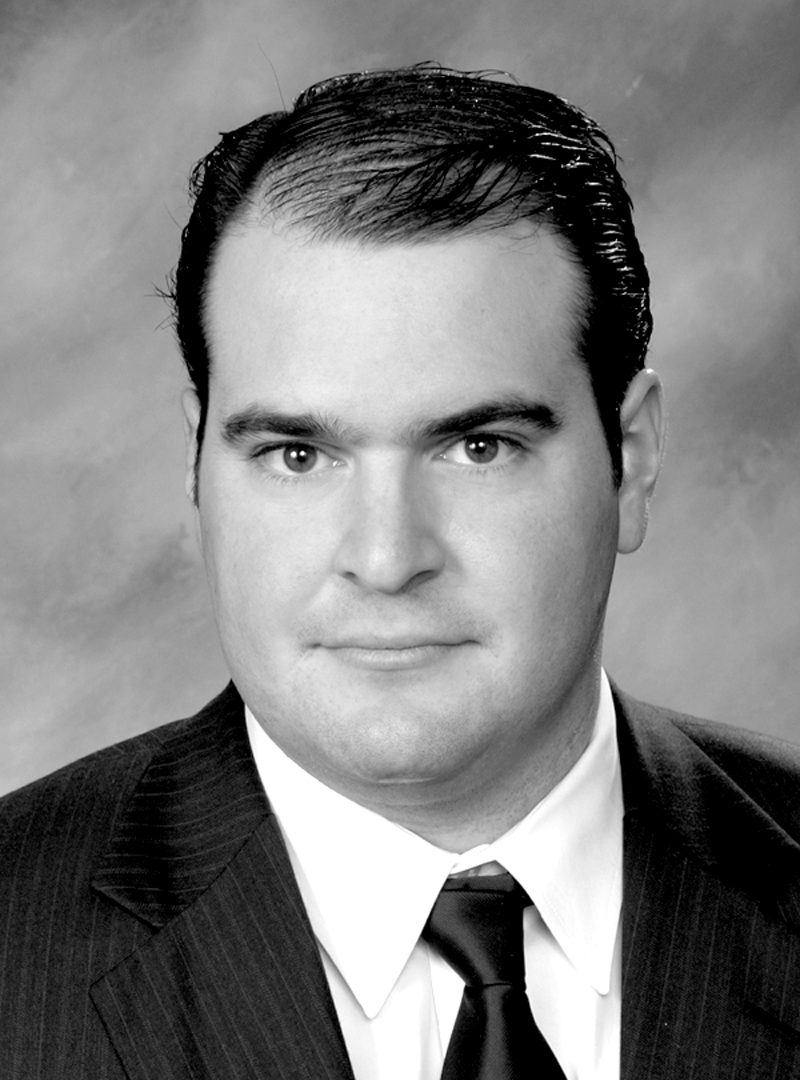
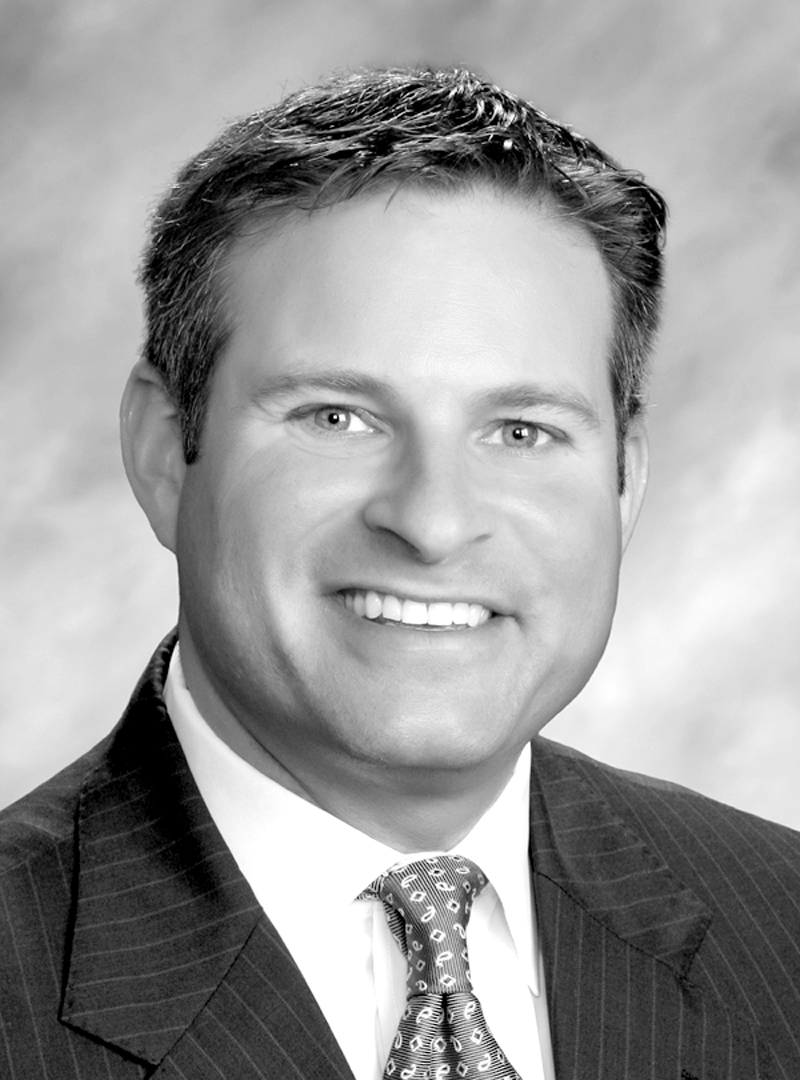
“Over the past four years of NAYP being up and running, we’ve learned that young professionals change careers,” she said. “We’re at a time in our lives where people get new opportunities, professionally speaking, or they’re making big changes in their private lives, having babies. And that’s the nature of being a young professional in today’s world.
“So, rather than have a static organization that isn’t flexible, nor addressing actual needs, we’ve decided to open it up and re-examine,” she added.
Rich Horton, Northampton director of Community Staffing, an employment agency, said NAYP is currently making “aggressive structural changes.”
“Historically it’s been what we called the leadership team — 10 or 12 people, a president, vice president, with committees underneath that,” he said. “So we decided to pull back and make the leadership roles a committee, with an executive team at its core. That team will have five members responsible for strategy, making sure everything gets done, with project leaders overseeing specific issues.
“The leadership of NAYP is no longer just 10 people,” he continued. “Rather, it’s really whoever wants to be involved. We’ll be having open meetings where anyone can come, and we expect that, over time, there will be a core of people who are consistently showing up. It really is more of an open format, allowing us to get more warm bodies in the room, getting things done that we want to get done, but also just to get excitement going around.”
The sixth de facto member of the executive team is Lynn Kennedy, the NAYP’s liaison within the Northampton Chamber of Commerce. She was quick to add that, while all this talk of restructured leadership and changing titles might sound like an entirely new organization, NAYP will not change in the way the group functions for its members.
“But there is one change that we want them to see,” she added, “and that is how to get involved, and at what levels. They don’t need to make these excessive commitments to get involved — they can be involved at the level that works for them.
“We hope that the NAYP membership is seeing a more clear way for them to be part of the group. That was a barrier that we are recognizing — that people weren’t always sure of the steps that they needed to take before.”
While the NAYP team was talking out the changes that are still taking place, they did state that they are, as always, ready to get down to business. Talking with BusinessWest for this inaugural feature, NAYP members said that, at its next meet-and greet-function to take place on Jan. 12, relative terms like ‘young’ and ‘area’ keep it pretty open as far is who is welcome to attend.
“We’re never going to say ‘no’ to someone because of where they are from,” Kennedy said, “or that you’re too old.”

Defining Moments
“The way that I address that question of who can be a member,” Glynn said, “and it comes up all the time, is that young can mean chronological; young can mean in business. Or young can mean that you have a fresh perspective on how you want to be part of the community.”
She was one of the early members of NAYP, which is not yet five years old. Initially, there was a common theme among other businesspeople like her, that a lack of a forum for young professionals needed to be addressed.
“I know there are other young people out there in business,” she remembered, “who consider their professional lives first and foremost, but also have a desire for networking and social opportunities within that.”
The Northampton Chamber of Commerce also realized early on the importance of such an organization, and NAYP considers them a sponsor and its biggest advocate. Suzanne Beck is the chamber’s executive director, and she told BusinessWest that there has always been a lot of talk in the Valley about who is that next generation in business and what is their commitment to the region. The chamber’s commitment to NAYP has stemmed from that question.
“Many of those people that were at the beginning of our downtown’s renaissance are aging out of their businesses,” she continued. “There was a five-year period where we really asked, ‘who’s next?’ Kate is one of the younger generation with a retail presence on Main Street, and these days, if you walk through Thorne’s, it’s amazing how many young people are running businesses there.”
NAYP started as a once-a-month networking event, and it has added things like leadership lunches, where a small group meets with area CEOs to learn about their career paths. There’s also a strong philanthropic component, working with area nonprofits, and Glynn said the monthly meetings are also “an opportunity for a local nonprofit to stand up and tell us what they do. We ask that they don’t make a pitch for money, but it’s more of an educational instruction as to what they do within the community, and if members want to get involved, here’s how.”
Borrowing an idea from the playbook of the Young Professional Society of Greater Springfield, NAYP launched what it calls a Nonprofit Board Fair this past summer. “What we find is that a lot of young professionals have interest in nonprofit leadership opportunities, but don’t have any clue as to how to get on a board,” said Horton.
“We worked closely with the local United Way,” he continued, “and we reached out to other nonprofits and stipulated that they had to have a board opportunity opening in the next six months. They didn’t have to actually take any of our folks, but they did have to have an opening.” The meeting was well-attended, and all members said that this was assuredly the first of an unfolding tradition for NAYP.

School of Thought
From the perspective of the chamber, Beck said NAYP fills a need for that developing generation of businesspeople in the region.
“With all the colleges and UMass, there’s always been the question of what happens to those kids who have been very well-educated and want to stay here,” she said. “We know that a huge percentage of people who are educated here want to stay here, and unfortunately we know that the majority of them won’t find it easy to find a job to keep them here. NAYP serves an important purpose for developing those connections to the community that might be more valuable to them.”
As one of those former students, Glynn said that it is exciting to see the possibilities for new members within NAYP’s frameworks, because a larger membership means more opportunities for individuals and for the organization as a whole. With a committee-based leadership, Kennedy noted that this structure will be an asset in how those opportunities are addressed.
“In the past, we had so many things that we wanted to do, but only a small number of people able to get things done,” she said, adding that the organization will look hard at prioritizing programs and then maximizing its available young talent to carry them out.
But as the assembled members of NAYP said, the core mission of the group will always be welcoming anyone who wants to be a member. There are currently 135 dues-paying NAYPs, and the goal is for that number to rise.
“Just last week, we had an event, and I met five or six people,” Horton said. “The hope is that they will become members, and from that become more involved. We have really evolved into a vibrant population. There’s a younger slant, but certainly there are folks who are much older in age but who contribute to the energy that knows no age limits.”
Said Glynn, “it’s not just a party with a purpose — we want it to be a fun networking event, but it’s an opportunity to be professional and social with a business perspective. People are coming because of that energy.”

Employment Sections
Job Prospects Are Bright for the Class of 2012

Sally Schirner-Smith

Sally Schirner-Smith says students network, do volunteer work, take internships, and use the Internet to make themselves marketable.

There are a number of indications that the employment outlook for college seniors is fairly bright — from the strong turnout of employers at recent job fairs to statistics showing an uptick in overall hiring. Recent and upcoming graduates have other things going for them as well, especially a proficiency with technology that gives them a decided edge over older individuals competing with them for job opportunities.

Nic Wegman calls it a “competitive edge.”
He was referring to technology, and, more specifically, the ability of recent and upcoming college graduates to understand it and take full advantage of it when it comes to both handling a job and applying for one.
“Their relationship with technology is seamless and almost intuitive,” said Wegman, executive director of the Career Center at the Isenberg School of Management at UMass Amherst, citing just one of their strengths.
His colleague, Jeff Silver, touched on another. “Our graduates have a real edge,” concurred the director of Career Services at UMass Amherst, adding that more than 60% of its undergraduates complete internships that allow them to show off their skills and network with professionals in their field.
And although local experts say it’s a little early to project how the class of 2012 will fare after graduation, indicators are bright. “Employers booked every space we have for a job fair in February; in the past, it was more challenging to get them to sign up,” said Silver, adding that an employer networking event in New York City this month reached maximum capacity in terms of employers, as did an engineering fair last fall.
“We had employers in the hallway,” he recalled. “It’s a positive sign because in the past we had to call companies and go through our database to find people who were hiring. But this year employers are running to us.”
Deborah Pace, director of employer relations at Western New England University, said a job fair held in November for the class of 2012 attracted 45 employers who “had openings and were willing to hire graduates.”

Barbara Kautz, director of the Career Center at Springfield College

Barbara Kautz, director of the Career Center at Springfield College, says today’s college graduates offer advanced Internet skills and a tremendous amount of energy and enthusiasm.

In addition, employers who participated in the Job Outlook 2012 survey conducted by the National Assoc. of Colleges and Employers (NACE) said they plan to hire 9.5% more graduates in 2011-12 than they did in 2010-11. The majority of jobs are entry- level positions, but NACE reports the average salary offer for grads in the class of 2011 rose 6% over the previous year’s average, soaring from $48,288 to $51,171. However, career experts do say there is a wide variance in those numbers because students who major in accounting, engineering, or computer fields earn far more than those who study liberal arts.
For this issue, BusinessWest talked with career experts about the prospects for the class of 2012, as well as the forces that will shape their job-search fortunes.

Progress in Degrees
Wegman works with people who are pursuing degrees in management, marketing, finance, accounting, operations management, hospitality management, and sports management.
“They’re faring better in this economy than students from higher-education backgrounds in other fields,” he said. “Companies that are hiring are looking for the skill sets they have mastered.”
He added that the buzzword, or phrase, often used by corporate recruiters is ‘transferable skills.’ Today’s business graduates have them, and Wegman said they include “the ability to solve problems using data. Our graduates are able to model and use analytics that can lead to potential solutions.”
Nearly half (47%) of students in the graduating class of 2011 who responded to a UMass survey said they had accepted a job related to their field of study before graduation, and an additional 15% had jobs three months later. “We feel very confident that, if anything, these numbers are understated,” Wegman added.
The poll’s results showed that 70% of these jobs were in Massachusetts, 11% were in New England, and 7% were in New York or New Jersey. “So the outlook for business students with a four-year degree is better than the press is portraying; they seem to be disproportionally sought after by companies in this difficult market,” Wegman said, adding the average salary for entry-level jobs his students accepted ranged from the 30s to the high 50s.
Pace agrees that students with degrees in accounting, finance, or telecommunications are in demand, and said graduates in these fields almost always have a job offer before graduation.
Their sophisticated knowledge of technology gives them an edge over older workers, said those we spoke with.
“There is no doubt that there is a generational difference,” Wegman explained. “Students can use multiple devices at the same time and process and solve so much through the efficient use of technology that it is almost mindboggling.”
Barbara Kautz, director of the Career Center at Springfield College, is also impressed by students’ advanced technological abilities. “Their comfort, savvy, and expertise can be better and more refined than those who didn’t grow up with the Internet. They may not have much work experience, but their personal involvement with technology surpasses that of many other people looking for employment,” she said.
Recent graduates in any field of study are also willing and able to research a company’s history and apply for jobs quickly online. “It’s as simple for them as ‘click, click, click,’” Pace said. “And new college graduates are adept at using Microsoft Office products.”
Kautz said the students’ ability to present information about a company works to their advantage. “If a candidate fails to demonstrate knowledge about an organization, he or she is unlikely to be hired,” she told BusinessWest.
Meawhile, many businesses use the Internet to research a candidate by viewing their Facebook or LinkedIn profiles. “They are looking for a certain level of professionalism,” Kautz said, adding that, in some instances, job offers have been rescinded if inappropriate pictures or postings are discovered. “A candidate may be a finalist for a job, but the employer wants to check the way the person represents themselves,” she explained.
Students with degrees in health care, which include physical and occupational therapy, as well as accounting, marketing, and retail management, are also in high demand. “There is opportunity for growth in these fields, and these grads don’t have the dilemma of identifying jobs that students in other liberal-arts programs have,” Kautz  said.

Smart Choices
Many students take advantage of internships, which gives them with a clear picture of what is expected in the workplace as well as an inside track with what is going on within the company.
“It provides them with an edge because most employers are looking for candidates who can help move their organization forward,” Kautz said. “And because graduates are at the beginning of their careers, they throw themselves into their work with eagerness. That’s not to say people in their 40s and 50s don’t have as much energy, but they may have some reservations or ambivalence if they’ve been laid off, which can result in a morale issue.”
Sally Schirner-Smith, director of Career Services at Bay Path College, said that school requires students to perform an internship or have experience in their field before graduation. “We have found it is very beneficial for leveraging employment. If an employer has trained a student or put them through an orientation and they are a good fit for the company and have the right skill set, it can be a win-win situation. Some students have gotten jobs as a result, because employers don’t want to lose the person if he or she is doing quality work.”
Silver said UMass is one of a handful of schools in the country that allows students to earn up to 18 credits through internships or paid co-op positions. “U.S. News and World Report rated UMass among the top 10 universities in the country for producing internships,” he said. In fact, it recently started a program that allows students from other schools to sign up for internships through UMass and earn credits for their experience.
“An internship allows students to prove themselves in front of people who are doing the hiring,” Silver explained. “When they graduate, they have a leg up if their experience is linked with good grades.”
But even if a job offer isn’t forthcoming, the students gain valuable work experience, which enhances their résumé. Volunteer work is also beneficial, so many students pursue this avenue. “If a business sees that a graduate has given his or her time as a volunteer, it tells them a lot about the person’s interest and willingness to give back,” Schirner-Smith said.
Another decided advantage is that many young people are willing and able to relocate to distant states. “Today, people have to be open to mobility and the geographic regions that offer the greatest opportunity in their field,” said Schirner-Smith.
“There are jobs out there, but if a student wants to teach, he or she may have to work in North Carolina,” Pace agreed. “There are older people who are not getting jobs because they don’t want to move. They are established and have homes and young families.”
Recent graduates at Western New England University in Springfield have done well in the job market. “About 78% of the class of 2010 got jobs in their field,” said Pace, adding that statistics have not yet been compiled for 2011 graduates. The jobs spanned a wide range of fields, but the average starting salary was between $35,000 and $45,000.  “Employers are hiring the newbies because they can pay them less money,” Pace said.
Silver said students also haven’t developed bad habits and can be molded to fit within a corporate culture.

Alternative Measures
Many students who receive a bachelor’s degree continue their education, but Pace said most do so because their field requires a graduate degree. “If a student is a liberal-arts major and wants to become a social worker, he or she generally will be required to get a master’s degree.”
However, a fair number of the 44% of graduates in the class of 2010 at Springfield College who went to graduate school did so because they believe an advanced degree is a good investment. Because they realize work experience is important, competition can be fierce for fellowships and internships. “Students recognize that challenging themselves and seeking experiences of service to others can help them develop skills and competencies that are of value to employers,” Kautz said.
Colleges also do their best to offer programs that put grads at the top of the game, including a two-day career summit at Bay Path which offers workshops, classes, and opportunities to have résumés reviewed by professionals.
But some grads prefer to take the entrepreneurial path and have launched their own companies. Pace attributes this to two factors: they want to be in charge of their own destiny and want to help the country remain strong.
“They don’t like the trends they have seen in business and the fact that jobs are being sent overseas, so they decide to grow businesses that are American-owned,” Pace said, adding that recent grads have opened a variety of businesses which range from a bakery to a diagnostic car-repair company and a vodka company. “Ten years ago, graduates would have been more reluctant to do this. Back then, they were looking for jobs within companies, but today they want to be in charge of their own success and have control of their own legacy.”

Promising Futures
Experts concur that the outlook is positive for today’s graduates. “I think the prospects for the class of 2012 are good because there has been slight growth in some industries, and right now there are companies in the U.S. that are doing well,” Pace said.
Schirner-Smith acknowledged that graduates will face challenges.
“But things are slowly improving with the economy, and we are definitely seeing more students find jobs than we did in the past,” she said. “They are working very hard to strategize for employment in their respective fields by networking, using social media, joining organizations, and going to conferences, because many jobs are never posted. These things can streamline the time it takes to find a position, so we anticipate they will have success.”

Features
Holyoke’s Young Mayor Is Ready to Get to Work

Holyoke Mayor-elect Alex Morse

Holyoke Mayor-elect Alex Morse

Alex Morse’s triumph in November’s election captured the attention of the entire region — not to mention those who put  together the guest list for a dinner at the White House a few weeks ago. At 22, Morse is said to be second-youngest mayor in the state’s history, but his educational background and seemingly limitless confidence would appear to have him ready for the corner office. He says his primary goals are to aggressively market and rebrand the city, and enable it to take full advantage of what he called “its moment.”

Alex Morse graduated from Brown University last spring with a degree in Urban Studies.
This means that he knows a lot more than most people about what prompted the decline of every major Northeast city in the ’50s, ’60s, and ’70s, and also about what some of those same communities have done to reinvent themselves and bring people back downtown.
And at Brown, he had a working laboratory in the form of one of the more intriguing urban comebacks, albeit one that is still very much a work in progress. In Providence, city officials, led by flamboyant and controversial mayor Vincent (Buddy) Cianci, literally moved a river, among other initiatives, in their efforts to reinvigorate a moribund central business district and make their community a destination.
Providence, its downtown, and its public school system became the subjects of many of Morse’s classroom projects in Urban Studies, but his hometown of Holyoke also figured prominently in his coursework; indeed, the recent Hope 6 project in the city’s Churchill neighborhood became the subject of one assignment, and his experiences growing up in a declining urban core gave him a unique perspective for the classroom — in the many forms it took.
“Unlike my classmates in Urban Studies and Political Science, I actually came from a struggling urban community, and could use my perspective from growing up here and going to public schools,” he explained. “A lot of the kids at Brown had gone to private schools and didn’t have the experience that I had; I thought that what I brought to the table was much more relevant than what my classmates had to offer. And at the same time, I could take what I learned at Brown and bring it back to Holyoke.”
And it was while working toward his degree — probably early in his junior year, by his estimation — that Morse boldly decided that he would like to continue his education in urban studies in Holyoke City Hall, specifically the spacious ground-floor mayor’s office.
It was with extreme confidence that Morse entered the race nearly a year ago, and it was this character trait, coupled with a solid game plan, a message of hope, and a positive campaign tone, captured in his lapel pin bearing the words ‘I Love Holyoke,’ that propelled him to victory over incumbent Elaine Pluta on Nov. 1.
In a wide-ranging interview with BusinessWest a few weeks before his inauguration, Morse, whose campaign exploits have made news well outside the 413 area code — at 22, he’s the second-youngest mayor in the state’s history, and he’s already been a guest at the White House — talked at length about his road to the corner office and what he plans to do when he officially takes office.
He said that, while his business card and door plaque will say ‘mayor,’ he considers himself, first and foremost, to be the city’s “chief marketing officer.”
Indeed, he told BusinessWest, while Holyoke has suffered (and continues to suffer) from many of the ailments facing Northeast cities — from high concentrations of poverty in the urban core to a struggling public school system —perhaps its biggest problem is perception and the fact that no one is telling the city’s story, or at least to the right people.
And he believes that, from the perspective of a marketer, or salesperson, he has a quality product to sell.
“Holyoke is a great city, and we’re at a great time,” he explained. “Things are really falling into place in a really great way for our city. And I’m prepared to be Holyoke’s biggest salesperson and spokesperson as mayor, and I think that’s what Holyoke needs, someone willing to stand up and promote our assets.”
Beyond marketing, Morse says his primary assignment is to help make sure that Holyoke takes full advantage of what he called “its moment.”
Elaborating, he said pieces of the recovery puzzle — an emerging creative economy, the possible return of rail service, investments in downtown, the Canal Walk, a growing reputation as a ‘green’ community, the Victory Theatre project, and especially the high-performance computing center and the attention it is generating — are coming together, and Holyoke must seize its opportunity to do something special.
“This is the moment; we have a window of opportunity over the next two years to take advantage of this incredible moment,” he said. “It comes down to what we do with that moment, and this is why I ran for mayor. We can either stay the same and cling to the status quo, or we can embrace the future and do things differently.”

News Flash
One of Morse’s biggest challenges since election night has been handling all the media requests.
They’ve come from far and wide, including the Boston Globe, the Christian Science Monitor (which made him one of its ‘30 under 30’ subjects), New England Cable News, MSNBC, CommonWealth magazine, and the Brown University alumni magazine, among others.
He doesn’t say ‘yes’ to everyone — he’s spending most of his time on transition issues — but there haven’t been many ‘nos’ to date. That’s because he views such press encounters as opportunities — not for him, necessarily, but for Holyoke. He endeavors to take the focus of questioners from himself to the city, and often, the interviews take place while he’s offering a tour of the community to someone who has never seen it or knows little about it (he took the Globe on one just before meeting with BusinessWest).
And he can already see some tangible results from all that press.

The high-performance computing center

The high-performance computing center is one of many projects that Morse believes has “put all eyes on Holyoke.”

“It’s great for Holyoke to get this kind of exposure,” he explained. “Kathy Anderson [the city’s director of economic development] will tell you she’s received a number of calls and e-mails because of the stories done since the election. I’ve had people say, ‘I heard on the CBS clip that you have a lot of renewable energy; can we have a phone conversation about that?’”
Thanks to all that attention from the Fourth Estate before and after the election, many in the region know at least some of the Alex Morse story — that he’s young, openly gay, has had dinner at the White House (he said the invitation just appeared in the mail one day), and isn’t a supporter of a casino as an economic-development strategy. Those who have read a little more thoroughly know that he grew up in the city, attended Peck Middle School and Holyoke High School, where he was salutatorian, and was accepted at the only college he applied to — Brown.
They might also know by now that Morse’s parents have worked mostly blue-collar jobs — his father with Carando (he now has a manager’s position there) and his mother with a day-care facility she ran out of the family home — and that he was the first one in his family to earn a college degree.
He told BusinessWest that his upbringing has provided him a unique perspective on one of the main challenges facing his city and most others like it: narrowing the income gap between the poor and the wealthy, and bolstering the middle class.
“We need people with disposable income in downtown Holyoke,” he explained. “It’s not sustainable to have concentrated poverty in our downtown.”
What most have come to learn about Morse is that running for mayor certainly wasn’t anything spontaneous. Rather, it was a well-thought-out plan, a common-sense career path chosen because of his affection for his hometown, knowledge of urban challenges and models for revitalization, and a desire to bring real change to a city that has long been the butt of jokes.
“The last two years of my life have been pretty much consumed by the campaign,” he explained. “It’s something I’ve thought about for about four years. It didn’t matter exactly who I was running against; I could have been running against Elaine Pluta, I could have been running against another long-term city councilor — there was nothing personal about it, it was just something I wanted to do.”
Morse said his campaign strategy was fairly straightforward, and involved meeting as many residents and business owners as possible, framing everything in the positive — “I focused on my ideas and my plans, and people respected that” — and, in a nutshell, “getting people excited about Holyoke again.”
To say that he succeeded with all that would be an understatement. He won the endorsement of the Republican, a paper with a long and deep record of supporting incumbents, and was swept into office by a 53-47 margin.
And while some have suggested that the election results represent a vote against Pluta, a longtime city councilor elected mayor two years ago, and/or a vote against casinos, Morse certainly doesn’t see it that way.

Morse will soon become a resident of Open Square, seen here from just across the canal, in a move he equates to putting his money where his mouth is.

“I see those as votes for Holyoke and its future,” he said of the ballots cast for him. “This election was framed as a choice between the past and the future and what direction Holyoke wants to go in. I decided to run not because I’m particularly distraught or concerned about the direction of our community, but because all eyes are on Holyoke right now, whether it’s because of the computing center or other projects we have going on. The race came down to deciding what kind of mayor we want during these exciting times.”

A Moveable Feast
It’s called BYOR.
That’s short for Bring Your Own Restaurant, a rather unique grassroots initiative started by a group of city residents more than a year ago in response to a perceived lack of dining options in the downtown area.
Participants bring tables, chairs, and potluck dishes to designated spots — empty lots near the canals and the parking area of a closed gas station have worked — that in essence become those nights’ restaurant, said Morse, adding that he’s taken part in several of these get-togethers. He’s hoping, of course, that someday soon this BYOR tradition will end out of necessity — or lack thereof, in this case. And bringing that day closer to reality is just one of many formal and informal items on his list of goals and objectives.
At the top of that list is rebranding the city, or changing the long-held perceptions about it. He’s noticing incremental improvement in the way people talk about his community — he mentioned he’s heard people saying they should move to the city, or move back to it, as the case may be — but maintains that it still has a long way to go.
As chief marketing officer, Morse said he’ll essentially go anywhere and do anything to put Holyoke front and center and sell attributes ranging from cheap, ‘green’ energy to housing prices well below those in surrounding cities.
“We have a great foundation here — it’s not as if we have to start over,” he told BusinessWest. “We just have to restore it to what it once was and beyond that. During the campaign, I talked about bringing us from the Paper City to the Digital City, and I’m going to be the one to lead us into the future — and a better future.”
Rebranding is something he believes Providence did quite well, and its success in that realm is just one component of a broad revitalization strategy he would like to make one of many models Holyoke can borrow from in the years ahead.
Another was the partnerships forged with the business community, he went on, as well as the desire to take bold and dramatic steps, such as reclaiming the Providence River, once spanned by the ‘world’s widest bridge’ (1.5 miles) as recorded in the Guinness Book of World Records, and making it a true asset through initiatives such as the famed WaterFire installation.
“There’s a lot of good things happening in Providence in terms of what they’ve done to rebrand themselves,” he said. “Some of the reflections and experiences I’ve had in Providence will help inform what I want to do in Holyoke in terms of perception and the way Providence has used the artists’ community in the downtown, restaurants, how they’ve taken advantage of the river with WaterFire, and how they’re bringing people into downtown.
“They had some very concerted efforts on the part of the municipal government, and what they did well was partner with business,” he continued. “There were a lot of public-private partnerships to get investment back in Providence.”
Morse said he and his classmates at Brown studied a number of communities, including Baltimore, Detroit, Boston, and others, and that there are common denominators and lessons to be taken from many models for recovery.
“Holyoke is unique in many senses and special in many senses, but at the same time, we have followed the same trajectory as many Northeast and Midwestern cities in terms of deindustrialization and the moving of factories to the south and then overseas; Holyoke is just a part of that story,” he explained.
“Any urban community struggles with issues like public education; it’s how we respond to them that’s really going to make a difference,” he continued. “What I’m interested in as mayor is looking at what other mayors are doing, looking at what other school systems are doing, looking at best practices, and learning from what’s worked and what hasn’t worked.”

Live and Learn
Morse said much of his administration’s focus and energy will be directed toward the downtown area, where efforts will be concentrated on seizing momentum from the computing center, while also working on the many aspects involved with getting more people living in that area.
And the new mayor won’t just be talking about it — he’ll be doing it.
Indeed, he will be the first residential tenant in Open Square, the massive former mill complex now home to dozens of businesses, a café, a performing-arts group, and more, and is awaiting final touches on the space before moving in later this month.
“I made a statement that I wanted to move downtown to help change the perception there,” he told BusinessWest. “If I show a business owner our downtown or Open Square, or talk to young families about moving here, I can say, ‘hey, the mayor lives right down the street; it must be safe.’
“It’s a symbolic gesture, but I’m putting my money where my mouth is,” he continued. “Anything we can do to promote downtown and bring more people and more business there … I think that will help us.”
Overall, Morse says he sees a good deal of momentum downtown, and it comes in a number of forms — from the attendance at the regular BYOR events to growing interest in commercial property in that area, to a growing sense of community, coupled with changing demographics, that he believes are a very positive sign.
“There’s a community today that didn’t exist 10 years ago in Holyoke — a progressive, young, arts-friendly constituency here in downtown,” he explained. “There’s an interest in downtown moreso than I’ve ever seen before, and that’s very refreshing to me, someone who was born and raised here; it’s great to see interest from people who weren’t born here but want to move here and have things happen downtown.”
From his studies of other cities, Morse said he fully understands the chicken-and-egg scenario when it comes to growing the population in the urban core; professionals, empty nesters, and others with disposable income need good reasons to move to a downtown — safe streets, attractive housing, and nightlife are all high on the list — but many of those things, and especially the nightlife part, won’t happen unless there is already a critical mass of urban dwellers capable of supporting businesses.
“If we want to support a thriving small-business community — restaurants, cafés, and nightclubs — we need to have people with money in their pockets,” he explained. “And that means we have to convince people to move to Holyoke, bring their business here, and be a part of this.
“A lot of young professionals and even single people, men and women, want to live in urban communities; I’m convinced of that,” he continued. “Over the past 50 years, there’s been a lot of disinvestment in cities, as if cities were bad, but now, attitudes are changing, and we need to take advantage of that.”

Forward Thinking
When asked what someone ambitious enough to run for mayor of a major city while still a college student might do next for a career challenge, Morse smiled broadly and paused for a minute.
While he didn’t speculate on what else he might do, he mentioned Thomas Menino, the longest-serving mayor in Boston’s history (18 years) and hinted that this is a record of service he may try to emulate.
“Holyoke needs consistent leadership over the next decade,” he said, hinting that he plans to be around at least that long — if the voters are so inclined.
For now, though, he’s focused on getting on with his work as chief marketing officer and with enabling Holyoke to take advantage of that window of opportunity he mentioned.
He said he’s never seen people this excited about the city, and that he considers it his job to capture that excitement and have it translate it into tangible, positive change. He acknowledged that he certainly can’t change the citiy’s fortunes in two years, but he can certainly get the ball rolling.
And if he does, he might be back in the White House soon.

George O’Brien can be reached at [email protected]

Chamber Corners Departments

ACCGS
www.myonlinechamber.com
(413) 787-1555

• Jan. 4: Business@Breakfast, 7:15-9 a.m. at the Sherato• Springfield. The monthly breakfast pays tribute to individuals, businesses, and organizations for major contributions to civic and economic growth and for actions that reflect honor o• the region. The chamber breakfast gives your company exposure to business owners, upper management, and salespeople. Each month, September through June, the event is hosted at a different locatio• throughout the ACCGS community. To reserve tickets, contact Cecile Larose at (413) 787-1555 or [email protected]

• Jan. 4: After 5, 5-7 p.m. Network, build relationships, and forge strategic partnerships. The ACCGS After 5, held the second Wednesday of certai• months September through June, offers business professionals from diverse industries a• opportunity to exchange business leads while socializing i• a casual atmosphere. For more information, contact Cecile Larose at (413) 787-1555 or [email protected]

Amherst Area
Chamber of Commerce
www.amherstarea.com
(413) 253-0700

• Jan. 11: Amherst Area Chamber Breakfast & Annual Meeting, 7:15-9 a.m., at the Courtyard by Marriott. Tickets: $12 for members, $15 for non-members.

• Jan. 25: Amherst Area Chamber After 5, 5-7 p.m. Cost: $5 for members; $10 for non-members. The new chamber Web site will debut.

Frankli• County
Chamber of Commerce
www.franklincc.org
(413) 773-5463

• Jan. 17: Business After Hours, 5-7 p.m. at the Farm Table at Kringle Candle, Bernardston. Tickets: $5 for members, $8 for non-members.

• Jan. 27: Breakfast Series, 7:30-9 a.m. at the Greenfield Corporate Center. Program TBA. Co-sponsored by F/H Career Center. Tickets: $12 for members, $15 for non-members.

Greater Easthampto•
Chamber of Commerce
www.easthamptonchamber.org
(413) 527-9414

• Jan. 26: Chamber Annual Meeting & Awards Dinner, 5 p.m. at Southampto• Country Club. Annual awards presentatio• for business, business person, and nonprofit members of the year. Also, a review of a successful, 2011, and a celebratio• of member milestones. Cost: $30 per person, inclusive. For more information, visit [email protected]

Greater Holyoke
Chamber of Commerce
www.holycham.com
(413) 534-3376

• Jan. 11: 2011 Winners Circle, 5-7 p.m., at the Yankee Pedlar, 1866 Northampto• St., Holyoke. Sponsored by Dowd Insurance Agency; Holyoke Community College; Holyoke Medical Center; PeoplesBank; Resnic, Beauregard, Waite & Driscoll; and Universal Plastics. Cost: $25. Call the chamber at (413) 534-3376.

• Jan. 18: Chamber After Hours, 5-7 p.m., at Mrs. Mitchell’s Kitchen, 514 Westfield Road, Holyoke. Sponsored by Holyoke Credit Union. Cost: $10 for members, $15 cash for non-members.

Greater Northampto•
Chamber of Commerce
www.explorenorthampton.com
(413) 584-1900

• Jan. 4: January Arrive@5, 5-7 p.m., at Verizo• Wireless/Wireless Zone, 162 North King St., Northampton. Sponsored by Normandeau Communications Inc. Cost: $10 for members. Arrive@5 is a casual mix and mingle with your colleagues and friends.

Northampto• Area Young Professional Society
www.thenayp.com
(413) 584-1900

• Jan. 12: NAYP Monthly Networking Event, 5-7 p.m., at the World War II Club, 50 Conz St., Northampton. Cost: free for members, $5 for guests.

Professional Women’s Chamber
www.professionalwomenschamber.com
(413) 755-1310

• Jan. 18: Professional Women’s Chamber Business Expo, 11:30 a.m.-1:30 p.m., at Max’s Taver• at the Basketball Hall of Fame. Accepting reservations for the 14th Annual Tabletop Expo. Last year’s successful expo was a sellout. Sig• up today to showcase your company’s products and services or to attend the event. Display price includes a draped table and lunch for one. General admissio• tickets include specialty sandwiches, fruit, chips, and dessert.  For more information, contact Lyn• Johnso• at (413) 787-1555 or [email protected]

Greater Westfield
Chamber of Commerce
www.westfieldbiz.org
(413) 568-1618

• Jan. 9: Mayor’s Coffee Hour, 8-9 a.m., at Dunkin’ Donuts, 625 East Mai• St., Westfield. Cost: free.

• Jan. 18: WestNet networking event, 5-7 p.m., at Tucker’s Restaurant, 625 College Highway, Southwick. Opportunity to meet other local businesses and chamber members. Cash bar and free hors’doeuvres. Tickets: $10 for chamber members, $15 for non-members. Your first WestNet is always free.

Agenda Departments

Anthropologist Lecture
Feb. 22: Susan Darlington, a professor at Hampshire College, will discuss her latest book, The Ordination of a Tree: The Thai Buddhist Environmental Movement, as part of the Ovations series at Springfield Technical Community College. Darlington has studied the work of Buddhist monks in Thailand who are engaged in rural development and environmental conservation. The science-based talks, at 10:10 a.m. and 11:15 a.m. in Scibelli Hall Theater, will also include insights into religion and social activism. The presentations are free and open to the public. For more information, call (413) 755-4233.

Author Lecture
March 28: Internationally acclaimed author Tom Perrotta will read from his upcoming novel, The Leftovers, at 10:10 a.m. and 11:15 a.m. in Scibelli Hall Theater, as part of the Ovations series at Springfield Technical Community College. The talks are free and open to the public. Two of Perrotta’s books, Election, and Little Children, have been made into movies, and five novels have been national bestsellers. For more information, call (413) 755-4233.

Slam Poet Lecture
April 13: Taylor Mali, a former high-school teacher who has emerged from the slam-poetry movement as one of its leaders, will discuss his performances at 10:10 a.m. and 11:15 a.m. in Scibelli Hall Theater, as part of the Ovations series at Springfield Technical Community College. The talks are free and open to the public. For more information, call (413) 755-4233.

Difference Makers
March 22: BusinessWest will stage its fourth annual Difference Makers Celebration at the Log Cabin Banquet & Meeting House in Holyoke. The program recognizes area individuals and organizations that are truly making a difference in this region. The winners will be announced in February. The awards ceremony will feature entertainment, butlered hors d’ oeuvres, and introductions of the winners. Tickets are $55 per person, with tables of 10 available. For more information or to order tickets, call (413) 781-8600, e-mail to [email protected], or visit www.businesswest.com.

Cover Story Sections Top Entrepreneur
Herbie Flores Is Making His Vision for Springfield Reality

COVER0112aHeriberto “Herbie” Flores has always had a heart for needy people, partly because he grew up poor. From its humble origins 40 years ago providing legal and financial assistance for migrant farm workers, he has grown his multi-agency nonprofit, Partners for Community, into an $80 million force for economic development and community improvement. But he’s made bigger news with a series of real-estate acquisitions, including the Paramount Theater (seen here), that promise to transform Springfield’s downtown. The kind of long-term change Flores envisions for the City of Homes will require energy and passion — and BusinessWest’s Top Entrepreneur for 2011 has no shortage of either.

“This city is coming back,” Heriberto Flores said. “People don’t want to live out in the woods.”
He was sharing a vision of a societal shift away from suburban sprawl back to a city-life model, especially as aging Baby Boomers increasingly seek to live close to all the amenities they need and desire, from food stores and restaurants to banks and performing arts.
As Flores spoke those words, he was standing beside the stage of the 86-year-old Paramount Theater on Main Street in Springfield, an icon of music and theater that has fallen into disrepair — but whose walls, ceilings, and fixtures are breathtaking in their ornate beauty, for anyone willing to look beyond the dust, grime, and faded paint.
And vision is something Herbie Flores has in spades.
Just as he sees the potential in the Paramount — a $1.75 million purchase that will require millions more to restore to a multicultural center for performing arts and community events — he’s also an unabashed optimist when it comes to Springfield itself, choosing to focus on the positives of the city and not the large pockets of poverty, high-school dropout rates, crime, and other issues that often color people’s perceptions.
“When you start looking at the assets, the city has clean water and natural resources. We have companies like Big Y, Peter Pan, and MassMutual. We have three TV stations in this city. We have Baystate Medical Center — how many people would kill to have a hospital like that in their region? And all the schools and universities … this is a very good region,” he told BusinessWest.
“I could live anywhere, but I live in Springfield,” Flores continued. “The investments we make in the city, some people say, ‘they’re paying too much for that.’ ‘Why are they doing that?’ But you have to invest for the future. I don’t believe Springfield will be in the position it is today in the future. I see the changes coming.”
For the past three decades, from his stewardship of a social-assistance network called Partners for Community to his more recent ambition to transform the city’s downtown, Herbie Flores has been the catalyst for many of those changes, and for those reasons, among others, he is BusinessWest’s Top Entrepreneur for 2011.

Herbie Flores outside the State House in Boston, mid-1980s.

Herbie Flores outside the State House in Boston, mid-1980s.

“He’s making investments in Springfield, and this region, at a time when some people and businesses are dis-investing,” said BusinessWest Editor George O’Brien as he explained the selection of Flores as the magazine’s 16th top entrepreneur. “He directs a number of nonprofit agencies, but his actions, especially in recent years, are, in a word, entrepreneurial.
“Purchases like the Paramount and the Bowles building [further south on Main Street] involve risk, and they require vision,” O’Brien continued. “Together with other things happening downtown to bring vibrancy and a larger, more diverse residential population in that area, these bold steps could provide the much-needed spark that Springfield needs.”
Said Flores, “the city needs help, the city and the region; we have a responsibility to step up to the plate. There are problems, but you can’t just stand in the corner and complain. And nobody’s going to do it for you.”
That optimism doesn’t go unnoticed by those in Flores’ circle.
“I think very highly of Herbie,” said Russ Omer, vice president of Commercial Lending for Chicopee Savings Bank, the lead lender on the Paramount project. “He’s been involved in the neighborhood for 30 years, and I’ve always known Herbie to be community-minded. Whatever he did, he always did it for the betterment of his community. The Paramount is just one example of what he does for Greater Springfield.”
For this issue, Flores speaks about some of those initiatives, and discusses how he is creating a legacy that promises to keep improving Springfield long after he’s gone.

Street-level Perspective

Bowles Building

Herbie Flores says the acquisition of the Bowles Building could be a spark for downtown revitalization.

At one point during a lengthy interview, Flores brought BusinessWest to the Borinquen project in the impoverished North End of Springfield. The initiative involves the renovation of 41 units of low-income housing, as well as six commercial spaces, including amenities like a grocery store and a laundromat.
The $11 million project, completed in July 2011, combined federal tax credits, private-investment tax credits, Mass. Department of Housing and Community Development funds, city of Springfield HOME funds, and private financing — a good example of the tapestry of players Flores must weave together to turn one of his visions into reality.
And although it’s just one parcel amid one of the poorest neighborhoods in Massachusetts, when one stands under the rebuilt wood porches and clean, quiet doorways away from the street, it doesn’t feel like a low-income neighborhood.
“America was not built by rich people,” Flores said. “It was built by poor people who did something to create wealth.”
Flores knows something about starting poor. Born in Caguas, Puerto Rico, he was intimately acquainted with poverty as his family struggled for sustenance throughout his childhood. It was there, he said, that he began to identify himself with economically deprived groups and devote himself to service on their behalf.
He moved to Springfield with his family in 1965, then served with the Army in Vietnam in the late ’60s. He has remained active in veterans’ causes, and was named Springfield Veteran of the Year in 2001.
But it was his affinity with migrant farm workers that led to the development of an agency — the New England Farm Workers’ Council — to help them out with various needs, from fuel assistance to job skills to education. That agency would, in the decades that followed, morph into Partners for Community, an $80 million nonprofit with several departments under its umbrella.
Those include the Corporation for Public Management, which seeks solutions to welfare dependency, chronic joblessness, and illiteracy, and also focuses on providing services to those with physical and developmental disabilities; the Corporation for Justice Management, a leader in community-based offender re-entry services to reduce recidivism and address public safety; and New England Partners in Faith, which supports small, faith-based organizations.

Solid Ground
Those agencies share space with a number of private businesses in a number of buildings owned by the Farm Workers’ Council downtown, including 11-13 Hampden St., 1628 Main St., and 1666 Main St., among others.
About 25 years ago, Flores made his first forays into real estate through Brightwood Development Corp. (BDC), a nonprofit formed with the goal of providing housing and economic development on the north side of Springfield. As president and CEO of the BDC, he developed a $2.5 million shopping center, La Plaza del Mercado, on Main Street in 1995, followed by a $3 million neighborhood medical clinic, El Centro de Salud Medico Inc., the next year. That was immediately followed by a $2 million rehabilitation of blighted, multi-family houses in the North End.
His recent deals are helping him secure a wide swath of downtown, which will have a dual effect. First, the resulting critical mass of space will ultimately create economies of scale for development opportunities, as well as a diverse mix of inventory that will suit the needs of a wide range of potential tenants. Second, it will allow him to control the immediate environs around his buildings, reducing opportunities for negative elements to creep in.
The Massasoit building, which houses the Paramount, will be renovated as phase one of Flores’ planned downtown redevelopment. The theater will boast a completely new façade, with interior renovation of the seats and stage area, including all technical aspects of a performing-arts theater. Work on the four-story building, which will include other commercial and residential space, is expected to begin during the first quarter of 2012.
As Flores led BusinessWest through the cavernous corridors — including a projection room hollowed out of equipment and rows of narrow, beaten-up, red seats in need of restoration or replacement — he talked about the impossibility of pleasing everyone with a project of this scale, but with a clear belief that the end result will be worth all the give and take.
“You can work to do something for yourself,” he said from the theater floor, just in front of the stage, “or you can work to do something for society.” Clearly, he envisions a restored, vibrant Paramount as an example of the latter.
Then there’s the Bowles building, a property recently purchased for $2 million which currently houses the Student Prince restaurant; that structure will be phase two of the council’s planned downtown development. The office building will be renovated for commercial and residential space, with work beginning sometime in 2013. However, the adjacent parking lot, which will be converted to a four-story, covered parking garage, will be part of phase one and will be completed first.
Flores said the Bowles project could became a key initiative in efforts to prompt more people with disposable income to make downtown Springfield their mailing address, a necessary ingredient in any municipal recovery effort.
Flores has been a participant in two so-called ‘City2City’ excursions that have taken delegations from the Springfield area to resurgent cities — Greensboro and Winston-Salem, N.C. in 2010, and Grand Rapids, Mich. late last year — and said that, in both instances, investments in the downtown areas, and especially those in market-rate housing and entertainment-related ventures, provided sparks that translated into real momentum.
He says he wants to do the same in Springfield.

Glass Half-full
Flores said he enjoys the politics and networking necessary to bring together the necessary investors, both public and private, to create real-estate deals. And he enjoys the challenge of doing so at a time when many people still don’t believe in Springfield’s potential.
“Sometimes people tell you it’s a bad time to invest in Springfield,” he said. “But if you take that attitude, nothing gets done. You have to be able to see the opportunities and run with them.”
Simply put, it doesn’t matter whether people see the city’s glass as half-empty of half-full. “The way I see it, even if the glass is empty, then there are more opportunities.”
The number of projects occurring downtown, he added, will make the landscape more attractive to other investors, although many of the city’s problems — keeping kids in school, creating more jobs, etc. — will take more than time and money to solve, and he also believes Springfield desperately needs an infusion of young, middle-class residents. Still, he said, banks are willing to back realistic capital projects today, even though lending regulations are more difficult to navigate.
Omer called Flores an example of someone creating projects that the entire community can benefit from — the Paramount being a good example.
“He wants to make it available to faith-based organizations, Springfield public schools, and other community events, as well as some general entertainment,” he said, adding that the mere idea of restoring that building appeals to many longtime city dwellers.
“I tell the story that I grew up in Springfield, and I used to go to the movies there. They’d pass out free pencil boxes in the ’50s and ’60s. Today, it could be a museum in itself. I think it’s a great thing to preserve in Springfield, and now the city is going to get to enjoy it.”
Flores says he doesn’t envision the Paramount as a standalone attraction, but something that should operate alongside other entertainment venues and restaurants as part of a destination district for fine arts.
“The symphony should be doing a show, the Basketball Hall of Fame should be doing some kind of activity, the MassMutual Center should be doing some hockey, CityStage should be doing something, and the Paramount should be doing something,” he said. “If we think with a big vision, advertising will come in, and everyone can make money.”
Omer said Flores approaches projects with the big picture in mind, “kind of like a chess player, always four or five moves ahead of the pack. He’s a very bright, astute businessman, and over the years he’s been very successful at completing his projects.”

Something to Build On
In addition to his other endeavors, Flores is president of the North End Educational Development Fund, which administers the largest Hispanic scholarship fund in New England, providing college scholarships for underprivileged, inner-city Springfield residents — and, hopefully, starts them on their own journeys of success.
“I’d like to see another 25 millionaires come out of Springfield,” he told BusinessWest. “If people can make money here, they will invest and stay. I see myself as a catalyst to open doors.”
As he walked around the Bowles building and toward his modest office overlooking Hampden Street, Flores said people have wondered what wealth he could have amassed as a for-profit real-estate entity. But he said he’s building more than just physical structures. He’s also constructing a legacy — through his nonprofit endeavors guided by a committed board — that will far outlast his own life and continue to remake Springfield for decades to come.
“I’m not making anything for myself,” he said. “I’m building all this wealth for the nonprofit, so that, when I’m gone, we’ll be able to do some good in the future. Money is neutral — money is not good or bad. Good people with money can do good things, and bad people with money can do a lot of bad things.
“I have tried to set up these programs and buildings to have something for the next generation,” he continued. “I don’t know who’s going to be here 25 years from now, but these programs and services will still be here.”
Flores said he believes people should take responsibility for their community with the resources they have, and he’s tried to run his business — and prioritize his life — that way.
“I’m hard on myself. I keep saying there’s more that can be done,” he said. “I ask, ‘did you leave it better than found it? What did you do to make this country better?’ I can honestly say I’m still working on it.”
To Herbie Flores, that goal is paramount — and reachable.

Joseph Bednar can be reached at businesswest.com

Previous Top Entrepreneurs

• 2010: Bob Bolduc, founder and CEO of Pride
• 2009: The Holyoke Gas & Electric Department
• 2008: Arlene Kelly and Kim Sanborn, founders of Human Resource Solutions and Convergent Solutions Inc.
• 2007: John Maybury, president of Maybury Material Handling
• 2006: Rocco, Jim, and Jayson Falcone, principals of Rocky’s Hardware Stores and Falcone Retail Properties
• 2005: James (Jeb) Balise, president of Balise Motor Sales
• 2004: Craig Melin, president and CEO of Cooley Dickinson Hospital in Northampton
• 2003: Tony Dolphin, president of Springboard Technologies in Springfield
• 2002: Timm Tobin, then-president of Tobin Systems Inc.
• 2001: Dan Kelley, then-president of Equal Access Partners
• 2000: Jim Ross, Doug Brown, and Richard DiGeronimo, then-principals of Concourse Communications
• 1999: Andrew Scibelli, then-president of Springfield Technical Community College
• 1998: Eric Suher, president of E.S. Sports in Holyoke
• 1997: Peter Rosskothen and Larry Perreault, co-owners of the Log Cabin Banquet and Meeting House
• 1996: David Epstein, president and co-founder of JavaNet and the JavaNet Café in Northampton

Opinion
Thing5 Move Downtown Spurs Momentum in Springfield

The recent announcement that Thing5 LLC will be creating a new call center in One Financial Plaza, thus bringing 500 new jobs to Springfield, is a positive story for the city and the region — on a number of levels.
Let’s start with the jobs. That’s priority No. 1 in the Greater Springfield area, and it has been for many years now. Some might look at this and say, ‘it’s only call-center jobs,’ or words to that effect, but these opportunities come on many levels, from entry positions to management slots, and, in many cases, they can be handled by those who do not possess a college education. The region needs those high-quality jobs (call them white-collar, if you like), but it also needs employment opportunities like these, especially in such large volume.
Beyond the employment factor, there are many other aspects to this story, all of them positive. First, this company started here, in the Technology Park at Springfield Technical Community College — which was created to spur this kind of tech-related enterprise — and thus provides solid evidence that we can incubate ventures and grow them into major employers.
Also, this company stayed here. Indeed, when it reached that proverbial next level, there were, quite obviously, opportunities to take Thing5 almost anywhere — because there isn’t a city or town in the Commonwealth or well beyond it that wouldn’t fight, and fight hard, for 500 jobs. But management chose to stay in the City of Homes, largely because of the lower cost of living, available workforce, access, quality of life, and affordable commercial real estate.
This shows that our various assets are tangible — and sellable.
But perhaps the biggest benefit will come in the form of greater momentum downtown. First, this move gives a substantial boost to the office tower known as One Financial Plaza, which has had several dark floors for many years, but has been staging something of a comeback recently.
Beyond that, though, the 500 new employees working downtown will provide a larger critical mass of people needed to spur additional investments, be they in support businesses, hospitality-related ventures such as restaurants and clubs, or badly needed retail.
And there is another component — the possibility that some of these employees may soon be working and living downtown, thanks to a program that will offer reduced lease rates to Thing5 employees at the nearby Morgan Square apartments, managed by the same company (Samuel D. Plotkin) that also manages One Financial Plaza. This additional residential piece could further stimulate investment in the central business district and be a key contributor to the kind of vibrancy that other Northeast cities have enjoyed.
As we said, there are many angles to this positive story for Springfield and its downtown. The headlines were all about the jobs coming to the city — and that’s an important aspect of this — but there are many other elements that bode well for the City of Homes.

Opinion
A Breath of Fresh Air in Holyoke

When people reference Alex Morse’s age, they do so slowly and with conviction.
They say ‘22 years old’ as if there was a verbal exclamation point behind the number and words. And it’s understandable — that’s a very young age to be walking around with a business card that says ‘mayor of Holyoke.’
But Morse is not like most recent college graduates, as anyone who has spent just five minutes talking with him can readily understand. He has confidence, poise, a plan — well, about as much as any mayor can have a plan — and a deep affection for his city.
He’ll need all of that and more as he moves into the corner office, because the challenges facing Holyoke and all other urban centers are considerable, and real progress is difficult to achieve and sustain.
But Morse will make you want to believe.
His election is certainly one of the most intriguing stories of 2011 locally, a real breath of fresh air in a city that is in many ways ahead of Springfield in terms of generating some positive vibes. And now, with Morse’s election, there is genuine excitement and optimism in the Paper City.
There’s something else, too — what could be real leadership.
BusinessWest has recorded a number of urban turnaround stories in recent years. Just last month, we told the story of Grand Rapids, Mich., the site of a City2City visit involving a large delegation from this region. A year earlier, that same program took us to Winston-Salem and Greensboro, N.C. A few years ago, we relayed the stunning recovery in Lowell, and we’ve been witness to real progress in Worcester, Pittsfield, and other cities.
There are common denominators with each of these stories, but the most critical is leadership, in the form of individuals who can set a tone and get people to follow them and work with them as they carry out strategic initiatives; leadership, in the form of people who can restore civic pride and get people to believe in their community again; leadership, in the form of people who can generate game-changers.
It’s very early in the game — the new mayor is still organizing the desk drawers in his office — but we believe he possesses such leadership skills, even at 22.
In simple terms, Morse has real potential to be the proverbial right person in the right place at the right time. The place is a city that is showing some signs of life after spending decades in retreat, and the time is a period when Holyoke is gaining a reputation as a ‘green’ city, a place where individuals and businesses want to be, at a time when most planners and economic-development experts tell us that people want to move back into the cities that were abandoned in favor of the suburbs 40 years ago.
The person is someone who appears to have the ability to get people to listen, follow, and take the lead when necessary.
In sports, analysts have a phrase they use when observers get excited about someone who has excelled or overachieved in their first exhibition game or spring-training tilt. They say, ‘don’t put him in the Hall of Fame yet.’ That appears to be what we’re doing with Morse, and it’s probably a little unfair — or more than a little.
But even though he hasn’t presided over his first ceremonial ribbon-cutting yet, it is clear that there is excitement in Holyoke, and he is the primary cause of it. What happens when the media hype from the election and its aftermath dies down is anyone’s guess, but we believe that in time, and probably not much of it, people will stop referencing how old Morse is. That’s because they’ll have better, more important things to talk about.

Opinion
An Age of Demoralizing Debt

The number itself is daunting: $1 trillion in student debt. That means there is more student debt than credit-card debt in the U.S. And that the amount of student debt in this country is in the realm of the GDP of such nations as South Korea, Mexico, and Australia.
This issue has the potential to fray our social fabric. The Occupy Wall Street protests inspired the Occupy Student Debt campaign, which has been asking 1 million students nationwide to pledge not to repay their student loans. This is a lose-lose proposition — one with potentially harrowing long-term financial implications for anyone who might follow this course — and it’s for the better that the Occupy Student Debt pledge has not caught on.
Yet the basic impulse is entirely understandable. There was a time in the not-too-distant past when student debt didn’t exist. When I went to college in the 1960s, students could pay for a college education without borrowing. College costs were low enough that a family contribution and a summer or part-time job got you through. You graduated with a degree — not with a payment plan.
As an educator, I have spent my entire career at public universities. When I was a young chemistry professor at Towson University in Maryland in the 1970s, a shared-responsibility social contract prevailed in the world of public higher education. Government funded about 70% of the cost of education, and students and families came up with the remaining 30%. Students graduated with little or no debt.
This shared-responsibility model acknowledged that earning a college degree benefited the student but also paid great social and economic dividends for communities, states, and the nation.
Today, that funding model has changed considerably. Nationally, the split is now closer to 50-50; the public subsidy and tuition dollars are roughly equal. The reason for this ominous change is clear: decreased funding by states has shifted more of the burden to the student.
In Massachusetts, the shift is even more acute. A decade ago the Commonwealth provided 63% of the funding for general education expenses at UMass. This year the state is providing 45%; students and their parents are on the hook for 55%.
So we have gone from the days when students took on no debt, moved through a period of ‘manageable debt,’ and now stand poised at the edge of an era of destabilizing, demoralizing debt. UMass students now graduate, on average, with $24,000 in debt, up from $14,000 only four years ago. At private universities, where education costs are two and a half times what they are at public universities, the debt story is even more daunting. How do we fix this major national problem?
There is no easy fix. But there are steps that, taken together, could put us back on a sustainable course.
For one, the 50 states need to make their public universities and colleges a higher priority. Next year is the 150th anniversary of the Morrill Act, which led to the creation of UMass and the vast expansion of public higher education nationwide. States should mark the occasion by rededicating themselves to the public institutions that have educated millions of citizens over the years and that drive the national economy.
The federal government should do its part by providing more grant aid to students — a step that would benefit public and private institutions alike.
We in higher education need to step up by reducing administrative and academic costs. We also need to make sure that students graduate in four years — eliminating the need for more loans and more debt.
While ‘crisis’ is a greatly overused word, its use is completely warranted in this instance. While organized default is not a good option, we do need to take a number of imaginative and purposeful steps to make sure that the student-debt storm does not batter our economy and our society. We need to keep our bridge to the future — our educational bridge — open wide for all citizens. v

Robert Caret is president of the University of Massachusetts.

Features
Nominations for the 40 Under Forty Class of 2012 Are Due Feb. 17

When BusinessWest launched its 40 Under Forty program in 2007, it did so with the expectation that the honor would soon become coveted and that the program would cast a bright light on the young talent in the four counties of Western Mass. To say that all this has happened would be a huge understatement. The program continues to grow in terms of both relevance and popularity, as evidenced by a new high-water mark for nominations in 2011 and record attendance at the June gala. And now, it’s time to nominate the class of 2012.

Eric Gouvin said being one of the judges for last year’s crop of 40 Under Forty nominees was a more difficult task than he thought it would be. But he said the experience was also enlightening — and encouraging, when he thinks about the future of the Western Mass. business community.
“It was hard,” said Gouvin, professor of Law and director of the Law and Business Center for Advancing Entrepreneurship at Western New England University. “There are a lot of talented people who participate, and to try to narrow that down to 40 was challenging. But I found it to be a real shot in the arm, for sure, to reassure me that we’re not running out of talented, smart people.”
Indeed, in its fifth incarnation, last winter’s nomination process brought forth a record number of applicants, demonstrating that, if anything, the program is only gaining steam.
“There’s so much enthusiasm,” said Pam Thornton, business development coordinator at United Personnel in Springfield, and current president of the Young Professional Society of Greater Springfield (YPS), which has consistently mined its membership for 40 Under Forty honorees on an annual basis.
“If you think about it, the program has created a kind of precedent already, which is amazing,” she continued. “People really look forward to the opportunity to get their name out there, to get an opportunity to get in front of people, and that’s just an awesome thing for our group, and for our age group.”
Now entering its sixth year with a call for nominations, BusinessWest’s 40 Under Forty has captured the respect of the region’s business community and continues to demonstrate that Western Mass. is home to a creative, motivated, and successful group of young business leaders, entrepreneurs, and innovators — people who are redefining what it means to build successful businesses and serve their communities with whatever spare time they have left over.
There are clear benefits in recognizing local professionals under age 40, said Kate Campiti, BusinessWest’s associate publisher. But initially, there were some concerns as to whether a strong-enough crop could emerge year after year. Clearly, that worry has long been put to rest.
“I’m amazed at the number of strong nominations we’re getting every year,” Campiti said. “It really speaks to the depth of the young talent here in the region.”

Click here for a nomination form!

Shine a Light
The 40 Under Forty program was launched in 2007 as a way to spotlight the accomplishments of younger professionals throughout Western Mass. — not only their on-the-job achievements, but their often-extensive volunteer work with organizations that benefit their communities.
Over the years, the program has highlighted individuals from an impressive range of businesses and industries, including education, law, finance, media, medicine, creative arts, nonprofits, government, retail, restaurants, green business, and many others. And last year presented a first — a 16-year-old high-school student (Stephen Freyman) was among the winners.
In addition, a healthy number of honorees each year hail from the ranks of entrepreneurs, developing their own business plans and building companies that in turn create jobs.
Judges score nominees on a combination of their accomplishments (be they in business, government, or the nonprofit realm), leadership qualities, and work within the community.
The effort has also helped boost the image of groups like YPS and Northampton Area Young Professionals, which share a common goal with 40 Under Forty — specifically, demonstrating the economic and cultural vibrancy of this region and generating enthusiasm among talented professionals to set down roots in Western Mass.
“I would absolutely say that it’s raised our profile, without a doubt,” Thornton said, noting that YPS typically brings a strong contingent to the annual June gala. “Everyone looks forward to it, and it’s such a great event.”
One theme that past winners have touched upon repeatedly is the networking benefits generated by being chosen to the 40 Under Forty.
“The experience of being an honoree brought together 40 great business people with collegial networking and partnerships that wouldn’t have been made otherwise,” said Beth Vettori, executive director of Rockridge Retirement Community in Northampton, one of the 2011 honorees.
“Between the friendships formed and the business opportunities, the 40 Under Forty really provided a bridge to some successful affiliations,” she added. “These people I’ve been able to network with — they’re very charismatic, very intelligent, and it’s just great to see that the youth in this area really have depth.”
Vettori said those connections have given her a viable resource — plenty of new colleagues with strong business acumen.
“You’re able to have conversations that give you greater insight into your own business,” she said. “The networking has allowed me a greater understanding of my own operation. It’s helpful to get different perspectives, different ideas; other people may work in different fields, but it’s still business, and it allows you to expand your own thinking.”
As with the past five installments of 40 Under Forty, this year’s winners — chosen by a panel of judges comprised of area business leaders and previous honorees — will be profiled in a spring issue of BusinessWest (always a must-read issue) and toasted at the annual gala reception, which drew a record crowd last June, providing further evidence of the 40 Under Forty’s momentum.

Healthy Crop
Gouvin said the growing popularity of the program is due in part to the sheer impressiveness of the honorees.
“Lots of these folks are professionally accomplished and very engaged in our community; they’re giving back, too,” he told BusinessWest. “That’s very encouraging. We want to make this city the best it can be, but we all have to contribute, not just in our jobs, but in our free time, too. I really do feel like they’re making it better.”
The nomination form can be found on page 20 of this issue. It will be reprinted in upcoming issues as well, and may also be printed from businesswest.com. The deadline for entries is Feb. 17.
Thornton sees the 40 Under Forty, and the role of YPS in it, as a collaborative effort.
“It’s people doing great work together, and I feel like the YPS organization helps to feed the program,” she said. “It’s a way for our people to celebrate what they’ve done, who they are, and how they’ve gotten where they are. And it’s something we should continue if we want to keep the momentum going.”


Past Honorees

Class of 2007
William Bither III — Atalasoft
Kimberlynn Cartelli — Fathers & Sons
Amy Caruso — MassMutual Financial Group
Denise Cogman — Springfield School Volunteers
Richard Corder — Cooley Dickinson Hospital
Katherine Pacella Costello — Egan, Flanagan & Cohen, P.C.
A. Rima Dael — Berkshire Bank Foundation of Pioneer Valley
Nino Del Padre — Del Padre Visual Productions
Antonio Dos Santos — Robinson Donovan, P.C.
Jake Giessman — Academy Hill School
Jillian Gould — Eastfield Mall
Michael Gove — Lyon & Fitzpatrick, LLP
Dena Hall — United Bank
James Harrington — Our Town Variety & Liquors
Christy Hedgpeth — Spalding Sports
Francis Hoey III — Tighe & Bond
Amy Jamrog — The Jamrog Group, Northwestern Mutual
Cinda Jones — Cowls Land & Lumber Co.
Paul Kozub — V-1 Vodka
Bob Lowry — Bueno y Sano
G.E. Patrick Leary — Moriarty & Primack, P.C.
Todd Lever — Noble Hospital
Audrey Manring — The Women’s Times
Daniel Morrill — Wolf & Company
Joseph Pacella — Egan, Flanagan & Cohen, P.C.
Arlene Rodriquez — Springfield Technical Community College
Craig Swimm — WMAS 94.7
Sarah Tanner — United Way of Pioneer Valley
Mark Tanner — Bacon Wilson, P.C.
Michelle Theroux — Child & Family Services of Pioneer Valley Inc.
Tad Tokarz — Western MA Sports Journal
Dan Touhey — Spalding Sports
Sarah Leete Tsitso — Fred Astaire Dance
Michael Vann — The Vann Group
Ryan Voiland — Red Fire Farm
Erica Walch — Speak Easy Accent Modification
Catherine West — Meyers Brothers Kalicka, P.C.
Michael Zaskey — Zasco Productions, LLC
Edward Zemba — Robert Charles Photography
Carin Zinter — The Princeton Review

Class of 2008
Michelle Abdow — Market Mentors
Matthew Andrews — Best Buddies of Western Mass.
Rob Anthony — WMAS
Shane Bajnoci — Cowls Land & Lumber Co.
Steve Bandarra — Atlas TC
Dr. Jonathan Bayuk — Hampden County Physician Associates
Delcie Bean IV — Valley Computer Works
Brendan Ciecko — Ten Minute Media
Todd Cieplinski — Universal Mind Inc.
William Collins — Spoleto Restaurant Group
Michael Corduff — Log Cabin Banquet and Meeting House
Amy Davis — New City Scenic & Display
Dave DelVecchio — Innovative Business Systems Inc.
Tyler Fairbank — EOS Ventures
Timothy Farrell — F.W. Farrell Insurance
Jeffrey Fialky — Bacon Wilson, P.C.
Dennis Francis — America’s Box Choice
Kelly Galanis — Westfield State College
Jennifer Glockner — Winstanley Associates
Andrea Hill-Cataldo — Johnson & Hill Staffing Services
Steven Huntley — Valley Opportunity Council
Alexander Jarrett — Pedal People Cooperative
Kevin Jourdain — City of Holyoke
Craig Kaylor — Hampden Bank / Hampden Bancorp Inc.
Stanley Kowalski III — FloDesign Inc.
Marco Liquori — NetLogix Inc.
Azell Murphy Cavaan — City of Springfield
Michael Presnal — The Federal Restaurant
Melissa Shea — Sullivan, Hayes & Quinn
Sheryl Shinn — Hampden Bank
Ja’Net Smith — Center for Human Development
Diana Sorrentini-Velez — Cooley, Shrair, P.C.
Meghan Sullivan — Sullivan, Hayes & Quinn
Michael Sweet — Doherty Wallace Pillsbury & Murphy
Heidi Thomson — Girls Inc.
Hector Toledo — Hampden Bank
William Trudeau Jr. — Insurance Center of New England
David Vermette — MassMutual Financial Services
Lauren Way — Bay Path College
Paul Yacovone — Brain Powered Concepts
Class of 2009
Marco Alvan — Team Link Brazilian Jiu Jitsu
Gina Barry — Bacon Wilson, P.C.
Maggie Bergin — The Art of Politics
Daniel Bessette — Get Set Marketing
Brandon Braxton — NewAlliance Bank
Dena Calvanese — Gray House
Edward Cassell — Park Square Realty
Karen Chadwell — Doherty, Wallace, Pillsbury and Murphy, P.C.
Kate Ciriello — MassMutual Financial Group
Kamari Collins — Springfield Technical Community College
Mychal Connolly Sr. — Stinky Cakes
Todd Demers — Family Wireless
Kate Glynn — A Child’s Garden and Impish
Andrew Jensen — Jx2 Productions, LLC
Kathy LeMay — Raising Change
Ned Leutz — Webber & Grinnell Insurance Agency
Scott MacKenzie — MacKenzie Vault Inc.
Tony Maroulis — Amherst Area Chamber of Commerce
Seth Mias — Seth Mias Catering
Marjory Moore — Chicopee Public Schools
Corey Murphy — First American Insurance Agency Inc.
Mark Hugo Nasjleti — Go Voice for Choice
Joshua Pendrick — Royal Touch Painting
Christopher Prouty — Studio99Creative
Adam Quenneville — Adam Quenneville Roofing
Michael Ravosa — Morgan Stanley
Kristi Reale — Meyers Brothers Kalicka, P.C.
Amy Royal — Royal & Klimczuk, LLC
Michelle Sade — United Personnel
Scott Sadowsky — Williams Distributing Corp.
Gregory Schmidt — Doherty, Wallace, Pillsbury & Murphy, P.C.
Gretchen Siegchrist — Media Shower Productions
Erik Skar — MassMutual Financial Services
Paul Stallman — Alias Solutions
Renee Stolar — J. Stolar Insurance Co.
Tara Tetreault — Jackson and Connor
Chris Thompson — Springfield Falcons Hockey Team
Karl Tur — Ink & Toner Solutions, LLC
Michael Weber — Minuteman Press
Brenda Wishart — Aspen Square Management

Class of 2010
Nancy Bazanchuk — Disability Resource Program, Center for Human Development
Raymond Berry — United Way of Pioneer Valley
David Beturne — Big Brothers Big Sisters of Hampden County
Maegan Brooks — The Law Office of Maegan Brooks
Karen Buell — PeoplesBank
Shanna Burke — Nonotuck Resource Associates
Damon Cartelli — Fathers & Sons
Brady Chianciola — PeoplesBank
Natasha Clark — Springfield School Volunteers
Julie Cowan — TD Bank
Karen Curran — Thomson Financial Management Inc.
Adam Epstein — Dielectrics Inc.
Mary Fallon — Garvey Communication Associates
Daniel Finn — Pioneer Valley Local First
Owen Freeman-Daniels — Foley-Connelly Financial Partners and Foley Insurance Group
Lorenzo Gaines — ACCESS Springfield Promise Program
Thomas Galanis — Westfield State College
Anthony Gleason II — Roger Sitterly & Son, Inc. and Gleason Landscaping
Allen Harris — Berkshire Money Management Inc.
Meghan Hibner — Westfield Bank
Amanda Huston — Junior Achievement of Western Mass. Inc.
Kimberly Klimczuk — Royal, LLP
James Krupienski — Meyers Brothers Kalicka, P.C.
David Kutcher — Confluent Forms, LLC
James Leahy — City of Holyoke and Alcon Laboratories
Kristin Leutz — Community Foundation of Western Mass.
Meghan Lynch — Six-Point Creative Works
Susan Mielnikowski — Cooley, Shrair, P.C.
Jill Monson — Adam Quenneville Roofing & Siding Inc. and Inspired Marketing & Promotions
Kevin Perrier — Five Star Building Corp.
Lindsay Porter — Big Y Foods
Brandon Reed — Fitness Together
Boris Revsin — CampusLIVE Inc.
Aaron Vega — Vega Yoga & Movement Arts
Ian Vukovich — Florence Savings Bank
Thomas Walsh — City of Springfield
Sean Wandrei — Meyers Brothers Kalicka, P.C.
Byron White — Pazzo Ristorante
Chester Wojcik — Design Construction Group
Peter Zurlino — Atlantico Designs and Springfield Public Schools

Class of 2011
Kelly Albrecht — left-click Corp.
Gianna Allentuck — Springfield Public Schools
Briony Angus — Tighe & Bond
Delania Barbee — ACCESS Springfield Promise Program
Monica Borgatti — Pioneer Valley Habitat for Humanity
Nancy Buffone — University of Massachusetts
Michelle Cayo — Country Bank
Nicole Contois — Springfield Housing Authority
Christin Deremian — Human Resources Unlimited/Pyramid Project
Peter Ellis — DIF Design
Scott Foster — Bulkley, Richardson and Gelinas, LLP
Stephen Freyman — Longmeadow High School
Benjamin Garvey — Insurance Center of New England
Mathew Geffin — Webber and Grinnell
Nick Gelfand — NRG Real Estate Inc.
Mark Germain — Gomes, DaCruz and Tracy, P.C.
Elizabeth Gosselin — Commonwealth Packaging
Kathryn Grandonico — Lincoln Real Estate
Jaimye Hebert — Monson Savings Bank
Sean Hemingway — Center for Human Development
Kelly Koch — Bulkley, Richardson and Gelinas, LLP
Jason Mark — Gravity Switch
Joan Maylor — Stop and Shop Supermarkets
Todd McGee — MassMutual Financial Group
Donald Mitchell — Western Mass. Development Collaborative
David Pakman — Vivid Edge Media Group/The David Pakman Show
Timothy Plante — City of Springfield/Springfield Public Schools
MauricePowe — The Law Offices of Brooks and Powe
Jeremy Procon — Interstate Towing Inc.
Kristen Pueschel — PeoplesBank
Meghan Rothschild — SurvivingSkin.org
Jennifer Schimmel — Greater Springfield Habitat for Humanity
Amy Scott — Wild Apple Design Group
Alexander Simon — LogicTrail, LLC
Lauren Tabin — PeoplesBank
Lisa Totz — ITT Power Solutions
Jeffrey Trant — Human Resources Unlimited
Timothy Van Epps — Sandri Companies
Michael Vedovelli — Mass. Office of Business Development
Beth Vettori — Rockridge Retirement Community

Joseph Bednar can be reached at [email protected]

Employment Sections
That’s the Goal of an Initiative Involving the State’s Community Colleges
Stephen Keller and  Deborah Koch.

Stephen Keller and Deborah Koch.

Jeff Hayden says it all comes down to one word: transformation.
That was his way of describing, in a succinct yet meaningful way, an initiative to assist the unemployed and underemployed that has a long name and a broad set of goals.
It’s called the Massachusetts Community College and Workforce Development Transformation Agenda (MCCWDTA), and it’s part of nearly $500 million in grants for community colleges in all 50 states that will help workers around the country. U.S. Secretary of Labor Hilda Solis called this the first step in preparing a workforce for “high-wage, high-skills fields.”
Hayden, vice president of Business and Community Services at Holyoke Community College, put it another way.
“The expectation sometimes in today’s world is that education is not meeting the needs of the workforce,” he explained, “because they’re not connected, or because there are bureaucratic systems in place that just don’t mesh with the business world. The grant will connect education to workforce in a way that transforms the systems that we have.”
Spearheaded by Quinsigamond Community College in Worcester, the MCCWDTA is a three-year, $20 million package that will involve all 15 Massachusetts community colleges, and is intended to target several industries, including health care, information technology, manufacturing, life sciences and biotechnology, clean energy, and financial services and entrepreneurship. In conjunction with the state’s workforce-development system — the local career centers — the broad goal is to find and pursue what the unemployed and underemployed need to re-enter the workforce.
As he talked about the initiative, Stephen Keller, executive vice president & chief academic officer at Springfield Technical Community College, gestured out his office window across the street to the STCC Technology Park, which houses FutureWorks Career Center. “Instead of FutureWorks working with employers and us working with employers, it’s getting everyone together at the table to talk about these issues.
“With the assistance of this grant,” he continued, “we can we create a unified approach where the one-stop centers are talking to the providers of training, who are in turn talking to the employers who are talking to the unemployed and underemployed. It’s a unified effort to create a system where someone comes in, they need a job, they’ve just been laid off, or a company is in the process of expecting layoffs, so they can contact one of the centers and we can work with the company to create some kind of training package.”
It’s a big effort, and there are many more fine points. Both men agreed that the goal is to transform not just the lives of future workers, but in many ways the entire academic process for workforce development. The MCCWDTA has been in effect since October, but there is still a lot of work to be done both at the colleges and for the Commonwealth’s administration of the grant.
Deborah Koch is director of grants for STCC and one of the design team who framed this transformative measure. As a simple means to understand the sheer breadth of what is hoped for, she used that magic word once again. “This will help transform how the community colleges deliver education, so that they can meet the needs of these dislocated workers.”

Class Action
The final draft of the MCCWDTA proposal lays out the bad news and the good news.
“In the last decade, millions of jobs requiring only a high-school diploma or less have been permanently lost to automation and overseas completion,” the abstract states. “Analysts anticipate that two-thirds of new jobs emerging in the next decade will be middle-skills jobs demanding some post-secondary education … especially true in Massachusetts, which is expected to lead the nation in middle-skills job openings in the coming decades.”
The document goes on to state that the grant isn’t just throwing money at a problem. Rather, it is hoping to address a cause, “changing the way that community colleges in the Bay State interact with one each other, the workforce-development system, public agencies, leading industry groups, leaders of government, and private businesses to transform delivery of education and training programs for workers.”
Here’s how it works:
Initially, each college will address particular strengths within their own curriculum. Keller said that STCC is focused on IT, health care, and manufacturing, and at HCC, Hayden said that his school is looking to fund the development of programs in both health care and clean energy — solar and wind — and to augment their career-counseling component.
“So we will now be able to offer career counseling to the adult student, and that’s relatively new,” he said. “We have been doing some of it, but this will give us the capacity to actually do that type of assessment, with the goal of helping that individual find what they want to do, and to get motivated in increasing their potential success.”
Koch explained some key concepts that the MCCWDTA targets. The grant allows the colleges to explore possibilities, “which is the beauty of grant funding,” she said, “so that we can meet the needs of our clientele. Workers probably have never seen themselves as college-bound, but now can consider us as a very sensible and reasonable option.”
Stackable certification is something both colleges spoke of. Koch explained it as “moving up the academic ladder,” but while being employed.
“The idea of stackable certificates is that, rather than being focused on coming and getting a two-year degree as the only indicator of your ability to do a good job,” she said, “it may be that there are steps prior to the two-year degree that will enable you to have some form of employment. You can get a job, not a high-paying job, but a job in a system or industry where there is growth. While you’re working, you can take additional courses to get you to the next step, so you can eventually have your two-year degree, but in the meantime you’re working.”
Another transformative component for the academic process is what Hayden called “the institutionalization of credit for prior learning.”
He listed the UMass Amherst University Without Walls as a good example of how this concept works. As the phrase suggests, it involves academic credit for relevant work in the business sphere, Hayden explained, adding that it hasn’t happened yet throughout the community colleges.
“In the academic world, it’s difficult to put a system like that into place where it’s widely accepted,” he told BusinessWest. “Part of this grant is to help the community colleges have broadly accepted standards for workforce and workplace-related education. An individual works at an area business after they have achieved a certain level of skill in their academic program, and they receive credit.”

Working Model
There are some limitations to the grant funding, Keller and Koch admitted.
“Some of these people may have had jobs that didn’t require college-level work, and perhaps they didn’t have a high-school diploma,” Keller said. “We’ll have to solve that problem. A lot of these moneys from the government come with a timeline, and sometimes a worker might need to learn these skill sets within a year, or a matter of months. That’s a real problem because, if a student comes to us with a low reading level, it’s going to take time to get them over that.”
Hayden said that, for those who might wish to switch fields altogether — for instance, from manufacturing to health care — the process isn’t a quick and easy fix. But with the new models of academic delivery allowed by the grant funding, it is possible.
“We know that someone who wants to be a doctor or nurse, and who has kids at home and might be on public assistance, isn’t going to be able to jump into medical school tomorrow,” he said. “But how do we get them to the point where we create some stability, get them a job, and make them aware of the career steps, the academic pathways, which they need in order to get them to where they want to be?”
Ultimately, MCCWDTA funds will help the colleges blur the lines between the ivory tower and workforce readiness. Historically, Hayden said, there has been a notion that education and workforce training are two different things.
“What this grant is saying is that they’re not,” he continued. “They might have different steps, or different components, but education and training are part of the same thing. The grant is bringing together the ideas that we need skills training, workforce-development training, and we need academic pathways and careers. And we need them to be at community colleges in an accessible way for our students.
“One of the criticisms that community colleges always get is that we try to be all things to all people,” he added. “But the mission of the community college is to take an individual where they’re at and to meet their goals, but at the same time make them aware of the education and career pathways that exist.”
With the MCCWDTA funding to help that mission become more clear, the word ‘transformation’ that everyone uses sounds less like magic, and more like people getting back to work.

Employment Sections
Program Readies Students for Arts, Entertainment Careers

Jeanie Forray

Jeanie Forray describes the arts and entertainment field as a growth industry.


As he talked about his exploits with the bass guitar, or at least as far as organized performances are concerned, Jonathon Eells made repeated use of the past tense.
“I was in a band with some friends … we played in high school for a while, but that was pretty much it,” said Eells, his voice tailing off. But he made it abundantly clear that, while his performing days are apparently over, he very much wants to still be involved with music — and make it his career, perhaps in the realm of managing bands, individuals, or a concert hall.
“I know a lot of people who play still, and I’d like to manage a band,” he said, adding that there are many directions his passion for the industry could take. “I could also manage a venue; I just want to be around music.”
This explains why Eells became one of the first students at Western New England University to sign on for a program that gives him one of the more intriguing — and envied — answers to the age-old question, ‘what are you majoring in?’
His reply is ‘Arts and Entertainment Management,’ and it’s a comeback that he says has earned more than a few responses like ‘that’s cool,’ or ‘I wish I was majoring in that.’
But he isn’t out to impress his classmates; he’s trying to position himself for a career in a sector that many 21-year-olds are intrigued by, and one that Jeanie Forray, associate professor and chair of the Department of Management (and chief architect of the new program), believes is very much a growth field, in both the arts and entertainment realms.
“This is a multi-billion-dollar industry with a need for individuals with knowledge and skills focused on the business side of the creative enterprise,” she said. “This is considered a growth field, especially with what’s happening with technology and the Internet, and graduates of this program will be prepared for a wide range of careers.”
Alyssa Beecy certainly hopes she’s right. She is another of the students who switched into this major, and, like Eells, she has her eye on a career in music, preferably representing artists or handling bookings for a venue. She knows this is the ambition of many people, and she’s still trying to figure out the road in front of her — probably to begin with one of many large firms (most of them located in Los Angeles or New York) that manage musicians and bands.
She also wants to be positioned for other kinds of opportunities in this broad realm, and for that reason she is interning this spring at CityStage and Symphony Hall in Springfield.
“We’ll see if that changes my direction at all,” she said of her internship, adding that she’s leaving her options open regarding both what she wants to do and where the jobs are. But for now, she believes she’s in the right major at the right time.

Achievements of Note
Forray told BusinessWest that the Arts and Entertainment Management program came about the way most recent additions to the portfolio of degree offerings have — through collaborative discussions among faculty members in various disciplines.
In this case, the dialogue focused on the recognized need for a management program focused specifically on arts and entertainment — similar to how Sports Management concentrates on that still-emerging field — and how the university could meet that need.
“I have had contact with the theater instructor and the music instructor at various times, and we’ve talked about the arts on campus and the curriculum,” said Forray, who brings to the table extensive experience in television production and post-production, facilities operations and sales, and work with such production companies as Entertainment Tonight, the Disney Channel, and Paramount. “And I’ve always had an interest in somehow linking my professional background with academia.”
The answer was a new major that would address both universal aspects of business management, and issues and challenges unique to the arts and entertainment worlds. And there are many of each, she noted, listing everything from the many challenges involved with running a not-for-profit agency (a description that covers most arts-related endeavors) to the rigors of the musician-management positions both Eells and Beecy are eying.
Meanwhile, it would also dovetail nicely with an institution-wide strategic initiative to elevate the arts on campus. “It seemed like an ideal collaboration to situate arts and entertainment in the college of business in a way that would be attractive to students who have an interest in the arts, but who are not planning to be performers or creatives in the process, but rather the people behind the art, behind the scenes,” Forray said.
Students who complete the program could see their diplomas translate into a number of intriguing job titles on business cards, representing talent or managing everything from arts festivals to community theaters; orchestra companies to television stations; art galleries to historical museums, she explained.
Forray told BusinessWest that the first offering in the program this past fall, a course she taught called ‘Managing Arts and Entertainment Organizations,’ featured textbooks, some guest speakers from within the industries, and some learning by doing — and that many of the courses will unfold in the same manner.
In this case, students read both Management of the Arts and Performing Arts Management: A Handbook of Professional Practices, while also hearing from a broad range of speakers. That list include Alexander Kennedy, executive director of the Eric Carle Museum of Picture Book Art; Tina D’Angostino, interim president, and Bevan Brunelle, marketing manager for Springfield CityStage and Symphony Hall; Dawn Helsing Walters, managing director of the Milwaukee Repertory Theater; Becky Schutt, senior consultant with Festivals & Events International, and Michael Kane, managing partner of Mt. Auburn Associates, the Boston-based planning, strategy, and evaluation company that has become a leader in the creative-economy field.
“This class is an introduction to the structure of arts organizations and entertainment organizations, which tend to be somewhat different than other industries in that they have both creative and functional sides,” she explained. “Students do research on a company in an area that interests them to determine what the challenges are for that kind of organization in the current business environment, and we have a number of speakers.”
Other arts- and entertainment-specific courses include:
• Business Law for Arts and Entertainment Management, which focuses on, among other things, industry-related matters such as intellectual property, copyright, First Amendment, representing talent, provenance, and autehtication;
• Arts and Entertainment Venue Operations, which provides an overview of venue management, including issues related to various arts and entertainment facilities;
• A Seminar in Arts and Entertainment Management, a capstone course that examines contemporary issues and challenges for managers in the industry; and
• The Arts and Entertainment Practicum, which focuses on the management process involved in producing events within the arts and entertainment domain. During the course, students produce an arts or entertainment event on campus or in the local community.
As with other business and management programs at the university, internships will be a key part of the learning experience, said Forray, adding that such opportunities provide exposure to the industry, hands-on work in that field, and the potential to make a connection that could lead to employment upon graduation.
She said students like Beecy are finding internships with area organizations like CityStage and Symphony Hall, and that such experiences could help keep graduates in Western Mass., where they could become part of the effort to expand the cultural community regionwide.

The Big Finale
Eells said he looked into sports management early in his college career because he was (and still is) intrigued by that industry.
But he found that his real passion is music, which holds a number of career possibilities beyond performing, as he’s learning. If all goes well, he’ll accomplish his main goal of “still being around music,” but going much further and making it a rewarding career as well.
In other words, even though he doesn’t perform on stage anymore, he can still make some achievements of note — quite literally.

George O’Brien can be reached at [email protected]

Departments Picture This

Send photos with a caption and contact information to:  ‘Picture This’ c/o BusinessWest Magazine, 1441 Main Street, Springfield, MA 01103 or to [email protected]

Pitching In

HampdenBankThe Hampden Bank Charitable Foundation recently granted $150,000 to support the plans and objectives of DevelopSpringfield. Seen here, from left, are Nicholas Fyntrilakis, chairman of the board of DevelopSpringfield; Thomas Burton, vice chairman and CEO of Hampden Bank; Glenn Welch, president and COO of the bank; and Robert Massey, CFO, treasurer, and senior vice president of the bank.


Top Lender

UnitedBankUnited Bank’s Joanne Sheedy (center), RCA portfolio manager, recently accepted the bank’s award as the U.S. Small Business Administration’s #1 Lender to Women in 2011 from the SBA’s Robert Nelson, Massachusetts district director, and Jeanne Hulit, New England regional administrator.


Capital Idea

PNCUPolish National Credit Union recently donated $25,000 to the Chicopee Senior Center capital campaign. Seen here, from left, are: Ernest LaFlamme, co-chair of the capital campaign; James Kelly, president and CEO of Polish National Credit Union; and Richard Kos, co-chair of the capital campaign.


Holiday Party

Holiday Party 1
Holiday Party 2
Holiday Party 3More than 80 area children attended the annual Children’s Holiday Party on Dec. 17 hosted by WTCC-90.7 FM, the radio station of Springfield Technical Community College. DJ Fred (Flash) Layne, in his 13th year in the role, was Santa Claus. Station members personally donated more than $800 toward the event, according to committee chair Valerie King-Jackson. WTCC General Manager Denise Stewart said the event “helped these children to understand the love of a community.” Each child received a book donated by Barnes & Noble.

Court Dockets Departments

The following is a compilation of recent lawsuits involving area businesses and organizations. These are strictly allegations that have yet to be proven in a court of law. Readers are advised to contact the parties listed, or the court, for more information concerning the individual claims.

FRANKLIN SUPERIOR COURT
Edmund J. Demers v. Poet’s Seat Health Care Center
Allegation: Negligence and breach of duty of care causing injury: $16,638.93
Filed: 11/10/11

GREENFIELD DISTRICT COURT
Roma Food Service v. Bada Bings Bar and Pizzeria Inc. d/b/a Christina’s Pizzeria & Tavern
Allegation: Non-payment of goods sold and delivered: $5,307.21
Filed: 10/20/11

HAMPDEN SUPERIOR COURT
Adolfo’s Restaurant Inc. v. American Canvas and Aluminum and Lyman Conrad
Allegation: Non-payment of services, labor, and materials: $100,000
Filed: 10/28/11

Brunelle Electric v. Supermedia, LLC
Allegation: Failure to provide services: $250,000
Filed: 10/28/11

East Baking Company, Danny & Idalina Serra v. Irwin I. Weitz, Esq. and Weitz & Weitz
Allegation: Legal malpractice: $750,000
Filed: 10/31/11

Mark Machine Co. v. Bronx County Recycling, LLC and Salvatore Cascino
Allegation: Non-payment of services, labor, and materials: $25,529.55
Filed: 11/10/11

Uneco Manufacturing Inc. v. Dow Roof Systems, LLC and Christopher Maurice d/b/a Commercial Construction Services
Allegation: Breach of contract: $45,000
Filed: 11/9/11

Western Mass Environmental, LLC v. Stamford Wrecking Co. and Douglas P. Fleming, LLC and VAMC Bedford
Allegation: Breach of contract: $213,061.68
Filed: 11/12/11

PALMER DISTRICT COURT
Julie Szymanski v. Caceres-Ferez-Gomez Realty, LLC
Allegation: Breach of lease agreement: $7,000
Filed: 11/9/11

Meister Media Worldwide Inc. v. Hampden Structural Systems Inc. d/b/a Private Garden Greenhouse Systems
Allegation: Non-payment of previous judgment: $10,877.01
Filed: 9/17/11

SPRINGFIELD DISTRICT COURT
Cutter & Buck v. Fran Johnson’s Golf & Tennis
Allegation: Non-payment of goods sold and delivered: $3,757.32
Filed: 11/22/11

Seaboard Drilling Inc. v. Atlantic Environmental Technologies
Allegation: Breach of contract for drilling services: $12,552.94
Filed: 11/15/11

U.S. Foodservice Inc. v. Compari’s Inc. and Tracy v. Mountain
Allegation: Non-payment of goods sold and delivered: $2,928.75
Filed: 12/2/11

WESTFIELD DISTRICT COURT
Brian Bigelow v. City of Westfield
Allegation: Negligence in maintenance of sidewalk causing injury: $13,000
Filed: 11/30/11

Margaret Schimke v. Blanford Club Inc.
Allegation: Negligence in property maintenance causing injury: $20,132.16
Filed: 11/29/11

Education Sections
Cambridge College to Move to Tower Square This Spring

First-floor space in Tower Square will be built out for Cambridge College this winter for an early-spring opening.

First-floor space in Tower Square will be built out for Cambridge College this winter for an early-spring opening.

Teresa Forte says Cambridge College’s upcoming move to Springfield’s downtown is a win-win, with benefits for both the school and the city.
“We’ve been in conversations with the college because our site was so badly in need of an upgrade, and we launched an extensive search to find a location where we could put it,” said Forte, director of Cambridge College’s Springfield Regional Center, currently located on Cottage Street.
“They narrowed it down, and Tower Square was the number-one option for us,” she continued. “So we’re updating to a state-of-the-art center to better serve our students, and also to serve the population of downtown, the people working downtown. We want to help the city while we help our students.”
By that, Forte intends for the school to become yet another cog in the intriguing downtown revitalization efforts involving education, including the Springfield School Department’s move to the former federal building on Main Street and the soon-to-open UMass design center in Court Square.
The Main Street location makes sense for Cambridge College as well, with its easy access from I-91, Forte explained.
“We have approximately 40% to 45% of our students coming from Connecticut, Springfield, and north of Springfield, so there’s a lot of travel along the 91 corridor,” she told BusinessWest. “Tower Square is right beside that, so it makes sense to make it even easier for those commuters. It also gives students a lot more exposure to downtown restaurants, dry cleaners, all sorts of services like that.”

Spring Forward
Construction will soon begin on the new facility, to be located on the building’s first floor, with the college expecting to move in sometime this spring.
Deborah Jackson, president of the Cambridge, Mass.-based school, which boasts a network of seven regional centers across the U.S., agreed that the Tower Square location makes the Springfield facility more accessible.
“Cambridge College is delighted to partner with the city of Springfield and Tower Square to offer a high-quality education in what will be a state-of-the-art facility,” she said at a recent press conference. “In this new facility, we look forward to continuing our 20-year tradition of offering exceptional undergraduate and graduate education to working adults in Western Mass. and Connecticut.”
Springfield Mayor Domenic Sarno echoed those sentiments. “I’m elated that my administration has worked hand in hand with President Jackson and Cambridge College to make this happen,” he said at the briefing. “Tower Square is a great location for the college — it fits right into our vision for downtown toward a more eclectic market rate and higher education focus.”
Fred Christensen, senior property manager of Tower Square, said the addition of Cambridge “will have have a tremendous impact not only on Tower Square, but also on downtown Springfield as a whole. We look forward to accommodating their students at their new location.”
The college will occupy 18,000 square feet of space near Lorilil Jewelers, which was at one time occupied by the U.S. Factory Outlets store. More than 300 faculty, staff, and students will make the move, which should boost business at eateries and retail shops in and around Tower Square.
Cambridge College, a private, nonprofit school which targets its programs at working adults, has had a regional center in Western Mass. since 1977, when it was established in Northampton. The center moved to Cottage Street in Springfield in 1991, and later to a larger building on that same street.

Overdue Move
Forte said the Springfield Regional Center is the oldest of the satellite campuses and in need of an update. “We currently have some issues with space, but we’re going from eight classrooms to 14 classrooms.”
The regional center offers graduate-degree programs in education, management, and counseling and psychology, many of which lead to licensure and certification. Undergraduate degrees are also offered in human services, management, and multidisciplinary studies.
“We’ve been in Springfield since 1991, and we want to continue to elevate the city and all of its people,” Forte said of the high-profile move to Tower Square. “Because it’s right on the first floor, we’re going to be really easy to find and be very accessible. We’re hoping to be done by late March or April; that’s our hope, but it all depends on construction.”

Joseph Bednar can be reached at [email protected]