Home 2012 (Page 13)
Features
Southern Berkshire Chamber Puts Community First
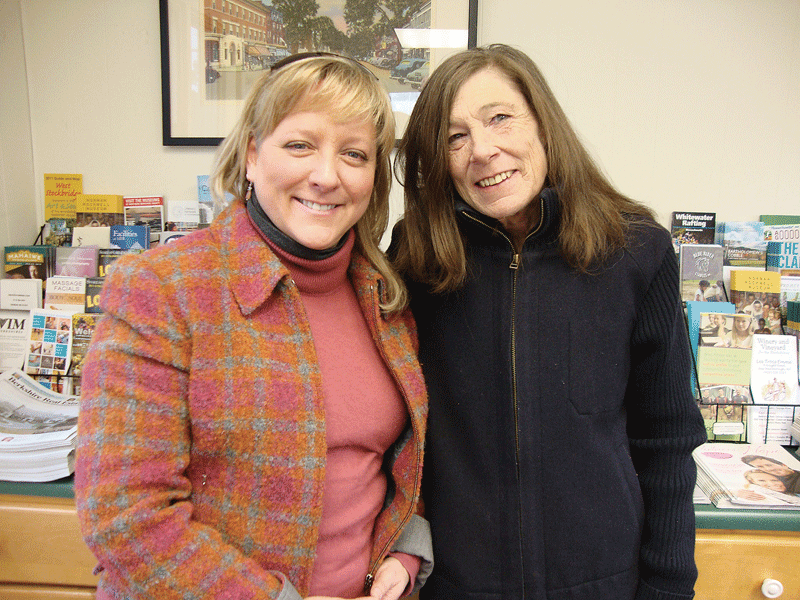
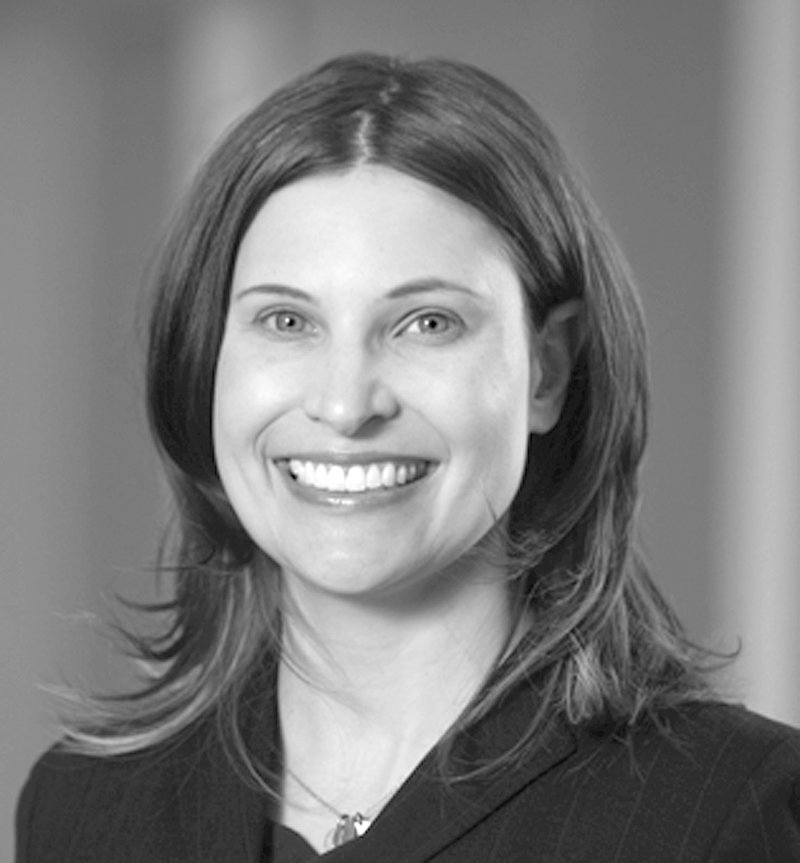
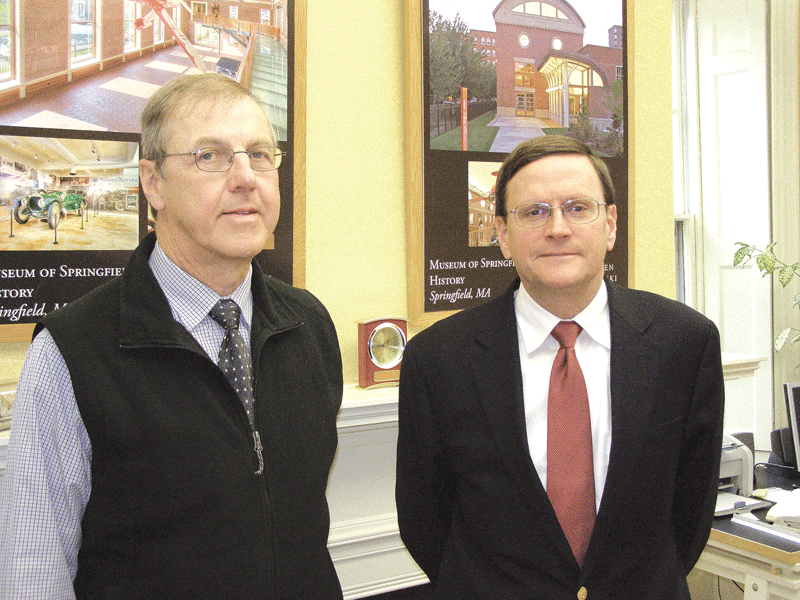
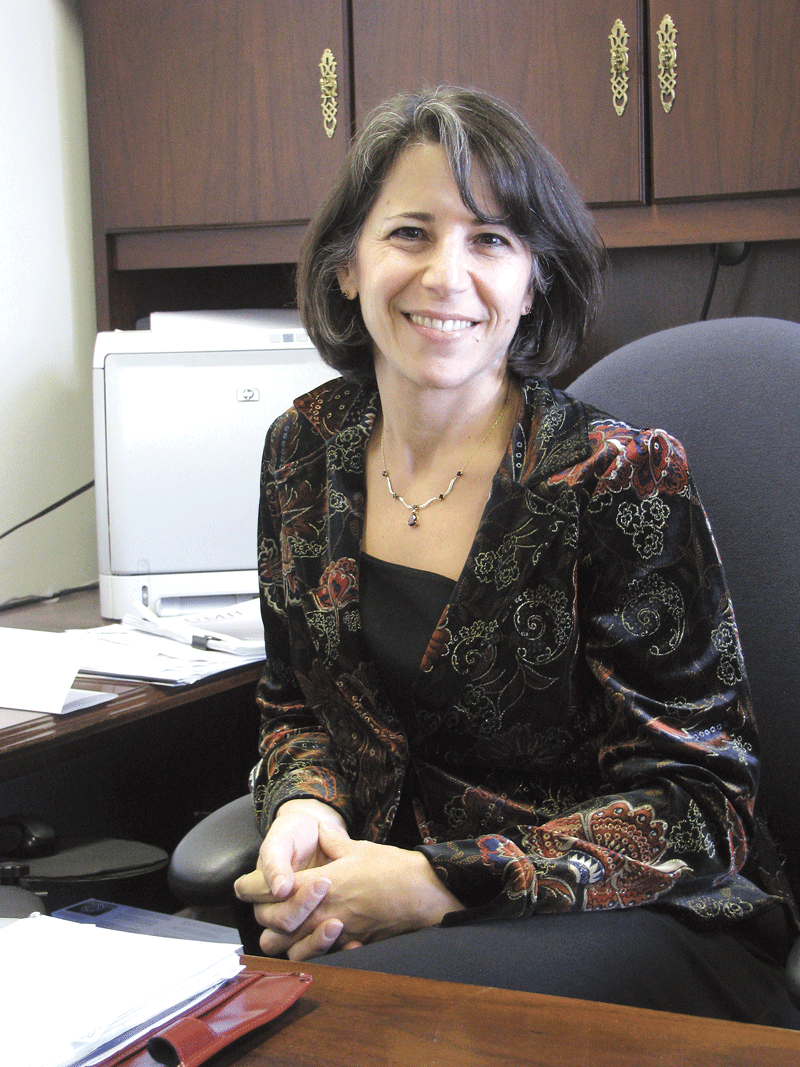
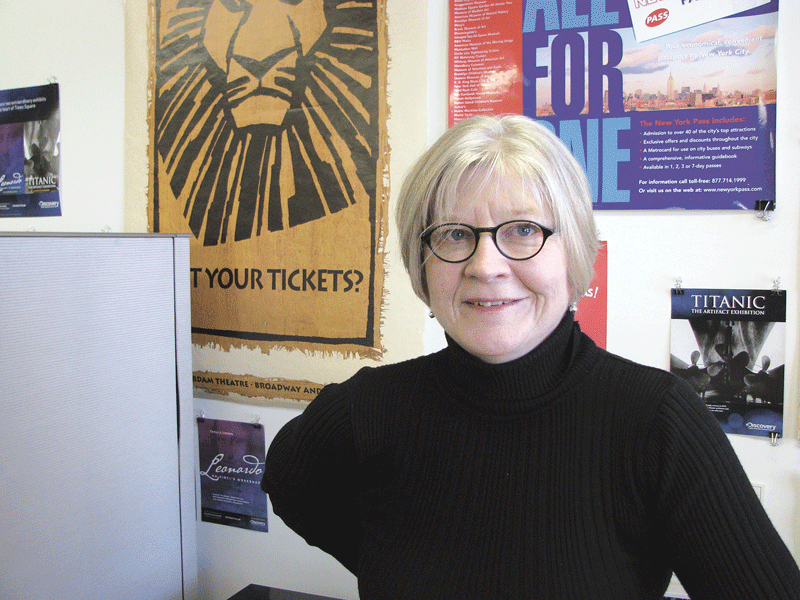
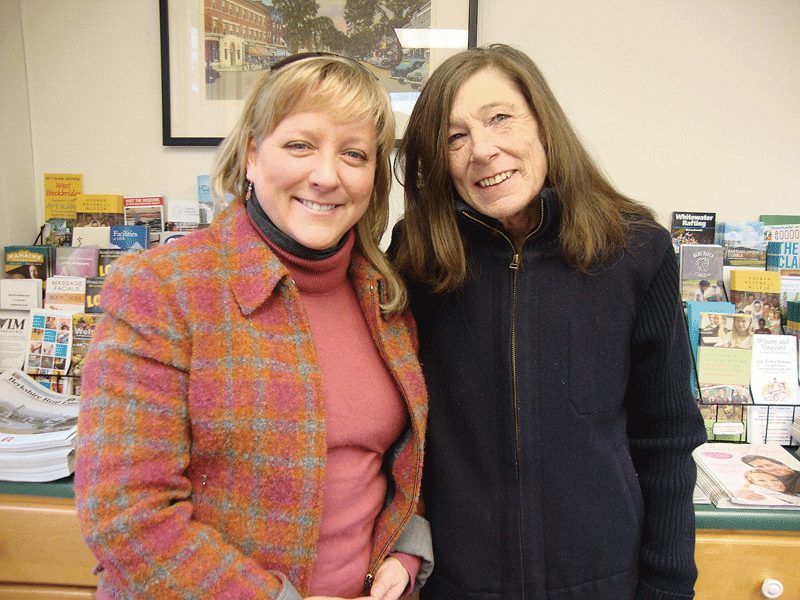
Betsy Andrus, left, and Joy Lyon

Betsy Andrus, left, and Joy Lyon say last year’s events let people experience Great Barrington in a new, exciting way.

In a different time, Joy Lyon said, people would have called it a “love-in.”
The manager of the Southern Berkshire Chamber of Commerce’s Visitor Center was referring to 2011’s roster of celebrations for the 250th anniversary of Great Barrington. While the events may have lacked some of the more colorful connotations of those groovy times 45 years ago, the fact remains that, for a full year, scores came out in force to honor the businesses, townspeople, and civic pride of this picturesque Berkshire town.
One of the architects of this year-long series of events was Betsy Andrus, at that time owner of her own business in consulting, marketing, event planning … “it was this multifunctional operation,” she explained. “I would do weddings, property management, run construction projects — all across the board. Every day it was something new.”
As of Jan. 3, however, she assumed the role of the executive director of the SBCC, and it’s hard to imagine a more vibrant champion of both the town and the member region’s business community.
The SBCC serves Alford, Egremont, Great Barrington, Monterey, Mount Washington, New Marlborough, Otis, Sandisfield, and Sheffield. Each community offers a unique piece of the Berkshire experience, from outdoor activities, historic tourism, and unique retail — Sheffield has a widely known array of antiques dealers — to the hub of all comings and goings, the town of Great Barrington.
Andrus calls herself “just a local girl who is community-business-oriented.” But this local girl is a part of that very population of merchants, dating back generations.
As the incoming director of the SBCC, Andrus said her greatest hope is to keep the momentum from 2011’s spirited civic pride rolling into the years ahead. “Our drive was to bring the community back out of their houses and together again,” she said, “and that is our great challenge for the future.
“When I grew up here, this town was like a Norman Rockwell painting,” she continued. “Everyone knew their neighbors, everyone said ‘hi’ to one another. We had parades, huge town picnics. It all just stopped, and that was sad.”
Just a month into her tenure as the Chamber of Commerce director in this scenic corner of the Commonwealth, Andrus told the story of how she has been there to help Great Barrington, and the Southern Berkshires, continue to get down to business. “I want to help the business community recreate those events that people loved,” she said — “to make that a guaranteed part of our calendar, and part of our identity.”

Our Town
Andrus said that her family has been active in the Great Barrington-area business community for more than 70 years, and that continues to this day. Starting with her great-grandfathers and grandfathers, she told how some of those businesses are still owned by relatives, from Harlan B. Foster’s on Bridge Street— a hardware store with a noteworthy collection of antique tools — to R.J. Aloisi Inc., an electrical contractor.
Her own foray into local commerce came from organizing the showrooms for one of her father’s firms, and after a hiatus to care for her ailing mother, she returned to the Berkshires to get back to business.
Andrus was always drawn to multitasking styles of employment, from the family businesses to her own, and a few years ago, an item in the local newspaper caught her eye. “The town of Great Barrington was interested in people to donate their time for the next few years to create and carry out ‘something,’ whatever we chose, for the 250th anniversary of the town. I was very excited about that, submitted a paper on why I would be an OK person to do that, and my proposal was accepted.”
Immediately, there was a need for officers to take charge of the various and sundry roles necessary to execute the events, and Andrus, the born leader, suggested a local businessperson who had a large secretarial pool, perfect for the administrative tasks at hand.
“I’m one of those cheerleading types,” she explained, “and also a bit of a jokester, so in the middle of a meeting when no one was volunteering, I said, ‘well, I think so-and-so should do it.’ So, through that smart-alecky remark, that person said, ‘OK, I’ll do it, if you do it with me.’ And it turned out to be a fabulous year.”
Lyon and Andrus together remembered many of the 28 events that took place in their hometown, from historic slide shows, where they couldn’t shoehorn another guest into the auditorium, to picnics, parades, a gravity car race, a family snow day, and the popular holiday stroll.
“It was almost over the top,” Lyon said. “Each day was like a better party than the last. A lot of people in Great Barrington got to experience the town in such a way that we hadn’t for many, many years.”
It was during the time organizing the holiday stroll that Andrus learned of the eminent departure of the chamber’s then-executive director. “I had the conversation with the president of the board,” she said, “talking about how it was sad to see her go, and I asked about the job description — trying to figure out, maybe, why she would want to leave, why was it not working for her, because we all liked her.
“I left that conversation, and the president called me back and asked if I’d be willing to come in for an interview,” she continued. “I hadn’t written a résumé in 30 years! I said I’d think about it, but they called me back two hours later and said, ‘no, we really want you to come in for an interview.’ I said, ‘oh boy!’”

Time Tested
“When I was younger, people would say that Great Barrington was like Mayberry,” Andrus said of the old-fashioned feel to her hometown.
While the smaller towns each have their own distinct pockets of commerce, the fact remains that most, if not all, roads wend into Great Barrington. Andrus said that is a strength of those more rural locations.
“We are a quaint town,” she explained, “but that doesn’t mean there isn’t vibrancy here. Pittsfield is just up the road, and that does have all the offerings of a larger city. But we have here in downtown a satellite branch of Berkshire Community College, we have businesses that have been anchors of Main Street for over 50 years, and are still important employers in the town, not to mention supporters of civic events.” She mentioned Tom’s Toys, Wheeler & Taylor Realty Co., her family’s hardware store, and the Berkshire Co-op Market on Bridge Street, among many others.
The co-op has been instrumental in supporting small, local brands and giving them a platform for expanded distribution, said Andrus, noting that, in years past, brands like Berkshire Brewing, SoCo Creamery’s ice cream, Route 7 BBQ Sauce, and many others have been given their first boost by the market.
As the “local girl,” Andrus said that neighborly support is still a part of the fabric of her small town, and as the chamber director, she added that such community actions are a source of strength for businesses in the Southern Berkshire region. “Somewhere along the way, the notion that we are a community has been lost,” she said. “And I want the chamber to help change that.”
To encourage business owners to become part of the SBCC, Andrus said she is willing to adopt creative methods for them to finance initial entry into the organization.
“If finances are an issue, you don’t have to pay dues the first year,” she explained, “but can instead donate your space, food, or your time. You can still have a place on our Web site, in our newsletter, and be part of Joy’s vibrant Facebook presence for the chamber.”
The next few years will see two large-scale construction projects tearing up downtown Great Barrington, and Andrus said that some business owners are concerned about the potential disruption. But the chamber expects to prepare up-to-the-minute responses for parking, closures, and other relevant information on navigating their big dig. The SBCC will speak with one organized voice for the business community, she explained.
Reflecting back on the successful birthday of Great Barrington, and the momentum for bringing her to where she was that day, Andrus said, “even at some of the very smallest things we did, people loved it. They would say, ‘why haven’t we done this in 20 years? Is someone going to take over and do it again?’”
Looking out the window onto Main Street, she nodded her head and said, “yes.”

Features
David Pakman Builds a Multimedia Enterprise on His Own Terms

The crazier David Pakman thinks someone is, the more he wants you to hear them.
The folks at Westboro Baptist Church in Kansas, the virulently anti-gay outfit that pickets military funerals, seem to have figured that out, since they refuse to speak on The David Pakman Show anymore. But there’s no shortage of other, similar voices to take Westboro’s place.
“The more extremist interviews are typically with people like Westboro, or Terry Jones, who was famously planning to burn Korans on 9/11 two years ago, or people like Bryan Fischer, who is an anti-gay radio guy who hosts a show for the American Family Assoc.,” Pakman told BusinessWest. “We had a former Navy chaplain on the show who claimed to perform gay and lesbian exorcisms with a 50% success rate.”
Pakman occasionally gets comments on his Web site asking why he gives such people a microphone and an audience at all, if he considers their viewpoint crazy or offensive. But he believes the exposure doesn’t benefit their cause, but actually damages it.
“Those are entertaining for me to do, and when I do those interviews, there might be 100 new articles or blog posts written about it” across the Web, he said, characterizing that exposure as a kind of public service. “The shows where people libel gay people create discussion, and that’s what I like to see — I like to see that entered into evidence, to expose these people’s lines of thought that are flat-out wrong and indefensible.”
Pakman, who has driven the growth of his multimedia talk show to a national presence and a spot in BusinessWest’s 40 Under Forty last year, has no shortage of pluck when it comes to taking on those he disagrees with — which is notable, since he had no aspirations to make a career in politics or radio when he enrolled at UMass about a decade ago.
“It’s a progressive talk show for sure, but when I say progressive, it’s not affiliated with the Democratic party; we’ve been very critical of President Obama and other Democrats,” said Pakman, who nonetheless identifies with much of today’s liberal thought. On social issues and other matters, he tends to be highly critical of conservatives and particularly those who identify with the Religious Right, which he calls “a destructive force.”
“We’re in the genre of progressive talk, but on some issues, we may not be in line with standard Democratic talking points,” he further explained, adding that keeping an independent streak is important to him. “We depend mostly on individual people to support the show, so there’s no industry behemoth that can say, ‘if you don’t change your view on this, we’ll do a, b, or c.’”
He emphasized that ‘independent’ doesn’t mean ‘centrist’ in this context; Pakman stakes out strong positions and doesn’t try to cater to the middle of the road. “But we’re independent from any broader directives, and I think that comes through in the show.”
For this issue, Pakman sat down with BusinessWest at his Greenfield studio to discuss how his radio and TV presence has developed over the past several years, and how both his revenue model and his exploration of new media are blazing new, innovative trails in the field of political opinion.

Accidental Career
Pakman was drawn to radio several years ago, during an internship with the nonprofit Media Education Foundation (MEF) while studying economics and communication at UMass Amherst.
“I had no radio experience; it seemed like something that would be fun to do,” he said, so he created a show for Northampton-based WXOJ, known as ‘Valley Free Radio,’ a Pacifica Radio affiliate whose license was held by MEF. The David Pakman Show focused on political topics from the beginning.
“When I started the show, I didn’t want to be a DJ guy,” he told BusinessWest. “I liked sports, but not enough to do a show around it. So I did a political show.”
At first, “it was terrible,” he added. “It was just me reading news. I didn’t know how to read news. There were no opinions. Even my mom, a Jewish mother who likes everything I do, said it was ‘pretty good.’ So I knew it wasn’t great.”
But as he morphed into an opinion show, “I just liked something about it, and I stuck with it.”
As he worked on his MBA at Bentley College, the show was syndicated in 2006 and 2007 to more than 25 Pacifica stations across the country, from Athens, Ga. to Moscow, Idaho, with much more growth to follow.
He made a good decision, he said, by focusing on national politics from the start, rather than local issues. “The show was always in Northampton, but it could have been anywhere; the topics were nationwide.”
In 2007, Pakman brought in childhood friend Louis Motamedy as radio producer, and the show broadened in scope, starting to attract more well-known guests and expanding to commercial radio outlets. Then, in 2009, Pakman decided put cameras in the studio and expand into television and the Internet, hiring his brother, Natan Pakman, to produce the video side. A year later, that show, Midweek Politics, obtained national distribution through Free Speech TV, airing on satellite television and a number of public-access stations.
“That was really big for us,” he told BusinessWest. “Our affiliates now total around 150, and it’s more TV than radio at this point. The YouTube channel does well, with around 10,000 subscribers and 11 million views.”
Best of all, Pakman has forged a mix of revenue streams that allows him to remain feistily independent. He sells advertising, of course, and is a partner in Google’s ad service on YouTube. But he also promotes a membership program by which subscribers pay monthly or yearly for the ability to access extra content.
“That started in April 2010,” he said, “and it’s really grown.” He was reluctant to reveal actual subscriber figures, since they tend to fluctuate, but he did note that membership has been rising by about 15% per month.
“If you like the show, then you can get more of it pretty cheaply — you probably blow more on coffee in a week. It’s a really easy sell for people, and it’s by far our main revenue source.”
It’s also a way, he said, for people to show support for an independent voice in an era of bundled fees for media. “You might pay 80 bucks for cable and watch just 10 or 15 channels. Otherwise, some would go out of business. So they say, ‘we’ll give you the Food Network, but you have to take Golf 6 and Home and Garden 4.’ With our model, people can say, ‘I like this show, and I want to support this.’ I think people appreciate that.”
Meanwhile, he was occasionally asked if he sold mugs, hats, or other tchotchkes emblazoned with the show’s logo, “but I was hesitant to do that, because the perception of having some lame items for sale might do more harm than help.”
Then Pakman came across a friend’s company, Repair the World, that makes clothing from recycled fabrics, including polyester materials from plastic bottles. He felt that emphasis on sustainability was something his listeners and viewers would appreciate, so he began ordering up logo shirts to sell and wrap into membership packages.

Do Your Homework
To prepare for each show, Pakman peruses news articles, blogs, YouTube clips, and other sources of discussion ideas, which he then enters into a database, along with notes and talking points for each; then, “we have to cut tons out of it to fit into our hour.”
Hosting the show during a national election cycle doesn’t necessarily change the volume of that prep work; he and the show’s core fans can mine material out of any day’s news. “Those people are always engaged,” he said. “As for casual political observers, we track Web searches and analytics very closely, and, yes, the closer we get to elections, the more people come into our universe.”
That universe typically includes an interview subject in addition to Pakman’s own opinions, and he has talked to some fairly prominent names over the years.
“If you’re realistic about who you can get, your success rate goes up,” he said. “If I say my goal for next week is George Soros, Bill Gates, Barack Obama, and the new leader of North Korea, well…”
That said, the show boasts some prominent regulars, including Ohio’s U.S. Rep. Dennis Kucinich, while Sen. John Kerry, Gov. Deval Patrick, and other luminaries in state and federal politics have made multiple appearances.
“Sometimes I’m surprised,” he said. “You send out an e-mail and assume it’s going through a series of handlers, but then they write back and say, ‘sounds great — let’s get you in touch with my scheduler.’ We also get pitches for interviews constantly. If we accepted everyone’s pitch, we wouldn’t be able to fit them into the week.”
Pakman said his goal is to inch the twice-weekly show toward daily broadcasts, but he first wants to secure additional sponsors and make sure there’s enough cash on hand to ensure against any sudden loss of memberships or revenues, for whatever reason. “I like to be conservative in that sense,” he said with a smile. “But there are so many guests and so much to cover.”
Sparring with anti-gay leaders has earned him particular notoriety around the Web. He once mediated an on-air confrontation between Westboro and the Internet hacking group Anonymous, and the latter essentially took over the church’s Web site during the discussion. The exchange wound up garnering more than 1 million YouTube hits.
“There’s kind of an interesting undercurrent throughout the discussions of whether I’m gay because we interview anti-gay people. I’m not gay, but there’s this assumption that the only reason I stand up for gay rights is that I’m gay myself,” Pakman said. “But I think it’s powerful when people see gay rights supported by someone who’s not gay, and not just supporting something out of personal interest.”
Not all guests are political in nature, he noted; one exception was Bob Werb from the Frontier Space Foundation, who discussed what’s on the horizon in space exploration over the next five to 10 years. “I’m learning as much as anyone when I’m talking to someone like that.”
At the same time, Pakman wants other people to learn more by engaging in their own discussions.
“Between e-mail, voice mail, Twitter, and YouTube, I get probably hundreds of messages to look at every single day, maybe more. Two things are great: positive comments, but also when arguments spin off. It’s great when we put up a topic on YouTube — like, should progressives support Ron Paul? There are some things about him that should be appealing to progressives. It’s a very controversial topic, and many varied opinions about it. We got 500 comments on that one, coupled with 100 e-mails. That’s great, and we’re not necessarily creating the discussion.”

Moving On Up
Obtaining his own studio space, first in Northampton in 2010 and later in Greenfield, was critical to growing the show. “At Valley Free Radio, we had to bring in our own equipment, bring it out, and then edit,” Pakman said. “It was an incredibly long process; it probably took four hours of work to do one hour of program.”
When asked about the possibility of becoming a major national player in talk radio under a syndication deal, Pakman said he’s not pursuing that model, but rather trying to forge a path in new media.
“I don’t really consider this a talk-radio program,” he said. “We’re much bigger on TV, and, combined with the Internet, I consider this a multi-platform show. And already, several automobiles have Internet radio in the car. As the Internet becomes more ubiquitous, being on [broadcast] radio becomes more of a moot point.
“I don’t even have regular radio at home,” he added, “and I don’t think I’m unique in that sense. We’re building an audience with a multiplatform approach.”
So The David Pakman Show — which is now the name of his TV show as well as his radio broadcast — forges ahead with something new, something exciting, something … well, progressive.
“We’re creating a product and building demand for it, and creating a successful revenue model,” he said, adding that he strives to keep the business and his values in balance. “I was once asked, if I could make four times as much money, would I be a conservative on radio and TV?”
If you don’t know the answer to that question, then you haven’t heard David Pakman. Yet.

Joseph Bednar can be reached at [email protected]

Bankruptcies Departments

The following bankruptcy petitions were recently filed in U.S. Bankruptcy Court. Readers should confirm all information with the court.

Appleby, Ralph
16 Fredette St.
Chicopee, MA 01022
Chapter: 7
Filing Date: 01/09/12

Beaulieu, Marie L.
82 Jennings St.
Chicopee, MA 01020
Chapter: 7
Filing Date: 12/30/11

Bellofatto, Robert A.
Bellofatto, Sarah E.
46 Biltmore Ave
North Adams, MA 01247
Chapter: 7
Filing Date: 01/13/12

Big Branch Builders
Alpi, Lance
825 Hancock Road
Williamstown, MA 01267
Chapter: 7
Filing Date: 12/31/11

Bohl, Shawn M.
200 Eagle St.
North Adams, MA 01247
Chapter: 7
Filing Date: 01/07/12

Boisclair, Daniel J.
Boisclair, Paula A.
56 Columbus St.
Agawam, MA 01001
Chapter: 7
Filing Date: 12/31/11

Brower, Mark D.
Brower, Kathleen A.
352 Crescent St.
Athol, MA 01331
Chapter: 7
Filing Date: 01/13/12

Brunelle, Susan Julie
33 Woodcliff Dr.
Westfield, MA 01085
Chapter: 7
Filing Date: 01/09/12

Camilleri, Richard
14 Upland Road
Holyoke, MA 01040
Chapter: 13
Filing Date: 01/03/12

Candido, Dominic J.
170 Coyote Circle
Feeding Hills, MA 01030
Chapter: 7
Filing Date: 01/12/12

Cook, James T.
30 Kane Brothers Circle
Westfield, MA 01085
Chapter: 7
Filing Date: 01/09/12

Deveno, William C.
Deveno, Kate
16 Blandford Hill Road
Huntington, MA 01050
Chapter: 7
Filing Date: 12/31/11

Dupuis, Suzanne M.
Dupuis, Donald
P.O. Box 13
Granville, MA 01034
Chapter: 7
Filing Date: 12/31/11

Dusseault, Monica
20 Mount Carmel Ave.
Chicopee, MA 01013
Chapter: 7
Filing Date: 01/09/12

Fujan, Rhonda J.
60 Backman Ave.
Pittsfield, MA 01201
Chapter: 7
Filing Date: 12/31/11

Gibbs, Dean
2 Cherry St.
Northampton, MA 01060
Chapter: 7
Filing Date: 01/10/12

Gonneville, Stephen M.
Gonneville, Doreen A.
19 Magnolia Ter.
South Hadley, MA 01075
Chapter: 13
Filing Date: 12/30/11

Grover, Francis T.
8 Westwood Ter.
Florence, MA 01062
Chapter: 7
Filing Date: 01/04/12

Hampden Realty Partners
Tragakis, William C.
128 Wilbraham Road
Hampden, MA 01036
Chapter: 7
Filing Date: 01/12/12

Hardy, Stephen
Hardy, Karen K.
a/k/a Knight, Karen S.
342 Southwick Road, A-6
Westfield, MA 01085
Chapter: 7
Filing Date: 01/10/12

Holley, John William
8 King St., Apt. 2
Hatfield, MA 01038
Chapter: 7
Filing Date: 01/11/12

Jameson, Sue Ann
102 Cote Road
Monson, MA 01057
Chapter: 7
Filing Date: 01/06/12

Johnson, Steven M.
128 Dewitt St.
Springfield, MA 01129
Chapter: 7
Filing Date: 01/05/12

Jurczyk, Magdalena
97 Simonich Circle
Chicopee, MA 01013
Chapter: 7
Filing Date: 01/08/12

LaMountain, Steven W.
LaMountain, Katharine S.
35 Cooley St
Agawam, MA 01001
Chapter: 7
Filing Date: 01/12/12

Leger, Armand Arthur
Demers-Leger, Michelle Marie
35 Worthen St.
West Springfield, MA 01089
Chapter: 7
Filing Date: 12/31/11

Leuthner, James L.
12 Feeding Hills Road
Southwick, MA 01077
Chapter: 13
Filing Date: 12/31/11

Levrault, Gregory
P.O. Box 691
Ludlow, MA 01056
Chapter: 7
Filing Date: 01/11/12

Lisee, Rodney G.
95 Benz St.
Springfield, MA 01118
Chapter: 13
Filing Date: 01/13/12

Lucas, Brenda L.
32 Dickens Dr.
Westfield, MA 01085
Chapter: 7
Filing Date: 01/09/12

Lucia, Grace M.
61 Prospect Hill Dr.
East Longmeadow, MA 01028
Chapter: 13
Filing Date: 01/11/12

Martin, Joshua A.
91 Norwood St.
Greenfield, MA 01301
Chapter: 7
Filing Date: 01/04/12

Mateo, Domingo
Mateo, Marilyn J.
16 Fairgrounds Road, Apt. 10
Sturbridge, MA 01566
Chapter: 7
Filing Date: 01/10/12

Matthews, Alan Curtis
Matthews, Patricia Lise
a/k/a Langlois, Patricia L.
274 Papermill Road
Westfield, MA 01085
Chapter: 13
Filing Date: 01/12/12

McCormack, Thomas D.
38 Hilltop Road
Longmeadow, MA 01106
Chapter: 13
Filing Date: 01/08/12

Mercure, Patricia J.
41 Beaumont Ave.
Chicopee, MA 01013
Chapter: 7
Filing Date: 01/11/12

Monette, Denise J.
216 Prentice St.
Springfield, MA 01104
Chapter: 13
Filing Date: 01/03/12

Navarro, Eduardo
Navarro, Virgenmina
5 O’Connell St.
Springfield, MA 01104
Chapter: 7
Filing Date: 01/02/12

Peterson, Carl P.
48 Dean Circle
Athol, MA 01331
Chapter: 13
Filing Date: 01/09/12

Phaneuf, Jennifer J.
47 Broad St., Apt. B19
Westfield, MA 01085-2948
Chapter: 7
Filing Date: 01/06/12

Provost, Sarah A.
128 Dewitt St.
Springfield, MA 01129
Chapter: 7
Filing Date: 01/05/12

Rahab, Sammy
a/k/a Rehab, Oussama
26 Main St.
Hatfield
Florence, MA 01062
Chapter: 7
Filing Date: 01/04/12

Rodriquez, Juan R.
Vasquez, Maria
656 Chestnut St.
Springfield, MA 01107
Chapter: 13
Filing Date: 01/06/12

Rogalski, Jennifer J.
252 New Boston Road
Sturbridge, MA 01566
Chapter: 7
Filing Date: 12/30/11

Roque, Angel M.
a/k/a Roque Rodriguez, Angel M.
116 Sierra Vista Road
Springfield, MA 01128
Chapter: 7
Filing Date: 01/10/12

Ruiz, Ricardo
Ruiz, Jamaries V.
13 Conner Ave.
Westfield, MA 01085
Chapter: 13
Filing Date: 01/03/12

Santiago, Jose A.
Santiago, Edna
248 Lyman St., #2
Holyoke, MA 01040
Chapter: 7
Filing Date: 01/04/12

Sarna, Angela C.
PO Box 361
Gilbertville, MA 01031
Chapter: 7
Filing Date: 12/31/11

Sedona, Louise T.
1055 Worcester St.
Indian Orchard, MA 01151
Chapter: 7
Filing Date: 01/05/12

Serra, Michelle Anne
68 Lake St., 1st Fl.
Florence, MA 01062
Chapter: 7
Filing Date: 01/06/12

Serrano, Carlos R.
13 Beverly St.
Chicopee, MA 01013
Chapter: 7
Filing Date: 01/04/12

Shuback, David T.
360 Grove St.
Chicopee, MA 01020
Chapter: 7
Filing Date: 01/02/12

Smith, Lorne
74 Ely Ave.
West Springfield, MA 01089
Chapter: 7
Filing Date: 01/09/12

Toye, Shannon E.
191 Ashland St., Apt. #111
North Adams, MA 01247
Chapter: 7
Filing Date: 01/10/12

Velez, Hector L.
71 Cornwall St.
Springfield, MA 01104
Chapter: 7
Filing Date: 01/11/12

White, Edward A.
52 Hamilton Circle
Feeding Hills, MA 01030
Chapter: 7
Filing Date: 01/03/12

Williams, Pauline Ada
86 Scarsdale Road
Springfield, MA 01129-1416
Chapter: 13
Filing Date: 01/08/12

Wrzosek, Lawrence B.
11 First St.
Sturbridge, MA 01566
Chapter: 7
Filing Date: 01/13/12

Wysocki, Jr., Francis M.
32 Emerson Road
Agawam, MA 01001
Chapter: 7
Filing Date: 01/09/12

Yestramski, Francis J.
75 Laurel St.
Greenfield, MA 01301
Chapter: 7
Filing Date: 01/03/12

DBA Certificates Departments

The following Business Certificates and Trade Names were issued or renewed during the month of January 2012.

AGAWAM

Actuarial Litigation Consulting
35 Rugby Road
Kevin Reopel

David J. Maisey
335 Walnut St.
David J. Maisey

The J.W. Home School Network
404 Barry St.
Trina Davis

The Spiced Pumpkin
1325 Springfield St.
Christian Dyckman

CHICOPEE

Atlas Legends of Polynesia
705 Memorial Dr.
Mokihana Ripley

Car Credit 1st
536 East St.
Frank DeCaro

Diana Sobieras Photography
140 Hendrick St.
Diana M. Sobiera

Grease Monkey Auto Repair
1057 Montgomery St.
Ivan Vlasyuk

HOLYOKE

Jo-Ann Fabrics & Crafts
2267 Northampton St.
Jeff Peters

Kim’s Holiday Cleaners
20 Forestdale Ave.
Wooil Kim

Pearl Bridal Boutique
1 Open Square Way
Ryan Mainville

Reyes Income Tax & Bookkeeping
476 Appleton St.
Enrique Reyes

NORTHAMPTON

All About You
2 Conz St.
Kimberly Demerski

B & H Education Inc.
58 Pleasant St.
Rashed Elyas

Brave One
351 Pleasant St.
Jesse Mayhen

Grub Sandwich Shop
88 Pleasant St.
Elizabeth Martinez

KC on Track Investigations Inc.
29 O’Donnell Dr.
Kathleen Lafountain

L & R Cleaning Services
21 Wilson Ave.
Richard Tucci

Lhasa Café Inc.
159 Main St.
Thondup Isering

New Karma Yoga
71 Olander Dr.
Victoria Healy

Northampton Airport Wright Flight
160 Old Ferry Road
Daniel M. Bergeron

Sledge
106 Cardinal Way
Alex Sledzieski

Spectrum Wellness
49 Gothic St.
Allison Filepp

PALMER

A Plus Landscaping & Construction
1132 Thorndike St.
Robert Taylor

Dayspring Home Health Care
60 Dunhampton Road
Emilie Brodeur

SOUTHWICK

Bill’s Home Improvement
15 Pineywood Road
William Alaimo

Darling’s Energy Service
151 Vining Hill Road
Charles Darling

The Growth Spurt
175 Berkshire Ave.
Tricia St. Pierre

SPRINGFIELD

Perez and Perez Construction
93 Allen St.
Senei Perez

Pleasant Snack Bar
174 Main St.
Valentim A. Porfirio

Precision Auto Repair
70 Union St.
James U. Stephenson

Presto Digital Transfer
472 Main St.
Christopher David

Puerto Rican Master Barber
602 Page Blvd.
John W. Stevens

Quinn Evaluation Consulting
28 Virginia St.
Paula M. Quinn

RR Build and Design
21 Porter St.
Reinaldo Rasado

S.A.S. Trucking LLC
180 Warrenton St.
Sherlock Suban

Salazar Jewelry & Gifts
1090 Main St.
Pedro Salazar

Sao Mai Video & Gifts
285 Belmont Ave.
Hien M. Tran

Springfield Homeowners
14 Orange St.
Pascacio Reynoso

Springfield Mobil
1828 Boston Road
Sanjay P. Patel

T.S. Services
24 Leatherleaf Dr.
Sean L. Walter

The Hair Connection
1142 State St.
Nicole M. Sanders

Thee Realm
396 Page Blvd.
Juan R. Guillen

V.I.P. Cuts
445 Main St.
Hector Gonzalez

Watch Repair Professionals
1655 Boston Road
Jesus Navarro

Where There is a Need
27 Carver St.
Monica J. Caldwell

Your Buddy’s Painting Service
760 Alden St.
Thomas Waters

WESTFIELD

Cost Cutters
249 East Main St.
Regis Corporation

L.R. Pomeroy & Sons
491 Russellville Road
Seth W. Pomeroy

Lecrenski Bros Inc.
14 Delmont Ave.
Dana Lecrenski

TBG Property Management
1 Arch Road
Joseph M. Muto

VM Construction & Mill Work
43 Sabrina Brook Lane
Slav Mokan

WEST SPRINGFIELD

A-C Motor Express LLC
339 Bliss St.
John C. Nekitopoulos

David’s Bridal Inc.
935 Riverdale St.
David’s Bridal, Inc.

Delisioso Latin Restaurant
913 Main St.
Horaida Cardona

KapStone Kraft Paper
100 Palmer Ave.
KapStone Container Corporation

Market Ready Solutions
38 Neptune Ave.
New England Esta Services LLC

Polonez Parcel Service
143 Doty Circle
Jan A. Chrzan

Steve’s Piping & Heating
180 Farmer Brown Lane
Stephen Bousquet

Departments Incorporations

The following business incorporations were recorded in Hampden, Hampshire, and Franklin counties and are the latest available. They are listed by community.

AMHERST

Homestead Community Farm Inc., 39 Autumn Lane, Amherst, MA 01002. Naomi Dratfield, same. Integrated and intergenerational farmstead where people can live, study, work, train, socialize and engage in skill-building activities.

CHICOPEE

Amex Global Corporation, 54 Grattad Dr., Chicopee, MA 01020. Gennadiy Botyan, same. Intermediary business services.

Forte Family Inc., 70 Exchanges St., Chicopee, MA 01013. Tania Forte Miss, 173 Summit Ave., Chicopee, MA 01020. Restaurant and lounge.

DEERFIELD

Amsterdam Software Corp., 200 Mill Village Road, Deerfield, MA 01342. Marinus Jan Vriend, same. Computer software engineering and consultation.

EASTHAMPTON

ESB Securities Corp., II 36 Main St., Easthampton, MA 01027. Willian Hogan, Jr. 35 Hillcrest Dr., Florence, MA 01062. Securities Corporation.

FEEDING HILLS

D-Transportation Corp., 1085 North St. Ext., Feeding Hills, MA 1030. Fedor Songorov, same.

DKC Ventures Inc., 55 Halladay Dr., Feeding Hills, MA 01030. Richard McCaslin Jr., same. Property maintenance.

GREENFIELD

Capstone Inc., 278 Mohawk Trail, Greenfield, MA 01301. Joanne Delong MS, 70 Beechwood Dr., East Greenwich, RI 02818. Fitness club

INDIAN ORCHARD

Hashmi Sumaira Corp., 354 Main St., Indian Orchard, MA 01151. Syed Hashmi, 71 Chestnut St., Indian Orchard, MA 01151. Auto repair shop.

LUDLOW

Apex Dental Associates, P.C., 633 Canter St., Ludlow, MA 01056. Dara Darabi, 306 Ryan Road, Florence, MA 01062. Dental Practice.

GJR Group Inc., 19 Williams St., Ludlow, MA 01056. Gary Rodrigues, same. Internet Solutions consulting.

MONSON

Advanced Tree Equipment Inc., 14 Childs Road, Monson, MA 01057. William Allsop, same. Real estate and equipment holding company.

Gary Depace, CPA, P.C., 212 Main St., Monson, MA 01057. Gary Depace, 60 Bumstead Road, Monson, MA 01057. Accountant.

Halcyon Associates Inc., 17 Lakeside Dr., Monson, MA 01057. Carr Lane Quackenbush, same. Management consultation.

NORTHAMPTON

Chapel Jill Reality Inc., 31 Chapel St., Northampton, MA 01060. Lawerence Damon, 1367 Easthampton Road, Florence, MA 01062.

Committee to Preserve St. Mary of the Assumption Church Inc., 106 Prospect Ave., Northampton, MA 01060. Marie Mew, 194 Main St., Northampton, MA 01062. Organization developed to preserve and restore Assumption Church.

PITTSFIELD

Berkshire Home & Hospice Services Inc., 75 North St., Suite 210, Pittsfield, MA 01201. William Jones, Jr. 16 Charisma Dr., Pittsfield, MA 01201. Hospice and palliative care.

Berkshire Mini Warehouse II Inc., 371 Cloverdale St., Pittsfield, MA 01201. Francis Manning, 7498 Claypool St., Englewood, FL 34224. Self-storage facility.

Hospice Care of Eastern & Western Massachusetts, 75 North St., Suite 210, Pittsfield, MA 01201. William Jones, Jr., 16 Charisma Dr., Pittsfield, MA 01201. Hospice and palliative care.

SPRINGFIELD

Angeles Misioneros Blessmoments Photography Inc., 51 Church St., Springfield, MA 01105. Luis Garcia-Lorenzo, same. Photography services.

Bowdoin Street Defence Fund Inc., 86 Bowdoin St., Springfield, MA 01109. Stephen Gray, same.

WEST SPRINGFIELD

ANV Family Boutique, Inc, 750 Union St., West Springfield, MA 01089. Irina Samoylenmko, 95 Woodland Way, Russell, MA 01071. Consignment store.

BFP Associates Inc., 1233 Westfield St., West Springfield, MA 01090. Steven Bradway, same. Administration of retirement plans and benefits for businesses.

E & C Some Shop Inc., 793 Boston Road, Springfield, MA 01119. Hao Zheng, same. Retail sales.

WILBRAHAM

Fortivault Technologies Inc., 7 Southwood Road, Wilbraham, MA 01095. Tom Davis, same. Computer consulting services.

Features
Rebuild Springfield Unveils Strategy for Revitalizing the City of Homes
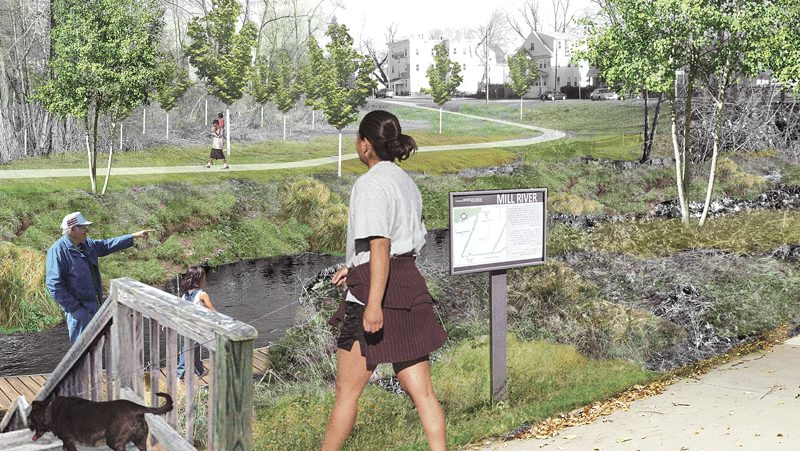
This rendering shows how the banks of Mill River

This rendering shows how the banks of Mill River could be improved with walking trails, new plantings, and other amenities.

Outside St. Anthony’s Social Center on Island Pond Road, overlooking the parking lot, sits a ridge lined with trees, most of them bent and broken beyond salvaging.
Inside, hundreds of Springfield residents recently pressed into a standing-room-only gathering, where municipal officials and individuals tasked with revitalizing the city in the wake of last spring’s tornado unveiled the outline of their plan.
Unlike that row of battered trees, they testified to a city well worth saving.
“This is a solid, strong road map, a framework of good guidance. This is going to be a three- to five-year plan of action,” Mayor Domenic Sarno told residents. “I need you committed, to stay engaged. We must show the same tenacity and resiliency we showed in tackling the cleanup of the tornado.”
The Rebuild Springfield Plan, the result of months of meetings, discussions, and strategy sessions between local and national consultants and the city’s residents and business owners, aims for more than simply rebuilding the structures devastated by the June 1 twister. It’s a chance, said Nick Fyntrilakis, to activate a master plan for the improvement of the entire city, but it’s only the beginning.
“This plan is not a panacea. We don’t have all the answers,” said Fyntrilakis, who was appointed last year to co-chair Rebuild Springfield with Jerry Hayes. “But by putting the right people in the right room with the right leadership, we’ll get even more recommendations and make better progress.”
The Rebuild Springfield Plan is the latest and most tangible result of a process that began shortly after the tornado, but came to encompass much more than rebuilding what was destroyed in that weather disaster. Sarno helped to mobilize a public/private partnership between the Springfield Redevelopment Authority and DevelopSpringfield, respectively, and a 15-member Rebuild Springfield Advisory Committee was appointed to help guide that process.
Over the past six months, 19 separate meetings, with an aggregate attendance of more than 2,000 citizens, have been held in various locations, primarily in neighborhoods impacted by the tornado.
The Rebuild Springfield Plan was crafted using input from those meetings, and also incorporates many previous plans, reports, and studies from a variety of organizations and stakeholders in Springfield. But Sarno stressed that the plan goes much further than returning the city to its pre-tornado condition. Instead, it aims to establish realistic short-term and long-term visions for the city’s future.
As the community came together and tornado recovery progressed, “people were talking about the entire city: ‘how can we build on this positiveness?’” he said, adding that it quickly became clear that this was an opportunity to stimulate the city’s rebirth, not just respond to a storm.
Bobbie Hill, a principal with Concordia LLC, a New Orleans-based consulting firm hired to work on the plan, agreed.
“The tornado-impacted areas were the impetus for the plan, and there’s a special focus on what we call the three districts” hardest-hit by the storm, Hill told those gathered at St. Anthony’s. “But we also have a plan that looks citywide because this is not just about the impacted areas, but about the whole city.”
The Rebuild Springfield Plan, in its final form, will be a “very, very large document,” Hill said, but the 12-page executive summary mailed to every address in Springfield gets to the heart of what the priorities are for each of those districts — the Metro Center and the South End; Maple High/Six Corners, Old Hill, Upper Hill, and the northern part of Forest Park; and East Forest Park and Sixteen Acres — as well as how the physical, cultural, social, organizational, economic, and educational assets of Springfield may be part of a holistic, citywide revitalization plan.
“This is a plan not just about physical projects,” she explained, “but about projects and people and places; we are using this framework to build recommendations across the city and across the different neighborhoods.”

Downtown Dilemma
According to the executive summary, “as the pre-eminent urban center of the Pioneer Valley with unique historic character, Springfield has the opportunity to create and sustain a desirable, walkable, urban environment for living, working, playing, and learning.” To that end, the plan builds on previous plans for the downtown and South End — what the plan calls District 1 — that were in place before the tornado. Some major points of emphasis include:
• Public safety. The city needs to strengthen partnerships among community stakeholders, police, and enforcement staff. Key initiatives should include replication of the C-3 policing model successfully implemented in the Brightwood section of the city and replicated in the South Holyoke Safe Neighborhood Initiative.
Hill noted that the safety of a community and people’s perception thereof are often two different things, but for Springfield’s center to thrive, both must be addressed. “If you want a thriving downtown, people have to feel safe and want to go down there.”
• Housing. The plan calls for a variety of housing options appropriate to different locations in the Metro Center and South End that enhance downtown and neighborhood character, add market-rate housing, and raise the median household income.
• Commercial and retail strategy. The city should create centers of vitality and activity along Main Street by recruiting retail and restaurants to ground-floor spaces, office users to upper-story space, and neighborhood-serving retail, as well as assisting in the rebuilding of important sites. Key initiatives include rebuilding the Main and Union intersection to be a South End gateway and activity center, reinforcing the cluster of eateries in the South End to form a ‘restaurant row,’ and exploring options for a grocery store or pharmacy.
• Community institutions. The plan aims to enhance the anchor role of community institutions, especially by hekping to relocate those damaged by the tornado. Key initiatives include assisting the South End Community Center in relocating to the Gemini site and Square One in developing new space on Main Street.
• Urban character and historic preservation. The plan encourages the adaptive reuse of historic buildings and sites and establishes urban design guidelines and a regulatory framework to enhance walkability. Among the recommendations is connecting the district to the riverfront with public art, and special treatments for Union Street as a ‘festival street.’
Public spaces. The city should activate and program public spaces to create destinations, mobilize community partners for stewardship, and connect important public spaces. Key initiatives include programs and activities led by community arts and culture groups to attract people to Court Square and other locations; organizing temporary uses, programs, and events for empty storefronts; and focusing on maintenance and programming for existing parks and open spaces, including the newly redesigned Emerson Wight Park.

A Time to Heal
The neighborhoods of Maple High/Six Corners, Upper Hill, Old Hill, and some of Forest Park comprise District 2, making it a richly diverse section of Springfield, the plan notes.
“The dialogue in District 2 has been intense and complex, yet hopeful,” it goes on. “Many challenges faced District 2 neighborhoods even before the tornado struck: abandoned properties, substandard housing, low home-ownership rates, higher-than-average crime and poverty rates, and low high-school graduation rates.
“In District 2, perhaps more than anywhere else in the city, there is an opportunity for the rebuilding process to have a transformative effect,” it adds. “The scar of the tornado’s path in this part of town revealed the challenges and allowed them to air. What came from these dialogue sessions was a strong commitment to rebuild stronger than before, an engaged community newly energized to improve their community.”
The plan identifies six guiding principles that support and elaborate on this vision:
• Build on the strong commitment and pride in the neighborhoods to support communities and organizations that are connected, engaged, and working together;
• Improve quality of life and provide new opportunities for residents by enhancing the health, safety, and vitality of the community;
• Preserve and promote the history and character of the neighborhoods as an amenity that enriches quality of life and attracts new residents and businesses;
• Achieve a sustainable and equitable balance of owners and renters, incomes, housing types, land uses, employment opportunities, and services that meets the needs of residents while positioning the community to thrive and flourish in the future;
• Value the diversity of people, cultures, and activities and recognize this diversity as a source of resilience, creativity, learning, empowerment, and collaboration that strengthens the neighborhoods; and
• Demonstrate public and personal commitment, improve perceptions, and attract new energy and investment through neighborhoods that are attractive and well-maintained.
Among the specific goals to meet those objectives are a coordinated housing strategy with new infill housing, job training and small-business support, enhanced neighborhood businesses, reuse of vacant lots, access to safe public transit, improved schools, healthier lifestyles, and coordination of community services, among others.

Better Than Before
District 3, which includes the East Forest Park and Sixteen Acres neighborhoods, is relatively stable with a strong sense of neighborhood pride, the report notes.
“While home rebuilding has long since begun in this district, it will take generations for newly planted trees to replace what was lost,” it continues. “There is a strong interest in rebuilding better than before in this community.
Some broad goals for the district include:
• Restore and enhance the neighborhoods’ natural resources, including trees, water bodies, open spaces, and wildlife, and recognize these resources as amenities that enhance value, improve health, and provide recreational opportunities;
• Promote the family-friendly character of the community through safe, attractive neighborhoods, strong community organizations, quality schools, social gathering spaces, and activities for all ages;
• Focus on schools, parks, and public facilities as community anchors that are integrated into the neighborhood and coordinated to provide efficient, effective services;
• Improve mobility within and between neighborhoods through efforts to reduce congestion, calm traffic, provide enhanced bicycle and pedestrian infrastructure, explore trail opportunities, and enhance streetscapes to support local businesses; and
• Strengthen neighborhoods by rebuilding, repairing, and maintaining well-designed homes that are efficient, durable, and comfortable.
Residents, the report states, are ready to turn the devastation of the tornado into an opportunity to enhance their neighborhoods by way of better homes, parks, greenways, trails, and other community assets. The plan calls for a branch library at Dryden Memorial School, greater access to youth and senior activities, and aggressive maintenance and repair assistance, among other things.

Street-level View
Sarno said the entire city should think along the lines of creating a better Springfield than before, and also took a moment to be grateful for how much worse the twister could have been.
“This tornado hit at 4:37 p.m. Think about it: if this tornado hit at 2:37 p.m., all our children would have been in school. Imagine if it had hit at 4:37 a.m.; we would all have been asleep,” the mayor said. “And as Gov. Patrick indicated when he came out here, there’s a silver lining to these storm clouds that we’ve already seen: the resiliency of Springfield’s people.”
Hill agreed. “There are great success stories in this city, and one for sure is how far you’ve come in eight months after the disaster. These great stories will attract people to this area.”
But first, the plan must be implemented, Fyntrilakis said, and that will begin by forming committees of volunteers to focus on specific domains and districts, each co-chaired by a public employee and someone from the private sector.
“The task for the leaders,” he said, “is to convene all the stakeholders, all those who want to participate and all those already participating, and to convene a working group as set forth by recommendations in the plan.”
“I need you to stay engaged; that is the key,” Sarno told residents. “It’s not over … but the framework is there. The guidance is there. The road map is there.”

Joseph Bednar can be reached at [email protected]

Class of 2012 Difference Makers

Represented by Carla Oleska and Shonda Pettiford

Carla Oleska, right, and Shonda Pettiford. Photo by Denise Smith Photography

Carla Oleska, right, and Shonda Pettiford.
Photo by Denise Smith Photography

Carla Oleska calls it “a full briefcase of skills.”

That’s the term she used to describe what participants in the Leadership Institute for Political and Public Impact (LIPPI) come away with beyond the certificate they’re given upon completion of the program.

Elaborating, she said LIPPI, created in 2010 by the Women’s Fund of Western Massachusetts, is a year-long program focused on providing participants ages 18 to 60 with the knowledge, skills, courage, and, perhaps most importantly, the confidence necessary to become civic leaders in their communities, impact policy on the local, state, and national levels, and seek and hold on to elected positions.

And the LIPPI program is perhaps the most visible example of how the Women’s Fund, which Oleska has served as CEO since 2006, has adjusted and modernized its mission in recent years to reflect changing times.

“In the beginning, we used to speak about addressing the needs of women and girls,” she explained, noting that, at the time (the mid-’90s), such needs included programs involving economic self-sufficiency, housing, domestic abuse, sexual abuse, education, and much more. “Today, when we look at this time period, what we say is that this fund builds better communities for everyone in Western Mass. by investing in the lives of women and girls. And there’s a real distinction there.

“When you look around today, our social needs are gargantuan,” she continued. “One of the most underutilized resources is the unique talents of women — underutilized because they are not sitting around the decision-making tables; they are not framing the conversations and addressing the problems and issues in our country. So today, we’re investing in their talents because we believe that the more women we begin including in those discussions around the table, the more women we put in leadership positions, the better off our communities will be.”

This important change in language and focus, as well as manifestations of it, such as LIPPI, are just some of many reasons why the Women’s Fund has been chosen as one of BusinessWest’s Difference Makers for 2012.

Another is the nearly $2 million in grants the fund has awarded since 1998 to groups ranging from the Hampden County Correctional Institute to the Global Women’s History Collaborative; from the Railroad Street Youth Project in Great Barrington to Girls Inc. in Holyoke.

But perhaps the biggest reason is the fund’s ability to adapt and evolve to remain relevant and impactful in a constantly changing society. Current Women’s Fund board President Shonda Pettiford calls this “being nimble and responsive,” and she considers it perhaps the fund’s most important character trait.

“Times are changing for women in our communities,” she told BusinessWest, “and we’re responding in part to their needs, but also to their aspirations and supporting those, and I can see us becoming more involved in work similar to LIPPI, where we’re focused on building leadership skills and ability.”

Tracing the history of the Women’s Fund of Western Massachusetts, Oleska said it originates with the Fourth World Conference on Women in Beijing in 1995.

More than 60 women from this region were at that conference, highlighted by a speech from Hilary Clinton, who said, “women’s rights are human rights,” noted Oleska, adding that the contingent, while on a bus ride back from touring the Great Wall and inspired by what they heard, discussed options for ways to bring the energy from the conference back to Western Mass.

Their answer was to create a Women’s Fund, a component of the Women’s Funding Network, which now boasts more than 160 members, or funds, worldwide. The local fund is now one of three in the Bay State, with the others serving the Boston area and the southeastern region of the Commonwealth.

From the start, the mission has been to “advance social-change philanthropy to create economic and social equality for women and girls in Western Mass. through grant-making and strategic initiatives,” said Oleska, adding that the fund deviated from the practice of building up its endowment before supporting any initiatives.

“As soon as the money they were raising started earning interest, that first board was determined to get money right out into the communities of the four western counties,” she recalled, adding that the fund topped $1 million in grants after only a decade in existence, and is just one round of awards away from the $2 million threshold.

Oleska, who was an early grantee (her organization, Step Forward, an academic-advancement program for girls, was awarded funds in 1998), said the organization is funded primarily by individual donations, the smallest of which has been $3 in change, a bequest she cites often as symbolic of the way the fund can take seemingly small gifts and aggregate them into something significant.

“When you take that $3 in change and you connect it with $3,000, the impact of that combined funding presents all kinds of opportunities for our grantee organizations,” she explained, adding that a $10 donation made directly to an organization usually won’t have the same impact as $10 given to the Women’s Fund, which then becomes part of a larger donation to that same organization.

But beyond the monetary donation, the grantee also receives a series of professional-development workshops, with the intent of helping them strategically achieve their mission, she continued — to help those organizations work smarter, not harder.

And this is one of the many ways in which the Women’s Fund goes well beyond merely writing checks, said Pettiford, and into the broad realm of creating connections.

“The Women’s Fund, for me, is very personal — there are many personal relationships formed because of it,” she explained. “The funds we allocate help programs run, and run more effectively.

“But we also form relationships with some of these organizations, and they get to understand the fund as well,” she continued. “Through the fund, they get opportunities to connect with others who are doing similar work. Meanwhile, those of us involved with the fund as volunteers and as staff also get to connect with all these people in different parts of Western Mass. who support the same concepts and ideas and have the same values.”

Which brings her back to that word investments and, more specifically, to the LIPPI program, which, in a nutshell, helps women overcome a tendency to underestimate their abilities.

It does so through monthly, full-day sessions (staged on Saturdays for convenience) that are designed to build both skills and confidence while exposing women of all ages to successful role models. These sessions focus on subjects ranging from public speaking to effective board participation, from how to speak with elected officials to citizen activism.

The results from the first year are impressive. Five of the participants have run for office or are doing so; one woman was elected to the board of her housing development, the first tenant to do so; one woman was accepted into the Yale Women’s Campaign School; and another worked on the campaign of Holyoke’s new mayor, Alex Morse.

Looking forward, Oleska has set the ambitious goal of reaching the $3 million mark in grants by the fund’s 15th birthday, and to continue to expand the organization’s reach into every corner of the four-county area. But the most compelling goal is simply to continue efforts to be nimble, another word she used repeatedly, and continue to make investments that are paying dividends, as reflected in this comment from a LIPPI graduate:

“Participation in the LIPPI cohort has essentially provided affirmation, inspiration, and permission to continue to follow my life’s work, to develop my voice, and work collectively with the women in Berkshire County and beyond.”

That’s what comes with a full briefcase of skills. For providing that — and doing much more for women, girls, and communities — the Women’s Fund of Western Massachusetts is truly a Difference Maker.

— George O’Brien

Class of 2012 Difference Makers

Executive Vice President, Peter Pan Bus Lines

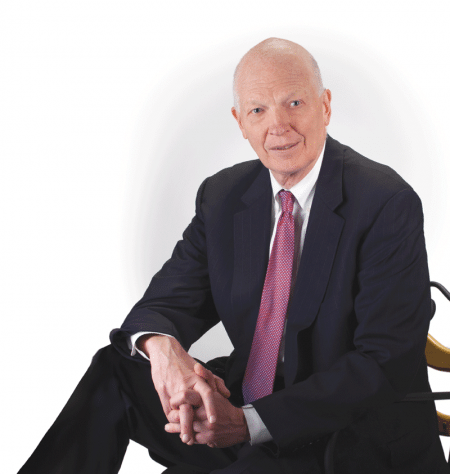
Bob Schwarz Photo by Denise Smith Photography

Bob Schwarz
Photo by Denise Smith Photography

The walls and credenza in Bob Schwarz’s office are cluttered with mementos and awards from a more-than-40-year career in business and community service — and together, they tell a compelling story.

While many of the items are individual in nature, most involve the company, Peter Pan Bus Lines, for which he has worked for more than 25 years. And that’s appropriate, because most times it’s hard to separate one from the other. And more than a few items involve occupants of the White House, or occupants in the making.

First, there’s the picture from Bill Clinton’s first inaugural parade. It shows, crossing in front of the reviewing stand, the Peter Pan bus that Clinton and key members of his election team took on the first 1,000 miles of his post-convention campaign in 1992. Schwarz was one of the company’s employees who made the trip down. Meanwhile, there are a few framed, handwritten notes to Schwarz from George H.W. Bush, dating to his days as ambassador to the United Nations in the early ’70s, when the two had become acquainted. He signed them using the nickname many knew him by: ‘Augy.’

But perhaps his most treasured item is the national Community Champion Award that he received from the U.S. Interagency Council on Homelessness in 2008, for which he made another trip to Washington. And there’s a story behind this one that he likes to tell.

“I didn’t take a bus this time, and I should have,” he recalled. “My wife didn’t want me to wear my suit down, so I packed it. And of course, the airline lost my luggage — and really didn’t seem too interested in finding it. The experience gave me the opportunity to know a little about what it feels like to be in a city with nothing but the shirt on your back.”

Schwarz was eventually hooked up with a clean shirt, tie, and jacket, and received his award from then-‘homeless czar’ Philip Mangano, who praised him for his efforts as part of a nationwide program to end homelessness. Locally, Schwarz told BusinessWest, that effort was not about placing people in shelters, but instead in finding them permanent housing.

“It’s been proven that putting people in shelters does not really put a stop to their being homeless,” he explained. “It’s just a stopgap; we need more permanent solutions.”
Schwarz’s work to stem the tide of homelessness constitutes one of several reasons why he was chosen as a Difference Maker for 2012. Others include his work with the United Way, the Eastern States Exposition, the New Leadership Charter School and its library, which he helped create, and especially as chair of the Literacy Works Cabinet of the Regional Employment Board.

And as he talked about these various initiatives and his involvement with them, Schwarz said he’s been helped tremendously over the years by the very positive influence of role models in the broad realm of community service. Exposure to them came through his work with the Greater Springfield Chamber of Commerce, which he served in several capacities, from manager of Government Affairs to president.

“I was this young kid managing a chamber, and I had this incredible opportunity to work with and learn from so many great business leaders,” he said. “People like James Martin at MassMutual, Wilson Brinnell at Third National Bank, Bill Janes at S.I.S., and then later Bill Clark at MassMutual, Paul Doherty [a Springfield attorney], and David Starr [publisher of the Republican]; these individuals began to instill in me a philosophy about corporate social responsibility and the responsibility of the business community to give back.”
Perhaps the most influential of these role models, however, was the man he would later go to work for, Peter Picknelly, president of Peter Pan, who was chairman of the Greater Springfield Convention and Visitors Bureau when Schwarz started with the chamber and was later its volunteer president.

“There was no one more generous in giving to his city than Peter Picknelly,” Schwarz told BusinessWest. “Peter really believed in Springfield, and also in the responsibility to become active in community organizations; it was a way of life at Peter Pan.
“Peter told me that, if I ever decided to get a legitimate job, I should give him a call,” Schwarz continued with a laugh, noting that, a few years after that initial proposition/challenge, he took up Picknelly on his offer, joining the company in 1986.

Since then, he has become involved in a number of the transportation and real-estate-related ventures initiated by Peter Pan and its subsidiaries. This includes everything from the bus line’s decision in the late ’80s to take on archrival Greyhound by expanding its reach along the East Coast (there’s a framed Boston Globe business page story on this move hanging in his office) to the current efforts to revitalize the property in Springfield’s Court Square.

But amid his exploits in business, he has always devoted considerable time and energy to community service. And while this commitment to giving back has manifested itself in many ways, the two most notable have been his efforts to promote adult literacy and the fight against homelessness — and both were in many ways inspired by Picknelly.

Recalling his work with literacy efforts, Schwarz said they really started when Bill Ward, whom he hired to manage what was known many years ago as the Private Industry Council, asked him to serve on the board of what’s now called the Regional Employment Board of Hampden County. “And when you become a member of Bill’s board, you don’t just become a member; he gives you an assignment.”

And Schwarz’s was (and is) adult basic education (ABE) and English as a second language, two causes that became the focus of a project in Holyoke originally conceived by Peter Picknelly — transforming the old main fire station into a combination transportation hub and ABE center.

“It became a passion for me, and a natural when Peter Sr. decided to build the transportation center,” Schwarz recalled. “He saw this as an opportunity to do something very unique and very different, and do something that hadn’t been done before in this country, which was Peter’s style, and something that would make a real contribution.”

Meanwhile, Schwarz said his work with the homeless was in many ways inspired by views of a tent city on the route taken by the funeral procession following Picknelly’s death in 2004 — and commentary offered by Picknelly’s son, Peter.

“He said, ‘this is not the Springfield my father loved and worked all his life to build; we simply can’t have homelessness,’” Schwarz recalled, noting that he was later approached to join (and become the first chair of) then-Mayor Charles Ryan’s program to eliminate homelessness in the city, called the Housing First Initiative.

“I’ve had the chance to participate in a lot of volunteer efforts over the years, but this was one of the most challenging and interesting assignments I’d ever taken on,” Schwarz told BusinessWest. “It was a very interesting time when street and individual homelessness was on the rise, and the ULI report came out and said, ‘the city of Springfield will never reach its revitalization potential unless the issue of homelessness is dealt with.’”

Only a few years into the 10-year initiative, homelessness had been reduced by 39%, said Schwarz, adding that one of the keys to achieving such results was the creation of the Homeless Resource Center on Worthington Street, a feat he called one of the most rewarding of his life because of the economic and logistical challenges to overcome.

“The economy was lousy; this was a time when individuals were losing their jobs and businesses were cutting back,” he said. “To think that you could raise $1 million in private capital to put toward a homeless resource center is pretty remarkable. The people in Las Vegas wouldn’t have given us high odds of success, but we did it, because it was the right time and the right thing to do.”

Because of his hard work in such endeavors and track record for gaining results, Schwarz will have to make room for another item on his credenza — the plaque recognizing him as a Difference Maker for 2012.

— George O’Brien

Class of 2012 Difference Makers

Officers, the Springfield Corps of the Salvation Army

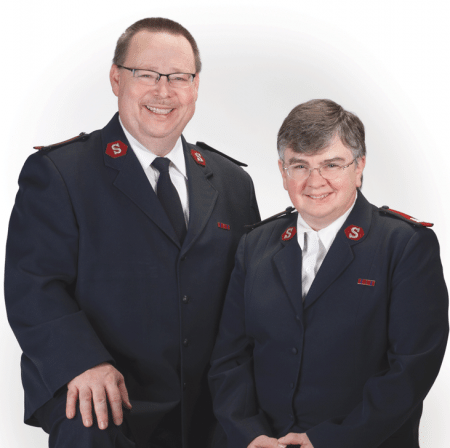
Majors Tom and Linda-Jo Perks Photo by Denise Smith Photography

Majors Tom and Linda-Jo Perks
Photo by Denise Smith Photography

Tom and Linda-Jo Perks were hardly novices when it came to disaster response last June 1, when tornadoes plowed through several communities in Western Mass.

Indeed, Tom, commanding officer of the Salvation Army’s Springfield Corps, was in Lower Manhattan only a few days after 9/11, working to provide relief to the survivors of the terrorist attacks. And his wife, Linda-Jo Perks, co-commanding officer, was in Biloxi, Miss. just after Hurricane Katrina barreled through in 2005, doing similar work.

But both told BusinessWest that there was a dissimilar feel to the relief efforts in Springfield after the twister changed thousands of lives in a matter of seconds that fateful Wednesday afternoon, a phenomenon Linda-Jo summed up quickly and effectively when she said, “it’s different when it’s your disaster.

“We were used to people telling us what to do, and we’d respond,” she continued. “But when it’s your disaster, you’re in charge, and the next morning, we just knew that the people who were isolated needed food and care — and we moved.”

Elaborating, Tom said there was a far-greater personal connection to the human side of the devastation, because responders knew some of the people who were impacted, as well as that much greater sense of ownership of the relief efforts. This sensation would, unfortunately, be repeated a few months later when a hurricane swept across Western Mass., and again in October, when a freak snowstorm cut off power to hundreds of thousands of people.

Effective disaster response in a tumultuous 2011 is only one of many reasons why the Perkses, or “the majors,” as some call them, have become part of the latest class of Difference Makers. Most all others involve issues and problems that are with the region on a constant basis — and for which the Perkses and the team they direct have crafted results-driven responses that have stood the test of time.

There are seasonal programs such as Coats for Kids, Toys for Joy, and a summer literacy program, as well as ongoing initiatives including a family reading program, tutoring services involving students from Springfield College and area high schools, teen violence and gang-prevention efforts, food pantries, and clothing assistance.

And then, there’s a groundbreaking endeavor called Bridging the Gap.

Now 15 years old, BTG, as it’s called, was created to help teenage first-time offenders become one-time offenders and get their lives back on the right path.

It does so through a 12-week program (classes are conducted three days a week for three hours a day) focusing on life skills ranging from communication to money management; from building self-esteem to goal setting.

Those who successfully complete the program and do not commit another crime within a year of that accomplishment have their criminal records expunged, “which can have a serious impact if you’re talking about college or getting a job when you’re 15,” said Tom, noting that BTG has enjoyed an 89% success rate. It has won a prestigious honor — the National Justice Department Outstanding Youth Program of the Year Award — and is now a model for many other organizations serving young people, with an average of eight to 10 groups coming to Springfield each year to see how it works.

BTG is an example, said Tom, of how the Salvation Army earns attention and headlines for its response to tornadoes and hurricanes, but the bulk of its work is “with people who come through the door each day with their own disaster.”

Reflecting on their quarter-century of service to the Salvation Army, the Perkses noted that they took different paths to the organization. Linda-Jo said her parents were Salvation Army officers, and she essentially grew up with the institution knowing she would one day be a part of it.

Tom, meanwhile, said his route to the Springfield Corps’ Pearl Street facility was more a matter of circumstance than destiny. He was 4 years old when, to try to get along with a gang of boys in his Warren, Ohio neighborhood, he let the air out of the tires of dozens of cars before he was eventually caught in the act. He remembers the police officer who escorted him home telling his mother, “you better do something with him, or he’s going to be mine.”

“She heard that the Salvation Army was a church and that it had a boys program, and we started attending, so I grew up in the Salvation Army,” said Perks, adding that, despite this, he still wandered down the wrong path. He had become involved in drugs and alcohol and was a young man without much direction or purpose in his life when another incident provided him with both. Not long after graduating from high school, he and a good friend were in a serious automobile accident. Perks was left with a fat lip, while his friend, the driver (and the straightest-laced guy in the world), was left in a coma.

“I said, ‘this is not fair; I should be the one who’s hurt really bad, not him,’” Perks recalled. “God said it wasn’t the first time it was someone else when it should have been me, and that I needed to decide what to do with the rest of my life. I considered the Salvation Army, and when other doors closed and that one opened, I walked through it.”

The Perkses met on the first day they were in seminary, and have been together virtually every day since that moment. Their pending 25th wedding anniversary and 25th anniversary of graduating from the seminary were only a few days apart.

They started their careers with the Salvation Army in the Worcester corps, and made subsequent stops in Greenfield and Pittsfield before coming to Springfield, the third-largest corps in the state.

When asked what constitutes a typical day for them, they said there is no such thing, which is what they like most about their work.

“There’s never what I would call a normal day,” said Linda-Jo. “Each day is different; you could be counseling a runaway, giving a bus ticket to a transient, helping someone whose loved one has died and needs to get to the funeral, performing a marriage, helping a child to read … you never know what you’re going to see when you come in the door.”

This was especially true in 2011, when one weather-related disaster followed another, with many families impacted by two or even three of them.

The Perkses were at their home in Agawam when the tornado carved its path through Western Mass. It missed them, but they knew from watching on television that it didn’t miss many sections of Springfield. They couldn’t get into Springfield right away, but immediately started mobilizing the organization’s resources, staff, and volunteers for a multifaceted response.

It involved everything from bringing food directly to families in the impacted areas to getting necessities to families displaced by the disaster and living temporarily in the MassMutual Center, to coordinating collections of items ranging from bottled water to diapers.

But beyond supplies, staff and volunteers from the Salvation Army also delivered counseling, support, and, quite often, a literal shoulder to cry on.

“People were trying to clean up, and they were crying,” said Linda-Jo. “It was sad, it was hard, it was moving. People just appreciated the fact that we thought about them, and it was really neighbor helping neighbor; it was people from Cape Cod sending tractor-trailer loads of supplies to the area and a Christian school taking a trip here and saying, ‘can we help you?’”

Tom has similar memories, and summed them up by saying that perhaps the most precious commodity the Salvation Army brought to victims was hope, and that’s something that’s supplied to all those who come through the door — literally or figuratively — with their own disaster.

For providing that hope, in whatever form it takes, the majors, and all those who work with them, are certainly Difference Makers.

— George O’Brien

Class of 2012 Difference Makers

President, Holyoke Community College

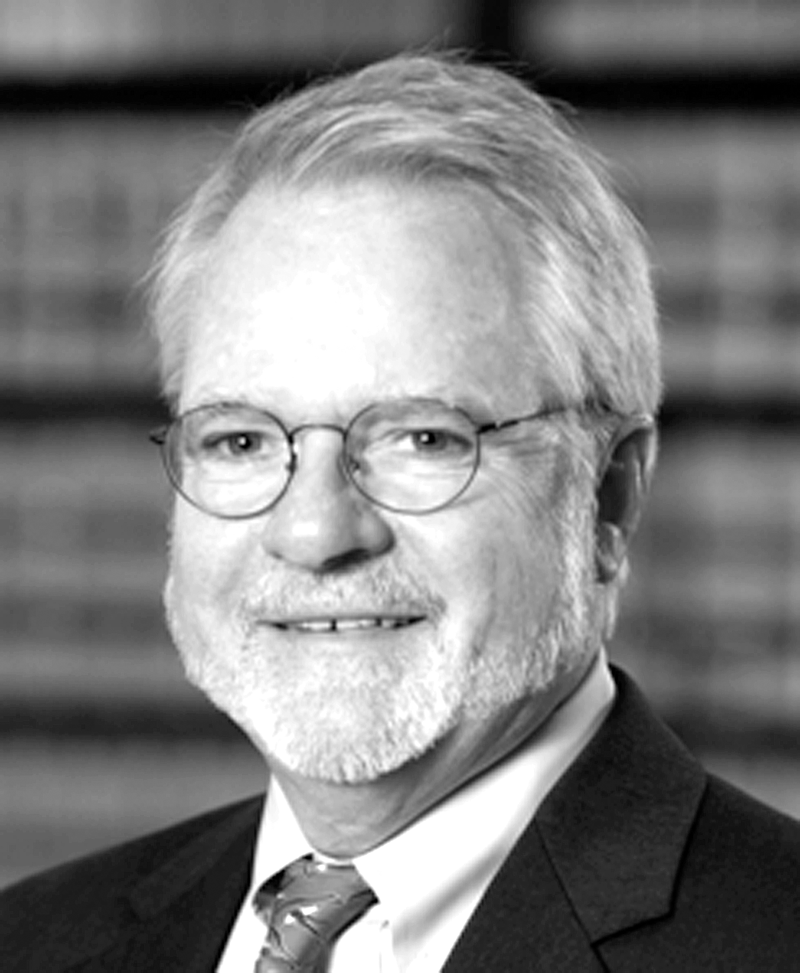
WilliamMessner Photo by Denise Smith Photography

WilliamMessner
Photo by Denise Smith Photography

As he talked about Holyoke Community College, what has transpired since he arrived there in 2004, and what he envisions moving forward, Bill Messner dropped the name Ruben Sepulveda early and quite often.

And with good reason.

Sepulveda is now in what amounts to his junior year at Amherst College, studying Psychology. This is worlds — and even dreams — removed from the existence he knew after dropping out of high school in New York and spending considerable time homeless or living in the boiler room of the pool hall where he used to hustle to put a few dollars in his pocket.

His fortunes changed in a huge way not long after relocating to Holyoke and, more specifically, a chance encounter with HCC Adult Learning Center (ALC) Director Aliza Ansell in the gas station across the street from CareerPoint, where the ALC program was then housed. Fast-forwarding a little, Ansell convinced Sepulveda to take a college placement test. He scored well and eventually enrolled in HCC, majoring in Psychology. His bigger goal was to transfer to a four-year institution, and after a tutoring session with a student at Amherst College, he knew that’s where he wanted to land; he even carried a business card with the school’s name and logo on it in his wallet, looking at it often to inspire him.

“I realized I had to see the dream to make it a reality,” he told a writer for an HCC publication not long after becoming the first HCC student to transfer to Amherst in decades.

Sepulveda’s compelling journey goes a long way toward explaining why Messner, HCC’s third president, has been named a Difference Maker for 2012. It doesn’t tell the whole story, but it hits on the overriding theme of Messner’s tenure — creating opportunities, or what he calls “pathways.”

And that work started virtually the day he arrived on the Homestead Avenue campus. Actually, it goes back further, to one of his interviews for the job, when he asked, in essence, why did a community-college campus in a city that was 41% Latino have a mere 14% of its students from that demographic?

After taking over, he went about leading efforts to do something about those numbers. Indeed, Messner has made increasing enrollment and strengthening college relationships with the Latino community one of his top priorities. During his tenure, the number of Latino students has increased 67%, and they now make up 20% of the student body, a number that is continually rising.

Such improvement stemmed from a recognized need to change the direction the school had taken for what was then more than a half-century, he said, adding that general agreement on what needed to be done made it that much easier to move forward as a campus.

“The world had changed over the course of the 50 years of the school’s history, and I think many individuals agreed that the next step in the institution’s evolution was that we had to make it more accessible to the changing population of Western Mass.,” he explained. “We had to open the doors, get off campus, and become more involved in the community than we had heretofore.”

Achieving progress in this evolutionary process is one of many accomplishments Messner can cite since his arrival, and they all contribute to his designation as a Difference Maker. Others, which in some way contribute to the big picture, include:

• The opening of the Kittredge Center for Business & Workforce Development and the emergence of that facility as one of the region’s key resources for workforce training, professional development, and personal growth, through a number of innovative programs.

• Success in the long and challenging fight to create the Picknelly Adult & Family Education Center in the old downtown fire station in Holyoke. The PAFEC is a collaboration between HCC and its partners in the Juntos Collaborative, and it provides GED preparation and testing, adult basic education, workforce-development classes, English for speakers of other languages (ESOL), tutoring, mentoring, career counseling, and other services.

• Training and Workforce Options (TWO), a unique collaboration between HCC and Springfield Technical Community College established to support the workforce-training needs of the region’s businesses and nonprofits.

• Planned expansion of the campus through the pending acquisition of the former Grynn & Barrett photo studio and converting it into a health sciences building.

• Expansion of what are known as Holyoke Community College School District Partnerships. Over the past several years, HCC has significantly grown its partnerships with area school systems in ongoing efforts to meet community needs and make the college more accessible. In particular, the college has worked closely with both Holyoke and Springfield to help them deal with the challenges of enhancing student success. Overall, HCC has two dozen public-school outreach initiatives throughout the Pioneer Valley, such as the Gateway to College program, which brings at-risk high-school students to the campus from Agawam, Holyoke, Longmeadow, Ludlow, Palmer, and Springfield.

Through these efforts and others, Messner has advanced his primary mission of creating those pathways he described, while also putting greater emphasis on the middle word in the college’s name — ‘community’ — through programs, policies, and, in Messner’s own case, leading by doing.

Indeed, he has become involved with a number of organizations and initiatives, including Wistariahurst, the United Way of Pioneer Valley, the Economic Development Council of Western Mass., the Pioneer Valley Planning Commission, the Holyoke Chamber of Commerce, Holyoke Medical Center, the Holyoke Innovation District Task Force, and others.

“I’ve spent a good deal of my time off campus involved in a variety of community endeavors, as one way of demonstrating what this institution should be all about,” he said. “Another way of doing that, beyond the president getting off campus, is the institution getting off campus. The transportation center is perhaps the most visible example of that, but so is the Ludlow Adult Learning Center, which serves a large immigrant population there. And the Kittredge Center, even though it’s on campus, is another example.

“It’s another visible manifestation of the fact that we’re here to serve the community, not just in the traditional sense that we have for 50-some-odd years,” he continued, “but in an array of ways, such as seminars, workshops, meetings, and more.”

Looking back on these efforts — and ahead to what must come next — Messner came back to those two words access and pathways, and again summoned the name Ruben Sepulveda. He’s only one of many who have been impacted by the school’s heightened focus on access and community, but he exemplifies many campus-wide strategic initiatives.

These include everything from strengthening ties to the Five Colleges, including Amherst — Messner went so far as to say that one of his unofficial goals is to change that phrase to ‘Six Colleges,’ with HCC joining the club — to bringing the demographic mix of the college more in line with the communities it serves.

And as he goes about that work, he can find some affirmation in some words Sepulveda penned in an essay at HCC years ago:

“Contrary to what most people think about underprivileged people — those with substandard education, those who are part of the cycle of mediocrity, those people we see on the bus, or dragging baby carriages with babies in tow, or just released from prison — they are not empty inside,” he wrote. “They are not content with the lives they have. They want more; they dream of more.”

For helping to carve the pathways to more, Bill Messner is truly a Difference Maker.

— George O’Brien

Class of 2012 Difference Makers

Chairman/CEO and President/COO, Big Y Foods Inc.

Charlie, left, and Donald D’Amour. Photo courtesy of Big Y Foods

Charlie, left, and Donald D’Amour.
Photo courtesy of Big Y Foods

It’s called the Y-AIM Program.

The A stands for ‘achieve academically.’ The I, ‘inspire to attend college,’ and the M, ‘move toward personal, family, and community advancement.’

The Y? Well, that’s there for two of the main drivers in this ambitious initiative, the YMCA of Greater Springfield and the 75-year-old local grocery chain Big Y, which provided financial and logistical support to help get it off the ground, and remains a strong supporter.

In a nutshell, the program, which started with Springfield Sci-Tech High School and has recently been expanded to two more schools, places youth advocates in those facilities to help young people stay connected, engaged, motivated, and productive. And the first-year results were stunning.

In a school system where the dropout rate is just under 50%, 38 of the 39 seniors who participated in the initiative’s pilot program graduated, 36 applied to college, and all of them were accepted; two more entered the military.

“And these were at-risk kids,” said Charlie D’Amour, president and COO of Big Y. “This was not a selected pool of kids who would do well anywhere; they were clearly at risk of dropping out and not finishing high school.”

Participation in the Y-AIM program is just one of myriad reasons why D’Amour and his cousin Donald (chairman and CEO), the sons of Big Y founders Gerry and Paul D’Amour, respectively, have been chosen as Difference Makers for 2012. The two have long records of success in business, community service, and philanthropy, and perhaps the best thing they’ve done is involve other executives at Big Y, rank-and-file employees, and customers in many of the initiatives, a point they reiterated many times.

Here is just a partial list of those reasons:

• Company growth. Under their joint leadership, which unofficially began in the late ’80s (the transfer of power was a fluid process), Donald and Charlie D’Amour have more than doubled the size of the family business, with total sales now above $1.5 billion, and a projected annual economic impact (payroll and spending at local businesses) of $375 million.

• Employment in Big Y food and liquor stores in Massachusetts and Connecticut, which now totals more than 10,000. Meanwhile, over the years, the company has provided several thousand people with their first job, a fact the two cousins say they are seemingly reminded of every day.

• Community service to area organizations and institutions. While there are many lines on both résumés, Donald is perhaps best known for his work with the Springfield Library & Museums. In fact, one of the facilities is now known as the Michele & Donald D’Amour Fine Arts Museum in recognition of their many contributions of time, money, and inspiration. Charlie, meanwhile, is most known for his long service to Baystate Health; he’s been on the board of directors for many years, and was president in 2009 when the critical decision was made to move forward with the $296 million Hospital of the Future project, despite the fact that the economy was in free fall.

• Many contributions in the broad realm of education, from Y-AIM to a scholarship program that has awarded more than $3 million to date, to the Homework Helpline, a one-on-one homework-assistance service for students in kindergarten through grade 12.

• Donations of food by the Big Y corporation to area food pantries that average an estimated $5 million annually.

• Contributions in health care, perhaps the most notable being a financial donation that put the D’Amour name over Baystate Health’s cancer center.

• Fund-raising efforts staged at Big Y stores to benefit the victims of disasters ranging from the tornado in Springfield to the earthquake in Haiti, to the tsunami in Japan.

• An annual giving campaign involving employees which now raises in excess of $350,000, with all proceeds spent locally.

• The BEST (Big Y Employees Sharing Time) program, through which employees of specific stores donate time to the host community for initiatives ranging from park cleanup to service at a local shelter.

On the occasion of their being selected as Difference Makers for 2012, BusinessWest conducted a lengthy phone interview with the two cousins (Donald now winters in Florida), which was laced with good-natured barbs between the two, who grew up delivering watermelons together for the business their fathers were then taking to the next level.

Consider this exchange:

While noting that his time spent on endeavors within the community has escalated over the years, Charlie said, “people say I’m pretty good at what I do here at Big Y; they joke that maybe I should try doing it full-time.” To which Don remarked, “they’re not joking.”

But the two were much more serious when talking about that lengthy list of reasons why they’ll be honored at the Log Cabin on March 22. Indeed, when asked about the motivations for their work with area institutions and within the broad realm of philanthropy, Charlie said, “we look for things that can have an impact.”

“We’re focused on health, education, and hunger, because we’re in the food business,” he continued. “We look for programs that are going to be meaningful in the community and that will have direct impact.”

Don concurred, noting that, in many respects, he and Charlie are continuing and escalating a tradition of giving back started by their fathers.

“They set the tone for us,” Donald said of his father and uncle. “They were always doing things in the community — and they were very busy, too; they worked around the clock. I’m not saying that we don’t work hard, but Gerry would work at home on Sundays doing the ads, and those two were always on the phone talking to one another.

“They didn’t have a lot of leisure time,” he continued. “But they somehow found the time to get involved in the community. They sat on local community boards, be it chambers of commerce, hospitals, or colleges, and were always in a philanthropic mode. They set a very good precedent for us.”

Don noted that his paternal grandmother was a schoolteacher, and she impressed upon his father and uncle the importance of education, a philanthropic attitude that has manifested itself in many ways, from donations of time and money by the first generation to Western New England University, where the library now bears the names of Big Y’s founders, to the Homework Helpline.

The Y-AIM program is the latest example of this focus on education, and the results speak for themselves, said Charlie.

“There is so much being thrown at the Springfield schools to try to move that needle and improve graduation rates and improve college matriculation rates,” he said. “And they’re nowhere near as successful in terms of getting results as this one, and I think it’s because of its comprehensive nature with youth advocates in the schools working directly with these young people.”

There is a work component to the program, said Don, noting that many participants land jobs with Big Y, and for most of them, it’s their first work experience. Providing such opportunities is a responsibility all those at the company take very seriously, he noted.

Charlie agreed. “We have to teach these young people how to dress, work with the public, read a schedule, and what to do with a paycheck,” he explained. “It’s very gratifying to see that sense of empowerment that these kids feel when they earn their first paycheck and it’s their money.”

For providing a path to those first paychecks — and for the many other reasons listed (and not listed) above, Donald and Charlie D’Amour, and all those in the Big Y family involved in their efforts, are truly Difference Makers.

— George O’Brien

Agenda Departments

Headache Relief Lecture
Feb. 15: Dr. Karin Johnson from Baystate Medical Center’s Neurodiagnostic & Sleep Center will present a free lecture titled “Headache Relief,” as part of Bay Path College’s Kaleidoscope series. Johnson will discuss the causes and theories about the physiology of migraines, as well as headache-treatment options, including trigger prevention, myofascial release, and abortive and preventative medications, at the Springfield JCC, 1160 Dickinson St., Springfield. Pre-registration is recommended by calling (413) 739-4715 or sending an e-mail to [email protected].

Human Service Forum Breakfast
Feb. 16: The Human Service Forum, which recently released a report showing the impact of human, social, and health service organizations on the region’s economy, will share the data at its monthly gathering from 8 to 9:30 a.m. at the Delaney House, 1 Country Club Road, Holyoke. Victor Woolridge, vice president at Cornerstone Real Estate Advisors, will give the keynote address. The program cost is $25 for HSF members and $35 for non-members. To register or for more information, visit www.humanserviceforum.org.

Holyoke Chamber Legislative Luncheon
Feb. 17: State Sen. Therese Murray, president of the Massachusetts Senate, will be the keynote speaker at Issues 2012, the annual legislative luncheon of the Greater Holyoke Chamber of Commerce. The 11:45 a.m. event is planned at the Log Cabin Banquet and Meeting House in Holyoke. State Sen. Michael Knapik will also present remarks, as well as Holyoke Mayor Alex Morse and state Rep. Michael Kane. Tickets are $36 per person and may be obtained at www.holyokechamber.com or by calling (413) 534-3376. Tables may be reserved for groups of eight or 10.

Historical Lecture at Wistariahurst Museum
Feb. 20: Alan Swedlund, professor emeritus of Anthropology at UMass Amherst, will lecture on his 30-year research into the history of mortality in the Connecticut Valley as part of the Wistariahurst Museum’s Historical Lecture Series. Swedlund’s program is planned at 6 p.m., and a $5 donation is suggested. Swedlund’s approach incorporates medical history with social history, and he uses documents from valley towns to identify epidemics and causes of death. Diaries, letters, newspapers, and other sources combine to tell the story from any given town. The lecture will be accompanied by historical images from the area. Swedlund’s most recent book is titled Shadows in the Valley: A Cultural History of Illness, Death and Loss in New England, 1840-1916. The Wistariahurst Museum is located at 238 Cabot St., Holyoke. For more information on the event, call (413) 322-5660 or visit www.wistariahurst.org.

Anthropologist Lecture
Feb. 22: Susan Darlington, a professor at Hampshire College, will discuss her latest book, The Ordination of a Tree: The Thai Buddhist Environmental Movement, as part of the Ovations series at Springfield Technical Community College. Darlington has studied the work of Buddhist monks in Thailand who are engaged in rural development and environmental conservation. The science-based talks, at 10:10 a.m. and 11:15 a.m. in Scibelli Hall Theater, will also include insights into religion and social activism. The presentations are free and open to the public. For more information, call (413) 755-4233.

ACCGS Outlook Luncheon
Feb. 27: Congressman Richard Neal and Michael Widmer, president of the Massachusetts Taxpayers Foundation, are featured speakers at the Affiliated Chambers of Commerce of Greater Springfield’s annual Outlook Luncheon. The event is planned from 11:30 a.m. to 1:30 p.m. at the MassMutual Center in downtown Springfield. In addition to remarks by Neal and Widmer, Springfield Mayor Domenic Sarno will outline the recently unveiled Rebuild Springfield Plan. For more information or to register, contact Cecile Larose at [email protected] or visit www.myonlinechamber.com.

Manufacturing Seminar
Feb. 29: Presentations by the Economic Development Council of Western Mass., MassDevelopment, Massachusetts Offices of International Trade and Investment, and Associated Industries of Massachusetts will highlight a seminar titled “Promoting Manufacturing in Massachusetts,” from 4 to 7 p.m. at the Springfield Country Club, 1375 Elm St., West Springfield. A networking reception is also planned. For more information or to register by Feb. 4, contact Gloria Fischer at [email protected].

Difference Makers
March 22: BusinessWest will stage its Fourth Annual Difference Makers Celebration at the Log Cabin Banquet & Meeting House in Holyoke. The program recognizes area individuals and organizations that are truly making a difference in this region. The winners will be announced in the Feb. 13 edition of BusinessWest. The awards ceremony will feature entertainment, butlered hors d’oeuvres, and introductions of the winners. Tickets are $55 per person, with tables of 10 available. For more information or to order tickets, call (413) 781-8600, e-mail [email protected], or visit www.businesswest.com.

Women’s Leadership Conference
March 23: Keynote speakers Sister Helen Prejean, Marjora Carter, and Ashley Judd will share personal stories, as well as insightful advice and perspectives, during Bay Path College’s annual Women’s Leadership Conference at the MassMutual Center in downtown Springfield. The theme for the 7:30 a.m. to 4:30 p.m. event is “Lead with Compassion.” Prejean is a member of the Sisters of St. Joseph of Medaille and an anti-death-penalty activist; Carter, an eco-entrepreneur, is president of the Majora Carter Group; and Judd is a film and stage actor and human-rights activist. For more information on the conference or to register, log onto www.baypathconference.com or call Briana Sitler, director of special programs, at (413) 565-1066.

Bestselling Author Lecture
March 28: Internationally acclaimed author Tom Perrotta will read from his upcoming novel, The Leftovers, at 10:10 a.m. and 11:15 a.m. in Scibelli Hall Theater, as part of the Ovations series at Springfield Technical Community College. The talks are free and open to the public. Two of Perrotta’s books, Election and Little Children, have been made into movies, and five novels have been national bestsellers. For more information, call (413) 755-4233.

Not Just Business as Usual
April 5: Former NBA player and businessman Ulysses “Junior” Bridgeman will be the guest speaker at the Springfield Technical Community College Foundation’s third annual Not Just Business as Usual event at the Naismith Memorial Basketball Hall of Fame in Springfield. A cocktail and networking reception is planned from 5:30 to 7 p.m., followed by the dinner program from 7 to 9. Bridgeman spent most of his 12-year NBA career with the Milwaukee Bucks, but also played for the Los Angeles Lakers. He is the current franchise owner of more than 160 Wendy’s and 120 Chili’s restaurants. The event encourages local businesses to come together for an evening to network, learn from one another, and support student success. Funds from the event will provide students access to opportunities — through scholarships, technology, and career direction — to be successful future employees and citizens. “It’s a time to celebrate innovations, change, and our region’s success,” said STCC Foundation Interim Director Robert LePage. A variety of sponsorship opportunities are available, and individual tickets cost $175 each. For more information, contact LePage at (413) 755-4477 or e-mail [email protected].

Lecture by Author of Constitution Café
April 10: Author and philosopher Christopher Phillips’ latest book, Constitution Café, draws on the nation’s rebellious past to incite meaningful change today. He proposes that Americans revise the Constitution every so often, not just to reflect the changing times, but to revive and perpetuate the original revolutionary spirit. He will present a free lecture at 8 p.m. in the dining hall at Blake Student Commons on the Bay Path College campus, 588 Longmeadow St., Longmeadow. The lecture is part of the annual Kaleidoscope series. For more information, call (413) 565-1000 or visit www.baypath.edu.

Slam Poet Lecture
April 13: Taylor Mali, a former high-school teacher who has emerged from the slam-poetry movement as one of its leaders, will discuss his performances at 10:10 a.m. and 11:15 a.m. in Scibelli Hall Theater, as part of the Ovations series at Springfield Technical Community College. The talks are free and open to the public. For more information, call (413) 755-4233.

40 Under Forty
June 21: BusinessWest will present its sixth class of regional rising stars at its annual 40 Under Forty gala at the Log Cabin Banquet & Meeting House in Holyoke. Nominations are currently being sought for the popular program, which recognizes young people in realms including business, education, health care, nonprofit management, and government service. Nominations, which are due Feb. 17, will be scored by a team of five judges. The 40 highest scorers will be feted at the June 21 gala, which will feature music, lavish food stations, and introductions of the winners. Tickets cost $60 per person, with tables of 10 available. Early registration is advised, as seating is limited. For more information, call (413) 781-8600, ext. 100, or visit www.businesswest.com.

Chamber Corners Departments

ACCGS
www.myonlinechamber.com
(413) 787-1555

• Feb. 15: ERC Board of Directors’ Meeting, 8-9 a.m., the Gardens of Wilbraham, Community Room, 2 Lodge Lane, Wilbraham.

• Feb. 15: ACCGS Ambassadors Meeting, 4-5 p.m., EDC Conference Room, Springfield.

• Feb. 16: ACCGS Executive Committee Meeting, 12-1 p.m., TD Bank Conference Room, Chamber Offices.

• Feb. 16: Springfield Leadership Institute begins. For information, contact Lynn Johnson at [email protected].

Chicopee Chamber of Commerce
www.chicopeechamber.org
(413) 594-2101

• Feb. 15: Chicopee Chamber Salute Breakfast/Annual Meeting, 7:15-9 a.m., Castle of Knights, 1599 Memorial Dr., Chicopee. Cost: $19 for members, $26 for non-members preregistered.

• Feb. 22: Chicopee Chamber Business After Hours, 5-7 p.m., Hu Ke Lau, 705 Memorial Dr., Chicopee. Joint networking event with the Massachusetts Latino Chamber of Commerce. Cost: $5 for members, $15 for non-members pre-registered. Sign up online at www.chicopeechamber.org, or call (413) 594-2101.

Franklin County Chamber of Commerce
www.franklincc.org
(413) 773-5463

• Feb. 24: Breakfast Series, 7:30-9 a.m., Chandler’s at Yankee Candle, Deerfield. Topic: “I Love My Job” — a panel of local speakers happy in their work. Sponsored by Yankee Candle Co. Cost: $12 for members, $15 for non-members.

Greater Holyoke Chamber of Commerce
www.holycham.com
(413) 534-3376

• Feb. 15: Chamber After Hours, 5-7 p.m., Mrs. Mitchell’s Kitchen, 514 Westfield Road, Holyoke. Sponsored by Holyoke Credit Union. Cost: $10 for members, $15 cash for non-members. Make a reservation by calling the chamber at (413) 534-3376 or online at holycham.com.

• Feb. 17: Legislative Luncheon, 12-2 p.m., Log Cabin Banquet & Meeting House. Keynote speaker: Therese Murray. Cost: $36. Purchase tickets by calling the chamber at (413) 534-3376 or online at holycham.com.

Greater Westfield Chamber of Commerce
www.westfieldbiz.org
(413) 568-1618

• Feb. 15: February WestNet, 5-7 p.m., Tekoa Country Club, 459 Russell Road, Westfield. Guest speaker: Rich Rubin, executive director of the American Red Cross Westfield Chapter. Cost: $10 for members, $15 cash for non-members. Networking, cash bar, and free hors d’oeurvres. Call Carrie Dearing at (413) 568-1618 to register.

Departments People on the Move

Barbara Benoit has been appointed Director of Graduate Enrollment, Management and Services at Assumption College in Worcester. She is responsible for recruiting and screening prospective students for Assumption’s graduate programs in business, counseling psychology, rehabilitation counseling, school counseling, and special education.
•••••
JC Schnabl has been named the Assistant Vice Chancellor for Alumni Relations at UMass Amherst and Executive Director of the UMass Amherst Alumni Assoc.
•••••
Associated Industries of Massachusetts announced the following:
• Kristen Lepore has joined the organization as Vice President of Government Affairs. She will manage efforts in the areas of health care cost control and health insurance for employers; and
• Brad MacDougall has been promoted from Associate Vice President of Government Affairs to Vice President. He will assume responsibility for the agency’s work on taxation issues.
•••••
Edward Garbacik, Vice President of FSB Financial Group at Florence Savings Bank, has completed his CFP certification requirements that are required by the Certified Financial Planner Board of Standards. Individuals seeking certified financial planner certification are required to complete coursework and exams covering the seven major financial planning areas — general principles of financial planning, insurance planning and risk management, employee-benefits planning, investment planning, income-tax planning, retirement planning, and estate planning. CFP certificants must also agree to meet ongoing continuing-education requirements and uphold the CFP Board’s Code of Ethics and Professional Responsibility, Rules of Conduct, and Financial Planning Practice Standards.
•••••
Greenfield Savings Bank announced the following:
• Christopher Caouette has been promoted to Vice President and Commercial Credit Officer; and
• Jean Dobias has been promoted to Assistant Vice President and Trust Officer.
•••••
Amanda Moyer has been named Director of Account Services at Market Mentors in West Springfield.
•••••
Joseph Knapik has joined the corporate office of Environmental Compliance Services in Agawam as Director of Training and Facilities Services. He will play a key role in developing the firm’s underground storage tank operator training program. He will also be spearheading additional product launches, primarily in the training field, and will develop and expand the firm’s suite of health and safety training course offerings. Additionally, he will direct the implementation of educational, informational, and service products for the regulated business community.
•••••
The law firm Bulkley Richardson announced the addition of four attorneys to the firm’s Litigation/Alternative Dispute Resolution Department. John P. Pucci, Andrew Levchuk and J. Lizette Richards will represent clients in all types of civil and criminal litigation, in responding to government investigations, and in conducting corporate internal investigations. They will practice from the firm’s Springfield and Boston offices. Jamie L. Kessler will handle financial services litigation from the firm’s Boston office.

John P. Pucci

John P. Pucci

• Pucci, a partner, of Northampton, is one of Massachusetts’ top civil and criminal trial lawyers, with particular experience in the areas of white-collar criminal defense and state and federal regulatory agency matters. He is the former chief of the U.S. Attorney’s Office in Springfield, and has been a Fellow in the American College of Trial Lawyers since 2002. In his career, Pucci has been named to The Best Lawyers in America, and Boston Magazine’s Massachusetts Super Lawyers and Top 100 Lawyers in Massachusetts. He was most recently a Partner at Fierst, Pucci & Kane in Northampton.
Andrew Levchuk

Andrew Levchuk

• Levchuk, Counsel, brings high-level national experience in corporate compliance and integrity as well as experience in data privacy and Internet security to Bulkley Richardson. He served as senior trial attorney in both the DOJ Criminal Division’s Public Integrity Section and its Computer Crime and Intellectual Property Section. In 2006-2007, he chaired the U.S. delegation to the G8 Subgroup on High-Tech Crime.  He has tried cases across the country and has argued 30 appellate cases in the U.S. Courts of Appeals. Most recently, he served as Deputy Chief of the Human Rights and Special Prosecutions Section of the Criminal Division of the U.S. Department of Justice. At Bulkley Richardson, he will handle complex civil and criminal litigation and responses to government investigations, as well as advise clients in matters of data security and corporate compliance.
J. Lizette Richards

J. Lizette Richards

• Richards, an Associate, joins the firm with significant civil and criminal litigation experience in areas such as mail and wire fraud, tax fraud, and healthcare fraud. In the past, she worked as a New Hampshire public defender, and, during the past seven years, she was an associate at Fierst, Pucci & Kane in Northampton.
Jamie L. Kessler

Jamie L. Kessler

• Kessler, an Associate, previously served for two years as a law clerk and paralegal at Bulkley Richardson.

Features

WRC Launches Wicked Wednesdays
WEST SPRINGFIELD — The West of the River Chamber of Commerce (WRC) has a new lineup of events for the business community as well as career-minded students, including Wicked Wednesdays. Starting in March, Wicked Wednesdays will be conducted on the first Wednesday of every month, to be hosted by various businesses throughout Agawam and West Springfield. The gatherings are free for members and $10 for non-members. The first event is planned for March 7 at 5 p.m. at Westfield Bank, 206 Park St., West Springfield. For more information about Wicked Wednesdays or other events, visit www.ourwrc.com or call (413) 426-3880.

Construction Employment Hits Two-year High
WASHINGTON, D.C. — The construction sector added 21,000 jobs in January as a second consecutive month of unseasonably mild winter weather helped the industry raise employment to a two-year high, according to an analysis of new federal employment data recently released by Associated General Contractors of America. Association officials cautioned that the gains remain fragile amid declining public-sector investments in construction and infrastructure. “Although it’s great news that the industry has added 52,000 jobs in the past two months, the unemployment rate in construction is still double that of the overall economy, and construction employment remains at 1996 levels,” said Ken Simonson, the association’s chief economist. “It will take another month or two to see if the recent job growth reflects a sustained pickup or merely acceleration of home building and highway projects that normally halt when the ground freezes in December and January.” Total construction employment now stands at 5,572,000, or 0.4% higher than a month earlier, and 116,000 (21%) higher than in January 2011 — which was an exceptionally cold and snowy month in many regions, noted Simonson. He added that construction employment is still 28% below its peak level of 7,726,000 in April 2006 and is no higher than in August 1996. The industry’s unemployment rate in January was 17.7%, not seasonally adjusted, Simonson noted. The rate was down from 22.5% a year earlier but still double the all-industry rate of 8.8% (8.5%, seasonally adjusted). Job gains occurred at similar rates across the major construction segments in the past year, added Simonson. Heavy and civil-engineering construction employment grew by 2.6% or 21,000 jobs from January 2011 to last month. Non-residential building and specialty trade contractors increased their combined employment by 2% (17,000 jobs), while employment among residential building and specialty trade contractors rose by 2.1% (41,000 jobs), he said. Association officials said the across-the-board increase in construction jobs was heartening, but they were concerned that an ongoing failure to enact highway and other infrastructure funding in Washington would drag down employment numbers across the industry, especially in heavy and civil-engineering construction. “While it is encouraging to see some recent progress on aviation and surface transportation measures, it is vital that Congress and the White House make passing key infrastructure and pro-growth measures a top priority,” said Stephen Sandherr, the association’s CEO. “Without adequate long-term funding for infrastructure, competitive tax rates, and fewer costly regulatory hurdles, the construction industry may lose many of the jobs it has gained in the past year.”

Submissions Sought for Mass. Chamber Awards
BOSTON — The Massachusetts Chamber of Commerce is seeking submissions for the annual Business of the Year and Employer of Choice awards. Business of the Year recipients receive statewide visibility for companies that have dedicated resources toward working with lawmakers in Boston and Washington, D.C., to make changes and support laws that improve the business climate in Massachusetts. The Employer of Choice award, sponsored by the Employers Association of the NorthEast, provides statewide visibility for companies that have developed a culture for transforming and rewarding employee performance. The awards committee ranks companies based on the following criteria: company culture, training and development, communication, performance recognition and rewards, life/work balance, and Employer of Choice-related results of on-site visits performed. An award will also be presented to a business in the manufacturing and non-manufacturing/service sectors. Applications will be accepted until April 9. Winners of both awards will receive invitations to attend the Massachusetts Business Summit in September in Hyannis, where they will meet other business leaders from across Massachusetts, as well as state and local elected officials, and will be recognized at a luncheon in their honor on Sept. 11. The application process is free. For more information or to obtain an application, visit www.masschambersummit.com or call (617) 512-9667 or (413) 426-3850. The Massachusetts Chamber of Commerce provides legislative advocacy, marketing, networking, and educational and informational programs for businesses across the state. The chamber also provides managerial services for local chambers of commerce and professional organizations such as the West of the River Chamber of Commerce and the Realtors Commercial Alliance of Massachusetts.

Employers Step Up
Hiring in January
WASHINGTON, D.C. — The nation’s labor market posted strong gains in January, according to a recent statement by Secretary of Labor Hilda Solis. “The economy added 257,000 private-sector jobs last month, exceeding expectations, while the unemployment rate dropped to 8.3% — its lowest level since February 2009,” said Solis. “These numbers show that the labor market continues on a positive trajectory.” More than 3.7 million private-sector jobs have been created over the last 23 months, according to revised numbers from the Bureau of Labor Statistics. January’s job growth was the strongest in nine months. The unemployment rate among African-Americans fell by 2.2% in January down to 13.6% — the largest one-month drop in recorded history. “The national unemployment rate has fallen by 0.8% in the last five months,” added Solis. “The drop in unemployment has been driven by employment gains, not workers leaving the labor force. We’re seeing accelerated growth in our labor force across almost every industry.” Solis noted that the manufacturing industry surged in January, adding 50,000 jobs. “Over the past year, we’ve added 235,000 manufacturing jobs,” she said. “More products are rolling off the assembly line marked ‘made in the USA.’ We can build on this encouraging trend if Congress acts on the president’s proposals to remove tax incentives for companies that ship American jobs overseas and invests in training programs so our workers can fill existing openings in advanced manufacturing. January’s employment numbers exceeded all forecasts and provide the strongest evidence yet that our economic recovery is on track.”

Census Bureau Reports Post-recession Growth in 10 of 11 Service Sectors
WASHINGTON, D.C. — The U.S. Census Bureau recently released its 2010 Service Annual Survey, which shows that, of the nation’s 11 service sectors, 10 showed an increase in revenues for employer firms between 2009 and 2010. Only the finance and insurance sector showed a loss ($27.2 billion, down 0.8%). “The statistics presented in this year’s Service Annual Survey are noteworthy,” said Thomas Mesenbourg, the Census Bureau’s deputy director. “We are able to present a six-year trend that clearly shows the impact the most recent recession had on certain service sectors. At the same time, the newly released 2010 statistics show that, in some industries, there is evidence of a statistically significant change in an upward direction.” These figures are the first findings from this survey to track the revenues of services after the December 2007 to June 2009 recession. The survey provides the most comprehensive national statistics available annually on service activity in the U.S. Since 2009, the survey has been expanded to collect data for all service industries, capturing 55% of U.S. gross domestic product (GDP). Previously, the survey accounted for only 30% of GDP.
“Increases varied widely across service sectors,” said Mesenbourg. For example, the information sector increased from $1.08 trillion to $1.1 trillion. Within this sector, Internet publishing and broadcasting continued to see increased revenues, up 11.3% from $19.1 billion to $21.3 billion in 2010. Television broadcasting increased 12.0% from $31.6 billion to $35 billion. Cable and subscription other programming as well as wireless telecommunications carriers also saw increases in revenue of 7.3% and 5.3%, respectively, to $55.2 billion and $195.5 billion. However, revenues for newspaper and periodical publishers continued to fall. Newspaper publishers declined by 4.6% to $34.7 billion, and periodical publishers declined 1.8% to $38.4 billion. Wired telecommunications carriers continued to decline, falling 2.3% to $168.8 billion. Health care and social-assistance revenue continued to increase for employer firms, rising to $1.9 trillion in 2010, an increase of 4.0%. Hospitals increased revenue to $822.6 billion, up 4.5% from 2009. Nursing and residential care facilities also rose 4.4% to $192 billion.  The finance and insurance sector had a small decline to $3.3 trillion in revenues in 2010, decreasing 0.8% from the prior year. Revenues for securities and commodity exchanges decreased 1.5% to $10.9 billion, while miscellaneous intermediation revenue rose 16.0% to $23.6 billion. Among other sectors covered by the Service Annual Survey, the utilities sector showed estimated revenues of $501.7 billion, an increase of 5.0% from $477.6 billion in 2009. Arts, entertainment, and recreation increased 2.0% to $192 billion in revenue. Revenues for the transportation and warehousing sector were $640.2 billion in 2010, up 7.6% from $595.2 billion in 2009. The real-estate rental and leasing sector had total revenues of $356.0 billion, up 1.8% from 2009. New subsectors added last year to this sector included real estate and lessors of nonfinancial, intangible assets. For measures of sampling variability and other survey information, visit www.census.gov/svsd/www/cv.html.

Retailers Say January
Ends on Mixed Note
NEW YORK — The fiscal month of January ended on a mixed note for retailers, as retail sales rose marginally on a week-over-week basis. For the week ending Jan. 28, weekly retail sales rose modestly by 0.1%, according to the International Council of Shopping Centers (ICSC) and the Goldman Sachs Weekly Chain Store Sales Index. However, on a year-over-year basis, retail sales rose sharply by 3.9% to end the fiscal month, which was lifted by a weather-depressed sales performance during the same week of 2011. “With the fiscal month and year coming to a close this past week, retail sales once again showed how much sales patterns can shift, especially in January,” said Michael Niemira, ICSC vice president of research and chief economist. “The good news is that sales on a year-over-year basis continue to show strength, which is a positive sign as the industry moves into the new fiscal year beginning this week.” For January, ICSC Research anticipates that January comparable-store sales for the retail industry will increase by 2% to 3% on a year-over-year basis when retailers release their monthly sales figures in February. The Weekly Chain Store Sales Snapshot measures U.S. nominal same-store or comparable-store sales excluding restaurant and vehicle demand. The weekly index is constructed as a sales-weighted geometric average growth rate to preserve long-term consistency, and is statistically benchmarked to a broad-based, monthly retail-industry sales aggregate that currently represents approximately 40 retail chain stores, also compiled by ICSC.

Company Notebook Departments

NEPA to Manage
Life Laboratories
SPRINGFIELD — The Sisters of Providence Health System has announced a collaboration with New England Pathology Associates (NEPA) to manage Life Laboratories. Dr. Scott Wolf, senior vice president of medical affairs and chief medical officer at Mercy Medical Center, noted that the collaboration will make Life Laboratories the first and only physician-led and physician-managed clinical laboratory in the region. Dr. Lanu Stoddart will serve as the pathologist administrator, directing the operation and growth of Life Laboratories. A member of NEPA since November 2009, Stoddart has extensive experience in clinical pathology laboratory operations, serving in the past as medical director of S.E.D. Medical Laboratories in New Mexico and currently as chief of pathology at Harrington Memorial Hospital in Southbridge. Dr. Krystyna Sikorska will continue in her role as medical director of Life Laboratories. The innovative management relationship has already been recognized nationally, with NEPA invited to formally present its concept at the 2012 G2 Intelligence Pathology Institute Conference in Florida, according to Wolf. “For patients, the change at Life Laboratories will be transparent,” he said. “Likewise, daily operations of Life Laboratories will remain essentially unchanged. For physicians and their practices, however, direct access to physician managers will provide a unique feature and benefit.” Life Laboratories is a full-service medical diagnostic laboratory that conducts approximately 4 million tests per year for three hospitals, physician group practices, mental-health facilities, dozens of long-term care facilities, and hundreds of physicians.

Berkshire Hills Reports
Fourth-quarter Growth
PITTSFIELD — Berkshire Hills Bancorp Inc. recently reported fourth-quarter 2011 core earnings per share totaling $0.44, increasing by 57% compared to $0.28 in the fourth quarter of 2010. This increase resulted from ongoing organic growth together with the benefit of the acquisitions of Rome Bancorp and Legacy Bancorp, according to a statement by Berkshire President and CEO Michael Daly. Fourth-quarter GAAP (generally accepted accounting principles) net income included merger-related expenses, together with income from discontinued operations. These non-core items together equated to a net charge of $0.04 per share and resulted in GAAP net income of $0.40 per share, compared to $0.26 per share in the fourth quarter of 2010. For the full year, core earnings per share increased by 53% to $1.56 in 2011, compared to $1.02 in 2010. GAAP net earnings per share totaled $0.98 for 2011 compared to $1.00 in 2010. “Our merger integrations are now completed, allowing us to focus on revenue enhancements going forward,” said Daly.

MMWEC Refunding
Saves Utilities $16.8M
LUDLOW — A refunding bond issue recently closed by the Massachusetts Municipal Wholesale Electric Co. (MMWEC) will save $16.8 million for 28 state municipal utilities, strengthening their ability to secure stable and reliable power resources for the future, according to MMWEC CEO Ronald DeCurzio. In favorable market conditions, MMWEC issued $164.8 million in tax-exempt revenue bonds with a total interest cost of 1.2%. Proceeds from the bond issue and other available funds will be used to refund and retire approximately $214 million in higher-interest bonds issued by MMWEC in 2001. The refunding savings will be realized over the life of the bonds, which mature between 2012 and 2016. “This refunding will certainly give the municipal light departments greater flexibility to position their energy portfolios in pursuing physical assets for the longer term, from 2016 and beyond,” said DeCurzio. The 2012 MMWEC bonds are rated A+ by Fitch Ratings and have A ratings from Standard & Poor’s, all with a stable outlook, added DeCurzio. The underwriting team included Morgan Stanley, lead manager, and BMO Capital Markets. PFM Financial Management Inc. served as MMWEC’s financial advisor, with Nixon Peabody LLP acting as bond counsel. MMWEC is a nonprofit, public corporation and political subdivision of the Commonwealth of Massachusetts that provides a variety of power-supply, financial, risk-management, and other services to the state’s consumer-owned municipal utilities.

Columbia Gas Announces Reduction in Winter Costs
WESTBOROUGH — Effective Feb. 1, the winter rates for natural gas will reduce a typical residential customer’s total heating bill over the next three months by nearly 11%, according to Steve Bryant, president of Columbia Gas of Massachusetts. The reduction is a result of lower natural-gas commodity costs. Natural gas is sold in a unit measurement called a ‘therm,’ equivalent to 100,000 British thermal units (BTU) of energy. The rate reduction of $0.1378 per therm would save a natural-gas heating customer $22 in February, if using 160 therms of gas. “Lower gas bills in the middle of the winter is great news for the many families who are struggling to make ends meet,” said Bryant. “Natural-gas prices have remained stable for the last few years, and today’s cost to customers is as low as nearly 10 years ago. That is a claim we are proud to announce to our customers.” Bryant added that help is available for customers struggling to cope with household finances and winter heating bills. For more information, call (800) 882-5454 or visit www.columbiagasma.com.

Couple Chooses New Career Path Together
NORTHAMPTON and WESTWOOD — The Honorable E. Chouteau Levine, a retired Massachusetts Probate and Family Court judge, and William Levine, a veteran divorce lawyer and mediator, recently launched Levine Dispute Resolution Center, LLC (LDRC). The new firm provides private and cost-effective dispute-resolution services such as mediation, arbitration, and related impartial professional services. The Levines resolve all manner of family law and probate matters, and will also address elder, small-business, and other kinds of disputes in their Greater Boston (Westwood) and Western Mass. (Northampton) offices. LDRC is described as a first-of-its-kind venture in that, while there are many mediators in the market, there is no other partnership operating as a team with the probate and family-law experience of the Levines, according to the couple. The Levines both believe strongly that most family disputes can and should be resolved by facilitated negotiation rather than by legal confrontation, and they are launching LDRC to provide a non-threatening way for parties in dispute to do so. For more information on their services, visit www.levinedisputeresolution.com.

Colony Hills Capital Closes on Alabama Property
WILBRAHAM — Colony Hills Capital (CHC) recently announced the closing of its $28 million purchase of a multifamily housing property in the growing Alabama suburb of Hoover. The garden-style apartment property, occupying more than 45 acres, is the first to be purchased by the privately held real-estate investment group since its formation in 2008, according to Glenn Hanson, principal director and founder of CHC. “It is a momentous occasion for us to report the successful closing on our first property as a significant acquisition,” he said. “Riverchase Landing is a wonderful community that is well-located, and it holds tremendous promise for our investors.” The Hoover property is a suburb outside Birmingham. Hanson noted that the property was built in three phases, consists of 468 units, and has approximately 740,000 square feet. Colony Hills Capital is a Massachusetts limited-liability company with an express investment focus on multi-family rental properties falling within specific demographic, socioeconomic, and real-estate markets that are cash-flow-positive on acquisition, generating outsized investor returns, according to Hanson.

ESB Announces
Fourth-quarter Results
EASTHAMPTON — William Hogan Jr., president and CEO of Easthampton Savings Bank, reported to the directors at the quarterly meeting that the bank experienced exceptional growth in assets, deposits, loans, and capital in the fourth quarter. The bank’s total assets have grown to almost $942 million. Bozena Dabek, senior vice president and CFO, further reported that the bank’s total assets increased almost $56 million over last year. “That’s an increase of 6%,” she noted. “Our capital ratio ended the year at 12.06%; we continue to be one of the best-capitalized banks in the area.” Denise Laizer, senior vice president and chief lending officer, noted that, over the past year, total loans increased 10% or almost $61 million, an increase of almost $13 million over the last quarter. Total loans now stand at $648 million. Thomas Brown, senior vice president of Retail Banking, reported on the bank’s unprecedented deposit growth, which was up more than $52 million for the year. That’s an increase of 7%, and total deposits now stand at almost $756 million.

Chamber Corners Departments

ACCGS
www.myonlinechamber.com
(413) 787-1555

• Feb. 1: February Business@Breakfast, 7:15 a.m., Ludlow Country Club. Networking beginning at 7:15 a.m., breakfast buffet opens at 7:30 a.m., and program begins at 7:55 a.m. Cost: $20 for members, $30 for non-members. Seaso• tickets sponsor: Freedom Credit Union. Sig• sponsor: FastSigns. Coffee bar sponsor: YMCA of Greater Springfield. The chamber is still looking for sponsors for this breakfast.  Contact Cecile Larose at (413) 755-1313 or [email protected] for information.

• Feb. 7: Springfield Chamber of Commerce Executive Directors’ Meeting, 12-1:30 p.m., EDC Conference Room, Springfield.

• Feb. 8: Professional Women’s Chamber Critical Thinking @ Problem Solving Symposium, 11:30 a.m. to 1 p.m., Max’s Tavern, MassMutual Room, Springfield. Cost: $25 for members, $25 for non-members.

• Feb. 8: February After5, 5-7 p.m., Chez Josef. Joi• fellow chamber members for a• evening of networking, food, and a cash bar. Cost: $10 for members, $20 for non-members. Sponsorships are available. Contact Cecile Larose at (413) 755-1313 or [email protected] for more information.

• Feb. 10: ACCGS Legislative Steering Committee, 8-9 a.m., TD Bank Conference Center, Springfield.

• Feb. 15: ERC Board of Directors’ Meeting, 8-9 a.m., the Gardens of Wilbraham, Community Room, 2 Lodge Lane, Wilbraham.

• Feb. 15: ACCGS Ambassadors Meeting, 4-5 p.m., EDC Conference Room, Springfield.

• Feb. 16: ACCGS Executive Committee Meeting, 12-1 p.m., TD Bank Conference Room, Chamber Offices.

• Feb. 16: Springfield Leadership Institute begins. For information, contact Lyn• Johnso• at [email protected].

Amherst Area Chamber of Commerce
www.amherstarea.com
(413) 253-0700

• Feb. 2: Chamber After Five, 5-7 p.m., Lit Mezze Lounge and Nightclub. Cost: $5 for members, $10 for non-members.

• Feb. 8: Chamber Breakfast, 7:15-9 a.m., the Lord Jeffery Inn. Guest Speaker: Biddy Martin, president, Amherst College. Cost: $12 for members, $15 for non-members.

Chicopee Chamber of Commerce
www.chicopeechamber.org
(413) 594-2101

• Feb. 15: Chicopee Chamber Salute Breakfast/Annual Meeting, 7:15-9 a.m., Castle of Knights, 1599 Memorial Dr., Chicopee. Cost: $19 for members, $26 for non-members preregistered.

• Feb. 22: Chicopee Chamber Business After Hours, 5-7 p.m., Hu Ke Lau, 705 Memorial Dr., Chicopee. Joint networking event with the Massachusetts Latino Chamber of Commerce. Cost: $5 for members, $15 for non-members pre-registered. Sig• up online at www.chicopeechamber.org, or call (413) 594-2101.

Frankli• County Chamber of Commerce
www.franklincc.org
(413) 773-5463

• Feb. 24: Breakfast Series, 7:30-9 a.m., Chandler’s at Yankee Candle, Deerfield. Topic: “I Love My Job” — a panel of local speakers happy i• their work. Sponsored by Yankee Candle Co. Cost: $12 for members, $15 for non-members.

Greater Holyoke Chamber of Commerce
www.holycham.com
(413) 534-3376

• Feb. 15: Chamber After Hours, 5-7 p.m., Mrs. Mitchell’s Kitchen, 514 Westfield Road, Holyoke. Sponsored by Holyoke Credit Union. Cost: $10 for members, $15 cash for non-members. Make a reservatio• by calling the chamber at (413) 534-3376 or online at holycham.com.

• Feb. 17: Legislative Luncheon, 12-2 p.m., Log Cabi• Banquet & Meeting House. Keynote speaker: Therese Murray. Cost: $36. Purchase tickets by calling the chamber at (413) 534-3376 or online at holycham.com.

Northampto• Area Young Professional Society
www.thenayp.com
(413) 584-1900

• Feb. 9: February NAYP Networking Event 5-8 p.m., the Clario• Hotel & Conference Center, One Atwood Dr., Northampton. For more information, visit www.thenayp.com.

West of the River Chamber of Commerce
www.ourwrc.com
(413) 426-3880

• Feb. 2: Nighttime Networking event, 5 p.m., BMW of West Springfield, 1712 Riverdale St. Cost: free for members, $10 for non-members. For more information, contact the WRC at (413) 426-3880 or e-mail [email protected].

Greater Westfield Chamber of Commerce
www.westfieldbiz.org
(413) 568-1618

• Feb. 6: Mayor’s Coffee Hour, 8-9 a.m., Elm Street Diner, 266 Elm St., Westfield. Mayor Knapik welcomes you to hear about our the city and to bring any questions, concerns, or ideas. The event is free. Call Carrie Dearing at (413) 568-1618 to register.

• Feb. 15: February WestNet, 5-7 p.m., Tekoa Country Club, 459 Russell Road, Westfield. Guest speaker: Rich Rubin, executive director of the America• Red Cross Westfield Chapter. Cost: $10 for members, $15 cash for non-members. Networking, cash bar, and free hors d’oeurvres. Call Carrie Dearing at (413) 568-1618 to register.

Agenda Departments

Wine Tasting
Feb. 10: The Wistariahurst Museum in Holyoke will host its annual “I Love Wine Event” from 6 to 8 p.m., sponsored by Liquors 44 and Historic Holyoke at Wistariahurst. Wines will be available from distributors including Bay State Wines, MS Walker, Commonwealth, and United. Light refreshments will be provided. Advance tickets are $25 each or $40 per couple; door admission is $30 each or $50 per couple. Reservations are necessary. For more information, call the museum at (413) 322-5660. The museum is located at 238 Cabot St.

Historical Lecture
Feb. 20: Professor emeritus Alan Swedlund will lecture on his 30-year research on the history of mortality in the Connecticut Valley as part of the Wistariahurst Museum’s Historical Lecture Series. Swedlund’s program is planned at 6 p.m., and there is a $5 suggested donation. Swedlund’s approach incorporates medical history with social history, and he uses documents from valley towns to identify epidemics and causes of death. Diaries, letters, newspapers, and other sources combine to tell the story from any given town. The lecture will be accompanied by historical images from the area. Swedlund is professor emeritus of Anthropology at UMass Amherst. His most recent book is titled Shadows in the Valley: A Cultural History of Illness, Death and Loss in New England, 1840-1916. The Wistariahurst Museum is located at 238 Cabot St., Holyoke. For more information, call the museum at (413) 322-5660 or visit www.wistariahurst.org.

Anthropologist Lecture
Feb. 22: Susan Darlington, a professor at Hampshire College, will discuss her latest book, The Ordination of a Tree: The Thai Buddhist Environmental Movement, as part of the Ovations series at Springfield Technical Community College. Darlington has studied the work of Buddhist monks in Thailand who are engaged in rural development and environmental conservation. The science-based talks, at 10:10 a.m. and 11:15 a.m. in Scibelli Hall Theater, will also include insights into religion and social activism. The presentations are free and open to the public. For more information, call (413) 755-4233.

Author Lecture
March 28: Internationally acclaimed author Tom Perrotta will read from his upcoming novel, The Leftovers, at 10:10 a.m. and 11:15 a.m. in Scibelli Hall Theater, as part of the Ovations series at Springfield Technical Community College. The talks are free and open to the public. Two of Perrotta’s books, Election and Little Children, have been made into movies, and five novels have been national bestsellers. For more information, call (413) 755-4233.

Slam Poet Lecture
April 13: Taylor Mali, a former high-school teacher who has emerged from the slam-poetry movement as one of its leaders, will discuss his performances at 10:10 a.m. and 11:15 a.m. in Scibelli Hall Theater, as part of the Ovations series at Springfield Technical Community College. The talks are free and open to the public. For more information, call (413) 755-4233.

Difference Makers
March 22: BusinessWest will stage its fourth annual Difference Makers Celebration at the Log Cabin Banquet & Meeting House in Holyoke. The program recognizes area individuals and organizations that are truly making a difference in this region. The winners will be announced in the Feb. 13 edition of BusinessWest. The awards ceremony will feature entertainment, butlered hors d’oeuvres, and introductions of the winners. Tickets are $55 per person, with tables of 10 available. For more information or to order tickets, call (413) 781-8600, e-mail [email protected], or visit www.businesswest.com.

Outlook 2012
Feb. 22: The Affiliated Chambers of Commerce of Greater Springfield will stage its annual Outlook program at a new venue, the MassMutual Center in downtown Springfield. The event will feature co-keynote speakers: U.S. Rep. Richard Neal will provide the federal outlook, and Michael Widmer, president of the Mass. Taxpayers Foundation, will provide a state perspective. Tickets are $50 person, with tables of 10 available for $475. For more information, call (413) 755-1313, or visit www.myonlinechamber.com.

40 Under Forty
June 21: BusinessWest will present its sixth class of regional rising stars at its annual 40 Under Forty gala at the Log Cabin Banquet & Meeting House in Holyoke. Nominations are currently being sought for the popular program, which recognizes young people in realms including business, education, health care, nonprofits, government, law, and many others. Nominations, due Feb. 17, will be scored by a team of five judges. The 40 highest scorers will be feted at the June 21 gala, which will feature music, lavish food stations, and introductions of the winners. Tickets are $60 per person, with tables of 10 available. Early registration is advised, as seating is limited. For more information, call (413) 781-8600, ext. 100, or visit www.businesswest.com.

Departments People on the Move

Edward J. Garbacik

Edward J. Garbacik

Edward J. Garbacik, Vice President of FSB Financial Group at  Florence Savings Bank, has completed his CFP certification requirements from the Certified Financial Planner Board of Standard. Certification encompasses seven major financial planning areas — general principles of financial planning, insurance planning and risk management, employee-benefits planning, investment planning, income-tax planning, retirement planning, and estate planning. Individuals must also agree to meet ongoing continuing-education requirements and to uphold the CFP Board’s Code of Ethics and Professional Responsibility, Rules of Conduct, and Financial Planning Practice Standards.
•••••
Tina M. Bennett has been named President of Conservation Services Group in Westborough. She runs the company’s day-to-day operations and oversees the executive committee. She also serves as an ex-officio member of the board of directors.
•••••
Cathy Jocelyn

Cathy Jocelyn

Cathy Jocelyn has been promoted to Assistant Vice President/Marketing Manager at Westfield Bank. In this new role, Jocelyn is responsible for day-to-day marketing, promotion, and public relations, along with coordinating community outreach and the Future Fund.
•••••
Michael B. Ginsberg has joined Accenture as a Partner in the life-insurance industry practice. He will work in Accenture’s Hartford office and serve several large insurance customers in Massachusetts and Connecticut in a client-account leadership role.
•••••
David J. Ericson, Physician Assistant, joined Cooley Dickinson Hospital’s Medical Staff and Pioneer Valley Ear, Nose and Throat Surgeons. Ericson treats adults and children for a variety of ear, nose, and throat disorders, including allergy and sinus problems, hearing and balance disorders, and voice and swallowing problems.
•••••
Warren R. LaBerge has been promoted to Manager of Amherst Tire.
•••••
Robert Dellatorre has been named Senior Relationship Manager in the New England Middle Market Banking Group for First Niagara. Dellatorre will manage the bank’s relationships with middle-market companies located in Connecticut, Rhode Island, and Massachusetts.
•••••
Tracey Burke has joined Park Square Realty in its Westfield office as a Sales Associate.
•••••
Janelle Holmboe was recently named Dean of Admissions at American International College in Springfield. Most recently, Holmboe served as Associate Director of Graduate Admissions in Forest Grove, Ore.
•••••
William Dowding has been named Director of Marketing at A.W. Hasting & Co. in Enfield. The firm is a distributor of Marvin Windows and Doors.
•••••
Atlantic Fasteners announced the following:
• Tony Orvis has joined its industrial fastener division; and
• Bruce Bonzey has been named Director of Quality.
•••••
InteliCoat has announced the following:
• Dave Burgos has joined the firm as inside Sales Representative. He is responsible for supporting and growing the firm’s digital-imaging business with key distributor partners.
• Candice Bakke has joined the firm as National Telesales Representative. She is tasked with raising brand awareness for the Magic, Magiclée, and Museo product lines, as well as increasing and improving customer contact and support.
•••••
Julie M. Quink

Julie M. Quink

Burkhart, Pizzanelli, P.C. announced that Julie M. Quink, CPA, has recently joined the firm. Her experience is in the accounting and auditing and forensic and fraud consulting areas of public accounting.  Her past experience includes 16 years with J.M. O’Brien and Co., P.C. in Springfield, and three years with KPMG Peat Marwick, LLP in Springfield prior to its office relocation. She received her bachelor’s degree in Accounting and Business Management from Elms College.  Her professional affiliations include membership in the American Institute of Certified Public Accountants, the Mass. Society of Certified Public Accountants, and the Assoc. of Certified Fraud Examiners.
•••••
Reliable Temps announced that Erin Corriveau has joined the firm as Marketing Manager. She will be responsible for overseeing daily marketing and public relations duties for the three Massachusetts Reliable temps locations: Agawam, Easthampton, and Greenfield.
•••••
Lynda Zukowski, manager of Radiology and Imaging at Baystate Franklin Medical Center, has received the credential of Certified Radiology Administrator (CRA) through the Radiology Administration Certification Commission.

Company Notebook Departments

Tighe & Bond Launches New Web Site
WESTFIELD — Tighe & Bond recently launched a new Web site aimed at making information on the engineering firm’s core services easier to find and more comprehensive, according to David Pinsky, president. “Part of being a progressive engineering firm that is client-focused means keeping up with technology and making it easier for our clients and others to readily find the information they seek on our Web site,” said Pinsky. He added that the firm wanted to “bring elements of our core business into greater focus and create a fresh design.” Beyond the firm’s traditional core business — civil engineering, water, wastewater, and environmental consulting — the Web site highlights newer areas of expertise. These areas include renewable energy, as well as the latest 3D modeling and GIS technologies. In addition, the Web site offers interactive features such as the ability to ask a question on each Web site page, review current projects that are out to bid, and request a host of technical papers authored by Tighe & Bond staff. The Web site also features a revitalized section on career opportunities and information on the company’s culture. Facebook, Twitter, and LinkedIn are also integrated to keep followers up to date on the latest news. Lastly, the Web site spotlights the firm’s commitment to sustainability, documents the firm’s history, and provides a link to the online commemorative book, Engineering a Century of Progress: The Evolution of Tighe & Bond.

NUVO Bank Unveils No-Catch Checking
SPRINGFIELD — NUVO Bank & Trust Co. is now offering No-Catch Checking, a free account with no hidden requirements, according to M. Dale Janes, CEO. Customers may open a No-Catch Checking account with a deposit of $10; going forward, there is no minimum balance to maintain. Customers will have the benefits of no direct-deposit requirements, no monthly maintenance or activity charges, no service charges, no hidden fees, and no ATM fees. “We simply adjusted the requirements of our original two checking-account options,” said Janes. “We listened to what is going on regionally and nationally and heard consumers demanding simplicity in banking, with no games or hoops to jump through.”

Cooley Dickinson Named High-performing Hospital
NORTHAMPTON — Two independent rating organizations have verified that patients who choose Cooley Dickinson Hospital (CDH) for their health needs receive better quality and safer outcomes, even as the hospital has reduced the cost of care, according to Dr. Mark Novotny, chief medical officer. The hospital is among the 2011 Top Performing Hospitals in the Premier health care alliance’s national QUEST collaborative. In the delivery of evidence-based care, CDH ranked 10 percentage points above the top-performing hospitals’ score of 84%, and its cost per adjusted admission was $780 lower than that of other community hospitals in its size group. This is the first year CDH placed among the top-performing QUEST hospitals. “Being a QUEST member means redesigning the way we provide care so that patients receive reliable, safe, and efficient health care every time they visit Cooley Dickinson,” added Novotny. QUEST, the most comprehensive hospital collaborative (300 hospitals) in the nation, measures, compares, and scales solutions for the complex task of caring for patients. In related news, the Leapfrog Group reported that CDH ranked in the top 10% on overall value, a measure that takes into account the quality of care hospitals provide. This is the second consecutive year that CDH has ranked in Leapfrog’s top 10%. “Achieving high overall value is the key success factor for health systems,” said Novotny. “More than ever, employers and patients expect superb outcomes at low cost.” Among the Leapfrog database of 1,066 hospitals from 43 states, CDH earned roll-up scores of 81 on quality and 88 on resource use in Leapfrog’s 2011 Hospital Survey. The value score combines the quality and resource scores, with quality weighted most. The hospital’s 83 for value is 11 points above the 72 score needed to rank in the top 10%. Leapfrog’s quality score is based on a hospital’s performance on more than 20 national quality standards. The standards measured include care provided for common conditions such as pneumonia and normal deliveries of babies, intensive-care unit physician staffing levels, and performance on preventing conditions such as pressure ulcers and central-line-associated bloodstream infections.

Lord Jeffery Inn Reopens in Downtown Amherst
AMHERST — The transformation of the Lord Jeffery Inn is complete, according to the Amherst Inn Co., an affiliate of Amherst College and owner of the inn. The downtown property features 49 state-of-the-art guestrooms, including three king, three queen, and two double/double suites. The inn has added a 2,360-square-foot ballroom along with a tented garden area that can accommodate up to a 40’ x 80’ tent. The project also included upgrading the 46,000-square-foot building’s internal systems, adding 20 parking spaces, and creating a new restaurant. The renovation and expansion also included significant energy-efficiency improvements that make it one of the greenest inns in the Pioneer Valley, according to Amherst College President Biddy Martin. “The absence of the Lord Jeff over the past few years has shown how important the inn is to the vibrancy of the college and the community,” said Martin. “The Lord Jeff has long served as a beacon, welcoming visitors to the town of Amherst and to Amherst College. We are thrilled that the magnificently renovated inn and restaurant is open to guests once again.” Last June, the Mass. Historical Commission announced that it had voted and approved the expansion of the boundaries of the Amherst Central Historic Business District to allow for the inclusion of the Lord Jeffery Inn. The vote was the first step in recognizing the historical significance of the inn, which is now included on the National Historic Registry along with such notable community landmarks as the Emily Dickinson Homestead, the Evergreens, the Strong House, and the West Cemetery. “The new inn was given a fresh contemporary update representing the spirit of a new generation of modern comfort,” added Rob Winchester, president and COO of Waterford Hotel Group Inc., the inn’s management company. “This renovation addresses the evolving needs of today’s traveler, offering a more contemporary style and the latest technology. We are thrilled to reintroduce the Lord Jeffery Inn to the community as the premier destination for lodging, dining, corporate meetings, and social events.”

Holyoke Community College Going Smoke-free
HOLYOKE — Holyoke Community College will become an entirely smoke-free campus on Aug. 13, college President William Messner announced recently. On that day, smoking will no longer be permitted in any building or outdoor area on the 135-acre HCC campus. Smoking is now allowed only outdoors outside 20-foot buffer zones around entryways. “The decision to establish a smoke-free campus reflects HCC’s commitment to provide an accessible, safe, and healthy environment in which to learn and work,” Messner said in a message sent out today to the HCC community. “It is also a result of the efforts of HCC students and the staff members of the HCC Smoke-Free Committee, who urged us to join the hundreds of other colleges and universities that have already made smoke-free a reality.” The full text of Messner’s statement is available on the HCC Web site at www.hcc.edu/smokefree, along with resources and links for people who want to quit smoking. Counseling and nicotine patches are also being made available through HCC Health Services. “We understand that overcoming the addiction to tobacco is a great challenge,” Messner said. “For students and staff who wish to quit smoking or find ways to manage their cravings on campus, HCC will provide a variety of resources.” HCC will also be holding events throughout the spring semester to raise awareness about the new smoking policy and the health benefits of quitting. Testimonials from people who quit smoking will be going up soon in the main lobby of HCC’s Frost Building. “As with any change, it will take time to adjust,” Messner said. “During the transition to a smoke-free campus, all members of the HCC community must share the responsibility of self-enforcement and of creating an environment that is respectful and cooperative.”

United Bank Supports Several United Ways
WEST SPRINGFIELD — United Bank’s employees and its United Bank Foundation recently contributed a combined totaled of $97,643 in support of the United Ways of Pioneer Valley, Hampshire County, and Central Mass. United’s employee campaign totaled more than $58,000, surpassing last year’s level of giving, according to Richard Collins, president and CEO. In addition, the bank’s foundation contributed $39,000 to the three United Ways. “The participation of our employees is also a reflection of United Bank’s commitment to the communities where we live and work,” said Collins. “It’s particularly meaningful in today’s trying economic times. Our neighbors need our help; our employees stepped up to provide that help.”

First Niagara Donates
$50,000 to Mass Mentoring Partnership
BOSTON – Mass Mentoring Partnership (MMP), a Boston-based nonprofit that is an umbrella organization for youth mentoring statewide, recently announced that First Niagara Bank will donate $50,000 to support the organization’s mentoring efforts, with a focus on initiatives in Western Mass. During Mass Mentoring’s annual Youth Mentoring Forum at State Street, which was held recently at State Street Financial Center, MMP Chief Program Officer Marty Martinez thanked representatives from First Niagara for signing on as the Western Mass. sponsor of National Mentoring Month (January) and for its support of the annual Champions of Mentoring fund-raising event with the Boston Red Sox, which will be held June 7 at Fenway Park. “National Mentoring Month is a time when mentoring organizations across the country come together with a focus on raising awareness of the importance of mentors, acknowledging and appreciating current mentors, and positioning our organizations for future success,” said Martinez. “We’re thrilled to partner with First Niagara to promote National Mentoring Month and expand quality mentoring in Western Mass.” During January, First Niagara supported MMP’s efforts to promote the importance of mentoring through a multi-faceted marketing campaign with a focus on Western Mass. Throughout National Mentoring Month, MMP aims to help Massachusetts mentoring programs celebrate the everyday people who are making a difference for young people in their communities.

Departments Incorporations
The following business incorporations were recorded in Hampden, Hampshire, and Franklin counties and are the latest available. They are listed by community.

AMHERST

Polymer Standards Service-USA Inc., 160 Old Farm Road, Suite 1, Amherst, MA 01002. John McConville, same. Importing and selling chromotology products.

EAST OTIS

Well of Salvation Ministries Inc., 146 Ridge Ave., East Otis, MA 01029. James Wackerbarth, same. To drill water wells and provide safe and clean drinking water.

HOLYOKE

National Deaf Basketball Organization Inc., 7 Green Willow Dr., Holyoke, MA 01040. Donnie Schwebke, 9630 West Coldspring Road, Greenfield, WI 53228. Organization designed to provide eligible players an opportunity to develop their basketball skills and play basketball competitively.

Standen & Gallagher Insurance Agency Inc., 1763 Northampton St., Holyoke, MA 01040. Paul Gallagher, 1763 Northampton St., Holyoke, MA 01040. Insurance Agency.

LEE

Skyline Ridge Homeowners Association Inc., 10 Park Place, Lee, MA 01238. Sean McGlone, 49 Turtlecove Lane, Huntington, NY 11743. Managing the affairs of Skyline Ridge subdivision in the Town of Becket, MA.

LEEDS

Soldier On Development & Management Company Inc., 421 North Main St., Building 6, Leeds, MA 01053. Taylor Caswell, same. Development of housing for veterans, consultation and management of developments.

LONGMEADOW

Locivi Corp., 138 Longmeadow St., Longmeadow, MA 01106. John Kole, same. Development and sales of mobile-orientated platforms.

MIDDLEFIELD

RWB Farms Inc., 92 Skyline Trail, Middlefield, MA 01243. Laurence Kenneth Shorter, same. To provide shelter and care for homeless and unwanted animals.

NORTHAMPTON

West Street Properties Inc., 82 Coles Meadow Road, Northampton, MA 01060. Patricia Giangregorio, same. Residential property rentals.

PALMER

Yanming Inc., 16 Cedar Hill St., Palmer, MA 01069. Michael Yan, same. Restaurant.

PITTSFIELD

Omvistech Inc., 20 Meadow Ridge Dr., Pittsfield, MA 01201. Srinivas Lingutla, same. Software products and services, online services, and information-technology products.

SPRINGFIELD

Maahi Petrolium Corp., 491 Allen St., Springfield, MA 01118. Rakeshkumar Vyas, 8 Bulhill Road, Pittsfield, MA 01201.

R.B.C. Foundation Inc., C/O Sabrena Brantley, 40 Delmore St., Springfield, MA 01109. James Jiles, 504 Fort Pleasant Ave., Springfield, MA 01108. Provides youth services and athletic opportunities to at risk youth in the Western Mass. area.

Rana Supplies Inc., 337 East Columbus Ave., Springfield, MA 01105. Harbhajan Singh. 191 Elm St., East Longmeadow, MA 01028. Whole supplier for convenience stores.

S.A.E. Records Inc., 61 Keith St., Springfield, MA 01108. Denroy Morgan, same. Corporation is involved in all aspects of the music industry.

Seabrooks Inc., 47 Overlook Dr., Springfield, MA 01118. Christopher Seabrooks, same. Marketing services.

Shaili Love Inc., 500 Page Blvd., Springfield, MA 01104. Suresh Patel, 176 Rolling Green, Amherst, MA 01002. Convenience store.

St. Sauveur Associates Inc., 72 Sterling St., Springfield, MA 01107-1339. Michael James McMann, same. Manufacturers sales agency.

T3KDAD Inc., 692 Carew St., Springfield, MA 01104. Zachary Lamour, same. Software application development with sales.

The Corporation for Epiphany Development Corporation, 339 State St., Springfield, MA 01105. Timothy Baymon, 57 Thompson St.  Springfield, MA 01109. Establish ventures for other corporate entities.

Vann Group Resources Inc., 819 Worcester St., Springfield, MA 01151. Michael Vann, 149 Pitroff St., South Hadley, MA 01075. Employee staffing and management services.

WEST SPRINGFIELD

Vision Source West Inc., 180 Westfield St., West Springfield, MA 01089. Brian Wadman, 100 Meadow Lane, Greenfield, MA 01301. Optical services.

WESTFIELD

Perfect Climate Inc., 649 Montgomery Road, Westfield, MA 01085. David Gourley, same. HVAC and mechanical systems.

Vellano Servistar Inc., 199 Servistar industrial Way, Unit One, Westfield, MA 01085. Joseph Vellano, 7 Hemlock St., Latham, NY 12110. Municipal water, sewer, and drainline supply house.

Bankruptcies Departments
The following bankruptcy petitions were recently filed in U.S. Bankruptcy Court. Readers should confirm all information with the court.

Archer, Cynthia L.
88 Columbus Ave.
Holyoke, MA 01040
Chapter: 7
Filing Date: 12/30/11

Armold, Melissa
121 Joseph Dr.
Pittsfield, MA 01201
Chapter: 7
Filing Date: 12/16/11

Barrett, Patricia A.
97 Rear Homer Ave.
Chicopee, MA 01020
Chapter: 7
Filing Date: 12/16/11

Beauregard, Cheryl Ann
55 Belanger St.
Three Rivers, MA 01080
Chapter: 7
Filing Date: 12/30/11

Bedard, Lise M.
72 Humphrey Lane
West Springfield, MA 01089
Chapter: 7
Filing Date: 12/23/11

Bird, Sarah A.
407 Brookfield Road
Brimfield, MA 01010
Chapter: 7
Filing Date: 12/28/11

Briggs, Laura G.
13 Walpole Road
Haydenville, MA 01039-9751
Chapter: 7
Filing Date: 12/28/11

Broskey, Jason L.
9 Plimpton St.
Sturbridge, MA 01566
Chapter: 7
Filing Date: 12/29/11

Bryant, Raymond F.
Bryant, Carol A.
25 Lincoln St.
Greenfield, MA 01301
Chapter: 7
Filing Date: 12/22/11

Budlong, Carrie A.
4 Opal St.
Wilbraham, MA 01095
Chapter: 7
Filing Date: 12/19/11

Campbell, William P.
Campbell, Lisa M.
150 Fairview Ave.
Chicopee, MA 01013
Chapter: 7
Filing Date: 12/30/11

Carr, Cheryl
34 Adams St.
Easthampton, MA 01027
Chapter: 7
Filing Date: 12/27/11

Chic Spaces Interior Design
Obahi, Hassan
Obahi, Lida
172 High Meadow Dr.
West Springfield, MA 01089
Chapter: 7
Filing Date: 12/30/11

Chittenden, Lindsay Jean
189 East Road
Adams, MA 01220
Chapter: 7
Filing Date: 12/22/11

Christian, Robert H.
1310 South Main St.
Palmer, MA 01069
Chapter: 7
Filing Date: 12/28/11

Clark, Patricia E.
781 So. West St.
Feeding Hills, MA 01030
Chapter: 7
Filing Date: 12/21/11

Collado, Aguedo
136 Prospect St.
Chicopee, MA 01013
Chapter: 7
Filing Date: 12/30/11

Cruz, Tito
Cruz, Patricia C.
16 Banner St.
Indian Orchard, MA 01151
Chapter: 7
Filing Date: 12/27/11

Dendievel, Ronald P.
Dendievel, Virginia M.
71 Benedict Ter.
Longmeadow, MA 01106
Chapter: 7
Filing Date: 12/23/11

Designs by Nicole
Bowers, Nicole R.
a/k/a Barstow, Nicole R.
a/k/a Nicole R. Bowers
120 Hayden St.
Orange, MA 01364
Chapter: 7
Filing Date: 12/23/11

Desmond, David William
215 Windsor St.
West Springfield, MA 01089
Chapter: 7
Filing Date: 12/21/11

DeSousa, Janine D.
81 Cummings Road
Athol, MA 01331
Chapter: 7
Filing Date: 12/21/11

Dessources, Marie K.
616 Armory St.
Springfield, MA 01104
Chapter: 13
Filing Date: 12/21/11

Dunsmoor, James W.
426 Wilbraham Road
Hampden, MA 01036
Chapter: 7
Filing Date: 12/28/11

Fare With Flair, LLC
DiSalvo, Ronald J.
46 Lynebrook Road
Springfield, MA 01118
Chapter: 7
Filing Date: 12/22/11

Fueston, James T.
Fueston, Lisa J.
19 Voltage Ave.
Ludlow, MA 01056
Chapter: 13
Filing Date: 12/30/11

Fuller, Sherri Lee
a/k/a Stevens, Sherri Lee
a/k/a Munster, Sherri Lee
15 Sawmill Plain Road
South Deerfield, MA 01373
Chapter: 7
Filing Date: 12/29/11

Hastings, Mark J.
7 Bradlind Ave.
Wilbraham, MA 01095
Chapter: 7
Filing Date: 12/16/11

Huffman, Marilyn Ann
51 Village Hill Road
Northampton, MA 01060
Chapter: 7
Filing Date: 12/16/11

Jabry, Cynthia M.
158 Corey Colonial
Agawam, MA 01001
Chapter: 7
Filing Date: 12/21/11

Johnson, Maureen Lisa
63 Plain St.
Easthampton, MA 01027
Chapter: 7
Filing Date: 12/27/11

Johnson, Raymond A.
Johnson, Anna C.
585 Sheridan St., Apt. 42
Chicopee, MA 01020
Chapter: 7
Filing Date: 12/30/11

Johnson-Studstill, Theresa D.
17 Los Angeles St.
Springfield, MA 01107
Chapter: 7
Filing Date: 12/20/11

LaBranche, Amy Leigh
a/k/a Dubiel, Amy Leigh
P.O Box 199
Russell, MA 01071
Chapter: 7
Filing Date: 12/21/11

LaVoie, Carol A.
8 Castle Ave.
Athol, MA 01331
Chapter: 7
Filing Date: 12/16/11

LeClair, Suzanne Florence
4496 High St.
Palmer, MA 01069-1500
Chapter: 7
Filing Date: 12/27/11

Lemarier, Mark S.
Lemarier, Jennifer P.
a/k/a Lukert, Jennifer P.
457 Old Dana Road
Barre, MA 01005
Chapter: 13
Filing Date: 12/30/11

Lord, Bill
a/k/a Lord, William G.
134 Silver St.
Granville, MA 01034-9532
Chapter: 7
Filing Date: 12/28/11

Lussier, Melinda Anne
55 North Main St. #45
Belchertown, MA 01007
Chapter: 7
Filing Date: 12/16/11

Malachowski, Christine A.
50 Colony Dr.
Westfield, MA 01085
Chapter: 7
Filing Date: 12/23/11

Marotte, Justine
a/k/a Finn, Justine
1569 Parker St.
Springfield, MA 01129
Chapter: 13
Filing Date: 12/20/11

McNamara, Mary J.
PO Box 546
Wilbraham, MA 01095
Chapter: 7
Filing Date: 12/27/11

Melendez-Oakley, Milagrito
a/k/a Marrero, Milagro
85 Marsden St.
Springfield, MA 01109
Chapter: 7
Filing Date: 12/22/11

Morton, Susan
27 King St.
Westfield, MA 01085
Chapter: 7
Filing Date: 12/28/11

Murphy, Timothy J.
PO Box 821
East Longmeadow, MA 01028-0821
Chapter: 13
Filing Date: 12/29/11

Murray, Patricia A.
30 Lachine St.
Chicopee, MA 01020
Chapter: 7
Filing Date: 12/19/11

Olofson, Norma Jean
45 Mayfair St.
Lynn, MA 01904
Chapter: 7
Filing Date: 12/30/11

Perry, Anthony L.
Perry, Karen A.
64 Treetop Ave.
Springfield, MA 01118
Chapter: 7
Filing Date: 12/28/11

Plucker, Donald R.
Plucker, Donnamarie
26 Berkshire Ave.
Southwick, MA 01077
Chapter: 7
Filing Date: 12/27/11

Potvin, Patricia A.
58 Felix St.
Chicopee, MA 01020
Chapter: 7
Filing Date: 12/28/11

Rothery, John Robinson
257 Redlands St.
Springfield, MA 01104
Chapter: 7
Filing Date: 12/30/11

Rounds, Kevin G.
P.O. Box 75
Greenfield, MA 01302
Chapter: 7
Filing Date: 12/23/11

Salazar, Joel N.
Velazquez-Rodriguez, Maria Santos
187 William St.
Springfield, MA 01105
Chapter: 7
Filing Date: 12/29/11

Santiago, Jose A.
108 Shawmut St.
Springfield, MA 01108
Chapter: 7
Filing Date: 12/20/11

Scharmann, Catherine A.
153 South Longyard Road
Southwick, MA 01077
Chapter: 7
Filing Date: 12/16/11

Senez, Michael L.
Senez, Sharon E.
43 Vincent Dr.
West Springfield, MA 01089
Chapter: 7
Filing Date: 12/21/11

Simmons, John F.
Simmons, Jennifer P.
a/k/a Thomas, Jennifer
51 Shaw Park Ave.
Chicopee, MA 01013
Chapter: 7
Filing Date: 12/30/11

Soler, Jeanette
56 Eddy St.
Springfield, MA 01104
Chapter: 7
Filing Date: 12/22/11

Stone, Melinda Sue
148 Russell St.
Hadley, MA 01035
Chapter: 7
Filing Date: 12/29/11

Suse, James Francis
Suse, Theresa Marie
PO Box 188
Brimfield, MA 01010
Chapter: 7
Filing Date: 12/29/11

Sylvester, David A.
Sylvester, Brenda M.
39 Mattawa Circle
Orange, MA 01364
Chapter: 7
Filing Date: 12/23/11

Taft, Richard R.
PO Box 1371
Warren, MA 01083
Chapter: 7
Filing Date: 12/23/11

Todd Boynton Roofing
Boynton, Todd Joseph
83 Silver St.
Greenfield, MA 01301
Chapter: 7
Filing Date: 12/22/11

Vargas, Iris C.
a/k/a Rivera, Iris C.
192 Lucerne Road
Springfield, MA 01119
Chapter: 7
Filing Date: 12/19/11

Whitfield, Kristine B.
439 Warren Wright Road
Belchertown, MA 01007
Chapter: 7
Filing Date: 12/23/11

Willis, Joseph Theodore
200 Lambert Ter. #46
Chicopee, MA 01020
Chapter: 7
Filing Date: 12/20/11

Wing, Carol T.
146 School St.
Agawam, MA 01001
Chapter: 7
Filing Date: 12/30/11

Architecture Sections
Recent Projects Embody Firm’s Commitment to ‘Preserve, Adapt, Renew’

Stephen Jablonski (right) and Brian DeVriese.

Stephen Jablonski (right) and Brian DeVriese.

Architects Stephen Jablonski and Brian DeVriese have crafted an impressive legacy of projects involving schools, libraries, museums, parks, and a host of other structures. But rarely have they been tested by the time constraints they faced last summer when Springfield College tapped them for repairs of three tornado-damaged residence halls. The resulting success story is a lesson in teamwork, setting goals, and adapting to change.

When Stephen Jablonski and Brian DeVriese arrived at Springfield College on June 2, the morning after a devastating tornado ripped through the city, they were shocked by the extent of the damage on campus.
But they had no time to lose.
Due to a relationship that stretches back a decade and includes the award-winning Stitzer YMCA Center, college officials quickly tapped Jablonski DeVriese Architects to work with Erland Construction of East Windsor, Conn. to repair three hard-hit residence halls — International, Reed, and Massasoit — as well as a damaged power house.
There was one big question, however: could the job be done in a mere 10 weeks, or would students expecting to live in those dorms need to find other lodging for the start of the fall semester?
“We worked very carefully with the Springfield Building Department because we didn’t want anyone saying we were going too fast,” Jablonski said, looking back on a hectic summer that, indeed, saw all three dorms ready for students by mid-August.
“The Building Department worked excellently with us,” he recalled. “They could easily have said, ‘are you kidding? The whole city was hit by a tornado; we’re not going to approve anything for six months, but we’ll take it under advisement.’ They were there on site the first day.
“As far as we know, International Hall was the tallest building completely damaged in Springfield,” Jablonski added. “We’re not aware of another taller one in the direct path of the tornado, and it was completely repaired in two months.”
Jablonski and DeVriese sat down with BusinessWest recently to explain how that came to pass, and how the project fits into the philosophy of a firm committed to preserving the past while adapting to the often-harsh winds of circumstance.

Plan of Attack
The first step, of course, was turning that initial shock into a well-defined strategy.
“We had to do damage assessment of the dormitories,” DeVriese said. “We went through every room in every dorm and itemized all the damage. In all three, we had a list of every room and all the categories of damage that we could use as a starting point, helping the contractor develop an estimate for what it was going to take to repair the damage.”
Erland personnel secured broken window openings with temporary closures. But a big thunderstorm rolled through less than a week after the tornado and damaged most of those quick fixes. Meanwhile, Jablonski said, “we had to ask, ‘can we salvage these buildings at all?’ We had an intuition that they were definitely salvageable.”
DeVriese, who recently forged a business partnership with Jablonski, noted that the tornado had blown many of the windows out of the building, ripped solid-core doors off the hinges, and damaged much of the furniture. “Light fixtures were hanging down from the ceilings, and there was a tremendous amount of water inside the building. That was mainly International Hall; there was some of that damage in Massasoit and Reed, but to a lesser degree.”
Once they decided the structures, even International, were salvageable, the architects and contractors had a significant challenge: to complete the work in time to house returning students.
Even as cleanup crews were just starting to remove fallen trees, Jablonski said, meetings were quickly convened involving college officials, insurance carriers and agents, and the architects and builders, during which all parties agreed to cost estimates and orders of new doors, windows, furniture, exterior metal panels, and other materials.
Jablonski credited the college’s insurance carriers for acting quickly — though they did have a financial incentive to do so.
“We said to the insurance company, ‘do you want to approve this list right now and get this stuff ordered, or run the risk of students going to the Sheraton to live off-campus?’” — an insured expense no one wanted to trigger, he said. “Even though they brought in their own experts, we shared a lot of our analysis with them, and that was the success of it. We hit the target and did not have any delayed openings at all.”
After seeing several architectural renderings, the college decided to go beyond simple repairs by replacing the original exterior of the building with higher-quality, better-insulated panels than what had existed before, Jablonski said.
“Most people feel it looks a lot better now than it did, no question,” he added. “The windows are much more high-quality, and we put in much better insulation; there was no insulation behind the enamel, so we put in a nice air barrier. It used to get a lot of wind-driven leaks.”
R&R Windows of Easthampton provided the aluminum replacement windows and new aluminum panels, while the new doors came from Hardware Specialties of West Springfield, Collins Electric of Chicopee made electrical repairs, and Harry Grodsky Co. of Springfield repaired damage to the HVAC system.
“One thing I’ve been impressed with about Erland — they don’t just order windows and start installing them,” Jablonski said. “They put one in, test it for water penetration, for air leakage; actually an engineering company comes to look at it and blast it with moisture and high wind pressure. And if it doesn’t pass, they have a meeting with everyone about what they did wrong, and keep doing different configurations until they pass the test.”
As new windows, doors, and exterior panels were installed, floor tiles were replaced in only a portion of rooms in order to stay on schedule (floors in other rooms were repaired, cleaned, and waxed). And 10 weeks and $5 million after the twister ripped through, little evidence remained of anything other than a summer remodeling job.

Study in Teamwork

YMCA Center at Springfield College

The design of the Stitzer YMCA Center at Springfield College has earned multiple awards for Jablonski DeVriese Architects.

Last June, DeVriese, who had a company in Shelburne Falls, joined Stephen Jablonski Architects as a partner. “Brian and I worked together for 10 years; he was a consultant with me on projects,” Jablonski said. “But we decided it would be a stronger company to have a partnership, so we formed a corporation.”
“My experience has been mainly restoration and renovation types of projects,” DeVriese said, “and quite a number of municipal projects, which requires familiarity with public bidding laws. So I think that, combined, we cover pretty much the whole gamut, public and private.”
With the name change came a new discussion of where the firm should focus its energies.
“As a young architect, I was trained to design everything, and I guess I believe in that,” Jablonski said. “But when we formed a corporation, we took the opportunity to really look at what our strengths are. And it seems like almost all the projects both Brian and I worked on individually, even going back to being employed by other architects, were renovations and restorations. So we came up with the motto, ‘preserve, adapt, renew.’ I think that has a real selling power in New England because there’s so much that needs preservation, adaptation, and renewal.”
The next natural question, he said, was what types of customers they should focus on.
“We’re identified really strongly with three or four sectors,” he explained, including higher education; municipal and government work, which includes schools, libraries, park buildings, and museums; and historical buildings of all kinds, which can cut across many sectors.
The firm also does some residential work, “but in Western New England, we’ve found it’s very difficult to be successful in residential projects; there aren’t enough multi-million-dollar houses going up — certainly, in this economy, there are zero.”
The firm’s various areas of focus give it a diversity that can withstand economic trends, Jablonski explained.
“The nature of municipal work tends to be ebbing and flowing, and recently there’s been a serious ebb, and we don’t know when it’s going to start flowing again,” he said. “The great thing about higher education is, they’re fueled by tuitions and alumni donations and endowments. They’re not independent of the economy, but they’re often able to do things the other sectors can’t.”
The partners like to talk about ‘adaptive reuse’ when describing projects, and the firm’s design of the Museum of Springfield History at the Quadrangle is a good example. “It was an old Verizon office building,” Jablonski said. “Springfield Museums, because of its location, wanted to acquire it, but how could they use this as a museum? They didn’t want an office building.
“When people talk about sustainability and sound design, we feel that one of the best ways to embody that is to take resources that are already there — the bricks were already there, the wood, the windows, everything was there, but it didn’t have a current use. A lot of it is imagination, when something is transformed into another thing, but making sure it’s up to date with modern building codes.”
That museum project led to Springfield College hiring the firm for its complete renovation of Judd Gymnasia, renamed the Stitzer YMCA Center. For that design, Jablonski DeVries Architects received the Paul E. Tsongas Award from Preservation Massachusetts, as well as the Springfield Preservation Trust Award for Restoration/Stewardship.
The project had a museum component, Jablonski said, and the wife of college President Richard Flynn is a trustee at Springfield Museums. “She was aware of our work at the history museum, and really liked it, and said, ‘why not give these guys a try?’”
When that call came again last summer, under much more trying circumstances, ‘preserve, adapt, renew’ was more than a motto — it’s why students at International, Reed, and Massasoit halls didn’t have to find a new home.

Joseph Bednar can be reached at [email protected]

Commercial Real Estate Sections
Enterprise Center Has a New Lease on Life

Dan Touhey, a partner in psi 91, which develops and distributes inflatable products for Under Armor

Dan Touhey, a partner in psi 91, which develops and distributes inflatable products for Under Armor, is one of many new tenants in the Springfield Enterprise Center.

One of the main marketing taglines for the Scibelli Enterprise Center at Springfield Technical Community College is ‘Business Building.” This explains both what the facility is — a facility housing small businesses, said Director Marla Michel — and what it does, which is to help certain clients develop, mature, and get to the next level. In recent years, the focus has been primarily on the former, she said, noting that, as the economy sagged, the emphasis was on filling space. Moving forward, the shift will be more to the latter, which has always been the primary mission.

Marla Michel acknowledged that Square One is not exactly the kind of tenant that the creators of the Scibelli Enterprise Center, a business incubator, had in mind when they opened its doors more than a dozen years ago.
The provider of early-childhood-education programs and related services is certainly not a startup (in fact, it’s one of the oldest businesses in Springfield), and it’s not a fledgling outfit looking for advice and technical support on how to get to that proverbial next level — two variations on the desired-tenant profile.
But the institution needed office and operations space after its headquarters and other facilities on Main Street were destroyed in the June 1 tornado, and the Technology Park at Springfield Technical Community College, as well as the so-called SEC, which is part of that complex, provided an attractive, accessible, and affordable option.
“So by taking seven suites in the SEC, Square One has helped forge a classic win-win scenario,” said Michel, the SEC’s director, adding that the company moves into centrally located Class A space not far from where it was before, while the enterprise center gains what she called “much-needed breathing room.”

Marla Michel

Marla Michel says Square One’s arrival at the SEC provides the facility with much-needed breathing room to conduct strategic planning.

Elaborating, Michel said the SEC, through its arrangement with Square One and other recent additions to the tenant roster, has gained a strong measure of financial stability and thus the time and opportunity to conduct some strategic planning, marketing, and other steps to attract more of the type of tenants that those aforementioned creators have in mind.
Companies like psi 91, which moved in just over a year ago.
Started by two former Spalding executives who opted to stay in the region when the corporation left Springfield for Kentucky in 2009, the venture — which takes its name from its function (inflatable products and their unit of measure, pounds per square inch) and its location, off the interstate — develops and distributes products for apparel maker Under Armor. A basketball and football were brought to the market last year, its first in operation, and a volleyball and soccer ball will follow later in 2012 (a rugby ball is also in the works).
There’s also Tickets for Groups, which, as the name suggests, serves groups of 15 or more looking for tickets for everything from Rockettes performances to the current traveling show known as “Bodies: the Exhibition,” touted as a celebration of the human form. Deb Axtell, who started the venture after working as director of group sales for Radio City Music Hall and then Disney Theatricals, and moved into the SEC in 2010, said the King Tut exhibit that was in Discovery Times Square for several months before recently returning to Egypt was a “home run” for the company, and she’s looking for the another show that will fit that description.
Another recent arrival is Barkley Logistics, a third-party logistics company owned by Robin Sauve, that arranges the transportation of shipments between two points, with palletized freight — usually much less than a truckload — comprising much of the business volume. There is a separate division, called My Luggage Valet, which will do the same thing with suitcases, golf clubs, and other items that one may not want to trust to an airline.
The most recent addition, meanwhile, is Sanitas Solutions, a technology partner focused specifically on helping individual physicians and practice groups make the transition to electronic medical records.
To attract more ventures of this type and thus secure long-term sustainability for the SEC, Michel is preparing what amounts to a new strategic plan. As part of that process, the college has hired a consultant, Jim Robbins, a noted expert on business incubators and innovation clusters, to help develop a game plan for the facility as well as implementation processes.
Summing up what Robbins has told the college thus far, Michel said he’s suggested strongly that it undertake revenue-diversification efforts, meaning more income streams — “right now, what we have is the state [through the college] and rent, which is a model that’s not sustainable,” she explained. Also, he has suggested a more regional approach to marketing, greatly increasing the number of incubator tenants, and also providing services outside the walls of the SEC to make it more of a regional resource.
“Once we take location off the table and start shoring up the services an incubator provides, that an enterprise center provides, we can potentially have a much larger economic impact,” she explained, adding that successful incubators around the country have both ‘resident’ and ‘non-resident’ programs, and the SEC will look to emulate those models.

What’s In the Cards?
Like most people in business and education (she’s in both, technically), Michel, who splits her time between the SEC and UMass Amherst, where she serves as executive director for economic development and regional partnerships, has a stack of business cards on her desk. Only, her stack is unlike almost any other.
Her cards are what she calls “three-dimensional.” They fold into small, four-sided cubes, many of which she has sculpted into a multi-level tower. Printed inside the cube are the words ‘business’ and ‘building,’ which, depending on which order they’re arranged, explains both what the SEC is and what it does, said Michel.
And moving forward, it would like to put much more emphasis on the latter half of that equation, and this explains why Square One’s move to the facility is so important.
In recent years, the SEC has suffered from high vacancy rates (near 50% at the low point) that have stemmed from several factors, but mostly the sluggish economy and a lack of aggressive marketing, said Michel. She noted that her initial focus when she arrived 20 months ago, as part of a cooperative agreement between the college and the university, was much more on filling space than the mission of incubating fledgling companies.
Indeed, not long after she took the helm, college administrators gave her the go-ahead to bring in tenants that were non-incubator-related, with the over-arching goal of lessening the financial burden imposed by the center on the college.
She’s added several companies and agencies that fit that description, one of many initiatives designed to help position the center for a stronger, more impactful future when it comes to economic development and all-important job creation.

Deb Axtell, owner of Tickets for Groups

Deb Axtell, owner of Tickets for Groups, says many SEC incubator tenants leave kicking and screaming — and she intends to do the same.

These steps include bringing more space on line, or into the ‘leaseable’ category, by taking some unused or underutilized square footage and retrofitting it for paying tenants. She’s also reduced the rates on suites, from $800 per month to $560, and created what is now known as the E-Zone, located in the former student incubator. It houses cubicles leased by budding entrepreneurs who don’t require a suite but do need some space and an Internet connection to advance their business concept.
Meanwhile, she’s also been building what she calls “business clusters” within the center. There are now three of them — Cleantech, IT, and Education, and the hope is that a growing critical mass will help attract other ventures in each category.
With these and other efforts, as well as the relocation of Square One following the tornado, Michel has built up occupancy to near capacity, with tenants falling into four categories:
• Incubator Clients, now totaling six, including psi 91, Tickets for Groups, and Barkley Logistics;
• Anchor Tenants, including the Mass. Small Business Development Center Network, SCORE, and the Small Business Administration;
• SEC Tenants, or non-incubator clients, including Square One, Alliance Medical Gas, CTC Electric, the Achievement Network, and the Veritas Preparatory Charter School; and
• STCC Tenants, or agencies related to the college, such as T.W.O., the workforce-training initiative undertaken in collaboration with Holyoke Community College, and the MassGreen Initiative, a program designed to train people for jobs in green-energy businesses.
The goal moving forward, Michel said, is to gradually increase that number of incubator tenants, but also enable the SEC to have a greater impact on economic development through both resident and non-resident programs aimed at helping ventures survive their first few years in operation and stay in business rather than failing or selling out.
“Our region is lacking services that help companies that are already in business,”she explained. “We have a fair amount of services for those who want to get into business, but when they’re in business, we have to make services more accessible that will teach companies how to grow rather than sell.”
At the moment, she focused on steps ranging from more aggressive marketing of the square footage to simply telling the stories of the people who now have a business address of 1 Federal St., Building 101.
They are all unique, but with several common denominators, including, in many cases, a need and desire to have a place to bring potential clients other than the corner Dunkin Donuts.

A Fortuitous Bounce
Such was the case with Dan Touhey, a former sales executive with Spalding (and BusinessWest 40 Under Forty winner) who opted not to relocate his family when the corporation that owned the sporting-goods maker moved it to Kentucky.
He took his career in a few directions, including a stint in business consulting and an assignment teaching management at UMass, where he met Michel. Later, after he and former Spalding colleague John Frank decided to launch psi 91 together, Touhey asked Michel if the partners could use one of the conference rooms in the SEC to meet with Under Armor executives.
“We had been meeting at Panera Bread or wherever we could grab a cup of coffee, and it just wasn’t working for us to have confidential conversations in that environment,” he told BusinessWest, adding that, to make a long story a little shorter, he and Frank inked their first contract in that conference room and shortly thereafter decided to move into the SEC. Meanwhile, Michel created a new policy whereby any pre-revenue-stage company can use the conference room at the enterprise center.
Just over a year after opening, Touhey and Frank can claim a number of success stories. For example, if one was to look really hard — and past the new (and many would say garish) uniforms worn by the University of Maryland football team last fall — he or she would notice that the team’s offensive unit uses an Under Armor pigskin.
“That’s how it works in college football — the offensive team can decide what ball it wants to use,” said Touhey, adding that several squads that wear Under Armor apparel are now using its footballs and basketballs as well.
“The beauty of our relationship with Under Armor is that we can come under the umbrella of the master brand of that company,” he explained. “And they have a very strong relationship with about 15 colleges and universities; for example, the University of Maryland is an all-Under Armor school, and it used our football last year.
“In basketball, it’s a little different; you play the ball the home team decides to use,” he continued. “If you go Auburn, Texas Tech, Towson University, LaSalle, Lamar, the University of Utah, and others, they’re playing with our basketball.”
The company has added staffing, including other former Spalding employees, and is already tight on space in its 635-square-foot facility. Touhey anticipates that psi 91 will have to move to larger quarters sometime in 2013, an eventuality he’s not looking forward to, because he likes the building, gains from the expertise of Michel and others, and enjoys sharing war stories with other entrepreneurs.
Axtell can relate. She’s not looking to move out either, although she understands that ‘graduation,’ as it’s often called, is part of the incubation process.

Robin Sauve, owner of Barkley Logistics

Robin Sauve, owner of Barkley Logistics, says one of the main benefits from being an incubator tenant is being able to learn from people who have “been there and done that.”

For now, she’s looking for the next King Tut exhibit, for which she booked a number visits to Gotham. “I could use another blockbuster,” she said, noting that field trips comprise a large part of this business, which she started on a lap-top computer in her bedroom eight years ago after tiring of the commute from Western Mass. to New York while working for Radio City Music Hall and Disney.
She eventually moved into a tiny office in East Longmeadow and quickly outgrew that. Thus commenced a search for larger and better quarters that ended at the SEC; she moved in just before Michel arrived.
She told BusinessWest that she’s now up to six employees — four in the SEC, and two who work out of their homes in New York — and is in the process of “taking a snapshot” of her business and writing a new five-year plan.
Meanwhile, Sauve is focused more on crafting a two-year plan for Barkley Logistics, which she created not long after Premiere Logistics, which she served as vice president of business administration before it lost its line of credit, then its reputation, and then most of its customers.
She bought the equipment (mostly hardware and software) used by Premiere,  and, seeking a clean break from that venture, started Barkley Logistics, which has been growing steadily since its formation, thanks in large part to support from the panel of advisors assigned to the company as part of its incubation experience.
“There’s an enormous sense of affirmation when you’ve met with people who have been there and done that,” she explained. “The people on my panel, designed to meet my specific needs, have been instrumental.
“As much as I have a general business-management background, I’m not an accountant,” she continued, noting that there is one on her panel who has been helpful with the many financial aspects of operating the venture. “The same with marketing — I’m not an advertising person, so some of the tips I’ve been given on that have been tremendous.
“Just hearing from other people who have run their own business and been through many of the same things I’m going through is a great benefit,” she went on. “It’s comforting to hear them tell me I’m on the right track, and also to know that, if I was doing something wrong, they’d be the first to let me know about it and steer me back in the right direction.”

Room for Improvement
Axtel told BusinessWest that she knows how it’s supposed to work in a business incubator.
“You’re supposed to get the support you need, spunk up, and then you’re thrown out,” she said. “I’ve heard stories that people exit here kicking and screaming, and I hope to be one of those.”
But exit she will — eventually — because, while the SEC is indeed a business building, the focus for the future will be more on what the facility does. And with that in mind, Michel intends to take full advantage of the breathing room that she’s been given.

George O’Brien can be reached at [email protected]

Construction Sections
Baystate Project Lifted a Troubled Construction Sector

BaystateDPartLate in 2008, just as the economy began to slide into the Great Recession, officials at Baystate Health were having second thoughts about moving forward with their planned $250 million Hospital of the Future expansion. They eventually decided to press on, much to the relief of hundreds of workers in the construction trades — most of them local — who found the project a lifeline at a time when opportunities were scarce.

When the economy fell off a cliff late in 2008, the construction industry was already suffering — and the region’s largest health system had a big decision to make.
The issue before Baystate Health was whether to move forward with a $250 million expansion and renovation project dubbed the Hospital of the Future. Project executive Stanley Hunter said there was real anxiety about breaking ground when the economy was on such shaky ground.

Stephen Hunter

Stephen Hunter says more than two-thirds of construction jobs on the Hospital of the Future went to people who live in Springfield or the surrounding region.

“We were at the point in 2008 when we were set to start construction, and that was the time — in September and October — when the economy took a real dive, and we really thought it through, as a campus, whether we should continue the project or not,” Hunter told BusinessWest.
“We went back to reassess the finances and the long-term medical impact, and through the course of a four-month evaluation, in early 2009, we decided to stay with the project,” he went on. “We held off on going to financing and making a final decision until the board decided to move forward with it, but that was a big decision, and it has really proven to be a huge benefit for the community that we went forward.”
The first beneficiaries — long before patients will reap the benefits of a new, state-of-the-art Heart and Vascular Center and, later this year, a new Emergency Department — were the builders and tradesmen — and women — who have reaped the benefits of steady work for almost three years, at a time when their industry really needed the jobs.
“As the project came along, a lot of the construction industry — union and non-union — was at an all-time high in unemployment,” said Fiore Grassetti, business agent and industry analyst with the Ironworkers Local Union No. 7. “This came at the perfect time for the building trades.”
That’s clear from a look at the numbers.
“Obviously, the crews there were different at various times, but we consistently had 250 to 300 construction workers on the site for more than two years,” Hunter said. “That’s a huge amount of jobs, and what we’ve been able to do is focus on using as much of the local workforce as possible.”

Hire Ground
That was certainly important for Grassetti.
“We wanted to protect our labor agreement with the hospital and guarantee that local workers were put on this project, as well as responsible contractors, meaning companies with health insurance and pension plans, and who actually train with apprenticeship programs,” he said. “The hospital really went out of its way to make sure the reps were contacted and local workers got the jobs.”
To break it down, Hunter tracked four categories of workers who labored on the project: those based in Springfield, those from outside the city but within the Pioneer Valley region, females, and minorities. Two-thirds of all workers over the course of the project to date have hailed from the city or surrounding region — “well beyond the expectations we had at the beginning of the project,” he said — while women and minorities comprised 15% of the workforce.
“That was something we were very pleased with, seeing those jobs stay local,” Hunter added. “We worked with local trade organizations to set that as a priority at the very outset of the project. And they were responsive to that; they wanted to help us, to really emphasize that as an important part of this project.”
Baystate also tracked the businesses it hired to work on the Hospital of the Future, and 40% of them are headquartered locally, while 55% of employers fall into one of the four aforementioned categories (Springfield-based, regional, female, minority).
“It’s been interesting; some guys — and women — worked on the job the whole three and a half years, like the company that did the site work and landscaping, Northeast Contractors out of Ludlow,” Hunter said. “They were here in the beginning, doing excavation, and are still here now doing landscaping.”
Meanwhile, Adams and Ruxton of West Springfield was brought on for casework, millwork, and general carpentry for the project. “They’re a small company that we’ve used before this project on smaller jobs, and when this larger job came up, they were able to help out with part of it.”
Baystate also hired Harry Grodsky & Co. for HVAC work. “Grodsky did mechanical systems and plumbing systems; they’re a pretty common name here, a Springfield company,” Hunter said. “They’ve been a great partner on this job, but also on many jobs.”
The new building is 640,000 square feet in size, which Baystate is fitting out in phases. Just under half the building will house the Heart and Vascular Program, which comprises an ICU floor for the most serious patients, two regular inpatient floors, space for outpatient procedures, and a spacious operating suite with cutting-edge technology and large monitors looming above the surgical tables.
Later this year, Baystate will unveil a much larger, state-of-the-art Emergency Department in the new building, replacing a current ER that was designed to handle much less traffic than it does. Other floors have been left unfinished as shell space so that the hospital can meet future needs that may not be apparent right now — hence, the Hospital of the Future moniker.

Kid Stuff
Hunter said many workers take pride in helping to build a facility they might have visited in the past, or might need in the future.
“This is the hospital they’d go to if there was an issue with their health or their family’s health,” he said. “To have worked here for that amount of time, they’re very proud of that.”
For many of the ironworkers, the project got personal when they started working under the watchful eye of patients and staff at Baystate’s Children’s Hospital. The kids would watch the workers, who in turn started communicating with hospital staff.
“The steward was talking to the nurse and heard a Wii game got broken or stolen from the hospital, so the guys took up a collection to replace the game,” Grassetti said. “it just snowballed from there.”
Indeed, not only did the workers supply a new Wii, but they added a new Xbox for older pediatric patients, several other donations of presents, and about $1,000 from their pockets to purchase whatever else the kids might want. Later, workers discovered that the chidren’s play area was outdated, “so we hit other contractors up, other unions, and some side organizations I worked with, and we collected about $10,000 to help fix up the children’s room.”
“From there,” Grassetti added, “it snowballed even more.”
He was referring to the beams.
Those started with a sign, one of many the children had set to making for the ironworkers. It read, “hello down there from the kids up here.”
The kids started using the signs to introduce themselves, and the workers started spray-painting their patients’ names on the steel beams they sent up into the grid — similar to the well-documented beam-painting effort at the Dana Farber Cancer Institute during one of its expansions several years ago.
“Every day, we’d get a couple new names and put them on the beams, and fly the beams up,” he recalled. “It was all about putting smiles on kids’ faces. Something as simple as a name on a beam could do that.”
The effort even extended to the topping-off ceremony, which incorporated a white beam decorated with the kids’ painted handprints, as well as a pillowcase fashioned into an American flag, teddy bears, and other items.
“It was pretty exciting to be part of that project, to work with the nurses and see the smiles on the kids’ faces,” Grassetti said. “We don’t get a lot of those opportunities, to give back to the community quite like that.”
Hunter appreciates those gestures. “They made some major donations to the Children’s Hospital and made several collections for gifts around Christmas. It was a really positive experience.”
Still, it all comes back to having the opportunity to work at a time when so many in the construction industry are still struggling.
“We had high unemployment in our industry, across the building trades,” Grassetti said, “and this put a lot of our members back to work, in many cases just as their unemployment benefits were running out. Baystate really did the right thing by working with us and with all the building trades and giving us the opportunity to work with them. We formed a good relationship.”

Joseph Bednar can be reached at [email protected]

Court Dockets Departments
The following is a compilation of recent lawsuits involving area businesses and organizations. These are strictly allegations that have yet to be proven in a court of law. Readers are advised to contact the parties listed, or the court, for more information concerning the individual claims.

CHICOPEE DISTRICT COURT
DHL Global Forwarding v. Diecast Connections Co. Inc.
Allegation: Non-payment of goods sold and delivered: $5,251.11
Filed: 12/9/11

Viking SupplyNet v. Statewide Mechanical Contracting Inc.
Allegation: Non-payment of goods sold and delivered: $5,059.04
Filed: 1/4/12

HAMPDEN SUPERIOR COURT
A.J.’s Pro Shop v. AMF Bowling Center Inc.
Allegation: Damages resulting from violation of lease agreement: $25,000+
Filed: 12/6/11

David A. Faita v. East Springfield Transportation Inc.
Allegation: Minority stockholder suit seeking equitable relief: $25,000+
Filed: 12/13/11

Iglesia Koinonia Inc. v. Primera Iglesia Cristiana Misionera, et al
Allegation: Fraudulent sale of property: $300,000
Filed: 12/16/11

Reynolds & Reynolds Co. v. Medeiros Williams Inc.
Allegation: Balance remaining on previous judgment: $32,140.88
Filed: 12/14/11

T.D. Bank, N.A. v. Advanced Corp. f/k/a Advanced Petroleum Installation Inc.
Allegation: Default on promissory notes: $159,080.89
Filed: 12/20/11

HAMPSHIRE SUPERIOR COURT
De Lage Landen Financial Services Inc. v. Value Discount Inc. and Abdul Chaudry
Allegation: Breach of lease agreements: $168,699.90
Filed: 12/5/11

Margaret Mercier and Marian Kennedy v. S.E. Sulenski Roofing and Siding Co. Inc.
Allegation: Breach of contract, negligent misrepresentation, and failure to perform remodeling services: $408,789.54
Filed: 12/19/11

Mary Bartoli v. Rolling Green Apartments
Allegation: Negligence in property causing slip and fall: $143,891.45
Filed: 12/14/11

HOLYOKE DISTRICT COURT
James C. McCann, D.C. v. Travelers of MA
Allegation: Claim for unpaid PIP benefits: $1,352.50
Filed: 10/26/11

NORTHAMPTON DISTRICT COURT
Waste Management New England Environmental Transport Inc. v. Northampton Nursing and Rehabilitation Center, LLV
Allegation: Breach of commercial service agreement and non-payment of waste-disposal services: $7,082.23
Filed: 12/2/11

PALMER DISTRICT COURT
Anna Maria Ribas-Dias and Joe Dias v. Adam Quenneville Roofing and Siding Inc.
Allegation: Breach of contract and misrepresentation relating to the installation of a new roof: $7,000
Filed: 11/22/11

Lonnie Desmariais v. Curtis Factory Plus Inc.
Allegation: Negligence and breach of contract: $5,141.39
Filed: 12/7/11

SPRINGFIELD DISTRICT COURT
Liberty Mutual Insurance Co. v. Maillett Development
Allegation: Balance remaining on workers’ compensation insurance policy: $10,212.98
Filed: 12/12/11

Liberty Mutual Insurance Co. v. Peter Amorello Construction and Demolition Inc.
Allegation: Balance remaining on workers’ compensation insurance policy: $7,229.19
Filed: 12/12/11

R.S.M.S., LLC v. T.K.O. Insurance Agency Inc.
Allegation: Collection of remaining balance on commercial rent: $1,250
Filed: 12/16/11

WESTFIELD DISTRICT COURT
Mark Lund v. Reed’s Flooring and Mark Reed
Allegation: Breach of contract for shower installation and misrepresentation: $7,419.30
Filed: 11/14/11

Departments Picture This

Send photos with a caption and contact information to:  ‘Picture This’ c/o BusinessWest Magazine, 1441 Main Street, Springfield, MA 01103 or to [email protected]

Cutting the Ribbon

PicThis 1 0112cAfter an extensive renovation project, the Lord Jeffery Inn in downtown Amherst reopened to the public on Jan. 9. Doing the honors at a ribbon-cutting ceremony are, from left: Robert Reeves, general manager of the inn; John Musante, Amherst town manager; state Rep. Ellen Story; Charles R. Longsworth, chair emeritus of the Amherst College Board of Trustees; Biddy Martin, president of Amherst College; Rob Winchester, president of the Waterford Hotel Group; and Peter Shea, treasurer of Amherst College and president of the Amherst Inn Co.

Third Thursday

YPS2
YPS1The Young Professional Society of Greater Springfield recently staged its monthly Third Thursday event at Nadim’s Mediterranean Grill in East Longmeadow. Top, Nick Gelfand, owner of NRG Real Estate Inc., with Christopher Rinaldi of Excel Technologies Inc. Bottom, board Member Ron Laprise, owner of Laprise Chiropractic, with Laura Judd.


Groundbreaking Development

DevAssocGroundbreakingBW-0112cGroundbreaking ceremonies were recently staged at the site of what will become known as the Northampton I-91 Professional Center, which will consist of two three-story Class-A office buildings designed for professional and medical tenants. The project is being spearheaded by Agawam-based Development Associates. From left are: David Masiello, owner of R.P. Masiello, general contractor, the builder chosen for the project; Travis Ward, operations manager for Development Associates; Suzanne Beck, executive director of the Northampton Area Chamber of Commerce; Eileen O’Leary Sullivan, co-owner of Northampton I-91 Professional Center; Ken Vincunas, general manager of Development Associates; J. Curtis Shumway, co-owner of the Northampton I-91 Professional Center; Northampton Mayor David Narkewicz; Brian Huntley, project manager for Tighe & Bond, the engineering firm consulting on the project; and Pat Levelle, CFO of CSO, a future tenant.

Opinion
A Victory on Many Levels

The recent announcement that Thing5 LLC will be creating a new call center in One Financial Plaza, thus bringing 500 new jobs to Springfield, is a positive story for the city and the region — on a number of levels.
Let’s start with the jobs. That’s priority No. 1 in the Greater Springfield area, and it has been for many years now. Some might look at this and say, ‘it’s only call-center jobs,’ or words to that effect, but these opportunities come on many levels, from entry positions to management slots, and, in many cases, they can be handled by those who do not possess a college education. The region needs those high-quality jobs (call them white-collar, if you like), but it also needs employment opportunities like these, especially in such large volume.
Beyond the employment factor, there are many other aspects to this story, all of them positive. First, this company started here, in the Technology Park at Springfield Technical Community College — which was created to spur this kind of tech-related enterprise — and thus provides solid evidence that we can incubate ventures and grow them into major employers.
Also, this company stayed here. Indeed, when it reached that proverbial next level, there were, quite obviously, opportunities to take Thing5 almost anywhere — because there isn’t a city or town in the Commonwealth or well beyond it that wouldn’t fight, and fight hard, for 500 jobs. But management chose to stay in the City of Homes, largely because of the lower cost of living, available workforce, access, quality of life, and affordable commercial real estate.
This shows that our various assets are tangible — and sellable.
But perhaps the biggest benefit will come in the form of greater momentum downtown. First, this move gives a substantial boost to the office tower known as One Financial Plaza, which has had several dark floors for many years, but has been staging something of a comeback recently.
Beyond that, though, the 500 new employees working downtown will provide a larger critical mass of people needed to spur additional investments, be they in support businesses, hospitality-related ventures such as restaurants and clubs, or badly needed retail.
And there is another component — the possibility that some of these employees may soon be working and living downtown, thanks to a program that will offer reduced lease rates to Thing5 employees at the nearby Morgan Square apartments, managed by the same company (Samuel D. Plotkin) that also manages One Financial Plaza. This additional residential piece could further stimulate investment in the central business district and be a key contributor to the kind of vibrancy that other Northeast cities have enjoyed.
As we said, there are many angles to this positive story for Springfield and its downtown. The headlines were all about the jobs coming to the city — and that’s an important aspect of this — but there are many other elements that bode well for the City of Homes.

Opinion
Workforce Training Is Good Business

There are 13 million unemployed Americans and approximately 3 million job openings in the U.S. today. According to the Mass. Department of Workforce Development, this 4:1 ratio of unemployed people to unfilled jobs is mirrored in our state as well. Despite high unemployment, a 2011 report found that more than half of business leaders, and 67% of small-business leaders, face a challenge recruiting employees with the right education and training. In Massachusetts, these unfilled jobs in the health care, education, and manufacturing sectors pay between $40,000 and $60,000 per year.
How can this be?
Primarily, it’s the result of a skills mismatch brought on by technological change, structural economic shifts, and decades of underinvestment in the types of basic skills and occupational training that are essential for a thriving economy. We need an education system that focuses not on a college degree, but on preparation for the jobs of today and tomorrow as identified by employers, not politicians and economic forecasters. And with the rapid evolution of technology, we need programs that continually train and retrain adults.
Middle-skill jobs across the country pay well and contribute similarly through income-tax revenues paid by employees and reduced unemployment payments. Many of these jobs involve specialized training on highly complex manufacturing machinery or in hospitals and labs. Regions can achieve economies of scale by partnering with vocational schools and community colleges to do this training on shared equipment with shared curricula.
Western Mass. faces a chronic shortage of skilled machinists in our high-technology, precision-manufacturing industry. This month alone, three companies in Hampden County are looking to hire more than 40 machinists at salaries that average $60,000. Without these workers, companies face unwelcome choices such as subcontracting the work to outside shops or expanding in other states with more skilled machinists.
We’ve had success in Western Mass. by developing public-private partnerships to support this type of skills training, but employers can’t do it alone. The partnership between employers in the Western Mass. Chapter of the National Tooling and Machining Assoc., the Regional Employment Board of Hampden County (REB), the state, and area school systems and community colleges has leveraged resources and created or retained good-paying jobs for over 1,000 Western Mass. residents.
Precision machinists, nurses, elevator mechanics, and EMTs require a foundation of advanced math, metrology, physiology, biology, etc. that employers cannot be expected to provide. Skills training by professional educators combined with on-the-job internships should be part of our public education system. And if properly aligned with available jobs by hiring employers, this will strengthen our economy by putting people back to work.
Congress should examine the business case for skills training:  the above-mentioned 3 million job openings, if filled, could generate over $9 billion in annual taxable income (assuming a low average salary of $30,000 per year). With a federal tax rate of 15%, this would provide more than $1.3 billion in annual payroll taxes as well as state tax revenues and reduced unemployment benefits. With estimated training costs of $2,500 per person, the government would recover its investment in less than a year.
Federal funding for workforce-training programs declined by almost 20% (adjusted for inflation) between 2002 and 2012, with a 29% decrease in funding for Workforce Investment Act programs for adults, dislocated (laid-off) workers, and youth.
Instead of improving the system to help workers enter or return to the labor market and match employers with skilled workers, Congress has proposed eliminating it or consolidating it to the point of elimination. Cuts to federally funded workforce training would hurt Massachusetts’ small-business owners, stifle job creation, and slow economic growth.
Our elected representatives, including Sen. Brown and Sen. Kerry, need to stop their colleagues from acting in direct opposition to the economic interests of Massachusetts and the needs of our state’s workers and employers.
These programs, when properly structured and administered, pay for themselves. The Western Mass. model developed by the local Machining and Tooling Assoc. and the REB can provide the case study for success. v

Larry Maier is president of Peerless Precision Inc. in Westfield and co-president of the National Tool and Machining Assoc. of Western Mass.; [email protected]

Construction Sections
Forish Construction Marks Another Milestone in Its Long History

Eric Forish says  he has always taken a slow and steady approach to growth.

Eric Forish says he has always taken a slow and steady approach to growth.

Eric Forish is a man of contrasts.
On the one hand, the man at play is a passionate and dedicated seeker of extreme winter sports. His adventures on ski slopes that few will ever traverse would give just about anyone a head of gray hair.
But the man at the helm of Forish Construction, the second-generation owner and current president, considers himself a conservative businessperson. “I always have been,” he told BusinessWest recently, “and I’ve always taken the attitude of slow and steady growth. That’s how we’ve been able to maintain ourselves over the last few years, which we have done despite the economy. We reinvest in our company — whether that’s tools or employees and staff. We continue in a controlled-growth mode.”
That approach to his family’s business is clearly a good blueprint for success in an industry that has taken some hard hits in not only this recession, but every other in its seven decades of operation. Since Forish Construction celebrated its last milestone, 60 years in business, the company’s founder (Forish’s father) passed away.
“That’s been the biggest change,” he said. “Dad’s no longer here. He was the one who created and developed this company, and of course there’s a void with his absence.” After the succession of operations to his son, Leonard Forish still came to work every day, and his legacy of how the business developed is one that the new generation credits for its success.
“Dad was always someone who embraced new technologies,” Forish explained. “But he did it with machinery and tools for doing certain operations. We always had the newest equipment to be able to increase productivity, to have the ability to do a better job, to be one step ahead of the next guy.
“And we’ve pretty much continued that tradition,” he continued. “When dad was here, he saw that, and I know he enjoyed that I was doing the same as he, in a different way — in my own field of interest.”
To that end, he said that, in construction, it is a mandate to stay current with not only the newest technology, but also training, education, regulations, licensures — all the products of an industry that is constantly changing.
“Staying current, no matter what your profession, is essential,” he said, “or else you really are moving backward.”
But as the company’s 65th year in business came to a close, and Forish looked ahead to his next milestone, it’s clear the business his dad built is headed onward and upward. “I know for a fact we’ll be here in another five years,” he joked. “So I guess the next milestone is 75 years.”

Industrial Revolution
Sitting in front of a wall of framed photographs showing the structures his firm has built over the last half-century, Forish said that a big difference in the scope of its work has come from the changing nature of the area’s business sector.
“We were living in a region of different industry,” he said. “There were still paper mills up and down the Connecticut River Valley. My dad focused on maintaining and working on all those paper mills and factories.
“We are still fortunate, though,” he was quick to add. “Our region has high-tech tooling, medical-related manufacturing, and many other types of industries that still prosper. And we still participate in activities at those sites and businesses. However, we have also focused and increased our volume of building construction over the years. Years ago, where we might have been more involved in a maintenance style of construction, now we have increased our volume of building-related activities.”

Framing goes up for the new Curry Honda in Chicopee.

Framing goes up for the new Curry Honda in Chicopee.

As an adjunct to building services, Forish has also added design services. “By self-performing the design aspect, we are able to keep a tight control on the final product and the ultimate cost. Design/build services often save time as well as money for the end user.”
Over the past decade, Forish has made a foray into publicly funded works, also. It is this facet of the construction industry that he said has not only helped his own firm, but, in many ways throughout this downturn, helped to keep his industry alive.
That changing face of the construction industry was a common refrain in his conversation with BusinessWest. And with so many years of growth and development, Forish said that his business has had a chance to perfect what it takes to not only get the job done right, but to get that job in the first place.
“Clearly in the private sector, the volume decreased,” he said. “Therefore, whatever activity is out there is highly sought. We’ve been successful because of the team we assembled over the years.
“As much as we’re diversified in our activities,” he continued, “my personnel is also diversified. Some are very well-versed in public sector, others in private, but overall, it’s a very strong team. That’s what is necessary in any business through difficult times. You need a strong staff to complement your organization.”
That team is vital to Forish’s own perspective on the concept of legacy. “I don’t have someone within my immediate family ready to follow me,” he said. “So what I’ve been doing is surrounding myself with good people, finding that team that can carry us forward.”

Solid Build
Forish cited another legacy that gives him a great deal of pride — the finished projects that dot the region.
“I’m proud to drive through areas and see buildings that my father completed, and then projects that we did after. Everyone in the organization feels a similar pride in our finished products. When they pass a facility that they worked on, they proudly tell their families, and their families proudly tell their friends. We all work together to create something that will last a very long time, and take great pride in doing so.”
He listed the names of several clients that have been repeat customers — Dirats Laboratories, Governor’s America Corp., as well as numerous auto dealers, public and private colleges, banks, municipal offices, and many others. Most recently, Forish completed the Steve Lewis Subaru expansion on Route 9 in Hadley, and is currently undertaking the full rebuilding of Curry Honda in Chicopee into that brand’s Generation 3 image program.
Like many other current owners of a family business, Forish said he knew early on that one day he would enter the profession of his father. The earliest address for Forish Construction was the homestead, he said, and his Tonka trucks were overshadowed by their real-life counterparts across the yard.
“I’ve always enjoyed being around construction projects and construction equipment,” he said. “It was just always part of my life. I became a civil engineer in order to gain the skills and knowledge to actually be able to go to the next level within the industry — to be the conductor of the orchestra, putting these projects together.”
He chuckled when he told the story of a recent late evening, when he stopped off at the School Street Bistro in Westfield for dinner before heading home. As he sat alone, “in walks John Reed, 95 years old, the owner of Mestek,” he said. “There’s a man who built himself a legacy.
“John told me again the story of how my grandfather worked for him, my father worked for him, and so did I,” he continued. “Not only has he used Forish Construction services for 65 years, but those of my grandfather, who was a stonemason before that.”
Forish clearly swells with pride in retelling and remembering the buildings that were built by his forebears. He calls it “an emotional connection” to the work and the region.
“Whether it’s the legacy of the family company,” he said, “or those who have worked with us, who helped us create these structures that go on for many years, I’m proud of what we do. Everyone here is proud of what we do.
“I’m thankful that we’ve had such good customers, good employees, and good opportunities,” he continued. “I’m thankful for everything that we’ve been blessed with in the past 65 years. Now let’s sit here and talk again in 10 years.”

Architecture Sections
At Dietz & Co. Architects, Sustainability Is a Way of Life
Kerry Dietz

Kerry Dietz, says the design work her firm does must meet clients’ needs and budgets and also create a sustainable and comfortable environment for the people who will occupy or work in the buildings.

Kerry Dietz was talking about sustainable building design.
And although many people associate the concept with ‘green’ construction, to Dietz, the word ‘sustainable’ encompasses a wide range of considerations.
“Design is critical and happens at many levels, and the word ‘sustainable”’means a lot of different things to our clients,” said the principal of Springfield-based Dietz and Co. Architects Inc.
At Dietz, it includes the comfort and health of those who will live and work in a structure, the aesthetics inside and out, and the costs to maintain a structure during its life cycle, which is especially important to nonprofits that may not have the resources to do maintenance work in the future. “It also includes the materials, the context a building sits in, and the image the client wants to project, because a building can become a brand (more about that later). “It is all critical to us,” she said.
Her company’s tagline is “design that looks good, does good,” and that value has remained key to the way the firm has approached its projects for the past 25 years.
“People know they can count on us to do quality work and do it right,” Dietz told BusinessWest, adding that the entire staff believes their designs should make a difference in the community. “We have never faltered from that initial desire to create architecture that also serves. We are a company that pledges to be a responsible citizen in everything we do.”
Their projects range from affordable housing, which has always been a mainstay of the firm, to education, health care, commercial, institutional, and historic-preservation work. Part of the company’s success is attributed not only to having employees who are experts in their fields, but also to the fact that everyone working on a project is well-versed in its finances.
“We are an open-book company, and my employees know the budgets on our projects, which includes how much money we are making and how many new jobs there will be,” said Dietz, adding that, when there is a profit, everyone shares in it. “People who come here from other firms are surprised at this, but I believe my employees need to know the rules of the game and what the parameters are in terms of hours and months allocated to it.”

Blueprint for Success
Dietz said architectural firms in Western Mass. have to be generalists. “There is not enough work here to be a niche operator unless you are global in scale,” she explained.
However, one of the firm’s challenges is competing with Boston-based companies. “Every time the economy goes south, they come here. And sometimes they bring a level of expertise we don’t have,” she explained. “For example, we haven’t designed 50 schools, and we have never designed a library, so we will never get one. People want to hire someone who has done the job before.”

Michael Erickson, an architectural associate at Dietz & Co. Architects Inc.,

Michael Erickson, an architectural associate at Dietz & Co. Architects Inc., works on a design for one of their many projects that range from affordable housing to education, health care, commercial, institutional, and historic preservation.

The firm has several specialties, but its bread and butter has always come from work in the affordable-housing industry. “We understand the funding cycles and the regulations. Very often, it means scrambling to put together an application, then having to wait, but we are very familiar with that. Our core value is about serving the community.
“Architectural firms are altruistic to begin with, but for this firm, serving the community is at the core of our values,” she continued. “We tend to attract employees whose desire is to serve, and we do a lot of work for nonprofits. We understand the pressures they are under in terms of funding.”
Another niche for the company is education, especially colleges and universities, said Dietz, adding that the firm is also well-versed in the challenges, fiscal and otherwise, facing both public and private institutions. “Their decision-making and funding sources and flow are totally different from affordable housing.”
When schools receive grants, the work has to be done right away, and most institutions are dependent on state funding and bonding, so any time a financial crisis hits, it affects their budgets immediately, she went on. “But we like doing the work. It ranges from designing new environmental centers to cafés in science buildings, to work in their libraries.”
Banks are also a specialty. The firm designed Easthampton Savings Bank’s new main office and is renovating some of its branches. “We have also done work for United Bank and have been involved in master plans and studies,” Dietz said.

Staying Afloat
In recent years, the firm’s focus has shifted. It is designing less affordable housing and has broadened its base, in part because the economy has made it difficult for nonprofit developers to get funding.
“The heart of the recession was horrid; it was an equal-opportunity destroyer, and we were lucky to survive it. In 2008 and 2009, we had the worst two years we have ever had. Then in 2010 we had the best year we have ever had in our history,” Dietz said.
She attributes the firm’s success to carefully crafted strategic planning, and said its forecasting tools yielded indications that the recession was imminent. “By October of 2008, it was clear we were headed toward a major disaster. And we knew 2009 would be horrible and we were unlikely to get any new work.”
Although many architectural firms laid off employees or closed their doors, Dietz chose to keep all 19 employees on staff. She cut her own salary and reduced employees’ hours, taking advantage of a graduated program within the state’s unemployment system.
“It allowed us to reduce hours without substantially penalizing our employees, which was important, because we still had projects we were working on,” Dietz said. And although it would have cost less to lay employees off, she knew that, by keeping them, the company was positioned well, as there would be clients who would want to take advantage of declining construction prices.
The company has won a number of awards, and individuals within it have also earned accolades. Dietz said one of the firm’s architects received an e-mail from the Department of Public Health stating that her submission for the Caring Health Center, a recent project in Springfield delayed by the June 1 tornado, “was the best she had ever seen in her history.”
“The ability to make these people happy is a huge selling point for us,” Dietz said, adding that it takes a lot of expertise and work to meet complex and detailed requirements.
She added that much of the housing design they do is dependent on low-income tax credits, and they are also knowledgeable about those requirements due to their 25-year history in that arena.

Attention to Detail
An architectural design contains many elements and can become a “brand,” said Dietz, as she talked about the building the firm created for the YWCA of Western Mass. about 10 years ago.
“The organization almost died about 25 years ago,” said Dietz. “They came to us when they were on their last legs and had sites scattered in a variety of office buildings. They told us they wanted a new facility that looked corporate and would let people know their importance as one of the largest human-service agencies in the area.”
So the firm designed a building for the YWCA that “became a reflection of who they are and their vision for the future. Sustainable meant a lot of things to them, including choosing a high-efficiency heating and air-conditioning system as well as exterior materials that wouldn’t require maintenance,” she said.
Dietz said it’s critical to her company’s mission to think about who will use the buildings they design. Office workers need to have enough light and should not be distracted by noise or each other, for example.
“We really try to integrate our philosophy about sustainable design into everything we do; it’s not new to us, and some of the folks who work with me have been thinking this way for 20 years — sustainability is like religion,” she told BusinessWest, explaining that, although the U.S. Green Building Council developed a system of measurements for green building and Dietz and some of her employees are LEED-certified, there are a variety of measures that can be used to promote sustainability.
“We look at the human cost in terms of materials, rather than just the dollar cost,” she said. For example, although many buildings contain vinyl floor tiles, maintaining them requires expensive chemicals, which are not good for the environment; the people who work with them or the employees who will inhale the fumes of the cleaning solutions.

Unchanging Goals
“Since we opened our doors in 1985, we’ve worked to provide an environment that’s both challenging and nurturing,” Dietz said, adding that this begins within the company and extends to the nuances of every project.
“We never lose sight of our ultimate goal: to interpret our clients’ personal vision and create spaces that look great, feel great, and serve the needs of the people who will use these spaces,” she added.
And they do so in a way that creates comfort — and sustainability — now and for generations to come.

Columns Sections
Understanding the Issues Surrounding Commercial-vehicle Insurance

Corey Murphy

Corey Murphy

Company vehicles are vital assets. They are an integral part of our daily business practice. For many, the expense of keeping these vehicles on the road is a significant cost center for their company. They are also a major insurance liability issue that requires your attention if the matter is to be managed effectively.
A helpful tool for managing your company’s commercial-vehicle insurance program begins with a clear understanding of how insurance underwriters calculate your commercial insurance premium. A better understanding of this process puts you in a better position to lower insurance costs and also gain the confidence that your policy correctly reflects proper protection for your commercial-vehicle liability exposure.
The International Assoc. of Industrial Accident Boards & Commissions reports that commercial vehicles traveling on highways, as a group, are a significant risk of serious injury to employees. They are also associated with some of the most costly workers’ compensation claims. Insurance data confirms that traffic accidents are the source of a large portion of the total number of serious cases involving employee disabilities and fatalities. Within this commercial-vehicle risk group are truck drivers, salespeople, messengers, and collectors.
When pricing business automobile-insurance policies, underwriters generally rely on several considerations. They want to know what do you drive, where you drive, and how well your drivers perform. How you answer these questions has a significant impact upon your commercial-vehicle insurance cost. So it is important to fully consider how you respond to each criterion.
The question of what you drive considers the physical characteristics of the vehicle. It also extends to how you use the vehicle and what or who is carried in or on the vehicle. A vehicles is first classified by its gross weight, which is usually assigned by the manufacturer. This weight assessment indicates the weight of the vehicle when empty, plus the maximum load it is capable of carrying. Vehicles used to transport people are classified by their seating capacity, not vehicle weight. Generally speaking, the higher the gross weight — or, for passenger vehicles, the higher the seating capacity — the more it costs to insure the vehicle.
There are several standard classes of vehicles in the world of underwriting. The classes include private-passenger types, service vehicles, retail, and commercial. Again, the group that best suits your vehicles will determine their insurance ranking. A car that is driven by a salesperson to sell and service clients is considered a private-passenger type. If a vehicle is used to transport tools, equipment, or supplies to and from a job site, it fits into the service-vehicle category. An auto used to pick up or deliver property to individual homes or businesses is an example of the retail class. Vehicles used to transport goods or people are classified as commercial usage. This latter group can be further subdivided depending on the cargo they carry.
Where you most often drive is another consideration taken into account. Underwriters often define this by the ‘operating radius’ your vehicles typically drive within. Most often this is measured from a vehicle’s principal place of garaging. A local radius is considered 50 miles or less, an intermediate radius is 51 to 200 miles, and 200 or more miles is considered a long-distance classification. Interestingly, private-passenger vehicles typically have no radius restrictions assigned to them.
The exception to all of this is if your vehicle is most active in a particular geographic area outside its home-based location. For example, a vehicle that is principally garaged in Chicopee but chiefly operates in the Boston area may be assigned by the underwriter to the much-higher-rated Boston territory.
Depending upon your company’s driving record, you may earn a credit. If the driving record proves better than your industry’s norm, you may qualify for a credit. Conversely, if your driving experience exceeds the norm, your premium will be debited. Typically a business with five or more vehicles is subject to this experience rating. A formula taking into account similar-type businesses or industry standards is applied to measure your performance.
It is important to obtain a copy of the rating to ensure that it is accurate. Review this carefully with your agent to identify potential errors. Inaccurate calculations can cost your business plenty.
Finally, whom you select as your drivers significantly impacts your premium. Business owners must pay close attention to their driver selection. A driver-qualification program is a great and simple tool to manage who is allowed to operate your vehicles. Make certain your drivers remain eligible to operate your vehicles and have clean driving records. It is a great way to avoid driving up your insurance costs.

Corey Murphy is a certified insurance counselor and president of First American Insurance Agency in Chicopee; (413) 592-8118; [email protected]

Chamber Corners Departments

Amherst Area
Chamber of Commerce
www.amherstarea.com
(413) 253-0700
  
• Jan. 25: Amherst Area Chamber After 5, 5-7 p.m. Cost: $5 for members; $10 for non-members. The new chamber Web site will debut.

Franklin County
Chamber of Commerce
www.franklincc.org
(413) 773-5463
 
• Jan. 17: Business After Hours, 5-7 p.m. at the Farm Table at Kringle Candle, Bernardston. Tickets: $5 for members, $8 for non-members.
 
• Jan. 27: Breakfast Series, 7:30-9 a.m. at the Greenfield Corporate Center. Program TBA. Co-sponsored by F/H Career Center. Tickets: $12 for members, $15 for non-members.

Greater Easthampton
Chamber of Commerce
www.easthamptonchamber.org
(413) 527-9414

• Jan. 26: Chamber Annual Meeting & Awards Dinner, 5 p.m. at Southampton Country Club. Annual awards presentation for business, business person, and nonprofit members of the year. Also, a review of a successful, 2011, and a celebration of member milestones. Cost: $30 per person, inclusive. For more information, visit [email protected]

Greater Holyoke
Chamber of Commerce
www.holycham.com
(413) 534-3376
 
• Jan. 18: Chamber After Hours, 5-7 p.m., at Mrs. Mitchell’s Kitchen, 514 Westfield Road, Holyoke. Sponsored by Holyoke Credit Union. Cost: $10 for members, $15 cash for non-members.
  
Professional Women’s Chamber
www.professionalwomenschamber.com
(413) 755-1310
 
• Jan. 18: Professional Women’s Chamber Business Expo, 11:30 a.m.-1:30 p.m., at Max’s Tavern at the Basketball Hall of Fame. Accepting reservations for the 14th Annual Tabletop Expo. Last year’s successful expo was a sellout. Sign up today to showcase your company’s products and services or to attend the event. Display price includes a draped table and lunch for one. General admission tickets include specialty sandwiches, fruit, chips, and dessert. For more information, contact Lynn Johnson at (413) 787-1555 or [email protected]

Greater Westfield
Chamber of Commerce
www.westfieldbiz.org
(413) 568-1618

• Jan. 18: WestNet networking event, 5-7 p.m., at Tucker’s Restaurant, 625 College Highway, Southwick. Opportunity to meet other local businesses and chamber members. Cash bar and free hors’doeuvres. Tickets: $10 for chamber members, $15 for non-members. Your first WestNet is always free.

Young Professional Society of Greater Springfield
www.springfieldyps.com

• Jan. 19: YPS Third Thursday, 5-7 p.m., Nadim’s, East Longmeadow. Complimentary hors d’oeuvres and a cash bar. Enhance your social and business networking skills. For more information, visit www.springfieldyps.com

Court Dockets Departments

The following is a compilation of recent lawsuits involving area businesses and organizations. These are strictly allegations that have yet to be proven in a court of law. Readers are advised to contact the parties listed, or the court, for more information concerning the individual claims.

FRANKLIN SUPERIOR COURT
Jason Brooks v. Charter Oak Fire Insurance Co.
Allegation: Failure to amounts due under insurance contract: $66,000
Filed: 11/8/11

GREENFIELD DISTRICT COURT
Capital One Bank v. Ace Cab Two
Allegation: Non-payment for goods charged on credit account: $7,513.49
Filed: 11/10/11

HAMPDEN SUPERIOR COURT
James Afflitto v. Shuttle X Transportation, LLC
Allegation: Breach of employment contract: $25,000+
Filed: 11/10/11

Liberty Mutual Insurance Co. v. Brian Michalyzk Excavation & Trucking
Allegation: Non-payment of workers’ compensation policy: $83,233.58
Filed: 11/21/11

New Penn Motor Express v. Insulation Machine Corp.
Allegation: Non-payment of shipping services: $94,090.41
Filed: 11/29/11

Plastic Resource Inc. v. Igor Poltavets, Bergen Industries Inc. and James P. McKay
Allegation: Breach of contract and conversion of equipment: $133,810.50
Filed: 12/6/11

Richard and Doreen Weisner v. Bertera Chrysler Jeep Inc.
Allegation: Misrepresentation and deceit in the sale of a vehicle: $25,000
Filed: 11/21/11

PALMER DISTRICT COURT
Stephen Plifka v. Liberty Mutual Insurance Co.
Allegation: Claim for non-payment of benefits: $5,000
Filed: 11/30/11

SPRINGFIELD DISTRICT COURT
ABC Supply Co. Inc. v. Nick’s Affordable Home Improvement Inc.
Allegation: Breach of contract: $8,605.88
Filed: 11/21/11

Alphasite v. Dunbar Community Center Inc.
Allegation: Breach of contract and non-payment of services: $7,267.50
Filed: 12/9/11

Christopher R. Brunell v. Jump & Bounce Inc. and Brenda G. Chouinard
Allegation: Breach of contract and failure to pay on promissory note: $20,000
Filed: 11/22/11

United Rentals Inc. v. Defelice Corp.
Allegation: Non-payment of materials, equipment, and services on a construction project: $23,826.52
Filed: 12/6/11

WESTFIELD DISTRICT COURT
Airflyte Inc. v. Waltzing Matilda, LLC
Allegation: Remaining balance due for FAA inspection and repairs to a Cessna aircraft: $70,934.19
Filed: 12/9/11

Ford Motor Credit Co., LLC v. Eg Partners, LLC
Allegation: Non-payment on retail installment sales agreement: $2,943.79
Filed: 11/9/11