
Features
City Tire Wants to Build on an 85-year Legacy

Peter Greenberg

Peter Greenberg in the showroom at City Tire’s Avocado Street location.

It was the Thursday after New Year’s Day.
A Nor’easter was slowly moving its way through the region, blending light but persistent snow with temperatures well below freezing, a combination that made the roads exceedingly slick and difficult to traverse.
Personally, Peter Greenberg, like the rest of us, doesn’t much like this kind of weather. But as a businessman, well, let’s just say he’s pragmatic.
“We haven’t had a good winter in a couple of years,” he said, using the language and tone typically reserved for frustrated ski-area operators and snowblower dealers, as he looked out the window. “You have people who have bought cars over the past few years who don’t even realize they may need snow tires. You get weather like this, and they understand that they need to do something.”
Elaborating, he said that while the extreme conditions that day kept the bays at City Tire’s flagship Avocado Street location in Springfield relatively quiet, they also provided that effective education for drivers. And this knowledge would certainly help Greenberg reduce an inventory of snow tires that hadn’t been substantially dented until very recently.
Coping effectively with what Mother Nature has dished out — good, bad (however those terms are deployed), or “good snow-tire-selling weather,” as he called it — has been one of many reasons why City Tire has survived to be a three-generation company and recently celebrate 85 years in business.

The original store

The original store in downtown Springfield, where the Civic Center parking garage now stands.

Peter, the company’s president, and his brother, Daniel, vice president of sales, comprise that third generation. Today, they preside over an operation far different than the one started in 1927 by their paternal grandfather, Irving, a Russian immigrant, with a small shop on the corner of Dwight and Harrison streets in Springfield. There are now 11 wholly owned locations, stretching from Vermont to Connecticut and from Pittsfield to Worcester, and they offer complete car care, not simply tire replacement and repairs.
And while their grandfather probably had to stock a handful of different sizes and competitors were few, Peter and Daniel have to stock (or provide) hundreds of different sizes and brands and face many types of competitors.
But some things about this business haven’t changed since Calvin Coolidge was in the White House, said Peter. Chief among them is the fact that this is, first and foremost, a service business, one where the successful players are the ones who can perhaps take some of the sting out of something he places firmly in the grudge-purchase category.
“This isn’t like selling diamonds; no one really likes buying tires — it’s just not fun,” he explained, adding that the simple mission of the company has always been to make that experience, and others involving automobiles that are equally disagreeable, a little more tolerable.
Greenberg said there have been many keys to the company’s success over the years, particularly an ability to keep up with both the times and the competition.
When it comes to the latter, there is an ever-increasing amount of it, and it’s coming from many different directions, including national and regional tire chains (Town Fair is the most prominent one in this area); company stores, such as those operated by Goodyear and Firestone; wholesale clubs (Costco and BJ’s); Internet suppliers; and, increasingly, auto dealers.
Indeed, while once that constituency had a reputation for being too expensive or offering inferior service when it came to tires and other services, it has closed those gaps in recent years, said Greenberg. City Tire has responded by renovating and upgrading a number of its locations to make them better able to compete with the spacious and well-appointed dealerships that now dominate the landscape (more on this later).
Meanwhile, after more or less standing pat for the past few years, the company is looking to add more locations, he said, adding that one of his informal New Year’s resolutions is to be more aggressive in scouting new locations and taking the City Tire name to more cities and towns in New England and perhaps beyond.
“My goal would be to at least double the size of the company over the next five years, to 25 locations,” he said, adding that this is an aggressive goal, but one he believes is also realistic.
For this issue, BusinessWest takes a look at a regional business with considerable miles on it, but one with plenty of tread left and an entrepreneurial outlook about what could happen down the road.

In a Groove
The screen saver on Peter Greenberg’s PC is a picture definitely worth more than a thousand words — at least to Springfield history buffs.
It’s a shot looking north on Dwight Street in Springfield, circa late ’40s or early ’50s (he’s not sure). Prominent in the left-center of the photograph is the store his grandfather got things started with, located on the property later taken by the city to build the Civic Center parking garage. The City Tire sign is actually dwarfed by others hyping the products sold there — namely U.S. Royal (United States Rubber Co.) tires, later known as Uniroyals, manufactured just a few miles away at a plant (closed decades ago) in the center of Chicopee.
Greenberg, who said he often finds himself explaining the geography, as well as the signage, noted that his daughter put it on his computer recently in recognition of just how much this company values its past.
Indeed, on one wall in the main lobby is a large collage of photos spanning several decades. Meanwhile, in Peter’s office there are a number of pictures, including one featuring all three generations (the only one he’s been able to find), and another depicting his grandfather at work. And on the wall behind his desk is the original site plan for the current Avocado Street facility; the business was relocated to the former landfill situated across from the old Pynchon Park by the Springfield Redevelopment Authority as it was reshaping downtown Springfield in the early ’70s.

The three generations of ownership at City Tire

The three generations of ownership at City Tire: founder Irving Greenberg (second from right), his son, Larry (left), and grandsons Peter and Daniel.

Retelling the company’s history, as he’s done so many times, Greenberg said his grandfather, eventually nicknamed ‘Greenie,’ was an employee of the Bob Weiner Tire Co. in downtown Springfield when he decided to go into business for himself.
He set up shop on Dwight Street at a time when car ownership was exploding across the country — and when tires needed to be replaced far more often than they do now.
“This has always been a good business — people always need tires and service — but it was a lot simpler back then,” he said. “There weren’t that many kinds of vehicles or brands of tires. It’s much more complicated now.”
Irving Greenberg was eventually joined by his son, Larry, who would begin an expansion process, continued by the third generation, which would take the enterprise to Chicopee, Pittsfield, Greenfield, Wilbraham, Amherst, and Worcester, as well as Waterford, Conn., Williston, Vt., and Keene and West Lebanon, N.H.
Peter told BusinessWest that, while he did consider, and actually start down, some other career paths — he spent two years doing pre-med work before shelving his plan to be a doctor, then ventured out west to be a “ski bum,” and later worked for Uniroyal selling tires wholesale — there was a certain manifest destiny attached to his birth announcement. It told of the “latest U.S. Royal Master” — a top-of-the-line model in the late ’50s — “bouncing out of the maternity ward,” or words to that effect.
Greenberg, who returned to the family venture in 1983, said he grew up in the business, handling tasks ranging from sweeping floors to changing tires to retreading work, and believes he benefited from those experiences because they exposed him to all aspects of the industry.
Today, he and Daniel split most of the administrative duties, with Daniel focused primarily on sales, and Peter on purchasing, advertising, inventory control (an important assignment in this and any other business), and further expansion opportunities.
But in the bigger-picture scheme of things, they share the assignment of constantly sharpening the company’s competitive edge and responding to change, which has come in many different forms.
“There are fewer and fewer independent tire dealers because it just costs a lot more to operate a business,” he said, noting that players must keep large inventories and be able to quickly provide virtually any size and make of tire through regional wholesalers. “You have to buy more tires, you have to stock more tires, and you need to have people who know what they’re doing, so you have to pay people better. It’s a much more complicated business than it was in the ’20s or the ’60s or the ’70s.”

Where the Rubber Meets the Road
Summing up the accomplishments of the second and third generations of the company’s ownership and management, Greenberg said they’ve expanded geographically, but also in terms of service.
He used the phrase “one-stop shopping” early and quite often as he talked with BusinessWest to drive home the point that customers can stop at the company’s locations for much more than new rubber or to get a slow leak plugged.
And this is an important consideration from a competitive standpoint, he went on, adding that consumers value convenience as well as quality service, and operations that can package both — and he believes this chain does — will fare well.
“We provide full auto care, and that’s what makes us different from a lot of our competitors,” he said, specifically referencing independent tire sellers such as Town Fair. “And our managers are local — when someone walks in the door, they know the people — and most of our staff have been here for a long time.
“We come across as local people who are here to stay,” he went on. “We’re easy to do business with.”
Looking ahead — something the brothers do more than looking back, despite their company’s rich history — Greenberg said City Tire must continually respond to new trends and challenges within the industry.
At or near the top of that list is escalating competition and the emergence of auto dealers as a viable threat when it comes to market share.
“Our fiercest competitor on the horizon is the car dealers,” he explained. “For years, they were known as the most expensive place, and we were able to essentially pick their pockets.
“But they finally realized that they need to keep their customers,” he went on. “So they’ve changed their cost basis so now they can afford to compete with us. Because of the number of tires they buy as original equipment, they’ve gone ahead and cut deals with the tire manufacturers. And even though they don’t have the space for the tires, they’ve worked things out with the wholesalers to get product.”
And the dealers have been able to couple this new math with large, comfortable showrooms, he went on, adding that, in response, City Tire has renovated the showrooms in six of its 11 locations over the past few years to make them more inviting and more comfortable, and others will be redone in the near future.
“We have to be more presentable to the public when they walk in the door — they need to feel comfortable,” he said, adding that such renovations are an example of how the company has historically been quick to respond to changes within the industry to stay ahead of the curve.
And then, there’s that New Year’s resolution to scout for new locations.
Greenberg said the company would like to undertake additional expansion, and will target markets where the City Tire name doesn’t exist, and also existing businesses for acquisition rather than start-up ventures.
“When you buy an ongoing business, the day you open, you have customers,” he explained. “When you start your business from scratch, you have to drive people in the door. So my first choice is to buy an existing business.”
Another component of the strategic plan is to continue to aggressively market the City Tire brand, he said, adding that the goal of such activity — including the well-known jingle “the best place by far for your car” — is to simply drive traffic to those 11 locations.
If those efforts are successful, he believes the company’s track record for quality service and providing a pleasant experience — or at least as pleasant as possible given the grudge-purchase nature of this work — will create repeat customers.

Getting a Grip
“But with weather like this, I don’t need any marketing,” he said with a laugh as he again gestured out the window to the accumulating snow.
Turning serious, he said that, through more than 85 years in business, the three generations of this family have learned that the formula for success involves much more than a well-timed nor’easter or two.
It comes down to staying ahead of marketing trends and treating customers like Irving Greenberg did, even when he worked with the third generation of ownership a half-century after getting started.
“I don’t know how many times customers would come in and he would say, ‘you don’t need new tires — they’re fine,’” Peter recalled. “He would say, ‘come back in six months when you really need them.’
“That’s how you build up trust with customers,” he went on, adding that this has essentially been the business plan for the first nine decades, and it will continue to be that way in the years to come.

George O’Brien can be reached at [email protected]

Departments Picture This

Send photos with a caption and contact information to:  ‘Picture This’ c/o BusinessWest Magazine, 1441 Main Street, Springfield, MA 01103 or to [email protected]

Heartfelt Check

2013-Holyoke-HealthCare-CheckHolyoke HealthCare Center, a member of National HealthCare (NHC), and its philanthropic arm, the Foundation for Geriatric Education (TFGE), recently presented a check for $4,810 to Holyoke Medical Center to cover the cost a five-day ‘boot camp’ for participants who have been recently diagnosed with congestive heart failure (CHF). Large-number bathroom scales can now be purchased for those with CHF to weigh themselves everyday, an important part of the self-management process. The camp is offered through the multi-agency ‘cross-continuum team’ consisting of Holyoke Medical Center, Holyoke HealthCare Center, the Care Center, Holyoke Visiting Nurse Assoc., and Renaissance Manor. Pictured, from left, are HMC President and CEO Spiros Hatiras, HMC Education and Training Manager Carlene Bailey, HHCC Director of Nursing Mary Walas, HMC STAAR Program Manager Cherelyn Roberts, and HHCC Administrator Thomas Accomando.

OnCore Performance

Oncore-ManufacturingEmployees of Springfield-based OnCore Manufacturing donated gift bags and boxes filled with items to complete the wish lists of 30 elementary-school-aged children served through Square One’s after-school programs. OnCore, a provider of product- commercialization services to international blue-chip aerospace and defense, industrial, and medical companies, is a partner with Square One, a nonprofit that provides low-cost education and care programs, along with transportation, to encourage and support local children who will be the leaders of the future. Pictured, from left, are OnCore employees Nancy McDonough, Anne DeCillis, and Heather Ferreira.

Court Dockets Departments

The following is a compilation of recent lawsuits involving area businesses and organizations. These are strictly allegations that have yet to be proven in a court of law. Readers are advised to contact the parties listed, or the court, for more information concerning the individual claims.

CHICOPEE DISTRICT COURT
Capital One v. Walter E. Gazda, DMD
Allegation: Breach of credit agreement: $5,055.16
Filed: 12/3/13

David Pepin v. NCR Corp.
Allegation: Defendant failed to pay accrued vacation and personal pay: $5,786.84
Filed: 12/4/13

HAMPDEN SUPERIOR COURT
Laura E. Gormally v. William F. Milbier, Northeast Grounds Management Inc., Donald F. Anderson, Markdon Realty, LLC, Anderson Services, LLC, and Hampden Bank
Allegation: Defendants Northeast Grounds and Milbier are in default on an $800,000 promissory note. All other defendants conspired with Milbier and Northeast Grounds to avoid paying amounts due under the note so as to enrich themselves at the plaintiff’s expense: $629,683.66
Filed: 11/27/13

HAMPSHIRE SUPERIOR COURT
Amara Davis v. Karen Judge d/b/a Marche for Hair
Allegation: Negligence in property maintenance causing injury: $12,958.50
Filed: 12/9/13

NORTHAMPTON DISTRICT COURT
Easthampton Savings Bank v. Brian Burrows General Contracting & Home Improvement
Allegation: Breach of credit agreement: $10,567
Filed: 11/26/13

Jose Baez v. Beaudry Home Inspections
Allegation: Mold remediation to the basement of a home: $26,920.71
Filed: 10/25/13

TBF Financial v. Metal Mammoth Inc. d/b/a Heavy Metal
Allegation: Breach of lease agreement: $8,715.39
Filed: 10/22/13

SPRINGFIELD DISTRICT COURT
Jane A. Brooks v. West Springfield Fish and Game Club
Allegation: Negligent maintenance of property causing trip and fall: $5,141.29
Filed: 11/12/13

Jaya Lodgings, LLC d/b/a Candlewood Suites v. Iron Horse Preservation Society Inc.
Allegation: Defendant owes for room charges for 392 nights at Candlewood Suites: $17,945.75
Filed: 12/2/13

Kasson & Keller v. Interstate Products
Allegation: Non-payment for services rendered: $20,097.36
Filed: 11/15/13

WGGB Inc. v. Donald D. Stowers Jr. d/b/a D&L Fence Co.
Allegation: Non-payment for advertising services rendered: $5,713.75
Filed: 11/19/13

Agenda Departments

Training for Real-estate Sales
Jan. 21: Springfield Technical Community College’s Workforce Development office will offer “Preparation for the Real Estate Exam,” a state-approved course for those interested in becoming licensed real-estate salespeople. This course is designed to acquaint the prospective real-estate salesperson, as well as the potential buyer or seller of a home or investment property, with the fundamentals of real-estate law and procedures in Massachusetts. The program begins on Jan. 21 and will convene on Tuesday, Wednesday, and Thursday evenings from 6 to 9 p.m. Space is limited. To register, visit www.stcc.edu/wd or call (413) 755-4502.

Nonprofit Marketing Roundtable
Jan. 28: Struggling to gain visibility with your target audience? Are your marketing materials producing tangible results? Are your best messaging ideas living only in your head? The Nonprofit Marketing Roundtable 2014 Workshop will be held from 8 to 9:30 a.m. at the Greater Northampton Chamber of Commerce, 99 Pleasant St., Northampton. Three women business owners — Janice Beetle, Ruth Griggs, and Maureen Scanlon of the Creative, a marketing and communications collaboration in Northampton — will lead a nonprofit Flash marketing workshop. They will meet with business owners, listen to your marketing and communications concerns, and help you brainstorm practical, professional solutions on the spot. Learn more about how to strategize, advertise, brand, and promote your business; reach the media; and maximize your message in person, in print, and online. The workshop, presented by the Creative Marketing Group, is free, but pre-registration is required, and space is limited. To register, contact Jasmin Tomic at (413) 584-1900 or [email protected].

Ad Club Luncheon
Jan. 29: In the toughest of times, smart marketing is a must. Join John Chandler, chief marketing officer of MassMutual Financial Group, for the Advertising Club of Western Mass. Luncheon, starting at 11:45 a.m. at the Springfield Sheraton, 1 Monarch Place. Learn how this Fortune 100 financial-services company has used a straightforward, results-driven marketing strategy to help create six straight years of record sales results and expand into new markets, all during the worst economic downturn in more than a half-century. Chandler will share the company’s marketing principles and examples of its work that are driving marketplace success.
Registration begins at 11:45 a.m., and the program runs from noon to 1:30 p.m. Cost: $25 for members, $35 for non-members, and $15 for students. Parking is free in the Springfield Sheraton garage (bring your ticket or coin for validation). To reserve a seat, call (413) 736-2582 or e-mail [email protected] by Jan. 24.

Difference Makers 2014
March 20: The sixth annual Difference Makers award program, staged by BusinessWest, will be held at the Log Cabin Banquet & Meeting House. Details on the event will be published in upcoming issues of the magazine. Difference Makers is a program, launched in 2009, that recognizes groups and individuals that are, as the name suggests, making a difference in this region. The editors and publishers of BusinessWest have examined this year’s stack of nominations and have chosen the class of 2014, and the winners will be announced in the magazine’s Feb. 10 issue. For more information, call (413) 781-8600.

Chamber Corners Departments

ACCGS
www.myonlinechamber.com
(413) 787-1555

• Jan. 15: ACCGS After 5, 5-7 p.m., at the Melha Shrine Temple, 133 Longhill St., Springfield. Come clown around with us at this after-hours networking event, presented by Shriners Hospital for Children and sponsored by Naismith Memorial Basketball Hall of Fame with support from Berkshire Bank and the Springfield Falcons. Reservations are $5 for members, $10 for general admission. Reservations may be made online at www.myonlinechamber.com or by contacting Cecile Larose at [email protected].

• Jan. 28: ACCGS Pastries, Politics and Policy, 8-9 a.m., at the Roger L. Putnam Vocational Technical Academy, 1300 State St., Springfield. Join us for a roundtable discussion with Springfield Schools Superintendent Daniel Warwick. Cost is $15 for members, $25 for general admission, and includes continental breakfast. Reservations may be made online at www.myonlinechamber.com or by contacting Cecile Larose at [email protected].

AMHERST AREA CHAMBER OF COMMERCE
www.amherstarea.com
(413) 253-0700

• Jan. 15: Chamber Annual Meeting and Lunch, noon to 1:30 p.m. at the Lord Jeffery Inn. The chamber has a fantastic array of networking events lined up, but we need your ideas. The meeting will also feature the formal election of the 2014 chamber board of directors, including the installation of Lawrence Archey as board president for a second year. Sponsored by Amherst College, Hampshire College, and UMass Amherst. Tickets are $25 for members, $30 for guests.

CHICOPEE CHAMBER OF COMMERCE
www.chicopeechamber.org
(413) 594-2101

• Jan. 15: January Salute Breakfast, 7:15-9 a.m. at Willits-Hallowell at Mt. Holyoke College. Tickets are $20 for members, $26 for non-members. Reservations may be made online at www.chicopeechamber.org.
• Jan. 22: January Business After Hours, 5-7 p.m., at the Collegian Court, 89 Park St., Chicopee. Tickets are $5 for members, $15 for non-members. Reservations may be made online at www.chicopeechamber.org.
• Feb. 19: February Salute Breakfast & Annual Meeting, 7:15-9 a.m., at the MassMutual Learning & Conference Center. Tickets are  $20 for members, $26 for non-members. Reservations may be made online at www.chicopeechamber.org.
• Feb. 26: February Business After Hours, 5-7 p.m., at Elms College, 291 Springfield St., Chicopee. Tickets are $5 for members, $15 for non-members. Reservations may be made online at www.chicopeechamber.org.

FRANKLIN COUNTY CHAMBER OF COMMERCE
www.franklincc.org
(413) 773-5463

• Jan. 24: FCCC Breakfast Series, 7:30-9 a.m., at Greenfield Corporate Center,101 Munson St., Greenfield. Sponsored by Franklin County Home Care Corp. and Gilmore & Farrell Insurance. The speaker will be U.S. Rep. Jim McGovern, who represents the 2nd Congressional District in Massachusetts, covering many Franklin County towns. Since his election in 1996, McGovern has been widely recognized as a tenacious advocate for his district, a tireless crusader for change, and an unrivaled supporter for social justice and fundamental human rights. Over the past 17 years, he has consistently delivered millions of dollars for jobs, vital local and regional projects, small businesses, public safety, regional and mass transportation projects, and affordable housing around Massachusetts. He has authored important legislation to increase Pell Grant funding to allow more students access to higher education, to provide funds to preserve open space in urban and suburban communities, and to give tax credits to employers who pay the salaries of their employees when they are called up to active duty in the Guard and Reserves. A strong proponent of healthcare reform, his legislative efforts included reducing the cost of home healthcare and giving patients the dignity to be cared for in their own homes with the help of medical professionals. Currently serving his ninth term, McGovern serves as the second-ranking Democrat on the House Rules Committee, which sets the terms for debate and amendments on most legislation, and is a member of the House Agriculture Committee. Cost: chamber members, $13 (prepaid or pay at door) or $14 (billed); non-members, $16. Reservations can be made online at www.franklincc.org or by calling (413) 773-5463.

GREATER EASTHAMPTON CHAMBER OF COMMERCE
www.easthamptonchamber.org
(413) 527-9414

• Jan. 23: Big Raffle Drawing, 6 p.m. Only 300 tickets are for sale each year. Grand prize, $5,000; second prize, $500;
third prize, $200; fourth prize, $100; fifth prize, $50. The drawing takes place at the annual dinner meeting on Jan. 23, and you do not need to be present to win. For more information or to enter, visit www.easthamptonchamber.org.

GREATER HOLYOKE CHAMBER OF COMMERCE
www.holycham.com
(413) 534-3376

• Jan. 15: Chamber After Hours, 5-7 p.m., at Homewood Suites, 375 Whitney Ave., Holyoke. Cost: $10 for members, $15 cash for non-members.
• Jan. 24: Legislative Coffee Hour, 7:45-9:15 a.m., at the Summit View Banquet and Meeting House, 500 Northampton St., Holyoke. The event will feature local legislators discussing the challenges and opportunities facing the Commonwealth, Holyoke, and local businesses in the months ahead. Cost: $26 for members, $35 for non-members, which includes a buffet breakfast.
• Jan. 30: Marketing Roundtable Workshop, 8:30-10 a.m. This unique roundtable event is designed to foster informative discussions among business owners and marketing professionals as well as brainstorm new ideas to help with revenue-producing initiatives. Cost: $10 for members, $20 for non-members. A continental breakfast is included in the price. Call (413) 534-3376 or visit holyokecham.com to register.
• Feb. 13: Chamber Table Top Workshop: “How to Get People’s Attention and Attract Them to Your Table,” 8:30-10:30 a.m., at the Chamber Conference Room. A no-nonsense informational session on how to set up your booth, how to add visual interest, and what to do to keep potential customers engaged. Cost: $10 for members.
• Feb. 19: Chamber After Hours, 5-7 p.m. at Wistariahurst Museum, 238 Cabot St., Holyoke. Cost: $10 for members, $15 cash for non-members.
• Feb. 26: Holyoke Chamber Economic Development Breakfast, 8-10 a.m., location to be announced. Hear about local projects and how they will affect businesses. Cost: $26 for members, $35 for non-members, which includes a buffet breakfast. Call (413) 543-3376 or visit holycham.com to register.

GREATER NORTHAMPTON CHAMBER OF COMMERCE
www.explorenorthampton.com
(413) 584-1900

• Jan. 28: Nonprofit Marketing Roundtable 2014 Workshop, 8-9:30 a.m., at the Greater Northampton Chamber of Commerce, 99 Pleasant St., Northampton. Presented by the Creative Marketing Group. Struggling to gain visibility with your target audience? Are your marketing materials producing tangible results? Are your best messaging ideas living only in your head? The  chamber has help on the way. Three women business owners — Janice Beetle, Ruth Griggs, and Maureen Scanlon of the Creative, a marketing and communications collaboration in Northampton — will lead a nonprofit Flash marketing workshop. They will meet with business owners, listen to your marketing and communications concerns, and help you brainstorm practical, professional solutions on the spot. Learn more about how to strategize, advertise, brand, and promote your business; reach the media; and maximize your message in person, in print, and online. The workshop is free, but pre-registration is required, and space is limited. To register, contact Jasmin Tomic at (413) 584-1900 or [email protected].

GREATER WESTFIELD CHAMBER OF COMMERCE
www.westfieldbiz.org
(413) 568-1618

• Jan. 13: Health Care Symposium, time to be announced, at the Dever Stage, Parenzo Hall, Westfield State University. Presenter: Lynn Nichols, president of the Mass. Hospital Assoc. Sponsored by Noble Hospital. For more information or to register, contact Pam at (413) 568-1618.

NORTHAMPTON AREA YOUNG PROFESSIONAL SOCIETY
www.thenayp.com
(413) 584-1900

• Feb. 13: February Networking Social, 5 p.m., at the UMass Amherst Fine Arts Center.

PROFESSIONAL WOMEN’S CHAMBER
www.professionalwomenschamber.com
(413) 755-1310

• Jan. 15: PWC Tabletop Business Expo/Luncheon, 11:30 a.m. to 1:30 p.m., at the Carriage House, Storrowton Tavern, West Springfield. Showcase your product or service. For more information about the Professional Women’s Chamber, contact Cecile Larose at (413) 755-1310 or [email protected].

THREE RIVERS CHAMBER OF COMMERCE
www.threeriverschamber.org
(413) 283-6425

• Feb. 3: Three Rivers Chamber of Commerce Monthly Meeting, 7-8 p.m., at the Three Rivers Chamber of Commerce, 2376 Main St., Three Rivers.

WEST OF THE RIVER CHAMBER OF COMMERCE
www.ourwrc.com
413-426-3880

• January: Coffee with Mayor Cohen, date, time, and location to be announced. Keep checking the website for updates, or email [email protected].
• Feb. 5: Wicked Wednesday, 5-7 p.m., at Crestview Country Club, Agawam. Wicked Wednesdays are monthly social events hosted by various businesses and restaurants. These events bring members and non-members together to network in a laid-back atmosphere. Cost: free for chamber members, $10 for non-members. Event is open to the public; attendees must pay at the door if they’re non-members. For more information, contact the chamber office at (413) 426-3880, or e-mail [email protected].
• Feb. 26: West of the River Chamber of Commerce Legislative Breakfast, 7-9 a.m., at the Storrowton Tavern Carriage House, West Springfield. Cost: $25 for members, $30 for non-members. For more information, contact the chamber office at (413) 426-3880, or e-mail [email protected].

YOUNG PROFESSIONAL SOCIETY OF GREATER SPRINGFIELD
www.springfieldyps.com

• Jan. 16: January Third Thursday YPS Open House, 5-7 p.m., at the Colony Club, 1500 Main St., Springfield. Don’t miss this unique opportunity to become more involved with the YPS. Complementary parking in the Tower Square garage with elevator access directly to the venue. YPS is a guest of the Colony Club for this event. We ask that you respect and follow their business-casual dress code; jeans will not be permitted. There will be a cash bar and hors d’oeuvres. Invite your friends and bring plenty of business cards. Cost: free for YPS members, $10 for non-members, which includes food and a cash bar.

Departments People on the Move

Gomes, Dacruz & Tracy, a Ludlow-based certified public accounting firm, recently hired James Crabtree as a Tax Accountant. Crabtree has 10 years of accounting experience and is a graduate of the Isenberg School of Management at UMass Amherst.
•••••
The Greater Springfield Convention & Visitors Bureau recently hired two associates:

Leah MacPherson

Leah MacPherson

Luke Trahan

Luke Trahan

Leah MacPherson will serve as Hospitality and Sales Coordinator. She will fulfill hospitality requests for incoming convention and group tours to the Pioneer Valley, manage a 25-member volunteer group that provides assistance to GSCVB member events, and recruit teams of volunteers for incoming sports tournaments and events. MacPherson is a 2013 graduate of Saint Leo University and was previously employed by Embassy Suites Tampa Airport; and
Luke Trahan will serve as Sports Sales Manager for the newly developed Western Mass. Sports Commission. He will pursue and handle bookings for sports tournaments and events, in addition to conducting bid presentations and site inspections for sports-related business. Trahan is a graduate of the University of Hartford and was previously employed by Poyant, Brasseler USA Dental, and Expeditor Systems.
•••••

Jody Gross

Jody Gross

Health New England recently announced that Jody Gross will take the helm as Vice President of Sales and lead the regional health insurer in developing and executing its sales and retention strategy for its commercial, Medicare, and Medicaid lines of business. In addition, Gross will be Health New England’s key contact for government regulators from the Centers of Medicare and Medicaid Services and the Executive Office of Health and Human Services. Since 2004, Gross has served Health New England in various positions in finance and healthcare reform, first as Finance Manager and then as Director of Finance, where he provided strategic guidance for new products while ensuring profitability and marketability. As Director of Business Development, he led the design, implementation, and evaluation of products, benefits, new business lines, and value-added programs. Prior to his promotion, Gross served as Director of Government Programs, overseeing the implementation and operations of HNE’s fledgling Medicare and Medicaid lines of business, now entering their fifth and third years of service, respectively. Gross holds a BS in Finance from Bryant College, an MBA from the University of Connecticut, and Health Insurance Producers licenses in both Massachusetts and Connecticut. Prior to joining Health New England, he worked for United Health Group and Oxford Health Plans.
•••••
Maj. Darren Mudge has been named the new officer in charge of the Salvation Army Adult Rehabilitation Center in Springfield. Mudge will oversee the center, which provides spiritual, social, and emotional assistance for men and women in a organization that is supervised by trained, commissioned officers who have undergone extensive two-year courses in residence at Salvation Army colleges throughout the U.S.
•••••
TD Bank has promoted Adam Lahti to Assistant Vice President and Manager of the Newton Street, South Hadley branch. Lahti is responsible for new business development, consumer and business lending, managing personnel, and overseeing day-to-day operations.

Company Notebook Departments

FamilyFirst Merging with North Brookfield Savings
NORTH BROOKFIELD — North Brookfield Savings Bank (NBSB) in North Brookfield and FamilyFirst Bank (FFB) in Ware have entered into a definitive agreement to combine into a single mutual savings bank. The combined bank will operate under the name and charter of North Brookfield Savings Bank. The transaction is subject to the approval of the corporators of NBSB and the shareholders of FFB as well as the approval of the banks’ regulators. FamilyFirst Bank operates three banking centers in Ware, Three Rivers, and East Brookfield. “These branch locations complement the North Brookfield branch system very well,” said NBSB President and CEO Donna Boulanger. NBSB operates four banking centers in North Brookfield, West Brookfield, Palmer, and Belchertown. All existing FamilyFirst branches will continue to operate, as will all North Brookfield Savings Bank branches. “FamilyFirst has created a customer-first culture with a strong focus on community, making this a natural fit for North Brookfield Savings Bank,” said Boulanger. “We look forward to introducing NBSB’s products and services to FamilyFirst’s customers and to supporting the local communities.” NBSB, founded in 1854, is a mutual savings bank with more than $200 million in assets. NBSB has received the highest Five Star Superior Bank rating from Bauer Financial for 74 consecutive quarters. The combined bank will have in excess of $260 million in assets. “I look forward to working with NBSB to complete this transaction for the benefit of FamilyFirst customers and employees. NBSB has a history of being committed to providing superior products and services delivered with a true personal touch,” said FamilyFirst President and CEO Michael Audette. Both banks use the same core technology providers, so the integration of the banks should be an easy transition for FamilyFirst customers. The transaction is anticipated to close in the late first quarter or early second quarter of 2014.

HMC Welcomes Donation from Holyoke HealthCare
HOLYOKE — Holyoke Medical Center announced a recent donation from Holyoke HealthCare Center in the amount of $4,810. The donation was made possible by the generosity of the center, a member of National HealthCare (NHC) and its philanthropic arm, the Foundation for Geriatric Education (TFGE). The donation will help participants in a five-day ‘boot camp’ for people recently diagnosed with congestive heart failure (CHF) that will be offered through the multi-agency Cross Continuum Team consisting of Holyoke Medical Center, Holyoke HealthCare Center, the Care Center, the Holyoke Visiting Nurse Assoc., and Renaissance Manor. The funding will provide boot-camp participants with large-number bathroom scales to weigh themselves every day. “Monitoring weight is a very important part of the self-management process for patients with CHF,” said Cherelyn Roberts, Holyoke Medical Center manager for the State Action on Avoidable Rehospitalizations Program. “Any change in weight could signal the need for medical attention, so these scales are crucial and will help patients be a stronger partner in their care. The goal is to help people avoid unnecessary hospitalizations and stay at home, where they want to be.” Holyoke HealthCare Center Administrator Thomas Accomando explained that the funding provided by TFGE was raised locally through events such as car washes, bake sales, and tag sales held at Holyoke HealthCare Center, along with personal donations. “The teams here at Holyoke HealthCare Center and NHC are proud to assist in education-related projects for our community involving the care of our elders, thus continuing the philosophy of our founder, Dr. Carl Adams,” said Accomando. Funding was also provided to Holyoke Medical Center for the purchase of a Resusci Anne QCPR torso mannequin with wireless skill recorder and carrier, a special training IV arm for intravenous insertions into elderly patients with thinner skin, and video equipment for recording educational sessions provided to Cross Continuum Team partners.

Big Y Nets 126,000 Pounds of Food for Area Needy
SPRINGFIELD — In a chain-wide effort to help the hungry within their local communities, Big Y’s fourth annual Sack Hunger/Care to Share Program brought 15,741 bags of food to local charities. Sack Hunger bags are large, brown, reusable grocery bags filled with staple non-perishable food items for local food banks. Customers purchase a Sack Hunger bag of groceries for $10, and Big Y distributes the food to that region’s local food bank. In turn, the food banks distribute the filled sacks to area soup kitchens, food pantries, senior food programs, day-care centers, as well as many other member agencies. All of the donated sacks are distributed within the supermarket’s marketing area, so every donation stays within the local community. Since its inception four years ago, more than 55,000 bags have been donated to the area’s needy via the Sack Hunger Program. This year’s endeavor ran from Oct. 31 through Dec. 31. All five food banks within Big Y’s marketing area are participating in Sack Hunger. These food banks represent more than 2,100 member agencies throughout the region. They include the Food Bank of Western Massachusetts, the Greater Boston Food Bank, the Worcester County Food Bank, Foodshare of Greater Hartford, and the Connecticut Food Bank.

Briefcase Departments

State Touts Benefits of Energy-efficiency Projects
BOSTON — State Energy and Environmental Affairs (EEA) Secretary Rick Sullivan recently announced that energy-efficiency improvements by homeowners, businesses, and government agencies across the Commonwealth from 2010 through 2012 resulted in significant electric and natural-gas savings, as well as reductions in greenhouse-gas emissions. In total, the Commonwealth’s three-year statewide energy-efficiency plans delivered 2,390 gigawatt hours, 49 million therms, and nearly 1.4 million metric tons of energy savings and greenhouse-gas reductions. These reductions are equivalent to the annual electricity consumption of more than 314,000 homes, the natural-gas usage of 52,000 homes, and, in terms of greenhouse-gas reduction, the equivalent of taking nearly 290,000 cars off the road. The plans were authorized by the Green Communities Act of 2008 (GCA) and approved by the Department of Public Utilities in January 2010. “This year’s report shows that more than 14,000 small businesses and 6,000 large businesses engaged in energy-efficiency efforts in 2012, proving once again that efficiency is a win-win with economic and environmental benefits alike,” said Sullivan. “By implementing these three-year plans, the Patrick administration is reducing greenhouse-gas emissions, cutting energy use, and creating jobs.”  Under the three-year plan, Massachusetts committed to one of the most ambitious energy-efficiency efforts in the nation, investing more in energy efficiency per capita than any other state. The 2013-15 plans, underway now, are equally ambitious, projected to deliver nearly $9 billion in benefits from an investment of $2.2 billion. The electric savings are projected to reduce retail sales of electricity by 2.6% in 2015. These results are significant enough to be included in long-term load forecasting by the Independent System Operator New England (ISO-NE), the organization responsible for determining New England’s grid reliability. “Massachusetts’ energy-efficiency programs are delivering nation-leading economic and environmental benefits to residents and businesses throughout the Commonwealth,” said Department of Energy Resources Commissioner Mark Sylvia. “I thank the EEAC members, the utilities, and energy-efficiency service providers that deliver the Mass Save programs for continuing to push the envelope in making energy efficiency our first fuel.” The Global Warming Solutions Act, signed by Gov. Deval Patrick in 2008, made the Clean Energy and Climate Plan for 2020 a requirement. The plan mandates a gradual greenhouse-gas emissions reduction and a scheduling of emissions goals that is designed to spur innovation and promote research and development in the clean-energy industry. The Commonwealth has set a 2020 reduction target of 25% below 1990 levels, and has released a plan outlining a portfolio of policies and programs to meet the goal. This year, Patrick set a new solar goal after reaching the previous goal of 250 megawatts four years early. The Commonwealth now aims to install 1,600 megawatts of solar capacity by 2020. The clean-energy revolution is yielding economic benefits as well, with 11.8% job growth in the last year and 24% growth in the last two years; nearly 80,000 people are employed in the clean tech industry in Massachusetts.

Construction Spending Increases as Private-sector Demand Grows
WASHINGTON, D.C. — Total construction spending increased between October and November, and for the year, amid growing private-sector demand, according to an analysis of new Census Bureau data by Associated General Contractors of America. Association officials noted, however, that the spending levels were held back by declining public-sector investments for both the month and the year. “The non-residential construction spending figures are even more positive than they appear, with most categories now positive year over year,” said Ken Simonson, the association’s chief economist. “The outlook appears favorable for many types of private non-residential and multi-family construction, but remains flat or negative for public spending.” Construction put in place totaled $934 billion in November, rising 1.0% since October and 5.9% since November 2012. Private residential construction spending increased by 1.9% in November and jumped 17% from a year earlier. Private non-residential spending climbed 2.7% for the month and 1.0% year over year. Public construction spending dropped 1.8% for the month and 0.2% over 12 months. Over the past 12 months, the biggest jump in construction spending has occurred in new multi-family construction, which rose 0.9% for the month and 36% year over year. The lodging sector recorded the second-highest annual gain, with spending rising 32.7% for the year and 0.3% for the month. Spending on communications facilities experienced the largest monthly increase, jumping 11.2% in November, although it is still down 10.5% for the year. The largest private non-residential category, power construction — which includes oil and gas field and pipeline projects as well as power plants, renewable power, and transmission lines — increased by 3.3% in November but is actually down 24.2% for the year. Simonson noted, however, that there was a surge in power construction during the last quarter of 2012 as contractors rushed to finish wind projects before the expected expiration of the wind-production tax credit at the end of 2012. Those credits were extended for projects that broke ground by the end of 2013, explaining the more recent surge. “Both the electricity and oil and gas components of power construction should do well in 2014,” he added.

MMS, AMA Oppose E-cigarettes for Youth
WALTHAM — A resolution on electronic cigarettes led the list of the policies adopted by physicians of the Mass. Medical Society (MMS) at its interim meeting held last month. The interim meeting brings together hundreds of Massachusetts physicians from across the state to consider specific resolutions on public-health policy, healthcare delivery, and organizational administration by the society’s House of Delegates, its policy-making body. Resolutions adopted by the delegates become policies of the organization. Delegates voted for a resolution stating that the MMS opposes the marketing, sales, and use of e-cigarettes and other nicotine-delivery products among youth, particularly for people under the age of 18, and urging the MMS top keep working with state lawmakers and officials to develop strategies to prevent the marketing, sale, and use of those products for individuals within that age group. In voting for the policy, MMS noted that the use of electronic cigarettes by U.S. middle- and  high-school students (grades 6-12) more than doubled from 3.3% in 2011 to 6.8% in 2012, according to the U.S. Centers for Disease Control. The society also expressed concern that the nicotine-containing vapor generated from the battery-powered e-cigarettes is often flavored, which can make them more appealing to young people, and that the use of e-cigarettes has the potential negative impact of nicotine on adolescent brain development and may encourage young non-smokers to become users of conventional cigarettes or other tobacco products. The statement coincides with the American Medical Society’s similar concern over e-cigarettes. At the recent interim meeting of its own House of Delegates, the AMA adopted policy advocating for the U.S. Food and Drug Administration (FDA) to extend its tobacco regulations to include all non-pharmaceutical tobacco and nicotine products, including e-cigarettes, pipes, cigars, and hookahs. The AMA said FDA oversight of these products is necessary in order to ensure safety and proper labeling, and to deter adulteration and the sale of tobacco products to minors. The AMA’s existing policy on e-cigarettes from 2010 recommends that they be classified as drug-delivery devices, subject to the same FDA regulations as all other drug-delivery devices, and supports prohibiting the sale of e-cigarettes that are not FDA-approved. “This policy recommendation for FDA could help ensure that e-cigarettes and other tobacco products have proper oversight and regulation to limit the detrimental health consequences that come from these products,” said AMA board member Dr. Albert Osbahr III. “Very little data exists on the safety of these tobacco and nicotine products, and the FDA has warned that they are potentially addicting and contain harmful toxins.”

Massachusetts Adds 6,500 Jobs in November
BOSTON — The Executive Office of Labor and Workforce Development reported that the Bureau of Labor Statistics’ (BLS) preliminary estimates show that Massachusetts added 6,500 jobs in November, and the total unemployment rate was 7.15%. Over the year, the unemployment rate was up 0.4% from the November 2012 rate of 6.7%.  The private sector added 4,900 jobs in November, particularly in professional, scientific, and business services; manufacturing; financial activities; education and health services; information; and construction.  Since December 2012, Massachusetts has gained 46,600 jobs. Over the year, from November 2012 to November 2013, Massachusetts added 55,300 jobs in total, 53,800 of which were in the private sector. Revised BLS estimates show that 9,400 jobs were added in October. The unemployment rate is based on a monthly sample of households. Job estimates are derived from a monthly sample survey of employers.

Departments Incorporations

The following business incorporations were recorded in Hampden, Hampshire, and Franklin counties and are the latest available. They are listed by community.

SOUTHWICK

Western MA Horizon Properties LTD., 49 Sam West Road Unit 1, Southwick, MA 01077. Jared Hamre, 68 Redwood Dr., Agawam, MA 01001. Property rental/management of owned properties.

SPRINGFIELD

Aaron’s Sushi Inc., 1941 Wilbraham Road, Springfield, MA 01129. Kyung Am Choi, 395 Porter Lake Dr. #210, Longmeadow, MA 01106. Sushi stand.

Best 2 Impress Car Club Inc., 17 Grover St., Springfield, MA 01104. Jose Luis Gonzalez, same. Work with the community. Show up on special events to show cars. Involve more youth on how to be safe out in the streets.

Formal Elements Inc., 26 Clayton St. Unit 1, Springfield, MA 01107. Reinaldo Graceski, 14 Eldert St., Springfield, MA 01109. Men’s clothing and suits.

I&GN Co. Inc., 29 Waldorf St., Springfield, MA 01109. India Anderson, same. Non-profit assisting youth participation in sports and art.

Labrador Recycling Inc., 115 Stevens St., Springfield, MA 01104. John D. Freedman, same. Recycling.

LOA Marketing Inc., 14 Gatewood Road, Springfield, MA 01119. Mary Buffum, same. Online internet store.

Paola Grocery & Restaurant Corporation, 74 Eastern Ave., Springfield, MA 01109. Rafael Almengo, same. Retail and food service.

Perez Cleaning Services Inc., 855 Liberty St., Apartment 1, Springfield, MA 01104. Petronila Perez, same. Cleaning services.

Shree Umiya Convenience Inc., 156-158 Island Pond Road, Springfield, MA 01118. Jaydeep B. Patel, 128 Main St., Building 3 Apt. 2, Groton, MA 01450. Convenience store with lottery.

Universal Real Estate Services Inc., 181 Chestnut St., Springfield, MA 01103 Daniel D. Kelly, 115 State St., Springfield, MA 01103. Real estate services.

Western Massachusetts Primary Care, PC, 405 Armory St., Springfield, MA 01104. Frank J. Stirlacci MD, same. The practice of medicine.

WEST SPRINGFIELD

Allstate Fire Equipment Fuel Island Fire Suppression Division Inc., 64 Bosworth St., West Springfield, MA 01089. William M. Fournier, same. Installing, inspecting and servicing fire-suppression systems

WESTFIELD

Armada Transport Corp., 9 State St., Westfield, MA 01085. Eduard Klyuchits, same. Transportation.

New England Chimney Sweeps and Masonry Inc., 19 Spring St., Westfield, MA 01085. Bruce Faria, same. Chimney cleaning, maintenance and repair.

DBA Certificates Departments

The following Business Certificates and Trade Names were issued or renewed during the month of and December 2013.

AGAWAM

Brady Mechanical Services
147 Maple St.
Nicole Brady

Country Flowers & Gifts
501 Springfield St.
Linda King

Coverting Solutions
77 James St.
Jonathan Long

Crown Gutters, LLC
600 Cooper St.
Sergey Bratnichenko

Drewnowski Pools & Spas
1815 Main St.
Brian Juliano

Feeding Hills Pawn
762 Springfield St.
Luis Lopez

Simple Reef
1 Michael St.
Michael Kent

CHICOPEE

Bourdeau & Son Flooring
20 Patrick St.
Christopher Bourdeau

Denicki Cleaning
94 Walter St.
Diane Gallier

KLM Auto Repair
600 Front St.
Maria Christy

Polished a Salon
1263 Granby Road
Marisol Figueroa

EAST LONGMEADOW

Capital Butane
782 Parker St.
Kenneth J. Lucas

CMJ Advocates
75 Hanward Hill
Christine McNary

Countryside Store
334 Somers Road
Ramesh Patel

Gifted Tones
60 Shaker Road
Alberto Navarro

JL Communications
67 Nottingharri Dr.
Janet Lupacchino

Joseph Remodeling
58 Bond Ave.
Robert Tariff

Kenia Permanent Cosmetics
280 North Main St.
Kenia M. Caputo

Pioneer Valley Painting
149 Braeburn Road
Vincent Settembre

Springfield Valley Hypnosis Center
280 North Main St.
Sandra Newmann

Subway
24 Shaker Road
John L. Moylan

The Cashmere Sale
41 Maple St.
Janice Lattell

Veritech Corporation
80 Denslow Road
Steven Graziano

HOLYOKE

Cleanin
1073 Dwight St.
Emmanine Guiteau

Holyoke Market
648 High St.
Priya D. Parker

K & D Auto Sales
18 Kay Ave.
Alexander Oquendo

Ulta Beauty
15 Holyoke St.
Jodi Snedigar

LUDLOW

KJA Associates
20 Longfellow Dr.
Jose Castro

Sweet Seconds
61 East St.
Amanda Farace

Walgreens
54 East St.
Walgreens Eastern Company

NORTHAMPTON

All About You
2 Conz St.
Maria Tranghese

Auto Plus
125 Carlon Dr.
Frederick Pitzer

Filos Greek Tavern
279 Main St.
Konstantine Sierros

Pete’s Property Maintenance
304 Damon St.
Peter Lucia

Unbounded Growth
90 Conz St.
Jane Katz

Valley Green Events
15 Park Ave.
Elizabeth Wabham

PALMER

Blushed
9 Springfield St.
Amy Felicetty

Essentials
1022 Central St.
Erica Enos

Junction Variety Store
4279 Church St.
Bharat Patel

Saporito’s Pizza
2022 Main St.
Michael Sabourin

SOUTHWICK

Gatalyst
183 Feeding Hills
Constance Ocrutt

Totally You Hair Studio
208 College Highway
Malin Cannon

SPRINGFIELD

Jimmy’s Auto Services
199 Laconia St.
Jimmy C. Pantoja

Los Bravos Restaurant
1003 St. James Ave.
Miguel A. Santiago

Michael Vumbaco Construction
92 Pidgeon Dr.
Michael Vumbaco

Michael’s Auto Body
1207 Worcester St.
Michael J. Partynski

New England Fit
340 Main St.
Milton L. White

Ogirri Corporation
324 Wilbraham Road
Henry B. Ogirri

Ronald R. DeSellier Elect
97 Goodwin St.
Ronald R. DeSellier

Rosegar Inc.
590 Boston Road
Tahmina Kausar

Sunrise Painting
118 Cardinal St.
Liliya Dudrova

The Picky Diva Catering
92 Kenyon St.
Mari L. Graves

Traveling Mall, LLC
914 State St.
Nikki D. Johnson

United Personnel Services
1331 Main St.
Patricia Canavan

Washington Inventory Services
603 Sumner Ave.
Tom Compogiannis

WESTFIELD

Ed’s TSP Company
45 Parker Ave.
Eduard Doroshenko

IM Promoting Services
123 Prospect St.
Ion Mata

Journey Massage
33 Phillip Ave.
Jean Fisher

Promoting Home Improvement
43 Mechanic St.
Ivan Mokan

WEST SPRINGFIELD

A2 Business Services
5 Sunnyside St.
Jeanette M. Brennan

Camp Collectibles
23 Bonnie Brae Dr.
David S. Camp

Donut Dip Inc.
1305 Riverdale St.
Paul C. Shields

Fred Astaire Dance Studio
54 Wayside Ave.
R.K.R. Dance Studio

Joe’s Landscaping
62 Worthen St.
Joseph Schmidt

Kelly Bouchard
103 Van Deene Ave.
Kelly Bouchard

Lincare Inc.
181 Park Ave.
Theresa Perry

Liz’s Hair Care
242 Westfield St.
Elizabeth Porter

Mercy Companions
2112 Riverdale St.
Kevin Jourdain

Music Sound
105 Hampden St.
Svetlana Paliy

R and D Marine, LLC
1654 Riverdale St.
Harold H. Demarco Jr.

Riverdale Imports
1497 Riverdale St.
Joseph Spano

TJ Maxx
239 Memorial Ave.
Kristin Adams

Bankruptcies Departments

The following bankruptcy petitions were recently filed in U.S. Bankruptcy Court. Readers should confirm all information with the court.

Baldwin, Robert D.
Baldwin, Kathleen H.
98A Carr St.
Springfield, MA 01118
Chapter: 7
Filing Date: 11/29/13

Bard, Michele M.
a/k/a LaBrie, Michele M.
45 Enterprise St.
Adams, MA 01220
Chapter: 7
Filing Date: 12/02/13

Barrett, Christopher M.
220 Montcalm St.
Chicopee, MA 01020
Chapter: 7
Filing Date: 12/04/13

Barrett, Janet Lynne
a/k/a Chadwick Barrett, Janet L.
5 Breckenridge Road
Hadley, MA 01035
Chapter: 7
Filing Date: 12/07/13

Bell, Joseph J.
45 Willow St., Apt. #311
Springfield, MA 01103
Chapter: 7
Filing Date: 12/06/13

Birch, John J.
7 Loomis Road
Greenfield, MA 01301
Chapter: 7
Filing Date: 12/03/13

Bricault, Kurt
324 Russel Road
Westfield, MA 01085
Chapter: 7
Filing Date: 12/04/13

Caraballo, Pedro
Caraballo, Maria
138 Avery St.
Springfield, MA 01119
Chapter: 7
Filing Date: 12/02/13

Collette, Delima Mary
10 Judith St.
Holyoke, MA 01040
Chapter: 7
Filing Date: 12/10/13

Collis, Amy L.
94 Farnum St.
West Springfield, MA 01089
Chapter: 13
Filing Date: 11/30/13

Galvin, Richard S.
Galvin, Jessica L.
311 Brattle St.
Athol, MA 01331
Chapter: 7
Filing Date: 12/03/13

Gilardi, Josephine T.
379 East St., Apt. 321
Pittsfield, MA 01201
Chapter: 7
Filing Date: 12/03/13

Glacken, Donna L.
8 Harvey St.
Easthampton, MA 01027
Chapter: 7
Filing Date: 12/02/13

Halla, Lawrence D.
24 Feeding Hills Road
Southwick, MA 01077
Chapter: 7
Filing Date: 12/13/13

High Winds Farm
Campos, Sandie J.
19 Laurel Lake Road
Royalston, MA 01368
Chapter: 13
Filing Date: 12/11/13

Hohenberger, Dennis P.
15 Village Road
Holyoke, MA 01040
Chapter: 7
Filing Date: 12/02/13

Hunter, James L.
15 G St., 1st Fl.
Turners Falls, MA 01376
Chapter: 7
Filing Date: 12/03/13

Kopec, Karla M.
a/k/a Lawrence, Karla M.
5 Enterprise St.
South Hadley, MA 01075
Chapter: 13
Filing Date: 12/05/13

Ladr, Deanna E.
5 Laflamme Road
Brimfield, MA 01010
Chapter: 7
Filing Date: 12/09/13

Leiper, Nancy N.
201 Paco Road
Indian Orchard, MA 01151
Chapter: 7
Filing Date: 12/09/13

Lozada, Jessie
Lozada, Alexis
34 Lamont St.
Springfield, MA 01119
Chapter: 7
Filing Date: 12/10/13

Malave, Javier
52 Westminster St.
Pittsfield, MA 01201
Chapter: 13
Filing Date: 12/11/13

Martin, Steven C.
39 Lucerne Road
Springfield, MA 01119
Chapter: 7
Filing Date: 12/06/13

McLeod, Karen J.
a/k/a Cosme, Karen J.
9 Macomber Road
Monson, MA 01057
Chapter: 7
Filing Date: 12/12/13

Mickle, Bettejean
16 Regency Court
Chicopee, MA 01020
Chapter: 7
Filing Date: 12/12/13

Mojica, Mark A.
23 Frederick St., Apt #1
Westfield, MA 01085
Chapter: 7
Filing Date: 12/04/13

Noble, Matthew D.
318 Winsor St.
Ludlow, MA 01056
Chapter: 7
Filing Date: 12/11/13

Olivo, Chasity
a/k/a Saez, Chasity
17 Stearns Terrace
Chicopee, MA 01013
Chapter: 7
Filing Date: 12/02/13

Pereplyotchik, Dimitry
27 Sunnyslope Ave.
Agawam, MA 01001
Chapter: 7
Filing Date: 12/12/13

Pope, Thomas F.
16 Regency Court
Chicopee, MA 01020
Chapter: 7
Filing Date: 12/12/13

Potter, Daniel George
Potter, Debra Anne
19 Conrad St.
Chicopee, MA 01013
Chapter: 7
Filing Date: 12/10/13

Ramirez, Doel R.
15 Indian Leap St.
Indian Orchard, MA 01151
Chapter: 7
Filing Date: 11/29/13

Sanders, David M.
19 Cora St.
West Springfield, MA 01089
Chapter: 7
Filing Date: 11/30/13

Starzyk, Todd J.
94 Farnum St.
West Springfield, MA 01089
Chapter: 7
Filing Date: 11/30/13

Syniec, Robert J.
151 Nassau Dr.
Springfield, MA 01129
Chapter: 7
Filing Date: 12/06/13

Talley, Nyree
35 Collins St.
Springfield, MA 01109
Chapter: 13
Filing Date: 12/06/13

Tefft, Dennis J.
Tefft, Lana M.
a/k/a Sherman, Lana M.
a/k/a Stojkovich, Lana M.
14 Soisalo Road
Chester, MA 01011
Chapter: 7
Filing Date: 12/05/13

Thompson, Michael Robert
24 Bliss St.
Ludlow, MA 01056
Chapter: 7
Filing Date: 12/04/13

Villegas, Magdiel
71 Brown Ave.
Holyoke, MA 01040
Chapter: 7
Filing Date: 12/09/13

Vincent, Jeffrey Scott
Vincent, Jessica Lynn
a/k/a Nacsin, Jessica
14 Evergreen Terrace
Hampden, MA 01036
Chapter: 7
Filing Date: 12/09/13

Whitney, Theresa E.
6 Burt St.
Adams, MA 01220
Chapter: 7
Filing Date: 12/09/13

Zemianek, Virginia A.
35 Fairview St.
East Longmeadow, MA 01028
Chapter: 7
Filing Date: 12/06/13

Departments Real Estate

The following real estate transactions (latest avail­able) were compiled by Banker & Tradesman and are published as they were received. Only transactions exceeding $115,000 are listed. Buyer and seller fields contain only the first name listed on the deed.

FRANKLIN COUNTY

BERNARDSTON

77 Martindale Road
Bernardston, MA 01337
Amount: $230,000
Buyer: Sarah M. Burnap
Seller: Robert J. Stetzel
Date: 12/02/13

BUCKLAND

19 Bray Road
Buckland, MA 01338
Amount: $116,235
Buyer: FNMA
Seller: Paul B. Gray
Date: 12/12/13

CONWAY

42 Delabarre Ave.
Conway, MA 01341
Amount: $190,000
Buyer: JP Morgan Chase Bank
Seller: Abigail A. Brahms
Date: 12/03/13

DEERFIELD

85 North Main St.
Deerfield, MA 01373
Amount: $225,000
Buyer: Laurie Cuevas
Seller: Roman Catholic Bishop of Springfield
Date: 12/05/13

30 Old Main St.
Deerfield, MA 01342
Amount: $437,500
Buyer: Richard W. Wilby
Seller: Katharine Wilby
Date: 12/11/13

ERVING

4 Goodell Place
Erving, MA 01344
Amount: $155,000
Buyer: Steven A. Miss
Seller: Kevin S. Dubreuill
Date: 12/06/13

GILL

52 Center Road
Gill, MA 01354
Amount: $249,900
Buyer: Jason A. Coombs
Seller: Marlee E. Kaplan
Date: 12/02/13

67 Mount Hermon Road
Gill, MA 01354
Amount: $269,000
Buyer: Northfield Mt. Hermon School
Seller: Christine T. Scace
Date: 12/13/13

GREENFIELD

40 Mary Potter Lane
Greenfield, MA 01301
Amount: $218,000
Buyer: William C. Whiteman
Seller: Viola M. Knowlton RET
Date: 12/06/13

106 Meadow Lane
Greenfield, MA 01301
Amount: $322,000
Buyer: Robert K. Moorhead
Seller: Joseph R. Charron
Date: 12/06/13

148 Montague City Road
Greenfield, MA 01301
Amount: $150,000
Buyer: Center for Human Development Inc.
Seller: Jorden Quinn Consult LLC
Date: 12/09/13

20 Prentice Ave.
Greenfield, MA 01301
Amount: $182,500
Buyer: Jessie L. Graham
Seller: Kara W. McCormic
Date: 12/04/13

7 Raingley Road
Greenfield, MA 01301
Amount: $118,000
Buyer: Andrea S. Martin
Seller: Alice E. Melaven
Date: 12/03/13

19 Shattuck St.
Greenfield, MA 01301
Amount: $189,000
Buyer: Bernard V. Mann
Seller: Valerie P. Widdison
Date: 12/05/13

28 Wunsch Road
Greenfield, MA 01301
Amount: $166,000
Buyer: Andrew M. Cloutier
Seller: Paul Eldridge
Date: 12/06/13

LEVERETT

53 Richardson Road
Leverett, MA 01054
Amount: $280,000
Buyer: Rosemarie Lega
Seller: Carol S. Hetrick
Date: 12/09/13

MONROE

Main Road
Monroe, MA 01350
Amount: $260,000
Buyer: John T. Hasenjaeger
Seller: James A. Natta
Date: 12/09/13

10 Willey Road
Monroe, MA 01350
Amount: $250,000
Buyer: Erich Hasenjaeger
Seller: Daniel J. Cassidy
Date: 12/09/13

MONTAGUE

90 5th St.
Montague, MA 01376
Amount: $175,000
Buyer: Rich Young Property Mgmt.
Seller: John D. Campbell
Date: 12/04/13

9 Clark Ave.
Montague, MA 01376
Amount: $135,000
Buyer: Angela M. Amidon
Seller: Parker, Helen F., (Estate)
Date: 12/06/13

7 Madison Ave.
Montague, MA 01376
Amount: $152,500
Buyer: Christopher M. Fisk
Seller: Jeol A. Burnap
Date: 12/02/13

74 Park St.
Montague, MA 01349
Amount: $140,000
Buyer: Tim A. Dusenberry
Seller: Leslie G. Cromack
Date: 12/06/13

NORTHFIELD

78 Main St.
Northfield, MA 01360
Amount: $255,000
Buyer: David G. Quinn
Seller: A. R. Sandri Inc.
Date: 12/11/13

50 Warwick Road
Northfield, MA 01360
Amount: $165,000
Buyer: Adam T. McCarthy
Seller: Samuel J. Browning
Date: 12/06/13
ROWE

312 Zoar Road
Rowe, MA 01367
Amount: $385,000
Buyer: Unitarian Universalist
Seller: John N. Hoffman
Date: 12/05/13

SUNDERLAND

351 Montague Road
Sunderland, MA 01375
Amount: $315,000
Buyer: Susan A. Ahulman
Seller: Robert A. Shotwell
Date: 12/12/13

215 North Silver Lane
Sunderland, MA 01375
Amount: $189,000
Buyer: Meegan L. Schreiber
Seller: Wood, Janice, (Estate)
Date: 12/06/13

66 Old Amherst Road
Sunderland, MA 01375
Amount: $265,000
Buyer: Valley Building Co. Inc.
Seller: Servicenet Inc.
Date: 12/09/13

HAMPDEN COUNTY

AGAWAM

46 Country Road
Agawam, MA 01001
Amount: $164,809
Buyer: Gary R. Couture
Seller: Raymond E. Provost
Date: 12/09/13

176 Forest Hill Road
Agawam, MA 01030
Amount: $138,135
Buyer: Beneficial Mass. Inc.
Seller: Maryann A. Ferrigno
Date: 12/05/13

33 Forest Ridge Lane
Agawam, MA 01001
Amount: $319,000
Buyer: Scott E. Stuckenbruck
Seller: Francis J. Campbell
Date: 12/02/13

20 Princeton Ave.
Agawam, MA 01030
Amount: $199,900
Buyer: Susan M. Murray
Seller: Stanley H. Skorupski
Date: 12/03/13

425 South Westfield St.
Agawam, MA 01030
Amount: $190,900
Buyer: Ashley E. Jacobs
Seller: Geraldine Waniewski
Date: 12/06/13

253 School St.
Agawam, MA 01001
Amount: $185,000
Buyer: Danielle Korona
Seller: Robert G. Dellagiustina
Date: 12/03/13

235 Silver Lake Dr.
Agawam, MA 01001
Amount: $321,000
Buyer: Palmarina L. Ochoa
Seller: Daniel F. Walsh
Date: 12/03/13

44 Wilson St.
Agawam, MA 01001
Amount: $146,000
Buyer: Jessica D. Darosa
Seller: Ann E. Levenson
Date: 12/06/13

CHICOPEE

68 Bernard St.
Chicopee, MA 01013
Amount: $130,000
Buyer: Colleen A. Zemrock
Seller: Labonte, Gertrude M., (Estate)
Date: 12/11/13

7 Bunker Lane
Chicopee, MA 01020
Amount: $468,000
Buyer: James C. Leonard
Seller: Country Club Estates NT
Date: 12/13/13

74 Daniel Dr.
Chicopee, MA 01013
Amount: $255,000
Buyer: Edward L. Senecal
Seller: Joseph C. Paulo
Date: 12/03/13

29 Elliot St.
Chicopee, MA 01020
Amount: $172,000
Buyer: Joseph Chmielewski
Seller: Joseph W. Fagan
Date: 12/04/13

147 Fairview Ave.
Chicopee, MA 01013
Amount: $124,900
Buyer: Mary A. Anderson
Seller: Jacqueline A. Mortell
Date: 12/06/13

Hampden St.
Chicopee, MA 01020
Amount: $220,000
Buyer: Jorge V. Santos
Seller: Richard A. Grabiec
Date: 12/12/13

81 Laclede Ave.
Chicopee, MA 01020
Amount: $237,156
Buyer: James B. Nutter & Co.
Seller: Jean A. Tougas
Date: 12/03/13

56 Marble Ave.
Chicopee, MA 01013
Amount: $142,000
Buyer: Seamus P. Cullen
Seller: Kelly J. Bartolo
Date: 12/09/13

106 Medford St.
Chicopee, MA 01020
Amount: $190,000
Buyer: Ali Y. Alatea
Seller: Noga RT
Date: 12/11/13

84 Oakwood St.
Chicopee, MA 01020
Amount: $150,000
Buyer: Scott M. Martin
Seller: Timothy B. Martin
Date: 12/02/13

19 Post Road
Chicopee, MA 01020
Amount: $274,000
Buyer: Richard W. Leduc
Seller: Kenneth R. Willette
Date: 12/11/13

18 Robert St.
Chicopee, MA 01020
Amount: $142,500
Buyer: 18 Robert Street RT
Seller: Sheri A. Hayes
Date: 12/11/13

11 Veterans Dr.
Chicopee, MA 01022
Amount: $1,150,000
Buyer: Apex Realty Holdings LLC
Seller: JFM Realty LLC
Date: 12/13/13

EAST LONGMEADOW

20 Betterley Lane
East Longmeadow, MA 01028
Amount: $465,000
Buyer: Floyd J. Young
Seller: Bretta Construction LLC
Date: 12/03/13

31 Birchland Ave.
East Longmeadow, MA 01028
Amount: $230,000
Buyer: Michael Araujo
Seller: Stefania Raschilla
Date: 12/03/13

29 Fenway Lane
East Longmeadow, MA 01028
Amount: $355,000
Buyer: Margaret A. Blais
Date: 12/05/13

23 Glynn Farms Dr.
East Longmeadow, MA 01028
Amount: $367,000
Buyer: Michael D. Bareiss
Seller: Anne M. Rideout
Date: 12/05/13

35 Industrial Dr.
East Longmeadow, MA 01028
Amount: $2,050,000
Buyer: Garden Park LLC
Seller: Kimball Brothers Realty LLP
Date: 12/10/13

126 Prospect St.
East Longmeadow, MA 01028
Amount: $211,000
Buyer: Paul C. Spedero
Seller: Stephen Beek
Date: 12/12/13

310 Prospect St.
East Longmeadow, MA 01028
Amount: $245,000
Buyer: Jeffrey M. Cabral
Seller: Donatelle FT
Date: 12/13/13

9 Westminster St.
East Longmeadow, MA 01028
Amount: $189,900
Buyer: Evelyn Paige
Seller: Robert J. Peskin
Date: 12/03/13

HOLLAND

30 Hamilton Dr.
Holland, MA 01521
Amount: $199,500
Buyer: Thomas P. Wilhelm
Seller: Joanne M. Roberts
Date: 12/06/13

HOLYOKE

Cherry St.
Holyoke, MA 01040
Amount: $195,000
Buyer: Cade M. Jerome
Seller: William C. Phaneuf
Date: 12/12/13

1632 Northampton St.
Holyoke, MA 01040
Amount: $265,000
Buyer: Almark Realty LLP
Seller: Fredric P. Sellica

32 Ridgeway St.
Holyoke, MA 01040
Amount: $169,000
Buyer: Alexander I. Temkin
Seller: Andrew B. Madera
Date: 12/09/13

11 Scott Hollow Dr.
Holyoke, MA 01040
Amount: $230,000
Buyer: Bruce Richardson
Seller: Jason D. Canaway
Date: 12/13/13

246 Suffolk St.
Holyoke, MA 01040
Amount: $120,000
Buyer: Terrence D. Bernard
Seller: James P. Hobert
Date: 12/12/13

LONGMEADOW

28 Edgemont St.
Longmeadow, MA 01106
Amount: $140,000
Buyer: Soennato RT
Seller: Richard H. Theriault
Date: 12/05/13

33 Summit Ave.
Longmeadow, MA 01106
Amount: $234,000
Buyer: Melissa M. Contois
Seller: Denise M. Greenberg
Date: 12/03/13

81 Windsor Place
Longmeadow, MA 01106
Amount: $242,000
Buyer: Linda A. Magnani
Seller: William M. Lafrance
Date: 12/12/13

LUDLOW

600 Center St.
Ludlow, MA 01056
Amount: $253,000
Buyer: Gen E. Battistini
Seller: Ann Parrini
Date: 12/03/13

42 Deroche Circle
Ludlow, MA 01056
Amount: $180,000
Buyer: Fernando A. Pereira
Seller: Paulo L. Roxo
Date: 12/13/13

306 Lyon St.
Ludlow, MA 01056
Amount: $140,000
Buyer: Stephen Santos
Seller: Anthony W. Schabowski
Date: 12/11/13

204 Prospect St.
Ludlow, MA 01056
Amount: $170,000
Buyer: Amy M. Laberge
Seller: Barbara J. Picard
Date: 12/06/13

228 Sewall St.
Ludlow, MA 01056
Amount: $132,215
Buyer: HSBC Mortgage Services Inc.
Seller: Romeo Costea
Date: 12/04/13

93 Tilley St.
Ludlow, MA 01056
Amount: $220,000
Buyer: Westover Metropolitan Development Corp.
Seller: Richard W. Leduc
Date: 12/10/13

MONSON

7 Old Stagecoach Dr.
Monson, MA 01057
Amount: $230,000
Buyer: Arthur T. Wnuk
Seller: Ann E. Eckl
Date: 12/11/13

230 Silver St.
Monson, MA 01057
Amount: $247,500
Buyer: Matthew G. Shiel
Seller: Ronald L. Hasenjager
Date: 12/03/13

PALMER

23 Birch St.
Palmer, MA 01080
Amount: $132,000
Buyer: Michael J. Skozylas
Seller: Bruce J. Charwick
Date: 12/12/13

1 Bowden St.
Palmer, MA 01069
Amount: $159,900
Buyer: Richmond E. Young
Seller: Mary J. Heede
Date: 12/13/13

6 Fieldstone Dr.
Palmer, MA 01069
Amount: $300,000
Buyer: Steven Weigel
Seller: Mark Olson
Date: 12/13/13

4137 High St.
Palmer, MA 01069
Amount: $124,000
Buyer: Nathan A. McClain
Seller: Tamara L. Ketchum
Date: 12/03/13

28 Juniper Dr.
Palmer, MA 01069
Amount: $212,000
Buyer: Andrew D. Sullivan
Seller: Pamela Outhuse
Date: 12/13/13

57 North St.
Palmer, MA 01080
Amount: $133,000
Buyer: Rafal D. Grabarski
Seller: John A. Kislo
Date: 12/06/13

8 Old Farm Road
Palmer, MA 01069
Amount: $280,000
Buyer: Daniel P. King
Seller: Michael R. Freeman
Date: 12/03/13

1076 Overlook Dr.
Palmer, MA 01069
Amount: $228,454
Buyer: FNMA
Seller: Todd A. Goulet
Date: 12/04/13

4024 School St.
Palmer, MA 01069
Amount: $130,000
Buyer: Richard A. Lavigne
Seller: Lorraine Novak
Date: 12/02/13

RUSSELL

286 Woodland Way
Russell, MA 01071
Amount: $333,000
Buyer: Albert Grimaldi
Seller: George S. Turner
Date: 12/13/13

SPRINGFIELD

110 Arnold Ave.
Springfield, MA 01119
Amount: $137,000
Buyer: Norma I. Lopez-Reyes
Seller: Joseph Basile
Date: 12/06/13

112 Bellamy Road
Springfield, MA 01119
Amount: $120,000
Buyer: Katia B. Gonzalez
Seller: Rita M. Letendre
Date: 12/10/13

501 Belmont Ave.
Springfield, MA 01108
Amount: $165,000
Buyer: Vincenzo Amore
Seller: JC Consulting Corp.
Date: 12/13/13

180 Benz St.
Springfield, MA 01118
Amount: $129,500
Buyer: Highridge Real Estate LLC
Seller: Dawn W. Rodgers
Date: 12/03/13

117 Bremen St.
Springfield, MA 01108
Amount: $143,000
Buyer: Andreas G. Groussis
Seller: Joseph Norton
Date: 12/03/13

672 Chestnut St.
Springfield, MA 01107
Amount: $145,000
Buyer: Yellowbrick Property LLC
Seller: Yellowbrick Property LLC
Date: 12/12/13

149 Cooley St.
Springfield, MA 01128
Amount: $191,427
Buyer: FNMA
Seller: Kim M. Santinello
Date: 12/11/13

109 Eddywood St.
Springfield, MA 01118
Amount: $129,000
Buyer: Matthew J. Foley
Seller: Scheehser, E. J., (Estate)
Date: 12/03/13

111 Emerson St.
Springfield, MA 01118
Amount: $165,000
Buyer: Alex E. Ortiz
Seller: Leonard J. Simmonds
Date: 12/02/13

131 Florida St.
Springfield, MA 01109
Amount: $330,000
Buyer: Mister Mister LLC
Seller: T&T Florida Street LLC
Date: 12/10/13

73 Holly St.
Springfield, MA 01151
Amount: $140,000
Buyer: Andre B. Martins
Seller: Albert O. Stonge
Date: 12/13/13

28 Huron St.
Springfield, MA 01104
Amount: $120,000
Buyer: Wanda I. Rivera
Seller: Lalonde, Mary E., (Estate)
Date: 12/13/13

61 Irene St.
Springfield, MA 01108
Amount: $145,000
Buyer: Gendron FT
Seller: Callahan, Jeremiah C., (Estate)
Date: 12/13/13

364 Main St.
Springfield, MA 01151
Amount: $178,000
Buyer: JPMT Realty LLC
Seller: Hispanic Resources Inc.
Date: 12/02/13

98 Manchester Terrace
Springfield, MA 01108
Amount: $174,000
Buyer: Barbara Y. Damato
Seller: Celeste A. Asikainen
Date: 12/04/13

53 Mayflower Road
Springfield, MA 01118
Amount: $160,500
Buyer: Joel Padilla
Seller: Robert F. Kirchherr
Date: 12/10/13

132 Merrimac Ave.
Springfield, MA 01104
Amount: $122,750
Buyer: Christine M. Wood
Seller: Campagnari Construction LLC
Date: 12/13/13

55 Old Farm Road
Springfield, MA 01119
Amount: $169,063
Buyer: FNMA
Seller: Patricia A. Donovan
Date: 12/04/13

619 State St.
Springfield, MA 01109
Amount: $325,000
Buyer: 619 State Street LLC
Seller: Bronson Inc.
Date: 12/09/13

154 Tremont St. #223
Springfield, MA 01104
Amount: $179,900
Buyer: Leishla Dones-Ayala
Seller: Bretta Construction LLC
Date: 12/11/13

196 Wachusett St.
Springfield, MA 01118
Amount: $156,000
Buyer: Vincent Desantis
Seller: Joseph A. Barbieri
Date: 12/06/13

24 Wait St.
Springfield, MA 01104
Amount: $125,000
Buyer: Eliezer Soto
Seller: Terri L. Casiano
Date: 12/10/13

127 Winton St.
Springfield, MA 01118
Amount: $115,500
Buyer: Mary K. Frodema
Seller: Mark G. Leonard
Date: 12/03/13

SOUTHWICK

10 Grandview St.
Southwick, MA 01077
Amount: $236,000
Buyer: Anthony A. Rotondo
Seller: Mary E. Ripley
Date: 12/03/13

301 Granville Road
Southwick, MA 01077
Amount: $162,900
Buyer: Andrew J. White
Seller: Dennis W. Russell
Date: 12/06/13

91 Granville Road
Southwick, MA 01077
Amount: $223,000
Buyer: Sage R. Fury
Seller: Michael F. Ruccio
Date: 12/13/13

159 Klaus Anderson Road
Southwick, MA 01077
Amount: $200,000
Buyer: Brenna L. Comee
Seller: Brian P. Houlihan
Date: 12/13/13

6 Maple St.
Southwick, MA 01077
Amount: $182,000
Buyer: Kenneth M. Parentela
Seller: James J. Comee
Date: 12/12/13

WESTFIELD

20 Fairview Ave.
Westfield, MA 01085
Amount: $150,000
Buyer: Richard H. Theriault
Seller: Eileen Scagliarini
Date: 12/05/13

17 Knox Circle
Westfield, MA 01085
Amount: $575,000
Buyer: Douglas A. Reed
Seller: Richard D. Frost
Date: 12/06/13

180 Loomis Ridge
Westfield, MA 01085
Amount: $389,900
Buyer: Daniel H. Estee
Seller: Angelo Correa-Denoncourt
Date: 12/11/13

28 Mechanic St.
Westfield, MA 01085
Amount: $150,000
Buyer: Joshua A. Toomey
Seller: Benjamin Aspinall
Date: 12/02/13

76 Orange St.
Westfield, MA 01085
Amount: $127,000
Buyer: William F. Barry
Seller: Tina M. Polley
Date: 12/13/13

28 Otis St.
Westfield, MA 01085
Amount: $140,000
Buyer: Anatoliy Ivanenko
Seller: Lynn M. Markel
Date: 12/06/13

48 Pineridge Dr.
Westfield, MA 01085
Amount: $255,000
Buyer: Charles E. Fuller
Seller: Arthur A. Natella
Date: 12/06/13

7 Pinewood Lane
Westfield, MA 01085
Amount: $172,500
Buyer: Travis B. Fanion
Seller: Regina D. Zalenski
Date: 12/12/13

168 Prospect St. Ext.
Westfield, MA 01085
Amount: $130,000
Buyer: Stephen Foster
Seller: FNMA
Date: 12/13/13

23 Russellville Road
Westfield, MA 01085
Amount: $315,000
Buyer: Sergey Gut
Seller: Aleksandr Gut

40 Waterford Dr.
Westfield, MA 01085
Amount: $376,500
Buyer: Lynn M. Poulin
Seller: John J. Parrow
Date: 12/05/13

79 Westwood Dr.
Westfield, MA 01085
Amount: $258,000
Buyer: Michael J. Gibbons
Seller: Daniel H. Estee
Date: 12/12/13

12 Woodcliff Dr.
Westfield, MA 01085
Amount: $269,000
Buyer: Kelly J. Bartolo
Seller: Neil M. Gibree
Date: 12/09/13

WILBRAHAM

12 Carla Lane
Wilbraham, MA 01095
Amount: $359,900
Buyer: Raymond E. Antaya
Seller: Black River RT
Date: 12/11/13

12 Devonshire Dr.
Wilbraham, MA 01095
Amount: $245,000
Buyer: Norman D. Dudley
Seller: Irene F. Gendron
Date: 12/13/13

7 Laurel Lane
Wilbraham, MA 01095
Amount: $525,000
Buyer: Jules O. Gaudreau
Seller: Edmond Akubuiro
Date: 12/04/13

22 Manchonis Road
Wilbraham, MA 01095
Amount: $185,773
Buyer: FNMA
Seller: Tyron J. Zaitshik
Date: 12/10/13

55 Soule Road
Wilbraham, MA 01095
Amount: $136,000
Seller: Tammy A. Boland
Date: 12/03/13

1 Sunnyside Terrace
Wilbraham, MA 01095
Amount: $177,000
Buyer: Vitor M. Tavares
Seller: Raymond E. Antaya
Date: 12/03/13

WEST SPRINGFIELD

57 Armstrong St.
West Springfield, MA 01089
Amount: $140,000
Buyer: Elliot A. Szlachetka
Seller: Tags Asset Management LLC
Date: 12/12/13

135 Chestnut St.
West Springfield, MA 01089
Amount: $120,000
Buyer: Pasquale G. Albano
Seller: Donna J. Viens
Date: 12/02/13

389 Gooseberry Road
West Springfield, MA 01089
Amount: $230,000
Buyer: Ellen R. Dagostino
Seller: Diane L. Ansty
Date: 12/12/13

88 Janet St.
West Springfield, MA 01089
Amount: $159,000
Buyer: Auri M. Gibbons
Seller: Lynch FT
Date: 12/10/13

86 Jensen Circle
West Springfield, MA 01089
Amount: $185,000
Buyer: David A. Congo
Seller: Vincent Desantis
Date: 12/06/13

57 Maple Terrace
West Springfield, MA 01089
Buyer: Cynthia Capella
Seller: RSP Realty LLC
Date: 12/13/13

101 Norman St.
West Springfield, MA 01089
Amount: $215,000
Buyer: Jibber Holdings LLC
Seller: Domenic V. Battista
Date: 12/06/13

321 Prospect Ave.
West Springfield, MA 01089
Amount: $253,000
Buyer: Leo H. Blain
Seller: Richard F. Seidell
Date: 12/12/13

57 Russell St.
West Springfield, MA 01089
Amount: $250,000
Buyer: Elmira Afrailova
Seller: Dmitriy Shapovalov
Date: 12/05/13

380 Westfield St.
West Springfield, MA 01089
Amount: $185,000
Buyer: MOR Services Inc.
Seller: Adolf O. Kastel
Date: 12/06/13

HAMPSHIRE COUNTY

AMHERST

40 Dickinson St.
Amherst, MA 01002
Amount: $474,000
Buyer: Amherst College
Seller: Todd Volk
Date: 12/06/13

12 Duxbury Lane
Amherst, MA 01002
Amount: $255,000
Buyer: Arthur W. Berg
Seller: Claire Christopherson
Date: 12/10/13

233 East Pleasant St.
Amherst, MA 01002
Amount: $215,000
Buyer: Stephen J. Payne
Seller: Trachy, Kathryn M., (Estate)
Date: 12/13/13

31 Maplewood Dr.
Amherst, MA 01002
Amount: $390,000
Buyer: Kurt C. Wise
Seller: Joyce M. Conlon
Date: 12/03/13

8 Whippletree Lane
Amherst, MA 01002
Amount: $530,000
Buyer: Deepak K. Ganesan
Seller: David M. Graham
Date: 12/13/13

BELCHERTOWN

5 Dogwood Dr.
Belchertown, MA 01007
Amount: $372,000
Buyer: James E. Tisdell
Seller: J. N. Duquette & Sons Construction
Date: 12/06/13

1111 Federal St.
Belchertown, MA 01007
Amount: $120,000
Buyer: Michael T. Frangakis
Seller: Earlef F. Shumway
Date: 12/13/13

25 Old Sawmill Road
Belchertown, MA 01007
Amount: $375,000
Buyer: Edward R. Heroux
Seller: Peggy J. Battaini
Date: 12/05/13

27 Tucker Lane
Belchertown, MA 01007
Amount: $235,000
Buyer: Robert R. Saltis
Seller: Gilles A. Gagnon
Date: 12/13/13

CUMMINGTON

13 Jordan Road
Cummington, MA 01026
Amount: $179,000
Buyer: Deborah R. Gavito
Seller: Maryanne Pacitti
Date: 12/13/13

17 West Main St.
Cummington, MA 01026
Amount: $160,000
Buyer: Phillip Perrault LT
Seller: Mary E. Heon
Date: 12/03/13

EASTHAMPTON

32 Brook St.
Easthampton, MA 01027
Amount: $264,000
Buyer: Shawn O’Brien
Seller: Gloria F. Tremblay
Date: 12/06/13

97 Ferry St.
Easthampton, MA 01027
Amount: $291,550
Buyer: Colby E. Quinn
Seller: Alicia E. Hackerson
Date: 12/12/13

2 Grant St.
Easthampton, MA 01027
Amount: $208,500
Buyer: Stephen C. Robinson
Seller: Stanley F. Perzan
Date: 12/05/13

80 Maple St.
Easthampton, MA 01027
Amount: $191,888
Buyer: Shelley E. Kaluche
Seller: Robert E. McCarthy
Date: 12/09/13

12 River Valley Way
Easthampton, MA 01027
Amount: $299,900
Buyer: Michele A. Cooper
Seller: EH Homeownership LLC
Date: 12/06/13

8 Robin Road
Easthampton, MA 01027
Amount: $262,700
Buyer: Suzanne O’Donnell
Seller: James M. Moynihan
Date: 12/02/13

100 Strong St.
Easthampton, MA 01027
Amount: $284,000
Buyer: Brian R. Sorel
Seller: Robert R. Saltis
Date: 12/13/13

20 Underwood Ave.
Easthampton, MA 01027
Amount: $134,000
Buyer: Richard M. Zafft
Seller: US Bank
Date: 12/06/13

48 Williston Ave.
Easthampton, MA 01027
Amount: $204,900
Buyer: Diana Mendrek
Seller: Cleary, Arnold V., (Estate)
Date: 12/12/13

17 Willow Circle
Easthampton, MA 01027
Amount: $349,900
Buyer: Allison B. Thorpe
Seller: James Splain
Date: 12/13/13

GOSHEN

153 Berkshire Trail East
Goshen, MA 01096
Amount: $260,000
Buyer: H. L. Crocker-Aulenback
Seller: Ann M. Hennessey
Date: 12/11/13

GRANBY

159 Carver St.
Granby, MA 01033
Amount: $300,000
Buyer: Cory D. Lawler
Seller: Michael J. Rogalski
Date: 12/13/13

104 Munsing Ridge
Granby, MA 01033
Amount: $200,000
Buyer: UB Properties LLC
Seller: Jeffrey J. Picard
Date: 12/13/13

9 Norman Ave.
Granby, MA 01033
Amount: $220,000
Buyer: Eric M. Baldwin
Seller: Matthew Dibartolomeo
Date: 12/06/13

HADLEY

107 Middle St.
Hadley, MA 01035
Amount: $350,000
Buyer: Shane R. Conklin
Seller: Richard J. Niedbala
Date: 12/06/13

78 Russell St.
Hadley, MA 01035
Amount: $245,000
Buyer: Pioneer Valley Rental Mgmt.
Seller: Gelibean LLC
Date: 12/03/13

84 Russell St.
Hadley, MA 01035
Amount: $300,000
Buyer: Pioneer Valley Rental Mgmt.
Seller: Gelibean LLC
Date: 12/03/13

2 Sylvia Hts.
Hadley, MA 01035
Amount: $405,000
Buyer: Michael Dibartolomeo
Seller: Valley Building Co. Inc.
Date: 12/06/13

HATFIELD

343 West St.
Hatfield, MA 01066
Amount: $203,000
Buyer: Michael D. Sucharzewski
Seller: Michael A. Lowry
Date: 12/11/13

NORTHAMPTON

20 Bridge Road
Northampton, MA 01062
Amount: $496,741
Buyer: Nettler Green LT
Seller: Bridge Road LLC
Date: 12/03/13

137 Damon Road
Northampton, MA 01060
Amount: $3,780,000
Buyer: Easthampton Mahadev LLC
Seller: Richard R. Boyle
Date: 12/05/13

66 Franklin St.
Northampton, MA 01060
Amount: $480,000
Buyer: David A. Caruso
Seller: Donald W. Miner
Date: 12/13/13

36 Holyoke St.
Northampton, MA 01060
Amount: $239,000
Buyer: Charline Cauley
Seller: Barry Kozaczka
Date: 12/13/13

22 Hooker Ave.
Northampton, MA 01060
Amount: $255,000
Buyer: Valley Building Co. Inc.
Seller: Servicenet Inc.
Date: 12/09/13

48 Lexington Ave.
Northampton, MA 01062
Amount: $244,500
Buyer: Cory E. Mescon
Seller: Marcia A. Kennick
Date: 12/13/13

534 North Farms Road
Northampton, MA 01062
Amount: $250,000
Buyer: N. P. Nangle
Seller: Matthew G. Martin
Date: 12/06/13

45 Park St.
Northampton, MA 01062
Amount: $220,000
Buyer: Alexia Manin
Seller: Janice E. Frey
Date: 12/12/13

117 Riverbank Road
Northampton, MA 01060
Amount: $145,000
Seller: Eva S. Weber
Date: 12/06/13

430 Rocky Hill Road
Northampton, MA 01062
Amount: $243,000
Buyer: Rebekah E. Madera
Seller: Michael St.Martin
Date: 12/09/13

228 State St.
Northampton, MA 01060
Amount: $428,000
Buyer: Mary C. Higgins
Seller: Donald R. Lamica
Date: 12/05/13

SOUTH HADLEY

33 Dale St.
South Hadley, MA 01075
Amount: $140,000
Buyer: Dyanne M. Rousseau
Seller: Wesley C. Harnois
Date: 12/03/13

5 Greenwood Lane
South Hadley, MA 01075
Amount: $150,000
Buyer: Ronald W. McMahon
Seller: Karen Foss
Date: 12/03/13

78 High St.
South Hadley, MA 01075
Amount: $237,000
Buyer: Shawn R. McFarland
Seller: Pamela D. Estes
Date: 12/09/13

N/A
South Hadley, MA 01075
Amount: $184,500
Buyer: Matthew T. Parent
Seller: Sheila A. Parker
Date: 12/13/13

54 North Main St.
South Hadley, MA 01075
Amount: $210,000
Buyer: Jason G. Estes
Seller: Linda Anderson
Date: 12/09/13

136 Woodbridge St.
South Hadley, MA 01075
Amount: $350,000
Buyer: George R. Dempsey
Seller: David J. Fitzgerald
Date: 12/03/13

140 Woodbridge St.
South Hadley, MA 01075
Amount: $284,000
Buyer: Valerie Ypung
Seller: R. A. Ryan
Date: 12/13/13

SOUTHAMPTON

250 College Hwy.
Southampton, MA 01073
Amount: $150,000
Buyer: William G. Pfau
Seller: Myrna J. West RET
Date: 12/11/13

WARE

83 Church St.
Ware, MA 01082
Amount: $130,000
Buyer: John E. Carroll
Seller: Kmon, Michael M., (Estate)
Date: 12/06/13

104 West St.
Ware, MA 01082
Amount: $7,152,542
Buyer: CPI Ware LLC
Seller: JSD RT
Date: 12/09/13

WESTHAMPTON

54 Laurel Hill Road
Westhampton, MA 01027
Amount: $201,500
Buyer: Jessica Henry
Seller: Taylor, Harold G., (Estate)
Date: 12/10/13

WILLIAMSBURG

146 Main St.
Williamsburg, MA 01096
Amount: $140,000
Buyer: Haydenville Gas & Electric
Seller: Sandri Realty Inc.
Date: 12/05/13

Sections Women in Businesss
SBA Stakes Out Strategies to Help Women-owned Businesses Grow

By KAREN GORDON MILLS
Today, women-owned businesses are the fastest-growing segment of new businesses in our economy.
In fact, an analysis by American Express suggests that the number of women-owned businesses has risen by 200,000 over the past year alone, which is equivalent to just under 550 new women-owned firms created each day.
Regardless of how you slice the data, we know that this trend is growing and that women are over-indexing in entrepreneurship.
As administrator of the U.S. Small Business Administration (SBA), I’ve traveled all around the country meeting with small-business owners and entrepreneurs. I see how their businesses are transforming their industries and rebuilding their communities following the economic downturn.
These are businesses like UEC Electronics in South Carolina. Rebecca Ufkes, an engineer and the company’s president, is laser-focused on growing her successful electronics manufacturing business. She is supplying products to major manufacturers, such as Boeing, Cummins Engine Co, as well as the U.S. Marines and Air Force. And she is creating good American manufacturing jobs in the process.
UEC employs 194 workers, an increase of 49% since August 2011. And Rebecca is part of a growing American supply chain of innovative small businesses that is driving large, multi-national manufacturers to bring more production back to the U.S.
However, today, many women-owned entrepreneurs face what we call the ‘missing middle.’
For example, take my home state of Maine. According to the most recent census data, men owned 54% of businesses in Maine, and women owned 26% of businesses in the state (the remainder were co-owned). However, when you look at the receipts of these businesses, women-owned businesses lagged behind, capturing only 7% of receipts, compared to 78% of receipts earned by male-owned firms. A similar trend is occurring in states across the country.
Clearly, women-owned firms are growing greater in numbers, but challenges persist in scaling their operations and garnering market share.
At the SBA, we have the proven tools needed to bridge that missing middle, and to ensure that all entrepreneurs have the tools they need to grow their businesses, reach new markets, and realize their full potential. These include:
• Access to capital. According to the Urban Institute, SBA loans are three to five times more likely to go to women- and minority-owned businesses than conventional loans. And since President Obama took office, SBA has supported more than $12 billion in lending through more than 35,000 SBA loans to women-owned businesses.
• Contracting. At the SBA, one of our priorities is making sure that more qualified women-, veteran-, and minority-owned small businesses have access to government and commercial supply-chain opportunities. That’s why we put into place the Women’s Contracting Rule, which means that, for the first time, federal agencies can set aside contracting opportunities for women-owned small businesses in more than 300 industries where women are underrepresented. Congress gave SBA this authority in 2000, but it was never implemented. Under President Obama’s leadership, we have made it a priority — and have gotten it done. And recently, we expanded the limits to ensure that women-owned businesses are eligible for larger government contracts.
• Counseling. Our Office of Women’s Business Ownership oversees a national network of 106 Women’s Business Centers (WBCs) that support women who want to start or grow their business. We’re connecting with more women every day, and, in FY 2012 alone, we counseled and trained more than 136,000 women entrepreneurs.
We are committed to helping women entrepreneurs because we know how much potential they have to contribute to America’s economic growth. n

Karen Gordon Mills is a former administrator of the U.S. Small Business Administration. This article first appeared on the SBA’s community blog;
www.sba.gov

Sections Women in Businesss
Carol Campbell Thrives in the Male-dominated Construction Field

CampbellAs she spoke with BusinessWest last week, Carol Campbell was preparing to head down to Walt Disney World to run in her fourth half-marathon.
“I have to be competitive in business, but I’m not a good runner,” she laughed. “You’ll never see me in the top 100; my goal is to finish. But the training keeps me healthy, which allows me to do everything else I do. And it’s a good time for thinking.”
Of course, a few days in Florida in January — while much of the northern U.S. deals with something ominously called the polar vortex — isn’t a bad thing in itself. Or, as Campbell put it, “I’ll go run anywhere that’s flat and warm.”
But running isn’t the same thing as running a company, and she’s thrilled that her firm, Chicopee Industrial Contractors (CIC), has largely recovered from a very flat period that began in late 2009 and lingered through a crippling recession. “We’re good,” she said. “We’ve had better years, but I’m happy that we’re on a nice, steady incline.”
To get to this point, however, the company endured what she called the first crisis of morale in its 22-year history.
“We have had great years, and we have had OK years. Then, in 2009, I experienced something I had never seen in business — we just hit a brick wall,” Campbell said. While other types of businesses had been struggling since early 2008, CIC — whose services include rigging, millwrighting, plant and machine relocation, and structural steel installation — benefited, sadly, from a number of area plant closings.
“We were quite busy. We had a great year in 2008 and most of 2009, and then in December, I knew what everyone else was talking about.”
That began a period of downsizing and relative inactivity so severe that CIC essentially had to return to the infancy stage of its business to recover.
“We still had an infrastructure, but it had been chipped away because we had dealt with layoffs, dealt with downsizing, and lost some positions to attrition, and then, as the market started to increase, we were expected to do everything we had done before. We had the bones, but just the bones.”
And she’s not talking about the milk bones that Abigail, her 10-year-old llasa apso, snacks on when she accompanies Campbell to work every day. She’s long joked that Abigail has a role at CIC just like any other employee, even if it’s just providing stress relief through a few moments of therapeutic petting.
Hopefully the next several years will bring less stress than the last few, but if not, well, she and her team have overcome plenty of challenges before.

Moving Parts
Before launching CIC in 1992, Campbell was working as director of marketing and development for the UMass Fine Arts Center, but looking for an entrepreneurial challenge.
The recession of the early ’90s had taken a toll on various sectors of the economy, and three area rigging plants had shut down. CIC was a way to rescue many of those workers — including Campbell’s now-ex husband — and hit the ground running with a skilled team and equipment bought on the cheap.
“Some other businesses were not surviving, so there was a ready workforce for us. We were also able to get a lot of equipment at 50 cents on the dollar because of the auctions happening in the companies that closed,” she recalled. “So our entry into the market was a reasonably easy one.”
The economic landscape was still challenging, though, and Campbell faced personal trials as well, including a difficult divorce. But she gradually grew CIC’s client base to close to 1,500, with the majority of work coming form a core of a couple hundred repeat customers.

invest more heavily in personnel and equipment

Carol Campbell says CIC’s rebound from the recession has allowed it to invest more heavily in personnel and equipment.

“We have some good strategic alliances with local businesses that share our same vision of quality and how we treat employees, and they’ve been long-standing relationships,” she said. “We do a lot of repeat work, and we don’t sell based on price, but we give the highest level of service.” But the recession that exploded in 2008 taxed that business model.
“We had the same customer base, but they were dealing with their own issues from the recession,” she said. “All of a sudden, price just became the number-one driver in sales — whoever could provide the best price. Also, some businesses were trying to do their own rigging in house, as opposed to taking on that extra cost.”
She said it was “many months” before CIC got to the point where it could start investing in new equipment and regrowing the business — and to start rebuilding morale.
“One of the hardest things that came from the recession — and you find a thread of this with everyone you talk to — is, when there’s such uncertainty about work, there’s a change in morale,” she told BusinessWest. “We never had issues with morale prior to this; we had always been very solid. That’s why we spend so much of our resources on our workforce, training our workforce and keeping them at the level they need to be able to perform.”
That focus on rebuilding from within, Campbell said, has helped coax CIC back onto a steady incline of growth.
“We’ve been working with a grant from the Commonwealth of Massachusetts to educate our workforce on computers — we’ve had a big difference in the level of knowledge about computers — and we’ve brought in outside facilitators and also had training from within,” she explained. “We’ve invested in a lot of new equipment, too; over the last couple of years, we’ve really increased our equipment inventory.”
Campbell repeatedly came back to the value she places on her workers — “we’ve been very fortunate, and many of our employees have stayed here many years,” she noted — partly because such a specialized field of construction faces a regional skills gap.
“We need to find programs to educate the workforce,” she said. “Having the desire to do this is not enough. You have to have experience. We do a lot of on-the-job training, but you still have to come in with years of experience.”
To that end, she’s teaming with other firms to develop more training programs in the community, as well as trying to create smoother career paths from technical schools into her industry.
“It all comes back to the same thing — we want to expand the company and offer new services, but we still need the workforce,” she said. “They say unemployment is high, but we don’t see that here.”

Growth Plans
That said, rigging, millwrighting, and CIC’s other specialties don’t tend to follow a specific business cycle, as evidenced by the flurry of plant-shutdown activity of 2008 and that figurative brick wall in late 2009. “It’s a feast-or-famine type of business,” Campbell noted.
But while the Great Recession might have changed the bar, she told BusinessWest she’s happy with where the company is right now, despite the fact that major expansion plans in Louisiana several years ago didn’t come to fruition — partly because of the difficulty penetrating a stubborn old-boys network.
“Our goal had always been to open up down south,” she said. “But we’re looking at some other opportunities up here for expanding our services. In the ’90s, everyone was, ‘do what you do best and outsource the rest.’ Now, everyone is looking for that one-stop shop. We’re pretty turnkey — from concrete and foundation installation to some structural steelwork to rigging and assembling — but we want to expand on that.”
She says being a female CEO in a male-dominated industry is neither the challenge nor benefit some might believe. Rather, what Campbell brings to the table is far more than her gender, as evidenced by an embroidered pillow in her office bearing the expression, “behind every successful woman is … herself.”
“There’s certainly no advantage to being a woman in this business,” she said. “Certainly we have all the certifications [as a woman-owned company], but I can count on one hand how many times we were hired because of those. It’s just not part of the hiring process for us. When they need our skills, they need our skills.”
And companies really do need those skills. She recalled one recent project where the client said CIC made the work look easy.
“But the next time they try it themselves, they get in trouble, and we get a last-minute call,” she said. “It’s a skill, and it’s an art. Sometimes it can be enjoyable to watch, like a ballet, watching someone set this large, awkward, heavy piece almost on a dime. I saw someone today who did not have an eighth of an inch of clearance as he moved the piece around. It’s a touch; it’s a feel.”
At the same time, she has a feel for the community around her, long making civic involvement a key part of her life.
“I feel Chicopee Industrial Contractors has an obligation to give back to the community,” said Campbell, who serves on the board and executive committee of Westmass Development, the executive board of the Women’s Fund of Western Mass., the board of Associated Industries of Mass., and the board of directors for the Chicopee Chamber of Commerce, as well as recently being invited to the Dress for Success board of directors, just to name a few activities.
“It’s a way I can give back, but I’d be foolish not to say it’s a good way to network, too,” she told BusinessWest. “There’s a good feeling of pride and self-worth in being able to use the skills and knowledge and experience that you just take for granted to help your peers, to help their organizations meet their goals.”

Bottom Line
It’s not much different, after all, than helping CIC’s clients reach their goals.
“The follow-up calls with customers are always positive,” Campbell noted. “That’s because we work hard to meet and exceed our customers’ expectations, and I think we’ll continue to do that.”
After all, running a successful business is a marathon, not a sprint. Well, a half-marathon, at least.

Joseph Bednar can be reached at [email protected]

Community Spotlight Features
Amherst Is Redefining the Phrase ‘College Town’

John Musante

John Musante says Amherst’s market-rate housing issue is being addressed with two new private developments, targeting two different demographics.

Through most of its history, Tony Maroulis says, Amherst has been a college town, or, to be more precise, the quintessential college town.
He used that phrase to describe a community that not only hosts institutions of higher learning — in this case, UMass Amherst, Hampshire College, and Amherst College — but has a business community centered mostly on serving those who learn, teach, or are otherwise employed by those colleges and the university.
And while Amherst has certainly thrived in that role through the decades, said Maroulis, the long-time executive director of the Amherst Chamber of Commerce, it has, in relatively recent times, become much than that.
Indeed, it has become a center of arts, culture, and fine dining, with several museums, arts-related programs and events, and eateries that draw people from across the region, not merely across town.
Meanwhile, it has also become — at least partly, because of all those amenities — a popular retirement spot, ranking high on many recent lists of places for people to live out their golden years.
And while it desires to remain all of the above, Amherst is aggressively seeking to add more lines to its résumé by becoming home to start-up companies and research and development (R&D) facilities, said Maroulis, noting that, instead of just hosting service businesses for area students and faculty, the community is taking steps toward becoming an incubator for businesses in several sectors, but especially the life sciences.
Optimism for such a development stems in large part from the emergence of new programs and tens of millions of dollars in research projects at the university, said Maroulis, who pointed specifically to the new, $157 million Life Science Laboratories, part of the Mass. Life Sciences Center (MLSC), and one of many potential catalysts for economic development in the town.
Through the MLSC, the Commonwealth is investing $1 billion over 10 years in the growth of the state’s life-sciences supercluster. At UMass Amherst, the MLSC includes such facilities as the Biosensors and Big Data Center, the Healthcare Informatics and Technology Information Center, and the Models to Medicine Center.
Research at each of those facilities, and others representing many other fields, could translate into startup companies and jobs, said Maroulis, adding that one of the challenges for the community is to build an infrastructure that can support these new enterprises.
Sarah La Cour (left) and Tony Maroulis

With the Amherst BID now up and running, Sarah La Cour (left) and Tony Maroulis are able to focus economic-development efforts on specific projects in each of the organizations they manage.

Elaborating, he said this means everything from building facilities for people to start and grow businesses to creating new places for people to live, to enhancing prospects of doing business through technology.
And already there is progress on these various fronts.
It comes in the form of initiatives like Kendrick Place, a 44,000-square-foot, five-floor, LEED-certified, mixed-use residential, retail, and incubator space on a parcel on East Pleasant Street, not far from downtown. And also in the form of a business-improvement district (BID) that is adding members and broadening its reach, as well as what is being touted as the fastest and largest outdoor wi-fi network in the state (more on those later).
“It’s going to be a really exciting next 10 to 15 years here,” said Maroulis, summing up both what’s happening and what he and others expect to happen over that time span. “It’s important for Amherst to establish this area as an R&D center, not just for this community, but for the rest of the region.”
For this, the initial installment of its Community Spotlight series, BusinessWest focuses on a community that is looking to redefine the phrase ‘college town.’

Work in Progress
John Musante, Amherst’s town manager, noted that the community has four distinct villages.
The first is the downtown center, or central business district, and common area, which Maroulis reports has a vacancy rate of only 3%. Another is called North Amherst Village Center, which includes the Cowls Land Co. and Cowls Building Supply, one of the town’s major employers. Meanwhile, Pomeroy Village Center is on Route 116, and Atkins Corner consists of the new double-rotary intersection of Bay Road and Route 116.
Together, these villages give Amherst a diverse mix of businesses and residential experiences, he told BusinessWest, adding that, with each village, the town is looking for smart growth that facilitates those stated goals of bringing new businesses, more tourism dollars, and more opportunities on many different levels to the town.
One of the most exciting new developments for the town is Kendrick Place, said Musante, noting that it will hopefully build on the success of Boltwood Place, a 12-unit, market-rate housing initiative built in the heart of downtown that also features retail and restaurant space.
Like the Boltwood project, Maroulis said, Kendrick Place, which is being developed by Archipelago Investments, LLC, was conceived with the notion that professionals want to live in the central business district to take advantage of all it offers, but require attractive, market-rate facilities.
“Archipelago is doing with science what other developers in the area have done with their gut,” added Maroulis.  “People know that this is how others want to live … within walking distance from the café or to their jobs. An interesting factoid is that only 30% of UMass professors and staff live in town, so we can do better.”
Meanwhile, Archipelago is moving forward with another intriguing development, Olympia Place, a 100,000-square-foot LEED-certified, 262-bed private dormitory on taxable land next to the UMass campus.
Slated to open in the fall of 2015, the project will feature suite-style dormitory apartments and bring what Archipelago calls “condo-level quality to a prime Amherst location.” With the Kendrick Place endeavor, it will bring more people — and vibrancy — to the downtown area.
“Both are the first of multiple efforts to bring sorely needed residential units and retail space to the northern end of the downtown,” said Musante. “And there’s an active effort to reach out to the university in particular to fill the Kendrick incubator space for some of this off-campus research and development.”
Housing and economic development will be the twin focal points of a survey that will be conducted as a joint initiative between the town and the university, said Maroulis, adding that a request for proposals will be issued shortly. The results of that survey will provide some direction about what kinds of development are needed and where, he said, adding that there is vast potential for new business growth, given the town’s high quality of life and the research taking place at the surrounding colleges.
“I don’t think we have even touched the tip of the iceberg,” he told BusinessWest.
The community has already seen a number of ventures open in Amherst or move there over the past several months, he said. This list includes B. Home, where eco-friendly meets beautiful home furnishings; All Things Local Cooperative Market, a new food and crafts marketplace; and HitPoint, a video-game company that employs 35, which recently relocated from Hatfield.
The HitPoint owners, Maroulis noted, intentionally chose the artsy Amherst lifestyle and the constant source of nearby R&D advancements and tech-savvy talent that the local schools produce, and he expects others to follow that lead.

Right Time, Right Place
While developers explore opportunities in downtown and other areas of the city, the town is broadening its economic-development infrastructure in an effort to make this a better community in which to live and work — and also visit.
Indeed, the BID, still one of only a handful in this region, was created in 2012, and the Regional Tourism Council of Hampshire County (RTC) was launched last May.
The Amherst chamber, which was instrumental in the creation of both agencies, can now shift some of its responsibilities to them, said Maroulis, and focus more time and resources on getting new businesses off the ground and to the next level.
“This is allowing us to focus over the next 12 months on business development and, specifically, small businesses to make sure they’re sustainable,” said Maroulis, noting that the ability to step aside a bit while still supporting the municipality in strengthening town-gown relationships is enabling every organization to put energy into their own projects.
The BID is a legislatively approved nonprofit that collects a nominal tax, currently totaling $275,000, from property owners in a designated area to cover marketing, property cleaning, and beautification, and transportation services to the downtown.
“Creation of the BID has given the local individual businesses the opportunity to join forces and do things they might like to do but, on their own, didn’t have the resources or personnel to do,” said Sarah La Cour, who became executive director last fall after serving as interim head.
Like other BIDs across the state, Amherst’s benefited from a recent change in the rules included in the original legislation that enabled formation of these entities, said La Cour, adding that the controversial opt-out clause has been removed, resulting in a spike in membership from 67 to more than 100.
“The BID’s biggest challenge now is to show those new BID members that had to become members the value in what we do with their money,” she added, noting that the staff consists of herself and a part-time bookkeeper, but assistance and talent also come from the 13-member board.
One of the major initiatives in the BID’s first year was the downtown trolley, a bus that looks like an old-fashioned trolley car. It is underwritten by the BID and is seeing great ridership, not only from students, but also among residents and tourists.
The trolley sees heightened use during special events and the monthly Art Walk, which has been continuous since 2007, said Maroulis. Coordinated by Michelle Raboin, owner of the Hope and Feathers Gallery on Main Street, the event showcases local talent at a variety of galleries, businesses, and restaurants from 5 to 8 p.m. on the first Thursday of each month.
Assistance with tourism-related initiatives is coming from the RTC, the tourism partnership that includes Amherst, Northampton, and Easthampton, which launched in May 2013, located online at www.visithampshirecounty.com, La Cour added. Museums like the Eric Carle Museum of Picture Book Art, the Yiddish Book Center, and the Emily Dickinson Museum are being marketed with other cultural and tourism nonprofits and businesses.
“With more than eight museums that bring in a combined 120,000 people each year, noted Maroulis, “this is an amazingly rich place.”

Open for Business
That sentiment applies to much more than culture, he noted, adding that it also touches on everything from the scenery to the vast number of talented college students who currently call Amherst home and may want to make that arrangement permanent.
As he said, the quintessential college town is expanding the definition of that term, whih should make the next 10 to 15 years, and probably many more, a very exciting time.

Amherst at a Glance

Year Incorporated: 1759
Population: 37,819 (2010); 34,874 (2000)
Area: 27.8 square miles
County: Hampshire
Residential Tax Rate: 20.39
Commercial Tax Rate: 20.39
Median Household Income: $40,017
Type of government: Select Board, Town Manager, Town Meeting
Largest employers: UMass Amherst, Hampshire College, Amherst College, Atkins Farm Market, Cowls Building Supply
(Latest information available)

Elizabeth Taras can be reached at [email protected]

Opinion
Taking Time Off Just Makes Sense

Everyone wants time off from work, right? So why doesn’t everyone take it?
That’s the question many workforce observers are asking in the wake of a recent poll conducted by global workplace consultancy Right Management, showing that 69% of all workers surveyed do not take all their vacation time at work (see story, page 24). And it’s not a recent phenomenon; the firm’s previous surveys, in 2011 and 2012, showed a nearly identical figure of 70%. So we suppose the latest results are an improvement.
If so, they’re not much of one.
“Not taking time off regularly can lead to serious health problems,” notes Timi Gustafson, a registered dietitian, author, and blogger. “The results are comparable to chronic stress, when there is no reprieve not just from one’s workload but also from repetitive routines.”
Matt Norquist, general manager at Right Management, says that kind of health impact makes vacation essentially a productivity issue for businesses. In other words, it’s not just employees who benefit from vacations, but also their companies, because their workers are happier and more productive on the job when they’re occasionally able to step away from it.
And it’s not just mental health at stake; chronic stress takes its toll on the body’s ability to resist infections, maintain vital functions, and even avoid injuries, noted Dr. Susan Krauss Whitbourne, a professor of Psychology at UMass Amherst.
“When you’re stressed out and tired, you are more likely to become ill, your arteries take a beating, and you’re more likely to have an accident,” she writes in Psychology Today. “Your sleep will suffer, you won’t digest your food as well, and even the genetic material in the cells of your body may start to become altered in a bad way.”
In addition, she notes, “not only do you become more irritable, depressed, and anxious, but your memory will become worse, and you’ll make poorer decisions. You’ll also be less fun to be with, causing you to become more isolated, lonely, and depressed.”
Not exactly a recipe for success on the job — or a particularly pleasant workplace.
So why are many employees loath — or unable — to use the vacation time they’ve earned? Norquist suggests that working non-stop is considered a sort of ‘badge of honor’ in today’s hyper-competitive work world, while others simply feel they can’t get away, with staffs reduced and individual work loads increased in the wake of the Great Recession.
Meanwhile, a survey conducted for travel website Hotwire reveals that a lack of time and money have dissuaded many Americans from going away on vacation, so many just keep working, some banking more time than they’ll ever use. And even employees who do decide to get away often stay connected to their jobs through e-mail and smartphones — and never enjoy the full wellness benefits of completely disengaging from their careers for a time.
Recognizing the benefits of happy, de-stressed employees, some companies have taken steps like making a minimum number of vacation days mandatory, or forbidding workers to use their work e-mail or remote devices to stay on the clock in any way. Others, like MassMutual in Springfield, simply strive to create a culture where employees — and their managers — recognize the myriad benefits of taking a break.
“We don’t believe in making it mandatory,” said Richard Goldstein, MassMutual’s vice president of Benefits, adding quickly that, “as with anything in life, it’s all about balance.”
Let’s hope that philosophy of work-life balance creeps into more workplaces in Western Mass. in 2014. After all, a healthy economy starts with healthy employees — in mind, body, and spirit.

Opinion
Assessing the View From Downriver

By DAVID B. PANAGORE
When I relocated, personally and professionally, to Connecticut, I did so with some questions — would I be expected to like the Yankees, and would I now have to think like a New Yorker, not a Bostonian? — and some assumptions.
Indeed, my childhood produced a quiet Connecticut jealousy, notions that those who govern there are one step ahead of us, better dressed, and probably better by a little in a lot of things. Since stepping over the state border four years ago, however, I have learned how false that notion is.
My time has mostly been spent in the Interstate 91 to 95 corridor, working for Hartford and now New Haven. Overall, living is easier in spite of the government, and work is harder because of the government. What have I learned? That I long for the efficiency and effectiveness of Massachusetts state government.
While that may sound like sarcasm, it’s not. It’s the truth.
If you’re a person who wants or needs to get some work or business done in the Nutmeg State, let me say first that it takes time — more time than in Massachusetts, and perhaps double the time. In order to do business in Connecticut, in order to work with any city or town, you have to realize that the process-driven nature of the town meeting still permeates the mentality and decision-making process of the state, at each level of government.
Connecticut has 169 towns, and the overarching system and legislative mentality are built around the towns, not the cities. Massachusetts empowered its cities, creating uniform building codes, universal health and pension systems, uniform codes of ethics, and consistent procurement practices, and very often recognizing the operational differences between cities and towns.
Meanwhile, Connecticut has steadfastly kept to itself, allowing 169 different systems in so many areas of operation. In Hartford, for example, the city must track more than 150 separate retirement groups; you can count Springfield’s on one hand. The same goes for pensions and building codes.
Comparing the two state governments, keep in mind that while Connecticut’s is far more accessible, the Bay State’s is frankly more efficient, more modern, and has nothing as yet to fear from its southern neighbor. For example, it regularly takes the Connecticut Department of Transportation up to two years to review roadway-design documents; that’s twice as long as I recall it taking in Massachusetts. The current governor, Dannel Malloy, is trying to move the ball forward, but structurally he does not have the horses.
In the aftermath of the Great Recession, Massachusetts does lead the pack in New England for job growth, while Connecticut remains relatively stagnant. Among the many reasons why, I believe, is the lack of a mature bureaucratic infrastructure, including, for example, the lack of agencies and systems like the MEPA process, the Mass. Office of Business Development, and MassDevelopment, each of which has, in its own way, made a telling difference in support of development.
In Connecticut, the governor has spearheaded a ‘First Five’ program of financial support in return for job creation. However, each deal has to be managed at the highest levels in order to occur. There is no real deep bench of staff and structure across the state.
Jackson Labs, a great coup for Connecticut, was a deal, again, negotiated and handled by the top-ranked state officials. This means that, when doing business, you go right to the corner offices, and although the number of helping hands is limited and the money more flexible with fewer restrictions, it is important to remember that, in Connecticut, there is no ban against a direct infusion of capital on public investment in private enterprise.
Simply put, working in and with the public sector in Connecticut is far more challenging than in Massachusetts — yet another way the quality of life in the Pioneer Valley benefits residents and businesses alike.

David B. Panagore is acting executive director of the New Haven Parking Authority and former chief development officer in Springfield.

Cover Story Sections Top Entrepreneur
Tim Van Epps Fuels Growth at Sandri

COVER0114aMike Behn was in Boston, “on a mission.”
His assignment in that spring of 2005 was to essentially finish the work started by his boss, Bill (W.A.) Sandri, the previous Christmas to recruit Sandri’s son-in-law, Tim Van Epps, to be the next leader of the Greenfield-based Sandri family of companies. At the time, the enterprise was known for its gas stations stretched across Western Mass., New York, Vermont, and New Hampshire, but was also dabbling in everything from golf courses to real estate.
Behn, who was then running the motor-fuels division for the company and is now COO, didn’t believe this would necessarily be a hard sell, but he understood that he had some work to do to bring Van Epps west. After all, the then-29-year-old had a highly lucrative job managing a portfolio for Mellon Financial, and was clearly enjoying life in New England’s largest city.
“I was out in Boston finding my way, and I think I was doing pretty well,” Van Epps recalled. “My wife and I just bought our first condo right in the Back Bay — we were right where we wanted to be. And I had the best job in the world; I was probably putting in a total of 30 hours a week, and I had things on autopilot. Everything was going great.”
But Van Epps was admittedly getting bored with this life, and this mindset dovetailed nicely with the two things Behn said he had to sell to his recruit: lifestyle — meaning both quality of life and the rewards that would eventually come to the president of such a company — and, especially, opportunities.
Elaborating, he said the latter came in the form of waking up a company that he called a “sleeping giant.”
Indeed, while Sandri was, by most accounts, doing well, with more than 100 gas stations in its portfolio and an exclusive agreement with Sunoco that covered New York and New England, it was not growing, said Behn, adding quickly that, in this business, that means it was going backward.
“We were in a corporate coma,” he told BusinessWest. “I told Tim there were so many things we could do to make more money for this company and make it bigger and better than it was; it had been sleeping for years. I think that kind of talk definitely had an impact.”
So much so that Van Epps took his father-in-law’s offer, which amounted to a 60% pay cut — “I thought my wife was going to kill me at the time” — and came to Sandri as executive vice president.
To say that he woke up the company — and that he was certainly not bored as he did so — would be huge understatements.
He grew Sandri from an oil company into a $250 million, full-service energy firm, dealing in everything from wood pellets to photovoltaics. He has also expanded the main businesses, gas stations, through imaginative initiatives that have produced a 60% increase in the total number of gallons sold (the main measuring stick in this industry) to more than 70 million, with plans to get to 100 million in the near future.
One of his latest endeavors has been a push into the highly competitive convenience-store market. The Sandri name is now on five such facilities, and the ambitious goal is to increase that number to 25 or 30 over the next five years.

convenience-store market

Movement into the convenience-store market, including this location in Orange, is one of the many new business ventures launched by Tim Van Epps since he joined Sandri nearly a decade ago.

Not everything has worked according to the script, though. For example, a foray into car washes was scuttled when Sandri officials came to the conclusion that those facilities, while profitable, were ultimately less valuable to the company than the parking spaces they took up. Meanwhile, another investment in tire-pressure valves that would light up when the pressure was low produced only boxes of unwanted inventory and was quickly halted.
And there has been some divestiture in recent years, most notably selling off Fox Hollow, the company’s golf course in Tampa, Fla. — “it just didn’t fit into the portfolio anymore,” said Van Epps — as well as its lubricants business and some underperforming real estate, with the proceeds from those sales funneled into other ventures, or “redeployed,” as he put it.
But overall, Van Epps has brought needed energy, of a different kind, to this company, and for his efforts he has been chosen as BusinessWest’s Top Entrepreneur for 2013, thus joining an eclectic mix of business leaders and organizations that have received the award since it was launched in 1996.
“Like those honored before him, Tim personifies the entrepreneurial spirit that has defined this region for more than 200 years,” said BusinessWest’s publisher, John Gormally. “He has fueled the imagination of the Sandri company and positioned it for continued growth.”

Entrepreneurial Drive

Van Epps said his grandfather-in-law, Acilio Remo (A.R.) Sandri, was a colorful character with a keen mind for business, a healthy appetite for real estate, and a way with words.
“One of the things he used to say to me was, ‘we don’t sell dirt, son,’” recalled Van Epps, adding that A.R.’s M.O. was to buy property — he acquired a lot of it on or near Route 91 in the ’60s and ’70s, for example — and hold onto it, on the theory that someday it would prove itself worthy of the investment.
Well, Van Epps does sell dirt — he’s unloaded a number of parcels in recent years, on the theory that the proceeds from unused or underutilized property, on which the company had been paying taxes, could help Sandri grow some of its other ventures.
And that’s just one of the ways he’s distinguished himself from previous generations of company leadership. Van Epps said that, when he arrived, he had little appetite for standing pat — which is essentially what the company had been doing for several years — and went about his business with what he called a “day trader’s mentality.”
Before getting into what he meant by that, it’s necessary to set the stage for his arrival and chronicle the first 78 years of the company.
Our story starts with A.R. Sandri, who was born in Barre, Vt., but grew up in Greenfield. Soon after graduating from high school, he took a job working as a clerk for the Pan-Am Oil Co., and in 1930, he was offered a lease on a gas station at 155 Main St. in Greenfield, and subsequently started the A.R. Sandri Co. Recently renovated, that station is still in the company’s portfolio, and a landmark of sorts in a service area created and then greatly expanded by A.R. and W.A. that came to be known within the corporation simply as ‘Sandri Land.’
Its borders were broadened greatly in the ’40s, ’50s, and ’60s, as A.R. began buying up real estate along what would become the I-91 corridor. At the same time he was bulking up his portfolio, A.R. was expanding the company into a fuel distributor and seller of heating oil, lube oil, and other related products. In 1964, he inked a deal with Sunoco to fly that company’s flag exclusively over the stations he was acquiring, and by 1969, he had 50 stations, as well as 2,200 heating-oil customers and 230 commercial and farm gasoline accounts.
In 1973, W.A. took the reins of the company, and within a few years he would launch initiatives that would achieve explosive growth. The most significant of these came in 1976, with the buyout of all Sunoco’s stations in Vermont and Southern New Hampshire, as well as New York, making Sandri, then with about 140 stations, the largest distributor of Sunoco gasoline, fuels, and lubes in the country.
Under W.A., the company bought a number of home-heating-oil companies, while also growing the lubricants business and developing some related ventures. And in 1987, he took Sandri in a completely new direction — golf.
Bernardston’s Crumpin-Fox

While the company has sold its golf course in Florida, it remains an aggressive player in the golf business and plans more improvements to Bernardston’s Crumpin-Fox, seen here.

He purchased the Crumpin-Fox Club in Bernardston from a friend when it was still a nine-hole layout, built a second nine, and then eventually added more layouts to what became known as the Fox family of courses within the company. Fox Hollow was opened in 1993, and in 2001, Fox Hopyard, in East Haddam, Conn., was added to the portfolio.
A few years into the new millennium, W.A., who passed away just over a year ago, started to get serious about succession planning and transitioning the company to the next generation of ownership, whomever that might be. Behn said there was no one in the Sandri family ready or willing to take over, and as a result there was actually talk of selling the enterprise. But eventually, W.A. set his sights on his son-in-law.
Van Epps remembers Christmas 2007 and, in particular, a discussion with W.A. over a single-malt scotch.
“We were sitting by the fire, and he said, ‘it’s becoming very common for in-laws to join family businesses,” he recalled. “He asked me if I would be interested in having a chat about the Sandri family of companies. And then he dropped it. A few weeks later, I was out skiing at Tahoe, and he called and asked if I wanted to come to Florida and meet his team.
“I liked what they were doing — I was curious about it,” he went on, adding that this curiosity turned into hard interest. “Then Mike came out, and we talked brass tacks.”

Burning Desires
Van Epps said the ensuing transition in leadership was a somewhat difficult time for both him and the company. “Stressful” was a word he used more than a few times to describe it, and “culture shock” was a phrase he borrowed to sum up what both he and most of his employees were going through.
He said the company was pretty set in its ways by the time he arrived, which meant, in his estimation, that it had lost a good bit of its entrepreneurial zeal.
He didn’t waste any time trying to find it again, and admits that this abrupt shifting of gears didn’t sit well with everyone. Meanwhile, Van Epps wanted to create his own team, rather than inherit one, and this resulted in some additional stress.
“You had people who were used to working for the former COO, and they were used to doing things their way,” he said. “I came in, and I wanted to change pretty much everything in the company, and when you have new blood that comes in and you have change, it’s stressful.
“From 2005 to 2008, it was pretty stressful to work at Sandri with all the changes that were happening,” he continued. “We lost some employees — I wanted some new blood in here, and I knew, when I came in here as an in-law, that I was going to have to operate this company as if it was my own money, and that’s exactly what I did.
“I had the mentality of a day trader — I guess I wanted instant gratification,” he went on. “And then you come to a company that’s been around for 80 years, and that’s not how it works.”
Moving quickly amid this culture shock, Van Epps put most of his focus on transitioning Sandri into a diversified energy company, a move that might seem to run counter to logic if one of the main products it sold was heating oil, but Van Epps believed it made perfect sense.
And he cited the move into the wood-pellets business — the company is now the largest marketer of bulk and bagged wood pellets in the country — as one example.
“In 2009, when the price of fuel oil went to $5 a gallon, we saw a runoff of our gallons of about 20%,” he recalled. “We wanted to know where those folks were going, and we soon discovered they were going to wood pellets, so we decided to get into that business.”
In March 2010, the company was awarded a $3.2 million grant from the Mass. Department of Energy Resources, which has been used for a variety of purposes, including the purchase of a small fleet of wood-pellet delivery trucks and the installation of several institutional, commercial, and residential renewable-energy systems, including facilities at Greenfield Community College, the Greenfield fire station, and other locations.
The company has made similar forays into solar and geothermal systems, and has met Van Epps’s goal of becoming what he called a “one-stop shop and energy company of the future.”

Getting Pumped
Beyond this diversity, though, Van Epps and his team have also fueled growth of the company’s core business — gasoline and gas stations — and recorded that aforementioned surge in the number of gallons sold.
That jump has come through some imaginative initiatives, including a partnership with the grocery store chain Price Chopper, which is a major player in New York and has a few stores in Massachusetts and other New England states.
Price Chopper teamed with Sunoco in one of the early rewards programs that have become prevalent in recent years, said Behn, adding that the lure of becoming one of the redemption stations for the program has prompted a number of formerly competing distributors to become Sandri partners.
“People could get 10 cents a gallon off for every $50 in groceries they purchased, with no limit on how much this could accumulate,” he explained. “We did a test in Keene, N.H., and the results were phenomenal. At that point, Tim and I went to Sunoco and said, ‘can we expand this program throughout our marketing area?’”
Sunoco agreed, and the program expanded first into New York state and then other regions, including Western Mass.
“We said, ‘we’ll give you coverage wherever you have a Price Chopper store; if we don’t have a Sunoco station, we’ll find one,’” Behn went on. “Tim and I hit the road, and in 2008, we convinced a number of distributors that are similar in structure to Sandri to take down their existing brand sign and put up a Sunoco sign, because they saw the power of the Price Chopper program.
“We’d go in with a PowerPoint and say, ‘here’s the program … you’re our first choice, and if you don’t want it, we’ll go to our second choice,’” he continued. “We didn’t miss on one, and now we have several distributors that used to be competitors that we’ve made into partners; it’s been a win-win for both of us.”
Another contributor to that surge in volume for the company has been its ability to convince independent station owners to take down rival fuel company flags and convert to Sunoco, said Behn, adding that, while the Price Chopper program is certainly a factor in the company’s success with conversions, Sandri’s quality of service and the fact that station owners can get the president of the company on the phone also play a big part in what is an ongoing source of growth.
Meanwhile, the company has been changing the nature of its portfolio in some respects, said Van Epps, as he returned to A.R.’s quote about dirt — and how he doesn’t agree with that sentiment.
Over the past several years, Sandri has sold many of its gas stations, redeployed that capital into other pursuits, and gained new wholesale customers in the process. In so doing, the company that once owned 140 stations now owns roughly 80 and supplies another 80, said Van Epps, adding that this shift toward becoming more of a wholesale company creates greater balance of fixed and variable margins.

A Matter of Convenience
Looking ahead, Van Epps said he still has that day-trader mentality, and is looking at ways to both geographically expand Sandri Land and, especially, make it more densely populated with business opportunities.
One of those ventures is the push into the highly competitive world of convenience stores, he said, adding that the company began to explore options in this realm roughly two years ago.
The initial thought was to embrace what Van Epps called the “urban model” of convenience stores, with the company leasing out its locations to a regional or national operator.
“We had meetings with some of these people, but at the 23rd hour, I decided that we could do this ourselves, and do it better ourselves,” he explained, adding that the Sandri name first went on such a facility early last year, and the current business plan calls for investing $25 to $30 million in what might eventually be 35 to 45 more stores.
“We’re calling these our ‘convenience stores of the future,’” said Van Epps, with four now operational — in Orange, Lee, Greenfield, and West Lebanon, N.H. — and more in the pipeline, with both new construction and rehabbing of existing facilities planned.
The challenge moving forward is to differentiate these stores in a very crowded market, said Behn, adding that Sandri intends to do that with such amenities and programs as free ATMs, 99-cent coffee, and customer-service representatives that reflect the company’s values.
And while the company sold its Florida golf course, it is by no means getting out of the golf business, said Van Epps, adding that it is essentially regrouping at a time of growing competition and challenge in this industry.
Elaborating, he said that when Crumpin-Fox was launched, there was very little competition in the high-end side of the business, both in this region and across the state, and as a result, golfers from around New England found remote Bernardston and made at least once-a-year pilgrimages.
But over the next two decades, the landscape changed considerably, with new courses such as the Ranch in Southwick and clusters of layouts — in Plymouth, for example — that gave the golfing public more options, which they have exercised.
This new environment has prompted Sandri to invest more than $1 million in the course, said Van Epps, adding that the immediate goal is to prompt golfers to “rediscover Crumpin-Fox.” Meanwhile, the company will look to sell more of that aforementioned dirt — some of the 600 acres the course sits on — for housing developments.
Looking back, and also ahead, Van Epps believes he and his team have the company positioned for stability and steady growth.
“Did we do everything right in the beginning? Absolutely not, but we’re at the point where I think we’re on the right track,” he told BusinessWest. “There’s no question that this company, which is operating in Franklin County, is going to be a lot bigger and a lot more successful than it’s ever been.
“We’re able to do some things now that we weren’t able to do in the past,” he went on. “We have a lot of pretty neat things going on here.”

Pedal to the Metal
Returning to that mission he went on in Boston to both recruit and “vet” Van Epps, Behn remembers meeting him at a Back Bay restaurant for lunch.
“This was his turf — it was a really exciting restaurant with a lot of young executives going in and out,” he recalled. “I said to myself, ‘I don’t think he’s going to want to leave this.’”
To make a long story short, he did. And the rest, you might say, is history very much still in the making.
Indeed, this is a story where some of the chapters have been written, but many are still in Van Epps’s imagination, waiting for the day trader to bring them to fruition.
“Bill and A.R. both wanted to see this company go on for five or six generations, probably more,” he said. “Five years from now, this company may not look like it does today, and that excites me; it gets me out of bed every morning and keeps me coming in here — the ability to go in any direction that we see fit to create growth and vibrancy.”
In other words, the sleeping giant is now wide awake.

Previous Top Entrepreneurs

• 2012: Rick Crews and Jim Brennan, franchisees of Doctors Express
• 2011: Heriberto Flores, director of the New England Farm Workers’ Council and Partners for Community
• 2010: Bob Bolduc, founder and CEO of Pride
• 2009: Holyoke Gas & Electric
• 2008: Arlene Kelly and Kim Sanborn, founders of Human Resource Solutions and Convergent Solutions Inc.
• 2007: John Maybury, president of Maybury Material Handling
• 2006: Rocco, Jim, and Jayson Falcone, principals of Rocky’s Hardware Stores and Falcone Retail Properties
• 2005: James (Jeb) Balise, president of Balise Motor Sales
• 2004: Craig Melin, president and CEO of Cooley Dickinson Hospital
• 2003: Tony Dolphin, president of Springboard Technologies
• 2002: Timm Tobin, then-president of Tobin Systems Inc.
• 2001: Dan Kelley, then-president of Equal Access Partners
• 2000: Jim Ross, Doug Brown, and Richard DiGeronimo, then-principals of Concourse Communications
• 1999: Andrew Scibelli, then-president of Springfield Technical Community College
• 1998: Eric Suher, president of E.S. Sports in Holyoke
• 1997: Peter Rosskothen and Larry Perreault, then-co-owners of the Log Cabin Banquet and Meeting House
• 1996: David Epstein, president and co-founder of JavaNet and the JavaNet Café

George O’Brien can be reached at [email protected]

Employment Sections
REB’s New Director Wants to Build on Recent Momentum
Dave Cruise

Dave Cruise says one of his priorities is to continue the employment board’s tradition of innovation in tackling regional workforce-development issues.

Dave Cruise’s desk — or, more specifically, what sits on it — speaks volumes about his work with the Regional Employment Board of Hampden County, and also his work ethic and his passion for putting other people to work.
Sitting in one corner are a few “toys,” as he calls them, including a plastic device (a tracheal tube of sorts once made by Mitchell Machine in Springfield), as a well as a small plastic castle tower, complete with an interior staircase, that are there as reminders of the many different types of products made in this region and of the high degree of precision involved with such work.
There’s also his personal pair of safety goggles, given to him by officials at Hoppe Technologies in Chicopee, which have been put to great use over the years as Cruise has carried out his assignment as project director of the REB’s Precision Manufacturing Regional Alliance Project, as well as a pair of earplugs, which haven’t been used much at all, by his recollection, because he likes to listen.
And then, there’s the paperwork.
It covers all but a few square inches of desk, credenza, and connecting leaf that is home to his computer monitor. It has become the stuff of legend in this agency, and Cruise can readily joke about it.
“People who know me would say my desk actually looks pretty clean today,” he said with a laugh as he talked with BusinessWest on the last day of 2013. “It may look cluttered, but it’s organized; I know where everything is, trust me.”
Hopefully he can say the same thing in a few weeks after he moves everything next door, to the much larger office assigned to the REB’s president, a post he officially assumed late in the afternoon on Jan. 2 as Bill Ward closed the book on a more-than-30-year stint at the helm of the agency.
Cruise’s new desk will likely become even more cluttered than the old one because there is much work to do in the weeks and months ahead — and for the time being, he won’t be naming a new project director of the Precision Manufacturing Regional Alliance Project.
“I’m going to be very careful about what our budget looks like moving forward into FY 15 so that we have the resources to be able to do what we need to do here. Before I add staff, I want to make sure we can sustain that staff,” he explained, adding that, while he’ll be keeping some of his former responsibilities with that program, he’ll also be parceling others out to different staff members.
In the meantime, he will also be leading the work to draft a new strategic plan for the REB. The previous, three-year document sunsetted at the end of the year, he explained, adding that, under normal circumstances, a new one would certainly have been in place by now, but the search for a new director — and Ward’s insistence that his successor be involved with writing a new plan — changed the timetable.
Cruise will bring to his new position a wide range of experience in workforce development and education, including a lengthy stint as director of the Mass. Career Development Institute (MCDI) and a host of assignments with Springfield Public Schools, as well as some specific skills and management techniques he’s developed over a 45-year career.
“My training has always been in workforce development, so I feel very comfortable moving from what I would describe as a sectoral initiative in manufacturing to seeing that sectoral initiative as part of the REB’s broader mission around workforce development and job creation,” he explained. “I’m excited about the opportunity to come into this work; I believe I can add some value to work we’re doing here. Bill has been a pioneer, and I hope to build on what’s been accomplished. The platform is there, and my role is to come here and move that work to the next level.”
For this issue and its focus on employment, BusinessWest talked at length with Cruise about his new assignment and also about the many challenges facing both employers and those looking to join the workforce.

Moving the Pile
Cruise said that he was not initially a candidate for the president’s position when Ward officially announced he would be stepping down early last summer, primarily because he considered much of the work he was doing with the region’s manufacturing sector to be unfinished business. And he wanted to finish it, or at least stay with it.
But things changed as the search commenced, reached a point last fall where a few finalists were interviewed, and was then expanded, he explained.
“I had given it some thought during the initial process last summer, but didn’t get engaged at that point,” he explained. “I continued to give it some thought both personally and professionally when the process was expanded. I sat down with my family and talked about the work ahead, and decided to become an applicant.
“I was very much involved in the work I’m doing in manufacturing, and I’m very committed to that assignment,” he went on. “I realized that, going forward, that work is part of a broader body of work being done here at the Regional Employment Board, and that I could probably bring that work to the level that I wanted to by being in a position to influence, manage, and direct the work from a different perspective and bring some different resources to it.”
Thus, Cruise will add another line to a diverse résumé with a number of stops, all involved, in one way or another, with the broad ream of workforce development.
He started in 1967 at Springfield’s Roger L. Putnam Vocational Technical High School, where he taught English until 1973, before moving to MCDI.
He first served as supervisor, overseeing training programs for unemployed adults and youth, while also analyzing labor-market trends and assessing needs within specific sectors of the economy. He was named director in 1980 and managed the now-closed agency through one of the busiest periods in its history, managing a staff of more than 150 and training up to 550 people in day and evening division programs.
From MCDI, he moved on to Springfield Public Schools, where he served as director of Occupational Education, director of personnel, chief operations officer, and finally executive director of Human Resources.
He then worked briefly as a consultant before being tapped by Ward to be program manager of the Literacy Works of Hampden County initiative from 2004 to 2006, and then the Precision Manufacturing Regional Alliance Project.
Over the past seven years, Cruise has been putting those goggles, if not the earplugs, to good use, visiting area precision manufacturers, assessing their needs, and developing programs to put more workers in the pipeline. Among the many initiatives that have occupied his time — and space on his desk — have been efforts to introduce young people to the manufacturing sector and convince both them and their parents that it is a field with a future, not just a glorious past.
One of the more recent endeavors, launched just last fall, is a pilot program called Pathways to Prosperity in Advanced Manufacturing, or simply ‘Pathways,’ which puts ninth-grade students at West Springfield High School on a career pathway that will eventually take them to Springfield Technical Community College and then, hopefully, employment with one of the many manufacturers desperate for qualified help.
The program, which started with 40 students, involves a number of partners, ranging from the REB, STCC, and the high school to several employers in West Side and Agawam (among them Advance Welding, Hayden Corp., Ben Franklin Design & Manufacturing, and Atlantic Fasteners), as well as the Eastern States Exposition, NUVO Bank, and the Bates Fullum Insurance Agency.
Cruise counts the ability to create and sustain such partnerships as one of his greatest strengths, and he said it’s one of many skill sets he will need as he goes about the task of guiding the REB as it carries out a rather broad mission.
Overall, he views his primary job description to be both innovator and facilitator when it comes to the REB’s many initiatives.
“We have a very talented group of people here. They work very hard, and they’re very dedicated to the mission of the REB,” he told BusinessWest. “They understand the vision, the values, and the purpose of the organization. My job is to be a resource to them and provide them with the tools they need to take their work to the next level.
“My goal is to strive toward operational excellence,” he went on. “I’m very committed to making sure that we do quality work that will respond to the business needs of the companies in the area, but that we also keep focused on our commitment to the customers, the clients that we’re here to serve.”

Parts of the Whole

Cruise expects a new strategic plan to be ready for the REB’s quarterly meeting in March, if not sooner. When asked about what will likely be in it, he said it will continue to focus on the many aspects of the REB’s mission and priorities such as youth, literacy, education, and especially innovation.
That last term essentially defined Ward’s lengthy tenure as REB president, he went on, and the agency must continue to exude that quality if it is to meet the region’s many workforce challenges — and secure the public and private funds that will be needed to carry out those assignments.
“I’m committed to the notion of innovative ideas,” Cruise explained, adding that this is an important companion piece to one of the REB’s primary assignments — collecting workforce data. “It’s going to be very important to look at some of the work being done by the REB that I believe is innovative and seeing how we can scale that work up, not only across the region but perhaps across the state.”
Moving forward, he said there are several priorities for the REB that are both part of its mission and key elements for the new strategic plan. They include:
• Identifying new public and private funding sources, or, more specifically, combinations of both for various initiatives;
• Continuing and escalating programs involving literacy and, overall, the education and employability of adults;
• A focus on young people and making sure they have what Cruise called the “employability skills necessary in the 21st century,” work that involves everything from early childhood education to programs like Pathways;
• Work to deepen and broaden relationships with area businesses and industry groups; and
• Being an advocate for workforce development as economic development, or, as Cruise put it, “telling our story.”
Elaborating, he said that all of these concepts, or strategic initiatives, are interrelated, and as an example, he said that workforce-development-related agencies (like the REB) that have good data as well as innovative ideas about what to do in response to that information, and work aggressively to tell their stories, are better-positioned to secure funding for such initiatives.
“It’s going to be those organizations and those agencies that have good data, have good strategic plans, have a clear mission, and then have the talent to pull it off, that are going to be able to get funding moving forward,” he explained. “I’m very committed to operational excellence here at the REB; I want to make sure that we’re doing quality work and that our work defines us, because I believe that if we can make that case and share it with people, especially with this notion of innovation and innovative ideas, that money will follow.
“I don’t think you can go out today and simply make an ask,” he continued, referring to requests for state and federal funds that are in shorter supply than years ago, as well as private money from businesses and foundations. “You simply need to demonstrate that you can add value to what that ask is all about.”
As for that goal of deepening and broadening relationships with industry groups and specific businesses, Cruise said this assignment involves both telling the REB’s story and, more importantly, listening to what those in various sectors are saying about what they’re seeing today — and expect to see tomorrow.
“I want to deepen those relationships, but I also want to engage more business and industry in different sectors in the work we’re doing,” he said. “I’m going to try to spend a reasonable amount of time out in the community. I want to go out and listen and learn; I want to see how people who are familiar with our work perceive us, and for people who are not familiar with the work we do, I want to build a relationship and a partnership with them.”

Work in Progress
When asked about the particular strengths he believes he brings to the table, Cruise put “relationship building and partnership building” at the very top of the list.
“I’m a good listener, and I believe in convening and facilitating,” he said, adding that these are qualities that will serve him well as he goes about the task of not only continuing to carry out the REB’s broad mission, but also building a tradition of innovation.
He said he has the commitment — and the desk space — to carry out his new assignment.

George O’Brien can be reached at [email protected]

Employment Sections
Vacation Time Isn’t a Benefit If Workers Don’t Use It

Patti D’Amaddio

Patti D’Amaddio says employees at area companies earn vacation milestones faster than they did a decade ago.

When it comes to vacations, Patti D’Amaddio said, there’s good news and bad news.
The good news is that employees are being offered more time off than in years past.
“It used to be that you earned two weeks after a year of work, but not so much anymore,” said D’Amaddio, director of Strategic HR Services at the Employers Assoc. of the NorthEast. “A lot of companies are now giving time off during the initial period of employment, as opposed to waiting a year.”
Not only that, but EANE surveys show that the average employee in the region gets bumped up to three weeks off after five years on the job. “It used to be 10, but that’s come down.”
The bad news? Too many workers today are leaving vacation on the table, unused, because they feel like they can’t afford to take time off.
According to an online poll by Right Management, a division of ManpowerGroup, 69% of respondents did not take all their vacation time in 2013 — consistent with the 70% who reported the same in 2011 and 2012 — while just 31% said they maxed out their time.
“No question every company is doing more with less. They have to remain as competitive as they can with foreign countries. It’s not easy for businesses, and it isn’t easy for employees,” said D’Amaddio as she explained why employees might be loath to take earned time off.
“A company really has to look in the HR department, look at the numbers, look at the facts, and figure out what the utilization is,” she continued. “They need to ask, ‘are our people using their time? Do we have a problem or not? If so, is it a company-wide problem or a department problem?’ If the president of a company wants a culture that encourages people to take rest and relaxation, he has to know whether this is happening.”
Richard Goldstein, vice president of Benefits at MassMutual, said his company, one of the region’s largest employers, emphasizes the value of time off.
“We periodically send notes out to the managers, reminders to encourage their employees to take their time. And, for the most part, the people in my group do. I have a conversation with them around November — ‘make sure you take all your vacation time.’”
Many American workers aren’t hearing this message, or are choosing to ignore it. U.S. workers left an average of 12 vacation days unused this year, double the number from 2011, according to a survey conducted by travel website Hotwire. Some of these days can be rolled into the following year, but that’s no guarantee they will be used.
“Financial pressures often put a burden on travel plans, and this is causing an alarming increase in Americans leaving vacation days unused,” said Henrik Kjellberg, president of the Hotwire Group. “This is a trend I am hoping will soon change.”

All They Ever Wanted
What is changing is the way companies are structuring vacation time, D’Amaddio told BusinessWest. For one thing, fewer employers allow employees to take their entire allotment of vacation right away.
“A lot of companies have gone to the accrual formula, accruing time each month or each pay period,” she said, noting that this makes sense in Massachusetts, where employers are legally obligated to pay out unused vacation time as wages when an employee is terminated. “Instead of giving somebody two full weeks of vacation, then having them leave the next day, the accrual formula avoids that.”
Vacation laws vary substantially from state to state, she said. Connecticut’s employment laws don’t require companies to pay unused vacation time as wages, but they are typically required to honor their own handbook. So it comes down to how a policy is written.
“If a company says vacation time is not payable at the time of termination, it’s not payable,” D’Amaddio said. “Now, that doesn’t mean companies don’t often provide better benefits than the law requires. A lot of companies in Connecticut will pay out vacation, but they don’t legally have to.”
In addition to a shift toward accrued time off, she noted, many employers are beginning to blend vacation time, sick days, and personal days into one pot, simply calling it ‘paid time off.’
“Again, there are benefits for some parties, like people who are never sick,” she said, as well as people who don’t enjoy lying to their bosses. “Why make employees call in sick when their kid is sick? Or if they suddenly got tickets to the Patriots, and they have to schedule their vacation days in advance? This gives people more flexibility.”
In some cases, however, blended time off actually reduces the total package. In Goldstein’s 11 years at MassMutual, he’s seen the benefit program morph in some ways, but the time-off package has remained divided into different buckets.
“What we offer here is fairly generous,” he said, noting that new employees start with 15 days vacation — five of which can be carried over into the following year — plus five sick days and four personal days for unplanned absences. “Say you wake up in the morning and your kid’s sick; that’s an unscheduled day off.

Richard Goldstein

Richard Goldstein says managers at MassMutual encourage employees to use the vacation time they’ve earned.

“It’s a pretty generous program, but you have to consider it in its entirety with retirement, medical benefits, and holidays,” Goldstein added. “There are bump-ups for longevity and seniority, but that’s what our new hires get.”
MassMutual, as an organization, has long expressed a philosophy of valuing work-life balance, and making sure employees take time off is one aspect of that, he noted. That can be difficult during peak times and major projects, but he doesn’t consider leaving time on the table to be a rampant issue.
“If we’re stuck on a big project, I’m sure the people working on those transactions can’t carve out a lot of time,” he told BusinessWest, “but for the most part, we encourage people to take time off.
“We don’t believe in making it mandatory,” he added. “As with anything in life, it’s all about balance between peak production times, with all hands on deck, and slower times. For the most part, it works. I personally think vacation is healthy, and I encourage my folks to make sure they’re not leaving days on the table. I think it’s important to recharge.”

Have to Get Away
Matt Norquist, general manager at Philadelphia-based Right Management, agrees that spending significant time away from work carries many benefits, including increased productivity.
“Every employee at every level should be encouraged to take time to re-energize, recharge, and relax to be more satisfied and productive on the job,” he said in a post on the company’s website. “The importance of vacation cannot be understated in today’s workplace when companies are doing more with less and adding workloads to their teams.”
According to Norquist, taking vacation time is a vital part of maintaining job satisfaction, and employees who take time off are more inspired and motivated to do their best work. “Ultimately, vacations contribute to engaged, loyal, and satisfied employee teams and build a positive workplace culture that not only reduces turnover, but also creates a stronger brand image in the market.”
The catch, Goldstein said, is that some employees never really stop working, even when they’re on vacation, because of e-mail and cell phones. “They never check out in today’s work world. With their remote devices, they’re always in tune.”
D’Amaddio cited one EANE-client company that requires every employee to take at least one full week off, and to shut off all e-mail and cell-phone access to work during that time. “That’s because there’s time off, and then there’s really time off,” she said. “Many people never shut down. When you’re engaged at work with smartphones and e-mail and everything else, you’re not really off.”
It all comes down to what kind of work-life culture an employer is really trying to create, she explained.
“The company and HR should really ask, ‘do we have a problem? Are our people using their time, or are a lot of people carrying it over? If they are, why? Is it just this year, or is there a history, and why? What kind of culture do we want to set?’
“If they want to set a culture stressing morale and work-life balance, they will want people to take vacation time,” D’Amaddio continued. “The culture is set at the top, whether that’s the top of the department or the top of the company.”
A major part of that is making sure department heads clearly express the importance of taking time off, she said. “And your HR department should be measuring the impact in terms of turnover and retention. Why are employees leaving? It’s great to have time off, but what if you can’t take it?”
If the tide turns and employees start taking more of the vacation time they’ve earned, she added, it will likely be the Millennials, the youngest generation in the workforce, who lead the charge.
“They want that. As Baby Boomers, we’re more willing to give up time, but Millennials are not going to be so inclined. So the paradigm is going to switch, and we need to understand that.”

Joseph Bednar can be reached at [email protected]
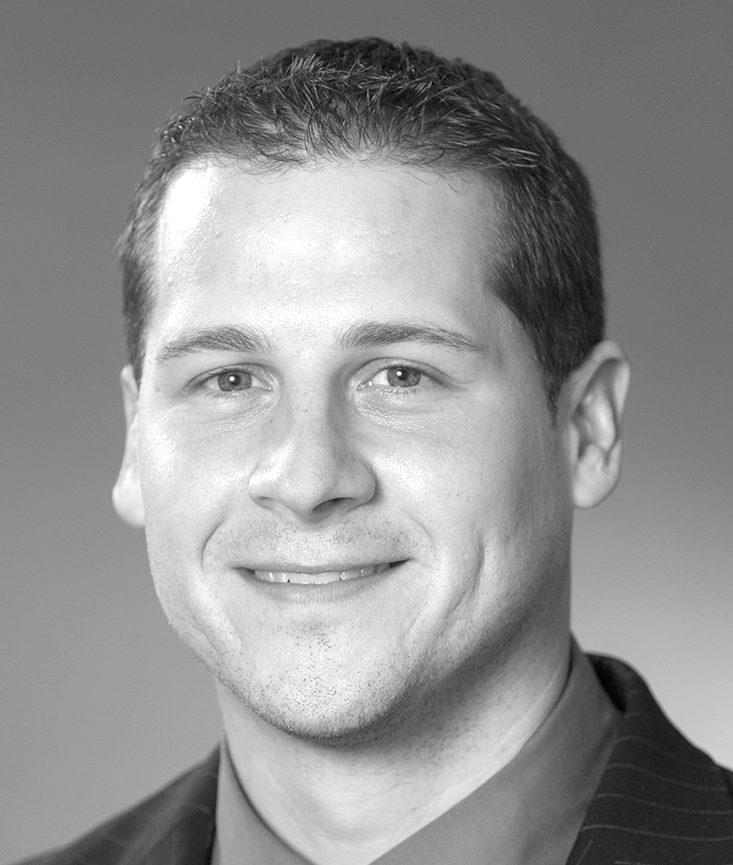
Employment Sections
Griffin Staffing Network Goes Extra Mile to Help Job Applicants

Nicole Griffin

Should the MGM Springfield casino come to fruition, Nicole Griffin is ready to help staff the complex, as well as positions at other companies left open by people departing for casino jobs.

Like many people working in the broad realm of staffing and human resources, Nicole Griffin identifies employees as every company’s biggest asset.
But a moving experience several years ago involving a young boy changed her life, giving her deep understanding of just what is needed to create a true asset.
Griffin was participating in a MassMutual Community Responsibility event at Western New England University, and helping high-school students through a Junior Achievement (JA) employment-awareness program. She would spend the first day teaching students everything she knew — business etiquette, interviewing rules and tips, how to dress for success, and more. The second day was for mock interviews, and one of the students — told to dress appropriately for the occasion — showed up in jeans and a tilted ball cap, slouching himself in a chair.
Offering positive criticism, Griffin suggested that he might have chosen slacks and a button-down shirt, and left the cap at home.
“His response was, ‘look, lady, my parents don’t work, so I don’t know what that looks like,’” Griffin told BusinessWest. “The impact that statement had on me … he’ll never know. It was a pain in my heart, because that was his environment, and in order to be an example, you have to see an example, and he had never seen one.”
That’s when Griffin knew she had to do something more, because she understood there were many more people in that same situation, and unless they were provided with such positive examples, their opportunities for meaningful employment would be slim to none.
With that young boy always in the back of her mind, she exited MassMutual after 12 years as a financial underwriter, providing analysis, sales, and marketing for the company’s products, to work at a regional staffing agency, focusing on meeting the need that became apparent to her at that JA event —  a need for helping people position themselves for success in the job market, and life.
That position, and two consultant businesses on the side, led her to launch her own venture, Griffin Staffing Network, last fall in Springfield’s South End, practically across the street from the site of MGM’s proposed $800 million casino.
Excited about the impact of that very large employer that she can help staff, as well as those businesses that may lose their current employees to the casino, Griffin is now the CEO of an agency for temporary, permanent, direct-hire, temp-to-hire, and executive-level positions, and offers placements in several fields, including administrative, medical, financial, professional services, hospitality, insurance, and information technology.
“My background in financial underwriting was really analyzing how much risk an applicant would be for a company, so I would look at their application, background, medical history, and evaluate that person based on a risk factor,” she said, adding that she’s doing pretty much the same thing in her new role in staffing.
Elaborating, she said there are risks associated with a company taking on an employee, even one from a staffing agency, and her assignment now is to reduce that risk, and her agency does so by giving back and helping clients become job-ready.
“To reach as you climb — that’s what my husband and I have always been told is important to do, because some people don’t; they reach a certain level of success and don’t give back,” said Griffin. “Once you succeed, you reach back and pull somebody else up with you.”
For this issue and its focus on employment, BusinessWest talked with Griffin about this notion of reaching as one climbs, and how she believes it will not only help in her efforts to grow her company, but also assist the region’s businesses as they struggle to fill openings in many sectors and at seemingly every level.

The Job at Hand
An MP in the Army National Guard, Griffin thought her future was in correctional or police work. But after marriage and having children, her priorities changed.
“I called a friend who worked at MassMutual and said, ‘can you help me get a job?’ And she said, ‘to be honest with you, I can get you the interview; the rest is up to you,’” Griffin explained. “And that stuck with me all my life because it’s true. And that’s what I want to do, get a person’s foot in the door; what they do with the opportunity is up to them.”
But after years of volunteering and working in human-resources positions, time and again she realized that for some, there was a need to acquire basic skills that they just didn’t have, or else opportunities they were given would end up in disappointment.
Still in her position at MassMutual, she attained qualifications as a certified interviewer and started her own small nonprofit, The ABCs of Interviewing. Griffin would consult with other nonprofits, companies, and individuals, helping them with interviewing skills, but many of the individuals were unemployed, and payment was an issue.
“I loved the interviewing-consultant work, but after that, there was nothing more,” she said, “and I knew I had to do something more.”
Her something more turned into a new position at an administrative and accounting staffing firm in the area, where she quickly learned that, due to company policies, there were potential employees that weren’t making the cut.
“They were falling through the cracks,” said Griffin. “They would come in, we would interview them, evaluate their skills, and then mark them ‘unemployable.’”
She saw that those same young kids at the JA program were now adults, and had the same issues. And no one was telling them, “you can’t consider capris and flip-flops professional attire,” said Griffin. “It was literally an eye-opener for many; they just didn’t know.”
Her current agency is an expansion of Griffin Consulting, permanent-placement firm for the insurance agency that she formed while working at the temp agency. Licensed with the Employment, Placement, and Staffing Agencies Program within the Mass. Department of Labor Standards, she obtained her certification as a Minority Business Enterprise/Woman Business Enterprise (MBE/WBE). That certification, a lengthy process in itself, was approved in November 2013, just a month after Griffin Staffing Network launched.
“Someone helped open the door for me at MassMutual,” Griffin continued. “I will do the same, so now, if someone comes into my agency and they are not job ready, I’m going to make sure they leave here with a skill they didn’t come in with.”
With two forms of placement experience, her business plan calls for a commitment to community by offering free workshops for applicants on Wednesdays to hone skills that are lacking. Griffin offers tips on the interview process, proper dress for an interview and at a particular job, and business etiquette, and she uses a consultant (who also donates her time) for résumé improvement, an important piece of this exercise that is often overlooked.
“Employers have one moment to glance at your résumé, and that’s the only impression you have,” Griffin noted, adding that the document must highlight skills and accomplishments, not simply list previous jobs, while also being concise. “So you have to make a good impression without a lot of words.”
As an applicant for an employment position comes in, Griffin reviews his or her skills, testing scores, and reference checks, and evaluates how much of a risk that applicant will be for one of her clients and, ultimately, her agency.
“We’re committed to finding the perfect match,” Griffin added. “I would never place someone at the agency with someone that I had not met with directly, because our model is that we are a business partner with the employer.”
Part of the process to engage new partnerships includes community involvement, something that has been embedded in both Griffin and her husband (Richard Griffin Jr., who works in the Springfield Economic Development Department). Once a week, she meets with a small-business owner to broaden her network, but also to give them feedback, based on her own experiences, and educate them about resources that they may not have known about.
“Yes, I’m giving back, but as a staffing agency, hopefully they’ll grow to need more employees, and that’s already happening,” Griffin added.
But her main focus is on individuals and on helping them realize their potential, be it as an employee or employer, she said, adding that this mindset helped spark creation of a new workshop she calls simply “Chasing the Dream.”
Scheduled for Jan. 18, it was inspired in part by commentary offered during the recent National Assoc. of Professional Women (NAPW) event staged in Springfield, where speakers, including keynoter Star Jones, a lawyer and one of the original co-hosts of ABC’s The View, focused heavily on dreams and what’s needed to realize them.
That workshop, to be staged at the agency’s 1145 Main St. location, will offer the steps and tools needed in a process that is informative, interactive, and fun, to aid attendees on their personal dream journey.

Opportunity Knocks
As for Griffin’s dream, her short-term goal is to increase the network’s name recognition and to grow the firm both regionally and nationally. With her foundation built, her ambition is to increase clients with entry-level and mid-level placement opportunities.
She sees the casino project as an opportunity for her business and many others, and for the region as a whole —  “it’s a win-win for the City of Springfield,” she said — while acknowledging that there is considerable work to do across the region when it comes to making effective matches between employers and individuals looking to join, or rejoin, the workforce.
While Griffin does not know what became of that boy who changed her outlook on employment, she does know that there are still many more like him, and that simple fact drives her to continue to reach while climbing.

Elizabeth Taras can be reached at [email protected]
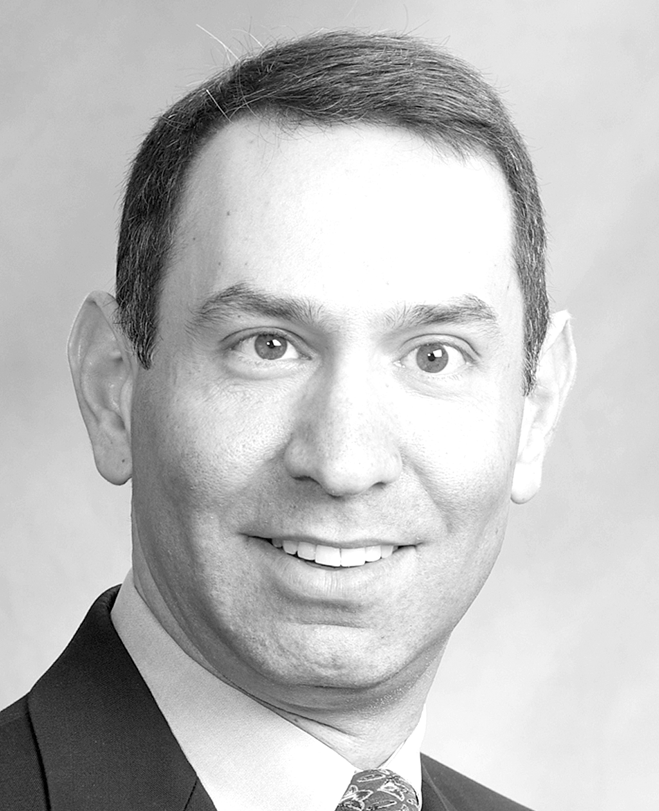
Health Care Sections
Advances, Challenges Are Changing the Patient Experience

Dr. Kevin Hinchey

Dr. Kevin Hinchey says a shortage of primary-care doctors is partly driven by a gap in pay and prestige compared to many specialists — but those factors may be improving.

It’s a story of opposing trends colliding across the healthcare landscape.
For example, on one hand, the population is aging rapidly; on the other, medical costs (notoriously high for senior citizens) are soaring. On one hand, the Affordable Care Act is attempting to add tens of millions of Americans to health-insurance rolls; on the other, persistent physician shortages, particularly in primary care, have threatened access to care even for individuals who already have insurance. Meanwhile, hospitals are being asked to provide better care for less money, making efficiency more than a buzzword.
What does this mean for patients? Lynn Ostrowski thinks they need to start managing their care long before they ever have to see a doctor.
“If we want to curb the cost of healthcare in this country, people have to take control, or accountability, over their own health,” said Ostrowski, director of brand and corporate relations at Health New England. “Seventy percent of chronic conditions are the direct result of people’s own life choices — some experts say as high as 90%. It’s probably somewhere in between, depending on the individual.”
There are plenty of good health reasons for emphasizing preventive wellness, but there are also practical reasons to keep people away from the doctor. Specifically, there aren’t enough doctors.
According to an annual workforce study conducted by the Mass. Medical Society, while several types of specialists have been in short supply in the Commonwealth in recent years — among them psychiatry, dermatology, general surgery, neurology, and urology — family and internal medicine pose the most severe access problems, with shortages reported for eight consecutive years.
“Primary care is still the big area of concern,” said Dr. Kevin Hinchey, chief academic officer at Baystate Medical Center, adding that, while the teaching hospital has ramped up efforts to attract people into primary care, the pay and prestige that go along with the discipline continue to lag behind other specialties — a definite consideration for graduates leaving medical school with heavy indebtedness.
“When you look at per-capita doctor-to-person ratio in this country, we’re, I believe, 23rd or 24th; we just don’t have as many doctors per capita as other countries do,” he said. “And I know we don’t have as many primary-care doctors as some others.”
The stress and burnout of managing a practice — primary care in particular — are factors as well, writes Dr. Steve Adelman, director of Physician Health Services for the Mass. Medical Society (MMS), on the agency’s blog. “The practice of medicine these days is inherently stressful. The so-called healthcare system is more complex than ever, and the practice lives of most physicians are replete with all manner of acute and chronic stress.
“We are victims of our own success,” he adds. “As life expectancy increases in the face of more and more administrative overload, reimbursements are decreasing. The art and craft of medical practice are gradually giving way to an industrial model of care that runs against the grain of many of our best and brightest. Our profession is in the midst of a painful transition, and legions of physicians feel as though they are wandering in the desert, with no view of the promised land in sight.”
All of this could pose significant changes in the way patients receive care, and how much treatment they may access. For this issue’s focus on the future of healthcare, BusinessWest takes a look forward into this challenging new world.

Crisis Management
Hinchey said the issues of pay and professional respect in the primary-care world have improved slightly, but the problem of shortages extends into other areas as well.
“There has been an acknowledgement from all quarters that there will be a doctor shortage, so the medical schools have been asked to increase the size of their classes, and that has happened,” he said. “The problem is, after graduating from medical school, the training slots have not increased.”
As a result, he said, over the next three to five years, the international graduates who train in the U.S. and set up practices here, many in underserved areas, won’t stay here because they’ll be pushed out by U.S. graduates, and that displacement will do nothing to solve the doctor shortage. Meanwhile, the federal government has been decreasing funding for medical education.
“We seem to do better in crisis management, unfortunately,” Hinchey said, “so when this gets close to a crisis, I think it will be better addressed.”
A doctor shortage — at a time when Americans are living longer and more of them are receiving insurance coverage — could have several effects, writes Dr. Ronald Dunlap, president of the Mass. Medical Society, on the MMS blog.
One is a rise in retail clinics, many run by nurse practitioners (NPs), which are expanding beyond basic services into activities like lab services and managing chronic diseases.
“Research shows that patients like the convenience of retail clinics, particularly when they have difficulty getting to their primary-care provider,” Dunlap notes. “Given the limited resources and no on-site physicians, most patients may not regard them, at least for now, as a place for primary care. As they add more sites, services, alliances, and advertising, however, they are likely to play a bigger role in healthcare.”
However the idea that NPs can fill the physician gap falls short, because nursing shortages exist, too. A large percentage of nurses are expected to age out of the workforce soon, and nursing schools are having trouble recruiting faculty to train a new generation.
“Further, with an emphasis on cost containment, replacing high-salaried providers (physicians) with lower ones (NPs) with less training will likely not result in savings,” Dunlap argues. “We have seen that less-experienced providers tend to order more tests and procedures, raising costs. Cost control will result best from the team approach of coordinating care and avoiding unnecessary referrals, testing, and procedures.”
He added that a rise in NPs, who tend to work in urban settings, won’t ease the shortfall in rural environments and other underserved areas. Doctors also tend to flock to cities, Hinchey noted, but he said telemedicine might become a significant part of the solution in the coming decade.
“There is some of this telemedicine going on now. But what if you could actually Skype your doctor? He or she gets a look at you, gets your blood pressure through a USB port, gets some other data from you. You don’t have to go to the office when you feel miserable,” he told BusinessWest. “Is that technology coming? I think yes. And I think that would be a a benefit, and a lot of patients would like that. That could increase capacity. And if I’m sick and I want to be seen, I could be seen.
“For some aspects of what we do, the laying on of hands will never be replaced,” he continued, referring to trips to the doctor’s office. “For many issues, from an urgent-care perspective, I’m going to want to be seen. But I just think we can be a lot more creative about this.”

To Your Health
Much of that creativity will come on the preventive-health side, Ostrowski said, which is why Health New England has long promoted wellness initiatives in the workplace.
“Most people consume most of their calories at work, during the work day,” she told BusinessWest. They get to work and get coffee or breakfast, then a mid-morning treat, they eat lunch at their desk, then have a mid-afternoon snack. For many people, work is also the time when they’re the least active because they’re at a computer at their desk or sitting at the conference-room table.
“So we believe the workplace has a really unique position in assisting with creating healthy employees and families, and employers have a unique interest in that because they’re bearing the burden of healthcare costs for that population in many ways — they pay for insurance for employees and families, and they also lose productivity to sickness or disability. So it’s extremely important to have a culture of health, so to speak, and engage people throughout the day in healthy behavior and healthy activities.”
Through its Healthy Directions program, Health New England engages with companies through an assessment process, including health screenings and lifestyle-focused interviews, then helps employees set goals for healthier habits. “We’re concerned with small steps, not everything at one time. Most people won’t be a success if they try to do it all.”
For instance, HNE promotes a graduated ‘jump start’ concept to better health; participants are encouraged to increase their water intake the first week, walk 10,000 steps a day the second week, eat five servings of fruits and vegetables per day for the third week, then bring it all together in week four.
“It’s reinforcing healthy lifestyle habits, and hopefully some of it will stick,” Ostrowski said. “You spend eight hours of each day at work, so if you have a supportive health culture in the workplace, odds are your health will improve. That’s really the basis our program.”
A parallel trend in health insurance, she said, is a shift toward high-deductible health plans, which tend to work best for people who take preventive wellness seriously. “The healthier you are, the more appealing that is, because there’s less out-of-pocket expense from the monthly premium. If you couple that with health savings accounts, it’s a great benefit. But if you’re not healthy, that’s a difficult plan to manage.”
The full impact of the Affordable Care Act on the medical and insurance landscape has yet to be felt, but Hinchey expects changes in the way providers are paid as it relates to the ‘medical home’ concept, also known as accountable care, by which a team of providers — doctors, nurses, specialists, therapists, etc. ­— share in the treatment of a patient and also share in the reimbursement.
“People are starting to think in terms of a medical home,” he said. “What if I had a nutritionist? I don’t have diabetes or high blood pressure, but I’m a little bit overweight; can I talk to a nutritionist about it? Or maybe someone for exercise, or other things that could help me be a little bit healthier, that are not presently covered by insurance.”
Dunlap maintains that physician satisfaction with the profession — not necessarily the administrative stresses — remains high, especially as they grow comfortable with such innovations. “More physicians are becoming familiar with reform initiatives, such as global payments and accountable-care organizations, and more physicians indicated they are likely to move to global payments to reduce healthcare costs.”

Bridging the Gap
Hinchey said there’s a long way to go to rectify the conflict between cost and access, but it might take a “quasi-crisis” or two to really move the needle.
“We have to be creative to meet these needs,” he said, referring again to the promise of telemedicine versus the barriers posed by the current reimbursement structure. “I can Skype at people if I want to, or spend 100% of my time talking to people on the phone, but if I only got paid for when they come into my office, I wouldn’t last very long.
“But as payment reform starts to come around,” he added, “it will cause kind of a domino effect. None of these things happen in isolation.”
Clearly, the future is still being written.

Joseph Bednar can be reached at [email protected]
Health Care Sections
Mercy Medical Center Takes High-tech Path to Greater Efficiency

Sharon Adams

Sharon Adams says the professionals who staff the ‘hub’ are specially trained to monitor and enhance the efficiency of the patient experience.

The screens tell the story. Hundreds of stories, actually.
They line the walls of a room at Mercy Medical Center, appropriately called the ‘hub.’ One screen details the occupant of each inpatient bed and their anticipated time of discharge. Another details patient movement in the emergency room, while other screens keep tabs on various hospital departments. And at any time, specially trained nurses known as clinical care coordinators, or C3s, can call up a patient’s status to make sure they’re getting the care they need in a timely fashion.
“We were looking to some system to pull the operations of the hospital together and find an effective way to improve patient flow and be more efficient,” said Daniel Moen, president and CEO of the Sisters of Providence Health System (SPHS), which includes Mercy. “We wanted a better experience for our patients, and also make it a better place to work for the staff by removing some of the bottlenecks we were dealing with.”
He found a solution when he traveled to Toledo, Ohio with Sharon Adams, Mercy’s chief nursing officer and senior vice president of Patient Care Services. There, they visited Mercy St. Vincent Medical Center, a large, tertiary-care hospital that had implemented technology from a company called Care Logistics. “Sharon and I were there about three hours and said, ‘we have to do this,’” Moen said. “You could walk into their patient-care hub and see almost everything going on in the hospital.”
So Mercy brought the technology to Springfield, dubbing it Care Connect. The effect, Moen said, has been transformative, enhancing communication between providers and ensuring that patients’ time in the hospital is not wasted.
“I call it our air traffic control system for the hospital. It allows us to track patients from the ER to the inpatient side and gives us targets for patient discharges,” he told BusinessWest, adding quickly, however, that technology alone cannot make a hospital more efficient. “It really was a massive process change, and we engaged hundreds of our employees in this process change.”
Those changes suggest that the healthcare industry’s shift toward accountable care — a model of which Mercy has long been on the cutting edge — is definitely taking shape on Carew Street in Springfield, and beyond.
For this issue’s focus on the future of healthcare, BusinessWest looks at how Mercy plans to reach its goal of achieving more efficient, coordinated care without sacrificing quality — a challenge for all hospitals at a time when growing cost constraints demand it. In many ways, this initiative shows how the future of healthcare is already here.

Hub of Progress
The human element is as critical to Care Connect as the technology. When someone is admitted to Mercy, a C3 works directly with physicians and other providers to track the patient’s progress, plan a schedule of tests and procedures, and come up with an expected discharge time.
The focus is on using time wisely, Adams said. For example, the C3s use details such as when the patient is being transported or when rooms are being cleaned to arrange tests and other care around his or her schedule.
“We’re trying to eliminate the ‘white space’ in the patient stay, when people are waiting for things to happen,” Moen added. “That’s not useful for the patient, and it’s not good for us to be less efficient than we should be. So this was really a unifying point — what can we do to make this better? And having it all coordinated from this hub is important.”
Last spring, in preparation for bringing the Care Connect system online, more than 1,500 employees in dozens of departments were trained on using the new software to coordinate with the C3s.
As for the coordinators, “they were specially trained for eight weeks, full-time, in this patient-flow system and documentation,” Moen said. “The hub is open 24 hours a day, seven days a week. It used to be that things slowed down on weekends; we’re trying to make sure we’re an efficient operation seven days a week, to get patients the services they need all the time.”
Mercy also implemented a program called ‘operational rounding’ every Wednesday, where members of the SPHS senior leadership team join front-line providers in patient-care areas. From their observations, they work together to find ways to improve efficiency and quality of care.
“We’ve made more than 75 specific improvements in patient flow, many impacting quality, such as reducing falls and pressure ulcers and hospital-acquired infections,” Moen explained. “Again, it’s about having an understanding of where we are and where we’re trying to go. This has really been a transformational project for us, and we couldn’t be happier with the results at this point.”
As impressive as the patient-management technology is, Adams added, it doesn’t operate in a vacuum. “We’ve spent years working through what the current processes are, in every department, every place the patient touches. We went through 47 or 50 departments, working with them to ask, ‘this is what we currently do; what can we do in the future? What’s the best thing for patients?’ We’re no longer saying, ‘what’s best for our own schedules?’ It’s all patient-focused.”
It’s also a metrics-driven program, Moen said, and all that data is fed directly to the hub. “We’re taking a lot of different milestones, and we can see where the delays are in the process. This gives us sort of a dashboard to see where we can improve further and document where we’ve gotten better.”
Adams stressed that the C3s have a supervisory role in patient care, and they’re trained to be experts in care coordination. “They understand the resources in the community, what insurance will pay for, and they update the insurance company about why the patient needs to stay longer.”
Documentation is critical. “Clinical documentation supports why that patient should be an inpatient, making sure we are capturing the severity of that patient’s diagnosis. That’s where they work very closely with physicians … saying, ‘you probably need to be documenting why the patient is more complex than we thought.’ They make sure we’re being reimbursed at the level of care we’re providing.
“The physicians feel it’s a very good resource,” she added. “They are pleased when the clinical-care coordinators say to them, ‘you just need to document this.’ They don’t see it as a threat; they see it as a great resource, reflecting all the hard work we’re doing for patients.”

Accountable to Patients
Hospital leaders across the U.S. understand they’re facing a new era of cost consciousness, driven by a growing, aging population, health reform that’s pushing more patients into the system, and the burden of new, expensive technology.
Accountable care is a model by which a team of providers — doctors, nurses, specialists, and therapists — are paid a certain amount to collectively treat a patient. The concept, which Mercy began to pioneer in Western Mass. almost a decade ago, stresses efficiencies like limiting unnecessary tests, but demands quality as well, because preventing rehospitalization is a key goal. Moen said Care Connect goes to the heart of that model.
“We’ve made great strides in all areas. We wanted to reduce length of stay and still make it a better patient experience,” he told BusinessWest. “And because we’re freeing up capacity on the inpatient side, the ER has become much more efficient; there are fewer situations where a patient is held in the ER, waiting for an inpatient bed.”
Mercy has made changes in the emergency area as well, getting patients to a physician or physician’s assistant quicker than before and fast-tracking less serious situations to clear capacity for patients who are more ill. “We’ve taken an hour off the door-to-door time for patients in the emergency room,” Moen said.
Care Connect has also aided the discharge process, he noted, as C3s help coordinate care beyond the hospital, whether it’s skilled nursing, home care, or simply setting up primary-care appointments and following up — all with the goal of preventing readmissions.
“We want to bring these concepts out to providers in other parts of the system, particularly behavioral health at Providence in Holyoke,” he said. “People are working as a team, less silo-based. It’s a much more planned process. It helps us be more efficient and minimize wasted motion, and it frees up staff to spend as much time as possible with patients.”
Adams said the effort has spawned nothing short of a culture change. “Providers and staff have more time to communicate together, as a team, like physicians years ago. That’s what patients loved, seeing a nurse and provider sitting with them, talking.”
The process also helps reduce anxiety for patients and families, she said, by sharing as much information as possible about what tests, procedures, and treatments are coming up, and when.
“Now we’re all on the same page. Patients are already feeling vulnerable, but now they have more control over their own schedule. We can tell them exactly what time the CT scan is, rather than saying, ‘oh, just wait for the phone call.’”
The hub has also helped C3s and other providers identify backlogs in the system in real time, which makes it easier to prevent them. “In the past, some of this data wouldn’t be available until weeks later, making it difficult to recreate what happened,” Adams explained. “The idea is to get you out safely with good care, and not keep you here any longer than you’d like or we’d like.”
More information — for patients during their stay, and for hospital leaders — is a constant goal, Moen said.
“Especially for patients with no working knowledge of the healthcare system, this gives them a better idea about their condition, and we can take some of the anxiety out of the situation patients find themselves in,” he told BusinessWest. “If we can do that, it’s a major accomplishment. We want to be a navigator for them, along with their primary-care doctor.”

Ahead of the Curve
As he showed BusinessWest around the hub on the hospital’s third floor, Moen called Care Connect “a very important subset of the whole ACO process, where we’re getting patients to the right level of care as soon as possible, and helping them stay well despite the chronic conditions they may have.”
But he admitted Mercy still has much to do — namely, make its zero-defect philosophy a reality through this renewed emphasis on efficient, coordinated care.
“If we’re perfect 99% of the time, that means 1% of patients didn’t get the care they deserve, and that’s not acceptable,” he said. “It’s not easy — medical care is very complicated, and patients are very individualized.”
But modern healthcare is only going to become more complicated, and health systems that have not moved accountable care from a conceptual buzzword to reality — as Mercy has done with Care Connect — will be at a distinct disadvantage in a challenging future.
“A lot of hospitals will have trouble catching up,” Moen said. “We didn’t want to be in that position. We always want to be out ahead of the changes.”

Joseph Bednar can be reached at [email protected]

Health Care Sections
Advanced Imaging Is Improving Disease Diagnosis and Treatment

Dr. Stephen O’Connor

Dr. Stephen O’Connor says there must be a “healthy balance between diagnosis with imaging and more traditional means of diagnosis — and it has to be driven by evidence-based medicine.”

When many women think about medical imaging, they think of the mammogram.
And that is rarely a pleasant experience, due in part to the painful squeezing of the breast tissue for an accurate scan, but also to the stress and anxiety of waiting for the outcome — a clear scan and clean bill of health, or an abnormal finding.
Abnormal can mean several things — cancer, a benign mass that requires more investigation, or a false-positive finding that may lead to unnecessary biopsy. Unfortunately, none come without a nerve-wracking delay.
However, advances in diagnostic imaging have dramatically changed how doctors and radiologists perform their jobs, and in the process, the experience for the patients being diagnosed and monitored for treatment has become faster, far more precise (which also means fewer false-positive scares), and, according to area imaging specialists, a bit less stressful.
“Until recently, the best mammogram was a digital mammogram, which was an improvement over the original film mammogram,” or X-ray, said Dr. Louis Pacilio, lead radiologist for mammography at Cooley Dickinson Hospital.
That was before the advent of the newest technology in mammography: breast tomosynthesis, or 3-D mammography, a benefit of last summer’s affiliation agreement between Cooley Dickinson Health Care and Massachusetts General Hospital and Partners HealthCare System.
The two-dimensional digital exam that Pacilio referred to has been performed at Cooley Dickinson since 2008, but there are limitations to 2-D mammograms that show the full thickness of the breast tissue projected as a flat image, which may result in cancers not being identified and the possibility of normal tissue appearing abnormal, leading to unnecessary and stressful recalls of patients for extra views, he said.
Approved by the FDA in 2011 and pioneered at Mass General, a 3-D mammogram enables the radiologist to examine the breast one layer at a time, a technique that allows overlapping structures from different layers in the breast to be separated and the tissues to be seen more clearly.
“We recognize that a mammogram is an innately stressful study for women, but I think it does lessen the stress for some, knowing that this is an advanced form of imaging,” noted Pacilio.
Advanced imaging has become a major tool in the identification and treatment of many diseases, and mammograms are just one method. Radiologists look for diseases in the human body mainly via three imaging technologies — X-rays (radiographs), CT (computed tomography), and MRI (magnetic resonance imaging), said Dr. Stephen O’Connor, medical director of Quality in the Pediatric Radiology Department at Baystate Medical Center. Other methods include ultrasound (high-frequency sound waves) and nuclear medicine (planar or 2-D scans), which includes PET (positron emission tomography) scans.
“Based on clinical imaging, when we make a diagnosis of, say, appendicitis, we’re much more accurate than we used to be,” said O’Connor. “So there are fewer operations to see if someone has appendicitis, because our positivity rate is close to 95%.”
For this issue’s focus on the future of healthcare, BusinessWest spoke with several professionals who work with some of the most advanced forms of imaging technology about how their tools have become increasingly precise, and what that means for patients.

Film Reviews

Louis Pacilio

Louis Pacilio looks to a future where diagnostic testing involves no stressful false positives, but only detection of diseases that may grow and become life-threatening.

A day in O’Connor’s life is quite different now than 20 years ago.
“There were things I did as a radiology resident 10 times a day that we don’t do 10 times a year now,” O’Connor said, referring specifically to the IVP, or intravenous pyelogram, an X-ray test that uses a contrast material injected into a vein in a patient’s arm, which helps identify diseases of the urinary tract, such as kidney stones, tumors, or infection. “The advancements in technology over time have been improved speed, image quality, and — specifically with regard to CT scans since 2001 — a very aggressive campaign in the imaging field to drive the dose of radiation down while adding to image quality.”
But to understand how imaging has altered the diagnosis and treatment of disease, one must understand imaging modalities:
• According to radiologyinfo.org, a division of the Radiological Society of North America, the revolutionary progression of imaging began with Wilhelm Conrad Röntgen, a German physicist credited with producing and detecting electromagnetic radiation in a wavelength range in 1895, an innovation known today as X-rays. The painless process involves exposing a part of the body to a small dose of ionizing radiation to produce pictures of human or animal interiors.
It is the reduced use of radiation, while maintaining and even improving image quality, that O’Connor called one of the most active areas of advancement in imaging technology. Pacilio added that the new combination of 2-D and 3-D mammography involves a slightly higher radiation dose, but current research suggests the demonstrable benefits outweigh the small potential risks.
• Ultrasound is a painless and safe use of high-frequency sound waves, the same principle used in sonar technology in ships.  When a sound wave strikes an object, it echoes back — in real time — to reveal changes in appearance, size, or contour of organs, tissues, a fetus in utero, blood flowing through blood vessels, or abnormal masses.
Doppler ultrasound, noted O’Connor, is a special technique that can measure the direction and speed of blood cells as they move through vessels, and has replaced older, more invasive X-ray methods.
• MRI is a non-invasive method that uses a powerful magnetic field, radio frequency pulses, and computer software to produce detailed pictures of organs, soft tissues, and bone.
• CT scan, also called a CAT scan, generates a 2-D image of a section through a 3-dimensional object. CT images provide greater detail than traditional X-rays, helping doctors interpret and diagnose problems such as cancers, cardiovascular disease, musculoskeletal disorders, and more.
• PET scan is a type of nuclear medicine that uses small amounts of radioactive material (called a radiotracer) injected into the bloodstream, swallowed, or inhaled as a gas while the patient lies in a large machine with a doughnut shaped-hole in the middle (similar to a CT or MRI unit). Multiple rings of detectors scan and record the emission of energy from the radiotracer, producing a computer-aided image used to diagnose and determine the severity of many types of cancers, heart disease, neurological disorders, and other abnormalities. Some of the most promising research from PET technology, said O’Connor, involves myriad cancers and Alzheimer’s disease, the most common cause of dementia.

Value Proposition
O’Connor told BusinessWest that the speed and accuracy of imaging has markedly improved in recent years, especially in emergency medicine. But, because of the cost, he said, “there’s got to be a healthy balance between diagnosis with imaging and more traditional means of diagnosis — and it has to be driven by evidence-based medicine.”
According to the Journal of the American Medical Assoc., evidence-based medicine integrates the best available evidence with clinical experience, allowing clinicians to recommend, and their patients to make, informed choices consistent with their values.
“Just because it’s a fancy new tool and it’s more expensive, should we be using it?” O’Connor asked. “The question is, are we adding value with the newer technology? Clearly, over time, CT scan has earned its spot.”
On the other hand, O’Connor is currently working in partnership with pediatric surgeons to develop an MRI (magnetic resonance imaging) urology program, replacing IVP, but the cost effectiveness has not yet proven to be acceptable for the Baystate practice.
Imaging technology has seen its share of advancements, he continued, and part of what drives the adoption of new breakthroughs is the habits of other physicians.
The newer, more advanced machines that physicians have found worthy boast two highly sought-after factors: less radiation use and more accurate results.
One advance is the colonization of the radiation beam itself, which offers a more finite, less fuzzy beam with less scattering of radiation to other areas of the body. Another is radiation dose-monitoring software called iterative tracking, which permits high-quality image reconstruction that eliminates the graininess typically caused by a lower radiation flow.
O’Conner compared that to a picture taken in a room with low light that offers poor image contrast. The newer imaging software is able to increase the contrast to improve image quality for a more precise detection of disease.
In the diagnosis of osteoporosis — a bone disorder resulting in diminished bone strength that predisposes a patient to increased risk fracture — Lori Stoudenmire, a certified bone-density technician at Women’s Health Associates in Westfield, deploys one of the most advanced forms of bone densitometry imaging in the region, using a GE Lunar scanner with a software program called FRAX.
The computer algorithm, which stands for ‘fracture risk assessment index,’ analyzes a patient’s important historical variables — genetics, lifestyle, trauma — alongside a full-body bone scan to calculate the 10-year probability of hip fracture or major osteoporotic fracture of the spine, forearm, hip, or shoulder. Dr. Robert Wool, physician and owner of Women’s Health Associates, bases patient treatment on that scan.
“We used to treat solely on bone density, but we know that fracture risk is not based solely on bone density; there are lots of other factors,” said Stoudenmire. Capturing those other variables is what has made the advancement of FRAX so significant for bone-density imaging. Screening every two years allows for bone-loss comparisons, she added, and further developments are on the way.
“The programs, which are meant for more elder patients, are changing now to open up to men who are showing early signs of osteoporosis, or cancer patients who are maybe in their 30s who are on chemo, because that will affect your bones,” she noted, adding that oncologists can now monitor cancer patients and properly medicate them for severe bone loss.
Stoudenmire feels that the imaging is very clear with the GE Lunar, but she would like to see more advancements in FRAX — specifically, questions that go beyond history and involve more lifestyle elements, giving doctors even more information about true bone health as they craft an appropriate diagnosis.

Image Is Everything
In just the past few years, Pacilio has been pleased to see increased accuracy in diagnosis, in not only 3-D mammography, but advanced ultrasound and breast MRI. Yet, he looks to a future where testing for breast cancer, or any other disease, involves no stressful false positives, and advanced imaging can help him detect only diseases that threaten to grow and potentially become life-threatening.
Those advanced imaging modalities, including a hybrid imaging technique called image fusion; PET/CT, which is transforming cancer care; and PET/MRI, a potential advancement in oncology, cardiology, and neurology, are in various stages of research. Just two months ago, the U.S. Food and Drug Administration approved a radiopharmaceutical for use with PET to image the brains of adults being evaluated for Alzheimer’s disease and dementia.
At this stage, many of the promising image-fusion modalities are exclusive to elite research facilities, but over time, they, too, will be adopted by regional health systems.
With every one of those advances, doctors will produce speedier, more precise, and often less stressful results — and patients will have a clearer picture of their path to good health.

Elizabeth Taras can be reached at [email protected]

Building Permits Departments

The following building permits were issued during the month of December 2013.

AGAWAM

BFP Massachusetts
30 General Abrams Dr.
$34,000 — Construct an addition to house a new chiller unit

Mei Nuan Li
270 Main St.
$10,000 — Handicap accessible walkway

Stop n’ Shop
1282 Springfield St.
$10,000 — Addition

CHICOPEE

Default Service Inc.
45 McKinstry Ave.
$8,000 — Strip and re-roof

Holyoke Health Center
601 Memorial Marketplace
$85,000 — Renovations to existing office

Prima Electro
711 East Main St.
$25,000 — Create new office space

Rite Aid Corporation
1-5 St. James Ave.
$92,000 — Interior remodel of store

Sunshine Village
75 Litwin Lane
$18,000 — Construct steel catwalk for HVAC access

GREENFIELD

Country Club of Greenfield
244 Country Club Road
$15,000 — Interior renovations

First United Methodist Church
25 Church St.
$14,000 — Remove and rebuild chimney

Jeffrey Denny
77 Mohawk Trail
$26,000 — Install 28 solar panels

NORTHAMPTON

Arnold Levinson
176 Pine St.
$7,000 — Fabricate basement stairway

Dylan Esworthy
117 South St.
$3,600 — Strip and shingle roof

Hampden, Franklin, and Hampshire Agricultural Society
Fair Street Fairgrounds
$20,000 — Repairs

Holyoke Street, LLC
19 Holyoke St.
$11,500 — Install new TPO roof system

Northampton Brewery
11 Brewster St.
$3,000 — Open wall to remove large equipment

Northampton Housing Authority
143 West St.
$16,000 — Replacement doors and windows at Grace House

Peter Whalen
49 Gothic St.
$11,000 — Create office space

Peter Whalen
49 Gothic St.
$20,000 — Subdivide offices

Suher Properties, LLC
28 Center St.
$30,000 — Interior renovations

Tobin Manor
56 Maple St.
$16,000 — Install replacement front and vestibule door

Todd Barron
211 North St.
$20,500 — Install partitions for private entry

SOUTH HADLEY

Mount Holyoke College
50 College St.
$18,000 — Renovation at Reese Hall

Town of South Hadley
123 Willimansett St.
$396,000 — Renovation at Buttery Brook Park

SOUTHWICK

Dollar Store
691 College Highway
$650,000 — Construction of a new store

SPRINGFIELD

Baystate Health
300 Carew St.
$75,000 — Renovate space creating individual offices

Baystate Health
759 Chestnut St.
$552,000 — New roof

Birnie Medical, LLC
300 Birnie Ave.
$100,000 — First-floor renovation

Commonwealth Academy Holdings, LLC
6 Ames Hill Dr.
$13,500 — Roof and chimney repair

Riverbend Medical
305 Bicentennial Ave.
$69,000 — Interior renovation

St. Peter & Paul Church
118 Carew St.
$8,000 — Install wheelchair ramp

WESTFIELD

Liberty Manor Inc.
74 Russellville Road
$841,000 — Construction of a senior facility

WEST SPRINGFIELD

Reds Towing
1554 Riverdale St.
$3,000 — Installation of a handicap ramp