Home 2019 April (Page 5)
Daily News

SPRINGFIELD — Baystate Health announced it has mailed letters to patients about an e-mail phishing incident that affected approximately 12,000 patients.

On Feb. 7, Baystate Health learned of unauthorized access to an employee’s e-mail account and immediately launched an investigation. During the course of the investigation, it learned that nine employee e-mail accounts were compromised as a result of an e-mail phishing incident.

“As soon as Baystate identified the unauthorized access, each account was secured,” said Kevin Hamel, chief Information Security officer for Baystate Health. “Baystate hired an experienced computer forensic firm to assist in this investigation.”

The investigation determined that some patient information was contained in the e-mail accounts, including patient names, dates of birth, health information (such as diagnoses, treatment information, and medications), and, in some instances, health-insurance information, as well as a limited number of Medicare numbers and Social Security numbers. Neither patient medical records nor any of Baystate’s electronic-medical-record systems were compromised.

All affected patients are receiving information directly from Baystate Health via direct mail, and Baystate has established a dedicated call center for patients to call with any questions, at (833) 231-3361, from 9 a.m. to 6:30 p.m., Monday through Friday. Baystate is offering a complimentary one-year membership to credit-monitoring and identity-protection services for those patients whose Social Security numbers were exposed.

“The integrity of our information systems and e-mail security is a high priority, and we are committed to maintaining and securing patient information at all times,” said Joel Vengco, senior vice president and chief Information officer for Baystate Health. 

To help prevent something like this from happening in the future, the health system required a password change for all affected employees, increased the level of e-mail logging (and is reviewing those logs regularly), and has blocked access to e-mail accounts outside of its network. It is also reinforcing its current, ongoing training and education of all employees focused on detecting and avoiding phishing e-mails.

More information may be found on Baystate’s website at baystatehealth.org/phishing.

Daily News

AMHERST — President Miriam Nelson resigned from Hampshire College effective April 5, having submitted her resignation letter to the board of trustees two days earlier. The board voted to appoint Ken Rosenthal as interim president.

In a letter to the Hampshire community, Nelson said the college is divided over her leadership and she had become a distraction from the college’s work to establish a sustainable financial model. She expressed optimism that the board, working closely with the Hampshire community, will overcome its persistent financial challenges. 

“I am confident a new leader will work within a more favorable environment and find a path to daylight that has eluded me,” Nelson wrote. “In a short period of time, I have come to love Hampshire, and to deeply admire the students, staff, faculty, alums, and friends whom I have had the great pleasure of getting to know.” She concluded, “I leave knowing that, if there is any community that can creatively surmount obstacles, it is Hampshire.”

Over the past five years, Hampshire has suffered a 20% decline in enrollment and faced operating deficits, balancing its budgets by reducing staff and receiving major rescue gifts from trustees and a one-time endowment investment dividend. After Nelson began her tenure in July, she and the board worked through the fall semester to assess the college’s resources and ability to reverse a projected deficit of more than $5 million for the 2019-20 year and a cumulative deficit of close to $20 million over the subsequent three years.

Dependent on tuition for 87% of its revenues, Hampshire has a small endowment of $52 million. These realities raised the risk that the college would not be able to educate an incoming fall class through to graduation, which led the board to vote to focus on educating its current students and not admit a full new class until they establish a sustainable business model.

Through the fall, Nelson and trustees met with groups of alumni, and individually with major donors, as they explored the feasibility of a major fundraising effort at the level required to sustain Hampshire. With the board’s authorization, Nelson in late fall also began pursuing the option of partnerships for the college, publicly announcing a search on Jan. 15, which led to talks with more potential partners.

The announcement caused distress and criticism from constituents, and the board and Nelson sought over the past two months to work more closely with the community on exploring options for Hampshire to remain independent. Board Chair Gaye Hill announced her resignation on Monday, April 1. Vice Chair Kim Saal submitted his resignation a few days later.

Rosenthal, named interim president, was one of the college’s founders and its fifth employee, hired in 1966, and its first treasurer. He left the Hampshire administration in 1976 for a long career in law, business, and the nonprofit sector, ultimately retiring as president of the non-profit the Seeing Eye, the world’s premier guide-dog school for the blind. During his tenure there, the organization’s net assets increased by 70%.

He returned to Hampshire to serve as a trustee from 2008 to 2016. When Rosenthal retired as trustee in 2016, he established an endowment to fund faculty research.

Rosenthal said it will take the cooperation of the entire Hampshire community to create the model that will become the next Hampshire College. “As someone who has been a part of Hampshire for more than 52 years, I know how difficult that can be. And how wonderful.”

Rosenthal said he will begin immediately to work with college leaders to address the uncertainties faced by Hampshire’s current students and their parents, faculty and staff, and its small class of incoming students. He said he’s committed to channeling the passion and commitment of the Hampshire community to finding a long-term solution.

The board of trustees also appointed a new interim chair, Luis Hernandez, and voted to lead a fundraising campaign to keep Hampshire independent, which will dictate his priorities for the college in the coming weeks and months.

After graduating from Hampshire, Hernandez earned a master’s degree in bilingual and multicultural education from the University of San Francisco. He began his career working as a teacher, then developed educational programs for children and professional-development curricula for Head Start teachers across the country. Today, he’s an early childhood education specialist who provides training and technical assistance through Western Kentucky University. His expertise encompasses early literacy, dual-language learning, adult-learning practices, and diversity. 

Daily News

HOLYOKE — The Boston Business Journal published its list of the fastest-growing banks in Massachusetts, and, following its acquisition of First National Bank of Suffield, PeoplesBank ranked second on the list.

“About 50% of our growth came from the merger,” said Brian Canina, chief financial officer of PeoplesBank. “But the untold story is that the rest of that growth was organic. We attribute our organic growth to our mutual charter. We do not have to divert earnings to shareholders, so we can reinvest in our organization and the communities we serve. That means improved technology, better products and services — including rates and terms — as well as a level of investment in the community that is unmatched by our competitors.”

Daily News

HOLYOKE — Attorney Karen Jackson of Jackson Law, an elder-law and estate-planning firm, will teach a series of classes highlighting the latest developments in elder law and estate planning at Holyoke Community College (HCC). The six-hour course, called “Elder Law and Estate Planning: What You Need to Know,” will be presented in three two-hour sessions, on Mondays, May 6, May 13, and May 20, from 6 to 8 p.m.

Jackson will present comprehensive subject matter on what she calls “The Core Estate Plan,” in which she will explain core documents and provide stories and examples. She will also discuss “The Probate Court Process and Medicare Hot Topics” and “Community Care Programs and MassHealth Planning for Nursing-home Care.”

“The course will explain the basic building blocks of an estate plan and a plan for home and nursing-home care,” she said. “From that foundation, we will also consider the various specialized trust documents that support this planning. I will clarify the Probate Court process and what it means to probate a will. And, finally, we will explore current MassHealth issues that are affecting seniors.”

In the first session, Jackson will explain each document in the core estate plan. She will discuss the problems that can occur when proper documents are not prepared before a loss of mental capacity or physical health or before sudden loss of life.

The second session will address four areas: trusts, the probate court process, Medicare hot topics, and options for community care and home care. Jackson will provide pertinent information and details about each to assist attendees in planning now. 

In the third and final session, Jackson will introduce the various Medicaid programs that provide long-term skilled-nursing home care in Massachusetts and the financial assistance associated with each.

While participants may attend only one session of their choosing, they must still pay the full course cost of $89. To register, call (413) 552-2500 or visit www.hcc.edu/bce.

Daily News

SPRINGFIELD — Work Opportunity Center Inc. held a ribbon-cutting ceremony on April 8 at its newly purchased and renovated community-based day-services (CBDS) facility located at 73 Marketplace in Springfield.

Established in 1969, Work Opportunity Center Inc. (WOC) initially served its participants through a center-based work-service model. Community-based day services were added in the summer of 2014. In June 2016, center-based work services were discontinued for all participants, and those services were converted to CBDS. As of March 14, 2019, there are approximately 84 individuals participating in WOC CBDS services. Last month, 34 program participants and six staff members transferred from the WOC facility in Agawam to its newest facility in Springfield.

The CBDS program of supports enables individuals with developmental disabilities to enrich their lives and enjoy a full range of community activities by providing opportunities for developing, enhancing, and maintaining competency in personal, social, and community activities. Service options for individuals participating in the CBDS program include career exploration, community-integration experiences, skills development and training, volunteer opportunities with local nonprofits, health and fitness classes, socialization experiences, and support to enhance interpersonal skills as well as the pursuit of personal interests and hobbies.

The renovation of the 73 Marketplace facility is supported by a $10,000 grant made by the Irene E. & George A. Davis Foundation along with a $5,000 grant from Westfield Bank toward the purchase of a new vehicle for program participants.

“This new Springfield community-based Day Services Program will offer individuals from the Springfield area better access for working, volunteering, and exploring in their community,” said Robert MacDonald, executive director of Work Opportunity Center Inc. “The program is designed so individuals will spend less time commuting and more time participating in community activities. More community involvement will help individuals become more comfortable in their community.”

Daily News

AMHERST — On Thursday, Gov. Charlie Baker celebrated the opening of the new Physical Sciences Building (PSB) at UMass Amherst, a facility funded by the state that fosters and expands cutting-edge collaborative learning and research at the Commonwealth’s flagship campus.

“We were pleased to invest in the new Physical Sciences Building, which will serve as a hub for the natural sciences at UMass Amherst,” Baker said. “The facility’s expansion will help foster new research and career opportunities, which will help support the STEM workforce pipeline here in Massachusetts.”

Added Chancellor Kumble Subbaswamy, “this complex is home to the very best facilities in physics and chemistry, enhancing the research capability for our faculty and students in the College of Natural Sciences and providing the STEM talent that is essential for the state’s innovation economy. We’re deeply grateful for the governor’s support and the state’s investment in UMass Amherst.”

UMass President Marty Meehan noted that “this project reflects the significance of the Commonwealth’s investment in faculty excellence, scientific discovery, and student success at UMass Amherst. And it strengthens UMass Amherst’s position as a top-tier public research university that prepares students to thrive in the high-demand STEM fields that are so important to the future of Massachusetts.”

The 95,000-square-foot PSB opened this academic year after three years of construction and incorporates the reconstructed West Experiment Station, a 19th-century agricultural soils research laboratory and one of the university’s most historic buildings. Funding for the $101.8 million project included $85 million from the state and $16.8 million financed by the campus through the UMass Building Authority.

The PSB provides offices, specialized laboratories, and approximately 130 laboratory benches for the Physics and Chemistry departments. The laboratories are constructed in a layout that can be reconfigured many times during the life of the building. Among other fields, the PSB supports scientific discovery in material science, condensed matter and nuclear physics, and organic chemistry. The faculty hosted in these facilities have collectively been awarded $127 million in grants and are working on the forefront of science.

The building was designed by Wilson Architects of Boston, and construction was managed by Whiting-Turner, which is headquartered in Baltimore and has a nearby office in Marlborough. The laboratories feature an open floor plan, so space for one group is adjacent to that of another, with no walls between them. In addition to the advantages of increasing interactions between groups, this provides the ability for the amount of laboratory space each group uses to broadly follow changes in group size.

The PSB incorporates numerous green building features and has earned Gold LEED (Leadership in Energy and Environmental Design) certification, a challenge for a building with such high air-handling requirements. The extensive windows and glass walls allow natural light to illuminate the laboratory space. Energy- and water-saving features include high-efficiency fume hoods with a hood monitoring system to encourage closing of hood sashes when not in use and a closed-cycle chilled-water loop. There is open space for specialized instrumentation such as glove boxes and dedicated rooms for high hazard work, solvent dispensing, and bacterial cell culture.

Daily News

SPRINGFIELD — Springfield Technical Community College (STCC) and Elms College are partnering to offer accelerated online degree-completion programs in computer science and computer information technology and security.

In a ceremony Thursday, John Cook, president of STCC, and Harry Dumay, president of Elms College, formally signed an agreement that eases the coursework transfer between the two colleges for students seeking degrees in the computer-focused programs.

The bachelor’s-degree programs are completely online and accelerated, which means students can earn their degree in 14 months after obtaining an associate degree from STCC. They will need to earn an associate degree with at least 60 credits, which typically takes two years. A total of 120 credits is needed for the bachelor’s degree.

STCC and Elms have been partners in two of the pathways since 2016. The colleges have updated those agreements and created two new pathways to a bachelor’s degree from Elms in computer science or computer information technology and security.

The four pathway options are:

• Associate degree in computer and IT security from STCC and bachelor’s degree in computer information technology and security from Elms;

•Associate degree in programmer at STCC and bachelor’s degree in computer science at Elms;

•Associate degree in computer systems engineering technology from STCC and a bachelor’s degree in computer science OR computer information technology and security from Elms; and

•Associate degree in engineering and science transfer – computer science transfer option from STCC and a bachelor’s degree in computer science OR computer information technology and security from Elms.

Students who pursue a bachelor’s degree in computer science at Elms will develop technical knowledge and creative-thinking skills to design smarter software. They will learn how to code and also discover how to ask questions about how to improve the user experience of new technologies, apps, games, websites, and more.

Students who graduate with a bachelor’s degree from Elms in computer information technology and security will be prepared for careers as IT technicians, system administrators, network administrators, and cybersecurity specialists. Both fields are expected to experience growth over the next several years.

“We are thankful for the opportunity to enter into a partnership with Elms College on these pathways to technical careers,” Cook said. “Students enrolled in these online programs have an affordable and convenient way to develop computer information technology and computer science-related skills and earn a bachelor’s degree.”

Added Dumay, “computer information technology and computer science are rapidly expanding fields with many employment opportunities for our region. We are pleased to extend our partnership with Springfield Technical Community College beyond social work to put a new field of bachelor’s degrees and rewarding careers within reach for local students.”

Here are other details of the memorandum of understanding signed by the college presidents:

•Elms and STCC agreed to continue a degree-completion program in social work for the next five years. The original agreement was signed in 2011;

•Elms will offer conditional acceptance to its degree-completion programs in social work, computer information technology and security, and computer science for STCC degree candidates in selected associate-degree fields; and

•Elms will guarantee seamless admission into Elms bachelor’s-degree programs in social work, computer information technology and security, and computer science for STCC graduates in selected programs who have maintained a minimum cumulative grade point average of 2.5.

Daily News

LUDLOW — Gove Law Office announced that paralegal Tammy Gamache has joined the firm. She has more than five years of experience as a paralegal and will be focused on residential and commercial real-estate transactions. 

“Tammy brings significant experience to our real-estate practice, and will be ready to help our clients with their transactions from day one,” said Michael Gove, founding partner of Gove Law Office.

Gamache earned her certificate of advanced paralegal studies from Elms College after graduating from Bay Path College with a bachelor’s degree. She is a member of Lambda Epsilon Chi, the National Honor Society in Paralegal and Legal Assistant Studies. She is also a foster for National Great Pyrenees Rescue, an organization that rescues Great Pyrenees dogs from across the U.S. that have been abused, neglected, or picked up as strays.

Daily News

SPRINGFIELD — American International College (AIC) will continue its annual Desmond Tutu Public Health Awareness Lecture Series with an examination of the current opioid public-health crisis by two of the college’s experts on the subject.

The keynote speakers are Director of Graduate Psychology Lina Racicot and Jaime Bruno, Springfield Police narcotics detective and adjunct professor of Forensic Psychology, who will discuss the psychological theories and physiological components of this epidemic as well as present real-life scenarios. The lecture will take place on Monday, April 8 from 3:30 to 5:30 p.m. in the Campus Center Auditorium at AIC, located at 1000 State St., Springfield. 

“The opioid public-health crisis has led to such senseless loss for so many. Whether it be the addicted losing everything including their own identity or loved ones losing them to the addiction, it’s essential to open the dialogue with healthcare providers to help recognize the comprehensive needs of each unique individual that comes their way,” said Racicot.

As the director of graduate psychology, Racicot oversees AIC’s forensic psychology and clinical psychology master’s-degree programs as well as the educational psychology and mental health counseling doctoral offerings. She brings with her decades of experience as an educator, author, researcher, clinician, and advocate, and has been invited to work on a Substance Abuse and Mental Health Services Administration grant investigating medically assisted treatment for opioid addiction. Her novel, Living with the Little Devil Man, is based upon her own experiences with a loved one’s struggle with mental illness and addiction. An advocate for at-risk youth, Racicot partners with the Juvenile Detention Alternative Initiative to identify rehabilitative opportunities in lieu of imprisonment for non-violent offenders. She also works with the Hampden County Sheriff’s Department researching the efficacy of post-incarceration services.

Bruno offers extensive, firsthand knowledge of the impacts of addiction. An officer with the Springfield Police Department since 1995, he has served the community as a narcotics detective for nearly two decades, including seven years spent in undercover work. He has presented extensively on issues pertaining to heroin and opiate abuse, appearing before the Mayor’s Violence Prevention Committee in Springfield, law students at Western New England University, at Westfield State University, and at the Center for Human Development at Springfield Technical Community College. Bruno earned his bachelor’s and master’s degrees in criminal justice from Westfield State University and is a doctoral candidate at AIC.

The event is free and open to the public. To RSVP or for more information, contact Kristi Gosselin at (413) 205-3565 or [email protected].

Daily News

BOSTON — Military families often face unique challenges during and following deployments. Established after the 9/11 terrorist attacks, the Military Friends Foundation is able to support military families and families of fallen service members through challenging times, thanks to the MA Military Family Relief Fund, which is funded via voluntary donations from Massachusetts taxpayers. With the arrival of tax season, the Military Friends Foundation wants to remind Massachusetts taxpayers to “Take 5, Give $5” to help military families in need when they are filing their taxes this year.

“It’s important to remember that our service members continue to be deployed around the world, and their families at home often make great sacrifices to support them,” said Sarah Sweeney, Army wife and executive director of the Military Friends Foundation. “We hope that Massachusetts will continue to help us provide assistance to these families, as they have in years past.”

Massachusetts tax filers can donate via the Massachusetts state tax form by filling out Box 32E to donate $5 or more to the MA Military Family Relief Fund. The Military Friends Foundation manages these funds and offers grant programs, community-building events, and direct support to military families facing hardship.

“We encourage citizens across the Commonwealth to use Box 32E to provide much-needed support to Massachusetts military families and families of fallen service members,” said Francisco Urena, Massachusetts secretary of Veterans’ Services. “This is a critical tool in lending support to those who have worn the uniform and the families who serve beside them.”

In the 13 years since box 32E was added to the Massachusetts state tax form, the Military Friends Foundation has provided millions of dollars in direct aid to help service members in need. More than $250,000 was raised from Massachusetts state tax donations in 2018. The Military Friends Foundation is a recognized 501(c)(3) tax-deductible charitable organization.

Daily News

NORTHAMPTON — Fierst, Kane & Bloomberg, LLP announced that Mae Stiles has become of counsel to the firm. She has 11 years of experience in complex commercial litigation, including antitrust and intellectual property matters, as well as a wide variety of corporate and licensing transactions.

Stiles is a graduate of the University of Vermont and the University of Pennsylvania Law School. She is admitted to practice in the state and federal courts of Massachusetts, New York, and California.

Daily News

CHICOPEE — The School of Nursing at Elms College has received a $750,000 grant from the W.K. Kellogg Foundation to improve health outcomes in Haiti through nursing faculty development beginning in summer 2019.

In Haiti — where infant mortality rates are the highest in the Americas, and life expectancy is the lowest — most healthcare is provided by nurses, so educating nurses for the future workforce is critical to the health of the Haitian population. Skill development for student nurses depends on competent and well-trained faculty, but nursing faculty in Haiti are reportedly unprepared for clinical teaching and need enhanced teaching.

The Elms program will prepare two cohorts of approximately 40 faculty from approved nursing schools across Haiti and clinical educators from multiple hospitals to be skilled nurse educators. The two cohorts will complete a graduate certificate transferable to a master’s program, providing a pathway for lifelong learning and increasing enrollment in MSN programs.

This sustainable and replicable continuing-education program will use a train-the-trainer model to enhance the nurse educators’ abilities to deliver the content going forward. Content threaded throughout courses will include graduate-level study of the role and skills of the nurse educator, health and physical assessments, nursing leadership, maternal and child health, and other health disparities.

“Because to many we in the U.S. represent the gold standard of nursing, I believe we have an obligation to share our expertise and contribute to global nursing and healthcare,” said Kathleen Scoble, dean of the School of Nursing at Elms. “We are honored to have the opportunity to make a difference through nurse faculty development, which we hope will become a program for replication. After all, in my international nursing experiences, nursing and the human condition are universal despite language and geographical differences. The Elms nursing faculty will gain as much or more than the Haitian nurse faculty they are teaching and mentoring as they learn this new culture and environment of practice.”

Daily News

TURNERS FALLS — The United Arc will host its annual “Showcasing Talents & Pursuits” open house on Thursday, April 11 at the organization’s main office, 294 Ave. A, Turners Falls.

The open house will showcase the talents and pursuits of people with intellectual and developmental disabilities. Attendees will have the opportunity to tour the Turners Falls location — the Franklin County Family Support Center and the Positive Parenting Center.

In addition, Greenfields Savings Bank will showcase the artwork of several individuals served by the United Arc, including Holly Elmer, Mary Fernsebner, Katherine Johnson, James McNeil, Joe Parzych, and Mark Willoughby, all of whom donated original works of art for the United Arc’s annual gala and auction in 2017. The artwork will be on display from Monday, April 8 to Friday, April 12 in their community room at 282 Ave. A, Turners Falls.

Founded in 1951, the United Arc supports people living with intellectual and developmental disabilities in achieving the universal goals of inclusion, choice, and independence. The organization provides services to individuals and their families in Franklin, Hampshire, Hampden, and Worcester counties.

Daily News

SPRINGFIELD — More than 100 agencies in the Greater Springfield area refer women to be suited and take part in other programs and services offered by Dress for Success Western Mass. To thank these referral agencies for all they do, Dress for Success Western Mass. will host a complimentary breakfast in their honor on Friday, April 5 from 8:30 to 10 a.m. at Mercy Medical Center. Registration will take place from 8 to 8:30 a.m., followed by awards for referring agency and volunteer of the year.

Dr. Reginald Eadie, president and CEO of Trinity Health Of New England, will be a guest speaker. Certified by the American Board of Emergency Medicine, he earned his medical degree from Wayne State University School of Medicine. He also holds an executive MBA from Michigan State University Broad Business School and a bachelor’s degree in biology and chemistry from South Carolina State University. He is a published author of books and articles on the subject of obesity and has been nationally recognized by numerous organizations for leadership excellence.

Daily News

BOSTON — Business confidence weakened slightly in March amid signs of both a cyclical global slowdown and persistent demographic factors limiting the growth of the labor force in Massachusetts.

The Associated Industries of Massachusetts (AIM) Business Confidence Index lost 0.3 points to 57.9 during March. Confidence remains within optimistic territory but has lost 5.6 points during the past 12 months.

The decrease reflected employer concerns about economic prospects for the next six months. Those concerns outweighed growing optimism among manufacturing companies and rising confidence in the Massachusetts economy.

The March survey took place as the government announced that Massachusetts created only 20,000 jobs during 2018 instead of the 65,500 previously estimated. The U.S. Bureau of Labor Statistics reports that average payroll job growth in Massachusetts fell from 1.3% in 2017 to 0.9% last year.

“Massachusetts employers continue to struggle with the challenges of a full-employment economy complicated by demographic issues such as the retirement of large numbers of Baby Boomers,” said Raymond Torto, chair of AIM’s Board of Economic Advisors (BEA) and lecturer at Harvard Graduate School of Design. “U.S. economic growth appears to be slowing, as well as world economic growth, but recession fears are still low.”

The AIM Index, based on a survey of Massachusetts employers, has appeared monthly since July 1991. It is calculated on a 100-point scale, with 50 as neutral; a reading above 50 is positive, while below 50 is negative. The Index has remained above 50 since October 2013.

Northeastern University professor Alan Clayton-Matthews, a BEA member, said the downward revision of the Massachusetts job-growth numbers was consistent with demographic trends such as the large number of Baby Boomers retiring from the workforce.

“The last New England Economic Project forecast projected a slowdown in payroll job growth from 1.7% in 2017 to 1.1% in 2018 and 0.6% in 2019, and a slowdown in labor-force growth from 1.6% in 2017 to 0.6% in 2018 and 0.4% in 2019. This forecast was largely based on demographic projections assuming a full-employment economy,” said Clayton-Matthews. “The state economy seems to be running at full capacity, and the basic state indicators don’t suggest a lack of demand, though it’s hard to spot turning points until there is enough hindsight.”

AIM President and CEO Richard Lord, also a BEA member, said employers remain concerned as Beacon Hill lawmakers undertake a broad discussion of how to fund expensive policy priorities such as transportation infrastructure, public education, and clean energy. He noted that AIM will be part of a group assembled by the state Senate to look at the Massachusetts tax code.

“AIM undertakes these debates conscious of the oppressive cost burdens already facing Massachusetts employers,” Lord said. “Massachusetts must develop a fair strategy to address its spending needs without harming employers who are already struggling to implement a $1 billion paid family and medical leave program along with the rising cost of both health insurance and energy.”

Daily News

FLORENCE — Florence Bank recently announced that Justin LaMontagne and Jennifer Halpin were named the recipients of its 2019 President’s Award.

The President’s Award is a tradition established by the bank in 1995, affording employees opportunities to nominate their peers for this prestigious award that recognizes outstanding performance, customer service, and overall contribution to Florence Bank. LaMontagne and Halpin were nominated by numerous colleagues.

LaMontagne is an information technology specialist at the main headquarters and has been with Florence Bank for two years. He is a graduate of Branford Hall Career Institute and the New England Institute of Art.

Halpin is the employee relationship manager at the main headquarters and has been with Florence Bank for four years. Halpin received her associate degree in business administration from Berkshire Community College and a bachelor’s degree in management from UMass Amherst. 

“Jennifer and Justin showcase how hard work and determination truly pay off,” said John Heaps Jr., president and CEO of Florence Bank. “Their peers have praised their dedication, enthusiasm, and the impressive skill set they bring to their respective jobs each day.”

Daily News

NORTHAMPTON — Public-relations and marketing firm Chikmedia celebrated its fifth year in business on April 1. Chikmedia is a boutique firm with a passion for working with female-run organizations and women business owners, offering strategic marketing planning and creative public relations, said Meghan Rothschild, CEO and ‘chief badass.’

The said she started the business to put an emphasis on female-run organizations with an edgy, fierce, and authentic approach. Five years ago, Chikmedia focused mostly on social media, graphic design, and public relations for its clients. However, the firm has now expanded its services and has conducted several engaging, informative, and educational workshops that aid businesses with social media, personal branding, PR 101, and crisis management.

“We’ve grown here in the community through our reputation and happy client referrals,” she said. “We’re grateful to now have an amazing team, expanded services, and a well-known presence here in Western Mass.”

This year, Chikmedia worked with the region’s new Futures Collegiate Baseball team, the Westfield Starfires, to launch its season by hosting a team name unveiling party. Chikmedia also worked with Square One, a Springfield nonprofit that provides a range of family-friendly education and support services, in launching a new service line that expands childcare to all hours of the day. The company also partners with Dunkin’ Donuts in sponsoring several events.

Chikmedia puts an emphasis on supporting fellow women entrepreneurs and thrives on hosting its own signature events to fulfill this mission. The company’s second annual sold-out Chiks’ Night Out event took place in Springfield in March to promote the spring line of Addy Elizabeth, a chic clothing boutique. Plans are underway to host Party With the Chiks this fall.

Daily News

BOSTON — A new Massachusetts passenger plate is now available at all full-service RMV locations for outdoor enthusiasts interested in wildlife conservation, habitat improvement, and guaranteed public access to Massachusetts land.

The new “Habitat and Heritage” plate features a whitetail deer buck drawn by Springfield wildlife artist Edward Snyder. Proceeds from the plate will benefit the Massachusetts Chapter of the Sportsmen’s National Land Trust, a 501(c)(3) nonprofit established in 2007, dedicated to conserving and improving wildlife habitat for use by the public. With funds from the license plate, the Sportsmen’s Land Trust can further its mission to acquire open space and partner with other like-minded organizations to complete habitat improvement projects across Massachusetts.

For more information, visit the special plates section of the Massachusetts RMV website, or e-mail the SNLT at [email protected].

Marketing Tips

Courtesy of Mike Kappel, www..entrepreneur.com

Marketing done right can be an incredible boon for your business’s net income. Done wrong, however, it can feel like throwing money into a raging bonfire. Because small business owners have to be whatever their small business needs — all the time — it can be difficult to master all the nuances that go into sales or marketing. If you’re not a natural salesperson, it can be even more difficult. Fear not, the following nine marketing tips for startups can help you make more sales, market better and waste less money.

1. Sell the benefit, not a comparison.

How you market yourself is all about highlighting what makes you different. There are three major ways to do that.

Read more

Marketing Tips

Courtesy of Jessica Mehring of SnapApp

You marketers aren’t just busy people – you’re jugglers.

You juggle content creation, design, distribution, promotion, analytics – just to name a few of the balls you have in the air at any given time. And if you manage an in-house team or contractors … well, you deserve a medal.

The team and I here at SnapApp knew you’d appreciate some shortcuts. We compiled 35 of our best tips, tricks, shortcuts, hacks and tools to make your work-life just a little bit easier.

The Ultimate List of Shortcuts for Marketers

For Social and Outreach

1. Create lists on Twitter to keep your contacts organized while giving you more visibility to people/businesses you’re following closely on in your space.

Read more

Daily News

SPRINGFIELD — Franklin First Federal Credit Union was honored as a Community Hero at the Credit Union Heroes and Community Bank Heroes Awards Gala on March 28, hosted at MGM Springfield by American Business Media, publisher of Banking New England and Centerpoint magazines.

Wolf and Co., one of the nation’s leading tax, audit, and CPA firms, was the gala’s presenting sponsor. The gala recognized 18 community banks and credit unions from across New England for their creation of community partnerships and going beyond the call to aid their community. Vincent Valvo, American Business Media publisher and CEO, noted that “we sought out the banks and credit unions that are doing things that are interesting, impactful, and innovative.”

Franklin First was recognized for its partnership with Big Brothers Big Sisters of Franklin County through the creation of a financial carnival designed to educate youth in the community about identifying, earning, and spending money. Franklin First organized several financial carnivals to coincide with mentoring sessions with local ‘bigs’ (Age 16-18) and ‘littles’ (ages 8-11) as a fun, educational alternative to their normal mentoring sessions. The carnivals involved a series of games designed to identify currency, separate wants from needs, recognize expenses, and experience financial gains and losses, all while tracking their earnings and expenses in a savings register to save up for a fun prize at the end of the night.

“Our community partnership with Big Brother Big Sisters of Franklin County has been integral in the credit union being able to offer financial education to a younger demographic,” said Michelle Dwyer, president and CEO of Franklin First. “Their participation allows us to engage two different generations at once within their Friday-night mentoring programs.”

Franklin First received Silver in the category of credit unions with less than $500 million in assets.

Daily News

SPRINGFIELD — Western New England University (WNEU) was named among the top institutions in the nation in the 2018 Collegiate Advertising Awards and the 34th annual Education Advertising Awards, two programs designed to recognize higher-education organizations for excellence in communications, marketing, advertising, and promotion of their schools.

Western New England University and its creative partner, Spark451, received a total of four Gold awards. The university’s centennial logo, the recently launched WNE: The Magazine of Western New England University, and WNEU’s “What’s New?” brochure were all recognized for excellence.

The logo created to commemorate Western New England’s centennial claimed gold in both competitions. “The anniversary mark leverages iconic details of the existing brand in a new way,” said Irene Scala, creative director at Spark451. “What’s most important is that the identity’s graphic elements — showcased through the campus banners, publications, and other celebratory materials — reflect the university’s vision for a bright future, one that was inspired by many perspectives from a wide cross-section of people, but carried out as a unified institution.”

The Magazine of Western New England University claimed gold in the Collegiate Advertising Awards competition. The biannual publication explores stories drawn from a cross section of the university, highlighting faculty research, campus happenings, and alumni achievements.

“This project was the results of months of work reimagining how the university presents itself to alumni and other stakeholders,” said Bryan Gross, vice president for Enrollment Management and Marketing. “This was a consummate team effort, drawing on the talents of our Marketing and Alumni offices, as well as the creative vision Spark451 brought to the table to make the stories leap off the page.”

Added Scala, “the industry recognition is a testament to our close collaboration with Western New England’s talented marketing team. We are proud of this long-standing and rewarding partnership.”

Meanwhile, “What’s New at WNE?” took home top honors in the Education Advertising Awards brochure category. The annual publication shines the spotlight on the latest university developments, including new facilities, academic programs, and faculty and student accomplishments. 

The Collegiate Advertising Awards and the Education Advertising Awards each received hundreds of entries from across the U.S. and beyond. Submissions were reviewed by separate national panels of industry experts, with judging including such criteria as creativity, layout and design, functionality, message effectiveness, production quality, and overall appeal.

Daily News

CHICOPEE — In honor of April being National Autism Awareness Month, Sunshine Village is planning visits and events with local organizations to raise awareness of autism and recognize a shared commitment to inclusivity, acceptance, and celebrating unique abilities, said Gina Kos, executive director.

As a nonprofit leader in day programs and employment services for people on the autism spectrum, Sunshine Village regularly seeks partnerships and gives back to the community by volunteering, advocating, and offering educational opportunities.

With programs located in Chicopee, Springfield, Three Rivers, and Westfield, the organization has developed strong relationships with first responders and community groups and leaders, including libraries and businesses. To promote goodwill and recognize these important partnerships, individuals and staff from each program will visit the offices of Mayor Richard Kos and City Treasurer Marie Laflamme of Chicopee, Springfield Mayor Domenic Sarno, and Westfield Mayor Brian Sullivan. Visits will also be made to libraries and police and fire departments in Chicopee, Springfield, Three Rivers, and Westfield.

In addition, visits will be made to MGM Springfield, Wegrzyn Dental Offices, the Holyoke Public Schools Autism Fair, Harmony House, Ronald McDonald House, Litwin Elementary School in Chicopee, and Serendipity Salon. Each community partner will be presented with inspiring artwork and homemade crafts and treats that highlight the culinary-arts skills and creativity of individuals in Sunshine Village’s programs. Members of local cultural councils will also visit Sunshine Village to enjoy the Everyone Shines Music Therapy program led by a music therapist, which was made possible through cultural council grants.

Since 1967, Sunshine Village has provided innovative day services for people with developmental disabilities, including those on the autism spectrum. Currently, the facility serves more than 500 individuals in nine sites throughout the Pioneer Valley.

Daily News

HAMPDEN — The Starting Gate at GreatHorse will host breakfast with the Easter Bunny on Saturday, April 20 at 9 a.m. The facility is located at 128 Wilbraham Road, Hampden.

An Easter breakfast buffet will feature buttermilk pancakes, scrambled eggs, pork sausage links, applewood bacon, golden breakfast potatoes, fresh fruit, mini danish, hot cross buns, bagels, coffee, tea, orange juice, and milk. The event will include Easter crafts and games, including an Easter egg hunt. This event is open to the public.

The cost is $35, including tax and service charges. The event is free for children under age 1. Call (413) 566-5158 for reservations.

Marketing Tips

Courtesy of 

Despite the widespread use of digital everything, print marketing continues to thrive. Whether you’re using direct mail marketing or handing out hard-copy brochures or flyers, these 5 print marketing tips can help you make the right statement in every project.

Print Marketing Tips for Making the Most of your Projects

1. Invest in a Good Design

Hiring a good designer isn’t cheap, but it could mean the difference between an ROI or complete campaign failure.

Your design will be the first thing your audience sees. A good design will pull them into your message and make them want to learn more. Boring designs, however, will simply become lost in the sea of other advertisements, which is just as effective as not advertising at all.

Read more

Cover Story

Pivotal Support

India Russell and Lamont Stuckey, makers of Everything Sauce

India Russell and Lamont Stuckey, makers of Everything Sauce

The agency is called SPARK EforAll Holyoke. It represents a merger of SPARK Holyoke, an entity created to inspire and mentor entrepreneurs, and EforAll, the Lowell-based organization that has created an effective model that does essentially the same thing. By whatever name it goes, the agency is helping to spur business ownership among minorities, women, and other constituencies, and it is already changing the landscape in the Paper City.

They call it ‘Everything Sauce.’

That’s the name India Russell and Lamont Stuckey gave to a product that is now the main focus of a business they call Veganish Foodies.

This is a company, but also a mindset and what the partners call a “lifestyle brand for anyone making the change to ‘healthy living.’” Elaborating, they told BusinessWest that veganish foodies are individuals who love food and are ready to explore the more-healthy vegan lifestyle one meal at a time by substituting their favorite foods with healthier alternatives or ingredients.

The Everything Sauce? That’s part of it. It’s something they concocted themselves as a spicy alternative to other things people put on their food and something that may make the healthier foods in a vegetarian or vegan diet more, well, palatable.

“It has an alternative to soy … it has different spices to give you flavor … it has an alternative to sugar in there,” said Stuckey, trying hard not to identify any secret ingredients. “It’s all blended together to give you a sweet heat that makes all kinds of foods taste better.”

As noted, this sauce has become the main focus of this business venture since the partners became involved with a program called SPARK EforAll Holyoke, the latest branch office (if that’s the proper term) of an agency that started in the Lowell-Lawrence area of the state in 2011 and has expanded to a number of small and mid-sized cities, including Holyoke, that share common challenges and demographic profiles (more on that in a bit).

Overall, EforAll, short for Entrepreneurship for All, is an agency that essentially promotes its chosen name, specifically in cities that have large ethnic populations but few resources for individuals with entrepreneurial energy and drive.

Holyoke certainly fits that description, and EforAll became part of the landscape in the city when those managing the agency known as SPARK decided last year to merge with EforAll and fully embrace its model, said David Parker, CEO of the organization.
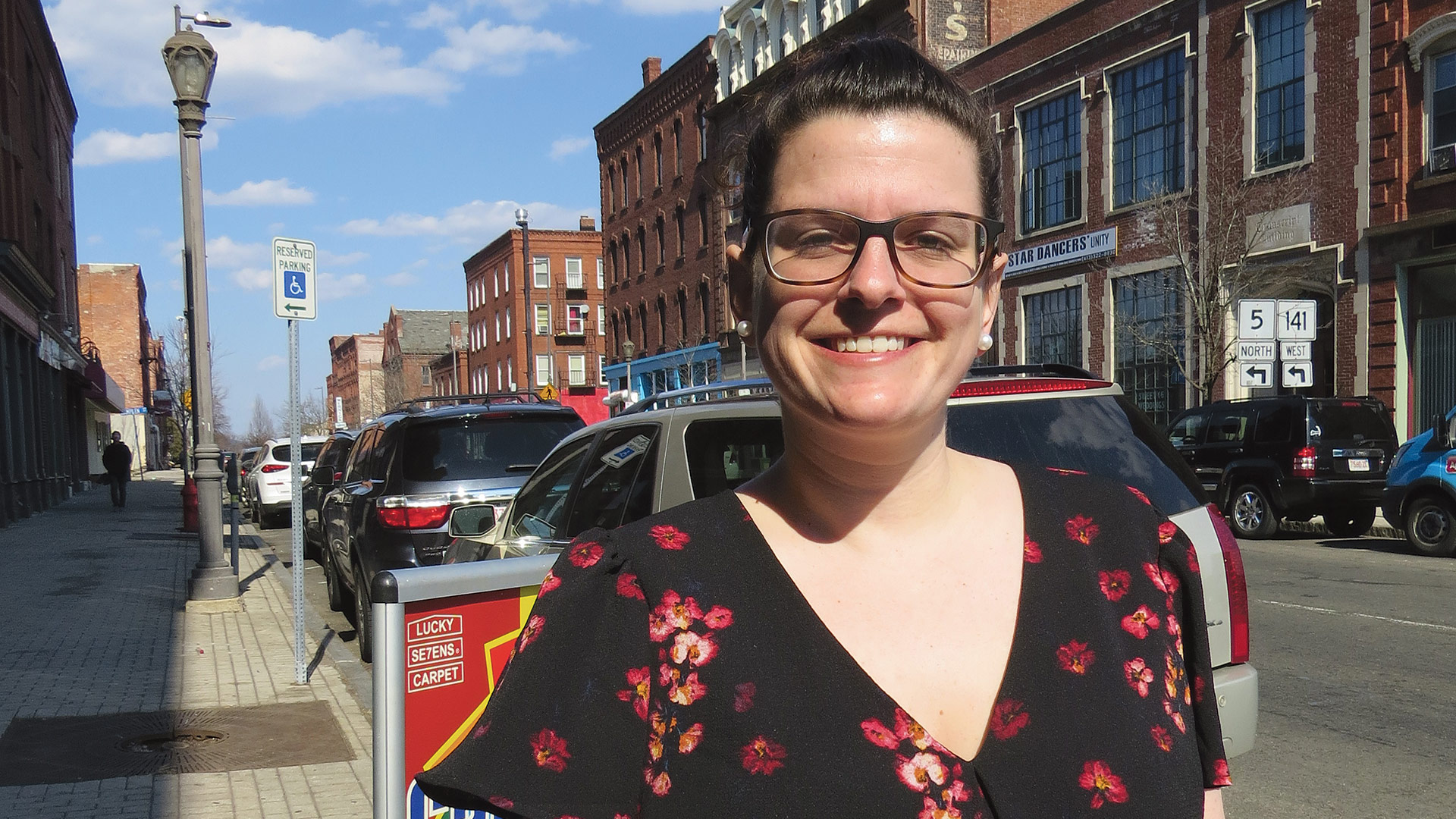
Tessa Murphy-Romboletti, executive director EforAll, Alex Morse, was encouraged by the progress being made in her hometown, and wanted to play a bigger role in those efforts.

Tessa Murphy-Romboletti, executive director EforAll, Alex Morse, was encouraged by the progress being made in her hometown, and wanted to play a bigger role in those efforts.

Like the better-known Valley Venture Mentors, SPARK EforAll Holyoke features mentoring, accelerator programs, pitch contests, and other forms of programming to help participants take an idea and eventually transform it into a business — while also helping them avoid many of the mistakes that turn businesses into casualties, said Tessa Murphy-Romboletti, the agency’s executive director. But its work generally involves a different constituency.

“The people we’re working with … they’re not necessarily making the next big mobile app or finding a cure for cancer — although they might be,” she explained. “They may just be running a cleaning business, but that’s feeding their families. Being able to work with people who may have never considered themselves entrepreneurs, and being able to show them that they’re able to do that, I think that’s what makes us unique.”

As for Russell and Stuckey, they became part of the accelerator class at SPARK EforAll Holyoke that graduated late last month during ceremonies at Wistariahust Museum, a fitting location because it was the home of William Skinner, one of Holyoke’s most noted and inspirational entrepreneurs.

“The people we’re working with … they’re not necessarily making the next big mobile app or finding a cure for cancer — although they might be. They may just be running a cleaning business, but that’s feeding their families. Being able to work with people who may have never considered themselves entrepreneurs, and being able to show them that they’re able to do that, I think that’s what makes us unique.”

Their mentors helped persuade them that making Everything Sauce shouldn’t be one small aspect of their venture — it should be the main focus. And they followed that advice, securing space in a commercial kitchen (Cornucopia Foods in Northampton) to scale up production, a process that is ongoing; you can now buy a bottle (price tag: $12) at Cornucopia or Crispy’s Wings-N-Fish in Springfield.

“When we came to SPARK EforAll, they really helped us organize ourselves and focus more on our sauce,” Russell explained, adding that the partners had several products and services, ranging from a 40-day cleanse to a seven-day challenge, but their mentors narrowed the company’s focus to something scalable and something it could sell.

In entrepreneurship circles, they call this a pivot, said Murphy-Romboletti, adding that such moves are usually vital to shaping a developing concept into a growing business.

And there was a lot of pivoting going on with the latest accelerator class, she noted, adding that it included eight companies, four of which split $5,000 in prize money to help take their ventures to the next step.

For this issue, BusinessWest talked with the entrepreneurs behind those prize-winning ventures to gain some perspective on SPARK Efor All and its growing impact within the region’s entrepreneurial infrastructure. Those companies came away from the ceremonies with one of those large ceremonial checks, but the reality is that they won much more than that — specifically a better road map for taking their business on the path to success.

Positive Steps

Alex Sandana told BusinessWest that he had aspirations to be a professional dancer while growing up. But his family was sternly tested by the expensive classes and training it would take to make that dream reality.

So he can certainly relate to the young people he’s now giving lessons to in a studio on High Street in Holyoke he calls Star Dancers Unity.

He opened it in 2013, and, like most people in business for any length of time, said his experience has been a roller-coaster ride — meaning both ups and downs.

Alex Sandana with some of his students at Star Dancers Unity.

Alex Sandana with some of his students at Star Dancers Unity.

Things have become somewhat less turbulent since he became involved with SPARK EforAll Holyoke, a step he wishes he had taken much sooner.

“I got into this knowing … zero,” he recalled. “I had an idea of what I was getting myself into, and I knew that Holyoke needed a place where kids could be themselves and not be burdened by the high tuition that other dance studios charge. But I never had any experience in business; I was learning as I was going.

EforAll has helped him expand the portfolio, if you will, serving not just young people, but also providing lessons, and choreography, for weddings and quinceañeras, the fiestas staged for girls turning 15 — that Latin equivalent of the sweet-16 party.

“I was able, with the help of my mentors, to identify other ways to generate revenue,” said Saldana, adding that this more-diversified business has much greater growth potential.

Helping business owners execute such changes and key pivots is essentially the mission statement at SPARK EforAll Holyoke, said Murphy-Romboletti, 29, who worked for several years as the executive assistant, scheduler, and press secretary for Holyoke Mayor Alex Morse, who coaxed her into returning to her hometown after she relocated to Brooklyn, feeling, as many young people did and still do, that she had to leave this area to find what she was looking for.

As she explained how she took the reins at the small agency, she said she watched as many of Morse’s initiatives in the broad realm of economic development — from promotion of the arts to development of an innovation district to programs to inspire and support entrepreneurship — began to change the landscape.

And she decided she wanted to be part of it.

“A position opened up in planning and economic development,” she recalled. “I loved working with the business owners in our community, and there were so many cool projects happening, especially in the downtown, so it seemed like a natural next step.”

One that led to another step when the directorship of SPARK came open. That provided an opportunity to work on a project she helped get off the ground while working in the mayor’s office.

“I loved working with the business owners in our community, and there were so many cool projects happening, especially in the downtown, so it seemed like a natural next step.”

“I was able, through my job at City Hall, to be there for the early planning stages for SPARK,” she recalled, noting that the initiative was funded through a Working Cities Challenge grant. “I loved it; I thought, ‘what an awesome opportunity to create an entrepreneurship program that’s inclusive and empowering and not your typical accelerator.’”

Those sentiments help explain why and how SPARK came to merge with EforAll. Holyoke’s demographics are similar to those in other cities it serves — 51% of its residents are Hispanic, and 9% of its businesses are owned by Latinos — and there is a need for services to help that latter number rise. Meanwhile, EforAll had an established model generating measurable results in other communities.

Getting Down to Business

Thus, she now leads what amounts to the latest in a series of expansion efforts for EforAll, which, after being launched in Lowell-Lawrence, has subsequently added offices in New Bedford, Fall River, Lynn, and Hyannis (an office that serves the entire Cape), as well as Holyoke.

The business model for the agency — launched under UMass Lowell with initial funding from the Deshpande Foundation and known originally as the Merrimack Valley Sandbox — involves working in communities, and with individuals, who are generally underserved, at least when it comes to initiatives within the broad realm of entrepreneurship.

“Generally speaking, this means immigrants, people of color, women, those who are unemployed, veterans, people returning from incarceration … those are the kinds of communities we look for,” Parker explained. “And we want to encourage people with ideas for businesses — we don’t give them ideas — to come to our programs, share their ideas, and see if we can help them get those businesses started.”

There are a number of measures for success, he said, including the number of businesses launched (both for-profit and nonprofit in nature), jobs, sales, and the capital raised for those ventures, he went on, adding that there have been a number of success stories as well.

The one cited most often is that of Danaris Mazara, who came to this country from the Dominican Republic at age 22.

Parker, who has told the story often, said that, after her husband was laid off from his job and the family began to struggle, Mazara took food stamps her mother gave her to buy groceries and instead bought ingredients for flan, a popular Dominican dessert. She made enough to sell to her co-workers and friends and made $500 in a few weeks.

Fast-forwarding a little, Parker said EforAll helped her move the flan operation out of her home and into a commercial bakery that she now owns by helping her secure a loan. It also assisted with product lines, pricing, and other aspects of the business. Today, she has 13 employees and is already looking for a larger bakery.

The EforAll model itself is scalable, said Parker, adding that the agency is certainly in an expansion mode. Indeed, now that it has shown that its formula for bolstering a community’s entrepreneurial ecosystem works in several Bay State cities, EforAll is ready to embark on expansion into other areas of the country.

“We hope to announce new EforAll programs in other states within this year,” he told BusinessWest, adding that the goal is to have another four sites by the end of this year, another six by the end of 2020, and perhaps as many as 50 in the years to come.

Julie Molianny and Rashad Ali, who launched Cantina Curbside Grill, a food truck featuring Latin fusion items, aspire to open a brick-and-mortar restaurant in the future.

Julie Molianny and Rashad Ali, who launched Cantina Curbside Grill, a food truck featuring Latin fusion items, aspire to open a brick-and-mortar restaurant in the future.

Meanwhile, in Holyoke, SPARK EforAll is getting set to open co-working space in a building on High Street — the doors will likely open in May — and thus take its mission to a still-higher level. Funded by a MassDevelopment Collaborative Workspace grant, the 1,500-square-foot facility has a large room that can accommodate perhaps 20 desks and several smaller cubicle-like areas, said Murphy-Romboletti, adding that there is obvious need for such space in Holyoke, and she expects that it will be well-received.

At the same time, the agency’s mentoring and accelerator programs are helping a number of entrepreneurs and aspiring entrepreneurs move their concepts forward.

The 12 weeks of classes — two classes a week — are “intense,” Murphy-Romboletti, adding that each company is assigned a team of three mentors that act as an advisory panel.

“These entrepreneurs are deeply immersed in this process,” she explained. “We’re helping people navigate the challenges in front of them and do their business right.”

Spicing Things Up

People like Julie Molianny and Rashad Ali, who launched Cantina Curbside Grill, a food truck featuring Latin fusion items such as tacos, burritos, quesadillas, and more.

They started slowly in 2017, said Molianny, focusing on events on area college campuses and farmers’ markets. But the truck will soon shift into a higher gear, figuratively, she noted, adding that later this month it will be parked Monday through Friday at a still-to-be-determined location near Springfield’s riverfront.

Down the road, and probably not far down, the partners want to add a trailer to the lineup so they can handle bigger events, she said, adding that the ultimate goal is to have a brick-and-mortar restaurant.

EforAll has helped the two with the accounting and pricing sides of the ledger, said Ali, and also with focusing on not only the big picture — what’s in the business plan — but also myriad day-to-day issues involved with running a business.

“The hardest part is keeping tabs on everything, crossing all the T’s and doting all the I’s, staying on top of taxes and everything else,” he said, adding that the accelerator classes have helped the partners stay focused and organized.

Specifically, that means focused on the best options for stability and growth moving forward, which brings us back to Russell, Stuckey, and Everything Sauce, which is just one bullet point in their ever-changing business plan.

Indeed, the partners also have plans to put a food truck on the road, one that would offer what they called “plant-based alternatives,” and operate what might be considered non-typical hours.

“We want to specifically focus on food after 9 p.m., because after that hour, most eateries in this area are closed,” said Stuckey. “And what is open … let’s just say there aren’t many alternatives for healthy eating; we intend to change that.”

In the meantime, they intend to scale up their sauce. They’ve moved from a few gallons at a time in their home to four or five gallons at Cornucopia, which they found with the help of SPARK EforAll, and aspire to production runs of perhaps 200 gallons or more, perhaps at the Western Mass. Food Processing Center in Greenfield, which they also found with help from their mentors.

These mentors are entrepreneurs themselves, said Murphy-Romboletti, meaning they’ve been on the roller coaster themselves and have real-world experiences that translate into sage advice about if and how to take an idea from scratchings on a table napkin to Main Street, or High Street, as the case may be.

From left, Marcos Mateo, his mother, Madeline, and Abiel Alvarado, look to open their auto-service business in June.

From left, Marcos Mateo, his mother, Madeline, and Abiel Alvarado, look to open their auto-service business in June.

That was the case with Abiel Alvarado, his girlfriend, Madeline Mateo, and her son, Marcos Mateo. The three are going into business together, in a venture called Mateo Auto Sales, which has an interesting backstory.

Indeed, Alvarado was in the auto sales and service business in Puerto Rico, and essentially saw that business, and his life, turned upside down by Hurricane Maria. He relocated to Holyoke, where he met Madeline and expressed his desire to soon get back into business for himself. Looking for some help and direction, Madeline went to City Hall, and was soon redirected to the Chamber of Commerce and eventually SPARK EforAll Holyoke.

The three partners applied to, and eventually became part of, the latest accelerator class. Marcos Mateo told BusinessWest they’ve received many different kinds of support for their mentors.

“They provided a lot of guidance,” he said. “They lined everything up, they showed us exactly what we should be focusing on; our mentors helped us with identifying where to go and how to find information.

“We’re not just guessing and having to waste our time doing research,” he went on. “Every class was full of information we needed.”

In Good Company

Alvarado and the Mateos are currently in lease negotiations on a building, and hope to be open for business in June.

After that, they’ll begin what will likely be a roller-coaster ride, something all entrepreneurs endure. With the accelerator behind them and quarterly meetings with their mentors to continue for at least the next year, maybe the ride won’t be particularly wild or feature many significant dips.

Helping create a smoother ride is what SPARK EforAll Holyoke is all about. Its accelerator programs and other initiatives are unique when it comes to the constituency being served, but similar to others in that its mission is to open doors to business ownership and the opportunities it creates.

And that’s why these services are pivotal, in every sense of that word.

George O’Brien can be reached at [email protected]

Architecture Construction

Designs on Growth

As one local architect noted, we’re far enough away from the last recession to start worrying about the next one — and recessions tend to hit this sector particularly hard. Still, despite mixed signals in the long-term economic picture nationally, work remains steady locally, with municipalities, colleges, and businesses of all kinds continuing to invest in capital projects. Even if storm clouds do appear down the road, the 2019 outlook in architecture seems bright.

Curtis Edgin put it in simple terms when asked how 2019 is shaping up in the architecture sector.

“We’re busy; I can’t complain,” he told BusinessWest. Those five words sum up a strong outlook in an industry that tends to be a leading indicator for the economy as a whole — when things slow down, construction, finance, and other areas tend to follow — and is currently trending up, or at least holding steady.

“We’re far from the last recession — maybe far enough to worry about the next one,” said Edgin, a principal with Caolo & Bieniek Associates (CBA) in Chicopee. “But I don’t see that coming yet, looking at our workload.”

The American Institute of Architects (AIA) reports a similar outlook, with architecture firm billings nationally strengthening to a level not seen in the previous 12 months. Indicators of work in the pipeline, including inquiries into new projects and the value of new design contracts, also improved in January.

“The government shutdown affected architecture firms but doesn’t appear to have created a slowdown in the profession,” AIA Chief Economist Kermit Baker noted. “While AIA did hear from a few firms that were experiencing significant cash-flow issues due to the shutdown, the data suggests that the majority of firms had no long-term impact.”

Broken down by region, the Northeast is performing better than the West, but slightly trailing the South (which continues to rebuild from a rough 2018 hurricane season) and the Midwest. Nationally, billings softened slightly in February from the January pace, but remain strong in the big-picture sense, Baker said. “Overall, business conditions at architecture firms across the country have remained generally healthy.”

Curtis Edgin says specializing in a range of diverse niches is a plus for any firm

Curtis Edgin says specializing in a range of diverse niches is a plus for any firm, serving as a buffer against a downturn in any one area.

Jonathan Salvon, a principal with Kuhn Riddle Architects in Amherst, reports strong business as well, especially in the education realm, traditionally a strength for the firm, with projects for UMass and a historic-renovation conversion project for Elms College.

“Then there’s a mix of multi-family housing and commercial projects,” he told BusinessWest. “We’ve got a new office building for Way Finders going up on the old Peter Pan site in Springfield, which is our biggest commercial project at the moment. And there’s a 36-unit, multi-family housing project going up on University Drive in Amherst.”

Caolo & Bieniek, known for its wide range of public projects, from schools to fire and police stations, has expanded its base of private projects since merging with Reinhardt Associates in 2017.

“It’s been kind of a good synergy. We’ve blended our strengths and their strengths,” Edgin said, noting that one example is the recently completed Baystate Health & Wellness Center on the Longmeadow-East Longmeadow line, as Reinhardt has a solid history in medical office buildings.

“E-commerce has been growing at about three times the rate of traditional brick-and-mortar sales. The slowdown in housing hasn’t helped, as new residential development often spurs new retail construction activity. Instead, larger shares of investment in these facilities is going to the renovation of existing buildings.”

Other recent CBA projects recently started or well underway include a senior center in West Boylston, a police station in Williamstown, a public-safety complex in Lenox, a renovation of Chicopee’s public-safety facility, a pre-K to grade-8 school in Easthampton, and some work with UMass Amherst, Westfield State University, and other colleges.

“There’s a good mix of private and public, and we seem to be doing a fair amount of work with human-services agencies,” Edgin added, noting that the firm just did a project for Guidewire in Chicopee, and Sunshine Village in the city has also been a consistent client. “We seem to have a bit going in that sector right now. We’re busy, and it’s a good mix all around.”

Strong Pace, but Red Flags

The AIA suggests that growth in architecture should continue at least through 2020, but a number of emerging red flags suggest a cautious outlook.

Spending on non-residential buildings nationally is projected to grow by 4.4% this year, paced by healthy gains in the industrial and institutional building sectors, it notes. For 2020, growth is projected to slow to 2.4%, with essentially no increase in spending on commercial facilities, but gains in the 3% range in the industrial and institutional categories.

“Still,” Baker said, “there is growing concern inside and outside of the industry that a broader economic downturn may be materializing over the next 12 to 24 months.”

Nationally, growth in gross domestic product is estimated to be close to 3% in 2019, while the job market continues to be healthy, with more than 2.6 million net new payroll jobs added in 2018, an improvement over 2017’s figure of just under 2.2 million. In fact, the national unemployment rate was below 4% for most of 2018. Consumer-sentiment levels remained strong, and the nation’s factories also were busy, with industrial output achieving its strongest growth in almost a decade.

Jonathan Salvon says one of his firm’s three ‘legs,’ residential work, has been impacted by a slowdown in single-family construction

Jonathan Salvon says one of his firm’s three ‘legs,’ residential work, has been impacted by a slowdown in single-family construction over the past decade, but a rising portfolio of multi-family projects has picked up the slack.

However, there are several signals that point to an emerging slowdown in the broader economy, and therefore in the construction sector, Baker noted. These include declines in leading economic indicators, weakness in some key sectors of the economy, and softness in the markets of major U.S. trading partners. “These signals may be temporary responses to negative short-term conditions, but historically they have preceded a more widespread downturn.”

Meanwhile, since dropping sharply during the Great Recession, housing starts have had a very slow recovery, the AIA notes, and Salvon can attest to that reality locally. But Kuhn Riddle has adjusted in other ways.

“We’ve always been a stool with three legs,” he said. “One-third is work for various colleges, charter schools, prep schools, secondary schools, and even some day cares — we run the whole gamut in education. The second third is residential work; in the past, before the 2009 recession, that was often single-family residences. That market has never really come back, at least for us. But we’ve been lucky to develop a new market in multi-family projects.”

The third leg is a variety of commercial projects, including office buildings, restaurants, and bank renovations, to name a few, Salvon said.

“Hopefully we all stay busy. But we do know it goes in cycles; we’ve been through plenty of slower times and a lot of boom times. But we’ve been very blessed. We’re pretty busy and hope to stay that way.”

Nationally, Baker sees design work on the commercial front as a bit of a mixed bag at the moment.

“Business investments often reflect what corporate leaders feel is the growth potential for their companies. Investment nationally in new plants and equipment saw healthy growth in 2017 and through the first half of 2018, but slowed significantly beginning in the third quarter of last year,” he noted. “Given the recent trends in business-confidence scores, investment is unlikely to accelerate anytime soon. Business confidence fell sharply through 2018, with the fourth quarter showing the lowest levels in six years.”

In the Bay State, the picture is equally muddy. The Business Confidence Index issued monthly by Associated Industries of Massachusetts (AIM) reported a gain in February after dropping in January to its lowest level in more than two years.

“Employers remain generally optimistic about a state economy that continues to run at full-employment levels and a U.S. economy that is projected to grow by 2.2% this year,” said Raymond Torto, Chair of AIM’s Board of Economic Advisors and a lecturer at the Harvard Graduate School of Design. “At the same time, the erosion of confidence among Massachusetts manufacturers during the past 12 months raises some concern about the long-term sustainability of the recovery.”

On a sector-by-sector basis, Baker reported, design work for retail facilities continues to suffer from the growth on online shopping.

“E-commerce has been growing at about three times the rate of traditional brick-and-mortar sales. The slowdown in housing hasn’t helped, as new residential development often spurs new retail construction activity,” he noted. “Instead, larger shares of investment in these facilities is going to the renovation of existing buildings.”

On the other hand, office projects represent the strongest commercial sector in construction right now, with 5% growth projected for this year and 1% in 2020. “This sector has benefited from strong job growth and the apparent bottoming out of the years-long decline in office space per employee,” Baker said. “Much of the increase has come from the booming technology sector, so the outlook is dependent on continued growth in this industry sector.”

Meanwhile, eds and meds — or education and healthcare, two pillars of the Western Mass. economy — represent very healthy sectors nationally for architects and general contractors. AIA projects 5.5% in the education sector this year and an additional 4% in 2020, and 4% growth in healthcare in 2019 followed by 3.6% in 2020. 

“We’re pretty diversified and active in a lot of different environments,” Edgin said. “It’s not just schools, not just police stations, not just fire stations, but a little bit of everything.” He cited the recent renovation of Polish National Credit Union’s Front Street branch in Chicopee, as well as a new Arrha Credit Union branch in West Springfield and a project with the Boys and Girls Club of West Springfield. “A lot of things take a while, so it’s that advance planning that keeps you busy a year or two from now.”

Leading Indicator

Baker reported that business conditions at U.S. architecture firms in 2018, as measured by AIA’s Architecture Billings Index (ABI), were essentially unchanged from 2017.

“Since the ABI has been shown to lead construction spending by an average of nine to 12 months, this would suggest that the growth in spending on non-residential buildings in 2019 should be close to the growth rate of 2018,” he noted. “Additionally, new design contracts coming into architecture firms grew at a healthy pace in 2018, underscoring the robust level of backlogs currently enjoyed by most firms.”

Meanwhile, Dodge Data & Analytics recently released its 2019 Dodge Construction Outlook, which predicted that total U.S. construction starts for 2019 will be $808 billion, staying essentially even with the $807 billion estimated for 2018.

“There are, of course, mounting headwinds affecting construction, namely rising interest rates and higher material costs, but for now these have been balanced by the stronger growth for the U.S. economy, some easing of bank lending standards, still-healthy market fundamentals for commercial real estate, and greater state financing for school construction and enhanced federal funding for public works,” said Robert Murray, chief economist for Dodge Data & Analytics.

Locally, both architects and builders are maintaining the same sort of cautious optimism, at least in the short term.

“Right now, it’s strong,” Edgin said. “We’ve increased our staffing.”

Finding talented staff remains a challenge, he said, because strong growth among architecture firms in general means stiff competition, and Greater Springfield isn’t always a top destination for young professionals in the field compared to, say, Boston or New York, where pay scales are higher (but, of course, so is the cost of living).

Salvon understands that reality as well, but said Kuhn Riddle has benefited from its location in downtown Amherst, where it has easy access to the UMass architecture program. “We’ve been a little spoiled — we’ve been privileged to get some employees out of that program over the last decade or so, and we’ve tried to make a nice work environment, so people been staying here.”

All things considered, he told BusinessWest, the outlook seems strong in architecture locally, and others agree.

“We’ve been able to build some good staff and a good team, so we’re happy about that,” Edgin said. “Hopefully we all stay busy. But we do know it goes in cycles; we’ve been through plenty of slower times and a lot of boom times. But we’ve been very blessed. We’re pretty busy and hope to stay that way.”

Joseph Bednar can be reached at [email protected]

Estate Planning

Preparing for the Next Stage

By Barbara Trombley, MBA, CPA, CDFA

Life — and business — can shift in unexpected ways, and an ownership transition can sneak up on even someone who expected to be at the reins for a long time. That’s why it’s good to start preparing for that possibility well in advance.

A succession plan is a vital part of a small business.

Most small businesses were built from the ground up, with a dedicated founder and owner, and it may be very hard for the owner to consider a succession plan. But retirement — or worse, sudden illness or death — can creep up on an owner and create havoc. Without a solid plan, a family may suddenly lose their income or the inheritance that was counted on, or the business may cease to exist.

“Many succession plans are not carefully planned out or are devised as a result of health event. A good succession plan is made when the owner can think rationally and formally devise a sort of buy-sell agreement.”

My personal experience with a succession plan is based on our financial- planning business. My father-in-law did what quite a few financial planners do. He brought my husband (his son) and myself into his business a few years before he retired. My mother-in-law had a bad health scare, and he could see that his years in the business were numbered.

In our case, my husband and I were good candidates to take over the family financial-planning business. We were both graduates of Duke University; I was a CPA, and my husband had recently retired from a first career in major-league baseball. We had the backgrounds and were ready to assume the responsibility of maintaining and growing the business that he started.

The transition wasn’t easy; my father-in-law’s mind knew that it was the best course of actions for his clients, but his heart wasn’t ready to leave. In hindsight, it was a great decision, because his health deteriorated quickly after we took over, and he passed away three years ago.

Many succession plans are not carefully planned out or are devised as a result of a health event. A good succession plan is made when the owner can think rationally and formally devise a sort of buy-sell agreement.

The buy-sell agreement is a legally binding contract that says what will happen if the owner passes away, falls ill, or wants to retire. It will formalize information like the company sales price, the value of each share in the business, and how the sale of the company could be funded.


Barbara Trombley

Barbara Trombley

“Many buy-sell agreements are funded with life insurance; the company or the individual co-owners buy policies on the other co-owners that allow them to buy shares in the company using the proceeds from the insurance after the owner or shareholder’s death.”


Perhaps the simplest example of a buy-sell agreement is if there is more than one owner. The agreement will state that the co-owners can purchase each other’s shares in the event the buy-sell agreement is triggered.

Many buy-sell agreements are funded with life insurance; the company or the individual co-owners buy policies on the other co-owners that allow them to buy shares in the company using the proceeds from the insurance after the owner or shareholder’s death. A term policy is often more inexpensive, but a permanent policy may be more suitable for a longer period of time.

What if you are the only owner? What makes a good succession plan?

A good succession plan will consider the human-resources side of the transition as well as the financial aspects. Do you want to keep the business in the family? Are your family members qualified and knowledgeable about your business? Do they desire and have the heart to keep your business going? Will you choose certain family members over others?

Most businesses do better with a single overall successor as opposed to splitting ownership of the business. It may be possible to appoint different heirs to manage separate departments. Many small-business owners assume their children want to take over. We have heard many stories about family in-fighting or entitled heirs assuming roles that they are not prepared for. Many a business has suffered or failed after a leadership change; a good succession plan will look with an objective view at different family relationships.

Another option to a family succession plan would be to have a key employee buy the business.

The buy-sell agreement could be executed over time, giving the other employees and customers time to get used to the idea, or it can be triggered by an event such as an illness or death of the owner. Of course, not many employees have the funds to purchase a company.

One idea would be to provide seller financing. A loan from the owner to the buyer could provide a stream of income to the owner as he enters retirement. Another option would be outside financing. This would be the best course if the owner desires his funds up front.

In our financial-planning business, we are constantly urged to set up a succession plan. This is mainly to ensure that a properly licensed advisor can quickly service our clients in the event of the death or disability of myself and my husband. Our plan is to set up a buy-sell agreement with another financial advisor that would be triggered in an emergency but fully changeable in case one of our qualified children would like to take over the business for a third generation.

Taking the time to consider the human-resource angle as well as the financial angle can ensure an agreement that is beneficial to all parties involved and ensure the business you have built will last for a long time.

Barbara Trombley, MBA, CPA, CDFA is an LPL financial planner with Trombley Associates Investment and Retirement Planning in Wilbraham; securities offered through LPL Financial; member FINRA/SIPC. The opinions voiced in this material are for general information only and are not intended to provide specific advice or recommendations for any individual. Trombley Associates and LPL Financial do not provide legal advice or services. Consult your legal advisor regarding your specific situation.

Law

A Sometimes Fine Line

By Marylou Fabbo, Esq.

There’s no doubt the #MeToo movement has brought positive change to the business world by creating a safer environment for women (and men) to come forward with accounts of sexual harassment. But what if the claims aren’t true, either because they don’t rise to the legal definition of harassment or they’re completely fabricated? The damage, to both individual and company reputations, can be significant.

Make no mistake. Subjecting an employee to sexual harassment in the workplace, at a company-sponsored event, or on a business trip is unacceptable and should be punished.

#MeToo has had a strong, positive impact on encouraging victims to come forward with valid claims that had been unreported or overlooked. Everyone who complains of sexual harassment should be heard, but should everyone be believed? Most people — men and women — are not sexual abusers, and yet most individuals would say they have experienced some form of sexual misconduct. Most also would agree that some sexual behavior, such as grabbing a co-worker’s breast, exposing oneself to another employee, or telling an employee that he or she will get a promotion if he or she sleeps with the boss are clear-cut cases of sexual harassment.

Marylou Fabbo, Esq

Still, even if sexual comments or behaviors are inappropriate for the workplace, not everything of a sexual nature rises to the level of illegal sexual harassment under the law. This leaves the door open to unfounded and/or, in some cases, intentionally false claims, which can have a damaging impact on company image and the accused person’s professional and personal life.

Sexual Harassment Defined

Title VII and Massachusetts law prohibit sex discrimination in the workplace, and sexual harassment is a form of sex discrimination. The harasser and the victim of sexual harassment can be the same or opposite gender and have the same or different sexual orientations.

Although this article addresses sexual harassment in the workplace, sexual harassment is also prohibited in places of public accommodation, educational facilities, and housing.

“Even if sexual comments or behaviors are inappropriate for the workplace, not everything of a sexual nature rises to the level of illegal sexual harassment under the law.”

There are two types of sexual harassment: ‘quid pro quo’ harassment and ‘hostile work environment’ harassment. Quid pro quo harassment includes sexual advances, requests for sexual favors, and other verbal or physical conduct of a sexual nature when a term of employment or employment decision depends on whether an employee accepts or rejects those advances.

Many of the accusations asserted against producer Harvey Weinstein fall into the quid pro quo category. Actors have come forward stating that Weinstein promised them career advances in exchange for a positive response to his sexual advances; they also have stated that Weinstein failed to help them out if they chose not to meet his sexual demands. That’s unambiguous quid pro quo harassment.

In Massachusetts, employers are strictly liable for quid pro quo harassment, which means the business is on the hook for damages even if it did not know about the harassment.

The other type of sexual harassment is hostile work environment sexual harassment. Under Massachusetts law, illegal sexual harassment occurs when “requests for sexual favors and other verbal or physical conduct of a sexual nature unreasonably interferes with an individual’s work performance by creating an intimidating, hostile, humiliating, or sexually offensive work environment.”

Complaints about Matt Lauer and Charlie Rose’s actions fall into the sexually hostile work environment category. Lauer is accused of exposing himself to staff, and the accusations against Rose included making lewd phone calls and groping women’s breasts. In both cases, the individuals’ employers have been accused of knowing about the harassment and doing little to stop it.

Subjective and Objectively Offensive

An employee who is offended by sexual behavior may file a claim of harassment with the Mass. Commission Against Discrimination (MCAD), believing that the actions were illegal simply because they were of a sexual nature.

However, to constitute illegal sexual harassment in the workplace, the behavior must be offensive both to the recipient and the general public. Ask yourself this question: if an employee shows co-workers vacation pictures on his phone that include friends in bikinis, is that sexual harassment? What about the long-term manager who refers to women as ‘girls,’ gives hugs occasionally, and makes jokes about the lack of sex in his long-term marriage?

Some may find those comments and actions offensive, and others may not. Is the manager just ‘old school’? If an employee subjectively perceives the behavior as hostile, intimidating, humiliating, or offensive, then the conduct may constitute sexual harassment. But that’s not enough — the question becomes whether a reasonable person in the employee’s position would find the conduct offensive.

“To constitute illegal sexual harassment in the workplace, the behavior must be offensive both to the recipient and the general public.”

Conduct of a sexual nature also must be unwelcome in order to constitute illegal sexual harassment, but it is almost impossible to be absolutely sure whether the conduct is welcome or unwelcome. The fact that an employee appears to be a willing participant in sexual discussions about weekend conquests may suggest that the employee was not opposed to the sexual discussions by the water cooler on Monday mornings. Yet, the employee may have actually been cringing on the inside.

Under the law, even if an employee makes sexual comments or jokes, or engages in sexual conduct, those actions do not automatically mean that all behavior is welcome. A disgruntled employee who appeared to be a willing participant may later claim that behavior that was welcome was in fact unwelcome.

Nimrod Reitman, a former NYU graduate student, accused his school adviser, Avita Ronell, of sexually harassing him over a three-year period. He claimed that she referred to him in e-mails by names such as “my most adored one” and “sweet cuddly baby,” and kissed and touched him repeatedly and required him to lie in her bed, among other things. Ronell did not deny the behavior but denied the harassment and claimed that the behavior had been welcomed.

While that case doesn’t arise in the employment context, it provides an example of one reason employers should implement zero-tolerance policies when it comes to sexual banter in the workplace. What may have been considered welcome sexual commentary or behavior may have actually have been unwelcome and could subject them to a lawsuit.

False Accusations of Sexual Harassment

Why would one make a false accusation of having been sexually harassed at work? It cannot be disputed that some people fabricate claims of sexual harassment in the workplace because alleged victims have admitted to making up allegations against co-workers or management for many different reasons.

In some cases, sexual-harassment claims may be made to ward off terminations because employers are fearful of being accused of illegal retaliation if they take (warranted) disciplinary action after an employee has come forward with a sexual-harassment complaint. Disgruntled employees have been found to have made false accusations against someone they believe is responsible for an adverse personnel action the employee received, such as a demotion or termination from employment.

Employees have admitted that they have intentionally made sexual-harassment complaints against co-workers for vindictive reasons or for attention.

Unfortunately, it is often difficult to determine whether specific allegations are true or false, as there usually are no witnesses or hard evidence. Because of this, businesses may overreact or react harshly without having all of the facts.

Nev Shulman, star of MTV’s Catfish, was accused of sexual assault. He denied the claims, but the show was suspended anyway. Upon a later investigation, the claims were deemed not credible, and the show was reinstated. A Sacred Heart University student falsely reported having been raped by two school football players and has since faced criminal charges. The leader of the New York City Ballet was accused of sexual harassment and retired. He was later cleared of any wrongdoing.

Collateral damage follows baseless accusations of sexual harassment. Valid harassment claims are devalued and may be looked upon skeptically. When it becomes known that an accusation was false, it raises the possibility in individual’s minds that the next allegation of a similar nature may also not be credible.

Being falsely accused of sexual harassment is also a downfall to the accused’s career. Prior to having their names cleared, alleged harassers may quit or be required to resign, and they sometimes remain under suspicion even after the complaint is found to have been fabricated. The fact that a sexual harassment lawsuit has been filed against a company may be covered in the media, but when, years later, it is dismissed by the court before it gets to the jury stage because the case is without factual support, that information often is not made available to the public — perhaps forever leaving a bad mark on the employer in the eyes of its customers as well as employees. u

Marylou Fabbo is an attorney with Skoler, Abbott & Presser, P.C., one of the largest law firms in New England exclusively practicing labor and employment law. She specializes in employment litigation, immigration, wage-and-hour compliance, and leaves of absence. Fabbo devotes much of her practice to defending employers in state and federal courts and administrative agencies. She also regularly assists her clients with day-to-day employment issues, including disciplinary matters, leave management, and compliance; (413) 737-4753; [email protected]

Technology

Pipeline to Progress

When the Massachusetts Clean Energy Center released a study last fall examining potential locations for water-technology demonstration centers in Massachusetts — thus raising the Bay State’s profile and potential in the increasingly critical field of water supply, treatment, and sustainability — UMass Amherst was a natural choice, because it’s been making connections between water research and industry for some time. A host of key stakeholders believe it can become even more so in the decades to come.

Talk to experts in the broad realm of water technology innovation, and it doesn’t take long for Israel to come up, at least in terms of government investment.

It’s not exactly by choice.

“There are countries facing severe water issues right now,” said Loren Walker, director of the Office of Research Development at UMass Amherst. “Israel is the world leader in terms of state-led efforts to purify water — because they have to. They have a real water-constraint situation there.”

But several entities in the Bay State — from the university to the Massachusetts Clean Energy Center (MassCEC) to a host of industry players, both established companies and startups — are intrigued by the potential to make Massachusetts an international leader in water innovation as well. And they’ve got plenty of progress to build on already.

“It’s obviously a big area — there’s a water crisis around the country, around the world, and it will be more critical as the years go on, so there’s a need to innovate ways to treat water, both wastewater and surface water,” Walker told BusinessWest.

“It’s an active area of university research, an active area of industrial research,” he went on, “but there’s a gap between the kind of research the universities do — federally funded, more basic or fundamental — and technologies being developed by industry that they can ultimately commercialize and sell. There’s a gap between that fundamental research and the later applied research where you’re prototyping, scaling up, and seeing what technologies really work — and that’s where you need a pilot site. You need a way to go from fundamental laboratory research to commercial-scale research.”

UMass could be that site, he said.

Loren Walker

Loren Walker says the Amherst Wastewater Treatment plant provides UMass researchers and partnering companies a flow of wastewater on which to test new technologies.

Last fall, MassCEC released a comprehensive study that evaluates the technical and financial feasibility of three potential water-technology demonstration centers across Massachusetts, including one at UMass Amherst. Such centers, proponents say, could offer a test bed to pilot new water technologies and position Massachusetts as a global leader in the water-innovation and energy-efficiency sector, providing significant business and employment opportunities.

Rick Sullivan, president of the Western Mass. Economic Development Council, said one of the EDC’s goals is to help identify and develop sectors where Massachusetts could become a center of excellence. Back when he served as secretary of Energy and Environmental Affairs under then-Gov. Deval Patrick, he and the governor traveled to several locations, including Israel, to learn about water innovation, recognizing this was an issue of growing international concern.

“Water is just a really big issue, and becoming more important every day,” Sullivan said. “So we started asking, ‘can Massachusetts actually play in this water cluster?’ The short answer is, yes we can — because it’s already a multi-billion-dollar business in the Commonwealth.”

“It’s obviously a big area — there’s a water crisis around the country, around the world, and it will be more critical as the years go on.”

That figure includes everything from delivery systems to public-works projects; from filtering, purifying, and clarifying water to security of freshwater sources like the Quabbin Reservoir, he noted. “So it’s a bigger field than I think a lot of people realize.”

UMass Amherst has long been involved in water research. Then, in 2016, a $4.1 million grant from the U.S. Environmental Protection Agency — on the heels of a state earmark of $1.5 million from the state Department of Environmental Protection for water innovation — helped launch one of only two national research centers (the other is in Boulder, Colo.) focused on testing and demonstrating cutting-edge technologies for drinking-water systems.

All things considered, Sullivan said, UMass Amherst is an ideal spot to develop a demonstration center. A conference last October, called “Innovations and Opportunities in Water Technologies,” brought together the business and startup community, area municipal leaders who spoke about challenges to current water and wastewater systems, and UMass experts who detailed some of the cutting-edge work already being done on campus.

“At the end of the day, all of those panels and all the discussion and information kind of led back to reinforcing the idea that this is a really smart investment for the Commonwealth,” Sullivan said, noting that the investment to create the three centers was approved as part of the state’s 2014 environmental bond bill, but has not yet been appropriated in the state budget.

“When you talk to the companies that are in the innovation sector, one of the biggest needs they have is to be able to take their product and demonstrate that it works in real life — and to be able to do that not just in a lab, but out there in the real world,” he continued. “UMass has the ability to provide that infrastructure with some investment from the Commonwealth.”

In the Flow

The MassCEC study analyzed the technical and financial feasibility of three potential water-technology demonstration centers around the state: the so-called Wastewater Pilot Plant at UMass Amherst, the Massachusetts Alternative Septic System Test Center in Barnstable, and the Massachusetts Water Resources Authority’s Deer Island Treatment Plant in Boston Harbor.

Establishing this network could create jobs, lower energy costs, and optimize municipal operations in addition to supporting water-technology research, the study noted. A test-bed network could serve existing Massachusetts-based water technology companies, help attract new companies to the Commonwealth, advance new solutions to both local and global water challenges, and provide a strong foundation for innovation.

Key to UMass Amherst’s feasibility as a demonstration center is the fact that it already acts as a pilot site for industry — albeit on a limited basis — because of its access to flowing streams of municipal wastewater at the Amherst Wastewater Treatment Plant, located next to the university’s Water Energy Technology (WET) Center.

“You need flowing streams of municipal wastewater and surface water; you need to have access to this to test your filtration membrane or electrochemical treatment technologies, whatever they may be,” Walker said.

“Those facilities are few and far between,” he added. “But we happen to have one of just a couple facilities in the country that have some of the key attributes necessary to do some of this pilot testing — access to flowing wastewater and flowing surface-water streams, proximity to a research university, and access to stakeholders and end users.”

The issue, he said, is size and scale.

Rick Sullivan says Massachusetts can be a major player in the water cluster and, in many ways, already is.

Rick Sullivan says Massachusetts can be a major player in the water cluster and, in many ways, already is.

“We have the fundamental key attributes needed to make this kind of pilot facility, but we’re limited,” he went on. “We have bays now and already have companies using the facility to do their own research and scale up. It’s already an active space for research and development collaborations — but it gets filled up very quickly, so we would love to expand it, see even more companies come in and use this space, both established companies as well as new startups.”

The center was established in the 1970s and ran as a research pilot site for decades, but fell into disrepair in the late 1990s, he explained. Since its grant-funded renovation in 2016 as a research and collaboration space, it has hosted numerous industrial collaborators. “But it’s limited how many projects can happen in parallel. So there’s a case to be made for investing in infrastructure improvements, expansion, and modernization, do more projects in parallel.”

As an example of the kind of research being done there, Walker brought up ultrafiltration membranes — nanoscale membranes that can remove contaminants when water is forced through. One problem is that the membranes tend to get fouled up by materials in the water and eventually don’t work so well, and have to be replaced regularly, which is costly.

But Jessica Schiffman, an associate professor of Chemical Engineering at UMass Amherst, recently received a National Science Foundation grant to study the use of naturally occurring biopolymers that can be used as a nanofiber’s mat to prevent fouling in these ultrafiltration membranes, he explained. “Then you have a membrane that lasts longer and is more valuable, more efficient, and processes water more effectively.”

Then there are startups like Aclarity, whose CEO, Julie Bliss Mullen, presented at the fall conference. Her company specializes in electrochemical advanced oxidation, which is essentially using electricity to decontaminate water.

“Our faculty and students are looking for real-world problems to tackle. We’re on the research side of the equation, but the real world informs what gets done here.”

“Then there are companies developing their own technologies we don’t even know about,” Walker said. “When they get to the stage where they’ve tested it at the lab scale and they know it works at that scale, they still can’t sell it; they can’t turn it into a technology and market it to anyone until they’ve tested it at the municipal scale, and that’s where a facility like the WET Center comes in.

“We already know there’s interest here, and we have more interest than we can serve presently,” he went on. “And we’re hoping we can find ways to expand and renovate the facility so we can meet that interest.”

It’s not just companies that benefit, he added. “Our faculty and students are looking for real-world problems to tackle. We’re on the research side of the equation, but the real world informs what gets done here. So it’s a very fruitful partnership, to have our basic researchers working with companies, and companies hopefully getting some value out of the investigations we can lead, and we get a lot of value from the questions they ask, which informs the research we do here at the university.”

Current Events

One end result of all this innovation and connection, Sullivan said, is a real economic-development boost in a field that promises to become more critical over the next several decades.

“Companies these days are looking for direct ties to the university for two reasons: one, the students are graduating and they need the talent, and they also want to tie back to the research and development that’s occurring with the grad students and professors and other staff, so they can stay on the cutting edge,” he told BusinessWest.

The test-bed potential, to have a site big enough to accommodate real-life testing for more companies, only enhances that potential, he added, noting that it’s only one way UMass is leading the way in connecting scientific research with real economic development, with the core facilities at the Institute for Applied Life Sciences being another.

“It’s such a resource and economic opportunity for the region,” he said of the university as a whole, “and I think a lot of people don’t understand and appreciate the potential it has and the importance it has.”

Walker was quick to add that the state and region have been taking the water-technology issue seriously for some time. For example, the New England Water Innovation Network is a nonprofit trade group that examines the water cluster in Massachusetts — companies developing water-purification technologies, university researchers at UMass and other universities, and industry — and connects those dots to help foster collaboration and innovation that will develop technologies, attract companies interested in developing these technologies, and hopefully create more jobs and an economic boost, all while attacking a major global problem.

“So there’s a need, and it’s likely only going to grow,” he said. “UMass Amherst is going to help develop some of the solutions to solve that problem and, hopefully, in the process of doing so, create some economic opportunity for Massachusetts and Western Mass. in particular.”

While UMass is ahead of the curve, Walker noted, this isn’t an unknown area for innovation potential, and other states, like Georgia, are currently looking to develop similar pilot-scale and commercial-scale projects.

“Right now we’re in a good place. We have a lot of interest, and we have a lot of expertise here, but I think that, going forward, we’ll see a lot more competition from other states and other regions that want to get in on this game. But to be successful, you have to have combination of physical infrastructure, stakeholder relations, and, critically, the expertise. That means having experts at the university level, which we have in spades here.”

David Reckhow is one of the more prominent of that group. The director of the Water Innovation Network for Sustainable Small Systems at UMass Amherst, he has traveled to Israel, Singapore, and other places to learn about global water needs and the innovation occurring worldwide to meet those needs.

“They talk about water being the next oil,” Reckhow told BusinessWest in December 2014. “We’re running out of quality water. There’s plenty of water on the planet, but most of it is not usable; the water in the ocean is not usable, or, at least, it’s very expensive to use. So, as we move forward, there’s going to be more conflict over existing high-quality water sources. We have seen it in the Middle East for a long time, but it’s going to be more widespread. It’s an issue of national security around the world.”

The intervening years have only made it more of one. And UMass Amherst has the potential, Walker said, to be a national center for water innovation that will benefit the region, but also attract players from across the U.S., both industry and academic collaborators.

“I do think it’s new enough of a cluster that it’s just starting to get some real recognition of its importance,” Sullivan said. “I think there’s a real opportunity for Western Mass., and UMass in particular, to play a role here.”

Joseph Bednar can be reached at [email protected]

Community Spotlight

Community Spotlight

Jennifer Tabakin

Jennifer Tabakin says initiatives like high-speed broadband, environmental sustainability, and the arts all contribute to quality of life and help attract young people to town.

Jennifer Tabakin is a believer in using public investment to spur private investment. After six years as Great Barrington’s town manager — she’s stepping down in June — she has seen plenty of evidence to back up that philosophy.

“We’ve talked a lot about the investments we’ve made in Bridge Street, which is one of our side streets off Main Street,” she told BusinessWest. “Over the years, the public money put into it has been significant, and we’ve been able to see private development come along in response to it.”

Projects like Powerhouse Square, a mixed-use development on Bridge Street. “It’s literally steps from Main Street — exactly where new development should be,” said Town Planner Chris Rembold.

On the ground floor is Berkshire Co-op Market, a grocery store that’s moving from a different location and doubling its size. The development also includes space for smaller retail outlets and 20 new residential apartments on the second and third levels. In fact, that’s just a sample of a recent housing boom in town; in the past year alone, 228 new housing units were either built or permitted.

“We’ve been able to get far more downtown than I ever expected, ranging from affordable units to downtown condos. That meets the needs people have for a more walkable lifestyle” — one where residences are in close proximity to shopping, restaurants, and cultural amenities, Tabakin said.

One example of the latter is Saint James Place, which opened in 2017 as a home to small and mid-sized Berkshire County arts groups in need of performance, rehearsal, and office space. Created out of the historic St. James Episcopal Church on Main Street, several of its office spaces for lease have been filled by arts-related groups such the Berkshire Playwrights Lab, Flying Cloud, and the Berkshire Opera.

“It’s kind of a hub of supporting businesses and people. Not only are there traditional performing arts, but a dance studio, literary arts, and visual arts — and new media like computer design and software design.”

Saint James Place is now a thriving cultural venue, and we’re thrilled to have them here,” Tabakin said.

In October, in recognition of its vibrant arts life, the downtown was designated one of the state’s cultural districts by the Massachusetts Cultural Council.

“It’s a geographic area with not only plenty of cultural venues and things to do — like the Mahaiwe Performing Arts Center and Saint James Place as performing-arts venues — but it’s kind of a hub of supporting businesses and people,” Rembold said. “Not only are there traditional performing arts, but a dance studio, literary arts, and visual arts — and new media like computer design and software design.”

The cultural-district designation, he added, is a recognition of the vitality of the arts and culture in downtown Great Barrington, but it also serves a practical purpose. Cultural districts can access a stream of services including tax credits, economic incentives, planning assistance, grants, historic-preservation help, signs, and tourism promotion. Among the town’s plans is a shared cultural events calendar, which will help the various venues better coordinate their booking schedules, making it easier for visitors to know what’s happening when they spend a weekend or more here.

“It’s kind of an organizational effort, a marketing effort for the downtown,” Rembold said, adding that there’s much to market: the Mahaiwe and Saint James Place alone offer some 200 nights of entertainment a year. “And if something’s not going on there, you can go see a movie or a poetry reading or a Friday night film at the library. If you’re bored in Great Barrington, that’s your own fault.”

Getting with the Times

Another recent boon for downtown is the installation of fiber service. “It’s a strategy to make sure our downtown has the highest-speed broadband and can be competitive with our neighbors in the area, so people can locate here and take advantage of that higher speed,” Tabakin said.

“We have a private company covering all the development cost and infrastructure cost to bring fiber to downtown, and we’ll eventually start moving out to the rest of the community,” said Ed Abrahams, vice chair of the Select Board.

Great Barrington at a Glance

Year Incorporated: 1761
Population: 7,104
Area: 45.8 square miles
County: Berkshire
Residential Tax Rate: $14.98
Commercial Tax Rate: $14.98
Median Household Income: $95,490
Median Family Income: $103,135
Type of Government: Open Town Meeting
Largest Employers: Fairview Hospital; Kutscher’s Sports Academy; Prairie Whale
* Latest information available

Meanwhile, the town continues to make environmental sustainability common practice, moving all municipal, school, and community buildings to green energy sources and reducing use of single-use plastic products.

“For the past four years, we’ve supported eight large solar projects with a combined value of $16 million,” Tabakin added, while many town residents have gone solar as well.

All these factors — culture, high-speed broadband, sustainability — aim to position Great Barrington as a thoroughly modern community, even as it retains much of its quintessential old New England character, thus attracting more young families. Like other towns in rural Berkshire and Franklin counties, Great Barrington has seen the average age of its residents rise in recent years; the community has always been a popular spot for retirees, and there are a number of New Yorkers with summer homes in town.

But by bolstering ingredients like attractive (and affordable) housing, a vibrant downtown, a burgeoning cultural community, and outdoor activities (Ski Butternut is a prominent attraction), Great Barrington’s leaders are looking clearly at the future, which means attracting young people and especially young families.

Of course, those families will need to find find jobs here, and Great Barrington boasts strengths in a number of sectors, including education (Simons Rock of Bard College is located in town), healthcare (Fairview Hospital), technology (perhaps a dozen IT companies call the town home), the arts and tourism, the nonprofit community, and restaurants (the town is home to around 80 of them).

“We have challenges like other places, and we have to deal with the limited resources of a small town, but we have a very committed group here, and I have no doubt that will continue.”

“The challenge for the Select Board, and all of us, for that matter, is to maintain the vibrancy we have and support for our local retailers and existing businesses, and also be open to new businesses — to keep that appropriate balance and make sure we have diversity in the local economy,” Tabakin said. “That’s something we speak about a lot.”

One area of the economy that’s growing — literally — is the cannabis sector, which is something BusinessWest has mentioned in almost every Community Spotlight over the past six months. Great Barrington is no exception, with Theory Wellness opening the first retail marijuana store in Berkshire County in January, with others to follow. In the first month, the shop netted $2 million in sales and $90,000 in taxes paid to the town.

“They opened to long lines, which should level off as they get more competition,” said Abrahams, who quickly added that any cannabis business in Great Barrington should do well, due to the town’s proximity to Connecticut and New York, states where the drug is not legal. “This is new for all of us, but so far, there have been logistically few problems, and police report no increase in people driving under the influence.”

Continuing Commitment

As Tabakin looks back on her six years in office, she’s especially gratified at a Town Hall full of energetic and committed people, and a lot of new faces — during her tenure, 26 people were either promoted or started a career there.

“Several years ago, we were warned we had a number of people approaching retirement age,” Abrahams added, “and it’s been a really smooth transition replacing them with newer people.”

Having a well-run town, Tabakin said, speaks to a commitment to quality of life, one that’s evident in Great Barrington’s vibrant retail district, cultural attractions, quality schools, and more, she said.

“Many times, government gets a bad rap, but I don’t feel that’s the case in Great Barrington,” she told BusinessWest. “We have challenges like other places, and we have to deal with the limited resources of a small town, but we have a very committed group here, and I have no doubt that will continue.”

Joseph Bednar can be reached at [email protected]

Construction

From Bedside to Job Site

Dorothy Ostrowski says she’s never been happier than she is at the helm of a venerable construction firm.

After more than a decade in nursing, Dorothy Ostrowski says she’s never been happier than she is at the helm of a venerable construction firm.

Dorothy Ostrowski has never settled for having just one ball in the air.

Like the time, a few years ago, when she was building a house with her husband, Mike, while pregnant with their second child, completing a dual master’s degree, and starting a new nursing job.

“Somehow, I don’t know how everything fits on my plate, but it all does,” she told BusinessWest. “One of the biggest things I believe is that anyone’s capable of anything. It’s really how bad do you want it, and how much does it impact you, your life, and your family?”

“One of the biggest things I believe is that anyone’s capable of anything. It’s really how bad do you want it, and how much does it impact you, your life, and your family?”

She had to ask all those questions, plus a few more, when the opportunity arose last April to purchase Adams & Ruxton Construction, a 110-year-old West Springfield company, from its then-owner, family friend Andy Touchette.

With Mike busy running his own company, Amp Electric, it was a decision that rested fully with Dorothy, who had worked in nursing for well over a decade but was intrigued by putting the MBA she earned in 2015 to good use.

He said, ‘what do you think? Do you think you can run it?’” she recalled. “And I was like, ‘you know what? It’s time to do something for me. It’s time to do something for our family. It’s time to do something where I know I have a passion and I can be a good leader.’ So I immediately contacted Andy and said we’re interested.”

Mike had long admired Adams & Ruxton and the work Touchette did there. “I knew it wasn’t a dud. It was all about if the numbers worked and whether or not we could afford it — and whether or not she wanted to run it. That’s how it came to be.”

Once the deal and a transition plan was in place, Dorothy spent the next six months working with Touchette, unpaid, learning every aspect of the business, from contracts and estimating to equipment and planning — “every nut and bolt,” as she put it.

Mike Ostrowski knew enough about his friend’s company

Mike Ostrowski knew enough about his friend’s company — and his wife’s skillset — to know this would be a good fit.

With a diverse range of work, from excavation to commercial buildings, the firm’s recent clients include Chicopee Electric Light, Bank of America, the Diocese of Springfield, Callaway, and Coldwell Banker, among others. The company is also currently being evaluated for woman-owned and veteran-owned certifications, which would open up more doors, especially in the realm of state and federal contracts.

It’s a new adventure for sure, one far different than her career stops to this point would have predicted. For this issue’s focus on construction and architecture, BusinessWest talked with Ostrowski about the many twists in her path, from the roads outside Afghanistan’s capital to emergency departments at area hospitals, to her new task, building a new career — both literally and figuratively.

Joining the Force

Growing up, Ostrowski’s plans were much different than her eventual path into nursing. Specifically, she wanted to be a police officer, eventually studying criminal justice at Holyoke Community College.

Before that, though, at age 17, she signed up with the Army National Guard. A friend had recently joined the service, so she spoke with the same recruiter, who explained the opportunities available in a military police role.

“It was one of those turning points in life, like, ‘what am I going to do with the rest of my life?’” she recalled. After attending boot camp the summer after her junior year, she left for Fort McClellan in Alabama the following year, after her high-school graduation, for what would become a seven-year stint, with stops in Italy, Honduras, Panama, and — most memorably — a nine-month tour in Afghanistan, two years after the 2001 U.S. invasion.

“Wherever I’ve been, we’ve always talked about us opening a business — maybe a daycare for special-needs children or something else. I’ve always had that desire to do more and be more.”

“We did a lot of security stuff in Kabul; we were there to support the rebuilding of the Afghan national army,” she explained. Partway through, she became a chase driver for Gen. Karl Eikenberry, tasked with ‘defensive driving’ to protect the general and others from gunfire and IEDs.

“I’ve had dinner at President [Hamid] Karzai’s palace,” she recalled. “We traveled by Chinooks and Blackhawks with Apache escorts through the mountains, met with warlords, and rode in armored-up Chevy Suburbans with thick, bulletproof glass.”

But her future wouldn’t be in police work — civilian or military. Instead, while taking classes at HCC, she crossed paths with some people who got her interested in medical assisting. After earning her certification in that field and working for a podiatrist, she landed in the Emergency Department of Baystate Medical Center. It was an eye-opening experience.

“That was my first taste of the chaotic world of emergency-room nursing, and I loved it,” she said. “I don’t think you ever get stagnant in that kind of environment. You never know what’s going to come around the corner next, and if you become complacent somewhere, you start to miss things and start to make mistakes. It’s the ever-changing part of it and the constant knowledge. No two patients have the same cookie-cutter symptoms or diagnosis. It’s that constant education that keeps you on your toes.”

She performed well in that environment, and colleagues began suggesting she attend nursing school, which she did, earning an associate degree in nursing at Springfield Technical Community College with help from G.I. Bill benefits, and soon found herself in a new-graduate residency at Baystate.

“But I always wanted more,” she said. “I stayed there long enough to get experience, then I did travel nursing. I saw a lot of different places and different ways procedures are done.”

Ostrowski eventually returned to Western Mass., where she dated, then married Mike, and earned her bachelor’s degree in nursing at Elms College. She took ER jobs at Baystate and Mercy Medical Center, but soon decided she wanted to shift into a less hectic type of job that allowed her more time with family. So she accepted a job with Sound Physicians, a medical process-improvement company, and went back to Elms for a dual master’s degree in nursing and business administration.

“Throughout these transitions, I always wanted more,” she said. “I wanted to be more in a leadership position.”

She found that by buying Adams & Ruxton.

“Wherever I’ve been, we’ve always talked about us opening a business — maybe a daycare for special-needs children or something else,” she said. “I’ve always had that desire to do more and be more.”

After Sound Physicians, she worked at St. Francis Medical Center in Hartford as a process-improvement nurse, and had moved to a role as nurse manager at Connecticut Children’s Hospital when the opportunity arose to buy the construction company.

“I’ve never not been happy as a nurse, and I think I would have potentially stayed in nursing longer had I stayed at the bedside,” she explained. “But I had moved into more of that management piece of nursing, and I constantly struggled with being a nurse’s nurse versus the business of healthcare. It was a difficult internal turmoil to be in, when you know what you want to do through your nurses and patients, but your constraints are based on finances.”

Furthermore, the job was keeping her busy 60 hours a week or more, and she felt she wasn’t home nearly enough to be with her family, especially her older son. “He was struggling to read as a first-grader, and I could have counted on my two hands how many times I was home in time to be able to read to him.”

Time to Change

Something had to give. And her husband could see it, too.

“Between the unhappiness of where she was and having a friend of ours running this [construction] business the past 10 years and how well he’s done, that put it into perspective — ‘hey, it’s just another type of business,’” Mike said. “We’re buying a fully established business that’s completely up and running. All you have to do is go in and replicate what’s going on. You don’t have to build it from the ground up — you can make your changes, you can improve it and grow the business, but in the beginning, all you have to do is replicate it and keep it going.”

“Knowing where to get the answers and knowing to tell someone you don’t know the answer — you get more respect from that than from anything.”

The transition period was important, Dorothy said.

“Andy said he had gotten multiple offers from people he thought would potentially be able to take this business on, but they weren’t the right fit,” she noted. “There’s a certain quality that Adams & Ruxton provides. You have to be the right kind of person who’s going to be there for your clients and your prospective clients. And Andy really wanted to make this a warm handoff. So, the last six months, he made sure he introduced me to all his key clients, and he’s come back in a consultative way; if there’s someone I didn’t meet during those six months, he goes out and meets them with me so they know they’re in the same hands they were before.”

She said the most gratifying aspect of her career move was the fact that Adams & Ruxton’s employees, many of whom have been there more than 20 years, stayed on board when she arrived — and have been a rich resource.

“There’s a constant conversation — if I don’t know something in the construction realm, I have the support system and the knowledge within these walls to ask the questions. I know finances, and I understand how to run the business. I may not know everything there is to know about general contracting, but I know when to say I don’t know, and I know when to ask the questions. I have a great support team.”

Mike agreed. “Knowing where to get the answers and knowing to tell someone you don’t know the answer — you get more respect from that than from anything,” he said.

Both are pleased that business — both at the firm and in the industry as a whole — is healthy right now, Dorothy said. “Our construction rampup this year has started much earlier this year than previous years, so I have no worries about the busy-ness or sustainability.”

It’s a peace she said she began to forge during the period she worked directly with Touchette.

“Over those first six months, there were times I’d never been more sure of something in my career, even as a nurse, and I’ve never been happier than I am now,” she told BusinessWest. “I probably have more stress because I directly impact the livelihoods of the people who work for me, but I’m happier. I enjoy coming to work every day. I enjoy learning new things every day.”

Ostrowski thinks back to other times of transition during her life — like when she missed her graduation from Elms in 2010 because she was delivering her first child — and sees one whirlwind after another, but that suits her just fine.

“I’ve never backed down from a challenge, and I think this is probably the coolest challenge I can embrace, and I will make this successful because I’ve got a great team around me,” she said. “I’m lucky to be where I am right now.”

Joseph Bednar can be reached at [email protected]

Estate Planning

Retirement-income Planning

By Greg Sheehan

Most working Americans have only one source of steady income before they retire: Their jobs. But when you retire, your income will likely come from a number of sources, such as retirement accounts, Social Security benefits, pensions, and part-time work.



When deciding how to manage your various assets to ensure a steady retirement-income stream, there are two main strategies to consider: the total-return approach and the investment pool — or bucket — approach.

The Total-return Approach

With the total-return approach, you invest your assets in a diversified portfolio of investments with varying potential for growth, stability, and liquidity. The percentage you allot to each type of investment depends on your asset allocation plan, time horizon, risk tolerance, need for income, and other goals you may have.

The objective of your investment portfolio generally changes over time, depending on how close you are to retirement.

• Accumulation phase: During this phase, your portfolio’s objective is to increase in value as much as possible, focusing on investments with growth potential.

• Approaching retirement-age phase: As you near retirement, your portfolio becomes more conservative, moving toward more stable and liquid assets in order to help preserve your earnings.

• Retirement phase: Once you retire, the idea is to withdraw from your portfolio at an even rate that allows you to enjoy a sustainable lifestyle.

A widely quoted withdrawal rate for the first year of retirement has usually been 4%. Ideally, that 4% should be equal to the amount left over after you subtract your yearly retirement income (e.g., pensions, Social Security) from your total cost of living, including investment-management fees. Each year, you will most likely increase your withdrawal percentage to keep up with inflation. Keep in mind, however, that the appropriate withdrawal rate for you will depend on your personal situation as well as the current economic environment.

The Bucket Approach

The bucket approach also begins with a diversified portfolio, following the total-return approach throughout most of the accumulation period. Then, as retirement approaches, you divide your assets into several smaller portfolios (or buckets), each with different time horizons, to target specific needs.

There is no ‘right’ number of buckets, but three is fairly common.

• The first bucket would cover the three years leading up to retirement and the two years following retirement, providing income for near-term spending. It would likely include investments that historically have been relatively stable, such as short-term bonds, CDs, money-market funds, and cash.

• The second bucket would be used in years three through nine of retirement. Designed to preserve some capital while generating retirement income, it would include more assets with growth potential, such as certain mutual funds and dividend-paying stocks.

• The third bucket, designated to provide income in year 10 and beyond, would contain investments that have the most potential for growth, such as equities, commodities, real estate, and alternatives. Although the risk profile of this bucket is typically higher than the other two, its longer time horizon can help provide a buffer for short-term volatility.

As you enter the distribution phase, you draw from these buckets sequentially, using a withdrawal rate based on your specific lifestyle goals in a particular year.

The Big Picture

Many people are familiar with the total-return approach, but the bucket approach has been gaining popularity, thanks in large part to its simplicity. It also accounts for different time periods during retirement, potentially allowing you to allocate money more effectively based on your personal situation.

Perhaps the greatest benefit of the bucket approach is that it can help provide a buffer during times of market volatility. If the value of the investments in buckets two and three fluctuates due to market conditions, your immediate cash income is coming from bucket one, which is likely to be less volatile. This may also alleviate the need to sell investments that have lost money in order to generate retirement income.

While the bucket approach has its advantages, some investors feel more comfortable using the total-return approach. The best strategy for your retirement is unique to you and your personal preferences and needs. However you choose to pursue your retirement dreams, it’s important to work with a financial professional who can help you create the most appropriate strategy based on your goals and situation.

Note that diversification does not assure against market loss, and there is no guarantee that a diversified portfolio will outperform a non-diversified portfolio. 

Greg Sheehan is an accredited investment fiduciary and partner at the Wealth Transition Collective, a Northampton-based financial-advisory and planning firm. The firm offer securities and advisory services as a registered representative and investment adviser representative of Commonwealth Financial Network, Member FINRA/SIPC, a registered investment adviser; (413) 584-1805; [email protected]

Estate Planning

Now Is the Time to Plan

By Gina Barry

In recent times, many committed couples are choosing not to get married, especially if they have been previously divorced or widowed.

Gina Barry

By Gina M. Barry, Esq.

Although these couples are not married, many present themselves as a married couple. They live together, while sharing their assets and debts. While this arrangement may allow the happy couple to live in bliss while each partner is alive and well, trouble begins when one of the partners loses their competency or passes away.

Your partner does not have the same legal rights as would your spouse. In fact, their legal rights are usually no more than a stranger would have. Fortunately, with proper planning, an unmarried partner can be provided with some legal rights.

The first potential issue to be addressed is incapacity. If you lose your capacity, your partner will have no power to handle your financial affairs unless you have executed a valid durable power of attorney. This is a document in which you designate someone to make financial decisions for you. At a minimum, naming your partner in this document will allow your partner to pay bills, manage real property and other assets, and deal with government agencies, such as MassHealth.

Similarly, if you lose your capacity, your partner will have no power to make medical decisions for you unless you have executed a valid healthcare proxy, a document in which you designate someone to make healthcare decisions for you in the event that you are incapacitated and unable to make your own healthcare decisions. Language addressing your end-of-life decisions, which is known as a living will, is normally included within the healthcare proxy.

This language usually states that you do not want extraordinary medical procedures used to keep you alive when there is no likelihood that you will recover. Having a living will in place lets loved ones know your wishes and should reduce conflict should such a situation arise.

“Although these couples are not married, many present themselves as a married couple. They live together, while sharing their assets and debts. While this arrangement may allow the happy couple to live in bliss while each partner is alive and well, trouble begins when one of the partners loses their competency or passes away.”

Further, if you have not properly planned your estate and you pass away, you may unintentionally disinherit your partner. Your probate estate consists of any assets held in your name alone at the time of your passing that do not have a designated beneficiary. When you die without a will, the heirs at law of your probate estate are your spouse and your blood relatives. As your partner is neither your spouse nor a blood relative, your partner would not receive any assets from your probate estate if you die without a will.

While your partner may receive assets held jointly with you or the assets on which you have named your partner as beneficiary, your partner will not receive anything from your probate estate unless you have a last will and testament naming your partner as your beneficiary. Another reason to establish a will is so that you may name your partner as the personal representative of your estate, which will give your partner the authority to handle your estate for you.

If you have a taxable estate, which at the present time in Massachusetts means an estate greater than $1 million, you will not be able to take advantage of estate-tax laws that favor married couples. The unlimited marital deduction allows a deceased spouse to leave assets of any amount to the surviving spouse without having to pay any estate tax. Since this deduction may be taken only with respect to assets left to a surviving spouse, it is not available to your estate if you leave assets to a partner.

As such, it may be necessary for you to address your tax issues in other ways, such as by gifting, using the annual gift-tax exclusion of $15,000 per person in 2019, or by establishing an irrevocable trust that owns life insurance meant to replace the wealth that will be lost on estate tax.

Even though you may have committed to your partner, if you have not taken the legal steps necessary to protect your partner’s interests should you lose your capacity or pass away, you have overlooked a very important aspect of your relationship.

Once you have lost your capacity or passed away, it is too late to protect your partner. For the love of your partner, plan now, and ensure their legal rights.

Gina M. Barry is a partner with the law firm Bacon Wilson, P.C.. She is a member of the National Assoc. of Elder Law Attorneys, the Estate Planning Council, and the Western Mass. Elder Care Professionals Assoc. She concentrates her practice in the areas of estate and asset-protection planning, probate administration and litigation, guardianships, conservatorships and residential real estate; (413) 781-0560; [email protected]

Law

Attention to Details Matters

By Timothy Netkovick, Esq.

As attorneys, we often hear comments like these: ‘we don’t need you to draft our handbook, we got one online,’ or ‘we got one from a third party.’

We also hear the same thing about employee trainings: ‘we don’t need an attorney to do our employee trainings; our HR department conducts our trainings,’ or ‘we’re having an outside contractor conduct the trainings.’

I could go on for hours talking about the importance of up-to-date employment trainings and making sure your employment policies are concise, to the point, and tailored to your company. But a recent case from Maine underscores this point better than I could.

By now you may have heard about the so-called ‘Oxford comma case,’ more formally known as O’Connor v. Oakhurst Dairy, which was filed in the U.S. District Court for the District of Maine. In the case, employees of Oakhurst Dairy filed suit against their employer alleging they were due unpaid overtime pay.

Timothy M. Netkovick

Timothy M. Netkovick

Oakhurst Dairy claimed that it did not have to pay overtime wages due to a qualifying exemption in the Maine overtime law. The entire case boiled down to the placement of a comma in the Maine overtime law. If Oakhurst Dairy was correct, it would incur no further expenses other than the time, expense, aggravation, and attorney’s fees incurred in defending the case. If the employees were correct, that meant that Oakhurst Dairy was in violation of the Maine overtime law, and could have had to pay the employees a substantial sum of money.

The case has reportedly settled for $5 million, an extremely hefty sum to pay based upon differing interpretations of the placement of a comma.

While the Oxford comma case dealt with the interpretation of a law, the lesson for employers is simple — attention to detail matters. In this age of cost cutting in HR departments and legal departments (both in-house counsel and the use of outside counsel), providing trainings for employees and having clear, concise employment policies can save your company immeasurably in the long run.

The Oxford comma case shows that even misplaced or missing punctuation could end up costing your company dearly. Trained legal counsel can provide comprehensive training that will help guide your employees, aid in defending your company in the event of litigation, and also review your handbook policies and give quality advice regarding updates that may be needed in the ever-changing world of employment law.

Holding off on trainings and handbook updates may save your company money in the short term; however, doing so invites the risk of unnecessary litigation based upon both naïve employees and outdated policies. Litigation can last for several years and can be a tremendous drain on your company, not only in terms of legal fees, but also in business disruption caused by the need to gather documents and comply with other discovery requests, including employee depositions.

A company’s managers are its first line of defense. Having regular trainings can help your managers identify potential issues and resolve them before the situation gets out of control. Likewise, having an annual review of your employee handbook can help ensure that all of your company’s policies are up to date and in compliance with applicable laws.

As the old saying goes, an ounce of prevention is worth a pound of cure.

Timothy M. Netkovick, an attorney at Royal, P.C., has more than 15 years of litigation experience, and has successfully tried several cases to verdict. In addition to his trial experience, he has specific experience in handling labor and employment matters before a variety of administrative agencies. He also assists employers with unionized workforces during collective bargaining, at arbitrations, and with respect to employee grievances and unfair labor practice charges; (413) 586-2288; [email protected]

Technology

Attack the Problem

By Sean Hogan

Over the course of my time as a business owner, I’ve been asked many times, ‘what keeps you up at night?’

In the early days, I would have said ‘payroll, employees, and sales,’ and maybe not necessarily in that order. Today my answer would be ‘cybersecurity.’

As things have advanced in technology, the web, connectivity, and social media, we have created an easy avenue to our data. Our exposure to hacking is one port away on your firewall, and in some cases, someone may have already breached that firewall.

Security practices in the past do not hold up to complex hacking attacks that are constantly barraging the internet. It used to be adequate to have complex passwords and updated computers with all the patches and security updates. The hackers have concentrated on the lowest-cost and easiest way to infect your computers.

Sean Hogan

Sean Hogan

In most cases, it’s a phishing attack. Phishing attacks are e-mails disguised as a reputable company with a clickable link or some embedded malware. The cyberthieves send out thousands of these attacks and lie in wait until some innocent victim opens the e-mail and clicks on the link or attachment. The malicious robot servers automatically churn out these e-mails, and before they know it, their device and network are infected.

Many of these attacks are designed to install ransomware or access all your critical data. The ransomware will lock down the machine and encrypt your data. They will contact you and request bitcoin to then release your data. Some hackers will pull your data, including contacts and personal information, and post or sell your data to the dark web.

Hacking has evolved greatly within the past few years. In the early days, we would receive a letter from the Nigerian prince, looking to transfer $7 million to you just for good measure. Modern-day hacks and phishing e-mails are very complex; they quite often mimic FedEx, UPS, and customer e-mails so you are more prone to click on the bait.

“As things have advanced in technology, the web, connectivity, and social media we have created an easy avenue to our data. Our exposure to hacking is one port away on your firewall and in some cases, they may have already breached that firewall.”

The most successful program to prevent phishing attacks is training. There are several services that offer security-awareness training (SAT). When you sign up for this type of training, you will be taught what to look for in phishing e-mails and how to respond. The SAT will also include a ‘fake attack’ so you can measure the results at your business and use it as a teaching aid to prevent against future attacks.

Businesses need to embrace a cybersecurity strategy. There are three categories to cybersecurity: Protect, detect, and respond.

Protect

Ask yourself, do you lock your car? Do you lock your front door? Think of your connection (router) as your front door to the web.

Securing this device is the first step in preventing hackers from getting in. Not only should you have the best-in-class router, you also need to maintain the patches and security updates, so the unit does not fall to the constant attacks from the internet.

Beyond the firewall, you need to secure your ethernet switches and your wireless access points. Access points are an easy target for rogue hackers; they often log into a weakly secured access point, and once they have entered, they can navigate your entire network.

Most often, malicious attacks are delivered via e-mail. Logically, it is critical to have very updated anti-spam software, as well as antivirus and malware protection.

It is also critical to have current backups; best practices recommend a full on-site backup with a virtual cloud backup. It is crucial to know that your backups are tested; if you are backing up corrupted data, then your backups are useless.

Detect

Early detection can save lots of time and potential loss of data. Most breaches are not detected for more than 100 days after the breach. Once you detect a breach, you can contain and react to that breach. This begs the obvious question: how can you detect a breach?

There are several ways to go about detecting a breach within your system. First is to engage in a dark-web monitoring service. These services have ‘crawlers’ that are constantly scanning the dark web. They will scan your company and your personal information. When they find your data on the dark web, the service will alert you and let you know what that information is and where it came from, but don’t get your hopes up; you cannot remove your information once it is on the dark web. For instance, LinkedIn was breached more than 10 years ago, and if you had a LinkedIn account in that time frame, your username and password are available on the dark web.

Respond

It’s not a matter of if, but when you are a victim of a cyberattack. Rapid response to a breach or infection is critical, and the faster you respond, the faster it will reduce your exposure. In some cases, you will need a support team to assist in cleansing machines, loading backups, and scanning your network.

The proactive approach is to engage a security operations center. This is a team of security professionals that will monitor your network and device. In the case of an infection or breach, the team will jump into recovery mode and secure your data.

Bottom Line

Above all, it’s important to stress that cybersecurity is more of a culture than a service. Cyberattacks cannot be prevented, but they can be avoided by having the proper procedures and training. Cybersecurity requires awareness and the ability to eliminate your personal and company exposure. All the tools in the world won’t prevent someone from clicking on malware in an e-mail. It is important for a company to have a stable cybersecurity policy and program in place.

Don’t wait until you are hacked to implement a cybersecurity prevention and awareness program.

Sean Hogan is president of Hogan Technology, a full-service managed IT, structured cabling, and cloud-services provider; (413) 779-0079.

Features

Using Brand Journalism

By John Garvey

Do you want to know what strikes fear in every marketing manager? It’s when someone from C-level walks in their office and asks, “hey, can you get this into the newspaper? Better yet, call the TV stations and have them come by for an interview.”

Sure, if you have a crisis (e.g., your CEO is being led out of the building in handcuffs or one of your employees stole money from a customer), you will have the media at your door. But this column is not going to be dedicated to crisis management. Instead, let’s focus on when you have good news. How do you get the good word out when the mainstream media these days is pretty much focused on dumpster fires?

Let’s look at the problem first. You are part of it. You and a lot of other people are not buying the newspaper anymore. Don’t even get me started on how much time you’re spending on Facebook rather than watching your local news. Here’s a shocker: media is a business, and because they have shed an incredible numbers of eyeballs, not to mention subscribers, a lot of them are having a tough time making a go at it. The first thing that gets cut under this immense pressure is reporters. The second thing is your good news story.

Where do you go with your good news story? Take heart; the answer is right in front of you. Here is a hint: the first word in PR is ‘public.’ Second word is ‘relations,’ of course. That’s it. Nobody put the word ‘media’ in there. Back in the day, media was the way you connected with the public. But, being back in the day, you had access to probably two papers (a morning paper and an evening paper) and three television stations. That black-and-white existence was a long time ago, so it is time to throw out most of the promotional tools we used back then as well.

“What is good brand journalism? You need to tell a story about something you are proud of and why, and do it without using the words ‘proud,’ ‘proudly,’ or ‘check it out.’”

The good news? Connecting with the public, your public, has never been easier. That is where brand journalism comes in.

Brand journalism, in today’s digital world, is very powerful. However, with great power comes great responsibility. Your good news has to be relevant to your audience. That relevance is not judged by you, it is judged by your target audience. If you were the king or queen of relevance, then you could post all day about how proud you are to support this or that. You would use #proud and probably an image of you giving some organization a big check. Or, you would simply start your lead sentence with “check it out,” and your audience, of course, would gobble up your good news. But, alas, you are not the king or queen, and “proudly proud/check it out” is not brand journalism.

Here is another news flash. Machines run the digital world. If your audience doesn’t like your content, chances are the machines won’t either. Quite simply, if you are relevant in your audience’s eyes, they will click, read, spend time on your page, and maybe share, and all that will be observed by the machines. They will then help your content to travel to even more eyeballs. Sure, I know, you can boost (pay to promote) “proudly proud/check it out” news, but that just means you’re shoving that content into your audience’s face. Ever try to get a toddler to eat creamed corn? It’s a mess.

What is good brand journalism? You need to tell a story about something you are proud of and why, and do it without using the words ‘proud,’ ‘proudly,’ or ‘check it out.’ If you’re supporting a cause, tell the story of that cause and why it is important to the community. That is a story that gets read and shared. You can also have employees tell stories about how and why they feel they make a difference in the community and or in the lives of their customers. If these stories are authentic, they also will pass the relevance smell test.

It doesn’t end with just causes and good deeds. You can tell stories about products and services. ‘Check out our products’ is not a story. On the other hand, digital audiences relish how-to’s, so how to use your product or service to do something they want to do is a subject that is meaningful. If you are in business, you are an expert at something, so try to think of how your product or service improves your customers’ lives. That style of content, sometimes referred to as content marketing and a cousin of brand journalism, can be very effective.

Here is where the fun starts: you don’t have to write all this stuff. You can use video. I know, video is so scary, and cameras have been proven to make people sound stupid. Find someone who can talk on a subject and ask them to do the video. The internet loves video. Google loves video. Search-engine optimization (SEO) loves video. You need video. I’m not kidding … run out and start videotaping right this second. Then throw it away and get a pro to help you.

This content in its full form should live on your website. You do want to pay for dissemination of both your brand journalism and content marketing. Using social-media marketing or Google Ads gives you tremendous reach and targeting power and it is very affordable. Your plan should be to promote this content to your target audience and lead them back to your website for consumption. That, of course, is where the sales funnel starts, and should you have Google Analytics on your site, you can observe their behavior once they get there (traffic, unique visitors, time on page, migration to other pages, etc.).

Oh, one last thought. Those of you who are smartypants already know that this article is an example of what I was talking about: brand journalism and content marketing.

John Garvey is president of GCAi — Digital Marketing Innovation; (413) 736-2245; [email protected]

Opinion

Editorial

They called the event ‘The New Wave’ — and that’s an appropriate name for the annual update on Springfield’s business and civic projects.

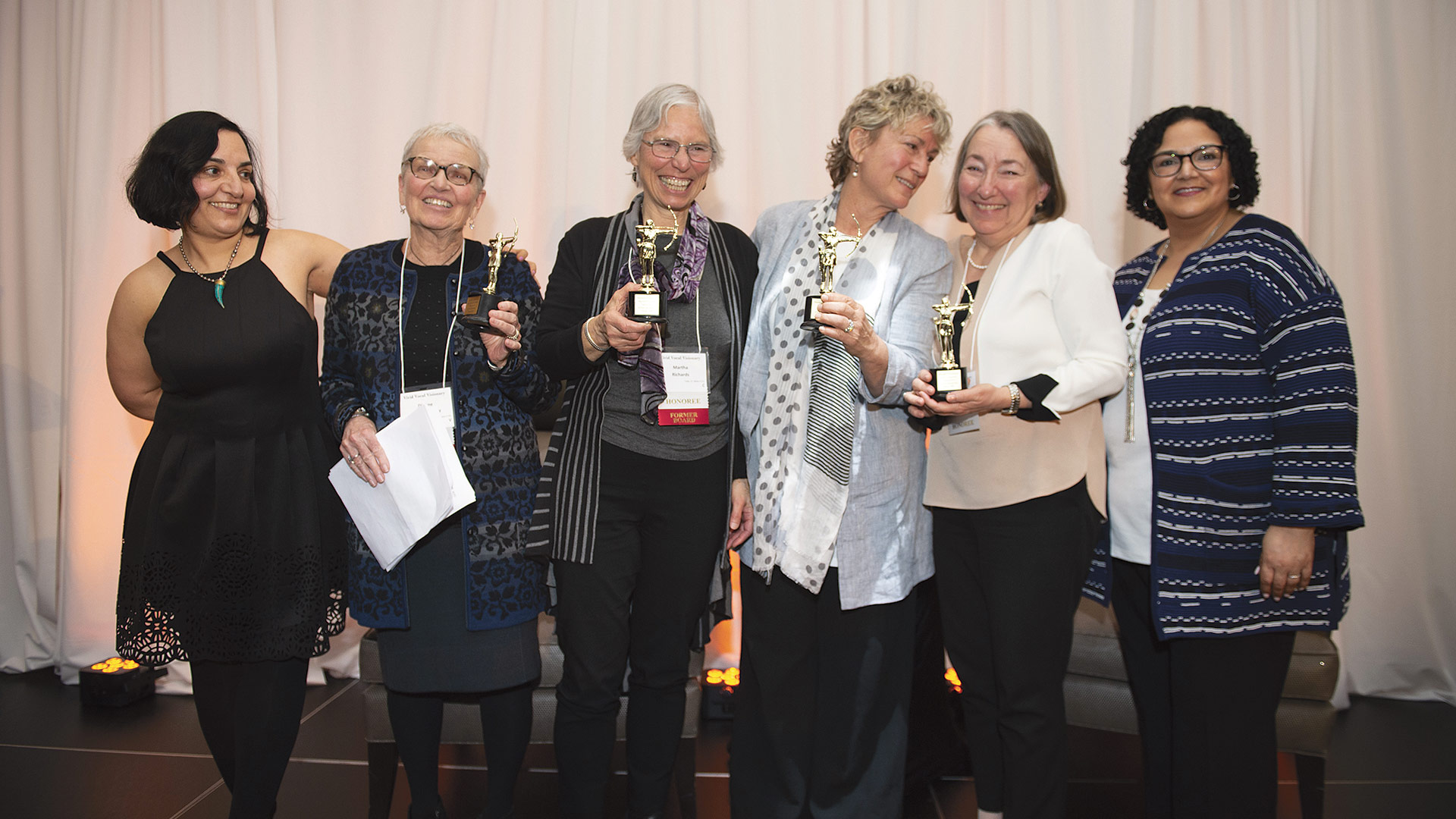
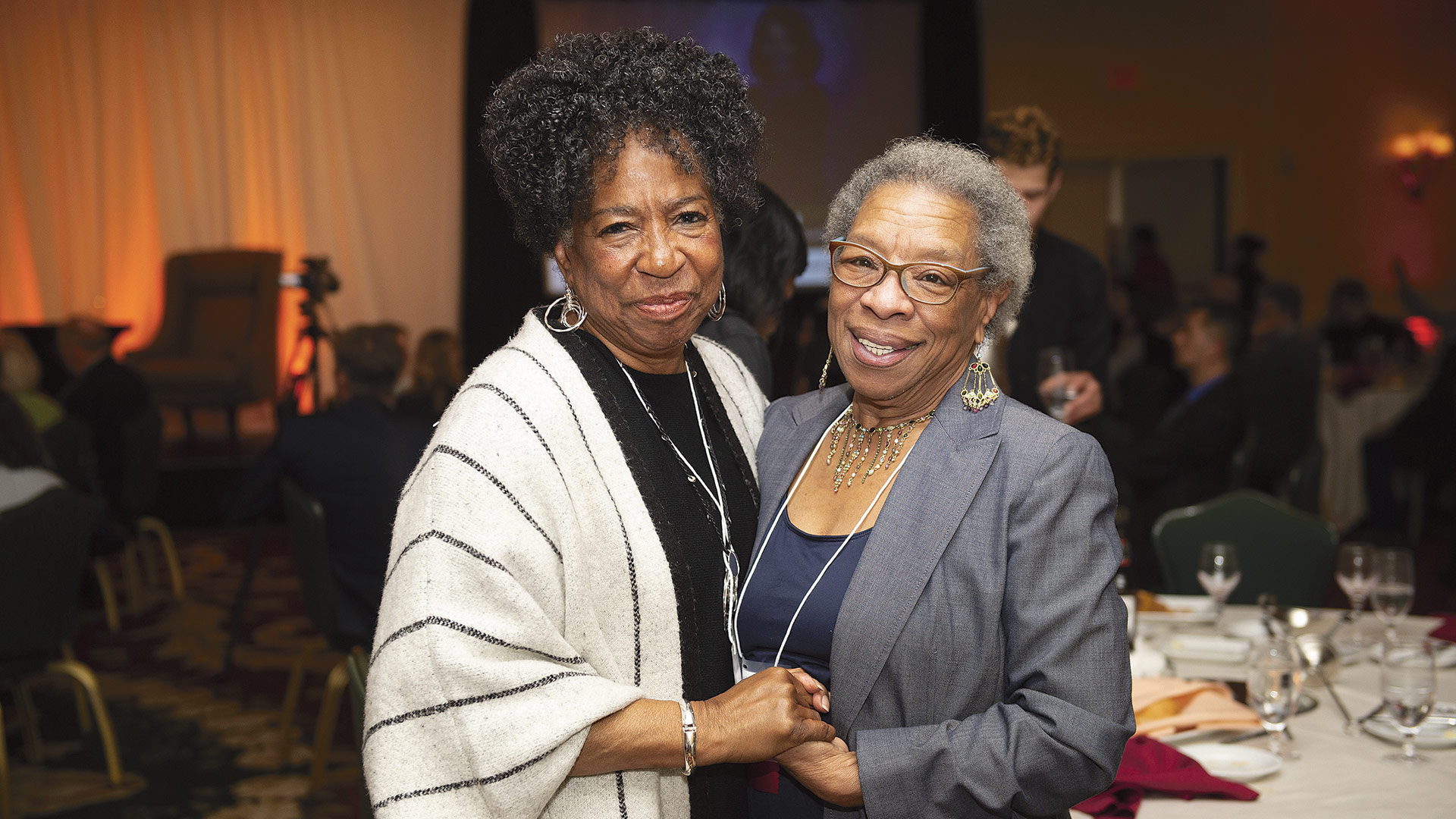
Staged by the city in partnership with the Springfield Regional Chamber, this annual late-winter event, the latest installment of which was staged recently at the Basketball Hall of Fame, has had several names over the years, most of them rail-oriented — to coincide with the long-awaited revitalization of Union Station and also to provide plays on words such as the city being on the proverbial ‘right track.’

Most just call this the ‘update meeting,’ and they’ve been staged for maybe six or seven years now. That timeline coincides with Kevin Kennedy’s arrival as the city’s chief Economic Development officer and his more aggressive approach to telling the city’s story. It’s also a stretch when there has been a much better story to tell.

Which brings us back to the title of this year’s presentation. What’s been happening in Springfield over the past several years can truly be described as a wave — a $4.19 billion wave that is gathering momentum, and riders, as it moves.

That number conveys the dollar value of business and civic projects since that fateful day in 2011 when a tornado roared through the city. It’s an impressive number that, of course, includes MGM Springfield (almost a quarter of the total), CRRC, and several other nine- and eight-digit projects. But it also includes dozens, if not hundreds, of seven-, six-, and even five-digit projects that all add up — to a wave of positive energy.

“What’s been happening in Springfield over the past several years can truly be described as a wave — a $4.19 billion wave that is gathering momentum, and riders, as it moves.”

And while that number is impressive, perhaps the more meaningful one is $400.4 million. That’s the dollar amount for projects announced since the last of these update meetings, a number that reflects everything from Big Y’s $42 million distribution expansion to MassMutual’s $50 million in investments in Springfield; from the new $14 million Educare facility to the $14 million headquarters for Way Finders taking shape on the site on the old Peter Pan bus station; from the planned renovation of the Paramount ($41 million) to the soon-to-be-announced (we hope) plans to renovate the long-vacant Elm Street block. And we’re pretty sure it doesn’t include a host of cannabis-related businesses now in the talking stages and a planned hotel on the site of the old York Street Jail.

This is what happens when a city gathers momentum and the attention of the development community. People want to be part of what’s happening. People want to ride the wave.

It’s a refreshing change from a dozen years ago when people were talking about the lights going out in this city with doubts about when and if they would go back on.

They have gone back on — and in a big way. And there should be even more evidence of this at the next update meeting.

Opinion

Opinion

By Tricia Canavan

United Personnel Services is a staffing company specializing in professional, information technology, and manufacturing placement throughout Massachusetts and Connecticut. We experience firsthand the impact of the achievement gap on our young people and their ability to succeed at work and in post-secondary education. We also clearly understand how these educational deficits contribute to the significant skills gap that exists between the jobs available in the Commonwealth and the qualifications of many of our residents.

Many young adults are entering the job market without the knowledge and skills needed to secure living-wage jobs, never mind the high-wage, high-potential jobs that would move them and their families on an upward trajectory. This disconnect impedes our economy, limits opportunities for future economic development, and, most importantly, is a real injustice to our kids here in Massachusetts. In our gateway cities in particular, student achievement and mastery of key skills lag behind those of their peers at a sometimes-staggering rate through elementary and high school.

Consider the fact that 72% of jobs will require a career certificate or college degree by 2020. In Springfield, 23% of our kids don’t graduate from high school in four years. Only 17% of our ninth-graders earn a post-secondary degree or credential within six years of high-school graduation, in part because many graduate unprepared for post-secondary success. For those students who do pursue higher education, a huge number require remedial classwork, wasting valuable time and financial aid on classes that don’t get them closer to a degree.

Massachusetts needs to build upon its long tradition of educational excellence to ensure that all of our kids have the education they need to pursue the good jobs that exist in Western Mass. and throughout the Commonwealth. These are jobs like nurses, advanced manufacturing machine operators, web developers, and physical therapists — all sectors with hiring demands that exceed the supply of candidates — and all jobs that provide wages beyond the region’s median income.

The disconnect between the qualifications of our young adults and the jobs our employers need filled is the reason I co-chair Springfield Business Leaders for Education and serve on the boards of directors of the Springfield Regional Chamber and Associated Industries of Massachusetts. Like so many of my colleagues throughout the state, I am deeply committed to our kids and our Commonwealth and want to be part of the solution to these urgent issues.

We know that the way communities spend state education money has a direct impact on student knowledge acquisition and achievement. It is imperative, then, that any infusion of funding is tied to results — for our kids, their futures, and the economic strength of Massachusetts. We also know that innovative reforms, such as the Springfield Empowerment Zone model that has potential to be expanded statewide, must be accompanied by renewed investment in education.

But we must be cautious as we pursue increased financial resources for our schools. Springfield public schools have received large boosts in funding before, through the introduction of federal grant programs like Race to the Top. But these infusions have not translated to sufficient progress that adequately addresses all that our students need. If we are successful in changing the current funding for our schools without using it as a leverage to do better for our kids, we will have failed.

The cost of the status quo — the achievement gap, the failure to maximize our kids’ promise, the inability of businesses to find the workers they need — is huge. Additional money needs to be used strategically, informed by data and evidence, to accomplish specific goals. We deserve to know what those goals are and whether our schools are meeting them — and, if not, why.

Tricia Canavan is president of United Personnel Services in Springfield. This article first appeared in the blog of Associated Industries of Massachusetts.

Picture This

A photo essay of recent business events in Western Massachusetts / March 2019

Email ‘Picture This’ photos with a caption and contact information to [email protected]


Vivid Vocal Visionary

The Women’s Fund of Western Mass. (WFWM) paid tribute to four of its pioneers at an event it called Vivid Vocal Visionary on March 18 at the Tower Square Hotel in Springfield. The event honored the group’s three founders, Dianne Fuller Doherty, the late Sally Livingston, and Martha Richards, as well as its founding executive director, Kristi Nelson.

From left, Donna Haghighat, CEO of the WFWM, Doherty, Richards, Nelson, Mimi Ginsberg (accepting for Sally Livingston’s family), and Haydee Lamberty-Rodriguez, board chair of the WFMA)

From left, Donna Haghighat, CEO of the WFWM, Doherty, Richards, Nelson, Mimi Ginsberg (accepting for Sally Livingston’s family), and Haydee Lamberty-Rodriguez, board chair of the WFMA)


Former board members Jane Sapp, left, and Brenda Lopez

Former board members Jane Sapp, left, and Brenda Lopez


From left, Eugenie Sills, Eleanor Lord, Shirley Edgerton (all former board members), Abbie von Schlegell, and Barbara Viniar

From left, Eugenie Sills, Eleanor Lord, Shirley Edgerton (all former board members), Abbie von Schlegell, and Barbara Viniar


Haghighat (left) with featured speaker Teresa Younger, president and CEO of the Ms. Foundation for Women

Haghighat (left) with featured speaker Teresa Younger, president and CEO of the Ms. Foundation for Women


New Name, Same Mission

Girls Inc. of Holyoke officially changed its name to Girls Inc. of the Valley last month to reflect its broader reach — it now serves girls in several communities across the region — and deeper impact. The name change was announced at a press conference at WGBY’s headquarters in Springfield that featured a number of speakers talking about the agency’s critical mission within the region.

From left, Luis Soria, principal of the Marcella R. Kelly School in Holyoke; Safiatu Sam, mother of a Girls Inc. Eureka scholar who lives in Chicopee; Suzanne Parker, executive director of Girls Inc. of the Valley; Roxanne Atterbury, a teacher at Rebecca Johnson Elementary School in Springfield; and Melyssa Brown-Porter, chair of the board for Girls Inc. of the Valley.

From left, Luis Soria, principal of the Marcella R. Kelly School in Holyoke; Safiatu Sam, mother of a Girls Inc. Eureka scholar who lives in Chicopee; Suzanne Parker, executive director of Girls Inc. of the Valley; Roxanne Atterbury, a teacher at Rebecca Johnson Elementary School in Springfield; and Melyssa Brown-Porter, chair of the board for Girls Inc. of the Valley.


A New Chapter

The Irene E. and George A. Davis Foundation announced late last month that the Springfield City Library will assume management of the Reading Success by 4th Grade initiative launched by the foundation in 2009 and managed by Sally Fuller until her retirement last year. The new chapter for the initiative was announced at a press conference at the Mason Square branch of the library attended by a host of area civic and business leaders as well as third-graders from nearby DeBerry Elementary School.

Springfield Mayor Domenic Sarno meets with several of those students.

Springfield Mayor Domenic Sarno meets with several of those students.

Students from DeBerry pose with the book bags, filled with books, that they received

Students from DeBerry pose with the book bags, filled with books, that they received

From left, Sarno, state Rep. Bud Williamson, and Mary Walachy, executive director of the Davis Foundation

From left, Sarno, state Rep. Bud Williamson, and Mary Walachy, executive director of the Davis Foundation


Hometown Heroes

The Western Mass. Chapter of the American Red Cross staged its annual Hometown Heroes Breakfast on March 21 at MGM Springfield. The event recognized 10 heroes from across the region.

Columbia Gas was the presenting sponsor

Columbia Gas was the presenting sponsor for Matthew Turgeon and Michael Croteau of the Chicopee Fire Department (center), who saved a toddler and her father while ice fishing off duty

Brad Campbell, board chair of the Western Mass. chapter, and Holly Grant, regional CEO of Massachusetts

Brad Campbell, board chair of the Western Mass. chapter, and Holly Grant, regional CEO of Massachusetts

From left, Sheila Doiron, director of Communications & Community Relations for Columbia Gas, Hometown Hero Holly Holden, and Beverly Tangvik, president of the Arbella Insurance Charitable Foundation

From left, Sheila Doiron, director of Communications & Community Relations for Columbia Gas, Hometown Hero Holly Holden, and Beverly Tangvik, president of the Arbella Insurance Charitable Foundation