Home Articles posted by George O'Brien (Page 24)
Women in Businesss

Leadership Course

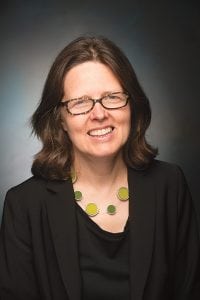
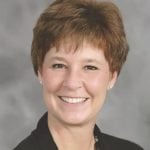
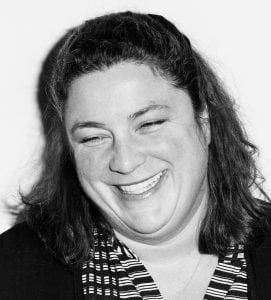
Nancy Buffone

Nancy Buffone

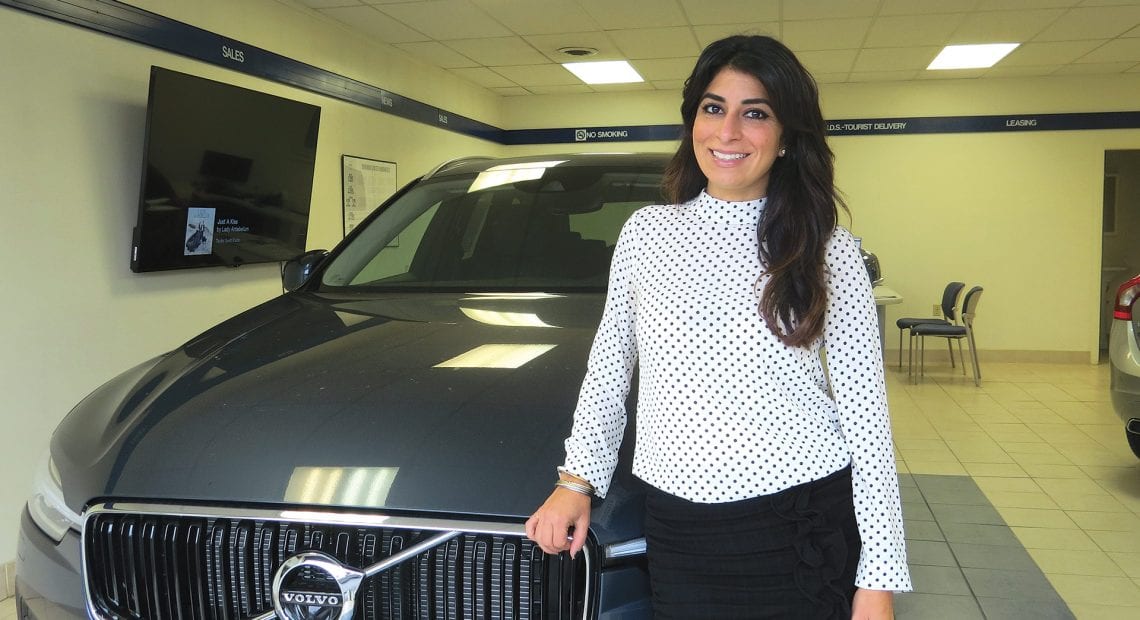
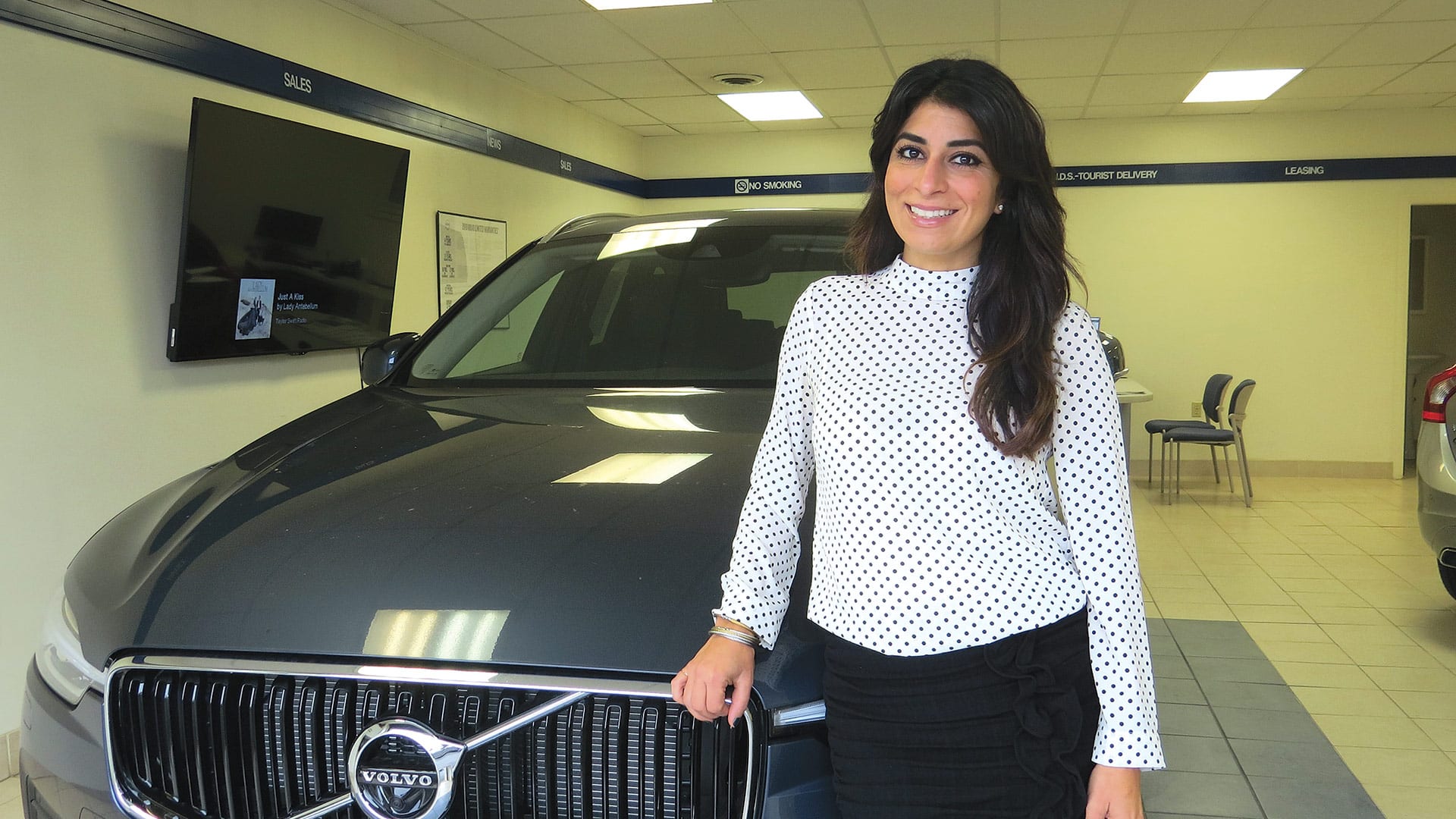
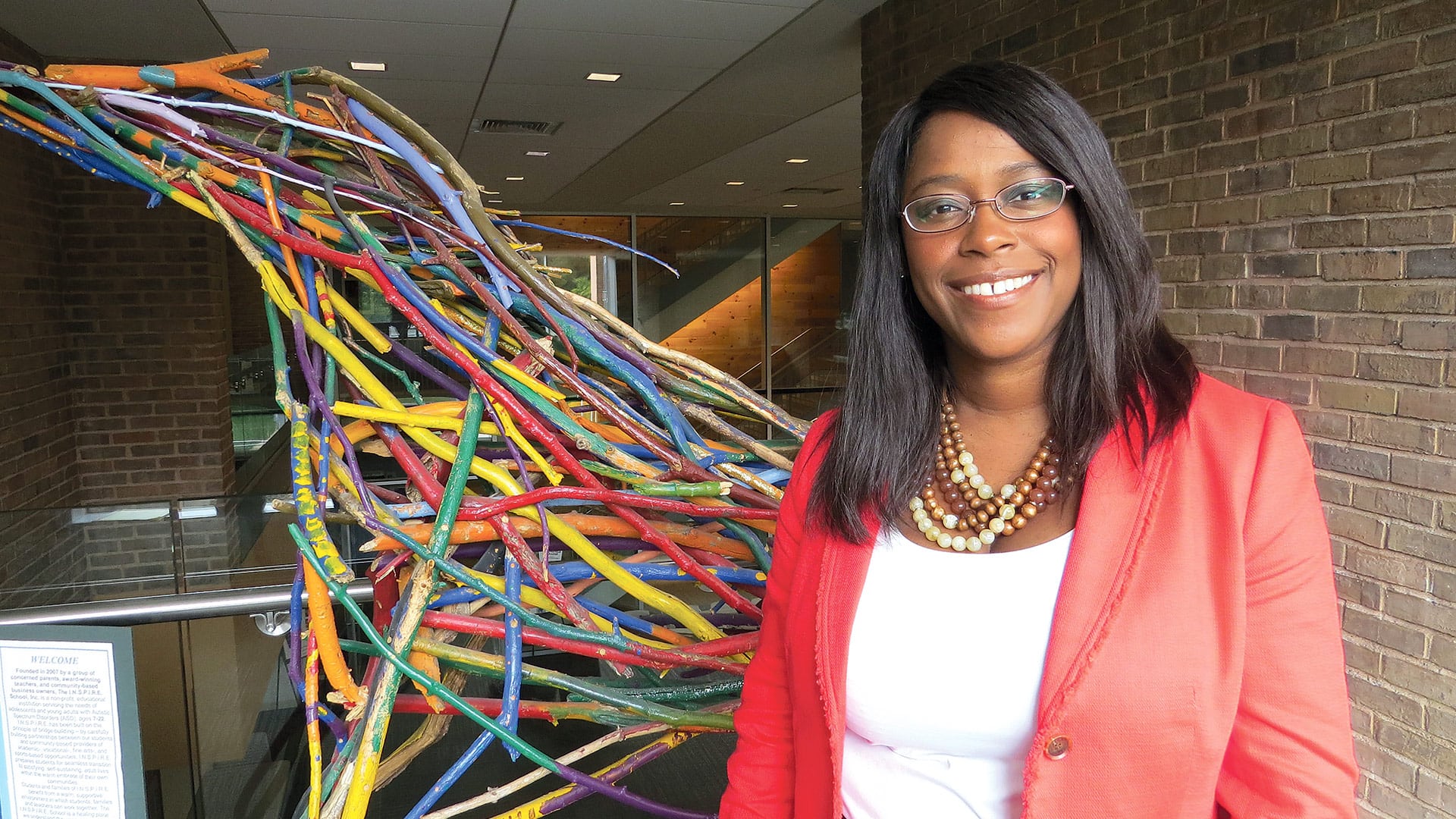
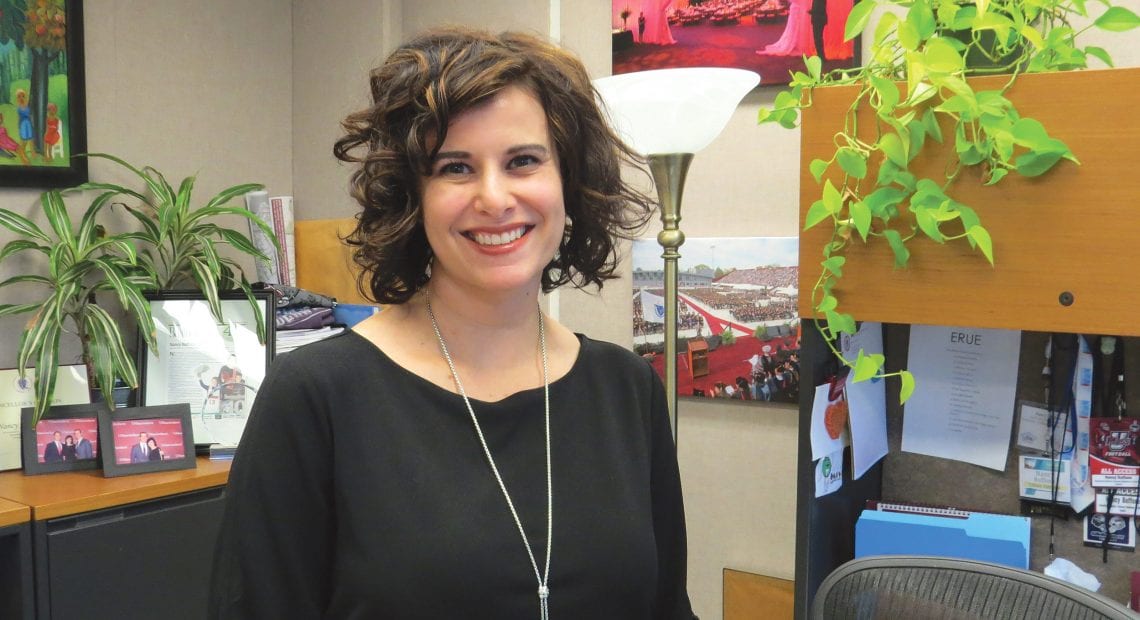
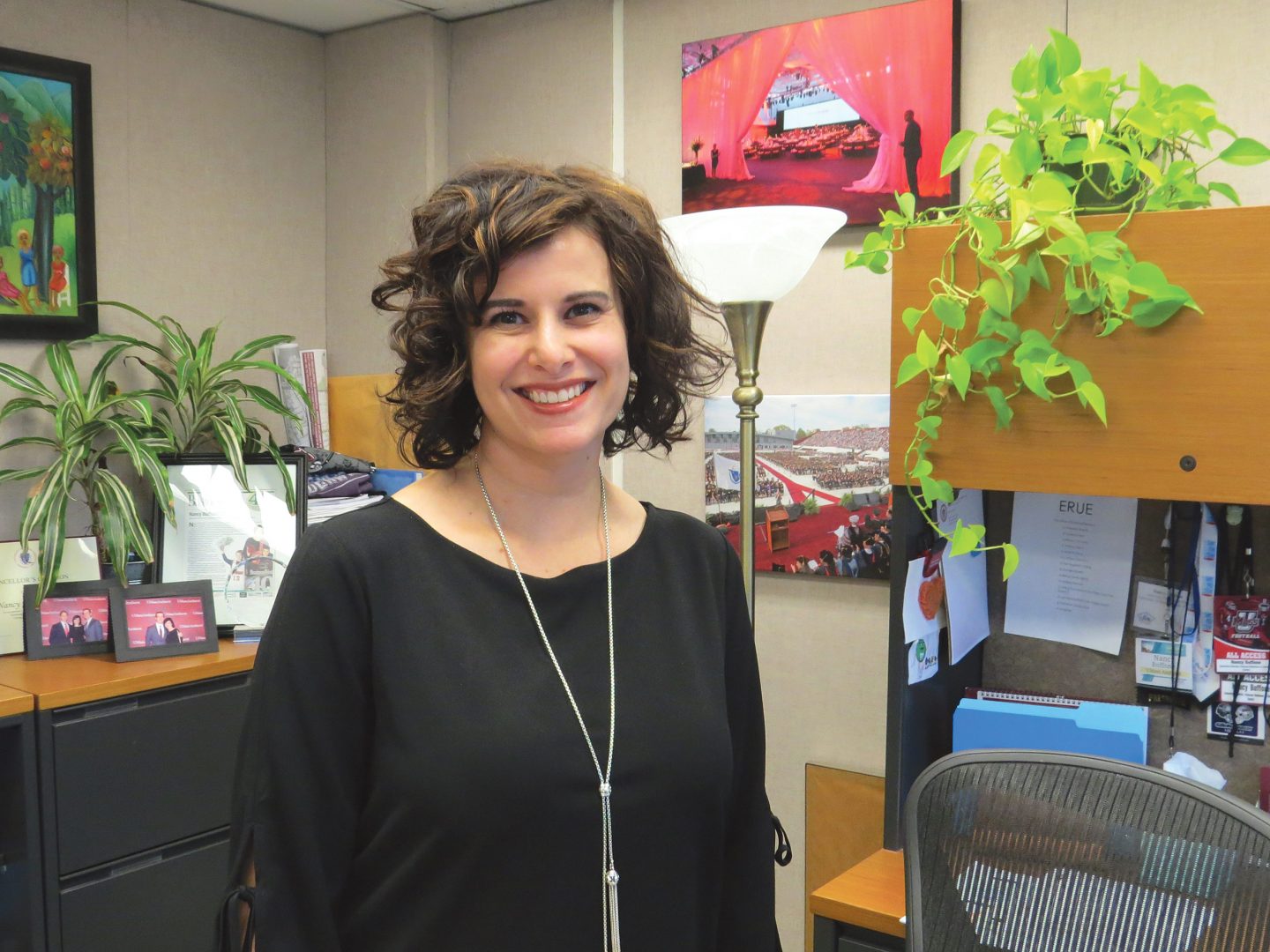
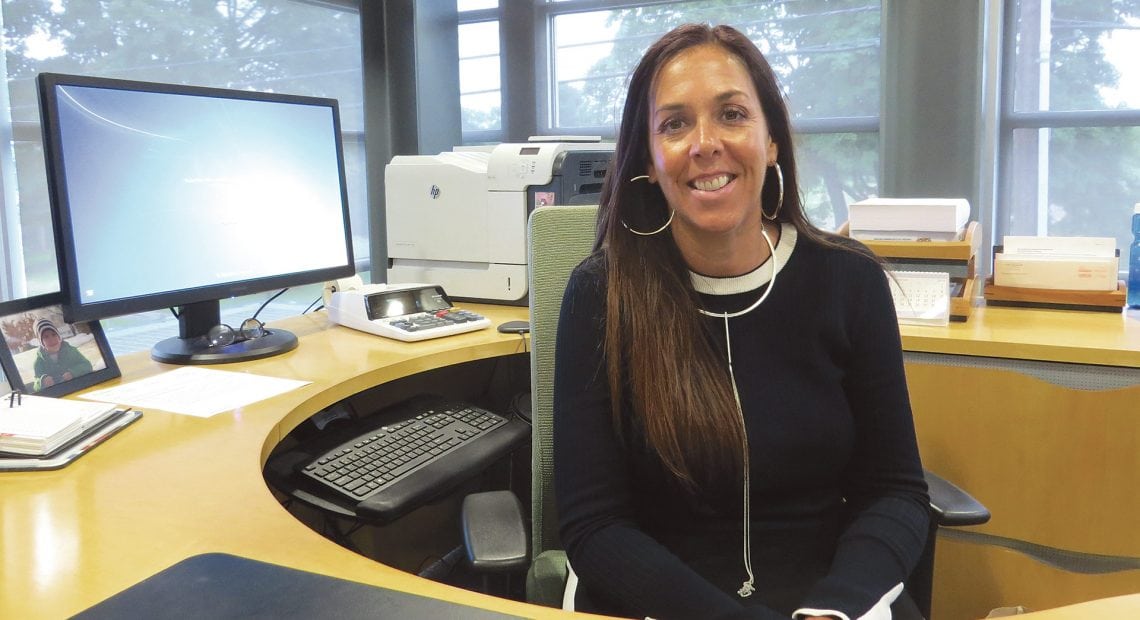
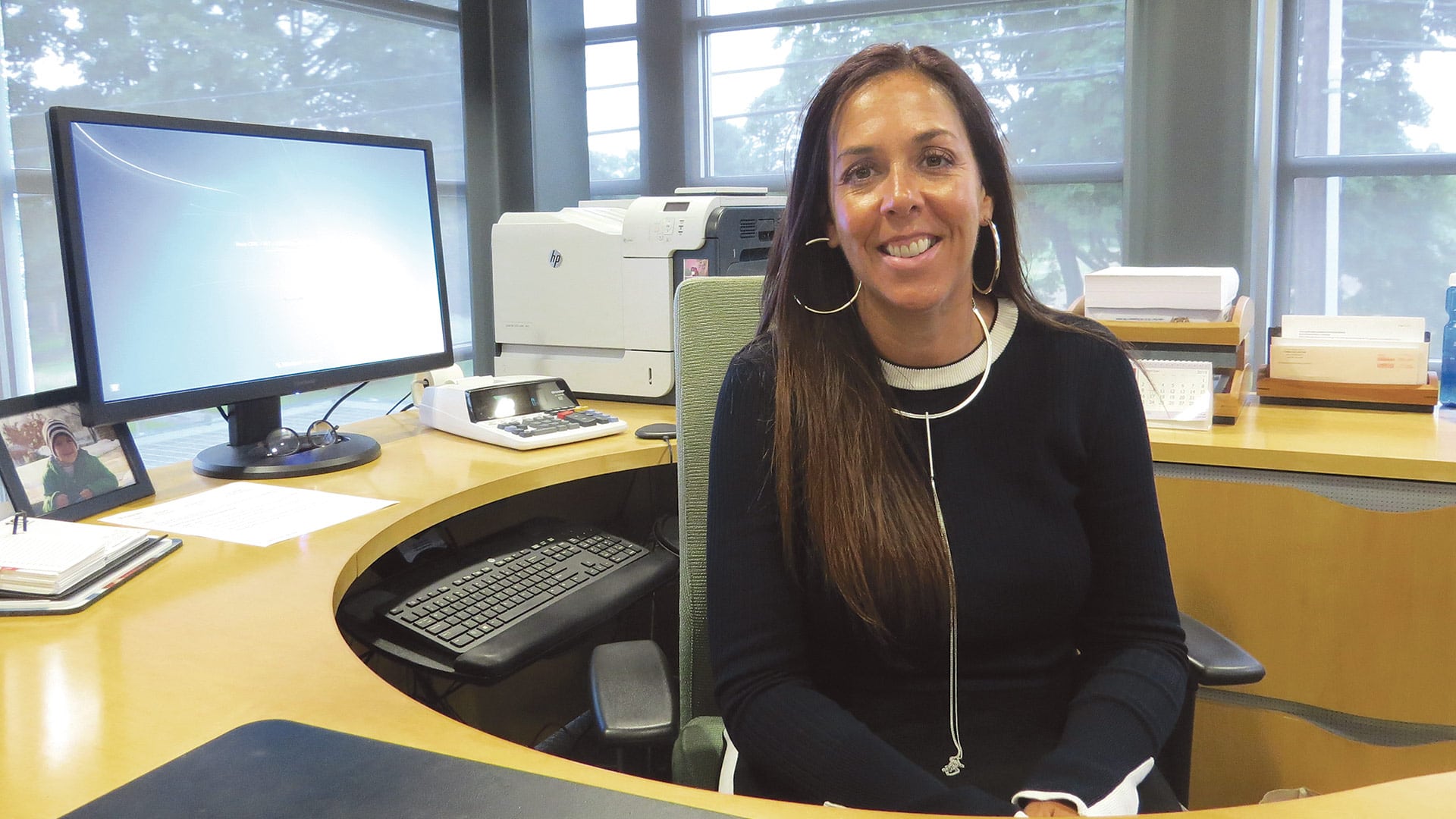
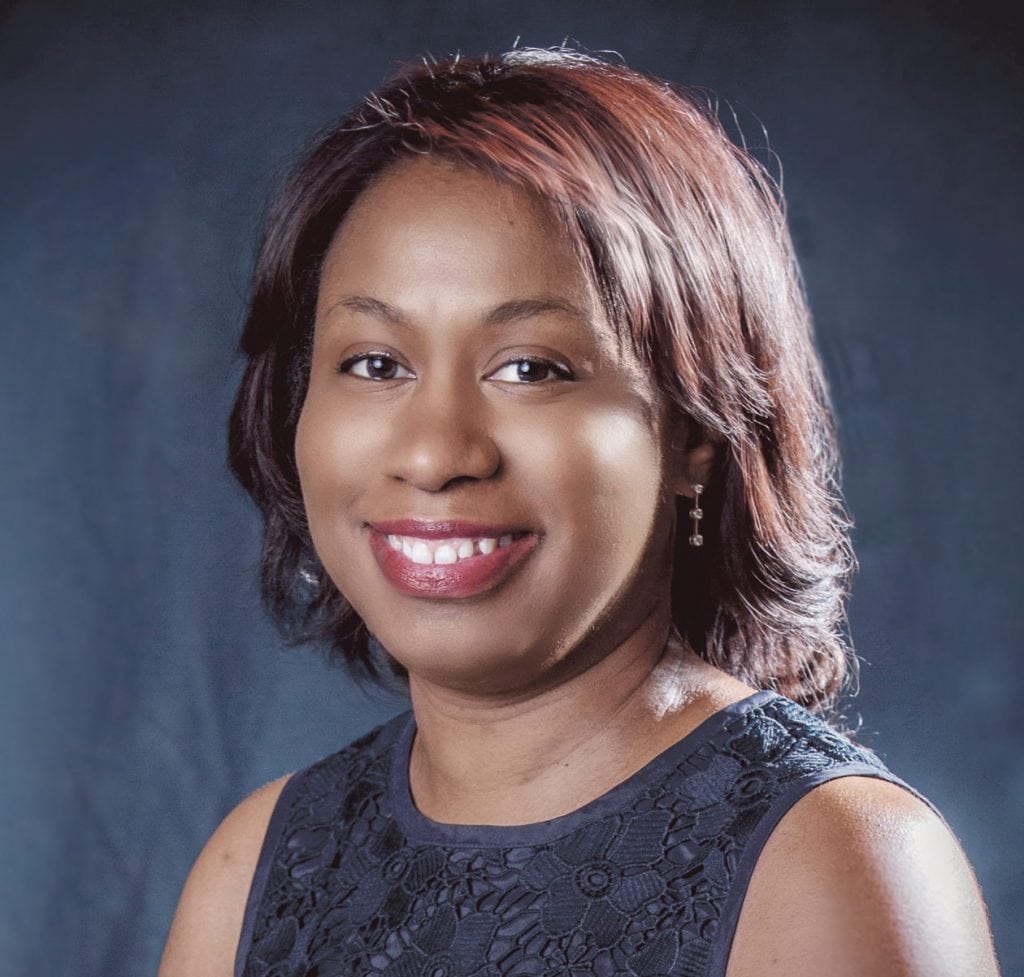
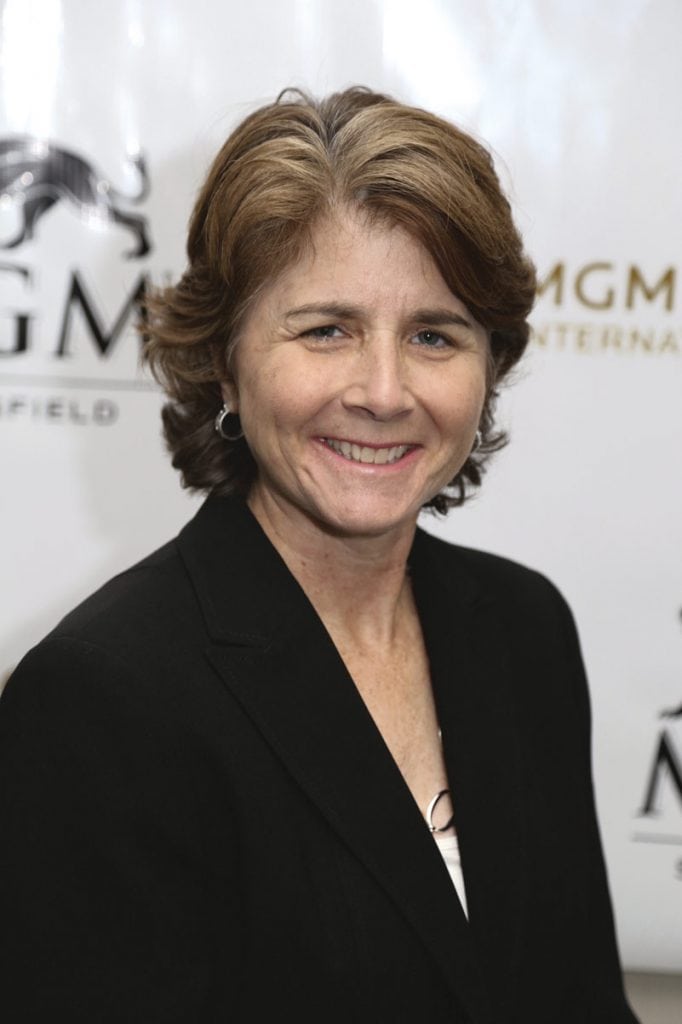
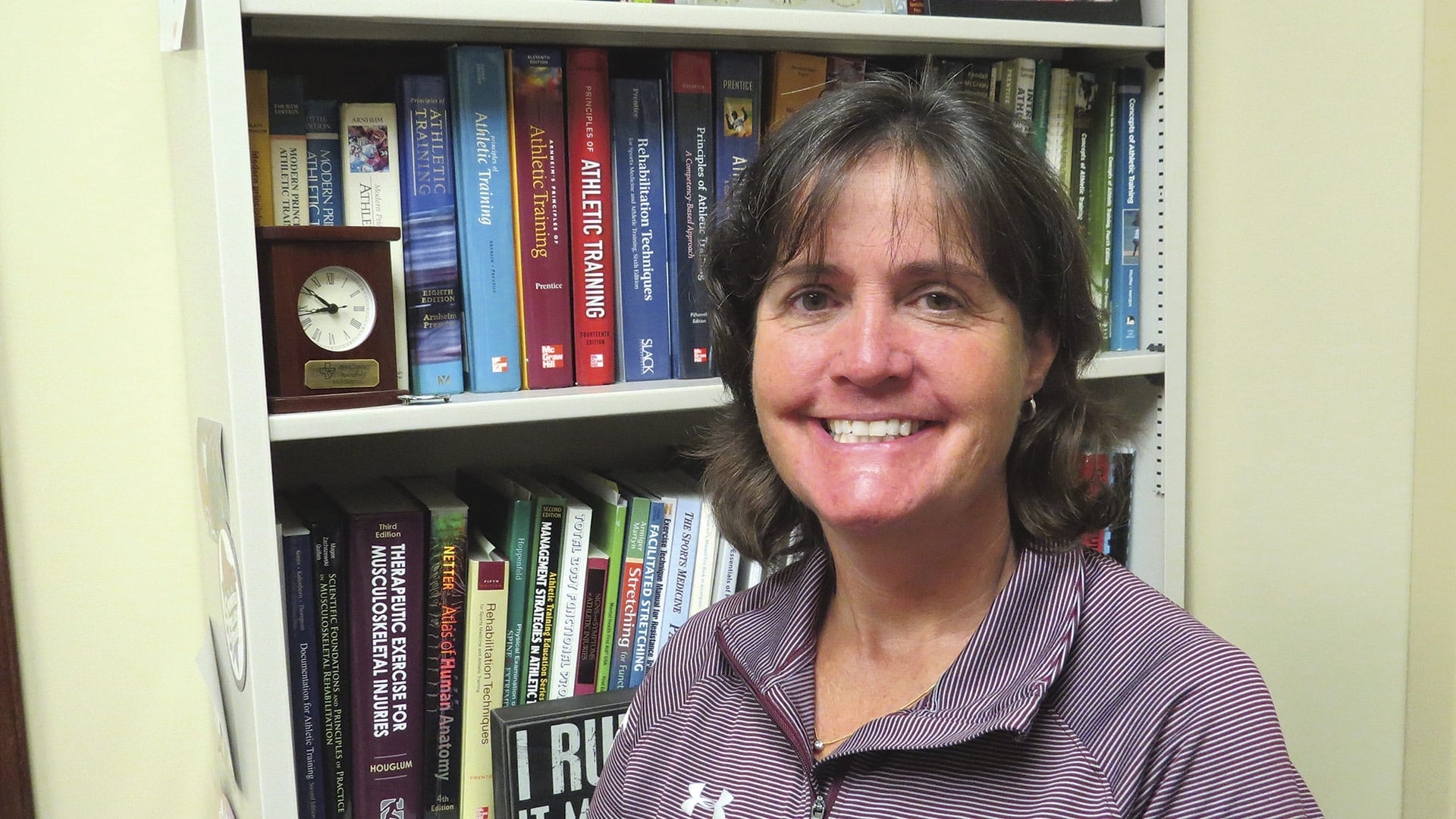
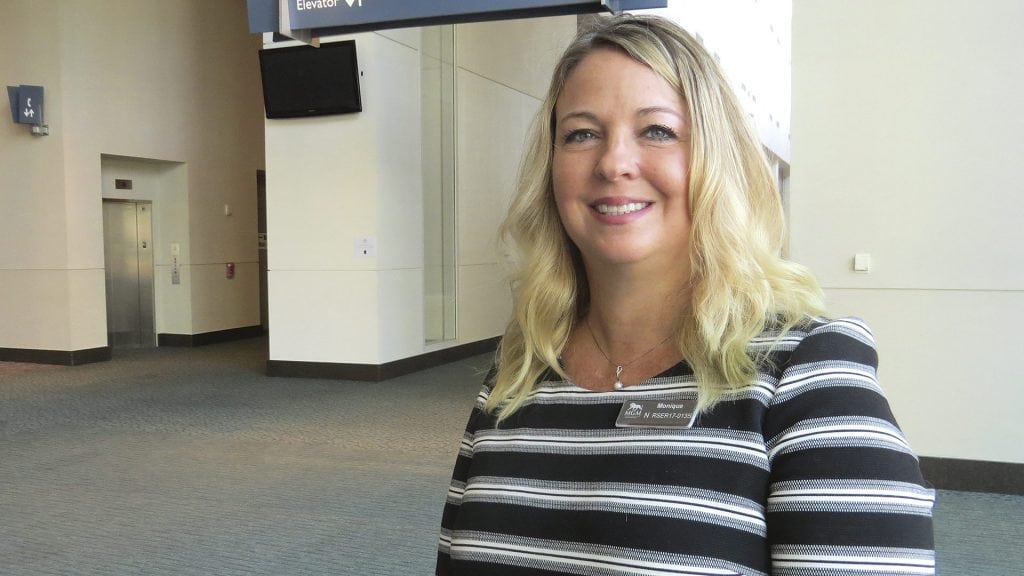
Nancy Buffone has three degrees from UMass Amherst and has spent her entire career working for her alma mater. The job titles and long lists of responsibilities have changed over the past 23 years, but the one constant has been that she loves — really loves — coming to work every day. As a manager, leader, mentor, and role model, she says it’s her mission to make all those on the teams she supervises feel the same way.

Nancy Buffone says that as a manager — and as a leader — one thing she tries to do is put herself in the shoes of those she’s supervising.

And in the case of younger staff members, that’s not a hard assignment, because she’s certainly been in those shoes.

Indeed, not long after graduating from UMass Amherst more than 20 years ago, Buffone went to work for the institution in the Provost’s Office. A few decades later, she is associate vice chancellor of University Relations, a relatively new realm at the school, has two offices, and manages roughly 35 people handling a wide array of assignments, from planning commencement to putting out the alumni magazine to dispensing news.

Putting herself in the shoes of those carrying out that work enables her to better understand their wants, needs, anxieties, and challenges, she said, and overall, it makes her a better leader and the offices she supervises better places to work.

“If you don’t enjoy coming to work, it can be really hard to come to work every day,” she said, making an observation that essentially defines her approach to management.

Becoming a more effective leader is one of the few things not actually listed on Buffone’s job description (we’ll get into what is a little later on), but professional development is something she takes very seriously.

In fact, earlier in her career, while working for the university’s Provost’s Office, she developed a leadership program for academic department chairs — an initiative that filled what she saw as an enormous need.

“This was something brand new, and there was a lot to the job. It was a new challenge, and it was something just so out of the box, so out of the comfort zone for me.”

As part of her own professional-development efforts, she became a participant in the Leadership Pioneer Valley program, specifically as a member of its class of 2013. She said the experience not only provided her with a much better understanding of the four-county region — one of LPV’s stated goals — but helped her do something she said all good leaders need to do — step out of her comfort zone.

In this case, that meant taking on the additional responsibilities of the Communications Department with University Relations, which effectively tripled her workload and the number of people she was managing.

“This was something brand new, and there was a lot to the job,” she said. “It was a new challenge, and it was something just so out of the box, so out of the comfort zone for me.

“And to some extent, it still is, but I love it,” she went on. “This is a place to get creative and take a lot of the work that we’re doing here every day and think about how we’re going to tell that story; that’s fun, and that’s a challenge for me.”

Her ability to move well beyond that comfort zone has been invaluable as she has taken on that ever-growing list of responsibilities, many if not most of which have to do with telling the university’s story — and telling it much better than it was told decades ago.

In many respects, it’s better story to tell these days, said Buffone, who was in a particularly good mood on the day she spoke with BusinessWest because the new U.S. News & World Report rankings of the nation’s colleges had just come up, and the university had moved up a few notches in many of the categories.

“We keep moving in the right direction,” she said, noting, for example, that the school moved up from 29th to 26th on the list of best public institutions, and from 75th to 70th among all schools.

Meanwhile, her career has taken on the same general trajectory as the university’s. For this issue and its focus on women in business, we talked with Buffone about her multi-faceted role at the university, but moreso about the broad subject of leadership and her ongoing efforts to improve those skills.

Background — Check

There are two large bowls of candy in Buffone’s office at the Whitmore Administration Building on the UMass Amherst campus. And it’s the same in her other office on University Drive, where the Community Relations staff is based.

The candy serves many purposes, she told BusinessWest, noting that, in many respects, it is an icebreaker and a temptation that brings people to those offices, which they generally leave with more than a miniature Mr. Goodbar or Reese’s Peanut Butter Cup in their hand. Indeed, they also generally leave with a smile.

“We work very hard at our jobs, so I want to laugh very hard while we’re working,” she said of her general approach to management and leadership. “I want to make sure we’re having a good time while we’re doing this.

“As for the candy … my only rule is that you’re not allowed to ask — just take,” she went on. “But over the years, the candy has been a nice icebreaker for people, and it brings people in — it’s an opening.”

Stocking her office — and later her offices — with candy is just one of the traits Buffone has developed in a career that has seen her take on a growing list of responsibilities since she graduated from the university in 1995.

Nancy Buffone sums up her broad job description by saying that that many employees she now supervises are tasked with “telling UMass Amherst’s story.”

Nancy Buffone sums up her broad job description by saying that that many employees she now supervises are tasked with “telling UMass Amherst’s story.”

As a student, she took a job working in the Provost’s Office (the provost is the chief academic officer on the campus) and had the opportunity to work for and be mentored by Judy Barker, who, as fate would have it, retired soon after Buffone graduated.

She was offered a job approximating the one Barker held, thus commencing a 14-year stint in the Provost’s Office that turned out to be learning experiencing on a number of levels.

“It was an amazing educational opportunity,” Buffone recalled. “I learned so much not just about how UMass works, but also higher education and especially public higher education. Being in the Provost’s Office, I never knew from day to day what I’d be working on; my position evolved into more of a generalist position that allowed me to get involved with many different things.”

That list included everything from working on a number of search committees for many senior administrative positions to creating new events on campus, working with the news office to promote faculty honors, and much more.

Along the way, she worked for several provosts who also became mentors, and she also earned two more degrees, including a doctorate in higher education policy and leadership. She said she was given the opportunity by those provosts to take what she was learning in the classroom and apply it in the workplace, especially within the broad realm of leadership and, more specifically, the academic department-chair level.

“Looking at what universities did to train the next person to be in the chair’s role, it became clear that at most places … it was nothing,” she explained. “So I was able to create an orientation leadership program for new department chairs that still exists today, although in a slightly different format.”

That program was among the hardest things to give up as Buffone moved on to the next chapter in her career in early 2009, as executive director of External Relations and University Events as part of the new University Relations department.

That office, created by then-Chancellor Robert Holub, is tasked with a wide variety of assignments, including community relations, events, media relations, federal and state government relations, and more. Early on, Buffone was placed in charge of events, with one of the first being the school’s 150th anniversary, a party that was several years in the making.

“We work very hard at our jobs, so I want to laugh very hard while we’re working. I want to make sure we’re having a good time while we’re doing this.”

These days, she leads two teams, one handing events and community relations and the other assigned to communications — a very broad term covering everything from the alumni magazine to the college website.

As she said, the expansion of her duties and the title on her business card tripled her workload and put dozens more people under her supervision, giving her more opportunities to apply lessons learned in graduate school and also while working with and for many great mentors.

Leading by Example

When asked to describe her style of management, Buffone paused for a second before noting that she’s from New York (Long Island, to be more specific) and thus relies heavily on sarcasm.

And then gave an example. Sort of.

“I learned how to manage by making mistakes, and I try not to repeat my mistakes,” she said with a laugh. “I started small, managing one person, and then four, and then it grew seemingly overnight when I took on the communications team. But whatever the number is, it’s really about trying to understand what I can do for the people I work with every day to make their jobs easier.

“If they can focus on what they need to do, especially the creative people … if I can make it so they can focus on what they’re trying to accomplish and not worry about distractions, then that means they’re going to be better at their jobs,” she went on. “I’m trying to create an environment that will foster that creativity and foster collaboration; to me, that’s really important.”

As for her own professional development, Buffone said her involvement with LPV enabled her to do something she really needed to do but was hard pressed to find the time for — doing some reflection on what she wanted to do and where she wanted to go professionally.

“I think it’s hard to find the time to think about what you want and about how to get where you need to go when you’re moving from project to project — it’s just too fast sometimes,” she explained. “Leadership Pioneer Valley offered that opportunity to really think about what I wanted and what skills I needed to keep moving forward.”

Elaborating, she said that, through her LPV experience, she decided she needed to get more involved in her community (Amherst), and she has, serving as a town meeting member and as president of the Amherst Area Chamber of Commerce board.

Meanwhile, at the office — or, again, at both her offices — she works hard at her job and equally hard at making sure people enjoy their jobs, something she believes is key to promoting creativity and, ultimately, better, more effective telling of the university’s many stories.

That includes the staging of what she called ‘standing meetings,’ which are just that — 15-minute meetings, instituted about five months ago, in which the participants stand and, in this case, keep a huge inventory of individual projects (700 a year for the communications department alone, by Buffone’s estimate) on track.

“The meetings will go half an hour even though they’re supposed to go 15 minutes,” she explained. “But if you’re sitting, the meeting can go way too long; that’s the thinking, and they’ve been pretty effective.”

As have most of her initiatives, all aimed at not only getting the word out about everything going on at the school, but making everyone on the team as enthusiastic about their role as she is.

“I’ve been really lucky; I’ve been at UMass for 23 years now, and I love my job, I really do, and I love coming to work just about every day,” she said. “And that’s how I want the people I work with to feel.”

Grade Expectations

Unlike the university itself and several of its departments — from food service to the marching band — there are no rankings for communications and events departments.

But there are still measures of success, and plenty of them, Buffone said, listing everything from letters to the editor of the alumni magazine (they show that the material is being read) to feedback on a host of events, to the sense of satisfaction showed by her team members when one of those events is over.

Another measure might be how many times she has to fill those candy bowls — which is often. That shows that people are breaking the ice, coming into her offices, communicating, and enjoying their hard work.

Which, at this university and within this department, is an effective course of action — literally and figuratively.

George O’Brien can be reached at [email protected]

Commercial Real Estate

Making a Big Splash

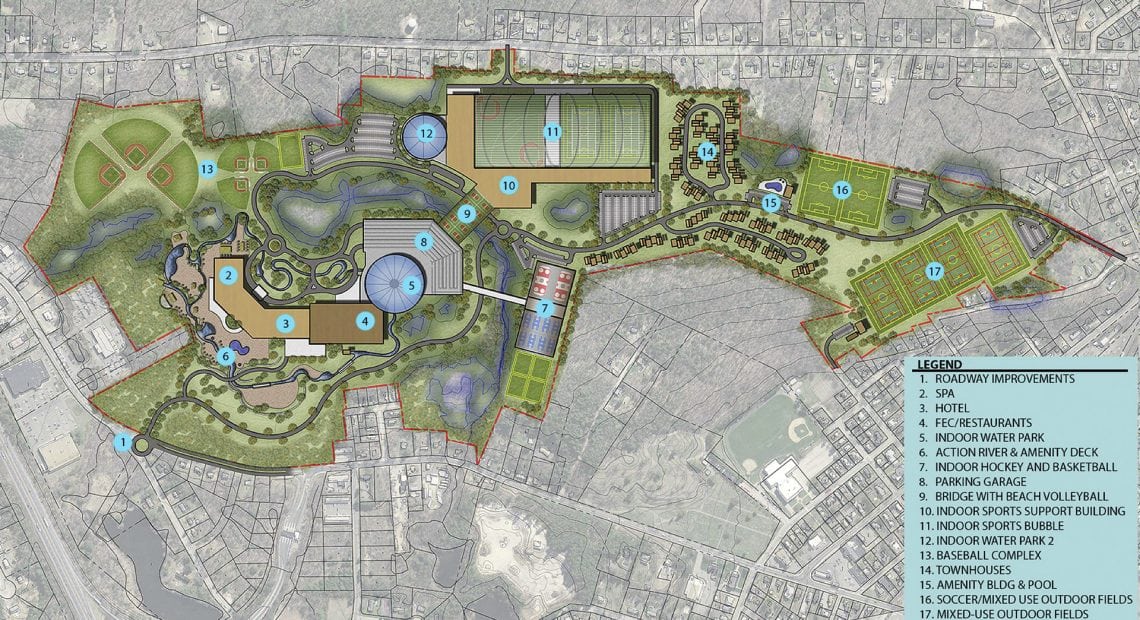
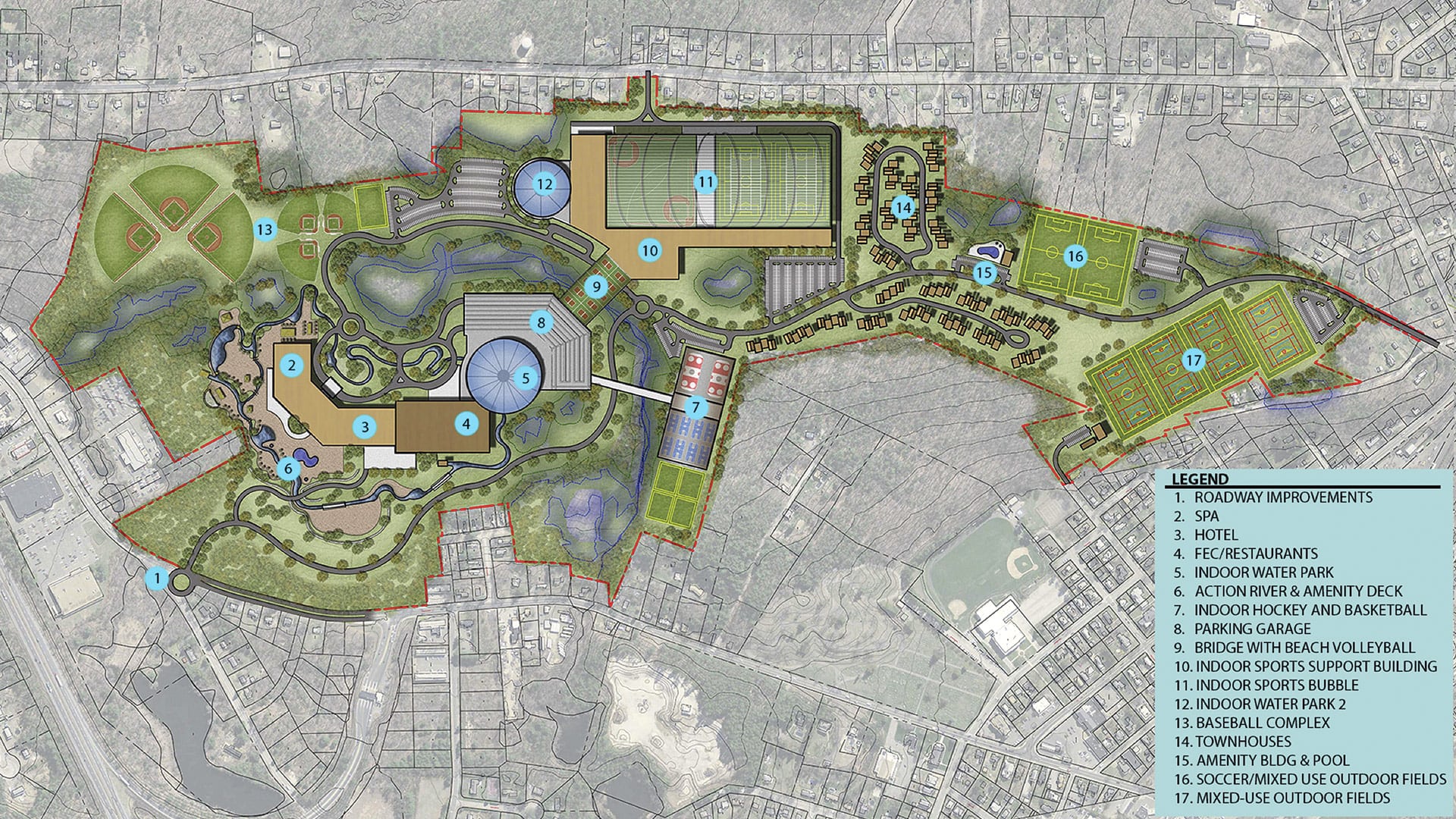
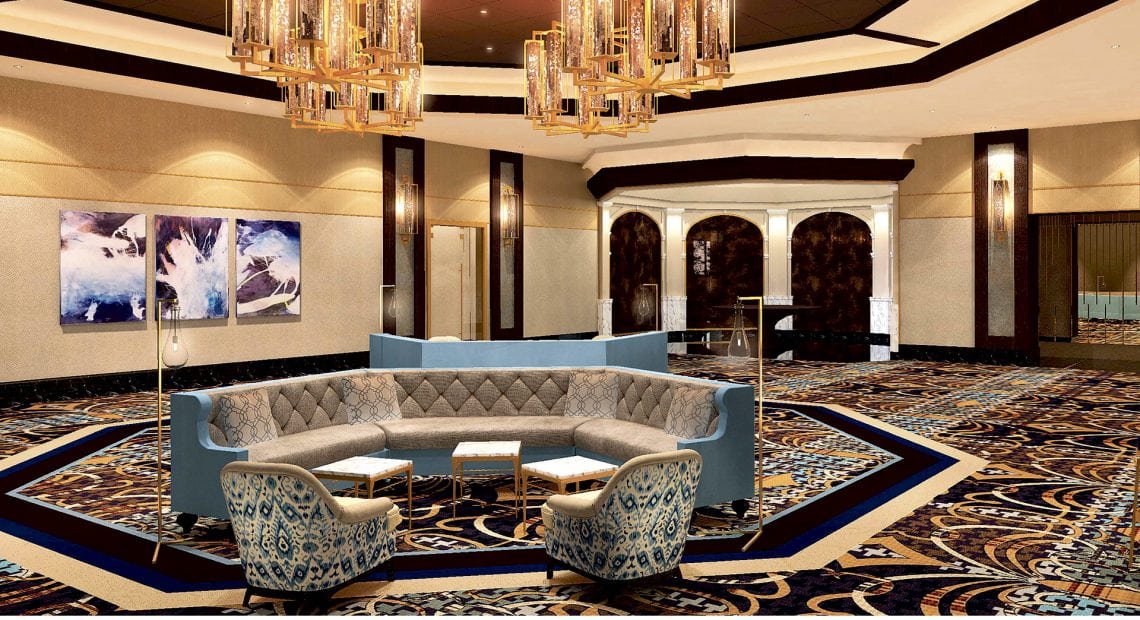
This rendering shows the many components of the planned $650 million resort and water park in Palmer.

This rendering shows the many components of the planned $650 million resort and water park in Palmer.

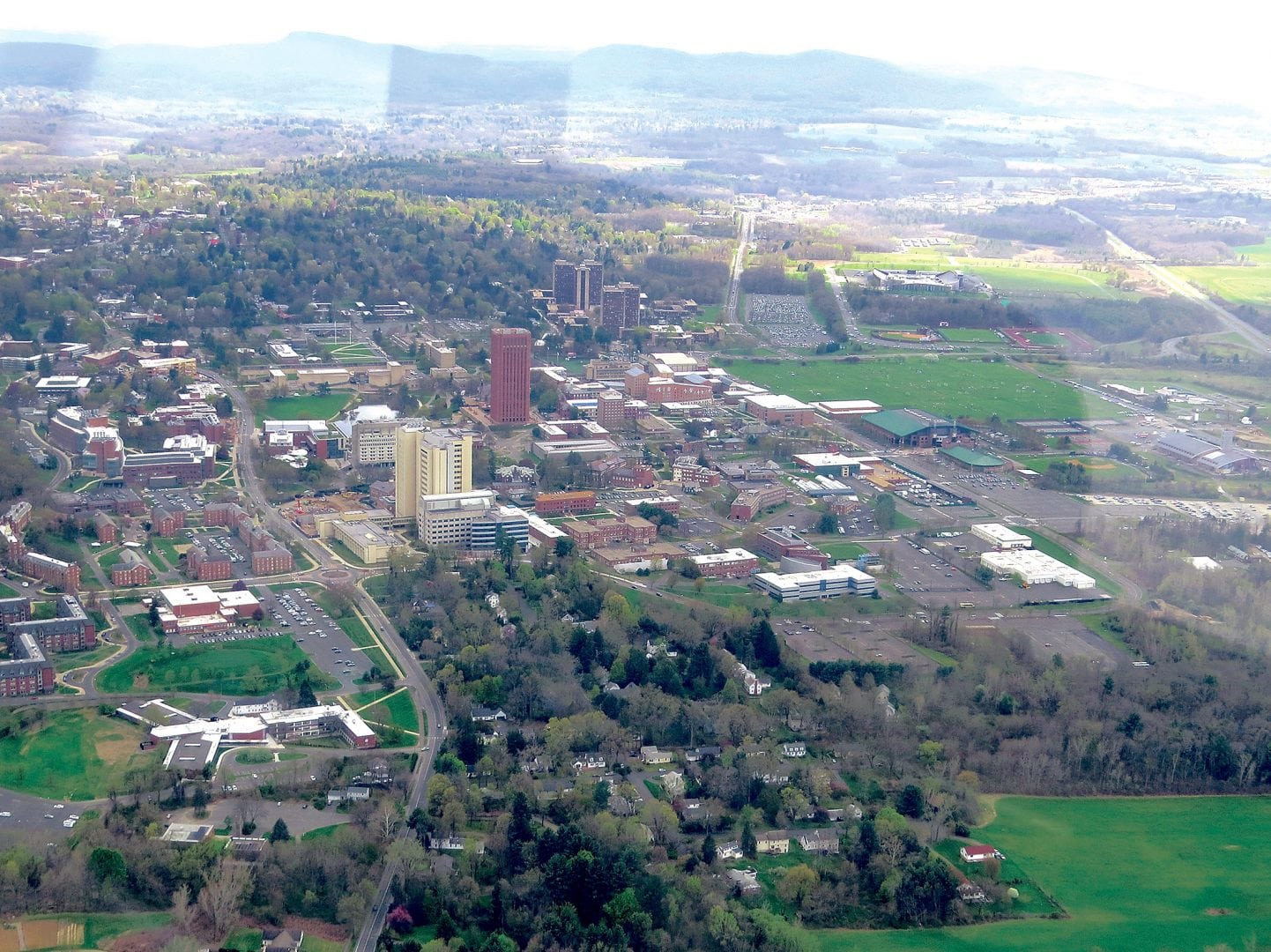
More than five years after Palmer residents rejected a casino proposal for a huge tract of land just off Turnpike exit 8, the property is back in the news, this time as the planned site of a $650 million water park, resort spa, and sports complex.

It’s the most basic tenet in commercial real estate.

Location, location, location.

Since the Massachusetts Turnpike opened in 1957, the large tract of land sitting atop the hill overlooking the exit 8 ramp in Palmer has always possessed that coveted quality. But over the ensuing 60-plus years, little has been done to capitalize on it.

Indeed, among the more than 20 exits on the Pike, exit 8 is arguably the least developed. There’s a small gas station and attached convenience store just off the exit ramp, but one has to go a half mile left or right to find much commercial development, and even then there isn’t much.

Still, Northeast Development saw the enormous potential in the property more than 20 years ago, and first obtained an option on more than 200 acres owned by the late John Lizak — who owned several properties within the town — and later acquired it outright soon after casino-gambling legislation was passed in the Commonwealth.

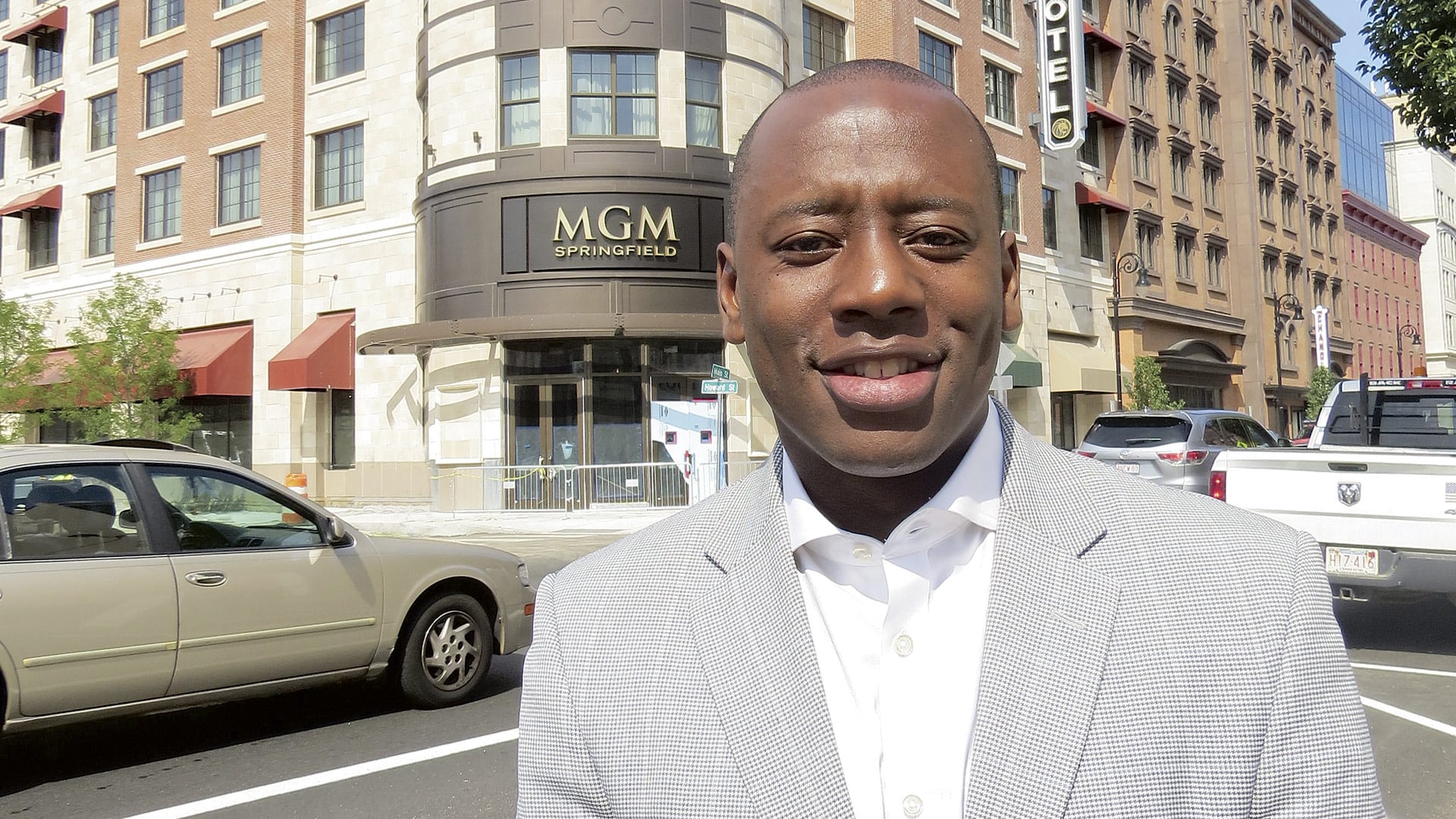
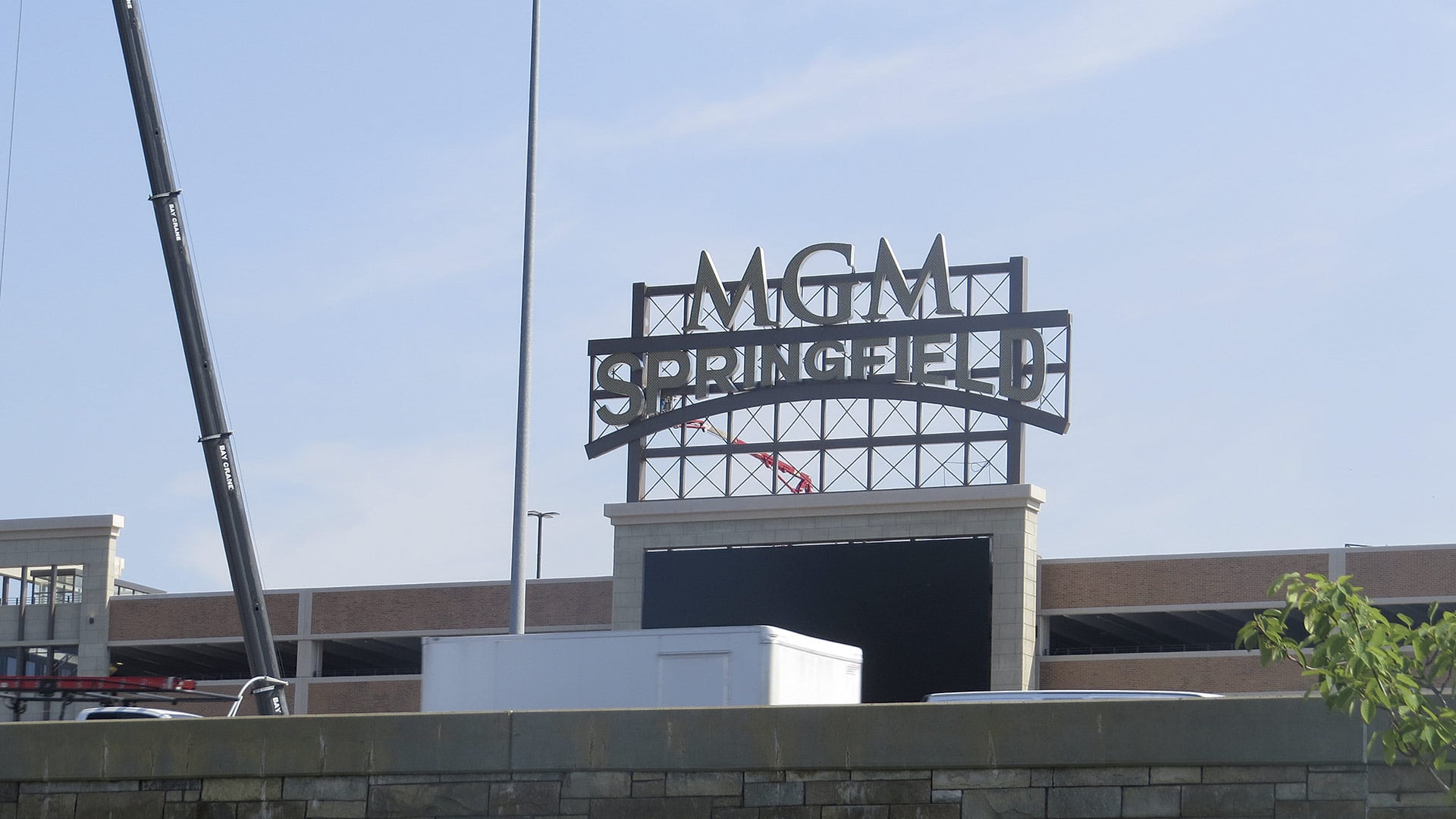
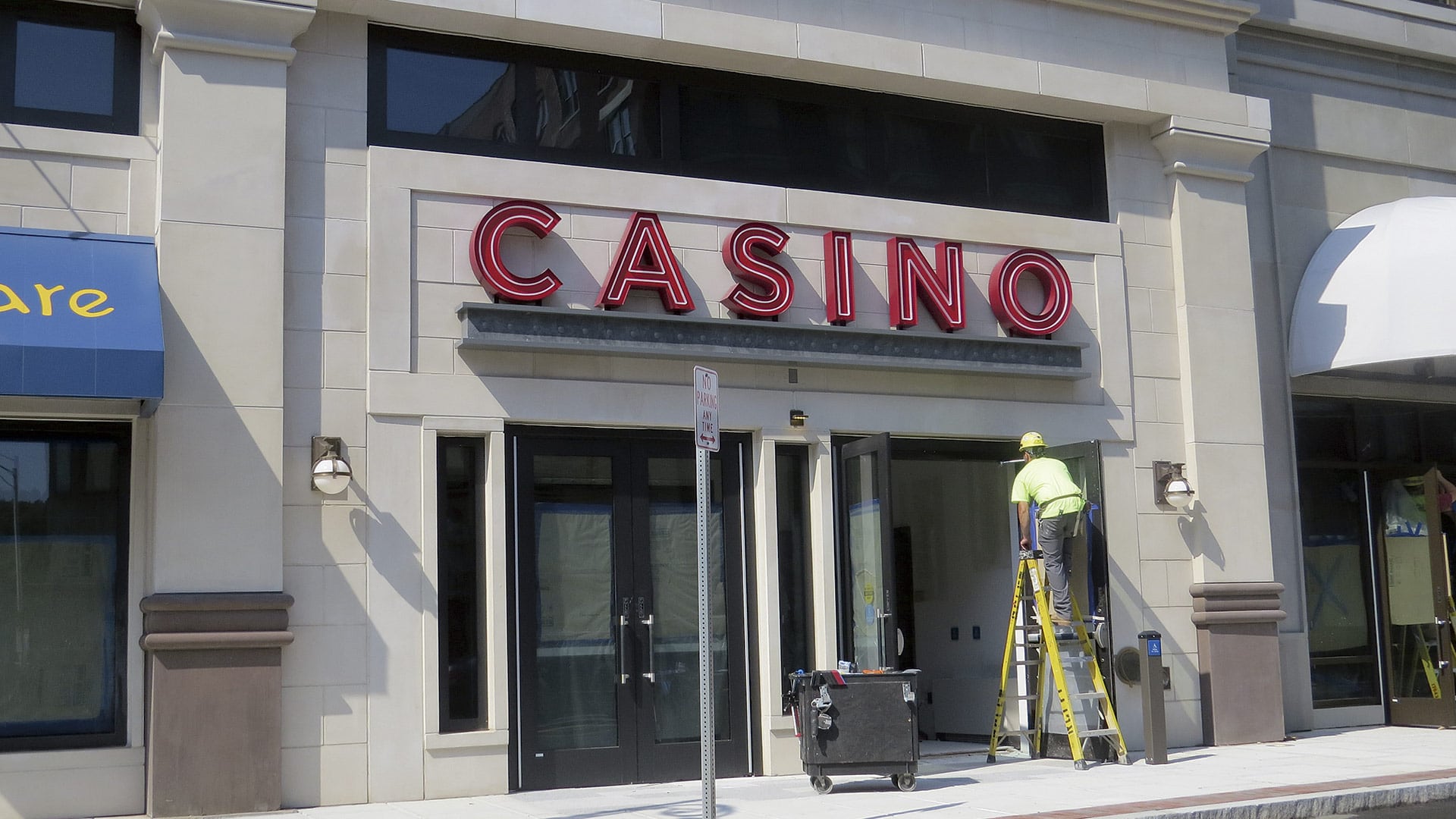
An opportunity to place a casino, proposed by the owners of Mohegan Sun, at the site went by the boards in 2013, when Palmer residents rejected a casino referendum, but now the property is the focus of another high-profile initiative — one on almost the same scale as the MGM casino eventually placed in the South End of Springfield.

“I remember being at a meeting with them and hearing them say, ‘this is a hot idea — irrespective of the casino, water parks are hot commodities if they’re done right.’”

And, ironically, it’s a concept that actually became part of the rejected casino proposal — a water park.

Or a water park on a much, much larger scale, to be more specific. This would be a $650 million water park resort and spa, featuring everything from a man-made tubing river (if constructed as planned, it would be the longest in the country) to batting cages to athletic fields.

“As the casino competition started heating up, everyone was putting something new into what they were doing,” said Paul Robbins, president of Paul Robbins Assoc., a Wilbraham-based marketing and public-relations firm and spokesperson for the Palmer Sports Group. His firm has also represented Northeast Development for many years. “Doug Flutie was going to be part of Ameristar [one of the casinos proposed for Springfield], and MGM was touting its entertainment. That’s also when Mohegan introduced the concept of a water park.

“And I remember being at a meeting with them, and hearing them say, ‘this is a hot idea — irrespective of the casino, water parks are hot commodities if they’re done right.’”

Those at Palmer Sports Group obviously feel the same way.

Led by Winthop ‘Trip’ Knox, who has been involved with the design and construction of more than 3,000 water-related facilities for water parks, resorts, and deluxe hotels, and Michael D’Amato, who managed the construction of the later stages of the Foxwoods Resort Casino, including the Grand Pequot Tower, the group is thinking big.

As in very big.

Indeed, the complex will feature indoor and outdoor sports facilities, a resort hotel, and two indoor water parks, as well as an indoor hockey and basketball facility, an indoor sports bubble, a baseball complex, soccer and mixed-use fields, beach-volleyball courts, restaurants, and on-site townhomes.

There is demand for all of the above, said Robbins, adding that there isn’t anything like this in the Northeast, and the developers expect to draw visitors from a 300-mile radius and do so for at least 10 months out of the year; yes, the water in the tubing river will be heated.

“The developers believe there are 25 million people in the catchment area for this facility,” said Robbins, who used the phrases ‘Disney-esque’ and ‘think Orlando’ a number of times as he talked about just what is being proposed for the Palmer site.

Elaborating, he said there will be a large water park attached to the resort complex (again, like the Disney parks) that become part of the package of staying at that facility. There will also be second water park for day trippers, as well as a host of other facilities.

Robbins said the Palmer site, while somewhat remote (which explains the lack of development at and around the exit 8 interchange), lies roughly halfway between Springfield and Worcester and is easily accessible to several major population centers. And that has made it a hot property, as they say in this business, for some time.

“When Mohegan signed on, I had a number of meetings with them, and they absolutely loved that site,” said Robbins. “They loved it because [then-Gov.] Deval Patrick said he wasn’t thrilled about casinos going to urban areas; his vision was for a bucolic, ‘drive to the destination, stay a few nights’ type of resort, and that’s what Mohegan is. But the location is also ideal.”

So much so that Northeast pursued a number of different development opportunities for the site, but eventually returned to the concept that grew out of the casino proposal and may eventually replace it as Palmer biggest hope to replace the many manufacturing jobs that were lost there over the past few decades and bring new vibrancy to the community.

Preliminary estimates call for 2,000 jobs, said Robbins, adding that the project might well become a synergistic complement to the recently opened MGM Springfield, offering people from outside the region more reason to come to the Bay State, and specifically Western Mass., for an extended stay.

At present, there is no timetable for the development, said Robbins, adding that the Palmer Sports Group is working with town officials to secure the necessary approvals and make the project a reality.

— George O’Brien

Women in Businesss

Giving Credit Where It’s Due

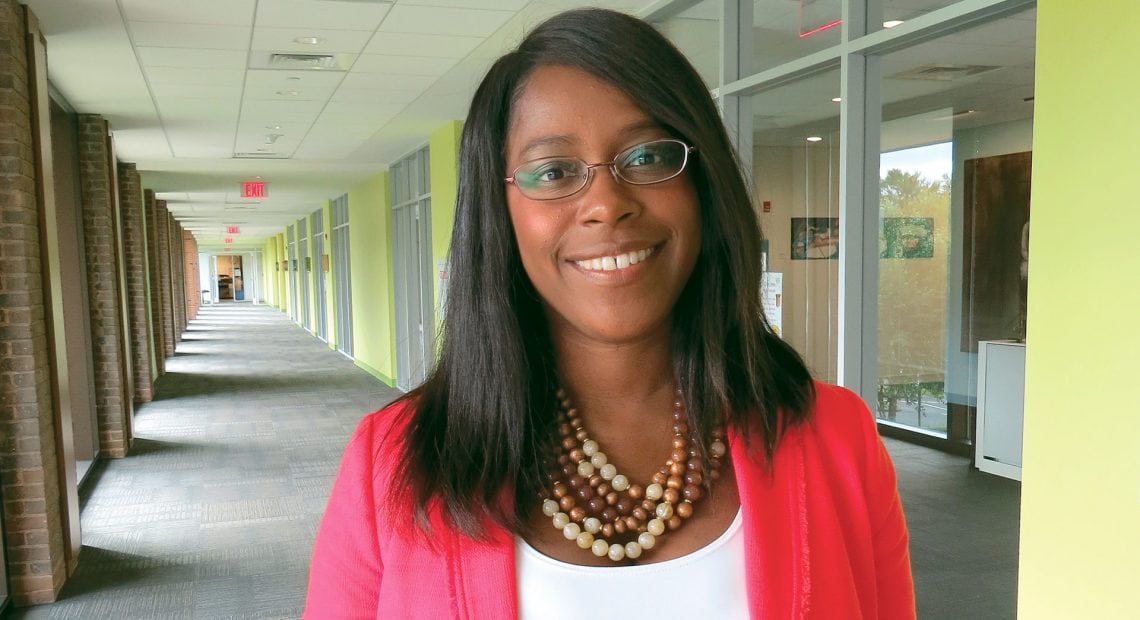
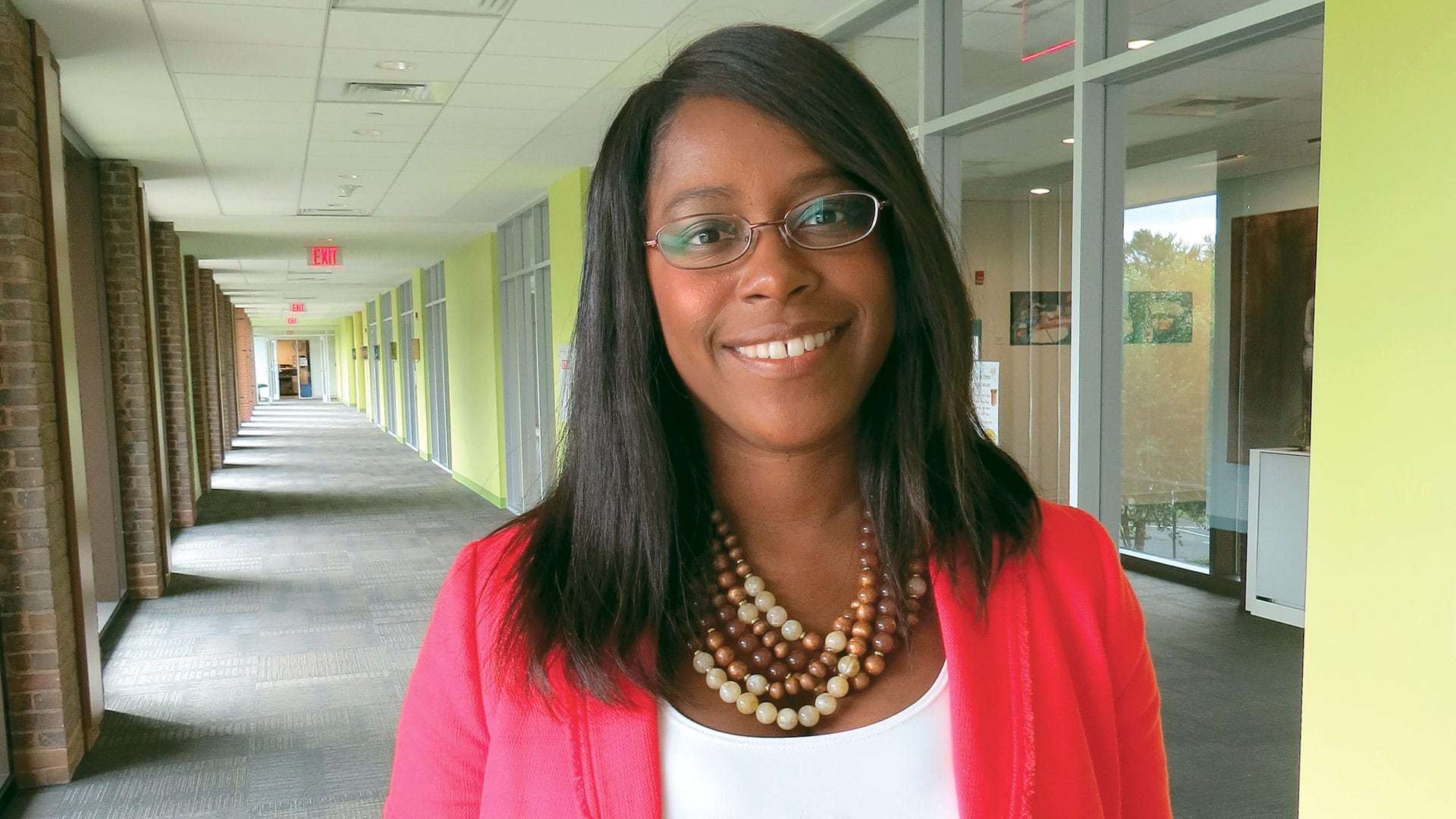
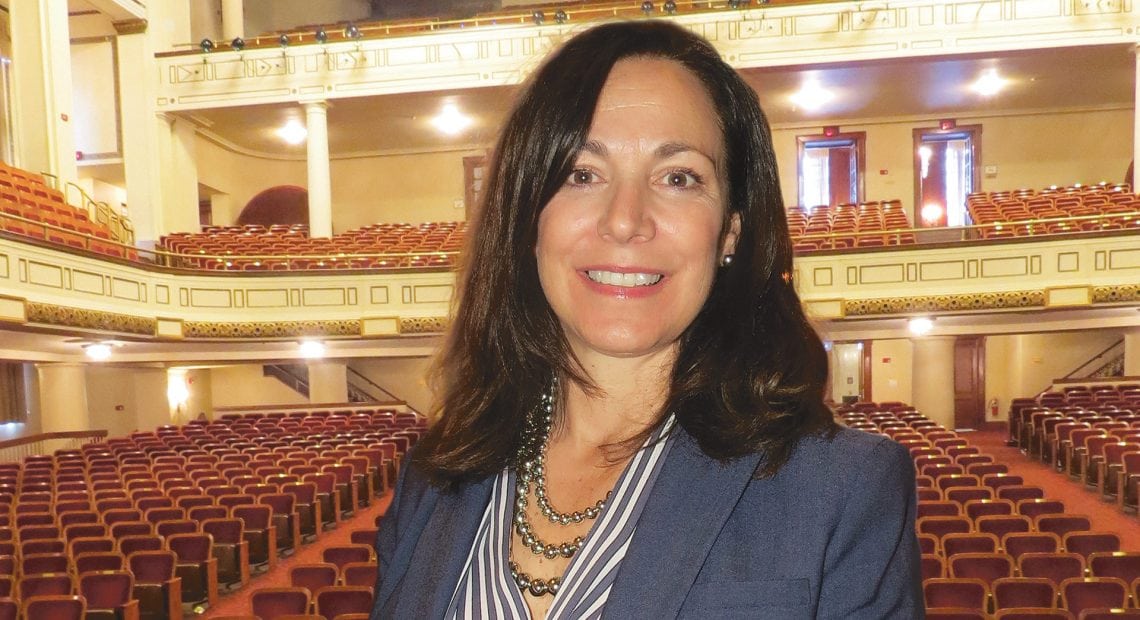
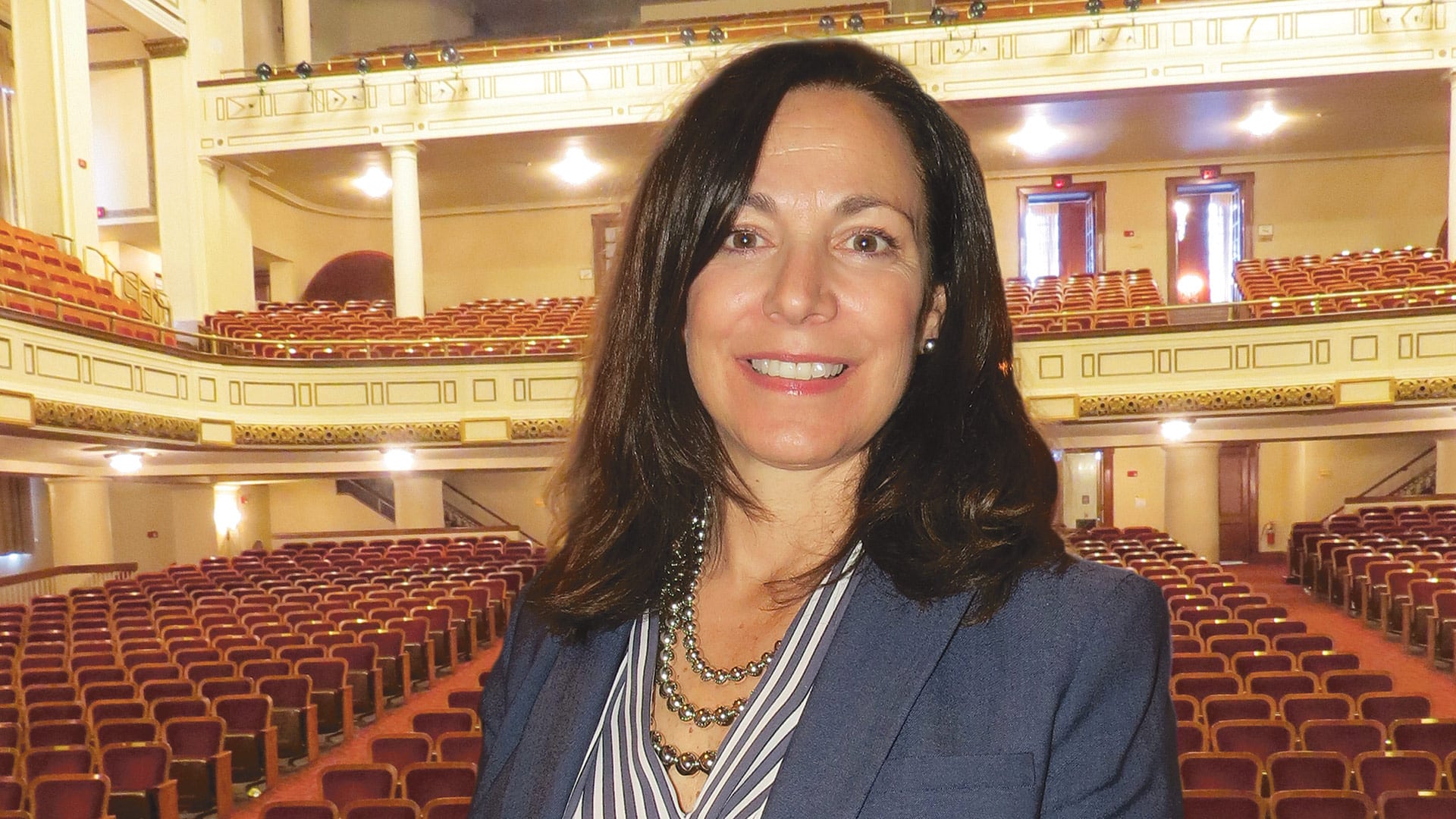
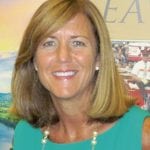
Jennifer Calheno

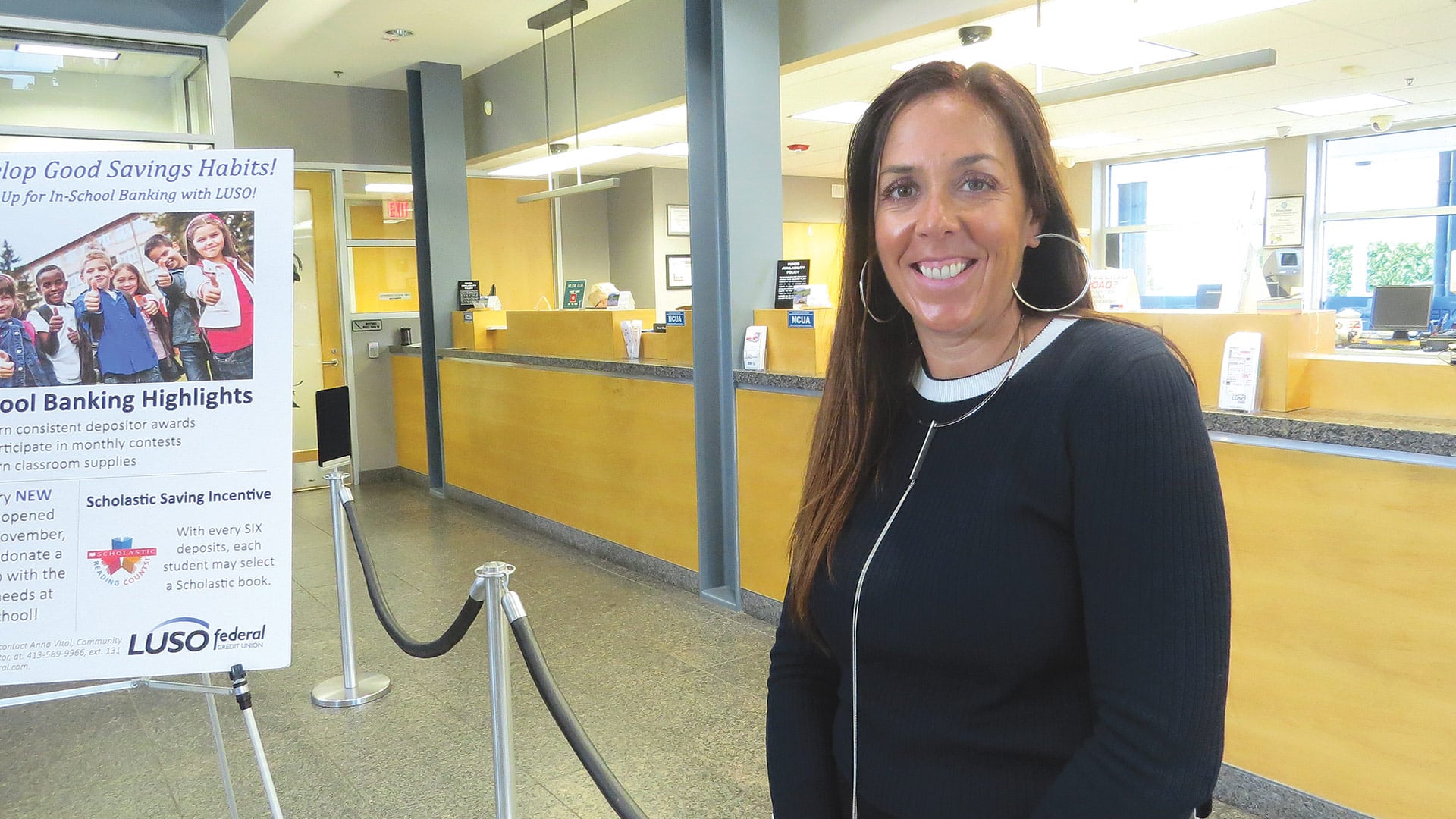
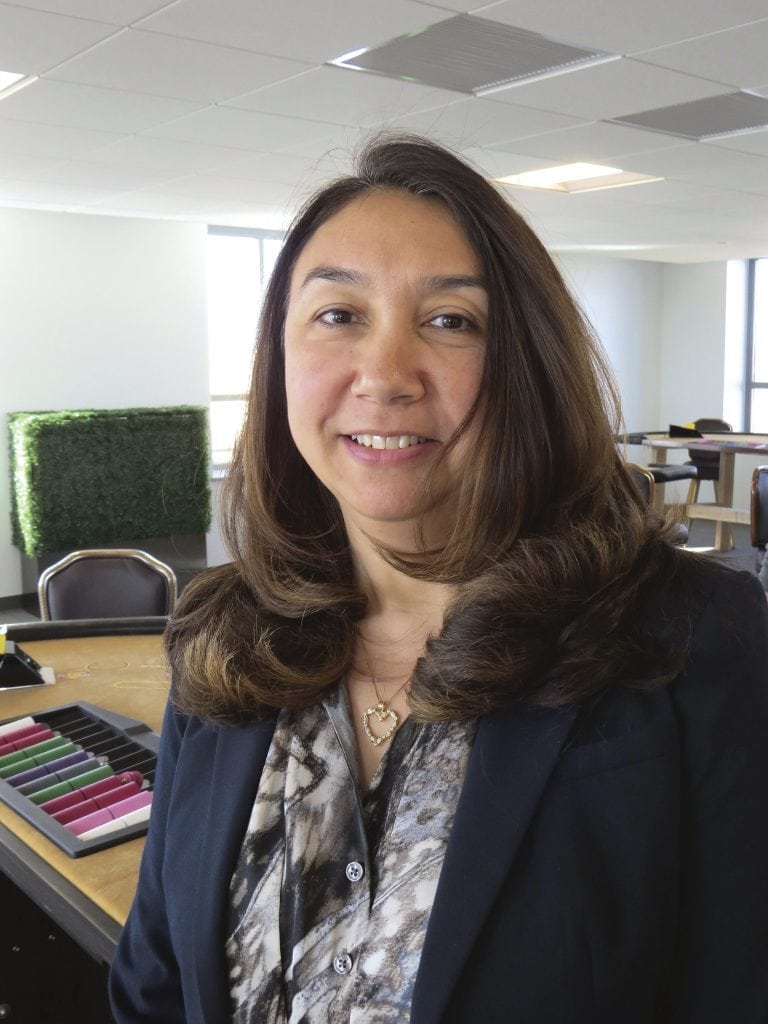
Jennifer Calheno was tasked with taking LUSO Federal Credit Union from $36 million assets to $100 million in 10 years. She did it in seven.

Jennifer Calheno started working at LUSO Federal Credit Union as a teller when she was just 17 — actually, a much different LUSO than the one that exists today.

Back then, this was a tiny operation — three teller windows, a handful of employees, and a small back room in a nondescript building on East Street in Ludlow. There were just a thousand members or so, all of them part of the town’s large and very proud Portuguese community.

At the time, the credit union closed mid-afternoon on Wednesdays, Thursdays, and Fridays and reopened in the evening; Calheno, daughter of one of the institution’s board members, would work that 6-to-8 shift, not ever thinking that her very part-time job would become a career.

Today, as noted, it’s a much different LUSO, with more than 6,000 members, $220 million in assets, a gleaming new 15,000-square-foot headquarters building further down East Street, a second branch in Wilbraham, and more than 40 employees.

And Calheno, working in concert with an ambitious, forward-thinking board and that growing staff, has a lot to do with all that growth. If not the architect of that transformation — and she took on that role to some extent as well — she was certainly the builder. Taking full advantage of a spate of mergers and acquisitions within the financial-services industry and new regulations that have allowed credit unions to move well beyond their original charters and customer bases, she put LUSO on a strong growth trajectory.

And kept it on that path over the past 20 years.

When hired, she was charged with taking the credit union from $36 million in assets to $100 million in 10 years, and without diluting capital. She did it in seven years, primarily through much more aggressive marketing and building name recognition.

“I do not find myself to be an expert in everything, because then I wouldn’t be good at anything. I bring in people who are good at what they do and I listen to what they have to say, and I take their opinions into value.”

“Marketing was my focus while earning my bachelor’s degree, and I always thought that was something that was weak here,” she recalled. “We had to get over that stigma of being just the Portuguese credit union because of our name, and we did that.”

Specifically, LUSO, which originated with the Portuguese-American Club in Ludlow, changed and expanded its charter to serve anyone who lives, works, worships, or attends school in Hampden County.

“That was the pivotal changing point for us,” she noted. “That allowed me to expand my marketing, expand my targeting, and to really get out of that mindset that we were the Portuguese credit union serving the Portuguese community; slowly but surely, the message caught on.”

And while LUSO has grown in terms of assets, members, employees, the use of cutting-edge technology, and every other suitable measure, Calheno says she’s grown as a manager and a leader, learning, among other things, about how to manage work and life, grow a thick skin, listen effectively, and surround herself with individuals whose talents complement, but don’t necessarily duplicate, her own.

“I do not find myself to be an expert in everything, because then I wouldn’t be good at anything,” she explained. “I bring in people who are good at what they do, and I listen to what they have to say, and I take their opinions into value.”

In doing all that while growing assets and membership, Calheno has also raised the institution’s profile and gotten the credit union and its employees more involved within the community, especially with young people and the all-important realm of financial literacy.

Indeed, every Wednesday, without fail, Calheno returns to her teller roots and sits behind a small desk at St. John the Baptist School (which she attended as a child), taking deposits from the students — and teachers — there.

She says these duties represent equal parts role modeling for employees who are also active within the community and simply giving back to the town that has been her lifelong home.

“It gets me out of the office, and it’s really fun,” she said, referring not only to her banking duties, but her work teaching classes for Junior Achievement.

For this issue and its focus on women in business, we talked with Calheno about LUSO and its profound growth, but also the many roles she takes as president and CEO of the credit union, including mentor, role model, and yes, teller at St. John the Baptist School.

By All Accounts

Calheno remembers the considerable amount of flak she received from the community when plans for LUSO’s new headquarters building were announced back in 2005.

It wasn’t the bank’s expansion that had people riled up, but the chosen location — the long-time home to the Double D Dairy Bar, a small mom-and-pop restaurant and local institution.

“They made the best ice cream … everyone loved the Double D,” said Calheno, who placed herself firmly within that constituency.

What the general public didn’t know, but Calheno did, was that the mom and pop behind the Double D were quite ready to call it a career, and the landmark’s days were numbered anyway.

Today, it’s home to a start-of-the-art facility that clearly speaks to how far the credit union has come over the past 20 years, or since Calheno decided to take her career back to where it started not quite a decade before.

Jennifer Calheno says she honed a number of skills over her 20 years at LUSO

Jennifer Calheno says she honed a number of skills over her 20 years at LUSO, especially the ability to effectively listen.

By that time, Calheno, just 26, had earned her MBA from Northeastern, spent some time in banking — as manager of one of WestBank’s in-store branches in Chicopee — and taken a job with the Secretary of State’s office, one that didn’t have much growth potential, as she recalled.

Meanwhile, the manager of LUSO at that time, someone Calheno worked for during her teller days, was getting ready to retire. While looking to replace her, the credit union’s board was also looking to grow the institution — and also for someone who could make that growth happen.

“The board had come together with a strategic plan — they wanted to grow the member base, they wanted to grow the asset size, and they felt they needed a new organization chart, a new structure, in order to that; they wanted to bring in a CEO,” she recalled, adding that, because she had an MBA and some experience in the business, she was asked to put together a job description for this CEO in waiting.

She did so, and while drafting it, she began to see a match between the board’s needs, her own skills, and her desire to find employment that challenged her professionally and personally.

“I thought to myself, ‘with my background and my experience, and knowing LUSO the way I do, I think this is something I can do,’” she recalled. “I looked at other opportunities, but I felt that this was a chance to come back to the organization that gave me a start, and I felt more confident coming into an organization I already knew so much about. I knew the culture, and I’d lived in this community practically my whole life.”

She recalled that she was probably the least experienced of the 15 eventual candidates for the position, at least when it came to management. But she also believed she would work the hardest to gain the respect and recognition of the board and achieve the aggressive goals spelled out in that aforementioned strategic plan.

Fast-forwarding a little, she was awarded the job, and took it with the expectation of still being in it 20 years later.

“I clearly recall a conversation I had with Mr. Dias at that time,” she said, referring to Joseph Dias Jr., founder of the credit union. “I told him I wasn’t looking for this to be a jumping ground to something else; I’m looking at this opportunity to be my career. I told him I wanted to succeed, and if I succeeded, then LUSO would succeed.”

To make a long story short, that’s exactly what’s happened; over the past 20 years, both she and the institution have grown immeasurably.

While only 26 when she took the helm, Calheno said she already understood that she was only as good as the team in place around her, and by team, she meant both the board and the employees she worked with.

“I don’t think that any opinion is not worth listening to. If that opinion jibes with where I was already going, excellent — then, it’s an immediate ‘awesome, let’s go with it.’ If it’s something different from what I’m thinking, I’m going to pursue it further.”

In both cases, there was passion for the institution and a shared vision, she said, adding that both are necessary ingredients in any success formula.

“They give me a lot of freedom, and they give me a lot of trust,” she said of the board, adding that she has taken full advantage of both to meet the ambitious goals for assets and memberships, build and open the new building, add the branch in Wilbraham, and, overall, take LUSO to a much higher plane, one she probably couldn’t have been envisioned when she was working the night shift while in high school.

In turn, she awards those working with and for her a large amount of trust — at least when she feels it’s been earned.

“I don’t micromanage — I don’t have time to micromanage,” she said. “And I do have a lot of trust in the people here. I wouldn’t have put the management team in place the way I have if I didn’t believe in them to do things the way I want them done.

“But if you start to do things not the way I want them done … then we have a problem,” she said. “If you were to ask people here about my management style, they would say, ‘the less we see of Jen, the better job we’re doing.’”

She said the most important skill she’s developed over the years is listening and valuing the thoughts and opinions being expressed.

“I don’t think that any opinion is not worth listening to,” she told BusinessWest, adding this constitutes sound advice for all managers. “If that opinion jibes with where I was already going, excellent — then, it’s an immediate ‘awesome, let’s go with it.’ If it’s something different from what I’m thinking, I’m going to pursue it further, and I’m never just going to disregard someone.”

As for work-life balance, this is for her, as it is for most women with ‘president and chief executive officer’ written on her business card, a real challenge, one that isn’t really mastered, but dealt with to the best of one’s ability.

“My family sometimes does say to me, ‘put the phone down’ or ‘get away from the computer,’ because my job is not a 9-to-5 job,” she said. “My job is 24/7, and I do tell my family that sometimes, LUSO has to come first. If I can do both, I will. Multi-tasking? That’s what I do all day, every day.”

Dollars and Sense

Calheno’s office in the new headquarters building is large, modern, and bright — there are four glass walls, after all.

Through those walls she can see the offices around her, Ludlow Country Club across the street, and the parking lot where the Double D once served up ice cream. Figuratively speaking, though, what she can see is how far she and LUSO Federal Credit Union have come in 20 years, and especially since she was a teller there in high school.

What she can see is how those remarks she made to Joseph Dias all those years ago — about how she wanted to succeed, and if she did, LUSO would succeed as well — have come to fruition.

From all angles, and in every way, it’s quite a view.

George O’Brien can be reached at [email protected]

Cover Story Healthcare Heroes

Healthcare Heroes to Be Saluted on Oct. 25

HealthcareHeroes18

Passion.

If one were challenged to describe the Healthcare Heroes for 2018 — or any year, for that matter — with just a single word, this would be the one.

It is a common character trait within any healthcare profession, but it is certainly necessary to rise above the tens of thousands of men and women in this field and earn that designation ‘hero.’

And it is certainly a common denominator in the remarkable and truly inspiring stories. The passion comes to the fore whether that story is about a career emergency-room nurse who shifted to work at college wellness centers and completely transformed the one at American International College, or about a nurse administrator at the Soldiers’ Home in Holyoke who is transforming care there while also serving as a mentor and role model for other team members. It’s the same when the story is about a large, multi-dimensional effort to battle opioid and heroin addiction in rural Franklin County, or about a pediatrician dedicated not only to the residents of a community, but to making that community a healthier place to live.

Fast Facts

What: The Healthcare Heroes Gala
When: Thursday, Oct. 25, 5:30-8:30 p.m.
Where: The Starting Gate at GreatHorse, Hampden
Tickets: $90 (tables of 10 available)
For more Information: Email [email protected]

That we said, passion is the word that defines these heroes. And it will be on clear display on Oct. 25 at the Starting Gate at GreatHorse in Hampden, site of the Healthcare Heroes Gala.

This will be the second such gala. The inaugural event was a huge success, not because of the venue (although that was a factor) or the views (although they certainly helped), but because of the accomplishments, the dedication, and, yes, the passion being relayed from the podium. It will be same in about seven weeks.

But first, the stories that begin on the facing page.

There are seven winners in all, in categories chosen to reflect the broad scope of the health and wellness sector in Western Mass., and the incredible work being done within it:

The Healthcare Heroes for 2018 are:

• Patient/Resident/Client Care Provider:

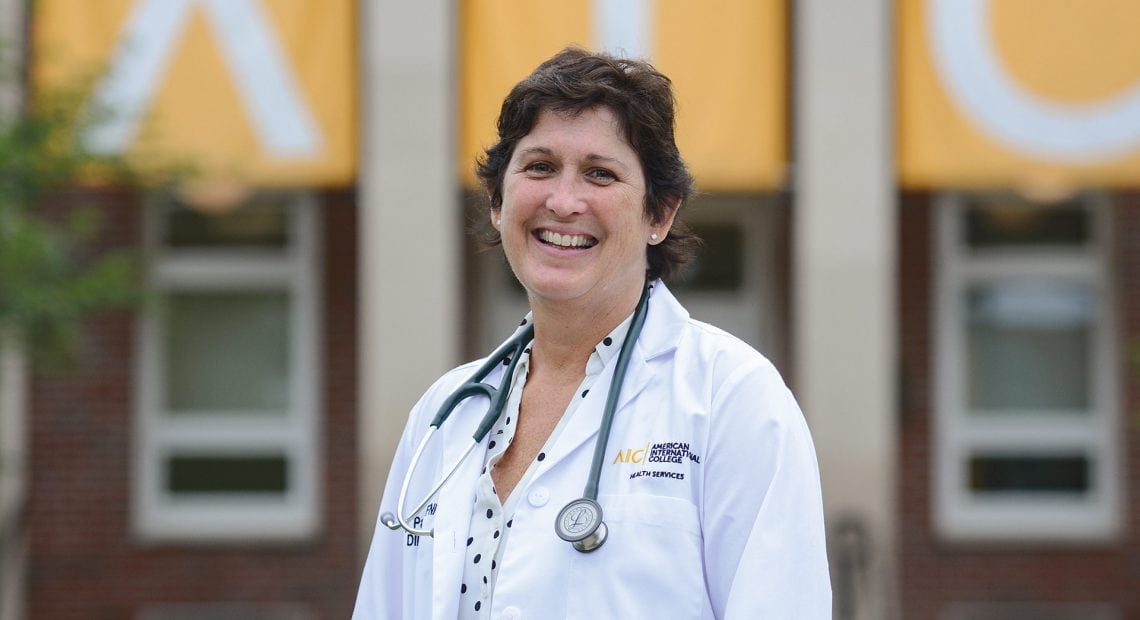
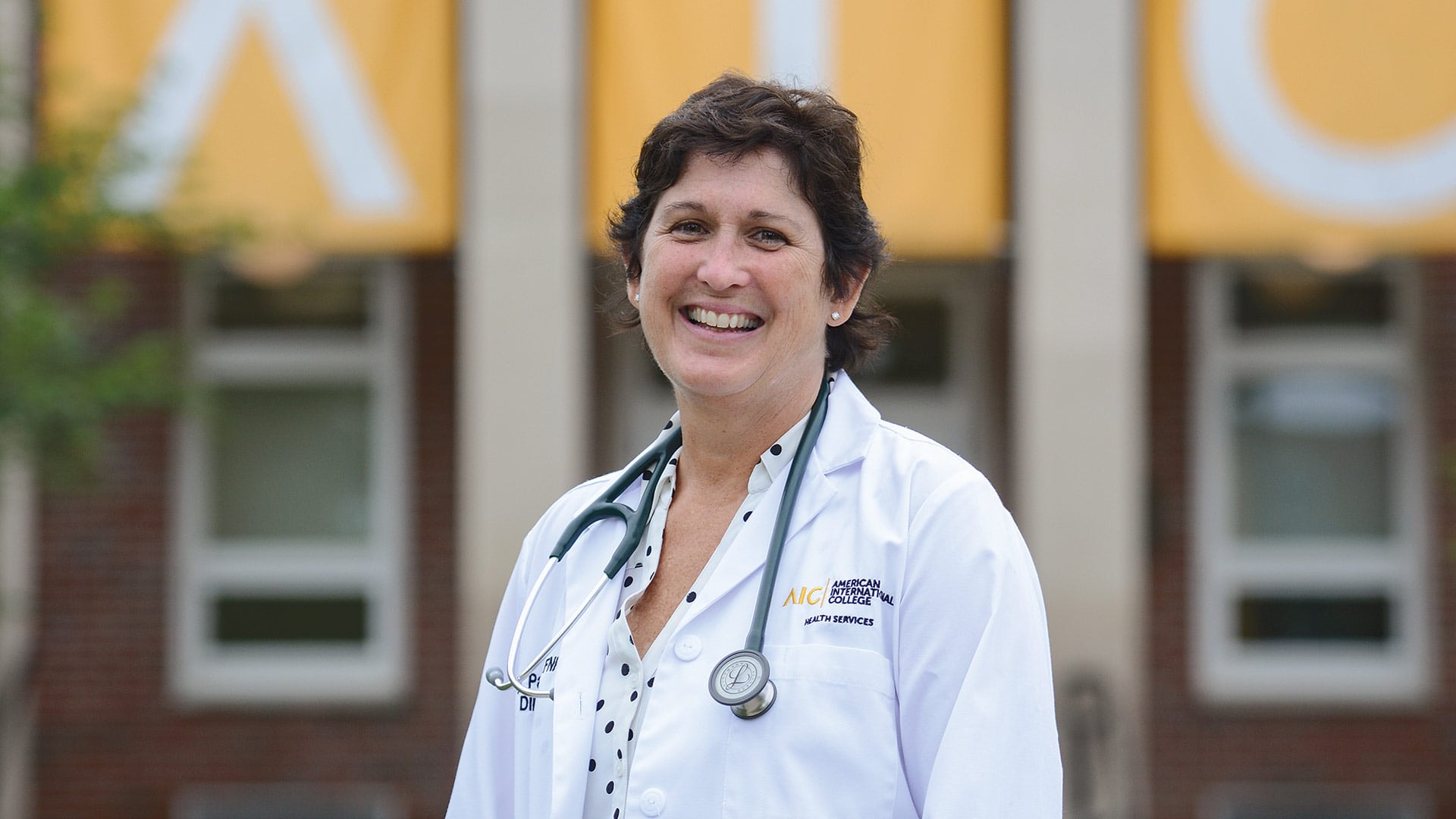
Mary Paquette, director of Health Services/nurse practitioner, American International College

• Health/Wellness Administrator/Administrator:

Celeste Surreira, assistant director of Nursing, the Soldiers’ Home in Holyoke

• Emerging Leader:

Peter DePergola II, director of Clinical Ethics, Baystate Health

• Community Health:

Dr. Matthew Sadof, pediatrician, Baystate Children’s Hospital

• Innovation in Health/Wellness:

TechSpring

• Collaboration in Health/Wellness:

The Consortium and the Opioid Task Force

• Lifetime Achievement:

Robert Fazzi, founder, Fazzi Associates.

American International College and Baystate Health/Health New England are presenting sponsors for Healthcare Heroes 2018. Additional sponsors are National Grid, partner sponsor, and Elms College MBA Program, Renew.Calm, Bay Path University, and Trinity Health Of New England/Mercy Medical Center as supporting sponsors.
HealthcareHeroesSponsors

Photography by Dani Fine Photography

Tickets to the Oct. 25 gala are $90 each, with tables of 10 available for purchase. For more information or to order tickets, call (413) 781-8600, or email [email protected]


Meet the Judges

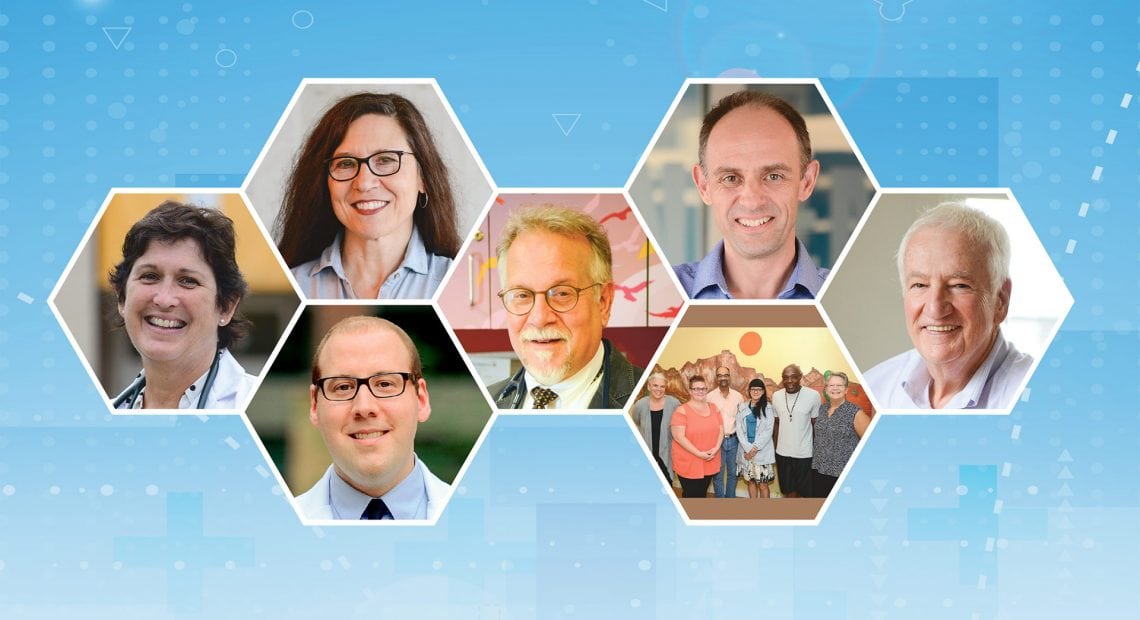
There were more than 70 nominations across seven categories for the Healthcare Heroes Class of 2018. Scoring these nominations was a difficult task that fell to three individuals, including two members of the Class of 2017, with extensive backgrounds in health and wellness. They are:

Holly Chaffee

Holly Chaffee

Dexter Johnson

Dexter Johnson

Dr. Michael Willers:

Dr. Michael Willers:

Holly Chaffee, MSN, BSN, RN: Winner in the Healthcare Heroes Health/Wellness Administrator/Administration category in 2107, Chaffee is president and CEO of VNA Care, a subsidiary of Atrius Health. Formerly (and when she was named a Healthcare Hero) she was the president and CEO of Porchlight VNA/Homecare, based in Lee.

Dexter Johnson: A long-time administrator with the Greater Springfield YMCA, Johnson was named president and CEO of that Y, one of the oldest in the country, in the fall of 2017. He started his career at the Tampa Metropolitan Area YMCA, and, after a stint at YMCA of the USA, he came to the Springfield Y earlier this decade as senior vice president and chief operating officer.

Dr. Michael Willers: Winner in the Patient/Resident/Client-care Provider category in 2017, Willers is co-owner of the Children’s Heart Center of Western Mass. Formerly a pediatric cardiologist with Baystate Children’s Hospital, he founded the Children’s Heart Center of Western Mass. in 2012.


Healthcare Heroes

This Compassionate Leader Has Transformed Health and Wellness on the AIC Campus

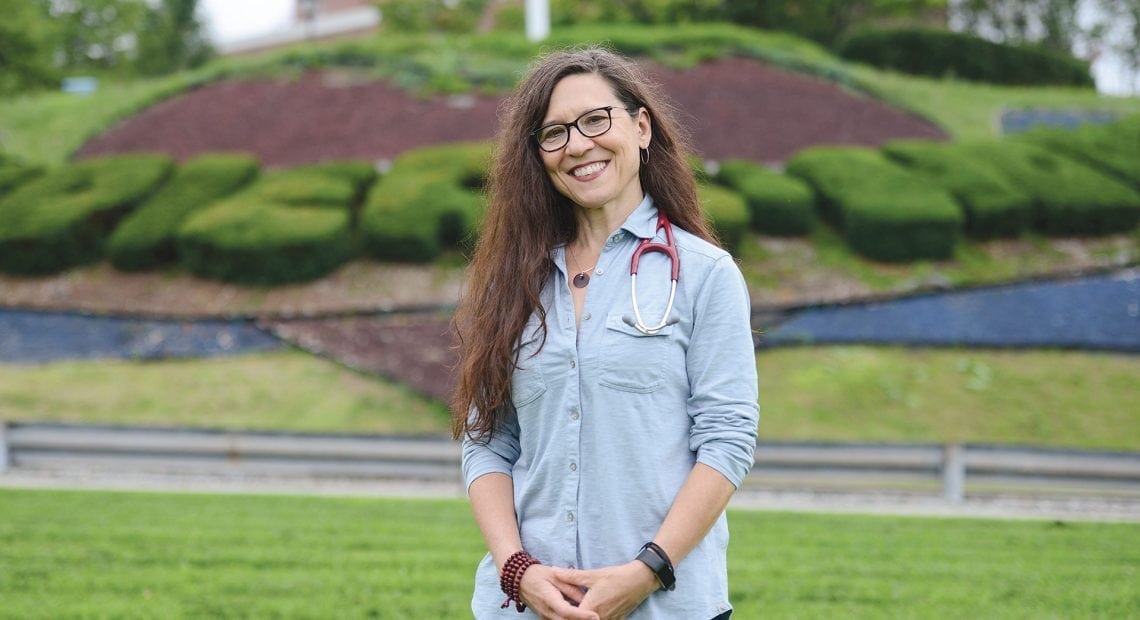
Mary Paquette

Mary Paquette

‘Sex and Chocolates.’

Sounds like one of Hollywood’s late-summer releases. But instead, it’s one of the many intriguing new programs and initiatives launched by Mary Paquette, MS, FNP, in her role as director of Health Services at American International College.

And now that we have your attention — and we almost certainly do — we’ll tell you about it.

Not long after arriving at the college in 2012 to accept the challenge of resuscitating a moribund health-services facility that few students knew about or ventured to (for a host of reasons we’ll get into later), Paquette decided she needed to do some serious outreach.

And it would be undertaken with a number of goals — from introducing (or reintroducing) students to the health facility (known as the Dexter Center) to providing some education, to gaining some insight into the many issues and challenges confronting AIC’s diverse population, many of them first-generation college students.

“There were questions on everything from STD education to things you would think of with Dr. Ruth; I learned some things from these students, and it ended up being a lot of fun.”

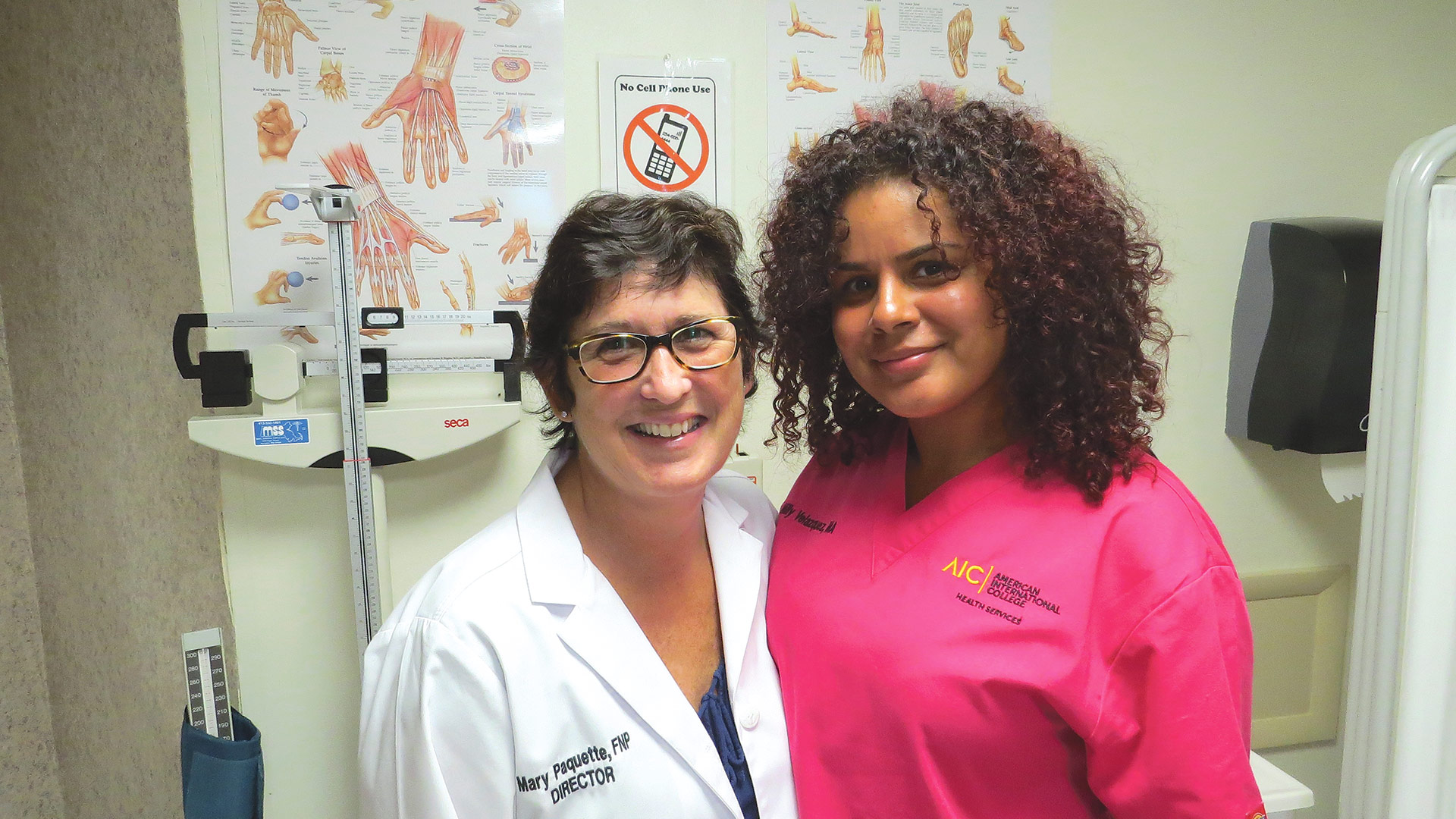
So, as part of this outreach, Paquette and Millie Velazquez, office manager and medical assistant at the center, went into one of the female freshman dorms with a large fishbowl containing some questions they had already put in, some chocolates, and a thirst for more questions about sex from the students they greeted.

“If they were brave enough to ask a question, they got a chocolate,” said Paquette, who recalled, with a large dose of pride, that she and Velazquez left with considerably fewer treats than they arrived with. “There were questions on everything from STD education to things you would think of with Dr. Ruth; I learned some things from these students, and it ended up being a lot of fun.”

As noted, Sex and Chocolates is just one of many initiatives Paquette has introduced since arriving. Overall, she has taken the campus service that was traditionally ranked dead last in surveys of students and made it one of the more highly scored.

Far more importantly, she has taken health and wellness to a much higher plane on the AIC campus, providing not just Band-Aids and Tylenol — which is about all the ‘old’ center was known for — but also a welcoming, non-judgmental environment that has improved quality of life on the campus in myriad ways.

For all that, Paquette was named the Healthcare Hero in the category of Patient/Resident/Client Care Provider, which is among the most competitive, with nominees from across the broad spectrum of healthcare.

Mary Paquette and Millie Valazquez, office manager and medical assistant at the Dexter Center

Mary Paquette and Millie Valazquez, office manager and medical assistant at the Dexter Center, have changed attitudes about the center, and created a healthier campus community, through programs like ‘Sex and Chocolates.’

And it’s a category Paquette has essentially devoted her life to, with AIC being only the latest stop in a 35-year career that has seen her take on a variety of roles in a host of settings. These range from director of Nursing at Ludlow Hospital to per-diem hospitalist at in the GI Department of the Eastern Connecticut Health Network, to assistant director of Health Services at Western New England University — the job that became the springboard to her post at AIC.

And there is a huge amount of overlap when it comes to the lines on her résumé, which Paquette explained quickly and effectively.

“I have a lot of energy, and I like to keep busy,” she said in a classic bit of understatement.

Indeed, she does, and at AIC this energy has translated into profound and very positive change, which was summed up by Robert Cole, the college’s vice president of Marketing & Communications, as he nominated Paquette to be a Healthcare Hero.

“Since arriving in 2012, Mary has almost single-handedly transformed the capabilities and perception of AIC’s Dexter Center for Health and Counseling Services,” he wrote. “She has worked tirelessly and passionately to reach students through new, campus-wide health programming and healthy-living promotion; expanded the scope and availability of Dexter’s services; and routinely works off hours to meet the emergency needs of students, student-athletes, faculty, and staff. She has done all this with limited medical staff and budget, and unlimited dedication, compassion, and extraordinary patient care and customer service.”

With that summation as the backdrop, we’ll explain how this transformation took place and what it means for all those — and we mean all those — on the AIC campus.

Sweet Success

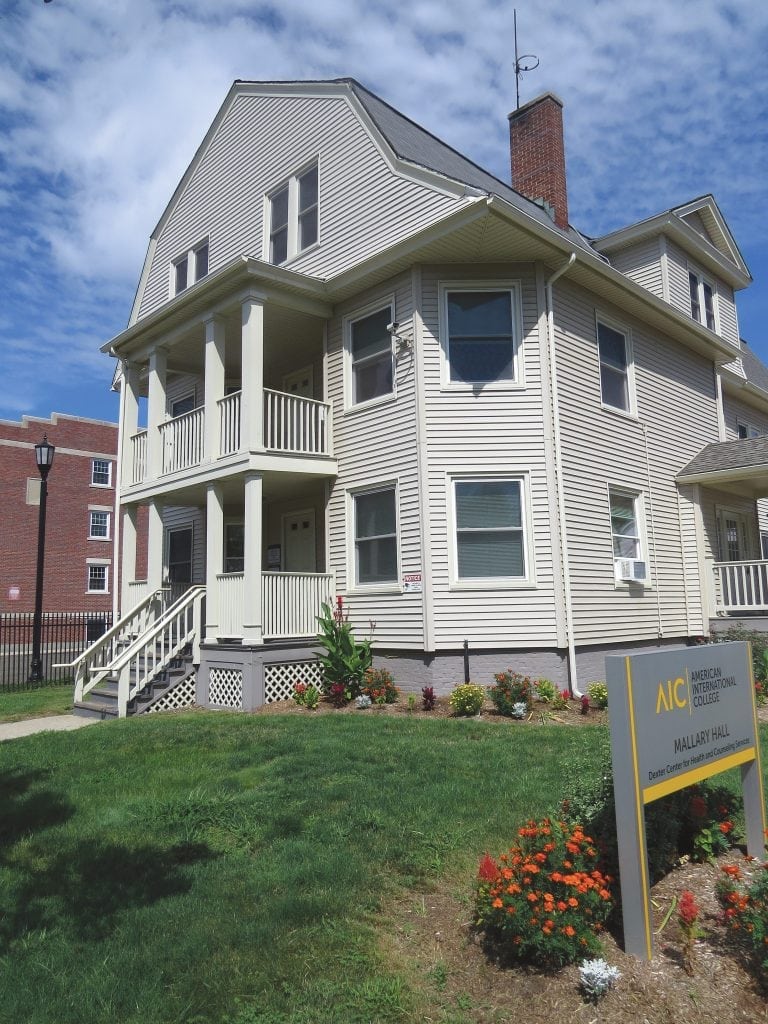
The large Victorian home on Wilbraham Road that houses the Dexter Center has enjoyed a long history at the college and filled a number of roles.

It was once the president’s home, for example, and it has housed classrooms, a photography lab, and other facilities.

But when Paquette first saw it in the summer of 2012, she simply couldn’t believe that its role at that time was home to health services.

“It was falling down, the floors were this awful purple tile, it was filthy … I told Mark, ‘I wouldn’t come here for healthcare,’” she recalled, referring to Mark Berman, then vice president of Administration, who has since passed away. The building was in such poor condition that it was almost a deal breaker when it came to the position she was being offered.

Berman was neck deep in getting the dormitories ready for fall, but he promised Paquette that by October, she would see radical improvement in the Dexter Center. He made good on that pledge, but Paquette spent every weekend her first month on the job cleaning it out herself.

“There were ACE wraps that were disintegrating because they sat on shelves for long,” she recalled, adding that dirt on the floor wasn’t the only thing she cleaned out. There was also the receptionist on duty at the time who was so unfriendly, students hated coming to the facility.

But tidying up the Dexter Center and making it a far more welcoming — and less purple — place were only the first steps in a multi-layered process, and only the latest chapter in a long and quite rewarding career in healthcare.

So before returning to Sex and Chocolates and other endeavors at AIC, let’s go back … to the former Ludlow Hospital.

That’s really where the story starts, because, well, Paquette was born there and grew up only a few blocks away. She worked there as a nurse’s aide when she was 18 and in the ER while in college, and, after earning her bachelor’s degree in nursing at Elms College and spending the first several years of her career in the Boston area, that’s where she returned to.

She would eventually become the last director of Nursing at the facility, which would close its doors in 1994. But Paquette has never forgotten the mentorship she received there or the many connections she made that continued to benefit her throughout her career.

Ludlow’s closing prompted her to go back to school and earn her master’s degree in the Family Nurse Practitioner program at UMass Amherst in 1999, and, as noted earlier, she would put it to use in a number of settings over her long career as a care provider. They include Noble Hospital in Westfield, the Johnson Occupational Medicine Center in Enfield, Johnson Memorial Hospital in Stafford Springs, Hartford Hospital, and Mercy Medical Center.

Starting in 1999, though, her main employer would not be a hospital or medical center (although she would continue to work for several of them), but an institution of higher learning.

Wilbraham Road that housed the Dexter Center

When Mary Paquette first saw the facility on Wilbraham Road that housed the Dexter Center, she couldn’t believe people came there for healthcare.

At Western New England University, she started as a provider — and there was only one at the health center at any given time. “So you just put the pedal to the metal,” he recalled. “But for me it was OK, because it was just like the ER atmosphere … you just go, go, go and see one patient after the other. The trick in that is being able to be efficient, but also make patients feel like you’re listening to them and not rushing them.”

Remember that thought later.

At WNEU, she was mentored by the director of Health Services there, Kathy Reid, who, Paquette said, “was open to anything and everything I wanted to do.”

That meant such things as adding IVs to the list of services, as well as suturing and other initiatives. “Over the course of 13 years, we built Western New England’s facility into an amazing clinic. And when they built the new Pharmacy building and they added a new health services [facility], we even had a little surgery suite … we took off more toenails in the fall from turf toe.”

Remember those thoughts as well.

Paquette said she loved her time at WNEU and had no desire to leave. But then, Brian O’Shaughnessy, then AIC’s dean of students and now vice president for Student Services, hired Reid as a consultant to evaluate an underperforming health-services department — what Paquette described as a glorified (maybe) “high-school nurse’s office” — and recommend changes.

In her report, Reid said, in essence, that the school needed to hire a director of Health Services. And she had the perfect candidate — her second in command — in mind.

Something to Chew on

As noted earlier, the Dexter Center simply wasn’t a popular, or busy, place before Paquette arrived. Summing up why, she said simply, “one, it wasn’t marketed, two, it didn’t offer much care beyond Band-Aids and Tylenol, and three, the it had a secretary who was a real grouch.”

So … she set about changing all that and more. One of the first things she did was hire Velazquez (a referral from her mentor, Reid) and broaden that position to one of office manager and medical assistant.

Through what Paquette described as “an over-the-top friendly personality,” Valezquez has changed the atmosphere in the center, making it more welcoming, more efficient, and far-more visitor-friendly.

Meanwhile, the two have together gone about greatly adding to its roster of services and doing that marketing that was a big missing piece.

With the former, they’ve added IVs and suturing, as happened at WNEU before, and also STD testing, safe-sex education, a bowl filled with condoms in the waiting room, counseling, ongoing education into how the healthcare system works, and, most importantly, no judgment.

Overall, Paquette said she wants to make students better healthcare consumers.

“I feel that a large part of my job is teaching students how to be good healthcare advocates,” she explained. “I want them to leave AIC with a better understanding of their own health and the tools they need to navigate the world of healthcare.”

Regarding the latter, Paquette knew it wouldn’t do any good to make all those other changes if students and other constituencies didn’t know about them. And she knew from her time at WNEU that the place to start was with the resident advisors in the dorms.

With their support, she went about creating what she called silly but also effective programs. Like Sex and Chocolates.

“When you’re doing a dorm program in the evening, you have to be entertaining,” she explained. “The healthcare piece of it … you slip that in when they’re not looking. It was more about them, the students, seeing Millie and I, and seeing that we’re friendly and we’re non-judgmental, but we also know what we’re doing.”

Paquette and Velazquez have initiated other programs with the same goals and underlying mindset, including ‘Cards Against Humanity; AIC Edition,’ a takeoff on the popular party game. Sprinkled in with the offensive, risqué, and politically incorrect ‘answer cards’ are several related to birth control, STDs, the Health Services department, and more.

“You sort of slide those questions in, the students get them, but they’re having fun, and they don’t realize that you’re educating them,” Paquette explained. “We’ve created lots of fun games like that.”

But there were other constituencies to connect with, she went on, starting with the athletes on campus. Each team has trainers, she noted, but there was a disconnect, if you will, between the students, trainers, and health services.

That’s ‘was,’ because Paquette set about improving communications and building bridges. And soon, athletes were finding the Dexter Center for suturing, screenings, and other services.

“I feel that a large part of my job is teaching students how to be good healthcare advocates. I want them to leave AIC with a better understanding of their own health and the tools they need to navigate the world of healthcare.”

“We have rugby here,” she noted. “In those first two years, I’d come in at least a dozen times at night, go to the athletic trainers’ room, throw some stitches in a kid’s head, and go home. My deal with the trainers was, they all had my cell phone, they could call, and as long as I wasn’t working one of my ER shifts, I’d come in; that’s how we won over athletics.”

Paquette and Velazquez have also won over commuting students, college employees, students who remain on the campus during the summer, and other constituencies. The health and wellness center that no one visited is now the facility everyone visits.

Stitch in Time

Paquette doesn’t just work at AIC; she has become, for lack of a better term, a huge booster.

On top of the cabinet in her office sit three large wooden block letters — ‘A,’ ‘I,’ and ‘C.’ And she has much more swag, as she called it, all bearing the school’s letters, logo (a muscular, mean-looking yellowjacket), and color — yellow (obviously).

The item she’s most proud of, though — perhaps even more than a full bowl of questions during a presentation of Sex and Chocolates — is a T-shirt given to her by the rugby team signed by all the players, many of whom had seen Paquette for some stitches.

Maybe more than anything else, that T-shirt shows just how much the health and wellness center has grown since Paquette arrived, and how it has ceased being a college service and instead become a powerful force on campus.

George O’Brien can be reached at [email protected]

Healthcare Heroes

At the Soldiers’ Home, She’s a Nurse, Leader, Mentor, and Role Model

Celeste Surreira

Celeste Surreira

Celeste Surreira was talking about her work, and, more specifically, the unique constituency she serves, when she abruptly stopped in mid-sentence.

Strains of “Anchors Away,” the fight song of the U.S. Naval Academy, had permeated the walls of her office, and she knew exactly what that meant: the Soldiers’ Home in Holyoke was giving a Navy veteran a ‘farewell.’

Rising from her seat quickly, she invited BusinessWest to follow her to what she promised would be a solemn and immensely powerful ceremony. That was an understatement.

In the front lobby of the Soldiers Home sat a casket covered by a quilt, patterned specifically for a Navy veteran, that was made by one of the facility’s nurses. Behind it stood many family members. To the sides were Soldiers’ Home staffers, who, in many respects, are also ‘family’ for this individual — and all other veterans who come there.

Collectively, they assembled, with hands over their hearts, and heard about his life — not just about his service in the Seabees (the U.S. Naval Construction Battalions) during World War II, but about his family (three sons, 13 grand-children, and “eight, soon to be nine” great-grandchildren); the decades he spent as a commercial painter (he and his father helped paint the Soldiers’ Home when it first opened in 1952); his love for Holyoke, his long-time home; his affection for golf; and more.

Then came “Taps.” And many tears.

Walking back to her office, Surreira put the ceremony in its proper context, and in so doing helped explain why she came to the Soldiers’ Home in 2014 and why she is so passionate about the many facets of her work that she was named the Healthcare Hero in arguably the most competitive category — Health/Wellness Adminstrator/Administration.

“They go out the same door they came in — it’s our honor to them,” she said of the servicemen and women being given a farewell. “And that’s very important. When I worked in the hospital, death was something we hid, like it was like a failure; they [deceased patients] went out the back door. Here, death is a celebration of life; there’s no shame. They go out the front door.”

“When I worked in the hospital, death was something we hid, like it was like a failure; they [deceased patients] went out the back door. Here, death is a celebration of life; there’s no shame. They go out the front door.”

Surreira would speak often about the veterans she now serves as she talked about her career and her current work, because the clientele, if you will (they simply call them ‘veterans’ here), is truly unique, and this is reflected in everything from how services are delivered to how these individuals are addressed.

“I thought this was a really interesting population to have the honor to work with,” she said, adding that the Soldiers’ Home, a 265-room, long-term-care facility (which also has outpatient services and a domiciliary), represents a significant career shift for her, with most of her 33 years in nursing having been spent in the emergency room. But in many ways, the issues and challenges facing veterans at the facility and the providers caring for them mirror those of society in general as the population ages and people live longer.

“This is where healthcare is going,” she told BusinessWest. “The population is living longer with chronic diseases. This is the population with which we’re really going to have to make an impact if we’re going to manage the needs of the overall population over the next 30 years.”

In her role as assistant director of Nursing, Surreira has a lengthy job description, and considers herself — and, more to the point, she’s considered by others — to be a care provider, leader, teacher, mentor, and role model.

And she takes each of those responsibilities very seriously, especially the leader and role-model parts.

“Leadership and management are two different things,” she told BusinessWest. “You can manage, which means doing payroll or doing a schedule or telling someone what to do. Or you can lead, which to me means inspiring people to become leaders.

“You can’t lead if you don’t have emotional intelligence,” she went on. “People are just going to see you as the boss. And no one really follows the boss; they’re not inspired by bosses. I’ve always said, if you have to tell someone what your title is in order for them to know you’re the leader, then you’re not really the leader — someone else in the room is the leader.”

One of Surreira’s working definitions of a leader is that of an individual who can work with others to achieve positive change and improve quality of life for those being served, and as we’ll see, there are many examples of how she’s been able to do just that, and thus become a true Healthcare Hero.

Walking the Walk

They call it the ‘Walk Across America.’

This is a walking track of sorts at the Soldiers’ Home, located just outside the facility’s rehab area; 22 laps equals a full mile. There’s a mural covering a few hallways depicting different places across the country, hence the name, said Surreira, and different administrators are actually assigned to certain veterans to walk with them across America on days the veterans choose themselves.

Celeste Surreira says the Walk Across America

Celeste Surreira says the Walk Across America (that’s the St. Louis panel within the mural behind her) is one of many initiatives aimed at improving the mobility of veterans at the Soldiers’ Home in Holyoke.

The track is one of several ‘places to move,’ as Surreira calls them, that have been created in recent years as part of a broad effort to enhance the mobility of the veterans at the Soldiers’ Home and thus improve quality of life and actually reduce the rate of falls.

As with most all initiatives at this facility, this was (and is, as such work is ongoing) a team effort — actually a team with several smaller teams within it, such as the one assigned the task of creating places to move, she told BusinessWest.

The Walk Across America is just one example of that positive change and improvement in quality of life mentioned earlier that Surreira has helped orchestrate since arriving at the Soldiers’ Home in 2014.

She had been working just outside Atlanta as an interim director of Emergency Services at Rockdale Medical Center, and was looking to return to Western Mass., where she spent much of her career.

Indeed, she started in the emergency department at Ludlow Hospital in 1985, then spent more than two decades at Mercy Medical Center, starting as an staff RN and eventually advancing to manager of the Emergency Department. Earlier this decade, there was a short stint as administrative director of Emergency Services at Cooley Dickinson Hospital.

“I was looking at different positions up here, and I received a call regarding an opportunity at the Soldiers’ Home,” she recalled. “They were looking for a leader, someone who could come in and do some mentoring on leadership, and it sounded very interesting; it was a real change of pace for me to go into long-term care as well as geriatrics, but given my interest in leadership and veteran healthcare, a chance to work clinically, and all those things coming together, I thought that it would be a good opportunity for a change.”

And to work with an older population (most of the veterans are in their 80s and 90s) that, as noted earlier, reflects some of the larger, more complex issues facing all those in healthcare — specifically, not only caring for older individuals, but also helping them maintain independence and a high quality of life.

“Our focus is truly on how to promote a good quality of life for these older veterans,” Surreira explained. “We have 94- and 95-year-olds living very well.”

With this broad goal in mind, Surreira has created, and serves on, a number of process-improvement teams working on such matters as reducing the use of anti-psychotic medications, lowering the rate of falls, improving mobility, medication safety, and many others.

And as these teams address each of these areas, they do so with quality of life in mind, she said, using reduction of falls as an example. This could easily be accomplished by reducing one’s mobility, so he or she doesn’t get into positions where they can fall, Surreira went on. But this doesn’t equate to a high quality of life.

“This is where healthcare is going. The population is living longer with chronic diseases. This is the population with which we’re really going to have to make an impact if we’re going to manage the needs of the overall population over the next 30 years.”

“What we don’t want to do is promote the use of things like restraints and alarms, because they don’t allow people to move and self-propel,” she explained. “So what we try to do is advise them of safety and encourage their mobility; we want people to move, we want to take them for walks, we want to do everything we can to promote mobility while also reducing the risk of getting hurt from that fall if you do fall.”

To accomplish all this, Surreira leads the so-called ‘enhancing mobility team,’ which consists of several departments, including nursing, rehab, social work, facilities, and pharmacy working collaboratively to implement evidence-based interventions that will enhance mobility and reduce falls. This team has implemented a series of policies and procedures, including the introduction of a daily ‘fall huddle,’ interdisciplinary rounding, quarterly mobility screens, individualized care plans that include mobility goals, and regular review of polypharmacy.

As a result, the Soldiers’ Home has seen a confirmed reduction in fall-related injuries and a noticeable increase in the mobility of its population.

Taking the Lead

As noted earlier, Surreira’s position comes with a lengthy job description and list of responsibilities. And only a portion of them actually apply to the veterans being served.

The rest have to do with those other functions (for lack of a better term) that she carries out, including that of being a leader, a mentor, and a role model. Her ability to be all those things is a big reason why she was hired — and her desire to continually build upon those skills and add new layers to already considerable amounts of experience explains why she took it.

As she talked about being a leader, for example, she equated it to parenting.

“You mess up a lot, and then you learn how to be a better parent; it’s the same with being a leader,” she explained. “I think I’m a different leader now than when I started this journey, because it’s very humbling.”

Elaborating, she noted that one of the things she’s learned over the years is the importance of active listening.

“In order to hear the person, you can’t be thinking about your response already,” she said, citing a mindset held by all successful leaders. “You have to be totally focused on what they’re trying to tell you.

“You also need emotional intelligence, which means taking the time to know where that person is coming from and be queued into what they’re trying to communicate to you,” she went on. “Often, I tell people, ‘it’s not what they’re saying, but what they’re not saying; it’s not the words they’re saying, necessarily, but how they’re saying them. They may be saying something, but that’s not what they’re meaning or even intending.”

Surreira said mentoring takes place in many ways and on several different levels in her work at the Soldiers’ Home, including the formal teaching she does on subjects ranging from leadership to role-modeling.

“Mentorship from a leadership perspective takes place in a number of ways,” she explained. “Sometimes it takes place in just day-to-day interactions where you have opportunities to have a conversation with someone, provide someone with feedback … it’s all part of relationship building with those folks. Other times, it is more formal, such as the teaching I do.

As for the role-modeling, well, that part of it can really only happen as one adds layers of hands-on experience to their résumé, learns from previous mistakes, and develops a high degree of that necessary ingredient known as emotional intelligence.

“Even though someone may be handling a situation in a certain way, you can role-model a different way — that’s probably the most powerful thing to do,” she explained.

As an example, she cited a situation where there’s conflict going on and the discussion among individuals is getting quite heated.

“Managing yourself is probably the most important thing in those situations,” she said. “You manage your own reactions — the louder other folks may get, the quieter you get; the faster they talk, the slower you speak.

“Overall, mentoring involves building relationships and inspiring trust,” she went on, adding that ‘leading by example’ isn’t a formal line on her job description, but it’s a duty she carries out every day.

Waves of Emotion

Walking back to her office from the Navy veteran’s farewell, Surreira said the Soldiers’ Home obviously conducts many of these ceremonies. “Sometimes there will be two or three a day, and sometimes we’ll go a week without one,” she said, adding that, like most staff members, she tries not to miss a single one.

That’s because, as she said, at this facility, death isn’t something to be ashamed of; it’s not a failure. It’s part of a life being celebrated.

And improving the overall quality of that life has become the focal point of each individual and each team at the Soldiers’ Home.

Surreira’s leadership, mentoring ability, and passion for being a positive role have not only played a pivotal role in all this, they’ve made her a Healthcare Hero in administration.

George O’Brien can be reached at [email protected]

Healthcare Heroes

In the Emerging Field of Bioethics, He’s a Leader and a Pioneer

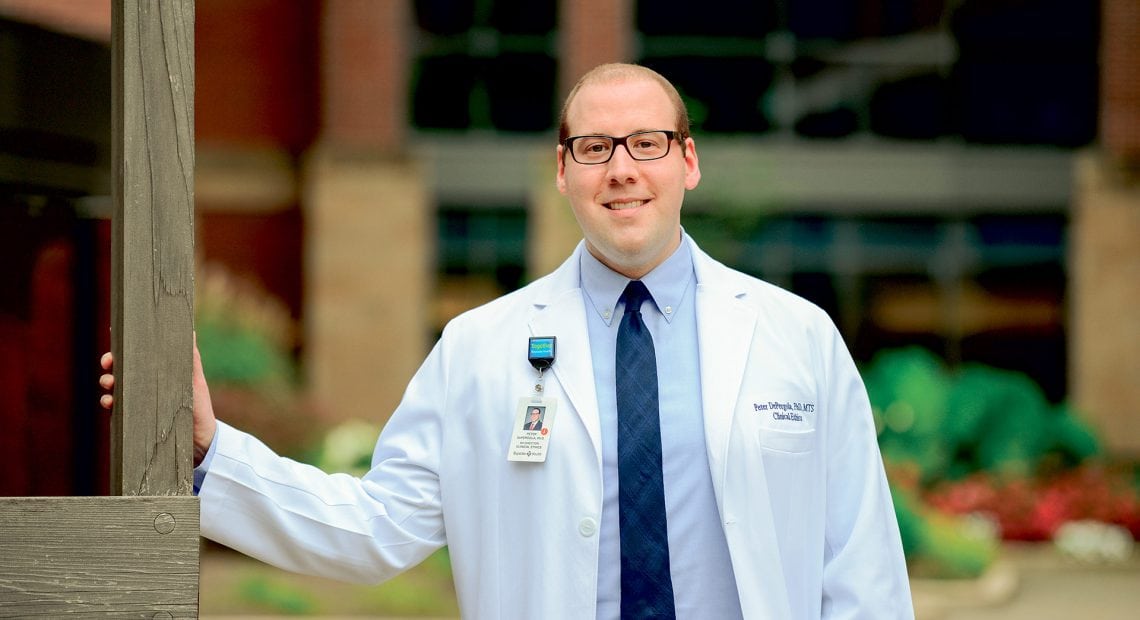
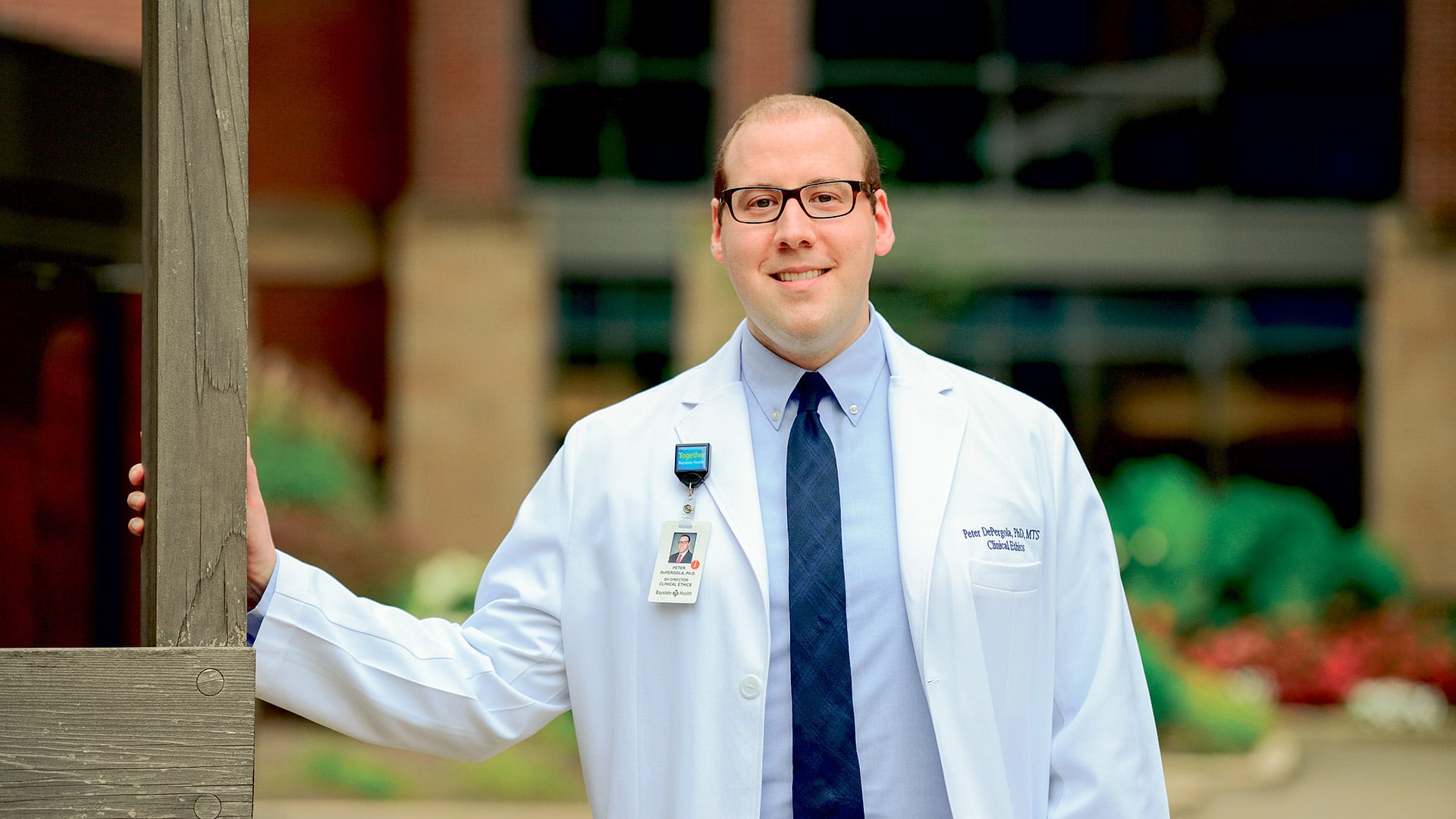
Peter A. DePergola II

Peter A. DePergola II

Oddly, he doesn’t actually remember where or when he got it.

But Peter DePergola’s copy of Rembrandt’s renowned The Return of the Prodigal Son looms large in his small office (it takes up most of the back wall) and, far more importantly, in his life and his work.

The painting, as most know, depicts the moment in the Biblical parable when the prodigal son returns to his father after wasting his inheritance and falling into poverty and despair. He kneels before his father in repentance, wishing for forgiveness and a renewed place in the family.

DePergola, director of Clinical Ethics at Baystate Health, the first person to wear a name badge with that title on it and the only clinical bioethicist in the region, says the painting — and the story of the prodigal son — provides a constant reminder of the importance of not judging others and providing them with what they need, not what they deserve. And that serves him very well in his work.

“The story is about sins and forgiveness, but what it teaches me about healthcare is that we should never treat our patients based on what we think they deserve morally, but on what they need, and only what they need,” he explained. “We don’t get to say, ‘you’re a murderer,’ or ‘you’re an adulterer,’ or ‘you’re an alcoholic — if you really wanted to stop, you can.’

“We have to meet them in the middle of their chaos, to sort of run out to them,” he went on, “and to treat them based on what they need and who they are, not on what we think they deserve.”

“It’s not that they don’t understand that medicine has its limits — I think they do. But they’re living in this larger narrative of ‘who am I if I don’t do everything I can for the person I love most?’”

‘Meeting them in the middle of their chaos’ very often translates into a time when decisions have to be made — difficult decisions — about what can be done for a patient and what should be done; about what is proper and what is needed (there’s that word again).

“There are plenty of things we can do, but shouldn’t,” he went on, adding that such dilemmas are becoming ever more common as the population ages and modern science finds new and different ways to extend life.

The issue he confronts most often involves what kind of life is being extended — and whether that kind of life should be extended. And within that broad universe there are countless other matters to consider, discuss, and debate — and they involve everything from raw science to individuals’ base emotions and perceptions about what is right, wrong, and proper.

“Family members will say, ‘I know this isn’t going well, but am I a loving daughter if I say this is the end? How do I think through this?’” he told BusinessWest as he recounted the type of conversation he has most often. “It’s not that they don’t understand that medicine has its limits — I think they do. But they’re living in this larger narrative of ‘who am I if I don’t do everything I can for the person I love most?’”

Overall, his work in the broad realm of bioethics involves everything from these end-of-life issues to the use of animals in research to potential conflicts of interest and conflicts of commitment. DePergola summed it all up in intriguing fashion by saying “no one ever calls me when something good is happening.”

Despite this, and despite the difficulty of his work — not to mention the long hours and often unusual hours; he was recently called to Baystate at 1 a.m. — DePergola finds it rewarding on many levels.

He likes to say he helps people make sense of nonsense and not necessarily answer questions that can’t be answered, but enable people to cope with them.

“People will say, ‘I’ve lived a good life, and I’ve always done the right thing, and here I am, with six months to live. Why must I suffer? Why do I have to be in pain? Why do I have to be in the hospital?’” he noted. “And at the end of the day, I’d say, ‘I don’t know, it’s not fair, I don’t understand. But let’s not understand together.’

“You don’t have to go through not knowing alone,” he went on, hitting upon the best answer to the question of why his role now exists. “And that may be the only antidote to that question; I can’t tell them why bad things happen to good people, but I can be there with them when they’re asking that question and looking for answers and looking for compassion.”

For his multi-faceted efforts — many if not all of which fall into the category of pioneering — DePergola has, well, emerged, into not just a leader in his field, but a Healthcare Hero.

Work That Suits Him

There’s a white lab coat hanging on a hook just inside the door to DePergola’s office, and it’s there for a reason.

While not a medical doctor, DePergola is a member of a clinical team that interacts with patients and their families. The white coat isn’t required attire, and he didn’t wear it earlier on his career. But he does now, and the explanation as to why speaks volumes about the passion he brings to this unique job every day.

“When I used to come dressed in a suit to have these very important conversations with patients and families, I think it was intimidating in a way,” he explained. “I did it out of respect … you’re going to have the most intimate conversation a family’s ever had — what would you wear to that? You’d want to wear something that says, ‘I really care about this. and I care about you.’

“But it looked like I was a lawyer, and people couldn’t get past the outward appearance,” he went on. “Sometimes just a shirt and tie is too casual, but the combination of the lab coat and the tie seems to send the right message.”

There are other examples of this depth of his passion for this work, including his desire to understand the role religion plays in making those hard decisions described earlier.

“I knew that what I was getting into had a lot of value implications,” he explained, “and that the primary pathway into those values was religious commitments. So I got a master’s degree in theological bioethics so I could make sure that I understood what Hindus and Buddhists believed about end-of-life care the same as Orthodox Jews and Catholics, and what Muslims thought about autopsy, so I could meet them not just where they are clinically, but where they are biographically and in their values.”

As he talked about his career and what he was getting into, DePergola stated what must be considered the obvious — that he didn’t set out to be a bioethicist. That’s because this field hasn’t been around for very long — only since the early ’80s, by his estimates — and it’s especially new in the Western Mass. region. In essence, and to paraphrase many working in healthcare, the field chose him.

“Larger American cities — New York, Boston, Los Angeles — have had full-time clinical bioethicists since probably the end of the 1980s,” he explained, adding, again, that he’s the first in the 413. And in many respects, he helped create the position he’s in and write the lengthy job description.

To fully explain, we need to back up a bit.

After earning his bachelor’s degree in philosophy and religious studies at Elms College (early on, he thought he might join he priesthood, but settled on a different path), and then a master’s degree in ethics at Boston University and his Ph.D. in healthcare ethics at Duquesne University, DePergola completed a residency in neuroethics at University of Pittsburgh Medical School and then a fellowship in neuropsychiatric ethics at Baystate, then the western campus of Tufts Medical School, in 2016.

“The patient is always the priority. In risk management, it’s the hospital first, then the patient. With me, it’s the exact opposite; I make sure everyone’s voice is heard.”

While completing that fellowship, he took on some duties in the broad realm of research ethics, a large subset of this emerging field, but this work was eventually expanded into a new leadership position at Baystate — director of Clinical Ethics, a role he said he helped create in partnership with the health system.

“I did a lot of convincing, and I sort of sold the problem,” he said.

“Medicine tells us what we’re able to, and the law tells us what we’re allowed to do. But neither one tells us what’s good to do. And how we navigate the mean between extremes? If we did everything possible for our patients, we’d be deficient, and there are plenty of things we could do without breaking any laws, but that wouldn’t be in itself good for patients. So we needed someone to step into a leadership role.”

In creating the position and its job description, he and members of Baystate’s leadership team borrowed from models already in existence at similarly sized healthcare systems, especially those at Maine Health, the Carolinas Health System, and the Henry Ford Health System.

DePergola said there are four main categories, or pillars, to his work: clinical ethics, research ethics, organizational ethics, and academic ethics, or ethics education.

The primary domain, as one might expect, is clinical ethics, and in that role, he meets with patients, family members, and healthcare professionals “as they navigate the moral terrain of life-and-death decision making at the beginning, middle, and end of life,” he explained.

“I see everyone — from patients and their families in the Neonatal Intensive Care Unit to our geriatric patients, to everyone in between, whether it’s a patient in infectious diseases or genetics or ob/gyn.

And, as he said, no ever calls him when anything good is going on.

Questions and Answers

As he talked about his work in bioethics and many of the difficult conversations he becomes part of, DePergola summoned a quote from Aristotle that he’s undoubtedly already used countless times in his short career.

“He said, in essence, that something is good if its fulfills the purpose for which it was made, and bad if it doesn’t,” said DePergola, adding that such a benchmark, if one chooses to call it that, should be applied to all aspects of healthcare, including everything from a feeding tube to any other step that might be taken in an effort to prolong life.

“If it’s not going to fulfill the purpose, is it good? We need to think about the logic of what it would mean to provide a clinical treatment without a clinical reason,” he went on, adding that such questions loom large in his field of work and often bring him to another difficult discussion — the one juxtaposing quantity of life against quality of life.

Such thought patterns help DePergola as he goes about his various duties, during which — and he makes this point abundantly clear — he advocates for the patient first, not the health system that employs him.

And this distinguishes his work from that of those in the broad realm of risk management.

“The patient is always the priority,” he explained. “In risk management, it’s the hospital first, then the patient. With me, it’s the exact opposite; I make sure everyone’s voice is heard.”

And not only heard, but understood, he went on, adding that the cornerstone of success in this field (if one can even use that word within it) is establishing trust.

Wearing a white coat instead of a suit coat is part of it, but a bigger part is understanding exactly where someone is coming from. And this comes from taking the time to understand their situation, their religious beliefs, and much more.

Even then, the decisions don’t come easy, he went on, adding that his work often comes down to helping parties decide between the better of two bad options and coping with questions that, as he noted, can’t really be answered.

Such sentiments are reflected in DePergola’s thoughts on other aspects of his work, especially his teaching — he’s an assistant professor of Medical Humanics at Elms College, where, in the small-world department, had Erin Daley, director of the Emergency Department at Mercy Medical Center and the first Healthcare Hero in the Emerging Leader category, as one of his students.

“I always try to emphasize to my students that the big questions of medicine that patients are asking have little to do with medicine, that the big problems in medicine have little to do with medicine,” he told BusinessWest. “They’re questions of meaning, purpose, identity, and value.

“They don’t show up on X-rays, you can’t write prescriptions for them, and we can’t bill for that,” he went on. “Medicine is very good at addressing ‘how’ questions — as in ‘how does ammonia work?’ — but it’s very poor at addressing the ‘why’ questions. And I think that, when we fail to connect with our patients in medicine, it’s because we’re giving ‘how’ answers to ‘why’ questions.”

Framing the Question

Returning to Rembrandt’s Return of the Prodigal Son, DePergola said there’s another reason why that painting resonates with him.

It has to do with how many times he has the same conversations with different people, such as the one about miracles, and walking them through the argument that there’s no logical connection between believing in a miracle and concluding that life-sustaining medical treatment should continue.

“You don’t offer life-sustaining medical treatment for miracles to occur, and I often dread having another one of these conversations,” he said. “But then, I remember that every time I have any of these conversations, it might be the 12th one of the day, but it’s the first for these families. They deserve for me to treat it as the most important and the only conversation, not the 12th.

“Again, I give them what they need,” DePergola went on, expressing sentiments that clearly explain why he’s an emerging leader, a pioneer, and a Healthcare Hero.

George O’Brien can be reached at [email protected]

Healthcare Heroes

This Pediatrician and Coalition Builder Has Helped Create a Healthier Community

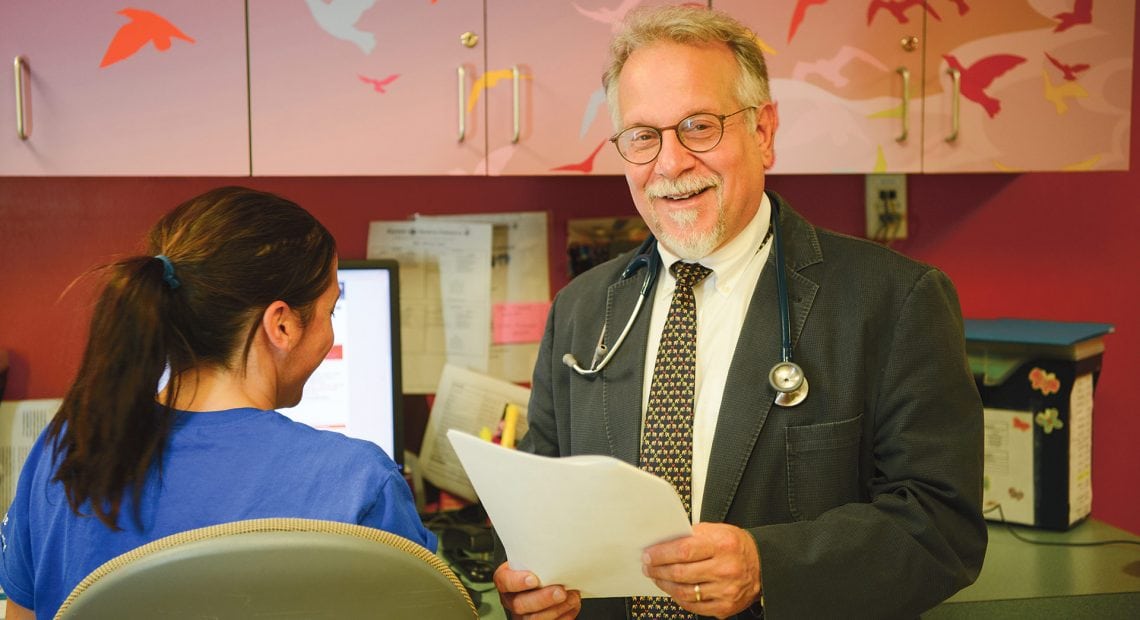
Dr. Matthew Sadof

Dr. Matthew Sadof

Most people who have been working professionally for nearly 40 years have had a number of desk chairs, especially as technology has advanced and the office has become more ergonomically correct.

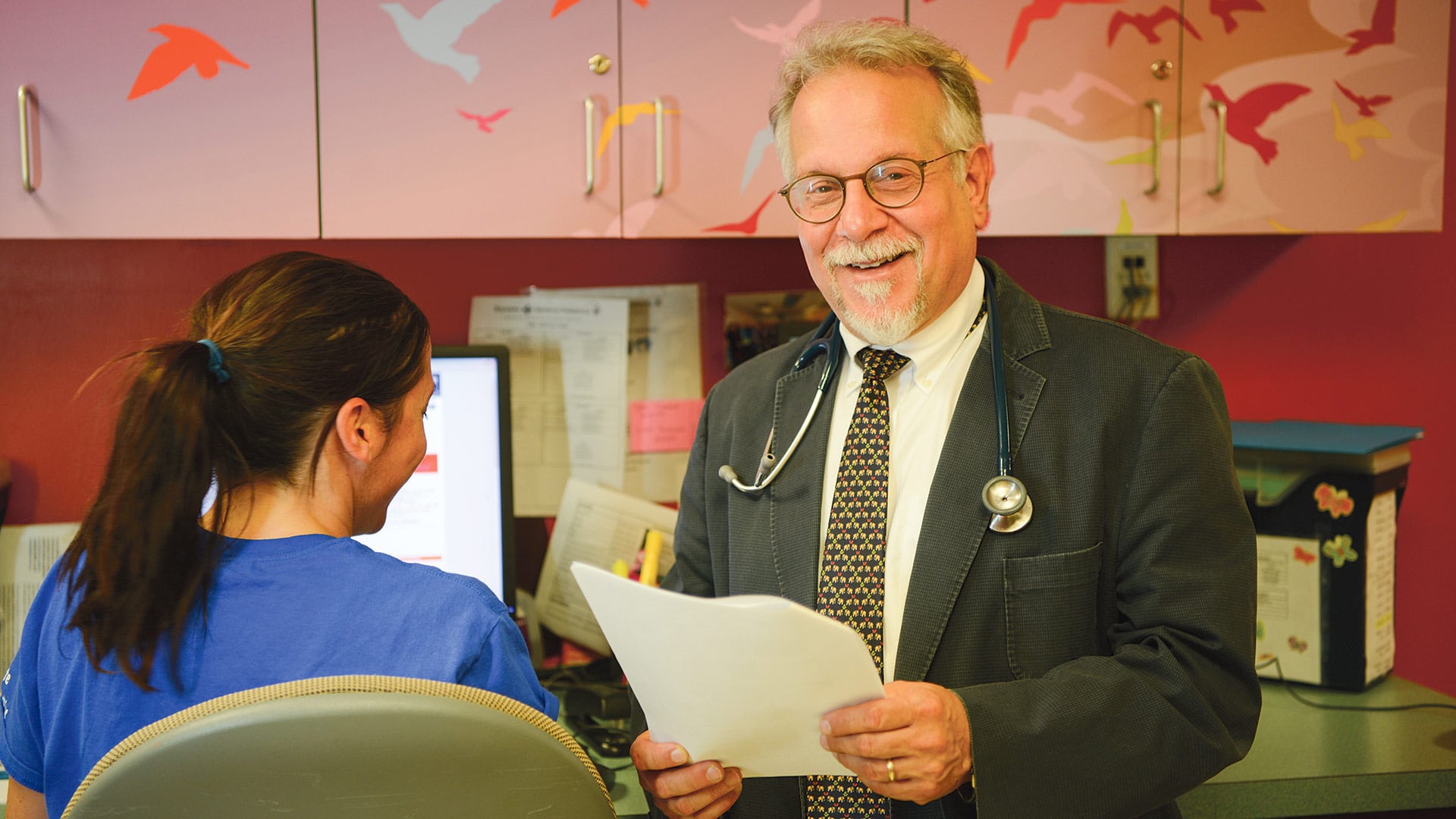
Dr. Matthew Sadof has had exactly … one.

It was given to him upon completion of his residency at New York Hospital, and it’s been with him ever since. It’s a low, wooden chair with arms, and Sadof obviously likes how it looks and feels — for the most part, anyway. But the reason he keeps it is what’s written on the back: “Go and do thou likewise.”

That’s the school’s motto, but far more importantly, it’s Sadof’s approach to life and also his life’s work, as will be made clear as we explain why he is the Healthcare Hero in the Community Health category.

“One of the things that I’ve tried to practice my whole life is something called tikkun olam, which means to heal the world,” he told BusinessWest. “And that’s what I try to do. I’ve been sitting in this chair since I graduated. It’s my chair; I’ve had opportunities for other chairs, but I like this one.”

The Heroes award is only the latest of many to be bestowed upon Sadof, a pediatrician at Baystate Children’s Hospital, whose chair resides in a small office at the Baystate High Street Health Clinic, in the middle of one of Springfield’s poorest neighborhoods, as it has for the past 20 years.

“Dr. Sadof has demonstrated that a physician who is dedicated to improving the health and well-being of his patients must go beyond the office walls and work diligently to improve the health of the community.”

This office is, by his own admission, not at all asthma-healthy, with its carpeting, drop ceiling, and somewhat poor ventilation. Which is ironic, because he is perhaps best known for helping to lead an all-out battle against asthma in a city consistently ranked among the worst in the nation for asthma health.

His leadership role in the Community Asthma Coalition and related initiatives has dramatically improved the environment across Springfield and reduced hospitalizations dramatically, but he would be the first to note that, with the city’s poor housing stock, there is considerable work still to do.

However, there is more to Sadof’s story than helping children and families breathe easier, literally and figuratively. He has also been a passionate advocate for the underserved and the marginalized, working with medically fragile and technology-dependent children and their parents, who are often overwhelmed by their medical needs. Meanwhile, he has worked to address the social and medical difficulties faced by adolescents in Springfield, patients who often fall through the cracks as they age out of pediatrics and fail to connect with an adult-medicine provider.

As he sat down to talk with BusinessWest to talk about the many facets of his work — yes, in that chair from NYU — Sadof made it clear that, while he is honored to be named a Healthcare Hero, he stressed that whatever progress has been made in terms of making Springfield a healthier community has been a team effort, not the work of one man.

“I can’t over-emphasize that it’s not just me,” he said, referring not only to the asthma initiatives but a deep portfolio of projects he’s been involved with. “I work with lots of wonderful people; you need a whole community of people to really change a community.”

Still, Sadof has established himself as a clear leader in these efforts and a role model for the medical students and residents he teaches.

Dr. Laura Koenings, vice chair of the Education Department of Pediatrics at Baystate Children’s Hospital, who nominated Sadof for the Healthcare Heroes award, may have summed up his devotion to community — and his approach to achieving progress — best.

“Dr. Sadof has demonstrated that a physician who is dedicated to improving the health and well-being of his patients must go beyond the office walls and work diligently to improve the health of the community,” she wrote. “A role-model physician looks for gaps in the healthcare-delivery system and strives to bring better healthcare to the underserved, whether that is the infant with complex medical needs on a home ventilator and a gastronomy tube for feeding, or the teenager out on the streets without a medical home.”

Sadof continues to do all these things, and that explains why he’s a true Healthcare Hero.

Clearing the Air

Sadof said it wasn’t long after he arrived at the High Street Clinic that he began to realize the full extent of the asthma problem in Springfield.

“My very first week, there was a kid who came in who had really, really, really bad asthma,” he recalled. “So bad that I had to go on the ambulance and transport him to ICU. He needed a breathing machine — he needed to be intubated — and while I was there, I looked at his mother, and I couldn’t help but notice that she had a Band-Aid on her arm and a hospital bracelet on her wrist.

“I said, ‘what happened to you?’ he went on. “And her asthma was really bad. I asked her where she lived, and she went on to describe an apartment building that had cockroaches, rodents, leaky windows, and mold — all of which are very potent triggers for asthma.”

Dr. Matthew Sadof says he’s had one desk chair throughout his lengthy career

Dr. Matthew Sadof says he’s had one desk chair throughout his lengthy career and lives by what’s written on the back: ‘Go and do thou likewise.’

Thus began what might be called a crusade against asthma, as well as a pattern of not only treating patients but asking them where they live. And not only asking them where they live, but taking steps to do something about where they live and removing some of those triggers for asthma.

“We teach people how to clean with vinegar, baking soda, baking powder, and castile soap, and that’s made a huge difference,” he explained. “We also showed people how to store food properly and store garbage properly in a way that doesn’t promote the growth of rodents and insects.”

Before getting into more detail about his efforts to combat asthma and the many other aspects of his work, it’s necessary to explain how Sadof arrived at the High Street Clinic.

Our story starts back at medical school, where, by this third year, Sadof realized he wanted to spend his career working with young people.

“I knew that I liked to talk to people, and I knew I liked to work with young families,” he recalled. “And I knew I liked working with children because they’re growing, and there’s the possibility to make a real impact on the trajectory of someone’s life when you start early.”

He practiced in Pittsfield for 10 years, doing general pediatrics, before he and his family relocated to Philadelphia to “try something new,” as he put it. Things didn’t exactly work out there as he hoped, so the family decided to return to what they considered home.

A former colleague was working at the High Street Clinic at the time. Sadof asked her what the lay of the land was, and she mentioned that the clinic was looking for someone. And, long story short, Sadof became that someone.

“Something about this place just felt really good,” he told BusinessWest, noting that, 20 years later, he still feels the same way.

“There was a huge need for services,” he explained. “And there were bright students and residents that I could work with. And practicing and teaching medicine at the same time keeps you really sharp. They’re always asking you questions that you may not know the answers to, so we all look it up and learn it together.”

Finding answers to some of Springfield’s most vexing health problems has been Sadof’s M.O. since arriving on High Street, and, as noted, asthma soon become one of his top priorities.

But to address it, he knew the city needed to bring together a number of players to form a solid, united front against the disease. And it really started with that visit his first week on the job.

“That’s when I started thinking about how important it was for me to start to address some of the root causes of asthma, and about what I could do to build a bridge from the clinic to the community,” he recalled. “They weren’t calling it the ‘social determinants of health’ back then, but that’s really what we were doing.”

Within a year after arriving at High Street, Sadof became the medical director of the clinic, and around that same time, he was approached by a grant writer from what was then Partners for a Healthier Community (now the Public Health Institute of Western Mass.) to apply to be part of the National Collaborative Inner-city Asthma Study.

Fast-forwarding a little, the local group was awarded a grant, and a social worker was hired to be an asthma counselor, he went on, adding that parent groups were formed, individualized counseling was provided, and other steps were taken not only to treat people who were sick but to make homes more “asthma clean.”

In 2001, the Pioneer Valley Asthma Coalition was formed, and Sadof, who started in what he called an observer role, became its chair in 2004. In 2009, he help forged a partnership with Boston University whereby a stimulus grant from the national Institute of Environmental Health was secured to create something called the READY (Reducing and Eliminating Asthma Disparity in Youth) program.

“We trained community health workers to teach people how to keep their home asthma clean,” he explained, adding that there would be a series of five home visits in the course of six months. “And anecdotally, I could tell which families were in the program and which ones weren’t; we cut hospitalizations down dramatically and cut hospital days down dramatically.”

Care Package

But while Sadof is perhaps best known for his work to combat asthma, there are many other aspects to his practice, all of which relate directly to what’s written on the back of his chair.

Indeed, while recognizing a real problem with asthma, Sadof said he also quickly realized there was a large number of children with severe disabilities and families struggling to care for them. And he’s continuously looking for new and innovative ways to meet the many needs of both these children and their families.

“I have lots of children who are technologically dependent,” he explained. “These are children who are on ventilators at home, they have feeding tubes, they often require 24-hour care … they and their families require services, and they need help.

“From listening to these kids, I was always trying to figure out a better way to do things,” he went on, adding that he was approached in 2012 by officials at Boston University Medical School with the goal of developing a grant to help improve complex care.

Baystate and BU were eventually awarded a $6 million grant ($1 million each over three years) to develop something called the 4C program. That’s an acronym for Collaborative Consultative Care Coordination program, which was created to help parents and pediatricians coordinate care for the most medically complex children in Western Mass. Each word in that acronym is important, and collectively they explain what it is and how it works.

“We developed a couple of teams, with myself as the complex-care doctor, where we brought people in, took in all their data, and put it into a cloud-based care plan,” he explained. “These care plans lived on their phones, and they were accessible by any kind of electronic device and were accessible by their primary-care doctor and by the hospital and the families.

The consultative-care program created for each family consisted of a nurse care coordinator, a social worker, a so-called ‘family navigator,’ a nutritionist, and a psychologist, he went on.

“There’s been a huge influx of patients from Puerto Rico, people whose lives were blown away who are medically complicated and very fragile. People with heart defects, lung defects, neurological issues, and we’ve been working hard to keep them healthy. It’s great work and its very rewarding.”

“And we really improved the lives of lots of kids,” he said with a large dose of satisfaction evident in his voice. “We were able to decrease the cost of healthcare by a lot and improve the satisfaction of families. This was a consultative program where we worked with primary-care doctors to keep the care inside the patient’s medical home, close to where they lived; we worked with schools, we worked closely with housing to make sure we could make accommodations, we did home assessments and home visits. The idea was to try to support families through this work, and it was incredibly rewarding.”

He used the past tense because the grant funding ended at the close of 2017. The plan is to find a way to restore and continue the initiative through the new accountable-care program being created. Meanwhile, Sadof continues to care for children with complex needs, mostly without the same comprehensive teams made possible by the 4C program, and the number of patients in that category has swelled in the wake of Hurricane Maria, which devastated Puerto Rico almost exactly a year ago.

“There’s been a huge influx of patients from Puerto Rico, people whose lives were blown away who are medically complicated and very fragile,” he explained. “People with heart defects, lung defects, neurological issues, and we’ve been working hard to keep them healthy. It’s great work, and its very rewarding.”

There’s that phrase again. Sadof uses if often, and it speaks to the passion he brings to his work, which, by and large, involves a poor, very challenged constituency, and many of the sickest children in this region — and beyond it.

To explain that passion, Sadof related the story of his father, who had tuberculosis.

“I just have this vision of my grandmother bringing my father to a clinic, where his test came back positive,” he explained, noting that his father had two aunts who died from the disease. “I carry that picture of my father and my grandmother with me always … and I look at the mothers here, and I say, ‘100 years ago, this was my family.’

“And the test about what decisions I make is that ‘if this was my family, what would I want to do? What would I want done for my family?’” he went on. “It has to pass that test. And it’s not always the easiest answer, and it’s certainly not the fastest answer.”

It Sits Well with Him

For the last word on the honoree in the Community Health category, we return to Laura Koenings’ nomination:

“Dr. Sadof recognized early on that it takes a village, and not just the actions of a single physician, to improve the long-term health of the community,” she wrote. “This is why he has always been a coalition builder — helping to unify patients, families, community agencies, and government entities to work together for a healthier community. He also recognized that, in order to advocate for his patients and their families, he must understand their needs and bring their voices to the agencies and government entities that are part of his coalition.”
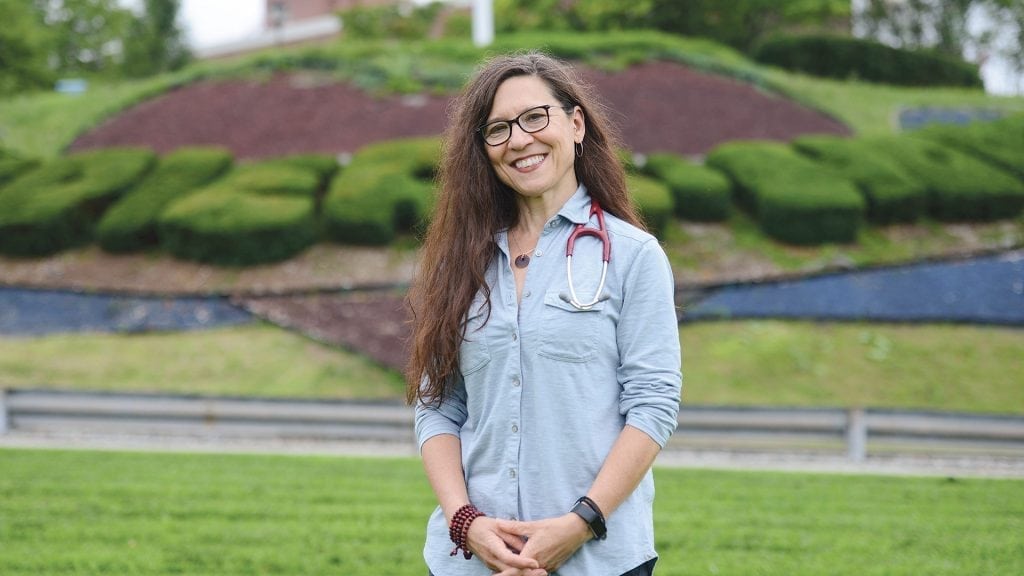
He has done all that, and that’s why, from the day he earned that chair, he’s been a Healthcare Hero. u

George O’Brien can be reached at [email protected]

Healthcare Heroes

This Unique Venture Exists at the Intersection of Innovation and Technology

Christian Lagier

Christian Lagier, managing director and co-founder of TechSpring.

Christian Lagier has a deep background in entrepreneurship, business operations, and strategic business development.

He’s been involved with startups and high-growth companies in Paris and Copenhagen, and he spent 10 formative years in Silicon Valley’s high-octane startup environment at arguably its zenith (the ’90s).

Thus, he’s an expert in … collisions.

That’s a word you hear quite often within the realms of innovation and entrepreneurship. Generally, it refers to the art and science (because it’s both) of bringing people together and making things — meaning products, services, and the companies to provide them — happen.

Soon after leaving the San Francisco area behind to come to Western Mass., Lagier became a key driver in an effort to bring collisions to a different, higher level, and to a sector where you don’t hear that word as much as you do in others — healthcare.

The result was TechSpring, a unique venture that is based in Springfeld. But its exact location, as Lagier likes to say, is at “the intersection of healthcare and technology.”

“We’re trying to bring these sides together in a place where we can democratize technology development, or bring people into the process.”

That phrase speaks volumes about not only what TechSpring is, but why, more than three years after it was launched, it has met or exceeded both expectations and goals. And why a panel of judges determined that it (meaning the sum of all its parts and the all the people behind it) is the Healthcare Hero in the highly competitive category called simply ‘Innovation in Health/Wellness.’

Summing it all up, Lagier, the venture’s managing director and co-founder, said TechSpring has realized a vision established four years ago to take external innovators into a partnership of sorts with Baystate Health, its 1 million patients, and thousands of providers to accelerate innovation in healthcare technology.

“We’re trying to bring these sides together in a place where we can democratize technology development, or bring people into the process,” he explained, “and do it in a way that’s aligned with the goals of an organization that is working hard to deliver high-quality, high-value care every day.”

In the process of democratizing the innovation process, TechSpring has become a real force within the region’s economy and, especially, its innovation sector. It serves as an innovation hub in every sense of that word, said Lagier, noting that brings people together in all sorts of ways.

Christian Lagier, seen here with team members at TechSpring

Christian Lagier, seen here with team members at TechSpring, says the facility, and especially its kitchen, were designed to promote collisions.

First, as co-working space — there are about 80 people working there now — but also as a conference center and site for programs such as its monthly innovation open house, known as Tap into TechSpring.

“It was important to us as we were doing this project to have healthcare come out of the ivory tower, if you will,” Lagier explained. “We wanted to open the doors and create a public forum, a physical hub for all the people in Western Mass. and beyond who are working at that intersection of healthcare and technology.”

There is mounting evidence that this model works and should be emulated. For example:

• It has grown from one employee to eight;

• There have been more than 30 completed innovation projects, all with learning or operational outcomes;

• Tap into TechSpring, has attracted more than 4,000 participants since it was initiatied more than three years ago;

• The venture has received trade delegations and leadership visits from Israel, Denmark, Ireland, Singapore, Australia, and other countries;

• At any given time, there are between five and 10 projects in development or active execution; and, perhaps most importantly,

• TechSpring has generated more than $7 million in revenue or savings for Baystate Health.

Which means that the sizable investment made by the system in TechSpring has more than paid for itself.

Maybe the best example of how TechSpring works, and why it was named the hero in the Innovation category, is Praxify, an intuitive, easy-to-use mobile application designed to enhance the provider experience by bringing patient information directly into the palm of one’s hand.

“We heard clearly from our organization, and specifically from our physicians working at Baystate, that the electronic medical record system had grown unwieldy and that it was consuming too much time to get information in and out,” Lagier explained, adding that NTT, one of TechSpring’s innovative partners, introduced people there to a startup in India that had developed a mobile app that was user-friendly and fast to use.

When representatives of that company came to Springfield with their demos, they were introduced to roughly 30 Baystate doctors who, long story short, helped them refine the concept into something that works.

Thus, Praxify is an example of just how well the original vision for TechSpring has, in fact, become reality.

“When we started this project, it was big ideas and PowerPoint slides,” he told BusinessWest. “And you have this vision. Looking back on it four or five years later, after making many of these come to life and become real … that’s a great point of pride.”

Food for Thought

As he talked about collisions and the ongoing work to bring them about, Lagier said everything about TechSpring’s facility on the fifth floor at 1350 Main St. was designed with that goal in mind.

Even the kitchen. Or especially the kitchen, as the case may be.

With the old-fashioned water cooler pretty much a thing of the past, the kitchen is the place where people gather now, he told BusinessWest, adding that, in addition to politics, sports, and what TV shows they’re binging, people at TechSpring also talk about what they’re doing.

And they listen to other people talk about what they’re doing, and when there’s two or three or four people having such conversations, this is how collisions take place. So the kitchen was designed to promote this kind of activity.

“It’s large, open, and has seating,” Lagier explained. “This is the place where people connect informally and begin chatting, and where a wonderful thing happens every day at TechSpring — someone finds an opportunity to help someone else, and that’s what we need to accelerate change in healthcare.”

Kitchen design is one of the few things not on Lagier’s résumé. As for what is, well, it’s an interesting mix.

Out of high school, he actually worked as a foreign-language tour guide in bustling Copenhagen (he’s fluent in six languages, including Danish, French, and English). He also worked as a deck hand on an offshore oil rig in the North Sea and hitchhiked his way around the world for a year.

He eventually settled down and earned master’s degrees in economics and business administration from Copenhagen Business School and Université Catholique de Louvain in Brussels and then went to where the action was.

“I moved to Silicon Valley to seek adventure and the application of technology to real-world problems,” he said, hitting upon what could be considered a theme to his career. “I was there in ’95, which was an exciting tine to be in Silicon Valley.”

After starting out in management consulting, Lagier held management positions in companies such as Memolane, Vivino, and Proxicom. He spent a decade in Silicon Valley, but decided, in collaboration with his wife Allison, who had ties to this region, that Western Mass. (Williamsburg in Hampshire County, to be exact) was the place to raise a family.

“It was a lifestyle choice for us,” he said, adding that, while he’s lived in some fast-lane places — Paris, Copenhagen, and San Francisco are all on that list — this is home, and the mailing address he’s most fond of.

Fast-forwarding a little, Lagier worked in administration at Smith College for a few years. Just over five years ago, had lunch at Max’s Tavern with Joel Vengco, chief information officer for Baystate Health. It was a lunch that would eventually pave the way for TechSpring and begin to change both the innovation and healthcare landscapes in this region.

“Joel, like me, has broad experience from different geographies and parts of life, and when he came here, he had a vision for an opportunity that presented itself to a region like this one and an organization like Baystate to be a better participant in the transformation of healthcare that we all know is necessary,” he explained. “He presented this vision to me of creating a small and nimble organization that could facilitate the collaboration between external technology innovators and a full-size, real-life health system.”

That vision represented something very different from anything that existed at that time, he went on, adding that there was no real model for TechSpring and that those who launched it created a new model. But it was also something very necessary given the way technology was advancing and healthcare was evolving.

“We all know that healthcare needs to change,” he explained. “We know that part of the solution is process and people, and we know that technology needs to support these changes that are necessary. TechSpring is an effort to help those two sides — the people and the technology — come closer together in solving these problems.”

While doing that, there are broader goals as well, he said, adding that, from the beginning, those involved with TechSpring clearly understood that innovation had to “pay off,” as he put it, meaning there had to be a direct line of sight to the value that comes from innovation.

“We talked a lot about how this can’t be science experiments, and it can’t be long-term R&D — there have to be some concrete outcomes from this, and also financially,” he explained. “We had also set the goal of TechSpring being self-funded, and we’ve achieved that goal.”

Getting the Idea

At the core of this unique model, made possible by a $5.5 million grant from the Massachusetts Life Sciences Center, TechSpring becomes a consulting company of sorts, said Lagier, one that supports external technology innovators that have ideas for effective solutions in healthcare and helps them collaborate more closely with healthcare professionals and even patients, and then brings all these parties together in the technology-development process.

Over the years, the list of innovative partners has grown and now includes such companies as:

• Cerner, the leading provider of electronic-medical-record (EMR) and population-health systems worldwide;

• Imprivata, a Boston-based company focusing on solutions that make access to IT systems easier for employees and patients;

• NTT Data, a worldwide leader in systems integration and delivery of technical solutions;

• Kordova, a Boston- and Springfield -based startup focused on creating cost visibility in surgery supplies;

• athenahealth; a Boston-based provider of EMR systems; and

• Firefly Labs, a local startup originated at Baystate Health that has created a solution that makes case reporting and the accreditation process easier for surgery residents.

Connecting such innovators with a large health system like Baystate sounds simple and rather obvious, but such collaboration between these two worlds has mostly been missing, and is still missing in many markets.

“There’s been too much technology that has been developed and sort of pushed into healthcare,” he went on. “It’s our ambition to turn this around and have it be more of a pull from users, the healthcare professionals and patients, who say, ‘these are the solutions that we need,’ and then enabling the technology innovators to solve for that.”

“He presented this vision to me of creating a small and nimble organization that could facilitate the collaboration between external technology innovators and a full-size, real-life health system.”

While doing that, the broad goal is to create those aforementioned collisions.

“They’re a key piece of innovation theory,” Lagier explained. “Innovation is not linear — it’s not something you can plan out or mastermind. Innovation depends on a lot of coincidence, but, as Pasteur said, ‘chance favors the prepared mind.’ At TechSpring, we’ve created an environment that is conducive for coincidences to happen.”

And there were a number of coincidences and collisions behind Praxify, which was born, as most innovative concepts are, out of a need to solve an identified problem.

“To this day, this industry has a challenge — that doctors are spending too much time at the computer, and that takes away time that they can spend with a patient,” said Lagier. “There are many facets to that challenge, and we put that challenge out into the world, saying, in essence, ‘what solutions are out there that we can bring to our physicians that might improve this problem?’”

As noted earlier, a startup in India had a solution — or the makings of a solution. And to refine its concept, the company worked in tandem with doctors at Baystate.

“Rather than sitting in a conference room or drawing something up on whiteboards, we said, ‘first, you have to experience real healthcare,’” Lagier noted. “And they got to just follow a physician and watch over his or her shoulder and get direct feedback — ‘this works for me,’ or ‘this doesn’t work for me.’”

With that feedback, rapid prototyping ensued, he went on, adding that the innovators went back and said, in essence, ‘is this what you’re looking for?’ Some said yes, some no, and more collaboration followed.

A prototype was developed, validated at Baystate, and put into production for a pilot user group comprised of 80 physicians. The development was so successful and promising that the startup was acquired by athenahealth, another of TechSpring’s innovation partners, for $63 million.

For Lagier, the key takeaway from the example of Praxify is how the collaborative model — bringing innovators together with healthcare providers to accelerate new-product development — works not just in theory, but in reality.

“I had dozens of physicians who were energized by the process — just having a voice, just having an opportunity to be part of the technology-development process,” he told BusinessWest. “That they got an app out of it that they could use and that made their life better was a bonus.”

Healthy Collaboration

As Lagier noted, there have been a number of delegations from different states and different countries that have come to the TechSpring suite to see how the unique concept works — and how it might work for them.

The kitchen is usually part of the tour because that’s where a good number of collisions happen — collisions that can lead to practical solutions to the issues and problems facing those providing healthcare in today’s challenging and always-changing environment.

Those tours — a world apart from those Lagier led before busloads of tourists in Copenhagen — represent one of the best indicators of the success of the TechSpring model and its ability to bring innovators and healthcare providers and patients together in collaboration — something that’s needed to solve these complex problems.

As much as anything else, they show why all those at TechSpring are Healthcare Heroes.

George O’Brien can be reached at [email protected]

Healthcare Heroes

This Unique Initiative Has a Simple Mission: to Save Lives

The Consortium and the Opioid Task Force

The Consortium and the Opioid Task Force

Larry Thomas remembers not knowing exactly what to say or how to respond.

He had just been encouraged to apply for a job as a peer coordinator and recovery coach for something called the Recover Project, a recovery support center operating in downtown Greenfield under the umbrella of the Western Mass. Training Consortium and funded by the Bureau of Substance Abuse Services in Massachusetts. Thomas paused, because the last job he held was as part of a work-release program operated by the Department of Corrections.

“I had never had a job as a free man, applying on my own,” he explained. “When they posted the job, people said I should apply. I said, ‘maybe I should, but I don’t even have a résumé.’ I did apply, but I was scared to put down the last place I worked, because I was still in jail.’”

Thomas, in applying and then earning the job, essentially put his past behind him and focused on solidifying his future, which is, by and large, what he encourages others to do as a recovery coach. He takes his ‘lived experience’ — that’s a phrase you’ll read often in this article — and puts it to work helping others combating addiction and trying to put their lives back together.

Thus, he’s become part of a huge, multi-faceted, truly groundbreaking collaboration forged by the Western Mass. Training Consortium and the Opioid Task Force of Franklin County and the North Quabbin Region.

Actually, he was part of it before he became an employee, as we’ll see.

But first, by ‘huge collaboration,’ we mean more than 300 public and private partners, representing law enforcement, the healthcare community, the court system, a host of nonprofit agencies such as the Recover Project, addiction specialists, and addicts themselves. Collectively, these partners have one overriding mission — to save lives.

Sahern Ahern

Sahern Ahern says she learned that, when it comes to addiction, a community has to make change from the inside out.

And they are doing just that by effectively bringing an entire community together to combat a problem that that is prevalent across the country, but especially in rural areas like Franklin County.

As John Merrigan, register of Franklin Probate and Family Court, recalls, in the summer of 2013, all those players were essentially confronting the opioid epidemic separately and in their own ways — and not making much headway, really. By the end of the year, they were confronting it together, collaborating, communicating, building bridges, combining resources, and fighting the problem not by locking people up but by using lived experiences, peer-to-peer counseling, and even massage and acupuncture to help them find a pathway (another word you’ll read often) to treatment and recovery.

As they talked with BusinessWest about the collaboration at the Recover Project’s facility on Federal Street in Greenfield, the many assembled players spoke with one voice about the power of such peer-to-peer counseling and the even greater power of a community coming together to address a problem that has touched everyone in that community directly.

Sarah Ahern, another peer leader and recovery coach, lost two family members to overdose, and remembers feeling a wide range of emotions, but especially anger at a system she felt had failed miserably to prevent such a tragedy.

“I’m that person who decided to bang on the doors from the outside, because I was really angry, and I saw the system was broken,” she recalled. “But someone told me — and I’m pretty sure it was someone here at the Recover Center — you can’t make change that way; you have to make change from the inside out.

“So I started attending task-force meetings,” she went on. “And I met all kinds of wonderful people who are just trying to figure out a solution.”

“I’m that person who decided to bang on the doors from the outside, because I was really angry, and I saw the system was broken. But someone told me — and I’m pretty sure it was someone here at the Recover Center — you can’t make change that way.”

‘Creating change from the inside out.’ That’s one way of describing what this collaboration is doing. But there are many others.

David Sullivan, Northwestern district attorney, had his own way.

“Going back five years, there was recognition on my part, and also by [Franklin County] Sheriff Christopher Donelan, that there needed to be a fundamental shift in the approach to addiction,” he said. “We needed to look at this as a chronic disease and not be looking toward incarceration and criminal sanctions. So the emphasis has been on treatment and recovery, and we’ve put a lot of resources into moving in that direction.”

Deborah McLaughlin, coordinator of the Opioid Task Force, may have summed it up best when she said, “people creating these terrible drugs have no shortage of creativity on their end, so we have to respond in kind to keep ahead of this as much as we can.”

In most all ways, this collaborative effort is creative and truly cutting-edge in its approach to combating opioid and heroin addiction. And it is becoming a model that other community task forces are trying to emulate. Indeed, individuals and groups from across the Commonwealth as well as other New England states, New York, and Ohio have reached out to learn more about this collaboration and its unique approach.

The crisis is far from over, said all those we spoke with. But they were also in agreement that the energy and, more importantly, the hope created to date is fueling general optimism in a region where that commodity has been in short supply in recent years.

And for generating that optimism, all those involved in this collaborative are true Healthcare Heroes.

Coming Together

Anthony Bourdain, the colorful host of the Parts Unknown series who tragically took his own life earlier this year, came to Franklin County in the fall of 2014 to learn about the task force and the many players involved in this collaboration.

He immediately sensed that it was something different and something special, and described the collaborative as a grass-roots response — people coming together to find a “community-based solution to what is finally being recognized as a public-health crisis rather than just a criminal-justice problem.”

He would go on to say, “‘war on drugs’ implies us vs. them, and all over this part of America, people are learning that there is no ‘them’ and only ‘us.’ And we have to figure this out together.”

Nearly four years later, those words seem prophetic. The nation now considers opioid addiction a public-health crisis, and the many players involved in this collaborative effort in Franklin County clearly understand that there is only ‘us.’

Indeed, in a small community like this, almost everyone has a family member, friend, or co-worker who is addicted to opioids or has overdosed. And this closeness to the problem, this familiarity with tragedy, certainly helped bring people together behind that mission to save lives, said Merrigan.

“The district attorney, the sheriff, and myself, who had worked closely together on a number of initiatives in the past, really saw our community being uprooted by the opioid epidemic,” he explained, flashing back roughly five years. “We saw it within our families, within our neighborhoods, and we knew we had to respond and convene members of the law-enforcement community, the medical community, the court community, and the recovery community.”

That response started with a phone call he placed to Linda Sarage, then the director of the Recover Project, and a request — more like a plea — to start a dialogue, something that didn’t exist between the two entities before that call.

Larry Thomas says he was hesitant to apply for a position as recovery coach, because the last time he held any kind of job, he was still in prison.

Larry Thomas says he was hesitant to apply for a position as recovery coach, because the last time he held any kind of job, he was still in prison.

“He introduced himself to me,” said Sarage, noting that there was some irony in the fact that an introduction was needed. “he knew of the work that the Recovery Project had been doing — we been doing some re-entry work at the jail and some re-entry work in the community that really put the importance of recovery out there.”

Those initial talks led to many more and eventually what D.A. Sullivan called an epiphany about the importance and power of recovery communities to finding a long-term solution to the addiction problem.

“You can’t incarcerate your way out of this crisis,” said Sullivan. “I think that people have come around to this, although others still need to be convinced. It’s absolutely clear to all of us that, with really good treatment and recovery, people can lead productive lives and not be wrapped up into the criminal-justice system; the last thing I want to see is people going to court and going to jail — I’d rather see them go to treatment and find that pathway to recovery.”

Which brings him to the subject of lived experience and recovery coaches like Larry Thomas, who are, Sullivan said, some of the real keys to changing the equation in this ongoing battle.

“Five years ago, we were flat-footed — we did not know how to approach this problem. Our system was built for alcohol situations and domestic-violence situations, and the one thing we’re seen across the spectrum — medical, the court community, the recovery community — is the peer-mentor piece,” he explained. “That lived experience, as opposed to a probation officer in the court system, has many advantages. A recovery coach can approach someone who’s struggling; it’s people helping people, and that’s the bottom line, because there’s no magic bullet otherwise to help us cope with this.”

This is what the architects of the collaborative had in mind, said Mary Lou Sullivan, executive director of the Western Mass. Training Consortium, a Holyoke-based agency which has a stated mission of “creating conditions in which people with lived experience pursue their dreams and strengthen our communities through full participation.”

And each word in that phrase is important, she said, starting with that word ‘conditions.’

“A lot of what’s happened in our society is that people are looked at as if they’re broken and they need to be fixed,” she explained. “And we feel like a lot of that is response to life and what’s going on in the world. The opposite of addiction is connection; you can’t separate out people and say, ‘what can we do to tinker with you and fix you?’ That’s a fundamental flaw in the way we go about things.

“So we try to turn the tables on that,” she went on, adding that the next key part of that phrase is ‘lived experience.’ Everyone has it, she said, and there are proven benefits to bringing people together who can share common experiences, whether its addiction, domestic violence, or significant health issues.

Then, there’s the ‘strengthen our communities through full participation’ part of that phrase, she told BusinessWest, echoing Sullivan and others when she said that the community is much stronger when people like Larry Thomas are involved with helping others and not incarcerated.

“It doesn’t serve us to have all these people in jail that we do in this country,” she said. “It would serve us much better if these people were part of the community.”

Parts of the Whole

As she talked, as others did, about the many ways the collaborative is changing the fight against addiction and generating momentum and progress, McLaughlin said groups working together can achieve much more than individuals and groups working independently of one another.

“We’ve been able to do things we wouldn’t be able to do ourselves,” she said, offering as examples everything from a ‘Building a Resilient Community’ event that focused on the role of trauma in one’s life, to a toiletry drive for individuals in recovery — an initiative that involved five locations, with donated items distributed to nine different organizations — to a recovery-friendly resource fair called ‘Where to Turn?’ involving more than 30 nonprofit agencies from the Greenfield, Franklin County, and North Quabbin areas.

And those represent just the tip of the iceberg, she said, adding that there have been a host of other initiatives ranging from a ‘bowling for recovery’ event to a program focused on recovery during the holidays.

Collectively, these events and others show how the community is coming together in this fight and grasping Bourdain’s wisdom when he said, “there is not them and only us.”

“There’s a groundswell of support for individuals impacted by opioid-use or substance-abuse disorder,” she said. “There’s support for families, there’s support for individuals, and I think we want to find out more about what it means to be a recovery-friendly community so that people feel that they are welcome here.”

This support takes many forms, from peer-to-peer counseling to a theater program, to the People’s Medicine Project, an emerging program of the consortium. This is a small but committed group of alternative-health practitioners, gardeners, social-justice advocates, and community members who believe that all people have a right to wellness and an empowered connection to their health.

Leslie Chaison, director of the project, said one of its main goals is to focus attention on the problem of pain and, more specifically, the over-prescription of opioid medications and the need to help people discover alternatives.

“We offer alternative therapies to people in recovery,” she said, adding, however, that the project has been hampered by a lack of funding and has been kept alive by the task force. “We have multiple therapies in our clinic, including acupuncture, massage, homeopathy, craniosacral therapy, herbal consults, and more.”

Through a grant from the task force, the project forged a partnership with Greenfield Community Acupuncture that has enabled a number of early-stage recovery individuals to receive acupuncture treatment for their pain.

“The feedback has been really great,” she said, adding that the project’s regular clinic, housed at the Recover Project and staffed by volunteers, has brought a variety of treatments to people in need.

Count Thomas in that group, and as one of the believers.

“We needed to look at this as a chronic disease and not be looking toward incarceration and criminal sanctions. So the emphasis has been on treatment and recovery.”

“Every Tuesday, they set this up back here,” he said referring to a space within the Recover Project. “There were lights and low music and all this stuff. I remember saying, ‘what is all this?’ and walking out; it took me a while to trust and just make an appointment.

“But I came to trust,” he went on. “And I have full-body massages, herbal medicine … they gave me tea, and it worked better than the medicine I was getting from CVS.”

Summing up the collaboration and the progress made to date, Sullivan said the most notable change has come in breaking down barriers and putting people in the same room — either literally or figuratively.

“In Franklin County, I think there were more silos than there were barns,” he explained. “This is really about good people communicating with other and working on solutions. It’s a big problem, and it still exists, but we’re seeing progress.

“It’s about having that day-to-day conversation with providers — ‘how do you link people up? How does a family find a place for a person to go for treatment? Where do they go for recovery?’ It’s all about these great conversations that are happening now that weren’t happening in the past.”

Bottom Line

Linda Ahern, that angry individual who started banging on doors from the outside out of frustration with a broken system, became emotional as she started talking about battling the problem from the inside — and about the progress made collectively.

“I’m just really proud of what we’ve done together with all our strengths and all the connections that we have,” she said, “and to really welcome people with lived experiences, and not in a token kind of way, but in a ‘your-voice-really-matters’ way.

“We’re setting precedents that are being looked at across the country,” Ahern went on. “I talk to people from all over who say ‘wow, you did that? — share it.’ And that’s what we do; we share the information so that someone in a state that’s not as progressive can do the same things that we are.”

With that, she spoke for everyone in the crowded room. Anthony Bourdain wasn’t there, of course, but in a way, he was — still reminding people that there’s ‘only us.’

Those involved in this massive collaboration don’t need such a reminder; they live and breathe it every day.

George O’Brien can be reached at [email protected]

Healthcare Heroes

He’s Spent a Half-century in the ‘Helping Profession’

Dr. Robert Fazzi

Dr. Robert Fazzi

There’s more than a little irony attached to the fact that Bob Fazzi’s office has a window that looks out on what was the main gate to the old Northampton State Hospital.

Indeed, Fazzi, the Healthcare Hero in the Lifetime Achievement category, has spent his life working diligently to keep individuals out of institutions like the massive mental-health facility that once dominated the Northampton landscape in myriad ways, and make them part of the community — the one word that probably best defines every aspect of Fazzi’s life and work.

He was doing such work back when his career was getting started as he joined the organization known as Downey Side, which focused on helping to keep delinquent youths out of juvenile institutions and get them into group homes where many layers of support were available.

It was the same when he became the first director of the agency now known as the Center for Human Development. Back then, it was called the Center for the Study of Institutional Alternatives, a name that spoke volumes about its purpose.

And it’s the same, although on a different level and scope with Fazzi Associates, the company he started 40 years ago and incorporated in 1995. Its stated mission is to make a real difference in healthcare by strengthening the quality, value, and impact of home care, hospice, and community-based services.

Fazzi Associates has been a leader and a pioneer in this sector, developing products and services — including the industry’s first home-health patient-satisfaction services — as well as research to make agencies stronger and better able to serve their patients.

The company has grown steadily over the years, so much so that it has had to relocate to larger quarters several times. With the last such move, Fazzi scouted a number of sites, including Tower Square in Springfield, but opted to stay in the community that by then had become home — but in a much different setting.

And in a poetic sort of way, that new mailing address, 11 Village Hill Road, just a few hundred yards from where the state hospital’s administration building, ‘Old Main,’ once stood, represents a lifetime of work well done.

And done in what Fazzi referred to as the “helping profession.”

That’s the term he applied to not only the home-care field, but hospice and the broad human-services spectrum, all touched in one way or another by the company he launched — and the man himself.

Jim Goodwin, the current president and CEO of CHD, who was hired by Fazzi in the late ’70s, describes him as a tireless advocate for those in need, a true leader, visionary, motivator, consensus builder, and manager who was ahead of his time in many ways.

“Today, you hear about CEOs being trained to hire people smarter than they are, to hire people that know things they don’t know,” said Goodwin. “He was one of the first people to actually do that; he hired people like that and made himself successful before that kind of thinking was popular; he put together all the component parts and put the right people around him.”

Fazzi, who noted that he was influenced by a number of mentors in his life, including Father Paul Engel, founder of Downey Side, Paul Doherty, one of that agency’s early board members, and many others, said he’s tried to take the values they’ve impressed upon him and pay it forward, if you will, while also becoming a mentor and inspiration to others.

“I had some great mentors in my life — some people who influenced in my life in a very positive way,” he said. “I’ve tried to do the same for others.”

This manifests itself in a number of policies, formal and informal, at Fazzi Associates. For example, the firm gives away 10% of its profits every year to nonprofit organizations, and has a policy of giving every employee 16 paid hours to volunteer at any nonprofit health, human-service, or anti-poverty organization.

As he talked with BusinessWest, Fazzi was embarking on another new chapter in his life and career. Indeed, after a lengthy search for the right partner, he recently sold the company he founded to Mediware Information Systems Inc., a portfolio company of TPG Capital and a leading supplier of software solutions for healthcare and human-service providers and payers.

He will serve in a strategic advisory role with Mediware, and also be one of the founding board members of ElevatingHome, a new organization created to elevate the role, impact, and influence of the home- and community-based healthcare field.

So, while he’s not exactly retiring, he’s moving in that direction, a step that’s providing some anxiety about what comes next, but also a chance to reflect on his work and his career, which he did for BusinessWest.

At Home with the Idea

While Fazzi is proud of his mailing address, the team assembled to work there, and its many accomplishments, he’s equally proud of something else: how much mail gets delivered there every day.

Indeed, in a community that boasts institutions such as Smith College and Cooley Dickinson Hospital, more pieces are probably delivered to Fazzi Associates than any other location in Northampton.

That’s because those home-health patient-satisfaction surveys, among others developed by the company, must be sent there for processing rather than to the specific agency being evaluated.

“We get almost 1 million pieces of mail a year from patients,” he noted, adding that surveys cannot be completed online at this time. “We compare agencies by how well they do with patients.”

The volume of mail is one qualitative measure of not only how much Fazzi Associates has grown over the years, but also how Fazzi’s career has evolved and touched ever more lives over the decades.

And, as noted earlier, Fazzi may not have known early on what direction his life and his career would take, but he did know he would be getting involved with his community in many ways.

Bob Fazzi

Bob Fazzi has been described by others as a visionary, motivator, mentor, and manager who was in many ways ahead of his time.

“I came from a strong, community-oriented family,” he recalled, noting that he grew up in the Forest Park section of Springfield. “My parents were involved with the church, they were involved with different things within the community; we were always involved.”

During college, he said he was “lost,” as many people who attended in the late ’60s were, but still managed to get involved with a number of groups and organizations, many with community-minded missions and reasons for being.

After college, he had planned on going into AmeriCorps VISTA (Volunteers in Service to America), and thought he had been accepted into that program, but it was so disorganized, as he recalled, that six months later he still wasn’t sure.

While waiting to hear from VISTA, Father Engel invited him to get involved with Downey Side, and he did, living in a number of group homes and working as a community organizer.

He spent only a few years with the program, but its mission, and Engel’s approach to carrying it out, had an indelible impact on Fazzi’s career track and approach to life itself.

“I mention Downey Side all the time, even though I was only there two or three years, and that was a long time ago,” he recalled. “Father Engel was really evangelistic about it, saying, ‘we’ve got to get these kids out of these institutions.’ He was always saying, ‘these kids don’t belong here — we have a moral responsibility to help them.’ That really resonated with me.”

Fazzi eventually left Downey Side to be the first director of the Center for the Study of Institutional Alternatives, which was somewhat of a radical concept back then, he noted, although there was plenty of data to back up that basic premise — and data would be the foundation for the work that would dominate the rest of his career.

The new center started with one program, something similar to Downey Side’s in that the goal was to help keep young people out of institutions, but its mission quickly expanded, he noted, citing as one example that the families of these young people were often challenged by a host of issues, so programs were developed to assist them.

“We found that, in some cases, some of the parents were dealing with severe mental illness; they were up at the state hospital,” he said, referring to the facility in Northampton. “So we began to get involved with the Department of Mental Health.

“The value piece was the key,” he went on. “The value was the least-restrictive alternative; where’s the best place to service people in the least-restrictive manner?”

The answer to that question was “in the community,” he went on, adding that what became CHD was a clear leader in the movement to place individuals with behavioral-health issues in residences within the community.

And while the concept made sense on many levels, there were many individuals who didn’t want such residences in the neighborhoods.

Goodwin remembers some fierce battles with residents in Springfield and West Springfield in particular, and that Fazzi stood his ground and fought hard for those he was working to serve.

“I mention Downey Side all the time, even though I was only there two or three years, and that was a long time ago. Father Engel was really evangelistic about it, saying, ‘we’ve got to get these kids out of these institutions.’ He was always saying, ‘these kids don’t belong here — we have a moral responsibility to help them.’ That really resonated with me.”

“He took a lot of risks,” Goodwin recalled. “In the beginning, when we first opened group homes, there were terrible battles with neighborhoods; people would come out and threaten him and throw things at him. But he always stuck to his guns and worked hard with people in the community to get them to understand the value of community-based programming.”

By the late ’70s, Fazzi knew he wanted to start a new chapter in his career — one that would build on those that came before — and focused on consulting work in realms such as home health and hospice care.

“I felt I wanted to be involved in healthcare, but not the human-service side,” he explained, adding that his doctorate is in organizational behavior and he considered himself proficient at planning and organizational change. His plan was to take those skills and put them to work in consulting to other agencies involved in healthcare.

In Good Company

To say that starting and then growing Fazzi Associates into a business that now employs more than 40 people was a learning experience would be an understatement.

And it started with the first bill he sent.

“I did some consulting work for an agency in Worcester, and they paid me $500,” he recalled. “I sent them a bill, and I called myself ‘Management Consulting’ — very clever; I really stood out with that. He sent it back saying I either had to incorporate or have my name in the title.”

He was set to incorporate but found out that this cost $1,000, twice what he made for the first job. So he opted for plan B and just put his name on the invoices moving forward.

In time, though, and not much of it, ‘Fazzi’ would become more than the name on the bill. It would become synonymous with excellence and innovation in the home-care and hospice realms as the company developed new products and services to help clients better serve their customers and measure their performance.

So much so that, when Fazzi finally decided to incorporate in 1995, and was mulling a name change while doing so, advisors told him the name ‘Fazzi’ had too much name recognition and too much clout for him to consider a change. So he didn’t.

Fazzi recalled that, while he started out working for other people, he always considered himself entrepreneurial.

At CHD, for example, he said the agency was funded by the state, which was often if not always behind in its payments. “I remember having to put my house up in order to carry the organization, and there were other people who did the same thing; if you believed in it, that’s what you did.”

With Fazzi Associates, he started out doing planning and training, with most of the early clients involved with home care and hospice. But the scope of services quickly grew, as did the client list.

While doing organizational-improvement work, home-care agencies would often ask if they were doing a good job, he recalled, adding that he replied, in general terms, that he wasn’t the one to be answering that question; clients should be. And when he asked those agencies if they had patient-satisfaction surveys, most all of them didn’t. And the ones who did lacked that one that would be considered valid.

So Fazzi created one, and before long it was providing them to hundreds of agencies. Then, when the Department of Health and Human Services created the Outcome and Assessment Information Set (OASIS), Fazzi made sure his company became an expert on the subject and began offering OASIS education.

In 2009, responding to the industry’s need to optimize operations to focus on patient care, Fazzi introduced outsourced medical coding, and is now the largest coding company serving the home-health and hospice industries. Through its operational consulting division, the company has helped hundreds of agencies by putting in place best practices in structure, clinical and operational practices, and supervisory models.

Still another contribution Fazzi has made involves conducting scientific best-practice research and then giving that information away for free to the entire industry. The first such study, titled “Collaborating to Compete: A National Study of Horizontal Networks,” was released in 1996. Others to follow included the National Home Care Re-engineering Study, the National Best Practices Improvement Study, and the National Quality Improvement Hospitalization Reduction Study.

“We’re absolutely indebted to our industry — we’ve been in this field since 1978 and believe we have a responsibility to give back to our industry,” he explained. “We feel the best way is to provide every agency in the country with insights on best practices that will make them stronger and more viable.”

Transition Stage

While doing that for his industry, Fazzi wanted to do the same for his company, so he put in place a succession that has Tom Ashe, one of five major partners in the company, succeeding him as CEO.

That leaves him with a problem of sorts.

“I love coming to work every day — I can’t wait to get up and go to work,” he said, adding that, like others facing the transition to retirement, he’s somewhat — OK, maybe a little more than somewhat — apprehensive about what the next phase of his life will be like.

He doesn’t know exactly what he’ll be doing, but it’s a pretty safe bet that that he will stay involved within the helping profession and find new ways to put his vast experience, energy, and compassion to work helping others.

That’s what he’s been doing for a lifetime, and with very positive results for the community known as Western Mass. And for evidence of that, all he needs to do is look out the window toward the gates of the state hospital that no longer exists.

George O’Brien can be reached at [email protected]

MGM Springfield

For Starters…

Alex Dixon, seen here at MGM Springfield’s South End Market

Alex Dixon, seen here at MGM Springfield’s South End Market, says ‘normal’ isn’t something to expect at the facility for some time.

The long-awaited opening of MGM is now being talked about in the past tense. It was, as most everyone predicted it would be, a momentous event in the city’s history. But thanks to some careful planning, it was not the disruptive force that some were anticipating.

Alex Dixon came away with a few observations — and a few questions — after MGM Springfield’s first weekend of operation late last month.

In that latter category … well, he was wondering out loud if that fruity libation ‘Sex on the Beach’ is the official drink of Greater Springfield. It must be, he concluded, because the bars on the premises ran out of some or all of the ingredients needed to make it — vodka, peach schnapps, orange juice, and cranberry juice — so some people had to drink something else. And usually did.

But for a while, it was also a challenge to get something involving Coca Cola. “We ran out at one point,” said Dixon, general manager of the facility. “We managed to get some more, but we were out for a while.”

“We ran through so many different scenarios, and none of them came to be; we’re as excited for what happened as we are for what didn’t happen.”

As for observations … he said the company may have to take some steps to help some employees with their feet.

“We’re looking right now into getting some foot care for a lot of our employees,” he said several days after the opening. “People were on their feet more in the past 72 hours than they’ve been in a long time. So we’re looking to store some Epsom salts or some foot care, because people need to take care of their feet.”

OK, those were observations more of the tongue-in-cheek variety. Getting more serious — although he was quite serious about those foot problems — he said the long-awaited opening for MGM, meaning not just not opening day but those first several days, were noteworthy not just for what happened — huge crowds and general excitement for the region’s new, $960 million toy — but also for what didn’t happen.

And with that, Dixon summoned the contrived phrase ‘carmageddon.’ That’s not in the dictionary, but if it were, ‘gridlock’ would be listed as a synonym. Some people were predicting something approaching that, meaning Big E-like traffic jams and parking issues, during the first few days. Anxiety was such that some downtown Springfield-based businesses actually closed their doors or altered their schedules in the wake of some predictions. There were electronic signs on I-91 alerting motorists that MGM was opening on Aug. 24, and therefore they should expect delays.

But, for the most part, none of that happened, and what looked to the untrained eye to be a somewhat slow start for the casino was actually the fruits of some careful planning, said Dixon.

Elaborating, he said MGM officials made arrangements with the Big E for casino patrons to park there for free and be shuttled over. And then, in the countless media interviews that took place leading up to and just after the opening, those same officials kept urging people to park across the river to take advantage of that option.

Long story short, they did, and with positive results for area commuters and businesses downtown and elsewhere.

As for hard numbers on MGM’s opening day and first weekend, Dixon didn’t have any at press time. So he qualified things as best he could.

“It was phenomenal,” he said of the opening and the weekend that followed. “And the big jubilation is that we did it — and by ‘we,’ I mean literally the entire community, meaning the city, the Commonwealth, and all the different agencies we’ve been working with to coordinate things. We ran through so many different scenarios, and none of them came to be; we’re as excited for what happened as we are for what didn’t happen.

“We need to get people rested up because this is a marathon, although we had a sprint initially. People need their rest.”

“We did very well in terms of volume — we’re still tabulating the numbers,” he went on. “But we didn’t have the side effects that can potentially come with too many cars, too many pedestrians, and too many issues.”

Looking ahead, and, more specifically, addressing the question of when something approaching normalcy might descend on MGM Springfield, Dixon said it will be a while before that happens.

Indeed, while the week days after the opening were far less hectic, the Labor Day weekend (with Stevie Wonder appearing at the MassMutual Center on Sept. 1) was fast approaching, with Enshrinement weekend for the Basketball Hall of Fame coming the following week, and the Big E to open on Sept. 14.

“I don’t think we’ll see ‘normal’ for some time yet,” said Dixon with a huge smile on his face, implying that not normal is good, as in really good.

For this issue, BusinessWest talked with Dixon about MGM’s long-awaited opening and got a behind-the-scenes look (sort of, but not really) at what was happening, and, as he noted, not happening.

General Manager Alex Dixon didn’t have specific numbers

General Manager Alex Dixon didn’t have specific numbers, but he said volume at MGM Springfield those first few days met or exceeded expectations. Getty Images

Crowd Control

In the days leading up to the opening, there were many MGM employees working long days and often long nights as well, said Dixon, who put himself in that category.

So one of the many items on his to-do list as general manager in the days immediately following the opening was to make sure that those who needed to caught up on their rest.

“That Sunday was focused on really looking at people’s days off, to make sure that, if they couldn’t take a full day, they could at least take some hours off,” he explained. “We need to get people rested up because this is a marathon, although we had a sprint initially. People need their rest.”

After that first weekend, most certainly needed some rest, he went on, adding that the facility was at or near full capacity for many stretches, especially Friday and Saturday nights.

For the most part, the hundreds of employees, many wearing their uniforms for the first time, came through it well, despite what were for some 16-, 18-, even 20-hour days for those at the top levels.

As the bartenders, waiters, and waitresses serving up Sex on the Beach drinks — or not, as the case may be — they had some very long nights, but few seemed to be complaining, said Dixon.

“I heard anecdotally that someone said they made more in three hours than she did in three weeks at her last job,” he said. “That’s not only heartwarming, but it gives an indication of the sheer volume we encountered, and our restaurants were far busier than any of us could have imagined.”

Flashing back to opening day, he said that he and his team handled the different waves of visitors smoothly, but made some adjustments on the fly. The first wave comprised of the thousands who assembled on Main Street in advance of the 11 a.m. opening — some were on the street before 6, said Dixon, adding that the first order of business that day (literally and figuratively) was to get those people into the building safely and in an orderly fashion in order to reopen Main Street to traffic.

The first order of business for those at MGM Springfield

The first order of business for those at MGM Springfield was to get the throngs on Main Street who gathered on the morning of opening day into the facility safely and in an orderly fashion.

That all happened according to plan, he went on, adding that the next wave was a mixed group that included large numbers of workers spilling out of the downtown office buildings and walking the few blocks to the casino. Another wave came through that night, again filling the casino to something approaching full capacity.

As for the adjustments, or tweaks, as Dixon called them, they included everything from reconfiguring the ling lines for people looking to sign up for the M Life Rewards program to devising ways to handle all the traffic at the brick-oven pizzeria at the Cal-Mare restaurant.

“The pizza counter was wildly successful, and we needed more space, we needed another point of sale to handle everyone,” he noted. “That brick-oven pizza was just a hit, so we made some adjustments.”

Getting back to that phrase ‘carmageddon,’ Dixon said it didn’t happen on opening weekend, and that shows, by and large, that it’s not likely to happen on a large scale.

When asked if that was a good thing, he said it was — for MGM, the region, and its business community.

“Through this big peak, we’ve shown that there’s not an over-arching impact to the business community in a negative way, such as slowing down commerce to the rest of the city,” he told BusinessWest. “We’re just really proud of the planning we did in advance, with the city, West Springfield, and the Big E; that investment in the shuttles really paid off.”

And the investment grew in size, because the shuttle service, originally to be offered only on opening day (Friday), was extended through the weekend in yet another attempt to control the impact of the casino’s opening on the region and its businesses.

Drinking it In

When pressed, Dixon said he doesn’t know what goes into a Sex on the Beach drink and wouldn’t know how to make one.

“But apparently half of Springfield does, because that’s must have been the most popular drink,” he said with a laugh, adding that besides stocking on up on peach schnapps and whatever else might be needed, he and his team will continue to make tweaks and adjust as necessary, because ‘normal,’ as he noted, isn’t something likely to be seen at MGM for a while.

And as he also noted, this is a marathon, even though it started with a sprint.

George O’Brien can be reached at [email protected]

Features

Jim Barrett was talking about the future of work, market disrupters, and, more specifically, the skills that employees will need in the future. And to get his points across, he repeatedly referenced the F-35 stealth fighter jet recently introduced into service by the Air Force, Navy, and Marines.

“The pilot has a helmet that is custom-sculpted to their head,” Barrett, managing partner of the Holyoke-based accounting firm Meyers Brothers Kalicka, explained. “They put the visor down, and they see, through cameras, 360 degrees around the plane. They’re not really using their vision anymore; they’re looking straight ahead and seeing the screen in front of them.

“Years ago, when these planes touched down, people would run out to the tarmac and say, ‘how much fuel do you need? How much ammunition do you need? Is there anything wrong?’ And they’d do all the tests,” he went on. “This new jet actually has the ability to send back information to the base about how much fuel it’s used, how much ammunition it’s used; it does a self-diagnosis of what it needs such that, when the pilot touches down on the deck, there are people already lined up with the exact parts it needs and the exact amount of ammunition. They eliminated all the time and people it took to gather all that information.”

The moral to that story? Essentially, the same thing is happening in the workplace, said Barrett, adding that, in the future — and even now, for that matter — people will need a different set of skills to succeed in the workplace.

Using his sector, financial services, as an example, he said that, years ago, people would spend large chunks of time gathering and analyzing data. “Now, machines are going to do that for you,” he went on. “So you’ll need people who can make determinations about what data is relevant, because the data is already going to gathered and analyzed.”

Barrett will get into much greater detail about all this at the third installment of BusinessWest’s Future Tense series, created to help business owners understand the future and be better prepared for it, on Sept. 20.

Fast Facts:

What: Future Tense lecture series, the third installment
When: Sept. 20, starting at 8 a.m.
Where: Tech Foundry, 1391 Main St., Springfield, 9th floor
For More Information: Call (413) 781-8600
To Register: Visit businesswest.com/lecture-series

He will be joined by Mark Borsari, president of wire-brush manufacturing firm Sanderson MacLeod, who will discuss change and innovation through lean concepts and focus on resulting cultural considerations and the broad impact on competitiveness.

Barrett and Borsari will wrap up the series, which has drawn a wide range of business owners and managers to Tech Foundry’s facilities to hear about arguably the most vexing topic in business — the future.

In the first installment, Delcie Bean, founder of Paragus Strategic IT, talked about how technology — in such forms as artificial intelligence, driverless cars, and 3-D printing, will change not only the workplace, but society as a whole. In the second installment, wealth-management advisor Amy Jamrog presented a program titled “What Got You Here Might Not Get You There: Mistakes Business Owners Make Before and After Retirement.”

The third installment will have many focus points, said Barrett, but especially the market forces and market disrupters that will shape his sector, but also all industries.

And, as noted earlier, to succeed, people will need a different skill set.

“It’s not analyzing the data as much as determining what to do with it,” he explained. “It’s about making better decisions with the date you have, as opposed to gathering and analyzing it.”

The program will begin at 8 a.m. with registration and a continental breakfast. There will be then be remarks from sponsors — Paragus and the Jamrog Group — followed by the presentation and a discussion. Tickets are $25 each, with the proceeds going to Tech Foundry.

For more information, call (413) 781-8600. To register, visit businesswest.com/lecture-series.

MGM Springfield

The Moment Is Here

groundbreaking ceremonies

Few in attendance at the groundbreaking ceremonies three and half years ago could have imagined how Springfield’s South End would be transformed by MGM Springfield.

Back about 1,300 days or so ago, several hundred business and civic leaders and other dignitaries gathered in bright sunshine in Springfield’s South End to witness the official ground-breaking ceremonies for MGM Springfield.

Analysis

Those in attendance that day would probably struggle now to remember what that area looked like back then. Maybe not. The former Zanetti School and the old correctional facility (known as the ‘alcohol jail’ to many) on Howard Street were considerable landmarks, and it’s not difficult to conjure up remembrances of them and other structures now gone.

More to the point, it was virtually impossible for anyone there that day to stretch their imagination and conceive of the complex that occupies that site now. We had all seen the renderings, but back on that warm spring day, those architect’s drawings were a long, long way from reality.

Indeed, even though the journey began well before that day, those groundbreaking ceremonies marked the official moment, for most of us, anyway, when the $960 million MGM Springfield project became real. And even then, it didn’t actually seem real.

This was (and is) Springfield after all, and in the minds of many, something this big, something this grand, something this potentially life-altering, just wasn’t going to happen here. MGM was going to change its mind. The Legislature was going to screw things up. Something bad was going to happen.

The city hasn’t really seen anything like this probably since George Washington picked that acreage on the hill above downtown as the site of the young nation’s first arsenal — what became the Springfield Armory.

But here we are, 1,300 or so days later. It is real, and is happening, even if for some it seems surreal.

That phrase ‘history-making’ is overused these days, to the point where it doesn’t mean much anymore. The talking heads at ESPN use it almost every night to refer to some relief pitcher, hockey goalie, or field goal kicker achieving some obscure statistical milestone.

But with MGM Springfield, it fits. The city hasn’t really seen anything like this probably since George Washington picked that acreage on the hill above downtown as the site of the young nation’s first arsenal — what became the Springfield Armory. The armory, as most know, changed the course of this city and this region in all kinds of ways.

The innovation and craftsmanship that marked the Armory’s early days — and all its days, for that matter — sparked waves of related businesses and an entire business sector — precision manufacturing. Meanwhile, the solid jobs available at the Armory spurred wealth and the construction of the large, beautiful homes that gave the city its nickname.

What kind of chapter in the city’s history will MGM author?

We really don’t know. No one does.

Back 30 years or so ago, the good people of Atlantic City hailed the gambling palaces being built there then as a renaissance, a rebirth for a city that had fallen on some very hard times. We all know how that turned out.

MGM Springfield is opening at a time when competition for the gambling dollar has never been stiffer, and the pace of competition will only accelerate as states and regions look to cash in on what appears to be a sure thing.

Only … there is no such thing, as anyone who gambles can surely tell you.

And while MGM Springfield is many things to many people, it is, overall, a gamble, and people shouldn’t ever forget that. And when you gamble, you can win, you can lose, and you can break even.

A lot can happen over the next few years or the next few decades, but we choose to believe that the city and this region will see this gamble pay off.

And while MGM Springfield is many things to many people, it is, overall, a gamble, and people shouldn’t ever forget that. And when you gamble, you can win, you can lose, and you can break even.

It will pay off in jobs, in vibrancy, in a trickle-down effect to other businesses in many sectors, and above all, in making this city relevant again, something it really hasn’t been for a long time. Remember, before that ground-breaking ceremony, there hadn’t been a significant private-sector development in downtown Springfield in almost 30 years.

Not every development will be positive; some businesses will definitely be hurt by the arrival of MGM, and there will be more traffic and hassles getting in and out of the city. And there is the very real possibility that many of those coming to visit MGM will get back in their cars, buses, and limos at the end of the stay and get right back on I-91 north or south and leave Springfield behind.

But for city leaders, the state, the Gaming Commission, this region as a whole, and especially MGM, this was a gamble well worth taking. In the end, we don’t believe anyone will regret putting their chips on Springfield and letting it ride.

Those are the kinds of words that can certainly come back to haunt someone, but we don’t believe they will. This is, as they say in this business, a solid bet — for MGM and this region.

BusinessWest invited area business and civic leaders to offer their thoughts on what the arrival of MGM Springfield means for this region. Maybe Peter Rosskothen, owner of the Log Cabin and a host of other businesses, all of them to compete with MGM in one way or another, said it best: “I am excited about the excitement.”

So are we.

George O’Brien is the editor of BusinessWest.

MGM Springfield

From Their Perspective

Editor’s Note: As the countdown to MGM’s grand opening ticks down to the final hours, we asked a number of area business and civic leaders for their thoughts on what this momentous development means for Springfield and the surrounding region.

Nancy F. Creed

Nancy F. Creed

Nancy F. Creed, president, Springfield Regional Chamber

“MGM is already making a difference in the local economy — from job creation to utilizing local vendors and suppliers to attracting all types of folks to downtown. You see those results every day. Just this past week, I met a couple from Sardinia who were here on leisure travel. The streets are bustling with people; restaurants are filling up; people are lined up to get coffee at cafes. It is an exciting time in Springfield and in the region and I can only imagine what more is to come once they officially open!”

Richard Sullivan, president and CEO, Economic Development Council of Western Mass.

“MGM presents an exciting economic opportunity for Springfield and Western Mass. Certainly the almost $1 billion investment in downtown Springfield, the construction jobs, and now permanent 3,000 new jobs are significant. However, the real opportunity is the yearly $50 million purchase of goods and services from the existing local economy. MGM has worked diligently to fulfill this commitment. All of this investment will stay local and provide our local businesses an opportunity to grow.

MGM also presents an opportunity to grow our travel and tourism economy and our convention business. Western Mass already has a lot to offer with the Hall of Fame, Museums, Yankee Candle, Northampton restaurant scene, the Armory, and Six Flags. Adding the new casino and entertainment options brings the region’s culinary and hospitality offerings to a new level.”

Peter Rosskothen

Peter Rosskothen

Peter Rosskothen, owner, Log Cabin, Delaney House, Delaney’s Market & D. Hotel & Suites:

“I am excited about the excitement. I hope to see some new businesses in downtown soon. I know that MGM will cannibalize some of our businesses, but we should be able to compensate for that with increased tourism and the support of its employees. Increased tax revenue, plus the commitment of funds from MGM to promote tourism should increase visitation to our market. I am hopeful that this rising tide lifts all boats. Welcome MGM!”

Mary Kay Wydra

Mary Kay Wydra

Mary Kay Wydra, president of the Greater Springfield Convention and Visitors Bureau:

“The primary role of the Greater Springfield Convention and Visitors Bureau is to attract visitors to Western Mass., and MGM Springfield will certainly help us accomplish that. Tourism is the state’s third-largest industry and continuing to grow in our region. We are confident that MGM Springfield’s incredible new development with a variety of entertainment in the heart of downtown will bring more visitors. It’s our job to encourage these folks to see more, do more, and stay longer, because that translates into additional spending. All of this extra revenue enhances businesses, governments, and residents across our region alike.”

Kevin Kennedy

Kevin Kennedy

Kevin Kennedy, chief development officer for the city of Springfield

“MGM and its $1.1 billion investment in Springfield is a game changer for the region. The job-creation, repeat vendor spending, and world-class entertainment will impact us well beyond anything we could have hoped for in the aftermath of the tornado. Trains through Union Station will provide first-class transportation south to Hartford and New York. In 2019 the service will expand as far north as Greenfield. More than 400 new units of market-rate housing have been created in the downtown. The excitement is real and it will hit home when we welcome Stevie Wonder on Sept. 1.”

Robert A. Nakosteen

Robert A. Nakosteen

Robert A. Nakosteen, professor, Isenberg School of Management, UMass Amherst

“Manufacturing activity in Springfield peaked in the 19th century, and though interrupted by two World Wars, has been in decline ever since. Though anchored by Mass Mutual and Baystate Health, employment growth in the city has been tepid or non-existent for a long time. Now, the MGM casino promises to bring renewed vitality and growth to Springfield. After a construction phase that created 2,000 jobs, once the Casino is fully operational it will employ 3000 people, with some of the hiring from long-neglected pools of available labor. To put these numbers in perspective, from 2010 through 2017, as the state economy was in a strong rebound from the “Great Recession,” Springfield added less than 4,000 jobs overall.”

Nicole Griffin

Nicole Griffin

Nicole Griffin, chief talent officer and owner, Manehire

“ManeHire is thrilled that this day has come when we can celebrate the opening of MGM Springfield. This investment will continue to induce development in the city and support both our tourist and surrounding businesses. The economic development and workforce impact MGM Springfield is providing is just what the city needed. Congratulations MGM Springfield and the residents of Springfield. We did it! #TheCityofWinners.”

Paul Robbins

Paul Robbins

Paul Robbins, president, Paul Robbins Associates Strategic Communications

“The term ‘game-changer’ is probably overused, but this may be one instance where it applies. Springfield, under many administrations, has been seeking to reinvent the core city. There have been many great ideas through the years, but each lacked the economic engine required, which MGM supplies, to create real transformational change downtown. It will be fascinating to see if and how that extends through the city center and regionally on things like job growth and housing values.”

Jack Dill

Jack Dill

Jack Dill, president, Colebrook Realty Corp.

“While I wasn’t a proponent of gaming in Springfield, I have been impressed with how MGM made the case and met its obligations through the approval and development process. Much of the impact on existing businesses in the area will depend on MGM’s ability to expand the market by drawing customers from outside the region and from other venues. If they succeed in long-term market expansion, other businesses in the food, lodging, and entertainment sectors should benefit. If they don’t succeed in growing the market, cannibalization would be an obvious outcome. I imagine MGM will make a concerted effort in the first several months to build market share and demonstrate the new casino’s value proposition; that would impact competitors of all types in the short term following the facility’s opening. We are already seeing the employment impacts in regional and local unemployment data; the Casino, CRRC, and an overall expanding regional economy have been good for job growth in segments that weren’t previously experiencing strong employment demand. We have observed wage rates and time to fill open positions reflecting this demand.”

Nate Costa

Nate Costa

Nate Costa, president, Springfield Thunderbirds

“I believe that MGM is going to be a game-changer for downtown Springfield. Everything they have planned is going to be top-notch, and first class — from their events to their facilities. To have a world-renowned brand steps away from the MassMutual Center and other downtown landmarks, I believe it will spur even more economic development and life in our city. They are also our presenting partner, and an organization that has stepped up and supported our vision from day one. We couldn’t be more excited for MGM to open their doors, and to join us in the true renaissance of a great American downtown. It truly will be a first in this city.”

Eugene Cassidy, president and CEO of the Eastern States Exposition

“The arrival of MGM presents a number of opportunities for this region, especially with regard to tourism, conventions, meetings — bringing a wide array of groups to the Greater Springfield area. The Big E already hosts a wide array of trade shows and events, but the arrival of MGM presents a great opportunity to drive more trade-show business to this region. To say that there is now a world-class resort casino in Springfield will be a great sales tool.”

David Cruise, president and chief executive officer, the Regional Employment Board of Hampden County

“The MGM casino is not about table games and entertainment, it’s about economic development and sustainable job-creation. It’s about the continued economic resurgence of the host community and the continued economic expansion of a critical region of the Commonwealth. We’ve always looked upon this as a job-creation initiative. We’ve always felt that our responsibility is to look at the broader region and make sure that the opening of MGM is a catalyst that helps everyone grow.”

John Doleva

John Doleva

John Doleva, president and CEO, Naismith Memorial Basketball Hall of Fame

“The Naismith Memorial Basketball Hall of Fame formally welcomes our ‘new’ neighbor, MGM, to Springfield with their beautiful new expansive complex just across the highway from the Hall of Fame. MGM has already proven to be an active, energetic and committed community partner and we know that our work together will provide visitors very unique options as they visit the Springfield region. The advent of the MGM property will be a magnet to our community and all attractions and businesses need to be prepared to put our best foot forward to complement the influx of these new and affluent customers.”

Kate Phelon

Kate Phelon

Kate Phelon, executive director of the Greater Westfield Chamber of Commerce

“Back in 2013, I remember being contacted by MGM with regards to building a casino in Springfield. While they didn’t even have the contract at that time, I must admit I was quite intrigued with the call. Fast forward to the present, and in a few days’ time, our area will have a world-renowned casino right in our back yard. We all know and understand the economic impact it will have primarily for Springfield, the vendors who were able to meander the procurement process, and those who are now employed with a prestigious enterprise. It is, no doubt, a very exciting moment for Western Massachusetts, when we are so often overlooked by major corporations. Having met and worked with several of the MGM teams over the past several years, I was impressed with their accessibility, enthusiasm, and genuine concern for fulfilling their contractual obligations. And, might I add, about wanting their guests to have an exceptionally good time. Whether you are for or against gambling, the opening of MGM will be electrifying, and only time will tell if it is sustainable.”

MGM Springfield

Editor’s Note: MGM’s opening on August 24 will cap a more-than-seven-year-long process of bringing a resort casino to Springfield’s South End. Here is a chronology of the events that brought us to this moment in Springfield’s history.

Original designs called for a 25-story large glass-façade hotel

Original designs called for a 25-story large glass-façade hotel; they were changed in late 2015 to include a five-story hotel along Main Street.

• Nov. 2011: Gov. Deval Patrick signs “An Act Establishing Expanded Gaming in the Commonwealth,” allowing for up to three destination resort casinos located in three geographically diverse regions across the state, as well as one slots-only facility. The act states that the Commonwealth will receive 25% of gross gaming revenues, and also creates an independent body, the Massachusetts Gaming Commission, to oversee the implementation and licensing process.

• August 2012: MGM formally announces its interest in a resort casino in Springfield. In fact, a total of three proposals for casinos emerge in the City of Homes — MGM, which targets the city’s tornado-damaged South End; Penn National, which proffers a development in the North End; and Ameristar, which hones in on the former Westinghouse site.

• Dec. 2012: Ameristar withdraws its proposal for the Westinghouse site, leaving just two competing projects in Springfield.

• April 2013: Mayor Dominic Sarno selects MGM Springfield as the winning proposal for the city of Springfield, ending Penn National’s bid in the North End.

• July 2013: Springfield voters approve the casino project at a referendum, with 58% of voters in favor. The project is now one of three proposals competing to win the Western Mass. casino license, along with Hard Rock’s proposal in West Springfield, alongside the Big E fairgrounds, and Mohegan Sun’s proposal for Palmer, just off the Mass Pike.

• Sept. 2013: West Springfield voters block the Hard Rock proposal, leaving only MGM and Mohegan Sun in the race for the region’s sole casino license.

• Nov. 2013: Palmer voters follow suit, defeating Mohegan Sun’s project, leaving MGM Springfield as the only Western Mass. proposal standing. Had either Hard Rock or Mohegan Sun won voter approval, the Gaming Commission would have had to make the final decision — but the commission must still give the official go-ahead to MGM.

• Jan. 2014: Michael Mathis, vice president of Global Gaming Development for MGM’s hospitality division, is named president and chief operating officer of the MGM Springfield project. “I’m appreciative and grateful for this opportunity,” he said at the time. “There is much to be done in and around Springfield to bring this exciting project to completion. I look forward to continuing to build a team that will create a world-class urban casino-resort proposal and anchor a renaissance for this important Gateway City and the region around it.”

• June 2014: The Gaming Commission unanimously votes to grant the Western Mass. license to MGM. The commission’s decision comes after an extensive, two-year process of hearings and background investigations culminating in a final week of hearings and deliberations.

• Nov. 2014: The final roadblock for MGM’s development falls when a referendum attempting to ban casinos in the state fails, with more than 59% of voters giving the go-ahead to the Commonwealth’s casino era. The four-year process of opening MGM Springfield begins in earnest, with MGM planning to create about 3,000 permanent jobs to benefit the local job market.

• Jan. 2015: MGM Resorts International names Seth Stratton vice president and general counsel of MGM Springfield. Stratton, a Springfield native and Longmeadow resident, is responsible for overseeing legal affairs and government relations at the casino resort.

• March 2015: Brian Packer is named vice president of Development and Construction for MGM Springfield, and a groundbreaking ceremony is held at the site.

• June 2015: Springfield officials announce that Springfield will coordinate the casino project in the South End with the multi-year reconstruction of the Interstate 91 viaduct through the city’s downtown, which will delay the opening until 2018. The original target date was late 2017.

• Sept. 2015: MGM unveils a redesigned site plan for the project, abandoning the planned 25-story glass-facade hotel on State Street, in favor of a five-story hotel to be located on Main Street. The changes also include the reduction of the parking garage by one floor, and market-rate apartments being relocated off-site.

This rendering shows the revised design of MGM Springfield

This rendering shows the revised design of MGM Springfield, with this view capturing the landscape on State Street.

• Feb. 2017: MGM Springfield announces the terms of an agreement with the Massachusetts Convention Center Authority (MCCA) and Spectra by Comcast Spectacor to become the exclusive venue manager of the MassMutual Center.

• March 2017: Hundreds of construction workers, city officials, MGM employees, and others gather at the future casino site to watch a crane raise the final steel beam into place in a topping-off ceremony.

• June 2017: Alex Dixon, a third-generation casino worker and former assistant general manager at the Horseshoe Baltimore Casino, assumes the duties of general manager of MGM Springfield. “A big part of my role is to help facilitate and build a culture,” he told BusinessWest at the time. “And the only way you can do that is by touching people and having an opportunity to not only impart the vision, but listen.”

Alex Dixon was named general manager of MGM Springfield in the spring of 2017.

Alex Dixon was named general manager of MGM Springfield in the spring of 2017.

• Nov. 2017: The MGM Springfield Career Center officially opens for business, with mass hiring events commencing two months later — a period when most of the casino’s 3,000 employees will be hired. Under the host-community agreement, 35% of those employees will be from Springfield, and 90% from a combination of Springfield and the greater region.

• Dec. 2017: The Massachusetts Casino Career Training Institute, a joint effort between Holyoke Community College and Springfield Technical Community College, opens, with classes launching in February.

• May 2018: Passersby finally see signage for the casino and hotel, including the MGM Springfield sign atop the parking garage, highly visible from I-91. Meanwhile, a dome is raised atop the MGM Springfield hotel, just above the hotel’s presidential suite.

• June 2018: MGM Springfield hosts its final pre-opening hiring event, interviewing hundreds of applicants and hiring many of them on the spot.

• August 2018: Plans are announced for MGM Springfield’s Aug. 24 grand opening, which will be preceded by a parade down Main Street at 10:30 a.m. from the corner of State and Main streets, featuring the world-famous Budweiser Clydesdales. The procession will arrive at MGM Springfield at 11 a.m., at which time the doors to the casino will officially open — never to close.

MGM Springfield

Hitting the Jackpot

For some, the contracts are truly life-changing, providing an opportunity to add employees, not cut back. For others, they amount to solid additions to the portfolio. In every case, though, status as an MGM vendor has brought with it a significant payoff.

Dennis King says that only a few weeks ago, he was thinking about selling off some vehicles and downsizing; a huge contract with MGM has certainly changed the trajectory of his company.

Dennis King says that only a few weeks ago, he was thinking about selling off some vehicles and downsizing; a huge contract with MGM has certainly changed the trajectory of his company.

Dennis King says that, from the day MGM first set its sights on Springfield, he became focused on doing business with the casino giant.

But he didn’t let this pursuit consume him, nor did he allow himself to get too excited, because, from the start, and to borrow a phrase from the gaming industry, King, president of Chicopee-based King Ward Coach Lines, considered himself a long shot. A real long shot.

That’s because Peter Pan Bus Lines in Springfield is his main competitor, and, outwardly, he thought his rival was, to borrow a phrase from his own industry, more or less in the driver’s seat when it came to winning a coveted contract to provide a variety of services to MGM.

“I never, in my wildest dreams, thought this was going to happen; I’m shocked we got this. I was told to my face that they were going to go with Peter Pan.”

So when he received that initial e-mail a few weeks back indicating that the casino giant would like to do business him, he stayed in his seat, but he was more than a little taken aback.

“I never, in my wildest dreams, thought this was going to happen; I’m shocked we got this,” he told BusinessWest, referring to a contract that will make MGM his biggest account. “I was told to my face that they were going to go with Peter Pan.”

The contract calls for King Ward to provide shuttle service from parking lots at the Big E to the casino the first few days it’s open, and also daily services (line runs) from Worcester, Brattleboro, Vt. (down through Hampshire County), the Berkshires, Holyoke and Chicopee, Hartford, and other Connecticut communities — three buses a day doing six runs.

To say that this contract is huge — the word King used himself a number of times — would be, well, a huge understatement.

Indeed, King, projecting that the opening of MGM Springfield would put a real hurt on the company’s line runs and charter service to the Connecticut casinos, Foxwoods and Mohegan Sun, and coupling that with not getting the MGM contract (which, again, was his prediction), was preparing to make cutbacks.

“I had intentions of downsizing my company, selling off vehicles and reducing staff, because Mohegan and Foxwoods are big destinations for us,” he told BusinessWest, adding that now, with this contract in hand, he has bought additional vehicles — vans to handle smaller groups travelling to the casino but also other destinations — and projects that he will have to hire a new dispatcher and several more drivers.

Thus, MGM’s contract is a game changer in every sense of that phrase, and King is certainly not alone in seeing his future altered in a profound manner.

Rebeca Merigian can certainly relate, although the future is already here.

“The work is really starting to roll in; we’ve been preparing the wardrobe department for about three weeks now. We’ve broken records here.”

BusinessWest first caught up with her in April, when the ink was drying, figuratively but almost literally, on a contract for the fourth-generation dry-cleaning business she now owns to handle essentially every uniform to be worn by an MGM Springfield employee.

Rebeca Merigian

Rebeca Merigian says that a year ago, the focus at Park Cleaners was on survival. A massive contract with MGM Springfield has changed all that, and prompted her to buy new equipment such as the steam tunnel behind her.

At that time, she projected that the contract would double the volume of business at a company that had seen little, if any, growth in years, and add a few bodies to the payroll. When we circled back recently, as work was coming in from the casino in ever-larger amounts, her predictions were coming to pass.

“The work is really starting to roll in; we’ve been preparing the wardrobe department for about three weeks now,” she said earlier this month, adding that racks at the company are filled with chef coats, shirts for the table games dealers, suits for limo drivers, and much more. “We’ve broken records here.”

Not every business owner that is now an MGM vendor is going to have the kind of life-altering experience that King and Merigian are enjoying, but for dozens of companies, MGM, which is expected to spend $50 million a year on goods and services from local suppliers, has become a very solid addition to the portfolio, one that will give their products exposure to thousands of people a day and to individuals from across the country and probably around the world.

A partial list of these vendors includes a host of businesses, small and large, from brewers to produce providers; fruit-basket makers to a kitchen-supply outfit; a hand-dryer maker to a mattress manufacturer.

Some of the businesses, like Williams Distributing in Chicopee, have long histories, while others, like White Lion Brewery and the D-13 Group are startups or next-stage ventures.

As the casino prepares to open in a matter of hours, not weeks or even days, BusinessWest takes another look at one of the more important aspects of MGM’s arrival — the boost to be received by a number of area businesses across a host of sectors.

Lion Around

Ray Berry has already enjoyed a good deal of success with his craft beer label White Lion. Indeed, the brand has moved well beyond Western Mass., and is now statewide, having made deep inroads into the lucrative Boston market, with the north and south shores being the next targets.

Ray Berry, right, with partner Bill Collins, shows off King of Hearts Lager, to be sold exclusively at MGM Springfield.

Ray Berry, right, with partner Bill Collins, shows off King of Hearts Lager, to be sold exclusively at MGM Springfield.

But the contract Berry signed to provide MGM with an exclusive label, to be called King of Hearts Lager, is perhaps the most significant development in the brand’s short history because of the exposure it will provide.

“To be in a position to have our brand and lager in front of thousands of people on a daily basis extends our brand and our visibility tremendously,” he told BusinessWest. “And we believe that with the right approach, and the right strategic conversations, we’ll be able to broaden our relationship accordingly.”

“We wanted to present some brand standards that would be appealing to MGM Springfield and their team, and we presented them with several concepts. We went through several meetings, which also included some pilot taste tests, and we decided to move forward with the King of Hearts name.”

Berry said MGM and White Lion have been in discussions about doing business together for some time now. After the food and beverage lineup for the casino was finalized, that allowed the parties to take those talks to a higher level, with the focus on being creative, he noted.

The result was King of Hearts Lager.

“We wanted to present some brand standards that would be appealing to MGM Springfield and their team, and we presented them with several concepts,” Berry explained. “We went through several meetings, which also included some pilot taste tests, and we decided to move forward with the King of Hearts name.”

Thus, the bottle has two lions on it — the White Lion logo around the middle, and the MGM Lion on the neck. People will only be able to drink this label at MGM, but, as Berry noted earlier, visitors to the casino — and up to 10,000 are expected each day — will be introduced to the brand and, hopefully, compelled to look for it at home.

“When you think about the kinds of people who will be going to MGM — the global connoisseur, the festival goer, families, individuals coming in for events — all of them may encounter the White Lion brand,” he noted. “And when they get back to their respective geographic area, they may go to their local restaurant or package tour and be able to extend that experience.”

Bill Gagnon sounded a somewhat similar tone, only he was talking about a much different kind of experience — the one that takes place at the end of a visit to the men’s or ladies’ room.

Bill Gagnon says MGM Springfield’s order for 96 integrated sink systems will generate some real momentum

Bill Gagnon says MGM Springfield’s order for 96 integrated sink systems will generate some real momentum for D-13 Group, the startup venture he launched last year.

Gagnon is president of Natick-based D-13 Group, suppliers of Integrated Sink Systems, which, as that name implies brings a host of components together in one system, including the XLERATORsync Hand Dryer, produced in East Longmeadow by Excel Dryer, the company started and still led by his father, Denis.

MGM has ordered 96 of the integrated systems for its restaurants, hotel, and meeting facilities, said Bill Gagnon, adding the company and its signature product are still just getting off the ground, and MGM’s contract provides a huge boost.

“It’s a huge deal for D-13 Group, as a new company, to supply a brand and international entity such as MGM; to add them to our profile is a significant development for us.”

But the MGM corporation is actually a repeat customer, he noted, adding that the first real client for the integrated system was MGM’s National Harbor Casino in Maryland; the units at MGM Springfield are what he described as the “production version.”

“And in between, we’ve done some new jobs,” he said, listing the JFK Library in Boston, Red Rose Pizza in Springfield, and other projects. “It’s a huge deal for D-13 Group, as a new company, to supply a brand and international entity such as MGM; to add them to our profile is a significant development for us.”

Along for the Ride

The same could certainly be said for King Ward, the company started by King’s father, Robert, and partner Russ Ward. The venture turns 30 this year, and, as its president noted earlier, this wasn’t shaping up to be a great anniversary year.

Indeed, the company had developed a very solid business taking individuals and a wide array of groups to the Connecticut casinos and especially Mohegan Sun — it’s a few miles closer than Foxwoods and, said King, that makes a big difference (Mohegan has been the company’s biggest destination) — and much of that business was generated from the Greater Springfield area.

With the arrival of MGM Springfield, King was projecting that many of those customers would be gambling closer to home, and a decent number wouldn’t need a bus to get there. Couple that with not getting the MGM contract, and things were looking quite glum.

But then, King got that e-mail from a consultant working for MGM who essentially started the dialogue that led to the contract. Things didn’t happen overnight, or even over a few nights, for that matter — there were some serious negotiations over specific routes — but the deal got done, as they say.

And it’s a huge deal for King Ward, which is located just a few hundred yards from the runways at Westover Air Reserve Base and has carved out a nice business dominated by charters to destinations ranging from the Bronx Zoo to Fenway Park.

The contract provides a steady stream of income, said King, and the timing of many line runs — the buses drop off passengers at 9:30 and pick them up at 2:30 p.m. — allows the company to deploy its buses elsewhere during that stretch, perhaps for charters to MGM Springfield.

“This is the biggest thing that will ever happen to our company,” he said.

Rebeca Merigian could likely say the same thing. Park Cleaners has had big customers in the past, including MassMutual, but nothing like this. Each of the 3,000 MGM employees will have three uniforms, and Park will handle all of that. But there is also dry cleaning coming in from employees, and new business opportunities developing, such as work for the meeting facilities at the casino complex.

The volume became so great so quickly — “we’re pushing about 500 pieces a day, and they haven’t opened yet” — the company bought some new equipment, specifically a so-called ‘steam tunnel,’ and has plans to add additional workers. Regular customers are happier because the company is now open Saturdays and Sundays.

Meanwhile, the van the company has long used to make its deliveries is no longer sufficient, said Merigian, adding that among all the other things she’s doing, she’s researching 24-foot box trucks.

All this represents quite a reversal of fortune.

“A year ago, we were talking about survival,” she said. “Now, it’s about managing this incredible surge in volume; it’s amazing.”

Cashing In

While a comparatively small company, King Ward had already made its mark in this region, becoming the transportation provider for a host of area institutions, ranging from Mount Holyoke College to the Springfield Thunderbirds.

There are buses at the company’s terminal wrapped in those clients’ logos and colors, said King, and soon they’ll be joined by a few bearing the MGM lion.

The company won’t be charging MGM for the cost of the wrap jobs, he noted, adding that this perhaps the least he can do for a client — and a contract — that has changed the trajectory of the company in, well, a huge way.

There are a few other area businesses enjoying a similar life-altering experience, and for dozens more, MGM is providing a tremendous lift.

In a few days, visitors to the casino complex can dream about hitting the jackpot; several area businesses already have.

George O’Brien can be reached at [email protected]

MGM Springfield

Editor’s Note: From the beginning, MGM Springfield has touted its $960 million resort casino as, well, much more than a casino, and as the property gets set to open, one can clearly see that this is the case. Here is a quick glimpse at the South End property and all that it will offer visitors:

The Casino

The expansive 125,000-square-foot gaming floor will feature approximately 2,550 slot machines, 120 gaming tables, a poker room and high-limit VIP gaming area for a variety of experiences.

Accomodations

• The boutique-style five-story hotel will feature 250 eclectic guestrooms inspired by the historic significance, iconic architecture and literary legacy of its urban surroundings. Each space is punctuated by details such as quotations from the works of Emily Dickinson and whimsical Merriam-Webster-inspired works of art.

Dining Experiences

MGM Springfield will offer an array of new-to-market food and beverage spots, including:

• Cal Mare: Award-winning celebrity chef Michael Mina will introduce a must-experience restaurant to the New England dining scene with Cal Mare, an Italian concept evoking the vibrant seaside elegance of Italy’s Amalfi Coast. With accolades including James Beard Foundation “Who’s Who of Food & Beverage” inductee in 2013, Gayot Restaurateur of the Year 2011, Bon Appétit Chef of the Year 2005 and more, Mina continues to dazzle the culinary world with bold dining concepts. For Cal Mare, Mina and MINA Group are collaborating with San Francisco’s Chef of the Year Adam Sobel, for whom the concept has been a passion project for several years. Seafood from the Mediterranean and Pacific Ocean will be essential menu offerings, as well as fresh handmade pastas and brick-oven pizzas. Charcoal grilled fish, crudos and lighter Italian cuisine will inspire the restaurant’s colorful menu, while the beverage program will spotlight coastal Italian wines and an extensive list of Amari including house-made limoncellos and craft cocktails.

• The Chandler Steakhouse: The name and location of The Chandler Steakhouse hold a special place in Springfield history. The restaurant is located in the former Union House Hotel — later renamed the Chandler Hotel — which was preserved as part of the development of MGM Springfield and incorporated into the new resort. Guests will savor the finest seafood and steaks at The Chandler Steakhouse, which will be helmed by Hell’s Kitchen season-14 winner, Meghan Gill. The restaurant will offer cuts of meat made with 100% Midwest Angus beef that has been dry aged in-house for 21 days. Guests will watch their dinner as it is prepared over an open mesquite charcoal broiler through a glass-walled kitchen serving signature dishes such as northwest salmon, whole steamed lobster or a tomahawk ribeye.

• TAP Sports Bar: Building off the success it found at MGM Grand Las Vegas, MGM Grand Detroit and MGM National Harbor, TAP Sports Bar will make its mark on downtown Springfield. TAP will feature a 10-lane bowling alley, arcade, and beer garden, and fans can keep up with live game action on state-of-the-art HD TVs, as well as a massive video wall featuring 32 screens that can operate individually or as one giant image. Hundreds of hand-selected, vintage memorabilia pieces will be displayed prominently in the bar and dining areas, all carefully chosen to represent the surrounding area’s deeply rooted sports history. Adjacent to the sports bar, TAP’s arcade and bowling alley will be energetic and eclectic gathering spots for gaming, drinking and socializing. The space also will house a playful area featuring vintage video games, billiards, shuffleboard, air hockey and foosball. TAP will serve up Springfield-inspired menu items, including TAP’s Hall of Fame Burger, signature wings and Reubens. Beer aficionados will appreciate the vast varietals on tap and draft at TAP’s beer garden, which also will showcase local brewery partners.

• South End Market: Adding a gourmet twist to the classic food hall, the bustling South End Market will feature a variety of quick-casual dining spots. Located off Main Street, the Market will house Wicked Noodles, a pan-Asian restaurant; Jack’s Lobster Shack, offering lobster rolls and New England-style clam chowder; an all-American eatery at Bill’s Diner; and healthy options at the Hearth Grill. Additionally, guests will be able to sit and sip at a Wine & Cheese bar or satisfy their sweet tooth at a Gelato & Espresso counter.

Meeting Facilities

In addition to large-scale convention capabilities at MassMutual Center, MGM Springfield will offer approximately 34,000 square feet of space to accommodate meetings and events ranging from business to social gatherings. The meeting and event center will feature ballrooms, meeting rooms and boardrooms adjacent to a 6,200-square-foot outdoor terrace that will flood pre-function areas with natural light. All meeting spaces will incorporate sister property names highlighting the resort’s connection to other top destinations around the country: The 10,600-square-foot ARIA Ballroom; 5,600-square-foot Bellagio Ballroom; 1,000-square-foot Borgata Meeting Room; and the 1,000-square-foot Beau Rivage Boardroom. For larger groups, the nearby MassMutual Center offers 100,000 square feet of large-scale event space.

Retail

MGM Springfield will offer a retail lineup with a decidedly local flavor, with:

• Indian Motorcycle: The Springfield-born pioneers of the American motorcycle industry, will debut the brand’s first-ever apparel store as an anchor tenant of MGM Springfield. retail collection. The store will offer items from the brand’s casual apparel line, the Indian Motorcycle 1901 Fashion Collection, which includes graphic tees, sweatshirts, hoodies and jackets inspired by Indian Motorcycle’s rich heritage. Indian Motorcycle jewelry and accessories also will be available for purchase. Mirroring the aesthetic of the store’s product lines, the space will feature an industrial-yet-modern vibe with exposed, vaulted ceilings and concrete and wood elements.

•Hannoush Jewelers: Founded in Springfield in 1980, Hannoush Jewelers is a family-owned and operated business. The MGM Springfield location will be a flagship for the expanding brand that boasts more than 50 locations throughout Massachusetts. Guests can expect to find pieces from sought-after designers such as Tacori, Breitling, Alex and Ani, Pandora and more.

• Kringle Candle: Kringle Candle unites heritage and innovation in its signature line of all-white, ultra-fragrant, pure-burning candles. The Springfield boutique will be situated in the First Spiritualist Church space (a historic High Victorian Gothic church that was literally lifted from its foundation and relocated approximately 600 feet to its new permanent home). It will draw inspiration from Kringle Candle’s thriving Bernardston shopping destination, featuring candles, eclectic gifts, keepsakes and chocolates alongside a gourmet café offering sandwiches, salads and pastries for breakfast, lunch, or dinner.

Entertainment

The 8,000-seat MassMutual Center is MGM Springfield’s official entertainment venue, serving as the home for large-scale conventions and events. MGM Springfield also will partner with other local venues, such as Symphony Hall, for live events;

More Entertainment

Guests can tee up at MGM Springfield’s Topgolf® Swing Suite, a new social gathering spot featuring high-tech immersive golf simulators and a lively lounge with delicious food and beverage offerings. The resort also will feature an eight-screen movie theater complex; 10-lane bowling center; serene spa; and an 8,000-square-foot pool situated within a terraced rooftop garden.

Open Air Plaza

Inspired by the classic New England town common, MGM Springfield will create a lively outdoor plaza and thriving public space, with the iconic 19th century Springfield Armory at its center. The historic United States arsenal will provide the backdrop for the open-air marketplace, which will feature live events, local artisans, farmers markets and seasonal programming including an outdoor ice rink. The plaza will become the anchor for the neighborhood’s pedestrian crowd, encouraging guests to explore the many local businesses and attractions nearby.

Art

Woven through all elements of the resort, a public fine art program inspired by the industrial ethos of Springfield will feature a captivating collection of commissioned and hand-selected pieces by international and local artists from Springfield, the greater Berkshires, New England and beyond. The property also will feature an exclusive exhibit, “Cabinet of Curiosities: Springfield Innovations from the Springfield Museums,” curated in partnership with the Springfield Museums to showcase turn-of-the-century objects throughout the resort, such as a 1925 Edison Western Union Stock Ticker, a 1915 Springfield-made Telegraphone, and an 1895 Edison Home Phonograph.

MGM Springfield

In Good Company

Editor’s Note: From the start, one of the main focal points of the discussion involving MGM Springfield has been the employment opportunities it will bring to the region. Overall, MGM has had to fill roughly 3,000 positions, and it’s filled most of them with residents of the 413. With each job awarded, there is a story. Here are five of them:

Karisma Roach

Karisma Roach

Name: Karisma Roach
Age: 24
Residence: Springfield
Position: Cage Cashier

Why did you seek employment at MGM Springfield?:

I’ve been looking for a better job opportunity for so long and it is finally here. When I came from St. Thomas a couple years ago I never thought I would have the opportunity to build my career at such an amazing company.”

What does this opportunity mean for you?:

This feels just like a dream come true. This is my first full-time and steady job. I remember I cried when I got the position, because I really needed it. I have no words to describe how I feel. But I feel like I’m part of MGM Springfield. I love the management and the staff.”


Keishla Morales

Keishla Morales

Name: Keishla Morales
Age: 21
Residence: Springfield
Position: Table Games Dealer

Why did you seek employment at MGM Springfield?:

First of all, I think that MGM is one of the biggest companies worldwide, but most of all in United States. I am taking advantage of the opportunity of working for the first casino at Springfield. This is my reward for all my hard-work successfully completing the Blackjack and Carnival Games courses at MCCTI.”

What does this opportunity mean for you?:

This opportunity means EVERYTHING to me. I have never gambled before, but now I love dealing cards. I’m thankful for all the instructors that helped me out in the process. I’ve had so many struggles in my short life, but being part of this company makes me feel that I can finally take control and secure my future. It makes me feel that I will be able to raise and provide my daughter everything she needs. I’m very happy to finally be here. I look forward to being in the casino life and meet all my co-workers. This experience makes me feel excited, comfortable, but most of all thankful.”

Miguel Figueroa

Miguel Figueroa

Name: Miguel Figueroa
Age: 43
Residence: Longmeadow
Position: Executive Chef at TAP Sports Bar

Why did you seek employment at MGM Springfield?:

I saw the opportunity to grow and the stability the company provides. It’s exciting to grow a concept like TAP. I’m very lucky to lead an outlet like this. I’ve been to Vegas a few times, and I thought it would be great to have something like that in Springfield. It was a no-brainer when I was asked to join the team.”

What does this opportunity mean for you?:

This means a lot. It solidifies that I have made it far, and my hard work has paid off. Running this operation means the world to me, and gives me a sense of pride. Leading one of the outlets the casino has is the ultimate goal as a chef. It separates the good from the great. I feel like I have arrived.

Timothy Mock

Timothy Mock

Name: Timothy Mock
Age: 40
Residence: Connecticut (Moving to Springfield)
Position: Security Officer

Why did you seek employment at MGM Springfield?:

I wanted to be a part of the SHOW. I am a people person, and I love helping people. I wanted to meet different types of people from all different cultures, and MGM provides that. I wanted to be a part of it all.”

What does this opportunity mean for you?:

Working here allows me to be me. I’m fun-loving, outgoing, and I love life. This is who I am. I appreciate MGM for giving me this opportunity. It’s dear to my heart. Being chosen to be a part of this family is very special, and I get to embark on this journey of my life.

Jonathan De Arce

Jonathan De Arce

Name: Jonathan De Arce
Age: 32
Residence: Springfield
Position: Executive chef for the South End Market

Why did you seek employment at MGM Springfield?:

Because I’m from Springfield! I heard about this property since the beginning. I went to Boston for five years, I gained experience, and as soon as I knew that this was real I knew it was my opportunity to come back. I know what MGM Springfield means to the area, I’m aware of where this city has been, and excited about where it is going to be very soon.

What does this opportunity mean for you?:

It means everything! The possibilities are endless. Learning from all the leaders, being able to receive training in Vegas, visiting other properties, meeting all the Executives, this is definitely an eye opener! Sky is the limit!”

MGM Springfield
Mike Mathis: President and COO
Anthony Caratozzolo: Vice President, Food & Beverage
Alex Dixon: General Manager
Anika Gaskins: Vice President, National Marketing
Brian Jordan: Director, Surveillance
Monique Messier: Executive Director, Sales
Sarah Moore: Vice President, Marketing, Advertising & Brand
Marikate Murren: Vice President, Human Resources
Jason Rosewell: Vice President, Facilities
Jason Rucker: Executive Director, Security
Lynn Segars: Vice President, Slot Operations
Gregg Skowronski: Executive Director, Hotel Operations
Talia Spera: Executive Director, Arena Operations
Seth Stratton: Vice President and General Counsel
Courtney Wenleder: Vice President and Chief Financial Officer
Robert Westerfield: Vice President, Table Games
Features

Focused on Fiscal Fitness

Last fall, while Dexter Johnson was making up his mind to take the job being offered him — president and CEO of the YMCA of Greater Springfield — a few friends and relatives had a simple five-word question for him: ‘Are you sure about this?”

He was — and is.

But he acknowledged then and now that those asking the question had every right to do so.

That’s because this YMCA, though steeped in history and tradition (it is the fourth oldest Y in the world, after all), like a number of other Ys across the country, has been struggling financially as it adjusts to a host of changes impacting the traditional Y business model, if you will.

These struggles are nothing new — they’ve been going on … well, for as long as most can remember. And a path to more-solid footing seems as elusive as ever.

But Johnson, who has been working for this YMCA for several years now and within the organization for more than two decades — and is therefore known as a ‘Y guy’ — decided that this was a challenge to embrace, not run away from.

And he’s never had any second thoughts.

But Johnson understands that the Springfield Y’s path to fiscal fitness will be challenging and, undoubtedly, lengthy. In short, some progress has been made, but there is still considerable work to do.

“This Y has operated with an operating deficit for a number of years now, “ he noted, adding that the organization has refinanced debt, tapped into its endowment, and taken other steps to cope with the red ink. “And we have to look at what our opportunities are to turn that around; our focus right now has been to get operations to a point where they’re approaching break-even status or creating a surplus. We’re doing better this year than we were last year, but we have a ways to go.”

The Springfield Y, like many others, has generally struggled in recent years due to a variety of factors, including changing demographics in urban centers and a proliferation of competition — there is seemingly a gym or two on every corner now.

But the difficult times have been exacerbated by some missteps, especially the opening of a branch in a strip mall in the center of Agawam. Attempting to duplicate the success of the Y’s Scantic Valley operation on Boston Road in Wilbraham, and armed with some data that said the venture could work (although there were some numbers that indicated otherwise) the center was opened in 2015.

“This Y has operated with an operating deficit for a number of years now. And we have to look at what our opportunities are to turn that around; our focus right now has been to get operations to a point where they’re approaching break-even status or creating a surplus. We’re doing better this year than we were last year, but we have a ways to go.”

But the ‘Y’ sign would come down only 18 months or so later, as the expected memberships never materialized.

“Looking back, that was just a mistake in judgment,” Johnson said. “After a year and a half of trying and making those efforts, we were losing significantly there to serve a really small population, so we decided to take the loss, which was painful, and move on.”

Moving forward, the Y will seek to avoid such mistakes and be more calculated in its attempts to be both entrepreneurial and fiscally prudent, said Johnson.

The key, he told BusinessWest, is to firmly identify the role this Y can play and must play in the years and decades to come. Not all YMCAs play the same role, he went on, especially given the demographic and societal changes taking place.

At the Springfield Y, for example, 60% of all revenues come from child care, with the health and wellness components contributing only 30%.

All this is explained, sort of, in new wording on the front of Johnson’s business card and in other marketing material used by the organization. Specifically, there are three new lines under the huge ‘Y’:

• For Youth Development

• For Healthy Living

• For Social Responsibility

Individual YMCAs can focus on one, two, or all three, he went on, but mostly, they have to mold themselves into what the region being served requires and what will ultimately work fiscally.

“The Y becomes what that community needs,” said Johnson. “If the community needs childcare and doesn’t need health and wellness, then we’re glad to provide that; or it could be health and wellness that goes well beyond treadmills.”

For this issue, BusinessWest talked at length with Johnson about this process of becoming what the community needs while also putting the Y on more solid financial footing.

Sign of the Times

On the day he spoke with BusinessWest, work crews were busy taking the old ‘Y’ logo off the side of the YMCA building on Chestnut St., a move undertaken in accordance with a national initiative to rebrand the institution and bring more consistency to the letter ‘Y’ used by individual YMCAs. A new sign will be going up “soon,” said Johnson.

Dexter Johnson is the latest of several leaders of the YMCA of Greater Springfield

Dexter Johnson is the latest of several leaders of the YMCA of Greater Springfield to grapple with the question of what to do with the aging facility on Chestnut Street.

“They give us color options, but there is a change in the logo,” he explained, noting that the new ‘Y’ (as in the letter on the letterhead) is more rounded in its look. “All the Ys throughout the country had kind of gone out on their own and come up with all kinds of different logos, and back in 2010 the national office said ‘enough’s enough, and we need to get back to being nationally identifiable.’”

There was more than a little symbolism attached to the exercise of taking the old ‘Y’ off the building. For starters, the Springfield Y missed the seven-year deadline to rebrand set by the national organization by a wide margin, an obvious symptom of its fiscal struggles. There’s also the poetic juxtaposition of giving the letter ‘Y’ a new look, while the staff and board and of the Springfield institution have been attempting to reinvigorate the local YMCA brand on a much broader scale.

And then, there’s the physical act of taking the letter off that building. Indeed, there are a number of questions about just how much longer the more-than-half-century-old structure will continue to serve in that capacity, and in what shape and form (much more on all that later).

Like we said, quite a bit of symbolism, and sorting it all out goes a long way toward explaining the challenges Johnson faces, but also the determination and passion he brings to his work.

And with that, we need to trace the steps that brought him to Springfield and his current assignment.

Our story starts in Tampa, Fla. That’s where Johnson attended a satellite campus of Springfield College, renowned for producing future YMCA leaders, and where he began amassing experience in virtually every facet of a YMCA operation, a diverse resume he believes is serving him well at this critical stage of his career. It’s also where he worked with Kirk Smith (he actually was Smith’s supervisor), who would eventually become director of the Springfield Y and convince Johnson to join him there.

“The Y becomes what that community needs. If the community needs childcare and doesn’t need health and wellness, then we’re glad to provide that; or it could be health and wellness that goes well beyond treadmills.”

“I was going to school to be a teacher and just went to the Y to work with some kids and get some experience, and 26 years later, I’m still here,” he said, noting that he started as director of the Child Care Services/Outreach program at the Tampa Metropolitan Area YMCA. He would later go on to direct the Youth Opportunity Movement program there and then become executive director.

After then serving as a district executive in Tampa and as a regional training manager at YMCA of the USA in Chicago, he joined Smith in Springfield as senior vice president and chief operating officer.

“I was ready to get back into the operational side of the Y and decided Springfield was the move,” he told BusinessWest.

When Smith left for another opportunity in Florida, Johnson was named interim president and CEO, but the permanent job eventually went to Scott Berg, then associate vice president of Development at Springfield College and a key player in the opening of the Scantic Valley YMCA.

When Berg left less than two years later to become vice president of Philanthropy at Baystate Health, Johnson was quickly named his successor.

He takes over a Y that, as noted, is steeped in tradition (it dates back to 1852). But recent history has been marked by fiscal struggles and hard work to adapt to a changing landscape. And as Johnson addresses the many challenges facing him and the team he’s assembled, he plans to call on the many forms of experience he amassed.

“I definitely learned some valuable lessons during that time when I was interim president,” he noted. “But now that I’m in the permanent job, I’m definitely calling on all resources. During my time with Y USA I had the chance to make some great connections, and I have a number of CEOs and other leaders at Ys to give me counsel and help me through some of the challenges we have here.

“Nothing’s new when it comes to problems — they’ve all happened somewhere at some time before,” he went on. “So we’ll try to gain some advantage by learning from those experiences.”

Building Momentum

And an advantage will be helpful, because righting the fiscal ship has been an ongoing challenge, not just for this Y, but for facilities across the country, especially urban Ys; one in Pittsburgh recently filed for bankruptcy, said Johnson.

Specifically, the age-old challenge is generating revenues to meet and hopefully exceed expenses. In Springfield, the problem has been exacerbated by the downtown branch, an aging building that is expensive to maintain, and a facility that has seen its health and wellness membership numbers fall 40% over the past decade.

Creating the Scantic Valley Y has helped the Y cope with the rising costs and falling revenues downtown, and the Agawam facility was conceived with similar ambitions; however it need did not match expectations.

Moving forward, the Y has to implement a long-term strategic plan for its downtown branch, and the operation as a whole, with the goal of making it become what the community needs.

Such a plan was drafted during Berg’s tenure, Johnson said, and, not surprisingly, its main focus was the downtown location — meaning both the building and the various programs housed there — and on devising actions plans for both.

As for the property itself, the Y sold the 40,000-square-foot residential component of it (the tower that faces Chestnut Street) to Home City Development, and still owns what’s left in what amounts to a condominium-like arrangement. But that portion it still owns is large, old, in many cases under-utilized, and in all cases expensive to operate and maintain.

Talk of a ‘new Y’ has been ongoing for years, said Johnson, noting that several of his predecessors have grappled with the issue and its myriad complexities, especially the cost of a new building.

Rumors have persisted, and one very preliminary proposal — to move to a closed car dealership site on Boston Road — made its way into the newspapers. “There’s still people that ask me … what happened to the Boston Road thing?” said Johnson.

Nothing happened with it, and nothing has really happened with any of the other rumored options, he went on, adding quickly, however, that the issue is real and a solution must eventually be found — and inevitably much closer to downtown than Boston Road.

At present — and on an ongoing basis — a variety of options are being looked at, he told BusinessWest, including leasing space instead of owning it (the new owners of Tower Square have reached out, for example), extensively renovating the existing quarters, or eventually moving into much smaller, more efficient quarters.

“We probably have about 70,000 square feet, and we don’t need all that space quite frankly,” he said. “We have a whole racquet ball floor, and no one goes up there, really; if we decide to renovate and use this space, we would make it a smaller environment; 50,000 square would probably be more the right size to support the membership we have here.”

Building a new Y building is the long-term strategy, he said, adding that such a step would require significant fund-raising efforts and other steps. Shorter term, renting space might become an option, he went on, adding that there are pros and cons to any new location, temporary or permanent.

As for growing the Y, in terms of everything from its revenues to its presence within the community to its overall relevance, Johnson said the key, as it has always been, lies in partnerships with other groups and agencies across the city and the region.

“I’m looking to be a partner and be a part of any partnership that fits our mission, and that effectively serves this community,” he told BusinessWest. “We’ve had some great partnerships with the Springfield Public Schools, the United Way, the Martin Luther King Family Center, and right now, we’re doing a multi-agency youth basketball league that is going gangbusters.

“We probably have about 70,000 square feet, and we don’t need all that space quite frankly,.We have a whole racquet ball floor, and no one goes up there, really; if we decide to renovate and use this space, we would make it a smaller environment; 50,000 square would probably be more the right size to support the membership we have here.”

“To me, no agency can do it all,” he went on. “It has to be a collaborative effort, and I want to make sure that our Y is established as a strong community partner, whether that’s leading a collaboration or being a functional part of the collaboration.”

The Bottom Line

Not long after taking over as president and CEO on a permanent basis, Johnson reached out to Steve Clay, who filled that same role two decades ago.

And faced pretty much the same fiscal challenges two decades ago.

Indeed, Johnson’s talk with Clay helped put some things in perspective and provide him still more resolve to become the leader to put this venerable institution on something approaching solid financial footing.

As noted, some might have asked him if he was sure about this career, but deep down, there was no question in his mind.

George O’Brien can be reached at [email protected]

Community Spotlight

Community Spotlight

Mayor Will Reichelt

Mayor Will Reichelt says that West Springfield’s biggest challenge may be a lack of developable land, which places a priority on maximizing existing real estate.

Like just about everyone else in this region, Will Reichelt has circled August 24 on all his calendars.

That’s the day MGM Springfield opens, as most everyone knows, and it’s a day of high expectations and some anxiety. Especially in West Springfield, where Reichelt has served as mayor for nearly three years now.

West Side isn’t the host city for MGM, but it is certainly among those to be the most impacted by the $960 million development that has gone up just across the Connecticut River.

The Eastern States Exposition will handle MGM’s overflow parking on August 24, with a shuttle running between the two locations. And the annual 16-day Big E will begin only a few weeks after MGM opens, creating considerable talk — as well as that aforementioned anxiety — about just what traffic will be like on Memorial Avenue, I-91, the Turnpike’s exit 4, the Memorial Bridge, Route 5, the North End Bridge, and other arteries in and around the city.

“It’s certainly going to be an interesting weekend and couple of weeks, with the Big E opening three weeks later,” said Reichelt, in a classic bit of understatement. “It will be interesting to see how Big E traffic interacts with MGM traffic.”

He added, as others have, that traffic and parking issues in the wake of MGM Springfield fall into the category of good problems to have, at least from a vibrancy standpoint. And looking beyond August 24 and the days to follow, Reichelt is hoping, and perhaps also expecting, that MGM will generate, in addition to traffic issues, some additional development opportunities.

“It will be interesting to see what happens long term as a result of MGM, especially just over the Memorial Bridge, where there are certainly some development opportunities,” said the mayor, referring to some of the retail areas on the eastern end of Memorial Avenue. “People have talked about a hotel, restaurants, and maybe redevelopment of the whole Memorial Avenue/Main Street area.”

More specifically, he was referring to redevelopment of some vacant or underutilized properties there and in other areas within the community, which has been the basic M.O. for this city for quite some time.

Indeed, unlike neighboring Westfield and many other area communities, West Side is, as they say in development circles, ‘land poor,’ meaning that most all developable parcels have been developed. That goes for residential development — although a few new small projects seem to materialize each year — and especially commercial development.

Most of the projects in that latter category have involved reuse of vacant or underutilized property, and examples abound — from the conversion of the former Yale Genton property and some neighboring homes on Riverdale Street into the site of the massive Balise Honda, to the conversion of the former Boston Billiards site just north on Riverdale Street into a new Marriott Courtyard.

The most recent example is the stunning transformation of a former auto body shop just off Memorial Avenue into the home of Hot Brass, an indoor firearm and bow range that opened its doors in early August.

“It will be interesting to see what happens long term as a result of MGM, especially just over the Memorial Bridge, where there are certainly some development opportunities. People have talked about a hotel, restaurants, and maybe redevelopment of the whole Memorial Avenue/Main Street area.”

Reichelt said MGM could help trigger more developments of this kind on sites ranging from the old Medallion Motel property just over the Morgan-Sullivan Bridge linking the community to Agawam and across from The Big E, to the United Bank building on Elm Street street (the bank is moving across the street into space once occupied by Webster bank), to some properties north of I-91 on Riverdale Street, which are in less demand than those on the south side of the highway.

“South of I-91 is the real hot spot; whenever there’s a vacancy, it usually fills quickly,” said Reichelt, adding that the city’s board goal is to the make the area north of the interstate just as hot.

For this, the latest installment in its Community Spotlight series, BusinessWest talked with Reichelt about ongoing efforts to bring more economic development to West Side and make the very most of the property that can be developed.

Developing Story

The ambitious Hot Brass venture, which combines a retail sporting goods store with a 17-lane recreational archery and shooting range, is, indeed, only the latest example of how underutilized properties have found new lives in this community.

And, as the mayor noted, this is out of necessity, because there are very few, if any, developable spaces left in this city, for either residential or commercial development.

West Springfield at a glance

Year Incorporated: 1774
Population: 28,391 (2014)
Area: 17.49 square miles
County: Hampden
Residential Tax Rate: $17.05 
Commercial Tax Rate: $32.90
Median Household Income: $54,434
<strong>Median Family Income: $63,940
Type of Government: Mayor, Town Council
Largest Employers: Eversource Energy, Harris Corp., Home depot, Interim Health Care, Mercy Home Care
* Latest information available

“When I was on the Planning Board four years ago, we approved a subdivision, which I assumed would be the last one,” Reichelt recalled. “But then, when I was a lawyer for the city, they approved another one, and I said, ‘that must be the last subdivision in West Side.”

Developers keep finding ways to shoehorn in smaller residential projects, he went on, but on the commercial and industrial side, the city has essentially run out of real estate.

And, as has been the case for some time now, most development — or redevelopment — efforts have been focused on the two main retail thoroughfares, Riverdale Street, home to countless auto dealerships, the massive Riverdale Shops, a cinema complex, several hotels and motels, and more, and Memorial Avenue, home to more auto dealerships, more retail plazas, and, of course, the Big E.

Both are doing very well, and are in seemingly constant motion, development-wise, said Reichelt, adding that over the past few years, Memorial Avenue had added new Fathers & Sons Audi and Volkswagen dealerships, a Chipotle, a new Florence Bank branch, and, most recently, Hot Brass, and a Sketchers outlet store.

Meanwhile, on Riverdale Street, additions to the landscape include the Marriott Courtyard, a new Pride store (the first one with a full-service kitchen), and a Balise carwash, among others.

But there are opportunities on both main drags for additional development, said the mayor.

On Riverdale, these include the site of the closed Bertucci’s restaurant, just south of the new Marriott Courtyard, and some vacant or underutilized property on the north side of the highway.

As for Memorial Avenue, there’s the former Medallion Motel site, but also the closed Hofbrauhaus restaurant, the site of the closed Debbie Wong restaurant (across the street from the Big E), and others.

The United Bank building on Elm Street

The United Bank building on Elm Street, soon to be vacated by the bank, is one of the keys to bringing more vibrancy to the downtown area.

The Medallion Motel site, at the corner of Memorial Avenue and River Street, is intriguing because of its size and proximity to the Big E, although its location, just over the Morgan-Sullivan Bridge, a site of persistent traffic congestion, is seen by some as a drawback, said the mayor, adding quickly that reconstruction of the bridge and a broad plan to redo all of Memorial Avenue from the Morgan Sullivan Bridge to the Memorial Bridge may change that outlook.

Work is slated to begin in 2021, said Reichelt, with plans calling for maintaining four lanes between the Memorial Bridge and Union Street, with some turning lanes carved out in the center (lack of such lanes leads to considerable congestion), with three lanes between the Morgan-Sullivan Bridge and Gate 9 of the Big E, with turning lanes added on that stretch as well. Meanwhile, there will be a bike path constructed on the Big E side between the Morgan-Sullivan Bridge and Union Street, with bike lines on both sides between Union Street and the Memorial Bridge.

As for the much-anticipated reconstruction of the Morgan-Sullivan Bridge itself, that work is expected to commence after this year’s Big E concludes, said the mayor.

Back on Riverdale Street, one of the main goals at present is to stimulate more interest in the section north of the highway. And for many retailers, it remains a much tougher sell.

“We need to help more people understand that north of I-91 is still Riverdale Road and it’s still a high-traffic area,” he explained. “There are many businesses that have been there forever and they’ve done extremely well.”

But while Riverdale Street and Memorial Avenue get most of the attention, community leaders are also focusing efforts on an often-overlooked asset — what’s considered the downtown area, the stretch of Elm Street beginning at Park Street.

That section boasts the Majestic Theater, a few restaurants, including B-Napoli, the town library, a few banks, and some retail, and has considerable potential as a destination, said the mayor.

“Every mayor says they want to have a Northampton-like downtown,” he told BusinessWest. “And in a way, our downtown suits itself to that, because we have a huge common on Park Street and a smaller common on Elm Street.”

The downtown section is hampered by a lack of parking, as many downtowns are, he noted, adding that a recent renovation of the municipal lot by City Hall to add more than 100 spaces will help.

One key moving forward is the United Bank building, which sits adjacent to the Majestic Theater and is around the corner from the city’s offices.

Years ago, the space occupied by the bank was home to a number of small retail shops, said the mayor, adding that a similar mixed-use role — with residential as possibly part of the mix — could help bring more people, and more vibrancy, to that section of the city.

Meanwhile, there are a number of municipal projects ongoing, everything from construction of a new elementary school, to infrastructure work including water and sewer projects, to ongoing improvements to Mittineague Park, all aimed at making the city a better place to live and work.

Some Solid Bets

Projecting ahead to August 24 and the days to follow, Reichelt said West Springfield residents, those who commute through the city, and even retailers on Memorial Avenue should be ready for what’s to come because they’ve dealt with Big E traffic for years.

“They know what to expect,” he said, adding that long-term, it’s a little harder to predict just what will transpire.

Overall, for the city across the river from the casino, the changing landscape presents many new opportunities to put some older properties to new and exciting uses.

There’s been a lot of that in West Springfield over the past several years and there are very good odds (yes, that’s a gaming industry term) that there will be much more in the years to come.

George O’Brien can be reached at [email protected]

Green Business

Fueling Interest

Jim Cayon says he’s just looking for some opportunities

Jim Cayon says he’s just looking for some opportunities to show what the Environmental Engines products can do.

Jim Cayon says he’s looking for an opportunity. A chance. A break. An open door.

He probably used all those words and phrases as he talked with BusinessWest about relatively new and occasionally misperceived products and his ongoing quest to prove that they work, can save users money and substantially reduce pollution. To do that, he needs an opportunity to demonstrate all his technology could do for them.

The company is called Environmental Engines, and it offers motor oils with a 30,000-mile lifespan, Cayon claims, as well as advanced protection technology (APT), a synthetic metal treatment that’s been proven to substantially decrease friction. The result is a reduction in damaging harmonics and wear on the engine as well as transmissions, which improves performance and fuel efficiency while significantly lowering carbon emissions.

It can do this, he said, for cars, trucks, motorcycles, buses, boats, you name it.

Cayon, who handles the Northeast sales region for the Nevada-based company and was an exhibitor at last fall’s Western Mass. Business and Innovation Expo, told BusinessWest that he’s been approaching various businesses and municipalities to consider his oils and treatments as a solution in further reducing maintenance costs and emissions. (The lubricants alone reduce related expenses and dirty-oil waste by two-thirds or more, he claims).

And for the most part, he’s still looking for an entity to take that chance.

And he understands, generally, why that is.

Many businesses with fleets, not to mention and municipalities are loyal to the products they’re already using — and are contractually obligated in some cases — and these factors make it difficult to avail themselves of such opportunities, said Cayon, based in Easthampton.

“It’s human nature to resist change, yet on the other hand, there is some preconception about what the Environmental Engines products are or aren’t,” he explained.

“They’ve already made up their minds,” he went on, adding that the motor oil industry isn’t easy to break into because of brand loyalty and long-standing relationships. “In many cases, they think they know what is — they think it’s that thing they’ve heard or read about that doesn’t work — and so they don’t even want to consider trying it.”

Cayon doesn’t give up easily, and he’s working hard to make it as simple as possible for those he’s talking with to put the company’s products to work. And he brings with him what he considers some very compelling arguments, not just about the APT ceramic protection and motor oils, but also about how they would fit in nicely with many companies’ ongoing efforts — and missions — to become more ‘green’ and Earth-friendly, but also more bottom-line conscious.

At present, Cayon has been focusing much of his time and energy on getting the ear of area municipalities, many of which are actively engaged in efforts to become ‘green’ and energy efficient, and not just because it’s the right thing to do. There are frequently considerable cost benefits to doing so as well.

“If everyone in this half of the state were to use our on-time engine treatment, in terms of cars, light trucks, and motorcycles, we’re talking about the elimination of up to 1.5 billion pounds of regional vehicle emissions every year. The impact is profound if I get to that level, but …”

Cayon noted that the Pioneer Valley Planning Commission has, among its many goals, a desire to reduce carbon emissions in this by 80% by 2050. And then he threw out another number that should get someone’s attention.

“If everyone in this half of the state were to use our on-time engine treatment, in terms of cars, light trucks, and motorcycles, we’re talking about the elimination of up to 1.5 billion pounds of regional vehicle emissions every year,” he told BusinessWest. “The impact is profound if I get to that level, but …”

He didn’t finish, but made it clear that he would like to start with at least one city, town, or large business fleet and expand from there.

He has extended invitations to every community in Berkshire, Franklin, and Hampshire counties, with Hampden and most of Worcester County to follow.

What he’s sending them is a fairly comprehensive explanation of how APT ceramic protection works, and how it could change the equation for the municipality in question.

Here is how it works. APT is a nanotechnology that permanently embeds into the metal parts within an engine to form what Cayon called a “microceramic seal” on all metal parts within an engine. Indeed, these treatments can be applied not only to engines and transmissions, but hydraulic systems, fuel pumps and injectors, drive trains, air conditioning systems, power steering systems, and more.

Elaborating, Cayon said APT molecules are able to penetrate sludge and residual buildup on surfaces without the use of solvents. It forms a ceramic shield that protects the engine from heat, allowing for exceptionally high temperatures without any damage and metal wear. Once bonded, the surface is smooth with fewer pores for particulates to latch onto, said Cayon, therefore repelling potential carbon buildup back into the lubricant stream, where it is cleaned by vehicles’ inline or bypass filtration system.

“The two major benefits are emissions reduction and better engine responsiveness — which is going to be correlated somewhat with fuel efficiency,” he explained. “And the responsiveness factor is important; if you have vehicles you’re relying on like ambulances, fire trucks and police cruisers, for example … those are vehicles that need to be performing at a very high level.”

That’s the message Cayon is trying to convey to potential clients of all kinds in both the private and public sectors. There are many challenges to getting that message across, but he’s going to keep trying, because if they do listen, they will likely be compelled to respond to what they hear.

Like he said, he’s looking for a chance, an opportunity to become the solution for companies looking to reduce their carbon footprint as well as motor oil costs. But the real opportunity could come to those who open their doors to it.

The Casino Era

The Final Countdown

Alex Dixon stands just outside the entrance to the hotel at MGM Springfield

Alex Dixon stands just outside the entrance to the hotel at MGM Springfield, which is nearly ready for prime time and the Aug. 24 opening.

The almost decade-long process of opening the state’s first resort casino is entering its final days. There is a beehive of activity in Springfield’s South End, and that represents only what people can actually see. The process of not only opening the facility on schedule, but “making this place special,” as General Manager Alex Dixon described it, is humbling and exhilarating at the same time.

12,704.

That’s how many “discrete tasks” Alex Dixon said he and the ever-growing team at MGM Springfield must complete before the $950 million facility can open its doors to the public at 11 a.m. on Aug. 24.

12,704!

Not ‘more than 12,000.’ Not ‘12,700 or so.’

12,704. And you thought you had a lot of lines on your ‘to-do’ list.

“And those are just the things we thought about as we put together our critical paths,” said Dixon, general manager of MGM Springfield, who managed to find a few moments to speak with BusinessWest late last month (and he had to work hard at it). He couldn’t say how many of those tasks he and his team had drawn a proverbial line through, but he hinted strongly that, while considerable progress has been made, there were still quite a few (thousand) to go.

The giant MGM Springfield sign above the massive parking garage

The giant MGM Springfield sign above the massive parking garage is the latest addition to the Springfield skyline.

But he also spoke with the utmost confidence about getting it all done, primarily because of the team that’s been put in place.

“When you think about the breakdown of those numbers, it’s a lot,” he said, putting heavy emphasis on that last word, not that he really needed to. “But we’ve got a great project-management process, we’ve done this before in other jurisdictions, we have a lot of people who are seasoned and know what they’re doing, and we have a very experienced and highly trained management team.”

As for those discrete tasks, they cover 45 different “work streams,” as Dixon called them, and 431 key milestones, many, if not most of them, already met. And they come in every size and shape, from having permits in place for each of the restaurants to meeting the required numbers for each of dozens of categories within the MGM Springfield workforce; from the thousands of items on the construction checklist to making sure the warehouse in Chicopee is stocked with everything it needs to be stocked with.

Overall, Dixon described the process of opening MGM on time — meaning with those 12,704 tasks completed and all licenses and permits and employees in place — as humbling, but also exciting and exhilarating. But he kept stressing that opening the doors on schedule is just one part of the story — and one part of the challenge.

Indeed, he said he’s not losing sleep worrying about getting everything done by Aug. 24. But what does keep him at night — sort of, but not really — are the other two main categories for all those discreet tasks: ‘the things that will make this a great customer experience’ and ‘how do we make this special?’

“We’ll open our doors at 11 o’clock on August 24 — that was never a question,” he explained. “We’re in ‘how do we make this place special?’ mode. We’re going to open, but we’re also going to have a great customer experience. The things that keep me up at night are making sure that we deliver on the promise of a phenomenal entertainment.

“You want to be unique, you want to stand out; I want to compete, and I want to win,” he went on, referring to the considerable competition MGM Springfield will face. “And our team does, too; that’s what motivates me, and it’s what motivates all of us.”

For this issue, one of the last in the pre-MGM era, BusinessWest talked with Dixon about the daunting process of opening the doors, and also about what will happen in Springfield on Aug. 24 and the days to follow.

He couldn’t — or at least he didn’t want to — make projections on how many people will come through the doors on opening day. But he expected the facility to reach full capacity (10,000 people in the casino) and for Springfield to see a day probably unlike any other in its history.

“There has been a tremendous amount of pent-up demand for some time now,” he said, referring to the almost-decade-long task of getting the state’s first resort casino up and running. “We are preparing to make sure that we can do our best to help satiate that demand on opening day.”

Task Masters

As he talked with BusinessWest about these final few days until opening, but also the long, character-building process of getting to this point, Dixon said MGM Springfield has essentially evolved from a startup company with a handful of employees (granted, one with a billion-dollar construction project unfolding around them) into one of the region’s largest employers.

The metamorphosis has come slowly and greatly accelerated over the past several months, to the point where it’s much harder for him to keep track of additions to the staff and putting names with faces. But the culture that was created when the company was a handful of people working on the ninth floor of Monarch Place, and later MGM’s headquarters on State Street, still prevails today.

“You walk through the hall, you meet a new face, and they may not know who you are,” he noted. “So the small things you did at the very beginning to build a great culture with that small group are important; we’re doing our best to make sure we have the right structures and processes in place to ensure that this culture emanates to the 3,000 we’ll be welcoming over the next few weeks.”

Together, this growing team is drawing lines through items on the ‘discrete tasks’ list, dozens, if not hundreds a day, said Dixon, adding, again, that the process of doing so is as exhilarating as it is daunting.

When asked what a typical day is like, he gave the expected answer — there is no such thing, or words to that effect.

But he said there are some common denominators, such as the starting time — 6 a.m. — with a daily briefing from MGM on news stories that impact the company and individual properties across the country.

MGM has made great progress toward completing the 12,704 (and counting)

Alex Dixon says MGM has made great progress toward completing the 12,704 (and counting) tasks needed to get the casino and the rest of the complex open by Aug. 24.

“And as you can imagine, as of late, we’re driving a lot of news, especially with the properties in Las Vegas,” he told BusinessWest. “That’s always a great wake-up call; you read the news locally, but also read the news that’s impacting the business.”

From there, he’s often off to a meeting with one of the many groups he’s involved with within the community, such as the Greater Springfield Convention & Visitors Bureau’s executive committee breakfast session he attended the day he spoke with BusinessWest. He prefers to keep such community work in the morning so as to free up the remaining hours for his day job — or his long-day job, the way things are going.

When he talked with BusinessWest, Dixon referenced hour-long meetings with members of the executive team to address what he called ‘mission-critical items.’ Then, they were meeting three times a week. Soon (if not already), there will be a session a day.

“These are things we need to execute on,” he explained. “And it requires some degree of acceleration or just an intense level of focus to get us over the hump.”

Labor of Love

As an example, he mentioned “fallout” in a particular job category, a situation where the company is struggling to make hires. In such an instance, and there have been some, the team will work closely with the human-resources director and the leader of the department in question to ramp up efforts to address the situation.

Hiring is obviously one huge component of the process of getting things ready for Aug. 24, said Dixon, adding that 3,000 people have to be brought on board across several dozen different positions. But to get to 3,000, MGM actually needs to have a higher number of people in position to be hired, he explained.

“Once you make a job offer, there will be some people who just don’t show up,” he noted, adding that this is a hospitality-industry-wide issue, not something unique to MGM Springfield. “Just because you offer someone a job, they don’t really work until they show up that first day and get into their position.

“That’s the case across the board in many of our front-line positions,” he went on. “So what we’ve done, in some cases, is over-hire to account for some of that attrition, be it in security, beverage servers, or table-games dealers.”

But hiring covers only a portion of those 12,704 discrete tasks, said Dixon, who said they cover three basic “journeys,” as he called them — ‘customer,’ ‘employee,’ and ‘supplier’ — with the ultimate objective of earning an operating certificate from the Mass. Gaming Commission.

To get that certificate, MGM Springfield has a long list of things it has to satisfy in order to show that it is ready to welcome customers safely and appropriately — and also account for the revenue it is expected to generate for the state.

“This is a big business for the Commonwealth,” he explained. “Our regulators are on-site, and we have to satisfy a laundry list of things in order to prove we’re worthy of that operating certificate.”

He offered some examples:

• The casino must make sure the slot machines are “talking” to the central system monitored by the Gaming Commission to ensure the integrity of the games;

• All of the cameras must be approved by the commission to ensure that the operation has the appropriate oversight of the games and other areas within the complex;

• The commission also must approve the internal controls that MGM Springfield operates against so that the operation can be held accountable;

• The commission also makes sure the operation has all the needed licenses from local agencies, for everything from pouring alcohol to serving food; and
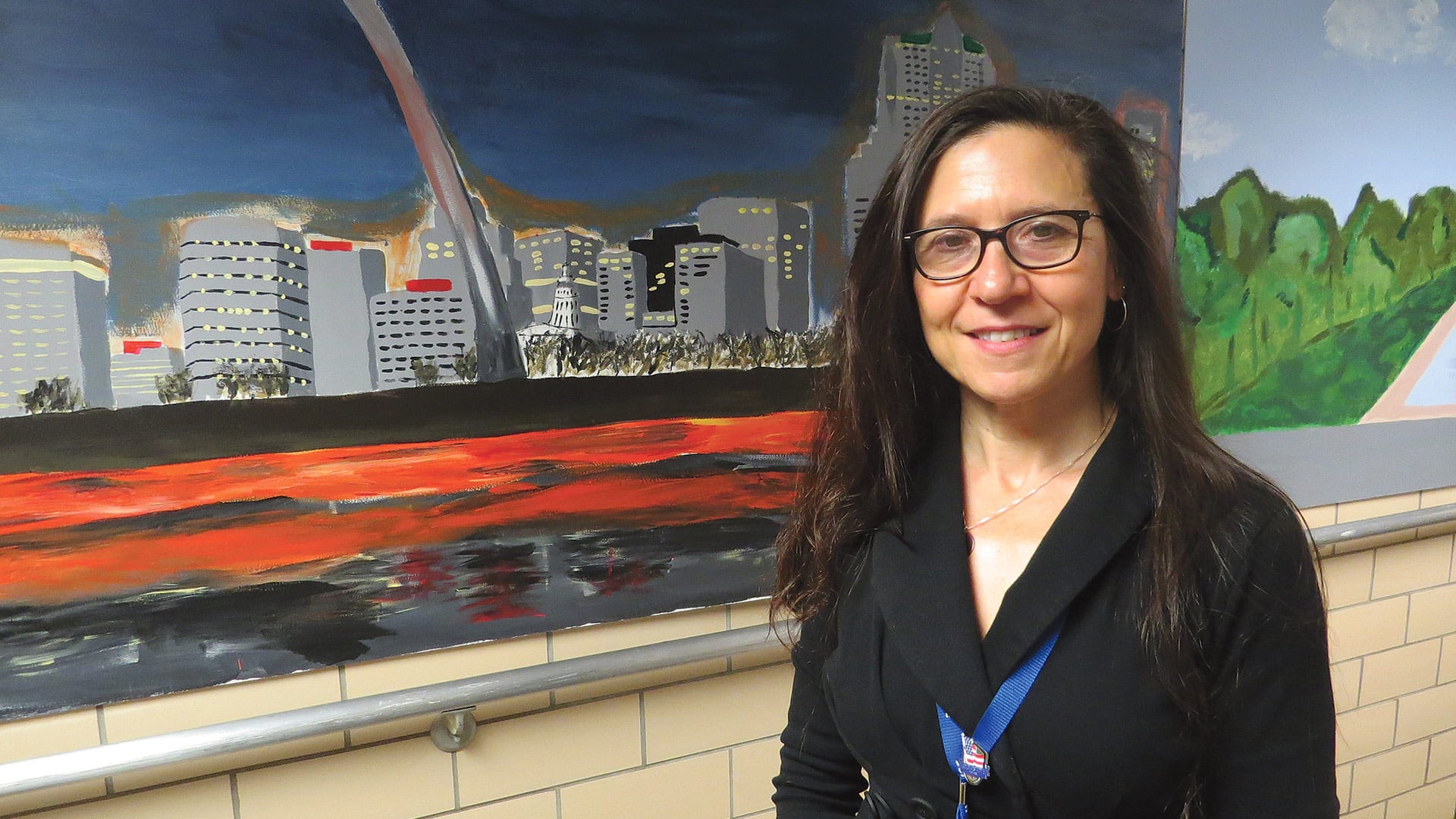
• The security plan must be approved to ensure the operation is adequately securing the facility as well as the Commonwealth’s assets.

It’s Getting Real

As opening day draws closer, the team at MGM will take the process of being ready to a different, higher level, said Dixon, referring to what he called ‘play days’ and other types of dress rehearsals for the real thing.

And these auditions will set the stage for what are known as ‘test nights’ (that will be publically announced), during which the operation’s performance will ultimately determine whether the state grants that coveted operating license.

“At those activities, we have to simulate what it is like to operate with real money and be able to perform these functions,” Dixon explained. “The Gaming Commission is assessing our ability to execute those functions in a controlled environment. That’s the big, substantive, last step before we are issued that operating certificate.”
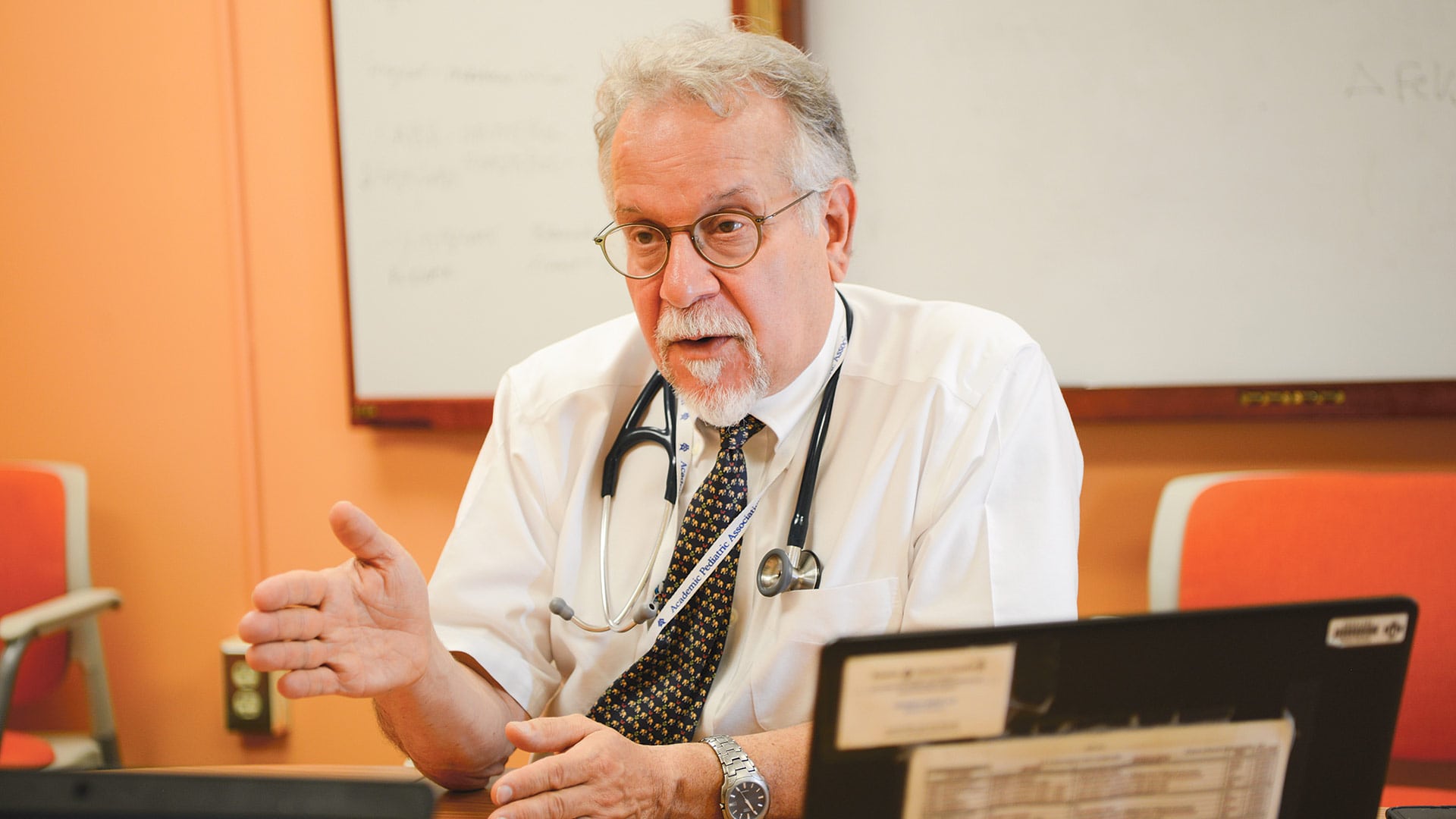
As for what he’s seeing in Springfield now, as opposed to when he arrived 18 months ago, and what he expects to see after the casino opens, Dixon said there has been a metamorphosis there as well, especially when it comes to perceived attitudes about the casino.

“It’s been fascinating to see how things have shifted, from doubt in some cases — ‘is this really going to happen?’ — to ambivalence in other cases, to quietly watching, to trepidation, to what you see now, which is excitement.
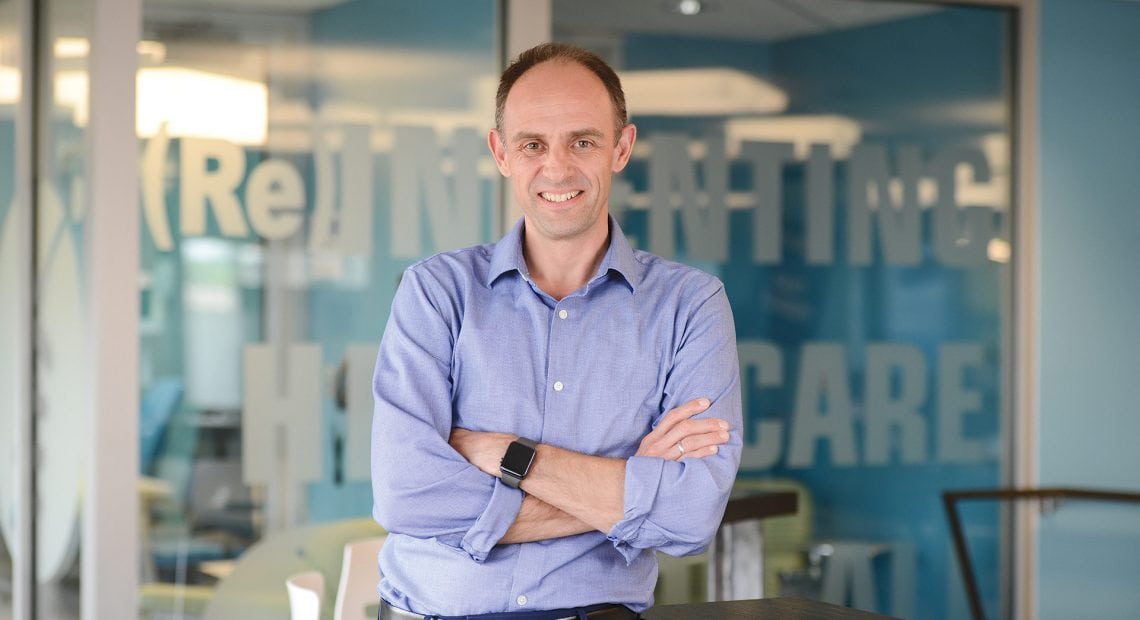
“Whether you see people buying their tickets to see Stevie Wonder [who will appear at the MassMutual Center on Sept. 1] to people coaching up a son, daughter, niece, or nephew for an interview, or hearing the excitement of someone getting their first job or getting back into the workforce … it’s fascinating to see the progression.”

Meanwhile, he said that one doesn’t have to wait til Aug. 24 to witness the impact MGM Springfield is already having in Springfield’s downtown.

“If you walk along Main Street around noon, you see the streets teeming with people,” he noted. “They’re well-dressed, new haircuts, looking good, sharp — and friendly. You see the impact of 3,000 people, and we haven’t even onboarded everyone. You see the streets come alive with energy.
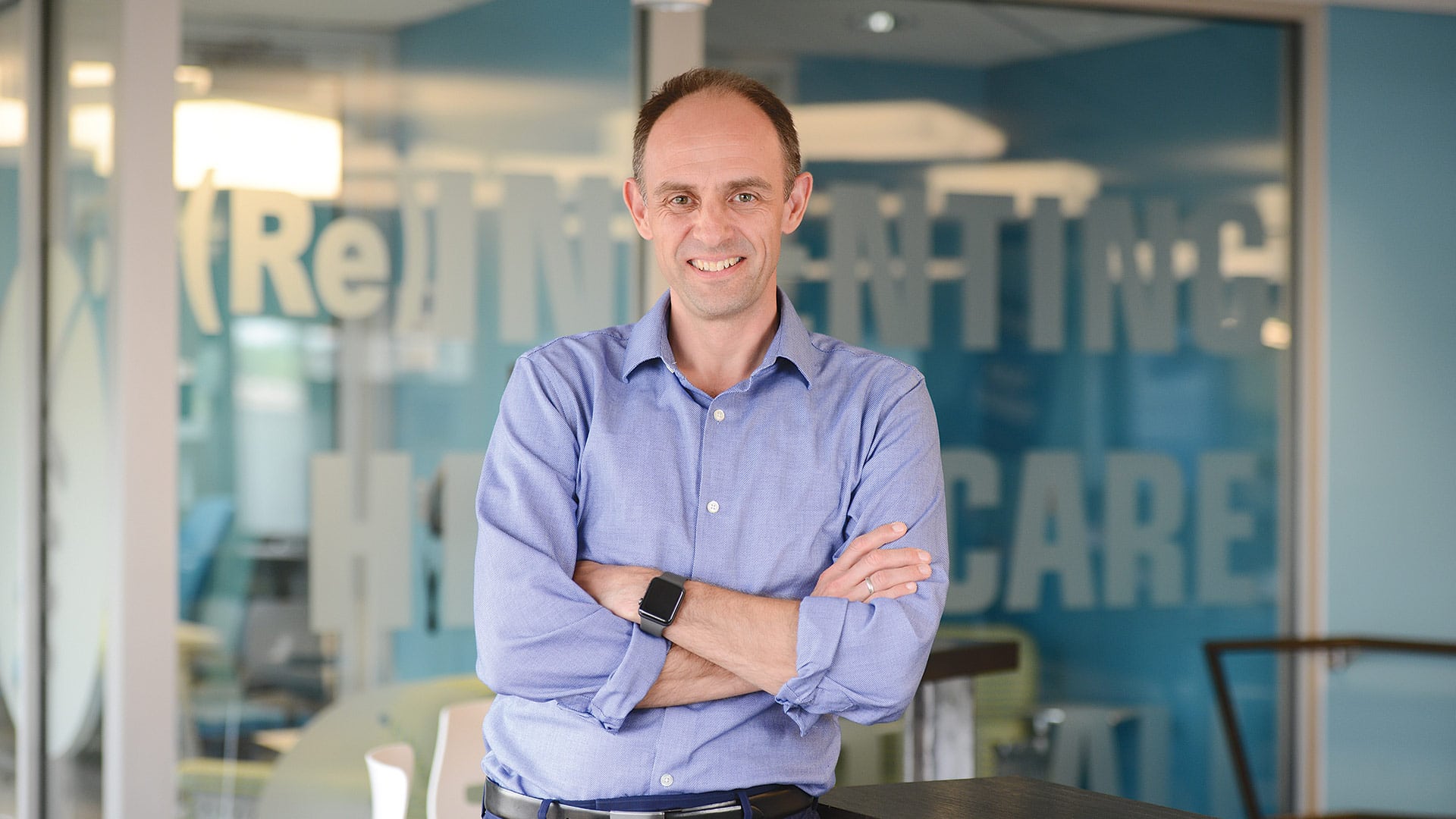
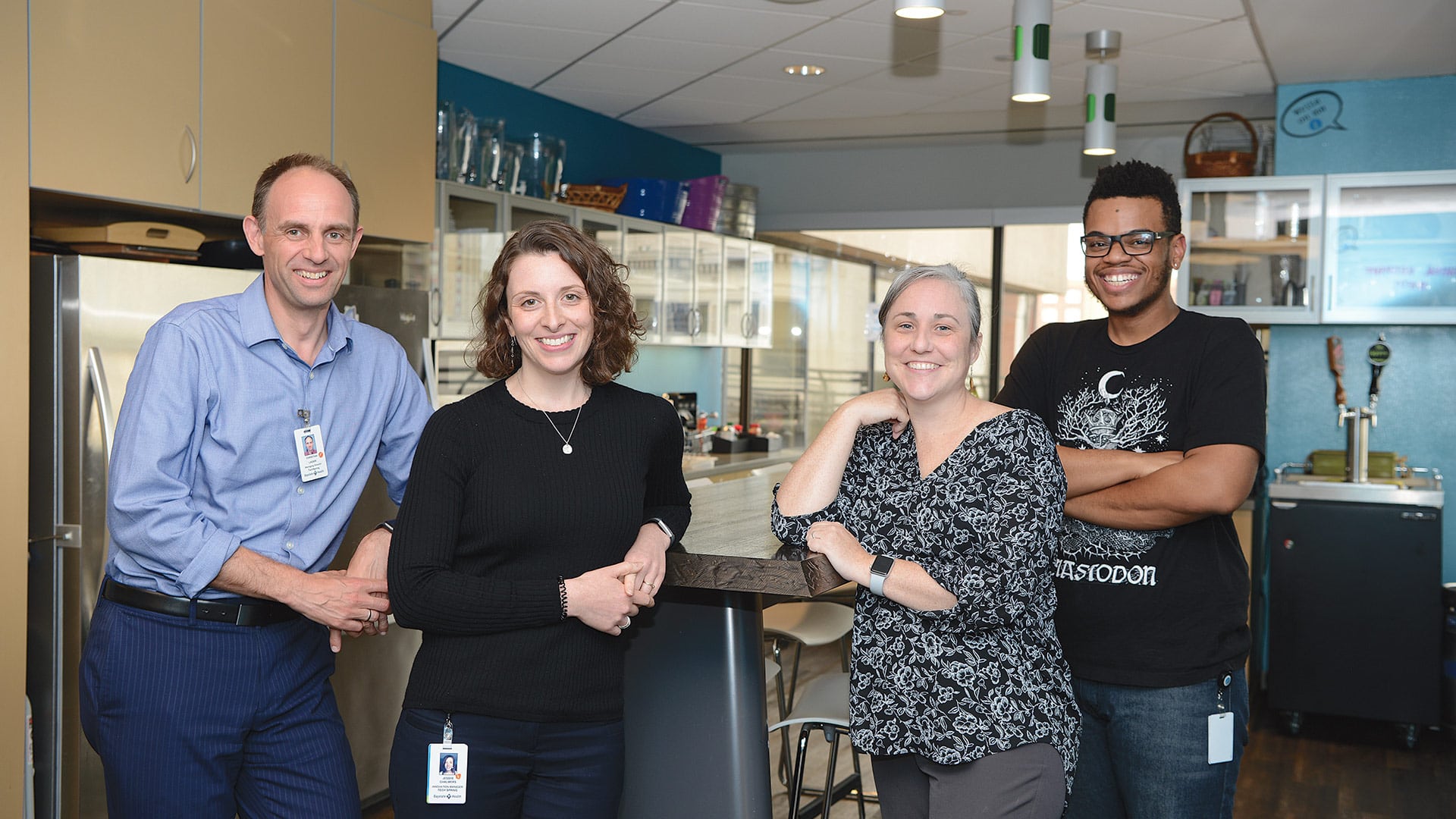
“Downtown has been defined by the absence of people after hours,” he went on. “Now, we’ll be defined by the presence of people; and this will be people from Springfield, but also surrounding communities, and people who haven’t been to Springfield in a while. I just can’t wait for people who will walk into our facility and walk into downtown Springfield and have this immense level of pride, not just in MGM, but in the city and the region.”

On Aug. 24, there will be a parade down Main Street an hour or so before the facility officially opens at 11 a.m., he said, adding that it will involve employees, dignitaries, and some entertainers from within the MGM family.

After that? He said National Harbor, the $1.5 billion casino in Maryland that MGM opened roughly 18 months ago, reached full capacity within hours of opening. And MGM is preparing for just such a contingency.

“Knock on wood, we can only hope we’ve got more demand than what we’re able to accommodate in the building,” he said, echoing a belief certainly shared by the city, the region, and the Gaming Commission.

Playing the Numbers

Getting back to his sleeping patterns as Aug. 24 draws closer, Dixon said there are obviously days when he rests better than others.

“The hours are getting shorter,” he said, adding, again, that the ever-growing team working draw lines through those 12,704 discrete tasks are working simultaneously on hundreds on individual assignments, but also the very big picture.

“It’s truly amazing; it takes every individual person on this team to take care of their silo, but also keep their head above water enough to look horizontally and make sure we’re coming together in a cohesive manner.”

It all about the journey, or journeys, Dixon said, adding that the plural is most definitely needed, as they work as a unit toward a common goal — not just opening the doors on time, but making the place special.

And that’s why this process is as exhilarating as it is daunting.

George O’Brien can be reached at [email protected]

Sales and Marketing

The Art and Science of Story Telling

The team at BRIGADE

The team at BRIGADE shows off the many honors garnered at the recent Ad Club of Western Mass. award show.    Photo by Stephanie Craig Photography

It was just a few weeks after Kirsten Modestow and her husband relocated to Western Mass. from San Francisco that she got the phone call that would ultimately change her life. The person at the other end was looking for someone to do some freelance work for a fledgling vodka brand called Svedka. As many people know, Svedka has gone on to become the top-selling imported vodka in the U.S. What they may not know is that, with that notable first client, Modestow created the marketing firm BRIGADE, one that has certainly built on that solid foundation in every way.

Kirsten Modestow says the branding company she would call BRIGADE (yes, all caps) was started on her kitchen table.

Which doesn’t exactly make it unique; many startups are blueprinted in such a setting. Which makes this one different is what happened after it was conceived.

For starters, that kitchen table would later become an official work station for one of the first hires, and soon other parts of the house were absorbed by additional team members as they came on board.

“The first person was in the living room, the second person was at the dining-room table, the next one was in the spare bedroom … then we all moved into the garage,” she explained. “When there was no room in the refrigerator for people’s lunches, we knew it was time to go.”

By that, she meant move into larger quarters, which the company has done a few times, but we’ll get back to that later.

The other thing that separates BRIGADE from other ventures hatched on the kitchen table is the pace of growth. Indeed, over the past 13 years, the company has expanded to 35 employees, most of them artists and designers who commute to the current home on Route 9 in Hadley from across Western Mass. and well beyond.

And their client list includes a number of prominent national brands, including Svedka vodka, the Wyndham Hotel Group, Black Box Wines, and Vertical Water, as well as some local businesses, such as Esselon Café, just a few hundred yards down Route 9.

Actually, Svedka wasn’t a national brand when Modestow was hired as a freelancer to help with a branding campaign. It was a fledgling vodka label looking to break out — and it did, big time; a few years ago, it surpassed Smirnoff as the top-selling imported vodka in the U.S.

The team at BRIGADE designed packaging for Svedka strawberry seltzer.

The team at BRIGADE designed packaging for Svedka strawberry seltzer.

“We’ve been along for the ride,” Modestow said, noting how the growth of Svedka and BRIGADE have mirrored one another. “Over the past 13 years, we’ve grown with them.”

But BRIGADE hasn’t outgrown Modestow’s kitchen table, then a space on University Drive, and then a totally renovated foreign-car sales and service shop further down Route 9 because of one client — although Svedka certainly has played a huge role in that transformation.

Instead, it’s been the company’s ability to work with clients to create branding that resonates, builds name recognition, and drives sales, Modestow explained, adding that this is what branding, the company’s specialty, is all about.

Elaborating, she said BRIGADE focuses on helping clients tell their story, and to do that, she and her team must first understand what that story is and then develop effective ways to communicate it.

“We get to know a client by doing an audit of their existing brand,” she explained. “We always see it as the client being the expert in what they do in their industry, and we bring in the branding piece, so it’s crucial to work with them as a partner.”

That was certainly the case with the new coffee bags the company created for Esselon Café. Coffee had long been a key ingredient in the restaurant’s recipe for success, said Modestow, but a while back, its leaders decided a new look was needed.

“People are more open to working with remote agencies. Before, it was a case where you went to an agency in one of the larger cities. Around 2006, when we started, there was a willingness to work with people who weren’t down the street, and that had a lot to do with our success.”

“We worked with them to determine how to capture the heart of Esselon and capture who and what Esselon is,” she explained, adding that BRIGADE came up with new packaging that drew on the Western Mass. landscape — specifically the Seven Sisters portion of the Holyoke Range — as well as new language: “All roads, bike paths, and quests for the best cup of coffee lead to Esselon Café.”

Kirsten Modestow

Kirsten Modestow

“The whole idea is that they’re on the bike path and everyone comes to Esselon; the place is packed, and you have to park illegally,” she explained. “We decided to embrace all that — we have these bike paths and roads that wrap around the bag, and we told this café story, and it’s been awesome for them; the bag is loved by Whole Foods, and retail sales have tripled because of it.”

For this issue, BusinessWest takes an in-depth look at how BRIGADE has moved well beyond that kitchen table and grown its own brand by delivering services that tell a story and generate results.

Seeking an Ad-vantage

Modestow told BusinessWest that the BRIGADE story really starts in Boston, where she worked for the acclaimed marketing agency Hill Holiday Advertising and such clients as Dunkin’ Donuts.

When the dot-com sector was at its pinnacle, however, the place to be was San Francisco, and Modestow went there and had the opportunity to join a firm and work with brands such as Electronic Arts Inc. (EA), the video-game maker.

Her firm eventually closed its doors, however, after losing one of its mainstay clients, and Modestow and her husband were at a crossroads.

“I could afford to live in San Francisco for about four and half minutes after that,” she joked. “I think we sold our house within seven days and left.”

The two then made a pact of sorts. They would relocate to wherever one of them found a job first.

“He beat me by a day; he got a job in Western Massachusetts — he’s originally from Worthington — and we came here,” she explained.

And it wasn’t long after they landed that she got that life-altering phone call.

“Someone called and said, ‘I have a freelance opportunity for you on this startup vodka brand called Svedka,’” she recalled. “Over the past 13 years, we’ve grown with them and helped them along the way; they’ve been really wonderful to us.”

As noted earlier, the company quickly outgrew Modestow’s kitchen table, refrigerator, and garage, and settled into that space on University Drive, above the popular Hangar restaurant. It wasn’t exactly a long stay, though, because the company continued to grow at a rapid rate, doubling in size from five to nine employees in a few years.

It then relocated to the foreign-car shop — a site that required a massive renovation effort — but outgrew that in just over a year, as Modestow recalled, adding that the next home is intriguing on many levels.

A portion of the 8,500-square-foot facility was home to a Registry of Motor Vehicles office, and even though it’s been closed for quite some time, people still walk in the front door looking to renew their driver’s licenses, said David Bosch, the company’s operations manager.

Another portion of the facility has home to Zoe’s Fish House, he went on, adding that, while BRIGADE renovated all the spaces into work areas, including a banquet facility that never became reality, it kept the bar intact.

The company doesn’t have a liquor license, obviously, but it does use the bar for company functions, said Bosch. Meanwhile, it’s an unusual decorative touch, and it give the company a chance to showcase many of the brands it has helped develop in what would be described as a natural setting.

The space is wide open, said Modestow, adding that this the desired environment for a marketing firm where people work together to create solutions for clients.

“We work in branding, and a lot of that is people coming together to solve a problem,” she explained. “So being in a very open space, one that’s conducive to gathering, is important.”

BRIGADE should be in this home for quite some time, because there is not only ample room to grow, but plenty of business coming through the door as the company continues to build strong word-of-mouth referrals.

The new coffee bag that BRIGADE created for Esselon Café has helped spark a surge in retail sales.

The new coffee bag that BRIGADE created for Esselon Café has helped spark a surge in retail sales.

Indeed, as noted earlier, Svedka has been a dream first client and solid foundation for BRIGADE. But the company has been able to build on that foundation, said Modestow, and for several reasons.

One is the large number of contacts she made from her previous career stops, and the experience she gained working for national and global clients, a tremendous asset in this business, as in any other.

“Having the exposure in Boston and San Francisco enabled me to work on some high-caliber clients and hone my skill set that I could then pass on to people here,” she explained. “We started off with an ability to work on those high-caliber clients; we’re really good at it, so we’ve attracted through our work the attention of others.”

Another factor is a growing willingness among corporations to work with agencies not based in New York, Boston, or Los Angeles, or whatever major metropolis the corporation was based in or near.

“People are more open to working with remote agencies,” she noted. “Before, it was a case where you went to an agency in one of the larger cities. Around 2006, when we started, there was a willingness to work with people who weren’t down the street, and that had a lot to do with our success.”

Getting the Message Across

But easily the best reason for the company’s success is the results it has garnered for its clients, said Modestow, adding that more important than the awards the company has gained for its work — and it has won many — are the gains registered by the companies looking for help with their brand.

Which bring us back to Esselon Café.

That new packaging has won a number of awards for BRIGADE, said Modestow, but the bigger story is that dramatic rise in retail sales at Whole Foods and other locations.

It came about through that art and science of storytelling and creating a brand that speaks to who they are.

When asked about the methods for gaining such results, Modestow returned to the subject of effectively partnering with the client to solve a problem or revitalize a brand.

The client knows their industry, their product or service, and their story, she went on. BRIGADE essentially takes that insight and uses it to create a brand that conveys the story in a way that resonates.

Steps include the brand audit she described earlier, and also creation of brand strategy.

“We would work through positioning statements with the client, help them figure out their key messages, how they’re different, how they talk about themselves, what their voice is, and more,” she explained. “And once we have that platform, then we would go into the visual component of all this — bringing it all to life visually through some kind of toolkit, which might be a refresh logo or packaging or a new website. We’re helping them see how this language and this new positioning can visually come to life.”

As the company creates these strategies and brings them to life, it does so not with a hard focus on targeting specific demographic groups — a mistake some companies make when marketing and branding — but building a brand that’s “authentic.”

“I don’t think you build a brand to speak to a specific group of people,” she told BusinessWest. “You build a brand that’s true to who the brand should be, and then it resonates with the right people.

“A mistake you see is when companies think the key to their success is going out and capturing the Millennials,” she went on. “Well, the Millennial doesn’t want to be captured — you have to find them because you have something compelling that made them want to believe in you. It’s about consumer experience and storytelling; people want an authentic experience with a company.”

As an example of how the firm partners with its clients, Modestow referenced the Wyndham Hotel Group and some of its specific brands, including one in particular — Travelodge.

“It was kind of an old brand with old, tired signage,” she explained, noting that, at the time, Wyndham hadn’t put much emphasis on branding, but has since changed that attitude. “We helped refresh the Travelodge brand, we helped them with an ad campaign, and we helped them with a new way to talk about themselves.”

Another example is work with Svedka to launch a new line of spiked seltzers. The company designed the cans in a way that were true to the Svedka brand but also resonated within the growing spiked-seltzer product category, said Don Magri, the company’s chief financial officer.

“They came to us with a good amount of research that they had already done on their consumer and who they were really trying to target,” he explained. “You go through iterations, but you’re really trying to creating a design that is true to the brand going into a new category, but also hitting the demographic they’re trying to reach.”

Looking down the road, those at BRIGADE said they look to continue providing clients with what they call ‘responsive branding,’ so that they are ready for the future and their brands are as well.

In short, they aim to do what the company’s done from the beginning — grow with its clients.

“We want to grow and create new opportunities for our employees and then for the people who don’t work here yet,” said Magri. “Growth for the sake of growth is not something we’re interested in, but growth for the sake of growing our skills and growing our client base and securing our client mix is our plan.”

Bottom Line

In other words, the company is going to continue doing what it’s been doing from the start, back when work was being done on Modestow’s kitchen table and her refrigerator was getting filled with employees’ lunches.

The company has come a long way since then — a quick tour of the facilities at 195 Russell St. make that clear — but the guiding principles remain the same.

And those are to tell the client’s story and create an authentic experience that resonates. When you that, it’s a lot easier to do what BRIGADE has done with and for Svedka and all its other clients — be along for the ride.

George O’Brien can be reached at [email protected]

Education

A Healthy Relationship

Springfield College’s recent visitors from China

Springfield College’s recent visitors from China included, from left, Wang Di, Dr. Huang Yizhuan, Cao Xiaojie, Wang Xinran, and Li Dehua.

One side of Sue Guyer’s business card bears the Springfield College logo, address, and website, and declares that she is a doctor of physical education (DPE), is athletic-trainer-certified (ATC), and a certified strength and conditioning specialist (CSCS).

It also notes that she is chair of Exercise Science and Sport Studies and professor and clinical education coordinator of the Athletic Training Program at the college.

On the other side, it says all or most of that — in Chinese.

And she’s far from the only one at the 133-year-old college handing out business cards also printed in that language — one of the many visible signs of a relationship between the college and businesses, educational institutions, and civic leaders in that country that goes back decades and has only grown stronger in recent years.

Indeed, Guyer has handed out her card with the Chinese version facing up on countless occasions, including several visits there, including her first, in 2008, just before the Summer Olympics were staged in Beijing.

“We took 17 students over for an academic/cultural experience,” she recalled. “And China seemed to be the perfect place to go because we were looking at sports medicine — eastern and western approaches — and we were also looking at human performance, and we have relationships with multiple institutions in China.”

“We decided that, rather than go over there all the time, we would keep our expertise here and have them come to us.”

Many of those words and phrases — including ‘academic/cultural experience’ and ‘perfect place to go’ were no doubt uttered by those participating in the very latest example of this healthy relationship, one that wrapped up last week. Springfield College’s School of Health, Physical Education, and Recreation hosted 16 Chinese educators for intensive instruction in sports performance and sports medicine.

The participants, who hailed from several different cities and represented a number of institutions and businesses, received instruction and insight into everything from concussions to sport nutrition to the principles of treatment and rehabilitation during a two-week program focused on fitness, management, and leadership. For their efforts, they earned a certificate and continuing-education credits.

Sue Guyer

One side of Sue Guyer’s business card bears the Springfield College logo, address, and website, and declares that she is a doctor of physical education (DPE), is athletic-trainer-certified (ATC), and a certified strength and conditioning specialist (CSCS

And for those participants, this was an eye-opening, valuable experience.

Cao Xiaojie (Andre), a coach with the Saipu Fitness Institute, the largest fitness-training academy in China, spoke with BusinessWest near the start of the two-week program. He said the course of study was different from that in China (we’ll hear more about that later), and it was intriguing to compare western approaches and techniques with those learned in China.

“There will be a lot that we can take home with us from this experience,” he said, adding that Springfield College was one of several stops he and two colleagues from the institute made during a six-week visit to the U.S. “And we’re also looking at possible opportunities to work with Springfield College in the future.”

Guyer told BusinessWest that Springfield College, known nationally and internationally for its many sports- and fitness-related programs, has been fielding a growing number of requests from groups in China for its educators to visit that country and make presentations.

“We were getting four or five requests a year,” she explained. “And we decided that, rather than go over there all the time, we would keep our expertise here and have them come to us. That was the main impetus for putting this summer’s program together; we couldn’t meet all the requests to go there.”

The genesis of these requests is a heightened interest in sports performance, sports medicine, nutrition, and other subjects, and a desire to learn what would still be called ‘western’ practices, strategies, and methods for teaching and learning, especially as the country gears up for the 2020 Winter Olympics, said Maura Bergan, assistant professor of Exercise Science and Sports Studies, director of the summer program, and another of those providing instruction to the visiting delegation.

“The summer has always been a popular time for Chinese professionals to come over to learn a little more about sport medicine, human performance, and strength conditioning,” she explained. “So this summer we really worked hard to create a mainstream curriculum, a summer conference or seminar symposium.”

For this issue and its focus on education, BusinessWest talked with Guyer, Bergan, and some of the participants (often with help from an interpreter) to get some perspective not just on this summer’s program, but also decades of collaboration and a relationship that is healthy in every respect.

Speaking Their Language

As noted earlier, Chinese delegations visiting Springfield College to observe and learn is not exactly a recent phenomenon. In fact, Chinese students and educators have been visiting, and studying at the college for more than a century.

Maura Bergan

Maura Bergan says the curriculum for the summer program featured both theory and hands-on learning, a departure from the teaching process in China.

The origins of the relationship trace back to John Ma, a member of the Springfield College class of 1920 and graduate class of 1924. He was the first international scholar from China to visit the school, and is the founder of modern physical education in China and founder of the Chinese Sports Federation.

“We’ve had a long-standing history and relationship,” said Guyer, adding that groups have been coming to the college regularly over the past several decades.

In recent years, the college has hosted the Beijing Sports Institution’s softball team; a number of visiting coaches and educators, who would often come over for a semester at a time; the developmental hockey team; and other constituencies. And, as she mentioned earlier, the college was getting all those requests to come there.

In response to all that demand, the college decided to put together an intensive two-week summer program, one that attracted the large and diverse delegation that arrived on July 23.

Participants represented a host of institutions, including the Saipu Fitness Institute, Chengdu Sport University, the Shanghai Research Institute, the Dessy Fitness School, and the national women’s softball team.

Together, the visitors kept to a packed schedule — but one that still left time to visit Harvard, MIT, the Naismith Memorial Basketball Hall of Fame, a fast-food restaurant, and other sites of interest (remember, this is an academic/cultural experience — with instruction representing a blend of sports medicine and injury prevention and human performance).

Specific courses included:

• “The Epidemiology of Athletic Injuries,” which focused on common injuries, contact versus non-contact injuries, and other subjects;

• ‘“An Introduction to Sport Performance,”taught by Bergan, featuring everything from a tour of facilities to instruction in training, to creation of a ‘performance plan’;

• “Components of a Warmup,” focusing on such matters as mobility, soft tissue, and preparation;

• “Introduction to Performance Testing”;

• A program on Plyometrics (jump training) and explosiveness;

• “Weight Lifting Instruction”;

• A program on conditioning focused on everything from programming to energy systems; and even

• “Music & Performance.”

Much of the instruction was hands-on, said Guyer, adding that participants were given both theory (in the morning sessions) and hands-on, practical application in the afternoon classes.

“They don’t do a lot of hands-on in China — a lot of is theory and lecture,” she explained. “So they like our approach to blending the theory with the hands-on, and that’s what makes our programs so exciting for them — they get to do what they’re learning, and that’s not a traditional learning style in China.”

As an example, she cited study of concussions. In China, these professionals would learn the textbook application of concussion with regard to what they would see and do. During this summer’s program, there was a lecture, but also work in the lab, where they practiced what they would see with a concussion, how they would evaluate one, and how they would treat it.

“We allow them to practice the skills they learn in the classroom rather than just the didactic, the theory,” she explained, adding, again, that this teaching method resonates with them.
Bergan called it a “holistic approach” to teaching sports medicine and human performance.

“We decided to combine the two together, and they get a little of both,” she explained. “They get the sports-medicine side, and they get the performance side, and that’s different and unique for them.”

Participants who spoke with BusinessWest at the start of the two program, such as Dr. Huang Yizhuan, a spinal surgeon and representative of the Chengdu Sport University, said they hoped to bring home with them new insights into sports medicine and human performance.

“It has been a learning experience,” he said through an interpreter. “This is a great opportunity for me to bring sports-medicine knowledge back to China.”

Course of Action

Bergan’s business card doesn’t have all of her information in Chinese on the reverse side — yet.

Indeed, she is planning to go visit that country this fall for still another of the many exchanges that have marked the past several decades. By then, she’ll have printing on both sides of her card.

And her visit will add another chapter to a decades-long relationship that has generated an exchange of ideas and yielded real learning experiences for people in both countries.

George O’Brien can be reached at [email protected]

Sales and Marketing

Putting the Focus on Innovation

The team at GCAi

The team at GCAi: from left, John Garvey, Quinn Garvey, James Garvey, Mary Shea, and Darcy Fortune.

John Garvey isn’t shy about noting that he never worked for a large ad agency, or a ‘traditional’ ad agency, as he calls them.

In fact, he’s rather proud of that background — as are the rest of the members of the team at the agency he formed more than 30 years ago known as Garvey Communication Associates Inc., who didn’t work for a traditional agency either.

They’re all fond of saying they didn’t follow any model in creating and then shaping the firm known as GCAi, but instead created their own model.

“None of us come from an agency background,” Garvey explained. “So we put this together on our own; we didn’t throw away the book — we just didn’t really know the book was there; so we invented our own book.”

“There’s a lot of misconception out there about how Facebook works, especially with regard to advertising.”

As they talk about this book, the company’s main players — Garvey; his son, James, the social-media marketing analyst; Mary Shea, vice president of Digital Strategy; and Darcy Fortune, digital PR analyst — collectively wear out the word ‘innovation’ as they discuss evolving technology, what the company can do with and for clients with regard to this technology and using it to reach targeted audiences, and, perhaps most importantly, how they do all that.

Indeed, they’ve all become involved with MassChallenge Boston, the group that helps accelerate startups, and they’ve also assisted Valley Venture Mentors (through donations of money and expertise) in its efforts to mentor startups and expand its mission. And such work has fostered a true spirit of innovation within GCAi itself as it partners with clients to help them navigate a changing landscape within marketing and with everything from understanding and maximizing social media to corporate reputation management.

“Innovation is a stick that you have to sharpen continually,” John Garvey explained. “You literally cannot be innovative unless you have your eyes wide open and you’re looking and you’re learning and you’re challenging yourself. Being around startups … that entrepreneurialism, that innovation, is absolutely contagious. So we find ourselves thinking and acting in new and different ways.”

Such an operating mindset is necessary for a marketing firm today, said Shea, because change is constant, it’s coming from every direction, and the pace of change is only accelerating. Also, in this era of conversion, marketing firms are increasingly being judged not on their ability to garner exposure, but on sales generated by a specific campaign or strategy.

Which brings Shea to the subject of data and access to it.

“One of the most profound changes to come to marketing is marketers’ ability to use data,” she said, while summing up how the landscape has been altered by technology and why innovation is important. “It’s a seismic change in terms of our ability to get our work done.”

James Garvey, seen here presenting at a MassChallenge event

James Garvey, seen here presenting at a MassChallenge event, says companies have more access to data than ever before, and they must take full advantage of that opportunity.

Elaborating, she said Google AdWords, Facebook, and other vehicles enable marketers to send specific messages to targeted audiences in ways that simply weren’t possible decades or even a few years ago.

James Garvey agreed.

“It’s a fascinating time to be involved in social-media marketing since Facebook is in the headlines daily,” he told BusinessWest. “There’s a lot of misconception out there about how Facebook works, especially with regard to advertising. We develop messaging for clients, and we use Facebook as a means of delivering the message in a way that people can consume it, but also delivering it directly to the audience we need to reach — meaning very specific groups of people.

“For example, you can reach men or women ages 25 to 35 who live within two miles of downtown Springfield who are interested in home ownership,” he went on while elaborating. “That’s how specific you can get.”

GCAi, which boasts clients across virtually all sectors of the economy, including financial services, healthcare, transportation, and more, is a certified Google Partner (the only firm in the region to gain such status), and its qualified AdWords professionals are independently tested and certified in several different aspects of online advertising each year.

Meanwhile, the company specializes in what it calls the ‘ideation’ approach to working with clients to identify needs and challenges, map out a marketing strategy, and determine the most effective methods of getting a message across.

To explain, Shea and Fortune pointed to the whiteboards on all four walls of the GCAi conference room. Over the course of an ideation session, they will become covered with writing in the form of answers to questions asked and thoughts about what to do, strategically, with that information from a marketing and branding standpoint.

For this issue and its focus on sales and marketing, BusinessWest talked with members of the GCAi team about marketing, technology, and social media — but mostly about innovation, and how it enables the company and its clients to stay on the proverbial cutting edge of progress.

Data Driven

On the day BusinessWest visited GCAi, the whiteboards in the conference room were covered with what amounts to a bullet-pointed chronology of the firm.

Noted milestones included everything from the elder Garvey’s first work in public relations, back in college for the U.S. Youth Games, to the arrival of each staff member (Shea started as an intern in 2004, for example); from the reminder that Garvey needed a loan from his grandmother to stay afloat after the dot-com bubble burst at the start of this century and business dried up, to his self-proclaimed 15 seconds of fame when he captured a dramatic photo of the tornado that tore through downtown Springfield on June 1, 2011, an image that went viral within minutes after it was taken.

“What social-media marketing and Google AdWords has done is essentially democratize the use of data for businesses across the board. So it is a seismic shift. This is profound data; it’s not just likes and clicks.”

Mostly, though, the walls tell the story of a company responding to rapid, constant change in technology, especially within the realm of digital marketing, and using innovation to help clients make sense of it all — not an easy task in any respect — and make the very most of their marketing budgets.

Indeed, the team likes to say that GCAi, unlike many businesses today, has social media figured out, and it has created a niche of sorts as it specializes in helping clients large and small figure social media out and put all that data that is now available to good use.

“There is a lot more data available today, there’s easier access to it, it’s instantaneous, and you can use it quickly and easily to make adjustments to a campaign,” said Shea, adding that, not long ago, companies would have to spend a lot of money to access such information, which essentially limited that access.

“What social-media marketing and Google AdWords has done is essentially democratize the use of data for businesses across the board,” said John Garvey. “So it is a seismic shift. This is profound data; it’s not just likes and clicks.

But having access to data is just part of the equation. Knowing what to do with it and how to present a message to the audience being targeted … that’s the other side. And the team at GCAi has become specialists in such work, handling both aspects of this work — creating content and a message (work that falls more to Fortune and John Garvey), and devising the most efficient, cost-effective means of disseminating it, work assigned to Shea and James Garvey.

And the watchword in all aspects of this work is relevance.

“That’s the church we go to pray at,” said John Garvey, referring to that team. “If the message isn’t relevant, meaning the target audience we spoke of doesn’t react to it in a positive way, find it useful, and find it interesting, then we get penalized as marketers; it’s the modern-day equivalent of hanging up a bad ad that no one gets.”

To keep clients and their messages relevant, the GCAi team focuses on innovation, said Fortune, adding that the company’s involvement with Valley Venture Mentors and MassChallenge has helped it in a number of ways, from getting in touch with what’s happening within specific business sectors to sharpening presentation skills, to mentoring startups on the best ways to reach their audience.

“We sit with them and talk with them for maybe 10 minutes, and you can see the light go off,” said Fortune. “They’re excited to have that tidbit of information from us on how to reach people. And you get to meet people from around the world; it’s very exhilarating.”

John Garvey agreed, and noted, again, that when you hang around entrepreneurs all the time, there is a trickle-down, or rub-off, effect.

“We’re much more attuned to new and different ways of getting results,” he explained. “Our secret sauce is comprised of ingredients like energy, innovation, and ideas, and the cake that we’re trying to make is to create really meaningful and measurable results, and the only way that’s possible is through a continual search of the means and methodologies of these platforms, but also an appetite for data, the ability to digest it, break it up, understand it, and make it relevant to the client.”

James Garvey agreed, and said his technical background — he’s a graduate of BWM of North America’s STEP program and has worked for both BMW and Mercedes-Benz in the Boston and New York City markets — has helped him, and thus the firm, grasp the importance of data and measuring results.

“Having that engineering background, or training, and working with data are very similar,” he explained. “They’re very precise, measurable, and granular.”

Together, those involved with content and those focused on dissemination work together to create an overall strategy, said Shea, adding that, collectively, the team works to find the right channels to get the message across.

“You can’t fit a round peg into a square hole,” she said, adding that each platform, or channel, is different, and it’s critical to devise content that is appropriate for each one and not ease into a one-size-fits-all mentality.

John Garvey agreed. “All those platforms are arrows in our quiver, and Mary and James help us figure out the right means and methodologies to take this to market.”

And finding the right ones is now critical, said James, noting that marketing firms like GCAi are now more accountable, if that’s the proper term, when it comes to sales — or the conversion of leads into sales — than ever before.

“Marketing firms are more responsible further down in the sales funnel than we were even a few years ago,” he explained. “Before, we were measured by our ability to generate top-of-mind awareness; now, our clients hold us responsible for a full and trackable conversion, meaning that we can prove that our campaign led to a particular conversion. That responsibility totally changed.”

The Last Word

There’s been a recent addition to the décor at the GCAi suite of offices in Monarch Place — an old manual Underwood typewriter that the senior Garvey found “somewhere.”

It’s an example of where technology and this industry were a long time ago, said Fortune, and therefore a reminder of how quickly and profoundly things change.

So quickly and profoundly that trying to project a few years, or even a few months, into the future is a largely futile exercise. There’s no better way to explain why an effective marketing firm today must, or should, have an operating philosophy grounded in innovation — in constantly finding new and better ways to do business and help clients succeed.

And there’s no better way to explain why GCAi continues to grow and prosper.

George O’Brien can be reached at [email protected]

Sales and Marketing

Taking Flight

Using drones, Bert Perry has captured compelling images of many area landmarks, including Mount Tom.

Using drones, Bert Perry has captured compelling images of many area landmarks, including Mount Tom.

Bert Perry says it started off as a hobby.

And it is still that, for the most part. However, it is now also a business, and one that, with each passing week, becomes more competition for his time and a source of questions about what to do about his day job.

‘It’ is a venture called Aerial 51 Studios, a play on words involving the highly classified U.S. Air Force facility in the Nevada Desert often associated with UFO folklore. But unlike its namesake, this business isn’t shrouded in mystery; for the most part, it’s a drone photography and video venture that is steadily adding clients across a broad spectrum.

They include everything from developers seeking photographs of their properties from above — as in well above — to marrying couples looking for some different photos to add to the album. He’s also shot footage used in some films, including some that have made their way onto cable television, including a Christmas story titled The Spruces and the Pines, a Romeo and Juliet-like tale about two families that own Christmas-tree farms.

Bert Perry says Aerial 51 started out as a hobby

Bert Perry says Aerial 51 started out as a hobby, but it has evolved into a growing business.

A graduate of the Rochester Institute of Technology and a graphic designer and photographer by trade, Perry has worked for a number of advertising and marketing agencies in Springfield and other markets, including Boston and New York City.

His current business card — or his other business card, to be more precise — declares that he is creative director with Guardair Corp. in Chicopee, a maker of pneumatic tools and other products.

“I love photography and saw a huge opportunity from the sky, the different perspectives you can get — things you just can’t get from the ground.”

He loves his work and plans on staying in that job, but a fascination with both drones and photography gave life to a hobby and now a business, one where the sky appears to the limit, or no limit, as the case may be.

“I love photography and saw a huge opportunity from the sky, the different perspectives you can get — things you just can’t get from the ground,” said Perry, adding that images from above have always been dramatic and effective from a marketing perspective, and drone technology makes them more accessible and affordable.

But one has to know what they’re doing, when it comes to both the drone and the camera, he told BusinessWest, adding that both are certainly acquired skills.

And in the case of drones, at least when they’re used for commercial ventures, one must have a pilot’s license, he explained.

“I went on the third day that they offered the test,” he said, adding that, to gain such a license, one must study everything from FAA rules and regulations to weather to how to communicate with air-traffic-control towers.

“There’s a lot to it, and it was all very new to me, so I studied for about three months,” he said, adding that he has to retake the test again soon to keep that license.

Perry said he launched (that’s another industry term) his business three years ago. He had been practicing drone photography for some time, he explained, and as people saw his work, which he was proud to display, many became intrigued by the possibilities and hired him for assorted jobs.

Over the past few years, Perry has used positive word-of-mouth referrals and a social media presence on Facebook and other platforms to consistently add many different types of clients.

For example, he’s done some work with the operator of a large go-kart operation. Several of the photographs and much of the video has been taken from several dozen feet up, but there have been many requests for images from eight to 10 feet off the ground, a height that provides a different and often powerful perspective.

“A lot are from above, but I’m getting a lot of requests for lower shots where I move or wrap around a subject,” he explained.

He’s also done a good amount of work for developers, photographing everything from malls to former manufacturing facilities that have come onto the market. He’s also photographed a number of high-end residential properties as well, providing images from different altitudes to help grab and hold the attention of potential buyers.

And then, there’s weddings. He’s handled a few of them, including one at Springfield Country Club (also a client) where he captured the outdoor ceremony from above.

“I’ll get some unique photos of the bride and groom,” he explained, adding that shots from a few hundred feet up can provide a unique perspective. “One couple wanted me to fly during the ceremony; I was off in the background, it buzzed a little bit, but it didn’t interfere with anything.”

Perry works mostly with drones, but he’s also taken footage while hanging out the window of a helicopter in areas where drones can’t be flown.

He said he benefits from possessing a waiver from the Federal Aviation Administration that enables him to fly drones at night, and also a background in graphic design that helps him devise ways to imaginatively frame his subjects and use visual images to convey messages.

He said most of his work has come outside the Greater Springfield market, but he’s hoping to add more local work to his growing portfolio as companies in this area realize the full potential of drone photography to help get a message across.

Looking ahead, he said he’s not sure where this venture will land (still another industry term). He knows only that this isn’t a hobby anymore, and hasn’t been one for a while now.

Rather, it’s a business seeking to reach new heights — in all kinds of ways.

— George O’Brien

Meetings & Conventions

Meeting Expectations

Rendering of the event spaces at MGM Springfield.

As MGM Springfield continues the final countdown to its Aug. 24 opening, the company is starting to generate considerable momentum in what will undoubtedly be one of the most important aspects of its operations — hosting meetings and conventions. MGM is creating what is being called a ‘campus,’ one that should catch the attention of groups planning everything from product showcases to association conventions to weddings.

Monique Messier was a little late for her scheduled conversation with BusinessWest, but there was a good reason — one that gave her something else to talk about.

Indeed, she was wrapping up work to book the first wedding at the hotel at MGM Springfield, and those talks took a little longer than expected.

Messier, executive director of sales for MGM Springfield, didn’t share too many details about that wedding other to say that it was booked for September — only a few weeks after the facility opens its doors — and that the couple was excited to be tying the knot in the glittering, new $950 million casino complex — and more excited that they would be the first to do so.

“It’s someone who knew they wanted to be in MGM,” she explained, referring to the short time frame between the booking and the nuptials. “They waited until we could get them into the building to see it, and we did; they were sold.”

Monique Messier

With the meeting and event spaces at the MGM Springfield hotel and the MassMutual Center, Monique Messier said, the company can sell a “campus” of facilities to a host of constituencies.

Messier said this will be obviously be the first of many weddings at the facility, and that such ceremonies will comprise one element in a spectrum of gatherings that can be staged at a broad portfolio of meeting and event spaces at the casino and the MassMutual Center across the street.

“It’s a resort feel coming to downtown Springfield,” she noted, adding that this ‘feel,’ as well as the views and a wide array of facilities and amenities, should move Springfield up several notches when it comes to the radar screens of event planners and business owners and managers looking for a place to gather.

MGM Springfield had an unveiling of sorts for the meeting and event spaces earlier this month, revealing photos and details of some of the rooms. Officials there have been offering tours this spring and summer to event planners and other groups, but thus far it has mostly kept those spaces under wraps.

What’s becoming clear, though, is that what’s under those wraps is spacious, unique, and versatile, and that, collectively, the facilities provide Greater Springfield with a great opportunity to attract more events of all kinds. Already, there has been considerable interest, said Messier.

“We’re working with hundreds of groups already, and we’re in the process of trying to get as many groups as we can under contract,” she explained, adding that, while she couldn’t name clients that have signed on, there is a mix of groups and companies from within the 413 and outside it as well. “I think we’ll see quite a few new faces coming into downtown Springfield with all the different groups that have already shown interest in us here.”

In all, there will be 34,000 square feet of event and meeting spaces at the casino complex. There will also be abundant natural light and a host of indoor and outdoor options.

“We’re working with hundreds of groups already, and we’re in the process of trying to get as many groups as we can under contract. I think we’ll see quite a few new faces coming into downtown Springfield with all the different groups that have already shown interest in us here.”

Many of the individual facilities will incorporate the names of some of MGM’s sister properties in an effort to highlight the resort’s connection to other top destinations around the country.

There’s the 10,600-square-foot Aria Ballroom, a nod to the resort and casino in Las Vegas that opened in 2009; the smaller (5,600-square-foot) Bellagio Boardroom, named after another MGM property on the Vegas strip; the 1,000-square-foot Borgota Meeting Room, named after the Borgata Hotel & Casino in Atlantic City; and the 1,000-square-foot Beau Rivage Boardroom, a nod to the MGM property in Biloxi, Miss.

There will also be the renovated former National Guard Armory (most recently used as the South End Community Center) that will offer a unique, 4,800-square-foot room that will enable the groups that book it to stretch their imaginations and create an environment to suit their specific needs.

“This is a gorgeous, open area,” she told BusinessWest. “Groups can have high-end functions there; we can seat about 200 people banquet-style.”

Overall, the collection of spaces, coupled with the many attractions at MGM Springfield — from the casino floor itself to the Regal Cinemas complex, 10-lane bowling alley and arcade, TopGolf Swing Suite, and a variety of restaurants — will undoubtedly catch the eye of groups staging conventions, companies looking for team-building options, and a host of other constituencies.

For this issue and its focus on meetings and conventions, BusinessWest takes an inside look (not really, but it’s close) at the array of spaces at MGM Springfield and how they are expected to change the landscape when it comes to the all-important conventions business.

Space Exploration

Messier told BusinessWest that she and her sales staff will be selling the collective space at MGM Springfield and the MassMutual Center as a “campus,” because that’s truly what it is — one that boasts everything from a sports arena capable of seating nearly 10,000 people and huge convention spaces, to the hotel, its 252 rooms, 16 suites, and assorted ballrooms, boardrooms, and restaurants; from an open-air plaza inspired, Messier said, by the classic New England town common, named Armory Square, to the bowling alley and movie theaters.

Most groups won’t need all that, but it’s there if they need it, she went on, adding that just beyond this campus are more hotels and restaurants, performance venues including Symphony Hall and CityStage, and attractions ranging from Six Flags to the Naismith Memorial Basketball Hall of Fame.

Put it all together and it’s a fairly easy package to sell, she went on, adding that a number of groups and events have already been scheduled.

“We did a tour yesterday for an association that’s looking at us for April, along with another that’s looking at us for 2022,” she said. “We have business that runs the gamut, from short-term, coming in in September, to a year out, to five years out.”

And there has already been a wide range of different types of events scheduled, she on, listing everything from that first wedding to this fall’s annual Bright Nights Ball, to take place in the Aria Ballroom, to a host of meetings and conventions.

In designing the spaces, MGM wanted to capture the flavor of Las Vegas and other gaming and convention hot spots, not just with the names on the venues, but with their luxurious look and feel and also the way they promote collaboration, interaction, and productivity, said Messier, adding quickly that there are considerable amounts of local flavor and personal touches.

The hotel was designed in a way that recognizes Springfield’s industrial roots, she noted, while eclectic artwork evokes this region’s creative iconography, visually referencing Dr. Seuss, Emily Dickinson, and Merriam-Webster Dictionary, among others.

The spaces will also be adaptable, she said, adding that while the Aria ballroom can hold up to 540 and the Ballagio up to 360, they can be configured to seat smaller gatherings.

‘Adaptable’ is also a word that can be used to describe the former Armory.

All of the meeting spaces are on the second floor of the hotel, and running the full length of those spaces is a terrace that looks out on Armory Square, with the Armory itself in the middle of the plaza, she explained, adding that these views are still another selling point when it comes to this campus.

“When you walk through our space, the whole terrace is open, and natural light floods in,” she said. “It’s an amazing view of the whole property.”

Messier said the collection of facilities within the campus she described will be especially appealing to business groups and individual companies.

Indeed, the various spaces can be utilized for everything from product showcases to annual retreats and sales meetings; from those increasingly popular team-building exercises to gatherings to entertain and recognize clients, vendors, and employees.

Bottom Line

Summing up what’s she’s seeing and hearing on the phone — from potential clients, her sales staff, and that couple getting married at MGM in a few months — Messier said the City of Homes and the region surrounding it are gaining the attention of a wide range of constituencies.

“I feel like there is revitalized interest in coming to Springfield,” she said. “With all the great attractions we already have in the area, for clients to be able to book here, bring their clients here, bring their salespeople here, bring their company outings here … it’s a classic win/win for people.”

As she mentioned earlier, it’s quite an attractive package, and one that’s already starting to sell itself.

George O’Brien can be reached at [email protected]

Construction

Creating a Solid Foundation

This lake home in Westhampton

This lake home in Westhampton is one of the many projects in Keiter Builders’ portfolio of residential projects.

While earning his master’s degree in finance at the University of Rhode Island, Scott Keiter wasn’t thinking about using it to manage his own construction company. But after a dose of the ‘real world,’ as he called it, while working for an insurance company, his passion for carpentry took his career in a completely different direction. In a short decade, Keiter Builders has constructed a solid business foundation and a diverse portfolio of projects across several disciplines.
Scott Keiter likes to say his company is what he calls “a typical Valley builder.”

By that, he means it is relatively small, at least when compared to outfits in larger cities, boasts a diverse portfolio — out of necessity and good business sense more than anything else — is agile, and also always looking to add new disciplines to the equation.

Florence-based Keiter Builders is quite atypical, however, in that it is a first-generation company, started just 10 years ago, almost at the height of the Great Recession (we’ll get back to that challenge later), and therefore doesn’t have a long history.

Indeed, most of the builders in the 413 can boast in their ads — and on the sides of their trucks — that they were launched a half-century or more ago. Their principals can talk about starting out working for their fathers, who can talk about starting out working for their fathers.

Scott and Jill Keiter.

There isn’t any of that Keiter Builders, said Scott, who noted that his father is an aerospace engineer and he himself earned a master’s degree in economics at the University of Rhode Island, and while he was earning it, thoughts of putting it to use to manage his own construction company rarely, if ever, entered his mind.

However, and this is a big ‘however,’ Keiter worked as a carpenter during the summer while in high school and college, developed somewhat of a passion for building, and stayed in touch with the industry throughout his education.

“I tried different careers, and between my bachelor’s degree and my master’s degree, I went to work for State Farm Insurance in auto claims — that was my introduction to the real world,” he said. “Which wasn’t for me; when I got my master’s degree, I decided I needed a break and went back to carpentry.”

To move the story along, things “progressed,” as he put it, deploying a word he would use early and often, and Keiter Builders started to establish a foothold and begin its transformation into, well, a typical Valley builder.

Download the PDF: List of General Contractors

Today, as noted, it is diverse, specializing in commercial, residential, and institutional work, with clients including Smith College and Amherst College, a number of smaller businesses in and around Paradise City, and the city of Northampton itself — Keiter is currently handling a number of projects within Look Park, for example.

As much as Scott Keiter is into building dwellings, commercial spaces, and softball diamonds, among other things, right now he’s mostly engaged in building his business, a process that, like most, he finds enjoyable, but also quite challenging, given the pressures of what comes day to day.

“One of my challenges is looking ahead,” he explained. “You’re just so busy as a small-business owner, it takes everything you’ve got just to get through the day, but you need to focus on tomorrow as well as today.”

With that in mind, he wants to continuously expand the portfolio, and he’s doing that through various initiatives, everything from investments in the ‘heavy construction division,’ as he called it, which is pursuing subsurface utility work, trenching, and heavy civil projects, to efforts toward gaining certification to handle work for the state Division of Capital Asset Management and Maintenance, or DCAM, which would enable it to pick up work at UMass Amherst and other state-run facilities (more on all that later).

For this issue and its focus on construction, BusinessWest turns the spotlight on Keiter Builders, a comparatively young firm that has constructed a solid business foundation and is looking to continue building upon it.

By the Booklet

As part of those business-building efforts he described, Keiter said the company has become more aggressive in its efforts to promote its brand.

Like most all builders, large and small, word-of-mouth referrals have always been the most effective marketing tool, but the company has added another component with a slick promotional brochure that Keiter and his staff, including his wife, Jill, invested considerable time and energy in and are quite proud of.

This booklet does a very effective job of explaining the company’s depth and agility — or that ‘progression,’ as Keiter described it, while detailing not only what it does, but also, and perhaps more importantly, how.

Indeed, it devotes pages to the firm’s work to carefully develop a sound pre-construction strategy and manage the construction process and meet the most fundamental of objectives in this highly competitive business — finishing on time and to the specifications set by the client.

But it mostly focuses on wide array of projects in the portfolio.

That list includes everything from a telescope observatory dome at Smith College to the memorial fountain at Look Park; from the Valentine Hall rooftop deck at Amherst College to the work at Roberto’s restaurant in Northampton; from the new Northampton offices of the law firm Bacon Wilson to the Convino Wine Bar in Thornes Marketplace.

It also includes an addition and renovation to the optical studios almost directly across Main Street in Florence from the Keiter offices, as well as a host of new homes, remodelings, and additions.

Overall, that brochure shows a great deal of progression in a decade and how quickly the company has been able to establish itself within this market.

And remember, it started at the height of the recession. Well, sort of.

“We weren’t really a construction company at that time,” said Keiter, adding that the enterprise amounted to him handling a wide array of carpentry work. “We went out and just built a network of clients, and kept at it.”

By that he meant, well, a lot of things, including taking whatever jobs he could get, eventually adding his first employee and then more as the project list grew — “we’re really fortunate to have an excellent group of craftsmen working for us” — and lots of hard work building the solid relationships that are the very bedrock of this sector.

The softball field at Smith College

This relationship-building ability is clearly evident in the list of projects the company is currently handling, including several smaller initiatives at both Smith and Amherst Colleges, for which Keiter has already handled a number of assignments, and ongoing work at Look Park — which is in the midst of a comprehensive capital-improvement project. Renovation of Pines Theater is among the current initiatives.

There are a also a few residential projects ongoing, as well as a new building to support teen housing being developed by a Greenfield-based group called Dial/Self, said Keiter, adding that the company continues to build on the relationships it has forged in its early years while also establishing new ones.
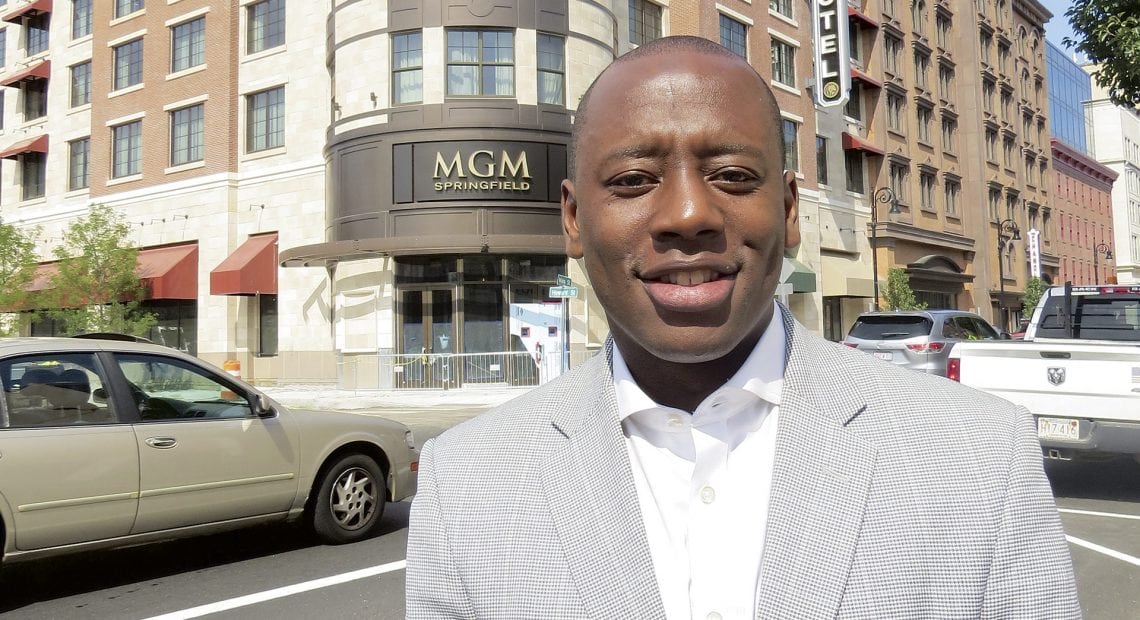
“I don’t think there’s a defining moment over the past 10 years when it comes to how we’ve arrived here,” Keiter explained. “We try to take a long-term approach to our work as it relates to the quality, but also the relationships, and that’s really paid off for us.”

He offered Smith College as an example.

“We’ve been working with them for about six years,” he explained. “We started off doing very small projects, and we’ve just earned their respect and worked our way up to being involved with larger projects. As a first-generation company, we have to consistently prove our value.”

The company currently handles work within a relatively small geographic radius — roughly 15 miles from its Florence base, by Keiter’s estimates — but it is looking to expand that reach as well as its list of core competencies.
Keiter Builders handled renovations of the common area at Amherst College, one of its many institutional clients.
Indeed, Keiter, as noted, is currently investing in a heavy-construction division — a subsidiary of the company, actually — based in Hatfield. This division pursues work with utilities and larger contractors and focus on excavating, trenching, and site work, and it has been growing steadily, said Keiter.
Such diversification is important, especially for a sector so profoundly impacted by downturns in the economy.

“We need to stay engaged in many different disciplines,” he explained. “Sometimes, when commercial or institutional is a little slow, the residential fills the gaps. We really enjoy all the different kinds of projects; it keeps us sharp.”

Meanwhile, the company now owns a number of properties in the Northampton area and will look to develop them, said Keiter, adding that he’s eyeing a mix of commercial and residential development opportunities.

Then there’s the process of becoming DCAM-certified, which, Keiter said, should open a number of doors, including the large one involving UMass Amherst.

“We’re starting to enter the public arena,” he told BusinessWest, adding that DCAM certification should be a catalyst for growth within the heavy-construction division as well as the traditional contracting side of the venture.
Building a Legacy

Keiter, who has young children, said that someday, maybe his company can be one of those that boasts multiple generations of ownership and a half-century of history.

“I really enjoy building the business — it’s a pleasure to build a legacy,” he explained. “My hope is that maybe, sometime down the line, there will be a second generation.”

For now, he’s focused on that business- and legacy-building process, and said the formula for doing that is pretty straightforward.

“You have to keep grinding and building a reputation,” he explained. “And in our industry, there are no shortcuts to doing that.”

Indeed, there’s just hard work — on the job site and in creating and strengthening relationships. And success in those realms has enabled Keiter to come a in way in a short decade.

George O’Brien can be reached at [email protected]

Commercial Real Estate

Lots of Potential


Evan Plotkin, left, with parking attendants Joe Martin, middle, and Damien Denesha

Evan Plotkin, left, with parking attendants Joe Martin, middle, and Damien Denesha at the new service just outside 1350 Main St.

Valet parking isn’t exactly a novel concept; banquet halls, restaurants, and hospitals have been offering that service for years, if not decades. But it is when it comes to downtown Springfield’s office towers. One Financial Plaza recently introduced the concept, and in a few weeks, it is living up the promise first foreseen a decade ago.

Evan Plotkin says he first conceived of the idea of instituting valet parking at 1350 Main St. in downtown Springfield — the office tower he co-owns — almost 10 years ago.
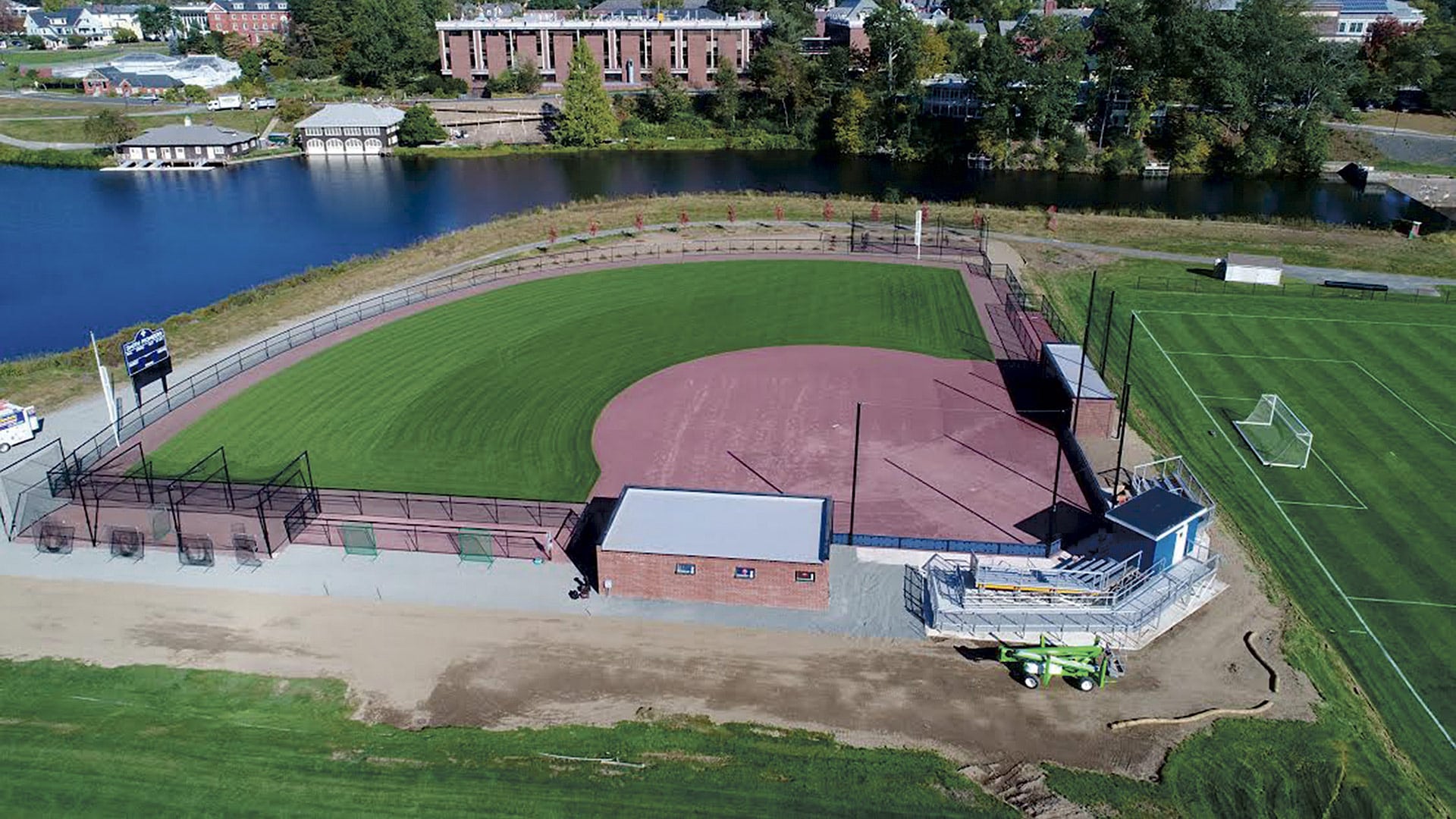
Then, as now, he thought the service would bring a needed, higher level of convenience to people visiting professionals and other tenants in the tower, take some off the rough edge off Springfield when it comes to the issues of parking and enforcement of same — matters that can keep some from even venturing into the city to do business — and be another selling point when it comes to attracting new tenants and prompting existing tenants to re-up.
So why did it take a decade for the concept to become reality and, according to early projections, fulfill all that promise?
“I couldn’t really afford it back then,” said Plotkin, who laughed as he said that but was nonetheless quite serious with his tone. But there were other reasons as well, ranging from the economy — that was the height of the recession — to some logistics (getting all the needed approvals from the city), to a vibrancy level that needed to still come up a notch for this to really work. Or two notches. Or three.

All of those issues, including the notches of vibrancy, are now being referred to with the past tense, or certainly will be when MGM Springfield opens its doors in a month. So Plotkin and the other owners of 1350 Main have made that dream from a decade ago a reality, and they’re off to a fast start, by Plotkin’s estimates, with this valet parking venture, which also serves visitors of neighboring City Hall, the county courthouse a block or so away, and other nearby facilities, at the start of this month.

That was the Fourth of July week, as you’ll recall, so the numbers have to be kept in perspective, said Plotkin, adding that those first few days, the attendants were parking 25 to 30 cars a day. By early the next week, the numbers had doubled, and on July 12, a Thursday, they parked 73 cars.

“And I think those numbers will just continue to grow as more people become aware of the service,” said Plotkin, adding that roughly half of the customers thus far have been visitors to City Hall, more than a third have ventured to 1350 Main, and the rest have had other destinations in mind.

The service, managed by Valet Park of America, is roughly as expensive as traditional parking, said Plotkin, noting that the cost is $2 for 20 minutes or less (enough time for a quick visit to tenants at 1350 Main or offices in City Hall), $4 for visits ranging from 20 minutes to two hours (enough time to go the gym on the building’s ninth floor), and $2 for each additional hour after that. Several tenants at 1350 Main already provide vouchers to visitors to cover the cost of the service, just as they would with normal parking.

The service, operated on what’s known as City Hall Place, has a few spaces right outside City Hall, roughly two dozen more in the Civic Center Parking Garage, and more in the lots under I-91, said Plotkin, adding that, with the way the concept is catching on, more may be needed.

This isn’t exactly a novel idea — valet parking has been used by banquet facilities, restaurants, and hospitals for years now. But it is for an office tower, at least in this market, said Plotkin, adding that, as he surveyed a changing landscape downtown and pending changes, especially MGM, he decided it was time to execute that plan he first conceived all those years ago.

“We looked at what was happening downtown, and the construction for MGM and the [I-91] viaduct creates a lot of conversation about parking, and it’s always pretty negative,” he explained. “I really wanted to get ahead of all that with our building.”

Elaborating, he said 1350 Main St. doesn’t have any structured parking (an attached garage or lot) and has historically been challenged by having to rely on nearly facilities. And with MGM set to open, that challenge, and the perception of parking issues, would only grow.

“Visitors there will utilize that garage, but they’ll also be looking for other places to park,” he noted. “And what happens is that regular people who just want to do business downtown will have this fear that it’s going to be challenging to find a space. People will say, ‘it’s a hassle; I don’t want to feed a meter all day.’”

Thus far, the service is doing just what he thought it would. It’s providing that layer of convenience for visitors, his tenants seem to like the service and consider it added value, and, in Plotkin’s mind, it’s helping to put a friendlier face on downtown Springfield.

Or at least a strong counter to the parking patrol that polices the central business district. Those individuals are just doing their jobs, he said, but they put visitors to the downtown area and his building on edge — and sometimes dent their wallet.

Valet service is “putting a positive face on parking in Springfield,” said Plotkin, who has been a tireless promoter and supporter of Springfield and especially and its downtown, and was recognized by BusinessWest as one of its Difference Makers for 2018 for those efforts. “There’s a negative connotation with those meter maids. People don’t like to get $50 tickets; they see those people coming, and they run out of the middle of a meeting or a lunch to put quarters in the meter.”

He said the arrival of MGM Springfield will certainly drive the numbers at the valet service higher and bring the business venture closer to and eventually past the break-even point he knew he couldn’t reach a decade ago.

Damien Denesha, recently named manager of this site by his employer, Valley Park of America, agreed.

“Once MGM opens, there will be a lot more people downtown, and parking will become more difficult,” he told BusinessWest. “Demand for this service will certainly grow.”

It took a decade for the concept Plotkin first put on paper to become reality. But thus far, the service seems to have, well, lots of potential, in every sense of that phrase.

George O’Brien can be reached at [email protected]

Features

Back to the Future

Opened in 1956 and hardly touched since, Westfield State University’s Parenzo Hall will soon have a 21st-century feel and house 21st-century initiatives.

Ramon Torrecilha says that when it opened in 1956, Parenzo Hall, the first building on what was then Westfield State College’s new campus on Western Avenue, housed “pretty much everything.”

That included classrooms, the dining hall, a large auditorium, administrative offices — yes, everything, said Torrecilha, president of what is now Westfield State University.

Over time, many all of those facilities moved somewhere else. The dining commons went in Scanlon Hall, new classroom facilities were built, and a number of administrative offices were moved down Western Avenue to the building, acquired by the college nearly 20 years ago, that was once the world headquarters for Stanley Home Products, later Stanhome.

But Parenzo remains an important center of activity of the school, as home to everything from a gym to labs to gatherings in that auditorium. Yet, while still relevant, Parenzo needed a 21st-century feel, and, more importantly, a 21st-century function — or several of them.

It will get both as the university embarks on a $40 million project likely to commence in 2020.

Indeed, the building will be modernized and brought up to current codes. But even more importantly, it will be home to some forward-thinking initiatives, said Torrecilha, referring specifically to the planned Center for Innovation and Education and the Center for Student Success and Engagement.

The former will leverage technology and serve as what Torrecilha called the “nexus for innovative collaboration in Western Mass.” and partner with community colleges, K-12 school districts, and industry partners. The latter, meanwhile, will strive to improve student outcomes and also address the continuing decline in the number of working-age adults.

Parenzo’s auditorium was packed on July 10 as a number of civic and economic-development leaders, college faculty and staff members, and even some students were on hand to see and hear Gov. Charlie Baker and other members of his administration talk about the legislation known as H.4549, “An Act Providing for Capital Repairs and Improvements for the Commonwealth,” a bill Baker signed that afternoon amid considerable fanfare.

The measure authorizes nearly $4 billion to address statewide capital needs, including higher-education campuses, health and human services facilities, state office buildings, public-safety facilities, and courts.

Gov. Charlie Baker signs H.4549, which includes $21 million for Parenzo Hall.

When he was asked by BusinessWest what inspired state officials to direct $21 million of that money toward Parenzo Hall — an amount to be matched by the university itself — Torrecilha said it was much more than the need to put a modern face on a 62-year-old building that certainly needed one. “It’s never been renovated,” he noted. “We still have the original windows, there are ADA issues, and there are a host of other improvements that need to take place; it doesn’t even have air conditioning.”

Indeed, what certainly resonated, he said, was what the college intended to do with the new Parenzo.

And to determine what that new life would be, Torrecilha said he essentially “hit the road” and visited a number of the school’s partners — a large constituency that includes the four area community colleges, the K-12 community, especially in Westfield, Holyoke, and Springfield, the Economic Development Council of Western Mass., and the Greater Springfield Chamber of Commerce — asking what they would like to see and gain from a new Parenzo.

“I asked, ‘how would a renovated Parenzo help you advance your mission,’’ he recalled, adding quickly that the respective mission vary, obviously, and that fact was reflected in the answers to that inquiry.

And it also reflected in the broad new strategic plan for Parenzo and the two new centers that will be based there.

The ‘Center for Innovation in Education and Industry Partnerships,’ is aptly named, he explained, because it will focus on the two distinct and equally important initiatives.

“We intend to work very closely with industry in Western Mass. so the university can partner with them in create programs and curriculum that support their operations,” he explained, adding that the EDC and the chamber will among the partners in this endeavor. “It’s about engaging with industry, doing needs assessments, and then turning to our faculty and programs and say ‘how can we help this particular industry in developing more skills and knowledge (in perspective employees) so the business is supported.”

The university, its faculty, and administrators already engage in such conversations with industry leaders, but the new center will take the dialogue — and the various forms of response — to a much higher level.

Meanwhile, the center will also focus on innovation in education, with a strong focus on technology, Torrecilha noted, adding that there are a number of significant changes taking place in how subject is taught — or can be taught — and the center will work to help WSU various partners, including the K-12 community and the community colleges, make the most of this technology.

“Because of technology, the learning process is being revolutionized,” he explained. “Today, there are digital laboratories, and the way we are teaching chemistry, physics, and even biology is changing. Those days when people would dissect a frog … all that can now be done digitally, and one of the things I’m envisioning is for the center to work with the K-12 community and our community college partners to set up that kind of exchange and partnerships.”

Torrecilha said that work will soon begin to blueprint what the new Parenzo will look like and how its spaces will be apportioned. He doesn’t have specific answers yet, but did say the school will make the very most of what is still a valuable asset.

“The building is 90,000 square feet, and we’re going to use every inch of it,” he said.

Thus, the building most associated with the school’s past, will play a very prominent role in its future.

— George O’Brien

Cover Story

This Is a Laughing Matter

Pam Victor and Scott Braidman

Pam Victor and Scott Braidman will soon open what they believe is the first improv club in Western Mass.

Pam Victor is official president and founder of Happier Valley Comedy, but she prefers the title ‘head of happiness.’ It’s effective, and she likes it, and as the founder, she said picking her title is one of the rewards of her job. The far bigger reward, though, is changing people’s lives — just as hers was changed — through improvisation.

Pam Victor refers to it affectionately as simply ‘the experiment,’ or, more formally, the ‘can-I-make-a-living-doing-what-I-love experiment.’

It was undertaken back in the summer of 2014, and the premise was pretty simple. Victor was going to see if she could make $16,000 a year — the poverty level for a family of two back then — through a business based on improvisation.

She was confident — well, sort of — that she would meet or surpass that threshold, but at the start, she was already thinking about the great blog post she would have if she didn’t.

“‘An artist can’t even break the poverty line,’ or something like that, is what I would have written,” Victor recalled, adding that she never had to submit that blog post, because she greatly exceeded her goal by teaching improvisation and using it to help professionals and others achieve any number of goals, including one she calls the ability to “disempower failure,” which we’ll hear more about later.

Today, that nonprofit business Victor started, called Happier Valley Comedy, continues to grow while carrying out a simple mission — “to bring laughter, joy, and ease to Western Massachusetts (and the world).”

It does this through three business divisions:

• Classes in improvisation. Victor started with one, and there are now eight a week, and there’s a waiting list for some of them;

• Comedy shows, such as the one on June 9 at the Northampton Center for the Arts, featuring the Ha-Has, the comedy group Victor started; and

• Personal and professional growth through use of improvisation, what the company calls its ‘Through Laughter’ program. Victor and her team visit companies, groups, and professional organizations and undertake exercises — usually highly interactive in nature — designed to help bolster everything from confidence levels to communication to team building.

It’s not what many people think of when they hear ‘improv’ — people taking to the podium and talking off the cuff (stand-up comedy) or even some of those other things people might conjure up; “we don’t cluck like chickens, and we don’t do ‘trust falls,’” said Victor. People do stand in circles, sometimes, and they do take part in exercises together.

Many of them are designed to address self-confidence and what has come to be known as the ‘impostor syndrome,’ said Victor, adding that this afflicts everyone, not just women, although they often seem especially vulnerable to it.

“I see it in my female colleagues, and I see it stop us from manifesting our successes because we talk ourselves out of success before we even have a chance to get into the ring,” she explained, referring specifically to the voice inside everyone that creates doubt and thoughts of inadequacy.

Happier Valley visits companies, groups, and organizations

With its Through Laughter program, Happier Valley visits companies, groups, and organizations and undertakes exercises designed to boost everything from confidence levels to communication to team building.

“The improv exercises help us step into the unknown and step into possibilities,” she went on. “It’s a muscle that we can strengthen, and every time we do it, we strengthen that muscle.”

Meghan Lynch, a principal with the marketing group Six Point Creative, has become a big believer in improv. She was first introduced to it when Victor did a presentation at a women’s leadership group, and Lynch then arranged to have Happier Valley come to her company. There have been several workshops, and as employees are added, Lynch schedules what are known as ‘improv workout sessions.’ Six Point even hires Happier Valley to do improv sessions as the company onboards new clients “to start the relationship off with some momentum,” as she put it.

All three divisions of this business — and the venture as a whole — are set to be taken to a much higher level with the opening of what Victor is sure is the first improv club in Western Mass.

Currently, it has another name — the “dirty vanilla box.” That’s how Victor and business partner Scott Braidman, who takes the twin titles general manager and artistic director, refer to the 1,300-square-foot space being built out at the Mill Valley Commons on Route 9 in Hadley.

There, in a retail center that Victor and Braidman have nicknamed the ‘Play Plaza’ — there’s also a tavern, an Irish dance center, a kung fu studio, and an outfit that grows coral at that location — the partners are outfitting space into classrooms and a performing area with 70 seats.

“This is the answer to a dream, really,” said Braidman as he walked within the space, noting that this will be the first improv club in Massachusetts outside of Boston, and it will enable him to meet a long-time goal of doing essentially what Victor has been doing — making improv a career.

For this issue, BusinessWest talked with Victor and Braidman about their venture, which is, indeed, a laughing matter — and also a very unique enterprise that is changing businesses, and changing lives, through improvisation.

Getting into the Act

As one might expect, Victor, who takes the title ‘head of happiness,’ uses humor early and often to communicate her points.

Consider this response to the question about why she believes her improvisation classes have caught on to the point where there is that waiting list.

“It’s cheaper than therapy,” she deadpanned, adding quickly that, in many ways, that’s not a joke. Her classes — $22 to $25 for each of eight classes — are much, much cheaper than therapy. And from what she’s gathered, they are just as effective, as we’ll see.

Three years or so later with those classes and the other divisions within Happier Valley Comedy, the experiment is more or less ancient history. The matters at hand now are building out that dirty vanilla box and substantially updating the business plan to reflect everything this facility can do for this nonprofit venture.

Before looking ahead, though, to tell this story right, we first need to look back — about 15 years or so, to be exact.

That’s when the clouds parted, as Victor put it in a piece she wrote about her venture for Innovate 413, and “the Great Goddess of Improv locked me in a fierce tractor beam with songs of love and connection.”

Happier Valley logo

Thus began what can be called a career in improv. But things developed very slowly after that.

Victor took one leap of faith, as she called it, when she founded an improv troupe that played mostly in libraries as fundraisers. And she took another one in 2012 when she summoned the courage to spend five weeks in Chicago studying at the mecca of longform improv, the iO Theater.

She took a third leap, perhaps the biggest, a few years later, when, after the son she had homeschooled for 10 years went off to college, she waged that aforementioned experiment.

“I tried everything,” Victor said when recalling the early days and her efforts to promote improv and its many benefits. “Classes, writing about it, doing corporate-training workshops, speeches — anything I could do, I tried. And sure enough, it worked out.”

By that, she meant that after six months, not a year, she had passed that $16,000 threshold and, more importantly, had gained the confidence to launch a business, officially a 501(c)(3) nonprofit, that would be called Happier Valley Comedy.

“It was one of those experiences where not thinking about the impossibility of it was quite advantageous,” said Victor, using more humor as she put into perspective the experience of launching a business based on improv in a region that was essentially an improv desert. “Ignorance is power in some ways.”

In the beginning, she started with one set of classes — titled “The Zen of Improv” — and doubts about just how many there could eventually be.

“I thought I had run out of the number of people who were interested in taking improvisation in the Pioneer Valley — those 12 people,” she said, adding that some of those original students signed up for more, and, to her surprise, there were many more people willing to take seats than she imagined.

Why? Maybe because it is cheaper than therapy, she told BusinessWest, adding that few of her students actually want to perform improv. They sign up because the sessions are fun and they give participants a chance to experience what Victor calls “the true meaning of community.”

“People seem to find that the classes have a great deal of impact outside of the classroom as well,” she explained. “People regularly tell me that improv has changed their life, and that’s a good feeling. It’s a fantastic community of people, and you get to make a whole bunch of new friends, which is rare as an adult.

“Improv is a team sport,” she went on. “We’re seeking joy, we’re seeking ease, and we’re also seeking how to make our scene partners look good; people learn how to be of service to each other and to the moment, so there’s a lot of mindfulness to it as well.”

As Victor and her team would discover, these improv classes were not only popular and effective, but demographically unique within the improv world in that they were and still are dominated by middle-aged professional women and not the younger men that are the norm.

“We’re the unicorn of improv, or Wonder Woman’s island,” said Victor, adding that she’s not really sure why her classes take on this demographic shape, but she’s clearly proud and quite happy that she doesn’t have the problem most other improv groups have — attracting women.

She would, however, like to attract more men … but that’s another story.

Grin and Bear It

As for the Through Laughter division of the company, it has also enjoyed steady growth, said Victor, adding that Happier Valley Comedy uses improv within that broad realm of personal and professional development to improve people’s lives at home and in the workplace.

And this aspect of her business takes on a number of forms, she said, citing, as just one example, an interactive presentation she’s done with groups such as the Women Business Owners Alliance called “Meet Your Evil Eye Meanie: How the Voice of Unhelpful Judgment Is Getting in Your Way.”

It uses improv exercises and humorous stories to help women identify and disempower their fear-based internal critical voice in order for them better manifest their professional dreams.

“As my comedy hero Tina Fey says, ‘confidence is 10% hard work and 90% delusion,” she noted. “The primary focus of my job is to help people quiet their voices of unhelpful judgment and get to the ‘delusion’ that leads to success.”

And with that, she again referenced the ‘impostor syndrome.’ In her efforts to help people address it, Victor has actually put a name to the problem, or at least to the voice inside people that causes all the trouble.

Pam Victor says improv is cheaper than therapy

Pam Victor says improv is cheaper than therapy — and arguably a lot more fun.

“We call him ‘Calvin’ — that’s a random name; that’s the voice inside our head that is our evil critic. It’s the voice that’s constantly in our head conjugating ‘to suck’ — as in ‘I suck at this,’ or ‘you suck at this’ — it’s that super-judgmental voice,” she said, referring to things people say to themselves, out loud or under their breath.

“I teach people that voice is a liar,” she went on. “And by naming it, that helps to disempower it a little bit or make it a little more manageable, because that voice is never going to go away — that’s human nature; that’s who we are. But we can use some techniques for quieting it.”

These are improv exercises, she went on, adding that they are designed to address that impostor syndrome and the accompanying fears and doubts and be that team sport she described earlier.

She’s putting together another presentation, a workshop she’s titled “F*ck Your Fear and Trust Your Truth,” a name that speaks volumes about what she wants attendees to do — not just that day, but for the rest of their careers and the rest of their lives.

This is a part of a subcategory within the Through Laughter division devoted to personal growth and female empowerment, she explained, adding that this workshop is being designed to help women use the skills associated with improv to enable them to quiet their judgmental voices and their inner critic so they amplify their truth and speak their mind.

“This will hopefully help women on all fronts, from their personal life to their professional life,” she noted. “Women in leadership roles can hopefully get better at speaking up for themselves and being heard, even women eyeing political positions — they’re calling this ‘the Year of the Woman.’”

Lynch told BusinessWest that the use of improv has been beneficial to Six Point on many levels. It has given employees there a common vocabulary, she said, including the now-common use of the word ‘triangles.’

Explaining it is quite complicated, said both Lynch and Victor, but a triangle essentially describes a relationship between a group of people, especially employees. There are several triangles within a company, and the actions of a specific employee could impact several such relationships. The goal of triangle-related exercises is to make individuals understand how their movements impact such relationships.

“We’ll often start conversations now with ‘let me tell you about my triangles — these are the pressures I’m experiencing — you tell me about yours, and how do we work together to solve this problem?’” said Lynch. “And it’s been a game changer in terms of creating trust and open communication around those, and that’s just one example of adopting that vocabulary into our day-to-day lives in a way that improves communication.”

Both Victor and Braidman believe Happier Valley will be able to introduce more people to the notion of triangles — and many easier-to-comprehend concepts as well — as they build out that vanilla box into an improv club.

The two had been looking for a site for some time, said Braidman, adding that the nonprofit got a huge boost from the most recent Valley Gives program — $26,000, to be exact — that made creation of this new facility possible.

The location is centrally located, he went on — halfway between Amherst and Northampton and on busy Route 9 — and the space is large enough and flexible enough to host classes, performances, workshops, and more.

If all goes according to plan, he said, classes should start there in late June, and Happier Valley comedy shows will commence in August.

Passion Play

Victor told BusinessWest that Braidman will often give her some good-natured grief about her unofficial titles at Happier Valley Comedy and those assigned to other people as well. ‘Head of happiness’ is just one of hers. “Laugh leader’ is another used on occasion, and there are still others that come into play.

“I have my own business, so I get to make up my own titles,” she explained, adding that this is just one of the perks that comes from conducting that experiment, succeeding with it, and, indeed, making a business doing something she loves.

The bigger perk is changing lives, just as hers was changed, through improvisation.

It’s a reward that takes her well above the poverty line, in every way you can imagine.

George O’Brien can be reached at [email protected]

Business of Aging

The Dream and the Journey

Officials take up ceremonial shovels during the groundbreaking for Hillside Residence on May 18.

Officials take up ceremonial shovels during the groundbreaking for Hillside Residence on May 18.

During their long and sometimes frustrating quest to secure funding for what would eventually be Hillside Residence, the Sisters of Providence never stopped believing the project’s model — blending healthcare and affordable senior housing — was worth fighting for. Now that the development is under way, they are even firmer in that conviction.

As she talked about the long and persistently frustrating quest to secure funding for the project that would come to be called Hillside Residence, Sister Kathleen Popko summed things up by recalling sentiments she expressed at the time — words that blended diplomacy, poignancy, and even a little sarcasm.

“I would tell people, ‘though our progress is slow … I’m making a lot of friends locally, regionally, and nationally,’” she recalled, with a phrase that hinted broadly at how many doors, in a proverbial sense, were knocked on by the Sisters of Providence, which Popko leads as president, as they sought to take a dream off the drawing board.

And also at how important it was to be making those friends.

Indeed, while making all those introductions, Sr. Popko and the other Sisters of Providence were gaining even more resolve as well. And it stemmed from the firm conviction that their unique model for Hillside Residence — the intersection of healthcare and affordable elder housing, if you will — was worth fighting for.

And fight they did, for the better part of eight years, a struggle that was ultimately successful and celebrated, as much as the project itself was, at an elabotate groundbreaking ceremony on May 18.

Fittingly, Sr. Popko, during her turn at the podium that morning, borrowed from St. Francis of Assisi to convey what it took to make that moment a reality.

“The journey is essential to the dream,” she said, invoking St. Francis’s famous quote. “With hindsight, I can see the truth and wisdom in that statement. Our eight-year journey to this moment expanded and sharpened our vision, tested our determination, enlarged our circle of friends, and committed supporters to this initiative. Let us work now to realize the dream.”

That dream, as noted, is to bring innovative, health-integrated, affordable elder housing to a region, and a city (West Springfield) where there is an acknowledged need for it, said Popko.

Elaborating, she said Hillside Residence, a demonstration project, will create 36 affordable rental units to frail elders, who will receive healthcare services from the Mercy LIFE PACE program (program for all-inclusive care for the elderly). Both programs are situated on the same 27-acre campus that was formerly home to Brightside for Families and Children.

And the expectation is that this $10 million project will demonstrate that this is an effective model for bringing needed services to what has historically been an underserved segment of the population, she told BusinessWest, adding that there have attempts to create affordable senior housing, but not in the same, holistic environment that Hillside Residence will create.

“This is innovative in that it will keep frail elders independent,” she explained. “They’ll live in an independent-living facility, but they’ll be supported in a way, on the same campus, that they can access a tremendous array of services and at the same time go home and live independently.”

For this issue, BusinessWest looks at both the dream and the journey that made Hillside Residence a reality — and why both are worth celebrating.

The Big Picture

When Brightside’s closing was announced in 2009, it left the Sisters of Providence with what amounted to a 27-acre canvas that could be filled in any number of ways, said Sr. Popko.

An architect’s rendering of Hillside Residence.

An architect’s rendering of Hillside Residence.

What made the most sense, she said, was to use the land and existing buildings, part of what’s known collectively as the Hillside at Providence, to help create a broad array of senior-living and senior-care facilities that would complement each other and meet recognized needs within the community.

This was a process that actually started with the conversion of the former Sisters of Providence Mother House into an independent-living and retirement community known as Providence Place in 1999, and it continued with the creation of Mary’s Meadow at Providence, a complex on the Providence Place campus comprised of 10-person houses designed to give elders a place to live in comfort equal to that of a private home. This was the first ‘small-home’ facility, as they have come to be called, in the Bay State.

The process of filling in the canvas at Brightside was accelerated with the creation of Mercy LIFE, a PACE program operated by Mercy Medical Center that provides tightly coordinated care and support designed to help seniors continue to live safely at home and avoid moving into a nursing home, she said.

The 25,000-square-foot facility, located within what was the main administration building for Brightside, includes everything from a medical clinic to a rehab gym to gathering places.

Meanwhile, the remainder of that 78,000-square-foot administration building has been devoted to reuses ranging from hospice care to a home for elder-focused programs administered by the Center for Human Development.

What emerged as a missing piece in the puzzle — and the next dream for the Sisters of Providence — was an affordable senior-living facility, one where the residents could take full advantage of the many programs and services at Mercy LIFE.

Talks for such a facility — and thus that ‘journey’ Sr. Popko described — began in 2011, she said, adding that it took the better of eight years (and work with four different mayors of West Springfield) to secure everything from the proper zoning to the needed funding.

And the latter part of the equation became more difficult when, in 2012, HUD, the U.S. Department of Housing and Urban Development, ceased funding for so-called ‘Section 202’ projects, those aimed at expanding the supply of affordable housing with supportive services for the elderly.

“So we had to take a step back and try to look for alternative sources of funding,” said Sr. Popko. “That included private sources and looking at federal grants and so forth.

“And they really weren’t forthcoming at the time,” she went on. “We visited many legislators and congressmen, and we brought in experts to come in and talk about some other concepts we were thinking about. We had people come out here, we visited state offices … we talked to so many people.”

State Elder Affairs Secretary Alice Bonner

State Elder Affairs Secretary Alice Bonner addresses those assembled at the May 18 groundbreaking for Hillside Residence.

Like she said, progress was slow, but she and others were making acquaintances.

“Everybody was very encouraging — they kept saying, ‘go ahead, yes, do this,’” she recalled, adding that the words of encouragement were not backed up with checks.

But the sisters pressed on. They succeeded in getting the property rezoned, and eventually started making progress on funding, thanks in part to a timely visit to Mary’s Meadow by state Elder Affairs Secretary Alice Bonner in April 2016.

“I said, ‘I just need minutes of your time,’” Sr. Popko recalled, adding that she used it to give the secretary a brief overview of the Hillside Residence project and hand her a concept paper of the proposal.

Bonner put the paper in her backpack, but eventually took it out, read it, and became sufficiently intrigued to call Sr. Popko and arrange a meeting to discuss the matter.

“We brainstormed about what could happen,” she recalled, “and also about how we could remove the silos between housing and health services and bring the two closer together.”

Eventually, the sisters were able to cobble funds together for a number of state and federal sources, including the Housing Stabilization Fund, the National Housing Trust Fund, the Housing Innovation Fund program, and the Mass. Rental Voucher Program. Also, private funding was provided by the Sisters of Providence and the Harry and Jeanette Weinberg Foundation, and the West Springfield Community Preservation Committee also chipped in toward the price tag, currently pegged at $9.65 million.

The project will focus on serving individuals who are 62 and older, with incomes at 50% of the area median income (AMI) or lower, and whose healthcare needs and housing instability can be optimally addressed by the program, said Sr. Popko, adding that, because the project has secured commitment of state rental subsidies, Hillside Residence participants’ housing costs will be capped at 30% of their income.

And while meeting an immediate need for those twin services — housing and healthcare — the project will be adding to the base of research on the efficiency and effectiveness of the integration of PACE and affordable elder housing.

“This data will assist policy makers, housing developers and managers, and healthcare providers better understand the benefits and operational challenges of an integrated PACE housing model,” said Sr. Popko.

The Next Chapter

As she talked about Hillside Residence, Sr. Popko noted that there is still more of the former Brightside canvas to be filled in.

Indeed, there are several cottages on the property that are roughly 9,000 square feet in size and could be transformed into more housing for the elderly.

“We could have another 50 units on this site, but it will be even more difficult to attain funding for that,” she said, adding that those cottages comprise what would be phase 3 of the work at the Hillside at Providence and the proverbial ‘next dream.’

As for the one currently coming to fruition, she said, again, that St. Francis of Assisi was right.

“Our journey of eight years was probably essential for realizing this dream,” she said in conclusion. “Because we’ve brought together people from the state level, we’ve brought together funders, legislators, and people within the community of West Springfield, to a point where they all want this to happen. That’s what has brought us to this moment.”

That, and a firm determination never to let the dream die.

George O’Brien can be reached at [email protected]

Business of Aging

Changing the Landscape

By George O’Brien

Erasmo Ruiz says he has found a profession that offers stability, flexibility, and a wide range of options.

Erasmo Ruiz says he has found a profession that offers stability, flexibility, and a wide range of options.

To say that Erasmo Ruiz took a circuitous route to the nurse-pinning ceremony at Springfield Technical Community College late last month would be an understatement. A huge understatement.

Now 34, the father of two teenagers — and the first one in his family to attend college — studied engineering at UMass. But things “didn’t go as expected,” he told BusinessWest, noting that he was into partying and girls far more than he was into his studies and eventually had to drop out.

From there, he went into the Navy, specializing in electronics. But he didn’t finish his enlistment because his father got into trouble with the law and was incarcerated; Ruiz needed to get home and help support his family.

He would join the workforce, trying his hand at everything from manufacturing to time as a clerk in the Post Office. Then, by chance, he got a job as a medical assistant working with a group of neurosurgeons at Baystate Medical Center.

“It just made sense at the time to take things to the next level,” he said of his decision to pursue a nursing degree. “With the guidance of nurses and other medical professionals, I chose this career.”

A circuitous route to be sure, but Ruiz found himself at that pinning ceremony, persevering through a two-course of study that challenged him on many levels. And many men are doing the same thing.

Well, let’s say many more men, and even a phrase like that needs to be put into perspective.

Yes, there are more men getting into nursing these days, at least compared to 40 or even 20 years ago, but the numbers still don’t approach that of women, said Karen Aiken, a Nursing professor at Holyoke Community College for the past 17 years, eight as chairman of the department.

“The labor bureau will tell you, and make it sound really great, that since 1970, the number has tripled,” she said of men in the profession. “But the numbers are so small, that doesn’t mean much; overall, I think the percentage [of all nurses who are male) has risen from 2.9% to just over 9%, so those are still small numbers.”

We’ll get into the numbers and the reasons they’re higher than they were, but not as high they as perhaps they should be, later. First, let’s look at some of the men who are getting into nursing.

Most are not taking what would be called the traditional route, right out of high school, but then again, many women don’t take that path either.

Andy Bean, 38, who graduated from Westfield State University this spring, worked in sales for a trucking company, sitting in front of a computer all day ordering parts for clients. He was laid off once when the economy took a turn for the worse and decided that he wasn’t going to let that happen to him again.

So he segued into healthcare and eventually a nursing program. Actually, several of them. He’s been working toward a degree in healthcare for seven years, by his estimate, and he’s looking to make a home in the emergency room at Baystate Noble Hospital in Westfield, where he’s already spent considerable time as a technician and student nurse.

Andy Bean, seen here in the ER at Baystate Noble Hospital in Westfield

Andy Bean, seen here in the ER at Baystate Noble Hospital in Westfield, likes the fast pace of that setting and wants to start his career in nursing there.

Meanwhile, Nick Labelle, another member of STCC’s class of 2018, now 36, worked in everything from food preparation to sheet-metal fabrication to real estate before getting a job as a counselor in a substance-abuse clinic. It was that last stop that convinced him that he liked helping people and working in a healthcare setting.

But some have taken more of a direct route. People like Brendan McKee from North Attleboro, another recent graduate of WSU. He said that, unfortunately, he spent a lot of time in hospitals in his youth visiting sick family members, and quickly realized he wanted to be part of that environment. Nursing, he said, was his first choice.

Overall, there are many reasons why nursing has become the first choice, or the second, or the fifth, for men, said Lisa Fugiel, director of the Nursing program at STCC, listing everything from solid pay to the availability of jobs as Baby Boomers retire, to the flexibility within the profession and the wide variety of options available to those who choose it.

But for many, it comes down to those same ingredients that bring women into nursing, she said — compassion, caring, and a desire to help others.

For this issue and its focus on nursing education, BusinessWest interviewed several men on their way to joining the profession (the licensing exam is their next challenge). Collectively, their stories help explain why the landscape within nursing — gender-wise, anyway — is changing.

Course Change

Bean told BusinessWest that he likes the pace of work in the ER and the fact that he’s always moving in that setting.

“That’s a big change from when I was just sitting in front of that computer all day,” he said. “That’s one of the things I hated the most about my old job. It just didn’t feel like a good fit for me anymore.”

But pace of work — and fit — are just two of many reasons why there are more men hearing their names called at those nurse-pinning ceremonies, said both Aiken and Fugiel as they discussed the changing demographics in their classrooms.

They both spoke of greater acceptance of male nurses in general and among women receiving care, and, on the flip side of the equation, more acceptance of the profession as a career option among men. And both halves of the equation are important.

“Women are more comfortable with women, and in some areas especially,” Fugiel noted. “But overall, there is more acceptance of men now.

“And we’re seeing a steady increase when it comes to men getting into the profession,” she went on, noting that this is reflected in the numbers of men in the STCC program; there were nine in this year’s class of 74, roughly double the total from when she started 15 years ago.

There are many reasons for this, said Fugiel and Aiken, listing solid pay and benefits, stability (an important consideration given anxiety about many professions in an age of ever-advancing technology), a host of opportunities, and a wide array of specific areas to get into, from critical care to medical-surgical nursing to behavioral health.

“All the students talk about how there are so many options in nursing, which is one of the things that’s so enticing about the profession, whether it’s male or female,” said Fugiel. “Just look at all the options in an acute-care setting — pediatrics, maternity, ER, ICU, med-surg, and mental health — but there’s also community nursing, nursing infomatics, and managed care.

“And there’s stability,” she went on. “A lot of our nurses are getting older, and that translates into opportunities and stability.”

While it’s good for men to be getting into the profession, given its many rewards, it is also good for the profession, the healthcare community, and society in general, to have men as nurses, said Aiken.

“As an instructor and as a seasoned nurse, I believe that that the more men we can get into nursing, the better,” she explained. “It makes it a rounded profession, and it makes the care more rounded.”

Elaborating, she said men can and often do bring a different perspective to the work of caring for people in need.

“Nurses that are female think one way, and our society doesn’t give men a lot of credit for compassion and caring,” she told BusinessWest. “When these men come into nursing, they come in for a reason — they have that compassion and want to care for people.

“A large number of men who enter our program have been out in the workforce and are either changing professions or are looking to be caring professionals,” she went on. “And they bring so much with them when they come in.”

Getting into the profession is difficult for many, she said, and perhaps more difficult than for many women because men are still traditionally the breadwinners in many families, and, therefore, it is difficult to quit work completely or go to school part-time to earn a nursing degree.

Lisa Fugiel says society is becoming more accepting of male nurses

Lisa Fugiel says society is becoming more accepting of male nurses, and, likewise, men are becoming more accepting of careers in the nursing field.

“The commitment, the education, is more than a full-time job,” said Aiken, adding that men often enter a program not fully understanding what they’re getting into and how they’re going to manage that commitment given their other responsibilities, and that’s why many struggle to get to the finish line or never get there.

Labor of Love

As for those that do, well, interviews with several men graduating this year provide solid evidence that men are more open to a career in nursing — and for all those reasons listed above, from the stability to the flexibility; from the nature and pace of the work to the ability to work with people.

“A big factor for me was all the options we have — you can do anything with this,” Ruiz said of that diploma he’s earned. “Also, in terms of looking out for my family, that was also part of it. The demand is there; there’s a nursing shortage.”

Stability was also a big consideration for Bean, who, as noted, had been laid off once and was looking for firmer ground career-wise. He was also looking for something more rewarding and with opportunities to do some ladder-climbing.

He had taken a few EMT courses, and, after returning to his job with the trucking company after being laid off, found it lacking in many ways,

“So I quit my job, and with the support of my wife, I went back to school to get my nursing degree,” he explained. “I found that, with nursing, there were so many avenues to go down; if one didn’t fit, you could find another one that did fit.”

As noted, he’s been going to school, part-time or full-time, for seven years now. It’s been a struggle at times, but he kept his eyes on the prize awaiting him.

“I was taking classes while working, then quitting and going back to full-time, then working again quite a bit in the emergency room while going to school full-time,” he said. “It’s been a long road, and I’m happy to be done with it.”

Job satisfaction was also a mostly missing ingredient for Labelle, who tried to find it, without much success, in fields ranging from hospitality to selling houses. He found much more of it working in that substance-abuse clinic, but desired an even higher level.

“I wanted a career that would directly impact patient or client care,” he explained. “I did a variety of career assessments, and found that nursing was something that seemed to suit me with regard to compassionate care of client needs, and also something that would be challenging.

“I needed a job that would really challenge me, and I was looking for stability as well,” he went on. “And nursing really fit that criteria. It was a very careful decision.”

As it was for Brendan McKee, who, as noted, didn’t segue into nursing; it was his first choice.

“I did spend a lot of time in hospitals with sick family members,” he recalled. “And I got to see how the nurses worked and took care of my family. It left a really good impression on me.”

He entered Westfield State out of high school, and, like all nursing students, was exposed to a number of different and intriguing paths within the profession. One of them was work in the ICU, and that’s where he is slated to work, at Baystate Medical Center, this fall.

“I like the acuity of it — I enjoy being in that demanding of an environment,” he explained. “I’m the kind of person who runs well when there’s a lot to do and there’s a faster-paced environment.”

A second reason for choosing the ICU, said McKee, is that he eventually wants to work in anesthesia, and the ICU is the “gateway,” as he called it, to that specialty, just as the nursing degree itself is the gateway to a seemingly endless range of career paths within healthcare.

Making a Difference

Ruiz, like all those we spoke with, said he’s taking things one step at a time right now. That means his focus is on passing the licensing exam, which he’ll tackle in the next few months.

After that? He has a comfort level on the “neuro side,” as he called it, but he’s also willing to explore.

“I grew up in Springfield, and I would love to work with the community,” he told BusinessWest, adding that one of his rotations while at STCC was at the High Street Clinic, located in one of the city’s poorer neighborhoods. “I think I could make a difference in a center like that, but I’m not really sure that’s what I want — there are lots of options.”

With that, he summed up why more men are getting into a profession long dominated by women. They want to make a difference, and they’re becoming more accepting of a profession that allows them to do just that.

The numbers of men are not rising quickly or dramatically, but the arrow is definitely pointing up. And as Aiken and others noted, that’s good not just for the men taking this career path, but for those they will serve when they reach their destination.

George O’Brien can be reached at [email protected]