Home Sections Features Archive by category Community Spotlight (Page 6)

Community Spotlight

Community Spotlight Features

Community Spotlight

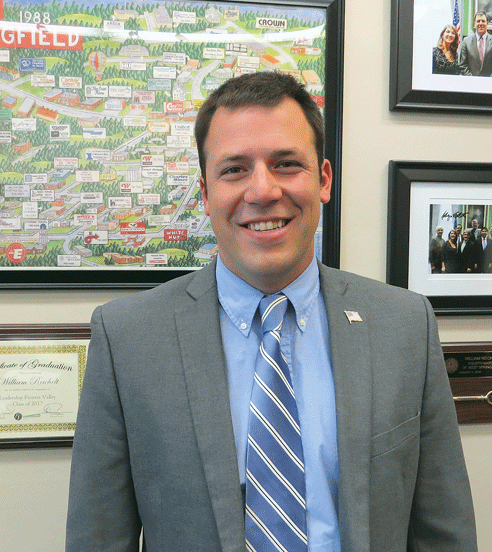
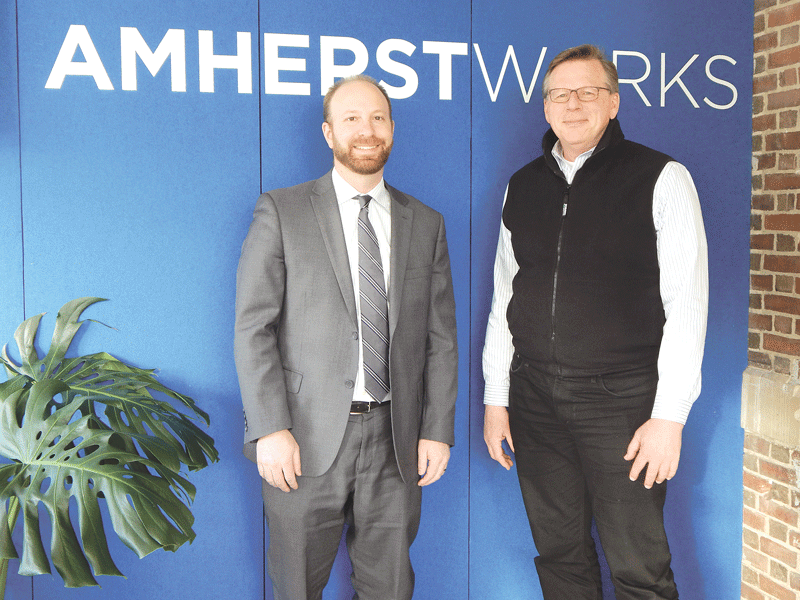
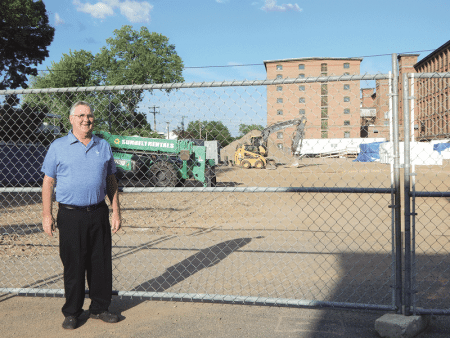
Mike Vezzola

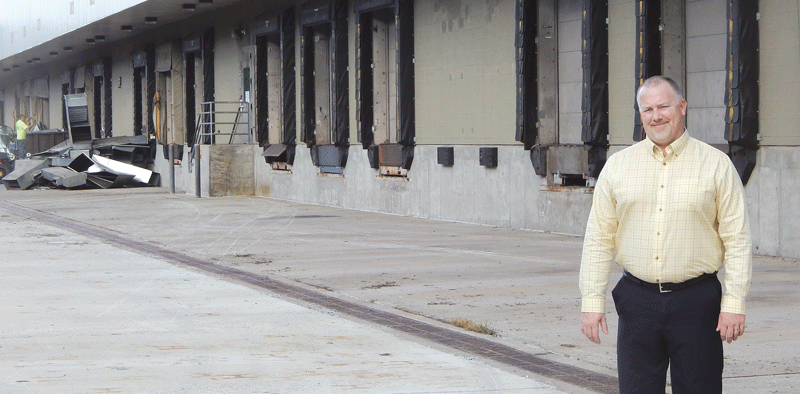
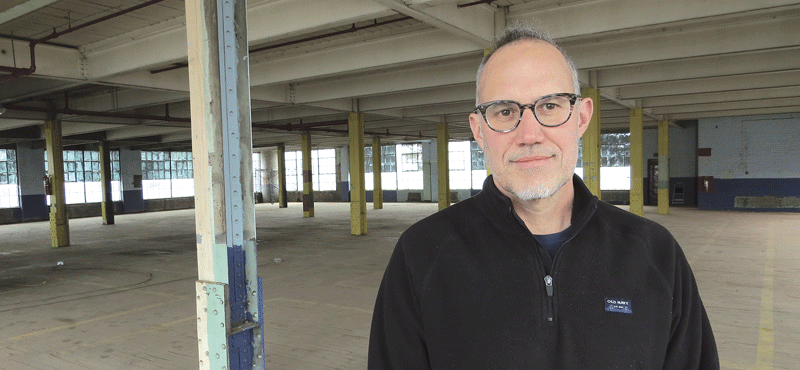
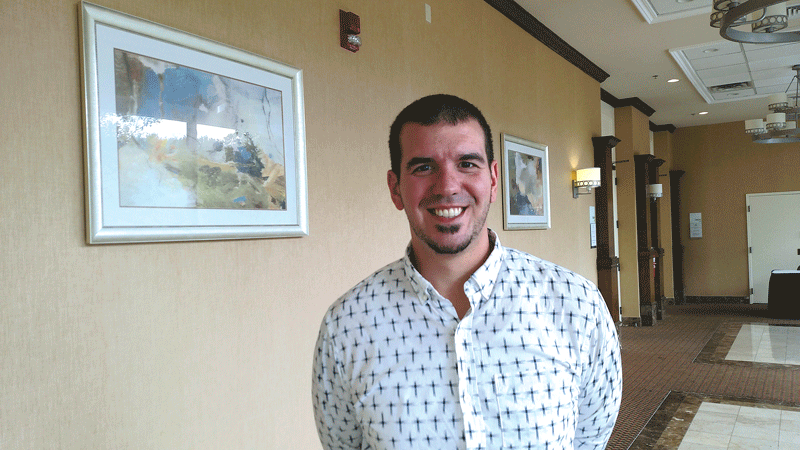
Mike Vezzola says Enfield has cultivated a diverse economic landscape, with retail, manufacturing, and warehousing and distribution all playing key roles.

Commuters whisking past Enfield, Conn. on I-91 — especially exits 47E and 48, which drain into the heavily trafficked corridors of Routes 220 and 190, peppered with shopping centers and fast-casual restaurants — no doubt see the stretch as a retail mecca, but a closer look casts doubt.

Take the Enfield Square Mall, for instance, which has been heavily buffeted by store departures and doesn’t draw nearly the traffic it used to.

“From a retail perspective, yes, we lost some of the anchor stores of the mall — Macy’s, Sears — but I know there has been some interest from new stores to go into the mall,” said Mike Vezzola, executive director of the North Central Connecticut Chamber of Commerce, noting, as one example, a new Party City on the property, one of the biggest among the chain’s New England stores.

“I spoke to the folks at the mall last week, and we’re starting to see the retail aspect rebound a little bit,” he went on. “But it’s definitely more of a mixed bag. Ten years ago, we were looking at Enfield as the retail hub between Springfield and Hartford. I feel that’s shifted to Manchester. Instead, we’re now an all-inclusive package drawing from all aspects of economic development.”

Take, for instance, a strong uptick in small and sole-proprietor businesses coming online in the past year, reflective of an entrepreneurial wave that has been noticeable in Western Mass. as well. Or a wave of warehousing and distribution companies that have set up shop in Enfield over the past year or two.
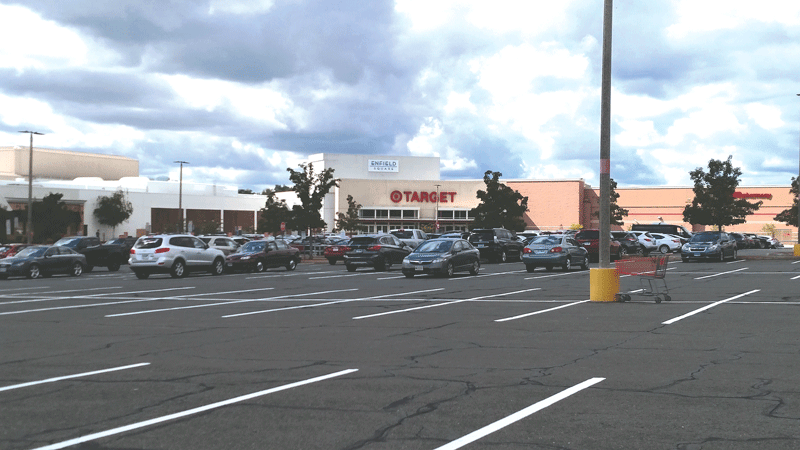
Enfield Square Mall

Enfield Square Mall

“It’s a combination of a few things,” Vezzola said, noting that the manufacturing, warehousing, and distribution niches have been bolstered by the likes of Veritiv, Plastipak, and Conval all moving into Enfield in the past year. “We’ve also seen a lot of interest from property managers and developers who have been purchasing open lots here in town, with intentions of perhaps bringing more distribution and manufacturing businesses into the area.”

Recognizing an opportunity to create a pipline of local talent for such companies, Asnuntuck Community College unveiled its new, 27,000-square-foot Advanced Manufacturing Technology Center in the spring, part of an overall $25 million campus expansion plan. The new space will allow Asnuntuck to double its enrollment in its undergraduate manufacturing-technology programs. Meanwhile, the college is extending its tuition rate for Connecticut residents to students from Massachusetts. All these moves are aimed at bolstering what is becoming a key part of Enfield’s — and, perhaps, the region’s — economy.

Enfield, Conn. at a glance

Year Incorporated: 1683 in Massachusetts; annexed to Connecticut in 1749
Population: 44,654 (2010)
Area: 34.2 square miles
County: Hartford
Residential Tax Rate: $31.43 (plus fire district tax)
Commercial Tax Rate: $31.43 (plus fire district tax)
Median Household Income: $67,402
Median Family Income: $77,554
Type of Government: Town Council, Town Manager
Largest Employers: MassMutual, Retail Brand Alliance, Lego Systems
* Latest information available

“Within the past year, the state has given much support to Asnuntuck to focus on advanced manufacturing and programs that are more of a specific niche in terms of a career path,” Vezzola told BusinessWest. “The expansion of that school has been phenomenal, everything from the infrastructure to the subtleties like offering in-state tuition prices to Massachusetts residents.”

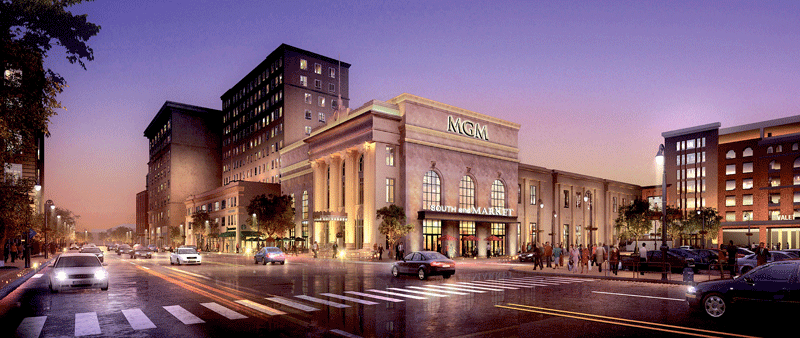
Other developments have local officials equally excited about Enfield’s position, from a planned transit center in the Thompsonville section of town to MGM Springfield’s opening in 2018 and, perhaps, a second casino just to the south in East Windsor.

“If anything, I think Enfield is going to be more appealing over the next five years with the institution of a new commercial rail system and the casinos going up,” Vezzola said. “I can see Enfield really being the middle-ground tourist attraction, the alternative place to stay between those two points of interest.”

All Aboard

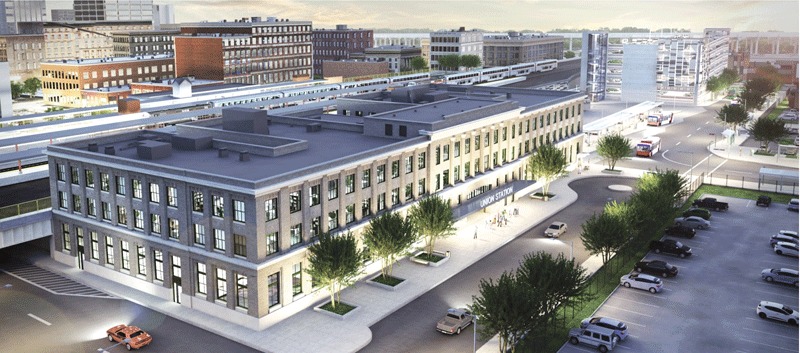
As for that railroad, service on a New Haven-to-Springfield line should be up and running in the spring of 2018. Enfield — specifically, its Thompsonville neighborhood on the Connecticut River — is one of the proposed stops along that line, although the station won’t be up and running immediately. Nor will it be built in a vacuum, as the town has been planning a transformation of the future station site into an intermodal transit center in a walker-friendly village.

“It’s a rather large and complicated project,” said Peter Bryanton, the town’s director of Community Development, adding that the sticking point has been a former power-plant site that sits on the river. “That site is owned by Eversource, and we started negotiating with Eversource about five years ago to go on the property and do environmental testing, because we need to know what kind of contaminants are there before we can do anything. We’re now at the point where we have an access agreement with them, and we’re in the process of getting a firm to do the work for us.”

Depending on the results of that survey, if the site needs to be remediated or capped, the transit-center could be looking at a three- to five-year timeline. In the meantime, the state will build a basic rail station, with an elevated, double-tracked platform on each side. Later on, the town will build in some parking, bus facilities, and outdoor recreation, such as walking trails and overlook areas so people can enjoy the view of the river.

“Hopefully the commuter-rail system revives some of the walkability in town,” Vezzola added. “The service will start running in 2018 — we’re the only stop on the Connecticut River itself — and the Thompsonville project will be greatly affected by that once it’s instituted. We really want to take the train station and make a livable, walkable atmosphere, with restaurants and retail shops from the train station all the way up to Town Hall, all the way up Main Street. It all kind of works together.”

There isn’t room for a lot of retail at the site, Bryanton said, but one four-story commercial building, acquired by the Enfield Community Development Corp., will feature some ground-level retail and housing on the upper floors.

“We’ve gone through the conceptual phase, and we’re now in the construction planning phase,” he noted. “The rail-station plans are almost completed — the state is working on that — and with our environmental work, we can move on our construction plans for the infrastructure around the rail station.”

Sure Bet

Vezzola noted that the chamber’s role is to foster economic growth and development in the four towns it represents. “We’re here as a supporter of local commerce and want to be a driving force behind keeping our region an appealing, attractive place to grow your business.”

That’s why he’s cheered by some of the initiatives taking shape in and around Enfield, from workforce-development progress to the future transit center to a pair of casinos, although the East Windsor, while approved by the Connecticut Legislature, isn’t quite a done deal.

“I think Springfield is a sure bet, and that is most certainly going to help tourism in this particular area,” he said. “We have plenty of restaurants in Enfield, the Hampton Inn and Holiday Inn hotels in Enfield will be pretty much occupied, and it’s only going to be bigger if the East Windsor casino comes to fruition as well, because we’re right in the middle. We’re not a 45-minute commute, like coming from Northampton or West Hartford; we’re your driveable destination.”

Joseph Bednar can be reached at [email protected]
Community Spotlight Features

Community Spotlight

By Alta J. Stark

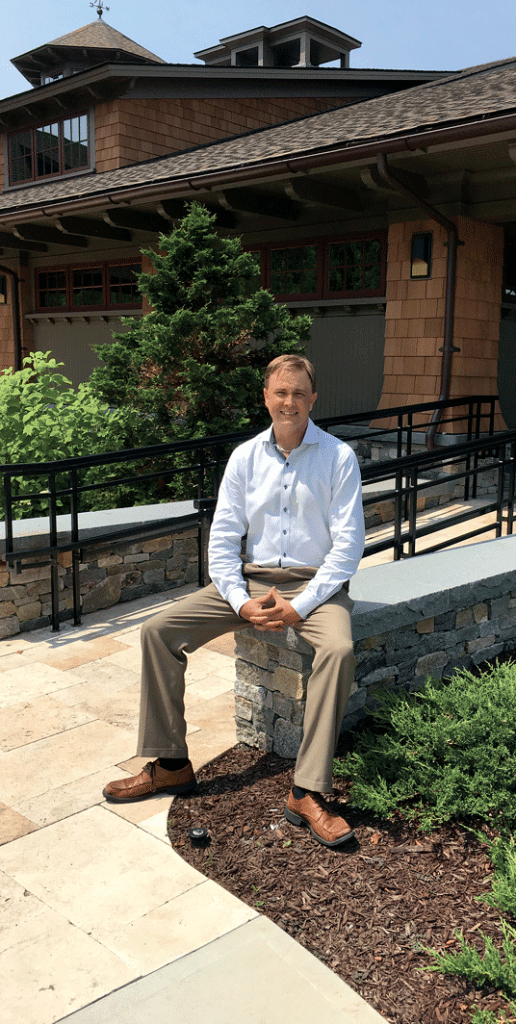
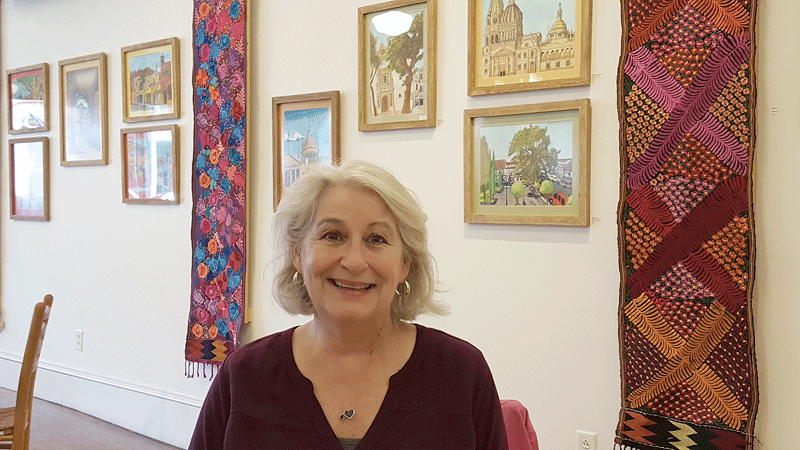
Colleen Henry says Lee has always had a great location, but as a community, it has also been very innovative.

Colleen Henry says Lee has always had a great location, but as a community, it has also been very innovative.

Ask a Lee business leader or owner what the key to their success is, and you’ll hear one resounding answer: “location, location, location.”

Lee’s prime location at Massachusetts Turnpike exit 2 has afforded the town some of the best economic opportunities in Berkshire County. “It’s ideal in that regard,” said Jonathan Butler, the president and CEO of 1Berkshire.

“Lee has always had a solid amount of traffic through its downtown because of its proximity to the Pike, and having Route 20 run right through its downtown, but the community doesn’t rest on location alone,” he told BusinessWest. “They’ve done a lot of work to make the town a destination, not just a spot people pass through.”

The community has undergone quite an impressive downtown revitalization over the past decade, following a series of economic transitions in the ’80s and ’90s, as large employers, including a series of paper mills, closed. The most recent such closure was Schweitzer-Mauduit International in 2008, which led to the loss of several hundred jobs in the community. Butler says the town got back on its feet by “forging a partnership between its town government and its community development corporation. They did a lot of good work in the 2000s, focusing on redevelopment projects of a few key downtown properties. They also did a big facelift for the downtown, making it look much more inviting for all the traffic that comes through.”

“People have worked really hard to make Lee beautiful and livable,” said Colleen Henry, executive director of the Lee Chamber of Commerce. “We’re very innovative in Lee, and always have been.”

In fact, town founders were so savvy, they redirected the location of the Housatonic River. Lee was founded in the 1700s when the river flowed down the town’s current Main Street. Henry says the area flooded often because it was on a downhill, so the river was redirected to expand to the riverbank and enable downtown to flourish.

Today, there’s a lot of diversity to Lee’s economy, including high-quality manufacturing jobs, farms, quality eateries and resorts, eclectic stores, coffee shops, and iconic retailers.

This mix has created an intriguing business story, one that is continuously adding new chapters. For this, the latest installment of its Community Spotlight series, BusinessWest turns some of those pages.

What’s in Store

The largest employer in Lee is the Lee Premium Outlets, which, during the tourist season, employs about 750 people in its 60 outlet stores. Carolyn Edwards, general manager of the complex, said the facility recognizes the important role it plays in driving the local economy.

“We tend to advertise out of market to draw tourists and shoppers to the region. Our customer base is driven by cultural attractions such as Tanglewood, Jacob’s Pillow, and Shakespeare & Company,” said Edwards. “But once they’re here, they make a day, sometimes a week of it, and we’re always giving recommendations for ‘what’s a great restaurant to eat at?’ or ‘can you recommend a great hotel to stay at tonight?’ If it’s a rainy day, they ask, ‘what can I do with the kids?’

“We try to stay in tune with what’s going on in the community,” she went on. “And I think it’s a good relationship where we offer something for folks who are here, and then we’re driving business elsewhere as well.”

Edwards said the outlets average about 2 million visitors a year, with shoppers coming from local markets, as well as regional and international locations.

Lee Premium Outlets has become a destination within a destination community.

Lee Premium Outlets has become a destination within a destination community.

“I love meeting the customers,” she said. “I’m always amazed at people who show up from far and away. In the summer, we have a lot of foreign camp counselors who come here to ramp up their wardrobes before going back to the UK, France, and Spain. It’s fun to see them buy things that they’re excited to bring back and show their families. We always look forward to their return.”

Edwards said they come for brand names like Michael Kors, Coach, and Calvin Klein, and they return each year to see what’s new. “We always want to deliver a new experience when someone comes. We’re different from maybe your local mall in that respect because we’re kind of a destination. Shoppers look forward to coming, they plan on coming, and when they do, that’s always the first question: ‘what’s new?’”

Down the road a piece is the headquarters and distribution center of another iconic retailer, Country Curtains. Colleen Henry said its annual sale at the Rink is a big draw. “When they have their sales, they put up a sign. People stop their cars and get out. Once they do that, and walk around Lee and see all that we have to offer, then we all benefit.”

Trade, transportation, and utilities lead the list of employment by industry in Lee, followed by leisure and hospitality, and education and health services. Manufacturing is number four on the list, and while many of the paper mills have closed, the sector is still holding strong, making up more than 7% of the workforce in the Berkshires, and representing some of the highest wages in the region. In Lee, in particular, there are three high-tech companies along the Route 102 corridor that are providing some of the highest wages in the region.

Onyx Specialty Papers is the town’s third-largest employer with more than 150 employees. Butler said it’s a remnant of some of the larger mill closings in the 2000s that was bought by local shareholders with a vision. “It’s now locally run and owned, and they’ve innovated their technology to produce very unique, technically exacting papers. Their products are distributed across the globe.”

Down the road there’s Berkshire Sterile Manufacturing, a manufacturer to the pharmaceutical industry, a relatively new employer that found its way to Lee with the help of a strong regional partnership.

“We not only helped them find space, we also worked with our local community college to do some specific training for their workforce needs,” said Butler.

SEE: Lee at a glance

Year Incorporated: 1777
Population: 5,878
Area: 27 square miles
County: Berkshire
Residential Tax Rate: $14.72
Commercial Tax Rate: $14.72
Median Household Income: $58,790
Median Family Income: $71,452
Type of government: Representative Town Meeting
Largest employers: Lee Premium Outlets; Country Curtains; Onyx Specialty Papers; the Village at Laurel Lake; Oak ‘n Spruce Resort; Big Y
* Latest information available

A third high-end employer providing quality jobs is Boyd Technologies, another company that’s been successful in transitioning from one generation of ownership to the next. Butler said he’s encouraged by these companies because “they’re doing a great job of innovating and diversifying what they’re doing. The economy’s evolving, and they’re evolving with it.”

Henry said she’s working to bring in more high-tech companies. “We have the space for it; we have more open land than a few others of the towns in the Berkshires, so we have the room to grow and expand.”

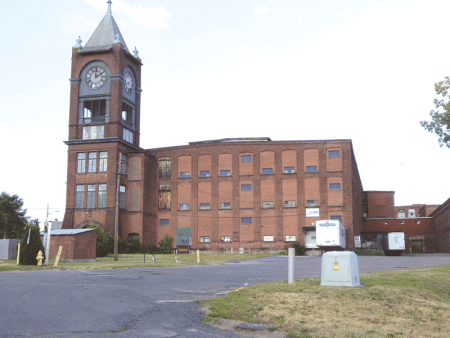
Henry is also excited by a huge project that’s been on the horizon for several years now, the redevelopment of the Eagle Mill. It’s one of those old Schweitzer-Mauduit mills off North Main Street that has been closed for several years.

Renaissance Mill LLC is working to transform the space into a mix of different economic uses that could help expand downtown offerings, adding everything from lodging to additional eateries and attractions.

“Projects like the Eagle Mill give Lee the opportunity to continue to become a bigger and bigger part of the Berkshire visitor economy, and it’s also a space that eventually will be able to attract next-generation families with a variety of different affordable-housing options,” said Butler. “Presently, Lee boasts relatively reasonable real-estate prices from both the rental and buyer’s market perspective. Adding additional affordable housing will position the town to be very competitive.”

Character Building

Of course, the heart and soul of the town is its quintessential New England charm. Lee has maintained its small-town character through decades of growth and change.

“That’s what we’re all about, and what we would like to be known for even more,” said Henry. “We benefit from the location because we’re at the entrance to a great tourist destination, but we also benefit from the location because it’s beautiful on its own.”

Butler agreed, noting that “Lee is one of those Berkshire communities that’s really bounced back in the past 15 years in terms of its downtown being filled up with great coffee shops, cool bars and restaurants, and an interesting mix of quality stores. It really has a destination feel to it for visitors to the Berkshires, but it’s also the type of downtown that’s really prominent for residents who live in the community.”

Joe’s Diner has been serving the community for more than 60 years, literally and figuratively. Customers far and wide know the diner as the backdrop of one of Norman Rockwell’s most well-known works, “The Runaway,” featuring a state trooper and a young boy sitting on stools in the diner.

The Sept. 20, 1958 Saturday Evening Post cover hangs proudly in the diner, next to a photo of the neighbors Rockwell recruited to model for him, state trooper Richard Clemens and Eddie Locke. Longtime staffers are used to the attention, and don’t miss a beat filling coffee cups while they help make memories for visitors.

Lee is also home to “the best courtroom in the county,” where its most famous case was that of Arlo Guthrie, whose day in court is remembered in the lyrics to his famous war-protest song, “Alice’s Restaurant.”

But there are other hidden gems that Henry invites people to discover, like the Animagic Museum on Main Street, where visitors can learn about the many local animators who made movie magic in films such as 2001: A Space Odyssey, The Matrix, and The Lord of the Rings. One of the town’s quirkiest claims to fame is on property that was once the Highfield Farm. “Monument to a Cow” is a marble statue of a cow named Highfield Colantha Mooie, who in her 18 years produced 205,928 pounds of milk.

Henry says it’s the diversity of business and industry that drives Lee’s economy.

“You can get everything you need in Lee. You don’t have to go somewhere else,” she said. “And you can buy from people who you know, people you see in church and in the grocery store and at basketball games. Supporting the community is really important, and people really do that in Lee. Residents understand that supporting the local economy is really important to our survival.”

Edwards said Lee is unique because of its thriving downtown.

“It’s alive, and it’s beautiful. You turn onto Main Street and see flowers everywhere,” she said. “It’s well-kept, and there are locally owned businesses there and restaurants that are very unique and not necessarily chain restaurants, so there is the best of both worlds in Lee.”

On Location

Henry says she’s proud to be part of Lee’s success story and recognizes it’s just part of the bigger Berkshire picture.

“We’re a work in progress, part of a bigger whole that’s more than just individual town thinking,” she told BusinessWest. “We’re tied into this together in a lot of ways.”

Butler agreed, and said the region has a good handle on the future. “We know what the challenges are, and we have a growing understanding of where the opportunities are,” he explained. “Lee is a great microcosm of the Berkshires in that it went through the same economic transitions that the majority of our communities went through in the ’70s into the ’90s and early 2000s, but Lee bounced back.

“It’s found its place in the visitor economy,” he went on. “It’s found its place in having employers that are evolving and doing cutting-edge things, and it’s attracting families. It’s a really great example of the potential for all our Berkshire communities.”

Community Spotlight Features

Community Spotlight

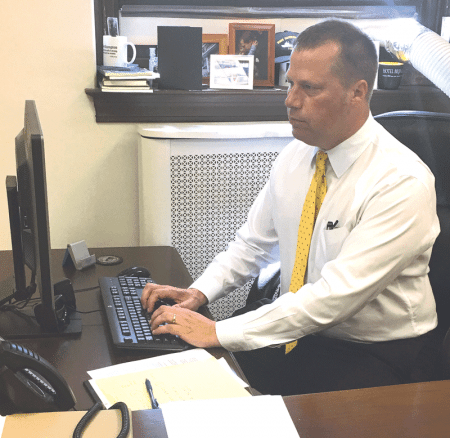
Mayor Will Reichelt says West Springfield is seeing a good deal of adaptive reuse of commercial and industrial properties, a necessity in a community that is land-poor.

Mayor Will Reichelt says West Springfield is seeing a good deal of adaptive reuse of commercial and industrial properties, a necessity in a community that is land-poor.

Will Reichelt says he was only 15 when he started working at the Donut Dip on Riverdale Street.

His father arranged an introduction with the owner, a fellow Rotarian, and just a few days later, Will was working behind the counter and occasionally injecting filling into jelly donuts.

“I’m not sure it was all legal, but … I sure do miss that 15-year-old body,” said the mayor, now all of 31 and in his second year at the helm of the city where he grew up. “I could eat all the donuts I wanted and never gain an ounce.”

Reichelt spent two and a half years at that Donut Dip, or roughly until he graduated from high school. He remembers at least two things from his time on Riverdale: one was that the busy thoroughfare was seemingly in a constant state of change, and the other was that the Donut Dip wasn’t.

“And it’s still the same — hasn’t changed at all,” said the mayor, who obviously still visits the establishment on occasion. As for Riverdale Street, it remains in that consistent state of change, and for many reasons.

The two major highways that feed traffic onto it — the Mass. Turnpike and I-91 — are the two biggest, because major retailers — and that includes the slew of auto dealers doing business on that stretch — covet such accessibility and will go to great lengths to take full advantage of it. Another is the fact that West Springfield is, to use a term that municipal leaders hate to use, ‘land-poor,’ meaning most developable real estate has been developed already.

All this leads to a term that those involved in economic development are much more fond of using — ‘adaptive reuse,’ which is happening, in one form or another, in seemingly every corner of this city of roughly 28,000. Some examples:

• Buildings within the former Gilbarco complex on Union Street have been repurposed by U-Haul as home to everything from self-storage units to a facility for servicing trucks within the huge fleet;

• The former St. Ann’s Church on Memorial Avenue, razed more than five years ago, has been transitioned into a retail center and home for Florence Savings Bank’s first branch in Hampden County; city officials are still awaiting word on other tenants for that facility;

• A Chipotle restaurant has opened on the site of what was once home to a Jiffy Lube on Memorial Avenue, adding to the already impressive number of eateries on the street that is also home to the Big E;

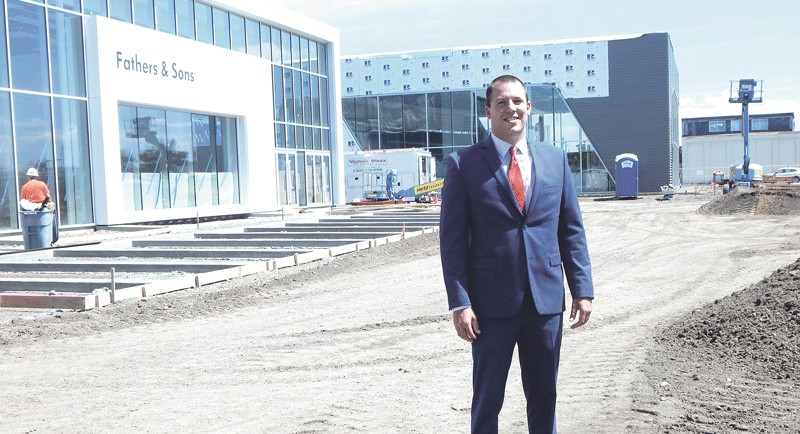
• Staying on Memorial Avenue, several buildings were razed there and the real estate consolidated by Fathers & Sons to create new, state-of-the art dealerships for Audi and Volkswagen, which opened early this year;

• A former billiard parlor on Riverdale Street has been razed to make way for a new, 121-room Marriott Courtyard hotel that will again alter the landscape on that street; and

• Further north on that strip, a residential property has been acquired by Balise Motor Sales with the intention of adding a car wash to the extensive portfolio of facilities it has on or near Riverdale.

One of the good things about West Springfield is that we are, literally, at the crossroads of New England. Redevelopment of empty parcels pretty much takes care of itself, because people want to be along Riverdale Street, Memorial Avenue, or in West Springfield, because it’s so easy to get to.”

There are many other examples from the past several years or that are now on the drawing board, said Reichelt and Douglas Mattoon, director of the city’s Department of Planning and Development, as they described two of the key planks within the community’s economic-development strategy — making the very best use of the land that is available, even if that means knocking something else down to make those efforts possible, and taking full advantage of its enviable geographic location, which the mayor summed up effectively.

“One of the good things about West Springfield is that we are, literally, at the crossroads of New England,” he said, borrowing language used by more than a few of the retailers with a presence in his city. “Redevelopment of empty parcels pretty much takes care of itself, because people want to be along Riverdale Street, Memorial Avenue, or in West Springfield, because it’s so easy to get to.”

To fully capitalize on all this, the city has embarked on the first major effort to update its zoning in a half-century.

“We put together a zoning-review committee, and they’ve been working for four or five months now,” said Reichelt. “They’re literally taking our zoning ordinances from page 1 to page 200 and whatever, and reviewing everything with an eye toward the next 50 years and what will enable the town to move forward.”

West Springfield at a glance

Year Incorporated: 1774
Population: 28,391 (2014)
Area: 17.49 square miles
County: Hampden
Residential Tax Rate: $16.99
Commercial Tax Rate: $22.21
Median Household Income: $54,434
Median family Income: $63,940
Type of government: Mayor; Town Council
Largest employers: Eversource Energy; Harris Corp.; Home Depot; Interim Health Care; Mercy Home Care
* Latest information available

Overall, said Mattoon, West Springfield continues to work toward two goals that are at or near the top of every municipality’s to-do list — achieving balance between residential and commercial development, and smart growth.

For this, the latest installment of its Community Spotlight series, BusinessWest takes an in-depth look at a community that has always been an attractive mailing address for businesses, and continues to be a destination.

Roads to Progress

While Riverdale Street and Memorial Avenue, the two real entranceways to West Springfield, if you will, provide the most visible evidence of the growth and constant change that place within the city, there are examples in virtually every corner, said Mattoon.

He used an always-effective barometer — building permits issued for both residential and commercial projects this year — to get this message across.

“More than 1,200 permits have been issued,” he noted. “There is some new-home construction and lot of home-improvement projects, and the commercial side of the ledger has really taken off. Our site-plan reviews and zoning board applications are up 52% from where we were last year.

“We’ve had a lot of activity come before us,” he went on. “Not only on the Riverdale corridor, but also on the Memorial Avenue corridor and even the Route 20 corridor, which is a minor corridor going through the center of town.”

Summing up what he believes those permits show, Mattoon said a number of businesses in the community are doing quite well and are in expansion mode. Meanwhile, others want to also take advantage of being at those aforementioned crossroads.

In that former category are a number of businesses across a host of sectors, including Titan USA, a maker of high-speed steel and cobalt cutting tools, which is again expanding its facilities on Baldwin Street; several retailers, including Food Bag, Cumberland Farms (both on Route 20), and Wendy’s, which built a new facility on the site of a former Arby’s on Riverdale Street; U-Haul; and even Costco, which is looking to add gasoline to the seemingly endless list of products it sells from its location in the Riverdale Shops — a project that has been in the works for years and is now before the Planning Board.

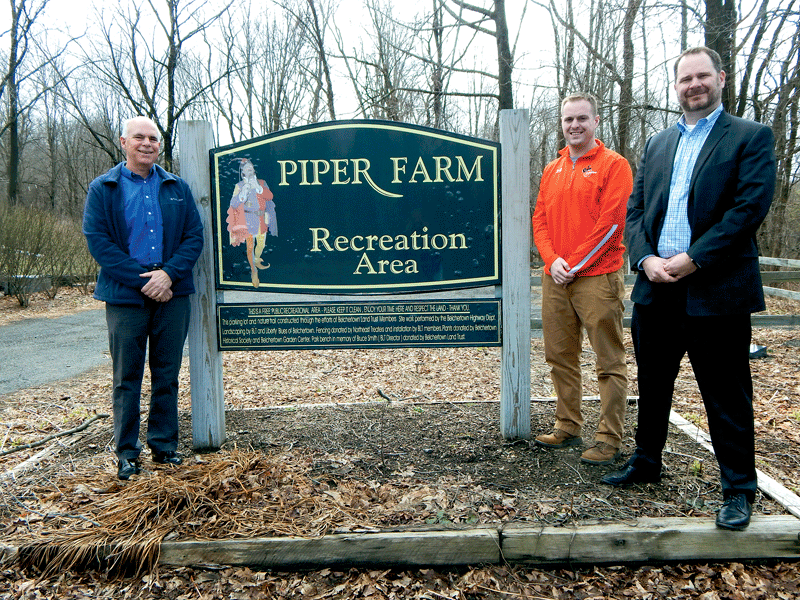
In the latter category, meanwhile, is the new hotel on Riverdale, Balise’s car-wash project, a new Pride Store on Riverdale that will replace a smaller facility the company operated, and some new residential developments, including an ambitious project adjacent to Springfield Country Club called Piper Green.

Doug Mattoon

Doug Mattoon says West Springfield strives for smart growth and a balance between commercial and residential growth.

While all this is going on, city officials are hard at work on several fronts that, collectively, fall into the categories of facilitating more of these types of developments while also enabling the community and specific neighborhoods within it to absorb such growth without negatively impacting traffic and overall quality of life.

And these efforts take a number of forms as well. They include the zoning overhaul, which Reichelt said is needed and long overdue, as well as close examination of the types of businesses the city wants to attract.

“Much of our focus has been on Westfield Street [Route 20], the center of town, how we encourage more business to come there — not that there’s a lack of business there,” he explained. “But is what’s there what we want, and if it’s not, how do we get what we want there?”

Mattoon agreed, and said such efforts, which fit the general description of ‘smart growth’ efforts, intersect with the many initiatives involving adaptive reuse.

As an example, he noted ongoing initiatives to repurpose many of the industrial and distribution facilities in the Merrick and Memorial sections of the community, including the Gilbarco complex, where gasoline pumps were manufactured decades ago.

“Such adaptive reuse requires flexibility and our ability to analyze the proposed alternative uses, and make sure they fit with the general character of the neighborhood, traffic, pedestrian safety, and so forth.”

It also includes infrastructure improvements, such as those slated for Memorial Avenue. These include the long-discussed and long-anticipated replacement of the Morgan/Sullivan Bridge over the Westfield River (the border with neighboring Agawam) and a comprehensive reconstruction of the full length of Memorial Avenue.

That state-funded project will commence when the bridge project is completed, said the mayor, estimating that will be in 2022.

Currently at the 25% design stage, the initiative calls for creating four lanes, with designated left-turn lanes and bike lanes as well, between the Memorial Bridge rotary and Union Street, and then three lanes between Union Street and the Morgan/Sullivan Bridge.

The so-called Complete Streets project, so-named because it factors in cyclists and pedestrians as well as motorists, is designed to bring smoother traffic flow to a street that has seen exponential growth over the past few decades, has struggled to handle the higher volumes of traffic, and is especially challenged during the Big E’s 17-day run every September.

“I think the Route 147 [Morgan/Sullivan] bridge project is really going to help with the traffic situation on Memorial Avenue, especially during the Big E,” said Mattoon. “That’s where we’re really seeing traffic back up — those intersections just on the other side of the bridge in Agawam.”

Meanwhile, returning again to Riverdale Street, Costco’s proposal, which calls for a number of gas pumps and a convenience-store-like facility, will require some changes to that thoroughfare, said Mattoon.

He noted that the intersection of Riverdale and Daggett Drive must be modified to handle traffic concerns raised by the project. Specifically, a southbound exit out of Daggett Drive would be added, explained, noting that this is another example of how the town is working to encourage new business ventures while also taking steps to minimize the impact from such growth on specific streets and neighborhoods.

To-Dough List

Mayor Reichelt worked at the Donut Dip half a lifetime ago. By most accounts, including his, there has been little change at that location since the start of this century.

But there has been change all around it on Riverdale Street — and also on Memorial Avenue, Route 20, Baldwin Street, and every other corner of the city — and it is ongoing.

This is life at the crossroads of New England. Those highways create opportunities, challenges, and a delicate balancing act, one that Reichelt and his team at City Hall continue to master.


George O’Brien can be reached at [email protected]

Community Spotlight Features

Community Spotlight

By Kathleen Mellen

Ask Wilbraham Selectman Bob Russell what his town’s main business is, and he’ll tell you: quality of life.

The town of nearly 15,000, located about 12 miles northeast of Springfield, has an abundance of protected open space, parks, recreation facilities, and other features that can be enjoyed by its residents, and a small-town feel that hearkens back to its origins as a close-knit farming community.

“It’s a bedroom community,” Russell said, and townspeople revel its neighborly activities, like summertime concerts and community-wide flea markets held at Fountain Park, gatherings of moms and dads and their young charges at the popular Wilbraham Children’s Museum, coffee klatches at the newly renovated Rice Fruit Farm, or swimming and splashing at the town’s ‘backyard beach’ at Spec Pond, just off Boston Road.

But things aren’t all sunshine and smiley faces: As residents enjoy the pleasures of living in a small, at times sleepy community, he said, there are real-world concerns, many of them economic, that need to be addressed: For example, Wilbraham has seen some erosion of its economic base over the past couple of decades, as businesses have closed, leaving vacant spots in the town’s two main areas of commerce — along Boston Road and in the town center.

Russell says this is something the town is working on, and he hopes to fill in those gaps with businesses that are carefully selected to blend with the town’s character and charm.

“New businesses can be a win-win for the town: they bring in tax revenue, but generally don’t overly tax the town’s resources. They don’t put a demand on the school system, they generally don’t require police calls, and they don’t generally catch on fire,” Russell said. “It’s a good value when we bring business into town, and we’re very much aware of that.”

Although some residents say they like the relative quiet of the underused business district in the center of town, Planning Board Chairman Jeff Smith says he’d rather see the hustle and bustle there that he recalls from his youth.

“When I was a kid, growing up here, I’d ride my bicycle to the town center — my dentist was right there in a building that’s unoccupied now,” said Smith, a lifelong resident of Wilbraham. “My pediatrician, the post office, orthodontists, banks — it was all right there. But these buildings are vacant now, and it’s been quiet.”

There are projects in the works in the center of town, at the intersection of Main and Springfield streets, Russell said. Developers have purchased a number of small properties there that they propose to fill with businesses on the first floors and apartments on the second. That will necessitate a change in zoning, from strictly business to mixed use — a proposal that will be brought before a special town meeting in October. If it passes, “it will make the center of our town a lot nicer than it is right now, from a design standpoint,” said Russell, adding that property values will go up.

On Boston Road, another important business district for Wilbraham, things are also happening. While Friendly’s Ice Cream has long had its corporate headquarters there, there’s a new Balise Ford dealership, a remodeled Lia Toyota dealership, a Home Depot, and a Big Y Supermarket. Also, a new transfer station for trash is about to reopen in a spot that’s been unoccupied for some time — and that, Russell said, will be good for the town.

“There will be an improvement for the building, we’ll have a discount for our own tipping, and the town will enjoy a tipping fee. This is a revenue strain that doesn’t come from the residents’ tax bills.”

Down the Road

Even with all that, there are still vacancies on Boston Road waiting to be filled, and Smith says the Planning Board is looking at a number of ways to address them, including adjusting the zoning bylaws to accommodate some types of businesses that haven’t been allowed to open in town for several years.

“We’ve had moratoriums on certain things because the architects of the town have wanted it to look a certain way — the idyllic New England town,” Smith said. “They didn’t want gas stations, and they didn’t want used-car lots.” But now, the Planning Board is suggesting that some of those bans be lifted.

Chalk it up to changing times, he said.

“When Boston Road was laid out, it was with the mindset that there would be some service facilities and a lot of retail opportunities, but those retail opportunities are dwindling,” Smith told BusinessWest. “Look at the UPS and USPS trucks on Boston Road right now — it’s all Amazon deliveries, and that has changed the retail potential in areas like Wilbraham. We’ve had to adapt the zoning accordingly to go along with the changes.”

Wilbraham at a glance:

Year Incorporated: 1763
Population: 14,837
Area: 22.4 square miles
County: Hampden
Residential Tax Rate: $22.00
Commercial Tax Rate: $22.00
Median Household Income: $65,014
MEDIAN FAMILY Income: $73,825
Type of government: Open Town Meeting
Largest employers: Baystate Wing Wilbraham Medical Center; Friendly Ice Cream Corp.; Big Y; Home Depot
* Latest information available

As a result, he said, the Planning Board will propose that the town allow limited and restricted opportunities for gas stations in its commercial zones. The same holds true for used-car sales. But, he stressed, everything will be brought before the voters, who always have an opportunity to weigh in on the board’s proposals.

“I always tell people, ‘we’re your Planning Board, and these are your bylaws,’” Smith said.

One thing residents are not likely to see on Boston Road are big retail chain stores, because there simply isn’t enough traffic to support them.

“In our small-town way of thinking, we see it as a really busy road, but in the scheme of busy roads, it’s not that busy,” Smith told BusinessWest.

As the town continues to rethink its position vis-à-vis business, Russell says, the Select Board is considering the possibility of establishing an economic-development committee.

“We’re looking at ways to bring as much of the town’s resources to bear as possible to improve development,” he said. “It’s something we’re all focusing on.”

Indeed, the town’s economic health is something that’s long been a priority for the Planning Board, Smith said.

“We see the people who come to the town and want to locate businesses here. If we don’t have zoning for what they want to do, but if it seems like it would fit in Wilbraham, we say, ‘OK, maybe we should add a provision in our bylaws.’”

But that can be a lengthy process, he added, which can take up to a year, by the time residents vote at a town meeting and the town secures the state attorney general’s mandatory approval.

A case in point: recently, a local brewery considered relocating to Wilbraham, but the town didn’t have zoning in place that would allow it. So the Planning Board developed zoning, and it was approved at town meeting. But by that time, the company had decided to stay where it was. Smith says the effort will not be wasted — the town can move quickly the next time a brewpub or microbrewery expresses an interest.

“Others have approached us,” he said. “Now the zoning is there.”

In other cases, the town has gotten a jump on zoning changes even before interest has been expressed by potential business owners. For example, after imposing an initial moratorium on the establishment of registered medical-marijuana dispensaries (RMDs) — a time used for review of federal and state laws — voters decided to allow such establishments.

“We did put zoning in, subsequently, in an industrial zone,” Smith said. “But, to be honest, I didn’t think anyone would want to locate an RMD in the town of Wilbraham.” So far, he says, he’s been right.

And, just to be clear, he added, recreational marijuana establishments are still prohibited in town.

It’s important to note, Smith says, that the town’s elected officials rely on Town Hall experts, like Planning Director John Pearsall and Building Inspector Lance Trevallion, to help them with their duties.

“There’s a lot to learn, and our decisions have legal ramifications,” he said. “We’re guided by these town officials.”

Getting Down to Business

As Smith and Russell see it, revitalizing Wilbraham’s business base is an ongoing process — and one that must be responsive to both the changing economic realities and the wishes of its residents.

That said, Russell added, “Wilbraham is open for business.”

Community Spotlight Features

Community Spotlight

By Kathleen Mellen

John Flynn

A third-generation selectman, John Flynn says the community desires to grow its commercial base, but not lose its small-town character.

In many ways, the town of Hampden seems like a throwback to an earlier way of life.

The Western Mass. community of just over 5,000 is just east of East Longmeadow and less than a 20-minute drive from the bustling metropolis of Springfield. But with its rural feel, old-fashioned New England charm, mom-and-pop businesses, and neighborly sensibility, it seems worlds away. There’s not even a traffic light in town.

“Heck, the bear population is exploding now; there are sightings every day,” said John Flynn, chairman of the town’s three-member Board of Selectmen. “Once people are in this town, they don’t like to leave it. It’s a great community. We’re still old-fashioned New England.”

Flynn knows whereof he speaks: he grew up in Hampden, where his great-grandfather, John J. Flynn, and his father, John M. Flynn, both served as selectmen before him.

“I’m a third-generation selectman,” said Flynn, who was elected in 2005. “My dad was the guy who’d get the phone call at 2 in the morning … now I get the texts and phone calls.”

While the population has remained fairly constant for decades, Flynn says, there have always been new faces, and they are welcome. Some have come to open businesses, or to work at the nearly four-decades-old Rediker Software, owned by Rich and Gail Rediker, another longtime Hampden family, or, more recently, at GreatHorse golf and country club, a relative newcomer that opened in 2015. Still others work out of town, but are drawn to live in Hampden by its Americana flavor.

“It’s just like Cheers,” Flynn said, referring to the NBC sitcom that ran in the late ’80s and early ’90s. “Everybody knows your name.”

A Cautious Approach

While much has remained the same in Hampden during Flynn’s lifetime, he said, growth and change are both inevitable and desired. But, he stressed, the town strives to ensure that its essential qualities will always be preserved.

“We’re happy to get that growth, but you have to be careful not to lose what made Hampden Hampden,” Flynn told BusinessWest. “You want to make sure that the reasons people are in Hampden are still there. We can’t sell part of ourselves just to give it away to business.”

That said, there is plenty of potential for growth in town, including in two already-established business districts, one on Main Street and one in the area of Rediker Software, the town’s largest non-municipal employer, located at the main intersection of East Longmeadow, Wilbraham, and Somers roads and Allen Street.

Andrew Anderlonis

Andrew Anderlonis says Hampden has been a great home for Rediker Software.

Founded in 1979 by Rich Rediker, the company’s CEO, Rediker Software provides administrative software to schools. It employs about 90 people at its headquarters on Wilbraham Road that was constructed in the 1990s and expanded in 2005, and designed to blend in with the New England character of the town.

“It’s built like a house,” said Andrew Anderlonis, the company’s president and Rediker’s son-in-law. “Rich didn’t want a corporate building; he wanted to build something that would really be a part of the town and the community.”

That’s what Flynn is talking about.

“We would love to expand more Rediker-type businesses — that’s the look we want,” Flynn said. “We want people to drive through Hampden and feel the old New England town.”

With customers in all 50 states and more than 115 countries, the family-owned Rediker Software is one of the 30 fastest-growing tech companies in the state.

Hampden at a glance

Year incorporated: 1878
Population: 5,296 (2016)
Area: 19.7 square miles
County: Hampden
Residential tax rate: $19.29
Commercial tax rate: $19.29
Median Household Income: $81,130 (2016)
Median family Income: $86,848 (2016)
Type of Government: Board of Selectmen
Largest Employers: Hampden-Wilbraham Regional School District, Rediker Software, GreatHorse
Latest information available

Theoretically, it could probably be headquartered anywhere in the world, Anderlonis said, but it started in Hampden, and it will stay in Hampden.

“We’re a small family business, so we really promote the family atmosphere here, and the town helps that effort,” he explained. “People like the small-town feel. There are local places they can go eat, it’s nice and green and lush, and they don’t have to fight for a parking spot in the morning. Hampden has been a great home for Rediker, and the road ahead looks really healthy.”

In return, the company gives back to the community through such things as its sponsorship of Link to Libraries, a literacy program that distributes some 100,000 books a year to schoolchildren. The company also collaborates with the Hampden/Wilbraham school district, offering internships and career placement.

“We’re also one of the town’s firewater suppliers. We have a 10,000-gallon tank in our parking lot that we maintain and service,” Anderlonis said. “We try to be involved where we feel we can help.”

Flynn says Rediker’s continued good health is good for the town, too. Indeed, that business, along with a new Northeast Utilities substation and the GreatHorse country club, have added to the town coffers through the property taxes they pay. It’s in large part thanks to those businesses that the town was able drop its tax rate last year from $19.36 to $19.29.

“I don’t think there are many communities in Western Mass. that were able to do that,” he said.

Mane Street

The 260-acre GreatHorse golf club, built on the site of the former Hampden Golf Club for a price tag in the neighborhood of $55 million, would be an asset to any town, said Bryan Smithwick, the club’s general manager. “We’re a major contributor of taxes to the town, and we play a major role in providing infrastructure support and community support.”

During its high season, the year-round facility employs 150 to 160 people, most from the local community, and about 75% of the club’s 300-and-climbing membership lives within a 20-minute drive, with a fair amount coming from Hampden.

Bryan Smithwick

Bryan Smithwick says the social fabric of GreatHorse and Hampden are very similar in that they are both tight-knit communities.

While it might surprise some to find the opulent facility in such a small town, Smithwick says the club is thriving not in spite of its location in the tiny burg, but because of it.

“The social fabric that makes up Hampden and the social fabric that is part of the GreatHorse culture are very similar to each other. Hampden is such a tight-knit community, and GreatHorse is the same,” Smithwick said. “Some of the members have known each other their entire lives. Some met last week and now play rounds of golf together. That small-town, family culture is a huge part of our success.”

GreatHorse, like Rediker, also gives back to the local community — through such things as sponsorship of benefit events and collaboration and internship programs with local schools.

With GreatHorse’s growing popularity, Smithwick said owner Guy Antonacci would like to add overnight lodging for its guests. But because the entire town is served by a well and septic system, the potential for such growth is limited.

The club has approached the town about the feasibility of bringing town water and sewer to the facility, something Flynn says is under consideration.

“That would be nice for them,” he said, “but anything we do has to be right for Hampden.”

That said, Flynn says he sees potential in the proposal, which would bring water and sewer into Hampden to service the western part of town, including the school, the senior center, the police station, and parts of the business district.

“If they were connected to city water, you could see some good growth there, and it’s a place people could work. People in town would love a five-minute commute,” he said. “If we could get the business district built up, the potential is staggering. I’m stunned at the possibilities.”

The goal, as always, will be to help the town fulfill its vast potential, while always meeting that mission Flynn mentioned earlier — maintaining what makes Hampden Hampden.

Community Spotlight Features

Community Spotlight

By Kathleen Mellen

Northampton Mayor David Narkewicz

Northampton Mayor David Narkewicz says the city has a solid foundation, but it is not about to rest on its laurels.

You could say Northampton has “good bones.”

Once dubbed “the paradise of America” by opera singer Jenny Lind, it is home to one of the nation’s premier colleges, it boasts a regional general hospital as well as one for military veterans, its population of nearly 30,000 is diverse and well-educated, its labor force is highly skilled and mostly employed, it has a crime rate that is lower than the state average, and it’s one of the hottest locales in the region for shopping, dining, and partaking of a multitude of performance and visual arts.

That’s a strong foundation, said Mayor David Narkewicz, that the city can seize upon to nurture and grow its economy. And, indeed, after weathering economic recessions and a housing bubble that burst, he noted, economic indicators, such as property taxes, meals-tax revenue, and the number of visitors to the city, show a sturdy economy.

But the city is not resting on its laurels.

One of its main engines for economic success, Narkewicz says, is its vibrant downtown area, home to an array of unique retailers, eclectic dining choices, and active arts organizations.

“The success of downtown businesses affects our property taxes and our tax base, which then affects the kinds of services we can provide, the schools we can provide. We all have an investment in it.”

The mayor said the city is making a number of strategic investments that take advantage of that strength.

Indeed, if you drive into Northampton from the south these days, you’re likely to join a long line of traffic as it makes its way slowly along Pleasant Street toward the city’s center. Think of it as a good thing.

The heavy traffic is the result of Northampton’s investment in its downtown infrastructure, which includes roadwork and utility upgrades. Funded by a $2.5 million MassWorks economic-development grant, the work is mainly in support of two housing developments that are going up on that street. The goal, said the city’s Economic Development director, Terry Masterson, is to make Pleasant Street an extension of Main Street and, in turn, to drive investment in that part of the city.

“If people see other people investing, they see the city investing, it creates a momentum,” he said.

The two housing developments are a 58,000-square-foot space at 155 Pleasant St., which will have 70 studio and one-bedroom apartments, as well as a 45,000-square-foot space at 256 Pleasant St., which will feature 55 living units. Both buildings will offer retail and office space, as well as a mix of market-rate and affordable housing. Narkewicz said centralized, affordable housing is an investment in the economic health of the city.

“We want to be a place where people of all income levels can live,” he noted, adding that many of the people who inhabit affordable housing are part of the city’s vital workforce. “That they can live and work in the same city is really important.”

What Makes Downtown Click?

Although its positive effects on downtown development might not be immediately evident, Narkewicz said the purchase in June of 114 acres on the outskirts of the city, which increases the amount of protected, open space to more than 25% of the city’s land, will not only bolster’s Northampton’s ongoing land-preservation and recreation programs, it will also help drive economic growth downtown.

“We want to concentrate development closer to the urban core where most people live,” he said. “So many studies show that one way to keep a downtown vibrant — to support small markets or small restaurants — is to have people living in it.”

The work along Pleasant Street will also include a small park, more parking spaces, and improved sidewalks and bike lanes.

“We’ve already created an incredible bike trail that runs through the city, which we know draws people here,” Narkewicz said. “Now the city is also looking at ways to become even more pedestrian- and bicycle-friendly, as a way to draw people into the downtown area.”

170 Pleasant St., erected in 2014.

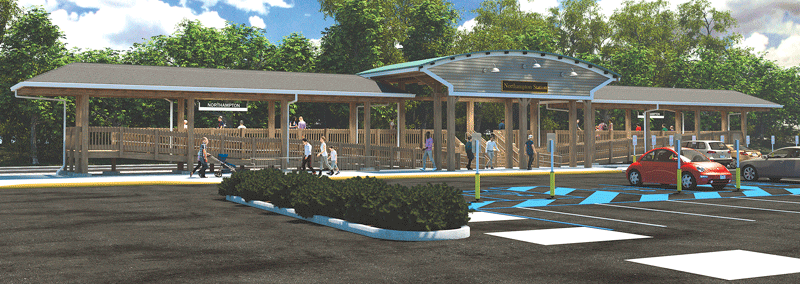
One of the biggest boons to the city’s economy may well be the plan to expand the train platform at 170 Pleasant St., erected in 2014.

In order to improve the downtown district, Masterson said, it’s crucial to know what’s bringing folks in, and what keeps them coming back.

“We’re working on a complete list of every foot-traffic driver in the downtown area — hotels, train stations, arts and culture institutions, entertainment venues, special events, and regular events,” he said, which will be invaluable to the city in attracting new businesses. While the study is still ongoing, and under wraps for the time being, he says he already knows from past studies that the arts scene is a big downtown draw. For example, the Academy of Music, a live-performance, downtown venue, boasts 55,000 visitors and 116 performances a year.

“That’s like 1,000 people a week who are consistently coming into downtown,” Masterson said. “To know that you have a driver that’s bringing in people, that’s really, really impressive.”

Plans are now in the works to create an online map and calendar tool that will combine the activities of all the city’s arts organizations in one place, making it easier, Narkewicz said, for visitors to plan their outings. Beta testing is underway, and the calendar should be up and running later this summer. And, yes, there will be an app for that.

Coming Back for More

Finding ways to bring new business owners, residents, and guests to the downtown area, and keeping them happy while they’re there, is all part of the city’s master plan, Masterson said.

It’s no secret, for example, that parking in downtown Northampton can be a challenge, especially during the busiest hours. And how infuriating is it to run into a store to get change for a meter, only to return to find a ticket on your car?

That’s been taken care of, Narkewicz told BusinessWest. The city’s 25 parking kiosks were upgraded in late June with a pay-by-plate system that accepts credit cards as well as coins. So, instead of going to a kiosk, inserting money (assuming you have the correct change), then taking the ticket back to the car to be displayed on the dashboard, users can simply pay and be on their way.

Later this summer, there’ll be an app for that, too.

“These are the kinds of things people see when they go to other cities, the amenities people expect,” Narkewicz said. “It’s part of creating a customer-friendly environment for visitors.”

Another major development in downtown is the renovation of Pulaski Park in the heart of the city, which was completed last year and is already showing signs of stimulating a positive economic response; realtors and restaurateurs have told the mayor they have seen an uptick in foot traffic since the completion of the renovation.

“A realtor just sold a building across from Pulaski Park for $120,000 over asking price,” he said, adding that looking across the street at that scenic park, as opposed to what the grounds were like four years ago, made a huge difference.

Indeed, it’s crucial, Narkewicz said, for the city to maintain a clean, safe, well-lit, and attractive downtown, with prime spots like Pulaski Park; otherwise, its other efforts may be for naught.

Much of maintaining the welcoming downtown atmosphere is handled by the Downtown Northampton Assoc. (DNA), a voluntary organization open to property owners, businesses, and city residents, whose members work to improve the business and cultural strength of the downtown area through investments in programming, beautification, and advocacy.

It is associated with the Greater Northampton Chamber of Commerce, and works in collaboration with the city, which employs a full-time worker who cleans and maintains public property in the downtown business district.

The DNA handles such things as city plantings and holiday lights, and sponsors events that bring visitors to downtown, like the first annual Holiday Stroll, held in December, which drew hundreds of visitors to Main Street for a host of family-friendly activities, even as the temperature dipped to 20 degrees. It was so popular that a Summer Stroll is planned for July.

“The Summer Stroll should be a lot warmer,” Narkewicz quipped.

Riding in on a Rail

One of the biggest boons to the city’s economy may well be the plan to expand the train platform at 170 Pleasant St., erected in 2014 when Amtrak added Northampton as a stop on its Vermonter line.

Northampton at a Glance

Year Incorporated: 1884
Population: 28,483
Area: 35.75 square miles
County: Hampshire
Residential Tax Rate: $16.69
Commercial Tax Rate: $16.69
Median Household Income: $59,274 (2015)
Type of government: Mayor; City Council
Largest Employers: Smith College; Cooley Dickinson Hospital; U.S. Department of Veterans Affairs Central Western Massachusetts Healthcare System
* Latest information available

State Transportation Secretary Stephanie Pollack announced in June that her department will add to the existing, 46-foot-long boarding platform by next summer, extending it to a length of 120 feet — a response, Narkewicz said, to its use, which has exceeded all expectations. Projections had estimated that just over 10,000 passengers would use the platform in a year, but, according to the National Assoc. of Railroad Passengers, it was used by 17,197 passengers last year, making it the third-busiest stop on the Vermonter line.

The state has also agreed to a pilot program, scheduled for fall 2019, in which two morning trips and two afternoon trips will be added to Northampton’s train service.

The mayor said that activity will surely drive further growth in the city. “Having public transit that close to downtown — that’s critical.”

While the tax base is strong in Northampton, he told BusinessWest, the city’s two largest employers, Smith College and Cooley Dickinson Hospital, are nonprofit, and, therefore, tax-exempt, which has been a bone of contention.

“They consume, but don’t pay taxes for, city services,” said Narkewicz, who addressed the issue in 2015 with the institution of a PILOT (payment in lieu of taxes) program, in which the nonprofits agree to pay a portion of what they would be taxed if their properties were taxable. As a result, both Smith and CDH made three-year commitments to make voluntary gifts to the city.

Smith has since made investments in projects around the city that support affordable housing, as well as in public-safety features along Elm Street, where the college is located. CDH continues to be an important partner with the city relative to public safety and public health, teaming up to work on such things as disease prevention and breast-cancer awareness. It is also a key partner on the county’s opioid task force, on which the city has taken a leading role.

“We’ve had some collaboration there,” Narkewicz said. “There’s still more discussion to have.”

The Flavor of Northampton

While Northampton’s economic picture is pretty rosy, the mayor noted, there are challenges, of course, including the plethora of Internet companies that are cutting into brick-and-mortar profits. But there are some things, he adds, that one can’t buy online, like Northampton’s unique flavor and one-of-a-kind products.

Narkewicz says he’s mindful of the degree to which the hard work and persistence of downtown business owners have contributed to the city’s overall economic success.

“I have incredible admiration and thankfulness for the work they do, the sacrifices they make,” he said. “People tell me they want their downtowns to be like Northampton. That’s very flattering, but we can’t lose track of the fact that we have to work consistently to maintain that and build on it. It is an important part of our economy, so we want to make sure it continues to be successful.”

Community Spotlight Features

Community Spotlight

the Morgan/Sullivan Bridge

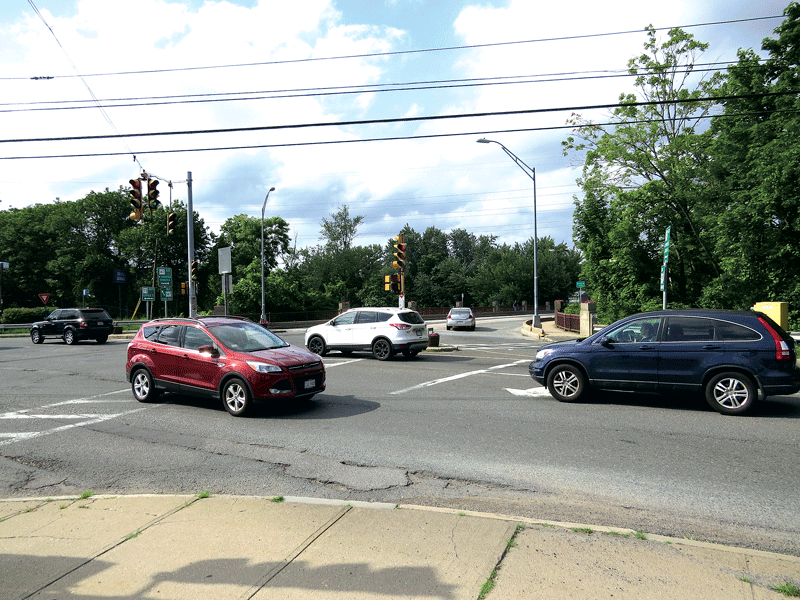
A $31.5 million project to replace the Morgan/Sullivan Bridge would create a new and improved gateway into Agawam.

Richard Cohen is now halfway through his 16th year as mayor of Agawam — a tenure marked by four two-year terms, a two-year hiatus of sorts, and then four more terms. (And, yes, he’s seeking a ninth term this fall.)

For that duration, if you will, he’s been coping with many of the same issues impacting this community of roughly 29,000, which is technically a city (hence, it has a mayor), but in most ways considers itself a town. In fact, that’s the word you see over the front door of the municipal offices on Main Street, just a few hundred yards from where most of these ‘issues’ are clustered.

“These are complex matters … there are no easy answers, and that’s why we’ve been dealing with some of them for 15 to 20 years or more,” said the mayor, referring to concerns that include the Morgan/Sullivan Bridge over the Westfield River that forms a border with West Springfield and serves as the gateway in the community.

The bridge, built nearly 70 years ago, has long been inadequate to handle the traffic in that area — especially during the 17 days of the Big E each fall — and plans to replace it have been on the drawing board for years.

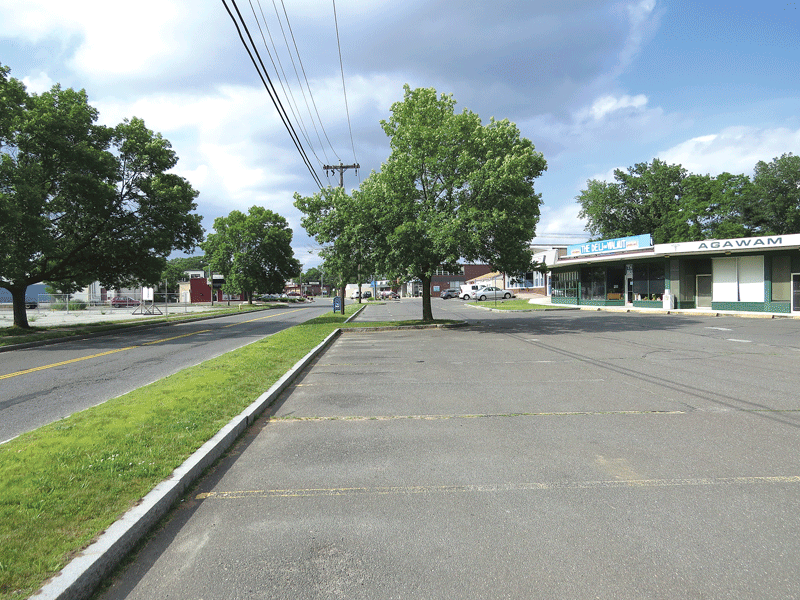
That list also includes what has long been known simply as the FoodMart Plaza, located just north of the bridge. FoodMart anchored the plaza more than a decade ago, but after it closed just after the start of this century, filling the retail area has been an ongoing challenge for the community. It also includes a stretch of road known as Walnut Street Extension (it borders the FoodMart Plaza), which is most often described with the words ‘old’ and ‘tired,’ which have been used, well, since Cohen first took office.

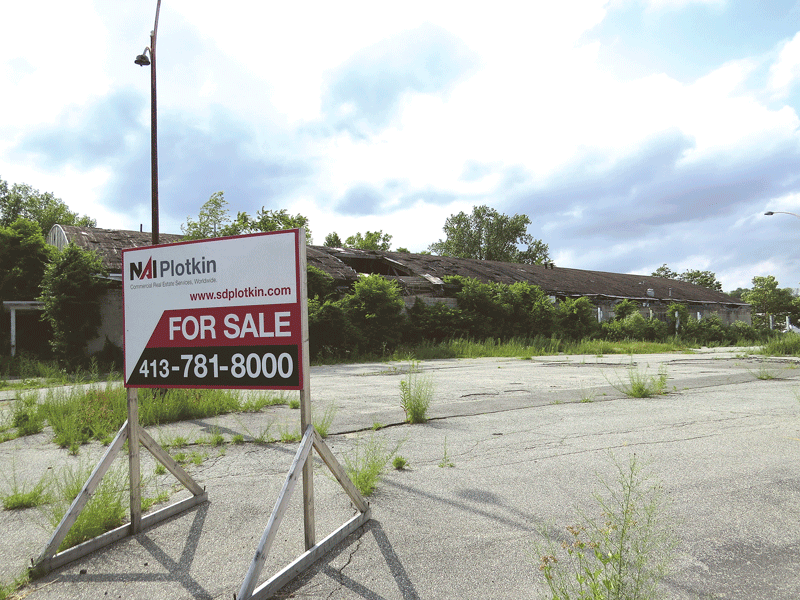
And there’s the so-called Lanes and Games property (on Walnut Street Extension), which has been long-closed, an eyesore, and a subject of considerable controversy for most of Cohen’s tenure in the corner office.

As he talked with BusinessWest recently, Cohen was still discussing these same issues, although, in many instances, he was relating what he considers progress and the sentiment that, sometime soon, some of these matters might just be addressed in the past tense.

This new bridge is something that’s long overdue and definitely needed. It’s going to be very complicated when it starts, but the end result will enhance all of the gateways to Agawam and West Springfield.”

Start with the bridge. Designs for a new span, complete with a unique, elevated pedestrian walkway and dedicated bicycle lanes, are now complete, said Cohen, adding that the project should go to bid in August, preliminary work will be underway later this year, and construction should begin in earnest nest spring.

Like most infrastructure projects of this type, this $31.5 million initiative, to be funded with state and federal dollars and undertaken in conjunction with West Springfield, will bring some inconveniences during what is projected to be a three-year construction period, said the mayor. But in the end, it will generate much smoother traffic flow and a far more appealing gateway to the city.

“This new bridge is something that’s long overdue and definitely needed,” he said. “It’s going to be very complicated when it starts, but the end result will enhance all of the gateways to Agawam and West Springfield.”

The FoodMart Plaza, meanwhile, has several new tenants (more on them later), and is bringing more people and vibrancy to the community, he said.

As for the Games & Lanes property, if you’re an optimist, there is some light at the end of the tunnel there. Property owner David Peter, president of Site Redevelopment Technologies, recently informed city officials that the site, long hamstrung by environmental issues in the form of groundwater contamination, is now clean and ready for reuse.

Whether the development community has any interest in the property in its current state remains to be seen, but if it doesn’t, Peter said, he will tear down the structure and then attempt to sell the land.

But for Walnut Street Extension as a whole, it’s more a case of going back to the drawing board.

Indeed, this spring, the City Council unanimously rejected a $5.3 million streetscape-improvement project for that area. Cohen then scaled the project back somewhat, with a $3.6 million initiative, but that, too, was rejected unanimously by the council.

Following these setbacks, Cohen created something called the business modernization advisory committee, which will conduct a needs assessment of the area just over the bridge, including Walnut Street Extension, Suffield Street, and Main Street, and recommend a course of action moving forward.

For this, the latest installment of its Community Spotlight series, BusinessWest looks at how this community is finally achieving some progress with some of its long-standing issues, but still has considerable work to do.

Coming to a Crossroads

In the run-up to the vote on the Walnut Street Extension plan, Cohen put the well-worn line from Field of Dreams — “If you build it, they will come” — to work as he made his case for the initiative and what it might mean for that area, which has a number of retail establishments, but bears a look from the ’60s or ’70s, not 2017.

And in voting it down, the council, and especially its president, James Cichetti, who is now a candidate for mayor, threw it right back at him.

“This is a great movie line, but really cannot be the basis of our capital planning, can it?” Cichetti wrote in his weekly Council Corner column as he criticized the mayor’s plan for being little more than cosmetic changes, with little, if anything, in it concerning business development or revitalization of the Games & Lanes property.

But Cohen, who chalked up the council’s votes to election-year politics more than anything else, has used that movie line often over the years, and he says there is ample evidence that it is more than catchy rhetoric.

gameslanes

Redevelopment of the Games & Lanes property, top, is considered one of the keys to revitalization of the Walnut Street Extension retail corridor, above.

Redevelopment of the Games & Lanes property, top, is considered one of the keys to revitalization of the Walnut Street Extension retail corridor, above.

Indeed, he cited examples ranging from several new parks and park-restoration efforts the city has undertaken, to the now much-more-crowded parking lot at the FoodMart Plaza, to a new laundromat that opened in a spot just over the Morgan/Sullivan Bridge once occupied by Dunkin’ Donuts. Called Stay & Play, the state-of-the-art facility features play areas for children (and adults) and other amenities, and has been a popular spot since it opened.

And then, there’s the pickleball facilities at Borgatti Field. The game, described as a cross between tennis, table tennis, and badminton, and played with a wooden paddle and a plastic Wiffle ball, has caught fire in Agawam, said the mayor, who told BusinessWest that he was one of many people who needed to be told what this game was and how it was played when the courts were first proposed, and now he gives tutorials to the curious.

“Those pickleball courts are so heavily used, I had some people in here the other day looking to add more courts,” he noted. “It’s huge … people are coming from all over to play here.”

Despite these examples of facilities and businesses being built and people coming to various destinations in Agawam, Walnut Street Extension, and especially the Games & Lanes property, remains a case that will test that theory.

As noted earlier, that area has been a thorny challenge since the start of this century. There are more than two dozen businesses in that area, but, as noted, the street has a dated look and feel to it and is sorely in need of a spark.

It could come in the form of redevelopment of the Games & Lanes property, which is ready for reuse (although that appears to be a daunting proposition) or complete redevelopment.

“The building itself is stable,” the mayor said of the Quonset hut-like structure. “The outer layers are greatly deteriorated, but the site itself is now clean — it’s a viable site for resale.”

Walnut Street Extension is one of the key focal points of the most recent strategic plan for the community, drafted in 2010, said Marc Strange, Agawam’s director of Planning & Community Development.

Its location, just over the bridge and off several major thoroughfares, makes it an obvious priority, he told BusinessWest, and a likely catalyst for further developments in the city.

“The architecture is old and disjointed, and the area needs to be freshened up,” he said, adding that the engineering firm Tighe & Bond was hired to come up with a streetscape plan — the one that was rejected by the City Council.

“This was a missed opportunity — I believe our plan would have greatly enhanced that area for the businesses there,” said Cohen. “But we’re not giving up.”

The mayor said he is optimistic that the business modernization advisory committee can create a game plan for that area that will win the City Council’s approval and, more importantly, achieve desired progress, especially with the new bridge and its capacity to make that section of Agawam more accessible.

Strange agreed. “There is great inertia in that area, with the bridge project, the Colvest Group’s investment in the city, and other initiatives,” he said. “And the business modernization committee has been charged with coming up with ways to capture that inertia, and we think there’s good stuff coming.”

Another priority identified by that strategic plan is still another stubborn issue within the community — development of a large parcel off Tennis Road just off Route 57.

Mayor Richard Cohen

Mayor Richard Cohen says Agawam is generating progress with many of the challenging issues that have dominated his 16-year tenure as mayor.

This matter actually pre-dates his tenure as mayor, said Cohen, adding that a high asking price on the part of the parcel’s owner and anxiety among voters concerning its best use have kept it from being developed.

However, there remains strong interest in the property, and there is potential for progress, said Strange.

“It’s a spectacular location for a regional destination,” he told BusinessWest, adding a broker is trying to identify big-box stores that may serve as anchors on the property.

Getting Down to Business

While the community grapples with larger issues such as the bridge, Walnut Street Extension, and Tennis Road, several smaller projects are in various stages of development, and together, they represent both progress and optimism within the community, said Cohen.

He started with that aforementioned new vibrancy in the FoodMart Plaza. There have been several recent additions, including Building 451, Macho Taco, Aquarius Hydroponics, and a cigar lounge and smoke shop, he said, adding that these new arrivals are bringing more traffic to the area and filling a parking lot that has been mostly empty in recent years.

“I drove by there recently on my way to the high-school graduation, and the parking lot was just humming with people; it was packed,” said Cohen, adding that the only vacancy of note (and a large one, to be sure) is the former satellite location of the Greater Springfield YMCA. He added quickly that there is considerable interest in that location, including a few pub-like establishments.

Meanwhile, there may be more new development in the area just over the bridge. The Colvest Group, which is developing a retail and office complex just a few miles east on Memorial Drive in West Springfield, has acquired a former motel on Suffield Street and some adjacent properties.

No plans have been announced, but Cohen noted that the company has a strong track record for developing successful retail and mixed-use properties (it already developed a CVS in Agawam), and there are hopes — and expectations — that the intersection just over the bridge will be the site of the next one.

Also, an already established, and growing, retail area — the intersection of Route 187 and Springfield Street, not far from where the multi-lane section of Route 57 ends — is due for a much-needed facelift.

The intersection will be expanded to accommodate more traffic and create better traffic flow, said Cohen, adding that the work is sorely needed and should help a number of new businesses in that area.

“This will be a monumental redesign of that whole intersection, with specified turn lanes, widening, and signalization improvements,” said the mayor, noting that, while Agawam and other communities will continue to advocate for the extension of Route 57 into Southwick (something they’ve done for 40 years now), they understand that such a project is a very long shot, and will continue to find ways to live with and improve the current infrastructure.

Other recent additions and improvements, including everything from an $8.1 million track and sports complex at Agawam High School to a new dog park to those pickleball courts, are making the community more livable and attractive to people of all ages, said Cohen.

As evidence, he cited the city’s recent designation as both an AARP-friendly community and a ‘dementia-friendly community.’

“I’m excited about where we are and we’re going,” said Cohen as he summed up matters in his town. “We have something for everyone.”

Bottom Line

Referring to his frequent use of that classic quote from Field of Dreams, Cohen said it’s much more than a line from a 30-year-old movie.

It’s a mindset of sorts, he said, and a roadmap for putting some issues that have been plaguing the community for decades into the realm of the past.

It’s already happened with several parks, the FoodMart Plaza, and even the new laundromat. And it can happen, he believes, with Walnut Street Extension, the Games & Lanes property, and the larger gateway to the city.

“‘If you build it, they will come’ — it’s not just a line from a movie, it’s a fact,” said the mayor, adding that he hopes to provide the City Council, and the community as whole, with much more evidence of that in the months and years to come.

George O’Brien can be reached at [email protected]


Agawam at a glance

Year Incorporated: 1761
Population: 28,976 (2016)
Area: 24.2 square miles
County: Hampden
Residential Tax Rate: $16.18
Commercial Tax Rate: $29.98
Median Household Income: $63,682
Median Family Income: $72,258
Type of Government: Mayor, City Council
Largest Employers: OMG Inc., Agawam Public Schools, Six Flags New England
* Latest information available

Community Spotlight Features

Community Spotlight


Doug Stefancik

Doug Stefancik says Ludlow’s status as a safe, clean, middle-income community makes it an attractive spot to live or do business.

When it comes to economic development in Ludlow, the sprawling project known as Ludlow Mills has been the lead story for several years. But it’s far from the only story, Douglas Stefancik said.

“We do need economic development, and we take it seriously,” said Ludlow’s town planner. “We look to businesses for tax revenue and jobs. And anytime we can get a new business in town, it enhances the entire area.”

A good deal of that movement has occurred at Ludlow Mills since Westmass Area Development Corp. purchased the site six years ago. Since that time, it has attracted $127 million in public and private investment.

The State Street property encompass a sprawling complex of more than 60 buildings set on 170 acres, and Westmass predicts that, over the next 15 years, more than 2,000 new jobs will be created and retained there, and more than $300 million will be spent in private investments.

The majority of buildings that make up the heart of Ludlow Mills were built between the 1870s and 1920s by Ludlow Manufacturing and Sales Co. From the 1860s through the 1970s, it made cloth, rope, and twine out of Indian-grown jute, flax, and hemp, employing about 4,000 people in its heyday.

Today, the complex is a growing mixed-use complex and home to many small businesses, including Iron Duke Brewery, which opened in a 3,000-square-foot space in December 2014, including a taproom that draws big crowds to the site.

But the jewel so far is HealthSouth Rehabilitation Hospital of Western Massachusetts, which opened a $28 million acute-care facility on the grounds four years ago, marking the beginning of the revitalization of the largest brownfield mill-redevelopment project in New England, and keeping 75 to 100 jobs in Ludlow.

On the heels of that project, WinnDevelopment, which specializes in housing and mill redevelopment, is in the final stages of a $24.5 million adaptive reuse of Mill 10 that will include 75 apartments for seniors, most subsidized but a few market-rate. Winn is also working on a $60 million conversion of Mill 8, which features the town’s iconic clock tower to a mixed-use complex of market-rate apartments with commercial, retail, and office space on the first floor.

“Winn has been first-class professionals all the way,” Stefancik said. “We’re excited about what they’ve done with Mill 10 and what we expect them to do with Mill 8.

“We’re also finishing up a riverwalk project, with public-safety improvements, lighting, trash receptacles, historical and interpretive signage, and benches,” he went on, describing a project that has drawn well over $1 million in funding to date. “Having walked it a few times, it’s fantastic. Overall, we continue to see the evolution down there. It’s a 20-year project, and we’ll continue to see development happen in phases.”

On the Rise

Nearby, the East Street corridor has been attracting more small restaurants, mom-and-pop shops, and convenience stores. Long a fertile ground for insurance agencies, banks, hair salons, bakeries, and other small businesses, “there’s a good, healthy mix there,” Stefancik said. “We just had a lady open a cupcake bakery down in that area, and someone is looking to open a yogurt shop. We continually have interest in the storefront businesses down there.”

He said business activity has been healthy, with 33 changes of occupancy in 2016, following 37 in 2015. “We see a good amount of businesses coming in,” he noted, before taking a stab at explaining why.

“I think we’re a classic middle-income community that’s safe and clean,” he said, adding, “the process for going through permitting is simple. The permitting on the mill site is more of an expedited permit, and we have similar processes and procedures for other types of businesses.”

That’s true, he said, for both a change in ownership in a small, storefront business or a new build from the ground up. “The Planning Board has been good about working with developers to make sure the plans are as close to approvable as possible when they come before them. And I don’t think our rules and regulations make people jump through hoops; I think they’re straightforward and fair.”

Stefancik said Ludlow also approves many special permits for home-based businesses, 18 last year. “These can be anything from a landscaper to someone doing an Internet business.”

Ludlow Mills

WinnDevelopment plans to turn Mill 8 at the Ludlow Mills into a bustling mixed-use complex.

But they’re less visible than storefront businesses that continue to proliferate, such as recent East Street additions like Corner Café, BlueWater Sushi, Casa Pizzeria, Family Pawn, and Treasures of the World.

Meanwhile, the Planning Board recently approved the town’s third solar array, a 1.8-MW installation owned by Eversource on Chapin Street. That joins a town-owned, 2.6-MW photovoltaic system on a capped landfill on Holyoke Street, and a privately owned, 3.8-MW installation on Center Street.

Residential development has been steady as well, with a 13-lot subdivision on Maria’s Way, a 20-lot project on Cislak Drive, and a 35-lot subdivision at Parker Lane Extension. Meanwhile, HAPHousing is planning a 40-unit affordable-housing project on Fuller Street that has run into neighborhood opposition, but is moving through the approval process.

Out and About

Recreation is typically the third pillar of a healthy community, and Ludlow planners have their eyes on a few projects, like a dog park at Camp White on the north side of town.

“The dog park committee has finalized a design for the plan with Berkshire Design Group,” Stefancik said. “It’s one of these amenities that people in town have been asking for. So we researched our area, and Camp White allows passive recreation. A lot of other parks in town are filled to capacity with sports fields, so it’s hard to fit something like that in. For a dog park, we’re looking at one or two acres, if not more.”

The town also continues to look for open space to develop a new complex of sports fields, and is exploring the construction of a new elementary school to replace Chapin Street Elementary and also possibly Veterans Park School. For the older set, a committee is studying the potential for a brand-new senior center or retrofitting the existing center on Chestnut Street.

Finally, Ludlow officials are finalizing the design of a reconstruction of Route 21, Center Street, though the center of town, from Beachside Drive to Sewall Street. “There will be a turning lane in the middle, and pedestrian improvement, with sidewalks where there are none now,” he said. “The end result will be a big improvement to that area.”

Improvement is the name of the game for the Planning Department in any town, and Stefancik says Ludlow has plenty of reason for optimism.

“A lot of good things are going on,” he told BusinessWest. “We’re excited about the momentum, especially with the Ludlow Mills project and the impact that will have on the whole community.”

Joseph Bednar can be reached at [email protected]
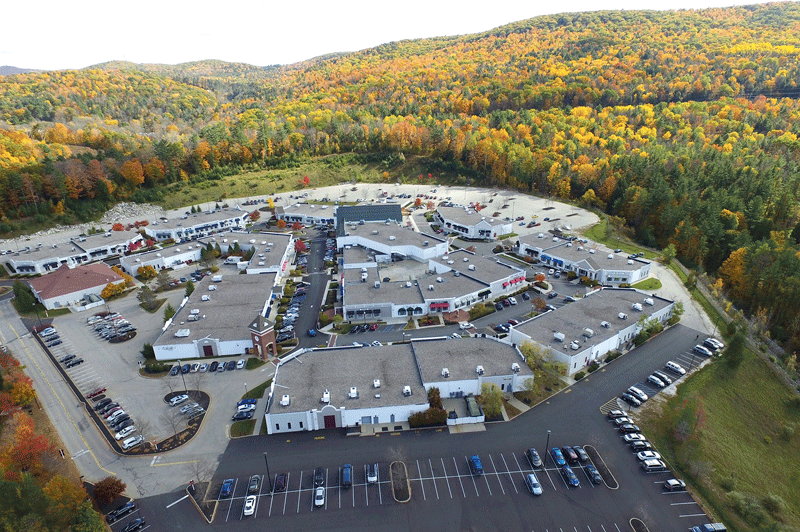
 

Ludlow at a glance

Year Incorporated: 1774
Population: 21,103 (2010)
Area: 28.2 square miles
County: Hampden
Residential Tax Rate: $18.13
Commercial Tax Rate: $18.13
Median Household Income: $53,244
MEDIAN FAMILY Income: $67,797
Type of Government: Town Council; Representative Town Meeting
Largest Employers: Hampden County House of Correction; Massachusetts Air National Guard; Kleeberg Sheet Metal Inc.; R&C Floral Inc.
* Latest information available


Community Spotlight Features

Community Spotlight

Moe Belliveau

Moe Belliveau

Moe Belliveau says it’s certainly not the most important part of her job. But it just might be the most meaningful.

She was talking about the ribbon cuttings that mark the openings of new businesses and expansions of existing ventures. As executive director of the Easthampton Chamber of Commerce, Belliveau, like her colleagues at chambers across the region, has taken part in more of these than she can count. In fact, after borrowing a pair of large ceremonial scissors for her first such celebration nearly three years ago, she ordered her own pair.

But despite some sameness, these ceremonies never get old, she said, because they’re not about her — or the various elected officials who might turn out for the ceremonies. No, they’re for the business owner or owners in question, and for many, it’s one of the biggest days of their lives.

“This is an important day for them — people put their lives into these businesses,” she explained. “And it’s important that these moments are celebrated.”

There have been many ribbon cuttings in Easthampton in recent years, said Belliveau, who took the helm at the chamber three years ago, noting that this former mill town continues to make great strides in the effort to reinvent itself as a center for the arts, retail, hospitality, and, in a word, vibrancy.

The most recent involved Corsello Butcheria, a Roman-style butcher shop opened by Vincent and Kasey Corsello on Cottage Street in April.

By Roman-style, Vincent means a butcher shop modeled on the one they frequented while living in Rome, an open-air facility where shoppers would stop and pick up something fresh for that night’s dinner.

A software project manager by trade — actually, he’s worked in various capacities — Corsello said he returned from Italy determined to become an entrepreneur and intent on starting his own butcheria. And he says Easthampton is the perfect landing spot.

In fact, his commentary sums up the thoughts of many now doing business there or supporting the business community in various ways.

“This is a truly authentic community with all the moving parts,” he told BusinessWest. “Twenty years ago, people would have said Easthampton’s best days are behind it; now, I think, and most people think, its best days are ahead of it.”

Meanwhile, the next ribbon cutting will likely come on June 10 at a venture known as Valley Paddler, which will bring paddle boats to Nashawannuck Pond in the center of the community.

There have been many others in recent years, involving restaurants, breweries (there are three of them now), arts-focused establishments, tech companies, and much more.

Together, they speak to Easthampton’s revival and vibrancy, or its “renaissance,” the word chosen by Mayor Karen Cadieux, who believes it fits.

She’s had what amounts to a front-row seat for this transformation as it has unfolded over the past quarter-century or so. Indeed, she served as an assistant to the selectmen and then the town administrator before Easthampton officially became a city in 1996, and then served in that same capacity to the community’s first mayor, Michael Tautznik.


Karen Cadieux

Karen Cadieux

What happens … is you have new owners who take abandoned buildings, and they bring new ideas to the table. And it becomes growth, and it becomes catchy.”


When Tautznik decided not to seek re-election after eight terms in office, he encouraged her to seek the corner office, which she did, triumphing in the 2013 election.

With all that experience at both desks in the mayor’s office, she spoke with some authority when she said “this is a working mayor’s position,” noting that those two people do it all, but they also work in partnership with a host of other individuals and agencies, including the chamber.

And much of that work, she said, involves making the city more business-friendly and a true destination for a host of constituents, including artists, tourists, craft-beer lovers, and, yes, those looking for a good place to set up shop.

As an example of these efforts in the name of business friendliness, she cited what have come to be known as ‘roundtable meetings.’ These are gatherings involving a prospective new business owner and a number of city officials, where questions are asked and answered and a road map of sorts is laid out for getting to another one of those ribbon cuttings.

“A meeting is scheduled with my office, and anyone who would be involved in the permitting process — the city planner, the building inspector, the fire chief, the DPW director, and others — all of them are there,” she explained. “They can ask anything they want, they bring in their plans, tell us their idea … and in that way, they’re prepared for when they go to the Planning Board.

“It has streamlined the process, and in the meantime, they know we’re willing to work them,” she went on, adding that these roundtables have met with a very positive response.

For this, the latest installment of its Community Spotlight series, BusinessWest takes an in-depth look at Easthampton, a city that continues to add new chapters to a compelling storyline of economic revival.

Lager Than Life

It might sound like a line from Casablanca, but in this case, no one who utters it has been misinformed.

People really do come to Easthampton for the water. In 2015, the city won the gold medal for the best-tasting water in the U.S. at the National Water Assoc. Rally in Washington, D.C.
Cadieux has a ceremonial coffee mug to prove it, although she and the city have much more substantial proof of that honor in the form of three craft-beer breweries that now call the city home.

“You need good, clean water, and lots of it, to brew beer,” said Belliveau, adding that Fort Hill, Abandoned Building, and New City Brewery are now helping to … wait for it … create a buzz in this community.

But while water is one of the main ingredients in the city’s revival, both literally and figuratively, there are many others. That list includes an abundance of old mill buildings with large expanses ready for imaginative reuse, public/private partnerships that have made such reuses feasible, a thriving arts community, with many of its members taking up space in those mills, and a city government looking for new and different ways to streamline the process of doing business here.

And now, another critical ingredient is a more active, more responsive chamber of commerce, one that Belliveau came to after a stint with the Westfield Business Improvement District before it was dissolved. She said she was drawn by the energy in the community and a desire to be part of the story that was being written there.

“I was between jobs and in a position to start a new adventure,” she told BusinessWest. “I could feel the buzz starting to rise and the excitement in Easthampton. And the city had an interesting combination — there’s an urban feel, but the city hasn’t lost its suburban charm; there’s an interesting intersection of all that here.”

Since arriving, Belliveau said she has been focused on taking the focus off of merely staging events — for fund-raising, networking, and other purposes — and bringing more value to members.

And that value has come in many forms, from so-called ‘listening sessions,’ where input is sought from businesses across different sectors of the economy, to a universal gift card redeemable at dozens of area businesses that are also chamber members.

“I did a lot of listening; I talked with everyone I could — members, non-members, former members — to try understand who we are and where we wanted to go,” she explained. “When I arrived, the board was very ready for some new energy, some new animation, and moving out into the world.

“We were event planners at that time — that’s what the chamber was,” she went on. “And we decided to do something new and different, and the board has embraced the idea of evolution.”

That specific tone of this evolution has been set as a result of reaching out to various constituencies — members and non-members among them — and responding to the feedback, she said, adding that she initiated something she called “listening lunches.”

One of the first was with restaurateurs and other hospitality-related business owners, she said, adding that this sector was not well-represented on the chamber at the time.

“We started at noon, and I figured people would be on their way by 1; instead, we were still talking at 2,” Belliveau recalled. “There were many takeaways, and one of them was their perception that we weren’t marketing this area as well as we should.”

The universal gift card was part of the response to that feedback, she said, adding that the chamber does essentially all of the heavy lifting — it markets and sells the cards. The original goal when things got started early last fall was to have 25 to 30 participating members on board, a target that was easily reached, and today there are more than 40 participants, and the number continues to rise.

The cards have been popular with the public as well, she said, adding that they sold well in the run-up to the holidays, and have been in demand recently, with graduations, Mother’s Day, and other events on the calendar.

There have been other initiatives within this evolutionary process, she went on, including collaborative efforts with other neighboring chambers, including Holyoke, Northampton, and Westfield, and new, more value-laden events, including a women’s leadership conference to be presented in conjunction with the Holyoke chamber, slated for Sept. 22. “The Art of Risk” will be the broad theme for the day-long conference, which will feature keynote speaker Angela Lussier, founder of the Speaker Sisterhood, a business devoted to helping women find their voice.

High-steaks Venture

As she talked about how Easthampton has evolved over the past quarter-century or so, Mayor Cadieux talked repeatedly about partnerships — on many levels.

They have involved private business and city government, the city and state, and among a host of agencies working within the broad realm of economic development, she said, adding that these efforts have succeeded in making Easthampton a welcoming city when it comes to both business and tourism.

As just one example, she cited the case of an entrepreneur looking to buy a commercial property (a former theater) on Cottage Street.

“The owner wouldn’t sell the property without the adjacent parking lot,” she explained. “But the new buyer didn’t have money for the parking lot, so what we did was obtain a grant for the parking lot, and it became a partnership.”

That was maybe 15 years ago, she went on, adding that there have been countless examples of such partnerships since, and these efforts by public agencies to help private business owners have created an environment conducive to continued growth and vibrancy.

“What happens in such instances is you have new owners who take abandoned buildings, and they bring new ideas to the table,” she went on. “And it becomes growth, and it becomes catchy.”

To sustain this momentum, the city has been diligent about finding ways to continue a dialogue with the business community and continuously improve and streamline the process of helping new businesses plant roots in the city.

The chamber’s listening sessions are one example of this, said the mayor, adding that another involved her successful efforts to attain a technical grant to gauge just how competitive the city is with its permitting process.

“From that, we started the roundtable meetings,” she said, adding that the response to such sessions has been overwhelmingly positive.

“All of our departments are communicating with a prospective new business,” she explained. “You don’t have to go from this department to that department to this department — we’re all right there. It’s another example of partnership, and I think it sends a really good message.”

That message was received by Vincent and Kasey Corsello, who cut the ceremonial ribbon in mid-April and are enjoying early success with a fairly unique venture that offers locally sourced food.

“We cut food to order — if you want a pound of ground beef, we’ll grind it right in front of you,” he noted. “If you want a steak, we’ll cut it right there so it will be just the thickness you want.”

Slicing steaks is a long way from software-development work, but after living and working in Italy for years and seeing how the butcheria was not just a source of fresh meat but also a gathering spot in the community, he decided he wanted to create one of his own.

His family settled in Easthampton, and the Corsellos quickly determined that this community was the right place at the right time for their venture.

“The town looks somewhat unassuming from the outside,” he told BusinessWest. “But has all those moving parts … it has its own truly local economy. I’m thrilled with it; there’s no place I’d rather be at this point.”

A Cut Above

Those ceremonial scissors Belliveau ordered have turned out to be a good investment. In other words, they’ve seen quite a bit of use over the past few years alone.

That’s a reflection of many positive things in the community, from its growing cultural community to the paddleboats soon to arrive on Nashawannuck Pond; from the universal gift card to those craft breweries; from the roundtable meetings to the Roman-style butcheria in the heart of downtown.

They all provide solid evidence of a renaissance, an evolution from an old mill town to a new and exciting destination city.

George O’Brien can be reached at [email protected]
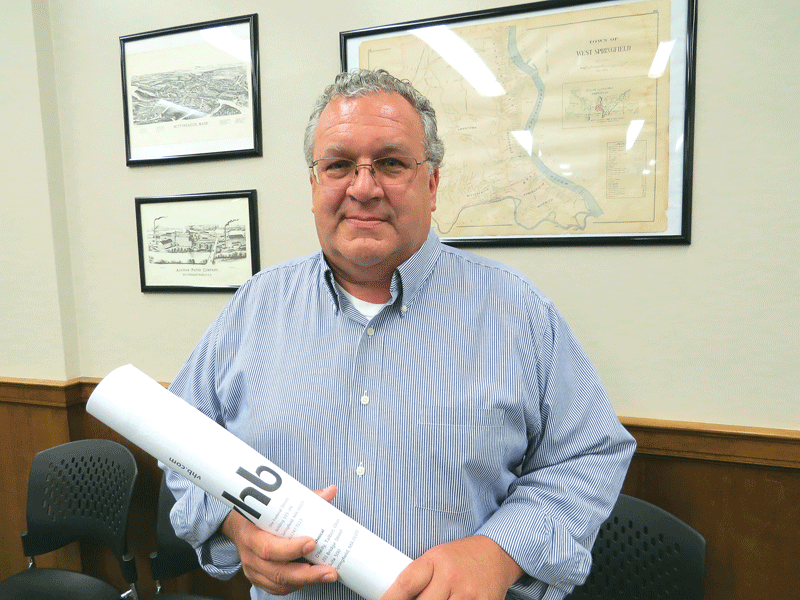
 

Easthampton at a glance

Year Incorporated: 1809
Population: 16,036
Area: 13.6 square miles

County: Hampshire
Residential Tax Rate: $15.59
Commercial Tax Rate: $15.59
Median Household Income: $57,134
median family Income: $78,281
Type of government: Mayor, City Council
Largest employers: Berry Plastics; Williston Northampton School; National Nonwovens Co.; October Co.
* Latest information available

Community Spotlight Features

Community Spotlight

Greenfield Mayor William Martin

Greenfield Mayor William Martin says the town is keeping pace with change through major projects and investments that will serve future generations.

Mayor William Martin recently acquired a book about Greenfield that was published in 1912. He keeps it in his office, and during a recent visit by BusinessWest, he culled through it and pointed out initiatives integral to the town’s economic development that mirror historic advances in the book that were considered progressive in the early 20th century.

They include increasing density downtown, attracting businesses where growth is occurring, and developing town-owned energy companies, while continuing to meet the needs of residents.

“We have taken ideas from the past and brought them into the modern day, which is very, very exciting,” Martin said. “Greenfield is a unique, progressive, and supportive community whose roots go back centuries in time; although people have come and gone, the spirit here remains the same.

“We were called a progressive community 150 years ago and are being called that again today,” the mayor continued, as he spoke about how the town is keeping pace with change through major projects and investments that will serve future generations.

They include the new, $70 million Franklin County Justice Center which opened its doors about a month ago after two and a half years of planning and construction. “It brought people back downtown and consolidated the county’s judicial system into one building,” Martin said, adding that, although some downtown businesses suffered when the old courthouse was closed and the offices were temporarily moved, there has been a revival of vibrancy due to an increase in traffic from courthouse employees, attorneys, and people who visit the justice center to resolve legal issues.

“In addition to housing the Franklin County court system, the center is home to preventive and social-justice offices for the afflicted and the addicted,” Martin said.

The increase in visitors created an immediate need for more downtown parking, which is being addressed. Construction will begin in July on a new, $10 million, four-story Olive Street Garage that will have a solar canopy on its upper floor and offer 355 parking spaces, charging stations for electric vehicles, and spots designated for bicycles and motorcycles.

It is being built on the site of a former parking lot and is expected to alleviate traffic congestion since it is located a block from the courthouse and across the street from the John W. Olver Transit Center, which serves Franklin County Transit Authority bus routes and provides inter-city bus service, as well as a train station that houses Amtrak’s Vermonter line.

“Greenfield is the capital of Franklin County and has always been an active transportation center. Our history dates back to the time of steamboats and stagecoaches which brought supplies to the hilltowns,” Martin said.

He noted that Robert Cartelli, who owns Ford Toyota of Greenfield and recently built a new, $8 million dealership, preserved several historic bas-relief caricatures of stagecoaches, planes, and trains that were on his old building and donated them to the town. One will be mounted on each floor of the garage, and the floors will be named after the sculptures.

A large monitor will also be installed that will serve as an educational showcase for the town’s transportation history and allow visitors to learn about its importance in Franklin County.

For this, the latest installment in its Community Spotlight series, BusinessWest looks at the many initiatives and projects taking place in Greenfield that are adding to its vitality and ensuring the town keeps pace with the future.

Continued Progress

Healthcare is an industry that is experiencing rapid growth, and projects in Greenfield reflect that trend. The Lunt Silversmiths property, located about 1.5 miles from Main Street and downtown, has undergone substantial reconstruction, and phase 3 is being completed by the developer 401 Liberty Street, LLC.

One of three buildings slated for redevelopment has been converted into a residential medical treatment center with 65 beds that is operated by Behavioral Health Network. That structure also houses two residential clinics that opened last fall, and Clinical & Support Options will soon move into a 15,000-square-foot renovated space in another building.

When the renovation is finished and the remaining 15,000-square-foot space is occupied, the property will have generated several hundred new jobs and increased taxes from $2.2 million to $11 million.

“The former brownfields site has been put to good, productive use,” Martin said.

He explained that the town purchased the property after Lunt Silversmiths went bankrupt, and the acquisition included a number of ballfields on 6.62 acres of the 11-acre parcel that had been used by youth baseball teams for more than 50 years.

“During negotiations that were associated with the sale, the developer agreed to create a mini-Fenway Park that will contain three playing fields for youth in the community that will open in August,” Martin said.

greenfieldfact

Health services and businesses in Greenfield are on the rise, and the Center for Human Development plans to move its Clinic for Behavioral Services and Community Health Clinic into 104-106 Main St., the former home of an antique and used-furniture business.

“The health clinic serves several thousand clients each month, which will help us reach our goal of increasing density downtown,” Martin told BusinessWest.

In addition, the First National Bank and Trust building downtown, which has been unoccupied for more than two decades, is being acquired by Greenfield Development Authority.

Martin said the state approved the town’s application to establish a cultural district last fall, and plans for the structure include creating a flexible space that could be used for plays, theater productions, an international marketplace during the winter, and an indoor seasonal farmer’s market in the spring, summer, and fall, as well as a gallery and museum to house the city’s antiques, including a Concord coach, an original pump from the Fire Department, a liberty bell, and a golden cane.

“This is a magnificent space in the center of Greenfield that will be used by the community and serve the interests of many residents,” the mayor said.

The Abercrombie Building, another structure downtown in the buildings along Bank Row, will also be put to new use when the state takes over 15,000 square feet and turns it into the Franklin County Public Attorneys’ Office. Martin noted that the building has been unoccupied for about 20 years, and its reuse fits in well with the idea of increasing foot traffic downtown.

Greenfield has also taken a proactive stance toward energy and technology because these sectors will play a vital role in ensuring its independence as well as its ability to attract new businesses.

Greenfield Light and Power began operating as a municipal aggregation plan more than a year ago, and brought lower-cost electricity to the community and measures to procure it from renewable sources.

Since it went online, all electricity used in the town is 100% green and is priced at $8.02 per kilowatt hour, which is less than the cost of electricity supplied by Eversource.

“Greenfield Light and Power was started by the town in the 1880s, then sold to Western Mass Electric in the 1930s. But today we have our own power company again,” Martin said, as he continued to outline the town’s history.

Another major initiative was born last year when the Town Council approved a $5 million bond to create a municipal broadband network that includes Internet, phone, and data services.

Greenfield Community Energy and Technology, commonly known as GCET, will pay for itself now that it is up and running. The mayor said the town will begin taking subscriptions within the next 60 days.

“We’re taking ideas from the past and giving them new life. It’s exciting that things done 150 years ago are the same things we want to do today. Our generation is replacing institutional landmarks, and we hope our Internet service and electric company will continue to operate into the next century,” the mayor noted, explaining that the goal was to provide the most current, fastest service for businesses in Greenfield at no cost to the taxpayer, which is part of the town’s strategy of making investments in capital projects to satisfy needs in the private market.

The town recently issued a request for proposals to demolish the former Bendix Corp. building and draw up a plan for the 17-acre brownfields site. The project is in the final stages of cleanup, and Martin said the city is working with Honeywell Corp., which is responsible for site remediation.

International Container Co. has also announced plans to move from Holyoke and build an 80,000-square-foot building in Greenfield. “We have been meeting with them for eight months, and they hope to start construction in August and hire 65 new employees after they open,” Martin said.

Eye to the Future

Improvements to the public-school system are ongoing. The new, $66 million Greenfield High School opened its doors in the fall of 2015 and sports new playing fields, a concession stand, and a track.

“The first track meet was held behind the building several weeks ago,” Martin said as he outlined other educational investments: Greenfield Community College’s establishment of a downtown campus; the Mass. Virtual Academy at Greenfield on Main Street, which was the Commonwealth’s first virtual K-12 public school; and the recent completion of $1.8 million of work at Federal Street School.

In addition, Greenfield’s Math and Science Academy, which serves grades 4 through 7, is being moved from the Federal Street School to Greenfield Middle School so more students can take advantage of its advanced curriculum.

Progress is also being made on the new 10,000-square-foot John Zon Community Center, which will be designed to meet the changing expectations and needs of seniors in the community.

Forish Construction in Westfield is in charge of the $4.5 million project and began demolition of a 15,000-square-foot brick building at the intersection of Pleasant and Davis streets several weeks ago. The town-owned structure was built as a school in 1908, operated as a hotel and apartments in the ’80s, then used as the public-school administration center.

“It’s an exciting project,” Martin said, explaining that the school’s administrative offices have been moved into the bottom floor of Greenfield Middle School.

Greenfield has also reorganized its Veteran’s Service Department that is the hub for all towns in Franklin County. In addition to a downtown office, it has a van that serves disabled vets in their homes.

“They deserve to get the care they need and also bring in between $7 million and $10 million a year in benefits, which affects our economy,” Martin said, noting that the town recently held a symposium for veterans at Greenfield Community College that dealt with Agent Orange and 43 diseases presumed to originate from exposure to the deadly chemical that was used during the Vietnam War.

In another part of town, the Eunice Williams Bridge has been restored. The historic covered structure was knocked off its abutment during Hurricane Irene and downgraded to a pedestrian bridge. But thanks to $9 million from the Federal Emergency Management Agency to cover damages in the town resulting from the storm, the abutment was replaced, and the bridge has been upgraded for vehicular travel.

Martin said Greenfield has received a number of awards in the past few years. Green River Park was feted with the 2017 Design of Facility Agency Award from the Massachusetts Recreation and Park Assoc. for major renovations that include a new basketball court, pickleball court, playground, pavilion, dog park, parking area, and Americans with Disabilities Act improvements.

And in 2016, Greenfield was designated as a Crossroads Cultural District by the Massachusetts Cultural Council, and honored by American City & County magazine as a Crown Community for pioneering locally generated renewable-energy certificates into the Greenfield Light and Power Program.

A LEED Gold certification was also awarded at completion of the new Greenfield High School, and the town was recognized for the fifth time as a Playful City USA by the national nonprofit KaBoom!, which honors cities and towns that ensure that all children, particularly those from low-income families, get the balanced and active play they need to thrive.

The mayor said these accolades and Greenfield’s continued progress has not come about by accident; rather, they are a result of action that has been taken with an eye to the future.

“I have dedicated myself to making Greenfield a city that is on the precipice of inventiveness, always moving forward while maintaining a dedication to fiscal responsibility,” he said. “We will continue to look for private investments that will enhance long-term development, generate revenue and jobs, and add to our tax base.”

This is a recipe from the past that should yield equal success in the future.

Community Spotlight Features

Community Spotlight

Springfield Mayor Domenic Sarno (left) and Police Commissioner John Barbieri

Springfield Mayor Domenic Sarno (left) and Police Commissioner John Barbieri say community-policing efforts are changing perceptions — and reality — about crime in the city.

Most people are familiar with the major projects underway in Springfield: the $950 million MGM casino, the $90 million renovation of Union Station, and the $95 million CRRC MA rail-car factory being built at the former Westinghouse site.

But a highly successful, multi-pronged program to improve public safety that was created by Mayor Domenic Sarno and the Springfield Police Department has gone on mostly behind the scenes and yielded remarkable results.

“We have had a 20% drop in crime since 2015,” said Police Commissioner John Barbieri.

Officials attribute the dramatic reduction to a number of factors. They include an increase in police officers (48 were added from the last academy, and in about a month another 50 will be sworn in), a highly effective C3 (community policing) program, an ongoing strategic analysis of crime by a division in the police department that has been dramatically increased, leadership classes for police officers, a new computer program on laptops in cruisers that pinpoint where recent crimes have occurred and allows police officers to read reports about them, and other measures that have made a decided difference.

Officials are proud of the recorded success, but know that changing public perception remains an ongoing challenge.

“Perception and attitude equal reality, and we are continuing to battle the negative perceptions people have toward crime and urban cities by enhancing public safety and providing increased police visibility,” Sarno said, noting that, in the past, businesses interested in moving to Springfield typically asked about public safety, but that conversation rarely occurs today.

downtown police presence

The downtown police presence will be boosted by a number of well-lit kiosks and substations.

Barbieri agreed. “The goal for the future is to create a high degree of police visibility downtown which reflects modern-day standards,” he said. “Whenever people travel to a metro area, they worry about crime, but an increase in police presence combats their fear.”

He added that public safety and economic development complement each other, and the entire police department has been reorganized.

“We’ve a made a commitment to the community in terms of accountability and responsiveness,” Barbieri noted, explaining that the department’s approach has differed from most large cities, where attempts to suppress crime are not typically linked to accountability. For example, some police departments might increase arrests or tickets for offenses such as littering, but since 99% of people are law-abiding, those tactics don’t generate cooperation or lead to an increase in information from residents about problems that haven’t yet surfaced.

“Our officers will never know the neighborhoods they work in as well as the people who live there, no matter how long they are assigned to an area,” Barbieri said, as he spoke about the difference community policing has made in establishing respect and rapport between Springfield police officers and residents.

“Crime is complex, and it takes a unified approach by nonprofits, businesses, schools, and local, state, and federal partners to deal with the issues that cause it,” he continued. “Reducing crime is not just about making arrests; it’s about arresting the right people who will not reform or seek help, as well as resolving neighborhood problems.”

They can include derelict properties, and to that end, Sarno created a Quality of Life/Ordinance Flex Squad in 2008 to deal with properties that are neglected or affect the quality of life of nearby residents. Members include the police department, building and code enforcement, the city’s law department, and the mayor’s office. The fire department and housing department also offer assistance when needed, and the collaborative approach has proven effective.

Sarno noted, as an example of success, a project that involved multiple entities to deal with the old River Inn at the corner of State and Thompson streets. It had been a troubled location for two decades before it was condemned in 2011, then purchased by DevelopSpringfield at a foreclosure auction and demolished. There are other examples of success related to the vision of creating a vibrant downtown where people feel safe and can enjoy and appreciate the Innovation District, Union Station, the Quadrangle, the MGM casino, and the businesses and eateries that already exist as well as those that will grow around them.

“But no matter how much money is spent on marketing, word of mouth is key,” Sarno said, adding that highly successful events, such as the Jazz & Roots Festival in August that attracted more than 12,000 people from all over New England and New York, are making a difference in perception and reality, which is critical because Union Station will be used by 4 million people each year and the MGM casino will bring in at least 10,000 guests on a daily basis when it opens.

For this issue, BusinessWest focuses on measures that officials in Springfield and its police department have taken to improve public safety and the overall perception of the City of Homes.

Ongoing Work

When Sarno was elected mayor in 2008, the city had significant problems and was being managed by a state Finance Control Board due to a $41 million budget deficit. But that board was dissolved in 2009, and in addition to addressing the city’s finances, Sarno took steps to improve public safety and quality of life in all of Springfield’s neighborhoods.

New lighting was installed downtown, the police presence was strengthened in the former entertainment district, which had been attracting large numbers of undesirable people, and the size of the police force was increased.

In addition, MGM made a commitment to spend $1.5 million annually for 15 years to create and maintain a public-safety district downtown due to the traffic it will bring to the city. The district runs from the south end of Mill Street to Union Station, to Riverfront Park, which is being renovated, and up to the Quadrangle.

But perhaps one of the most important changes was the establishment of C3 policing in vulnerable neighborhoods where high levels of poverty, truancy, and healthcare problems exist. Special police units have been created and put in place in four areas: Mason Square, the South End, the North End, and lower Forest Park.

MGM will be an important piece of Springfield’s resurgence

MGM will be an important piece of Springfield’s resurgence, Mayor Domenic Sarno says, but it’s only one piece.

Police officers in these units have formed strong bonds with families and children through a number of measures. They have walked thousands of students to school via a program called the Walking School Bus, attend school sports events and cheer students to success, participate in community events, and recently collaborated with neighborhood agencies to hold an Easter-egg hunt.

Every police academy recruit receives C3 policing and de-escalation training and volunteers on a regular basis in the community, where they mix and mingle and take part in a wide variety of activities.

Weekly meetings are held in each neighborhood that are attended by representatives from 60 agencies, including churches, local businesses, and nonprofits such as the YMCA, YWCA, and Big Brothers Big Sisters. The number of residents who attend the meetings is growing, and many provide information about issues that need to be addressed.

“The philosophy of C3 policing is carried over into our entire uniformed division,” Barbieri said, noting that all concerns expressed by residents are taken seriously.

The mayor said the city’s C-3 policing program (which was named a Difference Maker by BusinessWest in 2013) has been so successful, it is being used as a model across the country, and Barbieri has spoken about it before many audiences.

In addition, the police commissioner established a Crime Analysis Unit in 2014 that allows the police department to determine trends and patterns.

“We look at trends from the previous year and hold weekly meetings with all of our commanding officers and supervisors to go over crime that has occurred,” Barbieri said, explaining that they discuss problem properties, prolific offenders, and strategies that will be used to resolve issues. “There is a high level of accountability.”

Sarno works closely with Barbieri and gave a green light to the idea of installing a Crime View program on the laptops in every police cruiser. The technology gives officers detailed information about incidents that have taken place over the previous seven days in the area they are assigned to patrol.

“It pinpoints where the crime occurred and allows officers to read reports related to each incident, including the time of day and day of the week it took place, so they can self-deploy into the areas where they are needed the most,” Barbieri said, noting that residents can also text tips or reports anonymously about problems or concerns.

Although a police presence is not always visible in some neighborhoods, that happens for a reason, as it doesn’t make sense for officers to be limited to a very small area. For example, if a rash of housebreaks are occurring in a neighborhood, an appropriate contingent can move into that area.

However, in the near future, the police presence downtown will increase and be highly visible. Plans are in place to build a number of well-lit police kiosks and substations in the public safety district, and Union Station will have its own police office.

Call-for-service kiosks will also be installed throughout the area, containing cameras that videotape action on the street, and the C3 squads will be expanded.

“People will see blue wherever they go,” Barbieri said, noting that additional police officers assigned to the area will be hand-picked and will adopt a customer-service approach.

In addition, programs in the schools and community centers are yielding positive results: the truancy rate has been cut in half, and young people are forming relationships with police due to their participation in community events and the Walking School Bus program.

The entire police department is making strides, and is the only one in the country that provides peer-to-peer anti-corruption training without being mandated to do so by a federal consent decree. In addition, the strategic crime unit will eventually become a 24/7 operation and will provide information to officers in real time as crime is occurring.

Sarno believes that, as Springfield adds more attractions and confidence rises, there will be an increase in demand for housing downtown, and Baby Boomers who left years ago may want to return.

The $6 million renovation of the former Morgan Square complex at 15 Taylor St., located a block from Union Station, serves as a cornerstone of new residential redevelopment and potential for growth in the future. The complex has been named SilverBrick Lofts Springfield, and 25 of its one- to three-bedroom apartments, with rents ranging from $795 to $1,235, have been reserved for teachers.

Kevin Kennedy, the city’s chief Development officer, said another example of progress is the $40 million renovation of the Chestnut Towers complex by Related Beal. When the towers were built 40 years ago, the property was known for its luxury apartments, but the state foreclosed on the complex in 1996, and after that occurred, it became a hotspot for drugs, violence, and other crimes.

But that is another site where progress is occurring. “Related Beal plans to spend about $100,000 on each of the 489 apartment units,” said Kennedy. “A key component of its plan involves working with the police department to get rid of negative tenants and provide reassurance to the good families who live there.”

He noted that there has been a change in management, the developer is working with police to hire a new security director, and it has partnered with the city to provide better housing and improve the quality of life for new and existing residents.

In addition, Pynchon Plaza will be updated and renovated. It was built in 1976 as a gateway between downtown and the Springfield Museums and Quadrangle, and the city is going out to bid for designer services for a plan to improve it in phases.

New Chapter

Sarno believes confidence in public safety will grow alongside new entertainment venues and spur more investment.

“MGM put Springfield on the map, and the new CRRC MA plant and Union Station revitalization has led to meetings every week with businesses and developers who want to come to Springfield,” he said, noting that the City of Homes has an AA+ rating from Standard & Poor’s, and the last two city budgets were not only balanced, but contained reserves.

Crime — as well as the perception of it — is being reduced, and officials are proud of the work being done by the police department. “When Springfield police officers were asked to stand up to prepare the city for growth, they stood tall and embraced the community,” Barbieri said.

Sarno calls Springfield police officers “sentinels of peace” and says they are making a positive difference 24 hours a day.

“In the next five years, there will be dramatic changes in Springfield,” he said, “and we are working hand in glove with the police department to keep our city safe.”


Springfield at a glance

Year Incorporated: 1852
Population: 156,000 (2016)
Area: 33.2 square miles
County: Hampden
Residential Tax Rate: $19.66
Commercial Tax Rate: $39.07
Median Household Income: $38,398 (2015)
median family Income: $43,289 (2015)
Type of government: Mayor; City Council
Largest Employers: Baystate Medical Center; MassMutual Financial Group; Big Y; Center for Human Development; American Outdoor Brands Corp.
* Latest information available

Community Spotlight Features

Community Spotlight

From left, Douglas Albertson, Kyle Thibeault, and Nicolas O’Connor

From left, Douglas Albertson, Kyle Thibeault, and Nicolas O’Connor say the disc-golf course that will be built at Piper Farm Recreation Area will benefit residents and help make Belchertown a destination.

Bob Bolduc says Pride purchased a 20-acre parcel of land in Belchertown about eight years ago because it believed this was an area where development was likely to occur.

“We envisioned it as an ideal location for a gas station and other businesses,” said the company’s founder and adviser, referring to a site at the junction where Route 202 and Route 21 intersect.

The prediction proved quite prescient; the Eastern Hampshire District Courthouse was built there shortly after the purchase was made, and a bevy of projects are underway. They include a new, $2 million Pride station; a new financial-services center; the town’s first assisted-living facility, to be built on the grounds of the former Belchertown State School; a new disc-golf course on town-owned land; and infrastructure improvements aimed at improving pedestrian safety, solving traffic problems, and enhancing connectivity with the town center, which is a short walk away.

“After many years of work and planning, there will actually be shovels in the ground on multiple projects this spring,” Selectman Nicolas O’Connor told Business West, noting that the projects align perfectly with goals that include meeting the needs of residents while finding ways to use open space for recreational purposes that will attract visitors, benefit local businesses, and spur additional growth.

Decades ago, Department of Public Works Director Steven Williams noted, economic development was concentrated at the end of the corridor that runs in the opposite direction from the town center, which is also within walking distance, although it is a little farther away.

But that area is almost completely built out, so the new hub has become the mile-long stretch of Route 202 that extends from the center to the courthouse. The Pride property sits on one side of the corridor, while the former Belchertown State School campus is across the street. It is owned by the Belchertown Economic Development Industrial Corp. (EDIC), which entered into an agreement with MassDevelopment five years ago that designated it as the agent for redevelopment.

Since that time, MassDevelopment has worked with the town and EDIC to access funds to demolish 40 dilapidated buildings on the campus. About half of them have been removed, and anticipation has been building over the past 18 months since approval was granted to build the Christopher Heights assisted-living complex on the site. It will contain 83 units, half of which will be affordable, and fill a real need within the community.

“They expect to break ground soon, which is very exciting,” said Claire O’Neil, vice president of planning and development for MassDevelopment.

She added that the town has plans to make significant infrastructure improvements that will restore water to the state school campus, improve sewer lines, and address pedestrian and traffic issues that will help move plans forward for the property to become a mixed-use development that will include manufacturing, commercial enterprises, and space for anyone interested in building in Belchertown.

An abundance of property is also available across from the campus, which is close to Route 21. “The area has enormous potential to generate new construction, businesses, jobs, and resources for the town,” Williams said, explaining that it will be fueled by the aforementioned $4.5 million in infrastructure work that will be composed of upgraded sidewalks and crosswalks, roadwork with new striping, new turning lanes, a new signal at the Stadler Street intersection and perhaps another at the junction of Routes 202 and 21, and new signage.

The plan is still in the design stage, but Williams estimates it will be completed by the beginning of next year. When the work is finished, he added, it will improve pedestrian access and safety, and connect the area to the town center in a way that will allow development to occur without creating traffic problems.

“Some businesses have already been established along the corridor, but compared to the amount of land available, they constitute a drop in the bucket of future potential,” he said.

For this issue, BusinessWest looks at projects in the planning stages or underway that will make a difference in the town’s economy and help make it a destination for recreation while meeting the needs of residents.

Generating Growth

Alden Credit Union recently opened a new, 4,000-square-foot financial center on State Street in an existing building that sits on a 1.4-acre parcel purchased from Pride.

“They did a major renovation of the property,” O’Connor said, explaining that it will become Alden’s headquarters.

Bolduc noted that Pride’s new, 4,500-square-foot store will be built adjacent to the credit union and will focus on food service.

“Most people think of Pride as a place to get gas that also sells food. But we want to reverse that, have them think of this as a food store where they can also get gas,” he said, explaining that the new store will contain a large bakery, full café with specialty drinks, a drive-thru window, a full deli and grill with a breakfast and lunch menu, and an area with tables and chairs where people can eat. “There will also be a fountain area where people can get real fresh-fruit smoothies.”

Although the exterior will have 10 gas-filling stations, including one for diesel fuel, Bolduc emphasized that “this will be a new version of Pride. We are in the permitting stage and are looking forward to working with the town and hiring locally.”

Town Planner Douglas Albertson said Pride designed the building to fit in well with the neighborhood: the exterior will resemble a brick colonial structure with clapboard, and will have real roof shingles.

Other developments in the area include a new garage being built by Belchertown Motors that will allow it to expand the business; and discussions taking place with the Pioneer Valley Transit Authority to install a turnaround to accommodate bus traffic to the area, which will become especially important when construction on the Christopher Heights assisted-living complex is complete.

In the meantime, the town is doing everything possible to create new recreational opportunities in the area, which is within walking distance of several public schools.

“We recently moved the Belchertown Family Center into the former Belchertown Day School, which is a town-owned property,” O’Connor said, explaining that the move is in line with officials’ vision of developing more recreational resources in and around the schools.

The Recreation Department also conducted a recent online survey to determine what people would like to see built in the future, and the top choices were a new splash park and public recreation area with pavilions.

“It would be really nice if families could go there for the day with their children, play baseball at our mini-Fenway Park, then head to Jessica’s Boundless Playground, which was recently completed,” O’Connor said.

That may happen at some point, but right now a great deal of effort is being focused on creating an 18-hole disc-golf course in the Piper Farm Recreation Area, where 25 of its 68 acres will be used for that purpose.

“We already have a population in town involved with disc golf, and our new course will draw people from other communities,” said Parks and Recreation Director Kyle Thibeault.

“The golf trails could be used for hiking, snowshoeing, or cross-country skiing off-season,” he continued, noting that the course could also be used for after-school activities and instructional programs, especially since the middle school is close to the rear of the property.

O’Connor told BusinessWest that disc golf is rapidly gaining popularity, and people who use the free course could park in the town center and visit the Pride station or existing eateries, as well as other restaurants or businesses that could be established in the future.

“Disc-golf courses have become destinations, and our small-business owners are helping us with this project. We plan to be very aggressive with this project, as it requires a small investment but will provide a positive return for the town,” he said as he spoke about fund-raisers being planned to raise money for the course.

The town also recently completed the acquisition of the Patrick Center on the old state school campus. It sits on a 5.5-acre tract of land, and officials are working with state legislators, the Recreation Department, and a local committee to initiate projects to add additional recreation and public-use spaces adjacent to existing fields and the public-school complex.

“We want to bring things here that people in the community can use, but also want to create unique recreational experiences that will attract visitors,” O’Connor said.

Fruitful Endeavors

Town officials helped establish the Quaboag Connector, a shuttle service that provides rides for people in Belchertown, Brookfield, Hardwick, Monson, Palmer, Ware, and West Brookfield. Priority is given to those who need transportation to and from work, job-training programs, and related destinations that include community colleges and educational programs. The shuttle also allows passengers from outlying towns to be taken to Belchertown, where they can board Pioneer Valley Transit Authority buses that go to a number of destinations.

Residential construction is also gaining ground; last year 55 new homes were built, and the Bell Property Corp. is building 24 single-family homes on the former Dudek Farm property. “Woodland Lane will be our first new subdivision in 10 years,” Albertson said.

Both he and O’Neil believe the combination of projects that are planned or underway will benefit residents while attracting new people to Belchertown.

“Things have finally converged here,” Albertson said, noting that there is plenty of land available for new businesses and restaurants in a community that offers many benefits and is a great place to live, work, and play.


Belchertown at a glance

Year Incorporated: 1761
Population: 14,838 (2017)
AREA: 52.64 square miles
County: Hampshire
Residential Tax Rate: $18.20
Commercial Tax Rate: $18.20
Median Household Income: $76,968
Family Household Income: $80,038
Type of government: Open Town Meeting; Board of Selectmen
Largest Employers: Hulmes Transportation Services; Town of Belchertown/School Department; Super Stop & Shop
(Latest information available)

Community Spotlight Features

Community Spotlight

From left, Kameron Spaulding, Gwen Miller, Colin Toole, and Mayur Desai

From left, Kameron Spaulding, Gwen Miller, Colin Toole, and Mayur Desai say the new, 96-room Courtyard by Marriott hotel will open in May.

The temperature was in the teens and the wind chill factor was frigid on a recent day when town officials arrived at the construction site of the Brushwood Marriott Hotel in Lenox, but Colin Toole and Mayur Desai wanted photos taken outside the entrance to show off the building’s unusual French empire design.

“This is not a prototype of a typical Courtyard Marriott,” Toole explained.

But then again, noted the CEO of Toole Co., which owns and will manage the property, and also built and operates the Hampton Inn and Suites in Lenox, the town is no ordinary place.

“Lenox has a certain cachet in terms of its name; when people think of it, they think about Shakespeare and Co., the Gilded Age mansions, and Tanglewood,” Toole told BusinessWest.

Indeed, those very attractions, combined with bucolic scenery, the town’s identity as a center for health and wellness — it’s home to Canyon Ranch and the Kripalu Center for Yoga and Health — and a wide range of culture and recreational opportunities have spawned a number of multi-million-dollar projects in the last year alone.

“A combination of factors makes Lenox attractive,” said Kameron Spaulding, executive director of the Lenox Chamber of Commerce. “You can see great theater in New York City, but you can’t take a hike there and go to the beach in the same day. But you can do those things here, plus visit a spa and listen to the Boston Symphony Orchestra play outdoors without ever leaving town. All these things work together to create a unique experience.”

The largest project in the works is a $60 million expansion and renovation at the former Cranwell Spa & Golf Resort. The Miraval Group, a subsidiary of Hyatt Hotels, purchased the property last fall for $22 million and plans to transform it into a high-end wellness resort. Other major projects taking place include the new Marriott, the relocation of Morrison’s Home Improvement Specialists Inc. from Pittsfield and its adaptive reuse of a blighted building that had been vacant for 10 years, an apartment conversion at the Walker Street Residences by Allegrone, and the construction of its new headquarters and co-working office space using green design and technology in a building on Route 7.

“It’s been a good year for investments, which shows that Lenox is a place where people want to do business,” Spaulding said.

The building was ghostly, but I had a vision of what it could become, and knew the location was great in terms of visibility: 35,000 to 45,000 vehicles drive past it every day.”

Economic development and growth is on an upward trajectory, but Town Manager Christopher Ketchen said the town hasn’t rested on its laurels. In February, officials adopted a policy to determine whether a project is worthy of a TIF, or tax-increment financing, which is used as a subsidy to spur redevelopment; or an STA, which stands for special tax assessment.

“Developers are looking for these, so it was important for us to have objective measures to make decisions,” said Land Use Director and Town Planner Gwen Miller. “Now we have a clear time frame and process for businesses looking for the help.”

Ketchen added that Lenox has a sound fiscal standing and excellent schools, which play into the equation when developers consider a project or a business wants to move. It is one of two towns west of the Connecticut River that has an AAA rating from Standard & Poor; one of its elementary schools earned a Blue Ribbon rating from the U.S. Dept. of Education, and its high school is the only one in the Berkshires that received a Gold Medal Award from U.S. News & World Report.

In addition, its infrastructure improvement budget was $10 million for FY 2016-17, and the town plans to spend another $5 million over the next year.

The population in Lenox is aging, which reflects a trend in other towns in the Berkshires, and the median age of residents is 51. But town officials are taking steps to attract young professionals and families. Last year, they created a first-time-homebuyers program in partnership with four banks that offers up to $10,000 in down payments to qualified applicants. They also changed zoning requirements to make it easier to build new apartments and condominiums or convert older housing stock into appealing residences, as well as adopting a Complete Streets policy that will make the town eligible for state funds to improve connectivity for pedestrians and bicyclists.

For this issue, BusinessWest looks at major projects that are underway and what they will add to help increase the tourist business that is the cornerstone of the town’s economy.

Filling a Need

The Miraval buildout of the Cranwell resort will begin this spring and is expected to take two years to complete. A total of 43 new rooms will be added to the existing 105, along with a new spa, fitness center, new programming, and other wellness features. The existing facilities will be renovated, the property will remain open during construction, and neighboring condominiums will be able to access the golf course and other amenities via a fee-based system.

“Miraval plans to construct several new buildings and an underground tunnel to connect guests from the main campus to the driving range and several other buildings across the street,” Miller said.

Ketchen told BusinessWest that people have been coming to Lenox for generations to find themselves spiritually and improve their lifestyle, and this high-end wellness resort will benefit the town as well as Miraval’s clients, who often fly from New England to their other locations in the Midwest.

The project is expected to create more than 100 new full-time positions and generate an estimated $1.3 million annually in real estate, sales, and lodging taxes, in addition to a one-time, $1.1 million payment for sewer, water, and other utility connection fees.

The new Brushwood by Marriott will also add to the town’s offerings and is expected to open next month. The hotel will have 92 rooms with panoramic views, an indoor pool, a large patio with firepits, a restaurant, and a 12,000-square-foot event space, which is something Lenox hasn’t been able to offer groups in the past.

Planning began in 2013, and construction kicked off last year after a blighted Econolodge building on the site was demolished.

“We focused a great deal of attention on making this property unique. It fills a void in the Berkshires for hospitality,” said Desai, who will serve as general manager and is a partner in Brushwood LLC, which owns the real estate.

The work has been undertaken by local contractors, and although Marriott is a branded property, the Lenox hotel will be managed by its owners.

Another major project was finished last month and opened its doors April 1. Steve Morrison, who owns Morrison’s Home Improvement Specialists in Pittsfield, relocated his company to Lenox after completing a $400,000 gut and renovation of the former Trillium House on Route 7.

He needed room to grow, and the moment he stepped into the 1870 building, he saw its potential in spite of the deterioration that might have scared others away.

“The roof was leaking, there was structural damage, plaster was falling off the walls, and there was mold inside of them; the windows needed replacing, and the chimney had to be rebuilt,” he said. “The building was ghostly, but I had a vision of what it could become, and knew the location was great in terms of visibility: 35,000 to 45,000 vehicles drive past it every day.”

Today, the building is a welcoming place and resembles a new home inside and out. It has become Morrison’s headquarters, but there are areas that show off every product needed in a residential renovation, filled with samples of roofing, windows, tiles, kitchen cabinets, lighting, bathrooms, floor and wall tile, and more.

“It’s a year-round home show,” Morrison said, explaining that manufacturers lease space from him and, in addition to multiple 40-inch screens that show before-and-after photos of remodeling jobs he has done, he finally has a place where customers can “see, feel, and touch products before they buy them.”

Expanding Options

There is a dearth of market-rate apartments in Lenox, but thanks to Allegrone Companies, the number will soon increase. The firm is undertaking a $5 million to $8 million renovation of the 1804 William Walker House that will transform it into eight market-rate, one- and two-bedroom apartments.

The new units will range from 800 to 1,500 square feet and contain dishwashers, security alarms, stainless-steel appliances, and other amenities. The work is expected to be completed this summer, and three of the apartments have already been rented.

“The building is within walking distance to downtown, Shakespeare and Company, and Canyon Ranch,” Miller said, adding that they will help fill a need in the community.

In addition, Allegrone recently completed the renovation and establishment of the new Berkshire Design Center. The project began almost five years ago when the firm purchased the foreclosed and abandoned Edgewood Motel, which was built in 1959.

After a major renovation, Allegrone moved its corporate headquarters from Pittsfield to Lenox into the second floor of the newly built, contemporary, 30,000-square-foot office building on Pittsfield Road last summer.

Large window frames align the inner corridors and outer walls, allowing natural light to radiate through the building, and the first floor contains 16 suites and co-working conference and event space that tenants will share.

Xerox moved in and staged a ribbon-cutting ceremony several weeks ago, and Liberty Mutual has signed a lease agreement and will become the second tenant.

“This renovation was one of only 16 economic-development initiatives across the state during the recession,” Spaulding said, explaining that officials from the town and state Economic Development Incentive Program collaborated with MassDevelopment, which gave Allegrone a multi-million-dollar recovery-zone facility bond to fund the project, then Allegrone worked with local teams of architects, engineers, and field contractors to do the work.

The Zoning Board of Appeals has also approved a special permit to open a center for women with eating disorders at the former Lenox Institute of Water Technologies. Members of the Berg family who established 107 Yokun LLC and own the adjoining Ethelwynde Estate plan to hire a company that will use the building to help women who suffer from anorexia and bulimia. It would house up to 48 residents who would live there for several months while undergoing treatment, and promises to create 25 full-time jobs.

“It dovetails into the broader health and wellness movement stemming from nearby Canyon Ranch and Kripalu, as well as the recreational opportunities here, and is an interesting example of a private adaptive reuse of a building on a historic site that leverages other development in our community,” Miller said, explaining that the town has a ‘great estates’ bylaw intended to promote this type of reuse.

In addition, to encourage companies to move to Lenox or expand, town officials have been focused on a five-year open-space plan that was adopted in 2013 to serve the community as well as the visitor population.

“Open space is a large part of our identity,” Ketchen said, as he spoke about the town’s great-estate legacy and expanses of open space around these historic buildings.

Officials are working with partners to capitalize on the town-owned land at Kennedy Park and a future boardwalk with access to Parson’s Marsh, which is a wetlands area that is home to many birds.

In addition, Berkshire Natural Resource Council, the regional land trust, is working toward a regional trail network with a long section passing through Lenox, and construction is about to begin to improve the town beach on Laurel Lake.

Lifeguard hours will be expanded this summer, the area will become handicapped-accessible, and changes will be made to the beach house that contains bathrooms and changing areas.

Vital Relationships

The fact that Lenox is a small town has helped facilitate development because officials know what properties are available for development as well as their history.

“I’ve spent entire days driving people around to look at sites, and several hours on Sundays,” Spaulding said.

Miller has done the same and will continue to extend that courtesy to people interested in building or moving to the town.

“We know what is permissible,” she said, adding that officials were able to waive the site-planning review for the Morrison Home Improvement renovation. “Our responsiveness and assistance make a marked difference to developers. It’s our goal to help them get to ‘go’ as painlessly and quickly as possible, so we make it easy, which starts by helping them find the right location.”

Ketchen agreed and said the end result is the continued popularity of the town as a destination.

“We bring people here and create experiences,” he said. “We’re also the central hub of Berkshire County, and people come here to stay.”


Lenox at a glance

Year Incorporated: 1767
Population: 5,214 (2017)
Area: 21.7 square miles
County: Berkshire
Residential Tax Rate: $12.21
Commercial Tax Rate: $15.06
Median Household Income: $61,457
median Family Income: $82,212
Type of government: Open Town Meeting
Largest employers: Canyon Ranch, Boston Symphony Orchestra, Cranwell Resort and Spa
(Latest information available)

Community Spotlight Features

Community Spotlight

Denis and Marco Luzuriaga

Denis and Marco Luzuriaga say more than 200 people have already expressed interest in the 18 market-rate apartments they are building on the upper stories of the Cubit building downtown.

Marco Luzuriaga and his brother Denis are betting on the future.

To be precise, that’s the future of Holyoke, a city where years of disinvestment led to vacant buildings with major environmental challenges that squashed any interest developers had in investing in them.

But a slow evolution has occurred over the past few years, and the landscape is undergoing marked change. The combination of Mayor Alex Morse’s proactive stance, support from the City Council, and work by other officials led to the creation of an urban-renewal plan four years ago that is finally coming to fruition.

Notable progress includes a focus on the Innovation District; the establishment of the Massachusetts Green High Performance Computing Center, a $165 million academic research facility between Cabot and Appleton streets that overlooks the first-level canal; major infrastructure investments; a growing number of artists and art venues; and other measures such as tax credits designed to spur revitalization and attract people of all ages.

When they realized the potential the downtown held and saw energy in the area increasing, the Luzuriaga brothers told BusinessWest, they made a decision to get in on the ground floor of the rebirth in both a literal and figurative manner.

Marco is an IT professional who lives in Maryland and was thinking about a career change, and his brother is a Holyoke artist. They decided to join forces, and after undertaking a feasibility study of the former Cubit Wire & Cable Co. Inc. building at 181 Appleton St., they purchased it for $325,000 and took on a challenge unlike anything they had ever imagined.

“But the amount of open space here in Holyoke is unparalleled, and we have seen a similar pattern of success in places like Soho and Jersey City, where artists moved into an area and they became vibrant, artistic communities,” Marco said, pointing to Gateway City Arts, the Canal Gallery, independent art studios, the Canal Walk, the computing center, Holyoke’s new $4.3 million rail platform, and other major projects within walking distance of the Cubit building, where their $5 million renovation will soon be complete.

The bottom floor will become home to the MGM Resorts HCC Center for Culinary Arts at Holyoke, while the two upper floors will be loft-style, one- and two-bedroom apartments with enormous windows and sweeping views of the area. In addition, the Luzuriaga brothers purchased three vacant lots that abut the Cubit building and will be used for parking.

“The Center for Culinary Arts will double the college’s prior teaching capacity and provide no-cost culinary training to 50 Holyoke residents every year, serving as a career pipeline into jobs from entry level to senior management in a top-employing industry of our region,” said Morse, adding that students are expected to start classes there next spring.

He added that the city has worked with developers and businesses to create solutions for some of its most challenging sites, and these efforts are yielding concrete results, with more than $100 million of investments in the pipeline.

Mayor Alex Morse

Mayor Alex Morse says the renovation of the Cubit building will provide more downtown housing and become home to the MGM Resorts HCC Center for Culinary Arts at Holyoke.

“We’re creating an environment that people want to be part of and are trying to reach the tipping point by putting together solutions for the most challenging sites,” Morse told BusinessWest.

Marcos Marrero, the city’s director of Planning and Economic Development, noted that, although vacant storefronts and shuttered buildings had become part of the downtown landscape and space ready for businesses to move right in is scarce, the situation has undergone a significant change.

“Our downtown is a different place than it was four or five years ago due to the availability of commercial space and opportunities to live and work here,” Marrero said.

Indeed, four major projects are underway, and interest and enthusiasm are exploding. “We have 200 people on a waiting list for the 18 apartments we are creating in the Cubit building,” Marco Luzuriaga said, noting that the list was created thanks to a Facebook posting about the new units, which will rent for $1,000 to $1,400.

For this, the latest installment of its Community Spotlight series, BusinessWest takes an in-depth look at Holyoke and the investments developers and businesses are making in the Paper City that will help shape and create a long-awaited and exciting new chapter in its history.

Repurposing Blighted Buildings

The Parsons Paper Co. facility, which was built in 1853 at 84 Sargeant St., was one of the most challenging properties in the city. The contaminated complex was abandoned in 2004, and in 2008 a fire caused extensive damage. Four years later, the city officially foreclosed on the property and took ownership for failure to pay taxes.

Aegis Energy Services Inc. is located next door to the old mill, and when the company expressed interest in the 4.7-acre site due to its desire to expand, the city did everything it could to make the cleanup and purchase possible.

“The Parsons site was one of 10 key areas that were designated as priorities for redevelopment in our 2013 Urban Renewal Plan,” said Morse. “Significant legal, environmental, and financial constraints had impeded progress for years, so we jumped when Aegis told us they were willing to entertain the idea that we would leverage resources to do the $3.6 million environmental cleanup that was needed.”

The work began last March thanks to funding from multiple levels of government, two private companies, and the involvement of every public corporation in the city. Although the majority of the 350,000 square feet of manufacturing space was demolished, Aegis was able to preserve about 40,000 square feet in one section of the structure.

In addition, the city provided Aegis with the most aggressive tax-incentive schedule in its history: a 100% property tax exemption for 10 years as a way to finance a $400,000 portion of the site cleanup costs.

“The financing framework for this project is probably the most complex that Holyoke has seen in decades,” said Marrero. “But the implications a year from now will be significant — blight reduction, building reuse, job creation, expansion of manufacturing, more renewable energy, and improved property values in the neighborhood.”

Aegis plans to do a major renovation to suit its manufacturing needs, which will allow the company to expand its footprint by 200% and almost double its workforce with the addition of 30 new jobs.

However, the project is being undertaken in stages. After the cleanup was complete, Aegis created a 2.5-megawatt solar farm on a portion of the acreage to help pay for its expansion. Holyoke Gas & Electric entered into a power-purchase agreement with the company, and the electricity is being used by property tenants of the Holyoke Housing Authority.

Progress will also soon be visible at 37 Appleton St., which was the second-largest vacant, blighted building in Holyoke. In the past, the site was home to businesses that included Worthington Compressor and the American Dream Modular Home manufacturing company.

Recently, American Environmental agreed to buy it from the city for $1 from the city’s Redevelopment Authority with the agreement that the company would undertake the $600,000 cleanup of the brownfields site.

“We’re about to close on the sale of the property,” Morse said, explaining that it will allow American Environmental to expand and add 50 new jobs.

There are also plans underway to reuse the third-largest blighted and vacant building, the former Farr Alpaca building at 216 Appleton St., for housing.


Our downtown is a different place than it was four or five years ago due to the availability of commercial space and opportunities to live and work here.”


Winn Development has partnered with the city’s Redevelopment Authority and forged an agreement to renovate the building and turn it into approximately 100 apartments. The company is hoping to get approved for historic tax credits, and if all goes well, Morse said, the estimated $38 million renovation will help fulfill the goal of creating dense housing downtown that will make it a safe, livable place for people of all income levels.

A $34 million rehabilitation of the 18-building Lyman Terrace public-housing complex also began last year. The buildings contain 167 units, and the first phase of work included excavating and building new roads and sidewalks, and installing new water and sewer lines and street lighting.

Morse said improvements to the housing units began this year, and he noted that the project is an example of how the city works closely with residents to respect and meet their needs.

When he took office five years ago, there was talk of demolishing the complex. But people had strong feelings about keeping the historic structure in the heart of downtown. As a result, the Housing Authority decided to renovate it, and after they held a number of public meetings, they were able to integrate recommendations made by residents into the final design.

“The residents had input on every part of the process,” said Morse. “The project is a real partnership that led to a great outcome, and has become a model to think about the way we do projects in the future.”

Another development that sparked controversy was the use of an 18-acre parcel on Whiting Farms Road. It sits across the street from a residential neighborhood, and although Lowe’s and Walmart had looked at the site, neighbors had objected to having a big-box store built there.

“We shepherded the use of the property, reset the conversation in a similar manner to Lyman Terrace, and talked to the residents to get input about what they wanted as well as the city’s goals and how we wanted to accomplish them,” Morse said, adding that the public meetings played an important role in determining a new use for the land. “If you want growth to take place, it needs to be possible, but you also need to build a sense of public support and common ground.”

The model worked well, and the City Council voted for a zoning change to allow Gary Rome to build a new, $10 million Hyundai dealership on 10 of the 18 acres. It opened last October, is the largest of its kind in the country, and led to the creation of 50 new jobs.

Collaborative Efforts

Economic development is also taking place in other areas of the city, including a $21 million project underway at Ingleside Square near the Holyoke Mall.

The former Holiday Inn is being replaced with a Fairfield Inn by Marriott, which will be completed this year. Half of the old hotel was demolished, the remainder is undergoing a major rehabilitation, and the remaining section of the footprint has been turned into pad sites for restaurants or retail stores.

“It’s the first time the city pre-approved a permit to help secure tenants,” Marrero said. “We worked with the developer and visually approved their site plan.”

So far, an Applebee’s and Chipotle have been built there, along with a Vitamin Shoppe and a stand-alone McDonald’s.

One pad site remains, and the mayor said it is a great example of what can be done with an underutilized property.

“For many years, the property was regarded as a homeless hotel because the state used it to house homeless families,” Morse noted. “But it is a prime piece of property located off of I-91, and in addition to creating at least 200 jobs, this reuse will result in hundreds of thousands of dollars in new tax revenue.”

Other projects in the pipeline include a new Easthampton Savings Bank branch, and redevelopment at the corner of Hampden and Pleasant streets with a planned Dunkin’ Donuts and an additional 2,000 square feet of move-in-ready retail-commercial space.

Morse said job growth continues to take place, and the city’s unemployment rate is 4%, which is the lowest it has been in 17 years.

“We certainly have more to do, but the wheels are constantly in motion,” the mayor told BusinessWest. “There is still plenty of vacant space in Holyoke’s historic mills. We also have the cheapest and cleanest energy source in New England, plenty of water, and the assets to continue filling our core with economic opportunity. Holyoke is increasing opportunity for its residents and strengthening its presence as an economic hub in Western Massachusetts.”


Holyoke at a glance

Year Incorporated: 1850
Population: 40,684 (2016)
Area: 22.8 square miles
County: Hampden
Residential Tax Rate: $19.17
Commercial Tax Rate: $39.72
Median Household Income: $37,372 (2015)
median Family Income: $40,559 (2015)
Type of government: Mayor, City Council
Largest Employers: Holyoke Medical Center; Holyoke Public Schools; Holyoke Community College
Latest information available

Community Spotlight Features

Community Spotlight

Frank DeToma and Mike Sullivan

Frank DeToma and Mike Sullivan say the Vietnam Veterans Memorial Bridge is the gateway into South Hadley Falls, where revitalization efforts are underway.

In two months, the Vietnam Veterans Memorial Bridge that leads from Holyoke into South Hadley Falls will be closed for a day for a “River Roll and Stroll” event.

The family festival is designed to promote healthy living and is being co-sponsored by the Holyoke Bike-Pedestrian Committee and the South Hadley Bike-Walk Committee, a grass-roots effort to help promote recreational opportunities for bicyclists and pedestrians.

“The River Roll and Stroll will give people a look at the Falls and allow them to see the potential that exists while providing an economic boost to businesses there,” said Mariann Millard, co-chair of the event steering committee and chair of the South Hadley Bike-Walk Committee.

One of their goals is to make people aware of the natural resources and hiking trails that wind through conservation land in the town, which will help to expand efforts by town officials who believe increasing recreational opportunities will foster the growth of economic investments.

“We don’t have a rail trail, but want to show the public what we have to offer,” Millard said, adding that the South Hadley Falls Neighborhood Assoc. has put together a walking map of the area that highlights historic buildings and the Bicentennial Canal Park that overlooks the Connecticut River.

The newly created map; River Roll and Stroll on May 7, which was initiated by Sean Condon of Holyoke; and upcoming annual FallsFest Music & Arts Festival on July 29 that attracts thousands of people are part of a growing force aimed at introducing newcomers to the Falls and promoting economic development there.

“We believe the strategic use of public funding and local enthusiasm will encourage more people to live, visit, and work in the Falls and become a catalyst for private investment,” said Frank DeToma, a selectman and chair of the Redevelopment Authority. “Our ultimate vision is to develop a ‘canal village’ that will consist of commercial and residential establishments that capitalize on our historic canal and adjacent riverfront as well as the architectural character of some of the original buildings.”

Town Administrator Mike Sullivan said that, although the Redevelopment Authority is concerned with the entire town, bringing new life to the Falls will provide a significant boost to South Hadley’s economy as a whole.

We believe the strategic use of public funding and local enthusiasm will encourage more people to live, visit, and work in the Falls and become a catalyst for private investment.

Ira Brezinsky agrees and says collaborative efforts that include work by government officials and businesses have coalesced to shine a light on the Falls and attract people who might not otherwise visit the area.

“It’s an ideal time for business people who want to get a taste of the community and neighborhood to come here, and we will put our best foot forward to welcome people from throughout the region,” said the selectman, co-chair for the River Roll and Stroll, and president of Music and Arts South Hadley, a grass-roots effort that became a nonprofit last year and hosts the FallsFest.

The town has also partnered with the Pioneer Valley Planning Commission to map out walking trails that need improvement and places where bike lanes and chevrons are needed to increase recreational opportunities.

In addition, a five-year, $5 million infrastructure project that involves improving parks, adding benches, new landscaping, crosswalks, traffic-calming devices, and new sidewalks in the Falls is well underway. So far, $2.7 million has been spent, and this year another $1.2 million will be poured into the redevelopment effort.

For this, the latest installment of its Community Spotlight series, BusinessWest looks at what the Falls has to offer, plans for its future, and why officials and residents are bullish on the idea of redeveloping the area.

Planned Progress

Sullivan says the Falls is overdue for attention, and holds unlimited potential. It is less than a mile from the $4.3 million Holyoke passenger rail platform, and has centralized sewers and great access to the Connecticut River. In addition, South Hadley has its own municipal light plant, and work is being done to be able to offer secure, high-speed Internet in the future.

The Falls is also rich in history: the first navigable canal in the U.S. was built there in 1795, which made Falls Village (then South Hadley Canal) a busy shipping center and tourist attraction.

Unfortunately, its former vibrancy has been greatly diminished, mirroring what has occurred in many towns and cities across Western Mass., where businesses along riverfronts shut their doors or moved, and disinvestment slowly occurred.

But revitalization efforts began in earnest after a study of the area that was completed about five years ago became a springboard for change. As a result of recommendations in the final draft, the Falls Neighborhood Assoc. was formed, and in 2014 two important advances were made. The first was the long-awaited construction of a new $12 million public library on 2 Canal St. It was dedicated a year ago and contains meeting and reading rooms, and large banks of computers that businesses can use to conduct training classes.

The second advance occurred when a town meeting approved the creation of an advisory board to develop a comprehensive plan for the area.

The final draft is almost complete and will be presented to the public by the Redevelopment Authority, which is the name the advisory board was given, at a special town meeting held expressly for that purpose on June 7.

“A tremendous amount of work has gone into this,” Sullivan said, noting that the committee members are all unpaid volunteers.

There are many components to the plan, which include a focus on the east-west core of the area that is part of a larger, recently established ‘Smart Growth’ overlay district in the Falls.

“Developers who wish to construct relatively high-density housing in Smart Growth districts can do so by right, thus eliminating their need to apply for special permitting from a local planning authority,” DeToma told BusinessWest.

The proposed plan contains many other elements, including repurposing some town-owned properties and redeveloping a number of industrial properties.

But progress is already occurring, and the first residential construction project in decades is underway. Orange LLC is building 12 condominiums in three units directly across from the new library on 1 Canal St. that will each have their own garage and extra parking.

“This is a beautiful spot, and the Victorian look of the buildings is expected to enhance the neighborhood,” DeToma said, adding that Orange LLC also has plans to develop six other condominiums in the old library building on 27 Bardwell St. “The design is very imaginative and interesting, and there will be a great room in every unit.”

Sullivan told BusinessWest that condominiums in South Hadley have appreciated significantly over the past six months. “New ones are selling more quickly than they can be built,” he said, noting that construction on the Rivercrest Condominiums on Ferry Street began last year, and 16 of the proposed 28 units have already been sold.

Business growth has also taken place in the Falls. Over the past 18 months, Mohawk Paper and E Ink Corp. moved there, and South Hadley Fuel scrapped its plans to move out and expanded in town instead.

Sullivan explained that the decision came about in large part because Town Planner Richard Harris alerted South Hadley Fuel owner Steve Chase to an existing but unused underground tank farm near E Ink Inc., which he described as an “opportunity found.”

“As a result, they have opened one of the largest propane storage and distribution facilities in Western Mass,” the town administrator said. “We do all we can to introduce businesses to opportunities that exist here.”

Brezinsky agreed. “South Hadley and particularly the Falls has been very welcoming and engaging to businesses that want to move or expand there. We were able to steer Mohawk Paper through town meeting very quickly to get them what they needed to move here, and there are other examples like this,” he said, explaining that Mohawk Paper moved to the Falls two years ago into a group of buildings formerly known as the U.S. Gaylord properties, and opportunities exist for professional space, retail businesses, manufacturing, and incubator space.

“I believe one of the benefits of the Falls is its scale,” he continued. “It has a small footprint and is very walkable, unlike some former industrial areas where there are blocks of old buildings. The Falls never rose to those heights, so I don’t believe it will take much to get it to the tipping point where it can become a vibrant place again where people live, work, and play.”

DeToma said the northwest corner of the gateway Bridge/Main intersection is a prime location for redevelopment. It consists of three parcels owned by three different entities, but each lot is too small to be of interest to a developer.

“Our proposed redevelopment plan calls for the consolidation of those properties in order to increase their potential for private development,” he said.

Forward Movement

South Hadley recently lobbied to have Pioneer Valley Transit Authority’s Tiger Trolley change its route. Today, it runs over the Vietnam Veterans Memorial Bridge on Route 116 rather than the bridge on Route 202. Sullivan said that was important because the Falls is densely populated and town officials wanted to provide access to jobs in Holyoke and South Hadley, especially since Mohawk Paper and Mount Holyoke College are two of the largest employers. He added that the X90A Route that runs from Chicopee to Main Street in South Hadley is one of the fastest-growing routes in the area and also goes over the Route 116 bridge.

Parks in the town are also receiving attention. The town administrator told BusinessWest that Bicentennial Park, which is situated a quarter-mile away from the new library, will be renamed Belsky Park after Ted Belsky, a longtime member of the Select Board, and $97,000 will be spent to install lighting and a deck that will overlook the Connecticut River.

In addition, the town is creating a one-mile loop called the River to Range Trail that will begin in a field near Brunelle’s Marina and offer access to people of different abilities.

“We worked with the Pioneer Valley Planning Council on this,” Sullivan noted, adding that, eventually, the trail will connect to the Summit House on top of Mount Holyoke. “We see it becoming part of a recreational economy. That market is exploding, and we are getting requests for groups for camping areas. Although we are not proposing to open any right now, we have to be cognizant of opportunities as they present themselves.”

The Buttery Brook area is another area of focus. It runs east-west and roughly parallel to Gaylord and Bridge streets, crosses under Main Street via a culvert, and empties into the Connecticut River. DeToma said it is overgrown, but the Redevelopment Authority hopes to restore it to its original, attractive condition and install a multi-use recreational path along its bank.

“There will be two benefits to this,” he explained. “First, it will be a major recreational attraction in our Canal Village central area. Secondly, because this area is part of our Smart Growth district, it should stimulate the interest of developers in constructing affordable, higher-density housing nearby.”

Plans are also in place to build a new bridge over Bachelor Brook as well as a parking lot for 12 cars. The estimated cost is $2.1 million, and South Hadley has already received almost $1 million toward that amount from state and federal grants.

Concerted Efforts

Sullivan said major efforts are taking place to help people rediscover, reconsider, and reinvest in the Falls, and the Redevelopment Plan is the underpinning of the future.

“South Hadley has many opportunities; a lot of cool things are happening here,” he told BusinessWest, noting that South Hadley Electric is planning to create a hub for data storage and hired a new manager to help develop its high-speed Internet plan. “Their rates were key in bringing Mohawk Paper here, and enthusiasm about the area is growing. It has become an organic movement with its own energy, all for the benefit of the Falls.”

DeToma concurred. “The grass-roots efforts are taking on a life of their own. As we point out the value and potential of moving here, many groups are getting involved, and events like the River Roll and Stroll will help South Hadley and Holyoke to grow.”

Which bodes well for the future as residents and officials work together to bring new life to South Hadley in a way that will benefit generations to come.


South Hadley at a glance

Year Incorporated: 1775
Population: 17,663 (2017)
Area: 18.4 square miles
County: Hampshire
Residential and Commercial Tax Rate: $20.12 (Fire District 1); $20.66 (Fire District 2)
Median Household Income: $64,610
Median family Income: $76,679
Type of government: Town Administrator, Select Board, Town Meeting
Largest employers: Mount Holyoke College, Loomis Communities, Mohawk Paper
* Latest information available

Community Spotlight Features

Community Spotlight

Linda Leduc, Meena Patel, and Charlie Blanchard

Linda Leduc, Meena Patel, and Charlie Blanchard say the new Junction Variety store will include 1,800 square feet of space suitable for retail or office use.

A dozen years ago, Meena and Bharat Patel purchased Junction Variety store in Palmer. They established a loyal client base, but several years ago, the cost of operating the antiquated building, combined with the need for extensive repairs and inadequate parking, forced them to make a decision about whether to remain in town and build a new structure or move their business elsewhere.

“We decided to stay here; I love Palmer,” said Meena. “The people are very supportive, and we have good relationships with our customers.”

Last June, ground was broken on a new, 40,000-square-foot facility. It is expected to be completed within a few weeks, and once the store is moved, the old building will be demolished, and a parking lot with 20 parking spaces will take its place.

Junction Variety will occupy 2,200 square feet of the new structure, which will almost double its current size, and the remaining 1,800 square feet will be available for lease as office or retail space.

The project is part of a flurry of commercial activity that began last year and is rapidly accelerating, creating momentum in this community.

“It’s definitely a sign of the recovering economy. Things are happening a lot faster now than they did in the past, and we are very busy,” said Town Planner and Economic Development Director Linda Leduc, who explained that, a few years ago, projects were permitted that never moved forward, but today construction often begins months after the permitting process is complete.

The list of developments, moves, and expansions nearing completion or underway is lengthy, as Leduc and Town Planner Charlie Blanchard explained during a lengthy interview with BusinessWest. It includes four new solar farms (last year the town had five, which brings the total to nine), construction of a $17.2 million Emergency Department at Baystate Wing Hospital that will begin this year, a $2 million expansion of an advanced-manufacturing company that was recently finished, grassroots efforts in Three Rivers that are leading to change, and churches in residential neighborhoods being reused in creative ways.

Construction is also underway at Town Hall. A $400,000 heating and air-conditioning system was installed over the past two years and paid for with funds from the Green Community Act. And this year, renovations are being made to the entire building to make better use of space vacated by the Police Department when it moved into a new, $7.4 million facility several years ago.

Specifically, the public meeting room will be expanded and gain a new entrance; a new conference room and additional storage space will be created; the Board of Health, Conservation Department, Building Department, and Veteran’s Agent will move into larger offices; and new lighting, windows, and carpeting will be installed throughout the building.

“We have a lot of activity taking place for a town this size,” said Blanchard, attributing it not only to renewed confidence in the economy, but to the willingness of officials and the Town Council to work with businesses and make changes to accommodate their needs.

For this, the latest installment of its Community Spotlight series, BusinessWest takes a look at projects that were recently completed, underway, or on the drawing board throughout the four villages that make up the town of Palmer.

Diverse Undertakings

Change continues to take place in Depot Village, the first commercial district travelers pass through after they exit the Mass Turnpike.

Last year, Mark Baldyga of Baldyga Inc. stopped selling travel trailers and made the decision to focus on autobody work and used-car sales, which necessitated a move, because his 1221 South Main St. location didn’t provide the frontage and exposure he needed.

Finding a suitable property proved difficult, but he hoped to remain in Palmer because he grew up in the town, has spent more than 30 years on the Fire Department, and has an employee who is also a firefighter.

“I have a good reputation, and people here know me, which is one of the main driving forces for my business,” Baldyga said, adding that he has close ties with the community.

His search led to a two-acre parcel on Route 20 with the frontage he needed. However, before he purchased it, he petitioned the town to change the area from general zoning to highway business so he could move forward with his plan.

The petition was accepted, and Baldyga split up the acreage, which was needed because the rear portion of the plot contained a multi-family home.

Ground was broken last spring for a new, 5,500-square-foot building that is nearing completion; he expects to reopen in a few weeks.

He told BusinessWest that the neighbors were not only accommodating, but supported the zoning change, and it has worked out well for everyone involved.

“The town will get more taxes, businesses of a similar nature can move here now, and my tenants are happy because I made improvements to their apartments and cleaned up the property,” he noted, adding that, if the zoning change hadn’t been approved, he would have had to leave Palmer.

Michael’s Party Rentals purchased Baldyga’s former location, and President Michael Linton said the company moved from its Ludlow locations and did a substantial renovation of the 20,000-square-foot building, included the addition of a showroom, design center, and state-of-the-art tent-washing machine.

Other moves have occurred in Depot Village. Last year, the Fire Service Group purchased the former American Legion building on 1010 Thorndike St., which allowed the company to expand from a smaller location, and construction plans have been approved for a Dollar General store on the corner of Breckenridge and Park streets that will be built after the single-family home on the site is demolished.

Progress has also taken place at Detector Technology, a precision-manufacturing firm located in Palmer Industrial Park.  Blanchard said the company needed room to expand and purchased a building from Wayne Buxton, who was using it to house his ShedWorks Inc. business.

“Wayne needed to downsize but wanted to stay in Palmer, so he kept half of the lot and is building a new, smaller structure on it,” Blanchard noted, explaining that Detector Technology recently finished a $2 million renovation of the former Shedworks.

Baystate Wing Hospital is also building a $17.2 million, 37,000-square-foot Emergency Department on its Palmer campus. Ground was broken in November, and the institution is meeting all its timetables.

“They are a major employer and are making a big investment that will be beneficial to our residents as well as the region,” Leduc said.

The town’s capped landfill on Emery Street is another property that has been given new life. Leduc said a request for proposals was issued for the site several years ago, but nothing came to fruition until Syncarpha Solar, which owns and operates a solar farm on the adjacent former Palmer Metropolitan Airport, made the decision to build a second facility on the landfill.

“We were happy they were interested in generating additional solar power on the site,” Leduc said, adding that the town had five solar farms, and, in addition to the new one on the landfill, Nexamp, Nextsun Energy, and Beaumont Solar also built solar facilities last year.

“Two are operating, and the other two are waiting to be interconnected, but once that happens, Palmer will be generating almost 25 megawatts of electricity on its nine solar farms,” she noted.

The facilities will bring in new revenue and result in energy savings. Palmer will receive $121,000 annually for the next 25 years in lease payments from the solar farm on the capped landfill, and will begin getting net metering credits this year from Blue Wave Solar on Baptist Hill in Three Rivers, which Blanchard estimates will save the town 30% to 40% of the generated cost of electricity.

New Life

Two other projects Leduc describes as “exciting” involve the conversion and reuse of former churches.

Artist Bruce Rosenbaum and his wife, Melanie, recently purchased St. Mary’s Episcopal Church on Main Street in Thorndike. It had been vacant for several years, and will become their residence and the new home for Mod Vic Steampunk Design when the couple moves from Sharon.

“It was a perfect situation,” Leduc said, explaining that churches often are located in the middle of residential districts, and although the town is willing to rezone whenever it makes sense, it’s not always possible.

The Rosenbaums created the first functional steampunk house in the world, and their business repurposes and infuses modern technology and gadgets into period, relevant antiques and salvage objects.

“We work with clients in the U.S. and internationally to design one-of-a-kind pieces, creatively combining eras and ideas to transform the ordinary into incredible steampunk functional art,” Bruce said, adding that the couple has clients all over the world and looked throughout the Commonwealth and in Connecticut before deciding that St. Mary’s Church was a great place to expand their business.

The 1876 gothic structure, with 30-foot ceilings and tall stained-glass windows, three wooded acres, and 30 parking spaces in the middle of a residential neighborhood appealed to them, especially since they have clients in Amherst, Holyoke, Northampton, and Springfield, including MGM.

They worked with the town to get a home-occupation permit before purchasing the home earlier this month, and are looking forward to relocating and creating a showroom and gallery in the historic space, as well as holding steampunk workshops for families.

In addition, Amherst Railway Society purchased the Crossroads Christian Church on South Main Street in Depot Village and plans to move there on June 16.

“It’s a nostalgic reuse of a historic church and very fitting since Palmer is known as the Town of Seven Railroads,” Leduc said.

Collaborative efforts to revitalize Main Street in Three Rivers are also bearing fruit, thanks to work by the consortium On the Right TRACK (the acronym stands for Three Rivers Arts Community Knowledge), which has been working to build a cultural and creative economy in the village.

The Quaboag Valley Community Development Corp. was awarded a $13,500 Adams Art Grant for fiscal years 2016 and 2017, and the town completed a market-assessment and business-recruitment tool as well as a feasibility study showing that a building on 2032 Main St. obtained through the tax-title process has potential for redevelopment.

“The town will put out a request for proposals as soon as we have grants in place for the building,” Leduc said.

A number of property and business owners also began meeting 11 months ago in a grass-roots effort to help the revitalization effort, which includes changing the perception of the area and filling vacant storefronts.

Community Development Director Alice Davey said Nancy Roy, of Interactive Schoolhouse, was instrumental in starting the group. The agency received $35,000 from MassDevelopment and used the money to hire Union Studio in Providence, R.I. to design a conceptual plan for the center. The consulting firm held a public presentation several weeks ago to get input from residents, and the final report is expected in the near future.

Davey said suggestions put forth during the meeting included making the downtown more pedestrian-friendly, building a walking path with river access around the perimeter of Laviolette Park and upgrading the parking there, and expanding Hryniewicz Park, which is used for movie nights, concerts, and other events staged by the town’s recreation department and the Quaboag Hills Chamber of Commerce.

“It’s an exciting time for Three Rivers,” she noted. “The public meeting was well-attended, and residents and property owners eagerly anticipate the final plan and development of a course of action to implement some of the recommendations.”

Forward Movement

Bruce Rosenbaum says steampunk is more than just art: it’s a way to creatively problem-solve, learn how to adapt to a situation, and be resilient.

“You look at an object, know the purpose it was designed for is obsolete, then find a way to give it new life and make it beautiful and functional,” he said, adding that the idea translates to people and cities, and he is excited to work with Palmer “as the town re-imagines itself.”

That certainly applies to Three Rivers, and progress is indeed underway that will put the Town of Seven Railroads on the map as it moves forward on a fast track that is attracting new businesses and helping existing ones to expand and grow.


Palmer at
a Glance
Year Incorporated: 1775
Population: 13,050 (2015)
Area: 32 square miles
County: Hampden
Tax Rate, residential and commercial: Palmer, $21.57; Three Rivers, $22.25; Bondsville, $22.06; Thorndike, $23.01
Median Household Income: $51,846
median family Income: $68,200
Type of government: Town Manager; Town Council
Largest Employers: Baystate Wing Hospital; Camp Ramah of New England; Big Y World Class Market
* Latest information available

Community Spotlight Features

Community Spotlight

By Kathleen Mitchell

Mayor Linda Tyer

Mayor Linda Tyer says Pittsfield has made great strides in re-inventing itself and moving beyond its industrial past, dominated by General Electric.

Mayor Linda Tyer is a strong believer in the power of collaboration.

Several weeks ago, she gave the first State of the City address in Pittsfield’s history and outlined a myriad of multi-faceted projects that have come to fruition in the last year as a result of collaborative efforts.

Tyer told BusinessWest that investments designed to revitalize the city have taken root and change is occurring on a daily basis, which is good, because it’s needed as the city continues the process of reinventing itself.

“Pittsfield has a long history as an industrial town primarily because of GE’s large manufacturing facility,” she explained, referring to the massive complex that once employed more than 13,000 people. “The city relied on it for decades as its economic driver for real-estate taxes, employment, and community engagement.”

GE closed in the ’80s, which was a devastating blow and led to what Tyer refers to as a “grieving period that created self-doubt for the people who live here.”

Although a period of disinvestment followed, change began in 2000 when city officials decided to redefine Pittsfield’s identity.

Tyer was on the City Council at that time and recalled the city realized a robust cultural economy existed in the towns around them, but Pittsfield, which is the geographic and commercial hub of the area, was not participating in it.

Investments began downtown, and thanks to a collaborative effort by partners that included city officials, the community, state and federal legislators, and investors, today Pittsfield’s downtown boasts a thriving district that includes the Barrington and Colonial theaters, an independently owned movie theater, popular restaurants, and market-rate housing that followed as thousands of visitors flocked to the area.

“People want to live in our downtown, which is proof that the investments paid off,” Tyer said.

City officials have also helped local businesses, and the mayor said the belief that there are no jobs in Pittsfield is a myth. Indeed, numbers are rising: last January, the unemployment rate was 6.6%, which dropped to 3.3% by November.

“We strengthened workforce relationships last year and developed innovative training programs,” Tyer said, explaining that the workforce system generated $1.8 million that was used to train 1,250 people in healthcare, advanced manufacturing, STEM careers, finance, and customer service, and 70% of them found employment.

The city has also worked to retain local companies. Last July, after Covanta announced that it planned to close its Pittsfield facility, the City Council granted the waste-burning plant $562,000 to help with capital repairs and keep it open. The move saved 25 jobs and prevented a huge increase in trash-disposal costs, as a shutdown would have forced Pittsfield to have its trash and recyclables hauled away at an estimated annual cost of $462,000, in addition to losing $960,000 in property taxes, water and sewer user fees, and host-community fees over a four-year period.

Fiscal challenges lie ahead. But many steps will be taken to stabilize the issue, including cost containment, debt management, new revenue, and strategic investments that will prepare Pittsfield to not only survive, but thrive well into the future.”

The Hubbard Avenue facility incinerates 85,000 tons of waste per year and turns it into steam energy, which is then sold to Crane & Co. and Neenah Technical Materials. Republic Services hauls the city’s curbside collection to the site, including recyclables that are stored and later shipped in bulk to the Springfield Massachusetts Materials Recycling Facility.

The financial package Covanta received included state energy-tax credits, extended its contract with the city until 2020, and allowed the company to continue to sell steam energy to Crane and Neenah.

“But Covanta wasn’t the only company on our radar,” Tyer said, adding that five additional businesses were provided with assistance from a variety of incentive programs.

For this, the latest installment in its Community Spotlight series, BusinessWest looks at revitalization efforts in Pittsfield and what is being done to make it a place where Millennials want to live, which is one of the mayor’s goals. She noted they typically choose that place first, then look for a job, which is markedly different than past generations who moved to areas where they found employment.

“Millennials have a very different way of planning their lives,” said Tyer. “But we plan to capitalize on our growing art, culture, and entertainment economy; maximize our spectacular natural environment by updating our recreation and open space; invest in our housing stock; safeguard our educational institutions; and support small and mid-sized businesses and their aspirations for growth in new markets for the people who live here now as well as future generations that will call Pittsfield home.”

Neighborhood Focus

Over the past year, the Tyler Street business corridor has been the focus of combined energy, effort, and investment. The area is adjacent to North Street, Pittsfield’s downtown thoroughfare, and is bookended by Berkshire Health Systems, the city’s largest employer, and the William Stanley Business Park.

In December 2014, Pittsfield’s Community Development Department, the Pittsfield Economic Development Authority, and the Tyler Street Business Group applied to have the neighborhood become a state-designated Transformative Development Initiative (TDI) district.

The application was accepted, and the agencies have formed a core partnership in this program, administered by MassDevelopment, that leverages public dollars to stimulate private investment in selected neighborhoods in gateway cities.

“We are very privileged to have MassDevelopment as a partner,” the mayor said. “This will allow Pittsfield to receive enhanced technical assistance, real-estate services, and equity investments to support our vision for redevelopment. We’re learning what the citizens want, as well as working to understand the needs of small businesses there, and will develop a plan to help Tyler Street become a unique, thriving, working, residential neighborhood where typical day-to-day needs can be met within walking distance.”

Amewusika “Sika” Sedzro is the TDI fellow for Pittsfield, and she noted that MassDevelopment hired a consulting firm to conduct an assessment of the area and come up with recommendations for an action plan.

Two meetings were held to get public input, and a forum was staged for developers to find out what is needed to spur interest in structures that have been vacant for long periods of time.

The final report was due when BusinessWest went to press, but Sedzro said it quickly became clear that developers want easy access to data about available parcels, information about incentive programs, and a streamlined process to help bring submitted plans to fruition.

“There is a lot of property of this size available in the Tyler Street District, and we’re working with businesses and developers to understand the barriers to entry given current market conditions,” Sedzro noted, adding that she is available to talk about properties and incentives available from the city and MassDevelopment that include low-interest loans, access to capital, and technical assistance.

The Tyler Street neighborhood has a growing Latino and Asian population, and a number of new businesses have been opened by entrepreneurial immigrants.

“It’s a really positive indicator, especially since Berkshire Health, Sabic Innovative Plastics, and the William Stanley Business Park are in close proximity to the neighborhood,” Sedzro said, explaining that Pittsfield TDI plans to coordinate measures that could lead to an even more diverse economy.

The city is also working to expand the Housing Development Incentive Program into the Tyler Street District, which could benefit a developer who hopes to purchase the St. Mary’s Church campus and convert three of its buildings into market-rate housing. The campus has been vacant for more than two decades and contains the church, a school, a convent, and a rectory.

The developer is in negotiations with the Diocese of Springfield, and the city and state are working to provide incentives to move forward.

The Tyler Street TDI is part of the Morningside neighborhood, and last June that area received a $75,000 grant from the Kresge Foundation.

“It’s a grass-roots effort that includes efforts aimed at the arts, pride of place, and increasing food options and availability,” Sedzro said.

The money will be used to create a soup kitchen in the Berkshire Dream Center, an urban working farm in Springside Park, and an augmentation of community gardens that would allow their produce to be used by local businesses.

Continued Improvements

The cultural and entertainment district in Pittsfield’s downtown continues to grow as infrastructure improvements add to its attractiveness.

A four-phase streetscape project was recently completed, and North Street has a new look that includes street resurfacing, sidewalk improvements, decorative street lighting, increased seating, medians with plantings, and high-visibility crosswalks compliant with Americans with Disabilities Act standards.

New, solar-powered parking kiosks were installed last month as part of the city’s parking-management plan, and are equipped with a parking app that provides a simplified way to manage parking needs.

“Pittsfield’s parking is still friendly; the first 30 minutes are free, and so are nights and weekends,” Tyer said, noting that parking is also free for people with handicap placards.

A grass-roots movement led voters to approve the adoption of the Community Preservation Act in November, which will provide funds that can be used for public and private projects including historic preservation, recreation, open space, and housing.

“The next step is to establish a community-preservation committee that will develop a plan and identify priorities so projects can be funded early in 2018,” Tyer said.

She outlined other collaborations in her State of the City Address that include the revitalization of Willard and Rosemary Durant Park in the Westside.

Neighborhood volunteers installed a new playground and swingset paid for by Community Development Block Grant funds, and Greylock Credit Union has made a commitment to build a permanent pavilion there.

Other collective efforts aimed at youth include a free Sticks for Kids golf program and Dig This Volleyball initiative that have helped children learn new skills. In addition, donations from local businesses have led to innovative art and education programs, and grant money will pay for a strategic plan to provide high-quality education to more preschool children.

The city is also getting help with municipal finances due to a community compact that was formed with Lt. Gov. Karyn Polito’s office and gives officials access to financial expertise from UMass Collins Center.

Tyer said they hope to meet two goals as a result of the collaboration. The first is to create a comprehensive, five-year financial forecast that will serve as a guide in establishing budget priorities and matching them against projected revenues and funding obligations such as pensions, health insurance, and debt service.

The second is the development of a comprehensive budget document that will allow the City Council and residents to understand the mission of different city departments and the spending plan for the upcoming year.

“Fiscal challenges lie ahead. But many steps will be taken to stabilize the issue, including cost containment, debt management, new revenue, and strategic investments that will prepare Pittsfield to not only survive, but thrive well into the future,” Tyer said.

She added that the city is also addressing blight. Last summer, four vacant residential properties were demolished, and six additional properties were scheduled for demolition last month.

Bright Future

All of the economic-development efforts planned or underway have involved a collaborative effort between stakeholders that include community organizations, businesses, residents, and city, state, and federal officials.

“My administration respects and values cross-collaborations internally and seeks partnerships outside of city government that will help Pittsfield to thrive; we have turned the corner in terms of designing our future, and the city is on its way to becoming the vibrant, dynamic place it deserves to be,” the mayor said, noting that many well-attended events were held last year, including the municipal airport’s first air show, the 10th Third Thursday street festival, and the fifth Upstreet Arts Festival, which attracted more than 10,000 people.

Indeed, this former industrial city is on an upward trajectory. Its future is brighter than it has been for decades, and the positive forecast should continue as Pittsfield redefines its image and alerts developers and businesses to opportunities in its diverse neighborhoods.


Pittsfield at a Glance

Year Incorporated: 1761
Population: 44,737 (2016)
Area: 42.5 square miles
County: Berkshire
Residential Tax Rate: $39.78
Commercial Tax Rate: $19.63
Median Household Income: $50,765 (2015)
median family Income: $65,297 (2015)
Type of Government: Mayor, City Council
Largest Employers: Berkshire Health Systems; General Dynamics; Petricca Industries Inc.; SABIC Innovative Plastics
* Latest information available

Community Spotlight Features

Community Spotlight

Chicopee Mayor Richard Kos, left, and Michael Vedovelli

Chicopee Mayor Richard Kos, left, and Michael Vedovelli say the new, three-megawatt solar farm on James Street will benefit the city and reduce the cost of electricity at Westover Air Reserve Base.

Richard Kos says officials in Chicopee are doing all they can to foster good relationships with developers, government leaders, and local businesses, and their efforts have led to a strong surge in growth.

“In 2016 the building department issued $31 million in building permits, but we anticipate that, by the end of the first half of 2017, we will more than double that amount,” the mayor said.

Indeed, the list of projects in the planning stages or underway is not only lengthy but diverse in nature, ranging from new hotels to new and improved housing, a solar farm, business expansions, infrastructure improvements, and progress at the Uniroyal and Facemate properties. There’s also a new Mercedes-Benz dealership under construction on Burnett Road.


Chicopee has a can-do attitude, is business-friendly, and has officials who come up with optimal solutions to problems. All of the department heads have given us input to make the building process go smoothly.”


Peter Wirth is co-owner of that $12 million, 37,000-square-foot, state-of-the-art facility, expected to open in late summer or early fall. He and his partner took their time searching for a location in the metro Springfield area before choosing a site next to the entrance of Interstate 291 and exit 6 on the Mass Pike, and said city officials have done everything possible to help them meet their timetables.

“Chicopee has a can-do attitude, is business-friendly, and has officials who come up with optimal solutions to problems,” Wirth said. “All of the department heads have given us input to make the building process go smoothly.”

Other developments off exit 6 include construction of a $20 million Tru by Hilton Hotel by the owners of a Days Inn who demolished the outdated hotel on 450 Memorial Dr. to make way for the new structure.

“The project will include a Starbucks, a Wendy’s restaurant, an Irving gas station, and a sit-down restaurant that will be named later,” Kos said as he talked about reasons that make Chicopee a desirable place to live and operate a business.

“We’re the third-largest city west of 495 and are known as the ‘crossroads of New England’ because Interstate 91 and two exits of the Mass Pike intersect here,” the mayor noted, adding that the city’s financial stability and the traffic that runs through it add to its appeal.

But he attributes the rapid acceleration in growth to concerted efforts that began in 2014 after he was elected mayor for the second time.

“In a time when people are losing faith in government, Chicopee has seen unprecedented cooperation between its leaders, locally and on the state level,” Kos said. “We are working together to get things done and are excited about the industries that have chosen to invest here.”

For this issue, BusinessWest outlines some of the major projects that took place in Chicopee last year as well as those scheduled to begin in 2017.

Cooperative Efforts

A three-megawatt solar farm under construction on a 26-acre site off of Outer Drive and Goodwin Street is an example of how combined efforts have led to growth.

Last summer, the city was finally able to raze 100 units of military housing units on the site, which had sat unused for two decades and become problematic. Although Chicopee acquired the property from the Navy in 2011 after five years of negotiations, restrictions and their condition had prevented the city from renovating the structures or reusing the land for other purposes

“The housing was an eyesore, in a state of disrepair that had become a hazard to the neighborhood due to vandalism, vagrants, and other problems,” Kos said.

In 2015, he proposed putting a solar farm on the site, and after the City Council and neighbors endorsed the idea, Chicopee was awarded a $1 million MassDevelopment grant to remediate the property that was matched with funds from city coffers.

The money came from the state’s $5.9 million bond bill grant program to support the Clean Energy Assessment & Strategic Plan for Massachusetts Military Installations, and the housing was finally torn down.

In December, a lease agreement was signed with Chicopee Solar LLC, a subsidiary of ConEdison Development, to build a solar farm on 21 of the 26 acres.

“We gave the company permission to begin working at the site while the final details were being worked out,” Kos said, explaining that ConEdison had to have all mechanical components installed and ready for operation by Jan. 8 to meet a deadline set by the Mass. Department of Energy that would allow it to receive solar renewable-energy credits.

“They worked under a very tight timeline and brought in electricians from all over New England, but there was complete cooperation between the company, the city, and the state, and the installation was finished on time,” said Michael Vedovelli, the city’s director of Community and Economic Development.


Increasing a city’s market rate residential population is one of the real secrets of urban success.”


Kos added that the city’s investment will be recouped in 10 years through tax revenue and income from the lease agreement and the government will also benefit because Westover Air Reserve Base will receive a 5% discount each year on electricity that will amount to $100,000 in annual savings.

He noted that the remaining five acres on the property are available for industrial use and located adjacent to Air Park North and the former Avery Dennison building that is being used by Yankee Candle.

The project has been praised by residents of the Crossing at Ridgewood Village, a condominium association that sits across from the solar farm.

“It’s a wonderful reuse of the property that is great for the region,” said Dottie Sikes, a resident and member of the board of trustees, who recalled living in the former military housing with her husband in 1970 when Westover was an active military base. “The Crossing has always been a great place to live, but it will be much nicer now thanks to the new solar farm.”

The city has also reached an agreement with Mass. Alternative Care Inc. to open a medical-marijuana cultivation facility and dispensary near the Springfield line.

The company plans to convert the former Chicopee Engineering Associates building into a storefront, and the City Council approved a zoning change for a 3,270-square-foot piece of land on East Main Street so the business can begin its operation.

It will be the first of its kind in Hampden County, and Kos said the owners will be ready to plant by April. “The facility will provide patients with necessary treatment options and bring jobs and numerous tax benefits to the city.”

Ongoing work has also taken place at the Uniroyal site, and last year two of the remaining buildings on the 27-acre property were razed.

“We’ll try to repurpose four of the remaining 10 structures,” Vedovelli said, adding that the city has been aggressive in pursuing funds to remediate the brownfields and received three $200,000 grants from the Environmental Protection Agency last year.

“It is a tribute to our grant writer and our team,” he said, noting that only 53 projects in the country received the grants.

Previously, the City Council had appropriated $185,000 to make roof repairs, cover a broken skylight, and board up broken windows in the administration building on the Facemate property at Oak and Grove streets. A full abatement of that 62,000-square-foot structure will be completed this spring, and a request for proposals will be issued later in the year.

Interest in the Facemate property continues to grow, and David Spada from Lawrence has plans to build a $22.9 million, 92-room assisted-living facility on Lot 4 of a 3.85-acre parcel that has frontage on West Main Street across from the Chicopee Falls Post Office, and will be situated off a new road which leads to the RiverMills Senior Center.

Residential Growth

Two years ago, Mount Holyoke Development purchased the Lyman Mills in Chicopee Center, and plans are now underway to convert the former textile-manufacturing plant into 110 market-rate apartments. The buildings were unoccupied for four years, and the new units will be loft-style work/live spaces designed to appeal to young entrepreneurs.

Kos said the project was made possible in part by a $2.6 million MassWorks grant the city received last year that will be used to upgrade water, sewer, and storm-water lines in the area. Tighe and Bond is designing the project, and the work will begin this summer.

“Increasing a city’s market-rate residential population is one of the real secrets of urban success,” the mayor said, noting that such development becomes a catalyst for further growth as residents put feet on the street and increase business at local establishments and restaurants.

Change is also occurring at the former Kendall House in Chicopee Center as a result of collaborative efforts.  Valley Opportunity Council acquired the building from HAPHousing Inc. last year, and has plans for a $7 million renovation that will convert the rooming house, which housed Quicky’s restaurant on its first floor, into 39 affordable studio apartments.

“We’re working to improve the affordable-housing stock within the city, and by collaborating with the state, VOC received a $3.1 million grant to help restore the Kendall House,” the mayor said, adding that the nonprofit will cover the remainder of the renovation costs.

He told BusinessWest the city is also working to increase home ownership through two incentive programs. The first is the First Time Home Buyers Assistance Program, which helped 22 eligible families last year by giving each up to $5,000 toward the purchase of a new home.

The second initiative is aimed at people willing to purchase three-family homes and live in them, which ensures the likelihood that they will be kept in good condition. New homeowners in the program are given $1,000 each year for up to 16 years as long as they reside in the properties.

“The majority of these homes are in Chicopee Falls, Chicopee Center, and Willimansett, and the program continues to grow and pay dividends,” the mayor said.

Improvements are also being made to the city’s parks; a $225,000 spray park with other amenities was completed at Wisniowski Memorial Park last year, and $225,000 will be invested to make enhancements to Sarah Jane Park this year.

In addition, legislators are working to grant approval to use the former Chicopee Falls Library building as a home for a third Head Start program.

Work on a new parking lot downtown has also been completed. It features 15 designated public spaces as well as parking for patrons of Munich Haus restaurant. The city has also applied to become designated as a Green Community, which would make it eligible for grants for improvements to city buildings.

Continuing Progress

Last summer, Pilgrim Interiors Inc. expanded, and several weeks ago U.S. Tsubaki Automotive LLC held its formal groundbreaking ceremony for a $11.5 million, 100,000-square-foot expansion.

“It will preserve 348 jobs and result in 35 new ones,” Vedovelli said, adding that the company decided to remain in Chicopee after considering a move to either Tennessee or Mexico.

New businesses continue to be attracted to the city, and last year PV Sullivan Supply Co. Inc. and Holden Humphrey Co. were welcomed.

Growth is expected to continue as seeds that were planted take root, and the outlook for this year is exceptionally bright.

“Chicopee is still the biggest small town in Massachusetts,” said Kos. “We’re like the old Cheers bar where everyone knows your name, and are making great progress because we work together in a way that benefits our community as well as its residents.”


Chicopee at a glance

Year Incorporated: 1848
Population: 55,603
Area: 23.9 square miles
County: Hampden
Residential Tax Rate: $17.31
Commercial Tax Rate: $32.49
Median Household Income: $47,276
median family Income: $65,443
Type of government: Mayor; City Council
Largest Employers: Westover Air Reserve Base; City of Chicopee; J. Polep Distribution Services; Turbo Care Inc.
* Latest information available

Community Spotlight Features

Community Spotlight

Sarah LaCour

Sarah LaCour says the Business Improvement District and Amherst Area Chamber of Commerce have moved into a storefront to form the Amherst Visitor Information Center downtown.

When Jerry Guidera decided to join Barry Roberts, Dave Williams, and Kyle Wilson to create a new co-working space in Amherst, their objective was clear.

“We wanted to entice young entrepreneurs to stay in Amherst,” he said.

Roberts owned the historic First National Bank building in the heart of downtown on 11 Amity St. which the trio identified as an ideal spot, and after an extensive, four-month, $500,000 renovation that resulted in a state-of-the-art workspace with a kitchen, the doors opened late last fall.

It addition to areas with shared desks and tables, there are 10 individual offices, and seven were rented long before work on the structure was finished.

“What makes this unique is that it is a 1928 building with a gigabyte of wi-fi, which is 100 times faster than standard wi-fi service,” Guidera said.

People who want to use the co-working space become members on a month-to-month basis. They can opt for a flex space for $225 a month that allows them to sit anywhere, a dedicated desk for $425 a month, or an office space that starts at $600.

The trio of investors made it a point to involve local businesses in their venture: coffee from Amherst Coffee is brought to the site daily in large containers, the artwork on the walls comes from local artists, and the copy machines are leased from Amherst Copy. They also partnered with WorkBar, a co-working space in Boston with 15 locations, that members have access to when they are in different parts of the state.

The second-floor mezzanine area will also house a new venture when the Kayon Accelerator at AmherstWorks opens later this month.

It is run by Kayon Partners, a Boston- and New York City-based group that invests in seed- and early-growth-stage companies and provides them with services designed to help them progress rapidly into viable, venture-based businesses.

Benefits include accounting and corporate services, pitch practice, capital introductions, mentors who range from technologists to product specialists, sales executives, expert investors, customer-acquisition specialists, and more.

The accelerator will run two programs each year with entrepreneurs from UMass Amherst. Members of Kayon Partners include Steve Garrow, David Vogel, and Tim Mitrovich; Garrow is an Amherst College graduate who was a former entrepreneur in residence at the university.

“UMass has grown into an advanced graduate institution, and we hope the Kayon Accelerator will provide a landing spot for local entrepreneurs’ energy and enthusiasm,” Guidera said, noting that the next step will be to keep them in town when they finish the program.

Town Manager Paul Bockelman added that Amherst has become especially popular for tech companies because UMass generates many ideas that could be incubated.

“We are a magnet for the development of new businesses,” he said, adding that MassMutual opened a data lab in the fall of 2015 to attract the talent that is concentrated there.

For this first installment in the 2017 Community Spotlight series, BusinessWest looks at other new projects as well as measures Amherst is taking to fulfill the need for economic development while retaining the historical characteristics of the town that is home to more than 33,000 students when Hampshire College, UMass Amherst, and Amherst College are in session.

Growing Attractions

Last month, the Amherst Area Chamber of Commerce and Amherst Business Improvement District (BID) moved into a shared space on 35 South Pleasant St. that they turned into a Visitor Information Center.

“It’s really exciting, and our goals include welcoming parents of college students; we reach out to them through UMass, but they often stay on Route 9 or come through Belchertown, and although they are within a quarter-mile of downtown, they don’t know we are here or what we have to offer,” said Sarah LaCour, executive director of the BID. “The new information center gives us a face on the street, and we hope to have it open evenings and weekends.”

Bockelman is equally enthusiastic about the new center. “We haven’t had a central location for visitors to learn about our cultural attractions and restaurants for more than a decade,” said the Hampshire College graduate, adding that, last year, Amherst was designated a cultural district by the state due to attractions that include the Emily Dickinson Museum, Jones Library, the Town Common, the Eric Carle Museum of Picture Book Art, and the Yiddish Book Museum at Hampshire College. Other attractions include the Mead Art Museum at Amherst College, galleries at UMass, and the Amherst Cinema Arts Center, which is one of the few theaters in the region to offer first-run independent films.

“Over the past few years, our downtown has changed from being a retail area for college students into a place focused on culture and restaurants,” noted Economic Development Director Geoff Kravitz, who grew up in Amherst, explaining that Amazon has a new center on the UMass campus and most students shop online.

Geoff Kravitz and Paul Bockelman

Geoff Kravitz and Paul Bockelman say the new AmherstWorks co-working space, which will also house Kayon Accelerator, will help attract and retain young professionals and entrepreneurs.

The town is also home to two buildings that have met the standards of the Living Building Challenge: the Hitchcock Center for the Environment, which offers a variety of programs and professional-development opportunities, and the R. W. Kern Center at Hampshire College, which serves as a living laboratory where students and the public study its systems and performance that are tied to measures for sustainability.

In addition, the town offers recreation in the form of 80 miles of hiking trails that include the K.C. Trail, the Robert Frost Trail, and the Norwottuck Rail Trail. Before he was named town manager last August, Bockelman said, he and his wife came to Amherst for a wedding, and arrived early with other guests to take advantage of the hiking.

“I can walk out my back door and get on a trail that goes throughout Western Mass. or walk 20 minutes and be at the cinema or dine at our many restaurants,” he told BusinessWest. “There aren’t many places in the world that have both types of offerings literally at your door.”

Kravitz noted that he has seen an increase in people who telecommute who have moved to the town due to these recreational and cultural offerings.

“Amherst has put a lot of effort into maintaining its hiking trails, and the number of people who live here or come just to use them is significant,” he said. “We still have the feel of a rural community due to the farmland and amount of open space that has been preserved, which many communities have lost to housing developments. But our town officials are very purposeful: they want to develop certain areas but create a balance and preserve the small-town feeling that exists here.”

Balanced Growth

Several new development projects throughout the town have been proposed or are underway.

Archipelago Investments LLC of Amherst is building a new, five-story structure at One East Pleasant St. that will have 7,500 square feet of commercial space on the first floor, and 135 apartments on the upper levels that will range from studios to one- and two-bedroom units.

The building that stood on the site and housed the former Amherst Carriage Shops has been demolished to make way for the new structure. But the mural that detailed the town’s history on the back of the Carriage Shops will be recreated, and Archipelago has contracted with artist David Fichter, who painted the original mural, to document and replicate it on the new structure.

“The new building is in our downtown and will allow for a lot more density,” Kravitz said, explaining that the project is in line with the town’s 2010 master plan that showed a need for additional housing and commercial space in the business district.

“We want new development to occur downtown, in the North Amherst Village Center, in South Amherst, and East Amherst so we can preserve our existing neighborhoods and open space,” he continued.

In addition to One East Pleasant St., the first office building to be permitted in 30 years will be built across the street at 236 Pleasant St.

“It will create 20,000 additional square feet of commercial space,” Kravitz said, explaining that two buildings were demolished and the land they were on was combined to make room for the project, which was delayed until recently as the Historical Commission had put it on hold for a year.

The new structure was designed by Kuhn Riddle Architects and is being built by developers Barry Roberts and J. Curtis Shumway on land where North Pleasant, East Pleasant, and Hallock streets merge, across from the southern tip of Kendrick Park.

A second mixed-use development called North Square in the Mill District has been proposed for the Mill District of North Amherst by W.D. Cowls Inc. and the Boston-based company Beacon Communities.

It will contain 22,000 square feet of commercial space that will be built to surround what will seem like a typical New England square and have 130 residential units on its upper floors, with 30 affordable units for people at 50% or below the median income in the area.

“Our housing studies have shown that there is a lack of affordable housing here, so it would certainly make a difference,” Kravitz said, adding that the plan is to build on a site that housed a former sawmill but hasn’t been used for a decade, and that structure will be demolished to make way for the new development.

He told BusinessWest that the town purposefully located all of its permitting boards on the second floor of Town Hall to make it easier for developers. He also explained that his position is fairly new; he was hired about a year ago as a full-time employee.

Amherst’s restaurant culture is also growing, and at least seven new eateries have opened over the past year, offering a wide variety of cuisine. They include Fratelli’s Restaurant, which opened last month; Balance Amherst, which offers food that can be consumed on site as well as delivery of up to a week’s worth of meals; Himalaya Friends Corner, which serves cuisine from Nepal, India, and Bhutan; Taste of Persia; Malek Shawarma Mediterranean Café; along with two new restaurants, Lili’s and Ichiban, that recently signed leases but hadn’t opened when BusinessWest went to press.

Bockelman said there are numerous other well-known places to eat and drink, such as Cushman’s Market in North Amherst, which is tucked alongside railroad tracks; the Moan and Dove in South Amherst, an iconic bar that was voted one of the best beer bars in the country; Mission Cantina, also in South Amherst. which serves Mexican food; and the Hangar Pub & Grill on University Drive, which was named one of the Best College Bars by BuzzFeed last October.

This summer, six new bike-share stations will be built and paid for by a federal grant from the Department of Transportation that was given to Amherst, Northampton, Springfield, Holyoke, and South Hadley. The stations will be located beside bus stops, and the first hour of use will be free.

Measured Progress

Officials are happy with the progress that is taking place. “Demand for development can create tension within a community when people want to preserve its historic nature, so we’ll be doing a balancing act as we move into the future. It’s a tension point to figure out where the line is, but the town works really hard to do that; our volunteer boards grapple with many difficult decisions,” Bockelman said.

So far, they have met with success: Amherst has continued to grow in a way that attracts developers and new businesses while maintaining its identity as a college town with a plethora of recreational and cultural opportunities.


Amherst at a glance

Year Incorporated: 1759
Population: 39,482 (2015)
Area: 27.8 square miles
County: Hampshire
Residential Tax Rate: $21.22
Commercial Tax Rate: $21.22
Median Household Income: $48,059
Median Family Income: $96,005
Type of Government: Select Board, Town Meeting
Largest Employers: UMass Amherst; Amherst College; Delivery Express; Hampshire College
* Latest information available

Community Spotlight Features

Community Spotlight

Chris Marsden and Stephen Shatz

Chris Marsden and Stephen Shatz say the new solar farm on the town’s capped landfill will generate revenue as well as green energy.


The idea of change in Stockbridge might seem antithetical to its nature, because the town’s economy is centered on tourism driven by its quintessential New England charm.

Indeed, thousands of people flock to Stockbridge each year to frequent its quaint downtown shops or visit iconic attractions that include Tanglewood, the Norman Rockwell Museum, and the Kripalu Center for Yoga and Health.

But change has taken place in the town in recent years. Some of it has been unplanned, while other measures have been carefully crafted to retain its ambience, while keeping up with the times.

“Between 1996 and 2010, our population decreased by almost 25%, and the median age went from 39 to 55, which we now think is over age 60,” said Select Board member Stephen Shatz. “Unfortunately, it’s a fact of life in Berkshire County, and even though we don’t have all of the tools we need to respond, we are trying.”

To that end, the town has taken a proactive stance to find ways to keep pace with technology and continue to provide police, ambulance, and fire services to its 1,800 year-round residents as well as its second homeowners and the 7,000 visitors who add to the population every week during the summer.

The cost for those services is high, but Stockbridge has taken a piece of seemingly useless property — its capped landfill — and put it to use in ways that will generate new income as well as green energy.

The first project is a cell-phone tower that Verizon is erecting on the southern end of the landfill. It should be completed next spring and will make a significant difference because 50% of the town has no cell service and downtown tourists are often surprised when told they have to walk uphill to use their phones.

Shatz said some businesses, including the Red Lion Inn, have put in boosters to help with the problem, but the lack of service also presents a public-safety issue as police officers and first responders need to communicate via cell phones when a problem or emergency occurs.

Shatz has been working on the issue for three years, and says town officials were pleased to have Verizon win the bid to build the cell tower.

He added that Verizon spent almost $400,000 to rebuild a 1,500-foot road to provide access to the southern end of the landfill where the new tower is under construction. Underground circuits were also installed; excavation began recently, and plans are in place to complete construction this winter and have the tower operational by April, although inclement winter weather could affect the schedule.

“Verizon has been a wonderful partner in this venture,” Shatz said, adding that Stockbridge will receive $24,000 in rent annually for the next 20 years for the land, plus half of any co-location income received from other cellphone carriers who use the tower.

The access road, which was completed in early October, made a second project possible on the capped landfill, which is also under construction.

Ameresco is building a 900,000-kilowatt solar facility and when it’s complete, the town will receive rent from the company for 20 years as well as net-metering credits.

Shatz noted that crews have been working weekends to ensure the solar facility is mechanically connected to the National Grid’s power grid by Jan. 8, which is the deadline for federal and state tax incentives.

Stockbridge Facilities Manager Chris Marsden has visited the site daily since work began in August and says the project has been complicated by regulations associated with a capped landfill.

“But the Department of Environmental Protection has been very helpful in making the positive reuse of this land possible,” he said. “They have offered us advice and information about how to proceed so we don’t damage the cap and maintain standards that have to be upheld.”

He described the reuse of the landfill as an unusual venture.

“The property couldn’t have been used for recreation or development, and was costing the town money to maintain. But we have turned it into a valuable piece of land that will generate revenue from the leases and net-metering credits, which is icing on the cake,” Marsden told BusinessWest.

Shatz added that every square foot of the landfill has been put to use.

“It’s also important to have Stockbridge become part of the effort to produce renewable energy; we’re a green community and will be the first town in the Berkshires to finish a solar project,” he said, noting that the town’s Green Committee, led by Laura Dubester, received a $140,000 state grant last year to insulate public buildings and continuously work to find funding for green projects.

New Pathways

Stockbridge has six bridges in need of major repairs, and a plan is being formulated to address the problem. Several are on Route 183, a well-traveled corridor that connects Great Barrington and Lenox, continues into Stockbridge, and runs past the main gate to Tanglewood before continuing on toward the Norman Rockwell Museum and the Kripalu Center for Yoga and Health.

“Mass DOT has downgraded one of the bridges every year for the past five years and has restricted access to heavy vehicles on it,” Shatz said, explaining that the town needs six bridges because the Housatonic River runs through it, as do a number of streams.

“We’ve underfunded infrastructure in the past and are paying the price for not having banked money for it. It’s an important issue because, when a bridge fails here, it’s more than an inconvenience, it’s a loss of revenue for our cultural institutions,” he continued. “They provide employment and the tourist dollars that float the Stockbridge boat. Tanglewood alone has a $50 million economic impact on the region, which is very significant.”

A special town meeting will be held next month to authorize spending $2.6 million to repair the bridges, which would be funded through a bond.

“It will cost $1 million in engineering expenses to reconstruct three of the bridges, but we hope to do that next year,” Shatz said, adding that the town will apply for a state grant to make needed repairs to the largest bridge after the engineering report is complete, and further work will be planned for the future.

Raising revenue and cutting costs are two items that rank high on the town’s priority list, and a joint meeting recently took place with the towns of Lee and Lenox to discuss the viability of sharing a town administrator.

In late July, Jorja Ann Marsden retired from her position of town administrator after 31 years of public service. Her position was filled temporarily several months ago when Danielle Fillio was promoted from administrative assistant to interim town administrator, but the future of that position is a matter of speculation.

“There has been a fair amount of disagreement over the idea of sharing a town manager; it’s a contentious issue because some people fear the loss of Stockbridge’s identity,” Shatz said, explaining that a public meeting will be held Jan. 9 to discuss the issue. Discussion could determine whether it is on the agenda at the annual town meeting in May.

He noted that the combined population of the three towns is 12,000, and sharing a town administrator would allow them to hire a full-time finance director and a planner/grant administrator, which none of the communities can afford on their own.

Several years ago, forward-thinking town officials decided the town needed to come up with a plan for the future. To that end, a Visionary Project Committee was formed and two planning consultants were hired to help develop a set of recommendations that could be implemented over the next 20 years and possibly lead to the creation of a new master plan.

The committee issued a report in May titled “Planning a Way Forward” and presented it to the all-volunteer Planning Board.

“It’s important as Stockbridge’s last master plan was completed in 1996, and the time has come to evaluate changes that have taken place or need to be made,” Shatz said.

The report includes input from several public meetings where a wide variety of topics were discussed. Common themes included the need to improve traffic flow and parking downtown as well as to increase transportation options.

The importance of luring new businesses as well as attracting and retaining young people and families were other key elements mentioned in the report.

Planning Board Secretary Jennifer Carmichael said a public meeting was held after the report was made public. In addition, several business owners and residents scheduled meetings with the board to discuss matters that concern them.

“We’re also still getting input from town officials,” Carmichael said, noting that, when the process is complete, the Planning Board will decide how to proceed with the recommendations in the report.

But positive change continues in town. A $4 million renovation to Stockbridge Library, Museum and Archives was completed last spring, and people from nearby towns have been taking advantage of new programs and activities, along with state-of-the-art improvements that include a new multi-purpose room in the main part of the building that holds 35 people.

“The library is absolutely exquisite, and its offerings include a cooking club, book club, speaker series, and expansion of the children’s programs,” Shatz said, explaining that the library houses historic artifacts, dates back to the darkest days of the Civil War, and was started by a group of public-spirited men who believed it was central to the life of the town.

Into the Future

Although Stockbridge is a great place to live and visit, its leader say, the town lacks employment opportunities needed to attract and retain young people.

“We don’t have jobs, so we have find a way to manage our resources better,” Shatz said.

Officials are doing their best to make that happen, and hope revenue from Verizon’s cell-phone tower and the Ameresco solar farm, combined with infrastructure improvements, will help to resolve their challenges without disturbing the character that has made Stockbridge a destination people return to time and time again.


Stockbridge at a glance

Year Incorporated: 1739
Population: 1,800
Area: 23.7 square miles
County: Berkshire
Residential Tax Rate: $9.59
Commercial Tax Rate: $9.59
Median Household Income: $60,732
MEDIAN FAMILY Income: $65,469
Type of government: Town Administrator; Board of Selectmen; Open Town Meeting
Largest Employers: Tanglewood; Norman Rockwell Museum; Red Lion Inn
* Latest information available

Community Spotlight Features

Community Spotlight: Southwick

Karl Stinehart and Russell Fox

Karl Stinehart and Russell Fox say the new Rite Aid pharmacy on College Highway is one of many businesses that have made major investments in Southwick.

Sixteen years ago, Freda Brown inherited 120 acres of forestland in Southwick that her parents had purchased generations before.

“It’s a beautiful area that borders my backyard, and I wanted to preserve the open space and find something to do with it that was sustainable and that my children could inherit,” she told BusinessWest. “The last thing I wanted was to see it turned into a development.”

She came up with a viable option several years ago when she met Christopher Barden and Drew Gardner at an event in Southwick and they suggested turning it into a disc golf course, which, as the name suggests, is a facility in some ways similar to a golf track, where players throw flying discs at a series of laid-out targets.

They had developed other courses in the past, and today the three have become partners, with New England Disc Golf Center under construction and set to open on Brown’s land next spring with 18 holes that include tees for beginners and experts.

“It’s something affordable that the whole family can enjoy together,” Brown said, adding that plans are in place to add a nine-hole children’s course. “Southwick is a small, friendly town and a great place to live, and a disc golf course will enhance the recreational opportunities here.”

Russell Fox, chair of the town’s Board of Selectmen, says the disc-golf facility is just one of many ways in which the community has put recreation to use as an economic-development engine. Other examples include everything from four actual golf courses to the hugely popular Congamond Lakes, a boating haven for decades.

Overall, Southwick is resilient, and its property values have remained stable or increased during time periods when other towns saw a decline or were stagnant due to the economy, said Fox, who attributes this to the town’s desirable location; single tax rate; balance between commercial, residential, and open space; an excellent school system; and that wide range of recreational offerings that continues to grow.

“Disc golf has taken off, is fairly inexpensive, and offers a new way for young people to participate in a sport,” he said, adding that, in addition to the golf courses, the town is proud of its 6.5-mile rail trail, which gets more traffic every year as Westfield extends its adjoining rail trail.

Fox told BusinessWest that people travel along the trail from the center of Westfield to sites in Connecticut, and Southwick has some great restaurants accessible from parts of the trail.

“We’re working to improve the sidewalks that connect to it because they provide an entryway into our downtown as well as into smaller commercial areas,” he noted.

Still another major recreational attraction is motocross racing at the Wick, a world-class track built behind the American Legion. Last summer, the national Lucas Oil Pro. Motocross Championship returned there after a two-year absence and signed a new, three year contract.

“Having the nationals here again is a huge economic benefit not only for Southwick, but for the region,” Fox said, explaining that, although it’s a one-day event, it takes months to set up, which benefits local gas stations, eateries, hotels, and motels.

“The race attracts a wide range of fans and different categories of racers from all over the U.S., Europe, Australia, and Japan,” added Karl Stinehart, Southwick’s chief administrative officer.

Major improvements were made to the track and facility before the national race, and the promoter not only worked with the American Motocross Assoc. to meet its requirements, but created a strong social-media following and gained new affiliates. The event was held in July and broadcast live on NBC, and other races have been and will continue to be held there throughout the year.

In addition, Whalley Park has opened on 66 acres of land donated to the town by John Whalley III and Kathy Whalley, in honor of their son John Whalley IV. The new park increased the number of playing fields in Southwick, which is important as they didn’t have enough to accommodate demand.

“We’ve been approached by different organizations that want to rent our athletic fields, and we plan to begin letting outside groups use the facilities, which will help pay for the operating costs, expose people to our community, and add to our entertainment value,” Fox said.

The project is entering phase 2, and a $225,000 contract has been awarded to JL Construction Corp. in Agawam that will be paid for with Community Preservation Act (CPA) money and add lighting to two more fields.

“The townspeople voted to continue the CPA program, which allows us to continue investing in recreational and open-space pursuits,” Stinehart said.

For this edition, BusinessWest looks at the growth taking place in Southwick and other factors that continue to attract and stimulate economic development.

Major Investments

Rite Aid recently staged a grand opening for its new, $2.2 million, 11,000-square-foot building with a drive-thru on College Highway.

“They moved from the center of town and worked with the Mobil station next door to connect their driveways,” Fox said. “Good planning helped the traffic flow and makes it more convenient for customers of both businesses.”

The space that was occupied by Rite Aid filled quickly: it was leased to Dollar Tree, which opened a few weeks ago after a major renovation.

“Businesses have a strong desire to move here; we’re a growing community and get a lot of traffic from Northern Connecticut and the hilltowns via Route 57, as well as from Westfield,” Fox said, adding that the town’s industrial park has done very well.

One building that sat vacant for about a year will soon be occupied by Hudson Holding LLC, which manufactures filters and enclosures for the commercial aerospace market. Stinehart said the company outgrew its space in Connecticut and chose to relocate in Southwick, joining a number of businesses that have moved to the town from out of state as well as the local area.

“Nitor Corporation also expanded and received a special permit to sell guns and ammunition at its location on 5 Whalley Way,” Stinehart noted.

Infrastructure improvements are also underway. The Congamond Road sewer project is being extended to the Gillette Business District, which contains Dunkin’ Donuts, Ocean State Job Lot, and a new Pride station, and the improvements will allow them to grow help attract new ventures.

Residential growth is also occurring in town. High-end homes continue to be built around the Ranch Golf Course, and infrastructure work is underway for a 26-home development called Noble Steed.

“Our excellent school system is one of the reasons people want to live in Southwick,” Fox said, noting that a $69 million project was completed last fall that includes additions and upgrades to Woodland Elementary School, Powder Mill Middle School, and Southwick Regional School, which are all on one campus on Feeding Hills Road.

“The town has positioned itself to keep pace with the modern-day educational needs of youth in Southwick, Granville, and Tolland, which are part of the school district,” Stinehart added.

Town officials are also looking into net-metering credit arrangements with solar facilities to save money. They have an agreement with Nexamp solar farm in Hadley, which went online in October and is expected to result in a 15% savings, but hope to increase that amount.

“We’ve hired a consultant to find additional opportunities for net-metering credits,” Fox said, explaining that the work is being paid for by a $20,000 grant awarded jointly to the town and regional school district by the Mass. Department of Energy Resources.

Ongoing efforts to preserve open space are also gaining ground, as the town hopes to acquire a 144-acre parcel for sale on North Pond at Congamond Lakes.

The Mass. Department of Fisheries and Wildlife awarded Southwick money to help purchase it, and the Franklin Land Trust has embarked on a fund-raising effort to make up the difference in price.

Fox said the parcel is abutted by two different areas owned by the Commonwealth of Massachusetts and the state of Connecticut.

“If we’re able to purchase this parcel, the amount of preserved land here will total 800 acres that will be available for hunting, fishing, and hiking, as well as natural habitats which both states are trying to establish,” he told BusinessWest.

Stinehart added that the area is stocked for bird hunting, and the Congamond Lakes are stocked with fish and rated among the top freshwater fishing sites in the state.

Desirable Location

Stinehart said the town’s location bodes well for further growth, and there is space for new businesses along the front of several parking lots in the Gillette area that would offer great visibility.

In addition, sand and gravel operations in the Hudson Road area, which is zoned industrial, will be forced to close within a few years as they will have removed the maximum amounts allowed, so that land will become available for reuse in the future.

“We feel encouraged by what is happening here. There are many things in our community that help us remain a desirable place to live, work, raise a family, own a business, and enjoy recreational activities,” he said.

With a location 20 minutes from Bradley International Airport, in close proximity to the Mass Pike, and a short drive to Springfield and Hartford, the town is likely to continue its forward progress as officials and department heads who have worked for the town for decades continue to help strike a balance between family farms, open space, small businesses, and its thriving industrial park.


Southwick at a glance

Year Incorporated: 1775
Population: 9,563
Area: 31.7 square miles
County: Hampden
Residential Tax Rate: $17.10
Commercial Tax Rate: $17.10
Median Household Income: $73,555
Family Household Income: $83,314
Type of Government: Open Meeting; Board of Selectmen
Largest Employers: Big Y World Class Markets; Whalley Computer Associates; Southwick Regional School District
*Latest information available

Community Spotlight Features

Community Spotlight


Mayor Luke Bronin and Jamie Bratt

Mayor Luke Bronin and Jamie Bratt stand in front of the 95-year-old Hartford Times building on Prospect Street that will become the center of University of Connecticut’s new downtown campus.

Jamie Bratt says that when many people think of Hartford, they envision the city as it was decades ago; a bustling metropolis where a lot of people worked and lived.

A sharp decline began in the ’80s, but over the past decade there has been a gradual upswing, and a flood of investments that began several years ago are aimed at restoring it to its former vibrancy.

“It’s a very exciting time for the city,” the director of Economic Development told BusinessWest. “One of the things that makes Hartford attractive is its size. It has an extremely robust arts and cultural scene, great restaurants, and access to the movers and shakers in state government, but it’s a small city that’s easy to get to.”

Mayor Luke Bronin, who took office in January, agrees and says economic development is focused on three main areas downtown: increasing the number of residential living units; adding new transportation options; and growing the number of medical and educational facilities.

The city is making major inroads on all three fronts, but the first is critical to growth, and there has been a concerted partnership between the City of Hartford and the state to increase the number of downtown residences.

“We’ve added 650 units over the past five years and the projects hold a lot of promise,” Bronin said, noting that many of the new apartments are in converted office buildings, the majority have been completed over the past 18 months, and the Capital Regional Development Authority (CRDA) established by Gov. Dannell Malloy to stimulate economic development and new investment in and around Hartford has served as an economic engine by providing gap financing and coordinating a significant number of public-private partnerships.

And although surveys indicated that downtown housing would be difficult to rent out, that prediction has been proven to be inaccurate. “Studies showed we would be lucky if five units a month were leased,” Bratt said. “But developers have been beating performance expectations and have been leasing 10 to 20 units a month.”

She added that the majority of renters come from outside of the city and are Millennials; the average age of people leasing new units is 40, although empty nesters also comprise a fair share of that population.

“Millennials don’t want to have a lot of property or a large house. They like to live in cities and a large number don’t have cars or a driver’s license,” Bratt contined.

Increasing the number of people who live downtown will balance the weekday versus weekend equation, because in recent years there has been a decided difference, as the population on weekends is reduced by 100,000 people.

“We’ve focused on establishing a balanced equilibrium and so far we have been very successful,” Bratt told BusinessWest. “The jobs are here and if residential living follows, retail growth will increase in response to it.”

The CRDA has also been working to expedite what Bronin referred to as a “long and stagnant development effort” on Front Street, which is finally coming into its own as a restaurant and entertainment district.

“It was a wasteland before, but now there’s a collection of retail shops and restaurants across from the Hartford Convention Center. They all involve new construction and have become a strong draw for residents,” Bronin said, explaining that the Front Street neighborhood includes the Marriott Hotel and the Connecticut Science Center, which attract large numbers of visitors as well as business travelers.

There is also a new 121-unit apartment building that was built as part of the second phase of the Front Street District development project that features 15,000 square feet of street-level retail space with five stories of studio and one and two-bedroom apartments priced at market rates.

For this edition, BusinessWest takes an inside look at major changes taking place in downtown Hartford that are expected to promote vibrancy and make the city an attractive place to live, work and play.

Laying the Groundwork

The University of Connecticut (UConn) left the city in 1970 and moved to West Hartford, but it is returning to its former home and creating a large campus downtown.

“It will really add energy and feet on the street,” Bronin said, adding that the university is part of the push to attract more educational facilities to the city because they have been shown to increase growth, diversity, and job options.

Indeed, UConn and city and state leaders have said the 220,000- square-foot downtown campus will transform the area into a thriving neighborhood with 2,300 students and 250 faculty members, especially since food service will be limited, which will make downtown eateries inviting.

The center of the UConn Greater Hartford Campus will be situated in the old Hartford Times building, which is undergoing a $115 million renovation. Its façade is being maintained, but the interior is being entirely renovated, and a three-story atrium and classroom building will be added to the back of the building. The new campus is expected to open sometime in 2017.

Other institutions of higher learning add to the mix. Bronin noted that Trinity College is a long-standing Hartford institution, the University of St. Joseph has its School of Pharmacy in a state-of-the art building downtown, and Capital Community College redeveloped the former G. Fox building 10 years ago.

“It was a huge risk for them, but they were early pioneers in downtown development,” he noted.

News is also taking place on the medical front: Hartford Hospital held a ribbon cutting earlier this month for its new $150 million Bone and Joint Institute downtown. Surgery is expected to begin next month and will help the hospital compete with leaders in bone and joint surgery in New York and Boston.

The new facility will create jobs and draw visitors and other medical professionals to Harford as is expected that the hospital will collaborate with other medical facilities. “Hartford Hospital is a growing major employer and has become a center for many medical subspecialties,” Bronin told BusinessWest. “We’ve worked closely with them on their new building and another one that is under construction on the southern edge of their downtown campus that will house a training center for robotic surgery, which is a program that brings in healthcare professionals from all over the country.”

The third critical pillar of economic development is transportation, and the planned increase in commuter rail service will make a difference, especially to people who choose to live or work downtown. Twenty trains a day are expected to start running in 2018 that will travel between Springfield and New Haven, Conn.

“They will be a major driver of economic growth and the combination of new housing, medical, and educational facilities will really support revitalization of a vibrant city center,” Bronin said, adding that the rail service will extend to New York, and the hope is that Massachusetts will complete the link between Worcester and Springfield.

Additional access to the city may come via the I-84 viaduct that runs over the city. Bronin said the roadway is reaching the end of its useful life and the Connecticut Department of Transportation is planning work that would lower sections and reconnect it to parts of the city.

Hartford also just adopted a Complete Streets policy, and earlier this month was feted as a Bicycle Friendly Community by The League: Bicycle Friendly America.

In addition, 10 streetscape projects are in various stages of development and two are finishing up downtown, that include widening the promenade that borders Bushnell Park.

Varied Ventures

Economic development is also taking place north of the downtown area. Chester Bowles Park public housing complex, which was built after World War II in the city’s Blue Hills neighborhood, is being demolished to make way for a new mixed-use development called Willow Creek. Hundreds of old buildings have been taken down and 62 mixed-income rentals and 29 town houses are being built as the first phase of the project, which will cost about $40 million.

The park is part of a larger, 130-acre complex that includes Westbrook Village, which contains 360 units of public housing on 65 acres that were also built after WWII. The plan is to demolish outdated structures and replace them with a mixed-use development that will include housing, retail, and commercial space.

Bronin said the project is especially significant because Westbrook Village fronts Albany Avenue, which is a main city corridor.

The CRDA has $20 million set aside for neighborhood development in the North End Promise Zone,” he told BusinessWest, explaining that the federal designation gives the area priority in terms of funding because it has been deemed “high need.”

Entrepreneurship in Harford is also poised to grow, thanks to two projects.

Avon residents Bryan Patton and his wife Devra Sisitsky have raised $1.3 million to build the state’s largest Maker Space at the Colt Armory Complex. They hope to attract 400 members and plan to outfit the space with CNC machines, lathes, a sand-blasting booth, a water-jet cutting machine, a metal-fabrication area, design software and monitors, 3D printers and other equipment that could be used by hobbyists and professionals for a monthly fee.

Another space for start-ups known as Innovate Hartford recently opened at 20 Church St. with the goal of bringing in 100 high-tech companies a year to a 27,500-square-foot space in Stilts Building.

Bronin said the former Colt Armory was one of the first factories in the nation and a tremendous amount of repurposing has been done there.

“The city has partnered with the state and private investors to revitalize the residential neighborhood and attract new commercial tenants,” he noted, adding that the National Park Service adopted a large portion of the complex and turned two buildings into a museum that will become part of a national park.

The Capewell Horse Shoe Nail Company building, which is a 10-minute walk from downtown, fell into disrepair about 30 years ago but has also been redeveloped.

“The Corporation for Independent Living purchased it, turned it into apartments and began leasing them a few weeks ago,”Bratt noted, explaining that the building is one of about 15 properties that have been under construction, with the majority being renovated for residential use.

“They include diverse options; some are affordable housing and others are market-rate,” she said. “Hartford is a wonderful choice for anyone interested in an urban lifestyle.”

Ongoing Progress

Officials say attracting Millennials to the city, bolstering transportation options, creating new maker space, and adding new medical and educational facilities will make a real difference in downtown Hartford’s vitality.

“Revitalization all comes down to feet on the street, and that is increasing,” Bratt said. “Progress is a patchwork quilt of individual projects slowly knit together over time and each one of these projects is a patch that will help make the city more beautiful, walkable, and connected.”


Hartford at a glance

Year Incorporated: 1784
Population: 125,432 (2014)
Area: 17.95 square miles
County: Hartford
Residential Tax Rate: $74.29 (at 30% of fair market value)
Commercial Tax Rate: $74.29 (at 70% of fair market value)
Median Household Income: $72,275 (2015)
Family Household Income: $91,759 (2015)
Type of Government: Mayor, City Council
Largest Employers: State of Connecticut, Hartford; United Technologies Corp.; Yale New Haven Health System
* Latest information available

Community Spotlight Features

Community Spotlight

Denise Menard and Robyn Macdonald

Denise Menard and Robyn Macdonald say the gas station and convenience store under construction at 227 Shaker Road will give people in the southern portion of town access to needed services.

East Longmeadow has grown and flourished in recent years thanks to its excellent schools, pastoral landscape, and thriving Industrial Garden District, where manicured lawns and flower gardens belie the scope of commercial and manufacturing companies that do business there.

However, last year, the town’s bucolic character was upset by repeated controversy that was ignited and fueled by reports of corruption. “The town went through a year of turmoil, and some businesses were hesitant to move here due to the negative publicity,” said Robyn Macdonald, the town’s Planning, Zoning Board, and Conservation director.

She added that these issues were essentially put to rest in April when residents voted overwhelmingly in favor of a new charter that replaced the town meeting and three-member Board of Selectmen with a town manager and Town Council that features seven elected members.

Its first official meeting was staged July 1, and a few weeks later, former East Windsor, Conn. First Selectman Denise Menard was hired as interim town manager.

“The charter expanded the town’s leadership, and work has already been done to preserve the good things that exist here, while promoting healthy living and balanced growth,” Macdonald said.

To that end, plans are in place to establish East Longmeadow’s first human resources department. In addition, several new positions have been added that include a director of finance; a director of Planning and Community Development; and a full-time health director. Aimee Petrosky was recently hired to fill that role and is working with the newly appointed three-member Board of Health.

She told BusinessWest that the town held its first flu clinic last month, which was highly successful and will be repeated next year. In the meantime, the board plans to seek funding to vaccinate uninsured residents, and the next event will include the shingles vaccine.

Other changes include a new sharps-disposal program that offers disposal units to residents at an affordable price because they can be cost-prohibitive; new regulations that make it illegal to smoke any type of tobacco, including e-cigarettes and vapor cigarettes, within 50 feet of a public building; a fine policy for restaurateurs who fail to comply with health regulations; and new rules that require companies that serve or produce food to install traps to prevent grease from entering sewers and affecting business operations or private residences.

“The Health Department also recently purchased an electronic inspection system that will post the outcomes of health inspections online,” Petrosky said, noting that food-safety training sessions were held for the School Department, the Council on Aging, and at churches that requested it to insure that the most vulnerable populations are protected.

Menard applauds these changes because they add to the town’s offerings, and notes that, when a permanent town manager is named, it will be important for the person to promote intelligent economic development and take a proactive stance in attracting new businesses.

“There is room for growth in the underutilized areas of our industrial and commercial sections of town,” she said.

Macdonald agrees, and says there are a few dormant parcels they hope to fill in the future, including the long-vacant Package Machinery site. “East Longmeadow has always welcomed new businesses, but we try to maintain a good balance between residential and business growth,” she noted.

For this, the latest installment of its Community Spotlight series, BusinessWest looks at projects on the drawing board as well as developments underway that will help East Longmeadow retain its small-town character while offering new venues that will boost the tax base and provide services for people who live and work in the town.

Major Projects

Officials are happy that several sites in town that have been vacant for more than a decade are being redeveloped.

For example, L.E. Belcher broke ground three months ago on a 6,500-square-foot convenience store with five gas pumps, 10 pumping stations, three outdoor tables, and 28 parking spaces on a lot at 227 Shaker Road that was empty for many years.

The company has secured a license to sell wine and beer, and worked closely with the Planning Board to ensure the new business is a good fit for the town. Ownership has installed flashing pedestrian safety lights to facilitate safety on the Chestnut Street side of the Redstone Rail Trail that runs behind the property, and contributed to a mitigation fund that will assist the Department of Public Works with roadway and traffic improvements in the Shaker Road and Chestnut Street corridor.

“It’s a busy intersection, and their gift of $25,000 to the DPW was a great gesture from a new business,” Menard said.

Macdonald concurred. “L.E. Belcher is a community-minded company, and the facility they are building will provide the industrial area with a service that doesn’t exist in that part of town. There is nothing like it from there until Route I-90 in Enfield, and it is expected to bring in people from Connecticut, while reducing congestion at the rotary,” she said, adding that the new convenience store and gas station are expected to open in mid- or late January.

A new restaurant called Green/Wich is also under construction at 16 Maple St. on the rotary. The eatery’s plans were recently approved, and the owner has also secured a beer and wine license.

“It’s a great addition to our center, and we’re happy to have a building that sat empty for many years put to use by a business that will help people attain a healthy lifestyle. It will offer high-end wraps and salads with indoor seating,” Menard said.

Macdonald told BusinessWest that Green/Wich had to do a major renovation of the building that included asbestos abatement, and has worked closely with the town to ensure the restaurant meets all safety requirements when it opens in about a month.

Several businesses in the town are experiencing rapid growth, including Go Graphix, which relocated from a shopping plaza on North Main Street to a 5,000-square-foot space on Benton Drive in the industrial park several years ago.

“The organization takes a concept through design, production, and installation. Their focus is on individual brands and messaging, and they incorporate big-picture objectives while paying close attention to the smallest details,” Macdonald said. “They have done so well, they are planning a 2,584-square-foot addition to their existing building. “

That project is still in the planning stages, but in September the Planning Board approved construction of an 18,000-square-foot medical office building on 250 North Main St.

The new, two-story structure will be constructed by Associated Builders for Baystate Dental Group and will have 90 parking spaces. The dental office will occupy the first floor, and the second floor will be rented as medical or office space.

Two other significant projects were also recently proposed. The first is an expansion: Excel Dryer wants to put an addition onto its existing building at 357 Chestnut St. that will include 1,300 square feet of warehouse space and 3,700 square feet of office space.

“This is a family-owned and -operated company that revolutionized the industry and set a new standard for performance, reliability, and customer satisfaction,” Macdonald said. “They have continued to grow, and the addition will enhance their ability to move forward in the future.”

The second project is much more complex, as it involves the towns of East Longmeadow and Longmeadow.

Macdonald said the planning boards in both towns have been working with Michael Crowley of Michael Crowley Associates and Middle Franklin Development, Robert Levesque of R. Levesque Associates Inc., David Dunlop of David Dunlop Associates, and Fuss & O’Neill to create a medical complex that will add to East Longmeadow Skilled Nursing Center at 305 Maple St., cross town lines, and provide benefits to both communities.

Crowley presented plans for the project in June. It includes four structures on a 20-acre site: a 50,000-square-foot medical office building in Longmeadow that would be occupied by Baystate Health; a two-story, 25,000-square-foot conventional office building in East Longmeadow; and an assisted-living facility and an expansion of the existing skilled-nursing facility that would be run by Berkshire Health in the town.

“The complex will feature state-of-the-art technology and have every safety system installed possible, including fire alarms, an emergency generator, and rooftop units with individual room controls,” Macdonald said, explaining that the two towns have commissioned a traffic study to mitigate any problems that could result from the project because it will affect some of their busiest intersections, namely Benton Drive and Chestnut Street in East Longmeadow, the Converse Street area in Longmeadow, and that town’s intersection at Dwight Road, Williams Street, and Maple Street.

Work in Progress

The Department of Public Works has an ongoing project that involves installing new sidewalks in East Longmeadow’s center and around the schools to make pedestrian travel safe and help make the town more desirable.

Historically, that hasn’t been a problem.

“Businesses are thriving in East Longmeadow and want to stay here,” Macdonald said, explaining that, although the town doesn’t have its own utility companies, manufacturers in the Industrial Garden District including Sullivan Paper Co., Tiger Press, and the recently sold Lenox Newell Rubbermaid have installed solar panels on their roofs, and panels have also been approved for the Reminder building in the commercial district.

“We still have plenty of room for new companies, and the opportunities here are great. The town welcomes large and small businesses, and our Industrial Garden District is a beautiful area which is easy to get to from I-91,” she noted.

Indeed, the negative publicity has come to an end, the town is moving forward, and the future looks bright for residents and businesses alike.

East Longmeadow at a glance

Year Incorporated: 1894
Population: 15,720 (2010)
Area: 13.0 square miles
County: Hampden
Residential Tax Rate: $21.12
Commercial Tax Rate: $21.12
Median Household Income: $78,835
Median Family Income: $99,707
Type of Government: Town Council; Town Manager
Largest Employers: Cartamundi; Redstone Rehab and Nursing Center; Lenox Newell Rubbermaid
* Latest information available

Community Spotlight Features

Community Spotlight

Jennifer Tabakin

Jennifer Tabakin says Great Barrington wants to partner with a developer interested in a historic reuse of a former school in Housatonic Village.

Two years ago Christopher Rembold described investment in Great Barrington as a “rising wave.”

That surge has continued to gain force, and today Rembold says the wave has arrived, as major projects downtown come to fruition that were spurred in part by a $5.2 million renovation of Main Street that was finished this summer and includes new drainage, sidewalks, traffic signals, and landscaping.

“Recently permitted and planned private investment has totaled close to $70 million over the past year, and we’re seeing the type of growth we wanted to encourage,” said the town planner. “Many places talk about forming public-private investment partnerships, but it has actually happened here; there is a lot of activity going on and a lot of opportunity.”

He noted that the town’s goal has been to build a foundation for economic growth centered in its downtown area.

Now that the Main Street project is complete, Bridge Street will become the next focus, and a $2 million renovation will begin next spring, funded by a MassWorks grant that will replace crumbling sidewalks, improve poor drainage, and address deterioration not conducive to business.

In addition, the town and the Mass. Department of Transportation have partnered and will spend $2 million on the Bridge Street Bridge; plans are also progressing on a $9 million to $10 million upgrade of the sewer-treatment plant to accommodate investment and meet new environmental standards.

The work hasn’t been completed yet, but developers have already sprung into action, and a number of major projects on Bridge Street have been permitted (more about those later) that will preserve historic structures, retain the town’s charm, and add not only market rate and affordable housing, but new retail and office space.

Town officials attribute the willingness to invest in Great Barrington to a number of factors: its excellent schools, award-winning Fairview Hospital, two colleges, unique shops and eateries, abundant recreational opportunities, beautiful open space, and generations of families and business owners who have made it their home and care deeply about the community.

Town Manager Jennifer Tabakin told BusinessWest that all the private investments being made are by developers who live in Berkshire County and recognize the value of Great Barrington as the hub of South County.

“We’re a small town with a lot of amenities that you would only expect to find in a metropolitan area; we have an excellent school district and a significant number of theaters, yoga studios, and restaurants downtown,” Tabakin noted. “We also have historic architecture, unique local businesses, and a very active Chamber of Commerce that encompasses 13 communities. Many people come here to work, shop, eat, and enjoy our cultural activities. The number of people who work here every day is greater than the number of residents in town.”

Although growth has surged and is expected to be ongoing, officials note it has been carefully crafted and is in complete alignment with the town’s master plan, created several years ago to preserve Great Barrington’s small-town feel and charm while supporting investments centered around its downtown.

“One of the priorities of the master plan was to cluster new residential and commercial space in the center of town, which allows us to preserve open space in the surrounding rural and scenic areas,” said Tabakin. “We’re seeing that implemented, which is very exciting.”

Reuse of Historic Sites

Bridge Street will see new life in the coming years due to a number of new projects.

For example, Chrystal and Vijay Mahida plan a $25 million historic renovation of the former Searles School at 79 Bridge St. that will transform the four-story property into an 88-room, four-star hotel called the Berkshire, and create 30 new full-time jobs when it opens in 2018.

“We have a limited amount of hotel and conference space, and the new hotel will fill the gap while preserving the historic façade of the school, which is downtown and two minutes from our Town Hall and theaters,” Rembold said, adding that the couple lives in Great Barrington and own the Fairfield Marriott Hotel in town.

“It’s an excellent project because it will bring additional businesses into town, support existing and future businesses, and have a real fiscal impact due to the hotel and meal taxes it will generate,” he continued.


Many places talk about forming public-private investment partnerships, but it has actually happened here; there is a lot of activity going on and a lot of opportunity.”


Another major project at 100 Bridge St. will be built on a brownfields site that the Community Development Corp. has been working to clean up for two decades.

Nearly 50 units of affordable housing have been permitted on the eight-acre site, and there are plans to build a public park on two acres in a future phase of the project.

“Not only is there a real need for affordable housing here, there is support for it,” Rembold noted. “Some towns take a negative view, but Great Barrington has made affordable housing fit. We hope families will move into the new downtown units and be able to walk to work and the grocery store.”

Benchmark Development, based in Lenox, also has plans for a new project that will include the Great Barrington Co-Op Market at 42 Bridge St.

“The Co-Op has been busting at the seams for several years,” Rembold said, noting that the owners want to stay in town and will be the anchor tenant in the new, three-story building that Benchmark plans to erect. Their permit application is expected to be submitted this month.

“The project will allow us to retain jobs and create new ones,” he continued, adding that the co-op will be on the ground floor, retail shops will occupy the street floor (the land slopes), and 22 one- and two-bedroom apartment units will be built on the upper floor. A second phase of the project, which is not expected to kick off for about two years, could add 36 additional apartments, which would increase residential living spaces within walking distance of downtown.

“It’s a story of public investment in infrastructure that created a positive environment, which encouraged private investment,” Tabakin said.

Another major historic renovation recently permitted at 47 Railroad St. involves a $4 million renovation of the existing downtown building.

47 Railroad LLC plans to convert the former restaurant and bar on the first floor into three units of retail space, and build an addition in the back that will house two stores.

The second floor will become home to seven market-rate apartments, and the third floor will have five apartment units and a rooftop garden that will be accessible from the hallway.

Ancillary Growth

Housatonic is a small village within Great Barrington that is home to about 1,000 residents as well as the Monument Mills Complex that offers breathtaking views of the Housatonic River, Monument Mountain, and Flag Rock.

“The village is a historic gem, and all of the mills are partially occupied by businesses that are leaders in their field, such as Country Curtains,” Tabakin said.

But there is still space available, and the town is seeking a developer to partner with on an historic adaptive reuse of a three-story, 20,000-square-foot former elementary school with an adjacent parking lot in a way that will benefit the local economy.

“We hope it will become an anchor building that will spur further development in the mills,” Tabakin said, noting that businesses ranging from a dance studio to artists’ studios recently moved into the complex.

The town will continue to facilitate investment and has upgraded roads and passed new zoning that preserves the historic area while accommodating new, mixed-use development. In addition, Great Barrington recently received close to $2 million in grants to preserve the stock of affordable housing in the village and make more infrastructure improvements, and the state will begin rehabilitating the Park Street Bridge in coming weeks.

“We’re trying to set the stage for growth in Housatonic like we did in our downtown so it can blossom, and we are already seeing it happen on a smaller scale,” Rembold told BusinessWest.

To that end, a mill owner on the north side of the village is working to secure historic tax credits for a mixed-use development in the structure’s 250,000 square feet, and a historic church and old train station have become world-class recording studios.

“Housatonic is a very small, quiet area with historic charm and interesting architecture,” Tabakin said. “People have lived there for generations and care about the community.”

Historic Charm

Great Barrington officials are pleased that the growth that is occurring in their town aligns with what the community wants.

“People come to the Berkshires because of its beautiful scenery, so preserving it is important. But we also want to preserve history, which includes our buildings and downtown; they are reasons why people want to visit and live here,” Rembold said.

Tabakin concurred. “All of the ongoing projects are preserving and enhancing what is unique about Great Barrington. There was a lot of pent-up desire while people were waiting for Main Street to be finished, and building owners have been making improvements since it was finished.”

The Bridge Street public and private projects promise to generate another wave of enthusiasm, and as residents move into new housing, dine in new eateries, and shop in new retail stores, the tide can only continue to rise.

Great Barrington at a glance

Year Incorporated: 1761
Population: 7,014
Area: 45.2 square miles
County: Berkshire
Residential Tax Rate: $14.60
Commercial Tax Rate: $14.60
Median Household Income: $45,149
Family Household Income: $75,238
Type of government: Open town meeting
Largest Employers: Fairview Dialysis Center; Fairview Hospital; Kutsher’s Sports Academy; Prairie Whale
Latest information available

Community Spotlight Features

Community Spotlight

Michael Sundell and Mayor Karen Cadieux

Michael Sundell and Mayor Karen Cadieux say the new Mill 180 Park is a unique venue that provides people with a place to relax, have fun, and enjoy nature free of charge.

It’s a park like no other.

To begin with, it’s inside an old mill building and filled with a seemingly endless array of large, leafy edible plants that are used to prepare foods in the open restaurant that sits in the park’s center. The plants are grown hydroponically, or without soil, and are nourished with lights and a special mineral solution.

There are spaces inside the park’s 14,000 square feet to suit every mood: private and communal seating areas, a mushroom house designed to be an enclosed area for meetings and other gatherings, an amphitheater built for lounging and conversation, and the multi-level Hamptonaeum, which park owner Michael Sundel says is a modern version of space set aside centuries ago by towns and cities to promote learning.

The park, which opened Sept. 7, has already put down roots in the community, and on a recent day families were enjoying the golf putting area, ring toss, bocce, and two cornhole games in a space where Sundel hopes to start cornhole leagues this winter.

To make things even better, the park is open seven days a week, there is no admission charge, and everything — except the food in the restaurant — is free.

Indeed, Mill 180 Park in Easthampton is a new concept and pilot that Sundel created to give children and adults a place to do things they would normally enjoy in an urban yard on a year-round basis.

“I wanted to give people the sense that they are in nature in a place that is educational, fun, and relaxing,” he told BusinessWest, adding that his background is in software and he hopes he can sell the idea and expand the park in the future.

It’s a quiet place filled with relaxing sounds, created through a process known as weatherbending; the sounds change constantly according to elements such as the local weather, the time of day and time of year, and the cycles of seeding, growing, maturing, and harvesting in the hydroponic gardens.

Visitors have been treated to live music on Friday nights, birthday parties have been held there, and so has a Democratic Committee meeting, among other meetings. And the park has applied for one of the eight new all-alcohol liquor licenses Easthampton has granted to stimulate business downtown and in the Mill District.

Mayor Karen Cadieux loves the park, has attended events in it, and sees it as an exciting addition to a multitude of projects that have been taking place in Easthampton.

“We are just buzzing with economic growth and have had eight ribbon-cuttings in the last month alone,” she said, noting that the grand-opening events took place at diverse businesses ranging from Mill 180 Park to a new club where people can play table tennis, an interior-design studio, an art studio, a laser and cosmetic-surgery center, and a manufacturing facility.

Some of the businesses are new ventures, others chose to move to the city, and still others changed their location within Easthampton because they needed room to expand.

But they all speak to the vitality of a city that has transformed its mills, created a thriving arts district, and become a destination, thanks to public and private investments and partnerships thoughtfully forged between the city and its business community.

For this edition, BusinessWest continues its Community Spotlight series with a look at what is happening in Easthampton and the factors that have led to what Cadieux calls “a whirlwind of economic activity.”

Reinventing Space

Developer Mike Michon, who is responsible for the revitalization of Mill 180, purchased it after deciding in 2008 to move his family to Western Mass.

They were living on the South Shore, and he looked at sites in Springfield and Holyoke before finding Mill 180, which he purchased largely due to its location.

“I did a demographic study before I moved here, met people in City Hall, and thought it was a nice place to do business. Everyone in town has been very supportive,” he said.

The mill was in really bad shape when he bought it, but the fact that it faces Mt. Tom and has a pond, bike path, and park behind it appealed to him.

“I thought it would be a great place for mixed-use development,” Michon said, adding that it took a year to put the deal together, but he found the city “very developer-friendly” as he obtained the permits needed to move forward.

Today, in addition to the new indoor park, Mill 180 is home to the Conway School of Landscape Architecture, a number of software and advertising companies, a machine shop, and an insurance company, all of which occupy the first two floors.

The mill’s third floor contains 24 high-end, market-rate apartments with beautiful views. The final units were completed in June, and although rents are as high as $2,400 per month, they were all pre-rented before they were finished.

Phase 3 of the six-mile section of the Manhan Rail Trail that runs through Easthampton behind the mills was recently completed and is expected to bring foot and vehicular traffic to tenants, include new breweries with outdoor patios facing the bike path, and all types of businesses.

Phase 3 included a new, 1.4 million-square-foot, lighted parking lot that runs behind all of the mill buildings; walkways that provide access from the bike path to the parking lot; and a retaining wall that separates the parking area from the rail trail.

Michon said the changes and new parking lot are a wonderful example of a very successful public-private venture that was funded by three major MassWorks grants.

Cadieux noted that the Pleasant Street Mills Project started with work by the city so the fire department could access the back of the building.

But it quickly morphed into a larger project: the mills were rezoned for mixed use, and the city worked closely with the Pleasant Street owners.

Michon played an important role, as he recognized in 2010 that more parking was needed, and after talking with legislators, he and another mill owner spent a significant amount of money upgrading their spaces.

The magnitude of the project also led Eversource (formerly WMECO) to upgrade the electric lines going into the buildings.

“It’s something they had not planned to do for 10 years, but they were inspired by the project and the fact that the mill owners invested money to do renovations at the same time,” Cadieux said.

Today, thanks to three substantial MassWorks grants, three of the revitalized, 19th-century brick mill buildings have been connected, there is a main public entryway behind them, and the expanded parking lot that ties the back of the mills to the Manhan Rail Trail, Lower Mill Pond, and CCC Park, on the other side of the rail trail behind the mills, was finally finished several weeks ago.

“It’s incredible to get grants for three years from the state, but it’s because of our success story,” Cadieux said. “It’s an example of state dollars put to use at their best.”

Diverse Growth

The majority of change taking place in Easthampton is occurring in the Mill District and the Cottage Street Cultural District, which was one of the first cultural districts approved by the state.

Cadieux said three grand openings were staged over the past month in the Keystone Mill Building at 122 Pleasant St., where ongoing renovations have been made to suit tenants.

Design House 413 Kitchen Showroom recently held a grand opening in the building, and so did New England Felting Supply and KW Home, which both moved from the former Majestic Theater building on Cottage Street because they needed room to expand.

Cadieux said the space they had occupied was filled immediately by Off the Map Tattoo, another Easthampton business which had outgrown its space, but wanted to stay in the city and was able to consolidate its operations under one roof in its new location at 82½ Cottage St.

“We were really excited that Off the Map found the space they needed because we didn’t want to lose the business,” Cadieux said, noting that, in addition to offering tattoos and tattoo removal, the business hosts guest artists, offers a wide array of special events and educational seminars, and has other locations in Colorado and Italy.

Another unusual new business — Zing! Table Tennis Club — also opened in the past few weeks in a 3,800-square-foot space at 122 Pleasant St.

Cadieux told BusinessWest that the ribbon cuttings are expected to continue, because an entirely new business is waiting to open in the Keystone Mill Building.

Easthampton officials approved a 27,000-square-foot medical-marijuana cultivation and dispensary/retail store in March that will be operated by Hampden County Care Facility Inc. and is expected to create 50 new jobs. At this point, the company is waiting for state approval to open.

However, the mills are not the only area where growth is occurring. A ribbon cutting was held several weeks ago at the Button Building on 123 Union St. when Dr. William Truswell, a board-certified facial plastic surgeon, moved his Aesthetic Laser & Cosmetic Surgery Center from Northampton to Easthampton.

“The Button Building was purchased several years ago by Five Star Building Corp., has been completely renovated, and is almost filled to capacity,” Cadieux said.

In addition, on Sept. 23, two artists opened Spot 22 in the Cottage Street Cultural District. Amy Johnquest, who makes custom-painted banners under the BannerQueen moniker, is sharing the space with photo dealer Stacy Waldman, who collects and sells vintage snapshots, photographs, and ephemera under the name House of Mirth, and the business is expected to bring a new element to the thriving area.

“We’re very lucky to be able to maintain our economic diversity,” Cadieux said.

She attributes the accelerated growth that has taken place in the city over the past few years to the single tax rate, the vibrancy of the community, and the unusually strong partnerships that exist between the city and its businesses.

But they have been carefully forged, and the mayor is doing all she can to facilitate growth.

For example, whenever a business is interested in moving to Easthampton she sets up a meeting with city officials, that include the fire and police chiefs, the city planner, a health agent, and representatives from the Building Commission and Department of Public Works, who sit down with the business owner and let them know what they need to do before they go in front of the regulatory board.

“It has worked out very well; businesses are attracted to a thriving community, and that’s what we are,” Cadieux said.

The city also updated its website several months ago, making it more user friendly as well as comprehensive, and published a Small Business Permitting Guide in June.

And in June, the mayor staged a so-called ‘Listening Session’ for the entire business community, and their concerns were taken into consideration in a review undertaken by the Pioneer Valley Planning Commission to determine if ordinances need to be changed to keep the city competitive with surrounding communities.

“I wanted to find out if we are over-regulated, under-regulated, and if we are really competitive,” Cadieux said, adding the report was just completed.

Moving Forward

Dramatic changes that have occurred in Easthampton in recent years include the revitalization of the mill area and the fact that the city has become a place known for the arts, thanks to Cottage Street’s designation by the Mass Cultural Council as a Cultural District.

“That area is thriving and filled with artists, restaurants, and businesses. We’ve been working on the downtown area for many years and it’s an amazing build out,” Cadieux said, noting the addition of three breweries and the $945,000 Nashawannuk Pond Promenade Park which was finished last year and boasts a boardwalk, three handicapped boat ramps, and an area for fishing, have made Easthampton a destination location.

“It’s all a continuum of how we have been rebuilding the community; there is so much going on here that it is difficult to focus on any one thing,” Cadieux said.

Which makes Mill 180 Park even more important, because it provides residents with an unusual place to relax, have fun and enjoy the beauty of nature — albeit, inside.

Easthampton at a glance

Year Incorporated: 1809
Population: 16,036
Area: 13.6 square miles
County: Hampshire
Residential Tax Rate: $15.59
Commercial Tax Rate: $15.59
Median Household Income: $57,134
Family Household Income: $78,281
Type of government: Mayor, City Council
Largest employers: Berry Plastics; Williston Northampton School; National Non Wovens; October Co.

* Latest information available

Community Spotlight Features

Community Spotlight


Kate Phelon and Joe Mitchell

Kate Phelon and Joe Mitchell say the new Pioneer Valley Transportation Authority Intermodal Center will add to the revitalization of downtown and the Gaslight District when it opens next March.

Joe Mitchell says critical components of the Elm Street Urban Renewal Plan that was approved in 2013 by the state and Westfield City Council are finally coming to fruition.

“The plan is something that had been considered in one form or another for the past 20 years, but we’re finally making tangible and visible progress,” said the city’s advancement officer.

The plan is focused on revitalizing 4.88 acres in a two-block area in the heart of downtown Westfield that runs along both sides of Elm Street, which is the main commercial thoroughfare. There has also been a major effort made to revitalize the Gaslight District adjacent to it.

The efforts are critical because neglect and disinvestment has plagued the downtown area since 1986 when a fire destroyed the J.J. Newberry Department Store on the west side of Elm Street. Over the years, there were several attempts to redevelop the parcel and adjacent sites, but they failed, and additional buildings were vacated or torn down.

But the scene is changing rapidly. The city has spent $6 million over three construction seasons on infrastructure improvements to make the area attractive to shoppers and people dealing with area businesses.

In addition, the City Council recently allocated $509,000 to Westfield Redevelopment Authority to purchase four parcels that adjoin the new Pioneer Valley Transportation Authority’s Intermodal Center in the Gaslight District. The funds will also pay to demolish an old bowling alley on one of the sites, as well as legal fees associated with the purchases.

When that is done, a request for proposals will be issued for the construction of a four- to six-story, multi-use building on Elm Street. The first floor of the building will have space for retail establishments and a restaurant, while the upper floors will contain office space and market-rate housing. The final phase of the project will involve construction of a smart parking lot near the building, which is part of the Urban Renewal Plan.

The Gaslight District has also undergone dramatic change, and Kate Phelon, executive director of the Greater Westfield Chamber of Commerce, took BusinessWest on a tour of the district, where she pointed out new pillars with the words ‘Gaslight District’ engraved on them, new sidewalks, lighting, signage, reconfigured parking lots that contain islands with trees and brightly colored plantings, and pocket parks with fountains, large concrete planters, and other streetscape enhancements that are expected to be finished before winter hits.

Mitchell said business owners are taking more interest in their properties as a result of the enhanced infrastructure. “In the past, they didn’t have any incentive to make improvements because the area was blighted, but the Urban Renewal Plan is expected to increase property values and encourage investment.”

Construction on the new, $6.6 million PVTA Intermodal Center is also underway, and when it opens next March, it is expected to increase the use of public transportation and spawn related economic development. The state-of-the-art center will include parking space for four buses with bicycle racks, as well as a bicycle-repair station, which are important because the Columbia Greenway Rail Trail is only a block away.

Phase I of the rail trail has been completed, and Phase II will be finished next June, but at this point, bicyclists can access the trail from Main Street and ride all the way to New Haven, Conn.

However, it’s a complex project because the elevated, 3.5-mile trail will cross seven bridges when it is finished.

“But the economic impact will be significant; we expect tens of thousands of travelers to use it, including cyclists on multi-day trips and organizations that plan bicycling vacations,” Phelon said. “Retail stores and eateries will benefit, and the area will become a perfect spot for bed-and-breakfast operations.”

She added that the city has joined forces with Don Podalski of Horizon Sports to get funding for bicycle racks in the shape of black squirrels installed throughout the area. (Westfield is known for its large population of the rodents.)

Mitchell said the PVTA design team incorporated infrastructure elements and materials that are identical to the Gaslight District accents, such as matching pavers and lampposts that will make the revitalization of both areas appear seamless.

Indeed, the city and chamber are both on an upward trajectory in terms of growth and have a number of other projects on the drawing board to help existing businesses, attract new ones to Whip City, and advance workforce-development efforts.

Broad Base of Expansion

A ribbon cutting was staged Sept. 20 for a new, $6 million solar farm at 219 Russell Road that was developed by ConEdison and sold to Westfield Gas & Electric.

The new facility, which features 8,864 solar panels and is capable of producing 3 megawatts of power that will be consumed by the community, is set on 10 reclaimed acres of a 30-acre site that was a former sand pit and dumping ground for construction debris.

Mitchell said the city worked to help make the project possible by providing a 20-year tax incentive; ConEdison will pay Westfield $10,000 a year for the first 10 years of operation, then pay $26,000 a year for the following 10 years in lieu of taxes.

The property was once home to Kohls Construction Co., but had been vacant for 10 years and contained environmental hazards due to construction debris.

“The solar farm is a win-win for an underutilized piece of real estate,” Mitchell said, adding that it allowed a former liability to be turned into an asset.

Another ribbon cutting was held the week before at Prolamina Corp., a division of ProAmpad that manufactures packaging for the food and medical industries, including individual sugar packets.

“The 31,000-square-foot expansion allowed them to keep 256 jobs in Westfield,” Mitchell said, adding that another special tax agreement was formed to make the expansion possible, which included signing a new, 20-year lease with the landlord, and adding $2.9 million of state-of-the-art equipment, which will lead to 12 new jobs.

“Every city wants to grow, but we’re looking at smart growth that fits in well with the community,” he noted, explaining that Westfield is the third-largest municipality in the state in terms of geography, and is a gateway city composed of urban, industrial, residential, and agricultural sections.

“We’re at the intersection of the Mass Pike and Interstate 91, have rail service, and are home to Westfield-Barnes Regional Airport, which we see as an economic engine for the city,” he continued.

Westfield has a 66-acre industrial park and is in the process of creating a second industrial park on city-owned land adjacent to Barnes Regional Airport.

“We’re doing permitting activities to advance it to a shovel-ready site,” Mitchell said, explaining that he receives two to three phone calls every week from people looking for buildings or land to build on, and since the city doesn’t have a large inventory of buildable industrial land, the new, 40-acre industrial park will provide property developers and large companies with the space they are seeking in the Whip City.

Mitchell says it would be an ideal site for industrial or aviation tenants, but at present, city officials are working with the state’s Natural Heritage and Endangered Species program to determine if there is sensitive habitat on the property.

In addition, many businesses are expanding. Gulfstream Aerospace Corp., which is a unit of Virginia-based General Dynamics, has completed a $23 million expansion in Westfield Industrial Park, which will lead to the creation of more than 100 new jobs.

Meanwhile, Jarvis Surgical is planning to almost double the size of its facility, and Advance Manufacturing and Tell Tool number among the city’s precision manufacturers that have expanded or have plans to do so.

Coordinated Efforts

Phelon has worked hard to retain and grow the number of businesses who are members of the chamber of commerce. Although she says this is a problem that every chamber faces, the executive director has taken a proactive stance to help members and work with the city to support them.

For example, Phelon and Westfield Public School Superintendent Stefan Czaporowski have met numerous times to discuss workforce-development initiatives and a gap in technical skills noted by chamber members.

The former Westfield Technical Academy principal, who was named superintendent in July, wants to develop a task force composed of representatives from each school as well as business leaders, who would work together to identify areas where collaboration can take place.

Czaporowski said many businesses already participate in a cooperative education program at Westfield Technical Academy, which allows 60 seniors to alternate a week of academics with a week of internship at local firms, but he would like to expand programs for middle- and high-school students that would allow them to get an inside look at how businesses operate and gain real-world experiences.

He noted that 38% of students from the academy go directly into the workforce after graduation, while 7% of students from the high school choose that path.

“The task force will allow us to find out what schools need to do to prepare students to work in local businesses,” he said.

Phelon said the idea has generated enthusiasm and endless possibilities. “If we can keep the dialogue going, our businesses and our school department can help each other,” she told BusinessWest, adding that the academy was recently named one of three high schools in the country that have a program certified by the Federal Aviation Assoc. Gulfstream donated $200,000 to advance the school’s airframe and power-plant program several years ago, and recently donated an additional $100,000.

Gov. Charlie Baker recently appointed Phelon a member of the Mass Advanced Manufacturing Collaborative, which is a statewide initiative aimed at increasing advanced manufacturing in the Commonwealth.

“Westfield has more than 40 manufacturing companies, and I’m excited to do my part to keep the initiative moving forward so we can remain competitive globally,” she said.

Phelon also just completed the first four-year Institute of Management program for executives who run nonprofit organizations, which will increase her skill base and help her to develop programs to benefit membership in the chamber by increasing its value.

To that end, the Greater Westfield Chamber has already begun implementing practices identified in a Horizon Initiative: Chambers 2025 report.

The chamber’s 2017 calendar has two new dinners, but two fewer breakfasts, and the board of directors now meets quarterly instead of nine times a year.

“We realize that people’s time is valuable, and although the board sets policies, much of the work has shifted to committees,” Phelon explained.

In addition, there is no longer a charge for members to attend After 5 networking events, and the number of them has increased: one will be added in December, and two will be held for the first time next summer.

The chamber also plans to work with the city on the Shop Small American Express Small Business Saturday event, which is held on the last Saturday of November.

Phelon has been named a Neighborhood Champion each year, and as a result, small participating businesses will receive free doormats, shopping bags, balloons, banners, bandannas for animals, and pins to give out.

“Our tagline used to be ‘To Inform, Educate, and Advocate,’ but we have changed it to ‘We Focus on the Most Important Economy. Yours,’” Phelon noted. “We want to be viable, valuable, and vibrant in the year 2025.”

Promising Future

Real progress is taking place in the Whip City, and efforts to promote the growth of new businesses as well as the success of existing ones will continue.

“We’re on the cusp of great change, and the potential for the future is unlimited,” Phelon said, adding that Westfield is great place to live, work, and play.

Mitchell agreed. “Westfield has a bright future. We have many resources and attributes that are attractive to businesses as well as residents, and expanding our industrial base will help to keep the local economy vibrant,” he said.

All this has involved a tremendous amount of time and effort that is finally resulting in concrete change.

Community Spotlight Features

Community Spotlight

Peter Bryanton

Peter Bryanton says aggressive marketing efforts led to the speedy purchase of a large distribution center and development of plans for its reuse.

Last spring, Enfield officials were notified that the Hallmark Cards distribution center was consolidating its operations and planned to move to Kansas City, Mo. within a year.

Not only did that mean a loss of 500 jobs locally, but it left a huge footprint to fill. Indeed, the property on 25 Bacon Road contained a 1.1 million-square-foot building and three parcels totaling 324 acres in the northeast quadrant of town, which would be expensive to maintain and keep secure if the property was left vacant.

Hallmark asked for the town’s help in marketing the property, which was immediately granted, and after a tour, Community Development Director Peter Bryanton worked in collaboration with the broker on an aggressive marketing plan that proved so successful, it resulted in a bidding war.

WE 25 Bacon Road LLC, which was set up through Winstanley Enterprises LLC in Concord, purchased the site in June for $12 million, and its ambitious plans for the property are already underway.

Hallmark moved its operations at the end of June, and Winstanley has begun the first of a three-phase renovation plan that includes creating space for two Fortune 500 companies from outside Connecticut who are consolidating their operations and are expected to move in by the end of December.

“We couldn’t have asked for anything better,” Bryanton said, adding that phase I is expected to cost more than $7.5 million and will bring at least 90 full-time jobs to the town, while phase II will cost $12 to $14 million.

Director of Planning Roger O’Brien noted that a property at 80 Shaker Road known as the Parker Building, which was used primarily for industrial storage, also received multiple bids in the last month.

“The commercial-industrial market here has become very active over the last year,” he said, adding that he initially was working with a company in the industrial park who wanted to put on an addition and was interested in the site. But it was purchased by Camerota Truck Parts, which will gain enough space to double in size when it moves from its current location on Shaker Road.

A number of other sites that sat empty for years were also recently filled, and the town is definitely on an upswing in terms of economic growth and development.

Bryanton attributes this surge to several factors. The first is the town’s location; it sits along the I-91 corridor that connects Springfield to Hartford and New Haven. The second is the comparatively attractive price of land that has good access to rail and highway transportation, and the third is the fact that the economy is rebounding.

“Winstanley told us the Springfield-New Haven corridor has become a distribution center for the Northeast,” Bryanton said, noting that Amazon built and opened its first new England distribution center in Windsor last June, containing 1.3 million square feet, and Dollar Tree built a new, $104 million distribution facility in that town several years ago.

Meanwhile, the former Hallmark distribution site in Enfield has seemingly unlimited potential.

“When Winstanley heard the property was being vacated, they launched into action very quickly and did a thorough examination of the site and how it relates to their business model,” said Valarie Ferro, principal of Good Earth Advisors and development advisor to Winstanley Enterprises.

“It’s truly a signature property that grabs people’s attention, and they liked the fact that Enfield is positioned on the I-91 corridor with proximity to regional markets in Massachusetts and Connecticut, as well as its position between Boston and New York,” she continued, adding that the property was industrially zoned and already set up for warehousing and distribution, which is one of the areas Winstanley concentrates on developing.

For this edition, BusinessWest looks at the work that is planned for the site as well as other developments that have brought new life to Enfield in the past year and filled the majority of its empty commercial and industrial spaces.

Surge in Growth

Ferro said Winstanley has the right posture, sources of equity, and technical capacity to execute the plans for the former Hallmark site.

The first phase of renovations, which was approved early last month, is focused on a 697,533-square-foot building that contains 48 loading docks and is referred to as the low-bay section.

Work will include installing a new HVAC system; a state-of-the-art fire-suppression system; new LED lighting; a new, five-foot-wide, bituminous-concrete sidewalk along the east side that will provide a pedestrian connection from the parking lot; repairs to the loading docks on the building’s west and north sides; and improvements to the parking lot itself.

Phase II will include significant renovations to the high-bay section of the building, and the company’s plans will be presented to the Wetlands Commission Sept. 20 and the Planning and Zoning Commission Sept. 22. The two areas of the building are attached and sit on 133 acres.

“The high-bay section is 80 feet tall and was constructed for Hallmark operations,” Ferro said, explaining that it contains racking systems that are holding the roof up, making the building functionally obsolete. So renovations to the 350,000-square-foot area will include installing a lower roof that will bring it up to code and make it usable for a new client.

Phase III will include construction of a new, 700,000- to 800,000-square-foot warehouse/distribution building on the northern part of the site.

“The company is making a significant investment in the property, and they feel strongly about Enfield and the marketplace. It will be a great project,” Ferro said.

The town has held two special meetings that included all the department heads agreeing to move it along quickly. “We are trying to show we are nimble and responsive and have pooled our limited resources to get projects like this done,” O’Brien said. Although approvals are sequential, if everything is laid out ahead of time, it can speed up the permitting process without shortchanging any regulations.

Meanwhile, there are other developments taking shape within the community. Enfield Memorial Industrial Park is a popular site for businesses, and Phoenix Manufacturing at 80 Shaker Road is adding several thousand square feet to its South Street location.

“We’re seeing new people move in and existing businesses expand, which speaks well for the community,” O’Brien said.

In addition, another former Hallmark facility at 35 Manning Road that sat vacant for a number of years has been filled. The 286,800-square-foot building was purchased by Enfield Distribution Center in 2014, and in the last year, Ashley Furniture and Namco Pool Supply took up the remaining available space.

“The building went from being completely unoccupied two years ago to being completely filled,” Bryanton said, noting that the town’s website does not contain a listing of available commercial and industrial properties, but people who call town officials are not only guided in the right direction and put in touch with owners, they are helped through the permitting process.

The former 19,600-square-foot Namco Pool supply store at 1551 King St. was also recently sold and purchased by Secure Energy Additions, which just received the approvals to convert it into office space and warehousing for solar panels and supplies.

“It’s another example of a site that was underutilized, but had four different proposals,” O’Brien told BusinessWest.

New jobs were also gained when World Color Printing’s site at 96 Phoenix Ave. was purchased by Conval Inc. The mid-sized valve manufacturer relocated 90 jobs from its former Somers location, and plans to expand operations in the near future.

And another site at 1559 King St. has finally regained its former vibrancy. Although United Laboratories took over 40,000 square feet in 2012, the remaining 144,200 square feet remained vacant for the past eight years.

But it has become home to three new companies in the last year. All-Phase Electric Supply took 25,000 square feet, CED Greentech solar equipment took 35,000 square feet, and most recently, A.H. Harris & Sons Construction Supply took 67,500 square feet, Bryanton said.

In addition to industrial warehousing and manufacturing companies, the town is home to a number of medical facilities located on a mile-long stretch of Hazard Avenue, a short distance from Enfield Mall.

“It’s become an impressive corridor and hub for medical facilities within the past 10 years,” Bryanton said, noting that Hartford Hospital, Johnson Memorial Hospital, Community Health Resources, and other groups have facilities there.

The newest venture is being undertaken by developer Huntington Chase, who broke ground several weeks ago on a new 49,500-square-foot medical facility at 160 Hazard Ave. that is expected to open in the spring of 2018.

The town has been highly successful in filling much of its empty space, but one area that continues to struggle is Enfield Mall. Bryanton said the previous owner purchased it around 2000 when the market hit a peak and could not afford to drop lease prices or make any renovations when it crashed a few years later.

“The owner wasn’t investing in the property, and the rents are high, which precipitated the departure of a number of tenants and led to a foreclosure in February; the bank is working with the management company to do some renovations and bring the leases in line with the current retail market and is looking for a new buyer,” he said, noting that anchors Target and Sears own the spaces they occupy, and the mall property consists of the adjoining hallways.

However, there are seven malls and plazas in the area that contain many retail shops, so despite Enfield Mall’s vacancies, the area remains a thriving hub for retail operations and draws shoppers from a wide range of towns in Connecticut and across the border in Massachusetts.

Changing Landscape

Many people bemoan the fact that a multitude of white-collar jobs have been lost in Connecticut, but Bryanton simply views it as a paradigm shift.

“Connecticut used to have a lot of office jobs, and you hear a lot about out-migration in Connecticut because many companies are leaving the state,” he said, citing, as one example, General Electric, which moved its 1970s-style corporate campus in suburban Fairfield to downtown Boston’s Seaport District earlier this year.

“That move created a lot of angst, and some people are worried, but space in Enfield is filling up. There are a lot of goods being moved around, and we are poised to take advantage of that situation. We may be losing jobs in insurance and financing, but it is simply a shift because we are gaining logistical, warehouse, and transportation jobs in places such as the former Hallmark site,” Bryanton continued. “It all goes back to our location.”

That should translate to success for the firms that have chosen to locate there, and with millions of dollars worth of work planned at the former Hallmark site, the future is bright.

“Winstanley is preparing buildings in Enfield for the next generation of business,” Ferro said. “There is a lot involved in the project, but it’s work that must be done to stay competitive.”


Enfield, Ct. at a glance

Year Incorporated: 1683 in Massachusetts; annexed to Connecticut in 1749
Population: 44,654 (2010)
Area: 34.2 square miles
County: Hartford
Residential Tax Rate: $36.86 (plus fire district tax)
Commercial Tax Rate: $36.86 (plus fire district tax)
Median Household Income: $68,356
Type of government: Town Council, Town Manager
Largest Employers: MassMutual, Retail Brand Alliance, Lego Systems
* Latest information available

Community Spotlight Features

Community Spotlight

Lenny Weake

Lenny Weake says the Quaboag Hills Chamber of Commerce has partnered with QVCDC to promote resources available to startups and existing businesses in the region. 

In 2006, Nelson Rivera opened the Sharpest Edge Barber Shop on Main Street in Ware.

A few years later, he wanted to purchase a building on Pulaski Street to house his expanding operation, but didn’t think he could qualify for a commercial bank loan due to his poor credit score.

However, he found help at the Quaboag Valley Community Development Corp. (QVCDC), where he was referred to a bank that granted the loan he needed to buy the property.

“The QVCDC opened the door for me,” Rivera said, adding that he also took a QuickBooks class from the organization and recently got a loan from them that allowed him to make needed building improvements.

“The help they offer is amazing and if you have a good idea for a business, this is definitely a great place to launch it,” Rivera continued, as he told BusinessWest that business owners and residents in the area are very supportive of new and existing enterprises.

Lenny Weake agrees, and says the Quaboag Hills Chamber of Commerce has partnered with QVCDC to promote resources available to startups and existing businesses in the region. The chamber represents 15 towns: Belchertown, Brimfield, Brookfield, East Brookfield, Hardwick, Holland, Monson, New Braintree, North Brookfield, Palmer, Spencer, Wales, Ware, Warren, and West Brookfield.

“We want businesses to come to our area and stay here; we have a lot to offer and have established a cohesive network of resources to help them,” said the president of the chamber. “Anyone can open a new company, but it doesn’t mean they know the best way to market their product or service or have the financial knowledge they need to be successful.”

To that end, the chamber and QVCDC have coordinated their efforts and are working collectively to help new businesses as well as landlords with property to rent in the 400-square-mile rural region. “If a business in Ware does well, Palmer and Brimfield also benefit, and if we all work together, we can bring more businesses to the area, which will lead to more jobs,” Weake said, adding that, although some might question the desirability of setting up shop in this region roughly halfway between Springfield and Worcester, it is not as far away as people think. “Palmer is only 15 minutes from Springfield and has an exit on the Mass Pike,” he noted. “Spencer is 20 minutes from Worcester; Route 9 runs from Ware through West Brookfield, East Brookfield and Spencer; Route 20 runs from Palmer to Brimfield into Sturbridge; and the Quabbin Reservoir attracts hundreds of thousands of visitors each year.”

The area contains many former mill buildings that have been converted into office or light-manufacturing space, including the Palmer Technology Center and the Wrights Mill complex in West Warren, which is in close proximity to highways and freight-rail transportation systems.

“We’re a very vibrant region with beautiful open spaces, a rich history and culture, and wonderful people,” said Sheila Cuddy, executive director of the QVCDC and the Quaboag Valley Business Assistance Corp.

Indeed, Weake says some business owners have found that the Quaboag region is an ideal location. “Mike’s Party Rentals moved into space on Route 32 in Palmer several months ago because of its access to the Mass Pike and main roads,” he noted.

For this edition, BusinessWest takes a look at how organizations are working cooperatively to provide invaluable assistance  to businesses in the Quaboag region, which include a number of new programs, a workforce-training initiative, and education for landlords.

New Programs and Services

The QVCDC was formed in 1995, and it works in partnership with the Quaboag Valley Business Assistance Corp. and numerous community partners to provide a wide range of offerings. They include loans of $500 to $100,000 to businesses that are not bankable, job creation, and services designed to help businesses start, stabilize, and grow.

There is also help for outcome-driven projects, thanks to mini-grants of $300 to $750 and a network of professionals who offer their services at reduced rates to help business owners with legal issues, marketing, and more. For example, someone can get help with a logo or have an attorney review a contract or lease or provide assistance writing a contract for customers.

The QVCDC also offers classes on business topics not duplicated by other organizations, and Cuddy said a survey conducted in the region uncovered problems that the agencies are working collectively to address.

For example, many business owners reported they had trouble finding qualified employees, so a new program was designed to resolve that issue. QVCDC formed a partnership with Holyoke Community College, which led to the creation of the E2E (Education to Employment) program and the Quaboag Region Workforce Training and Community College Center in Ware.

The center contains two classrooms, private study areas, and office space, and has 10 computer workstations for people who want to enroll in HCC’s online credit classes.

Holyoke Community College President William Messner (far right), who recently retired, shakes hands with Tracy Opalinski during the opening ceremony for the new E2E (Education to Employment) program in Ware.

Holyoke Community College President William Messner (far right), who recently retired, shakes hands with Tracy Opalinski during the opening ceremony for the new E2E (Education to Employment) program in Ware.

In addition, there are non-credit classes in hospitality and culinary arts, and plans to expand course offerings in the future. Classroom education will be supplemented by hands-on training at Pathfinder Regional Vocational Technical High School in Palmer, and HCC will offer academic advising and career-counseling services on site beginning this month.

“This is the first installation of any education past high school in the Quaboag region,” Cuddy said, noting that it’s a public-private partnership that will provide critical help to low- to moderate-income residents and local employers.

Tracy Opalinski agrees. “Businesses in this area are starved for qualified employees, so we’re trying to create our own feeder program and build a base so people can live and work locally instead of having to move far away or commute to find employment,” said the trustee of the Edward and Barbara Urban Charitable Foundation, which provided support to the E2E program.

Other E2E community partners and supporters include Country Bank, Monson Savings Bank, the Donovan Foundation, Baystate Mary Lane Hospital, Quabbin Wire, Meredith Management, Otto Florists, and Carol Works for You.

In addition, QVCDC offers free computer-software training to incumbent employees and businesses in Worcester, Franklin, Hampshire, and Hampden counties. The training, which is funded by a state grant, takes place in Ware or at satellite training sites in Palmer or Brimfield. But if it is not feasible for employees to travel to those locations because of time, distance, or expense, the training sessions can be held at the businesses themselves.

“The program began last year and has been very popular; there are still slots available, but they are limited,” Cuddy noted.

She added that QVCDC’s most recent project is the Quaboag Connector, a regional initiative designed to transport people to and from work and the E2E program.

“One of the barriers to employment is the lack of affordable public transportation, and the creation of the E2E accelerated the need for it,” Cuddy told BusinessWest, adding that vans are being donated by the Pioneer Valley Transit Authority, and funding was provided by the Mass Dept. of Transportation and Baystate Wing Hospital in the form a $30,000 grant.

Another local initiative is the TRACK (Three Rivers Art Community Knowledge) program, which is using art as a catalyst to revitalize the downtown area and has been quite successful. Artwork is being displayed in empty and filled storefronts, there have been waiting lists for events for children and adults, and Workshop 13 in Ware held a business-planning session for artists that was attended by 15 aspiring entrepreneurs.

“We’ve recognized that we’re stronger when we form partnerships and work together,” Cuddy said, adding that the Quaboag Hills and Three Rivers chambers of commerce, the Ware Civic and Business Assoc., the Ware and Palmer Community Development Authorities, and the Palmer Historical and Cultural Center are among the groups that have joined forces to promote economic growth.

Their combined efforts have been enhanced by generous support from donors, which increased substantially over the past year after the QVCDC was selected to participate in the state’s Community Investment Tax Credit Program, which provides a 50% tax credit for donations to selected community-development corporations.

“We went from $126,000 in donations in FY 2013 to more than $208,600 in FY 2016,” Cuddy said. “Substantial support from our community partners has funded innovative new programs, sustained vital existing programs, and helped us leverage significant funding from state and federal sources.”

Ongoing Efforts

Weake said the Quaboag Hills Chamber of Commerce is also playing a vital role in economic-development efforts. For the past two years, its economic development committee has worked to match businesses that want to move to the region with available vacant space. It developed a form for them to fill out that provides information about their needs, and identifies suitable sites during monthly meetings.

“We have space available for $4.50 per square foot,” Weake noted, adding that this is very affordable compared to larger cities and towns.

The chamber’s efforts have extended to landlords; there are few commercial realtors in the area, and many property owners lack marketing experience and don’t know what to charge for available properties.

“We have landlords with space for rent who don’t put up signs, and we want to make people aware of what we have to offer,” Weake continued, noting that the chamber is working to become the central point for startups or businesses looking to relocate within the region.

Education is also being provided to landlords on a variety of topics, including the importance of forming and maintaining good relationships with tenants, because there has been a fair amount of turnover in the past.

Weake suggested that some landlords may want to consider measures such as graduated rents based on business profits or a number of other parameters. They are also being advised to provide new tenants with information about things such as rules and regulations regarding signage, and outline exactly what they are responsible for in a lease agreement.

Such education is critical, Weake said, citing the example of a business in Palmer that had to close when a leak in the roof caused damage it wasn’t prepared to fix because the owners hadn’t read the terms in their lease carefully enough.

“We’re doing all we can to work cohesively because we want small businesses to come here,” said Weake, referring to the sum of the many recent initiatives. “They’re the backbone of the community and give so much back to it, while adding life and energy to our towns.”

Community Spotlight Features

Community Spotlight

By Kathleen Mitchell

Mayor William Reichelt

Mayor William Reichelt says the $6 million Fathers & Sons auto dealership under construction on Memorial Drive will enhance the commercial corridor.

Mayor William Reichelt says West Springfield is a small town that in many ways assumes the character of a city, due in part to the popular retail establishments — stores and restaurants — that line its two main commercial corridors, Riverdale Street and Memorial Avenue.

Indeed, the traffic that passes along these stretches each day makes them such an ideal location that little commercial space remains. When parcels do become available, they move quickly, and right now, more than $34 million in new construction is underway along the two thoroughfares.

But that economic development has been balanced by efforts initiated by the new mayor: Reichelt, a member of BusinessWest’s 40 Under Forty Class of 2016, took office in January and has already streamlined the permitting process and formed new committees and task forces to ensure that the zoning is appropriate, traffic flow does not affect residential neighborhoods, and blighted properties are addressed.

“West Springfield is easy to get to for people coming from the north, south, east, and west, and we have become a cut-through community, so we’re trying to improve the quality of life for our businesses and residents,” he said, noting that the town’s roadways connect Springfield to Agawam; Westfield to Springfield and points farther south; and provide access to Riverdale Street and Springfield for residents of the hill towns.

Reconstruction of the Memorial Avenue rotary on the West Springfield side of the Memorial Bridge, which contains two overpasses on Route 5 to the north and south, was recently completed by the state Department of Transportation under its Accelerated Bridge Program.

It’s an important gateway, which is matched by another one to and from Agawam at the end of the 1.7 mile strip, and last year the town signed a contract with Greenman-Pederson Inc. to create a design that incorporates principles of the Complete Streets program and will accommodate the increased traffic flow expected to occur when the MGM Casino in Springfield is finished.

“Memorial Avenue is expected to become a pinnacle of the Complete Streets plan,” Reichelt told BusinessWest, adding that the Big E is also studying the traffic flow through its property, and efforts will be made to ensure that any work that is done meshes together well.

The cost estimate for the Complete Streets project, which includes repaving the corridor, adding a two-lane bicycle path, updating utilities, and adding new landscaping, is estimated at $15 million, and since it’s more than the town and MassWorks can pay for, officials are hoping the Transportation Infrastructure Program will help fund the project.

“Memorial Avenue is the first view people have of West Springfield when they cross the Memorial Bridge, and we want to make it more attractive,” Reichelt said, noting that two major multi-million-dollar projects are underway along the commercial strip that will further enhance its desirability and likely spark investments by other businesses.

For this, the latest installment in its Community Profile series, BusinessWest looks at what is going on in West Side and the measures being taken to strike a balance between commercial growth and the needs of the town’s residents.

Major Investments

Reichelt said Fathers & Sons is building a new $6 million, 50,000-square-foot Audi and Volkswagen automotive sales showroom and service center on Memorial Avenue. The company’s former Volkswagen showroom and Kia of West Springfield, which it had closed earlier, were demolished to make way for the new facility, which will include two large showrooms and a 23-bay, state-of-the art service area and waiting room with flat-screen TVs, leather couches, and Internet access.

The company expects the new service area to increase efficiency and reduce customer waiting time, and notes that the new Audi store will free up space at the Fathers & Sons dealership on 989 Memorial Ave., which will sell and service Volvo vehicles exclusively once the new facility opens.

The town has never undertaken a comprehensive review of its zoning, and we want to make traffic flow and the use of property in our commercial areas harmonious with the rest of the town.”

The project is expected to create 20 new jobs, and Reichelt noted that the city approved a five-year tax-increment-financing deal with Cartelli Realty LLC, which owns the Fathers & Sons site. It will provide limited tax breaks on the so-called growth portion of the assessed valuation of the property at 434 Memorial Ave., and town officials hope it will help enhance the corridor’s desirability.

“The new dealerships will bring more business to Memorial Avenue, and we hope it will help it to become the new Riverdale Street. Everyone wants to move their business there (Riverdale Street) because it gets so much traffic, but space along that corridor is expensive,” Reichelt said.

Work is also underway on the grounds of the former St. Ann’s Church, which was sold to the Colvest Group by the Diocese of Springfield about four years ago.

Colvest President Frank Colaccino said the company acquired and combined three parcels, which include the church property, the Bridge Street road closure, and a parking lot behind Clark Paint Factory on 966 Union St., and created a plan to build a one-story, 9,000-square-foot retail structure on the 1.5-acre site that has been approved.

Currently, utility lines on the property are being relocated, work that must be finished before construction can begin.

“It will be a good addition,”Colaccino said. “West Springfield is a great town which is well-perceived; and the new mayor is very capable and gets an A+.”

Colvest recently signed a lease with Florence Bank, which will become the anchor tenant in the new building. The new bank branch will have a drive-through window and ATM, and its current West Springfield offices will be moved into the structure when it is finished.

But it has taken years to ready the site for construction. “The church property was contaminated when we purchased it. The diocese was responsible for cleaning it up, and it has been a process to get it ready for a new building,” Colaccino said, adding that the company is in negotiations with several businesses interested in occupying the 65% of the building that Florence Bank does not need.

“It’s nice to see the church property being reused for a commercial purpose,” Reichelt said, adding that traffic along the roadway is also driven by the Big E, which attracts thousands of visitors every year and can help spur continued growth.

However, new investments are ongoing. McDonald’s held a ribbon-cutting ceremony several weeks ago to celebrate a complete renovation of its 429 Memorial Ave. eatery; and a Chipotle Mexican Grill is in the permitting process and hopes to open next summer in the former home of Jiffy Lube, which moved into a new facility on 788 Memorial Ave.

Growth is also occurring on Riverdale Street, where a new four-story hotel with 92 rooms is in the permitting stage; and scattered improvements are being made throughout the community. The Food Bag on 884 Westfield St. is being remodeled; Arrha Credit Union recently opened on 63 Park Ave. in the former home of Springfield Teacher’s Credit Union; and plans submitted to knock down the Cumberland Farms on Park Avenue and built a new one have been approved.

Helpful Measures

The town is rife with private investments, and Reichelt is doing his part to facilitate balanced growth; he immediately began taking action to address issues and areas of concern after he was sworn into office earlier this year.

He told BusinessWest that he heard complaints from some business owners about the length of time it took to navigate the permitting process, so in April he kicked off a new program. Today, meetings are held on the first and third Mondays of the month, and business owners and developers meet with a team that includes the mayor, the chair of the planning board, and 11 department heads, which helps iron out difficulties and streamlines the process.

A new, 13-member Zoning Review Committee is also being formed to take a close look at West Springfield’s zoning as well as the zoning in a variety of communities across the state. The group will begin meeting in September and will determine what needs to be done to facilitate growth, while protecting the quality of life in residential neighborhoods.

“The town has never undertaken a comprehensive review of its zoning, and we want to make traffic flow and the use of property in our commercial areas harmonious with the rest of the town,” Reichelt said, adding that the committee will also look at pedestrian crossings to make sure residents are safe.

He noted that to that end, the entire lighting pattern at the intersection of Park and Elm streets was revamped after the 2011 tornado, and new pedestrian crossways were added.

A Blight Task Force has also been formed to deal with the 100 or more vacant or derelict properties in town. Members include the building inspector, two health inspectors, and the town attorney; who take calls from residents in a centralized location about sites that need to be addressed. The mayor told BusinessWest that since the task force was formed, four homes have gone into receivership and three are being rebuilt.

In addition, action is being taken at the former Standard Plating Co. on 964 Main St., which has been vacant since 2011 when it was ravaged by the tornado that swept through the area.

The city worked with the owner to remove contamination at the brownfields site, which is within walking distance of the Memorial Avenue rotary. The building has been razed, and when the environmental cleanup is complete, the Redevelopment Authority will take possession and build a new commercial structure there.

West Springfield also plans to apply for a $1.5 million MassWorks grant for a new pumping station and an extension of the sewer lines along Route 5.

“There are five properties near the river, including a large car dealership, that have septic systems right now,” Reichelt said, noting that the pumping station was built when Riverdale Plaza consisted of a drive-in movie theater and airport, and the area occupied by Costco was farmland.

He added that Agri Mark on Riverdale Road is also building a new processing plant. “They’re making a $10 million investment in West Springfield,” the mayor said.

Continued Progress

Although a significant amount of new construction is taking place in West Springfield, balance is critical to the town’s future.

“If you leave the business corridors, you find neighborhoods and two schools in the Merrick section of town,” Reichelt told BusinessWest. “Union and Main streets are walkable areas that contain small businesses, and as you move up the hill you encounter the residential subdivisions that have grown up over the past 20 to 30 years.

“There are a lot of commercial projects underway, and we benefit from being the crossroads of New England, but the town is also a great place to live,” he said. “We’re community-oriented and have active groups that range from the Tree Committee to the Garden Club, so we are careful not to forget about our residents.”

Which makes West Springfield far more than an address for the Big E and two busy commercial strips that have become a destination due to the large number of retail establishments and eateries that flourish there.

It’s also a community that residents and businesses alike love to call ‘home.’

West Springfield at a glance

Year Incorporated: 1774
Population: 28,391 (2014)
Area: 17.49 square miles
County: Hampden
Residential Tax Rate: $16.99
Commercial Tax Rate: $22.21
Median Household Income: $54,434
Family Household Income: $63,940
Type of government: Mayor; Town Council
Largest employers: Eversource Energy; Harris Corp.; Home Depot; Interim Health Care; Mercy Home Care
* Latest information available

Community Spotlight Features

Community Spotlight

Susan Bunnell and Jeffrey Smith

Susan Bunnell and Jeffrey Smith say businesses that choose to open in the former Collins Paper Co. will find that Wilbraham has a streamlined permitting process.

When Brian and Tanya Miller walked into Building 2 at the former Collins Paper Co. in Wilbraham, they knew immediately they had finally found the perfect place to open their new business.

The couple is about to launch Movement Terrain LLC, which they describe as a “functional fitness obstacle-course gym,” and they spent a year looking at sites throughout Western Mass. before their visit to Wilbraham.

“We saw many standard buildings that would be great places to get fit, but we wanted a place that had real charm,” said Brian as he talked about the mill’s brick walls, its high ceilings, and the Chicopee River that runs alongside the property, which he envisions as a place where prospective clients can kayak and enjoy nature in a soothing surrounding.

The new facility will combine elements of mud run races and the type of competitive challenges seen on the CBS TV show American Ninja Warrior, which will allow people to get fit by helping each other overcome obstacles.

“It’s more fun than lying on a bench doing bench presses and builds camaraderie,” Brian told BusinessWest, adding that his wife is a yoga instructor and he came up with the idea for their new venture after taking part in a mud run with 20 people.

“As soon as we walked in, we loved everything about the building, and we’ll be happy if we can help with the mill’s revitalization. We hope we’ll become a catalyst for other businesses to move here,” he told BusinessWest, adding that their new venture is in the permitting stages, and they hope to open in January, but the mill property, which is being revitalized, would also be perfect for a yoga studio, coffee shop, or holistic-health service provider.

The Collins Mill redevelopment effort is at the top of the town’s list of intriguing development initiatives, but there are others. They include new green-energy-generating facilities, and Wilbraham has two new solar farms that will soon be operational. The first is a 925-kilowatt facility on the town’s capped landfill that is expected to reduce the municipal electric bill by $100,000 annually for the next 20 years, while the second is situated at Merrick Farm off Tinkham Road on a six-acre wooded lot that was damaged during the June 2011 tornado.

“It was an ideal site to develop,” said town Planning Director John Pearsall. “It doesn’t affect the existing farmland and will provide the farmer with a new source of income.”

Wilbraham is also building a new, $8.2 million, 16,000-square-foot police station at 2780 Boston Road to replace its current facility, which is located inside the oldest building in town and is grossly inadequate for today’s needs.

We’re welcoming and willing to be flexible, and because we are a small town, the boards tend to work well together and are willing go the extra mile.”

A groundbreaking ceremony was held in April, and the station is expected to be finished next March. It is adjacent to the fire station, which received a $2.4 million renovation in 2012 that expanded the building from 3,600 to 11,500 square feet.

Infrastucture work has also been taking place, and the East Street Bridge, spanning the Chicopee River between Ludlow and Wilbraham, has been closed due to structural damage. But requests for proposals recently went out for the $2.3 million project, and state officials expect work to begin in the late fall.

There has also been an uptick in new subdivision activity; 11 homes will be built in the Willow Bark Estates neighborhood on acreage that once housed Bennett Turkey Farm, while a six-home development on Sherwin Road is under review.

For this, the latest installment of its Community Spotlight series, BusinessWest looks at the mill project and other intriguing developments in this community that has long been known as a great place to live but is also becoming a more attractive option for those looking to do business.

Progress Report

Collins Manufacturing Co., which later changed its name to Collins Paper Co., was built in 1872. In its heyday, it was the primary employer in Wilbraham and was known for the fine writing paper it produced.

The mill officially closed in 1940, but continued partial operations until the 1950s. After that, it was used primarily for cold storage before becoming home to a number of small businesses and a plastics-manufacturing firm.

Doug Maxfield, who has maintained the property since 1972, said many Wilbraham residents and people who drive over the East Street Bridge in front of the mill don’t know it exists because it is hidden behind trees and underbrush and cannot be seen from the road.

But that is about to change, thanks to a new company called Wilbraham Land & Development, LLC, which purchased the property two years ago. Since that time, it has spent more than $500,000 to clean the interiors of the buildings, make needed repairs, and put a new roof on Building 5.

“The complex contains five main buildings and has 250,000 square feet of usable space,” said Wilbraham Land & Development Asset Manager Courtney Desmond, adding that three of the buildings are ready for tenants.

Renovations to Building 5, which contains 15,520 square feet on three floors, are complete; Movement Terrain LLC plans to occupy the 13,000 square feet in Building 2; and improvements to another structure with an elevator have been finished.

Desmond said architects and engineers were hired to work at the site shortly after the company took control of the property to identify areas that needed to be prioritized.

“It’s a very large project, and we’re approaching it on a step-by-step basis,” she explained, adding that space in the mill buildings can be customized to suit individual businesses.

Although she expects the revitalization to take a decade to complete, the mill is already attracting attention: a group of students from UMass Amherst filmed a movie there last summer, a number of businesses have approached her about moving in, and the Millers plan to open their fitness facility there.

“We hope to attract new businesses as our renovations continue,” Desmond went on, adding that the revitalization will bring new jobs to Wilbraham, and the vision for the future is to make the mill into a work/live space with residential units, retail operations, and a restaurant overlooking the river.

Maxfield says the mill is historically significant to the town. It produced its own hydroelectric power for generations thanks to its easy access to the Chicopee River, and at one time railroad cars carrying frozen foods traveled there frequently via a rail spur that was added to the main railway route for that purpose.

“The mill has had a number of owners and a multitude of tenants that included companies that built teepees and businesses that made casket liners,” he noted “It offers unlimited opportunities for the future.”

New Ventures

Part of Wilbraham’s appeal is the quality of education offered in its public schools and at Wilbraham Monson Academy, and improvements to that campus are made on a frequent basis.

“Right now, they are renovating Rich Hall, which is their anchor building, and they are also adding a new, multi-level dormitory for middle-school students,” said Jeffrey Smith, Planning Board chair.

Susan Bunnell, chair of the Board of Selectmen, says Wilbraham is an attractive place to live. “It is a great place to raise a family, educate your children, and retire in,” she told BusinessWest, adding that Wilbraham has also earned the reputation of being a business-friendly town. “We receive feedback regularly from developers, architects, and others that our professional staff and relevant elected and appointed boards work together to make the permitting process among the most efficient in the state.”

Pearsall agreed. “Wilbraham is very pro-business. We’re welcoming and willing to be flexible, and because we are a small town, the boards tend to work well together and are willing go the extra mile,” he said. “FloDesign recently requested that we approve a zoning change so they could purchase a small parcel next to them to expand their operation. It had been zoned residential, but the voters approved the change.”

Indeed, zone changes are not uncommon; another was recently made to enhance the desirability of the former Belli Restaurant site on 2451 Boston Road. The town took possession of the property in December through the tax title process and has plans to demolish the condemned building and clean up the overgrown lot to prepare the site for a new business.

However, Smith said the lot is too small to accommodate parking, so town officials approached the owner of the parking lot next door and asked him if he would be willing to sell it or lease it to the prospective owner of the new property.

“He agreed to the idea, but half of the land his parking lot sits on was zoned residential, so we changed the entire lot to a general business zone,” Smith explained.

Future Growth

Bunnell noted that Wilbraham offers myriad opportunities for new businesses.

“We have several properties available in prime locations: at least three in the town center and a number along the busy Boston Road corridor. And the former Collins Mill offers desirable space for everything from fitness centers to studios for artists,” she noted. “It’s an exciting time for Wilbraham, and the mill is ripe for innovative use.”

Brian Miller has begun collaborating with other business owners near the mill and recently visited a nearby taproom and grill, suggesting that once Movement Terrain LLC opens they could promote one another, which he says will also work well when other businesses are established within the mill property.

He noted that other revitalized mills throughout New England are flourishing, and he and his wife hope people will travel to Wilbraham to use their gym, which will offer people the opportunity to get in shape by joining together to overcome obstacles.

So while new members of Movement Terrain work to get fit, town officials and Wilbraham Land & Development LLC will do their part to help businesses overcome their own challenges as they look toward the future of one of the town’s most historic sites.

“It’s exciting and an enormous opportunity for Wilbraham. The space is an empty canvas and different from anything else we have to offer, so we hope it will bring in businesses that otherwise wouldn’t consider moving to the town,” Smith said. “And as new companies come here, it will only promote more and more growth.”

Wilbraham at a glance

Year Incorporated: 1763
Population: 14,484 (2016)
Area: 22.4 square miles
County: Hampden
Residential Tax Rate: $21.60
Commercial Tax Rate: $21.60
Median Household Income: $95,395 (2016)
Family Household Income: $107,715 (2016)
Type of government: Open Town Meeting
Largest employers: Baystate Wing Wilbraham Medical Center; Friendly Ice Cream Corp.; Big Y; Home Depot

Community Spotlight Features

Community Spotlight

John Flynn

John Flynn says Hampden’s new, $3 million police station will be finished next month.

John Flynn is extremely proud of Hampden — so proud he can’t help talking at length about the close-knit atmosphere he claims pervades every section of town.

“The word that best describes Hampden is ‘community’; it’s a place where people care about their neighbors,” said the chair of the Board of Selectmen. “I talk to people all the time who tell me they were surprised to find their neighbors went out of their way to meet them and bring them food when they moved to our town. It still happens here because we are all about community.”

Flynn added that the selectmen feel the same way about Hampden. “We can’t solve everyone’s problems, but each person is treated with respect,” he told BusinessWest.

Doug Boyd agrees. “Hampden is a great community with a lot of small businesses and self-employed people. The governance is very responsive to issues, and since everyone knows everyone else, communication is very easy,” said the co-chair of the Advisory Committee and member of the Community Preservation Committee.

“It’s what makes Hampden different from other cities and towns,” he continued, explaining that, although there has been a fair amount of development and a significant increase in the number of new homes in Hampden over the past 40 years, the town’s population has increased only slightly, and everyone has an equal voice in determining how tax dollars are spent.

But change has occurred, and the biggest project has been the $45 million conversion of the former Hampden Country Club into what the owners call a ‘lifestyle club’ called GreatHorse that features not only a championship golf course, but a plethora of offerings designed to appeal to families.

“The club was built in the early ’70s and has had four owners,” Flynn noted, explaining that it went up for auction in 2011 and was purchased for $1.4 million by the Antonacci family, which owns USA Hauling and a number of other business ventures.

Their original plan was simply to make improvements to the golf-course bunkers, but one improvement led to another, and it soon morphed into a major undertaking.

Today, the only thing that remains of the former course is the routing of its holes: everything else is new, including the irrigation system, tee boxes, fairways, greens, bunkers, and cart paths.

The old clubhouse was knocked down in 2013, and a new, state-of-the-art, 25,000-square-foot facility took its place. Amenities include two semi-surround simulators for indoor teaching, a fitness center, a salon, massage rooms, a barber’s chair, and an 185-seat dining area that has individual wine lockers and an adjacent horseshoe bar with seven TVs.

There is also an outdoor patio that boasts five TVs and a large, circular firepit; and family fun can be found in the 75- by 30-foot outdoor swimming pool, sprinkler play area, and bocce courts.

“The property was closed for almost three years while it was being rehabilitated, but today it is truly a showpiece,” Flynn said.

Boyd agreed and said the transformation represents a significant investment, one that benefits the entire community.

Public Projects

Residents recently voted to build the town’s third solar farm on two parcels of land that contain a capped landfill. Two other solar-photovoltaic, electricity-generating facilities were built on private property in recent years, and Hampden is waiting for permitting from the state for its newest farm, which will be built and operated by Amaresco Inc.

“It represents a substantial investment that will increase tax revenue without a corresponding increase in services,” Boyd noted, adding that, because Hampden has a unified tax rate, residents and businesses benefit equally when new sources of revenue are developed.

Flynn said the solar farm could generate $200 to $300 a year in taxes, and although that amount of money might seem negligible to some cities and towns, the majority of Hampden’s budget is paid for by property taxes, and small amounts add up, so officials are always looking for new ways to generate income.

“Money from the solar farm could be put toward a new dumptruck or another capital expenditure,” Flynn noted.

National Grid also made an $11 million investment in Hampden last year when it built a new substation that connects 6,500 customers in East Longmeadow, Wilbraham, Hampden, Monson, and Palmer to the larger Massachusetts power grid. The company says the new infrastructure increases its ability to supply backup power to the area, and not only will decrease the number of electric outages but will also improve restoration times when they occur.

“Hampden is where National Grid’s main trunk is located,” Flynn noted. “The new substation will generate $250,000 in tax revenue, and the company told us they plan to add to it every year.”

Hampden is also building a new, $3 million police station on Allen Street. The 5,000-square-foot building will be paid for with a 20-year bond, and is expected to be completed next month. It will replace the current, 900-square-foot station in Town Hall which is sorely inadequate and doesn’t allow for any privacy because other town offices share the same hallway.

Flynn said town officials explored the possibility of building a new station for more than a decade before voters finally cast ballots in favor of the project, but every effort was made to explore costs and viability before the concept was presented to residents at a town meeting.

“We assembled a building committee that went over every detail very carefully. The committee was made up of residents as it’s their money,” Flynn said, referring again to Hampden’s close-knit community and the way information is shared and decisions are made.

Continued Progress

Flynn said the town’s current focus is a half-mile strip on Main Street that needs revitalization. Opportunities for businesses exist there: Hampden Hardware is for sale, and a nearby Cumberland Farms property has been vacant for at least 15 years.

“Both properties overlook the Scantic River,” Flynn said, explaining that the Board of Selectmen recently sought help from state Sen. Eric Lesser to apply for a business-development grant to help bring new life to the area.

“But we take a team approach to everything we do; we hold frequent public meetings, and if we all don’t agree, a project doesn’t happen,” he noted.

In addition, the Community Preservation Committee has consistently spent money to acquire and preserve land, which is something town residents support.

The majority of properties Hampden has acquired were brought to the town’s attention by the Minnechaug Land Trust, a non-profit agency run entirely by volunteers who administer and maintain Minnechaug Mountain and Goat Rock Trail in Hampden, as well as two properties in Wilbraham.

Flynn told BusinessWest that the group coordinates with the state to put together packages that allow the town to acquire land for preservation and conservation.

“Although we don’t gain any tax revenue from these properties, they help to maintain the intangible character of the town,” he said.

Boyd noted that Memorial Park sits directly across from the vacant Cumberland Farms property, and the Parks and Recreation Department has spruced up the playing fields, built a new pavilion, replaced an old playscape, and built a thriving summer program around the spray park on the property.

“Usage is up, and a group of people would like to see the town improve that area of Main Street to keep the good things going that are happening at the park,” he said, adding that, thanks to the Minnechaug Land Trust, the town acquired two parcels of land adjacent to the park, and resident Charles Thompson has volunteered his time to blaze new trails, improve rudimentary ones that existed, and maintain them on a continuing basis.

Laughing Brook is also in conversation with the town to launch a capital campaign to build a new pavilion, and Flynn said the nature preserve continually expands its menu of programs and events.

Hampden is also making a significant investment in its infrastructure. Three years ago residents voted to spend $2 million over a five-year period to rebuild their roads; and Hampden and East Longmeadow recently joined together to submit a grant application to the state through the Pioneer Valley Planning Commission.

Any money gained will be divided between the towns, but Flynn said Hampden could use its share to install sidewalks, because there is only one existing sidewalk in the town.

Another development kicked off in 2014 when Bethlehem Baptist Church on 216 Allen St. acquired a parcel of land directly across from it. It built a new, $6 million, 35,000-square-foot church on the site that opened last fall; it seats 625 people and houses a café, activity center, children’s wing, adult-education wing, and section dedicated to middle- and high-school age youth.

Life Church purchased Bethlehem’s former building, and although it won’t bring in any new tax revenue, said Boyd, “it’s a productive use of the property.”

The key to Hampden is balanced growth, which officials and residents strive to achieve while maintaining the character of the town and strong sense of community that has been its trademark for generations.

“Our town is well-governed, efficient, and responsive, and if someone has a problem, it’s not difficult to find the right person to address it. And many, many residents, including myself, volunteer to help,” Boyd said. “It’s not always easy in today’s busy world to make the effort, but we have a lot of people willing to do it.”

Hampden at a glance

Year Incorporated: 1878
Population: 5,139 (2010)
Area: 19.7 square miles
County: Hampden
Residential Tax Rate: $19.36
Commercial Tax Rate: $19.36
Median Household Income: $80,751 (2013)
Family Household Income: $90,688 (2013)
Type of government: Board of Selectmen
Largest Employers: Hampden-Wilbraham Regional School District, Rediker Software Inc., Hampden Police Department
Latest information available

Community Spotlight Features

Community Spotlight

Brian Mannix

Brian Mannix says plans to transform the clock tower building into market-rate apartments, with retail and office space, could bring young professionals to the community.

Brian Mannix stood at the foot of Ludlow’s new riverwalk behind Ludlow Mills and talked about a future he could clearly picture.

“Think of what it would be like to clear away some of this greenery and have a restaurant with seats facing the river and boutique shops with benches outside,” said Mannix, chair of the town’s Board of Selectmen, as he spoke about Ludlow Mills, the projects underway on its campus, and the unlimited potential the property will hold for years to come.

Eric Nelson says Mannix’s vision may become reality. “We have one building now with the potential for a view of the river, and when we create Riverside Drive, which is on the comprehensive plan for the site, it will open up new vistas,” said the recently named president and CEO of Westmass Area Development Corp., which owns the site and is working to revitalize it. “Plus, we just knocked down two large structures with asbestos between the large mill buildings and the river, and the vistas from them are tremendous.”

The mills encompass a sprawling complex of more than 60 buildings set on 170 acres, and Westmass predicts that, over the next 15 years, more than 2,000 new jobs will be created and retained there, and more than $300 million will be spent in private investments.

Two years ago, HealthSouth Rehabilitation Hospital of Western Massachusetts opened a new, $28 million acute-care facility on the grounds, which marked the beginning of the revitalization of the largest brownfield mill-redevelopment project in New England and kept 75 to 100 jobs in Ludlow.

“HealthSouth was a big jump start,” said Lawrence Curtis, president and managing partner of WinnDevelopment, which specializes in housing and mill redevelopment and has two projects planned at the Ludlow Mills. One is a $24.5 million adaptive reuse of Mill 10 that will result in 63 one-bedroom units and 12 two-bedroom apartments for seniors.

Curtis said that project is fully funded and expected to be complete in the fall. “We’re transforming a vacant building with broken windows into a vibrant space that will contain subsidized and market-rate apartments with beautiful architectural features, including exposed beams and brick and large windows,” he said.

The ambitious second phase of the company’s work was announced at the recent Developers Conference in downtown Springfield, and involves the conversion and reuse of Mill 8, which features the town’s iconic clock tower. The plan is to turn the building’s 231,000 square feet across several floors into 100 to 136 market-rate apartments with commercial, retail, and office space on the first floor. The estimated cost is $60 million, and Curtis said significant funding needs to be secured before work can get underway.

But he considers it an ideal site.

“Ludlow Mills is a beautiful, intact complex situated in the center of town; it’s a great location, and Winn Development and the town of Ludlow are fortunate to have married to take advantage of the space there,” he said, adding that, in the past, many people wondered what would become of the property.

And indeed, the revitalization of the complex and the new projects will make a decided difference.

“The potential of what this will bring to the town is overwhelming,” Mannix said, noting that many fund-raisers have been held over the years to repair the clock tower, and the news that the building will remain and be put to new use makes many residents happy.

“The clock tower is a signature piece that people see when they drive into town, and we hope it will become the icon of the new project,” he continued, as he lauded Westmass and Winn Development for their efforts.

Westmass purchased the site five years ago, and since that time, it has attracted $75 million in public and private investment, outside the newly announced $60 million clock-tower building renovation.

“WestMass has a real desire and determination to use the mill property to put Ludlow on the map, and the redevelopment is a step forward in Ludlow’s future,” Mannix told BusinessWest, noting that the loft-style apartments planned for the clock tower could bring new, young professionals to town, hopefully followed by small boutiques and restaurants to enhance the site.

Nelson said the work that is complete, in progress, and in the planning stages speaks to the partnership that the town formed with Westmass.

“This is the fruit of all that has been done. When the comprehensive zoning and master plan were created, we envisioned these types of projects,” he said, explaining early public meetings with residents to determine what they wanted in terms of preservation and development, which included senior housing.

Progress Report

The majority of buildings that make up the heart of Ludlow Mills on State Street were built between the 1870s and 1920s by Ludlow Manufacturing and Sales Co. From the 1860s through the 1970s, it made cloth, rope, and twine out of Indian-grown jute, flax, and hemp, employing about 4,000 people in its heyday.

the historic clock tower building

Plans are on the table to convert the historic clock tower building into market-rate housing.

Although the property fell into a state of decline after the operation shut down, great strides have been made toward revitalization, thanks to public and private investments, including the one by HealthSouth, which paid tribute to the town’s history by using 100,000 salvaged bricks and planed wooden beams from old mill buildings in its new hospital. Today, the complex is a mixed-use district and home to many small manufacturing and design businesses that include Iron Duke Brewery, which opened in a 3,000-square-foot space in December 2014.

Mannix said the microbrewery has done so well, it plans to add an outside patio with entertainment in the near future.

Potential to build a new senior center also exists at the mill site, and the selectmen recently listened to a proposal presented by Council on Aging officials and Friends of the Senior Center who want the town to build a $10 million, 23,000-square-foot facility on a 4.4-acre parcel of land next to HealthSouth. “They did a lot of groundwork and had a great presentation,” Mannix said.

The mill property has also been enhanced by a riverwalk that officially opened several months ago. It starts behind the clock tower and ends at HealthSouth.

Mannix said the town just received a $429,500 MassWorks grant for the riverwalk that will be used to install new signage to educate people about the history of Ludlow and Ludlow Mills, as well as new lighting and markings that will help make it more accessible.

A great deal of needed infrastructure work has also been completed in the area.

“The water and sewer lines downtown were installed when Ludlow Mills was in its heyday, but were never mapped out. We needed to bring them up to code to have the ability to attract developers and all types of businesses,” Mannix said, noting that a $5 million sewer-separation project was just finished, and close to $4 million has been spent to upgrade the utilities on State Street.

In addition, new curbing, sidewalks, and lighting have been installed along a 1.5-mile stretch on East Street that runs from the bridge to Williams Street.

Although downtown vacancies were on the rise a decade ago, over the past few years new restaurants and beauty salons have been filling empty storefronts.

“We’re finally moving forward in the right direction. We’re looking to improve our downtown district and constantly looking for businesses that want to locate there,” Mannix said.

He noted that Cumberland Farms on West Street just expanded, and the one on East Street recently purchased a former restaurant next door, razed the building, and is building a new, expanded storefront.

A new solar farm is also in the planning stages. Mannix told BusinessWest that Ed Godin, who owns Ludlow Auto Salvage, has closed his decades-old family business and is turning it into a solar facility. It will be the second solar farm in town; several years ago, the Ludlow landfill was converted into a 2.7-megawatt facility by California developer Borrego Solar Systems Inc.

“All of the electricity generated at the landfill is sold to the town at a substantially reduced rate; it saves us $120,000 each year,” Mannix said, adding that he is happy the land owned by Ludlow Auto Salvage will be used to generate green energy.

A new public cemetery may also become part of the landscape; the town is in the process of purchasing 40 acres next to Ludlow Auto Salvage for that purpose. The site was once home to a driving range and has been unused for about a decade.

Mannix said the purchase is important because the town’s current public cemetery will be filled in two or three years, and the new cemetery, located off Center Street or Route 20, will be large enough to last for decades.

View to the Future

Nelson said the town vigorously supported Westmass after it purchased the property, and partnered with the state to secure enough state and federal funding to complete the cleanup of the brownfield site and get the needed infrastructure work done.

“Having these things complete makes it attractive to developers like Winn. Their projects are challenging enough, and having the infrastructure and cleanup completed allows them to do what they do best,” he said. “We’re starting to see people focusing not only on the mills, but on Ludlow itself.”

Indeed, the new HealthSouth Rehabilitation Hospital and work being done by WinnDevelopment are already bringing new life to the area.

“The community has been very receptive to what we are doing, and thanks to our track record, skill set, and interest from the town, a real transformation is happening at the Ludlow Mills,” Curtis said.

Mannix agreed. “The clock-tower project and the transformation of Building 10 will be a giant step forward for the future of the town,” he said, adding that Ludlow already has a lot to offer. “We have top-of-the-line schools and a sports complex behind the high school, our own golf course, a beach at Haviland Pond and a town pool on Whitney Street which both offer extensive youth programs during the summer, a community center, great services which include free trash pickup, a reasonable tax rate, and Lupa Zoo, which is a real asset as it constantly brings new people into town.

“Things are very positive, and a lot of it has to do with the Ludlow Mills and people like Ed Godin,” Mannix went on. “We are very pleased with the growth that is taking place.”

Nelson said every dollar invested in revitalizing a mill property multiplies and has a ripple affect in the community and region in general: contractors get work, there is a need for building supplies, and new jobs are created once projects are complete.

“If you throw a rock in a pond, it makes waves, and the largest waves are right where it lands,” he said.

With a view of the river that will be seen not only from the new apartments facing it, but from many businesses that occupy the property in the future, it’s not hard to see why officials can easily imagine a bright future for Ludlow.


Ludlow at a glance

Year Incorporated: 1774
Population: 9,872 (2010)
Area: 28.2 square miles
County: Hampden
Residential Tax Rate: $18.13
Commercial Tax Rate: $18.13
Median Household Income: $53,244
Family Household Income: $67,797
Type of Government: Town Council; Representative Town Meeting
Largest Employers: Hampden County House of Correction; Massachusetts Air National Guard; Kleeberg Sheet Metal Inc.; R&C Floral Inc.
* Latest information available

Community Spotlight Features

Community Spotlight

Mayor Richard Cohen and Marc Strange

Mayor Richard Cohen and Marc Strange say the new, $8 million Agawam High School sports complex will be completed in the fall.

Mayor Richard Cohen recently unearthed a 30-year-old newspaper article that said Agawam’s Walnut Street Extension area needed to be revitalized.

The story reveals just how long that area has been a target for redevelopment, and also how current efforts may finally produce headlines of a different nature.

Indeed, the mayor said it has long been his plan to transform the area into a walkable downtown where people want to live, work, and play — and that dream may be approaching reality.

“It will take time, effort, and money to achieve, but we are moving in the right direction,” said Cohen, adding that the area has been a primary focus since 2010.

The town’s efforts received a tangible boost on April 1 when David Peters of Site Redevelopment Technologies purchased the former Games and Lanes bowling-alley property at 346-350 Walnut St. Extension. It has been a highly visible eyesore since it closed in 2001 after a fire caused extensive damage to the 30,000-square-foot building, which sits on a 2.3-acre lot.

The property was owned by Standard Uniform Corp. from 1969 through the ’80s, and in 1989, widespread groundwater contamination was discovered that spread off-site in a northeasterly direction.

The former owner worked in partnership with the Mass. Department of Environmental Protection to clean up the brownfields and spent $1.5 million on the effort, but eventually gave up; the property has been vacant for 15 years.

In the past, developers shied away from purchasing it due to the unknown amount of environmental remediation that still needs to be done. But Peters didn’t view that as an impediment.

“I’m a purchaser of last resorts; I look for environmental disasters, and although they can be costly and time-consuming to clean up, this gave me an opportunity to rehabilitate the property and the neighborhood,” he said, explaining that his work as a chemical engineer led him to create Site Redevelopment Technologies, which specializes in purchasing, cleaning, and redeveloping environmentally impaired properties.

However, before making the purchase, he did want to know how far the pollution had spread. The town had received a $50,000 grant to study the property and completed the first phase of that investigation in 2014, and after Peters sent a letter of intent stating he was interested in purchasing it, the City Council approved an additional $12,000 for the study.

Peters spent a year working closely with town and state officials to get the results, and estimates it will take another year and cost about $300,000 to complete the cleanup. But the property is already on the market, and a developer has approached him about using it as an indoor recreation area that would feature go-karts.

“This project is like a pebble thrown in a pond,” noted Marc Strange, the town’s Planning and Community Development director. “It will have a ripple affect on the entire Walnut Street Extension area. It could become an anchor development that will drive traffic and new customers to the neighborhood, especially if it is coupled with new programs like a Taste of Agawam or a block party.”

Plans Unfold

The Walnut Street Extension area is home to about 30 service-oriented businesses, retail shops, and restaurants, with a loyal customer base.

But it was clear that improvements needed to be made to transform it into a town center, and last October, the town hired the engineering firm Tighe & Bond to create a design plan that would be inviting and attractive.

The company worked with landscape architect Andrew Leonard to create several conceptual designs, and Strange said two public meetings were held with property owners in the Walnut Street Extension area to gather input on their preferences.

The majority chose an outdoor market concept, which will be reflected in the final design that is anticipated in about a month. It will include the outdoor market area, a 12-foot-wide sidewalk and 12-foot-wide island with new trees and sidewalk furniture on one side of the street, a roundabout at the end of the road, and a 10-foot-wide bicycle and pedestrian lane. Parking will be maintained on the side of the street with the narrower sidewalk, and new spaces will be added on an adjacent street.

The town was also recently awarded a $10,000 Massachusetts Downtown Initiative grant from the Department of Housing and Community Development to provide support for businesses on Walnut Street Extension.

A portion of the money was used for a June 14 workshop conducted by Christine Moynihan of Retail Visioning titled “Best Retail Practices.” It was open to the public, and six Walnut Street Extension area business owners were selected for free follow-up, one-on-one sessions, along with $350 worth of improvements made on their behalf.

In addition, the reconstruction of the Morgan Sullivan Bridge, which spans the Westfield River and runs from West Springfield into Agawam, serving as a gateway to the nearby Walnut Street Extension, will also help to revitalize the area. The $13.3 million rehabilitation project will add new traffic signals to relieve congestion and prevent the traffic jams that occur daily during rush hour.

In addition, the former Food Mart store on 63 Springfield St., which was most recently home to the Agawam YMCA, has been put to new use.

Cohen said the nonprofit vacated the structure May 31, and the next day it reopened as the West of the River Family Community Center.

“The Y’s misfortune was our good fortune,” he told BusinessWest, explaining that the community center will offer an expanded menu of more than 100 programs and will help draw more people to the area.

“We’re moving in the right direction with our dream,” he reiterated, adding that the Valley Opportunity Council plans to open an office in the building and was very helpful with the transition.

Cohen said the town will continue to seek funding to help with revitalization efforts, and will apply for a $1 million MassWorks grant to help pay for the new streetscape project that is being designed in conjunction with the Complete Streets plan, which encourages the development of safe and accessible bicycle and pedestrian traffic lanes.

Ongoing Development

Efforts are underway to make Agawam into a ‘dementia-friendly community’ in conjunction with an initiative created by Dementia Friendly America to increase awareness about the disease.

Cohen said the idea of providing ongoing education was proposed by Melinda Monasterski, and he believes it is important.

She told BusinessWest that she put together a meeting with the mayor, Strange, and officials from the senior center, library, and home-health agencies with the idea of providing the public with more education and information about dementia.

“It can be difficult to know how to interact with people who have dementia. It’s also hard for families to understand and cope with the changes that occur in their loved ones, and it can be challenging for first responders to help people with the condition during a crisis,” said the director of Heritage Hall’s dementia program, citing studies estimating that 10 million Americans will be affected by the disease over the next decade.

As a result of Monasterski’s efforts, educational sessions and support-group meetings will be held in the senior center, library, and new family center, and informational videos will be shown on the town’s website and broadcast on the public-access TV channel.

Progress is also occurring at another gateway in town; last month, the Colvest Group purchased and razed the former Agawam Motor Lodge on the corner of Suffield and Main streets. Cohen said the company has plans to redevelop the entire corner, which will make a decided difference, as the motor lodge had become a public nuisance.

Another significant project kicked off in March at Agawam High School, where construction began on a new track and sports complex. The $8.1 million project is expected to be completed in September and will include a new synthetic track and multi-purpose artificial turf field, new bleachers and electronic signage, new lighting, eight lighted tennis courts, a new baseball field, a new basketball court, upgrades to the softball fields and added dugouts, a new concession stand with room for an athletic trainer, and handicapped-accessible bathrooms. Work will also be done inside the school and will include new locker rooms and state-of-the-art bathrooms. In addition, the grounds around the complex will contain bicycle and pedestrian walkways so people can easily access different areas.

The designs were created by Milone and Macbroom of Springfield and Caolo & Bieniek Associates of Chicopee, and the construction is being undertaken by Lupachino and Salvatore of Bloomfield, Conn.

“We haven’t had a track in well over a decade and were in desperate need of new tennis courts,” Cohen said. “When the work is finished, it will be a very impressive sports campus.”

A $2.2 million upgrade to School Street Park was also completed last year. The project was done in two phases and encompasses 50 acres.

Cohen said it was the largest park project undertaken in the state in the past 25 years and offers something for everyone of any age: it boasts a water-spray park, a band shell and stage, volleyball courts, a small playground, and an additional 200 parking spots, which were all paid for with Community Preservation funds and a $1 million PARC grant.

A new dog park, built on Armory Drive with a $250,000 grant, was also finished last year and has proved to be very popular.

Infrastructure improvements are also on the agenda, and this year’s budget contains money to hire a four-person crew to maintain and repair the town’s sidewalks, which went by the wayside for a few years due to a lack of funding. In addition, the town is working with SCORE to start programs for people who want to open businesses.

But even though development is taking place in many areas, Cohen noted the town has worked to maintain open space by putting restrictions in place to preserve farmland and prevent it from ever being developed.

Solid Framework

On June 3, the mayor received notification that Standard and Poor reaffirmed the town’s AA+ bond rating, and an accompanying report states Agawam has a strong economy and strong management team, and employs good financial policies and practices.

“I’m extremely proud of what we have done, what we are doing, where we are going, and our AA+ bond rating,” Cohen said, adding that, whenever a new project is planned, the impact on taxpayers is taken into careful consideration.

“We still maintain the lowest split tax rate in the area, offer full services including free trash pickup, and are committed to elevating the quality of life,” he continued. “I want Agawam to be a place that has a lot to offer where people can afford to live.”

Revitalizing the Walnut Street Extension area will go a long way toward realizing that goal, but the mayor noted that all of the projects that were recently completed, are underway, or are in the planning stages have a synergistic element.

“The pieces dance around each other, and we are trying to put them all together,” Cohen said. “There is a lot of positive change taking place in Agawam.”

Agawam at a glance

Year Incorporated: 1761
Population: 28,976 (2016)
Area: 24.2 square miles

County: Hampden
Residential Tax Rate: $16.18
Commercial Tax Rate: $29.98
Median Household Income: $63,682
Family Household Income: $72,258
Type of government: Mayor; City Council
Largest Employers: OMG Inc., Agawam Public Schools, Six Flags New England
* Latest information available

Community Spotlight Features
From left, Mary Yung, Erika Zekos, and Mayor David Narkewicz

From left, Mary Yung, Erika Zekos, and Mayor David Narkewicz say Click Workspace’s new downtown location will allow them to offer professional development and cultural events, as well as shared workspace.

Northampton Mayor David Narkewicz says the scope of new construction and renovation projects that were recently completed, are underway, or are in the planning stages total $36 million, and attest to the city’s strong financial position and vibrant downtown.

“We’ve seen high levels of residential and commercial construction over the past few years, and Standard & Poor’s recently upgraded our bond rating to AAA,” he said, adding that only 65 out of 351 cities and towns in the Commonwealth have attained that status.

Meanwhile, downtown Northampton has long been the envy of nearby cities as a center for arts and culture, renowned for live music, and has a plethora of restaurants in every price range.

It is also home to many retail shops, and Thornes Marketplace on 150 Main St. is fully rented for the first time in 40 years.

However, reports surfaced in January that the city’s downtown was suffering a setback, with 14 of its 251 storefronts vacant.

Narkewicz doesn’t discount the concerns and discussion that occurred when the information was publicized, but says people have been writing the city’s obituary for the past decade, and the majority of closings can be attributed to cyclical turnovers that occur whenever long-term owners retire, which is the case for many businesses that closed their doors.

The vacant storefronts are filling back up, and the city has taken a proactive stance to ensure that the public gets accurate information. To that end, data has been collected that provides an accurate analysis of existing properties. It has been published in a new ‘Downtown Indicator’ on the city’s website that will be updated in July.

Architect Mary Yung is a well-known resident who is enthusiastic about the city’s downtown. She lives in the neighborhood, and created Market9.5 LLC 18 months ago so she could purchase and develop a 9,000-square-foot building at 9 1/2 Market St. It was chosen with the intention of using it to expand Click Workspace, which offers shared space to entrepreneurs, techies, and professionals who work remotely.

“After I was contacted by Click and asked to help them grow, I made it my mission to find a space within walking distance of the restaurants and shops that could also offer cultural events and professional development,” said the manager, member, and president of the Click Workspace board, adding that she had another client looking for a downtown location whose search also proved successful.

Click offers memberships on a variety of levels, and reflects the growing popularity of shared workspace among young professionals, who find that the concept promotes collaboration and networking. And since its Market Street location opened, it has grown from 27 to 41 members.

“The neighborhood is thriving, and a new Edward Jones office and juice bar also opened on the street,” said manager and member Erika Zekos.

The mayor added that new bike racks have been installed in the area because some Click members want to bike to work, which aligns nicely with the Sustainable Northampton Comprehensive Plan and Complete Streets ordinance.

In addition to the $1.6 million conversion of the Market Street building occupied by Click Workspace, two other projects are taking place in the eastern section of downtown, and another four are underway that will allow more people to live in the neighborhood and increase foot traffic for existing businesses and potential new ones, making the city even more of a destination.

Major Investments

Housing options are increasing, and Christopher Heights of Northampton opened earlier this year at Village Hill on the grounds of the former Northampton State Hospital. The 126-acre, mixed-use, assisted living complex is within walking distance of downtown, and its 83 units, half of which are affordable, are slowly being occupied.

“Christopher Heights increases people’s options because they can enter at the market-rate price and transition to the affordable rate as they deplete their resources,” Narkewicz said, noting many people find Northampton an attractive place to retire due to its walkability.

The new development is one of three assisted-living projects in the city, including Linda Manor and Violette’s Crossing at Rockridge, which is under construction and expected to open late this summer. It will offer 25 one- and two-bedroom apartments for seniors with annual incomes of less than $40,000 and assets of less than $200,000.

New England Urban Senior Living is another important project focused on an $18 million re-conversion of the historic former St. John’s Cantius Church into a three story, 61-unit independent-living facility with a restaurant that faces Hawley Street. The property was purchased from the Roman Catholic Diocese of Springfield. and the project is in the permitting stage.

The third project in the eastern section of downtown was initiated by Northampton Arts Trust. It purchased 33 Hawley St., across from the church, and plans a $5 million to $6 million renovation that will transform the building into a multi-dimensional, energy-efficient arts, cultural, and education center with a black-box theater.

The Mass. Cultural Council awarded the trust a $300,000 grant, but the rest of the money for the project will be raised through private donations and by leveraging state art grants.

“This is really, really important in terms of sustaining this part of our economy,” Narkewicz said, explaining that Northampton’s reputation as a center for the arts makes it difficult for new artists to find affordable exhibit space, and this project is aimed at filling that need.

The city is also in the middle of a $3.4 million renovation and expansion of the one-acre Pulaski Park, located between the Academy of Music and Memorial Hall. Phase 1 of the project is coming to an end, and the renovated, improved park is scheduled to open later this summer. It will feature a vibrant plaza, a performance stage, a sloping green lawn, new nature play area for children, and a garden watered by stormwater channeled from Main Street.

Phase 2, which will begin sometime in the near future, will expand the park by providing a better connection with the Roundhouse parking lot below, which is now accessible only via steps that lead to South Street behind the Academy of Music.

Construction is also taking place on Pleasant Street, which is an area the city hopes will become an extension of downtown. In addition to the city’s Union (Amtrak) Station, Valley Community Development Corp. plans to transform the former Northampton Lumber Co. Inc. property at 256 Pleasant St. into housing, retail, and office space.

Narkewicz told BusinessWest that these investments are being supported by infrastructure improvements. “The city is working to increase economic activity and extend sidewalks and bike lanes throughout the Pleasant Street area, and the state is redesigning the intersection at Conz and Pleasant streets,” he said, explaining that a roundabout is being created that will provide a beautiful gateway to that section of downtown.

Change is also occurring on the campus of the Clarke School for Hearing and Speech, which sold two former dormitories to a group led by developer Peter Picknelly.

A $10 million luxury apartment complex is being created in Hubbard Hall and Rogers Hall, which are listed on the National Register of Historic Places and offer stunning views of mountains and the city’s eclectic downtown, which is a 10-minute walk away.

Narkewicz said everything possible has been done to preserve the historic character of the buildings, and some apartments feature relics such as old classroom chalkboards.

The property is significant because the century-old structures were once home to Calvin Coolidge, the nation’s 30th president, and before that, the governor of Massachusetts, and before that, the mayor of Paradise City.

Economic Development Director Terence Masterson said Gawith Hall on the Clarke School campus is also being repurposed by CheckWriters HQ, a regional human-resources service firm in Holyoke. “Fifty employees will be moved to the building when the $1.8 million renovation is complete,” he noted.

Positive Outlook

Two years ago, when the city’s business-improvement district was declared null and void due to a lawsuit that involved a technicality, Narkewicz convened a stakeholders meeting of business and property owners. It resulted in the creation of a new entity called the Downtown Northampton Assoc., better known as the DNA, that launched in April and recently hired a new director.

“We took a proactive role in the DNA’s creation and are supporting it because we view it as an important investment in the future health and growth of downtown and the entire city. It represents a new chapter,” the mayor said, explaining that the city and chamber of commerce are key partners in the DNA, and the city created a new position for a maintenance staff person whose job will involve cleaning and beautification efforts downtown.

A number of other projects are also underway or have been recently completed. Last October, Smith College finished a $1.5 million project. Major renovations were made to the historic Grecourt Gates as well as to the front entrance of the campus that enters the downtown area.

In addition, Narcewicz said, the state recently approved a major funding award to HAP Inc. to help it raze Northampton Lodging on Pleasant Street and build a new facility that will contain a office space and both market-rate and affordable housing.

Development is also continuing at Village Hill, and VCA Inc., which was one of the first business tenants on the property, is purchasing an adjoining parcel of land from MassDevelopment.

“They’re planning a $1 million, 13,000-square-foot addition that will include a 3,000-square-foot metal shop,” Masterson said. “VCA currently has 30 employees, and they plan to add six new positions when the expansion is complete.”

Efforts are also underway to convert the long-dormant Male Attendants Building on the Village Hill campus into upscale condominiums, and plans have been approved for Transformations Inc. to build Summit Oaks at Village Hill, a net-zero-energy housing complex on 35 acres that will include duplex town houses, single-family homes, and co-housing. Another project that has been completed is the new $6 million Fairfield Inn, which opened last fall. It’s a short distance from downtown and is expected to lodge at least 20,000 people each year.

The combination of new construction and redevelopment bodes well for the city, and Narkewicz says the outlook is positive.

“I’m bullish on the city,” he said, “and we consistently see people interested in moving their businesses here.”


Northampton at a glance

Year Incorporated: 1884
Population: 28,592 (2012)
Area: 35.8 square miles
County: Hampshire
Residential Tax Rate: $16.16
Commercial Tax Rate: $16.16
Median Household Income: $61,745 (2013)
Family Household Income: $87,315 (2013)
Type of government: Mayor, City Council
Largest employers: Cooley Dickinson Hospital, ServiceNet, Smith College, City of Northampton
* Latest information available

Community Spotlight Features

Community Spotlight

Mayor Richard Alcombright

Mayor Richard Alcombright says recent developments like the expansion of Mass MoCA are raising North Adams’ profile as a destination.

Mayor Richard Alcombright says North Adams used to be a little mill town that people had to drive through to get to Stockbridge, Williamstown, or popular spots in Southern Vermont.

“But over the last decade, we’ve become a place to stop and are really finding our way to becoming a destination,” he told BusinessWest, adding that there are many projects in various stages of completion that will only enhance the city’s growing popularity.

The $65 million, third-phase expansion of the Massachusetts Museum of Contemporary Art (Mass MoCA), which will double its footprint, adding 130,000 square feet of gallery space and enhancing the outdoor courtyard space, is expected to be finished next year. The work is taking place on the south end of the campus of the former Sprague Electric factory, whose 16 acres of grounds and 26 buildings with an elaborate system of interlocking courtyards and passages was transformed into the museum in 1999. When the renovations are complete, the North Adams museum will be the largest of its kind in the country.

Mass MoCA has had a regional economic impact of $24 million annually, and drew more than 160,000 visitors last year alone. The numbers are expected to increase, especially since the $100 million renovation and expansion of the Francine and Sterling Clark Art Institute two years ago in nearby Williamstown continue to grow and have helped strengthen North Adams’s position as a destination for arts and culture.

Alcombright calls the two institutions “cultural bookends,” and said the expansions have boosted confidence in the city and inspired private investments on a scale not seen in decades.

Indeed, Salvatore Perry and Karla Rothstein of Latent Productions in New York City had no plans to invest in North Adams until they drove through the town two years ago to pick up their daughter from a New Hampshire camp.

They had never been to the Berkshires and planned to visit the Clark, as it’s called, but when they spotted the Cariddi Mill (originally known as the Greylock Mill) that stretches 700 feet along Route 2 in North Adams on 7.8 acres, their plans underwent an abrupt change.

The couple has focused on developing properties with unrealized potential in Manhattan and Brooklyn, but seeing the former cotton mill that was for sale led them to scrap plans to see a concert at Mass MoCA that night.

Instead, they did some research, met with the owner and broker the next day, and purchased the 240,000-square-foot property for $750,000. “The building is a magnificent structure, and as architects, the potential was immediately apparent to us,” Perry said.

The next year was spent conducting research to determine the best potential use for the property and list any challenges that would be involved in rehabbing the site.

The couple formed a new limited-liability company called Greylock Works, which reclaimed the property, and work began last October in an area known as the Weave Shed. The goal was to transform it into a 32,000-square-foot event space, and although it was not finished, it was introduced to the public via a New Year’s Eve Party that attracted 600 guests.

Site foreman Joe Boucher said the space will be complete in July, and pointed out the newly installed wall-to-wall windows facing the street and the unusual sawtooth construction which floods the space with light.

“It will hold 1,000 people and is a resource that doesn’t exist in the region,” Perry noted.

The next phase of the project will involve the renovation of an adjacent, 32,000-square-foot area that will be turned into a retail food hub or artisanal food incubator, with a butcher shop, bakery, cheesemakers, and a restaurant situated off of a main interior corridor. Each business will have a small area for retail operations and also have room to conduct wholesale operations to help sustain a flow of year-round revenue.

“The focus is to bring activity, great jobs, events, and fantastic food production to this portion of the site,” Perry said, adding that renovating the event space and food incubator will cost between $5 million and $6 million.

When that portion of the mill is finished, plans will be implemented to build a hotel, amenities for it, residential condos, and a park on the rest of the property.

Renewed Interest

In addition to cultural offerings, North Adams has an endless panorama of hiking trails, and the Hoosic River, which runs directly through the city’s downtown, is one of few area waterways that supports wild brown trout.

Alcombright said other draws include the Massachusetts College of Liberal Arts, and the fact that North Adams and Williamstown, which is home to the Clark and Williams College, are linked by Route 2 has led the communities to piggyback on projects whenever they can.

Another project based on private investment between the two has begun at the site of the former Redwood Motel on 915 State Road in North Adams. It was built in the ’60s and was in a state of disrepair until it was purchased last April for $350,000 by a group that includes Boston developers, a Brooklyn publisher, and a musician from the band Wilco.

Project Manager Eric Kerns said the group formed an LLC called Beyond Place for the project, and initially planned a creative renovation of the 18-room motel. But the vision has grown, and the parties have assembled nearly 50 acres of property, including the 65,000-square-foot Blackinton Mill site north of the motel and 45 acres of former industrial land contiguous to it. The plan is to connect the properties and build a resort that will appeal to Millennials and young families in Brooklyn, Boston, and other communities.

“They’re primed to discover the Berkshires as a tourist destination,” Kerns said of the younger demographic. “Although the area has a lot for them, including music, art, and outdoor recreation, most hospitality properties are still targeting a much older demographic.

“We want to create a home for the next generation of Berkshire visitors,” she went on, “and plan to take a familiar site and reorient it back from the road toward the river and prioritize what new generations are looking for.”

A house that sits on the motel property will be renovated and turned into a central lodge, and an old farmhouse to the east on the newly purchased grounds will also be reimagined.

“This project is moving forward at an accelerated rate, and the goal is to have all 47 rooms completed a year from now when Mass MoCA completes its third phase of renovation; we feel that an economic renaissance is happening between North Adams and Williamstown, and we are at the center of it,” he continued, adding that a profound confluence of the Appalachian Trail, the Mohawk Trail, and the Hoosic River can be found on the property.

Thomas Krens, who once directed the Guggenheim Museum in New York and its overseas satellites, and was one of the driving forces behind the establishment of Mass MoCA, has proposed another project for North Adams: a $20 million model-railroading and architecture museum in Western Gateway Heritage State Park that has a footpath directly across from Mass MoCA’s south gate.

“The idea has been very, very well received by the state, the community, and the private sector,” Alcombright said, adding that the museum — which would be twice as large as the Miniatur Wunderland, a model-railway attraction in Hamburg, Germany that is presently the largest of its kind in the world — is expected to bring another 200,000 to 300,000 visitors to North Adams each year.

The Hoosic River Revival is another endeavor that promises to enhance North Adams and bring new life downtown by a radical revision of the existing flood-control system. A plan has been designed that will protect the city while making the waterway a focal point and promoting recreation along it that will enhance the city’s cultural and economic vitality.

The existing flood-protection system was built in the ’50s. It is bordered by a chain-link fence, runs through two and a half miles of the downtown area, and contains 45-foot-wide, three-sided concrete panels that are 10 to 15 feet high, which make it impossible for fish to live in that section of the river.

The project was spearheaded by resident Judy Grinnell in 2008, and since that time a dedicated coalition, which formed a nonprofit three years ago, has raised a total of $800,000 (including $575,000 from the state) for the revival.

“The river is an integral part of our downtown,” Grinnell noted, explaining that two branches bisect and merge at the end of the last building on the Mass MoCA complex.

The importance of the project was driven home when Hurricane Irene hit in 2011 and the river rose within two feet of the floodwalls.

“It was opportunistic that we started this project when we did because the system is aging. It is not going to flood any time soon, but three of the 20-foot panels have fallen in over the past 15 years, and six are leaning,” Grinnell noted, adding that officials are working with the Army Corps of Engineers, and a plan has been created that will include community gardens, a bike path, and other amenities designed to bring people downtown.

Last year the state Legislature appropriated $8.75 million for the project as part of an environmental and energy bond bill, and the nonprofit received $500,000 to design a half-mile section as a pilot project, which is in the approval process.

“The Hoosic River revival is an ecological project, but it’s also an economic-development project,” Grinnell said, citing other cities such as Providence, R.I., and San Antonio, Texas, where access to the riverfront has helped spur revitalization and create vibrant downtowns.

Changing Landscape

When Alcombright took office in 2010, North Adams had a $2.3 million budget deficit with $100,000 in reserve. Today, the city is in a much different position, and for the last two years has had a balanced budget with $1.6 million in reserve.

The mayor said taxpayers bore the brunt of the problem, but thanks to new projects underway, the city’s future is on a fast track to success.

A $30 million renovation of the former Silvio O. Conte Middle School that transformed it into Colgrove Park Elementary School was completed last winter, and the building opened in January. Nearly 80% of the cost is being reimbursed by the state, and the new school will add to the city’s appeal.

“We managed to sustain ourselves through the bad times, have built our way back up, and are starting to see growth; we’re on the upside of the hill and are starting to feel some excitement,” the mayor noted as he spoke about Mass MoCA and the private investments taking place.

Perry agreed. “North Adams is at a turning point,” he said. “When we decided to invest here, the regional hospital was shutting its doors, and now, almost two years later, it’s phenomenal to see the optimism and investments private developers are planning alongside major institutional achievements by places such as Mass MoCA and Williams College.”


North Adams at a Glance

Year Incorporated: 1878
Population: 13,354 (2014)
Area: 20.6 square miles
County: Berkshire
Residential Tax Rate: $17.39
Commercial Tax Rate: $37.93
Median Household Income: $41,531 (2013)
Family Household Income: $52,202 (2013)
Type of government: Mayor; City Council
Largest Employers: Crane & Co.; Northern Adams Regional Hospital; BFAIR Inc.
* Latest information available

Community Spotlight Features

Community Spotlight

Mayor William Martin

Mayor William Martin says renovations are being made to transform the century-old former Lunt Silversmiths building into medical offices.

Mayor William Martin says projects that were started years ago are coming to fruition in Greenfield, and new ones are underway that will help the town continue down its path to independence, as well as addressing areas that need revitalization.

The Town Council just approved a $5 million bond to create a municipal Internet, phone, and data-services company called Greenfield Community Energy and Technology (GCET) that will be paid for by the company after it is established. Free Internet service is being provided on Main and High streets until the project is completed, thanks to a $500,000 pilot program, and 82% of voters voiced approval for GCET, which will provide the bandwidth and speed needed to stay competitive and attract new businesses, as the town has lost some in the past due to a lack of technology.

“We’ve been given the green light to move forward with this project,” Martin said, noting that, in addition, Greenfield Light and Power began operating as a municipal aggregation plan more than a year ago and brought not only lower-cost electricity to the community, but measures to procure the energy from renewable sources.

“The company went online Jan. 1 last year, and now all of our electricity is 100% green,” the mayor told BusinessWest, adding that the public utilities will increase the likelihood of retaining businesses, encouraging them to expand, and enticing new businesses to move to the community.

GCET will also allow the Greenfield School Department to administer the Partnership for Assessment of Readiness for College and Careers (PARCC) exam to public-school students; the test is aligned with Common Core standards and replaces the Massachusetts Comprehensive Assessment System (MCAS) test.

Other compelling reasons for installing an up-to-date fiber-optic system include the fact that Greenfield Community College has a downtown campus, and the town established the Mass. Virtual Academy at Greenfield five years ago on Main Street, the Commonwealth’s first virtual K-12 public school.

Public utility companies will play a vital role in maintaining the town’s independence, but they are only a part of other major initiatives taking place. The new, $66 million Greenfield High School opened its doors last September, and the new, $73 million Greenfield Trial Court is expected to open in October, benefiting downtown businesses and restaurants that suffered when construction began on the courthouse about three years ago and operations were temporarily moved several miles away.

Keeping Pace

Martin told BusinessWest that, although some people over the age of 50 still think of downtown Greenfield primarily as a place to do retail shopping, that business has moved to malls, which makes developing a new identity critical to the neighborhood’s future.

“Greenfield is fortunate to have maintained some of its luster and attractions that are extremely unique, such as the century-old Wilson’s department store and Gardens seven-screen cinema,” he said, noting that the downtown area also contains new ethnic restaurants as well as federal, state, and county agencies, including the courthouse, Baystate Franklin Medical Center, the county jail about a mile away, and the new, $14 million intermodal John W. Olver Transit Center that serves Franklin County Transit Authority bus routes and provides intercity bus service as well as a train station that houses Amtrak’s Vermonter line.

Greenfield Trial Court

The new, $60 million Greenfield Trial Court is expected to open in October and restore lost foot traffic to downtown businesses and restaurants.

In spite of these major institutions, the temporary courthouse move did affect a number of downtown businesses. However, some made accommodations to make up for revenue that was lost, including restaurants that started delivery services.

But when the Greenfield Trial Court opens next fall, the attorneys, courthouse employees, and people scheduled to appear in court are expected to help to restore the regional downtown center to its former vitality.

However, city officials are well aware that academics, government, education, and manufacturing are the fast-growing industries in the Pioneer Valley.

“So we’ve applied a special focus to advancing our downtown in these specific areas,” Martin said. “Downtowns of the future will be more service-oriented, with attention paid to the needs of individuals and families, rather than the wants. And an increase in pedestrian traffic will stimulate the development of other small businesses offering entertainment, food, boutique shopping, and social, cultural, and religious gatherings.”

He added that the town’s focus on healthcare is exemplified by the planned development of the former Sears Department store into medical, dental, and professional offices. The Lunt Silversmiths property about 1.5 miles from Main Street is also undergoing substantial reconstruction for conversion to a residential medical treatment center of 65 beds operated by Behavioral Health Network and other clinics, which complements Greenfield’s regional position as host to Baystate Franklin Medical Center.

“We’re actively soliciting medical groups,” Martin noted, adding that Patriot Care, which provides medical marijuana, has purchased the former American Legion building at 7 Legion St. just off Main Street, and is renovating it to suit its needs, and a former convenience store a half-mile from downtown was purchased by a cardiology practice with several hundred clients and is expected to open in June.

Other efforts are being made to enhance the downtown, and last month the Town Council approved spending $4.2 million to build a new community center on a one-acre site a block from Main Street, which will serve as a senior center during the day and offer space for classes in the evenings and on weekends.

Martin said a 100-year-old building on the site which currently houses the central office for the school department will be either demolished or converted to housing, and the office will be moved to the middle school.

In addition, a central communications center for the county is in the planning stages, and will be located in a strategic area on West Main Street, which Martin describes as “an area that requires stimulation and planning with both private and public development.

“It is blighted, so we want to fill it in and make it more attractive to stimulate further development,” he told BusinessWest, adding that a number of buildings there have already been demolished, redeveloped, or scheduled for major renovations or redevelopment.

Town officials are also working to create a village of tiny houses, which are growing in popularity, on a ¾-acre lot at 102-106 Deerfield St. A bike path is situated to the rear of the lot, and a formal bike lane was established on Route 2 after the town adopted the Complete Streets program, a transportation and design initiative that promotes safe travel for walkers and cyclers.

Greenfield also received a $177,000 grant to create a new dog park a short distance away at Green River Park off of Petty Plain Road, as well as a $400,000 PARC grant to install a new playground, signage, basketball court, and pickleball court and revamp the parking lot.

“It will be a big expansion,” Martin said. “Right now, the park only contains two softball fields, a basketball court, and a parking lot. But in addition to the improvements and expansion, next year we expect to create a mile-long walking and biking path around the park that will provide a quiet, meditative place where individuals and families people can take their kids to enjoy a walk by the river.”

Measures have also been taken to address flooding from the Green and Deerfield rivers on Deerfield Street, which have caused real problems in the past for Mohawk Meadow Golf Course and the Department of Public Works treatment plant. Streetscape and engineering work has been done to prevent future floods, including the installation of a unique set of storm doors on the DPW building.

Martin added, however, that condemned properties with flooded basements are still monitored, while fire ravaged-buildings have been removed.

Continued Growth

Greenfield hopes to build a new library to replace the current structure on Main Street, built in 1880, which lacks the space and modern amenities needed to keep pace with today’s needs. A state grant was procured to pay for a design, and a forum was held last month to inform residents about evolving plans.

Martin said the town’s finances are in good shape, and it was fortunate to be able to negotiate contracts with the unions that will allow it to maintain a steady cost of living, while reducing the increase over time.

Although the residential tax rate is high, he noted — Greenfield ranks fourth in the state in that category — valuations are low, so the average homeowner pays $3,934 in real-estate taxes, ranking 211th in the Commonwealth.

So, the combination of new projects and long-awaited ones coming to fruition has officials excited about the future.

“We’re looking to continuously strengthen our unique approach to reframing Main Street, and our next step will be to make it an attractive destination for young people with curious minds,” Martin said, adding that the town hopes to open an innovation center and a program that would allow businesses to share services.

He told BusinessWest that two manufacturing companies have plans to move Greenfield, and officials hope to build on the success of businesses that have been in town for years and work with the school department to shorten the path from graduation to job security.

“We believe that municipal investment will act as a catalyst for private investment and set the town up to repair and replace institutional buildings and needed infrastructure,” the mayor added, noting that new sewer and water lines and pump stations are being installed throughout the town.

Upcoming challenges will include a lack of parking when the new courthouse opens because it was built on a former parking lot.

“But we’re looking forward to the revival of foot traffic, which will help downtown businesses, although things won’t really settle down until construction on a new multi-storied garage is complete,” Martin continued, explaining that strategies to deal with the issue may include measures such as a shuttle service to distant parking lots.

But the town is keeping pace by installing utilities and technology that will keep it independent, attract young people, and offer businesses all they need to be successful in the years to come.

Community Spotlight Features

Community Spotlight

Kevin Kennedy

Kevin Kennedy says MGM’s casino is just one of the many positive stories unfolding in Springfield.

Springfield is undergoing a $2.7 billion transformation, and although that number — and the current spate of progress — is dominated by MGM’s $900 million casino, a plethora of other exciting projects are underway.

Chief Development Officer Kevin Kennedy said the city initiated a team effort four years ago with city officials and groups that include DevelopSpringfield, the Springfield Regional Chamber, the Business Improvement District (BID), and the Parking Authority, who convene on a regular basis to collaborate on projects and areas of focus that are proposed or underway.

Each group does its part, and an annual city report is designed to show the public the substantial investments being made.

They include the $88.5 million renovation of Union Station, which is 55% complete and slated to open at the end of the year.

“We all share the same vision,” said Jeffrery Ciuffreda, president of the Springfield Regional Chamber, adding that the chamber wrote numerous letters of support to help secure the funding to revitalize Union Station.

DevelopSpringfield has a number of projects taking place (more about that later), and a groundbreaking ceremony will be staged in the upcoming weeks for the new Innovation Center, which will serve as the cornerstone for the city’s newly designated Innovation District.

DevelopSpringfield President and CEO Jay Minkarah told BusinessWest the center will comprise about 18,000 square feet of space in two formerly vacant adjacent buildings at 270 and 276 Bridge St. and will become the new home of Valley Venture Mentors (VVM), which provides collaborative work space and services to help fledging businesses.

The center, which will be bordered downtown on the south by the MGM casino and on the north by Union Station, will include a café and rental space for young companies as they outgrow shared space at VVM.

The city partnered with DevelopSpringfield on the project, and the Commonwealth awarded a $2 million MassWorks grant to MassDevelopment to support development of the Innovation Center. The agency then sub-granted the funds to DevelopSpringfield. MassMutual also contributed $500,000 to the project, and generous contributions were received from the Beveridge Family Foundation and the Berkshire Bank Foundation.

In addition, the city will soon announce plans to redevelop and refurbish Stearns Square and Duryea Way, which connects to Union Station.

“We’ve developed a collective strategy and vision, and have had a great deal of good fortune,” Kennedy told BusinessWest, referring to winning the bid for the casino and securing funding for Union Station, which was accomplished with help from legislators. However, he and other key figures credit the city’s successful tornado recovery and rebuild efforts that began in the wake of the 2011 catastrophe with their recent success in obtaining funding for downtown projects.

And the plans continue to expand. “We would also like to create a dining district, and are actively working with the BID to create a loan program to encourage new restaurants,” Kennedy noted. “Our future revolves around culture, entertainment, innovation, and dining. MGM is an entertainment giant, and their offerings will be very attractive, but we need to couple them with innovation because that is where the economy is moving.”

Sizeable Investments

Successfully revitalized downtowns feature housing options as well as retail establishments, said Ciuffreda, and the chamber is excited about SilverBrick Lofts, a 200-unit complex with one- and two-bedroom apartments that are slowly being converted from subsidized housing into market-rate rentals. Renovations have been going on for about 18 months as leases expire, and many of the revamped units are already rented and feature exposed brick, reclaimed wood beams, arched windows, and high ceilings.

Union Station

The redevelopment of Union Station is being hailed as one of the keys to revitalization in Springfield’s downtown.

“They’re in an old mill that is actually three buildings in one, and runs from Worthington Street to Taylor Street; SilverBrick sits behind the new Innovation Center and is right across from the open tunnel that leads into Union Station,” Ciuffreda noted, adding that, in addition to housing, there are also a dozen retail spaces in the complex, mostly along Worthington and Main streets. One of them has been rented, and a new chocolate and coffee shop is expected to open there soon.

In addition, MGM’s contract includes establishing 54 new units of market-rate housing within a mile of the casino, and the (now-vacant) former Springfield School Department building on 195 State St. has been identified as a potential site.

“We’re starting to see the rebirth of the downtown with the Innovation District, the new market-rate housing, and Union Station opening in the fall,” Ciuffreda said. “The combination is resulting in a big change while MGM is being built.”

In addition, the Mass. Convention Center Authority has been working closely with the Springfield Parking Authority, and the Convention Center Authority will soon be issuing requests for proposals for a feasibility study to determine the future of the Civic Center Garage.

The Parking Authority has undertaken about $900,000 in structural repair work to the facility, but that patch is expected to be effective for only five years, so the study will show whether the garage should undergo more repairs or be replaced, given that MGM will build a garage to house 3,300 vehicles a few blocks away.

The city, Parking Authority, and Springfield Technical Community College also plan to conduct a study of the upper State Street area to determine the need and feasibility for developing a parking structure there to serve the growing needs of the neighborhood.

In addition, the city recently finished a $6 million reconstruction of Boston Road and has undertaken major work along the State Street corridor that serves as a major east-west connector with the downtown area.

Ciuffreda said real opportunity exists at Eastfield Mall on Boston Road, which has lost its anchor tenants in recent years, but continues to be a popular destination for area residents.

To serve their needs, the Pioneer Valley Transit Authority has a bus service that runs along the corridor. A recent study identified it as a prime route to introduce Bus Rapid Transit to the region, which would originate at Union Station and run to Eastfield Mall — a 7.1-mile corridor that’s one of the most heavily traveled bus routes in the PVTA system, with more than 5,000 riders a day.

Over the coming months, PVTA will host neighborhood and public forums to share information on the system and get input about the service, which would include faster service and fare collection, exclusive bus lanes, and stations as opposed to bus stops.

Work is also going on in other parts of the city. The intersection at Sumner and Harkness avenues was completely reconfigured within the last year, and reconstruction of North Main Street to the Chicopee line has taken place.

A ribbon cutting will be staged next month in Forest Park for the new Eco Center, which is part of the tornado rebuild; construction on the senior center at Blunt Park is about to begin; and work to rebuild the South End Community Center will commence this summer.

Kennedy added that financing is being lined up to redevelop the Indian Motorcycle building in Mason Square, which is partially occupied, and construction should start by the end of the year. In addition, the North End Citizens Council also received a $50,000 state grant to create a master plan for the area.

Preserving History

Minkarah said one of DevelopSpringfield’s exciting projects is the creation of the $1.8 million Lower Maple Business Park, which includes the renovation of the historic Ansel Phelps-Solymon Merrick House and the former Female Seminary on adjoining parcels along Maple Street.

Jay Minkarah

Jay Minkarah says DevelopSpringfield is creating a new business park on lower Maple Street.

The site also includes six commercial garages and a two-story carriage house with a double-bay garage that is ideal for a contractor or other business that needs attached indoor parking. In addition, there is plenty of space for parking on the grounds.

The $1.8 million renovation of the property is almost complete, and is within walking distance of downtown Main Street. A number of offices and suites have been thoughtfully designed, while other space will be outfitted to suit tenants’ needs, and space in the Merrick House at 83 Maple St. will become DevelopSpringfield’s permanent home.

The majority of funding for the project has been provided by the organization, which was founded in 2008 and initially composed of volunteers in the wake of the State Street redevelopment program. Its focus is extremely challenging projects — restoring blighted but highly visible buildings with cultural and historic value that have deteriorated to the point where it is cost-prohibitive for the city or developers to rehabilitate them.

“We’re seeking to meet multiple goals, which include stimulating revitalization and economic development by saving buildings that show decay, decline, and disinvestment,” Minkarah said. “They give the wrong message when people drive by, but if they are restored, it has the opposite effect and helps to bring up property values, which contributes to the economy. We see ourselves as the city’s private, nonprofit development partner.”

He added that the Innovation Center was conceptualized at the end of 2014 when it became apparent that a new vision was needed for the city’s entertainment district.

“We’re hoping not only to create an exciting center for entrepreneurship and innovation, but a place where jobs are created,” Minkarah said, referring to VVM’s programs for startup businesses. “It’s always exciting when new businesses come to a city, but our core strategy needs to be growing new companies here to fulfill dreams and create jobs. We want to stimulate innovation, which needs to be one of the pillars of our economy.

“This project is also about revitalizing buildings that really need renovation and making a very visible investment in an area suffering from a high vacancy rate,” he continued, noting that the total cost, including acquisition and rehabilitation of the buildings, will total $3.5 million.

Other DevelopSpringfield projects include a historic renovation of the Gunn Block on the corner of State and Walnut streets. The organization is also working to bring a full-line grocery store to Mason Square, where it owns about 4.5 acres and is willing to develop the site.

Last August, it purchased a vacant church on the corner of Carew and Dwight streets in the North End and is in the process of acquiring six vacant lots from the city for parking.

Along the Central Street corridor, which was heavily impacted by the 2011 tornado, DevelopSpringfield acquired several vacant lots for redevelopment. New homes have been built on three of them by Viva Development for qualifying, working low-income families, and additional homes are planned.

“Sometimes we are the developer, sometimes we take a lead role in planning issues, and other times we provide support to the city and other nonprofits by serving as part of a project team or by writing grants to secure funding that can lead to revitalization,” Minkarah said.

Bright Future

A city’s reputation centers around its central business district, said Kennedy, noting that, while Springfield has had some problems in recent years, work by multiple stakeholders who share a vision is aimed at changing that perception.

“Our future is much brighter than it was five years ago, and there is a lot of activity going on downtown, coupled with increased lighting and a new police program,” he said. “All of the projects fit together, and we have the highest bond rating in our history, which really adds confidence to everything as we move forward.”

In short, the city is seeing considerable movement, he said in conclusion, noting that, through a concerted team effort, Springfield is enjoying real progress in its efforts to grow, thrive, and attract entrepreneurs, new residents, and visitors in the years to come.

Springfield at a Glance

Year Incorporated: 1852
Population: 153,278
Area: 33.2 square miles
County: Hampden
Tax Rate: Residential: $19.66; Commercial: $38.60
Median Household Income: $50,916 (2014)
Family Household Income: $64,576 (2014)
Type of government: Mayor, City Council
Largest Employers: Baystate Health; MassMutual Financial Group; Big Y; Sisters of Providence Health System; Smith & Wesson; Center for Human Development
* Latest information available

Community Spotlight Features

Community Spotlight

Douglas Albertson

Douglas Albertson says Jessica’s Boundless Playground is just one important addition to Belchertown’s recreational culture.

Douglas Albertson says Belchertown officials are in the midst of several major planning initiatives that have converged with the goal of addressing the community’s needs, setting the stage for future growth, and connecting the former Belchertown State School with the town center and Lampson Brook Farm property that borders the edge of the state school and was once part of it.

“Belchertown is poised for the next round of development, and the Planning Department is getting ready for what will come. But we’re making sure that what we do is what the community desires,” the town planner told BusinessWest, adding that making areas contiguous in the town is the main focal point within that vision.

An assisted-living facility called Christopher Heights of Belchertown, to be built by the Grantham Group LLC and contain 83 units, 40 of them affordable, has been approved on the old state school property, but the group is waiting to receive low-income housing credits before breaking ground for the project.

Four buildings have been demolished to make room for the facility, and this year the second phase of demolition on the property has begun with the abatement of the multi-story former auditorium, which will be torn down when it is complete.

The master plan for the former state school created by MassDevelopment contains space for retail shops, offices, and live/work/play units for artisans, but there is a need for connectivity between that acreage and other parts of the town within walking distance, including the town common, the public-schools complex, the police station, the senior center, and businesses and apartments to the north.

To that end, Albertson applied for and received a grant from the American Institute of Architects and the New England Municipal Sustainability Network, which sent a ‘sustainable-design and resiliency team’ comprised of five experts in engineering, architecture, community design, sustainability, and planning to the town. After spending three days in the community gathering input, which included a public forum that attracted close to 70 residents, they conducted research and follow-up interviews, and looked at available development sites. The team’s final set of recommendations is not complete, but the initial report notes that piecemeal planning done in the past needs to be pulled together in a cohesive manner that will fill in gaps that exist.

“The plan is all about the larger community and providing cohesion,” Albertson said.

Selectman Nicholas O’Connor is also helping to plan for the future, and has enlisted aid from more than a dozen people on town departments and boards. He told BusinessWest that, although he hopes the former state school property will someday attract new businesses, retail operations, and restaurants, business owners and entrepreneurs need a reason to want to come to Belchertown.

O’Connor was elected last May, is the liaison for the town’s human-services group that includes about 15 organizations, and believes that adding agritourism and recreational opportunities will help attract businesses and result in visitors who could help them to thrive.

“We get a lot of vehicular traffic, but it is not stopping here,” he noted. “We are land-rich and have so many beautiful places to hike and fish that we should be able to capitalize on that, which would help to create a more fertile business environment.”

O’Connor and other officials believe building a new sports complex large enough to host tournaments would bring more visitors to town, and the Cultural Council wants to create a performance and community space for concerts, drama productions, and other gatherings which could also make a difference. They would, in theory, both benefit residents and draw people into vibrant spaces that could give new businesses and restaurants an opportunity to germinate and do well.

Old-school Thinking

O’Connor cites the former Lampson Brook Farm property as a prime spot to add a sports complex as well as the playing fields that the Recreation Department says the town needs, especially since they will lose some of the ones they have when the old state school is developed.

Obtaining ownership of the property would be timely, because the farm used to be part of the old state school, and Gov. Charlie Baker recently said he wants it removed from the state surplus rolls.

“It contains hiking trails that we can’t use right now due to no-trespassing signs,” O’Connor said.

The town is also hoping to purchase the defunct Patrick Center on 47 State St. near the public-school complex, which has been vacant for more than a decade, for recreational use. It is going through a value assessment and consists of a 4,400-square-foot building on 5.4 acres.

The Norwottuck Rail Trail ends a few miles from Lampson Brook, and O’Connor says if it could be extended through the farm property into the MassDevelopment site, it would provide a connection that would allow people to get from one area to the other more easily.

“The goal is to create a pedestrian zone,” he explained, adding that the town is also petitioning the Pioneer Valley Transit Authority to extend the existing bus route to the courthouse.

Residents are doing their own work to fill in gaps and make Belchertown more accessible and attractive, and the completion of Jessica’s Boundless Playground about 16 months ago on school property off Route 202 across from the police station serves as a prime example. It is fully accessible, contains exercise stations for adults and state-of-the-art play equipment for the small set, and was named in honor of 19-year-old Jessica Martins, who had Rett syndrome and died in 2009 from the H1N1 or ‘swine flu’ virus.

Her mother, Vicki Martins-Auffrey, formed Team Jessica with a group of friends. It raised $600,000 for the park over a five-year period (which included $200,000 in Community Preservation Act funds). In addition, close to $400,000 in volunteer labor was donated, with help coming from local businesses and 200 volunteers from the community who built the playground in two days.

“We had to turn people away,” said Martins-Auffrey, adding that the idea for the boundless playground came from Drew Gatesman and Mike Seward, who contacted her and suggested the park be named after her daughter. “The response to this was incredible. It seemed like we made the impossible happen, as a lot of people didn’t think we could ever do it.”

In addition, several hundred residents have completed four ‘walk audits’ to identify areas around State Street, Route 9, and Route 202 that need improvement and are home to many apartments and shops.

Albertson said town officials recommended installing sidewalk curbs, wheelchair ramps, and other enhancements that could help pedestrians navigate the area more easily. As a result, signs have already been put up to identify crosswalks, and as the state school property is developed, pedestrian accessibility will remain an area of focus.

The town is also planning on making improvements to the section of Route 202 between the state school property and the public school complex, and Albertson said officials hope to implement the state’s Complete Streets policy in the area, which would make it eligible for additional state funding that could pay for new sidewalks, bicycle lanes, and other amenities.

“It’s a great time to do some planning for this in addition to developments at the state school,” Albertson said, adding that, as that property gets developed, it may fuel investments by businesses situated along the nearby commercial zone on Stadler Street.

He noted that a large commercial lot owned primarily by Pride that sits to the west has real potential for development. Pride purchased the 46-acre parcel in 2005, and a few businesses have been established there, including a physician office building, Tractor Supply, and Planet Fitness. The Eastern Hampshire District Courthouse also sits on six acres, leaving 28.5 acres open for development.

The Town Common is about a mile from the courthouse and is included in the larger planning area, and Albertson said the idea is to create a sense of cohesion between it and the area along Route 202 that runs from the old state school to the public school complex.

Infrastructure work is also nearing completion on Route 181 and is expected to be finished in the near future. “It has been rebuilt and was in the works for well over 10 years,” the town planner continued, noting that the roadway has been widened, new sewer lines have been installed, and drainage repairs have been made.

Development is also occurring in the form of a large commercial solar-energy project that was recently approved and will be built toward the end of the year by Nexamp on land that includes a sand pit and a Christmas tree farm situated between Franklin and North Liberty streets.

“We were one of the first green communities, and clean energy is part of our value system,” Albertson said, noting that a previously approved solar farm off Springfield Road has been completed and is expected to go online in the near future.

Businesses are also growing, and Albertson said Universal Forest Products LLC has purchased abutting property with plans to expand.

Forward Movement

Creating cohesion between the town common and the area along Route 202 that is bordered by the public schools complex and the state school on each end is a project that will take time.

But O’Connor and Albertson, along with a supporting cast of officials and active residents, are committed to fulfilling that goal.

“There is connective tissue that overlays everything,” O’Connor said, “and what we have planned is something we need to do not only for ourselves, but to position the town as an attractive place where businesses can grow and thrive.”


Belchertown at a glance

Year Incorporated: 1761
Population: 14,735
Area: 52.64 square miles
County: Hampshire
Residential Tax Rate: $17.97
Commercial Tax Rate: $17.97
Median Household Income: $76,968
Family Household Income: $80,038
Type of government: Open Town Meeting; Board of Selectmen
Largest Employers: Hulmes Transportation Services; Belchertown High School; Super Stop & Shop
* Latest information available

Community Spotlight Features

Community Spotlight

By JACLYN C. STEVENSON

John McNinch (left), owner of the Olde Heritage Tavern, and Kameron Spaulding

John McNinch (left), owner of the Olde Heritage Tavern, and Kameron Spaulding, director of the Lenox Chamber of Commerce, take a moment on Housatonic Street, one of the busiest centers for retail and restaurants in Lenox.

John McNinch jokes that his Lenox establishment, the Olde Heritage Tavern, is the “nerve center of the town.”

“That’s why I get all the tough questions,” he joked. “Because the tavern is the heart of any community, including ours.”

Still, it’s true that all walks of Lenox life pass through its doors regularly — members of town government, residents, tourists, and the in-town workforce among them. McNinch himself is a former selectman, current town moderator, and property owner in Lenox — and with his restaurant situated smack in the middle of Lenox Village, the Berkshire County town’s walkable center, he has both a birds-eye view and an ear toward the undercurrent of what’s happening.

Common topics of conversation, according to McNinch, include the overhaul of zoning laws to better accommodate new and diverse businesses. The lack of a vibrant evening and late-night scene in the village is another, and most recently, Lenox has been abuzz about an influx of new hotel developments and renovations, and concurrent discussions about tax incentives for new arrivals in the hospitality sector.

“I think the Planning Board needs to work on revamping our zoning bylaws — and they are — to make it easier to entice businesses to come and do what they need to do, and keep some of our young professionals in the area,” he said. “When we lose them, it’s a big loss to Lenox.”

Indeed, Lenox is a town that is trending older, with a median age of 51, not unlike most of Berkshire County. It’s also not a community that has the infrastructure for big-box stores or office construction for large outfits, said McNinch. But it is primed for small businesses, regional offices, and niche services.

“We need to entice companies here to build small offices, and also continue to offer more to those people and to our visitors and residents,” he said. “I would like to see more shops open later — that’s what we should be offering as a beautiful New England town. Lenox Village is essentially two blocks, but if nothing is open, there is no reason to walk the town past five o’clock. If we could successfully implement things like that, we could change the entire footprint of the town.”

That’s not to say all of the action happens in Lenox Village. Lenox, which abuts Lee, Stockbridge, and Pittsfield, is surrounded by walking and riding trails, most notably those in Kennedy Park — a town-owned network of former carriage roads — and also has a bustling commercial sector along Pittsfield Road (Routes 7 and 20), featuring the Lenox Commons shops and restaurants, outdoor outfitter the Arcadian Shop, and Guido’s Marketplace, a specialty grocer of some acclaim in the region.

Lenox includes two properties often described as ‘spa getaways’ — Cranwell Spa & Golf Resort, which also has an historic, 18-hole golf course built in 1926 and several banquet rooms — and Canyon Ranch, one of five international locations of this high-end resort that often caters to clandestine celebrities. Lenox Dale, a southerly section, represents the town’s small industrial center, and is situated on the banks of the Housatonic River.

Hotels, motels, inns, and bed & breakfasts appear in nearly every section of town, including the Yankee Inn and the adjacent Hampton Inn & Suites owned by Joseph Toole, a Lenox-based developer who is currently heading up construction of a new Courtyard Marriott on the same stretch. The project will add 92 more rooms to the town and represents an $8.3 million private investment. Another Berkshire-based developer, Vijaysinh Mahida, owns the newly opened Hilton Garden Inn on South Street in Pittsfield, just over the border from Lenox, and is planning another Lenox construction project on the site of a recently razed hotel — this time an extended-stay property with an event center. Plans are also afoot near Shakespeare & Co., a popular theater venue, to construct a luxury resort named Spring Lawn on the grounds of an historic mansion.

David Roche, chairman of the Lenox Board of Selectmen, agreed that building on existing strengths — in the tourism sector in particular — is the best course of action for the town in terms of maintaining its residents and business base while at the same time attracting new, younger audiences. He said town government and the Lenox Chamber of Commerce have been working more closely together than ever before to identify areas of opportunity.

“I think we’re in a spot where we recognize what needs to be addressed, so now we can plan,” he said. “We’ve identified several projects, and now we need to fund them — and our primary source of funding are the meals and rooms taxes.”

Tourist Trappings

Roche jokingly refers to these funding sources as the “tourist tax,” underscoring how important that income is to Lenox, and also where the town and its chamber most often converge.

“We recognize that tourism is our business,” he said. “It’s what will ultimately fund the necessary improvements in the community, fill a void in the county, and create new jobs.”

Kameron Spaulding, newly appointed director of the Lenox Chamber of Commerce (as well as a member of the Planning Board), has a similar outlook on the future of Lenox — one that sees many opportunities for growth, starting with the already-strong tourism sector.

It was ‘Reuben Day’ at the Heritage Tavern when he spoke to BusinessWest, and the dining room was packed.

“It’s an exciting time — we’re expanding what we’re doing as a chamber,” he said, noting that, in the past, the Lenox chamber has functioned more as a visitor’s bureau. Now, with Spaulding at the helm along with an influx of new blood on its board of directors, attention is turning to more fiscally minded matters.

“We get calls almost every day from people looking to open a business in downtown Lenox, and there actually isn’t a space for them right now,” he said. “So we’re doing pretty well. We don’t always do the best at communicating that — it’s a classic New England thing in that we tend to talk about what’s wrong, but the sky isn’t falling, and we’re having a massive year.”

Spaulding broke the tourism argument down further, calling attention to the role the restaurant and hotel sectors play.

“The strength of Lenox is always going to be the tourism industry,” he said. “We bring in $2.5 million in taxes alone annually. If you do the simple math off the tax rate, we’re talking about a $100 million industry, which is big for a town of 5,000.”

The warmer months are key for Lenox, which houses one-quarter of all of the hotel rooms in Berkshire County and also plays host to the Boston Symphony Orchestra at its ‘summer home’ at Tanglewood every year. It’s this busy season that Spaulding said the town must capitalize on, and this year marks a jumping-off point into several new endeavors bolstered by some strong numbers.

“Lenox is on track to record the best year in our history for restaurants for fiscal year 2016 that will end in June,” he noted. “That’s a jump of nearly 8%, and we know that from the meals-tax numbers. Protecting these strengths is what we focus on every day, making sure they don’t go anywhere.”

Spaulding said hotel tax numbers are also up, with about 2% growth, and adding to that base to meet the county-wide demand for rooms — which typically reach 90% occupancy or higher in the summer — is one way Lenox can position itself for further development across many different sectors. To this end, the chamber is aiming to become more involved at Town Hall — almost as a lobbying entity — speaking in favor of hotel development as one way Lenox can grow and prosper incrementally.

Still, not everyone is in favor of the move.

“People worry we will have a glut of ‘white elephant’ hotel rooms sitting empty in the off-season,” he said. “But I can say that lending right now for hotels is extremely tight, so if these hotel developers are getting financing — $25 to $30 million per hotel — then the need is out there. Where the chamber has been most involved is helping the town create a general policy for tax-increment financing.”

Having a TIF

Known as TIF, this public financing method is used as a subsidy for redevelopment, infrastructure, or other community-improvement projects around the world, and is not a new concept to many towns and cities. Tax incentives for new construction projects are considered by the Board of Selectmen on a case-by-case basis, and ultimately presented to voters with a recommendation from the board.

McNinch echoed his support of the hotel-based tax incentives, adding that they create a direct stream — in terms of both funding and needs for services — into Lenox as new projects are wooed to the region with attractive offers.

“The reason behind TIF is to entice businesses that are going to be good for Lenox to come here — not to offer tax breaks to businesses already building here,” he said. “Berkshire County has a need for more rooms, and with those rooms in Lenox, we will have a greater need for more things to do — especially more restaurants and more shops.”

McNinch has a keen sense of the balance between the summer months and year-round business, and how a greater balance can be achieved by playing to strengths. He said he notices growing confidence among his own patrons — seeing them more often, and more comfortable with spending some of their disposable income — as well as new activity in Lenox Village, the town’s busiest retail and dining center.

“I’ve seen more people coming into town more often, and while we still see some naked shops, we’re also seeing new businesses coming in and trying things out,” he said. “A good tourist year is a great year, but building local business year-round will only make it better.”

The Spaces Between

Spaulding added that there’s long been a misconception of many empty spaces in Lenox Village, which is largely made up of small retail businesses and restaurants situated on a small network of visible streets.

“There’s this magic number we hear all the time of ‘eight empty spaces,’ while in reality there is one empty retail space and one empty restaurant space now available, with several new operations moving in.”

The chamber itself will be moving into a new space on Main Street, which will provide better visibility, and a Great Barrington staple, Asia Barong, with its massive oriental sculptures, will soon open a new location in Lenox Village.

Speaking to the level of activity during shoulder seasons, Spaulding added that the fall of 2015 was almost as good numbers-wise as the summer season, due in part to the habit among Lenox residents to ‘reverse hibernate’ during those busy warmer months.

In fact, the chamber’s largest fund-raiser of the year and the town’s largest community event, the Apple Squeeze in September, marks the close of the summer season and will be expanding further this year to include an outdoor farm-to-table dinner, 25 more vendor booths (and a waiting list of more than 40), and musicians who will play the streets as well as a capstone Sunday concert.

A traditional fall event in Lenox, the ‘tub parade’ hearkens back to the Gilded Age of the 1800s and the autumn carriage tours made by the wealthy to bid farewell to the region. It, too will be expanded through collaborations with other nonprofits to create a Gilded Age weekend. Meanwhile, the town’s holiday event, Making Spirits Bright, just launched last year and will repeat this year with plans to add more involvement from the town’s restaurants and retail shops.

So, when people ask Spaulding — or McNinch, Roche, and their fellow Lenox leaders — what’s new, they’ll often settle into a seat at the Olde Heritage Tavern to tell tales of upcoming excitement.

“People need options,” said McNinch. “We have a lot, and whatever we can do to build on those colder months in the year, that’s what I’m hoping we continue to do. It’s our job to attract people to Lenox, but it’s also our job to make them want to stay here.”


Lenox at a glance*

Year Incorporated: 1767
Population: 5,025 (2010)
Area: 21.7 square miles
County: Berkshire
Residential Tax Rate: $12.16
Commercial Tax Rate: $14.95
Median Household Income: $51,089 (2013)
Family Household Income: $74,531 (2013)
Type of government: Open Town Meeting
Largest employers: Canyon Ranch, Boston Symphony Orchestra, Cranwell Resort and Spa

* Latest information available

Community Spotlight Features

Community Spotlight

Marcos Marrero

Marcos Marrero stands across the lower canal from a planned condo project that he says will offer “beachfront property.”

As he talked about Holyoke and the broad economic-development plan he put in place for it when he became mayor just over four years ago, Alex Morse listed a number of key strategic planks in that platform.

They include everything from improving and broadening the housing stock, especially with market-rate options that would attract young professionals, to programs that would encourage entrepreneurship; from public investments aimed at spurring private development to a focus on expanding the creative economy; from public-private partnerships to bolstering the hospitality industry.

And for evidence of progress in all those realms, he pointed (figuratively, although he could also have done so literally from a window in his office in City Hall) to the many developments taking place on — or that can been seen from — Race Street.

Indeed, that north-south artery that runs along what’s known as the lower canal in this gateway city, famous for its legacy of paper making, represents a microcosm of the progress Holyoke has seen in recent years, said Morse, and the promise it holds for the future.

Along a three-block stretch, one can see perhaps the best example of the creative economy in motion in the Gateway City Arts venture, a mixed-use property that will soon feature a new restaurant. Moving south, one encounters the aptly named Cubit building (that’s the shape it takes), which will soon house Holyoke Community College’s Culinary Arts program on the first and second floors and residential space on the third and fourth floors, in an ambitious public-private partnership.

In between those properties is a vacant lot that will become home to the latest expansion effort involving Bueno Y Sano, the Mexican-food chain launched in Amherst two decades ago that now has six locations in Massachusetts and Vermont. The Holyoke facility will be a site for manufacturing some of the food items, but it will also have an eatery.

Across the street, and then across the canal, one can see the sprawling Canal Gallery complex. Once a home to artists and vacant for several years, it is the site of a planned 50-unit condominium complex, one with dozens of windows facing the canal, thus becoming what Marcos Marrero, Holyoke’s economic-development director, affectionately calls “beachfront property.”

From Race Street, one can see the city’s new railway platform, built on the site of Holyoke’s original train station, which is being hailed as one instrument in the city’s efforts to attract new businesses and residents. And one can also see the Massachusetts Green High Performance Computing Center, touted as a spark for more technology-related ventures.

Mayor Alex Morse

Mayor Alex Morse says the developments on — and that can be seen from — Race Street are a microcosm of the progress Holyoke is experiencing.

Also visible, but much further south, is the property at 216 Appleton St., a former mill being repurposed into housing, and still farther south is the former Parsons Paper building, which will soon be razed for a much-needed expansion of Aegis Energy Services, a provider of modular combined heat and power (CHP) systems for a variety of applications.

There are dozens of other developments in various stages of progress across the city, but the view of and from Race Street explains why there is a good deal of optimism and momentum in Holyoke, said Marrero, as well as some challenges that probably couldn’t have been envisioned a half-decade ago, but definitely fall in the ‘good-problem-to-have’ category.

“The progress over the past several years is quite dramatic, and we’re running into problems of success,” he explained. “Four years ago, very few people were saying, ‘our problem is we have too many people who want to be downtown, and we don’t have enough parking for everyone.’

“Four years ago, most people, not just in Holyoke, but across the region, would not have given this city a second glance or perceived it as a place they wanted to be,” he went on. “Now, that’s not the case; there’s a lot of momentum happening.”

For this, the latest installment of its Community Spotlight series, BusinessWest takes an in-depth look at the many forms of progress in the Paper City, and at what the future holds for this historic city on the comeback trail.

It Looks Good on Paper

As he gave BusinessWest a walking tour of the area east of City Hall down to Race Street, Marrero stopped at one point to admire the view as the limited amount of sun light on that warm March afternoon danced on the water in the upper canal near the city’s acclaimed children’s museum in Heritage Park.

Soon — and ‘soon’ is admittedly a relative term — there will be many more people enjoying similar views as residents of the city.

By Marrero’s count, there are approximately 450 units of housing — condos and apartments across a wide mix of price ranges — that are already planned or in the proverbial pipeline.

“There’s more housing in the downtown to be constructed or rehabbed than at any time since the city was first built,” he explained, while listing several projects within a few blocks of one another.

And housing represents a key component of the city’s broad development strategy, said the mayor, adding that Holyoke’s population, which was once at or near 60,000, sank below 40,000 in the ’90s, but is now back above 40,000, with hopes that it will continue to rise.

There are many reasons why the population decreased, said Morse, and, coincidentally, they mirror those economic-development platforms listed earlier, and range from a shortage or jobs to a dearth of attractive housing, to a distinct lack of incentive on the part of the development community to build such housing.

Indeed, until recently, the prevailing sentiment in Holyoke was, ‘you can built it, but will anyone come?’ with enough accent on the question mark to dissuade developers.

Recent interest in those properties on or near Race Street would seem to indicate a more positive attitude, which was effectively expressed by Denis Luzuriaga, who, with his brother, Marco, acquired the Cubit building and blueprinted its mixed-use plans (more on those in a bit).

“I see Holyoke as being not only a great place to live,” said Luzuriaga, who has called the city home for nearly 11 years, “but a place for potentially good returns on real estate as well.”

The basic development strategy for Holyoke is similar to the ones being blueprinted for other Gateway cities, said Morse, noting that, in simple terms, it involves making the community a more attractive place to live, work, and start a business — which Holyoke was until fairly recently.

There are many moving parts within this strategy, he went on, listing everything from job creation to new housing options; from incubator space in which new businesses can take root to rail service that can connect residents to jobs and clients, and connect others with Holyoke.

It will take years, perhaps even decades, for the canvas to fill in completely, but pieces to the puzzle are falling into place. And to see this — although in many cases the assignment requires imagination because projects haven’t started yet — we return to Race Street.

This artery certainly speaks to Holyoke’s past — it is dotted with old mills that manufactured everything from paper to wire, with emphasis on the past tense — but also its present and future.

Regarding the former, many of those properties have been vacant or underutilized for years, if not decades. As for the latter, the projects on the drawing board reflect broad optimism for a more vibrant city.

The Shape of Things to Come

The Luzuriaga brothers are in many ways typical of what could be considered a new generation of investors in Holyoke, lured by attractively priced but structurally sound real estate, but moreso by the city’s potential to reverse its fortunes.

Denis Luzuriaga told BusinessWest that he was a dabbler in commercial real estate, focusing on multi-family homes, when he decided to takes things up a notch — or two. And when deciding where to scale up his activities, he focused on the Paper City because of its attractive opportunities and recognizable momentum.

The Luzuriagas hadn’t officially closed on the 50,000-square-foot Cubit building (purchase price $350,000) when Holyoke Community College put out a request for proposals for a location in the city’s downtown in which to relocate its Culinary Arts program, but they submitted a proposal anyway.

It wasn’t chosen by the school (none of the bids in that round were), but it did garner some attention. And when the winner of the next round of submissions couldn’t make that plan materialize, the school went back to the Cubit building.

Denis Luzuriaga

Denis Luzuriaga, who, with his brother, Marco, is rehabbing the Cubit building, is among a new generation of investors in Holyoke.

Work on that project is slated to begin in a few months, said Luzuriaga, adding that roughly the same timetable applies to the residential component of the property — 18 units of market-rate apartments. At present, work is ongoing to replace the large windows that pour natural light into the property, which has housed operations manufacturing everything from shoelaces to corsets to wire.

Looking back to when he arrived in Holyoke, Luzuriaga said he liked what he saw — an old mill city with history, character, and potential. And now, he likes the picture that much more.

“There was something about this city, beyond the people and the way it looked, especially in the downtown area, that was very attractive to me,” he said. “I could see the potential for all kinds of positive change.”

So could Lori Divine, when she and fellow artist Vitek Kruta created Gateway City Arts in 2012. The venture has grown over the years, and now puts under one roof everything from learning areas to co-working space; from an event facility to incubator facilities for food-service businesses.

Actually, it’s two roofs (there are adjoining buildings along Race Street), and the expansion process is ongoing.

Indeed, the venture now includes Gateway City Live, which, as that name suggests, hosts a wide variety of live entertainment and events ranging from ‘tango nights’ to weddings. Coming next is the Gateway City Bistro, set to open in June, which will bring another much-needed eatery to the downtown area.

Divine and Kruta were so intrigued by the possibilities downtown that they acquired the Steam Building further down Race Street, so called because it once housed a steam-equipment manufacturer, and renamed it the STEAM (Sustainability Technology Entrepreneurship Art Media) building, with intentions for more mixed-use activity. It currently hosts a few businesses, including a web-design company and an alternative education program called Lighthouse, and will soon be home to a karate studio.

Assessing the scene along Race Street, and Holyoke in general, Divine sees momentum accumulating at a solid pace.

“It’s really exciting,” she said. “The Canal Walk is beautiful, the area is safe — and I know safety is a big issue for people — and it’s fun. It’s just a great place to be.”

Looking forward, the obvious goal is to prompt more residents and business owners to say just that, said Morse, adding that there is progress on both fronts.

The Parsons Paper demolition and cleanup, a long-awaited development after fire extensively damaged the site two years ago, will enable Aegis Energy Services, one of Holyoke’s fastest-growing companies, to expand in the city, he said.

Meanwhile, programs such as the SPARK (Stimulating Potential, Assessing Resource Knowledge) initiative, launched by the Greater Holyoke Chamber of Commerce, helps residents develop ideas into businesses.

“We want to encourage entrepreneurship, and we’re been recognized as one of the leading cities in that regard,” he explained, citing the city’s presence on a listing in Popular Mechanics. “This is a city with a history of entrepreneurship and innovation, and it continues today.”

Building Momentum

Luzuriaga believes Holyoke can and will attract more investors, turn its fortunes around, and become a true destination. And that optimism stems from the fact that he’s seen such a reversal of fortune up close and personal.

That was in Jersey City, N.J., a community across the Hudson River from Manhattan that had fallen on hard times and was making progress with the hard work of getting back on its feet while Luzuriaga lived and worked there.

“When I moved there 20 years ago, you could see that it had seen better days,” he explained. “It took a lot of effort by developers and city officials to get a steady pace of growth going, and I see the same type of thing happening in Holyoke; all the indicators are there.”

Luzuriaga says Jersey City was just starting to hit its stride by the time he relocated to Holyoke nearly 11 years ago. But he visits friends there often and marvels at the turnaround.

In Holyoke, he expects to not only witness the turnaround, but be a real part it. And he’ll have a front-row seat — right there on Race Street, at his beachfront property.

George O’Brien can be reached at [email protected]
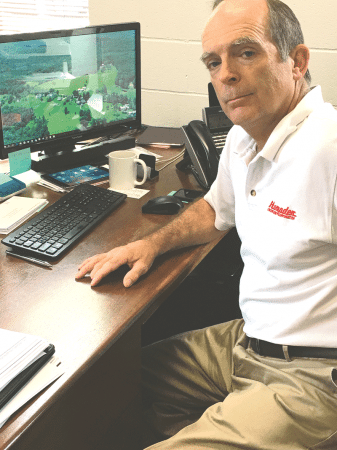


Holyoke at a glance

Year Incorporated: 1850
Population: 40.135 (2012)
Area: 22.8 square miles
County: Hampden
Residential Tax Rate: 19.12
Commercial Tax Rate: 39.86
Median Household Income: $33,242
Family Household Income: $39,130
Type of government: Mayor, City Council
Largest employers: Holyoke Medical Center, Holyoke Community College, ISO New England, Universal Plastics, Marox Corp.
* Latest information available