Home Sections Features Archive by category Community Spotlight (Page 5)

Community Spotlight

Community Spotlight

Community Spotlight

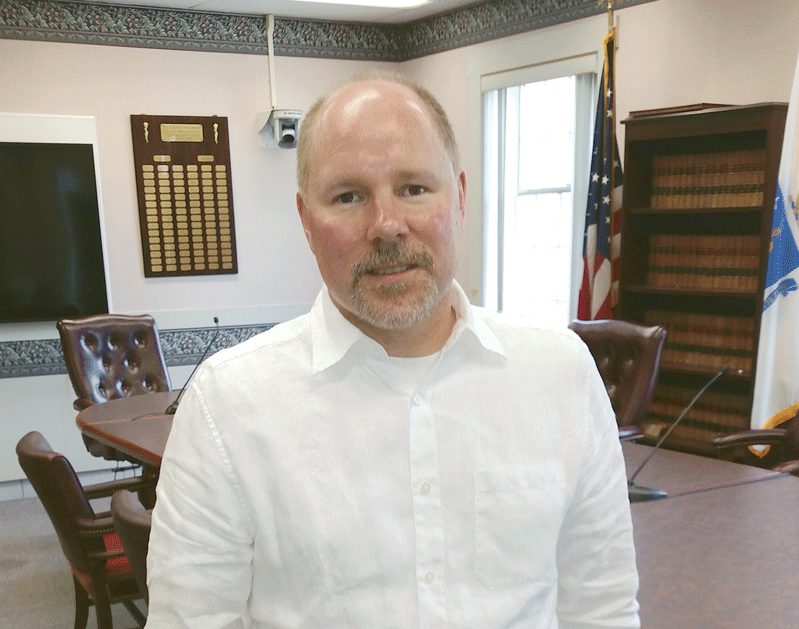
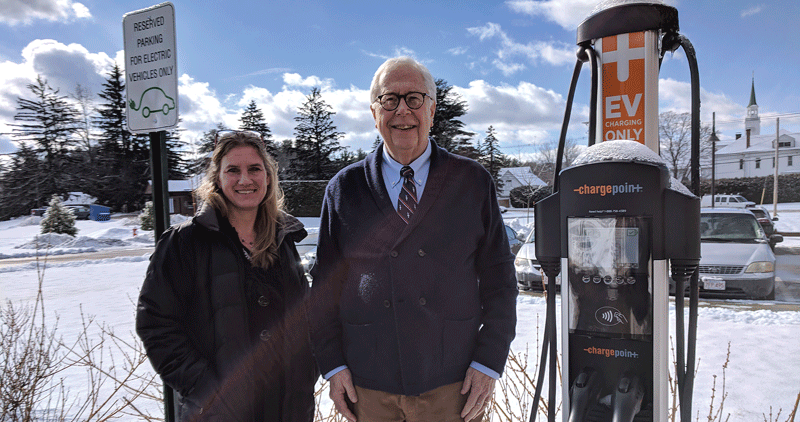
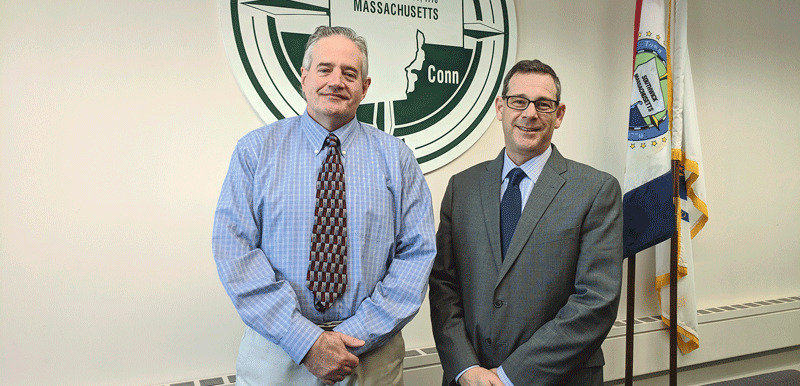
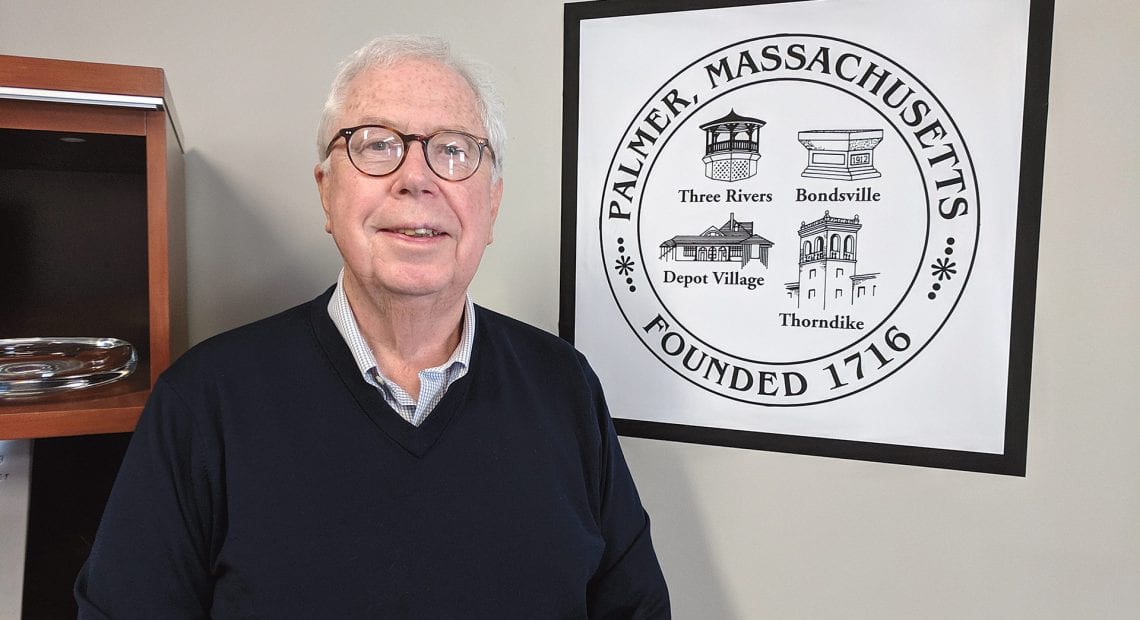
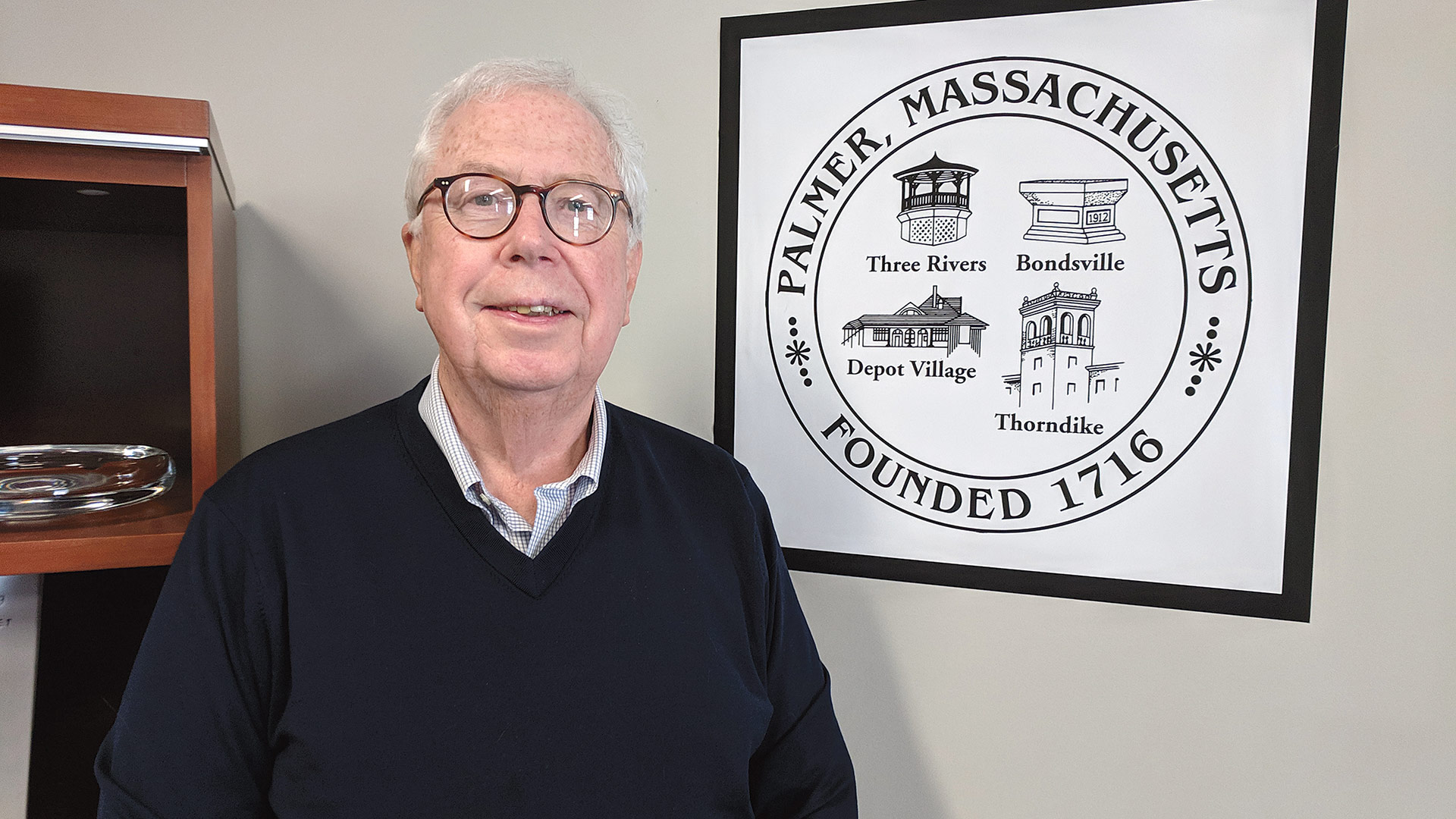
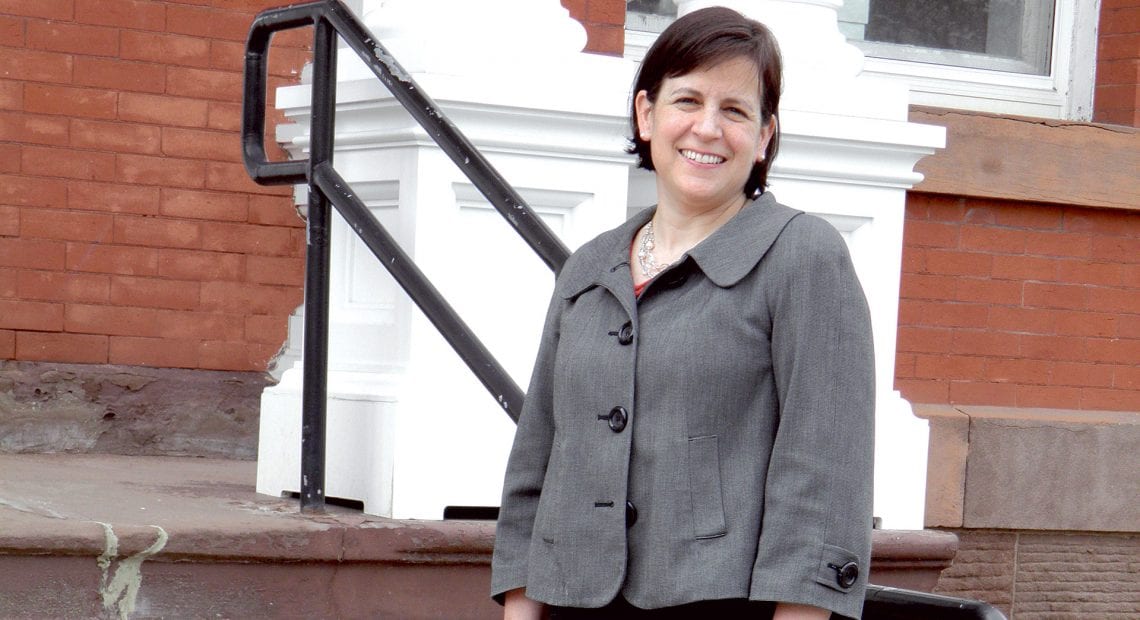
Charlie Blanchard says Palmer continues to make progress

Charlie Blanchard says Palmer continues to make progress in its commerce centers and with green-energy projects.

Palmer’s leaders see the town as a destination — and hope the myriad players investigating east-west passenger rail service in Massachusetts view it the same way.

That’s why the Palmer Town Council recently established a citizens’ advisory committee and contracted with the UMass Center for Economic Development to study — and prepare a report on — the merits of an east-west passenger rail stop in Palmer, to be submitted to the state advisory committee currently looking into the feasibility of expanded east-west passenger service.

Those efforts included a recent meeting with community members to brainstorm about the pros and cons of the entire concept of east-west rail and Palmer’s place on any proposed line.

“Originally, the discussion was to have a relatively high-speed east-west route between, say, Boston and Springfield, or Boston, Worcester, Springfield,” said Charlie Blanchard, Palmer’s town manager. “If you add a stop in Palmer, what does it do to the timing? In fact, the timing doesn’t change that much. But the big benefit would be more ridership coming in or getting off the train, which would be a big deal.”

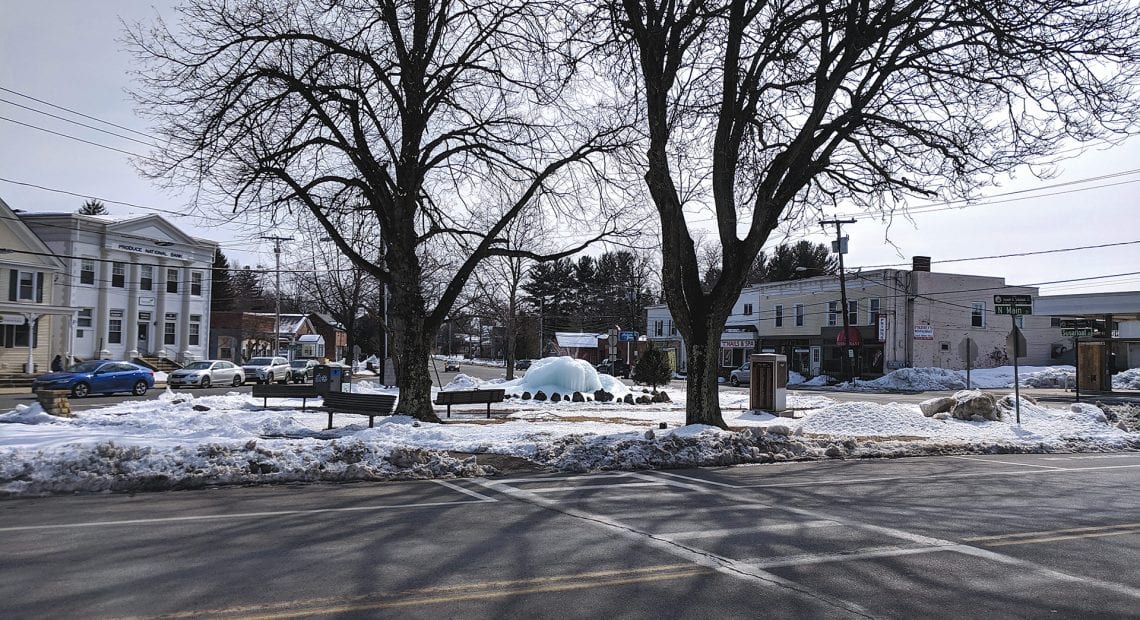
In a recent letter to state Sen. Anne Gobi, who attended the community meeting, Blanchard pointed out that Palmer is roughly central to Springfield and Worcester, and also at the center of a market that extends north to Amherst — and to institutions like UMass Amherst and Amherst College — and south to Storrs and the University of Connecticut. In short, it’s a point of connection in many directions that would benefit from expanded rail service.

Palmer at a glance

Year Incorporated: 1775
Population: 13,050 (2015)
Area: 32 square miles
County: Hampden
Tax Rate, residential and commercial: Palmer, $22.14; Three Rivers, $22.90; Bondsville, $22.97; Thorndike, $23.78
Median Household Income: $41,443
Median Family Income: $49,358
Type of government: Town Manager; Town Council
Largest Employers: Baystate Wing Hospital; Sanderson MacLeod Inc., Camp Ramah of New England; Big Y
* Latest information available

Furthermore, the absence of a stop in what’s nicknamed the Town of Seven Railroads would mean commuters from the Quaboag region who want to travel by train to Boston would have to drive roughly 40 minutes per day to use Springfield’s Union Station or slightly more to access Worcester. Participants at the meeting believed Palmer-area residents would be loath to do either, limiting total ridership at a time when the state would be clamoring to maximize it.

In addition, “a train stop in Palmer would be a major stimulus in helping to provide quality housing for commuters at an affordable price. With the ability to commute by train, this would open up a very affordable housing market,” Blanchard wrote in his letter, adding that a stop would also stimulate the economy of a set of communities that have yet to capture the growth found to the east, while boosting Palmer’s own downtown revitalization and encouraging hospitality companies to build more lodging there.

In short, it would inject energy into a town that, while it has plenty to tout in recent years, could always use more.

Projects and Progress

Baystate Wing Hospital’s $17.2 million project to expand its Emergency Department was perhaps the town’s biggest development last year. Aimed at better supporting the current annual patient volume of 24,000 visits, the 17,800-square-foot space includes separate ambulance and public entryways and features 20 patient rooms, including trauma, behavioral health, and other dedicated specialty-care areas.

“That opened in September, and was quite a big expansion,” Blanchard said.

Meanwhile, Palmer joined the ranks of the many Western Mass. communities to welcome the burgeoning cannabis industry in Massachusetts (see story, page 6), approving its first medical-marijuana facility on Chamber Road, including a 25,000-square-foot greenhouse and 3,200 square feet of retail space. Altitude Organic Corp. will move its headquarters from Colorado to a property on Thorndike Street in Palmer as part of the development, and expects to have plants growing in an indoor facility by October.

“It really is interesting to see the public acceptance of this new type of business,” Blanchard added, noting that the town’s laws allow for three retail cannabis locations in its commercial business district. “We’re looking forward to having them and seeing how successful they can be.”

In the Three Rivers section of town, progress continues at 2032 Main St., where the South Middlesex Opportunity Council is renovating the top floor to apartments and the bottom to retail — a mixed-use plan expected to infuse new residents into the neighborhood while attracting more shoppers.

“They ran into some structural issues — it was a bigger project than they thought — but activity continues,” Blanchard said. “It was completely gutted, and they had to do some reinforcing, but now it’s back on track.”

Property and business owners in Three Rivers have been engaging in a grass-roots revitalization effort for years, which includes changing the perception of the area and filling vacant storefronts. At the same time, the consortium known as On the Right TRACK (Three Rivers Arts Community Knowledge) has been working for some time to build a cultural and creative economy in the village.

On the culinary front in town, Stables Restaurant of Hadley recently opened a new restaurant at Burgundy Brook, on Route 181 on the north side of town. “When you go by there, you see a lot of cars and a lot of activity,” Blanchard noted.

Finally, the new rail spur installed at Sherwood Lumber Yard, in the town’s industrial park — a project that has been in the works since 2013, and funded through an Industrial Rail Access Program grant — allows the business to bring in materials by train, spurring significant expansion of the operation and helping the entire industrial park by unloading without clogging up other traffic.

“Now that the rail spur is completed, there’s more activity up there,” Blanchard said. “It also helped increase the rail capacity for the rest of the businesses there.”

Powering an Economy

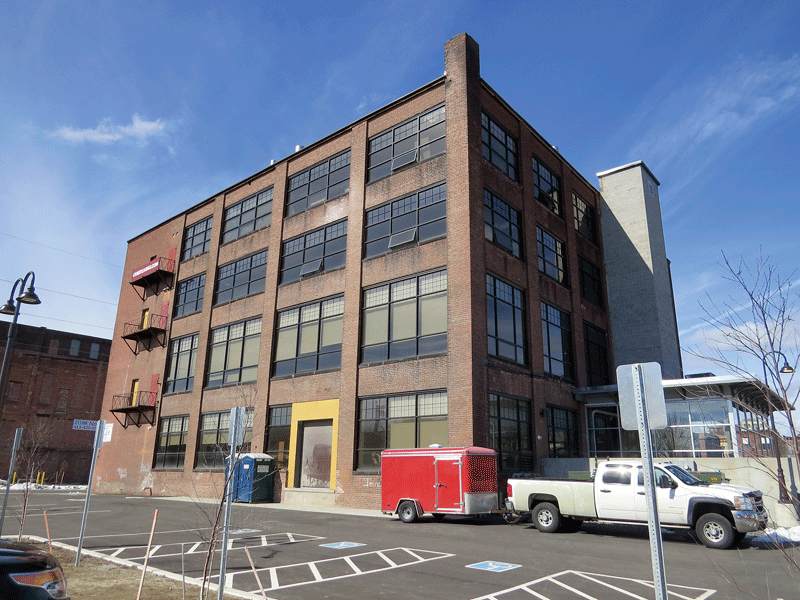
Palmer also continues to embrace green-energy projects. In addition to 10 large-scale solar projects — producing 29.3 megawatts of electricity every year — and the installationin early 2018 of car-charging stations at Town Hall and the public library, the town has been working with Thorndike Energy and the Microgrid Institute to explore the benefits of a microgrid system that would access the hydropower and solar power generated at Thorndike Mills for emergency power.

“Thorndike Energy has hyropower over there, and generates electricity through hydropower,” Blanchard said. “They’re going to be adding some solar to it as well. You take those two renewable sources of electricity, and you add battery or other types of standby storage, so that you can store some of this power generated through a renewable source, and have it available in the event of an emergency.”

Project objectives include improved resiliency of electrical services for critical community facilities, expanded storage capacity to better integrate local renewable energy, and supporting National Grid goals in terms of modernization, storage, and renewables. Then, of course, there’s the benefit of job growth and retention.

“Obviously, anything located at Thorndike Mills would benefit from it,” Blanchard said. “The benefit to overall economic growth would be to attract new businesses to Thorndike Mills, which right now is pretty underutilized. It would enhance their marketability to show they have this renewable stored energy there.”

It’s just one way in which Palmer is generating energy from an economic-development standpoint, and raising its profile as a destination and a connecting point to the rest of Central Mass. — a role it will continue to embrace regardless of the eventual fate of any east-west rail line.

Joseph Bednar can be reached at [email protected]
Community Spotlight

Community Spotlight

Jennifer Tabakin

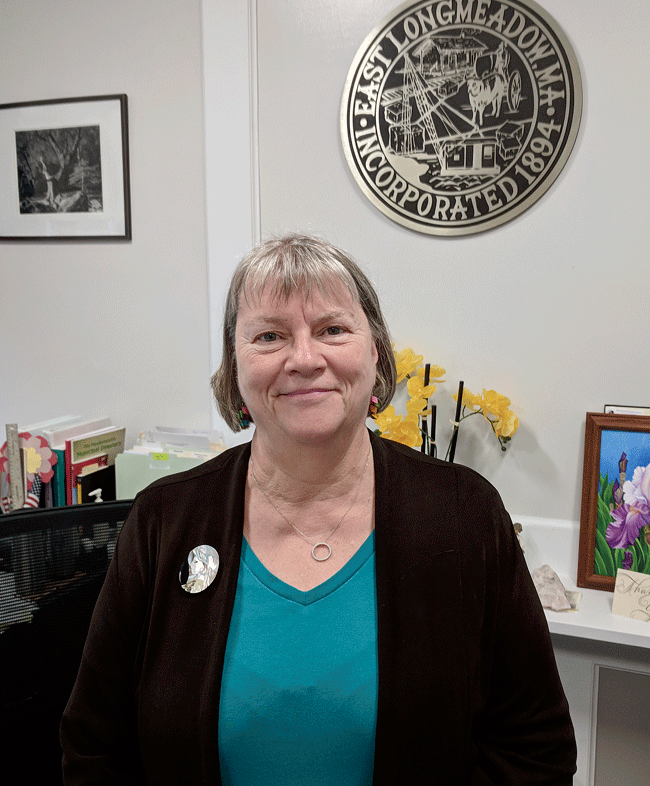
Jennifer Tabakin says initiatives like high-speed broadband, environmental sustainability, and the arts all contribute to quality of life and help attract young people to town.

Jennifer Tabakin is a believer in using public investment to spur private investment. After six years as Great Barrington’s town manager — she’s stepping down in June — she has seen plenty of evidence to back up that philosophy.

“We’ve talked a lot about the investments we’ve made in Bridge Street, which is one of our side streets off Main Street,” she told BusinessWest. “Over the years, the public money put into it has been significant, and we’ve been able to see private development come along in response to it.”

Projects like Powerhouse Square, a mixed-use development on Bridge Street. “It’s literally steps from Main Street — exactly where new development should be,” said Town Planner Chris Rembold.

On the ground floor is Berkshire Co-op Market, a grocery store that’s moving from a different location and doubling its size. The development also includes space for smaller retail outlets and 20 new residential apartments on the second and third levels. In fact, that’s just a sample of a recent housing boom in town; in the past year alone, 228 new housing units were either built or permitted.

“We’ve been able to get far more downtown than I ever expected, ranging from affordable units to downtown condos. That meets the needs people have for a more walkable lifestyle” — one where residences are in close proximity to shopping, restaurants, and cultural amenities, Tabakin said.

One example of the latter is Saint James Place, which opened in 2017 as a home to small and mid-sized Berkshire County arts groups in need of performance, rehearsal, and office space. Created out of the historic St. James Episcopal Church on Main Street, several of its office spaces for lease have been filled by arts-related groups such the Berkshire Playwrights Lab, Flying Cloud, and the Berkshire Opera.

“It’s kind of a hub of supporting businesses and people. Not only are there traditional performing arts, but a dance studio, literary arts, and visual arts — and new media like computer design and software design.”

Saint James Place is now a thriving cultural venue, and we’re thrilled to have them here,” Tabakin said.

In October, in recognition of its vibrant arts life, the downtown was designated one of the state’s cultural districts by the Massachusetts Cultural Council.

“It’s a geographic area with not only plenty of cultural venues and things to do — like the Mahaiwe Performing Arts Center and Saint James Place as performing-arts venues — but it’s kind of a hub of supporting businesses and people,” Rembold said. “Not only are there traditional performing arts, but a dance studio, literary arts, and visual arts — and new media like computer design and software design.”

The cultural-district designation, he added, is a recognition of the vitality of the arts and culture in downtown Great Barrington, but it also serves a practical purpose. Cultural districts can access a stream of services including tax credits, economic incentives, planning assistance, grants, historic-preservation help, signs, and tourism promotion. Among the town’s plans is a shared cultural events calendar, which will help the various venues better coordinate their booking schedules, making it easier for visitors to know what’s happening when they spend a weekend or more here.

“It’s kind of an organizational effort, a marketing effort for the downtown,” Rembold said, adding that there’s much to market: the Mahaiwe and Saint James Place alone offer some 200 nights of entertainment a year. “And if something’s not going on there, you can go see a movie or a poetry reading or a Friday night film at the library. If you’re bored in Great Barrington, that’s your own fault.”

Getting with the Times

Another recent boon for downtown is the installation of fiber service. “It’s a strategy to make sure our downtown has the highest-speed broadband and can be competitive with our neighbors in the area, so people can locate here and take advantage of that higher speed,” Tabakin said.

“We have a private company covering all the development cost and infrastructure cost to bring fiber to downtown, and we’ll eventually start moving out to the rest of the community,” said Ed Abrahams, vice chair of the Select Board.

Great Barrington at a Glance

Year Incorporated: 1761
Population: 7,104
Area: 45.8 square miles
County: Berkshire
Residential Tax Rate: $14.98
Commercial Tax Rate: $14.98
Median Household Income: $95,490
Median Family Income: $103,135
Type of Government: Open Town Meeting
Largest Employers: Fairview Hospital; Kutscher’s Sports Academy; Prairie Whale
* Latest information available

Meanwhile, the town continues to make environmental sustainability common practice, moving all municipal, school, and community buildings to green energy sources and reducing use of single-use plastic products.

“For the past four years, we’ve supported eight large solar projects with a combined value of $16 million,” Tabakin added, while many town residents have gone solar as well.

All these factors — culture, high-speed broadband, sustainability — aim to position Great Barrington as a thoroughly modern community, even as it retains much of its quintessential old New England character, thus attracting more young families. Like other towns in rural Berkshire and Franklin counties, Great Barrington has seen the average age of its residents rise in recent years; the community has always been a popular spot for retirees, and there are a number of New Yorkers with summer homes in town.

But by bolstering ingredients like attractive (and affordable) housing, a vibrant downtown, a burgeoning cultural community, and outdoor activities (Ski Butternut is a prominent attraction), Great Barrington’s leaders are looking clearly at the future, which means attracting young people and especially young families.

Of course, those families will need to find find jobs here, and Great Barrington boasts strengths in a number of sectors, including education (Simons Rock of Bard College is located in town), healthcare (Fairview Hospital), technology (perhaps a dozen IT companies call the town home), the arts and tourism, the nonprofit community, and restaurants (the town is home to around 80 of them).

“We have challenges like other places, and we have to deal with the limited resources of a small town, but we have a very committed group here, and I have no doubt that will continue.”

“The challenge for the Select Board, and all of us, for that matter, is to maintain the vibrancy we have and support for our local retailers and existing businesses, and also be open to new businesses — to keep that appropriate balance and make sure we have diversity in the local economy,” Tabakin said. “That’s something we speak about a lot.”

One area of the economy that’s growing — literally — is the cannabis sector, which is something BusinessWest has mentioned in almost every Community Spotlight over the past six months. Great Barrington is no exception, with Theory Wellness opening the first retail marijuana store in Berkshire County in January, with others to follow. In the first month, the shop netted $2 million in sales and $90,000 in taxes paid to the town.

“They opened to long lines, which should level off as they get more competition,” said Abrahams, who quickly added that any cannabis business in Great Barrington should do well, due to the town’s proximity to Connecticut and New York, states where the drug is not legal. “This is new for all of us, but so far, there have been logistically few problems, and police report no increase in people driving under the influence.”

Continuing Commitment

As Tabakin looks back on her six years in office, she’s especially gratified at a Town Hall full of energetic and committed people, and a lot of new faces — during her tenure, 26 people were either promoted or started a career there.

“Several years ago, we were warned we had a number of people approaching retirement age,” Abrahams added, “and it’s been a really smooth transition replacing them with newer people.”

Having a well-run town, Tabakin said, speaks to a commitment to quality of life, one that’s evident in Great Barrington’s vibrant retail district, cultural attractions, quality schools, and more, she said.

“Many times, government gets a bad rap, but I don’t feel that’s the case in Great Barrington,” she told BusinessWest. “We have challenges like other places, and we have to deal with the limited resources of a small town, but we have a very committed group here, and I have no doubt that will continue.”

Joseph Bednar can be reached at [email protected]

Community Spotlight

Community Spotlight

Diana Schindler

Diana Schindler says it’s key for Deerfield to balance the town’s rural character with needed economic growth.

Deerfield boasts numerous draws for businesses looking to relocate, Diana Schindler says, from its reasonable property-tax rate to its proximity to Interstate 91, Route 116, and Routes 5 and 10.

But there’s also been some pushback against some of those businesses, which reared its head when residents recently spoke out against a proposed Dollar General store in town. The Planning Board listened and turned down the project, said Schindler, Deerfield’s interim town administrator.

“There’s been a feeling in the community that they want that at arm’s length — that big-box retail development, drive-thrus, things they don’t feel are part of the culture of old Deerfield. It’s meaningful to them,” Schindler told BusinessWest.

“On the flip side, it creates more of a burden on the residential tax base,” she went on, noting that more than 80% of the town’s tax base is residential. “There’s a cost to the citizens in their tax rate and the sustainability of that tax rate. Deerfield has always readily paid for the level of service its citizenry wants and expects, but at the expense of not doing some major projects.”

For instance, the town is looking at a $1 million cost to replace a tank at the South Deerfield Wastewater Treatment Plant, which is only the tip of the iceberg when it comes to needed work at the facility over the next decade or two. Then there are plans to expand the Tilton Library and develop a shared senior center with surrounding communities.

“Seniors are asking for that. But all this adds up to millions of dollars, and you have the pressure of limiting development — or, rather, wanting development that will fit into the culture, which does limit it to some capacity,” Schindler said. “Less than 20% of the tax base is commercial/industrial, which is not a lot considering the viability of the property we have along 5/10 and a couple other areas. It’s going to become a question for the citizenry — is it sustainable?”

She’s one of many in Deerfield who believe economic development — in whatever form residents may want — is critical to the future of a town known for its tourist draws, including Yankee Candle’s flagship store, Mount Sugarloaf, Historic Deerfield, and Magic Wings, but needs to diversify and broaden its commercial portfolio.

“At first, they wanted to hide it, put it on the outskirts of town, but now they want it close to downtown. And that’s where it should be — take it out of the shadows, take it away from the edge of town where people can just pop in and leave. Bring them in and use it for economic development.”

“The ideal would be to get everybody together and integrate it all. We’re spread out geographically, and there’s a dichotomy between Old Deerfield and South Deerfield. We’re working toward making sure the town is the town, and everybody recognizes that if the town does well and comes together, then all of the components, all of our events, could do better.”

A veteran of the Franklin Regional Council of Governments and the Hampshire Council of Governments, Schindler has some regional government experience, and she believes there’s value in taking a regional view of economic development. But she’s more concerned with Deerfield’s residents, agencies, and organizations working together to forge a common vision for community development.

“If we could come together,” she said, “especially as we come to our 350th-anniversary celebration, we could build energy off of each other.”

Forging a Path

That celebration rolls around in 2023, which should be enough time, Schindler said, to see some real development progress in town, particularly in the Elm Street corridor, the main commercial area in South Deerfield.

Town leaders know that to attract new businesses — in hospitality and other sectors as well — they need to make the downtown area more inviting and pedestrian-friendly, and they’re eyeing a host of potential improvements in the Elm Street center, which may include work on sidewalks, lights, and storefronts.

For a year before taking on her current role last month — one she is interested in pursuing on a permanent basis — Schindler was a special projects consultant in town, and one of the big projects she embraced right away was Complete Streets, mostly geared toward the South Deerfield center.

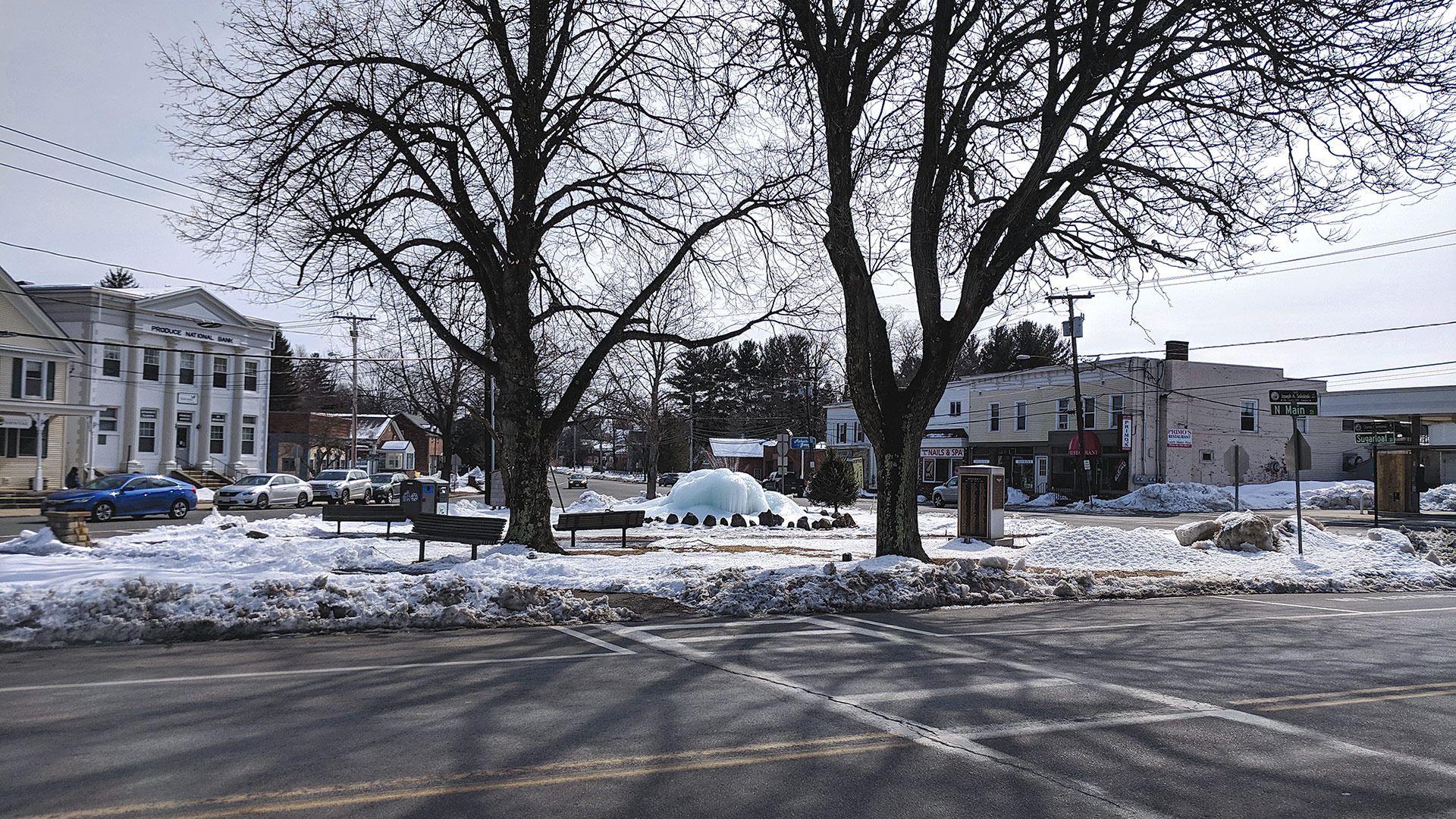
South Deerfield center

Town leaders see plenty of potential in the South Deerfield center corridor.

“We’re in the process of putting that plan together. We want to create more walkability, more accessibility, and that includes for folks in wheelchairs, people with children, people of all abilities,” she said. “We’re also looking at ways to make South Deerfield’s center more aesthetically pleasing — light it, put in streetscapes, put in wayfinding, finish the municipal parking lot we have down there; all that is being discussed as part of the plan. We want it to stay a viable downtown.”

The area is not particularly expansive, she pointed out, spanning just a few blocks, but in some ways, that presents a more enticing opportunity, by ensuring that development and improvement efforts are tightly focused. There’s some land-use complexity as well, as the Massachusetts Department of Transportation owns a small part of the corridor, and the state owns Conway Street, home to Town Hall.

“But that’s an opportunity,” she said, “because the state is also excited about Complete Streets, and we could see a wonderful economic center down here, which I’m sure the state would support in a variety of different ways.”

The downtown has seen some business change recently, with longtime restaurant Jerry’s Place closing last year, and a café called Leo’s Table setting up shop in the location, with proprietor Jennifer Howard specializing in made-from-scratch breakfast and lunch fare. The building itself — which is also home to Ciesluk’s Market, Giving Circle Thrift Shop, the Tavern, and a Subway sandwich location, as well as 19 apartments on the second floor, has new owners, Jason Kicza and Justin Killeen, who plan to touch up the property this spring.

“I would consider that the anchor building on that side,” Schindler said, “and it’s doing great.”

Cumberland Farms’ move from South Deerfield’s center to the main road — specifically, the corner of Elm Street and Routes 5 and 10 — may not have been as great for the downtown’s prospects.

Deerfield at a Glance

Year Incorporated: 1677
Population: 5,400
Area: 33.4 square miles
County: Franklin
Residential and commercial Tax Rate: $16.34 (Deerfield), $18.14 (South Deerfield)
Median Household Income: $74,853
Median Family Income: $83,859
Type of Government: Open Town Meeting
Largest Employers: Yankee Candle Co., Pelican Products Inc.
* Latest information available

“They have a bigger business down on the corner, but it’s not necessarily a draw into the center; now people can just pop into Cumby’s for gas and keep going,” she said. “So we are looking at ways to basically create more stability in the center of South Deerfield by doing a variety of things. Obviously, part of that is keeping businesses and attracting more businesses.”

These days, the corridor can be oddly empty at certain times of the day, she noted, but well-trafficked during morning and evening rush hours. The goal, she told BusinessWest, is to turn it into a pedestrian-friendly center at all hours, rather than a thruway.

The Complete Streets plan will be a big part of that. By the time the 350th rolls around, she’d like to see significant physical and infrastructure improvements to make the downtown more of a destination. “The sidewalks will look different, maybe more green space, and hopefully we’ll see more people down there.”

High Times

Like many area communities, Deerfield has embraced the burgeoning cannabis industry in Massachusetts, recently approving two site plans, one for a cultivation facility at Pioneer Gardens on Mill Village Road, and the other for a dispensary run by Harvest Inc. on State Road.

“The culture has changed,” Schindler said, noting that, when communities were first exploring the economic possibilities of marijuana businesses, many Deerfield residents — most of them older — were staunchly opposed. But that opposition has died down to a large degree in many towns, to the point where communities might begin to locate such businesses in more central areas.

“At first, they wanted to hide it, put it on the outskirts of town, but now they want it close to downtown. And that’s where it should be — take it out of the shadows, take it away from the edge of town where people can just pop in and leave. Bring them in and use it for economic development.”

Meanwhile, Schindler and other Deerfield leaders will continue to think outside the box — even if big boxes aren’t in the cards — by examining where pockets of land already devoted to commercial and industrial businesses might have some infill potential, and continue to take pressure off the residential tax base.

“The thing I think is so tremendous about Deerfield is the huge opportunity it offers,” she said. “It’s wide open, and it’s got resources — financial resources, natural resources, culture, art, access to main roads. I get excited about it.”

Joseph Bednar can be reached at [email protected]
Community Spotlight

Community Spotlight

GTI’s cultivation facility in Holyoke

GTI’s cultivation facility in Holyoke has been operating since last summer, and many new ventures could be opening in the years ahead.

Alex Morse says his phone was already ringing — quite frequently, in fact — before he was interviewed on CBS This Morning late last June.

But then, it really started ringing. And his e-mail box became even more crowded.

That’s because, with that report, Holyoke’s efforts to roll out the welcome mat for the cannabis industry, pun intended, became a national story rather than a local story — although it was already well-known.

Yes, this was the detailed report where Morse told CBS that the city once known as the ‘Paper City’ might soon be known as the ‘Rolling Paper City.’ His tongue wasn’t in his cheek, and there was a broad smile on his face as he said it.

Getting serious, or more serious, because he was already serious, he told CBS, “it’s legal … people need to wake up; the days of the past are moving forward. Holyoke has embraced the industry, and we acknowledge that this is an economic-development driver for us.”

Morse, and Holyoke, woke up long ago, meaning just after (or maybe even before) recreational marijuana became legal in Massachusetts in the fall of 2016, and today it is making giant strides toward creating what officials are calling a ‘cannabis cluster.’

And they’re comparing it, in some ways, to the cluster that put this city on the map — figuratively and quite literally (this was a planned industrial city) — the paper and textiles cluster.

As they used that word ‘cluster,’ both Morse and Marcos Marrero, the city’s director of Economic Development, said it means more than the creation of a number a number of businesses and jobs in a specific sector, although that’s a big part of it. It also means establishment of an infrastructure of support services that can have a large multiplier effect, if you will.

“With a cluster, it’s more than the sum of its parts,” Marrero explained. “Once you have a cluster, then you have an expertise, just like Holyoke did when it was the Paper City. Just as you have an expertise with paper, you can have an expertise with all the expects of this [cannabis] business.”

Elaborating, he said cannabis-cultivation facilities require highly specialized construction, lighting, anti-contamination, air-movement, and security systems, and all this adds up to opportunities for companies in this area that can handle such work.

In many ways, Holyoke is well on its way to seeing this cannabis cluster become reality, said Morse, noting that one large cultivation facility, Green Thumb Industries (GTI), is currently operating in a former textile mill on Appleton Street. And there are several other businesses across the wide spectrum of this business — from cultivation to retail — moving their way through the involved process of getting permitted to operate and eventually absorbing some of the vast amounts of commercial real estate that are vacant or underperforming.

Holyoke at a Glance

Year Incorporated: 1786
Population: 40,341
Area: 22.8 square miles
County: Hampden
Residential Tax Rate: $19.29
Commercial Tax Rate: $39.87
Median Household Income: $36,608
Median family Income: $41,194
Type of Government: Mayor, City Council
Largest Employers: Holyoke Medical Center, Holyoke Community College, ISO New England Inc., PeoplesBank, Universal Plastics, Marox Corp.
* Latest information available

“For us, cannabis is another form of manufacturing that’s bringing buildings back to life, being a revenue generator and job creator,” said the mayor.

And as they say in the agriculture business, Holyoke is certainly fertile ground for the cannabis industry. Indeed, it boasts, by the mayor’s estimate, 1.5 million square feet of vacant or underutilized former mill properties. Meanwhile, it has, again, by Morse’s calculations, the lowest electricity rates in the state (Holyoke has its own municipal utility), and it has something just as important as those ingredients — a giant, figurative ‘welcome’ sign when it comes to this business, as will become clear later.

But cannabis isn’t the only positive development in this city. Holyoke is also making great strides in ongoing efforts to attract entrepreneurs and arts-related businesses. It is also convincing more people, especially the younger generations, that this is a place to live as well as work and operate a business. And it’s seeing many of those aforementioned mills being put to creative and momentum-building uses.

Mayor Alex Morse

Mayor Alex Morse, an early supporter of the cannabis industry, says its many components collectively form an economic driver in Holyoke.

All of the above can be seen in one high-profile project known as the Cubit Building, the structure on Race Street that takes that shape. The first two floors are now occupied by the Holyoke Community College MGM Culinary Arts Institute, a story that embodies education, workforce development, and economic development, and in the floors above are apartments that were leased out even quicker than the optimistic owners thought they would.

“You drive by at night, and it’s all lit up,” said the mayor. “People are living on the top two floors, and on the first two floors you see students in the chefs’ hats cooking and doing classes; there’s a lot of vibrancy on Race Street.”

Lights are coming on all over Holyoke, and for this, the latest installment of its Community Spotlight series, BusinessWest examines how this has come about and why Holyoke is creating a buzz — in all kinds of ways.

Budding Ventures

As noted, this cannabis cluster is a solid work in progress, with GTI now approaching a full year in business and several other projects in various stages of development.

Conducting one of those ‘if-all-goes-well’ exercises, Morse said he can envision a cluster that generates perhaps 300 to 400 jobs and many types of businesses, from cultivation facilities to cannabis cafés like those in Amsterdam. If that picture comes to fruition, marijuana-related businesses would constitute economic development in many different ways, from jobs to tax dollars; from revving up the real-estate market (aspiring ventures have acquired options on a number of properties) to giving tourism a boost; from creation of support businesses to helping give Holyoke a new brand.

As Morse told CBS — and BusinessWest — cannabis has become an economic driver. And city officials have had a lot to do with this by being so aggressive, welcoming, and accommodating.

As one example, Morse and Marrero cited the host-community agreements that such businesses traditionally sign in order to set up shop. Some communities have been excessive in their requests (or demands), while Holyoke has taken a different tack.

“These agreements have become another choking point for the industry,” said Marrero. “Communities try to negotiate, they go back and forth, and hold you down for a bunch of criteria. We’ve been very transparent and said, ‘we’re going to go for the maximum allowable benefits for the community by law in terms of impact fee, and if you sign here, you have a host-community agreement; we don’t become an impediment in the process.”

Morse agreed. “There have been communities that have tried to go above the state law in terms of percentage of annual revenues or have tried to negotiate for various line items such as a new fire truck,” he explained. “They say, ‘in addition to the percentage, you need to give ‘X’ amount to this nonprofit every year.’ We have a standard document, so it’s not intimidating in that sense; the burden is really on the companies to get through the state regulatory process — the local process shouldn’t be an additional burden to bear.”

Holyoke’s willingness not to push for every dollar or every concession, on top of its many other selling points, including available mill space and lower utility costs, have certainly caught the attention of the cannabis industry.

“There is political openness and stability to the industry, which is very valuable,” said Marrero. “We were, if not the first, one of the first handful of communities that had a permissive ordinance in place, so we were first to market on the government side to say, ‘we’re open to this business.’

“They saw the mayor’s advocacy, and they saw that the operational costs would be lower, and that is very, very significant,” he went on. “The energy savings alone … you can save 40% on your energy costs.”

This attractive package has attracted a number of interested parties, said Marrero, noting that two additional cultivators, East Coast Farms and Solurge, are working their way through the permitting process. Overall, a total of 15 host-community agreements have been executed, and seven special permits have been issued. Within a year, it is expected that another two or three cultivation facilities could be doing business in the city, and other types of cannabis-related businesses as well.

And as the cluster grows, it gains momentum and recognition, which fuels additional opportunities. Marrero drew some comparisons to Detroit (the car industry) and Silicon Valley (IT).

“The industry has to train a workforce on how to grow these plants and clip these plants, and as that workforce develops locally, other companies know they can locate in Holyoke and they will have an accessible workforce,” he explained. “They will have access to other vendors that know how to provide services or provide goods to cannabis companies.”

Marcos Marrero

Marcos Marrero says a cannabis cluster is bigger than the sum of its parts.

Building Momentum

As noted earlier, though, cannabis is just one of many intriguing economic-development-themed stories being written in what is still called the Paper City.

Others include everything from the culinary arts center and the sum of the Cubit Building’s many parts to ongoing evolution of the Holyoke Mall — one of the city’s main draws and largest employers — in response to a changing retail landscape; from redevelopment of two municipal properties — the former Lynch Middle School and the Holyoke Geriatric Authority building — to entrepreneurial-ecosystem-building efforts that are bringing new businesses, and jobs, to the city.

At the mall, as stores large and small shrink or disappear from the landscape (longtime anchor Sears closed its Holyoke store a few months back) and those that remain operate with a smaller footprint, the facility is changing its look and adding more entertainment-related businesses, said Marrero.

These includes more restaurants, a bowling alley, and a planned movie-theater complex, he said, adding that, overall, the mall is responding proactively to a changing retail scene.

“They’ve been very resilient … retail is changing, and the mall is putting a much greater emphasis on entertainment and making it more of an experience rather than just shopping,” said the mayor. “Whether it’s the escape rooms or the kids’ center or the laser tag and bowling alley, it’s about creating experiences.”

Meanwhile, additional retail will be coming to the city with redevelopment of the former Lynch School, located just off I-91, by the Colvest Group. The property is slated for demolition later this year, and the expectation is that it will become home to several retail outlets.

Reuse of a different kind is slated for the Geriatric Authority property, which closed several years ago. Indeed, Baystate Health and US HealthVest have chosen the site for its planned 70,000-square-foot behavioral-health hospital.

Plans calls for 120 beds in a facility that would represent consolidation of some of the existing beds in the region and creation of new beds as well.

“This is a great story of reactivating a site that had once been a money pit for the city, one that was draining almost $1 million of taxpayer funds,” Morse said of the days when the Geriatric Authority was operating was site. “Overall, we have two large, city-owned properties that are being developed, and that represents real progress.”

There is progress on many different levels in the downtown area and especially the city’s Innovation District, the area around the Massachusetts Green High Performance Computing Center, which opened in 2012.

On the municipal side, there will be several infrastructure projects undertaken in the area over the next several years, said Marrero, including street work, reconstruction of one of the canal bridges, and other initiatives.

Meanwhile, the city continues to add jobs and vibrancy organically through entrepreneurship-ecosytem-building initiatives such as SPARK, which recently joined forces with the Massachusetts-based program Entrepreneurship for All, or EforAll, to form SPARK EforAll Holyoke.

The new organization offers a number of programs, including a business accelerator, pitch contests, and co-working space currently being built out on High Street that will be available to program members.

Launched four years ago, SPARK has helped a number of ventures get off the ground or to the next stage, and most of them have settled in Holyoke, said Morse, adding that these startups, in addition to some others started organically, are bringing more vibrancy to the downtown.

He listed a catering venture, a salon now under construction, and a microbrewery on Race Street, among others.

“There are things that are happening organically, and I think these businesses are tapping into the momentum happening in the downtown and the ecosystem they feel here and the support they see,” said Morse. “They feel they can be viable here opening up a catering business or a salon or a brewery in downtown Holyoke.”

Marrero agreed. “We’re tilling our own soils, and stuff grows,” he said, referring to organic growth of the business community. “Every now and then, a business moves here, but a lot of this is organic.”

And these businesses are helping to fill more of those vacant or underutilized properties.

“We’re seeing this dynamic where more square footage is coming online,” said Marrero. “It’s being rehabilitated and filled by these businesses.”

As for the culinary arts center and the Cubit Building on the whole, it is bringing many different constituencies to the Innovation District area, adding to this vibrancy there. These include college students, their professors, those attending functions, and, yes, Morse himself, who has signed up for two night classes, one on how to make macaroons, the other involving a chiffon layer cake.

After those, he’ll be even better suited to answer the question, ‘what’s cooking in Holyoke?”

That’s a Wrap

As he was wrapping up his walk through the city with CBS, Morse told the reporter that it would be a good problem to have if the cannabis industry so embraced Holyoke that it found itself running out of commercial space for additional ventures.

That’s not likely to happen anytime soon (1.5 million square feet is a considerable amount of inventory), but a cannabis cluster appears to be no longer a goal but a reality. How quickly and profoundly it develops remains to be seen, but Holyoke appears to be well on its way to having history repeat itself on a certain scale.

A name change probably isn’t in the cards — ‘Paper City’ will stick — but a new era in the city’s history is certainly underway.

George O’Brien can be reached at [email protected]
Community Spotlight

Community Spotlight

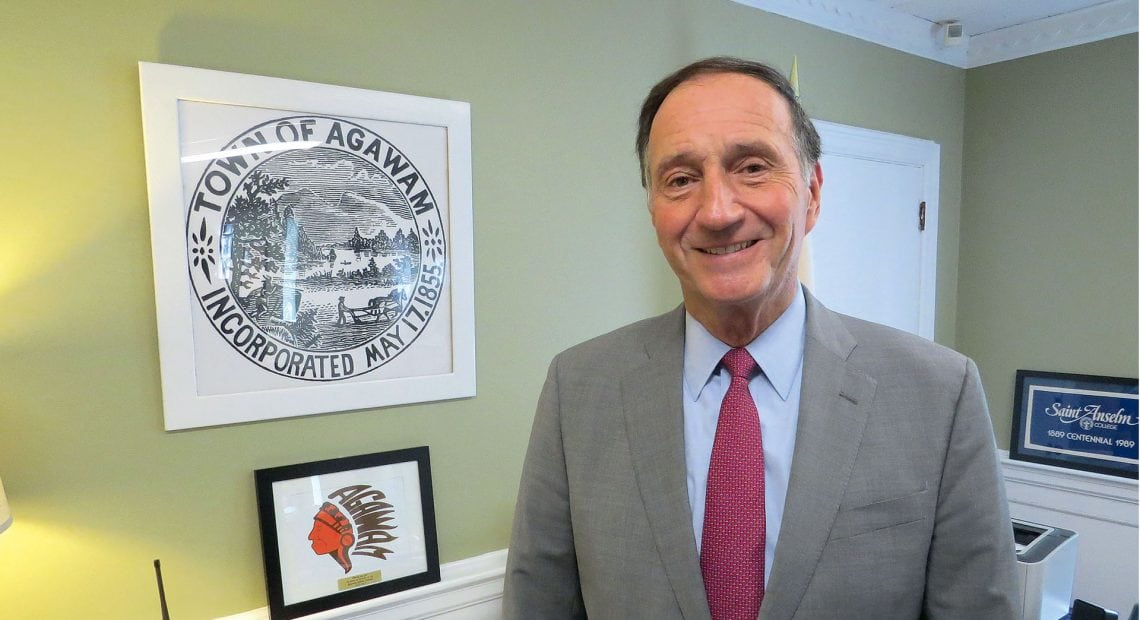
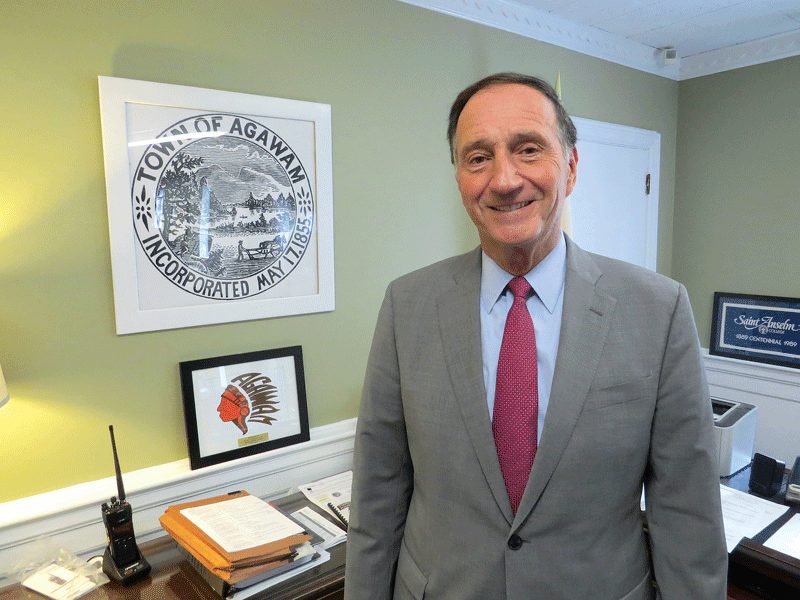
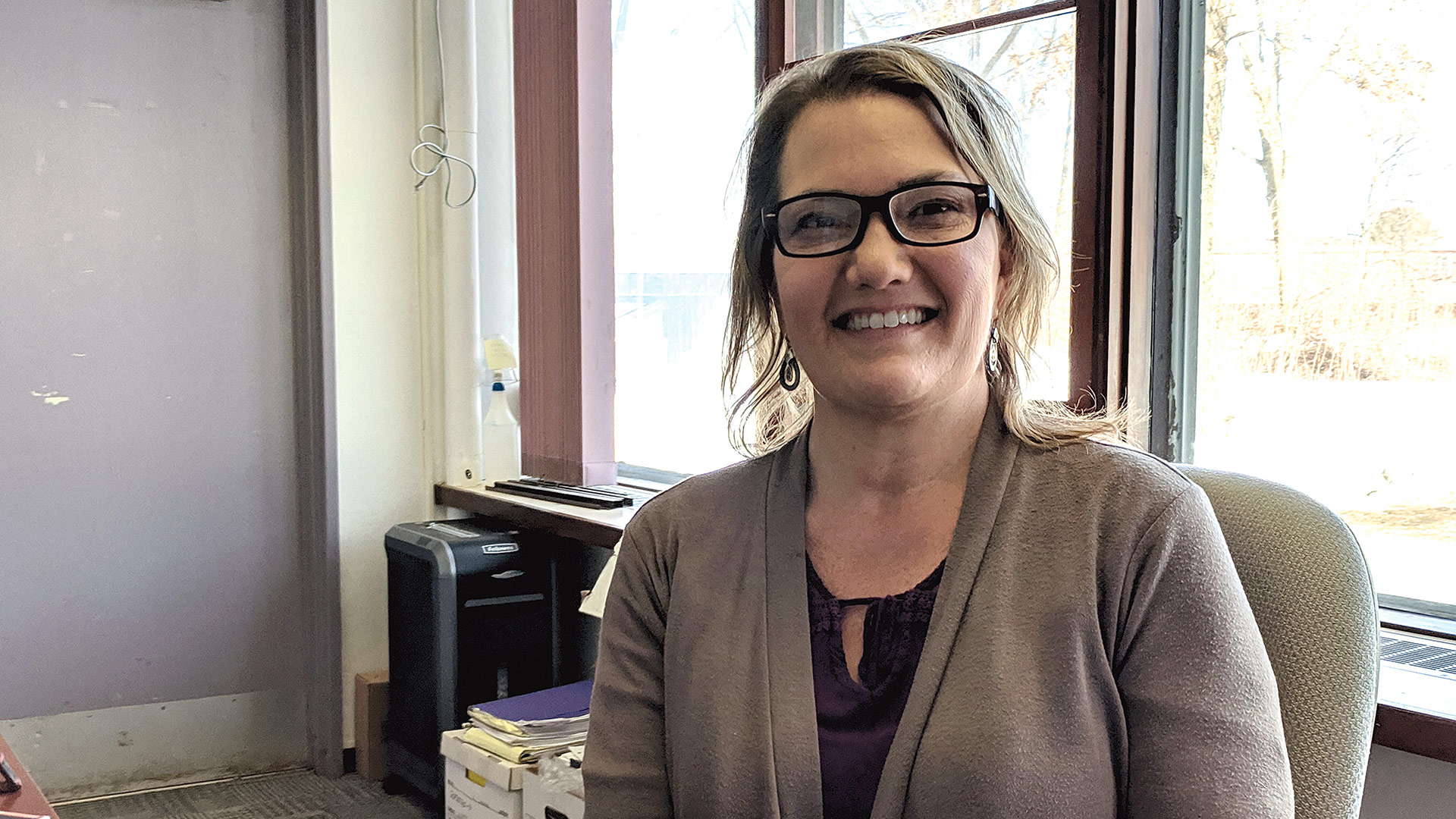
Mayor William Sapelli

Mayor William Sapelli says Agawam is making progress on many economic-development fronts, from filling vacant storefronts to zoning reform to workforce-development initiatives in its schools.

Mayor William Sapelli has developed a routine since he was sworn into office roughly 13 months ago.

Always early to the ‘office’ (he worked within the city’s school system for decades and wrapped up his career as superintendent), he arrives at City Hall at 7:30 a.m., giving him a solid hour of relative solitude to write some e-mails and clear some paperwork from his desk before other employees start to file in.

But his work day, if you will, actually starts at 7, when he stops in for breakfast at one of several eateries in town he frequents in something approaching a rotation.

“Mondays I’m usually at McDonald’s, mid-week it’s at Partners, and Fridays I’m at Giovanni’s,” he said, referring, with those latter references, to the restaurant on Springfield Street, known for its breakfast items and as a place where people come together, and the Italian pastry shop on Main Street that is also a gathering spot.

“There’s a crew of people that goes in there, and I think now they expect me because I’ve been doing it since I was first elected,” he said of Giovanni’s. “There are crews in each place, actually, especially McDonald’s; a number of seniors go in there. There’s 10 or 12 people, and we kibitz — it’s fun.

“I get beat up sometimes, but in a fun way — they give me good feedback; it goes back and forth. They bust me about taxes or roads or whatever,” he went on, adding that, with municipal elections coming up later this year, there is a new topic of discussion, although he hasn’t formally announced he will run again.

Overall, there is lots to talk about these days over eggs or French toast, especially the Morgan-Sullivan Bridge. Built in 1947, the span over the Westfield River links the city with West Springfield. It is a vital piece of infrastructure, major traffic artery, and entranceway to the Eastern States Exposition, and now it’s about five months into what will be a roughly three-year facelift and widening initiative that is projected to solve persistent bottlenecks in an important commercial area.

But this undoubtedly will be a long three years, the mayor acknowledged, adding that two lanes of the four-lane bridge are now closed, and it will be like this way probably until the calendar turns to 2022.

“There’s a crew of people that goes in there, and I think now they expect me because I’ve been doing it since I was first elected. There are crews in each place, actually, especially McDonald’s; a number of seniors go in there. There’s 10 or 12 people, and we kibitz — it’s fun.”

“It will be an inconvenience, but this work has to be done; it is what it is,” he said, putting Bill Belichick’s classic phrase to work while noting that the inconvenience extends beyond motorists and their daily commutes. Indeed, it will also impact businesses in the area just over the bridge, many of which are relative newcomers to Agawam (more on this later).

Beyond the bridge, other topics of conversation at breakfast include everything from storm drains — Agawam, like all other communities, is facing stiff mandates to update their systems — to streets and sidewalks, to schools and taxes.

The mayor recently took the conversation from the lunch counter to City Council chambers for his State of the City address, the first for this community since 2012. Recapping for BusinessWest, Sapelli said he told his constituents that there are challenges ahead, especially with the bridge, but also opportunities, especially within the broad realm of business and economic development.

Indeed, using two acronyms now probably quite familiar to those he’s sharing breakfast with — DIF (district improvement financing) and TIF (tax increment financing) — he said officials have been bringing new businesses to the city and allowing existing ones to stay and grow.

The DIF has been used to help bring new stores and more vibrancy to the Walnut Street retail area of the city, while the TIF, which is awarded to new or existing businesses willing to commit to adding additional jobs, has been used to enable Able Tool, formerly in the Agawam Industrial Park to build a new building on Silver Street and essentially double in size.

But economic development comes in many forms, he said, touting initiatives in the city’s schools aimed at both introducing students to careers and helping ease some of the region’s workforce challenges. These include the creation of an advanced-manufacturing program at Agawam High School and a heightened focus on making students aware of career options that might not involve a college education.

For this, the latest installment of its Community Spotlight series, BusinessWest caught up with the mayor after his breakfast ritual — and after answering all his e-mails — to get a progress report on one of the region’s smaller but more intriguing cities.

Attention Span

While the start of work on the Morgan-Sullivan Bridge has triggered a host of questions for those breakfast sessions over the past 13 months, it has actually removed one topic from conversation — at least temporarily.

Indeed, the former Games & Lanes property on Walnut Street Extension, long an eyesore and source of unending questions and speculation about potential future uses, before and after it was torn down, has become a staging area for the contractor hired for the bridge project, Palmer-based Northern Construction.

“It made perfect sense,” said Sapelli. “They needed a staging area — there are two of them, actually, with the back end of the Rocky’s [Hardware] parking lot being the other. And with the bridge being under construction and the limited traffic and the inconvenience, it would be very difficult for the owner the develop the property; as soon as the bridge is done, it will be much more marketable.”

But there are still plenty of other things to talk about, said the mayor, who was just settling into his new job when he last talked with BusinessWest. Not quite a year later, he feels more comfortable in the role and is already talking about the challenges of having to manage a city and run for office every other year (Agawam is one of the few cities in the region that have not moved to four-year terms for their mayors).

“Just two years ago, there were a lot of vacant storefronts. Now, slowly but surely, we’re filling those in. We still have a ways to go, but we’re making good progress.”

“I’m learning every day,” he said. “Being an educator, I know that’s a good thing. I never would profess that I have all the answers; I don’t. But every day, I’m learning something new about municipalities and how they operate; I’m learning every time something new comes up.”

Lately, he’s been learning quite a bit about bridge reconstruction and all the issues involved with it. The same goes for his counterpart in West Springfield, Will Reichelt. The two meet and converse often on the matter on the matter of the Morgan-Sullivan Bridge in an effort to stay ahead of it and attempt to minimize the potential disruption.

As an example, he pointed to the jersey barriers now up on the bridge. They went up just a few weeks ago, but the initial plan was to erect them months ago, when it wasn’t actually necessary to do so.

“The original plan was to put them up in October, but I’ve seen too many construction jobs where they block them with these barriers and then no progress took place for months,” he explained. “So we said, ‘when you’re ready to block it, make sure you’re ready to do the work immediately and don’t waste people’s time and energy blocking it when nothing’s going to happen.’ And they listened.”

While day-to-day traffic will obviously be impacted by the bridge work, attention naturally shifts to those 17 days in September and October that comprise the Big E’s annual run. The two mayors are already in conversations with leadership at the Big E on ways to mitigate the traffic problems, said Sapelli, adding that shuttle buses are one option, and, in the meantime, electronic signs will likely be put out on I-91 and perhaps other highways to encourage Big E visitors to take alternative routes.

Getting Down to Business

As noted earlier, the phrase ‘economic development’ takes many forms, and in Agawam that means everything from zoning reforms to work on roads, sidewalks, and storm drains; from to efforts to raze blighted properties and commence redevelopment to ongoing work to bring new businesses to the city.

And Sapelli said there’s been recorded progress in all these realms and many others.

More than $2 million has been spent on streets and sidewalks — on both preventive maintenance and replacement — and another $900,000 was recently transferred from free cash to continue those efforts this spring, he noted, adding that 11 blighted properties — 10 homes and one business — have been razed, and another three homes are prepped for demolition, with 10 under renovation and more in the queue for receivership.

“This is a very involved process, and it’s takes time to take these properties down,” said Sapelli, adding that these investments in time and energy are well worth it to the neighborhoods involved.

Agawam at a Glance

Year Incorporated: 1636
Population: 28,718
Area: 24.2 square miles
County: Hampden
Residential Tax Rate: $16.65
Commercial Tax Rate: $31.92
Median Household Income: $49,390
Median family Income: $59,088
Type of Government: Mayor, City Council
Largest Employers: OMG Inc., Agawam Public Schools, Six Flags New England
* Latest information available

As for new businesses, the mayor listed several, including Taplin Yard Pump & Power, now occupying the former Allen Lawnmower property, JJ’s Ice Cream, and several other small businesses.

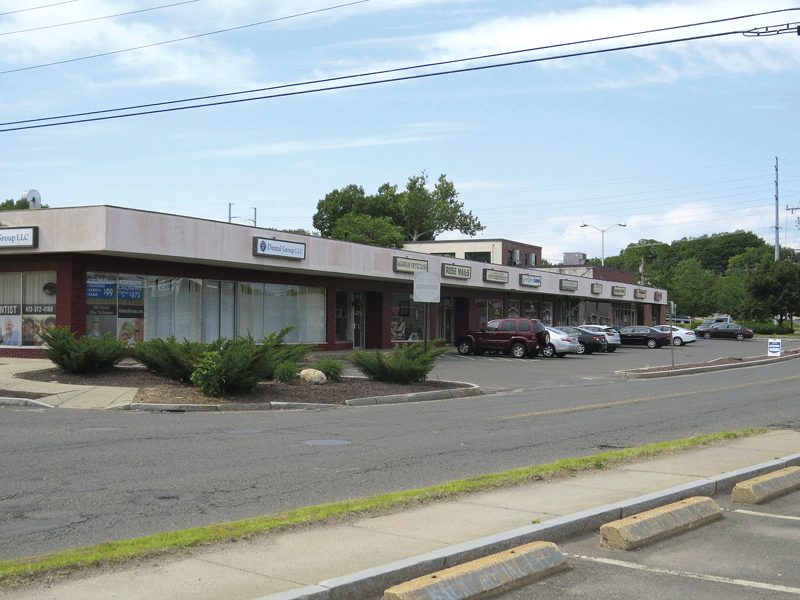
He noted that considerable progress has been made with filling vacancies in the many strip malls and shopping plazas that populate the city.

“Just two years ago, there were a lot of vacant storefronts,” he told BusinessWest. “Now, slowly but surely, we’re filling those in. We still have a ways to go, but we’re making good progress.”

As examples, he cited what’s considered Agawam Center, a lengthy stretch of Main Street, where several vacancies have been filled, and also the old Food Mart Plaza on Springfield Street, which is now essentially full.

District improvement financing has been key to these efforts, he said, adding that, with this program, taxes generated in a specific area — like Walnut Street and Walnut Street Extension) — from new businesses and higher valuations of existing businesses are put into a designated fund and used to initiate further improvements in that zone.

Many of these new businesses will no doubt be challenged in some ways by the bridge project, which will dissuade some from traveling into that retail area, said Sapelli, before again stressing that he and his administration, working with West Springfield leaders, will endeavor to minimize the impact.

Meanwhile, another avenue of economic development is education and workforce development, said Sapelli, noting that the School Department has been focusing a great deal of energy on non-college-bound students and careers in manufacturing and other trades.

“Superintendent [Steve] Lemanski and his staff are addressing the needs of those who will go on to careers, instead of going on the college,” he said, adding that the School Department is working in conjunction with the West of the River Chamber of Commerce on initiatives to introduce students to career options.

“A recent career day involving high-school and junior-high-school students featured 26 speakers,” he noted, adding that they represented sectors ranging from manufacturing to retail to law enforcement. “They’re doing a wonderful job to promote awareness of what offerings are out there besides just college, and that’s very important today.”

Food for Thought

As this spotlight piece makes clear, there is certainly plenty for those Sapelli is sharing breakfast with to kibitz about these days.

Between taxes, bridges, roads, sidewalks, and new businesses, there is plenty of material to chew on (pun intended).

Overall, there is considerable progress being made — and that includes Morgan-Sullivan Bridge itself — to make the city an attractive landing spot for businesses and a better place to live and work.

George O’Brien can be reached at [email protected]
Community Spotlight

Community Spotlight

By Joseph Bednar

Mayor Linda Tyer

Mayor Linda Tyer says Pittsfield’s leaders remain focused on the needs of its individual neighborhoods in order to generate economic development.

As part of her annual state-of-the-city address recently, Pittsfield Mayor Linda Tyer praised the arrival of Wayfair — the fastest-growing e-commerce home-décor company in the world — on a number of levels.

Perhaps most importantly, by opening a sales and service center, the company has created 300 new jobs in Pittsfield. Wayfair is also a locally grown success story, founded by Pittsfield High School graduate Niraj Shah. And, Tyer said, Wayfair’s presence signals to other major employers that they can be successful in this city of about 45,000 people in the heart of Berkshire County.

But Wayfair’s arrival speaks to a broader success story as well — that of a city-wide development strategy that’s bearing fruit.

“Wayfair choosing Pittsfield wasn’t happenstance,” she said. “Rather, the foundation was set with the alignment of the city’s economic-development strategy. The city joined forces with the Pittsfield Economic Development Authority and the Pittsfield Economic Revitalization Corporation. Together, we created the ‘red-carpet team,’ the Mayor’s Economic Development Council, and a new position of Business Development manager.”

In their discussions with companies looking to set up shop in Pittsfield, Tyer noted, those entities are touting not only the economic benefits of doing business here, but quality of life. And people are listening.

“We prepared our presentation assuming that Wayfair will want to know what incentives we might be able to offer them,” she explained. “As the first session got underway, Wayfair’s representatives said they’re not yet interested in the financial incentives. They’d rather learn about Pittsfield’s lifestyle, our schools, our neighborhoods. They wanted to make sure that our community culture aligned with Wayfair’s culture.”

Pittsfield at a Glance

Year Incorporated: 1761
Population: 44,737
Area: 42.5 square miles
County: Berkshire
Residential Tax Rate: $19.42
Commercial Tax Rate: $39.94
Median Household Income: $35,655
Median family Income: $46,228
Type of Government: Mayor, City Council
Largest Employers: Berkshire Health Systems; General Dynamics; Petricca Industries Inc.; SABIC Innovative Plastics; Berkshire Bank
* Latest information available

The city’s red-carpet team, made up of city and state officials whose purpose is to develop strategies and explore incentives to support business expansion or startups, has been deployed in myriad cases to help companies move and expand in Pittsfield. Another resource Tyer is excited about is the Berkshire Innovation Center, which broke ground in September at the William Stanley Business Park.

This 20,000-square-foot facility that will support and advance the work of small and medium companies in the life sciences, advanced manufacturing, and technology, featuring cutting-edge equipment available to advanced manufacturers for research and development of new products. In partnership with Berkshire Community College, the center will be a place of teaching and learning, creating a pipeline of trained employees that area companies desperately need.

Neighborhoods on the Rise

Meanwhile, Tyer touted a downtown district generating energy through its mix of eateries, boutiques, and urban apartments, not mention a renovation of the historic Beacon Cinema on North Street by new owner Phoenix Theatres, which refreshed the interior, enhanced the seats, and added more showtimes.

“Downtown is Pittsfield’s front porch,” Tyer said. “We must remain watchful, always, to ensure a spirited, vibrant experience for all who live in and visit our city.”

She added that it’s time for the city to build on the successes of the North Street revitalization and focus more attention on the historic Tyler Street artery.

“My grandmother, who just turned 95, grew up on Tyler Street,” the mayor said. “She has fond memories of sitting on the front porch, getting an ice cream, and walking to North Street with her sisters to buy fabric at Newbury’s. Tyler Street can be that again, but with a modern twist.”

Anchored by Berkshire Medical Center, General Dynamics, and the William Stanley Business Park, the neighborhood is ripe for a renaissance, she argued. One development toward that goal is the conversion of the former St. Mary the Morningstar Church to 29 units of market-rate housing, a project that drew on $125,000 in state finding for infrastructure improvements around the building.

In addition, the Baker-Polito administration awarded a $30,000 grant last May to support small businesses in the neighborhood. The funding, Tyer explained, will be applied to Pittsfield’s Storefront Enhancement Program. “This is vital financial assistance for businesses to make façade improvements to boost visibility, attractiveness, and ensure accessibility.”

Work also began last summer on the Tyler Street Streetscape Design Project, which aims to create a curated throughway that addresses the needs of pedestrians and bicycles, improves lighting and landscaping, identifies dedicated bus stops, preserves on-street parking, and elevates public spaces. The completed design work is expected to be unveiled early this year.

Going forward, the city will continue to seek ways to take advantage of private investment in North Street and Tyler Street, both designated as Opportunity Zones, Tyer said. “Alliances with local and state representatives, financial institutions, and developers will spur capital investment and job creation.”

On the public-safety front, the mayor focused on several incidents in the Westside area of town, citing a meeting with neighborhood residents who expressed their fears and shared their ideas on ways to enhance the work of the police department, while they in turn tried to understand police protocols.

One idea — to establish a Police Department community outreach office in Westside — is becoming a reality, she added, thanks to space being offered by Central Berkshire Habitat for Humanity in its building on Columbus Avenue.

Meanwhile, a series of high-visibility patrol operations were conducted in November and December. The operation, led by the Police Department’s uniformed patrol and anti-crime unit, brought in reinforcements from the Berkshire County Sheriff’s Office, Massachusetts State Police, and the state Alcohol Beverages Control Commission, which, in total, netted 32 arrests, including the seizure of approximately 340 grams of cocaine with an estimated value of $34,000 and a variety of illicit pills.

“While we tackle the complex issue of crime, our Police Department has established a strong philosophy of community policing,” Tyer added, noting that officers have hosted free movie events, back-to-school meet and greets, and other community activities. “All of these interactions create trusting relationships that will endure with our kids, their families, and our police officers.”

Collaborative Efforts

Still, making the community a more desirable one — again, a factor in attracting new business — doesn’t end with public safety. To that end, an LED street-light conversion will be complete by the spring, replacing some 5,300 streetlights in all, with the dual goal of brighter streets and lower utility bills. Meanwhile, the Westside Riverway Park, a new outdoor space along the west branch of the Housatonic River, extends from Wahconah Park to Clapp Park.

“Paying attention to what’s happening within our neighborhoods continues to be a primary focus. And our efforts are paying dividends,” Tyer said, noting that a surging housing market has increased home values in the city. Still, she added, vigilance against blight and decay in neighborhoods remains a priority for her administration.

“We have cataloged about 100 problem properties,” she noted. “The city’s code-enforcement team tries to identify and exercise all viable options. Our objective is always to preserve as much as possible. Sometimes, demolition is the only option. We continuously balance the cost of demotion against the very real gains that come with keeping our city appealing.”

Finally, 2018 was the first year of Community Preservation projects, the mayor noted. Drawing from a 1% surcharge on property values, the endeavor resulted in a $580,000 appropriation of funds for investing in historic resources, open space, and recreation. Eleven projects were funded, including the preservation of the Melville Art and Artifacts collection in the Berkshire Athenaeum, the Arrowhead stone wall, restoration of the Springside House, siting and design for pickleball courts, the turf field at Berkshire Community College, and infield restoration at the Pellerin baseball field.

Meanwhile, she said, local partners continue to support improvements in public spaces. This past year, the pavilion at Durant Park went up thanks to a gift from Greylock Federal Credit Union. A Berkshire Bank contribution facilitated the renovation of the basketball court at Lakewood Park, while the Buddy Pellerin Foundation and the Rotary Club are making significant investments in Clapp Park.

The progress Pittsfield has made on these fronts and others are, of course, a collective effort by myriad agencies, businesses, and individuals, Tyer noted. But she wants her administration to set the tone for growth.

“We cultivate an organizational culture that encompasses shared responsibility, proactive long-term planning, dynamic communication and professional development,” she said. “My philosophy around this is simple: when we make decisions that affect the people that we serve, these principles must be in the forefront of our minds.”

Joseph Bednar can be reached at [email protected]

Community Spotlight

Community Spotlight

M.J. Adams says Greenfield’s status as a 4/20-friendly community is one of many forces driving economic development in the city.

M.J. Adams says Greenfield’s status as a 4/20-friendly community is one of many forces driving economic development in the city.

The phrase ‘4/20-friendly’ has been around a while now.

April 20 las long been an international counterculture holiday of sorts, when people gather to celebrate and consume cannabis. In recent years, it was also a day to call for legalization of the drug, and even more recently, as legalization spread, the term has morphed into a form of acceptance and, yes, business-friendliness when it comes to the many types of ventures within this industry.

Greenfield could now be considered 4/20-friendly, said M.J. Adams, the city’s director of Community Development and Economic Development, adding that there is already a medical marijuana dispensary, Patriot Care, located within the community, and it is poised to become a recreational dispensary next month. And there are many other parties expressing interest in establishing different forms of cannabis-related businesses within Franklin County’s largest community.

“Our zoning is pretty flexible, and we have the opportunity to issue eight [cannabis] icenses, and we already have nine entities that are interested in accessing those licenses.”

“We’ve had a lot of interest from people that want to grow and do recreational retail,” said Adams, noting that Greenfield’s efforts to build a cannabis cluster, if you will, are bolstered by its status as one of the 29 communities across the Commonwealth designated as “an area of disproportionate impact,” as defined by the state’s Cannabis Control Commission.

Such communities — Amherst, Springfield, Holyoke, West Springfield, and Pittsfield are among some of the others — have been deemed “disproportionately harmed by marijuana-law enforcement,” according the commission, and therefore, priority review is given to applicants who can meet several criteria involving these areas, including residency.

“We’re quite 4/20-friendly,” she went on, adding that this has become code for communities that are “pretty OK” when it comes to marijuana use. “Our zoning is pretty flexible, and we have the opportunity to issue eight licenses, and we already have nine entities that are interested in accessing those licenses.”

But cannabis and the prospect of more businesses in that intriguing industry is just one of positive forces shaping the picture in this community of 18,000 people.

Diana Szynal says Greenfield’s downtown is an attractive mix of new businesses and stalwarts that have been part of the landscape for decades.

Diana Szynal says Greenfield’s downtown is an attractive mix of new businesses and stalwarts that have been part of the landscape for decades.

Others include the opening of a long-awaited parking garage on the west end of downtown; the arrival of many new restaurants and clubs downtown, punctuated by the emergence of the Hawks & Reed Performing Arts Center as a force for attracting diverse audiences to Greenfield; emerging plans to expand the city’s industrial park amid heightened interest in space for manufacturing and warehouse ventures; some new ventures, including the conversion of a Roadway Inn into a 90-bed Marriott Grand Hotel and plans for UMassFive College Federal Credit Union to build a branch within the city; ongoing redevelopment of the former Lunt Silversmith property; and perhaps some forward progress in efforts to forge a new life for the long-dormant First National Bank building on the stretch known as Bank Row.

Meanwhile, from the big-picture perspective, the broad economic-development strategy for the city involves making the community, and especially its downtown area, more of a destination for many constituencies, including tourists, entrepreneurs and small-business owners, and families.

That’s the assignment for the city, but also for the Franklin County Chamber of Commerce, said its new executive director, Diana Szynal, who takes the reins in somewhat ironic fashion. Indeed, she succeeds Natalie Blais, who was recently sworn in as the state representative for the First Franklin District. Szynal, meanwhile, was the long-time district director for the late Peter Kocut, long-time state representative for the First Hampshire District, and was unsuccessful in her bid to win that seat last fall.

She inherits a chamber that will celebrate its centennial this year, and while a good deal of her time will obviously go toward marking that milestone, another priority will be helping to get the word out on all that Greenfield and Franklin County have to offer.

“One thing we have to do is spread the word about all the things that happen here and some of the opportunities that are here,” she said. “And Franklin County is a place that young people and young professionals just starting out and looking for a place to put down roots should consider; this is the perfect place for that.”

For this, the latest installment in our ongoing Community Spotlight series, BusinessWest takes an in-depth look at Greenfield and the many forms of progress being seen there.

Getting Down to Business

Szynal told BusinessWest that she worked in downtown Greenfield a quarter-century ago, and that moving into the chamber’s office on Main Street is like coming home again.

“I just came from lunch at Taylor’s [Tavern] and was at Wilson’s [department store] recently,” she said, mentioning two mainstays in the downtown for decades and noting that there are many more that fit that category. “Downtown has many of the same businesses it had years ago; it hasn’t lost its charm — it has that same old feeling.”

But there are also many new ventures in the city that are giving it a somewhat new and different feeling as well, she said, especially in the broad realm of hospitality and entertainment.

“There’s Indian food, there’s Thai food, there’s some fabulous Mexican food,” she noted. “So in a way, it has that perfect balance; things you can count on like Wilson’s, combined with new places.”

Building upon this balance and creating an ever-more diverse mix of businesses in the downtown is one of the main strategic initiatives for the city, said both Szynal and Adams, adding that that there are many components to this assignment.

“There are a number of properties that have remained vacant longer than we would have liked them to remain vacant, and one of my major goals for this spring is to get a handle on that and fill some of those spaces.”

They include everything from efforts to bring high-speed broadband service to more neighborhoods within the community — a prerequisite for attracting many types of businesses — to formal and informal efforts to help spread the word about all this city and this region have to offer; from making the most of that “area of disproportionate impact” designation when it comes to cannabis to making the First National Bank building a fitting final piece to the puzzle that has been Bank Row.

Indeed, while significant progress has been made in rehabbing and repurposing the buildings along that stretch across from City Hall — the so-called Abercrombie building, now home to the Franklin County district attorney, being the latest — the former First National Bank remains a stern challenge, said Adams.

So much so that the city applied for, and received, a technical-assistance grant from MassDevelopment that will fund a consultant charged specifically with blueprinting a reuse plan for the structure.

Greenfield at a Glance

Year Incorporated: 1753
Population: 17,456
Area: 21.9 square miles
County: Franklin
Residential Tax Rate: $22.36
Commercial Tax Rate: $22.36
Median Household Income: $33,110
Median Family Income: $46,412
Type of Government: Mayor, City Council
Largest Employers: Baystate Franklin Medical Center, Greenfield Community College, the Sandri Companies
* Latest information available

Built in 1929, the building has been essentially unoccupied for the better part of 40 years, said Adams, adding that the Greenfield Redevelopment Authority took ownership of the property in 2017 with the goal of determining the best reuse option.

“We’re waiting for the consultant that’s been assigned to us to come aboard, and we expect that to happen later this month, and have that individual work through this spring on a potential-reuse study of the building,” she said, adding that she expects this work to be completed by June. “We’re also spending some funding on some engineering to take a look at the building envelope — the structure, the fire-protection systems, and more — and then doing some preliminary cost estimates for getting a clean shell that can be developed.”

The project is important, she said, because the property has a prominent place in the city’s history and a prominent location as well. Its redevelopment could act as a catalyst for other investments and make the city more of a destination.

Speaking of catalysts, the cannabis industry could become one as well, Adams went on, adding that retail operations could help create still more vibrancy in the downtown, and the cultivation businesses could help fill various types of commercial properties, including old mill buildings.

Overall, the goal downtown, and just outside it, is to attract a diverse mix of businesses, said Adams, adding that, while there are have been some new arrivals, there are still many vacant storefronts in the central business district — more than city officials would prefer.

“We did an inventory about two years ago that looked at the properties downtown and especially the ground-floor retail spaces,” she noted. “There are a number of properties that have remained vacant longer than we would have liked them to remain vacant, and one of my major goals for this spring is to get a handle on that and fill some of those spaces.”

As for the chamber, as it celebrates its centennial, it will focus on a number of initiatives, including efforts to support and promote not only Greenfield but the entire county. One key to doing so is through collaboration with other entities involved in promoting business and economic development, said Szynal.

“There’s an active business association for Shelburne Falls, there’s one for Greenfield, Nortfield has a business association … there are several of these organizations,” she said. “One of my top priorities is to figure out how to work collaboratively to promote more business growth and keep our businesses strong county-wide.”

One challenge to overcome is enabling Greenfield, and the rest of the county, to shed its ‘best-kept secret’ status.

“We have some incredible outdoor recreation opportunities in Franklin County, and that’s something we’re looking to highlight in the coming year,” she said. “It’s a big part of the economy, and it can be even bigger; there are some people who don’t know that these opportunities are here in Franklin County and that you don’t have to drive far to experience them.”

Balancing Act

Reflecting upon her return to downtown Greenfield a quarter-century since she last worked there, Szynal said she is impressed by, and increasingly enamored with, its mix of old and new.

“To some extent, Greenfield is growing and changing, but it’s also staying true to its roots,” she explained. “There’s a familiar feeling as you walk down the street, but there is exciting change as well.”

Moving forward, the goal is to create … well, much more of that, and there has been considerable progress in that regard as well as the promise of more.

Some might result from being 4/20-friendly, as the saying goes, but the bulk of it will come from being plain old business-friendly and willing to take advantage of the opportunities that develop.

George O’Brien can be reached at [email protected]

Community Spotlight

Community Spotlight

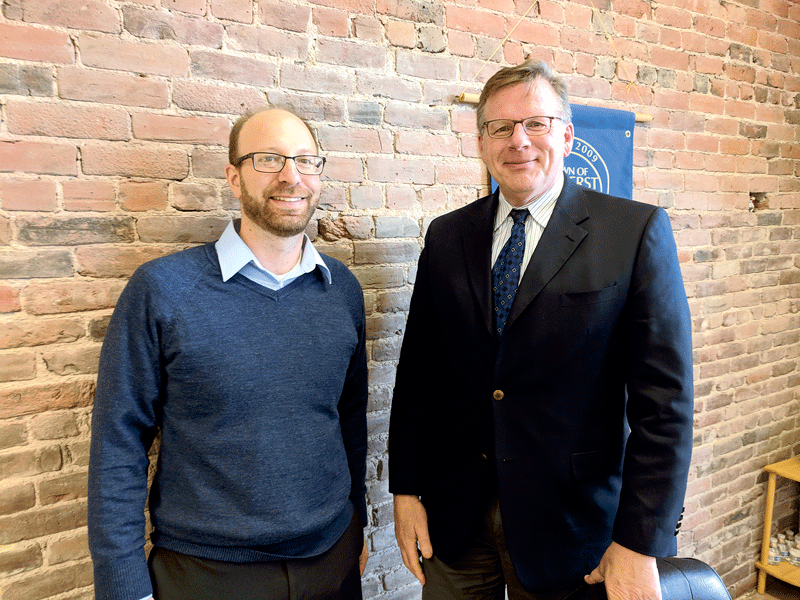
Paul Bockelman (left) and Geoff Kravitz

Paul Bockelman (left) and Geoff Kravitz say Amherst benefits in many ways from its reputation as an academic hub.

Amherst is a community in transition, Paul Bockelman says — in some positive ways.

The most notable change, obviously, was the seating of Amherst’s first Town Council last month; 13 members were elected following a change in the town charter last March that included a move away from the town-meeting form of government.

“Some people who advocated for the charter change felt the representative town meeting wasn’t fully representative of the town and wasn’t nimble enough to address the issues that were facing the town on a daily basis,” said Bockelman, Amherst’s town manager. Other people, he added, were angry after the town meeting failed to fund a new school building.

Either way, he went on, “they’re building a government from scratch. Some really smart, thoughtful people are putting a lot of effort into this council, and every decision they make is going to be precedent-setting. A lot of issues were put on hold during the transition period. Now that the council’s in place, there’s this backlog of things people want them to do, so those will start pouring through the system during the course of the year.”

But that’s not the only way Amherst is changing, said Geoff Kravitz, the town’s Economic Development director. He cited activity in the restaurant scene, which has welcomed a number of new names, including Asian eateries Chuan Jiao and Kaiju, Jake’s at the Mill in North Amherst, Share Amherst, and Shiru Café, an intriguing coffee shop and study space that offers free coffee to area students in exchange for their personal information, which is sold to job recruiters and advertisers.

“Some really smart, thoughtful people are putting a lot of effort into this council, and every decision they make is going to be precedent-setting.”

“For college students, it’s an interesting model where they get a cup of coffee every hour,” Bockelman said. “It’s really designed for college students to hang out and do their homework, and the only requirement is that you give them some data that you otherwise would give to Facebook or Twitter.”

“It’s not just for marketing,” Kravitz added, “but for recruiting for jobs out of college. Recruiting is really the model.”

Other restaurants are on their way as well, he added, and vacant properties, especially downtown, don’t remain unfilled for long.

“It’s not a stagnant town; it’s a town of transitions, and not just because we have a new form of government,” Bockelman added. “It seems that every time a restaurant moves out, a new restaurant comes in.”

Building on Progress

There’s plenty more activity on the development front as well. In September, Archipelago Investments, LLC of Amherst opened One East Pleasant, a mixed-use project featuring 135 residential units and 7,500 square feet of commercial space.

“That whole complex rented up very quickly and is full,” Bockelman said, noting that Archipelago has developed a handful of other properties in Amherst, and is planning another mixed-use project at 26 Spring St., which will feature 38 residential units and 1,000 square feet of commercial space.

Meanwhile, W.D. Cowls Inc. and Boston-based Beacon Communities are moving forward with North Square at the Mill District, a mixed-use development under construction in North Amherst, which will feature 130 residential units — including 26 affordable units for people at or below 50% of the area’s median income — and 22,000 square feet of commercial space.

Amherst is also among the Western Mass. communities enthusiastically exploring the marijuana industry as an economic driver. That’s not surprising, considering the town’s voters favored the 2016 ballot measure legalizing recreational marijuana by a 3-to-1 margin. RISE Amherst, a medical-marijuana dispensary, is currently in operation, with three other businesses working their way through the local and state licensing process.

With 33,000 students attending UMass Amherst, Hampshire College, and Amherst College, the town has also worked on educational efforts around adult-use marijuana, and has also passed a number of marijuana-related regulations, including a 3% local-option sales tax, a ban on public consumption, and capping at eight the number of recreational-marijuana establishments in town.

From a municipal perspective, the town has long been studying the potential renovation of the North Common/Main Street parking lot, Kravitz noted.

“There’s been a parking lot in front of Town Hall since at least the ’70s, if not earlier, and we’re trying to redesign it from both a drainage and ecological perspective,” he explained. “It’s sort of sloped oddly, so when it rains, all the rain coming off the streets washes it out; that was the primary purpose of looking at it.”

What to do with the space will be one of the Town Council’s issues to tackle in 2019, Bockelman added. “The biggest question coming up relatively soon to the Town Council will be, do you want to work on this project or leave it as is?”

Meanwhile, the overall vision for Amherst has long involved arts and culture. The Amherst Central Cultural District aims to leverage the offerings of the Emily Dickinson Museum, Jones Library, the Eric Carle Museum of Picture Book Art, the Yiddish Book Museum at Hampshire College, the Mead Art Museum at Amherst College, and other cultural institutions, and some of those efforts bleed into the downtown area as events, such as ArtWeek, a statewide effort taking place from April 26 to May 5.

Amherst at a Glance:

Year Incorporated: 1759
Population: 39,482
Area: 27.7 square miles
County: Hampshire
Residential Tax Rate: $21.80
Commercial Tax Rate: $21.80
Median Household Income: $48,059
Median Family Income: $96,005
Type of Government: Town Council, Town Manager
Largest Employers: UMass Amherst; Amherst College; Delivery Express; Hampshire College
* Latest information available

“We want to create more excitement about being downtown,” Bockelman said. “Downtowns today are less about retail, brick-and-mortar shops and more about entertainment and cultural events. Some of them can be sponsored by the town, but a lot of them come from individuals.”

Many of Amherst’s museums and cultural institutions have statewide, even national reputations, and the Hitchcock Center for the Environment and the R.W. Kern Center at Hampshire College are two of fewer than two dozen ‘living buildings’ worldwide — structures that meet strict standards for hyper-sustainability and net-zero energy use.

All these factors, plus the colleges and UMass, create a buzz and energy that attracts both new businesses and families to Amherst, Kravitz said.

“From a business perspective, there are very few communities of our size that boast three institutions of higher education,” he told BusinessWest. “I think that we have an incredibly educated population. People want to be around other people who have big ideas, so I think that’s part of the draw for some of the businesses — to be around other smart people. You saw that happening in Boston and Cambridge, you saw it happen in Silicon Valley, and I think that all starts with the academic institutions, whether it’s Stanford or MIT or UMass here.”

It’s Academic

The recent mixed-use developments are a welcome start to meeting housing needs in a growing town, as there hasn’t been much residential development over the previous couple of decades. In fact, a 2015 study determined that Amherst could use some 4,000 more units.

Still, Bockelman said, “I think it really is a place where people want to come to raise their family, for lots of different reasons.”

Last week, he met with a man who teaches two days a week in Washington, D.C. “He says he can leave his house at 6:15 in the morning, be in Washington by 10, and stays overnight. When he comes back, he takes the 5:00 and is back home at 8 to put his kid to bed. He chose to live in Amherst because he wanted a multi-cultural community with people who care about education, with excellent schools and an academic environment, and he found all that, plus easy access to open space. So he’s willing to make that weekly commute from Bradley. That’s kind of amazing to hear.”

That’s why it’s heartening, he added, to see how UMass Amherst has raised its profile in recent years as an internationally recognized research institution.

“It’s a big economic engine; thousands of people come in every day to work there,” he said. “Amherst is the largest community in Hampshire County, but it doesn’t read that way because it doesn’t look like Northampton, like a city. And in terms of our population, some people say the students are inflating that, but they’re here eight to nine months a year. And what that number does not count is the number of people who come into town every day because they’re employed by the two colleges or the university.”

In short, he concluded, “it’s a very vibrant community, even though it retains a certain college-town atmosphere that so many people love about it.”

That characteristic is one he and Kravitz both expect to remain steady, no matter what other transitions Amherst has in store.

Joseph Bednar can be reached at [email protected]
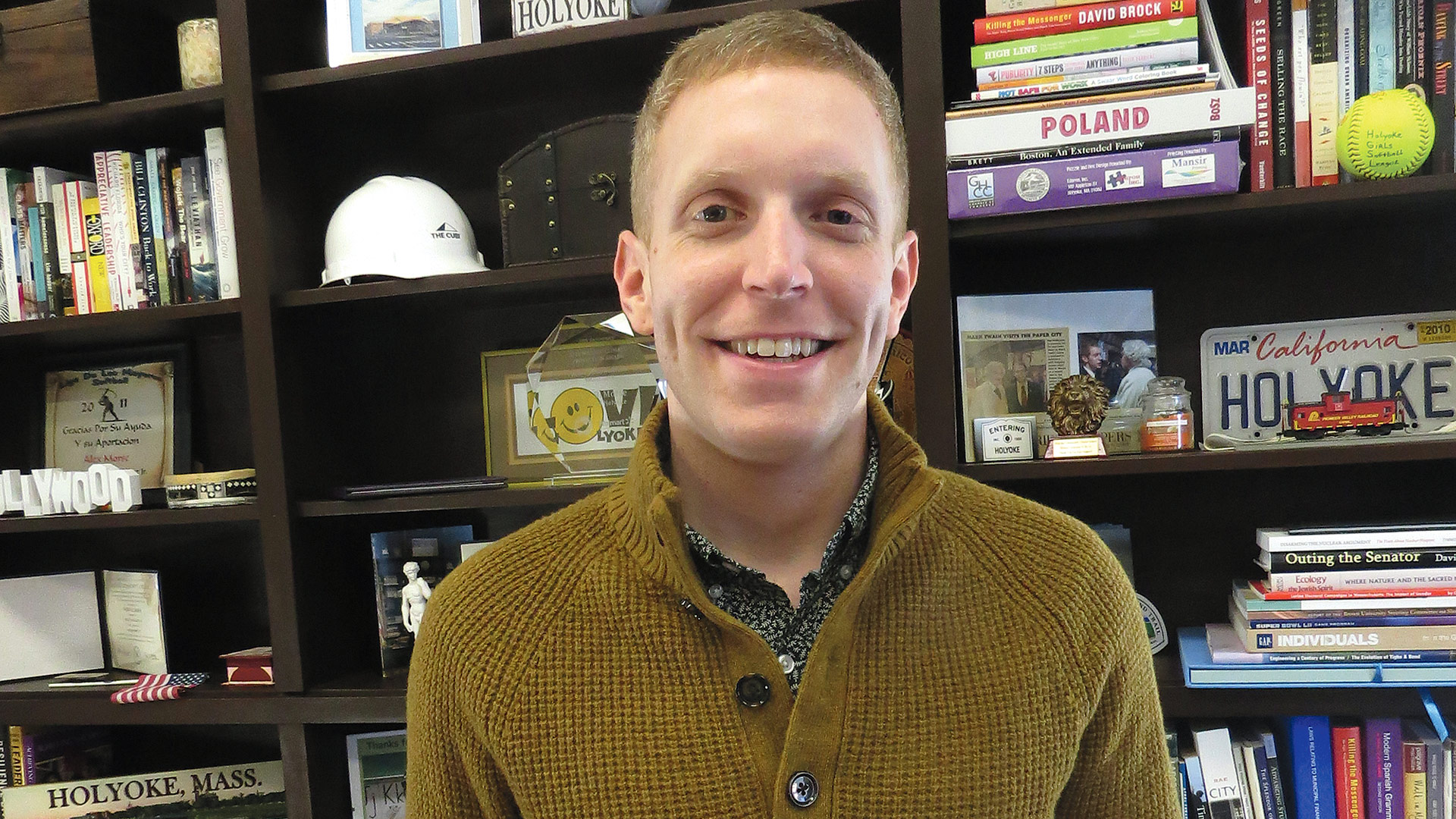
Community Spotlight

Community Spotlight

On the heels of one home run for recreation and tourism, Hartford, Conn. is hoping for another — well, not a home run, exactly. More like a goal, which is appropriate in a city that has set plenty of them in recent years.

On the heels of the Hartford Yard Goats, the double-A baseball team that’s been selling out games for two years at Dunkin’ Donuts Park, Connecticut’s capital city will soon welcome the Hartford Athletic, a professional soccer team that plays in the United Soccer League.

But it’s not just the team itself causing excitement, but the development projects surrounding it. The state invested $10 million in Dillon Stadium in the Coltsville section of the city, while an entity known as Hartford Sports Group put up $7 million toward the renovation and the team’s startup.

Mayor Luke Bronin points out that, along with the restoration of the Colt Armory complex for commercial and residential use, the Hooker Brewery tasting room, planned upgrades to Colt Park, and the designation of the Coltsville National Historic Park, refurbishing Dillon Stadium and bringing in a soccer team is yet another feather in the cap of a venerable neighborhood on the rebound.

Then there’s Front Street, the downtown entertainment and restaurant district that began to see significant development a decade ago, and is now adding even more apartments and retail. A $23 million project will add 53 apartments and nearly 11,000 square feet of shop and restaurant space. That comes on the heels of Front Street Lofts, a 121-apartment development that is largely leased, and the 2017 opening of the University of Connecticut’s new downtown campus across Arch Street.

“We’ve engaged our large corporate partners in a way they haven’t been engaged in many years. In a very short period of time, we’ve moved the ball a long way down the field toward building a really vibrant innovation ecosystem.”

In fact, a recent wave of apartment construction downtown has added almost 900 units since 2013, with hundreds more to come.

“We want to make sure we have a lovely, vibrant downtown, and the core of that strategy is getting a critical mass of residential housing downtown,” Bronin told BusinessWest. “The other piece is the targeted neighborhbood redevelopment projects, especially in the three areas of Upper Albany, Blue Hills, and Coltsville.”

Hartford at a glance

Year Incorporated: 1784
Population: 123,243
Area: 18.1 square miles
COUNTY: Hartford
Residential Tax Rate: $74.29
Commercial Tax Rate: $74.29
MEDIAN HOUSEHOLD INCOME: $20,820
Family Household Income: $22,051
Type of Government: Mayor, City Council
Largest Employers: Hartford Hospital; Hartford Financial Services Group; St. Francis Hospital & Medical Center; Aetna
* Latest information available

And Parkville, for that matter, one of Hartford’s more ethnically diverse neighborhoods, a mixed-use community on the west side that boasts a thriving artistic community, and has seen recent additions like Hog River Brewing, a brewery and taproom, among other activity.

Bronin is justifiably excited about all of that, but he’s even more intrigued by a big picture in Hartford that has been marrying economic and real-estate development to some cutting-edge workforce development — all of which has Hartford well-positioned to become a model of innovation and a true 21st-century city.

Start Me Up

“Besides the real-estate development and continuing progress and momentum here, an innovation ecosystem that has been growing in Hartford over the past 18 months,” Bronin said. “We put together a strategy that really focused on building on the strength of our core industries: insurance, advanced manufacturing, and healthcare.”

For example, Hartford InsurTech Hub is an initiative created by a group of executives from the Hartford area, including insurance carriers and other related firms, municipal officials, and community stakeholders. It was established to attract new talent and technology to Hartford and provide entrepreneurs with the support, resources, and industry and investor connections they need to help grow their business.

“We’ve engaged our large corporate partners in a way they haven’t been engaged in many years,” Bronin said. “In a very short period of time, we’ve moved the ball a long way down the field toward building a really vibrant innovation ecosystem here.”

In addition, Stanley Black and Decker moved its innovation center to downtown Hartford, partnering with Techstars on a mentorship-driven accelerator that attracts promising additive-manufacturing startups to the city.

“If you told people two years ago that Hartford would be home to both Techstars and the [InsurTech] accelerator, they would have doubted it,” the mayor added. “But those are two significant developments — and they don’t stand alone.”

“We’ve engaged our large corporate partners in a way they haven’t been engaged in many years. In a very short period of time, we’ve moved the ball a long way down the field toward building a really vibrant innovation ecosystem here.”

Launched in 2017, Upward Hartford transformed 34,000 square feet in Hartford’s iconic Stilts Building into a co-working space which soon became a community hub, home to entrepreneurs who connect and collaborate with fellow innovators and startups.

“Upward Hartford, a homegrown incubator and co-working space, has grown rapidly. They’ve brought dozens of startups through the doors in a very short time,” Bronin said. That’s impressive in itself, he said, but moreso in the potential for these young enterprises to partner with larger, more established companies, making it more likely they’ll set down roots in Hartford.

Meanwhile, Infosys, a global leader in consulting, technology, and next-generation services, will open its Connecticut Technology and Innovation Hub in Hartford and hire 1,000 workers in the state by 2022. The facility will have a special focus on insurance, healthcare, and manufacturing.

“I’ve always believed, with the strong corporate community we have and the corporate leaders in those three sectors, there’s a lot of potential,” Bronin said. “But the pace of progress has exceeded even my expectations.”

Time to Score

In short, Hartford is a city on the rise, the mayor noted, and not in a haphazard way; the developments happening in both real estate and the innovation economy spring from a carefully considered vision.

He said economic development will continue to focus increasing the number of residential units downtown, growing the number of medical and educational facilities, and adding new transportation options. The latter has been boosted by expanded commuter rail service this year between New Haven and Springfield, with Hartford one of the key stops — a boon for people who choose to live or work downtown.

One might say that’s another home run in a city that’s seen many of them lately — whether or not the Yard Goats are in town.

Joseph Bednar can be reached at [email protected]

Community Spotlight

Community Spotlight

Mayor Thomas Bernard says North Adams is a small, post-industrial New England city

Mayor Thomas Bernard says North Adams is a small, post-industrial New England city with economic challenges, but has generated plenty of momentum in addressing them.

As a long-time resident of North Adams, Mayor Thomas Bernard understands the city’s reputation as a tourist destination. It’s a good reputation to have, as it puts more cars on the streets and feet in local establishments.

But North Adams — the least-populated community in the Commonwealth classified as a city — is much more than that.

“I think the untold story about North Adams — and the Berkshires in general — is that we have a robust manufacturing sector here,” said Bernard, who began serving his first term as mayor at the start of this year. “We talk about the role of culture and tourism, but we have manufacturing, too.”

And the sector is a bustling one, he added, citing Tog Manufacturing Co., which makes precision-machined parts, and is looking to expand both its space and workforce over the next few years. The company is also a good example of the workforce-development partnerships being forged in the industry locally.

“They have a really good connection with McCann Technical School, while MCLA [Massachusetts College of Liberal Arts], our great public university, has an engineering partnership with General Dynamics to meet their workforce needs. And then Crane Paper, which was bought recently by Mohawk, is talking expansion as well in the next couple years, adding a shift and adding workers,” he said. “Take those things together, and it’s a significant engine that often gets overlooked in conversations about the economy and economic development in the Berkshires, and North Adams in particular.”

That’s not to say the cultural sector isn’t important, anchored, of course, by MASS MoCA, which recently underwent a $65 million expansion, adding 130,000 square feet of gallery space and enhancing the outdoor courtyard space. The work took place on the south end of the campus of the former Sprague Electric factory, whose 16 acres of grounds and 26 buildings with an elaborate system of interlocking courtyards and passages was transformed into the museum in 1999. The facility has a regional economic impact of more than $25 million annually.

Then there are newer projects like Greylock WORKS, an ongoing transformation of the former Greylock Mill along Route 2. Salvatore Perry and Karla Rothstein of Latent Productions in New York City saw potential in the site four years ago and purchased the 240,000-square-foot property for $750,000.

“The narrative has been that, when big companies left in that wave of industrial migration in the mid-’80s and beyond, manufacturing stopped. That’s just not the case.”

The first goal was to create a large event space, and further developments have included a commercial kitchen and a specialty food marketplace; a rum distiller is the first tenant. Each business will have a small area for retail operations and also have room to conduct wholesale operations to help sustain a flow of year-round revenue. The Greylock WORKS development will eventually include a residential component as well.

Meanwhile, Thomas Krens, who was one of the driving forces behind the establishment of Mass MoCA two decades ago, proposed another project for North Adams a few years ago: a $20 million model-railroading and architecture museum in Western Gateway Heritage State Park that has a footpath directly across from MASS MoCA’s south gate.

Once completed, that project is expected to bring another 200,000 to 300,000 visitors to North Adams each year.

Those projects — far from the only ones creating energy in North Adams — are an intriguing sample of what the city has to offer. But Bernard thinks there is far more potential, and hopes to see it come to fruition.

Down on Main Street

Bernard is cheered by recent high-profile developments, but knows overall progress in any city is not an overnight proposition.

“There are persistent challenges,” he told BusinessWest. “I’m looking out my window at Main Street, 20 years after MASS MoCA happened, and we still haven’t totally cracked the code on a booming, bustling downtown.”

He compared North Adams to Shelburne Falls, which has a “really lovely, compact, interesting downtown” that people flock to, for the Bridge of Flowers and other attractions. “But you have to know Shelburne is there … you have to be intentional to go there and find it.”

And if an out-of-the-way town like that can have a thriving downtown, he went on, why shouldn’t North Adams — with a museum in MASS MoCA that draws some 250,000 visitors each year, many of them from outside town — be able to create a more vibrant downtown of its own?

“After 20 years of good intentions, and investments by the museum, the city, and the chamber, we’re still trying to figure that one out,” he said, adding that one thing that could provide a spark is more market-rate housing and mixed-use development downtown to put more feet on the streets.

North Adams at a Glance

Year Incorporated: 1878
Population: 13,708
Area: 20.6 square miles
County: Berkshire
Residential Tax Rate: $18.38
Commercial Tax Rate: $39.85
Median Household Income: $35,020
Family Household Income: $57,522
Type of government: Mayor; City Council
Largest Employers: Crane & Co.; North Adams Regional Hospital; BFAIR Inc.
*Latest information available

That would in turn create demand for more eclectic food options, specialized retail, and galleries — “the kinds of things that are equally attractive to locals who have lived here their whole lives, people who transplanted here because they love the idea of this small New England city, and tourists who are here for the day or the weekend.”

Speaking of tourists, that’s actually the name of North Adams’ newest hotel, a 48-room retreat inspired by the classic American roadside motor lodge, set on the banks of the Hoosic River.

Tourists was the brainchild of Ben Svenson, a Boston-based developer, and a team of partners. They stripped a crumbling roadside lodge down to the studs and turned it into something both retro and decked out in modern amenities.

A wooden boardwalk leads to the river, while a saltwater pool was added, and an event space was fashioned from a neighboring farmhouse. Wooded walking paths lead to a yoga pavilion, open fields, a sculpture installation, and an old textile mill. A deconsecrated church in the woods will become Loom, where Cortney Burns, a James Beard Award-winning chef, will begin creating dishes in 2019.

Manufacturing Progress

No matter what happens in the realms of tourism, dining, retail, or any number of other high-profile elements of an attractive city, Bernard understands North Adams has a strong foundation of other businesses that may not receive the same attention.

“The narrative has been that, when big companies left in that wave of industrial migration in the mid-’80s and beyond, manufacturing stopped. That’s just not the case,” he said. “I mentioned Tog — they’ve been at it for 20-30 years in the same location, employing 25-30 people. For them to be talking about facility expansion and workforce expansion that would effectively double their workforce in North Adams and the Berkshires, that’s significant. That’s a big win.”

To meet that workforce need, however, he recognizes the importance of partnerships between industry and education to provide training, retraining, and professional development to help people access career opportunities.

“To be honest and realistic, we’re still a small, post-industrial New England city, and we have our economic challenges,” he said. “While we’re paying attention to all the great development that’s happening — it’s what drives growth and progress in the future — we can’t lose sight of people who have been here all their lives and are struggling because of fixed incomes and low incomes, seniors worried about taxes, or people who don’t have the education and skills to compete for the jobs that are here.”

Bernard believes North Adams is in a good spot to meet those needs and keep growing.

“I take a lot of pride in being the mayor of the smallest city in the Commonwealth — in population, but not by stature,” he said. “We’re a world-class destination for the arts, for culture, for outdoor recreation, for tourism, and we’ve got great educational resources in the city.”

Joseph Bednar can be reached at [email protected]

Community Spotlight

Community Spotlight

Nicholas O’Connor says recent projects have created considerable momentum in Belchertown, “like a snowball rolling down a hill.”

Nicholas O’Connor says recent projects have created considerable momentum in Belchertown, “like a snowball rolling down a hill.”

Nicholas O’Connor says there’s a generational split in Belchertown when it comes to new amenities and development in general — but that line has become increasingly blurry.

“There’s the old guard who don’t want anything to change; they want it to be a bedroom community, and they still lament the fact that we have a Stop & Shop and a Family Dollar. There’s no changing their minds, and I get that,” said O’Connor, who chairs the town’s Board of Selectmen.

“But by the same token,” he went on, “we can’t sustain the services that we provide in a town this size, with the great schools we have, without revenue, and 93% of our revenue comes through taxation. We don’t have a big business base — so, in order to have more, you need to generate more.”

And ‘more’ is a good word to describe economic activity in town, particularly along the section of Route 202 running from the town common past the Route 21 intersection to the Eastern Hampshire District Courthouse, a mile-long stretch that has become a hub of development, from a 4,500-square-foot Pride station currently under construction to a 4,000-square-foot financial center for Alden Credit Union; from Christopher Heights, an assisted-living complex that recently opened on the former grounds of the Belchertown State School, to a planned disc-golf course.

These projects, balancing town officials’ desire for more business and recreation, have been well-received, O’Connor said.

“Even among the old guard, I sense a split. There’s a large community of longtime Belchertown residents who are yearning for these things that are finally happening. I think it’s a minority of people who wish Belchertown would be like it was in 1970. That dynamic has shifted a bit.”

That said, it takes plenty of planning to build momentum for projects — not to mention state and town funding and approvals at town meetings — but he sees the dominos falling.

“We don’t have a big business base — so, in order to have more, you need to generate more.”

“With a lot of the ideas we’ve had over the past few years, shovels are finally hitting the ground. We’re really in a year when things are starting to progress.”

The 83-unit Christopher Heights has been a notable success, growing its resident list every month and exceeding its forecasts, O’Connor noted. Nearby, Belchertown Day School and Arcpoint Brewing, a veteran-owned business run by a couple of Belchertown locals, both plan to break ground on new facilities in the spring.

At the same time, Chapter 90 money came through for the renovation of that key stretch of Route 202, a project that will include new road signaling, crosswalks, sidewalks, and bike lanes, making the area more pedestian- and bicycle-friendly. Meanwhile, Pride owner Bob Bolduc will put in a sidewalk and a pull-in as part of his new building, which will accommodate a new PVTA stop.

“People will be getting out in front of his store, and that’s a win-win for everybody,” O’Connor said. “That whole road project will certainly change things from the common down the hill, all the way to the courthouse.”

The Great Outdoors

Belchertown has plenty of potential to expand its recreational offerings, O’Connor told BusinessWest. For example, a town meeting recently appropriated funds to create an 18-hole disc-golf course in the Piper Farm Recreation Area.

Belchertown at a Glance

Year Incorporated: 1761
Population: 14,838
Area: 52.64 square miles
County: Hampshire
Residential Tax Rate: $18.19
Commercial Tax Rate: $18.19
Median Household Income: $52,467
Median Family Income: $60,830
Type of government: Open Town Meeting; Board of Selectmen
Largest Employers: Hulmes Transportation Services; Town of Belchertown/School Department; Super Stop & Shop

O’Connor said disc golf has been rapidly gaining in popularity. “We’ll be clearing in the spring, breaking ground, and hoping to be throwing discs by the fall. There’s been interest growing in town, which is good because we’re going to need public effort for the clearing. I think a lot of that’s going to be done by community members and volunteers.”

He envisions the course as another piece in a day-long outing families could have in that area of Belchertown, with attractions ranging from baseball at the town’s mini-Fenway Park to Jessica’s Boundless Playground, to a 1.3-mile walking trail behind the police station that circles Lake Wallace. Meanwhile, state Sen. Eric Lesser was instrumental in securing money to tear down some tennis courts and build a splash park.

O’Connor would also like to see ValleyBike Share make inroads into Belchertown, and he wants to revisit discussion around expansion of a regional rail trail through town.

“A lot of people in town have tried these things before. The rail trail got voted down years ago,” he said. “Belchertown hasn’t always been ready for this type of progress, but we’ve had a large influx of younger families over the past 10 years or so, and different people standing up in positions of leadership. Just in the last four years, we have a new chief of police, a new Recreation director, a new Conservation administrator, a new senior-center coordinator. Not that the leadership before wasn’t doing the job, but I see new folks stepping up, and new ideas and new interests coming to the fore. That’s not a comment on the past, but it’s progress.”

And progress takes time, O’Connor said, noting that roadwork plans for 202 have been in flux for years, while Bolduc owned the future Pride site for a long time with no shovels in the ground until the assisted-living complex and other developments began to come online.

“It takes one project, and everybody starts going, ‘oh, there might be something there,’” he said. “The governor has been out here, and we’ve seen a lot of the lieutenant governor the last couple of years. Once you start brick and mortaring, now you get money for roads, you’re awarded more money for cleanup, and people really get on board. The momentum becomes attractive, like a snowball rolling down a hill. Nobody wants to go it alone, but then they see all these ancillary businesses, and it really starts to come together.”

What’s the Attraction?

To O’Connor, it’s not hard to see why businesses would want to set up shop in Belchertown. There’s the single, low property-tax rate, for starters, the well-regarded schools, and a widening flow of road projects aimed at making the town easier to navigate.

But not simply pass through, he added.

“I grew up in Amherst, and my dad lived in Wales while I was growing up, so I drove through his stretch every weekend. Then I went to UMass, and I saw them build all the hotels on Route 9,” he recalled.

“Now, I certainly don’t want to be Hadley — we want to keep our business within the character of the town; no one’s interested in a dynamic change to the town. But I thought to myself, a lot of these parents are driving home to Boston after parents’ weekend — maybe they don’t have to stay on Route 9; maybe they can stay here and take a walk on the Quabbin and hit an antique store and whatever else gets developed. I think there’s a lot to be said for us being a main thoroughfare between Boston and Western Massachusetts. Everybody gets off exit 7 and 8 to drive through here. We see a lot of cars, and it would be nice to get them to stop.”

Of course, for business owners, a lot of cars is a good thing, and the impending development of sidewalks, bike lanes, and bus routes will continue to drive traffic into what has really become the heart of activity in Belchertown.

“We love our town common, but in terms of a business center, an economic center, that’s moving down the hill. And a lot of the businesses there will benefit from the infrastructure upgrades.”

O’Connor told BusinessWest he can envision a future where Belchertown can be both the scenic, classic New England town of the past and a bustling destination. Illustrating that picture for other people can be a challenge, but he keeps trying.

“We need patience to get these things moving,” he said. “There’s definitely investment that needs to be made by business owners — not just in money, but in belief.” u

Joseph Bednar can be reached at [email protected]

Community Spotlight

Community Spotlight

Joseph Deedy (left) and Karl Stinehart say Southwick strikes a healthy balance between economic growth and outdoor attractions.

Joseph Deedy (left) and Karl Stinehart say Southwick strikes a healthy balance between economic growth and outdoor attractions.

A 250th anniversary celebration, Karl Stinehart says, is an opportunity in many ways for a town like Southwick.

“It’s tourism, it’s economic development, but it’s also history — people asking, ‘where do I live, and how do I value that? What is the history of my community?’” said Stinehart, the town’s chief administrative officer. “It was once known for its agricultural base and its ice houses. Now, the branding in town is more related to recreational opportunities.”

Southwick officials and volunteers have been meeting to plan a yearlong slate of anniversary events throughout 2019, securing a $25,000 state grant, with the help of state Sen. Don Humason and state Rep. Nicholas Boldyga, to plan activities, market events, and purchase street banners and commemorative merchandise, among other earmarks.

“We have a very active main committee that is being chaired by Jim Putnam, the town moderator,” Stinehart said. “They have a series of subworking groups working on different facets, and we’ve been reaching out to all the businesses to see how they want to participate and to what extent, whether it’s donating money or being involved with a float or an event or program.”

There’s plenty to celebrate as the anniversary approaches, Stinehart said, from recreational offerings — like boating on the Congamond Lakes, motocross events at the Wick 338, and town events at the 66-acre Whalley Park — to growth on the residential front, particularly two large developments.

Specifically, work continues on 26 homes at the new Noble Steed subdivision off Vining Hill Road, with 12 of those units already sold. Meanwhile, Fiore Realty is developing 65 to 70 homes at the former Southwick Country Club site, with 16 of the 23 sites on the west side of the property already sold; another 45 or so will later go up on the east side.

“It sounds like it’s full steam ahead over there,” said Joseph Deedy, who chairs Southwick’s Select Board.

As important as residential expansion is, Stinehart added, it’s as important to develop the main economic corridor in town, which runs along College Highway. “We want to balance any residential development with economic and business development.”

For instance, Deedy said, a new O’Reilly Auto Parts store is expected to open in February. “What’s nice about those folks is they actually purchased the property, so it’s not another leaseholder where it could be vacant in two years and sits for 10. They have a stake in the community, which is nice to see.”

The town also recently executed PILOT (payment in leiu of taxes) agreements with two solar farms on Goose Pond, off Congamond Road, Deedy added, noting that they will provide fiscal benefits to the town in an unobtrusive way. “These are landlocked parcels, so it’s not something people are going to see and be inconvenienced by.”

Ramping Up the Fun

What Southwick officials do want people — residents and visitors alike — to see is the array of recreational opportunities that have made this town of fewer than 10,000 residents a destination for tens of thousands of others.

For starters, outdoors enthusiasts enjoy the Metacomet/Monadnock Trail, as well as a 6.5-mile-long linear park, or rail trail, that runs through town from the Westfield border to the Suffield border. And the town’s two golf courses, Edgewood and the Ranch — not to mention the par-3 track at Longhi’s, near the Feeding Hills line — are doing well following the closure of Southwick Country Club, Deedy said.

Meanwhile, the lakes on the south side of town — featuring two boat ramps, a fishing pier, and a town beach — provide plenty of activity for residents. A $275,000 project recently renovated the south boat ramp on Berkshire Avenue, making it more modern and handicap-accessible, and the beachfront was recently renovated as well.

Southwick at a glance

Year Incorporated: 1770
Population: 9,502
Area: 31.7 square miles
County: Hampden
Residential Tax Rate: $17.47
Commercial Tax Rate: $17.47
Median Household Income: $52,296
Family Household Income: $64,456
Type of Government: Open Town Meeting; Board of Selectmen
Largest Employers: Big Y; Whalley Computer Associates; Southwick Regional School District
*Latest information available

Stinehart said the lakes and their environs are an important aspect of Southwick’s outdoor culture and worthy of investment, being, among other things, a major destination for freshwater fishing tournaments.

“Anytime you come by at 5 a.m., they’re out there,” Deedy added.

Then there’s the Wick 338, the motocross track behind the American Legion, which abuts the Southwick Recreation Center and Whalley Park. The complex hosts the annual Lucas Oil Pro Motocross Championship — which is broadcast live on NBC and draws some 15,000 to 18,000 people to town — as well about 25 other races throughout the year and a host of other events, including Rugged Maniac New England, a challenging, mud-splattered 5K obstacle course. That continual flow of visitors to town benefits a host of other businesses, from gas stations to restaurants, Stinehart noted.

As for Whalley Park itself — which was donated to the town by the prominent Whalley family and developed using municipal and Community Preservation Act funds — it includes a full-size soccer field, baseball field, and softball field, lighting for the fields, a huge kids’ play area, and a pavilion. Deedy said the town recently put up more lights and is looking to expand its roster of tournaments and other bookings.

“It’s getting recognized as a destination for leagues,” Stinehart added, adding that the Rotary presented a series of concerts there last summer, and the town is looking to present other types of shows that would be popular community draws. “It’s getting quite a diverse number of groups. It’s between the rec center and the school complex — that’s a great collection of parcels with different uses.”

Southwick has kept busy with needed infrastructure efforts as well, including a current project to improve the roadway and drainage on Congamond Road — a key entry into town from Connecticut — aided by more than $4 million in state funds. That follows a similar project that wrapped up last year on Feeding Hills Road.

“They’re adding sidewalks, a bike lane, and it will help connectivity to the rail trail and the lakes,” Stinehart said. “Those areas will be able to come right out to the Gillette’s Corner economic area. So some of these projects are about connecting and having access to places. Any place we have a recreational area, we want to be able to connect it to a commercial area.”

The town also tapped $500,000 from the state’s small-bridges program, while leveraging some local funds, to replace the Shurtleff Brook culvert on North Loomis Street, near the Westfield line, Deedy said, noting that all cities and towns could use more such assistance.

“Every single community has certain common denominators, and those are culverts and bridges and roads — and the need for additional money.”

“Every single community has certain common denominators, and those are culverts and bridges and roads — and the need for additional money,” Stinehart added.

Ongoing efforts to preserve open space nearby are also gaining ground, as the town continues to raise money toward the acquisition of a 144-acre parcel on North Pond at Congamond Lakes. The Mass. Department of Fisheries and Wildlife awarded Southwick money to help purchase it, and the Franklin Land Trust has embarked on a fund-raising effort to make up the difference in price. The parcel is abutted by two areas owned by the Commonwealth of Massachusetts and the state of Connecticut.

Why Southwick?

Overall, Deedy noted, the town offers plenty of incentives for businesses, ranging from proximity to Bradley International Airport to a singular tax rate of $17.47 for residential and commercial properties, as well as modern schools — the complex on Feeding Hills Road that houses Woodland Elementary School, Powder Mill Middle School, and Southwick Regional High School underwent significant additions and renovations in recent years — that have the space to accommodate Southwick’s developing neighborhoods.

Not to mention a leadership culture in town that promotes volunteerism opportunities and open communication, Deedy added.

“If you do have a problem, most of the leaders have a business, and you can walk right in. It happens daily. I don’t think anyone here has a closed-door policy,” he said. “A lot of times, most of the complaints people have are a phone call away to fix. It’s all about communication.”

These days, with the 250th anniversary coming up and continued progress on the residential, business, and recreational fronts, there are plenty of positives to communicate in this small but active community.

Joseph Bednar can be reached at [email protected]

Community Spotlight

Community Spotlight

Margaret Kerswill (left) and Laureen Vizza

Margaret Kerswill (left) and Laureen Vizza in front of their Main Street shop, Mutability in Motion.

Margaret Kerswill has a couple of good views of Stockbridge’s business community. One is as president of the Stockbridge Chamber of Commerce. The other is from her storefront window on Main Street.

“I think there’s a real appeal that’s well-defined in our town’s tagline, which is ‘a quintessential New England town.’ It feels small; it feels intimate,” said Kerswill, co-owner with her wife, Laureen Vizza, of Mutability in Motion, a downtown store that sells crafts handmade by artisans from across the U.S., many of them local.

“There’s a connection between people in town,” she went on. ‘When you walk through town in the morning, just about everyone says ‘good morning’ to you. There’s a very nice atmosphere about Stockbridge.”

Still, outsiders often peg the community as a tourist destination — which is certainly is — and not much else, and are surprised to find a bustling local economy that doesn’t shut down during slow tourism seasons.

“I know being in my shop, a lot of the visitors who come, who have never been here, are often surprised to see businesses stay open year-round,” Kerswill said. “When they visit other tourist areas at the beginning and end of the season, a lot of those restaurants and shops close down. We’re a small town, so most of our foot traffic is in the summer season, but we’re still here year-round, serving local regulars.”

Still, Stockbridge relies heavily on tourism and visitorship for economic development. With a population of just under 2,000 — ranking it in the bottom sixth in the Commonwealth — the community doesn’t have a deep well of residents or businesses from which to draw tax revenue, but it does boast a widely noted series of destination attractions, from Tanglewood to the Norman Rockwell Museum; from the Berkshire Theatre Festival to Berkshire Botanical Garden.

Other attractions continue to emerge as well, including the oft-delayed Elm Court project by Travaasa Berkshire County, which will turn the historic Elm Court Estate into a resort featuring 112 hotel rooms, a 60-seat restaurant, and a 15,000-square-foot spa.

The property, which sits on the border of Stockbridge and Lenox on Old Stockbridge Road, was constructed in 1886 as a summer cottage for William Douglas Stone and Emily Vanderbilt, completed a series of renovations in 1919, and evolved into an inn in the ’40s and ’50s, hosting dinners, events, and overnight accommodations. It was eventually placed on the National Register of Historic Places.

The project to renovate it began six years ago when Front Yard purchased the estate from the Berle family, who had run a boutique, wedding-oriented hotel there from 2002 to 2009. Eight neighbors appealed the 2015 approval of the resort by the Lenox Zoning Board of Appeals, but the Massachusetts Land Court eventually ruled in favor of the developer, Front Yard LLC. This past summer, Front Yard asked the Stockbridge Select Board for — and received — an extension of the permit which would have expired last month. Construction is expected to begin in the spring.

Meanwhile, the Boston Symphony Orchestra is developing a $33 million construction project at Tanglewood, a four-building complex that will house rehearsal and performance space for the Tanglewood Music Center as well as a new education venture known as the Tanglewood Learning Institute — the first weatherized, all-season structure at Tanglewood, which the BSO plans to make available for events beyond the summer months.

“We really are an amazing cultural center here, between the visual arts and handcrafted arts and crafts,” Kerswill said. “We’ve got music, dance, and theater with amazing summer-stock casts. On one hand, we have the feel of country living, but we have the convenience of Manhattan two hours away, Albany 45 minutes away, Boston two hours away, and all the culture in our immediate area. It’s remarkable. That’s why I’m here — the culture and the arts.”

Community Ties

As chamber president, Kerswill leads a member base that’s smaller than most chambers, but “strong and loyal,” as she called it.

“We do some chamber-related functions to connect,” she said, “and we also have tri-town chamber mixers with people from Lenox and Lee, where we get together and share experiences in an informal setting over cocktails for a couple hours.”

Margaret Kerswill

Margaret Kerswill

“We really are an amazing cultural center here, between the visual arts and handcrafted arts and crafts. We’ve got music, dance, and theater with amazing summer-stock casts.”

The chamber also presents an annual event to honor members and businesses, alternating between an individual one year and a company the next. On top of that, it puts on two major events. One is the three-day Main Street at Christmas festival — slated this year for Nov. 30 through Dec. 2 — which brings thousands of people into town with activities for families and children, concerts, caroling at the Red Lion Inn, and self-guided house tours. On Sunday, Main Street closes down for several hours, antique cars are brought in, and the strip transforms into a scene straight out of a Norman Rockwell painting.

That follows a summer arts and crafts fair each August, a weekend-long event that always sells out its vendor capacity, she said. “There’s no entry fee for patrons, and people freely walk around and come and go as they please. That brings a lot of people to town, at a time when summer is winding down and there’s less traffic.”

Stockbridge at a glance

Year Incorporated: 1739
Population: 1,947 (2010)
Area: 23.7 square miles
County: Berkshire
Residential Tax Rate: $9.76
Commercial Tax Rate: $9.76
Median Household Income: $48,571
Median Family Income: $59,556
Type of government: Town Administrator; Open Town Meeting
Largest Employers: Austen Riggs Center; Tanglewood; Red Lion Inn
* Latest information available

Not wanting to rest on its laurels when it comes to its status as a desirable town for tourists and residents alike, a visionary project committee was formed by Stockbridge officials several years ago to develop recommendations that could be implemented over the next 20 years. The committee issued a report in 2016 titled “Planning a Way Forward.”

That report noted that residents value the town’s cultural institutions and historic buildings; its open space, recreation sites, and walking trails; and its downtown (although many would like to see additional shops and services, as well as more parking). Meanwhile, they want to see smart housing growth that takes into account the community’s aging population, as well as additional transportation options and better accommodation of walkers and bicyclists.

As a result, the document envisioned a Stockbridge in 2036 that mixes the traditional strengths of tourism, culture, and creative economy with green- and technology-based businesses, food production from local farmers, and agri-tourism. The ideal community would also be less auto-reliant, expanding pedestrian networks, bicycle infrastructure, and regional bus and ride-sharing services.

The report also predicts a socially and economically diverse population that provides equally diverse housing options, from apartments and condominiums to smaller single-family homes, co-housing projects, and historic ‘Berkshire cottages.’ These include a mix of sustainable new construction and repurposed buildings, including the preservation of older homes, along with an increase of people living close to the town center, including mixed-use buildings with apartments over shops to support downtown businesses.

While the overall vision may be ambitious, it encompasses the sorts of goals a town of Stockbridge’s size can reasonably set when looking to move into its next era.

Blast from the Past

Kerswill, for one, is happy she and Vizza set up shop in Stockbridge — right next to the Red Lion Inn, in fact, which is in many ways the heart of the downtown business culture.

“It’s a great experience being in downtown in Stockbridge,” she told BusinessWest. “We don’t have any chain stores or restaurant franchises. We are all independently owned, and the chances are good, when you pop into one of our stores, that you’re going to be meeting the owner. It becomes a very personal experience because of that.”

As for the Red Lion itself, “it’s cozy and intimate,” she went on, “and they’ve modernized with things that people expect, like wi-fi, but you still get a real, old-fashioned experience, and I think people really crave that. I know I do.”

Joseph Bednar can be reached at [email protected]

Community Spotlight

Community Spotlight

With projects like the convenience store on Shaker Road complete, East Longmeadow is anticipating progress

With projects like the convenience store on Shaker Road complete, East Longmeadow is anticipating progress on higher-profile developments, like the health complex at the Longmeadow line and a possible mixed-use project on Chestnut Street.

Denise Menard has witnessed plenty of growth in East Longmeadow’s Town Hall since becoming the community’s first town manager two years ago, from the creation of a seven-member Town Council to the creation of a Human Resources department, a new director of Finance and director of Planning and Community Development, and the establishment of a Board of Health overseen by a full-time director.

But she says the most important change in the city offices may be the ease with which new businesses to town can navigate the permitting process.

“I see myself as a business manager for the town — a business manager that has the authority to make the kinds of decisions that need to be made to streamline the process,” she said. “Just being here day to day, helping implement the priorities of the council and all these other things, is a real a plus for the community. And in the last two years, we’ve seen a lot.”

Take, for instance, the 18,000-square-foot medical office building at 250 North Main St. constructed by Associated Builders last year for Baystate Dental Group. The dental office occupies the first floor, and the second floor is being rented for medical and office space.

“That’s a great credit to the community; they just wanted to locate in East Longmeadow,” Menard said. “We’ve been told by regional economic-development groups that we are one of the hottest communities right now to try to locate businesses in, and that’s an awesome example.”

Another, more complex project in the health realm is a joint venture with the town of Longmeadow — a medical complex that will add to East Longmeadow Skilled Nursing Center at 305 Maple St., cross town lines, and provide benefits to both communities.

“We’ve been told by regional economic-development groups that we are one of the hottest communities right now to try to locate businesses in, and that’s an awesome example.”

The project includes four structures on a 20-acre site: a 50,000-square-foot medical office building in Longmeadow that will be occupied by Baystate Health; a two-story, 25,000-square-foot office building in East Longmeadow; and an assisted-living facility and expansion of an existing skilled-nursing facility run by Berkshire Health.

“It’s really moving along,” she said, adding that the buildings on the East Longmeadow side should be up by the spring. Meanwhile, the two towns have worked together to improve road infrastructure at the site. The project encompasses three intersections on Dwight Road — two in Longmeadow and one in East Longmeadow. Longmeadow is managing the road improvements, and East Longmeadow is receiving contributions from the nursing-home developer, which will pass through to Longmeadow to offset the cost of the street improvements.

“The road improvements have been painful to say the least, but it will be such a great improvement at the end of the day,” Menard said. “It’s so nice to have a joint venture with Longmeadow, and both sides are going to win with that. Longmeadow and I are good neighbors. The two town managers really work well together.”

Major projects like these are complemented by a number of other developments in town, a trend she says was boosted by the town’s change in government two years ago.

“I’ve had developers come in and say, ‘we waited because we wanted to see what the new charter was going to be like before we decided to come to East Longmeadow,’” she recalled. “So there was a change in the philosophy of people looking in from the outside, as to what they would like to see here, and I think they’re happy with what they see now with the new government.”

Setting Down Roots

Menard said East Longmeadow has a decent stock of developable land.

“We have industrial space, and we also have agricultural land, and we’re wondering what’s going to happen with that because farming is getting more difficult. But we want to be agriculture-friendly and hope to continue down that path.”

The new director of Planning and Community Development, Constance Brawders, has been taking the land stock into consideration as part of a master plan that’s in the early stages, Menard added.

“That master plan will focus on what residents here want,” she explained, adding that a series of public forums will focus on topics like recreation, traffic, and what kind of land-use mix residents want, balancing residential neighborhoods with the need for commercial and industrial investment.

East Longmeadow
at a Glance

Year Incorporated: 1894
Population: 15,720
Area: 13.0 square miles
County: Hampden
Residential Tax Rate: $20.94
Commercial Tax Rate: $20.94
Median Household Income: $62,680
Median Family Income: $70,571
Type of Government: Town Council, Town Manager
Largest Employers: Cartamundi; Lenox; Redstone Rehab & Nursing Center; East Longmeadow Skilled Nursing and Rehabilitation
* Latest information available

“It will take a little while, but it hasn’t been updated in a long time,” she told BusinessWest. “So it’s time for us to take a snapshot of today and see what we want to look like in the future.”

It’s healthy to conduct such an exercise because society changes a lot over the years, and that affects how businesses operate and how towns cater to their needs.

“Think about the changes in the world just in the past 20 years. There are huge differences,” she said. “The big businesses that required a lot of space because they needed a lot of employees — now maybe they don’t need so many on site because a lot of them can work from home. My son works from home, and he’s part of a huge organization; they don’t require the footprint they used to.

“So a lot of things have changed since we’ve updated our plan,” she went on, “and it’ll be time to just address what we have now and what the current businesses and residents and everybody that has anything to do with East Longmeadow wants, so we can move forward. That’s really exciting.”

Some projects in the works have the potential to create vibrancy in town, such as an ongoing plan to create a mixed-use development at 330 Chestnut St., in the former Package Machinery building. The project would include commercial, retail, and possibly office space in the front part of the building, and above will be some residential apartments or condominiums.

The applicant for that project, MM Realty Partners, withdrew the proposal last winter, but they are now moving forward. The exact nature of the project is still being hammered out, but Menard says mixed use is a promising model for the site, due to the energy and foot traffic it would create.

“That’s the interesting part about it, but we’ve got to make sure it’s the right fit in the right spot for East Longmeadow,” she noted. “It certainly is an interesting concept.”

Other projects have come on line recently, including a gas station and 6,500-square-foot convenience store at 227 Shaker Road, a lot that had been empty for many years. That development was delayed when Atlantis Management Group bought out the property, but after a second round of permitting and approvals, construction went forward and was completed this year.

“The whole change in ownership delayed them applying for the permits they needed to bring it all together,” she added, “but now that’s on board, and they’re always busy.”

Attractive Mix

Part of what makes East Longmeadow attractive, Menard said, is a healthy mix of properties of all kinds, both residential and commercial.

“We have some very high-end housing, but we have some very moderate housing as well,” she noted. “We have a great Recreation Department, and our schools have a great reputation.”

Residents and businesses also appreciate that the town is conservative when it comes to taxation and spending, she added.

“Businesses see that our tax rate isn’t fluctuating up and down; it is really just gradually going to a level of what we need to address the needs of the community. And it’s a community that people are saying they want their children to grow up in. They want to own houses here.”

Employers feel the same way, she added. “In fact, we had a business come in — he was going to be leasing from somebody in East Longmeadow — and he said, ‘I want to come here because my staff, my workers, would be able to live in a nice community with good amenities and good community spirit.’”

Maintaining that culture takes planning, of course, and the woman who sees herself as a business manager is pleased that those plans will be carefully crafted — and hopefully implemented — in the coming years.

“This is a moving, growing community, to be sure,” Menard said. “We have a lot going for us.”

Joseph Bednar can be reached at [email protected]
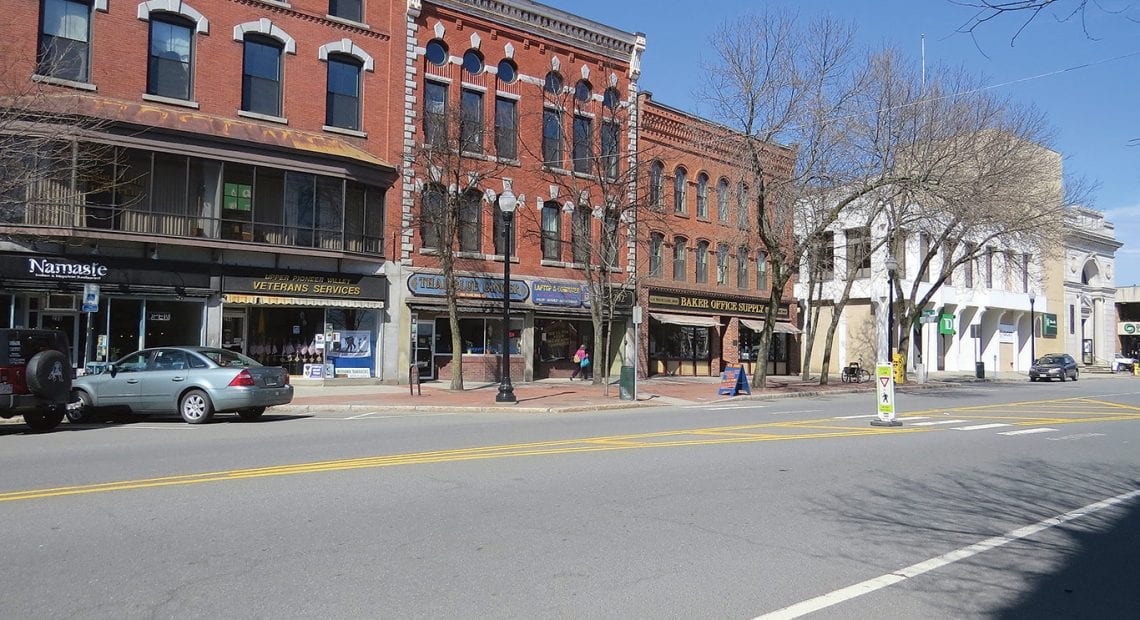
Community Spotlight

Community Spotlight

Folks in Western Mass. know they’re often dismissed by residents out east, Lisa Stowe says. So how does a city like Westfield make its case as a vibrant destination for a business looking to plant roots?

By working together.

That’s exactly what a handful of partners — municipal leaders, Westfield Gas + Electric (WG+E), Whip City Fiber, the Greater Westfield Chamber of Commerce, and corporate sponsor Westfield Bank — have done by launching Go Westfield, a still-evolving engine to encapsulate what makes this city a desirable landing spot, and, more importantly, tell people about it.

“We worked on this for six or eight months,” said Stowe, marketing and communications specialist for WG+E. “We want to use this opportunity to highlight what makes Westfield unique and a good place to do business. So many people think Massachusetts stops at 495, but there are a lot of things that are not so great about living in that part of the state — cost of living, high traffic, the cost of buying a piece of land. We wanted to draw attention to the things that make Westfield really attractive for people who are looking to relocate.”

The partners in Go Westfield had been doing that, to varying degrees, in their own ways, she added, but a focused partnership allows them to broadcast the message more efficiently.

“If you’re a site selector, we check a lot of boxes,” Stowe said, citing not only the city’s access to Mass Pike, an airport, and rail service, but its strong inventory of developable land — not to mention the municipal utility.

“If you’re a commercial customer, you pay 18% less than the state average for electricity, and 13% lower for gas rates than the state average,” she added. “If you’re an organization doing manufacturing, that’s significant. We feel that’s a good piece of the story to tell.”

Kate Phelon

Kate Phelon

“We really want to promote our city and the positive aspects of it. It’s an ongoing joint effort to drive the message that businesses should come look at Westfield to develop. We have quite a bit of developable land, but how do you get the word out to a company in Texas or Minnesota?”

So is Whip City Fiber, a division of WG+E that now reaches 70% of residences and businesses with high-speed internet. “The fiber project is a big deal,” she said, noting that customers like not only the speed, but the fact that service comes from a local company, not a national behemoth. “We’ve easily met the targets we had set in the business plan.”

Kate Phelon, executive director of the Greater Westfield Chamber of Commerce, said early meetings with the Go Westfield partners focused on how to promote the economic-development landscape in Westfield.

“We wanted a way to really persuade businesses to come to Westfield,” she told BusinessWest. “There are the usual assets everyone knows, like the turnpike exchange, airport, and rail, but we wanted to get a group of stakeholders together and come up with a marketing plan for all of it. We’re very excited about this initiative. There’s a local component to it, but the bigger initiative is a push outside the region to get companies to look at Westfield for commercial developments.”

The group has been discussing marketing strategies as well as ideas like industry-specific focus groups.

“We really want to promote our city and the positive aspects of it,” she said. “It’s an ongoing joint effort to drive the message that businesses should come look at Westfield to develop. We have quite a bit of developable land, but how do you get the word out to a company in Texas or Minnesota?

Westfield also boasts strong schools, a state university, and proximity to numerous other colleges, she added, as well as a chamber of commerce that continually strives to keep businesses informed of state and national trends and developments that could affect them.

In short, the Whip City has a lot going for it, and Go Westfield is just starting to broadcast that message far and wide.

Heart of the City

Meanwhile, the Elm Street Urban Renewal Plan, approved in 2013, focuses on revitalizing 4.88 acres in a two-block area in the heart of downtown Westfield running along both sides of Elm Street, the city’s main commercial thoroughfare. The city has also directed funding to revitalize the so-called Gaslight District adjacent to it.

One recent success story is the $6.6 million Olver Transit Pavilion, which opened in April 2017. The transit center was designed to both catalyze related economic development and increase the use of public transportation. The state-of-the-art center includes parking space for four buses with bicycle racks, as well as a bicycle-repair station, which speaks to the proximity of the Columbia Greenway Rail Trail only a block away.

The Westfield Redevelopment Authority also demolished a former bowling alley near the transit center, with plans to create a multi-story, mixed-use building with retail, restaurants, office space, and market-rate apartments. The city recently issued a request for proposals for the project, taking advantage of the area’s designation as an ‘opportunity zone,’ a state program that provides tax relief for people willing to invest in certain neighborhoods in need of economic development.

“The PVTA project was the first phase of renewal,” said Peter Miller, Westfield’s director of Community Development. “We’re looking for private development to get some mixed-use retail space on the ground floor, and residential space on the top floors.”

Joe Mitchell, the city Advancement officer, noted that Millennials in particular are drawn to urban, mixed-use living, one reason why such projects have popped up around the region in recent years.

“A three-bedroom house and a white picket fence on a half-acre is not what young people are looking for,” he said. “They want a coffee shop downstairs and a bike rack, and being part of a tight-knit community where there’s activity going on right at their doorstep.”

Another $25,000 in state money will soon fund a wayfinding project for downtown, not just to point visitors to destinations off the main thoroughfare but to help them access parking as well. “We have sufficient parking in our downtown, but people don’t always know where it is,” Miller said. “This infusion of money from the state will allow us to better direct people to where the parking is.”

Phelon noted that the city recently switched all on-street parking, which had been a mix of one-hour and two-hour time limits, to two hours across the board — a small change, maybe, but a good example of how quality-of-life issues can be communicated and remedied across departments.

The momentum downtown has spurred some organic growth, too, Mitchell added, noting that Myers Information Systems is relocating there from Northampton, bringing 20 software-development professionals and renovating 110 Elm St., which used to be a restaurant with industrial space above it.

“They’re moving from an urban, walkable space they’ve outgrown in Northampton to buying one of our old buildings and investing private dollars here,” he added. “It was an extremely underutilized building, and they’re converting it into modern office space. They have a real vision for it.”

He doesn’t think Myers will be the last to make that move. “One of the reasons to relocate to Westfield is that we’re at the cusp of something, and people want to be a part of it.”

Back to School

Phelon says Westfield has accomplished more in recent years because of its culture of collaboration. One example is the Westfield Education to Business Alliance, which connects the city’s schools, where students are beginning to contemplate their career paths, with companies that are eager to mine local talent.

At a time when the state is looking for public schools to forge more meaningful pathways to economic development, she added, the alliance puts the Whip City at the forefront of an important trend.

Westfield at a glance

Year Incorporated: 1669
Population: 41,552
Area: 47.4 square miles
County: Hampden
Residential Tax Rate: $19.36
Commercial Tax Rate: $36.82
Median Household Income: $45,240
Median Family Income: $55,327
Type of Government: Mayor, City Council
Largest Employers: Westfield State College, Baystate Noble Hospital, Savage Arms Inc., Mestek Inc., Advance Manufacturing Co.
* Latest information available

She said the next phase could be an adopt-a-classroom program in which area businesses could engage repeatedly with a teacher and his or her students. “I also think we need to get students and teachers into the business world on a regular basis. The work environment is changing so rapidly, with technology and robotics and social media.”

Because of this, she went on, it would benefit teachers to see what employees at area companies do on a day-to-day basis, and how. “That’s what they need to be teaching, so they need to see that.”

The Westfield Education to Business Alliance also facilitates a career fair at Westfield High School that gives students exposure to the types of career opportunities available at local companies — and, more important, what skill sets they will need to take advantage of them.

The goal of the next career fair will be to attract 75 companies, up from 51 last time, to interact with the 500 or so students who show up.

“It’s not a job fair; it’s a career fair,” Phelon stressed. “The message is twofold: for students to see what companies are here, and see that they can go away to college and come back here and get good jobs. It’s also good for these students to talk to these employees about their hiring practices, what degree do I need, should I expect a drug test or a CORI check, what are your procedures. And they could talk to students about internships and co-ops.”

The alliance one of many examples of how Westfield continues to bring people and organizations together to raise the fortunes of all.

“The mayor [Brian Sullivan] has been very supportive of these collaborations,” Miller said. “He made building bridges his theme. That’s how we’ll get the most out of the assets we have — not by operating in silos.”

Phelon agreed. “We have our individual purposes and missions, but there’s a bigger picture of working together and collaborating. It’s such a great city, and we’re fortunate to have the assets we have.”

Now it’s time to let everyone know it.

Joseph Bednar can be reached at [email protected]
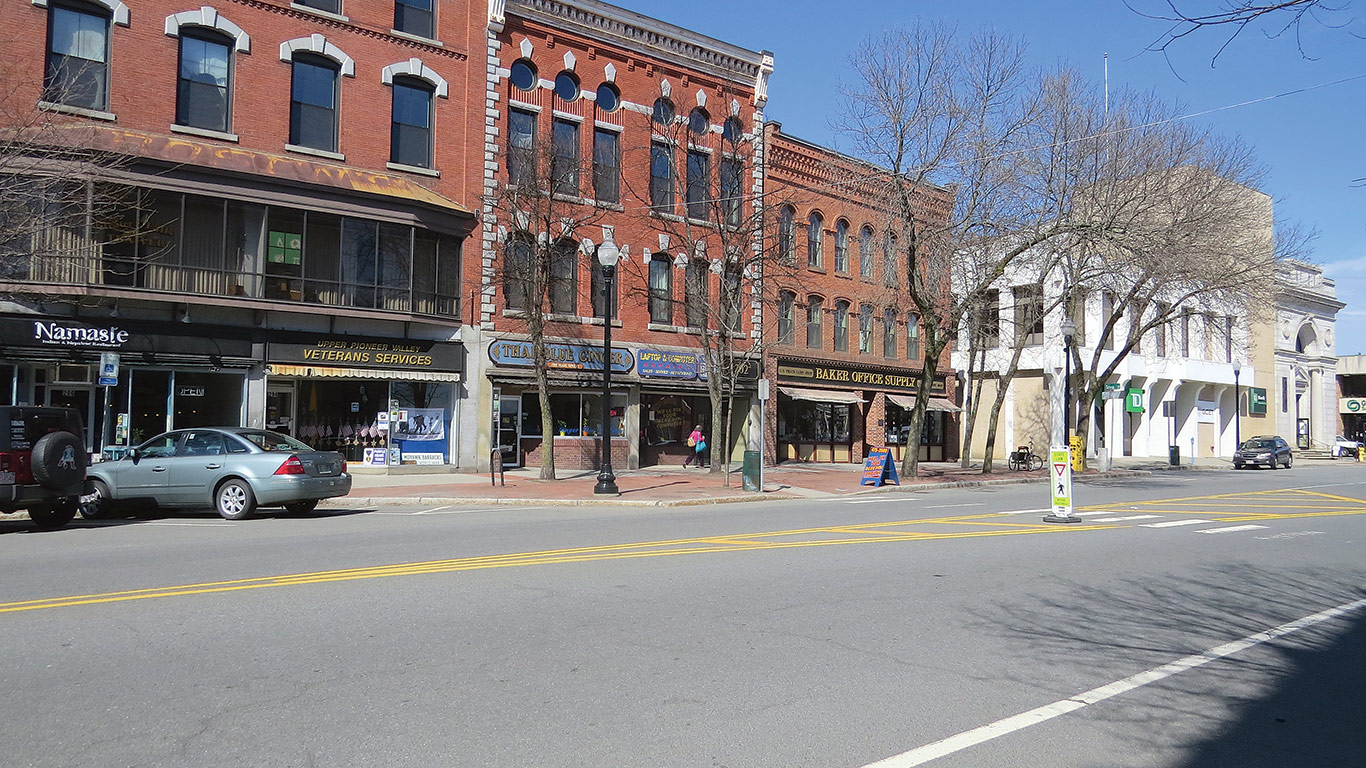
Community Spotlight

Community Spotlight

Once a dominant retail force, Enfield Square Mall has struggled in recent years.

Once a dominant retail force, Enfield Square Mall has struggled in recent years.

While Laurie Whitten doesn’t think the recent opening of MGM Springfield, a few miles north over the Massachusetts border, is a negative, neither is she convinced the incoming traffic does much for nearby Enfield, Conn. The same goes for a casino expected to open in East Windsor, Conn. in the spring of 2020.

“For the most part, casinos are pretty much on their own,” said Whitten, Enfield’s recently appointed director of Development Services. “A lot of people think if you’re across the street, you’ll get all sorts of business, but for the most part, people leave and don’t go shopping or out to eat.”

The way she sees it, any benefit to nearby towns, like Enfield, might be in housing or hotel development, as workers new to the area might be looking for somewhere to live, and casino visitors increase demand for hotel rooms. “That’s where the trickle-down would be when it comes to development.”

But Enfield isn’t looking to surrounding towns for energy, she added; instead, it’s busy creating its own — and she’s excited about the future.

Take the planned transformation of the Thompsonville neighborhood on the Connecticut River, with an intermodal transit center as the centerpiece of a walker-friendly village.

Part of this effort is a river-access project to be funded through a $3.4 million Federal Highway Administration grant. The bulk of the money is being used for riverfront improvements, including the construction of a biking and walking path from Freshwater Pond to the riverfront.

In addition, last year, Eversource signed an access agreement with the town to allow environmental site assessment work to be done to determine the extent of contamination on its North River Street property near the station. TRC Solutions is under contract to perform the work.

Depending on the results of that survey, if the site needs to be remediated or capped, the transit center could be looking at a three- to five-year timeline. In the meantime, the state will build a basic rail station, with an elevated, double-tracked platform on each side. Later on, the town will build in some parking, bus facilities, and outdoor recreation, including walking trails and overlook areas so people can enjoy the view of the river.

Enfield at a Glance

Year Incorporated: 1683
Population: 44,654
Area: 34.2 square miles
County: Hartford
Residential Tax Rate: $33.40
Commercial Tax Rate: $33.40
Median Household Income: $67,402
Median Family Income: $77,554
Type of Government: Town Council, Town Manager
Largest Employers: Lego Systems Inc., MassMutual, Retail Brand Alliance, Enfield Distribution Center
* Latest information available

“There are a lot of different things happening down there,” Whitten said. “We’re certainly working toward being prepared for a new train station and focusing on some adapted reuse of dilapidated buildings down there. We will also be adopting new regulations for downtown Thompsonville, promoting mixed use and higher densities in that area.”

Meanwhile, a Complete Streets plan with new bike paths is under consideration, and renovations at the former St. Adalbert School, which stood vacant for 12 years, are almost complete as developer William Bellock turns it into an apartment building with 20 one-bedroom units, less than a quarter-mile from Town Hall.

“When you’re developing transit-oriented development, the idea is to create higher density,” Whitten said. “Millennials, especially, like to live someplace where they don’t need a car. With high density, they can walk to the train station or ride a bike.”

Moving In

Speaking of housing, development in that sector is on the rise, Whitten noted. “We have some high-end apartments under construction on the north end, and we just adopted some new regulations to allow apartments in transition zones along the I-91 corridor — that would be the transition between commercial, industrial, and residential.”

Meanwhile, a design-district overlay was approved for the Hazardville area of town to promote some historic-style achitecture and mixed use, Whitten said. “We’re also working with developers about the reuse or expansion of some of the larger buildings in downtown, and we just approved a large industrial warehouse distribution center on the south end of King Street, in Metro Park North.”

Enfield has seen an influx of manufacturing, warehousing, and distribution businesses over the past few years, which is a positive for a town that continues to diversify away from its traditional reputation as a retail center. The corridors of Routes 220 and 190, bordering Enfield Square Mall, continue to be a bustling mix of restaurants and retail, but the mall itself, heavily buffeted by store departures over the past decade, doesn’t draw nearly the traffic it used to.

An example is Panera Bread, which was recently approved for an outbuilding in the nearby Home Depot plaza — but will be leaving the mall to get there.

“We’re going to be working diligently to promote smart growth and customer-friendly service, which will probably include some new software; we want to streamline the development process.”

Still, Enfield’s growth in the manufacturing, warehousing, and distribution sectors, as well as a strong uptick in small and sole-proprietor businesses over the past few years — reflecting an entrepreneurial wave the entire region has experienced — remain positive signs.

So are community-building events like the popular Enfield Regional Farmers Market, which runs every Wednesday from July through mid-October, featuring farm-fresh fruit and vegetables, artisan goods, musical entertainment, and a food truck.

Meanwhile, the Thompsonville Community Garden, established a decade ago by the town of Enfield, the University of Connecticut Master Gardener Program, and a grant from the Department of Energy and Environmental Protection, has been a popular program as well.

The garden features 50 raised garden beds, which are rented for the planting season; the rental includes use of tools, seeds, starter plants, compost, water, and educational sessions — and a sense of community for Enfield gardeners who want to grow their own organic vegetables.

Location, Location, Location

Organic growth is something Whitten would like to see on a town-wide basis, of course, noting that Enfield is an attractive location for a number of reasons, including its location between Boston and New York, along I-91, and close to Bradley Airport. “I think there’s a lot of potential in our location,” she told BusinessWest.

That said, she called Enfield a town in transition in some ways, especially when it comes to economic development. “We have a lot of new members on the Town Council, and there’s been a complete reorganization of the Land Use Department. They lose a lot of their top people, so we’re trying to get reorganized and get some good people in there and work as a team.”

Meanwhile, “we’re going to be working diligently to promote smart growth and customer-friendly service, which will probably include some new software; we want to streamline the development process.”

And the development potential is there, she added, pointing again to Enfield’s surplus of available land and possible reuse sites. To that end, officials will be looking at establishing some tax-abatement policies to help businesses access some of those opportunities. “We’re going to be here to help them through the process.”

With the Thompsonville transit center on the horizon and the town continuing to leverage its location and amenities, this community that lies between what will eventually be two casinos is betting big on its future as a business and lifestyle destination.

Joseph Bednar can be reached at [email protected]

Community Spotlight

Community Spotlight

The former Cranwell Spa & Golf Resort

The former Cranwell Spa & Golf Resort is undergoing a $60 million renovation and expansion by the Miraval Group.

As its town manager, Christopher Ketchen is certainly bullish on Lenox.

“If you’re moving to the Berkshires, Lenox has clearly got to be on your radar for many reasons,” he told BusinessWest, adding that he’s one of the more recent converts. “I made the move here myself from the Boston area four years ago. I’m originally from Alford, and when I moved back to this area, I chose to live in Lenox.”

Lenox may be known mainly — and deservedly — for its cultural and recreational attractions, from Tanglewood, the summer home of the Boston Symphony Orchestra, to Shakespeare & Co., to the town’s collection of rustic inns and bed and breakfasts.

But a different sort of economic energy has been bubbling up in recent years, from the small businesses, hotels, and motels springing up along the Route 7 corridor to an ongoing, $60 million expansion and renovation at the former Cranwell Spa & Golf Resort. The Miraval Group, a subsidiary of Hyatt Hotels, purchased the property in 2016 for $22 million and plans to transform it into a high-end wellness resort.

Then there’s the new Courtyard by Marriott, which opened last year and features 92 rooms with panoramic views, an indoor pool, a large patio with firepits, a restaurant, and a 12,000-square-foot event space. Meanwhile, the 112-room Travaasa Experimental Resort at Elm Court, which straddles the Lenox and Strockbridge line, is moving forward as well.

Other projects in recent years include the relocation of Morrison’s Home Improvement Specialists Inc. from Pittsfield and its adaptive reuse of a blighted building that had been vacant for 10 years, an apartment conversion at the Walker Street Residences by the Allegrone Companies, and the construction of Allegrone’s headquarters and co-working office space using green design and technology in a building on Route 7.

Chris Ketchen says Lenox is a draw

Chris Ketchen says Lenox is a draw because of its schools, healthy finances, cultural offerings, and a host of other factors.

“The hospitality industry is probably the biggest economic driver locally,” Ketchen told BusinessWest. “Miravar, the Cranwell development, is still in progress, Elm Court is still in progress, Marriott is up and running. As far as new projects coming in the door, there’s nothing else on that scale today, but that could change tomorrow.”

Moving On Up

In some ways, Lenox doesn’t need the kind of business growth other towns and cities do, because its strengths have long lay in both tourism for visitors and quality of life for residents.

“The town has gotten a fair amount of regional and national recognition in recent years for the schools and for the town’s financial practices,” Ketchen said, noting that Lenox is just one of two Massachusetts municipalities west of the Connecticut River whose finances have AAA ratings from Standard & Poor’s, the other being Great Barrington.

Meanwhile, “our schools are knocking it out of the park year after year in terms of their recognition at both the federal Department of Education and various statewide rankings. The high school ranked number four by U.S. News & World Report, the annual benchmark rating a lot of districts measure themselves by, so a very attractive place for families to locate and make a home.”

Lenox at a glance:

Year Incorporated: 1767
Population: 5,025
<strong>Area: 21.7 square miles
County: Berkshire
Residential Tax Rate: $12.14 
Commercial Tax Rate: $14.98
Median Household Income: $85,581
Median Family Income: $111,413
Type of Government: Board of Selectmen, Open Town Meeting
Largest Employers: Canyon Ranch, Boston Symphony Orchestra, Kimball Farms

* Latest information available

Not wanting to rest on its laurels, Lenox residents recently approved an appropriation to work with regional agencies to update the town’s comprehensive master plan. “The Planning Board is undertaking that as we speak,” Ketchen said, “and we’ve created a housing production plan through the affordable housing committee, so we’re tackling those issues in a thoughtful way moving forward.”

The state seeks 10% of housing units in any town to be affordable, but in Lenox, the current level is just over 7%, based on the 2010 Census.

The town has also been undertaking significant infrastructure improvements in recent years, the latest announcement being a $9 million, federally funded widening and improvement of a stretch of Walker Street, in addition to water and sewer improvements there.

“We’ve been investing heavily in infrastructure through aggressive capital-improvement programs,” Ketchen said.

To address an aging population — the median age of residents is 51, reflecting a trend in other towns in the Berkshires — town officials created a first-time-homebuyers program in 2016 in partnership with four banks that offers up to $10,000 in down payments to qualified applicants. They also changed zoning requirements to make it easier to build new apartments and condominiums or convert older housing stock into appealing residences, as well as adopting a Complete Streets policy that will make the town eligible for state funds to improve connectivity for pedestrians and bicyclists.

Meanwhile, to address a dearth of of market-rate apartments in Lenox, Allegrone Companies completed a renovation last year of the 1804 William Walker House, transforming it into eight market-rate apartments.

The Whole Package

To encourage companies to move to Lenox or expand, town officials have been focused on a five-year open-space plan that was adopted several years ago.

“With our proximity to employment centers in Pittsfield and also Springfield and Albany, there are options for workers who want to make Lenox their home.”

“We have an open-space and recreation plan that was really well-conceived by the Conway School in conjunction with our Land Use Department, and we’re a few years into executing that plan to preserve open space,” Ketchen said, noting projects like a major improvement to Lenox Town Beach at Laurel Lake last year. In addition, the Berkshire Natural Resources Council, the regional land trust, has been working to develop a regional trail network with a long section passing through Lenox.

Add it all up, Ketchen said, and this town of just over 5,000 residents has plenty to offer.

“With our proximity to employment centers in Pittsfield and also Springfield and Albany, there are options for workers who want to make Lenox their home — and it’s a wonderful place to make a home,” he told BusinessWest. “The town is well-managed financially. We have outstanding schools, libraries, and community center. For a town of our size, we’re providing a lot of services for residents of all ages. Our public-safety and public-works operations are some of the best in the business.”

He added that the town’s tax rates are low — $12.14 for residents and $14.98 for businesses — and relatively stable from year to year.

“Couple that with the employment opportunities and the outstanding municipal and educational programs, the arts and cultural amenities of the region, and the recreational opportunities — put that together, and you have a very attractive package.”

Joseph Bednar can be reached at [email protected]
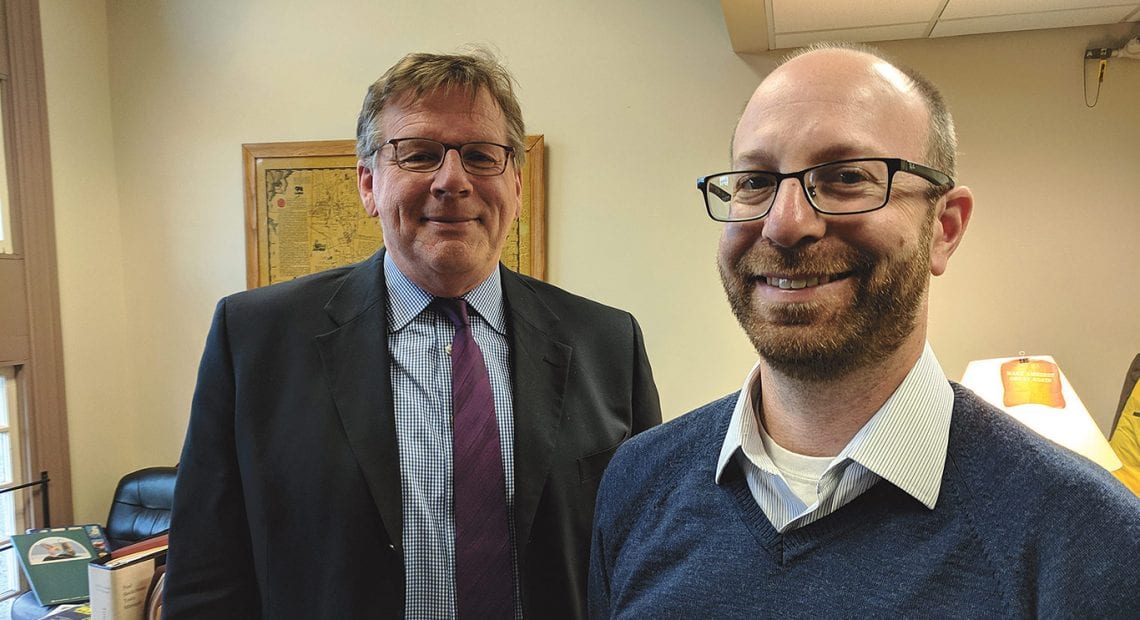
Community Spotlight

Community Spotlight

Mayor Will Reichelt

Mayor Will Reichelt says that West Springfield’s biggest challenge may be a lack of developable land, which places a priority on maximizing existing real estate.

Like just about everyone else in this region, Will Reichelt has circled August 24 on all his calendars.

That’s the day MGM Springfield opens, as most everyone knows, and it’s a day of high expectations and some anxiety. Especially in West Springfield, where Reichelt has served as mayor for nearly three years now.

West Side isn’t the host city for MGM, but it is certainly among those to be the most impacted by the $960 million development that has gone up just across the Connecticut River.

The Eastern States Exposition will handle MGM’s overflow parking on August 24, with a shuttle running between the two locations. And the annual 16-day Big E will begin only a few weeks after MGM opens, creating considerable talk — as well as that aforementioned anxiety — about just what traffic will be like on Memorial Avenue, I-91, the Turnpike’s exit 4, the Memorial Bridge, Route 5, the North End Bridge, and other arteries in and around the city.

“It’s certainly going to be an interesting weekend and couple of weeks, with the Big E opening three weeks later,” said Reichelt, in a classic bit of understatement. “It will be interesting to see how Big E traffic interacts with MGM traffic.”

He added, as others have, that traffic and parking issues in the wake of MGM Springfield fall into the category of good problems to have, at least from a vibrancy standpoint. And looking beyond August 24 and the days to follow, Reichelt is hoping, and perhaps also expecting, that MGM will generate, in addition to traffic issues, some additional development opportunities.

“It will be interesting to see what happens long term as a result of MGM, especially just over the Memorial Bridge, where there are certainly some development opportunities,” said the mayor, referring to some of the retail areas on the eastern end of Memorial Avenue. “People have talked about a hotel, restaurants, and maybe redevelopment of the whole Memorial Avenue/Main Street area.”

More specifically, he was referring to redevelopment of some vacant or underutilized properties there and in other areas within the community, which has been the basic M.O. for this city for quite some time.

Indeed, unlike neighboring Westfield and many other area communities, West Side is, as they say in development circles, ‘land poor,’ meaning that most all developable parcels have been developed. That goes for residential development — although a few new small projects seem to materialize each year — and especially commercial development.

Most of the projects in that latter category have involved reuse of vacant or underutilized property, and examples abound — from the conversion of the former Yale Genton property and some neighboring homes on Riverdale Street into the site of the massive Balise Honda, to the conversion of the former Boston Billiards site just north on Riverdale Street into a new Marriott Courtyard.

The most recent example is the stunning transformation of a former auto body shop just off Memorial Avenue into the home of Hot Brass, an indoor firearm and bow range that opened its doors in early August.

“It will be interesting to see what happens long term as a result of MGM, especially just over the Memorial Bridge, where there are certainly some development opportunities. People have talked about a hotel, restaurants, and maybe redevelopment of the whole Memorial Avenue/Main Street area.”

Reichelt said MGM could help trigger more developments of this kind on sites ranging from the old Medallion Motel property just over the Morgan-Sullivan Bridge linking the community to Agawam and across from The Big E, to the United Bank building on Elm Street street (the bank is moving across the street into space once occupied by Webster bank), to some properties north of I-91 on Riverdale Street, which are in less demand than those on the south side of the highway.

“South of I-91 is the real hot spot; whenever there’s a vacancy, it usually fills quickly,” said Reichelt, adding that the city’s board goal is to the make the area north of the interstate just as hot.

For this, the latest installment in its Community Spotlight series, BusinessWest talked with Reichelt about ongoing efforts to bring more economic development to West Side and make the very most of the property that can be developed.

Developing Story

The ambitious Hot Brass venture, which combines a retail sporting goods store with a 17-lane recreational archery and shooting range, is, indeed, only the latest example of how underutilized properties have found new lives in this community.

And, as the mayor noted, this is out of necessity, because there are very few, if any, developable spaces left in this city, for either residential or commercial development.

West Springfield at a glance

Year Incorporated: 1774
Population: 28,391 (2014)
Area: 17.49 square miles
County: Hampden
Residential Tax Rate: $17.05 
Commercial Tax Rate: $32.90
Median Household Income: $54,434
<strong>Median Family Income: $63,940
Type of Government: Mayor, Town Council
Largest Employers: Eversource Energy, Harris Corp., Home depot, Interim Health Care, Mercy Home Care
* Latest information available

“When I was on the Planning Board four years ago, we approved a subdivision, which I assumed would be the last one,” Reichelt recalled. “But then, when I was a lawyer for the city, they approved another one, and I said, ‘that must be the last subdivision in West Side.”

Developers keep finding ways to shoehorn in smaller residential projects, he went on, but on the commercial and industrial side, the city has essentially run out of real estate.

And, as has been the case for some time now, most development — or redevelopment — efforts have been focused on the two main retail thoroughfares, Riverdale Street, home to countless auto dealerships, the massive Riverdale Shops, a cinema complex, several hotels and motels, and more, and Memorial Avenue, home to more auto dealerships, more retail plazas, and, of course, the Big E.

Both are doing very well, and are in seemingly constant motion, development-wise, said Reichelt, adding that over the past few years, Memorial Avenue had added new Fathers & Sons Audi and Volkswagen dealerships, a Chipotle, a new Florence Bank branch, and, most recently, Hot Brass, and a Sketchers outlet store.

Meanwhile, on Riverdale Street, additions to the landscape include the Marriott Courtyard, a new Pride store (the first one with a full-service kitchen), and a Balise carwash, among others.

But there are opportunities on both main drags for additional development, said the mayor.

On Riverdale, these include the site of the closed Bertucci’s restaurant, just south of the new Marriott Courtyard, and some vacant or underutilized property on the north side of the highway.

As for Memorial Avenue, there’s the former Medallion Motel site, but also the closed Hofbrauhaus restaurant, the site of the closed Debbie Wong restaurant (across the street from the Big E), and others.

The United Bank building on Elm Street

The United Bank building on Elm Street, soon to be vacated by the bank, is one of the keys to bringing more vibrancy to the downtown area.

The Medallion Motel site, at the corner of Memorial Avenue and River Street, is intriguing because of its size and proximity to the Big E, although its location, just over the Morgan-Sullivan Bridge, a site of persistent traffic congestion, is seen by some as a drawback, said the mayor, adding quickly that reconstruction of the bridge and a broad plan to redo all of Memorial Avenue from the Morgan Sullivan Bridge to the Memorial Bridge may change that outlook.

Work is slated to begin in 2021, said Reichelt, with plans calling for maintaining four lanes between the Memorial Bridge and Union Street, with some turning lanes carved out in the center (lack of such lanes leads to considerable congestion), with three lanes between the Morgan-Sullivan Bridge and Gate 9 of the Big E, with turning lanes added on that stretch as well. Meanwhile, there will be a bike path constructed on the Big E side between the Morgan-Sullivan Bridge and Union Street, with bike lines on both sides between Union Street and the Memorial Bridge.

As for the much-anticipated reconstruction of the Morgan-Sullivan Bridge itself, that work is expected to commence after this year’s Big E concludes, said the mayor.

Back on Riverdale Street, one of the main goals at present is to stimulate more interest in the section north of the highway. And for many retailers, it remains a much tougher sell.

“We need to help more people understand that north of I-91 is still Riverdale Road and it’s still a high-traffic area,” he explained. “There are many businesses that have been there forever and they’ve done extremely well.”

But while Riverdale Street and Memorial Avenue get most of the attention, community leaders are also focusing efforts on an often-overlooked asset — what’s considered the downtown area, the stretch of Elm Street beginning at Park Street.

That section boasts the Majestic Theater, a few restaurants, including B-Napoli, the town library, a few banks, and some retail, and has considerable potential as a destination, said the mayor.

“Every mayor says they want to have a Northampton-like downtown,” he told BusinessWest. “And in a way, our downtown suits itself to that, because we have a huge common on Park Street and a smaller common on Elm Street.”

The downtown section is hampered by a lack of parking, as many downtowns are, he noted, adding that a recent renovation of the municipal lot by City Hall to add more than 100 spaces will help.

One key moving forward is the United Bank building, which sits adjacent to the Majestic Theater and is around the corner from the city’s offices.

Years ago, the space occupied by the bank was home to a number of small retail shops, said the mayor, adding that a similar mixed-use role — with residential as possibly part of the mix — could help bring more people, and more vibrancy, to that section of the city.

Meanwhile, there are a number of municipal projects ongoing, everything from construction of a new elementary school, to infrastructure work including water and sewer projects, to ongoing improvements to Mittineague Park, all aimed at making the city a better place to live and work.

Some Solid Bets

Projecting ahead to August 24 and the days to follow, Reichelt said West Springfield residents, those who commute through the city, and even retailers on Memorial Avenue should be ready for what’s to come because they’ve dealt with Big E traffic for years.

“They know what to expect,” he said, adding that long-term, it’s a little harder to predict just what will transpire.

Overall, for the city across the river from the casino, the changing landscape presents many new opportunities to put some older properties to new and exciting uses.

There’s been a lot of that in West Springfield over the past several years and there are very good odds (yes, that’s a gaming industry term) that there will be much more in the years to come.

George O’Brien can be reached at [email protected]
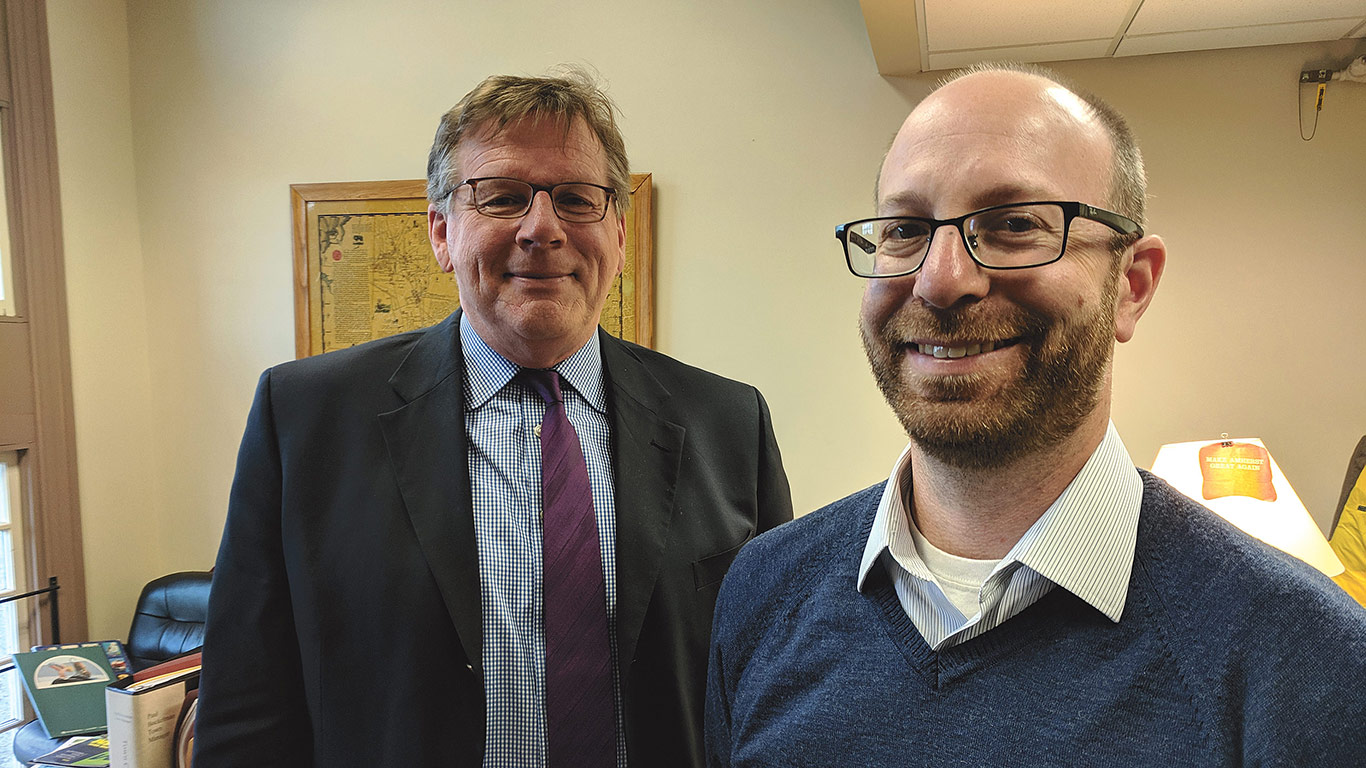
Community Spotlight

Community Spotlight: Wilbraham

Bob Boilard (left) and Jeff Smith

Bob Boilard (left) and Jeff Smith say they’d like to see more civic participation in policy discussions and planning town events.

Being pro-business, Jeff Smith says, doesn’t mean letting just any business set up shop in Wilbraham — but it does mean giving every business a fair shake.

Take, for example, Iron Duke Brewing, which is moving to town after a successful but eventually contentious stay at the Ludlow Mills. Because Wilbraham had no zoning for microbrew and brewpub establishments, the town’s Economic Development Initiative Steering Committee (EDICS) recommended a zoning change that eased the path for not just Iron Duke, but also Catch 22 Brewing, which is setting up shop at the former Dana’s Grillroom on Boston Road.

“One of the reasons why [Catch 22] said they came here was because we had specific zoning for what they wanted to do,” said Smith, the town’s Planning Board chairman, giving one example of how a zoning change can have effects beyond its initial motivation.

“One of the reasons why [Catch 22 Brewing] said they came here was because we had specific zoning for what they wanted to do.”

“When somebody comes into town and is interested in locating a business here and we don’t have specific zoning for it,” he added, “the Planning Department, the Planning Board, and the town itself take a hard look at the zoning and say, ‘is this the type of operation we’d like to see here? Maybe we should put zoning in place, and we can pitch it to the town, and if it’s not appropriate and the town agrees, they can vote accordingly at town meeting.’”

The same thing happened when the town lifted a long-time moratorium on new gas stations. As soon as that happened, Cumberland Farms bought some real estate in Post Office Park along Boston Road, with plans to open a 24-hour facility.

“We tried to have some foresight,” Smith told BusinessWest, adding that the Route 20 corridor used to have five gas stations, but that number had shrunk to two since the moratorium went into effect. “We said, ‘OK, why don’t we allow gas stations?’ It was something a previous Planning Board had put it in, but we said, ‘why? Things have changed. Maybe this is a good time to take a look at this.’ And as soon as we did, Cumberland Farms came in and located here.”

Bob Boilard, who chairs Wilbraham’s three-member Board of Selectmen, said he’s not an advocate of locking up decent, buildable land in perpetuity, or keeping out entire classes of businesses for no reason.

“There’s got to be a common-sense approach,” he said. “There are people in town that would say, ‘let’s stop now. No more building in Wilbraham.’ But you can’t do that. You have to have a tax base and controlled growth to support the town. It’s a balancing act. Open space is great, and we do a great job with that, but we have to consider each individual thing that comes before us.”

Smith added that town officials try to be both reactive and proactive, recognizing current needs but also anticipating future ones. “We want more businesses and more enterprises to locate here in our business district.”

Open for Business

Boilard said the town has worked in recent years to streamline the process for businesses to set up shop there.

“Planning and Zoning have done a great job adjusting things to make it easier for businesses to come in, and when they do come in, they complement us on the ease of communication, the ease of getting things done,” he said. “We don’t put up brick walls every so many feet for these guys; we try to make it as easy as possible to come in and do business in Wilbraham.”

Wilbraham at a Glance

Year Incorporated: 1763
Population: 14,868
Area: 22.4 square miles
County: Hampden
Residential Tax Rate: $22.64
Commercial Tax Rate: $22.64
Median Household Income: $65,014
Median Family Income: $73,825
Type of government: Board of Selectmen, Open Town Meeting
Largest Employers: Baystate Wing Wilbraham Medical Center; Friendly Ice Cream Corp.; Big Y; Home Depot; Wilbraham & Monson Academy
*Latest information available

The nine-member EDICS has been integral to that effort, Smith said. “Let’s say you’re XYZ Inc., and you want to locate your business in Wilbraham. What do you do? What’s your first step? Where do you go? How do you know if there’s zoning for your business?”

One project the group wants to tackle is creating a comprehensive section on the town’s website to answer all those questions.

“They’re proposing updating the website to a more modern platform that’s more user-friendly, and then adding a business or a ‘locating your business here’ page that would essentially have a checklist: the first step is to talk to this person, here’s their phone number, here’s their e-mail.

“That way, people come in prepared,” he went on. “As a member of town government, we hate to have somebody come in unprepared and then have to tell them, ‘hey, you’re going to have to come back to the next meeting, and that’s a month away.’ So if they can get a lot of questions answered and come prepared, it’s smoother for everybody.”

The committee is also looking into creating marketing materials, both online and in print, outlining what Wilbraham has to offer — such as its access to rail and a single tax rate — that make it appealing to locate a business here.

Not every development proposal has gone according to plan. A recent effort to allow a mixed-use development in the town center, in the area of Main and Springfield streets, failed to garner the necessary two-thirds approval at a town meeting, falling short by about a dozen votes.

“It’s a very sensitive area,” Smith said. “One thing I’ve learned in my six years on the Planning Board is that people are very hesitant to change. In the long run, I think we take our time in this town and we do things right, and the end result is good. But in the beginning, there’s an air of skepticism toward changing something — which I don’t think is a bad thing.”

But it can be tricky, he went on, when a developer wants to move forward with a proposal that could create added energy in the center, especially when other mixed-use facilities, grandfathered in when the town put a hold on others like it, already exist.

“People understand there’s some vacant buildings there, and we could make changes that would probably make them not vacant and make it more vibrant,” he explained, “but I think there’s a fear that would be a change they may not like. So we have to tread lightly and move carefully with the center of town and make sure we get as much input from the people of the town as possible.”

In the end, he said, town officials didn’t do the best job conveying why such a development would be a positive. “It was a close vote, which is good because there are a lot of people in favor of it, but at the same time it tells me we have more work to do.”

Changing Times

It’s a challenge, Boilard said, to build a more vibrant town in an age when people’s lifestyles have been altered by technology, declining school enrollment, and a host of other factors. “The generations are changing, and society changes, and that happens everywhere.”

For example, Smith said, the Boston Road business corridor was originally built around retail, but bricks-and-mortar retail establishments struggle in the age of Amazon, and the concept of what a downtown or business center looks like today has shifted immeasurably since the 1970s, or even the 1990s.

“When I was a kid, I would get on my bicycle — I lived near Mile Tree School — and I could drive to the center of town. My dentist was there, Louis & Clark filled all of our prescriptions, the gas station would fix your car or come jump your car in your driveway, my pediatrician was right on the road there, the post office was there, and the village store was there, selling sandwiches and stuff. Everything you needed was there.”

Today, he went on, “you don’t see as many kids out riding their bikes. Those things that I mentioned aren’t really there in one convenient package. Things are different. So we’re trying to put in or modify zoning, potentially bringing some mixed-use components or do something to revitalize those areas, and it’s tough to balance that with … I don’t want to say a fear of change, but there’s an apprehension toward change in the wrong direction.”

Boilard said Wilbraham remains an attractive destination for new residents, with a well-run and well-regarded school system, although real estate in town can be pricey. “It can be hard for new families to come in and be able to afford Wilbraham. I wish we could have an impact on that, but it’s the way economics and demographics are.”

That said, several new subdivisions have gone up in recent years, with a trend toward modestly sized houses, which are selling faster than larger homes, and developers are designing projects accordingly, Smith said.

“Residential growth, in my time here, has been pretty consistent — I would say slow but always moving in the right direction,” he explained. “There’s not a ton of available land in town. The last subdivision to go in was an old farm that was in a family for a long time, and it wasn’t being used as a farm anymore. So a developer purchased it and divided it up and put in a subdivision.”

Compared to other towns in the area, he went on, Wilbraham does a good job of protecting and managing open-space and recreation parcels. “Every time a parcel is brought to the town to be purchased or donated as open space, the town is seemingly in favor of those purchases.”

But controlled growth is the goal, he added, and a balance must be struck between commerce and open space. “There’s a tax base that has to be built, and we try to build it with as much business as we can. We’ve turned down pieces of open space offered to the town — ‘no, we’re all set; put it on the open market, develop the property and get some tax revenue going.’”

Getting to Know You

One area Wilbraham does need to improve, both Boilard and Smith said, is in the area of volunteerism and civic involvement.

“Town events are well-attended, and that’s great,” Smith said, citing examples like the Spec Pond fishing derby, the Run for Rice’s 5K, the Thursday night concert series, the revamped Peach Blossom Festival, and the Christmas tree lighting. “But I would love to see more participation in the planning.”

Boilard agreed. “People complain we don’t have an event, but nobody wants to volunteer to run it. It’s always the same core people stepping up to volunteer,” he said, adding that this trend applies to town-meeting attendance as well.

For example, a recent public hearing on raising the minimum smoking age in town to 21 drew mainly support from the residents in attendance. “Then the phone calls started rolling in — ‘I can shoot a bullet in the Army at 18; why are you doing this?’ I said, ‘where were you Monday night? Why didn’t you come in and talk to us?’”

Smith called the numbers at town meetings “painful” — particularly considering the work that officials put into preparing for them. “I like it when there’s an angry mob in here. That’s good. We want some feedback. But participation could be better.”

After all, he and Boilard said, engaged residents are informed residents, all the better equipped to steer Wilbraham into its next phase of controlled growth.

Joseph Bednar can be reached at [email protected]

Community Spotlight

Community Spotlight

Moe Belliveau says there’s strength in numbers

Moe Belliveau says there’s strength in numbers, and in collaboration, when it comes to promoting a city and its region.

As executive director of the Greater Easthampton Chamber of Commerce, Moe Belliveau has a good view of what has become one of the region’s more unique and energetic small cities.

“There’s a lot of great stuff here, different stuff,” she told BusinessWest. “I think Easthampton has a very eclectic flavor to it, and that just continues to grow. I believe the community really enjoys that about itself and embraces that part of themselves, and helps to nurture that. It’s lovely to be a part of that.”

From its well-established arts culture to its rehabilitated mill complexes to its walkable, dog-friendly downtown, she said Easthampton is, quite simply, a place residents and businesses are happy to call home. “We even have a pond in the middle of our city — who else has that?”

It’s also a community where a raft of businesses have launched recently — many of them catering to leisure time and quality of life, like arts establishment #LOCAL Gallery; restaurants like Daily Operation, a casual eatery, and Kisara, a Japanese and Korean barbecue; and additions to Eastworks like Prodigy Minigolf and Gameroom, the Coffee Mill, and Puzzled Escape Games.

“I like to say that Easthampton’s hip, cool, wow, and now — as is its chamber,” said Belliveau, who arrived to lead the body four years ago after a stint with the Westfield Business Improvement District. Since then, she has been leading a shift from simply organizing events to a more holistic, collaborative approach that brings value to chamber members and creates more vibrancy in the town’s business community.

In short, the chamber has become not only more member- and community-focused, through events like ‘listening lunches’ with area businesses, but also more collaborative with other area communities and their chambers.

“We’ve continued with our listening-lunch program because it’s a good opportunity for us to hear not only what people like, but what people are perhaps yearning for in their chamber, and how we might be able to do things differently — or even to be made aware of things we might not know about. It’s helpful.”

One development from those sessions was the chamber’s universal gift card, which is redeemable at dozens of area businesses. “The chamber gift card was a direct development from that collaboration, and that continues to grow; it’s really popular,” Belliveau said. “I’m very excited and very proud of that.”

It’s one way Easthampton’s is creating energy and buzz in its growing business community — and it’s far from the only way.

Regional Approach

Take, for example, a new partnership with the Amherst Area and Greater Northampton chambers, called the Hampshire Regional Tourism Council. Among its first accomplishments was the publication last September of the first Hampshire County Tourism Guide, a colorful, comprehensive compendium of the three communities’ restaurants and hospitality businesses, tourist attractions, recreational opportunties, shopping and wellness options, and more.

“I’m really very proud of this; I don’t know how many tourism guides actually have this look and feel,” Belliveau said. “As Easthampton continues to grow into — or already is — a destination city, it’s a really great tool that highlights who we are, what we do, and why we do it.”

The concept behind the three-city collaboration is that Easthampton, Northampton, and Amherst are all known for arts and culture, food, and a generally eclectic mix of businesses that both serve residents and draw tourists — but they’re different from each other in many ways, too, and by promoting themselves as one mini-region, the hope is that all will benefit.

Easthampton at a glance

Year Incorporated: 1785
Population: 16,059
Area: 13.6 square miles
County: Hampshire
Residential Tax Rate: $16.00
Commercial Tax Rate: $16.00
Median Household Income: $45,185
Median Family Income: $54,312
Type of government: Mayor, City Council
Largest Employers: Berry Plastics Corp., Williston Northampton School; National Nonwovens Co.
*Latest information available

“Don’t we all have our own flavor?” she asked rhetorically. “Yet, we add to each other’s energy and strengths, and we work quite well together. We enjoy partnering, and we do it quite often during the year. We’re looking to publish our second edition this coming September, so we’re currently pulling that together.”

Such collaborations, Belliveau said, have always been important to her. “I feel like we all have our own voice and our own character and identity, but I think when we come together, we add value for our members, and there’s strength in numbers.”

Another example is “The Art of Risk,” a women’s leadership conference the Greater Easthampton Chamber presented last fall in collaboration with the Greater Holyoke Chamber. It featured keynote speaker Angela Lussier, founder of the Speaker Sisterhood, a business devoted to helping women find their voice.

“That event was a sold-out success, so we’re looking to do that again,” Belliveau said, referring to the second annual conference, slated for Sept. 28 at the Log Cabin in Holyoke, featuring keynoter Valerie Young, an author and public speaker who’s also an expert on the impostor syndrome, a common psychological pattern that breeds doubt and fear in potential leaders, and keeps them from realizing their potential.

The event will also feature morning breakout sessions in “The Art of Self-promotion,” “The Art of Leadership,” “The Art of Balance,” and “The Art of Storytelling,” followed by an afternoon panel featuring local women sharing personal stories of personal or professional risk.

Other workshops organized by the chamber, both alone and in collaboration with other groups, have convinced Belliveau there’s an appetite for such outreaches, especially those that are interactive in design.

“It’s really helped me to see what kinds of information the business community finds helpful. It’s not just sitting all day listening, but adding tools to their toolbox,” she told BusinessWest.

“I like to say it’s not your grandfather’s chamber anymore,” she went on. “What’s really very exciting to me, in addition to these events, is the relationship that we’ve been able to foster and nurture with the city. We value them, and they value us as contributing partners to the economic-development team. So that’s been pretty exciting.”

Art of the Matter

Even the city’s cultural events reflect this desire for collaboration. For example, #LOCAL Gallery will open a new exhibit on July 14. The 12 artists displaying their works in “An Excursion in Color,” organized and curated with the help of color consultant Amy Woolf, will be joined by Prindle Music School owner Dan Prindle and musical guests to provide entertainment. Meanwhile, flowers from Passalongs Farm & Florist will add more aesthetic appeal to the event.

“There’s a lot of great partnerships, a lot of great collaborations going on,” Belliveau said. “A lot of nonprofits like to collaborate and work together, from the schools to the arts community. I really enjoy being a part of that.”

The city also continues see a continued reuse of old mill buildings — as one example, Erin Witmer opened the Boylston Rooms, a quirky meeting and event space, in the Keystone building on Pleasant Street last year. Meanwhile, Easthampton’s three breweries — Fort Hill, Abandoned Building, and New City — continue to grow, while Valley Paddler, launched last year, has been a success offering paddleboats for use on Nashawannuck Pond.

An eclectic mix? For sure. Bealliveau says Easthampton is a community that continues to attract residents and businesses to its navigability, the services offered by a wide range of small businesses, its focus on the arts as an economic driver, and much more. And she plans to continue bringing as many of those entities together as she can.

“Nobody needs to be out in front, if that makes any sense,” she told BusinessWest. “We’re all running in the same race. Actually, it’s not even a race. The goal is the same, and we all have our different perspectives on that, which just makes the endgame all the richer. And I’m not sure I’ve ever experienced that before. It’s exciting.”

Joseph Bednar can be reached at [email protected]

Community Spotlight

Community Spotlight

Agawam Mayor William Sapelli

William Sapelli inherited a long to-do list when he took on his new role as mayor, from infrastructure projects to economic-development concerns, and has only added more items to that list.

Very soon after William Sapelli announced he would be retiring as Agawam’s superintendent of schools — ending four decades of work in education — people started suggesting that he run for mayor that fall.

“They said, ‘you have the skill set — you have a $45 million school budget, which is half the town budget, you deal with 700 employees, you’ve negotiated five contracts, and you know all the city departments,’” recalled Sapelli, who took the suggestions under advisement and eventually took the idea to his family.

At first, he recalled with a laugh, he interpreted their unbridled support as perhaps a loud hint that they weren’t ready to have him home full-time. But soon they convinced him, as did others, that their backing was grounded in the belief that Agawam needed a change — and a fresh perspective — in City Hall. And that he could provide it.

Although he eventually embraced the calls for him to seek the corner office, Sapelli rejected recommendations that he formally announce his intentions before he actually retired almost a year ago (early July, to be exact) because he wanted to avoid any and all suggestions that he might be using the resources of his office as superintendent to help gain the mayor’s chair and focusing on his next job before he finished up in the one he was in.

“I got in late — I was really behind the 8-ball, and people said you can’t get in that late,” said Sapelli, who nonetheless triumphed in the September primary and then the November election. And he attributes that victory, in large part, to his message of needed change and the promise that he can provide it.

“This sounds corny, but I grew up here in town, and I care about this town,” he told BusinessWest. “I personally didn’t like the way things were going; it seemed that elected officials weren’t really getting along. It seemed like things were going off the rails — people not communicating, people sniping at each other — and I thought we could do better, and do better for Agawam.”

Five months in, he said the office is, well, busier than he thought it would be, in part because there are a great many meetings and official functions at which his attendance is required, or at least requested. But another big part of it is that Sapelli inherited a lengthy to-do list, and he’s only added more to it.

Among those line items are a host of important infrastructure projects, especially the rebuilding of the Morgan/Sullivan Bridge, which connects Agawam to West Springfield. There are also specific business concerns, such as the nagging question about how to inject new life into the tired commercial district known as Walnut Street Extension, home to the now-infamous Games & Lanes, which no longer exists; however, the problem of finding a new use for the property does.

And then, there are broader, more complex business and economic-development concerns, such as Agawam’s notorious — and in many ways debilitating — spot-zoning practices.

“There’s so much spot zoning in Agawam … our system is so archaic,” said Sapelli with some exasperation in his voice. “In most communities, it’s an issue; in our community … well, I’ve had the experts from the Pioneer Valley Planning Commission get involved through a grant we received, and they used the word ‘unique’ to describe the problem.”

To address it, Sapelli has created a zoning-review committee, which is expected to make some recommendations in the months to come.

An even bigger issue — although the zoning problem is quite extensive — is the recognized need (on Sapelli’s part, anyway) to make the city more business-friendly.

Walnut Street Extension

Improving the Walnut Street Extension area remains a problem without an immediate solution in Agawam.

“People ask how we can become more business-friendly, and one of the ways is to expedite the permitting process,” he explained. “From what I was hearing from individuals who came in and tried to start businesses and get permits for different things was that it took longer than they expected. I thought it was important to go out and try to make this community attractive to businesses.”

For this, the latest installment of its Community Spotlight series, BusinessWest talked at length with Agawam’s mayor (he’s no longer the ‘new mayor’) about the challenge he accepted and how he’s working to fulfill that campaign pledge of bringing positive change to the community.

Learning the Ropes

As he provided a chronology of a career in the Agawam school system that began when Jimmy Carter was in the White House, Sapelli said there were a number of stops.

They started with a stint coaching junior-varsity hockey and substitute-teaching assignments at the high school. A year later, he was coaching the varsity team and teaching social studies at the junior high. Later, he taught science for six years, then became assistant principal at the middle school, then an elementary-school principal, assistant superintendent, and, starting in 2011, superintendent.

During the campaign last fall, he encountered — and earned a good deal of support from — people who were students during each one of those stops. When it came to people making such claims about the earliest stages of his career, he admits to having to take their word for it.

“People will say, ‘remember when I had you in school?’” he said. “And I’ll say, ‘I don’t think you looked like this when you were 10 or 12, so I don’t recognize you, but I believe that you were one of my students.”

Support from all those former students and colleagues was certainly a factor in Sapelli’s rather large margin of victory over former City Council President Jimmy Cichetti last November.

As was, he believes, the desire for change in a community that had seen little progress on many of the key issues facing it — and his ability to bring about that change.

“I really thought we could do a better job of having local, city, and state government be a kinder, gentler group, if you will,” he said, “and be able to have open, honest discussions and not take things personally.”

While working to stimulate change and progress, Sapelli is also leading efforts on a number of issues, or fronts, that, as noted, have challenged several of his predecessors.

At or near the top of that list is the Morgan/Sullivan Bridge, the rebuilding and widening of which has been talked about for years. State funding has been secured for the project, and a bid should be awarded shortly, said Sapelli, adding that work was to have started this spring.

But it’s already late June, and construction still hasn’t started, said the mayor, adding that, since work is due to be halted during the 17-day run of the Big E — which is just a few hundred yards to the east of the bridge — in September, there is now a good chance the project may not see much progress this calendar year.

“They may be doing some preliminary set-up work this fall,” said Sapelli, adding quickly that there will be more definitive timelines for this project emerging shortly. “But I don’t think anything major will happen until next spring.”

The bridge, projected to be a two-and-a-half-year project, is an important initiative, he went on, referring to the traffic bottlenecks that are regular — and problematic — for residents and businesses trying to attract people to that area. And during the Big E, the traffic problems reach nightmare proportions.

To ease those problems, the city plans to improve not only the bridge intersection, but also the one a few hundred yards to the north at Springfield and Walnut streets.

Meawhile, improvement of another key intersection, in Feeding Halls on Route 187, is on the drawing board — it has been for some time, actually, said the mayor, adding that is part of approximately $8 million in road, sidewalk, and intersection improvements that will be undertaken city-wide.

While addressing those infrastructure matters, there are a number of specific business and economic-development-related issues that demand attention as well, said Sapelli.

Chief among them is the ongoing issue of Walnut Street Extension. The Games & Lanes property has been razed, said the mayor, and the property’s owner reports there has been some interest, but nothing likely to translate into redevelopment in the near future.

Meanwhile, that property is just part of the story. The Walnut Street Extension area remains a problem without an immediate solution. Last spring, the City Council first rejected a $5.3 million streetscape-improvement project for that area and then a subsequent, scaled-down, $3.6 million initiative.

The strategy moving forward, said Sapelli, is to create what’s known as a DIF (district improvement financing) program for that area. With a DIF, a community can pledge all or a portion of tax increments — additional tax revenue stemming from development or increases in property value — to fund district improvements over time.

“That money gets set aside and earmarked strictly for development in that area that’s mapped out, and that area alone,” said the mayor. “It’s a way of creating a fund to improve that depressed area without using taxpayer dollars or increasing taxes on the people in that area.”

A DIF is a close cousin of the better-known TIF, whereby municipalities may grant property-tax exemptions to landowners of up to 100% of the tax increments for a fixed period. Agawam intends to use both DIFs and TIFs to generate economic development, said Sapelli.

Other specific initiatives include redevelopment of the former Buxton property, later Southworth Paper and Turners Falls Paper, on Main Street, said the mayor, adding that the emerging plan is to subdivide the sprawling plant and attract multiple tenants.

There are also the many smaller retail centers and strip malls within the community, he went on, adding that the town has seen some new businesses come in and fill vacancies, and the goal is to attract more.

As for work on the town’s archaic zoning, Sapelli said his administration is “attacking” the problem.

“It’s going to be a big job, so we’re taking it little bites at a time,” he noted, adding that the Planning Commission has been a big help in this regard. “But we’re going to get it done.”

By the Book

Sapelli said he’s not sure if he’s the only the school superintendent to move the corner office in this region in recent times. But he does know that his route is certainly one that’s not well-traveled.

As his supporters note, he brings considerable experience to the job and knowledge of city departments and how they operate. Those skills have certainly helped him make the transition and advance many different kinds of initiatives.

But his comments — and his body language — convey the message that behind every challenge … there are many more challenges.

He says he’s up for them, because of that dedication to the town where he grew up, and also because he brings a new school of thought to managing this community — literally and figuratively.

George O’Brien can be reached at [email protected]
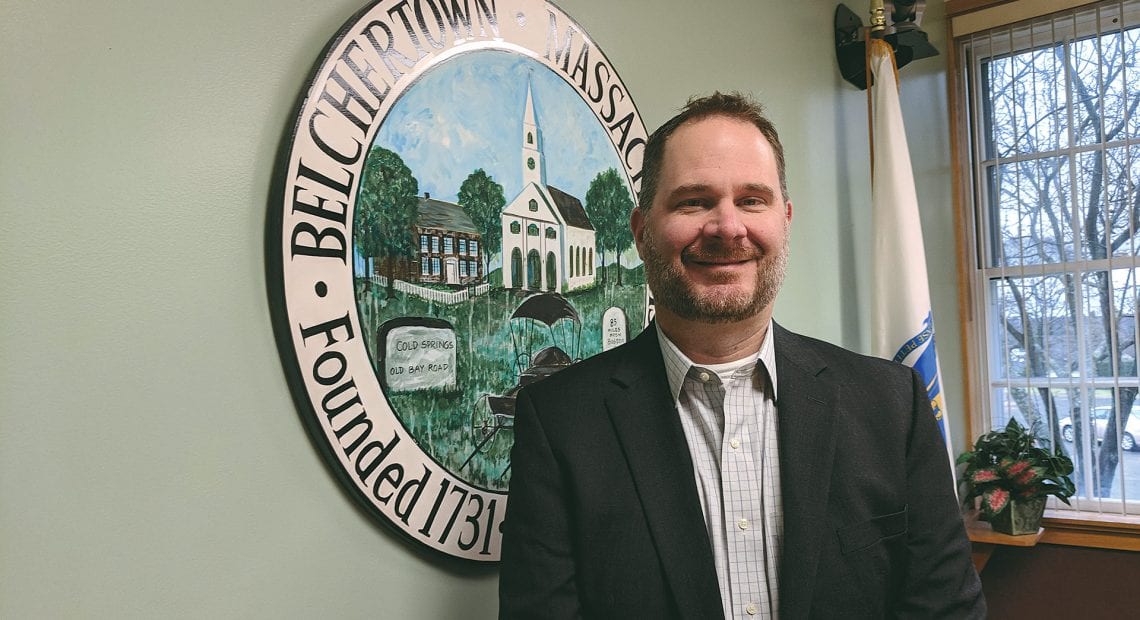
Community Spotlight Features

Community Spotlight

An architect’s rendering of the Ludlow Mills complex, redevelopment of which is an ongoing process.

An architect’s rendering of the Ludlow Mills complex, redevelopment of which is an ongoing process.

Eric Nelson said he recently had cause to look over the occupancy permit issued to Westmass Area Development Corp. for the property now known as Ludlow Mills.

The date on the document — April 2012 — gave him both pause and more evidence that time does, indeed, fly.

Yes, it’s been more than six years since this ambitious project — a blend of both brownfield and greenfield development — was launched, and, for the most part, it is on schedule, said Nelson, president of Westmass for roughly half the duration of this effort.

And by on schedule, he was referring to the pace of development, or redevelopment, at this complex of 60 buildings and adjoining undeveloped land. When it started the clock back in 2011 when the property was actually acquired, Westmass said this would be a 20-year project that would generate $300 million in public and private investments, more than 2,000 jobs, and a more than $2 million increase in municipal property taxes.

To date, there have been several high-profile initiatives on the site, most notably the building of a new HealthSouth Rehabilitation Hospital ($28 million), WinnDevelopment’s overhaul of the structure known as Mill 10 into over-55 housing ($24 million), and several smaller developments.

And there is more on the drawing board, most notably WinnDevelopment’s planned conversion of Mill 8, the so-called Clock Tower Building — because it’s home to the clock tower that is perhaps the most recognizable landmark in this community — into a mixed-used project featuring commercial space on the ground floor and more housing in the floors above. That’s a $50 million project, according to current but very preliminary estimates, that was announced nearly two years ago.

“So far, we’ve either constructed or leveraged $127 million in private and public investments,” said Nelson, tallying up the two completed projects, the announced Clock Tower initiative, and a host of smaller line items, if you will, such as brownfield cleanup, infrastructure work, and other publicly funded initiatives.

The next key milestone for the project is the construction of Riverside Drive, which will open up approximately 60 acres of pre-permitted light-industrial property in the easternmost area of the mill site. A $3.5 million MassWorks grant from the state was earmarked for the project, and Westmass and town officials are working with congressional leaders to secure a matching $3.5 million grant from the U.S. Economic Development Administration to cover the $7 million cost of the roadwork.

The Ludlow Mills project is on schedule, if not ahead of it, in another respect, said Town Planner Doug Stefancik. This would be what could be called the trickle-down effect to the town and the region in terms of jobs and other benefits.

Doug Stefancik says the ‘trickle-down effect’ from redevelopment of the Ludlow Mills complex is already in evidence.

Doug Stefancik says the ‘trickle-down effect’ from redevelopment of the Ludlow Mills complex is already in evidence.

That list would have to include the riverwalk that was inspired by the project and has become a popular recreational facility within the town, as well as the jobs created and kept in Ludlow by the mill project (HealthSouth would certainly fall into that category), the new housing option of the form of Building 10 (many of those with that address were already town residents) and the promise of more at the Clock Tower Building, and early signs of additional vibrancy and new businesses to support those residents and business tenants at the mill.

“As the mills develop, they will generate additional interest outside that area,” he explained. “That’s because now, you’re putting people down at the mills; you have people who are 55 and over in that housing project, and that’s going to carry over into the community.”

Within walking distance, he added, are a post office, a library, restaurants and shops on East Street, and convenience stores. “There is a trickle down; people are getting into their routines [at Mill 10], and it’s going to be a positive for the whole area.”

The mill project is the story in Ludlow, but it’s not the only story, said Stefancik, adding that the community continues to add new residential projects — it has large amounts of developable land, and as the housing market continues to build momentum, more building permits are being issued — and there are infrastructure projects planned that should spur more private investment.

Chief among them is a $6 million project to improve the aptly named Center Street, the town’s main commercial throughfare and the one that handles traffic getting onto and coming off turnpike exit 7 (more about that later).

For this, the latest installment in its Community Spotlight series, BusinessWest turns its focus onto Ludlow and especially a project that recalls the town’s past and will play a huge role in its future.

Milling About

As he talked about the mill project, Nelson said there are obviously a lot of moving parts, and the broad goal is to keep the initiative moving so that those ambitious goals for everything from jobs to tax revenue can be met.

And the construction of Riverside Drive is a linchpin to those efforts, he said, adding that there is an existing road, but it is not adequate to support development of the 60 acres of greenfield in the Ludlow Mills master plan.

The MassWorks grant, secured with the help of State Sen. Eric Lesser and state Rep. Thomas Petrolati, was a big step forward in the effort to secure the needed federal funds, said Nelson.

“It’s a pretty effective argument when you can say to grant-funding agencies, ‘you’re going to pay 50% because there’s another entity that will kick in 50%,’” he told BusinessWest. “It’s a very competitive environment for grants, and it helps to have that kind of support from the state.”

Ludlow at a glance

Year Incorporated: 1774
Population: 21,103
Area: 28.2 square miles
County: Hampden
Residential Tax Rate: $19.01
Commercial Tax Rate: $19.01
Median Household Income: $53,244
Median Family Income: $67,797
Type of government: Town Council, Representative Town Meeting
Largest Employers: Hampden County House of Correction; HealthSouth Rehabilitation Hospital; Mass. Air National Guard; Kleeberg Sheet Metal Inc.
*Latest information available

As noted earlier, there has been considerable momentum created at the site since it was acquired by Westmass. The first triumph was the HealthSouth project, which amounted to new construction, but with use of many materials from the mill complex itself.

And last fall, the Mill 10 over-55 project opened to considerable fanfare. The complex is fully occupied, and there is, according to some reports, a lengthy waiting list for units that do become available.

Not all has gone according to plan, most notably the very public pending loss of high-profile tenant Iron Duke Brewery. A disagreement developed between tenant and landlord concerning the former’s taproom, which, Westmass argued, had become more of a tavern, attracting large numbers of patrons taking up a considerable amount of the mill’s available parking spaces.

The discord has been marked by acrimony, considerable press coverage, and even a little humor — Iron Duke created a brew called ‘Eviction Notice Black IPA’ at one point — and the company is apparently set to take its act to Wilbraham when its lease expires.

But there is still plenty of forward movement at the historic site, developed by Ludlow Manufacturing and Sales Co., which made a variety of products out of Indian-grown jute and employed more than 4,000 people at its high-water mark.

The goal moving forward is to have people working, living, shopping, dining, recreating, and receiving a wide range of services at the site, said Nelson.

And housing will be a big part of that mix, he noted, adding that the success story that is the Mill 10 project provides ample evidence that there is a need for more housing, including units in the affordable, or subsidized, category, and there are 68 of those among the 75 units at Mill 10.

Actually, what’s planned for the Clock Tower Building is what’s called ‘workforce housing,’ meaning that it will not be for those over 55 exclusively, and will be priced for teachers, firefighters, and others at the lower ends of the pay scale.

Nelson noted that $300,000 in Massachusetts historical tax credits have been secured for the project, said Nelson, an important foundation on which to build in the challenging task of financing the initiative.

Meanwhile, there are other forms of progress on the site, he said, including early movement toward locating a restaurant on the property, one that will have views of the river, and reuse of more of the so-called stock houses once used to store jute and other raw materials.

There are roughly 30 of them, and maybe two dozen are occupied by companies doing everything from precision machining to car-seat repair, said Nelson, adding that the goal is to bring more of them into use and thus continue that process of creating a critical mass of people and businesses that generates more traffic at the mill and, ultimately, more momentum.

“The residential component of Mill 10 presents opportunities for other uses that might come in there and pivot off that residential component,” he told BusinessWest. “If we get a critical mass, and HealthSouth certainly helps with this, we get more traffic, more interest, and more people are exposed to the mill; we’re trying to get more interest from that 8-to-5 window.”

And as momentum swells inside the mill, there is a trickle-down effect, said Stefancik, noting, as just one example, that the river walk has indeed become a popular new attraction in town.

“A lot of people now have that as part of their walking routine,” he told BusinessWest, adding that the amenity is drawing people of all ages and making the river something it really hasn’t been for some time — a community resource.

The town is looking to create more momentum with the planned reconstruction of Center Street (Route 21), a project that will include work on the roadway, shoulders, sidewalks, curbs, drainage, and more.

This will be a $6 million project that bring some inconvenience to people traveling on this main commercial throughfare, but ultimately, it will improve traffic flow through the city. Work is scheduled to start this summer.

Overall, there have been a number of new developments in recent years, he explained, listing everything from solar-energy installations — three of them in all — to new condominium and subdivision projects to another brewery, Vanished Valley, all providing ample evidence that Ludlow is a place where people want to live, work, and even generate electricity.

Bottom Line

Time really does fly, and the Ludlow Mills project offers plenty of evidence to that effect.

A project that was launched six years ago amid considerable fanfare and expectation is, as Nelson noted, on schedule when it comes to those measurables such as a jobs, tax dollars, and public and private investment.

It is also on schedule, as Stefancik said, when it comes to the trickle-down effect and creating more momentum within the community.

And, by all indications, the project — and the community — will only build on what has already been accomplished.

George O’Brien can be reached at [email protected]
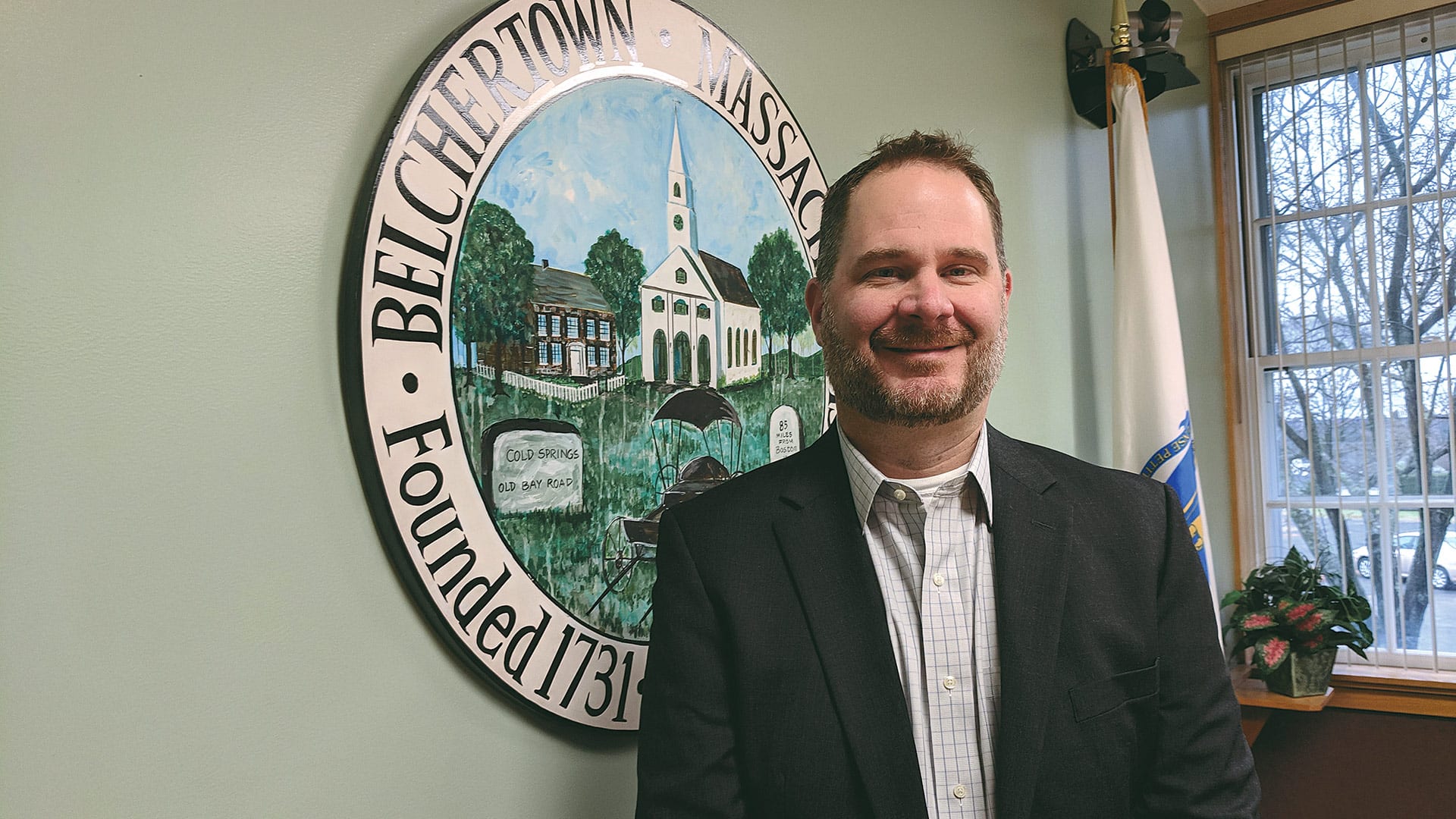
Community Spotlight Features

Community Spotlight

Amy Cahillane says the DNA strives to promote and build on Northampton’s energy, understanding that it has competition from other area downtowns.

Amy Cahillane says the DNA strives to promote and build on Northampton’s energy, understanding that it has competition from other area downtowns.

Northampton’s downtown, Amy Cahillane says, is nothing if not eclectic.

“We have a great mix of businesses,” said the director of the Downtown Northampton Assoc., a two-year-old organization dedicated to boosting vibrancy in the city’s center. “We have a lot of different clothing stores, coffee shops, restaurants and bars — there’s a lot of room to find your niche here.”

She said business owners downtown are very much a network of mom-and-pop outfits that take pride in the district’s economic vibrancy and work hard to welcome new shop owners into the fold as they’re launching their enterprises.

“We’re a community that really works hard to make things attractive and make sure there’s stuff to do downtown, and welcome people in our downtown. We’re not just a Walmart and a Target and a parking lot.”

It’s a place, Cahillane said, where small-business owners, many of them first-time entrepreneurs, have no qualms about asking each other about the smallest details, from the best point-of-sale systems to how to keep customers coming in despite a raft of construction projects making it more difficult than usual to get around and find parking.

“All of our small businesses know it’s tough to take that risk and open your own business,” she said. “Business owners who have been around 30 years have had these conversations a million times — they’re very happy to share information, share stories, and lend support. Nobody wants to see a vacant storefront; people want to support other fellow business owners that are taking that gamble. And a lot of times, these business owners are our neighbors or friends, or kids of our friends.”

Aimee Francaes, who opened Belly of the Beast a year ago with her partner, Jesse Hassinger, can vouch for the support of downtown businesses, adding that such an atmosphere suits a restaurant that has forged some other important relationships — with local farms.

“The concept is ‘comfort food mindfully made,’ she said, noting that all meats are sourced from farms throughout the Northeast — and are smoked and cured on site — and 90% of produce in season comes from the Valley, or just over the border in surrounding states.

“We’re very much focused on being part of the community,” she went on. “And we feel like the community has really welcomed us and brought us into the fold. People tend to be very warm and welcoming, and happy to have us here, and happy to have us so active with local farms. Being on Main Street, right across from Thornes, gives us wonderful visibility.”

Speaking of Thornes Marketplace, which houses its own eclectic range of small businesses, it recently undertook a major renovation of its iconic front entrance, making changes both aesthetic and aimed at preserving the building’s historic elements.

It’s the sort of project that pleases the DNA, a voluntary organization open to property owners, businesses, and city residents, whose members work to improve the business and cultural strength of the downtown area through investments in programming, beautification, and advocacy.

The DNA handles such things as city plantings and holiday lights, and sponsors events that bring visitors to downtown, like the first Summer Stroll and Holiday Stroll, Arts Night Out, and sidewalk sales. The city has also given the DNA a full-time worker who cleans and maintains public property in the downtown business district.

Beyond that, Cahillane said, “we do advocacy, and we make sure the downtown community has a voice at City Hall, that people feel their voice is heard, and that there are public meetings and community forums on issues that will impact downtown, so everybody has a chance to voice their opinions and thoughts.”

The organization rose up after the dissolution of the Northampton Business Improvement District, and has since taken under its umbrella events and projects once handled by the BID and other entities.

“We’re always looking to do new events and create new partnerships,” she told BusinessWest. “We’re open to it all. The focus this year is to tighten up events we already do, but we’re always game to bring new stuff into the fold.”

Positive Trends

Several years into a strong regional economy, indicators such as property taxes, meals-tax revenue, and the number of visitors to the city show plenty of life, and Northampton’s downtown district, home to unique retailers, eclectic dining choices, and active arts organizations, reflects that health.

It can be slightly more difficult to navigate the area, however, thanks to a good reason — the city’s investment in infrastructure on Main and Pleasant streets, which includes ongoing roadwork and utility upgrades, supporting, among other developments, two housing complexes going up on Pleasant Street. Work along that thoroughfare also includes a small park, more parking spaces, and improved sidewalks and bike lanes.

Northampton
at a glance

Year Incorporated: 1883
Population: 28,483
Area: 35.8 square miles
County: Hampshire
Residential Tax Rate: $17.04
Commercial Tax Rate: $17.04
Median Household Income: $56,999
Median Family Income: $80,179
Type of government: Mayor; City Council
Largest Employers: Cooley Dickinson Hospital; ServiceNet Inc.; Smith College; L-3 KEO
*Latest information available

Cahillane said new businesses like Belly of the Beast have entered this landscape with aplomb, while occasional special events shine a spotlight on other businesses, like Sutter Meats on King Street, which ran a successful, two-day pop-up event in conjunction with the Little Truc food truck, serving up pho to sellout crowds.

Typically, she added, retail establishments participate enthusiastically in special events downtown — such as a fundraiser for Hampshire County Friends of the Homeless, in which music groups were stationed downtown, performing and passing the hat — but it’s harder for restaurants to do the same.

“The retailers are always game for everything. The restaurants, when we have events, are so busy with the people who come downtown for these events that it’s hard for them to also simultaneously staff a second, separate thing on that same day. So we try to bring the people downtown and then encourage them to eat at the restaurants. But they’re very supportive of our organization.”

Homestead, which set up shop in the former Ibiza Tapas location on Strong Avenue, is another fairly recent addition to the restaurant scene.

“They are doing very well and have made a lot of local relationships to bring products into their restaurant that are locally sourced,” Cahillane said, before adding that such a designation is par for the course in this city.

“I would say just about every restaurant in our downtown does some version of locally sourced,” she noted. “We have thought about ‘let’s do some sort of downtown festival where each restaurant could feature maybe a locally sourced dish,’ but that’s their whole menu at every restaurant. That’s not a Northampton festival; that’s an everyday reality. But some of them have had some really interesting or unique things that they have done with those local partnerships.”

Cahillane added that there should be more news of new businesses on the horizon. “They’re not ready to make it public yet, but I’d say, over the next six months, there will be some exciting storefronts popping up.”

That’s always a welcome development, she said, because even Northampton, known regionally and beyond for its downtown life, does grapple with occasional vacant storefronts. But in context, and relative to the struggles of many other communities, Paradise City is in a good place.

“I think it’s a great downtown,” she said, “and I think people are looking to come downtown.”

Making Contact

To cultivate that spirit, the DNA conducts monthly meetings with downtown businesses on a variety of topics.

“That’s a great opportunity for them do some networking with new businesses — and older businesses, too — and talk about things that might be mundane to the outside person, but are still important,” Cahillane said. “Recently, there was going to be construction, and some of them wanted to know how people dealt with the scaffolding outside and putting a banner on it. Other businesses were able to say, ‘make sure it’s really big, and make sure there’s not a lot of words on it, because no one’s going to stop and read it.’ So, things like that, which would not necessarily occur to me, are real issues, and we’re able to facilitate some of those conversations.”

Thornes Market

These connections are important in the big picture — one in which individual success stories become shared successes, she added.

“There is a feeling that all boats rise with the tide, that having a beautiful downtown can only help encourage people to come downtown, and there’s a recognition that is only going to happen if everybody pitches in.”

After all, Cahillane noted, Northampton isn’t the only downtown destination in the region, and shouldn’t rest on its laurels or take its visitors for granted.

“We’re fortunate to live in the Valley where there are a lot of great communities, and there are some, like Turners Falls and Easthampton, that are becoming up-and-coming, hip, trendy places to go and hang out,” she said. “Then there’s the casino that’s opening in downtown Springfield.

“We love our downtown,” she went on, “but we don’t want to just assume that everybody else knows and loves it, and I think you risk getting stagnant and a little boring if you don’t work to improve or at least maintain what you already have. So that’s what we’re trying to do.”

Francaes appreciates the effort, as she does the business owners downtown, from the owners of Thornes Marketplace to established restaurateurs, who acted as informal business consultants when she and Hassinger were getting ready to open their doors.

“We haven’t talked to anyone who hasn’t been supportive,” she told BusinessWest. “That’s part of the reason we chose Northampton — that vibe and warm, welcoming spirit.”

Joseph Bednar can be reached at [email protected]
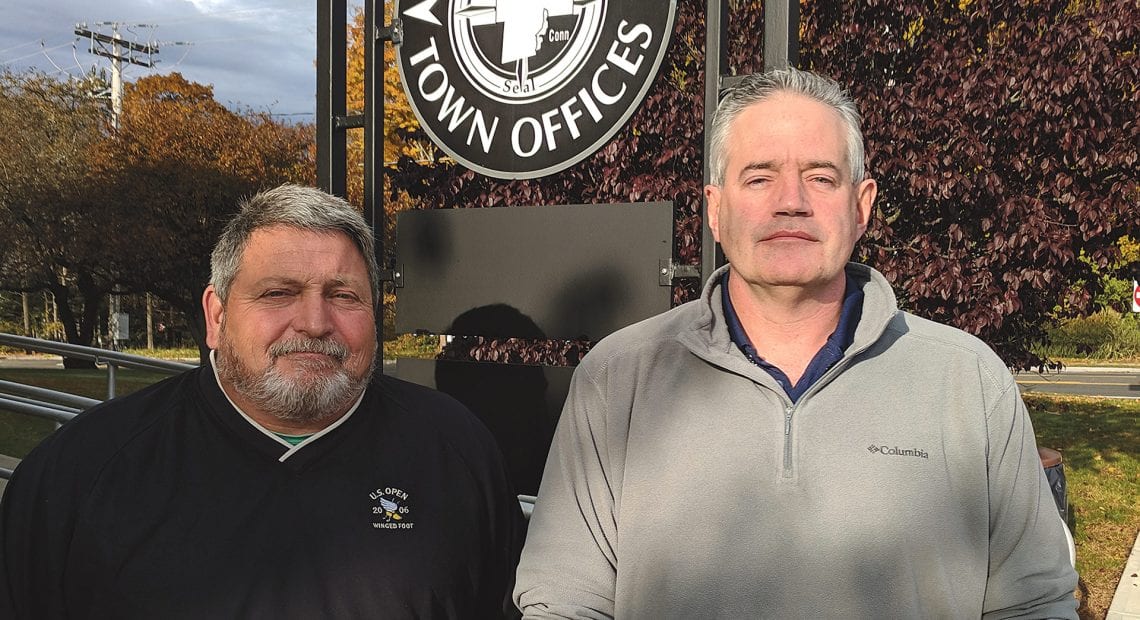
Community Spotlight Features

Community Spotlight

Downtown Greenfield may look the same as it did decades ago, in many respects, but it has evolved considerably and morphed into a true neighborhood.

Downtown Greenfield may look the same as it did decades ago, in many respects, but it has evolved considerably and morphed into a true neighborhood.

Greenfield Mayor William Martin acknowledged that it isn’t exactly a scientific measure of either his downtown’s vibrancy or the efficiency of his long-term strategic plan for the central business district. But it certainly works for him.

He’s being told there’s a parking problem downtown. Actually, he’s been told that for some time. Until recently, the commentary involved the east end of that district by Town Hall, and the chorus was so loud and so persistent that the community is now building a 272-lot parking garage in that area, due to open in the fall.

But now, he’s also hearing that complaint about the east side of downtown, and he’s expecting to hear it a lot more with the opening of the Community Health Center of Franklin County on the site of the old Sears store on Main Street, a facility that will bring more than 100 clients and employees to that location every day.

In the realm of municipal government, parking problems generally, but certainly not always, fall into that category of the proverbial good problem to have, said the mayor, adding that a far worse problem is to have no parking woes — not because you have plenty of parking, but because no one is coming to your downtown.

And that was more the state of things in Greenfield for some time, Martin intimated, putting the accent on ‘was.’

Indeed, while Main Street may look pretty much the same as it did a few decades ago, at least at a quick glance, it is vastly different, and in some very positive ways, said the mayor, adding that his administration’s broad strategy has been to bring people downtown for goods and services and let this critical mass trigger economic development on many levels. And it’s working.

“We thought that, if we can bring people downtown and provide what they need, the free market will take care of people want,” he said, adding that the theory has been validated with everything from new restaurants to live entertainment to offices providing acupuncture and cardiology services.

Jim Lunt agreed. Now the director of GCET (Greenfield Community Energy and Technology), a municipal high-speed Internet provider, and formerly director of Economic Development for the community, he said the downtown has evolved considerably over the past decade or so.

Getting more specific, he said it has morphed from a traditional retail district, as most downtowns are, into more of a combination entertainment district and home for small businesses and startups.

“We’ve focused on small businesses that we can bring in, and we’ve worked a lot to build up the creative economy; our downtown, like many downtowns, looks a lot different now than it did 10 years ago,” Lunt told BusinessWest. “There are a lot more restaurants, a lot more opportunities for more social gathering, as opposed to what people would think of as traditional shopping.”

In addition to social gathering, there is also vocational gathering, if you will, in the form of both new businesses and also a few co-working spaces that are bringing a number of entrepreneurs together on Main Street.

To get that point across, Lunt, sitting in what amounts to the conference room in Town hall, simply pointed toward the window, a gesture toward the building next door, the Hawks & Reed Entertainment Center, which, in addition to being a hub of music, art, and culture, is also home to Greenspace CoWork.

That space, on the third floor, is now the working address for writers, a manuscript editor, a few coaches, a social-media consultant, and many others, and has become, said Lunt, maybe the best example of how Greenfield has put the often long-unoccupied upper floors of downtown buildings back into productive use.

MJ Adams, who succeeded Lunt as director of Economic Development, agreed, and she summoned another term to describe what downtown has become: neighborhood.

She said it has always been that to some extent, but it is now even moreso, with more living options and other amenities in that area.

“We’re starting to look on downtown as more of a neighborhood,” she explained. “We’ve always looked at it as the civic and service center for the county, but people are starting to perceive downtown Greenfield as a neighborhood that has a mix of housing styles, is attractive to a wide range of people, especially young people, has a lot to offer, and is very walkable.”

Greenfield didn’t get to this state overnight, said those we spoke with, noting that the process has been ongoing and more strategic in nature since the official end of the Great Recession and the arrival of Martin in the corner office (both of which happened in 2009).

Mayor William Martin says his broad strategy since being elected a decade ago has been to transform downtown into a hub for a wide range of services and make it a true destination.

Mayor William Martin says his broad strategy since being elected a decade ago has been to transform downtown into a hub for a wide range of services and make it a true destination.

That strategy has involved a number of tenets, everything from creation of GCET, which gives downtown Greenfield an important asset in a county where high-speed Internet access is a luxury, not something to be taken for granted, to a focus on making downtown a destination for a wide gamut of services, from education to healthcare.

For this, the latest installment of its Community Spotlight series, BusinessWest examines how these pieces have come together, and also at how they have positioned Greenfield for continued growth, vibrancy, and maybe even some more parking issues — the ‘good-problem-to-have’ variety.

Hub of Activity

To explain his broad strategy for Greenfield’s downtown, Martin essentially turned the clock back more than 200 years. Sort of.

Back in those days, he explained, Greenfield, anointed the county capital, was a supplier of goods and most services to the many smaller communities surrounding it.

Small steamships and rail would bring goods north on the Connecticut River to Greenfield, he explained, and residents of surrounding towns would make their way to the center of Franklin County to get, well, pretty much whatever they needed.

“I consider that a tradition and also a responsibility,” said Martin, now serving his fourth term. “And that’s what we’ve based our downtown on — providing what people need.”

It also has always done that with regard to government functions, he said, citing everything from the county courthouse, post office, and jail to Greenfield’s library, the largest in Franklin County. But Martin’s goal was to broaden that role to include education, healthcare, and more.

And specific economic-development initiatives, technology, societal changes, the community’s many amenities, and some luck have helped make that goal reality.

In short, a large number of pieces have fallen into place nicely, said those we spoke with, enabling downtown Greenfield to become not only a destination, or hub, but also a home — for people and businesses across a diverse mix of sectors.

These pieces include:

• A burgeoning creative economy that features a number of studios, galleries, and clubs featuring live music;

• A growing number of restaurants, in many categories, that collectively provide a critical mass that makes the city a dining destination of sorts. “There are 13 different ethnic restaurants, there’s some really good bars, several places for live music that weren’t here just a few years ago, and art galleries,” said Lunt. “I think that’s the biggest change downtown”;

• Greenfield Community College, which has steadily increased its presence downtown with a campus that brings students, faculty, administrators, and community leaders to the Main Street facilities;

• The community health center, which will bring a host of complementary services, including primary care, dental, and counseling for emotional wellness together under one roof in the downtown, where before they were spread out and generally not in the central business district;

• Other healthcare services. In addition to the clinic, a cardiologist has taken over an old convenience store downtown, said the mayor, noting that there is also an acupuncturist, a holistic center, a massage therapist, and other healthcare businesses in that district; and

• Traditional retail, of which there is still plenty, including the landmark Wilson’s Department Store.

Actually, these pieces haven’t just fallen into place by accident, said Martin, noting, again, that they have come into alignment through a broad strategic plan and specific initiatives designed to make the downtown more appealing and practical for a host of businesses, as well as number of existing qualities and amenities.

“We decided that we should do everything we can to provide the infrastructure necessary to attract people and entities when the economy turned,” he explained. “And we worked on a number of things that were real problems.”

High-speed Internet access was and is a huge component of this strategy, said Lunt, noting that it has been directly responsible for a number of businesses settling in the city.

Meanwhile, other parts of that strategic initiative include renewable-energy projects that have helped bring down the cost of energy; creation of a Massachusetts Cultural District, which has made the community eligible for certain grants; a façade-improvement project that has put a new face on many properties downtown, and many others.

Destination: Greenfield

The community already had a number of strategic advantages when it came to attracting both businesses and families, said Lunt, noting that, overall, while Greenfield’s location in rural Franklin County is limiting in some ways — contrary to popular opinion, there are actually few available parcels for large-scale developments, for example — it brings advantages in many others.

From left, MJ Adams, Mayor William Martin, and Jim Lunt all see many positive signs in Greenfield’s downtown.

From left, MJ Adams, Mayor William Martin, and Jim Lunt all see many positive signs in Greenfield’s downtown.

Elaborating, he said that many younger people prefer a rural setting to an urban one — for both living and working — and can find most of what they’re looking for in Greenfield.

That list includes a lower cost of living than they would find in Boston, Amherst, or Northampton; outdoor activities ranging from hiking to whitewater rafting; culture; a large concentration of nonprofits serving the county; and, yes, high-speed Internet access, something people might not find 20 minutes outside of downtown.

“It’s a beautiful area, and real estate is quite affordable compared to much of the rest of the state,” said Lunt. “And the Springfield-Hartford metropolitan area is now 1.2 million, and that’s not that far down the road; a lot of people would happily commute for 45 minutes to live here and get to jobs there.”

This combination of factors has attracted a number of young professionals, many of whom may have gone to college in Boston or another big city and started their careers there, but later desired something different, said Adams.

It has also attracted entrepreneurs, said Lunt, including several video-game developers, many of whom now share a business address — co-working space known as Another Castle.

Located on Olive Street in space that until recently housed the Franklin County registry of Deeds, it became home to the video-game developer HitPoint, which was located in Greenfield, relocated to Springfield, and has now moved back. And it has created a co-working space that enables other small game designers to take advantage of shared equipment and facilities, effectively lowering the cost of doing business.

Moving forward, the town’s simple goal is to build on the considerable momentum it has created through a number of initiatives. These include work to redevelop the former First National Bank building, vacant for decades and the last of the properties on the stretch as Bank Row to be given a new life.

The town’s redevelopment authority has site control over the parcel, said Lunt, adding that the next steps involve working with the state, private grant writers, and the city to acquire funds to convert the property into a downtown cultural center to be used for everything from a farmers’ market to perhaps a museum of Greenfield history.

If all goes according to plan, all the properties on Bank Row will be back in productive use for the first time in 40 years, he told BusinessWest.

Another initiative is the parking garage, which has been years in the making, noted the mayor, noting that it took several attempts to secure funding help from the state for the project.

The facility will ease a well-recognized problem, exacerbated by the new county courthouse in that area, and provide yet another incentive for people to come to downtown Greenfield.

As for parking at the other end of Main Street … well, that’s a good problem to have. For now, anyway.

George O’Brien can be reached at [email protected]
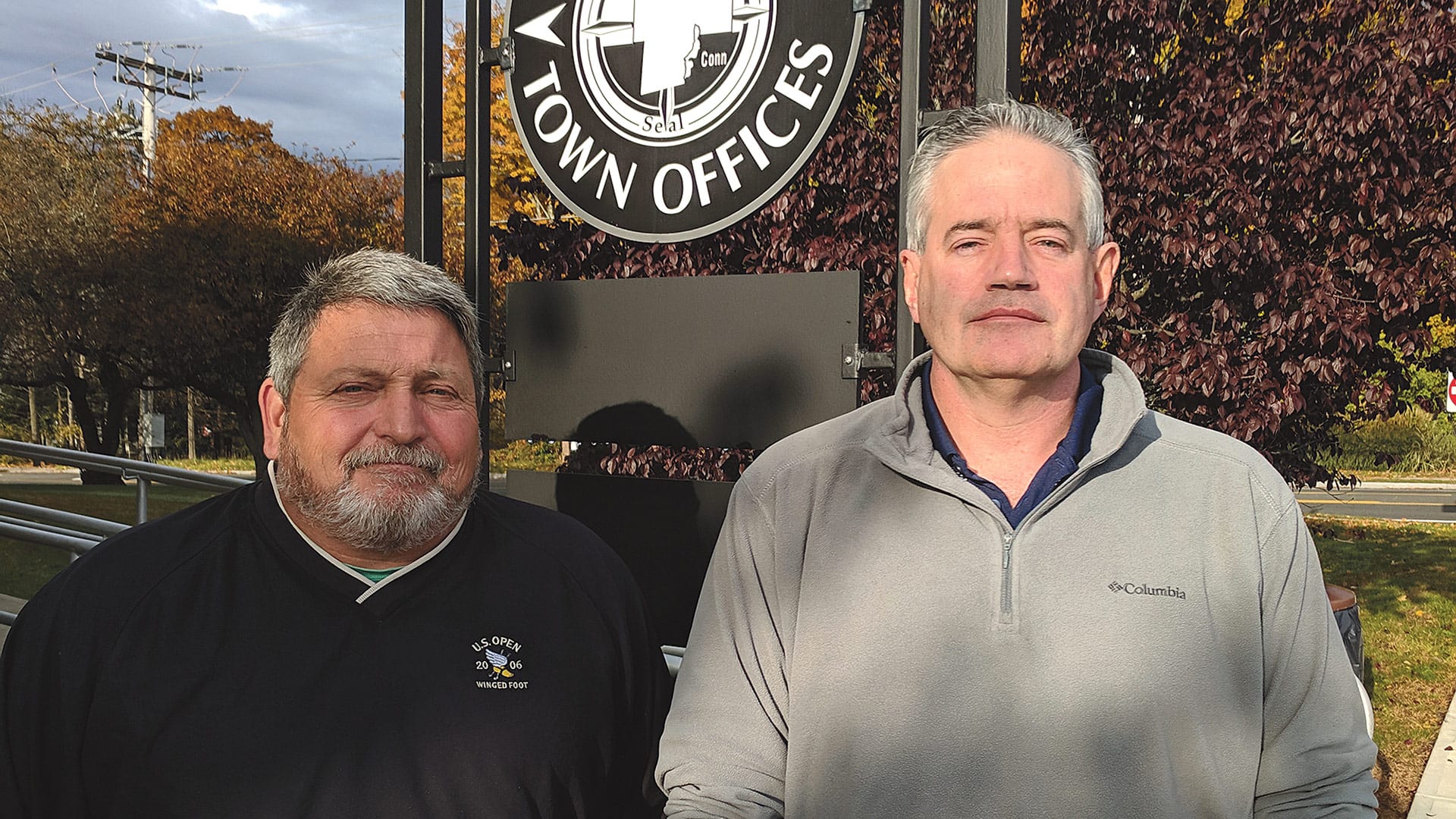
Community Spotlight

Community Spotlight

An aerial view of the Village Commons

An aerial view of the Village Commons, which is at full occupancy, and has been for most of this century.

When Andy Yee talks about South Hadley, he speaks from experience.

All kinds of experience.

He grew up there, went to high school there, lives there still, and now watches his children’s high-school games there. He also does business there — quite a bit of it, actually.

He owns a number of restaurants in that community, including Johnny’s Bar & Grill and Johnny’s Tap Room, both named after his late father, as well as IYA Sushi & Noodle Kitchen, all located in the Village Commons, across College Street from Mount Holyoke College, as well as a bar called the Halfway House Lounge on Summit Street. He described that establishment as the ‘Cheers’ of South Hadley, meaning everyone there knows your name.

They also know the story of how the tavern got its name, which Yee was more than willing to share.

“Back in the day, there was a trolley system running from South Hadley Falls up to the college, and that was the halfway point, the halfway station,” he explained. “It’s a fun little place. We all grew up there; at some point, almost every resident has stopped at the Halfway House.”

Yee told that story to convey the strong sense of continuity that exists in this Hampshire County community, and how many things haven’t changed since the Halfway House started serving pints soon after Prohibition ended more than 80 years ago.

But many things have changed, and for evidence, one need only look further down Newton Street, to one of Yee’s latest entrepreneurial ventures.

He’s one of the principals — Peter Pan Chairman and CEO Peter Picknelly and Rocky’s Hardware President and CEO Rocco Falcone are the others — in a closely watched development at the so-called Woodlawn Plaza, former home to Big Y but more recently a mostly vacant eyesore of sorts.

Retail centers of this type couldn’t be classified as easy money or even a particularly wise investment at this point given the way the retail sector is heading, but this group of entrepreneurs moved to acquire the plaza at auction because of confidence in their abilities to bring new life to it, and also confidence in South Hadley itself.

“You can’t buy properties like this unless they come for sale at the right price,” said Yee, adding that there’s a reason this site was available at auction. “We see this as a good investment, and we have some great partners with great business savvy. We’re not going to sit idle on this property; there’s going to be something unique there for all to enjoy.”

This confidence results from historically steady results in South Hadley when it comes to retail and business in general, but also many recent developments that have secured the community’s place as a reputation of sorts when it comes to everything from outdoor activities to fine dining.

Take the Village Commons, for example. It’s at 100% occupancy, essentially, and has been since roughly the start of this century, said Jeff Labrecque, the facility’s chief operating officer.

“We have very, very little turnover, and when something does turn over, we usually fill it very quickly,” he said before getting his point across by noting that O’Connell Care at Home will be moving its headquarters there in several weeks, quickly claiming a 1,900-square-foot space vacated by River Valley Dental after a consolidation of that operation.

O’Connell’s move brings still more diversity to the Commons, which already had a good amount of it, said Labrecque, adding that it’s home to restaurants and bars, high-end apartments that are in demand (he says there are maybe 50 people on a waiting list, and some have been on it for years), many health and beauty businesses, service agencies, a still-surviving independent bookstore, and a still-surviving two-screen movie theater.

All of this makes the Commons a true destination, he said.

The broader goal is to make South Hadley itself more of a destination, said all those we spoke with, adding that many pieces to this puzzle are in place, and more are coming together.

Range of Initiatives

Mike Sullivan is better known for his time spent serving the community on the other side of the Vietnam Veterans Memorial Bridge — he was mayor of Holyoke for a decade after owning and operating Nick O’Neil’s tavern — but he now resides (professionally speaking) at South Hadley Town Hall.

He’s been town administrator for several years, taking that position after serving the town of Maynard (famous as the home to Digital Equipment Corp., Monster.com, and later Curt Schilling’s ill-fated 38 Studios). In fact, Sullivan’s first day in Maynard was Schilling’s last, and he remembers the town being very upset and frustrated with losing the company, emotions that shifted went it quickly dissolved into bankruptcy. But that’s another story.

This one is about South Hadley, and Sullivan said it has achieved progress in many forms in recent years, including the broad realm of economic development, attracting new companies such as Mohawk Paper and E Ink Corp., and retaining others, such as South Hadley Fuel.

The town is also making headway with recreation-related initiatives such as a bike-share project and what he called the ‘river-to-range trail program,’ which, as that name suggests, is a handicap-accessible trail route that starts at Brunell’s Marina on the Connecticut River and connects to the Summit House in Hadley on Mount Holyoke.

South Hadley at a Glance

Year Incorporated: 1775
Population: 17,514
Area: 18.4 square miles
County: Hampshire
Residential AND COMMERCIAL Tax Rate: $19.93 (Fire District 1), $20.42 (Fire District 2)
Median Household Income: $64,610
Median Family Income: $76,679
Type of Government: Town Administrator, Town Meeting
Largest Employers: Mount Holyoke College, the Loomis Communities, Mohawk Paper
* Latest information available

Such initiatives bring more people to the town and thus the benefits that go with that visitation, he explained.

“These eco-tourism amenities in communities like South Hadley are becoming more and more important,” Sullivan said. “They feed restaurants and other businesses, like those at the Village Commons, like Brunell’s, like McCray’s Farm; we’re hoping that all of those benefit from our investment in the river-to-range trail.”

But easily the most-watched project in the community involves the Woodlawn Project on Newton Street, Route 116.

The goal is to create a mixed-use development, said Sullivan, adding that the town is working to create what’s known as a ‘40R,’ or Smart Growth Zoning Overlay District, at the site, which would allow for more flexibility with regard to both zoning and eventual development. That plan will go before town meeting later this spring.

The site, formerly home to a large Big Y and Food Mart before that, still has a few tenants and is anchored by a Rocky’s Hardware store, but is still largely vacant. The new owners have torn down the 65,000-square-foot former Big Y, have plans for a larger Rocky’s with a garden center, and are hoping to attract more retail at a time when that sector is clearly struggling, but also other types of tenants.

“Retail is struggling, with Toys R Us, BonTon, and other national chains going out,” said Yee, adding that, in many properties like the one on Newton Street, restaurants have become the main anchors.

Elaborating, he said that dining and entertainment businesses have played a major role in making a South Hadley a destination not only for those living in neighboring communities such as Granby, Holyoke, and Amherst, but for residents across the region and even beyond.

This is certainly in evidence at the Village Commons, which has always been a gathering spot, but it is now even more of a destination — because of its array of eateries, but also the diversity of ventures there.

Indeed, there are now more than 70 businesses with that address on their letterhead, and while all of them serve people living around the corner (or upstairs, when it comes to those with apartments in the complex), they are also drawing people from many surrounding communities into South Hadley.

The complex’s many restaurants are perhaps the main attraction, said Lebrecque, noting that there are now several of them. In addition to the Yee family’s offerings, there’s also Tailgate Picnot, Food 101 Bar & Bistro, New Main Moon Café, WOW Frozen Yogurt, and the Mexican restaurant Autentica.

This critical mass gives the Commons both diversity and drawing power, said Lebrecque, who drew comparisons, on some level, to the city of Northampton and its thriving downtown.

“We’ve become somewhat of a food and entertainment destination, just like Northampton,” he told BusinessWest. “That’s a thriving part of our business, and it brings people from all over to South Hadley.”

But retail is also thriving in the Commons, in part because of the foot traffic created by the entertainment options, he went on, citing, as one example, Moxy Boutique.

This is a relatively new addition — it arrived about a year ago — led by an entrepreneur who left a stable, successful situation in Suffield, Conn. for the Commons because of its destination status.

And there are others who would like to gain inclusion on the tenant directory, he went on, but there isn’t any space available.

“The retail is definitely making a thriving comeback — that’s something we’ve noticed over the last few years,” said Lebrecque. “For a number of years, it was hard to get retailers interested in space, but now we have people starting to knock on our door. We have a lot of people who would like to come to the Commons, but we just don’t have the space for them.”

Coming of Age

If that sounds like a good problem to have, it is.

Such a development means your facility — and the community — are in demand, a preferred landing spot, and a great place to live, work, and operate a business.

South Hadley is all of those things, and has been since people starting gathering at the Halfway House Lounge — long before it was called that.

The goal here is to become more of a destination — for businesses, families, outdoor enthusiasts, those looking for a boutique, and those looking for a new weed whacker.

And South Hadley is making strides toward being that destination.

George O’Brien can be reached at [email protected]
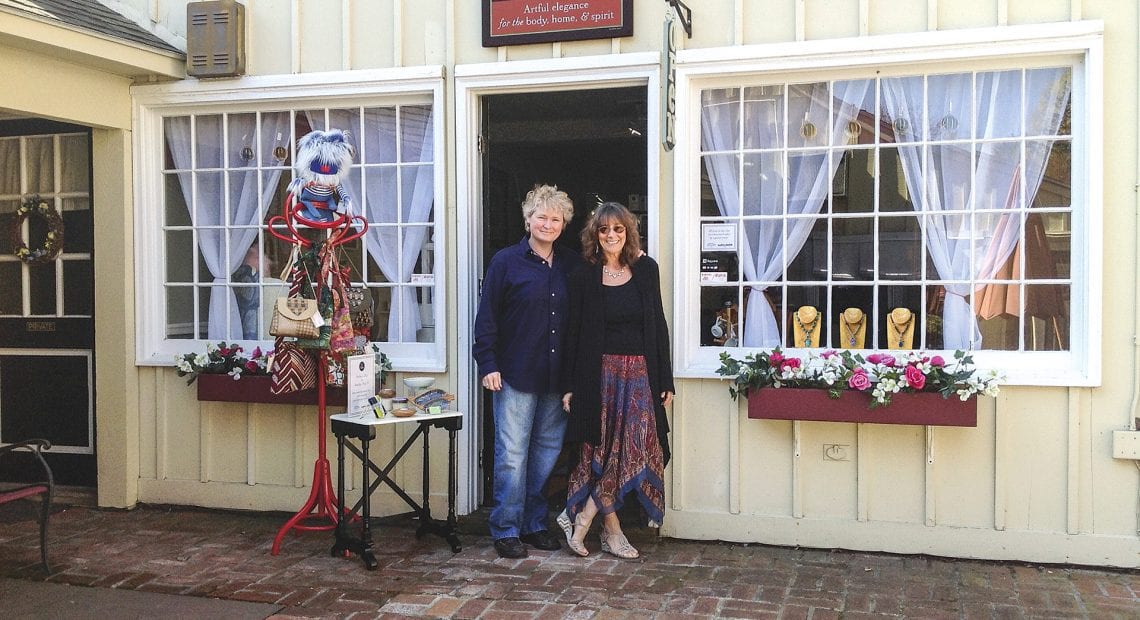
Community Spotlight Features

Community Spotlight

An aerial view of the Village Commons

An aerial view of the Village Commons, which is at full occupancy, and has been for most of this century.

When Andy Yee talks about South Hadley, he speaks from experience.

All kinds of experience.

He grew up there, went to high school there, lives there still, and now watches his children’s high-school games there. He also does business there — quite a bit of it, actually.

He owns a number of restaurants in that community, including Johnny’s Bar & Grill and Johnny’s Tap Room, both named after his late father, as well as IYA Sushi & Noodle Kitchen, all located in the Village Commons, across College Street from Mount Holyoke College, as well as a bar called the Halfway House Lounge on Summit Street. He described that establishment as the ‘Cheers’ of South Hadley, meaning everyone there knows your name.

They also know the story of how the tavern got its name, which Yee was more than willing to share.

“Back in the day, there was a trolley system running from South Hadley Falls up to the college, and that was the halfway point, the halfway station,” he explained. “It’s a fun little place. We all grew up there; at some point, almost every resident has stopped at the Halfway House.”

Yee told that story to convey the strong sense of continuity that exists in this Hampshire County community, and how many things haven’t changed since the Halfway House started serving pints soon after Prohibition ended more than 80 years ago.

But many things have changed, and for evidence, one need only look further down Newton Street, to one of Yee’s latest entrepreneurial ventures.

He’s one of the principals — Peter Pan Chairman and CEO Peter Picknelly and Rocky’s Hardware President and CEO Rocco Falcone are the others — in a closely watched development at the so-called Woodlawn Plaza, former home to Big Y but more recently a mostly vacant eyesore of sorts.

Retail centers of this type couldn’t be classified as easy money or even a particularly wise investment at this point given the way the retail sector is heading, but this group of entrepreneurs moved to acquire the plaza at auction because of confidence in their abilities to bring new life to it, and also confidence in South Hadley itself.

“You can’t buy properties like this unless they come for sale at the right price,” said Yee, adding that there’s a reason this site was available at auction. “We see this as a good investment, and we have some great partners with great business savvy. We’re not going to sit idle on this property; there’s going to be something unique there for all to enjoy.”

This confidence results from historically steady results in South Hadley when it comes to retail and business in general, but also many recent developments that have secured the community’s place as a reputation of sorts when it comes to everything from outdoor activities to fine dining.

Take the Village Commons, for example. It’s at 100% occupancy, essentially, and has been since roughly the start of this century, said Jeff Labrecque, the facility’s chief operating officer.

“We have very, very little turnover, and when something does turn over, we usually fill it very quickly,” he said before getting his point across by noting that O’Connell Care at Home will be moving its headquarters there in several weeks, quickly claiming a 1,900-square-foot space vacated by River Valley Dental after a consolidation of that operation.

O’Connell’s move brings still more diversity to the Commons, which already had a good amount of it, said Labrecque, adding that it’s home to restaurants and bars, high-end apartments that are in demand (he says there are maybe 50 people on a waiting list, and some have been on it for years), many health and beauty businesses, service agencies, a still-surviving independent bookstore, and a still-surviving two-screen movie theater.

All of this makes the Commons a true destination, he said.

The broader goal is to make South Hadley itself more of a destination, said all those we spoke with, adding that many pieces to this puzzle are in place, and more are coming together.

Range of Initiatives

Mike Sullivan is better known for his time spent serving the community on the other side of the Vietnam Veterans Memorial Bridge — he was mayor of Holyoke for a decade after owning and operating Nick O’Neil’s tavern — but he now resides (professionally speaking) at South Hadley Town Hall.

He’s been town administrator for several years, taking that position after serving the town of Maynard (famous as the home to Digital Equipment Corp., Monster.com, and later Curt Schilling’s ill-fated 38 Studios). In fact, Sullivan’s first day in Maynard was Schilling’s last, and he remembers the town being very upset and frustrated with losing the company, emotions that shifted went it quickly dissolved into bankruptcy. But that’s another story.

This one is about South Hadley, and Sullivan said it has achieved progress in many forms in recent years, including the broad realm of economic development, attracting new companies such as Mohawk Paper and E Ink Corp., and retaining others, such as South Hadley Fuel.

The town is also making headway with recreation-related initiatives such as a bike-share project and what he called the ‘river-to-range trail program,’ which, as that name suggests, is a handicap-accessible trail route that starts at Brunell’s Marina on the Connecticut River and connects to the Summit House in Hadley on Mount Holyoke.

South Hadley at a Glance

Year Incorporated: 1775
Population: 17,514
Area: 18.4 square miles
County: Hampshire
Residential AND COMMERCIAL Tax Rate: $19.93 (Fire District 1), $20.42 (Fire District 2)
Median Household Income: $64,610
Median Family Income: $76,679
Type of Government: Town Administrator, Town Meeting
Largest Employers: Mount Holyoke College, the Loomis Communities, Mohawk Paper
* Latest information available

Such initiatives bring more people to the town and thus the benefits that go with that visitation, he explained.

“These eco-tourism amenities in communities like South Hadley are becoming more and more important,” Sullivan said. “They feed restaurants and other businesses, like those at the Village Commons, like Brunell’s, like McCray’s Farm; we’re hoping that all of those benefit from our investment in the river-to-range trail.”

But easily the most-watched project in the community involves the Woodlawn Project on Newton Street, Route 116.

The goal is to create a mixed-use development, said Sullivan, adding that the town is working to create what’s known as a ‘40R,’ or Smart Growth Zoning Overlay District, at the site, which would allow for more flexibility with regard to both zoning and eventual development. That plan will go before town meeting later this spring.

The site, formerly home to a large Big Y and Food Mart before that, still has a few tenants and is anchored by a Rocky’s Hardware store, but is still largely vacant. The new owners have torn down the 65,000-square-foot former Big Y, have plans for a larger Rocky’s with a garden center, and are hoping to attract more retail at a time when that sector is clearly struggling, but also other types of tenants.

“Retail is struggling, with Toys R Us, BonTon, and other national chains going out,” said Yee, adding that, in many properties like the one on Newton Street, restaurants have become the main anchors.

Elaborating, he said that dining and entertainment businesses have played a major role in making a South Hadley a destination not only for those living in neighboring communities such as Granby, Holyoke, and Amherst, but for residents across the region and even beyond.

This is certainly in evidence at the Village Commons, which has always been a gathering spot, but it is now even more of a destination — because of its array of eateries, but also the diversity of ventures there.

Indeed, there are now more than 70 businesses with that address on their letterhead, and while all of them serve people living around the corner (or upstairs, when it comes to those with apartments in the complex), they are also drawing people from many surrounding communities into South Hadley.

The complex’s many restaurants are perhaps the main attraction, said Lebrecque, noting that there are now several of them. In addition to the Yee family’s offerings, there’s also Tailgate Picnot, Food 101 Bar & Bistro, New Main Moon Café, WOW Frozen Yogurt, and the Mexican restaurant Autentica.

This critical mass gives the Commons both diversity and drawing power, said Lebrecque, who drew comparisons, on some level, to the city of Northampton and its thriving downtown.

“We’ve become somewhat of a food and entertainment destination, just like Northampton,” he told BusinessWest. “That’s a thriving part of our business, and it brings people from all over to South Hadley.”

But retail is also thriving in the Commons, in part because of the foot traffic created by the entertainment options, he went on, citing, as one example, Moxy Boutique.

This is a relatively new addition — it arrived about a year ago — led by an entrepreneur who left a stable, successful situation in Suffield, Conn. for the Commons because of its destination status.

And there are others who would like to gain inclusion on the tenant directory, he went on, but there isn’t any space available.

“The retail is definitely making a thriving comeback — that’s something we’ve noticed over the last few years,” said Lebrecque. “For a number of years, it was hard to get retailers interested in space, but now we have people starting to knock on our door. We have a lot of people who would like to come to the Commons, but we just don’t have the space for them.”

Coming of Age

If that sounds like a good problem to have, it is.

Such a development means your facility — and the community — are in demand, a preferred landing spot, and a great place to live, work, and operate a business.

South Hadley is all of those things, and has been since people starting gathering at the Halfway House Lounge — long before it was called that.

The goal here is to become more of a destination — for businesses, families, outdoor enthusiasts, those looking for a boutique, and those looking for a new weed whacker.

And South Hadley is making strides toward being that destination.

George O’Brien can be reached at [email protected]
Community Spotlight Features

Community Spotlight

Deerfield boasts drawing cards like Mount Sugarloaf

While Deerfield boasts drawing cards like Mount Sugarloaf (seen here), Yankee Candle, and others, officials there say this community is much more than a tourist town.

Wendy Foxmyn acknowleged that, when pressed to describe Deerfield with a word or two, most responders would say ‘tourist town,’ or something to that effect.

And, sounding somewhat like the Seinfeld characters in that infamous episode, she said there’s nothing particularly wrong with that.

But she quickly, and repeatedly, stressed that this community that is home to Yankee Candle’s flagship store — one of the most visited attractions in New England — as well as Mount Sugarloaf, Historic Deerfield, and the Magic Wings Butterfly Conservancy and Garden wants to diversify and broaden its commercial portfolio.

“We consider ourselves be more than a tourist town — much more,” said Foxmyn, who has served several area communities in the town administrator role, including Deerfield for the past two years. She noted that the town’s location, roughly halfway between Northampton and Greenfield, could make it ideal as a home from which a business or nonprofit could effectively serve both Hampshire and Franklin counties, something many are trying to do at a time of consolidation.

“We’re becoming more of a hub — a central Hampshire-Franklin hub,” she explained. “I’ve been getting calls from service agencies and others who serve both counties who would like to find a central place because they’ve lost funding or anticipate losing funding.”

Meanwhile, Deerfield, population 5,400 or so, wants to take far more advantage of that bevy of tourist attractions than it has historically, said Foxmyn, noting that, far too often, cars and buses filled with those buying candles and admiring butterflies get back in their vehicles and simply return home.

“We want them to look left and look right,” said Foxmyn, referring specifically to Routes 5 and 10, just two of the major thoroughfares the town is blessed with, with Routes 91 and 116 being the others. “We want them to stay and take in more of Deerfield.”

For this to become reality, the town must give visitors more reasons to look left and right, she acknowledged, adding that, while there is a new restaurant, Gianni Fig’s Ristorante, and a new Cumberland Farms in South Deerfield, more development is desired and needed to both broaden the tax base and lengthen the average stay of those coming to Deerfield for an afternoon.

“We’d like to develop more businesses that would be attractive to the people who come here,” she explained. “Maybe places for them to eat after they’ve gone to Historic Deerfield or they’ve hiked up Mount Sugarloaf or gone to Yankee Candle.”

But town leaders know that to attract new businesses — in hospitality and other sectors as well — they need to make their downtown area more inviting and pedestrian-friendly, and they are eyeing a host of improvements in the Elm Street corridor, the main commercial area in South Deerfield.

Planned improvements include work on sidewalks, lights, and perhaps storefront improvements, and the town is exploring avenues for funding such work.

Selectman Trevor McDaniel, a traveling salesman (windows) by trade, told BusinessWest that his work takes him to communities across the region, many of which have made significant investments in their downtowns, and with recognizable results when it comes to those public expenditures spurring private investments and new business ventures.

He believes the same can happen in Deerfield.

“I travel all over Western Mass. … you go to Pittsfield, the streets look great, Great Barrington, everything’s redone, Lenox is really nice,” he said. “A lot of communities have done extensive work to their downtowns — they’ve put in new brick, some granite, planters, new lighting and light poles, and new cement sidewalks, and it looks fantastic. And then businesses freshen up the front of their building.”

For this, the latest installment in its Community Spotlight series, BusinessWest looks at how a community known for its butterflies, candles, and arrowheads will look to expand that profile and create new ways for people to describe it.

View to the Future

While Deerfield, as noted, is well-known as the home of Yankee Candle, which has both its manufacturing facilities and flagship store within the town and is therefore a very large employer, it has historically been dominated by small businesses.

And they come across a host of sectors — tourism, obviously, but also agriculture, healthcare, retail, manufacturing, and nonprofits.

The goal moving forward, as Foxmyn mentioned, is to simply broaden the portfolio. And the town has many assets to work with as it goes about that task, everything from that attractive location and presence on major highways to a uniform tax rate (several neighboring communities have a higher tax rate for businesses).

The assignment, simply, is to take full advantage of those assets and create still more of them.

Deerfield at a Glance

Year Incorporated: 1677
Population: 5,400
Area: 33.4 square miles
County: Franklin
Residential and commercial Tax Rate: $16.57 (Deerfield), $18.24 (South Deerfield)
Median Household Income: $74,853
Median Family Income: $83,859
Type of Government: Open Town Meeting
Largest Employers: Yankee Candle Co., Pelican Products Inc.
* Latest information available

The town’s location, as well as easy access to highways and ample farmland with space for greenhouses, could make it a potential landing spot for marijuana cultivation and/or retail ventures, for example, said Foxmyn, adding that the town, which has placed zoning restrictions on such businesses, has already fielded some inquiries and will carefully consider any that come its way.

“They are knocking on our doors — the industry is swarming us,” she told BusinessWest. “And they’re approaching people locally to get them involved, whether they’re farmers or people who have buildings that might become a retail site.”

Meanwhile, there have been some momentum-building endeavors over the past several months, with several projects in various stages of development.

A machining company, Dumont, will be relocating into the former Oxford Pickle complex, acquired by the town several years ago, joining New England Natural Bakers and a granola-making outfit on that parcel.

On the retail side, both Foxmyn and McDaniel mentioned Gianni Figs, located on the site of the former Sienna restaurant, which gives the community an intriguing dining attraction after the closing of Chandler’s restaurant on the Yankee Candle campus.

The Cumberland Farms is another important addition; plans are advancing for a small market to replace Savage’s, a small market that operated for decades; a bakery/café is going in the old Savage’s site; and an international market is being opened, among other retail developments.

Meanwhile, on the residential side, a large condominium project is now underway. Called the Condominiums at Sugarloaf because it will be built at the base of the mountain, it will have 70 units, presenting more options for those mulling Deerfield as an attractive place to live, including those working at the nearby Five Colleges.

On the municipal side, plans are emerging for a new senior center, said Foxmyn and McDaniel, noting a replacement is needed for an aging, largely inadequate facility. A church that closed several years ago has been donated to the town, and it may become the focus of efforts to create a new senior center.

But perhaps the most significant development involves plans for comprehensive improvements to improve South Deerfield Center, an initiative that has been long discussed, again with that goal of attracting both more tourism- and hospitality-related ventures and service businesses that would serve both the town and the larger region — and keeping tourists in town for a longer stay, spreading the wealth, if you will.

“With all that traffic that comes to Yankee Candle, and now they’ll be filling up at Cumberland Farms — they’ll pull out onto Elm Street and look left or right,” said McDaniel, imaging a scenario from down the road, literally as well as figuratively. “We want them to take that look and say, ‘what’s downtown? Let’s go take a look.’”

There are other items on what could be called a ‘wish list,’ said McDaniel, including much-needed improvements to the town’s sewer system, built in the ’70s and currently serving only a small percentage of the population, but finding the funding for such an endeavor will be a real challenge.

“We’re in the midst of trying to figure out what’s needed, how much it’s going to cost, and who’s going to pay for it,” he explained. “That’s a big topic we’ve been studying for the past 16 months or so; it’s hard to figure out what to do. There’s not a big base of users, and there’s huge expense involved.”

Scents and Sensibility

The more immediate goal is to undertake those improvements to Elm Street and, hopefully see those public investments inspire private investments in the form of new businesses and additional residential projects.

As Foxmyn noted, Deerfield has the location — and the potential — to become an important hub serving two neighboring but very different counties.

This community is already much more than a tourist town, she explained, but it wants to make that abundantly clear to everyone who might come for a visit.

George O’Brien can be reached at [email protected]

Community Spotlight Features

Community Spotlight

Stephen Crane says keeping Longmeadow’s residential property values up is key — moreso than in most towns — to generating the revenue to fund municipal projects.

Stephen Crane says keeping Longmeadow’s residential property values up is key — moreso than in most towns — to generating the revenue to fund municipal projects.

In a town where more than 95% of all property is residential, economic development isn’t about attracting a flood of new businesses to town — if only because there’s nowhere to put them. So Longmeadow takes a different tack.

“Our single biggest economic-development activity is the sale of single-family homes,” Town Manager Stephen Crane told BusinessWest. “So what actions can we take in the town government to sustain those sales and make Longmeadow a desirable community to live in? Foremost among those activities is maintaining our world-class school district, but there are other quality-of-life areas that demand and receive our attention.”

In simple terms, he explained, in a community so heavily weighted toward housing, the ability to provide a high level of services depends on property values.

“If property values go up, it relieves a lot of pressure. So, how do we keep property values going up?” he said, noting that, for starters, Longmeadow officials are looking to coordinate a “real-estate summit” with local agents to talk about quality-of-life matters, school issues, and anything else they see driving — or holding back — home sales.

“There are different things we can do,” he continued. “We can’t roll out large-scale economic projects, so our efforts are really micro-efforts, and there are many of them. Combined, they make a difference, though, individually, they look like pretty small things. If we do as many of them as we can, they can have a meaningful impact on the community.”

One example of that deals with foreclosed and vacant property registrations, Crane explained. “We had noticed an uptick in foreclosed and vacant homes that were causing blighting conditions on some of our residential streets, so a few years ago, we instituted a requirement that foreclosed properties be registered with the Building Department — and then we subsequently added vacant properties to the bylaw because certain homes were vacant but not yet foreclosed.”

This gave the Building Department a point of contact to ensure that such properties are being maintained, rather than having to chase down banks and management companies, he noted. “That has greatly accelerated our ability to get in touch with someone to get the blighting condition cured.”

In addition, the modest registration fee has generated revenue for the town. “It’s not a huge deal,” he said, “but if you have one of those properties next to you, it’s a big deal to you. That’s one example of how we try to sustain quality of life and the aesthetics of the community with the limited resources we have.”

Healthy Activity

That’s not to say the commercial market hasn’t been active. Fresh on the heels of a 21,000-square-foot expansion of the Longmeadow Shops last year, a memory-care facility is planned on the site of a former synagogue on Williams Street, and the former Brewer-Young Mansion is being converted to professional offices.

The Baystate Health & Wellness Center will open on Dwight Street, at the East Longmeadow line, this summer.

The Baystate Health & Wellness Center will open on Dwight Street, at the East Longmeadow line, this summer.

“They’re in the planning and design phase that will turn a single-family home into a non-residential asset,” Crane said, noting that such projects are taxable, easing the tax burden on homeowners.

Perhaps most significantly, the $11 million, 54,000-square-foot Baystate Health & Wellness Center — which will share a campus on the East Longmeadow line with a rebuilt nursing home on the site of the East Longmeadow Skilled Nursing Center — is starting to go up.

The Baystate project’s impact is twofold, Crane said, the first being convenience for town residents. “My guess is, if they’re able to go to that office for an appointment instead of going to Baystate Medical Center in Springfield, that’s a significant savings of time.”

For the municipal government, however, it will result in significant infrastructure upgrades along the Dwight Street corridor, including street and sewer upgrades, new sidewalks and bike lanes, and improved traffic-light coordination across the town line.

“Dwight Road is a regionally significant traffic corridor,” he noted, “and when this project came up, the towns of Longmeadow and East Longmeadow worked together, with both the developer of the medical office building and the current owner of the nursing home, so the two separate projects were approached as a campus, like no town line existed.”

The project encompasses three intersections on Dwight Road — two in Longmeadow and one in East Longmeadow. Through an intermunicipal agreement, Longmeadow is managing the entire project, and East Longmeadow is receiving contributions from the nursing-home developer, which will pass through to Longmeadow to offset the cost of the street improvements.

“We get efficiencies of scale in both towns, and the traffic signal upgrades can be integrated so the corridor can have much better synchronization of signals and traffic flow,” Crane explained. “The quality-of-life amenity will be the installation of both sidewalks and bike lanes that currently do not exist.

“It’s going to be a busy summer of construction,” he added, “which is good.”

On the municipal side, the Longmeadow Department of Public Works is breaking ground this summer on a new, $20 million facility on the site of a former tennis club on Dwight Road. The town has also been investigating the possibility of building a new, combined middle school.

Longmeadow at a glance

Year Incorporated: 1783
Population: 15,784
Area: 9.7 square miles
County: Hampden
Residential Tax Rate: $24.34
Commercial Tax Rate: $24.34
Median Household Income: $109,586
Median Family Income: $115,578
Type of Government: Open Town Meeting; Town Manager; Board of Selectmen
Largest Employers: Bay Path University; JGS Lifecare; Glenmeadow
* Latest information available

Meanwhile, the town has been working for several years on a solution to the outdated senior center currently housed in a former elementary school at Greenwood Park. At the May 8 town meeting, residents will vote on whether to authorize a debt-exclusion vote for a new senior center in the amount of $14 million. If approved, the project would be voted on at the annual town election on June 12.

Better Together

Another way Longmeadow seeks to fund services is through regionalization, Crane told BusinessWest. One example is the two-town regional emergency communications center, or RCC, that Longmeadow is establishing with Chicopee, housed in that city’s Police Department and operated by an independent district called WESTCOMM.

“That regional RCC will enable communities that participate in the district to offer residents a higher level of service for the same or less cost,” he explained.

Town leaders are also working on establishing or joining a regional health district, of which there are currently 16 across Massachusetts. The Board of Health now provides all services required by statute, but Crane believes those services could be regionalized to create an economy of scale for the communities. “We are going to analyze existing districts to see if forming our own or joining an existing one will allow us to provide the same high level of service, but at a reduced cost.”

Atop all these ideas, however, lingers the all-important reality that home values are critical to keeping Longmeadow running, so every decision is made at least partly with an eye toward making sure, when a family moves out of town, there is demand from families who want to move in.

At least the town won’t be dealing with unexpected rising costs from the school system, Crane noted, as the children-per-household rate has been on the decline.

“When looking at projected enrollment — which the school department looks at regularly — it’s either flat or a downward trend,” he said. “Maintaining class sizes the way they are is sustainable, so I personally don’t fear skyrocketing education costs as a result of an influx of new schoolchildren. The data in that regard is pretty solid and has been for a number of years.”

There are two sides to that coin, however. The town’s buildout rate is above 90%, and close to 95% for housing, he noted, “so when we want to do a project like a new DPW or a new middle school or a new senior center, that burden is going to be shared by a finite number of properties.

“We have about 5,800 households, and it’s unlikely we’ll ever be in a place where we have 7,800 households,” he went on. “So that 5,800 properties, plus the commercial properties, have to support the town, which is why we work every day to make sure our tax dollars go as far as they possibly can. For us, it’s a simple question of balancing the efficiency and quality of services.”

Joseph Bednar can be reached at [email protected]
Community Spotlight Features

Community Spotlight

Green Thumb Industries will soon begin operating a marijuana-cultivation operation in this mill building at 28 Appleton St. And it will likely be the first of several such operations in Holyoke.

Green Thumb Industries will soon begin operating a marijuana-cultivation operation in this mill building at 28 Appleton St. And it will likely be the first of several such operations in Holyoke.

Marcos Marrero says that if one were to have a machine running an optimization algorithm that would weigh a host of quantitative and qualitative factors to ultimately determine the very best spot in the region — and maybe the country — to locate a marijuana cultivation and distribution facility, it would, when done with its analysis, likely spit out two words: Holyoke and Massachusetts.

And that second word is necessary, he went on, because there is, in fact, a Holyoke in Colorado, the first state to legalize recreational marijuana, and he’s already been asked more than a few times if he works for that small town of 5,000 people near the center of the Centennial State.

He doesn’t. He’s director of Planning and Economic Development for the other Holyoke, the one on the Connecticut River. The one heralded as one of the first planned industrial cities in the country. The one where Chicago-based Green Thumb Industries (TGI) is set to open an estimated $10 million marijuana-cultivation facility in former mill space on Appleton Street this spring.

And Marrero is fielding a lot of phone calls and e-mails these days from other people wanting to know more about that Holyoke, and marijuana cultivation is usually the reason (more on those inquiries later).

First, back to that algorithm. As noted, it would weigh a host of quantitative factors, said Marrero, and they all project strongly in Holyoke’s favor. These range from the roughly 1.5 million square feet of available, attractively priced mill space within the city, much of it ideal for marijuana cultivation because of the mills’ open spaces and high ceilings, to the lowest electricity rates in the state (this is a power-intensive business), to Holyoke’s location along I-91 and just off the Turnpike.

“You can ship it east, and you can ship it north,” said Marrero, adding quickly that there also qualitative factors to consider.

Or at least one big one, anyway. That would be the city’s welcoming attitude toward an industry that most communities in the Bay State are throwing stop signs and speed bumps in front of.

“Many cities and towns are taking out the pitchforks to prevent the cannabis industry from coming in,” said Holyoke’s mayor, Alex Morse. “Given my outspoken support for the industry, we’re seeing companies from across the country come into Holyoke to meet with us and my team about locations and learn more about our special-permit process. It’s been company after company that’s been looking to invest.”

But this cannabis phenomenon, if you will, is just part of the story. And it’s only one of the ways in which the city is succeeding with filling some its legendary and mostly idle or underused mills.

There are many others, starting with the Holyoke Community College MGM Culinary Arts Institute, which opened in the Cubit building (anther of those old mills) in January. There are also the market-rate apartments in the floors above that facility, and a host of other housing initiatives as well.

There are also arts-related facilities, such as Gateway City Arts on Race Street. And then, there are a growing number of startups, mentored by groups like SPARK, that are also moving into those mills.

All this, or most all of it (the marijuana law was passed in 2016), was part of Morse’s vision when he became mayor in 2012, and also why he’s still mayor today, having been re-elected to a four-year term (the city’s first) last fall. Back when he first ran for office, he explained, he saw enormous potential for the city to become home to a wide array of businesses and to become an attractive residential address as well after decades when it clearly wasn’t.

The formula called for a host of public investments — they’ve come in many forms, from a new canal walk to a new train depot to a slew of road projects — that would in turn encourage private investments (such as the Cubit building and GTI, for example). There would also be a focus on building the cultural economy, encouraging entrepreneurship, and maximizing Holyoke’s many geographic and historical assets.

In short, it’s all coming together nicely, as we’ll see in this, the latest installment of BusinessWest’s Community Spotlight series.

Joint Ventures

When asked to put all that aforementioned interest in Holyoke on the part of cannabis enterprises, or would-be cannabis enterprises, into perspective, Marrero let out a deep breath.

“The last couple of weeks have been … crazy,” he told BusinessWest. “There’s been lots of meetings and phone calls. Some of them are companies that are just shopping around and don’t necessarily know everything about Holyoke, but they may be looking in the Western Mass. corridor. But they’ve heard about us and want to know more.”

And it’s been crazy for a reason, actually several of them, as noted at the top.

“We believe we have the best competitive advantages for the industry at this time,” Marrero explained, “from the real estate to the low-cost electricity — those lights are on a lot — to the water. Holyoke has a lot of offer these businesses.

“And in Mayor Morse, you have the first mayor to come out and quite vocally support legalizing marijuana, recreationally and medically, and that certainly makes a difference,” he went on, adding that the city had one of the first ordinances in the state regulating, but also, and in many ways, welcoming the industry.

“So there’s some political stability — there’s a willingness and a desire to have this industry here,” Marrero continued, adding that all this caught the attention of GTI, which is now permitted to operate a facility on 42,000 square feet of former mill space at 28 Appleton St.

The company plans to hire about 100 people within the next year, said Morse, adding that, while not all of these are skilled positions, per se, these will be attractive positions with wages averaging $15 or more.

“When GTI held its first job fair last fall, there were more than 700 people in the room,” he recalled. “And that sends a strong message to other elected leaders in this city and also the community that people are looking for jobs, they’re willing to get trained, and they want to work.”

The Cubit building, home to apartments and the Holyoke Community College MGM Culinary Arts Institute, is just one example of how Holyoke’s historic mills are being put to new and productive uses.

The Cubit building, home to apartments and the Holyoke Community College MGM Culinary Arts Institute, is just one example of how Holyoke’s historic mills are being put to new and productive uses.

Meanwhile, there are many other entities looking to join GTI, said Marrero, adding that there are at least six businesses expressing what he called “serious” interest and moving toward the permitting stage, and perhaps a dozen more that are kicking the tires and filling Marrero’s voice mailbox.

How many will eventually land in Holyoke obviously remains to be seen, but Marrero and Morse both believe the cannabis sector could soon employ hundreds in the Paper City and bring additional benefits as well in the form of supporting businesses that will also pay taxes and employ area residents.

“Once you have a clustering effect of any industry, you have a subsequent clustering effect of any industry that supports that sector, and that could benefit not only Holyoke but surrounding communities,” Marrero explained. “If we had 10 cannabis-growing companies, not only would that translate into a large amount of jobs, tax revenue, and more, but then those 10 companies are going to be demanding services from pipe fitters, electricians, those who maintain HVAC systems, transportation and logistics companies, security companies, etc.; you have a second tier of expertise that is developed in the economy to support them.”

This is what has happened in Colorado (he’s not sure about the community of Holyoke) and other states where marijuana has been legalized, he went on, adding that the Holyoke in Massachusetts has the opportunity to learn from the mistakes made by others before it, and there have been some.

Run of the Mills

While the cannabis industry starts to fill in that section of the canvas that is a changing Holyoke, other businesses are finding the city as well, and the vision that Morse put in place at the start of this decade is coming into focus.

That vision involved embracing the city’s industrial past as a paper and textile hub, but also recognizing that this was in the past and that the community had to develop new sources of jobs and tax revenue while also revitalizing a downtown that had seen much better days.

The strategy for doing all that, as noted earlier, is multi-faceted.

“We’ve been pursuing an innovation-based economic-development strategy and coupling that with a public-investment strategy,” the mayor explained. “We’ve made a number of investments that have made the city a more attractive place for private investment and incentivising developers to come in; they’ve recognized that the city is making investments in itself to make it a more liveable, walkable community, especially in the downtown, and they’re responded to that.”

There’s been a housing strategy as part of that broader plan, he went on, adding that housing is obviously key to attracting businesses and the people who would work for them.

The goal is to create a dense, diverse inventory of housing, Morse went on, adding that the city is making strides in this regard with market-rate projects such as the Cubit building, mixed-use projects such such as a Wynn Development initiative at the former Farr Alpaca Mills on Appleton Street, and public housing efforts such as the ongoing, 167-unit Lyman Terrace project.

As for those public investments, they have come in many forms, including the canal walk and train station, but also a number of parks and neighborhoods. The effect has been to make the city a more attractive option for businesses, but also families, said the mayor.

“We’re not of the philosophy that one big corporate giant is going to arrive in Holyoke and solve all our problems — we have a much more long-term view of sustainable economic development,” he explained. “We’re focused on the innovation economy, but also entrepreneurship and small-business development, through initiatives such as SPARK.”

There have been more than 80 ‘graduates’ of that program of mentoring and education, run by the Greater Holyoke Chamber of Commerce, he went on, adding that some of them are either incubating in Holyoke or have already moved into their own space within the city.

Holyoke at a glance

Year Incorporated: 1786
Population: 40.280
Area: 22.8 square miles
County: Hampden
Residential Tax Rate: $19.17
Commercial Tax Rate: $39.72
Median Household Income: $36,608
Median Family Income: $41,194
Type of Government: Mayor, City Council
Largest Employers: Holyoke Medical Center, Holyoke Community College, ISO New England Inc., PeoplesBank, Universal Plastics, Marox Corp.
* Latest information available

Meanwhile, there are other forms of progress to note across the city, said Morse, listing everything from a rising high-school graduation rate — it was under 50% when he took office, and now it’s closer to 70% — to falling unemployment; from planned revitalization of the former Lynch School just off I-91 (an RFP was recently issued) to needed evolution at the Holyoke Mall.

The mall is one of the city’s important assets, he noted, adding that it brings thousands of people into the city every day. With the retail sector struggling in the wake of emerging forces like Amazon, and malls fighting to keep their spaces filled, the facility in Holyoke is responding with family-oriented tenants that are keeping the parking lots crowded, said the mayor.

“We’ve seen the mall make a number of investments in recent years and add more entertainment options,” he explained. “These include new restaurants, an escape-room place, and a new Cinemark theater that will be coming in.”

As for the graduation rate and improvement at the public schools overall, this is an important ingredient in the overall strategy for Holyoke’s revitalization, said the mayor.

And with continued progress in mind, the city will launch a new high-school model this fall, one based on four different academies focused on career readiness to create more pathways for students.

Planting Seeds

As he talked about cannabis — and everything else going on in Holyoke — Morse joked that Holyoke might soon run out of mill space to offer developers.

When told about that line, Marrero laughed, paused for a second, and said simply, “I hope so — that would be great.”

That’s not likely to happen any time soon, if ever. But that number of available square feet in the mills that gave Holyoke its nickname and its heritage keeps going down.

And cannabis is just one of the reasons. Many of the same character traits that are attracting marijuana growers — from the mills to the highways to a business-friendly City Hall — are attracting other types of businesses as well.

As noted, Morse couldn’t exactly have foreseen the cannabis industry being one of his city’s leading employers when he took office. But he could foresee a time when his staff and the office of Planning and Economic Development would be flooded with calls from people interested in maybe setting up shop in Holyoke.

And not the one in Colorado.

George O’Brien can be reached at [email protected]
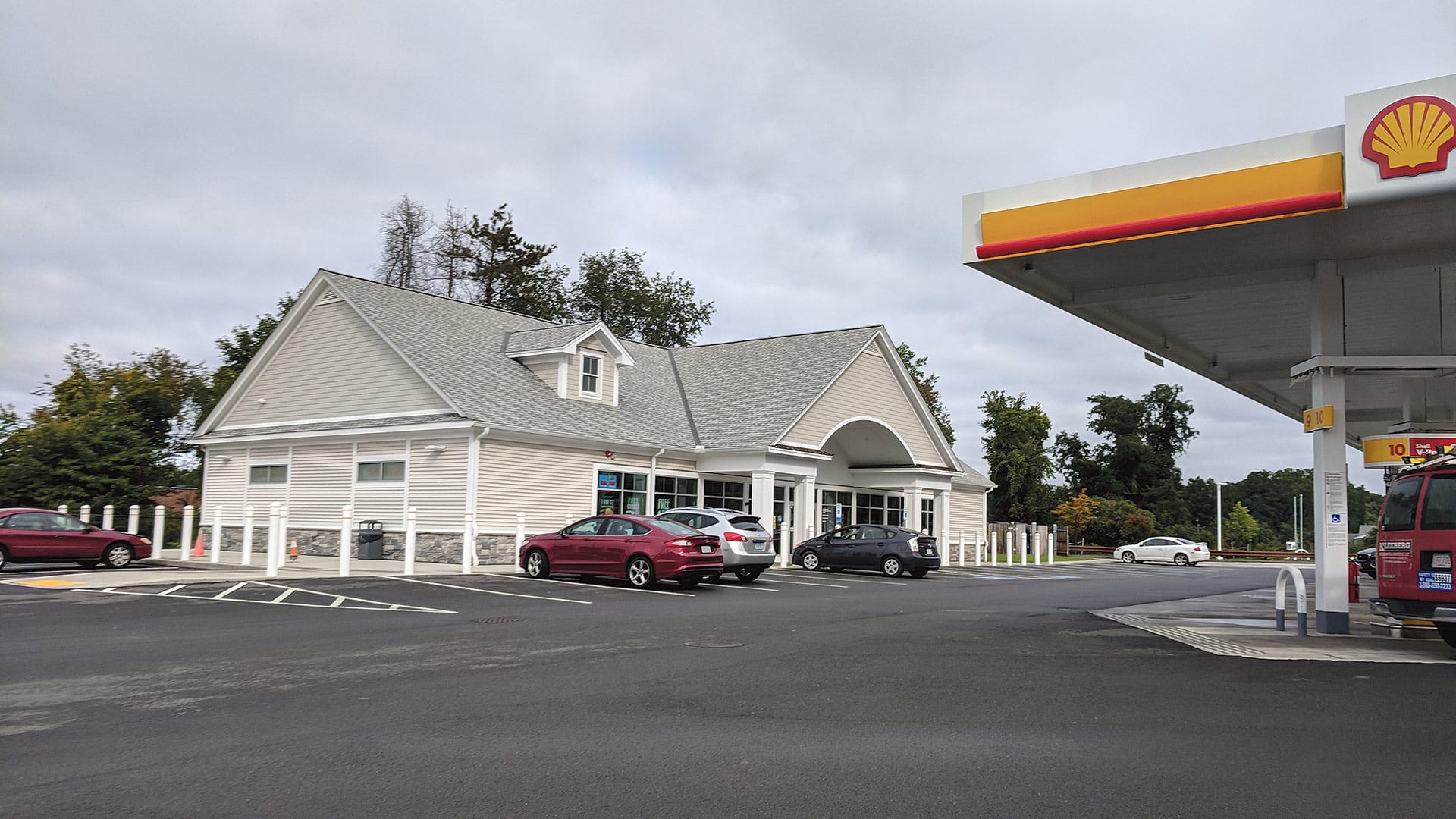
Community Spotlight Features

Community Spotlight

The aerial map of Springfield behind Kevin Kennedy

The aerial map of Springfield behind Kevin Kennedy, taken just a few years ago, would look very different today, and that’s a good thing, he says.

To say projects are coming to fruition in Springfield is a bit of an understatement these days, with a $950 million casino opening downtown in September, following right on the heels of the $90 million Union Station renovation and the $95 million CRRC MA plant on the former Westinghouse site, which is expected to begin producing rail cars for the MBTA this year.

Kevin Kennedy, the city’s chief Development officer, cited those projects at the start of a recent conversation with BusinessWest because they have been, in many ways, the most prominent signs of economic momentum in Springfield. But they’re only three among dozens of moving pieces coming together to generate real excitement in the City of Homes.

“We’re calling it ‘the year of the new Springfield,’” he said.

And it needs to be, considering that the casino, if projections are correct, will draw 12,000 to 15,000 visitors per day, perhaps more at the start. Meanwhile, the Hartford rail line into Union Station may bring up to 2,000 people a day, in addition to the usual PVTA and Peter Pan bus traffic.

“A lot of people will be coming through Springfield; it will be a completely different area in terms of foot traffic,” Kennedy said, noting that restaurants, retail, and entertainment options in the area will get a boost — possibly a big one.

“Bruno Mars, who just cleaned up in the Grammys, plays MGM in Las Vegas. Lady Gaga performs at MGM facilities. There’s Cirque de Soleil … these are things that, from an entertainment point of view, Springfield could only wish for,” he said, adding that the sheer possibilities have people excited.

But it’s important, he said, not to simply let the wave of MGM visitors happen, but to pair the casino’s opening with an image campaign to let people know what else Springfield and the surrounding region have to offer. After all, it’s not every day that a business opens with the potential of bringing thousands of people into the city every day who would otherwise not be there.

And, indeed, there’s much more than nightlife afoot downtown; for example, the innovation economy that has taken root with entities like Tech Foundry, TechSpring, and Valley Venture Mentors has created a fertile environment for ideas to turn into cutting-edge companies.

Meanwhile, “I never thought we’d see the day that we were creating market-rate housing in our downtown,” Kennedy said, citing the 265 units in the SilverBrick Lofts and a planned transformation of the old YMCA on Chestnut Street into 114 market-rate units, not to mention the rehabilitation of the Willys-Overland building into 60 market-rate units.

“Developers are telling me there’s room for 300 more units in terms of demand,” he added, noting that such downtown housing tends to attract the younger demographic a city needs to remain vital — and the arrival of MGM Springfield ties into that as well. “Millennials love first-class entertainment. The pieces all fit.”

Those pieces include persuading people who visit Springfield, some for the first time, to explore what else the city has to offer.

For instance, “we have two things nobody else has — the Dr. Seuss museum and the Basketball Hall of Fame,” Kennedy noted. The latter is embarking on a major, $25 million renovation, while the former continues to smash attendance records at the Springfield Museums, drawing visitors from all 50 states and around the world (see story on page 39).

Kennedy drew on an apt analogy for the Hall of Fame when talking about the way Springfield is currently promoting itself. “We do some coaching and try to keep the team together, but the most important part is getting the players to play,” he said. “All the citizens and businesses, they’re the real stars of the show right now. Everyone wants to something — the chamber, the cultural council, the EDC, all these are partnerships, and they’ve taken the ball and run with it. Every major organization has stepped forward.”

Made for Walking

One of those downtown partners, the Springfield Central Cultural District (SCCD), recently signed onto the first cultural compact in the state, an agreement among the city, the district, the Massachusetts Cultural Council, and state leaders that solidifies the city’s recognition of the arts as an economic-development activity.

But the SCCD has long been promoting and installing public art as a means of ramping up creative placemaking to boost the walkability and attractiveness of the downtown.

“I think that’s something we’ve focused on since the beginning of the cultural district — increasing walkability, not just to drive visitors to a destination, but for add-ons,” said SCCD Executive Director Morgan Drewniany, before explaining what that means. “Say someone is here for MGM, and they’re walking between the bowling alley there and a restaurant. If the streetscape between those places is attractive and funky and cool, you might take that extra step and keep walking, instead of stopping at the place that’s easiest.”

That’s the goal of turning the streetscape — through public art, bustling storefronts, and increased safety measures — into an attraction in itself, so if someone arrives in the city to visit MGM and maybe the Seuss museum, they might be compelled to stick around and check out more destinations.

SEE: Springfield at a glance

Year Incorporated: 1852
Population: 156,000
Area: 33.1 square miles
County: Hampden
Residential Tax Rate: $19.68
Commercial Tax Rate: $39.28
Median Household Income: $34,311
Median family Income: $39,535
Type of government: Mayor; City Council
Largest Employers: Baystate Medical Center; MassMutual Financial Group; Big Y; Mercy Medical Center; Center for Human Development; American Outdoor Brands Corp.
Latest information available

The city, meanwhile, has embarked on revitalization projects at Stearns Square, Pynchon Place, and Riverfront Park, and is looking into restaurants installing ‘bumpouts’ onto the sidewalk for outdoor seating. Meanwhile, a pedestrian wayfinding system downtown and a coming bike-share program will further create a sense of vitality for residents and visitors alike, Kennedy said.

Perhaps most important is a city-wide reduction in crime that officials attribute to a number of factors, from an increase in police officers to leadership classes in the department to a computer program on laptops in cruisers that pinpoint where recent crimes have occurred and allows police officers to read reports about them.

One of the most notable changes has been the expansion of C3 (community) policing in vulnerable neighborhoods where high levels of poverty, truancy, and healthcare problems exist. Special police units have been created and put in place in four areas: Mason Square, the South End, the North End, and lower Forest Park.

Downtown, that public-safety momentum will take the form of a new substation and three police kiosks, Kennedy said, adding that Police Commissioner John Barberi understands the connection between safe streets and economic development.

“The things he’s done have been nothing but supportive. The concept of police kiosks and substations will not only make the downtown safer, but will free up police in other neighborhoods when they’re not answering calls downtown. All the neighborhoods benefit.”

The police force, in fact, was one of the earliest adopters of Drewniany’s arts-is-safety philosophy and her belief that more public art can increase foot traffic, which in turn raises the perception of safety, which then actually increases safety. “Criminals aren’t hanging out doing whatever they want to do in a place that’s active with pedestrians,” she said. “It follows the same idea as the police kiosks. If people feel like it’s a safe place, it will actually be a safe place.”

Meanwhile, MGM made a commitment to spend $1.5 million annually for 15 years to create and maintain a public-safety district downtown due to the traffic it will bring to the city. The district runs from the south end of Mill Street to Union Station, and from Riverfront Park up to the Quadrangle.

All the Right Moves

As for the casino, Kennedy said the way the city handled the process of securing MGM made sense.

“We were fortunate to take the right tack in how to approach the gaming question, to not marry any individual suitor. We courted multiple suitors, created competition, and created leverage,” he said. “I don’t think anyone would deny we ended up with a top-flight company in MGM that created a perception outside of Springfield that we were ready to do business in the right way.”

He credited former Gov. Deval Patrick for sowing many of the seeds for some of the city’s recent flagship developments, including a $350,000 planning grant in 2008 to get Union Station renovated. “He was the one who said to those that wanted to provide rail cars for the MBTA, ‘look west.’ And I think we picked the right mix of things, and have been fortunate with major investments like MGM but also making a transition to the innovation economy downtown. All kinds of pieces of the plan worked.”

And it’s not just new entities creating excitement, he added.

“What MassMutual did recently, by bringing 1,500 people into their home office, really solidifies its future here in Springfield,” he noted. “They’re also bringing anywhere from 500 to 1,000 employees into Boston, which is also really good for Springfield because it gives us a footprint in the state capital.”

That, along with Big Y’s just-announced expansion of its distribution center, are two examples of how large, legacy companies remain a vital force, even with all the buzz generated by the startup economy. “Not only are we bringing in outside companies, but our existing companies are expanding. It’s all great news for Springfield.”

Kennedy also credited Mayor Domenic Sarno and other officials for not thinking parochially and understanding the value of regional connections, which include the development of more rail platforms along the north-south line that connects Connecticut and Vermont. “We can’t discount the importance of Union Station for the simple reason that rail transportation is going to become more and more important.”

As for that ‘new Springfield,’ Kennedy traces the recent resurgence in the city, and especially its downtown, to the construction of the federal courthouse on State Street in 2008. In many ways, that project launched a decade of impressive development, culminating in a 2018 that many people probably couldn’t have envisioned back then, when none of these major projects were on the horizon and the national economy was tanking.

“That gave you the confidence that you could really do something,” he told BusinessWest. “And what we’re seeing now isn’t smoke and mirrors; they’re not just feel-good things. These things are real.”

Joseph Bednar can be reached at [email protected]
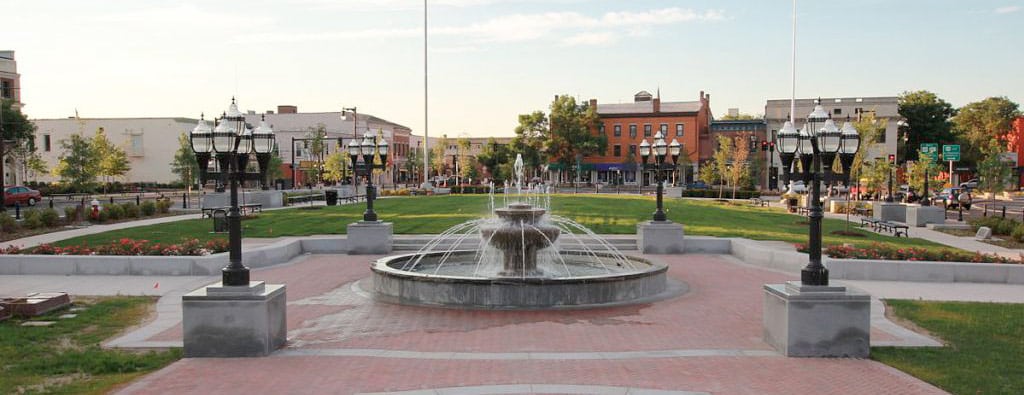
Community Spotlight Features

Community Spotlight

Linda Leduc and Charlie Blanchard stand beside one of Palmer’s two new charging stations for electric cars.

Linda Leduc and Charlie Blanchard stand beside one of Palmer’s two new charging stations for electric cars.

In a neighborhood struggling to regain some momentum, any new development matters — no matter how humble.

Literally, in the case of Humble Pie, a restaurant with a façade as nondescript as its name and a farm-to-table ethos that has quickly won over locals since opening in December on Main Street in the Three Rivers section of Palmer.

“They’ve been getting excellent reviews, and people are literally standing in line,” said Town Planner and Economic Development Director Linda Leduc. “That’s good because it’s another catalyst to get other business owners and developers to invest in Main Street.”

It’s not the only new development in the neighborhood. The town has also transferred ownership of 2032 Main St. to South Middlesex Opportunity Council, which is renovating the top floor to apartments and the bottom to retail — a mixed-use plan that will both infuse new residents into the neighborhood while attracting more shoppers, said Town Planner Charlie Blanchard. “That rehabilitated building will hopefully attract other businesses to the area.”

Property and business owners in Three Rivers have been meeting for the past two years as part of a grass-roots revitalization effort, which includes changing the perception of the area and filling vacant storefronts. Discussions with residents have touched on ideas such as making the stretch more pedestrian-friendly, building a walking path with river access around the perimeter of Laviolette Park and upgrading the parking there, and expanding Hryniewicz Park, which is used for movie nights, concerts, and other events staged by the town’s recreation department and the Quaboag Hills Chamber of Commerce. At the same time, the consortium known as On the Right TRACK (Three Rivers Arts Community Knowledge) has been working for some time to build a cultural and creative economy in the village.

Meanwhile, Pinocchio’s restaurant on Bridge Street in Three Rivers installed outdoor seating last summer, which turned out to be a popular option, said Leduc, adding that the eatery stuck out a tough period when the Red Bridge, which connects that area of Palmer with Ludlow and Wilbraham, was out of service for two years; it reopened in November.

“I know that hurt the entire village, and Pinocchio’s was definitely struggling,” she went on, “but now that it’s open, the whole village will benefit.”

Three Rivers is definitely on the move, she and Blanchard told BusinessWest — and other neighborhoods in Palmer are showing signs of positive activity as well.

Health Matters

Baystate Wing Hospital’s $17.2 million project to expand its Emergency Department, which is nearing completion, will better accommodate the needs of the community by supporting the current annual patient volume of 24,000 visits.

The 17,800-square-foot space will include separate ambulance and public entryways and will feature 20 patient rooms, including trauma, behavioral health, and other dedicated specialty-care areas. Private rooms will replace curtained bays to enhance patient privacy, and a dedicated space will be created for behavioral-health patients. Once the new building is completed, the current Emergency Department space, which was built in 1995, will be retrofitted for other uses,” according to Dr. Robert Spence, chief of Emergency Medicine for Baystate Health’s Eastern Region.

While that’s the largest medical development happening in Palmer, it’s far from the only one. Others include CrossFit Ardor, which moved from Brimfield to the Allen Block in Depot Village last year; a new massage-therapy and wellness center called Peaceful Paths on North Main St.; and an expansion of Palmer Animal Hospital on Thorndike Street. Speaking of animals, a new pet-grooming business known as Rufflections Dog Spa recently opened on Park Street.

Palmer at a glance

Year Incorporated: 1775
Population: 13,050 (2015)
Area: 32 square miles
County: Hampden
Tax Rate, residential and commercial: Palmer, $22.08; Three Rivers, $22.91; Bondsville, $22.75; Thorndike, $23.59
Median Household Income: $41,443
Median Family Income: $49,358
Type of government: Town Manager; Town Council
Largest Employers: Baystate Wing Hospital; Sanderson MacLeod Inc., Camp Ramah of New England; Big Y World Class Market
* Latest information available

Last year also saw the opening of the expanded, 4,000-square-foot Junction Variety Store in Depot Village, more than doubling its previous size. The store, which had sold beer and wine, now has a full package license, and owners Meena and Bharat Patel aim to lease some additional space for retail or office use.

In the Thorndike section of town, steampunk artist Bruce Rosenbaum and his wife, Melanie, moved into the former St. Mary’s Episcopal Church on Main Street, as both their residence and the new home for Mod Vic Steampunk Design. They have created a showroom and gallery in the historic space, as well as holding steampunk workshops for families. “He’s moving ahead with his work, and has pieces displayed in the sanctuary; it’s incredible,” Leduc said.

Finally, the new rail spur installed at Sherwood Lumber Yard, in the town’s industrial park — a project that has been in the works since 2013, and funded through an Industrial Rail Access Program grant — will allow the business to bring in materials by train, which will spur significant expansion of the operation, Blanchard said.

“It actually helps the entire industrial park,” Leduc said. “When trains would come in, they’d hold up the entire line, so that other deliveries weren’t getting into the park. “By having them have their own rail spur, now a train can come in and unload without that sort of interruption.”

Green Thoughts

Other recent business developments include a few ‘green’ businesses, in more than one sense of that word. One is the move of Gold Circuit E-Cycling from Ludlow to Third Street in Palmer, Leduc said. The four-person operation will not only do business in town — picking up and recycling used computer equipment, electronics, and refrigerated appliances, as well as recycling a host of other goods — but plans to develop a relationship with Pathfinder Regional High School’s work-study program.

The town will also see its 10th large-scale solar project this year, with the owner of a property on River Street leasing space to Borrego Solar for a 4.7-megawatt system, which will bring total production among the 10 sites to 29.3 megawatts.

Leduc said she gets calls every week about potential new solar developments, but if more are to be approved, the priority is to place them in remote areas where they won’t alter the town’s rural character and natural viewscapes.

Palmer has also given the green light to a growing industry in Massachusetts, approving its first medical-marijuana facility on Chamber Road, including a 25,000-square-foot greenhouse and 3,200 square feet of retail space. Altitude Organic Corp. will move its headquarters from Colorado to a property on Thorndike Street in Palmer as part of the development. “So they’re ready to invest in the town,” Leduc said.

Blanchard said the approval was partly driven by the fact that recreational marijuana is now on the horizon, expanding the market for growers, although the town currently has a moratorium on recreational-pot facilities as it decides on what types of ordinances and restrictions to put in place around such facilities.

Even last year’s total renovation of Town Hall — which included the expansion of the public meeting room; a new conference room and additional storage space; new offices for the Board of Health, Conservation Department, Building Department, and Veteran’s Agent; and new lighting, windows, and carpeting — had an ecologically friendly component.

“The town purchased two electric vehicles and had two charging stations installed at Town Hall and the library,” Leduc said, noting that they were funded by the state Department of Energy Resources’ Green Communities program. Particularly in the case of the library station, she noted, they will provide another opportunity for people, in this case electric-car owners, to explore town. “They’re probably going to charge for a couple of hours, which will give them the opportunity to explore Main Street, visit, go shopping, and grab something to eat.”

In other words, to take in a bit more of a town that’s constantly adding to its reasons to stick around.

Joseph Bednar can be reached at [email protected]

Community Spotlight Features

Community Spotlight

Geoff Kravitz (left) and Paul Bockelman

Geoff Kravitz (left) and Paul Bockelman say the town is studying what types of businesses would be best suited to its emerging mixed-use developments.

Anyone who has spent time in Amherst recognizes the town’s enviable mix of cultural institutions, restaurants, academic energy — more than 33,000 students attend UMass Amherst, Hampshire College, and Amherst College — and open space.

But town officials know they need to do more than tout those offerings; they need to leverage them to create the kind of community where college graduates will want to stay, and where families and businesses will want to locate.

A number of recent developments aim to meet that need. For example, Archipelago Investments, LLC of Amherst is building One East Pleasant, a mixed-use project featuring 135 residential units and 7,500 square feet of commercial space, with plans for the building to be completed and occupied by the fall.

Meanwhile, W.D. Cowls Inc. and Boston-based Beacon Communities are laying the groundwork for North Square at the Mill District, another mixed-use development in North Amherst, which will feature 130 residential units — including 26 affordable units for people at or below 50% of the area’s median income — and 22,000 square feet of commercial space. Construction on the project, which tapped into local tax-increment financing, is set to begin this spring.

Archipelago is also developing a third mixed-use project for the downtown area, at 26 Spring St., which will feature 38 residential units and 1,000 square feet of commercial space. That was recently permitted, as was Aspen Heights, on Route 9 at the former Amherst Motel site, where Breck Group Amherst Massachusetts LP plans a residential development that will include 115 units, 16 of them qualifying as affordable housing.

“There is a master plan which has focused development on the village centers, while taking tangible steps to preserve open space,” said Town Manager Paul Bockelman, noting that municipal leaders want new development to occur downtown, in the North Amherst Village Center, in South Amherst, and East Amherst so the town can preserve existing neighborhoods and open space.

Amherst at a glance

Year Incorporated: 1759
Population: 39,482
Area: 27.7 square miles
County: Hampshire
Residential Tax Rate: $21.14
Commercial Tax Rate: $21.14
Median Household Income: $48,059
Median Family Income: $96,005
Type of Government: Select Board, Town Meeting
Largest Employers: UMass Amherst; Amherst College; Delivery Express; Hampshire College
* Latest information available

“Things are happening on campus, too,” said Geoff Kravitz, Amhert’s Economic Development director. “UMass opened its design building, they’re renovating Isenberg School of Management, and Amherst College is doing a big, new, quarter-billion science center.”

“That’s an interesting one,” Bockelman said of the latter. “At one point, they were saying 200 tradespeople were coming into town every day to work on one building. These sorts of investments from the colleges and university are making a spillover effect on the town. Clearly, as these institutions grow, it benefits the town.”

Meanwhile, the University/Town of Amherst Collaborative has been working since 2015 to create better connections between UMass and the town, from addressing student housing needs to leveraging opportunities related to university research, entrepreneurship opportunities, cultural opportunities, and retention of graduates.

It’s a town, in short, that is ripe for opportunities that spring out of such connections — and a place whose cultural profile makes it a true destination for visitors and transplants alike.

Speaking of Culture

The Amherst Central Cultural District is another connection-maker of sorts, a state designation issued in 2016 that aims to leverage the offerings of the Emily Dickinson Museum, Jones Library, the Eric Carle Museum of Picture Book Art, the Yiddish Book Museum at Hampshire College, the Mead Art Museum at Amherst College, and other cultural institutions.

“They can cross-promote; for example, the Emily Dickinson Museum has a poetry week, and Amherst College has a literary festival,” Kravitz said, adding that the Business Improvement District also presents an arts festival downtown that brings together artists of all kinds who normally work independently. “We have a lot of people who do their artwork at home, and this gets them out of the woodwork and shows a strong artistic presence downtown.”

Meanwhile, the Amherst WinterFest, an array of cultural and recreational offerings slated for Feb. 3-10, has been expanded this year from a weekend to a full week, due to popular demand.

The downtown district continues to attract new businesses — the Red Door Salon, Bart’s Ice Cream, and Ichiban are a few recent notables — but with a low vacancy rate, growth is limited until those mixed-use developments come online. And the town has streamlined its downtown parking options as well, making it easier for people to pay by phone, for instance, and issued maps showing where visitors can find parking, bathrooms, and other amenities.

Through it all, officials hope the new mixed-use developments downtown create more business growth, energy, and tourism.

“We’re looking to fill that commercial space, and that requires breaking out the crystal ball and looking into the future,” Kravitz said. Specifically, the down has engaged with the Pioneer Valley Planning Commission to develop an economic-development plan which will examine the market, local economic indicators, and the town’s so-called SWOT — strengths, weaknesses, opportunities, and threats — to determine what types of businesses may be most successful, including but possibly going beyond the restaurants, retail, and entertainment options that have long thrived downtown.

As for housing, the new residential developments are welcome, as there hasn’t been much residential development over the previous couple decades, Bockelman said, noting that a 2015 study determined that Amherst could use some 4,000 more units. “People have been trying to fill that gap.”

But young people aren’t the only ones interested in the Amherst lifestyle. “Older people are retiring to college towns; it’s very attractive, between the cultural benefits and the 80 miles of hiking trails here and the access to nature,” he added, referring to the K.C. Trail, the Robert Frost Trail, and the Norwottuck Rail Trail. “Not everyone is going to Florida to retire. Some people grew up here and want to stay here; they’re not fleeing to warmer climes.”

The Kayon Accelerator, which opened last year on the second floor of the AmherstWorks co-working space downtown, can play a role in retaining people who grew upin Amherst and went to college here, Kravitz said, by attracting people trying to turn innovative ideas into businesses and may be looking for venture capital and other resources.

“If they like the lifestyle here, why not stay where they have friends and have a life already?” he said. “That’s one thing we’re trying to build — that 22-to-44 age group, people starting their families here. That’s really valuable to us.”

Green Thoughts

There is one other economic-development opportunity that towns have grappled with in myriad ways, but that Amherst is embracing. That’s the marijuana trade — both medicinal and recreational. Considering that the town’s voters favored the 2016 ballot measure legalizing recreational pot by a 3-to-1 margin, officials here are taking seriously how best to respect their wishes while emphasizing safe use of marijuana.

“This recreational use, or adult use, is something our residents want to see, and even if the town doesn’t think it’s a good idea, it’s going to have an impact on the town anyway, so it’s a good idea to have the businesses located here so we can take advantage of the tax revenue, and do it in a safe, responsible manner,” Kravitz said.

However, with a population that’s constantly changing — thousands of freshmen report to UMass Amherst, Hampshire College, and Amherst College each fall — the town is planning a significant educational component as well. It has also passed a number of marijuana-related regulations, including a 3% local-option sales tax, a ban on public consumption, and capping at eight the number of recreational-marijuana establishments in town.

“We thought that would create enough competition without overwhelming them,” Kravitz said. “The town is now looking at zoning that will help refine that.”

It’s just one more way a town with much to offer residents and businesses is working to weave those amenities into a tapestry that keeps people coming — whether for school, to live, or simply to enjoy the scene.

Joseph Bednar can be reached at [email protected]
Community Spotlight Features

Community Spotlight

Linda Tyer

Linda Tyer says the city has taken several steps to support business growth.

When she issued her annual state-of-the-city address recently, Pittsfield Mayor Linda Tyer spoke at length about issues ranging from schools to public safety; from recreation to housing, and much more.

But she summed up many of her feelings early on, with five simple words: “Pittsfield is good for business.”

As an example, she cited the creation of a new municipal position, business development manager, a yet-to-be-named appointee who — under the guidance of the newly formed Mayor’s Economic Development Council, comprised of Tyer; Mick Callahan, chair of the Pittsfield Economic Development Authority; and Jay Anderson, president of the Pittsfield Economic Revitalization Corp. — will promote and foster economic development, job growth, and capital investment by working to retain and grow existing businesses and by attracting new businesses.

“Another key feature of this collaboration includes the creation of a ‘red-carpet team’ made up of city and state officials whose purpose is to develop strategies and explore incentives to support business expansion or startups,” Tyer said, noting that the team was deployed several times last year, assisting local businesses such as Modern Mold and Tool and LTI Smart Glass with their expansion efforts.

She said the next step in supporting businesses is building the Berkshire Innovation Center, which recently received a $1 million pledge from the City Council. “This commitment has opened up more dialogue with state officials, and I anticipate that soon we will have a complete financing package that will secure all the necessary funding for construction and two years of operations.”

The Berkshire Innovation Center, she explained, will be a state-of-the-art facility located at the William Stanley Business Park, featuring cutting-edge equipment available to advanced manufacturers for research and development of new products. In partnership with Berkshire Community College, the center will be a place of teaching and learning, creating a pipeline of trained employees that area companies desperately need.

“It will revolutionize how we support advanced manufacturers here in Pittsfield and the Berkshires and how we build a skilled workforce,” she explained.

At the same time, Tyer noted, the city has seen the opening of several new small businesses, including floral-arrangements outfit Township Four, Red Apple Butchers, and the Framework co-working space, all on North Street, as well as Hangar Pub and Grill on East Street.

The city has seen movement on the residential front as well, said Tyer, who noted that Millennials want to live in locations with hip housing, convenient access to work, and work-life balance amenities. She cited the former St. Mary the Morningstar Church on Tyler Street, which was acquired by local developer David Carver and his company, CT Management Group, and will be redeveloped into 29 units of market-rate rental housing and include campus-style pathways and inviting common areas.

Pittsfield at a Glance

Year Incorporated: 1761
Population: 44,737
Area: 42.5 square miles
County: Berkshire
Residential Tax Rate: $20.01
Commercial Tax Rate: $39.98
Median Household Income: $35,655
Median family Income: $46,228
Type of Government: Mayor, City Council
Largest Employers: Berkshire Health Systems; General Dynamics; Petricca Industries Inc.; SABIC Innovative Plastics
* Latest information available

“Our neighborhoods deserve our efforts too,” she was quick to add, “and while we seek new market-rate housing, we also want to help shore up our city’s older housing stock.”

To that end, she will soon announce the details of a city-sponsored home-improvement initiative in collaboration with MassHousing, which seeks to provide funding to improve the exterior of owner-occupied dwellings who qualify under relaxed eligibility guidelines. The program will allow for the repair or replacement of features such as windows, doors, porches, siding, and roofs. “Giving our residents the resources they need to enhance the value of their homes and to improve their quality of their life is the primary objective of this initiative,” the mayor noted.

Multi-pronged Approach

Tyer said the issue of community housing, along with parks, open space, and historic preservation, are the four designated categories that will comprise a formal plan developed by the city’s Community Preservation Committee, and $420,000 in Community Preservation funding will be invested in one or more of the four categories. Creating the plan will include public input to make sure the community’s priorities are considered.

Still, Pittsfield has moved ahead with a number of municipal quality-of-life projects. A permanent pavilion will be installed this spring at Durant Park with the support of Greylock Federal Credit Union, while Clapp Park will benefit from a $400,000 state grant.

“Clapp Park is truly a four-season destination in Pittsfield, and this funding aligns two strong community partners, Rotary International and the Buddy Pellerin Field Committee,” Tyer said. “Both will partner with the city on Clapp Park improvements, including the construction of a splash pad, enhancements to the playground and fields, and increased accessibility.”

Elsewhere, 75% of the design is complete for the bike path extension of the Ashuwillticook Rail Trail from Mall Road to Crane Avenue, and construction on the path is expected to begin this spring. “This is great news for many in our community who relish the outdoors and enjoy hitting the trails on foot or on bike.”

Finally, due to a growing interest among active seniors for the game of pickle ball, the city striped four pickle ball courts at Reid Middle School for their use.

Meanwhile, an emphasis on neighborhood revitalization can be seen in the Tyler Street Transformative District Initiative, a partnership between Pittsfield and MassDevelopment. A streetscape-improvement program on Tyler Street will include more lighting, landscaping, bike lanes, and improved pedestrian accommodations.

In addition, a storefront-improvement project there allows businesses to apply for funding for exterior improvements. Hot Harry’s, Panda Garden, Goodwill Industries, and Quillard Brothers Garage are among the operations taking advantage of the program.

Finally, the Tyler Street Pilot LED Light Project, a collaborative effort between the city, Pine Ridge Technologies, and Eversource, aims to improve lighting, environmental stewardship, and cost savings. Two LED streetlight fixtures were incorporated into existing banner poles on Tyler Street at Grove and Plunkett streets, and will be monitored throughout the spring.

Speaking of power, the city’s electrical aggregation program allows local government to combine the purchasing power of residents and businesses to provide them with an alternative to the existing basic service costs offered by Eversource.

“Considering the increases in Eversource’s delivery rates, we wanted to ensure that residents had an ability to offset those increasing costs,” Tyer said, adding that, beginning this month, the Community Choice Power Supply program will provide city residents and businesses with a collective savings of more than $780,000 over the next six months.

In a similar vein, the city officially launched its newest 2.91-megawatt solar-power-generation facility at the former landfill located off of East Street. Ameresco will operate and maintain the project at no charge to the city. In exchange, the city entered into a 20-year agreement to purchase the power generated by the solar array.

“Combining the reduced utility costs and the personal property taxes paid by Ameresco, this project is estimated to save the city up to $140,000 annually,” Tyer noted. “That’s $2.6 million over the duration of the contract.”

Safety and Numbers

On the public-safety front, the Pittsfield Fire Department grew its ranks with the addition of eight new hires made possible through a federal SAFER grant, helping to reduce the city’s overtime costs by 60%. The department also recently purchased a 2014 ladder truck in mint condition at 60% of the cost of a new truck, as well as new hydraulic rescue tools.

The Police Department saw an even bigger change, hiring Police Chief Michael Wynn after a decade with no one in that role. Meanwhile, 14 officers completed field training in 2017, and the department recently hired six additional officers who will begin their training this year.

At Pittsfield Municipal Airport, reconstruction of two runways will begin this spring, enhancing overall safety by eliminating potential hazards caused by deteriorating runway pavement, Tyer said. The state Department of Transportation Aeronautics division also identified the airport for a rebuild of its terminal starting in 2020.

“The airport is also a perfect landscape for environmental stewardship,” she added. “Underway is the planning and development of a solar array that will provide revenue for the airport and cost-saving energy for municipal facilities.”

Even amid all that progress, Tyer said the city is challenged by serious fiscal constraints.

“Pittsfield is at its levy ceiling, and our ability to provide services that the community expects and deserves is impacted by diminished financial resources. This year our revenue growth remains limited, and we do not foresee dramatic increases in state aid or local receipts. This is a serious matter that requires a lot of difficult decisions, persistence over time, and sheer determination.”

She added, however, that “I view this circumstance as an opportunity to sharpen our thinking about the role of government and to access expertise at every level. We’ve already tapped into the state’s community compact program to develop a model for financial forecasting and to produce an improved, more informative budget document. And there’s more work to do.”

Joseph Bednar can be reached at [email protected]
Community Spotlight Features

Community Spotlight

At last week’s inauguration of Chicopee officials

At last week’s inauguration of Chicopee officials, Mayor Richard Kos (center) is flanked by, from left, state Rep. Joseph Wagner, City Council President John Vieu, Elms College President Harry Dumay, and D. Scott Durham, Airlift Wing commander at Westover Air Reserve Base.

Mayor Richard Kos is fond of pointing out that Chicopee is alone among Western Mass. communities in having two exits off the Mass Pike — and now it has a third ‘beacon’ of sorts, as he calls it, with the new Mercedes-Benz dealership lighting the night as it overlooks the Pike at exit 6.

“One of the benefits of Chicopee is its convenience, as well as being a great place to do business,” Kos told BusinessWest. “That’s why Mercedes chose to build in that location. Having two exits on the turnpike is unique in Western Mass., let alone being close to four interstates — 90, 91, 291, and 391. As time goes by, society changes, especially in terms of technology, but being able to get places quickly is always a priority.”

In that vein, the mayor is gratified by a number of businesses choosing to locate or expand in Chicopee, as well as a raft of municipal projects and public-private partnerships that continue to raise the quality of life in this multi-faceted community of more than 55,000 people.

“Last year’s announcements have become this year’s ribbon cuttings, and Mercedes is one of them,” he said. “They’re a beacon advertising quality and prestige for everyone who enters the city off the turnpike or 291. That’s a major investment in the city — $12 million for acquisition, demolition, and construction. And Tru is another $15 million investment in our community.”

That would be Tru by Hilton, another major project, this one bordering the Mass Pike at exit 5. The owners of a Days Inn demolished the outdated hotel on Memorial Drive to make way for the new structure, and the property will include a fast-foot restaurant, a gas station, a coffee shop, and a sit-down restaurant.

“For people coming to Western Mass. from the eastern part of the state, these projects send a nice message,” Kos said — that message being that things are happening in Chicopee. “We’re a community that has always been responsive to businesses, with the conveniences we afford, while still being a very competitive community in terms of electric rates, taxes, and fees.”

Chicopee
at a glance

Year Incorporated: 1848
Population: 55,298
Area: 23.9 square miles
County: Hampden
Residential Tax Rate: $18.31
Commercial Tax Rate: $34.65
Median Household Income: $35,672
Median Family Income: $44,136
Type of Government: Mayor; City Council
Largest Employers: Westover Air Reserve Base; J. Polep Distribution Services; City of Chicopee; Callaway Golf Ball Operations; MicroTek
* Latest information available

Other success stories involve long-time businesses like Callaway Golf, which sits on the Meadow Street property synonymous with Spalding for many decades.

“Callaway not only chose to remain here and expand here, but with their Chrome Soft ball and all their other high-end balls, they’re running a 24-hour, seven-day operation to keep up with demand,” the mayor said. “That’s one of the fastest-growing balls in use on the tour, and we’re proud that it’s made in Chicopee.”

One key, he went on, whether dealing with new businesses or existing ones that want to expand and invest, is streamlining the permitting process.

“We’re trying to be responsive to business needs and timing,” Kos said. “A lot of times, government has a pace that leaves a little bit to be desired, and we want to make sure that doesn’t happen in our city. Chicopee has a history of being extremely business-friendly and responsive. You come in and meet all the boards at once — fire, electric, building, water, all the various departments you need — to have your ideas vetted and see what issues might arise, and to make sure your project goes smoothly. Time is money.”

Downtown Rise Up

At the same time, money is an investment — at least, that’s the way municipal leaders see it as they continue to raise the profile of Chicopee’s downtown. Those investments range from a $2.6 million MassWorks grant to improve water and sewer infrastructure to Mount Holyoke Development’s housing project at Lyman Mills, set to open this spring with 110 market-rate units — specifically, loft-style work/live spaces designed to appeal to young entrepreneurs.

Kos hopes that development and others like it — such as Valley Opportunity Council’s renovation of the former Kendall House into 41 affordable studio apartments — spur further restaurant, bar, and retail development and create a more walkable, active downtown. Community events, such as the city’s holiday tree lighting, Halloween spectacular, and the late-summer Downtown Get Down, just add to that effort.

“We want foot traffic and to get more people down there, which is why we’re investing time and effort to get people to live down there, and make it safer, too,” he added, noting that the City Council recently approved $300,000 to add more cameras downtown and throughout the city to fight and, more importantly, deter crime.

“Our cooperation with the City Council has been remarkable. And the city leaders and the state delegation have worked together to solve problems, come to a consensus, and move forward.”

Meanwhile, at the former Facemate site, David Spada from Lawrence is building a $21 million, 92-room assisted-living facility on a West Main Street parcel across from the Chicopee Falls Post Office, situated off a new road which leads to the RiverMills Senior Center. Ground will be broken this spring.

“So we’re providing opportunities for Millennials to live and work in lofts on one end of the city,” Kos said, “and assisted living on the other.”

Other innovative reuse of property includes a three-megawatt solar farm on a 26-acre site off of Outer Drive and Goodwin Street, near Westover Air Reserve Base. In 2016, the city razed 100 units of military housing units on the site, which had sat unused for two decades and become problematic.

Once a solar farm was approved by neighbors and city leaders, Chicopee was awarded a $1 million MassDevelopment grant to remediate the property, and with money came from the state’s grant program to support the Clean Energy Assessment & Strategic Plan for Massachusetts Military Installations, the housing was finally torn down. Finally, a lease agreement was signed with Chicopee Solar LLC, a subsidiary of ConEdison Development, to build a solar farm.

The city’s investment will be recouped in 10 years through tax revenue and income from the lease agreement, and the government will also benefit because Westover will receive a 5% discount each year on electricity, amounting to $100,000 in annual savings.

“Those properties were deteriorating and vagrant,” Kos told BusinessWest. “This was a win-win for the neighborhood as well as the city.”

Hometown Appeal

Other recent quality-of-life developments in the city include a $225,000 investment in Sarah Jane Park, a grant to the Valley Opportunity Council to support a culinary-arts program and expand nutrition programs in Willimansett, and grants to Porchlight, the Boys & Girls Club, and Head Start to improve infrastructure and programming. For the latter, the city helped leverage more than $600,000 in building improvements to the former Chicopee Falls branch library so Head Start can expand programs for hundreds of children in that neighborhood.

Meanwhile, the city’s public-safety complex recently saw $9 million in improvements, including a new training facility, central dispatch, and locker rooms. “Both chiefs agree that facility will last multiple generations in terms of the improvements made there,” Kos said, adding that other additions include a new ladder truck and an expansion of the police K9 program.

Not all these developments have the splash of a well-lit Mercedes-Benz dealership making a dramatic impression on Mass Pike motorists, but they are all beacons in their own way, testifying to a city on the move, and also a community with plenty of hometown pride.

“We’re the third-largest city west of 495,” the mayor concluded, “but it’s the old Cheers bar mentality — everyone seems to know your name.”

Joseph Bednar can be reached at [email protected]
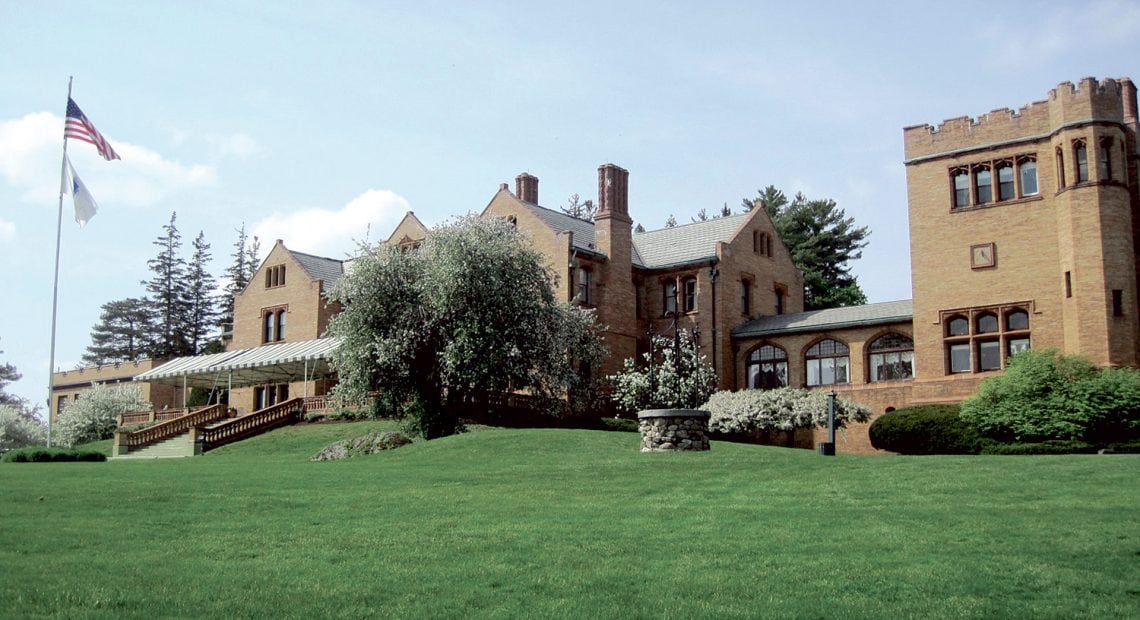
Community Spotlight Features

Community Spotlight

Danielle Fillio says recent projects will boost Stockbridge’s cultural and tourism draws.

Danielle Fillio says recent projects will boost Stockbridge’s cultural and tourism draws.

The Elm Court Estate in Stockbridge was constructed in 1886 as a summer cottage for William Douglas Stone and Emily Vanderbilt, completed a series of renovations in 1919, and evolved into an inn in the ’40s and ’50s, hosting dinners, events, and overnight accommodations. It was eventually placed on the National Register of Historic Places.

Nowadays, it’s getting a big boost from Travaasa Berkshire County, which plans to renovate, preserve, and add to the complex in order to create a new resort — and bring in the jobs and tourism that comes with it.

“Elm Court was approved three years ago and held up in land court in Lenox, but now it’s done and moving forward with development,” said Danielle Fillio, Stockbridge’s recently appointed town administrator. “It’s a big resort with a restaurant on site.”

The property sits on the border of Stockbridge and Lenox on Old Stockbridge Road and fits well into the destination marketing of both communities, smallish towns that rely heavily on visits from outsiders to grow their tax base.

“We’re excited about bringing some jobs here, and we’ll have the meals tax, room tax, and more tourists,” Fillio said.

Meanwhile, the Boston Symphony Orchestra broke ground over the summer on a $30 million construction project at Tanglewood, a four-building complex that will house rehearsal and performance space for the Tanglewood Music Center as well as a new education venture known as the Tanglewood Learning Institute — the first weatherized, all-season structure at Tanglewood, which the BSO plans to make available for events beyond the summer months.

“Those buildings will be used year-round, which will help extend tourism through the offseason,” Fillio said, noting that Tanglewood is one of Stockbridge’s main summer draws, but the colder months could use a tourism boost.

Indeed, those two projects are indicative of how much Stockbridge relies on tourism and visitorship for economic development. With a population of just under 2,000, the community doesn’t have a deep well of residents or businesses from which to draw tax revenue, but it does boast a widely noted series of destination attractions, from Tanglewood to the Norman Rockwell Museum; from the Berkshire Theatre Festival to Berkshire Botanical Garden.

The goal, Fillio said, is to complement those regional draws with the kinds of services and municipal improvements that will best serve an older population that values the town’s rural character. And town leaders are striving to do just that.

Full Speed Ahead

Although the issue has been a contentious one, the Select Board, earlier this year, approved the hiring of Fillio, who had been assistant to the previous town administrator for a decade, to her current role. She had been serving in an interim capacity while town leaders mulled a number of options, including partnering with neighboring Lee and Lenox on a shared administrator.

We want to preserve our natural resources while bringing more people here and helping businesses.”

In her now-permanent role, she’s involved with many critical areas of town administration, from budgeting to planning, and she’s pleased with some of the recent progress to improve municipal infrastructure and attract new business.

On the former front, Stockbridge has been successful winning grants to repair a number of bridges in town, including $500,000 from the state’s Small Bridge Program and $1 million from its Small Town Rural Assistance Program to replace the deteriorated, heavily traveled Larrywaug Bridge on Route 183, just north of the state highway’s intersection with Route 102. The project will commence in 2018.

The town’s voters had previously approved a $2.6 million, 20-year bond to finance repairs to eight bridges and roadways in need of restoration. Among them are the Averic Road twin bridges off Route 183, which were closed by MassDOT in the spring of 2016.

Meanwhile, the town is looking to replace its highway garage, which is “currently falling apart,” Fillio said, and is also considering options for the quirky intersection of Routes 7 and 102 at the Red Lion Inn. “We’re going to see if we can raise funds to be able to get an updated study to see what may help us with the traffic there. The last traffic study in that area was in 2004.”

Stockbridge at a glance

Year Incorporated: 1739
Population: 1,947 (2010)
Area: 23.7 square miles
County: Berkshire
Residential Tax Rate: $9.59
Commercial Tax Rate: $9.59
Median Household Income: $48,571
Median Family Income: $59,556
Type of government: Town Administrator; Open Town Meeting
Largest Employers: Austen Riggs Center; Tanglewood; Red Lion Inn
* Latest information available

On the planning front, a visionary project committee was formed several years ago to develop recommendations that could be implemented over the next 20 years. The committee issued a report in 2016 titled “Planning a Way Forward.”

That report noted that residents value the town’s cultural institutions and historic buildings; its open space, recreation sites, and walking trails; and its downtown (although many would like to see additional shops and services, as well as more parking). Meanwhile, they want to see smart housing growth that takes into account the community’s aging population, as well as additional transportation options and better accommodation of walkers and bicyclists.

As a result, the document envisioned a Stockbridge in 2036 that mixes the traditional strengths of tourism, culture, and creative economy with green- and technology-based businesses, food production from local farmers, and agri-tourism. The ideal community would also be less auto-reliant, expanding pedestrian networks, bicycle infrastructure, and regional bus and ride-sharing services.

The report also predicts a socially and economically diverse population that provides equally diverse housing options, from apartments and condominiums to smaller single-family homes, co-housing projects, and historic ‘Berkshire cottages.’ These include a mix of sustainable new construction and repurposed buildings, including the preservation of older homes, along with an increase of people living close to the town center, including mixed-use buildings with apartments over shops to support downtown businesses.

While the overall vision may be ambitious, it encompasses the sorts of goals a town of Stockbridge’s size can reasonably set when looking to move into its next era. To help bring new businesses into this plan, the Planning Board has formed a bylaw-review committee tasked with examining all the zoning bylaws to determine what needs to change to make the town a more attractive place to set up shop.

“We want to preserve our natural resources while bringing more people here and helping businesses,” Fillio said.

Positive Signals

Businesses are certainly cheering the cell-phone tower that Verizon erected on the southern end of the town landfill earlier this year. Previously, half the town had no cell service, and downtown tourists were surprised by the lack of a signal.

“The tower is up and running, and it makes a great difference — if you have Verizon. If you have AT&T, it’s still not a huge help, but there have been talks about possibly having AT&T go up in the tower,” Fillio said. “But you can actually get service at the Red Lion now, which for years was never the case.”

It’s just one way a small town is taking small steps to preserve its cultural character while adding the kinds of amenities demanded by a 21st-century population.

Joseph Bednar can be reached at [email protected]
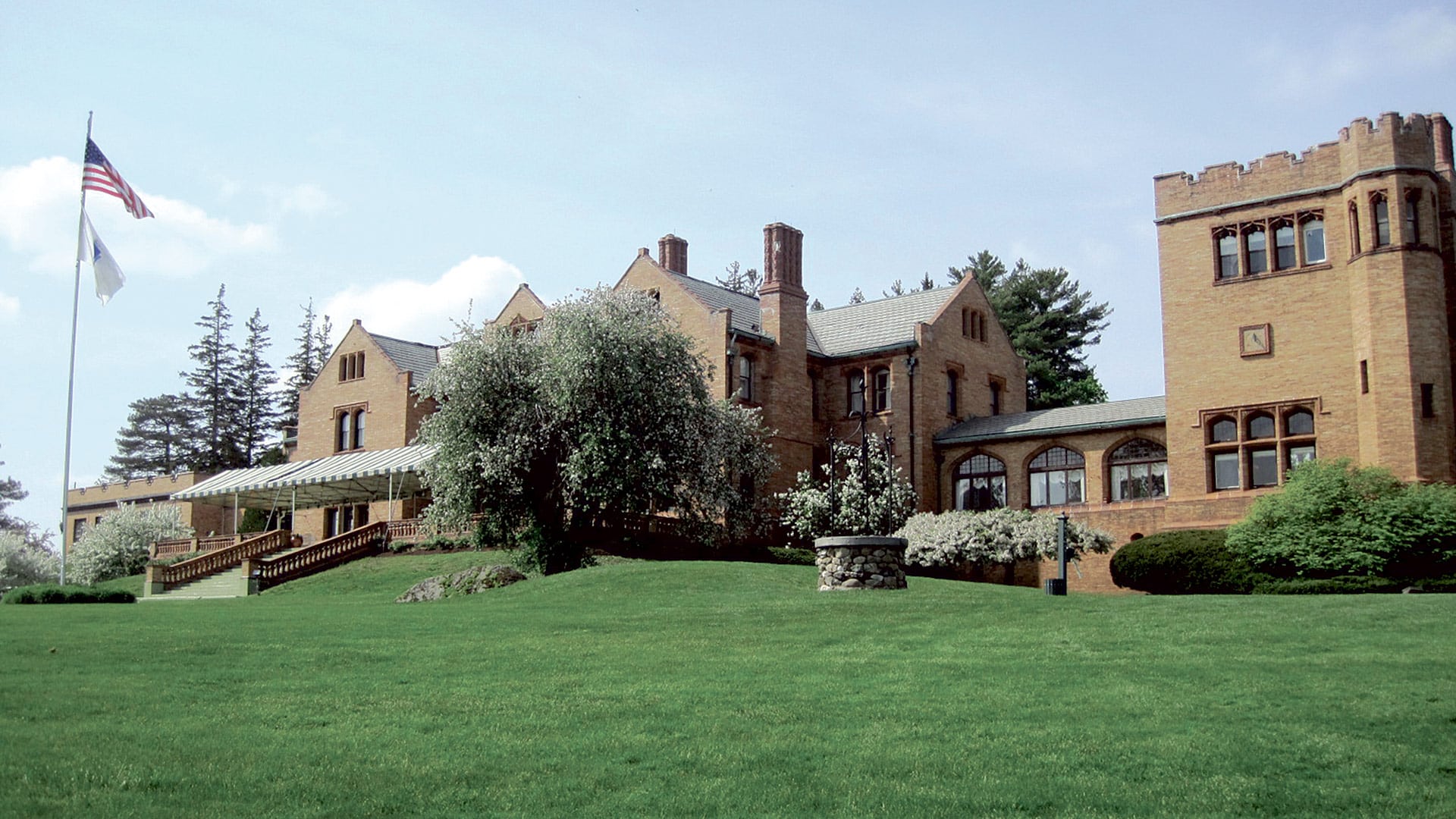
Community Spotlight Features

Community Spotlight

Karl Stinehart (left) and Doug Moglin

Karl Stinehart (left) and Doug Moglin say Southwick is an ideal spot to live, work, and play, with plenty of opportunties for all three.

Many communities, Doug Moglin notes, tout themselves as a great place to live, or an ideal spot to do business, or a haven for recreation.

“But we have all three,” said the chair of Southwick’s Board of Selectmen. “I’m one of those people who do all three in town, and we still have room for more of all those things.”

On the residential front, for example, work continues on 26 homes at the new Noble Steed subdivision off Vining Hill Road. Meanwhile, the Southwick Country Club site is being sold to Fiore Realty, which intends to develop more homes and perhaps some mixed-use properties along College Highway.

Golf enthusiasts in town shouldn’t fret, though, said Karl Stinehart, the town’s chief administrative officer, noting that Southwick boasts three other golf courses, including the PGA-level track at the Ranch. The community’s recreational offerings run far deeper than that, actually, from the Congamond Lakes and the boating opportunities there to a fully developed rail trail; from motocross events at the Wick 338 to the 66-acre Whalley Park.

Southwick at a glance

Year Incorporated: 1770
Population: 9,502
Area: 31.7 square miles
County: Hampden
Residential Tax Rate: $17.50
Commercial Tax Rate: $17.50
Median Household Income: $52,296
Family Household Income: $64,456
Type of Government: Open Town Meeting; Board of Selectmen
Largest Employers: Big Y; Whalley Computer Associates; Southwick Regional School District
*Latest information available

On the business front, meanwhile, the town’s industrial park continues to thrive with its mix of high-tech, light-industrial, and other types of firms, while a series of major infrastructure projects ease the path for motorists seeking out those aforementioned opportunities to live, work, and play in this community of just under 10,000 residents.

“It’s just a great place,” said Stinehart, Southwick’s chief administrative officer. “People who live in our community have all the right pieces — access to recreational opportunities, good schools, business, and commerce. We also have the ability to have more capacity — more business and commerce here.”

And plenty more fun.

Great Outdoors

Indeed, Southwick has long prided itself on its recreational opportunities, and they have only grown in prominence over the past several years.

Take the lakes on the south side of town — featuring two boat ramps, a fishing pier, and a town beach — which provide an array of activity for residents. A planned $275,000 project will renovate the south boat ramp on Berkshire Avenue, and the beachfront was recently renovated as well.

Ongoing efforts to preserve open space nearby are also gaining ground, as the town hopes to acquire a 144-acre parcel for sale on North Pond at Congamond Lakes. The Mass. Department of Fisheries and Wildlife awarded Southwick money to help purchase it, and the Franklin Land Trust has embarked on a fund-raising effort to make up the difference in price. The parcel is abutted by two areas owned by the Commonwealth of Massachusetts and the state of Connecticut.

Outdoors enthusiasts can also enjoy access to the natural scenery of the Metacomet/Monadnock Trail, as well as a 6.5-mile-long linear park, or rail trail, that runs through town, from the Westfield border to the Suffield border. “It gets a ton of use on weekends during spring, summer, and fall — even the winter, before the snow flies,” Moglin noted.

Bikers can park in a number of spots along the trail to start their ride, and, in fact, expanding parking is one of the challenges the town is studying, he added. But the fact that the trail skirts close to several commercial areas of town is a benefit to stores and restaurants when bikers take a break to enjoy a meal or shopping.

People who live in our community have all the right pieces — access to recreational opportunities, good schools, business, and commerce. We also have the ability to have more capacity — more business and commerce here.”

“People can take advantage of these businesses,” Stinehart said. “I often see people riding off the trail to make use of these commercial areas.”

The Wick 338, the motocross track behind the American Legion, is another major draw. “They’ve put a lot of investment into the track, which abuts the Southwick Recreation Center and Whalley Park, so the spinoff benefits are significant,” Stinehart said.

The complex hosts the annual Lucas Oil Pro Motocross Championship — which is broadcast live on NBC and draws close to 20,000 people to town — as well as a host of other events, including Rugged Maniac New England, a challenging, mud-splattered 5K obstacle course.

“People of varying levels of capability can do that, from people who can do it in 20 minutes to those who take four hours — we’re somewhere in the middle,” Stinehart said with a laugh and a nod to Moglin.

The selectman agreed, again noting that more than 10,000 people may show up. “That’s an economic driver as well as a great recreational opportunity.”

As for Whalley Park — which was donated to the town by the prominent Whalley family and developed using municipal and Community Preservation Act funds — it includes a full-size soccer field, baseball field, and softball field, lighting for the fields, a huge kids’ play area, and a pavilion.

On the Right Road

Speaking of kids, a recent $69 million project was completed two years ago at the complex on Feeding Hills Road that houses Woodland Elementary School, Powder Mill Middle School, and Southwick Regional School, all of which enjoyed additions and renovations.

Meanwhile, the town just finished the total reconstruction of a half-mile stretch of Route 57 that runs by the school complex, including new turn lanes, synchronized signals, drainage, and road widening. That’s important, Moglin said, because businesses access the road from the industrial park, and parents and bus drivers appreciate the safety upgrades where the school lots dump out onto 57. “It makes for improved public safety and better flow of people and goods.”

It’s not a standalone project; stretches of College Highway, or Routes 10 and 202 — the main commercial artery in Southwick — were similarly widened and reconfigured within the last five years, and Congamond Road, a key entry into town from Connecticut, is next on the docket, with a project commencing in the spring to improve the roadway and drainage, with a possible sewer component as well, which will help attract new business ventures to the busy neighborhood.

“That’s all serviced by septic today, which limits potential for pad sites,” Moglin said. “It would be a job creator if we can get sewer lines in there.”

Overall, though, the town offers plenty of incentives for businesses, both he and Stinehart noted, ranging from proximity to Bradley International Airport to a singular tax rate of $17.50 per $1,000 for both residential and commercial properties. “That’s an overreaching goal of the Board of Selectmen,” Moglin said of the rate. “We have really tried to keep that reasonable and competitive.”

The town has also streamlined its permitting process, bringing together planning, zoning, and other officials to work together with prospective businesses, rather than fragmenting the process.

“We’ve got capacity for small, medium, and large employers to come to Southwick,” he continued. “We’re working collaboratively with employers in town who want to expand or who want to move to Southwick, and we’ll put together a partnership to go through the process.”

Stinehart emphatically agreed. “Southwick is open for business,” he said — and open for much more, as well.

Joseph Bednar can be reached at [email protected]
Community Spotlight Features

Community Spotlight

Jennifer Tabakin

Jennifer Tabakin says Great Barrington is making important progress in efforts to attract young people and young families to the community.


Jennifer Tabakin acknowledged that, figuratively speaking, at least, City Hall in New York and Town Hall in Great Barrington are much more than 125 or so miles apart.

In most all ways, they’re worlds apart, and she should know, because she’s worked in both settings, and is firmly entrenched in the latter as town manager.

In New York, she worked for former Mayor Michael Bloomberg for several years. To be more specific, she worked under the deputy mayor for Economic Development after a stint in state government with the Metropolitan Transportation Authority working on capital projects.

“I did construction and operation coordination in lower Manhattan, and worked on parks, waterfront parks, and other projects in the Bronx, as well as being a general policy advisor,” she told BusinessWest, adding that, while she greatly enjoyed that work, she decided to leave Manhattan for a different kind of challenge, that of managing a small community — and a much different kind of lifestyle — in the summer of 2013.

“From my perspective, being able to have a career first in city government and then transitioning to local government in a town has been a great opportunity to add another chapter to a very interesting career,” she explained, adding that she chose Great Barrington for this transition, as she called it, for several reasons.

For starters, she was familiar with it — her parents have long lived in nearby Lenox — and she admired its mix of rural beauty and a bustling downtown and vibrant arts scene. But there was more, in the category of professional challenges.

“It had a diversity of really interesting projects and issues, and an engaged and active community,” she noted. “It had enough challenges so that I thought it was a great place to be a town manager.”

And while she acknowledged the many differences between Gotham and the region within the Berkshires known as South County, she said that, overall, the basic principles of economic development are pretty much the same in both settings — primarily, it comes down to making the community in question a better one in which to live, work, play, and start a business, and using public investments to do all that and spur private investment.

Tabakin said she saw that formula work in New York, and she’s seeing it bring progress in Great Barrington, as well. Indeed, a number of public investments, including a huge reconstruction project in the city’s already-thriving downtown as well as road upgrades, two bridge-reconstruction initiatives, and upgrades to the wastewater-treatment plant, have coincided with, and in many ways inspired, a host of private investments.

These have come in many forms, including new restaurants — the town now boasts more than 77 of them — additional housing developments, mixed-use projects, and a host of arts-focused initiatives.

At or certainly near the top of that list is an ambitious undertaking known as St. James Place. Opened in 2017 as a home to small and mid-sized Berkshire County arts groups in need of performance, rehearsal, and office space, it was, as the name suggests, created out of the historic St. James Episcopal Church on Main Street by Sally and Fred Harris, parishioners who wanted to do something to preserve the deteriorating landmark.

Today, billing itself as “a place for art,” this facility is living up to both that tagline and its significant promise as a setting for many forms of artistic expression.

It recently hosted an intriguing seminar called “Close Encounters with Music: The Politics of Opera,” and on Dec. 9 it will host a performance of the Berkshire Children’s Chorus. Later next month, it will be home to the Great Barrington Holiday Arts Market and a performance by the group Crescendo called “Three Wise Kings Follow a Star.”

SEE: Great Barrington at a glance

Year Incorporated: 1761
Population: 7,104 (0000)
Area: 45.8 square miles
County: Berkshire
Residential Tax Rate: $14.60
Commercial Tax Rate: $14.60
Median Household Income: $95,490
Median Family Income: $103,135
Type of Government: Open Town Meeting
Largest Employers: Fairview Dialysis Center; Fairview Hospital; Kutscher’s Sports Academy; Prairie Whale
* Latest information available

Meanwhile, several of the office spaces for lease have been filled by arts-related groups such the Berkshire Playwrights Lab, Flying Cloud, and the Berkshire Opera, and the facility is home to the People’s Pantry.

“The idea is to have a place that supports the community, and we do that in a number of ways,” said Fred Harris, adding that the nonprofit, like most, operates as a business would and is making strides it its efforts to be successful economically.

There are many other inspiring stories like the one that has unfolded at St. James Place, said Tabakin, adding that, while there are many issues to contend with, including an aging population, there is a great deal of momentum and positive energy in this jewel of southern Berkshire County.

Progress Report

Getting back to the circumstances that brought her and her family to Great Barrington, Tabakin said familiarity and quality of life were certainly big factors. But there was also that chance to put the considerable experience she accumulated in New York to work addressing an intriguing set of issues and challenges that sold her on the job she’s now in.

“It’s extremely busy and its very active,” she said of the community. “But there’s an enormous amount of interesting projects and land-use issues and policy issues, and budget issues … there was and is a lot going on.”

Indeed, while there are many priorities, one of the biggest is attracting more young families to the community. Like other towns in rural Berkshire and Franklin counties, Great Barrington has seen the average age of its residents rise in recent years, said Tabakin, noting that the community has always been a popular spot for retirees, and there are a number of New Yorkers with second (usually summer) homes in town.

But unlike many other communities, Great Barrington seems to be making great strides in attracting young people and especially young families, she went on, adding that it has many of the necessary ingredients, including attractive housing, quality schools, a vibrant downtown, a burgeoning cultural community, outdoor activities, and more.

Including perhaps that most important ingredient: jobs. They come in a number of sectors, including education (Simons Rock of Bard College is located within the town); healthcare (Fairview Hospital); technology (perhaps a dozen IT companies call the town home); the arts and tourism, the nonprofit community, and even special effects — there are a few such studios located in Great Barrington.

“Over the past several years, we’ve seen more young people move to certain areas of town,” she explained. “It’s observable, and there are reasons for it; we did a renovation of a new playground, we have cultural events that appeal to different generations, and we have a lot of people moving here who are committed to the school system.”

The opportunity to work with a broad team of officials to build this portfolio of attractive qualities is big part of what brought Tabakin to South County, and she noted that there are some new chapters to the story being written.

They include a project to build a new home for the Berkshire Co-op on Bridge Street, new construction that will also include space for smaller retail outlets, said Tabakin, adding that the co-op’s current location will be razed to make room for a condominium project. Overall, this project will achieve a number of ends.

“What this will do is open up the entirety of Bridge Street to additional development,” she explained. “And it’s adjacent to Berkshire Community College’s South County campus, an area that has already seen a lot of activity, so that’s exciting. And this will help us maintain a mixed downtown, where you have residential, working places, shops, and restaurants.”

Also in the works is an ambitious project in the village of Housatonic, an old mill town within Great Barrington populated by art galleries and people who have stayed there long after the mills closed.

The town had issued an RFP for redevelopment of the century-old elementary school in Housatonic, said Tabakin, and a local group of partners has come forward and is now working on the planning phase for the project. Preliminary plans call for business-incubator space and some commercial space on the first floor and apartments on the second floor.

As for St. James Place, Harris said the facility is, as he noted, making great strides toward meeting its broad mission and breaking even financially.

While doing so, it has become an important component — one of many, actually — in an emerging story of a community now hitting a lot of high notes, both figuratively, but also (especially in the historic church building) quite literally.

“The town has a great deal of depth,” said Harris. “And it has a great audience base, and it has more than enough vitality to attract people. There are a lot of good things happening here.”

Optimistic View

Looking back on what has transpired since she arrived as town manager, Tabakin said that, beyond the new developments, restaurants, and capital projects, maybe her biggest accomplishment has been to inspire others to get involved with the community and be part of the many forms of progress taking place.

Indeed, there has been plenty to get involved with, including everything from ‘green’ initiatives such as a ban on plastic bags and sustainable-energy initiatives to work in the schools, neighborhoods, and amply green spaces the town works diligently to preserve.

“One of the things I’ve done is to share my passion for local government, and I’ve gotten a group of people enthusiastic about being involved,” she told BusinessWest. “And I’m proud of it, because it’s so critically important at this period of time that we all do what we can to make sure we’re actively participating in making our place, our home, our community a wonderful place to live.

“It’s a wonderful learning opportunity and brings people together,” she said of this heightened involvement. “And from that, we’ve been able to accomplish a lot and serve as a model for other places.”

And while a great deal has been accomplished, there is a general sense that, that when it comes to forward progress, this community is just getting started.

George O’Brien can be reached at [email protected]
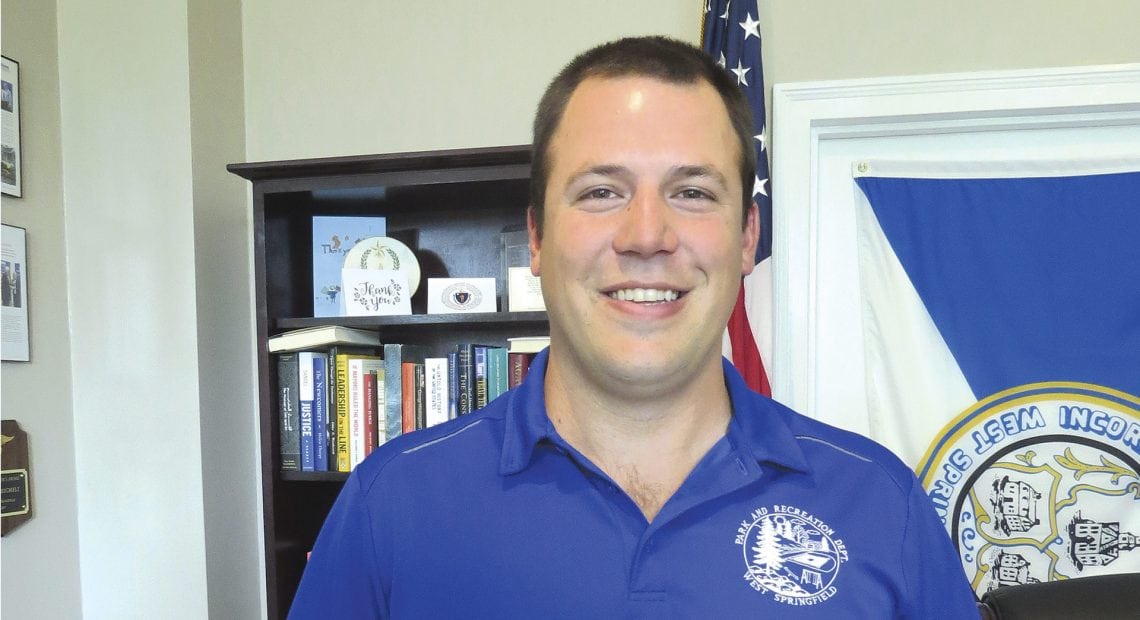
Community Spotlight Features

Community Spotlight


Denise Menard

Denise Menard says low taxes, streamlined permitting, and quality of life are all factors in making East Longmeadow an attractive landing spot.

When East Longmeadow switched from a town-meeting style of government to a Town Council and town manager, Denise Menard said the change wasn’t meant to be simply cosmetic.

Rather, noted Menard — who came on board as interim town manager in 2016 before shedding the ‘interim’ title earlier this year — creating her position and replacing the three-member Board of Selectmen with a seven-member, elected Town Council provided the momentum to launch several new municipal departments aimed squarely at improving quality of life.

That included East Longmeadow’s first-ever Human Resources department; a new director of Finance and director of Planning and Community Development; and a three-member Board of Health overseen by a full-time director.

That latter division has launched two successful vaccination clinics — to prevent flu, shingles, tetanus, and other maladies — while the town has also boosted recycling efforts, launched an innovative 911 database that collects resident information to be used by first-responders, and is looking to begin town ambulance service.

“We don’t sell widgets; we only provide services,” Menard told BusinessWest. “So we try to provide the best service we can. That’s really paramount in my eyes. I’ve had people come in and say they’re very happy with the way things are going.”

The health, emergency, and recycling services all target healthier or greener lifestyles for residents, she added, and the town’s new charter has given municipal leaders a strong foundation from which to further expand programs to benefit citizens.

East Longmeadow at a glance:

Year Incorporated: 1894
Population: 15,720 (2010)
Area: 13.0 square miles
County: Hampden
Residential Tax Rate: $20.77
Commercial Tax Rate: $20.77
Median Household Income: $62,680 (2010)
Median Family Income: $70,571 (2010)
Type of Government: Town Council, Town Manager
Largest Employers: Cartamundi; Lenox Tools; Redstone Rehab and Nursing Center

“I think we’ll see more great things in the years moving forward,” she said. “People need to know they’re valued and that their tax dollars are going to good things.”

There’s a strategy to those quality-of-life efforts that do more than make residents happy, however. A town’s amenities and services speak directly to its ability to attract new business, and so does how many barriers a town throws into their path.

“People coming into the community have a much more streamlined process now,” said Don Anderson, one of the Town Council members and a business owner in East Longmeadow for 28 years with the Cruise Store.

“We have a full-time town manager in office as opposed to a part-time board of selectmen with a town administrator who has no real power,” he went on. “Also, in terms of permitting, we now have a Building Department and Planning Department and Zoning Department under one umbrella.”

At the same time, he added, the town was wise to keep certain things intact, like taxing businesses and residents at the same rate. “That policy did not change, so that’s also a welcoming sign to outside businesses wanting to come into East Longmeadow.”

From the Ground Up

As for companies setting up shop and expanding, a few big projects have given a shot of energy to the town’s economic-development landscape.

Last year, L.E. Belcher broke ground on a 6,500-square-foot convenience store on a lot at 227 Shaker Road that was empty for many years. That project stalled when Atlantis Management Group bought out the property, but after a second round of permitting and approvals — the proposed hours will shift from 24/7 to 5 a.m. to 1 a.m. each day — “they seem very anxious to get started,” Menard said.

Also underway is an 18,000-square-foot medical office building at 250 North Main St. being constructed by Associated Builders for Baystate Dental Group, which will have 90 parking spaces. The dental office will occupy the first floor, and the second floor will be rented as medical or office space.

Another, more complex project in the health realm is a joint venture with the town of Longmeadow — a medical complex that will add to East Longmeadow Skilled Nursing Center at 305 Maple St., cross town lines, and provide benefits to both communities.

The project includes four structures on a 20-acre site: a 50,000-square-foot medical office building in Longmeadow that would be occupied by Baystate Health; a two-story, 25,000-square-foot office building in East Longmeadow; and an assisted-living facility and expansion of an existing skilled-nursing facility run by Berkshire Health.

One of the most exciting current projects, to hear Menard tell it, is the Planning Board’s discussion of an overlay zone for the former Package Machinery building at 330 Chestnut St.

“The building is in pretty poor shape, and the planning proposal is to create a mixed-use site which would have commercial, retail, and possibly small offices in the front part of the building, and above will be some residential apartments or condos,” she explained.

We don’t sell widgets; we only provide services. So we try to provide the best service we can. That’s really paramount in my eyes. I’ve had people come in and say they’re very happy with the way things are going.”

With sensitivity to the environment, the proposal includes preserving green space around the property and creating walking trails to encourage outdoor activity, she added. “There will be a real New England feel to it, and it’s going to be be a pretty upscale development. It’s shaping up to be a good project.”

Anderson noted that East Longmeadow has been home to a number of retail and restaurant ‘firsts’ in Greater Springfield, including the region’s first Boston Chicken franchise, its first Homegoods store, and its first 99 Restaurant.

“If they’re picking East Longmeadow, that says East Longmeadow has the economic range to support businesses,” he told BusinessWest. “People like the fact that the tax basis goes beyond just housing, that we can generate taxes through business as well. There’s a good balance there. When they look at a community that gives a clear message of supporting business, then businesses feel welcome. Personally, I haven’t been disappointed.”

Menard hopes others feel the same way. “People are coming to live and work and develop businesses here. We strive to be business-friendly, and I think we’re getting there.”

Spreading the Word

Change has been positive in East Longmeadow, Anderson went on, but it takes more work than just changing the charter and streamlining processes. One challenge has involved the various town departments and the Town Council learning how to work together. “People coming in fresh don’t always realize how matters before the Planning Board affect the council. Something the Board of Health might be doing may impact the Town Council as well, and we have to be aware of that.”

Another challenge has been spreading the word about how the municipal changes and new services benefit people, as local media haven’t always been diligent about covering the town’s day-to-day business.

“There has been a lack of interest in the government by the media,” Anderson said, “I saw that was happening, so I’m chairing a new commission on media relations. We’re working on strategies to find more organized ways of getting messages out to people, such as through social-media methods. We need to find modern ways to get the message out when the media is not covering us the way they used to.”

And East Longmeadow does have news to share, he went on. “Things are happening. You can drive through and see the construction going on, see properties that have been vacant for a number of years come to life, how the old Vanguard Bank on North Main Street is going to be a dentist’s office, or the interest in the old Package Machinery area. Obviously, people are attracted to this community.”

It’s a civic-minded community as well, he noted, evidenced by the 32 people who ran for the first Town Council seats last year.

“We have beautiful housing, some of the best schools around, some beautiful parks, and we have a healthy mix of commercial and residential,” Menard added. “It’s a well-rounded town with a reasonable tax rate, and people just seem to be amenable to coming here.”

Joseph Bednar can be reached at [email protected]
Community Spotlight Features

Community Spotlight

David Nixon says Hadley’s low tax rate, access to transportation, and mix of agriculture and commerce are among its selling points.

David Nixon says Hadley’s low tax rate, access to transportation, and mix of agriculture and commerce are among its selling points.

What a difference 300 feet makes.

“I often talk about the different views from Route 9 and the bike path,” Hadley Town Administrator David Nixon said, referring to the trail that parallels the heavily trafficked Russell Street a football field’s length away. “One is a very commercial, mercantile view, and one is a very pastoral view. And they’re right next to each other. That really makes Hadley very special — commercial, residential, and agricultural, we have it all here.”

Indeed, many out-of-towners driving along Russell Street during the day might not realize that only 5,000-plus residents call Hadley home. “That number is accurate between 12 a.m. and 5 a.m. Otherwise, it’s between 20,000 and 60,000,” Nixon said, with visitors crowding into five major shopping areas along Route 9, as well as a few facilities on the UMass Amherst campus, including McGuirk Stadium and the Mullins Center, that are actually on Hadley property.

“We have to provide services for all those residents and visitors,” he went on. “But it’s great that we get all that commercial activity. People go to a game and eat at our restaurants, which are selling something like $3 million worth of product every single month.”

The eclectic mix of eateries continues to evolve, from the Texas Roadhouse location that’s still drawing large crowds two years after its opening to its new — and very different — neighbor, Pulse, a vegan restaurant that opened a month ago where Seven Sisters Bistro and a bison farm once stood.

Other developments speak to a healthy economic landscape in Hadley. A long-planned Pride station, featuring a 6,000-square-foot convenience store, will open next spring at the foot of the Calvin Coolidge Bridge that connects the town to Northampton.

Pulse, a vegan restaurant that opened a month ago

Pulse, a vegan restaurant that opened a month ago

“They’re in the process of completing the site work now,” Nixon said, noting that Pride has also applied for a liquor license, which would make it the only gas station in town selling alcohol. “For a long time, that was a derelict set of properties — an old hotel, the old Aqua Vitae restaurant, and some residences there that had fallen into disrepair. The site was overgrown with weeds and trees, vines, and creepers.”

Meanwhile, on the heels of Autobahn Indoor Speedway opening at Hampshire Mall last fall, that complex continues to court further entertainment options. On the distinctly non-entertaining side, MedExpress just opened up an urgent-care center at a former Pizza Hut restaurant that had become a derelict property.

“It serves a need for medical treatment on this side of the river,” Nixon said. “We have Cooley Dickinson on the west side, but you have to go through some congested traffic to get there, so we’re very excited about this opportunity for people to get walk-in treatment without having to deal with as much traffic.”

Hadley at a glance:

Year Incorporated: 1661
Population: 5,250 (2010)
Area: 24.6 square miles
County: Hampshire
Residential Tax Rate: $11.57
Commercial Tax Rate: $11.57
Median Household Income: $51,851
Median Family Income: $61,897
Type of Government: Open Town Meeting, Board of Selectmen
Largest Employers: Super Stop & Shop; Evaluation Systems Group Pearson; Elaine Center at Hadley; Home Depot; Lowe’s Home Improvement
* Latest information available

That traffic has a silver lining, of course — it means Hadley’s business culture, concentrated almost totally along Route 9, continues to drive the town’s economy. But that’s far from the whole picture, as a short walk to the bike path — and beyond — clearly shows.

Home and Away

Residential development continues apace as well, Nixon told BusinessWest. Two significant projects — East Street Commons, which consists of 32 affordable, energy-efficient homes for people 55 and older, and a condominium complex — are nearing the occupancy stage.

Meanwhile, on the hospitality front, the city is working with Pioneer Valley Hospitality Group to develop a 96-suite hotel on the Home Depot site on Route 9.

“It’s going to fill a nice niche here in the Valley in that the rooms are suites with kitchenettes,” he explained. “People who are staying here longer than a typical hotel stay — like visiting professors and people in the consulting world — can have something more comfortable than just a hotel room they can call their home base while here.”


He understands the importance of the Five Colleges — UMass, Smith, Amherst, Hampshire, and Mount Holyoke — and their tens of thousands of students to the Hadley business community, but says the town is central to far more than those. “I often talk about us being part of a 30-campus community,” he explained, based on how many colleges are within an hour’s drive of Hadley.

Despite its draws, however, Hadley does face some development challenges, including the Berkshire Gas moratorium, dating from 2015, on new or expanded service in Hampshire and Franklin counties due to a lack of pipeline capacity.

“The gas moratorium remains a challenge,” Nixon said. “We submitted testimony last summer to the Mass. Department of Public Utilities in order to see if we can get some sort of relief … but, basically, nothing has changed, so we’re still looking for some short-term solutions to bridge us from where we are to when gas is flowing again — just exploring what we can do to help the business community.”

Many businesses have been able to convert to propane in the meantime, he added. “It’s not ideal, but it’ll do.”

On the other hand, Hadley is now able to offer tax-increment financing for development projects. “This is a program I successfully used in Deerfield as town administrator to promote growth in both agricultural and commercial businesses,” Nixon noted. “When I came to Hadley a dozen years ago, I wanted to offer some kind of program, but wasn’t able to because of legislative issues. Those have changed, and this is now an economic-incentive tool we can employ to develop small to medium-sized businesses in the town of Hadley.”

Meanwhile, the city continues to invest in municipal facilities and roadway infrastructure. The former includes new roofs on Town Hall, the Department of Public Works, and the public-safety complex, while the latter includes significant projects like bridge repair on Bay Road and the replacement of a century-old water line on Route 9, a project conducted in tandem with the Massachusetts Department of Transportation — which was already conducting a road-widening project on the well-traveled thoroughfare — to save on costs.

The town has also made strides with new solar and other sustainable-energy projects. “We found out just the other day that Hadley produces more renewable energy than any other town in Hampshire County,” Nixon said. “We do a very good job of producing renewable energy for the Valley.”

Experts in Their Fields

That ‘green’ priority is fitting for a town that is far more dominated by its farmland, at least in terms of sheer area, than it is by Route 9. Two years ago, the town implemented a Farmland Preservation Agreement, and has worked to transfer property-development rights to preserve farmland that is put up for sale.

“I’m very proud of the fact that we have more farmland than any other community in Massachusetts,” Nixon said. “We have six dairy farms, also more than any other community.”

On the quality-of-life front, the town has earmarked $5.3 million for a new senior center, and voters will have the opportunity in November to vote on $1.8 million in additional funding to complete that project. Residents will also vote on $3.8 million toward the construction of a new library, after the town received a $3.9 million grant from the Massachusetts Board of Library Commissioners for that project.

Those projects, if approved, will be just two more amenities in a town that boasts plenty of reasons to live and work there, Nixon said.

“This is a place that’s easy to access by multiple forms of transportation, rail and road and airports. It has a low tax rate — in the lowest 25% in the Commonwealth. We have a highly educated workforce and access to resources produced by the colleges and universities. We have clean air and water, and a well-maintained town with an AA+ bond rating from Standard & Poors. It’s a business-friendly environment with interesting spaces for families to grow together.”

Joseph Bednar can be reached at [email protected]
Community Spotlight Features

Community Spotlight


Mayor Brian Sullivan

Mayor Brian Sullivan says his coffee hours with business owners and managers, a chamber of commerce initiative, have been eye-opening and extremely productive.

By the middle of 2018, Dan Howard says, close to 75% of Westfield residents and businesses will have access to high-speed Internet through Whip City Fiber, a division of Westfield Gas + Electric.

“The Municipal Light Board is fully behind it, as is the City Council,” said Howard, general manager of WG+E, adding that the city began funding the project back in 2014. “It’s a great collaboration that has really benefited the entire city.”

He noted that of the 41 municipal electric utilities in Massachusetts, only four are gas-and-electric entities, and only one of those four, once Westfield’s project goes online, will also provide high-speed Internet. The city will join communities like Wilson, N.C., Chattanooga, Tenn., and Longmont, Colo., as ‘gigacities,’ and will be able to showcase that fact in its marketing efforts to draw more business to town.

“You don’t have to be big manufacturer or a warehouse facility; we’re also providing access to small, upstart entrepreneurs,” he said. “People can work out of their homes and get the Internet access they need. This provides hefty benefits to communities and has proven to be an economic boost.”

Although it’s perhaps the most literal example, Whip City Fiber is just one way Westfield is making connections — between its municipal leadership, business community, residents, and educational facilities.

Take, for example, the Westfield Education to Business Alliance, which connects the city’s schools, where students are beginning to contemplate their career paths, with companies that are eager to mine local talent.

“That has gone over like gangbusters,” said Kate Phelon, executive director of the Greater Westfield Chamber of Commerce, explaining that it began last year with 15 core members and now regularly draws participation from 40 to 45 businesses.

“It’s all about workforce-development issues,” she told BusinessWest. “We’re bringing education to businesses and businesses to education. The response has been fabulous. It’s a great collaboration.”

For example, a career fair at Westfield High School in June attracted some 45 businesses, interacting with 600 students who gained exposure to the types of career opportunities available at local companies — and, more important, what skill sets they will need to take advantage of them.

That’s not all; Westfield businesses have visited elementary schools as well, and in two weeks, the collaborative will present a career fair for some 120 teachers, who will meet with local businesses and hear about their workforce challenges, with an eye toward modifying curriculum to prepare students for jobs in the regional economy.

Meanwhile, Westfield State University’s Pathways to Excellence program allows high-school students to graduate with up to nine college credits, while exposing them to career options they can think about before taking the leap to college.

“We’re working together on the future workforce, whether students choose the college path or the work path,” Phelon said. “It’s been phenomenal.”

Westfield at a glance

YEAR INCORPORATED: 1669
POPULATION: 41,094 (2010)
AREA: 47.4 square miles
COUNTY: Hampden
RESIDENTIAL TAX RATE: $19.42
COMMERCIAL TAX RATE: $37.08
MEDIAN HOUSEHOLD INCOME: $45,240
MEDIAN FAMILY INCOME: $55,327
TYPE OF GOVERNMENT: Mayor, City Council
LARGEST EMPLOYERS: Westfield State University, Baystate Noble Hospital, Savage Arms Inc., Mestek Inc., Advance Manufacturing Co.

* Latest information available

Meanwhile, the Mayor’s Coffee Hour, a chamber initiative launched several years ago, still draws some 30 to 40 attendees each month to a different host business, where Mayor Brian Sullivan takes questions on the state of various economic-development initiatives in the city.

“Some of these businesses have never been visited by local government,” Sullivan said. “We talk about what they need, how can we help — and it has been really productive. They might let us know they have jobs open, but find the talent, and we can hook them into other people we know, and the connections Kate has.”

Taken as a whole, these initiatives and others speak to a growing sense that Westfield aims to grow through open communication and productive connections. And those efforts are certainly bearing fruit.

Higher Gear

Over the past few years, Westfield residents have been able to see some long-percolating developments blossom, most notably the $6.6 million Olver Transit Pavilion, which opened in April as the centerpiece of a planned downtown resurgence. The Westfield Redevelopment Authority also recently demolished a former bowling alley near the transit center, with plans to create a multi-story, mixed-use building with retail, restaurants, office space, and market-rate apartments.

Those projects are just two facets of the Elm Street Urban Renewal Plan approved in 2013, which focuses on revitalizing 4.88 acres in a two-block area in the heart of downtown Westfield running along both sides of Elm Street, the city’s main commercial thoroughfare. The city has also directed funding to revitalize the so-called Gaslight District adjacent to it.

The transit center was designed to both catalyze related economic development and increase the use of public transportation. The state-of-the-art center includes parking space for four buses with bicycle racks, as well as a bicycle-repair station, which speaks to the proximity of the Columbia Greenway Rail Trail only a block away.

The trail, which spans three and a half miles and crosses seven bridges in the city, isn’t yet complete, Phelon said, but will eventually be yet another destination drawing people to the Whip City.

Mayor Brian Sullivan, Kate Phelon, and Dan Howard

Mayor Brian Sullivan, Kate Phelon, and Dan Howard say collaborations between Westfield’s municipal leaders, businesses, and schools have reaped benefits for the city.

“In a few years, it will be an economic engine in the city,” she told BusinessWest. “People from will come to this rail trail because it’s elevated and extends all the way down to New Haven. I’m already getting calls about where people can park overnight and bike down to Connecticut.”

Economic development has taken other forms as well. Westfield opened a $6 million solar farm on Russell Road last year, featuring 8,864 solar panels capable of producing 3 megawatts of power that will be consumed by the community. Meanwhile, the city continues to develop a second industrial park on city-owned land adjacent to Barnes Regional Airport.

Sullivan said Westfield already offers a number of advantages to businesses considering locating there, from plenty of available land to easy access to Interstates 90 and 91, rail service, and Barnes, to a permitting system that gets all players, from planners to the DPW to the WG+E, into the same room to ease the path to approval.

“That has been successful. There’s no sense in having a meeting to set up a meeting to talk about another meeting. Here, it’s a one-stop shop.”

But he also takes a regional approach to economic development, maintaining relationships with area mayors and the Economic Development Council of Western Mass. “We’re on the the same page, because we’re only as good as our neighbors are doing.”

And Westfield is doing well, he added, noting that city-wide high-speed Internet is just one more catalyst to transform the Whip City from a warehousing and manufacturing center to a location that’s amenable to businesses of all kinds, large and small.

“We have a tremendous asset in this municipal utility,” Howard said, “but instead of everyone doing their own thing, the mayor and I and Kate get together to promote the synergies we have.”

Local Impact

Chambers of commerce are, by their nature, about economic development and helping their communities grow, Phelon said. The Greater Westfield Chamber continues to do so by way of programs such as a buy-local initiative that encourages businesses in the city to make purchases from other Westfield businesses instead of looking outside the area, or online, for suppliers.

“We worry about the future of retail; no matter what you buy, online shopping is hitting Main Street, USA hard,” she said. “We’re trying to counteract that; we’re asking, ‘why don’t you consider a chamber member? You might find something you didn’t even know was available here.’ We’re excited about this. Instead of going online, maybe spend an extra dollar or two here, and make an impact locally. We really want to push this hard.”

It comes down to communication, Sullivan said, and the various entities that make a community run smoothly — from City Hall to the schools system to the business ecosystem — understanding each other’s needs and challenges.

Even last spring’s Earth Day cleanup of trash on Servistar Industrial Road qualifies, the mayor said, adding that it was a volunteer effort spurred by people getting together to talk about a problem. “It’s simple,” he said, “but if you don’t know about it, you can’t do anything about it.”

In Westfield, though, word gets around. And, thanks to a certain fiber project, it’s about to get around even faster.

Joseph Bednar can be reached at [email protected]