Home Archive by category Sections (Page 15)

Sections

Professional Development

Professional Development

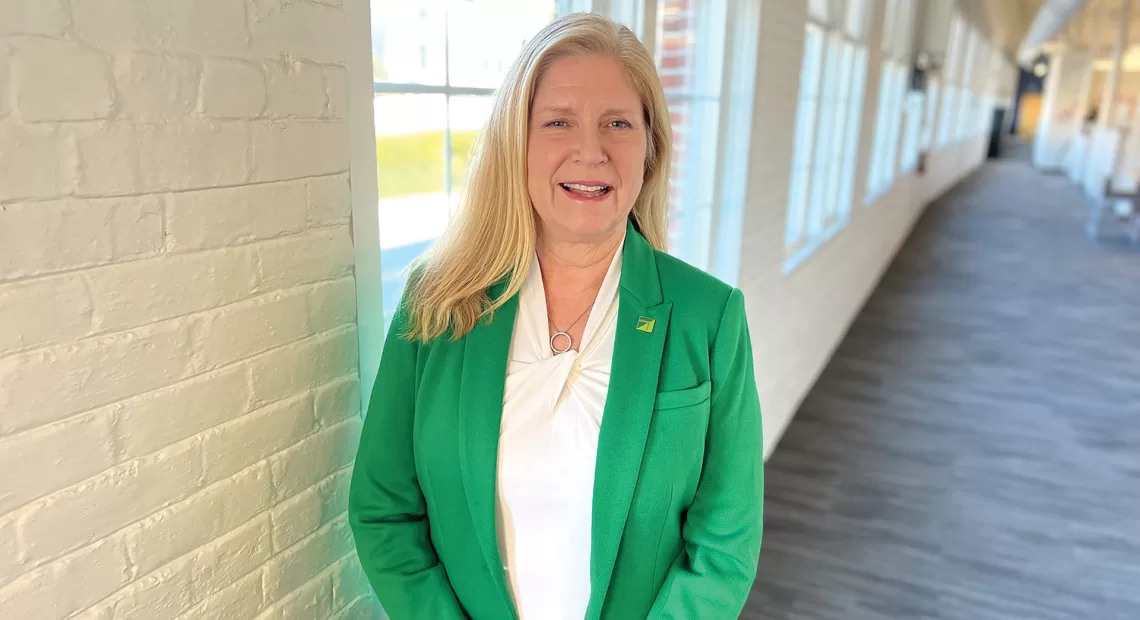
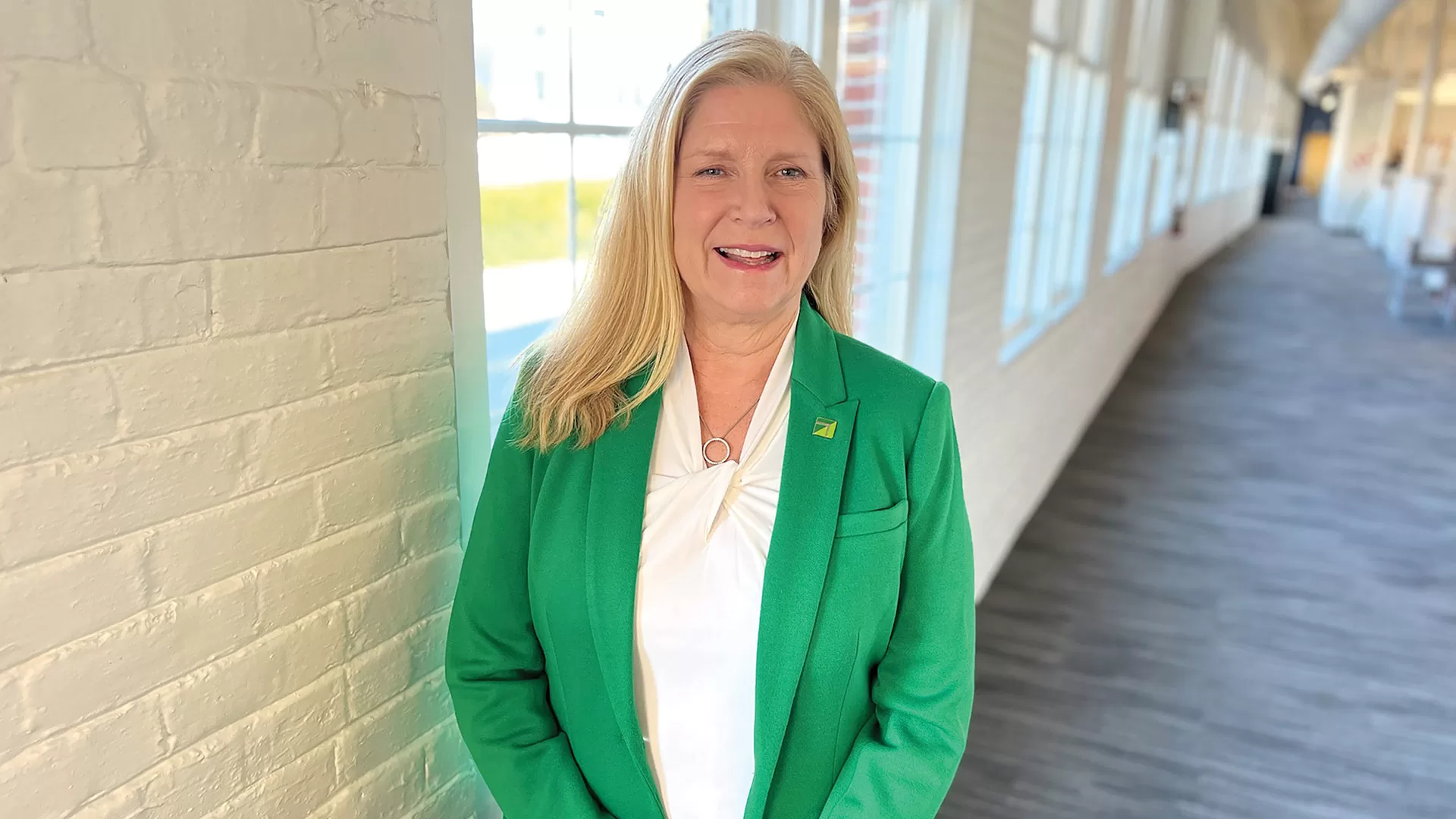
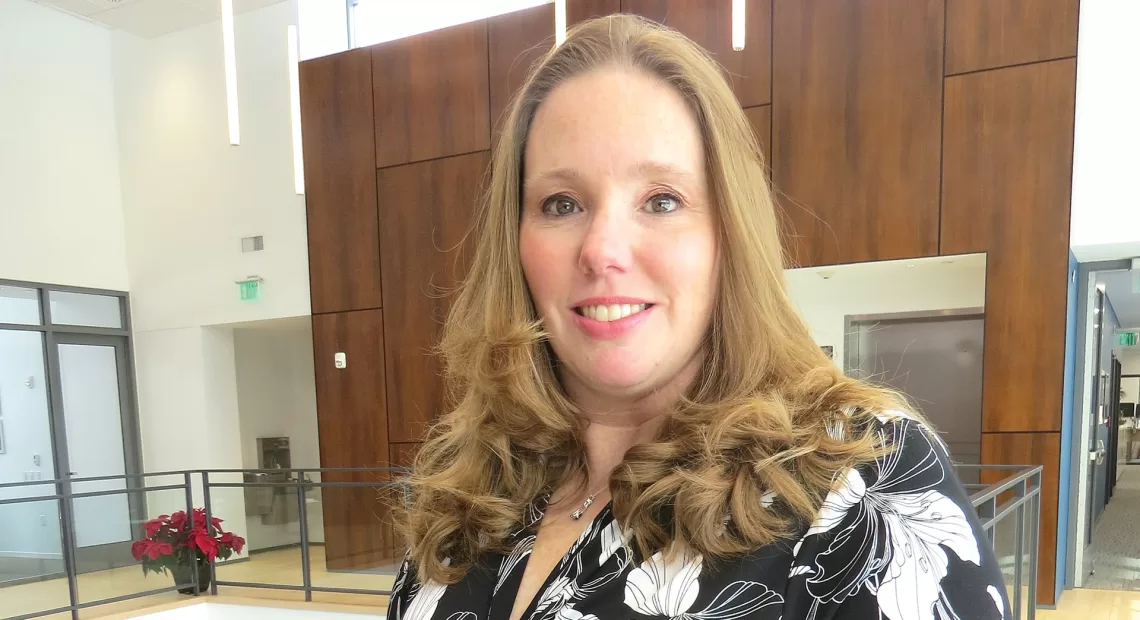
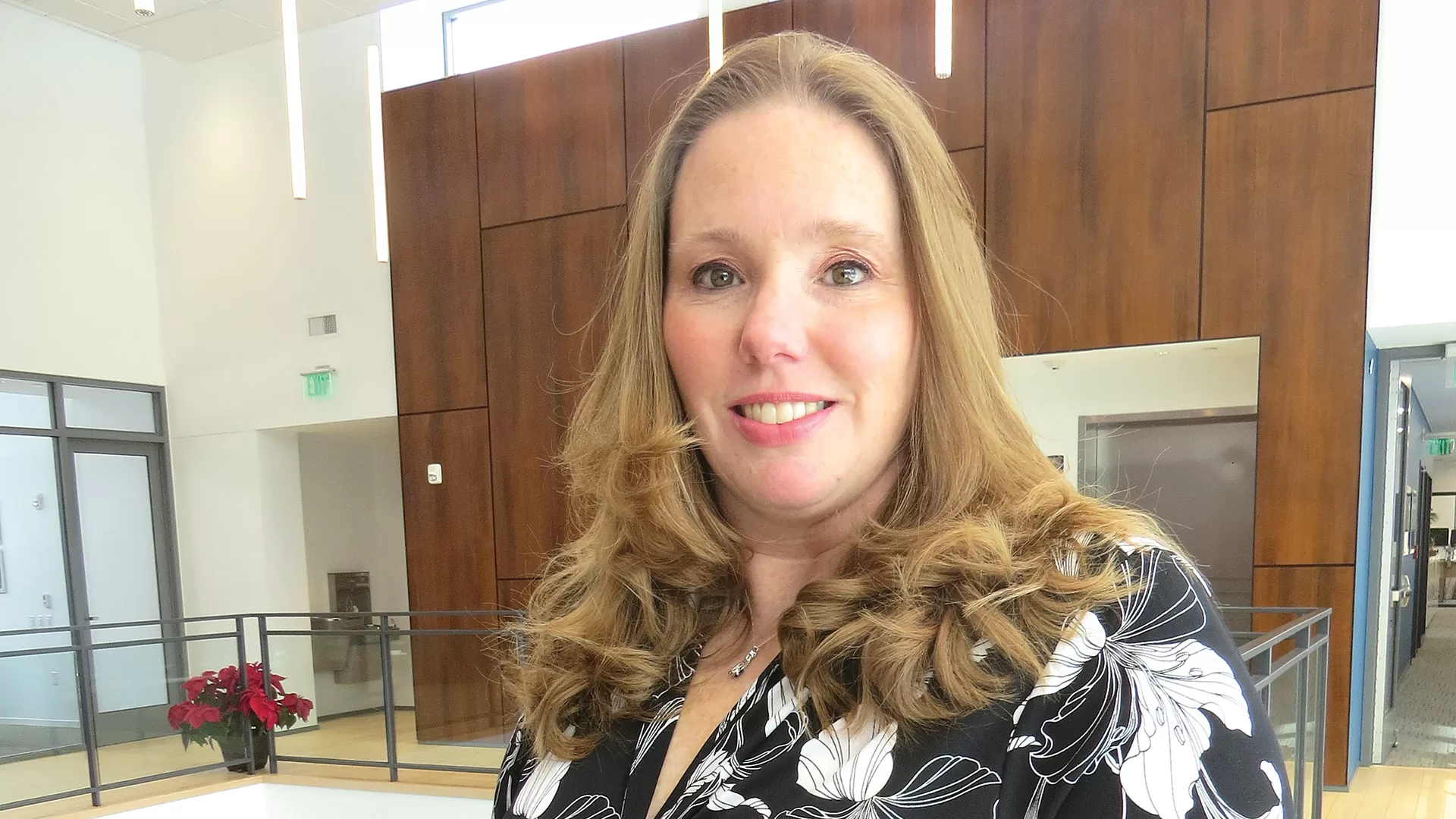
Jennifer Law

Jennifer Law says the class in effective business writing has been a benefit to employees across the O’Connell Companies.

Jennifer Law recalls that, when she scheduled a course in effective writing for employees at the O’Connell Companies, there was some skepticism and a few moans and groans.

“I think many of them went into this thinking, ‘this is going to suck,’ or ‘I have to sit through this for a day,’” she said, adding that, as the course unfolded, and certainly when it was over, the responses were much different.

“They were all very thankful, and we got some great emails on how much they learned and how much they enjoyed the class,” said Law, controller for the company, adding that many of these emails were certainly better-written than those in the weeks, months, and years before this class, which was titled “Business Writing Excellence.”

And that was the point of the exercise.

Indeed, Law, who remembers emails and other correspondences being red-inked (literally) by a supervisor at a previous employer who spent years as a teacher, said she certainly became a better, more effective communicator because of those experiences.

“I learned so much from his doing that; it got ingrained in my brain,” she explained. “And when I read something from someone else that’s not right, that’s bouncing back and forth from tense to tense, isn’t cohesive, that doesn’t answer all the questions — that frustrates me.”

Enough for her schedule “Business Writing Excellence,” offered by the Employers Assoc. of the NorthEast (EANE), last summer. The class drew 20 employees from all levels of the company, including Matt Flink, president of Appleton Corp., one of the O’Connell Companies, as well as accountants, site managers, and others.

“When I read something from someone else that’s not right, that’s bouncing back and forth from tense to tense, isn’t cohesive, that doesn’t answer all the questions — that frustrates me.”

The common denominator was that each wanted to understand how to communicate better and more effectively, said Law, adding that this need crosses generations, but is perhaps more apparent with younger generations that have grown up texting and, quite often, taking shortcuts when trying to get their message across.

And in the business world, shortcuts can lead to poor communication, misinterpreted messages, lost time, lost productivity, and more, she noted.

That’s why EANE offers this course, said John Henderson, director of Learning and Development for the agency, as well as another titled “Emails: That’s Not What I Meant,” an aptly named, increasingly popular course on a subject of growing importance to companies of all sizes — helping employees craft better, more effective emails.

“That class gets into not just content, but also the tone of the email and understanding who your audience is,” Henderson explained. “We all know that emails are often misread or misinterpreted by the reader, so we have a specific course on email writing.

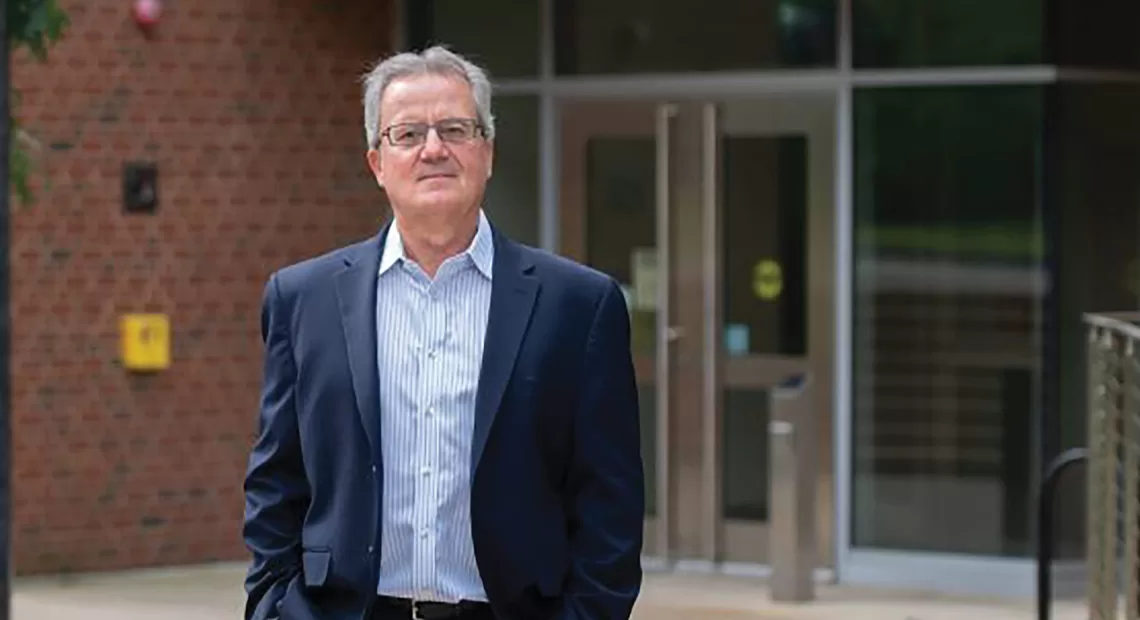
John Henderson

John Henderson says the biggest mistake most make with email is hitting the ‘send’ button too soon.

“With any kind of communication, whether it’s email, writing, a phone call, face-to-face,” he went on, “to be an effective communicator, it helps to know who your audience is and be able to create the message in a way that will effectively work with as many people as possible.”

For this, the latest installment in its series on professional development, BusinessWest takes an in-depth look at this specific need, but also at the broader issue of communication in the workplace and why employees at all levels need to find the ‘write’ stuff.


The Latest Word

Law said the O’Connell Companies invest a considerable amount of time and energy hiring the right individuals for positions at all levels of the organization.

But the investments don’t stop there, she said, adding that the company is focused on ongoing training and education aimed at giving employees the tools and the means to do their work — and serve its many different kinds of clients — effectively.

This training covers many areas, including communication and the EANE course in business writing, she said, adding that the class dealt not in the abstract, but rather with actual emails and other correspondences sent by participants, which were reviewed and critiqued, with an eye on grammar, but also on tone and simply getting the intended message across.

As noted earlier, problems with all of the above are common with employees of all ages, said Law, but especially the younger generations that grew up texting.

“These are people who always lived in that world of technology and texting and short, cut-off responses,” she said. “When you come into the business world, that doesn’t work anymore, and you see that this is how they’re communicating — very short, unclear, not thorough … and then the receiving person gets that message, and they’re confused, and it spirals into miscommunication.”

Elaborating, she said tone can be lost not only in texts, but also in emails, and improper tone can lead to a number of problems.

“These are people who always lived in that world of technology and texting and short, cut-off responses. When you come into the business world, that doesn’t work anymore.”

Henderson agreed, which is why EANE offers both the “Business Writing Excellence” class, one that more than 20 area companies have presented to employees, and “Emails: That’s Not What I Meant.”

The latter was created prior to COVID, but it became more timely, and even more important, during the pandemic, when face-to-face meetings became all but impossible and email became the chosen way to communicate — and often do business.

Henderson told BusinessWest that people make many mistakes with email, but perhaps the biggest is hitting the ‘send’ button too soon. By that, he was referencing everything from checks on grammar to a review of content to making sure the email is going only to its intended recipients.

“People rely on email as a rapid response, and they don’t put as much thought into writing an email as they would a letter,” he explained. “People hit the send button too soon rather than go back and reread what they’ve written.”

And when they do go back and reread, email senders should certainly focus on grammar — typos are embarrassing and do not convey professionalism — but they should also look hard to make sure the proper tone is set and that words and phrases cannot be misinterpreted by the recipient.

“If I’m writing an email, before I send it, I should think, ‘the person I’m sending this to, or the people I’m sending this to … how they are going to read this, and are there nuances in there that someone might take to a different interpretation?’” Henderson said. “Or they might look at it as me being rude because I didn’t start the email with ‘good morning.’”

Indeed, one of the bigger mistakes people make is simply not knowing the intended recipient for an email, he noted, adding that understanding the audience is critical to getting the message across and conveying the proper tone.

Elaborating, he said some recipients will like a reference to the weather or a question about how one’s day is going — ‘fluff,’ as he called it — while others are all business and don’t want or need pleasantries.

“Do they want something direct, or do they want something that’s more personable?” he asked rhetorically, adding that the sender should try to know the answer to that question. “We need to think about the recipient and how they want to receive that message; it’s an interesting dynamic when you’re trying to communicate through email.”

When in doubt — and there is a good deal of doubt with many in business who sends dozens of emails a day, often to people they don’t know well — it’s best to be pleasant and throw in a little of that fluff, he told BusinessWest, because not doing so might set the wrong tone.


Getting It Write

Flashing back to the class last summer and a group review of writing samples sent by company employees, Law said it was a tremendous learning experience.

“Everyone was able to reflect back, get those ‘a-ha’ moments, and say, ‘oh, yes, if I only had I said it this way, maybe I would have gotten my point across better.’”

Getting the point across clearly and concisely is one of the more important, if still underappreciated, aspects of doing business, she added.

And it should be an critical component of any employee’s overall professional development.


Features

It’s Not Going Away

By Linn Foster Freedman

Consumers have embraced the use of artificial intelligence (AI) tools in their everyday lives since ChatGPT was introduced into the economy last year. Employees are using AI technology in their workplaces, which causes risks to companies. In addition, third-party vendors are embedding AI technology into their products and services, often without companies’ knowledge, and are using company data to teach AI tools.

This article provides practical tips to evaluate the use of AI tools within an organization and by third-party vendors, how to minimize that risk, and how to approach the use of AI tools as technology advances.

Although AI technology has been in existence for decades, it has become mainstream over the past year with the arrival and novelty of ChatGPT’s use by consumers. When consumers embrace technology before companies, it is only a matter of time before consumers start to migrate that use into the workplace, whether it is approved or not.

Companies are struggling with how to introduce AI tools into their environment, as the risks associated with AI tools have been well-documented. These include copyright infringement, use and disclosure of personal information and company confidential data, bias and discrimination, hallucinations and misinformation, security risks, and legal and regulatory compliance risks.

These risks are real and compelling, especially when employees are sharing company data with AI tools. Once employees upload company data to an AI tool, that data may be used by the AI tool developer to teach its AI model, and the company’s confidential data may now be publicly available. Further, many companies are embedding AI into their products or services, and if you are disclosing confidential company data to vendors, they may be using your data to teach their AI tools or feeding your confidential data to other third-party AI tools.

Linn Foster Freedman

Linn Foster Freedman

“Companies are struggling with how to introduce AI tools into their environment, as the risks associated with AI tools have been well-documented.”

The risk is daunting, but manageable with strategy and planning. Here are some tips on how to wrap your arms around your employees’ use of AI tools in your organization. Tips to manage the risk of vendors using AI tools will be addressed later on.


Tips for Evaluating Your Organization’s Use of AI Tools

1. Don’t put your head in the sand. AI is here to stay, and your employees are already using it. They don’t understand the risk, but it seems cool, so they are and will continue using it. They will use any tool that will make their jobs easier — that’s human nature. Embrace this fact and commit to addressing the risk sooner rather than later. Ignoring the issue will only make it worse.

2. Don’t prohibit the use of AI tools in your organization. AI tools can be used to increase efficiencies in the workplace and increase business output and profits. Prohibiting its use will put you behind your competition and be a failed strategy. Your employees will use AI tools to make their work lives more efficient, so getting ahead of the risk and communicating with your employees is essential to evaluate and develop the use of AI in your organization.

3. Find out who the entrepreneurs and AI users are in your organization. Encourage the entrepreneurs in your organization to bring use cases to your attention and evaluate whether they are safe and appropriate. There are many uses of AI tools that do not present risks. The use cases should be evaluated, and proper governance and guardrails should be implemented to minimize risks.

4. Develop and implement an AI governance program. While AI tools are developing rapidly, it is essential to have a central program that will govern its use, internally and externally. Gather an AI governance team from different areas in the organization that will be responsible for keeping a tab on where and when AI is used; a process for evaluating uses, tools, and risks; putting guardrails and contractual measures in place to reduce the risk; and processes to minimize the risk of bias, discrimination, regulatory compliance, and confidentiality. The team will start slow, but once processes are in place, they will mature and pivot as technology develops.

5. Communicate with your employees often about the risks of using AI tools, the company’s AI governance program, and the guardrails you have put in place. Companies are better now than ever at communicating with employees about security risks, particularly email phishing schemes. Use the same techniques to educate your employees about the risks of using AI tools. They are using ChatGPT because they saw it on the news or one of their friends told them about it. Use your corporate communications to continually educate your employees using AI tools in the company and why it is important that they follow the governance program you have put in place. Many employees have no idea how AI tools work or that they could inadvertently disclose confidential company information when they use them. Help them understand the risks, make them part of the team, and guide them on how to use AI tools to improve their efficiency.

6. Keep the governance program flexible and nimble. No one likes another committee meeting or extra work to implement another process. Nonetheless, this one is important, so don’t let it get too bogged down or mired in bureaucracy. Start by mapping the uses of AI in the organization, evaluating those uses, and learning from that evaluation to become more efficient in the evaluation process going forward. Put processes in place that can be replicated and eventually automated. The hardest and most important work will be setting up the program, but it will get more efficient as you learn from each evaluation. The governance program is like a mini-AI tool in and of itself.

7. Be forward-thinking. Technology develops rapidly, and business organizations can hardly keep up. This is an area on which to stay focused and forward-thinking. Start by having someone responsible for staying abreast of articles, research, laws, and regulations that will be important in developing the governance program. Right now, a great place to start is with the White House’s Executive Order on the Safe, Secure, and Trustworthy Development and Use of Artificial Intelligence. It gives a forward-thinking view of the development of regulations and compliance around AI that can be used as a prediction of what’s to come for your governance program.

8. Evaluate the risk of the use of AI tools by vendors. The AI governance team should be intimately involved with evaluating vendors’ use of AI tools, which is discussed in more detail below.


Tips for Evaluating the Risk of Use of AI Tools by Vendors

1. Carefully map which vendors are using AI tools. It might not be readily apparent which of your vendors use AI tools in their products or services. Team up with your business units to question which vendors are or may be using AI tools to process company data. Then, evaluate what data is disclosed and used by those vendors and determine whether any guardrails need to be put in place with the vendor.

2. Implement a process with business units to question vendors upfront about using AI tools. Business units are closest to the relationship with vendors, providing services to the business unit. Provide questions for the business units to ask when pursuing a business relationship with a vendor so you can evaluate the risk of using AI tools at the start. The AI governance team can then evaluate the use before contract negotiations begin.

3. Insert contractual language around the disclosure and use of company data and using AI tools. Companies may wish to consider developing an information security addendum (ISA) for any vendor with access to the company’s confidential data if they do not have one in place already. As the AI governance team evaluates the disclosure and use of company data to new vendors and the use of AI tools when processing company data, vendors should be questioned on the tools used, security measures used to protect company data (including from unauthorized use or disclosure of AI tools), and contractual provisions on the use of AI. Contractual language should be clear and concise about the vendor’s obligations and the remedies for a breach of the obligations, including indemnification. This language can be inserted in the ISA or the main contract.

4. Evaluate and map existing vendors’ use of AI tools. There may be some vendors you have already contracted with that are using AI tools to process confidential company information of which you are not aware. Prioritize which vendors have the highest risk of processing confidential company data with AI tools and review the existing contract. If applicable, request an amendment with the vendor to put appropriate contractual language in place addressing the processing of company confidential information with AI tools.

5. Add the evaluation of AI tools to your existing vendor-management program. If you have an existing vendor-management program in place, add the use of AI tools into the program going forward. If you don’t have an existing vendor-management program in place, it’s time to develop one.


Conclusion

Now is the time to implement a strategy and plan around the use of AI tools within your organization and externally by your vendors. It seems daunting, but the risk is clear and will be present until you address it. Hopefully, the tips in this article will help you start taking control of AI use in your organization and by your vendors and minimize the risk, so you can use AI to make your business more efficient and profitable.


Linn F. Freedman is a partner and chair of the Data Privacy + Cybersecurity Team at Robinson+Cole.

Health Care Healthcare News

Off on the Right Foot


Did you include better health in your New Year’s resolutions?

Health experts at Baystate Health suggest setting realistic goals and prioritizing what is most important to you, taking small steps, and remembering not to beat yourself up if you encounter a setback in your health goals for 2024. Here are three goals to consider as you continue on your journey:


Improve Your Blood Sugars

From Dr. Cecilia Lozier, chief of the Division of Endocrinology and Diabetes, Baystate Health:

There are three important approaches to improve your blood-sugar numbers as we start the new year. First, moderate your carbohydrate intake. No dramatic approach is needed. If before you would take two scoops of potatoes, now consistently take one and fill the empty space with non-starchy vegetables.

Dr. Cecilia Lozier

Dr. Cecilia Lozier

“Moderate your carbohydrate intake. No dramatic approach is needed. If before you would take two scoops of potatoes, now consistently take one and fill the empty space with non-starchy vegetables.”

Second, increase your physical activity. Using your muscles will push sugar into your cells and out of your bloodstream. The more you move and are physically active, the better your numbers will look. Third, modest weight loss. Losing between 5% and 10% of your body weight will have a dramatic impact on how you metabolize sugar. Speak with your healthcare provider to personalize this approach for you.


Address Sleep Problems

From Dr. Karin Johnson, medical director, Baystate Health Regional Sleep Program and Baystate Medical Center Sleep Laboratory, Baystate Health:

Stress levels are higher today in the world we live in. While stress can make sleeping well more challenging, it is important to prioritize sleep, which is necessary for health and well-being. Most adults function best with seven to eight hours of sleep, and teenagers need around nine hours.

Good-quality sleep is important for preventing infections and keeping your immune system working well. Studies have shown that sleep-deprived people don’t mount the same immune response after vaccinations as good sleepers, so it is important to make sure you get a good night’s sleep prior to getting a flu or COVID vaccine, for example.

Keeping a regular sleep schedule will allow your body’s internal clock to help you get the best night’s sleep. If you are having difficulty sleeping or show signs of poor-quality sleep with loud snoring, difficulty staying asleep, urinating frequently at night, or daytime sleepiness or tiredness, you may benefit from a sleep-medicine evaluation.


Control Your Weight

From Eliana Terry, registered dietitian, Baystate Noble Hospital:

Is your New Year’s resolution to eat healthier, exercise more, or achieve another health-related goal? The new year brings with it the opportunity to start on a path toward wellness or, if you’ve already done so, to maintain healthy habits. However, it can be difficult to make these goals stick with all the challenges the year throws our way. What is the best way to be successful in achieving your health resolutions? Consider the following.

• Be specific with your goals. Instead of ‘I will eat healthier,’ consider something like ‘I will replace four sodas per week with water.’ Setting a more specific goal can help you actually check whether you have completed the goal each day and, thus, be successful long-term.

• Make sure your goals are measurable. If your goal is weight loss, for example, set a measurable amount with a time frame to reach your goal by. For example, ‘I want to lose 10 pounds by April 2024’ and ‘exercise for 30 minutes, three times per week’ are more measurable goals than ‘lose weight this year.’

• Make your goals realistic for you. For example, if you travel daily for work, ‘no longer eat on the go’ as a resolution may be unrealistic for your lifestyle. You may find yourself giving up by February if you have purchased any meals out. This hinders any progress you could have made in a longer period. Instead, try a more realistic and flexible goal such as ‘pack a healthy lunch to keep in a cooler four times per week.’

Set yourself up for success this year with specific, measurable, realistic resolutions. Otherwise, you may find yourself quickly frustrated by your inability to stick to and achieve your goals.

Insurance

Change at the Top

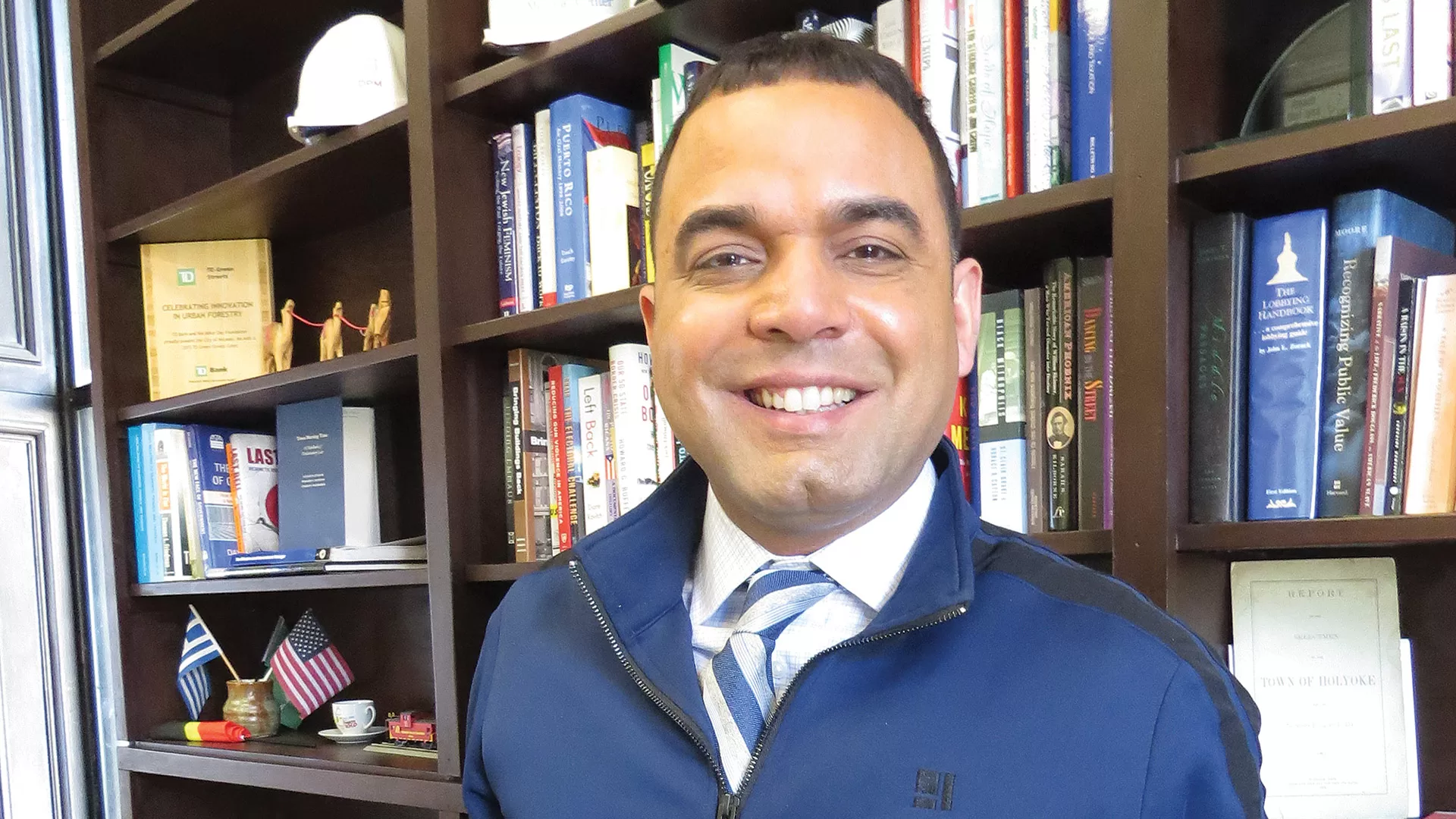
Manny Lopes

Manny Lopes

Fallon Health, a not-for-profit healthcare services organization with a focus on improving access, quality, and affordability in government markets, announced that its board of directors has appointed Manny Lopes as its next president and CEO, effective July 1, 2024. The selection of Lopes follows a comprehensive national search that began after the organization announced the planned retirement of President and CEO Richard Burke.

The board also appointed Chief Financial Officer Todd Bailey to serve as interim CEO from Burke’s retirement on Jan. 31 through June 30.

“I am honored and grateful to the Fallon Health board of directors for the opportunity to be the next president and CEO of this exceptional organization,” Lopes said. “I look forward to leading the organization and its dedicated, passionate, and caring employees in pursuit of its vision to be the leader in providing exceptional, coordinated care and coverage that meets the unique, diverse, and changing needs of its members.”

A seasoned executive with experience across the healthcare industry, Lopes is currently the interim CEO of Fenway Health, one of the first healthcare organizations in the country to specifically address the healthcare needs of the LGBTQ+ community. Prior to that, he was executive vice president of Public Markets and Government Relations for Blue Cross Blue Shield of Massachusetts (BCBSMA), with responsibilities for the company’s Medicare division, achieving growth through innovation while also improving consumer experience and health outcomes.

“I look forward to leading the organization and its dedicated, passionate, and caring employees in pursuit of its vision to be the leader in providing exceptional, coordinated care and coverage that meets the unique, diverse, and changing needs of its members.”

Before joining BCBSMA, Lopes was president and CEO of East Boston Neighborhood Health Center, a large, nationally recognized primary-care provider and insurer that offers a Program of All-inclusive Care for the Elderly and a Senior Care Options plan, both core programs in Fallon Health’s portfolio.

“Manny’s extensive and highly relevant experience make him the ideal person to lead Fallon Health at this point in its history and in support of its strategy to predominantly focus on government markets,” said Frederick Misilo, Fallon Health board chair. “Throughout his career, he has developed a deep and empathetic understanding of the healthcare needs of the communities that Fallon Health serves today and in the future. Manny and Todd are committed to ensuring a seamless transition for Fallon Health’s employees, members, and provider, business, and community partners.”

Deborah Enos, Fallon Health board member and chair of the search committee, added that “the board’s search committee worked diligently to find the right person to lead Fallon Health and continue to move the organization forward in its strategy to be the leading healthcare-services organization committed to government-sponsored health-insurance programs. Manny has a deep understanding of and commitment to all that Fallon Health stands for: its mission, vision, values, and its strong support of the community. His proven track record and passion for innovation, equity, and improving health outcomes is unparalleled.”

Misilo added that Bailey’s leadership has put Fallon Health in a strong financial position and played a key role in the organization’s strategic decision to focus predominantly on government programs, and that his 30-plus years of experience in the health-insurance and healthcare fields, and his unique vantage point in the business, have helped drive strategic and critical decisions in support of members’ care, the workforce, and the community.

Following a 25-year career at Fallon Health, including the last eight as president and CEO, Burke will retire at the end of the month.

“Under Richard’s distinguished leadership, Fallon Health has successfully pivoted to a predominant focus on government programs, experiencing unprecedented growth in several products and historically strong financial results, and receiving continued exemplary national ratings for quality and service,” Misilo said. “The board congratulates him on his retirement, thanks him for all he has done to expand the impact of Fallon Health’s mission, and wishes Richard well as he embarks on this next journey.”


Cover Story Creative Economy

Music Will Live Again

By Emily Thurlow

Chris Freeman

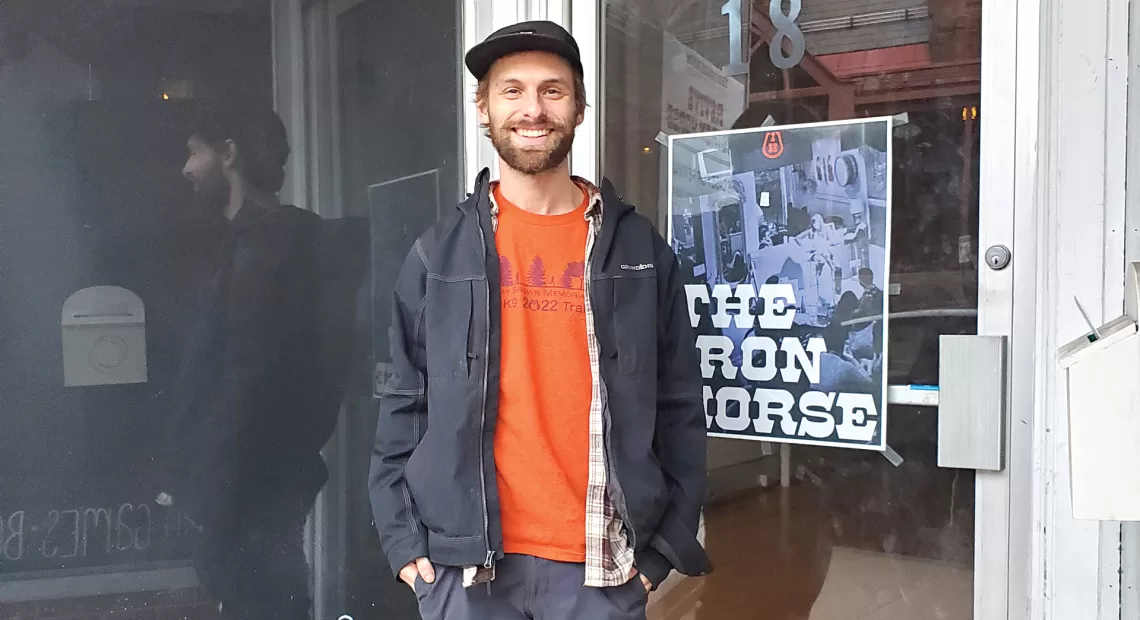
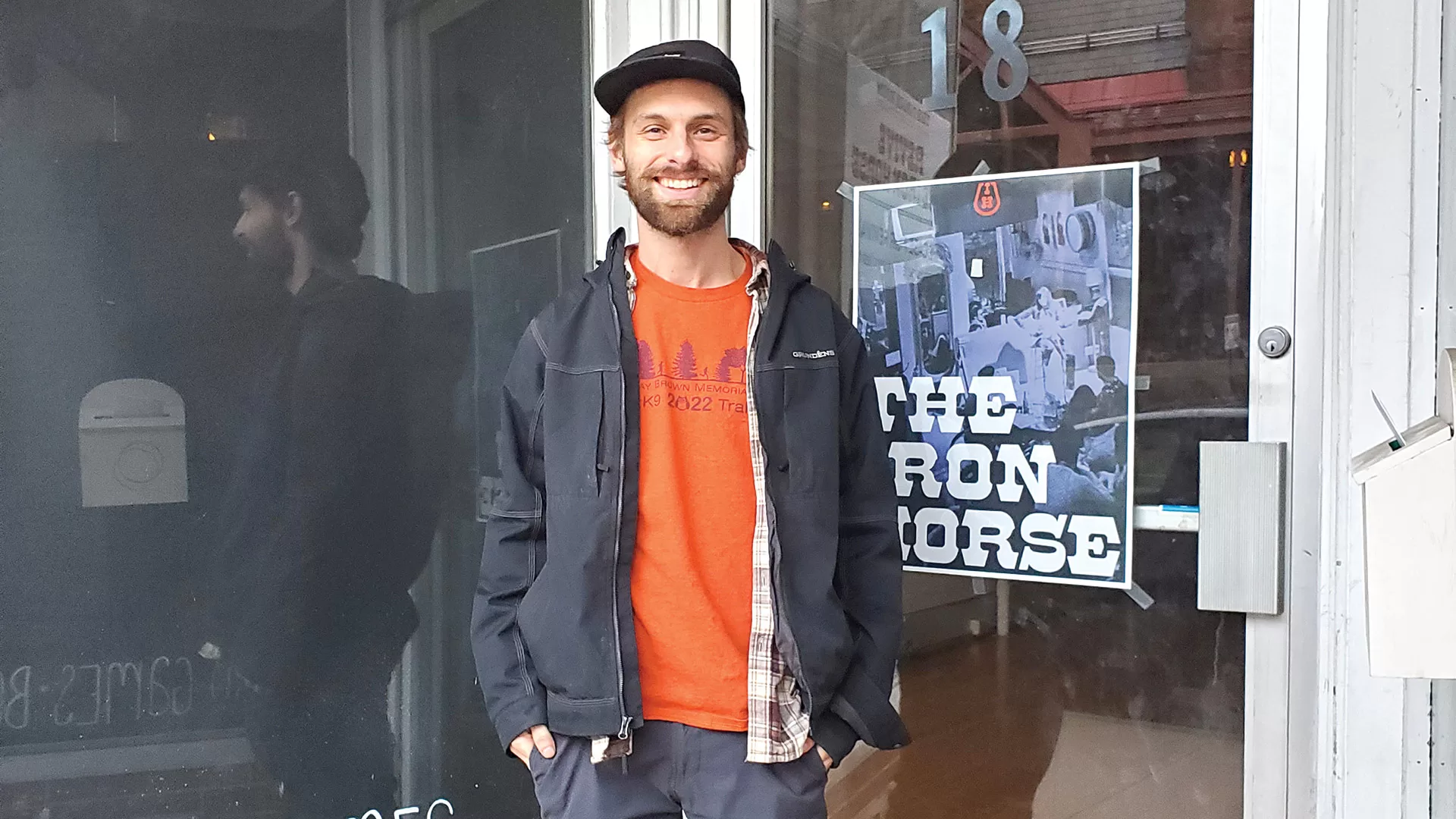
Chris Freeman, executive director of the Parlor Room Collective
Photo by Emily Thurlow

There’s a lot to love about the Iron Horse Music Hall.

Though it’s not as apparent from the outside, with its large storefront windows covered in layers of tape holding up posters advertising myriad performers and upcoming shows, the downtown space holds countless special memories for lovers of live music in Western Mass., as reflected in its venerable slogan, “music alone shall live.”

Over the course of its more than four decades in existence, thousands of musical acts have graced the stage at the historic Northampton venue — one of a handful of hotspots, in fact, that helped define the city as an entertainment destination.

Whether leaning on the balcony railing or sitting at a table, or swaying from side to side at the edge of the stage, audiences of multiple generations have been entertained time and time again by artists like jazz musicians Freddie Hubbard and Bobby McFerrin, singer-songwriters from Brandi Carlile to Robyn Hitchcock, rockers like Graham Parker and the Smashing Pumpkins, and contemporary folk icons like Dar Williams and Dan Bern.

And while concertgoers and performers alike cherished the intimate atmosphere within the historic walls, it’s no secret that the Iron Horse also carries a less-pleasant legacy with regard to uncomfortable room temperatures, underwhelming bathrooms, and a poorly maintained green room — not to mention labor complaints and an extended closure that marred the last few years of the venue’s previous ownership by Eric Suher.

The the new owner, however — a nonprofit called the Parlor Room Collective that operates other small, local performance spaces — has plans to make those less-appealing accounts a thing of the past and reopen the Iron Horse this May.

“This is a living place. You can have people seated around the outside on the balcony or standing, and you could have college kids moshing and dancing in the pit while you have all of their parents eating a nice meal around the outside. Everyone feels safe.”

Nearly halfway to the $750,000 goal of a capital campaign launched in November, the Valley-based nonprofit continues to call on the public to invest in the Iron Horse Music Hall. The Parlor Room Collective will use that investment to expand and renovate the facility’s footprint to enhance the overall experience for patrons and improve the space for artists, which will, in turn, bring people together through music as it did not so long ago, said Chris Freeman, executive director of the Parlor Room Collective.

“Our mission at the Parlor Room Collective is to enhance the health and vitality of our community through the power of music. We have witnessed the magic of our local music scene and its ability to fuel the engine of our economy, enhance the overall well-being of our community, and contribute to our cultural vitality,” Freeman said. “And now we stand at a pivotal moment in our journey as a nonprofit arts organization. We have a unique opportunity to revive a local treasure that has resonated with music lovers for generations: the Iron Horse.”


The Good, the Bad, and the Disgusting

Many who have entered the music industry at a grassroots level have performed at one point or another at the Iron Horse, Freeman said.

Take singer-songwriter Tracy Chapman, for example. Prior to taking home numerous Grammy awards for her eponymous 1988 debut, Chapman played at the Northampton venue, long before it was the multi-level experience it is today, Freeman noted.

“From John Mayer and Wynton Marsalis to Allen Ginsberg and Beck … the amount of performers that have played here goes on forever, and in every genre,” he said.

Before earning that reputation, the 20 Center St. mainstay was known as the Iron Horse Coffeehouse. At the time of its opening in 1979, the club’s capacity was limited to 60 people. Co-founded by Jordi Herold and John Riley, the venue was named for a work of sculpture that Herold’s mother had created.

About a decade — and a few expansions — later, the club could accommodate 170 seats and had became known as the Iron Horse Music Hall. Suher, a notable Northampton developer, purchased the venue in 1995 and owned it until its sale to the Parlor Room Collective in 2023.

Though he’s spent considerable time in the space, Freeman still marvels at how the unique venue lends itself to an eclectic, multi-generational experience. “This is a living place. You can have people seated around the outside on the balcony or standing, and you could have college kids moshing and dancing in the pit while you have all of their parents eating a nice meal around the outside. Everyone feels safe.”

At the same time, the venue has presented some unpleasantness for its guests. In recent years, some artists have publicly addressed such issues. Freeman recalled attending a show for Vanessa Carlton, who talked about how cold she was during her 2017 performance at the venue.

Carlton, best known for her 2002 hit single, “A Thousand Miles,” publicly thanked an audience member who loaned her fingerless gloves via a post on Twitter, stating, “it was freezing on stage” and Suher’s Iron Horse Entertainment Group “wouldn’t turn the heat up.”

In response, Suher denied Carlton’s assertions and told the Daily Hampshire Gazette at the time that “the performer was cold on the stage. The venue temp was 70 degrees.”

Carlton further spoke of the disarray in the green room, which was also located in the basement. On Twitter, she posted a photo of furniture with ripped and torn fabric and cushions collapsing and urged owners to toss it, so that she would return to the venue again in the future.

Though the space allowed fans to get close to artists, the space wasn’t especially welcoming, Freeman noted, adding the green room was known in the area for its poor condition, and the basement was the only place on site equipped with bathrooms. “These two disgusting bathrooms are supposed to serve 250 people — including the artists. They’re so, so gross.”

“Understanding its history, I kept thinking about how it’s just such an important place for our whole community, and I thought that somebody has to reopen this place.”

As for the HVAC unit, Freeman said the Iron Horse is in need of a serious upgrade. He explained the challenges of trying to keep a packed house well-regulated, whether the meant warm enough or cool enough. “There are tons of famous artist complaints of playing in here with it being 90 degrees — and 20 degrees outside.”


Music and Memories

Freeman’s knowledge of the Iron Horse goes well beyond his time as a board member for the Parlor Room. Growing up in Farmington, Conn., he would often attend shows at the Iron Horse with his father. The Valley’s music scene was especially attractive to him and made him want to move to the area, he said.

“Northampton was kind of like a grungy, artsy, cool place where people knew about artists. People had an understanding of bands that ran a little bit deeper than whoever’s on the big country radio station or the big pop stuff,” he said. “I remember the first time I came here. I knew I wanted to be a musician, and I thought that if I could just open a show at the Iron Horse, I’ll have made it.”

By his 10th or 11th visit to the Iron Horse, Freeman did just that and performed with the Americana/folk-rock group he helped found, Parsonsfield.

His band, which was signed to the Signature Sounds record label, was among the first artists to perform at the Parlor Room, located at 32 Masonic St. — just a block away from the Iron Horse. The Parlor Room was founded by Signature Sounds Recordings in the fall of 2012 as an “artist-and-audience-friendly” listening room, performance space, and school of music, he explained.

Chris Freeman

Chris Freeman sits on the Iron Horse’s prominent stairs to the second level, where the new restrooms will be located.

Freeman spent roughly a decade touring with Parsonsfield at venues throughout the U.S. In February 2022, he transitioned into the role of executive director of the Parlor Room and played a critical role in helping the organization transition into a nonprofit music venue and school last January.

On a near-daily basis, Freeman, who is now a resident of Northampton, would find himself walking by the Iron Horse, seeing the legendary venue remain dark.

“Understanding its history, I kept thinking about how it’s just such an important place for our whole community, and I thought that somebody has to reopen this place,” he told BusinessWest. “This was a place that is the heart of the whole Western Mass. music scene. The culture and the city around it made me want to move here.”

Freeman’s understanding of the value of the property led him to reach out to Suher. This past September, the Parlor Room announced it had reached an agreement with Suher to purchase the business, which includes the venue’s liquor license.

The Parlor Room signed a 15-year lease to not only operate the business at its current space at 18 and 20 Center St., but also to expand into 22 Center St. Connecting the adjacent storefronts will allow the Iron Horse to have a dedicated bar and community space and will increase the venue’s overall square footage by 40%, he explained.

Once renovations are completed and the Iron Horse has reopened, the Parlor Room will be, as its name suggests, a collective that encompasses three projects: the Iron Horse, the Parlor Room, and the Parlor Room School of Music. The original Parlor Room venue on Masonic Street will live on as the headquarters for the School of Music and an intimate performance venue.

“My main goal is, I wanted this place to come back, and I wanted to live in a city that has music — that’s why I moved here in the first place. My secondary goal is to make the Parlor Room become just as big of a part of this community,” Freeman said. “The ability to merge these together and to make sure that this place comes back — in the right way and with the right mission and in line with the community’s goals — felt like a really important thing to do.”


What’s the Plan?

With the aim of reopening this spring, the Parlor Room has set an ambitious renovation timeline that’s already underway, while the capital campaign continues. To date, the campaign has surpassed $317,500.

Among the biggest costs will be an upgraded sprinkler system and HVAC unit, Freeman said. The first phase of renovations also encompass updates to flooring, a new sound and lighting system, and stage and bar enhancement funded in part by a $73,000 American Rescue Plan Act grant from the city of Northampton.

The nonprofit has also partnered with Dave Schrier, co-owner of Easthampton’s Daily Operation, to redesign the dining and bar experience at the Iron Horse.

Phase two of the renovations will focus on accessibility and other upgrades. Instead of the two basement bathrooms, the new space will include 10 bathrooms that will be relocated for increased accessibility. This also includes two bathrooms accessible for those who use wheelchairs, in compliance with the federal Americans with Disabilities Act. A wheelchair lift will also be installed to make the stage accessible for all.

The Parlor Room Collective will also establish a brand-new green room that includes private bathrooms with a shower. A new floor layout will allow for 300 people for standing-room-only events and variations of more than 200 people seated in new furniture.

“There is no better investment in our community — and what, historically, has seen Northampton as a community thrive, business-wise — than bringing back the Iron Horse and having this place open 250 nights a year with a bar, with the way that it impacts other restaurants and tourism in the area,” Freeman said.

To donate to the “Revive the Iron Horse” capital campaign, visit ironhorse.org.

Features Special Coverage

A New Era Dawns

Mick Corduff

Mick Corduff


Mick Corduff calls it his “research and development time.”

It comes early in the year, when things are slower in the hospitality sector. It’s a time to reflect, drill down on what happened the year before, and ramp up the planning for the year ahead.

“I look back and measure all that was good and all that wasn’t good,” he said. “Menus that worked and didn’t work, staffing and structures that worked, management positions that worked and didn’t work; we always try hard to raise the bar.”

This year, research and development time is more than a little bit different … because last year, there were a few distractions, as he put it.

Indeed, 2023 saw a long partnership — more than two decades — between Corduff and Peter Rosskothen come to an end when Rosskothen sold his shares in the company that owns the Log Cabin Banquet & Meeting House, the Delaney House restaurant and D. Hotel Suites & Spa to Corduff and his new business partner, Frank DeMarinis.

The end to the business relationship, which had been talked about for several years and then finalized over the course of 2023, came in late September, ushering a new era for a group of businesses that comprise one of the pillars of the region’s hospitality sector, and for which Rosskothen had long been the face.

“The past four months have definitely been very hectic, but I like to think that I’ve handled pressure well over the years. It’s something that a chef has to do.”

Corduff now becomes the new face, moving from what was mostly, but not entirely, back-of-the-house operations to back and front of the house, although he’s taking steps to delegate some of his many responsibilities to other managers.

For now, and for the foreseeable future, he has a lot on his plate — literally and figuratively. There are the day-to-day operations and coping with challenges ranging from the still-rising cost of food to an ongoing workforce crisis to meeting the many needs of today’s marrying couples. He’s also overseeing the return of Sunday brunch at the Delaney House, planning for the upcoming St. Patrick’s Day parade events and a ‘sister-city’ trip to Ireland later this year, and advancing some ambitious plans for the future. While doing all that, he’ll spend some time in the kitchen cooking as well.

In a candid conversation with BusinessWest about all of the above, and especially the many responsibilities he now handles, Corduff said he brings to his new and expanded role what he calls a chef’s mentality.

Sunday brunch at the Delaney House

The return of Sunday brunch at the Delaney House has been just one item on the plate for the new ownership team.

“The past four months have definitely been very hectic, but I like to think that I’ve handled pressure well over the years,” he noted. “It’s something that a chef has to do. What I’ve learned in my years of experience in the back of the house — and in the front of the house as well, especially over the past four or five years — is the importance of keeping a level head and just knowing that, at the end of the day, we’re dealing with people, whether it’s waitstaff or a contact for the bride and groom; they’re people, and you want to treat them with respect.

“I learned a lot from Peter over the years — we always worked in tandem,” he went on. “We always talked about the best way to handle things and put our best foot forward and maintain the integrity of the business. We always had the same message — excellence is what we’re all about, and we try to promote that across the board.”

As for those plans for the future, they are, indeed, ambitious, and include a possible new hotel and restaurant to be built on a portion of the upper parking lot at the Log Cabin.

“We’re dreamers — that’s what entrepreneurs are,” Corduff said. “And we have some dreams that we want to make reality.”


Food for Thought

As he talked with BusinessWest at 10 a.m. on a recent Tuesday morning, Corduff had his chef’s coat on, one announcing him as ‘chef owner.’

He wasn’t doing any cooking at that moment, nor was he planning to do any soon, but the chef’s coat was still the attire of choice. To paraphrase Bill Belichick, it is who he is.

“I don’t think I’ll ever the leave the kitchen — I love what I do,” he said, adding that he has a few business suits … somewhere. He had more years ago, when he served as front-of-house manager at the Log Cabin and wore one every day. But he ruined some of them of them when wandering back to the kitchen, where he feels most at home, and getting food stains on them.

“We’re known in the community as a quality product, and we aim hard to maintain that standard.”

Ever since, the chef’s coat has been the uniform, if you will, and Corduff wears it everywhere and for everything, from planning for the Big E (the group has a huge presence there) to meeting with the media, an assignment that mostly fell to Rosskothen years ago, although Corduff did it, too; from reviewing accounts payable to doing long-range planning.

These are now mostly, if not entrely, Corduff’s purview, and it’s a change, that, as noted, has been years in the making.

That’s how long the two partners talked about Rosskothen moving on and focusing his time and energies on one of their latest entrepreneurial ventures — Delaney’s Market, which now has four locations across the region — with Corduff taking the lead at three Holyoke establishments: the Log Cabin as well as the Delaney House restaurant and the adjoining D. Hotel Suites & Spa.

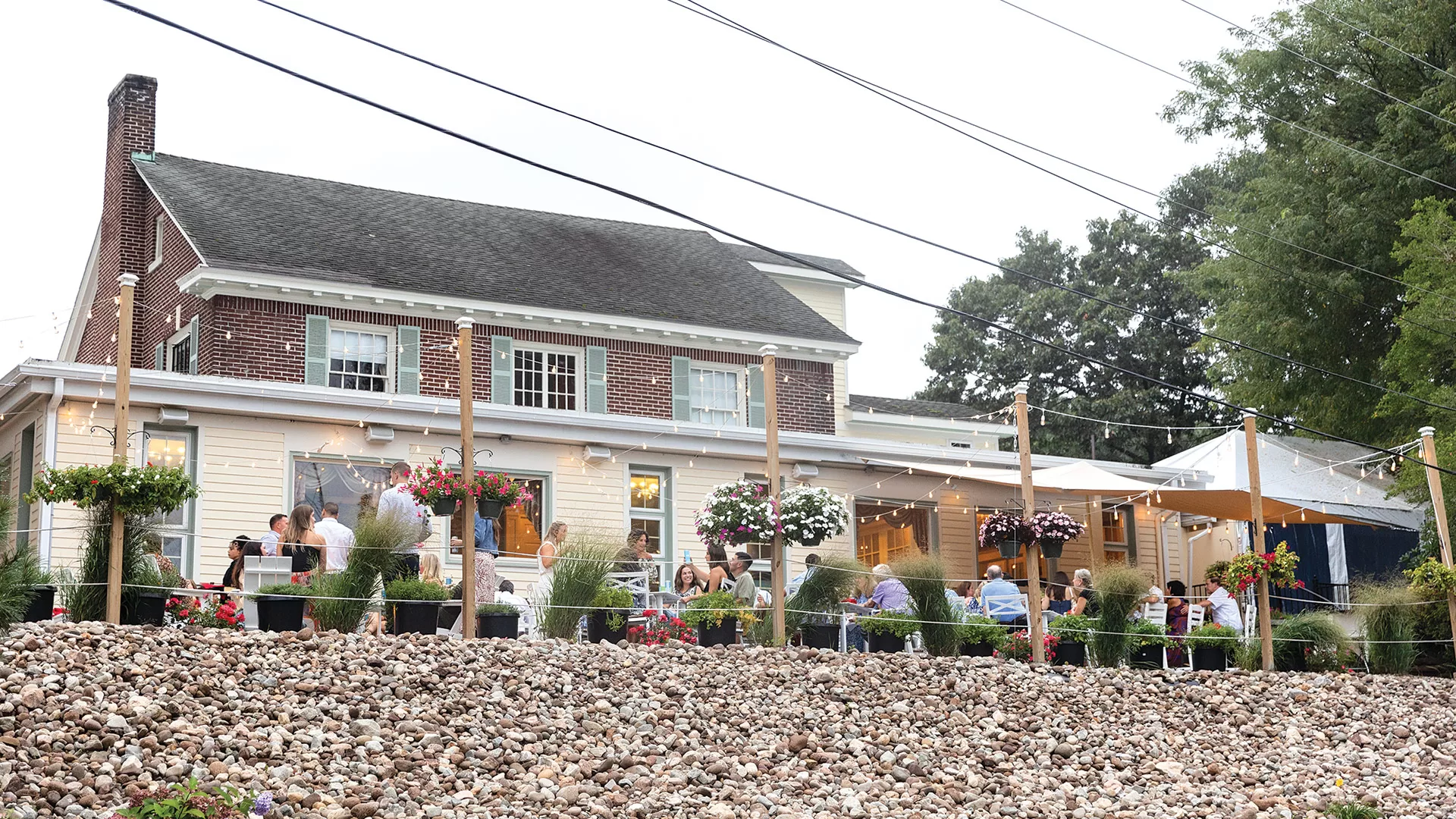
The main ballroom at the Log Cabin

The main ballroom at the Log Cabin, one of several properties in the group now owned and managed by Mick Corduff and Frank DeMarinis.

He’s doing so with new partner DeMarinis, president of Sage Engineering and Contracting Inc. in Westfield and a local developer, builder, owner, and manager of more than 25 commercial real-estate properties in Massachusetts and Connecticut. He is also the founder and owner of Roots Sports complexes in Westfield and East Longmeadow, as well as Roots Learning Center in East Longmeadow.

For Corduff, this is the intriguing next chapter in a story that began when he came to this country from Ireland in 1989, working first as a banquet chef at the Marriott in Springfield and later as a member of its quality-management team.

Eventually, he started doing some catering on his own and began looking at getting into business for himelf. While pursuing those dreams, he also interviewed to be head chef at Twin Hills Country Club. The interview was with Larry Perrault, who was at that time finalizing plans to join Rosskothen in a venture to reimagine the old Log Cabin restaurant property, in the shadow of Mount Tom, into a banquet facility.

They went to lunch at Friendly’s, where the discussion wasn’t about Twin Hills, but about the Log Cabin.

“I met Larry, I met Peter, we walked around the old Log Cabin, whipped out the drawings, and started our dream,” he said. “The rest is history.”

More than a quarter-century of colorful history, in fact, involving change, evolution, expansion (the Delaney House, then the the hotel, then Delaney’s Market), innovation, and overcoming challenges that ranged from the Great Recession to the pandemic. Over the course of that time, Corduff moved from chef to partner when the relationship with Perrault dissolved — a partnership that lasted 20 years.

The buyout came in late September, one of the busiest times for this group of businesses, leaving Corduff “without much time to stop and think,” he said — something he’s able to do now. Early on, he’s spent considerable time and energy reassuring the large staff that the business is stable and ready to maintain its standing as a market leader.

“A lot of what I do now, mapping out the year and planning out the seasons that are coming, is making sure that we have the right people in the right places, making sure everyone’s ready to do whatever it takes and trained in the art of war and the art of optimization.”

Moving forward, in the role of chief operator and executive chef, he will work in partnership with DeMarinis, who will focus on the construction and infrastructure sides of the equation, while Corduff will be handling day-to-day operations.

While doing so, his primary mission is to maintain the group’s reputation for quality — at all levels of its operation, from weddings, which are perhaps its hallmark, to a Friday-night dinner at the Delaney House, to a weekend stay at the hotel, now managed by Corduff’s wife, Dana.

“We’re known in the community as a quality product, and we aim hard to maintain that standard,” he said. “We have to adapt because the business is constantly changing and evolving.”


More Growth on the Menu

Looking back on the past 25 years or so, Corduff said that, for much of that time, he was back-of-the-house and more behind the scenes than the colorful, always-quotable Rosskothen. But later on, he started becoming more visible, and people could put a face with a name.

Or a voice with a name.

Indeed, Corduff was prominent in radio spots for the Log Cabin and Delaney House, specifically their steaks, made famous by the word ‘marbling,’ which Corduff would pronounce slowly for added effect. Later, he became more known through the opening of the Mick, a tavern of sorts within the Delaney House providing casual dining and live music.

With the change in ownership consumated last fall, he now assumes more responsibilities, especially in the big-picture planning for the future.

“My managers know that I will run into the hottest fire,” he told BusinessWest. “So whoever needs me, I’m there. And a lot of what I do now, mapping out the year and planning out the seasons that are coming, is making sure that we have the right people in the right places, making sure everyone’s ready to do whatever it takes and trained in the art of war and the art of optimization.

“In the catering world, you can be doing a wedding in a tent under a tree out in the woods, no power, no water, so we have to plan it all out,” he went on, using that example as metaphor for business in general and the need to be ready for anything.

And, as noted earlier, the two partners are entrepreneurial, intent on expanding this business group and making more changes.

One ongoing project is to essentially separate the front (lower) parking lot at the Log Cabin from the rest of the property, with the intention of it becoming home to a Dunkin’ Donuts and the fifth Delaney’s Market, an operation that will be Rosskothen’s domain as part of the buyout agreement.

The larger and more ambitious plan, however, calls for redevelopent of the upper parking lot.

“The vision is to build a hotel in the upper lot,” Corduff said, adding that DeMarinis, the engineer, is developing plans to move dirt and create more space to park cars in that area while also identifying a footprint for a hotel and acompanying restaurant. The hotel would be a smaller, boutique facility, similar to the D. Hotel at the Delaney House, with maybe 60 to 80 rooms.

“We really want to bring to it some of the Log Cabin character, some of the New England character, with some of our own touches,” he said, adding that a rooftop restaurant, one with dramatic views down the mountain, is also within the plan, one that will likely take shape over the next three to four years.

As he talked with BusinessWest, Corduff recalled what he called a “sendoff” for Rosskothen the night before at the the Mick. It was an occasion to mark the end of an era, the end of a business relationship, and the start of the next chapter.

“It was a kind of a thank you and sendoff, and it was cool to see,” he said. “We had some staff that don’t work here anymore that came to say ‘hi’ and ‘bye.’ There was a lot of gratitude in the room last night; there’s been a lot of years of hard work together.”

And many more to come, Corduff added, noting that, with the passage of one era, another has begun. And as it does, he will certainly fall back on that chef’s mentality (not to mention the chef’s coat) he mentioned earlier.

And that means keeping a level head and always treating people with respect.


Healthcare News Special Coverage

One Workout at a Time

By Emily Thurlow

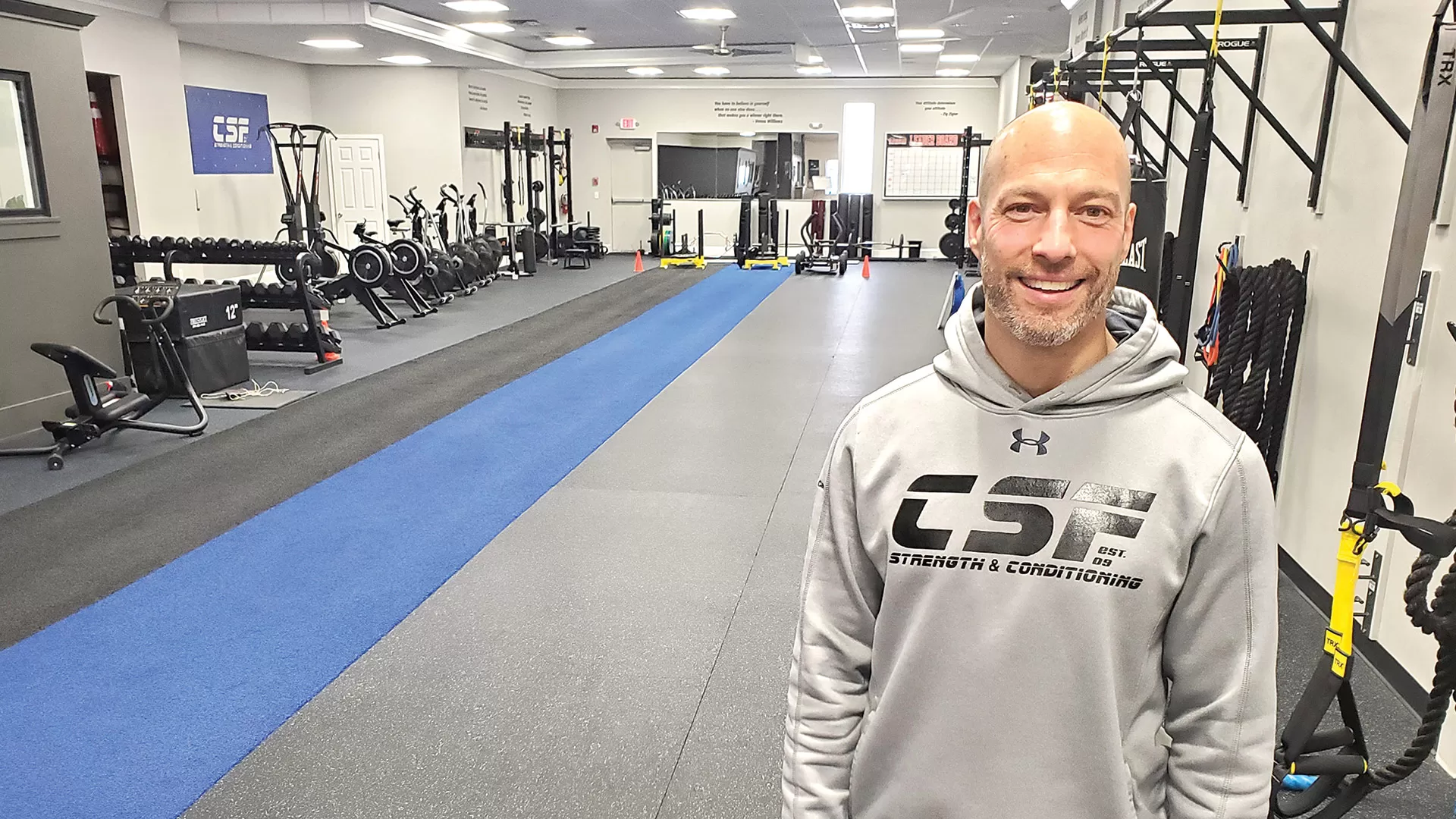
Steve Conca

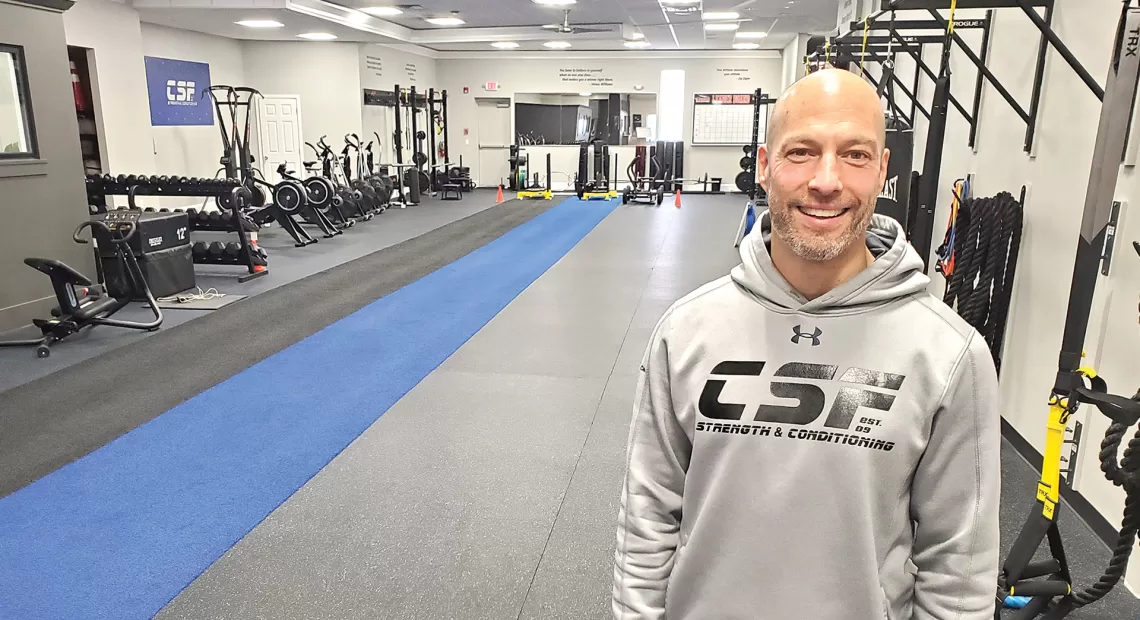
Steve Conca, owner of Conca Sport and Fitness

Between platefuls of coma-inducing turkey, complete with all the fixings, and palatable pies and pastries, it’s safe to say that many people are happy to see the hearty overindulgences of the 2023 holiday season firmly in the rear-view mirror.

For many, the start of the new year provides an opportunity to start out on the right foot, by developing better habits and establishing goals. Through myriad resolutions, one theme that tends to stand out year after year is health.

Notably, an October 2023 survey from Forbes Health/OnePoll revealed that 48% of U.S. adults say improving fitness is a top priority for them in 2024. Google Trends also released data showing that some of the top health-related searches in January include meal preparation, healthy meal ideas, and gym memberships.

And while some say they resolve to lose weight or improve their health in January, it often takes another month before they will deliver, said Danny Deane, who owns two local F45 Training franchises with his wife, Jessye.

“February is the number-one month in the fitness industry, with September being second,” he said. “In January, everybody starts to think about it, and then, by the time February rolls around, they’re really making good on their promise.”

Whether it’s during the winter doldrums or as the leaves begin to turn in the fall, local fitness studios and gyms continue to see positive gains in this post-pandemic climate — in both their business and their clients.

“I think people are realizing that putting an investment into themselves pays big dividends.”

“I think people are realizing that putting an investment into themselves pays big dividends,” said Steve Conca, owner of Conca Sport and Fitness in West Springfield.

During the pandemic, gyms and fitness centers were severely challenged by shutdowns and limitations on the amount of people in a space at any given time. For some, the impact was minimal. For others, it’s been rather extreme.

F45 Training

One key to success at gyms like F45 Training is accountability with a workout partner.

In fact, 25% of fitness studios and gyms have closed permanently since the onset of COVID-19, according the National Health & Fitness Alliance, an industry group.

However, Jon Davis, owner and performance director of Powerhouse Training in East Longmeadow, said business is “as good as it ever has been.”

Powerhouse Training, which Davis founded in 2010, offers sports-specific lessons for baseball and softball athletes as well as general performance training in speed, agility, strength, and mobility. The majority of his clientele includes athletes between age 8 and pro-rank levels.

Because Powerhouse Training provides more of a specialized kind of exercise regimen, Davis said he didn’t see the decline in attendance that many commercial gyms did. He said he’s also found that parents are valuing their children’s access to being physically active.

“I think a lot of parents realize the importance of having their kids get outside and socialize and stay active, for not only their physical health, but also their mental health,” he told BusinessWest. “Since we provide more of a specialized training, the kids really can’t train on their own, and they need assistance as well as special equipment, and they need a lot more space. So I think we were a necessity for them, which has certainly helped out.”

The group training, which involves youth athletes coming in two to three times a week, costs between $145 and $195 per month. Prices range between $50 and $90 for baseball lessons and $50 and $75 for fitness training.


Investing in Health

For the most part, Conca’s entire membership stuck with his gym. He expressed gratitude for the tight-knit community, or “family,” that is Conca Sport and Fitness, which first opened in 2009.

For months, all the personal training and small-group training was done outside. Unlike more recent weather patterns, the forecast remained relatively sunny, with little precipitation. And once the clouds of the pandemic restrictions cleared, he actually saw a slight resurgence.

“People are always going to want the newest, latest, and greatest thing — and, certainly, some of those innovations are really helpful — but honestly, I think learning good form and focusing on staying balanced, working mobility, and strength training will never get old.”

“I think it’s opened people’s eyes to realize, ‘I really wasn’t taking great care of myself,’ so it’s led them to want to invest in themselves,” he said. “Here, we call investing in yourself a health savings account. The more you can put in now, the more you can reap the benefits.”

In addition to personal training and group training, Conca Sport and Fitness also offers health nutrition and wellness coaching. Memberships range between $209 to $349 a month, with individual sessions ranging between $20 to $37.

“When people come here, they aren’t just going to bang out a few workouts, high-five, fist-bump, and ‘see ya later,’” he said. “It’s a whole process that includes teaching people how to take better care of themselves as they age.”

As for the Deanes, the couple, who opened their first gym, F45 Training Hampshire Meadows in Hadley in 2018, decided to open a second location in West Springfield in 2020.

“A lot of doors closed throughout the last couple years in the fitness world, but we are lucky enough to be on the other side of it and are actually above pre-COVID numbers at Hampshire Meadows,” Danny said. “We made it through.”

The 45 in F45 stands for 45 minutes of functional fitness, with sessions led by two personal trainers in a motivating team environment, said Jessye Deane, who is also executive director of the Franklin County Chamber of Commerce and Regional Tourism Council.

F45 Training does not employ heavy equipment or machinery

F45 Training does not employ heavy equipment or machinery, but it does include the use of kettlebells, free weights, and body-weight-based movements.

“The goal is really functional fitness. It’s scalable and adaptable, so it fits every fitness level,” she said. “A lot of times, what we hear is that folks go to the gym and want to get healthier, want to be able to move better, and want to be able to feel better, but they don’t quite know how to work the machines or they don’t know what they’re doing, and they get hurt, or they get frustrated. And this is kind of the answer to that. All you have to do is walk through the door, and we will take it from there.”

Every day, the gym features a different workout. F45 Training does not incorporate heavy equipment or machinery, but it does include the use of kettlebells, free weights, and body-weight-based movements.

The workouts for the Australian-based franchise combine elements of high-intensity interval training, circuit training, and functional training. The West Springfield location also currently offers a free seven-day trial, and the Hadley location is offering a seven days for $7 offer.

Trends come and go, but according to the area gym owners BusinessWest spoke with, having a healthier lifestyle comes down to the basics.

“People are always going to want the newest, latest, and greatest thing — and, certainly, some of those innovations are really helpful — but honestly, I think learning good form and focusing on staying balanced, working mobility, and strength training will never get old,” Davis said. “I think those tend to produce the best results.”

Conca agreed, noting that, as people age, he explained, they lose strength, muscle mass and function.

“Father time just begins chipping away,” Conca said. “That’s why maintaining muscle mass and strength levels — the fundamentals — is super important. I’d argue that it’s more important than so-called cardio, because you can get a good cardiovascular response with some very good strength training.”

According to the National Institutes of Health, muscle mass decreases approximately 3% to 8% per decade after age 30. After age 60, the rate of decline is even higher.

While F45 workouts have the adaptability to pull in emerging trends, Jessye Deane emphasized that trends are not the mainstay of the gym.

“We want you to feel great now, and we want you to feel great in 20 years — that’s our motivator,” she said. “The focus of our programming is to make sure that we’re providing people the safest, most effective functional fitness workout they can have.”

One way F45 workouts tap into recent trends is through supersets, she added. A superset includes performing a set of two different exercises back to back with little to no rest in between. One example of this would be doing a set of 10 push-ups, followed immediately by pull-ups.


Sticking with It

Finding motivation to stick with any new habit can be difficult, of course. It can potentially be even harder when the only opportunity to dedicate time to fitness is before the sun rises or well after it sinks below the horizon. That time crunch, combined with inclement winter weather, can make someone want to shed their new goal before they even begin.

One way Conca and the Deanes have seen clients stick with their fitness routines is by not doing it alone.

“Accountability is key. Having a group of people that you’re excited to see every day helps,” Jessye Deane said, adding that her husband is her workout partner. “Danny is my accountability partner. He wakes me up every morning whether I want to or not.”

At Powerhouse, Davis coaches each athlete differently based on their personality. Some kids may require more positive affirmation to help build their confidence, while others require him to be blunt and upfront and tell them directly what they’re doing incorrectly.

“It’s getting to know these athletes — getting to know what they like, what they don’t like, what motivates them, and then trying to find out what makes them tick and make sure that, when it’s time to push, we know what button to push,” he explained.

Throughout his tenure, Davis has produced more than 100 All-Western Mass. high-school all-stars, 13 All-Americans at the high-school and collegiate levels, and three Western Mass. Players of the Year in football, baseball, and girls lacrosse. He’s also helped produce 10 Major League Baseball draft picks out of the high-school ranks, including Isan Díaz and Seamus Curran.

At Conca’s gym, motivational phrases festoon the walls, including quotes from famous folks ranging from Wayne Gretzky to Amelia Earhart. The gym also features a so-called ‘strong wall’ that includes one-word motivational phrases that clients create to help drive their personal success. At the time of this interview, Conca was still tinkering with the specifics of the acronym LIFT, with the goal of lifting others up.

For those looking to dip their toe into the fitness and exercise pool, Jessye Deane said anytime is a good time to start.

“There is nothing more important than your health,” she told BusinessWest. “Whether you’re working out at an F45 or you’re doing yoga or you’re visiting any of the wonderful studios in the Valley, we really want people just to feel better and be healthier.”


Insurance Special Coverage

Driving Up the Cost


Wondering why auto insurance is much more expensive now than it was a couple of years ago? You’re not alone.

There are a number of reasons why, but Joe Phillips starts with an unprecedented series of changes in driver behavior brought on by COVID-19.

“Companies started adopting safe-driver points and rebate offers, and when 2020 hit, everyone stopped driving, they stayed home, nobody was going to school, the roads were empty, and people got a lot of money back because accidents were way down,” said Phillips, president of Phillips Insurance Agency in Chicopee.

“That situation, with less activity, went on for more than two years: a reduction in driving, reduction in accidents, lower repair costs,” he went on. “But in late ’22, 2023, more people were back to work, everyone was back to school, distracted driving is on the rise, and claims have gone through the roof.”

John Dowd, president and CEO of the Dowd Agencies in Holyoke, said an increase in accidents after the pandemic caught insurance companies “flat-footed.”

“Insurance companies set their rates in advance for the year; they have to file with the state. So by the time claims started coming in and hitting their books, they could see that they were underwater in terms of seeing a profit.”

“Insurance companies set their rates in advance for the year; they have to file with the state,” he explained. “So by the time claims started coming in and hitting their books, they could see that they were underwater in terms of seeing a profit. So they’ve reacted to that, and this past year, the rates went up significantly.”

“So they’ve reacted to that, and this past year, the rates went up significantly — and in this current year, it’s still going on,” he continued. “It’s a challenge for brokers like ourselves; we’re getting quotes from different companies to try to mitigate some of these increases, but we’re finding they’re all pretty much raising the rates. It’s not isolated.”

Dowd explained a concept well-known in the insurance world, but perhaps not to many customers: the loss ratio. The break-even figure is 100%, meaning that, for every dollar a carrier collects in premiums, it’s paying that much back in claims and administrative costs.

“So, obviously they want to be at least a few points under that to be able to make a profit,” he said. “On the automotive line alone, we’re seeing loss ratios of 110%, 115%. When that happens, they have no choice but to raise their rates because these losses eat into their profits and cause all kinds of problems for companies.”

Why they got caught flat-footed is a story with several different factors, which Dowd and Phillips shared with BusinessWest for this issue’s focus on insurance.


Parts of the Problem

Among the ways the pandemic has continued to affect the insurance world are two terms everyone is weary of by now: inflation and supply chain.

“When you’ve got a damaged car and you have supply-chain problems because of COVID, you can’t get parts, and then you had a stimulus from the federal government that just caused inflation. So now you can’t get a part, and they’re more expensive, so these claims have gone through the roof,” Phillips said, citing electric vehicles in particular. He noted that the average cost to repair the bumper of a Rivian electric truck after a collision is $4,200, and the Tesla is the most expensive car to insure in the U.S.

Joe Phillips

“When you’ve got a damaged car and you have supply-chain problems because of COVID, you can’t get parts, and then you had a stimulus from the federal government that just caused inflation.”

Dowd agreed. “All the technology is more expensive. What used to be a $1,500 bumper repair is now $2,500, and that’s because of the sensors. It looks like there’s not much damage, but when you have to replace all the sensors, all of a sudden, you’re asking, ‘how did this bill escalate to this level? It didn’t look like that much damage to me.’ But it was in a bad spot where you had to replace the sensors.”

Beyond the availability and complexity of parts is the sophistication of technicians themselves, who understand the electronics in today’s high-tech cars, Dowd added. “With a lot of technologies built in, the technicians that do these repairs have to be trained properly, and there’s a shortage of them. So it’s the cost of products and labor, it’s the availability, the supply chain, qualified technicians … they’re sort of coming together at once.”

And it’s no myth that accidents are up, Phillips added. “The distracted driving is huge. Not to sound like the old guy, but these kids can’t put their phones down. When you get to a stop sign, you see these young people getting on their phone for 15 seconds, and you have to beep at them. And then the reaction … oh boy.”

Severe weather events in recent years have also played a part in rising insurance rates for every type of coverage, from home and auto to commercial, he noted.

“It’s a real confluence of things coming together to create almost a perfect storm,” Dowd added. On one hand, everyone knows about inflation and what that’s done to prices, whether at the grocery store, the gas pump, anywhere. The cost of parts to repair cars, the cost of materials to repair homes, everything has gone up, and it’s gone up in rather a dramatic fashion over the last 12 to 18 months.”

He noted that inflation has begun to wane, “but there still supply-chain challenges, and that creates delays getting parts, which creates delays in getting the car back, which means you’ve got to rent a car … these are all ripple effects of what’s going on.”

And it’s caused concern in the insurance industry, Phillips said, as evidenced by recent waves of layoffs at national carriers like GEICO and Liberty Mutual. “They’re not making the money they once did because of increased claims.”

Meanwhile, Dowd said, the retail market — which is the realm in which he and other local agencies deal with clients — is being pressured by the reinsurance market, which, as the name suggests, is populated by companies that reinsure much of the risk from retail carriers, which pay a premium to the reinsurer to limit their exposure to catastrophic loss.

“The reinsurance market has been tested financially in the last couple of years, like they haven’t been in a long time,” he explained. “Judgments are higher, the juries are awarding higher payouts to injured people, and it’s starting to get into the reinsurance layer, so the reinsurers have raised their rates; they charge their retail carriers higher premiums, and the retail carriers pass along some of these increases to their customers. For us, that’s another factor.”

With weather events alone contributing to $95 billion in insurance claims last year, much paid out by reinsurers, Dowd said, “they’re scrambling to make their profit.”


Risk and Reward

In short, there’s a lot going on, and it’s not a Massachusetts problem, Dowd said. “It’s a nationwide issue, and as brokers, we’re the ones that have to deliver the bad news. We certainly understand the level of concern the customers have, and we don’t want to deliver that news any more than they want to hear it.

John Dowd

John Dowd

“The reinsurers have raised their rates; they charge their retail carriers higher premiums, and the retail carriers pass along some of these increases to their customers.”

“We’re doing the best to find alternatives for them to keep increases to a minimum; sometimes we can, but sometimes we can’t,” he went on. “Every change you make to a policy to try to reduce cost, whether a huge deductible or less coverage, it’s all a gamble. It’s like going to the casino. When you take on a higher deductible or reduced coverage, you’re betting on not having a claim. And that can work for you, but it can work against you.”

Phillips agreed. “Everyone wants the lowest cost until they have a claim. When people come in for a quote, they say, ‘I don’t need that, I don’t need this.’ And when they have a claim, they say, ‘oh, I definitely would have taken that.’ Well, it would have only cost $32 a year.

“We never sell the lowest limits,” he went on, but sometimes clients will insist on saving a couple hundred dollars to raise a $500 deductible into the four-figure range. “People think they can tolerate a $2,000 collision deductible until they have the accident.”

Those who want to keep their costs down should not only shop prices, Phillips added, but be aware of their credit score and their driving record — “even a failure to stop or a speeding ticket can add hundreds of dollars of premium” — but also be aware of the type and make of the vehicle they buy, which greatly impacts coverage, based on average theft rate and repair costs.

Dowd said certain people, who have a long track record of safe driving, may be fine taking a higher deductible.

“There’s obviously no guarantee. And if you take the savings and take a little more risk, you still need the catastrophic protection in case something serious happens,” he stressed. “You don’t want to cut into the muscle of the coverage where the catastrophic protection isn’t there, which can really hurt people financially.”

After all, insurance is all about protecting against the most severe losses — even if purchasing it makes a bigger dent than it used to.

Architecture Special Coverage

Professional Development — by Design

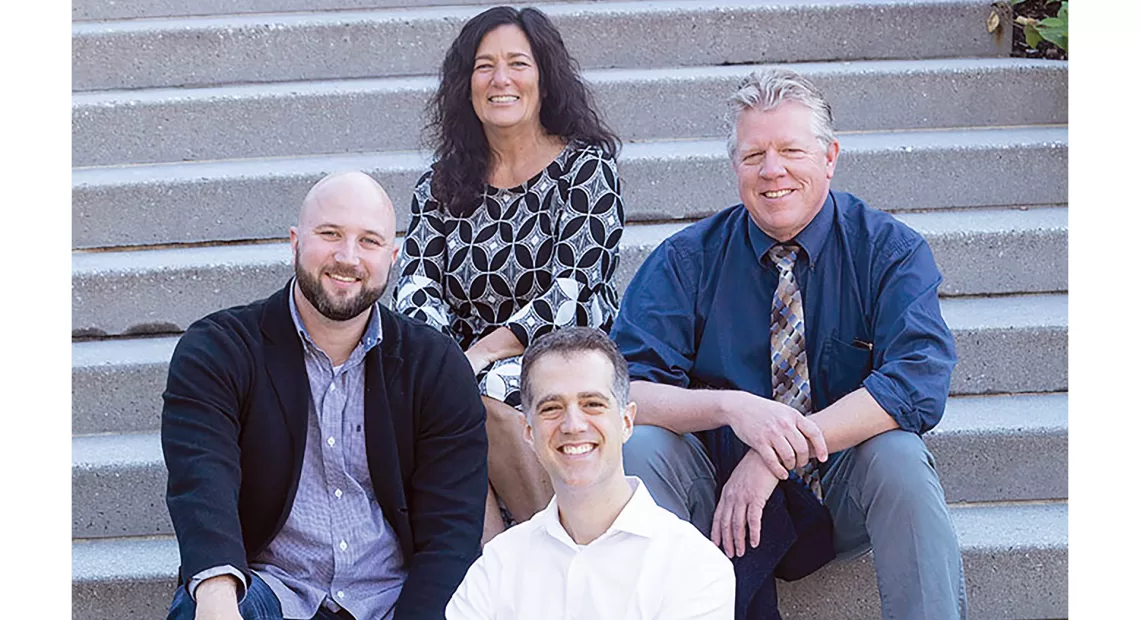
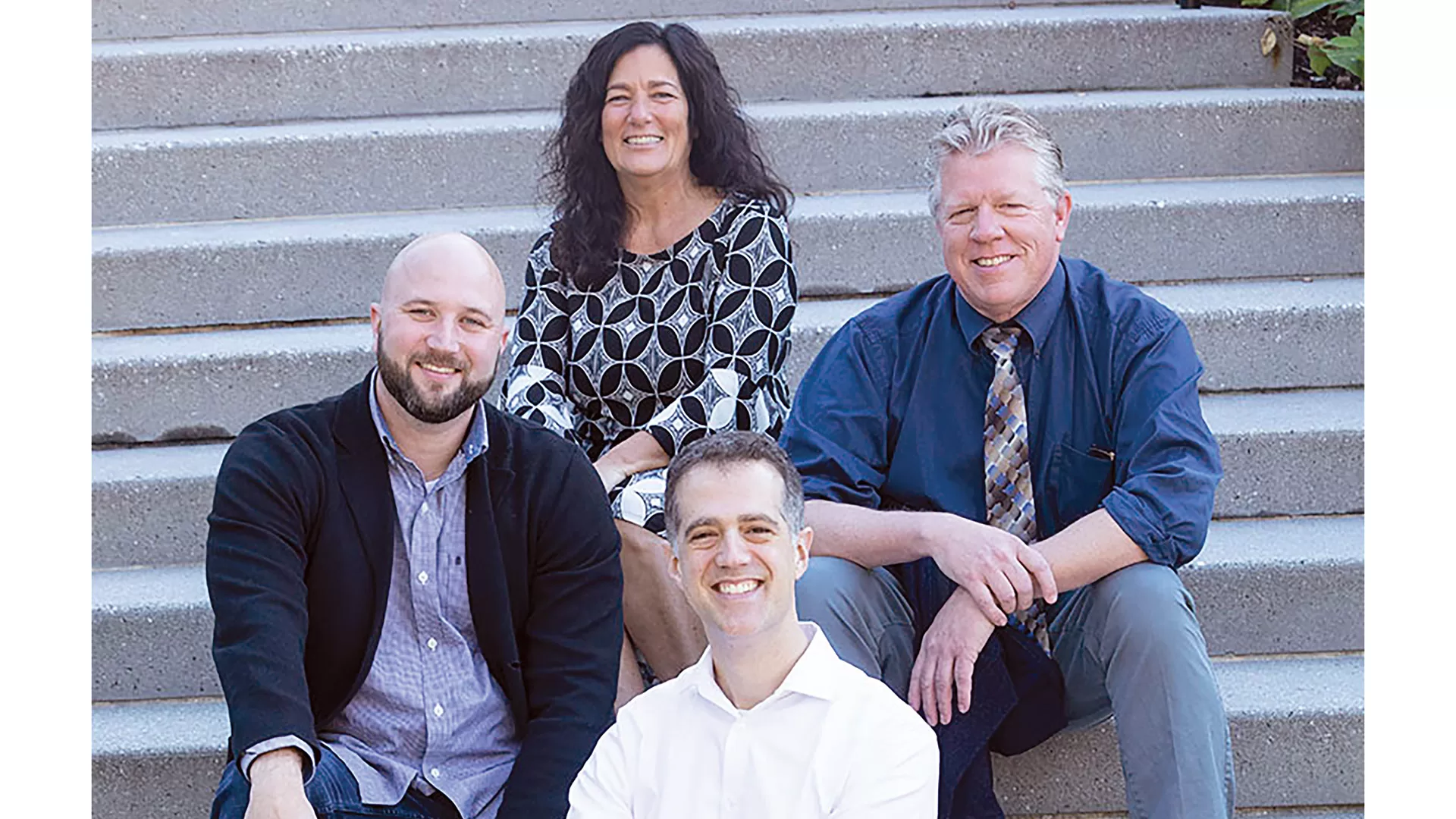
Clockwise from top: CFO Tina Gloster and Principals Kevin Riordon, Lee Morrissette, and Jason Newman

Clockwise from top: CFO Tina Gloster and Principals Kevin Riordon, Lee Morrissette, and Jason Newman (Photo by Paul Schnaittacher)

To explain what it means to be named an Emerging Professional Friendly Firm, Jason Newman offered some background on what it’s like to be an aspiring architect.

‘Aspiring,’ because simply earning a degree and going to work at an architecture firm doesn’t make one an architect; other requirements are experience — a certain number of hours worked in the field — and a series of examinations.

“Part of the experience piece is the hours worked in this office, and those hours are not just a lump-sum number of hours worked — it’s a number of hours worked in specific categories of the profession, like drawings, construction administration, and practice management,” said Newman, a principal at Dietz & Company Architects in Springfield.

“One of the things we pay attention to, very thoughtfully for every employee, is that, if you’ve got all your drawing hours satisfied, we’re not going to make you do drawing for another two years,” he went on. “That’s not going to move you forward to your license. So you won’t come to the end of the road here at Dietz and feel, ‘I’m just getting drawing. I have to go somewhere else where I can get construction-management experience.’

“If you’ve got all your drawing hours satisfied, we’re not going to make you do drawing for another two years. That’s not going to move you forward to your license.”

“This is not Boston, where 100 qualified architect candidates are at our door. We have to take care of the people here because we want them to stay,” he went on. “We want to make sure that they feel growth opportunities are here.”

That’s precisely the philosophy behind the Emerging Professional Friendly Firm program overseen by the New England components of the American Institute of Architects (AIA). A handful of firms in each New England state are so recognized each year — Dietz among them for several years running — for promoting the advancement of young team members through professional development and personal growth opportunities.

“A few years back, AIA New England came out with programs to encourage companies to adopt policies and procedures and training and internal education programs that would further develop the younger generation of architects fresh out of school, to take them in and help them grow professionally toward architecture licensure, which is what everyone refers to as the ‘stamp.’ That’s when you officially call yourself an architect,” Newman explained.

“This is a program to encourage firms to get away from the old methods of pigeonholing, where, in many cases, your first experience on an architecture job was drawing bathrooms for three years, being tucked into one thing because you’re brand new,” he went on. “The goal of this program was to incentivize firms to be more supportive, to promote emerging professional development.”

Lee Morrissette, another principal, spent more than a decade in Boston before coming to Dietz, and said he has always appreciated its emphasis on mentorship, continuing education, and lifelong investigation of the profession. “It’s a much more transparent firm, in the way the business goes on, than anywhere I’ve been.”

Jason Newman

Jason Newman

“A lot of the junior staff see when we get praise for our designs — or criticized for our designs. It gives them a fuller perspective on what’s happening beyond the drawings.”

It certainly made an impression on Newman, who came to Dietz as a student intern 13 years ago and “never found a reason to leave,” as he put it. “So I’m an example of someone to wants to stay with this firm because they feel this is a good, long-term place for them.”


Drawing Up a Strategy

According to AIA New England, the Emerging Professional Friendly Firm program “has an ability to attract and retain employees by sending a message to current employees, future employees, and other regional firms that the firm has evaluated their policies from an emerging professional lens, the firm recognizes emerging professionals at their firm, and the firm values emerging professionals’ development to sustain the future growth of their practice.”

That resonates with Newman, who noted that the aim is for young professionals to think, “that’s a great place for me to be. That’s a great place for me to grow. I know, when I go to other firms, my development will be of value not only to me, but to the company and the people I’m working with.”

To earn that designation year after year has involved a series of proactive steps, Morrissette said, including that emphasis on diverse experiences that move staff toward licensure more quickly.

“Many larger firms get a bad reputation for being the kind of firm where you get stuck in a position, doing that function for a long time, falling between the cracks,” he noted. “We call ourselves a mid-sized firm — at 25 people, we’re the largest in Western Mass., but still a mid-sized firm for the country — so we get a lot of face time with the staff. It’s hard for someone to fall through the cracks here.”

In addition, Newman said, “we make sure entry-level people are getting the whole experience. We include the whole team in project meetings. I’ve been in the industry 13 years, and back then, the architect and the project manager went to the meeting, and they came back and told you what happened.”

Lee Morrissette

Lee Morrissette

“Over the past two years, we’ve spent more time doing creative designs. That’s what makes us happy as professionals — being able to stretch our creative muscles and push ourselves.”

But the rise of remote meetings made it more common to include everyone, and now it’s simply firm policy at Dietz.

“A lot of the junior staff see when we get praise for our designs — or criticized for our designs. It gives them a fuller perspective on what’s happening beyond the drawings,” Newman explained. “Twenty to 30% of what we do as architects is management of expectations, helping people pull their own creativity into the designs, helping them express ideas that they don’t know quite how to express. Well, this gives the junior staff exposure to that earlier than what they have been given traditionally.”

All staff members are also given a stipend each year, called an educational allowance, which can be used for anything they feel will better their professional development.

“Architecture is a mixture of art and science, and we want to create buildings that are beautiful and people want to look at, but also stand up and are good, strong structures,” Newman noted. “So we allow a very broad interpretation of what is an activity or class or training someone might feel would better their professional growth. It might be as simple as a painting class, targeting the artistic side, or a business of architecture class, or project management class, or they might want to buy books because they’re studying for an exam. People use it in very creative and interesting ways.”

Morrissette and Newman also value the culture of mentorship they’ve seen — and helped cultivate — at Dietz & Company.

“We both love teaching. We both participated in university reviews of student works in a volunteer way,” Morrissette said, adding that he has taught at Wentworth Institute of Technology in Boston as adjunct faculty. “I loved being involved. But we’ve found, with this focus on teaching and mentoring in the office, we can do that teaching here. For me, it satisfies the reward I get from teaching and mentoring professional staff, and I get to do it as part of my job.”

 

Something to Build On

That job has expanded since Newman, Morrissette, Principal Kevin Riordon, and Chief Financial Officer Tina Gloster began easing into leadership roles last year as part of the firm’s transition from a single owner — President and Trustee Kerry Dietz — to one with an employee stock-ownership plan, or ESOP. Meanwhile, the firm has continued to expand its footprint, including more work outside the 413.

“It’s been a really great year. We’ve had a tremendous amount of work,” Newman said, adding that, while not every project is exciting from a creative perspective, he’s gratified to work on anything that benefits a community or a client. But some of this past year’s work has, indeed, been on the “cool” side. “We’ve shown we can get in with the Boston guys and compete. It’s really encouraging. It shows our model is working and we’re getting better and better every day.”

Morrissette agreed. “As an architecture firm, we’re always looking for more work. You want to do everything; the company wants to pay the bills. But over the past two years, we’ve spent more time doing creative designs. That’s what makes us happy as professionals — being able to stretch our creative muscles and push ourselves.

“You know, we feel creative success at the end of a project that no one knows about for a year or two until it’s built. Then they say, ‘that’s a great project.’ We have projects we’re proud of, and we can’t wait for the public to see them.”

Features

Breathing Easier

Frank Dailey shows off some equipment used to grind cannabis.

Frank Dailey shows off some equipment used to grind cannabis.


From his background in plant management and chemical engineering, Frank Dailey said, he understands the risks involved in manufacturing anything, let alone a product with so little research available in the realm of workplace safety.

So, when asked to take part in a National Institute of Occupational Safety & Health (NIOSH) evaluation of the cannabis grinding process at Boston Bud Factory, the Holyoke business Dailey owns, he was enthusiastic about it.

The study was first slated to take place at Trulieve in Holyoke, where an employee died in January 2022. The 27-year-old production technician suffered a fatal asthma attack while working at the indoor cannabis cultivation and processing facility. According to the Massachusetts Department of Public Health (DPH), the death occurred seven months after she started employment at the facility and three months after she began working as a flower technician, which involved processing and handling whole and ground cannabis flower buds.

Boston Bud Factory was contacted by Danny Stair, a local industry advocate and former Trulieve employee, who was concerned the study was in jeopardy following Trulieve’s departure from the Massachusetts market last year. So Dailey contacted NIOSH directly and volunteered his operations for the study.

“We put up signs when we’re grinding; we notify everybody. It can be a hazardous process. It doesn’t have to be, but it can be,” Dailey told BusinessWest. “We have to take into account allergens. Employees have allergic reactions processing some strains. It’s random; there’s no rhyme or reason.”

While he doesn’t know exactly what precautions were taken at Trulieve, “what I do know is that it’s common in the industry for large corporations to short personal protective equipment when the money’s tight. They need to pay for inventory. We’re answering to the money train in this industry, and it seems like it’s a common thing throughout the industry, that employees’ safety is not being looked out for.”

Dailey said Boston Bud Factory has already implemented strict PPE procedures when grinding cannabis due to possible employee reactions to dust, but still has concerns about whether the PPE was adequate, and he wants to be part of developing a wider body of knowledge that may become the basis for mandated workplace health regulations.

“People are talking about tax revenues and other issues in cannabis, but you don’t hear people talking about the effort the industry is making to keep their workers safe. Workers shouldn’t have to unionize and take extreme measures to implement safety in the workplace.”

“We know how dangerous dust is in other industries. Dust in foundries has caused explosions. Dust in factories has caused fires. As for cannabis dust, this is just the beginning of the employee exposure. As the industry grows, more and more dust is created.”

One of his employees with specific sensitivity concerns actually wears not only a Tyvek suit with a particulate mask, but also gloves duct-taped to the sleeves so the dust doesn’t get up the sleeves.

“These are techniques from the pharmaceutical industry that are easy to implement if someone is paying attention and has proper safety protocols in place,” he explained. “People are talking about tax revenues and other issues in cannabis, but you don’t hear people talking about the effort the industry is making to keep their workers safe. Workers shouldn’t have to unionize and take extreme measures to implement safety in the workplace.”

During the on-site visit, NIOSH will set up airborne particulate monitoring during the grinding process to see what the exposure is and how many airborne particulates employees are subject to.

“We use dust masks, basically particulate masks, and that should be enough in most cases. We’re not talking chemical fumes; it’s simply airborne particulates,” Dailey said. “But we need to know whether we need to go to N95 or a higher level to make sure enough particulates are captured.”

Historically, he added, a lot of cannabis manufacturing has been done underground, where employee safety isn’t paramount.

“We’re one of the smallest operations in Massachusetts; we’re fighting for survival,” he added. “But we need to do something to set some standards in this emerging industry.”


Statewide Investigation

Also in the wake of the death at Trulieve, the Massachusetts Department of Public Health (DPH) recently released an investigative report outlining additional steps the cannabis industry should take to prevent work-related asthma and sent a bulletin to healthcare providers in the Commonwealth urging vigilance in identifying work-related asthma among workers in that industry. The bulletin reminds providers that they are mandated to report cases of work-related asthma and other respiratory diseases to DPH.

While the Holyoke death is the only known asthma death in the U.S. cannabis industry, other cases of non-fatal respiratory disease among Massachusetts cannabis workers have been reported. According to DPH, cannabis-industry workers can be routinely exposed to numerous occupational respiratory hazards, including cannabis dust, mold, volatile organic compounds, pollen, bacterial endotoxins, pesticides, soil components, and cleaning disinfectants, which can cause and/or exacerbate chronic diseases, like asthma, if not addressed.

Massachusetts has more than 500 licensed cannabis industry employers providing jobs to more than 22,000 workers.

“The legalized cannabis industry in Massachusetts is relatively new, and the impact on the health and safety of workers demands our careful attention,” Public Health Commissioner Dr. Robert Goldstein noted in a statement. “As this workforce continues to expand, it will require all of us working together — state and federal agencies, regulators, healthcare providers, and the cannabis industry — to improve working conditions for these employees. At DPH, we will continue to identify and follow up on these cases using our long-standing public-health surveillance system for work-related respiratory disease and continue to work with our partners on documenting cases, building evidence around workplace hazards, and on intervention and policy.”

“The legalized cannabis industry in Massachusetts is relatively new, and the impact on the health and safety of workers demands our careful attention.”

According to DPH, work-related asthma is underrecognized in part because symptoms and industry and occupation data are not routinely collected. Yet, about 17% of new-onset adult asthma cases are related to workplace exposures. In Massachusetts, an estimated 200,000 adults have work-related asthma, according to data from DPH’s Occupational Health Surveillance Program.

In its bulletin, DPH urged healthcare providers to:

• Ask patients with new or worsening respiratory or allergic symptoms what they do for work and how it affects their health;

• Perform diagnostic testing, such as allergy testing, pulmonary imaging, and/or spirometry;

• Recommend workplace changes to avoid further exposure; and

• Report cases of work-related asthma and other work-related respiratory diseases to DPH, as required by law.

To improve worker safety, the investigative report recommended that employers:

• Assess and control hazardous materials in the workplace, including asthmagens;

• Ensure that all workers are properly trained about hazardous materials in the workplace;

• Develop and implement a comprehensive safety and health program that addresses hazard recognition, avoidance of unsafe conditions, and proper use of equipment; and

• Implement a medical surveillance program to monitor the health of their workers.

The report also noted that equipment manufacturers should adopt and implement the concept of ‘prevention through design’ to identify potential hazards associated with equipment and then eliminate these hazards through design changes; and that industry licensing agencies in Massachusetts should consider how they can further support the health and safety of cannabis-industry workers.

“Levels of exposure to cannabis dust at work are much higher than what is present during recreational use,” said Emily Sparer-Fine, director of DPH’s Occupational Health Surveillance Program. “Work processes that include grinding and concentrating an allergen need to be better controlled. It is critical for employers to assess and control exposure to hazardous materials, including the respiratory hazards found in the cannabis-processing facilities, such as cannabis dust.”


The Effort Continues

All this is gratifying to Dailey, who thanked Stair for ensuring that the NIOSH Study was completed, advocating for the safety cannabis-industry employees, and helping prevent future injuries or deaths. Dailey claimed that larger cannabis companies are prioritizing profits and growth over workplace safety, so it is important that advocates and smaller companies step up to take the lead in setting industry standards to ensure workplace safety.

“We are proud to be one of the first companies to prioritize worker safety over profits. Boston Bud Factory has said from the start that we didn’t want to be one of the big guys, and we still stand by that wholeheartedly,” he added. “We hope that the NIOSH safety evaluation will help determine industry standards that could help to ensure worker safety in this emerging and rapidly growing industry. Worker safety should always take precedence over profits, no matter how large the company is.”

Banking and Financial Services

Lending Perspective


Tom Senecal has been president, CEO, and chairman of PeoplesBank since 2016, and moving forward, he’s shedding the ‘president’ part of that title. But that doesn’t mean he’s slowing down.

“It’s more of a transition of the daily responsibilities,” he said, explaining why Brian Canina has been promoted to president and chief operating officer, and Hayes Murray has been promoted to executive vice president, chief financial officer, and treasurer, taking on some of Canina’s former duties.

“I reassigned to Brian three or four different responsibilities, but when you look at both of us, it’s still a lot on both our plates,” said Senecal, who retains his CEO and chairman titles. “This is a recognition of Brian’s success and talent and the timing of the growth that we’re going through. And quite frankly, the operational side of things needs more daily attention. And Brian really has the fortitude, the wherewithal, the work ethic, and the strategy to execute all the daily operational things. So it just made sense at this point in time to transition those responsibilities.”

Tom Senecal

Tom Senecal

“This is a recognition of Brian’s success and talent and the timing of the growth that we’re going through.”

After working together for almost 15 years — Canina as CFO and controller, Senecal as president and CEO — it just made sense to reward Canina for him efforts, Senecal added, “and, quite frankly, to make sure that we have our eyes on the ball as we continue to grow.”

Canina said he has prepared for this transition over the past year or two, operating in more than just a CFO role, and more like a COO, driving strategic initiatives and monitoring and managing the strategic plan of the bank along with Senecal.

“That will continue to be a focus of mine going forward, taking more responsibility away from Tom in terms of administratively managing the strategic plan and working with him as he identifies other strategies that he’s working on,” Canina explained. “So it’s not really a significant change; it’s something that we’ve been working toward, and with the size of the bank and how we’ve grown, it was a good timing to make this more formal change.”

The leadership changes will provide Senecal with more opportunities to plan and manage the growth and revenue activities of the bank, including retail operations, consumer lending, small business, municipals, and commercial and industrial divisions. Canina will continue to be responsible for finance, facilities, PeoplesWealth, the Business Solutions Group, and information technology. In his new role, he will also be responsible for human resources, marketing, and corporate responsibility.

“I’ve kind of shed some meeting responsibilities and a few of the operational responsibilities, but my focus is on growth,” Senecal said. “We have both an organic strategy of growing the bank by opening branches, and also non-organic opportunities. We’re constantly having conversations with other banks, and we will never be bought or sold, but we are looking at opportunities with other banks that might want to partner with PeoplesBank.”

Connecticut in particular continues to present growth opportunities. After adding branches in East Granby and Suffield through acquisition, then expanding the bank’s branch footprint into South Windsor and West Hartford, the bank’s board of directors has approved plans to open banking centers in Glastonbury and Avon, in addition to seeking other opportunities for future expansion.

Brian Canina

Brian Canina

“It’s something that we’ve been working toward, and with the size of the bank and how we’ve grown, it was a good timing to make this more formal change.”

“Our commercial-lending business has been extremely successful in the Connecticut market,” Senecal noted. “We’ve hired some commercial lenders and residential lenders in the Connecticut market. We’ve always had a large presence on the commercial side, but since we’ve developed the retail side, it has brought us some synergies in the relationships with those commercial customers, bringing them in as retail customers as well. It’s been hugely successful.”

Canina agreed. “We’re at a very important time right now to really continue pushing the growth of People’sBank down into Connecticut and looking into other areas to grow. That’s what we’re really focused on, and I feel confident we’re going to have a lot of success.”


Soaring Assets

The numbers tell the story of PeoplesBank’s recent upward trajectory.

“When I took over as president and CEO in 2016, we were a $1.8 billion bank,” Senecal told BusinessWest. “We ended 2023 just shy of $4.1 billion. So we’ve more than doubled in those seven years.”

The bank also boasts more than 300 employees and operates 20 banking centers across Massachusetts and Connecticut, with an additional five locations when its headquarters, ATM, and VideoBankerITM locations are included, he noted. “That’s quite a bit of recent growth, which is a credit to the hard work of our entire team.”

Over the past couple years, PeoplesBank also began partnering with Zynlo, a digital bank, Senecal said. “That is starting to really take off. When we talk about growth, traditionally, brick and mortar has been our main source of banking growth. With the digital bank, that has taken on a whole different perspective.

“We’ve got different lines of business, and we’re starting a personal banking division of the bank,” he added. “We have the PeoplesWealth division. Those weren’t in existence a few years ago, so these different banking channels are really what’s driving some of our growth.”

Other expansion opportunities exist because of the merger-and-acquisition environment among large banks and how that disrupts a marketplace, Canina said, citing as one example M&T Bank’s acquisition of People’s United Bank. “That acquisition opens up opportunities for us to jump in on the disruption down in the Connecticut market and, in some cases, Western Massachusetts as well, but mostly down in the Connecticut market, which is why we have our sights set on organic growth down there.”

Opportunities will also arise from banks that aren’t faring as well as PeoplesBank, he said, due partly to the compression on interest margins coupled with increased costs for human resources and compliance, as well as coming regulatory changes.

“Some of these smaller banks are really going to be challenged,” Canina explained. “And I think that we’re at a size — more than $4 billion in assets — where we’re in a very good position to partner with another bank that’s smaller and having challenges, so I think there’s going to be opportunity there for us.”

Of course, PeoplesBank continues to grapple with those same headwinds, he added.

“The challenges right now are coming from the interest-rate environment, where the margins have really compressed from the short-term rates coming up and long-term rates coming up a bit, but not as much as the short end of the curve. So we’re paying deposits on the short end and then lending out on the long end, and there’s not a big spread there. It makes it challenging, not just for us, but for all banks.

“At the same time, a lot of the pandemic deposits that came in have started to flow out; people started spending more money, and they have the ability to to move deposits anywhere they want very easily,” Canina continued. “So the industry has been challenged with managing the interest-rate environment and maintaining deposit levels, and I see that continuing into 2024. Depending on what happens with interest rates, it’s not likely going to let up until we see the short end start to come down. And then we’ll face some different challenges when that happens, because most likely there will be some potential recessionary concerns.”

On the residential side in particular, Senecal added, “I think it’s tough for every bank these days, even though interest rates have come down a little bit from their all-time highs in the last 20 years or so. But there’s no inventory. So, even though interest rates are high, what we’re seeing is, when something comes on the market, it sells, and it’s financed. It’s just that the inventory is so low. And that will be a challenge heading into 2024 for almost all banks.”


Hometown Focus

As he broadens his responsibilities in dealing with these issues and working with Senecal and other bank leaders on growth strategies, Canina added that he aims to continue — and grow — PeoplesBank’s commitment to the communities it serves, noting that the bank’s charitable giving continues to be a strength, with almost $6 million donated over the past three years alone, and more than $11 million over the past 10 years.

“I think what really separates us from the larger regional banks and the national banks — we’re so invested in the communities that we’re banking with, and even though we’re contributing the amount of dollars we are back to the community, we’re still paying interest rates that are competitive with any other bank out there.”

Meanwhile, employees donate thousands of hours of volunteer service to area nonprofits and charitable causes, he noted. “More than half of our bank is on a nonprofit board of some sort, and the amount of volunteer hours is very strong; that’s something that all of our employees hold near and dear to them and really keeps them engaged.”

Banking and Financial Services

A Matter of Survival


When asked what it takes to thrive in the cannabis business these days, Meg Sanders paused before noting that ‘thrive’ is the wrong word.

“I think thriving is part two. Right now, surviving is really the topic of the day. That’s what we need to be looking at,” said Sanders, CEO of Canna Provisions, which operates dispensaries in Holyoke and Lee.

And it’s not just because of the heightened competition that has arisen, both within Massachusetts and from across state lines, though that factor has caused some shops to close, with others likely to follow, as the market begins to settle, eventually determining how many dispensaries is too many.

No, that development has only exacerbated one of the key challenges for cannabis entrepreneurs: the fact that the drug is federally illegal, which makes financing thorny, normal business activities difficult, and the tax environment severe, to say the least.

“Our accounting bill is probably super elevated from a normal business. Our legal bill is probably way larger than a normal business because there are just so many T’s to cross and so many I’s to dot. And that’s just part of it,” Sanders said before detailing issues with access to financial services and lending. “What if we could get SBA loans? What if we could apply for federal grants? I mean, there’s so much money out there that a small business should be eligible for, but we can’t do any of that because we’re federally illegal.”

Meg Sanders

“What if we could get SBA loans? What if we could apply for federal grants? I mean, there’s so much money out there that a small business should be eligible for, but we can’t do any of that because we’re federally illegal.”

With that in mind, a coalition of U.S. cannabis operators and investors filed a lawsuit late last year against U.S. Attorney General Merrick Garland. The coalition asserts that the federal government has no basis for enforcing the Controlled Substances Act against intrastate, state-regulated cannabis operations. The plaintiffs include Canna Provisions; Gyasi Sellers, CEO and founder of Treevit; and Wiseacre Farm, all of which are independent operators in Massachusetts that claim to have suffered significant harm and business challenges due to federal prohibition.

Verano Holdings is also named as a plaintiff, while foundational supporters of the suit include Ascend Wellness Holdings, TerrAscend, and Green Thumb Industries, as well as Eminence Capital and Poseidon Investment Management.

The lawsuit seeks to confirm the rights of Massachusetts and other states to regulate cannabis within their borders, and to limit the federal government’s power to regulate commerce.

The Controlled Substance Act bars the production, distribution, and possession of marijuana, regardless of whether those activities cross state lines or, as in the case of the plaintiffs’ businesses, are intrastate. According to the lawsuit, “this unjustified and unconstitutional prohibition on intrastate cannabis harms plaintiffs and hinders the efforts of states to provide patients and adults with access to strictly regulated and tested cannabis.”

“The purpose of the lawsuit is to basically challenge the constitutionality of the Controlled Substance Act on intrastate activity. Basically, the suit alleges that the federal government has no say what happens within state borders,” Sanders told BusinessWest. “I wasn’t aware of this lawsuit until somebody recommended me to be part of it. So we had substantial meetings with our legal team and our board about this particular issue, and we all felt like there’s something here, and that this is an important way to approach it.”


Tough Environment

Cannabis banking has softened somewhat in Massachusetts, Sanders was quick to note. “I would say Massachusetts is probably one of the friendliest banking states in the United States as far as cannabis. We have a lot of very thoughtful, kind, smart bankers out there that are trying to service the industry. And that’s great; we have checking accounts, we have saving accounts, some of us are able to do debit-card acceptance. But we can’t take credit cards. I can’t get a business loan. Equipment loans are out there, but they’re at a really high interest rate. And also, I can’t get access to normal payroll services. So I can’t work with an ADP or a Paychex or some of the big guys that are really good at what they do.

“If you’re signing up to be in cannabis, you’re signing up for all of these headaches. This is the nature of the beast. And it’s not negotiable; those are the facts. This is what we have to deal with every single day. And it’s really, really hard.”

The lawsuit also takes aim at what’s known in the IRS tax code as Section 280E, which originated from a 1981 court case in which a convicted cocaine trafficker asserted his right under federal tax law to deduct ordinary business expenses. In 1982, Congress created 280E to prevent other drug dealers from following suit.

So, while state-legal cannabis businesses are allowed to deduct the cost of goods sold when paying taxes, they can not take other deductions normal to most non-cannabis businesses — salaries, health insurance, utilities, maintenance, and much more. “So I have an effective tax rate of 73%,” Sanders said.

In 2005, the U.S. Supreme Court rejected a challenge to the Controlled Substance Act’s cannabis prohibitions.

But, according to a press release announcing the new lawsuit, “a critical factor in that decision, Gonzales v. Raich, was that the federal government intended to ‘eradicate’ the market for cannabis nationwide. The court concluded that the federal goal of eliminating commerce in cannabis, combined with the assumption in 2005 that intrastate marijuana could not be differentiated from interstate cannabis, justified the Controlled Substances Act’s prohibitions on intrastate cannabis. Neither of those facts, however, are true today. In the 18 years since Gonzales, Congress and the executive branch have abandoned any intent to ‘eradicate’ cannabis, and numerous states have developed regulatory programs for legal marijuana that is not fungible with, and is readily distinguished from, illicit cannabis.”

Indeed, the plaintiffs note, today, 38 states and Washington D.C. have medical or adult-use cannabis programs with significant regulatory oversight, requiring compliance with stringent regulations aimed at protecting patients, customers, and the public, including video surveillance and seed-to-sale tracking.

“Absent the relief sought in this lawsuit, plaintiffs and other state-regulated cannabis operators will continue to suffer severe harms,” the release notes. “State-regulated cannabis businesses are deemed illegal under the CSA; their everyday activities are considered federal crimes. As a result, they are cut off from numerous federal programs and protections (including small-business loans), they are subject to discriminatory tax penalties, and many organizations — including banks and credit-card processors — refuse to do business with them, rather than risk being deemed conspirators, aiders and abettors, or money launderers.

“The result is that many cannabis businesses are suffering, people are losing their jobs, and individual wealth is being destroyed,” the statement continues. “In addition, social-equity licensees harmed by the war on drugs and who were supposed to have equal access to the industry do not have the same benefits as otherwise situated business owners to start a business and build their wealth.”


Appetite for Change?

Sanders sees this lawsuit as a kind of parallel track to other ongoing efforts to disentangle federal and state laws, thereby easing the cost of business in the cannabis industry, with many hoping Congress steps in at some point and removes cannabis from the Schedule 1 list of controlled substances.

“There are a lot of legislators that really support and see cannabis as an industry for their constituents and understand that jobs are being created and there’s a lot of revenue. And, bottom line, their voters want to buy weed from a regulated dispensary,” she told BusinessWest. “That’s what we see every single day. We still have more people coming in. And what voters are telling legislators is they want safe access to cannabis.”

At the same time, Sanders understands that Congress has many competing priorities, and that they struggle to come together in a bipartisan way on any issue.

“Until politicians see voters saying, ‘well, because you’re negative on cannabis, we’re not going to vote for you,’ I don’t think you’re going to see a change. I mean, that’s their business. Their business is to get votes. As voters, we want legalization, but there are so many other things that are separating us as a country, and those are way more important, probably, in the eyes of legislators.”

Cover Story Top Entrepreneur

A Hunger to Do More

The Food Bank of Western Massachusetts Dramatically Grows Its Operations


Executive Director Andrew Morehouse

Executive Director Andrew Morehouse


It’s long been a tenet among nonprofits — successful ones, anyway — that they need to think entrepreneurally in order to thrive and grow. To think, in other words, like successful for-profit businesses do, in terms of resource allocation, financial planning, workforce management, and day-to-day operations.

And no nonprofit has been more entrepreneurial — and more ambitious — over the past few years than the Food Bank of Western Massachusetts, whose $30 million project to build a new, larger headquarters in Chicopee culminated not only in last month’s grand-opening ceremony, but in the dramatic expansion of its capacity to perform work it was already doing on a massive scale.

The project — and the accompanying campaign that raised about $15 million of that cost from private donors and $15 million from state and federal governments — started just before the pandemic and continued through those challenging years, making the successful conclusion especially gratifying to Executive Director Andrew Morehouse and his team, and earning the Food Bank recognition from BusinessWest as its Top Entrepreneur for 2023.

“The Food Bank of Western Massachusetts’ new, state-of-the-art facility will allow their dedicated team to provide greater access to healthy, nutritious foods to thousands more of our neighbors in need and expand service routes to partners throughout the area.”

“We have to be innovative. We have to be able to adapt to circumstances,” he said. “We have a strategic plan, and every year, we have specific objectives — and all that can go out the window if something happens, like a pandemic, and then we have to pivot.”

That applies to any entity — for-profit or nonprofit — of this size, Morehouse added, noting that the Food Bank has a $9 million annual operating budget, and the value of the food that comes through is about $18 million, so this is essentially a $27 million operation, with a staff of 67, and plans to hire another 14 by the end of 2024.

Andrew Morehouse addresses guests

Andrew Morehouse addresses guests at the Food Bank’s grand-opening ceremony last month.

“We acknowledge that it’s the dedication and talent of our staff that’s the source of our success,” he told BusinessWest. “That’s our ethos as a business — that we can succeed in our mission when we acknowledge and invest in our staff and the hard work that they’re doing.”

The new food-distribution center, located at 25 Carew St. in Chicopee, is twice the size of its previous Hatfield location, with an additional 18,000 square feet in the warehouse alone. Floor-to-ceiling warehouse racks and expanded refrigeration and freezer sections enhance efficiencies and enable the Food Bank to store and quickly distribute more healthy food than ever before to 175 member food pantries, meal sites, and emergency shelters across all four counties of Western Mass.

The new site also features a dedicated community space with a working kitchen for cooking and nutrition classes and other educational events. Other efficiencies include electric charging stations, an expanded member pick-up area, and plenty of parking for staff and volunteers. In 2024, the Food Bank will add a solar array on the roof and a canopy over part of its parking, along with backup battery storage that will fully support all electricity needs of the building.

“That will make it a greener building, so there are efficiencies to be gained,” Morehouse said. “We expect that building to be near-carbon-neutral and generate most of the electricity that we need.”

The investment in the relocation project and its capital campaign is already bringing palpable returns. In just the first three months since moving in, the Food Bank has already provided 25% more healthy food than the same period last year — the equivalent of more than a half-million meals. In all, the Food Bank provides a little more than 1 million pounds of food every month, or the equivalent of 850,000 meals.

“The more we thought about moving to Hampden County, the more we realized that was what we needed to do.”

“The Food Bank of Western Massachusetts’ new, state-of-the-art facility will allow their dedicated team to provide greater access to healthy, nutritious foods to thousands more of our neighbors in need and expand service routes to partners throughout the area,” U.S. Rep. Jim McGovern said at the grand opening. “I’m proud of the Food Bank’s 40 years of history serving our community and their continued leadership on the national stage in our movement to end hunger now.”


An Overstuffed Facility

The Food Bank, which traces its history back to 1981, expanded its facility in Hatfield just before the Great Recession, and then maxed it out as food-insecurity needs exploded during the ensuing years of difficult economic conditions.

“We had no available space, and we continued to see heightened demand, and that left no space at all for continued growth,” Morehouse said, noting that the Food Bank has grown its operations by about 6% annually between 2006 and last year.

The new Chicopee headquarters

The new Chicopee headquarters doubles the size of the former Hatfield site.

“We knew around 2016 that it was unsustainable, that we would need a larger space in order to continue to accommodate more food and to address increasing food insecurity whenever there was another adverse impact on the economy, whether it be a recession or … who would have known?”

Who, indeed. When COVID struck, the Food Bank had already been scoping out properties — and considering numerous options, such as a two-location model that was rejected because of its expense. But soon after, in 2020, the nonprofit found its ideal spot in Chicopee, launched the capital campaign in 2021, and started building in 2022.

The site had a couple of advantages, one being its proximity to two interstate highways, another being the county’s population and demographic makeup, Morehouse explained.

“The more we thought about moving to Hampden County, the more we realized that was what we needed to do — not only because of the proximity to the largest concentration of people who are faced with insecurity, but also because, quite frankly, it would enable us to strengthen our relationships with communities of color, which, unfortunately, face food insecurity disproportionately relative to the rest of society.”

As for the campaign, it drew the support of 246 individuals, businesses, and foundations — but there was some anxiety early on, especially since it was launching during a challenging economic time, year two of the pandemic.

“If we don’t acknowledge that the problem exists and we don’t, as a society, want to do something about it, we’re not going to make any progress.”

Morehouse credited the early, significant support by Big Y and MassMutual in “grounding” the campaign and lending confidence that it could succeed. After that, the entire banking community stepped in, as did and a host of other businesses, foundations, and individuals, including major contributions from the Irene E. and George A. Davis Foundation and C&S Wholesale Grocers.

“Before we had launched the campaign, there was a lot of internal discussion and planning, and I just had the faith that we could accomplish it and that the community would rally behind us, and they did,” he said. “Our board felt the same way, so we went public after we secured some of those large commitments. So we had something to start with, and then we were able to inspire and persuade the rest of the community to jump on board, and they did.”

One factor, he noted, was that the pandemic focused more attention nationally on the issue of food insecurity across the country — attention that was needed even before COVID, but was definitely in the public eye now.

announced large pledges to the Food Bank’s capital campaign in 2021

Andrew Morehouse (center) with Big Y President and CEO Charlie D’Amour (left) and Dennis Duquette, MassMutual Foundation president, when they announced large pledges to the Food Bank’s capital campaign in 2021.

“If we don’t acknowledge that the problem exists and we don’t, as a society, want to do something about it, we’re not going to make any progress,” he said. “So it was gratifying that the community rallied behind our campaign to help us to be successful. And now we have this facility, this community resource, that can make even greater impact in addressing food insecurity, but also to serve as a place for convening, for learning, for collaborating, for taking action.”

The ‘action’ part of that goal is clearly the most important.

“If we’re ever going to end hunger, we need to raise awareness, and that happens through education and dialogue, but also through the power of public policy and the changes that we can make to public policy and investments in people, families, and communities to ensure that everyone can lead a healthy and productive life,” Morehouse said.

“That means addressing not only the food assistance that people need today, but the underlying causes of hunger,” he went on. “Do people have access to affordable housing, childcare, transportation, education, jobs that pay a meaningful wage to support families? All of those are things we need to be looking at as a society.”

After 19 years in charge of the Food Bank, it’s a lesson that has grown clearer every year. “I’ve been in the nonprofit world for over 30 years,” he said, “and I’ve always enjoyed building things, building capacity, because that’s how, ultimately, I think you create social change and economic change for the better, for families and communities.”


In and Out

The Food Bank’s reach is impressive, serving as a clearinghouse of emergency food for the region, most distributed to local food pantries, meal sites, and shelters.

Much of the food the organization collects is purchased, using state and federal funds, from wholesalers, local supermarkets, and dozens of local farms; farmers also donate more than a half-million pounds of food each year.

“We then turn that food around — we store it here and distribute it through a vast network of about 175 food pantries, meal sites, and shelters across all four counties of Western Massachusetts,” Morehouse explained. “That’s how about 85% of the food that we receive flows through, ultimately to individuals in need of food assistance.”

In addition, the Food Bank operates a mobile food bank for direct-to-household distribution at 26 sites once or twice a month, plus a brown-bag program for elders that boasts 52 partners, mainly senior centers. The nonprofit also receives reimbursements to provide some individuals with supermarket gift cards, in addition to referring them to food-pantry meal sites.

And because food insecurity is often entangled with other economic and social needs, “we do refer individuals to some other nonprofit partners who can provide them with affordable-housing assistance, transportation, childcare, job training, things of that sort,” Morehouse added, noting that the Food Bank uses the 413Cares system to coordinate referrals with partners. “We’re all trying to figure it out and find a way to help people lead healthy, productive lives.”

Some of the Food Bank’s top supporters recognize the importance of those efforts.

“Our goal, our mission, is to feed families,” outgoing Big Y President and CEO Charlie D’Amour (see story on page 4) said when announcing financial support for the Food Bank early in the campaign. “We have people in our communities that are really struggling to get food on their table. The role of food banks serving local neighborhoods has never been more important.”

Country Bank President Paul Scully felt the same when announcing a large donation in 2021. “With everything we’re hearing these days about the shortage of food and the high expense of food … the need is real out there,” he said. “As a community partner, we care deeply about the sustainability of our communities and the people who live in them.”

What they were acknowledging was a nonprofit that has been entrepreneurial in its efforts to tackle a widening problem.

“We’re very much like a for-profit business to the extent that we have overhead, we have trucks, we have inventory, and we have staff,” Morehouse said, noting that the Food Bank doesn’t have customers, exactly, but it does have key stakeholders, from the households facing insecurity to the meal sites and shelters that receive 85% of those distributions, to the federal and state agencies that pay for the food. “We have an obligation to those agencies to ensure that we’re delivering on our agreement with them.”

In addition, the Food Bank maintains contracts with the Department of Transitional Assistance to provide SNAP assistance and with MassHealth to provide food assistance to individuals who have chronic illnesses and are referred from hospitals and community health centers.

While the Great Recession and the COVID pandemic marked times of spiking need, that need never goes away, although it does fluctuate, Morehouse said.

“Inflation is coming down, and that might help … but folks are still struggling,” he added. “And, you know, we’re here to help them, give them a hand up.”

And at a higher level than ever before, thanks to an ambitious goal, some very entrepreneurial thinking, and a lot of community support.

Features Special Coverage

Passing Thoughts


From left, Rick Bossie, Charlie D ‘Amour, Theresa Jasmin, and Michael D ‘Amour

From left, Rick Bossie, Charlie D ‘Amour, Theresa Jasmin, and Michael D ‘Amour

Charlie D’Amour says his father, Gerry, and uncle, Paul — the co-founders of Big Y Foods — had an outlook on work and business management that was typical of members of their generation.

“They came away with the notion that you died with your boots on — you just kept working until the end,” he said, adding that he is of a much different mindset, one of meticulously grooming the next generation of leadership, stepping back when the time is right and letting them take the reins, and … well, not working right to the very end.

And that’s exactly what’s been happening at Big Y over the past few years and especially the past several months, steps that ultimately led to the recent announcement that Charlie D’Amour would be assuming the role of executive chairman of the board and that his nephew, Michael D’Amour, would be taking the reins of president and CEO. Also, Richard Bossie, a 40-year-employee who is now senior vice president of Retail Operations and Customer Service, will be stepping into Michael D’Amour’s roles as executive vice president and COO. The moves are effective Jan. 21, and they are all significant in nature.

Indeed, Michael’s ascension to president and CEO represents a passing of the torch from the second generation of leadership to the third as the company approaches its 90th birthday (in 2026) and contemplates where it wants to be when it reaches 100. Meanwhile, Bossie becomes the first non-D’Amour family member to become COO, another significant step and poignant example of how the company is certainly bigger than the family and takes pride in putting people in jobs that can lead to careers, including those that involve the C-suite.

For Michael, the executive changes represent the continuation of a pattern set by his uncle Charlie and another uncle, Donald, before him — from humble beginnings working at one of the supermarkets (in Michael’s case, slicing cold meat in the deli) to a succession of leadership positions, and eventually to the corner office.

“I have an opportunity to stay somewhat connected with the business but also get out of the way. There is something unique about a family business; it’s hard to completely walk away from it. For so many years, and from a very young age, I’ve been involved with the company. I’m part of the company, and the company is part of me.”

He told BusinessWest that this is an important time for the company, not simply in terms of milestone celebrations and leadership changes, but also when it comes to challenges and opportunities for continued growth of a chain that now boasts more than 70 supermarkets as well as Table & Vine, which specializes in wines and liquors, and Big Y Express gas and convenience stores.

He said the company remains in a strong growth mode, and he can envison perhaps 100 or more stores by the time of the company’s centennial through a likely mix of organic growth and acquisition.

Bossie agreed, noting that, beyond continued growth, the company will have several other focal points in the years to come, especially in the broad realm of workforce.

The severe crunch that came in the wake of the pandemic when companies across all sectors, but especially this one, struggled to fill vacancies and fully staff stores is mostly in the rear-view mirror, but other challenges continue, including those involved with meeting the needs of a changing, more demanding workforce.

“There have been massive changes there since the pandemic, but even before then,” he explained. “There are greater expectations, and greater needs, now when it comes to the tools they need to do their jobs.”

As for Charlie D’Amour, 72, who had become the face of the company over the past several years, he said will step into what will mostly be an advisory role, one with a job description that he will write as he goes.

Michael D’Amour says he can envision 100 or more supermarkets

Michael D’Amour says he can envision 100 or more supermarkets by the time Big Y turns 100 in 2036.

“I have an opportunity to stay somewhat connected with the business but also get out of the way,” he said of this new role. “There is something unique about a family business; it’s hard to completely walk away from it. For so many years, and from a very young age, I’ve been involved with the company. I’m part of the company, and the company is part of me.”

For this issue, BusinessWest talked with senior management at Big Y about these changes in leadership and what will come next for the one of the region’s largest employers.


Produce Department

Michael D’Amour told BusinessWest that, while he — like other members of the second, third, and now fourth generations of the family — grew up in Big Y stores, handling a number of different assignments, he didn’t exactly set out to make this a career.

“In college, I was thinking about more about criminal psychology and things like that,” he said, adding that, when he returned home after graduating, he needed a job and, at his mother’s urging, took one working full-time in the deli department at the Big Y on Memorial Avenue in West Springfield.

After learning that side of the business, he moved on to other areas of supermarket operations and management, including the assumption of a lead role in creation of the food-services department that exists today, one that offers pizza, sandwiches, and many other options.

“We did business much the same way for decades, but over the past five years, the pace of change has greatly accelerated. We have to stay current, we have to stay educated, we have to stay knowledgeable, and we have to be able to share that wisdom and knowledge with our teams out in the stores.”

He would go on to open the company’s new store in South Windsor, Conn. in 2001, before moving on to other areas, including sales, produce, and fresh offerings, and eventually becoming vice president of Sales and Marketing and then COO in 2019. Since then, along with his uncle, Charlie, he has been a key face of the company and many of its recent initiatives..

Michael said he will bring to his new roles a leadership style he saw in his predecessors and is eager to emulate, one grounded in “listening more than we speak,” as he put it, giving employees at all levels the tools they need to succeed and focusing on teamwork.

As he talked, he made it a point to use ‘we,’ not ‘I’ when talking about leadership.

“We have an eye toward growth and innovation, not just with technology, but across the board,” he said. “We want to develop tools and processes to make our employees’ jobs easier and more effective, and also add to the customer experience.”

As for Bossie, he came to Big Y in 1986 after returning to the region after living in Alaska and working in a supermarket as a part-time service clerk.

He started working nights stocking shelves in the store in Great Barrington, and has since worked in all areas of store operations, including store director and, later, district director until his appointment as director of Operations in 2010.

In 2019, he was named senior vice president of Retail Operations and Customer Experience, where, in addition to his operations oversight, he also leads other retail banners such as Big Y Express gas and convenience and Table & Vine, along with teams for asset protection and continuous improvement.

He joins Michael D’Amour and Theresa Jasmin, the company’s chief financial officer, who joined Big Y nearly two decades ago and worked in a number of capacities before becoming CFO in 2020, as well as several of Michael’s siblings and cousins, as what would be considered the proverbial next generation of leadership at Big Y.

This new leadership group has come into place through careful consideration and a hard focus on succession planning, something that all ventures, and especially family businesses, need to make a priority, Charlie said.

The Big Y Express Market in downtown Springfield

The Big Y Express Market in downtown Springfield is one of the many additions to the company’s portfolio in recent years.

“We spend an awful lot of time across the organization looking at succession, planning for it, and making sure we’re thoughtful about it — and working at all levels of the team to get ready for this particular point,” he told BusinessWest.

“There are not a lot of companies that can brag about passing the reins on to the next generation,” he went on. “And I’m very excited that we’ve been able to do that. The second generation has been involved in it, we didn’t screw things up too, too badly, and now the third generation can step in and continue the growth that we’ve enjoyed.”


What’s in Store?

As he talked about what comes next, for the new leadership and the company as a whole, those we spoke with said the company has achieved a strong pattern of growth, and the goal will be to continue this ‘little run,’ as Charlie D’Amour called it.

In addition, Michael D’Amour said he wants the company to build on its reputation as a great place to work, efforts that have culminated in awards such as listing by Forbes as a ‘Best-in-state Employer’ in Massachusetts and Connecticut and recognition from Newsweek as one of ‘America’s Greatest Workplaces for Diversity and Women.’

“It’s becoming harder and harder, given the environment in Massachusetts and Connecticut, to get development of new sites going. As the development costs continue to increase, increase, increase, we’ve had to walk away from some locations because it didn’t make any financial sense anymore.”

“We’ve made a lot of progress over the past few years, but we still have a long way to go, and for us this is a never-ending journey,” he said. “It’s a point of focus for us along with innovation and growth. We do a lot to educate and grow our employees — it’s turned out to be a great strength of ours, to be transparent with information as best we can and to help them grow, as employees but also as individuals.”

Bossie agreed, noting that, as the workplace evolves and the workforce becomes increasingly dominated by the younger generations, companies must responsive to their employees’ needs and expectations if they want to be successful.

“We have to be focused on the things they like to do and want to do, more so than me working night crew in 1986,” he said. “That kind of work might not be appealing to this latest generation of employees that we have, so we have to manage our business differently; we have to employ different tools and strategies and continue to ask, ‘what makes our workforce most satisfied and most engaged, and how can they serve our customers the best?’

“We did business much the same way for decades, but over the past five years, the pace of change has greatly accelerated,” he went on. “We have to stay current, we have to stay educated, we have to stay knowledgeable, and we have to be able to share that wisdom and knowledge with our teams out in the stores.”

As for growth of the company’s portfolio of supermarkets and other facilities, there will opportunities for organic growth and acquisition, and especially the later, said Michael D’Amour, adding that the company has already seen some of these opportunities, and there will be more in the years to come.

“There are some companies that don’t have succession plans, and others that have been struggling since the pandemic,” he noted, adding that there are independent stores and several smaller chains of stores that could become acquisition targets in the near future. “We’ve seen some opportunities already, and we’re going to continue to look at them and vet them fully; we think that’s going to be a big part of our growth over the next few years.

“We’re not going to buy Kroger tomorrow,” he went on, referring to the Ohio-based supermarket giant. “But something digestible, anything between one store and 25 to 30 stores tops, and it has to be contiguous to our marketplace; we’re not going to leapfrog into Minnesota or Florida. We’re going to be very opportunistic with our vehicles for growth.”

Jasmin agreed, noting that the company has always taken a calculated, thoughtful approach to growth — not growing for growth’s sake — and that this mindset will continue moving forward.

Charlie D’Amour concurred, noting that acquisition will almost certainly be the preferred path to continued growth, given the mounting challenges to finding sites for new stores and then clearing all the hurdles on the way to cutting a grand-opening ribbon.

To make his point, he cited the chain’s store in Clinton, Conn., a facility that took six years to open from start to finish, more than double the time it would have taken maybe a decade or so ago.

“It’s becoming harder and harder, given the environment in Massachusetts and Connecticut, to get development of new sites going,” he said. “As the development costs continue to increase, increase, increase, we’ve had to walk away from some locations because it didn’t make any financial sense anymore.”

Banking and Financial Services Special Coverage

Moving North

President Dave Glidden


Dave Glidden has long referred to it as the “I-91 corridor strategy.”

This is the growth plan for Middletown, Conn.-based Liberty Bank, one that, as the name suggests, focuses on the I-91 corridor, which stretches from New Haven into Southern Vermont.

The bank has followed that strategy, increasing its presence in Southern Conn., and now Western Mass. as well, taking another important step in what could be called its northward advance with the opening last month of its first branch in this region — on Shaker Road in East Longmeadow, just a few miles from the state line.

The facility, a former United Cooperative and then PeoplesUnited branch, was home to a commercial loan-production office that Liberty opened in 2021 and eventually moved to the 23rd floor of Monarch Place in downtown Springfield — after that LPO gave Liberty a foothold of sorts and convinced Glidden, the bank’s president, and other members of his leadership team that it was time to open a full-service branch in the 413.

“We generated a lot of volume and a lot of new customers out of there, and some good deposits,” he said. “When it got to that point, I said, ‘OK … we’ve proven that there’s space and a place for us in this market,’ and that’s when I decided to move the commercial-lending team and their support staff to Monarch Place and tear down the sheetrock and outfit a nice branch on Shaker Road.”

“We are selectively and cautiously considering where to go next. We don’t have to be in a rush, but I can see a total of maybe three to six branches over the next few years — if the right opportunities present themselves.”

With that move, the logical questions — and Glidden was ready for them — is where will the bank go next within the 413, and when?

“We are selectively and cautiously considering where to go next,” he told BusinessWest. “We don’t have to be in a rush, but I can see a total of maybe three to six branches over the next few years — if the right opportunities present themselves.

“I wouldn’t force the issue,” he went on, saying there is no firm timetable and no specific number of locations as a firm goal. “Maybe three to six branches, strategically located, with drive-thrus, with the focus on catering to small to medium-sized business owners. That’s our future plan.”

How this plan shakes out remains to be seen, obviously, and we’ll delve more into where the Liberty name and logo might appear next. For now, the bank wants to continue solidifying its beachhead and take the I-91 corridor strategy to different corners of the 413.

For this issue and its focus on banking and financial services, BusinessWest talked with Glidden about the next possible steps with this strategy and how the drive north will unfold.


Points of Interest

Glidden laughed when he noted that, when people tell him they see the bank’s TV commercials — “the ones with the emu and that guy with the mustache” — he no longer makes the effort to correct them and inform them that those are for the insurance giant Liberty Mutual.

“Why bother — what am I fighting it for?” he asked rhetorically, adding quickly that the last four words of each of those frequently, as in frequently, aired spots — ‘Liberty, Liberty, Liberty … Liberty’ — constitute solid name recognition that he doesn’t have to pay for. “Every time I see that commercial, I’m cheering; people come up to me and say, ‘I saw your commercial.’ I just say, ‘thank you; let me open a checking account for you.’”

Bank employees and elected officials

Bank employees and elected officials cut the ceremonial ribbon last month on Liberty Bank’s East Longmeadow branch.

This form of free advertising, if you will, is just one of many things that have gone well for Liberty over the past several years. In fact, Glidden said 2023 may be the bank’s third straight year of record profits, though the final numbers are not yet in.

But even if it’s not a record, the bank is maintaining a strong upward trajectory, which it owes to several factors, but especially its aggressive I-91 corridor strategy and the qualities needed to carry it out and gain market share across that wide area.

Elaborating, Glidden said the bank has several advantages, from a name that resonates and crosses state lines easily to a broad portfolio of products on both the commercial and consumer sides of the ledger; from a commitment to the latest digital technology to an attractive size.

Indeed, with more than $7 billion in assets and 56 locations in Connecticut and two in the Bay State, Liberty, the oldest mutual bank in the country, can “out-local the national banks and out-national the local banks,” said Glidden, a native of Holyoke who is well-known in this region and has long considered Western Mass. the next logical area of expansion for the bank.

“We can deliver a balance sheet that’s going to be large enough for 99.9% of the companies up there to grow to whatever they want to be,” he said, adding that this size, coupled with lenders who know and hail from Western Mass., has enabled Liberty to make solid inroads in the local market and presents opportunities to gain market share in this region.

And many changes to the banking landscape, but especially the advent and continued evolution of digital platforms and mobile apps, make it easier to cross state lines, he went on.

“The habits of consumers and small businesses, what they’re looking for from a bank, are not the same as they were 15 years ago.”

“The habits of consumers and small businesses, what they’re looking for from a bank, are not the same as they were 15 years ago,” Glidden explained. “Do they want to know that their bank has a branch so that, if there’s an issue, they can go in and sit with someone and get advice? Yes. But, across the board, transactions and visitations to branches continue to decline, and that decline is not projected to slow down any time soon.

“And that kind of changes the playing field in the sense of being able to go over the line with maybe a toe in the market,” he continued. “If this was 10 to 15 years ago, and I made the decision that I wanted Liberty to go into Western Massachusetts and compete, I probably would have looked to do it through an acquisition strategy. That doesn’t mean that acquisition strategies are off the table, but you don’t have to do that now with digital and mobile apps.”


By All Accounts

As for the growth strategy in the 413, Glidden said that, as with the initial thrust into the region in East Longmeadow, the focus — the ‘macro strategy for this market,” as he called it — is an emphasis on small business and commercial lending, realms that build customers, relationships, deposits, and more, and cement the need for additional branches.

This was the strategy followed in New Haven, where the bank established an LPO, and again in Hartford. And it is the same strategy being deployed north of the border in Greater Springfield.

As he scans the Western Mass. landscape — and, again, he knows it well from his years as regional president at TD Bank — Glidden acknowledged that Western Mass., is, by and large, a no-growth area. And most of its communities — and East Longmeadow is squarely in this category — are considered overbanked.

But there are opportunities, he noted, adding that his team is looking at maps and crunching numbers as they consider where to go next.

There are what would be considered obvious landing spots, he said, mentioning larger population and commercial centers such as West Springfield, Holyoke, Chicopee, and Westfield, and these may well be the next push pins on the wall map.

“The analytics you use on this stuff gets so complicated … sometimes you need to just take a step back and say, ‘where are all the people, and where are all the businesses?’” he said. “And just put them there.”

‘There’ probably doesn’t mean Hampshire County, at least not at this time, he went on, adding quickly that he certainly wouldn’t rule out putting a branch in a community like South Hadley, which borders Holyoke, Chicopee, and Amherst, and is another of those ‘overbanked’ communities in Western Mass.

“Right now, we’ve had success on the commercial and small-business side; let’s look at Greater Springfield and the surrounding communities,” he told BusinessWest. “If Springfield is the hub, then look at the spokes around there and find the right places to sprinkle a few more branches to service our growing customer base there.”

As he looks ahead, Glidden isn’t expecting another record year when it comes to profitability for Liberty Bank.

Indeed, while 2023 was a very strong year, the pace of growth started to slow during the third and fourth quarters, and this trend will, in all likelihood, continue in the year ahead.

But what will also continue is implementation of the bank’s I-91 corridor strategy, one that has seen Liberty makes its first moves in the Western Mass. market and establish a foothold.

The goal for 2024 and the years to follow will be to strengthen that hold and take the brand to different communities across the region. Just where, when, and how the next steps will take place remain to be seen, but one thing is clear: Liberty’s march north is just getting started.

Commercial Real Estate Special Coverage

Suspense Is Building

Evan Plotkin shows off the new offices

Evan Plotkin shows off the new offices of the Department of Children and Families, one of several new tenants at 1350 Main St. in Springfield.

Evan Plotkin can look out the windows of his offices on the 14th floor at 1350 Main St. and see many signs of progress, and momentum, in downtown Springfield.

Across neighboring Court Square, the renovated hotel at 31 Elm St. that had been vacant and deteriorating for years is getting set to welcome its first residential tenants. Meanwhile, the park itself is undergoing a much-anticipated, $6 million facelift.

Further south on Main Street, Plotkin, president of the real-estate company NAI Plotkin, referenced the so-called Clocktower Building and, behind it, the Colonial Block, two more mostly vacant, underutilized properties that are being targeted, like the former Court Square Hotel, for market-rate housing that is expected to bring more people, vibrancy, and opportunities for retail and hospitality businesses to the downtown.

Gesturing in a different direction, he referenced the new parking garage rapidly taking shape where the dilapidated Civic Center garage once stood. That garage and accompanying facilities are expected to provide another jolt of energy downtown, he noted, and be much more than a place to park cars.

“There’s new energy coming into the city,” he said, noting that he met with the Chicago-based group named the preferred developer of the Clocktower Building and Colonial Block project, and came away impressed with their enthusiasm for doing something in Springfield. “I think we’re really turning a corner; I think we’re at a tipping point.”

“There’s new energy coming into the city. I think we’re really turning a corner; I think we’re at a tipping point.”

For other signs of progress, momentum, and turning the proverbial corner, Plotkin doesn’t have to look outside his windows. Instead, he can get in the elevator outside his suite of offices and ride in either direction.

Going down a few floors, he can point out the new offices of the Department of Children and Families (DCF), which now occupies the seventh and eighth floors, which had long been vacant. Going down to the sixth floor, he can show off the new digs of the Committee for Public Counsel Services.

And by pushing the button for the lobby, Plotkin can show off many intriguing new developments, including Keezer’s Classic Clothing, the oldest second-hand fashion store in the country. The store, which opened in late November, is one of several new women- and Latino-owned incubator businesses now located in former bank offices transformed into what’s known as 1350 Market, a program oversen by the Latino Economic Development Corp. He also pointed to what had been a Santander Bank branch at the front of the property facing Main Street, space now being considered for a new restaurant. There’s even a new gym on the ninth floor.

Plotkin pushed all those buttons during a recent tour of 1350 Main, a building that has had several vacant or mostly vacant floors in recent years but is rapidly filling in those spaces, with the promise of more. Indeed, he said a party has expressed strong interest in the top two floors of the property, once the corporate headquarters for Bank of Boston.

These developments obviously bode well for this office tower, he noted, adding that he and his business partners recently acquired the first five floors from its previous owners and now own the entire property.

Wenting Jia, left, has partnered with Dick Robasson

Wenting Jia, left, has partnered with Dick Robasson, owner of two Keezer’s locations in Cambridge, to bring the concept to Springfield.

But they also bode well for the downtown area, he said, noting that the new tenants mentioned earlier bring a combined 400 or so workers to the central business district on a daily basis, providing a boost for restaurants and other businesses.

They also help what has been a somewhat sluggish office market in the downtown, Plotkin explained, noting that these new leases take space off the market, creating better demand for existing vacant space and potentially higher lease rates, even as questions linger concerning the long-range impacts of remote work and hybrid schedules on the overall office market.

“To have that kind of absorption in the downtown office market helps everyone in the downtown,” he said. “It’s all about supply and demand; there’s been a lot of vacancy in the downtown, and when there’s vacancy, we have to be very cost-effective and competitive in our pricing; when there’s that much space in the market, there’s downward pressure on lease rates.”

For this issue and its focus on commercial real estate, we talked at length with Plotkin, who played multiple roles on this day, from tour guide to analyst, addressing what all these developments mean and what might come next because of them.


Dressed for Success

As the tour stopped at Keezer’s, Plotkin first pointed out artwork crafted from recycled plastic and took a moment to look over a table loaded with vintage sweaters, a small part of a much larger collection that also includes shirts, suits and sport jackets, overcoats, shoes, designer jeans, and more.

He said his sons tell him these threads are trendy and in-demand, and he’s seen some evidence that they are correct in that assessment.

“They have one-of-a-kind items you can’t find anywhere else,” he said. “And I didn’t realize the draw of that kind of retail, but according to my kids, who are in their 20s and 30s, that’s what they love, because it is one of a kind; you can find something there that no one else has. So it’s a big draw for young people.”

The arrival of Keezer’s — this is the third store for the Cambridge-based retailer — and the other businesses in the incubator, which range from a nail salon to a business specializing in cryotherapy, is just one of many developments that have brought new vibrancy to 1350 Main, a property that has been lagging other office towers in the downtown when it comes to occupancy rates.

1350 Main

A pending deal could bring 1350 Main to 80% occupancy.

But those numbers are much improved through the absorption of more than 60,000 square feet of space, most of it through the arrival of those two state agencies mentioned above.

DCF, formerly located on High Street in the former Wesson Hospital, now occupies two full floors, seven and eight (last occupied by Unicare and vacant for more than 15 years) and a large part of the 13th floor as well.

Meanwhile, the Committee for Public Counsel Services and its Public Defender division, Children and Family Law unit, and Youth Advocacy division now occupy the entire sixth floor, space that had not been occupied since 2012.

Overall, Plotkin and his partners invested nearly $4 million to renovate those spaces and turn the lights back on, he said, adding that these investments have paid off in long-term leases (10 years in each case) from both of those agencies.

Their arrival brings overall occupancy in the building to roughly 70%, a nearly 20% jump, he said, adding that the number could go higher still if a promising lead to lease the top two floors, 16 and 17, comes to fruition.

“Arguably, it’s the nicest space in the city,” he told BusinessWest. “There are outdoor balconies — you can see Hartford from there — and it’s all furnished; there’s even a separate elevator for those two floors and a winding staircase that connects the two floors.

“And we have a very interested party that we’re talking to now that wants the entire two floors; that’s another 30,000 square feet,” he said, adding that the space was most recently occupied by Disability Management Services, which left to take a smaller footprint in Tower Square in 2022. “I have a very good feeling that this is going to work.”


Space Exploration

If the deal comes to fruition, that will bring the building to 80% occupancy and take 90,000 square feet of class-A space off the market in roughly a year, both impressive developments at a time when the office market has been struggling and there has been speculation, from Plotkin and others, about whether some office facilities could or should be retrofitted for other uses.

“Everyone’s looking at how you reposition office properties when you have so much vacancy coming on the market,” he said. “So these have been very important and meaningful steps for this market.”

“To have that kind of absorption in the downtown office market helps everyone in the downtown. It’s all about supply and demand; there’s been a lot of vacancy in the downtown, and when there’s vacancy, we have to be very cost-effective and competitive in our pricing; when there’s that much space in the market, there’s downward pressure on lease rates.”

And he projects that the overall commercial real-estate market will continue to fare well in 2024. Indeed, he said the market is showing positive signs in most major categories, including office, retail, and industrial.

The recent new additions at 1350 — and the promise of more — inspired Plotkin and his partners to bring valet parking back to the property.

It was initiated several years ago but rendered unnecessary at the height of COVID because few were to coming to the building — or any of the surrounding properties, for that matter.

The return of the valet service was made more necessary, he noted, by the demolition of the Civic Center parking garage, which made it necessary for tenants of 1350 Main, new and old, to park in lots further from the property.

When the new garage is open, the valet service will continue, he went on, adding that it will benefit not only his property, but others around it, including City Hall, Court Square, the MassMutual Center, and others.

Likewise, the new employees now coming to the building every day, as well as the agencies’ clients and customers of establishments like Keezer’s, should help existing and potential new businesses in the downtown, he noted, adding that the developments at 1350 Main are just part of a surge in momentum he’s seeing downtown.

Elaborating, Plotkin, who has worked downtown for more than 40 years and has long been a champion of the city and its central business district, said the needed ingredients for a successful downtown are coming into focus. These include people, places to live, things to do, and hospitality-related businesses such as restaurants and clubs.

People are perhaps the biggest ingredient, he said, adding that this means residents, workers, and visitors. Workers have been in shorter supply since COVID, he noted, and downtown businesses have certainly felt the pinch.

“That’s why what’s happening here at 1350 Main is so exciting to me,” he said. “All those new employees will patronize restaurants, businesses, banks, and stores. It’s an opportunity for a lot of good things to happen.”

Or more good things, to be specific.

Community Spotlight Special Coverage

Community Spotlight

Kathy DeVarennes

Kathy DeVarennes says there is a downside to Lee’s white-hot housing market: a shortage of affordable homes for working-class families.


Chris Brittain says the report wasn’t exactly surprising, but it was still quite eye-opening.

Indeed, by the time the Boston Business Journal listed Lee as one of the three hottest housing markets in the Bay State last August — along with Edgartown on Martha’s Vineyard and the gateway city of Lowell — most in this community didn’t need to be told just how hot things were in town.

They already had plenty of direct or anecdotal evidence to that effect.

“People have been buying homes for well above the asking price,” said Brittain, Lee’s town administrator, noting that the median home value in Lee was $256,000 five years ago, $370,000 a little more than a year ago, and nearly $400,000 last June, one of the largest upward swings in the state over that time.

He said the surging prices are in part a reflection of the run-up in value of vacation and second homes, but also the product of supply and demand; there is limited supply, and demand has been soaring, in Lee and most other Berkshires communities, in the wake of COVID and the growing popularity of remote work. He speculates that Lee appears at the very top of the list because home values are generally lower — although the gap is certainly closing — than in neighboring communities such as Lenox and Stockbridge, which are also hot markets.

Surging home prices are not the only intriguing development in Lee, said Brittain, noting some real headway in the long-anticipated, scaled-down project known as Eagle Mill, which involves new construction and conversion of some of the town’s many former paper mills into a mixed-use development featuring housing, retail, and a restaurant.

There’s also movement with plans to create a new public-safety facility downtown, on the site formerly occupied by the Department of Public Works, which is moving to a commercial property on Route 202 that the town has acquired. The price tag for the various phases of the initiative is roughly $37 million, he said, adding that the DPW will likely be moved in the spring, with demolition of those properties to follow, and construction of the new public-safety facility to likely commence in the spring of 2025.

“We started to see people wanting to move to move rural areas. During COVID and right after it, I knew of people who would put their house up for sale, and by the end of the day, they had five offers over what they were asking, and people hadn’t even come to look at the house; they just wanted to get out of the city.”

Meanwhile, there was more talk about how to celebrate the town’s 250th birthday, coming up in 2027.

And there is continued bounceback from the difficult COVID years, with travel to Lee and other Berkshires communities returning, and many different types of hospitality-related businesses doing as well as, if not even better than, they were before the pandemic, said Kathy DeVarennes, director of the Lee Chamber of Commerce, which recently celebrated its own milestone — 100 years in operation.

She said the business community in Lee is large, diverse, and resilient, with ventures ranging from Prime Outlets Lee, just off the Mass Pike exit into town, to High Lawn Farm, a third-generation dairy farm and creamery approaching its own centennial that has become a real destination for visitors, to an eclectic mix of businesses along Main Street that give it a unique flavor.

Businesses like the Starving Artist Café & Creperie, which offers organic, vegetarian, vegan, and gluten-free menu options for breakfast and lunch.

Owner Emmy Davis, who opened the café in 2012, said one of its traditions, and main attractions, is a Sunday brunch served all day. During this time of year, there are some travelers coming to brunch, as well as some with second homes in town coming in for the weekend, but it’s mostly locals.

“During the summer, though, it’s crazy; on Sundays in the summer, there’s often a line out the door,” she said, adding that visitors will stop in on their way to one of the many attractions only a few miles away, from Jacob’s Pillow in Becket to Tanglewood in Lenox. “There’s a lot going on constantly, so there’s a lot more people.”

Lee’s iconic downtown

Lee’s iconic downtown, which boasts an eclectic mix of stores and restaurants, continues its comeback from COVID.

And brunch at the Starving Artist provides an effective snapshot of what businesses generally see and when they see it, she said, adding that travelers pass through or stay at some of the many inns and hotels in the community all year round, but summer and fall are obviously the busiest times.

For this latest installment of its Community Spotlight series, BusinessWest looks at how all of these factors are coming together to create even greater vibrancy in the community known as the Gateway to the Berkshires.


Staying Power

When Bob Healey and his wife, Olia, started talking about buying the historic bed and breakfast on Main Street in Lee, the one created from a schoolhouse built in 1885, some thought they were … well, “crazy,” Bob said.

After all, they were both just 23 years old. Meanwhile, the year was 2009, and the region was still trying to dig out from what became known as the Great Recession.

“It certainly wasn’t the best time to be thinking about doing something like this,” he said, adding quickly that he and Olia believed in the property — and they believed in themselves. And they found a lending institution, Lee Bank, to believe in them as well.

As a result, they’ve been able to write more history for a property that was barely saved from the wrecking ball and then successfully moved one block — a feat many didn’t believe was possible — and is now an important part of Lee’s iconic downtown.

They call it the Chambery Inn, named after the town in France from which five nuns were sent to staff the school, and it has become a fixture, with 10 rooms, many featuring original blackboards from its days as a school.

“We have these city people coming in and paying cash for homes that used to be the homes of working-class families that sent children to our schools. Prices have skyrocketed, and that makes it more difficult for young families to find affordable housing to purchase.”

Healey, like Davis, said downtown is thriving at present, making an almost full recovery from the traumatic COVID years.

“We have an absolutely amazing Main Street,” he said. “It’s a town of 6,000 people, and we have more than 60 eateries. As the Gateway to the Berkshires, the location is really key, and it’s kind of an iconic American Main Street.

The comeback, and continued evolution, of Main Street is one of the major developing stories in Lee, with the other being the housing market, which might have cooled off a little, but still remains quite hot.

“COVID had a lot to do with it,” said Brittain, who had served the town in several different capacities over the years, including stints as moderator and town clerk, before becoming interim town administrator in 2021 and then losing the interim tag. “That’s when we started to see people wanting to move to move rural areas. During COVID and right after it, I knew of people who would put their house up for sale, and by the end of the day, they had five offers over what they were asking, and people hadn’t even come to look at the house; they just wanted to get out of the city.”

The surge, which is still ongoing, has been good for sellers, but there is certainly a downside to Lee’s housing boom, said both Brittain and DeVarennes, noting that it’s now much harder to find something that would be considered affordable in town.

A recently retired school teacher, DeVarennes said the lack of affordable housing can be seen in decreasing enrollment in the community’s schools.

“We have these city people coming in and paying cash for homes that used to be the homes of working-class families that sent children to our schools,” she said. “Prices have skyrocketed, and that makes it more difficult for young families to find affordable housing to purchase.”

The Eagle Mill project will create 128 units of market-rate housing, but there is a definite need for more housing, especially in the affordable category.

Lee at a glance

Year Incorporated: 1777
Population: 5,788
Area: 27 square miles
County: Berkshire
Residential Tax Rate: $11.83
Commercial Tax Rate: $11.83
Median Household Income: $41,566
Median Family Income: $49,630
Type of Government: Representative Town Meeting
Largest Employers: Lee Premium Outlets; Onyx Specialty Papers; the Landing at Laurel Lake; Oak n’ Spruce Resort in the Berkshires; Big Y
* Latest information available

“It’s a subject that comes up a lot in town,” said Brittain, noting that many of the younger professionals and blue-collar workers in Lee are increasingly finding themselves priced out and with limited options if they desire to stay in this community.


Getting Down to Business

But while it’s becoming more difficult to live in Lee, the growing number and variety of businesses — and that includes a new Starbucks in the site of a former Friendly’s near the turnpike exit — make it an ever-more inviting place to visit, said those we spoke with.

Foot traffic may not have fully rebounded to pre-pandemic levels, said DeVarennes, but the community, with its location just off exit 10, certainly lives up to the Gateway nickname. Indeed, people pass through on their way to better-known destinations like Stockbridge and Lenox, but they also often stop and stay — for a few hours or a few days.

And there is plenty to see and do, such as High Lawn Farm, where families can see a dairy farm in operation and also get ice cream and buy butter, cheeses, and other products.

“If you go on a weekend during the summer, it’s packed,” DeVarennes said. “It’s a wonderful place and a real destination.”

Meanwhile, the town’s iconic downtown continues to thrive, she added, noting that it has a deep mix of stores and is easily walkable.

“There are quite a few good restaurants and businesses,” she said, adding that there is great stability — many businesses have been there for decades — but also a fairly steady stream of new and intriguing businesses.

That includes a new yoga studio that will soon open its doors and a comic-book store recently opened by Davis’s husband, Ryan.

“Since we’ve opened, a lot of people have been psyched because there’s nothing in the Berkshires like it — you have to go to Northampton to find something like this,” she said, adding that the store, like many of the businesses on Main Street, appeals to local residents, but becomes part of the draw for visitors.

Healey agreed.

“It’s a very nice Main Street to walk, but it’s also a Main Street where you won’t find a lot of franchises and such,” he said. “It’s really mom-and-pops with a lot of character.”

Added Davis, “we have a great little community of downtown businesses — everyone supports one another. And the more the merrier in downtown; more businesses bring more people to the area to hang out.”

Over the years, Lee has seen a steady source of reasons to come and hang out. And live, year-round or during the summer and on weekends. And tackle remote work. And start a business.

All of that makes it a draw — and, now, one of the hottest real-estate markets in the state.

Architecture

Architecture Firms

Ranked by the Number of Registered Architects


Company

Registered Architects

Total Employees

Year Formed

Top Local Executive

Type of work performed


1

Dietz & Company architects Inc.

55 Frank B. Murray St., Suite 201, Springfield, MA 01103

(413) 733-6798; www.dietzarch.com

8

32

1985

Kerry Dietz

Commercial; institutional; housing; education; healthcare; government offices; historic preservation; LEED design services; high-performance buildings; senior centers; senior housing

2

Kuhn Riddle Architects inc.

28 Amity St., Suite 2B, Amherst, MA 01002

(413) 259-1630; www.kuhnriddle.com

8

18

1988

Aelan Tierney

Jonathan Salvon

Charles Roberts

Commercial; educational; historical; institutional; interior design; religious; residential (single-family, multi-family, affordable, market-rate, high-end); retail; sustainable design

3

Hill-Engineers Architects Planners Inc.

50 Depot St., Dalton, MA 01226; (413) 684-0925

44 Spring St., Adams, MA 01220; (413) 0743-0013

www.hillengineers.com

6

40

1949

Jeffrey Noble

New construction and renovation projects for institutional, industrial, commercial, educational, civic, recreational, and residential markets

4

Caolo & Bieniek Associates Inc.

521 East St., Chicopee, MA 01020

(413) 594-2800; www.cbaarchitects.net

5

11

1955

Curtis Edgin

James Hanifan

Bertram Gardner

Educational; commercial; public facilities (police and fire facilities, libraries, senior centers); historic preservation; sustainable design; interior design; healthcare; housing

4

Jones Whitsett Architects Inc.

308 Main St., Greenfield, MA 01301

(413) 773-5551; www.joneswhitsett.com

5

11

1984

Dorie Brooks

Kristian Whitsett

Educational; commercial; public municipal buildings (town halls, libraries, senior centers); historic preservation; religious facilities; energy-efficient buildings; residential

6

Burr and McCallum Architects

720 Main St., Williamstown, MA 01267

(413) 458-2121; www.burrandmccallum.com

4

5

1982

Franklin Andrus Burr

Ann Kidston McCallum

Residential; institutional; commercial

6

C&H Architects

49 South Pleasant St., 301, Amherst, MA 01002

(413) 549-3616; www.candharchitects.com

4

9

1989

Tom Hartman

Serves residential and institutional clients with architecture designed for resilience and renewability

6

Juster Pope Frazier Architects

82 North St., Northampton, MA 01060

(413) 586-1600; www.justerpopefrazier.com

4

5

1968

Kevin Chrobak

Residential; corporate; educational; retail; healthcare; religious; cultural

6

Timothy Murphy Architects

380 High St., Holyoke, MA 01040

(413) 532-7464; www.murphyarch.com

4

5

1981

Timothy Murphy

Commercial; educational; public/municipal buildings; residential; historical

10

Architectural Insights

3 Converse St., Suite 201, Palmer, MA 01069

(413) 283-2553; www.architectural-insights.com

3

5

1988

Lawrence Tuttle

Robert Haveles

Public- and private-sector work; continued and repeat client work in professional office design, medical-office, hospital, and laboratory work; multi-family housing and private residential; light industrial and warehouse construction; retail and hospitality development

10

Clark & Green Inc.

113 Bridge St., Great Barrington, MA 01230

(413) 528-5180; www.clarkandgreen.com

3

6

1988

Stephan Green

Residential; cultural; commercial; retail; educational

10

Gillen Collaborative Architects

409 Main St., Amherst, MA 01002

(413) 253-2529; www.gillencollaborativearchitects.com

3

2

1974

John Krifka

Carol Vincze

Commercial; residential; institutional; planning; studies

10

HAI Architecture

64 Gothic St., Suite 1, Northampton, MA 01060

(413) 585-1512; www.haiarchitecture.com

3

10

1976

Richard Katsanos

Don Hafner

Healthcare; educational; commercial; planning; interior design; residential

10

Studio One Inc.

38 Elm St., Westfield, MA 01085

(413) 733-7332; www.studioonearchitects.com

3

5

1974

Peter Zorzi

Greg Zorzi

Educational; healthcare; multi-family housing; assisted-living facilities; renovations; historic preservation; senior housing

15

Architecture EL Inc.

264 North Main St., Suite 2

East Longmeadow, MA 01028

(413) 525-9700; www.architectureel.com

2

7

2008

Kevin

Rothschild-Shea

ADA standards for accessible design; commercial; industrial; historic; multi-family residential; single-family residential; religious; child care; historic preservation and renovations; interior design

15

Jablonski DeVriese Architects

22 Green Lane, Springfield, MA 01107

(413) 747-5285; www.jdarchitects.com

2

2

1995

Stephen Jablonski

Brian DeVriese

Historical renovations and additions; colleges; museums; libraries; interior design

17

Fitch Architecture & Community Design Inc.

110 Pulpit Hill Road, Amherst, MA 01002

(413) 549-5799; www.facdarchitects.com

1

3

2000

Laura Fitch

Sustainable and socially responsible design, including zero-net-energy homes; educational facilities; commercial buildings; institutional; deep-energy retrofits; co-housing communities

17

Mount Vernon Group Architects

35 Center St., Suite 210, Chicopee, MA 01013

(413) 592-9700; www.mvgarchitects.com

1

4

1954

Chris LeBlanc

Wide range of public and private work, including commercial and education; three offices statewide with 15 total architects and 35 total employees

17

Tessier Associates Inc.

48 Ridgecrest Dr., Westfield, MA 01085

(413) 736-5857; www.tessierarchitects.com

1

1

1923

Robert Stevens

Colleges; banks; churches; schools; industrial buildings; assisted-living facilities; medical facilities

Community Spotlight

Community Spotlight

Chris Johnson

Chris Johnson will be returning to the mayor’s office in January 24 years after serving as the city’s first mayor.

Chris Johnson was elected Agawam’s first mayor back in November 1989.

He then served five two-year terms before returning to his real-estate law practice in 2000. In the years that followed, he stayed active and involved in the community where he was born and raised, serving several terms on the City Council, where he likely would have stayed had Mayor William Sapelli, former superintendent of schools in this city that calls itself a town, declined the opportunity to seek another term.

With that decision, and with several key issues facing this community — especially movement toward renovating or, preferably (in the view of most involved) replacing its high school — Johnson sought a return to the corner office. And last month, voters gave him a hard-earned victory over his challenger, fellow City Councilor Cecelia Calabrese.

“They say that once it’s in your blood, it’s hard to get it out,” Johnson said. “I care deeply about the community I grew up in and raised my family in, and we have a few significant issues that we’re facing over the next year or two. And I wanted to make sure they got a fair shake.”

Indeed, Johnson told BusinessWest that, as he returns to City Hall, there are several matters that will have his full attention — everything from a pressing need to create more housing in several categories to bringing roughly 25 years of work to create recreational facilities at the former Tuckahoe Turf Farm in Feeding Hills to a sucessful conclusion, to efforts to redevelop the former Games and Lanes property on Walnut Street Extension.

“I work closely with the mayors, as well as the state senators and representatives, to be sure that we’re providing a platform for the small businesses in Agawam, and be that middle person to ensure that the businesses are able to have their voices heard.”

But it is the high school that will be priority one, he said, adding that, after a few failed attempts to gain traction from the Massachusetts School Building Authority (MSBA), the community is moving closer to getting into the pipeline for state funding for a new school, and city residents will likely have the opportunity to vote on the matter as early as next spring.

In his view, building a new high school, even one with a projected $230 million price tag, will be more practical and cost-effective than trying to again renovate and add onto the current structure, built in the mid-’50s.

Meanwhile, a new high school will certainly help the community effectively compete with neighboring cities and towns for young professionals and businesses alike.

“It’s been 50 years since we’ve built a school,” he said, referencing the middle school, built in 1973. “We’ve gone a long time without making a major investment. I’ve been in the real-estate world since I left the mayor’s office 24 years ago; I’m a real-estate attorney, and I have lots of friends who are Realtors and brokers, and they all say that, when it comes to new families moving into the area, one of the first things they want to know is what the school system is like.”

Robin Wozniak

Robin Wozniak stands in front of the new Starbucks set to open in Agawam.

Robin Wozniak, president of the West of the River Chamber of Commerce, who serves on the committee studying options for the high school, agreed. “It’s imperative that we keep up with technology and provide facilities that are state-of-the-art,” she said. “We have to remain competitive with our neighbors.”

Beyond the high-school project are other pressing issues in town, as well as signs of progress, she said, noting, among them, the highly anticipated opening of a Starbucks in a lot at the corner of Main and Suffield streets, being developed by the Colvest Group. The store is in the final stages of construction, she said, and it will be an important addition to that section of town just over the Morgan-Sullivan Bridge from West Springfield.

With the acquistion by Colvest of a small parcel on the edge of the neighboring Town Hall parking lot, there is room for additional development on the site, Wozniak said, noting that an urgent-care clinic and a fast-food restaurant have been among the rumored possibilities.

Meanwhile, she’s looking forward to working with Johnson to bolster the chamber’s role as a liaison between City Hall and the business community, making sure the wants and needs of the former are understood by the latter.

“We’re trying to identify some parcels for some creative housing concepts to try to see if we can get some more affordable-housing opportunities, if not subsidized affordable-housing opportunities.”

“I work closely with the mayors, as well as the state senators and representatives, to be sure that we’re providing a platform for the small businesses in Agawam, and be that middle person to ensure that the businesses are able to have their voices heard,” she said.

For this installment of its Community Spotlight series, BusinessWest turns the lens on Agawam, a community looking to transfer some unresolved issues to the proverbial done pile in the months and years to come.

Room for Improvement

As he talked about the current high school, a facility he attended in the ’70s and knows from many different vantage points, Johnson compared it to a “beautiful ’55 Chevy that we kept in really good condition.”

In other words, it still purrs, and it’s still somewhat easy on the eyes. But it is simply not suited for these times.

“It’s going to need significant work over the next five to 15 years, and no matter how much work you do to it, it’s not cost-effective to turn it into a new, modern vehicle,” he said, adding that the relatively good condition of the current high school actually hurt the town to some extent because the MSBA put other communities with more pressing needs ahead of Agawam in the competition for school-building funds.

But even the state has come around to the notion that the building needs to be replaced, said Johnson, adding that the MSBA board of directors recently voted to move the project to what’s known as schematic design.

The state would likely pick up $100 million of the total price tag, leaving the community to come up with the rest, he said, noting that a debt-exclusion override — something the town has never before sought from the voters — would likely be needed. And Johnson, like other elected officials, is leaning strongly toward putting the matter on the ballot.

But while the high school is the predominent issue facing the community, there are others, he noted, citing the ongoing work to convert the former HUB Insurance building on Suffield Street into a new police station, as well as continued progress on work to convert the former Tuckahoe Turf Farm, nearly 300 acres the town has owned for more than 20 years, into passive recreation.

“The other need is at the other end of the spectrum, the young people who have grown up in Agawam; they’re young adults out in the work world trying to find housing opportunities so they can stay in Agawam.”

This includes hiking paths, picnic areas, and other facilities, he said, noting that, roughly a year ago, town leaders approved the borrowing of nearly $4 million to build a road, repair the dam and culverts on the property, and create a parking lot.

That work continues, said Johnson, adding that funding has also been received from the state, as well as from Tennessee Gas, which directed funds it has earmarked for conversation projects to work on the dam and pond on the property.

What the initiative needs is a name, he noted, as it has always been referred to simply as the ‘former Tuckahoe site,’ and the town reconizes the need for something new and fresh. “We’re working on it,” he added.

Likewise, this community, like most in the region, is working to address an ongoing housing shortage.

“We’re trying to identify some parcels for some creative housing concepts to try to see if we can get some more affordable-housing opportunities, if not subsidized affordable-housing opportunities,” he explained.

Agawam at a Glance

Year Incorporated: 1855
Population: 28,692
Area: 24.2 square miles
County: Hampden
Residential Tax Rate: $14.54
Commercial Tax Rate: $27.54
Median Household Income: $49,390
Family Household Income: $59,088
Type of government: Mayor; City Council
Largest Employers: OMG Inc., Agawam Public Schools, Six Flags New England
* Latest information available

“We have two glaring needs, and they’re not easy to address, unfortunately. One is seniors who have raised families in Agawam; they’re living in single-family houses, and they want that downsizing opportunity,” he went on, noting that there is one over-55 condomimum project wrapping up, but the units come with price tags above what many can afford. “The other need is at the other end of the spectrum, the young people who have grown up in Agawam; they’re young adults out in the work world trying to find housing opportunities so they can stay in Agawam.”

As for the former Games and Lanes property, long an eyesore and an environmental nightmare, and then a vacant lot used only for parking at Big E time, Johnson said at least one developer has expressed interest.

The broader Walnut Street Extension corridor was rezoned to allow mixed use, he noted, adding that the preferred reuse of the Games and Lanes property would be development that entailed retail and office space on the ground floor and residential units on the floors above.


Bottom Line

Much has happened in this town since Johnson last occupied the corner office at the start of this century.

But some issues, including the high school, housing, and the Tuckahoe Turf Farm, were talked about the first time he patrolled Town Hall.

He ran again to bring resolution to those issues and “give them a fair shake,” as he put it, and as he prepares to return to office, there is an expectation of real progress on these and many other fronts.


Professional Development

Professional Development


It’s called the MCLA Leadership Academy.

This is a program designed to help those with aspirations to be a school principal or superintendent take the next steps in their career in education. It blends academic content with practical skill and knowledge development. As students earn 31 credits, they engage in activities that include reading, writing, discussion, group projects, case studies, simulations, lectures by prominent thinkers, project-based tasks, fieldwork, and more.

“This is an area that school district leaders have identified as a critical need — they’re losing so many principals, assistant principals, and superintendents to retirement,” said Joshua Mendel, associate dean of Graduate and Continuing Education for Partnerships and Programs at Massachusetts College of Liberal Arts in North Adams, adding that this is one of many initiatives at MCLA that fall into the broad realm of professional development — and also address an identified, and often serious, need for trained professionals.

Others include everything from programs for those desiring careers in ‘outdoor leadership’ — managing a ski resort, perhaps — to those seeking to become nurses and radiologists; from teachers needing licensure to would-be entrepreneurs.

Joshua Mendel

Joshua Mendel

“This is an area that school district leaders have identified as a critical need — they’re losing so many principals, assistant principals, and superintendents to retirement.”

Summing up this ever-growing, always-evolving portfolio of programs, Mendel said they’ve been designed with several goals in mind, but primarily to address the needs of employers across several sectors, all of whom are challenged to find sufficient talent in this difficult job market, and to help individuals find not simply jobs, but careers, or take the next big step in their career.

For this, the latest installment of its series on professional-development programs and initiatives in the region, we visit MCLA and examine the many offerings it has developed over the years and continues to hone to meet the changing needs of employers and job seekers alike.


Courses of Action

Mendel said the graduate and continuing-education programs at MCLA essentially focus on needs and opportunities identified by the Berkshire Skills Cabinet, led by MassHire Berkshire, Berkshire Community College, and 1Berkshire and created with the goal of addressing the skills gap by bringing together regional teams of educators, workforce entities, and economic-development leaders to create a blueprint for growth strategies.

“Through the Skills Cabinet, four areas have been identified as having critical growth potential and need,” he said, listing healthcare, education, tourism, and advanced technology. “These are the areas that are seeing a major increase in interest from outside corporations coming into the Berkshires, but are also our strengths when it comes to economic development in the region.”

And these are the areas that MCLA, the public, four-year college in the Berkshires, is focusing on primarily, he said, adding that the school not only serves residents of the Berkshires, but draws students from outside the area, with some of them staying in the region after graduation and starting careers there.

In healthcare, initiatives include the school’s new bachelor’s degree in nursing program that started last fall, as well as a degree program in radiologic technology, a program that resulted from the closure of Southern Vermont College and MCLA stepping in to become that school’s official teach-out partner to enable students to complete their degrees.

MCLA now offers the program, and it is helping to meet a recognized need within the community for such professionals, said Mendel, adding that interest in the program is strong and continues to grow.

The same is true for many of the programs in education, he said, noting that MCLA is helping to meet a critical need for teachers resulting from the retirement of Baby Boomers and other factors.

Elaborating, he said there are many now teaching under emergency licensure, which enables them to teach without a master’s degree. However, this is set to expire within the next year. MCLA has strategically positioned itself to address this situation through a fully online master’s program now being ramped up, with some students starting in the spring and more expected in the summer and fall.

Meanwhile, MCLA has created another new program, a +1 (bachelor’s degree and online master of education degree) program designed as an accelerated pathway for those students who seek to earn a teaching license and undergraduate degree, a second initial license in moderate disabilities, and a master’s degree in education.

“This was an area that was introduced to by the superintendents of this region at our superintendents’ roundtable,” Mendel noted. “They said, ‘we have such a demand for teachers with a background in moderate disabilities that we’ll hire 100% of the students that come out with that discipline.”

As for the Leadership Academy, launched 20 years ago, it enables students to earn their principal or superintendent licensure in Massachusetts, New York, or Vermont.

“It’s a robust program,” Mendel said, adding that about 40 students enrolled this past year, a number that could increase following the closing of the College of Saint Rose, which also has a leadership-academy program for New York’s Capital District.

A third sector that has become a focus at MCLA is tourism, an all-important sector in the Berkshires, one that has been a steady supplier of jobs and one also hamstrung in many ways by the ongoing workforce crisis. Many of the school’s MBA students enter this field, he said, adding that MCLA has created something somewhat unique, an outdoor leadership program that will be a minor within the environmental studies program starting next fall.

“There will courses in environmental studies and courses in leadership that will help students embrace the opportunities they have in the Berkshires for outdoor education and outdoor leadership,” he said, adding that there are career opportunities at ski areas, hiking programs, and related fields.

The fourth area of focus is advanced technologies, specifically a partnership with the Berkshire Innovation Center in Pittsfield, whereby the school’s MBA program is run out of that facility.

“The Innovation Center is doing an amazing job of bringing in entrepreneurs, industry leaders, and advanced technologies,” Mendel explained. “So we’ve created a partnership program with them; our MBA program meets in the cohort model, one class at a time but two classes a semester for 18 months straight, and those classes are both online and in-person, a hybrid model.

“And when they meet in person, they meet at the Innovation Center,” he went on. “The Innovation Center allows our students to meet with local CEOs that are doing amazing things in the area, it allows our students to do research with their companies and organizations, and it’s enabling them to do capstone projects with these new entrepreneurs and learning about new technologies. It’s about elevating our MBA program to focus on the critical needs within these new technology businesses.”


Bottom Line

There are many other new initiatives as well, from a minor in entrepreneurship within the business program to address a surge in interest in starting new businesses to a minor in data science, to an Early College program created in conjunction with Drury High School in North Adams that enables students to earn up to 30 college credits before they graduate from high school.

The common denominator with all these programs is a desire to meet those needs identified by employers and economic-development leaders by creating pathways, Mendel said, and then getting individuals on those paths.

Employment

Starting Fresh

By John S. Gannon, Esq.


The new year often brings new challenges to your business. But it also brings new opportunities. Picture this scenario: after months of searching, you have just recruited a person who seems like the perfect fit for a position you have been struggling to fill.

While this is certainly good news, there is more heavy lifting to be done. Employers must create and implement an effective onboarding experience that will help improve employee retention and increase job satisfaction. Here a few tips and suggestions that can create positive and effective onboarding experience for new hires.


Have a Plan

As with most things in the workplace, employers should have a carefully considered plan in place when it comes to onboarding new employees. This means devising an onboarding strategy aimed at ensuring new hires get the most out of the introductory period. Leaders from different departments should be included in the overall onboarding strategy to make sure important aspects of mission statements, strategic plans, and workplace culture are effectively communicated to new employees.

Remember that onboarding is more than a one or two-day orientation, and a successful onboarding plan takes a true team effort.


Ensure Legal Compliance

New hires also come with new legal obligations. For instance, all new employees must complete a form I-9, and employers are required to review the proper employment authorization documents to establish employee identity and authorization to work in the U.S.

Employees should also know what their compensation and benefits package will look like. And, depending on the size of the business, distribution of polices on benefits like sick time and paid family leave should be part of the onboarding process.

John Gannon

John Gannon

“Leaders from different departments should be included in the overall onboarding strategy to make sure important aspects of mission statements, strategic plans, and workplace culture are effectively communicated to new employees.”

Finally, although not legally required in Massachusetts, employers should strongly consider conducting education and training programs on preventing harassment and discrimination in the workplace. Keep in mind that this type of training may be required as part of the onboarding process if you have employees working outside Massachusetts.


Protect Confidential Information and Trade Secrets

Sometimes, what you don’t know can hurt you the most. Unfortunately, bringing on new employees can put businesses at risk of unwanted access to sensitive trade secrets and other confidential business information of your competitors.

For instance, suppose you bring on a new sales executive who has worked for one of your competitors for the last decade. What if that person brings spreadsheets or other documents with sensitive information about his former employer’s top accounts? If handled improperly, this could expose the new employer to legal risk for misappropriation of trade secrets and unlawful inference with business relationships. Similarly, if new employees try to recruit their former colleagues or contact former clients to drum up business in violation of anti-solicitation provisions, this could create legal risk for the new employer.

On the other hand, businesses need to take steps to protect their own confidential business information from disclosure into competitors’ hands. This can (and should) be addressed during the onboarding stage. First, new employees should be instructed in writing not to take any documents, data, or other sensitive business information with them when they leave their former employer. In addition, new employees who have access to your confidential information should be required to sign agreements confirming they will not take or otherwise misappropriate your sensitive data.

These are commonly referred to as non-disclosure agreements, or NDAs. If your employees have access to sensitive or confidential business information as part of their jobs, and you do not have up-to-date NDAs in place, consult with labor or employment counsel with experience in trade-secret protection strategies.


Consider Using Mandatory Dispute Resolution Agreements

In a perfect world, every employment relationship would be smooth and harmonious. However, there are times when employees and employers disagree. In most instances, these differences can be resolved through internal dialogue without resorting to outside resources, such as lawyers and court systems. But, of course, disputes do arise where internal dialogue does not produce a satisfactory result.

One way to avoid costly employment litigation when disputes cannot be resolved internally is through the use of alternate dispute resolution (ADR) agreements, which call for private mandatory mediation and/or arbitration in lieu of court.

Mandatory ADR agreements have a number of practical advantages for employers. First and foremost, mediation/arbitration is typically both less expensive and speedier than a jury trial. Alternate dispute resolution can also shield businesses from unwanted publicity associated with public lawsuits. This is because mediation and/or arbitration involve private hearings that typically do not reach media outlets.

If ADR agreements sound like they might work for your business, they definitely should be part of your onboarding plan.


John Gannon is a partner with the Springfield-based law firm Skoler, Abbott & Presser, specializing in employment law and regularly counseling employers on compliance with state and federal employment laws, trade-secret protection, and strategies for alternate dispute resolution; (413) 737-4753; [email protected]

Healthcare News

Gone to the Dogs

Melinda Harris has always wanted to work with animals.

“That was never a question in my mind,” she said. “My grandfather had dogs and birds and everything else. My mom always joked that I got it from him because he was the animal lover. I had dogs and cats growing up, and as soon as I was in high school and I had the option of taking physics or doing an internship at a veterinary hospital, well, guess which one I picked?”

She’s had a winding path in animal care since then, all of which led her to the culmination of a dream: opening Power Paws Canine Rehabilitation in Granby last spring.

“I was booked up for a month solid before I even opened the doors,” she told BusinessWest. “And I have never not been booked less than two or three weeks out since then. So it’s been really busy.”

Harris’s canine patients have ranged in age from 6 months to 18 years, and they’re brought in for a variety of reasons.

“It’s definitely a mix. There are different kinds of knee surgeries out there, and I’ll see dogs that have had any one of them. I have dogs that come in that are trying to avoid knee surgery, so we’re trying to build up and strengthen that leg so they don’t need to go forward with surgery. I’ve had hip surgeries, and I’ve had geriatric dogs that come in for conditioning and to keep their strength up. I’ve had neurologic cases like strokes.

“And I’ve had a few agility dogs and working dogs that want to keep their strength up so that they can compete at a high level,” she continued. “I have a couple of FEMA dogs, search and rescue, that come in, and they’re very strong. So they go in the underwater treadmill and run for 20 minutes, and it helps keep them strong.”

“I was booked up for a month solid before I even opened the doors. And I have never not been booked less than two or three weeks out since then. So it’s been really busy.”

Harris offers a series of treatment packages targeted to each patient’s needs, starting with an in-depth consultation and plan, which may include a combination of exercise equipment, an underwater treadmill, and laser therapy.

“Almost every dog, unless they’re coming in for general conditioning, will get a laser treatment on whatever is bothering them,” she said. “And then we’ll do different exercises depending on what the condition requires; they’re beneficial for so many different things. And I would say 90% of the clients will also use the underwater treadmill; that has been fantastic for a lot of dogs.”

The device, which offers different levels of resistance through both the moving tread and the water, isn’t exactly the fun part of the session.

“People ask me, ‘do you have a hard time getting them to go in there? Do they fight you?’ I mean, some of them get a little upset when they first go in. They might try to climb out or splash, but I haven’t had a dog yet that I haven’t been able to train to accept the treadmill.”

Part of Harris’s training and expertise, obviously, has to do with how she handles the dogs.

“Generally speaking, my rule of thumb is, I don’t force a dog to do anything,” she explained. “So if a dog doesn’t want to do something, we’ll find a different way to do it, or we’ll skip that altogether. So maybe the first or second visit, we don’t go in the treadmill. Or maybe we throw some cookies in, let them go in and sniff it out, and when they seem more comfortable with me, then we’ll go in the treadmill and see what the dog is willing to do.

Melinda Harris

Melinda Harris stands beside the water treadmill at Power Paws.

“But I don’t muzzle dogs, and I don’t force them to do things, because we have to have a working relationship for weeks and months, and if they’re afraid of me, it’s not going to work,” she went on. “So everything is very treat-based, play-based — and the dogs are absolutely looking forward to running in the door when they get here.”


Animal Attraction

It helps that Harris has loved animals all her life. After high school, she took a year off, working at a pet store and as a groomer — “I’ve always been working with animals, even if it’s not in the veterinary setting” — and then went back to school, earning a certification in veterinary science in 2003.

“I was a veterinary nurse for about six years, working at Southwick Animal Hospital,” she recalled. “The owner/doctor there had another doctor coming in and doing orthopedic surgeries, and she said, ‘why don’t you check out this class on rehab and see if you like it?’ So I said, ‘sure.’”

As it turned out, Harris loved the class and decided to seek certification in that specialty, so she enrolled a program at the University of Tennessee, which, beyond the classwork, involved a 200-hour internship, six case studies, practical work, and more, and in 2009, she became a certified canine rehabilitation practitioner.

Three years later, she took a job with Riverbend Animal Hospital in Hadley, working for Dr. David Thomson, one of the region’s foremost animal surgeons. Her initial role there was in wellness and as a technician, but a few months in, she began doing rehab work.

“He really let me do what I needed to do for rehab; I set all the programs up, I did all the post-op care, all that kind of stuff, and started making connections with local veterinarians, and they would start referring some of their patients over to me as well, outside of Dr. Thomson,” she said. “And after doing that for about six years or so, I thought, this is a really good business model.”

“Everything is very treat-based, play-based — and the dogs are absolutely looking forward to running in the door when they get here.”

She also knew there weren’t many full-service canine rehabilitation practices in the region, so she could fill a need by opening her own. But at first, she struggled to find the right location, one that offered her the space and amenities she needed at an affordable price.

“And right about this time last year, I was driving by, and this place was for lease. I thought, it’s a really good standalone building that could be perfect for rehab. So I called up the number on the sign, I got right in, and I fell in love with it instantly. I knew this was absolutely the space that I want to do rehab in.”

After a few months building it out with new walls and flooring, paint, and other renovations, Harris opened Power Paws on April 3, and she hasn’t regretted the move once. “It’s been a crazy year. After nine months, it’s just as successful as I thought it was going to be.”

The job is one of constant learning and evolution, too.

For example, “laser therapy used to be much different when I first went to school for it. It was much lower power, there wasn’t a lot of science behind it, and a lot of research since then has gone into what wavelengths and joules and energy are most effective for different things. And now I can just put in a condition, the size of the dog, the color of the dog, and it gives me exactly what I need, which is really helpful. So that’s definitely come a long way.”

In addition, she explained, shockwave treatments have long been helpful for tendon and ligament injuries, but the dogs had to be fully anesthetized because it was painful and very loud, so it wasn’t cost-effective for a lot of people. But now, mobile units are available that don’t require anesthesia. “Someday, I’ll get that here — I don’t have it quite yet — but that’s been a big change for sure.”

Beyond technology, Harris also attends continuing-education classes in rehab each year, while drawing on ideas from other sources as well.

“I’m always learning new exercises that I can do with dogs because there are so many smart people in the world that have put together videos and blogs, and every day, I’m just constantly learning — how can I make this dog better? What’s a different exercise I can do that would make a bigger difference for this dog? It’s a really great community out there where everybody shares information and collaborates, which is really nice.”


Pet Project

Not surprisingly, the most gratifying part of Harris’s job is seeing how happy the dogs are when they come in — and seeing them gradually grow stronger and healthier.

“I really love seeing them yanking their owners across the parking lot to come in because they want to come in and play, and I love seeing them get better, having them go from withdrawn and not engaging much with their owners, because they’re in pain, to figuring out what’s painful, treating that, and turning them into a dog the owners forgot they had. That’s really, really rewarding.”

The dog owners are often surprised at the effectiveness of properly targeted rehab, she added.

“Usually they’re pretty blown away after a few treatments. They’re like, ‘they’re so much better, and they’re doing this thing that they never did in a long time,’ or ‘they’re playing with toys again; they’re playing with the other dog.’ It’s great to hear the stories of how much happier their dog is.”

Harris still works one day a week at Riverbend, and appreciates how supportive Thomson has been in her reaching her goal of owning a business.

“He’s retiring soon, so it was a good time for me to transition out and do my own thing here,” she said. “I’m very grateful and very lucky to be here.”

Law

A Brave New Year

By Lauren C. Ostberg, Esq. and Michael McAndrew, Esq.


Artificial intelligence — specifically, natural-language chatbots like ChatGPT, Bard, and Watson — have been making headlines over the past year, whether it’s college writing teachers’ attempts to avoid reading machine-generated essays, the boardroom drama of OpenAI, the SAG-AFTRA strike, or existential anxiety about the singularity.

On the frivolous end of the spectrum, one of the authors of this piece used ChatGPT to find celebrity lookalikes for various attorneys at their firm, and learned that ChatGPT defaults to the assumption that, irrespective of race or gender or facial features, most people (including Lauren Ostberg) look like Ryan Reynolds. On the more serious end, the legislatures of state governments, including those in Massachusetts and Connecticut, have labored over bills that will harness, regulate, and investigate the power of AI.

Lauren Ostberg

“The legislatures of state governments, including those in Massachusetts and Connecticut, have labored over bills that will harness, regulate, and investigate the power of AI.”

In Massachusetts, for example, the Legislature is considering two bills, one (H.1873) “To Prevent Dystopian Work Environments,” and another (S.31) titled “An Act Drafted with the Help of ChatGPT to Regulate Generate Artificial Intelligence Models Like ChatGPT.” The former would require employers using any automatic decision-making system to disclose the use of such systems to their employees, and give employees the opportunity to review and correct the worker data on which those systems relied. The latter, sponsored by Hampden County’s state Sen. Adam Gomez, aims to regulate newly spawned AI models.

While the use of AI to draft S.31 is, in its own right, an interesting real-world application of AI, the use of AI in this way is not the only important part of S.31, which proposes a regulatory regime whereby “large-scale generative artificial intelligence models” are required to register with the attorney general. In doing so, AI companies would be required to disclose detailed information to the attorney general, including “a description of the large-scale generative artificial intelligence model, including its capacity, training data, intended use, design process, and methodologies.”

In addition to requiring the registration of AI companies, S.31 (if passed) would also require AI companies to implement standards to prevent plagiarism and protect information of individually identifiable information used as part of the training data. AI companies must “obtain informed consent” before using the data of individuals. To ensure compliance, the bill gives the AG enforcement powers and grants it the authority to propound regulations that are consistent with the bill.

While S.31 provides robust protections against using data garnered from citizens of the Commonwealth in programming AI models, it may fail because of the amount of disclosure required from AI companies. As part of a new and fast-moving field, AI companies may be hesitant to disclose their processes, as is required by S.31.

Michael McAndrew

Michael McAndrew

“This proposed legislation is, of course, just the beginning of government’s attempts to grapple with the ‘responsible use’ (an Orwellian term, if ever there was one) of AI and technology.”

Though commendable in its effort to protect creators and citizens, S.31 may ultimately drive AI-based businesses out of the Commonwealth if they fear that their competitively sensitive AI processes will be disclosed as part of the public registry envisioned by S.31. However, the structure of the proposed registry of AI businesses is currently unclear; only time will tell how much information will be available to the public. Time will also tell if S.31 (or H.1873, referenced above) makes it out of committee and into law.

Meanwhile, in Connecticut

This past June, Connecticut passed a law, SB-1103, that recognizes the dystopian nature of the government using AI to make decisions about the treatment of its citizens. It requires that — by, on or before Dec. 31, 2023 — Connecticut’s executive and judicial branches conduct and make available “an inventory of all their systems that employ artificial intelligence.” (That is, it asks the machinery of the state to reveal itself, in part.)

By Feb. 1, 2024, the executive and judicial branches must also conduct (and publicly disclose) an “impact assessment” to ensure that systems using AI “will not result in unlawful discrimination or a disparate impact against specified individuals.” ChatGPT’s presumption, noted above, that every person is a symmetrically faced white man would be much more serious in the context of an automated decision-making system that impacts the property, liberty, and quality of life of Connecticut residents.

This proposed legislation is, of course, just the beginning of government’s attempts to grapple with the ‘responsible use’ (an Orwellian term, if ever there was one) of AI and technology. Massachusetts has proposed the creation of a commission to address the executive branch’s use of automated decision making; Connecticut’s new law has mandated a working group to consider an ‘AI Bill of Rights’ modeled after a federal blueprint for the same. The results — and the inventory, and the assessments — remain to be seen in the new year.


Lauren C. Ostberg is a partner, and Michael McAndrew an associate, at Bulkley Richardson, the largest law firm in Western Mass. Ostberg, a key member of the firm’s intellectual property and technology group, co-chairs the firm’s cybersecurity practice. McAndrew is a commercial litigator who seeks to understand the implications and risks of businesses adopting AI.

Law

Dispelling Medicaid Myths

By Hyman G. Darling, Esq.


It seems like every day a client tells me they are going to protect their assets from long-term care expenses by making a gift of $10,000 to their children. If this writer got paid every time a client misspoke about this rule, he quite possibly could be retired.

First of all, the amount a person can gift to a child or another person on an annual basis is $17,000 per year without having to file a gift tax return. ($18,000 in 2024). Any amount over this annual amount will require a gift-tax return to be filed, but at the current time, the exclusion of the gifts is $12.92 million ($13.61 million in 2024). Therefore, most people should not be concerned about limiting a gift to $18,000.

Hyman Darling

Hyman Darling

“If the person has an interest is protecting assets from long-term care expenses, they can make gifts five years prior to needing care, give a child a remainder interest in a house, create an irrevocable trust (also a five-year lookback), or purchase a long-term care policy or hybrid policy.”

Again, this is only a tax rule, not a Medicaid rule. Any amount that is given to a person triggers a five-year waiting period, which means basically that the amount of the gift, whether it is $5 or $500,000, carries with it a five-year look-back. The donor will not be qualified for Medicaid benefits until either the five years is lapsed or all of the funds transferred are utilized for the benefit of the donor. There is no threshold for a de minimis amount that may be given without triggering the look-back. Some states even question and disqualify Christmas, anniversary, and birthday gifts.

Here is a relatively short list of permissible expenditures that do not normally disqualify a person for Medicaid eligibility, although these amounts may vary from state to state:

• $2,000 personal-needs account;

• Pre-paid burial account;

• $1,500 burial account earmarked specifically for funeral and related expenses;

• Purchase of any necessary medical equipment;

• Payment of expenses of a home while a person is living there;

• A home while the person is living in it (with a limit on equity in some states);

• Personal belongings and household goods; or

• One car.

All other assets, including jointly owned bank accounts, CDs, retirement plans, revocable trusts, second cars, second residences, value of life insurance, U.S. savings bonds, etc., are countable and will have to be spent on a person’s long-term care. Unless a person (usually a child) can prove that they contributed to the parent’s accounts, these assets are not protected as the account will be deemed to be owned 100% by the parent, and thus counted as long-term care assets.

Of course, there are many exceptions to the rules, such as having a minor child, a disabled child, or a child who is blind.

If the person has an interest is protecting assets from long-term care expenses, they can make gifts five years prior to needing care, give a child a remainder interest in a house, create an irrevocable trust (also a five-year lookback), or purchase a long-term care policy or hybrid policy. If a person is not interested in these options, then the decision is to take their chances and hope they are never institutionalized.

While this article is repetitive of prior articles, hopefully the annual exclusion rule for taxes will be understood by more people so that the misinformation will not continue to be spread. There is no substitute for good legal advice from a qualified elder-law attorney when considering any Medicaid or tax-planning strategy or transfer.


Hyman Darling, a shareholder at Bacon Wilson and chair of the firm’s estate-planning and elder-law department, is recognized as the area’s preeminent estate planner, with extensive experience with all aspects of estate planning, trusts, tax law, probate and estates, guardianships, special-needs trusts and planning, elder law, and long-term care planning, and additional specialties including adoption and real estate; (413) 781-0560.

Cover Story Economic Outlook

There’s Uncertainty, but Also General Optimism About the Year Ahead

Brooke Thomson says the Business Confidence Index issued each month by Associated Industries of Massachusetts (AIM), does a fairly effective job of conveying what business owners are thinking.

When the index is consistently below 50, it indicates general pessimism about the economy in general. Conversly, when it’s above 50 and trending north of that mark, it conveys overall optimism and, as the name on the index indicates, confidence about what is to come.

And … when the index is right around 50 and hovering there, as it has been for the past several months, well, that generallly communicates the sentiment that business owners aren’t exactly sure what to think, and are, by and large, neither overly optimistic nor pessimistic, said Thomson, who took the reins as CEO of AIM on Jan. 1.

“What this tells me is that there’s a moderating that’s happening,” she told BusinessWest. “The good thing that you can draw from the index is that when you see it around 50 for several months in a row, there’s some consistency, which is critical for business to be successful; uncertainty is the worst thing that you can see in business. But it also indicates to me that businesses aren’t quite sure if we’re headed to a good place or a bad place. Businesses need to have a sense of being able to forecast wh at’s coming in order to adjust.”

This general state of not knowing what to think extends to economists and economic-development leaders as well, meaning that uncertainty is perhaps the prevailing sentiment heading into a year that promises to be an intriguing one in many ways and on many levels, including a presidential race that will likely consume the nation and its business community.

Bob Nakosteen

“I think growth will slow down in 2024, and there’s less than a 50-50 chance of going into a mild recession, with the emphasis on mild.”

But despite this uncertainty, there is strong sentiment that many of the positive forces seen in a better-than-expected 2023 — from job growth to still-robust consumer spending to falling inflation — will continue into next year.

“I think growth will slow down in 2024, and there’s less than a 50-50 chance of going into a mild recession, with the emphasis on mild,” said Bob Nakosteen, a semi-retired professor of Economics at UMass Amherst. “I don’t expect anything seriously negative to happen; I personally think the economy will be relatively healthy all through 2024.”

Beyond the presidential race, there will be many other things to watch in the year ahead, eveything from interest rates and inflation (and the broad impact of both) to the ongoing workforce crisis and efforts to stem that tide; from global turmoil and the impact it may have on various sectors of the economy to initiatives to address an ongoing housing shortage in this region and beyond; from continual changes in where and how people (and the impact of all this on commercial real estate and individual cities and towns) to those two letters that convey both enormous promise and great concern: AI.

For its 2024 Economic Outlook, BusinessWest talked with several business and economic leaders about these and other topics. Their comments add exclamation points to what we generally knew already — that 2024 will be an important year, one of both challenge and opportunity.


The Indicators Are Indicating…

Historically, Nakosteen told BusinessWest, the Fed tries — that’s tries — to keep a low profile in presidential-election years, and especially after the primaries are over. Elaborating, he said the Fed generally tries to keep from influencing a race with monetary policy, including sharp increases or decreases in interest rates.

And he expects that pattern to continue in 2024 while acknowledging that “anything could happen.”

And while that broad sentiment applies to the general economy as well, the prevailing opinion, if there is such a thing, is that the mostly tepid growth in GDP — roughly 2% in quarters 1 and 2, but then nearly 6% in Q3 — will continue into 2024, with only a modest chance of the country slipping into a recession, especially if interest rates start coming down, as the Fed has hinted. Sort of.

Tom Senecal

Tom Senecal

“All indications are that inflation is coming under control, which has caused the Federal Reserve to pause on interest-rate increases.”

Overall, 2023 was, in many ways, better than some economists projected, with the country able to skirt a recession despite aggressive efforts to tame inflation through interest-rate hikes. Nakosteen said the overriding reason for this was that, with the notable exception of housing, consumers were still willing to spend, and with supply chains righting themselves, there was plenty for them to spend on.

“In effect, supply created demand and kept things moving,” he said, adding that there are plenty of other positive notes in 2023. Indeed, Wall Street recorded a solid year, with the S&P 500 up a robust 23% over the past year, heading into the final week. Meanwhile, the country continues to add jobs — roughly 240,000 per month, on average, over the past year — and unemployment remains low at 3.8%.

On the downside, the housing market cratered, and banks started to suffer from a combination of a depressed housing market, a slower commercial-lending environment, and having to pay more than 5% interest on deposits when they had been paying close to zero. However, housing starts surged nearly 15% in November, providing still more evidence that the Fed is engineering a soft landing, with another 2% growth projected for the fourth quarter.

The $64,000 question, obviously, is whether the momentum seen on these various fronts can continue into 2024.

Rick Sullivan

Rick Sullivan

“Overall, I’m optimistic that the pieces are coming together, and that we’ll see more progress in 2024.”

Nakosteen, as always, said he is not equipped with a crystal ball, and forecasting is difficult given the many unknowns. But he offered this:

“It takes interest rates many, many months, if not years, to work their way through the channels to affect the economy. And some of that is still happening, and that’s causing a slowdown,” he said, noting the decline from Q3 to what is projected for Q4. “But there is nothing approaching recession; the job market is still very healthy, and that’s the key signal that will tell us if we’re heading into a recession.”


Points of Interest

As he looks ahead to 2024, Tom Senecal, president and CEO of Holyoke-based PeoplesBank, said he believes the momentum generated on inflation and interest rates — meaning the pause orchestrated by the Federal Reserve as inflation started to ease throughout the year — will likely continue into 2024, although there are no certainties.

“All indications are that inflation is coming under control, which has caused the Federal Reserve to pause on interest-rate increases,” he said. “At worst, we are hoping for no further increases, which should help the housing and commercial real-estate markets. At best, some predict lower rates, and, quite frankly, many consider equity markets to be overreacting to this potentially good news. We’re not out of the woods yet, but hopefully we are in for a soft landing as recessionary fears seem to be easing.”

Elaborating, Senecal said that much hinges on inflation and the needle continuing to move in the right direction.

Brooke Thomson

Brooke Thomson

“It’s imperative that policymakers send the right signals through their actions that we’re going to continue on this course of enhancing our competitiveness and promoting economic stability.”

“Everything points to price stability, and as long as price stability continues, we should see a stabilization of interest rates,” he explained. “As long as interest rates stay high on mortgages, the housing market will continue to have a ripple effect throughout our economy. Not only are housing sales down, but all economic activity related to homebuying and construction has been severely impacted.

“Several national economists and the Federal Reserve are expressing caution and a non-commitment about the direction of interest rates,” he went on. “Equity markets seemed to react extremely quickly to the interest-rate pause as good news. I am not so sure that we will see any change in interest rates. I think rates will remain stable throughout the year because the Federal Reserve is extremely cautious in any move, up or down, until they have clear signs that the economy, inflation, and employment are back to pre-pandemic levels.”

Overall, Senecal sees improvement on the residential real-estate market, but some lingering challenges, many of them pandemic-related.

“With the recent Federal Reserve pause, and the market’s reaction to that, it has started to impact long-term interest rates on mortgages coming down almost three-quarters of a percentage point,” he noted. “I would expect and hope the impact on the residential real-estate market come spring will have a positive effect on inventory and therefore increase residential RE purchases and inventory.”

Meanwhile, he added, “commercial office-space markets will continue to see a continuing decline as the effects of the pandemic on lease maturities will continue to impact commercial real-estate values. Because Western Mass is heavily concentrated in the medical and educational markets, neither of which are severely impacted by these interest-rate economic changes, I fully expect Western Mass. to remain economically stable throughout 2024.”


Progress Report

It’s called the CHIPS and Science Act. This is a federal statute signed into law by President Biden in August 2022 that authorizes roughly $280 billion in new funding to boost domestic research and manufacturing of semiconductors in the U.S., and also includes $39 billion in subsidies for chip manufacturing on U.S. soil, along with 25% investment-tax credits for costs of manufacturing equipment and $13 billion for semiconductor research and workforce training.

Rick Sullivan, president and CEO of the Western Massachusetts Economic Development Council, said provisions of the CHIPS Act require that companies in the supply chain be U.S.-based. And this has translated into some intriguing early-stage talks between the EDC and some international companies.

Sam Hanmer

“Insurance isn’t sexy. It isn’t high-tech, it isn’t Wall Street, it’s just … not sexy, so young people aren’t interested in it, and the ones who are interested are aging out.”

“Not only is there onshoring being discussed, but there’s also some foreign investment from different companies, European mostly, that are looking to get a foothold; they’re at least looking,” he said, adding that, between developable land on which to build and precision manufacturers that could be acquired, there is plenty within the 413 to show them. “It’s an opportunity I haven’t seen in the past seven or eight years.”

And this fairly recent development is one reason why Sullivan is rather optimistic about 2024 and what it holds for the region.

Other reasons include everything from progress on the workforce front (see related item below), with area colleges and universities seeing a boost in enrollment as well as new programs and initiatives to put workers in the pipeline for various sectors, to headway in the preparation of a new growth strategy for the region, to some new businesses in different, and promising, sectors.

Businesses like CleanCrop Technologies in Holyoke, which boasts technology that “redefines food and agriculture efficiency.”

“This is a company that came out of UMass, it’s growing significantly, and it’s getting the attention of some multi-national companies in terms of potential investment,” said Sullivan, adding that there are other companies in what he called the “clean-tech realm” that are emerging and offering great promise for that sector. “Overall, I’m optimistic that the pieces are coming together, and that we’ll see more progress in 2024.”


The State We’re In

Thomson told BusinessWest that the tax cut orchestrated by the Healey administration in 2023 was a welcome signal that the state might actually get it when it comes to the high cost of living and doing business in the Commonwealth and the need to take steps to make it more competitive.

She hopes there will be more of these to come in 2024 because the state still has a long way to go when it comes to being competitive with North Carolina’s Research Triangle and other regions like it.

“It’s imperative that policymakers send the right signals through their actions that we’re going to continue on this course of enhancing our competitiveness and promoting economic stability,” she said. “We’re really at an inflection point.”

George Timmons

George Timmons

“It’s about how you respond to the populations that you have on your campus and ensuring that they have the resources and the support they need to be successful.”

There continues to be an outmigration from Massachusetts, said Thomson, noting that the so-called ‘millionaire’s tax’ certainly has something to do with this. But the larger issue is simple affordability, she went on, adding that many young professionals feel priced out by the Bay State, and especially the broad area east of Worcester.

Housing is a huge issue, she said, adding that the state needs to prioritize efforts to create housing on many different levels, from affordable to what would be considered starter homes for young professionals. But it’s not the only issue, she noted, adding that overall affordability also includes transportation and childcare, which are also very high in this state.

“The outmigration numbers worry me because they indicate that the biggest population group that we’re losing are these 25- to 36-year-olds,” she said. “These are the people who maybe came here for college and then concluded that it’s too expensive to stay here.”

Finding ways to keep them here, Thomson added, will go a long way toward easing the workforce issues that are impacting every business sector and in some ways stunting their growth.


‘Workforce, Workforce, Workforce’

As he talked with BusinessWest about his sector and efforts to attract and retain talent, Sam Hanmer hit upon an uncomfortable truth.

“Insurance isn’t sexy,” said Hanmer, president of the Chicopee-based Rush Insurance Group, with Rush being his mother’s maiden name. “It isn’t high-tech, it isn’t Wall Street, it’s just … not sexy, so young people aren’t interested in it, and the ones who are interested are aging out. Let’s be honest, insurance has been an ugly word forever — you have to have thick skin to be in this game because no one wants to talk to you.”

With that, he summed up the ongoing challenge of attracting and maintaining a workforce today, hitting on two of the key points: Baby Boomers are retiring, and it’s becoming increasingly difficult to hire their successors, especially in insurance.

“If you have that skillset, you’re in an environment where you can change jobs and get a pretty significant pay increase,” he said, referring to seasoned insurance professionals. “In order to get that skillset — and the number of people who possess it is diminishing — employers have to pay up for it, and that squeezes everyone.”

But even those business sectors that would be considered sexy continue to struggle on this front, with many of those we spoke with summing up 2023, and the overriding issue for 2024, with three simple words: “workforce, workforce, workforce.”

Susan Kasa

Susan Kasa

“Commercial aerospace had come to a virtual standstill for many suppliers, and they had to reinvent the wheel for themselves. But we’re starting to see a comeback to pre-pandemic levels.”

Hanmer was one of them, noting that, in his sector and many others, ‘virtual assistants,’ technology, and especially AI hold the promise of removing the human element, meaning hired help, from some backroom functions, the broad realm of customer service, and “helping customers understand what they’re buying.”

In the meantime, though, Hanmer and those in many other sectors are focusing their efforts on educating young people about what could be promising careers, including those in that non-sexy realm known as insurance, and grooming them for this work.

“We’re going to start looking at young, inexperienced people who have a desire to potentially have a good-paying job in insurance, because these are good-paying jobs, and you just can’t get people to fill them,” he explained. “So we’re going to have to start growing them from a younger age, and, hopefully, they’ll stick around.”

With that, again, he spoke for business owners across virtually every sector.


School of Thought

It will be called the Adult Learner Success Center.

This is a new initiative at Holyoke Community College (HCC), that, as the name suggests, has been created to help adult learners — non-traditional students generally in the their mid-20s and older — achieve success, however they choose to define it.

“It will help address the specific needs of the adult leader, and we’re really excited about it,” said George Timmons, who took the helm as HCC’s president this past summer. “It’s about how you respond to the populations that you have on your campus and ensuring that they have the resources and the support they need to be successful.”

And the program says a lot about the state of higher education as the caldendar turns to 2024.

Indeed, with the passage of the MassReconnect program, which provides free community college to eligible individuals 25 and older, these institutions have seen a much-needed boost in enrollment (4% at HCC, for example) that is also changing the demographic on their campuses.

While enrollment has edged higher at community-colleges and other institutions in 2023, overall enrollment and financial challenges persist, said Timmons, citing the announced closing of the College of St. Rose in Albany, N.Y., after more than a century of operation, providing more evidence — not that any was needed — that these are difficult and somewhat perilous times in higher education.

“It’s still real when you think about the challenges facing colleges and universities, especially in the Northeast, where the birth rates are signficantly less than they were years ago, putting fewer students in the pipeline,” he said, noting that, on a different spectrum, there are an estimated 700,000 people in the Bay State who have attended college but not finished what they started.

This represents a tremendous opportunity for community colleges, he said, adding that this focus on the adult learner and helping them achieve success will be among the many key issues to watch in 2024.


Making Things Happen

Susan Kasa, president of Boulevard Machine & Gear in Westfield, said that, a year ago, her shop was able to shut down the week between Christmas and New Year’s Day, a non-traditional break that was enjoyed by employees and managers alike.

So much so that the plan was to do it again, she said, adding that it just wasn’t possible to do so this year.

“Right now, we have so much demand that we will be open that week and plugging along,” she said in an interview prior to the holidays, adding that this demand comes in the form of a high volume of orders, a number of them in the expedited category, that cover most all of the customer groups served by this precision manufacturer.

That includes what Kasa calls ‘outer space,’ meaning everything from satellites to the rockets taking billionaires and their clients to the edge of space; from defense to aerospace.

This surge in orders reflects many of the issues that will define 2024, from turmoil in the Middle East, Ukraine, and other hotspots to a resurgence in airline travel — all of which is positively impacting precision manufacturers, and there are many of them in the 413, who serve original equipment manufacturers in those markets.

Indeed, on the space and defense sides of the ledger, Boulevard is currently handing orders for parts for everything from the satellites that track incoming missiles to the Apache helicopter, and all indications are that the pace of activity will only increase in 2024 and probably beyond.

“We’ve been delivering parts in this last quarter of the year, and the numbers are very strong right through 2032,” she said, ading that L3Harris, the Florida-based defense contractor that specializes in microwave weaponry, surveillance solutions, and electronic warfare, has become one of Boulevard’s larger customers for outer space, satellite, and aerospace work.

This upward trajectory in orders, which led to the hiring of three new machinists in 2023, also includes aerospace, she said, adding that a pronounced lull in that sector, resulting from the grounding of the Boeing 737 Max, a sharp decrease in air travel during the pandemic, and other factors, is now to be discussed with the past tense.

“Commercial aerospace had come to a virtual standstill for many suppliers, and they had to reinvent the wheel for themselves,” Kasa said. “But we’re starting to see a comeback to pre-pandemic levels. We’re finally getting back to normal; orders are resuming, and they’re taking all this inventory that may have been sitting for a while. With both Boeing and Airbus, they’re seeing orders come in, and they’re large orders.”


Features Special Coverage

Making It Work

Mike Long and Alana Sambor

Mike Long and Alana Sambor say Axia employees appreciate a four-day workweek.


They call it the ‘buddy system.’

And it’s just one of many elements that have gone into what has thus far been a successful transition to a four-day workweek at West Springfield-based Axia Insurance.

Mike Long, the company’s CEO, explains how it works.

“Everyone picks or is assigned a buddy; if someone is not on in Monday, their buddy will take anything that comes in that has to be handled on Monday,” he said, noting that, in insurance, there are some things that can’t wait a day, so the buddy system is imperative to this arrangement whereby employees can take either Monday or Friday off, thus earning a three-day weekend 52 weeks a year.

The success of the buddy system has helped Axia make conversion to four days — 34 hours, with a goal of eventually getting it down to 32 hours — a success story that is still a work in progress, said Long, adding that a great deal of study and preparation went into this, and the prep work is certainly paying off thus far — for employees and the company.

“If you want to work at home because you find there are fewer distractions there, that’s fine. But if you feel the need to be at work because there are fewer distractions there, that’s fine, too. For those of us with kids and dogs, there are fewer distractions at work.”

Alana Sambor, director of Operations, agreed. She said employees have enthusiastically embraced the change, as might be expected, and there have been a number of benefits, everything from steady, and in some cases improved, levels of productivity, but with happier employees, to a decline in the number of requests for other paid time off, with employees scheduling doctor, dental, and vet visits; home-appliance repair windows; and more on the one day a week they are off (more on all this later).

As noted, the four-day week has come about through a hard focus on employee satisfaction, followed by study, examination of best practices (what few there are in this realm), and what could be called beta testing, running the program through its paces over this past summer, said Long, adding that businesses thinking about following this course need to do their homework, think it through, and effectively communicate everything that needs to be communicated to employees at all levels.

Allison Lapierre-Houle

Allison Lapierre-Houle says remote work and hybrid schedules have earned a measure of permanence at ArchitectureEL.

Meanwhile, the Wilbraham offices of Giombetti Associates tout what Bobby O’Neil calls a four-and-a-half-day workweek. There is a half day on Friday, with almost all employees — often everyone but him — working remotely on that day. This is the latest spin, or evolutionary course, on remote policies that are working for the company on many levels.

“The other four days, there is flexibility, with remote work an option for those who prefer it,” said O’Neil, senior advisor at this company, which specializes in pre-employment assessments, leadership training and development, and talent-acquisition solutions.

“If you want to work at home because you find there are fewer distractions there, that’s fine,” he said. “But if you feel the need to be at work because there are fewer distractions there, that’s fine, too. For those of us with kids and dogs, there are fewer distractions at work.”

As for Fridays and the quietness in the office, O’Neil said he enjoys it, mostly. “I’m alone, but I’m not lonely,” he quipped.

“Everyone has a three-day weekend, which has improved morale exponentially and improved work-life balance for everyone. The positivity in the office and the energy have completely changed.”

Fridays are nearly as quiet at the ArchitectureEL offices in East Longmeadow. That’s because seven of the company’s 10 employees are working remotely. All employees have the option to work remotely several days of the week, and most of them, but not all of them, make Friday one of those days, said Allison Lapierre-Houle, office manager for the company.

She said this is the pattern, or schedule, that employees have generally settled into, adding that remote work has earned a measure of permanence here, as it has elsewhere.

For this issue, we examine this shift in the workplace, and the many variations on the broad themes of remote work, flex schedules, and, yes, a shorter work week.


Week Link

As he talked about how the four-day week came to be Axia, Long said there was some careful reflection deeply rooted in a focus on employee satisfaction, recruitment, and retention.

Elaborating, he said Axia had embraced remote work in the wake of the pandemic, and most employees were taking advantage of it.

Bobby O’Neil

Bobby O’Neil says Giombetti Associates’ four-and-a-half-day workweek is one of several initiatives to help employees balance work and life.

But it came with a price tag of sorts, he went on, referencing a loss of company culture because employees were not together in the same place at the same time. “We were losing the culture of Axia,” he said. “All of the sudden, it felt that they were slipping away from us; we weren’t a family anymore.”

But, and this is a big but, the company also recognized the need to create a work environment that was attractive to current and potential employees, especially in the middle of an ongoing workforce crisis.

“We realized that the most valuable asset we have at the company is our employees, and based on that understanding, we’ve tried to create a culture that is very employee-focused,” he said, adding that Axia even boasts a gym at its facility. “What we wanted to do is create an effective work-life balance because it’s good for the employees. And if it’s good for the employees, it’s good for the clients.”

One method that emerged for getting there is a four-day work week, something that has been tried, with some success, in Europe, but not so much in the U.S.

“Every company had an identity before they went remote and hybrid, and now you add to that the complexity of remote workers and hybrid workers, and they have to think of creative ways to preserve the culture that they have.”

At the heart of the initiative is effective communication about all aspects of the new system, from the nuances of the buddy system to what is expected in terms of productivity, said Sambor, noting that it was made clear that team members would be doing the same amount of work, but in fewer days.

“The best rule of thumb is to set the standards that you’re trying to accomplish,” she noted. “If you have a full-time staff, and they’re taking 100 calls a day, and that’s what you expect from them, when they go to a four-day work week, we’re still expecting them to take 500 phone calls.”

But the tradeoff — more work in less time for that three-day weekend — has been enthusiastically accepted.

“Everyone has a three-day weekend, which has improved morale exponentially and improved work-life balance for everyone,” Sambor said. “The positivity in the office and the energy have completely changed.”

Long agreed.

Amy Roberts

Amy Roberts says employees at PeoplesBank have come to appreciate an organization that allows them some flexibility.

“One thing we have really noticed is the attitude of the employees in the office is so much more positive,” he told BusinessWest. “People seem to more energized, more excited — they tell stories about what they did on their day off.”

And while the new system is set and now policy at Axia, this is still a learning process, he noted, adding the company has “stubbed its toe” a few times, but there’s been nothing to make it second-guess this huge decision.


Remote Possibilities

That same sentiment seems to apply to the companies that have fully embraced remote work and hybrid schedules.

Giombetti introduced remote work before the pandemic, said O’Neil, adding that it works with clients across the country, many of whom it simply cannot meet in person.

“While some companies were forced into remote work and a virtual workspace, we were honing it,” he explained, adding that such arrangements work for clients and employees alike.

Especially the four-and-a-half-day workweek, which has been in place for several years now, he said, and helps employees as they seek to achieve work-life balance.

As for the clients Giombetti is working with, many are doing some honing of their own when it comes to policies regarding where and how people work.

Like the managers at Axia, O’Neil said that, as companies look to embrace different schedules and policies, the best course is to effectively communicate with employees and job candidates alike about what they should expect — and what is expected of them.

“This could include, but is not limited to, goals, core hours of work, mandatory meetings, mandatory check-ins, and what it means to maintain their corporate culture, too,” he said. “Every company had an identity before they went remote and hybrid, and now you add to that the complexity of remote workers and hybrid workers, and they have to think of creative ways to preserve the culture that they have.”

Remote work has certainly become part of the workplace equation at Holyoke-based PeoplesBank.

“Everyone has certain days that they’re remote every week, but if something comes up and they have to change it, we’re totally flexible to that because everyone has a different lifestyle.”

With more than 325 employees, the bank has a large number of front-facing employees, such as bankers and branch managers, for which remote work is not an option, said Amy Roberts, executive vice president and chief Human Resources officer. However, for others, the bank has adopted policies that enable such employees to work a hybrid schedule, with most in the office at least a few days a week.

“We have some people who prefer to be in the office,” she continued. “But the hybrid choice is very popular for those positions where we offer it.” 

And while having this flexibility to work a few days a week is appreciated by existing employees, the bank is not moving in the direction of offering fully remote work, with the exception of a few specific positions. “We’ve probably lost a few candidates because they are looking for fully remote,” she said. “On the other hand, people have absolutely remarked that they appreciate coming to an organization that allows them some flexibility.”

Those same sentiments have been expressed at ArchitectureEL, said Lapierre-Houle, adding that the company was, like most, fully remote during the pandemic but has since embraced hybrid schedules to help maintain the concept of teamwork, which is critical in architecture. Most are in the office on Mondays, when there are all-office meetings, she told BusinessWest, while Fridays, as noted earlier, are quiet.

Overall, she said, flexibility is the driving force behind the policy.

“Everyone has certain days that they’re remote every week, but if something comes up and they have to change it, we’re totally flexible to that because everyone has a different lifestyle,” she explained. “We’re super flexible about it.”


Employment Special Coverage

Coping with the Elements

Allison Ebner

Allison Ebner says there is a good deal of tension between employees and employers in the workplace today.


Allison Ebner counts herself a fan of the Discovery Channel show Deadliest Catch, which chronicles the lives of crews fishing for king and snow crab in Alaska, with that name effectively communicating just how dangerous a profession this is.

And Ebner, who took the helm at the Employers Assoc. of the NorthEast earlier this year, can find seemingly endless parallels between the dangers of crab fishing in the Bering Sea and the perils of managing the modern workplace.

With the former, it’s gale-force winds, rogue waves, ice formations, and dealing with greenhorns. With the latter, well … it’s everything from new regulations like family medical leave to coping with heightened expectations among employees concerning remote work, hybrid schedules, and more, to the demands of the younger generations.

In both cases, things come at leaders quickly and with great force, Ebner said. They must be as ready as they can be for whatever might hit them and then able to cope with the rough seas, whether they’re of the literal or figurative variety.

“It’s difficult … if you’re a Baby Boomer C-suite executive and you’re trying to get your arms around this workforce, it’s a bear,” she told BusinessWest, adding that, over the past few years, there have been even more challenges heaped upon business owners and managers. These include everything from less tolerance of differing opinions (on everything from science to politics) to an apparent gulf between employees and employers when it comes to pre-pandemic levels of production and results, and whether businesses should be back there by now.

“There’s a very, very big Rock ’Em Sock ’Em Robots thing happening here — there’s tension between employers and employees,” she explained. “First, there was the Great Resignation, then there was quiet quitting, and now there is a great divide: employers’ expectations are coming back to pre-COVID expectations, but employees are not coming back to work with that same mindset.”

“It’s difficult … if you’re a Baby Boomer C-suite executive and you’re trying to get your arms around this workforce, it’s a bear.”

As for that lack of tolerance for differing opinions, it’s showing up in a rise of calls to EANE’s hotline that fall into the broad category of employee relations, said Ebner, who described them this way: “I have an employee who has done, or is doing, this; what do I do about it?”

She noted that “there’s a lot of workplace-respect things happening today; we seem to, as a general society, have lost our ability to get along with one another to some regard. And I think that translates to the workplace; there’s less tolerance for someone who doesn’t think as I do or believe exactly the same things I do.”

As a result, EANE has been doing considerably more workplace-respect and conflict-resolution training these days, but the underlying whitewater remains.

“There’s no happy medium, so there’s a lot of tension,” she went on, adding that, with what is shaping up to be an epic presidential race this year, this tension will only rise as 2024 progresses, probably creating more employee-relations-related calls to the hotline.

Overall, in this climate and at this time of seemingly constant change, employers must put a premium on communication and, especially, training their mid-managers, what Ebner called their “people leaders.”

“These are the mid-level managers that have been ignored for years,” she said. “They’ve been ignored, they haven’t been trained, and they’re just sort of hanging out there. They need to be focused on; this is how organizations are going to be successful. They’re closest to the money — the money is your employees; you can’t function without them.”

For this issue’s focus on employment, BusinessWest talked with Ebner about the forces rocking the boat that is the modern workplace and what can be expected in the months to come.


Riding the Waves

Returning to Deadliest Catch, Ebner explained that, while the boat captains captured on the show possess many admirable qualities, flexibility, a willingness to compromise, and even communication are generally not among them.

And these are traits that today’s business managers certainly need, she went on, adding that, without them, life is going to be much more difficult and stressful — as if it weren’t already difficult and stressful enough, for those reasons above, many of which started during, or were accelerated by, the pandemic.

“There’s a lot of workplace-respect things happening today; we seem to, as a general society, have lost our ability to get along with one another to some regard. And I think that translates to the workplace; there’s less tolerance for someone who doesn’t think as I do or believe exactly the same things I do.”

Return to work, or RTW — another acronym that has worked its way into the lexicon — is just part of it.

The larger piece involves who’s holding the cards in the workplace today, she went on, adding that, during COVID and the height of the workforce crisis that followed, it was clearly employees that were driving the boat. Many think they still have the upper hand, but, increasingly, employers believe they are back in control.

And that’s where the rock-’em-sock-’em turmoil comes in.

“With COVID, we kind of dropped all of our performance-management standards, and now, employers are trying to bring those back,” Ebner explained. “They’re saying, ‘you can’t call out four times and violate our attendance policy and still have a job.’ During COVID, you could, and you could post-COVID the past few years because the job market was so tight.

“Now, that’s settled down a little bit, so employers are trying to rein things in a little bit, and employees are very resistant to that,” she went on. “We see it with return to work … you see it nationally with large corporations that are trying to bring their employees back, some more successfully than others. Employees want their work-life balance, they want that flexibility, and they expect it.

“They have higher expectations from their employers because they got more during these past three years and they have more negotiating power, and they want to keep that,” she continued. “But employers are saying, ‘we have a business to run here, the economy’s tough, it’s getting more competitive, and we’ve got to buckle down.’”

This general difference of opinion is contributing to the uptick in employee-relations matters, said Ebner, adding that things have been at a slow boil since last summer, but they’ve been heating up in recent months.

And this is just one of the dynamics creating more challenges in the workplace, adding that relatively new regulations, such as family medical leave and changing demographics within the workforce — with Baby Boomers moving into retirement, Gen Xers on the downside, and Gen Y and Gen Z “taking over” — are among the others.

“They have higher expectations from their employers because they got more during these past three years and they have more negotiating power, and they want to keep that. But employers are saying, ‘we have a business to run here, the economy’s tough, it’s getting more competitive, and we’ve got to buckle down.’”

“We have to be mindful of who’s in the workplace today,” she said. “And if you look at five, 10, 15 years down the road, most companies are doing strategic planning and predicting the future … and it’s Millennials and Zoomers, and that’s a real mindset shift for a lot of the C-suite people we talk to, and they are extremely unhappy about it.”

They’re not happy because what they’ve done for benefits and the larger employee value proposition (EVP) was much different for the work-first, family-second Baby Boomers than it is for the younger generations, who have different priorities and are not shy about communicating them.

“It’s a reality, but it’s also a slap in the face for many,” she said, referring, again, to older, Baby Boom-generation leaders. “But there is no choice; the younger generations are here, they are dominating, and they are the future; we don’t have the robots yet that you can program.”

In this environment, the managers that are thriving (and, yes, that’s a relative term) are those who can communicate with their employees and train those that Ebner calls “people leaders.”

“It’s all about expectations, and the employer who sits down with their team and communicates what is expected will fare better in this environment,” she said.

“The number-one thing employers can do right now to help themselves is train their people leaders; they’re the ones delivering the message inside the organization regarding expectations and performance metrics,” she added. “They are the conduit; they are the veins that run through the organization where everything flows through. Good people leaders have good communications skills, and they help set expectations. And it’s a two-way street now; the employee feedback gets to the leadership of an organization through the people leaders.”

All this points to a need for more professional development in the workplace, she said, adding that employees are asking for it, if not demanding it, and employers should want to provide it.


The Sea Suite

Reflecting on the current scene in the workplace, Ebner said that many of the Baby Boom-aged HR professionals she knows say they can’t wait to retire.

“They’re kind of done; they’re ready,” she told BusinessWest. “They’re not ready for the brave new world we’re in.”

Those sentiments speak to how challenging the workforce has become in recent years, a pattern that will likely only accelerate in the future, a reality that brings still more comparisons to Deadliest Catch.

There is nothing easy about catching king crab in the Bering Sea. And these days, there’s nothing easy about managing a workforce. It all comes down to being ready for whatever might come at you.

Healthcare News Special Coverage

Bridging the Gap

By Emily Thurlow

With classic Christmas carols softly emanating from a TV across the room and an Irish wolfhound named Veren panting rhythmically a short distance behind her, Barbara Chiampa pedaled a stationary bicycle on a recent afternoon at Mont Marie Rehabilitation & Healthcare Center’s therapy gym.

With guidance from Reliant Rehabilitation physical therapy assistant Tara McCauley, Chiampa was working on improving her balance and walking. After noting improvement in her gait and movement with a handheld assist, Chiampa paused for a few kisses from Veren, a 2-year-old therapy dog.

The staff at the Holyoke facility benefits from the canine too, said his handler, registered occupational therapist Sylvia Korza of Reliant Rehabilitation. “He comes to work with me, and he loves everybody. He’s great for therapy — even the staff. He helps lift everyone’s mood.”

The gym, which was expanded in 2016, features several pieces of equipment dedicated to improving mobility, including parallel bars and practice stairs. Beyond the machines, the therapy gym offers opportunities for McCauley and Korza to customize regimens that are tailored to the specific needs of patients recovering from medical procedures, injuries, or illnesses.

The therapy offered at the center’s gym is one of multiple subacute rehabilitation care services offered at the 84-bed Mont Marie facility, which was built in 1962 and formerly owned and operated by the Congregation of the Sisters of St. Joseph. In 2014, Mont Marie was purchased by Tryko Partners, which is headquartered in New Jersey, and is managed by its healthcare subsidiary, Marquis Health Consulting Services. Mont Marie is one of 10 of Marquis’ facilities in Massachusetts.

In recent years, the licensed nursing facility’s short-term rehabilitation care services have continued to grow, adding new programs and certifications, to meet the growing needs of the community.

A need for subacute or short-term rehabilitative care can emerge after a hospital stay for hip surgery or a stroke, or if an individual needs some physical strengthening or medication management, said Natasha Pieciak, administrator at Mont Marie.

“Baby Boomers are getting older, so as the population ages, there’s more of a demand for supportive services. We’re not a hospital — we’re kind of like a step down; we’re supportive services to bridge that gap between home-care services and the hospital.”

Initially, the 26-bed first floor was dedicated to this service, but it has since expanded to the 29-bed second floor as well. At times, admissions have jumped as high as 50 per month.

“There are a lot of factors that influence this growth,” said Pieciak, who has served as administrator of the center since September 2022. “Baby Boomers are getting older, so as the population ages, there’s more of a demand for supportive services. We’re not a hospital — we’re kind of like a step down; we’re supportive services to bridge that gap between home-care services and the hospital.

“With the aging population, I think these services become more needed out in the community, so we’re here to support people in that way, so they can be successful at home. People want to be at home, so we’re really here to try to support them to get them ready to do that.”

Barbara Chiampa

Barbara Chiampa pedals an exercise bicycle at Mont Marie Rehabilitation & Healthcare Center in Holyoke.

Through Mont Marie’s partnerships with Baystate Medical Center in Springfield and Holyoke Medical Center, as well as referrals from Mercy Medical Center in Springfield and Cooley Dickinson Hospital in Northampton, Pieciak said Mont Marie has been made aware of the growing demand for these rehabilitative services.

“We work closely with our partners within the hospital systems; we collaborate,” she said. “With Baystate, for example, we have weekly calls with their accountable-care organization management team, who will follow a patient from hospital to home, and we communicate with them, and they tell us what they’re seeing, what their needs are. We’re just really building that relationship and working with them to help identify and meet the needs that we’re seeing out in the community.”

“The goal of these specialty programs is to educate and train the residents how to manage and live with their conditions.”

In working with Baystate, Pieciak said Mont Marie has become one of two skilled-nursing facilities that have qualified for a waiver for the three-day requirement under the Medicare Shared Savings Program. The waiver eliminates the requirement to have a three-day inpatient hospital stay prior to a Medicare-covered, post-hospital, extended-care service.

What this means, Pieciak explained, is that, if a patient is in a hospital emergency department but don’t have a three-day stay, instead of going back home and potentially falling or fracturing a hip, they could go to Mont Marie as long as they meet a skilled need.

“This is huge because there’s a gap there,” she said. “Residents would go home and could potentially have worse outcomes. What we’re doing is bridging that gap from hospital to home.”

In addition to physical and occupational therapies, Mont Marie’s subacute rehab offers speech therapy up to seven days a week.


Life Goals

Within its major focus on subacute rehabilitation care, Mont Marie offers three specialty programs: cardiopulmonary, chronic kidney disease management, and heart failure.

“The goal of these specialty programs is to educate and train the residents how to manage and live with their conditions,” Pieciak said.

Natasha Pieciak

Natasha Pieciak says Mont Marie works closely with its partners within hospital systems.

The cardiopulmonary rehabilitation program is physician-led under the direction of a pulmonologist and focuses on helping patients achieve the most active life possible despite any physical limitations and/or cardiopulmonary diagnoses. The program, which is geared toward individuals with diagnoses of chronic obstructive pulmonary disease (COPD), post-lung transplants, emphysema, and acute respiratory failure, offers access to lab and radiology services, tracheostomy care and management, nebulizer therapies, bladder scanning, and several oxygen therapies, including liquid nitrogen.

The renal program is focused on reducing symptoms of chronic kidney disease, increasing a patient’s quality of life, and promoting independence. Mont Marie offers onsite dialysis provided by American Renal Associates, consultative visits by staff nephrologists, diabetic management and education, a monthly support group, and health coaching.

In October, Mont Marie received its skilled-nursing facility heart-failure certification from the American Heart Assoc. (AHA). In order to be considered eligible for this certification, facilities must be located in the U.S. or a U.S. territory and implement a heart-failure program that uses a standardized method of delivering clinical care based on current evidence-based guidelines.

“This was a huge accomplishment,” Pieciak said. “There are very few facilities that are credentialed. The American Heart Association has armed us with innovative methods and additional tools so that we can be trailblazers and give our heart-failure patients the best care.”

The vetting provides an evidence-based framework for evaluating skilled-nursing facilities against the AHA’s science-based requirements for heart failure patients, including care coordination, clinical management, quality improvement, program management, and patient and caregiver education and support.

According to the AHA, nearly one in four heart failure patients are readmitted within 30 days of discharge, and approximately half are readmitted within six months. It has also been suggested that about 25% of readmissions may be preventable.

“We’re trying to get ahead of hospital readmissions,” said Raymonda Sample, the lead for the heart-failure program and unit manager.

With the certification, Mont Marie has been provided with access to centers on treating heart failure and its co-morbidities.

Sample noted that one of the biggest benefits to the staff’s education on the heart-failure program is being able to educate patients on how they can live more independently with fewer flareups of their disease.

To that end, Mont Marie uses what’s called a ‘zone tool.’ The traffic-light color-coded guide indicates an all-clear, or green, when a patient has no shortness of breath; chest pain; swelling of the feet, ankles, legs, or stomach; or weight gain of more than two pounds. It’s time to call a doctor if a patient is in the so-called warning (yellow) zone, when they’re experiencing dizziness; dry, hacking cough; more shortness of breath; uneasy feelings; no energy; difficulty breathing when lying down; swelling of the feet, ankles, legs, or stomach; or weight gain of three or more pounds in one day or five pounds in one week.

A medical alert, or red zone, is when the previous symptoms have been exacerbated and a patient is having a hard time breathing or is experiencing unrelieved shortness of breath while sitting still, chest pain, or confusion.

In addition to this tool, Sample has created an entire guide board for staff that she also uses to educate family members of patients. The tool helps provide a better continuity of care, she explained.

“With this education, we are able to identify how the patient is feeling for the day,” she said. “If say, the patient is in the middle of therapy and they’re feeling short of breath, or telling the therapist maybe they haven’t eaten much in the last couple of days, or not sleeping well — there’s a sort of board out there where you can see the different signs and symptoms of heart failure.”


Safe at Home

Even though a patient has a plan in place to be discharged from the facility following treatment at Mont Marie, care doesn’t end at the door.

“When we discharge patients, we do follow-up calls with the patient just to find out how the transition back home goes, the home care services … we make sure they’re seen by their primary-care physician within 10 days, and if they don’t have a scale, we make sure we send them home with one,” Sample said. “This is so both our patients and the staff recognize the signs and symptoms of heart failure, so we can try to avoid rehospitalization.”

Law Special Coverage

Guilty by Association

By Trevor Brice, Esq.

Under the Americans with Disabilities Act (ADA), employers are required to provide reasonable accommodations to qualified individuals with disabilities who are employees or applicants for employment. However, the ADA does not require an employer to assist — or in other words, accommodate — a person without a disability due to that person’s association with someone with a disability.

Still, an employer cannot discriminate against an employee or applicant because of that person’s association with someone with a disability. This is what is called ‘associational discrimination,’ which, in the below case, was due to another’s disability under the ADA.

On Sept. 19, 2023, the U.S. Equal Employment Opportunity Commission (EEOC), announced that it had sued a private school for associational discrimination under the ADA. According to the EEOC’s announcement, the school allegedly discriminated against one of its teachers by refusing to renew her contract over her daughter’s disability.

Trevor Brice

Trevor Brice

“An employer cannot discriminate against an employee or applicant because of that person’s association with someone with a disability. This is what is called ‘associational discrimination.’”

This was “precisely the kind of conduct the ADA’s associational-discrimination provision was intended to prohibit,” said Rosemarie Rhodes, EEOC’s Baltimore Field Office director. On Dec. 15, the EEOC announced that the matter had been settled for just over $85,000 by the private school, with the school to pay $50,858 in back pay, $4,428 in interest on the back pay, and $30,000 in non-wage damages.

This settlement brings associational-discrimination enforcement into the limelight and presents more scenarios for employers to look out for and train their employees on for the new year.


Associational Discrimination and the ADA

Associational discrimination based on another’s disability requires “that (1) the employee was qualified for the job at the time of the adverse employment action, (2) that the employee was subjected to an adverse employment action, (3) that the employer knew at the time of the adverse employment action that the employee had a relative or associate with a disability, and (4) that the adverse employment action occurred under circumstances raising a reasonable inference that the disability of the relative or associate was a determining factor in the employer’s decision” (Carey v. AB Car Rental Servs. Inc.).

The EEOC, in its announcement, stated that the school was aware of the teacher’s daughter’s disability and that it decided to not renew the teacher’s contract because it assumed (without investigation, or even asking the teacher) that her daughter’s disability, coupled with the COVID-19 pandemic, would undermine the teacher’s focus and commitment to her job. The school instead decided to renew the contracts of other teachers who had less experience and tenure than the teacher whose daughter had a disability.

In its complaint, the EEOC pleaded the requirements of an associational-discrimination claim based on disability through the circumstances described in its announcement. The teacher performed her job satisfactorily, according to the EEOC, making her qualified for the job at the time the private school refused to renew her contract. In order to not be qualified for her job, the school would have had to demonstrate the teacher had performance deficiencies or otherwise could not perform the essential functions of her job.

Further, the private school subjected the teacher to an adverse employment action by not renewing her employment contract. An adverse employment action can be any action by an employer that takes away a benefit of an employee’s employment, e.g. taking away a company car, suspension from employment, termination, etc.

“Without both knowledge and a reasonable inference, associational discrimination will most likely be unactionable. Nevertheless, it is important to stress to employees that discrimination and harassment based on protected class is prohibited, no matter the circumstance.”

Finally, the EEOC pleaded that the private school knew of the teacher’s daughter’s disability and allegedly specifically cited that reason for not renewing the teacher’s contract, making for the reasonable inference that the teacher’s daughter’s disability was a determining factor in its decision. As such, the EEOC met its burden for pleading its case of associational discrimination based on disability, which most likely prompted the private school to settle the claims.


Pitfalls of Associational Discrimination

As shown by the EEOC’s enforcement action, associational-discrimination claims are actionable claims that can cost employers a substantial amount of money. The pitfalls of these claims are that they are not the easiest to catch. For example, it is comparatively easier to catch when there is direct discrimination (e.g. a racial remark, comment against a disability) than to read into the subtext of a conversation that is deprecating to an associate of an employee who is part of a protected class.

However, there are ways to teach this kind of discrimination and harassment to frontline employees and make them aware enough of an associational-discrimination or harassment issue to report it.

First, employees should be aware that discrimination or harassment based on protected class (e.g. race, religion, sexual orientation, ethnicity, gender, etc.) is prohibited. Along these lines, it is equally prohibited to discriminate or harass another employee based on the protected characteristics of someone with whom the employee associates. For example, it is illegal to use the knowledge that an employee has Jewish friends to discriminate against that employee and subject him to adverse employment actions based on that knowledge.

Second, it is important to stress that it is the knowledge of the employee’s associates’ protected classes that makes associational discrimination actionable. An offhand comment by an employee that happens to relate to an employee’s associates’ or relatives’ protected class will not necessarily implicate associational discrimination, but making the same comment and directly referencing the associate or relative and their protected class will make for this implication. In this sense, if it is discriminatory or harassing to the associate or relative, it will most likely be discriminatory or harassing to the employee.

If cornerstones of associational discrimination like these are taught and enforced, it will be less likely that an employer will be subject to the same fate as the above-referenced private school.


Takeaways

Associational discrimination can raise its head in a variety of circumstances, including the contract-renewal scenario above; hiring, termination, and other employment decisions; as well as discriminatory and harassing behaviors from employees.

Though it is more difficult to catch than scenarios in which discrimination or harassment based on protected class is direct, the pivotal elements of associational discrimination are knowledge of the associates’ or relatives’ protected class and the reasonable inference that the knowledge was a determining factor in the adverse employment decision. Without both knowledge and a reasonable inference, associational discrimination will most likely be unactionable. Nevertheless, it is important to stress to employees that discrimination and harassment based on protected class is prohibited, no matter the circumstance.

Further, a related claim to associational discrimination is a retaliation claim for reporting discrimination or harassment perpetrated against another employee. In this scenario, an employee reports that another employee is being discriminated against because of their protected class, and then the reporting employee is subjected to an adverse employment action. This kind of ‘associational’ activity by employees is protected, and an employer can be subjected to legal action if the report is not handled properly.

As associational discrimination and related retaliation can be difficult to detect, it is prudent to contact legal counsel in order to avoid any potential liability and train staff to recognize and report associational-discrimination scenarios.


Trevor Brice is an attorney who specializes in labor and employment-law matters at the Royal Law Firm LLP, a woman-owned, women-managed corporate law firm that is certified as a women’s business enterprise with the Massachusetts Supplier Diversity Office, the National Assoc. of Minority and Women Owned Law Firms, and the Women’s Business Enterprise National Council.

Economic Outlook

Clouding the Issue

The Forecast Calls for … More Uncertainty

It’s called the ‘quits rate.’

As that name suggests, it represents the number of employees who voluntarily quit their jobs as a percentage of total employment.

Watch to see more from Brian Canina:

When times are good for workers, the quits rate is understandably higher. When times are not so good, or when there are high levels of anxiety and uncertainty about the economy and the jobs market — and that would describe the current climate — the rate starts to come down.

“Over the past few months, quits have dropped precipitously,” said Bob Nakosteen, a semi-retired Economics professor at UMass Amherst’s Isenberg School of Management, reflecting on a jobs market increasingly described with the words ‘stuck’ and ‘stagnant.’ “People are hanging onto their jobs for dear life, which tells me that they’re not getting offers to entice them to quit, and they don’t feel that they can take the risk to leave their job and look for another one, because they’re just not out there.”

This sentiment is reflected in the latest jobs report: the Bureau of Labor Statistics reported a few weeks back that the U.S. economy lost 105,000 jobs in October and added 64,000 jobs in November, with the unemployment rate rising to a four-year high of 4.6% that month.

The falling quits rate and the jobless numbers are just two of the many ways economists and business leaders are trying to quantify and qualify the current economic scene, often described as ‘confusing,’ although quantifying is more difficult with fewer hard numbers to work with — in general, and even more so because of the recent government shutdown.

Another measure is the Associated Industries of Massachusetts’ (AIM) Business Confidence Index, or BCI. Scored on a 100-point scale, with 50 indicating neutrality, the monthly BCI soared to 57.7 when President Trump was elected in November 2024, but quickly fell to 41.5 (a COVID-like level) in April when Trump’s tariff plan was announced, and has continued to hover below 50 since, AIM President Brooke Thomson said.

She told BusinessWest that, overall, the business community doesn’t like uncertainty, and the prospect for more in 2026, reflected in the BCI numbers, poses questions about what kind of year it will be.

Between the quits rate, the BCI, and other measures, the emerging picture is one of continued uncertainty, even about the near term, let alone several quarters out, given ambiguity about matters from tariffs, interest rates, the jobs market, and the AI investment boom (and whether that bubble is about to burst) to inflation and affordability crunch.

There is some optimism following the most recent quarter-point interest rate drop early last month, but there will need to be more of those, and likely more substantial cuts, in the year ahead for a deep impact to result, said those we spoke with.

Bob Nakosteen

Bob Nakosteen


“People are hanging onto their jobs for dear life, which tells me that they’re not getting offers to entice them to quit, and they don’t feel that they can take the risk to leave their job and look for another one, because they’re just not out there.”

“With the recent Fed rate cuts, we’re expecting things to probably pick up, modestly, because there is still some potential uncertainty, economically,” said Brian Canina, president and chief operating officer of Holyoke-based PeoplesBank. “If the Fed continues to lower rates, and the lowering of the rates on the short end of the interest rate curve impacts the long-term interest rate, and those come down, we may see some increased lending and some potential refinancing.”

Overall, said Nakosteen, there is a mixed economic picture for 2026, with expectations for slower growth and perhaps — that’s perhaps — a mild, short recession.

But it’s very difficult to project without hard data, with so much uncertainty clouding whatever picture the data presents, and amid a variety of mixed signals, such as GDP rising a robust 4.3% in the third quarter at the same time as bourbon maker Jim Beam announced it would be shuttering one of its distilleries in Kentucky, in part due to tariffs and slumping demand.“

The data are not painting a clear picture at all. Unemployment is going up — kind of gently, but it’s going up. Inflation is rising — kind of gently, but it’s still rising,” he said, adding that the country may be heading for what economists call ‘stagflation,’ a somewhat rare economic condition characterized by high inflation, stagnant economic growth, and high unemployment occurring simultaneously.


Ups and Downs

As he talked about 2025 and what kind of year it was for the region, Aaron Vega spoke from two different, but in many ways similar, perspectives — first as outgoing director of Planning & Economic Development in Holyoke and the incoming president and CEO of the Western Massachusetts Economic Development Council.

Brian Canina

Brian Canina


“With the recent Fed rate cuts, we’re expecting things to probably pick up, modestly, because there is still some potential uncertainty, economically.”

“It’s like two steps forward, two steps back, one step to the side,” he said, noting that this was true in Holyoke, but also the region. While new businesses were added, including Pickleball Kingdom at the Holyoke Mall, and new initiatives launched, there were setbacks, such as recent layoffs at Yankee Candle and Sublime System’s decision to pause its project to build a plant in Holyoke following the loss of a U.S. Department of Energy grant.

Elaborating, Vega said the region’s economy was buffeted by some strong headwinds, most of which were beyond its control. These included tariffs, policy changes, inflation, ongoing changes in the retail realm, and even the price of energy.

“We all know that Massachusetts is a bit of an expensive state in which to do business. So how do we entice businesses to come to Massachusetts, and then, how do we get them to come to Western Massachusetts when we’re still developing our hubs and developing our initiatives?” he asked, adding that these same headwinds will prevail in 2026.

This up-and-down nature of the economy was reflected in the BCI numbers for 2025, said Thomson, noting that the index would rise a few points one month, drop a point or two, then rise again, and then fall again; it was up two points to 48.5 in November, for example. This wavering is a symptom of uncertainty and policies that foster it, she said, adding that the sluggish performance in 2025 — some economists say the country is teetering on recession if not officially in it — was different from such cycles in the past.

“Most recessions, or downturns, occurred because of some sort of situation in the financial markets, some sort of causation that deeply hit our financial markets,” she explained. “This was different; it’s almost self-inflicted through policy. There’s nothing inherently wrong in the financial sector.

Aaron Vega

Aaron Vega


“It’s like two steps forward, two steps back, one step to the side.”

“There’s still money out there to lend to businesses, there’s opportunities for businesses, but there is feeling on behalf of business leaders that they don’t know what to expect … ‘I don’t know what my bottom line is going to be, I don’t know what my costs are going to be, so I’m not going to take out that loan, I’m not going to do that expansion project, I’m not going to give out big bonuses or hire more people because I don’t know what’s around the corner.’”

This was the picture throughout 2025, and this sentiment is expected to continue into at least early 2026, Thomson said, adding, again, that business owners like consistently and reliability, and these are two commodities missing at the federal policy level, and there has been a resulting trickle-down to states, with some, like Massachusetts, getting hit harder than others.

Indeed, several sectors in the Bay State were deeply impacted by federal policy changes, including healthcare (see related story on page 25), education, and especially manufacturing, due to tariff policies, she noted.

“I’ve been throughout the state this year visiting manufacturers, and even the ones that are managing to do all right are doing it because they’re being really, really creative, despite this,” she added. “And they would never say they’re thriving; they’re saying, ‘we’re being creative, and we’re managing it.’ But I have more stories with people saying, ‘this is killing me — I’m barely making it,’ and there have been two or three small business that have actually closed their doors.”


Fear of the Unknown

Carol Campbell, president of Chicopee Industrial Contractors (CIC), spoke for many business owners when she said 2025 was “an interesting year,” marked by those headwinds Vega mentioned, and especially tariffs.

CIC works with manufacturers, handling rigging, machinery moving, machine installation, and other services, and many of those machines are made overseas, said Campbell, adding that the tariffs placed on them — or the threat of tariffs, as well as general uncertainty about what might come next — prompted some hesitation and project delays.

Brooke Thomson

Brooke Thomson


“Most recessions, or downturns, occurred because of some sort of situation in the financial markets, some sort of causation that deeply hit our financial markets. This was different; it’s almost self-inflicted through policy. There’s nothing inherently wrong in the financial sector.”

“What we found was just a fear of the unknown,” she explained, adding that, by March, even Fortune 500 companies were hitting pause on some projects.

Things improved as the year went on, and, overall, 2025 was a solid year, she said, adding quickly that there is optimism about 2026, but also some lingering fear of the unknown.

As they look ahead, those we spoke with said several factors will determine the trajectory of the economy, especially the AI investment boom and whether that bubble will burst, inflation, consumer spending, business confidence (especially when it comes to hiring), and, of course, interest rates.

“A lot of it will hinge on what happens with interest rates,” said Canina, adding that the size and frequency of cuts will ultimately determine the impact on the economy.

“A 25-basis-point change is not necessarily going to have a significant impact,” he explained. “But when you see the Fed make consecutive rate cuts, and if they were to drop a full percentage point in a six- to 12-month period of time, I think by the 12-month point you’ll start to see some pickup, and then, it will continue to grow from there.”

Elaborating, he said many businesses remained on the sidelines in 2025 when it came to large investments and expansion initiatives, due mostly to uncertainty about the economy and where things were headed, and partly to interest rates still well above those enjoyed just a few years ago, post-COVID. He’s optimistic that some will get back in the game in the months to come.

Jeff Sullivan, president and CEO of Springfield-based New Valley Bank, agreed.

“The mortgage rates and the longer-term rates, we don’t see them coming down quite as much,” he said. “It’s nothing that’s going to change consumer behavior — we don’t see a refinance boom.

Carol Campbell

Carol Campbell


“What we found was just a fear of the unknown.”

“Meanwhile, the idea of borrowing money at 6% or 6.5% doesn’t seem to be unpalatable,” he added, opining that current rates are not stifling activity. “It’s not stopping deals from happening. Would they rather borrow at 5%? Absolutely they would, but where we are now is tolerable. When the rates peaked nine or 10 months ago and it was hard to get under 7%, that was starting to chill the market, but now we’re back down to 6% or 6.5%, and that’s not stopping anyone.”

Overall, Sullivan is more upbeat about 2026 than some others we spoke with. He said 2025 was a solid year for the bank, in deposit growth and otherwise, while he also noted cautious optimism among many commercial customers.

“The overall mood is generally positive,” he said. “The people who are more nervous are the people who do business with the general public, especially with the middle-class, working-class general public. The firms that are business-to-business sales … I think the optimism is there. The firms that are dependent upon lower- and middle-income consumers being their customers … I’m more worried.

“It’s the K-shaped recovery,” he went on. “The rich get richer, and the poor get poorer; we definitely see that sentiment among our customer base.”

Meanwhile, he expects the recent wave of mergers and acquisitions to continue, as businesses search for all-important scale and private equity firms continue their hunt for opportunities across seemingly all sectors of the economy.

“These private equity companies have a belief that they’re going to be so successful, they’re paying top dollar to acquire local companies and roll them up into a much larger platform,” he said, adding that the trend extends across the board, even to HVAC contractors, alarm companies, and sprinkler companies. “We hear from customers every quarter that are taking buyout offers; they’re saying, ‘I can’t say no to this. It’s so much money; it’s more than I thought I’d ever get. I wasn’t ready to sell, but I can’t say no.’”


Community Spotlight

Community Spotlight

Kristine Koistinen

Kristine Koistinen says Enfield’s long-awaited rail stop is creating a great deal of anticipation in the community, as well as growing interest from developers.


For decades now, a rail stop in Enfield, Conn. on the line from Springfield to Hartford, New Haven, and points south has been a dream.

Finally, the dream is becoming reality.

Indeed, the Connecticut Department of Transportation made it real several weeks ago when it attached hard dates to the $45 million project to build a train station in the section of Enfield called Thompsonville, in the shadow of apartment buildings created at the sprawling former Bigelow Carpet complex.

Those dates include the summer of 2024 for the final design to be completed, the winter of 2025 for the construction bid to be awarded, the spring of 2027 for accompanying rail and bridge work to be completed, and the fall of 2027 for completion of the station and platform.

While a formal ribbon cutting is almost four years away, there is already a great deal of anticipation and excitement in this community of just over 42,000 — as well as interest from the development community, said Town Manager Chris Bromson, adding that the train stop will be, in a word, “transformational.”

“When you look at any of the other transit-oriented districts in Connecticut, it’s been just a boon to economic development and housing,” he told BusinessWest. “If you look at Meriden and other cities in Connecticut that have gotten a train stop, you’ve seen dramatic growth, so we’re very excited, to say the least.”

Elaborating, he said momentum toward a rail station has prompted developers to take options on several properties near the riverfront in the area near the planned station, including an old Eversource power plant, and he expects such interest to only escalate in the months and years to come.

“If you build it, they will come,” he said. “And two years is going to go by in a heartbeat, and developers … they don’t want to miss the train. They want to get in on the ground floor now because those properties are going to be hot.”

Meanwhile, the rail station is just one of many intriguing developments in this community, said Kristine Koistinen, Community Development specialist and also acting Economic Development director. Others include likely redevelopment of the dying mall known as Enfield Square; redevelopment of the former Strand Theater into housing; revitalization of the historic Hazardville Institute into a mixed-use facility that will become, among other things, home to the North Central Connecticut Chamber of Commerce; the recent conversion of the former United Presbyterian Church into the new home for the Opera House Players; and the expected arrival next year of L.L.Bean in the Brookside Plaza.

“It’s back to the future. Today, young people … they really aren’t interested in cars the same way that previous generations were; they want to jump on the train. They want to live in places like Thompsonville and jump on the train and go to New York for the weekend or go to Boston.”

“It’s a very exciting time in Enfield; there’s a lot going on and a lot to get excited about,” she said, adding that there are new developments in many different parts of the community, including Thompsonville, Hazardville, the retail district, and others.

Those sentiments apply to one of the community’s largest institutions as well.

Indeed, Asnuntuck Community College, which marked its 50th anniversary this year, is now known as CT State Community College Asnuntuck. It is one of 12 community colleges, some with satellites, that came together in a merger (creating CT State Community College) that has been years in the making, with the goal of bringing a number of advantages and new opportunities to the colleges, but especially students, said Michelle Coach, Asnuntuck CEO.

“What’s amazing for the students is that they apply once, and they can register on any campus anywhere in the state,” she explained. “In the past, we used to share less than 1% of our students among the 12; we now share about 28% of our students.”

But while the merger is generating new opportunities, Asnuntuck and all the other CT State schools are coping with budget cuts, and more dramatic cuts to come in the future unless the governor and Legislature reverse course and increase their overall commitment to public higher education (more on that later).

As for Enfield Square, it has been in a state of deterioration for several years, with the loss of anchors such as Macy’s, JCPenney, and Sears. It was acquired by New York-based Namdar Realty Group in 2019 amid hopes that there would be investment in the facility and the securing of new tenants. However, it has continued to decline, and there is growing speculation that it may be sold to a developer who will raze all or most of what exists and create a mixed-use facility that may include everything from retail to housing.

planned new housing

An architect’s rendering of the planned new housing to take shape at the site of the former Strand Theater.

A few developers have expressed interest, said Bromson, who declined to name them, adding that Enfield Square may follow the same path as Springfield’s Eastfield Mall, which is currently being demolished in favor of new development following the relocation of several dozen mostly smaller tenants. In fact, Koistinen has talked with officials in Springfield about the Eastfield Mall project and the relocation of tenants there.

For the latest installment of its Community Spotlight series, BusinessWest focuses on Enfield, the arrival of rail service, and the many other forms of progress in this community.


Train of Thought

Bromson is on his second stint as town manager in Enfield — he held that post from 2019 to 2021, when he resigned, only to return just last month. Overall, he’s spent more than 33 years working for the town in various capacities, including town attorney, Public Safety director, and acting town manager.

For all that time and more, securing a rail stop in town has been a dream and a true priority for the community, for reasons made obvious by looking at similar communities that have a stop. In those cities and towns, development has followed, Bromson noted, adding that there has been significant reversal of the development strategies of the ’50s, ’60s, and ’70s that focused on the automobile and creating infrastructure to support its use.

“It’s back to the future,” he went on. “Today, young people … they really aren’t interested in cars the same way that previous generations were; they want to jump on the train. They want to live in places like Thompsonville and jump on the train and go to New York for the weekend or go to Boston.”

Elaborating, he said Enfield’s station will be more than a metro stop, bringing people to Hartford to work; it will also be a larger hub for Amtrak for more distant destinations. Coupled with the planned spur off the Windsor Locks stop that will bring people to Bradley International Airport, it’s easy to see why a rail station is generating such enthusiasm.

“You can come down to the Enfield station, park — there will be ample parking here — get on the train, take the spur to Bradley, and get on a plane, and never have to deal with the parking or the congestion there,” Bromson said.

the historic Hazardville Institute

Renovation of the historic Hazardville Institute is one of many developing stories in Enfield.

While the rail plans are generating excitement among residents and officials, they are also gaining the attention of the development community, with more interest certainly to come, said those we spoke with.

Bromson said the rail service will likely generate interest in development of more housing, such as the hugely successful Bigelow Commons, now home to more than 2,000 people.

And if more housing becomes reality — and renovation of the former Strand Theater is already set to move off the drawing board — there will be a need for more retail and service businesses, said Koistinen, adding that such need will likely help fill some of the many vacant storefronts and other properties in Thompsonville, but also other parts of the city.

Enfield at a Glance

Year Incorporated: 1683
Population: 42,141
Area: 34.2 square miles
County: Hartford
Residential Tax Rate: $30.56
Commercial Tax Rate: $30.56
Median Household Income: $67,402
Median Family Income: $77,554
Type of Government: Town Council, Town Manager
Largest Employers: Empower Retirement LLC, Town of Enfield, LEGO, Advance Auto Parts Distribution Center, Eppendorf Manufacturing
* Latest information available

“For decades, people have been talking about how we revitalize Thompsonville,” she said. “Having the train come is the first step in all of this; here are several vacant properties there, and having the train station so close — that walkability to the downtown — will provide a real boost.”

Overall, there is a sizable trickle-down effect from the rail service, said Bromson, adding that it will likely extend to places like Enfield Square. Indeed, the station will be an intermodal transit center that will send buses and shuttles to locations such as the shopping areas off I-91.

This includes Enfield Square, he noted, adding that the community is talking to developers about the future of the site, while also working with existing tenants to help promote them and prepare them for eventual transition. “I’m very optimistic that we’re going to have a good result there in the near future.”


Course of Action

There have been several good results from the merger of the state’s community colleges, a process that has been in motion for more than seven years now, Coach noted.

The new infrastructure brings benefits for the schools, including additional buying power and greater ability to collaborate and share ideas, concepts, and, yes, students.

Indeed, she said there are students who now attend classes at as many as five different schools, taking advantage of each school’s specialty, such as Asnuntuck’s manufacturing program.

Indeed, Asnuntuck now boasts 1,329 students who call the campus home, and another 886 who call another school home but attend at least one class in Enfield, boosting enrollment and bringing more energy and vitality to the campus.

“If the governor doesn’t give us more money, that’s going to hurt our students — that’s what we’re worried about right now.”

Overall, said the merger has brought about a harmonized processing system across the 12 campuses, while allowing each school to maintain its own identity and culture.

“I’ve always said to the employees, our culture is our people, and we have our people,” Coach said. “We can give our students what they need, and I don’t think we’ve changed. But at the same time, they can now register anywhere, we have some amazing processes, and we just hired a behavioral-health counselor for the first time. We’ve always wanted an in-house counselor, and we haven’t been able to do so. By becoming CT State, every campus is getting at least one counselor.”

The merged system is still only a few months old, she said, adding that it will continue to evolve, hone processes, and bring new opportunities and greater collaboration — something that was missing historically — between the individual campuses and their students.

And greater collaboration will be needed because there are many current budget challenges, and deeper cuts likely to come in the year ahead.

“We are underfunded right now,” she said, noting that the system recently cut $33.6 million for this fiscal year, with Asnuntuck slicing roughly $500,000, in large part because elected leaders would not raise the spending limit for the state.

Asnuntuck was able to avoid personnel cuts this fiscal year, but it may not be so fortunate in FY 2025, when an additional $41.3 million will have to be cut, unless already-intense lobbying efforts succeed in garnering more support from the state.

“If the governor doesn’t give us more money, that’s going to hurt our students — that’s what we’re worried about right now,” she told BusinessWest. “And, of course, these are the students that need the help.”

Autos

The Road Ahead


high-speed EV chargers

Gary Rome has made a major investment in high-speed EV chargers, with capacity for more when demand increases.

The car-shopping experts at Edmunds say opposing market forces are expected to keep new vehicle sales relatively steady in 2024, forecasting that 15.7 million new cars will be sold. That forecast represents a 1% increase from its estimate of 15.5 million new vehicle sales in 2023. Meanwhile, electric-vehicle (EV) market share is expected to tick slightly higher to 8% of total new vehicle sales in 2024, up from 6.9% in 2023 to date through November.

Jessica Caldwell, Edmunds’ head of Insights, noted that “2023 experienced improved inventory levels from pandemic-era lows combined with pent-up demand to deliver strong sales, estimated up 12.7% year over year. While the year ahead holds the promise of further increased inventory and enticing deals that consumers have eagerly awaited, 2023’s high interest rates are expected to linger, provoking conflicting market dynamics. Automakers specifically will weigh one other key consideration in 2024: are they satisfied with this newly established supply-demand equilibrium, or are they willing and able to push sales volumes closer to pre-pandemic norms?”

Gary Rome, president and CEO of Gary Rome Auto Group, told BusinessWest that carmakers are responding to high interest rates by pushing 0% financing promotions, or close to it. At his two dealerships, he noted that Hyundai is offering 0%, and Kia is offering 0.9%.

“People have been buying the same car, and their payment is $80 to $100 more because of the higher interest rates,” he explained. “So manufacturers are starting to do something about it with low-rate financing.”

Edmunds put together a list of the three biggest industry trends it predicts will shape the road ahead in 2024.


New-vehicle Prices Will Plateau

The COVID-19 pandemic spurred a series of significant vehicle price hikes, first from consumers leveraging low interest rates to buy larger, well-equipped vehicles, and later from out-of-whack demand due to supply shortages. But Edmunds data reveals pricing has peaked, as improved inventory has driven incentives back into the market.

Shoppers seeking options on the affordable side of the new-vehicle market, however, will have a tougher time as those vehicles are selling quicker than their more expensive counterparts, the reversal of a trend witnessed from the fall of 2020 through the fall of 2021.


EVs Will Continue to Disrupt Brand Loyalty

A lack of consumer brand loyalty creates opportunities for electric-vehicle makers to win over buyers in the still-early stages of EV adoption, considered even more impactful given today’s lower overall sales rates relative to pre-2020 levels.

With brands jockeying for pole position in the EV adoption race, Edmunds’ experts note that shoppers ready to make the switch to electric should see plenty of incentives in 2024, even before tax credits kick in. As of November, EVs saw the largest discounts by powertrain at $2,326 below MSRP on average, compared to an industry average of $1,006 discounted.

Locally, Rome said he carries a lot of electric vehicles, but consumers are still wary about availability of charging stations. Still, he recently installed six high-speed ‘superchargers’ at Gary Rome Hyundai and has capacity for 10 more when the need develops.

“Our percentage of EV sales is only around 10%, so it’s a lot of investment for only 10% of sales,” he added. “When we see a trend toward more EV sales, we’ll certainly invest in more chargers.”


Hybrid Sales Share Will Grow Further

Edmunds experts say the transition to full EVs has slowed, and hybrids are the more comfortable choice for the majority of Americans seeking electrified options right now.

According to Edmunds data, hybrid market share increased to 9.7% in November from 4.9% the year prior, representing 99% growth. Over that same time period, EVs increased just 25% in share.

Hybrids are transacting more quickly and at less of a discount than both EVs and pure gas competitors, the report notes. “If you’re on the hybrid versus EV fence and prefer leasing, Edmunds experts suggest EVs could be the way to go due to available inventory, discounts, and rebates. But if you’re a drive-it-until-the-wheels-fall-off shopper and are set on a hybrid purchase, you might be best off placing an order rather than scouring local lots in search of a strong deal.”

Insurance

Biting Comments


Jim Kinney

Jim Kinney says Altus Dental is well-positioned to handle the seismic changes taking place in the dental-insurance landscape.


Jim Kinney acknowledged that it will certainly take some time before the full impact of changes to the dental-insurance landscape in the Bay State — specifically a successful ballot initiative requiring insurers to dedicate 83% of revenue from premiums to patient care — is known.

But already, that landscape is changing, and in profound ways, said Kinney, vice president of Sales and Business Relations for Rhode Island-based Altus Dental, noting that several insurers have announced their intention to withdraw from the small-plan market in Massachusetts as a result of the measure, and more will likely do so in the months to come.

Altus isn’t one of them, he said, adding that the company is committed to staying in Massachusetts and continuing to provide small-plan coverage, despite the many challenges inherent with doing so.

“There’s been some contraction — five carriers have notified the Commonwealth that they’ll be exiting the market,” he told BusinessWest. “So right now, small group is really … turbulent. That’s the word I would choose to use; there’s going to be a lot of change.

“But we’re really committed to staying in the market,” he went on, adding that Altus prefers to look at these companies exiting the small-business market as an opportunity, one that will require an even greater emphasis on efficiency, something the company has always made a priority, and creating more volume — assignments we’ll hear more about later.

Meanwhile, beyond the turbulence, the companies exiting the small-market segment will be “doubling down,” as Kinney put it, on the large-market component, creating more competition and more challenges in the segment.

But Altus sees opportunities there as well, he said, adding that 2024 will certainly be an intriguing year, to say the least, as it looks to continue growing its membership in Massachusetts, which is currently about 230,000.

“We’ve been on a good growth trajectory, and with the market changes coming next year and going forward, we’re really expecting to see new sales in small group,” he said, adding that, in this environment, there is even more strength in numbers.

For this issue and its focus on insurance, BusinessWest talked at length with Kinney about how Altus, which has been steadily growing market share in Massachusetts, intends to continue its pattern of growth amid the tumultuous changes in the market.


Some Things to Chew On

In the run-up to the November 2022 election, insurers issued not-so-subtle warnings to Bay State residents that, if the ballot question passed, carriers would likely flee the state, leaving fewer options, especially in the small-plan market, and, more alarmingly, more people without dental insurance.

But, backed by the American Dental Assoc. and local dentists, the referendum question passed with ease, bringing dental insurers in line with healthcare insurers that are required by Obamacare to allocate 83% from premiums to patient care.

Now, some of those warnings are coming to pass.

Ameritas Dental Network and Principal dental insurance recently notified the National Assoc. of Health Plans, of which they are members, of their intention to abandon the Massachusetts small market. Those moves follow the announcement in August that Guardian Life Insurance, one of the country’s largest mutual insurance companies, had notified small businesses in Massachusetts that it would no longer provide dental insurance as a result of the ballot question.

And others will likely follow suit, said Kinney, who, when asked if the market was done shaking out, said simply, “there’s more to come.”

“The legislation goes into effect Jan. 1, but it’s going to be delayed, at least with some aspects of it,” he told BusinessWest. “We’re going to see more companies exiting the market, and unfortunately, that’s not a good thing for the health of the market.”

The small-business component comprises roughly 80% of the market in Massachusetts, with about 46,000 client companies, said Kinney, adding that this is a very large slice of the dental-insurance pie in the Bay State.

Now, there will be fewer players contending for slices of that pie, a scenario that, as noted, comes with opportunities and challenges, and probably more of the latter than the former, which is why companies are exiting the small-business market here.

“The numbers are very difficult; it’s difficult to make it work for carriers — they’re being really restricted,” he said of what’s known as the medical-loss ratio that is now being applied to dental insurers. “We have a bit of a different model — we’re more efficient, and we run a lot of new business on a much tighter margin than many can.”

And this efficiency, this ability to thrive on much tighter margins, will be ever-more important, said Kinney, who used some simple math to get his points across about this new regulation and why so many companies have decided to exit the small-business market.

He said a commercial market medical-insurance premium runs about $600 per month on average; this contrasts with $35 for a dental PPO and $20 for a dental HMO. Despite this huge monetary gap, dental and medical plans perform most of the same administrative tasks. That’s why most of the industry has long held that dental insurers should not be subject to the same medical loss ratio, in this case more than 80%.

Such numbers explain why, in this environment, there will be a premium on efficiency and providing value, he said, and with fewer competing players, on top of the new regulation, there will be added pressure on premium costs.

“We’re committed to being fiscally responsible, keeping premiums affordable, and focusing on high value for the premium,” he said. “But I do have concerns that less competition will erode some of that for the market. But our commitment is to remain affordable, with a good focus on value for our members.”

And one of the keys to keeping premiums affordable will be efficiency, Kinney noted.

“We’ve gotten down to a process with our technology where we get a lot done in a simple way,” he said. “I think we’ve just done a really good job of using technology to focus on getting the right things done in the most efficient way. Also, many of our employees have been here for 20 years, so they really understand our systems very well, and they can make things happen quickly.”

Elaborating, he said this emphasis on technology, such as electronic data files, enables Altus to sped up the approval process on many procedures and process claims more quickly, thus improving overall customer satisfaction.


Bottom Line

As noted earlier, this changing environment puts additional emphasis on both size and efficiency, Kinney said, adding that Altus, which, unlike some carriers, focuses exclusively on dental, is better-positioned to thrive in this climate than its smaller and larger competitors.

“We’re small enough that we’re nimble and able to make changes and really meet the demands of the market very quickly,” he explained. “But our infrastructure is large enough to handle the administration and be able to actually support all the things that go into this.

“We understand that this legislation is going to impact us financially, there will some challenges, and the policy is going to bring some negative consequences for Massachusetts,” he went on. “But with our 20 years of experience focused on dental and our position as one of the fastest-growing companies, we really think we’re well-positioned to navigate this market and the changes and challenges that are going on.”

Accounting and Tax Planning

Setting the Course

By Barbara Trombley, CPA, MBA


As we usher in the new year, it is an opportune time to make financial resolutions that will secure your financial future. Whether you are new to investing and personal financial planning or you are approaching retirement and contemplating estate planning, here are some tips for making the most of your financial life in 2024.

“Peace of mind comes with knowing you can cover unexpected expenses in the case of emergency or job loss.”

Build or Enhance Your Emergency Fund

In an era marked by economic uncertainty, we all need a robust emergency fund. This means having three to six months of living expenses in a money market or high-yield savings account. Peace of mind comes with knowing you can cover unexpected expenses in the case of emergency or job loss.


Pay Down Debt

In today’s world of high interest rates, it is imperative to not carry ‘bad debt.’ What is bad debt? Credit cards, personal loans, and some car loans are all examples. The interest on some of these debt instruments can be financially crippling. Come up with a plan to tackle the debt sooner rather than later.


Review Your Credit Report and Credit Score

Federal law gives you the right to get a free copy of your credit report every 12 months from the three nationwide credit bureaus. To get the free credit report, go to annualcreditreport.com. Review for any inaccuracies and report them right away. Make a plan to increase your score, if needed, by making timely payments and attacking outstanding debt. A strong credit score is the key to favorable interest rates when financing a house, car, or other business opportunities.


Meet Your Match

Many companies offer a match in contributions to retirement plans. There is a reason this is called ‘free money.’ You do not have to earn the money. You need to contribute enough to get the match that the company provides. Most companies match 50% or 100% of your contribution, up to a certain percentage.


Increase Your Retirement Contributions

Beyond just getting a match, you should increase your retirement-plan contributions each year and certainly when receiving any type of raise or bonus. The 2024 contribution limit for 401(k), 403(b), and most 457 plans is increased to $23,000, up from $22,500. The catch-up contribution for those turning 55 or older in 2024 is $7,500. The limit on annual contributions to an IRA plan will increase to $7,000, up from $6,500. If you are over 55, the limit is $8,000.

Also consider whether a Roth 401(k) or IRA is a good option for you. You need to weigh whether it is more advantageous to pay taxes now or later on to the contributions to your retirement accounts. Having both a traditional retirement account and a Roth retirement account may give you the tax flexibility that you need in retirement.


Review Social Security

Social Security makes up the bulk of many Americans’ retirement income. Do you know how much you will get at full retirement age? Do you know that you receive about 30% less if you take your social security payment at age 62? Do you know that you can wait until age 70 to begin your payments and realize a significant pay increase of 8% for each year that you wait? Be cognizant of how much you can anticipate receiving in retirement and how much your spouse will receive. Work with a financial planner to strategize the possibility of staggering claiming ages to reach your retirement goals.


Do a Pension Calculation

About 20% of Americans receive a pension. This is a stream of payments that come each month in retirement. Do the research now to calculate at what age your pension will be maximized. Also, find out what options you may have in retirement to provide for a spouse. There also may be the ability to consider a lump-sum payment in lieu of monthly payments. Knowing all your options will allow you to calculate how much additional money you may need to save to have an enjoyable retirement.


Consult a Financial Planner

It is never too early or too late to see if you are on track for retirement. A good financial planner is a trained professional in the field and can assist you in setting and achieving your financial goals. A financial planner can also evaluate your investment options and suggest suitable investments for your risk profile. Many planners will also help optimize your tax strategy and possibly save you money in the long run.


Barbara Trombley is a financial planner with Wilbraham-based Trombley Associates Investment and Retirement Planning. Securities offered through LPL Financial. Member FINRA/SIPC. Advisory services offered through Trombley Associates, a registered investment advisor and separate entity from LPL Financial. This material was created for educational and informational purposes only and is not intended as ERISA tax, legal, or investment advice. If you are seeking investment advice specific to your needs, such advice services must be obtained on your own separate from this educational material.

Commercial Real Estate Cover Story

Improving on the Model

Chris Orszulak, left, and Bill Laplante

Chris Orszulak, left, and Bill Laplante at the Modern Workspace facility they are building in East Longmeadow.


Before going into some detail about the new co-workspace initiative he’s part of in East Longmeadow, Chris Orszulak first wanted to talk about another project he partnered on in the town next door.

Specifically, he referenced restoration of the historic Brewer-Young mansion in the center of Longmeadow and, even more specifically, conversion of its third floor into what has become known as 734 Workspace, to match the mansion’s address on Longmeadow Street.

He started there because it was success in that endeavor that ultimately inspired the East Longmeadow project and, before it, something similar on the Cape.

Indeed, when they conceived the new co-work facility in Longmeadow in the year before the pandemic, Orszulak, a financial planner by trade, and partners Andrew Lam, Henry Clement, and Jason Pananos were not exactly sure what they would find.

What they found — and it took a while for things to fully shake out because the pandemic hit just after they opened, and it changed the dynamic in many respects — is that there are professionals, and a healthy number of them, who don’t want to work in a large office, but also don’t want to work at home — at least all the time.

Many need a place where they can bring clients; where they can access reliable, high-speed internet; where they can have some privacy; where they can get some work done; and where they can have their mail sent.

“What this has turned into is the evolution of working from home and remote work that is permanent now in the workforce, post-pandemic.”

And, yes, 734 Workspace became that place — a place where there is remote work, but with some twists and some style. There are 17 small offices there, all of them are leased out, and there is a good-sized waiting list, Orszulak noted.

“What I found attractive about the model, pre-pandemic, was simply its flexibility,” he explained. “When you have a membership with us, it’s month to month, and we include everything with your membership. But what this has turned into is the evolution of working from home and remote work that is permanent now in the workforce, post-pandemic.

“And the reasons why people would join a place like ours are what you might expectm” he said. “You can’t get everything you want to get done at home; you’re distracted by your pets, your kids, your husband, your wife; you need a change of scenery — you’re not productive at home.”

Brewer-Young mansion in Longmeadow.

Modern Workspace was in many ways inspired by the success of an earlier venture on the third floor of the Brewer-Young mansion in Longmeadow.

This model, this change of scenery, has worked so well that Orszulak, partnering with Pananos and East Longmeadow-based luxury homebuilder Bill Laplante, moved with confidence and optimism to create something similar in a commercial condominium in Chatham on the Cape.

Further inspired by success there, they are moving forward aggressively with construction of a unique co-working space on a small lot owned by Laplante in East Longmeadow that will be branded Modern Workspace — a name that will eventually go on all the facilities in the portfolio.

Unique — and modern — for several reasons, starting with energy efficiency. Indeed, this will be a net-zero building, said Laplante, adding that it features a solar array on the roof that will provide 100% of the electricity for heating, cooling, and hot water; a car-charging station; and more.

It also features 24 individual spaces across two floors; multiple conference rooms; printing, scanning, and copying equipment; 24/7 access; and more, said Orszulak, adding that the doors are expected to open late in the spring of 2024.

There has been considerable interest in the East Longmeadow facility already, said the partners, adding that results there will help determine if and where this concept might go next.

Indeed, Orszulak stressed that Modern Workspace is certainly scalable, but the model will likely work only in communities like Longmeadow and East Longmeadow, which don’t have existing co-workspace but do count large numbers of professionals among the population base.

The partners are considering Wilbraham and some communities in Northern Conn., such as Suffield and Simsbury. But for now, they are focused on the new East Longmeadow facility, getting it off the ground and on a path to success.

“We’re really excited to see how it does here in East Longmeadow,” Laplante said. “And if does well, and we expect that it will, we’ll see where we can go from there.”

For this issue and its focus on commercial real estate, BusinessWest talked with Orszulak and Laplante about this latest venture in the broad and ever-changing co-work realm, and what it might lead to down the road in terms of further expansion.


Right Time, Right Place

As he talked about this expansion of the model forged in Longmeadow, Orszulak first addressed the larger topic — the elephant in the room, if you will — of remote work and its long-term future.

And he was direct in his opinion that there is a large degree of permanence to what is being seen in most workplaces in terms of not simply flexibility, remote work, and hybrid schedules, but also the notion that, for many professionals, there will be a need for a place that isn’t home and isn’t the office, at least in the traditional sense.

“The hybrid model is the model of the future, where there’s partial work from home, and you also work from an office space,” he explained, adding that, in his estimation, this office space will not be in an office building or office park, but a smaller space in a co-working facility that will be used a few days a week, often with the employer reimbursing for space rental.

Chris Orszulak, left, and Bill Laplante

Chris Orszulak, left, and Bill Laplante say Modern Workspace was conceived and designed to reflect changes in the workplace they believe are permanent.

“This is a permanent thing,” he went on. “We’re in the very early innings of complete generational change to the way people work; it will never revert back completely.”

It is with this mindset, as well as the high degree of success recorded at the Brewer-Young mansion, that Orszulak and his partners are moving forward with the facility in East Longmeadow, which is quickly taking shape.

As they offered a tour of the work in progress, Orszulak and Laplante pointed to rows of studs outlining future individual offices and other facilities, such as a conference room and common space, and gestured to where flat-screen TVs, standing desks, and storage would be in those offices.

“You can basically come in with your laptop and immediately work,” said Orszulak, adding that he expects some tenants will come in several days a week, others a few, and still others maybe just one.

He expects this new facility will attract roughly the same demographic as the Brewer-Young mansion, which includes several lawyers, a few financial advisers, several entrepreneurs with various types of small businesses, and other professionals. There are men, women, both younger and older professionals — “it pretty much appeals to everyone.”

Also appealing are the various levels of membership — from simply having a mailing address to a 10-day membership, to a ‘common-space membership,’ which enables members to come in as many days a week or month as they want to use a common space that includes soft chairs, high-top tables, and stand-up desks and use of the conference room; from a ‘dedicated common-space membership’ (a member has his or her own desk) to rental of an office. The rates vary accordingly, from $150 for a mailing address to $850, on average, for office rental.

The lawyers within the membership base provide an effective snapshot of the type of client the partners are attracting there, and expect to attract at the East Longmeadow facility.

“In many cases, it’s attorneys who had office space, but they didn’t require as much office space as they had rented,” Orszulak said. “Some of them might be winding down the practice, but they don’t want to stop working, so they’ve reduced the size of the practice, and this facility gives them an area they can go to, one that gives them a great deal of flexibility.”

Like the 10-day membership, which, as that name suggests, enables members to use the various facilities 10 days a month.

“There are many people who permanently work from home, but they would prefer not to have their home be the place where they meet clients,” he explained. “So they’ll just use our conference room for meetings, and we have a really simple app on your phone where you can book time and meet clients. There’s a handful of attorneys that just do that; they’ll use the conference room half a dozen times a month.”

Meanwhile, some members just want a business address, he went on, adding that there are mailboxes for these individuals, as there will be in East Longmeadow.


Getting Down to Business

Overall, each of the successful elements of the model created in Longmeadow and followed in Chatham — where the partners have found a strong market for co-work space among permanent residents, professionals with summer homes in that area, and even those on vacation for two weeks who need a place to take a Zoom meeting — will be used in East Longmeadow, where the setting will be decidedly different.

Indeed, while the Brewer-Young mansion is more than a century old, historic, and in most all ways energy-inefficient, the facility under construction in East Longmeadow will be anything but.

“This will be a net-zero project; we will not be purchasing any electricity or gas — there will no gas to the property,” Laplante explained, adding that the building will be ultra-modern in many other ways as well, from reliable, high-speed internet to the car-charging stations.

And while they proceed with construction of the East Longmeadow facility, the partners are already thinking about where they might go next with the concept, although they obviously want to see how this space does before expanding further.

Overall, they believe it will work in mostly residential communities with many working professionals, scenarios where people can live and work in the same town, but not necessarily in the same place.

“We don’t see someone from South Hadley jumping in the car and going to the Brewer-Young mansion for their co-working office space,” said Orszulak, adding that several members at the facility actually bike or walk to the ‘office.’

Elaborating, he said there are co-work spaces that people can get on a highway and drive to, but there is an increasing need for something right around the corner.

Given those patterns, the concept could work in other area communities in Western Mass., such as Wilbraham, as well as Connecticut, he went on.

“We think Simsbury in Connecticut is a great market,” he noted, adding that other communities in that area, such as Suffield, may be attractive landing spots as well. “The towns are very similar to Longmeadow and East Longmeadow, and we see great potential there.

“We want to be smart about where we grow; I think we’re learning more as we talk to more people, and we’re learning a lot here,” he said, adding that there are certainly challenges to expansion, including finding appropriate locations and building facilities, often from scratch. “It’s a scalable model.”

For now, though, they are laser-focused on opening the doors in East Longmeadow. They said they have already received a good amount of interest and expect there will be much more as the facility starts to take shape.

Co-working is not a new concept, per se, but it continues to evolve, and this model represents what would be considered state-of-the-art.

It represents work in progress — in every sense of that phrase.


Features Special Coverage

A Year of Challenge and Progress

By Joseph Bednar and George O’Brien

Way Finder CEO Keith Fairey

Way Finder CEO Keith Fairey says the housing crisis has been years in the making and results from several factors, including a lack of investment in new housing.

One one hand, every year removed from the pandemic of 2020 is a step toward normalcy, and, for the most part, business rolled on in 2023 — but the effects of that pivotal year still linger, through persistent challenges like inflation, workforce shortages, the deepening roots of remote work, and behavioral-health crises.

But other trends have emerged as well, from a harsher landscape for cannabis businesses to actual movement on east-west rail, to positive developments in downtown Springfield.

As 2024 dawns, undoubtedly bringing a new host of challenges and opportunities, BusinessWest presents its year in review: a look back at some of the stories and issues that shaped our lives, and will, in many cases, continue to do so.


The Housing Crisis Deepens

One of the more poignant stories of 2023 was a deepening housing crisis that is touching virtually every community in this region, the state, and many parts of the country.

“We got here over decades of underinvesting in housing production nationally, and not tuning that production to the needs and demographic changes of communities,” Keith Fairey, president and CEO of Springfield-based Way Finders, told BusinessWest in an interview this fall, adding that a resolution to this crisis won’t come quickly or easily, either.

“One of the things we have to do is make sure Massachusetts remains a competitive state for years to come. And one of the main indicators of whether you are competitive is ‘can people afford to live in this state?”

The major challenges involve not only creating more housing, because not much was built over the past few decades, but housing that fals into the ‘affordable’ category.

Indeed, state Rep. John Velis, a member of the Senate’s Housing Committee, said there are many side effects from the housing crisis, especially when it comes to the state’s ability to retain residents. “One of the things we have to do is make sure Massachusetts remains a competitive state for years to come. And one of the main indicators of whether you are competitive is ‘can people afford to live in this state?’”


Inflation and Interest Rates

The Fed was on a mission in 2023 — to tame inflation but without putting the country into recession, as it famously did in the ’80s. By and large, it was mission accomplished.

Indeed, the latest data on inflation showed a 3% increase over last year in November, a significant improvement on the numbers from late last year and early this year. Meanwhile, the country seems to have avoided a recession, with the economy expanding at a seasonally adjusted, annualized rate of 5.2% in the third quarter, after generating 2.2% annualized growth in the first quarter and 2.2% in the second quarter. In short, the economy actually accelerated, rather than slowing down, due to persistently strong consumer spending.

Efforts to stem inflation by raising interest rates were not without consequences, though, as the housing market cooled tremendously, if not historically. And commercial lending cooled as well, as many business owners took a wait-and-see approach with regard to where interest rates were headed.


New Challenges for Cannabis

Is the ‘green rush’ over for the cannabis industry in Massachusetts? If so, the Bay State is simply following the pattern of every other state that legalizes the drug.

According to that well-told story, the first dispensaries on the scene are bouyed by a favorable supply-and-demand equation — and long lines of customers. But as the market is flooded with competitors — not only locally, but from across state lines — not everyone survives, as a series of business closings this year demonstrates. In fact, according to the Cannabis Control Commission, 16 licenses in Massachusetts have been surrendered, not been renewed, or been revoked by the agency.

The heightened competition has caused retail prices to plummet for an industry already beset by profit-margin challenges. Unfavorable federal tax laws surrounding the growth, production, and sale of cannabis, coupled with local and state tax obligations and continued federal roadblocks to financing, transport, and other aspects of business have made it increasingly difficult to turn a profit. On the latter issue, federal decriminalization would ease the challenges somewhat, but progress there has been frustratingly slow.

Steven Weiss, shareholder at Shatz, Schwartz and Fentin

Steven Weiss, shareholder at Shatz, Schwartz and Fentin, says he’s surprised lawmakers haven’t moved more quickly toward decriminalizing cannabis on the federal level.

Workforce Challenges Continue

While many businesses and institutions, including the region’s hospitals, reported some progress in 2023 when it comes to attracting and retaining talent, workforce issues persisted in many sectors, especially hospitality.

Indeed, across the region, many restaurants have been forced to reduce the number of days they are open, and some banquet facilities have been limiting capacity due to challenges with securing adequate levels of staff.

Those are some of the visible manifestations of a workforce crisis that started during the pandemic and has lingered for a variety of reasons, from the retirement of Baby Boomers to an apparent lack of willingness to accept lower-wage positions in service businesses.

The ongoing crisis has led to stiff battles for help in certain sectors, including manufacturing, the building trades, engineering, and healthcare, among others, resulting in higher wages, more benefits, and greater flexibility when it comes to where and when people work, which brings us to another of the big stories in 2023…


Remote Work, Hybrid Schedules Gain More Traction

While some larger employers succeeded in bringing everyone back to the office in 2023, most have decided not to even try. Indeed, there was more evidence in 2023 that remote work and hybrid schedules have become a permanent part of the workplace landscape.

In interviews with employers large and small, a persistent theme on this topic has been the need to be flexible when it comes to schedules, and especially where people work. Many businesses, from banks to architecture firms to financial-services companies, have found that employees can be effective and productive working remotely, with many favoring a hybrid schedule that brings people to the office a few days a week. Such flexibility makes employees happier, they said, making it easier to attract and retain talent.

This pattern is causing some anxiety in the commercial office market amid speculation that companies will be seeking smaller spaces moving forward, but the full impact of the shift to remote work and hybrid schedules may not be known for years.


Movement on East-west Rail

This story might continue to inch down the tracks, so to speak, for years before the engine really starts moving, but after many years of debate, planning, and crunching the numbers, actual progress is emerging in the effort to connect Pittsfield with Boston by rail, with stops in Springfield, Palmer, and Worcester, among others.

“We can also make progress in breaking cycles of intergenerational poverty by helping residents complete their higher-education credentials so they can attain good jobs and build a career path.”

The big news this past fall was a federal grant of $108 million to Massachusetts for rail infrastructure upgrades, and Gov. Maura Healey also signed off on $12.5 million in DOT funding in the state’s FY 2024 budget toward the effort.

The additional east-west service would complement passenger trains now running north-south through Springfield’s Union Station, offering access to points from Greenfield to New Haven.

“The facts are simple: improving and expanding passenger rail service will have a tremendous impact on regional economies throughout Massachusetts,” U.S. Rep. Richard Neal said. “That is why we will continue to invest in a project whose framework has the potential to serve as a model for expanding passenger rail service across the country.”


Free Community College

Almost 2 million Massachusetts residents are over age 25 without a college degree. MassReconnect aims to change that, by offering free tuition and fees — as well as an allowance for books and supplies — at any of Massachusetts’ community colleges for residents over age 25.

Gov. Maura Healey pitched it as a strategy to generate more young, skilled talent in the workplace at a time when businesses are struggling to recruit and retain employees (more on that later). “We can also make progress in breaking cycles of intergenerational poverty by helping residents complete their higher-education credentials so they can attain good jobs and build a career path,” she added.

New HCC President George Timmons

New HCC President George Timmons says “community colleges are, to me, a great pathway to a better life.”

Holyoke Community College President George Timmons called the initiative “an exciting moment for HCC and all Massachusetts community colleges,” adding that “MassReconnect will enable our community colleges to do more of what we do best, which is serve students from all ages and all backgrounds and provide them with an exceptional education that leads to employment and, ultimately, a stronger economy and thriving region.”


New Higher-education Leadership

Speaking of Timmons, he was among the new presidents at the region’s colleges and universities, taking the the reins from Christina Royal, who had been at HCC since January 2017. Timmons was previously provost and senior vice president of Academic and Student Affairs at Columbia Greene Community College in Hudson, N.Y.

Meanwhile, Danielle Ren Holley, a noted legal educator and social-justice scholar, became the first Black woman in the 186-year history of Mount Holyoke College to serve as permanent president. Since 2014, Holley had served as dean and professor of Law at Howard University School of Law.

And at UMass Amherst, Chancellor Kumble Subbaswamy stepped down after 11 years leading the university, to be succeeded by Javier Reyes, who had been serving as interim chancellor at the University of Illinois Chicago.

“You’re not coming in to repair something, but to build on the shoulders of giants — and that is a very attractive opportunity,” Reyes said. “You’re not trying to catch up; you’re really trying to move and set the direction and be a forward leader. It comes with more pressure, but it’s more exciting.”


Thunderous Impact for the T-Birds

The Springfield Thunderbirds released the results of an economic-impact study conducted by the UMass Donahue Institute that shows the team’s operations have generated $126 million for the local economy since 2017.

The study included an analysis of team operations data, MassMutual Center concessions figures, a survey of more than 2,000 T-Birds patrons, and interviews with local business owners and other local stakeholders. Among its findings, the study shows that the T-Birds created $76 million in cumulative personal income throughout the region and contributed $10 million to state and local taxes.

The impact on downtown Springfield businesses is especially profound. Seventy-eight percent of T-Birds fans spend money on something other than hockey when they go to a game, including 68% who are patronizing a bar, restaurant, or MGM Springfield. The study also found that median spending by fans outside the arena is $40 per person on game nights and that every dollar of T-Birds’ revenue is estimated to yield $4.09 of additional economic activity in the Pioneer Valley. Meanwhile, since the team’s inaugural season, it has doubled the number of jobs created from 112 in 2017 to 236 in 2023.


Big Y Opens Downtown

In fact, despite the speed bump posed by the pandemic, downtown Springfield seems to have some momentum again. One of the more intriguing stories of 2023 was the opening during the summer of a scaled-down Big Y supermarket on the ground floor of Tower Square.

The new Big Y Express

The new Big Y Express represents an imaginative use of ARPA funds, addresses a food desert, and contributes to momentum in downtown Springfield.

The development was noteworthy for several reasons. First, it continued the reimagination of Tower Square, which now boasts the Greater Springfield YMCA, White Lion Brewing, two colleges, and other institutions. It also brings a supermarket to what had been a food desert. And it represents an imaginative, community-building use of ARPA funds.

The store opened its doors in June to considerable fanfare, and early results have been solid, with the store becoming a welcome addition to the downtown landscape. Combined with the Thunderbirds’ success, some of MGM Springfield’s strongest revenue months, and the ongoing residential development at the former Court Square Hotel, there’s a lot to be excited about.


New Home Sought for ‘Sick Courthouse’

Not all downtown news emerged from a positive place. Another developing story in 2023 was the ongoing work to secure a replacement for the Roderick Ireland Courthouse on State Street in Springfield, whose dilapidated conditions have been under scrutiny for years and have earned it the nickname the ‘sick courthouse,’ because many who have worked there have contracted various illnesses.

Gov. Maura Healey has called for investing $106 million over a five-year period to construct a new justice center in Springfield, and in November, the Healey administration issued an official request for proposals involving a least two developable acres on which to build a new courthouse. Proposals are due Jan. 31.

While redevelopment of the current site remains an option, Springfield officials are intrigued by the possibility of building not only a new courthouse, but also redeveloping the current site, which is right off I-91 in the heart of downtown.


Weather Challenges for Farmers

It’s called the Natural Disaster Recovery Program for Agriculture, and it exists because Mother Nature hit Massachusetts — in particular, its farmers — hard in 2023.

The state program provides financial assistance to farmers who suffered crop losses as a result of any of three natural disasters: the Feb. 3-5 deep freeze that impacted a large amount of peach and stone-fruit production, the May 17-18 frost that impacted a large amount of apple production and vineyards, and the July 9-16 rainfall and flooding that impacted a large amount of vegetable crops, field crops, and hay and forage crops.

But the government wasn’t alone in the effort to help farmers sustain this triple body blow. Area banks and other oranizations created funds, as did philanthropist Harold Grinspoon — a long-time and notable advocate for farmers through his foundation’s Local Farmer Awards — swiftly pledged $50,000 toward flood-relief efforts following the July rains, distributing checks to 50 farmers impacted by the floods.


Behavioral Health at the Forefront

In August, Baystate Health and Lifepoint Health celebrated the opening of Valley Springs Behavioral Health Hospital, a 122,000-square-foot, four-story facility in Holyoke featuring 150 private and semi-private rooms for inpatient behavioral healthcare for adults and adolescents.

It’s yet another development — the opening of MiraVista Behavioral Health Center in Holyoke in 2021 was another one — that aims to fill an access gap in behavioral health, at a time when the mental-health and addiction needs remain high. The pandemic caused a spike in both, the effects of which are still being felt today.

Dr. Mark Keroack, president and CEO of Baystate Health, said Valley Springs increases the inpatient behavioral-health capacity in the region by 50%. “Until now, about 30% of behavioral-health patients needing care would have to go outside the region. Valley Springs Behavioral Health Hospital will allow us to provide top-quality care for more patients right here in Western Massachusetts.”


Holyoke Celebrates Its 150th

One of the more fun stories of 2023 was Holyoke’s year-long 150th-anniversary celebration. BusinessWest printed a special edition in March to coincide with the St. Patrick’s Day parade, which included stories and photos that celebrated the past and present, while speculating on the future. The many interviews captured the unique essence and character of Holyoke, a close-knit community with a proud history and many traditions.

“There’s been a lot of change over the years, but what hasn’t changed is the spirit of the people,” Jim Sullivan, president of the O’Connell Companies and a Holyoke native, said. “There is a very proud heritage in Holyoke, and it still exists today.”

Said Gary Rome, another native of the Paper City and owner of Gary Rome Auto Group, “there’s a saying … as Holyokers, we can talk bad about Holyoke, but you can’t talk bad about Holyoke.”

Autos Special Coverage

Keep on Truckin’

Ben Sullivan, seen here beside the Chevy Silverado ZR2

Ben Sullivan, seen here beside the Chevy Silverado ZR2 he’s now driving, says demand for trucks is up across the board, especially in the compact category.

Before relocating to the 413 and a job with Balise Motor Sales, Ben Sullivan lived in Texas for 15 years.

In the Lone Star State, he said, one of every four vehicles sold is a half-ton pickup or larger. There, parking lots and parking garages are designed specifically to accommodate large pickups, with wide-open spaces and yellow lines that are farther apart. Pickups, he said, are part of the culture.

“Here, people drive diesel, heavy-duty trucks because they’re pulling a landscape trailer behind them or they’re going to a construction site,” said Sullivan, chief operating officer at Balise. “In Texas, people drive them because they want to look cool.”

Western Mass., and much of the rest of the country, is a long way from Texas — at least when it comes to pickups — but there is considerable movement in that direction, he said, adding that pickups are becoming increasingly popular with just about all age groups, and especially young people.

And part of the reason why is the wide range of options now on the market — from large trucks to the mid-range, half-ton offerings, to a growing number of smaller, modestly priced trucks that are especially popular with active, outdoor-loving young people.

These include Ford’s Maverick, which came out in 2022. This is a compact truck that seats five, boasts hybrid power, and has an XL trim with a base sticker price of $23,400, but also offers a Lariat model with leather seats.

“When you look at the truck market, there’s work trucks, there’s people who need them for towing boats, you have people who use them for leisure activities, and then, you have people who drive them for lifestyle — ‘I like the look of a truck.’”

That makes this an attractive option for people who don’t necessarily want to tow a boat or trailer and don’t work in construction, but do want everything else a pickup can provide, said Mike Marcotte, president of Holyoke-based Marcotte Ford.

“It’s been doing really well since it came out,” he said, adding that it’s become a solid option for many constituencies. “It’s popular with people right out of college, but also with contractors who want a vehicle they can go out and quote with, or people who may not need the size of F-150; it has the capability for multiple purposes.”

Marcotte said he’s selling a lot of Mavericks, but also a number of Rangers (another smaller truck) and F-150s, the ever-popular half-ton truck; the larger 250s and 350s; and even the Lightning, the all-electric version of the F-150, as well. With inventories improving, sales have been strong across the board.

Sullivan, whose company, Balise, sells several different nameplates, concurred, noting that there are a number of increasingly popular truck models on the market, with standard bearers Ford, Chevy, and Ram leading the way, but many others also doing well in this space, including Hyundai, Toyota, and Honda, especially with the smaller models.

Many of these ‘compact’ offerings now come with the descriptive phrase ‘adventure truck’ attached to them, said Sullivan, adding that, when these vehicles are on area lots, they’re usually not there for long.

In many ways, the current scene is reminiscent of the early and mid-’80s, when the market was flooded with smaller truck models.

“There were little trucks everywhere,” he said of those days. “Cheap little trucks, get-around trucks were very, very popular back then, and we’re seeing a return to those times; these smaller trucks are getting a lot of interest from young people.”

Mike Marcotte says Ford’s Maverick, a smaller truck

Mike Marcotte says Ford’s Maverick, a smaller truck, has been a hot seller, but there is demand for trucks in every category.

There are some differences between now and then, though, especially when it comes to accessibility. Indeed, while some makes and models are readily available — Marcotte said he has more than 150 trucks on his lot — others are not.

Indeed, Rob Pion, president of Bob Pion Buick GMAC, said he’s on his fourth year of struggles with truck inventory, especially the larger models needed by contractors and snow plowers, and especially toward year-end, when their accountants are urging them to make such purchases to take advantage of tax incentives, rather than in the new year.

“I have inventory, but not the right inventory,” he said, noting that he has several half-ton models, such as the Sierra 1500, on the lot. These are not what most of his contractor and snow-plowing customers are looking for. Meanwhile, what he does have is generally vanilla when most of his customers want something specific.

He said the market for the 1500 is somewhat soft at the moment, with those vehicles being “more of a want than a need.” Meanwhile, GM continues to struggle to supply him with the trucks for which there is a need, such as the larger 2500s and 3500s.

For this issue and its focus on auto sales, BusinessWest takes an in-depth look at the burgeoning truck market and what will happen down the road, as they say.


Bedding Down

Sullivan isn’t a dealer, per se, but like most executives in the auto-sales business, he takes full advantage of an industry perk — driving some of the latest models with dealer plates attached.

He has a hard and fast rule that he follows, though: “I drive what doesn’t sell,” he said, noting that he’s not going to hamstring any of the GMs at Balise by driving a vehicle that is in demand and could be easily sold.

So right now, he’s driving a white Chevy Silverado ZR2, which is, as they say in this business, fully loaded.

“It has the 6.2-liter engine, the big tires, the big wheels — it gets up and goes,” he said, adding that the price tag is roughly $80,000, which, in these days of higher interest rates and less-readily-available incentives, helps explain why it had been in inventory for more than six months at Balise’s Chevy story in Rhode Island and became a prime candidate for his next ride.

But while this particular Silverado wasn’t moving off the lot, trucks in many different categories (especially the smaller trucks) and across most makes and models are.

That’s because the manufacturers are making models that are, in some cases, affordable, versatile, comfortable, and fun to drive.

Rob Pion

Rob Pion says demand for trucks is growing, but there are still issues with availability.

All those adjectives apply to several Ford models, said Marcotte, adding that he’s enjoying robust sales of the Maverick, the Ranger, the F-150, and most other truck lines put out by Ford, which has been the top seller of trucks for 46 years running, he said — and, with just a few days left in 2023, appears to be headed for a 47th.

Sullivan agreed, noting that, while soaring interest rates and higher price tags — several higher-end models now go for $100,000 or more — have slowed some segments of the market, pickup sales are still strong across the board.

“When you look at the truck market, there’s work trucks, there’s people who need them for towing boats, you have people who use them for leisure activities, and then, you have people who drive them for lifestyle — ‘I like the look of a truck,’” he said, adding that all these elements are fueling sales.

Marcotte agreed. “Trucks are more versatile now — you can use them for multi-purposes,” he said. “You can use them for casual driving or also for work; the F-150 drives like a car these days.”

Meanwhile, many of the incentives that made trucks a ‘value play,’ as he called it, such as low lease rates, attractive financing offers, and more, are coming back — slowly — and availability is improving as well.

Perhaps the biggest growth in this segment is in the mid-size and smaller categories, he went on, adding that these are for people who don’t necessarily use a truck for work or towing, but for adventures and “utilitarian use.”

“They don’t need the big platform and the big motors,” he said, adding that there are many models now in the mid-size category — the Tacoma, Chevy’s Colorado, GMC’s Canyon, Nissan’s Frontier, Ford’s Ranger, and others.

And there is perhaps even more growth in what he called the “compact truck” segment — trucks built essentially on a car platform — with models like the Maverick, the Hyundai Santa Cruz, the Honda Ridgeline, and others, said both Sullivan and Marcotte.

“Those Mavericks sell the day that they land. It’s a small truck, it’s got a hybrid powertrain in it, it can carry stuff in the back, but it’s less expensive, it gets better gas mileage, and it rides better,” Sullivan noted, adding that the same things can be said of other trucks in this category; indeed, there is a lengthy waiting list for Santa Cruzes at Balise’s Hyundai store. “These trucks are a good value play, they’re not overly expensive, they’re good-looking … and there are a lot of young people who like all that they have to offer.”

And given the popularity of this segment, there will certainly be more of them in the future, said Sullivan, adding that Toyota is expected to come out with a smaller truck soon, and other makers will likely follow.

Meanwhile, with the larger trucks, there are still some lingering supply issues, said those we spoke with, citing everything from supply-chain issues — yes, still — to the recent UAW strikes.

For Pion, inventory has been a long-standing problem. He told BusinessWest that, if a customer isn’t too specific with their needs, he can probably find them something on the lot or order it, but the narrower the request, the more difficult it gets.

“If someone’s willing to work with you and just wants a 1500 pickup, you can probably find something,” he said. “But if they want something specific, like a Sierra Denali with a specific motor and a specific package, that can be very difficult to get, still.”

This environment has created great demand — and higher prices — for used trucks, he said, adding that “the value on a used one is almost as much as brand-new one because you can’t find a new one.”

With Ford, availability has greatly improved over the past year or so, said Marcotte, noting that they are, by and large, back to pre-pandemic levels. The recent UAW strikes certainly threw a scare into all dealers, he added, but production seems to already be back to what would be considered normal, meaning there are trucks being delivered regularly.


Towing the Line

Referencing the long-standing ‘truck war’ between Ford and Chevy — with Ram a close third — Sullivan said those hostilities took on much quieter tones during the pandemic and its aftermath as availability became a lingering issue.

“During COVID, there was no reason for a pickup-truck war; every truck that they could make — and they could only make some percentage of what they used to make — was sold before it hit the lot,” he said, adding that, as availability improves and the portfolio of in-demand models increases, the truck wars will heat up again.

And that’s only one aspect of a developing story in the truck market, one with some ongoing shifts and movement to a higher gear when it comes to overall interest and the laws of supply and demand.

Western Mass. probably won’t ever be like Texas when it comes to pickups, but there is movement in that direction.


Insurance Special Coverage

Shelter from the Storm

Beth Pearson (left, with Alex Bennett) says a dog bite (not from this good boy, of course) could leave a homeowner without proper coverage in a bad spot for a long time.

Beth Pearson loves dogs as much as anyone else.

Working in the insurance world, she also knows people can be careless.

“If you have a dog, and that dog bites a dog walker or bites a child, if you’re sued, that’s a catastrophic impact that can affect your life for a very, very long time,” she said. “Or let’s say a teenage driver gets behind the wheel while impaired, and an accident ensues.”

In situations like this, she added, “I always say one thing: ‘I hope you have an umbrella policy.’ It’s that important.”

An umbrella policy, as its name suggests, essentially sits atop existing auto, home, or commercial insurance policies to deliver an additional layer of protection, especially against catastrophic liability loss, noted Pearson, president of Pearson Wallace Insurance in Amherst and Pittsfield.

Alex Bennett, vice president of Business Development at Pearson Wallace, suggested another example: an inground swimming pool.

“The neighbor’s child comes over, hops the fence, jumps in the pool, and even though he’s not permitted to get on your property, the owner can still be essentially responsible for the death — or responsible for someone who’s badly injured from a diving board, a slide, or any sort of pool-related incident on your premises.”

In short, personal liability coverage of $500,000 or $1 million is simply not enough when real tragedy — accompanied by soaring liability — strikes, said Nathan Lee, a Commercial Lines producer at Rush Insurance Group in Chicopee.

“We live in a litigious environment these days,” he noted. “One million does not go nearly as far as it did five or 10 years ago. It’s not a lot of money these days.”

Bennett said agents on his team look at the property and unique situations of each client and make recommendations based on their general net worth and the specific exposures they might have.

“You have to consider the potential impact of what could happen in a life-changing event, in a lawsuit, when you find yourself in a hole for something that insurance could have protected against.”

“Things can happen to anyone. If someone broke into your house and fell down the stairs, they can sue you,” he said, citing what most people would consider a particularly unfair example of liability. “You have to consider the potential impact of what could happen in a life-changing event, in a lawsuit, when you find yourself in a hole for something that insurance could have protected against.”

Perhaps the most compelling aspect of an umbrella policy is its cost — maybe $300 to $400 per year for $1 million in coverage, with additional layers of coverage available beyond that, typically in increments of $1 million.

“In its most basic form, an umbrella policy is an additional layer of liability insurance,” Lee said. “It’s additional layers above and beyond the primary, underlying policy, and its intent is to protect against catastrophic losses that exhaust that primary policy’s limits.

“If I have, say, $1 million in underlying protection, general liability, and I have an accidental death in an auto claim that comes to be a judgment of $3 million, that would exhaust the primary underlying policy, and I would look for that $2 million above and beyond that. The umbrella policy is really just an additional layer of liability.”


Know the Difference

On the commercial side, Lee said, there’s a difference between an umbrella policy and what’s known as an excess insurance policy. Essentially, excess policies provide coverage only when the underlying policy responds to a particular situation, like major injuries or death. Umbrella insurance, on the other hand, does expand terms and provides broader coverage for losses not outlined in the underlying policy. It also covers legal defense costs.

Nathan Lee

Nathan Lee says he recommends umbrella insurance to “absolutely everyone.”

“An umbrella policy is much broader, more comprehensive, and frankly, we don’t see it a lot in the commercial space,” he explained. “Excess liability policies are more common in the high-hazard businesses, like fuel dealers and aircraft machine shops.”

But it’s the unexpected nature of life that should cause all business owners to consider umbrella insurance, Pearson said.

“We know that the cost of insurance is expensive and continues to rise every year. But not having the umbrella is one of the major liabilities of running a business,” she added. “A commercial umbrella gives you excess coverage over the general liability limits, the auto limits, as well as workers’ compensation. If someone is gravely injured by a machine and the underlying workers’ comp is a million dollars, but this person is dismembered for life, it’s important for the umbrella to be in place to reach down and provide an additional million to the liability.”

Lee stressed that he recommends such a policy to “absolutely everyone.”

“It’s really the broker’s job to examine the historical claims of the individual, see where the trends are, and build a program that’s priced conscientiously to the customer around how much excess umbrella they can afford and what they need,” he told BusinessWest. “We make recommendations to the customer — they make their own decisions, but it’s up to us to recommend the overall program.”

Clients can also purchase multiple layers of umbrella insurance, each carrying a less costly premium than the one below it. The key is to make sure the underlying policy limit is high enough to trigger the umbrella with no gap in coverage.

“If the umbrella policy says they need an underlying limit of $1 million and you only have a half-million dollars, it may not respond because of that half-million gap,” Lee said. “In some instances, you can pay that half-million gap personally, but those are very critical components when building a program.”

On the personal-lines side, an umbrella policy sits on top of primary home insurance, primary auto insurance, or other underlying policies, Pearson noted.

“It doesn’t matter whether it’s a small businesses with few employees or an employer with 100 people. Businesses are not exempt from accidents. This can provide coverage against losing everything.”

“Say, for example, you have a car accident and someone is seriously injured in your vehicle and loses a limb or some other body part, and you’re brought into a lawsuit for medical expenses well as any liability issues. If another person is injured and can’t go back to work or has a long-term disability, your auto insurance becomes exhausted in situations like that. The umbrella comes down and covers costs above and beyond those limits, and defense costs as well.”

She agreed with Lee that $500,000 or even $1 million in primary coverage can disappear quickly in a catastrophic event. “When those become exhausted and completely paid out, the umbrella gives additional coverage if they need it.”

Most people, Bennett added, “can’t afford not to have one. It starts at $1 million, but it can go as high as $25 million or $50 million.”

Those numbers may seem exorbitant, he added, but clients should consider what they’re putting at risk without one, especially considering the reasonable cost of premiums.

“With the nature of our world and our country, you can’t have enough of it these days. I think of umbrella insurance as peace of mind and asset protection,” he said. “We look at the account holistically. We want to understand what the net worth is, and we want the umbrella to be equal to, or more than, the family’s net worth.

“God forbid something happens,” Bennett went on. “The question we never want to hear is, ‘why didn’t I have an umbrella policy, if there was a policy that could have covered me?’ In a death or a large lawsuit, all kinds of different things can come into play in a situation. You’ll sleep better at night knowing that you have protection.”


Critical Questions

In Massachusetts, most umbrella policies provide coverage for the policyholder and their immediate family members living in the same household, with some exceptions.

Meanwhile, on the commercial side, the nature of the business would impact the risk exposure and, hence, the level of coverage needed. While a $1 million umbrella might be fine for a storefront florist or clothing store, a business owner with a fleet of heavy trucks would likely need more.

In addition, the level of coverage should reflect not only one’s net worth, but future earning potential as well. A doctor who just graduated from medical school and plans a career in brain surgery might have little more than debt to show right now, but a lawsuit could put significant future earnings at risk.

The keys are to “make sure you have minimum underlying limits, and make sure that the excess umbrella policy responds. Those are critical,” Lee said. “And you really need to pay attention to whether it’s an umbrella policy or excess.”

Pearson said business owners of all kinds need to consider their exposure. While a new business might be trying to keep initial costs down, liability can rear its head at any time, and for often-unexpected reasons.

“It doesn’t matter whether it’s a small businesses with few employees or an employer with 100 people. Businesses are not exempt from accidents. This can provide coverage against losing everything,” she said.

“I’ve seen businesses have catastrophic events and not have an umbrella, and it’s a very tough situation to dig out of. This saves money because, even though you’re spending a little extra, you’re protected from the storms that may occur.”

Accounting and Tax Planning Special Coverage Wealth Management

Planning Is Key

By Kristina D. Houghton, CPA


Surprisingly, 2023 was a year with no tax-law changes. Congressional members of both parties introduced major tax policy legislation, but so far, most of those bills were partisan. For Congress to pass tax legislation, it will need to be the product of bipartisan compromise. Any tax-policy legislation should also adhere to core values of fostering domestic economic growth, providing support for workers and their families, and prioritizing fiscal responsibility.

Despite the lack of legislation, year-end is still the optimal time for tax planning. But you must be careful to avoid potential pitfalls along the way.

We have prepared the following 2023 year-end tax article divided into three sections:

• Individual Tax Planning;

• Business Tax Planning; and

• Financial Tax Planning.

Be aware that the concepts discussed in this article are intended to provide only a general overview of year-end tax planning. It is recommended that you review your personal situation with a tax professional.

“If you come out ahead by itemizing, you may want to accelerate certain deductible expenses into 2023.”

INDIVIDUAL TAX PLANNING

Itemized Deductions

When you file your personal 2023 tax return, you must choose between the standard deduction and itemized deductions. The standard deduction for 2023 is $13,850 for single filers and $27,700 for joint filers. (An additional $1,850 standard deduction is allowed for a taxpayer age 65 or older.)

YEAR-END MOVE: If you come out ahead by itemizing, you may want to accelerate certain deductible expenses into 2023. For example, consider the following possibilities:

• Donate cash or property to a qualified charitable organization.

• Pay deductible mortgage interest if it otherwise makes sense for your situation. Currently, this includes interest on acquisition debt of up to $750,000 for your principal residence and one other home, combined.

• Make state and local tax (SALT) payments up to the annual SALT deduction limit of $10,000.


Charitable Donations

The tax law allows you to deduct charitable donations within generous limits if you meet certain record-keeping requirements.

YEAR-END MOVE: Step up charitable gift giving before Jan. 1. As long as you make a donation in 2023, it is deductible in 2023, even if you charge it in 2023 and pay it in 2024.

• If you make monetary contributions, your deduction is limited to 60% of your adjusted gross income (AGI). Any excess above the 60%-of-AGI limit may be carried over for up to five years.

• If you donate appreciated property held longer than one year (i.e., it would qualify for long-term capital-gain treatment if sold), you can generally deduct an amount equal to the property’s fair market value (FMV) on the donation date, up to 30% of your AGI. But the deduction for short-term capital-gain property is limited to your initial cost.


Higher-education Credits

The tax law provides tax breaks to parents of children in college, subject to certain limits. This often includes a choice between one of two higher-education credits.

YEAR-END MOVE: When appropriate, pay qualified expenses for next semester by the end of this year. Generally, the costs will be eligible for a credit in 2023, even if the semester does not begin until 2024.

Typically, you can claim either the American Opportunity Tax Credit (AOTC) or the Lifetime Learning Credit (LLC), but not both. The maximum AOTC of $2,500 is available for qualified expenses for four years of study for each student, while the maximum $2,000 LLC is claimed on a per-family basis for all years of study. Thus, the AOTC is usually preferable to the LLC.

Both credits are phased out based on your modified adjusted gross income (MAGI). The phase-out for each credit occurs between $80,000 and $90,000 of MAGI for single filers and between $160,000 and $180,000 of MAGI for joint filers.

TIP: The list of qualified expenses includes tuition, books, fees, equipment, computers, etc., but not room and board.


Miscellaneous

• Install energy-saving devices at home that result in either of two residential credits. For example, you may be able to claim a credit for installing solar panels. Generally, each credit equals 30% of the cost of qualified expenses, subject to certain limits.

• Avoid an estimated tax penalty by qualifying for a safe-harbor exception. Generally, a penalty will not be imposed if you pay 90% of your current year’s tax liability or 100% of your prior year’s tax liability (110% if your AGI exceeded $150,000).

• Empty out flexible spending accounts for healthcare or dependent-care expenses if you will forfeit unused funds under the ‘use it or lose it’ rule. However, your employer’s plan may provide a carry-over to 2024 of up to $610 of unused funds or a two-and-a-half-month grace period.


BUSINESS TAX PLANNING

Depreciation-based Deductions

As the year draws to a close, a business may benefit from one or more of three depreciation-based tax breaks: the Section 179 deduction, first-year ‘bonus’ depreciation, and regular depreciation.

YEAR-END MOVE: Place qualified property in service before the end of the year. If your business does not start using the property before 2024, it is not eligible for these tax breaks.

Section 179 deduction: Under Section 179 of the tax code, a business may currently deduct the cost of qualified property placed in service during the year. The maximum annual deduction for 2023 is $1.16 million, provided your total purchases of property do not exceed $2.89 million.

Be aware that the Section 179 deduction cannot exceed the taxable income from all your business activities this year. This rule could limit your deduction for 2023.

First-year bonus depreciation: The first-year bonus depreciation applicable percentage for 2023 is 80% and is scheduled to drop to 60% in 2024.


Qualified Retirement Plans

The new SECURE 2.0 law includes a number of provisions affecting employers with qualified retirement plans.

YEAR-END MOVE: Position your business to maximize available tax benefits and avoid potential problems. Consider the following key changes of particular interest:

• For 401(k) plans adopted after 2024, an employer must provide automatic enrollment to employees. Certain small companies and startups are exempt.

• Beginning in 2023, employers with 50 or fewer employees can qualify for a credit equal to 100% of their contributions to a new retirement plan, up to $1,000 per employee, phased out over five years. The 100% credit is reduced for a business with 51 to 100 employees. This tax break is in addition to an enhanced credit for plan startup costs.

• Beginning in 2024, employers may automatically provide employees with emergency access to accounts of up to 3% of their salary, capped at $2,500.

• Beginning in 2024, an employer may elect to make matching contributions to an employee’s retirement-plan account based on student-loan obligations.

• The new law shortens the eligibility requirement for part-time workers from three years to two years, beginning in 2023, among other modifications.

• Any catch-up contributions to 401(k) plans must be made to Roth-type accounts for employees earning more than $145,000 a year (indexed for inflation).

TIP: This last provision was initially scheduled to take effect in 2024, but a new IRS ruling just delayed it for two years to 2026.


Employee Bonuses

Generally, employee bonuses are deductible in the year that they are paid. For instance, you must dole out bonuses before Jan. 1, 2024 to deduct those bonuses on your company’s 2023 return. However, there’s a special rule for accrual-basis companies. In this case, the bonuses are currently deductible if they are paid within two and a half months of the close of the tax year.

YEAR-END MOVE: If your company qualifies, determine bonus amounts before year-end. As a result, the bonuses can be deducted on the company’s 2023 return as long as they are paid by March 15, 2024. Keep detailed corporate minutes to support the deductions.

This special deduction rule does not apply to bonuses paid to majority shareholders of a C-corporation or certain owners of an S-corporation or a personal-service corporation.

TIP: Note that the bonuses are taxable to employees in the year in which they receive them — 2024. Thus, the employees benefit from tax deferral for a year even if the company claims a current deduction.


Miscellaneous

• Stock the shelves with routine supplies (especially if they are in high demand). If you buy the supplies in 2023, they are deductible this year even if they are not used until 2024.

• Maximize the qualified business interest deduction for pass-through entities and self-employed individuals. Note that special rules apply if you are in a ‘specified service trade or business.’ See your professional tax advisor for more details.

• If you buy a heavy-duty SUV or van for business, you may claim a first-year Section 179 deduction of up to $28,900. The luxury-car limits do not apply to certain heavy-duty vehicles.


FINANCIAL TAX PLANNING

Securities Sales

Traditionally, investors time sales of assets like securities at year-end to maximize tax advantages. For starters, capital gains and losses offset each other. If you show an excess loss for the year, you can then offset up to $3,000 of ordinary income before any remainder is carried over to the next year. Long-term capital gains from sales of securities owned longer than one year are taxed at a maximum rate of 15%, or 20% for high-income investors. Conversely, short-term capital gains are taxed at ordinary income rates reaching as high as 37% in 2023.

YEAR-END MOVE: Review your portfolio. Depending on your situation, you may want to harvest capital losses to offset gains, especially high-taxed short-term gains, or realize capital gains that will be partially or wholly absorbed by losses.

Be aware of even more favorable tax treatment for certain long-term capital gains. Notably, a 0% rate applies to taxpayers below certain income levels, such as young children. Furthermore, some taxpayers who ultimately pay ordinary income tax at higher rates due to their investments may qualify for the 0% tax rate on a portion of their long-term capital gains.

However, watch out for the ‘wash sale rule.’ If you sell securities at a loss and reacquire substantially identical securities within 30 days of the sale, the tax loss is disallowed. A simple way to avoid this adverse result is to wait at least 31 days to reacquire substantially identical securities.

Note that a disallowed loss increases your basis for the securities you acquire and could reduce taxable gain on a future sale.


Net Investment Income Tax

When you review your portfolio, do not forget to account for the 3.8% net investment income tax, which applies to the lesser of net investment income (NII) or the amount by which MAGI for the year exceeds $200,000 for single filers or $250,000 for joint filers. (These thresholds are not indexed for inflation.)

The definition of NII includes interest, dividends, capital gains, and income from passive activities, but not Social Security benefits, tax-exempt interest, and distributions from qualified retirement plans and IRAs.

You may consider investing in municipal bonds (‘munis’). The interest income generated by munis does not count as NII, nor is it included in the MAGI calculation. Similarly, if you turn a passive activity into an active business, the resulting income may be exempt from the NII tax.

TIP: When you add the NII tax to your regular tax, you could be paying an effective 40.8% tax rate at the federal level alone. Factor this into your investment decisions.


Required Minimum Distributions

For starters, you must begin ‘required minimum distributions’ (RMDs) from qualified retirement plans and IRAs after reaching a specified age. After the SECURE Act raised the age threshold from 70½ to 72, SECURE 2.0 bumped it up again to 73 beginning in 2023 (scheduled to increase to 75 in 2033). The amount of the RMD is based on IRS life-expectancy tables and your account balance at the end of last year.

YEAR-END MOVE: Assess your obligations. If you can postpone RMDs still longer, you can continue to benefit from tax-deferred growth. Otherwise, make arrangements to receive RMDs before Jan. 1, 2024 to avoid any penalties.

Conversely, if you are still working and do not own 5% or more of a business with a qualified plan, you can postpone RMDs from that plan until your retirement. This ‘still-working exception’ does not apply to RMDs from IRAs or qualified plans of other employers.

Previously, the penalty for failing to take timely RMDs was equal to 50% of the shortfall. SECURE 2.0 reduces it to 25% beginning in 2023 (10% if corrected in a timely fashion).

TIP: Under the initial SECURE Act, you are generally required to take RMDs from recently inherited accounts over a 10-year period (although previous inheritances are exempted). These rules are complex, so consult with your tax advisor regarding your situation.


Estate and Gift Taxes

During the last decade, the unified estate- and gift-tax exclusion has gradually increased, while the top estate rate has not budged. For example, the exclusion for 2023 is $12.92 million, the highest it has ever been. (It is scheduled to revert to $5 million, plus inflation indexing, after 2025.)

YEAR-END MOVE: Reflect this generous tax-law provision in your overall estate plan. For instance, your plan may involve various techniques, including bypass trusts, that maximize the benefits of the estate- and gift-tax exemption.

In addition, you can give gifts to family members that qualify for the annual gift-tax exclusion. For 2023, there is no gift-tax liability on gifts of up to $17,000 per recipient (up from $16,000 in 2022). You do not even have to file a gift-tax return. Moreover, the limit is doubled to $34,000 for joint gifts by a married couple, but a gift-tax return is required in that case.

TIP: You may ‘double up’ again by giving gifts in both December and January that qualify for the annual gift-tax exclusion for 2023 and 2024, respectively.


Miscellaneous

• Contribute up to $22,500 to a 401(k) in 2023 ($30,000 if you are age 50 or older). If you clear the 2023 Social Security wage base of $160,200 and promptly allocate the payroll tax savings to a 401(k), you can increase your deferral without any further reduction in your take-home pay. Note that SECURE 2.0 further enhances catch-up contributions for older employees after 2023.

• If you rent out your vacation home, keep your personal use within the tax-law boundaries. No loss is allowed if personal use exceeds the greater of 14 days or 10% of the rental period.

• Consider a qualified charitable distribution (QCD). If you are age 70½ or older, you can transfer up to $100,000 of IRA funds directly to charity, free of tax (but not deductible). SECURE 2.0 authorizes a one-time transfer of up to $50,000 to a charitable remainder trust or charitable gift annuity as part of a QCD.


CONCLUSION

This year-end tax-planning article is based on the prevailing federal tax laws, rules, and regulations. Of course, it is subject to change, especially if additional tax legislation is enacted by Congress before the end of the year.

Finally, remember that this article is intended to serve only as a general guideline. Your personal circumstances will likely require careful examination.


Kristina D. Houghton, CPA is a partner at the Holyoke-based accounting firm Meyers Brothers Kalicka, P.C.


Community Spotlight

Community Spotlight

An architect’s rendering of the planned Towne Shoppes of Longmeadow.

An architect’s rendering of the planned Towne Shoppes of Longmeadow.

There were more than 800 people at Longmeadow’s recent special town meeting in the high-school gym.

They were there to consider 30 warrant items, most of them of the smaller, housecleaning variety, but most residents were focused on one matter — a proposed zone change (from residence A-1 to business) for the former First Church of Christ, Scientist on Williams Street, just east of the Longmeadow Shops.

The church property, which has been unused for several years now, was acquired by the Springfield-based Colvest Group, a developer of a number of retail facilities across the 413, and its future use has been the subject of considerable speculation and anticipation in this town of roughly 10,000.

And also one failed vote to change the zoning, said Town Manager Lyn Simmons.

This time, the request passed, easily garnering the needed two-thirds majority, she noted, adding that the vote, and the number of residents who took part in it, spoke volumes about the importance of the project to this mostly residential community.

“This vote tells me that residents want to see something happen there,” she said, adding that the church has been closed for more than a decade, and the parcel it sits on comprises more than two acres in what is considered by many to be not just a retail strip, but the town’s center.

While there is speculation about the site, to be named Towne Shoppes of Longmeadow — it is expected to become home to a mix of high-end shops and restaurants, similar to what exists in the Longmeadow Shops, which will only enhance that area’s prowess as a destination — no firm plans have been put in place and no specific tenants announced, said Simmons, adding that plans should be announced in the coming months.

“This vote tells me that residents want to see something happen there.”

But the church-property project is not the only subject of conjecture in this community. There is also the long-awaited start of work to rebuild the Maple Shopping Center on Shaker Road, known colloquially as the Armata’s plaza (because the market was the lead tenant), which was destroyed by fire almost exactly two years ago.

Armata’s will not be part of the new plaza — owner Alexis Vallides cited high rebuilding costs and a lengthy timeline when she made that announcement in late August — but several new stores are expected at the well-traveled intersection, said Corrin Meise-Munns, Longmeadow’s assistant town manager and director of Planning & Community Development.

Lyn Simmons says there are many questions to be answered in Longmeadow

Lyn Simmons says there are many questions to be answered in Longmeadow in the months to come regarding everything from its middle schools to the reuse of Town Hall and the Community Center.

Meanwhile, there is more speculation about the fate of the town’s two middle schools — combining the two nearly 60-year-old facilities is one of many options on the table — and also the Community Center and Town Hall properties, with the offices in those buildings slated to be consolidated into the town’s former senior center.

In short, there are many questions to be answered in the months to come, said Simmons, who noted that this is an intriguing — and, in many ways, exciting — time for the community.


Getting Down to Business

While there is anticipation about what will come next at several addresses across town, there have already been some significant additions to the business landscape over the past years, and even the past few months, Meise-Munns said.

She cited the arrival of the town’s first brewery, One Way Brewing on Maple Road; a new pizza restaurant, Frankie’s, in that same area; another new barbecue restaurant, Fletcher’s BBQ Shop & Steakhouse on Longmeadow Street; a bakery, the Latest Kraze, also on Longmeadow Street in a different shopping plaza; a new taco restaurant under construction in the Longmeadow Shops; a planned Indian restaurant in the former AT&T storefront in the Shops; and a Jersey Mike’s (the chain’s first Western Mass. location), set to take a spot vacated by Subway in the Williams Place Mall, across the street from the Shops.

“There have been many new businesses opening, with more coming in the next several months,” Simmons said. “It’s been an exciting time.”

“There have been many new businesses opening, with more coming in the next several months. It’s been an exciting time.”

What will come next — at the Towne Shoppes of Longmeadow and the rebuilt Maple Center shopping plaza — should be known in the coming months, said Meise-Munns, noting that the high degrees of speculation and anticipation concerning these projects are reflective of how rare such large-scale developments are in this community.

“There are not a lot of opportunities for properties in Longmeadow to change zoning like that,” she said of the church project specifically, but also in general. “The town is mostly residential, and the number of undeveloped parcels is very low, and the number of parcels that are available for redevelopment at any given time is probably lower; this doesn’t happen very often.”

Corrin Meise-Munns says a number of new businesses have opened in Longmeadow

Corrin Meise-Munns says a number of new businesses have opened in Longmeadow over the past year, and there are more in the pipeline.

In a press release issued after the town-meeting vote, Colvest founder and CEO Colaccino noted that “development of the Towne Shoppes of Longmeadow will essentially be an expansion of the adjacent Longmeadow Shops, consistent with the design and character of the property. We are committed to attracting high-quality, specialty retail shops, all of which would complement the stores at the Longmeadow Shops.”

As for the Maple Shopping Center, site plans for reconstruction have been submitted to the Planning Board, said Meise-Munns, adding that, while the exterior will look very much the same as what existed before the fire (although it will be modernized), the interior space for a supermarket has been enlarged, although no anchor tenant — or any other tenant — has been announced publicly.

There were several stores in the former plaza, including a restaurant, a liquor store, a nail salon, and others, said Meise-Munns, adding that the recent additions to the area — the brewery and new pizza restaurant among them — have brought more traffic to that section and should help make the new plaza an attractive landing spot.

Longmeadow at a glance

Year Incorporated: 1783
Population: 15,853
Area: 9.7 square miles
County: Hampden
Residential Tax Rate: $22.92
Commercial Tax Rate: $22.92
Median Household Income: $109,586
Median Family Income: $115,578
Type of Government: Open Town Meeting; Town Manager; Board of Selectmen
Largest Employers: Bay Path University; JGS Lifecare; Glenmeadow
* Latest information available

Meanwhile, on the municipal side of the ledger, there are several ongoing initiatives, including a long-range strategic plan for the community. Work on the plan is now in its second year, said Meise-Munns, adding that, in a town with little, if any, land to still be built upon, the plan is focused less on development and more on such matters as climate action and social equity.

“Much of it focuses on municipal services, transportation, infrastructure, zoning, housing, educational opportunities, parks, and open space,” she told BusinessWest, adding that this “blueprint for the future,” as she called it, should be finalized next spring.

There are also continuing discussions regarding the town’s two middle schools, Williams and Glenbrook, both now approaching 60 years of age. Simmons said there are several options on the table regarding replacement or renovation of one or both, with consolidation of the two schools a possible course.

The next step in the process is a feasibility study that will identify options, she said, adding that there will be several informational sessions to garner input from the public as part of the process.

Plans are also being discussed to consolidate the offices in Town Hall and the adjacent Community House in space at the Greenwood Center, formerly home to the town’s senior center before a new facility was built.

“Such a consolidation provides a lot of benefits for us — better parking, one floor, better ADA access, more meeting-room space, even more bathrooms,” said Simmons, adding that the project, as proposed, could lead to imaginative reuse of the two current town-office structures.

“We would pursue that once we knew if we were moving and what the timeline on the move would be,” she went on, adding that the structures are in a historic district but not historic themselves. “There would need to be a public discussion about what happens to Community House and Town Hall.”


Bottom Line

That would be the current Town Hall. What’s known as ‘old town hall’ on Longmeadow Street has long been vacant and unused, and its future is another of the questions to be answered by town leaders and residents, Simmon noted.

There are many such questions at a very intriguing time for this bedroom community with a rich history.

The answers will go a long way toward deciding what the next chapters in that history will look like.