Home Posts tagged Education (Page 5)
Daily News

BOSTON — The Baker-Polito Administration recently announced $97,397 in state grant funds for priority projects in the City of Northampton, and the Towns of Duxbury, Middleton, and West Boylston to remove dams, aid in the restoration of rivers to their natural state, and increase climate readiness.

Benefits of river restoration include increased habitat for fish and wildlife, flood management, landscape development, and an increase in recreational opportunities and access. The grant funds are administered by the Massachusetts Department of Fish and Game’s (DFG) Division of Ecological Restoration (DER). 

“By working with local communities and organizations, the Baker-Polito Administration is able to assist in the removal of aging dams, which will reduce the impact of floods, and improve ecosystems and habitats,” said Energy and Environmental Affairs Secretary Matthew Beaton. “The projects receiving funding benefit local, regional, and state economies by creating and sustaining jobs within the construction, engineering, and nursery industries.”

Locally, work will include Upper Roberts Meadow Brook Restoration and Upper Roberts Meadow Brook Dam Removal in Northampton, to be funded with a $25,000 state grant.

The brook is a cold water stream with a resident trout population. Removal of the 30-foot high dam will provide numerous environmental benefits, including conversion of the dam impoundment back to a free-flowing reach, re-connection of approximately nine miles of upstream habitat for fish and other aquatic organisms, and repair of ecological processes that support a healthy stream system including the movement of sediment and organic matter. This grant will support the city in completing the permitting phase, conducting the bid phase, and beginning the project implementation phase. 

Priority projects are evaluated by DER on their ecological benefit, cost, size, practicality, feasibility, contribution to climate readiness, opportunity for public education and recreation, available program resources, and partner support. They are chosen through a state-wide, competitive process, with selected projects commencing when the DER issues a pre-Request for Responses (RFR). Eligible applicants include municipalities, private property owners, non-profits, and academic institutions. Selected projects are also eligible to receive technical services such as data collection, engineering, design work, and permitting; project management and fundraising assistance from DER staff; and small grants.

Daily News

HOLYOKE — After a recent snow cancellation, Holyoke Soup, a community-based, crowd-funding, idea-generating offshoot of SPARK Holyoke, will debut at its new location at the HCC MGM Culinary Arts Institute on Thursday, Feb. 15, at 5:30 p.m.

Holyoke Soup is a dinner celebrating and supporting creative and entrepreneurial projects in Holyoke. For $5, attendees receive soup, salad, and bread while listening to presentations about business, art, urban agriculture, social justice, social programs, education, technology, and much more. Contestants have four minutes each to pitch their ideas, and audience members vote for the pitch they like best. Whoever receives the most votes collects the money from that evening.

The new location of Holyoke Soup represents an increased collaboration between the SPARK entrepreneurship program and Holyoke Community College. The HCC MGM Culinary Arts Institute, at 164 Race St., opened Jan. 22.

“We’re really excited to be able to work with HCC and utilize its new culinary facility, bringing a new level of excitement to this great community event that always brings a diverse group of people together,” said SPARK Program Manager Tessa Murphy-Romboletti.

Dinner will be prepared and served by students from the culinary-arts programs at HCC and Dean Technical High School. HCC students and faculty will be conducting tours of the new facility, and local entrepreneurs will also be showcasing their businesses and selling their products at pop-up shops featured throughout the evening.

“There is great synergy in SPARK’s endeavor and HCC’s mission, so we are delighted to be able to offer our new Culinary Arts Institute as a resource,” said Jeffrey Hayden, HCC vice president of Business and Community Services. “We can’t wait to see the new opportunities that will certainly emerge from this partnership.”

The event is open to the public for a $5 donation. Anyone interested in attending is asked to register online at bit.ly/2BQ2nwa.

SPARK Holyoke is a program of the Greater Holyoke Chamber of Commerce Centennial Foundation.

Daily News

PITTSFIELD — Berkshire Bank announced that its foundation awarded a total of $1,995,462 in grants to nonprofit organizations operating in the bank’s footprint in 2017. The grants supported a variety of education and community-development initiatives as well as health, human-service, and cultural programs. In all, 556 organizations benefited from the funding.


“Our grants impacted more than 5.8 million individuals in 2017 helping to enhance economic opportunities and improve the quality of life for members of our community,” said Lori Gazzillo, senior vice president and foundation director. “We believe that, by investing in what can be, we can transform possibilities into a brighter reality for the people and places we serve.”


The foundation offers multiple grant programs, each with their own guidelines, programmatic criteria, and desired outcomes. In 2018, the foundation will again accept proposals for education programs that help individuals become college-, career-, and job-ready. They also plan to accept proposals for economic-development programs that create thriving places to live, work, and raise a family. Applications for these grant programs are due by April 1, July 1, and Oct. 1. In addition to these two programs, the foundation will offer two requests for proposals focusing on nonprofit capacity and basic needs. Additional details about the foundation’s guidelines and application process can be found online at www.berkshirebank.com/giving.


Daily News

HOLYOKE — The Dowd Agencies, LLC announced that Mary Russell has been hired as commercial lines account manager.


“We are expanding our team at the Dowd Agencies and are pleased to welcome Mary to our dynamic team of professionals,” said John E. Dowd Jr., president and CEO. “With nearly a decade of insurance experience, Mary’s expertise and commitment to customer service will benefit our customers.”


As commercial lines account manager, Russell manages a roster of insurance clients and supports producers with a variety of initiatives. She came to the Dowd Agencies from a local agency, where she was a personal lines account manager. She received her associate degree in psychology from Holyoke Community College.


“I strive to provide the best possible customer service to all of my clients, and am proud to join a company like the Dowd Agencies that places such a high priority on this as well,” said Russell, who will be based in the company’s home office in Holyoke. “I look forward to furthering their mission while also continuing my education.”


Daily News

HOLYOKE — Holyoke Community College recently welcomed Nicholas D’Agostino as its new Affirmative Action officer and Title IX coordinator.


D’Agostino comes to HCC after working for nearly 12 years as an Equal Employment Opportunity (EEO) and Affirmative Action professional in Connecticut, most recently as the associate in Diversity and Equity at Central Connecticut State University (CCSU) and before that as an EEO specialist with the Connecticut Department of Children and Families. He started at HCC on Jan. 29.


“I’m grateful for the opportunity to join the HCC team,” said D’Agostino. “Taking the leap to leave one institution to join another is never easy, but I believe HCC was the right choice for me. I look forward to building upon HCC’s strong foundation and hope to contribute in a meaningful way to the future of the college and our community.”


A longtime advocate for equity and social justice with a focus on LGBTQ issues, D’Agostino has been an Anti-Defamation League anti-bullying trainer for more than 10 years and has a long association with True Colors, a support and advocacy group in Hartford for LGBTQ youth, which he has served as board president. He has either led or participated in hundreds of affirmative-action and discrimination investigations during his career.


At CCSU, D’Agostino conducted awareness and advocacy programs, promoted social-justice initiatives, engaged the college community in sexual-harassment and assault prevention, and led training sessions on diversity, Title IX compliance, anti-racism, and LGBTQ awareness. Title IX is a federal law that prohibits discrimination on the basis of gender in federally funded education programs.


D’Agostino holds a bachelor’s degree in sociology from Quinnipiac University and a master’s degree in counselor education with a specialization in student development in higher education from CCSU.


Daily News

HOLYOKE — Holyoke Medical Center (HMC) will host a free discussion, “Living with Chronic Pain,” on Thursday, Feb. 22 at 5:30 p.m. in the HMC Auxiliary Conference Center.


Chronic pain can impact both one’s personal and professional life. HMC’s new Pain Management Center can help individuals manage that pain and get back to enjoying life. Dr. Joseph Strebel, director of the Pain Management Center, will discuss the comprehensive, multi-disciplinary treatment approach that HMC now offers, and what that can mean for one’s quality of life.


This program is free and open to the public, and is part of Holyoke Medical Center’s community education programming. This is one in a series of workshops held throughout the year to help people learn about specific health issues, wellness, prevention, and treatment. To register for this event, visit www.holyokehealth.com/events or call (413) 534-2789.


Daily News

AMHERST — The UMass Donahue Institute, an outreach and economic-development arm of the UMass President’s Office, promoted Carol Anne McGowan to associate director. In this position, McGowan works closely with the executive director to develop and implement management strategies, systems, and practices across the Donahue Institute. She is also directly responsible for overseeing all fiscal and human-resource functions.


Previously, she served as the institute’s director of Administration and Finance. She first joined the institute in 2000 as a member of the Financial Management, Education and Training (FMET) team. She spent more than 10 years with FMET, developing curriculum and instructing in the areas of government finance and accounting for the U.S. Department of Defense.


In addition to her role as associate director, McGowan has developed a credited course on post-award management of grants and contracts, which she will teach through UMass Amherst’s Isenberg School of Management. Earlier in her career, she served as director of Onslow Community Health Improvement Process, a community nonprofit organization in Onslow County, N.C. She has a master’s degree in human resources and organizational development from Webster University and an MBA from the UMass Isenberg School of Management.


Daily News

SPRINGFIELD — Springfield College named Jonathan Howell as its new director of Human Resources, effective March 5. He brings more than 18 years of experience in human resources, with the last 15 years working in higher education.


As the college’s lead human-resources officer, Howell will be responsible for providing strategic leadership and direction surrounding all human-resources initiatives and priorities for Springfield College.


Howell comes to Springfield College from Mitchell College in New London, Conn., where he served as vice president for Human Resources starting in 2015. Prior to his most recent position, Howell also served as director of Human Resources at Mitchell College from 2012 to 2015. Prior to his time there, Howell was employed for eight years at the University of Illinois in multiple human-resources positions.


Howell received his bachelor’s degree in business management from Augustana College and will complete a master’s program in human resources from Ft. Hays State University this spring.


Daily News

SPRINGFIELD — Massachusetts Mutual Life Insurance Company (MassMutual) today announced a multi-year plan to expand its footprint in its home state of Massachusetts by significantly increasing its presence in Springfield and growing operations in Boston. In total, MassMutual will invest nearly $300 million into the Commonwealth and increase its workforce in the state by approximately 70 percent by the end of 2021.


As part of this plan, MassMutual is renewing its commitment to Springfield, the city of its founding in 1851, and expects to grow its workforce at its corporate headquarters by approximately 50 percent. To accomplish this, the company will be adding 1,500 positions to the facility over the next four years, bringing the total number of employees in Springfield to approximately 4,500 by 2021. MassMutual expects to make an investment of $50 million in facilities improvements at its State Street campus over the next several years to accommodate this growth.


MassMutual also plans to expand upon its Boston presence, constructing a new campus in the Seaport district on Fan Pier by 2021. This campus will ultimately house approximately 1,000 employees. The multi-story office structure — which will be in excess of 300,000 square feet – will be situated on an undeveloped parcel owned by MassMutual, with MassMutual as its primary tenant. The company expects to invest approximately $240 million into its new Boston campus over the next several years.


MassMutual is expanding in the Commonwealth because the state provides the company with everything it needs to continue to best serve its policyowners in the future: a highly skilled workforce, including a rich pipeline of talent from the state’s best-in-class network of higher education institutions; robust local economies; convenient access to transportation, and a diversity of communities, including the best of both metropolitan and suburban locations.


“Following a thorough strategic assessment of our operations and footprint, we concluded that our home state of Massachusetts is the best place for us to grow and thrive over the long term,” said Roger Crandall, MassMutual Chairman, President and CEO. “We have deep roots and a supportive community in our hometown of Springfield, and we will continue to invest and grow our workforce in the city. At the same time, as we evolve, a stronger Boston presence immerses us in a booming financial and digital economy and provides us with an enhanced opportunity to recruit innovators from the area’s deep and diverse talent pool.”


MassMutual’s Boston campus will primarily house functions that will benefit most from being located in a vibrant ecosystem with access to financial markets and digital talent.


“Our highly educated and skilled workforce helps the Commonwealth and great companies like MassMutual continue to lead the nation in a number of competitive categories,” commented Governor Charlie Baker. “We are proud MassMutual has called the Commonwealth home for over 165 years and we look forward to what their investments in Western and Eastern Massachusetts will mean for Massachusetts, our economy and their employees.”


Baker added that as part of this agreement with the state, MassMutual will receive a package of incentives valued at approximately $46 million from the Commonwealth, the largest commitment ever made to a Springfield-based company. Those incentives are contingent upon MassMutual meeting its job-creation obligation of adding 2,000 jobs to Massachusetts. The job growth will result from new hires as well as relocation from other MassMutual sites to both Springfield and Boston.


“We are thrilled to have MassMutual expand its presence and build a new campus on Fan Pier,” Mayor Martin J. Walsh remarked. “MassMutual’s decision to grow in Boston will give the company greater access to the growing technology and financial services industries in our city and enhance its ability to attract the best available talent. I am delighted another major employer has decided the City of Boston can contribute to its successful future.”


MassMutual has been a supportive citizen of the Springfield community since the company’s founding in 1851. In recent years, MassMutual has invested largely in education, economic development and cultural vitality through the MassMutual Foundation, a dedicated corporate foundation established by the company.


“MassMutual remains one of our leading corporate citizens, and I am pleased that we have once again been able to work together to support the company’s continued growth and expansion here in its hometown of Springfield,” said Mayor Domenic Sarno. “My administration has been working hard to create an environment that encourages job growth and today’s announcement illustrates that through collaboration, we can find constructive solutions to support our communities for the long-term.”


Over time, MassMutual plans to consolidate certain facilities in other parts of the country, moving positions to its Springfield and Boston campuses. The company currently expects to retain offices in Amherst, Mass., New York City and Phoenix, AZ, which provide access to specific talent pools and business solutions.

Daily News

HOLYOKE — Charlie Epstein, an investment adviser and author who specializes in retirement consulting, has been appointed to the Holyoke Community College board of trustees by Gov. Charlie Baker. He was sworn in Feb. 2, and is expected to join the board for its next meeting on Tuesday, Feb. 27.

Epstein is principal of the Holyoke-based Epstein Financial Group LLC and Epstein Financial Services, a registered, investment advisory firm providing corporate retirement-plan consulting as well as wealth-management and financial-planning services for business owners, professionals, and individual plan participants.

He is also owner of the 401K Coach Program, which offers financial-adviser education services and training; the author of two books: Paychecks for Life: How to Turn Your 401(k) into a Paycheck Manufacturing Company and Save America, Save! The Secrets of a Successful 401(k) Plan; and an industry conference speaker and commentator who has appeared on the Fox Business Network.

In 1994, he founded the Family Business Center of the Pioneer Valley in Amherst and remains on its board of directors. He holds a bachelor’s degree in economics from Colgate University.

Daily News

SPRINGFIELD — Graduates of the biotechnology programs at Springfield Technical Community College are well-prepared for careers in the life sciences, according to a leading science-education organization.

The Massachusetts Biotechnology Education Foundation (MassBioEd) endorsed STCC’s biotechnology associate degree and certificate programs at the Gold Level. MassBioEd concluded that graduates of the degree and certificate programs “are ready for the life-sciences workforce.”

The STCC program met the core competencies defined by biotechnology industry and academic leaders who worked with MassBioEd, a nonprofit organization with a mission to build a life-sciences workforce in the region through educational programs that inspire students and engage teachers. Core competencies required for endorsement include following good laboratory practices, lab techniques, and exhibiting appropriate workplace behaviors, among other requirements.

“As the life sciences, and biotech in particular, expand in Western Massachusetts, it is clear STCC is positioned to respond to workforce needs,” said STCC President John Cook.

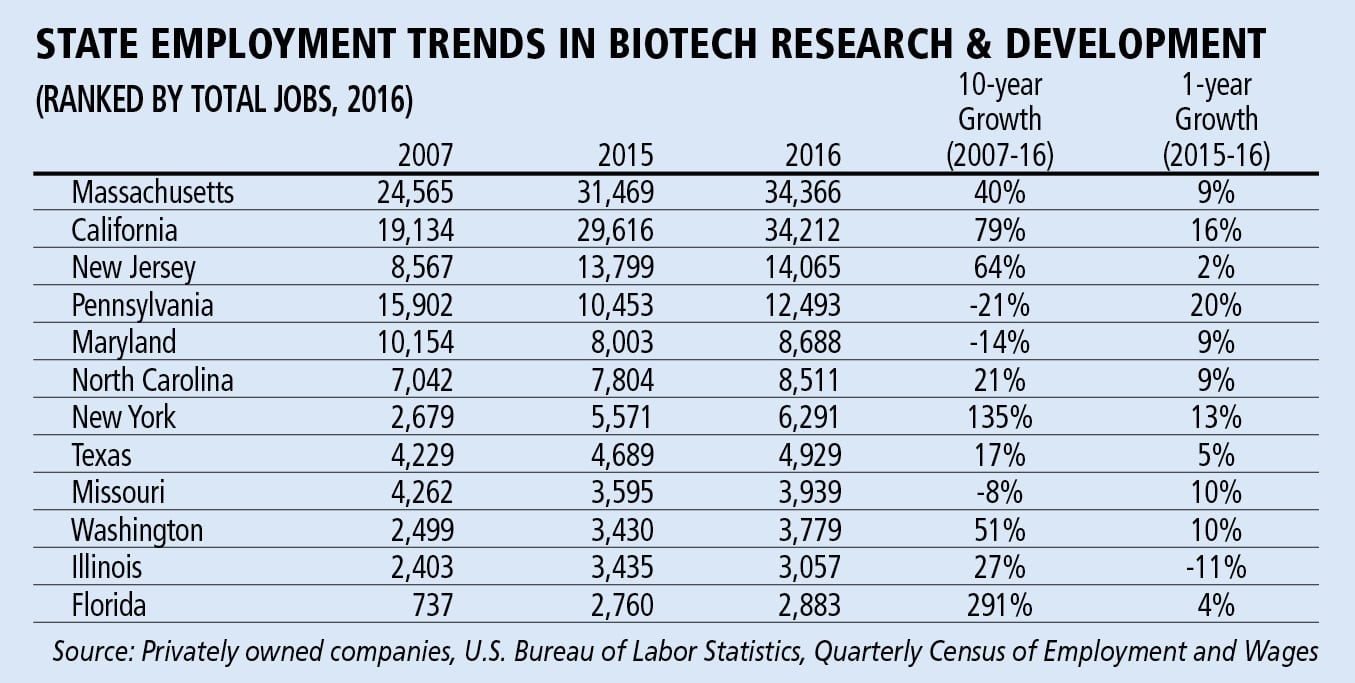
Graduates from STCC’s biotechnology program find themselves in demand for jobs in a growing field. The industry trade group Massachusetts Biotechnology Council (MassBio) released an annual report in November that reveals Massachusetts has more jobs classified as biotechnology research and development than any other state. Biotech R&D employment grew by 9% in 2016. Employment in the biotechnology and pharmaceutical industry has grown 28% since 2007, according to the report.

“Graduates of your programs are ready for the life-sciences workforce. With nearly 12,000 new life-sciences industry jobs being projected over the next five years in Massachusetts, our intention at MassBioEd is to effectively convey to hiring managers throughout the region’s life-sciences industry that your graduates are well-prepared for biotechnology technician positions,” MassBioEd Executive Director Peter Abair stated in a Jan. 5 letter to STCC.

Lisa Rapp, professor and Biotechnology Department chair at STCC, noted that “we are honored to receive this recognition, which reflects our commitment to supporting students. Our program is designed to prepare students for the life-sciences workforce. Since 2012, we have received $375,000 in grants, which has allowed us to acquire state-of-the-art equipment and supplies. Students learn techniques used in the biotech and pharmaceutical industries.”

The STCC biotechnology associate-degree program offers options to either transfer to a four-year program to complete a degree in any of the biological sciences or start a career after graduation. Graduates who complete the career option are qualified for a variety of jobs such as laboratory assistant, laboratory technician, or manufacturing technician.

The biotechnology certificate of completion enables students to acquire skills in one year and can benefit students who already have a science degree but lack the necessary hands-on lab skills for industry employment.

Daily News

CHICOPEE — The Center for Entrepreneurial Leadership at Elms College has joined forces with Baystate Health and TechSpring to offer a hands-on workshop on problem solving and innovation in the field of healthcare.

“Passionate Problem Solving Workshop” will be held on Saturday, Feb. 10 from 10 a.m. to 2 p.m. at TechSpring, located at on the fifth floor of 1350 Main St. in Springfield.

Specific challenges arise when leaders work to solve problems, improve systems, and innovate technologies within the complex world of healthcare. This workshop will empower attendees to make meaningful changes within their environments by identifying key stakeholders, communicating effectively, and implementing processes to move ideas from concept to reality.

The following professionals will present at this workshop:

• Alyssa Dassa is an entrepreneurial professional with considerable accomplishments in a variety of industries, including medical devices, veterinary diagnostics, professional development, and real-estate investment. She is the founder and president of Sage Ventures Inc., a professional business consulting, coaching, and education company for new and existing businesses. She has professional expertise in product management, product development, strategic planning, business development, and project management.

• Amanda Garcia is the director of the Center for Entrepreneurial Leadership at Elms College, and an associate professor of accounting at Elms, teaching accounting, finance, personal finance, financial planning, economics, entrepreneurship, and tax strategy. Garcia has developed curricula for the Center of Entrepreneurial Leadership, MBA, and undergraduate accounting programs. She owns an accounting firm where she prepares taxes and consults on tax strategy for small-business clients, real-estate owners, and investors. She has additional experience in the sales of businesses, mergers, and real-estate transactions.

• Jill McCormick is the innovation director at TechSpring, Baystate Health’s Technology Innovation Center. For the past three years, she has worked with Baystate Health and industry partners to develop a process for collaboration in the development of innovative solutions. Having spent the past 15 years developing new solutions and processes for industry leaders and technology startups, she is a new-product development specialist in the health-tech sector. She is an advisory board member of the Center for Entrepreneurial Leadership at Elms College and is co-developing the curriculum for a healthcare-innovation track for both the DNP and MBA programs.

Space is limited. To register, or for more information, visit bit.ly/2D9HnSC. Contact Madelyn Dybdahl at [email protected] or (413) 241-5757 with questions.

In addition, 12 attendees will be eligible for free enrollment in two MBA courses offered by the Center for Entrepreneurial Leadership at Elms College: Healthcare Innovation and Entrepreneurship, and Lean Launchpad for Healthcare and LifeSciences.

For those who want to go further, the Elms College MBA track in healthcare innovation gives students the complex skill set needed to create innovative healing environments while transforming healthcare systems locally, nationally, and internationally. Students have the opportunity to collaborate with nurses, medical professionals, and business innovators focused on improving and creating new products, practices, and services in this rapidly changing field.

Class of 2018 Difference Makers

Bob Bolduc Cooks Up New Ways to Better the Lives of Young People
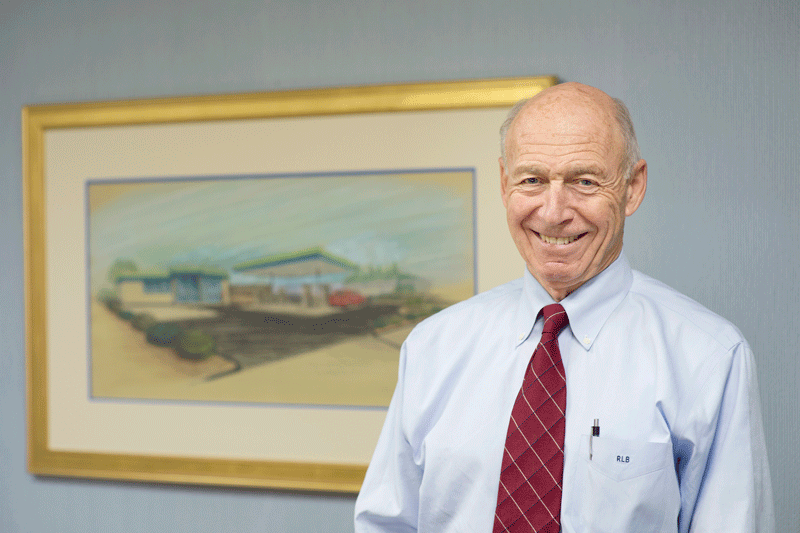
005_bolducbob-diff2017When Mavis Wanczyk scored the single largest lottery win in U.S. history last August — with a ticket purchased at a Pride station in Chicopee — she wasn’t the only winner. No, the store — meaning its owner, Bob Bolduc — got a $50,000 bonus from the state as well.

A few weeks later, Bolduc distributed $1,000 checks to more than 20 Springfield elementary schools to help teachers make classroom purchases they’d normally have to pay for out of pocket. The rest of the 50 grand was distributed among a variety of youth- and education-centric organizations that Bolduc already supports year-round.

“I decided to give it to the kids,” he told BusinessWest, shrugging off any suggestion that it was a tough call. “It’s a windfall; it’s not my money. So it was an easy decision to make.”

Mary Anne’s Kids was another recipient of a $1,000 bonus. An arm of the Center for Human Development, it’s a fund that provides opportunities for children in foster care that would not typically be paid for by the state, from summer camps to extra-curricular programs.

We didn’t even ask for it; he just gave it to us. He’s the grandfather of Mary Anne’s Kids, and a wonderful man. He’s been a godsend to our program.”

“We didn’t even ask for it; he just gave it to us,” said Jim Williams, the fund’s long-time director, before detailing some of the ways Pride’s support of Mary Anne’s Kids through the years makes the $1,000 gift, really, just a drop in the bucket. “He’s the grandfather of Mary Anne’s Kids, and a wonderful man. He’s been a godsend to our program.”

Indeed, since its inception and for more than a decade since, Bolduc has contributed significant dollars to “children who otherwise would not have funds to go to college, go to prom, all the extraordinary things your children and mine have the opportunity to do,” Williams explained. “Bob has basically been our big-ticket guy. He was there when we started, and he’s been there every year.”

Take, for example, the $20,000 or so worth of gifts that pour in every December from Chistmas trees set up in all Pride stores, adorned with tags listing a child’s age, gender, and gift request. Customers buy most of them, and Bolduc covers the rest. And as the holiday approaches, he closes the diner he owns off Mass Pike exit 6 in Chicopee and hosts 120 foster children for a party with Santa Claus.

Williams said Bolduc has personally funded purchases ranging from a handicap-accessible bicycle to a gravestone for one foster child’s brother, who was killed in a drive-by shooting.

“I can tell you this: throughout my career at CHD, Bob has been such a genuine man,” Williams said. “I can’t tell enough good things about him.”

When he sat down with BusinessWest, Bolduc characterized supporting one’s community as an imperative for local businesses, one he came to understand early in his career building the Pride empire, when he and his wife became involved with a number of nonprofits and he began to recognize the needs they had.

“Every nonprofit needs money,” he said. “So I called the people we buy from — Coke, Frito-Lay, all the big companies — and asked, ‘would you give me some money for this little nonprofit that’s trying to help people?’ They’d say, ‘no, we only do national ones — March of Dimes, Muscular Dystrophy Society, American Cancer Society — so we can’t give to all the local companies.’

“A light went off for me — ‘a-ha! If they can’t give, who’s going to give? It’s got to be the little guy,’” he continued. “That’s when we decided to put all our money locally. And it was a no-brainer. The more nonprofits you get involved with, the more you realize how many needs there are, how many kids are really hurting.”

Indeed, kids — youth welfare and education, to be specific — are the beating heart of Bolduc’s philanthropic bent. To name just a few examples:

• Pride recently raised $10,000 to support Square One’s work with high-risk children and families;

• Bolduc has been a business partner for Lincoln Elementary School in Springfield, where he sends volunteer readers and donates supplies as requested. He and his wife also supply hats, mittens, and socks for all the students. “We realized these kids don’t have hats and gloves for wintertime — some of them don’t even have toothbrushes,” he said. “This is happening right here, in Springfield”;

• Pride participated in a North End Community Task Force dealing with gang violence and related problems;

• In partnership with Brightside for Children and Families, Bolduc provided a van outfitted as a mobile library, as well as a driver and warehouse space. The van travels around the area in the summer, providing kids with summer reading books;

• Pride collaborates with WMAS on its annual Coats for Kids campaign; and

• The company regularly fund-raises for various causes such as Wounded Warriors and Puerto Rico hurricane relief, by supplying donation cans at all Pride stores.

But what makes Bolduc a true Difference Maker, as if his philanthropy weren’t enough, is the way he sees his role as not just a businessman, but someone with the opportunity to impact individual lives — of kids in need, yes, but also his employees, many of whom come from poverty — and watch as they turn around and collectively impact their communities for the better.

Food for Thought

Born in Indian Orchard, Bolduc graduated from Notre Dame University with a degree in mechanical engineering, then earned an MBA at Purdue University, before returning to his home state.

After working as a quality engineer at American Bosch in the 1960s, he enlisted in the Army and served in Vietnam. Back in the States, he briefly went to work at his father’s gas station in Indian Orchard in 1970 before buying him out, thus becoming the third generation of the family to run that business — a business, by the way, that just marked its 100th anniversary.
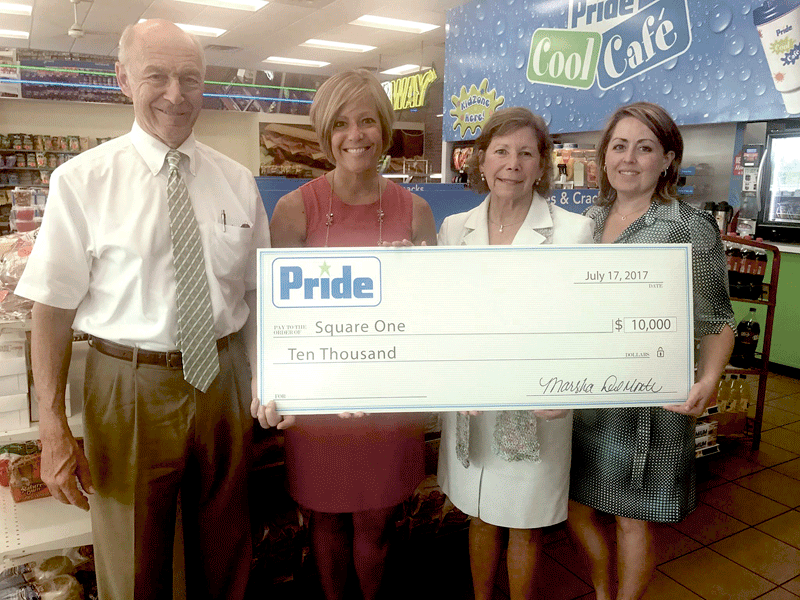
Bob Bolduc and Pride Stores President Marsha Del Monte (right) present a $10,000 check

Bob Bolduc and Pride Stores President Marsha Del Monte (right) present a $10,000 check to Square One’s Kristine Allard and President and CEO Joan Kagan.

In addition to running the station, Bolduc became a tire and auto-parts wholesaler, specifically a distributor for BF Goodrich and Continental, and became proficient enough at it to be chosen to address a national sales convention of Goodrich retailers at age 30.

But in 1976, he made the shift that would define his career, buying a self-serve gas station in Indian Orchard. Over the years, he would gradually expand his business, creating the chain of stores known today as Pride. But, more importantly, he developed a reputation as an industry innovator by marrying the self-service station with another emerging phenomenon, the convenience store.

Other innovations would follow; Pride would eventually become the first chain in Western Mass. to put a Dunkin’ Donuts in the stores, then the first to incorporate a Subway. But where the company has really made a name, in recent years, is with its own fresh-food production.

“The industry has gone from repair shops to convenience stores, then convenience stores started selling coffee,” Bolduc recalled. “The convenience stores got bigger — lots bigger — and started selling more food items, then they got even bigger, to what we call superstores; we’re talking stores between 5,000 and 7,000 square feet, with at least six pumps, sometimes eight or 10, and selling lots more food items.”

But several factors have hit convenience stores hard in recent years, he noted. Fuel efficiency is up. People are driving less, and public transportation has improved. Cigarette sales are way down, and online lottery purchases are cutting into in-store sales.

“All these things that drive our business are disappearing, and we’re looking at a business where the future expectation is for decreased sales, not increased sales,” he noted.

On the other hand, “people still have to eat three times a day, and they’re looking for convenience all the time, and families aren’t sitting down for breakfast and lunch anymore, and sometimes not even dinner; they’re buying food at restaurants or convenience stores.”

The goal, then, he said, has been to improve food quality at Pride to the point where people will see the chain not as a gas station that sells food, but as a food store that sells gas.

To support that shift, the Pride Kitchen, located at the company’s headquarters on Cottage Street in Springfield, runs two shifts of staff making fresh sandwiches, salads, fruit and yogurt parfaits, and — in a bakery that opened in 2017 — fresh muffins, donuts, cookies, brownies, and pastries. A third shift belongs to the drivers who bring all this fresh fare to stores across the region, making food service at Pride a truly 24-hour operation.

Newer stores feature a Pride Grill, where morning visitors can down fresh-cooked eggs before picking up a made-to-order sandwich for lunch at the deli, as well as drive-thru windows and mobile ordering. This isn’t, as Bolduc noted repeatedly, the convenience-store food of the past.

By studying trends and repositioning the company as a place where revenues will grow, not decrease, he’s not only boosting his own bottom line, but also the gaggle of nonprofits, schools, and individuals that benefit from his philanthropy.

See the Need, Meet the Need

It’s a passion, he said, that was sparked during his time at Notre Dame, when he volunteered in a disadvantaged area of Chicago during spring break.

“That was an eye-opener,” he said. “We stayed with an African-American family with a 14-year-old boy. We brought him to see a Blackhawks game because he liked hockey. That was the first time he’d ever been downtown.”

Having grown up in a family with a successful business, he saw up close for the first time how not everyone had the resources he took for granted. Once he and his wife, who also had a heart for volunteerism, resettled in Springfield and found success with Pride, they got involved in a number of nonprofit boards, and — thanks to his failed pitches to the likes of Coke and Frito-Lay — quickly came to understand the importance of local philanthropy.

The Pride stores themselves often function as vehicles for this work, such as his partnership with Square One. He and the early-education provider came up with the idea of selling ‘Square One squares’ at Pride locations for a dollar, where donors could write their names on squares to be posted at the cashier’s counter.

“Bob took the donations and matched a portion of them, rounding them up to a $10,000 gift to Square One, which was awesome,” said Kristine Allard, chief development and communication officer at Square One.
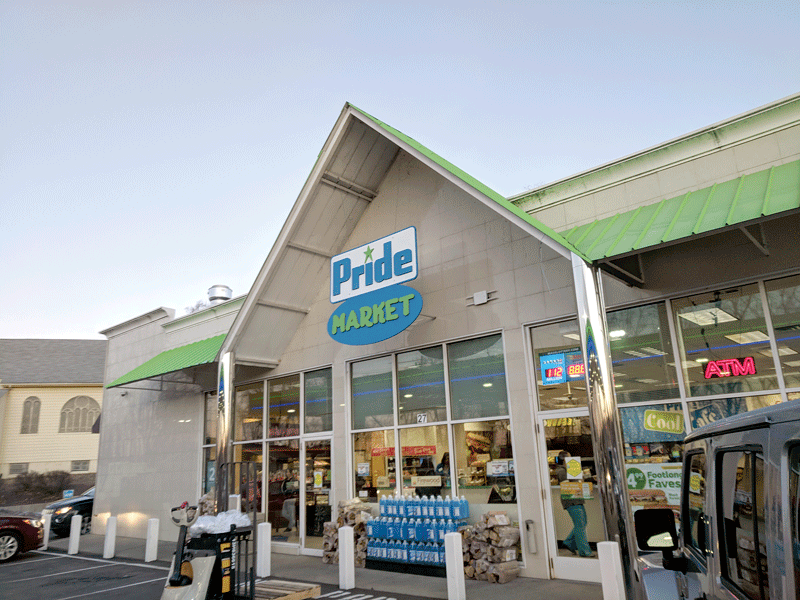
After Mavis Wanczyk scored her record-breaking jackpot at this Chicopee Pride station, Bob Bolduc distributed the store’s $50,000 bonus “windfall” to dozens of schools and nonprofits.

After Mavis Wanczyk scored her record-breaking jackpot at this Chicopee Pride station, Bob Bolduc distributed the store’s $50,000 bonus “windfall” to dozens of schools and nonprofits.

“That’s the kind of thing we rely on the business community for, to provide us funding to offset where our greatest expenses are,” she added. “When we’re able to approach someone like Bob, who understands that and sees the value in that, it helps us get the word out to other businesses, and we can leverage those dollars and leverage those opportunities to show other businesses what Pride is doing for our community. So it’s good for his business and good for Square One.”

Bolduc wishes more businesses could understand that synergy — or at least acknowledge the needs that exist.

“There are more than 200 homeless kids in the city school system, who go back to shelters at night,” he said. “People don’t know that they don’t go home; they go to shelters. Or, they don’t know that Square One gives kids a better meal on Friday, because they’re not going to get another good meal until they go back to school Monday morning. This is in Springfield. It becomes pretty obvious when you dig deeper and you see it — then you say, sure, the American Heart Association is wonderful, but the big people are taking care of them. The more you see locally, the more involved you get.”

Allard, for one, appreciates that attitude.

“From a development standpoint, from a fund-raising standpoint, it’s really refreshing to see someone who thinks the way he does,” she told BusinessWest. “By supporting the work of nonprofits, it’s good for his business, which is good for his employees. By investing in the work being done to help the community, it works out for everybody.”

On the Way Up

Bolduc was quick to note that his company has long supported arts, hospitals, and religious institutions — the types of entities that create quality of life in a community. But perhaps the most critical component is education, particularly in a city — Springfield — where around half of high-schoolers drop out. He says efforts to change that have to start early, which explains his support of Square One.

“If you don’t get a good education, you can’t get a decent job, and the cycle continues. So what’s the one solution to break the cycle? Education.”

He noted that the first person in a family to attend college is usually not the last, which is why he and his wife provide scholarships to area students. “That’s my message — we need to support education and help kids break out of the cycle.”

But he’s helping them break out in more ways than one. Since transforming one of Springfield’s most visible eyesores, at the foot of the North End Bridge, into a thriving Pride superstore almost a decade ago, he has drawn a steady stream of young employees from a neighborhood with high levels of poverty, and helped them embark on careers. And soon, he plans to do the same with new store in the McKnight area of Mason Square.

“At Pride, we’re happy with the fact that we provide jobs and careers,” he said. “We don’t have a human resources department; it’s called Career Development. We are very happy to take a young person who wants to grow and teach them the business and watch them grow up into management, provide for their families, bring in relatives and, in some cases, their kids as they get older. We’re very proud of that.”

The McKnight Neighborhood Council unanimously endorsed the development, he added. “They asked, ‘will you employ local people?’ We said, ‘100%.’”

He noted that the North End Pride station has seen crime drop significantly in the area over the past five years, thanks to the community policing program he has supported, but also, perhaps, due to growing employment opportunities like the ones Pride provides.

“These are good people. I tell them, ‘come to work every day, and we’ll teach you and give you good pay,’ and there’s an amazing turnaround. Some don’t take to it, but a lot of them do. We see the success stories. My goal is to someday see them do the same things for someone else. It’s that simple.”

That legacy and culture Bolduc aims to create is why, seven years after being named BusinessWest’s Top Entrepreneur for his innovative business growth, he is now being recognized as a Difference Maker, recognizing far more impactful successes.

“These are his future employees and his future customers,” Allard said. “We need to invest in our youth. If we’re not looking at our youth as the future of our community, we’re doing ourselves a great disservice.”

That’s a message Bolduc wants every local business to hear, and to respond to in any way they can afford, because the needs never go away.

“For anyone who wants to get involved, give me a call,” he said, “because I guarantee you’ll get more out of it then you put it.”

That investment doesn’t have to be a $50,000 lottery windfall, but such good fortune certainly doesn’t hurt.

“He’s a great person,” Allard said. “When that [lottery] news came out, no one would have minded had he kept it. But he said, ‘why not give it away?’ It was really refreshing to hear that.”

For a career spent saying ‘why not?’ — in both his business and the community — Bob Bolduc has plenty to take pride in, as he continues to make a difference.

Joseph Bednar can be reached at [email protected]

Features

Something’s Cooking

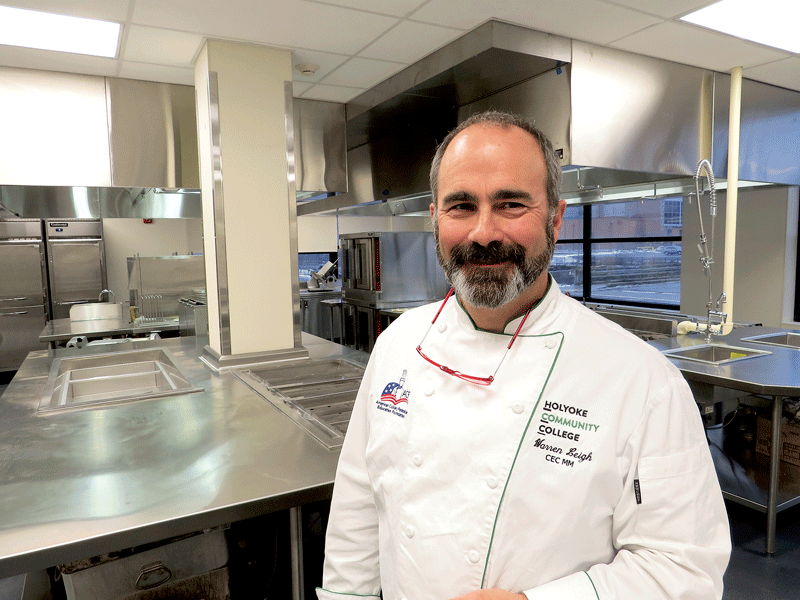
Chef Warren Leigh in one of the teaching kitchens at the new Holyoke Community College MGM Culinary Arts Institute.

Chef Warren Leigh in one of the teaching kitchens at the new Holyoke Community College MGM Culinary Arts Institute.

The Holyoke Community College MGM Culinary Arts Institute opened its doors to considerable fanfare last month. Officials at the school wore out the phrase ‘state-of-the-art’ as they talked about its five kitchens and other facilities. But that’s only part of the story. The institute is also a key ingredient, as they say in culinary arts, in workforce-development initiatives, as well as efforts to revitalize
downtown Holyoke.

Chef Warren Leigh knew something was up when students arrived for the first class of the semester more than an hour early.

More to the point, he knew exactly what was up, and he didn’t blame those early birds one bit.

Indeed, it seems that people can’t wait to get a look at the $7.5 million Holyoke Community College MGM Culinary Arts Institute, now occupying the first two floors of the building in downtown Holyoke with a name that matches its shape: the Cubit. And that includes the students in Leigh’s classes, specifically the ones a semester or two into their studies within the culinary and hospitality programs who kept hearing about what was being built to replace the aging, insufficient facilities on the HCC campus. And hearing about them. And hearing about them.

So it’s no wonder they altered their schedules and gave themselves what amounted to — wait for it — a cook’s tour. Well, not really. Instead, it was an involved, quite lengthy tour, again for good reasons, as we’ll see when Leigh takes BusinessWest around in a little bit.

Several years in the making, the new, 20,000-square-foot, state-of-the-art facility boasts five kitchens, a separate bakery, an 80-seat dining facility that will host a variety of events, ultra-modern classrooms, a well-appointed student lounge, an area to change clothes, and much more.

“Aside from Johnson & Wales and the Culinary Institute of America, this is the most current, purpose-built culinary-arts facility in New England, maybe in the Northeast,” said Leigh, chair of the Hospitality Management and Culinary Arts programs at HCC. “It’s truly a regional resource.”

Beyond all that, and those points are noteworthy to be sure, the new center is a significant development, in every sense of that phrase, in many other respects.

First, it represents a huge step forward in the broad realm of workforce development within the culinary-arts field, both locally and regionally, a segment of the economy that was already growing and will now get a huge boost with the arrival in about eight months of MGM Springfield and a host of new restaurants.

The need to hire what will likely be several hundred food-service-related personnel is a big reason why MGM contributed $500,000 to this project and now has its name on the facility.

‘State-of-the-art’ is a phrase that defines all aspects of the new facility in the Cubit Building in downtown Holyoke.

‘State-of-the-art’ is a phrase that defines all aspects of the new facility in the Cubit Building in downtown Holyoke.

But, overall, the food-service and hospitality sectors in Western Mass. are growing, and, as is the case in many fields, finding sufficient numbers of qualified help is becoming an ever-greater challenge.

The Culinary Arts Institute will help close the gap, said Michele Cabral, HCC’s interim dean for Business and Technology, who told BusinessWest that, like other initiatives undertaken at HCC in recent years, the institute is a direct response to recognized needs within the business community and a desire to meet them.

Meanwhile, the institute is both the cornerstone of efforts to renovate the Cubit Building into a mixed-use facility, with apartments on the upper floors, and one of the key ingredients (that’s an industry phrase) in efforts to bring people, businesses, and vibrancy to a surging downtown Holyoke.

For this issue, BusinessWest takes a tour of, and an in-depth look at, the Culinary Arts Institute to fully explain its significance to the college, the students who will learn there, and the region as a whole.

Food for Thought

Leigh wears a number of hats in his role as chair of hospitality management and culinary arts, including the traditional chef’s hat.

He’s added another one, but only figuratively.

Indeed, he doesn’t wear any headgear when he’s giving tours, which has become a big part of his job description these days. He’s led walkthroughs taken by constituencies ranging from elected officials to prospective students to media members, and there are many more already on the calendar.

He doesn’t mind this intrusion on his schedule, though, because, like all those at HCC, he’s quite proud of all the hard work that went into designing and building this facility — and obviously with the final product itself.

Before getting one of those tours, BusinessWest first wanted to talk about what brought everyone to this moment.

There has a been a culinary-arts program, in one form or another, at HCC for roughly 30 years, said Leigh, whose tenure covers roughly a third that period. The program, which years ago was more hospitality-related than culinary-focused, has had several homes over the years, none of them large or particularly well-equipped. The most recent was in the Frost Building in what he believes was the old music room.

The need for a larger, better facility was apparent, he went on, but so were the challenges to securing one, including a location and, especially, the funding. Finally, a plan was conceptualized that would make the college — and MGM — partners in the bold plans to revitalize the Cubit Building, which had been underutilized for many years.

This is a true public-private partnership, one that involves the college (and thus the state), the city of Holyoke, the federal government (specifically the U.S. Department of Commerce Economic Development Administration), MGM, and brothers Denis and Marco Luzuriaga, who purchased the Cubit Building and have invested heavily in its redevelopment.

As the partners in the ambitious initiative came together and plans started to materialize, those involved came to understand what this opportunity meant, and how they needed to take full advantage of it.

“A cross-functional team was put together, and it was told that, if we have the space, we have one chance to get this right — let’s talk about how to build what we actually want,” said Cabral. “Faculty, hospitality, and culinary were part of the team from day one in designing the space and selecting the equipment.”

They certainly did get it right, and the resulting facility enables HCC to greatly expand capacity and thus better serve the region and its culinary- and hospitality-related businesses.

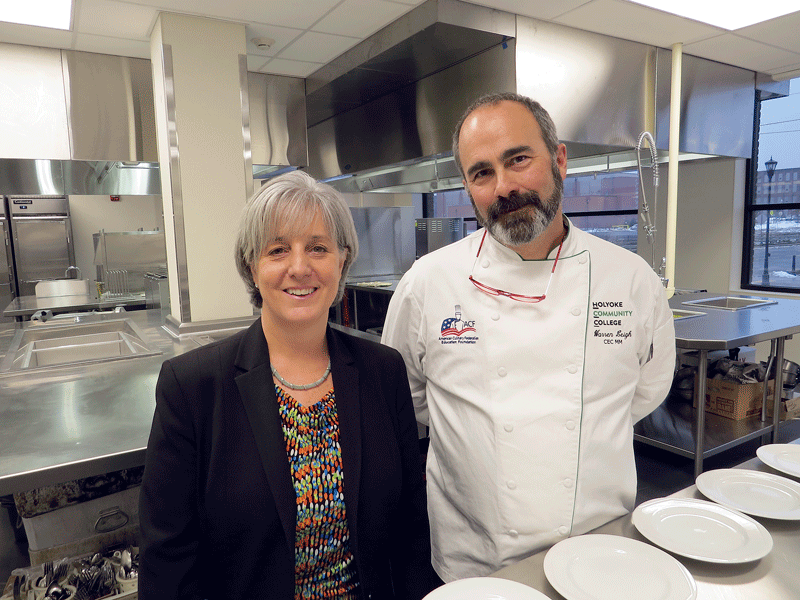
Warren Leigh and Michele Cabral

Warren Leigh and Michele Cabral have devoted considerable time recently to the leading tours of the new Culinary Arts Institute, and there are many more scheduled.

Cabral qualified and quantified what it all means.

“This gives us the capacity to teach multiple sections of our credit programs,” she explained, “while at the same time responding to the needs of the community and teaching workforce development, professional development, and adult basic education related to culinary hospitality. In our old space, we only had one and a half kitchens, so we could only do one thing at a time.”

Leigh agreed, and noted that the institute is a “purpose-built facility” and one of the few in the region, if not the country, when it comes to culinary arts and hospitality centers of study.

“As we grow, we can use every one of these kitchens and classrooms running simultaneously, all day long,” he explained, adding that there is considerable room for expansion as well as expectations that it will be used as demand for workers in these fields escalates.

Five-course Facility

BusinessWest visited the institute on the first day of classes for the spring semester, and, as noted at the top, many of the students were a tad eager — and more than a tad early.

Leigh said he’s been teaching a long time and has never witnessed anything quite like, but, as he said, it’s understandable.

There’s lots to see, and he started the tour where he usually does, with the fully equipped demonstration kitchen, which, as that name suggests, is for demonstrations and teaching exercises.

“In here, we can do any method of cooking,” he said. “And we have three cameras that will put it onto monitors so the students can see close up. We can save it and we can broadcast it over the World Wide Web to anywhere we want.”

From there, he went to the dining room, which can be set up for gatherings of up to 90-100 people, said Leigh, adding that this facility also has cameras and monitors, and students will handle every aspect of events to be staged there, and several have been booked already.

The tour continued in the “production kitchen,” set up European style, as he described it, with the student chefs facing each other (rather than a wall as is the case in most area restaurants) and communicating with each other as they work together to prepare a meal. And then on to two teaching kitchens, a bake shop, classrooms, and that student lounge. Each area is large, open, bathed in natural light thanks to huge windows, and built to enhance the learning process.

The ‘production kitchen’ in the new culinary arts institute is spacious and state-of-the-art.

The ‘production kitchen’ in the new culinary arts institute is spacious and state-of-the-art.

“What I like about our design is that I can stand almost any place in here as a professor and I can see the whole kitchen, I can see all the students, I can talk to all the students,” Leigh explained, adding that it will even be equipped with a microphone because it can get quite noisy in those spaces and even his “kitchen voice” might not suffice.

As noted earlier, these facilities enable a number of classes to be taught at one time, said Leigh, including all segments of HCC’s new associate’s degree program in Culinary Arts, a four-semester program that is now a cornerstone of a program that Cabral described with the term “stackable.”

Elaborating, she said that students could choose a one-year certificate program in Culinary Arts. If they wanted to go further, they could enter the associate’s degree program and essentially build on what they started.

“They can come in and go as far as they want to go; and we’ve made it easy and mapable for them to do that,” she went on, adding that, an individual can start with professional-development classes in mind and segue into the culinary certificate program and then, perhaps, the degree program.

And with that associate’s degree, a student could transfer to Johnson & Wales or another school that offers a four-year program, such as UMass Amerst’s offering in Food Science, said Leigh, adding quickly sending the first two years at a community college and then transferring to a four-year school has become an increasingly popular option for cost-conscious families and individuals.

Meanwhile, that two-year program will certainly open a lot of doors to those who choose that route, he went on, adding that with MGM’s arrival and a host of other additions within the hospitality sector, there are a lot more doors to go through if one is qualified.

Tastefully Done

Helping individuals become qualified was the primary driver behind the new culinary arts institute. Actually, there were several, including a desire among those at the college to play an even more direct role in economic development efforts in Holyoke.

Both of those assignments will play out over coming years as Leigh puts to use his kitchen voice — as well as that microphone — in that demonstration area.

“This is a unique, purpose-built facility that really doesn’t exist anywhere else,” he told BusinessWest, adding that students needed to arrive an hour before the first class started to take it all in.

he was going to say more … but he had to go give yet another tour.

George O’Brien can be reached at [email protected]

Briefcase Departments

Unemployment Rate Drops to 3.5% in Massachusetts

BOSTON — The state’s total unemployment rate dropped to 3.5% in December, the Executive Office of Labor and Workforce Development announced. The Bureau of Labor Statistics’ preliminary job estimates indicate Massachusetts lost 300 jobs in December. Over the month, the private sector lost 200 jobs; gains occurred in construction, manufacturing, leisure and hospitality, and financial activities. The November estimate was revised to a gain of 7,800 jobs. From December 2016 to December 2017, BLS estimates Massachusetts has added 63,000 jobs. The December unemployment rate was six-tenths of a percentage point lower than the national rate of 4.1% reported by the Bureau of Labor Statistics. The labor force decreased by 500 from 3,647,500 in November, as 1,900 more residents were employed and 2,500 fewer residents were unemployed over the month. Over the year, the state’s seasonally adjusted unemployment rate increased four-tenths of a percentage point from 3.1% in December 2016. There were 17,900 more unemployed residents over the year compared to December 2016. The state’s labor-force participation rate — the total number of residents 16 or older who worked or were unemployed and actively sought work in the last four weeks — decreased one-tenth of a percentage point to 65.3% over the month. The labor-force participation rate over the year has increased by 0.7% compared to December 2016. The largest private sector percentage job gains over the year were in construction; professional, scientific, and business services; other services; and leisure and hospitality.

Union Station Wins Prize for Brownfields Redevelopment

WESTFIELD — Springfield Union Station has won the prestigious Phoenix Award grand prize for the best brownfields-redevelopment project in the nation. Announced during the December National Brownfields Training Conference in Pittsburgh, the Union Station project also won the Region 1 Phoenix Award. Both awards recognize exemplary brownfield redevelopment and revitalization. These awards highlight the critical environmental cleanup phase at Springfield Union Station, as well as the demolition and removal of a massive baggage warehouse and the remediation of the former site of the Hotel Charles. It also celebrates the redevelopment of a long-vacant historic train station into a state-of-the-art intermodal transit center. Built in 1926, the original Union Station was boarded up for 44 years before taken over by the Springfield Redevelopment Authority in 1989. After many fits and starts, the $94.1 million redevelopment project was funded by numerous federal, state, and local sources. This included grants from the EPA Brownfield Assessment and Cleanup program, MassDevelopment, the Federal Transit Administration, state transportation bond funds, a state parking grant, and more. Tighe & Bond provided extensive hazardous-building-material evaluations, abatement monitoring, building demolition design, and the assessment and remediation of widespread areas of subsurface contamination. After almost 10 years, Union Station has been transformed and repurposed into a LEED-certified building that opened last June, and is the new headquarters for Peter Pan Bus Lines. It has also spurred a new, adjacent, $15 million, 265-unit housing redevelopment. Besides the Phoenix Award, the project has already won other statewide awards for historic preservation, including the Preservation Massachusetts Paul & Nikki Tsongas Best Then & Now Award for 2017.

Expedia Names Lenox ‘Best Place to Escape in Massachusetts’

LENOX — The Lenox Chamber of Commerce announced that travel-booking website giant Expedia has named Lenox as the “Best Place to Escape in Massachusetts.” Expedia released its “Best Place to Escape in Every State” feature on Jan. 3. These places made the list for being ideal for a relaxing getaway where visitors can recharge, take a breather, and revel in serene solitude. “From quaint small towns to quiet nature preserves, this country is full of places to escape to, and we’ve chosen our favorite in each state, highlighting the perfectly restful things to do there. So, sit back, relax, and start dreaming of better times ahead — these calm places are calling your name,” Expedia author Lily Rogers wrote. Lenox and Berkshire notables highlighted in the article included Blantyre, Pleasant Valley Wildlife Sanctuary, the Mount, Edith Wharton’s Home, and Berkshire Grown.

Study Examines Veterans’ Addiction Risk Related to Childhood Adversity

AMHERST — Results of a national study led by public health scientist Elizabeth Evans at UMass Amherst, along with others at the U.S. Department of Veterans Affairs (VA) and UCLA, suggest that risk for alcohol- and drug-use disorders among U.S. military veterans is increased by childhood adversity, and in ways that are different between women and men and different compared to the civilian population. According to Evans, assistant professor of Health Promotion and Policy at UMass Amherst School of Public Health and Health Sciences, in the general population, fewer women than men have an alcohol- or drug-use disorder. “Veterans are different in that there is no gender difference in the prevalence of these problems,” she explained. “Among veterans, a similar proportion of women and men — about 37% — have ever had an alcohol or drug-use disorder. This finding that women veterans are similar to men veterans, and are so different from civilian women, is unexpected. Also surprising are the high rates of childhood adversity among veterans, especially among women; 68% of women veterans report some childhood adversity, and they have the highest rates of childhood sexual abuse.” The study results appeared in a recent early online edition of Social Psychiatry and Psychiatric Epidemiology and will be in print this year. “One of the implications of this study is the need to assess for childhood adversity, to help people recognize its relationship with substance use and cope with its health impacts,” Evans noted. “When people join the military or when veterans access healthcare at the VA or in the community would be good times to assess and treat childhood adversity, and we’re often missing those opportunities now.” The researchers found that, with increasing exposure to adversity in childhood, risks of alcohol-use disorder among civilian men and women grew more similar, but for drug-use disorder, the gender differences in risk widened. By contrast, among veterans, more childhood adversity elevated men’s alcohol risk and increased women’s drug risk. “In general right now, we don’t assess for childhood adversity until there’s a problem, in particular with alcohol or drugs, or attempts to harm oneself or others,” Evans said. “However, we know that childhood adversity is an early life experience that is associated with anxiety, depression, and other risk factors for later health and social problems. We in public health, along with others in the community, can do more to prevent childhood adversity altogether. Also, more can be done to assess and address childhood adversity when it does occur so that we mitigate or undo its harmful effects. The need for such efforts is especially critical now given the devastating impacts of the current opioid epidemic on families and communities.”

Nominations Open for Ubora and Ahadi Awards

SPRINGFIELD — The African Hall subcommittee of the Springfield Museums is seeking nominations for the 27th annual Ubora Award and the ninth annual Ahadi Youth Award. The African Hall subcommittee is a volunteer group comprised of educators, business people, and community leaders from the African-American community. The nomination deadline for both awards is March 31. The Ubora Award is presented to an African-American adult who has demonstrated a commitment to the Greater Springfield area and exhibited excellence in the fields of community service, education, science, humanities, or the arts. The Swahili word ‘ubora’ means ‘excellence.’ Named for the Swahili word for ‘promise,’ the Ahadi Youth Award is presented to a young African-American who has excelled in academics and performed admirable service to the Greater Springfield community. Eligible candidates must be age 19 or younger, live in or have strong ties to the Greater Springfield area, and be currently enrolled in grade 10, 11, or 12. The Ubora and Ahadi Awards will be presented at a ceremony at the Springfield Museums in September. Nominations forms can be downloaded by visiting springfieldmuseums.org/ubora. For additional information, call (413) 263-6800, ext. 325, or e-mail to [email protected]. Nominations may be e-mailed to [email protected] or mailed to African Hall Subcommittee, c/o Valerie Cavagni, Springfield Museums, 21 Edwards St., Springfield, MA 01103.

Berkshire Bank Launches $52,500 Scholarship Program

PITTSFIELD — Berkshire Bank announced it will honor 35 high-school seniors across Massachusetts, New York, Connecticut, Vermont, New Jersey, and Pennsylvania for their volunteer service with Berkshire Bank scholarships. The scholarships recognize students who excel academically, have a financial need, and share the bank’s commitment to community service. Additionally, students must attend a high school that is located in a county with a Berkshire Bank or Commerce Bank office. The recipients will share in $52,500 in scholarship funds. Through the program, 35 $1,500 scholarships will be awarded to high-school seniors who will be attending a two-year or four-year college in the fall. Applications are evaluated based on the student’s record of volunteerism in the community, academic standing, and financial need. Applicants must have a minimum GPA of a 3.0 and a family household income under $100,000 to be eligible to apply. A team of 200 bank employee volunteers will review the applications and select this year’s recipients. Recipients will include 15 students in Massachusetts, nine in New York, three in Connecticut, three in Vermont, three in New Jersey, and two in Pennsylvania. Students can apply online at www.berkshirebank.com/scholarships. To be considered, all applications must be submitted online by Wednesday, March 21 at 4 p.m. Additional information about this year’s program can be obtained through the bank’s website or by e-mailing the Berkshire Bank Foundation at [email protected].

Departments People on the Move
James Harnsberger

James Harnsberger

After an extended national search, James Harnsberger has been named associate vice president for Graduate Education, Grants, and Sponsored Research at Springfield College. President Mary-Beth Cooper and Provost and Vice President for Academic Affairs Martha Potvin recently made the announcement. Harnsberger will join the college on Feb. 15, and will be responsible for elevating the status of graduate education at Springfield College as well as for increasing the college’s capacity to generate and support externally funded grants and sponsored funding. “In both of these primary responsibilities, his thoughtful approach, his experiences in supporting students and the work of faculty, and his success in managing large contracts and overseas operations will serve him well,” said Potvin. A linguist and speech scientist with extensive experience in experimental phonetics, forensic acoustics, and clinical applications, Harnsberger comes to Springfield College from the University of New Haven, having previously overseen the launch of an international branch campus as campus dean. His responsibilities included international grants and contracts, program development, and operations, as well as the inaugural Academic Bridge Program for international students at UNH. Harnsberger earned his doctorate in linguistics from the University of Michigan, where he conducted research on cross-language variation in the perception of non-native speech sounds. Following a post-doctoral fellowship at Indiana University, he served at the Department of Linguistics at the University of Florida, conducting research on the perception of speaker characteristics such age, gender, emotion, dialect, stress, and deception. His research has been published in numerous academic journals and reported in the popular media, including ABC News Primetime, BBC Radio, and Science News. He has served as a linguistic consultant in numerous criminal and civil cases in the U.S., as well as government agencies including the Federal Bureau of Investigation, the Defense Intelligence Agency, the Office of the Director of National Intelligence, the Defense Academy for Credibility Assessment, the Senate Select Committee on Intelligence, and the House Armed Services Committee.

•••••

Dr. Mark Dumais

Dr. Mark Dumais

Dr. Mark Dumais was appointed to the position of chief medical officer for Mercy Medical Center. In this position, he provides clinical leadership and administrative direction in developing and attaining strategic and operating objectives related to medical practice and patient care at Mercy Medical Center and its affiliates. He also serves as a liaison between administration and the medical staff and provides leadership in advancing quality initiatives, clinical care, patient satisfaction, and physician/employee satisfaction. With almost 20 years of clinical leadership experience, Dumais most recently served as a medical hospitalist at Massachusetts General Hospital and as an instructor in Medicine at Harvard Medical School. Before coming to Boston, he served as chief medical officer and Senior Vice President of the University of Maryland Charles Regional Medical Center (UMCRMC) in LaPlata, Md., where he oversaw performance management, quality, safety, risk management, compliance, and privacy, and gained extensive experience in population health, physician network planning, and information technology. Prior to his role at UMCRMC, he served as vice president of Medical Affairs, clinical chief of Internal Medicine, and director of hospitalists at Southern Maryland Hospital Center in Clinton. Board-certified in internal medicine, Dumais received his medical degree from Harvard Medical School in Boston and completed his internship and residency in internal medicine at Duke University School of Medicine in Durham, N.C. In addition to his medical education, he holds a master’s degree in business administration from the Kellogg School of Management at Northwestern University in Evanston, Ill. “Dr. Dumais brings a wide range of clinical, operational, and leadership experience to this important position at Mercy Medical Center. We are pleased to welcome him to the Mercy team,” said Mark Fulco, president of Mercy Medical Center and its affiliates. Added Dumais, “Mercy Medical Center has a longstanding reputation for delivering high-quality, patient-centered care, and I welcome the opportunity to serve as a leader at this outstanding facility.

•••••

Karri May

Karri May

Pinck & Co. Inc., a comprehensive real-estate-development and project-management services firm, announced Karri May joined the firm’s Springfield office as senior project manager. May brings to the firm 13 years of design and planning experience with a focus on healthcare, design for the aging, commercial, and higher education. She also has extensive client-management and business-development experience and will help grow the firm’s portfolio in Western Mass. and Connecticut. She previously worked at Steffian Bradley Architects as senior associate, where she specialized in the design and planning of healthcare projects in Massachusetts, Connecticut, and New York. Prior to that, she worked at Amenta/Emma Architects as a project architect, focusing on design for higher education, commercial, and senior housing/accommodations. May earned a bachelor’s degree in architecture from Pratt Institute and is a registered architect in Connecticut, a member of the American Institute of Architects, and a LEED-accredited professional. She also holds a Massachusetts Certified Public Purchasing Official Program designation and a Lean for Healthcare certificate. She is a frequent keynote speaker at industry and community events, has volunteered as a design mentor with CANstruction — a charitable organization for the design and construction industry — and has received several awards, including a Woman on the Rise designation from the Connecticut Professional Women in Construction. “As we continue to position our business to grow in Western Massachusetts and Connecticut, I am thrilled that Karri has joined our team,” said Jennifer Pinck, president and founder of Pinck & Co. “Not only does she bring a high level of expertise in planning and design and project management, she is passionate about the lasting impact built environments have on communities. Karri shares our commitment to putting our clients’ best interests first and going above and beyond to help them realize their vision.”

•••••

MGM Springfield President and Chief Operating Officer Michael Mathis announced that his full executive team is now in place. The team, a diverse group of industry professionals, will lead operations for MGM Springfield, set to open later this year. “This is an all-star team,” Mathis said. “Together, they bring years of experience and a broad expanse of skills that strengthens the deep bench of talent we already have in place. Each of them is committed, not only to the day-to-day objectives of their positions, but also to the greater role this property will play in the community. This team is the backbone of MGM Springfield, and we will proudly reflect and represent the diversity of the region in which we work.” For the 12th consecutive year, MGM Resorts International has been recognized as a Top Company for Diversity by DiversityInc, one of the nation’s leading sources on workplace-diversity management. Almost 69% of the company’s employees are minorities. About 44% of employees in MGM Resorts’ management ranks are women, while minorities comprise 43% of MGM Resorts’ management ranks. “The beating heart of MGM Springfield is our commitment to diversity,” Mathis said. Besides Mathis, the MGM Springfield management team also includes Anthony Caratozzolo, vice president, Food & Beverage; Alex Dixon, general manager; Anika Gaskins, vice president, National Marketing; Brian Jordan, director, Surveillance; Monique Messier, executive director, Sales; Sarah Moore, Vice President, Marketing, Advertising & Brand; Marikate Murren, vice president, Human Resources; Jason Rosewell, vice president, Facilities; Jason Rucker, executive director, Security; Lynn Segars, vice president, Slot Operations; Gregg Skowronski, executive director, Hotel Operations; Talia Spera, executive director, Arena Operations; Seth Stratton, vice president and general counsel; Courtney Wenleder, vice president and chief financial officer; and Robert Westerfield, vice president, Table Games. In 2000, MGM Resorts became the first company in the gaming and hospitality industry to voluntarily adopt a formal diversity and inclusion policy. This is a critical pillar of the company’s enterprise-wide social-responsibility platform, which also includes community giving and environmental sustainability as key elements.

•••••

Mary Chiecko

Mary Chiecko

AdCare chose Mary Chiecko, Community Services representative for Western Mass., as its Employee of the Month for January. “Mary Chiecko is always positive and a great listener, which is key to knowing what our referral sources need and want,” said Georganna Koppermann, vice president of Marketing and Development at AdCare. “As part of ‘Team Springfield,’ Mary has connected new patients with our expert clinical staff helping to make Springfield the second-largest outpatient office in our system.” Chiecko’s diverse sales experience includes working as a toxicology representative, presenting services to addiction-treatment facilities, primary-care physicians, and pain-management practices regionally. She has a bachelor’s degree in business administration from American International College in Springfield.

•••••

Megan Murphy Wolf

Megan Murphy Wolf

The Solidago Foundation, a Northampton-based national social-justice foundation, announced it has hired Megan Murphy Wolf as director of partnerships. A newly created position, the director of partnerships will focus on developing, supporting, and enhancing partnerships for the Solidago Foundation. Wolf will be responsible for the design and implementation of donor cultivation and engagement, as well as foundation partnership strategies. “Megan joins our team with deep expertise in creating meaningful partnerships across unlikely actors, as well as a legislative background that will enhance our support of grassroots advocacy groups,” said Elizabeth Barajas-Román, CEO of the foundation. “We are happy to welcome her at this exciting time for the organization.” Wolf brings a strong background in both development and public-policy work. Prior to joining Solidago, she worked as director of class campaigns and annual fund leadership giving at Amherst College. During her time at Amherst, she was successful in her personal solicitations, securing multi-year pledges and outright gifts, increasing the yearly totals by 300% and successfully breaking Amherst giving and participation records every year. She has also worked as legislative director for two congressmen in the U.S. House of Representatives. “This is an incredible opportunity to be a part of an organization with a long history of impact within the field of social justice, sustainability, and the fundamental right to work,” Wolf said. “I have focused my career on these important issues, and I believe we have the ability to create positive social change through collaboration and collective support for shared goals. I’m honored to join the Solidago family and be a part of this impressive group of people dedicated to support for the common good.” Throughout her career, Wolf has worked to create partnerships, both political in nature and as fund-building coalitions, to bring about positive social change. As director of partnerships, she will be responsible for working on developing programming and content for donor recognition and campaign-related programs and events for the foundation. “I am thrilled to have Megan join our team and looking forward to working with someone with her expertise as we move forward with our new business model,” said Jeff Rosen, chief financial officer of the foundation. “Adding Megan to the team will enhance our ability to bring resources to the field and amplify our impact at an important time for our partners.”

•••••

Marty Holmes was recently named top corporate search consultant at Management Search Inc. Holmes, president of the West Springfield division of the privately held recruiting firm, was recognized with the organization’s prestigious President’s Club Award for sales excellence in 2017. This year also marked Holmes’ 30th anniversary with Management Search Inc. Throughout his tenure, Holmes has worked to perfect a time-tested recruitment process and, in the process, has established deep roots in the market with a diverse client base in manufacturing and a niche focus within the shooting-sports industry. His hands-on consultative approach, along with his extensive knowledge of the industries he works in, have worked together to build and strengthen his reputation among clients and candidates alike. Headquartered in West Springfield with an office in Providence, R.I., Management Search Inc. has grown to become one of the largest privately held recruiting firms in New England, boasting 35 years of recruiting experience and 15 established consultants.

•••••

On Jan. 1, Aelan Tierney became the third principal and the president of Kuhn Riddle Architects. Tierney joins Jonathan Salvon and Charles Roberts, who became principals in 2010 when Chris Riddle retired. John Kuhn passes the torch of leadership and ownership to these three, and he will continue to work on selected projects at Kuhn Riddle. Kuhn Riddle Architects moves into the future as a woman-owned architecture firm as Tierney now owns the majority share of the company. She will continue to work on architectural project design, while also taking on a larger role in day-to-day management of the firm, focusing on business growth and maintaining a strong connection with clients and business partners. “I see this transition as an opportunity to carry on the legacy of Kuhn Riddle Architects, as well as an opportunity for growth,” said Tierney, who has been an architect at Kuhn Riddle Architects since August 2005. “I am honored that the partners have put their faith and trust in me to take on such an important leadership role. We will continue the company culture and its legacy of good design, excellent service, commitment to the environment, and giving back to our community that John Kuhn and Chris Riddle have built over the last 40 years.” Kuhn Riddle projects in which Tierney has played a lead role include Amherst Montessori School and Children First in Granby, the Kringle Candle flagship store and Farm Table Restaurant in Bernardston, the historic Easthampton Town Hall performance space for CitySpace, the Northeast Veterans Rehabilitation and Training Center in Gardner, Olympia Oaks multi-family affordable housing in Amherst, PVPA Charter School Theater in South Hadley, and projects at American International College, Western New England University, and Elms College. Kuhn Riddle Architects has been in business since Riddle and Kuhn founded it in 1977, when they negotiated a $500 fee to produce a design for Northampton’s Armory building renovation and rented two drafting tables in a fellow architect’s office. Since that time, the firm has become a well-known architectural firm in the Pioneer Valley and designs commercial, educational, and residential projects throughout Massachusetts.

•••••

Terry Ramey

Terry Ramey

A seasoned chief information officer for some of the world’s largest healthcare payor organizations, Terry Ramey has joined Holyoke-based healthcare consultancy VertitechIT as an executive project officer (EPO). He will lead engagements with large healthcare systems as the company continues to expand operations throughout the East Coast and across the country. Ramey previously held senior technology titles at PerformRX (a subsidiary of AmeriHealth Caritas), Penn Mutual Life Insurance, CIGNA Health Services, and Dendrite International. As a nationally recognized healthcare technology executive, he says he was looking to make an impact on the provider side of the industry. “At CIGNA, Penn Mutual, and other major payor organizations, my responsibilities were to leverage technology to positively affect the bottom line,” he noted. “At VertitechIT, I have the opportunity to help transform hospital IT departments with a direct impact on patient care. It’s not often that an IT executive gets to do that.” VertitechIT CEO Michael Feld agrees. “Our work at work at major health systems goes far beyond designing and implementing cloud strategies, overhauling infrastructure, and streamlining operations. As an EPO, Terry will counsel clients on the IT initiatives that can literally change the way doctors do their jobs.” Working at the executive level within a healthcare organization, EPOs oversee a collaborative office of the CTO (oCTO), implementing VertitechIT’s proprietary LeverageIT process. Working side by side with senior internal managers, the oCTO refines strategic directives and implements tactical solutions that make organizations more profitable and efficient.

•••••

Max Kiperman joined the Red Lion Inn culinary team as executive chef of the Red Lion Inn’s Main Dining Room, Widow Bingham’s Tavern, and the Lion’s Den. As executive chef, Kiperman will work closely with Vice President of Culinary Development Brian Alberg and Sous Chef Jim Corcoran on all future food- and beverage-related development in addition to day-to-day kitchen management. With a tenure of more than 25 years in the culinary industry, Kiperman comes to the Red Lion Inn most recently from Lucca in Boston’s Back Bay, where he worked as sous chef, and as culinary consultant to the Viceroy Hotel and Resort in Zihuantanejo, Mexico. Kiperman began his culinary career at Rosalie’s Restaurant in Marblehead before training under three Michelin chefs, including Sylvain Portay and Alain Ducasse. Kiperman now brings his expertise and passion for cooking with locally sourced products to the Berkshires. “Max’s diverse culinary portfolio and his commitment to the farm-to-table movement make him the perfect addition to lead the Red Lion Inn’s culinary team,” said Alberg. “We are confident his leadership and expertise will elevate the inn’s dining experience and continue to evolve the offerings to exceed our guests’ culinary expectations.” Kiperman’s extensive résumé includes work in hotels and resorts such as the Ritz Carlton properties in San Francisco, New York City, and Boston, and the Four Seasons Hotel and Resort in Nevis West Indies; restaurants like On Lot Restaurant in Hong Kong and Mix Restaurant in Las Vegas; and work as a private chef in New York and Connecticut. Recently refreshed breakfast, lunch, and dinner menus await guests at the Red Lion Inn’s Main Dining Room and Widow Bingham’s Tavern, highlighting the inn’s long-standing relationships with local and regional purveyors. The inn offers guests two additional dining options, the Lion’s Den, with nightly live entertainment, and seasonal outdoor dining in the Courtyard from June through September.

•••••

The Community Foundation of Western Massachusetts, in partnership with the Estate Planning Council of Hampden County and the Pioneer Valley Estate Planning Council, has awarded Kate Kane the 2018 Distinguished Advisor in Philanthropy Award. The award was presented by Katie Allan Zobel, president and CEO of the Community Foundation, and Amy Jamrog, wealth management advisor at the Jamrog Group, at a luncheon on Jan. 9. The purpose of the Distinguished Advisor in Philanthropy Award is to recognize the important work that professional advisors (estate-planning attorneys, financial advisors, and accountants) do in encouraging their clients to engage in local philanthropy for the region. As Zobel noted, “professional advisors play a quiet and often unsung role in advancing philanthropy. The Community Foundation has been working alongside local advisors for over 25 years, and we see first-hand the meaningful work they do by connecting their clients’ generous intentions to needs in our community. Their efforts have helped create a significant base of funding for scholarships and grants to nonprofits in our region.” Zobel also said she is pleased to be giving this award to its first female recipient. Past awardees include George Keady III, Dick Gaberman, Dennis Bidwell, Jack Ferriter, and Steven Schwartz. Kane received a plaque and $1,000 to recommend as a grant to the charity of her choice. Kane is managing director of Northwestern Mutual in Springfield, where she matches clients’ needs with innovative solutions utilizing insurance services and internationally recognized investment products. “Financial advising is a business of words and stories,” she said. “The numbers are simply tools to further the pursuit of hopes and dreams for ourselves, our families, and our communities. We give our clients the gift of listening to their stories and helping them connect with the right decisions to fulfill their aspirations and leave a legacy.” Well-known for her volunteerism and philanthropic spirit, Kane is a former board member (2008-15) and past board president of the Women’s Fund of Western Massachusetts. She currently serves on the boards of directors for Elms College and Girls Inc. of Holyoke and is vice chair of the board of trustees for Springfield Museums. She co-wrote the original business plan for the local chapter of the Dress for Success, which supports the career and economic advancement of women, and she serves as a business mentor for many young entrepreneurs in the region. Kane has been recognized with many awards in the past for her commitment to strengthening her community, including Affiliated Chambers of Commerce of Greater Springfield’s Richard J. Moriarty Citizen of the Year in 2015, Western Mass Women magazine’s Professional Woman of the Year in 2012, Professional Women’s Chamber Woman of the Year in 2011, and a BusinessWest Difference Maker in 2009.

•••••

Edward Alford of South Hadley was installed as president of the 1,800-member Realtor Assoc. of Pioneer Valley on Jan. 9. The installation of officers and directors took place at the Log Cabin in Holyoke. More than 100 people attended the organization’s 103rd annual installation ceremony. Donald Thompson, the association’s 2008 president, served as emcee for the event. The other officers installed were Kelly Bowman as president-elect, Sue Drumm as treasurer, Elias Acuna as secretary, and Rick Sawicki as immediate past president. The directors installed include Shawn Bowman, Peter Davies, Janise Fitzpatrick, Sara Gasparrini, Sharyn Jones, Cheryl Malandrinos, Sue Rheaume, and Russell Sabadosa. Alford was joined by Massachusetts Assoc. of Realtors (MAR) President Rita Coffey, who served as the installing officer. Coffey’s leadership team from MAR was also in attendance, including Anne Meczywor, president-elect; Kurt Thompson, secretary/treasurer; Paul Yorkis, immediate past president; and Rob Authier, CEO.

•••••

Heather Roy recently completed the Precision Nutrition Level 1 Pro Coach certification at Conca Sport and Fitness (CSF). Members have been losing more than 20 pounds thanks to the innovative nutrition and fitness plan offered by Precision Nutrition and Conca Sport and Fitness, CSF owner Steve Conca said. He added that being able to deliver comprehensive fitness and nutrition programming that gets results and is easily adaptable for busy lifestyles was paramount in the company’s decision to move forward with the certification program. CSF, which opened in 2009, provides fitness coaching both online and in the studio, either in a one-on-one or small-group environment.

Daily News

SPRINGFIELD — Plans are underway for Mercy Medical Center’s second annual Caritas Gala on Saturday, April 21, at the MassMutual Center in Springfield. The gala, with its Motown-inspired theme “Reach Out,” will raise funds to support Mercy Behavioral Health Care and the Mercy Emergency Department’s Opioid Community Outreach for education, intervention, and treatment.

Dr. Mohamed and Kimberly Hamdani, along with Paul and Anna Mancinone, are honorary chairpersons for the Caritas Gala. Longtime supporters of Mercy Medical Center, Dr. Hamdani has served as chairman of Surgery, chairman of Credentials, and president of the medical staff at Mercy, and Paul Mancinone serves on the board for Trinity Health Of New England.

“The Sisters of Providence are a great source of inspiration, responding to the needs of our community for more than 140 years,” said Dr. Hamdani. “Today, we are challenged by the opioid epidemic and its impact on individuals of all ages, races, and economic levels. Mercy Behavioral Health Care looks beyond the stigma of addiction and provides treatment that supports people in their efforts to recover.”

The Caritas Gala will begin at 6:30 p.m. with a cocktail reception, live entertainment from the band Motor City Magic, and a silent auction. Dinner will be served at 8 p.m., following by a live auction and dancing until midnight with music from the band Radiance. Preregistration is required by Friday, March 23. For more information or to purchase tickets to the Caritas Gala, visit www.mercycares.com/caritas-gala.

Daily News

HOLYOKE — Holyoke Soup, a community-based, crowd-funding, idea-generating offshoot of SPARK Holyoke, will debut at its new location at the HCC MGM Culinary Arts Institute on Wednesday, Feb. 7, at 5:30 p.m.

Holyoke Soup is a dinner celebrating and supporting creative and entrepreneurial projects in Holyoke. For $5, attendees receive soup, salad, and bread while listening to presentations about business, art, urban agriculture, social justice, social programs, education, technology, and more. Contestants have four minutes each to pitch their ideas, and audience members vote for the pitch they like best. Whoever receives the most votes collects the money from that evening.

The new location of Holyoke Soup represents an increased collaboration between the SPARK entrepreneurship program and Holyoke Community College. The HCC MGM Culinary Arts Institute opened Jan. 22 at 164 Race St.

“We’re really excited to be able to work with HCC and utilize its new culinary facility, bringing a new level of excitement to this great community event that always brings a diverse group of people together,” said SPARK program manager Tessa Murphy-Romboletti.

Dinner will be prepared and served by students from the Culinary Arts programs at HCC and Dean Technical High School. HCC students and faculty will conduct tours of the new facility, and local entrepreneurs will showcase their businesses and sell their products at pop-up shops featured throughout the evening.

“There is great synergy in SPARK’s endeavor and HCC’s mission, so we are delighted to be able to offer our new Culinary Arts Institute as a resource,” said Jeffrey Hayden, HCC vice president of Business and Community Services. “We can’t wait to see the new opportunities that will certainly emerge from this partnership.”

The event is open to the public for the $5 donation. Anyone interested in attending is asked to register online at bit.ly/2BQ2nwa.

SPARK Holyoke is a program of the Greater Holyoke Chamber of Commerce Centennial Foundation.

Daily News

PITTSFIELD — Berkshire Bank promoted Lori Gazzillo to senior vice president and director of the Berkshire Bank Foundation. She was previously the foundation’s vice president.

In her new position, Gazzillo is responsible for the development, planning, and implementation of strategies to support the Berkshire Bank Foundation, improving quality of life, cultivating partnerships, and fostering community relationships across the Bank’s six-state footprint.

Gazzillo joined Berkshire Bank in 2011 from Legacy Banks, where she was the Community Relations officer since 2006.

“Lori has more than 20 years of communications and community-relations experience and has shown exceptional leadership in improving and developing strong relationships in our existing and new markets. We look forward to continuing to foster these relationships as we grow,” said Linda Johnston, senior executive vice president and chief Human Resources officer.

Gazzillo serves on the board of directors of 1Berkshire, the Brien Center, and Associated Grant Makers, is a member of the newly formed Berkshire Leadership Impact Council, and was recently appointed by Gov. Charlie Baker to the Berkshire Community College board of trustees. She has a bachelor’s degree from Keene State College and a master’s degree in education from Massachusetts College of Liberal Arts. She is also a graduate of the ABA School of Bank Marketing and Management.

Daily News

HOLYOKE — Students who graduate from Holyoke Community College (HCC) with an associate degree will see an average increase in annual earnings of about $10,000 a year compared to those with only a high-school diploma, according to a new report that calculates the total economic impact of HCC on the Pioneer Valley at nearly $215 million annually.

“By comparison,” the report says, “this contribution that the college provides on its own is almost as large as the entire arts, entertainment, and recreation industry in this area.”

The analysis of HCC’s economic value was conducted by Emsi, an economic modeling firm whose clients include colleges and universities as well as some of the largest for-profit corporations in the U.S., such as Amazon and Coca-Cola. For this, Emsi based its conclusions on academic and financial reports from HCC, industry and employment data from the U.S. Bureau of Labor Statistics and the U.S. Census Bureau, and other surveys related to education and social behavior. The study, commissioned by the college, looked at data from 2015-16.

“When you talk about our impact, most people don’t think about our economic impact,” said HCC president Christina Royal. “They think about HCC offering education and the impact the college has directly on students’ lives in terms of their academic studies and career pathways. I don’t think people realize that HCC is an economic powerhouse in this region. This study puts a numerical value on what we do every day.”

For fiscal year 2016, which ended June 30, 2016, the study found that the total economic impact of the college on the economy in the three counties of the Pioneer Valley (Hampden, Hampshire, and Franklin) was $214.6 million, or about 0.7% of the region’s gross regional product.

That number includes direct spending by the college’s 991 full-time and part-time employees as well as operational spending by the college itself, and accounts for a multiplier effect, which measures how that money works its way through the regional economy. The total also includes short-term construction projects and spending by students who relocate to the Pioneer Valley as well as spending by students who choose to remain in the area for college rather than go elsewhere. In FY 2015-16, HCC served 8,243 credit students and 3,024 non-credit students.

The largest impact, though, comes from alumni — former students who continue to live and work in the region: $155.1 million, or enough to support 2,642 jobs, the report notes.

The study also examined the economic benefits of HCC from a student’s perspective, noting that those who complete their associate degree could expect to earn an average of $9,600 more per year than those with only a high-school diploma. “In return for their investment, HCC’s students will receive a stream of higher future earnings that will continue to grow through their working lives.”

Put another way, for every $1 students invest in their education (out-of-pocket expenses, interest on loans, foregone income while in school), they will earn $3.2, an average return of 12.7%. “This is an impressive return, especially when compared to the 30-year average 10.1% of the U.S. stock market,” the report says.

The study also concludes that HCC represents a “a solid investment” for taxpayers, generating more in tax revenue than it takes in through state and local funding — $54.6 million compared to $31.6 million, or a benefit-cost ratio of 1.8, an average rate of return of 4.5%.

Massachusetts also benefits as a whole from the presence of HCC in two major ways: increased prosperity from an expanding economic base and savings generated by the improved lifestyles of students, most notably in a reduction in medical costs through improved health, reduced crime, and lower employer contributions toward unemployment.

“The results of this study demonstrate that HCC creates value from multiple perspectives,” Emsi concludes. “The college benefits local businesses by increasing consumer spending in the region and supplying a steady flow of qualified, trained workers into the workforce. It enriches the lives of students by raising their lifetime earnings and helping them achieve their individual potential. It benefits state and local taxpayers through increased tax receipts across the state and a reduced demand for government-supported social services. Finally, it benefits society as a whole in Massachusetts by creating a more prosperous economy and generating a variety of savings through the improved lifestyle of students.”

Daily News

CHICOPEE — The Greater Chicopee Chamber of Commerce will pay tribute to the four recipients of the prestigious Shining Stars Awards at its annual event to be held at the Castle of Knights on Memorial Drive on Friday, March 2 from 6:30 to 10 p.m.

Since 1985, the Chicopee Chamber of Commerce has paid tribute to an extraordinary Business of the Year, Citizen of the Year, Volunteer of the Year, and Nonprofit Organization of the year by the Shining Stars Nominating Committee, chaired by Ernest Laflamme Jr., the first Citizen of the Year.

“Recognizing the people and organizations that serve our community is one of the best ways we can make sure they are thanked for their extraordinary work, and serves as an inspiration for all of us,” said Jessica Roncarati-Howe, chamber president.

Interstate Towing Co. will be recognized as the Greater Chicopee Chamber of Commerce Business of the Year for 2018. Interstate Towing is a professionally operated, full-service towing, recovery, and road-service company, started from the ground up in 1999 by CEO Jeremy Procon. In partnership with AAA, Interstate Towing has become the foremost towing and recovery provider in the area.

Dawn Creighton will be recognized as the Greater Chicopee Chamber of Commerce Citizen of the Year for 2018. She is the Western Mass. regional director for Associated Industries of Massachusetts (AIM) and board president of Dress for Success Western Massachusetts. Dress for Success is a not-for-profit organization promoting the economic independence of disadvantaged women by providing professional attire, a network of support, and the career-development tools to help them thrive in work and in life. In addition to her work at AIM and Dress for Success, Creighton sits on the boards of the Human Resource Management Assoc., Junior Achievement, and Internhere.com.

Karen Hansmann of Chicopee will be recognized as the Greater Chicopee Chamber Volunteer of the Year for 2018. When Hansmann began offering to help out at the chamber, she jumped right in and did whatever was needed, consistently showing a commitment to supporting the community and encouraging others to get involved. She is an incoming member of the Chicopee Chamber board of directors, Salute Breakfast committee chair, and Chicopee Democratic City Committee member, and recently left Voices From Inside after 10 years of service.

Valley Opportunity Council (VOC) will be recognized as the Greater Chicopee Chamber Nonprofit Organization of the Year for 2018. VOC started out small in 1965 and was originally named the Community and Regional Opportunity Program. It has grown significantly since then and now offers over 30 programs in a wide variety of areas, including food and nutrition, energy assistance, education and child care, youth and adult programs, and community outreach. Several years ago, VOC also started investing in the local community by purchasing and renovating properties in Chicopee and Holyoke.

This event is sponsored by diamond sponsor Westfield Bank; platinum sponsors Polish National Credit Union and PeoplesBank; gold sponsors the Arbors Kids, Holyoke Medical Center, and BusinessWest; and bronze sponsor United Personnel.

The evening is a gala event decorated by CJC Events, which is a full-service video, audio, lighting, rental, staging, and multi-media production company that turns the banquet room into a glamorous theater in which the chamber honors its recipients. To register to attend, call the chamber at (413) 594-2101 or visit www.chicopeechamber.org and sign up in the Calendar of Events.

Daily News

HOLYOKE — Holyoke Medical Center will host a free Learn with a Doc Program, “Heart Health: Valvular Heart Disease,” on Wednesday, Feb. 7 at 5:30 p.m. in the HMC Auxiliary Conference Center.

February is American Heart Month. The heart has four valves that direct the flow of blood as it pumps, and when these valves are not working properly, it is called valvular heart disease. Join Dr. Nirav Sheth as he discusses the causes, signs, and symptoms of valvular heart disease, and what you can do to keep things flowing in the right direction.

This program is free and open to the public, and is part of Holyoke Medical Center’s community-education programming. This is one in a series of workshops held throughout the year to help people learn about specific health issues, wellness, prevention, and treatment. To register for this event, visit www.holyokehealth.com/events or call (413) 534-2789.

Daily News

SPRINGFIELD — Pinck & Co. Inc., a comprehensive real-estate-development and project-management services firm, announced Karri May joined the firm’s Springfield office as senior project manager.

May brings to the firm 13 years of design and planning experience with a focus on healthcare, design for the aging, commercial, and higher education. She also has extensive client-management and business-development experience and will help grow the firm’s portfolio in Western Mass. and Connecticut.

She previously worked at Steffian Bradley Architects as senior associate, where she specialized in the design and planning of healthcare projects in Massachusetts, Connecticut, and New York. Prior to that, she worked at Amenta/Emma Architects as a project architect, focusing on design for higher education, commercial, and senior housing/accommodations.

May earned a bachelor’s degree in architecture from Pratt Institute and is a registered architect in Connecticut, a member of the American Institute of Architects, and a LEED-accredited professional. She also holds a Massachusetts Certified Public Purchasing Official Program designation and a Lean for Healthcare certificate.

She is a frequent keynote speaker at industry and community events, has volunteered as a design mentor with CANstruction — a charitable organization for the design and construction industry — and has received several awards, including a Woman on the Rise designation from the Connecticut Professional Women in Construction.

“As we continue to position our business to grow in Western Massachusetts and Connecticut, I am thrilled that Karri has joined our team,” said Jennifer Pinck, president and founder of Pinck & Co. “Not only does she bring a high level of expertise in planning and design and project management, she is passionate about the lasting impact built environments have on communities. Karri shares our commitment to putting our clients’ best interests first and going above and beyond to help them realize their vision.”

Departments People on the Move
Michelle Chase

Michelle Chase

United Bank announced the hiring of Michelle Chase, a local banker with 16 years of banking and financial experience throughout Western Mass. and North Central Conn., as its new vice president/branch manager of the Ludlow branch at 528 Center St. Chase brings extensive banking experience and financial expertise to United Bank, holding key roles throughout her career in commercial lending, consumer lending, operations, loan servicing, and retail banking. Most recently, Chase spent more than six years with PeoplesBank, where she managed its Westfield branch and led a team that turned it into one of the bank’s top-producing banking offices. Prior to PeoplesBank, Chase was a small-business lender with the Western Massachusetts Enterprise Fund from 2008 to 2011 and a Loan Operations manager with New England Bank, formerly Enfield Savings Bank. Her 16-year career in banking started in 2001 as a lending specialist with Southbridge Savings Bank. Chase earned a bachelor’s degree from the Massachusetts College of Liberal Arts and went on to receive an MBA from Bay Path University. She also studied at the Center for Financial Training. Her reputation in the banking industry spans beyond her professional and educational successes. In addition to winning internal company awards, Chase was selected to BusinessWest’s 40 Under Forty class of 2017, which recognizes young civic leaders in Western Mass. She also received the Young Professional Society’s (YPS) Excellence in Leadership Award in 2014 for excellence in leadership skills and initiative and for her mentorship of other YPS members.

•••••

Jennifer Plassmann

Jennifer Plassmann

North Brookfield Savings Bank (NBSB) announced the recent promotion of Jennifer Plassmann to the role of branch manager at the 1051 Thorndike St. branch in Palmer. In her new role, she will supervise and oversee all aspect of banking within the Palmer branch, including managing the teller line, scheduling, opening accounts, taking loan applications, and assisting customers with their banking needs. “Jennifer’s promotion is very well-deserved. She has proven herself to be a very valuable asset to the community and customers of Palmer, to the staff at her branch, and to the entire team at North Brookfield Savings Bank,” said Donna Boulanger, NBSB President and CEO. “We are confident she will continue to deliver many great benefits by sharing her experience, product knowledge, excellent customer-service skills, and her dedication to the community.” Plassmann most recently served as assistant branch manager and acting branch manager at North Brookfield Savings Bank’s Palmer location, where she excelled at being a leader for the branch staff and providing customers with exceptional care and attention, Boulanger said. In addition, she is a strong community supporter, often volunteering her time and efforts for various local community events, including but not limited to the Palmer 300th Anniversary Parade, the Palmer Historical and Cultural Center Tree and Wreath Festival, the Ware Flair Parade, the West Brookfield Asparagus Festival, and annual financial-aid nights at local high schools. “I am so pleased to continue my banking career with North Brookfield Savings Bank and within the community of Palmer,” Plassmann said. “I know and appreciate this neighborhood and all of the wonderful people and businesses who call this home. I am very excited to develop my existing relationships, expand to make some new relationships, and to increase my community involvement.”

•••••

John Gannon

John Gannon

Skoler, Abbott & Presser, P.C. announced that attorney John Gannon was named a partner in the firm on Jan. 1. Gannon, who has been with the firm since 2011, focuses his practice on employment litigation, workplace-safety laws and OSHA compliance, enforcing non-competition and confidentiality agreements, and wage-and-hour compliance. He also provides day-to-day advice to businesses with questions about workplace-related issues. “We are thrilled that John has accepted partnership in the firm,” said attorney Marylou Fabbo, a partner at Skoler Abbott. “John has demonstrated the expertise and leadership necessary to provide our clients with the best possible legal service, whether that means taking a case to trial or helping businesses protect their rights and assets.” Gannon is a frequent speaker on employment-related legal topics for a wide variety of associations and organizations, and was selected by BusinessWest as a 40 Under Forty honoree in 2016. He is a member of the Massachusetts, Hampden County, Connecticut, and American bar associations. He also sits on the board of directors for Riverside Industries, a not-for-profit human-services agency that serves people with perceived limitations and disabilities, and Educational Resources for Children, an Enfield nonprofit that provides out-of-school-time programs for children. “I am excited to enter this next phase in my career, and am honored to be a partner in one of the leading labor and employment law firms in the country,” Gannon said. “I look forward to helping the firm further expand its expertise on behalf of our current and future clients, and I’m privileged to be a contributing member to the Pioneer Valley business community for the foreseeable future.”

•••••

Susan Hillis

Susan Hillis

Susan Hillis has been promoted from treatment director to vice president of Clinical Services at AdCare Hospital. “Ms. Hillis has been a vital component of the clinical team at AdCare Hospital for many years,” said Patrice Muchowski, senior vice president of Clinical Services. “As vice president of Clinical Services, Ms. Hillis will be able to redesign existing treatment programming and develop new modalities to ensure that AdCare remains a leader in substance-use treatment.” A licensed independent clinical social worker, Hillis has served as treatment director since 2006. Prior positions include director of Rehabilitation Services at AdCare Hospital and director of AdCare Outpatient Services offices in Worcester and Boston. She received the 2015 Massachusetts Assoc. of Alcohol and Drug Abuse Counselors’ Robert Logue President’s Award for her long-standing support of membership and her dedication to substance-use treatment, recovery, and professional credentialing in Massachusetts. A former board member and chair of the Massachusetts Professional Recovery System, she currently oversees clinical practicums for students in the Addiction Counselor Education program at AdCare, and provides clinical supervision for students in MSW programs at a number of schools. Hillis presents frequently on substance-use related topics such as “Addiction 101,” “Co-occurring Disorders,” “Motivational Interviewing,” and “Designer Drugs” to community, school, and professional organizations locally, regionally, and nationally. She holds a master’s degree in social work from Boston College and an undergraduate degree in music therapy from Anna Maria College in Paxton.

•••••

Kailee Wilson

Kailee Wilson

Robinson Donovan, P.C. promoted former law clerk Kailee Wilson to the role of associate attorney following her admission to both the Massachusetts and Connecticut bars. Wilson is a 2017 graduate of the University of Connecticut School of Law. While attending law school, she also interned with the school’s Tax Clinic, gaining skills and insights that have proven invaluable to her current business practice. In addition, she is now a member of the Massachusetts Bar Assoc., the Hampden County Bar Assoc., and the Connecticut Bar Assoc. “Kailee had a very successful year at Robinson Donovan, P.C., and we are thrilled that she is expanding her role at our firm,” said Partner James Martin. “Kailee has been a real asset to our firm, and we look forward to her having a successful career here.” Wilson assists clients in the areas of business and corporate counseling, commercial real estate, and estate planning. Outside of work, she channels her passion for advocacy into her role as a volunteer coach with the Special Olympics and in the Alumni in Admissions program for her alma mater, Bates College.

•••••

Tara Brewster

Tara Brewster

Greenfield Savings Bank promoted Tara Brewster to vice president of Business Development. Her position includes developing long-term strategies for business development and outreach to perspective customers, including small businesses and individuals for lending and account services. She joined GSB as a Business Development specialist in late 2016. “Tara’s efforts to expand the bank’s portfolio of small-business customers and individuals have been very successful,” said John Howland, president and CEO of Greenfield Savings Bank. “Her more than 20 years of experience in small-business management has given her great insight into the needs of local businesses.” In addition to her duties at the bank, Brewster is active in volunteering on the committees and boards of a wide range of community organizations, including Northampton Chamber of Commerce board of directors, Hampshire Regional YMCA board, Franklin Hampshire Regional Employment Board, Downtown Northampton Assoc. board, Northampton Redevelopment Authority committee, North Star Self Directed Learning for Teens development committee, Community Health Center of Franklin County marketing committee, as a Northampton Chamber of Commerce ambassador, and as chair of the Pedalmotion for Locomotion Look Park fund-raising event. Before joining the Bank, Brewster worked for independent small businesses and multi-million-dollar companies, including seven years as owner of Jackson & Connor in downtown Northampton and in a wide range of management positions including manager, promotions director, buyer, regional sales manager, and East Coast account executive. She is a graduate of Smith College.

•••••

Theresa Curry has been named executive director of Planned Giving at UMass Amherst. Curry, an attorney, has extensive experience in business and organizational development, nonprofit giving, and gift administration. “We are delighted that Theresa Curry will be joining UMass Amherst’s development team,” said Vice Chancellor of Development and Alumni Relations Mike Leto. “She brings deep expertise in estate planning to this role, as well as her considerable impact and success in fund-raising for higher education.” Curry comes to UMass Amherst from the University of New Hampshire Foundation, where she held several senior management positions in gift planning since 2012. Most recently, she served as assistant vice president for Gift Planning and Administration at UNH. She established UNH’s gift-planning program and played a major role in its recent $275 million fund-raising campaign. Previously, Curry established gift-planning programs as regional director of Philanthropy at the ALS Assoc. and as the capital campaign manager for Merrimack College. She has worked as an employee, consultant, volunteer, and lawyer in gift planning since 1998. She holds a juris doctor degree from the William Mitchell College of Law in Saint Paul, Minn., and a bachelor’s degree in mathematics from the University of Minnesota. She is also a triathlete and distance runner.

•••••

Packaging prepress provider CSW Inc. announced a strategic re-shaping of company leadership. Longtime company President Laura Wright has transitioned to a new role as CEO. “My grandfather founded CSW in 1937, and I’m proud to continue moving us forward,” she said. “Although I will continue to actively manage all aspects of the company, I decided to share the day-to-day decision making with someone I trust. This lets me address long-term strategies for company growth.” That trusted advisor is new company President Scott Ellison, formerly CSW’s vice president of Sales. Ellison brings more than 15 years of executive leadership experience, including five years in the packaging industry, to CSW. He will manage sales, marketing, customer service, operations, IT, and R&D. According to Wright, “Scott comes to us with new ideas developed from both inside and outside our industry, and has already identified and pursued new growth opportunities for CSW.” Rounding out the organizational shift is former director of Graphics Marek Skrzynski’s new position as technical director. CSW has a long-standing reputation for producing creative solutions to package printing challenges, Wright said. Ellison noted that “Marek has been instrumental to the development of innovations such as WhiteFX ink transfer, X-Color EG separations, and 3D visualization services. This new role allows him to focus on expanding new initiatives such as Web2Plate, an automated prepress workflow for narrow to wide web flexo printers.” Added Wright, “CSW has thrived for over 80 years, thanks to our ability to creatively adapt to our client’s changing needs. These changes are realigning us once again so we can continue to succeed for another 80 — or longer.”

•••••

Springfield College announced that Brooke Hallowell has been named dean of the School of Health Sciences and Rehabilitation Studies. As dean, Hallowell will collaborate with leadership of other divisions and units of Springfield College to participate in strategic planning and implementation activities that further the overall mission of the institution. She will oversee academic areas within her school, including physical and occupational therapy, physician assistant, health science, emergency medical services management, communication disorders, and rehabilitation counseling and disability studies. She will be responsible for assurance of quality of programming in line with student needs, institutional mission, and the requirements of applicable accreditation bodies. According to Provost and Vice President of Academic Affairs Martha Potvin, “Dr. Hallowell will play a pivotal role in working with faculty to advance education across a broad array of health sciences and professions and to extend the college’s impact on global healthcare issues that we face both in our local and regional communities as well as abroad.” Hallowell has held several academic leadership positions and has a global reputation in advancing research and scholarship and fostering successful interdisciplinary initiatives. Most recently, she served as the founding executive director of the Collaborative on Aging and the coordinator of graduate and undergraduate gerontology certificate programs at Ohio University. She also held several other positions at Ohio University, including associate dean for research and sponsored programs in the College of Health and Human Services; director of the School of Hearing, Speech and Language Sciences; and coordinator of Ph.D. programs for the School of Rehabilitation and Communication Sciences. She also served as director of the School of Languages and Linguistics at the University of Northern California. Hallowell received a Ph.D in neuropathologies of language and speech from the University of Iowa, a master’s degree in speech language pathology and audiology from Lamar University, and a bachelor’s degree in cognitive science/psycholinguistics from Brown University. She also studied at the Conservatoire National de France in Paris and Rouen.

Daily News

SPRINGFIELD — The African Hall subcommittee of the Springfield Museums is seeking nominations for the 27th annual Ubora Award and the ninth annual Ahadi Youth Award. The African Hall subcommittee is a volunteer group comprised of educators, business people, and community leaders from the African-American community. The nomination deadline for both awards is March 31.

The Ubora Award is presented to an African-American adult who has demonstrated a commitment to the Greater Springfield area and exhibited excellence in the fields of community service, education, science, humanities, or the arts. The Swahili word ‘ubora’ means ‘excellence.’

Named for the Swahili word for ‘promise,’ the Ahadi Youth Award is presented to a young African-American who has excelled in academics and performed admirable service to the Greater Springfield community. Eligible candidates must be age 19 or younger, live in or have strong ties to the Greater Springfield area, and be currently enrolled in grade 10, 11, or 12.

The Ubora and Ahadi Awards will be presented at a ceremony at the Springfield Museums in September. Nominations forms can be downloaded by visiting springfieldmuseums.org/ubora. For additional information, call (413) 263-6800, ext. 325, or e-mail to [email protected]. Nominations may be e-mailed to [email protected] or mailed to African Hall Subcommittee, c/o Valerie Cavagni, Springfield Museums, 21 Edwards St., Springfield, MA 01103.

Meetings & Conventions Sections

Inspiration Point

Vitek Kruta stands in the Hub at GCA, which hosts concerts almost weekly.

Vitek Kruta stands in the Hub at GCA, which hosts concerts almost weekly.

Gateway City Arts touts itself as “a venue for events, entertainment, dining, art making, teaching, and learning.” That’s quite a mouthful, but the sprawling complex in Holyoke’s growing innovation district, beside its historic canals, has certainly become all that and more. It’s a model, co-owner Vitek Kruta says, that not only raises the profile of local artists and startups, but boosts tourism and raises the city’s economic profile.

Today, the complex known as Gateway City Arts houses artist studios, operates a restaurant, presents concerts on a regular basis, and hosts events of all kinds. But Vitek Kruta says its origins were much more humble than that.

“The whole thing started because I was looking for my studio,” said Kruta, an artist himself, who, along with business partner Lori Divine, bought the facility on Race Street in Holyoke five years ago. “We stumbled upon this space, and we loved the building. Then it took several months to negotiate to get it. Once we did, we asked, ‘now what do we do with all this space?’”

All they knew for sure was that they saw something unique in the empty warehouse along the city’s canals. Now, the facility functions as a co-working space for artists and others during the day and an event space on nights and weekends, one with a decidedly funky vibe.

Kruta and Divine were no strangers to the area arts scene. He had been involved in New City Art in Northampton, and she with the Guild Studio School in Northampton, among other roles. “We were both always interested in building community around art, providing space for artists’ classes and concerts and the interaction of all these disciplines. Now we had this huge building, so what can we do with it?”

Besides housing his own studio — he restores fine art — in the complex as planned, Kruta and Divine slowly began the process of cleaning up the building and making it available for studios and classes — and, eventually, performances, meetings, and events.

“Little by little, we had to find out how can we utilize this place and follow our dream, because we always dreamed about creating a community-based place for artists and musicians,” he explained. His daughter, a tango dancer, brought her group of dancers in house, and they volunteered to help with renovating the rooms and sanding the floors.

The restoration of a large room called the Judd Paper Hall attracted other dance and yoga groups, even while the complex’s future bistro area, where BusinessWest recently sat with Kruta, was still a dark, boarded-up storage area, with two loading docks where big trucks carried away loads of debris throughout the day. Meanwhile, the current concert venue, known as the Hub at GCA, was just a temporary stage, but was selling out shows early on.

“Now it’s growing to the point where we’re starting to attract bigger players in the game,” he noted. The next phase was renovating the upper floors — he eventually moved his studio and office up there — and making the first floor accessible for public use. “Little by little, we started to develop the second-floor cubicles, which is now the maker space.”

Those artists and makers include puppeteers, painters, costume designers, writers, jewelry makers, three nonprofits, a property-management startup, and, soon, a microbrewery. Four tenants are graduates of SPARK, Holyoke’s entrepreneurship-education and mentorship program. Gateway also houses a fully equipped woodworking shop and ceramics studio in the basement, which can be rented to whomever needs them.

The facility’s bistro

The facility’s bistro serves lunch and dinner throughout the week and a popular brunch on Sundays.

“This whole facility is about resources,” he said. “We have an instrument builder who makes guitars downstairs. There was a guy who built 500 beehives. There are small projects — if somebody just needs to come drill some holes, and they need some special piece of equipment, it’s there.”

There’s plenty of ‘there’ at Gateway, and more to come, as Kruta and Divine continue to hone their vision of the facility as a resource not only for its tenants, but for the community as a whole.

Food for Thought

A major step toward fulfilling that vision has been the creation of a fully functional commercial kitchen, which enables Gateway to prepare much more food than before, when Kruta had access only to a tiny kitchen space.

That means the events people book in one of the three large meeting areas — which include weddings, fund-raisers, concerts, bar mitzvahs, birthday parties, memorial services, and corporate trainings — now have food service to match. Meanwhile, a restaurant on the site called Gateway City Bistro serves lunch and dinner most days, and a popular brunch on Sundays.

“We realized that, when we have concerts, we need to provide some kind of food,” Kruta said, but the kitchen benefits Gateway in other ways, too. While artist tenants thrive through shared resources and networking, food-related startups can use the kitchen to develop their own enterprises — such as Holyoke Hummus Co., which started at Gateway but now has its own location on High Street.

Race Street warehouse

Vitek Kruta and Lori Divine saw plenty of potential in this Race Street warehouse that has now become a mecca for the arts, performances, and events.

The possibilities are endless, he continued, whether a startup is baking cookies, packaging spices, selling dumplings from a food truck, or launching a microbrewery. But the key word is ‘startup.’

“That’s the whole idea — this is a startup place for everybody. Once you become established or test your product or you can actually take it to the next level, you move out and find some other place.”

It’s often a small step from having a great idea to developing the prototype, he added, arguing that there’s no place quite like Gateway that provides that opportunity to such a wide range of entities.

Meanwhile, the concert venue, which obviously benefits from the expanded food service, now boasts a fully equipped stage with state-of-the-art lighting. A few steps away, an outdoor patio beer garden and grill area provides an opportunity to host events outdoors. And all of it takes place in a complex with a specific vibe that appeals to party bookers looking for something a little different. “Really, anything that you need space for, you can find here,” Kruta said.

Gateway’s many spaces have been used for fund-raisers as well, and some of the artistic endeavors are intended to reflect relavant civic concerns, such as an upcoming exhibit — timed for Black History Month — of 35 paintings by Robert Templeton, known for his presential portraits as well as his civil-rights-themed pieces, including a massive portrait of Martin Luther King Jr. that will be on display for the month. The art show will be complemented by concerts, panels, and discussions centered on social justice.

“This is a tool to move the community forward and address certain issues,” Kruta said. “It is very exciting. When you start to get a little understanding of the complexity of this place … it’s hard to explain, but anything is possible.”

Art and Parcel

Since they purchased the building that would become Gateway City Arts, Kruta and Divine have expanded their team to 20 employees. One of them, Cait Simpson, first arrived as an artist using the space, and now serves as the facility’s director of marketing.

“The environment they set up is so community-based and so devoted to the arts,” she said, “and as an artist coming to work here, you feel that, and you’re inspired to do more here.”

The connections that form among the artists are also valuable, Kruta noted, as they often help each other understand the entrepreneurial aspects of their trades and learn how to make a living selling their work. In return, the artists often take part in events that raise Gateway’s profile while also giving them valuable exposure. “We are fostering and developing these relationships that will only multiply the creative possibilities. That’s the idea of this place.”

In short, Kruta loves the energy he feels when he walks around the building.

“We love Holyoke, and that’s why we’re here,” he said. “You look around, and it’s incredible. We’re bringing 30,000 people here a year. We have concerts almost every week. People come here for a one-of-a-kind experience, and I think that’s what we’ve accomplished.”

Admittedly, plenty of area facilities offer, as Gateway does, a catering program, multiple halls people can rent for weddings and corporate meetings, and state-of-the-art sound equipment. “But we have a specific vibe here,” Kruta told BusinessWest. “We are artists, and we can afford to be quirky, and we want to be. We want people to come here and be like, ‘oh, look at those bricks.’

“That’s the reaction now,” he concluded. “There’s always this factor of ‘wow, I’ve never seen anything like this,’ and they walk away feeling inspired.”

Joseph Bednar can be reached at [email protected]

Briefcase Departments

Employer Confidence Closes 2017 at 18-year High

BOSTON — Surging optimism about the state and national economies left Massachusetts employers with their highest level of confidence in 18 years as 2017 drew to a close. The Associated Industries of Massachusetts (AIM) Business Confidence Index rose one point to 63.6 during December, its highest level since November 2000. The BCI gained 3.2 points during a year in which employer confidence levels remained comfortably within the optimistic range. Every element of the overall index increased during 2017 except for the Employment Index, which dropped a half-point. Analysts believe low unemployment and demographic shifts are impeding the ability of employers to find the workers they need. “Massachusetts employers maintained a uniformly positive outlook throughout 2017, and passage of the federal tax bill only added to that optimism,” said Raymond Torto, chair of AIM’s Board of Economic Advisors (BEA) and lecturer at Harvard Graduate School of Design. “At the same time, the 12-month decline in the Employment Index reminds us that the persistent shortage of skilled workers has reached an inflection point for the Massachusetts economy. Massachusetts companies have postponed expansions, declined to bid for contracts, or outsourced work because they simply can’t find people.” The AIM Index, based on a survey of Massachusetts employers, has appeared monthly since July 1991. It is calculated on a 100-point scale, with 50 as neutral; a reading above 50 is positive, while below 50 is negative. The Index reached its historic high of 68.5 on two occasions in 1997-98, and its all-time low of 33.3 in February 2009. It has remained above 50 since October 2013. The constituent indicators that make up the overall Business Confidence Index were mostly higher during December. The Massachusetts Index, assessing business conditions within the Commonwealth, surged 2.4 points to 67.6, leaving it 5.8 points better than a year earlier. The U.S. Index of national business conditions continued a yearlong rally by gaining two points to 64.2. December marked the 94th consecutive month in which employers have been more optimistic about the Massachusetts economy than the national economy. The Current Index, which assesses overall business conditions at the time of the survey, decreased 0.7 points to 62.7, while the Future Index, measuring expectations for six months out, rose 2.7 points to 64.5. The Current Index gained 3.6 points and the Future Index 2.8 points during 2017. The Company Index, reflecting employer views of their own operations and prospects, declined 0.2 points to 62.1. The Employment Index rose slightly to 56.7, but still ended the year 0.5 points below the 57.2 posted in December 2016. Manufacturing companies (64.3) continued to be more optimistic than non-manufacturers (62.6). Another unusual result was that employers in Western Mass. (64.6) posted higher confidence readings than those in Eastern Mass. (62.7).

UMass Team Reports Gambling Research to Gaming Commission

AMHERST — Results of a baseline study on gambling behavior in Massachusetts that establishes how people participated — or not — in gambling prior to the opening of any casinos were reported this week to the Massachusetts Gaming Commission (MGC) by epidemiologist Rachel Volberg and colleagues at UMass Amherst’s School of Public Health and Health Sciences. It is the first major cohort study of adult gambling to be carried out in the U.S. Volberg and colleagues were selected by the MGC in 2013 to conduct a first-of-its-kind, comprehensive, multi-year study on the economic and social impacts of introducing casino gambling in the state. The Social and Economic Impacts of Gambling in Massachusetts (SEIGMA) team is examining an array of social and economic effects. As part of MGC’s research agenda, the results are from the separate Massachusetts Gambling Impact Cohort study of factors critical to developing strategic and data-driven problem-gambling services. Cohort studies survey the same individuals over time and provide information on how gambling and problem gambling develops and progresses, and how individuals may experience remission. “This has significant value as it can highlight risk and protective factors important in developing effective prevention, intervention, treatment, and recovery-support services,” Volberg noted. Before beginning this research, she predicted the state’s sweeping research initiative would change the intellectual landscape and knowledge base about gambling, and she said the results released this week support that view. “This tells us new things, but it is nuanced. Based on this new study, researchers will think about gambling behavior in new ways.” One interesting finding is “the apparent ease with which people move in and out of problem-gambling status within a given year,” the lead author pointed out. “It’s pretty clear that people phase in and out of the problem gambling group. This movement is different than the way problem gambling has been characterized in the past. Until recently, the general orientation has been that disordered gambling is an unremitting chronic condition.” According to the report, only 49.4% of individuals who were problem or pathological gamblers in wave 1 were in this same category in wave 2, with sizeable numbers transitioning into at-risk gambling and recreational gambling categories. At-risk gamblers were the most unstable members of the cohort, with only 37.5% being in the same category in both waves. Most of them transitioned to recreational gambling, but a significant minority transitioned to become problem or pathological gamblers, the researchers reported. Added Volberg, “we’ve seen this movement in studies done in other jurisdictions, but this will be news to some researchers who are used to thinking of problem gambling as a progressive and chronic disorder.” An important aspect of all physical and mental disorders is incidence, she noted. That is the proportion of a population that newly develops a condition over a specified period of time. The study found problem gambling incidence in Massachusetts, at 2.4%, to be high compared to studies elsewhere. The authors pointed out, however, that those other studies have different ‘gambling landscapes,’ used different measures of problem gambling, and had shorter follow-up periods. The report noted that the cause of the high incidence rate is unclear given that there was no significant change in the actual availability of legal gambling opportunities in Massachusetts during this time period. In addition to Volberg and colleagues at UMass Amherst, co-investigator Robert Williams of the University of Lethbridge, Alberta, Canada, provided oversight of study design and implementation as well as help with data analysis and reporting.

Springfield Central Cultural District Receives $25,000 Grant

SPRINGFIELD — Morgan Drewniany, executive director of the Springfield Central Cultural District (SCCD), announced the receipt of a $25,000 Beveridge Family Foundation grant to help the organization create an artist database, as well as increase internal capacity. Part of the grant from the Beveridge Foundation will be utilized to hire the UMass Arts Extension Service, a nationally renowned thought leader in the arts field, to help create a grassroots network of artists. This network will increase the economic growth of the creative-economy sector in Springfield by connecting artists to paid opportunities, as well as making it easier for local businesses, nonprofits, and individuals to find an artist of a specific discipline. The mission of the Beveridge Family Foundation is to preserve and enhance the quality of life by embracing and perpetuating Frank Stanley Beveridge’s philanthropic vision, through grant-making incentives in support of programs in youth development, health, education, religion, art, and environment, primarily in Hampden and Hampshire counties. The Springfield Central Cultural District encompasses an area of the metro center of Springfield, and is membership-based, involving many of the downtown arts institutions. Its mission is to create and sustain a vibrant cultural environment in Springfield.

Columbia Gas of Massachusetts Offers Winter Safety Tips

WESTBOROUGH — As winter continues to have a frigid grip on New England, Columbia Gas of Massachusetts is reminding customers of important safety tips during snowy and icy conditions. To be safe and avoid hazards, customers should:

• Keep natural-gas meters clear of snow and ice to ensure they are visible and accessible at all times for maintenance by Columbia Gas. Keeping natural-gas meters clear also ensures proper venting;

• Remove snow from the meter with hands or a broom. Never use a shovel or kick or hit the meter to break away snow or ice. If the meter is encased in ice, contact Columbia Gas for assistance at (800) 688-6160;

• Keep fresh air and exhaust vents for natural-gas appliances free of snow, ice, and debris to prevent equipment malfunction;

• Use caution when removing snow from flat rooftops, especially on commercial and industrial buildings, as there may be heating and cooling equipment and electric or fuel lines that may not be visible under the snow;

• Make sure all appliances and heating equipment are inspected and operating properly;

• Never use cook tops, ovens, or outdoor grills as a source of heat;

• Check your carbon-monoxide detectors and smoke detectors to ensure they operate properly; and

• As always, if you smell natural gas at any time, leave the area and call 911 or Columbia Gas at (800) 525-8222.

“The safety and comfort of our customers is a high priority,” said Steve Bryant, president of Columbia Gas of Massachusetts. “We ask, during these winter months when temperatures are well below freezing, that you check on your families and neighbors, particularly those that are elderly or need special attention.”

Company Notebook Departments

Hazen Paper Co. Honored with Holography Award

HOLYOKE — Hazen Paper Co. was recognized with an Excellence in Holography Award from the International Hologram Manufacturers Assoc. (IHMA) at its annual conference in Barcelona, Spain. The annual awards recognize outstanding achievement in pioneering innovative holographic products or techniques, as well as the best use of holography in commercial applications. Singled out from a record number of entries, Hazen was awarded Best Applied Decorative Packaging Product for its own promotional 2017 calendar and supporting brochure. The six-panel brochure and related poster/calendar each highlight different capabilities and product characteristics, though they both feature a dramatic image of a woman dressed in a gown of gold satin, who appears radiant and three-dimensional, thanks to custom Hazen Holography. According to the IHMA, the two are “a beautiful display of holographic art with many technical features.” The brochure, which showcases more than 50 holograms to inspire design and packaging innovators, was constructed of holographic film laminated to both sides of a paperboard cover stock. The film acts as a hinge at the folds and seals the stock, resulting in enhanced lay-flat properties and durability. Holography on the front is registered to print as well as to the holography on the back, without re-combine lines. The poster/calendar demonstrates Hazen’s large-format holographic capability and compatibility with green objectives, digitally printed on transfer-metallized Hazen Envirofoil, an environmentally friendly product that uses less than 1% of the aluminum of traditional foil laminate, none of the film, and is recyclable as paper. Film-free Envirofoil’s ultra-thin metallized layer also delivers exceptional lay-flat results on this oversized piece. The IHMA, a nonprofit organization registered in the United Kingdom, promotes the cooperation of over 100 of the world’s foremost holographic companies to maintain the highest professional, security, and quality standards in support of its customers. In 2016, the IHMA presented Hazen President John Hazen with the Brian Monaghan Award for Business Innovation. Hazen Paper has been a member of the IHMA since 2005.

Northampton Branch of Family Legacy Partners Announces Name Change

NORTHAMPTON — The Northampton branch of Family Legacy Partners, led by Karen Curran and Molly Keegan, announced a company name change to Curran and Keegan Financial. The company’s office remains in Northampton. This name change allows the company to better reflect a personal promise to help guide clients’ financial futures. Karen Curran and Molly Keegan offer a combined 22 years of service as independent financial advisors, sponsor numerous community events, and serve on several local boards. Keegan is chair of the Hadley Select Board, and Curran sits on the boards of Safe Passage and Cooley Dickinson Hospital. Additionally, the company is beginning its fourth year by adding a new client-services associate, Kori Ferris. Ferris has 12 years of experience in higher education, and she most recently led the Office of Financial Aid at Weill Cornell Medicine. A resident of Greenfield, she joins the company with a focus on helping clients and advisors during the financial-planning and investment process.

Berkshire Hills Touts Employee, Community Investments

PITTSFIELD — Berkshire Hills Bancorp Inc., the parent of Berkshire Bank, announced additional investments in its employees and communities following the recent passage of federal tax reform legislation. These investments include:

• Raising Berkshire’s minimum wage to $15 per hour;

• Providing a one-time bonus of $1,000 to more than 1,000 employees. This grant benefits all full-time employees below a certain compensation threshold, covering more than 70% of the bank’s workforce, and augments the $500 holiday bonus these colleagues received in the fourth quarter;

• Enhancing Berkshire’s investment in employee development and training programs to benefit employees and bolster the bank’s current offering at AMEBU – American’s Most Exciting Bank University; and

• Contributing $2 million to the Berkshire Bank Foundation, which supports charitable organizations, scholarships, and volunteerism across Berkshire’s local communities. This will bolster the foundation’s endowment and allow for increased local giving. Last year, it provided over $2 million to our local communities, complementing the employee volunteer program, which helps employees contribute more than 40,000 hours of volunteer service each year.

Country Bank Donates to Local Food Pantries

WARE — Community outreach has been a part of Country Bank’s mission since its inception in 1850. During this season of giving, the bank is supporting organizations whose missions are similar, helping friends and neighbors in area communities. In addition to the bank’s annual donation of $28,000 to its local food pantries, Country Bank recently made an additional $10,000 donation to both the Food Bank of Western Massachusetts and the Worcester County Food Bank to help those in need. “With the spirit of the holiday season in mind, the greater need for food and shelter this time of year is critical. These donations were made on behalf of the banks’ employees, corporators, and trustees” said Paul Scully, Country Bank president and CEO.

TommyCar Auto Group Gives Back to Local Veterans

NORTHAMPTON — Carla Cosenzi, president of TommyCar Auto Group, recently presented Jack Collins, director of the Northampton Veteran Affairs Medical Center, with a check for $1,480. All three of the TommyCar Auto stores, Northampton Volkswagen, Country Nissan, and Country Hyundai, held the same promotion throughout the entire month of November. For every car sold, each dealership would donate $10 to the Northampton Veteran Affairs Medical Center. The stores were able to raise a total of $1,480. “Our veterans have dedicated and sacrificed their lives to protect and keep our country safe. As a business owner, it’s my obligation to give back to our veterans when our veterans give so much,” Cosenzi said. The Northampton Veterans Affairs Medical Center provides primary, specialty, and mental-health care to 120,000 men and women. The money donated will assist in several services and healthcare programs available for veterans.

Beetle Press Celebrates 20th Anniversary This Year

EASTHAMPTON — Janice Beetle, principal of Beetle Press, a public-relations and communications firm, recently announced she will celebrate 20 years in business in 2018. Beetle established the business in 1998 after working as a journalist for 15 years, first as a beat reporter for the Springfield Republican and then as a writer and editor at the Daily Hampshire Gazette. That training has helped her assist clients in connecting with the media via press releases. Beetle works with a diverse range of clients from the nonprofit and private sectors. She writes for and edits print pieces such as magazines and annual reports; creates editorial calendars that include print and online media channels; and supports digital-marketing efforts for clients, writing blogs, e-newsletters, and website content. In 2013, she introduced book development to her roster of services, and has since helped launch many authors’ publications. To mark the 20th anniversary for the business, Alison Winkler, a graphic designer native to Northampton who now lives in Brooklyn, N.Y., adapted the original Beetle Press logo design by Lisa Stowe of Florence, creating an anniversary version. For a number of years, Beetle promoted her business as a one-stop shop, offering writing, editing and graphic-design services. Today, she has returned to her roots, focusing on writing, editing and PR services. When clients need more comprehensive services, she partners with colleagues Ruth Griggs, a marketing strategist, and Maureen Scanlon, a graphic designer, in a collaborative called the Creative. Beetle holds a bachelor’s degree in English from Westfield State College. Since 2003, she has mentored dozens of interns from Westfield State and UMass Amherst. She now employs four former interns on a freelance basis: Shelby Ashline, a graduate of UMass; Shannon Grossman and Ashley Pond, graduates of Westfield State; and David Kennedy, a current Westfield State student. Clients of Beetle Press include Westfield State University, Glenmeadow, Florence Bank, Clarke Schools for Hearing and Speech, Sports Travel and Tours, and the Eric Carle Museum of Picture Book Art.

Brattleboro Retreat’s Psychology Internship Program Accredited

BRATTLEBORO, Vt. — The Brattleboro Retreat announced that its psychology internship program has been awarded a full seven-year accreditation from the American Psychological Assoc. (APA) Commission on Accreditation (CoA). APA-CoA is recognized by both the secretary of the U.S. Department of Education and the Council for Higher Education Accreditation as the national accrediting authority for professional education and training in psychology. The Retreat launched its psychology internship program in 2011. Since then, 14 individuals have completed the year-long commitment, working 40 hours per week in various programs, including the Retreat’s uniformed service program, Birches Treatment Center, and pain management program as part of their doctoral training in professional psychology. The rigorous process of achieving APA accreditation required the Retreat to submit a detailed self-study designed to assess the internship program’s ability to meet APA accreditation requirements and also to gauge the Retreat’s overall ability to support a quality training environment. Following approval of the self-study, APA-selected site visitors conducted a two-day survey in late 2017 that included meetings with hospital administrators, faculty, and students. An accreditation determination was then made following an extensive APA committee review of all documents and findings.

Daily News

SPRINGFIELD — The third cohort of the Western Mass. Dress for Success Foot in the Door program celebrated its graduation at Springfield Technical Community College (STCC). Fourteen women recently completed the nine-week training. Graduates already have interviews scheduled with TD Bank, MGM Springfield, Sunshine Village, Baystate Health, and Smith & Wesson. One participant said she’s decided to return to higher education and get her bachelor’s degree. These women are ready for the workforce due to a grant from Baystate Health and Smith & Wesson.

“If you had told me two years ago, when we began building the Foot in the Door program, it would be this successful, I would have thought it was simply high expectations,” said Dawn Creighton, president of the board. “The caliber of the women coming out of this program, being workforce-ready, is amazing. We change their lives and their futures.”

The success of the Foot in the Door program lies in the partnership between Western Mass. Dress for Success and Training and Workforce Options (TWO), the workforce collaboration between STCC and Holyoke Community College, said Sharon Grundel of TWO. “As community-driven and supported entities, we share a vision to empower individuals to their highest ability.”

Currently, Western Mass. Dress for Success is accepting applications and grants to begin its fourth cohort this spring.

Daily News

HOLYOKE — Carlos Santiago, commissioner of the Massachusetts Department of Higher Education, will be the keynote speaker at an event on Wednesday, Jan. 17, celebrating Holyoke Community College’s (HCC) federal designation as a Hispanic Serving Institution (HSI).

Santiago’s talk, scheduled from 9:10 to 10 a.m., will focus on improving the academic success of Latino students and the importance of this rising demographic in higher education and in Massachusetts. The talk will be followed at 10 a.m. by a faculty and staff panel discussion concentrating on HCC’s future as an HSI.

“Our goal for the day is to develop a common understanding of our Hispanic Serving Institution designation and collectively form a vision of HCC as an effective HSI,” said President Christina Royal.

Hispanic Serving Institution is a federal designation for colleges and universities where more than 25% of the student population is Hispanic. HCC received status as an HSI last year. As an HSI, HCC is eligible for federal grants that can be used to improve services and programs that benefit all students.

Santiago joined the Massachusetts Department of Higher Education in April 2013 as the senior deputy commissioner for Academic Affairs and was appointed commissioner of Higher Education in July 2015. He holds a Ph.D. in economics from Cornell University and brings more than 30 years of experience in public higher education, having served as chancellor of the University of Wisconsin Milwaukee (UWM, Wisconsin’s second-largest research university), provost and chief operating officer at the University at Albany (SUNY), and professor of Economics at UWM and SUNY-Albany.

He is the author or co-author of six books and has published dozens of articles and book reviews, many of which focus on economic development and the changing socioeconomic status of Latinos in the U.S. In 1996 and 2011, Santiago was named one of the 100 most influential Hispanics in the country by Hispanic Business magazine.

Daily News

SPRINGFIELD — After an extended national search, James Harnsberger has been named associate vice president for Graduate Education, Grants, and Sponsored Research at Springfield College. President Mary-Beth Cooper and Provost and Vice President for Academic Affairs Martha Potvin recently made the announcement.

Harnsberger will join the college on Feb. 15, and will be responsible for elevating the status of graduate education at Springfield College as well as for increasing the college’s capacity to generate and support externally funded grants and sponsored funding.

“In both of these primary responsibilities, his thoughtful approach, his experiences in supporting students and the work of faculty, and his success in managing large contracts and overseas operations will serve him well,” said Potvin.

A linguist and speech scientist with extensive experience in experimental phonetics, forensic acoustics, and clinical applications, Harnsberger comes to Springfield College from the University of New Haven, having previously overseen the launch of an international branch campus as campus dean. His responsibilities included international grants and contracts, program development, and operations, as well as the inaugural Academic Bridge Program for international students at UNH.

Harnsberger earned his doctorate in linguistics from the University of Michigan, where he conducted research on cross-language variation in the perception of non-native speech sounds. Following a post-doctoral fellowship at Indiana University, he served at the Department of Linguistics at the University of Florida, conducting research on the perception of speaker characteristics such age, gender, emotion, dialect, stress, and deception. His research has been published in numerous academic journals and reported in the popular media, including ABC News Primetime, BBC Radio, and Science News.

He has served as a linguistic consultant in numerous criminal and civil cases in the U.S., as well as government agencies including the Federal Bureau of Investigation, the Defense Intelligence Agency, the Office of the Director of National Intelligence, the Defense Academy for Credibility Assessment, the Senate Select Committee on Intelligence, and the House Armed Services Committee.

Daily News

WARE — To celebrate the holiday season, Country Bank decided to mix things up a bit and have some fun with customers. The Country Bank Honda Pilot was transformed into a ‘Ca$h Cab’ and provided an opportunity for customers and non-customers to take a virtual cab ride with various members from the senior management team. They were asked 10 financial-literacy questions for a chance to win some extra dough.

“This was just a little way for us to show our appreciation to our customers while having some fun and offering financial education. The extra spending money during the holiday season was also very much welcomed by our passengers,” said Shelley Regin, senior vice president of Marketing.

To continue its support of financial education, the bank is launching a new website on Jan. 17 that includes digital financial-literacy modules on a variety of topics, such as savings, retirement, budgeting, investments, mortgages, taxes, insurance, and more. “These modules will provide the knowledge and skills needed to develop stronger financial capability and gain a better understanding of how to use our products and services,” said Jodie Gerulaitis, vice president of Community Relations.

Daily News

NORTHAMPTON — The Northampton branch of Family Legacy Partners, led by Karen Curran and Molly Keegan, announced a company name change to Curran and Keegan Financial. The company’s office remains in Northampton.

This name change allows the company to better reflect a personal promise to help guide clients’ financial futures. Karen Curran and Molly Keegan offer a combined 22 years of service as independent financial advisors, sponsor numerous community events, and serve on several local boards. Keegan is chair of the Hadley Select Board, and Curran sits on the boards of Safe Passage and Cooley Dickinson Hospital.

“We have a strong reputation for personal stewardship, and our new name captures our commitment to our clients,” Curran said.

Additionally, the company is beginning its fourth year by adding a new client-services associate, Kori Ferris. Ferris has 12 years of experience in higher education, and she most recently led the Office of Financial Aid at Weill Cornell Medicine. A resident of Greenfield, she joins the company with a focus on helping clients and advisors during the financial-planning and investment process.

“Kori brings a wealth of experience to our office, and she understands that individuals’ financial circumstances are unique,” Keegan said. “Our clients will benefit from our increased capacity.”

Daily News

AMHERST — Theresa Curry has been named executive director of Planned Giving at UMass Amherst. Curry, an attorney, has extensive experience in business and organizational development, nonprofit giving, and gift administration.

“We are delighted that Theresa Curry will be joining UMass Amherst’s development team,” said Vice Chancellor of Development and Alumni Relations Mike Leto. “She brings deep expertise in estate planning to this role, as well as her considerable impact and success in fund-raising for higher education.”

Curry comes to UMass Amherst from the University of New Hampshire Foundation, where she held several senior management positions in gift planning since 2012. Most recently, she served as assistant vice president for Gift Planning and Administration at UNH. She established UNH’s gift-planning program and played a major role in its recent $275 million fund-raising campaign.

Previously, Curry established gift-planning programs as regional director of Philanthropy at the ALS Assoc. and as the capital campaign manager for Merrimack College. She has worked as an employee, consultant, volunteer, and lawyer in gift planning since 1998. She holds a juris doctor degree from the William Mitchell College of Law in Saint Paul, Minn., and a bachelor’s degree in mathematics from the University of Minnesota. She is also a triathlete and distance runner.

Daily News

SPRINGFIELD — Springfield College announced that Brooke Hallowell has been named dean of the School of Health Sciences and Rehabilitation Studies.

As dean, Hallowell will collaborate with leadership of other divisions and units of Springfield College to participate in strategic planning and implementation activities that further the overall mission of the institution. She will oversee academic areas within her school, including physical and occupational therapy, physician assistant, health science, emergency medical services management, communication disorders, and rehabilitation counseling and disability studies. She will be responsible for assurance of quality of programming in line with student needs, institutional mission, and the requirements of applicable accreditation bodies.

According to Provost and Vice President of Academic Affairs Martha Potvin, “Dr. Hallowell will play a pivotal role in working with faculty to advance education across a broad array of health sciences and professions and to extend the college’s impact on global healthcare issues that we face both in our local and regional communities as well as abroad.”

Hallowell has held several academic leadership positions and has a global reputation in advancing research and scholarship and fostering successful interdisciplinary initiatives. Most recently, she served as the founding executive director of the Collaborative on Aging and the coordinator of graduate and undergraduate gerontology certificate programs at Ohio University. She also held several other positions at Ohio University, including associate dean for research and sponsored programs in the College of Health and Human Services; director of the School of Hearing, Speech and Language Sciences; and coordinator of Ph.D. programs for the School of Rehabilitation and Communication Sciences. She also served as director of the School of Languages and Linguistics at the University of Northern California.

Hallowell received a Ph.D in neuropathologies of language and speech from the University of Iowa, a master’s degree in speech language pathology and audiology from Lamar University, and a bachelor’s degree in cognitive science/psycholinguistics from Brown University. She also studied at the Conservatoire National de France in Paris and Rouen.

Education Sections

The New Faces of Medical School

First-year medical students Betsy McGovern

First-year medical students Betsy McGovern

Prithwijit Roychowdhury

Prithwijit Roychowdhury

Kathryn Norman

Kathryn Norman

Colton Conrad

Colton Conrad

Like most first-year students, Kathryn Norman entered medical school in August not knowing exactly what to expect.

But there were certainly some things she never expected.

Like a curriculum that included a visit to the Hampden County jail in Ludlow, where she and fellow classmates talked with inmates about their health and well-being and learned first-hand how social issues and mental-health conditions have impacted their lives and put them on a path to incarceration.

Or a visit to a local food store, where teams were assigned the task of taking $125 in food stamps and buying a month’s worth of food for a single mother with diabetes and her daughter, all while trying to keep proper nutrition as the basis for the spending decisions.

Or a visit from an auto mechanic who would discuss the questions he asks a car owner to diagnose problems, with the goal of driving home the message that a similar methodology — and many of those same questions — would be utilized by a physician seeking to fully diagnose an issue with a patient.

But all this and more has been part of the first five months of experiences at what is known as the University of Massachusetts Medical School – Baystate, the Springfield campus, if you will, of the Worcester-based institution.

“The very first patient that I ever spoke to was someone who was incarcerated,” Norman said of her start in medical school. “And just getting to hear about the challenges these inmates had and bringing together the medical conditions they have, which are pretty complex, and the social conditions they have, that’s very exciting.”

That’s a word used often by the 22 students enrolled at UMass Medical, who spend one day every two weeks in Springfield and, more specifically, at the facility created by Baystate Health at the Pioneer Valley Life Sciences Institute on Main Street. They are there for a class devoted to developing their interviewing skills, something not often thought about when it comes to a medical-school curriculum, but a nonetheless critical part of the equation when it comes to being a good doctor, as Dr. Kevin Hinchey explained.

Dr. Kevin Hinchey

Dr. Kevin Hinchey says the PURCH program puts emphasis on the social determinants of health and prevention, not merely treatment, of illnesses.

He’s chief Education officer and senior associate dean for Education at UMass Medical School — Baystate, and he said that, while students are mastering the art and science of asking questions, they are gaining a unique perspective on the many aspects of population health by hearing, and absorbing, the answers.

Such as those they heard while visiting an area homeless shelter.

“There was a gentleman there who has diabetes; the students were interviewing him, and he said he keeps a candy bar by the side of his bed,” Hinchey recalled. “When they asked him why, he said ‘because it’s nutrition, it has a lot of calories in it, and it doesn’t spoil.’

“This is one of the social determinants of health,” he went on. “We talk about a food desert in downtown Springfield … you can’t get fresh fruits and vegetables, so you get other foods. That conversation becomes important, because later, when you see that same person in your office and his blood sugar is 400, you might say that he needs insulin. But because you saw him there (at the homeless shelter), you say ‘no, he needs a refrigerator.’ It changes your concept of the disease and gives you a real example of people thinking, ‘as a doctor, I’m reacting to things; can’t I get more upstream and do some more prevention?’”

Indeed, through participation in an initiative known as PURCH (Population-based Urban and Rural Community Health), students are getting a different kind of learning experience as they work on their interviewing skills, one that Rebecca Blanchard, assistant dean for Education at UMass Medical School — Baystate, and senior director of Educational Affairs at Baystate Health, summed up by saying that what differentiates it is not what’s being taught, but how and where, and also in the way these experiences motivate students.

And to get that point across, she talked more about that visit to the homeless shelter.

“This is an interviewing class; students are building skills in interviewing — having a conversation to gain information. It’s also a track focused on how population health and disparities intersect in a human way,” she said, adding that, through their various experiences, students move beyond the act of treating sick patients and into the all-important realm of advocacy.

“They come back from these experiences asking questions that are advocacy questions,” she went on. “They ask ‘why?’ and ‘why not?’ and ‘how can we help?’”

For this issue and its focus on the healthcare workforce, BusinessWest visited the Baystate facility and talked with Hinchey, Blanchard, and several students about the unique approach that is PURCH, as well as the many unique learning experiences they’ve already shared.

Body of Evidence

As he talked about the process of applying to medical schools and the factors that weighed on his decision concerning where to go, Colton Conrad, from North Carolina, started by saying he first focused on schools with respectable primary-care rankings and also an emphasis on patient care rather than research.

Through their experiences in the PURCH program, Rebecca Blanchard

Through their experiences in the PURCH program, Rebecca Blanchard says, students training to become doctors also take on the role of advocates.

Those criteria put UMass Medical on his relatively short list, he went on, adding that, while he was applying, he noticed a secondary application “for this thing called PURCH.” Intrigued, he went on the website and did some reading.

Actually, it was only about three paragraphs, but it was more than enough to get his full attention.

“What I gained from those three paragraphs was that this was a branch of UMass Med School that was starting up the year I was starting school to take future physicians out of the classroom, out of a standard hospital setting, and get them involved in the community,” he recalled, “with the goal of better understanding the people and the patients they serve — to understand them on a deeper level than just illnesses.

“And I thought that was really cool,” he went on, adding that this quick synopsis was enough to prompt him to apply. And the visits to Worcester and then Springfield were enough to convince him that his search was pretty much over.

“It felt like … it wasn’t just a place where I wanted to be; the people also wanted me to be there,” he explained. “That was the first time I felt that at a medical school.”

With that, there was considerable nodding of the heads gathered around the conference-room table as BusinessWest spoke with several students enrolled in PURCH.

Collectively, they used that word ‘cool’ several more times as they talked about both those experiences that take place, as that short description on the website noted, outside the classroom and outside the hospital, and also about what it means for their overall medical-school experience.

Norman said PURCH adds what she called “another layer” to her education, an important one not available in the traditional classroom setting.

“Our education has been so much more grounded in actually understanding real people and the real lives they have,” she said. “And these are opportunities that I haven’t seen our classmates in Worcester have.”

Betsy McGovern, from Andover, agreed, and to get her points across, she revisited her experiences at the Ludlow jail, which were memorable on many levels, but especially for the unexpectedly candid conversations between students and inmates.

“Our inmate was talking about his struggles with diabetes and his family history of diabetes, and he mentioned, very briefly, a domestic-violence incident that occurred between his family and his mother,” she recalled, adding that the students involved were at first unsure about whether to probe deeper on that topic, but eventually did, in part because the inmate was able and willing to open up, but also because it was important to do so.

Indeed, there are many contributing factors to one’s health and well-being, McGovern went on, and traumatic experiences such as witnessing domestic violence are certainly one of them. Asking patients about them is difficult and awkward, but it’s as important as asking them about their diabetes. And gaining experience with such hard questions — and the resulting answers — is a critical part of becoming a good interviewer and, more importantly, a competent clinician.

And something else as well — an advocate, said Prithwijit Roychowdhury, another first-year student known to his colleagues longing for something shorter and easier to pronounce as ‘Prith.’

He told BusinessWest that, through their experiences in PURCH, students gain a greater appreciation for those social determinants and thus, perhaps, a better understanding of the importance of prevention, rather than simply treatment of illnesses.

“I think a lot of us are interested in being advocates and policymakers potentially, or even researchers working on policy or how well certain policies are working,” said Roychowdhury, who is from Worcester. “And to that end, getting a diverse exposure from a variety of different groups of people helps to contextualize the things you might want to advocate for.

“And as medical students who are interested in population health, we all know that it’s not purely the encounter with the patient in the examination room that matters,” he went on. “It’s about the broader context: what are the kinds of policies that are causing this particular patient to have a child who gets exposed to lead or arsenic, or are there reasons why a family has a long history of diabetes?”

All these comments help explain why the PURCH curriculum, and this interviewing class, were structured in this way, said Blanchard and Henchey, adding that the goal is to motivate students to look beyond the patient’s condition and to the big picture — the factors that made this condition possible and even inevitable, with an eye toward prevention.

“We’re getting students involved in advocacy and those discussions about what can be done to improve population health early on,” said Blanchard. “There’s genuine curiosity to be actively part of the solution, and it’s quite exciting for all of the faculty to see it from that lens.”

Learning Curves

Conrad told BusinessWest that one of the most important aspects of the road trips taken by the PURCH students is the debriefing — his word — that goes on afterward.

“When we go out as a group for these experiences, we come back and we talk about them,” he explained. “And it’s really interesting to hear everyone’s perspective, because just about everyone in PURCH has different backgrounds, different life stories.”

And these debriefings have become learning experiences in their own right, he went on, using the trips to the homeless shelter and jail (half the class visited each one) as an example.

“We all came back from those trips, and it seemed like everyone had very similar stories even though we were with very different populations,” he explained. “We all found that most of our patients had these pre-existing, oftentimes mental-health conditions that were playing out in the worst ways in every aspect of their lives.

“It’s really easy to look at the prison population or the homeless population and make fairly gross generalizations,” he went on. “But after having our debriefing, it’s a little harder to do that, except to say that a lot of people have underlying issues that are affecting their lives so negatively that they are put in situations where they’re homeless or they’re incarcerated or they are drug addicts. Out of all these experiences, what I’ve gained the most is looking at people beyond what their particular illness is at that moment; whatever they’re presenting with that day isn’t even close to the full story.”

This, in a nutshell, is what PURCH is all about, and Conrad’s comments, and those of his fellow classmates, effectively bring to life that three-paragraph description of the program that drew them in and eventually drew them to Springfield.

There are many social determinants of health, and each one plays a role in what brings a patient to a physician’s office on a given day. Some of the biggest are the many challenges that are part and parcel to living at or below the poverty line, challenges that drive home the point that there are often huge barriers to doing the right thing when it comes to one’s health and well-being.

Which explains why that visit to the grocery store carrying $125 in food stamps was so eye-opening, said Norman, adding that there’s a big difference between reading about such issues in a book or news article and seeing them first-hand.

There were fruits and vegetables at this store, but they were too expensive and they would perish, she noted, adding that those pushing the cart had to steer it up different aisles.

Conrad, who was in the same group, was actually able to bring personal experience to bear.

“My family was on food stamps for a while when I was growing up, and I remember my mom having to make some of those tough decisions,” he recalled. “And it was weird to be in her situation but in a simulation.”

By the time the group arrived at the checkout line, the cart was full of rice, beans, pasta, and other items that were in bulk, inexpensive, and transportable, said Norman, adding that those who participated in the exercise left the store with large doses of frustration.

And that led Roychowdhury back to his thoughts about advocacy.

“We need to think about what we can do about these issues, such as the food choices that might lead to diabetes,” he explained. “Regardless of where we end up … if we end up in a hospital, what can we do to advocate for our board of trustees or our administration to help create and implement programs focused on education regarding diabetes or even creating a diabetes pump clinic?

“These are things already happening at Baystate and are concrete examples we can draw from,” he went on. “They give us a lot of insight into maybe how to implement these in our population health tool kit, not purely as a clinician, but as a population-health advocate.”

Outside the Box

Returning to that visit to the food store one more time, Conrad said it was quite lifelike, but not quite the real thing, and for several reasons.

Indeed, he recalls Roychawdhury, also part of his group, advising that they buy food with a lower glycemic index. “I said, ‘dude, I don’t even know what that means; how are we expecting the average person to make healthy choices for their diabetes based on a glycemic index when I don’t know what that is?’

“Also, we didn’t have a screaming kid in our cart as we doing our shopping, and we were able to take our cars; we didn’t have to take the bus and fit everything for a month into three bags,” he went on, adding that these missing ingredients would have made the assignment that much more difficult, as it was for some people who were tackling that exercise for real on the same day his team was.

The screaming child was missing, but just about everything else was there. It was real, hands-on, outside the box, and certainly outside the classroom.

As noted earlier, Norman and her classmates didn’t know quite what to expect in their first year of medical school. But they were definitely not expecting learning experiences like these.

Experiences that will make them better interviewers — and better doctors.


George O’Brien can be reached at [email protected]

Education Sections

Life’s Work

Lisa Rapp

Lisa Rapp says many biotech students find inspiration in the fact that their work may someday make a difference — for example, in developing a key new drug.

For college students — or career changers — seeking a career path with plenty of opportunity close to home, biotechnology in Massachusetts is certainly enjoying an enviable wave.

For example, drug research and development — one key field in the broad world of biotech — has been surging in Massachusetts for well over a decade, and isn’t slowing down, according to the annual report released in November by the Massachusetts Biotechnology Council, or MassBio.

According to that report, Massachusetts has more jobs classified as biotechnology R&D than any other state (see table below), with 34,366 currently employed — a 40% increase since 2007 — barely edging out California, a state with six times the Bay State’s population, and a well-defined high-tech landscape.

Meanwhile, the total number of biopharma workers in Massachusetts rose by nearly 5% in 2016, to 66,053, a 28% growth rate since 2007, which was the year former Gov. Deval Patrick launched a 10-year, $1 billion life-sciences investment program. More recently, Gov. Charlie Baker renewed the state’s commitment to the industry when he announced a five-year, $500 million ‘life sciences 2.0’ initiative.

stateemploytrendsbiotech0118a

“Massachusetts is historically one of the first states that got into biotechnology, then Deval Patrick made a real financial commitment, and provided funding, to try to keep it here,” said Lisa Rapp, who chairs the associate-degree Biotechnology program at Springfield Technical Community College, adding that Cambridge has long been the key hub, but biotech companies can be found throughout the Commonwealth.

Still, while the industry is growing rapidly, Rapp noted that biotechnology often is not on the radar of people considering their career options. Biotechnology encompasses a broad range of applications that use living organisms such as cells and bacteria to make useful products. Current applications of biotechnology include industrial production of pharmaceuticals such as vaccines and insulin, genetic testing, DNA fingerprinting, and genetic engineering of plants.

“I don’t think many students are aware how many jobs there are in the state. There are more jobs the farther east you go, but there are absolutely jobs here too,” she said, noting that research and development companies tend to cluster closer to Boston, while Western Mass. tends to be stronger with biomanufacturing.

The research and development job gains come as the state’s collective pipeline of drugs is rapidly expanding. According to the MassBio report, companies headquartered in the state have 1,876 drugs in various stages of development, nearly half of which — 912 — are being tested in human trials. That’s a significant increase from last year, when 1,149 drugs were in development, including 455 in human trials. Treatments for cancer, neurological disorders, and infections are among the most popular.

“There are more opportunities now than ever to get good jobs in Massachusetts,” Rapp said. “The state has the highest concentration of biotechnology and pharmaceutical companies in the world.”

“We’re in the middle of a genomic revolution right now, on the cusp of this brave new world,” said Thomas Mennella, associate professor of Biology at Bay Path University, who directs the master’s program in Applied Laboratory Science & Operations, which has become a key graduate degree in the biotech world (more on that later).

“My read on the field is that no one is sure where this is going to go, but everyone believes it’s going somewhere special,” he went on. “This generation now coming out will advance that revolution, and we’re preparing them the best we can to make them as adaptable as possible and follow the flow wherever the field leads.”

Meeting the Need

Since 2012, Rapp said, STCC has received $375,000 in grants to enhance its Biotechnology program, and especially the cutting-edge equipment and supplies on which students learn current techniques in the biotech and pharmaceutical industries.

“Our curriculum is designed to meet the ever-expanding need for trained biotechnology personnel, she added, noting that students who complete the two-year program can apply for jobs in the biopharma industry, or may advance to four-year institutions to pursue higher degrees in biotechnology.

“The career-track associate degree is meant to lead to direct employment in the field, and then we have a transfer track for students looking to transfer to a four-year college and get a bachelor’s degree or additional education,” she told BusinessWest. “It’s about half and half, but the last few years, there has been a little more interest in the transfer pathway.”

Bay Path’s bachelor’s-degree program has evolved over time, Mennella said, first in response to industry talk that students nationally weren’t emerging with high-tech instrumentation skills, and then — when programs morphed to emphasize those skills — that job applicants were highly technically trained, but not thinking scientifically.

“Our degree here is meant to bridge that gap, meet in the middle,” he explaned. “They’re graduating with the best of both worlds.”

But he called the master’s program in Applied Laboratory Science & Operations the “cherry on top of the program,” because it sets up biotech undergrads with the tools they need to manage a lab — from project management to understanding the ethical and legal implications of their work — which, in turn, leads to some of the more lucrative and rewarding areas of their field.

“We’ve packaged four courses together as an online graduate certificate program, so even students who just want to learn how to manage a lab and manage people can take those four online courses as a graduate certificate,” he explained.

The idea, Mennella said, is to make sure graduates are as competitive as they can be, in a field that — like others in Massachusetts, from precision manufacturing to information technology — often has more job opportunities available than qualified candidates. He wants his graduates to demonstrate, within six months to a year, that they can slide into lab-management positions that, in the Bay State, pay a median salary of almost $120,000.

“The state is hungry for highly skilled technicians that can do the day-to-day work to keep the lab running,” he noted. “We want them geared toward the really good technical jobs in this area, but have that second [managerial] purpose in mind. We’re striking both sides of the coin.”

Cool, Fun — and Meaningful

Rapp noted that many students are looking for a challenging role in medical research that doesn’t involve patient contact, and a biotechnology degree is a clear path to such a career.

“Generally, they have some underlying interest in science — they think science is cool and fun, which, of course, it is. And with laboratory jobs, they might have an interest in science and not necessarily in patient care,” she explained. “And they like the hands-on work in a laboratory setting.”

Whether working for pharmaceutical companies, developing and testing new drugs, or for biomanufacturing companies working on medical devices, or even in a forensics lab, opportunities abound, she said.

“I feel like many students want to feel like they’re doing something meaningful here,” Rapp added. “If they’re involved in designing or testing drugs, helping some future patient, I feel that’s a message that reonates with the students — that maybe they’ll be doing a job that helps someone in some way.”

At a recent Biotechnology Career Exploration Luncheon at STCC, professors from area colleges discussed opportunities in the field, and agreed that job reports like the one from MassBio may only scratch the surface when it comes to opportunities in a field that grows more intriguing by the year.

“Biochemistry and molecular-biology principles are critical in a number of growing fields in health and technology,” said Amy Springer, lecturer and chief undergraduate advisor at UMass Amherst. “Having a fundamental knowledge in these topics provides a student with translatable skills suitable for a range of areas, including discovery research, medical diagnostics, treatments and engineering, and environmental science.”

As Mennella said, it’s a brave new world — and a story that’s only beginning to unfold.

Joseph Bednar can be reached at [email protected]

Briefcase Departments

UMass, Research Partners Aim to Improve Flu-season Forecasts
AMHERST — Research teams, including one led by biostatistician Nicholas Reich at UMass Amherst, are participating in a national influenza-forecasting challenge to try to predict the onset, progress, and peaks of regional flu outbreaks to aid prevention and control. This year, the Reich Lab is leading an effort to improve the forecasting by increasing the collaboration between groups. “Every year, the Centers for Disease Control host a flu-forecasting challenge,” Reich said. “It’s the most organized and public effort at forecasting any infectious disease anywhere in the world. Our lab is now in our third year of participating, and we find that each year we get a little better and learn a bit more. This year, we wanted to take it to the next level, so we worked with other teams year-round to develop a way that our models could work together to make a single best forecast for influenza. This entire effort is public, so anyone can go to the website and see the forecasts.” While this flu season has started earlier than usual in the northeastern and southern regions of the U.S., according to the most recent data, the forecasts are still showing a fair amount of uncertainty about how big a season it will be, Reich said. “The holiday season is a notoriously difficult time to forecast because typically fewer people go to the doctor, and yet everyone is traveling around spreading or being exposed to infections such as flu.” Reich and colleagues at UMass Amherst’s School of Public Health and Health Sciences collaborate with teams at Carnegie Mellon University, Columbia University, and a group at Los Alamos National Laboratory in New Mexico, in a group they have dubbed the FluSight Network. It issues a new flu season forecast every Monday for public-health researchers and practitioners that compares the flu trajectory this year to past years. In a recent publication, Reich and colleagues state that their aim is to “combine forecasting models for seasonal influenza in the U.S. to create a single ensemble forecast. The central question is, can we provide better information to decision makers by combining forecasting models and, specifically, by using past performance of the models to inform the ensemble approach.” Added Reich, “we are working closely with our collaborators at the CDC to determine how to improve the timeliness and relevance of our forecasts.” To prepare for this flu season, he and colleagues spent many hours designing a standard structure that each team needed to use when submitting models. This allowed for comparison of methods over the past seven years of flu data in the U.S. They also conducted a cross-validation study of data from the past seven flu seasons to compare five different methods for combining models into a single ensemble forecast. They found that four of their collaborative ensemble methods had higher average scores than any of the individual models. The team is now submitting forecasts from their best-performing model and are posting them once a week this season to the CDC’s 2017-18 FluSight Challenge. Reich estimates there are about 20 teams this year participating in the CDC challenge nationwide, who produce about 30 different models. Each model forecasts the onset of the flu season, how it will progress over the coming few weeks, when it will peak, and how intense the peak will be compared to other seasons. In a heavy flu season, between 5% and 12% of doctor’s visits are for influenza-like illness, and that number varies regionally in the U.S. This metric is one of the key indicators for the CDC of how bad the flu season is, and it is the measure used in the forecasting challenges. “Certainly for the CDC, there are policy decisions that could be impacted by these forecasts, including the timing of public communication about flu season starting and when to get vaccinated. Models can help with all of that,” Reich said. “Also, hospitals often try to have enhanced precautions in place during a certain peak period for the disease. If you do that too early, or for too long, you run the risk of individuals getting tired of taking the extra time to comply with the policies.” Hospital epidemiologists and others responsible for public-health decisions do not declare the onset of flu season lightly, he noted. In hospitals, flu onset — a technical set of symptoms reported to physicians — triggers many extra time-consuming and costly precautions and procedures such as added gloves, masks, and gowns; donning and doffing time; special decontamination procedures; increased surveillance; and reduced visitor access, for example. There is also healthcare worker fatigue to consider. Hospitals want to be as effective and efficient as possible in their preparations and response to reduce time and money spent and worker burnout. The public-health effort to improve flu season forecasts is relatively recent, Reich said. “There has been tremendous progress in how we think about infectious disease forecasting in just the last five years. If you compare that to something like weather forecasting, which has been going on for decades, we’re in the middle of a long process of learning and improvement. Someday, we might be able to imagine having a flu forecast on our smartphones that tells us, for example, it’s an early season and I’d better get Mom to the clinic to get her vaccination early this year. We’re close, but that’s not here quite yet.”

Massachusetts Adds 6,700 Jobs in November
BOSTON — The state’s total unemployment rate dropped to 3.6% in November, the Executive Office of Labor and Workforce Development announced Thursday. The Bureau of Labor Statistics’ preliminary job estimates indicate Massachusetts added 6,700 jobs in November. Over the month, the private sector added 7,300 jobs as gains occurred in leisure and hospitality; education and health services; construction; professional, scientific, and business services; and manufacturing. The October estimate was revised to a gain of 3,200 jobs. From November 2016 to November 2017, BLS estimates Massachusetts has added 65,200 jobs. The November unemployment rate was five-tenths of a percentage point lower than the national rate of 4.1% reported by the Bureau of Labor Statistics. “Year-to-date the jobs and labor force estimates indicate a strong and stable economy in the Commonwealth. Since December 2016, Massachusetts is estimated to have added 62,200 jobs, 64,300 more residents are participating in the labor force, and the unemployment rate remains low, averaging 3.8%. November also marks the 13th consecutive month of private-sector job growth, with manufacturing adding 1,600 jobs,” Labor and Workforce Development Secretary Rosalin Acosta said. The labor force decreased by 8,200 from 3,656,000 in October, as 4,000 fewer residents were employed and 4,200 fewer residents were unemployed over the month. Over the year, the state’s seasonally adjusted unemployment rate increased five-tenths of a percentage point from 3.1% in November 2016. There were 18,300 more unemployed residents over the year compared to November 2016. The state’s labor-force participation rate — the total number of residents 16 or older who worked or were unemployed and actively sought work in the last four weeks — decreased one-tenth of a percentage point to 65.4% over the month. The labor-force participation rate over the year has increased by 0.7% compared to November 2016. The largest private-sector percentage job gains over the year were in construction; professional, scientific and business services; leisure and hospitality; and other services.

Applications Open for 2018 Local Farmer Awards
AGAWAM — The Harold Grinspoon Charitable Foundation (HGCF), in partnership with Big Y and a sponsorship team, announced the fourth year of the Local Farmer Awards, supporting local farmers in Western Mass. with funds for infrastructure improvements and farm equipment. Launched in 2015, the awards draw attention to the importance of local farmers to the region’s economy and health. “Big Y has been supporting local farmers since we began over 80 years ago,” said Charles D’Amour, Big Y president and COO. “Through our partnership with the Harold Grinspoon Charitable Foundation, we are providing one more way to help the local growers to thrive in our community.” Awards of up to $2,500 will be given to each recipient farmer. The 2017 awards were made to 49 of the 116 applicants. Essential to the program’s success has been the ongoing advice and assistance from the two regional Buy Local farm advocates, Berkshire Grown and Community Involved in Sustaining Agriculture (CISA). “Local family farms are a part of our culture and economy and the reason we call this area home,” said Philip Korman, executive director of CISA. “This unique farm awards program makes it possible for family farms to strengthen that connection in our communities.” Added Barbara Zheutlin, executive director of Berkshire Grown, “we’re thrilled about the continuation of these financial awards for farmers in Western Massachusetts. This helps build the local food economy in our region.” The application is open through Jan. 31, 2018. Interested applicants are encouraged to visit the website for more information: www.farmerawards.org.

DevelopSpringfield Sells 700 State St. to Pride Stores for Redevelopment
SPRINGFIELD — DevelopSpringfield announced the sale of property at the corner of Thompson and State streets to Pride Stores for redevelopment. The site had been identified as a priority for redevelopment in the State Street Corridor Redevelopment Program, a plan focused on the economic revitalization of State Street and adjacent neighborhoods. DevelopSpringfield acquired the former River Inn at 700 State St. in 2013 with adjacent lots on Thompson Street to remove a blight on the neighborhood, promote revitalization, and prepare the site for appropriate commercial redevelopment. The organization performed extensive asbestos remediation, demolished the building, and prepared the site for redevelopment. “We listened closely to the interests of community members, including the Springfield Food Policy Council and the McKnight Neighborhood Council, to identify a developer whose project would meet community needs and be a good neighbor to the many residents near the site,” said Nicholas Fyntrilakis, DevelopSpringfield’s chairman. “Pride’s new store will offer fresh food and produce and address the community’s interests for healthier food options.” Added Springfield Mayor Domenic Sarno, “this is exactly why my administration created this public/private partnership of DevelopSpringfield. This in-question property had been a troublesome area for the neighborhood for many years. I look forward to the redevelopment of this site with a project that will bring jobs, tax revenue, and a quality retail operator who cares about our community.” The sale of the property was complete on Dec. 15. Construction is targeted to begin in the spring. The new store will include a Pride gas station and convenience store and will feature a variety of convenient food items, Pride Café Bakery, local produce, and fresh healthy food offerings. In addition, incubator space will be provided to a local food entrepreneur. “We are excited to bring Pride Markets to this important area of the State Street corridor,” said Bob Bolduc, owner of Pride Stores. “Not only will the store have the amenities our customers traditionally expect, but it will also have fresh local produce available through an innovative collaboration led by local food advocate Liz O’Gilvie, who will coordinate a farmer’s market on the site.”

MassDOT: $1B Invested in Infrastructure in 2017
BOSTON — The Mass. Department of Transportation announced that approximately $1 billion was invested in improving and upgrading roads, bridges, sidewalks, multi-use paths, and intersections across the state in calendar year 2017. This $1 billion in capital investments included repairs and improvements to 386 bridges in 123 communities and improved road conditions in more than 155 cities and towns across Massachusetts. An additional $30 million was programmed through the Complete Streets and Municipal Small Bridge programs in order to support local transportation planning and community bridges not eligible for federal aid. “The Baker-Polito Administration has focused on improving the reliability and resiliency of our transportation infrastructure to ensure that people throughout the Commonwealth are able to drive, walk, bike, or use public transit and reach the places they need to go,” said Transportation Secretary and CEO Stephanie Pollack. “By investing in our roads, bridges, sidewalks, multi-use paths, and intersections, we can provide better options to travelers and allow them to utilize their preferred mode of transportation to reach their jobs, homes, businesses, and places that improve their quality of life.” Among the notable construction project highlights from 2017 are reaching the full beneficial use milestone for the $148 million I-91 viaduct rehabilitation project in Springfield approximately eight months ahead of schedule. The majority of the work has now been completed, and the lanes and ramps on I-91 have reopened.

Company Notebook Departments

AIC Offers Puerto Rico Relief Scholarship
SPRINGFIELD — American International College (AIC) announced the opportunity for college students in Puerto Rico to continue their education at AIC at a greatly reduced cost. Through the Puerto Rico Relief Scholarship, the college anticipates that this temporary program will allow students to continue their studies while Puerto Rico rebuilds its infrastructure following the impact of Hurricane Maria. Students who have been displaced from Puerto Rico are invited to apply to AIC to continue their education for the spring 2018 or fall 2018 semester. Students will be offered a flat tuition rate of $10,000 per year. Individuals in this program will be able to apply for additional federal financial aid, which can assist in covering their remaining balance. The college will guide prospective students through the application and financial-aid process. “American International College was founded in 1885 to educate newcomers to the United States and prepare their children for citizenship and success,” said President Vince Maniaci. “Today, AIC boasts an extremely diverse and vibrant student body with a vision of access and opportunity for all. We are proud to take an active role in the Springfield community, including close ties to our Puerto Rican neighbors. With these things in mind, all of us — faculty, staff, and students alike — are aware of the devastation in Puerto Rico and want to provide assistance.” While some educational and residency restrictions may apply, students interested in learning more are invited to call the AIC admissions office at (413) 205-3700 or e-mail [email protected].

Family Business Center Welcomes PeoplesBank as Strategic Partner
AMHERST — The Family Business Center of Pioneer Valley is a learning organization of more than 60 member companies, providing opportunities for improvement since 1994. An important resource it provides is the wisdom and experience of expert advisors, who are the center’s strategic partners. Beginning in January, the center welcomes PeoplesBank onto its team of experts, joining Meyers Brothers Kalicka, Bacon Wilson, Giombetti Associates, Epstein Financial Services, Charter Oak Financial, the Axia Group, Johnson & Hill Staffing, and BusinessWest magazine. “PeoplesBank is very happy to be a supporter of the great work of the Family Business Center of Pioneer Valley,” said Matthew Bannister, PeoplesBank’s first vice president of Marketing & Innovation. “Family businesses are the lifeblood of our community and our regional economy, and we recognize how valuable the services provided by the center are.”

Baystate Wing Hospital Awards Grants to Local Agencies
PALMER — Baystate Wing Hospital announced an investment of $43,226 in grants to benefit local social service, health, and educational programs to area community-based nonprofit organizations. “These grant investments represent Baystate Wing Hospital’s commitment to support and work with our community partners to focus on public-health-related programs and initiatives that reduce health disparities, promote community wellness, and improve access to care in our region,” said Michael Moran, president and chief administrative officer for Baystate Health’s Eastern Region, which includes Baystate Mary Lane and Baystate Wing Hospital. Programs supported by the hospital’s grant investments include:
• Quaboag Valley Community Development Corp., $30,000 to support the Quaboag Connector, addressing the serious lack of transportation to employment, education, healthcare, workforce training, shopping, and benefit services within and outside the region;
• The Ware High School Fire Science Program led by Ware Fire Department Deputy Chief Edward Wloch, $7,034 toward the goal of improving Emergency Medical Service (EMS) care in the region; and
• Ware River Valley Domestic Violence Task Force, $6,192 to continue improved screening and response to those facing domestic and sexual violence in the Baystate Health Eastern Region.
“Our physicians, nurses, and staff all strive to improve the health of the people we serve through exceptional care and innovative health initiatives,” said Moran. “The Baystate Wing Corporation is proud to partner with area agencies to help us do this important work together to improve the health and well-being of our community.”

PeoplesBank Receives Green-business Award
HOLYOKE — The Sustainable Business Network (SBN) of Massachusetts named PeoplesBank the 2017 Massachusetts Sustainable Business of the Year for mid-sized business in Western Mass. The bank has been a long-time leader in environmental sustainability, having built three LEED-certified offices and financed more than $145 million in wind, hydroelectric, and solar-energy projects. “As the largest mutual bank in the Pioneer Valley, we deliberately invest in environmental sustainability in our communities,” noted Thomas Senecal, president and CEO of PeoplesBank. “That includes large-scale hydroelectric and solar projects, but also grassroots work with mobile farmers markets and local agriculture.” SBN was founded in 1988 as the nation’s first business trade association, with a mission of making business a vehicle for social, environmental, and economic change.

Bay Path Launches MS in Healthcare Management
LONGMEADOW — Healthcare today requires multi-dimensional leaders whose knowledge spans professional leadership, healthcare, science, and information technology. Coupled with the dynamic complexities of the healthcare system, increasing compliance regulations, technical advances, and higher costs, the demand for professionals who have expertise in both healthcare management and organizational leadership is rapidly rising. Medical and health service managers have strong career prospects, with projected employment growth of 17% from 2014 to 2024, much faster than the average for all occupations. To respond to this growing need, Bay Path University has launched a master of science (MS) degree program in Healthcare Management, now enrolling for February 2018. “As with all of our programs, the curriculum for the MS in Healthcare Management supports the candidate in developing his or her skills in decision making, communication and presentations skills, interpersonal relations, and being an agent of change — all of which are needed for key level management positions,” said Liz Fleming, associate provost and dean, School of Education, Human and Health Sciences. “We are proud to add it to our increasing catalog of undergraduate and graduate certificates and degree programs in health-related fields that have been shown to result in immediate job placements upon completion.” Healthcare administrators come from a wide variety of backgrounds. Some may have direct patient-care experience, while others may have specialized in business, administration, public health, or a specific area of healthcare, including human resources. This program is designed for individuals with or without a related undergraduate degree who hope to shape the future of healthcare. Bay Path University’s MS in Healthcare Management, led by Terry DeVito, aims to prepare graduates for leadership roles in both traditional and non-traditional settings and industries including healthcare organizations and facilities, consulting, law, insurance and government agencies, pharmaceutical companies, and healthcare informatics and analytics. The program is designed to address the multi-dimensional complexities facing the 21st-century healthcare industry as it transforms into a business model while maintaining the humanistic needs of patients’ individual needs. The curriculum is structured in a manner that embeds foundational information that prepares candidates for additional credentialing opportunities for professional career advancement. DeVito’s practice as a registered nurse, hospital administrator, and educator bring firsthand knowledge regarding quality in healthcare service delivery and the qualities required in leadership roles. To learn more about this program, visit www.baypath.edu/healthcaremanagement.

O&P Labs Steps Up Again to Fulfill Christmas Wishes
SPRINGFIELD — For many years, Orthotics & Prosthetics Labs Inc. of Springfield has been a Secret Santa to the children and youth of CHD. This year, Maria Burke of O&P Labs visited CHD’s main office in Springfield and left with a handful of ‘wish tags,’ each noting a specific holiday wish, that she took from the giving tree on display in CHD’s reception lobby. Following the company’s tradition, O&P gave their staff time to shop for the gifts together during work hours, then paid for the gifts and returned them to CHD. “We are delighted to again be the Secret Santa for the kids of CHD,” said Maria Burke of O&P Labs. “Every single staff member agrees that this ‘work activity’ is their favorite. We are grateful to CHD for reaching so many in need during this season and throughout the year.” Added Kimberley Lee, vice president of Development for CHD, “all the tags were hung by reception with care, in hopes that O&P Labs soon would be there … and they were there! It’s heartwarming to have O&P Labs return year after year to help make Christmas a happy occasion for children and youth by providing a holiday gift — everything from a teddy bear to a toddler bed. It’s fitting that a company whose business is helping people year-round makes a special effort during the holidays to help those most in need.” O&P Labs provides high-quality, physician-directed orthotic- and prosthetic-related services, including custom-made braces and prosthetic limbs fabricated on site, as well as off-the-shelf braces.

Robinson Donovan, Gray House Partner on Adopt-a-Family Program
SPRINGFIELD — Robinson Donovan, P.C. ‘adopted’ three families as part of the Gray House Adopt-a-Family Christmas program. During the event, the Gray House pairs local businesses with underprivileged families to fulfill Christmas wish lists for their children. “Robinson Donovan takes pride in giving back to our community,” said Nancy Frankel Pelletier, a partner with the firm. “We’ve made a commitment to donate to a charity in the surrounding area every month, and we couldn’t think of a better way to wrap up this amazing year.” Robinson Donovan stepped up this holiday season to join forces with the Gray House to help make Christmas wish lists come true for three families, who would otherwise struggle to put gifts under the Christmas tree. In addition to the Adopt-a-Family Christmas program, the Gray House hosts a general toy drive for children in the community, and with the help of local schools and shelters, it collected toys for an additional 500 children. Throughout the past year, Robinson Donovan provided donations to the following nonprofit organizations benefiting the Pioneer Valley, many of which members of the firm regularly volunteer for, including Providence Ministries Service Network, Friends of the Homeless Inc., the Food Bank of Western Massachusetts, Bay Path University, Cutchins Center for Children, Big Brothers & Big Sisters of Hampden County, Community Legal Aid, Dakin Humane Society, the Gray House, Homework House, the Hampden County Bar Assoc., and Springfield Museums. “Robinson Donovan participates in many philanthropic events throughout the year, and staff consistently donate their time to those in need,” said attorney James Martin. “This is another opportunity where we can give back to those less fortunate. Christmas can be a stressful time for families, and our team strives to help ease the burden.”

Berkshire Bank Awards $14,000 to Jimmy Fund, Dana-Farber
PITTSFIELD — Berkshire Bank, in partnership with New England Sports Network (NESN), has awarded a $14,000 grant to the Jimmy Fund and Dana-Farber Cancer Institute through the Berkshire Bank Exciting Assists Grant Program. Dr. Pasi Janne, program director, Lowe Center for Thoracic Oncology at Dana-Farber Cancer Institute, accepted the contribution from Gary Levante, Berkshire Bank’s assistant vice president of Community Engagement, during NESN’s broadcast of the Boston Bruins hockey game on Dec. 16. The Exciting Assists Grant program runs through March 31, 2018 and raises funds to support three charitable causes. Berkshire Bank’s Foundation provides $100 per hockey assist to the program. An assist is defined as a Boston Bruins player who shoots, passes, or deflects the puck toward a scoring teammate, or touches it in any other way which enables the goal. During the first portion of the season, the Bruins had 140 assists, resulting in a $14,000 grant from the Berkshire Bank Foundation. The Jimmy Fund, the first nonprofit beneficiary of the Exciting Assists Grant program, supports Boston’s Dana-Farber Cancer Institute, raising funds for adult and pediatric cancer care and research to improve the chances of survival for cancer patients around the world. In addition to the Jimmy Fund, two other nonprofit organizations will receive funding during the remainder of the season, including Bridge Over Trouble Waters, which provides life-changing services for homeless and high-risk youth (promotion period: Dec. 16 to Feb. 9); and Boston Cares, which mobilizes and trains individual and corporate volunteers to fill more than 20,000 volunteer spots annually in support of more than 165 Greater Boston schools and nonprofit agencies (promotion period: Feb. 10 to March 31).

AIC Launches Rex’s Pantry to Assist People in Need
SPRINGFIELD — American International College (AIC) recently launched Rex’s Pantry, a food and necessities pantry housed on the AIC campus to assist community members in need. On Dec. 22, the inaugural deliveries took place, with 100 Rex to the Rescue kits going to Friends of the Homeless on Worthington Street. The kits contained an assortment of hats, socks, gloves, and foot and hand warmers. Later, AIC personnel delivered 100 Rex to the Rescue kits to the Springfield Rescue Mission, containing boxed lunches, bottled water, snacks, and non-perishable food items. “This time of year is celebratory for many, but we cannot forget those who are homeless or who struggle with food insecurity on a daily basis. While American International College reaches out to the community in many ways throughout the year, Rex’s Pantry is an opportunity for us to do more to help those in need of assistance,” said Associate Vice President for Auxiliary Services Jeffrey Bednarz. Later that day, AIC staff members stopped by Springfield Fire Department Station 8 and the Springfield Police Department with trays of lasagna in gratitude for first responders’ dedicated service to the college. The donations are a collaborative effort at AIC. Food was prepared by Chartwells Dining Services for Higher Education, a division of Compass – USA Foodservice. C&W Services and G4S, in charge of facilities and campus security, respectively, at the college, donated hats, socks, gloves, and warmers. The AIC Campus Bookstore provided backpacks to hold the contents of the Rex to the Rescue kits. Community members interested in donating non-perishable food items, toiletries, or other necessities to Rex’s Pantry are invited to call (413) 205-3231.

CHD Receives Planning Grant for Opioid Treatment, Recovery
SPRINGFIELD — RIZE Massachusetts, a statewide philanthropic initiative, chose the Center for Human Development (CHD) as one of six organizations throughout the state to receive $50,000 in design grants for its inaugural “Saving Lives, Improving Health: Redesigning Opioid Use Disorder Care” program. CHD was the only organization based in Western Mass. to receive funding. The goal of the grant program is to establish or expand systems of low-threshold, on-demand treatment to prevent death, support long-term recovery, and improve health and quality of life. An estimated 4% of people in Massachusetts have an opioid-use disorder, and 2,107 people died of an overdose last year. The six grant recipients will collaborate with dozens of different agencies and organizations within their communities to provide a more comprehensive system of care that will serve the most vulnerable populations throughout the Commonwealth. “It’s quite clear there is enormous potential and energy in Massachusetts to address the opioid epidemic in a thoughtful, innovative, and evidence-generating manner. This first round of design grant recipients all have proven track records of taking on tough healthcare challenges with creativity, compassion, and rigor,” said RIZE board chair Dr. David Torchiana, president and CEO of Partners HealthCare. The other five grant recipients are the Boston Health Care for the Homeless Program, Brockton Neighborhood Health Center, Cambridge Health Alliance, Community Healthlink in Worcester, and Lynn Community Health Center. The grantees proposed promising approaches to delivering care for people at greatest risk of opioid overdose and addiction, including the use of medication-assisted treatment. “We need a treatment model specifically focused on our rural geography and more resources to fight this crisis in Western Mass. This RIZE grant will provide a critical infusion of funds to the area,” said CHD President and CEO Jim Goodwin. RIZE Executive Director Julie Burns said the organization will evaluate the effectiveness of the design grants using shared measures and data protocols and will fund two-year implementation grants for the programs that demonstrate the greatest potential. Implementation grants will be awarded in June 2018.

Departments People on the Move
Charlotte Hansen

Charlotte Hansen

Charlotte Hansen joined Polish National Credit Union as senior vice president, chief financial officer. Hansen, a certified public accountant, has an extensive financial background and a broad knowledge of community banking gained in her 27 years in the financial-services industry. Her areas of experience include financial and regulatory reporting, budgeting, strategic and capital planning, interest and liquidity risk management, process improvement, credit management, and product profitability and development. Her background includes senior management, CFO, and treasurer experience and responsibilities. She chairs the Financial Institutions Interest Group of the Connecticut Society for CPAs, an organization comprised of professionals in the banking/credit-granting industry. She is also a member of the Financial Managers Society Boston Chapter and a regular attendee of the Massachusetts Bankers Assoc. CFO Forum.

Hansen holds a bachelor’s degree in business administration, accounting from the University of Hartford and an associate degree in accounting from Manchester Community College. An active volunteer, she is treasurer and a board member of Connecticut Farmland Trust, secretary of Stafford Grange No. 1, and a member of the Stafford Family Services advisory board, and serves as treasurer of Down to Earth Community Farm in Stafford, Conn. She is also a member of the Danish Society of Massachusetts. “We are pleased to welcome Charlotte to our management team,” said James Kelly, president and CEO of Polish National Credit Union. “Her professional background, experience, and career accomplishments will be extremely beneficial for our continued success going forward.”

•••••

Nancy Garrabrants

Nancy Garrabrants

The Harvard Pilgrim Health Care Foundation, which serves communities in Connecticut, Maine, Massachusetts, and New Hampshire through programs, grants, and service, announced the appointment of Nancy Garrabrants to its board of directors. Garrabrants is the former associate dean of the Center for Agriculture at UMass Amherst, where she was responsible for the Nutrition Education and 4-H Youth Development programs. She was previously director and assistant dean of the Stockbridge School of Agriculture at UMass. She is an award-winning education professional with 32 years of in-depth expertise in agriculture from the business, academic, and youth-development sectors. “With Nancy’s experience in strategic planning, youth development, and nutrition education, she will bring a fresh perspective to our already robust board, helping us to further define and meet the needs of the communities we serve,” said Eric Schultz, president and CEO of Harvard Pilgrim Health Care and chair of the Harvard Pilgrim Foundation board of directors. Garrabrants holds an associate degree in floriculture from the State University of New York at Cobleskill, and a bachelor’s degree in vocational education and master’s degree in plant and soil sciences, both from UMass.

•••••

PeoplesBank announced the promotions and appointments of several key associates.

Donna Charette was promoted to first vice president, Finance. She previously served as vice president of Finance. She has more than 28 years of banking experience, and earned a Leadership Certificate at the New England School of Banking.

• Christine Phillips was promoted to first vice president, Human Resources. She previously served as vice president, Human Resources. She has more than 15 years of human-resources experience, and earned a bachelor’s degree from UMass Amherst.

• Tammy Bordeaux was promoted to vice president, regional manager. She previously served as assistant vice president, regional manager. She has more than 20 years of banking experience, and earned a bachelor’s degree in business administration from Western New England University and an associate degree in business administration from Springfield Technical Community College.

• Meghan Parnell-Gregoire was promoted to vice president, Business Lending Center manager. She previously served as assistant vice president, Business Lending Center manager. She has more than 15 years of banking experience, and earned an associate degree in mathematics from Holyoke Community College and a bachelor’s degree in business administration from Isenberg School of Management at UMass Amherst.

• Catherine Snow was promoted to vice president, commercial credit officer. She previously served as assistant vice president, commercial credit analyst. She has more than 30 years of banking experience, primarily in credit-related functions, and earned a bachelor’s degree in business management from Westfield State University.

• Paul Hillsburg was appointed assistant vice president, PeoplesWealth Advisory Group. He has more than 30 years of financial, sales, and business-development experience, and earned an associate degree in business management from Springfield Technical Community College. He holds Series 7 and Series 66 licenses.

Xiaolei Hua was promoted to assistant vice president, portfolio manager II. He previously served as assistant vice president, portfolio manager I. He has more than 11 years of banking experience, and earned a bachelor’s degree in business administration and an MBA from Isenberg School of Management at UMass Amherst.

• Matthew Krokov was promoted to assistant vice president, portfolio manager II. He previously served as assistant vice president, portfolio manager I. He has more than eight years of banking experience, and earned an MBA from American International College, a bachelor’s degree in business administration from Westfield State University, and an associate degree in marketing from Holyoke Community College.

• Timothy Wegiel was promoted to assistant vice president, electronic banking officer. He previously served as electronic banking officer. He has more than 12 years of financial-services and banking experience, and earned a bachelor’s degree in business administration from Western New England University.

• Cherlynne Mills was promoted to Business Banking officer. She previously served as assistant vice president, Consumer & Business Banking Center manager at the St. James Avenue office in Springfield, and has more than 30 years of banking experience. She attended Holyoke Community College and Elms College and is presently pursuing a degree at UMass through its University Without Walls program.

• Jeffrey Reinke was appointed to operational risk officer. He has more than 16 years of operations and financial-services experience, and earned a bachelor’s degree in business administration, with a concentration in finance, from Western New England University.

• Victoria Thompson was promoted to internal audit officer. She previously served as internal auditor. She has more than seven years of auditing experience, and earned a master’s degree in accounting and a bachelor’s degree in business administration, with a concentration in accounting, from Isenberg School of Management at UMass Amherst.

•••••

Kimberly Santos joined the Realtor Assoc. of Pioneer Valley (RAPV) as membership and meetings coordinator. She joins the association with several years of managerial experience in customer-success roles and training in operations management at Bay Path University. Santos said she is excited to leverage her experience and commitment to strong customer service to support RAPV members and produce a wide roster of events for members to enjoy. She invites prospective members to reach out to her to learn more about joining the association at [email protected] or (413) 785-1328.
•••••

Springfield Rotarian Paul Lambert received a District Governor’s Citation at the Rotary Club of Springfield’s Dec. 8 meeting. Lambert, a Rotarian since 2008, received the citation for his dedication and hard work as the Rotary liaison and Basketball Hall of Fame representative to the committee for the eighth annual Service Above Self award luncheon. The award honors those in the local community and in the world of basketball who exemplify the Rotary’s motto of ‘service above self.’ “If Rotary founder Paul Harris wanted to put together a Rotary dream team, Paul Lambert would absolutely be on it,” said Lamont Clemons, president of the Rotary Club of Springfield. “He is a hardworking, dedicated, and caring Rotarian.” Lambert is vice president, Enshrinement Services & Community Engagement at the Naismith Memorial Basketball Hall of Fame. He has been with the Hall for 15 years.