Home Posts tagged Employment (Page 18)
Chamber Corners Departments

ACCGS
www.myonlinechamber.com
(413) 787-1555
• Nov. 5: ACCGS Speed Networking Breakfast, 7:15-9 a.m., at the Carriage House, Storrowton Tavern, 1305 Memorial Ave., West Springfield. Make 50 connections in an hour. Sponsored by United Personnel. Cost: $20 for members in advance, $25 for members at the door. Reservations may be made online at www.myonlinechamber.com.
• Nov. 12: ACCGS After 5, 5-7 p.m., at the Community Music School, 127 State St., Springfield. Enjoy great jazz, food, cash bar, and networking. Sponsored by Berkshire Bank, Heartfelt Fine Gifts, Springfield Symphony Orchestra, and the Republican/MassLive. Cost: $5 for members, $10 for general admission. Reservations may be made online at www.myonlinechamber.com.
• Nov. 12: ACCGS Super 60 Luncheon, 11:30 a.m. to 1:30 p.m., at Chez Josef, 176 Shoemaker Lane, Agawam. Celebrate the top privately held, fastest-growing companies in our region, featuring a keynote address by Friendly’s CEO John Maguire. Sponsored by Health New England, Hampden Bank, WWLP-TV 22, and Zasco Productions. Cost: $50 for members, $70 for general admission. Reservations must be made by Nov. 7, and may be made online at www.myonlinechamber.com.
• Nov. 19: ACCGS Government Reception, 5-7 p.m., at the Carriage House, Storrowton Tavern, 1305 Memorial Ave., West Springfield. Seize this opportunity to meet with your local, state, and federal delegation in an informal setting. Cost: $50 for members, $70 for general admission. Reservations may be made online at www.myonlinechamber.com.
• Nov. 25: ACCGS Pastries, Politics, and Policy, 8-9 a.m., at the UMass Center at Springfield, 1500 Main St., 2nd floor. Featuring MassDevelopment President and CEO Marty Jones discussing “New Programs for Gateway Cities and the Effect on the Region.” Cost: $15 for members, $25 for general admission. Reservations may be made online at www.myonlinechamber.com.

AMHERST AREA CHAMBER OF COMMERCE
www.amherstarea.com
(413) 253-0700

• Nov. 5: Chamber Breakfast, 7:15-9 a.m., at Applewood at Amherst, 1 Spencer Dr., Amherst. Guest speaker: Joanne Marqusee, president and CEO of Cooley Dickinson Health Care. Cost: $15 for members, $20 for non-members.
• Nov. 7: Lunch with the Chamber, noon to 1:30 p.m., at Johnny’s Tavern, 30 Boltwood Walk in Amherst. Join the chamber staff, a number of board members, and some fellow Amherst-area businesses for a complimentary networking lunch. This is a no-pressure way to get to know some of the benefits of joining the chamber. Join the chamber now, and receive $75 off 2014 membership rates. RSVP to (413) 253-0700.
• Nov. 13:
Social Media Pros and Cons, 12:30-2 p.m., at the Jones Library, Woodbury Room. For more information, contact the chamber at [email protected]. Free and open to the public. Bring your own bag lunch.

GREATER CHICOPEE CHAMBER OF COMMERCE
www.chicopeechamber.org
(413) 594-2101
• Nov. 7: CheckPoint 2014 Legislative Symposium, 11:30 a.m., hosted by the Log Cabin Banquet and Meeting House, Holyoke. The Greater Westfield, Chicopee, Holyoke, and South Hadley/Granby chambers of commerce will bring legislative leaders from Washington, D.C. and Boston to Western Mass. State House Speaker Bob DeLeo, state Senate President-elect Stan Rosenberg, and U.S. Rep. Richard Neal have agreed to participate, along with the entire House and Senate delegations from the chambers’ cities and towns. Cost: $50 for members, $60 for non-members. Registration and networking begin at 11:30 a.m., with lunch from noon to 1:30 p.m. From 1:30 to 3 p.m., a panel discussion will ensue with the state delegation, with questions from the audience, followed by a cocktail reception, which area mayors and town administrators will also attend. To register, call (413) 568-1618.

• Nov. 13: Workshop 5 — Is Your Website Working For You?, 9-11 a.m. at the Hampton Inn, 600 Memorial Dr., Chicopee. “Learning to Read the Stats — Your Front Page — Relevant Content.” Cost: $20 for chamber members, $30 for non-members.
• Nov. 19: November Salute Breakfast, 7:15-9 a.m., at La Quinta Inn & Suites, 100 Congress St., Springfield. Cost: $20 for members, $26 for non-members.
• Dec. 4: Holiday Open House, 4:30-6:30 p.m., at the Chamber Office, 264 Exchange St., Chicopee. Sponsored by Charter Business. Free to attend for all members. RSVP requested.
• Dec. 11: Workshop 6: “Strategic Networking: Networking to Increase Profitability,” 9-11 a.m., at Days Inn, 400 Memorial Dr., Chicopee. Cost: $20 for members, $30 for non-members.
• Dec. 17: December Salute Breakfast, 7:15-9 a.m., at the Castle of Knights, 1599 Memorial Dr., Chicopee. Cost: $20 for members, $26 for non-members.

GREATER EASTHAMPTON CHAMBER OF COMMERCE
www.easthamptonchamber.org
(413) 527-9414

• Nov. 4. GRIST (Get Real Individual Support Today) meeting, 9-10 a.m. at the chamber office. Are you a business of one? Are you a small-business owner without your own marketing department? Do you ever wish you had someone to toss around some ideas with about growing your business? The GRIST group can help. It’s a new chamber member benefit, an ongoing small group for folks who want to meet regularly to share ideas and get advice on the daily challenges of running a successful business. Call Fran at (413) 529-1189 or Derek at (413) 282-9957 to find out more. In this session, Ruth Griggs of RC Communications will present “Marketing Planning 101.” No fee. RSVP requested.
• Nov. 5: Small Business Information Security Forum, 6 p.m., at Eastworks, 116 Pleasant St., Easthampton (first floor, community room). A reception will precede the panel discussion from 6 to 6:30, and light refreshments will be served. This event is free to any business owner or someone interested in starting a business. The purpose of the forum is to educate local merchants on best practices for protecting business information as well as customer information. Three panelists will give 15-minute presentations in their respective fields. The presentations will be followed by a question-and- answer period. Robert Bukowski of Capital Bankcard will cover topics relating to credit-card safety, including PCI compliance, protecting customer information, and protecting your business from stolen cards. Kurt Shouse, cybersecurity administrator from Florence Savings Bank, will present on the subject of cybersecurity, which refers to protecting computers, networks, programs, and data from unintended or unauthorized access, change or destruction. William Judd, vice president and cash management officer from Easthampton Savings Bank, will present on corporate account takeover, or CATO, an electronic crime to obtain credentials to online banking accounts. Attendees will have an opportunity to ask questions of the panel and will be provided with handouts with best techniques to stop cybersecurity attacks. RSVP via Facebook or contact the chamber office.
• Nov. 13: Networking by Night Business Card Exchange, 5 p.m. Tickets: $5 for members, $15 for future members. Contact the chamber at (413) 527-9414 or [email protected] for additional details.
• Nov. 18: GRIST (Get Real Individual Support Today) meeting, 9-10 a.m. at the chamber office. No fee. RSVP requested.
• Dec. 11: Holiday Dinner Dance 2014, 6 p.m. Details to follow. Comedy show, dinner, and the big raffle drawing for $5,000. Call the office to sign up for a table at (413) 527-9414.

GREATER HOLYOKE CHAMBER OF COMMERCE
www.holycham.com
(413) 534-3376

• Nov. 5: “How to Start and Maintain Your Business: Insurance,” 5:30-7:30 p.m. at the executive conference room at the Holyoke Chamber, 177 High St., Holyoke. Series Sponsors: PeoplesBank, Common Capital, Mass Cultural Council/the Artery, in partnership with Holyoke Creative Arts Workshop. Learn what you need to know about liability, workers’ compensation, disability, health and unemployment insurance, automobile insurance, and property and loss of income. Led by Michael Regan of Goss & McLain Insurance. Cost: $20. To sign up, call the chamber at (413) 534-3376 or visit holyokechamber.com.
• Nov. 7: CheckPoint 2014 Legislative Symposium, 11:30 a.m., hosted by the Log Cabin Banquet and Meeting House, Holyoke. The Greater Westfield, Chicopee, Holyoke, and South Hadley/Granby chambers of commerce will bring legislative leaders from Washington, D.C. and Boston to Western Mass. State House Speaker Bob DeLeo, state Senate President-elect Stan Rosenberg, and U.S. Rep. Richard Neal have agreed to participate, along with the entire House and Senate delegations from the chambers’ cities and towns. Cost: $50 for members, $60 for non-members. Registration and networking begin at 11:30 a.m., with lunch from noon to 1:30 p.m. From 1:30 to 3 p.m., a panel discussion will ensue with the state delegation, with questions from the audience, followed by a cocktail reception, which area mayors and town administrators will also attend. To register, call (413) 568-1618.
• Nov. 18: “How to Start and Maintain Your Business: Financing Your Business,” 5:30-7:30 p.m., in the executive conference room at the Holyoke Chamber, 177 High St., Holyoke. Series sponsors: PeoplesBank, Common Capital, Mass Cultural Council/the Artery, in partnership with Holyoke Creative Arts. This workshop will explore loans, grants, and other types of funds; property and loss of income; and full-spectrum lending. Cost: $20. To sign up, call the chamber at (413) 534-3376 or visit holyokechamber.com.
• Nov. 19: Chamber After Hours, 5-7 p.m., at Slainte Restaurant, 80 Jarvis Ave., Holyoke. Great food, door prizes, 50/50 raffle, and the popular Ambassador Bake Sale. Cost: $10 for members, $15 for non-members. To sign up, call the chamber at (413) 534-3376 or visit holyokechamber.com.
• Dec. 2: “How to Start and Maintain Your Business: Accounting and Taxes,” 5:30-7:30 p.m., in the executive conference room at the Holyoke Chamber, 177 High St., Holyoke. Series Sponsors: PeoplesBank, Common Capital, Mass Cultural Council/the Artery, in partnership with Holyoke Creative Arts. This workshop with touch on what you need to save, how often taxes have to be filed, quarterly withholdings, accounting and bookkeeping, software, personal assets versus payroll management, and tax-increment financing. Cost: $20. To sign up, call the Holyoke Chamber at (413) 534-3376 or visit holyokechamber.com.
• Dec. 10: Holiday Business Breakfast, 7:30-9 a.m., at the Log Cabin Banquet and Meeting House, 500 Easthampton Road, Holyoke. Sponsored by Holyoke Gas & Electric, Health New England, Holyoke High School Madrigal Choir, and Bresnahan Insurance. Business networking while enjoying a hearty breakfast and sounds of the season. Cost: $22 for members in advance, $28 for non-members and at the door. To sign up, call the chamber at (413) 534-3376 or visit holyokechamber.com.
• Dec. 17: Chamber After Hours, 5-7 p.m., at the Delaney House. Business networking event includes a 50/50 raffle, door prizes, and money (scratch ticket) tree. Tickets: $10 for members, $15 for the public. To sign up, call the chamber at (413) 534-3376 or visit holyokechamber.com.

GREATER NORTHAMPTON CHAMBER OF COMMERCE
www.explorenorthampton.com
(413) 584-1900
 
• Nov. 5: November Arrive @ 5, 5-7 p.m., hosted by the Food Bank of Western Mass., 97 North Hatfield St., Hatfield. Sponsor: Homeward Vets. Cost: $10 for members, $15 for non-members.
• Nov. 12: “Creating an Online Marketing System,” 11 a.m. to 12:30 p.m., hosted by Greenfield Savings Bank, Community Room, 325 King St., Northampton. Sponsor: Tina Stevens 470. Speaker: Tina Stevens. Topics will include maximizing your online messages, effectively using calls to action, understanding the flow of search, setting goals and expectations, understanding the return on investment of online marketing, and developing a plan. Cost: $20 for members, $25 for non-members.
• Nov. 14: “Tips, Tricks, & Shortcuts,” 9-11 a.m., hosted by the Greater Northampton Chamber of Commerce, 99 Pleasant St., Northampton. Sponsored by Pioneer Training. Speaker: Don Lesser. This workshop will present our favorite tips, tricks, and shortcuts that we have collected and developed over 15 years of teaching and using Microsoft Excel. Cost: $20 for members, $25 for non-members.
• Dec. 10: Joint Chamber Mixer for Greater Northampton and Amherst Area chamber members, 5-7 p.m., hosted by the Lord Jeffrey Inn, 30 Boltwood Walk, Amherst. Sponsored by Florence Savings Bank. Cost: $10 for members, $15 for non-members.
• Dec. 15: New Member Orientation, 3-4 p.m., hosted by the Greater Northampton Chamber of Commerce, 99 Pleasant St., Northampton. This is the chance to tell us more about your business and how the chamber can best serve you. Cost: free.
 
GREATER WESTFIELD CHAMBER OF COMMERCE
www.westfieldbiz.org
(413) 568-1618
 
• Nov. 3: Mayor’s Coffee Hour, 8-9 a.m., hosted by Holiday Inn Express, 39 Southampton Road, Westfield. For more information, Call Pam at the Chamber office, (413) 568-1618.
• Nov. 7: CheckPoint 2014 Legislative Symposium, 11:30 a.m., hosted by the Log Cabin Banquet and Meeting House, Holyoke. The Greater Westfield, Chicopee, Holyoke, and South Hadley/Granby chambers of commerce will bring legislative leaders from Washington, D.C. and Boston to Western Mass. State House Speaker Bob DeLeo, state Senate President-elect Stan Rosenberg, and U.S. Rep. Richard Neal have agreed to participate, along with the entire House and Senate delegations from the chambers’ cities and towns. Cost: $50 for members, $60 for non-members. Registration and networking begin at 11:30 a.m., with lunch from noon to 1:30 p.m. From 1:30 to 3 p.m., a panel discussion will ensue with the state delegation, with questions from the audience, followed by a cocktail reception, which area mayors and town administrators will also attend. To register, call (413) 568-1618.
• Nov. 10: Speaker Series: “Common and Costly Employment-law Mistakes Made by Small Businesses” (part 2), 8-9:15 a.m. at the Genesis Spiritual Life & Conference Center, Westfield. Presented by Royal LLC. Cost: free to chamber members, $25 for non-members. For more information, call Pam at the chamber office, (413) 568-1618.
• Nov. 12: After 5 Connection, 5-7 p.m., hosted by Riverbend Medical Group, 395 Southampton Road, Westfield. Additional information to be posted as the event draws closer.
• Nov. 19: Annual Meeting & Awards Presentation, 5:30-8:30 p.m., at East Mountain Country Club, Westfield. Event Sponsor: United Bank. Cost: $50 for chamber members, $60 for non-members. To register, call Pam at the chamber office, (413) 568-1618.

SOUTH HADLEY/GRANBY CHAMBER OF COMMERCE
www.shchamber.com
(413) 532-6451

• Nov. 7: CheckPoint 2014 Legislative Symposium, 11:30 a.m., hosted by the Log Cabin Banquet and Meeting House, Holyoke. The Greater Westfield, Chicopee, Holyoke, and South Hadley/Granby chambers of commerce will bring legislative leaders from Washington, D.C. and Boston to Western Mass. State House Speaker Bob DeLeo, state Senate President-elect Stan Rosenberg, and U.S. Rep. Richard Neal have agreed to participate, along with the entire House and Senate delegations from the chambers’ cities and towns. Cost: $50 for members, $60 for non-members. Registration and networking begin at 11:30 a.m., with lunch from noon to 1:30 p.m. From 1:30 to 3 p.m., a panel discussion will ensue with the state delegation, with questions from the audience, followed by a cocktail reception, which area mayors and town administrators will also attend. To register, call (413) 568-1618.


Briefcase Departments

Decision Reduces Electric Transmission Profits, Benefits Consumers
LUDLOW — New England electricity consumers will get a roughly $60 million refund and pay less for transmission service in the future due to a federal ruling reducing the profit that power-grid owners are allowed to earn on their investments. The Massachusetts portion of the refund is expected to be about $28 million, with Massachusetts municipal utilities receiving a refund of approximately $4 million. The decision by the Federal Energy Regulatory Commission (FERC) reduces the allowed rate of return on equity (ROE) for transmission owners from 11.14% to 10.57%. In a 2011 complaint to the FERC spearheaded by the Massachusetts Attorney General’s Office, the Massachusetts Municipal Wholesale Electric Company (MMWEC) and others claimed the 11.14% profit margin was too high, given changes in economic conditions and interest rates since 2006, when the ROE was established. Utility regulators and consumer advocates from throughout New England, as well as U.S. Sen. Edward Markey, also supported the complaint. The Oct. 16 FERC decision found the higher rate to be “unjust and unreasonable,” set the new rate at 10.57%, and ordered refunds of overpayments for the period from October 2011 through December 2012. Litigation is continuing at the FERC to secure additional refunds. “This is an important and positive decision for all New England consumers, and it’s gratifying to see these years of effort coming to a close with a large net benefit for our customers,” said MMWEC CEO Ronald DeCurzio. “We are pursuing additional refunds of overpayments made in 2013 and 2014 and will continue our work to ensure that transmission investments are justified and beneficial to consumers.” DeCurzio said the refunds certainly are welcome, but the benefit increases as the lower rate of return is applied in years ahead to long-term transmission investments. The current $7 billion invested in New England transmission facilities is expected to increase to $11 billion by 2017, and the costs avoided with a lower rate of return will increase as the transmission investment base grows. The FERC has ordered New England’s transmission owners to file a refund report within 45 days of the Oct. 16 order. The transmission companies include National Grid, Northeast Utilities, NStar, Unitil, and Fitchburg Gas & Electric. MMWEC, a nonprofit, public corporation and political subdivision of the Commonwealth of Massachusetts, is the joint action agency for public power in Massachusetts, providing a variety of power-supply, financial, risk-management, and other services to the state’s consumer-owned, municipal utilities.

Massachusetts Employment Numbers Up 9,400 in September
BOSTON — The Executive Office of Labor and Workforce Development reported that preliminary estimates from the Bureau of Labor Statistics (BLS) show Massachusetts added 9,400 jobs in September, for a total preliminary estimate of 3,425,000. The September total unemployment rate was 6.0%, up 0.2% over the August rate. Since September 2013, Massachusetts has added a net of 64,100 jobs, with 62,000 jobs added in the private sector. The total unemployment rate for the year is down 1.2% from the September 2013 rate of 7.2%. BLS also revised its August job estimates to a 4,900-job loss from the 5,300-loss previously reported for the month.

Construction Employment Increases in 39 States
WASHINGTON, D.C.­ — Construction firms added jobs in 39 states between September 2013 and September 2014 while construction employment increased in 34 states and the District of Columbia between August and September, according to an analysis of Labor Department data by Associated General Contractors of America. Association officials noted that the construction job gains come as more construction firms report having a hard time finding qualified workers to fill key positions. “Construction firms in most states have been expanding during the past year,” said Ken Simonson, the association’s chief economist. “But as those firms expand, they have to work harder to attract their skilled craft workers and key construction professionals.” Florida added the most construction jobs of any state (41,900 jobs, 11.2%). Ten states shed construction jobs during the past 12 months, with construction employment unchanged in D.C. and New Mexico. Association officials said the new employment figures show that the industry continues to add new workers after its years-long downturn. But they cautioned that more and more firms are reporting labor shortages. “Hard as it is to imagine, given what this industry has been through the past few years, but many firms are very worried about their ability to find, recruit, and retain qualified workers as the industry continues to rebound,” said Stephen Sandherr, the association’s CEO.

MMS Urges Adoption of Regulations Governing Licensure, Health IT
WALTHAM — The Mass. Medical Society recently urged the state Board of Registration in Medicine (BRM) to adopt a set of proposed regulations that would satisfy a statutory requirement that physicians demonstrate proficiency in health information technology as a condition of maintaining their license to practice medicine. Testifying before the BRM, society Vice President Dr. James Gessner said the requirement is a provision of Chapter 224, the state health-reform law on cost control and quality enacted in August 2012. Chapter 224 required the BRM to establish as a condition of licensure regulations that physicians “demonstrate proficiency in the use of computerized physician order entry, e-prescribing, electronic health records, and other forms of health-information technology, as determined by the board.” The law further specified that, to demonstrate such proficiency, physicians must establish the skills to comply with federal meaningful-use requirements for health information technology. The requirement takes effect Jan. 1, 2015. According to the Massachusetts eHealth Institute, however, only 15,000 physicians who practice in the state have met or are expected to meet federal meaningful-use requirements. The state currently licenses more than 40,000 physicians. “Most of the remaining physicians are, under the law, ineligible for meaningful-use incentives and could lose their license if this statute were interpreted to require meaningful use as a standard for licensure,” said Gessner, adding that this situation would severely affect patient access to care across the Commonwealth, as physicians are prohibited from practicing medicine without a license. “The board has been left to interpret this statutory requirement on its own in a logical manner that is productive and serves the interests of the public. The Massachusetts Medical Society strongly supports the proposed regulatory approach the board has taken in compiling a thoughtful way to implement this requirement.” Among the BRM’s proposals are a provision that applicants may demonstrate skills through their employment with, credentialing by, or contractual agreements with an eligible hospital or critical-access hospital with a federally certified meaningful-use program; by being either a participant or authorized user in the Massachusetts Health Information Highway; or by completing three hours of continuing medical education in electronic records and meaningful use. The BRM also proposed several exemptions from the requirement, including those not engaged in the practice of medicine, such as researchers; medical residents and interns who are experienced with electronic records; those holding an administrative license and not engaged in direct patient care; those with a volunteer license, as these physicians often provide care to the most vulnerable and needy patients; and those on active military duty called into service during a national emergency. Another provision has been proposed to allow physicians coming to Massachusetts who have never been exposed to such a requirement to have the opportunity to be licensed and complete the requirement either through their employment site or other categories after arrival. Gessner, while indicating that large numbers of physicians will be able to comply with the statutory requirement by participating in one of the proposed categories, also cautioned BRM members that, “should any of these categories be eliminated or substantially changed, the impact would be profound on physicians, patients, and the board itself to process such denials of licensure.”

Regional Children’s Hospitals Begin Clinical Collaboration 
 
SPRINGFIELD — Baystate Children’s Hospital and Connecticut Children’s Medical Center have launched a new collaboration addressing potential ways to improve access to high-quality and high-value healthcare for children in Western Mass. and Connecticut. The two organizations, which both provide high-level inpatient pediatric and neonatal care as well as comprehensive outpatient services for children and adolescents, will work together to determine whether they can increase the availability, sophistication, and coordination of pediatric services throughout the Connecticut River Valley, and collaborate with community pediatric providers to improve the overall health and wellness of children in the region. Both have been recognized by U.S. News and World Report among the top U.S. children’s hospitals. “We recognize that an opportunity exists to bring together the talent, vision, and expertise of some of the leading healthcare providers in Western and Southern New England,” said Dr. Fernando Ferrer, chief physician executive at Connecticut Children’s Medical Center. “As the pediatric healthcare environment becomes more complex, the responsible approach is to consider what is in the best interests of our children and families. We are committed to working together with this in mind.” Added Dr. John Schreiber, chief physician executive of Baystate Health, “our two organizations have a lot in common: similar cultures of placing the patient at the very center of our focus and strong commitments to the health of our communities in the broadest sense. In these common traits, we see the foundations of a very successful collaboration.” Examples of areas where both organizations agree that a collaborative approach could improve access and quality of care include pediatric neurosurgery, ophthalmology, pulmonology, and urology, all areas where current provider shortages can make getting care difficult for patients and families. The proposed collaboration may extend beyond clinical-care delivery as the organizations will also jointly explore the potential for expansion of a new pediatric accountable-care organization (ACO) that is now being developed in Western Mass. by Baycare Health Partners, Baystate’s affiliated physician-hospital organization. The goal of an expanded children’s ACO will be to improve the coordination of care between pediatric primary-care providers, specialists, and hospitals throughout the Connecticut River Valley; support the continuing development and implementation of healthcare-quality measures specific to caring for children; and continue the paradigm shift in the provision of care, from treating children when they’re sick to focusing on keeping them well. Another area of potential will be developing research collaborations between the organizations in order to expedite discovery and treatment of pediatric conditions. Both facilities are Children’s Miracle Network hospitals.

Daily News

SPRINGFIELD — The Springfield College Rehabilitation and Disability Studies Department has received a five-year, $997,500 grant from the U.S. Department of Education’s Rehabilitation Services Administration (RSA) to continue its Long-term Training in Rehabilitation Counseling Program.

Grant funds were awarded to the SC Rehabilitation and Disability Studies Department in recognition of the college’s strong relationship with state vocational rehabilitation agencies in terms of program quality, national accreditation status, graduate-student clinical-site internships, and graduates’ employment in public agencies serving people with disabilities. The annual award is for $199,500, of which more than 90% goes directly to tuition and stipends for up to 12 full-time-equivalent graduate students pursuing a master’s degree in rehabilitation counseling.

“It is my hope that this long-term training grant will help the Rehabilitation and Disability Studies Department not only increase the number of qualified rehabilitation counselors in New England, but also help increase the diversity of the graduates in the program by helping underrepresented students with the cost of education,” said Springfield College Professor of Rehabilitation and Disability Studies Michael Accordino, the current project director, who also served in that capacity for the previous five-year grant award at Springfield College.

As a result of receiving the grant’s financial aid, students must commit to working in a state vocational-rehabilitation agency, with cooperating agencies located in Massachusetts, Vermont, New Hampshire, Connecticut, and New York.

“This training grant will help to ensure the availability of competent, caring vocational-rehabilitation professionals in the region for many years to come,” said SC School of Health Sciences and Rehabilitation Studies Dean David Miller. “The faculty members in this department are uniquely qualified to provide this training, based on their scholarship, experience, and student-centered approach to education.”

Springfield College is celebrating the 60th anniversary of the establishment of the graduate rehabilitation counseling program on the campus. The college was among the first institutions to be awarded federal grant funds for this high-need training area.

“Springfield College is very proud to be the recipient of yet another RSA grant that will support our rehabilitation and disability students in their graduate studies,” said Springfield College Provost and Vice President for Academic Affairs Jean Wyld. “Springfield College has a rich history in the field of rehabilitation and disability studies, and to have the opportunity to build upon the legacy our students and faculty have already created in this area will be very rewarding.”

Daily News

SPRINGFIELD — In July 2014, the city of Springfield issued an RFP soliciting proposals from providers for job training and workforce development. As a result of this solicitation, the city is awarding a total of $250,000 in HUD Community Development Block Grant Disaster Recovery (CDBG-DR) funds to three separate agencies to provide job-training and workforce-development programs to residents of disaster-impacted neighborhoods.

There will be a special focus on recruiting residents of the Six Corners and South End neighborhoods, as the residents of these neighborhoods face multiple barriers to employment, and both areas were heavily impacted by both the long- and short-term effects of the natural disasters that occurred in 2011. Training Resources of America will receive $85,100; Springfield Technical Community College will receive $94,449; and Window Preservation, LLC, in partnership with the Hampden County Sheriff’s Department, will receive $70,451.

“Providing education and job training to our residents is vital in our efforts in knocking down poverty and crime,” said Mayor Domenic Sarno. “Whenever we can step up and provide opportunity, it is a win-win for us all.”

The city anticipates that the contracted organizations will provide training to a minimum of 100 Springfield residents. The programs will involve a variety of educational instruction subjects, including high-school-equivalency preparation, English language, math, computers, customer service training, and more. The varied programs will prepare and enable trainees to obtain permanent positions in fields such as educational and health services, food service, leisure and hospitality, social assistance, wholesale and retail trade, financial and business services, insurance and real estate, office and administrative support, accounting, bookkeeping, payroll services, legal services, advertising, manufacturing, asbestos/lead abatement, and construction.

Daily News

WASHINGTON, D.C. — Construction employment expanded in 236 metro areas, declined in 53, and was stagnant in 50 between September 2013 and September 2014, according to a new analysis of federal employment data released by Associated General Contractors of America.

Association officials said that, as firms expand their payrolls, many are finding a limited supply of available qualified workers. “It is good news that construction employment gains have spread to more than two-thirds of the nation’s metro areas,” said Ken Simonson, chief economist for the association. “But there is a growing risk that contractors in many of these regions will have trouble finding qualified workers to complete the rising volume of projects.”

According to a recent construction-industry survey conducted by the association, 83% of construction firms report having a hard time finding qualified craft workers. They called on federal, state, and local officials to act on the measures outlined in the association’s workforce-development plan to make it easier to establish new programs designed to prepare students for high-paying careers in construction.

Daily News

SPRINGFIELD — The Springfield-based regional law firm Bacon Wilson, P.C. announced that six attorneys have been named to the 2014 New England Super Lawyers list, and four attorneys have been named to the 2014 New England Rising Stars list.

Only 5% of New England’s lawyers were honored as Super Lawyers. They were identified for their background, experience, professional achievement, and peer recognition. Rising Stars are under 40 years old or have been practicing law for less than 10 years. Fewer than 2.5% of New England lawyers were named Rising Stars.

The following Bacon Wilson attorneys were honored as Super Lawyers:
• Gary Fialky, business/corporate;
• Michael Katz, bankruptcy and business;
• Paul Rothschild, general litigation;
• Stephen Krevalin, real estate;
• Hyman Darling, estate planning and probate; and
• Gina Barry, estate planning and probate.

The following Bacon Wilson attorneys were honored as Rising Stars:
• Adam Basch, construction litigation;
• Todd Ratner, estate planning and probate;
• Kevin Maltby, employment and labor; and
• Spencer Stone, business/corporate.

Daily News

NORTHAMPTON — Royal LLP, a woman-owned, boutique, management-side labor and employment law firm, is announced that Amy Royal, principal and founding partner of the firm, has been selected as one of the New England Super Lawyers and has been included in the 2014 issue of New England Super Lawyers magazine. Super Lawyers include attorneys throughout New England who are nominated by their peers as outstanding lawyers and then go through an extensive selection process.

With nearly 15 years of experience, Royal has successfully defended employers in both federal and state courts as well as before administrative agencies in a variety of areas of employment law, including employment discrimination and sexual harassment, unfair competition, breach of contract and wrongful discharge claims, workers’ compensation, and Family and Medical Leave Act, Employee Retirement Income Security Act, and Fair Labor Standards Act violations, with a special emphasis on wage-and-hour class actions. She regularly advises non-union clients on maintaining a union-free workplace and performs other preventive work such as wage-and-hour law compliance, record-keeping audits, drafting of employee manuals and affirmative-action plans, and management training. In addition, she assists unionized clients during contract negotiations, at arbitrations, and with respect to employee grievances and unfair-labor-practice charges.

Royal’s accolades also include Massachusetts Lawyers Weekly’s 2012 Top Women of Law award, recognizing her as a top female lawyer in Massachusetts, as well as BusinessWest’s prestigious 40 Under Forty award, recognizing her for outstanding leadership in the Pioneer Valley business community.

Daily News

SPRINGFIELD — Robinson Donovan, P.C., announced that eight of its attorneys have been named to the 2015 Massachusetts Super Lawyers list. In addition, three attorneys were named Rising Stars, a designation for attorneys 40 years old or younger or in practice for 10 years or fewer. No more than 5% of lawyers in a state are named to Super Lawyers, and no more than 2.5% are named to Rising Stars.

“Super Lawyers is proud to provide visibility to outstanding attorneys,” said Julie Gleason, director of research for Super Lawyers. Added Jeffrey Roberts, the firm’s managing partner, “the number of attorneys receiving this award at Robinson Donovan highlights the quality of the firm’s lawyers and their dedication to the practice of law.”

Robinson Donovan attorneys on the 2015 Massachusetts Super Lawyers and Rising Stars lists, and the practice areas in which they are recognized, are as follows:
• Jeffrey Roberts, partner, estate planning and probate;
• Jeffrey McCormick, partner, general litigation;
• James Martin, partner, closely held business;
• Nancy Frankel Pelletier, partner, civil litigation: defense;
• Patricia Rapinchuk, partner, employment litigation: defense;
• Carla Newton, partner, family law;
• Richard Gaberman, of counsel, estate planning and probate;
• Kevin Chrisanthopoulos, associate, general litigation;
• David Lawless, associate, state, local, and municipal (Rising Star);
• Jeffrey Trapani, associate, general litigation (Rising Star); and
• Michael Simolo, associate, estate planning and probate (Rising Star).

Super Lawyers, a Thomson Reuters business, is a rating service of outstanding lawyers from more than 70 practice areas who have attained a high degree of peer recognition and professional achievement. The annual selections are made using a patented, multi-phase process that includes a statewide survey of lawyers, an independent research evaluation of candidates, and peer reviews by practice area. The result is a credible, comprehensive, and diverse listing of exceptional attorneys.

Daily News

WASHINGTON, D.C. — Construction firms added jobs in 39 states between September 2013 and September 2014 while construction employment increased in 34 states and the District of Columbia between August and September, according to an analysis of Labor Department data by Associated General Contractors of America.

Association officials noted that the construction job gains come as more construction firms report having a hard time finding qualified workers to fill key positions. “Construction firms in most states have been expanding during the past year,” said Ken Simonson, the association’s chief economist. “But as those firms expand, they have to work harder to attract their skilled craft workers and key construction professionals.”

Florida added the most construction jobs of any state (41,900 jobs, 11.2%). Ten states shed construction jobs during the past 12 months, with construction employment unchanged in D.C. and New Mexico.

Association officials said the new employment figures show that the industry continues to add new workers after its years-long downturn. But they cautioned that more and more firms are reporting labor shortages. “Hard as it is to imagine, given what this industry has been through the past few years, but many firms are very worried about their ability to find, recruit, and retain qualified workers as the industry continues to rebound,” said Stephen Sandherr, the association’s CEO.

Briefcase Departments

Massachusetts Community Colleges Consortia Awarded $20 Million
BOSTON — A consortia proposal submitted collectively by the 15 community colleges in Massachusetts, led by Massasoit Community College, has been selected by the U.S. Department of Labor (DOL) for the fourth and final round of federal funding from the Trade Adjustment Assistance Community College and Career Training Grant (TAACCCT). The community colleges are advancing a comprehensive approach to addressing the training and educational needs of workers and employers statewide with a focus on articulated pathways to careers in high-growth STEM sectors (science, technology, engineering, and math, as well as advanced manufacturing and healthcare). The $20 million grant is the highest-funded of the 66 awarded in the country by the DOL. The project, titled Guided Pathways to Success in STEM (GPSTEM), will use the national Complete College America Guided Pathways to Success model to assist eligible students in obtaining degrees and certificates in STEM fields. The model focuses on reducing the time to completion of certificates and degree programs, resulting in more students entering employment in the Commonwealth and/or transferring into baccalaureate programs to add to their credentials. During the three-year grant period, 24 STEM degree options and 58 certificate programs will be newly created or significantly enhanced in partnership with business and industry, the Commonwealth’s workforce system, the state universities, and the University of Massachusetts. The project will also build capacity on the highly successful Career & College Navigator model the Massachusetts community colleges designed and implemented during the round-one TAACCCT grant award in 2011. An important part of the round-four initiative will focus on creating collaborative pipelines for students to seamlessly transfer to baccalaureate programs to meet industry demand in certain STEM industry areas. “Creating key pipeline collaborations in the STEM fields in conjunction with the state universities and UMass will serve as a new model for creating comprehensive higher education and industry partnerships in the Commonwealth,” said Bill Hart, executive officer of the Mass. Community Colleges Council of Presidents. The focus is primarily on helping TAA-eligible, unemployed and underemployed workers and veterans enter STEM programs and obtain high-skill, high-wage jobs. However, the funding to implement Complete College America’s GPS model will assist community colleges in infusing additional comprehensive student supports throughout the 15 campuses that will benefit all student populations. “This grant will help our college better prepare students in high-growth areas such as IT, engineering technology, and science,” said Springfield Technical Community College President Ira Rubenzahl. “Working together to secure this significant federal funding is an incredible accomplishment. It’s a wonderful example of how the collaboration and partnerships between the 15 community colleges can benefit our students and the region.”

Construction Employers Add 16,000 Jobs in September
WASHINGTON, D.C. — Construction employers added 16,000 jobs last month, and the sector’s unemployment rate fell to 7%, the lowest rate for September in years, according to an analysis released by Associated General Contractors of America. Association officials said the construction-employment gains come as more firms report having a hard time finding enough qualified workers to fill available positions, citing the lack of local vocational training programs, especially at the secondary level. “While we are eager to see even more construction-employment gains, there is no denying the fact that the industry has been in recovery mode for much of the past three years,” said Stephen Sandherr, the association’s CEO. “But the industry won’t be able to keep filling positions if there aren’t enough qualified workers available to fill them.” Construction employment totaled 6,079,000 in September, the highest total since May 2009, with a 12-month gain of 230,000 jobs, or 3.9%, Sandherr noted. Residential building and specialty-trade contractors added a combined 11,800 employees since August and 129,400 (5.9%) over 12 months. Non-residential building and specialty-trade contractors hired a net of 3,700 workers for the month and 100,300 (2.7%) since September 2013. However, heavy and civil-engineering contractors, which perform the majority of public-sector construction, increased their headcount by only 500 in September and 29,000 (3.3%) over the year amid tight government budget conditions. The number of workers who said they looked for work in the past month and had last worked in construction fell to 604,000 in September. The last time the number of unemployed construction workers dropped that low was August 2007, a time when the construction industry was struggling with widespread construction-worker shortages that prompted project delays and increased costs, Sandherr noted.

United Way Announces Resource Development Council Members
SPRINGFIELD — The United Way of Pioneer Valley (UWPV) has announced the slate of volunteers who will serve on its 2014-15 Resource Development Council (RDC), the organization’s volunteer fund-raising arm. It is comprised of a group of volunteer community and business leaders who are committed to the mission of the UWPV. “This is a very exciting time for the United Way. Today’s United Way is immersed in 21st-century fund-raising, 24-hour community impact, seven days a week,” said Steve Lowell, president of Monson Savings Bank and RDC Chair. “Contributions to the United Way have enabled them to impact our community in ways we can only imagine: a student, otherwise unable, graduated from high school; 1,500 children who were homeless started school ready to learn because they received a backpack loaded with school supplies; a family ate nourishing dinners replete with fresh fruits and vegetables; teen pregnancy was reduced; and, after years of living on the financial edge, a woman improved her credit and opened her first bank account.” In addition to Lowell, the United Way of Pioneer Valley Resource Development Council includes Ann Burke, vice president of the Western Mass. Economic Development Council; Shaun Dwyer, first vice president of PeoplesBank; Lisa McMahon of the Westfield State University Foundation; Jeffrey Fialky, attorney with Bacon Wilson, P.C.; Bennet Markens, president of the Markens Group; Denis Gagnon Jr., vice president of Excel Dryer; Susan Mielnikowski, attorney with Cooley Shrair, P.C.; Mathew Geffin, vice president of Webber & Grinnell Insurance Agency; Barbara Moffat, vice president of Marketing/External Affairs for WNEU; Sam Hamner, CFO and principal of Field Eddy; Arlene Putnam, consultant at Putnam Associates; attorney Cynthia Tucker; Carol Katz; and Jeffrey Sullivan.

Springfield Boys & Girls Club Tops Donor Goal
SPRINGFIELD — Peter A. and Melissa Picknelly set a lofty goal for the Springfield Boys & Girls Club recently. If the club could bring in 150 new donors in the month of September, they would donate $15,000 to the cause. Recently, the club announced that it had secured 184 new donors, who contributed a combined total of $9,102. With the Picknellys’ $15,000 donation, the total raised for the month tops $24,000. The couple decided to offer this challenge grant in honor of Peter’s late father, Peter L. Picknelly, former president of Peter Ban Bus Lines, who credited much of his personal and professional success to the lessons he learned at the Springfield Boys & Girls Club as a child. “The club was a big part of my father’s life, from the years he spent there as a child to his time as an active member of its board of directors,” said Peter A. Picknelly, who has been a member of the club’s board of directors for 10 years. “Melissa and I are so pleased to see how the community rallied around the club and helped us reach this goal. My father would be very proud.” Added Sarah Tsitso, executive director of the Springfield Boys & Girls Club, “we are so grateful to all 184 donors who joined us on this journey. It was exciting to have the opportunity to expose a whole new set of people to the important work going on inside the club every day. We can’t thank Peter and Melissa enough for their leadership and generosity. It is truly humbling.” The Springfield Boys & Girls Club has been a mainstay of youth development in the city for more than 123 years. Its afterschool and summer programs focus on the core areas of academic achievement, health and wellness, and good citizenship. The club serves approximately 1,500 at-risk youth, ages 5 to 18, each year.

DevelopSpringfield Announces Grant for Façade Improvements
SPRINGFIELD — DevelopSpringfield announced that it has awarded a $40,000 grant for façade improvements to 1525 Main St., the new downtown location for New England Public Radio (NEPR). The grant is made possible under DevelopSpringfield’s Corridor Storefront Improvement Program, which provides grants of up to $10,000 per storefront for exterior improvements to first-floor businesses located on State and Main streets in Springfield. Improvements to this space included renovations to multiple storefronts to accommodate fit-out of the new headquarters and studios in Springfield. The recently awarded funds were used to revitalize and repair the existing façade and included new windows, doors, and frames, along with reconstruction of some existing window fixtures. NEPR celebrated its grand opening in September. “DevelopSpringfield is proud to partner with NEPR by supporting façade improvements to their new facility on this important Main Street corridor,” said Jay Minkarah, president and CEO of DevelopSpringfield. “The improvements have made a tremendous visual impact and highlight the vibrancy of our downtown.” DevelopSpringfield’s Corridor Storefront Improvement Program was established in 2009 to enhance the visual appeal of State and Main streets while providing assistance to businesses making investments in these two key corridors within the city. For more information on the Corridor Storefront Improvement Program, visit www.developspringfield.com and click on ‘programs,’ or contact Minkarah at (413) 209-8808 or [email protected].

State Officials Promote Workforce Development

SPRINGFIELD — State officials joined U.S. Labor Secretary Tom Perez and U.S. Education Secretary Arne Duncan this week at Springfield Technical Community College to recognize the Commonwealth’s leadership in developing a robust workforce pipeline to meet the needs of employers across Massachusetts. Perez and Duncan highlighted two rounds of grants, totaling $40 million, awarded to Massachusetts community colleges by the U.S. Department of Labor to further the efforts of Gov. Deval Patrick’s administration to align educational programs at community colleges with the needs of local employers. “Working together, we have strengthened the connections between our campuses, our employers, and our workforce so that each and every one of our students has the opportunity to thrive,” Patrick said. “Community colleges are a critical asset in our strategy to develop a middle-skills workforce for jobs in demand. I’m proud Secretary Perez and Secretary Duncan have recognized our successful model.” The consortium of Massachusetts community colleges awarded in these two grant rounds has drawn national attention for building systems between community colleges, adult-basic-education programs, and workforce-development partners and industry leaders to offer students more training and education programs that better reflect the needs of local industry. To date, 151 degree and certificate programs have been developed or redesigned for accelerated learning, and credentials for 40 programs have been made stackable for more comprehensive certification of skills. Among students who have gone through these programs, 70% attained employment, while 85% completed online credit hours. The latest round of federal funding received by the Massachusetts consortium will focus on reducing the time it takes students to complete certificate and degree programs that lead to careers in high-growth STEM (science, technology, engineering, and math) sectors, as well as advanced manufacturing and healthcare. “This type of collaborative effort between our community colleges and our local businesses bridges career and education, allowing the Commonwealth to lead the nation in career development,” said Secretary of Education Matthew Malone. “This vital combination of skills will give our students the competitive edge they will need to succeed in the global workforce.”

Employment Picture Improves Slightly in Massachusetts
BOSTON — The Executive Office of Labor and Workforce Development reported that the seasonally unadjusted unemployment rates for August were down in most labor-market areas, according to the Bureau of Labor Statistics. The preliminary statewide unadjusted unemployment rate estimate for August was 6.0%, down 0.1% from July. Over the year, the statewide unadjusted rate was down 1.0% from the August 2013 rate of 70%. During August, the Worcester area recorded a gain in jobs, while the remaining 11 areas for which job estimates are published reported losses. The largest losses occurred in the Boston-Cambridge-Quincy, Lowell-Billerica-Chelmsford, and Haverhill-North Andover-Amesbury areas. Since August 2013, nine of the 12 areas added jobs, with the largest percentage gains in the Worcester, Boston-Cambridge-Quincy, Framingham, and Springfield areas. The Leominster-Fitchburg-Gardner, Lowell-Billerica-Chelmsford, and Haverhill-North Andover-Amesbury areas lost jobs. Job losses were impacted by temporary employment disruptions in the retail-trade sector. The seasonally adjusted statewide August unemployment rate was 5.8%, up 0.2% over the month and down 1.4% over the year. The rate was 0.3% below the 6.1% national unemployment rate.

Florence Bank Awards Team Jessica $5,000
BELCHERTOWN — Team Jessica Inc. has been awarded a $5,000 grant from Florence Bank, and will use the funds to support the building of Jessica’s Boundless Playground (JBP), an effort that has been ongoing for the past four years. Once completed, JBP will be the only 100% all-inclusive playground in New England. It has been carefully designed to be a multi-generational activity structure that engages people of all ages and abilities. Every area of the playground caters to those with mobility concerns, while at the same time being fun and engaging for able-bodied people. JBP will also allow wounded veterans in long-term rehab to experience the healing power and simple joy of playing with their own children. The playground will cost more than $475,000 to build. Team Jessica has hosted more than 15 fund-raising events over the past fouryears, and the efforts have raised more than $385,000, including three Community Preservation Act grants totaling $140,000 from the town of Belchertown. This total also includes several independent fund-raisers thatlocal businesses conducted for the project, as well as many large gifts from area organizations. Last month, more than 200 volunteers came together for a weekend build event that culminated in the construction of the majority of the playground structure. “We’re preparing for the final stages of construction — building the ramps, timing the poured-in-place rubber surface — while at the same time still conducting the last round of fund-raising,” said Patti Thornton, Team Jessica’s grant writer. “This grant comes at a perfect time, and we’re so thankful to the community-minded people at Florence Bank.” Florence Bank’s history in community commitment is 140 years deep. No stranger to corporate social responsibility, the bank distributed $1 million to local nonprofits in the past three years alone. For the past 12 years, the bank has been allowing its customers a voice in where donations will be allotted through its Customer’s Choice Community Grants Program. This year, Team Jessica is listed on the online ballot under the category ‘Community Support,’ which can be found at www.florencesavings.com/vote. Paper ballots are located at any Florence Bank. Voting concludes Dec. 31, 2014. “We are excited to be part of this extraordinary effort to bring an all-inclusive playground to Belchertown,” said Florence Bank President and CEO John Heaps Jr. “The enthusiasm and support for this project is overwhelming. We are happy to be part of it.”

Massachusetts Employment Up 9,400 in September
BOSTON — The Executive Office of Labor and Workforce Development reported that preliminary estimates from the Bureau of Labor Statistics (BLS) show Massachusetts added 9,400 jobs in September, for a total preliminary estimate of 3,425,000. The September total unemployment rate was 6.0%, up 0.2% over the August rate. Since September 2013, Massachusetts hasadded a net of 64,100 jobs, with 62,000 jobs added in the private sector. The total unemployment rate for the year is down 1.2% from the September 2013 rate of 7.2%. BLS also revised its August job estimates to a 4,900-job loss from the 5,300-loss previously reported for the month.

Agenda Departments

Memory and Brain Health
Oct. 21: Glenmeadow Retirement will offer a presentation by Smith College Professor Mary Harrington on memory and brain health from 10 a.m. to noon at the Agawam Public Library, 750 Cooper St. Harrington will draw on her expertise as a neuroscientist and share her findings on how to keep the brain healthy and active. Harrington’s discussion, “The Memory Muscle: Understanding the Brain and Keeping It Fit,” will include tips on improving memory through focus, practice, and social interaction. The free program will also feature accessible lessons on neuroscience. Harrington has worked as an undergraduate professor at Smith College, specializing in the brain regulation of circadian rhythms and sleep, since 1987. Her research is supported by grants from the National Institutes of Health and the National Science Foundation. Established in 1884, Glenmeadow is a nonprofit, accredited, continuing-care retirement community, providing independent and assisted living at its campus at 24 Tabor Crossing in Longmeadow and expanded Glenmeadow at Home services throughout Greater Springfield. “As a nonprofit, our mission is to serve seniors and their families. One of the ways we do that is by providing free educational offerings in convenient locations throughout the area,” said Tim Cotz, president and CEO. Seating for the Oct. 21 event is limited, and registration is required. To register, call (413) 567-7800 or e-mail [email protected]. Visit glenmeadow.org/learning for more information.

Estate Planning for Divorced, Blended Families
Oct. 21: Monson Savings Bank will present a complimentary workshop titled “Estate Planning for Divorced and Blended Families: It Can Be Done!” featuring attorneys Hyman Darling and Todd Ratner from Bacon Wilson, P.C. The event will be held from 5 to 6:30 p.m. at Teresa’s Restaurant, 315 Palmer Road, Ware. It is free and open to the public. Refreshments will be served. The workshop is designed to help divorced, remarried, or partnered people sort through the complexities of designating who will have financial and medical-care authority if they become disabled, and ensuring that inheritance is seamlessly passed along to the intended heirs. Darling and Ratner will provide important information, tools, and guidance to assist people with creating an estate plan that achieves their goals and addresses multiple parties and priorities. “Understanding and creating estate plans can be complicated and overwhelming — even moreso for divorced individuals or blended families,” said Steve Lowell, president and CEO of Monson Savings Bank. “This workshop will help people to make sound decisions when it comes to inheritance and designating a responsible party for financial and healthcare authority.” RSVP by contacting Anna Driscoll at (413) 267-1221 or [email protected]. Seating is limited.

Human Services Forum Employment-law Event
Oct. 23: Skoler, Abbott & Presser, P.C., an employment-law firm serving the Greater Springfield area, announced that partner Susan Fentin will host a presentation regarding recent developments in the area of labor and employment law as part of the Human Services Forum (HSF) training series. The half-day presentation will take place from 8:30 a.m. to noon at the Crowne Plaza in Pittsfield. The presentation, titled “Something Old, Something New,” will cover a number of recent developments in the area of labor and employment law, including the Equal Employment Opportunity Commission’s new enforcement guidance on the Pregnancy Discrimination Act, which was issued in July. “The EEOC’s guidance contains a summary of the existing law, which is not actually new information but is an important reminder of employers’ obligations under this statute,” said Fentin. “Additionally, the guidance also includes some surprising interpretations of the law that may alleviate potential issues for employers with pregnant workers.” Fentin will also cover recent Massachusetts legislation affecting employers, including the Bay State’s new domestic violence leave law, changes to the state’s minimum wage, and new rights for domestic workers. The program will allot a substantial amount of time for attendees to ask questions. The event is $55 for HSF members and $65 for non-members; the fee includes continental breakfast. Registration for the event can be completed online at humanservicesforum.org. Fentin has been a partner at the firm since 2004. Her practice concentrates on labor and employment counseling, advising large and small employers on their responsibilities and obligations under state and federal employment laws, and representing employers before state and federal agencies and in court. She speaks frequently to employer groups, conducts training on avoiding problems in employment law, and teaches master classes on both the FMLA and ADA. She is routinely named as a Super Lawyer and, since 2010, has been ranked as one of the top labor and employment attorneys in Massachusetts by the prestigious Chambers USA rating firm. The Human Service Forum was founded in 1986 as an association of nonprofit and public agencies as well as individuals providing human services in the Pioneer Valley. The forum was envisioned by its founders to be a vehicle for communicating the important contributions of human services to quality of life in Pioneer Valley communities, and for members to network, address problems of mutual concern, and discuss major trends and changes impacting human services.

Weste
rn Mass.Business Expo

Oct. 29: The fourth annual Western Mass. Business Expo, presented by BusinessWest at the MassMutual Center in Springfield, is a business-to-business show featuring more than 150 booths, seminars, and Show Floor Theater presentations, as well as a day-capping Expo Social. In addition, Gov. Deval Patrick will be the speaker at the ACCGS Breakfast at 7:15 a.m. The Professional Women’s Chamber Luncheon, at 11:30 a.m., will feature Patricia Diaz Dennis, senior vice president at AT&T, member of the MassMutual board of directors, and a past presidential appointee to the Federal Communications Commission. See the special section of this issue for details about other events, programs, and featured speakers. Comcast Business will again be Presenting Sponsor, while the social will be sponsored by Northwestern Mutual and MGM Springfield. Silver Sponsors are Health New England, DIF Design, Johnson & Hill Staffing, and MassMutual Financial Group. Education sponsor is the Isenberg School of Management at UMass Amherst. For more information, call (413) 781-8600 or visit www.wmbexpo.com.

50th Noble Ball
Nov. 1: Noble Hospital’s 50th anniversary Noble Ball will be held at the MassMutual Center in Springfield. More than 800 guests are expected to attend the black-tie event, which will feature live entertainment, silent and live auctions, food, dancing, and more. Since the first ball, Noble Hospital has used this signature event to raise money for hospital operating funds, building improvements, equipment purchases, and more. The 2013 ball raised $250,000 for the Oncology Unit in order to provide a more comfortable environment for cancer patients and their families. This year’s ball proceeds will be used to enhance Noble’s entrance and reception area to provide updated ADA (Americans with Disabilities Act) access. “Our goal is to make Noble easily accessible for all,” said Allison Gearing-Kalill, vice president of Community Development. For more information or to purchase tickets to the Noble Ball, visit www.noblehospital.org/ball or email [email protected].

Legislative Symposium
Nov. 7: The Greater Chicopee, Holyoke, Westfield, and South Hadley & Granby Chambers of Commerce have joined forces in successfully attracting the top leaders of the Massachusetts House and Senate, and every member of the Massachusetts House and Senate who specifically represent the collective Chamber’s municipalities, to an afternoon-long exchange of ideas and information. The event will take place at the Log Cabin Banquet and Meeting House in Holyoke. Registration and networking begin at 11:30 a.m., with lunch from noon to 1:30 p.m. A panel discussion with the state delegation will take place between 1:30 and 3:30, with questions from the audience. It will be followed by a cocktail reception, which area mayors and town administrators will also attend. Reservations are required, and tickets cost $50 per person for chamber members and $60 for non-members. U.S. Rep. Richard Neal will participate as a keynote speaker, adding his perspective and expertise from Washington, and state House Speaker Bob DeLeo will also be a keynote speaker, sharing insights on gateway cities, among other topics. “We are ecstatic by the response to this effort to bring the top decision-makers in government here to Western Mass.,” said Eileen Drumm, president of the Greater Chicopee Chamber. “The elected officials who have confirmed their attendance and the membership of our respective chambers who have already responded to our pre-announcement outreach are stunning. Our members, the business people and entrepreneurs that make our economy run, the people who create and provide jobs here, want access to these leaders and want to engage in a real dialogue that helps them to help us. It was important to us to achieve this for them and that we make the cost of attendance as reasonable as possible.” In addition to DeLeo and Neal, state Sens. Stanley Rosenberg, Gale Candaras, Donald Humason Jr. and James Welch will attend, joined by state Reps. John Scibak, Aaron Vega, John Velis, and Joseph Wagner, House chairman of Economic Affairs and Emerging Technologies. Sponsorship opportunities for the event are still available. For $750, sponsors receive their name and logo on the invitations, their name included on all broadcast e-mails of all the chambers, name and recognition in the event program and all future press releases, as well as four VIP seating tickets. Current sponsors include Spherion Staffing, Mercy Medical Center, Holyoke Medical Center, Mestek Inc., Holyoke Gas & Electric, Health New England, Dave’s Truck Repair, the Republican/El Pueblo Latino, Marcotte Ford, PeoplesBank, the Center for School Crisis Intervention and Assessment, United Personnel, Comcast, and Chicopee Savings Bank. For more information, visit the Chicopee, Holyoke, Westfield or South Hadley chamber website.

Daily News

SPRINGFIELD — Meghan Sullivan, managing partner with Springfield-based Sullivan, Hayes & Quinn, has been selected for inclusion in the 2014 New England Super Lawyers magazine.

Super Lawyers, a Thomson Reuters business, is a rating service of outstanding lawyers who have attained a high degree of peer recognition and professional achievement. Super Lawyers selections are made annually using a patented, multi-phase process that includes a statewide survey of lawyers, an independent research evaluation of candidates, and peer reviews by practice area. The result is a credible, comprehensive, and diverse listing of exceptional attorneys. Only 5% of lawyers in each state are selected to the Super Lawyers list annually. These lawyers will be featured in the November issue of Boston magazine and the 2014 issue of New England Super Lawyers.

Sullivan has extensive knowledge in the areas of employment law, discrimination law, labor relations, affirmative action, OSHA compliance, personnel policy, and training. She has represented employers in numerous judicial proceedings, administrative hearings, and arbitrations in both the public and private sectors; before the National Labor Relations Board; and before state anti-discrimination agencies, the U.S. Department of Labor, in state courts, and in federal District Court. She has also conducted numerous seminars, supervisory training sessions, and management-development programs, and is a sought-after speaker for numerous organizations and entities on topics ranging from discrimination to wage-and-hour laws.

Daily News

SPRINGFIELD — Attorneys Layla Taylor and Alice Pizzi, both with Sullivan, Hayes & Quinn, have been selected to the 2014 Massachusetts Rising Stars list. Each year, no more than 2.5% of the lawyers in the state are selected by the research team at Super Lawyers to receive this honor.

Taylor, a partner at Sullivan, Hayes & Quinn, LLC, joined the firm in 2004. She is experienced in assisting clients with human-resource management and policy development, as well as advising both private- and public-sector clients on legal compliance and best practices in the workplace. She routinely assists employers in workplace immigration matters and in negotiating employment contracts and separation agreements.

Pizzi, a graduate of Western New England College School of Law, joined Sullivan, Hayes & Quinn, LLC in 2009 and has focused on the defense of discrimination and wrongful-employment cases filed against employers, employment litigation, employment benefits, and public-sector labor relations. Pizzi is listed on the Mass. Commission Against Discrimination (MCAD) panel of sexual-harassment and prohibited-discrimination trainers who have successfully completed the MCAD’s certified program for workplace trainers.

The Super Lawyers lists are published nationwide in Super Lawyers magazines and in leading city and regional magazines and newspapers across the country. The magazines also feature editorial profiles of attorneys who embody excellence in the practice of law. For more information about Super Lawyers, visit superlawyers.com.

Daily News

GREENFIELD — Thanks to almost $50,000 of funding from a U.S. Department of Agriculture grant, Greenfield Community College will develop new courses and professional-development workshops in sustainable agriculture.

The ENGAGE (Educational Networks for Growing an Agricultural Economy) project will help area high-school and GCC students develop sustainable agriculture and leadership skills and pursue further education and employment in agriculture. The grant also provides free professional-development workshops for high-school teachers so they can bring enhanced sustainable-agriculture skills and curriculum components to their classrooms. For the project, GCC is partnering with six area high schools: Smith Vocational School, Franklin County Technical School, Turners Falls High School, Mohawk Trail Regional High School, Greenfield High School, and Four Rivers Charter School.

Kyle Bostrom, owner of Bostrom Farm in Greenfield, will teach the new, three-credit “Introduction to Sustainable Farming Skills” course in the summer of 2015 to high-school students and those enrolled in GCC’s Farm and Food Systems (FFS) program. Also next summer, Deb Habib, executive director of the Seeds of Solidarity Education Center in Orange, will develop and deliver a 15-hour professional-development points (PDPs) workshop on sustainable food production for high-school teachers. The workshop will be held at GCC’s campus, utilizing the permaculture garden, organic vegetable garden, and near-zero-net-energy greenhouse.

In the summer of 2016, the “Intro to Sustainable Farming Skills” course will be offered again, and a course on sustainable farming leadership will be offered to FFS students who have completed the skills course. The introductory-skills course will be free for targeted students.

Along with providing development and delivery of the two new courses and the workshop, the grant supports GCC’s internship coordinator, Christine Copeland; funds a part-time Farm and Food Systems program assistant position; provides stipends for teachers who take the professional-development workshop; and supports curriculum development and delivery and internships.

“GCC is aware of the growing concern about the decline in the number of the next generation of farmers,” said GCC President Bob Pura. “We are also committed to ongoing collaborations with our public high-school neighbors. This grant will help build a stronger educational pathway for young people in our community who would seriously consider farming as a way of life while increasing the collaborations with those public schools. The more collaboration GCC has with the public schools in our community, the stronger the probability of success for all of our students.”

For information about the new courses and professional-development workshop, contact Abrah Dresdale at (413) 775-1107 or [email protected].

Daily News

BOSTON — The Executive Office of Labor and Workforce Development reported that preliminary estimates from the Bureau of Labor Statistics (BLS) show Massachusetts added 9,400 jobs in September, for a total preliminary estimate of 3,425,000. The September total unemployment rate was 6.0%, up 0.2% over the August rate.

Since September 2013, Massachusetts has added a net of 64,100 jobs, with 62,000 jobs added in the private sector. The total unemployment rate for the year is down 1.2% from the September 2013 rate of 7.2%. BLS also revised its August job estimates to a 4,900-job loss from the 5,300-loss previously reported for the month.

Daily News

SPRINGFIELD — State officials joined U.S. Labor Secretary Tom Perez and U.S. Education Secretary Arne Duncan this week at Springfield Technical Community College to recognize the Commonwealth’s leadership in developing a robust workforce pipeline to meet the needs of employers across Massachusetts.

Perez and Duncan highlighted two rounds of grants, totaling $40 million, awarded to Massachusetts community colleges by the U.S. Department of Labor to further the efforts of Gov. Deval Patrick’s administration to align educational programs at community colleges with the needs of local employers.

“Working together, we have strengthened the connections between our campuses, our employers, and our workforce so that each and every one of our students has the opportunity to thrive,” Patrick said. “Community colleges are a critical asset in our strategy to develop a middle-skills workforce for jobs in demand. I’m proud Secretary Perez and Secretary Duncan have recognized our successful model.”

The consortium of Massachusetts community colleges awarded in these two grant rounds has drawn national attention for building systems between community colleges, adult-basic-education programs, and workforce-development partners and industry leaders to offer students more training and education programs that better reflect the needs of local industry. To date, 151 degree and certificate programs have been developed or redesigned for accelerated learning, and credentials for 40 programs have been made stackable for more comprehensive certification of skills. Among students who have gone through these programs, 70% attained employment, while 85% completed online credit hours.

The latest round of federal funding received by the Massachusetts consortium will focus on reducing the time it takes students to complete certificate and degree programs that lead to careers in high-growth STEM (science, technology, engineering, and math) sectors, as well as advanced manufacturing and healthcare.

“This type of collaborative effort between our community colleges and our local businesses bridges career and education, allowing the Commonwealth to lead the nation in career development,” said Secretary of Education Matthew Malone. “This vital combination of skills will give our students the competitive edge they will need to succeed in the global workforce.”

Employment Sections
It Appears That These Contracts May Be Here to Stay

By PETER VICKERY, Esq.

Peter Vickery

Peter Vickery

There have been no TV specials, live re-enactments, or commemorative stamps, but the fact is, this year marks the 600th anniversary of Dyer’s Case, the first recorded legal decision about a non-compete agreement.

It did not go well for the employer, John Dyer. He was asking the court to enforce the agreement against his former apprentice, a young man who (in exchange for Dyer forgiving a loan) had promised to refrain from setting up his own shop for six months after the end of the apprenticeship. Not only did the judge rule for the young apprentice, he added that Dyer himself ought to go to prison for trying to stifle competition.

While Massachusetts Gov. Deval Patrick has no plans to jail employers who draft them, he would nevertheless like to make non-competes a thing of the past.

Six centuries after Dyer’s Case, the goal of non-competes remains the same: to help employers protect their businesses by temporarily preventing ex-employees from aiding, or becoming, the local competition. As in 47 other states, these contracts are legal in Massachusetts (with a few exceptions for particular professions, discussed below) so long as they are reasonable in terms of time and territory. Patrick wants to change that, but so far the Legislature has refused to go along. At the end of the last session — after legislators passed his economic-growth bill, minus the section that would have banned non-competes and rewritten the trade-secrets law — the governor said he would try again. What is at stake, and how would victory for the governor affect businesses in Massachusetts? Read on.

What Are Non-compete Agreements?

Non-competes have survived because creating intellectual property is like training an apprentice: it takes time and money. In business, our motive for investing such resources is profit, and most of us would not invest if other people could simply walk off with our profits.

Patent, copyright, and trademark law harness the profit motive by protecting most — but not all — forms of intellectual property. Trade-secrets law helps plug the gaps. Even after revealing a trade secret to an employee, an employer can retain some of the secret’s value via contracts, such as agreements not to disclose and not to compete.

If an employee with access to your trade secrets (e.g. customer data, expansion plans, and marketing strategy) quits and walks straight into a job with your nearest rival, you have reason to worry. Mindful of this possibility, some employers use non-disclosure agreements to prevent their trade secrets from falling into the hands of the competition. By signing non-disclosure agreements, your employees promise not to divulge confidential information to their new employer.

But how can you, the former employer, looking across the street at your ex-employees happily chatting away with your nemesis, be absolutely sure that they are abiding by this commitment and not using your information against you? As a practical matter, you cannot, at least not without resorting to electronic surveillance, which would likely generate many more difficulties — big ones, involving lawyers and judges — than it would solve. This is why non-competes are helpful.

Compliance with a non-compete agreement is easier to verify than compliance with a non-disclosure agreement. Although you may not be able to find out what your ex-employees are saying, you will find it comparatively easy to find out where they are working. So, to borrow a theological term, the purpose of the non-compete is to ensure that your employees avoid the occasion of sin, i.e. circumstances that entice or incite wrongdoing on their part.

Waiting for the harm to occur and then suing for damages would make little sense. After all, the most effective way to protect commercially valuable confidential information is to stop the harm from happening in the first place. Therefore, the typical non-compete allows the employer to ask a judge for an injunction prohibiting ex-employees from going to work for the local competitors or setting up a rival enterprise of their own.

But non-competes cannot go as far as some employers might wish. To imagine an extreme example, if the law allowed permanent, worldwide non-competes, ex-employees would be unable to pursue their livelihoods or start new businesses, commerce would stagnate, and the consumer would suffer. So to balance the employer’s interests against those of both the employee and society as a whole, the Massachusetts courts have gradually narrowed the purpose, geographic reach, and duration of non-competes.

This is how the Supreme Judicial Court has summed up the law: “a covenant not to compete is enforceable only if it is necessary to protect a legitimate business interest, reasonably limited in time and space, and consonant with the public interest.” In addition, the court will not enforce an agreement if, after signing it, the employee’s job undergoes substantial changes.

Each case is different, and the reasonableness of time and territory will depend on the particular facts, as will what sort of job changes are substantial, but one universal principle applies: if the agreement’s purpose is merely to prevent ordinary competition, the court will not enforce it.

There are at least five hurdles an employer has to jump over before a court will enforce a non-compete:

• The agreement must protect a legitimate business interest, e.g. trade secrets and good will;
• It must be reasonable in duration, e.g. up to two years;
• It must be reasonable in geographic scope, which depends on the extent of the employer’s business. The court might uphold a worldwide ban for a genuinely worldwide enterprise, but not for a business whose market extends only 50 miles from its store;
• The competition must be direct, i.e. for the same customers; and
• If the employee’s compensation or responsibilities change, the employee must sign a new agreement.

There is one more hurdle regarding current employees. If an employee is already working for the employer at the time she signs the agreement, the employer will have to provide her with separate consideration, meaning a benefit that is something more than the job itself, such as extra money. Otherwise, the non-compete is unenforceable.

As well as these significant hurdles, Massachusetts law prohibits non-competes for certain professions, namely physicians, nurses, broadcasters, licensed social workers, and attorneys. And the courts are inclined to relax the terms of non-competes that try to restrict the employment of financial advisors and brokers.

Even with all those caveats and provisos, non-competes make obvious sense for established companies. And therein lies the tradeoff dilemma for policymakers. A rule that protects existing businesses is also a barrier to entry, standing in the way of newcomers. If policymakers want to protect current jobs-makers, the environment will be less welcoming to insurgents. Conversely, if they want to create an ideal climate for startups, they will almost certainly hurt existing businesses and the people they employ.

The Case for Banning Non-competes

Patrick would like Massachusetts to follow California, where non-competes are illegal. Much of the lobbying has come from groups that believe the switch would encourage more innovation, making Massachusetts more like Silicon Valley.

Non-competes came into the crosshairs in the 1990s when academics started to blame them for discouraging startups. In 1994, AnnaLee Saxenian, a graduate of Williams College, Harvard, and MIT, credited Silicon Valley’s “culture of mobility” with enabling the rapid transfer of knowledge, and compared it unfavorably with the “buttoned-down” culture of Route 128 in the Boston area. Five years later, Ronald Gilson, a law professor at Stanford Law School, published an article that pointed to non-competes as the explanation for the success of Silicon Valley compared with Route 128. Gilson said that it was the presence of non-competes in Massachusetts and their absence in California that lay at the root of the different cultures.

Several scholars have buttressed this idea, claiming that non-competes impede entrepreneurship and job growth. For example, Matt Marx and Lee Fleming, the authors of Non-compete Agreements: Barriers to Entry… and Exit? (2012), found evidence of a “brain drain,” with talent moving from states that enforce non-competes to states that do not.

Patrick’s proposal is based on this notion. Specifically, he wants the Legislature to repeal Sections 42 and 42A of General Laws Chapter 93 (which allow damages and injunctions for the unlawful taking of trade secrets) and create a new Chapter 93K, a Massachusetts version of the Uniform Trade Secrets Act (UTSA). In a nutshell, the thinking behind the governor’s proposal is that ditching non-competes and adopting UTSA will help make Massachusetts more like California, increasing our allure for new, innovative, hi-tech enterprises.

Who Wants to Keep Non-competes?

Established, larger businesses tend to oppose the governor’s plan. Some report that confidential-information theft is common, not rare, and that abolishing non-competes would make it harder to deter the practice. More fundamentally, these employers sense that the bill threatens existing jobs without guaranteeing new ones. The promised gains are merely possible and general, whereas the losses are highly likely and specific.

Even some people who believe that non-competes impede startups recommend caution. For example, Marx and Fleming agree that non-competes “are responsible for a general exodus of talent [and] are driving away some of the best and brightest.” But they also point out the absence of some important data, and warn that there is still no “definitive answer regarding whether non-compete enforcement is a net positive or negative.” Clearly, when weighing the merits of a far-reaching policy proposal such as banning non-competes and signing up to UTSA, legislators need to bear in mind what we do not know.

But they should also look at what we do know, starting with two simple facts. First, 46 states have adopted UTSA in some form. The exceptions are Massachusetts, New Jersey, New York, and Texas. Second, 47 states enforce non-competes, and those that do not are California, Montana, and North Dakota.

So we know that (1) most states have a version of UTSA on their statute books and (2) most states enforce non-competes. This makes it difficult to determine how big a factor non-competes and UTSA are in encouraging innovative startups. Complicating matters further, in recent years several states have modified their non-compete rules. Idaho and Louisiana made it easier to enforce them, Oregon and New York made it harder, and Georgia moved closer to the Massachusetts approach. But, keeping these analytical challenges in mind, we can learn something valuable by looking at recent economic indicators and league tables of innovation and competitiveness.

One useful indicator is the unemployment rate. Looking at the states where non-competes are illegal, North Dakota’s rate is 2.8%, Montana’s is 4.7%, and California’s is 7.4%. Our unemployment rate in Massachusetts is 5.6%, higher than North Dakota’s and Montana’s but lower than California’s. The most likely explanation for the lower unemployment rates in Montana and North Dakota is not the absence of non-competes but the presence of a booming energy sector. And the fact that the unemployment rate is higher in California than in Massachusetts suggests that banning non-competes would not, in and of itself, boost our overall job growth.

Most of the states with UTSA — which are most of the states in the U.S. — have higher unemployment than Massachusetts. Of course, so do New Jersey and New York (non-UTSA states), which indicates that UTSA is not a determinative factor either way.

League tables of competitiveness and innovation tell a similar story. The Beacon Hill Institute’s 2013 State Competitiveness Index ranked Massachusetts top of the league, with Texas in ninth place and New York 26th.  California came in 29th and New Jersey 41st. As for the two states (other than California) where non-competes are illegal, the index gave second place to North Dakota and 36th place to Montana. Non-competes do not seem to be outcom-determinative, at least according to the way the Beacon Hill Institute measures competitiveness.

The University of Nebraska-Lincoln’s 2013 State Entrepreneurship Index ranks North Dakota first and California second, which would seem to support the contention that states without non-competes are more entrepreneurial than those with them, until you notice that, only two years before, California placed 11th, which was the ranking Massachusetts received in 2012, while New York held third place throughout. Between 2011 and 2013, the legal status of non-competes remained stable in California, Massachusetts, and New York, so any claim that this index proves non-competes stifle entrepreneurship falls flat.

Another index reinforces the lack of a connection, namely the 2014 State New Economy Index from the Information Technology and Innovation Foundation, which factors innovation capacity into its calculation of economic dynamism. On the one hand, California (where non-competes are illegal) ranks third, ahead of New York and New Jersey (where they are allowed). But, as for the two states other than California where non-competes are illegal, the index ranks North Dakota 36th and Montana 39th. The state winning first place? Massachusetts. Again, the presence or absence of non-competes fails to predict a state’s standing in the innovation rankings.

In summary, the UTSA states include many with high unemployment and low innovation, which suggests that UTSA is not a key ingredient to prosperity. Similarly, the states that enforce non-competes include some that lead the nation in terms of innovation, and some that bring up the rear. What we do know is that, so far, no one has been able to offer clear and convincing proof that banning non-competes and enacting a version of UTSA would lead to greater innovation and more jobs.

The Future of Non-competes

If Patrick or his successor should decide to rejoin the battle, legislators would have to consider the costs to present employers as well as the putative benefits to employers yet to come.

They might also consider some innovations of their own, such as expanding the motley list of vocations where non-competes are forbidden — currently physicians, nurses, broadcasters, social workers, and lawyers. Even though those professions cannot be subject to non-competes, they seem to thrive regardless. For example, nobody is complaining about a lack of lawyers in Massachusetts (or anywhere else).

On the other hand, the amorphous nature of the tech sector makes it difficult to draw lines around. The Legislature learned this lesson last year when it imposed, and then repealed, a tax on “computer-system design services.” Trying to define the kinds of high-tech jobs that would qualify for new exemptions from non-competes could become a legislative drafter’s nightmare.

Unless and until proponents can offer persuasive evidence that banning non-competes would create more jobs than it would destroy, this particular species of contract looks set to celebrate its 601st birthday — and maybe many more.

Peter Vickery practices law in Amherst; (413) 549-9933; www.petervickery.com

Employment Sections
Tax Rules Make This Practice More Complicated Than Many Think

By CATHERINE CURRY, CPA

There are many reasons why an employer might buy life insurance for their employees: employee benefits, succession planning, buy/sell agreements, and debt protection, to name a few.

There are just as many ways to arrange the life-insurance contract, regarding the policy owner, beneficiary, and payment of premiums. As an employer, purchasing a life-insurance policy for an employee may seem pretty straightforward at first glance.

However, there are a number of tax rules that should be considered when purchasing these policies, as tax laws vary depending on the specifics of the life-insurance policy.

One of the most common types of employer-purchased life insurance is a group-term life-insurance policy that covers all employees. This is often used as part of the employee benefits package. Generally, the employer pays the entire premium for the group, but the employee gets to specify their own beneficiary on the policy. The life-insurance benefit is usually a multiple of the employee’s salary (i.e. one, two, or three times their annual salary).

The company and the employee need to keep in mind that, based on IRS uniform premium cost tables, the employee must include in gross income the cost of any insurance benefit in excess of $50,000 provided by the employer. This income inclusion is usually achieved by an adjustment to the W-2s at year end or when an employee terminates employment.

Companies might also purchase a life insurance policy on a specific employee or group of employees. These specific policies may have the company as the owner and beneficiary.

There are several reasons why a company would choose to insure the life of an employee. The person may be a key individual within the organization, and the insurance proceeds could be used for recruiting and/or the salary of a replacement, if necessary.

Life-insurance policies may also be used to provide supplemental funding in a buy/sell agreement or business-succession plan. Life-insurance policies are even sometimes used as supplemental funding for outstanding debt guaranteed by an officer/employee.

Over the past several years, there has been a lot of buzz about employer-owned life-insurance policies because there have been some recent tax-law changes. The general tax rule is that premiums for life insurance, where the company is the beneficiary, are not deductible. Premiums on policies where the employee names a family member as beneficiary are a taxable fringe benefit.

This benefit is includable in their W-2 and deducted as an employee benefit on the company’s tax return. Generally, life-insurance proceeds are not considered taxable income if collected upon death. However, if the policy is surrendered early, then the proceeds are taxable to the extent they exceed the premiums paid. Corporations must also consider any AMT preferences regarding life insurance in their ACE calculation.

The IRS has instituted new rules on documentation and reporting of employer-owned life insurance policies issued after Aug. 17, 2006. Here are some of the specifics:


Documentation

• Notice and consent requirements must be completed before the contract is issued.
• The employee must be notified in writing that the employer intends to insure the employee’s life. The notification must state the maximum face amount of the life-insurance contract to be issued.
• The employee must provide written consent to being insured and acknowledge that such coverage may continue if the employee were to terminate employment.
• The employee must be made aware that the employer will be a beneficiary of any proceeds paid under the terms of the contract. Usually this consent is prepared by the insurance agent, but it is important that a company retain a copy in its files.

Reporting

The IRS has issued Form 8925, Report of Employer-owned Life Insurance Contracts, which is now required to be filed with the employer’s business tax return. Information required for Form 8925 (on policies issued after Aug. 17, 2007) includes:

• Total employees;
• The number of employees with employer-owned life insurance contracts (with ‘employees’ including common-law employees, officers, directors, and highly compensated employees);
• The total value of all employer-owned life insurance contracts; and
• The number of contracts that do not have employee consent.

It is imperative that companies make their tax preparer aware of the existence of any of these policies. Proper completion of the documentation and reporting process is required to ensure that any death proceeds of an employer-owned life-insurance contract are received income-tax free.

Failure to comply with the mandated documentation and reporting requirements could result in the proceeds from these contracts, in excess of premiums, being considered taxable income, and the increase in taxes could be severely detrimental to the company, negating the original intent of supplemental funding.

Your tax advisor should be able to help you ensure that you have adhered to all of the necessary requirements, and also assist with any prior filings which may be required if information had been inadvertently omitted from prior-year tax returns.

Companies may also enter into life-insurance contracts called split-dollar life-insurance arrangements. These contracts are usually for specific employees, particularly higher-level employees, where this arrangement becomes part of the overall compensation package. The employee is generally the policy owner, and the company will generally pay the premiums for such policies.

In this instance, the employee chooses their beneficiary. The tax rules around recognizing the expense and benefits of these policies changed for policies issued after Sept. 17, 2003.

There are two different calculations required for taxing split-dollar life-insurance arrangements: an economic-benefit approach and a loan approach. If the employer pays the premiums, the premium payments are treated as a loan, with interest accruing until repaid at death or surrender.

The economic benefit arises from the employee’s interest in the current life-insurance protection. The nuances of these approaches can get complex, but a trusted tax advisor or insurance agent can assist with the details of these arrangements.

If a company is considering the purchase of life insurance for its employees, for any of the varied reasons, they should take the time to consult with their insurance agent and tax preparer to ensure the contracts are structured for maximum tax effectiveness.

Catherine Curry, CPA is a tax manager with the Holyoke based public accounting firm, Meyers Brothers Kalicka; (413) 322-3544; [email protected].

Departments People on the Move

Kamari Collins

Kamari Collins

Kamari Collins was recently appointed to the position of Dean of Academic Advising and Student Success at Springfield Technical Community College by the STCC board of trustees after serving as the college’s director of academic advising since 2011. Collins began his employment with the college in 2007 as an academic counselor. Prior to his employment with STCC, he served as the director of youth and education programs at the Urban League of Springfield for several years. Collins earned both his bachelor’s degree and his master’s degree with a concentration in organizational management and leadership from Springfield College. He was named one of BusinessWest magazine’s 40 Under Forty in 2009 and currently serves as a board member of the Children’s Study Home and Urban League of Springfield Inc. and the Community Foundation of Western Massachusetts education committee.
•••••
William Hart Jr.

William Hart Jr.

John Pucci

John Pucci

Fourteen lawyers from Bulkley Richardson were recently selected by their peers for inclusion in Best Lawyers in America 2015. Bulkley Richardson had the most honorees of any law firm in Springfield, with 12 of its 14 selected lawyers based in its Springfield office. Two of the firm’s honorees were also named Springfield “Lawyer of the Year” in specific practice areas. William Hart Jr. was so honored in the category of trusts and estates, and John Pucci for criminal defense, white-collar. He was also recognized in the area of criminal defense, non-white-collar. The following Bulkley Richardson lawyers were also selected for the 2015 edition of Best Lawyers:
Peter Barry

Peter Barry

Michael Burke

Michael Burke

Mark Cress

Mark Cress

Francis Dibble Jr.

Francis Dibble Jr.

Daniel Finnegan

Daniel Finnegan

Robert Gelinas

Robert Gelinas

Kevin Maynard

Kevin Maynard

David Parke

David Parke

Melinda Phelps

Melinda Phelps

Donn Randall

Donn Randall

Ellen Randle

Ellen Randle

Ronald Weiss

Ronald Weiss

Peter Barry: construction law;
Michael Burke: medical-malpractice law (defendants); personal-injury litigation (defendants);
Mark Cress: bankruptcy and creditor/debtor rights; insolvency and reorganization law; corporate law;
Francis Dibble Jr.: bet-the-company litigation; commercial litigation; litigation (anti-trust, labor and employment, securities);
Daniel Finnegan: administrative/regulatory law; litigation (construction);
Robert Gelinas: personal-injury litigation (defendants);
Kevin Maynard: commercial litigation; litigation (banking and finance, construction);
David Parke: corporate law;
Melinda Phelps: medical-malpractice law (defendants); personal-injury litigation (defendants);
Donn Randall: commercial litigation;
Ellen Randle: family law; and
Ronald Weiss: corporate law; mergers and acquisitions law; tax law.
Since it was first published in 1983, Best Lawyers has become universally regarded as a definitive guide to legal excellence. Because it is based on an exhaustive peer-review survey in which more than 52,000 leading attorneys cast almost 5.5 million votes on the legal abilities of other lawyers in their practice areas, and because lawyers are not required or allowed to pay a fee to be listed, inclusion in Best Lawyers is considered a singular honor. Corporate Counsel magazine has called Best Lawyers “the most respected referral list of attorneys in practice.”
•••••
Robinson Donovan, P.C. announced that seven of its attorneys will be included in the 2015 edition of the prestigious national guide Best Lawyers in America. Robinson Donovan attorneys were included in a number of categories, with three lawyers earning additional Lawyer of the Year recognition for their practice area. Only one lawyer in each practice area in each community is eligible to be named Lawyer of the Year. The Robinson Donovan honorees include:
Richard Gaberman: corporate law; real estate law, commercial; tax certiorari; tax law; trusts and estates (23rd consecutive year); Lawyer of the Year, real-estate law. Also previous Lawyer of the Year award for trusts and estates
James Martin: franchise law, automobile dealerships; real-estate law, franchise
Jeffrey McCormick: personal-injury litigation, automobile collision; catastrophic injury; civil litigation; ethics and professional responsibility; insurance; medical malpractice; premises liability; professional malpractice
Carla Newton: family law; Lawyer of the Year, family law
Nancy Frankel Pelletier: personal-injury law, defendants (10th consecutive year)
Patricia Rapinchuk: employment law, management; litigation, labor and employment; Lawyer of the Year, employment law, management
Jeffrey Roberts: corporate law; trusts and estates; also previous Lawyer of the Year award for trusts and estates
For more than 30 years, Best Lawyers has been regarded, by both the legal profession and the public, as the definitive guide to legal excellence in the U.S. The 2015 volume of Best Lawyers, the 21st edition, is based on a rigorous evaluation process that included thousands of clients, highly skilled lawyers, and law-firm representatives.
•••••
Tina Stevens

Tina Stevens

Tina Stevens has joined Greenfield Community College as an adjunct faculty member for the academic year. She will be teaching “Principles of Marketing,” an in-depth course covering the fundamental concepts of marketing, including the hands-on preparation of a marketing plan for a local business. Stevens is the principal and creative director of Stevens 470 in Westfield, a multi-channel marketing consultancy. With more than 20 years of experience growing the agency and working with a diverse mix of clients, she has real-world experience in developing and directing marketing plans. She focuses her attention on creating successful strategies for clients and executing those solutions throughout today’s marketing channels. Stevens attended Greenfield Community College and earned an associate degree in graphic design. She received her bachelor’s degree from Westfield State University and also has a master’s degree in advertising design from Syracuse University through its Independent Study Degree Program for working professionals in the creative industry.
•••••
The National Science Foundation (NSF) has selected UMass Amherst Professor James Kurose to serve as Assistant Director for its directorate for Computer & Information Science & Engineering (CISE). The three-year appointment begins in January 2015. Kurose is distinguished professor in UMass Amherst’s School of Computer Science, a position he has held since 2004. He has also served in a number of administrative roles, including chair of the department, interim dean, executive associate dean of the College of Natural Sciences, and senior faculty advisor to the vice chancellor for research and engagement. With Keith Ross, he co-authored the textbook Computer Networking: A Top-Down Approach, which is in its 6th edition. CISE’s mission is to promote the progress of computer and information science and engineering research and education and advance the development and use of cyber infrastructure; promote understanding of the principles and uses of advanced computer, communication, and information systems in support of societal priorities; and contribute to universal, transparent, and affordable participation in a knowledge-based society.
•••••
Attain Therapy + Fitness announced the hiring of Michael Fall, who will act as the facility Manager and treating Physical Therapist at the recently acquired facility at 65 Springfield Road in Westfield. Fall has been practicing orthopedic physical therapy for more than 30 years. He has owned, built, and subsequently sold two private practices in Connecticut. He earned a bachelor’s degree in physical therapy from Quinnipiac University in 1983, a master’s degree in orthopedic physical therapy in 1992, and his Ph.D. in biomechanics from the University of Connecticut in 2001. In 2013, he was accepted into the prestigious Gray Institute, where he completed two 40-week fellowship programs in applied and advanced applied functional science, and earned his fellowship in applied functional science.
•••••
Dr. Thomas Wadzinski has joined Dr. James Bell, Dr. Amy Pelletier, Dr. Hanna Awkal, and nurse practitioner Mary Andaloro on the provider staff at Fairview Pediatrics. Board-certified in general pediatrics and pediatric endocrinology, Wadzinski will be able to provide both primary-care and pediatric-endocrinology services to his patients. Wadzinski earned both his medical degree and his Ph.D. in biomedical sciences from UMass Medical School in Worcester, and completed his pediatric residency at Baystate Medical Center. He recently completed a pediatric-endocrinology fellowship at Baystate Medical Center, including service as an adjunct research assistant professor at UMass Amherst.

Chamber Corners Departments

ACCGS
www.myonlinechamber.com
(413) 787-1555
 
• Oct. 8: ACCGS Lunch ‘n’ Learn, 11:30 a.m. to 1 p.m., Lattitude Restaurant, 1388 Memorial Ave., West Springfield. Liz Provo, authorized local representative for Constant Contact, will present “Social Media for Small Business Success.” Cost: $25 for members, $35 for general admission. Reservations may be made online at www.myonlinechamber.com.
• Oct. 29: ACCGS Western Mass. Business Expo Breakfast, 7:15-9 a.m., MassMutual Center, 1277 Main St., Springfield. Keynote speaker: Gov. Deval Patrick. Cost: $25 in advance, $30 at the door. Reservations may be made online at www.myonlinechamber.com.
• Oct. 29: PWC Western Mass. Business Expo Headline Luncheon, 11:30 a.m. to 1 p.m., MassMutual Center, 1277 Main St., Springfield. Keynote speaker: Patricia Diaz Dennis, retired senior vice president and assistant general counsel for AT&T. Cost: $40. Reservations may be made online at www.myonlinechamber.com.
 
AMHERST AREA CHAMBER OF COMMERCE
www.amherstarea.com
(413) 253-0700
 
• Oct. 9: Chamber Brown Bag, 12:30-2 p.m. Hosted by the Jones Library (Woodbury Room). Topic: “The Entrepreneurial Equation.” This event will give you ideas for putting banking, retirement, and insurance tools to work so you can help build and protect your business according to your short-and long-term goals. Presenter: Tom McRae, Edward Jones. Event is free and open to the public. Bring a lunch.
• Oct. 9: Chamber Ribbon Cutting Ceremony, 12:30-1 p.m., at Downtown Mindfulness, 67 North Pleasant St., Amherst. Join us in welcoming Downtown Mindfulness to the Amherst area. Light hors d’oeuvres and refreshments will be served. Event is free and open to the public.
• Oct. 24: Legislative Breakfast, 7:15-9 a.m. Hosted by the Lord Jeffery Inn, 30 Boltwood Ave., Amherst. This is your chance to rub elbows with Amherst-area elected officials. Cost: $15 for chamber members, $20 for non-members. To RSVP, call Tammy-Lynn at (413) 253-0700 or e-mail [email protected].
 
GREATER CHICOPEE CHAMBER OF COMMERCE
www.chicopeechamber.org
(413) 594-2101
 
• Oct. 9: Taking Care of Business, Workshop #3, “Human Resources: Best Practices for Small Businesses,” 9-11 a.m. Hosted by Hampton Inn, 600 Memorial Dr., Chicopee. Learn about recruitment and hiring, employee benefits and labor laws, and unemployment Insurance. Presenter: Employers Assoc. of the NorthEast. Cost: $20 for members, $30 for non-members.
• Oct. 15:
Salute Breakfast, 7:15-9 a.m. Hosted by the Log Cabin Banquet & Meeting House, 500 Easthampton Road, Holyoke. Cost: $20 for members, $26 for non-members.
• Oct. 23: Auction/Beer & Wine Tasting, 6-9 p.m., Delaney House, 3 Country Club Road, Holyoke. The public is welcome to attend and enjoy tastings from Kappy’s Liquors and Williams Distributing Corp., and delicious gourmet food by the Delaney House. Take some photos in the complimentary photo booth and bid on auction items such as gift baskets and gift certificates to area restaurants.
• Oct. 30: Taking Care of Business, Workshop #4: “How to Retain Your Top Talent,” 9-11 a.m. Hosted by Hampton Inn, 600 Memorial Dr., Chicopee. Learn about recruitment and turnover costs, production loss, and retraining. Presenter: James Percy, Willard Financial Group, LLC. Cost: $20 for members, $30 for non-members.
 
GREATER EASTHAMPTON CHAMBER OF COMMERCE
www.easthamptonchamber.org
(413) 527-9414
 
• Oct. 9: Networking by Night Business Card Exchange, 5-7 p.m., hosted and co-sponsored by Eastworks & Riff’s Joint, 116 Pleasant St., Easthampton. Door prizes, hors d’ouevres, beer and wine. Cost: $5 for members, $15 for future members. RSVP requested.
• Oct. 20: Celebrity Bartenders Night, 6-9 p.m., at Opa-Opa Steakhouse & Brewery, 169 College Highway, Southampton. Join us for a night of fun with local celebrities mixing drinks. Let us know if you are interested in bartending! Cash bar, raffles, and fun. Tips and donations benefit the chamber’s downtown Holiday Lighting Fund. Admission: free. 
• Oct. 23: Workforce Training Speaker Breakfast, part of the chamber’s Speaker Series 2014. Hosted by Southampton Country Club, 329 College Highway, Southampton. Come and learn about available state funding for employee training and technical assistance for any size business. Cost: $15 for chamber members, $20 for non-members. Call the chamber to sign up. Seating is limited.
 
GREATER HOLYOKE CHAMBER OF COMMERCE
www.holycham.com
(413) 534-3376
 
• Oct. 7, 21: Nov. 5: Ask a Chamber Expert Series: “How to Start and Maintain Your Own Business.” Get your business on the right track and join us for this member-taught, 10-class workshop series. Workshop schedule: Oct. 7, “Creating a Business Plan”; Oct. 21, “Learning the Law”; Nov. 5, “Insurance.” All workshops are held from 5:30 to 7:30 p.m. at the Holyoke Chamber of Commerce at 177 High St., and include light refreshments. Cost: $20 per session for members, or $175 for 10 classes. To sign up, call the chamber at (413) 534-3376 or visit holyokechamber.com.
• Oct. 8: Autumn Business Breakfast, 7:30-9 a.m., at the Log Cabin. Sponsored by the Republican and Holyoke Medical Center. Recognition of new members and business milestones, and networking breakfast meeting. Cost: $22 for members in advance, $28 for non-members and at the door. For reservations, call the chamber at (413) 534-3376.
• Oct. 15: Chamber After Hours, 5-7 p.m., hosted by Westfield Bank, 1642 Northampton St., Holyoke. Business networking event to take place under the tent. Food, networking, 50/50 raffle, and door prizes. Cost: $10 for members, $15 for the public. To sign up, call the chamber at (413) 534-3376 or visit holyokechamber.com.
 
GREATER NORTHAMPTON CHAMBER OF COMMERCE
www.explorenorthampton.com
(413) 584-1900
 
• Oct. 8: “Make the Web Work for You,” 11 a.m. to 12:30 p.m. Hosted by Greenfield Savings Bank, Community Room, 325 King St., Northampton. Presented by Tina Stevens of Stevens 470. Cost: $20 for members, $25 for non-members. RSVP required; space limited.
• Oct. 10: “Tips, Tricks, & Shortcuts,” 9-11 a.m., hosted by the Greater Northampton Chamber of Commerce, 99 Pleasant St., Northampton. Sponsosr: Pioneer Training. Special guest: Don Lesser. This workshop contains a variety of quick tips and tricks in Microsoft Word that will save you hours of time. Cost: $20 for members, $25 for non-members. RSVP; space limited.
 
GREATER WESTFIELD CHAMBER OF COMMERCE
www.westfieldbiz.org
(413) 568-1618

• Oct. 8: After 5 Connection, 5-7 p.m., hosted by East Mountain Country Club, Westfield. Great connection opportunities, including speed connecting. Complimentary hors d’oeuvres, cash bar. Walk-ins welcome. Cost: $10 for members, $15 for non-members (cash at the door). To register, call Pam at the chamber at (413) 568-1618.

• Oct. 14: Lunch & Lecture Series #3, 11:30 a.m. to 1 p.m., hosted by Noble Hospital, Conference Room A, Westfield. Topic: “Retirement & Investments for Business.” Presented by Tim Flynn of Edward Jones Investments. Cost: free to chamber members, $25 for non-members. For more information, call Pam at the chamber office, (413) 568-1618.

• Oct. 20: Speaker Series (2 of 3), “Common and Costly Employment-law Mistakes Made by Small Businesses,” 8-9:15 a.m., presented by Royal, LLC. Hosted by Genesis Spiritual Life & Conference Center, Westfield. Cost: free to chamber members, $25 for non-members. For more information, call Pam at the chamber office, (413) 568-1618.
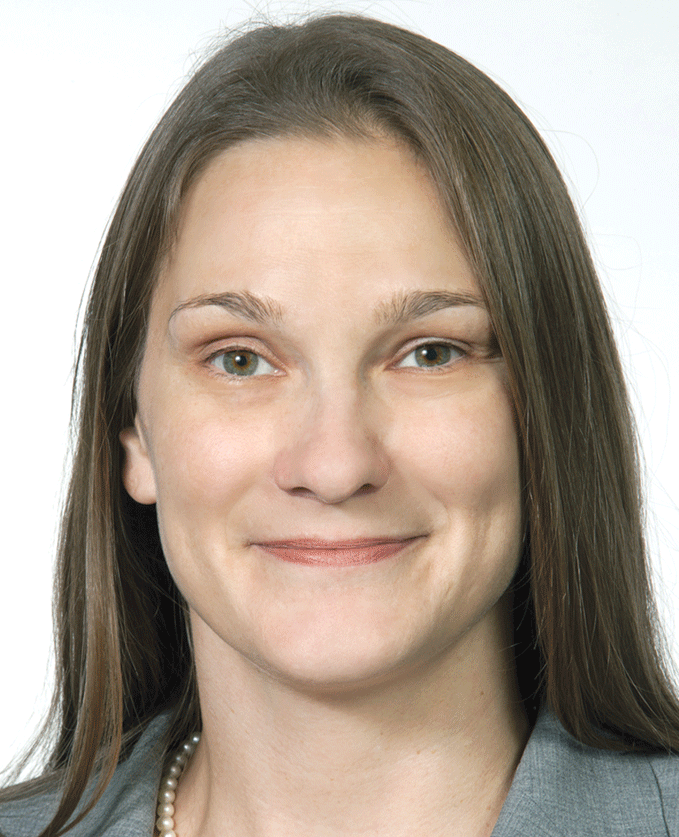
 
PROFESSIONAL WOMEN’S CHAMBER
www.professionalwomenschamber.com
(413) 755-1310
 
• Oct. 14: PWC Ladies Night, 5-7 p.m. Complimentary wine, refreshments, and networking. Reservations are complimentary but suggested, by contacting Dawn Creighton at [email protected] or (413) 530-0545.
 
WEST OF THE RIVER CHAMBER OF COMMERCE
www.ourwrc.com
(413) 426-3880
 
• Oct. 9: Agawam Candidates Forum, 6-9 p.m., hosted by Roberta G. Doering School, 68 Main St., Agawam. For the first half of this state representatives / state Senate debate, questions will be solicited in advance from WRC members and the general public. The second half of the debate will be performed in the Lincoln-Douglas format, where candidates will have the opportunity to pose questions to each other.
• Oct. 15: Networking Lunch, noon to 1:30 p.m., hosted by Crestview Country Club, Agawam. Enjoy a sit-down lunch while networking with fellow chamber members. Each attendee will get a chance to offer a brief sales pitch. You must be a member or guest of a member to attend. The only cost to attend is the cost of lunch. Attendees will order off the menu and pay separately that day. We cannot invoice you for these events.
For more information, contact the chamber office at (413) 426-3880 or email [email protected].
• Oct. 16: Breakfast Meeting, 7-9 a.m., hosted by Lattitude, West Springfield. The featured emcee is political consultant Anthony Signoli, speaking on the potential casino and how it may affect local business and the general public. Cost: $25 for chamber members, $30 for non-members. For more information, contact the chamber office at (413) 426-3880 or email [email protected].

Daily News

SPRINGFIELD — Skoler, Abbott & Presser, P.C., an employment-law firm serving the Greater Springfield area, announced that partner Susan Fentin will host a presentation regarding recent developments in the area of labor and employment law as part of the Human Services Forum (HSF) training series.

The half-day presentation will take place on Oct. 23 from 8:30 a.m. to noon at the Crowne Plaza in Pittsfield. The presentation, titled “Something Old, Something New,” will cover a number of recent developments in the area of labor and employment law, including the Equal Employment Opportunity Commission’s new enforcement guidance on the Pregnancy Discrimination Act, which was issued in July.

“The EEOC’s guidance contains a summary of the existing law, which is not actually new information but is an important reminder of employers’ obligations under this statute,” said Fentin. “Additionally, the guidance also includes some surprising interpretations of the law that may alleviate potential issues for employers with pregnant workers.”

Fentin will also cover recent Massachusetts legislation affecting employers, including the Bay State’s new domestic violence leave law, changes to the state’s minimum wage, and new rights for domestic workers. The program will allot a substantial amount of time for attendees to ask questions. The event is $55 for HSF members and $65 for non-members; the fee includes continental breakfast. Registration for the event can be completed online at humanservicesforum.org.

Fentin has been a partner at the firm since 2004. Her practice concentrates on labor and employment counseling, advising large and small employers on their responsibilities and obligations under state and federal employment laws, and representing employers before state and federal agencies and in court. She speaks frequently to employer groups, conducts training on avoiding problems in employment law, and teaches master classes on both the FMLA and ADA. She is routinely named as a Super Lawyer and, since 2010, has been ranked as one of the top labor and employment attorneys in Massachusetts by the prestigious Chambers USA rating firm.

The Human Service Forum was founded in 1986 as an association of nonprofit and public agencies as well as individuals providing human services in the Pioneer Valley. The forum was envisioned by its founders to be a vehicle for communicating the important contributions of human services to quality of life in Pioneer Valley communities, and for members to network, address problems of mutual concern, and discuss major trends and changes impacting human services.

Education Sections
The World Is Our Classroom Makes Learning Meaningful

Sue Towers, left, and Nora Patton

Sue Towers, left, and Nora Patton say The World Is Our Classroom helps expose students to a wide variety of careers.

Sarah Topey never used to think twice about the water that came from the faucets in her home.

But after spending a recent day touring West Parish Water Filtration Plant and Cobble Mountain Reservoir in Westfield with her class, the 12-year-old not only had fun and learned important lessons about water filtration, she returned home with a dream.

“I hope I can do an internship there when I’m in college,” said the seventh-grader from STEM Middle School in Springfield. “I like science, and think I might like to work in a water plant. This helped me see how things happen in real life, and it’s good for the environment.”

The field trip was part of a program called The World Is Our Classroom Inc. (WIOC), and Executive Director Nora Burke Patton says it was founded on the principle that students learn best when they see classroom lessons reinforced in the real world.

“It runs from fifth grade through high school, and by partnering with urban school systems, institutions of higher education, and businesses, WIOC not only reinforces classroom lessons, but also opens young minds to employment opportunities,” she said, adding that the program was launched in 2002 through a collaboration of area businesses and school systems, and has exposed more than 20,000 schoolchildren from Springfield, Holyoke, and Westfield to memorable experiences that can lead to careers.

In fact, Katherine Pederson, executive director of the Springfield Water and Sewer Commission, says Topey’s dream of a college internship is realistic, and she hopes to interview and hire a job candidate in the future who took part in the program and was intrigued enough to pursue a career in the field.

“We hope some of the students who come here will choose to study water or wastewater management and become stewards of our natural resources,” said Pederson, explaining that jobs range from business managers to accountants; from laborers to engineers, with entry-level salaries for candidates without a college education starting between $30,000 and $34,000 and topping out at about $120,000 for engineers.

Jobs in water- and wastewater-treatment plants are going unfilled due to a lack of qualified applicants, and demand is only expected to rise. “The Baby Boomers working in these professions are nearing retirement, and young people are not choosing these careers,” said Pederson. “So it’s becoming more and more difficult to find operators.

“Every town and city in the country has a water and sewer department or a combined department, and these jobs will be there forever,” she went on. “So we feel very fortunate to have a program that starts the dialogue about them, and about water, in fifth grade. We hope that, by the time the students are in seventh grade, they will start thinking about careers.”

Pederson added that the tours are educational. “It’s important for students to learn that, when they turn on a faucet and water comes out, it’s not just magic, and it’s also good for them to understand what we do here to make sure the community has safe drinking water and enough water for fire protection,” she said. “We also think of the students as future ratepayers. They will become the decision makers in the community, so it’s good for them to know why wastewater costs more than water.

“This program is a first step,” she continued, “but it’s an important one, and we are happy to have this partnership. It’s been a positive experience for everyone involved.”

Learning Curves

The idea for the WIOC was born more than a decade ago after United Water signed a 20-year contract with the Springfield Water and Sewer Department to operate and maintain its wastewater-treatment plant and flood-control system.

“We wanted to make a long-term commitment to the community, and because we’re an environmental company, the idea of doing something involving stewardship and education resonated strongly with us,” said Don Goodroe, area manager for United Water.

So the company teamed up with Patton, Springfield Water and Sewer, and Springfield Public Schools. It also hired Springfield College Professor Robert Barkman to create a curriculum for fifth-grade students based on the state science framework that would teach them about the importance of water, the complexity of managing it, and the critical role wastewater-treatment plants play in keeping it clean.

A group of seventh-grade Springfield students

A group of seventh-grade Springfield students recently toured the West Parish Water Filtration Plant and Cobble Mountain Reservoir in Westfield.

The pilot project, which kicked off 12 years ago, was called “A Day at Bondi’s Island Springfield Regional Wastewater Treatment Facility,” and included a tour of the facility, where students learned physical, earth, and life sciences as well as technology and design engineering.

“The program was a perfect nexus of all our needs,” said Goodroe. “We were providing education focused on environmental stewardship, and although fifth-graders are not usually thinking about jobs, the program exposed them to people working in occupations they might not have known about.”

The outcome was so successful that the WIOC was incorporated as a nonprofit organization, which allowed it to grow and expand.

As a result, today all Springfield fifth-graders visit Bondi’s Island, while all seventh-graders spend a day at Cobble Mountain in Westfield. There are preparatory and follow-up lessons in the classroom, and teachers whose students visit the site early in the year refer to their experiences throughout the course of study, while those who visit near the time of the MCAS exam say it makes the material students need to know easier to remember and understand.

“Everything the students are taught during the field trips reinforces what they learn in the classroom,” said Patton, as she spoke about the program while STEM Middle School students ate lunch on picnic tables at Cobble Mountain Reservoir. “This morning, they learned about where drinking water comes from and also learned about ecosystems, microorganisms, plant habitats, and animal life when they went into streams in the watershed and used nets to catch crayfish, salamanders, frogs, and toads.”

Ron St. Amand says the program is a great way to help students understand the relationship between book learning and the outside world.

“It blends inquiry, problem solving, and collaboration,” said the director of science for Springfield Public Schools, adding that his staff worked closely with the program directors to design the curriculum for The World Is Our Classroom.

St. Amand pointed to an engineering design challenge that gives students the opportunity to attempt to clean mock wastewater at Bondi’s Island as an example of an activity that provides a hands-on, memorable learning experience. “There is also a water-cycle game in which kids pretend to be water molecules and move between rivers, glaciers, the atmosphere, and groundwater to simulate what the water cycle is like, before pollution is introduced into the game,” he said.

“Another activity called Molecules in Motion gives kids the opportunity to look under a microscope, see microbes in wastewater, and learn they are food for microorganisms, which addresses many areas of science,” he went on.

St. Amand believes the program is stimulating and inspirational. “It supports the curriculum and also opens students’ eyes to potential job opportunities, which will help motivate them to study,” he said, noting that the majority of students in Springfield are minorities who are often underrepresented in STEM careers.

Down to a Science

The program expanded into the Holyoke Public School system in 2004, and through a partnership that includes Holyoke Community College, fifth-grade students began spending a day at Hazen Paper Co.

“The trip there exposes students to earth and space science, life science, and physical science, in addition to technology and engineering, and also introduces them to the paper-making process and related manufacturing careers,” Patton said.

The morning session consists of a tour of the facility, including the opportunity to observe a large gravure printer in operation, interactive lessons called “Molecules in Motion” and “The Water Cycle and Life Cycle of the Oak Tree,” and a reflection period during which students are asked to write or draw something that showcases their experience. After lunch, they take part in a challenging design activity and are given the opportunity to make their own paper.

CEO and President John Hazen said that, when Patton asked him to get involved, he was happy to do so.

“The idea of engaging with kids in Holyoke intrigued me, and I thought it sounded like an interesting way to connect with the community; I also thought my employees would be energized by it,” he said, noting that, earlier that year, a group of retirees had toured the company, and his staff found it satisfying to have them see what they do at work.

Hazen has been involved with the WIOC for 10 years and believes it is important because many of the students would not get another opportunity to see how a Holyoke manufacturing firm operates.

“When we teach them how to make paper, it opens up their world. Our employees talk with them about their jobs because we want to create a fantastic experience and plant seeds at a young age about career opportunities,” he told BusinessWest.  “It has gone very well, and we have never had a bad experience. The kids are so stimulated that they become very engaged in the activities.”

His only challenge was to find a space large enough to house the students, but Hazen refurbished an attic area for the purpose and has since used it for other meetings. “The program is very energizing, and my employees love to see the school bus arrive. It brings meaning to the workplace and ultimately is about providing jobs for families and the community,” he said.

In another fifth-grade program, Mestek Inc. partners with Westfield Public Schools, STCC, and the Westfield Manufacturing Education Initiative to increase interest in heating and cooling systems, water cycles, weather, and the environment.

Mestek Marketing Manager Matt Kleszczynski says the company enjoys supporting the program.

“Kids don’t learn a lot about manufacturing in the classroom, so we open our facility to them and give them tours through the plant, as well as insight into what we do, how we do it, and how their houses get heat and hot water, which is something kids don’t usually think about,” he noted.

The students walk through the entire assembly line, which allows them to see how components to baseboard heating are manufactured. “The tours are conducted by volunteers who provide them with tutelage on each of the specific jobs,” Kleszczynski said. “We like to give back to the community, and this exposes students to alternative professional avenues in the field of manufacturing, which is valuable, as a lot of kids like to work with their hands.”

He added that Mestek has had a long-standing relationship with the WIOC program. “We are busy, but we make sure we schedule time for this.”

Class Act

Patton said The World Is Our Classroom continues to grow, and next October, students from Chicopee Public Schools will visit the Chicopee Water Pollution Control Facility.

In addition, a One Day Medical Encounter program for high-school students that took place in the past is expected to resume next fall. It is focused on the 10th-grade biology curriculum and exposes students to alternative careers in medicine by bringing them into patient-simulation labs at local community colleges.

“These mini-hospital settings provide a real-world environment in which students work directly with healthcare educators while learning about anatomy and physiology, laboratory diagnosis, cell structure, and function and genetics,” Patton said.

Goodroe is proud that the program evolved from United Water’s desire to be a good corporate citizen. “I look forward to the day when I can hire a student who came through the program,” he said, adding that the company operates throughout New England and created a similar program in Killingly, Conn. that allows students to visit a wastewater-treatment plant there.

Patton noted that The World Is Our Classroom is funded by grants, with cooperation from area businesses.

“Our goal is for each program to be self-sustaining,” she said. “But the experiences students have can be life-changing, and it helps businesses to start recruiting tomorrow’s workforce by exposing kids to careers that have great promise.”

Education Sections
Greenfield Community College Emphasizes Collaboration

Robert Pura

Robert Pura touts a number of GCC’s notable academic departments, from art to nursing to a unique program in renewable energy.

They’re called ‘studios.’

While they vary slightly in design across the Greenfield Community College campus, they all have some features in common, most importantly tables and couches at which students work and talk, in a space surrounded by that department’s faculty offices.

“About 13 or 14 years ago, the math department convinced us they wanted to have a space near the faculty offices for students to come, to ensure there wasn’t a long wait to see a faculty member,” said GCC President Robert Pura. Since then, virtually every department has followed suit in creating a common study area surrounded by those office doors.

“It’s a space with tables and chairs, where students can learn from each other and support each other, and the faculty are right there,” he explained, recalling a time when a maintenance worker questioned a mass of students sharing pizza and studying in one of the studios late at night.

“They didn’t want to leave. I laughed and said, ‘that isn’t a problem.’ That’s the spirit we want to see — a community where people are encouraged to work together and learn independently, but also from each other. That’s the kind of attribute that will serve them well, whether they transfer to another school or head into a career right away.”

The studios are one of the more notable examples of a culture of connectivity fostered at GCC, Pura told BusinessWest — one further enhanced by an extensive renovation of the campus’s core building three years ago, which better connected each department and brought in much more natural light to boot.

“You can see our commitment to community in the design of the building, our commitment to interconnectivity,” he said. “You’re always feeling like you’re connected to people as you’re walking around — you feel those relationships and sense of community among students and faculty and staff.

“I’ve talked to a lot of alumni over time,” Pura added. “It’s not a lecture they remember; it’s not a formula or that one piece of poetry. It’s the relationships they had with people that makes a long-term impact. As a smaller college, we have an opportunity to make that the strength of the institution.”

Hand in Hand

The main role of an institution like GCC, of course, is to prepare people — both young learners and older career transitioners — for jobs in a still-difficult economy.

To that end, and perhaps more than ever before, the state’s community colleges are working closely with area economic-development bodies and local businesses to bridge the gap between education and career opportunities, to ensure that their graduates have the skills and training required to meet companies’ needs.

That’s especially important for GCC, Pura said, because of its position as the only community college in Franklin County — or neighboring Hampshire County, for that matter.

Robert Pura

Robert Pura says GCC’s recently remodeled core building is designed with both access and connectivity in mind.

“It is essential, especially up here in Franklin County, that we collaborate with regional employee boards, the Literacy Project, the Center for New Americans, Franklin County Technical School, Smith Vocational School … the more we’re able to collaborate, the more we’re able to do collectively.”

One notable collaboration involves Steve Capshaw, the owner of Greenfield-based Valley Steel Stamp, who raised $250,000 from private industry for new manufacturing tools for Franklin Technical School, then got legislators to match it. The result was an effort involving both Franklin Technical School and GCC to boost opportunity in the manufacturing sector.

“With Steve’s commitment, we developed a state-of-the-art lab. The technical school developed a curriculum for their students, and we developed curriculum to reach the worker in transition,” Pura said. “Steve Capshaw is really the reason that happened; he’s certainly a local hero.”

Noting that the Franklin Hampshire Regional Employment Board was involved as well, Pura said he is “proud of the way folks in Franklin County and Hampshire County understand collaboration. We really do more with less.

“Collaboration happens to the be the way of life up here,” he added. “I don’t know if it’s because we have an agricultural base, and farmers collaborate as a way of life. But the same is true of the industrial base here, the banks and healthcare, the education folks up here — we really know how to collaborate well.”

Having those ties, he went on, helps the college in terms of program and curriculum development. “We listen to business leaders, healthcare leaders, agricultural leaders of the community. They want people who can communicate effectively, think critically, and work well with others — and these are the outcomes of a GCC education.”

Those are skills, of course, that translate to a multitude of fields, which is important at a time when many graduates wind up shifting gears into fields they didn’t major in, or return to school later in life to learn a new career.

“Coming here gives folks the opportunity to change direction without significant cost to their family or themselves,” Pura said. “Changing careers is a hard decision because of the investment they’ve already made. It shouldn’t cost another $200,000 to figure out what they want to do.”

Signature Programs

Like most colleges, Greenfield has differentiated itself in several academic areas, including its programs in renewable energy and energy efficiency. Those caught the eye of Congress, which invited Pura and associate professor Teresa Jones to speak at a subcommittee hearing last spring titled “American Energy Jobs: Opportunities for Education.” Lawmakers in Washington were interested in hearing how to link education with the growing need for a solar-energy workforce.

“There is a great deal of opportunity for economic growth, job creation, and job attainment in the sustainable-energy field,” Jones said at the time. “There is a huge potential for domestic jobs in the area of energy-efficiency upgrades, but people need knowledge and advanced skills to do those jobs.”

The field, she added, is already much different than it was only five years ago, “so businesses and workers need to be able to adapt. The key piece for us is figuring out where the best job opportunities are and what people need to know to succeed in getting those jobs or starting businesses. We look to our business and other community partners to help guide that process.”

On a related note, Pura also touted the college’s farm-to-food program. “What it’s really about is how to get local farming into the restaurants and refrigerators of the community and make that a more mutually beneficial system,” he said. Meanwhile, the American Assoc. of Community Colleges recently gave GCC an award for its sustainable systems on campus, including an energy-neutral greenhouse built two years ago, which supplies produce to both the school’s dining service and local food pantries.

“That comes from our commitment to not wanting to see the work being done in the classroom and the work we’re doing on campus being too far apart,” Pura said. “We learn from students, and we all learn from each other. These are powerful programs.”

As is the college’s well-regarded graphic arts program, which decorates campus buildings with paintings, sculptures, and other installations, and attracts some of the top art schools in the country to an annual ‘portfolio day,’ Pura said. “The combination of our students’ life stories with the strength of their fundamentals makes them highly sought-after artists.”

He also talked up GCC’s nursing program, noting that its graduates are typically among the top scorers in their licensure exams and snatch up jobs quickly in a market that’s starting to ramp up demand for quality nurses again.

But other programs that don’t get as much press are just as key to the college’s success, Pura added.

“At the core of our institution, two departments that are not as recognized as many are English and math. But these two departments teach the communication skills and critical-thinking skills that are so sought after. For all the wonderful acknowledgement of some of our signature programs, it is really the English and math departments that are fundamental to our school’s success.”

Room to Grow

GCC is helping its students succeed in other ways as well, including a new child-care center currently being built, which will be staffed by Community Action’s Head Start program.

“It’s hard to focus fully on academics with a child in your hands,” Pura said with a laugh. “So having child care on campus will help our students succeed, and it is a great start for kids; the data about the number of children who start in college-based child care and go on to college is pretty strong.”

It’s just one more way Greenfield Community College is forging connections and giving students the foundation to succeed, no matter their stage of life.

“There’s no distance here between students, and the teaching space embraces that philosophy,” Pura said, referring not only to those studios but to the classrooms, where students typically sit together in groups, not at separate desks.

“Those students come in with dreams of what they want to do with their lives,” he added. “We give them an opportunity, and if they work hard, they can be successful in their career aspirations.”

Joseph Bednar can be reached at [email protected]

Law Sections
Law Firms Raise Their Profile Through Blogs, Social Media

Jeff Fialky

Jeff Fialky says consumers of all types of goods and services look for them on the Internet, and savvy law firms are taking advantage of that.

Kevin Maltby says few people buy anything without checking it out online first.

For example, millions check out Yelp reviews before making dinner reservations, or head to Amazon to read product reviews before making a purchase — even if they plan on buying the item elsewhere.

The legal world even has its own review site, Avvo, said Maltby, an associate with Bacon Wilson, P.C. in Springfield. “I would liken that to the comment section on any retail site, where people rate the lawyer and talk about the lawyer. To some degree, in the day and age we live in, no one buys anything without going online and looking at reviews.”

That’s why it’s more important than ever for attorneys to control their own image and messaging, and increasingly, firms are doing so through blogs and social media.

“I think it’s valuable,” said Jeff Fialky, a partner with Bacon Wilson. “First, it has value for marketing purposes. I think most consumers, when they’re looking for a professional service provider — like a law firm or any other good or service — is using the Internet, furthering that global marketplace.

“We get a fair amount of business from outside the area,” he continued, “from people looking for established law firms — from a business in another state, for instance, that needs a local transactional lawyer in this area — who go to the Internet to find an established attorney with relevant experience.”

What they often find is a post on one of Bacon Wilson’s four blogs — which deal with employment law, estate planning, bankruptcy, and family law — that piques their interest. That might lead to a phone call — and a new client for the firm.

Skoler, Abbott & Presser, P.C., an employment-law firm based in Springfield, also hosts a robust blog at its website called “The Law @ Work.” Recent topics include the Employee Retirement Income Security Act, protections for employees who ‘like’ Facebook comments critical of their employer, and Massachusetts’ new law granting domestic-violence leave (see related story, page 27).

“A lot of articles are geared toward providing some sort of information or guidance to employers, whether it’s HR professionals or other people in business,” said Kimberly Klimczuk, a partner with the firm. “Sometimes, we’re reporting on interesting cases.”

But if the blog is a marketing tool, she said, it’s not one intended to generate more phone calls, but rather one that raises the firm’s profile as an expert resource in the ever-changing world of workplace law, which is just as important.

“Although everyone likes to think we reach more clients through the blog, that’s not the primary purpose,” she said. “It’s a publication, primarily. You want to generate content for the blog that is of general interest. Of course, if more HR professionals and employers read it, that’s awesome.”

Peter Vickery understands the value of a regularly updated blog in boosting his professional profile — a particularly important consideration for a sole practitioner in Amherst.

“It does boost your Google ranking,” said Vickery, who focuses his practice — and his blog — in the areas of employment and discrimination, copyright and trademark, voting and elections, and public policy, among others. “That’s not the reason I started blogging, but it’s one reason I kept doing it. Every time I update the blog, Google’s algorithms boost my ranking.”

For instance, the blog can catch the eye of “people who are looking for anything in my practice areas, employers and landlords and people who have an interest in constitutional law. That third group is more amorphous — an audience of people who have an interest in First Amendment issues, separation-of-power issues. If someone is Googling, say, ‘Article 30, separation of powers, Massachusetts,’ one of my blogs should pop up. It’s a hard market to reach otherwise.”

For this issue’s focus on law, BusinessWest talked with some area law firms that are heavily invested in reaching the masses online through blogs and other forms of social media, like Twitter, LinkedIn, and Facebook, and examine why these channels, when managed correctly, help lawyers control their own reputation and generate business.

Information, Please

Various areas of Bacon Wilson’s sprawling practice lend themselves to social media, said Maltby who listed estate planning among others. Hyman Darling,  a partner with the firm, has recently taken to the “Estate Planning Bits” blog with posts on changes in estate- and inheritance-tax law, a change in how inherited IRAs are protected in bankruptcy, and whether religious marriages are valid for estate-planning purposes when no civil marriage license was issued.

“A lot of people read the estate-planning blog or the employment-law blog for their own information, and if they have questions, they might call,” said Maltby, who added that certain practices, like his own work in criminal defense, don’t lend themselves as well to blogs.

Klimczuk said arming clients and others with information from employment-law experts is the foremost reason her firm maintains a blog.

“If people read your blog, hopefully, if an issue comes up, they’ll remember the blog, think, ‘they seem to know what they’re talking about,’ and give you a call,” she told BusinessWest. But even if that never happens, “we think it’s a good way to share information with the public about our area of expertise.”

Fialky said Bacon Wilson’s public profile has certainly been raised through its blogging and other social-media presence, including Facebook pages for many of its lawyers,

“On the other hand, it’s valuable for individuals to educate themselves with respect to legal concepts,” he noted. “While legal concepts vary from jurisdiction to jurisdiction, others remain constant. For instance, issues facing a startup business are fairly universal across the country. Creating blogs provides us with accessibility to markets that word of mouth and geography would otherwise not provide.

“Just the other day,” he added, “one of my colleagues received a query from a company, very distant, from one of the western states, entirely on the basis of an article he had written and posted on one of the blogs. They had a specific need, and they called.”

If clients and the public are learning from reading legal blogs, Vickery said, he benefits in a similar way from writing them.

“I’m motivated partly by fear,” he said, only partly joking. “I have this fear of not knowing what the most up-to-date law is. A lot of attorneys have a recurring nightmare of being in court, and the opposing counsel drops this unfamiliar case on you.

“Keeping my blog up to date is almost self-discipline,” he continued. “If I have to read cases in a certain area of practice in order to maintain my blog, I can sleep easier and not get those nightmares so much.”

Other forms of social media can be effective either on their own or in conjunction with blogs, Klimczuk said. “We use Twitter more casually, sometimes to promote things, like a blog post. We find that, when we post something on the blog, then tweet about it, it directs more traffic to the blog. It’s our way of illuminating areas of the law that would be of interest to people.”

Twitter is also valuable for promoting events the firm is involved in, she said, while LinkedIn is used more for business contacts, “as a way for clients to keep in touch with what we’re doing.”

At Bacon Wilson, “certain lawyers have found success on Facebook,” Maltby said, offering the example of someone reaching out to an estate-planning attorney with his own issue or that of a friend, because of a relevant post they read.

“I’m a commercial transactional lawyer,” Fialky added, “so, for me, it’s unlikely that business owners outside the area, or even in this area, would be looking for a service provider by way of Facebook. But they may connect through a LinkedIn relationship or a blog. I’ve received inquiries over the years on articles I’ve written in blogs.”

Maltby noted that Bacon Wilson’s website, which hosts its blogs, is mobile-friendly, to make it easier for people who access the Internet on the go to find the information they need — and easily find a phone number if they want to call.

Open Book

Fialky understands he’s practicing law in a new world of consumer research, which is as true of law firms as it is of car shoppers and restaurant patrons.

“Very frequently, by the time I talk to a new client, they’ve already read my bio online,” he said. “Clients are good consumers and want to understand with whom they’re doing business.”

That’s why it’s critical to actively build that profile, rather than sit back and let sites like Avvo do it. Any additional business that arises from those efforts is just a bonus.

“It certainly helps me with the pipeline; I’ve gotten some business by way of the blog,” said Vickery, who has posted recently on campaign-finance law, Facebook defamation, and recent decisions by the Mass. Commission Against Discrimination. “I can draw a direct line from a couple of blog pieces to revenue, which is always encouraging. With advertising and marketing, it’s often difficult to see what works and what doesn’t work. Every now and again, things clearly work, and these were instances when it did.”

Most law firms don’t blog, and many have no social-media presence, but that could change, Klimczuk said.

“As more people get into social media, it’s kind of expected that firms are going to participate, which creates a scenario where firms that are not doing it are kind of at a disadvantage,” she said, adding that it’s not enough just to create a blog.

“If you’re doing a blog, you have to make sure it’s updated. If you post every two months, that’s super lame, and it makes you look bad. You have to update on a regular basis with relevant content, things people are interested in. It definitely adds a new dimension to the practice of law.”

Fortunately, Maltby said, it’s not difficult to find new topics to write about.

“Information is always changing, and the law is always evolving, so if you don’t keep your blog up, it gets stale,” he told BusinessWest. “There’s always new information, new cases. In the employment-law world, that could mean a new wage-and-hour case reinterpreting lunch breaks … stuff like that.

“It’s an excellent tool and another way to keep clients informed,” Maltby said of social media in general. “But I think it’s very important to make sure, whatever you’re posting, however you’re using those online tools, that it’s done in a professional manner. If you do, it will resonate with a large cross-section of clients.”


Joseph Bednar can be reached at [email protected]

Law Sections
New Law Requires Employers to Provide Domestic-violence Leave

By KARINA L. SCHRENGOHST, Esq.

Massachusetts recently enacted new legislation related to domestic violence.

The new law, which was effective immediately when signed by Gov. Deval Patrick on Aug. 8, impacts some employers in the Commonwealth. Under this law, employers with 50 or more employees must provide up to 15 days of leave during any 12-month period if the employee, or a family member of the employee, is a victim of “abusive behavior.” This includes domestic violence, stalking, sexual assault, and kidnapping, and the employee is using the leave to: (1) seek or obtain medical attention, counseling, victim services, or legal assistance; (2) secure housing; (3) obtain a protective order from a court; (4) appear in court or before a grand jury; (5) meet with a district attorney or other law-enforcement official; (6) attend child-custody proceedings; or (7) address other issues directly related to the abusive behavior.

An “employee” is broadly defined as an individual who “performs services for and under the control and direction of an employer for wages or other remuneration.” This means that the law applies to any employee whether he or she is full-time or part-time and regardless of how many hours he or she works. There is also no requirement that an employee work for a particular period of time before becoming eligible to take leave.

Karina L. Schrengohst

Karina L. Schrengohst

This means that an employee is eligible for domestic-violence leave from the day he or she is hired. An employee’s family member includes a spouse, a partner the employee resides with, an individual the employee has a child with, a parent or stepparent, a child or stepchild, a sibling, a grandparent, or a grandchild. An employee, however, is not entitled to leave if he or she is the perpetrator of the abusive behavior.

As with other leaves of absence, employees must provide advance notice of the leave. However, when there is a threat of imminent danger to the health or safety of the employee or the employee’s family member, advance notice is not necessary, and the employee must notify his or her employer within three workdays that leave is being taken due to abusive behavior. Notably, a request for leave may come from an individual other than the employee, including a family member of the employee or the employee’s counselor, social worker, healthcare worker, member of the clergy, shelter worker, legal advocate, or other professional who has assisted the employee.
Employers may require that employees provide documentation supporting the need for domestic-violence leave. Documentation that will support leave under this law includes:

• A sworn statement by the employee or a counselor, social worker, healthcare worker, member of the clergy, shelter worker, legal advocate, or other professional;
• A court-issued protective order;
• A document on court, provider, or public-agency letterhead showing that the employee or family member sought assistance relating to abusive behavior;
• A police report or statement of a victim or witness provided to police;
• Documentation that the perpetrator has admitted to sufficient facts to support a finding of guilt, was convicted, or has been adjudicated a juvenile delinquent by reason of abusive behavior; or
• Medical documentation of treatment as a result of the abusive behavior. This documentation must be kept confidential and may be maintained only as long as is needed for the employer to determine whether the employee is eligible for leave.

Upon an employee’s return from leave, the employee must be restored to his or her original job or an equivalent position without loss of any employment benefit accrued before taking leave. Employers are prohibited from discharging or discriminating against an employee for exercising his or her rights under this law. Complicating matters, an employer cannot take any adverse action against an employee for an unscheduled absence if the employee provides documentation supporting the need for domestic violence leave within 30 days from the unauthorized absence (or within 30 days from the last unauthorized absence in the instance of consecutive days of unauthorized absences).

The good news for employers is that leave under this new law does not have to be paid. It is entirely an employer’s discretion whether the leave is paid or unpaid. Also, an employee must exhaust all of his or her vacation time, sick time, and personal days before they are eligible for domestic violence leave.

Employers must provide employees with notice of their rights and responsibilities under this new law. One step employers can take toward complying with this law is creating and implementing a domestic violence leave policy. Distributing this new policy will satisfy the requirement of notifying employees of their rights and responsibilities under this law. In addition, employees should review existing leave and attendance policies to ensure they are in compliance with the law and the new policy. Finally, employers should ensure supervisors and managers are trained to understand their obligations under this new law and how to handle requests for domestic violence leave. 

As always, with new legislation comes new challenges. One of the challenges employers will face is the intersection this new law will have with other employment laws. For instance, this measure does not address whether domestic violence leave may run concurrently with other leave such as leave under the Family and Medical Leave Act. In addition, there may be times when an employee who is a victim of domestic violence needs a reasonable accommodation under the Americans with Disabilities Act. Consequently, employers would be wise to consult with employment counsel to ensure compliance with this new law and when confronted with questions related to domestic violence leave.


Karina L. Schrengohst, Esq. is an attorney at Royal LLP, a woman-owned, SOMWBA-certified, boutique, management-side labor and employment law firm; (413) 586-2288; [email protected]

Daily News

PITTSFIELD — Tooling U-SME, a leader in manufacturing training and development, presented its Platinum Education Center designation to six community and technical colleges nationwide, including Greenfield Community College.

The Tooling U-SME Platinum Education Center (TUPEC) awards are presented to educational facilities that serve as models in the manufacturing industry when it comes to developing an outstanding learning culture. Schools are selected based on adoption of Tooling U-SME’s online training program and strong utilization rates of online training in a blended learning format. These six schools join 21 other past TUPEC awardees.

GCC partnered with Tooling U-SME for a new training program for entry-level CNC operators, targeting unemployed and underemployed workers. In addition, to meet the demand for skilled workers in its community, GCC has worked with area manufacturers to pilot classes for incumbent workers. According to the Institute for Supply Management, the U.S. manufacturing industry is growing at its fastest pace within the past three years. However, according to the Boston Consulting Group, without aggressive action, the next decade is expected to bring a potential shortfall of 875,000 machinists, welders, industrial-machinery mechanics, and industrial engineers. As demand for skilled workers continues to increase, community colleges and technical schools are striving to provide training that meets the needs of manufacturers.

“The schools that we honor with the TUPEC designation demonstrate an exceptional commitment and dedication to preparing students for a successful career in the manufacturing industry,” said Toni Neary, education specialist for Tooling U-SME’s government and education group. “Instructors at these schools are finding innovative ways to effectively use both online and hands-on training to help students develop critical skills and become strong candidates for employment at local manufacturing facilities.”

The other schools that received the 2014 TUPEC designation include Atlantic Technical College in Florida, Fayetteville Technical Community College in North Carolina, Kellogg Community College in Michigan, Southern Oklahoma Technology Center, and the Arizona Advanced Manufacturing Institute of Mesa Community College in Arizona. For more information about Tooling U-SME, e-mail [email protected] or visit tooling.com.

Daily News

WASHINGTON, D.C. — Construction employers added 16,000 jobs last month, and the sector’s unemployment rate fell to 7%, the lowest rate for September in years, according to an analysis released by Associated General Contractors of America.

Association officials said the construction-employment gains come as more firms report having a hard time finding enough qualified workers to fill available positions, citing the lack of local vocational training programs, especially at the secondary level.

“While we are eager to see even more construction-employment gains, there is no denying the fact that the industry has been in recovery mode for much of the past three years,” said Stephen Sandherr, the association’s CEO. “But the industry won’t be able to keep filling positions if there aren’t enough qualified workers available to fill them.”

Construction employment totaled 6,079,000 in September, the highest total since May 2009, with a 12-month gain of 230,000 jobs, or 3.9%, Sandherr noted. Residential building and specialty-trade contractors added a combined 11,800 employees since August and 129,400 (5.9%) over 12 months. Non-residential building and specialty-trade contractors hired a net of 3,700 workers for the month and 100,300 (2.7%) since September 2013. However, heavy and civil-engineering contractors, which perform the majority of public-sector construction, increased their headcount by only 500 in September and 29,000 (3.3%) over the year amid tight government budget conditions.

The number of workers who said they looked for work in the past month and had last worked in construction fell to 604,000 in September. The last time the number of unemployed construction workers dropped that low was August 2007, a time when the construction industry was struggling with widespread construction-worker shortages that prompted project delays and increased costs, Sandherr noted.

Daily News

SPRINGFIELD — Skoler, Abbott & Presser, P.C., an employment-law firm serving the Greater Springfield area, announced that the firm is celebrating its 50th anniversary by donating a $5,000 ‘Skolership’ to the Community Foundation of Western Massachusetts.

Since the firm’s founding in 1964, Skoler, Abbott & Presser has exclusively represented management and employers in the fields of labor relations and employment law. Partner Ralph Abbott Jr., who has been with the firm since 1975, said, “our mission has always been to educate local businesses about workplace law, so it makes sense to celebrate a momentous anniversary with a scholarship. By donating to the Community Foundation of Western Massachusetts, our gift will benefit the community that has helped us succeed for half a century. We have deemed our donation a ‘Skolership’ in honor of our founding partner, Martin J. Skoler.”

With two offices in Massachusetts — the main office in Springfield and a branch office in Worcester — and an additional office in Meriden, Conn., Skoler, Abbott & Presser is one of the largest law firms in New England specializing in the practice of labor relations and employment law solely on behalf of management. Skoler Abbott’s clients range from small, nonprofit agencies to national Fortune 500 companies, and include businesses in the healthcare, manufacturing, higher-education, and banking industries.

Attorneys are also approved defense counsel for many insurance companies that provide employment-practices liability insurance coverage to employers. In addition, attorneys regularly practice before administrative agencies in other states. Skoler, Abbott & Presser attorneys are admitted to practice in state and federal courts in Massachusetts, Connecticut, and New York, as well as federal courts in other jurisdictions, including the U.S. Supreme Court.

To apply for scholarships and loans at the Community Foundation of Western Massachusetts, all eligible applicants must complete an online application that will be available on the foundation’s website as of Jan. 1, 2015. In addition to completion of the online application, applicants must arrange for the submission of their most recent official academic transcript and submit a 2015-16 student-aid report. All required documents must be mailed or postmarked no later than March 31, 2015. The Community Foundation’s scholarship application will be available at www.communityfoundation.org/scholarships/application.html.

Last year alone, the Community Foundation of Western Massachusetts attracted approximately 2,500 applicants for scholarships and loan funds totaling $2 million, and 700 recipients benefitted from donations. The foundation’s scholarship and interest-free student-loan funds support students seeking access to the opportunities offered by higher education and play a substantial role in providing an educated citizenry. Some of the funds help students from a particular schools or areas; others provide financial assistance to those pursuing a specific field of study; still others assist students that are most in need. Scholarships and interest-free loan awards are reviewed by volunteer committees and approved by the board of trustees. Awards are made subject to availability and the policies of the Community Foundation.

Daily News

BOSTON — A consortia proposal submitted collectively by the 15 community colleges in Massachusetts, led by Massasoit Community College, has been selected by the U.S. Department of Labor (DOL) for the fourth and final round of federal funding from the Trade Adjustment Assistance Community College and Career Training Grant (TAACCCT).

The community colleges are advancing a comprehensive approach to addressing the training and educational needs of workers and employers statewide with a focus on articulated pathways to careers in high-growth STEM sectors (science, technology, engineering, and math, as well as advanced manufacturing and healthcare). The $20 million grant is the highest-funded of the 66 awarded in the country by the DOL.

The project, titled Guided Pathways to Success in STEM (GPSTEM), will use the national Complete College America Guided Pathways to Success model to assist eligible students in obtaining degrees and certificates in STEM fields. The model focuses on reducing the time to completion of certificates and degree programs, resulting in more students entering employment in the Commonwealth and/or transferring into baccalaureate programs to add to their credentials.

During the three-year grant period, 24 STEM degree options and 58 certificate programs will be newly created or significantly enhanced in partnership with business and industry, the Commonwealth’s workforce system, the state universities, and the University of Massachusetts. The project will also build capacity on the highly successful Career & College Navigator model the Massachusetts community colleges designed and implemented during the round-one TAACCCT grant award in 2011. An important part of the round-four initiative will focus on creating collaborative pipelines for students to seamlessly transfer to baccalaureate programs to meet industry demand in certain STEM industry areas.

“Creating key pipeline collaborations in the STEM fields in conjunction with the state universities and UMass will serve as a new model for creating comprehensive higher education and industry partnerships in the Commonwealth,” said Bill Hart, executive officer of the Mass. Community Colleges Council of Presidents.

The focus is primarily on helping TAA-eligible, unemployed and underemployed workers and veterans enter STEM programs and obtain high-skill, high-wage jobs. However, the funding to implement Complete College America’s GPS model will assist community colleges in infusing additional comprehensive student supports throughout the 15 campuses that will benefit all student populations.

“This grant will help our college better prepare students in high-growth areas such as IT, engineering technology, and science,” said Springfield Technical Community College President Ira Rubenzahl. “Working together to secure this significant federal funding is an incredible accomplishment. It’s a wonderful example of how the collaboration and partnerships between the 15 community colleges can benefit our students and the region.”

Daily News

BOSTON — The Executive Office of Labor and Workforce Development reported that the seasonally unadjusted unemployment rates for August were down in most labor-market areas, according to the Bureau of Labor Statistics.

The preliminary statewide unadjusted unemployment rate estimate for August was 6.0%, down 0.1% from July. Over the year, the statewide unadjusted rate was down 1.0% from the August 2013 rate of 70%. During August, the Worcester area recorded a gain in jobs, while the remaining 11 areas for which job estimates are published reported losses. The largest losses occurred in the Boston-Cambridge-Quincy, Lowell-Billerica-Chelmsford, and Haverhill-North Andover-Amesbury areas.

Since August 2013, nine of the 12 areas added jobs, with the largest percentage gains in the Worcester, Boston-Cambridge-Quincy, Framingham, and Springfield areas. The Leominster-Fitchburg-Gardner, Lowell-Billerica-Chelmsford, and Haverhill-North Andover-Amesbury areas lost jobs. Job losses were impacted by temporary employment disruptions in the retail-trade sector.

The seasonally adjusted statewide August unemployment rate was 5.8%, up 0.2% over the month and down 1.4% over the year. The rate was 0.3% below the 6.1% national unemployment rate. The statewide, seasonally adjusted jobs estimate showed a 5,300-job loss in August and an over-the-year gain of 54,300 jobs. The unadjusted unemployment rates and job estimates for the labor-market areas reflect seasonal fluctuations and therefore may show different levels and trends than the statewide seasonally adjusted estimates.

Court Dockets Departments

ACCGS
www.myonlinechamber.com
(413) 787-1555
 
• Sept. 23: ACCGS Pastries, Politics & Policy, 8-9 a.m. An informal roundtable discussion, designed for political and policy junkies. Cost: $15 for members, $25 for general admission, which includes continental breakfast. Reservations may be made online at www.myonlinechamber.com.
• Sept. 30: Rake in the Business Table Top Showcase, 4:30-7 p.m. Hosted by Castle of Knights, 1599 Memorial Dr., Chicopee. Presented by the Affiliated Chambers of Commerce of Greater Springfield and the Greater Chicopee, Holyoke, and Westfield chambers of commerce. Network with more than 100 vendors. Cost: $5 in advance, $10 at the door.  Reservations may be made online at www.myonlinechamber.com.
• Oct. 1: ACCGS Business@Breakfast, 7:15-9 a.m. Hosted by Twin Hills Country Club, 700 Wolf Swamp Road, Longmeadow. Cost: $20 for members in advance, $25 for members at the door, $30 for general admission. Reservations may be made online at www.myonlinechamber.com.
• Oct. 3: ERC5 Golf Classic. Registration, 11 a.m.; lunch, 11:30 a.m.; shotgun start, 12:30 p.m. Wilbraham Country Club, 859 Stony Hill Road, Wilbraham. Cost: $500 per foursome. Proceeds benefit the Minnechaug Regional High School Youth Entrepreneurial Scholars Program and the ERC5 Scholarship Fund. Reservations may be made online www.myonlinechamber.com.
• Oct. 8: ACCGS Lunch ‘n’ Learn, 11:30 a.m. to 1 p.m., Lattitude Restaurant, 1388 Memorial Ave., West Springfield. Liz Provo, authorized local representative for Constant Contact, will present “Social Media for Small Business Success.” Cost: $25 for members, $35 for general admission. Reservations may be made online at www.myonlinechamber.com.
• Oct. 29: ACCGS Western Mass. Business Expo Breakfast, 7:15-9 a.m., MassMutual Center, 1277 Main St., Springfield. Keynote speaker: Gov. Deval Patrick. Cost: $25 in advance, $30 at the door. Reservations may be made online at www.myonlinechamber.com.
• Oct. 29: PWC Western Mass. Business Expo Headline Luncheon, 11:30 a.m. to 1 p.m., MassMutual Center, 1277 Main St., Springfield. Keynote speaker: Patricia Diaz Dennis, retired senior vice president and assistant general counsel for AT&T. Cost: $40. Reservations may be made online at www.myonlinechamber.com.
 
AMHERST AREA CHAMBER OF COMMERCE
www.amherstarea.com
(413) 253-0700
 
• Oct. 1: Chamber Ribbon Cutting Ceremony, 5-6 p.m., hosted by Unitarian Universalist Society of America, 121 North Pleasant St., Amherst. Rededication of the Tiffany stained-glass window. Light hors d’oeuvres and refreshments. Event is free and open to the public.
• Oct. 2: 2014 Annual Awards Dinner, 5:30-9 p.m. (after-party to follow). Hosted by Hadley Farms Meeting House, 41 Russell St., Hadley. Join us in honoring the Rotary Club of Amherst, Stephanie O’Keeffe, and Tony Maroulis. Emceed by Monte Belmonte, 93.9 The River. Tickets are $75 per person or $700 for a table of 10. For more information, call Tammy-Lynn at (413) 253-0700 or e-mail [email protected].
• Oct. 9: Chamber Brown Bag, 12:30-2 p.m. Hosted by the Jones Library (Woodbury Room). Topic: “The Entrepreneurial Equation.” This event will give you ideas for putting banking, retirement, and insurance tools to work so you can help build and protect your business according to your short-and long-term goals. Presenter: Tom McRae, Edward Jones. Event is free and open to the public. Bring a lunch.
• Oct. 9: Chamber Ribbon Cutting Ceremony, 12:30-1 p.m., at Downtown Mindfulness, 67 North Pleasant St., Amherst. Join us in welcoming Downtown Mindfulness to the Amherst area. Light hors d’oeuvres and refreshments will be served. Event is free and open to the public.
• Oct. 24: Legislative Breakfast, 7:15-9 a.m. Hosted by the Lord Jeffery Inn, 30 Boltwood Ave., Amherst. This is your chance to rub elbows with Amherst-area elected officials. Cost: $15 for chamber members, $20 for non-members. To RSVP, call Tammy-Lynn at (413) 253-0700 or e-mail [email protected].
 
FRANKLIN COUNTY CHAMBER OF COMMERCE
www.franklincc.org
(413) 773-5463
 
• Sept. 26: Chamber Breakfast Series, 7:30-9 a.m., hosted by Franklin County Tech School, Turners Falls. Special presentation on United Way program. Cost: $13 for members, $15 for non-members. Contact the chamber at (413) 773-5463 to reserve your tickets.
 
GREATER CHICOPEE CHAMBER OF COMMERCE
www.chicopeechamber.org
(413) 594-2101
 
• Sept. 30: Table Top Expo & Business Networking Event, 4:30-7 p.m., Hosted by: Castle of Knights, 1599 Memorial Dr., Chicopee. Presented by the Greater Chicopee, Holyoke, and Westfield chambers of commerce and ACCGS. Cost: $5 pre-registered, $10 at the door. Register online at www.chicopeechamber.org.
• Oct. 9: Taking Care of Business, Workshop #3, “Human Resources: Best Practices for Small Businesses,” 9-11 a.m. Hosted by Hampton Inn, 600 Memorial Dr., Chicopee. Learn about recruitment and hiring, employee benefits and labor laws, and unemployment Insurance. Presenter: Employers Assoc. of the NorthEast. Cost: $20 for members, $30 for non-members.
• Oct. 15: Salute Breakfast, 7:15-9 a.m. Hosted by the Log Cabin Banquet & Meeting House, 500 Easthampton Road, Holyoke. Cost: $20 for members, $26 for non-members.
• Oct. 23: Auction/Beer & Wine Tasting, 6-9 p.m., Delaney House, 3 Country Club Road, Holyoke. The public is welcome to attend and enjoy tastings from Kappy’s Liquors and Williams Distributing Corp., and delicious gourmet food by the Delaney House. Take some photos in the complimentary photo booth and bid on auction items such as gift baskets and gift certificates to area restaurants.
• Oct. 30: Taking Care of Business, Workshop #4: “How to Retain Your Top Talent,” 9-11 a.m. Hosted by Hampton Inn, 600 Memorial Dr., Chicopee. Learn about recruitment and turnover costs, production loss, and retraining. Presenter: James Percy, Willard Financial Group, LLC. Cost: $20 for members, $30 for non-members.
 
GREATER EASTHAMPTON CHAMBER OF COMMERCE
www.easthamptonchamber.org
(413) 527-9414
 
• Oct. 9: Networking by Night Business Card Exchange, 5-7 p.m., hosted and co-sponsored by Eastworks & Riff’s Joint, 116 Pleasant St., Easthampton. Door prizes, hors d’ouevres, beer and wine. Cost: $5 for members, $15 for future members. RSVP requested.
• Oct. 20: Celebrity Bartenders Night, 6-9 p.m., at Opa-Opa Steakhouse & Brewery, 169 College Highway, Southampton. Join us for a night of fun with local celebrities mixing drinks. Let us know if you are interested in bartending! Cash bar, raffles, and fun. Tips and donations benefit the chamber’s downtown Holiday Lighting Fund. Admission: free. 
• Oct. 23: Workforce Training Speaker Breakfast, part of the chamber’s Speaker Series 2014. Hosted by Southampton Country Club, 329 College Highway, Southampton. Come and learn about available state funding for employee training and technical assistance for any size business. Cost: $15 for chamber members, $20 for non-members. Call the chamber to sign up. Seating is limited.
 
GREATER HOLYOKE CHAMBER OF COMMERCE
www.holycham.com
(413) 534-3376
 
• Sept. 30: Table Top Showcase, 4:30-7 p.m., hosted by Chicopee Castle of Knights. Four area chambers — Greater Holyoke, Greater Chicopee, Greater Westfield, and the ACCGS — are getting together to present a table top mini-trade show. Tables cost $125. Visitor cost is $10 in advance, $15 at the door. Call (413) 534-3376 to secure a table, or sign up online at holyokechamber.com.
• Oct. 3: Manufacturing Business Breakfast, 8-10 a.m. (7:45 a.m. registration), PeoplesBank Conference Room, Kittredge Center, Holyoke Community College. Join us for a continental breakfast and networking opportunity to celebrate manufacturing. Guests include Eric Nakajima, assistant secretary of Housing and Economic Development; David Gadaire of CareerPoint, Jeffrey Hayden of Holyoke Community College, and state Rep. Aaron Vega. Cost: $10, which includes a continental breakfast. Call (413) 534-3376 to sign up, or visit holyokechamber.com.
• Oct. 7, 21: Nov. 5: Ask a Chamber Expert Series: “How to Start and Maintain Your Own Business.” Get your business on the right track and join us for this member-taught, 10-class workshop series. Workshop schedule: Oct. 7, “Creating a Business Plan”; Oct. 21, “Learning the Law”; Nov. 5, “Insurance.” All workshops are held from 5:30 to 7:30 p.m. at the Holyoke Chamber of Commerce at 177 High St., and include light refreshments. Cost: $20 per session for members, or $175 for 10 classes. To sign up, call the chamber at (413) 534-3376 or visit holyokechamber.com.
• Oct. 8: Autumn Business Breakfast, 7:30-9 a.m., at the Log Cabin. Sponsored by the Republican and Holyoke Medical Center. Recognition of new members and business milestones, and networking breakfast meeting. Cost: $22 for members in advance, $28 for non-members and at the door. For reservations, call the chamber at (413) 534-3376.
• Oct. 15: Chamber After Hours, 5-7 p.m., hosted by Westfield Bank, 1642 Northampton St., Holyoke. Business networking event to take place under the tent. Food, networking, 50/50 raffle, and door prizes. Cost: $10 for members, $15 for the public. To sign up, call the chamber at (413) 534-3376 or visit holyokechamber.com.
 
GREATER NORTHAMPTON CHAMBER OF COMMERCE
www.explorenorthampton.com
(413) 584-1900
 
• Oct. 1: Annual Open House, 5-7 p.m., hosted by the Greater Northampton Chamber of Commerce, 99 Pleasant St., Northampton. Cost: $10 for members, $15 for non-members.
• Oct. 8: “Make the Web Work for You,” 11 a.m. to 12:30 p.m. Hosted by Greenfield Savings Bank, Community Room, 325 King St., Northampton. Presented by Tina Stevens of Stevens 470. Cost: $20 for members, $25 for non-members. RSVP required; space limited.
• Oct. 10: “Tips, Tricks, & Shortcuts,” 9-11 a.m., hosted by the Greater Northampton Chamber of Commerce, 99 Pleasant St., Northampton. Sponsosr: Pioneer Training. Special guest: Don Lesser. This workshop contains a variety of quick tips and tricks in Microsoft Word that will save you hours of time. Cost: $20 for members, $25 for non-members. RSVP; space limited.
 
GREATER WESTFIELD CHAMBER OF COMMERCE
www.westfieldbiz.org
(413) 568-1618

• Sept. 30: 17th Annual Table Top Showcase, 4:30-7 p.m., hosted by Castle of Knights, Chicopee. Opportunities include sponsorships and exhibitor tables. Cost: $5 in advance through chamber, $10 at the door. For more information, call Pam at the chamber office, (413) 568-1618.

• Oct. 6: Mayor’s Coffee Hour, 8-9 a.m., hosted by Tekoa Country Club, Westfield. Join Mayor Dan Knapik for an informal talk on Westfield. Free and open to the public, but call Pam at the chamber to register, (413) 568-1618.

• Oct. 8: After 5 Connection, 5-7 p.m., hosted by East Mountain Country Club, Westfield. Great connection opportunities, including speed connecting. Complimentary hors d’oeuvres, cash bar. Walk-ins welcome. Cost: $10 for members, $15 for non-members (cash at the door). To register, call Pam at the chamber at (413) 568-1618.

• Oct. 14: Lunch & Lecture Series #3, 11:30 a.m. to 1 p.m., hosted by Noble Hospital, Conference Room A, Westfield. Topic: “Retirement & Investments for Business.” Presented by Tim Flynn of Edward Jones Investments. Cost: free to chamber members, $25 for non-members. For more information, call Pam at the chamber office, (413) 568-1618.

• Oct. 20: Speaker Series (2 of 3), “Common and Costly Employment-law Mistakes Made by Small Businesses,” 8-9:15 a.m., presented by Royal, LLC. Hosted by Genesis Spiritual Life & Conference Center, Westfield. Cost: free to chamber members, $25 for non-members. For more information, call Pam at the chamber office, (413) 568-1618.

 
PROFESSIONAL WOMEN’S CHAMBER
www.professionalwomenschamber.com
(413) 755-1310
 
• Sept. 24: PWC Headline Luncheon, 11:30 a.m. to 1 p.m., hosted by Yankee Pedlar Inn, 1866 Northampton St., Holyoke. Keynote speaker: Jane Iredale, founder, president, and CEO of Iredale Mineral Cosmetics. Cost: $25 for PWC members, $35 for general admission. Reservations may be made online at www.myonlinechamber.com.
• Oct. 14: PWC Ladies Night, 5-7 p.m. Complimentary wine, refreshments, and networking. Reservations are complimentary but suggested, by contacting Dawn Creighton at [email protected] or (413) 530-0545.
 
WEST OF THE RIVER CHAMBER OF COMMERCE
www.ourwrc.com
(413) 426-3880
 
• Oct. 1: Wicked Wednesday, 5-7 p.m., hosted by Westfield Bank, Agawam. Cost: free for chamber members, $10 at the door for non-members. Event is open to the public. Wicked Wednesdays are monthly social events, hosted by various businesses and restaurants, that bring members and non-members together to network in a laid-back atmosphere. For more information, contact the chamber office at (413) 426-3880 or [email protected].
• Oct. 2: West Springfield Candidates Forum, 6-8 p.m., hosted by West Springfield Town Hall, 26 Central St. For the first half of this state representatives debate, questions will be solicited in advance from WRC members and the general public. The second half of the debate will be performed in the Lincoln-Douglas format, where candidates will have the opportunity to pose questions to each other.
• Oct. 9: Agawam Candidates Forum, 6-9 p.m., hosted by Roberta G. Doering School, 68 Main St., Agawam. For the first half of this state representatives / state Senate debate, questions will be solicited in advance from WRC members and the general public. The second half of the debate will be performed in the Lincoln-Douglas format, where candidates will have the opportunity to pose questions to each other.
• Oct. 15: Networking Lunch, noon to 1:30 p.m., hosted by Crestview Country Club, Agawam. Enjoy a sit-down lunch while networking with fellow chamber members. Each attendee will get a chance to offer a brief sales pitch. You must be a member or guest of a member to attend. The only cost to attend is the cost of lunch. Attendees will order off the menu and pay separately that day. We cannot invoice you for these events.
For more information, contact the chamber office at (413) 426-3880 or email [email protected].
• Oct. 16: Breakfast Meeting, 7-9 a.m., hosted by Lattitude, West Springfield. The featured emcee is political consultant Anthony Signoli, speaking on the potential casino and how it may affect local business and the general public. Cost: $25 for chamber members, $30 for non-members. For more information, contact the chamber office at (413) 426-3880 or email [email protected].

Daily News

SPRINGFIELD — Robinson Donovan, P.C. announced that seven of its attorneys will be included in the 2015 edition of the prestigious national guide Best Lawyers in America.

Robinson Donovan attorneys were included in a number of categories, with three lawyers earning additional Lawyer of the Year recognition for their practice area. Only one lawyer in each practice area in each community is eligible to be named Lawyer of the Year. The Robinson Donovan honorees include:

• Richard Gaberman: corporate law; real estate law, commercial; tax certiorari; tax law; trusts and estates (23rd consecutive year); Lawyer of the Year, real-estate law. Also previous Lawyer of the Year award for trusts and estates

• James Martin: franchise law, automobile dealerships; real-estate law, franchise

• Jeffrey McCormick: personal-injury litigation, automobile collision; catastrophic injury; civil litigation; ethics and professional responsibility; insurance; medical malpractice; premises liability; professional malpractice

• Carla Newton: family law; Lawyer of the Year, family law

• Nancy Frankel Pelletier: personal-injury law, defendants (10th consecutive year)

• Patricia Rapinchuk: employment law, management; litigation, labor and employment; Lawyer of the Year, employment law, management

• Jeffrey Roberts: corporate law; trusts and estates; also previous Lawyer of the Year award for trusts and estates

For more than 30 years, Best Lawyers has been regarded, by both the legal profession and the public, as the definitive guide to legal excellence in the U.S. The 2015 volume of Best Lawyers, the 21st edition, is based on a rigorous evaluation process that included thousands of clients, highly skilled lawyers, and law-firm representatives.

Daily News

SPRINGFIELD — Fourteen lawyers from Bulkley Richardson were recently selected by their peers for inclusion in Best Lawyers in America 2015. Bulkley Richardson had the most honorees of any law firm in Springfield, with 12 of its 14 selected lawyers based in its Springfield office.

Two of the firm’s honorees were also named Springfield “Lawyer of the Year” in specific practice areas. William Hart Jr. was so honored in the category of trusts and estates, and John Pucci for criminal defense, white-collar. He was also recognized in the area of criminal defense, non-white-collar. The following Bulkley Richardson lawyers were also selected for the 2015 edition of Best Lawyers:

• Peter Barry: construction law

• Michael Burke: medical-malpractice law (defendants); personal-injury litigation (defendants)

• Mark Cress: bankruptcy and creditor/debtor rights; insolvency and reorganization law; corporate law

• Francis Dibble Jr.: bet-the-company litigation; commercial litigation; litigation (anti-trust, labor and employment, securities)

• Daniel Finnegan: administrative/regulatory law; litigation (construction)

• Robert Gelinas: personal-injury litigation (defendants)

• Kevin Maynard: commercial litigation; litigation (banking and finance, construction)

• David Parke: corporate law

• Melinda Phelps: medical-malpractice law (defendants); personal-injury litigation (defendants)

• Donn Randall: commercial litigation

• Ellen Randle: family law

• Ronald Weiss: corporate law; mergers and acquisitions law; tax law

Since it was first published in 1983, Best Lawyers has become universally regarded as a definitive guide to legal excellence. Because it is based on an exhaustive peer-review survey in which more than 52,000 leading attorneys cast almost 5.5 million votes on the legal abilities of other lawyers in their practice areas, and because lawyers are not required or allowed to pay a fee to be listed, inclusion in Best Lawyers is considered a singular honor. Corporate Counsel magazine has called Best Lawyers “the most respected referral list of attorneys in practice.”

Daily News

SPRINGFIELD — Kamari Collins was recently appointed to the position of dean of academic advising and student success at Springfield Technical Community College by the STCC board of trustees after serving as the college’s director of academic advising since 2011.

Collins began his employment with the college in 2007 as an academic counselor. Prior to his employment with STCC, he served as the director of youth and education programs at the Urban League of Springfield for several years.

“I’m excited to take on this new role as the dean of academic advising and student success and look forward to continuing to serve our students and the campus community. It’s truly an honor and a privilege to face this new challenge in my career,” said Collins. “I take pride in working with my colleagues to implement college initiatives, programs, and activities that support student success. College can often be difficult to navigate, and it is our goal in the academic advising department to help put students on the right educational path.”

Collins earned both his bachelor’s degree and his master’s degree with a concentration in organizational management and leadership from Springfield College. He was named one of BusinessWest magazine’s 40 Under Forty in 2009 and currently serves as a board member of the Children’s Study Home and Urban League of Springfield Inc. and the Community Foundation of Western Massachusetts education committee.

Daily News

BOSTON — According to the Executive Office of Labor and Workforce Development, preliminary estimates from the Bureau of Labor Statistics (BLS) show Massachusetts lost 5,300 jobs in August.

Job losses were impacted by temporary employment disruptions in the retail-trade sector. Jobs are estimated at 3,415,200. The August total unemployment rate was up 0.2% to 5.8% from the July rate. The rate is 0.3% below the 6.1% national unemployment rate.

Since August 2013, Massachusetts has added a net of 54,300 jobs, with 53,500 jobs added in the private sector. The total unemployment rate for the year is down 1.4% from the August 2013 rate of 7.2%. BLS also revised its July job estimates to a 12,200-job gain from the 13,800-job gain previously reported for the month.

Daily News

NORTHAMPTON — Royal LLP, the woman-owned, boutique, management-side labor and employment law firm, is pleased to announce the launch of its new website, www.royalllp.com, boasting a fresh look and user-friendly navigation, and updated with the latest information about the firm’s services.

“We hope that you will enjoy browsing our new site and that it will be yet another tool to help keep your business informed of important information in a timely manner,” said Amy Royal, founding partner.

Briefcase Departments

State to Purchase Knowledge Corridor Line
GREENFIELD — Gov. Deval Patrick announced an agreement in principle allowing the Commonwealth to purchase the Knowledge Corridor rail line between East Northfield and Springfield from Pan Am Southern, a joint venture of Pan Am and Norfolk Southern. The 49-mile segment of rail is currently undergoing a major restoration that will allow for more efficient passenger service, in response to increased demand, and will allow the Commonwealth to maintain and enhance freight service, which will take trucks off the roads, reducing congestion and greenhouse-gas emissions. “For close to 100 years, the Commonwealth’s rail infrastructure was the lifeblood of economic vitality for communities in Franklin and Berkshire counties, and across Western Mass.,” said Patrick. “Through this agreement, we are realizing the renewed value this infrastructure can have in creating economic opportunities throughout the region.” The agreement in principle to purchase the Knowledge Corridor rail line is an important milestone in the Knowledge Corridor/Restore Vermonter Project. The project will restore the original route of Amtrak’s Vermonter travelling between St. Albans, Vermont, and Washington, D.C. from its current routing via Palmer and Amherst. The work on the project includes upgrades to the 50-mile Pan Am Southern Connecticut River Line running between Springfield and East Northfield, known as the Knowledge Corridor. The ongoing restoration project will lead to the relocation of the Vermonter, Amtrak’s north-south passenger rail service to the Knowledge Corridor, by the end of 2014, potentially reducing trip times by 25 minutes. Starting in East Northfield, the restoration runs south to Springfield and includes the construction of three new station platforms in Greenfield, Northampton, and Holyoke. Passenger service on this line ceased in the 1980s and was rerouted southeast to Palmer, where trains reverse direction and head west to Springfield. “It is clear that the residents of Western Massachusetts are hungry for rail service,” said U.S. Rep. Jim McGovern. “Today’s announcement, coupled with state and federal investments to rehabilitate the Knowledge Corridor line, will make such service a reality.” Added U.S. Rep. Richard Neal, “as an outspoken supporter of increased rail travel throughout New England, I am pleased the Commonwealth has agreed to purchase the rail line that runs along the Knowledge Corridor. The completion of this segment of track will lead to increased passenger and freight service from the Pioneer Valley to the Vermont border. Not only will this project will help improve our transportation infrastructure, it will also grow the local economy. It’s exciting news for Western Massachusetts.” Initiated in August 2012, the restoration work consists of the replacement of approximately 95,000 rail ties, new continuously welded rail, new active warning signals and crossing gates at 23 public-grade crossings, upgrades to six bridges, and the first phase of a new signal installation. The restoration is funded through a $75 million grant awarded by the Federal Railroad Administration and approximately $40 million in state funds. The work is expected to be complete in 2016, after the start of passenger service. These improvements will improve safety, increase operating speeds for existing freight-train traffic and the Vermonter, and enhance capacity on the rail line to accommodate future increased levels of train traffic. “The Knowledge Corridor is a rail asset that will play a key role in the region’s transportation system, both by delivering improved customer service in the form of faster travel times, as well as by being built to a standard that can accommodate more freight,” said MassDOT Secretary and CEO Richard Davey. “Purchasing the line will also allow us to preserve the line’s viability for the long term, and will position the Commonwealth to use this line for increased passenger service that could provide commuters in the region a competitive alternative to driving on I-91.” The Knowledge Corridor/Restore Vermonter project is part of the vision for a New England high-speed, intercity rail network that will provide a foundation for economic competitiveness and promote livable communities from major and smaller cities to rural areas. Beyond the Knowledge Corridor, the Commonwealth’s work to increase rail opportunities for commuters and tourists alike continues. MassDOT has been working closely with Pan Am Southern, the city of North Adams, and the town of Adams to have Berkshire Scenic Railway operate the Adams Branch railroad line between the two towns. The operation of a scenic railway between North Adams and Adams would be another draw for the thousands of tourists who flock to the Berkshires each year.

Assistance Center Opens in North Adams for Former Hospital Workers
NORTH ADAMS — State Secretary of Labor and Workforce Development Rachel Kaprielian and state Health and Human Services Secretary John Polanowicz recently joined legislators and local workforce-development officials at a ribbon-cutting ceremony to officially open a worker-assistance center inside North Adams City Hall. The center is the latest effort to marshal state resources in helping 530 area residents who lost their jobs when North Adams Regional Hospital (NARH) and its affiliates closed in March. “The Patrick Administration is committed to making sure no worker or region is left behind as the state’s economy continues to improve and enjoys record job growth,” said Kaprielian. “This center and the skills-training opportunities the state is allocating will help get these residents back to work.” The Mass. Department of Public Health has been instrumental in helping the hospital reopen as a healthcare facility and restore regional healthcare services. Three months ago, Berkshire Health Systems opened an emergency room in the facility and hired approximately 150 former NARH employees. “Massachusetts is committed to ensuring that quality healthcare is accessible in every region across the Commonwealth,” said Polanowicz. “This worker assistance center in North Adams reinforces the administration’s commitment to the region’s healthcare community, and to supporting workers, patients, and families.” Added North Adams Mayor Richard Alcombright, “a huge ‘thank you’ to our state partners at the Executive Office of Labor & Workforce Development, and our local partners at Berkshire County Regional Employment Board and BerkshireWorks, for providing this wonderful opportunity to the residents of our Greater Northern Berkshire region. This center will provide significant resources to the unemployed and underemployed that will help them seek out opportunities and provide training for the skills necessary to attain employment. What is also very exciting is that this center will be located right next to our Veteran’s Services Office, providing an on-the-spot resource for our local veterans seeking employment.”

State, MassChallenge Launch Government Innovation Competition
BOSTON — MassIT, the Commonwealth’s lead state agency for technology across the executive branch, announced a first-of-its-kind MassIT Government Innovation Competition, with a $50,000 prize for the winning project. MassIT will partner with MassChallenge, a start-up accelerator that supports high-impact, early-stage entrepreneurs, on this initiative. The goal of the MassIT Government Innovation Competition is to provide high-quality startups with incentives to develop innovative solutions that can help the state government meet constituent needs more efficiently and at lower cost to taxpayers. For the first time, the Commonwealth will have access to entrepreneurs focused on improving the constituent-government relationship. The Commonwealth plans to implement a pilot of the winning project, with the goal of cost-effectively improving delivery of services to constituents, achieving greater internal efficiencies, or both. “Massachusetts is renowned as a hub for technology and innovation; MassChallenge’s support of high-impact, early-stage entrepreneurs has helped enhance that reputation. By working together, MassIT and MassChallenge can accelerate the Commonwealth’s use of technology solutions and harness the wealth of expertise available to us,” said Bill Oates, the state’s chief information officer. MassChallenge awards more than $1 million in cash prizes each year to winning startups, with zero equity taken. Additional benefits for startups include world-class mentorship and training, free office space, access to funding, legal advice, media exposure, and more than $10 million of in-kind support. MassChallenge is open to early-stage entrepreneurs from any industry, from anywhere in the world. Now in its fifth year, the competition has supported 489 startups, which have created more than 4,000 new jobs and raised more than $550 million in outside funding. This year alone, MassChallenge received approximately 1,650 applications from 50 countries and 40 states. After initial rounds of judging of all applicants, 128 finalists — in honor of Massachusetts’s Route 128 technology corridor — are invited to participate in MassChallenge’s four-month startup accelerator program and related sidecar competitions. The MassIT Government Innovation Competition is open to any qualifying startup that applies by the Aug. 27 deadline. Entrepreneurs whose work can help MassIT leverage innovation to support, enable, and transform the operation of state government and delivery of services to constituents are invited to compete.

State Reaches Solar Milestone
BOSTON — Gov. Deval Patrick announced another major clean-energy milestone, surpassing 15,000 solar installations in the Commonwealth. There are now 15,762 systems installed across Massachusetts, a 20-fold increase from 2008. “This achievement is due in large part to the strength of the Massachusetts solar industry,” Patrick said. “Clean-energy investments are smart for the environment and the economy, as proven by our 24% industry job growth in the last two years.” There were 778 systems installed in Massachusetts on Jan. 1, 2008. As a result of this exponential growth, Massachusetts ranked fourth in the nation for new solar capacity installed in 2013 by the Solar Energy Industries Assoc. It also ranked fourth nationally in total solar jobs in 2013 by the Solar Foundation’s National Solar Jobs Census. There are more than 8,000 people working in the solar industry in the Commonwealth, and nearly 80,000 clean-energy workers at 5,500 companies. “These achievements show that the Patrick administration’s policies and strategic investments are paying off,” said state Energy and Environmental Affairs Secretary Maeve Vallely Bartlett. “When we are competitive with other states much sunnier than ours, it’s a testament to the commitment of state and local officials, as well as home and business owners across the Commonwealth, to renewable energy.”

Departments People on the Move

Ralph Abbott Jr

Ralph Abbott Jr

John Glenn

John Glenn

Timothy Murphy

Timothy Murphy

Jay Presser

Jay Presser

Skoler, Abbott & Presser, P.C., an employment-law firm serving the Greater Springfield area, announced that four of the firm’s partners — Ralph Abbott Jr., John Glenn, Timothy Murphy, and Jay Presser — were listed in 2015 edition of Best Lawyers in America. In addition, Murphy was named the Best Lawyers 2015 litigation, labor and employment Lawyer of the Year in Springfield. Those honored as Lawyer of the Year have received particularly high ratings in surveys by earning a superior level of respect among their peers for their abilities, professionalism, and integrity. Best Lawyers is based on an exhaustive peer-review survey. More than 52,000 leading attorneys cast more than 5.5 million votes on the legal abilities of other lawyers in their practice areas. Lawyers are not required or allowed to pay a fee to be listed; therefore, inclusion in Best Lawyers is considered a singular honor.
• Abbott has been listed in Best Lawyers in the categories of arbitration; employment law, management; labor law, management; and mediation. He has been a partner at the firm since 1975 and is known throughout the legal community for his work representing management in labor relations and employment-related matters, providing employment-related advice to employers, assisting clients in remaining union-free, and representing employers before the National Labor Relations Board (NLRB). Abbott also has numerous credits as an author, editor, and teacher and a record of civic and community involvement. He has been selected by his peers for inclusion in Best Lawyers every year since 1989.
• Glenn has been listed in Best Lawyers in the categories of arbitration; employment law, management; and labor law, management. He has been a partner of the firm since 1979 and has spent his career representing management in labor relations and employment-related matters. In addition to providing employment-related advice to employers, he assists clients in remaining union-free and represents employers before the NLRB. He has extensive experience negotiating collective-bargaining agreements and representing employers at arbitration hearings and before state and federal agencies. Prior to joining Skoler, Abbott & Presser, Glenn was employed by the NLRB in Cincinnati. He has served as an adjunct professor of Labor Law at Western New England University School of Law and is a member of the American Academy of Hospital Attorneys. He has been selected by his peers for inclusion in Best Lawyers every year since 1995.
• Murphy has been listed in Best Lawyers in the categories of employment law, management; labor law, management; and litigation, labor and employment. He joined Skoler Abbott after serving as general counsel to an area labor union and as an assistant district attorney for the Hampden County District Attorney’s Office. His practice includes labor relations and employment litigation, as well as employment counseling. A native of the Springfield area, Murphy is a graduate of the Western New England University School of Law. He has also taught courses in employment law at WNEU. He is a frequent contributor to business and human-resource publications and a contributing author to the Massachusetts Employment Law Letter. He has been selected by his peers for inclusion in Best Lawyers every year since 2013.
• Presser has been listed in Best Lawyers in the categories of employment law, management; labor law, management; and litigation, labor and employment. He has more than 35 years of experience litigating employment cases and has successfully defended employers in civil actions and jury trials and handled cases in all areas of employment law, including discrimination, sexual harassment, wrongful discharge, wage hour, FMLA, ERISA, and defamation. He has won appeals before the Supreme Judicial Court and the First and Second Circuit Courts of Appeals, and represented employers in hundreds of arbitration cases arising under collective-bargaining agreements. He has been selected by his peers for inclusion in Best Lawyers every year since 1991.
•••••
Robert Belitz

Robert Belitz

Tighe & Bond, a civil and environmental engineering consultant, has appointed Robert Belitz its Chief Financial Officer. In this role, he will direct Tighe & Bond’s financial operations and priorities, as well as contribute to growth strategies consistent with the firm’s continued expansion in the marketplace. Belitz, who will provide financial management from the firm’s Westfield office, is a certified public accountant and executive with more than 25 years of corporate finance and accounting experience in professional services. He previously has served as the chief financial officer, corporate controller, and vice president of Finance for firms such as Malcolm Pirnie, Arcadis U.S., and the Hunter Roberts Construction Group. He also provided senior management for the public accounting firms of Ernst and Young LLP and KPMG LLP in New York. His prior responsibilities have included oversight and management of all financial functions, as well as developing and implementing financial plans and processes to achieve strategic and operational objectives. “Bob’s wealth of experience in our industry, and his proven ability to successfully direct financial operations, is instrumental to Tighe & Bond’s accelerating growth,” said David Pinsky, president and CEO of Tighe & Bond. “We’re thrilled that he has joined us as Tighe & Bond’s first chief financial officer.” Belitz, who earned his bachelor’s degree in accounting from Muhlenberg College, is a member of the New York State Society of CPAs and the Construction Financial Management Assoc. He also has participated in various finance forums with the Environmental Financial Consulting Group, Ernst and Young, the American Council of Engineering Companies, and the Design Finance Officers Group. Founded in 1911, Tighe & Bond is one of the most experienced engineering firms in New England, with offices in Pocasset, Westfield, and Worcester, Mass.; Middletown and Shelton, Conn.; and Portsmouth, N.H. With a team of more than 250 employees, Tighe & Bond provides engineering and environmental services for clients in government, industry, healthcare, education, real-estate, energy, and water/wastewater markets.
•••••
Radius Financial Group Inc., a leading private mortgage lender in New England, has announced the addition of Kate Crogan as a Loan Officer in its West Springfield branch. Crogan brings three years of experience in mortgage lending. Most recently, she was a customer-service representative before being promoted to financial-services representative at TD Bank in Chicopee, where she was responsible for first and second mortgages, insurance, and annuities. She is currently studying business at Western New England University.
•••••
Keith Minoff

Keith Minoff

Keith Minoff was recently selected by his peers for inclusion in Best Lawyers in America 2015 in the fields of commercial litigation and corporate law. Best Lawyers is based on an exhaustive peer-review survey. More than 52,000 leading attorneys cast more than 5.5 million votes on the legal abilities of other lawyers in their practice areas. Minoff specializes in business litigation and employment law. His law office is located in downtown Springfield.
•••••


Paul Fortin

Paul Fortin

Northeast IT Systems Inc. announced the addition of Paul Fortin to its team. Fortin will be joining Joel Mollison and Brian Sullivan as a Desktop Support Specialist. In that role, Fortin is able to implement cloud-based backup systems, reduce downtime of equipment, and increase speed of repairs for clients. With this new addition, Northeast IT Systems will be able to continue its pattern of steady growth and provide solutions to a broad range of clients.
•••••
Brattleboro Retreat President and Chief Executive Officer Dr. Robert Simpson Jr., has been named by Behavioral Healthcare magazine as a 2014 Behavioral Healthcare Champion along with four other leaders in the field of mental health from across the nation. The 2014 champions were selected from outstanding nominees across the country who, according to the magazine, are making a difference in the development, delivery, and effectiveness of mental healthcare services. “True leaders create lasting impact, and our 2014 Behavioral Healthcare Champions all have an eye on the future,” said Julie Miller, editor in chief of Behavioral Healthcare magazine. “Their drive to find new and more effective ways to serve their clients is reflected not just in their own organizations’ success, but also in the progress they’ve witnessed in their communities.” The 2014 Behavioral Healthcare Champions are profiled in the July/August 2014 issue of Behavioral Healthcare magazine and were recognized at a special ceremony during the National Conference on Addiction Disorders (NCAD) and the co-located Behavioral Healthcare Leadership Summit, which was held in St. Louis on Aug. 22-26.  Simpson’s many achievements since becoming the Retreat’s CEO in November 2006 are discussed in-depth in the above-mentioned profile. Among those achievements are a complete revamp of the hospital’s admissions process that replaced a multi-channel system of patient access with a streamlined, single-access point that makes access to the Retreat’s numerous programs easier and more dignified for patients. Under Simpson’s watch, the retreat has successfully launched four specialty clinical services designed to better meet the psychiatric and addiction treatment needs of distinct populations that are typically underserved. They are the Adult Inpatient Program for people who identify as lesbian, gay, bisexual or transgender; the Emerging Adult Inpatient Program for young adults ages 18 to 26; the Uniformed Service Program, a partial-hospital program designed to meet the unique needs of law enforcement, firefighters, corrections officers, military personnel, and first responders suffering from PTSD and other duty-related issues including addiction to alcohol and other drugs, major depression, and domestic violence; and the Mind Body Pain Management Clinic, a treatment alternative for people experiencing chronic pain that utilizes biofeedback, acceptance and commitment therapy (ACT), mindfulness, and mindful movement in place of typical treatments such as medication and surgery.
During Simpson’s tenure, the Retreat has experienced tremendous growth, having increased its number of staffed beds from an average of 50 in 2006 to an average of 122 in 2014. During the same time, the Brattleboro Retreat has doubled its number of employees from approximately 400 to more than 800.

Court Dockets Departments

The following is a compilation of recent lawsuits involving area businesses and organizations. These are strictly allegations that have yet to be proven in a court of law. Readers are advised to contact the parties listed, or the court, for more information concerning the individual claims.

FRANKLIN SUPERIOR COURT
Anne-Therese Stark v. Stop & Shop Supermarket, LLC
Allegation: Slip and fall on foreign subject causing injury: $290,000
Filed: 6/20/14

Kelli J. Fortin v. Baystate Medical Practices and Pioneer Women’s Health
Allegation: Unauthorized disclosure of private information to third party: $25,000+
Filed: 7/31/14

GREENFIELD DISTRICT COURT
Fuelrite, LLC v. Robert N. Tatro d/b/a Tatro Trucking
Allegation: Non-payment of goods sold and delivered: $11,481.57
Filed: 8/5/14

HAMPDEN SUPERIOR COURT
Kilnapp Enterprises Inc d/b/a Real Clean v. Eliezer Claudio d/b/a Star Auto Detailing
Allegation: Defendant breached the non-compete and non-solicit provisions of a business-to-business contract: $45,000
Filed: 7/22/14

Thomas Sullivan v. Jen-Coat Inc.
Allegation: Defendant unjustly terminated plaintiff’s employment after treatment for colon cancer in violation of the Americans with Disabilities Act: $25,000+
Filed: 7/23/14

HOLYOKE DISTRICT COURT
Jacqueline Diaz v. Ransome Idealease, LLC and Jonah Pitts
Allegation: Negligent operation of tractor trailer truck: $24,000
Filed: 7/29/14

SPRINGFIELD DISTRICT COURT
Beacon Sales Co. v. Jamie Ludwig and Courtney Ludwig d/b/a Luggy’s Roofing and Construction
Allegation: Non-payment of goods sold and delivered: $6,363.17
Filed: 6/30/14

Comcast Spotlight Inc. v. Smithfest Events Inc.
Allegation: Non-payment of advertising services rendered: $9,606.17
Filed: 6/30/14

ICC Trucking v. JCL Trucking Inc.

Allegation: Breach of contract: $26,500.17
Filed: 8/7/14

Liberty Mutual Fire Insurance Co. and LM Insurance Corp. v. HB Roofing Contractor, L.P.
Allegation: Non-payment of workers compensation policies: $12,903.98
Filed: 7/3/14

Rosalinda Rosa, Carlos F. Rivera and Pedro Principe v. Bertera Chrysler Jeep Dodge Inc. and Joseph Deausealt
Allegation: Sale of motor vehicle that did not comply with warranty: $24,999.99
Filed: 7/30/14

Tamara Walker v. 227 Mill Street, LLC, The Mercy Hospital Inc. d/b/a Methadone Maintenance Treatment Program, and Sisters of Providence Health System Inc.
Allegation: Negligent maintenance of property: $20,000
Filed: 8/11/14