Home Posts tagged Employment (Page 17)
Law Sections
The New Year Is the Perfect Time for an Audit of Your Practices


By SARAH G. TORRES, Esq. and KARINA L. SCHRENGOHST, Esq.

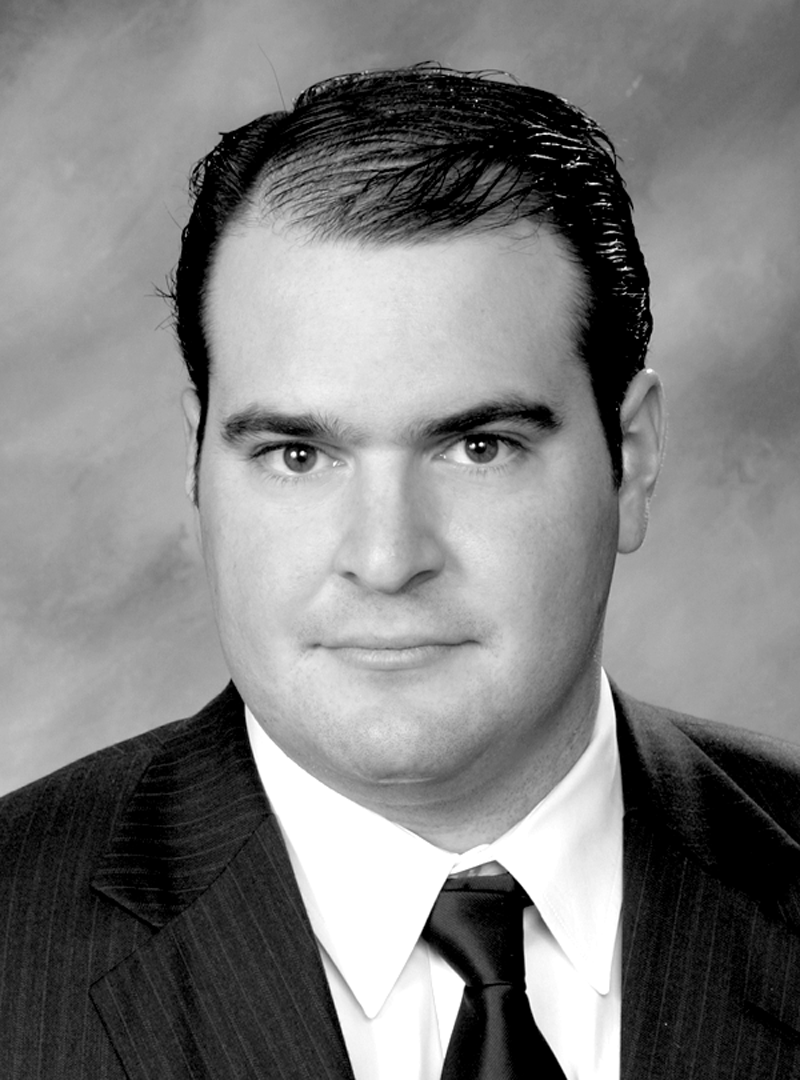
Sarah G. Torres

Sarah G. Torres

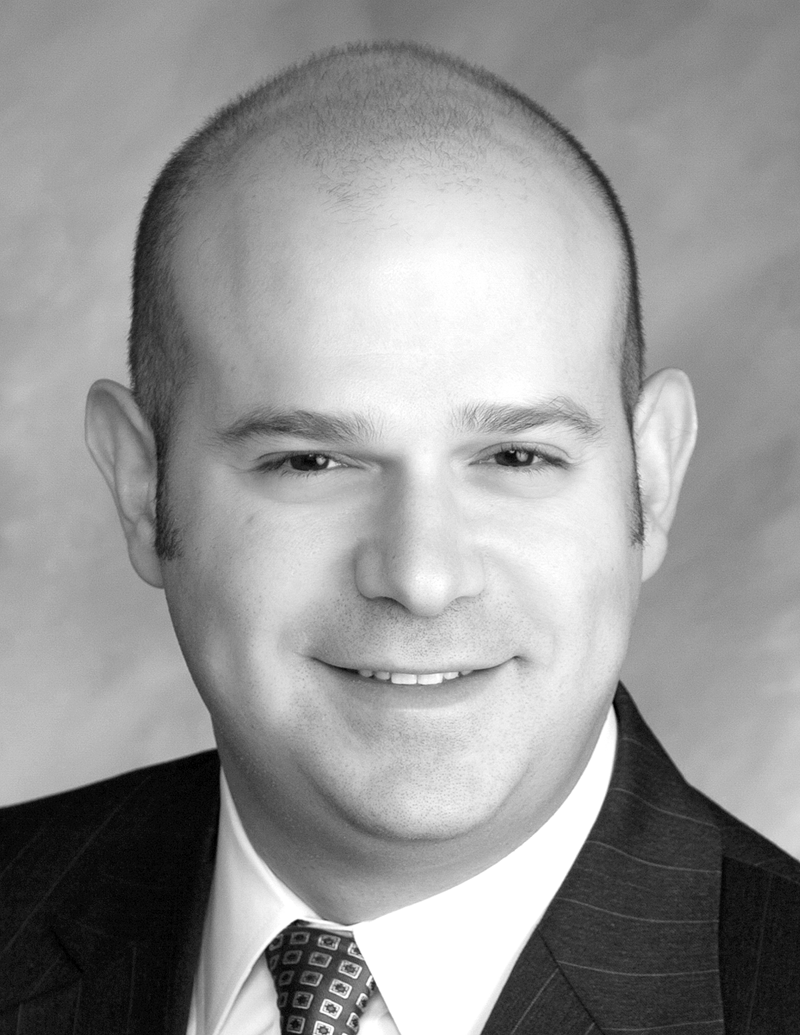
Karina L. Schrengohst

Karina L. Schrengohst

As the new year approaches, employers would be wise to include in their resolutions efforts to ensure compliance with the myriad employment laws affecting their business, including those related to sick leave, disability discrimination, sexual harassment, and wage-and-hour issues.

To accomplish this, employers can begin by conducting an internal audit of their employment practices with the assistance of employment counsel, including looking at their employee handbook and other policies and job descriptions, as well as planning supervisor training.

Employee Handbook and Policy Reviews

Is your employee handbook up to date? Employers should consider having their employee handbook and other policies reviewed on an annual basis by employment-law counsel to ensure they are compliant with state and federal law and recent National Labor Relations Board (NLRB) decisions. For instance, just this month, the NLRB issued a decision permitting employees to use company e-mail accounts on their own time for non-business purposes, including discussing union organizing and work grievances.

Employers must be aware that these communications are protected in both union and non-union workplaces. Accordingly, employers may need to revise their computer-usage policies to comply with this decision.

Likewise, many Massachusetts employers will need to revise their current paid-time-off policies or create sick-time policies to comply with new sick-leave legislation that will go into effect on July 1, 2015. Under this new law, employers with 11 or more employees must provide up to 40 hours of paid sick time per calendar year. Employers with fewer than 11 employees must provide up to 40 hours of unpaid sick time per calendar year.

In addition, some Massachusetts employers with 50 or more employees will need to create policies or amend their employee handbooks to incorporate a domestic-violence-leave policy, if they have not done so already. This past summer, Massachusetts enacted a law that requires these employers to provide up to 15 days of leave during a 12-month period to employees who are victims of domestic abuse or who have a qualifying family member who is a victim, and to notify their employees of their rights and responsibilities under the law. The attorney general recently suggested that employers can meet the notice requirement under the law by including a provision in their employee handbook.

Also, employers with six or more employees are reminded that Massachusetts law requires annual distribution of your sexual-harassment policy.

Training for Managers and Supervisors

Do you offer your managers and supervisors regular training?

Creating or revising workplace policies to comply with new laws and regulations is only one preventive step. The next step is training managers and supervisors to ensure they understand these policies and their responsibilities under these policies, which is equally crucial. Employers should consider scheduling training for their management personnel on employment-law topics such as sick and domestic leave laws and the new NLRB decision related to e-mail communications, as well as refreshers on topics such as disability discrimination, sexual harassment, and wage-and-hour issues.

Many employment issues that eventually evolve into litigation stem from actions or inactions of managers or supervisors. Employers should regularly conduct trainings to give these key employees the knowledge and skills required to enable them to properly handle situations as they arise.

Review, Update, and Revise Job Descriptions

Do your job descriptions accurately reflect your employees’ actual job duties?

Job descriptions can be used as a basis for interviewing candidates, orienting a new employee, and evaluating job performance. In addition, an accurate job description listing the essential functions of a position will assist you when faced with requests for accommodations under the Americans with Disabilities Act. Sending an accurate job description to an employee’s medical provider will help you determine whether an employee is able to return to his or her position and what, if any, accommodations may be necessary.

An accurate job description with a detailed list of the essential functions of a position can also assist you with determining whether an employee is exempt from overtime pay under the Fair Labor Standards Act. This is especially important because the Department of Labor (DOL) announced this year that it will be reviewing these overtime exemptions and will likely be revising their regulations in 2015. Compliance in this area is particularly important because an employer who has been found to have misclassified an employee as exempt can be subject to significant penalties as a result of a DOL audit.

The cost of defending expensive litigation far exceeds the investment in taking proactive, preventive steps to reduce the risk of litigation. Therefore, employers should consider conducting an internal audit at the beginning of the New Year.

Sarah G. Torres, Esq. and Karina L. Schrengohst, Esq. are attorneys at Royal LLP, a woman-owned, boutique, management-side labor and employment law firm. Royal LLP is a certified women’s business enterprise with the Massachusetts Supplier Diversity Office, the National Assoc. of Minority and Women Owned Law Firms, and the Women’s Business Enterprise National Council; (413) 586-2288; [email protected]; [email protected]

Architecture Sections
Gillen Collaborative Architects Offers a Unique Approach

William Gillen

Several years ago, William Gillen changed his business model to one where architects work independently but market themselves as a team.

When William Gillen created Gillen Collaborative Architects Inc. in Amherst, he based his business model on decades of honed experience. “There is no payroll here, so there is no pressure to generate a bill. If one of us wants to spend 24 hours working with a group, we do it,” he said, noting that the two registered architects under his umbrella are self-employed and can work independently on their own projects, or collaboratively as a group, while sharing resources and information from their own areas of expertise.

The trio, which includes Gillen, Carol Vincze, and John Krifka, have more than 100 years of combined experience, and venture into territory that most architects don’t have the time or interest to explore.

For example, when Krifka began working on a contract to renovate the Berkshire Family and Probate Court in Pittsfield and restore its north façade, he came up with an idea to create a documentary that would benefit the public, the city, the state, and groups interested in historic restoration.

After he spoke to city officials about obtaining a grant to pay for a detailed video production of the restoration and renovation, UMass graduate student John Dickson heard about it from the Pittsfield Historical Commission and received permission to document the work as part of his thesis. In addition to a written document, he created a seven-minute video with Pittsfield Community Television titled “Conserving the Old Berkshire Athenaeum,” which can be seen on YouTube.

Since the work on the courthouse is not yet complete, he is also working on another version, which he expects will be at least an hour in length. The finished product will be shown on public-access TV and will serve as a tribute to the artisans who created the 1876 building as well as those who painstakingly matched intricate patterns on the crumbling stone.

“City officials feared the project would disrupt parking and traffic to and from local business, so the idea was born partially to help to help establish liaisons,” Krifka said, explaining that he met with the Town Council and businesses owners to promote the video because he believed it would generate a lot of interest. “Stone structures aren’t built anymore, and I knew this was something that wouldn’t happen in Pittsfield again, so I really wanted it to succeed.”

A photograph was taken of every stone that was removed from the building, and Dickson interviewed a number of artisans about their restoration techniques, including a stained-glass specialist who described the process of reconditioning and replacing missing glass from original windows.

“People will learn many interesting things from the video, such as the fact that you can take a damaged stone with a decorative pattern and build up the missing part with modern materials,” Krifka said, adding that Dickson shared his work with the Western Mass. Historical Commission Coalition at its meeting in July.

“Bill, Carol, and I like to generate ideas,” he added. “But if we were just employees, it wouldn’t be in our interest to do things like this.”

Carol Vincze (right, with John Krifka)

Carol Vincze (right, with John Krifka) says the freedom she has at Gillen Collaborative Architects serves her well in her work.

Vincze agreed and said sharing space with co-workers is a growing trend that allows people to socialize while working independently or in collaboration with each other.

She explained that the freedom she has at Gillen Collaborative Architects served her well when she redesigned the Amherst Survival Center. It serves more than 4,400 needy individuals each year, and Vincze was determined to see firsthand how it used its existing space before she began forming ideas for a design.

“I visited the center at least six times and ate lunch there. I also watched people come and go, and interviewed members of the staff who told me it was important to build a feeling of community,” Vincze said. “They thought they needed six rooms for activities, but it quickly became clear which areas could be combined.”

As a result, she was able to create a workable design, assist with the client’s fund-raising efforts, oversee the bidding and construction administration, and do everything else required to finish the project on time and on budget.

Business Changes

Gillen, who farms 20 acres and owns several real-estate firms in addition to his architectural company, changed his business name several times and had a number of partners in the course of more than five decades of work.

In 1969, the Boston architectural firm that employed him asked him to move to Amherst to take over a satellite office, and all went well until the recession of 1975.

“A moratorium was placed on most state projects, and it knocked the wind out of our sails,” he recalled. “There was not enough work for the architectural firm to keep its Amherst office, so they allowed me to take it over.”

He named his new business William Gillen Architects, finished the projects started by his previous employer, and began paying the employees’ salaries.

A short time later, he formed a partnership with architects John Kuhn, Christopher Riddle, and Dennis Gray, and the business was renamed Gillen, Kuhn, Riddle and Gray Inc.

The firm grew quickly, and although Kuhn and Riddle left in 1988, Gillen and Gray stayed together and kept 10 of 30 employees. In the early ’90s, they were joined by former classmate Kevin Omarah, and the firm’s name changed to Gillen, Gray and Omarah Architects Inc.

“But Omarah died, and Gray moved to Salem, and I became Gillen Architects again; by that time, I knew I needed to be more than a one-man band to do sizeable projects,” Gillen said, explaining that it is risky for a client to do a project with only one architect.

In the late ’90s, Kathleen Ford joined him from New York City, and Ford Gillen Architects was born. The duo worked together for a decade, but after she left and Gillen found himself on his own again, he began collaborating with Vincze because he needed help to complete some large state projects.

“Several years ago, I changed my business name and model again to better reflect what I was doing and market more effectively,” Gillen said, adding that he formed a collaborative because he wanted to eliminate the stress of constantly having to meet payroll. “I created a model where we are all independent, but can also work together and market ourselves as a group.”

However, each of the architects has their own niche.

Gillen specializes in historic preservation and unpretentious architecture that is harmonious with a neighborhood. Meanwhile, Vincze is LEED-certified, and Krifka has done a number of institutional and commercial projects for nonprofit organizations.

Gillen provides space inside a building he owns on Main Street as well as a full-time receptionist who acts as an administrative manager and does all of the paperwork.

“We share resources and networking, but since each architect has their own business, there is no set time for any of us to arrive or leave. But we’ve been very fortunate; architecture is very competitive, and we’ve been awarded several half-million-dollar contracts,” he told BusinessWest, outlining projects that include renovations and updates to buildings at UMass Amherst and county courthouses.

A year ago, the trio was hired to create a master plan for St. John’s Episcopal Church in Northampton, which is located in the Elm Street Historic District.

“We marketed ourselves as a group, but Carol is the project manager,” Gillen said, noting that the renovation plan is in the design stage and includes adding an elevator, a social hall, and office space.

Vincze spent untold hours at the church, helping members of the building committee generate ideas.

“We work really well with committees made up of lay people. In fact, we spend more time figuring out what people need and how much it will cost than any architectural firm I have ever worked for,” she said, adding that she is also involved with a design for a new, large mixed-use building in South Amherst that is under construction.

Gillen’s project history is storied and includes the conversion of the former Northampton railroad station in 1980 into restaurants, as well as the 2002 design of the Strong Avenue shops and condominiums in Northampton, which won accolades from the city. Meanwhile, Krifla’s previous employment included stints with three architectural firms in New York.

Their combined experience has served them well. In fact, over the past three years, the trio has undertaken at least 100 projects.

“Many of them were small, but they were punctuated by the $3.5 million Pittsfield District Courthouse renovation and restoration and a $2.5 million upgrade to the Gardner District Courthouse,” Gillen said. “We also just completed the preliminary work to put a new boiler room in the Pittsfield Superior Courthouse, which will provide heat for the entire district.”

He added that he and designer Lisa Lindgren, who has also begun working collaboratively with him, are creating plans for a house in Hadley.

Attention to Detail

Vincze said one thing that sets Gillen Collaborative Architects apart from other firms is that the architects see their projects through from start to finish.

“We maintain continuity with our clients from the time of the first interview to opening-day ribbon-cutting ceremonies and the years beyond,” she told BusinessWest.

Gillen added that the architects take pride in being accessible, even when it involves little or no notice. “Yesterday at 7:48 a.m., a masonry contractor called me and asked if I could meet him at St. John’s in 40 minutes. I wasn’t dressed, but I got there on time. Then I was told a general contractor was going to remove the staging on the courthouse in Pittsfield over the weekend and needed our architects to take a close look at it, so I volunteered to go there on Friday so the contractor could meet his schedule.

“The bottom line,” he stressed, “is that, if one person is successful, we are all successful.”

Columns Sections
Consider the Many Options with IRAs

By KEVIN E. HINES, CPA, MST, CVA, CSEP

Kevin Hines

Kevin Hines

It’s a common belief that Social Security benefits alone will not be enough to fund your retirement, these benefits will most likely diminish over the years as the need grows, and you will need to supplement them with other income, whether through part-time work or retirement savings.

It is a given that, if you can contribute to your employer’s retirement plan, you should do so. At a minimum, you should participate with your employer so that you can maximize any company matching, since this is newfound money. This article will explore other options beyond employer retirement plans.

Traditional IRA

The IRA began back in 1974 when it was first added as a tax-advantaged investment (deferral of taxes until withdrawal). Current rules allow you to make annual tax-deductible contributions up to $5,500 (and an additional $1,000 if you are over age 50); these can be made before April 15, 2015 for calendar year 2014. There are certain restrictions for which taxpayers can take the deduction.

If you can participate in your employer plan and your income levels are higher than threshold amounts (single taxpayers with income in excess of $129,000 and married filing jointly with income in excess of $191,000), you may be limited in the amount of your deduction. An additional requirement is that you have earned income that equals or exceeds the amount of the contribution. Examples of earned income would be W-2 wages, sole-proprietorship income, or partnership pass-through income subject to self-employment taxes.

Advantages of an IRA

There are several advantages to having an IRA or some other tax-advantaged retirement plan:

• You are able to invest more dollars because the investment is on a pre-tax basis;

• The earnings are tax-deferred as well; and

• Taxes are paid only when you withdraw the funds down the road. The common thinking is that, at retirement, you should be in a lower tax bracket and, therefore, pay less in taxes. This thinking may need to be re-evaluated in the future based on where the tax law is heading.

Disadvantages of an IRA

It is only fair to consider the negative attributes as well as the good:

• If you should withdraw the funds before age 59 1/2, there could be a penalty for early withdrawal of funds; and

• You will pay at ordinary tax rates when the funds are withdrawn and possibly lose out on the preferred tax rates of capital gain and qualified dividends, which are taxed at lower rates.

Spousal IRA

As required by tax law, you must have earned income in order to contribute to an IRA. There is one exception to this rule. Should your spouse have earned income, you may treat a portion of his or her earnings as your earnings. This will allow a spouse to contribute to his or her own IRA separate from the working partner. This would be the same for traditional and same-sex marriages recognized by your home state.

Non-deductible IRA

If you are not eligible to take advantage of the tax-deductible IRA (for reasons mentioned above), you still can put money into your IRA. Keep in mind that one of the advantages is the tax deferral on the earnings held within an IRA even if you miss out on the tax deduction.

IRA Payouts

There are a number of considerations when planning for IRA withdrawals:

• If you make a withdrawal from an IRA before age 59 1/2, generally there will be a 10% penalty, in addition to the withdrawal being included as taxable income. There are a number of exceptions to this for hardship causes, but generally, it is not a good idea to withdraw funds until after this age;

• You may defer withdrawals until age 70 1/2. It is generally an advantage to defer the payment of tax as long as you can. This will allow for more funds (the funds you would have paid in taxes) to be invested longer; and

• Should one spouse pass away, you may elect to defer taking into income the IRA funds by completing a spousal rollover and deferring the income until a later date.

Roth IRA

In 1997, along came the Roth IRA. This IRA involves a different approach to investing one’s retirement funds.

The Roth does not allow for an income-tax deduction when you contribute funds. The benefit is that, under current tax law, you will not pay any income tax on the withdrawal of the funds, both income and contributions, provided that you do not withdraw within the first five years and you are older than age 59 1/2.

Best of all, you are not required to begin withdrawing funds during your lifetime if you so choose. As you consider these Roths, think estate planning.

Consideration of Roth Rollover

Beginning in 2010, any taxpayer may take funds out of an IRA account and roll them over into a Roth IRA. The disadvantage to this practice is that you must pay income taxes up front on funds being rolled over. However, the estate-planning opportunities are significant in the right situation.

Consider the following example. Grandparents roll their funds into a Roth IRA and pay the tax up front. They name their grandchildren as beneficiaries. This might allow the funds to continue to accumulate during the remainder of the grandparents’ life and then be drawn down over the following 20-plus years tax-free by the grandchildren. This is real planning, especially if you don’t need the funds during your lifetime.

Consult with a Professional

This topic is a very complex area of income tax and estate planning and is fraught with peril. Consider seeking a tax or estate professional to sit with you and review your situation, particularly because each situation is unique.


Kevin E. Hines, CPA, MST, CVA, CSEP, is a partner with Meyers Brothers Kalicka, P.C., with specialties in business valuations, estate planning, and taxes; (413) 536-8510.

Daily News

NORTHAMPTON — Helping companies navigate healthcare benefit options while controlling costs and improving service has earned the American Benefits Group an Innovator Superstar Award from The Institute for HealthCare Consumerism (IHHC). The Annual HealthCare Consumerism Awards, published in the Journal HealthCare Consumerism Solutions last month, recognize companies who excel in executing innovative health and benefit management programs or providing those solutions to organizations. As healthcare costs have steadily increased, employers nationwide have been responding with large-scale adoption of high-deductible health plans paired with pre-tax, employee-controlled benefits spending accounts. American Benefits Group provides employers with turnkey third-party administration of a wide range of pre-tax employee benefits including health reimbursement accounts (HRA), health savings accounts (HSA), and flexible spending accounts (FSA). These accounts help companies and their employees offset the cost of deductibles, co-pays, and other medical expenses that are not covered by their healthcare plan, allowing employees and employers to contribute pre-tax funds into accounts designated for healthcare expenditures. Since pre-tax account contributions are not subject to employment and personal income taxes, they create substantial tax savings for the employees. The company also provides COBRA administration and compliance, and pre-tax commuter accounts. “We’re honored to be recognized by the Institute for HealthCare Consumerism,” said Robert Cummings, CEO and managing principal of American Benefits Group. “Our company delivers concierge-level services with cutting-edge technology for our customers who range from Fortune 1000 organizations to Main Street business. Using leading edge technology, such as consumer web and mobile applications and a smart benefits debit card payment system we’re deliver efficiencies and a superior consumer experience for our customers and their employees.”
American Benefits Group was founded by Cummings in 1989 and has 27 Northampton-based employees. Current customers include more than 650 companies nationwide with 50 to 15,000 employees including international iconic brands like Ferrari, Maserati, Wall Street giant Cantor Fitzgerald, and Mitsubishi, as well as many area employers such as Mount Holyoke College and Florence Savings Bank.

Cover Story Economic Outlook Sections
Region’s Economy Gets a Jolt of Vibrancy

EcoOutlookDPartSince the end of the Great Recession in 2009, economic expansion in Western Mass. — and many other parts of the country as well — has been, in a word, limited.

And these limits have resulted from a host of factors that have stood in the way of more profound recovery. They include everything from lackluster hiring trends to high energy prices and their impact on businesses and consumers alike; from economic turmoil abroad, especially in Europe, to political chaos in Washington, as with the so-called fiscal cliff of early 2013; from a floundering housing market to a persistent lack of confidence among business owners.

But as the new year approaches, say experts we spoke with, much of this whitewater seems to be giving way to smoother conditions that are much more conducive to progress. The coast isn’t clear, they imply, but it is much clearer.

Indeed, Bob Nakosteen, a professor of Economics at the Isenberg School of Management at UMass Amherst, told BusinessWest that he sees positive signs almost everywhere he looks, something he hasn’t been able to say for at least the past seven years.

That includes the latest employment statistics for the Bay State, which show unemployment in Springfield at 8.4% (down from 10.6% a year ago), which he considers a bellwether.

“What’s happening now is that the economic recovery is actually permeating Western Massachusetts, something you couldn’t say over the past several years,” he noted, adding that Boston, Cambridge, and other communities have enjoyed a far-more-robust recovery. “If you look at the employment numbers, we’re adding jobs in this part of the state, and that’s a really good development.”

That also includes the gas pump, where the prices for regular are now below $3 a gallon in all but a few of the 50 states and below $2 in a few (Oklahoma, for example). By all indications, they should stay at those levels, or drop even further, in the weeks ahead.

“And this simply puts money in people’s pockets,” Nakosteen explained. “When you pay for gas at the gas station, most if that money leaves the state — some of it stays, but most of it just goes away. Now, that money is staying in people’s pockets, but hopefully not for long; there are some estimates that people will spend at least half of what they save at the pump, and that goes to local businesses.”

The positive trends also include the housing market, the balance sheets of both businesses and families (both are carrying less debt), and consistently rising numbers when it comes to business confidence.

And then, there’s that $800 million casino project in Springfield’s South End. It isn’t officially underway yet — at least in terms of demolition or construction — but it is already generating excitement, movement within the long-stagnant commercial real-estate market, and talk of opportunities in many forms.

“We’ve had two vendor fairs, and they were very well-attended by small and medium-sized businesses who are looking at the possibility of doing business with the casino, and that’s a real positive sign,” said Jeff Ciuffreda, president of the Affiliated Chambers of Commerce of Greater Springfield, noting that there is anticipation with regard to jobs — both construction and permanent — and the casino’s vast potential for bringing more meetings and conventions to the city and region as a whole.

Meanwhile, the announcement that Changchun Railway Co. will be building subway cars in the former Westinghouse site has spurred anticipation of more than 150 well-paying manufacturing jobs as well as hopes for further growth within the region’s once-prominent manufacturing sector.

Despite all this welcome news, there are some points of global economic concern, said Cliff Noreen, president of Springfield-based Babson Capital Management LLC. He cited everything from a slowing growth rate in China to falling bond rates in many European countries to the fact that, while corporate profits are soaring, that wealth is, by and large, not being shared with employees.

The $800 million MGM Springfield

The $800 million MGM Springfield, due to start taking shape in Springfield’s South End, is one of many sources of optimism across the region.

“In the third quarter, U.S. corporate profits were up 9% on revenue growth of 4%,” he explained. “And this results from a very intense focus on managing expenses, which is to the detriment of employees; wages as a percentage of GDP have dropped to 43%, the lowest level in years.”

But, overall, Noreen and others are generally optimistic about the year ahead, so much so that the adverbs ‘guardedly’ and ‘cautiously,’ which have preceded that term since the recession officially ended nearly six years ago, have been generally dropped from most commentary.

“I do think that the mood of small-business owners is positive — I sense a better buzz, a better feel now than I have in the past several years,” said Ciuffreda. “Some of this is downtown-centric, with UMass here, the progress at 1550 Main Street, NPR’s new facilities, new tenants in 1350 Main St. … the feeling is a lot better; the city is more positive than I’ve ever seen it.”

Fueling Speculation

Like Nakosteen, Noreen called falling gas prices a form of economic stimulus, and he offered some eye-opening numbers to get his point across.

“Every penny that gas drops results in $1.3 billion of additional money or funds for consumers and business in the United States — discretionary spending,” he explained. “Gas has dropped approximately 55 cents from the beginning of the year, which should result in a savings of $73 billion, which is effectively stimulus, which comes out to about four-tenths of 1% of GDP.”

Nakosteen cited estimates that the average family will save perhaps $60 a month due to the falling gas prices. “And if you do the arithmetic, take half that and add that up over a whole lot of households, that’s really money being spent in the region,” he said. “And from all I’m reading, this decline in fuel prices is not going to be short-lived; it’s going to last for a while.”

This windfall — unexpected but in some ways not surprising, given the explosion in the production of shale oil in this country — is just one of many reasons, large and small, for rising optimism regarding the economy, even as those numbers are tempered by the damage done to the energy sector when oil falls to below $70 a barrel.

Nakosteen said the improving employment numbers are equally important, if not moreso.

Cliff Noreen

Cliff Noreen says that, despite general optimism about the economy, there are many factors, here and abroad, that could impact the pace of growth.

Elaborating, he noted that, for the most part, whatever recovery this region has enjoyed over the past several years has been generally of the jobless variety. But recent employment reports show that perhaps that scenario is changing.

“It’s been really a slow slog,” Nakosteen said of employment in the four western counties and especially Springfield. “Maybe the recovery is really gaining traction in this part of the state, and recent developments are only going to help.”

With jobs come disposable income and a resulting trickle-down, said Noreen, noting quickly that optimism does need to be kept in check by the fact that many jobs being created, not only in Massachusetts but nationwide, are part-time in nature, and with wages that are not keeping pace with inflation.

“More than 321,000 new jobs were created on a net basis in November,” he said, citing the most recent jobs report. “Our concern, and we’ve been saying this to clients all year, is that the quality of jobs is not what it used to be, and many of these jobs are part-time jobs, they’re in service-type industries that are very low-wage, and many of the jobs are being taken by workers over 55 years old, either because they want to work or they need to work.”

But, overall, the job growth is being seen as a positive sign for the region’s economy, as is the growing confidence among business owners, said PeoplesBank President Doug Bowen, who cited not only the Associated Industries of Massachusetts’ monthly business confidence index and its recent steady improvement, but also trends and activity he’s noticed locally.

“The Massachusetts economy is on track to strengthen, with solid economic growth, and add more jobs in 2015,” he said. “We have a positive outlook for Western Mass. Companies in our portfolio, in general, are doing well and showing moderate growth. Some of these business owners are selectively investing in capital equipment and, to a lesser degree, new facilities.

“But we are seeing growth,” he went on. “We’re seeing some that are adding additional shifts, which always precedes the actual physical construction of new space.”

One of the sectors where he’s seeing such movement is aerospace, or machine shops, which he considers a positive sign because those jobs are generally well-paying. But he’s also witnessing growth in other manufacturing, healthcare, hospitality, and IT.

He said that most of these expansions are resulting not from speculation, but rather from current backlog and existing orders, which leads some to speculate on how long this might continue. However, Bowen noted that he’s seeing generally forward movement and, overall, less hesitation when it comes to additional hiring.

If there are speed bumps down the road for the region’s and nation’s economy, they will likely result from action — or inaction, as the case may be — in other corners of the globe, said those we spoke with.

“Japan is struggling, the Russian ruble has declined substantially, and China is growing at less than people thought,” Noreen explained, adding that these factors and others add up to less demand for U.S. products and commodities such as oil, iron ore, and concrete, which may eventually slow the pace of growth in this country.

“Over the past three years, China used more concrete than the U.S. used in the last 100 years,” said Jay Leonard, a director with Babson Capital Management. “That’s a stunning number, and it helps explain why, with China’s slower rate of growth, oil prices are down, copper prices are down, and steel is getting crushed.”

Meanwhile, Europe continues to be the biggest disappointment on the global economic stage, said Noreen, pointing to bond rates on 10-year government yields (2% in Spain, 1% in France, and 0.77% in Germany) that he called shockingly low.

Industry Terms

As 2015 approaches, those representing several economic sectors anticipate that this will be a year of change, but also challenge and, in many cases, opportunity.

For the long-suffering construction industry, one of the sectors hardest-hit by the recession and the lackluster recovery that followed, change is almost certainly good, said Dave Fontaine, president of Springfield-based Fontaine Brothers.

Doug Bowen

Doug Bowen says confidence among business owners is growing, and many are making investments in their ventures.

He told BusinessWest that, while 2014 has not been a banner year for his company — “we had work, but it was all booked in 2013” — there has been some improvement in several areas within construction, from home building to infrastructure work (roads and bridges). And the consensus is that 2015 will be better because of what he called “pent-up frustration.”

But easily the greatest source of optimism within the industry is the approaching start of work on the casino.

While the general contractor for this massive project will certainly be a firm from well outside the 413 area code, undoubtedly one with several casino projects in its portfolio, Fontaine said, there will be a trickle-down effect, with many area subcontractors and individual tradesmen (all unionized) in line to win much-needed work.

Just how much work remains to be seen, obviously, but Fontaine expects the project to have a deep impact on the sector and its workforce.

“The casino project is going to be good for the general trades, because I know that, for bricklayers, carpenters, and laborers, their hours were down significantly this past year,” he said. “These types of projects certainly employ a lot of people, and they employ them quickly and for a lot of hours, but then they’re done.”

What the sector will have to guard against, to whatever extent possible, is a shortage of manpower for other projects because of the attractiveness of the casino work in terms of hours, wages, and the opportunity for overtime.

“There’s the potential for some manpower shortages, because everyone would want to be down at the casino because they’re getting overtime and six days a week and whatnot,” Fontaine explained. “But our group of tradespeople that work for us, I don’t see them packing up and abandoning us to give their life to the casino for two years.”

Change is also expected in the banking sector, where Bowen believes the recent spate of mergers and acquisitions will give way to a more stable environment.

Indeed, 2014 saw the completion of the merger of equals between United Bank and Connecticut-based Rockville National, and the announced acquisition of Hampden Bank, the last institution based in Springfield, by Pittsfield-based Berkshire Bank.

“To a large extent, it’s pretty much over,” he told BusinessWest. “There may be one or two more organizations that come into play, but the organizations that positioned themselves for merger or acquisition have pretty much achieved their objective.”

These mergers present opportunities in several forms, especially for community banks like PeoplesBank, said Bowen, noting that, whenever such acquisitions take place and management of the acquired bank shifts away from Greater Springfield, commercial and consumer accounts will be moved to small institutions. Meanwhile, such unions generally result in downsizing, which enables banks to recruit talented individuals that already know the local market.

“As an independent, mutually owned bank with no shareholders, we often become the bank of choice for customers who have experienced some disruption in their banking experience,” he said. “This year alone, we’ve increased deposits by more than $100 million; a typical year might by three-quarters that amount.”

Another sector that bears watching in 2015 is healthcare, which is still struggling to cope with the changes brought on the Affordable Care Act (Obamacare) and the ongoing shift from a fee-for-service system to one focused much more on population health.

Such a shift requires providers to make significant investments in equipment, systems, and personnel, said Dennis Chalke, Baystate Health’s chief financial officer, treasurer, and senior vice president of Community Hospitals, adding that these investments come at a time when reimbursements for care are flat or declining and inpatient stays, a major source of revenue, are falling.

Thus, it’s becoming increasingly difficult to make them, especially for stand-alone hospitals, he said, which explains why North Adams Regional Hospital closed in 2014 and why Stewart Health Care System announced that it was shuttering Quincy Medical Center, the largest hospital closing in the state in more than a decade.

“Right now, Medicare is penalizing people if their readmission rates are too high,” he explained. “That means you have to now invest in tools and other things to decrease readmissions, so when patients leave the hospital you have to make sure they follow up with physician office visits and they that they are adhering to their medications and so forth — and that takes investments in things you wouldn’t traditionally invest in.

“That’s a good thing,” he went on. “But we’re not getting paid to do that. We avoid losing dollars when we do that; it’s almost like a negative incentive. And that’s the biggest challenge facing the industry moving forward.”

As for the casino, Ciuffreda said that, overall, apprehension about the gaming facility is diminishing, at least within the business community, and it is generally being replaced with optimism, although some concern remains about its long-term sustainability.

“The mood is very positive — the only slightly gray cloud hanging over the casino is its sustainability 10 years out or so,” he said. “About 95% of the people feel very comfortable about the next five years, and 75% are comfortable about the next 10 years, but some questions start to creep in about what happens after that.”

Money Talks

Challenge and opportunity. Those two words sum up the outlook for each sector and the regional economy as a whole.

But, overall, the emphasis this year seems to be more on opportunity, as it pertains to jobs, growth through additional discretionary spending, expansion, and the many forms of trickledown anticipated from the casino.

As Nakosteen said, it appears that the economic recovery is actually permeating Western Mass.

And it’s about time.

George O’Brien can be reached at [email protected]

Economic Outlook Sections
What to Expect in Labor and Employment Law in 2015

By SUSAN G. FENTIN, Esq.

For employers in Massachusetts, 2014 was quite a year: in addition to multiple Supreme Court decisions, the Equal Employment Opportunity Commission (EEOC) issued guidance on the Pregnancy Discrimination Act, and new Massachusetts legislation increased the minimum wage, created rights for employees who are victims of domestic violence, and mandated paid sick leave for employers of more than 10 workers.

SUSAN G. FENTIN

Susan G. Fentin

So what can employers expect from the new year? Based on Congress’s recent inability to pass any meaningful legislation, we don’t expect much from that body, and we don’t have a crystal ball as to what we can expect from the Massachusetts Legislature. But several cases pending before the U.S. Supreme Court could have significant impact on Massachusetts employers. Plus, we can count on some revised regulations related to wage-and-hour exempt status.

Here’s a summary of some issues that employers should watch for in the coming year.

Wage-and-hour Regulations

In March, President Obama directed the secretary of Labor to modernize and streamline the existing wage/hour regulations, specifically to consider how the executive, administrative, and profession exemptions should be updated to provide minimum wage and overtime protection to more employees.

In May, the Department of Labor (DOL) announced its plans to review these so-called ‘white-collar’ exemptions. Many labor and employment advisors expected proposed regulations to be issued after the November elections, but the DOL has announced that these regulations will not likely be rolled out until early 2015. There is no question that the regulations governing exempt status will be revised; the only questions are how and when. This is a change that will definitely take place in 2015, and employers should plan now to re-evaluate their exempt classifications when the final regulations are issued.

Supreme Court Cases

• Integrity Staffing Solutions v. Busk: In October, the court heard oral arguments in this case, which deals with whether time spent going through security is compensable under the Fair Labor Standards Act. Integrity staffs warehouses for its customers and requires workers in those warehouses to pass through security clearance before leaving for the day, a process that sometimes takes up to 25 minutes to complete.
If the court determines that the time spent in security is ‘integral and indispensable’ to the employees’ principal job activities — fulfilling online purchase orders — the employees will be entitled to be paid for that time. However, if the security line is determined to be ‘postliminary’ to the employees’ work, it’s not compensable.

• M&G Polymers v. Tackett: This is a labor case that wrestles with the interpretation of collective-bargaining agreements under the Labor Management Relations Act. At issue are retiree healthcare benefits for M&G’s unionized employees, as outlined in the CBA. In 2006, M&G announced that retirees would be required to begin making contributions toward the cost of their healthcare coverage. The union objected, arguing that, since the agreement was silent on the duration of the benefit, the employees were entitled to lifetime retiree healthcare benefits without any contribution. According to M&G, other documents, ‘cap’ letters, and ‘side’ letters were intended to modify the agreement for M&G’s plant in Apple Grove, W.V. The court will decide what type of language is required to support a benefit of indefinite duration.

• Mach Mining v. EEOC: In the Bay State, the vast majority of discrimination charges are handled by the Mass. Commission Against Discrimination, so many Massachusetts employers do not have to deal with the federal EEOC. However, for those that face an EEOC charge, this case may have consequences. When the EEOC finds probable cause in a discrimination case, it is required to engage in discussions with the employer in an effort to resolve the matter prior to litigation. In this case, the EEOC cut short the conciliation efforts and filed suit.
Mach Mining claimed that the EEOC did not attempt to conciliate in good faith and that the company should be able to defend the lawsuit on that basis. The court will decide whether litigating the EEOC’s good-faith efforts at conciliation can be considered an affirmative defense in such cases.

• Young v. UPS: This case dovetails with the EEOC’s newly issued enforcement guidance on the Pregnancy Discrimination Act. Young’s doctor restricted her ability to lift more than 20 pounds after she became pregnant, and as a result she could not meet one of the essential requirements of her position. Although UPS had a light-duty policy, it was available only to employees who had been injured on the job or who suffered from a disability under the Americans with Disabilities Act.
UPS gave Young an unpaid, job-protected leave until she could return to work, but the leave was unpaid, and she lost her medical coverage. UPS claimed that its light-duty policy was “gender-blind” because both women and men who were injured at work or disabled under the ADA were eligible for light duty. Young claimed that she was entitled to light duty under the PDA. The court’s decision will have far-reaching impact on the ability of pregnant workers to claim entitlement to light duty as a reasonable accommodation for pregnancy-related work restrictions.

• EEOC v. Abercrombie & Fitch
: Samantha Elauf wore a hijab (head scarf) to her interview for a retail position at Abercrombie. Although she scored well on the interview, she was not hired. She believed it was because her head scarf conflicted with the company’s dress code, although she never discussed her head scarf or any religious beliefs with the interviewer.
A lower court ruled that, because religious beliefs are personal, Elauf was required to tell Abercrombie that she wore the scarf for religious purposes in order to trigger Abercrombie’s duty to consider whether exempting her from its dress code would be a reasonable accommodation for her religious beliefs. The court will decide whether Abercrombie had notice of Elauf’s religious beliefs and their impact on her attire simply because she came to the interview dressed in a head scarf.

Employers who are interested in staying up to date on these and other significant developments in labor and employment law can sign up for a blog, “The Law@Work,” available at www.skoler-abbott.com.


Attorney Susan G. Fentin has been a partner at Skoler, Abbott & Presser since 2004. Her practice concentrates on labor and employment counseling, advising large and small employers on their responsibilities and obligations under state and federal employment laws, and representing employers before state and federal agencies and in court. She speaks frequently to employer groups, conducts training on avoiding problems in employment law, and teaches master classes on both the FMLA and ADA; [email protected]; (413) 737-4753.

Briefcase Departments

BusinessWest Owner Donates $500,000 to Cathedral High School
SPRINGFIELD — Cathedral High School has received a $500,000 donation from Cathedral alumnus John Gormally, owner of BusinessWest magazine. Cathedral High School President Dr. Ann Southworth said the gift “will be used to provide immediate tuition assistance to students desiring a Cathedral High School education, as well as support faculty.” But the money is more than just a donation. Gormally is also challenging the business community in Western Mass. to “step up to the plate and show their support” like he has done. “I have confidence in Catholic education,” said Gormally, a 1978 graduate of the school. “I think it is important to have a Catholic high school in Springfield. It is my hope and desire that the Springfield Diocese finds a way to rebuild Cathedral on Surrey Road in Springfield. I would also hope that the business community steps up to recognize Cathedral as the important resource it is in the community and financially support it.”

Bay Path Commits to Expand College Access
LONGMEADOW — Bay Path University President Carol Leary joined President Obama, the first lady, and Vice President Biden, along with hundreds of college presidents and other higher-education leaders, to announce new actions to help more students prepare for and graduate from college. The White House College Opportunity Day of Action helped support Obama’s commitment to partner with colleges and universities, business leaders, and nonprofits to support students across the country. “I am honored to participate in this important initiative and to represent the 76.6 million adult women in this country who do not have a baccalaureate degree,” said Leary. “Through the launch of the American Women’s College at Bay Path University, we are making a bold commitment to provide a truly revolutionary model of higher education for underserved adult women. It is time that we as a country focus on this population. Higher education has the potential to transform a woman’s life and, in so doing, positively impact her community, her workplace, and her family. The generational impact of educating adult women is profound: research demonstrates that only 13% of children of women without a degree go on to college. When a woman earns a degree, that figure escalates to 49%. A focus on the education of adult women is critical to President Obama’s goal of restoring our nation as a global leader in college-educated citizenry.” Leary is among the participants being asked to commit to new action in one of four areas: building networks of colleges around promoting completion, creating K-12 partnerships around college readiness, investing in high-school counselors as part of the first lady’s Reach Higher initiative, and increasing the number of college graduates in the fields of science, technology, engineering, and mathematics. Expanding opportunity for more students to enroll and succeed in college, especially low-income and underrepresented students, is vital to building a strong economy and a strong middle class. Today, only 9% of those born in the lowest family income quartile attain a bachelor’s degree by age 25, compared to 54% in the top quartile.

Chief Executives Expect Firms to Keep Growing
WASHINGTON, D.C. — The Business Roundtable said Tuesday that 40% of its member CEOs plan to hire more workers, up from 34% in the third quarter. Nearly three-quarters project their sales will rise, roughly the same as the previous quarter. The findings suggest that slowing growth overseas hasn’t caused large corporations to pull back on their hiring plans. Still, the CEOs say they are less likely to invest in new facilities or equipment; 13% say they plan to cut such spending, up from just 10% in the previous quarter. The survey was conducted between Oct. 22 and Nov. 12, and is based on 129 responses from the Roundtable’s 200 member CEOs.

Panel Calls for Changes in State Officials’ Pay
BOSTON — A seven-member advisory commission created by legislation to review compensation for the state’s constitutional officers and the Legislature presented its findings and recommendations Monday in a detailed report to the public and policy makers. The commission, chaired by Ira Jackson, dean of the John W. McCormack Graduate School of Policy and Global Studies at UMass Boston, was established by Section 239 of the state budget and appointed in September 2014 to analyze compensation for public officials, including the governor, lieutenant governor, attorney general, treasurer, secretary of state, auditor, and the Legislature. The commission was mandated to issue its report by Dec. 1. “The Advisory Commission conducted a transparent, open, data-driven review of the current compensation of public officials and developed a series of major reforms and recommendations based on its research, as well as input from the public,” said Jackson. “We recommend that the Legislature strongly consider implementing important reforms to the process of calculating compensation, while at the same time making appropriate increases in compensation levels for the governor and other elected officials to more adequately reflect their responsibilities.” Recommended reforms include:
• Eliminating legislative per diem payments;
• Determining the biennial adjustment in legislative pay through a consistent process using 
data from the Bureau of Economic Analysis to measure the quarterly change in salaries and 
wages in Massachusetts for the most recent eight quarters;
• Calculating any increase or decrease in compensation for all constitutional officers and the 
House speaker and Senate president using the bureau’s data on a biennial basis;
• Limiting outside employment through a first-in-the-nation measure precluding the 
constitutional officers, House speaker, and Senate president from earning outside income, other than passive income; and
• Establishing future special advisory commissions on a biennial basis to conduct a thorough 
review of compensation and reforms.
Specific recommendations on compensation include:
• Ensuring that any compensation increases must be cost-neutral to the taxpayer through efficiencies and savings identified by the constitutional officers and Legislature and reported on an annual basis to ensure accountability and transparency;
• Establishing the salary for the governor at $185,000, which, when adjusted for cost of living, would rank 10th among the 50 states. Massachusetts is one of only six states that does not provide a governor’s residence or a housing allowance. The commission recommends that the governor receive a housing allowance of $65,000;
• Providing a salary of $175,000 for the attorney general and the treasurer and receiver general;
• Setting a salary of $165,000 for the lieutenant governor, the secretary of state, and the state auditor;
• Establishing compensation for the House speaker and Senate president at $175,000 annually; and
• Increasing the legislative office expense to $10,000 for legislators whose districts are within a 50-mile radius of Boston, and to $15,000 for legislators located outside that radius.
“While any recommendation to increase compensation for state leaders may be controversial, the commission believes these increases are appropriate based on the data we reviewed, and the recommended reforms are important foundations for public trust,” said Jackson. “The commission’s recommendations were guided by a thorough review of data comparing Massachusetts with other states, a strong desire to ensure that the state attracts and retains highly talented individuals regardless of means or geography, and the principle that officials should be fairly compensated based on the significant responsibilities of the offices they hold.”

Christopher Heights Project Breaks Ground
NORTHAMPTON — Department of Housing and Community Development (DHCD) Undersecretary Aaron Gornstein recently joined representatives of the Grantham Group, Northampton Mayor David Narkewicz, MassDevelopment President and CEO Marty Jones, and state and local officials to break ground on the Christopher Heights assisted-living community in Northampton. “Christopher Heights is an important step toward the goal of expanding our supply of affordable housing for all of our citizens in the Commonwealth,” said Gornstein. “DHCD is pleased to assist with this development that will not only provide new housing opportunities for the elderly, but will stimulate local economic activity. We congratulate Grantham Group and appreciate the leadership of Mayor Narkewicz and other local, state, and federal officials who have helped make this project a reality.” Christopher Heights will be the newest development in Village Hill, a 126-acre mixed-use community located on the site of the former Northampton State Hospital. Christopher Heights is expected to open in the fall of 2015 and will have 83 assisted-living units, of which 43 are designated for low-income seniors. Seventeen of the 43 affordable units will be reserved for households earning less than 30% of the area median income. Christopher Heights also has locations in Worcester, Webster, Attleboro, and Marlborough. “We are excited to bring our expertise in assisted-living development and management to the Northampton State Hospital redevelopment known as Village Hill,” said Grantham Group Managing Director Walter Ohanian. “We look forward to serving the senior population who will benefit from the housing and services of an affordable assisted-living community.” The Grantham Group estimates that the project will create 65 construction jobs for the area. Once built, there will be another 40 permanent jobs at the facility. “This exciting new addition to the Village Hill community will provide affordable assisted-living housing for our local seniors,” said state Rep. Peter Kocot. “I want to congratulate the Grantham Group, Undersecretary Gornstein, and Gov. Patrick for their leadership and commitment to developing affordable housing for people of all ages.” Since 2007, the Patrick administration has invested more than $1 billion in state and federal resources to create 24,000 units of housing, of which approximately 22,000 are affordable. In Northampton, DHCD has invested more than $7.6 million to preserve or create 98 units of housing, 95 of which are affordable, for veterans, those who are institutionalized or at-risk of institutionalization, and low-income households.

Funding Awarded for Environmental Projects in Berkshire County
LENOX, PITTSFIELD — Gov. Deval Patrick recently joined state environmental officials and local officials to announce $1.2 million in capital funding to support environmental projects at Baker’s Pond in Lenox and Berkshire Community College in Pittsfield, enhancing existing natural habitats and improving recreational opportunities for residents. “Growth requires investment, and creating and upgrading recreational parks and open spaces while also providing important community resources will help create growth and opportunity across the commonwealth,” Patrick said. “This investment will improve the lives of Massachusetts children and families now and for generations to come.” The administration’s $125,000 investment in Baker’s Pond will assist in the final phase of restoration of the pond. The removal of invasive species and water-quality improvements will preserve the habitat for wildlife species and make it a more appealing destination for visitors to Kennedy Park. Berkshire Community College’s Life Sciences Department will work with the town to ensure proper removal of any invasive species and the complete restoration of the pond. “Safe, reliable drinking water has always been a critical need. In the 21st century, we will need to develop new technologies to meet growing demand,” said U.S. Rep. Jim McGovern. “I’m pleased that the federal government is joining with the Commonwealth and UMass Amherst in this promising effort.” Baker’s Pond has a history of recreational use, but, after a small dam breach, the pond fell into disrepair, resulting in the growth of invasive plant and animal species. With ongoing improvements, the pond is once again becoming an attraction for tourists and hikers, as well as a habitat for endangered amphibian species. The city of Pittsfield was also awarded $1.1 million to ensure proper drainage and wetland protection as Berkshire Community College works to construct an athletic field on campus, the first of its kind in Berkshire County. The athletic-field location is north of a vernal pool, certified by the Natural Heritage Endangered Species Program, making it important for the project to be environmentally sensitive in order to preserve habitat for plants and animals. “Gov. Patrick has demonstrated a strong commitment to Pittsfield an Berkshire County,” said Mayor Daniel Bianchi. “The city of Pittsfield is pleased to join the governor in a financial commitment for the environmental restoration and construction of the new Berkshire Community College turf field. The new field will provide an athletic hub from Berkshire County and beyond. I look forward to the new events that the BCC turf field will bring to Pittsfield.”

Construction Spending Increases in October
WASHINGTON, D.C. — Construction spending increased in October amid growing public-sector demand for construction and continued modest growth in residential work, according to an analysis by Associated General Contractors of America. Association officials said the new spending figures underscore the need for measures to increase the supply of qualified construction workers as firms worry about growing labor shortages. “Today’s data shows that construction growth remains volatile,” said Ken Simonson, the association’s chief economist. “While overall construction spending jumped by more than 1% in October, the gain followed two months of stagnation. Public construction was the fastest-growing segment for the month but the slowest-growing over the past year and for the first 10 months of 2014 combined. Conversely, private, non-residential construction inched down from September to October but has risen at double-digit rates — 11% — for the combined January-through-October period. And private residential construction continues to grow very modestly, with multi-family construction taking the lead on an annual basis.” Construction spending in October totaled $971 billion at a seasonally adjusted annual rate, up 1.1% from the September total and 3.3% higher than in October 2013, Simonson noted. Private residential spending edged up 1.3% from September and 1.9% from a year earlier, while private non-residential spending dropped 1.0% for the month but rose 6.4% year-over-year. The third component of the total — public construction spending — increased 1.5% from September and 2.3% from a year ago. Single-family home construction gained 1.8% for the month and 13.2% over 12 months, and multi-family work increased 1.0% from the September level and jumped 27.2% from a year earlier. The largest private non-residential type, power construction — which includes oil and gas fields and pipelines as well as electric power — slumped 1.9% in October but rose 0.3% from the prior year. Commercial construction — comprising retail, warehouse, and farm projects — decreased 2.6% for the month but increased 9.3% for the year. Manufacturing construction increased 3.4% for the month and 23% year-over-year. Among the largest public segments, highway and street construction inched up 1.1% for the month and declined 0.1% from October 2013. Public-education construction inched up 2.2% and 6.1%, respectively. “For 2014 as a whole and 2015, private non-residential spending and multi-family spending should be the strongest segments, followed by single-family construction, with very limited prospects for public construction,” Simonson said. Association officials said the spending increases come as many firms report growing labor shortages. They urged elected and appointed officials to act on a series of measures the association has identified that will help expand the supply of qualified construction workers. “We need to make sure there are enough workers available to meet growing demand for construction,” said Stephen Sandherr, the association’s CEO.

Unemployment Rates Down in Massachusetts

BOSTON — The Executive Office of Labor and Workforce Development (EOLWD) reported that seasonally unadjusted unemployment rates for October were down in 20 Massachusetts labor market areas and up in two areas, according to the Bureau of Labor Statistics. Over the year, unemployment rates were down in all the labor market areas. The preliminary statewide unadjusted unemployment rate estimate for October was 5.1%, down 1.1% from September. Over the year, the statewide unadjusted rate was down 1.8% from the October 2013 rate of 6.9%. During October, 10 of the 12 areas for which job estimates are published recorded job gains. The largest job gain was in the Boston-Cambridge-Quincy area, followed by the Worcester, Springfield, Brockton-Bridgewater-Easton, Lowell-Billerica-Chelmsford, Haverhill-North Andover-Amesbury, Peabody, New Bedford, Leominster-Fitchburg-Gardner, and Framingham areas. The Pittsfield area had no change in its jobs level over the month, while the Barnstable area recorded a seasonal loss. Since October 2013, all 12 areas added jobs, with the largest percentage gains in the Lowell-Billerica-Chelmsford, Worcester, Haverhill-North Andover-Amesbury, Springfield, and Pittsfield areas. The seasonally adjusted statewide October unemployment rate, released on Nov. 20, remained unchanged over the month at 6.0% and down 1.2% over the year. The rate was 0.2% above the 5.8% national unemployment rate. The statewide seasonally adjusted jobs estimate showed a 1,200-job gain in October and an over-the-year gain of 52,600 jobs. The labor force, unemployment rates, and job estimates for Massachusetts and every other state are based on several different statistical methodologies specified by the U.S. Department of Labor’s Bureau of Labor Statistics. The unadjusted unemployment rates and job estimates for the labor market areas reflect seasonal fluctuations and therefore may show different levels and trends than the statewide seasonally adjusted estimates.

ABC Forecasts Continued Growth in Construction Sector
WASHINGTON, D.C. — Associated Builders and Contractors (ABC) forecasts a steady and ongoing economic recovery for the U.S. commercial and industrial construction industries in 2015. The reasonably brisk industry recovery in 2014 should continue in 2015, with momentum especially growing in segments closely related to the current American energy and industrial production resurgence. “ABC forecasts non-residential construction spending will expand by roughly 7.5% next year,” said ABC Chief Economist Anirban Basu. “The segments that will experience the largest growth in construction spending in 2015 include power (e.g. natural-gas-related construction), lodging (leisure and business spending), office space (professional-services employment creation), and manufacturing (rebounding industrial production). The public sector will see far more sluggish growth in construction spending; however, this fits a multi-year pattern with private non-residential spending exceeding public non-residential spending by 28% in 2014, up from 15.6% in 2013.”

DevelopSpringfield Buys 77 Maple St.
SPRINGFIELD — The Springfield Preservation Trust (SPT) announced the sale of 77 Maple St. to DevelopSpringfield for $35,000. The property, built in 1832 as the Springfield Female Seminary, had fallen into a state of disrepair and near-collapse in 2009 when the trust intervened to save the property from demolition. “Today’s sale represents the completion of the trust’s important preservation work and the transfer of the property to a responsible owner who is doing great things next door at 83 Maple St.,” said Don Courtemanche, president of the Springfield Preservation Trust. “We believe having these properties together under single ownership will ultimately be in both properties’ best interests in terms of preservation and marketability.” Added Jay Minkarah, president and CEO of DevelopSpringfield, “we are thrilled to add this wonderful property to our portfolio. It makes so much sense for us to include the rehabilitation of this building in our plans for rehabilitation of the Ansel Phelps House at 83 Maple St.” Since purchasing the property, SPT has made significant structural repairs, including the critical rebuilding of a collapsed wall as well as foundation repairs, roof and trim repairs, and the repair and restoration of 24 of the building’s large, historic windows. The project has been the beneficiary of a great deal of public support, including contributions from the Springfield CDBG Program, the Massachusetts Historical Commission, the 1776 Foundation, MassMutual Financial, the Hampden Bank Foundation, Bob McCarroll, and a vast number of SPT members and friends through year-round SPT special events. “We are an all-volunteer organization and could not have saved this building without the support of the community and funders,” said Courtemanche. “This truly was a community effort.” In addition to the Ansel Phelps House, DevelopSpringfield also owns a former carriage house and row of garages on an abutting parcel and an adjacent vacant lot that will provide parking, access, and green space to support both buildings. For information on leasing opportunities, contact Minkarah at (413) 209-8808 or [email protected].

Leadership Pioneer Valley Launches Leadership 2.0
SPRINGFIELD — Leadership Pioneer Valley (LPV) is offering offering a new series of bite-sized training sessions beginning in January to enhance leadership skills and understanding of the region. The sessions are open to LPV alumni and other emerging and established leaders. LPV recognizes that leadership is a lifelong process, and the Leadership 2.0 series features six two- to three-hour training sessions on a variety of topics with the goal of deepening leadership skills, creating new and diverse connections, and making an impact on the region. The sessions are open to LPV alumni who want to continue their learning or others who are unable to be part of LPV’s 10-month program. The intent is to diversify Leadership Pioneer Valley’s offerings and create new opportunities. Workshop topics include “Effective Communications,” “Becoming a Superhero Board Member,” and a field experience to explore the Agawam area. The series sponsors include Sisters of Providence Health System/Mercy Hospital, Appleton Corp., the Beveridge Family Foundation, and the Community Foundation of Western Massachusetts.

Company Notebook Departments

Paragus Recognized as Model Employer
HADLEY — Paragus Strategic IT was recently honored with an Employer of Choice award by the Employers Assoc. of the NorthEast at the organization’s Employment Law and HR Practices Conference in Sturbridge. Paragus CEO Delcie Bean was also a featured speaker at the 21st Century Talent event focused on how top employers are changing today’s workforce. Winners of the Employer of Choice award are recognized for developing a culture of transforming and rewarding employee performance. Entrants are judged in categories including company culture, training and development, communication, recognition and reward, and work-life balance. Past winners include Maybury Material Handling, PeoplesBank, and Health New England. The 21st Century Talent conference was organized by Bank of America, Commonwealth Corp., and Grads of Life. Along with representatives from Harvard and Udacity, Bean was invited to speak about Paragus Strategic IT’s commitment to the next generation of workforce. With a 546% growth rate over six years, Paragus is the second-fastest-growing outsourced IT firm in New England. Most recently, Bean started Tech Foundry, a nonprofit education program designed to provide area high-school students with strong education and career training in technology.

Nuclea Biotechnologies Secures Design Patent
PITTSFIELD — Nuclea Biotechnologies Inc. announced that it has secured a new U.S. design patent for the design of its beam-dump assembly, a mechanical component that will be utilized in multiple diagnostic applications. The beam-dump assembly is used for the detection of low-abundance proteins within microfluidic-based environments. It identifies a change in biological samples by reading laser light. This detection instrument will be used for protein detection in Nuclea’s fatty-acid synthase (FAS), HER-2/neu, and CAIX diagnostic tests, with future potential use in additional diagnostic tests. The design patent is an important step for Nuclea as the company continues to expand its intellectual property surrounding its proprietary tests and methods. “This is another milestone for Nuclea in developing new diagnostic-based technology as it relates to the analysis of fluids in a variety of diseases,” said Patrick Muraca, the company’s president and CEO. Based in Pittsfield, Nuclea, with additional operations in Worcester and Cambridge, has developed and is commercializing unique diagnostic tests for colon, breast, leukemia, lung, and prostate cancer, as well as for diabetes and other metabolic syndromes. Nuclea also performs research leading to novel molecular oncology companion diagnostics for the pharmaceutical and biotechnology industries.

Dowd Agencies Merges Indian Orchard Offices
HOLYOKE — The Dowd Agencies, a leading insurance provider serving New England for more than 115 years, announced a merger of the firm’s two Indian Orchard-based offices. Moskal-Dowd, previously located at 20 Parker St., and Orchard-Dowd, previously located at 144 Main St., have officially merged and will now operate as the Indian Orchard-based location of the Dowd Agencies located at 485 Main St. The new, 2,500-square-foot office is officially open for business. Customers and the general public are invited to visit, and an open house is planned for the spring of 2015. “One centralized location for our Indian Orchard office will increase accessibility for our customers,” said John Dowd Jr., president and CEO of the Dowd Agencies. “The benefits of the new office include ample parking, a large conference room for meetings, and, most importantly, a larger staff to provide our customers a broader service offering from one location.” The Dowd Agencies will continue to be headquartered in Holyoke, which houses the firm’s human resources department and administrative staff.

Comcast Lends Support to New Agawam YMCA
SPRINGFIELD — In response to the recent opening of the Agawam YMCA Wellness & Program Family Center, the YMCA of Greater Springfield is announcing the donation of $10,000 from Comcast. The Agawam YMCA is the latest addition to the YMCA of Greater Springfield’s many locations, providing membership and program opportunities to the Agawam region. With support from Comcast in the way of public-service announcements and direct financial contributions, the Agawam YMCA is slated to impact more than 3,000 youth, teens, families, and seniors in Agawam and its surrounding communities. The YMCA of Greater Springfield serves 115,000 members and program participants in 14 cities and towns throughout the region. The Agawam YMCA includes a health and wellness center, sauna, group exercise space, café, technology center, and community meeting space. Naming opportunities for donors are still available. To learn more about the YMCA of Greater Springfield, contact Nikki Durham at [email protected] or visit www.springfieldy.org.

Daily News

AMHERST — Building on the Patrick administration’s historic commitment to strengthening the advanced-manufacturing industry in Massachusetts, Housing and Economic Development Secretary Greg Bialecki on Monday joined Labor and Workforce Development Secretary Rachel Kaprielian and State Senate Majority Leader Stan Rosenberg to announce nearly $2 million in funding to support manufacturing workforce training across the Commonwealth. The announcement was made at the Advanced Manufacturing Collaborative (AMC) Pioneer Valley Summit, held at UMass Amherst.

“I am proud of the work the AMC has accomplished over the years, creating opportunities for workers with a range of skill levels that will strengthen our economy for years to come,” said Bialecki. “Collaborative efforts like this are a critical reason why Massachusetts is leading the nation in growing a 21st-century advanced-manufacturing sector.”

Nearly $1.5 million of the total funding was awarded through the Advanced Manufacturing Pipeline Training Grants Program to support five regional workforce-investment boards throughout Massachusetts. This funding will help recruit and train approximately 280 unemployed or underemployed participants for careers in advanced manufacturing. The grants program is a cross-secretariat initiative between the Executive Office of Housing and Economic Development and the Executive Office of Labor and Workforce Development. Two Western Mass. organizations are among those receiving funding:

• The Hampden Regional Employment Board received $219,960 to conduct the Advanced Manufacturing Training Program, in partnership with the Western Mass. Chapter of the National Tooling and Machining Assoc. The Hampden Regional Employment Board will contract with local community colleges, part-time instructors from two vocational technical high schools, and an advanced-manufacturing company to train unemployed or underemployed adults of Hampden County.

• The Franklin/Hampshire Regional Employment Board received $276,705 to continue collaboration with employers from across the region, as well as community partners such as Greenfield Community College (GCC), the two area vocational-technical schools, and two adult-education sites, to enable the Regional Employment Board and GCC to offer three additional cycles of entry-level precision-machine training over the next two years in Franklin County. This will expand it from 220 hours to 300 hours and add skill building in the areas of blueprint reading, metrology, grinding, and lean manufacturing.

“The quick turnaround in awarding these grants reflects the urgency the Patrick Administration has adopted in scaling up these pipelines to help fill current job openings in advanced manufacturing all over the state,” said Kaprielian. “These awards will allow the grantees to build upon their proven successes and their capacity to work collaboratively through industry partnerships to increase the number of seats in their existing pipelines.”

Through a separate grant program, the Industry Training Capital Equipment grant program, also aimed at supporting the manufacturing industry in Massachusetts, Smith Vocational and Agricultural High School in Northampton was awarded $400,000 to rebuild its precision-manufacturing training program. With the support of more than 25 regional manufacturing and workforce leaders in Hampshire County, the rebuilt training program will be a site for daytime students and evening adult learners, in partnership with the Franklin-Hampshire Regional Employment Board.

Daily News

WESTERN MASS. — Today is the final day to nominate an individual or group for BusinessWest’s Difference Makers program. Nominations must be received by the end of the business day (5 p.m.). Nominations can be completed online by visiting www.businesswest.com and moving to ‘Our Events.’

Difference Makers was launched in 2009 as a way to recognize the contributions of agencies and individuals who are contributing to quality of life in this region. Recipients have ranged from college presidents to state police officers; from the leaders of several nonprofit groups to economic-development leaders. Previous honorees are:

2009:
• Doug Bowen, president and CEO of PeoplesBank;
• Kate Kane, managing director of the Springfield office of Northwestern Mutual Financial/The Zuzolo Group;
• Susan Jaye-Kaplan, founder of GoFIT and co-founder of Link to Libraries;
• William Ward, executive director of the Regional Employment Board of Hampden County; and
• The Young Professional Society of Greater Springfield

2010:
• The Irene E. and George A. Davis Foundation;
• Ellen Freyman, attorney and shareholder at Shatz Schwartz and Fentin, P.C.;
• James Goodwin, president and CEO of the Center for Human Development;
• Carol Katz, CEO of the Loomis Communities; and
• UMass Amherst and its chancellor, Robert Holub

2011
• Tim Brennan, executive director of the Pioneer Valley Planning Commission;
• Lucia Giuggio Carvalho, founder of Rays of Hope;
• Don Kozera, president of Human Resources Unlimited;
• Robert Perry, retired partner/consultant at Meyers Brothers Kalicka; and
• Anthony Scott, police chief of Holyoke

2012
• Charlie and Donald D’Amour, president/COO and chairman/CEO of Big Y Foods;
• William Messner, president of Holyoke Community College;
• Majors Tom and Linda-Jo Perks, officers of the Springfield Corps of the Salvation Army;
• Bob Schwarz, executive vice president of Peter Pan Bus Lines; and
• The Women’s Fund of Western Massachusetts

2013
• Michael Cutone, John Barbieri, and Thomas Sarrouf, organizers of Springfield’s C3 Policing program;
• John Downing, president of Soldier On;
• Bruce Landon, president and general manager of the Springfield Falcons;
• The Sisters of Providence; and
• Jim Vinick, senior vice president of investments at Moors & Cabot Inc.

2014
• The Gray House
• Colleen Loveless, executive director of the Springfield chapter of Rebuilding Together;
• The Melha Shriners
• Paula Moore, founder of YSET Academy and a teacher at Roger L. Putnam Vocational Training Academy; and
• Michael Moriarty, attorney, director of Olde Holyoke Development Corp., and supporter of childhood literacy programs

Daily News

WASHINGTON, D.C. — Associated Builders and Contractors (ABC) forecasts a steady and ongoing economic recovery for the U.S. commercial and industrial construction industries in 2015. The reasonably brisk industry recovery in 2014 should continue in 2015, with momentum especially growing in segments closely related to the current American energy and industrial production resurgence.

“ABC forecasts non-residential construction spending will expand by roughly 7.5% next year,” said ABC Chief Economist Anirban Basu. “The segments that will experience the largest growth in construction spending in 2015 include power (e.g. natural-gas-related construction), lodging (leisure and business spending), office space (professional-services employment creation), and manufacturing (rebounding industrial production). The public sector will see far more sluggish growth in construction spending; however, this fits a multi-year pattern with private non-residential spending exceeding public non-residential spending by 28% in 2014, up from 15.6% in 2013.”

Daily News

SPRINGFIELD — Skoler, Abbott & Presser, P.C., a labor and employment law firm serving the Greater Springfield area, announced an upcoming briefing, to be co-hosted by the Employers Assoc. of the NorthEast (EANE), focused on the new Massachusetts sick-leave initiative. The event will take place Thursday, Dec. 18, at the Berkshire Bank Community Room in Pittsfield from 8 to 10 a.m.

The sold-out program demonstrates an extraordinary need to educate business owners and human-resource professionals about the change in law that will go into effect on July 1. Specifically, Massachusetts voters backed paid sick leave, which was a question on the ballot this past November. The law entitles employees to earn up to 40 hours of paid sick time each year if they work for businesses with 11 or more employees; workers at smaller companies may earn 40 hours of annual unpaid sick time.

“Very rarely does an event sell out so quickly,” said Mark Adams, director of human resource solutions for EANE. “It’s a big indicator that this law will have a major impact on business here in Massachusetts. We like to stay on top of the most recent laws governing the workplace and are thrilled to see so many professionals learning more through EANE programs.”

Attorney Amelia Holstrom of Skoler Abbott will present the briefing as part of the firm’s partnership with EANE. She will provide answers to the most common questions about the new law, including:
• What does the law require?
• How is sick time earned?
• When do employees begin to earn this time?
• When can employees begin to use this time?
• What happens to unused sick time left over at the end of a calendar year?
• What can sick time be used for?
• Must employees give advanced notice before taking sick time?
• Can an employer require documentation when an employee uses sick time earned under this law?
• Does unused sick time need to be paid out when an employee leaves a company?
• Are there notice requirements?
• What are the penalties for non-compliance?

“At Skoler, Abbott & Presser, we specialize in these niche matters of employment and represent only the needs of employers,” said Holstrom. “This briefing is one of many resources we offer for business owners and human-resource professionals, and we are available to help employers navigate through the changes needed in order to stay in compliance with the law. Although the changes will not go into effect until July 1, the new year is a great time to re-evaluate sick-time policies and update professional protocol. We encourage all employers to become educated on the new law and make any necessary changes.”

Additional EANE forums for education about the new sick-time-leave initiative will be considered after further guidance is issued by the state Attorney General’s Office. The attorney general is expected to announce interpretations of the law between now and when it takes effect.

Daily News

SPRINGFIELD — The Western New England University (WNEU) Small Business Legal Clinic is now accepting applications from entrepreneurs and small-business owners seeking legal assistance for the spring 2015 semester.

Under faculty supervision, law students assist clients with legal issues including choice of entity, employment policies, contract drafting, regulatory compliance, and intellectual-property issues relating to trademark and copyright. This is a free service available to local businesses that would not otherwise have the resources to obtain these types of services.

The Small Business Clinic at the WNEU School of Law has assisted more than 250 small businesses. The clinic is a resource for entrepreneurs who lack the finances to retain an attorney. By using the clinic’s services, businesses can avoid problems by getting legal issues addressed early and correctly. It also provides students with a great opportunity to get real-world experience.

The Small Business Legal Clinic asks small business owners to submit their applications by Dec. 12. Applications received after that date will be considered if additional resources are available. Students will begin providing services in January. For more information, call the Legal Clinic at (413) 782-1469 or e-mail [email protected].

The Western New England University Small Business Legal Clinic was established to provide law students with an opportunity to provide practical consultation to entrepreneurs launching small businesses or growing existing businesses in the community. For more information, visit www1.wne.edu/cie.

Daily News

HADLEY — Paragus Strategic IT was recently honored with an Employer of Choice award by the Employers Assoc. of the NorthEast at the organization’s Employment Law and HR Practices Conference in Sturbridge. Paragus CEO Delcie Bean was also a featured speaker at the 21st Century Talent event focused on how top employers are changing today’s workforce.

Winners of the Employer of Choice award are recognized for developing a culture of transforming and rewarding employee performance. Entrants are judged in categories including company culture, training and development, communication, recognition and reward, and work-life balance. Past winners include Maybury Material Handling, PeoplesBank, and Health New England.

The 21st Century Talent conference was organized by Bank of America, Commonwealth Corp., and Grads of Life. Along with representatives from Harvard and Udacity, Bean was invited to speak about Paragus Strategic IT’s commitment to the next generation of workforce.

Since Bean founded the company at age 13, Paragus has grown from a one-man operation to a regional leader in business computer service, consulting, and information-technology support. And despite a sluggish economy, Paragus IT has continued to thrive and expand. In 2012 and 2013, Paragus was named in Inc.’s annual ranking of the 5,000 fastest-growing businesses. With a 546% growth rate over six years, Paragus is the second-fastest-growing outsourced IT firm in New England.

Most recently, Bean started Tech Foundry, a nonprofit education program designed to provide area high-school students with strong education and career training in technology.

Accounting and Tax Planning Sections
Careful Planning Can Lessen Your Tax Burden

By KRISTINA DRZAL HOUGHTON, CPA, MST

Kristina Drzal-Houghton

Kristina Drzal-Houghton

U.S. taxpayers are facing more uncertainty than usual as they approach the 2014 tax-planning season. Many may feel trapped in limbo while Congress has been preoccupied with the November midterm election and its results — leaving legislation that could alter the current tax picture up in the air.

Since D.C. lawmakers are unlikely to pass, extend, or modify tax provisions anytime soon, tax planning may seem pointless. But, actually, careful planning is wise regardless of the situation and even more important during uncertain times.

Even though the federal tax laws haven’t changed much from last year, your circumstances may have changed. And some rules that expired on Dec. 31, 2013 may yet be restored, even retroactively, to Jan. 1, 2014. It could be the perfect time for you to get a fresh perspective.

To make sure you’re taking all the appropriate steps to minimize your individual and business taxes, you should anticipate possible changes with the informed guidance of your tax professional.

Tax Strategies for Individuals

Before you can make wise planning decisions about your individual taxes, you need to be aware of your current tax situation.

Can you control when you receive income, or at least determine when deductible expenses are paid? If you can control timing, you have a valuable planning tool that can enable you to reduce your taxable income and tax liability.

Maximize your tax strategies by forecasting income-tax positions for 2014 and, to the extent possible, subsequent years. Evaluate not only the amount of your income but also the types of income you anticipate generating, your marginal tax bracket, net investment income, wages and self-employment earnings, and capital gains and losses.

Before deciding to accelerate or defer income and prepay or delay deductible expenses, you need to gauge the possible effect of the alternative minimum tax (AMT) on these tax-planning strategies. Having a number of miscellaneous itemized deductions, personal exemptions, medical expenses, and state and local taxes can trigger AMT.

The opportunity to take advantage of income timing exists particularly for taxpayers who are:

• In a different tax bracket in 2014 than in 2015;
• Subject to the AMT in one year but not the other;
• Subject to the 3.8% net investment income (NII) tax in one year but not the other; or
• Subject to the additional 0.9% Medicare tax on earned income in one year but not the other.

The 3.8% NII tax and the 0.9% Medicare tax apply when your modified adjusted gross income exceeds threshold amounts. Net investment income includes dividends, rents, interest, passive activity income, capital gains, annuities, and royalties. Passive pass-through income is subject to the NII tax.

The NII tax does not apply to non-passive income, such as:

• Self-employment income;
• Income from an active trade or business;
• Portions of the gain on the sale of an active interest in a partnership or S corporation with investment assets; and
• IRA or qualified plan distributions.

Remember that the additional 0.9% Medicare payroll tax applies to earnings of self-employed individuals and wages in excess of the thresholds in the table above.

After analyzing your specific tax situation, if you anticipate that your income will be higher in 2015, you might benefit from accelerating income into 2014 and possibly postponing deductions, keeping the AMT threat in mind.

On the other hand, if you think you may be in a lower tax bracket in 2015, look for ways to defer some of your 2014 income. For example, you could delay into 2015:

• Collecting rents;
• Receiving payments for services;
• Accepting a year-end bonus; and
• Collecting business debts.

Also, if you itemize deductions, consider prepaying some of your 2015 tax-deductible expenses in 2014. The following expenses are commonly prepaid as part of year-end tax planning:

• Charitable contributions. You may take a tax deduction for cash contributions to qualified charities of up to 50% of adjusted gross income (AGI). When contemplating charitable contributions, consider contributing appreciated securities that you have held for more than one year. Usually, you will receive a charitable deduction for the full value of the securities, while avoiding the capital-gains tax that would be incurred upon sale of the securities.
• State and local income taxes. You may prepay any state and local income taxes normally due on Jan. 15, 2015 if you do not expect to be subject to the AMT in 2014.
• Real-estate taxes. You can prepay in 2014 any real-estate tax due early in 2015. But you should keep in mind how the AMT could affect both years when preparing to pay real-estate taxes on your residence or other personal real estate. However, real-estate tax on rental property is deductible and can be safely prepaid even if you are subject to the AMT.
• Mortgage interest. Your ability to deduct prepaid interest has limits. But, to the extent your January mortgage payment reflects interest accrued as of Dec. 31, 2014, a payment before year end will secure the interest deduction in 2014.
• Miscellaneous itemized deductions. These include unreimbursed employee business expenses, tax-return preparation fees, investment expenses, and certain other miscellaneous itemized deductions that together are in excess of 2% of AGI.

The amount of itemized deductions you can claim on your 2014 tax return is reduced by 3% of the amount by which your AGI exceeds the thresholds, which began as low as $152,000. However, deductions for medical expenses, investment interest, casualty and theft losses, and gambling losses are not subject to the limitation. Taxpayers cannot lose more than 80% of the itemized deductions subject to the phaseout.


Know Your Tax Rates, Exemptions, and Phaseouts

A personal exemption is usually available for you, your spouse if you are married and file a joint return, and each dependent (a qualifying child or qualifying relative who meets certain tests). The personal exemption for 2014 is $3,950.

But the total personal exemptions to which you are entitled will be phased out, or reduced, by 2% of the amount that your AGI exceeds the threshold for your filing status. The threshold amounts for the personal-exemption phaseout are the same as for itemized deductions.

Even when federal income-tax rates are the same for you in both years, accelerating deductible expenses into 2014 and/or deferring income into 2015 or later years can provide a longer period to benefit from money that you will eventually pay in taxes.


Beware the Alternative Minimum Tax Trap

As mentioned previously, determining whether you are subject to the alternative minimum tax in any given year figures prominently in tax planning.

Every year the IRS ties, or indexes, to inflation the AMT exemption and related thresholds based on filing status. If it’s apparent that you will be subject to the AMT in 2014, you should consider deferring certain tax payments that are not deductible for AMT purposes until 2015. For example, you may defer your 2014 state and local income taxes and real-estate taxes, except taxes on rental property, which are not subject to the AMT. Also consider deferring into 2015 your miscellaneous itemized deductions, such as investment expenses and employee business expenses.

However, if the AMT will not apply to your taxes in 2014, but could apply in 2015, you may want to prepay some of these expenses to lock in a 2015 tax benefit. Just be careful that your prepayment does not make you subject to AMT in 2014.

If you do not expect to be subject to the AMT in either year, the age-old strategy of deduction ‘bunching’ could apply. If this is expected to be a high year for miscellaneous itemized deductions, consider accelerating next year’s expenses into this year.

Or, if this is a low year for these deductions, try to defer these expenses for the rest of the year into next year. This method helps you maximize the likelihood that these deductions will result in a tax benefit.


Exploit Long-term Capital Gains

While avoiding or deferring tax may be your primary goal, to the extent there is income to report, the income of choice is long-term capital gain thanks to the favorable tax rate available. Short-term capital gain is taxed at your ordinary income tax rate.

If you hold a capital asset for more than one year before selling it, your capital gain is long-term. For most taxpayers, long-term capital gain is taxed at rates no higher than 15%. But taxpayers in the 10% to 15% ordinary income-tax bracket have a long-term capital-gain tax rate of 0%.

Taxpayers whose income exceeds the thresholds set for the relatively new 39.6% ordinary tax rate are subject to a 20% rate on capital gain.

If the long-term capital-gain rates of 0%, 15%, or 20% are not complicated enough, keep in mind that special rates of 25% can apply to certain real estate, and 28% to certain collectibles. Also, gains on the sale of certain C corporations held for more than five years can qualify for a 0% rate. Talk to your tax adviser before you assume the long-term capital gains rate that would apply.

Remember that you can use capital losses, including worthless securities and bad debts, to offset capital gains. If you lose more than you gain during the year, you can offset ordinary income by up to $3,000 of your losses. Then you can carry forward any excess losses into the next tax year.

However, you should be careful not to violate the ‘wash sale’ rule by buying an asset nearly identical to the one you sold at a loss within 30 days before or after the sale. Otherwise, the wash-sale rule will prevent you from claiming the loss immediately. While wash-sale losses are deferred, wash-sale gains are fully taxable. It’s important to discuss the meaning of nearly, or ‘substantially,’ identical assets with your tax adviser.


Contribute to a Retirement Plan

You may be able to reduce your taxes by contributing to a retirement plan. If your employer sponsors a retirement plan, such as a 401(k), 403(b), or SIMPLE plan, your contributions avoid current taxation, as will any investment earnings until you begin receiving distributions from the plan. Some plans allow you to make after-tax Roth contributions, which will not reduce your current income, but you will generally have no tax to pay when those amounts, plus any associated earnings, are withdrawn in future years.

You and your spouse must have earned income to contribute to either a traditional or Roth IRA. Only taxpayers with modified AGI below certain thresholds are permitted to contribute to a Roth IRA. If a workplace retirement plan covers you or your spouse, modified AGI also controls your ability to deduct your contribution to a traditional IRA.

If you would like to contribute to a Roth IRA, but your income exceeds the threshold, consider contributing to a traditional IRA for 2014, and convert the IRA to a Roth IRA in 2015. Be sure to inquire about the tax consequences of the conversion, especially if you have funds in other traditional IRAs.

In addition to the SIMPLE IRA, self-employed individuals can have a simplified employee pension (SEP) plan. They may contribute as much as 25% of their net earnings from self-employment, not including contributions to themselves. The contribution limit is $52,000 in 2014. The self-employed may set up a SEP plan as late as the due date, including extensions, of their 2014 income tax return.

An individual, or solo, 401(k) is another option for the self-employed. For 2014, a self-employed individual, as an employee, may defer up to $17,500 ($23,000 for age 50 or older) of annual compensation. Acting as the employer, the individual may contribute 25% of net profits, excluding the deferred $17,500, up to a maximum contribution of $52,000.


Withholding and Estimated Tax Payments

If you expect to be subject to an underpayment penalty for failure to pay your 2014 tax liability on a timely basis, consider increasing your withholding between now and the end of the year to reduce or eliminate the penalty. Increasing your final estimated tax deposit due Jan. 15, 2015 may reduce the amount of the penalty but is unlikely to eliminate it entirely.

Withholding, even if done on the last day of the tax year, is deemed withheld ratably throughout the tax year. Underpayment penalties can be avoided when total withholdings and estimated tax payments exceed the 2013 tax liability or, in the case of higher-income taxpayers, 110% of 2013 tax.

Tax Strategies for Business Owners

The main tax issue to keep in mind if you’re a business owner is that a number of tax provisions, such as 50% bonus depreciation, expired at the end of 2013. In addition, the Section 179 deduction has been limited significantly.

Congress may pass legislation to renew or modify these tax breaks — perhaps retroactively. Of course, you can’t count on that possibility, so if you have used these provisions to reduce your taxes in the past, it might be advisable to adjust your withholding and estimated tax payments for 2014.


Special 50% Bonus Depreciation

Through 2013, businesses could use the special bonus depreciation to deduct up to 50% of the cost of such assets as new equipment, computer software, and other qualifying property placed into service by year end. The 50% bonus depreciation did not apply to used equipment. Unless Congress acts, it will not be available at all in 2014.


Section 179 Deduction

Under Section 179 of the IRS Tax Code, businesses could expense the full cost of new and used equipment, including technology, in the year of purchase instead of over a number of years. They still can. However, the amount they can expense has dropped from an upper limit of $500,000 in 2013 to $25,000 in 2014 — a sizable difference. If your company has nearly reached the $25,000 expensing limit, you may want to postpone further purchases until 2015.

The 2014 limit on equipment purchases qualifying for Section 179 treatment is $200,000. After a business reaches the maximum amount, the available tax deduction phases out on a dollar-for-dollar basis. In other words, once a business buys $225,000 of equipment, the deduction is reduced to zero. You should monitor your company’s total purchases to prevent the phaseout.


Repair Regulations

The IRS and the U.S. Treasury have issued final tangible property regulations (TPRs) that become mandatory for tax year 2014. These TPRs will likely require most businesses to file additional tax returns and supporting statements and/or include in their returns certain annual elections. Those new, additional returns are referred to as IRS Form 3115, Change in Accounting Method.

If you have multiple trades or businesses, more than one building, or leasehold improvements, whether or not these are contained in separate legal entities, such as LLCs, or disregarded entities, we may have to prepare numerous, separate Form 3115s, as well as make numerous TPR annual elections. Since the changes required by the TPR are so widespread, starting on the various analysis prior to year end is highly suggested.

While the preparation of the IRS form 3115 will be done, in the majority of cases, by this 2014 tax-return filing, certain new annual elections related to the TPRs are anticipated to be required and/or chosen for every income-tax filing subsequent to your adoption of the new TPRs.

You should discuss with your tax adviser the TPR elections choices. While they will certainly advise you on the alternatives or choices that are available for you regarding these TPR annual method elections, please remember the final choices are yours to make. The three common annual method TPR elections are the following:

• The de minimis safe harbor for writeoff of property acquisitions and non-incidental material and supplies costing less than your book writeoff policy, such as items costing less than a certain dollar amount (for example, less than $500 per item);
• If applicable, the safe harbor for small taxpayers, where you can elect not to capitalize improvements or repairs on eligible building property (i.e., your buildings with depreciable basis less than $1 million per building; and
• The partial asset disposition elections under §1.168(i)-8(d)(2). This election is made annually to enable you to apply this section to a disposition of a portion of a prior asset that you have replaced with a subsequent improvement. An example of the application of this method is where you replace a roof on one of your buildings, and you are then able to write off the remaining depreciable basis of the prior roof. You’d make this election to avoid a situation where you will depreciate two roofs at the same time, instead of recording a loss on the disposition of the original roof.

In addition to filing these changes in accounting methods, and the making of the annual TPR elections outlined above, your internal processes that may have to be modified include:

• Accounting for ‘non-incidental’ material and supplies; and
• Establishment of a capitalization writeoff policy dictating a certain writeoff amount (e.g., “our policy is that we are going to expense all purchases under $500”). If you do not, you may be limited to a $200 per item write-off policy, including the creation of an internal writing of what actions, expenditures, or items would require capitalization (such as improvements, acquisitions, restorations, betterments, adaptions, etc.), as opposed to expenditures that would be categorized as repair and maintenance expenses.

If you do not currently have a written and communicated capitalization policy, we advise you that, in order to take advantage of the annual de minimis writeoff safe harbor described above, you must create and execute that writing and communication before Jan. 1, 2015, if you desire to employ the writeoff policy in next year’s tax returns, since the policy needs to be adopted prior to the beginning of the effected tax year. Also, review your depreciation schedules to see what assets on that list may qualify for writeoff in the 2014 tax year.

In preforming the analysis for these changes, you may find that, in applying the TPRs, your business can benefit from an additional deduction in 2014.


Conclusion

As the 2014 tax season approaches, taxpayers have a lot of questions. Will expired tax provisions be reinstated? If so, will they apply retroactively to the beginning of the year? Will they be altered? Will new tax laws make it through the legislative process?

Most importantly, how will these decisions affect your taxes?

These are legitimate concerns. Unfortunately, no one can predict the future. But we can suggest that you and your tax professionals should diligently watch the tax landscape for pending legislation that could have an impact on your taxes. Your safest course of action in the midst of uncertainty is to remain in close communication with your tax adviser for the latest guidance.


Kristina Drzal Houghton, CPA, MST is a partner with the Holyoke-based accounting firm Meyers Brothers Kalicka, and director of the firm’s Taxation Division; [email protected]

Features
When It Comes to the Family Business, Explore All Your Options

By MICHAEL KLEIN, PsyD

While we often think of family-run enterprises as corner mom-and-pop shops, more than one-third of the S&P 500 are family-owned. Companies as significant as media giant Comcast are family-owned. Mars, the food manufacturer, is also family-owned. Ford Motor Co. still retains family leadership, and, of course, there’s always Walmart, owned and operated by the Walton family.

As many family-business consultants will affirm, family-owned companies can be incredibly complex. Due to the overlap of roles between owners, employees, board members, and family, there is frequently a lack of clarity surrounding fundamental business facets and processes, including job responsibilities, performance expectations, individual development and advancement, as well as compensation policies, among many others.

Page8DarkPortrait

Michael Klein

Michael Klein

Add in a variety of topics that are often undiscussable — including substance abuse, estate planning, share transfers, leadership succession, and many others — and one can often find a tornado of conflict and emotion just waiting to touch down.

The more mature (i.e., older) a family business is, the more likely that lessons have been learned from generation to generation. However, no matter how old a family business may be, complexity is always present. Unfortunately, the individual family member often loses out due to the greater issues of family and business. Many, if not most, family-business consultants focus their attention on maintaining engagement and involvement, maximizing the business while understanding the family dynamics. Few are focused on what is in the best interest of an individual.

Family-business processes, systems, strategies, and planning are all critical issues if the business is to survive and thrive. A focus on individual interests, growth, satisfaction, and development comes only after larger issues are addressed. Sadly, the individual family member can become an afterthought.

Consider the prevalence of this theme of family-business expectations for employment versus individual talents, desires, and dreams. Many recent children’s movies are centered fundamentally around the individual’s conflict with family legacy, tradition, and power. As just one example, Brave’s Merida is pressured to follow in her mother’s footsteps (and the family business) as a properly behaved queen despite her desire for very ‘unqueenly’ activities and passions.

Back in the real world, however, decisions about family-business employment are far more complicated and have more than one side to the story.

Three Perspectives

In my research, as well as experience with family-business clients, the following three perspectives are exceedingly common but rarely discussed openly, thoroughly, or objectively:

• As an active member of the family business: “Is this the best path for me going forward?”
• As a current family-business owner or parent: “What is the role of the family business in the future of my children?”
• As a next-generation member: “Should I join the family business?”

With each of these perspectives comes the underlying question, is this the best fit between person and career/job? The answer doesn’t fall out of the sky, but requires patience, tolerance for ambiguity, and a willingness to change direction when needed.

Quick decisions should be avoided at all costs. The following is a sample of some of the questions each constituency should start asking, followed by some important things to remember.

Questions for active family-business members include:

• How satisfying is my current role?
• Do I have options to change my role?
• Which family relationships are most important to me?

Keep in mind, nobody can decide your path for you. There are always pros and cons to any decision or change. You owe it to yourself and your family to either fully engage or disengage from the business sooner or later.

Questions for owners/parents include:

• What would make me most satisfied for my children?
• What skills, talents, or interests do they have that might fit well in the family business?
• Am I considering other options for my children?

Keep in mind, your own feelings about the business may be very different from your son or daughter. If your child decides not to join initially, they might be interested when they are older. In the meantime, be as objective as you can about your child’s personality, skills, interests, and motivations.

Questions for next-generation family members include:

• What excites me about the family business?
• What traits or skills do I have that will contribute to the business?
• Is there something I would be giving up if I joined?

Try as best you can to separate the idea of being a member of your family from working in the family business. Focus on understanding and developing your skills, not making a lifelong commitment to one path or another. You probably won’t have all the answers about what you may want from work until you have worked for a while.

Go with the Flow

Regardless of what the genetic lottery hands us at birth, our personal and professional experiences should result in new insights into who we are and what we are capable of. As our work lives progress, we should be able to develop new skills and abilities, as well as perhaps discover interests and passions we didn’t know we possessed. Ultimately, our jobs and other professional experiences should guide us toward finding out where our true strengths and talents lie.

For some, the family business provides an unmatched arena for this type of professional development. Unfortunately, for far too many, the family business stands directly in the way of this — and, as a result, it stands in the way of healthy adult development.

Family businesses are wonderful career and professional opportunities for many family members. While it is not a secret that the primary beneficiaries of arranged marriages are the families, we do not as easily admit this is often the case in family-business employment.

Family businesses can be wonderful opportunities for professional and personal growth, satisfaction, and success. But they should never be the only option. n


Michael Klein, PsyD, is a business consultant and author of Trapped in the Family Business: A Practical Guide for Uncovering and Managing This Hidden Dilemma. He holds a doctoral degree in professional and applied psychology, and supports family businesses and their advisors by providing assistance in the hiring, management, and development of leaders, managers, and employees. He has more than 20 years of experience working in multiple industries, including manufacturing, insurance, healthcare, construction, financial services, education, pharmaceuticals, real estate, and entertainment; mkinsights.com;trappedinthefamilybusiness.com

Education Sections
WNEU’s Biomedical Engineering Program Is in a Growth Mode

By KEVIN FLANDERS

Dr. Robert Gettens

Dr. Robert Gettens, right, with students Hadiatou Barry (left) and Dena Navarroli, check out lab equipment in the Biomedical Engineering department at WNEU.

Inside the labs at Western New England University’s Biomedical Engineering (BME) department, students aren’t simply studying the technologies behind medicine. They’re constantly searching for ways to improve them.

It’s a philosophy, acting Department Chair Dr. Robert Gettens and BME students agree, that prepares them well to be leaders in a variety of careers. Many recent WNEU graduates have become specialized medical attorneys. Others have gravitated toward research. One particularly accomplished alumnus, Ryan Turner, is on his way to becoming a brain surgeon. But, regardless of what path graduates choose, they all share an ability to comprehensively analyze and enhance technology, a trait that is imbued in each student while studying at WNEU.

“Rather than teach students what the functions are of particular medical devices, we focus on the fundamentals of engineering so they will be able to go out and design new products,” said Gettens, an associate professor who will remain the acting department chair until Dr. Judy Cezeaux returns from her sabbatical.

Named by U.S. News to its “Best in Undergraduate Engineering” list, WNEU’s Biomedical Engineering department has seen a marked increase in enrollment over the past five years. What was once a fledgling department with fewer than 10 graduates per year has become a paragon of biomedical pedagogy that sends about 20 students each year into the field. With five professors — each boasting impressive credentials to go along with a Ph.D. — the department has inspired students from throughout the nation to pack their cold-weather gear in preparation of continuing their studies in Western Mass.

“The numbers have skyrocketed,” said Gettens, who praised his students for their commitment and relentless pursuit of knowledge. “The students are always so engaged and dedicated to learning.”

Training Future Inventors

Take a moment to reflect on how far medical devices and the technologies that allow for their creation have come in the last 10, 20, and 50 years, enabling millions of individuals to have hope that wouldn’t have existed in the past. Now project those same time frames into the future, and the possibilities for expansion and invention seem unimaginable.

But for BME professors and students, future technologies are not only imaginable but viable. Every invention starts somewhere, and perhaps the incipient traces of tomorrow’s next breakthrough are currently confined to the notebook of a student in Western Mass. It’s not that much of a stretch, considering that 10 BME students at WNEU have been listed as inventors on patents since 2010. Moreover, almost 22% of graduating seniors since 2001 have received regional or national awards for their senior design projects. Engineering careers are no longer dominated by men, either, as more than 40% of WNEU’s BME students are women.

“What we teach here is engineering, which is all about designing,” Gettens told BusinessWest. “By the time they graduate, our students know how to design medical devices.”

The BME department also collaborates with several area hospitals to ensure that students are provided with the best opportunities possible. Among its partners are Baystate Medical Center, Mercy Medical Center, and Shriners Hospital for Children, as well as other local organizations and hospitals that utilize and advance medical technology. Additionally, a few seniors are currently teamed up with hospitals or companies to develop new devices that could potentially transcend the way patients are cared for.

In short, at WNEU, the future truly does lie in the here and now.

And the BME department hasn’t grown exclusively from an enrollment perspective. Following a two-phase, $12.8 million renovation and expansion project at Sleith Hall that concluded in September, students and staff are benefiting daily from two brand-new laboratories. The bioinstrumentation lab is dedicated mostly to the electronic components of engineering, including electrocardiography, bioamplifier design, ultrasound, signal-processing systems, and pulse oximetry. The second lab, meanwhile, serves as a simulated hospital room, complete with a dummy patient decked out in WNEU apparel who occupies the hospital bed. In this lab, students get to see the latest technologies in action and record their effectiveness in a medical setting. That way, when it comes time for these innovations to serve actual patients in hospitals, they will function at the highest levels possible.

In addition to their work inside the labs, WNEU students also have an opportunity each year to take part in a global health and technology course that includes a trip to Guatemala to learn about healthcare in a foreign environment. The BME department, which also includes professors Dr. Anthony English, Dr. Michael Rust, and Dr. Brent Ulrey, know a thing or two about travel, as they’ve earned degrees from several universities and conducted research throughout the nation.

What’s Next?

For thousands of graduating college seniors each year, a degree doesn’t necessarily translate into a job. In some cases, it’s a matter of too many graduates and limited positions to be filled within that field, while in others the problem is rooted in choice of major. But for those emerging from the BME program at WNEU, it’s not a question of whether they will find a job, but which position they’ll choose.

Sometimes opportunities abound to the extent that graduates must first determine what field they’ll choose, then begin the process of applying for positions.

“Many of our graduates work for companies that make medical devices, and others are working for the government,” said Gettens, who earned his Ph.D. in biomedical engineering from Syracuse University and also served as an engineering officer in the U.S. Army. “They can also go to graduate school to do more research, or they can go to medical school. It depends on what interests them.”

Nationally, 20% of all BME students go on to medical school, according to WNEU’s statistics. But since the university offers a unique, six-year engineering/law program, many of its students have selected the two-for-one degree and backed up their knowledge of medical technology with legal education, a decision that opens many doors.

For WNEU seniors Hadiatou Barry and Dena Navarroli, it will soon be time to say goodbye to William H. Sleith Hall and begin their careers. Armed with advanced training that will serve them well in any field, it will surely be a bittersweet departure.

“I love it here — the professors are really down to earth; you have your fun moments and your serious moments,” said Barry, who is originally from New York City. “It’s the best of both worlds.”

Navarroli, who came to WNEU from Gilbert, Ariz., added, “I was really scared moving all the way from Arizona, but the professors have really supported me. They’ve been great, and they provide so many opportunities here that you can’t find anywhere else.”

For their senior design projects, Barry is researching quantum dot nanocarrier systems for targeted drug delivery, while Navarroli is working with a clinical sponsor on an innovative breast-cancer-surgery device. Both students have excelled in the BME program, and Barry is taking advantage of the rigorous six-year engineering/law opportunity. When she graduates, she’ll be able to choose between patent law and medical litigation if she selects a legal career, both of which are branches of law that require extensive knowledge of medical technology.

“It’s definitely been challenging, but this was my top choice, and it’s been a great experience,” she said.

Both Barry and Navarroli have bright futures ahead of them, as employment of biomedical engineers is expected to increase by nearly 30% by 2022, according to the U.S. Bureau of Labor Statistics. In recent years, WNEU seniors have gone on to work for such major healthcare companies and institutions as Active Medical Devices, Covidien, St. Louis University, Cornell University, Respironics Novametrix LLC, and Microtest Laboratories Inc., among others.

Rewarding Field

Interests and specialties aside, WNEU’s BME students and professors were drawn together by a common passion — helping people in need.

Though many biomedical-engineering students throughout the nation may never operate on a single patient in their careers, the technologies they develop help doctors and nurses save countless lives. From advanced imaging systems to pioneering point-of-care devices, BME students situate themselves on the cutting edge of technology by studying thousands of applications and mechanisms during their college years. They also dedicate several hours each week to reviewing case studies and staying current on the latest research and literature pertaining to the constantly evolving field.

And the research is hardly limited to the students. With busy teaching schedules, professors sometimes struggle to find enough time to complete multiple research projects each semester.

“The faculty members have done a lot of research lately in micro- and nano-devices,” said Gettens, whose department recently received a $500,000 grant from Massachusetts Life Sciences. “Because the professors usually do 12 credit hours of teaching [per semester], trying to find time for research can definitely be a challenge.”

Gettens said the grant will allow for the purchase of equipment that facilitates micro- and nano-fabrication for medical devices. To outsiders, these words might as well be written in a different language, but for those immersed in the innovative, collaborative culture of biomedical engineering, the more complex the application, the more enthralling the endeavor.

And that explains why the program — and the job opportunities it creates — are both on the rise.

Construction Sections
Construction Unemployment Hits Eight-year Low, but Challenges Remain

The construction industry, both nationally and in Massachusetts, seems to be emerging from several years of sluggish growth, as unemployment in the field has fallen to an eight-year low across the U.S.

Specifically, construction companies added 12,000 jobs nationally in October, pushing the sector’s unemployment rate to 6.4%, the lowest mark since 2006, according to Associated General Contractors of America.

“For the past several months, the construction industry has added jobs at double the all-industry rate of 1.9%,” said Ken Simonson, the association’s chief economist. “Construction wages, which were already higher than the private-sector average, rose 2.6% in the last year — the fastest rate since early 2010 — as contractors ramped up their search for qualified workers. There were fewer unemployed, experienced construction workers [in October] than at any time in the past eight years.”

The trend is occurring fairly uniformly across America, with 28 states adding construction jobs between September and October, and 37 adding jobs over the past 12 months, in both cases including Massachusetts.

Indeed, over the past 12 months, the Commonwealth has added 2,400 construction jobs, a 2.0% increase that ranks 29th among all U.S. states. However, the Bay State added 1,300 jobs between September and October alone, a 1.1% increase that ranked 13th in the U.S. That performance coincides with a quarterly report from the Mass. Assoc. of Commercial & Institutional Builders that casts a cautiously positive eye on the landscape, while lamenting the rising costs of materials and labor.

“In the near term, higher costs of production don’t help contractors repair their recession-weakened bottom lines,” the report states. “However, these components are also signs of a growing economy as manufacturers see higher utilization rates and unemployment drops closer to full employment levels, thus pushing wages up.”

Back to Work

Nationally, construction employees worked an average of 39.2 hours per week, tying the highest mark in almost nine years. “Together,” Simonson said, “these indicators — high weekly hours, low unemployment, and accelerating wage gains — point to an industry that may be on the verge of acute difficulty filling key positions.”

Association officials said the construction-employment gains, along with rising wages and weekly hours, are consistent with survey results showing more firms having a hard time finding enough qualified workers to fill available positions. Construction employment totaled 6,095,000 in October, the highest total since May 2009, with a 12-month gain of 231,000 jobs, or 3.9%, Simonson said.

Over the past year, Florida added the most construction jobs of any state (38,900 jobs, or 10.2%), trailed closely by Texas (38,500 jobs, 6.2%), California (34,300 jobs, 5.3%), Illinois (14,800 jobs, 7.8%), and Utah (11,000 jobs, 14.9%). Meanwhile, Texas, Florida, Utah, Colorado, and Idaho posted the highest one-month jumps between September and October.

Stephen Sandherr, CEO of Associated General Contractors of America, noted that job growth remains inconsistent in some states because many firms are struggling to cope with growing worker shortages, new regulatory burdens, and flat, or declining, public-sector investments in infrastructure and construction. “Many firms are having a hard time expanding their payrolls as wages rise, costs grow, and market demand varies greatly from one segment to the next.”

Added Simonson, “these year-over-year and one-month changes show that construction is doing well in most of the country. Yet, the list of states that have added construction jobs varies from month to month, showing that the industry’s recovery remains vulnerable to worker shortages and unfavorable governmental actions.”

The latter is also a worry for the Mass. Assoc. of Commercial & Institutional Builders, which notes that the federal government continues to stall on a comprehensive highway bill, while private investors follow the government’s lead and sit on their hands.

“The good news is that, in general, we are now at a point in the recovery where we can focus more on thriving than surviving,” the group notes, “but thriving in the new economic climate will require not just being the strongest or biggest, but also the most adept at dealing with economic climate change.” n

Columns Sections
Employers Should Heed Social-media Rulings

By PETER VICKERY, Esq.

What should you do if an employee ‘likes’ a Facebook post that accuses you of dishonesty? The answer may surprise you.

Peter Vickery

Peter Vickery

Are you on solid legal ground if you peruse a job applicant’s blog? The answer to that question could change, depending on what happens in the next session of the state Legislature. Employers interested in staying on the right side of social-media law should know about two recent decisions from the National Labor Relations Board (NLRB) and one state-level proposal that would further limit the ability to screen job applicants here in Massachusetts.

Let’s start with the federal decisions. Section 7 of the National Labor Relations Act (NLRA) protects employees who are engaged in “concerted activity for the purpose of collective bargaining or other mutual aid or protection.” It applies to unionized and non-unionized workplaces alike, so long as the business falls under the jurisdiction of the NLRB.

In the last four years, the NLRB has issued three reports on the extent to which the act protects employees’ online statements, and earlier this year it decided two cases that between them answer some questions about how far employers can go in protecting their businesses from the damaging effects of employees’ social-media activities. The first case involves Facebook’s ‘like’ button.

What’s Not to Like?

Can a series of public, profanity-laced Facebook comments accusing the employer of incompetence and dishonesty constitute protected concerted activity? Yes, says the NLRB. What about clicking ‘like’ to show you approve of a comment-forming part of the discussion? Is that a protected Section 7 right? Yes, it can be.

Ralph DelBuono and Tommy Dadonna own Triple Play Sports Bar and Grille in Watertown, Conn. They produced an employee handbook that contained a policy about online conduct. The policy warned employees that they would be subject to disciplinary actions for engaging in “inappropriate [online] discussions about the company, management, and/or co-workers.”

In early 2011, Triple Play’s owners learned that some of their employees were worried that they might owe more in state taxes than anticipated, so DelBuono and Dadonna decided to call a staff meeting. A week or so before the scheduled staff meeting, a Facebook discussion took place, initiated by a former Triple Play employee, Jamie LaFrance. That online conversation led to a decision from the NLRB, Three D, LLC d/b/a Triple Play Sports Bar and Grille (Aug. 22, 2014).

By way of status update on Facebook, LaFrance alleged that Triple Play’s owners “can’t even do the paperwork correctly” and that, as a result, she owed taxes to the state. She concluded her status update with a profanity. A Triple Play customer posted a comment, which also included a profanity.

One current Triple Play employee, a cook named Vincent Spinella, then ‘liked’ LaFrance’s status update. LaFrance posted an additional statement about DelBuono, saying “he’s such a shady little man. He prolly [sic] pocketed it all from all our paychecks.” At that point Jillian Sanzone, a current Triple Play server and bartender, joined the conversation, stating “I owe too. Such an a—hole.” Two other Triple Play employees participated in the discussion as well.

The employers learned about the Facebook discussion and discharged Sanzone. After asking Spinella why he had ‘liked’ the status update, and concluding that he approved of the disparaging comments, they discharged him, too. Sanzone and Spinella took the matter to the NLRB.

An administrative-law judge decided that the Facebook discussion, including Spinella’s ‘like,’ was concerted activity and that the discharge of Sanzone and Spinella was unlawful. Triple Play appealed to the board, without success. Although the outcome was the same (the employer lost), the board differed from the judge as to which standard to apply in determining whether the comments forfeited protection under the act. In other words, the board agreed with the judge that the comments did not lose protection, but disagreed as to why.

Triple Play’s owners said the Facebook posts were disparaging and defamatory. But the board disagreed, deciding that the comments “did not even mention the respondent’s products or services, much less disparage them.” And although an employer has the right to protect its reputation, Sanzone’s and Spinella’s comments were “not so disloyal” as to lose the protection of the NLRA. Because they were posted on an individual’s Facebook page, the board held that the comments were not directed to the general public, but were more like a workplace conversation that “could potentially be overheard by a patron.”

So the first aspect of the case that employers should bear in mind is that Facebook discussions among non-unionized employees relating to work can constitute concerted activity, thereby bringing those employees’ statements within the protection of the NLRA.

Second, the NLRB does not consider Facebook discussions that flow from a status update to be directed at the general public. Would the situation be different if the discussion had started on a Facebook page with a link to a blog and then continued on the blog’s moderated thread? Perhaps. But for now, business owners need to remember that discussion on an individual’s Facebook page is not directed at the public in the eyes of the NLRB.

The third point concerns the reach of a ‘like’ on Facebook. The administrative-law judge had taken Spinella’s ‘like’ as approving of the discussion in its entirety, but the board concluded that it only meant he approved of the initial status update (i.e., “they can’t even do the [tax] paperwork correctly”). Had he been so inclined, Spinella could have ‘liked’ the additional disparaging comments separately, but he did not. When reviewing a contentious Facebook discussion, employers should bear this distinction in mind.

The final reason this case matters has to do with social-media policies. Unlike the administrative-law judge, the board found that the Internet/blogging policy’s language about “inappropriate discussions” was unlawful because it would tend to “chill employees in the exercise of their Section 7 rights.” The policy’s language was too broad, and the board ordered the owners to revise or rescind it.

The takeaway for employers? General statements that discourage inappropriate discussions are definitely out of favor with the NLRB, so your online/social-media policies might be in need of some changes.

Beacon of Hope

The second NLRB decision, Richmond District Neighborhood Center, 361 NLRB No. 74 (Oct. 28, 2014) displays a little more balance. The board ruled that the Facebook posts at issue did constitute concerted activity under Section 7, but were not entitled to protection. So the employer was allowed to withdraw its offer to rehire the posts’ authors.

The employer was a nonprofit in the business of providing after-school activities via the Beacon Teen Center at George Washington High School in San Francisco. The case concerned two of the center’s employees: Ian Callaghan, an activity leader, and Kenya Moore, a program leader. They seem to have been unhappy in their work and, judging by their plans for the coming school year, were intent on spreading the unhappiness around.

On Aug. 2, 2012, Callaghan expressed his dissatisfaction with the program being “happy-friendly-middle school campy,” and said he would “have parties all year” at the center, encourage the students to “graffiti up the walls,” and, more generally, “f— it up.” Moore’s comments were of a similar timbre: “F— em. Field trips all the time to wherever the f— we want,” and “when they start [losing] kids I ain’t helpin.” She also indicated that, in the year ahead, she would take the students to “clubs” and that her work attendance would be less than exemplary: “I ain’t never go[ing to] be there,” she stated (in all caps).

After seeing a screenshot of the discussion, the employer rescinded its offer to rehire the pair. So Callaghan and Moore filed a complaint with the NLRB, where the administrative judge, referring to the Facebook exchange, found that “these two employees were engaged in concerted activity when voicing their disagreement with management’s running of the teen center.”

If Callaghan and Moore had resumed their positions as activity leader and program leader, it seems fairly likely that the Beacon Teen Center would have been anything but “happy-friendly-middle school campy,” as Callaghan put it. So it is worth pausing at this point to reflect that, in the eyes of the judge, when two employees of a publicly funded after-school program, charged with the care of teenaged high-school students, expressed their intention to hold parties at the center, put graffiti on the walls, take the students away from the center on “field trips” (including trips to clubs of some kind) without informing anyone, and simply fail to show up for work, they were engaged in Section 7 concerted activity.

Fortunately for the employer — and for the students and their parents — although he deemed the discussion to be concerted activity, the judge also found that it was of such a character that the employer was allowed to consider the employees unfit for further service. He dismissed the case. The General Counsel of the NLRB, on the side of the employees, appealed to the full board, arguing that the Facebook posts “could not reasonably be understood as seriously proposing insubordinate conduct.” The board disagreed with the General Counsel and upheld the administrative judge’s finding that the posts had lost the act’s protection.

The final outcome of the Beacon Teen Center case may give employers some degree of hope for future NLRB decisions regarding potentially damaging social-network commentary. It serves as a reminder that there is, indeed, a line between protected concerted activity and concerted activity that is so egregious that it forfeits protection. Even if it does not demarcate that line clearly, at minimum, the case suggests that, if employees indicate on Facebook that they are going to jeopardize (a) child safety and welfare, and (b) program funding, it might just be permissible to discharge them.

On the other hand, it is important to bear in mind two points. First, even a discourse like the one authored by Callaghan and Moore can amount to concerted activity. Second, even after trial, the General Counsel of the NLRB took the position that the participants in that discussion (replete as it was with plans to render the teen center a chaotic danger zone) were not really proposing insubordinate activity.

State-level Development

In addition to noting the federal decisions, employers should keep an eye on a state-level proposal that might reappear when the Legislature assembles next January. If reintroduced and enacted, state Rep. Cheryl Coakley-Rivera’s bill from the last session, titled an “Act Relative to Social Network Privacy and Employment,” would add to the growing list of thou-shalt-nots. If the bill becomes law, employers would not be allowed to require that job applicants and current employees add the employer to their list of social-media contacts or grant the employer access to their networks.

One apparent concession to the rights and needs of business owners is the bill’s proviso that employers would not be prohibited from obtaining information about an applicant or employee that is “in the public domain.” That looks reassuring. But ‘public domain’ is a term with a precise legal meaning, and it applies to creative works whose copyright has expired. It is not a synonym for ‘publicly available.’ An applicant’s blog may be visible for all the world to see, but that does not strip it of copyright protection and put it in the public domain.

If this bill becomes law in its present form, a judge construing the exemption could conclude that the Legislature intended to allow employers to obtain only information that is in the public domain (i.e., not subject to copyright) and to prohibit employers from obtaining information that is not in the public domain (i.e., information subject to copyright). But most of the information an employer would be interested in reading is subject to copyright. This presents a serious problem.

Imagine an applicant’s blog that consists of screeds about various Massachusetts businesses and their customers. Unless the job applicant takes a conscious decision to dedicate the blog to the public domain, the applicant owns the copyright. Is the publicly accessible blog in the public domain? No. Because copyright attaches at the moment the author creates the work and lasts for the life of the author plus 70 years, there would be precious little online information that an employer could look at without falling foul of the statute.

If the “Act Relative to Social Network Privacy and Employment” is re-filed, it will merit serious attention from the Massachusetts business community.

Peter Vickery practices law in Amherst; (413) 549-9933; www.petervickery.com

Briefcase Departments

EDC Names Sullivan New President, CEO
SPRINGFIELD — Richard Sullivan, former mayor of Westfield and currently chief of staff for Gov. Deval Patrick, has been chosen to become president and CEO of the Economic Development Council of Western Mass., succeeding Alan Blair, who will retire Dec. 31. Sullivan prevailed in a lengthy search for Blair’s successor that began when Blair announced his intention to retire almost a year ago. Sullivan, an attorney, brings to the job a résumé that includes a lengthy stint as Westfield’s mayor as well as work with the Patrick administration, first as commissioner of the Department of Conservation and Recreation, then as secretary of the Mass. Executive Office of Energy and Environmental Affairs, and then as chief of staff, a position he assumed in June.

Massachusetts Adds 1,200 Jobs in October
BOSTON — The Executive Office of Labor and Workforce Development (EOLWD) reported that preliminary estimates from the Bureau of Labor Statistics (BLS) show Massachusetts added 1,200 jobs in October for a total preliminary estimate of 3,424,600. The October total unemployment rate remained unchanged at 6.0%. Since October 2013, Massachusetts has added a net of 52,600 jobs, with 50,400 jobs added in the private sector. The total unemployment rate for the year is down 1.2% from the October 2013 rate of 7.2%. BLS also revised its September job estimates to a 7,800-job gain from the 9,400-gain previously reported for the month. Here’s an October 2014 employment overview:
• Information added 1,900 jobs (+2.0%) over the month. Over the year, the sector added 7,900 jobs (+9.1%);
• Construction gained 1,300 jobs (+1.1%) over the month. Over the year, the sector has added 2,400 jobs (+2.0%);
• Education and Health Services added 800 jobs (+0.1%) over the month. Over the year, the sector gained 16,000 jobs (+2.2%); 
• Professional, Scientific and Business Services gained 200 jobs (0.1%) over the month. Over the year, the sector added 14,500 jobs (+2.9%);
• Other Services had no change in its jobs level over the month. Over the year, Other Services are up 1,100 jobs (+0.9%);
• Trade, Transportation, and Utilities lost 1,800 jobs (-0.3%) over the month.  Over the year, the sector gained 7,200 jobs (+1.3%);
• Leisure and Hospitality lost 1,500 jobs (-0.4%) over the month. Over the year, the sector added 100 jobs (0.1%);
• Financial Activities lost 500 jobs (-0.2%) over the month. Over the year, the sector added 1,900 jobs (+0.9%);
• Manufacturing lost 400 jobs (-0.2%) jobs over the month. Over the year, Manufacturing lost 700 jobs (-0.3%); and
• Government added 1,200 jobs (+0.3%) over the month. Over the year, the sector gained 2,200 jobs (+0.5%).
The October 2014 estimates show 3,334,800 Massachusetts residents were employed and 211,000 were unemployed, for a total labor force of 3,545,800. The October labor force increased by 14,100 from 3,531,700 in September, as 16,400 more residents were employed and 2,300 fewer residents were unemployed over the month. The labor force was an estimated 61,800 above the 3,484,000 October 2013 estimate, with 100,600 more residents employed and 38,800 fewer residents unemployed. The unemployment rate is based on a monthly sample of households. The job estimates are derived from a monthly sample survey of employers.  As a result, the two statistics may exhibit different monthly trends.

Baystate Health Opens TechSpring Center
SPRINGFIELD — Representatives from companies that are developing new products to improve healthcare joined leaders from Baystate Health, the Massachusetts Life Sciences Center, and a host of elected officials on Nov. 14 to celebrate the opening of TechSpring, Baystate Health’s technology innovation center based in Springfield’s emerging innovation district. The facility will match private enterprises with partners and expertise from Baystate to take on some of healthcare’s most difficult challenges.
TechSpring owes its existence in large part to a $5.5 million grant from the Massachusetts Life Sciences Center, an investment agency charged with implementing Gov. Deval Patrick’s 10-year, $1 billion Life Sciences Initiative that supports life-sciences innovation, research, development, and commercialization. “Being part of the innovation ecosystem that’s developing in downtown Springfield was a major incentive for us in locating here,” said Joel Vengco, Baystate Health’s vice president of Information & Technology and chief information officer. “There is very real potential and a strong foundation in our community for real progress in creating employment and economic opportunities in the areas of healthcare technology and informatics. The fact that these innovators and companies have come here to invest time and resources is a testament to the potential here, and we’re thrilled to be part of it.” TechSpring, which is housed at 1350 Main St. in downtown Springfield, is already hosting work between Baystate and private-industry partners to create new technology solutions and products that could be used to improve health outcomes. TechSpring’s founding sponsors and innovation partners are IBM, Premier Inc., Cerner Corp., Dell, Medecision, and Mainline Information Systems. All are engaging in collaborative work and product development in the new space. “In this space, my colleagues and their industry partners are putting information technology to work in service of better health outcomes for people here in our community and across the nation,” said Dr. Mark Keroack, president and CEO of Baystate Health. “They’re also working toward bringing opportunity — a real potential for better economic health — for our city and our community. We’re very proud to be here downtown, and we’re proud of the partnerships on display, with industry, with academia. and with government.”

Patrick Announces $1.5 Million for Water-technology Innovation
AMHERST – Gov. Deval Patrick announced $1.5 million in funding to build on his administration’s efforts to make Massachusetts a hub for the emerging water-innovation sector. Patrick was joined by UMass Amherst and Environmental Protection Agency (EPA) officials as they announced $4.1 million in federal funding for a national center for drinking-water innovation at the university. “All over the world and right here at home in the Commonwealth, water challenges are threatening the environment and the economy,” said Patrick. “Investing in the development of water-innovation technologies not only protects precious natural resources and public health, but creates high-quality local jobs.” The Water Infrastructure Bill, signed by Patrick in August, calls for $1.5 million in investments from the Mass. Department of Environmental Protection for water innovation. The federally funded center will be one of two national research centers focused on testing and demonstrating cutting-edge technologies for small drinking-water systems. The Patrick administration, through MassCEC, matched the federal investment with a $100,000 grant. “Under Gov. Patrick’s leadership, Massachusetts has pursued cost-effective innovations to address environmental concerns,” said Curt Spalding, the U.S. Environmental Protection Agency’s regional administrator for New England. “We are very pleased to join the governor as both the EPA and the Commonwealth announce investments in further research and technology development at UMass Amherst that will help continue to provide clean and safe drinking water to people.” Providing safe, clean drinking water is critical for maintaining the health and security of the Commonwealth, said UMass Amherst Chancellor Kumble Subbaswamy. “Researchers here at UMass Amherst are on the front lines of efforts to make sure that clean water is a reality for all our communities and citizens. This new funding will help the Commonwealth’s flagship campus make an important contribution to this key public need.” During the Massachusetts-Israel Innovation Partnership (MIIP) mission in May, Patrick announced the winners of the first MIIP water-innovation challenge. The governor made this announcement with Israeli Chief Scientist Avi Hasson during the U.S.-Israel Connected Summit “Going Global with Water Tech” forum. The MIIP was launched in 2011 as a direct result of Patrick’s first innovation-partnership mission to Israel. During that 10-day trade mission in March 2011, a coalition of the state’s leading business executives and senior government officials explored growth opportunities of common interest to Massachusetts’ and Israel’s innovation industries. During that mission, Patrick and Shalom Simhon, Israeli minister of Economy, signed a memorandum of understanding in Jerusalem resulting in this partnership. “Safe, reliable drinking water has always been a critical need. In the 21st century, we will need to develop new technologies to meet growing demand,” said U.S. Rep. Jim McGovern. “I’m pleased that the federal government is joining with the Commonwealth and UMass Amherst in this promising effort.”

Women’s Fund to Issue $240,000 in Grant Funding
EASTHAMPTON — The Women’s Fund of Western Massachusetts (WFWM) announced the availability of $240,000 in grant funding for organizations that serve women and girls in Berkshire, Franklin, Hampden, and Hampshire counties. Grant recipients will each receive $60,000 over three years to deploy innovative programs that help shift the landscape for women and girls within the agency’s focus areas of educational access and success, economic justice, and safety and freedom from violence. Grant applications will be available on the WFWM website on Jan. 10 and will be due on March 23. “Due to renewed and expanded investments from community members in the Women’s Fund mission, we are thrilled to be able to offer another round of multi-year grants in 2015,” said Elizabeth Barajas-Román, chief executive officer of the WFWM. “Multi-year grants allow us to partner with organizations in a sustained way that helps make a significant impact in communities. This funding will increase our ability to scale up and positively affect the lives of women and girls.” Successful applications will demonstrate meaningful partnerships among two or more organizations, agencies, or projects. “We know that effective solutions require creative collaboration,” said Barajas-Román. In addition to the financial award, the Women’s Fund will invest an additional $20,000 into each grantee by giving each project the opportunity to select two staff, constituents, or board members as participants of the Women’s Fund’s Leadership Institute for Political and Public Impact (LIPPI). LIPPI, a Women’s Fund program, has equipped 200 women from across Western Mass. to become civic leaders in their communities; to impact policy on the local, state, and national levels; and to seek and retain elected positions. Since 1997, the WFWM has awarded more than $2 million to more than 150 nonprofit organizations, impacting more than 80,000 women and girls.

Departments People on the Move

Carol Campbell

Carol Campbell

Dr. Howard Trietsch

Dr. Howard Trietsch

Maura McCaffrey, Health New England president and CEO, and Dr. Mark Keroack, Baystate Health president and CEO, announced that Carol Campbell and Dr. Howard Trietsch have been named to the HNE board of directors. Campbell is the president of Chicopee Industrial Contractors Inc., a company she founded in 1992. She is a member of the Board of Associated Industries of Massachusetts, the Chicopee Chamber of Commerce, the Westmass Area Development Corp., and the Women’s Fund of Western Mass. She has a distinguished record of community service and leadership, and was recognized as the 2014 Woman of the Year by the Professional Women’s Chamber. She has previously been recognized among the Top 100 Women-led Businesses in Massachusetts, as Business of the Year by the Chicopee Chamber of Commerce, as a Super 60 Business Growth recipient, and as a Paul Harris Rotary International honoree. Campbell holds several industry licenses and certifications and is a graduate of UMass. Trietsch is a full-time attending physician at Baystate Ob/Gyn Group Inc., where he has served as managing partner since 1990. He recently completed his term on the Baystate Health board of trustees. He also serves on the BHIC board and the Baycare board of directors. Trietsch is a member of many medical societies and serves on community boards including the Springfield Jewish Community Center, Jewish Geriatric Services, and the Jewish Federation of Western Mass. “Ms. Campbell and Dr. Trietsch are both accomplished professionals and exemplary stewards of our community. HNE’s mission is to improve the health status and overall quality of health of our regions,” said McCaffrey. “We are pleased to welcome them to our board and look forward to their contributions to help us fulfill our mission.”
•••••
Gary Rivers

Gary Rivers

Northeast IT Systems Inc
. announced that Gary Rivers has joined its team as a Senior Systems Engineer. Rivers received an associate’s degree in computer systems engineering from Springfield Technical Community College, and has been a business specialist throughout the Northeast. He has more than 10 years of experience in the IT field with numerous industries, including manufacturing, medical, emergency services, architecture, and engineering.
•••••


Beth McGinnis-Cavanaugh

Beth McGinnis-Cavanaugh

The Carnegie Foundation for the Advancement of Teaching and the Council for Advancement and Support of Education (CASE) have named Springfield Technical Community College Professor Beth McGinnis-Cavanaugh its 2014 Massachusetts Professor of the Year. McGinnis-Cavanaugh was selected from 400 nominated professors in the U.S. Last month, she and the other 30 state winners were honored at the National Press Club in Washington, D.C. McGinnis-Cavanaugh, who teaches physics and engineering mechanics at STCC, is one of the principal creators of the “Through My Window” project, a multi-media engineering-education website that provides children and young teens, especially girls, with innovative learning experiences in engineering. The program, which began in 2012, is the result of a partnership between STCC and Smith College and is funded by a $3 million grant from the National Science Foundation. She has been on sabbatical this academic year to focus solely on the grant project. A printed young-adult novel, Talk to Me, will be published next month by the grant collaborative. “The goal of the Through My Window program is to expose young girls to engineering so they see engineering like they do traditionally female fields,” said McGinnis-Cavanaugh. “We hope that they see that engineering is a way to help people, impact society, and solve the really important challenges the world faces.” McGinnis-Cavanaugh is an STCC alumna who began her academic career in the 1990s. After receiving her associate degree in engineering transfer, she went on to continue her education and received her bachelor’s and master’s degrees in civil engineering from UMass Amherst. “This award is really a validation of very hard work,” said McGinnis-Cavanaugh. “I had somewhat humble beginnings here at STCC as a non-traditional student and as a woman in engineering. I challenged myself academically and continue to do so professionally. In addition to teaching, I’m invested in my research grants and am constantly improving my knowledge of teaching and learning.”
•••••
Westfield State University alumna Jessica Kennedy, Assistant Principal at South Middle School in Westfield, was one of eight educators to receive the Massachusetts State Universities Alumni Recognition Award for 2014. The state universities of Massachusetts honored eight of the Commonwealth’s outstanding K-12 educators who graduated from the system’s teacher-preparation programs in a ceremony held in Boston last month. Kennedy was selected by WSU for her accomplishments as a teacher and as a role model for students in service to the community. She received her bachelor’s and master’s degrees at Westfield State in 2008 and 2010. Her first teaching job was as an English teacher at Powder Mill Middle School in Southwick, where she also served as mentor teacher, team leader, and pre-advanced placement lead teacher. In 2013, she was hired as assistant principal at South Middle School.
•••••
Springfield Mayor Domenic Sarno traveled to Cambridge late last month to speak to about 100 students interested in urban renewal and economic development. The students are all graduate students at Harvard’s Kennedy School of Government with experience in economic development and urban planning. They have been reviewing case studies in economic development and renewal projects that have worked and failed. Sarno spoke about economic development and Springfield’s revitalization, and provided a perspective on how to grow and sustain a city in today’s urban America. Topics included an overview of Springfield and its history, demographics, income, as well as issues relating to affordable housing, access to transportation, poverty reduction, economic development, and access to quality education.
•••••
Karen DeMaio has been named IRA Services and Special Projects officer at Easthampton Savings Bank. DeMaio joined the bank in 2006 as a part-time IRA/Special Projects assistant. Her previous employment was with Friendly Ice Cream Corp. In her seven years at Friendly’s, she was an auditor and then became a senior marketing analyst. Prior to Friendly’s, she worked for KPMG Peat Marwick as a senior accountant. She earned her bachelor’s degree in business administration from Western New England University. DeMaio manages the bank’s IRA activities and coordinates its vendor-management program, business-continuity planning, insurance review, and unclaimed-property reporting.

Daily News

BOSTON — A seven-member advisory commission created by legislation to review compensation for the state’s constitutional officers and the Legislature presented its findings and recommendations Monday in a detailed report to the public and policy makers.

The commission, chaired by Ira Jackson, dean of the John W. McCormack Graduate School of Policy and Global Studies at UMass Boston, was established by Section 239 of the state budget and appointed in September 2014 to analyze compensation for public officials, including the governor, lieutenant governor, attorney general, treasurer, secretary of state, auditor, and the Legislature. The commission was mandated to issue its report by Dec. 1.

“The Advisory Commission conducted a transparent, open, data-driven review of the current compensation of public officials and developed a series of major reforms and recommendations based on its research, as well as input from the public,” said Jackson. “We recommend that the Legislature strongly consider implementing important reforms to the process of calculating compensation, while at the same time making appropriate increases in compensation levels for the governor and other elected officials to more adequately reflect their responsibilities.”

Recommended reforms include:
• Eliminating legislative per diem payments;
• Determining the biennial adjustment in legislative pay through a consistent process using 
data from the Bureau of Economic Analysis to measure the quarterly change in salaries and 
wages in Massachusetts for the most recent eight quarters;
• Calculating any increase or decrease in compensation for all constitutional officers and the 
House speaker and Senate president using the bureau’s data on a biennial basis;
• Limiting outside employment through a first-in-the-nation measure precluding the 
constitutional officers, House speaker, and Senate president from earning outside income, other than passive income; and
• Establishing future special advisory commissions on a biennial basis to conduct a thorough 
review of compensation and reforms.

Specific recommendations on compensation include:
• Ensuring that any compensation increases must be cost-neutral to the taxpayer through efficiencies and savings identified by the constitutional officers and Legislature and reported on an annual basis to ensure accountability and transparency;
• Establishing the salary for the governor at $185,000, which, when adjusted for cost of living, would rank 10th among the 50 states. Massachusetts is one of only six states that does not provide a governor’s residence or a housing allowance. The commission recommends that the governor receive a housing allowance of $65,000;
• Providing a salary of $175,000 for the attorney general and the treasurer and receiver general;
• Setting a salary of $165,000 for the lieutenant governor, the secretary of state, and the state auditor;
• Establishing compensation for the House speaker and Senate president at $175,000 annually; and
• Increasing the legislative office expense to $10,000 for legislators whose districts are within a 50-mile radius of Boston, and to $15,000 for legislators located outside that radius.

“While any recommendation to increase compensation for state leaders may be controversial, the commission believes these increases are appropriate based on the data we reviewed, and the recommended reforms are important foundations for public trust,” said Jackson. “The commission’s recommendations were guided by a thorough review of data comparing Massachusetts with other states, a strong desire to ensure that the state attracts and retains highly talented individuals regardless of means or geography, and the principle that officials should be fairly compensated based on the significant responsibilities of the offices they hold.”

Daily News

WESTERN MASS. — The clock is ticking, but there is still time to nominate an individual or group for BusinessWest’s Difference Makers program. Nominations must be received by the end of the business day (5 p.m.) on Dec. 15. Nominations can be completed online by visiting www.businesswest.com and moving to ‘Our Events.’

Difference Makers was launched in 2009 as a way to recognize the contributions of agencies and individuals who are contributing to quality of life in this region. Recipients have ranged from college presidents to state police officers; from the leaders of several nonprofit groups to economic-development leaders. Previous honorees are:

2009:
• Doug Bowen, president and CEO of PeoplesBank;
• Kate Kane, managing director of the Springfield office of Northwestern Mutual Financial/The Zuzolo Group;
• Susan Jaye-Kaplan, founder of GoFIT and co-founder of Link to Libraries;
• William Ward, executive director of the Regional Employment Board of Hampden County; and
• The Young Professional Society of Greater Springfield

2010:
• The Irene E. and George A. Davis Foundation;
• Ellen Freyman, attorney and shareholder at Shatz Schwartz and Fentin, P.C.;
• James Goodwin, president and CEO of the Center for Human Development;
• Carol Katz, CEO of the Loomis Communities; and
• UMass Amherst and its chancellor, Robert Holub

2011
• Tim Brennan, executive director of the Pioneer Valley Planning Commission;
• Lucia Giuggio Carvalho, founder of Rays of Hope;
• Don Kozera, president of Human Resources Unlimited;
• Robert Perry, retired partner/consultant at Meyers Brothers Kalicka; and
• Anthony Scott, police chief of Holyoke

2012
• Charlie and Donald D’Amour, president/COO and chairman/CEO of Big Y Foods;
• William Messner, president of Holyoke Community College;
• Majors Tom and Linda-Jo Perks, officers of the Springfield Corps of the Salvation Army;
• Bob Schwarz, executive vice president of Peter Pan Bus Lines; and
• The Women’s Fund of Western Massachusetts

2013
• Michael Cutone, John Barbieri, and Thomas Sarrouf, organizers of Springfield’s C3 Policing program;
• John Downing, president of Soldier On;
• Bruce Landon, president and general manager of the Springfield Falcons;
• The Sisters of Providence; and
• Jim Vinick, senior vice president of investments at Moors & Cabot Inc.

2014
• The Gray House
• Colleen Loveless, executive director of the Springfield chapter of Rebuilding Together;
• The Melha Shriners
• Paula Moore, founder of YSET Academy and a teacher at Roger L. Putnam Vocational Training Academy; and
• Michael Moriarty, attorney, director of Olde Holyoke Development Corp., and supporter of childhood literacy programs

Daily News

EASTHAMPTON — Matthew Sosik, president and CEO of Easthampton Savings Bank, announced that Karen DeMaio has been named IRA Services and Special Projects officer.

DeMaio joined the bank in 2006 as a part-time IRA/Special Projects assistant. Her previous employment was with Friendly Ice Cream Corp. In her seven years at Friendly’s, she was an auditor and then became a senior marketing analyst. Prior to Friendly’s, she worked for KPMG Peat Marwick as a senior accountant for three years. She obtained her bachelor’s degree in business administration from Western New England University.

DeMaio manages all of the bank’s IRA activities and coordinates the bank’s vendor-management program, business continuity planning, insurance review, and unclaimed-property reporting.

Daily News

WESTERN MASS. — The clock is ticking, but there is still time to nominate an individual or group for BusinessWest’s Difference Makers program. Nominations must be received by the end of the business day (5 p.m.) on Dec. 15. Nominations can be completed online by visiting www.businesswest.com and moving to ‘Our Events.’

Difference Makers was launched in 2009 as a way to recognize the contributions of agencies and individuals who are contributing to quality of life in this region. Recipients have ranged from college presidents to state police officers; from the leaders of several nonprofit groups to economic-development leaders. Previous honorees are:

2009:
• Doug Bowen, president and CEO of PeoplesBank;
• Kate Kane, managing director of the Springfield office of Northwestern Mutual Financial/The Zuzolo Group;
• Susan Jaye-Kaplan, founder of GoFIT and co-founder of Link to Libraries;
• William Ward, executive director of the Regional Employment Board of Hampden County; and
• The Young Professional Society of Greater Springfield

2010:
• The Irene E. and George A. Davis Foundation;
• Ellen Freyman, attorney and shareholder at Shatz Schwartz and Fentin, P.C.;
• James Goodwin, president and CEO of the Center for Human Development;
• Carol Katz, CEO of the Loomis Communities; and
• UMass Amherst and its chancellor, Robert Holub

2011
• Tim Brennan, executive director of the Pioneer Valley Planning Commission;
• Lucia Giuggio Carvalho, founder of Rays of Hope;
• Don Kozera, president of Human Resources Unlimited;
• Robert Perry, retired partner/consultant at Meyers Brothers Kalicka; and
• Anthony Scott, police chief of Holyoke

2012
• Charlie and Donald D’Amour, president/COO and chairman/CEO of Big Y Foods;
• William Messner, president of Holyoke Community College;
• Majors Tom and Linda-Jo Perks, officers of the Springfield Corps of the Salvation Army;
• Bob Schwarz, executive vice president of Peter Pan Bus Lines; and
• The Women’s Fund of Western Massachusetts

2013
• Michael Cutone, John Barbieri, and Thomas Sarrouf, organizers of Springfield’s C3 Policing program;
• John Downing, president of Soldier On;
• Bruce Landon, president and general manager of the Springfield Falcons;
• The Sisters of Providence; and
• Jim Vinick, senior vice president of investments at Moors & Cabot Inc.

2014
• The Gray House
• Colleen Loveless, executive director of the Springfield chapter of Rebuilding Together;
• The Melha Shriners
• Paula Moore, founder of YSET Academy and a teacher at Roger L. Putnam Vocational Training Academy; and
• Michael Moriarty, attorney, director of Olde Holyoke Development Corp., and supporter of childhood literacy programs

Daily News

BOSTON — The Executive Office of Labor and Workforce Development (EOLWD) reported this week that preliminary estimates from the Bureau of Labor Statistics (BLS) show Massachusetts added 1,200 jobs in October for a total preliminary estimate of 3,424,600. The October total unemployment rate remained unchanged at 6.0%. Since October 2013, Massachusetts has added a net of 52,600 jobs, with 50,400 jobs added in the private sector. The total unemployment rate for the year is down 1.2% from the October 2013 rate of 7.2%. BLS also revised its September job estimates to a 7,800-job gain from the 9,400-gain previously reported for the month. Here’s an October 2014 employment overview:
• Information added 1,900 jobs (+2.0%) over the month. Over the year, the sector added 7,900 jobs (+9.1%);
• Construction gained 1,300 jobs (+1.1%) over the month. Over the year, the sector has added 2,400 jobs (+2.0%);
• Education and Health Services added 800 jobs (+0.1%) over the month. Over the year, the sector Education gained 16,000 jobs (+2.2%);
• Professional, Scientific and Business Services gained 200 jobs (0.0%) over the month. Over the year, the sector added 14,500 jobs (+2.9%);
• Other Services had no change in its jobs level over the month. Over the year, Other Services jobs are up 1,100 jobs (+0.9%);
• Trade, Transportation and Utilities lost 1,800 jobs (-0.3%) over the month. Over the year, the sector gained 7,200 (+1.3%) jobs;
• Leisure and Hospitality lost 1,500 jobs (-0.4%) jobs over the month. Over the year, the sector added 100 (0.0%) jobs;
• Financial Activities lost 500 jobs (-0.2%) over the month. Over the year, the sector added 1,900 jobs (+0.9%);
• Manufacturing lost 400 jobs (-0.2%) jobs over the month. Over the year, Manufacturing lost 700 jobs (-0.3%); and
• Government added 1,200 jobs (+0.3%) over the month. Over the year, the sector gained 2,200 jobs (+0.5%).

The October 2014 estimates show 3,334,800 Massachusetts residents were employed and 211,000 were unemployed, for a total labor force of 3,545,800. The October labor force increased by 14,100 from 3,531,700 in September, as 16,400 more residents were employed and 2,300 fewer residents were unemployed over the month. The labor force was an estimated 61,800 above the 3,484,000 October 2013 estimate, with 100,600 more residents employed and 38,800 fewer residents unemployed. The unemployment rate is based on a monthly sample of households. The job estimates are derived from a monthly sample survey of employers. As a result, the two statistics may exhibit different monthly trends.

Features
Casino Project Generates Challenges, Anticipation

A panoramic view of the section of Springfield’s South End that will be transformed into MGM’s $800 million casino complex.

A panoramic view of the section of Springfield’s South End that will be transformed into MGM’s $800 million casino complex.

Thirty-three months.

That’s how long MGM Resorts International has to complete construction on its $800 million casino complex in Springfield’s South End, according to the host-community agreement inked early this year.

That means August 2017, if you haven’t already done the math.

Kevin Kennedy, Springfield’s chief development officer, said the city (or MGM) might eventually erect one of those digital displays that counts down the months, days, hours, minutes, and seconds until something starts, as cities hosting the Olympics have done. But even without such a device, everyone involved will know that the clock is ticking — and that time, as that old saying goes, is money.

That’s why MGM didn’t put this project aside during the four months between when it was announced that a measure to repeal the state’s gaming law would appear on the election ballot and when it was soundly defeated, said Mike Mathis, president of MGM Springfield.

“There was a mandate from our chairman, Jim Murren, and our president, Bill Hornbuckle, an attitude that ‘we’re going to win this on Nov. 4, so let’s keep the intensity up so we don’t lose that time,’” said Mathis, adding that work pressed on with everything from final design to workforce-development issues to the overall timetable for what will easily be the largest construction project in this region’s history.

In some ways, this initiative will look like one of those 1960s-style urban-renewal projects, said those we spoke with, noting that several buildings, many of them damaged by the June 2011 tornado, will be torn down within the 14.5-acre site, and a number of businesses will be relocated to make way for the casino project. But it will also be different in many respects.

Indeed, this will be a private project, one that won’t bulldoze an area, but rather preserve many buildings within it, including historic 101 State St. — the original home of MassMutual — as well as First Spiritual Church and the façade of distinctive 73 State St. And instead of taking taxpaying properties off the rolls, as many of those massive urban-renewal projects did, this one will raise the amount of taxes generated within those 16 acres from $634,000 at present to $17.6 million when the casino opens its doors.

Mathis, who has been involved with several MGM casino initiatives, in this country and abroad, said the Springfield project presents some distinctive challenges — and opportunities — with its urban setting, its location in a state that has no experience with gaming at this level, and its so-called inside-out design.

“They’re all unique, but this is particularly unique, because of the integration with the existing downtown environment; this is not a greenfield project,” he explained. “There’s no template in our portfolio for a project like this, but that said, we’ve built in challenging environments at major scale, so this is certainly within our wheelhouse.”

Mike Mathis

Mike Mathis says MGM’s Springfield casino complex is unique in many respects, and thus it presents a number of challenges.

Mathis said work has already commenced on the site, with some soil testing underway, as well as surveying and preliminary work to attain excavation permits. The first component of the complex to take shape will be a 3,500-car parking garage that will sit on the site of the tornado-damaged Zanetti School, said Mathis, noting that the casino project will take a number of existing surface parking spaces offline in the South End. He expects that facility to be completed over the next 12 to 14 months.

Next will come the hotel tower, which will incorporate the façade of 73 State St. into its design, as well as other components on what Mathis called “parallel tracks.” These include retail areas, a projected 50 units of market-rate housing near the casino site, and other facilities. Many of those components will be preceded by demolition of existing structures, including the school, the Western Mass. Correctional Alcohol Center on Howard Street, and a retail complex on Main Street, among others, and the relocation of roughly 20 businesses.

Meeting that 33-month mandate will be challenging on many levels, especially if the planned I-91 viaduct reconstruction project takes place at the same time, as expected. But all parties involved — MGM, the city, and the state — have no shortage of incentives to meet that timetable.

For this issue, BusinessWest talked with Mathis, Kennedy, and others about what the next 33 months might be like. The words heard most often were ‘challenging’ and ‘exciting.’

The Suspense Is Building

Kennedy, who has played a role in several development projects — from the new federal courthouse to significant improvements to State Street to Union Station — in his current role and also as aide to U.S. Rep. Richard Neal, said the casino will be like those initiatives in some ways, but there are important differences that might actually make the MGM complex a smoother, easier undertaking.

“The scale is obviously much different than anything we’ve ever done here in Springfield before — there haven’t been any $800 million projects,” he told BusinessWest. “However, the nature of the projects and how a project gets done … they’re all pretty similar in terms of permitting, demolition, and all the things that will happen here.

“But in terms of complications, while this is the largest economic-development project we’ve undertaken, the complexity of it, from a government standpoint, is actually less than either the U.S. courthouse and State Street,” he went on. “On the courthouse, not only did we have to make deals with property owners, tear down a portion of Technical High School, and move the Alexander House, but this was a three-tiered governmental project — there was federal, state, and local involvement, and everyone has their regulatory issues. And when you’re redoing 3.2 miles of State Street, we were two years in the planning process alone.”

But the casino project will undoubtedly have its challenges, said Kennedy, adding that one matter of particular concern is infrastructure and, more specifically, old and deteriorating water and sewer lines in that part of the city.

“When we had our negotiations with MGM, we talked to them extensively about these infrastructure issues, and they are very much on board for this because they can’t afford to have a water or sewer problem,” Kennedy noted. “And we don’t want them to have a breakdown, either, because some of our funds are attached to their ability to do business.”

The Western Mass. Correctional Alcohol Center

The Western Mass. Correctional Alcohol Center on Howard Street will be one of the buildings demolished to make way for the casino.

Overall, the keys to keeping the project on schedule and free of problems are organization and communication, said Kennedy, who was preparing last week for the first of what will be regular meetings “between our team and their team” (MGM).

“We’ll start to scope out what the issues are, how we’re going to do this, and who needs to be assembled on either side of the table in order to coordinate this and deliver the project by August 2017,” he explained.

Mathis acknowledged that building an urban casino — and building one in a heavily regulated state like Massachusetts — will be a different experience for himself and MGM, but lessons learned during other projects will serve the company well.

“We’ve built City Center, an 18 million-square-foot project in Las Vegas, one of the largest private developments at that time in the entire country, so we know how to do sophisticated construction in tough environments,” he said. “So we’re confident we can hit our time period. But it takes a lot of work, it takes a lot of preparation, and our group recognizes that.”

Meanwhile, all the principal parties involved — MGM, the city, and the state — have plenty of motivation to help this project proceed on schedule.

“The great thing is that the state is our partner on this, as is the city,” said Mathis. “We all have the common goal to get this facility up and start generating revenue and putting people to work.”

Overall, he said he hopes to harness the considerable energy present at a gathering at the Basketball Hall of Fame on election night to move the casino project from the drawing board to reality.

“The energy in the room was palpable — everyone wanted to be a part of this,” he told BusinessWest, adding that this level of support and enthusiasm should help the company navigate the many kinds of challenges that will present themselves over the next 1,000 days or so.

Placing Their Chips

Indeed, while the transformation of the site in the South End will be the focus of most of the region’s attention over the next three years, there are many other matters to address to ensure a successful opening in the summer or fall of 2017, said Mathis, adding that MGM and its many types of partners in this region are already working on some of them.

Relocation of businesses to be displaced by the casino complex is one such matter, said Mathis, noting that uncertainty in the wake of the referendum vote has delayed this process somewhat and has now generated a new sense of urgency (see related story, page 43).

“One of the things that we negotiated with the city was to provide incentives — we’ll pay the moving costs for tenants if they relocate in the downtown Springfield area,” he explained. “For those who take us up on that offer, we’ll be happy to subsidize that move and keep the energy downtown. We’re already talking with other commercial property owners about space that they can make available that we can provide a pre-agreed group rate to and make this transition as easy as possible.”

Meanwhile, MGM is preparing to close on roughly $35 million worth of real estate it has acquired in the South End for the project, he went on, adding that designs for the project, while not final, are close, and at this moment they do not require any additional acquisitions.

As designs are completed, the company will also go about hiring a general contractor for the massive project, he went on, adding that there are a number of developments happening simultaneously.

“We’re excited about our preparedness to move forward with the project with our different contractors and suppliers,” he said, adding that workforce development is another focal point moving forward. And there are challenges in this regard, Mathis told BusinessWest, because gaming is new to the Bay State, and thus there is no trained workforce in place, as there would be in Las Vegas, Atlantic City, or Macau.

“There is a significant amount of training that needs to take place in a market like this that doesn’t have casinos or gaming,” he said, adding that MGM is working with a host of parties, including the area community colleges and regional employment boards, to identify and then train a workforce.

Another partner is the American Red Cross and its Boots to Business program. As part of that initiative, several area veterans will go to Las Vegas to be trained on table games. After eight months of training and honing their skills, they will return to this region and train others who have been identified as good candidates for those positions.

Other priorities for MGM and various partners are to develop a comprehensive marketing strategy for MGM Springfield — one that focuses on the Bay State as well as surrounding states with competing casinos — and work to sell Springfield (and its new casino) as a destination for meetings and conventions.

“A casino is one of the things that meeting planners look for, but they also look for the things that come with a casino, like four-star hotel rooms, which this market doesn’t have. They look for high-end restaurants and diverse entertainment experiences,” he said, adding that MGM’s complex will make this region that much more attractive to those booking conventions.

“We’re one of the largest convention-space operators in the world — our Mandalay Bay events center is the fifth-largest convention facility in the country — so we know as much about conventions as we do about gaming,” Mathis went on, adding that MGM has a huge database of current and potential clients, including some groups that are too small to consider Las Vegas, but would find Springfield a good fit.

Mary Kay Wydra, director of the Greater Springfield Convention & Visitors Bureau, said that, with the defeat of ballot Question 3, Springfield and the region as a whole can now market themselves as the future home of a gaming complex, a considerable addition to the current list of amenities.

“If we can capture a fraction of their [MGM’s] national and international database and get the regional groups that those entities represent, those will be obvious targets as the building opens and the casino comes online,” she told BusinessWest. “They’re already familiar with MGM — they know what that brand stands for — and they know its quality and what they’re going to get. We’re excited about starting our work with them in that matter.”

Not Hedging Their Bets

That excitement, coupled with large doses of anticipation, should make the next 33 months an intriguing time for the region, one that will test the imagination — and sometimes the patience — of all those involved.

“It would not be wise to think that we’re not going to have some challenges as we go through this,” Kennedy told BusinessWest. “There will be some bumps in the road. We have a partnership with MGM, and any partnership will have some tension built into it. There will be some issues as we move through this process.”

But as all those we spoke with noted, there is more than enough incentive to get through those issues and clear those bumps.

August 2017 will no doubt arrive quickly, and the countdown has already begun.

George O’Brien can be reached at [email protected]

Features
A Primer on the New Law Requiring Employers to Provide Sick Leave

By JEFFREY TRAPINI and HUNTER KEIL

Jeffery Trapani

Jeffery Trapani

Hunter Keil

Hunter Keil

Through a ballot intitiative in the November election, voters in Massachusetts decided to require employers to provide sick-time benefits to all workers. The law passed by a margin of approximately 60% to 40%, and it goes into effect on July 1, 2015.

Here what employers need to know about this measure and how it will impact their business.

What the Law Requires

The law applies to all employers, regardless of size. If the employer has 11 or more employees, then the sick time must be paid, and if the employer has fewer than 11 employees, it may be unpaid.

Regardless of the size of the employer, the law has the same requirement for accrual. Employers must provide a minimum of one hour of sick time for every 30 hours worked by an employee, up to a maximum of 40 hours of sick time per year. The law applies to both full-time and part-time employees, although obviously part-time employees will not accrue sick time as quickly as full-time employees. Employees who are exempt from overtime requirements are presumed to work 40 hours per week for the purposes of accrual, unless their normal work week is fewer than 40 hours, in which case it will accrue based on their normal work week.

Employees are allowed to carry up to 40 hours of sick time accrued in one calendar year over to the next calendar year, but employers are not required to allow employees to use more than 40 hours of sick time in one year. For that reason, this carry-over provision affects when an employee can take his or her sick time, but not the total amount of time that can be taken in a year.

Sick time may be used by employees for a number of reasons. In addition to caring for an employee’s own health, it can be used for caring for the employee’s child, spouse, parent, or parent of a spouse. Sick time can be used for both unforeseen illnesses and for routine medical appointments. If the use of earned sick time is foreseeable, the employee is required to make a good-faith effort to provide notice to the employer. Finally, sick time can be used to address the psychological, physical, or legal effects of domestic violence.

Employees will begin accruing sick time under this law on July 1, 2015 or on the date of their hire, whichever is sooner. Although employees begin accruing sick time upon hire, there is a 90-day waiting period for use of the sick time. Therefore, employees cannot use accrued sick time until they have been employed for 90 days or more by the employer, but they begin accruing it immediately.

The law does not require accrued sick time to be paid to an employee upon termination or resignation. Employers should be careful, however, if they have a paid-time-off (PTO) policy that grants employees a certain amount of paid time off that can be used as either vacation or sick time. The law does not require an employer to provide paid sick time in addition to PTO, provided that the PTO policy meets the minimum criteria of the law.

The Massachuetts Wage Act, however, requires employers to pay employees for all of their accrued vacation time upon termination or resignation. If an employer does not differentiate between vacation time and sick time, then it arguably must pay all accrued PTO at the time of the employee’s departure. If a policy is unclear, the courts may construe it against the employer, so it would be wise for an employer to make sure it is clear on this point.

The Law Is a Floor

The new law, which will be codified as Chapter 149, §§ 148C, 148D, acts as a floor below which employers may not drop, but nothing in the law forbids employers from granting more benefits to employees than the law requires. If an employer’s existing policy grants more generous sick-time benefits to its employees than the law requires, the employer does not need to modify its policy in reaction to this law. However, employers should be cautious in assuming that their policy is in compliance with the law, and it would be prudent to seek advice.

While an employer’s sick-time policy may be generous, it may still have details that are not in compliance with this law. For example, an employer may grant more than 40 hours of sick time per year, but if it does not allow up to 40 hours per year to be rolled over to the next calendar year, it may not be in compliance. Likewise, if an employer does not provide benefits, including sick time, to part-time employees, it will not be in compliance with the law regardless of how generous its sick-time policy may be for full-time employees.

Potential Liability for Employers

Both individual employees and the Massachusetts attorney general have the right to enforce the provisions of the law. Like other statutes relating to employment discrimination and wages, employers may be sued for interfering with or denying an employee from using earned sick leave, or for retaliating against employees for asserting their rights to sick leave or for supporting the rights of another employee. If the employer is found to have engaged in such conduct, it can be liable for any lost wages or other damages resulting from the adverse employment action. Further, it also appears that an employer’s decision maker may also be liable to the employee.

Employers should take special note of the retaliation provision of the statute. Where damages are awarded, they must be automatically tripled, and the employee may also recover attorney fees and costs. The mandatory tripling of damages and the availability of attorney fees for a successful plaintiff pose the possibility of surprisingly large awards, creating an incentive for attorneys to represent employees in these cases. It would be wise for employers to be meticulous in ensuring that their sick-time policies comply with the law, and that their policies are uniformly followed.

Attorney General Regulations

The law requires the attorney general to promulgate regulations on a number of the provisions in this law. These regulations will clarify ambiguities, and employers will have to make sure that they are in compliance with these as well. Employers should be aware that further modifications to their policies may be necessary when this occurs.

Jeffrey Trapani and Hunter Keil are attorneys with Springfield-based Robinson Donovan, specializing in employment law and litigation; (413) 732-2301.

Health Care Sections
Demand for Nurses Rises — Along with a Push for More Education

Joyce Thielen

Joyce Thielen says a significant shortage of nurses nationwide is on the horizon, with some specialties, like OR nursing, expected to be in particular demand.

If you want to be a nurse, the jobs are plentiful. If you want to be a certain kind of nurse, well … that’s more complicated.

At issue is the so-called nursing shortage, which made headlines 15 years ago but has receded somewhat since then, yet is expected to percolate again as Baby Boomer nurses finally move into retirement.

“I think, because of the age of our workforce right now, a shortage is going to happen,” said Joyce Thielen, associate dean of the Elms College School of Nursing, adding that many were ready to retire several years ago, but postponed that step when the economy went south in 2008.

“But as the market improves, as the economy improves, more people will start to retire. That’s the current thinking, anyway,” she noted. “There are specialties where that is particularly true. One example is the OR; many of the nurses in the operating rooms in area hospitals have been here for many years, and they’re predicting a shortage of them coming up.”

Nancy Craig-Williams, assistant dean of Nursing at Greenfield Community College, also sees plenty of opportunity, noting that all her school’s recent graduates who have passed the National Council Licensure Examination have received job offers in fairly short order.

However, “the opportunities may be changing from what people stereotypically think of as nursing,” she told BusinessWest. “Some students come in and expect to see the ER all the time, or they come into the nursing program and say, ‘I want to work in the hospital; can you guarantee me that?’ Well, no — we educate you to become a nurse and use the knowledge and skills you learn in school at a facility that needs those skills. Sometimes their ideas change once they’re in school.”

Some graduates, she said, don’t find themselves working immediately in their preferred environment, or working as many hours as they’d like, while about 20% of GCC’s nursing graduates move on from the two-year program and enroll in bachelor’s-degree programs elsewhere, reflecting a trend toward higher education for nurses in general.

“For them, this is a stepping stone as opposed to an end point,” Craig-Williams noted. “I think it has become more apparent to our associate-degree students that a bachelor’s degree will get them into positions, like acute care, that they want to go on to. Some of our graduates do go right to acute care, though, because they’ve been working at the facility or an opportunity presents itself.”

The Institute of Medicine (IOM), among other groups, has been calling for a better-educated nursing workforce, Thielen noted, especially at a time when a shortage of primary-care physicians is becoming more acute and nurses are being called upon to do more.

“Overall, we’re seeing a trend where associate-degree programs are highly encouraging their graduates to get their bachelor’s degree right away, and those with bachelor’s degrees are thinking about graduate schools,” she said, noting that fields like physical therapy, occupational therapy, and pharmacy are starting to require doctoral degrees for certain jobs, and nursing may not be far behind, especially at a time when the accountable-care model of care requires healthcare providers from various disciplines to work more collaboratively. “In order to be equal around the disciplinary table, nurses need to be better educated; it’s all about better patient outcomes.”

Still, she said, these trends shouldn’t scare prospective nurses from a field that’s sure to pose plenty of career opportunity over the next decade and beyond, at every education level. “It’s still a real phenomenon. It’s looking up. The last few years have been brigher, and opportunities continue to improve.”

Driving Demand

Healthcare economist Peter McMenamin told American Nurse Today recently that a combination of factors, from the aging of the nursing workforce to implementation of the Affordable Care Act, is driving rising demand for new nurses.

“Nursing is a good job,” he said. “Work satisfaction is high. If you look at the employment in U.S. hospitals for the last decade, month after month, there’s only a single month where employment went down. Hospitals have been continuing to hire during the recession.”

He cited U.S. Labor Department projections that 712,000 new jobs for registered nurses would be created between 2010 and 2020. “Everyone is expecting there are going to be more jobs. We’re hoping that there will be enough nurses to fill all of those jobs.”

The problem is that nursing schools are actually turning away applicants en masse, with capacity issues stemming partly from a long-standing lack of nursing professors.

From 2012 to 2013, for example, enrollment in bachelor’s-degree nursing programs increased by 2.6%, the slowest increase in five years. Meanwhile, nursing programs turned away 53,819 applicants in 2013.

Nancy Craig-Williams

Nancy Craig-Williams says the nursing profession provides a variety of opportunities and practice environments for graduates at every level of education.

That needs to change, according to a U.S. Bureau of Labor and Statistics (BLS) report that projects a 22% increase in available registered-nurse openings by 2025 and a 25% increase in licensed-practical-nurse and vocational-nurse jobs. Meanwhile, according to a study published in Medical Care, the nurse-practitioner workforce is expected to surge by 94% between 2008 and 2025.

“One of the trends is, we’re seeing hospitals offering residencies — they’re waiting for the right graduates to become licensed, and they’re offering residency programs that allows for a very intense orientation and helps with their entry into the practice,” Thielen explained. “And, again, we’re seeing a lot of graduates going to graduate programs earlier than ever. We’ve seen a lot of that because of IOM’s recommendation that nurses become a better-educated workforce. And the need for nurse practitioners is increasing because we have a decreasing number of primary-care providers. These are all trends.”

Craig-Williams agreed. “There’s a huge call for nurse practitioners right now. We do have students graduate from our program and transition to nurse-practitioner programs. In some cases, if they have other education or background, there are a lot of opportunities.”

Thielen also noted that a graduate’s chance of getting the job they want might depend on how willing they are to relocate.

“Our graduates are getting jobs, and they’re getting them right away if they go beyond New England,” she said. “We’ve had students go to North Carolina and other states — there are many more opportunities if you’re able to move out of the area. People staying in the area are taking a little more time; they may start out with part-time positions that grow into full-time positions or evolve into something else.”

According to the BLS, Texas, Florida, Washington, and Virginia ranked highest in job postings for nurses in the first quarter of 2014, while other states that showed significant growth over the last year include Georgia, Minnesota, and New Mexico.

“I believe that most of our national organizations, including the departments of Education and Labor, are saying we’re still looking at a nursing shortage,” Craig-Williams said. “Maybe it’s not as pronounced here in the Northeast, but it certainly is apparent in other areas of the country.”

Golden Years

Demographics — specifically, what’s commonly referred to as the aging of America — creates demand for nurses in two ways: by creating a wave of retiring older nurses, and by keeping people alive longer and needing more nursing care.

In fact, according to the American Medical Assoc. (AMA), adults 65 years and older represent the fastest-growing segment in American society, and this group is expected to surpass 40 million, or 13% of the nation’s population, in the next decade. America’s adult mortality rate, for men and women combined, ranks only 49th in the world.

At the same time, the AMA notes, chronic diseases account for 75% of American healthcare dollars spent, while more than half of Americans have some sort of chronic disease, like diabetes, heart disease, or cancer. Meanwhile, obesity has reached epidemic levels, with more than 72 million Americans, including 12.5 million American children, classified as obese.

The result is an American healthcare system approaching a state of dire need for many types of healthcare providers, nurses foremost among them — in all sorts of care settings, not just hospitals.

“Many of our students are getting positions in step-down, subacute units, long-term care, rehabilitation services. Some are working in the community, doing visiting-nurse or home-care placements. There are a few working in acute care,” Craig-Williams said, adding that a number of GCC graduates work at the Brattleboro Retreat, a behavioral-health facility just over the Vermont line, due to an ongoing relationship between the center and the nursing program. “Every year we do a rotation there.”

Overall, she told BusinessWest, nursing provides an abundance of opportunity for young people considering careers.

“We’re a small school, and we don’t graduate a large population of students, but our graduates are excellent candidates,” she said, adding that many are adult learners with bachelor’s or master’s degrees in other fields who considered nursing as a career later in life.

Whatever the case, she added, it’s becoming an increasingly good idea for many nurses to attain as much education as possible. “The research is pretty clear — a bachelor’s in nursing is going to increase your possibility of working where you want.”

Wherever that is, it’s important to remember that the greatest career benefit of nursing may be the ability to do something meaningful each day to help other people, Vicki Good, president of the American Assoc. of Critical Care Nurses, recently told nursezone.com.

“It may sound cliché, but we need to keep our eye on the ball, which is our patients and their families,” she said. “It’s so easy to become overwhelmed and distracted by the inevitability of change that we forget on whose behalf we do what we do.”

Joseph Bednar can be reached at [email protected]

Columns Sections
Is More Accountability the Answer? Think Again

By ANN LATHAM

“We need more accountability!”

This is a familiar cry. Executives, managers, and employees alike, all frustrated by delays and incomplete work, are demanding greater accountability.

What exactly do they want? They want clear goals, follow-up, answers, and consequences. They crave order and predictability so everything can go more smoothly. If necessary, heads must roll.

It is easy to see why. The norm in most companies includes many dropped balls, missed deadlines, crossed signals, and inadequate responses to requests and problems. The frustration and demand for greater accountability are totally understandable.

If management would just tighten everything up and take control, results would be easier to achieve for all. Right? Wrong.

The solution isn’t accountability. There are far too many situations where accountability practices fail.

When the work is unfamiliar and unpredictable, strict accountability, with its black-and-white goals and black-and-white follow-up, only highlights repeated failures as employees hit one obstacle after another. Accountability doesn’t make the goals, which are merely guesses in new situations, more reasonable. It doesn’t eliminate unanticipated problems. It doesn’t magically reveal to employees what they don’t know. And it doesn’t instantly create new skills. But it does generate feelings of disappointment, stress, anger, insecurity, and injustice. It does encourage employees to invest time and energy in developing excuses at the expense of achieving results.

When the goals require contributions from many employees, strict accountability doesn’t magically reduce dependencies and create autonomy. It doesn’t increase the impact of any one employee’s tiny piece of the puzzle. It doesn’t make less-skilled employees more capable, or less-committed employees more determined. But it does pit employees against each other. It encourages us-versus-them thinking and finger pointing. And it leaves employees feeling powerless, frustrated, and overwhelmed.

And when the work lands in the hands of employees who just aren’t highly effective, strict accountability sets them up for failure, not success. It doesn’t hand these employees self-mastery, critical thinking, interpersonal skills, patience, persistence, confidence, courage, discipline, or great communication skills. It doesn’t suddenly make them superstars. But it does leave many well-intentioned, hardworking employees at the mercy of the many obstacles common to humans and complex organizations.

These are just a few examples where accountability fails. Tighten accountability for employees in these situations, and you create losers, not winners.

The Power of Commitment

Now, if all your employees are either highly effective or have highly predictable days, great autonomy, and goals over which they have total control, then accountability practices will work great for you. But when you think about it, those employees probably deliver even without much emphasis on accountability.

No, accountability is not the answer. Commitment is.

Committed employees keep on plugging, surpass goals, constantly look ahead, and give no thought to excuses for missing the mark. They help each other and don’t point fingers. They are open to honest feedback because they don’t feel threatened. They see themselves as important players, not pawns in a game where raises, bonuses, promotions, and jobs are on the line.

Committed managers help employees identify and overcome obstacles. They team up to solve problems and don’t feel the need to hold feet to the fire. They build confidence and reduce stress. And they build the commitment of their employees.

When employees and managers are truly committed, they get the job done. Somehow. Collectively. It might not be pretty, but it works. They band together. They are inventive. They are excited and determined. Often, it doesn’t even really matter who was supposed to be accountable. They succeed because of their commitment, not because of accountability practices.

When it comes to getting results, nothing is as powerful as commitment.

To generate commitment, managers must partner with their employees. They must be true partners — partners who win and lose together. Partners who are obviously on the same team.

How do partnering managers behave? They:

• Treat employees as equals, needed for mutual success, not subordinates;

• Encourage employees to take ownership of their own success, on the job and in life;

• Listen, ask, answer, and offer — and resist the temptation to do more until asked;

• Provide honest feedback so employees know where they stand, know how they can improve, and develop self-awareness and self-management; and

• View the employment relationship as a win-win deal, which is created and ended with mutual respect, professionalism, and no shame.

When managers tap into the natural accountability of partnerships, which prevents either party from letting the other down, everybody wins.


Ann Latham is the president of Uncommon Clarity Inc. She has done projects in 28 industries, and her clients include for-profit organizations, such as Hitachi, and nonprofit organizations, such as public television and Smith College. Her words of advice have appeared in 85 media sources, including Bloomberg BusinessWeek, Forbes, MasterCard.com, MSNBC.com, and the New York Times. Her writing can also be found at Ann’s Clarity App, bit.ly/anns-clarity-app, and at uncommonclarity.com.

Departments People on the Move

Farmington Bank announced the following:

Michael Moriarty

Michael Moriarty

Michael Moriarty has been named Senior Vice President, Commercial Team Leader, and Regional Executive. Moriarty is a 24-year veteran of the Western Mass. banking industry. He comes to Farmington Bank from United Bank, where he most recently served as executive vice president and regional commercial executive. Moriarty is the treasurer of Human Resources Unlimited in Springfield and is a member of the board of directors of the West Springfield Boys and Girls Club and St. Thomas School in West Springfield. Moriarty received a bachelor’s degree from Merrimack College and an MBA degree from Western New England University.
Joseph Kulig

Joseph Kulig

Joseph Kulig has been named Vice President, Commercial Lender. Kulig also has 24 years of local banking experience, and has held the position of relationship manager at both United Bank and TD Bank. Kulig is a member of the board of directors of Rebuilding Together Springfield, West Springfield Youth Soccer Club, and West Springfield Wildcats Baseball Club. Kulig received his bachelor’s degree from UMass Amherst and an MBA degree from Western New England University.
Joseph Young

Joseph Young

Joseph Young has been named VicePresident, Commercial Lender. Young also brings to Farmington Bank more than 24 years of local banking experience. Previously a senior vice president of commercial lending at United Bank, Young is a 20-year retired veteran of the U.S. Air Force. He serves on the board of directors of the Boys and Girls Club of Greater Westfield. Young received his bachelor’s degree from St. Leo College in Florida; and
Candace Pereira

Candace Pereira

Candace Pereira has been named Assistant Vice President, Commercial Portfolio Loan Officer. Pereira, with nearly 10 years of local banking experience, comes to Farmington Bank from United Bank, where she most recently served as a commercial lending officer. Pereira is a member of the board of directors at the Gray House in Springfield. She received her bachelor’s degree from UMass Amherst. In September, Connecticut-based Farmington Bank announced its plans to enter Massachusetts with the establishment of a commercial-lending office and two de novo hub branches, subject to regulatory approval, located in West Springfield and East Longmeadow. With this expansion, Farmington Bank services will now be available from Hampden County to New Haven, Conn., spanning New England’s Knowledge Corridor, an interstate partnership of regional economic-development, planning, business, tourism, and educational institutions that work together to advance the region’s economic progress.
•••••
Jean Deliso

Jean Deliso

Jean Deliso has been named a member of the 2014 Chairman’s Council of New York Life. Members of the elite Chairman’s Council rank in the top 3% in sales achievement among New York Life’s elite sales force of more than 12,000 licensed agents. Deliso has accomplished this level of achievement after 30 years in the financial-services industry. Her passion for finance and strategic planning led to the creation of Deliso Financial and Insurance Services in 2000. Deliso began her career in corporate accounting in Tampa, Fla., where she consulted with small-business owners on financial operations and maximizing performance. She has been a New York Life agent since 1995 and is associated with New York Life’s Connecticut Valley General Office in Windsor, Conn. She serves on many boards in her community, including the Pioneer Valley AAA Auto Club and Pioneer Valley Refrigerated Warehouse, and is currently chairman of the board at the Community Music School of Springfield. She is a past chairman of the board at the YMCA of Greater Springfield and a past trustee of the Community Foundation of Western Massachusetts and the Bay Path College Advisory Board.
•••••
Morrison Mahoney LLP announced that attorney Jennifer Rymarski has been elected a Partner. Rymarski, who practices in the Boston-based firm’s Springfield office, serves a wide base of clients in the arenas of medical malpractice litigation, as well as employment, business, and corporate law. Rymarski has more than 10 years of experience as an attorney and more than 15 years of experience in the legal field. She has a diverse background in medical-malpractice defense work and general business law, communications, and management. Rymarski advises healthcare clients on litigation matters and other issues involving healthcare law. She also serves as defense counsel for court cases and Board of Registration in Medicine investigations and complaints. For general business clients, she offers business advice, including dispute resolution, collections, adherence to corporate and regulatory formalities, and negotiations concerning leases, contracts, financing, and bankruptcy. Rymarski earned a bachelor’s degree from Westfield State University, a certificate of paralegal studies from Elms College, and a juris doctor from Western New England University School of Law. She is a member of the Massachusetts Bar Assoc. and the Hampden County Bar Assoc., and is also licensed to practice law in Connecticut. She serves as a board member of the Children’s Study Home. Rymarski has been named a “Rising Star” in Boston magazine for four consecutive years.
•••••
Mary Hurley

Mary Hurley

The law firm of Cooley Shrair announced that Mary Hurley, Esq., retired first justice of the Chicopee District Court, has returned to private practice with Cooley Shrair. Hurley served 19 years as a judge, following 18 years as a practicing attorney. She was a principal with Cooley Shrair and served two terms as mayor of Springfield before accepting an appointment as a state court justice. Hurley actively serves as a member of the advisory board for the Elms College Criminal Justice Program and the College Club of Greater Springfield. Her background of community service includes work as a trustee of Elms College, the Springfield Library and Museums Assoc., Springfield College, and Holyoke Community College, as well as service on the boards of directors for such organizations as Sisters of Providence Health System, Springfield Symphony Orchestra, and Alcoholism and Drug Services of Western Mass. Inc. She is also a recipient of the Massachusetts Bar Assoc. Public Service Award. Hurley earned her J.D. from Western New England College School of Law and her bachelor’s degree from Elms College, where she also obtained a teaching certificate and an honorary doctorate.
•••••
Patrick McCann

Patrick McCann

Robert Herchert

Robert Herchert

Tighe & Bond, a civil and environmental engineering firm, recently appointed two new members to its board of directors, Patrick McCann and Robert Herchert. McCann has more than 30 years of leadership experience in the environmental, engineering, and construction business. He joined Weston Solutions, an infrastructure-redevelopment firm with offices nationwide, in 1996 and led the company through a successful transformation from public to employee ownership. He became chief operating officer in 1997, president in 1998, and CEO from 2003 to 2013. Currently, McCann serves as board chair for Water for People, an international development organization with operations in nine countries that focuses on providing sustainable water and sanitation to some of the poorest villages in the developing world. He also serves as a board member for Harris & Associates, a West Coast construction-management and design firm, as well as the SUNY Oneonta Foundation. Herchert has nearly 50 years of leadership experience in the public and private sectors, with approximately half of those in the professional-services industry. For the past 13 years, he has been chairman of the board at Freese and Nichols Inc., an engineering, architecture, and environmental-science firm headquartered in Fort Worth, Texas. He also develops and maintains client relationships, and is a Freese and Nichols representative in community and civic activities. Prior to this, he was the firm’s president and CEO for 11 years. Previously, Herchert served as city manager for the City of Fort Worth from 1978 to 1985, and as executive vice president for Texas American Bancshares from 1985 to 1990. Over the years, he has served on numerous boards to support government, business, and community initiatives, and has served on various corporate boards. In 2009, he joined the board of Terracon Consultants Inc., where he also chairs the executive compensation committee and serves on the governance committee.
•••••
Craig Smith

Craig Smith

Craig Smith has joined Berkshire Community College (BCC) as Vice President for Institutional Advancement and Executive Director of the BCC Foundation. In this dual role, Smith is responsible for developing, directing, and implementing internal and external fund-raising for both the college and the foundation as well as advancing community initiatives that promote BCC’s mission, direction, and goals. Smith, who has extensive experience in capital-campaign fund-raising as well as annual and planned giving programs, previously served as managing director of the Berkshire Theatre Group in Pittsfield. Prior to that, he was the development director at the Becket-Chimney Corners YMCA in Becket. “Craig’s years of fund-raising and management experience will be a true asset to our institution, the advancement division, and the BCC Foundation,” said BCC President Ellen Kennedy. “His knowledge, coupled with his ties to the Berkshires, will certainly help him forge relationships not only with our donors and alumni, but also with our students, faculty and staff, and the community at large.” He earned a master’s degree from Assumption College in Worcester, and a bachelor’s degree from Eastern University in St. Davids, Penn.

Briefcase Departments

DevelopSpringfield to Create Downtown Innovation Center
SPRINGFIELD — Gov. Deval Patrick’s recent announcement of $2 million in MassWorks Infrastructure Program funding to MassDevelopment marks a critical step toward the creation of the Springfield Innovation Center. The project is a collaboration between DevelopSpringfield, the state Executive Office of Housing and Economic Development, MassDevelopment, the city of Springfield, Valley Venture Mentors, the Springfield Innovation Hub, and MassMutual. “The Patrick administration has been committed to providing support to communities like Springfield so that they can grow and prosper,” said Secretary of Housing and Economic Development Greg Bialecki. “Revitalizing a community through infrastructure improvements will make it easier for businesses to grow and communities to flourish.” The project includes rehabilitation of more than 16,000 square feet of mixed-use space, which will include a 9,000-square-foot business-accelerator program with co-working, presentation, and function space and an innovation café, as well as additional office space. “We are really looking forward to collaborating on this project,” said Paul Silva, co-founder of Valley Venture Mentors. “This new space will provide a home that will bring together more than 50 startups a year to collide with each other, investors, customers, and the local business community.” The Springfield Innovation Hub’s goal is to create a series of “watering holes” throughout the Pioneer Valley with the flagship location being in downtown Springfield, said Delcie Bean, founder of the Springfield Innovation Hub. “These cafés will cater to audiences ranging from students to professors, business people to entrepreneurs, and just about anyone else looking for a cool, energetic spot to grab a coffee, have a meeting, or meet a friend. We will be featuring a mix of high-tech and low-tech solutions that will create a space that is both exciting and approachable. The objective of these watering holes is to create concentrations of energy and people where ‘collisions’ can occur. The Springfield Innovation Hub will be a 501(c)(3) organization which seeks only to spur economic growth and development by creating centers for energy, collaboration, and collision.” DevelopSpringfield purchased a building earlier this month at 276-284 Bridge St. in a block of historic buildings known as the Trinity Block. On Oct. 20, the Springfield City Council approved the sale of a vacant adjacent building at 270-272 Bridge St. to DevelopSpringfield in the same block to support the project. Funds to advance the development of this project, including property acquisition and rehabilitation of the two buildings, have been provided by the Commonwealth through a MassWorks Infrastructure Program grant to MassDevelopment by MassMutual. “Less than 500 feet around the corner from 1550 Main, the Springfield Innovation Center will represent an exciting addition to the city of firsts,” said MassDevelopment President and CEO Marty Jones. “MassDevelopment appreciates this vote of confidence in us from MassWorks, and looks forward to partnering with Mayor [Domenic] Sarno, DevelopSpringfield, and the local business community to continuing to make downtown Springfield a more attractive destination for businesses old and new alike.” Planned rehabilitation includes the installation of an elevator, window restoration and replacement, mechanical-system upgrades, re-roofing, and re-pointing on the front exterior and interior fit-out for Valley Venture Mentors’ business accelerator and office space. “The Springfield Innovation Center is conceived as a cornerstone of downtown Springfield’s newly designated Innovation District, building on the legacy of the area’s 19th-century history of industry and innovation, a wealth of architecturally significant historic buildings, and proximity to the downtown core,” said Jay Minkarah, President and CEO of DevelopSpringfield.

Western Mass. Sports Commission Launches ‘Fan in a Can’ Initiative
SPRINGFIELD — The Western Mass. Sports Commission (WMSC), a division of the Greater Springfield Convention and Visitors Bureau (GSCVB), recently put together a memorable direct-mail campaign called “Fan in a Can,” providing rights holders with all of the necessities they need to be a fan … literally. With plenty of indoor and outdoor facilities to choose from, along with the area’s outstanding attractions, full complement of lodging and restaurants, easy accessibility, and great affordability, Western Mass. offers everything event planners need to host an unforgettable and highly successful event. Close to 200 cans are in the process of being mailed out across the nation to senior-level planning executives within sports organizations for all types of events from disc golf, rowing, and bowling to more traditional sports like soccer and basketball. The eye-catching tin can includes a foam finger that screams “we’re #1,” a pom-pom, a cowbell, a temporary tattoo, a Lands End winter beanie, and a printed, call-to-action sales piece. “We hope that, by doing such a fun and interactive direct-mail piece, potential event planners who would not have considered Western Mass. as a location for their next event will now reach out and have a conversation with us about bringing their event to our area,” said Mary Kay Wydra, president of the GSCVB. “On behalf of the Western Mass. Sports Commission, we look forward to working with event planners and are excited to bring a diverse mix of sports to the area.” The WMSC will be at TEAMS Expo in Las Vegas in November where rights holders will be able to find a Fan in a Can on display and speak to a representative from this region regarding hosting potential events. For regional information, visit the GSCVB website at www.valleyvisitor.com, or contact Director of Sales Alicia Szenda at (413) 755-1346 or [email protected] to plan your next sports event.

Construction Employment Rises in Most Metro Areas
WASHINGTON, D.C. — Construction employment expanded in 236 metro areas, declined in 53, and was stagnant in 50 between September 2013 and September 2014, according to a new analysis of federal employment data released by Associated General Contractors of America. Association officials said that, as firms expand their payrolls, many are finding a limited supply of available qualified workers. “It is good news that construction employment gains have spread to more than two-thirds of the nation’s metro areas,” said Ken Simonson, chief economist for the association. “But there is a growing risk that contractors in many of these regions will have trouble finding qualified workers to complete the rising volume of projects.” According to a recent construction-industry survey conducted by the association, 83% of construction firms report having a hard time finding qualified craft workers. They called on federal, state, and local officials to act on the measures outlined in the association’s workforce-development plan to make it easier to establish new programs designed to prepare students for high-paying careers in construction.

Grants Awarded for Workforce-development, Job-training Efforts
SPRINGFIELD — In July 2014, the city of Springfield issued an RFP soliciting proposals from providers for job training and workforce development. As a result of this solicitation, the city is awarding a total of $250,000 in HUD Community Development Block Grant Disaster Recovery (CDBG-DR) funds to three separate agencies to provide job-training and workforce-development programs to residents of disaster-impacted neighborhoods. There will be a special focus on recruiting residents of the Six Corners and South End neighborhoods, as the residents of these neighborhoods face multiple barriers to employment, and both areas were heavily impacted by both the long- and short-term effects of the natural disasters that occurred in 2011. Training Resources of America will receive $85,100; Springfield Technical Community College will receive $94,449; and Window Preservation, LLC, in partnership with the Hampden County Sheriff’s Department, will receive $70,451. “Providing education and job training to our residents is vital in our efforts in knocking down poverty and crime,” said Mayor Domenic Sarno. “Whenever we can step up and provide opportunity, it is a win-win for us all.” The city anticipates that the contracted organizations will provide training to a minimum of 100 Springfield residents. The programs will involve a variety of educational instruction subjects, including high-school-equivalency preparation, English language, math, computers, customer service training, and more. The varied programs will prepare and enable trainees to obtain permanent positions in fields such as educational and health services, food service, leisure and hospitality, social assistance, wholesale and retail trade, financial and business services, insurance and real estate, office and administrative support, accounting, bookkeeping, payroll services, legal services, advertising, manufacturing, asbestos/lead abatement, and construction.

Springfield Museums Announce Major Grants to Fund Renovations
SPRINGFIELD — The Springfield Museums have received two major grants to fund exterior renovations to the William Pynchon Memorial Building (formerly known as the Connecticut Valley Historical Museum). Through $120,000 from the Cultural Facilities Fund of the Massachusetts Cultural Council and another $50,000 from the Beveridge Family Foundation Inc., the Museums will be able to repair and restore the building’s slate roof, replace its gutters, rebuild its shutters and dormers, and paint the building in accordance with historical-preservation standards. Renovations to the building have already commenced, with completion targeted for the spring of 2015. The ultimate goal of the renovation is to reclaim the museum’s aesthetic appearance and prepare it for the installation of an exhibition honoring the life and work of Theodor Geisel (Dr. Seuss). Working in close collaboration with community leaders and educators, the museums plan to design and build a literacy-based, interactive exhibition titled “The Amazing World of Dr. Seuss” that will make his works come alive for children and their families, while also helping to boost Springfield’s profile as a regional and national destination. “The Pynchon Memorial Building is an integral component of the architectural landscape of the Quadrangle and cultural life of downtown Springfield, and we’re deeply indebted to the Massachusetts Cultural Council and the Beveridge Family for their help in reviving this elegant building,” said Springfield Museums Vice President Kay Simpson. Named after the founder of Springfield, the William Pynchon Memorial Building was built in 1927 to house the extensive collections of the Connecticut Valley Historical Society. Designed by Springfield architect Max Westhoff, the building exemplifies the Georgian Colonial Revival style that was popular in the early 20th century and reflected the prevailing attitudes about the importance of preserving and interpreting America’s colonial past. The central doorway has a ‘broken scroll’ pediment, pineapple centerpiece, and flanking pilasters, all characteristic hallmarks of Connecticut Valley homes of the 18th century. The Massachusetts Cultural Facilities Fund is a program of the Commonwealth of Massachusetts, administered through a collaborative arrangement between MassDevelopment and the Massachusetts Cultural Council.

Mullins Center Hosts Toy Drive to Benefit Children
AMHERST — The Mullins Center and Global Spectrum Charities have partnered with Toys for Tots to host the Holidaze Toy Drive, running through Saturday, Nov. 29. The goal of the drive is to collect new toys for less-fortunate children during the holidays. Gearing up for the “Cirque Dreams Holidaze” performance at the Mullins Center on Thursday, Dec. 11, the venue is hosting this toy drive to tie into the performance. Members of the public are urged to drop items off at the Mullins Center box office Monday through Friday between 9 a.m. and 5:30 p.m. and Saturday between 10 a.m. and 2 p.m. Everyone who donates a toy will receive $5 off their ticket to see “Cirque Dreams Holidaze” on Dec. 11.

AMA Supports Regulation to Restrict E-cigarettes
DALLAS — As electronic cigarettes continue to gain popularity among youth in the U.S., the American Medical Assoc. (AMA) is reinforcing its support for regulatory oversight of e-cigs. The nation’s largest physician organization adopted new policy that would establish the minimum legal purchase age of 18, place marketing restrictions on manufacturers, and prohibit claims that electronic cigarettes are effective tobacco cessation tools. According to estimates from the National Youth Tobacco Survey, electronic cigarette use among middle-school and high-school students in the U.S. has grown at a rapid rate in recent years. The prevalence of those who said they’ve tried an e-cigarette doubled among both of these groups from 2011 to 2012. The survey also found that more than 263,000 middle- and high-school students who had never before smoked reported using electronic cigarettes in 2013, a threefold increase from 79,000 in 2011. “The AMA supports the FDA’s proposed rule to regulate electronic cigarettes, and we urge the federal government to implement more stringent regulations that will further protect our nation’s youth and overall public health,” said AMA member Dr. William Kobler. “The new policy will continue the AMA’s efforts to deter the sale of electronic cigarettes to minors.”

Daily News

SPRINGFIELD — Representatives from companies that are developing new products to improve healthcare joined leaders from Baystate Health, the Massachusetts Life Sciences Center, and a host of elected officials on Nov. 14 to celebrate the opening of TechSpring, Baystate Health’s technology innovation center based in Springfield’s emerging Innovation District.

The facility will match private enterprises with partners and expertise from Baystate to take on some of healthcare’s most difficult challenges.

TechSpring owes its existence in large part to a $5.5 million grant from the Massachusetts Life Sciences Center, an investment agency charged with implementing Governor Patrick’s ten year, $1 billion Life Sciences Initiative that supports life sciences innovation, research, development and commercialization. “Being part of the innovation ecosystem that’s developing in downtown Springfield was a major incentive for us in locating here,” said Joel L. Vengco, Baystate Health’s Vice President of Information & Technology and Chief Information Officer. “There is very real potential and a strong foundation in our community for real progress in creating employment and economic opportunities in the areas of healthcare technology and informatics. The fact that these innovators and companies have come here to invest time and resources is a testament to the potential here, and we’re thrilled to be part of it.” TechSpring, which is housed at 1350 Main St. in downtown Springfield, is already hosting work between Baystate and private-industry partners to create new technology solutions and products that could be used to improve health outcomes. TechSpring’s founding sponsors and innovation partners are IBM, Premier Inc., Cerner Corp., Dell, Medecision and Mainline Information Systems. All are engaging in collaborative work and product development in the new space.

“In this space, my colleagues and their industry partners are putting information technology to work in service of better health outcomes for people here in our community and across the nation,” said Dr. Mark A. Keroack, president and CEO of Baystate Health. “They’re also working toward bringing opportunity—a real potential for better economic health—for our city and our community. We’re very proud to be here downtown, and we’re proud of the partnerships on display, with industry, with academia and with government.” In line with Governor Deval Patrick’s vision, the Massachusetts Life Sciences Center has made capital investments from Cape Cod to the Berkshires,” said Massachusetts Secretary of Housing & Economic Development Greg Bialecki. “The investment in TechSpring will help Springfield to benefit from the growth opportunities in our innovation economy.” Baystate Health recently selected Premier, based in Charlotte, N.C., to support TechSpring by integrating payer, provider and other healthcare data from participating innovators within a structured collaborative environment. Using Premier’s integrated business intelligence platform PremierConnect® Enterprise, innovators can easily access and manipulate data for testing and scaling new HIT solutions.

TechSpring offers partners flexible space to work and the ability to collaborate directly with care providers from Baystate Health on their projects, assessing the needs to be met in today’s healthcare environment, and testing potential responses to those needs. Developers can safely and securely pilot software and device technologies in a real-world healthcare environment to determine if their solutions are likely to succeed. Within its 10,000-square-foot downtown Springfield facility, TechSpring also offers co-working, office and event space in flexible month-to-month memberships for anybody working at the intersection of technology and healthcare. Interested parties should sign up for a tour at techspringhealth.org.

CarePort Health, based in Boston, is another innovation partner. CarePort enables providers to optimize post-acute outcomes and costs by guiding patients across the care continuum and tracking their recovery in real-time. It has been implemented in leading health systems, physician groups, accountable care organizations and post-acute providers.

“The strong culture of innovation was what first attracted us to Baystate,” said Dr. Lissy Hu, co-founder and CEO of CarePort. “The creation of TechSpring further demonstrates Baystate’s commitment to improving healthcare delivery and willingness to share its resources with young companies who are tackling healthcare’s most pressing problems. We are excited to continue working with the Baystate Health system to improve post-acute outcomes.” Susan Windham-Bannister, president of the Mass. Life Sciences Center, told those gathered at the grand opening that TechSpring is “a facility where economic development and healthcare come together. “Through our capital program the MLSC has invested more than $300 million across the entire Commonwealth to create resources that strengthen regional capacity for life sciences innovation,” said Windham-Bannister. “The TechSpring facility will be a unique resource that leverages the strengths of Baystate Health, and fosters collaboration with industry in developing new life sciences and health technologies.”

Dr. Evan Benjamin, senior vice president for Healthcare Quality and Population Health at Baystate Health, agreed. “The use of data has long played a key role in influencing our care for individuals; now, we’re really recognizing its potential to improve the quality of care for populations of people,” he said. “The work being done at TechSpring has the potential to make major contributions to our understanding of the best approach to caring for chronic conditions that affect communities here in western Massachusetts, across the country and the world.” Dave Lasseter, Mainline Information Systems vice president, said his company and IBM are proud to be a core partner sponsor of TechSpring. “Not only will Mainline provide operational funding and technical resources to help run and man the Innovation Center but also to develop key use-cases,  IP and Analytics which will inevitably lower cost and increase patient outcomes,” he said. “The healthcare solutions developed in the center will allow Baystate, IBM and Mainline to show how other hospitals and healthcare systems can benefit from the use of Big Data and analytics to improve quality of care, control costs and deliver critical reports needed to improve patient care. The goal is to eventually offer cloud- based solutions for smaller regional hospitals and clinics that can’t afford such technology and infrastructure overhead.” Mainline, based in Tallahassee, Fla., recommends, designs, and supports IT solutions that help businesses increase their effectiveness.

Amid the large-scale transition to accountable and value-based care, Medecision is the leading provider of population health and connected care technology, and services for organizations including health plans, hospitals, thousands of physicians and millions of consumers. Medecision is based in Dallas, Los Angeles and Philadelphia. “Medecision is thrilled to be a founding sponsor of TechSpring,” said Deb Gage, the company’s president and chief executive officer. “As care management and care collaboration become more of the standard in patient-centered care, we are looking forward to accelerating the discovery of such population health innovations at TechSpring.” TechSpring’s location in Springfield’s downtown Innovation District provides participants the opportunity to exchange ideas and experiences with other innovators working in close proximity.

Daily News

AGAWAM — Two Massachusetts businesses were selected as Employer of Choice Award recipients by the Employers Assoc. of the NorthEast (EANE). Paragus Strategic IT of Hadley and R.H. White Construction Companies, based in Auburn, received their awards at EANE’s Employment Law and HR Practices Conference on Nov. 4.

Winners of the Employer of Choice Award are recognized for developing a culture for transforming and rewarding employee performance. Entrants are judged in categories that include company culture, training and development, communication, recognition and reward, and work-life balance.

“Both R.H. White and Paragus have succeeded in creating amazing workplace cultures which maximize employee engagement, creativity, and organizational success,” said Meredith Wise, president of EANE. “They are truly connected to their communities, contributing financially as well as with staff time and talent to various charities and events.”

Paragus Strategic IT employees attend 90 to 100 hours of learning and development each year. In 2012, the company was ranked by Inc. magazine as one of the 5,000 fastest-growing companies in the country. R.H. White Construction Companies celebrated its 90th anniversary last year with a goal to raise $90,000 for local charities; the company actually raised $156,000. It provides more than $700,000 in safety-related training to employees annually.

Employers who have been in business for at least three years and have a minimum of 25 employees are eligible to participate; both the company size and its resources are considered in the screening and selection process. Sponsored by EANE and the Massachusetts Chamber of Commerce, the award has been given since 2011.

Daily News

WASHINGTON, D.C. — Construction employers added 12,000 jobs in October and the sector’s unemployment rate fell to 6.4%, the lowest rate for October since 2006, according to an analysis by Associated General Contractors of America. Association officials said the construction-employment gains, along with rising wages and weekly hours, are consistent with survey results showing more firms having a hard time finding enough qualified workers to fill available positions.

Construction employment totaled 6,095,000 in October, the highest total since May 2009, with a 12-month gain of 231,000 jobs or 3.9%, said Ken Simonson, the association’s chief economist. Residential building and specialty trade contractors added a combined 8,000 employees since September and 130,600 (6%) over 12 months. Non-residential contractors — building, specialty trades, and heavy and civil engineering — experienced an overall gain of 3,600 employees for the month and 99,800 (2.7%) over 12 months.

“For the past several months, the construction industry has added jobs at double the all-industry rate of 1.9%,” Simonson said. “Construction wages, which were already higher than the private-sector average, rose 2.6% in the last year — the fastest rate since early 2010 — as contractors ramped up their search for qualified workers. There were fewer unemployed, experienced construction workers last month than at any time in the past eight years. Meanwhile, all construction employees worked an average of 39.2 hours per week, tying the highest mark since that series began in March 2006. Together, these indicators — high weekly hours, low unemployment, and accelerating wage gains — point to an industry that may be on the verge of acute difficulty filling key positions.”

Daily News

SPRINGFIELD — Morrison Mahoney LLP announced that attorney Jennifer Rymarski has been elected a partner. Rymarski, who practices in the Boston-based firm’s Springfield office, serves a wide base of clients in the arenas of medical malpractice litigation, as well as employment, business, and corporate law. Morrison Mahoney is one of the 15 largest firms in Massachusetts.

“Jennifer’s varied experience is an asset to Morrison Mahoney,” said Dennis Anti, a partner at Morrison Mahoney. “She is a skilled medical-malpractice litigator who also is practiced in corporate law.”

Rymarski has more than 10 years of experience as an attorney and more than 15 years of experience in the legal field. She has a diverse background in medical-malpractice defense work and general business law, communications, and management. Rymarski advises healthcare clients on litigation matters and other issues involving healthcare law. She also serves as defense counsel for court cases and Board of Registration in Medicine investigations and complaints. For general business clients, she offers business advice, including dispute resolution, collections, adherence to corporate and regulatory formalities, and negotiations concerning leases, contracts, financing, and bankruptcy.

Rymarski earned a bachelor’s degree from Westfield State University, a certificate of paralegal studies from Elms College, and a juris doctor from Western New England University School of Law. She is a member of the Massachusetts Bar Assoc. and the Hampden County Bar Assoc., and is also licensed to practice law in Connecticut. She serves as a board member of the Children’s Study Home. Rymarski has been named a “Rising Star” in Boston magazine for four consecutive years.

Daily News

SPRINGFIELD — Skoler, Abbott & Presser, a labor- and employment-law firm serving the Greater Springfield area, has received a Tier 1 ranking in the 2015 edition of U.S. News/Best Lawyers “Best Law Firms.” The firm has been recognized with Tier 1 metropolitan designations for Springfield in the practice areas of arbitration; employment law, management; labor law, management; litigation, labor law and employment; and mediation.

The U.S. News/Best Lawyers “Best Law Firms” rankings are based on a rigorous evaluation process that includes the collection of client and lawyer evaluations, peer review from leading attorneys in each field, and review of additional information provided by law firms as part of the formal submission process. As firms are often separated by small differences in overall score, a tiering system is used rather than ranking law firms sequentially. To be eligible for a ranking in a particular practice area and metropolitan region, a law firm must have at least one lawyer who is included in The Best Lawyers in America 2015 in that particular practice area and metropolitan area.

Features
Springfield Welcomes a New Industry — and a Brighter Economic Outlook

SubwayPage6DPA few hundred new jobs in Springfield is always cause for celebration. But city leaders are thinking much bigger than that.

For instance, David Cruise recalled his first meetings with representatives of CNR Changchun Railway Vehicles, the Chinese-based rail-car manufacturer that announced a $565 million deal last month to build at least 284 new subway cars for the MBTA, and to base its operations at the former Westinghouse site in Springfield.

“We were very excited about the opportunity to have CNR Changchun here in the area — it’s a very unique opportunity to bring sustaining wages and career opportunities to people of all ages,” said Cruise, president and CEO of the Regional Employment Board of Hampden County (REB). “We believe they’re very, very committed — not only to fulfilling this contract with the MBTA, but using that contract to expand their business in other parts of the country, while keeping their corporate offices and manufacturing facility here in Springfield.”

Kevin Kennedy, Springfield’s chief development officer, said he and Mayor Domenic Sarno have the same idea.

“In our discussions, what really intrigued the mayor and me the most is that they immediately said to us, ‘we want to make this our American manufacturing headquarters,’” Kennedy told BusinessWest. “Their goals went well beyond the MBTA contract, and it says to us that they plan to have prolonged growth, sustained growth, both from a jobs point of view and and from an ecomomic-development point of view … from every point of view we could think of.”

In other words, the world’s largest rail-car maker setting up shop in Springfield could represent far more than the expected initial 100 to 125 construction jobs and 225 to 250 jobs at the plant.

David Cruise

David Cruise says he was impressed with CNR Changchun’s commitment to growing in Springfield.

“They are very serious about getting into the American rail-car market,” Kennedy continued. “After the original contract, they’re looking at other opportunities, and we could see significant job growth. And I think the key right now — the thing everyone in political and private life is talking about — is jobs.”

Sarno agreed. “The impression I get from them is, this is really going to blossom for them,” he said. “Increased jobs are going to come from this — good-paying jobs, hundreds of jobs — and will solidify and strengthen the tax base. But I think this is something even bigger. This will be their North American hub; they’re already looking at secondary projects in the Springfield area.”

In other words, CNR Changchun’s decision to set up shop in Springfield, catalyzed by the MBTA’s decision to award the company the contract to manufacture almost 300 new cars, could lead to many more economic benefits down the road — or the track, as the case may be.

Mass Appeal

The saga that eventually brought CNR Changchun to Springfield began late last year, when the MBTA first announced the project.

“We’re always looking for different opportunities, and when we came across the MBTA advertising for the bid, we contacted them and got the list of bidders who had taken out bid specs, and we contacted all of them to talk about Springfield, how Springfield would be very receptive to them coming here,” Kennedy said. “As it turned out, potential bidders had already looked at Springfield. We ended up with two that already had half a stake down in the ground here, and we met with both over a period of months.”

Those companies were CNR Changchun — which bought the former Westinghouse site from Pinnacle Entertainment — and Hyundai Rotem, which aimed to build a plant on Progress Avenue. Both companies met extensively with city officials and learned about potential workforce-training initiatives involving Springfield Technical Community College, Holyoke Community College, Western New England University, and Roger L. Putnam Vocational Technical Academy, as well as the region’s two one-stop career centers, CareerPoint and Future Works, and entities like the REB and the Economic Development Council.

“One of my first questions for the CNR folks, when they indicated they had taken an option on the property from Pinnacle, was ‘why Springfield?’” Kennedy said. “They said to me, ‘you’ve got a great workforce, a great location, great transportation system. We think this would be a really good place for workforce development and for our employees to work.’”

The city’s appeal would only be heightened, he added, by the MGM Springfield resort casino to be built in the South End if a ballot measure aimed at barring casinos in Massachusetts is defeated this Tuesday. “A number of Millennials are interested in quality-of-life issues, and we’re not talking about gambling; we’re talking about entertainment.”

Meanwhile, the entire Page Boulevard corridor around the Westinghouse site could see a bump in quality of life, Sarno added.

“The restaurants in that area are ecstatic. Now we’re going to get spinoff businesses — people are going to want to eat, get their hair cut, need this, need that,” the mayor said. “We also have great housing stock there. Someone may say, ‘hey, I work here; if I buy a house in the area, I can walk to work.’ There’s tremendous potential there for the long haul.”

Cruise also used that term ‘long haul’ when describing his interactions with CNR Changchun over the past several months.

“We would have been pleased with whomever was selected if they were coming into the area, but we’re particularly pleased by this selection,” he said. “In the discussions we were part of, it was pretty evident to us that this company was committed to being in the area for the long haul — that the MBTA contract to provide rail cars in Boston was critical to them, but they were going to use this as a platform for additional business around the country.”

In addition, “our impression was that they were committed to making certain that local residents were hired for their production and assembly positions, and that was really important to us,” Cruise said. “Their reputation as the largest builder of railway cars in the world certainly wasn’t lost on us. I was impressed by a number of things they had to say. This could be very, very significant.”

Sarno said the company appreciated the way the city seamlessly brought together players from the business, political, and workforce-development realms to craft a vision of what the city and its environs could offer.

“They really liked the red carpet we rolled out for them here in Springfield,” the mayor said. “CNR Changchun is very good with grassroots, with reaching out, and had meetings with Putnam, WNEU, workforce-development people, the media, vendors, the employment base. They really wanted to touch every base they could here in Springfield, and we helped facilitate that.”

Added state Sen. Gale Candaras, at the recent press conference where Gov. Deval Ptrick announced the MBTA deal, “their level of engagement with people here was amazing. Right from the beginning, they wanted to be here; they were committed to this site.”

Engine for Growth

Like Kennedy, the mayor said the city’s greatest appeal to CNR Changchun — which will do business here under the name CNR MA — is its worker pool and, more importantly, the infrastructure already being built to train it for what are expected to be well-paying precision-manufacturing jobs.

For the REB’s part, Cruise explained, it will take a three-pronged approach. It will coordinate with the CareerPoint and Future Works career centers, the Department of Veterans Services, and area vocational high schools to identify existing candidates for jobs; help develop training programs at Putnam, STCC, and WNEU to increase that pool; and work closely with labor unions whose members have the required skills associated with rail-car assembly, as well as the REB’s network of advanced-manufacturing firms to connect CNR MA with area companies that can manufacture required parts and components.

“When trying to build a workforce of this size, you have to have educational outreach programs to make certain the community as a whole is aware of the positions that will be available — primarily production opportunities, but I suspect some in the corporate office in Springfield as well,” Cruise told BusinessWest.

“It’s critical that companies assist CNR in their efforts to get the workforce,” he continued, “but also make certain, as the workforce is selected, that we have an infrastructure in place to continue to provide skills to their incumbent workforce. In my opinion, this area has the educational infrastructure to be able to respond to workforce needs, which is not something you find in too many areas. I suspect one of the reasons CNR chose Springfield as a location for their facility was that they saw the resources available here, and I think that was important to them.”

CNR MA expects to break ground on its new, $60 million plant sometime in 2015, just as planned worker-training programs begin to gear up. The initial project to build 152 Orange Line cars and 132 Red Line cars — replacing vehicles that have been in use for between 35 and 45 years — is set to continue until a planned delivery date of 2021, but by then, the company is hopeful that an expanded workforce will be busy with other projects well into the future.

“This is huge,” Cruise said, “not only for the whole issue of job creation, but also for some of the smaller companies, sheet-metal companies, and the labor unions here in the area, who can be suppliers and partners in this work.

“We think it will have a ripple effect on other companies,” he continued. “Whenever you bring a manufacturing facility of this magnitude in the area, there will be some spinoff for some of the smaller companies that provide goods and services to them. That’s critical.”

Richard Davey, secretary and CEO of the Mass. Department of Transportation, recognized the importance of this project to the people of Springfield.

“The governor has talked about transportation not being about just trains and buses, but lifting communities, about jobs and economic development,” he said.

Added Patrick, “they’ve been thoroughly vetted; they’ve constructed these kinds of cars all over the world, and they’re very well-respected. One condition of this deal is that they do the assembly and manufacturing here in Western Mass., and they have chosen to do that right here in East Springfield.”

Springfield Bound

Sarno suspects that most people didn’t consider his city a front-runner, yet, after CNR Changchun officials visited about 50 sites along the Northeast corridor, it settled on Springfield.

“Even though the region’s manufacturing base has eroded since the old days, dating back to the ’70s, it’s still a hotbed for precision machining,” he told BusinessWest. “And they liked what they saw here. They liked the supports from the city and state, they liked the workforce development we have here, our farm system, and they really loved the property.”

The mayor also believes the rise of a new industry in Springfield could be a catalyst to attract other manufacturing firms of all types. “I think it’s the best advertisement to come to Springfield.”

Kennedy said a manufacturer of this size and reputation locating in Western Mass. is unheard of these days, but in a way, it fits in perfectly with the other positive changes happening in Springfield, from MGM Springfield and Union Station to the area colleges procuring a presence downtown and the development of an innovation district plan.

“All these pieces of the puzzle are coming together — it’s happening,” he said. “There’s certainly enthusiasm happening in the business community, recognizing what’s happening here. What we need now is to translate this into a real marketing effort for Springfield, so the general public can see it.”

And other businesses, of course.

“We really are at a pivotal moment in the city’s history,” Sarno said, citing not just potential new jobs, but planned improvements in public safety and education. “We’re moving in the right direction, though obviously we always want to do more.

“I’m bullish on Springfield,” he concluded, “and I think people are starting to be bullish on Springfield as well.” Including, in CNR Changchun, one more large firm that’s betting big on the City of Homes.

Joseph Bednar can be reached at [email protected]

Features
Nominations Sought for BusinessWest’s Recognition Program

BizDiffMakrsLOGO2011When BusinessWest launched its Difference Makers program in 2009, it did so with the sentiment that there are many different ways in which an individual or a group can make a difference in the region.

Since then, the various groups of winners have proven that such thoughts are merely an understatement, and the class of 2014 did that perhaps better than any other.

The honorees were Paula Moore, a school teacher who started the Youth Social Educational Training (YSET) Academy to help keep young people off the streets and out of trouble; the Gray House, a nonprofit that provides a host of programs and services ranging from a food pantry to adult education to its Kids Club; Michael Moriarty, an attorney and director of Olde Holyoke Development Corp., who has been passionate about childhood literacy; Colleen Loveless, who has expanded the reach and the impact of Rebuilding Together Springfield in dramatic ways; and the Melha Shriners, a fraternal organization that changes lives in many ways, but especially through its efforts to help fund the many Shriners Hospitals for Children.

“The class of 2014 showed that difference makers come in many forms and take on a wide range of missions,” said Kate Campiti, associate publisher of BusinessWest. “In each case, though, the overriding goal is to improve life for the people who live in this region.”

And there are many more stories still to be told, she went on, adding that BusinessWest is now accepting nominations for the Difference Makers class of 2015.

The nomination form on page 13 explains essentially how this process works, said BusinessWest Editor George O’Brien, who noted that the phrase ‘Difference Maker,’ as the class of 2014 proved, is a truly subjective phrase with a number of meanings.

“Since Difference Makers was launched, we’ve recognized business executives, nonprofit managers, college presidents, a crusading police chief, and a woman who founded a program to fill the shelves of school libraries,” he explained. “All these stories are different, but the common thread is people — and organizations — stepping up to improve quality of life here in Western Mass.”

“Since the beginning, the readers of BusinessWest have helped its staff with the difficult task of selecting honorees by relating these remarkable stories of how individuals and groups are making a difference,” he went on. “And we’re seeking your assistance again.”

As with another BusinessWest recognition, 40 Under Forty, Difference Makers is a nomination-driven process, Campiti said, urging those who propose an individual or group for consideration to be thorough with their nomination and, in simple terms, effectively answer the question ‘why is this nominee a Difference Maker?’

Nominations, which can also be completed online here, are due at the end of the business day (5 p.m.) on Dec. 15. The winners, as chosen by a review panel comprised of BusinessWest writers and editors, will be profiled in the magazine’s Feb. 9 edition and saluted at the annual Difference Makers gala, to take place in late March.

Questions about the program and the nomination process can be forwarded to [email protected], or call (413) 781-8600, ext. 102.

Previous Difference Makers

2009
• Doug Bowen, president and CEO of PeoplesBank
• Kate Kane, managing director of the Springfield office of Northwestern Mutual Financial/the Zuzolo Group
• Susan Jaye-Kaplan, founder of GoFIT and co-founder of Link to Libraries
• William Ward, executive director of the Regional Employment Board of Hampden County
• The Young Professional Society of Greater Springfield

2010
• The Irene E. and George A. Davis Foundation
• Ellen Freyman, attorney and shareholder at Shatz Schwartz and Fentin, P.C.
• James Goodwin, president and CEO of the Center for Human Development
• Carol Katz, CEO of the Loomis Communities
• UMass Amherst and its chancellor, Robert Holub

2011
• Tim Brennan, executive director of the Pioneer Valley Planning Commission
• Lucia Giuggio Carlvalho, founder of Rays of Hope
• Don Kozera, president of Human Resources Unlimited
• Robert Perry, retired partner/consultant at Meyers Brothers Kalicka
• Anthony Scott, Holyoke police chief

2012
• Charlie and Donald D’Amour, president/COO and chairman/CEO of Big Y Foods
• William Messner, president of Holyoke Community College
• Majors Tom and Linda-Jo Perks, officers of the Springfield Corps of the Salvation Army
• Bob Schwarz, executive vice president of Peter Pan Bus Lines
• The Women’s Fund of Western Massachusetts

2013
• Michael Cutone, John Barbieri, and Thomas Sarrouf, organizers of Springfield’s C3 Policing program
• John Downing, president of Soldier On
• Bruce Landon, president and general manager of the Springfield Falcons
• The Sisters of Providence
• Jim Vinick, senior vice president of Investments at Moors & Cabot Inc.

2014
• The Gray House
• Colleen Loveless, executive director of the Springfield chapter of Rebuilding Together
• The Melha Shriners
• Paula Moore, founder of YSET Academy and a teacher at Roger L. Putnam Vocational Training Academy
• Michael Moriarty, attorney, director of Olde Holyoke Development Corp., and supporter of childhood-literacy programs

Departments People on the Move

The Springfield-based regional law firm Bacon Wilson, P.C. announced that six attorneys have been named to the 2014 New England Super Lawyers list, and four attorneys have been named to the 2014 New England Rising Stars list. Only 5% of New England’s lawyers were honored as Super Lawyers. They were identified for their background, experience, professional achievement, and peer recognition. Rising Stars are under 40 years old or have been practicing law for less than 10 years. Fewer than 2.5% of New England lawyers were named Rising Stars. The following Bacon Wilson attorneys were honored as Super Lawyers:

Gary L. Fialky

Gary L. Fialky

Michael B. Katz

Michael B. Katz

Paul H. Rothschild

Paul H. Rothschild

Stephen Krevalin

Stephen Krevalin

Hyman Darling

Hyman Darling

Gina Barry

Gina Barry

Adam Basch

Adam Basch

Todd Ratner

Todd Ratner

Kevin V. Maltby

Kevin V. Maltby

Spencer Stone

Spencer Stone

• Gary Fialky, business/corporate;
Michael Katz, bankruptcy and business;
Paul Rothschild, general litigation;
Stephen Krevalin, real estate;
Hyman Darling, estate planning and probate; and
Gina Barry, estate planning and probate.
The following Bacon Wilson attorneys were honored as Rising Stars:
Adam Basch, construction litigation;
Todd Ratner, estate planning and probate;
Kevin Maltby, employment and labor; and
Spencer Stone, business/corporate.
•••••
Donna George-Ebbeling

Donna George-Ebbeling

PeoplesBank has announced the appointment of Donna George-Ebbeling as First Vice President and Credit Risk Manager. She brings more than 32 years of banking experience to her new position. George-Ebbeling’s responsibilities include all aspects of credit and loan administration as well as the development of loan policies and procedures. She also manages the credit-analysis function and oversees the commercial-loan administration area. George-Ebbeling received a bachelor’s degree in English from Fairfield University. She also holds a master’s degree in finance from UMass Amherst.
•••••
Robinson Donovan, P.C., announced that eight of its attorneys have been named to the 2015 Massachusetts Super Lawyers list. In addition, three attorneys were named Rising Stars, a designation for attorneys 40 years old or younger or in practice for 10 years or fewer. No more than 5% of lawyers in a state are named to Super Lawyers, and no more than 2.5% are named to Rising Stars. “Super Lawyers is proud to provide visibility to outstanding attorneys,” said Julie Gleason, director of research for Super Lawyers. Added Jeffrey Roberts, the firm’s managing partner, “the number of attorneys receiving this award at Robinson Donovan highlights the quality of the firm’s lawyers and their dedication to the practice of law.” Robinson Donovan attorneys on the 2015 Massachusetts Super Lawyers and Rising Stars lists, and the practice areas in which they are recognized, are as follows:
Jeffrey Roberts, partner, estate planning and probate;
Jeffrey McCormick, partner, general litigation;
James Martin, partner, closely held business;
Nancy Frankel Pelletier, partner, civil litigation: defense;
Patricia Rapinchuk, partner, employment litigation: defense;
Carla Newton, partner, family law;
Richard Gaberman, of counsel, estate planning and probate;
Kevin Chrisanthopoulos, associate, general litigation;
David Lawless, associate, state, local, and municipal (Rising Star);
Jeffrey Trapani, associate, general litigation (Rising Star); and
Michael Simolo, associate, estate planning and probate (Rising Star).
Super Lawyers, a Thomson Reuters business, is a rating service of outstanding lawyers from more than 70 practice areas who have attained a high degree of peer recognition and professional achievement. The annual selections are made using a patented, multi-phase process that includes a statewide survey of lawyers, an independent research evaluation of candidates, and peer reviews by practice area. The result is a credible, comprehensive, and diverse listing of exceptional attorneys.
•••••
The Springfield-based law firm Sullivan, Hayes & Quinn announced the following:
Meghan Sullivan

Meghan Sullivan

Meghan Sullivan, managing partner, has been selected for inclusion in the 2014 New England Super Lawyers magazine. Super Lawyers, a Thomson Reuters business, is a rating service of outstanding lawyers who have attained a high degree of peer recognition and professional achievement. Sullivan has extensive knowledge in the areas of employment law, discrimination law, labor relations, affirmative action, OSHA compliance, personnel policy, and training. She has represented employers in numerous judicial proceedings, administrative hearings, and arbitrations in both the public and private sectors; before the National Labor Relations Board; and before state anti-discrimination agencies, the U.S. Department of Labor, in state courts, and in federal District Court. She has also conducted numerous seminars, supervisory training sessions, and management-development programs, and is a sought-after speaker for numerous organizations and entities on topics ranging from discrimination to wage-and-hour laws.
Layla Taylor

Layla Taylor

• Attorney Layla Taylor, a partner with the firm, has been selected to the 2014 Massachusetts Rising Stars list. Taylor, a partner at Sullivan, Hayes & Quinn, LLC, joined the firm in 2004. She is experienced in assisting clients with human-resource management and policy development, as well as advising both private- and public-sector clients on legal compliance and best practices in the workplace. She routinely assists employers in workplace immigration matters and in negotiating employment contracts and separation agreements;
Alice Pizzi

Alice Pizzi

• Attorney and Alice Pizzi has been selected to the 2014 Massachusetts Rising Stars list. Pizzi, a graduate of Western New England College School of Law, joined Sullivan, Hayes & Quinn, LLC in 2009 and has focused on the defense of discrimination and wrongful-employment cases filed against employers, employment litigation, employment benefits, and public-sector labor relations. Pizzi is listed on the Mass. Commission Against Discrimination (MCAD) panel of sexual-harassment and prohibited-discrimination trainers who have successfully completed the MCAD’s certified program for workplace trainers.